WO2016114255A1 - 重合性組成物及び光学異方体 - Google Patents
重合性組成物及び光学異方体 Download PDFInfo
- Publication number
- WO2016114255A1 WO2016114255A1 PCT/JP2016/050663 JP2016050663W WO2016114255A1 WO 2016114255 A1 WO2016114255 A1 WO 2016114255A1 JP 2016050663 W JP2016050663 W JP 2016050663W WO 2016114255 A1 WO2016114255 A1 WO 2016114255A1
- Authority
- WO
- WIPO (PCT)
- Prior art keywords
- group
- oco
- coo
- formula
- independently
- Prior art date
- Legal status (The legal status is an assumption and is not a legal conclusion. Google has not performed a legal analysis and makes no representation as to the accuracy of the status listed.)
- Ceased
Links
- 0 *[n](cc1)c2c1[n]cc2 Chemical compound *[n](cc1)c2c1[n]cc2 0.000 description 21
- DXYYSGDWQCSKKO-UHFFFAOYSA-N Cc1nc(cccc2)c2[s]1 Chemical compound Cc1nc(cccc2)c2[s]1 DXYYSGDWQCSKKO-UHFFFAOYSA-N 0.000 description 2
- BLDJJTPGMSJNJF-UHFFFAOYSA-N C(C=C1)c2c1[s]cc2 Chemical compound C(C=C1)c2c1[s]cc2 BLDJJTPGMSJNJF-UHFFFAOYSA-N 0.000 description 1
- IFNSIRHSDIGXGJ-UHFFFAOYSA-N C=CC(NCCCCCCNc(cc1)ccc1NC(C(CC1)CCC1C(Nc1c(C=N)cc(CC[U]C(C(CC2)CCC2C([U]c(cc2)ccc2[U]CCCCCC[U]C(C=C)=N)=[U])=[U])cc1)=N)=N)=[U] Chemical compound C=CC(NCCCCCCNc(cc1)ccc1NC(C(CC1)CCC1C(Nc1c(C=N)cc(CC[U]C(C(CC2)CCC2C([U]c(cc2)ccc2[U]CCCCCC[U]C(C=C)=N)=[U])=[U])cc1)=N)=N)=[U] IFNSIRHSDIGXGJ-UHFFFAOYSA-N 0.000 description 1
- BSJJLHWYPCZVGJ-UHFFFAOYSA-N CCCC(CC1)CCC1C(CC1)CCC1c(cc1)cc(C=N)c1[U]C(C(CC1)CCC1C([U]c(cc1)ccc1[U]CC[U]CCN)=[U])=[U] Chemical compound CCCC(CC1)CCC1C(CC1)CCC1c(cc1)cc(C=N)c1[U]C(C(CC1)CCC1C([U]c(cc1)ccc1[U]CC[U]CCN)=[U])=[U] BSJJLHWYPCZVGJ-UHFFFAOYSA-N 0.000 description 1
- HKMIIJUEEMKHRJ-UHFFFAOYSA-N CCCCCCNc1nc(cccc2)c2[s]1 Chemical compound CCCCCCNc1nc(cccc2)c2[s]1 HKMIIJUEEMKHRJ-UHFFFAOYSA-N 0.000 description 1
- HUNHEHBYTUYQPJ-UHFFFAOYSA-N CCCCNc(cc1)ccc1C(Oc1ccc(CCCCCCCCc(cc2C=C)ccc2OC(c(cc2)ccc2OCCCCCCOC(C=C)=O)=O)cc1C=C)=O Chemical compound CCCCNc(cc1)ccc1C(Oc1ccc(CCCCCCCCc(cc2C=C)ccc2OC(c(cc2)ccc2OCCCCCCOC(C=C)=O)=O)cc1C=C)=O HUNHEHBYTUYQPJ-UHFFFAOYSA-N 0.000 description 1
- RJSULWJARUGYGU-OHYRYVGRSA-N CCCc(cc1)ccc1-c(cc1)c(/C=N/N(CCOCCNC)c2nc3ccccc3[s]2)cc1OCC(CC1)CCC1C(Nc(cc1)ccc1NCCCCCCOC(C=C)=O)=N Chemical compound CCCc(cc1)ccc1-c(cc1)c(/C=N/N(CCOCCNC)c2nc3ccccc3[s]2)cc1OCC(CC1)CCC1C(Nc(cc1)ccc1NCCCCCCOC(C=C)=O)=N RJSULWJARUGYGU-OHYRYVGRSA-N 0.000 description 1
- QVKPPRYUGJFISN-UHFFFAOYSA-N CNc1nc2ccccc2[s]1 Chemical compound CNc1nc2ccccc2[s]1 QVKPPRYUGJFISN-UHFFFAOYSA-N 0.000 description 1
- OJXFWZNUYSNLLR-UHFFFAOYSA-N COc1ccc(C=[U])cc1 Chemical compound COc1ccc(C=[U])cc1 OJXFWZNUYSNLLR-UHFFFAOYSA-N 0.000 description 1
- ONOSSNLQQGAEMG-UHFFFAOYSA-N [O-][NH+]1C(C=CC2)=C2C=C1 Chemical compound [O-][NH+]1C(C=CC2)=C2C=C1 ONOSSNLQQGAEMG-UHFFFAOYSA-N 0.000 description 1
- PLJIVNLEQUBQTH-UHFFFAOYSA-N c1c[nH]c2c1[o]cc2 Chemical compound c1c[nH]c2c1[o]cc2 PLJIVNLEQUBQTH-UHFFFAOYSA-N 0.000 description 1
- DWAIOCIOSRZZHO-UHFFFAOYSA-N c1c[nH]c2c1[s]cc2 Chemical compound c1c[nH]c2c1[s]cc2 DWAIOCIOSRZZHO-UHFFFAOYSA-N 0.000 description 1
- WNHHPGKBKHXEID-UHFFFAOYSA-N c1c[o]c2c1[U]C=C2 Chemical compound c1c[o]c2c1[U]C=C2 WNHHPGKBKHXEID-UHFFFAOYSA-N 0.000 description 1
- ONCNIMLKGZSAJT-UHFFFAOYSA-N c1c[o]c2c1[s]cc2 Chemical compound c1c[o]c2c1[s]cc2 ONCNIMLKGZSAJT-UHFFFAOYSA-N 0.000 description 1
- VJYJJHQEVLEOFL-UHFFFAOYSA-N c1c[s]c2c1[s]cc2 Chemical compound c1c[s]c2c1[s]cc2 VJYJJHQEVLEOFL-UHFFFAOYSA-N 0.000 description 1
Classifications
-
- C—CHEMISTRY; METALLURGY
- C09—DYES; PAINTS; POLISHES; NATURAL RESINS; ADHESIVES; COMPOSITIONS NOT OTHERWISE PROVIDED FOR; APPLICATIONS OF MATERIALS NOT OTHERWISE PROVIDED FOR
- C09K—MATERIALS FOR MISCELLANEOUS APPLICATIONS, NOT PROVIDED FOR ELSEWHERE
- C09K19/00—Liquid crystal materials
- C09K19/04—Liquid crystal materials characterised by the chemical structure of the liquid crystal components, e.g. by a specific unit
- C09K19/06—Non-steroidal liquid crystal compounds
- C09K19/32—Non-steroidal liquid crystal compounds containing condensed ring systems, i.e. fused, bridged or spiro ring systems
-
- C—CHEMISTRY; METALLURGY
- C09—DYES; PAINTS; POLISHES; NATURAL RESINS; ADHESIVES; COMPOSITIONS NOT OTHERWISE PROVIDED FOR; APPLICATIONS OF MATERIALS NOT OTHERWISE PROVIDED FOR
- C09K—MATERIALS FOR MISCELLANEOUS APPLICATIONS, NOT PROVIDED FOR ELSEWHERE
- C09K19/00—Liquid crystal materials
- C09K19/04—Liquid crystal materials characterised by the chemical structure of the liquid crystal components, e.g. by a specific unit
- C09K19/38—Polymers
-
- C—CHEMISTRY; METALLURGY
- C08—ORGANIC MACROMOLECULAR COMPOUNDS; THEIR PREPARATION OR CHEMICAL WORKING-UP; COMPOSITIONS BASED THEREON
- C08F—MACROMOLECULAR COMPOUNDS OBTAINED BY REACTIONS ONLY INVOLVING CARBON-TO-CARBON UNSATURATED BONDS
- C08F2/00—Processes of polymerisation
- C08F2/44—Polymerisation in the presence of compounding ingredients, e.g. plasticisers, dyestuffs, fillers
-
- C—CHEMISTRY; METALLURGY
- C08—ORGANIC MACROMOLECULAR COMPOUNDS; THEIR PREPARATION OR CHEMICAL WORKING-UP; COMPOSITIONS BASED THEREON
- C08F—MACROMOLECULAR COMPOUNDS OBTAINED BY REACTIONS ONLY INVOLVING CARBON-TO-CARBON UNSATURATED BONDS
- C08F20/00—Homopolymers and copolymers of compounds having one or more unsaturated aliphatic radicals, each having only one carbon-to-carbon double bond, and only one being terminated by only one carboxyl radical or a salt, anhydride, ester, amide, imide or nitrile thereof
- C08F20/02—Monocarboxylic acids having less than ten carbon atoms, Derivatives thereof
- C08F20/10—Esters
- C08F20/34—Esters containing nitrogen, e.g. N,N-dimethylaminoethyl (meth)acrylate
-
- C—CHEMISTRY; METALLURGY
- C08—ORGANIC MACROMOLECULAR COMPOUNDS; THEIR PREPARATION OR CHEMICAL WORKING-UP; COMPOSITIONS BASED THEREON
- C08F—MACROMOLECULAR COMPOUNDS OBTAINED BY REACTIONS ONLY INVOLVING CARBON-TO-CARBON UNSATURATED BONDS
- C08F220/00—Copolymers of compounds having one or more unsaturated aliphatic radicals, each having only one carbon-to-carbon double bond, and only one being terminated by only one carboxyl radical or a salt, anhydride ester, amide, imide or nitrile thereof
- C08F220/02—Monocarboxylic acids having less than ten carbon atoms; Derivatives thereof
- C08F220/10—Esters
- C08F220/34—Esters containing nitrogen, e.g. N,N-dimethylaminoethyl (meth)acrylate
- C08F220/36—Esters containing nitrogen, e.g. N,N-dimethylaminoethyl (meth)acrylate containing oxygen in addition to the carboxy oxygen, e.g. 2-N-morpholinoethyl (meth)acrylate or 2-isocyanatoethyl (meth)acrylate
- C08F220/365—Esters containing nitrogen, e.g. N,N-dimethylaminoethyl (meth)acrylate containing oxygen in addition to the carboxy oxygen, e.g. 2-N-morpholinoethyl (meth)acrylate or 2-isocyanatoethyl (meth)acrylate containing further carboxylic moieties
-
- C—CHEMISTRY; METALLURGY
- C09—DYES; PAINTS; POLISHES; NATURAL RESINS; ADHESIVES; COMPOSITIONS NOT OTHERWISE PROVIDED FOR; APPLICATIONS OF MATERIALS NOT OTHERWISE PROVIDED FOR
- C09K—MATERIALS FOR MISCELLANEOUS APPLICATIONS, NOT PROVIDED FOR ELSEWHERE
- C09K19/00—Liquid crystal materials
- C09K19/04—Liquid crystal materials characterised by the chemical structure of the liquid crystal components, e.g. by a specific unit
- C09K19/06—Non-steroidal liquid crystal compounds
- C09K19/34—Non-steroidal liquid crystal compounds containing at least one heterocyclic ring
- C09K19/3402—Non-steroidal liquid crystal compounds containing at least one heterocyclic ring having oxygen as hetero atom
- C09K19/3405—Non-steroidal liquid crystal compounds containing at least one heterocyclic ring having oxygen as hetero atom the heterocyclic ring being a five-membered ring
-
- C—CHEMISTRY; METALLURGY
- C09—DYES; PAINTS; POLISHES; NATURAL RESINS; ADHESIVES; COMPOSITIONS NOT OTHERWISE PROVIDED FOR; APPLICATIONS OF MATERIALS NOT OTHERWISE PROVIDED FOR
- C09K—MATERIALS FOR MISCELLANEOUS APPLICATIONS, NOT PROVIDED FOR ELSEWHERE
- C09K19/00—Liquid crystal materials
- C09K19/04—Liquid crystal materials characterised by the chemical structure of the liquid crystal components, e.g. by a specific unit
- C09K19/06—Non-steroidal liquid crystal compounds
- C09K19/34—Non-steroidal liquid crystal compounds containing at least one heterocyclic ring
- C09K19/3441—Non-steroidal liquid crystal compounds containing at least one heterocyclic ring having nitrogen as hetero atom
- C09K19/3477—Non-steroidal liquid crystal compounds containing at least one heterocyclic ring having nitrogen as hetero atom the heterocyclic ring being a five-membered aromatic ring containing at least one nitrogen atom
-
- C—CHEMISTRY; METALLURGY
- C09—DYES; PAINTS; POLISHES; NATURAL RESINS; ADHESIVES; COMPOSITIONS NOT OTHERWISE PROVIDED FOR; APPLICATIONS OF MATERIALS NOT OTHERWISE PROVIDED FOR
- C09K—MATERIALS FOR MISCELLANEOUS APPLICATIONS, NOT PROVIDED FOR ELSEWHERE
- C09K19/00—Liquid crystal materials
- C09K19/04—Liquid crystal materials characterised by the chemical structure of the liquid crystal components, e.g. by a specific unit
- C09K19/06—Non-steroidal liquid crystal compounds
- C09K19/34—Non-steroidal liquid crystal compounds containing at least one heterocyclic ring
- C09K19/3441—Non-steroidal liquid crystal compounds containing at least one heterocyclic ring having nitrogen as hetero atom
- C09K19/3483—Non-steroidal liquid crystal compounds containing at least one heterocyclic ring having nitrogen as hetero atom the heterocyclic ring being a non-aromatic ring
- C09K19/3486—Non-steroidal liquid crystal compounds containing at least one heterocyclic ring having nitrogen as hetero atom the heterocyclic ring being a non-aromatic ring the heterocyclic ring containing nitrogen and oxygen atoms
-
- C—CHEMISTRY; METALLURGY
- C09—DYES; PAINTS; POLISHES; NATURAL RESINS; ADHESIVES; COMPOSITIONS NOT OTHERWISE PROVIDED FOR; APPLICATIONS OF MATERIALS NOT OTHERWISE PROVIDED FOR
- C09K—MATERIALS FOR MISCELLANEOUS APPLICATIONS, NOT PROVIDED FOR ELSEWHERE
- C09K19/00—Liquid crystal materials
- C09K19/04—Liquid crystal materials characterised by the chemical structure of the liquid crystal components, e.g. by a specific unit
- C09K19/06—Non-steroidal liquid crystal compounds
- C09K19/34—Non-steroidal liquid crystal compounds containing at least one heterocyclic ring
- C09K19/3491—Non-steroidal liquid crystal compounds containing at least one heterocyclic ring having sulfur as hetero atom
-
- C—CHEMISTRY; METALLURGY
- C09—DYES; PAINTS; POLISHES; NATURAL RESINS; ADHESIVES; COMPOSITIONS NOT OTHERWISE PROVIDED FOR; APPLICATIONS OF MATERIALS NOT OTHERWISE PROVIDED FOR
- C09K—MATERIALS FOR MISCELLANEOUS APPLICATIONS, NOT PROVIDED FOR ELSEWHERE
- C09K19/00—Liquid crystal materials
- C09K19/04—Liquid crystal materials characterised by the chemical structure of the liquid crystal components, e.g. by a specific unit
- C09K19/06—Non-steroidal liquid crystal compounds
- C09K19/34—Non-steroidal liquid crystal compounds containing at least one heterocyclic ring
- C09K19/3491—Non-steroidal liquid crystal compounds containing at least one heterocyclic ring having sulfur as hetero atom
- C09K19/3497—Non-steroidal liquid crystal compounds containing at least one heterocyclic ring having sulfur as hetero atom the heterocyclic ring containing sulfur and nitrogen atoms
-
- C—CHEMISTRY; METALLURGY
- C09—DYES; PAINTS; POLISHES; NATURAL RESINS; ADHESIVES; COMPOSITIONS NOT OTHERWISE PROVIDED FOR; APPLICATIONS OF MATERIALS NOT OTHERWISE PROVIDED FOR
- C09K—MATERIALS FOR MISCELLANEOUS APPLICATIONS, NOT PROVIDED FOR ELSEWHERE
- C09K19/00—Liquid crystal materials
- C09K19/04—Liquid crystal materials characterised by the chemical structure of the liquid crystal components, e.g. by a specific unit
- C09K2019/0444—Liquid crystal materials characterised by the chemical structure of the liquid crystal components, e.g. by a specific unit characterized by a linking chain between rings or ring systems, a bridging chain between extensive mesogenic moieties or an end chain group
- C09K2019/0448—Liquid crystal materials characterised by the chemical structure of the liquid crystal components, e.g. by a specific unit characterized by a linking chain between rings or ring systems, a bridging chain between extensive mesogenic moieties or an end chain group the end chain group being a polymerizable end group, e.g. -Sp-P or acrylate
-
- G—PHYSICS
- G02—OPTICS
- G02F—OPTICAL DEVICES OR ARRANGEMENTS FOR THE CONTROL OF LIGHT BY MODIFICATION OF THE OPTICAL PROPERTIES OF THE MEDIA OF THE ELEMENTS INVOLVED THEREIN; NON-LINEAR OPTICS; FREQUENCY-CHANGING OF LIGHT; OPTICAL LOGIC ELEMENTS; OPTICAL ANALOGUE/DIGITAL CONVERTERS
- G02F1/00—Devices or arrangements for the control of the intensity, colour, phase, polarisation or direction of light arriving from an independent light source, e.g. switching, gating or modulating; Non-linear optics
- G02F1/01—Devices or arrangements for the control of the intensity, colour, phase, polarisation or direction of light arriving from an independent light source, e.g. switching, gating or modulating; Non-linear optics for the control of the intensity, phase, polarisation or colour
- G02F1/13—Devices or arrangements for the control of the intensity, colour, phase, polarisation or direction of light arriving from an independent light source, e.g. switching, gating or modulating; Non-linear optics for the control of the intensity, phase, polarisation or colour based on liquid crystals, e.g. single liquid crystal display cells
- G02F1/133—Constructional arrangements; Operation of liquid crystal cells; Circuit arrangements
- G02F1/1333—Constructional arrangements; Manufacturing methods
- G02F1/1335—Structural association of cells with optical devices, e.g. polarisers or reflectors
- G02F1/13363—Birefringent elements, e.g. for optical compensation
-
- G—PHYSICS
- G02—OPTICS
- G02F—OPTICAL DEVICES OR ARRANGEMENTS FOR THE CONTROL OF LIGHT BY MODIFICATION OF THE OPTICAL PROPERTIES OF THE MEDIA OF THE ELEMENTS INVOLVED THEREIN; NON-LINEAR OPTICS; FREQUENCY-CHANGING OF LIGHT; OPTICAL LOGIC ELEMENTS; OPTICAL ANALOGUE/DIGITAL CONVERTERS
- G02F1/00—Devices or arrangements for the control of the intensity, colour, phase, polarisation or direction of light arriving from an independent light source, e.g. switching, gating or modulating; Non-linear optics
- G02F1/01—Devices or arrangements for the control of the intensity, colour, phase, polarisation or direction of light arriving from an independent light source, e.g. switching, gating or modulating; Non-linear optics for the control of the intensity, phase, polarisation or colour
- G02F1/13—Devices or arrangements for the control of the intensity, colour, phase, polarisation or direction of light arriving from an independent light source, e.g. switching, gating or modulating; Non-linear optics for the control of the intensity, phase, polarisation or colour based on liquid crystals, e.g. single liquid crystal display cells
- G02F1/133—Constructional arrangements; Operation of liquid crystal cells; Circuit arrangements
- G02F1/1333—Constructional arrangements; Manufacturing methods
- G02F1/1335—Structural association of cells with optical devices, e.g. polarisers or reflectors
- G02F1/13363—Birefringent elements, e.g. for optical compensation
- G02F1/133631—Birefringent elements, e.g. for optical compensation with a spatial distribution of the retardation value
Definitions
- the present invention relates to a polymerizable composition containing a compound having a polymerizable group, a polymerizable liquid crystal composition, and an optical anisotropic body using the polymerizable liquid crystal composition.
- a compound having a polymerizable group is used in various optical materials.
- a polymer having a uniform orientation by aligning a polymerizable composition containing a polymerizable compound in a liquid crystal state and then polymerizing it.
- Such a polymer can be used for polarizing plates, retardation plates and the like necessary for displays.
- two or more types of polymerization are used to satisfy the required optical properties, polymerization rate, solubility, melting point, glass transition temperature, polymer transparency, mechanical strength, surface hardness, heat resistance and light resistance.
- a polymerizable composition containing a functional compound is used. In that case, the polymerizable compound to be used is required to bring good physical properties to the polymerizable composition without adversely affecting other properties.
- the polymerizable compound used for this purpose is preferably a compound that is less likely to precipitate crystals when added to the polymerizable composition and has high storage stability.
- the haze is small, the film thickness uniformity is high, the alignment unevenness hardly occurs, and the surface hardness is high. It is preferable that the adhesiveness is high.
- the smaller the orientation angle with the air interface the smaller the tilt angle
- the viewing angle characteristics of the display can be improved by controlling the tilt angle.
- the problem to be solved by the present invention is to provide a polymerizable composition that does not cause precipitation of crystals when added to the polymerizable composition and has high storage stability, and polymerizes the polymerizable composition.
- the tilt angle with the air interface is small or controlled to an appropriate value, and the color of the reflected light when a circularly polarizing plate is combined with the polarizing plate is reduced.
- providing a polymerizable composition it is to provide a polymer obtained by polymerizing the polymerizable composition and an optical anisotropic body using the polymer.
- the present inventors have developed a compound represented by the following general formula (I). That is, the present invention provides (a) the general formula (I)
- R 1 , R 2 , R 3 and R 4 each independently represents a hydrogen atom or a hydrocarbon group having 1 to 80 carbon atoms, the group may have a substituent, Any carbon atom may be replaced by a heteroatom, W 1 and W 2 each independently represent a single bond or a group containing a conjugated system having 2 to 100 ⁇ electrons, M 1 and M 2 each independently represent a group containing a mesogenic group, n1 and n2 each independently represents 0 or 1, but when n1 and n2 are 0, the corresponding group represents a hydrogen atom, n3 represents an integer from 1 to 1000, W 1 , W 2 , M 1 and M 2 may each independently have a substituent L, and L is a fluorine atom, a chlorine atom, a bromine atom, an iodine atom, a pentafluorosulfuranyl group, nitro Group, cyano group, isocyano group, amino group, hydroxyl group, mer
- L may represent a group represented by P L — (S L —X L ) kL —, where P L represents a polymerizable group, and S L represents a spacer group.
- S 21 represents an alkylene group having 0 to 18 carbon atoms (the hydrogen atom in the alkylene group may be substituted by one or more halogen atoms or CN, and one CH 2 group present in the group) Or two or more non-adjacent CH 2 groups may each be independently replaced by —O—, —COO—, —OCO— or —OCO—O—).
- X 21 represents —O—, —S—, —OCH 2 —, —CH 2 O—, —CO—, —COO—, —OCO—, —CO—S—, —S—CO—, —O—CO.
- q 1 represents 0 or 1
- MG represents a mesogenic group
- R 21 represents a hydrogen atom, a halogen atom, a cyano group, one —CH 2 — or two or more non-adjacent —CH 2 —, each independently —O—, —S—, —CO—, —COO—, —OCO—, —CO—S—, —S—CO—, —O—CO—O—, —CO—NH—, —NH—CO—, —CH ⁇ CH—COO—, —CH ⁇ CH—OCO—, —COO—CH ⁇ CH—, —OCO—CH ⁇ CH—, —CH ⁇ CH—, —CF ⁇ CF— or —C ⁇ C— 12 linear or branched alkyl groups, or the general formula (II-a)
- S 22 represents the same as those defined in S 21
- X 22 represents the same as defined for X 21 (provided that P 23 -S 22 and S 22 -X 22 are —O—O—, —O—NH—, or —O—).
- q 2 represents 0 or 1.
- the present invention also provides a product using them, a polymerizable liquid crystal composition, a polymer obtained by polymerizing the polymerizable liquid crystal composition, and an optical anisotropic body using the polymer.
- the polymerizable composition containing a compound having a specific structure according to the present invention has high storage stability and is useful as a component of the polymerizable composition.
- the optical anisotropic body using the polymerizable liquid crystal composition containing the compound of the present invention has little unevenness, the tilt angle with the air interface is small, or is controlled to an appropriate value, and combined with the polarizing plate.
- a circularly polarizing plate is used, the color of the reflected light is reduced, which is useful for optical materials such as retardation films.
- the present invention provides a polymerizable composition
- a polymerizable composition comprising a reverse-dispersible compound represented by general formula (I) and a compound represented by general formula (II), and a resin and a resin additive using the composition together.
- Oil, filter, adhesive, adhesive, fats and oils, ink, pharmaceuticals, cosmetics, detergents, building materials, packaging materials, liquid crystal materials, organic EL materials, organic semiconductor materials, electronic materials, display elements, electronic devices, communication equipment, Automotive parts, aircraft parts, machine parts, agricultural chemicals and foods, products using them, polymerizable liquid crystal compositions, polymers obtained by polymerizing the polymerizable liquid crystal compositions, and optical anisotropy using the polymers Provide the body.
- R 1 , R 2 , R 3 , R 4 each independently represent a hydrogen atom or a hydrocarbon group having 1 to 80 carbon atoms, and the group has a substituent. Any carbon atom may be substituted with a hetero atom.
- R 1 , R 2 , R 3 and R 4 each independently preferably represent a hydrogen atom or a hydrocarbon group having 1 to 20 carbon atoms, and the group may have a substituent, Any carbon atom may be substituted with a heteroatom.
- R 1 , R 2 , R 3 and R 4 are each independently a hydrogen atom, fluorine atom, chlorine atom, bromine atom, iodine atom, pentafluorosulfuranyl group, cyano group, nitro group.
- An isocyano group, a thioisocyano group, or one —CH 2 — or two or more non-adjacent —CH 2 — are each independently —O—, —S—, —CO—, —COO—, Replaced by —OCO—, —CO—S—, —S—CO—, —O—CO—O—, —CO—NH—, —NH—CO—, —C ⁇ C—, or —C ⁇ C—.
- R 1 , R 2 , R 3 and R 4 may be groups in which at least one of R 1 present, R 2 , R 3 and R 4 present contains a polymerizable group. preferable.
- the group containing the polymerizable group is represented by the general formula (IR)
- P 1 represents a polymerizable group
- S 1 represents a spacer group or a single bond, and when there are a plurality of S 1, they may be the same or different
- X 1 represents —O —, —S—, —OCH 2 —, —CH 2 O—, —CO—, —COO—, —OCO—, —CO—S—, —S—CO—, —O—CO—O—, — CO—NH—, —NH—CO—, —SCH 2 —, —CH 2 S—, —CF 2 O—, —OCF 2 —, —CF 2 S—, —SCF 2 —, —CH ⁇ CH—COO —, —CH ⁇ CH—OCO—, —COO—CH ⁇ CH—, —OCO—CH ⁇ CH—, —COO—CH 2 CH 2 —, —OCO—CH 2 CH 2 —, —CH 2 CH 2 — COO -,
- P 1 represents a polymerizable group
- P-20 the following formulas (P-1) to (P-20)
- these polymerizable groups are polymerized by radical polymerization, radical addition polymerization, cationic polymerization and anionic polymerization.
- the formula (P-1), formula (P-2), formula (P-3), formula (P-4), formula (P-5), formula (P ⁇ 7), formula (P-11), formula (P-13), formula (P-15) or formula (P-18) are preferred, and formula (P-1), formula (P-2), formula (P-18) P-7), formula (P-11) or formula (P-13) is more preferred, formula (P-1), formula (P-2) or formula (P-3) is more preferred, and formula (P- Particular preference is given to 1) or formula (P-2).
- S 1 represents a spacer group or a single bond, and when a plurality of S 1 are present, they may be the same or different.
- the spacer group one —CH 2 — or two or more non-adjacent —CH 2 — are each independently —O—, —COO—, —OCO—, —OCO—O—, It preferably represents an alkylene group having 1 to 20 carbon atoms which may be replaced by —CO—NH—, —NH—CO—, —CH ⁇ CH— or —C ⁇ C—.
- S 1 may be the same or different from each other when there are a plurality of S 1 from the viewpoint of the availability of raw materials and the ease of synthesis, and they are each independently one —CH 2 — or not adjacent to each other. It is more preferable that two or more —CH 2 — each independently represent an alkylene group having 1 to 10 carbon atoms or a single bond that may be independently replaced by —O—, —COO—, or —OCO—, More preferably, it independently represents an alkylene group having 1 to 10 carbon atoms or a single bond, and when there are a plurality of alkylene groups, they may be the same or different and each independently an alkylene having 1 to 8 carbon atoms. It is particularly preferred to represent a group.
- X 1 represents —O—, —S—, —OCH 2 —, —CH 2 O—, —CO—, —COO—, —OCO—, —CO—S—, — S—CO—, —O—CO—O—, —CO—NH—, —NH—CO—, —SCH 2 —, —CH 2 S—, —CF 2 O—, —OCF 2 —, —CF 2 S—, —SCF 2 —, —CH ⁇ CH—COO—, —CH ⁇ CH—OCO—, —COO—CH ⁇ CH—, —OCO—CH ⁇ CH—, —COO—CH 2 CH 2 —, — OCO—CH 2 CH 2 —, —CH 2 CH 2 —COO—, —CH 2 CH 2 —OCO—, —COO—CH 2 —, —OCO—CH 2 —, —COO—CH 2 CH 2 —, — OCO—CH 2
- k represents an integer of 0 to 10, preferably represents an integer of 0 to 5, more preferably represents an integer of 0 to 2, and particularly preferably represents 1. preferable.
- R 5 when a group other than a group containing a polymerizable group is represented, R 5 (wherein R 5 is a hydrogen atom, a fluorine atom, a chlorine atom, Bromine atom, iodine atom, pentafluorosulfuranyl group, nitro group, cyano group, isocyano group, amino group, hydroxyl group, mercapto group, methylamino group, dimethylamino group, diethylamino group, diisopropylamino group, trimethylsilyl group, dimethyl group
- a silyl group, a thioisocyano group or one —CH 2 — or two or more non-adjacent —CH 2 — are each independently —O—, —S—, —CO—, —COO—, —OCO—.
- —CO—S—, —S—CO—, —O—CO—O—, —CO—NH—, —NH—CO—, —CH ⁇ CH—COO—, —CH ⁇ CH—OCO—, — COO-CH CH Represents a linear or branched alkyl group having 1 to 20 carbon atoms which may be substituted by —, —OCO—CH ⁇ CH—, —CH ⁇ CH—, —CF ⁇ CF— or —C ⁇ C—. However, any hydrogen atom in the alkyl group may be substituted with a fluorine atom.
- the group represented by R 5 is a hydrogen atom, a fluorine atom, a chlorine atom, a cyano group or one —CH 2 — or adjacent group from the viewpoints of liquid crystallinity, reverse dispersion, ease of synthesis, and storage stability. And two or more —CH 2 — that are not substituted are each independently replaced by —O—, —COO—, —OCO—, —O—CO—O—, —CO—NH—, —NH—CO—.
- it represents a linear or branched alkyl group having 1 to 20 carbon atoms in which an arbitrary hydrogen atom may be substituted with a fluorine atom, and is a hydrogen atom, a fluorine atom, a chlorine atom or one —CH 2 — or two or more non-adjacent —CH 2 — may each independently be replaced by —O—, —COO—, —OCO—, —O—CO—O—,
- 1 to 10 carbon atoms may be substituted with fluorine atoms
- Substituent L The compound represented by the general formula (I) may be unsubstituted or substituted with a substituent L.
- Substituent L is fluorine atom, chlorine atom, bromine atom, iodine atom, pentafluorosulfuranyl group, nitro group, cyano group, isocyano group, amino group, hydroxyl group, mercapto group, methylamino group, dimethylamino group, diethylamino Group, diisopropylamino group, trimethylsilyl group, dimethylsilyl group, thioisocyano group, or one —CH 2 — or two or more non-adjacent —CH 2 — are each independently —O—, —S—.
- Carbon atom Represents a straight-chain or branched alkyl group of 1 to 20, an arbitrary hydrogen atom in the alkyl group may be substituted with a fluorine atom, or L is P L- (S L -X L ) may represent a group represented by kL- , where P L represents a polymerizable group, S L represents a spacer group or a single bond, and when a plurality of S L are present, they may be the same X L is —O—, —S—, —OCH 2 —, —CH 2 O—, —CO—, —COO—, —OCO—, —CO—S—, —S—CO.
- KL represents an integer of 0 to 10, but kL is preferably 1, and when a plurality of L are present in the compound, they may be the same or different. From the viewpoint of easy availability of raw materials and ease of synthesis, when there are a plurality of them, they may be the same or different, and the substituent L is a fluorine atom, a chlorine atom, a nitro group, a cyano group, or One —CH 2 — or two or more non-adjacent —CH 2 — may be each independently replaced by —O—, —COO—, —OCO—, and any hydrogen atom may be fluorine.
- It preferably represents a linear or branched alkyl group having 1 to 20 carbon atoms which may be substituted by an atom, and when there are a plurality of them, they may be the same or different, and may be a fluorine atom, chlorine An atom, a nitro group, a cyano group, or one —CH 2 — or two or more non-adjacent —CH 2 — may be each independently substituted by —O—. It may represent 12 linear alkyl groups Preferably, when a plurality of may be each independently selected from a same a fluorine atom, a cyano group, and particularly preferably a methyl group or a methoxy group.
- W 1 and W 2 each independently represent a single bond or a group containing a conjugated system having 2 to 100 ⁇ electrons.
- W 1 and W 2 are a carbon group having 2 to 80 ⁇ electrons in which a single bond or an arbitrary carbon atom may be substituted with a hetero atom, or A hydrocarbon group and an aromatic group having 5 to 80 carbon atoms, which may be a single bond or unsubstituted, or may be substituted by one or more substituents L, and any carbon atom may be substituted with a heteroatom.
- a group containing an aromatic and / or non-aromatic hydrocarbon ring are examples of the group having 2 to 80 ⁇ electrons in which a single bond or an arbitrary carbon atom may be substituted with a hetero atom, or A hydrocarbon group and an aromatic group having 5 to 80 carbon atoms, which may be a single bond or unsubstituted, or may be substituted by one or more substituents L, and any carbon atom may be substituted with
- W 1 is the following general formula (I-W1)
- W 2 is the following general formula (I-W2)
- V 1 , V 2 , V 3 and V 4 each independently represent a single bond or a divalent linking group
- B 1 , B 2 and B 3 each independently represents a single bond or an optionally substituted aromatic and / or non-aromatic hydrocarbon ring having 5 to 80 carbon atoms. Any carbon atom in the hydrogen ring may be substituted with a heteroatom, and these groups may be unsubstituted or substituted with one or more substituents L, but B 3 represents a single bond
- a hydrogen atom or a group represented by the substituent L is bonded
- n4 and n5 are more preferably groups each representing an integer of 0 to 10.
- V 1 , V 2 , V 3 and V 4 are each independently the following formulas (V-1) to (V-15)
- Y 1 is a hydrogen atom, a fluorine atom, a chlorine atom, a bromine atom, an iodine atom, a pentafluorosulfuranyl group, a nitro group, a cyano group, an isocyano group, an amino group, a hydroxyl group, a mercapto group, or a methylamino group.
- dimethylamino group, diethylamino group, diisopropylamino group, trimethylsilyl group, dimethylsilyl group, Chioisoshiano group or one -CH 2, - or nonadjacent two or more -CH 2 - are each independently -O —, —S—, —CO—, —COO—, —OCO—, —CO—S—, —S—CO—, —O—CO—O—, —CO—NH—, —NH—CO—, By —CH ⁇ CH—COO—, —CH ⁇ CH—OCO—, —COO—CH ⁇ CH—, —OCO—CH ⁇ CH—, —CH ⁇ CH—, —CF ⁇ CF— or —C ⁇ C—.
- Replaced Re represents a linear or branched alkyl group having from good 1 -C be 20, any hydrogen atom in the alkyl group may be substituted by a fluorine atom, they if Y 1 there are a plurality of May be the same or different, or Y 1 may represent a group represented by P Y — (S Y —X Y ) j —, and P Y represents a polymerizable group. It is preferable to represent a group selected from the formulas (P-1) to (P-20), and these polymerizable groups are polymerized by radical polymerization, radical addition polymerization, cationic polymerization, and anionic polymerization.
- the formula (P-1), formula (P-2), formula (P-3), formula (P-4), formula (P-5), formula (P-7), Formula (P-11), Formula (P-13), Formula (P-15) or Formula (P-18) is preferred, P-1), formula (P-2), formula (P-7), formula (P-11) or formula (P-13) is more preferred, and formula (P-1), formula (P-2) or formula (P-3) are more preferred, the formula (P-1) or particularly preferably the formula (P-2), but the S Y represents a spacer group or a single bond, even those cases where there are a plurality in the same From the viewpoint of liquid crystallinity, availability of raw materials, and ease of synthesis, when there are a plurality of them, they may be the same or different and each independently represents one —CH 2 Or two or more non-adjacent —CH 2 — are each independently —O—, —S—, —OCH 2 —, —CH 2 O—, —CO—, —
- Each independently of one —CH 2 — or two or more non-adjacent —CH 2 — may be independently replaced with —O—. More preferably, it represents a linear alkylene group. From the standpoint of solubility in the liquid crystal and solvent, S Y is one -CH 2 - or nonadjacent two or more -CH 2 - may be replaced with the each independently -O- carbon It is particularly preferable to represent a linear alkylene group having 1 to 12 atoms.
- X Y represents —O—, —S—, —OCH 2 —, —CH 2 O—, —CO—, —COO—, —OCO—, —CO—S—, —S—CO—, —O—CO.
- XY when there are a plurality of XY , they may be the same or different and each independently represents —O—, —S—, —OCH 2 —. , —CH 2 O—, —COO—, —OCO—, —CO—S—, —S—CO—, —O—CO—O—, —COO—CH 2 CH 2 —, —OCO—CH 2 CH 2- , —CH 2 CH 2 —COO—, —CH 2 CH 2 —OCO— or a single bond is preferably represented, and each independently represents —O—, —COO—, —OCO— or a single bond.
- j represents an integer of 0 to 10, and preferably represents an integer of 1 to 3 from the viewpoint of liquid crystallinity and availability of raw materials. From the viewpoint of curing shrinkage in the case of a film, it is particularly preferable to represent 1.
- the group represented by P Y — (S Y —X Y ) j — represents the retardation with time and the stability over time of the reverse wavelength dispersion and the ultraviolet light. From the viewpoint of peeling when irradiated with light for a long time, the following formula (PY-1), formula (PY-2) or formula (PY-3)
- ja represents an integer of 2 to 20 and jb represents an integer of 1 to 6 is preferable.
- ja is more preferably an integer of 2 to 12 and particularly preferably an integer of 2 to 8 from the viewpoint of liquid crystallinity.
- jb preferably represents an integer of 1 to 3, particularly preferably 1 or 2, from the viewpoint of liquid crystallinity.
- Y 1 represents a group other than the group represented by P Y — (S Y —X Y ) j —
- Y 1 represents one —CH 2 — or two or more non-adjacent —CH 2 — are each independently —O—, —S—, —CO—, —COO—, —OCO—, —CO—S—, —S.
- —OCO represents a linear or branched alkyl group having 1 to 20 carbon atoms which may be substituted by —CH ⁇ CH—, —CH ⁇ CH—, —CF ⁇ CF— or —C ⁇ C—.
- any hydrogen atom in the group may be substituted by a fluorine atom, but they if Y 1 there are a plurality be different even in the same
- any hydrogen atom in the group is a fluorine atom.
- One —CH 2 — or two or more non-adjacent —CH 2 — may each independently represent —O—, —CO—, —COO—, —OCO—, —O More preferably, it represents a linear or branched alkyl group having 1 to 20 carbon atoms which may be substituted by —CO—O—, —CH ⁇ CH—, —CF ⁇ CF— or —C ⁇ C—.
- Y 1 may be the same or different when a plurality of Y 1 are present, any hydrogen atom in the group may be substituted with a fluorine atom, and one —CH 2 — or not adjacent to each other Two or more —CH 2 — may be each independently substituted by —O—. More preferably, it represents a straight-chain alkyl group having 1 to 20 carbon atoms, and when there are a plurality of Y 1 s, they may be the same or different, and one —CH 2 — or adjacent It is particularly preferred that two or more —CH 2 — not present each independently represents a linear alkyl group having 1 to 10 carbon atoms which may be substituted by —O—.
- Y 1 is a group represented by H 3 C— (O— (CH 2 ) j1 ) j2 — from the viewpoint of solubility in various solvents and adhesion to various substrates (or alignment films).
- j1 represents an integer of 2 to 10
- j2 represents an integer of 1 to 10
- j1 is preferably an integer of 2 to 6
- j2 is preferably an integer of 1 to 4
- J1 is more preferably 2 or 3
- j2 is more preferably an integer of 1 to 3
- j1 is particularly preferably 2
- j2 is particularly preferably 2 or 3.
- M 1 -V 1 , V 1 -B 1 , B 1 -V 2 , V 2 -M 2 , M 2 -V 3 , V present in the above formulas (I-W1) and (I-W2) At least one of 3 -B 2 , B 2 -V 4 and V 4 -B 3 forms a conjugated system.
- V 1 , V 2 , V 3 and V 4 are each independently represented by the above formulas (V-1) to (V-15) from the viewpoints of reverse dispersibility, availability of raw materials and ease of synthesis.
- a group selected from the group represented by formula (V-15), a single bond, and a double bond is particularly preferable.
- Y 1 is a hydrogen atom, a fluorine atom, a chlorine atom, a nitro group, a cyano group or one -CH 2, - Or two or more non-adjacent —CH 2 — may be each independently substituted with —O—, —COO—, —OCO—, and any hydrogen atom may be replaced with a fluorine atom.
- It preferably represents a linear or branched alkyl group having 1 to 20 carbon atoms, and is a hydrogen atom, a fluorine atom, a chlorine atom, a nitro group, a cyano group, or a linear alkyl group having 1 to 12 carbon atoms. Is more preferable, a hydrogen atom, a fluorine atom, a cyano group, or a linear alkyl group having 1 to 8 carbon atoms is more preferable, and a hydrogen atom is particularly preferable.
- Y 1 When Y 1 is bonded to a nitrogen atom, Y 1 is a hydrogen atom, or one —CH 2 — or two or more non-adjacent —CH 2 — are each independently —O—, —COO. It preferably represents a linear or branched alkyl group having 1 to 20 carbon atoms, which may be substituted by-, -OCO-, and an arbitrary hydrogen atom may be substituted by a fluorine atom. Alternatively, it is more preferably a linear or branched alkyl group having 1 to 20 carbon atoms, more preferably a hydrogen atom or a linear alkyl group having 1 to 8 carbon atoms, and a hydrogen atom. It is particularly preferred.
- B 1 present, B 2 and B 3 present are each independently represented by the following formulas (B-1) to (B-21):
- the ring structure may have a bond at an arbitrary position, and arbitrary —CH ⁇ may be independently replaced by —N ⁇ , and —CH 2 — may be independently —O—, —S—, —NR 0 — (wherein R 0 represents a hydrogen atom or an alkyl group having 1 to 20 carbon atoms), —CS— or —CO— may be substituted.
- R 0 represents a hydrogen atom or an alkyl group having 1 to 20 carbon atoms
- —CS— or —CO— may be substituted.
- —O—O— bond is not included, where a bond may be present at any position because, for example, B 1 is a divalent group, (Hereinafter, in the present invention, “having a bond at an arbitrary position has the same meaning.”)
- These groups are unsubstituted or have one or more substituents L. Or a group represented by a hydrogen atom or a substituent L is bonded when B 3 represents a single bond
- B 1 , B 2 and B 3 are each independently represented by the formula (B-3), formula (B-4), formula (B— 5), Formula (B-6), Formula (B-7), Formula (B-8), Formula (B-10), Formula (B-11), Formula (B-12), Formula (B-13) ), Formula (B-17), formula (B-18), formula (B-19), formula (B-20), formula (B-21), or a group selected from a single bond.
- the ring structure may have a bond at an arbitrary position, and R 0 represents a hydrogen atom or an alkyl group having 1 to 20 carbon atoms. It is preferable to represent a group selected from the group (which may be substituted by the above-described substituent L), and is represented by formula (B-3-2), formula (B-3-4), formula (B-3-5), It is more preferable to represent a group selected from formula (B-3-6) and formula (B-3-7).
- the ring structure may have a bond at an arbitrary position, and these groups may be unsubstituted or substituted with one or more substituents L).
- it represents a group represented by the formula (B-4-1).
- the ring structure may have a bond at an arbitrary position, and R 0 represents a hydrogen atom or an alkyl group having 1 to 20 carbon atoms. It may be substituted by the above substituent L. It is preferable to represent a group selected from:
- the ring structure may have a bond at an arbitrary position, and R 0 represents a hydrogen atom or an alkyl group having 1 to 20 carbon atoms. It may be substituted by the above substituent L. It is preferable to represent a group selected from:
- the ring structure may have a bond at an arbitrary position, and R 0 represents a hydrogen atom or an alkyl group having 1 to 20 carbon atoms. It is preferable to represent a group selected from the group (which may be substituted by the above-described substituent L), and is represented by the formula (B-7-8), formula (B-7-9), formula (B-7-10), It is more preferable to represent a group selected from formula (B-7-11) and formula (B-7-12), and it is more preferable to represent a group represented by formula (B-7-11).
- the ring structure may have a bond at an arbitrary position, and R 0 represents a hydrogen atom or an alkyl group having 1 to 20 carbon atoms. It is preferable to represent a group selected from the group consisting of the above-described substituents L.
- the ring structure may have a bond at an arbitrary position, and R 0 represents a hydrogen atom or an alkyl group having 1 to 20 carbon atoms. It may be substituted by the above substituent L. It is preferable to represent a group selected from:
- the ring structure may have a bond at an arbitrary position, and R 0 represents a hydrogen atom or an alkyl group having 1 to 20 carbon atoms. It is preferable to represent a group selected from the group (which may be substituted with the above substituent L.), from formula (B-11-1), formula (B-11-2), and formula (B-11-7). It is more preferable to represent a selected group.
- the ring structure may have a bond at an arbitrary position, and R 0 represents a hydrogen atom or an alkyl group having 1 to 20 carbon atoms. It is preferable to represent a group selected from formula (B-12-1) and formula (B-12-4).
- the ring structure may have a bond at an arbitrary position, and R 0 represents a hydrogen atom or an alkyl group having 1 to 20 carbon atoms. It may be substituted by the above substituent L. It is preferable to represent a group selected from:
- the ring structure may have a bond at an arbitrary position, and R 0 represents a hydrogen atom or an alkyl group having 1 to 20 carbon atoms. It may be substituted by the above substituent L. It is preferable to represent a group selected from:
- the ring structure may have a bond at an arbitrary position, and R 0 represents a hydrogen atom or an alkyl group having 1 to 20 carbon atoms. It may be substituted by the above substituent L. It is preferable to represent a group selected from:
- the ring structure may have a bond at an arbitrary position, and R 0 represents a hydrogen atom or an alkyl group having 1 to 20 carbon atoms. It may be substituted by the above substituent L. It is preferable to represent a group selected from:
- the ring structure may have a bond at an arbitrary position, and R 0 represents a hydrogen atom or an alkyl group having 1 to 20 carbon atoms. It may be substituted by the above substituent L. It is preferable to represent a group selected from:
- the ring structure may have a bond at an arbitrary position, and R 0 represents a hydrogen atom or an alkyl group having 1 to 20 carbon atoms. It may be substituted by the above substituent L. It is preferable to represent a group selected from: ⁇ M 1 , M 2 >> In the general formula (I), M 1 and M 2 each independently represent a group containing a mesogenic group.
- M 1 is the following formula (I-M1)
- M 2 is the following formula (I-M2).
- a 1 , A 2 , A 3 and A 4 are each independently 1,4-phenylene group, 1,4-cyclohexylene group, pyridine-2,5-diyl group, pyrimidine-2,5- Diyl group, naphthalene-2,6-diyl group, naphthalene-1,4-diyl group, tetrahydronaphthalene-2,6-diyl group, decahydronaphthalene-2,6-diyl group, or 1,3-dioxane-2, Represents a 5-diyl group, these groups may be unsubstituted or substituted by one or more substituents L, and when multiple occurrences of A 1 , A 2 , A 3 and / or A 4 appear Each may be the same or different, and Z 1 , Z 2 , Z 3 and Z 4 are each independently —O—, —S—, —OCH 2 —, —CH 2 O—
- a 1 , A 2 , A 3 and A 4 are 1,4-phenylene which is unsubstituted or may be substituted with one or more substituents L from the viewpoint of availability of raw materials and ease of synthesis.
- Group, 1,4-cyclohexylene group and naphthalene-2,6-diyl group are preferred, and each independently represents the following formulas (A-1) to (A-11):
- each group independently represents a group selected from formula (A-1) to formula (A-8), and each independently represents a group selected from formula (A-1). It is particularly preferable to represent a group selected from the formula (A-4).
- Z 1 , Z 2 , Z 3 and Z 4 are each independently a single bond, —OCH 2 —, —CH 2 O—, —, from the viewpoint of liquid crystallinity of the compound, availability of raw materials, and ease of synthesis.
- -, - OCO -, - COO -CH 2 CH 2 -, - OCO-CH 2 CH 2 -, CH 2 CH 2 -COO -, - CH 2 CH 2 -OCO -, - CH CH -, - C ⁇ C- or more preferably represents a single bond, -CH 2 each independently CH 2 -, - COO -, - OCO -, - COO-CH 2 CH 2 -, - OCO-CH 2 CH 2 -, - CH 2 CH 2 -COO -, - CH 2 CH 2 -OCO- or further represents a single bond It is particularly preferable that each independently represents —COO—, —OCO— or a single bond.
- n1, m2, m3 and m4 each independently represents an integer of 0 to 5, but m1, m2, m3 and m4 are each independently from 1 from the viewpoints of liquid crystallinity, ease of synthesis and storage stability. It preferably represents an integer of 4, more preferably represents an integer of 1 to 3, and particularly preferably represents 1 or 2. m1 + m2 and m3 + m4 each independently preferably represent an integer of 1 to 4, particularly preferably 2, 3 or 4.
- T 1 and T 2 are each independently the following formulas (T-1) to (T-22)
- a bond may be present at any position, and arbitrary —CH ⁇ may be independently replaced by —N ⁇ , and —CH 2 — may be independently —O—, — S—, —NR 0 — (wherein R 0 represents a hydrogen atom or an alkyl group having 1 to 20 carbon atoms), —CS— or —CO— may be substituted.
- n3 represents an integer from 1 to 1000, preferably n3 represents an integer from 1 to 10, more preferably n3 represents an integer from 1 to 5, and n3 represents an integer from 1 to 3. It is more preferable that n3 represents 1 or 2, particularly preferably.
- n1, n2, and n3 each represent the above number
- each group will be described in the form of A: to D: which is a particularly preferred form.
- W 1 is The following formula (I-W11)
- V 1 and V 2 present each independently represent a single bond or a divalent linking group
- B 1 and B 11 present independently represent each of formulas (B-1) to ( B-21)
- a bond may be present at any position, and arbitrary —CH ⁇ may be independently replaced by —N ⁇ , and —CH 2 — may be independently —O—, — S—, —NR 0 — (wherein R 0 represents a hydrogen atom or an alkyl group having 1 to 20 carbon atoms), —CS— or —CO— may be substituted.
- R 0 represents a hydrogen atom or an alkyl group having 1 to 20 carbon atoms
- —CS— or —CO— may be substituted.
- a bond is not included, and these groups may be unsubstituted or substituted by one or more substituents L.), represents a group selected from a single bond, and n41 represents an integer of 0 to 5.
- V 1 and V 2 are each independently a group represented by the formula (V-1) to formula (V-15) described in ⁇ W 1 , W 2 >> (wherein Y 1 has Y 1 In this case, Y 1 is preferably a group selected from the viewpoints of availability of raw materials and ease of synthesis described in ⁇ W 1 , W 2 >>), a single bond, a double bond, —O—. , —S—, —OCH 2 —, —CH 2 O—, —CO—, —CH 2 —, —COO—, —OCO—, —CO—S—, —S—CO—, —O—CO—.
- B 1 and B 11 are each independently from the above formula (B-3), formula (B-4), formula (B-8), formula (B-13), formula (B-16), single bond A group selected from the above formulas (B-3), (B-4), (B-8), and a single bond is more preferable. More specifically, the above ⁇ W 1 , W 2 >>> Formula (B-3-1), Formula (B-3-2), Formula (B-3-5), Formula (B-3-7), Formula (B-4) -1), formula (B-8-4), formula (B-8-7), formula (B-13-7), formula (B-13-8), a group selected from a single bond is specifically A group selected from the formula (B-3-7), the formula (B-4-1), and the formula (B-8-4) is particularly preferable.
- n41 preferably represents 0, 1 or 2, more preferably represents 0 or 1, and still more preferably represents 1.
- W 1 represents the following formula (I-W12)
- V 1 and V 2 present each independently represent a single bond or a divalent linking group
- R 0 independently represents a hydrogen atom or an alkyl group having 1 to 8 carbon atoms
- existing B 1 and B 11 each independently represent the formula (B-1 )
- a bond may be present at any position, and arbitrary —CH ⁇ may be independently replaced by —N ⁇ , and —CH 2 — may be independently —O—, — S—, —NR 0 — (wherein R 0 represents a hydrogen atom or an alkyl group having 1 to 20 carbon atoms), —CS— or —CO— may be substituted.
- R 0 represents a hydrogen atom or an alkyl group having 1 to 20 carbon atoms
- —CS— or —CO— may be substituted.
- a bond is not included, and these groups may be unsubstituted or substituted by one or more substituents L.), represents a group selected from a single bond, and n41 represents an integer of 0 to 5.
- V 21 represents a group selected from —NR 0 —, —N ⁇ or ⁇ N— (wherein R 0 independently represents a hydrogen atom or an alkyl group having 1 to 8 carbon atoms). More preferably, it represents —NH—.
- V 2 are each independently of V 1 and the presence of the formula (V-15) from the above equation (V-1) (wherein, when having Y 1, Y 1 is the ⁇ W 1, W 2 >> A group selected from the viewpoints of availability of the raw materials described in the above and ease of synthesis.), Single bond, double bond, —O—, —S—, —OCH 2 —, —CH 2 O— , —CO—, —CH 2 —, —COO—, —OCO—, —CO—S—, —S—CO—, —O—CO—O—, —CO—NH—, —NH—CO—, —CS—NH—, —NH—CS—, —SCH 2 —, —CH 2 S—, —CF 2 O—, —OCF 2 —, —CF 2 S—, —SCF 2 —, —CH ⁇ CH— COO—, —CH ⁇ CH—OCO—, —COO—CH ⁇ CH—, —
- B 1 and B 11 are each independently the above formula (B-3), formula (B-4), formula (B-6), formula (B-7), formula (B-8), formula (B ⁇ 10), the formula (B-11), the formula (B-21), and a group selected from a single bond are preferable, and the above formula (B-3), formula (B-4), formula (B-8), A group selected from formula (B-21) is preferable, and more specifically, formula (B-3-2) and formula (B-3-5) described in ⁇ W 1 , W 2 >> above.
- n41 preferably represents 0, 1 or 2, and more preferably represents 0 or 1.
- W 1 is Formula (I-W13)
- a bond may be present at any position, and arbitrary —CH ⁇ may be independently replaced by —N ⁇ , and —CH 2 — may be independently —O—, — S—, —NR 0 — (wherein R 0 represents a hydrogen atom or an alkyl group having 1 to 20 carbon atoms), —CS— or —CO— may be substituted.
- R 0 represents a hydrogen atom or an alkyl group having 1 to 20 carbon atoms
- —CS— or —CO— may be substituted.
- a bond is not included, and these groups may be unsubstituted or substituted by one or more substituents L.), represents a group selected from a single bond, and n41 represents an integer of 0 to 5.
- V 1 and V 2 are each independently formula (V-15) (wherein the above formula (V-1), if having a Y 1, Y 1 is described in ⁇ W 1, W 2 >> A group selected from the viewpoints of availability of raw materials and ease of synthesis.), Single bond, double bond, —O—, —S—, —OCH 2 —, —CH 2 O—, — CO—, —CH 2 —, —COO—, —OCO—, —CO—S—, —S—CO—, —O—CO—O—, —CO—NH—, —NH—CO—, —CS —NH—, —NH—CS—, —SCH 2 —, —CH 2 S—, —CF 2 O—, —OCF 2 —, —CF 2 S—, —SCF 2 —, —CH ⁇ CH—COO— , —CH ⁇ CH—OCO—, —COO—CH ⁇ CH——
- B 1 and B 11 are each independently the above formula (B-3), formula (B-4), formula (B-5), formula (B-6), formula (B-7), formula (B -8), formula (B-10), formula (B-11), formula (B-12), formula (B-13), formula (B-17), formula (B-18), selected from single bonds
- the above formula (B-3), formula (B-4), formula (B-7), formula (B-8), formula (B-10), formula (B-12), formula (B-13) is more preferably a group selected from a single bond, more specifically, the formulas (B-3-2) and (B-3) described in ⁇ W 1 , W 2 >> above.
- Formula (B-3-5), Formula (B-4-1), Formula (B-7-11), Formula (B-8-7), Formula (B-12-4), Single bond are more preferred, A group selected from Formula (B-3-2), Formula (B-4-1), Formula (B-8-7), Formula (B-12-4), and a single bond is more preferable.
- n41 preferably represents 0, 1 or 2, more preferably represents 0 or 1, and still more preferably represents 1.
- W 1 is the following formula (I-W14)
- a bond may be present at any position, and arbitrary —CH ⁇ may be independently replaced by —N ⁇ , and —CH 2 — may be independently —O—, — S—, —NR 0 — (wherein R 0 represents a hydrogen atom or an alkyl group having 1 to 20 carbon atoms), —CS— or —CO— may be substituted.
- R 0 represents a hydrogen atom or an alkyl group having 1 to 20 carbon atoms
- —CS— or —CO— may be substituted.
- a bond is not included, and these groups may be unsubstituted or substituted by one or more substituents L.), represents a group selected from a single bond, and n41 represents an integer of 0 to 5.
- V 22 represents a group selected from —NR 0 —, —N ⁇ or ⁇ N— (wherein R 0 independently represents a hydrogen atom or an alkyl group having 1 to 8 carbon atoms). More preferably, it represents a group selected from —NH—, —N ⁇ or ⁇ N—.
- V 2 are each independently of V 1 and the presence of the formula (V-15) from the above equation (V-1) (wherein, when having Y 1, Y 1 is the ⁇ W 1, W 2 >> A group selected from the viewpoints of availability of the raw materials described in the above and ease of synthesis.), Single bond, double bond, —O—, —S—, —OCH 2 —, —CH 2 O— , —CO—, —CH 2 —, —COO—, —OCO—, —CO—S—, —S—CO—, —O—CO—O—, —CO—NH—, —NH—CO—, —CS—NH—, —NH—CS—, —SCH 2 —, —CH 2 S—, —CF 2 O—, —OCF 2 —, —CF 2 S—, —SCF 2 —, —CH ⁇ CH— COO—, —CH ⁇ CH—OCO—, —COO—CH ⁇ CH—, —
- B 1 and B 11 present are each independently represented by the above formula (B-3), formula (B-4), formula (B-7), formula (B-8), formula (B-10), formula A group selected from (B-11), formula (B-12), and a single bond is preferred, and selected from the above formula (B-4), formula (B-7), formula (B-8), and single bond
- the groups (B-3-1), (B-3-2), and (B-3-5) described in ⁇ W 1 , W 2 >> above are more specifically described.
- Formula (B-3-7), formula (B-4-1), formula (B-4-3), formula (B-4-6), formula (B-7-11), formula (B -8-4), formula (B-8-7), formula (B-10-11), formula (B-11-1), formula (B-12-4), and a group selected from a single bond is preferred.
- Formula (B-4-1), formula (B-7-11), formula (B-8-7), selected from single bonds It is more preferable.
- n41 preferably represents 0, 1 or 2, more preferably represents 0 or 1, and still more preferably represents 0.
- ⁇ W 1 -A15> In the above compound ⁇ n1 and n2 represents 0 and n3 represents 1>, when importance is attached to the haze value and film thickness uniformity when a film-like polymer is produced, in the general formula (I), W 1 is the following formula (I-W18)
- V 1 and V 2 present each independently represent a single bond or a divalent linking group
- V 21 , V 22 , V 23 and V 24 represent —CR 0 ⁇ CR 0 —, —C ⁇ .
- B 1 and B 11 present are each independently represented by formulas (B-1) to (B-21).
- a bond may be present at any position, and arbitrary —CH ⁇ may be independently replaced by —N ⁇ , and —CH 2 — may be independently —O—, — S—, —NR 0 — (wherein R 0 represents a hydrogen atom or an alkyl group having 1 to 20 carbon atoms), —CS— or —CO— may be substituted.
- R 0 represents a hydrogen atom or an alkyl group having 1 to 20 carbon atoms
- —CS— or —CO— may be substituted.
- a bond is not included, and these groups may be unsubstituted or substituted by one or more substituents L.), represents a group selected from a single bond, and n41 represents an integer of 0 to 5.
- V 2 are each independently of V 1 and the presence of the formula (V-15) from the above equation (V-1) (wherein, when having Y 1, Y 1 is the ⁇ W 1, W 2 >> A group selected from the viewpoints of availability of the raw materials described in the above and ease of synthesis.), Single bond, double bond, —O—, —S—, —OCH 2 —, —CH 2 O— , —CO—, —CH 2 —, —COO—, —OCO—, —CO—S—, —S—CO—, —O—CO—O—, —CO—NH—, —NH—CO—, —CS—NH—, —NH—CS—, —SCH 2 —, —CH 2 S—, —CF 2 O—, —OCF 2 —, —CF 2 S—, —SCF 2 —, —CH ⁇ CH— COO—, —CH ⁇ CH—OCO—, —COO—CH ⁇ CH—, —
- B 1 and B 11 present are each independently represented by the above formula (B-3), formula (B-4), formula (B-7), formula (B-8), formula (B-10), formula A group selected from (B-11), formula (B-12), and a single bond is preferred, and is selected from the above formula (B-4), formula (B-8), formula (B-12), and a single bond.
- a group selected from the formula (B-4-1), the formula (B-8-7), the formula (B-12-4), and a single bond is more preferable.
- a group selected from single bonds are more preferable.
- n41 preferably represents 0, 1 or 2, more preferably represents 0 or 1, and still more preferably represents 1.
- M 2 represents the following formula (I-M21)
- a 31 present and A 41 present are each independently 1,4-phenylene group, 1,4-cyclohexylene group, pyridine-2,5-diyl group, pyrimidine-2,5-diyl group) , Naphthalene-2,6-diyl group, naphthalene-1,4-diyl group, tetrahydronaphthalene-2,6-diyl group, decahydronaphthalene-2,6-diyl group, or 1,3-dioxane-2,5- Represents a diyl group, these groups may be unsubstituted or substituted by one or more substituents L, and when a plurality of A 31 and / or A 41 appear, they may be the same or different.
- Z 31 present and Z 41 present are each independently —O—, —S—, —OCH 2 —, —CH 2 O—, —CH 2 CH 2 —, —CO—, —COO. -, -OCO-, -CO-S , —S—CO—, —O—CO—O—, —CO—NH—, —NH—CO—, —OCO—NH—, —NH—COO—, —NH—CO—NH—, —NH— O—, —O—NH—, —SCH 2 —, —CH 2 S—, —CF 2 O—, —OCF 2 —, —CF 2 S—, —SCF 2 —, —CH ⁇ CH—COO—, —CH ⁇ CH—OCO—, —COO—CH ⁇ CH—, —OCO—CH ⁇ CH—, —COO—CH 2 CH 2 —, —OCO—CH 2 CH 2 —, —CH 2 CH 2
- a 31 and A 41 are each independently a 1,4-phenylene group which is unsubstituted or may be substituted by one or more substituents L from the viewpoint of availability of raw materials and ease of synthesis.
- 1,4-cyclohexylene group and naphthalene-2,6-diyl group are preferred, and each independently represents the following formulas (A-A1-1) to (A-A1-11)
- each group independently represents a group selected from formulas (A-A1-1) to (A-A1-8), and each independently represents a group selected from formula (A-A1-1). It is particularly preferred to represent a group selected from -A1-1) to formula (A-A1-4).
- Z 31 and Z 41 are each independently a single bond, —OCH 2 —, —CH 2 O—, —COO—, —OCO— from the viewpoint of liquid crystallinity of the compound, availability of raw materials, and ease of synthesis.
- n31 and m41 each independently represents an integer of 1 to 4, more preferably an integer of 1 to 3, more preferably 1 or 2 from the viewpoints of liquid crystallinity, ease of synthesis and storage stability. It is particularly preferred to represent.
- m31 + m41 each independently preferably represents an integer of 1 to 4, particularly preferably 2, 3 or 4.
- T 21 is more preferably a group represented by the above formulas (T2-1) to (T2-6), more preferably a group represented by the above formula (T2-1) or (T2-2). .
- W 1 is preferably a group selected from ⁇ W 1 -A11> to ⁇ W 1 -A15>. It is more preferable to use W 1 -A11>, ⁇ W 1 -A12>, ⁇ W 1 -A14>.
- a 32 present and A 42 present are each independently 1,4-phenylene group, 1,4-cyclohexylene group, pyridine-2,5-diyl group, pyrimidine-2,5-diyl group) , Naphthalene-2,6-diyl group, naphthalene-1,4-diyl group, tetrahydronaphthalene-2,6-diyl group, decahydronaphthalene-2,6-diyl group, or 1,3-dioxane-2,5- Which represents a diyl group, these groups may be unsubstituted or substituted by one or more substituents L, and when a plurality of A 32 and / or A 42 appear, they may be the same or different.
- Z 32 present and Z 42 present are each independently —O—, —S—, —OCH 2 —, —CH 2 O—, —CH 2 CH 2 —, —CO—, —COO. -, -OCO-, -CO-S , —S—CO—, —O—CO—O—, —CO—NH—, —NH—CO—, —OCO—NH—, —NH—COO—, —NH—CO—NH—, —NH— O—, —O—NH—, —SCH 2 —, —CH 2 S—, —CF 2 O—, —OCF 2 —, —CF 2 S—, —SCF 2 —, —CH ⁇ CH—COO—, —CH ⁇ CH—OCO—, —COO—CH ⁇ CH—, —OCO—CH ⁇ CH—, —COO—CH 2 CH 2 —, —OCO—CH 2 CH 2 —, —CH 2 CH 2
- a bond may be present at any position, and arbitrary —CH ⁇ may be independently replaced by —N ⁇ , and —CH 2 — may be independently —O—, — S—, —NR 0 — (wherein R 0 represents a hydrogen atom or an alkyl group having 1 to 20 carbon atoms), —CS— or —CO— may be substituted. -Not containing a bond, and these groups may be unsubstituted or substituted by one or more L), from the following formulas (T2-28) to (T2-31)
- any —CH ⁇ may be independently replaced by —N ⁇ , and —CH 2 — may be independently —O—, —S—, —NR 0 — (where R 0 represents a hydrogen atom or an alkyl group having 1 to 20 carbon atoms.), May be replaced by —CS— or —CO—, but does not include an —O—O— bond, and these groups are Unsubstituted or substituted by one or more L), the following formula (T2-32)
- a bond may be present at an arbitrary position, and at least one —CH 2 — is independently —O—, —S—, —NR 0 — (wherein R 0 is a hydrogen atom or Represents an alkyl group having 1 to 20 carbon atoms), is replaced by —CS— or —CO—, but does not contain an —O—O— bond, and these groups are unsubstituted or have one or more L Or may be substituted by the following formula (T2-33) or formula (T2-34):
- a bond may be present at any position, and at least one —CH ⁇ is independently replaced by —N ⁇ .
- These groups are unsubstituted or substituted by one or more L's.
- M 2 is represented by the following formula (I-M222)
- a 322 and A 422 are each independently 1,4-phenylene group, 1,4-cyclohexylene group, pyridine-2,5-diyl group, pyrimidine-2,5-diyl group, naphthalene-2.
- Z 322 and Z 422 are each independently —O—, —S—, —OCH 2 —, —CH 2 O—, —CH 2 CH 2 —, —CO—, —COO—, —OCO—, —CO -S-, -S-CO-,- —CO—O—, —CO—NH—, —NH—CO—, —OCO—NH—, —NH—COO—, —NH—CO—
- R 0 represents a hydrogen atom or an alkyl group having 1 to 20 carbon atoms
- m322 and m422 preferably each independently represent 1 or 2.
- a 322 and A 422 are each a 1,4-phenylene group which may be unsubstituted or substituted with one or more substituents L, from the viewpoint of availability of raw materials and ease of synthesis, It preferably represents a cyclohexylene group or a naphthalene-2,6-diyl group, and each independently represents the following formulas (A-A2-1) to (A-A2-11)
- each group independently represents a group selected from formulas (A-A2-1) to (A-A2-8), and each independently represents formula (A It is particularly preferred to represent a group selected from -A2-1) to formula (A-A2-4).
- Z 322 and Z 422 are each independently a single bond, —OCH 2 —, —CH 2 O—, —COO—, —OCO— from the viewpoint of liquid crystallinity of the compound, availability of raw materials, and ease of synthesis.
- T 222 is more preferably a group represented by the above formula (T2-36), formula (T2-38), (T2-39), (T2-40), or (T2-41).
- ⁇ W 1 -A2> ⁇ N1 and n2 represent 0 and n3 represents 1>
- W 1 when importance is given to the appearance and orientation defect after ultraviolet irradiation when a film-like polymer is produced. Is the following formula (I-W19)
- V 1 and V 2 each independently represent a single bond or a divalent linking group
- B 1 each independently represents formulas (B-1) to (B-21)
- a bond may be present at any position, and arbitrary —CH ⁇ may be independently replaced by —N ⁇ , and —CH 2 — may be independently —O—, — S—, —NR 0 — (wherein R 0 represents a hydrogen atom or an alkyl group having 1 to 20 carbon atoms), —CS— or —CO— may be substituted.
- R 0 represents a hydrogen atom or an alkyl group having 1 to 20 carbon atoms
- —CS— or —CO— may be substituted.
- a bond is not included, and these groups may be unsubstituted or substituted by one or more substituents L.)
- n4 represents an integer of 0 to 5. It is preferable to represent a group selected from
- V 1 and V 2 are each independently a group represented by the formula (V-1) to formula (V-15) described in ⁇ W 1 , W 2 >> (wherein Y 1 has Y 1 In this case, Y 1 is preferably a group selected from the viewpoints of availability of raw materials and ease of synthesis described in ⁇ W 1 , W 2 >>), a single bond, a double bond, —O—. , —S—, —OCH 2 —, —CH 2 O—, —CO—, —CH 2 —, —COO—, —OCO—, —CO—S—, —S—CO—, —O—CO—.
- B 1 is preferably independently a group selected from the above formula (B-4), formula (B-8), formula (B-11), formula (B-12), and a single bond, and more specifically Includes formula (B-4-1), formula (B-8-7), formula (B-11-1), formula (B-12-4) described in ⁇ W 1 , W 2 >> above. ), A group selected from a single bond is preferred, and a group selected from the formula (B-4-1), formula (B-8-7), formula (B-12-4), and a single bond is more preferred.
- N4 preferably represents 0 to 8, more preferably 0 to 6.
- T 222 represents a group selected from the above formula (T2-35) or formula (T2-36)
- B 1 in formula (I-W19) represents a single bond
- n4 represents 1 to 6
- V 1 and V 2 preferably represent a group other than a single bond.
- ⁇ M 2 -A3> ⁇ N1 and n2 represent 0 and n3 represents 1>
- M 2 is represented by the following formula (I-M23)
- a 33 present and A 43 present are each independently 1,4-phenylene group, 1,4-cyclohexylene group, pyridine-2,5-diyl group, pyrimidine-2,5-diyl group.
- Z 33 present and Z 43 present are each independently —O—, —S—, —OCH 2 —, —CH 2 O—, —CH 2 CH 2 —, —CO—, —COO. -, -OCO-, -CO-S , —S—CO—, —O—CO—O—, —CO—NH—, —NH—CO—, —OCO—NH—, —NH—COO—, —NH—CO—NH—, —NH— O—, —O—NH—, —SCH 2 —, —CH 2 S—, —CF 2 O—, —OCF 2 —, —CF 2 S—, —SCF 2 —, —CH ⁇ CH—COO—, —CH ⁇ CH—OCO—, —COO—CH ⁇ CH—, —OCO—CH ⁇ CH—, —COO—CH 2 CH 2 —, —OCO—CH 2 CH 2 —, —CH 2 CH 2
- M 2 is represented by the following formula (I-M232):
- a 332 present and A 432 present are each independently 1,4-phenylene group, 1,4-cyclohexylene group, pyridine-2,5-diyl group, pyrimidine-2,5-diyl group) , Naphthalene-2,6-diyl group, naphthalene-1,4-diyl group, tetrahydronaphthalene-2,6-diyl group, decahydronaphthalene-2,6-diyl group, or 1,3-dioxane-2,5- Represents a diyl group, these groups may be unsubstituted or substituted by one or more substituents L, and when a plurality of A 332 and / or A 432 appear, they may be the same or different.
- Z 332 present and Z 432 present may each independently represent —O—, —S—, —OCH 2 —, —CH 2 O—, —CH 2 CH 2 —, —CO—, —COO. -, -OCO- —CO—S—, —S—CO—, —O—CO—O—, —CO—NH—, —NH—CO—, —OCO—NH—, —NH—COO—, —NH—CO—NH —, —NH—O—, —O—NH—, —SCH 2 —, —CH 2 S—, —CF 2 O—, —OCF 2 —, —CF 2 S—, —SCF 2 —, —CH ⁇ CH—COO—, —CH ⁇ CH—OCO—, —COO—CH ⁇ CH—, —OCO—CH ⁇ CH—, —COO—CH 2 CH 2 —, —OCO—CH 2 CH 2 —, —CH 2
- a group represented by the formula (wherein a bond may be present at any position, each —CH 2 — is independently —O—, —S—, —NR 0 — (wherein R 0 Represents a hydrogen atom or an alkyl group having 1 to 20 carbon atoms.), May be replaced by —CS— or —CO—, but does not contain an —O—O— bond. It may be substituted or substituted by one or more L, k1 represents an integer of 1 to 20, and more preferably m332 + m432 represents an integer of 1 to 6.
- a 332 and A 432 are each a 1,4-phenylene group, which may be unsubstituted or substituted by one or more substituents L, from the viewpoint of availability of raw materials and ease of synthesis, It preferably represents a cyclohexylene group or a naphthalene-2,6-diyl group, and each independently represents the following formulas (A-A2-1) to (A-A2-11)
- each group independently represents a group selected from formulas (A-A3-1) to (A-A3-8), and each group independently represents formula (A It is particularly preferred to represent a group selected from -A3-1) to formula (A-A3-4).
- Z 332 and Z 432 are each independently a single bond, —OCH 2 —, —CH 2 O—, —COO—, —OCO—, from the viewpoint of liquid crystallinity of the compound, availability of raw materials, and ease of synthesis.
- n332 and m432 each independently represent an integer of 1 to 4, more preferably an integer of 1 to 3, more preferably 1 or 2 from the viewpoints of liquid crystallinity, ease of synthesis and storage stability. It is particularly preferred to represent.
- m31 + m41 each independently preferably represents an integer of 1 to 4, particularly preferably 2, 3 or 4.
- T 232 represents the following formula (T-22-1) or formula (T-22-2)
- arbitrary —CH 2 — each independently represents —O—, —S—, —NR 0 — (wherein R 0 represents a hydrogen atom or an alkyl group having 1 to 20 carbon atoms). , -CS- or -CO-, but does not contain a -O-O- bond, and these groups may be unsubstituted or substituted by one or more L, and k131 to k134 Represents an integer of 0 to 20.), preferably represents the above formula (T-22-1), and in the above formula (T-22-1), k131 and k132 are It is particularly preferred to represent 1.
- W 1 is represented by the following formula (I-W20)
- V 1 and V 2 present each independently represent a single bond or a divalent linking group, and each B 1 present independently represents Formula (B-21) to Formula (B-21)).
- a bond may be present at any position, and arbitrary —CH ⁇ may be independently replaced by —N ⁇ , and —CH 2 — may be independently —O—, — S—, —NR 0 — (wherein R 0 represents a hydrogen atom or an alkyl group having 1 to 20 carbon atoms), —CS— or —CO— may be substituted.
- R 0 represents a hydrogen atom or an alkyl group having 1 to 20 carbon atoms
- —CS— or —CO— may be substituted.
- a bond is not included, and these groups may be unsubstituted or substituted by one or more substituents L.)
- n4 represents an integer of 0 to 5. It is preferable to represent a group selected from
- V 1 and V 2 are each independently a group represented by the formula (V-1) to formula (V-15) described in ⁇ W 1 , W 2 >> (wherein Y 1 has Y 1 In this case, Y 1 is preferably a group selected from the viewpoints of availability of raw materials and ease of synthesis described in ⁇ W 1 , W 2 >>), a single bond, a double bond, —O—. , —S—, —OCH 2 —, —CH 2 O—, —CO—, —CH 2 —, —COO—, —OCO—, —CO—S—, —S—CO—, —O—CO—.
- Each B 1 is preferably independently a group selected from the above formulas (B-4), (B-8), (B-11) and a single bond, and more specifically, the above ⁇ W 1, W 2 >> described formula (B-4-1), the formula (B-8-7), formula (B-11-1), is a group selected from a single bond preferably the formula (B- 4-1) A group selected from single bonds is more preferable.
- M 2 and W 1 shown above are preferably selected as appropriate, and R 3 and R 4 preferably use the following groups.
- R 3 represents the formula (IR)
- P 1 represents a polymerizable group
- S 1 represents a spacer group or a single bond, and when there are a plurality of S 1, they may be the same or different
- X 1 represents —O —, —S—, —OCH 2 —, —CH 2 O—, —CO—, —COO—, —OCO—, —CO—S—, —S—CO—, —O—CO—O—, — CO—NH—, —NH—CO—, —SCH 2 —, —CH 2 S—, —CF 2 O—, —OCF 2 —, —CF 2 S—, —SCF 2 —, —CH ⁇ CH—COO —, —CH ⁇ CH—OCO—, —COO—CH ⁇ CH—, —OCO—CH ⁇ CH—, —COO—CH 2 CH 2 —, —OCO—CH 2 CH 2 —, —CH 2 CH 2 — COO -,
- R 3 and R 4 are both particularly preferably a group represented by the above formula (IR).
- P 1, S 1, X 1 and k are each the ⁇ R 1, R 2, R 3, R 4> Preferred groups and the numerical values shown in the portion is adapted.
- ⁇ n1 represents 1, n2 represents 0 and n3 represents 1
- W 1 is The following formula (I-W15)
- Y B represents a hydrogen atom, a fluorine atom, a chlorine atom, a bromine atom, an iodine atom, a pentafluorosulfuranyl group, a nitro group, a cyano group, an isocyano group, an amino group, a hydroxyl group, a mercapto group, and a methylamino group.
- Dimethylamino group, diethylamino group, diisopropylamino group, trimethylsilyl group, dimethylsilyl group, thioisocyano group, or one —CH 2 — or two or more non-adjacent —CH 2 — are each independently —O—.
- Y B may represent a group represented by P— (SX) j —, P represents a polymerizable group, and S represents a spacer group or a single bond.
- X represents —O—, —S—, —OCH 2 —, —CH 2 O—, —CO—, —COO—.
- a bond may be present at any position, and arbitrary —CH ⁇ may be independently replaced by —N ⁇ , and —CH 2 — may be independently —O—, — S—, —NR 0 — (wherein R 0 represents a hydrogen atom or an alkyl group having 1 to 20 carbon atoms), —CS— or —CO— may be substituted.
- R 0 represents a hydrogen atom or an alkyl group having 1 to 20 carbon atoms
- —CS— or —CO— may be substituted.
- a bond is not included, and these groups may be unsubstituted or substituted by one or more substituents L.) or a group selected from a single bond, and n41 represents an integer of 0 to 5. It is preferable that it is group represented by.
- Y B represents a hydrogen atom, a fluorine atom, a chlorine atom, a nitro group, a cyano group, or one —CH 2 — or two or more non-adjacent —CH 2 — substituted by —O—. It is more preferably a linear or branched alkyl group having 1 to 20 carbon atoms, more preferably a hydrogen atom or a methyl group, still more preferably a hydrogen atom, and each of B 11 is independent.
- a group selected from the above formulas (B-4) and (B-11) is preferable, and more specifically, the group represented by the formula (B-4-) described in the above ⁇ W 1 , W 2 >> 1) and a group selected from formula (B-11-1) are specifically preferred, n41 is more preferably 0, 1 or 2, more preferably 0 or 1, more preferably 0 Is even more preferred.
- ⁇ W 1 -B2> ⁇ N1 represents 1 and n2 represents 0 and n3 represents 1>
- W 1 is The following formula (I-W21)
- V 1 and V 2 each independently represent a single bond or a divalent linking group
- B 1 each independently represents formulas (B-1) to (B-21)
- a bond may be present at any position, and arbitrary —CH ⁇ may be independently replaced by —N ⁇ , and —CH 2 — may be independently —O—, — S—, —NR 0 — (wherein R 0 represents a hydrogen atom or an alkyl group having 1 to 20 carbon atoms), —CS— or —CO— may be substituted.
- R 0 represents a hydrogen atom or an alkyl group having 1 to 20 carbon atoms
- —CS— or —CO— may be substituted.
- a bond is not included, and these groups may be unsubstituted or substituted by one or more substituents L.)
- n4 represents an integer of 0 to 5. It is preferable to represent a group selected from
- V 1 and V 2 are each independently a group represented by the formula (V-1) to formula (V-15) described in ⁇ W 1 , W 2 >> (wherein Y 1 has Y 1 In this case, Y 1 is preferably a group selected from the viewpoints of availability of raw materials and ease of synthesis described in ⁇ W 1 , W 2 >>), a single bond, a double bond, —O—. , —S—, —OCH 2 —, —CH 2 O—, —CO—, —CH 2 —, —COO—, —OCO—, —CO—S—, —S—CO—, —O—CO—.
- B 1 is preferably independently a group selected from the above formulas (B-4), (B-20), and a single bond, and more specifically, in the above ⁇ W 1 , W 2 >> Specifically preferred are groups selected from the formulas (B-4-1), (B-20-2) and single bonds described.
- ⁇ W 1 -B3> ⁇ N1 represents 1 and n2 represents 0 and n3 represents 1>
- W 1 represents the following formula (I-W22)
- V 1 and V 2 each independently represent a single bond or a divalent linking group
- B 1 each independently represents formulas (B-1) to (B-21)
- a bond may be present at any position, and arbitrary —CH ⁇ may be independently replaced by —N ⁇ , and —CH 2 — may be independently —O—, — S—, —NR 0 — (wherein R 0 represents a hydrogen atom or an alkyl group having 1 to 20 carbon atoms), —CS— or —CO— may be substituted.
- R 0 represents a hydrogen atom or an alkyl group having 1 to 20 carbon atoms
- —CS— or —CO— may be substituted.
- a bond is not included, and these groups may be unsubstituted or substituted by one or more substituents L.)
- n4 represents an integer of 0 to 5. It is preferable to represent a group selected from
- V 1 and V 2 are each independently a group represented by the formula (V-1) to formula (V-15) described in ⁇ W 1 , W 2 >> (wherein Y 1 has Y 1 In this case, Y 1 is preferably a group selected from the viewpoints of availability of raw materials and ease of synthesis described in ⁇ W 1 , W 2 >>), a single bond, a double bond, —O—. , —S—, —OCH 2 —, —CH 2 O—, —CO—, —CH 2 —, —COO—, —OCO—, —CO—S—, —S—CO—, —O—CO—.
- Each of B 1 is independently preferably a group selected from the above formulas (B-4), (B-11) and a single bond, more preferably a group selected from the above formula (B-4) and a single bond. More specifically, a group selected from Formula (B-4-1), Formula (B-11-1), and a single bond described in ⁇ W 1 , W 2 >> above is preferable. A group selected from (B-4-1) and a single bond is more preferable.
- ⁇ M 1 -B, M 2 -B> ⁇ N1 is 1 and n2 is 0 and n3 is 1>
- the compound has a general formula because the structure of the compound has good orientation unevenness, surface hardness or adhesion when a film-like polymer is produced.
- M 1 is the following formula (I-M14), and M 2 is the following formula (I-M24).
- a 14 , A 24 , A 34 and A 44 are each independently 1,4-phenylene group, 1,4-cyclohexylene group, pyridine-2,5-diyl group, pyrimidine-2,5- Diyl group, naphthalene-2,6-diyl group, naphthalene-1,4-diyl group, tetrahydronaphthalene-2,6-diyl group, decahydronaphthalene-2,6-diyl group, or 1,3-dioxane-2, Represents a 5-diyl group, but these groups may be unsubstituted or substituted by one or more substituents L, and when multiple occurrences of A 14 , A 24 , A 34 and / or A 44 appear Z 14 , Z 24 , Z 34 and Z 44 may each independently represent —O—, —S—, —OCH 2 —, —CH 2 O—, —CH 2.
- a bond may be present at any position, and arbitrary —CH ⁇ may be independently replaced by —N ⁇ , and —CH 2 — may be independently —O—, — S—, —NR 0 — (wherein R 0 represents a hydrogen atom or an alkyl group having 1 to 20 carbon atoms), —CS— or —CO— may be substituted.
- -A bond is not included, and these groups may be unsubstituted or substituted by one or more L, and k1 represents an integer of 1 to 20, and a group selected from: Further, it preferably represents one group T 14 and T 24 are selected from each independently formula from the formula (T-1) (T- 22), T 14 and T 24 represent the same group Further preferred.
- a 14 , A 24 , A 34 and A 44 are 1,4-phenylene which may be unsubstituted or substituted with one or more substituents L from the viewpoint of availability of raw materials and ease of synthesis.
- Group, 1,4-cyclohexylene group and naphthalene-2,6-diyl group are preferred, and each independently represents the following formulas (A-A2-1) to (A-A2-11)
- each group independently represents a group selected from formulas (A-A3-1) to (A-A3-8), and each group independently represents formula (A It is particularly preferred to represent a group selected from -A3-1) to formula (A-A3-4).
- Z 14 , Z 24 , Z 34 and Z 44 are each independently a single bond, —OCH 2 —, —CH 2 O—, —, from the viewpoint of liquid crystallinity of the compound, availability of raw materials and ease of synthesis.
- m14, m24, m34 and m44 each independently preferably represents an integer of 1 to 4, more preferably an integer of 1 to 3, from the viewpoint of liquid crystallinity, ease of synthesis and storage stability. It is particularly preferred to represent 1 or 2.
- m14 + m24 and m34 + m44 each independently preferably represent an integer of 1 to 4, more preferably 2, 3 or 4.
- ⁇ M 1 -B11, M 2 -B11> When importance is attached to orientation unevenness and surface hardness of the case of preparing a film of the polymer, the formula (I-M14) medium T 14 represents those of the above formula (I-M24) medium T 24 is the following Formula (T2-1) to Formula (T2-10)
- these groups are unsubstituted or may be substituted by one or more substituents L.
- T 24 is more preferably a group represented by the above formula (T2-1) to formula (T2-6), and a group represented by the above formula (T2-1) or formula (T2-2) is Further preferred.
- T 14 is represented by the following formula (T1-1) to formula (T1-10)
- T 24 is from formula (T2-1) to formula (T2-10) above. It is more preferable that these groups are unsubstituted or may be substituted by one or more substituents L, and T 14 is represented by the formula (T1-1) to the formula (T1- It is more preferable that T 24 represents a group selected from the above formulas (T2-1) to (T2-6), and T 14 represents a group selected from the above formula (T1-1) or More preferably, it represents a group selected from formula (T1-2), and T 24 represents a group selected from the above formula (T2-1) or formula (T2-2).
- T 14 in the above formula (I-M14) is the one described in the above ⁇ M 1 -B, M 2 -B>.
- T 24 represents the following formula (T2-11) to formula (T2-27)
- a bond may be present at any position, and arbitrary —CH ⁇ may be independently replaced by —N ⁇ , and —CH 2 — may be independently —O—, — S—, —NR 0 — (wherein R 0 represents a hydrogen atom or an alkyl group having 1 to 20 carbon atoms), —CS— or —CO— may be substituted. -Not containing a bond, and these groups may be unsubstituted or substituted by one or more L), from the following formulas (T2-28) to (T2-31)
- any —CH ⁇ may be independently replaced by —N ⁇ , and —CH 2 — may be independently —O—, —S—, —NR 0 — (where R 0 represents a hydrogen atom or an alkyl group having 1 to 20 carbon atoms.), May be replaced by —CS— or —CO—, but does not include an —O—O— bond, and these groups are Unsubstituted or substituted by one or more L), the following formula (T2-32)
- a bond may be present at an arbitrary position, and at least one —CH 2 — is independently —O—, —S—, —NR 0 — (wherein R 0 is a hydrogen atom or Represents an alkyl group having 1 to 20 carbon atoms), is replaced by —CS— or —CO—, but does not contain an —O—O— bond, and these groups are unsubstituted or have one or more L Or may be substituted by the following formula (T2-33) or formula (T2-34):
- T 24 is converted from the following formula (T2-35) to formula (T2-41)
- R 0 represents a group selected from (wherein R 0 represents a hydrogen atom or an alkyl group having 1 to 20 carbon atoms).
- T 14 is represented by the following formula (T1-11) to formula (T1-27)
- a bond may be present at any position, and arbitrary —CH ⁇ may be independently replaced by —N ⁇ , and —CH 2 — may be independently —O—, — S—, —NR 0 — (wherein R 0 represents a hydrogen atom or an alkyl group having 1 to 20 carbon atoms), —CS— or —CO— may be substituted. -Does not contain a bond, and these groups may be unsubstituted or substituted by one or more L.) from the following formulas (T1-28) to (T1-31)
- any —CH ⁇ may be independently replaced by —N ⁇ , and —CH 2 — may be independently —O—, —S—, —NR 0 — (where R 0 represents a hydrogen atom or an alkyl group having 1 to 20 carbon atoms.), May be replaced by —CS— or —CO—, but does not include an —O—O— bond, and these groups are Unsubstituted or substituted by one or more L), the following formula (T1-32)
- a bond may be present at an arbitrary position, and at least one —CH 2 — is independently —O—, —S—, —NR 0 — (wherein R 0 is a hydrogen atom or Represents an alkyl group having 1 to 20 carbon atoms), is replaced by —CS— or —CO—, but does not contain an —O—O— bond, and these groups are unsubstituted or have one or more L Or the following formula (T1-33) or formula (T1-34):
- T 24 in the above formula (I-M24) represents a group selected from the above formulas (T2-11) to (T2-41). Further, in the above formula (IM14), T 14 is represented by the following formula (T1-35) to formula (T1-41)
- T 24 represents from the above formula (T2-35). More preferably, it represents a group selected from the formula (T2-41).
- T 14 represents a group selected from the formula (T1-40) or the formula (T1-41)
- T 24 represents a group selected from the formula (T2-40) or the formula (T2-41)
- V 1 and V 2 preferably represent a group other than the group represented by formula (V-6).
- T 14 in the above formula (IM14) represents the above, and even if T 24 is substituted. It preferably represents a good acyclic group having 1 to 80 carbon atoms, and any carbon atom of the acyclic group may be substituted with a heteroatom.
- T 24 is represented by the formula (T-22).
- any -CH 2 - are each independently -O -, - S -, - NR 0 - (wherein, R 0 Represents a hydrogen atom or an alkyl group having 1 to 20 carbon atoms. And may be substituted or substituted by one or more L, and k1 represents an integer of 1 to 20.)
- R 0 Represents a hydrogen atom or an alkyl group having 1 to 20 carbon atoms. And may be substituted or substituted by one or more L, and k1 represents an integer of 1 to 20.
- arbitrary —CH 2 — each independently represents —O—, —S—, —NR 0 — (wherein R 0 represents a hydrogen atom or an alkyl group having 1 to 20 carbon atoms). , -CS- or -CO-, but does not contain a -O-O- bond, and these groups may be unsubstituted or substituted by one or more L, and k131 to k134 Represents an integer of 0 to 20.), preferably represents the above formula (T-22-1), and in the above formula (T-22-1), k131 and k132 are More preferably, 1 is represented.
- T 14 and T The group represented by V 2 directly bonded to 24 is preferably a group other than the formula (V-6) and a single bond. Furthermore, both the T 14 and T 24 are preferably a group represented by the formula (T-22), both the T 14 and T 24 is the formula (T-22 - 1) or formula (T It is more preferable to represent the group represented by ⁇ 22-2), and it is more preferable to represent the formula (T-22-1).
- R 2 and R 3 are of the formula (IR)
- P represents a polymerizable group
- S represents a spacer group or a single bond, and when a plurality of S are present, they may be the same or different
- X represents —O—, —S. —, —OCH 2 —, —CH 2 O—, —CO—, —COO—, —OCO—, —CO—S—, —S—CO—, —O—CO—O—, —CO—NH—.
- R 1 and R 4 are groups represented by the above formula (IR) and R 5 (wherein R 5 is a hydrogen atom, a fluorine atom, a chlorine atom, a bromine atom, an iodine atom, a penta Fluorosulfuranyl group, nitro group, cyano group, isocyano group, amino group, hydroxyl group, mercapto group, methylamino group, dimethylamino group, diethylamino group, diisopropylamino group, trimethylsilyl group, dimethylsilyl group, thioisocyano group or 1 number of -CH 2 - or adjacent Not more than one -CH 2 - are each independently -O -, - S -, - CO -, - COO -, - OCO -, - CO-S -, - S-CO -, - O- CO—O—, —CO—NH—, —NH—CO—,
- any of R 1 , R 2 , R 3 and R 4 is particularly preferably a group represented by the above formula (IR).
- IR the above formula
- M 2 represents the following formula (I-M2C)
- a 3C present and A 4C present are each independently 1,4-phenylene group, 1,4-cyclohexylene group, pyridine-2,5-diyl group, pyrimidine-2,5-diyl group) , Naphthalene-2,6-diyl group, naphthalene-1,4-diyl group, tetrahydronaphthalene-2,6-diyl group, decahydronaphthalene-2,6-diyl group, or 1,3-dioxane-2,5- Represents a diyl group, these groups may be unsubstituted or substituted by one or more substituents L, and when a plurality of A 3C and / or A 4C appear, they may be the same or different.
- Z 3C and Z 4C are each independently —O—, —S—, —OCH 2 —, —CH 2 O—, —CH 2 CH 2 —, —CO—, —COO—, —OCO. -, -CO-S-, -S-CO- —O—CO—O—, —CO—NH—, —NH—CO—, —OCO—NH—, —NH—COO—, —NH—CO—NH—, —NH—O—, —O—NH —, —SCH 2 —, —CH 2 S—, —CF 2 O—, —OCF 2 —, —CF 2 S—, —SCF 2 —, —CH ⁇ CH—COO—, —CH ⁇ CH—OCO— , —COO—CH ⁇ CH—, —OCO—CH ⁇ CH—, —COO—CH 2 CH 2 —, —OCO—CH 2 CH 2 —, —CH 2 CH 2
- a bond may be present at any position, and arbitrary —CH ⁇ may be independently replaced by —N ⁇ , and —CH 2 — may be independently —O—, — S—, —NR 0 — (wherein R 0 represents a hydrogen atom or an alkyl group having 1 to 20 carbon atoms), —CS— or —CO— may be substituted.
- -A bond is not included, and these groups may be unsubstituted or substituted by one or more L, and k1 represents an integer of 1 to 20, and preferably represents a group selected from these The group is preferably unsubstituted or represents a group which may be substituted by one or more substituents L.
- a 3C and A 4C are each a 1,4-phenylene group which may be unsubstituted or substituted by one or more substituents L, from the viewpoint of availability of raw materials and ease of synthesis, It preferably represents a cyclohexylene group or a naphthalene-2,6-diyl group, and each independently represents the following formulas (AC-1) to (AC-11):
- each group independently represents a group selected from formulas (A-C-1) to (A-C-8), and each independently represents a group selected from formula (A-C-1). It is particularly preferable to represent a group selected from —C-1) to formula (AC-4).
- Z 3C and Z 4C are each independently a single bond, —OCH 2 —, —CH 2 O—, —COO—, —OCO— from the viewpoint of liquid crystallinity of the compound, availability of raw materials, and ease of synthesis.
- m3C and m4C each independently represents an integer of 1 to 4, more preferably an integer of 1 to 3, more preferably 1 or 2 from the viewpoint of liquid crystallinity, ease of synthesis, and storage stability. It is particularly preferred to represent.
- m3C + m4C each independently preferably represents an integer of 1 to 4, more preferably 2, 3 or 4.
- ⁇ M 2 -C11, M 2 -C12 > When importance is attached to the film thickness uniformity when a film-like polymer is produced, T 2C in the above formula (I-M2C) is represented by the following formulas (T2-C-1) to (T2-C-12)
- T 2C is more preferably a group represented by the above formulas (T2-C-1) to (T2-C-4), and the above formula (T2-C-1) or (T2-C-4) ) Is more preferable.
- T 2C in the above formula (I-M2C) is the following formula (T2-C-13) To formula (T2-C-42)
- a bond may be present at any position, and arbitrary —CH ⁇ may be independently replaced by —N ⁇ , and —CH 2 — may be independently —O—, — S—, —NR 0 — (wherein R 0 represents a hydrogen atom or an alkyl group having 1 to 20 carbon atoms), —CS— or —CO— may be substituted.
- R 0 represents a hydrogen atom or an alkyl group having 1 to 20 carbon atoms
- —CS— or —CO— may be substituted.
- -It does not contain a bond, and these groups are preferably unsubstituted or substituted by one or more L.
- T 2C in the above formula (I-M2C) has 1 to 80 carbon atoms which may be substituted.
- the acyclic group is preferably represented by the following formula, and any carbon atom of the acyclic group may be substituted with a heteroatom.
- T 2C is represented by formula (T-22)
- a group represented by the formula (wherein a bond may be present at any position, each —CH 2 — is independently —O—, —S—, —NR 0 — (wherein R 0 Represents a hydrogen atom or an alkyl group having 1 to 20 carbon atoms.), May be replaced by —CS— or —CO—, but does not contain an —O—O— bond. It may be substituted or substituted by one or more L, and k1 represents an integer of 1 to 20, and preferably represents the following formula (T-22-3)
- arbitrary —CH 2 — each independently represents —O—, —S—, —NR 0 — (wherein R 0 represents a hydrogen atom or an alkyl group having 1 to 20 carbon atoms).
- R 0 represents a hydrogen atom or an alkyl group having 1 to 20 carbon atoms.
- -CS- or -CO- but does not contain a -O-O- bond, and these groups may be unsubstituted or substituted by one or more L, k141, k142 Is more preferably a group selected from the group consisting of 0 to 20.
- k141 and k42 are more preferably an integer of 1 to 10, and the above formula (T In T-22-3), it is even more preferable that k141 and k42 represent an integer of 1 to 4, and it is particularly preferable that k141 and k42 in the above formula (T-22-3) represent 1.
- ⁇ N1 represents 0 and n2 and n3 represent 1>
- the compound has a high film thickness uniformity when a film-like polymer is produced due to the structure of the compound, and has a high surface hardness and / or orientation after ultraviolet irradiation.
- M 2 is preferably a group represented by the above ⁇ M 2 -C11, M 2 -C12>, but W 1 -M 2 -W 2
- a group represented by the formula (wherein M 2 is linked to R 3 and R 4 at any position) is represented by the following formula (I-W16-1) or formula (I-W16-2):
- Y C1 and Y C4 each independently represent an optionally substituted aromatic and / or non-aromatic carbocyclic or heterocyclic group, but the carbon Any carbon atom of the ring or heterocyclic ring may be substituted with a hetero atom (however, oxygen atoms are not directly bonded to each other), and Y C2 and Y C3 are each independently a hydrogen atom, or One —CH 2 — or two or more non-adjacent —CH 2 — are each independently —O—, —S—, —CO—, —COO—, —OCO—, —CO—S—.
- Y C is a hydrogen atom, Fluorine atom, chlorine atom, bromine atom, iodine atom, pentafluorosulfuranyl group, nitro group, cyano group, isocyano group, amino group,
- Y C may be substituted with a fluorine atom from an arbitrary hydrogen atom from the viewpoint of liquid crystallinity and ease of synthesis.
- a straight chain of 1 to 12 carbon atoms, wherein —CH 2 — or two or more non-adjacent —CH 2 — may be each independently substituted by —O—, —COO— or —OCO—; It preferably represents a branched alkyl group, more preferably represents a linear or branched alkyl group having 1 to 12 carbon atoms in which an arbitrary hydrogen atom may be substituted with a fluorine atom, and has 1 to 1 carbon atoms. It is particularly preferred to represent 12 linear alkyl groups.
- Y C1 and Y C4 each independently represent formula (B-1) to formula (B-21)
- a bond may be present at any position, and arbitrary —CH ⁇ may be independently replaced by —N ⁇ , and —CH 2 — may be independently —O—, — S—, —NR 0 — (wherein R 0 represents a hydrogen atom or an alkyl group having 1 to 20 carbon atoms), —CS— or —CO— may be substituted.
- -A bond is not included, and these groups may be unsubstituted or substituted by one or more substituents L.).
- Y C1 and Y C4 are each independently a group selected from the above formulas (B-8) and (B-12), and more specifically, the above ⁇ W 1 , W 2 >> A group selected from the formulas (B-8-1) and (B-12-1) described in 1) is preferred.
- Y C2 and Y C3 are each independently a hydrogen atom or one from the viewpoint of availability of raw materials and ease of synthesis.
- —CH 2 — or two or more non-adjacent —CH 2 — are each independently —O—, —S—, —CO—, —COO—, —OCO—, —CO—S—, — S—CO—, —O—CO—O—, —CO—NH—, —NH—CO—, —CH ⁇ CH—COO—, —CH ⁇ CH—OCO—, —COO—CH ⁇ CH—, — OCO—CH ⁇ CH—, —CH ⁇ CH—, —CF ⁇ CF— or —C ⁇ C— may be substituted, and any hydrogen atom may be substituted with a fluorine atom.
- a straight or branched alkyl group of 20 each independently represents a hydrogen atom, or one -CH 2 - or adjacent Not more than one -CH 2 - independently are each -O -, - CO -, - COO -, - may be replaced by OCO-, arbitrary hydrogen atom may be substituted by a fluorine atom
- each independently represents a linear or branched alkyl group having 1 to 12 carbon atoms, which may be independently substituted by —O—, —CO—, —COO—, —OCO—, More preferably, each independently represents a hydrogen atom or a linear alkyl group having 1 to 8 carbon atoms, and even more preferably a hydrogen atom.
- Y C2 and Y C3 have at least one aromatic group that is unsubstituted or may be substituted with one or more substituents L from the viewpoint of availability of raw materials and ease of synthesis. In the case of representing a group having 5 to 30 carbon atoms, Y C2 and Y C3 are each independently represented by formulas (B-1) to (B-21).
- a bond may be present at any position, and arbitrary —CH ⁇ may be independently replaced by —N ⁇ , and —CH 2 — may be independently —O—, — S—, —NR 0 — (wherein R 0 represents a hydrogen atom or an alkyl group having 1 to 20 carbon atoms), —CS— or —CO— may be substituted.
- Y C2 and Y C3 are each independently A group selected from formula (B-8) and formula (B-12) is more preferred, and more specifically, formula (B-8-1) described in ⁇ W 1 , W 2 >> above, A group selected from the formula (B-12-1) is preferred.
- any —CH ⁇ may be independently replaced by —N ⁇ , and —CH 2 — may be independently —O—, —S—, —NR 0 — (where R 0 represents a hydrogen atom or an alkyl group having 1 to 20 carbon atoms.), May be replaced by —CS— or —CO—, but does not include an —O—O— bond, and these groups are It is preferably a group selected from unsubstituted or substituted with one or more substituents L.
- a group represented by the above formula (YC-26) is more preferable.
- W 1 and W 2 Among the groups represented by the above general formula (I-W1) and general formula (I-W2) described in ⁇ W 1 , W 2 >>, viewpoints of availability of raw materials and ease of synthesis A group selected from is preferred.
- V 1 , V 2 , V 3 and V 4 are each independently the formula described in the above ⁇ W 1 , W 2 >> group (wherein represented by (V-1) from the formula (V-15), when having Y 1, Y 1 is the ⁇ W 1, W 2 raw material availability and the synthesis according to >> A group selected from the viewpoint of easiness of a single bond, a double bond, —O—, —S—, —OCH 2 —, —CH 2 O—, —CO—, —CH 2 —, —COO—, —OCO—, —CO—S—, —S—CO—, —O—CO—O—, —CO—NH—, —NH—CO—, —CS—NH—, —NH—CS.
- B 1 , B 2 and B 3 are each independently represented by the formula (B-1) to the formula (B-21)
- a bond may be present at any position, and arbitrary —CH ⁇ may be independently replaced by —N ⁇ , and —CH 2 — may be independently —O—, — S—, —NR 0 — (wherein R 0 represents a hydrogen atom or an alkyl group having 1 to 20 carbon atoms), —CS— or —CO— may be substituted.
- R 0 represents a hydrogen atom or an alkyl group having 1 to 20 carbon atoms
- —CS— or —CO— may be substituted.
- -Does not include a bond, and these groups may be unsubstituted or substituted by one or more substituents L), and preferably represents a group selected from a single bond.
- a group selected from the above formula (B-4), formula (B-8), formula (B-11), formula (B-12) and a single bond is preferable, and the above formula (B-4), formula (B ⁇ 8), and a group selected from a single bond is more preferable. More specifically, the groups (B-4-1) and (B-8-6) described in ⁇ W 1 , W 2 >> are described above. ), Formula (B-8-7), formula (B-11-1), formula (B-11-2), formula (B-12-1), formula (B-12-2), from a single bond A group selected from formula (B-4-1), formula (B-8-6), formula (B-8-7), and a single bond is more preferable, and a group selected from formula (B-4) -1), more preferably a group selected from a single bond.
- ⁇ W 1 -M 2 -W 2 -C3> surface hardness of the case of preparing a film of the polymer, when emphasizing alignment defects upon UV irradiation, expressed in W 1 and W 2
- V 1 , V 2 , V 3 and V 4 are each independently a group represented by the formula (V-1) to the formula (V-15) described in the above ⁇ W 1 , W 2 >> (formula in the case with Y 1, Y 1 is a group selected from the viewpoint of the ⁇ W 1, W 2 of easy availability of raw materials according to >> and ease of synthesis is preferred.), a single bond, a Double bond, —O—, —S—, —OCH 2 —, —CH 2 O—, —CO—, —CH 2 —, —COO—, —OCO—, —CO—S—, —S—CO— , —O—CO—O—, —CO—NH—, —NH—CO—, —CS—NH—, —NH—CS—, —SCH 2 —, —CH 2 S—, —CF 2 O—, -OCF 2 -, - CF 2 S -, - SCF 2 -, -
- B 1 , B 2 and B 3 are each independently represented by formulas (B-1) to (B-21)
- a bond may be present at any position, and arbitrary —CH ⁇ may be independently replaced by —N ⁇ , and —CH 2 — may be independently —O—, — S—, —NR 0 — (wherein R 0 represents a hydrogen atom or an alkyl group having 1 to 20 carbon atoms), —CS— or —CO— may be substituted.
- R 0 represents a hydrogen atom or an alkyl group having 1 to 20 carbon atoms
- —CS— or —CO— may be substituted.
- -Does not include a bond, and these groups may be unsubstituted or substituted by one or more substituents L), and preferably represents a group selected from a single bond.
- a group selected from the above formula (B-3), formula (B-4), formula (B-7), formula (B-11), formula (B-12), and a single bond is preferable, and the above formula (B -4), a group selected from the formula (B-12), and a single bond is more preferable, more specifically, the formula (B-3-2) described in the above ⁇ W 1 , W 2 >>, Formula (B-4-1), Formula (B-7-9), Formula (B-7-11), Formula (B-11-1), Formula (B-12-4), selected from a single bond A group selected from formula (B-4-1), formula (B-12-4) and a single bond is more preferable, and a group selected from formula (B-4-1) and a single bond Is more preferable.
- R 3 , R 4 > ⁇ N1 represents 0 and n2 and n3 represent 1>
- M 2 , W 1 , and W 2 shown above are preferably selected as appropriate, and R 3 to R 4 use the following groups, respectively. It is preferable.
- R 3 is the formula (IR)
- P represents a polymerizable group
- S represents a spacer group or a single bond, and when a plurality of S are present, they may be the same or different
- X represents —O—, —S. —, —OCH 2 —, —CH 2 O—, —CO—, —COO—, —OCO—, —CO—S—, —S—CO—, —O—CO—O—, —CO—NH—.
- R 4 is a group represented by the above formula (IR), and R 5 (wherein R 5 is a hydrogen atom, a fluorine atom, a chlorine atom, a bromine atom, an iodine atom, a pentafluorosulfura).
- Nyl group nitro group, cyano group, isocyano group, amino group, hydroxyl group, mercapto group, methylamino group, dimethylamino group, diethylamino group, diisopropylamino group, trimethylsilyl group, dimethylsilyl group, thioisocyano group or one-group CH 2 - or Do-adjacent
- Two or more -CH 2 - are each independently -O -, - S -, - CO -, - COO -, - OCO -, - CO-S -, - S-CO -, - O-CO- O—, —CO—NH—, —NH—CO—, —CH ⁇ CH—COO—, —CH ⁇ CH—OCO—, —COO—CH ⁇ CH—, —OCO—CH ⁇ CH—, —CH ⁇ Represents a linear or branched alkyl group having 1 to 20 carbon atoms which may
- each of R 3 and R 4 is a group represented by the above formula (IR), and in this case, P, S , X and k are the preferred groups and numerical values shown in the above ⁇ R 1 , R 2 , R 3 , R 4 >> part, respectively.
- ⁇ n1 and n2 represent 0 and n3 represents 2 to 1000
- Compound ⁇ W 1 -D1> ⁇ N1 and n2 represent 0 and n3 represents 2> Since the compound has good film thickness uniformity or adhesiveness when a film-like polymer is produced due to the structure of the compound, in the general formula (I) , W 1 is the following formula (I-W17-1) or formula (I-W17-2)
- Y D1 represents an optionally substituted aromatic and / or non-aromatic carbocyclic or heterocyclic group having 1 to 80 carbon atoms.
- the carbon atom may be substituted with a hetero atom (however, oxygen atoms are not directly bonded to each other), and
- Y D2 is a hydrogen atom, one —CH 2 — or two not adjacent to each other
- Each of the above —CH 2 — is independently —O—, —S—, —CO—, —COO—, —OCO—, —CO—S—, —S—CO—, —O—CO—O—.
- any hydrogen atom in the alkyl group may be substituted by a fluorine atom, or, Y D2 has at least one aromatic group, and represents a group of 2 to 30 carbon atoms The group may be unsubstituted or substituted by one or more substituents L, and Y D represents a hydrogen atom, a fluorine atom, a chlorine atom, a bromine atom, an iodine atom, pentafluorosulfuranyl.
- X is -O -, - S -, - OCH 2 -, - CH 2 O-, CO -, - COO -, - OCO -, - CO-S -, - S-CO -, - OCO-O -, - CO-NH -, - NH-CO -, - SCH 2 -, - CH 2 S—, —CF 2 O—, —OCF 2 —, —CF 2 S—, —SCF 2 —, —CH ⁇ CH—COO—, —CH ⁇ CH—OCO—, —COO—CH ⁇ CH—, —OCO—CH ⁇ CH—, —COO—CH 2 CH 2 —, —OCO—CH 2 CH 2 —, —CH 2 CH 2 —COO—, —CH 2 CH 2 —, —OCO—CH 2 CH 2 —, —CH 2 CH 2 —COO—, —CH 2 CH 2 —OCO
- Y D may have an arbitrary hydrogen atom substituted with a fluorine atom, and may be one —CH 2 — or two or more non-adjacent —CH 2 —.
- Y D1 is expressed by the following formulas (B-1) to (B-21)
- a bond may be present at any position, and arbitrary —CH ⁇ may be independently replaced by —N ⁇ , and —CH 2 — may be independently —O—, — S—, —NR 0 — (wherein R 0 represents a hydrogen atom or an alkyl group having 1 to 20 carbon atoms), —CS— or —CO— may be substituted.
- -A bond is not included, and these groups may be unsubstituted or substituted by one or more substituents L.).
- Y D1 is more preferably a group selected from the above formulas (B-3), (B-8), (B-11) and (B-12), and more specifically, ⁇ W 1 , a group selected from Formula (B-3-5), Formula (B-8-7), Formula (B-11-1), and Formula (B-12-1) described in W 2 >> A group selected from the formula (B-8-7) and the formula (B-12-1) is more preferable, and a group represented by the formula (B-8-7) is more preferable.
- Y D2 from the viewpoint of ease of raw material availability and synthesis, each independently represent a hydrogen atom, or one -CH 2 - or nonadjacent two or more -CH 2 - are each independently -O-, -S-, -CO-, -COO-, -OCO-, -CO-S-, -S-CO-, -O-CO-O-, -CO-NH-, -NH- CO—, —CH ⁇ CH—COO—, —CH ⁇ CH—OCO—, —COO—CH ⁇ CH—, —OCO—CH ⁇ CH—, —CH ⁇ CH—, —CF ⁇ CF— or —C ⁇ .
- any hydrogen atom may be substituted by a fluorine atom, each independently a hydrogen atom, or one -CH 2 - or nonadjacent two or more -CH 2 - are each independently -O -, - CO-
- Y D2 is the number of carbon atoms having at least one aromatic group which is unsubstituted or may be substituted by one or more substituents L from the viewpoint of availability of raw materials and ease of synthesis. When it represents a group of 5 to 30, Y D2 is a group represented by the formula (B-1) to the formula (B-21)
- a bond may be present at any position, and arbitrary —CH ⁇ may be independently replaced by —N ⁇ , and —CH 2 — may be independently —O—, — S—, —NR 0 — (wherein R 0 represents a hydrogen atom or an alkyl group having 1 to 20 carbon atoms), —CS— or —CO— may be substituted.
- Y D2 is a group represented by the above formula (B-3), A group selected from (B-8), formula (B-11), and formula (B-12) is more preferred, and more specifically, a group represented by formula (B 1) described above in ⁇ W 1 , W 2 >> ⁇ 3-5), a formula (B-8-7), a formula (B-11-1), and a group selected from formula (B-12-1) are preferred, and the formula (B-8-7), A group selected from (B-12-1) is more preferred, and a group represented by formula (B-8-7) is more preferred.
- any —CH ⁇ may be independently replaced by —N ⁇ , and —CH 2 — may be independently —O—, —S—, —NR 0 — (where R 0 represents a hydrogen atom or an alkyl group having 1 to 20 carbon atoms.), May be replaced by —CS— or —CO—, but does not include an —O—O— bond, and these groups are It is preferably a group selected from unsubstituted or substituted with one or more substituents L.
- a group represented by the above formula (YD-26) is more preferable.
- n3 2 represents 0> compounds, when importance is placed haze when fabricated film-like polymer, the adhesiveness, the group represented by W 1, the ⁇ W Among the general formula (I-W1) described in 1 and W 2 >>, a group selected from the viewpoints of availability of raw materials and ease of synthesis is preferable.
- each B 1 is independently selected from the formulas (B-1) to (B-21).
- a bond may be present at any position, and arbitrary —CH ⁇ may be independently replaced by —N ⁇ , and —CH 2 — may be independently —O—, — S—, —NR 0 — (wherein R 0 represents a hydrogen atom or an alkyl group having 1 to 20 carbon atoms), —CS— or —CO— may be substituted.
- R 0 represents a hydrogen atom or an alkyl group having 1 to 20 carbon atoms
- —CS— or —CO— may be substituted.
- -Does not include a bond, and these groups may be unsubstituted or substituted by one or more substituents L), and preferably represents a group selected from a single bond.
- a group selected from the above formula (B-4), formula (B-8), formula (B-11), formula (B-12), and a single bond is preferable, and the above formula (B-8), formula (B ⁇ 12), and a group selected from a single bond is more preferable, and more specifically, the formula (B-4-1) and the formula (B-8-2) described in the above ⁇ W 1 , W 2 >> ), Formula (B-8-7), formula (B-11-1), formula (B-12-1), formula (B-12-4), a group selected from a single bond is preferred, B-8-2), a group selected from formula (B-12-4) and a single bond are more preferable, and a group represented by formula (B-8-2) is more preferable.
- each B 1 is independently selected from the formulas (B-1) to (B-21).
- a bond may be present at any position, and arbitrary —CH ⁇ may be independently replaced by —N ⁇ , and —CH 2 — may be independently —O—, — S—, —NR 0 — (wherein R 0 represents a hydrogen atom or an alkyl group having 1 to 20 carbon atoms), —CS— or —CO— may be substituted.
- R 0 represents a hydrogen atom or an alkyl group having 1 to 20 carbon atoms
- —CS— or —CO— may be substituted.
- -Does not include a bond, and these groups may be unsubstituted or substituted by one or more substituents L), and preferably represents a group selected from a single bond.
- a group selected from the above formula (B-4), formula (B-8), formula (B-11) and single bond is preferable, and a group selected from the above formula (B-4) and single bond is more preferable. More specifically, Formula (B-4-1), Formula (B-8-6), Formula (B-8-7), Formula (B) described in ⁇ W 1 , W 2 >> above. ⁇ 11-1), a group selected from a single bond is preferable, and a group selected from the formula (B-4-1) and a single bond is more preferable.
- a 5 , A 6 , A 7 and A 8 are each independently 1,4-phenylene group, 1,4-cyclohexylene group, pyridine-2,5-diyl group, pyrimidine-2. , 5-diyl group, naphthalene-2,6-diyl group, naphthalene-1,4-diyl group, tetrahydronaphthalene-2,6-diyl group, decahydronaphthalene-2,6-diyl group or 1,3-dioxane -2,5-diyl groups, these groups may be unsubstituted or substituted by one or more substituents L, and a plurality of A 5 , A 6 , A 7 and / or A 8 When appearing, they may be the same or different, and present Z 5 , Z 6 , Z 7 and Z 8 are each independently —O—, —S—, —OCH 2 —, —CH 2.
- KD represents an integer of 0 to 8
- m5, m6, m7 and m8 each independently represents an integer of 0 to 5, but the sum of m5, m6, m7 and m8 represents 0 to 6
- 3 and T 4 are each independently the following formulas (T-1) to (T-22)
- a bond may be present at any position, and arbitrary —CH ⁇ may be independently replaced by —N ⁇ , and —CH 2 — may be independently —O—, — S—, —NR 0 — (wherein R 0 represents a hydrogen atom or an alkyl group having 1 to 20 carbon atoms), —CS— or —CO— may be substituted. A bond is not included, and these groups may be unsubstituted or substituted by one or more L, and kD represents an integer of 1 to 20).
- T 3 and T 4 is selected from the formula (T-22) from the formula (T-1), T 3 and T 4 it is preferable to represent the same group .
- a 5 , A 6 , A 7 and A 8 are unsubstituted or may be substituted by one or more substituents L from the viewpoint of availability of raw materials and ease of synthesis. It preferably represents a -phenylene group, 1,4-cyclohexylene group or naphthalene-2,6-diyl group, and each independently represents the following formulas (AD-1) to (AD-11):
- each group independently represents a group selected from formulas (AD-1) to (AD-8), and each independently represents a group selected from formula (A-1). It is particularly preferred to represent a group selected from -D-1) to formula (AD-4).
- Z 5 , Z 6 , Z 7 and Z 8 are each independently a single bond, —OCH 2 —, —CH 2 O— from the viewpoints of liquid crystallinity of the compound, availability of raw materials and ease of synthesis.
- m5, m6, m7 and m8 are each preferably independently an integer of 1 to 4, and more preferably an integer of 1 to 3, from the viewpoints of liquid crystallinity, ease of synthesis and storage stability. Preferably it represents 1 or 2, particularly preferably. Preferably, the sum of m5, m6, m7 and m8 each independently represents an integer from 2 to 4.
- S 1 is each independently one —CH 2 — or two or more non-adjacent —CH 2 — are each independently —O—, —COO—, —OCO—, —OCO—O. It preferably represents a linear alkylene group having 1 to 20 carbon atoms which may be replaced by —, —CO—NH—, —NH—CO—, —CH ⁇ CH— or —C ⁇ C—, each independently. 1 —CH 2 — or two or more non-adjacent —CH 2 — may be independently replaced by —O—, —COO—, —OCO—.
- each independently represents a linear alkylene group having 1 to 6 carbon atoms.
- X 1 and X 2 are —O—, —CO—, —COO—, —OCO—, —CO—NH—, —NH—CO—, —COO—CH 2 CH 2 —, —OCO—CH 2.
- KD preferably represents an integer of 0 to 4, more preferably represents an integer of 0 to 2, more preferably 1 or 2, and still more preferably 1.
- T 3 and T 4 in the general formula (I-M3) are independently represented by the formulas (T2-1) to ( T2-10)
- T2-1 and T2- These groups are preferably selected from the group represented by the above formulas (T2-1) and (T2-), and these groups are preferably unsubstituted or substituted by one or more substituents L.
- the group represented by 2) is more preferable.
- T 3 and T 4 is selected from formula (T2-10) from equation (T2-1), T 3 and T 4 it is preferable to represent the same group .
- ⁇ -(M 2 ) 2 -D2> ⁇ N1 and n2 represent 0 and n3 represents 2>
- T 3 is Each of the following formulas (T2-11) to (T2-27)
- a bond may be present at any position, and arbitrary —CH ⁇ may be independently replaced by —N ⁇ , and —CH 2 — may be independently —O—, — S—, —NR 0 — (wherein R 0 represents a hydrogen atom or an alkyl group having 1 to 20 carbon atoms), —CS— or —CO— may be substituted. -Not containing a bond, and these groups may be unsubstituted or substituted by one or more L), from the following formulas (T2-28) to (T2-31)
- any —CH ⁇ may be independently replaced by —N ⁇ , and —CH 2 — may be independently —O—, —S—, —NR 0 — (where R 0 represents a hydrogen atom or an alkyl group having 1 to 20 carbon atoms.), May be replaced by —CS— or —CO—, but does not include an —O—O— bond, and these groups are Unsubstituted or substituted by one or more L), the following formula (T2-32)
- a bond may be present at an arbitrary position, and at least one —CH 2 — is independently —O—, —S—, —NR 0 — (wherein R 0 is a hydrogen atom or Represents an alkyl group having 1 to 20 carbon atoms), is replaced by —CS— or —CO—, but does not contain an —O—O— bond, and these groups are unsubstituted or have one or more L Or may be substituted by the following formula (T2-33) or formula (T2-34):
- T 4 preferably represents a group selected from the above formulas (T2-1) to (T2-10) or (T2-11) to (T2-34). .
- T 3 is expressed by the following formulas (T2-35) to (T2-41)
- R 0 represents a hydrogen atom or an alkyl group having 1 to 20 carbon atoms
- R 0 represents a hydrogen atom or an alkyl group having 1 to 20 carbon atoms
- T2-36 represents a group selected from the above formulas (T2-36), (T2-40), and It is more preferable to represent a group selected from (T2-41), and it is even more preferable to represent the above formula (T2-36).
- T 3 and T 4 represent groups selected from the above formulas (T2-35) to (T2-41), and the above formulas (T2-36), (T2-40), and It is more preferable to represent a group selected from (T2-41), and it is even more preferable to represent the above formula (T2-36).
- T 3 is from 1 carbon atom which may be substituted. It preferably represents 80 acyclic groups, and any carbon atom of the acyclic group may be substituted with a heteroatom.
- T 3 represents the following formula (T-22)
- a bond may be present at any position, and each —CH 2 — is independently —O—, —S—, —NR 0 — (where R 0 is a hydrogen atom or carbon Represents an alkyl group of 1 to 20 atoms), may be replaced by —CS— or —CO—, but does not contain an —O—O— bond, and these groups are unsubstituted or one or more
- k1 represents an integer of 1 to 20, and preferably represents the following formula (T-22-1) or formula (T-22-2)
- arbitrary —CH 2 — each independently represents —O—, —S—, —NR 0 — (wherein R 0 represents a hydrogen atom or an alkyl group having 1 to 20 carbon atoms). , -CS- or -CO-, but does not contain a -O-O- bond, and these groups may be unsubstituted or substituted by one or more L, and k131 to k134 Represents an integer of 0 to 20.), preferably represents the above formula (T-22-1), and in the above formula (T-22-1), k131 and k132 are More preferably, 1 is represented.
- both T 3 and T 4 represent a group represented by the above formula (T-22), and a group selected from the formula (T-22-1) or the formula (T-22-2) Is more preferable, and the formula (T-22-1) is more preferable.
- M 2 and W 1 shown above are preferably selected as appropriate, and R 3 to R 4 each preferably use the following groups. .
- R 3 is the formula (IR)
- P represents a polymerizable group
- S represents a spacer group or a single bond, and when a plurality of S are present, they may be the same or different
- X represents —O—, —S. —, —OCH 2 —, —CH 2 O—, —CO—, —COO—, —OCO—, —CO—S—, —S—CO—, —O—CO—O—, —CO—NH—.
- R 4 is a group represented by the above formula (IR), and R 5 (wherein R 5 is a hydrogen atom, a fluorine atom, a chlorine atom, a bromine atom, an iodine atom, a pentafluorosulfura).
- Nyl group nitro group, cyano group, isocyano group, amino group, hydroxyl group, mercapto group, methylamino group, dimethylamino group, diethylamino group, diisopropylamino group, trimethylsilyl group, dimethylsilyl group, thioisocyano group or one-group CH 2 - or Do-adjacent
- Two or more -CH 2 - are each independently -O -, - S -, - CO -, - COO -, - OCO -, - CO-S -, - S-CO -, - O-CO- O—, —CO—NH—, —NH—CO—, —CH ⁇ CH—COO—, —CH ⁇ CH—OCO—, —COO—CH ⁇ CH—, —OCO—CH ⁇ CH—, —CH ⁇ Represents a linear or branched alkyl group having 1 to 20 carbon atoms which may
- each of R 3 and R 4 is a group represented by the above formula (IR), and in this case, P, S , X and k are the preferred groups and numerical values shown in the above ⁇ R 1 , R 2 , R 3 , R 4 >> part, respectively. Is applied.
- n1 and n2 represent 0 and n3 represents 2 to 1000>
- n3 represents 3 to 1000.
- the compound has a haze when a film-like polymer is produced on the structure of the compound, the appearance after ultraviolet irradiation, since alignment defects is good, in general formula (I), W 1 is the ⁇ W 1 -D1>, ⁇ W 1 -D2>, ⁇ W 1 -D3> moiety preferred groups and numerical adaptation shown in the Is done.
- - (M 2 ) n3 - are the ⁇ - (M 2) 2 -D1 >, ⁇ - (M 2) 2 -D2>, ⁇ - (M 2) 2 -D3>
- the preferred groups and values given in the section are applied.
- the compound represented by the general formula (I) is a compound represented by the following general formula (I-z1) and / or the following general formula (I-z2) when importance is placed on reverse dispersion. It is preferable.
- P z1 represents a polymerizable group, but preferably represents a group selected from the above formulas (P-1) to (P-20). These polymerizable groups may be radical polymerization or radical addition. Polymerization is carried out by polymerization, cationic polymerization and anionic polymerization, particularly when ultraviolet polymerization is carried out as a polymerization method, formula (P-1), formula (P-2), formula (P-3), formula (P-4) Formula (P-5), Formula (P-7), Formula (P-11), Formula (P-13), Formula (P-15), or Formula (P-18) is preferred, and Formula (P-1 ), Formula (P-2), Formula (P-7), Formula (P-11), or Formula (P-13) is more preferable, and Formula (P-1), Formula (P-2), or Formula (P-13) is more preferable.
- a linear alkylene group having 1 to 20 carbon atoms which may be replaced by —OCO—O— or a single bond, and when there are a plurality of them, they may be the same or different.
- each independently one -CH 2 - or nonadjacent 2 More -CH 2 - is more preferable to represent are each independently -O- from good 1 -C be replaced in 12 linear alkylene groups, one -CH 2 - or-adjacent It is even more preferable that two or more —CH 2 —, which are each independently substituted with —O—, represent a linear alkylene group having 1 to 12 carbon atoms, It is particularly preferable to represent a linear alkylene group.
- X z1 represents —O—, —S—, —OCH 2 —, —CH 2 O—, —CO—, —COO—, —OCO—, —CO—S—, —S— CO— , —O—CO.
- X z1 s when there are a plurality of X z1 s , they may be the same or different and each independently represents —O—, —S—, —OCH 2 —. , —CH 2 O—, —COO—, —OCO—, —CO—S—, —S—CO—, —O—CO—O—, —CO—NH—, —NH—CO—, —COO— CH 2 CH 2 -, - OCO -CH 2 CH 2 -, - CH 2 CH 2 -COO -, - it is preferable to represent a CH 2 CH 2 -OCO- or a single bond, each independently -O -, - OCH 2 —, —CH 2 O—, —COO—, —OCO—, —COO—CH 2 CH 2 —, —OCO—CH 2 CH 2 —, —CH 2 CH 2 —COO—, —
- a z1 and A z2 are each independently 1,4-phenylene group, 1,4-cyclohexylene group, pyridine-2,5-diyl group, pyrimidine-2,5-diyl group, naphthalene-2,6-diyl.
- a z1 and A z2 are the same as those of A 1 , A 2 , A 3 and A 4 described above.
- Z z1 and Z z2 are each independently —O—, —S—, —OCH 2 —, —CH 2 O—, —CH 2 CH 2 —, —CO—, —COO—, —OCO—, —CO —S—, —S—CO—, —O—CO—O—, —CO—NH—, —NH—CO—, —OCO—NH—, —NH—COO—, —NH—CO—NH—, —NH—O—, —O—NH—, —SCH 2 —, —CH 2 S—, —CF 2 O—, —OCF 2 —, —CF 2 S—, —SCF 2 —, —CH ⁇ CH— COO—, —CH ⁇ CH—OCO—, —COO—CH ⁇ CH—, —OCO—CH ⁇ CH—, —COO—CH 2 CH 2 —, —OCO—CH 2 CH 2 —, —CH 2 CH 2
- Z z1 and Z z2 are each independently a single bond, —OCH 2 —, —CH 2 O—, —COO—, —OCO— from the viewpoint of liquid crystallinity of the compound, availability of raw materials, and ease of synthesis.
- LMz is a fluorine atom, a chlorine atom, a bromine atom, an iodine atom, a pentafluorosulfura Nyl, nitro, cyano, isocyano, amino, hydroxyl, mercapto, methylamino, dimethylamino, diethylamino, diisopropylamino, trimethylsilyl, dimethylsilyl, thioisocyano, or 1 —CH 2 — or two or more non-adjacent —CH 2 — are each independently —O—, —S—, —CO—, —COO—, —OCO—, —CO—S—, — S—CO—, —O—CO—O—, —CO—NH—, —NH—CO—, —CH ⁇ CH—COO—, —CH ⁇ CH—OCO
- M z is each independently unsubstituted or substituted by one or more L Mz from the viewpoint of availability of raw materials and ease of synthesis, and the formula ( Mz -1) or the formula (M -Z-2) or a group selected from unsubstituted formula (Mz-3) to (Mz-6) is preferred, and may be unsubstituted or substituted by one or more L Mz It is more preferable to represent a group selected from good formula (Mz-1) or formula (Mz-2), and from unsubstituted formula (Mz-1) or formula (Mz-2) It is particularly preferred to represent a selected group.
- R z1 represents a hydrogen atom, a fluorine atom, a chlorine atom, a bromine atom, an iodine atom, a pentafluorosulfuranyl group, a cyano group, a nitro group, an isocyano group, a thioisocyano group, or one —CH 2 — or adjacent. Two or more —CH 2 — are each independently —O—, —S—, —CO—, —COO—, —OCO—, —CO—S—, —S—CO—, —O—CO.
- a straight chain of 1 to 20 carbon atoms which may be substituted by —O—, —CO—NH—, —NH—CO—, —CH ⁇ CH—, —CF ⁇ CF— or —C ⁇ C—, or A branched alkyl group is represented, and any hydrogen atom in the alkyl group may be substituted with a fluorine atom.
- R z1 is hydrogen atom from the viewpoint of easiness of the liquid crystal and synthetic, fluorine atom, chlorine atom, cyano group, or one -CH 2 - or nonadjacent two or more -CH 2 - are each independently It preferably represents a linear or branched alkyl group having 1 to 12 carbon atoms which may be substituted by —O—, —COO—, —OCO—, —O—CO—O—, a hydrogen atom, fluorine It is more preferable to represent an atom, a chlorine atom, a cyano group, a linear alkyl group having 1 to 12 carbon atoms or a linear alkoxy group, and a hydrogen atom, a linear alkyl group having 1 to 12 carbon atoms or a linear chain.
- G z is the following formula (Gz-1) or formula (Gz-2)
- W z1 represents a group having 2 to 30 carbon atoms having at least one aromatic group, and the group may be unsubstituted or substituted by one or more L Wz , and L Wz may be fluorine.
- Atom chlorine atom, bromine atom, iodine atom, pentafluorosulfuranyl group, nitro group, cyano group, isocyano group, amino group, hydroxyl group, mercapto group, methylamino group, dimethylamino group, diethylamino group, diisopropylamino group ,
- W z2 represents a hydrogen atom, or one —CH 2 — or two or more non-adjacent —CH 2 — each independently —O—, —S—, —CO—, —COO—, — OCO—, —CO—S—, —S—CO—, —O—CO—O—, —CO—NH—, —NH—CO—, —CH ⁇ CH—COO—, —CH ⁇ CH—OCO—.
- mz1 and mz2 each independently represent an integer of 0 to 5, while mz1 + mz2 represents an integer of 1 to 5.
- mz1 and mz2 each independently preferably represents an integer of 1 to 4, more preferably an integer of 1 to 3, more preferably 1 or 2. It is particularly preferred to represent.
- mz1 + mz2 preferably represents an integer of 1 to 4, particularly preferably 2 or 3.
- P z1 , S z1 , X z1 , kz, M z , G z, and R z1 represent the same meaning as in general formula (I-z1)
- a z11 and A z12 each independently represent a general formula ( I z1) represents the same meaning as A z1
- Z z11 and Z z12 each independently represent the same meaning as Z z1 in the general formula ( Iz1)
- a z21 and A z22 each independently represent Represents the same meaning as A z2 in the formula (I-z1)
- Z z21 and Z z22 each independently represent a compound selected from the same meaning as Z z2 in the general formula (I-z1). More preferred.
- a z11 may be unsubstituted or substituted with a substituent L from the viewpoint of the balance between refractive index anisotropy and reverse dispersion. It is more preferable to represent a good 1,4-phenylene group.
- Az11 may be unsubstituted or substituted by the substituent L. More preferably, it represents a 1,4-phenylene group, and A z12 represents a 1,4-cyclohexylene group which may be unsubstituted or substituted by a substituent L.
- a z21 is a 1,4-phenylene group or 1,4-cyclohexyl group which may be unsubstituted or substituted by a substituent L. More preferably, it represents a silene group, and A z22 represents a 1,4-cyclohexylene group which may be unsubstituted or substituted by a substituent L.
- general formula (Iz1-A) to general formula (Iz1-D) From general formula (Iz1-A) to general formula (Iz1-D), from the viewpoints of liquid crystallinity, ease of synthesis and storage stability, general formula (Iz1-A) to general formula (I A compound represented by -z1-C) is more preferred, and a compound represented by general formula (I-z1-A) or general formula (Iz1-C) is particularly preferred.
- the transition temperature T NI from the nematic phase to the isotropic phase is required to be higher, the compound represented by the general formula (I-z1-C) is particularly preferable.
- general formula (Iz1-A-1) From general formula (Iz1-A-1) to general formula (Iz1-D-2), from the viewpoints of liquid crystallinity, ease of synthesis and storage stability, general formula (Iz1-A-1) ) To a compound represented by the general formula (I-z1-C-2) is more preferable, and the general formula (I-z1-A-1), the general formula (I-z1-A-2), the general formula (I -Z1-C-1) or a compound represented by the general formula (Iz1-C-2) is particularly preferred. In the case where reverse wavelength dispersibility on the short wavelength side is required, a compound represented by general formula (I-z1-A-1) or general formula (I-z1-C-1) is particularly preferable.
- a compound represented by general formula (I-z1-A-2) or general formula (I-z1-C-2) is particularly preferable.
- the transition temperature T NI from the nematic phase to the isotropic phase is required to be higher, it is represented by the general formula (Iz1-C-1) or the general formula (Iz1-C-2).
- Compounds are particularly preferred.
- a compound represented by the general formula (I-z1-C-1) is particularly preferable.
- W z1 is expressed by the following formulas (Wa-1) to (Wa-6)
- r represents an integer of 0 to 5
- s represents an integer of 0 to 4
- t represents an integer of 0 to 3.
- R z2 is more preferably a hydrogen atom or an unsubstituted or alkyl group having 1 to 6 carbon atoms substituted with one or more F, and particularly preferably a hydrogen atom.
- W z2 is preferably a hydrogen atom.
- W z2 may be any hydrogen atom in the group substituted by a fluorine atom, and one —CH 2 — or two or more non-adjacent —CH 2 — may each independently be —O—, A linear or branched alkyl group having 1 to 20 carbon atoms which may be substituted by -CO-, -COO-, or -OCO- , or- (X z4 -S z4 ) kz -P z4
- P z4 represents the same meaning as P z1
- S z4 represents the same meaning as S z1
- X z4 represents the same meaning as X z1 .
- W z2 is a group having 1 to 12 carbon atoms in which one —CH 2 — or two or more non-adjacent —CH 2 — may be each independently substituted by —O—. It is even more preferable to represent a linear alkyl group or a group represented by — (X z4 —S z4 ) kz —P z4 . More specifically, from the viewpoint of ease of synthesis, in W z2 , one —CH 2 — or two or more non-adjacent —CH 2 — may be each independently substituted with —O—.
- W z2 represents one —CH 2 or a non-adjacent two or more —CH 2 — each independently a linear alkyl group having 1 to 12 carbon atoms which may be substituted by —O—, or — (X z4 —S More preferably, it represents a group represented by z4 ) kz- Pz4 .
- Z z1 and Z z2 represent the same meaning, mz3 and mz4 each independently represent an integer of 0 to 5, mz3 + mz4 represents an integer of 1 to 5, and a compound represented by When added to the composition, high refractive index anisotropy In the case where importance is placed on the balance of high liquid crystallinity, the following general formula (Iz2-A) and general formula (Iz2-B)
- Represents a 1,4-phenylene group the group may be unsubstituted or substituted by one or more substituents L z11 , where L z11 is a fluorine atom, a chlorine atom, or one — CH 2 — or two or more non-adjacent —CH 2 — may be each independently substituted by —O—, —CO—, —COO— or —OCO—.
- a chain or branched alkyl group is represented, and any hydrogen atom in the alkyl group may be substituted with a fluorine atom, and when a plurality of L z11 are present in the compound, they may be the same or different.
- a z32 and A Z41 is 1,4 Represents a cyclohexylene
- Z z31 and Z Z42 are each independently -OCH 2 -, - CH 2 O -, - COO -, - OCO- or a single bond
- Z z32, Z z41, Z z33 and Z Z43 are each independently -OCH 2 -, - CH 2 O -, - COO-CH 2 CH 2 -, - CH 2 CH 2 -OCO -, - COO- or represents a -OCO-, Z z32 and -OCH 2 at least one of the at least one well Z Z33 and Z Z 43 of Z z41 -, - CH 2 O -, - the or -CH 2 CH 2 group selected from -OCO- - COO-CH 2 CH 2 It is preferable that
- a z311 and A z421 are Each independently represents a 1,4-phenylene group, which group may be unsubstituted or substituted by one or more substituents L z11 , wherein A z321 and Az411 are X z represents a xylene group, Z z311 and Z z421 each independently represent —OCH 2 —, —CH 2 O—, —COO— or —OCO—, and Z z321 and Z z411 each independently represent —OCH 2 — , —CH 2 O—, —COO—CH 2 CH 2 —, —CH 2 CH 2 —OCO—, —COO— or —OCO
- W z21 is linear or branched having 1 to 20 carbon atoms in which one —CH 2 — or two or more non-adjacent —CH 2 — may be each independently substituted by —O—.
- An alkyl group or a group selected from the group represented by- (X z4 -S z4 ) kz -P z4 is represented. ) Is preferred.
- a preferred structure of W z1 is the same as described above.
- the compound represented by the following formula is preferred as the compound represented by the general formula (I).
- the total content of the reverse dispersible compound represented by the general formula (I) is the total amount of the polymerizable compound used in the polymerizable composition (that is, the total of the reverse dispersible compound represented by the general formula (I)). 10 to 95% by mass, more preferably 30 to 95% by mass, and more preferably 60 to 95% by mass of the total content of the compound represented by the following formula (II): It is particularly preferable to contain it.
- ⁇ General formula (II) >> In this invention, the compound represented by general formula (II) is contained as an essential component.
- P 21 represents a polymerizable functional group
- S 21 represents an alkylene group having 1 to 18 carbon atoms (the hydrogen atom in the alkylene group represents one or more halogen atoms, a CN group, or a polymerizable group).
- X 21 is —O—, —S—, —OCH 2 —, —CH 2 O—, which may be replaced by —O—, —COO—, —OCO— or —OCO—O—.
- R 21 represents the general formula (II-a)
- B1, B2 and B3 are each independently 1,4-phenylene group, 1,4-cyclohexylene group, 1,4-cyclohexenyl group, tetrahydropyran-2,5-diyl group, 1, 3-dioxane-2,5-diyl group, tetrahydrothiopyran-2,5-diyl group, 1,4-bicyclo (2,2,2) octylene group, decahydronaphthalene-2,6-diyl group, pyridine- 2,5-diyl group, pyrimidine-2,5-diyl group, pyrazine-2,5-diyl group, thiophene-2,5-diyl group-, 1,2,3,4-tetrahydronaphthalene-2,6- Diyl group, 2,6-naphthylene group, phenanthrene-2,7-diyl group, 9,10-dihydrophenant
- S 23 represents the same as defined in S 21
- X 23 represents —O—, —COO—, —OCO—, —OCH 2 —, —CH 2 O—, —CH 2 CH 2.
- OCO—, —COOCH 2 CH 2 —, —OCOCH 2 CH 2 —, or a single bond is represented, q 3 represents 0 or 1, and q 4 represents 0 or 1.
- P 24 -S 23 and S 23 -X 23 do not include —O—O—, —O—NH—, —S—S— and —O—S— groups.
- Alkoxycarbonyl group alkenyl having 2 to 8 carbon atoms
- alkenyl having 2 to 8 carbon atoms A alkenyloxy group having 2 to 8 carbon atoms, an alkenoyl group having 2 to 8 carbon atoms, an alkenoyloxy group having 2 to 8 carbon atoms, and / or the general formula (II-c).
- Z1 and Z2 are each independently —COO—, —OCO—, —CH 2 CH 2 —, —OCH 2 —, —CH 2 O—, —CH ⁇ CH—, —C ⁇ C—, —CH ⁇ CHCOO—, —OCOCH ⁇ CH—, —CH 2 CH 2 COO—, —CH 2 CH 2 OCO—, —COOCH 2 CH 2 —, —OCOCH 2 CH 2 —, —C ⁇ N—, —N ⁇ C— , -CONH-, -NHCO-, -C (CF 3 ) 2- , an alkyl group having 2 to 10 carbon atoms which may have a halogen atom or a single bond, r1 is 0, 1, 2 or 3 And a plurality of B1 and Z1 may be the same or different, and r1 is preferably 0. . ).
- halogen atom a fluorine atom, a chlorine atom, a bromine atom and an iodine atom are preferable, a fluorine atom and a chlorine atom are more preferable, and a fluorine atom is particularly preferable.
- halogen atoms described below a fluorine atom, a chlorine atom, a bromine atom and an iodine atom are preferable, a fluorine atom and a chlorine atom are more preferable, and a fluorine atom is particularly preferable. The same applies to the halogen atoms described below.
- P 22 , P 23 and P 24 each independently represent a substituent selected from a polymerizable group represented by the following formula (P-2-1) to formula (P-2-20). preferable.
- P 21 , S 21 , X 21 , q1 and MG each represent the same definition as in the general formula (II), and R 21 represents a hydrogen atom, a halogen atom, a cyano group, one —CH 2 — or two or more non-adjacent —CH 2 — are each independently —O—, —S—, —CO—, —COO—, —OCO—, —CO—S—, —S.
- a straight chain of 1 to 12 carbon atoms which may be substituted by —, —COO—CH ⁇ CH—, —OCO—CH ⁇ CH—, —CH ⁇ CH—, —CF ⁇ CF— or —C ⁇ C—.
- a chain or branched alkyl group, a linear or branched alkenyl group having 1 to 12 carbon atoms, One or two or more hydrogen atoms of the group may be substituted with a halogen atom or a cyano group.
- This monofunctional polymerizable liquid crystal compound has a characteristic that the polarities at both ends are different from those of the polyfunctional polymerizable liquid crystal compound.
- a hydrophobic group tends to appear on the air interface side, so a monofunctional polymerizable liquid crystal compound is added, and the types of surfactants described later Further, by appropriately selecting the addition amount thereof, it is possible to control the orientation angle of the polymerizable liquid crystal at the air interface, that is, the tilt angle.
- Examples of the general formula (II-2-1) include compounds represented by the following general formulas (II-2-1-1) to (II-2-1-4). The formula is not limited.
- P 21 , S 21 , X 21 , and q1 each represent the same definition as in the general formula (II) (however, when controlling the tilt, S 21 has 3 to 18 carbon atoms)
- the hydrogen atom in the alkylene group may be substituted by one or more halogen atoms, cyano group, or alkyl group having 1 to 8 carbon atoms having a polymerizable functional group,
- Each CH 2 group present in or two or more non-adjacent CH 2 groups are each independently replaced by —O—, —COO—, —OCO— or —OCO—O—. It is also preferable.
- B11, B12, B13, B2, and B3 represent the same definitions as B1 to B3 in the general formula (II-b), and may be the same or different
- Z11, Z12, Z13, and Z2 represent the same definitions as Z1 to Z3 in the general formula (II-b), and may be the same or different
- R 21 represents a hydrogen atom, a halogen atom, a cyano group, one —CH 2 — or two or more non-adjacent —CH 2 —, each independently —O—, —S—, —CO—, —COO—, —OCO—, —CO—S—, —S—CO—, —O—CO—O—, —CO—NH—, —NH—CO—, —NH—, —N (CH 3 ).
- One or more hydrogen atoms may be substituted with a halogen atom or a cyano group. May be the same or different.
- R 21 is a cyano group
- S 21 is an alkylene group having 3 to 18 carbon atoms (in the alkylene group, from the viewpoint that it is easier to control the tilt if the polarities of both ends of the compound are different.
- the hydrogen atom may be substituted by one or more halogen atom, cyano group, or alkyl group having 1 to 8 carbon atoms having a polymerizable functional group, and one CH 2 group present in the group or Two or more non-adjacent CH 2 groups may be each independently replaced by —O—, —COO—, —OCO— or —OCO—O—. .
- R c represents a hydrogen atom or a methyl group
- m represents an integer of 0 to 18
- n 0 or 1
- R 21 represents the same definition as in the general formulas (II-2-1-1) to (II-2-1-4), but R 21 represents a hydrogen atom, a halogen atom, a cyano group, one In which —CH 2 — may be substituted by —O—, —CO—, —COO—, —OCO—, or a linear alkyl group having 1 to 6 carbon atoms or a linear chain having 1 to 6 carbon atoms
- it represents an alkenyl group
- R 21 more preferably represents a halogen atom or a cyano group.
- M is preferably an integer of 3 to 18 from the standpoint of easy handling.
- the cyclic group includes one or more F, Cl, CF 3 , OCF 3 , CN groups, an alkyl group having 1 to 8 carbon atoms, an alkoxy group having 1 to 8 carbon atoms, and 1 to 8 alkanoyl groups, alkanoyloxy groups having 1 to 8 carbon atoms, alkoxycarbonyl groups having 1 to 8 carbon atoms, alkenyl groups having 2 to 8 carbon atoms, alkenyloxy groups having 2 to 8 carbon atoms, carbon atoms It may have an alkenoyl group having 2 to 8 carbon atoms and an alkenoyloxy group having 2 to 8 carbon atoms.
- the total content of the monofunctional polymerizable liquid crystal compound having one polymerizable functional group in the molecule may be 0 to 90% by mass of the total amount of the compound represented by the general formula (II) used.
- the content is preferably 0 to 85 mass%, more preferably 0 to 80 mass%.
- the lower limit value is preferably 5% by mass or more, more preferably 10% by mass or more, and when emphasizing the hardness of the coating film, the upper limit value. Is preferably 80% by mass or less, and more preferably 70% by mass or less.
- Bifunctional polymerizable liquid crystal compound Among the compounds represented by the general formula (II), as the bifunctional polymerizable liquid crystal compound having two polymerizable functional groups in the molecule, a compound represented by the following general formula (II-2-2) preferable.
- P 21 , S 21 , X 21 , q 1, MG, X 22 , S 22 , q 2 and P 23 each represent the same definition as in the general formula (II).
- Examples of the general formula (II-2-2) include compounds represented by the following general formulas (II-2-2-1) to (II-2-2-4). The formula is not limited.
- P 21 , S 21 , X 21 , q 1, MG, X 22 , S 22 , q 2 and P 23 each represent the same definition as in the general formula (II), B11, B12, B13, B2, and B3 represent the same definitions as B1 to B3 in the general formula (II-b), and may be the same or different, Z11, Z12, Z13, and Z2 represent the same definitions as Z1 to Z3 in the general formula (II-b), and may be the same or different.
- the general formulas (II-2-2-1) to (II-2-2-4) the general formulas (II-2-2-2) to (II-2-2-4)
- a compound having three or more ring structures it is preferable because the orientation of the obtained optical anisotropic body is good and the curability is good. It is particularly preferable to use a compound represented by the general formula (II-2-2-2) having a ring structure.
- R d and R e each independently represent a hydrogen atom or a methyl group
- the cyclic group includes one or more F, Cl, CF 3 , OCF 3 , CN groups, an alkyl group having 1 to 8 carbon atoms, an alkoxy group having 1 to 8 carbon atoms, and 1 to 8 alkanoyl groups, alkanoyloxy groups having 1 to 8 carbon atoms, alkoxycarbonyl groups having 1 to 8 carbon atoms, alkenyl groups having 2 to 8 carbon atoms, alkenyloxy groups having 2 to 8 carbon atoms, carbon atoms It may have an alkenoyl group having 2 to 8 carbon atoms and an alkenoyloxy group having 2 to 8 carbon atoms.
- M1 and m2 each independently represent an integer of 0 to 18, and n1, n2, n3, and n4 each independently represent 0 or 1.
- the total content of the bifunctional polymerizable liquid crystal compound having two polymerizable functional groups in the molecule may be 10 to 100% by mass of the total amount of the compound represented by the general formula (II) used.
- the content is preferably 15 to 85% by mass, more preferably 20 to 80% by mass.
- the lower limit value is preferably 30% by mass or more, more preferably 50% by mass or more, and when importance is placed on the orientation of the optical anisotropic body, the upper limit value. Is preferably 85% by mass or less, and more preferably 80% by mass or less.
- Polyfunctional polymerizable liquid crystal compound As the polyfunctional polymerizable liquid crystal compound having three or more polymerizable functional groups, it is preferable to use a compound having three polymerizable functional groups.
- a compound represented by the general formula (II) As a polyfunctional polymerizable liquid crystal compound having three polymerizable functional groups in the molecule, a compound represented by the following general formula (II-2-3) is used. preferable.
- the general formula (II) Represents the same definition.
- Examples of the general formula (II-2-3) include compounds represented by the following general formulas (II-2-3-1) to (II-2-3-3-8). The formula is not limited.
- the general formula (II) Represents the same definition
- B 31 , B 32 , B 22 and B 23 represent the same definitions as B 21 to B 23 in the general formula (II-b), and may be the same or different
- Z 52 , Z 53 , and Z 54 represent the same definitions as Z 51 and Z 52 in the general formula (II-b), and may be the same or different.
- Examples of the compounds represented by the general formulas (II-2-3-1) to (II-2-3-3-5) include the following formulas (II-2-3-1-1) to (II-2): -3-1-6) is exemplified, but the compound is not limited thereto.
- R f , R g, and R h each independently represent a hydrogen atom or a methyl group
- R i , R j, and R k are each independently a hydrogen atom, a halogen atom, or a carbon number of 1 to 6
- M4 to m9 each independently represents an integer of 0 to 18, and n4 to n9 each independently represents 0 or 1.
- the polyfunctional polymerizable liquid crystal compound having three or more polymerizable functional groups can be used alone or in combination of two or more.
- the total content of the polyfunctional polymerizable liquid crystal compound having three or more polymerizable functional groups in the molecule is 0 to 80% by mass of the total amount of the compound represented by the general formula (II) to be used.
- the content is preferably 0 to 60% by mass, more preferably 0 to 40% by mass.
- the lower limit value is preferably 10% by mass or more, more preferably 20% by mass or more, and particularly preferably 30% by mass or more.
- the upper limit is preferably 50% by mass or less, more preferably 35% by mass or less, and particularly preferably 20% by mass or less.
- the polymerizable liquid crystal composition of the present invention it is preferable to use a mixture of a plurality of the polymerizable liquid crystal compounds. Curability of the optically anisotropic substance obtained when the above-mentioned at least one monofunctional polymerizable liquid crystal compound is used in combination with at least one bifunctional polymerizable liquid crystal compound and / or polyfunctional polymerizable liquid crystal compound is used. This is preferable because it improves the adhesion to the substrate and at least one monofunctional polymerizable liquid crystal compound and at least one bifunctional polymerizable liquid crystal compound are more preferably used in combination.
- the polymerizable liquid crystal composition of the present invention when it is used to make an optical anisotropic body, when it is desired to further improve the curability, as the bifunctional polymerizable liquid crystal compound, two or three ring structures are included in the compound. It is preferable to use a compound selected from the above (II-2-2-1) to (II-2-2-2) to form a mixture of polymerizable liquid crystal compounds, and the compound has two ring structures It is particularly preferable to use a mixture of the compound represented by (II-2-1-1) and the compound represented by (II-2-2-1).
- the total amount of the monofunctional polymerizable liquid crystal compound and the bifunctional polymerizable liquid crystal compound is preferably 70% by mass to 100% by mass of the total amount of the compound represented by the general formula (II) to be used. It is particularly preferable that the content be 80% by mass to 100% by mass.
- the total content of the compound represented by the general formula (II) is the total amount of the polymerizable compound used in the polymerizable composition (that is, the total content of the reverse dispersible compound represented by the general formula (I) and 5 to 90% by mass, preferably 5 to 70% by mass, and more preferably 5 to 40% by mass in the total content of the compounds represented by the general formula (II). Is particularly preferred.
- the liquid crystal composition of the present invention may contain a compound containing a mesogenic group having no polymerizable group, such as a normal liquid crystal device such as STN (Super Twisted Nematic) liquid crystal, TN (The compound used for a twisted nematic liquid crystal, TFT (thin film transistor) liquid crystal, etc. is mentioned.
- a normal liquid crystal device such as STN (Super Twisted Nematic) liquid crystal, TN ( The compound used for a twisted nematic liquid crystal, TFT (thin film transistor) liquid crystal, etc. is mentioned.
- the compound containing a mesogenic group having no polymerizable functional group is preferably a compound represented by the following general formula (5).
- the mesogenic group or mesogenic supporting group represented by MG3 has the general formula (5-b)
- A1 d , A2 d and A3 d are each independently 1,4-phenylene group, 1,4-cyclohexylene group, 1,4-cyclohexenyl group, tetrahydropyran-2,5-diyl group 1,3-dioxane-2,5-diyl group, tetrahydrothiopyran-2,5-diyl group, 1,4-bicyclo (2,2,2) octylene group, decahydronaphthalene-2,6-diyl group Pyridine-2,5-diyl group, pyrimidine-2,5-diyl group, pyrazine-2,5-diyl group, thiophene-2,5-diyl group-, 1,2,3,4-tetrahydronaphthalene-2 , 6-diyl group, 2,6-naphthylene group, phenanthrene-2,7-diyl group, 9,10-d
- -O -, - S may, independently each two or more CH 2 groups not one CH 2 group or adjacent present in this group to each other, in a manner that oxygen atoms are not directly bonded to each other, -O -, - S May be replaced by —, —NH—, —N (CH 3 ) —, —CO—, —COO—, —OCO—, —OCOO—, —SCO—, —COS— or —C ⁇ C—. . ).
- Ra and Rb each independently represent a hydrogen atom, an alkyl group having 1 to 6 carbon atoms, an alkoxy group having 1 to 6 carbon atoms, an alkenyl group having 1 to 6 carbon atoms, or a cyano group.
- an alkyl group of ⁇ 6 or an alkoxy group of 1 to 6 carbon atoms all may be unsubstituted or substituted by one or more halogen atoms.
- the total content of the compound having a mesogen group is based on the total content of the reverse dispersion compound represented by the general formula (I) and the total content of the compound represented by the general formula (II). It is preferably 0% by mass or more and 20% by mass or less. When used, it is preferably 1% by mass or more, preferably 2% by mass or more, and preferably 5% by mass or more. It is preferably 15% by mass or less, and preferably 10% by mass or less. (Other ingredients) (Chiral compound)
- the polymerizable liquid crystal composition in the present invention may contain a polymerizable chiral compound which may exhibit liquid crystallinity other than the polymerizable compound represented by the general formula (II) or may be non-liquid crystalline. it can.
- the polymerizable chiral compound used in the present invention preferably has one or more polymerizable functional groups.
- examples of such compounds include JP-A-11-193287, JP-A-2001-158788, JP-T 2006-52669, JP-A-2007-269639, JP-A-2007-269640, 2009.
- -84178 which contains chiral saccharides such as isosorbide, isomannite, glucoside, etc., and a rigid group such as 1,4-phenylene group and 1,4-cyclohexylene group, and a vinyl group
- a polymerizable chiral compound having a polymerizable functional group such as an acryloyl group, a (meth) acryloyl group, or a maleimide group, a polymerizable chiral compound comprising a terpenoid derivative as described in JP-A-8-239666, NATURE VOL35, pages 467-469 (November 30, 1995) Issue), NATURE VOL392, pages 476-479 (issued on April 2, 1998), or the like, or a polymerizable chiral compound comprising a mesogenic group and a spacer having a chiral moiety, or JP-T-2004-504285.
- a polymerizable chiral compound containing a binaphthyl group as described in JP-A-2007-248945 is preferable for the polymerizable liquid crystal composition of the present invention.
- the compounding amount of the polymerizable chiral compound needs to be appropriately adjusted depending on the helical induction force of the compound, but the total content of the reversely dispersible compound represented by the above general formula (I) and the above general formula (II) Is preferably contained in an amount of 0 to 25% by mass, more preferably 0 to 20% by mass, and particularly preferably 0 to 15% by mass, based on the total content of the compounds represented by formula (1).
- Examples of the general formula of the polymerizable chiral compound include general formulas (3-1) to (3-4), but are not limited to the following general formula.
- Sp 3a and Sp 3b each independently represent an alkylene group having 0 to 18 carbon atoms, and the alkylene group is a carbon atom having one or more halogen atoms, a CN group, or a polymerizable functional group.
- alkyl group having 1 to 8 may be substituted by an alkyl group having 1 to 8, two or more of CH 2 groups, independently of one another each of the present in the radical is not one CH 2 group or adjacent, each other oxygen atom -O-, -S-, -NH-, -N (CH 3 )-, -CO-, -COO-, -OCO-, -OCOO-, -SCO-, -COS- Or it may be replaced by -C ⁇ C- A1, A2, A3, A4 and A5 are each independently 1,4-phenylene group, 1,4-cyclohexylene group, 1,4-cyclohexenyl group, tetrahydropyran-2,5-diyl group, , 3-dioxane-2,5-diyl group, tetrahydrothiopyran-2,5-diyl group, 1,4-bicyclo (2,2,2) octylene group, decahydronaphthalene-2
- R 3a and R 3b are represented by the general formula (3-a)
- P 3a represents a polymerizable functional group, and Sp 3a represents the same meaning as Sp 1 ).
- P 3a preferably represents a substituent selected from the polymerizable groups represented by the following formulas (P-1) to (P-20).
- the formula (P-1) or the formulas (P-2), (P-7), (P-12), (P-13) ) are preferred, and formulas (P-1), (P-7), and (P-12) are more preferred.
- polymerizable chiral compound examples include compounds (3-5) to (3-25), but are not limited to the following compounds.
- m, n, k, and l each independently represent an integer of 1 to 18, R 1 to R 4 each independently represent a hydrogen atom, an alkyl group having 1 to 6 carbon atoms, or 1 to 6 carbon atoms. An alkoxy group, a carboxy group, and a cyano group. When these groups are alkyl groups having 1 to 6 carbon atoms or alkoxy groups having 1 to 6 carbon atoms, all of them may be unsubstituted or substituted by one or more halogen atoms. .
- the polymerizable liquid crystal composition of the present invention may contain a polymerizable discotic compound that may exhibit liquid crystallinity other than the polymerizable compound represented by the general formula (II) or may be non-liquid crystalline. it can.
- the polymerizable discotic compound used in the present invention preferably has one or more polymerizable functional groups.
- examples of such compounds include polymerizable compounds described in, for example, JP-A-7-281028, JP-A-7-287120, JP-A-7-333431, and JP-A-8-27284. Is mentioned.
- the blending amount of the polymerizable discotic compound needs to be appropriately adjusted depending on the compound, but it is preferably contained in an amount of 0 to 10% by mass in the polymerizable liquid crystal composition.
- Examples of the general formula of the polymerizable discotic compound include general formulas (4-1) to (4-3), but are not limited to the following general formula.
- Sp 4 represents an alkylene group having 0 to 18 carbon atoms, and the alkylene group is substituted with one or more halogen atoms, CN group, or an alkyl group having 1 to 8 carbon atoms having a polymerizable functional group.
- a 4 represents 1,4-phenylene group, 1,4-cyclohexylene group, 1,4-cyclohexenyl group, tetrahydropyran-2,5-diyl group, 1,3-dioxane-2,5-diyl group, tetrahydro Thiopyran-2,5-diyl group, 1,4-bicyclo (2,2,2) octylene group, decahydronaphthalene-2,6-diyl group, pyridine-2,5-diyl group, pyrimidine-2,5 -Diyl group, pyrazine-2,5-diyl group, thiophene-2,5-diyl group-, 1,2,3,4-tetrahydronaphthalene-2,6-diyl group, 2,6-naphthylene group, phenanthrene- 2,7-diyl group, 9,10-dihydrophenanthrene-2,7-
- One CH 2 group present or two or more non-adjacent CH 2 groups are each independently of each other in a form in which oxygen atoms are not directly bonded to each other, —O—, —S—, —NH—, May be replaced by —N (CH 3 ) —, —CO—, —COO—, —OCO—, —OCOO—, —SCO—, —COS— or —C ⁇ C—, Or R 4 represents the general formula (4-a)
- P 4a represents a polymerizable functional group
- Sp 3a represents the same meaning as Sp 1
- P 4a preferably represents a substituent selected from the polymerizable groups represented by the following formulas (P-1) to (P-20).
- the formula (P-1) or the formulas (P-2), (P-7), (P-12), (P-13) ) are preferred, and formulas (P-1), (P-7), and (P-12) are more preferred.
- polymerizable discotic compound examples include compounds (4-4) to (4-8), but are not limited to the following compounds.
- n an integer of 1 to 18.
- An organic solvent may be added to the polymerizable liquid crystal composition in the present invention.
- the organic solvent in which a polymeric liquid crystal compound shows favorable solubility is preferable, and it is preferable that it is an organic solvent which can be dried at the temperature of 100 degrees C or less.
- solvents examples include aromatic hydrocarbons such as toluene, xylene, cumene, and mesitylene, ester solvents such as methyl acetate, ethyl acetate, propyl acetate, and butyl acetate, methyl ethyl ketone, methyl isobutyl ketone, cyclohexanone, cyclohexane, and the like.
- Ketone solvents such as pentanone, ether solvents such as tetrahydrofuran, 1,2-dimethoxyethane and anisole, amide solvents such as N, N-dimethylformamide and N-methyl-2-pyrrolidone, propylene glycol monomethyl ether acetate , Diethylene glycol monomethyl ether acetate, ⁇ -butyrolactone, chlorobenzene and the like.
- amide solvents such as N, N-dimethylformamide and N-methyl-2-pyrrolidone
- propylene glycol monomethyl ether acetate Diethylene glycol monomethyl ether acetate, ⁇ -butyrolactone, chlorobenzene and the like.
- amide solvents such as N, N-dimethylformamide and N-methyl-2-pyrrolidone
- propylene glycol monomethyl ether acetate Diethylene glycol monomethyl ether acetate, ⁇ -butyrolactone, chlorobenzene and the like.
- the composition used in the present invention can be applied to a substrate as an organic solvent solution, and the ratio of the organic solvent used in the polymerizable liquid crystal composition is not particularly limited as long as the applied state is not significantly impaired.
- the total amount of the organic solvent contained in the polymerizable liquid crystal composition is preferably 10 to 95% by mass, more preferably 12 to 90% by mass, and particularly preferably 15 to 85% by mass. preferable.
- the heating temperature at the time of heating and stirring may be appropriately adjusted in consideration of the solubility of the composition to be used in the organic solvent, but is preferably 15 ° C. to 110 ° C., more preferably 15 ° C. to 105 ° C. from the viewpoint of productivity. 15 to 100 ° C. is more preferable, and 20 to 90 ° C. is particularly preferable.
- dispersion stirrer when adding the solvent, it is preferable to stir and mix with a dispersion stirrer.
- the dispersion stirrer include a disperser having a stirring blade such as a disper, a propeller, and a turbine blade, a paint shaker, a planetary stirring device, a shaker, a shaker, or a rotary evaporator.
- an ultrasonic irradiation apparatus can be used.
- the number of rotations of stirring when adding the solvent is preferably adjusted appropriately depending on the stirring device used, but the number of rotations of stirring is preferably 10 rpm to 1000 rpm in order to obtain a uniform polymerizable liquid crystal composition solution, and 50 rpm to 800 rpm is more preferable, and 150 rpm to 600 rpm is particularly preferable.
- Polymerization inhibitor It is preferable to add a polymerization inhibitor to the polymerizable liquid crystal composition in the present invention.
- the polymerization inhibitor include phenol compounds, quinone compounds, amine compounds, thioether compounds, nitroso compounds, and the like.
- phenolic compounds include p-methoxyphenol, cresol, t-butylcatechol, 3.5-di-t-butyl-4-hydroxytoluene, 2.2'-methylenebis (4-methyl-6-t-butylphenol) 2.2′-methylenebis (4-ethyl-6-tert-butylphenol), 4.4′-thiobis (3-methyl-6-tert-butylphenol), 4-methoxy-1-naphthol, 4,4′- Dialkoxy-2,2′-bi-1-naphthol, and the like.
- quinone compounds include hydroquinone, methylhydroquinone, tert-butylhydroquinone, p-benzoquinone, methyl-p-benzoquinone, tert-butyl-p-benzoquinone, 2,5-diphenylbenzoquinone, 2-hydroxy-1,4-naphthoquinone 1,4-naphthoquinone, 2,3-dichloro-1,4-naphthoquinone, anthraquinone, diphenoquinone and the like.
- amine compounds include p-phenylenediamine, 4-aminodiphenylamine, N.I. N'-diphenyl-p-phenylenediamine, Ni-propyl-N'-phenyl-p-phenylenediamine, N- (1.3-dimethylbutyl) -N'-phenyl-p-phenylenediamine, N.I. N′-di-2-naphthyl-p-phenylenediamine, diphenylamine, N-phenyl- ⁇ -naphthylamine, 4.4′-dicumyl-diphenylamine, 4.4′-dioctyl-diphenylamine and the like.
- thioether compounds include phenothiazine and distearyl thiodipropionate.
- nitroso compounds include N-nitrosodiphenylamine, N-nitrosophenylnaphthylamine, N-nitrosodinaphthylamine, p-nitrosophenol, nitrosobenzene, p-nitrosodiphenylamine, ⁇ -nitroso- ⁇ -naphthol, N, N-dimethyl p-nitrosoaniline, p-nitrosodiphenylamine, p-nitronedimethylamine, p-nitrone-N, N-diethylamine, N-nitrosoethanolamine, N-nitrosodi-n-butylamine, N-nitroso-Nn-butyl- 4-butanolamine, N-nitroso-diisopropanolamine, N-nitroso-N-ethyl-4-butanolamine, 5-nitroso-8-hydroxyquinoline, N-nitrosomorpholine, N-nitroso-N-
- the addition amount of the polymerization inhibitor is preferably 0.01 to 1.0% by mass and more preferably 0.05 to 0.5% by mass with respect to the polymerizable liquid crystal composition.
- Antioxidant In order to improve the stability of the polymerizable liquid crystal composition in the present invention, it is preferable to add an antioxidant or the like. Examples of such compounds include hydroquinone derivatives, nitrosamine polymerization inhibitors, hindered phenol antioxidants, and more specifically, tert-butyl hydroquinone, methyl hydroquinone, manufactured by Wako Pure Chemical Industries, Ltd.
- IRGANOX1010 “IRGANOX1035”, “IRGANOX1076”, “IRGANOX1098”, “IRGANOX1135”, “IRGANOX1330”, “IRGANOX1425”, “IRGANOX1520”, “IRGANOX1726”, BASF Corporation “IRGANOX245”, “IRGANOX259”, “IRGANOX3114”, “IRGANOX3790”, “IRGANOX5057”, “IRGANOX565” And so on.
- the addition amount of the antioxidant is preferably 0.01 to 2.0% by mass and more preferably 0.05 to 1.0% by mass with respect to the polymerizable liquid crystal composition.
- the polymerizable liquid crystal composition in the present invention preferably contains a photopolymerization initiator. It is preferable to contain at least one photopolymerization initiator. Specifically, “Irgacure 651”, “Irgacure 184”, “Irgacure 907”, “Irgacure 127”, “Irgacure 369”, “Irgacure 379”, “Irgacure 819”, “Irgacure 2959” manufactured by BASF Japan Ltd.
- the amount of the photopolymerization initiator used is preferably 0.1 to 10% by mass, particularly preferably 0.5 to 7% by mass, based on the polymerizable liquid crystal composition. These can be used alone or in combination of two or more, and a sensitizer or the like may be added.
- a thermal polymerization initiator may be used in combination with a photopolymerization initiator. Specifically, “V-40” and “VF-096” manufactured by Wako Pure Chemical Industries, Ltd., “Perhexyl D” and “Perhexyl I” of Nippon Oil & Fats Co., Ltd. (currently Nippon Oil Co., Ltd.) Etc.
- the amount of the thermal polymerization initiator used is preferably from 0.1 to 10% by weight, particularly preferably from 0.5 to 5% by weight, based on the polymerizable liquid crystal composition. These can be used alone or in combination of two or more.
- the polymerizable liquid crystal composition in the present invention may contain at least one surfactant in order to reduce film thickness unevenness when an optical anisotropic body is used.
- Surfactants that can be included include alkyl carboxylates, alkyl phosphates, alkyl sulfonates, fluoroalkyl carboxylates, fluoroalkyl phosphates, fluoroalkyl sulfonates, polyoxyethylene derivatives, fluoro Examples thereof include alkylethylene oxide derivatives, polyethylene glycol derivatives, alkylammonium salts, fluoroalkylammonium salts and the like, and fluorine-containing surfactants are particularly preferable.
- the addition amount of the surfactant is preferably 0.01 to 2% by mass and more preferably 0.05 to 0.5% by mass with respect to the polymerizable composition.
- the surfactant when the polymerizable liquid crystal composition of the present invention is an optical anisotropic body, it is possible to effectively reduce the tilt angle of the air interface, and further appropriately selected, The tilt angle can also be controlled.
- the polymerizable liquid crystal composition according to the present invention has the effect of effectively reducing the tilt angle of the air interface in the case of an optical anisotropic body, and is represented by the following general formula (7) except for the surfactant.
- examples thereof include compounds having a unit having a weight average molecular weight of 100 or more.
- each of R 11 , R 12 , R 13 and R 14 independently represents a hydrogen atom, a halogen atom or a hydrocarbon group having 1 to 20 carbon atoms, and one or more hydrogen atoms in the hydrocarbon group It may be substituted with a halogen atom.
- Examples of suitable compounds represented by the general formula (7) include polyethylene, polypropylene, polyisobutylene, paraffin, liquid paraffin, chlorinated polypropylene, chlorinated paraffin, and chlorinated liquid paraffin.
- the addition amount of the compound represented by the general formula (7) is preferably 0.01 to 1% by mass and more preferably 0.05 to 0.5% by mass with respect to the polymerizable liquid crystal composition.
- the polymerizable liquid crystal composition in the present invention may use a curing agent in combination. Specific examples include aliphatic polyamines such as diethylenetriamine and triethylenetetramine, EH-235R-2 manufactured by ADEKA, and ketimine compounds such as jER Cure H3 and H30 manufactured by Mitsubishi Chemical.
- the amount of the curing agent used is preferably 0.01 to 20% by mass, more preferably 0.05 to 15% by mass, and particularly preferably 0.1 to 10% by mass with respect to the polymerizable liquid crystal composition. These can be used alone or in combination of two or more. (Other additives) Furthermore, in order to adjust the physical properties, additives such as polymerizable compounds that do not have liquid crystallinity, thixotropic agents, ultraviolet absorbers, infrared absorbers, antioxidants, surface treatment agents, etc., do not significantly reduce the alignment ability of liquid crystals. To the extent that can be added.
- optical anisotropic body manufacturing method (Optical anisotropic)
- the optical anisotropic body produced using the polymerizable liquid crystal composition of the present invention is obtained by sequentially laminating a base material, if necessary, an alignment film, and a polymer of the polymerizable liquid crystal composition.
- Base material The substrate used for the optical anisotropic body of the present invention is a substrate that is usually used for liquid crystal devices, displays, optical components and optical films, and is heated during drying after the application of the polymerizable liquid crystal composition of the present invention. If it is the material which has heat resistance which can endure, there will be no restriction
- Examples of such a substrate include organic materials such as a glass substrate, a metal substrate, a ceramic substrate, and a plastic substrate.
- organic materials such as a glass substrate, a metal substrate, a ceramic substrate, and a plastic substrate.
- examples thereof include cellulose derivatives, polyolefins, polyesters, polycarbonates, polyacrylates (acrylic resins), polyarylate, polyether sulfone, polyimide, polyphenylene sulfide, polyphenylene ether, nylon, and polystyrene.
- plastic base materials such as polyester, polystyrene, polyacrylate, polyolefin, cellulose derivative, polyarylate, and polycarbonate are preferable, and base materials such as polyacrylate, polyolefin, and cellulose derivative are more preferable, and COP (cycloolefin polymer) is used as the polyolefin. It is particularly preferable to use TAC (triacetyl cellulose) as the cellulose derivative and PMMA (polymethyl methacrylate) as the polyacrylate.
- TAC triacetyl cellulose
- PMMA polymethyl methacrylate
- As a shape of a base material you may have a curved surface other than a flat plate.
- These base materials may have an electrode layer, an antireflection function, and a reflection function as needed.
- these substrates may be subjected to surface treatment.
- the surface treatment include ozone treatment, plasma treatment, corona treatment, silane coupling treatment, and the like.
- an organic thin film, an inorganic oxide thin film, a metal thin film, etc. are provided on the surface of the substrate by a method such as vapor deposition, or in order to add optical added value.
- the material may be a pickup lens, a rod lens, an optical disk, a retardation film, a light diffusion film, a color filter, or the like.
- a pickup lens, a retardation film, a light diffusion film, and a color filter that have higher added value are preferable.
- Orientation treatment In addition, the substrate is usually subjected to an alignment treatment or provided with an alignment film so that the polymerizable liquid crystal composition is aligned when the polymerizable liquid crystal composition of the present invention is applied and dried. Also good.
- the alignment treatment include stretching treatment, rubbing treatment, polarized ultraviolet visible light irradiation treatment, ion beam treatment, and the like.
- the alignment film is used, a known and conventional alignment film is used.
- Such alignment films include polyimide, polysiloxane, polyamide, polyvinyl alcohol, polycarbonate, polystyrene, polyphenylene ether, polyarylate, polyethylene terephthalate, polyethersulfone, epoxy resin, epoxy acrylate resin, acrylic resin, coumarin compound, chalcone.
- the compound include compounds, cinnamate compounds, fulgide compounds, anthraquinone compounds, azo compounds, and arylethene compounds.
- the compound subjected to the alignment treatment by rubbing is preferably an alignment treatment or a compound in which crystallization of the material is promoted by inserting a heating step after the alignment treatment.
- Application methods for obtaining the optical anisotropic body of the present invention include applicator method, bar coating method, spin coating method, roll coating method, direct gravure coating method, reverse gravure coating method, flexo coating method, ink jet method, and die coating.
- a publicly known method such as a method, a cap coating method, a dip coating method, or a slit coating method can be used. After applying the polymerizable liquid crystal composition, it is dried as necessary.
- the liquid crystal compound in the polymerizable liquid crystal composition is generally in a state in which it is horizontally aligned, vertically aligned, hybrid aligned, or cholesteric aligned (planar aligned) with respect to the substrate. It is performed by irradiation with light such as ultraviolet rays or by heating.
- irradiation with ultraviolet light specifically, irradiation with ultraviolet light of 390 nm or less is preferable, and irradiation with light having a wavelength of 250 to 370 nm is most preferable.
- the polymerizable liquid crystal composition causes decomposition or the like due to ultraviolet light of 390 nm or less, it may be preferable to perform polymerization treatment with ultraviolet light of 390 nm or more.
- This light is preferably diffused light and unpolarized light.
- Examples of the method for polymerizing the polymerizable liquid crystal composition of the present invention include a method of irradiating active energy rays and a thermal polymerization method. However, since the reaction proceeds at room temperature without requiring heating, active energy rays are used. A method of irradiating is preferable, and among them, a method of irradiating light such as ultraviolet rays is preferable because the operation is simple.
- the temperature at the time of irradiation is preferably set to 30 ° C. or less as much as possible in order to avoid the induction of thermal polymerization of the polymerizable liquid crystal composition so that the polymerizable liquid crystal composition of the present invention can maintain the liquid crystal phase.
- the liquid crystal composition usually has a liquid crystal phase within a range from the C (solid phase) -N (nematic) transition temperature (hereinafter abbreviated as the CN transition temperature) to the NI transition temperature in the temperature rising process. Indicates.
- the temperature lowering process since the thermodynamically non-equilibrium state is obtained, there is a case where the liquid crystal state is not solidified even at a temperature below the CN transition temperature.
- the liquid crystal composition in a supercooled state is also included in the state in which the liquid crystal phase is retained.
- irradiation with ultraviolet light of 390 nm or less is preferable, and irradiation with light having a wavelength of 250 to 370 nm is most preferable.
- the polymerizable composition causes decomposition or the like due to ultraviolet light of 390 nm or less
- This light is preferably diffused light and unpolarized light.
- Ultraviolet irradiation intensity in the range of 0.05kW / m 2 ⁇ 10kW / m 2 is preferred.
- the range of 0.2 kW / m 2 to 2 kW / m 2 is preferable.
- the ultraviolet intensity is less than 0.05 kW / m 2 , it takes a lot of time to complete the polymerization.
- the strength exceeds 2 kW / m 2 , liquid crystal molecules in the polymerizable liquid crystal composition tend to be photodegraded, or a large amount of polymerization heat is generated to increase the temperature during polymerization.
- the parameter may change, and the retardation of the film after polymerization may be distorted.
- the orientation state of the unpolymerized part is changed by applying an electric field, a magnetic field or temperature, and then the unpolymerized part is polymerized.
- An optical anisotropic body having a plurality of regions having orientation directions can also be obtained.
- the alignment was regulated in advance by applying an electric field, magnetic field or temperature to the unpolymerized polymerizable liquid crystal composition, and the state was maintained.
- An optical anisotropic body having a plurality of regions having different orientation directions can also be obtained by irradiating light from above the mask and polymerizing it.
- the optical anisotropic body obtained by polymerizing the polymerizable liquid crystal composition of the present invention can be peeled off from the substrate and used alone as an optical anisotropic body, or it can be used as an optical anisotropic body as it is without peeling off from the substrate. You can also In particular, since it is difficult to contaminate other members, it is useful when it is used as a laminated substrate or used by being attached to another substrate. (Retardation film)
- the retardation film of the present invention is prepared in the same manner as the optical anisotropic body of the present invention.
- the polymerizable compound represented by the general formula (1) in the polymerizable composition is polymerized in a planar alignment state, a retardation film having in-plane birefringence with respect to the substrate is obtained.
- the retardation film can be used as a homogeneous liquid crystal film.
- the polymerizable compound represented by the general formula (1) in the polymerizable composition and the polymerizable chiral compound are polymerized in a planar alignment state, the polymer compound has an out-of-plane birefringence. A phase difference film is obtained.
- the polymerizable compound represented by the general formula (1) in the polymerizable composition containing a polymerizable discotic compound is polymerized in a planar orientation state, it is compounded both in-plane and out-of-plane with respect to the substrate.
- a retardation film having refractive properties can be obtained.
- a retardation film having birefringence obtained by adding the birefringence of the substrate and the birefringence of the retardation film of the present invention can be obtained.
- the birefringence of the base material and the birefringence of the retardation film may be in the same direction or different directions in the plane of the base material.
- the liquid crystal device, the display, the optical element, the optical component, the colorant, the marking for security, the member for laser emission, the optical film, and the compensation film are applied in a form suitable for the application.
- the retardation patterning film of the present invention is obtained by sequentially laminating a base material, an alignment film, and a polymer of a polymerizable composition solution in the same manner as the optical anisotropic body of the present invention. Are patterned so as to obtain different phase differences.
- the patterning may be in different directions, such as linear patterning, lattice patterning, circular patterning, polygonal patterning, and the like.
- the liquid crystal device, display, optical element, optical component, colorant, security marking, laser emission member, optical film, compensation film, and the like are used.
- an alignment film is provided on the substrate, and the polymerizable composition solution of the present invention is applied and dried during the alignment treatment so that the polymerizable composition is patterned and aligned.
- an alignment treatment include a fine rubbing treatment, a polarized ultraviolet visible light irradiation treatment through a photomask, and a fine shape processing treatment.
- the alignment film known and conventional ones are used.
- Such alignment films include polyimide, polysiloxane, polyamide, polyvinyl alcohol, polycarbonate, polystyrene, polyphenylene ether, polyarylate, polyethylene terephthalate, polyether sulfone, epoxy resin, epoxy acrylate resin, acrylic resin, coumarin compound, chalcone.
- the compound include compounds, cinnamate compounds, fulgide compounds, anthraquinone compounds, azo compounds, and arylethene compounds.
- the compound subjected to the alignment treatment by fine rubbing is preferably an alignment treatment or a compound in which crystallization of the material is promoted by adding a heating step after the alignment treatment.
- coating solutions used in Examples 1 to 94 and Comparative Examples 1 to 4.
- the coating solution is applied onto a glass substrate with a polyimide subjected to rubbing treatment using a spin coater or applicator while adjusting the phase difference at 550 nm to be 138 ⁇ 5 nm, and is applied at 80 to 120 ° C. for 5 hours.
- a ⁇ / 4 phase difference plate having reverse dispersion characteristics was obtained by irradiating with UV light having a UVA of 600 mJ / cm 2 in a nitrogen atmosphere or in air (Examples 1 to 94). ).
- Example 1 to Implementation The ⁇ / 4 retardation plate and the polarizing plate were bonded to each other at an angle such that the slow axis of the retardation plate and the absorption axis of the polarizing plate were 45 degrees (Example 1 to Implementation).
- composition of the example is superior in color as compared to the composition of the comparative example.
Landscapes
- Chemical & Material Sciences (AREA)
- Organic Chemistry (AREA)
- Crystallography & Structural Chemistry (AREA)
- Engineering & Computer Science (AREA)
- Materials Engineering (AREA)
- Chemical Kinetics & Catalysis (AREA)
- Medicinal Chemistry (AREA)
- Polymers & Plastics (AREA)
- Health & Medical Sciences (AREA)
- Physics & Mathematics (AREA)
- Nonlinear Science (AREA)
- Mathematical Physics (AREA)
- General Physics & Mathematics (AREA)
- Optics & Photonics (AREA)
- Addition Polymer Or Copolymer, Post-Treatments, Or Chemical Modifications (AREA)
- Polarising Elements (AREA)
- Liquid Crystal Substances (AREA)
- Polyethers (AREA)
- Liquid Crystal (AREA)
- Plural Heterocyclic Compounds (AREA)
- Organic Low-Molecular-Weight Compounds And Preparation Thereof (AREA)
Abstract
Description
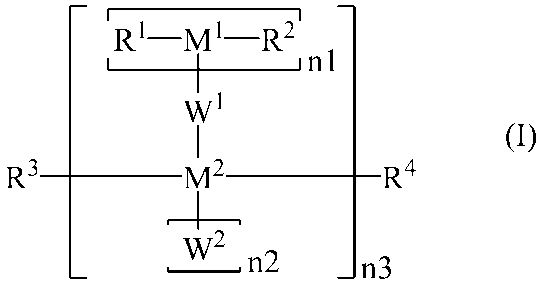
W1及びW2は各々独立して単結合又は2個から100個のπ電子を有する共役系を含む基を表し、
M1及びM2は各々独立してメソゲン基を含む基を表し、
n1及びn2は各々独立して0又は1を表すが、n1及びn2が0である場合該当する基は水素原子を表し、
n3は1から1000までの整数を表すが、
W1、W2、M1、M2は、各々独立して置換基Lを有していても良く、Lはフッ素原子、塩素原子、臭素原子、ヨウ素原子、ペンタフルオロスルフラニル基、ニトロ基、シアノ基、イソシアノ基、アミノ基、ヒドロキシル基、メルカプト基、メチルアミノ基、ジメチルアミノ基、ジエチルアミノ基、ジイソプロピルアミノ基、トリメチルシリル基、ジメチルシリル基、チオイソシアノ基、又は、1個の-CH2-又は隣接していない2個以上の-CH2-が各々独立して-O-、-S-、-CO-、-COO-、-OCO-、-CO-S-、-S-CO-、-O-CO-O-、-CO-NH-、-NH-CO-、-CH=CH-COO-、-CH=CH-OCO-、-COO-CH=CH-、-OCO-CH=CH-、-CH=CH-、-CF=CF-又は-C≡C-によって置換されても良い炭素原子数1から20の直鎖状又は分岐状アルキル基を表すが、当該アルキル基中の任意の水素原子はフッ素原子に置換されても良く、若しくは、LはPL-(SL-XL)kL-で表される基を表しても良く、ここでPLは重合性基を表し、SLはスペーサー基又は単結合を表すが、SLが複数存在する場合それらは同一であっても異なっていても良く、XLは-O-、-S-、-OCH2-、-CH2O-、-CO-、-COO-、-OCO-、-CO-S-、-S-CO-、-O-CO-O-、-CO-NH-、-NH-CO-、-SCH2-、-CH2S-、-CF2O-、-OCF2-、-CF2S-、-SCF2-、-CH=CH-COO-、-CH=CH-OCO-、-COO-CH=CH-、-OCO-CH=CH-、-COO-CH2CH2-、-OCO-CH2CH2-、-CH2CH2-COO-、-CH2CH2-OCO-、-COO-CH2-、-OCO-CH2-、-CH2-COO-、-CH2-OCO-、-CH=CH-、-N=N-、-CH=N-N=CH-、-CF=CF-、-C≡C-又は単結合を表すが、XLが複数存在する場合それらは同一であっても異なっていても良いが、(ただし、PL-(SL-XL)kL-には-O-O-結合を含まない。)、化合物内にLが複数存在する場合それらは同一であっても異なっていても良く、kLは0から10の整数を表し、
M1-W1、W1-M2及び/又はM2-W2は各々独立して共役系を形成していても良い。)で表される化合物、
(b)一般式(II)

S21は炭素原子数0~18のアルキレン基を表し(該アルキレン基中の水素原子は1つ以上のハロゲン原子又はCNにより置換されていても良く、この基中に存在する1つのCH2基又は隣接していない2つ以上のCH2基はそれぞれ相互に独立して、-O-、-COO-、-OCO-又は-OCO-O-により置き換えられていても良い。)、
X21は-O-、-S-、-OCH2-、-CH2O-、-CO-、-COO-、-OCO-、-CO-S-、-S-CO-、-O-CO-O-、-CO-NH-、-NH-CO-、-SCH2-、-CH2S-、-CF2O-、-OCF2-、-CF2S-、-SCF2-、-CH=CH-COO-、-CH=CH-OCO-、-COO-CH=CH-、-OCO-CH=CH-、-COO-CH2CH2-、-OCO-CH2CH2-、-CH2CH2-COO-、-CH2CH2-OCO-、-COO-CH2-、-OCO-CH2-、-CH2-COO-、-CH2-OCO-、-CH=CH-、-N=N-、-CH=N-N=CH-、-CF=CF-、-C≡C-又は単結合を表し(ただし、P21-S21、及びS21-X21は、-O-O-、-O-NH-、又は-O-S-基を含まない。) 、
q1は0又は1を表し、
MGはメソゲン基を表し、
R21は、水素原子、ハロゲン原子、シアノ基、1個の-CH2-又は隣接していない2個以上の-CH2-が各々独立して-O-、-S-、-CO-、-COO-、-OCO-、-CO-S-、-S-CO-、-O-CO-O-、-CO-NH-、-NH-CO-、-CH=CH-COO-、-CH=CH-OCO-、-COO-CH=CH-、-OCO-CH=CH-、-CH=CH-、-CF=CF-又は-C≡C-によって置換されても良い炭素原子数1から12の直鎖又は分岐アルキル基、あるいは、一般式(II-a)

S22は、S21で定義されたものと同一のものを表し、
X22は、X21で定義されたものと同一のものを表し(ただし、P23-S22、及びS22-X22は、-O-O-、-O-NH-、又は-O-S-基を含まない。)、
q2は0又は1を表す。)で表される化合物、
c)必要に応じて開始剤、
d)必要に応じて溶剤、
を含有することを特徴とする重合性組成物を提供し、併せて当該化合物を含有する重合性組成物、当該化合物を用いた樹脂、樹脂添加剤、オイル、フィルター、接着剤、粘着剤、油脂、インキ、医薬品、化粧品、洗剤、建築材料、包装材、液晶材料、有機EL材料、有機半導体材料、電子材料、表示素子、電子デバイス、通信機器、自動車部品、航空機部品、機械部品、農薬及び食品並びにそれらを使用した製品、重合性液晶組成物、当該重合性液晶組成物を重合させることにより得られる重合体及び当該重合体を用いた光学異方体を提供する。
《一般式(I)》
本願発明には、一般式(I)で表される逆分散性化合物を必須成分として含有する。
<<R1、R2、R3、R4>>
一般式(I)において、R1、R2、R3及びR4は各々独立して水素原子又は炭素原子数1から80の炭化水素基を表すが、当該基は置換基を有していても良く、任意の炭素原子はヘテロ原子に置換されていても良い。また、R1、R2、R3及びR4は各々独立して水素原子又は炭素原子数1から20の炭化水素基を表すのが好ましく、当該基は置換基を有していても良く、任意の炭素原子はヘテロ原子に置換されていても良い。より具体的には、R1、R2、R3及びR4は各々独立して、水素原子、フッ素原子、塩素原子、臭素原子、ヨウ素原子、ペンタフルオロスルフラニル基、シアノ基、ニトロ基、イソシアノ基、チオイソシアノ基、又は、1個の-CH2-又は隣接していない2個以上の-CH2-が各々独立して-O-、-S-、-CO-、-COO-、-OCO-、-CO-S-、-S-CO-、-O-CO-O-、-CO-NH-、-NH-CO-、-C=C-、又は-C≡C-によって置換されても良い炭素原子数1から20の直鎖状又は分岐状アルキル基を表し(当該アルキル基中の任意の水素原子はフッ素原子に置換されても良い。)、若しくは、重合性基を含む基が好ましい。

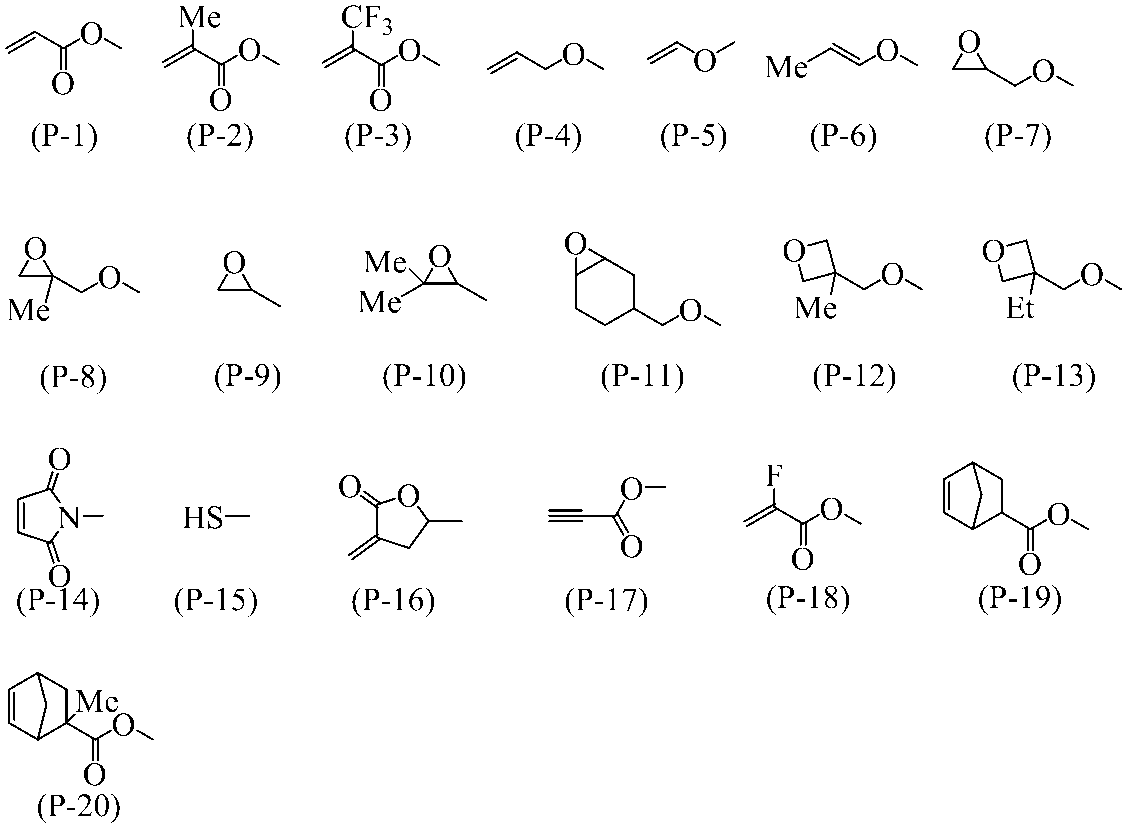
<<置換基L>>
一般式(I)で表される化合物は、無置換であるか、置換基Lにより置換されていても良い。置換基Lはフッ素原子、塩素原子、臭素原子、ヨウ素原子、ペンタフルオロスルフラニル基、ニトロ基、シアノ基、イソシアノ基、アミノ基、ヒドロキシル基、メルカプト基、メチルアミノ基、ジメチルアミノ基、ジエチルアミノ基、ジイソプロピルアミノ基、トリメチルシリル基、ジメチルシリル基、チオイソシアノ基、又は、1個の-CH2-又は隣接していない2個以上の-CH2-が各々独立して-O-、-S-、-CO-、-COO-、-OCO-、-CO-S-、-S-CO-、-O-CO-O-、-CO-NH-、-NH-CO-、-CH=CH-COO-、-CH=CH-OCO-、-COO-CH=CH-、-OCO-CH=CH-、-CH=CH-、-CF=CF-又は-C≡C-によって置換されても良い炭素原子数1から20の直鎖状又は分岐状アルキル基を表すが、当該アルキル基中の任意の水素原子はフッ素原子に置換されても良く、若しくは、LはPL-(SL-XL)kL-で表される基を表しても良く、ここでPLは重合性基を表し、SLはスペーサー基又は単結合を表すが、SLが複数存在する場合それらは同一であっても異なっていても良く、XLは-O-、-S-、-OCH2-、-CH2O-、-CO-、-COO-、-OCO-、-CO-S-、-S-CO-、-O-CO-O-、-CO-NH-、-NH-CO-、-SCH2-、-CH2S-、-CF2O-、-OCF2-、-CF2S-、-SCF2-、-CH=CH-COO-、-CH=CH-OCO-、-COO-CH=CH-、-OCO-CH=CH-、-COO-CH2CH2-、-OCO-CH2CH2-、-CH2CH2-COO-、-CH2CH2-OCO-、-COO-CH2-、-OCO-CH2-、-CH2-COO-、-CH2-OCO-、-CH=CH-、-N=N-、-CH=N-N=CH-、-CF=CF-、-C≡C-又は単結合を表すが、XLが複数存在する場合それらは同一であっても異なっていても良いが、(ただし、PL-(SL-XL)kL-には-O-O-結合を含まない。)、kLは0から10の整数を表すが、kLは1が好ましく、化合物内にLが複数存在する場合それらは同一であっても異なっていても良い。また、原料の入手容易さ及び合成の容易さの観点から、複数存在する場合は各々同一であっても異なっていても良く、置換基Lはフッ素原子、塩素原子、ニトロ基、シアノ基、又は、1個の-CH2-又は隣接していない2個以上の-CH2-が各々独立して-O-、-COO-、-OCO-によって置換されても良く、任意の水素原子がフッ素原子に置換されても良い、炭素原子数1から20の直鎖状又は分岐状アルキル基を表すことが好ましく、複数存在する場合は各々同一であっても異なっていても良く、フッ素原子、塩素原子、ニトロ基、シアノ基、又は、1個の-CH2-又は隣接していない2個以上の-CH2-が各々独立して-O-によって置換されても良い、炭素原子数1から12の直鎖状アルキル基を表すことがより好ましく、複数存在する場合は各々同一であっても異なっていても良く、フッ素原子、シアノ基、メチル基又はメトキシ基を表すことが特に好ましい。
<<W1、W2>>
一般式(I)において、W1及びW2は各々独立して単結合又は2個から100個のπ電子を有する共役系を含む基を表す。原料の入手容易さ及び合成の容易さの観点からW1及びW2は、単結合若しくは任意の炭素原子がヘテロ原子に置換されていても良い2個から80個のπ電子を有する炭素基又は炭化水素基と、単結合若しくは無置換であるか又は1つ以上の置換基Lによって置換されても良く、任意の炭素原子がヘテロ原子に置換されていても良い炭素原子数5から80の芳香族及び/又は非芳香族の炭化水素環とを含む基であることが好ましい。

B1、B2及びB3は各々独立して単結合又は置換されていても良い炭素原子数5から80の芳香族及び/又は非芳香族の炭化水素環を表すが、当該炭素環又は炭化水素環の任意の炭素原子はヘテロ原子に置換されていても良く、これらの基は無置換であるか又は1つ以上の置換基Lによって置換されても良いが、B3が単結合を表す場合は水素原子又は置換基Lで表される基が結合し、n4及びn5は、0から10までの整数を表す基がより好ましい。
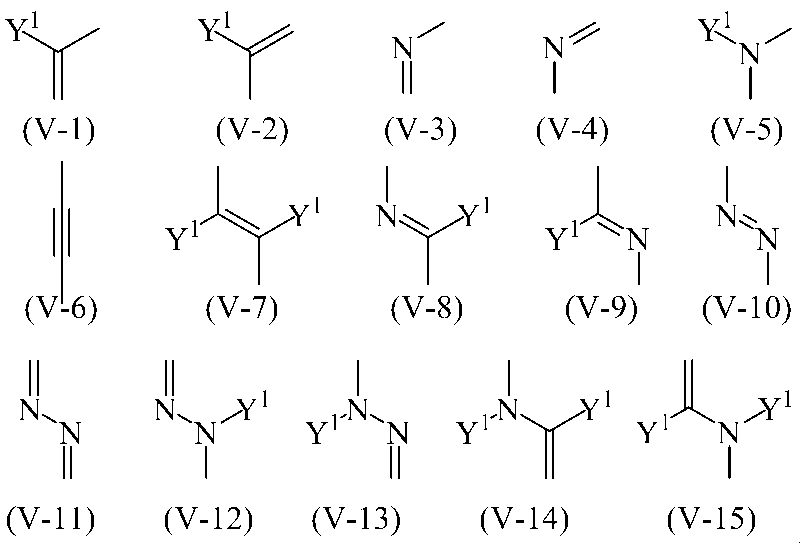
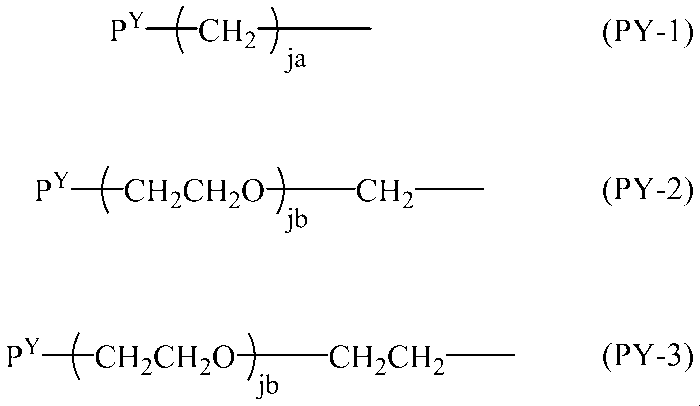


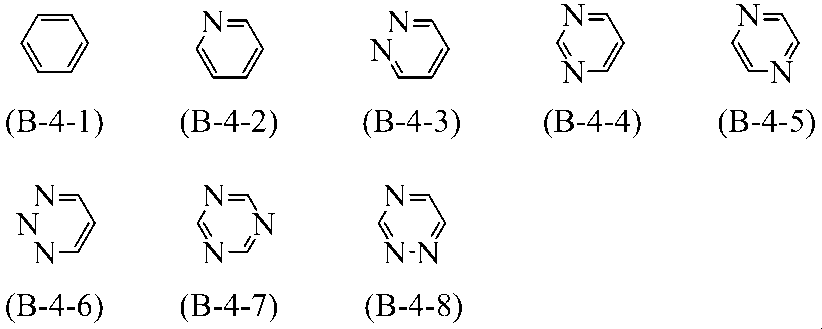
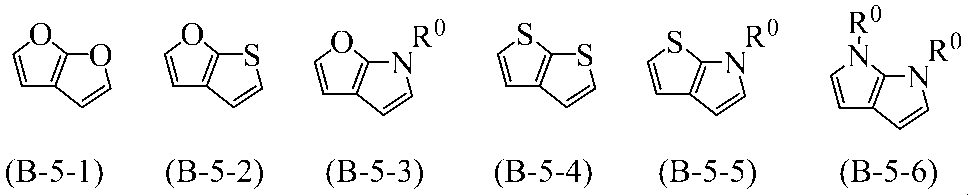
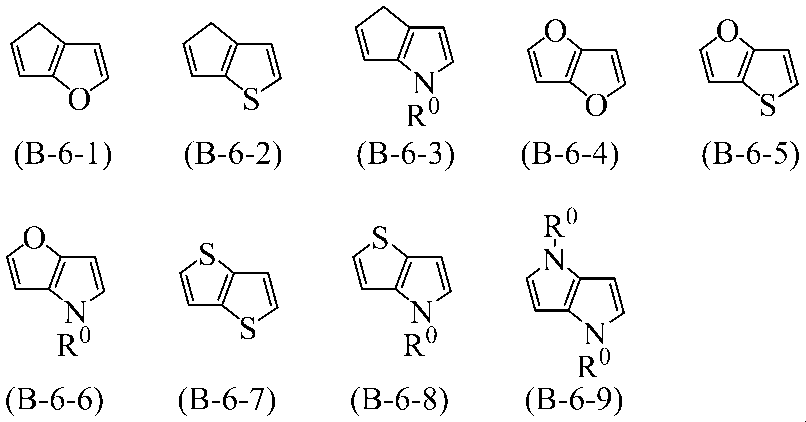

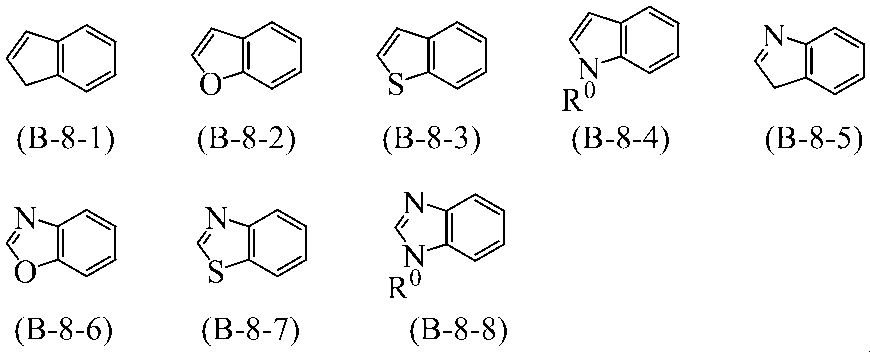


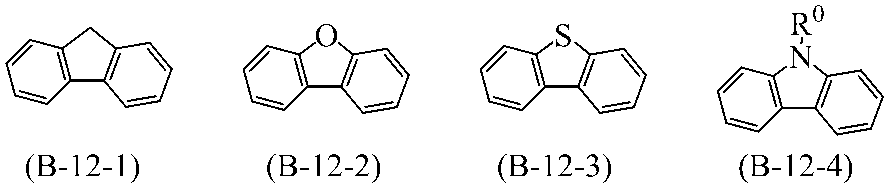

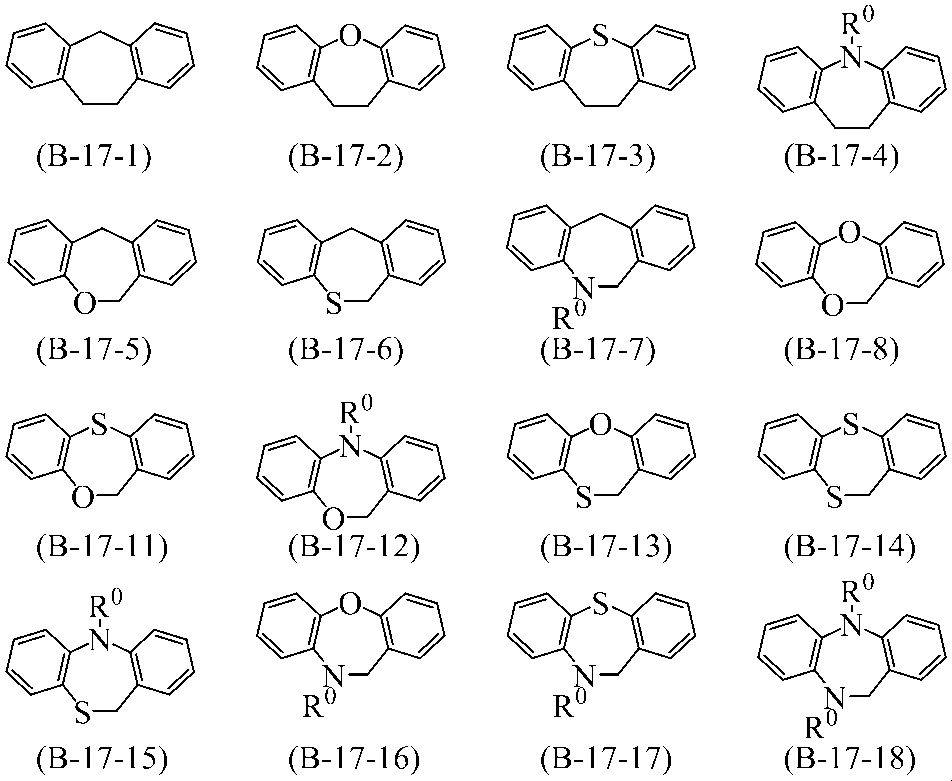


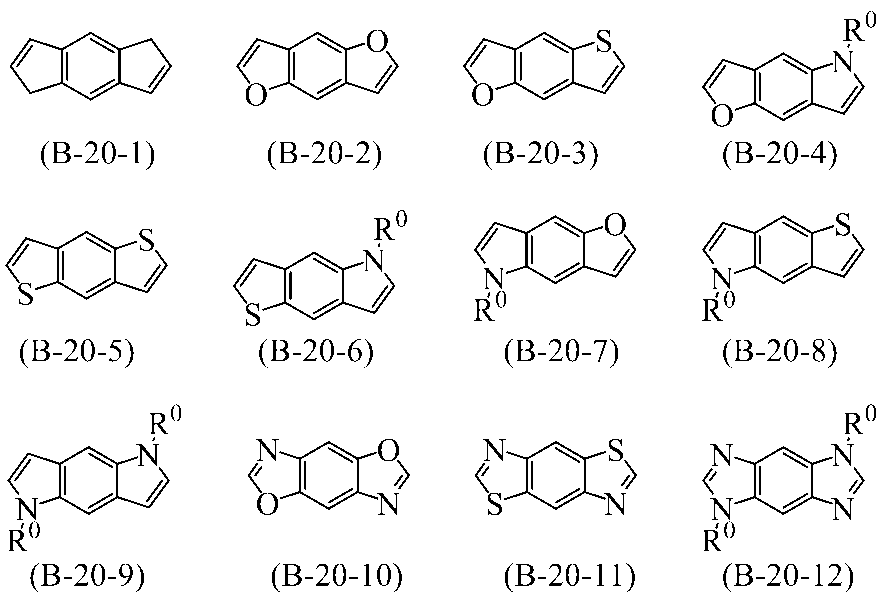
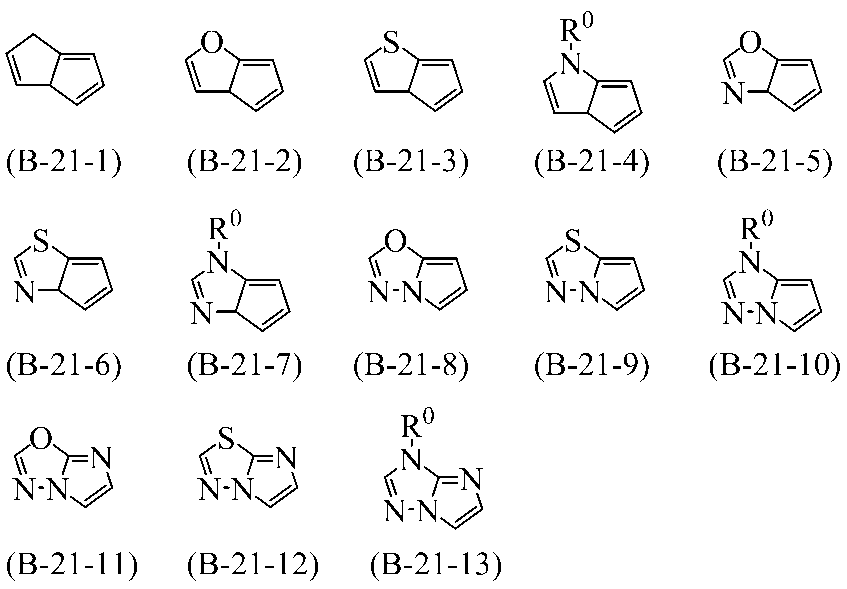
<<M1、M2>>
一般式(I)において、M1及びM2は各々独立して、メソゲン基を含む基を表す。


<<n1、n2、n3>>
n1及びn2は各々独立して0又は1を表すが、n1が0である場合後述するW1に連結する当該基は水素原子を表し、n2が0である場合後述するM2に連結する当該基は水素原子を表す。
n3は1から1000までの整数を表すが、n3は1から10までの整数を表すことが好ましく、n3は1から5までの整数を表すことがより好ましく、n3は1から3までの整数を表すことがさらに好ましく、n3は1又は2を表すことが特に好ましい。
A:<n1及びn2が0を表しn3が1を表す>か、
B:<n1が1を表しn2が0を表しn3が1を表す>か、
C:<n1が0を表しn2及びn3が1を表す>か、
D:<n1及びn2が0を表しn3が2から1000を表す>場合が、逆分散性を良好に示すため特に好ましい。
以下に、特に好ましい形態である上記A:~D:の形態に分けて、各基について説明する。
<<n1及びn2が0を表しn3が1を表す>>化合物
<W1-A11>
<n1及びn2が0を表しn3が1を表す>化合物において、フィルム状の重合物を作製した際の表面硬度、紫外線照射後における外観を重視する場合、一般式(I)において、W1が下記の式(I-W11)


<W1-A12>
<n1及びn2が0を表しn3が1を表す>化合物において、重合性組成物の保存安定性、フィルム状の重合物を作製した際の配向ムラ、紫外線照射後における配向欠陥を重視する場合、一般式(I)において、W1が下記の式(I-W12)

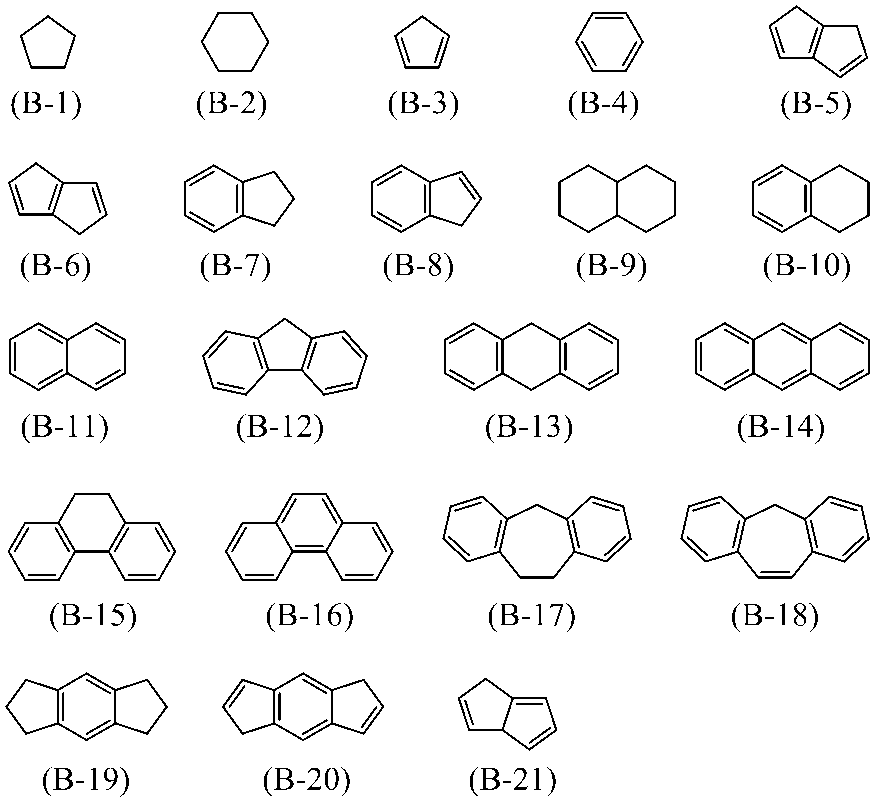
<W1-A13>
<n1及びn2が0を表しn3が1を表す>化合物において、フィルム状の重合物を作製した際の膜厚均一性、密着性を重視する場合、一般式(I)において、W1が下記の式(I-W13)

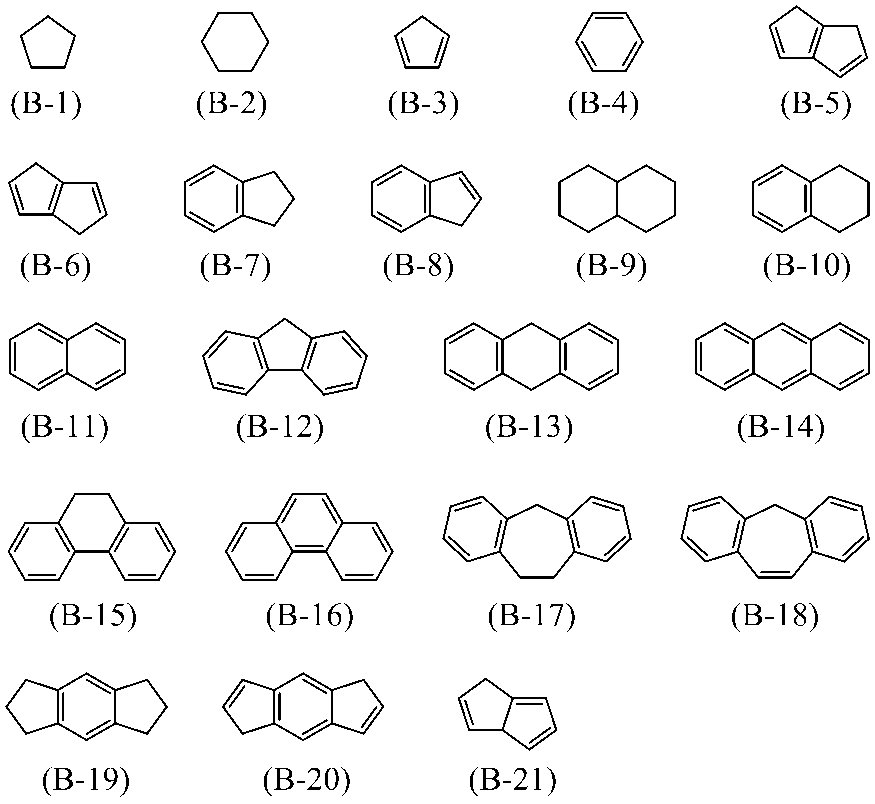
式(B-3-2)、式(B-4-1)、式(B-8-7)、式(B-12-4)、単結合から選ばれる基がさらに好ましい。
<W1-A14>
<n1及びn2が0を表しn3が1を表す>化合物において、重合性組成物に添加した際の保存安定性、フィルム状の重合物を作製した際のヘイズ値、紫外線照射後における配向欠陥を重視する場合、一般式(I)において、W1が下記の式(I-W14)

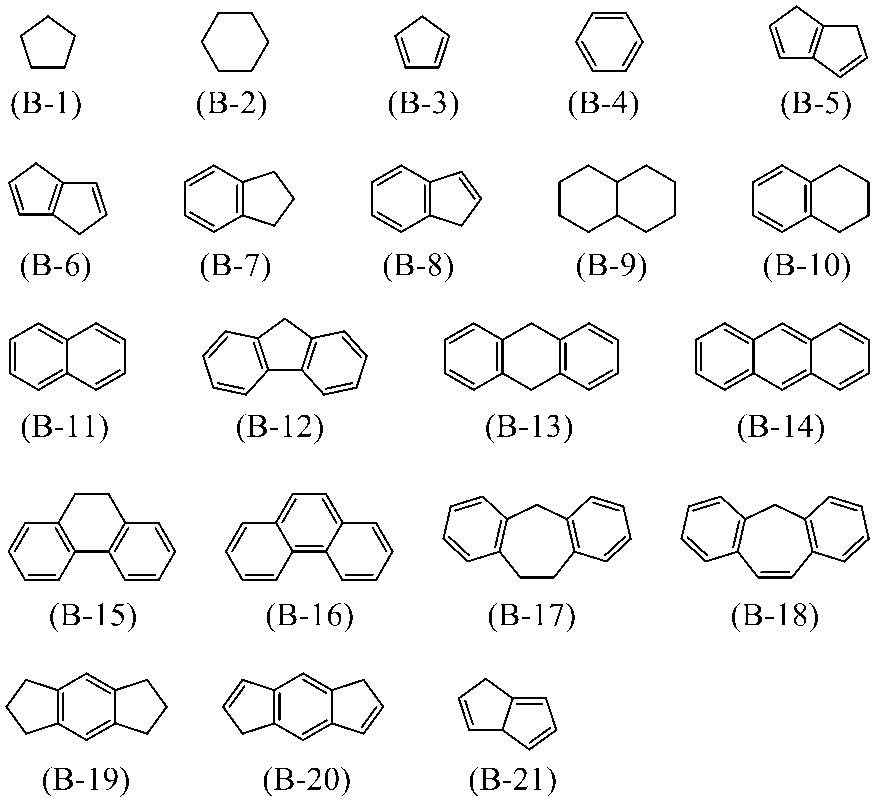
<W1-A15>
なお、前記<n1及びn2が0を表しn3が1を表す>化合物において、フィルム状の重合物を作製した際のヘイズ値、膜厚均一性を重視する場合、一般式(I)において、W1が下記の式(I-W18)
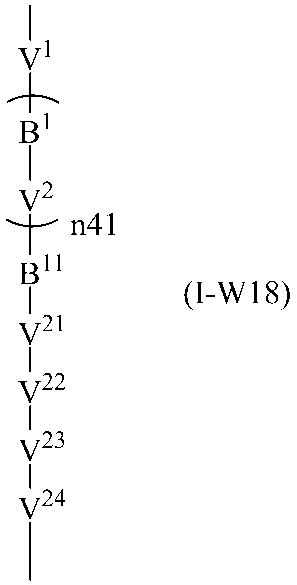
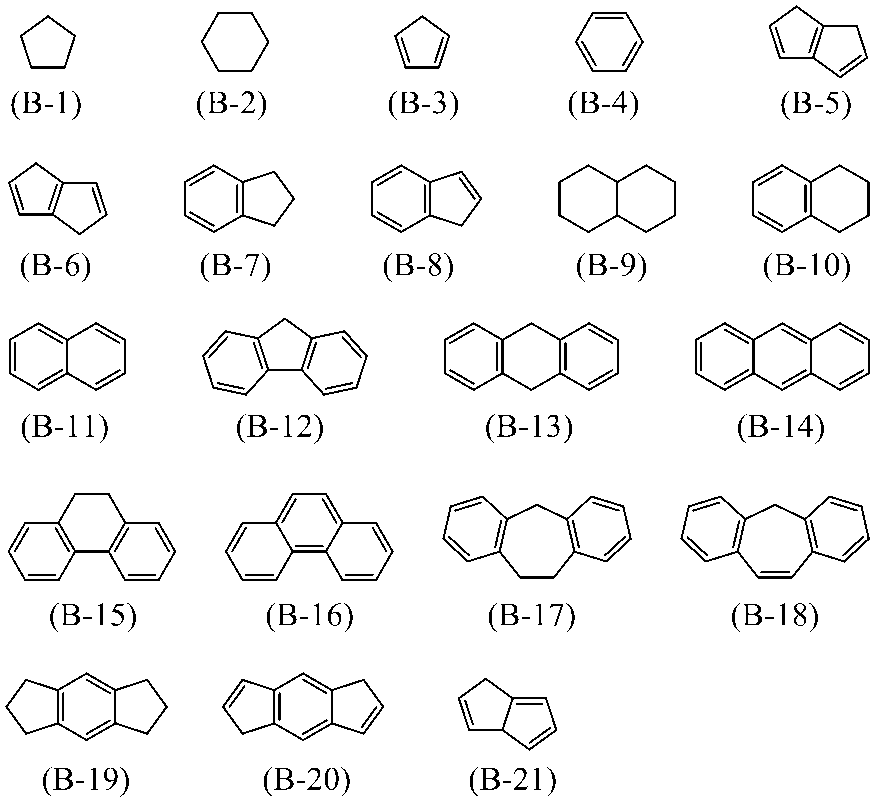
<M2-A1>
<n1及びn2が0を表しn3が1を表す>化合物において、重合性組成物に添加した際の保存安定性、フィルム状の重合物を作製した際のヘイズ値、膜厚均一性、配向ムラ、表面硬度を重視する場合、一般式(I)において、M2が下記の式(I-M21)

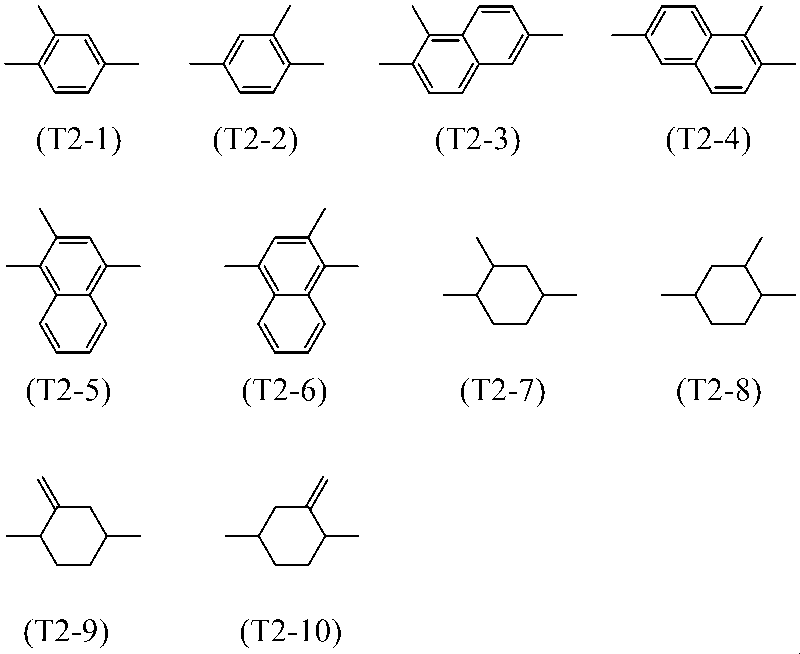
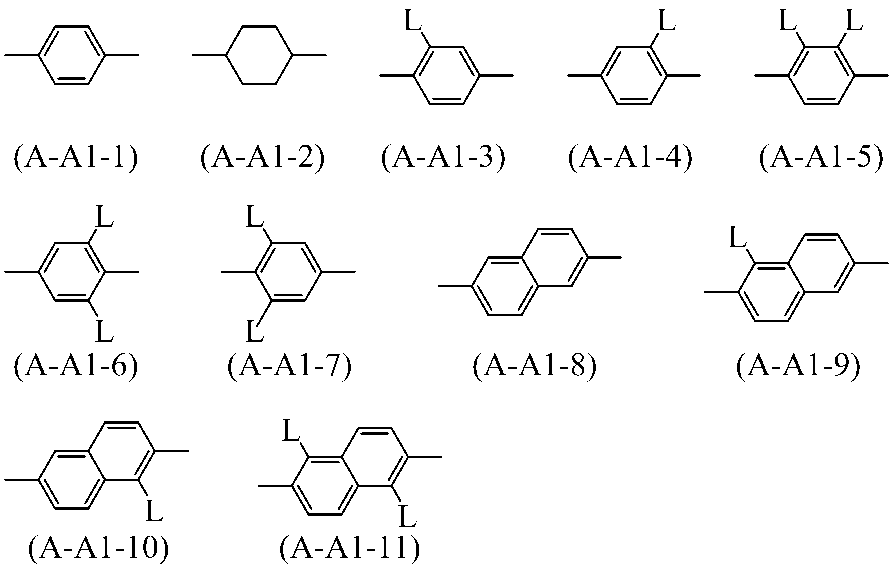
<M2-A2>
<n1及びn2が0を表しn3が1を表す>化合物において、フィルム状の重合物を作製した際の、紫外線照射後における外観、配向欠陥を重視する場合、一般式(I)において、M2が下記の式(I-M22)


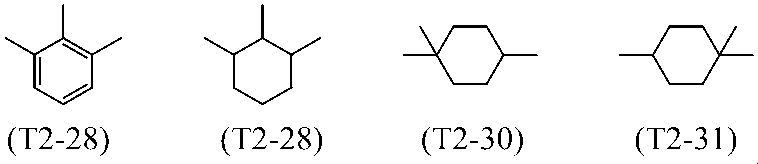




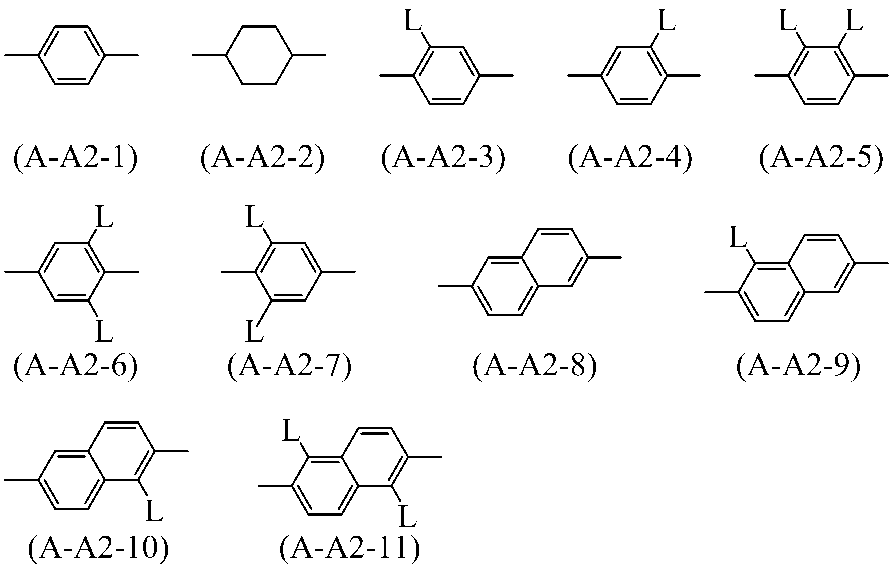
<W1-A2>
<n1及びn2が0を表しn3が1を表す>化合物において、フィルム状の重合物を作製した際の、紫外線照射後における外観、配向欠陥を重視する場合、一般式(I)において、W1が下記の式(I-W19)


<M2-A3>
<n1及びn2が0を表しn3が1を表す>化合物において、重合性組成物に添加した際の保存安定性、フィルム状の重合物を作製した際の膜厚均一性、紫外線照射後における配向欠陥を重視する場合、一般式(I)において、M2が下記の式(I-M23)



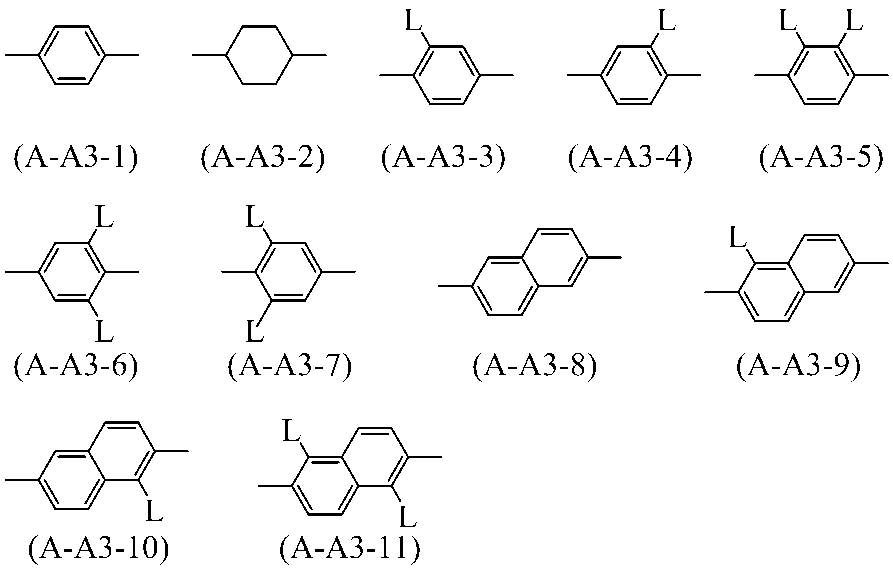

<W1-A3>
<n1及びn2が0を表しn3が1を表す>化合物において、重合性組成物に添加した際の保存安定性、フィルム状の重合物を作製した際の膜厚均一性、紫外線照射後における配向欠陥を重視する場合、一般式(I)において、W1が下記の式(I-W20)

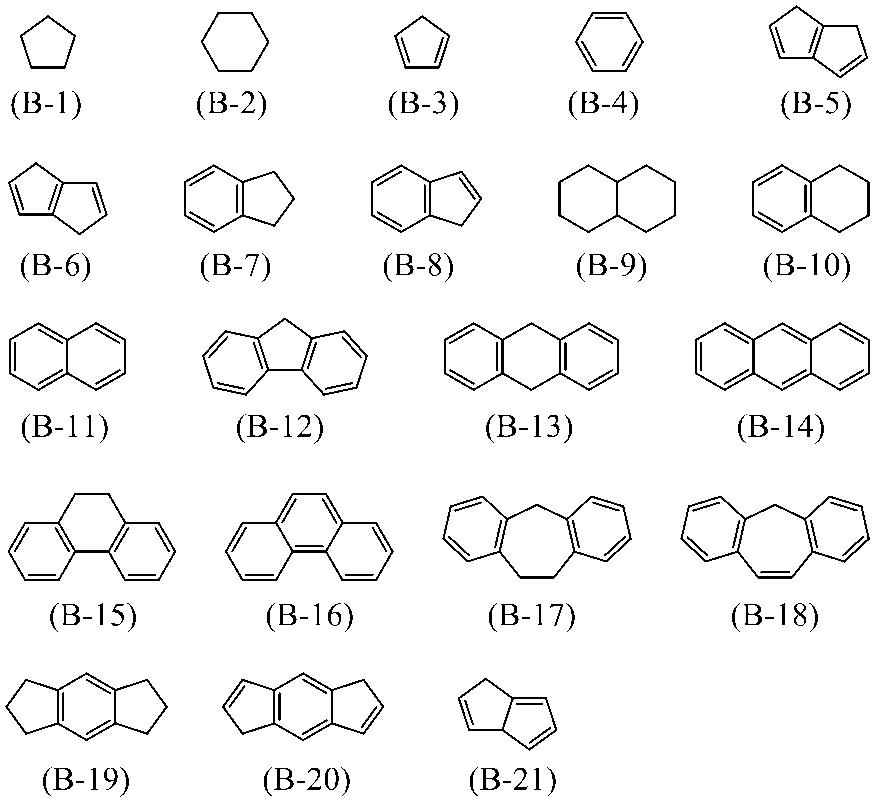
<R3及びR4>
<n1及びn2が0を表しn3が1を表す>化合物においては、上記に示すM2、W1を適宜選択することが好ましく、R3及びR4は、以下の基を用いることが好ましい。

<<n1が1を表しn2が0を表しn3が1を表す>>化合物
<W1-B11>
<n1が1を表しn2が0を表しn3が1を表す>化合物において、フィルム状の重合物を作製した際の配向ムラ及び表面硬度を重視する場合、一般式(I)において、W1が、下記の式(I-W15)

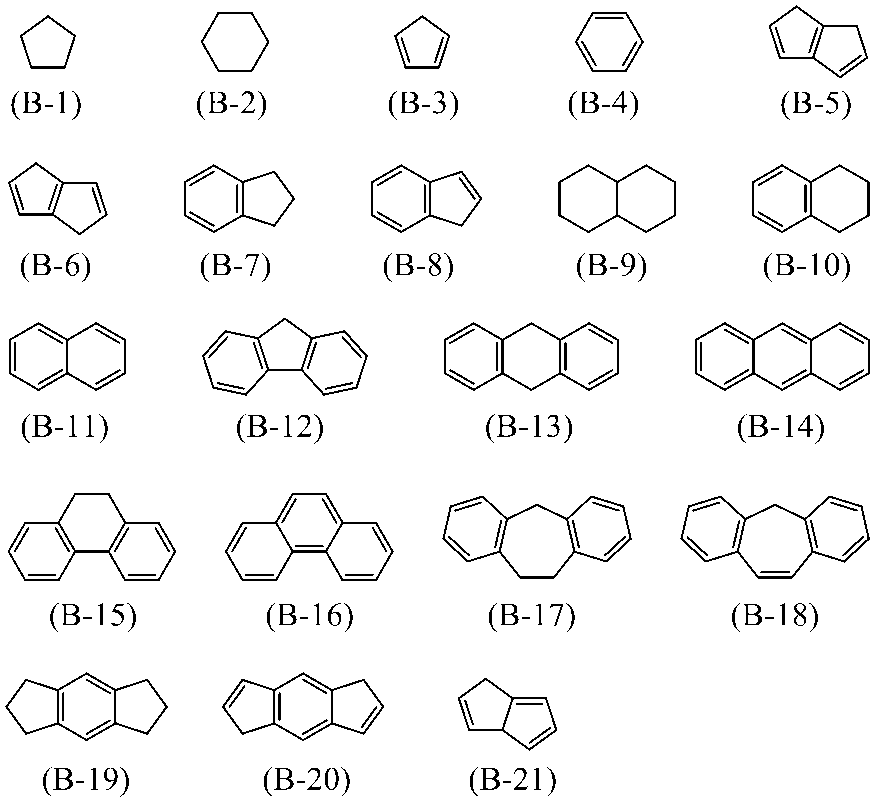
<W1-B2>
<n1が1を表しn2が0を表しn3が1を表す>化合物において、フィルム状の重合物を作製した際の表面硬度及び密着性を重視する場合、一般式(I)において、W1が、下記の式(I-W21)


<W1-B3>
<n1が1を表しn2が0を表しn3が1を表す>化合物において、フィルム状の重合物を作製した際の密着性、紫外線照射後における外観を重視する場合、一般式(I)において、W1が、下記の式(I-W22)
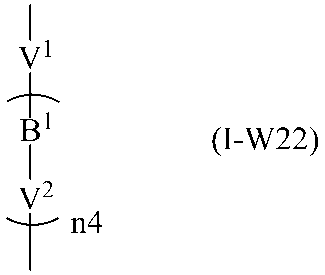

上記式(V-8)、式(V-9)、-COO-、-OCO-を表すことがさらに好ましい。
<M1-B、M2-B>
<n1が1を表しn2が0を表しn3が1を表す>化合物は、化合物の構造上フィルム状の重合物を作製した際の配向ムラ、表面硬度又は密着性が良好であるので、一般式(I)において、M1が下記の式(I-M14)、M2が下記の式(I-M24)

上記式(I-M14)、上記式(I-M24)において、T14及びT24は、各々独立して下記の式(T-1)から式(T-22)


<M1-B11、M2-B11>
フィルム状の重合物を作製した際の配向ムラ及び表面硬度を重視する場合、上記式(I-M14)中T14は上記のものを表し、上記式(I-M24)中T24が下記の式(T2-1)から式(T2-10)
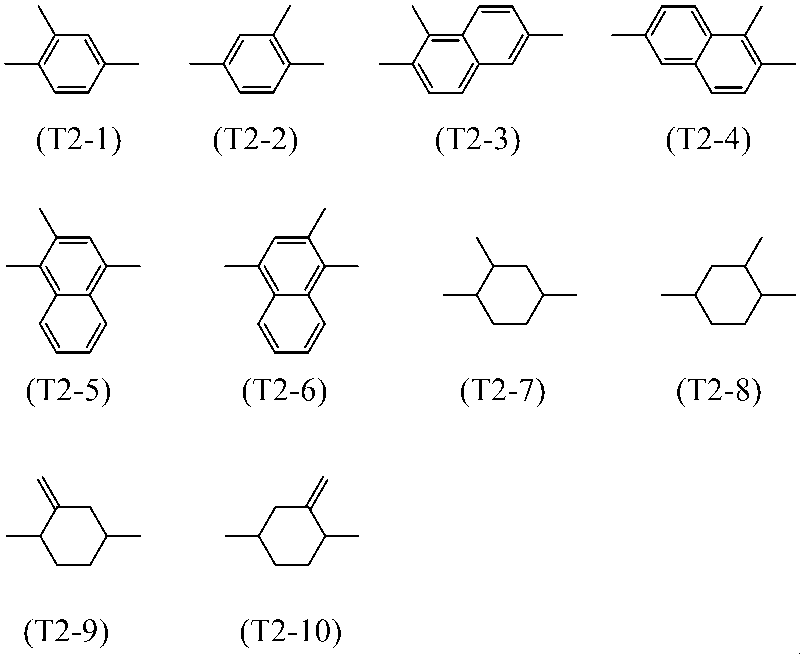

<M1-B2>
また、フィルム状の重合物を作製した際の表面硬度、密着性を重視する場合、上記式(I-M14)中T14は上記<M1-B、M2-B>に記載のものを表し、上記式(I-M24)中T24が下記の式(T2-11)から式(T2-27)
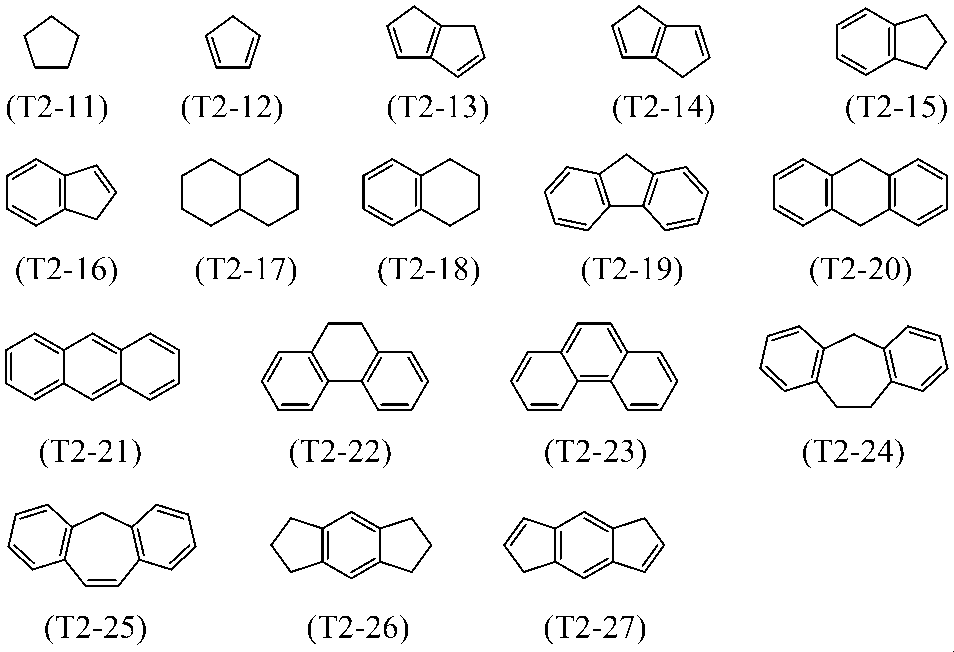

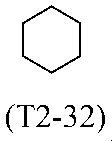
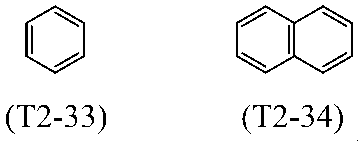
さらに、上記式(I-M24)中T24が下記の式(T2-35)から式(T2-41)

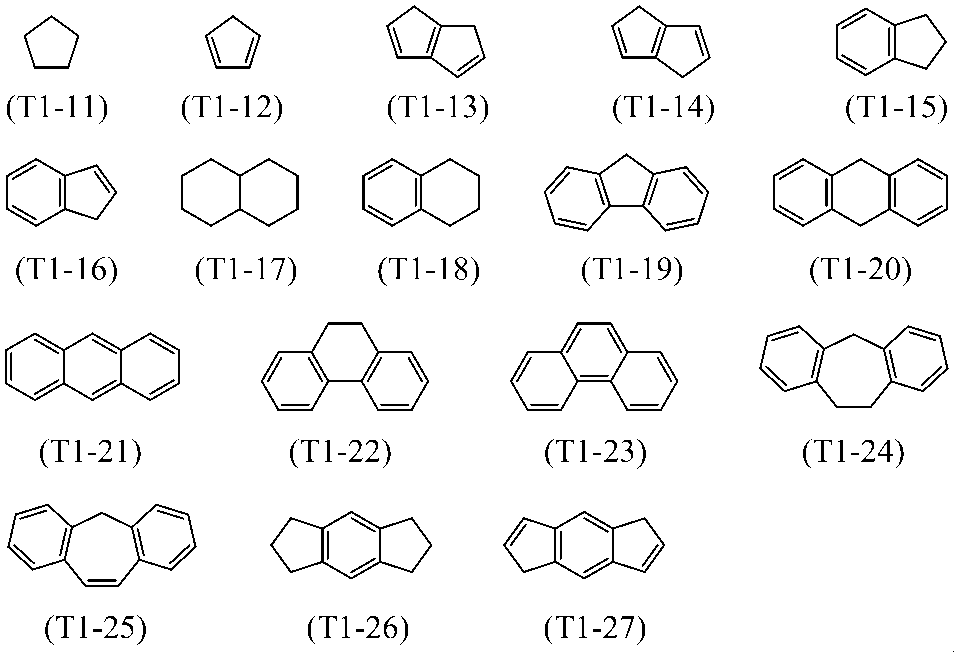

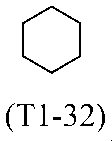
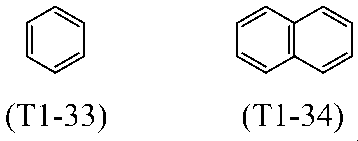

<M1-B3>
さらに、フィルム状の重合物を作製した際の密着性、紫外線照射後における外観を重視する場合、上記式(I-M14)中T14は上記のものを表し、T24が置換されていても良い炭素原子数1から80の非環状基を表すことが好ましく、当該非環状基の任意の炭素原子はヘテロ原子に置換されていても良い。
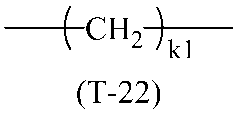
を表すことが好ましく、下記式(T-22-1)又は式(T-22-2)

<R1、R2、R3、R4>
一方、前記<n1が1を表しn2が0を表しn3が1を表す>化合物は、化合物の構造上フィルム状の重合物を作製した際の配向ムラ、表面硬度又は密着性が良好であるので、一般式(I)において、上記に示すM1、M2、W1を適宜選択することが好ましく、R1~R4は、以下の基を用いることが好ましい。

また、<n1が1を表しn2が0を表しn3が1を表す>化合物において、フィルム状の重合物を作製した際の配向ムラ、表面硬度を重視する場合、一般式(I)において、R2及びR3が上記式(I-R)で表される基を表し、R1及びR4が上記R5で表される基を表すことが好ましく、この場合、P、S、X、k及びR5は、それぞれ上記<<R1、R2、R3、R4>>の部分に示した好ましい基及び数値が適応される。
<<n1が0を表しn2及びn3が1を表す>>化合物
<M2-C>
さらに、前記<n1が0を表しn2及びn3が1を表す>化合物は、化合物の構造上フィルム状の重合物を作製した際の膜厚均一性、表面硬度及び/又は紫外線照射後における配向欠陥が良好であるので、一般式(I)において、M2が下記の式(I-M2C)

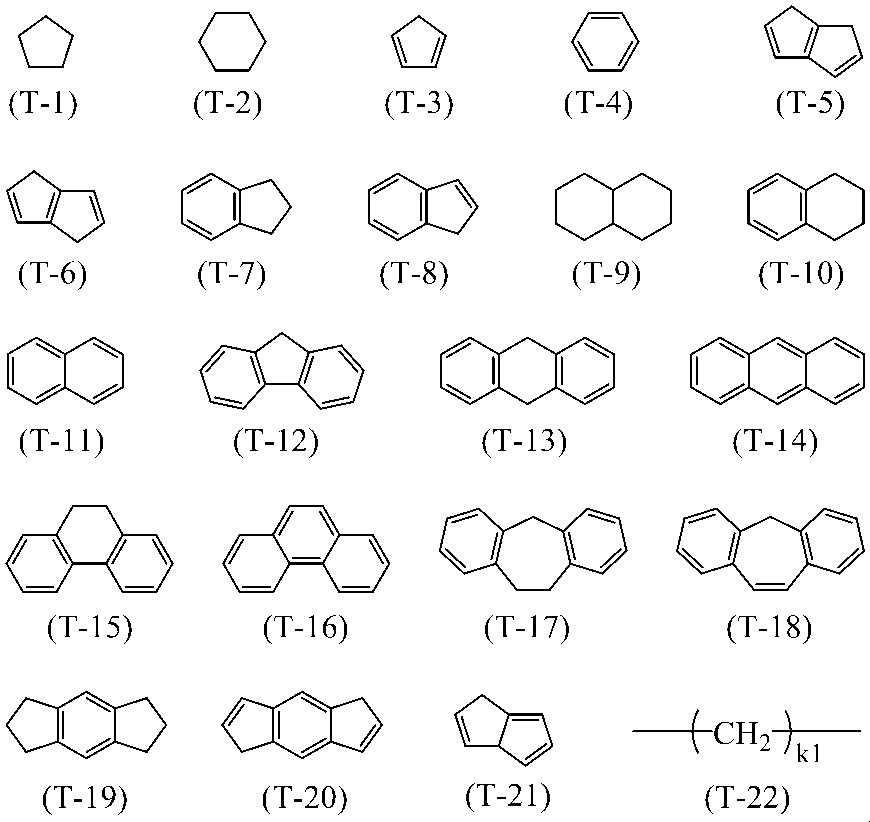

<M2-C11、M2-C12>
フィルム状の重合物を作製した際の膜厚均一性を重視する場合、上記の式(I-M2C)中T2Cは下記の式(T2-C-1)から式(T2-C-12)

<M2-C2>
また、組成物の保存安定性、フィルム状の重合物を作製し紫外線照射後の配向欠陥を重視する場合、上記の式(I-M2C)中T2Cは下記の式(T2-C-13)から式(T2-C-42)

<M2-C3>
また、フィルム状の重合物を作製した際の表面硬度、紫外線照射後の配向欠陥を重視する場合、上記の式(I-M2C)中T2Cは置換されていても良い炭素原子数1から80の非環状基を表すことが好ましく、当該非環状基の任意の炭素原子はヘテロ原子に置換されていても良い。

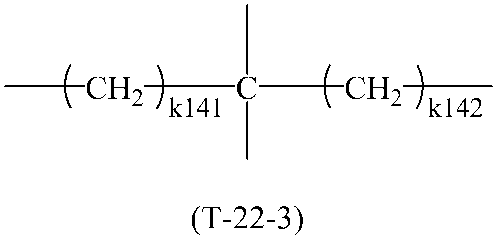
<W1-M2-W2-C1>
<n1が0を表しn2及びn3が1を表す>化合物は、化合物の構造上フィルム状の重合物を作製した際の膜厚均一性が高く、表面硬度が高く及び/又は紫外線照射後における配向欠陥が生じにくいので、一般式(I)において、M2は、上記<M2-C11、M2-C12>に示された基を用いることが好ましいが、W1-M2-W2で表される基(但し、当該M2は任意の位置においてR3及びR4と連結する。)が下記の式(I-W16-1)又は式(I-W16-2)


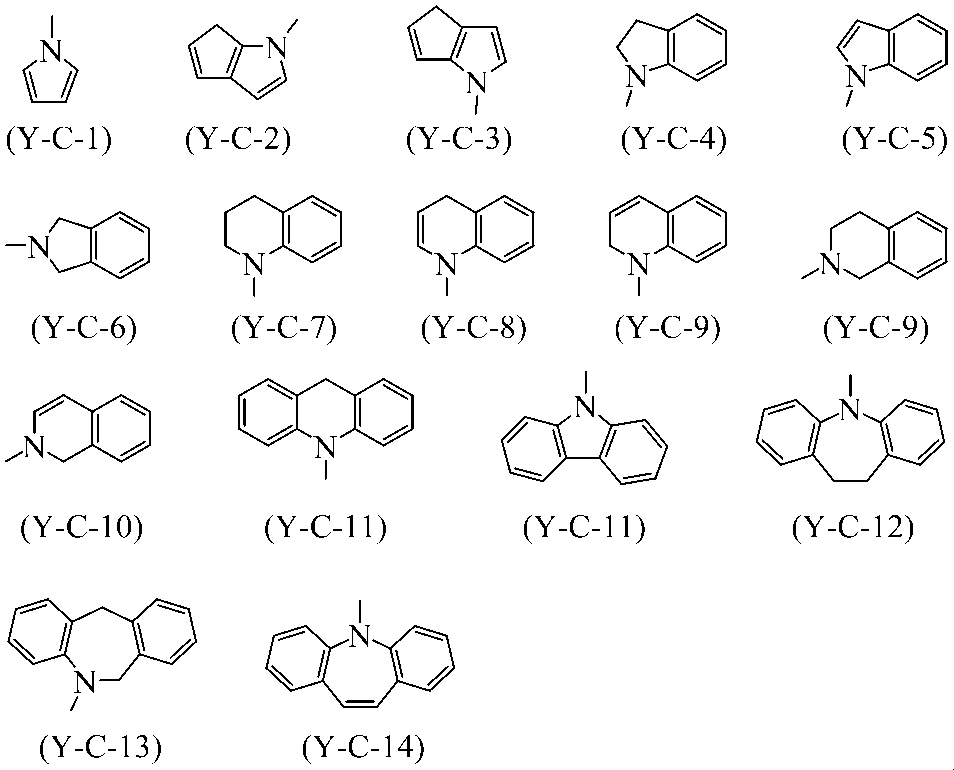
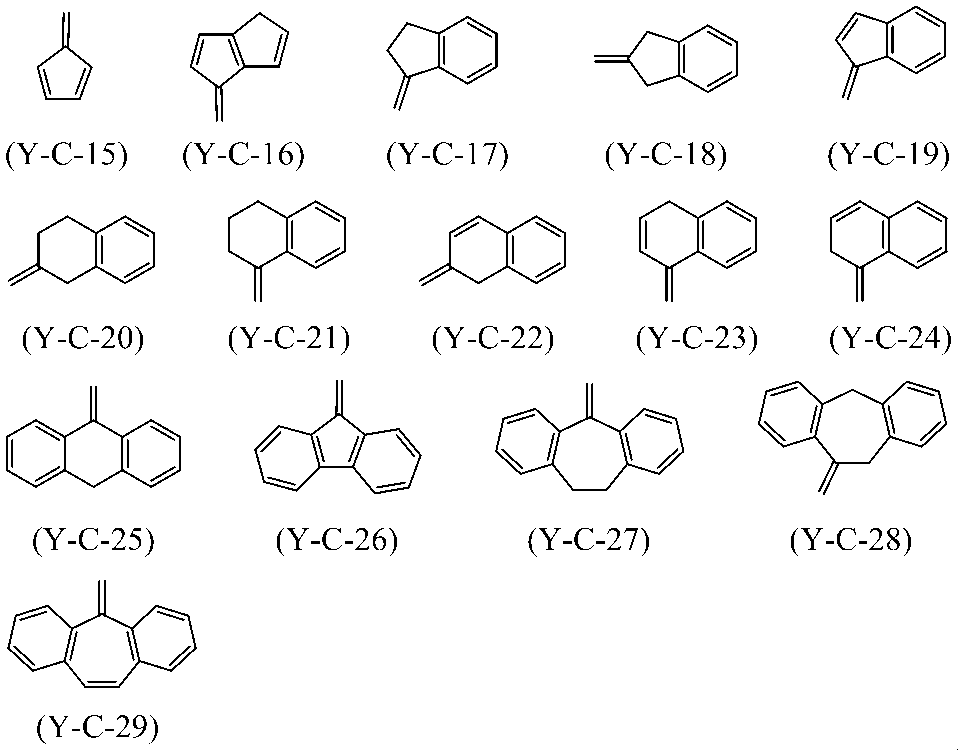
<W1-M2-W2-C2>
<n1が0を表しn2及びn3が1を表す>化合物において、組成物の保存安定性、フィルム状の重合物を作製し紫外線照射した際の配向欠陥を重視する場合、W1及びW2で表される基としては、上記<<W1、W2>>に記載の一般式(I-W1)、及び一般式(I-W2)うち、原料の入手容易さ及び合成の容易さの観点から選択される基が好ましい。
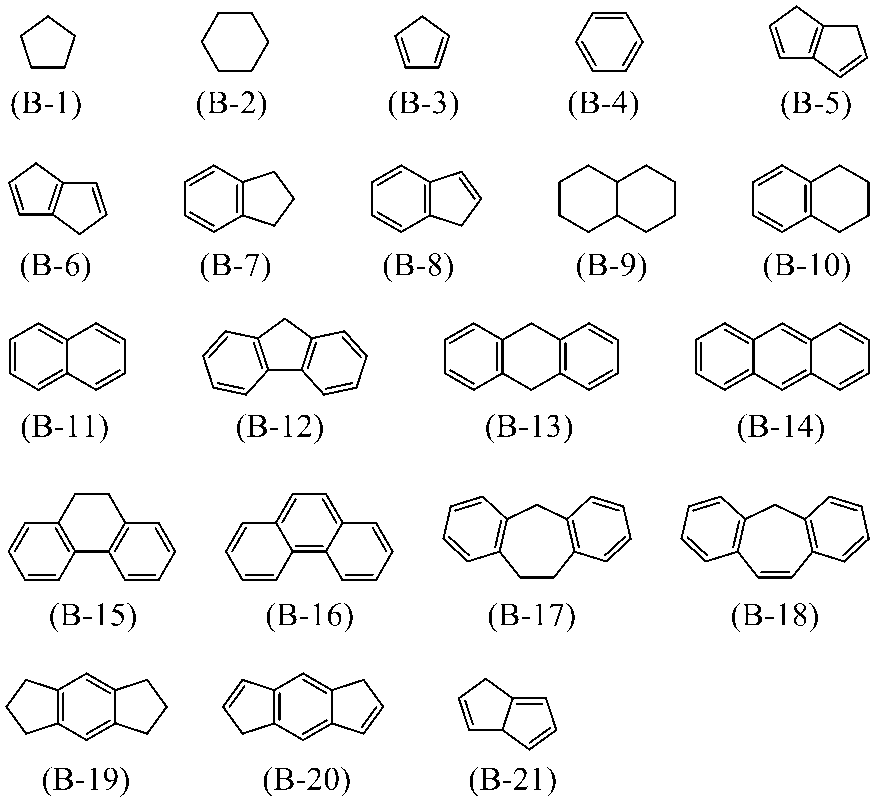
<W1-M2-W2-C3>
<n1が0を表しn2及びn3が1を表す>化合物において、フィルム状の重合物を作製した際の表面硬度、紫外線照射した際の配向欠陥を重視する場合、W1及びW2で表される基としては、上記<<W1、W2>>に記載の原料の入手容易さ及び合成の容易さの観点から選択される基が好ましい。
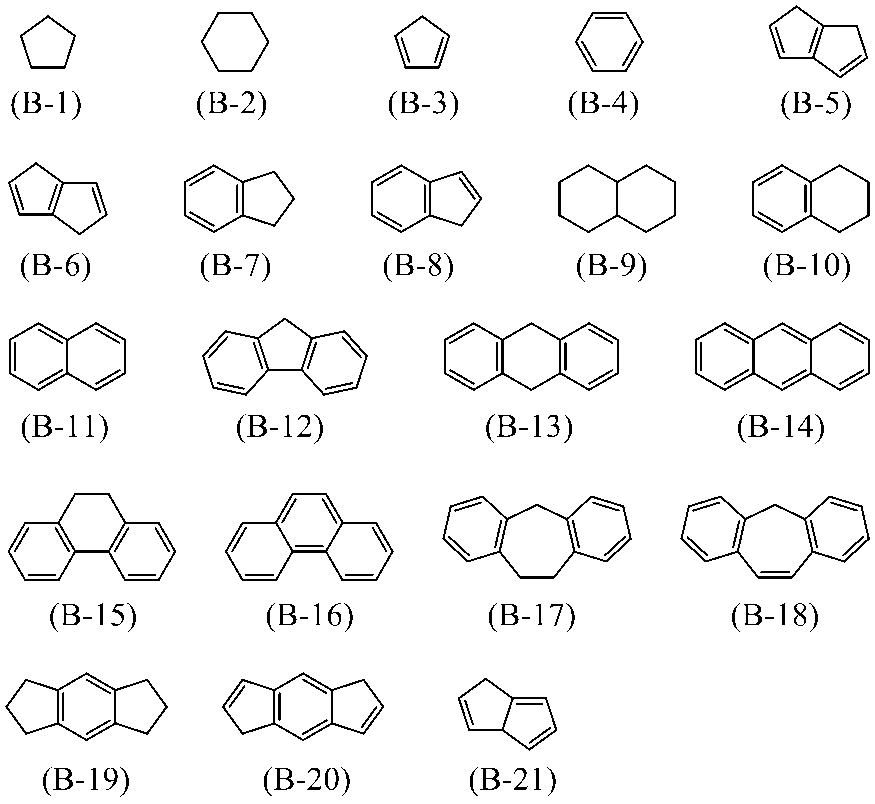
<R3、R4>
<n1が0を表しn2及びn3が1を表す>化合物においては、上記に示すM2、W1、W2を適宜選択することが好ましく、R3~R4は、それぞれ以下の基を用いることが好ましい。

<<n1及びn2が0を表しn3が2から1000を表す>>化合物
<W1-D1>
<n1及びn2が0を表しn3が2を表す>化合物は、化合物の構造上フィルム状の重合物を作製した際の膜厚均一性又は密着性が良好であるので、一般式(I)において、W1が下記の式(I-W17-1)又は式(I-W17-2)
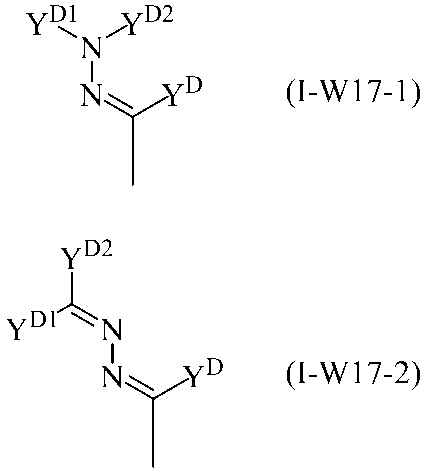


<W1-D2>
<n1及びn2が0を表しn3が2を表す>化合物において、フィルム状の重合物を作製した際のヘイズ、密着性を重視する場合、W1で表される基としては、上記<<W1、W2>>に記載の一般式(I-W1)のうち、原料の入手容易さ及び合成の容易さの観点から選択される基が好ましい。
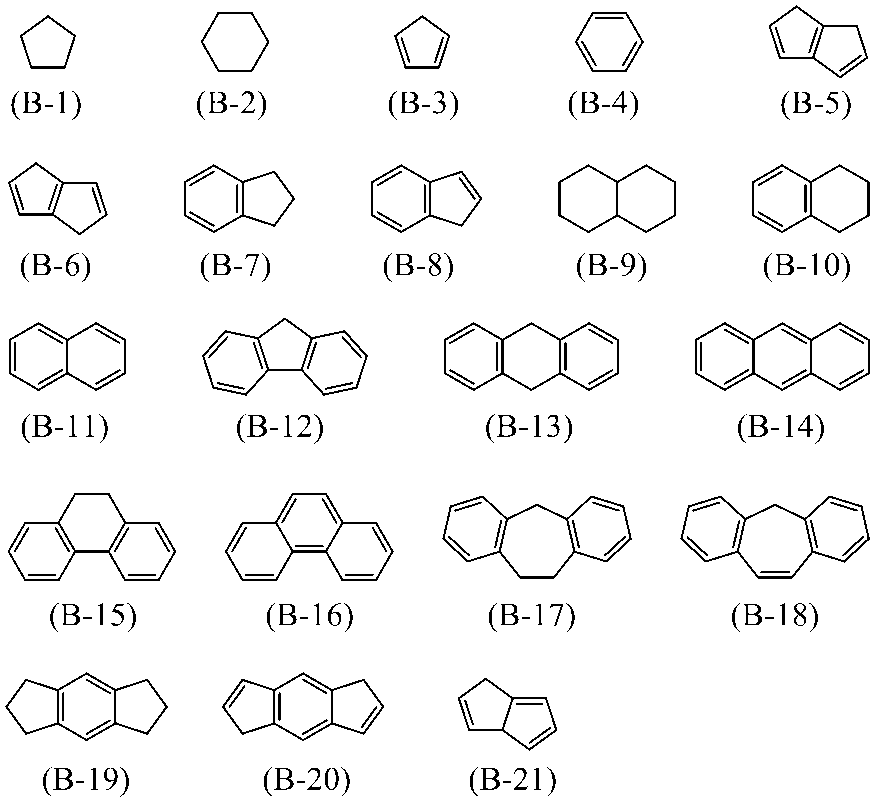
<W1-D3>
<n1及びn2が0を表しn3が2を表す>化合物において、フィルム状の重合物を作製した際のヘイズ、表面硬度を重視する場合、W1及びW2で表される基としては、上記<<W1、W2>>に記載の一般式(I-W1)のうち、原料の入手容易さ及び合成の容易さの観点から選択される基が好ましい。

<-(M2)2->
<n1及びn2が0を表しn3が2を表す>化合物は、化合物の構造上フィルム状の重合物を作製した際のヘイズ値、膜厚均一性又は密着性が良好であるので、一般式(I)において、-(M2)2-が下記の一般式(I-M3)
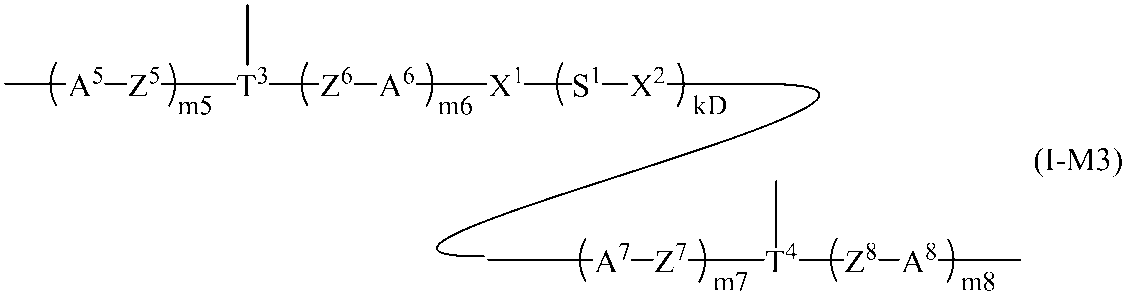
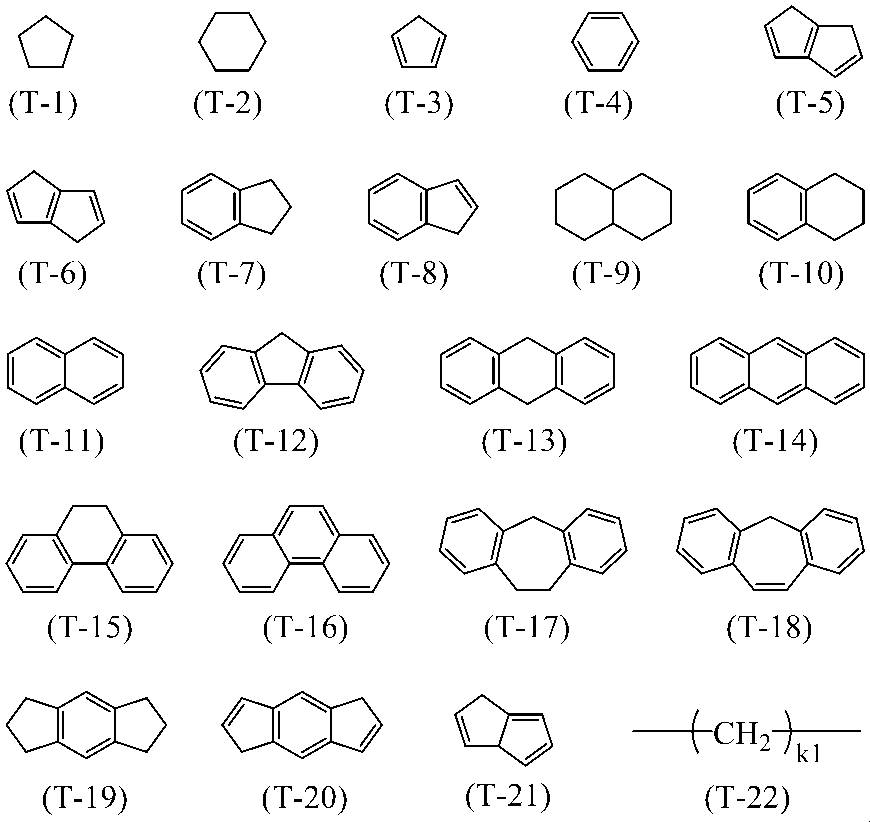

<-(M2)2-D1>
<n1及びn2が0を表しn3が2を表す>化合物において、組成物の保存安定性、フィルム状の重合物を作製した際の密着性、紫外線照射後の外観を重視する場合若しくはフィルム状の重合物を作製した際の膜厚均一性、配向ムラを重視する場合、上記一般式(I-M3)中、T3及びT4は、各々独立して、式(T2-1)から式(T2-10)

<-(M2)2-D2>
<n1及びn2が0を表しn3が2を表す>化合物において、フィルム状の重合物を作製した際のヘイズ、密着性を重視する場合、上記一般式(I-M3)中、T3は、各々独立して、下記の式(T2-11)から式(T2-27)

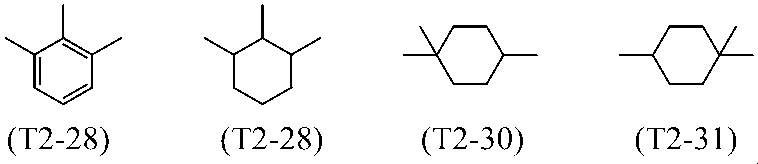


上記一般式(I-M3)中、T4は上記式(T2-1)から式(T2-10)又は式(T2-11)から式(T2-34)から選ばれる基を表すことが好ましい。

<-(M2)2-D3>
<n1及びn2が0を表しn3が2を表す>化合物において、フィルム状の重合物を作製した際のヘイズ、表面硬度を重視する場合、T3は置換されていても良い炭素原子数1から80の非環状基を表すことが好ましく、当該非環状基の任意の炭素原子はヘテロ原子に置換されていても良い。


<R3、R4>
<n1及びn2が0を表しn3が2を表す>化合物においては、上記に示すM2、W1を適宜選択することが好ましく、R3~R4は、それぞれ以下の基を用いることが好ましい。
R3が式(I-R)


Mzは下記の式(M-z-1)から式(M-z-8)
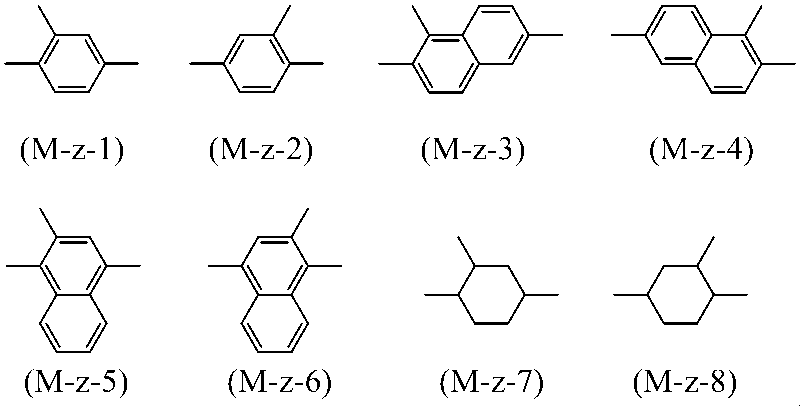
Rz1は水素原子、フッ素原子、塩素原子、臭素原子、ヨウ素原子、ペンタフルオロスルフラニル基、シアノ基、ニトロ基、イソシアノ基、チオイソシアノ基、又は、1個の-CH2-又は隣接していない2個以上の-CH2-が各々独立して-O-、-S-、-CO-、-COO-、-OCO-、-CO-S-、-S-CO-、-O-CO-O-、-CO-NH-、-NH-CO-、-CH=CH-、-CF=CF-又は-C≡C-によって置換されても良い炭素原子数1から20の直鎖状又は分岐状アルキル基を表すが、当該アルキル基中の任意の水素原子はフッ素原子に置換されても良い。Rz1は液晶性及び合成の容易さの観点から水素原子、フッ素原子、塩素原子、シアノ基、若しくは、1個の-CH2-又は隣接していない2個以上の-CH2-が各々独立して-O-、-COO-、-OCO-、-O-CO-O-によって置換されても良い炭素原子数1から12の直鎖又は分岐アルキル基を表すことが好ましく、水素原子、フッ素原子、塩素原子、シアノ基、若しくは、炭素原子数1から12の直鎖アルキル基又は直鎖アルコキシ基を表すことがより好ましく、水素原子、炭素原子数1から12の直鎖アルキル基又は直鎖アルコキシ基を表すことがよりさらに好ましく、炭素原子数1から12の直鎖アルキル基又は直鎖アルコキシ基を表すことが特に好ましい。
Gzは下記の式(G-z-1)又は式(G-z-2)
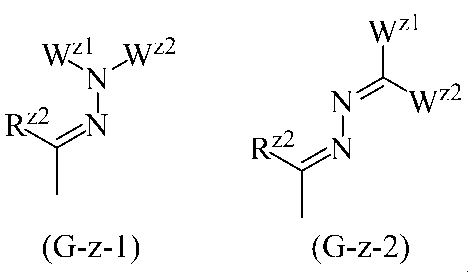
Wz1は少なくとも1つの芳香族基を有する、炭素原子数2から30の基を表すが、当該基は無置換であるか又は1つ以上のLWzによって置換されても良く、LWzはフッ素原子、塩素原子、臭素原子、ヨウ素原子、ペンタフルオロスルフラニル基、ニトロ基、シアノ基、イソシアノ基、アミノ基、ヒドロキシル基、メルカプト基、メチルアミノ基、ジメチルアミノ基、ジエチルアミノ基、ジイソプロピルアミノ基、トリメチルシリル基、ジメチルシリル基、チオイソシアノ基、又は、1個の-CH2-又は隣接していない2個以上の-CH2-が各々独立して-O-、-S-、-CO-、-COO-、-OCO-、-CO-S-、-S-CO-、-O-CO-O-、-CO-NH-、-NH-CO-、-CH=CH-COO-、-CH=CH-OCO-、-COO-CH=CH-、-OCO-CH=CH-、-CH=CH-、-CF=CF-又は-C≡C-によって置換されても良い炭素原子数1から20の直鎖状又は分岐状アルキル基を表すが、当該アルキル基中の任意の水素原子はフッ素原子に置換されても良いが、LWzが複数存在する場合それらは同一であっても異なっていても良く、
Wz2は水素原子、又は、1個の-CH2-又は隣接していない2個以上の-CH2-が各々独立して-O-、-S-、-CO-、-COO-、-OCO-、-CO-S-、-S-CO-、-O-CO-O-、-CO-NH-、-NH-CO-、-CH=CH-COO-、-CH=CH-OCO-、-COO-CH=CH-、-OCO-CH=CH-、-CH=CH-、-CF=CF-又は-C≡C-によって置換されても良い炭素原子数1から20の直鎖状又は分岐状アルキル基を表すが、当該アルキル基中の任意の水素原子はフッ素原子に置換されても良く、若しくは、Wz2は少なくとも1つの芳香族基を有する、炭素原子数2から30の基を表しても良いが、当該基は無置換であるか又は1つ以上の置換基LWzによって置換されても良く、また、Wz1及びWz2は一緒になって環構造を形成しても良い。)から選ばれる基を表し、
kzは0から8の整数を表す。液晶性、原料の入手容易さ及び合成の容易さの観点から0から4の整数を表すことが好ましく、0から2の整数を表すことがより好ましく、0又は1を表すことがさらに好ましく、1を表すことが特に好ましい。mz1及びmz2は各々独立して0から5の整数を表すが、mz1+mz2は1から5の整数を表す。液晶性、合成の容易さ及び保存安定性の観点から、mz1及びmz2は各々独立して1から4の整数を表すことが好ましく、1から3の整数を表すことがより好ましく、1又は2を表すことが特に好ましい。mz1+mz2は1から4の整数を表すことが好ましく、2又は3を表すことが特に好ましい。)で表される化合物であることが好ましく、下記の一般式(I-z1-A)から一般式(I-z1-D)


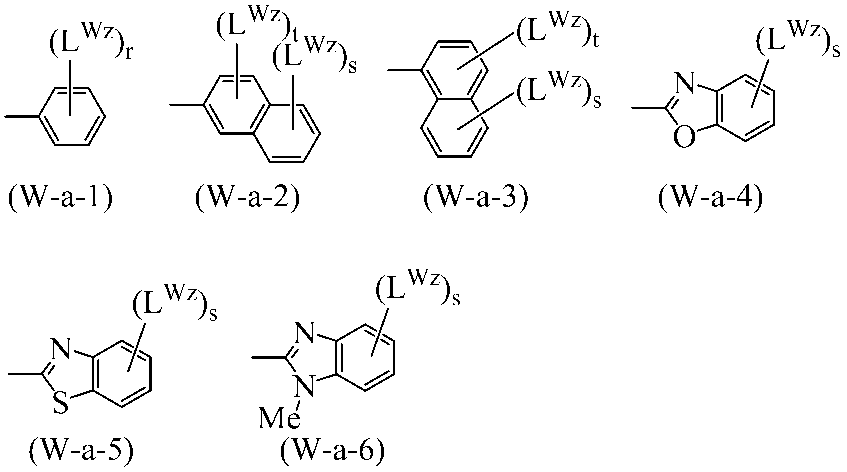

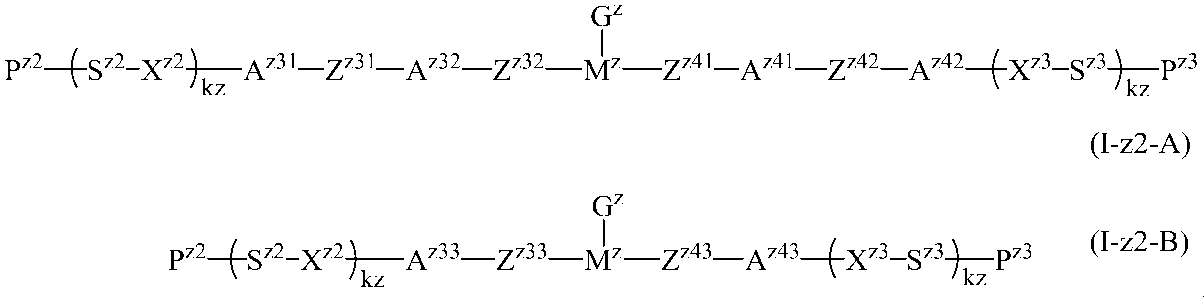
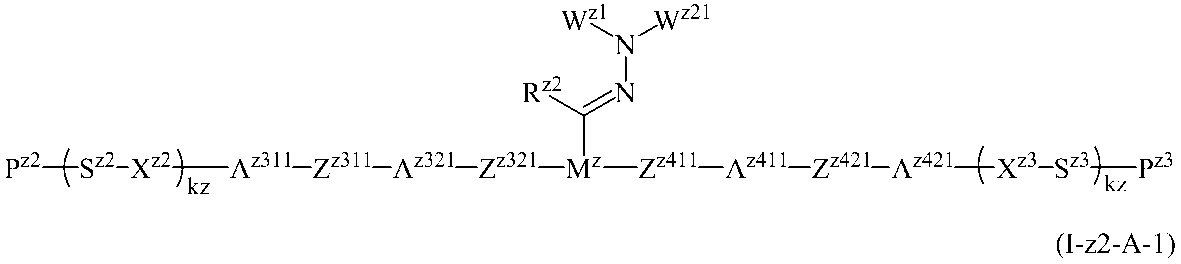
Wz21は1個の-CH2-又は隣接していない2個以上の-CH2-が各々独立して-O-によって置換されても良い炭素原子数1から20の直鎖状又は分岐状アルキル基、若しくは、-(Xz4-Sz4)kz-Pz4で表される基から選ばれる基を表す。)で表される化合物が好ましい。Wz1の好ましい構造は、前記と同様である。


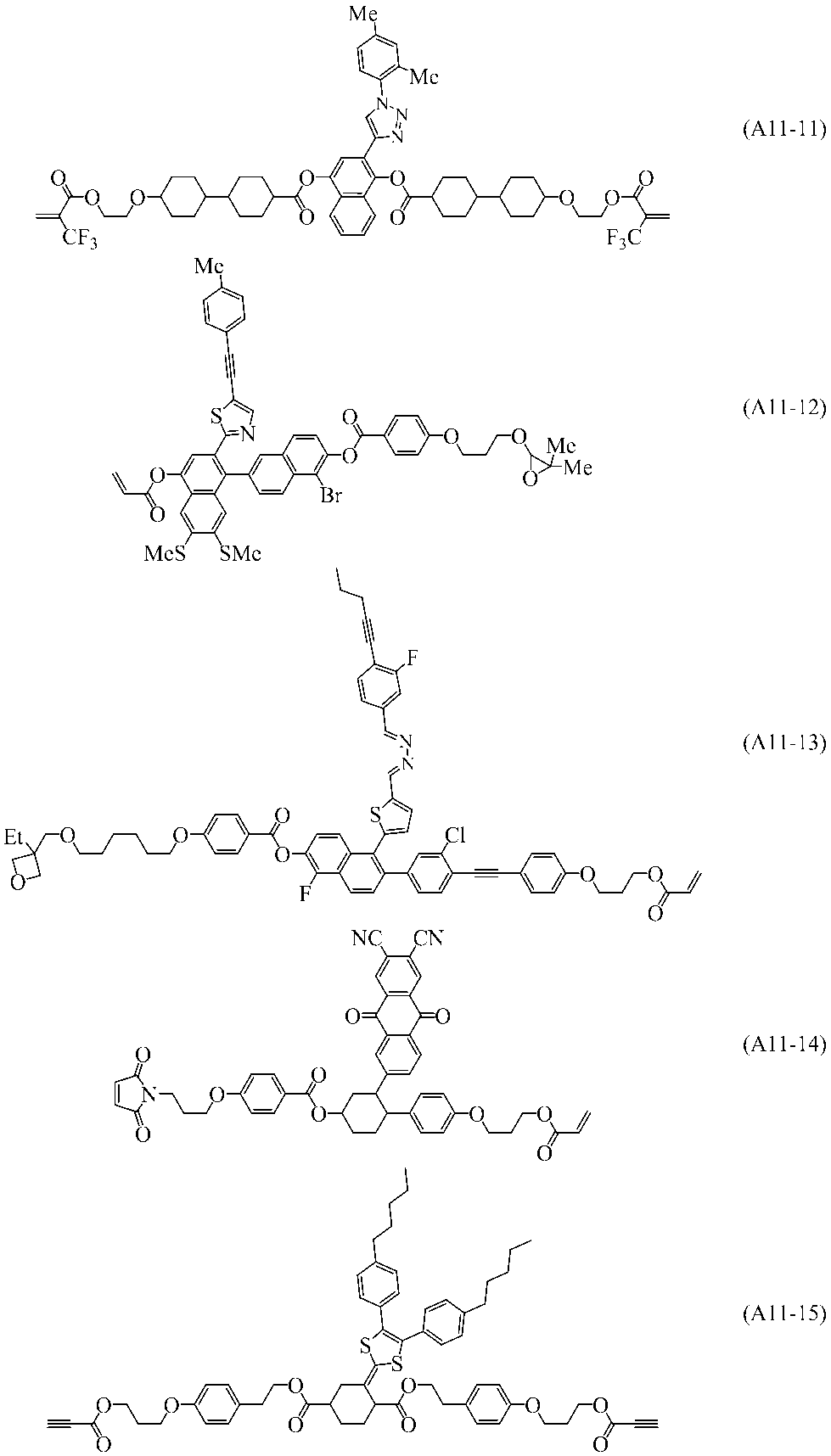


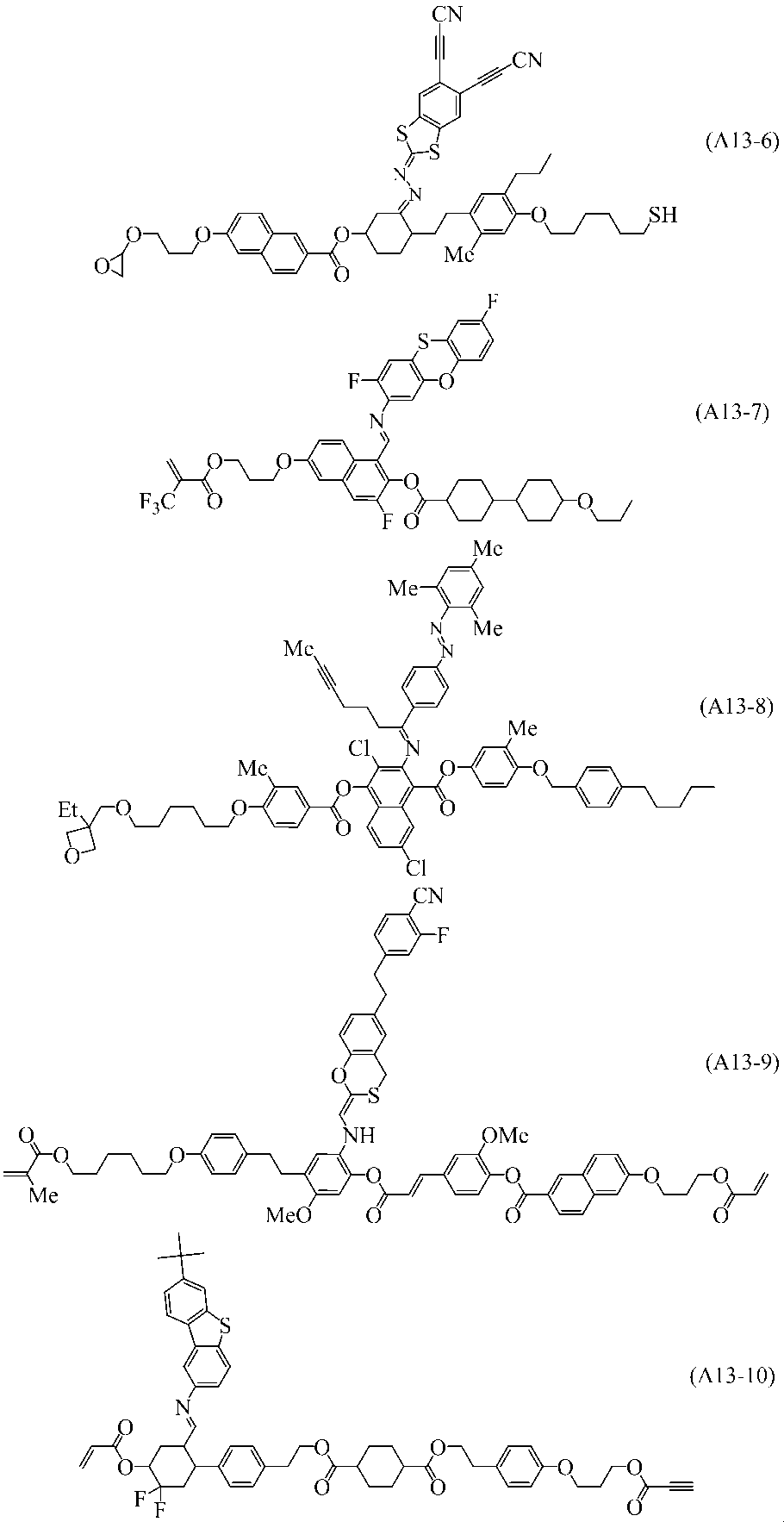
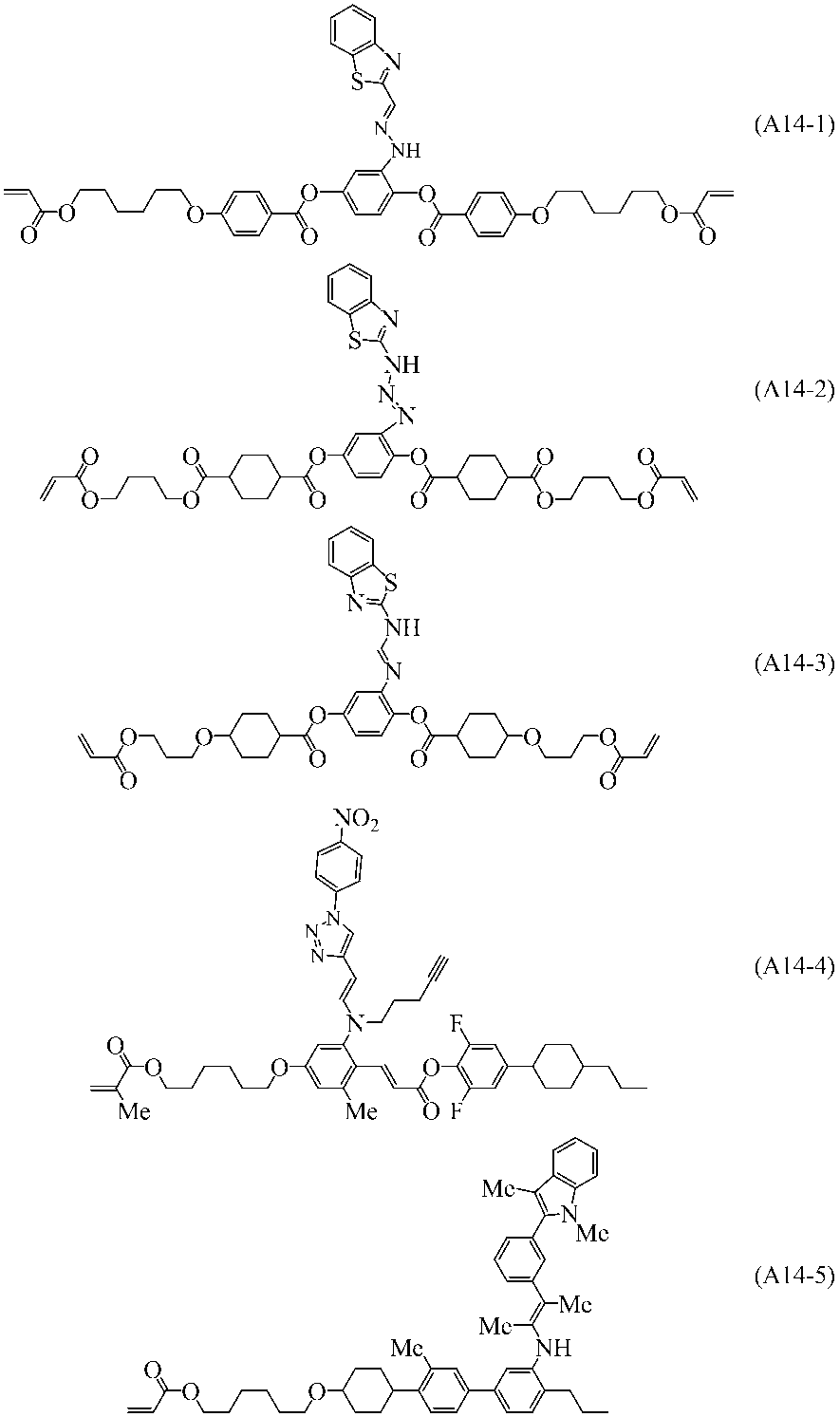
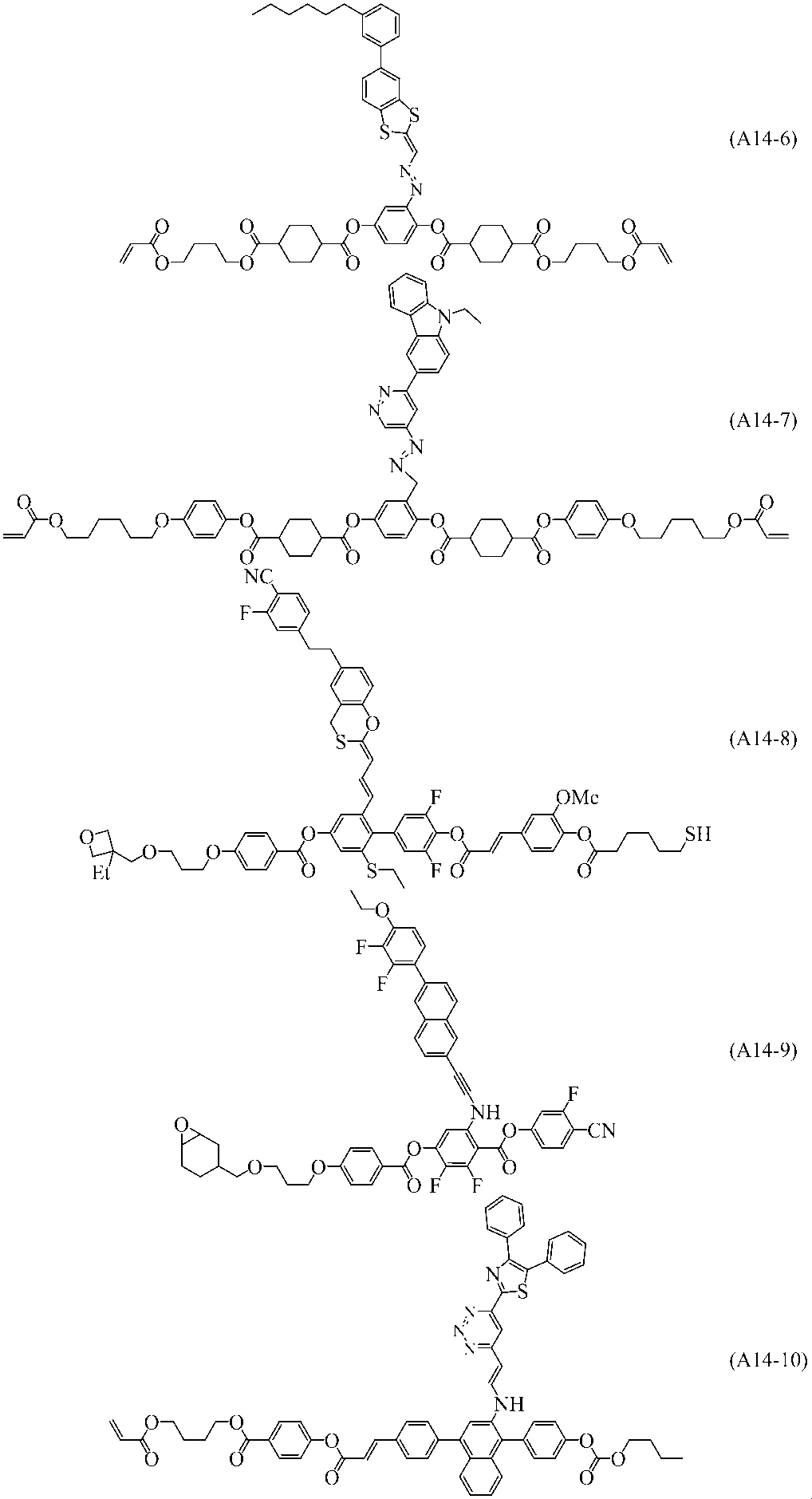

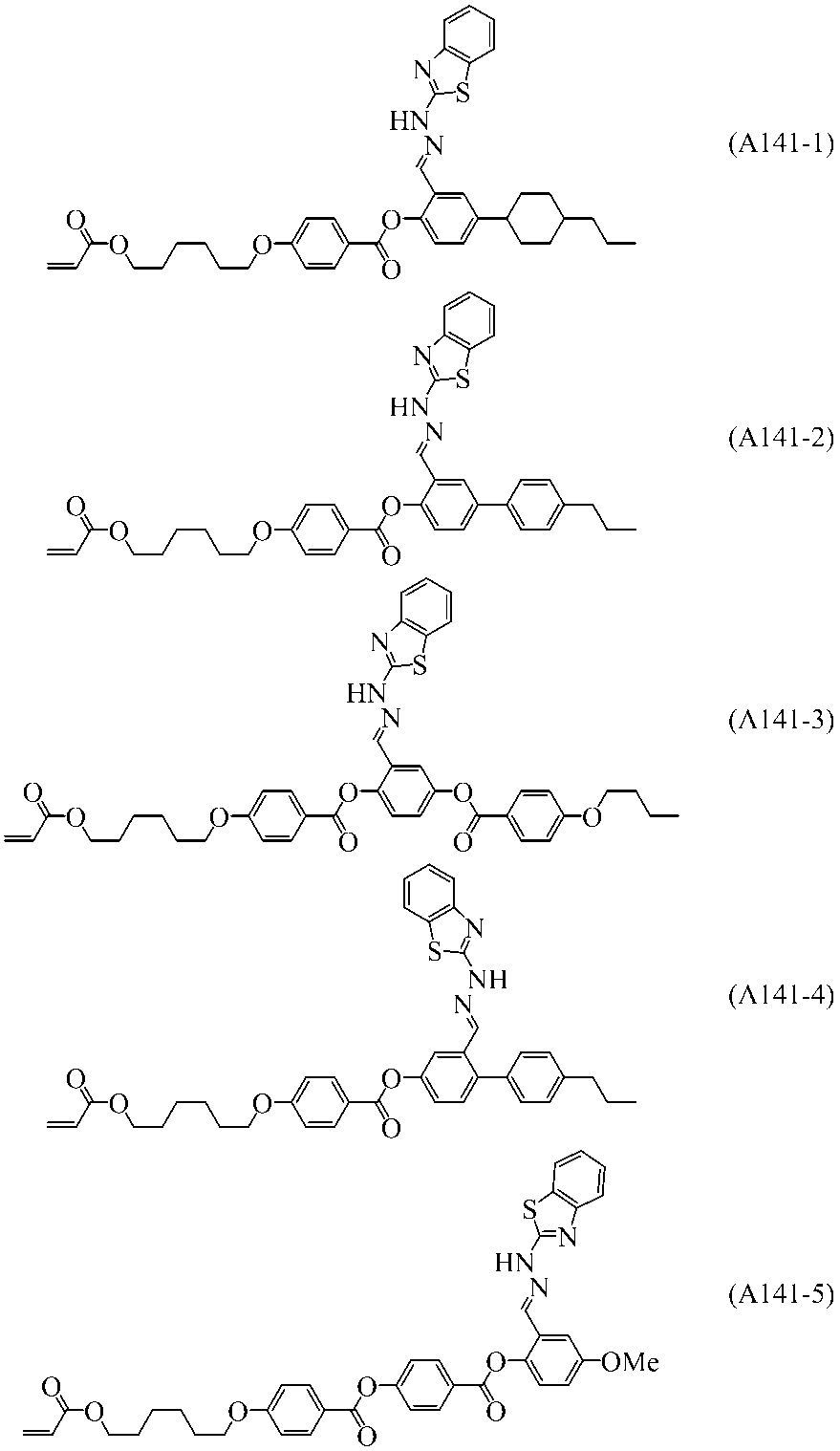


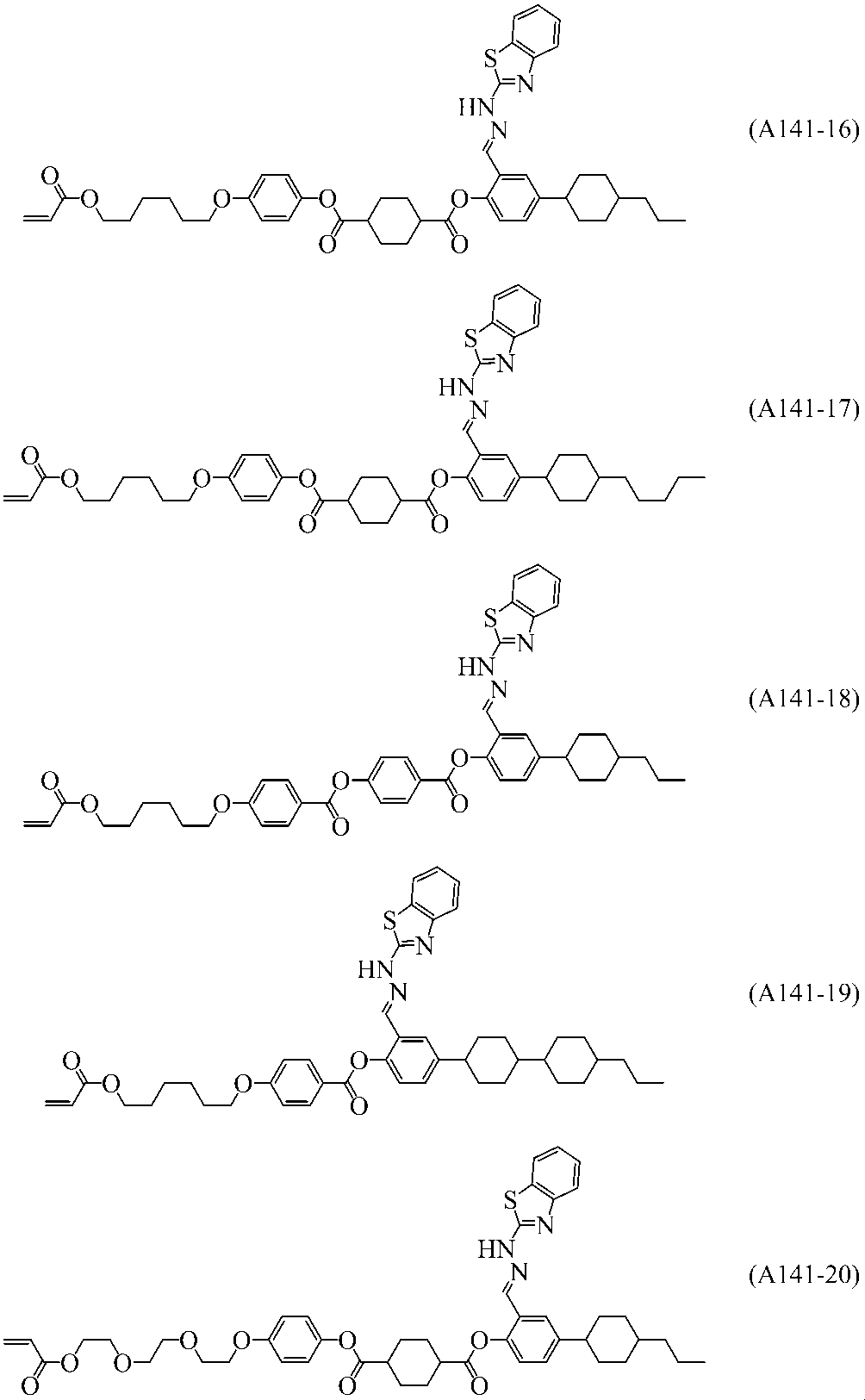

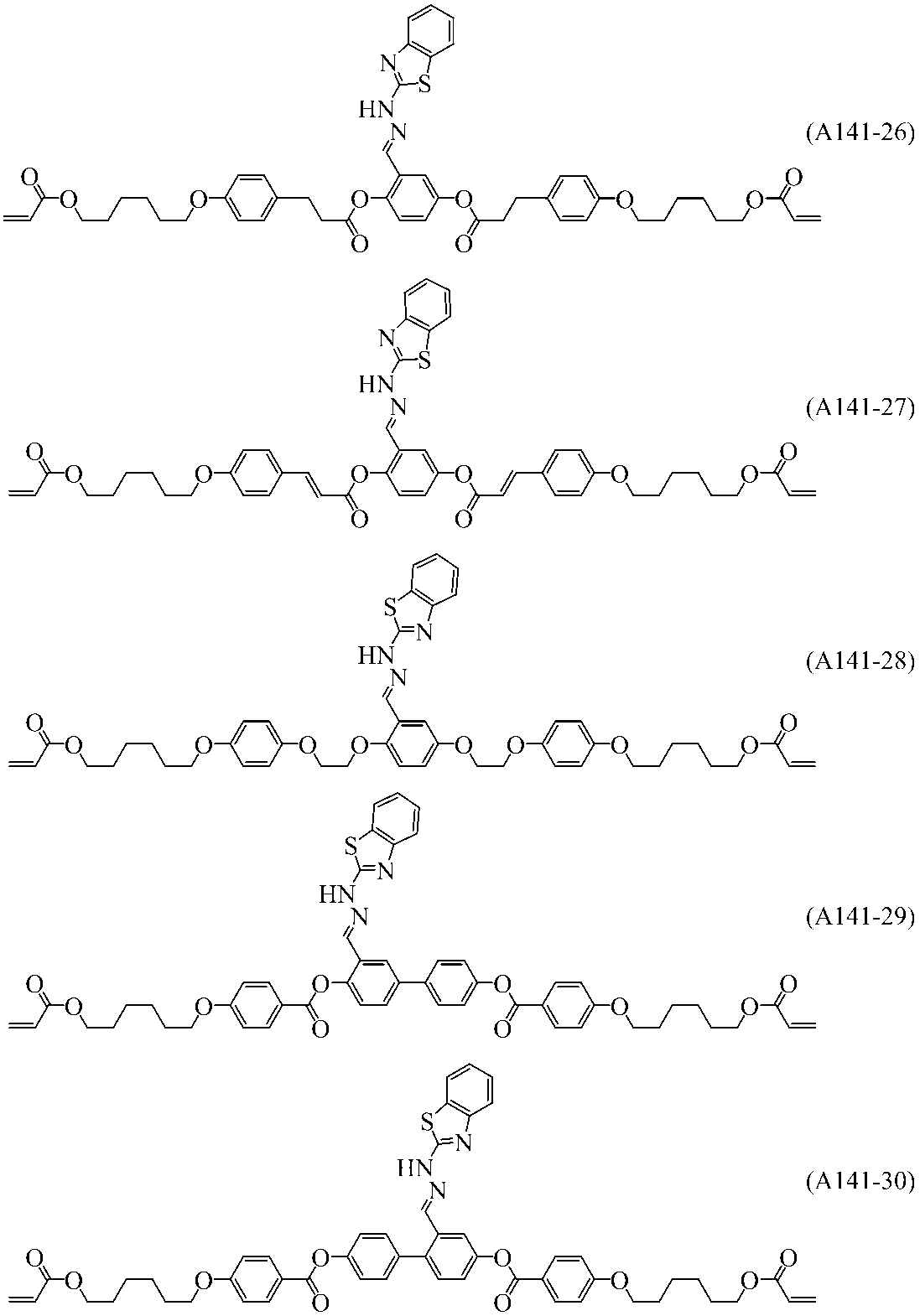

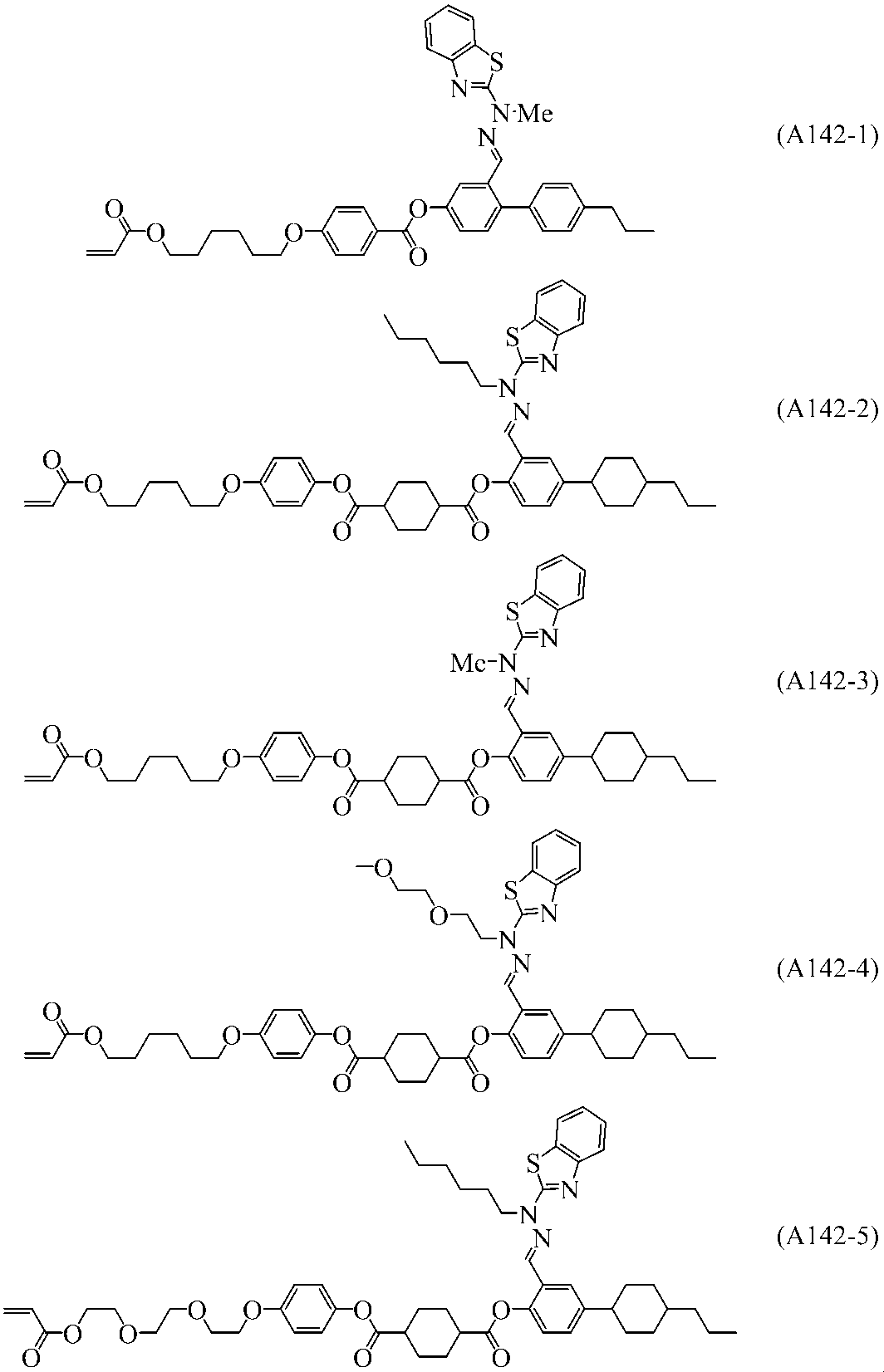
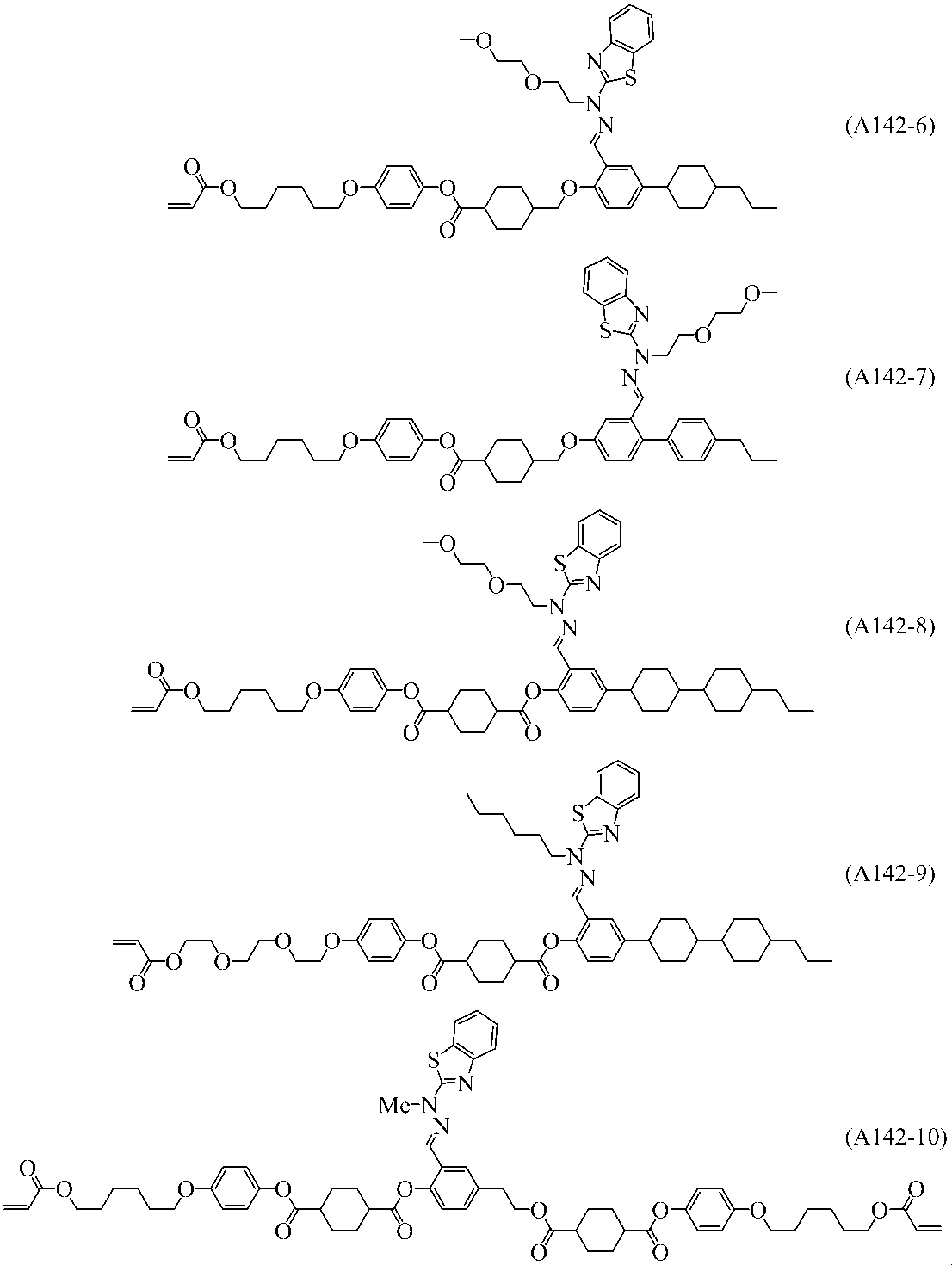

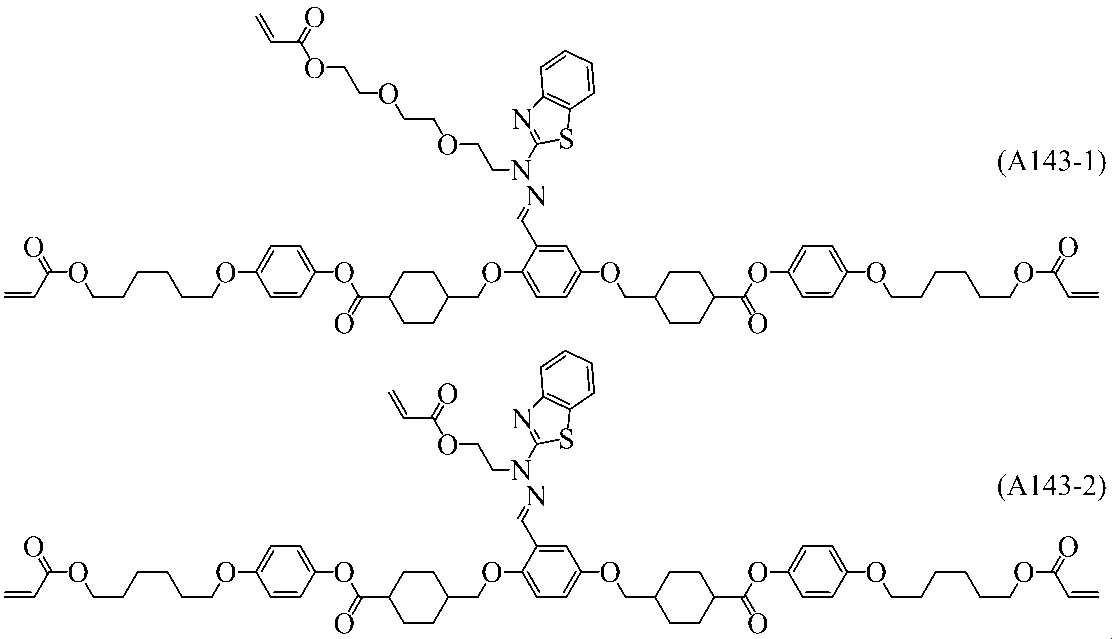

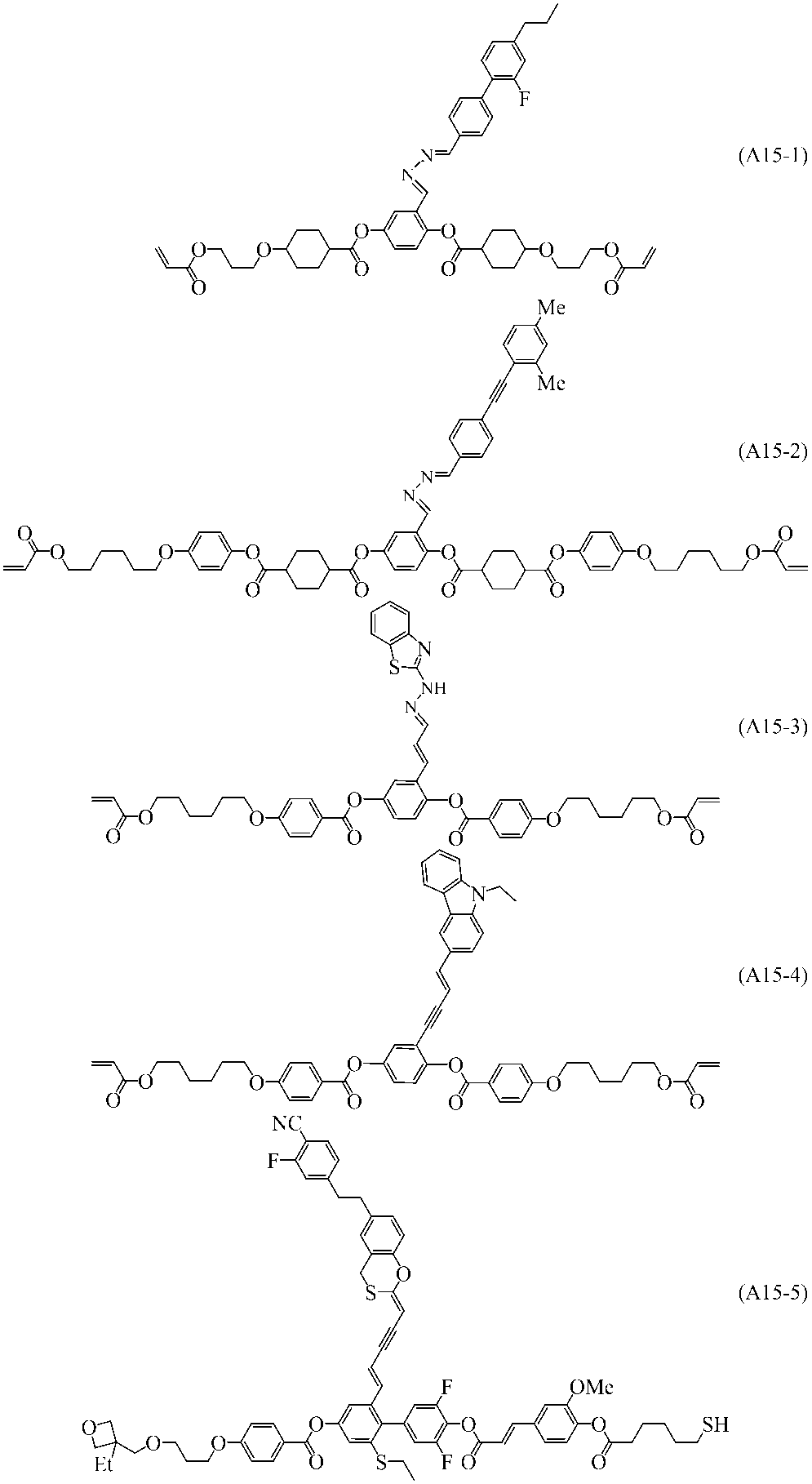
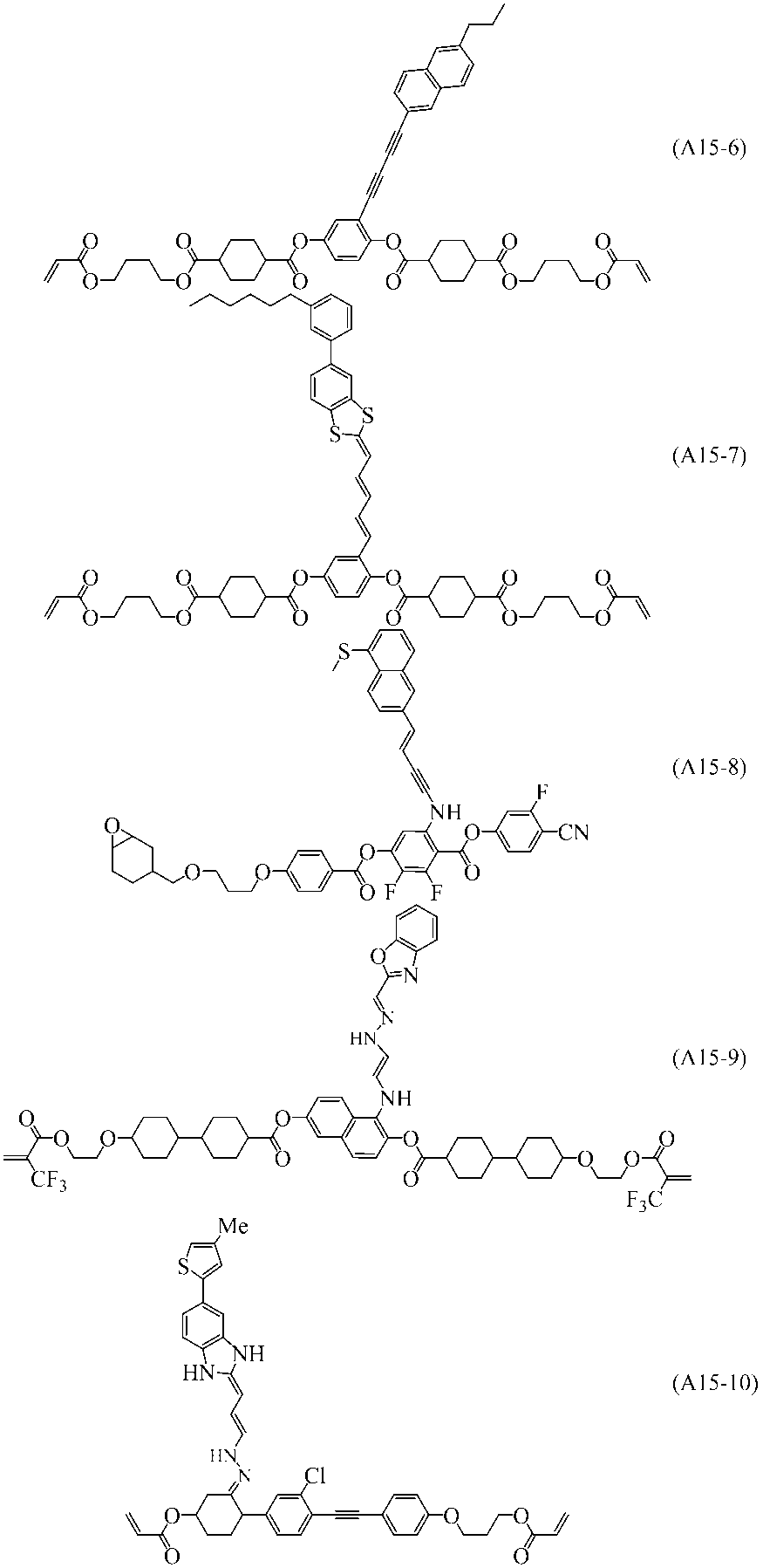
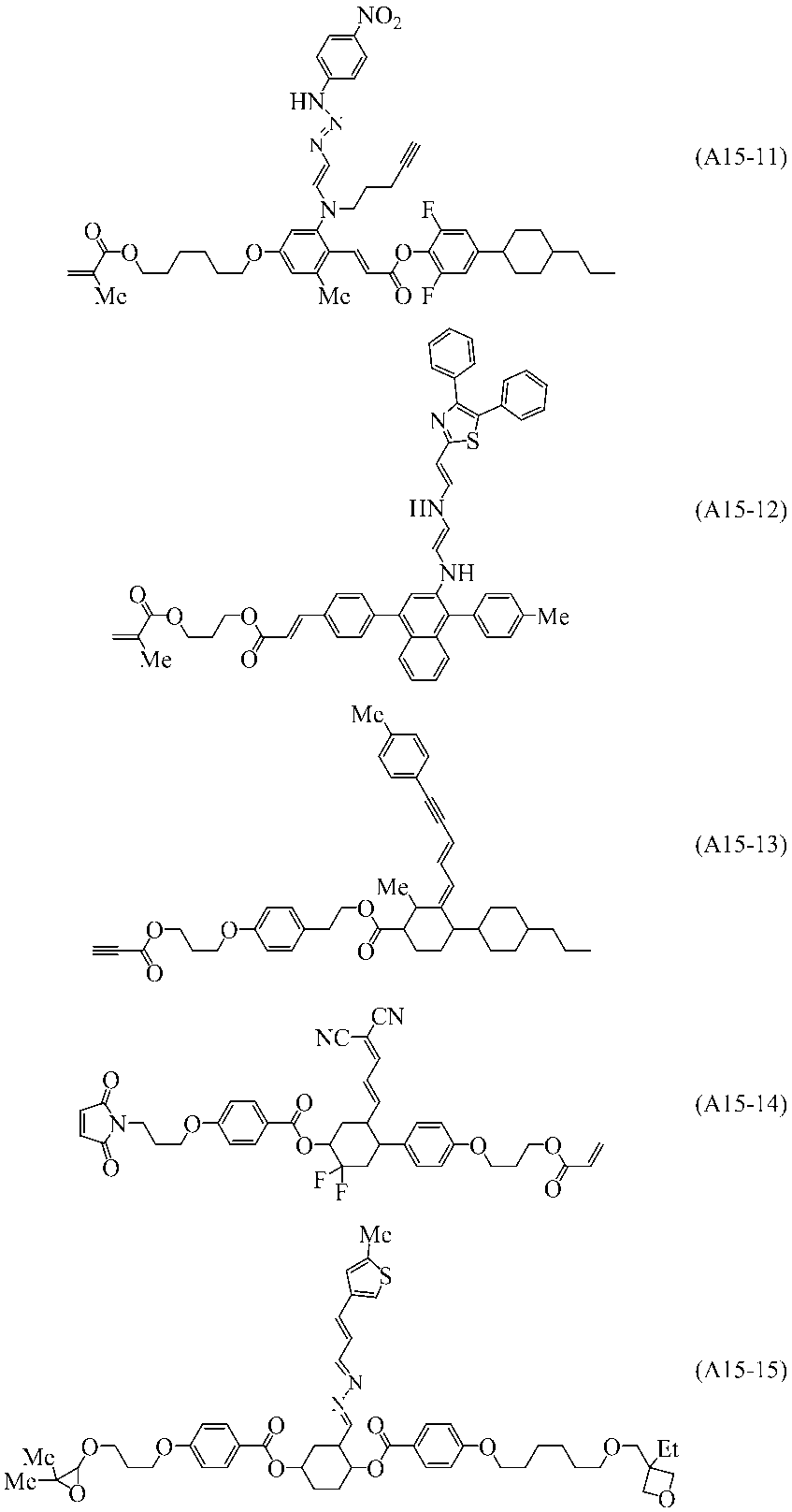

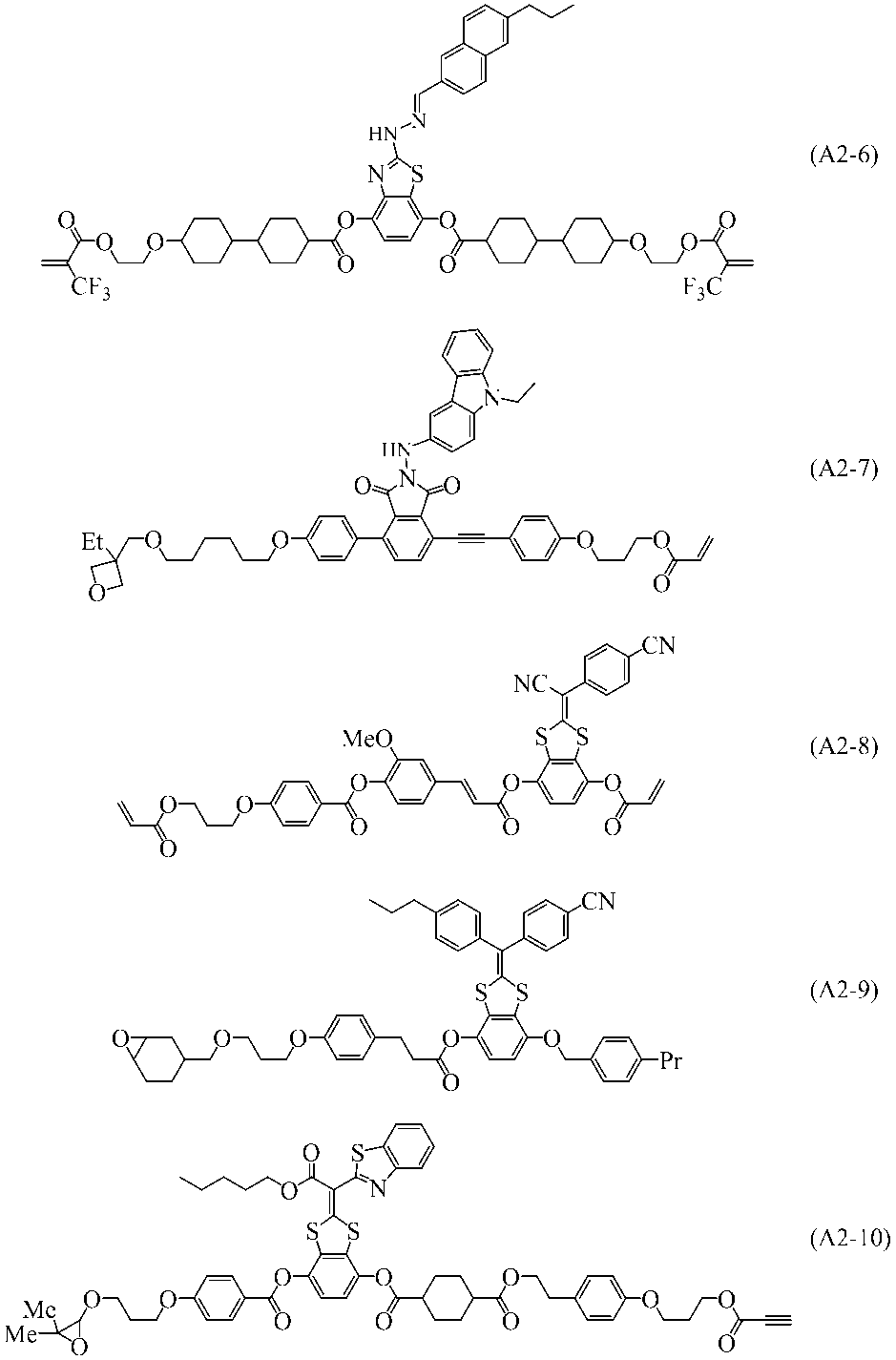

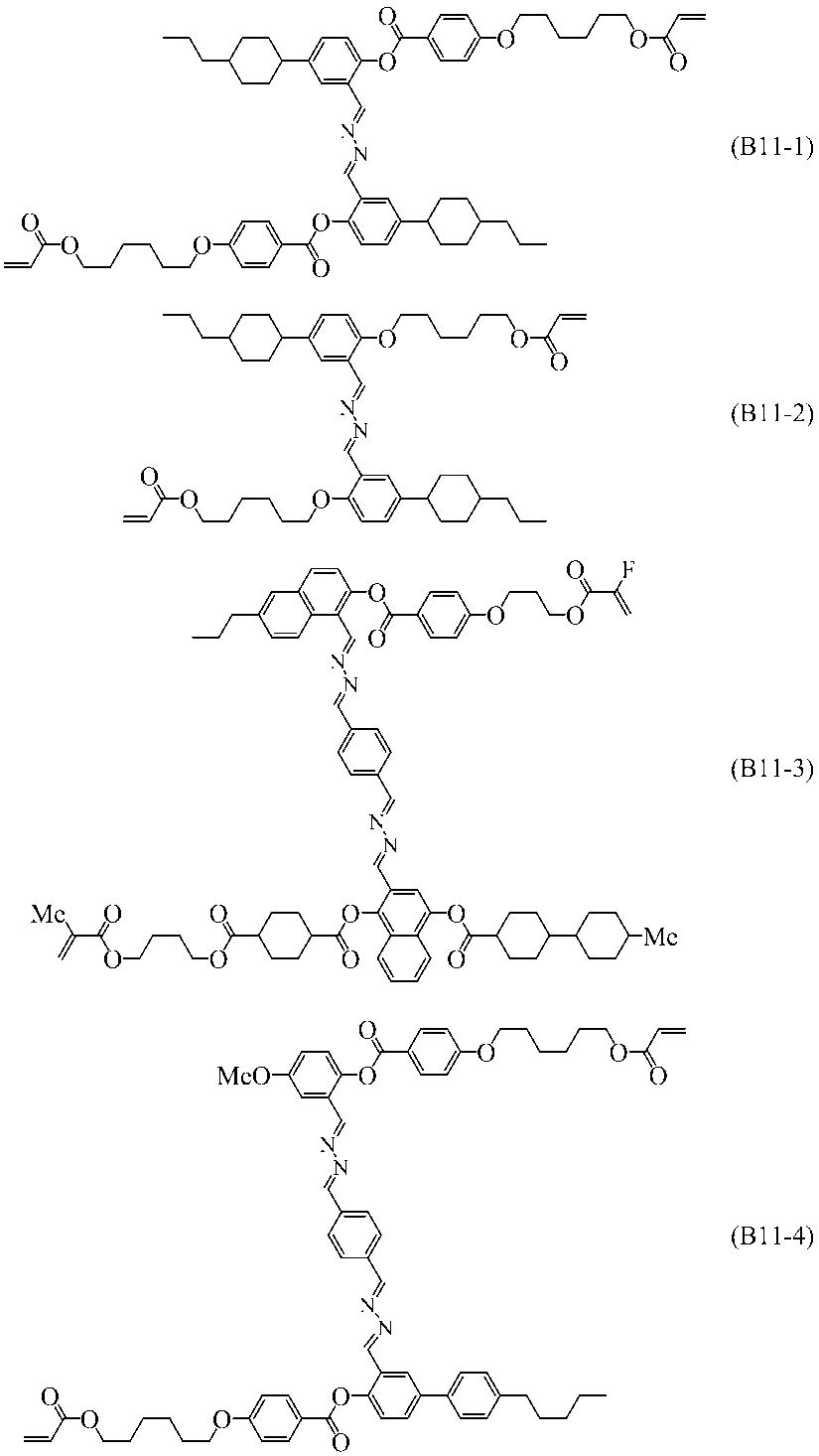

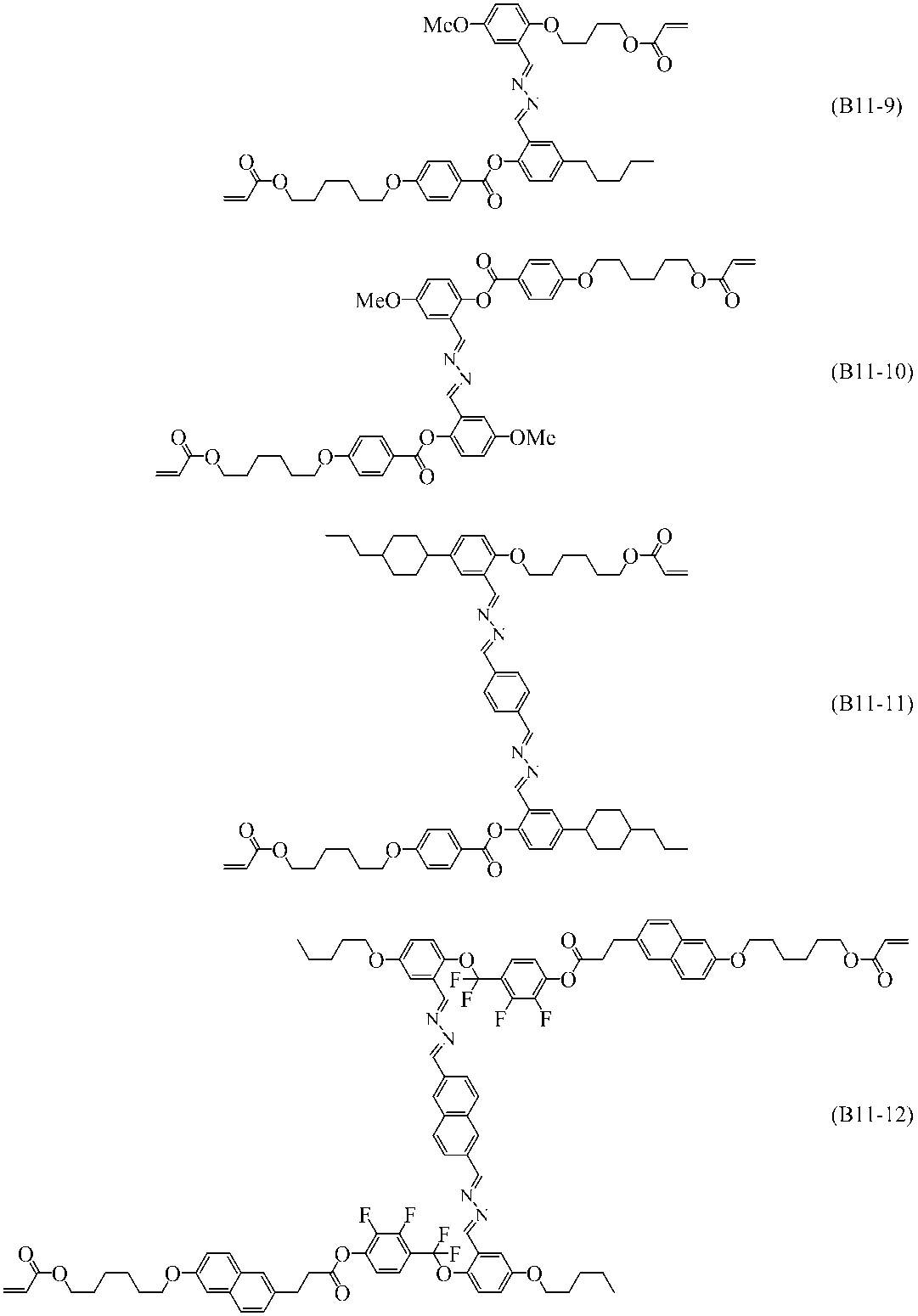
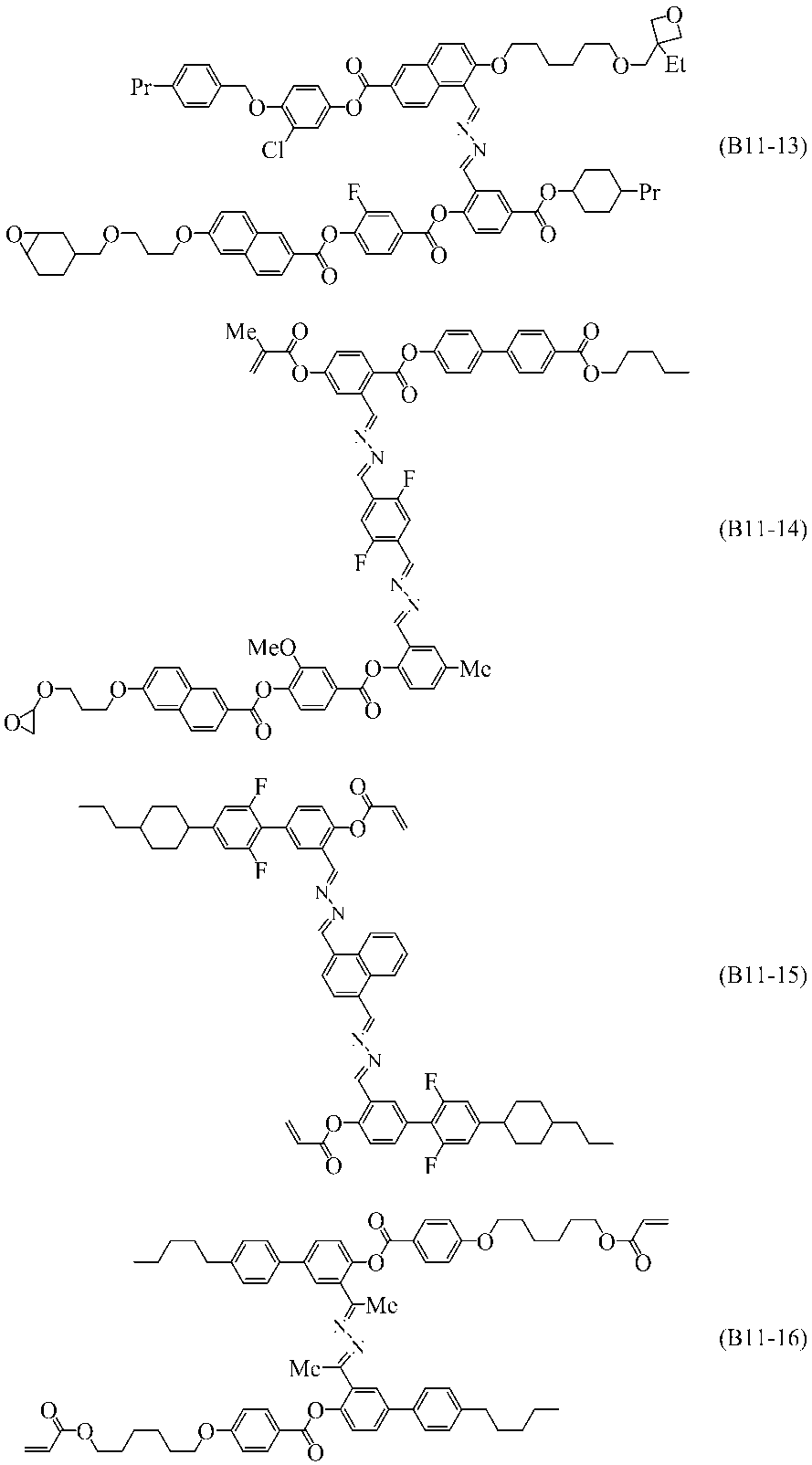
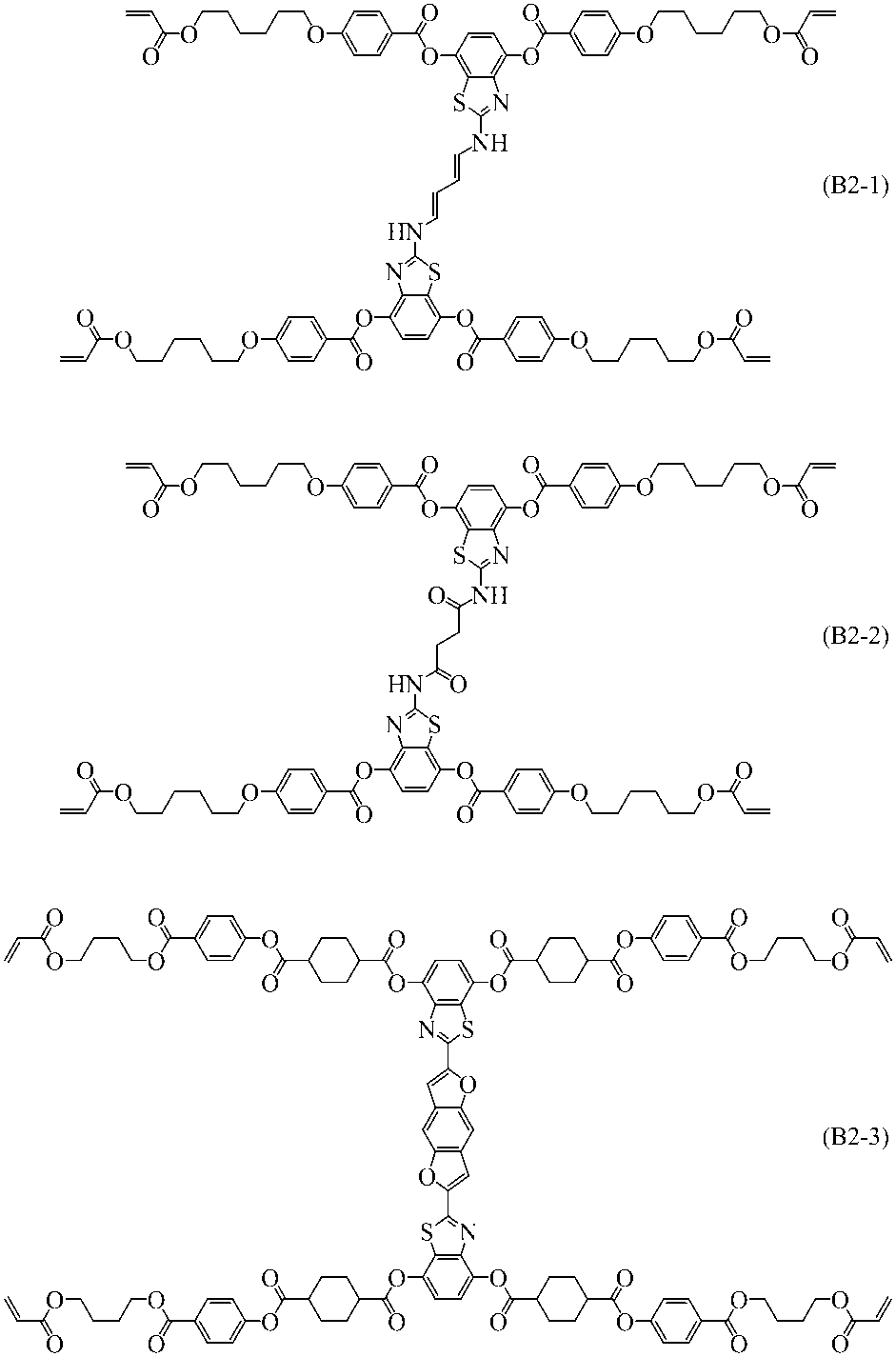


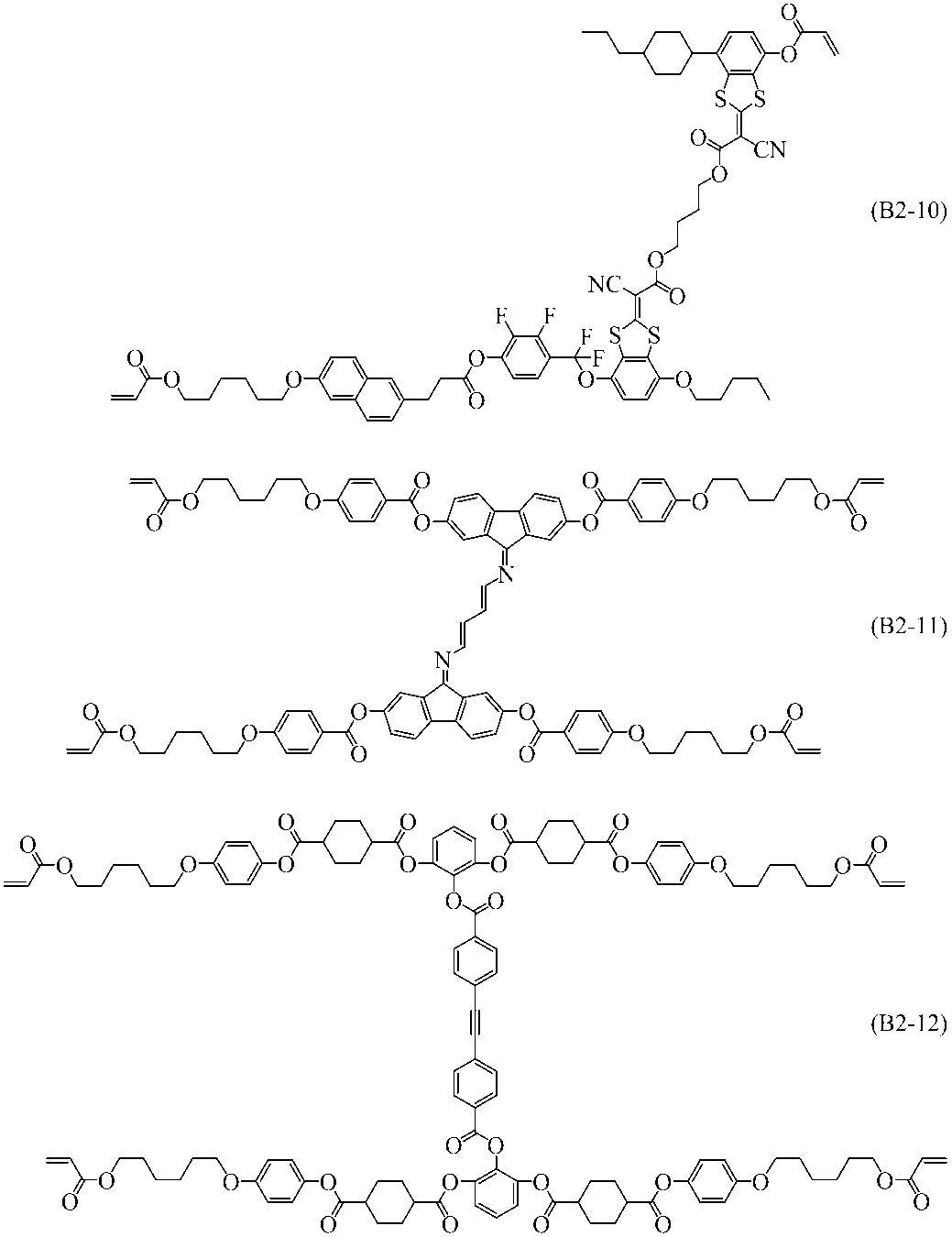


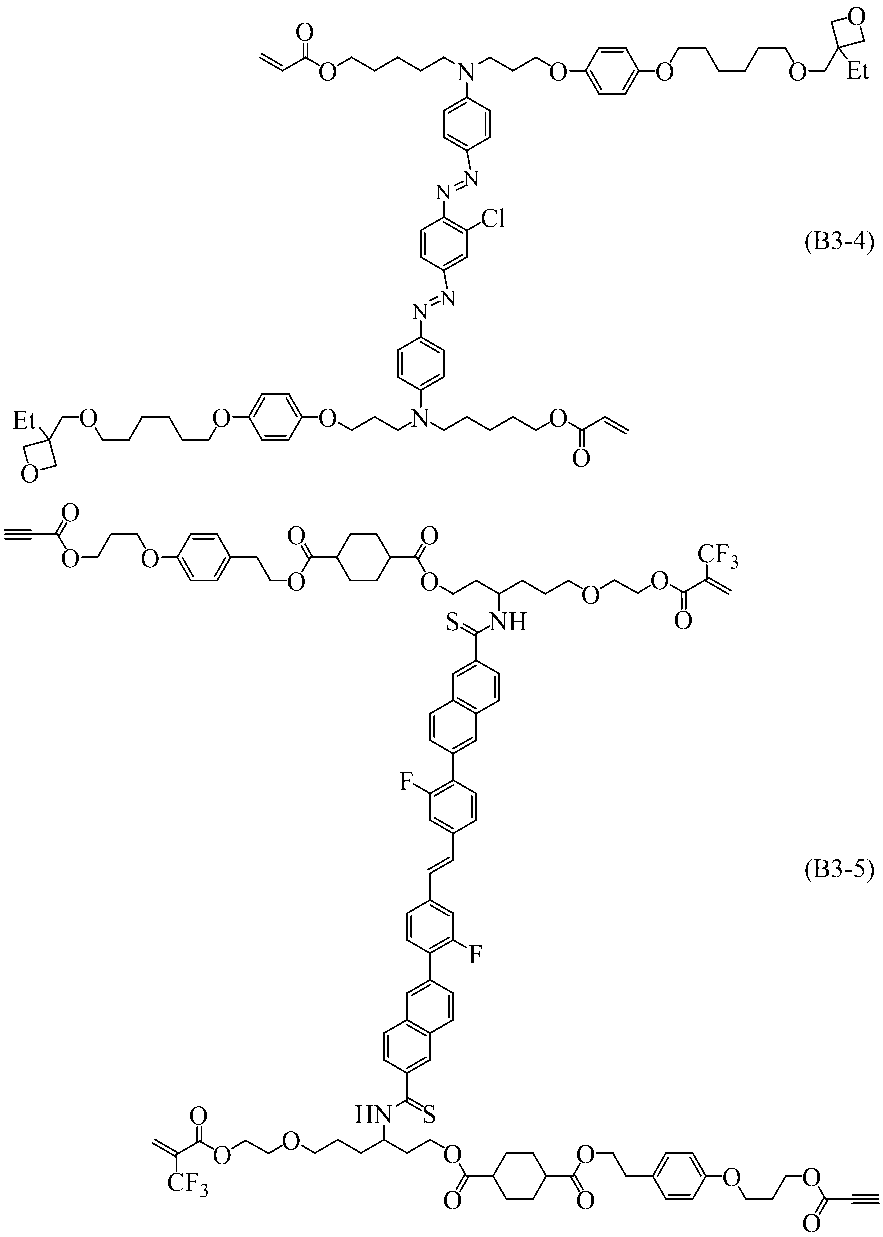
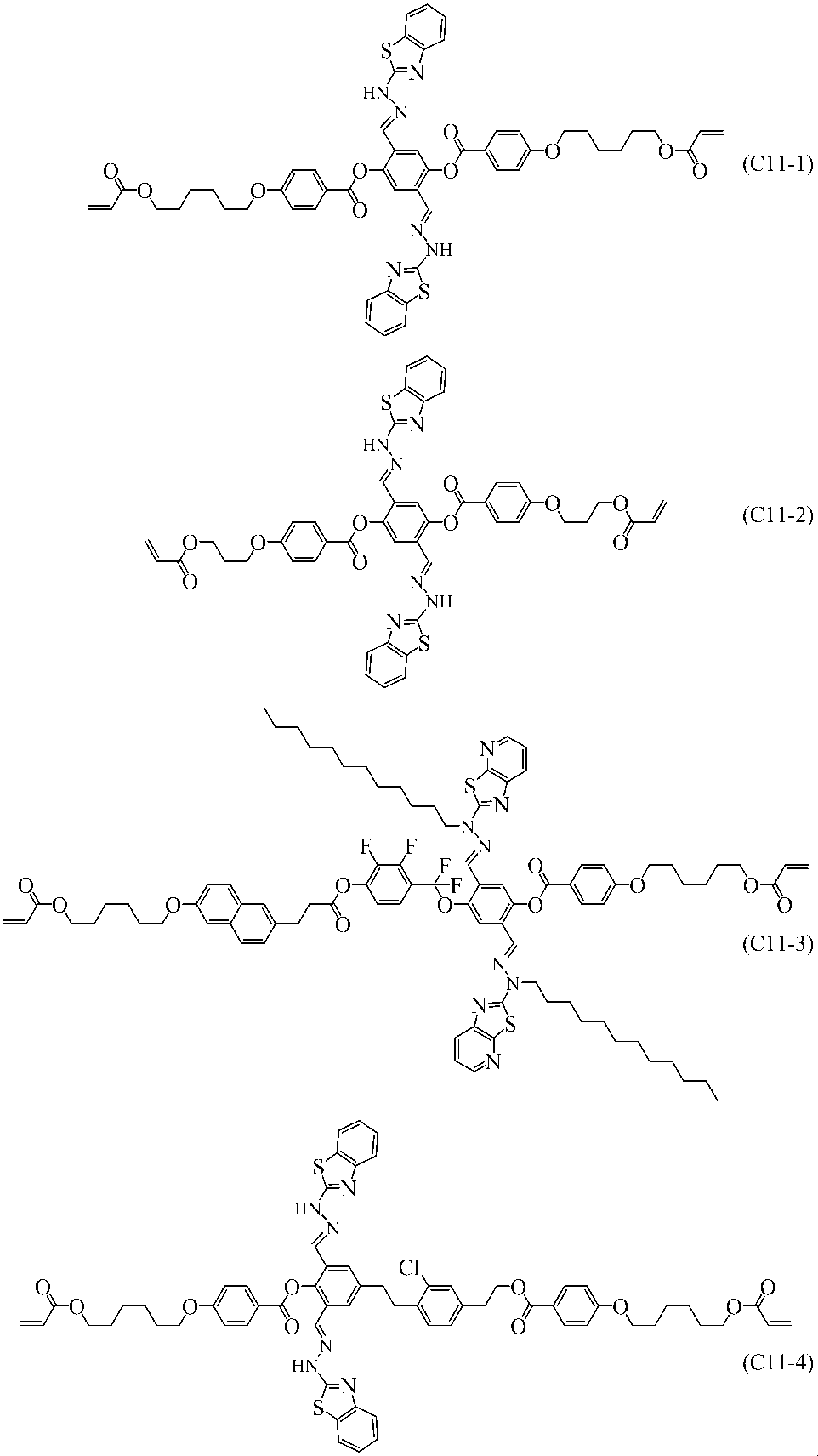
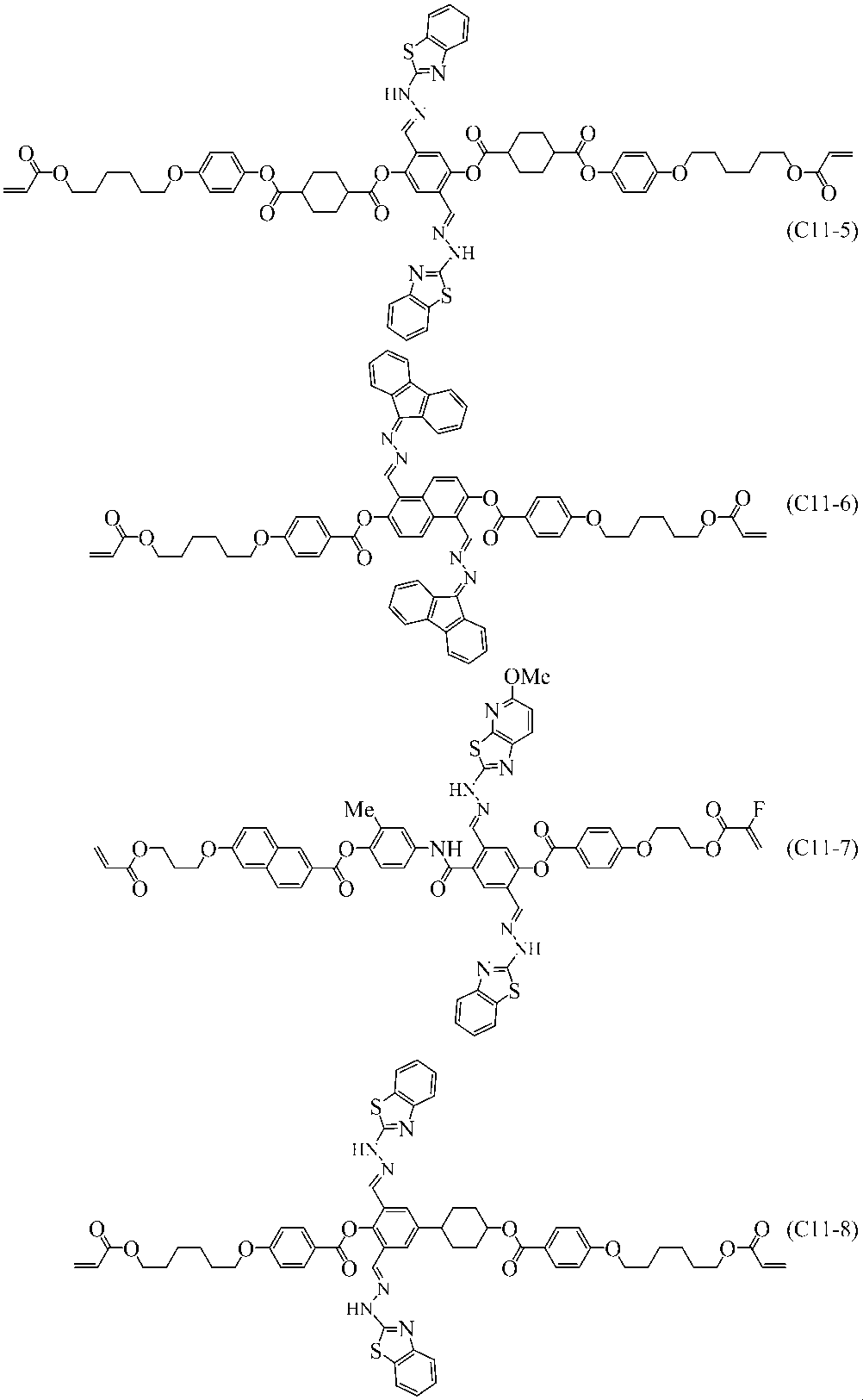


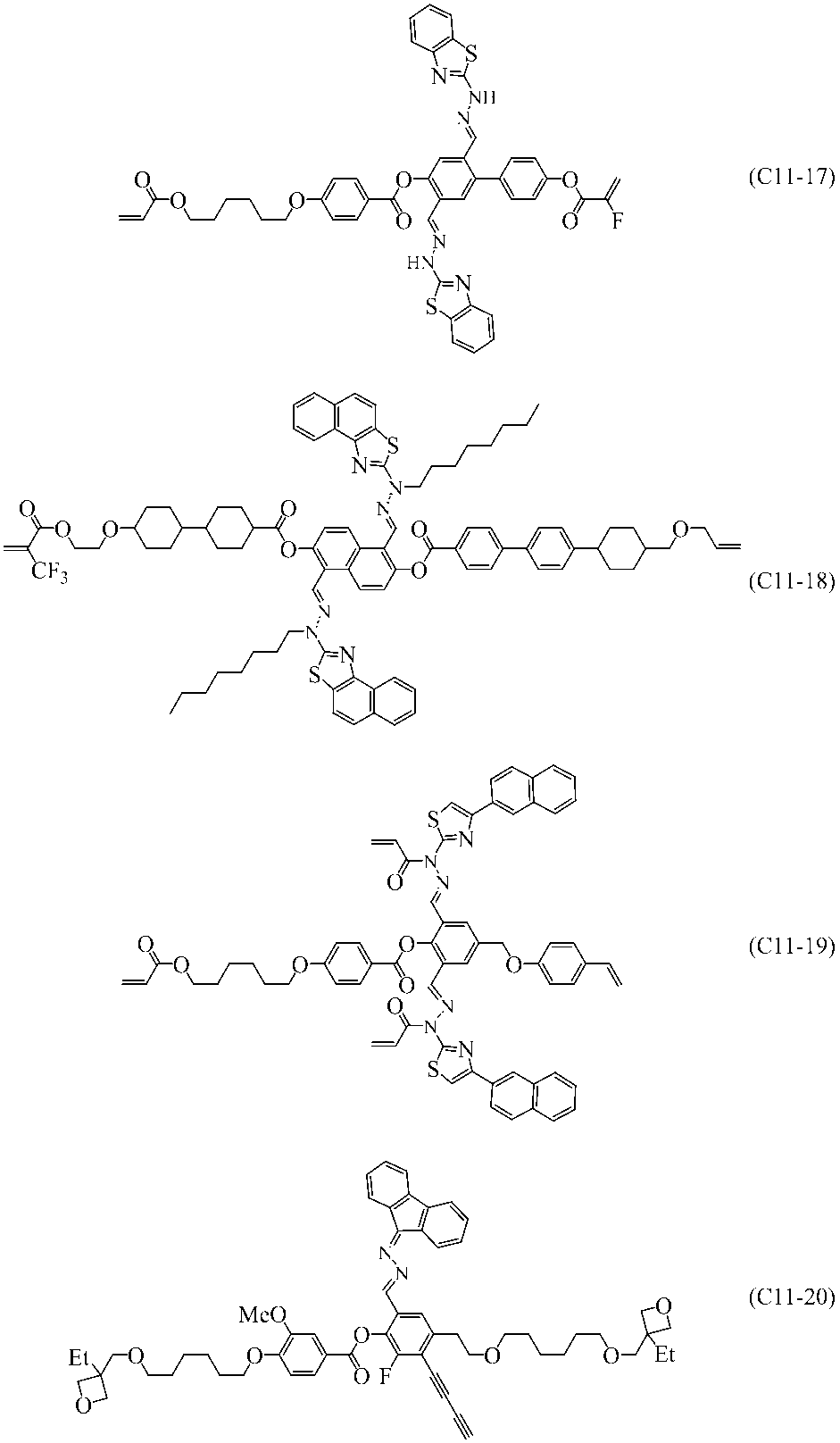


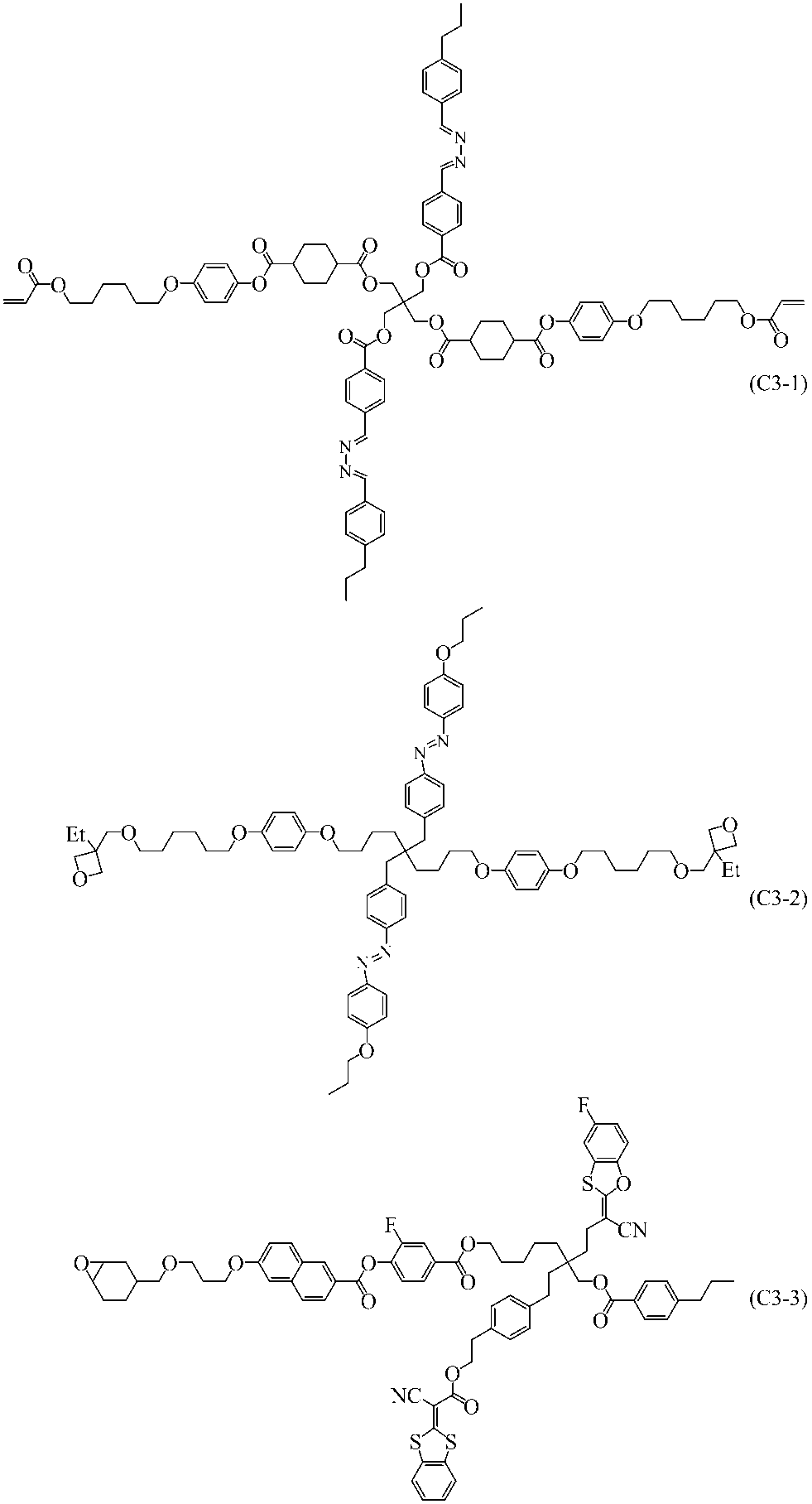

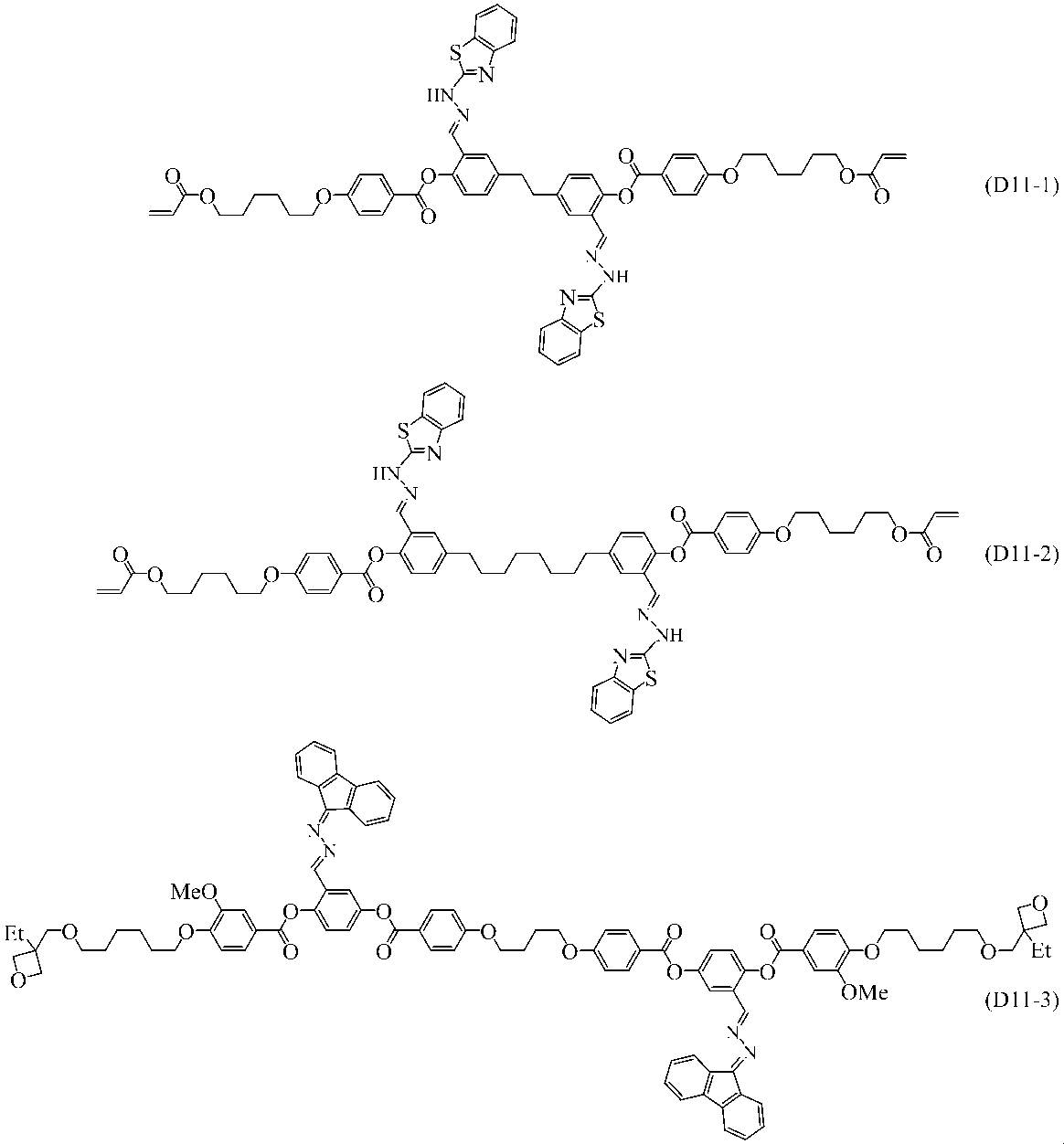
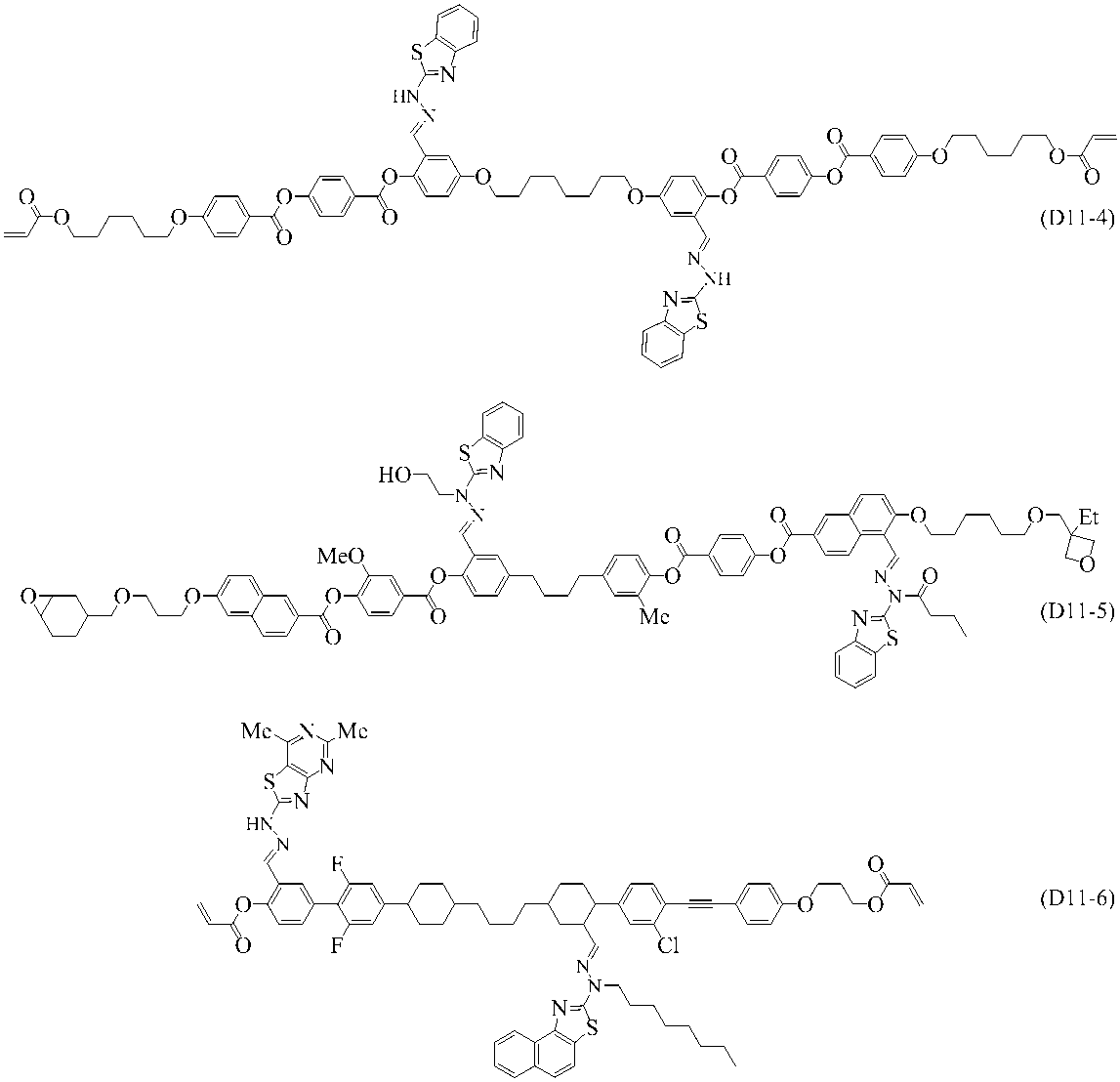
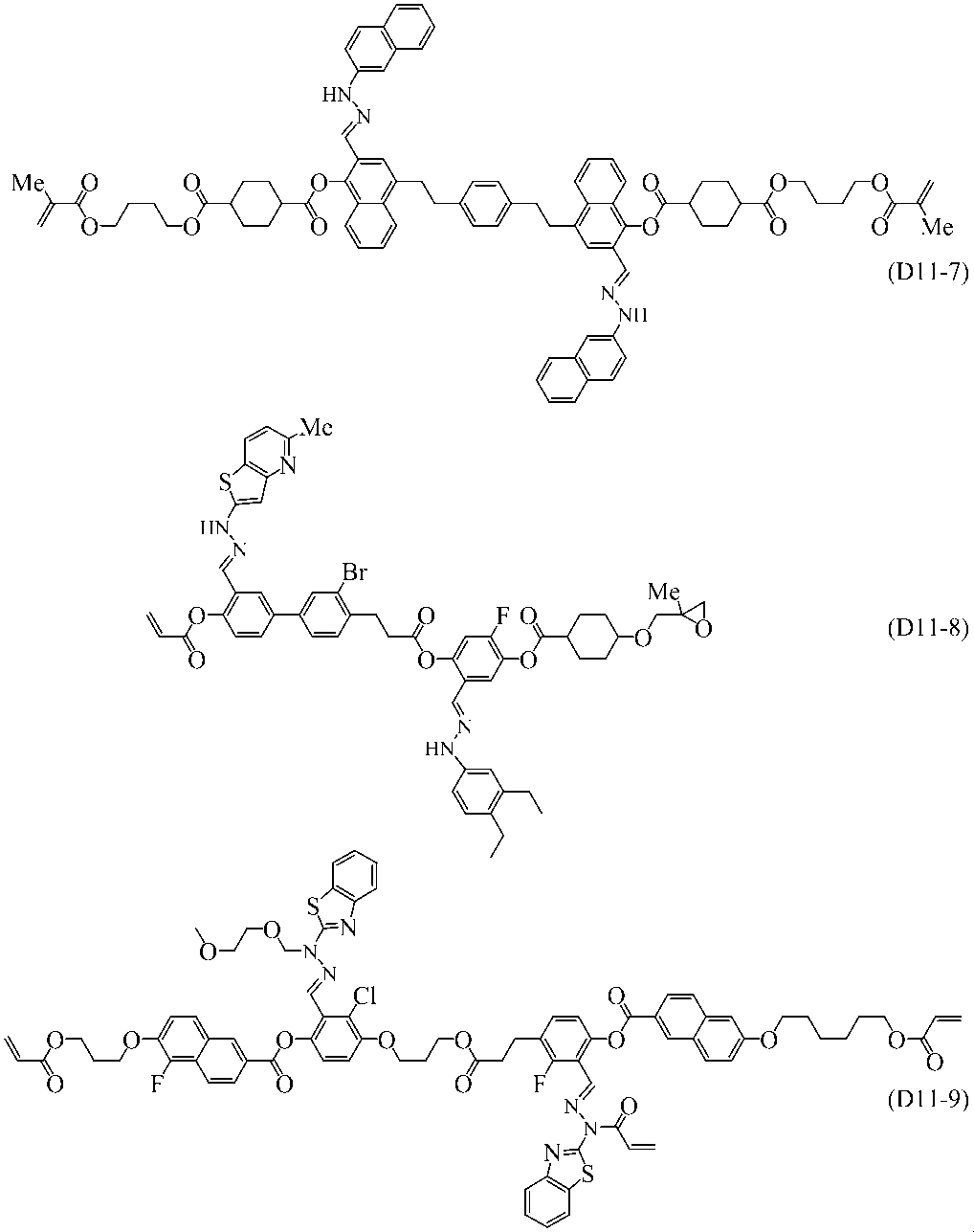
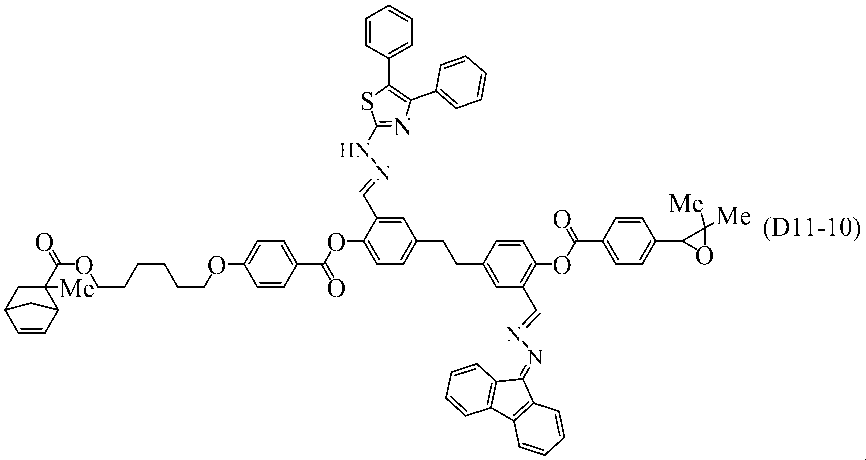


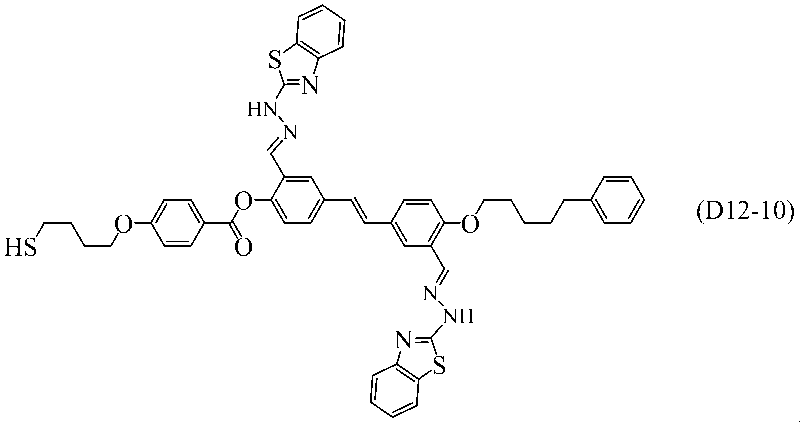
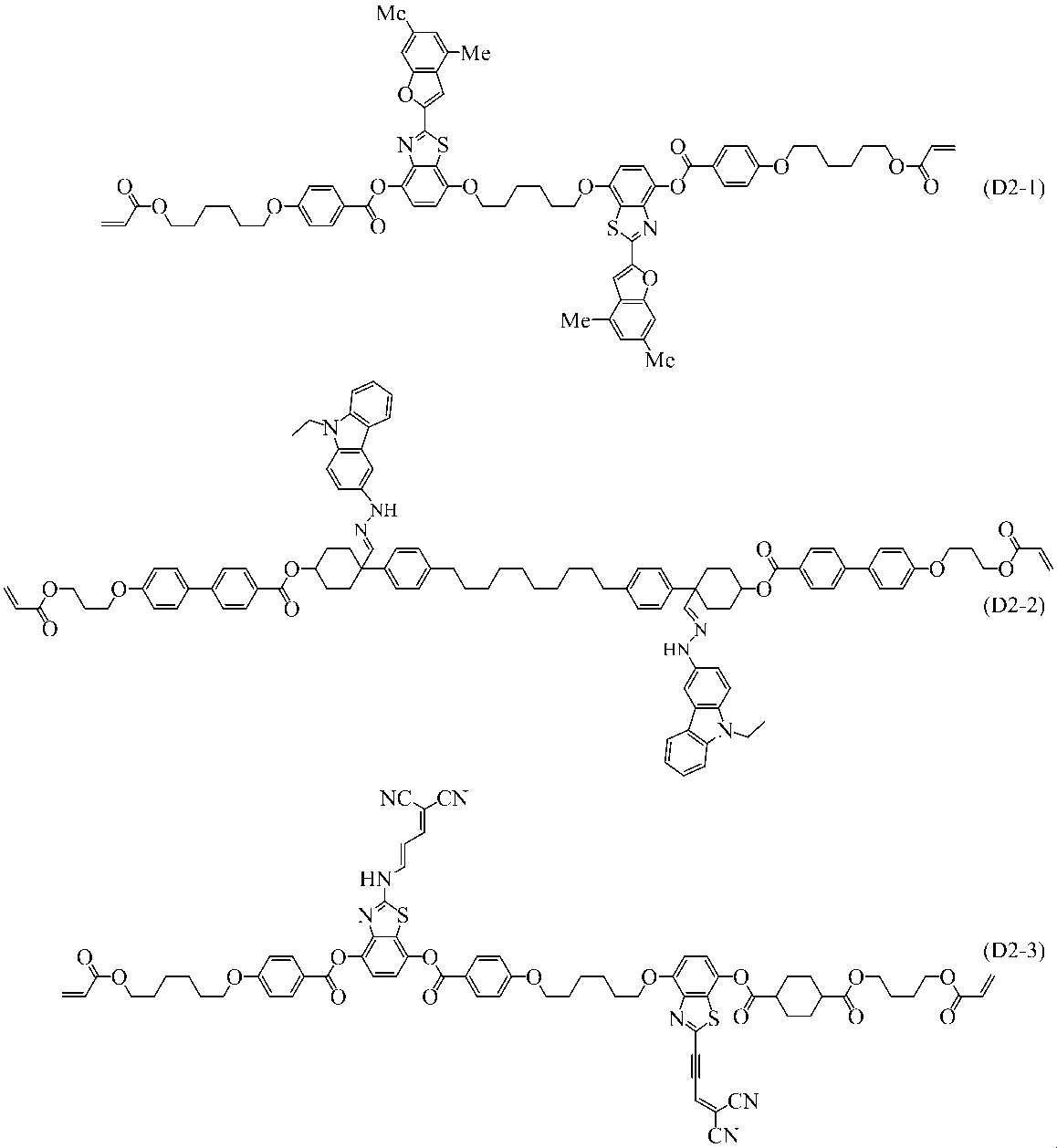

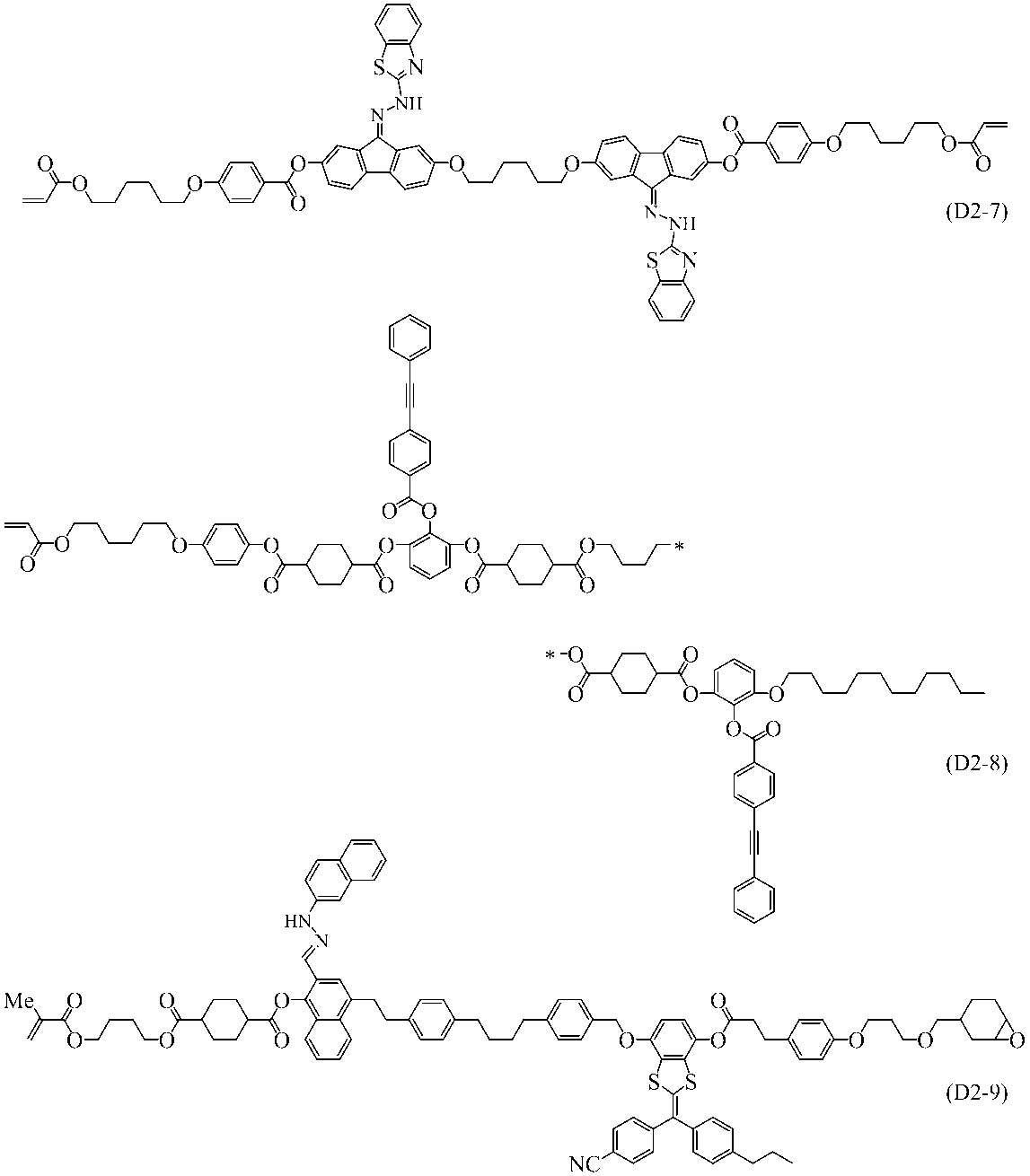

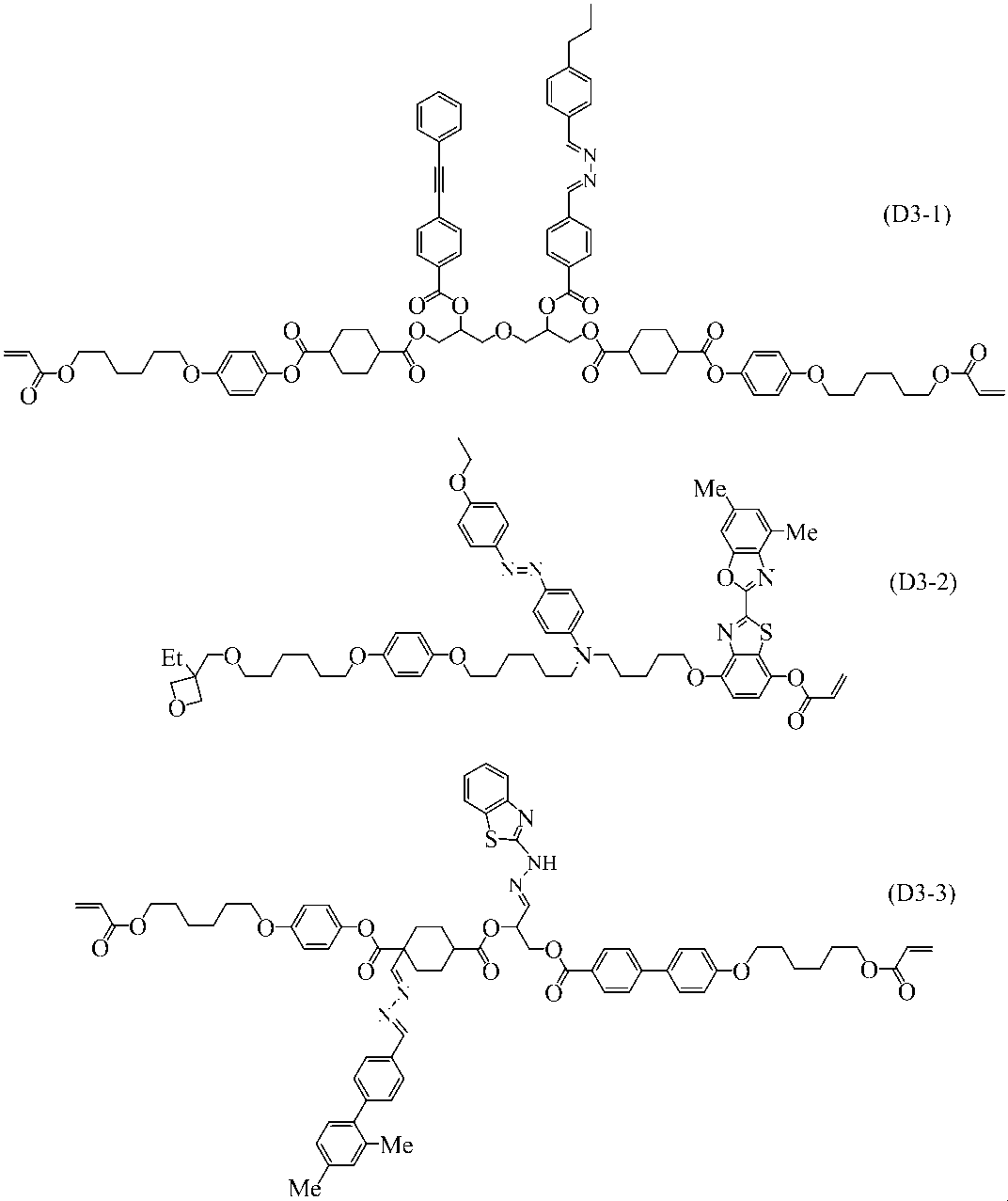


《一般式(II)》
本願発明には、一般式(II)で表される化合物を必須成分として含有する。


上記MGで表されるメソゲン基は、一般式(II-b)


S23は、S21で定義されたものと同一のものを表し、X23は、-O-、-COO-、-OCO-、-OCH2-、-CH2O-、-CH2CH2OCO-、-COOCH2CH2-、-OCOCH2CH2-、又は単結合を表し、q3は0又は1を表し、q4は0又は1を表す。(ただし、P24-S23、及びS23-X23は、-O-O-、-O-NH-、-S-S-及び-O-S-基を含まない。))を有していても良く、1,4-シクロヘキシレン基、1,4-シクロヘキセニル基、テトラヒドロピラン-2,5-ジイル基、1,3-ジオキサン-2,5-ジイル基、テトラヒドロチオピラン-2,5-ジイル基、1,4-ビシクロ(2,2,2)オクチレン基、又はデカヒドロナフタレン-2,6-ジイル基(置換基として1個以上のF、Cl、CF3、OCF3、CN基、炭素原子数1~8のアルキル基、炭素原子数1~8のアルコキシ基、炭素原子数1~8のアルカノイル基、炭素原子数1~8のアルカノイルオキシ基、炭素原子数1~8のアルコキシカルボニル基、炭素原子数2~8のアルケニル基、炭素原子数2~8のアルケニルオキシ基、炭素原子数2~8のアルケノイル基、炭素原子数2~8のアルケノイルオキシ基、及び/又は一般式(II-c)を有してしても良い)であることが好ましく、
Z1及びZ2はそれぞれ独立して、-COO-、-OCO-、-CH2 CH2-、-OCH2-、-CH2O-、-CH=CH-、-C≡C-、-CH=CHCOO-、-OCOCH=CH-、-CH2CH2COO-、-CH2CH2OCO-、-COOCH2CH2-、-OCOCH2CH2-、-C=N-、-N=C-、-CONH-、-NHCO-、-C(CF3)2-、ハロゲン原子を有してもよい炭素原子数2~10のアルキル基又は単結合を表し、r1は0、1、2又は3を表し、B1、及びZ1が複数存在する場合は、それぞれ、同一であっても、異なっていても良く、r1は0が好ましい。。)で表される。

(単官能重合性液晶化合物)
前記一般式(II)で表される化合物のうち、分子内に1個の重合性官能基を有する単官能重合性液晶化合物として、下記一般式(II-2-1)で表される化合物が好ましい。

一般式(II-2-1)の例として、下記一般式(II-2-1-1)~(II-2-1-4)で表される化合物を挙げることができるが、下記の一般式に限定されるわけではない。
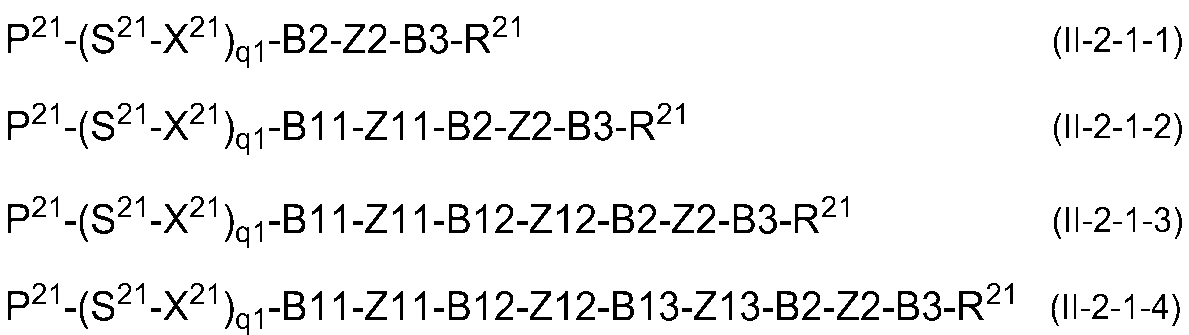
B11、B12、B13、B2、B3は、上記一般式(II-b)のB1~B3の定義と同じものを表し、それぞれ、同一であっても、異なっていても良く、
Z11、Z12、Z13、Z2は、上記一般式(II-b)のZ1~Z3の定義と同じものを表し、それぞれ、同一であっても、異なっていても良く、
R21は、水素原子、ハロゲン原子、シアノ基、1個の-CH2-又は隣接していない2個以上の-CH2-が各々独立して-O-、-S-、-CO-、-COO-、-OCO-、-CO-S-、-S-CO-、-O-CO-O-、-CO-NH-、-NH-CO-、-NH-、-N(CH3)-、-CH=CH-COO-、-CH=CH-OCO-、-COO-CH=CH-、-OCO-CH=CH-、-CH=CH-、-CF=CF-又は-C≡C-によって置換されても良い、炭素原子数1から12の直鎖又は分岐アルキル基、炭素原子数1から12の直鎖又は分岐アルケニル基を表し、該アルキル基、アルケニル基の有する1個又は2個以上の水素原子は、ハロゲン原子、シアノ基によって置換されても良く、複数置換されている場合それぞれ同一であっても、異なっていても良い。ただしR21がシアノ基の場合は、化合物の両末端の極性に差異をつけるた方がチルトを制御しやすいという観点から、S21は炭素原子数3~18のアルキレン基(該アルキレン基中の水素原子は、1つ以上のハロゲン原子、シアノ基、又は重合性官能基を有する炭素原子数1~8のアルキル基により置換されていても良く、この基中に存在する1つのCH2基又は隣接していない2つ以上のCH2基はそれぞれ相互に独立して、-O-、-COO-、-OCO-又は-OCO-O-により置き換えられていても良い。)であることが好ましい。

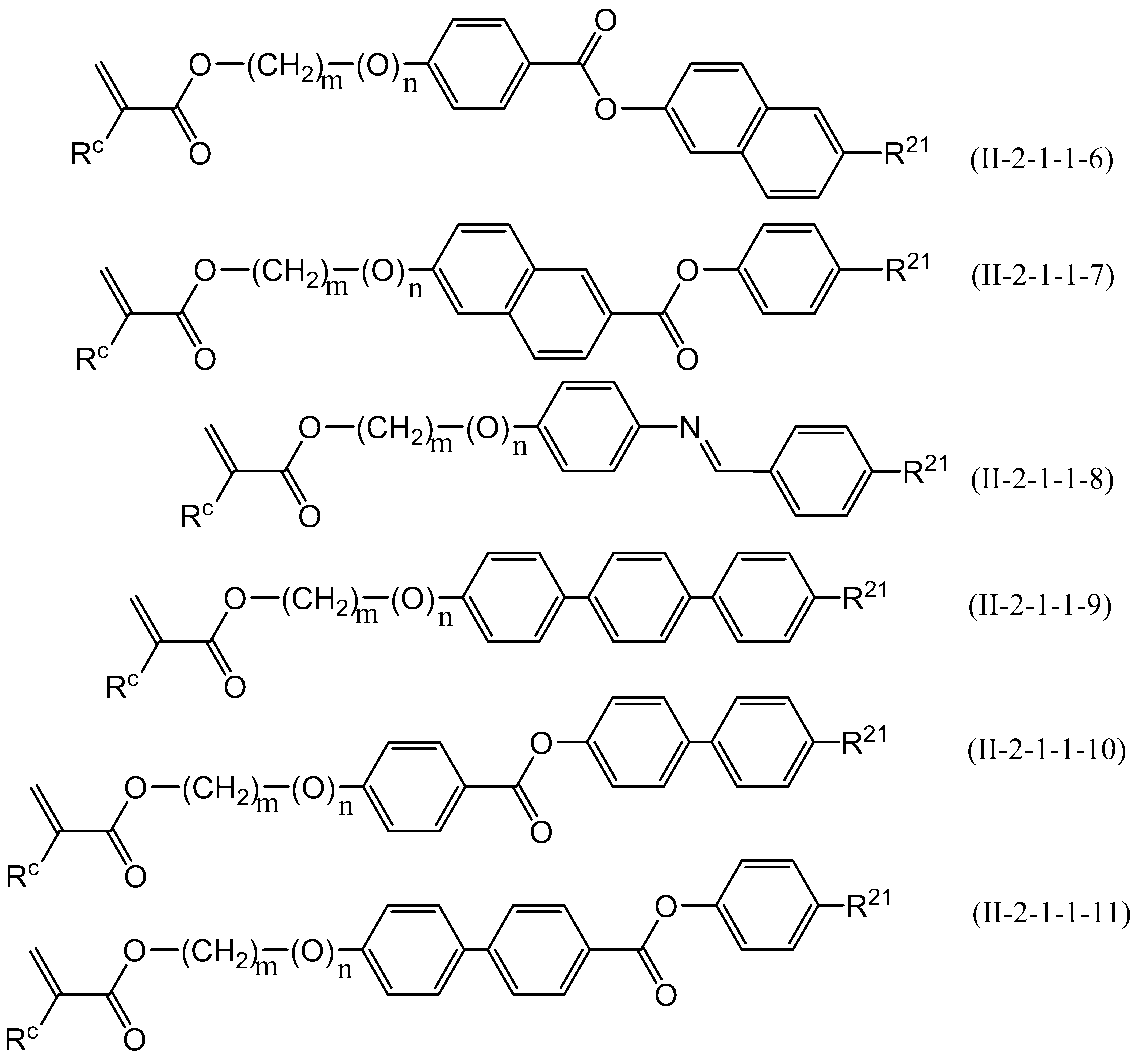
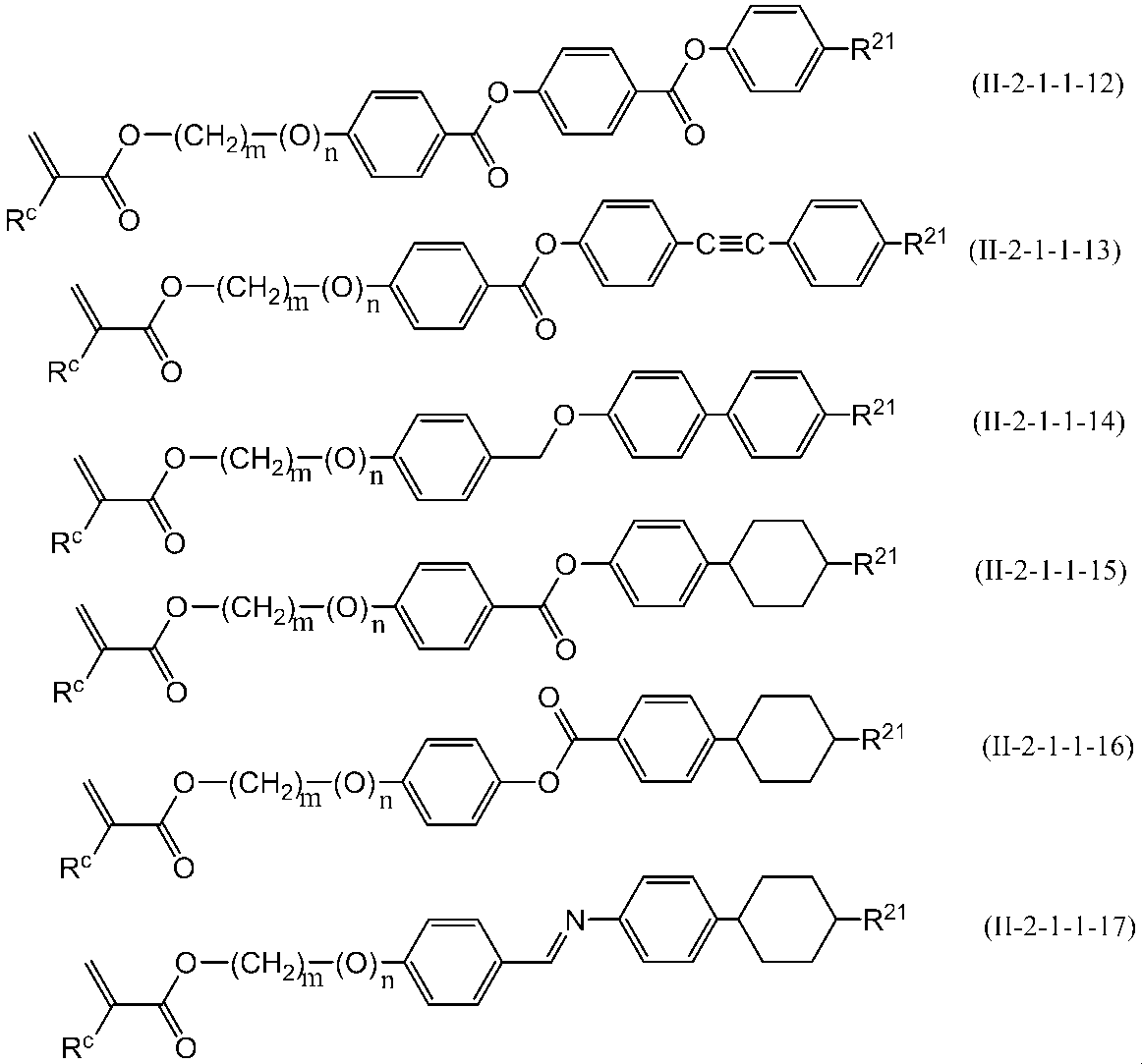


R21は、上記一般式(II-2-1-1)~(II-2-1-4)の定義と同じものを表すが、R21は、水素原子、ハロゲン原子、シアノ基、1個の-CH2-が-O-、-CO-、-COO-、-OCO-、によって置換されても良い、炭素原子数1から6の直鎖アルキル基又は炭素原子数1から6の直鎖アルケニル基を表すことが好ましく、R21は、ハロゲン原子、シアノ基を表すことがより好ましいが、シアノ基を表す場合、前述のとおり化合物の両末端の極性に差異をつけるた方がチルトを制御しやすいという観点から、mは3~18の整数が好ましい。
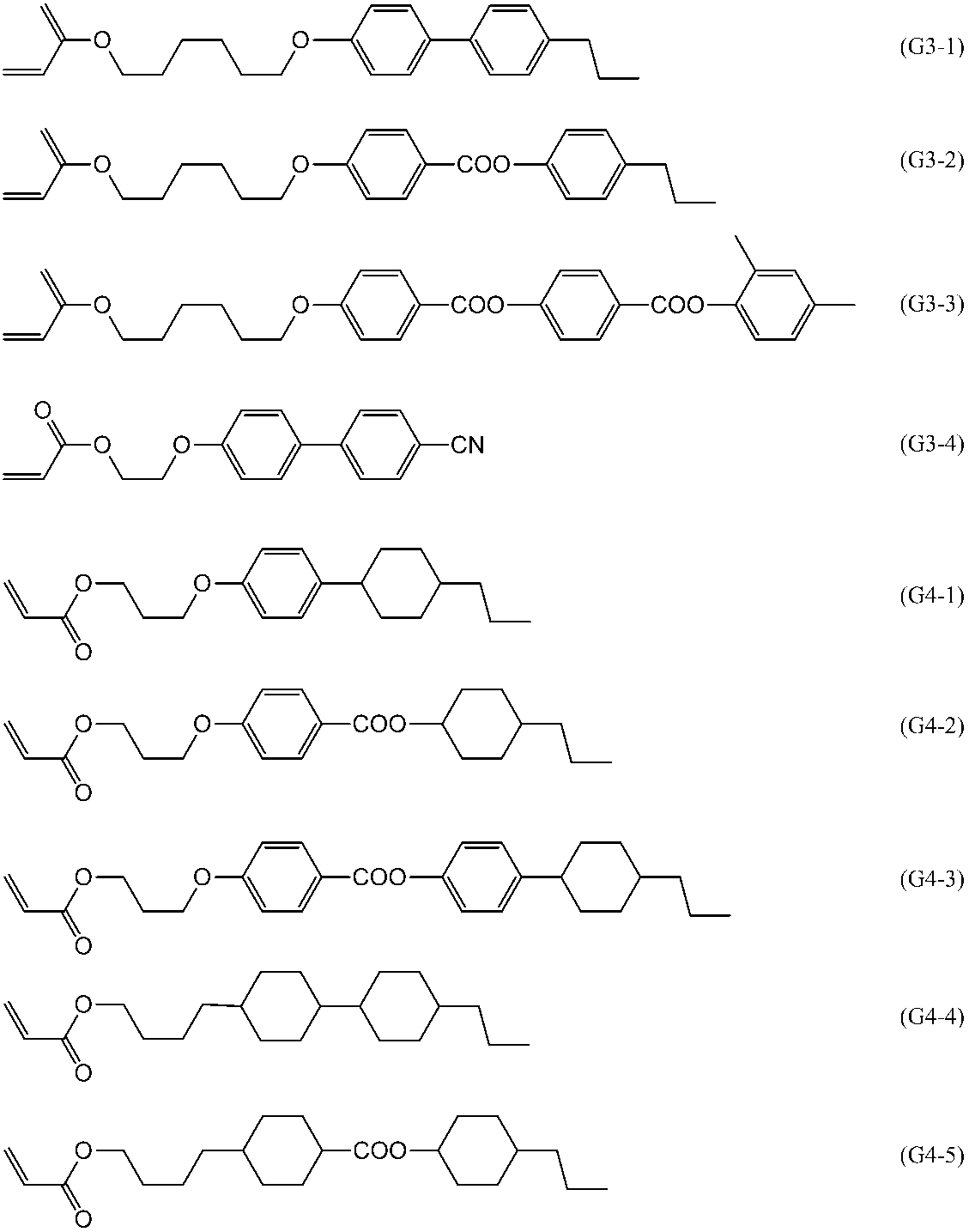
(2官能重合性液晶化合物)
前記一般式(II)で表される化合物のうち、分子内に2個の重合性官能基を有する2官能重合性液晶化合物として、下記一般式(II-2-2)で表される化合物が好ましい。

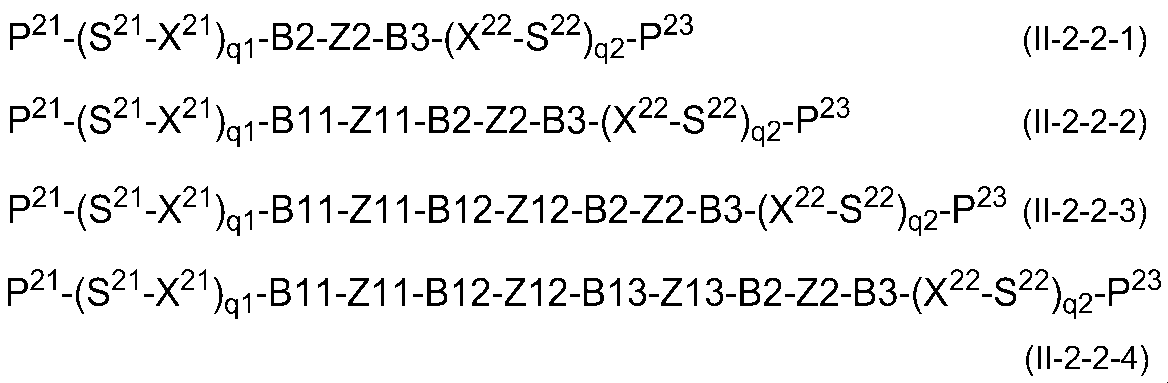
B11、B12、B13、B2、B3は、上記一般式(II-b)のB1~B3の定義と同じものを表し、それぞれ、同一であっても、異なっていても良く、
Z11、Z12、Z13、Z2は、上記一般式(II-b)のZ1~Z3の定義と同じものを表し、それぞれ、同一であっても、異なっていても良い。
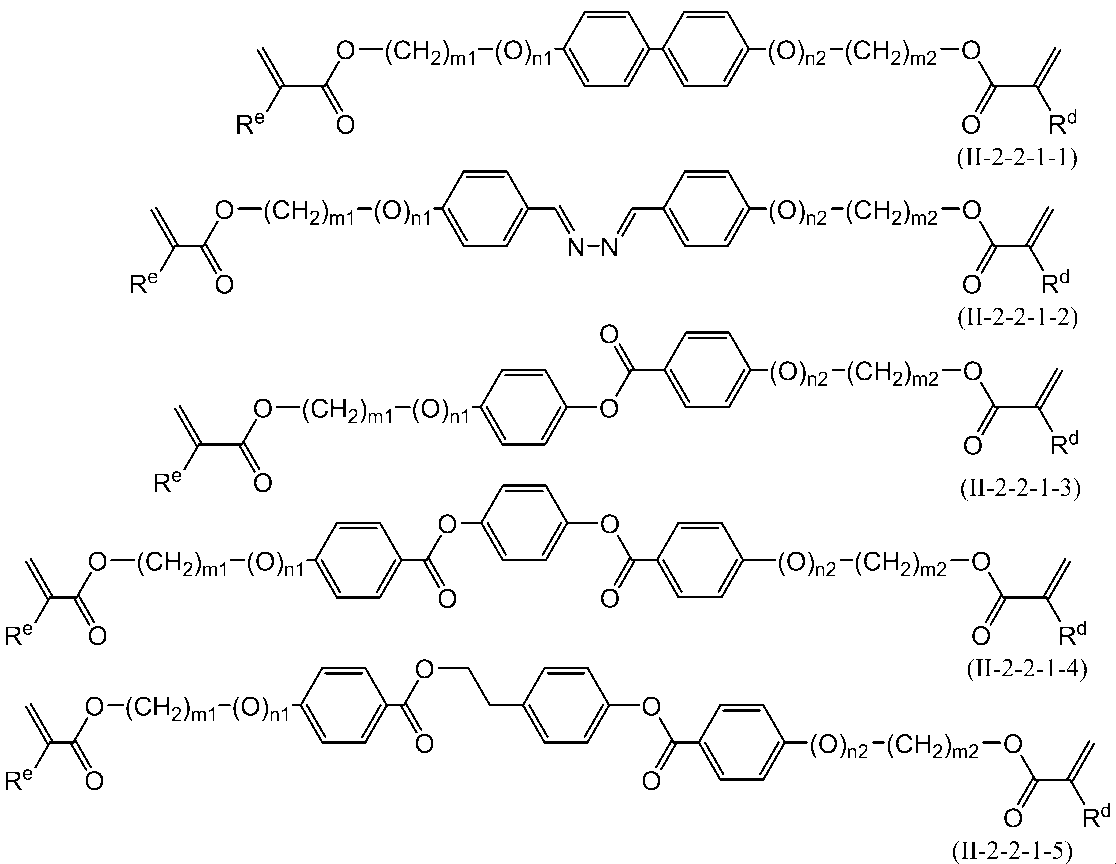
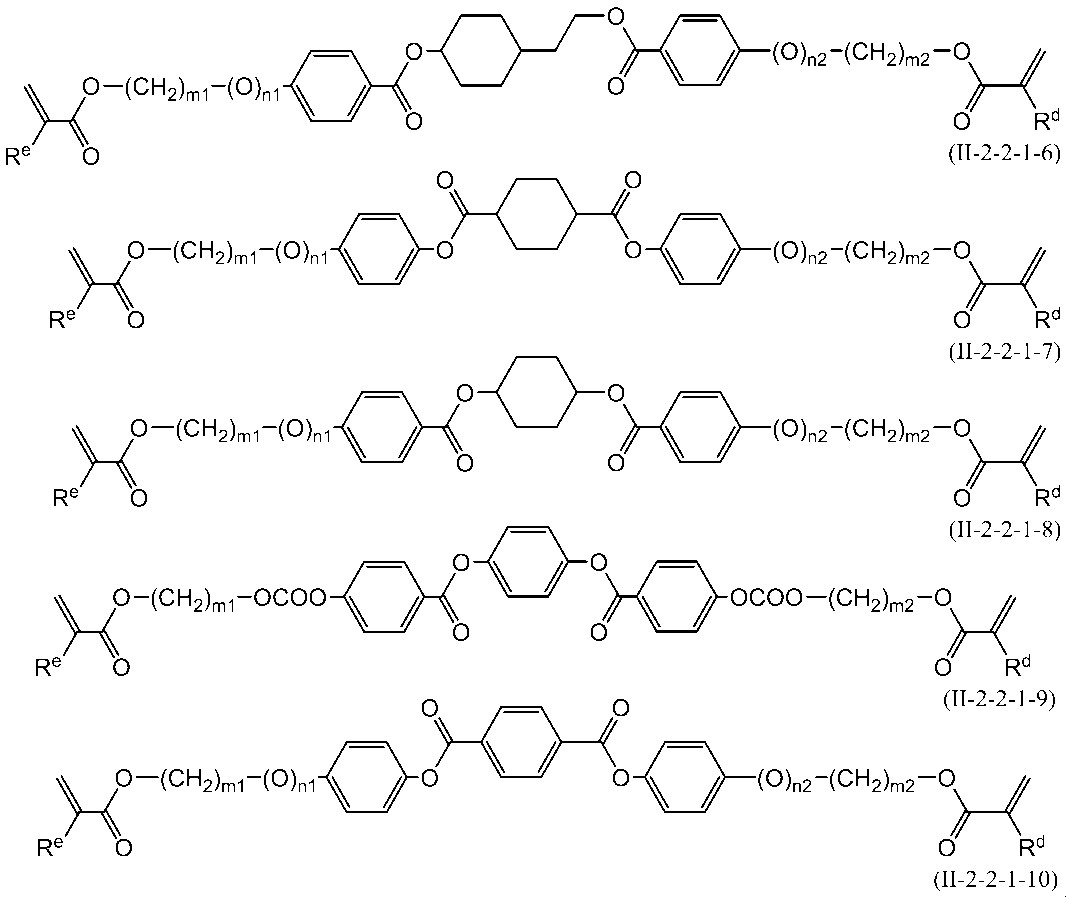
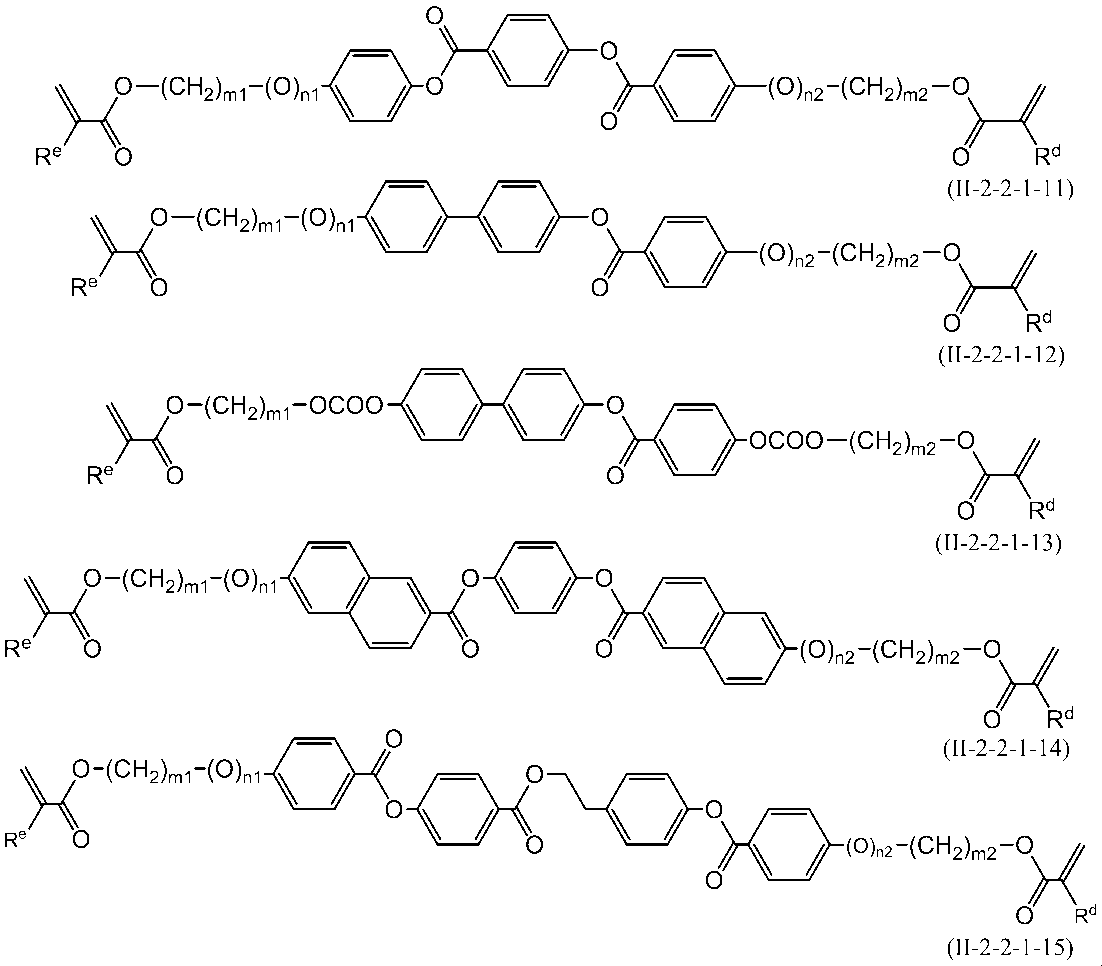

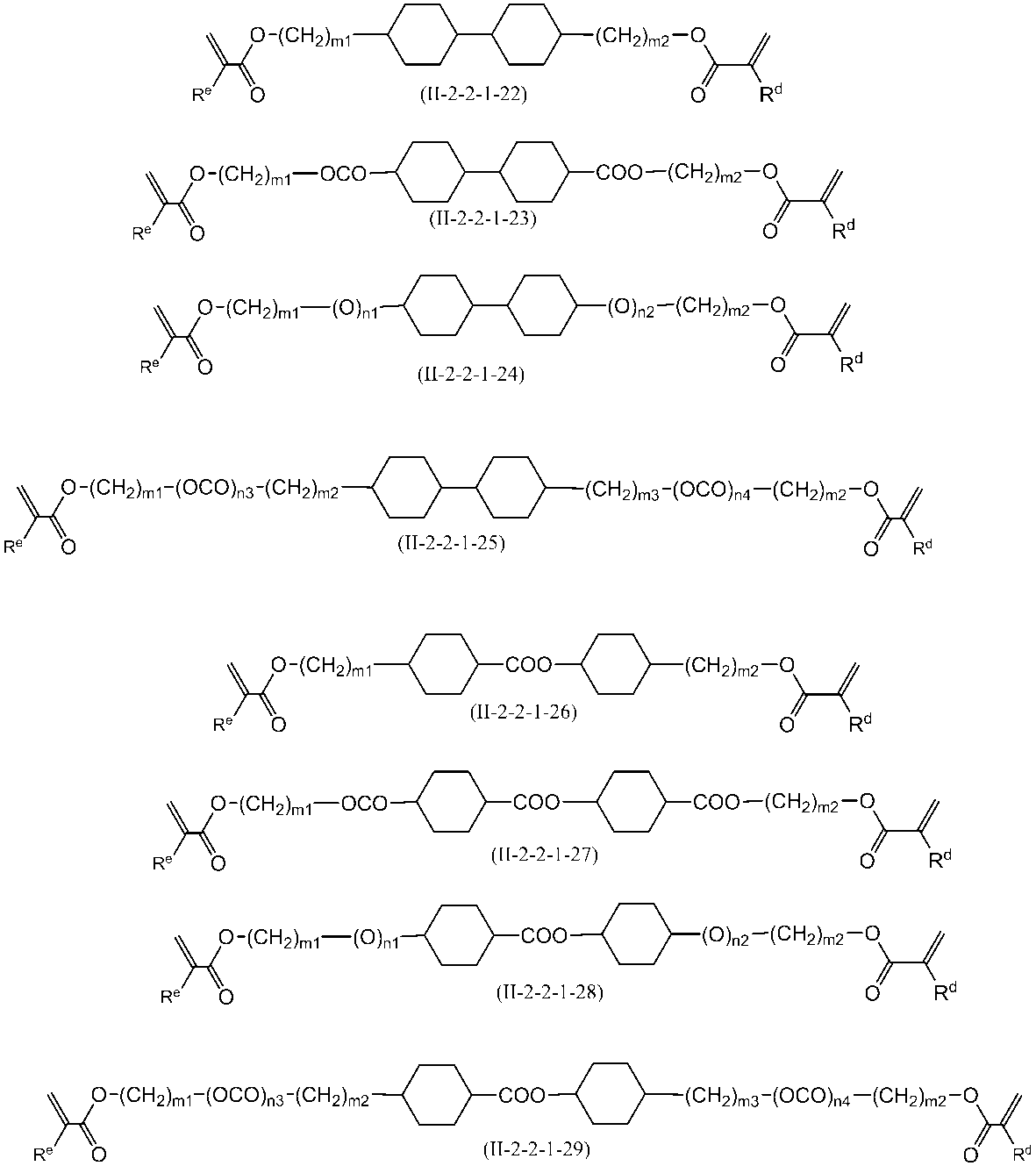


上記環状基は、置換基として1個以上のF、Cl、CF3、OCF3、CN基、炭素原子数1~8のアルキル基、炭素原子数1~8のアルコキシ基、炭素原子数1~8のアルカノイル基、炭素原子数1~8のアルカノイルオキシ基、炭素原子数1~8のアルコキシカルボニル基、炭素原子数2~8のアルケニル基、炭素原子数2~8のアルケニルオキシ基、炭素原子数2~8のアルケノイル基、炭素原子数2~8のアルケノイルオキシ基を有していても良い。

(多官能重合性液晶化合物)
3つ以上の重合性官能基を有する多官能重合性液晶化合物としては、3つの重合性官能基を有する化合物を用いることが好ましい。前記一般式(II)で表される化合物のうち、分子内に3個の重合性官能基を有する多官能重合性液晶化合物として、下記一般式(II-2-3)で表される化合物が好ましい。

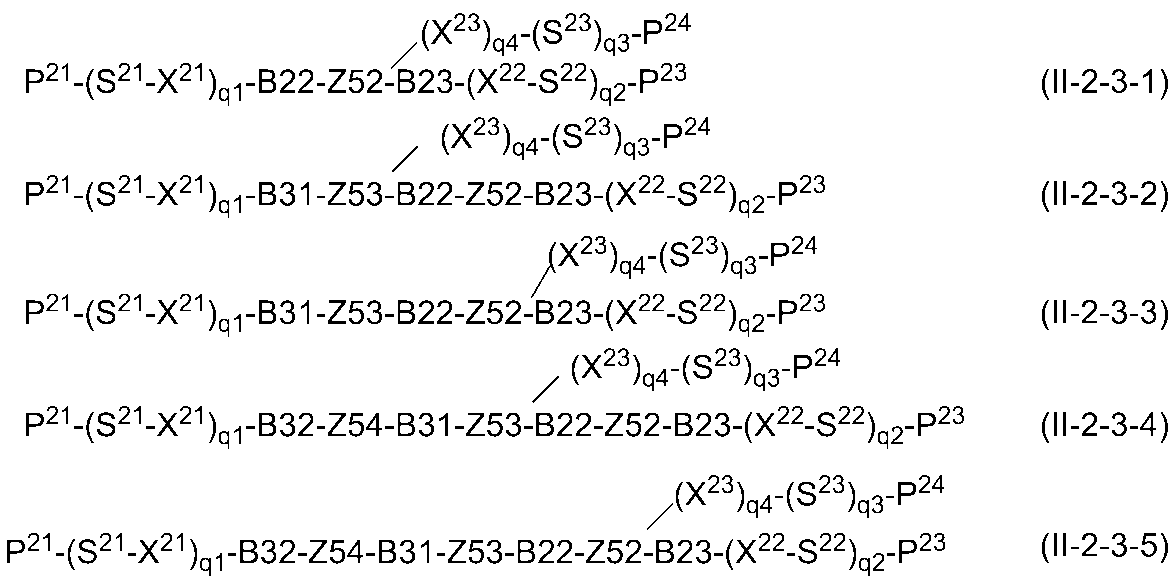
B31、B32、B22、B23は、上記一般式(II-b)のB21~B23の定義と同じものを表し、それぞれ、同一であっても、異なっていても良く、
Z52、Z53、Z54は、上記一般式(II-b)のZ51、Z52の定義と同じものを表し、それぞれ、同一であっても、異なっていても良い。


(重合性液晶化合物の複数種併用)
本発明の重合性液晶組成物には、上記重合性液晶化合物を複数種混合して用いることが好ましい。上記少なくとも1種以上の単官能重合性液晶化合物と、少なくとも1種以上の2官能重合性液晶化合物及び/又は多官能重合性液晶化合物を併用して用いると得られる光学異方体の硬化性が向上し、かつ基材との密着性も良好となるため好ましく、少なくとも1種以上の単官能重合性液晶化合物と、少なくとも1種以上の2官能重合性液晶化合物を併用することがより好ましい。中でも、本発明の重合性液晶組成物を用いて光学異方体とした時に、より硬化性を向上させたい場合、2官能重合性液晶化合物として、化合物中に2つ、又は3つの環構造を有する上記(II-2-2-1)~(II-2-2-2)から選択される化合物を用いて重合性液晶化合物の混合物とすることが好ましく、化合物中に2つの環構造を有する上記(II-2-1-1)で表される化合物及び、上記(II-2-2-1)で表される化合物を併用した混合物とすることが特に好ましい。
(その他の液晶化合物)
また、本発明の液晶組成物には、重合性基を有さないメソゲン基を含有する化合物を添加しても良く、通常の液晶デバイス、例えばSTN(スーパー・ツイステッド・ネマチック)液晶や、TN(ツイステッド・ネマチック)液晶、TFT(薄膜トランジスター)液晶等に使用される化合物が挙げられる。


Z0d、Z1d、Z2d及びZ3dはそれぞれ独立して、-COO-、-OCO-、-CH2CH2-、-OCH2-、-CH2O-、-CH=CH-、-C≡C-、-CH=CHCOO-、-OCOCH=CH-、-CH2CH2COO-、-CH2CH2OCO-、-COOCH2CH2-、-OCOCH2CH2-、-CONH-、-NHCO-、炭素数2~10のハロゲン原子を有してもよいアルキレン基又は単結合を表し、
neは0、1又は2を表し、
R51及びR52はそれぞれ独立して水素原子、ハロゲン原子、シアノ基又は炭素原子数1~18のアルキル基を表すが、該アルキル基は1つ以上のハロゲン原子又はCNにより置換されていても良く、この基中に存在する1つのCH2基又は隣接していない2つ以上のCH2基はそれぞれ相互に独立して、酸素原子が相互に直接結合しない形で、-O-、-S-、-NH-、-N(CH3)-、-CO-、-COO-、-OCO-、-OCOO-、-SCO-、-COS-又は-C≡C-により置き換えられていても良い。)で表される化合物が挙げられる。

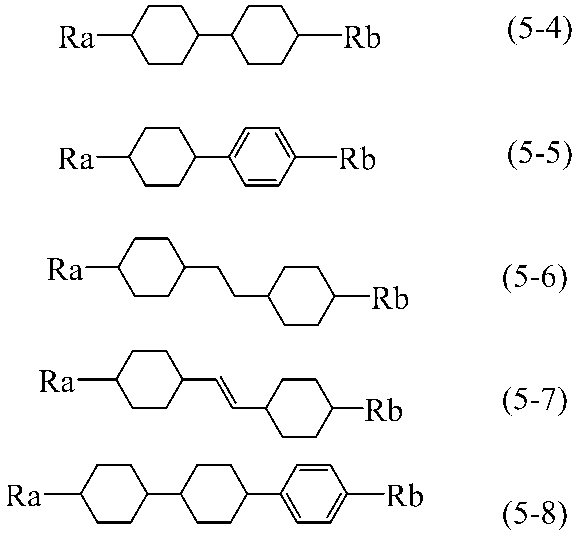
(その他の成分)
(キラル化合物)
本発明における重合性液晶組成物には、上記一般式(II)に示す重合性化合物以外の液晶性を示してもよく、非液晶性であってもよい、重合性キラル化合物を含有することもできる。

A1、A2、A3、A4、及びA5はそれぞれ独立して、1,4-フェニレン基、1,4-シクロヘキシレン基、1,4-シクロヘキセニル基、テトラヒドロピラン-2,5-ジイル基、1,3-ジオキサン-2,5-ジイル基、テトラヒドロチオピラン-2,5-ジイル基、1,4-ビシクロ(2,2,2)オクチレン基、デカヒドロナフタレン-2,6-ジイル基、ピリジン-2,5-ジイル基、ピリミジン-2,5-ジイル基、ピラジン-2,5-ジイル基、チオフェン-2,5-ジイル基-、1,2,3,4-テトラヒドロナフタレン-2,6-ジイル基、2,6-ナフチレン基、フェナントレン-2,7-ジイル基、9,10-ジヒドロフェナントレン-2,7-ジイル基、1,2,3,4,4a,9,10a-オクタヒドロフェナントレン-2,7-ジイル基、1,4-ナフチレン基、ベンゾ[1,2-b:4,5-b‘]ジチオフェン-2,6-ジイル基、ベンゾ[1,2-b:4,5-b‘]ジセレノフェン-2,6-ジイル基、[1]ベンゾチエノ[3,2-b]チオフェン-2,7-ジイル基、[1]ベンゾセレノフェノ[3,2-b]セレノフェン-2,7-ジイル基、又はフルオレン-2,7-ジイル基を表し、n、l及びkはそれぞれ独立して、0又は1を表し、0≦n+l+k≦3となり、
Z0、Z1、Z2、Z3、Z4、Z5、及び、Z6はそれぞれ独立して、-COO-、-OCO-、-CH2 CH2-、-OCH2-、-CH2O-、-CH=CH-、-C≡C-、-CH=CHCOO-、-OCOCH=CH-、-CH2CH2COO-、-CH2CH2OCO-、-COOCH2CH2-、-OCOCH2CH2-、-CONH-、-NHCO-、炭素数2~10のハロゲン原子を有してもよいアルキル基又は単結合を表し、
n5、及び、m5はそれぞれ独立して0又は1を表し、
R3a及びR3bは、水素原子、ハロゲン原子、シアノ基又は炭素原子数1~18のアルキル基を表すが、該アルキル基は1つ以上のハロゲン原子又はCNにより置換されていても良く、この基中に存在する1つのCH2基又は隣接していない2つ以上のCH2基はそれぞれ相互に独立して、酸素原子が相互に直接結合しない形で、-O-、-S-、-NH-、-N(CH3)-、-CO-、-COO-、-OCO-、-OCOO-、-SCO-、-COS-又は-C≡C-により置き換えられていても良く、
あるいはR3a及びR3bは一般式(3-a)

P3aは、下記の式(P-1)から式(P-20)で表される重合性基から選ばれる置換基を表すのが好ましい。
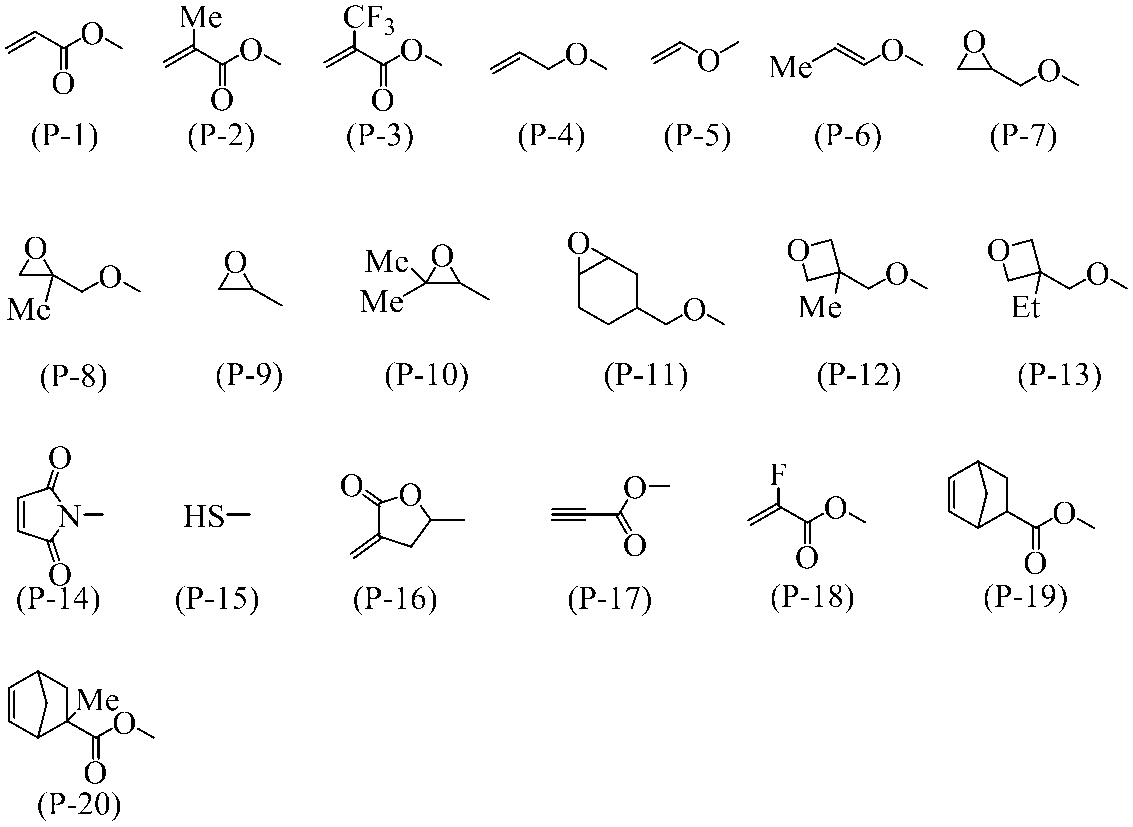


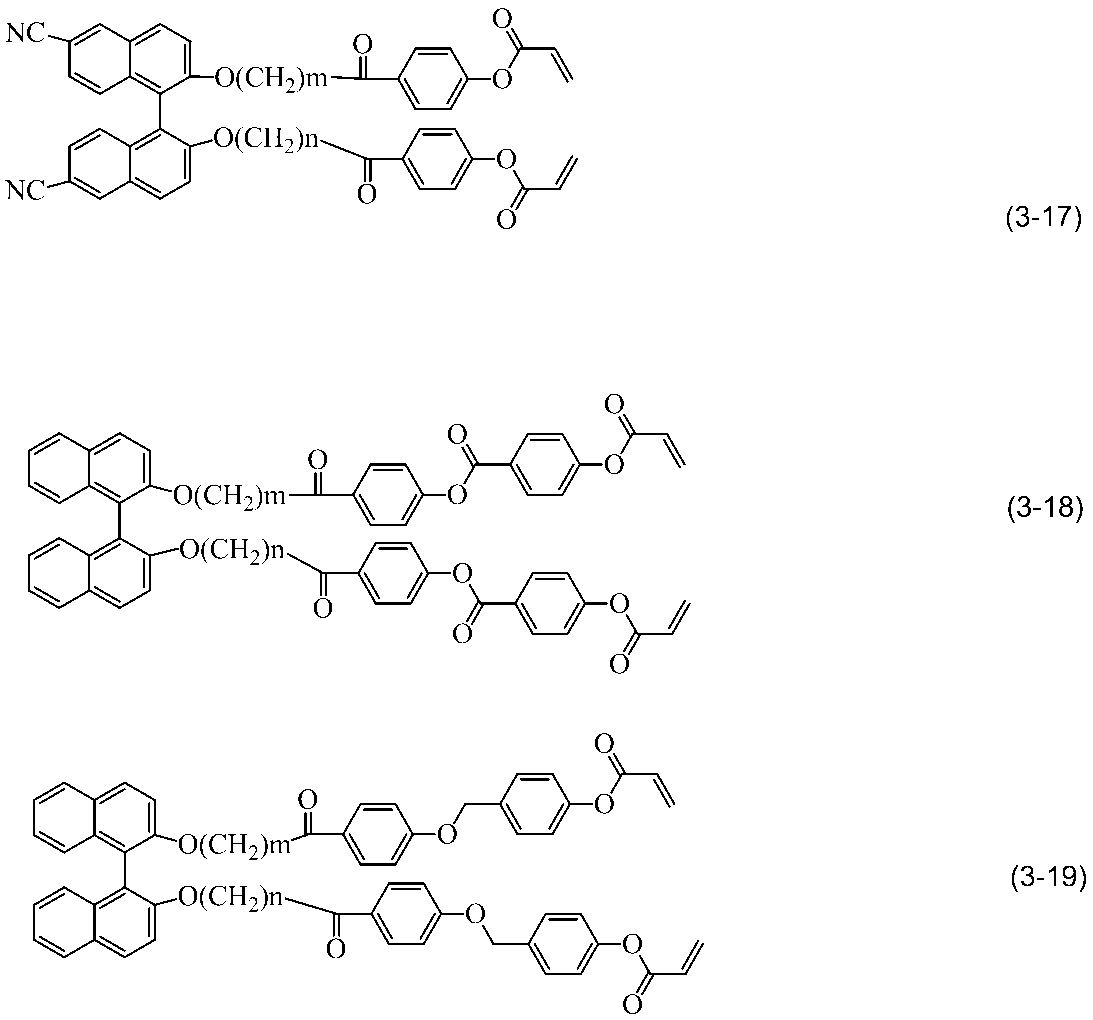
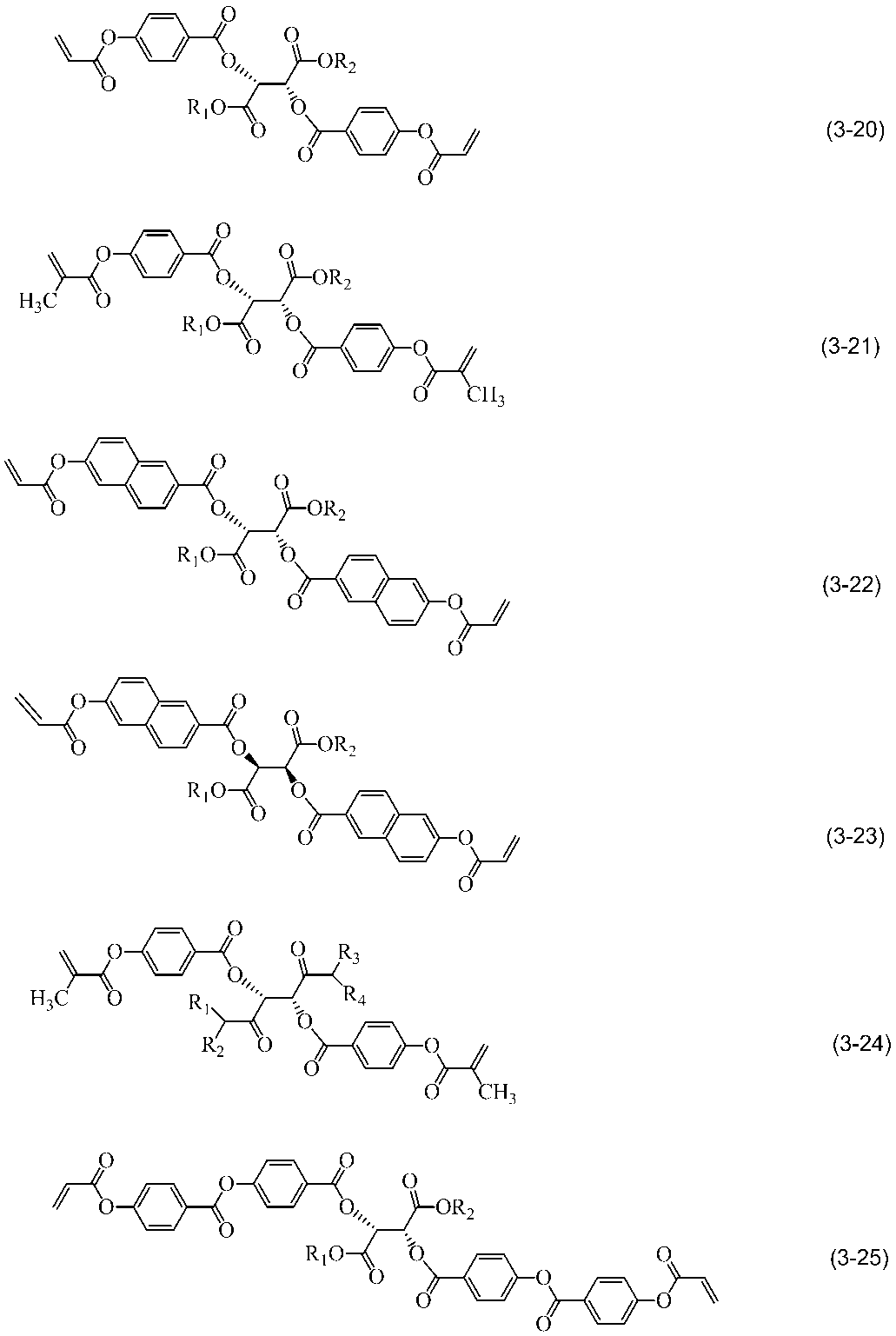
(重合性ディスコチック化合物)
本発明の重合性液晶組成物において、上記一般式(II)に示す重合性化合物以外の液晶性を示してもよく、非液晶性であってもよい、重合性ディスコチック化合物を含有することもできる。

A4は1,4-フェニレン基、1,4-シクロヘキシレン基、1,4-シクロヘキセニル基、テトラヒドロピラン-2,5-ジイル基、1,3-ジオキサン-2,5-ジイル基、テトラヒドロチオピラン-2,5-ジイル基、1,4-ビシクロ(2,2,2)オクチレン基、デカヒドロナフタレン-2,6-ジイル基、ピリジン-2,5-ジイル基、ピリミジン-2,5-ジイル基、ピラジン-2,5-ジイル基、チオフェン-2,5-ジイル基-、1,2,3,4-テトラヒドロナフタレン-2,6-ジイル基、2,6-ナフチレン基、フェナントレン-2,7-ジイル基、9,10-ジヒドロフェナントレン-2,7-ジイル基、1,2,3,4,4a,9,10a-オクタヒドロフェナントレン-2,7-ジイル基、1,4-ナフチレン基、ベンゾ[1,2-b:4,5-b‘]ジチオフェン-2,6-ジイル基、ベンゾ[1,2-b:4,5-b‘]ジセレノフェン-2,6-ジイル基、[1]ベンゾチエノ[3,2-b]チオフェン-2,7-ジイル基、[1]ベンゾセレノフェノ[3,2-b]セレノフェン-2,7-ジイル基、又はフルオレン-2,7-ジイル基を表し、
n5は0又は1を表し、
Z4aは、-CO-、-CH2 CH2-、-CH2O-、-CH=CH-、-CH=CHCOO-、-CH2CH2COO-、-CH2CH2OCO-、-COCH2CH2-、炭素数2~10のハロゲン原子を有してもよいアルキル基又は単結合を表し、
Z4bは-COO-、-OCO-、-OCH2-、-CH2O-、-CH=CH-、-C≡C-、-CH=CHCOO-、-OCOCH=CH-、-CH2CH2COO-、-CH2CH2OCO-、-COOCH2CH2-、-OCOCH2CH2-、-CONH-、-NHCO-、-OCOO-、炭素数2~10のハロゲン原子を有してもよいアルキル基又は単結合を表し、
R4は、水素原子、ハロゲン原子、シアノ基又は炭素原子数1~18のアルキル基を表すが、該アルキル基は1つ以上のハロゲン原子又はCNにより置換されていても良く、この基中に存在する1つのCH2基又は隣接していない2つ以上のCH2基はそれぞれ相互に独立して、酸素原子が相互に直接結合しない形で、-O-、-S-、-NH-、-N(CH3)-、-CO-、-COO-、-OCO-、-OCOO-、-SCO-、-COS-又は-C≡C-により置き換えられていても良く、
あるいはR4は一般式(4-a)

P4aは、下記の式(P-1)から式(P-20)で表される重合性基から選ばれる置換基を表すのが好ましい。

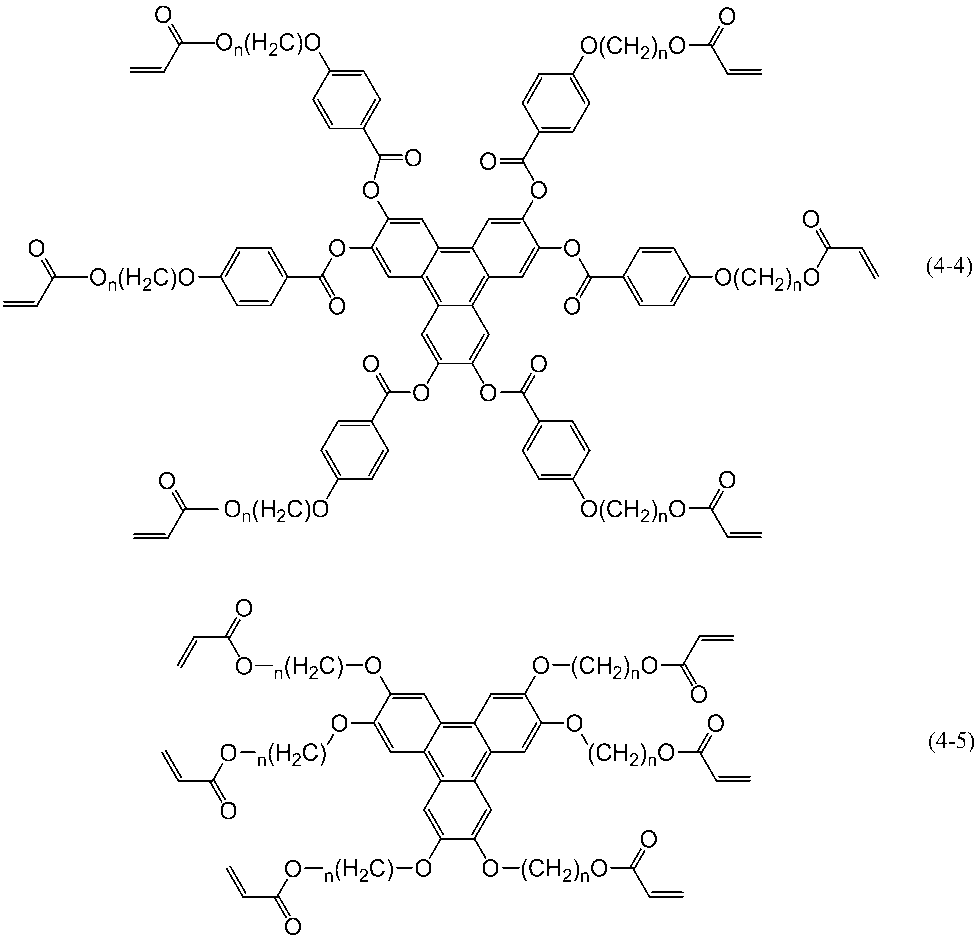

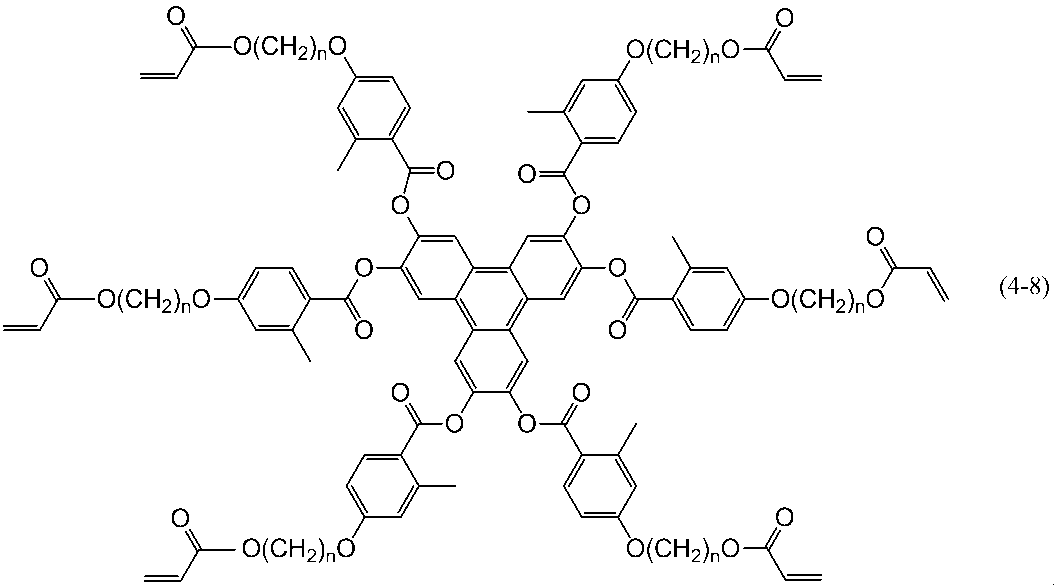
(有機溶剤)
本発明における重合性液晶組成物に有機溶剤を添加してもよい。用いる有機溶剤としては特に限定はないが、重合性液晶化合物が良好な溶解性を示す有機溶剤が好ましく、100℃以下の温度で乾燥できる有機溶剤であることが好ましい。そのような溶剤としては、例えば、トルエン、キシレン、クメン、メシチレン等の芳香族系炭化水素、酢酸メチル、酢酸エチル、酢酸プロピル、酢酸ブチル等のエステル系溶剤、メチルエチルケトン、メチルイソブチルケトン、シクロヘキサノン、シクロペンタノン等のケトン系溶剤、テトラヒドロフラン、1,2-ジメトキシエタン、アニソール等のエーテル系溶剤、N,N-ジメチルホルムアミド、N-メチル-2-ピロリドン、等のアミド系溶剤、プロピレングリコールモノメチルエーテルアセテート、ジエチレングリコールモノメチルエーテルアセテート、γ-ブチロラクトン及びクロロベンゼン等が挙げられる。これらは、単独で使用することもできるし、2種類以上混合して使用することもできるが、ケトン系溶剤、エーテル系溶剤、エステル系溶剤及び芳香族炭化水素系溶剤のうちのいずれか1種類以上を用いることが溶液安定性の点から好ましい。
(重合禁止剤)
本発明における重合性液晶組成物には、重合禁止剤を添加することが好ましい。重合禁止剤としては、フェノール系化合物、キノン系化合物、アミン系化合物、チオエーテル系化合物、ニトロソ化合物、等が挙げられる。
(酸化防止剤)
本発明における重合性液晶組成物の安定性を高めるため、酸化防止剤等を添加することが好ましい。そのような化合物として、ヒドロキノン誘導体、ニトロソアミン系重合禁止剤、ヒンダードフェノール系酸化防止剤等が挙げられ、より具体的には、tert-ブチルハイドロキノン、メチルハイドロキノン、和光純薬工業株式会社製の「Q-1300」、「Q-1301」、BASF社の「IRGANOX1010」、「IRGANOX1035」、「IRGANOX1076」、「IRGANOX1098」、「IRGANOX1135」、「IRGANOX1330」、「IRGANOX1425」、「IRGANOX1520」、「IRGANOX1726」、「IRGANOX245」、「IRGANOX259」、「IRGANOX3114」、「IRGANOX3790」、「IRGANOX5057」、「IRGANOX565」等々があげられる。
(光重合開始剤)
本発明における重合性液晶組成物は光重合開始剤を含有することが好ましい。光重合開始剤は少なくとも1種類以上含有することが好ましい。具体的には、BASFジャパン株式会社製の「イルガキュア651」、「イルガキュア184」、「イルガキュア907」、「イルガキュア127」、「イルガキュア369」、「イルガキュア379」、「イルガキュア819」、「イルガキュア2959」、「イルガキュア1800」、「イルガキュア250」、「イルガキュア754」、「イルガキュア784」、「イルガキュアOXE01」、「イルガキュアOXE02」、「ルシリンTPO」、「ダロキュア1173」、「ダロキュアMBF」やLAMBSON社製の「エサキュア1001M」、「エサキュアKIP150」、「スピードキュアBEM」、「スピードキュアBMS」、「スピードキュアMBP」、「スピードキュアPBZ」、「スピードキュアITX」、「スピードキュアDETX」、「スピードキュアEBD」、「スピードキュアMBB」、「スピードキュアBP」や日本化薬株式会社製の「カヤキュアDMBI」、日本シイベルヘグナー株式会社製(現DKSHジャパン株式会社)の「TAZ-A」、株式会社ADEKA製の「アデカオプトマーSP-152」、「アデカオプトマーSP-170」、「アデカオプトマーN-1414」、「アデカオプトマーN-1606」、「アデカオプトマーN-1717」、「アデカオプトマーN-1919」等が挙げられる。
(熱重合開始剤)
本発明における重合性液晶組成物には、光重合開始剤とともに、熱重合開始剤を併用してもよい。具体的には、和光純薬工業株式会社製の「V-40」、「VF-096」、日本油脂株式会社(現日油株式会社)の「パーへキシルD」、「パーへキシルI」等が挙げられる。
(界面活性剤)
本発明における重合性液晶組成物は、光学異方体とした場合の膜厚むらを低減させるために界面活性剤を少なくとも1種類以上含有してもよい。含有することができる界面活性剤としては、アルキルカルボン酸塩、アルキルリン酸塩、アルキルスルホン酸塩、フルオロアルキルカルボン酸塩、フルオロアルキルリン酸塩、フルオロアルキルスルホン酸塩、ポリオキシエチレン誘導体、フルオロアルキルエチレンオキシド誘導体、ポリエチレングリコール誘導体、アルキルアンモニウム塩、フルオロアルキルアンモニウム塩類等をあげることができ、特に含フッ素界面活性剤が好ましい。
「フタージェント100」、「フタージェント100C」、「フタージェント110」、「フタージェント150」、「フタージェント150CH」、「フタージェントA」、「フタージェント100A-K」、「フタージェント501」、「フタージェント300」、「フタージェント310」、「フタージェント320」、「フタージェント400SW」、「FTX-400P」、「フタージェント251」、「フタージェント215M」、「フタージェント212MH」、「フタージェント250」、「フタージェント222F」、「フタージェント212D」、「FTX-218」、「FTX-209F」、「FTX-213F」、「FTX-233F」、「フタージェント245F」、「FTX-208G」、「FTX-240G」、「FTX-206D」、「FTX-220D」、「FTX-230D」、「FTX-240D」、「FTX-207S」、「FTX-211S」、「FTX-220S」、「FTX-230S」、「FTX-750FM」、「FTX-730FM」、「FTX-730FL」、「FTX-710FS」、「FTX-710FM」、「FTX-710FL」、「FTX-750LL」、「FTX-730LS」、「FTX-730LM」、「FTX-730LL」、「FTX-710LL」(以上、株式会社ネオス製)、
「BYK-300」、「BYK-302」、「BYK-306」、「BYK-307」、「BYK-310」、「BYK-315」、「BYK-320」、「BYK-322」、「BYK-323」、「BYK-325」、「BYK-330」、「BYK-331」、「BYK-333」、「BYK-337」、「BYK-340」、「BYK-344」、「BYK-3440」、「BYK-370」、「BYK-375」、「BYK-377」、「BYK-350」、「BYK-352」、「BYK-354」、「BYK-355」、「BYK-356」、「BYK-358N」、「BYK-361N」、「BYK-357」、「BYK-390」、「BYK-392」、「BYK-UV3500」、「BYK-UV3510」、「BYK-UV3570」、「BYK-Silclean3700」(以上、ビックケミー・ジャパン社製)、
「TEGO Rad2100」、「TEGO Rad2200N」、「TEGO Rad2250」、「TEGO Rad2300」、「TEGO Rad2500」、「TEGO Rad2600」、「TEGO Rad2700」(以上、テゴ社製)
「N215」、「N535」、「N605K」、「N935」(以上、ソルベイソレクシス社製)等の例をあげることができる。

(硬化剤)
本発明における重合性液晶組成物は、硬化剤を併用してもよい。具体的には、ジエチレントリアミン、トリエチレンテトラミン等の脂肪族ポリアミン、ADEKA社製のEH-235R-2等や、三菱化学社製のjERキュアH3、H30等のケチミン化合物などが挙げられる。
(その他の添加剤)
更に物性調整のため、目的に応じて、液晶性のない重合性化合物、チキソ剤、紫外線吸収剤、赤外線吸収剤、抗酸化剤、表面処理剤等の添加剤を液晶の配向能を著しく低下させない程度添加することができる。
(光学異方体の製造方法)
(光学異方体)
本発明の重合性液晶組成物を用いて作製した光学異方体は、基材、必要に応じて配向膜、及び、重合性液晶組成物の重合体を順次積層したものである。
(基材)
本発明の光学異方体に用いられる基材は、液晶デバイス、ディスプレイ、光学部品や光学フィルムに通常使用する基材であって、本発明の重合性液晶組成物の塗布後の乾燥時における加熱に耐えうる耐熱性を有する材料であれば、特に制限はない。そのような基材としては、ガラス基材、金属基材、セラミックス基材やプラスチック基材等の有機材料が挙げられる。特に基材が有機材料の場合、セルロース誘導体、ポリオレフィン、ポリエステル、ポリカーボネート、ポリアクリレート(アクリル樹脂)、ポリアリレート、ポリエーテルサルホン、ポリイミド、ポリフェニレンスルフィド、ポリフェニレンエーテル、ナイロン又はポリスチレン等が挙げられる。中でもポリエステル、ポリスチレン、ポリアクリレート、ポリオレフィン、セルロース誘導体、ポリアリレート、ポリカーボネート等のプラスチック基材が好ましく、ポリアクリレート、ポリオレフィン、セルロース誘導体等の基材がさらに好ましく、ポリオレフィンとしてCOP(シクロオレフィンポリマー)を用い、セルロース誘導体としてTAC(トリアセチルセルロース)を用い、ポリアクリレートとしてPMMA(ポリメチルメタクリレート)を用いることが特に好ましい。基材の形状としては、平板の他、曲面を有するものであっても良い。これらの基材は、必要に応じて、電極層、反射防止機能、反射機能を有していてもよい。
(配向処理)
また、上記基材には、本発明の重合性液晶組成物を塗布乾燥した際に重合性液晶組成物が配向するように、通常配向処理が施されている、あるいは配向膜が設けられていても良い。配向処理としては、延伸処理、ラビング処理、偏光紫外可視光照射処理、イオンビーム処理等が挙げられる。配向膜を用いる場合、配向膜は公知慣用のものが用いられる。そのような配向膜としては、ポリイミド、ポリシロキサン、ポリアミド、ポリビニルアルコール、ポリカーボネート、ポリスチレン、ポリフェニレンエーテル、ポリアリレート、ポリエチレンテレフタレート、ポリエーテルサルホン、エポキシ樹脂、エポキシアクリレート樹脂、アクリル樹脂、クマリン化合物、カルコン化合物、シンナメート化合物、フルギド化合物、アントラキノン化合物、アゾ化合物、アリールエテン化合物等の化合物が挙げられる。ラビングにより配向処理する化合物は、配向処理、もしくは配向処理の後に加熱工程を入れることで材料の結晶化が促進されるものが好ましい。ラビング以外の配向処理を行う化合物の中では光配向材料を用いることが好ましい。
(塗布)
本発明の光学異方体を得るための塗布法としては、アプリケーター法、バーコーティング法、スピンコーティング法、ロールコーティング法、ダイレクトグラビアコーティング法、リバースグラビアコーティング法、フレキソコーティング法、インクジェット法、ダイコーティング法、キャップコーティング法、ディップコーティング法、スリットコーティング法等、公知慣用の方法を行うことができる。重合性液晶組成物を塗布後、必要に応じて乾燥させる。
(重合工程)
本発明の重合性液晶組成物の重合操作については、重合性液晶組成物中の液晶化合物が基材に対して水平配向、垂直配向、又はハイブリッド配向、あるいはコレステリック配向(平面配向)した状態で一般に紫外線等の光照射、あるいは加熱によって行われる。重合を光照射で行う場合は、具体的には390nm以下の紫外光を照射することが好ましく、250~370nmの波長の光を照射することが最も好ましい。但し、390nm以下の紫外光により重合性液晶組成物が分解などを引き起こす場合は、390nm以上の紫外光で重合処理を行ったほうが好ましい場合もある。この光は、拡散光で、かつ偏光していない光であることが好ましい。
(重合方法)
本発明の重合性液晶組成物を重合させる方法としては、活性エネルギー線を照射する方法や熱重合法等が挙げられるが、加熱を必要とせず、室温で反応が進行することから活性エネルギー線を照射する方法が好ましく、中でも、操作が簡便なことから、紫外線等の光を照射する方法が好ましい。
(位相差膜)
本発明の位相差膜は、本発明の光学異方体と同様にして作成される。重合性組成物中の一般式(1)で表される重合性化合物がプレーナー配向した状態で重合した場合は、基材に対して面内に複屈折性を有する位相差膜が得られる。前記位相差膜は、ホモジニアス液晶フィルムとして使用することができる。重合性組成物中の一般式(1)で表される重合性化合物、及び、重合性キラル化合物がプレーナー配向した状態で重合した場合は、基材に対して面外に複屈折性を有する位相差膜が得られる。重合性ディスコチック化合物を含む重合性組成物中の一般式(1)で表される重合性化合物がプレーナー配向した状態で重合した場合は、基材に対して面内にも面外にも複屈折性を有する位相差膜が得られる。
(位相差パターニング膜)
本発明の位相差パターニング膜は、本発明の光学異方体同様に、基材、配向膜、及び、重合性組成物溶液の重合体を順次積層したものであるが、重合工程において、部分的に異なる位相差が得られるようにパターニングされたものである。パターニングは、線状のパターニング、格子状のパターニング、円状のパターニング、多角形状のパターニング等、異なる方向の場合もある。液晶デバイス、ディスプレイ、光学素子、光学部品、着色剤、セキュリティ用マーキング、レーザー発光用部材、光学フィルム、及び、補償フィルム等の用途に応じて、適用される。
(重合性組成物の調製、フィルムの作製)
下表1~4に示す一般式(I)で表される化合物、一般式(II)で表される化合物、光重合開始剤イルガキュア907(BASF社製)、重合禁止剤メチルヒドロキノン(MEHQ)、流動パラフィン(関東化学社製)又は界面活性剤R-08(DIC社製)、溶剤としてシクロペンタノン(日本ゼオン社製)又はトルエン(関東化学社製)を、同表内に示している比率で混合し、80℃で加熱攪拌することで、実施例1~実施例94及び比較例1~比較例4に用いる均一な重合性組成物(塗工液)を得た。該塗工液をラビング処理が施されたポリイミド付きガラス基板上にスピンコーター、又はアプリケーターを用いて550nmでの位相差が138±5nmとなるように調節しながら塗布し、80~120℃で5分間乾燥した後、窒素雰囲気下、又は空気中でUVAが600mJ/cm2となるような紫外線を照射して逆分散特性を持つλ/4位相差板を得た(実施例1~実施例94)。該λ/4位相差板と偏光板を位相差板の遅相軸と偏光板の吸収軸が45度となるような角度で貼り合わせ、広帯域の円偏光板を得た(実施例1~実施例94及び比較例1~比較例4)。

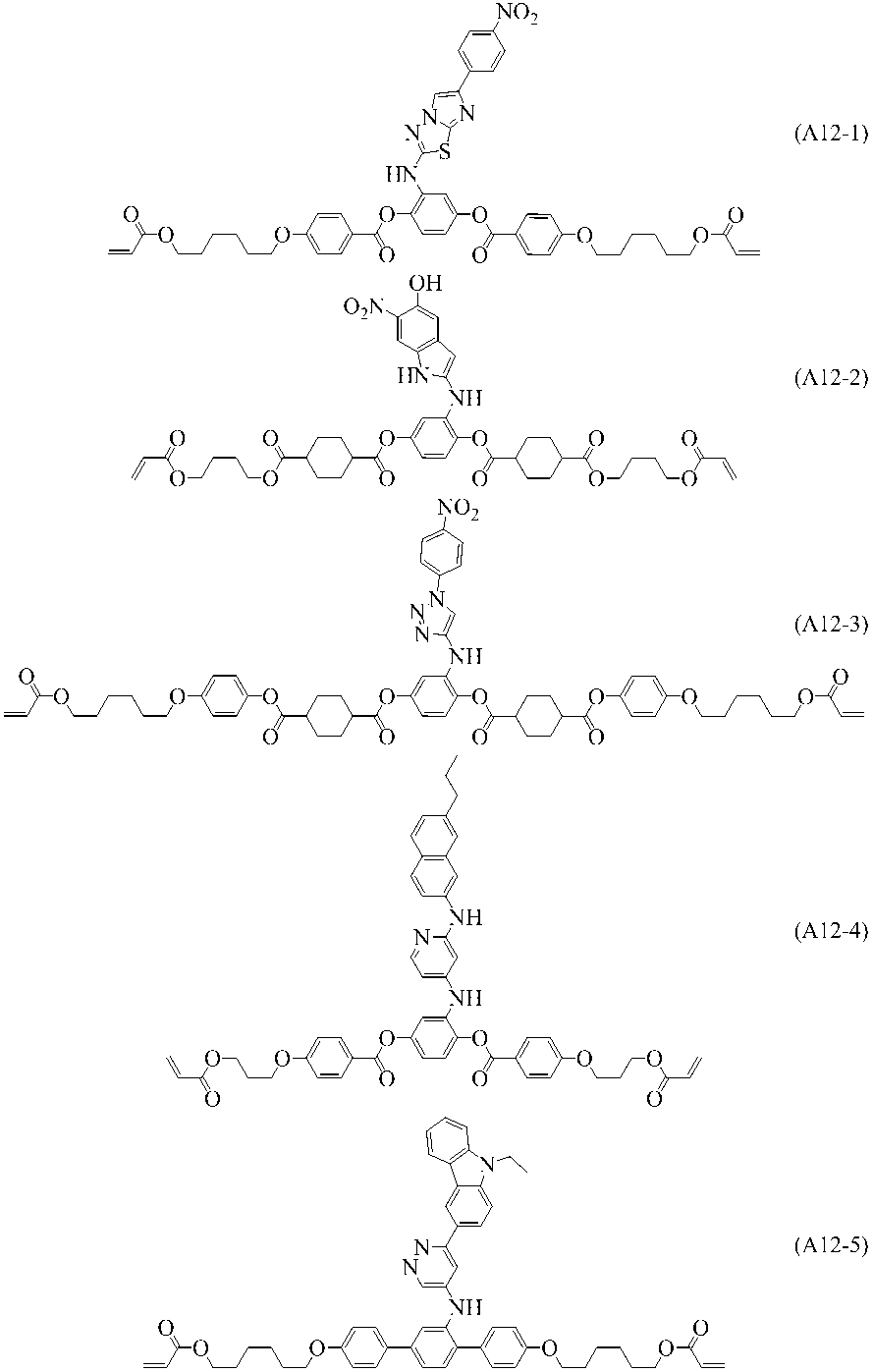
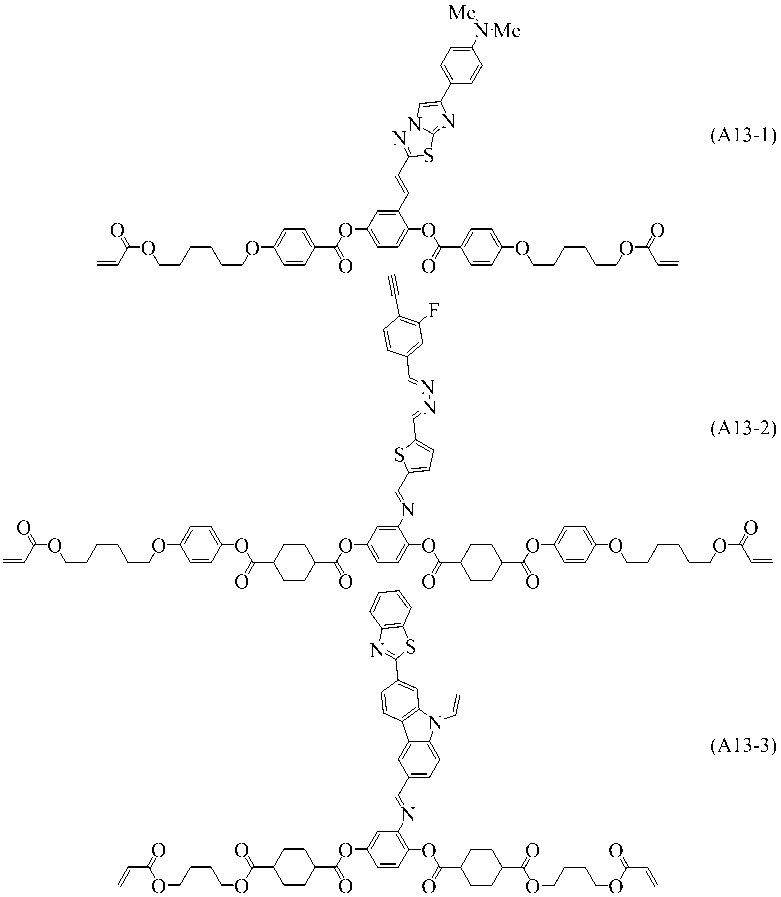

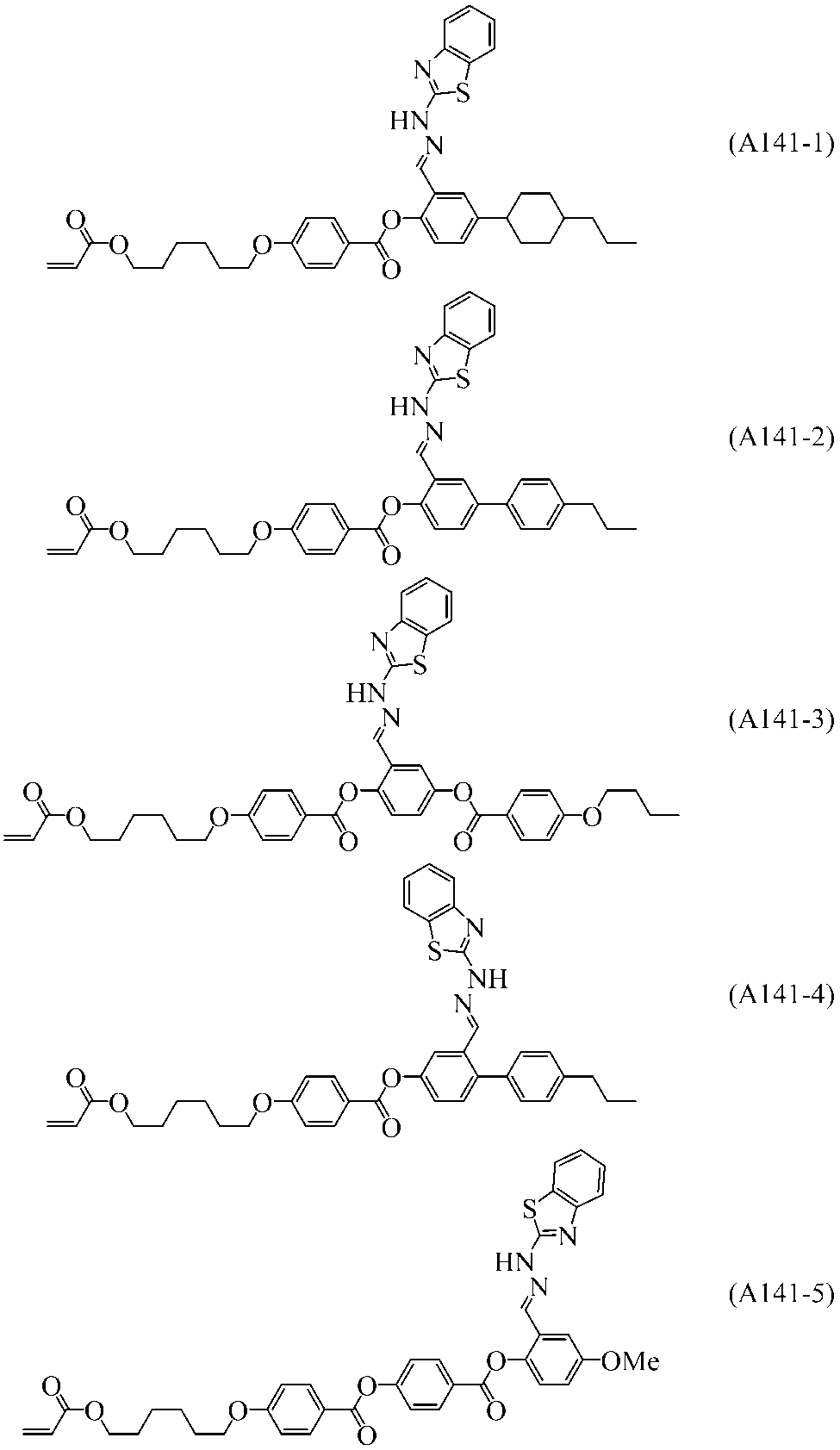


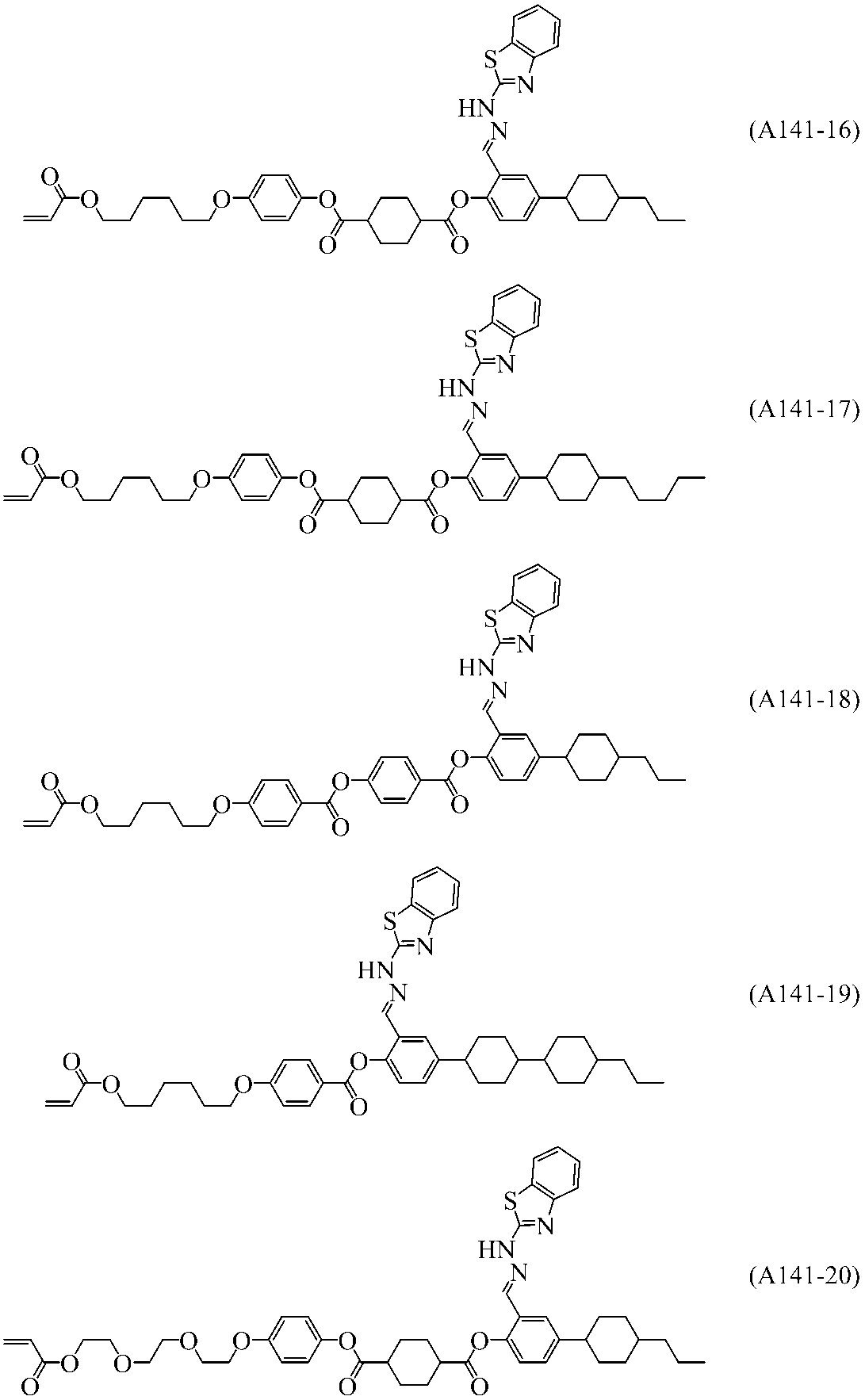
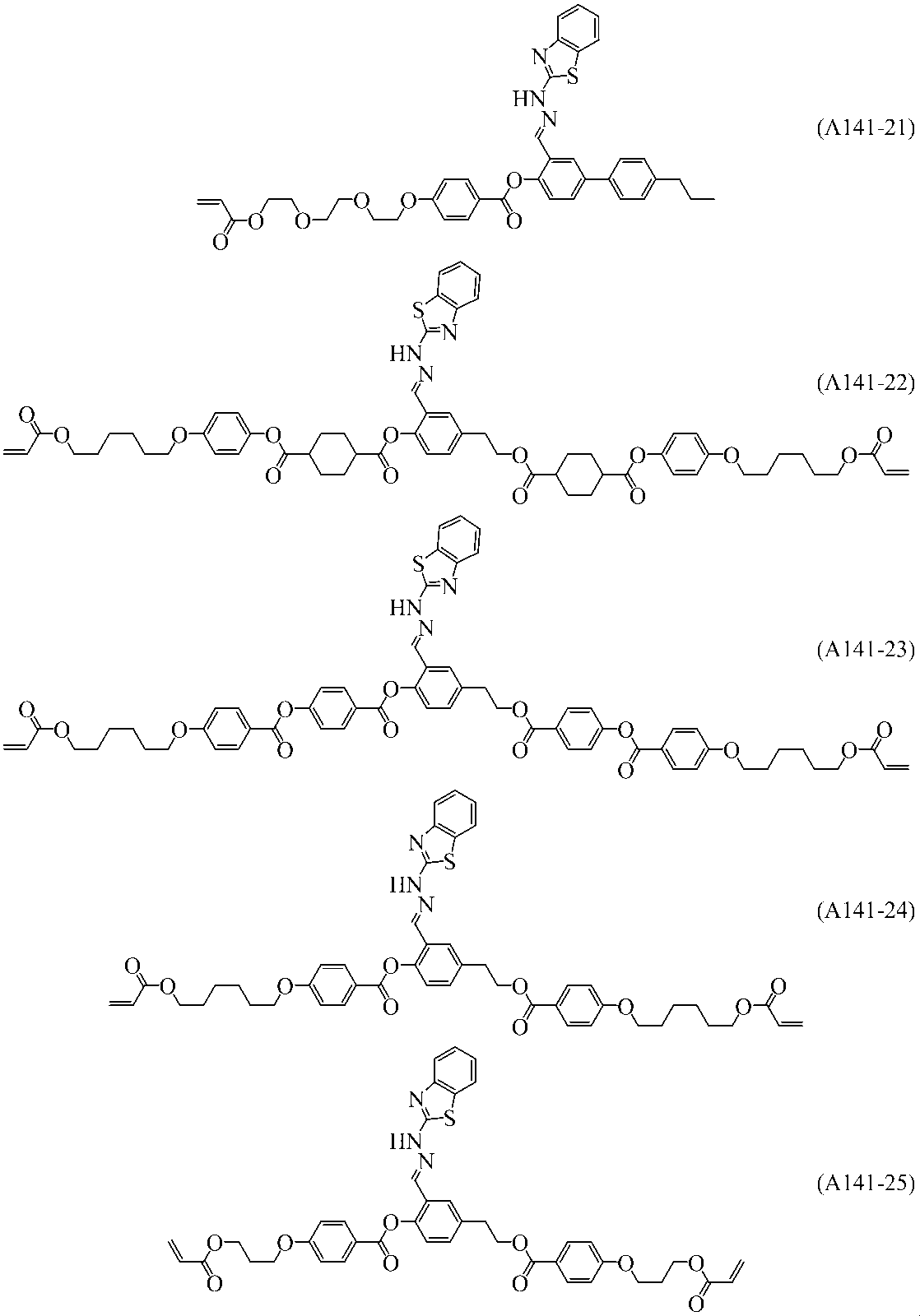
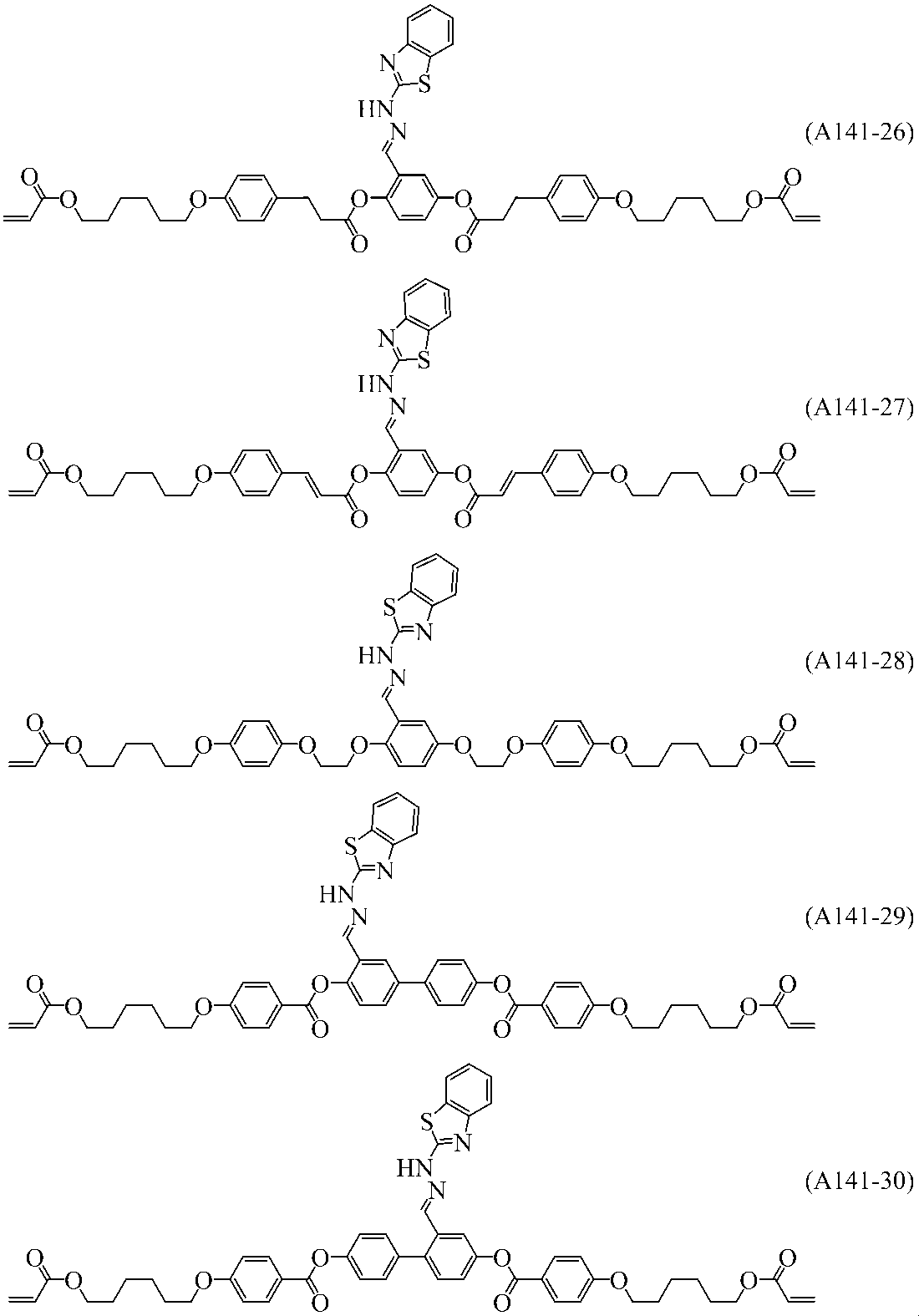
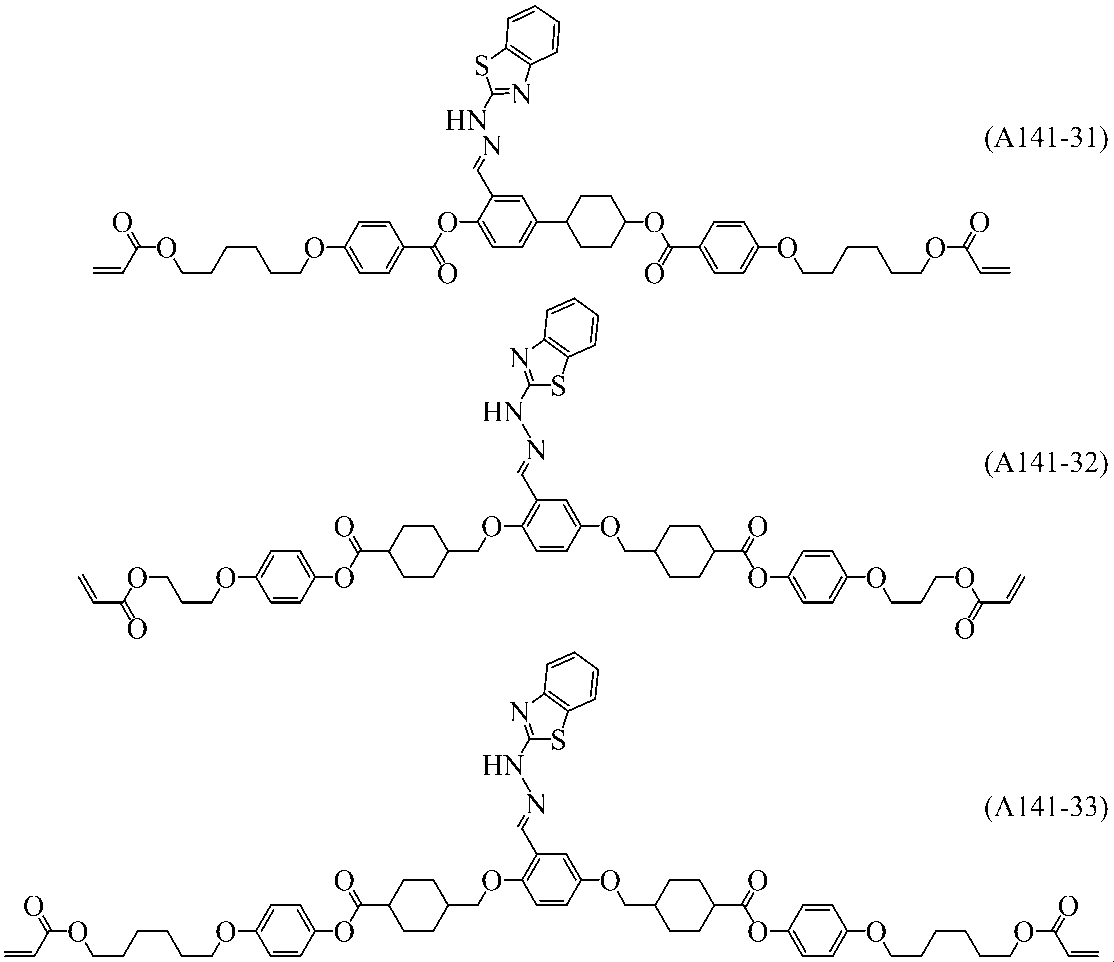
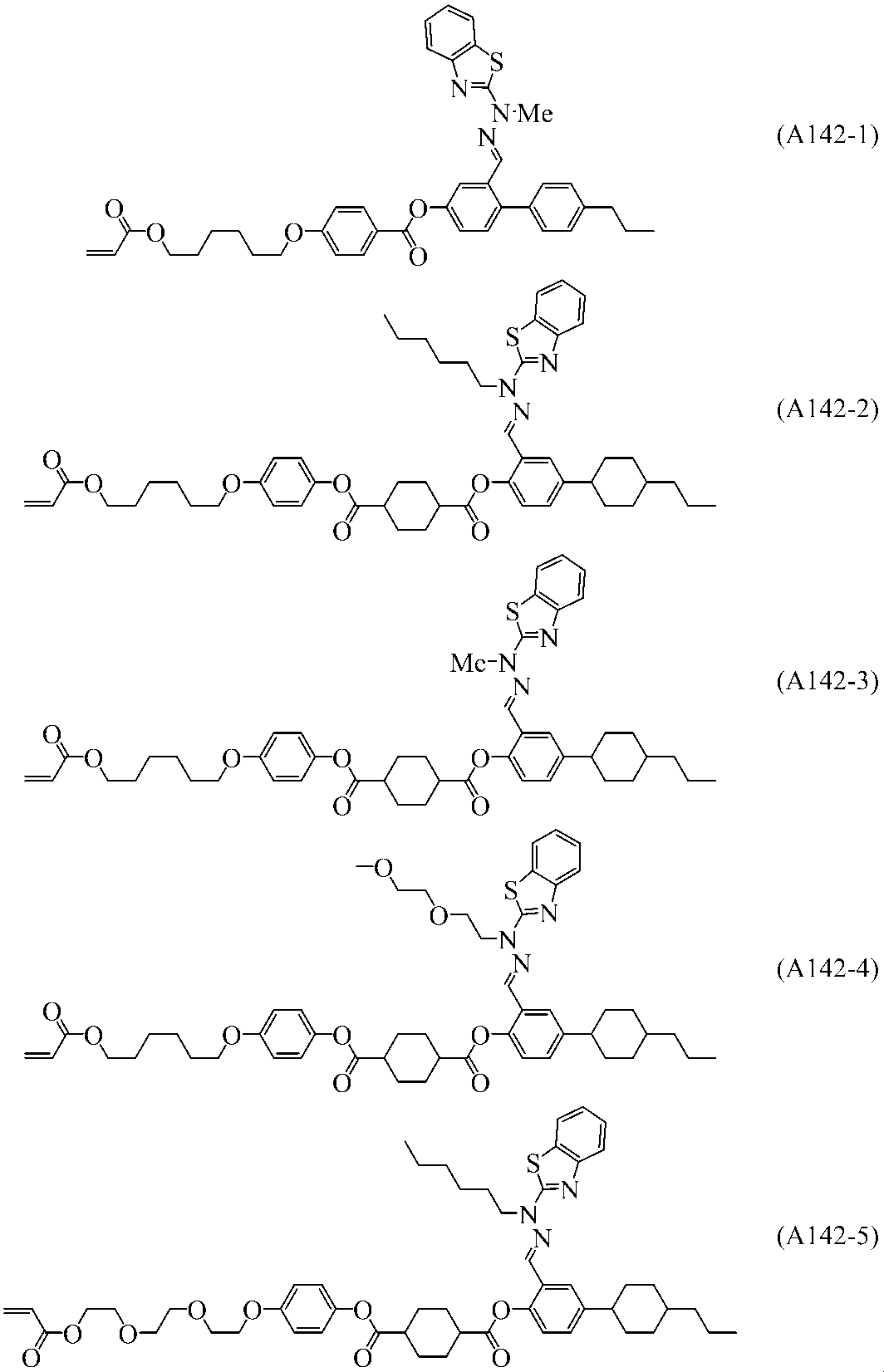
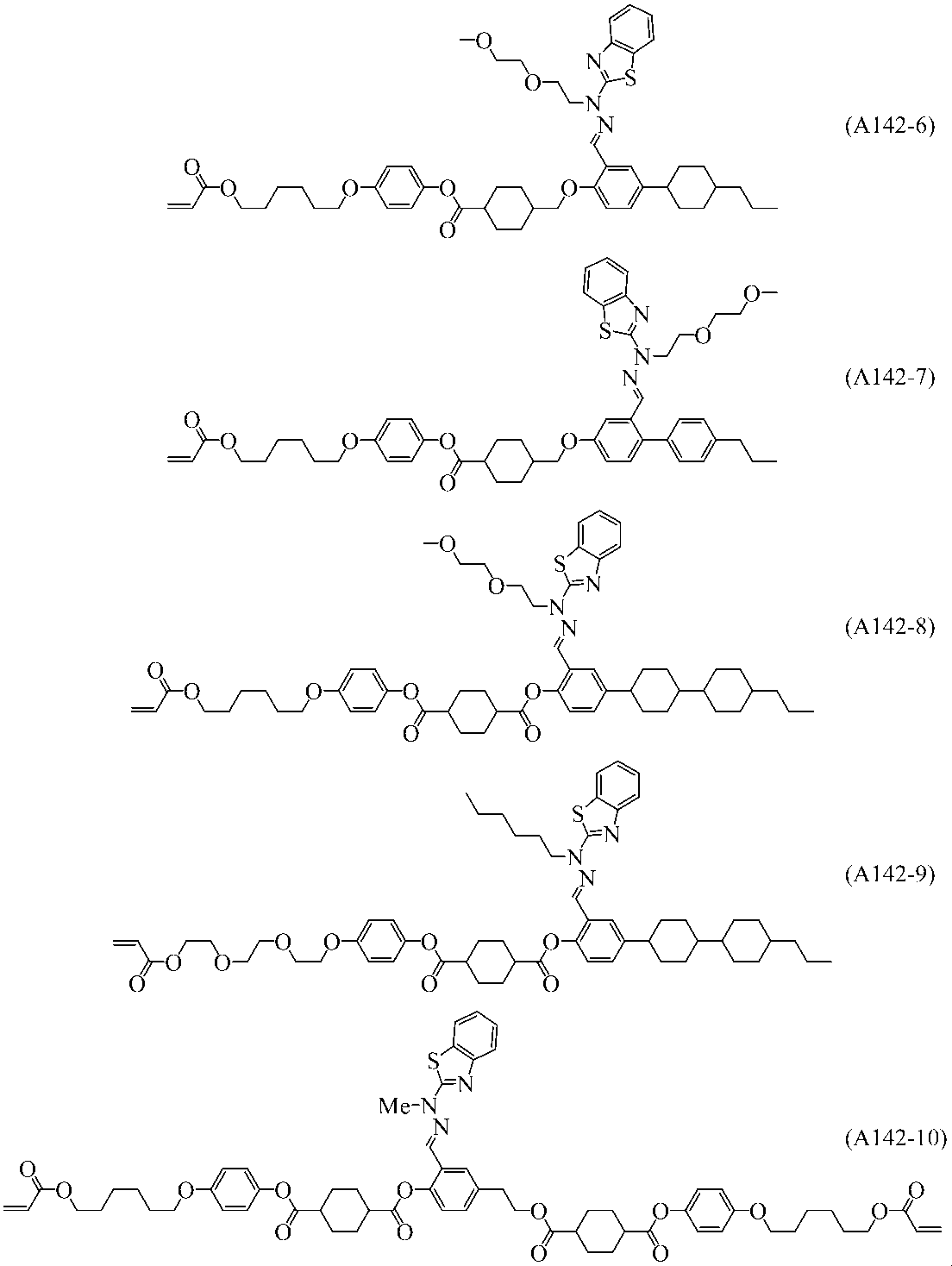
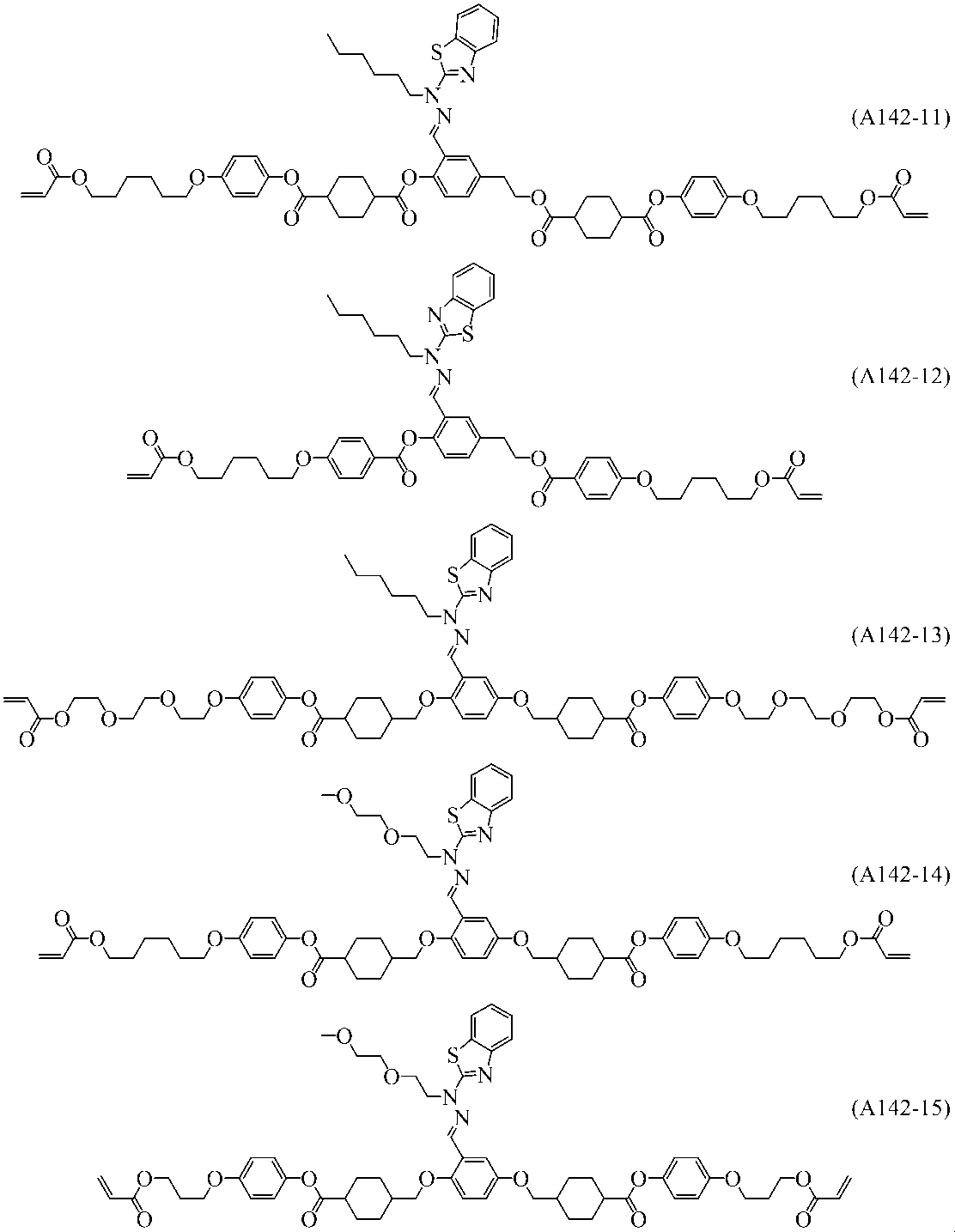
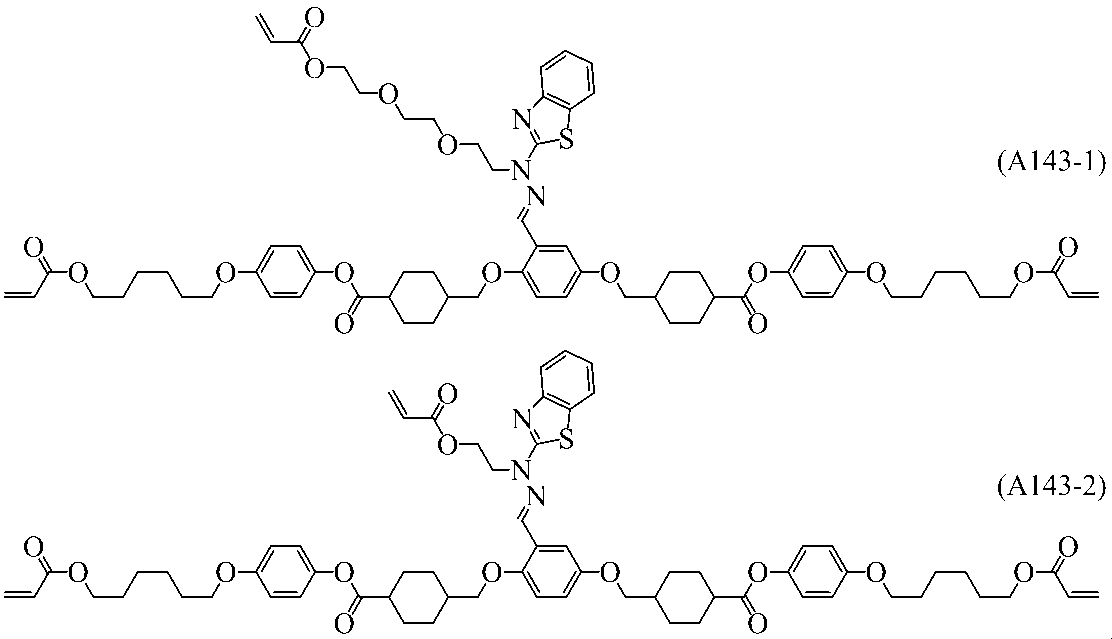
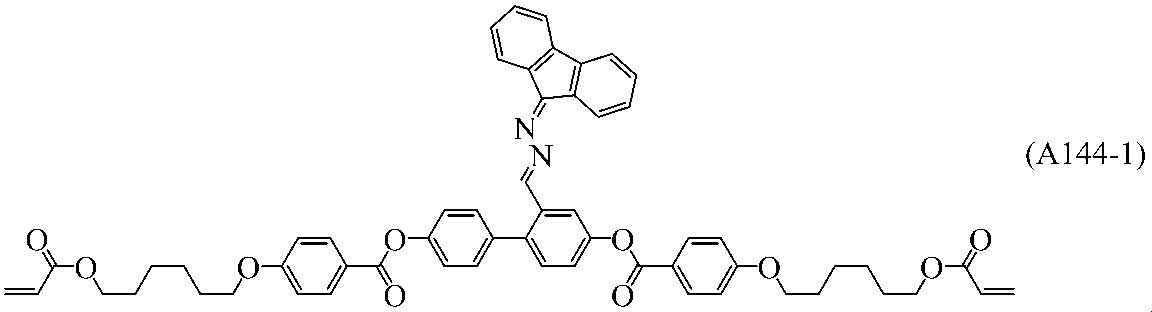


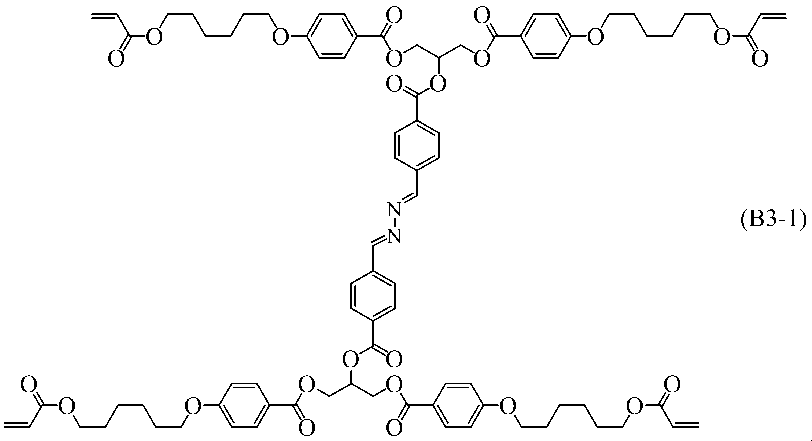


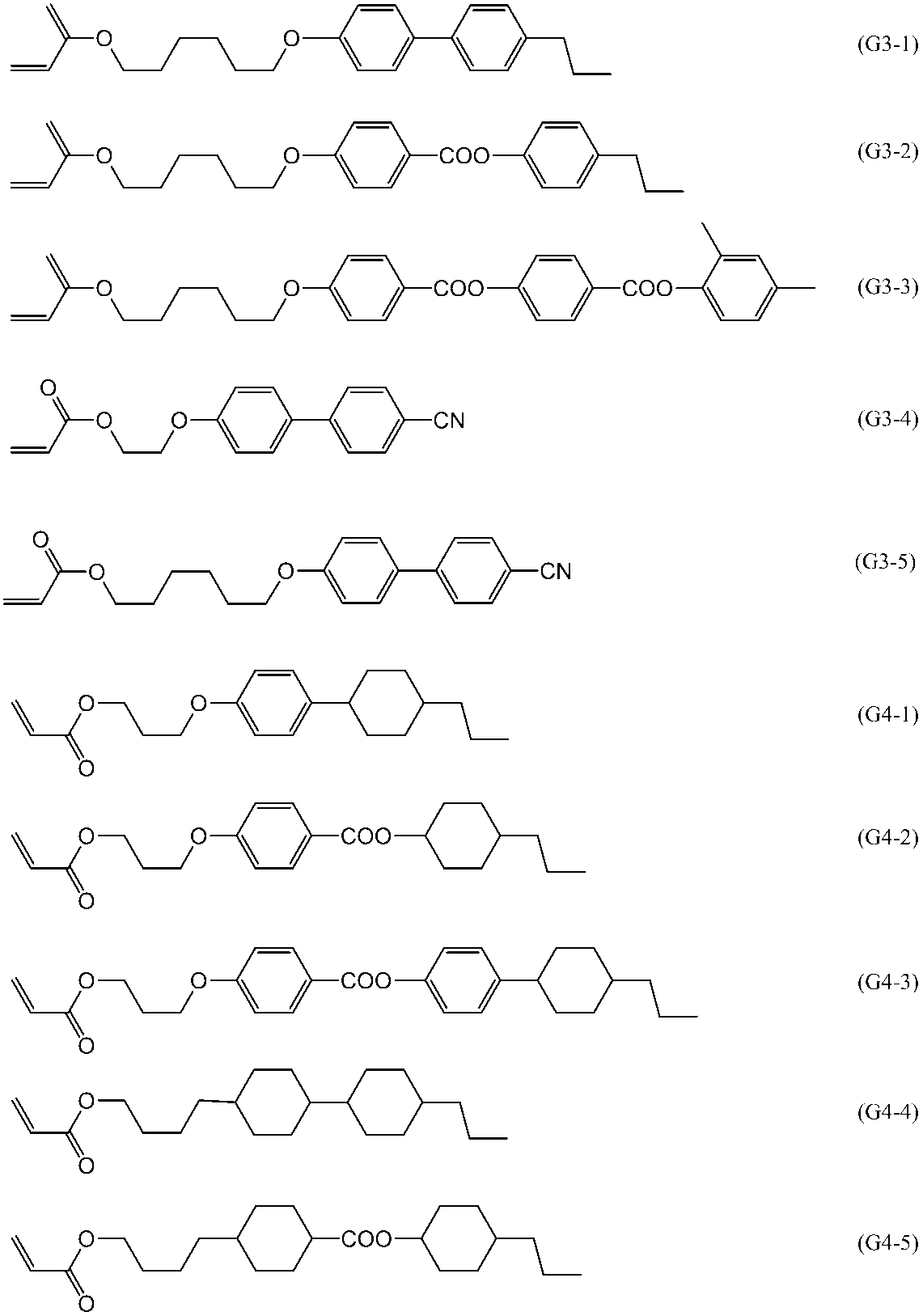
(保存安定性)
保存安定性については、上記によって得られた塗工液を30℃から5℃刻みで24時間放置し、結晶が析出しない最も低い温度を記録した。
(チルト角)
空気界面におけるチルト角については、得られた位相差板の位相差の入射角依存性を位相差測定装置RET-100(大塚電子社製)を用いて測定し、得られた測定結果をコンピューターシミュレーションソフトLCD-Master(シンテック社製)を用いて解析を行うことで得た。
(色目)
色目については、有機ELパネル搭載のSAMSUNG社製GALAXY SIIを分解し、円偏光板を剥離して変わりに、上記の広帯域円偏光板を張り合わせて、正面又は斜め45°からの黒色の色味づきを下記基準で評価した。
A:反射光の色づきがほとんど視認されない。(許容)
B:反射光の色づきがごくわずかに視認されるが実用上問題ない。(許容)
C:反射光の色づきが少し視認されるが実用上問題ない。(許容)
D:反射光の色づきが視認される、用途によっては許容できる。(許容)
E:反射光の色づきが強く視認され、許容できない。
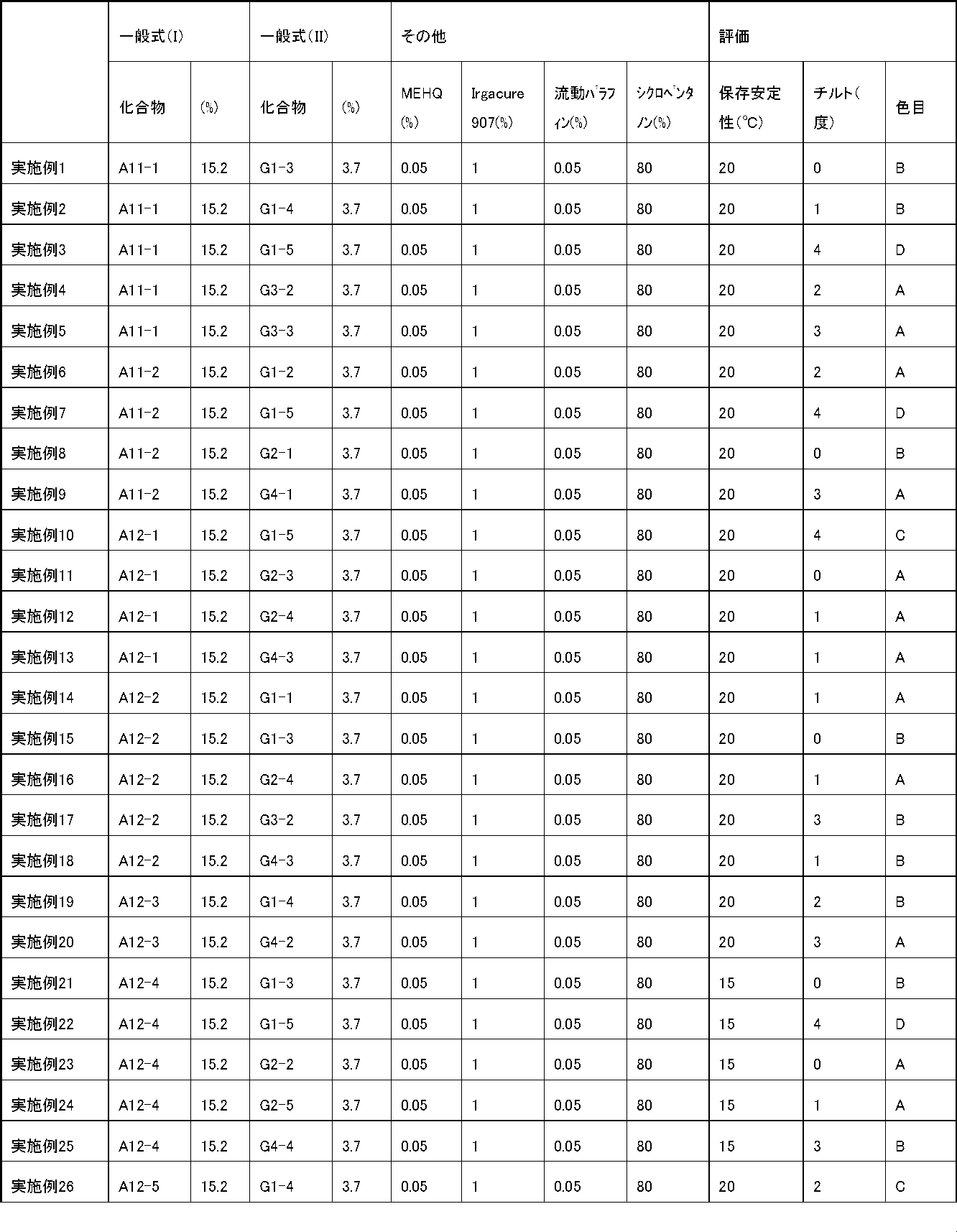

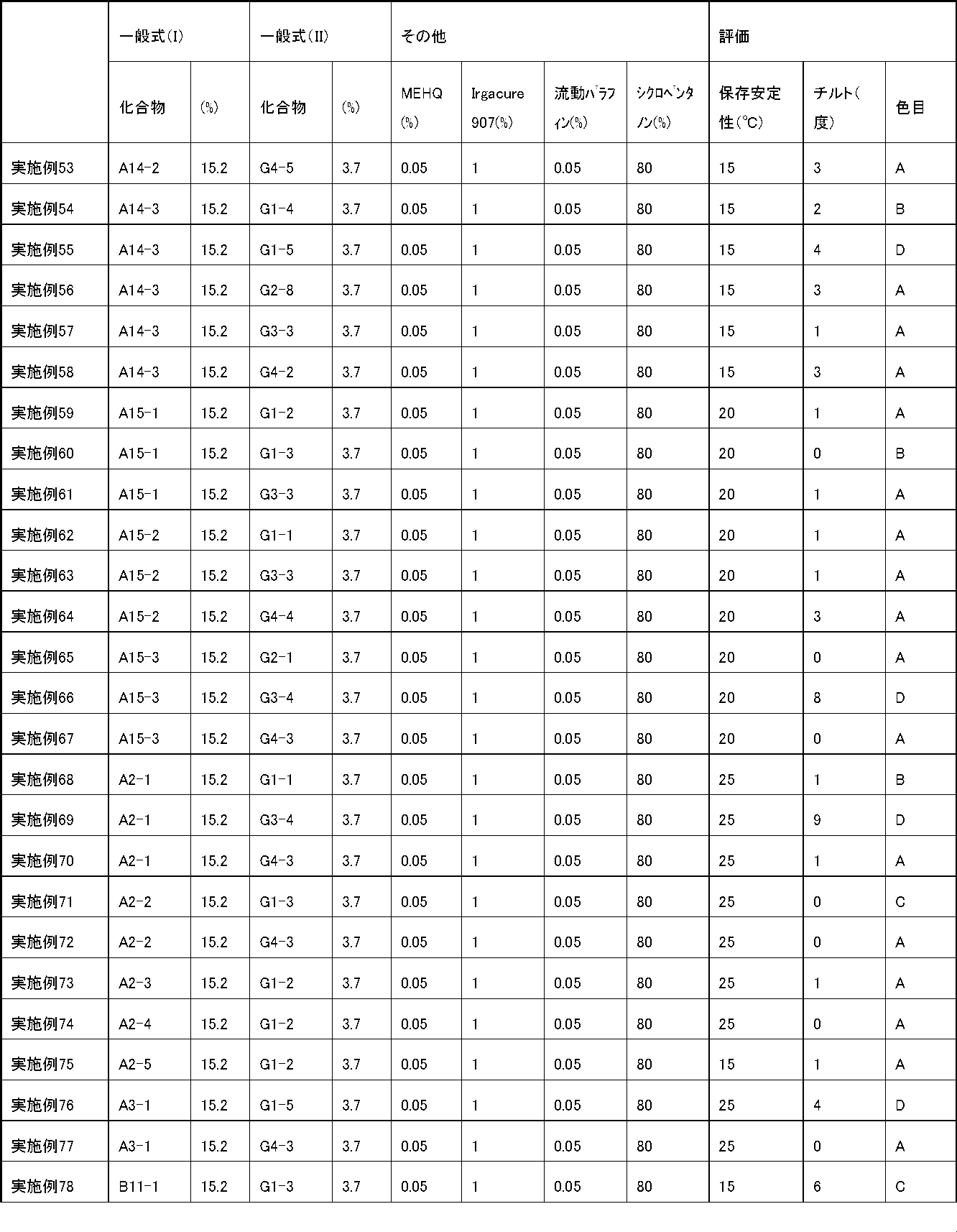
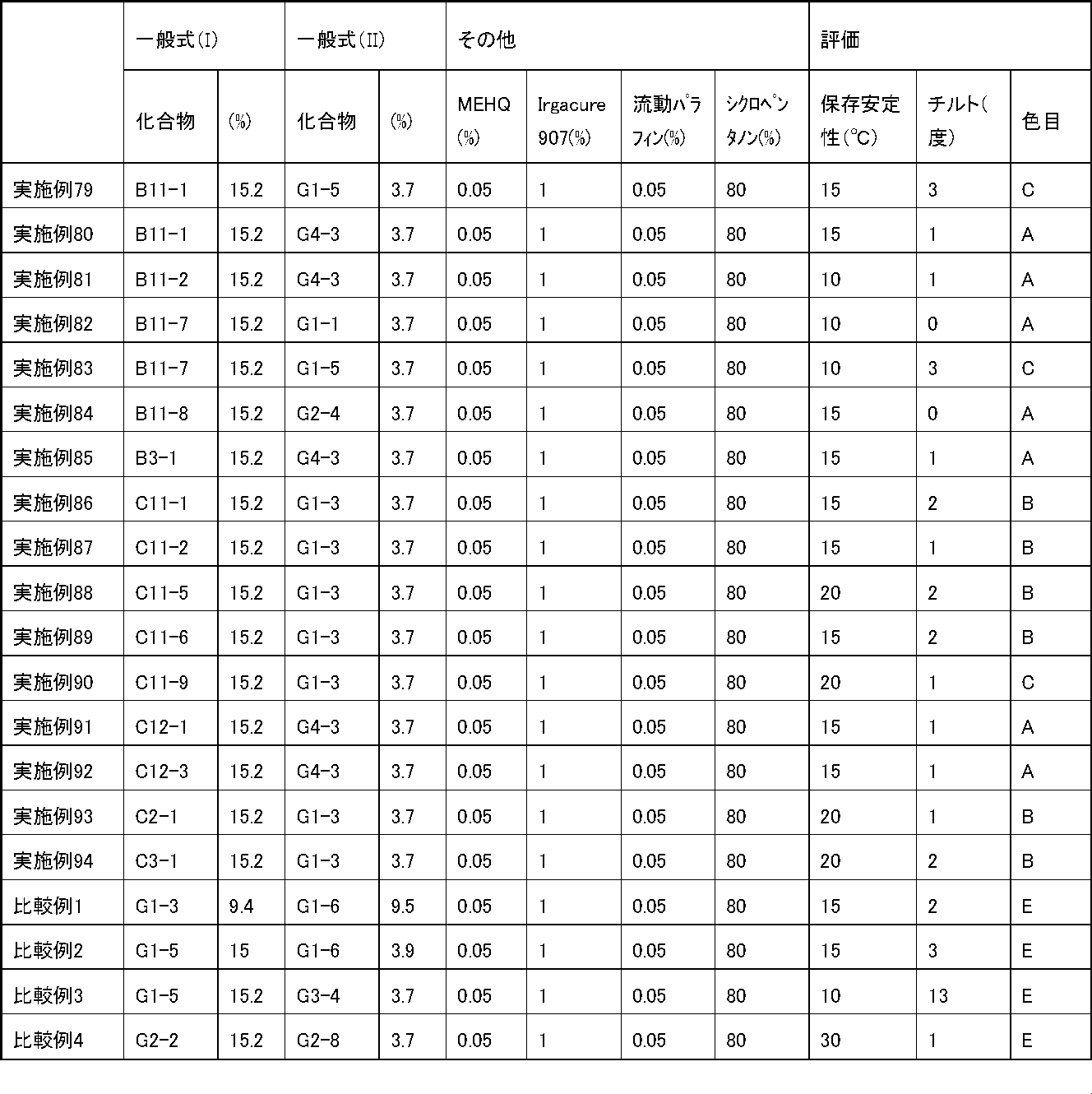
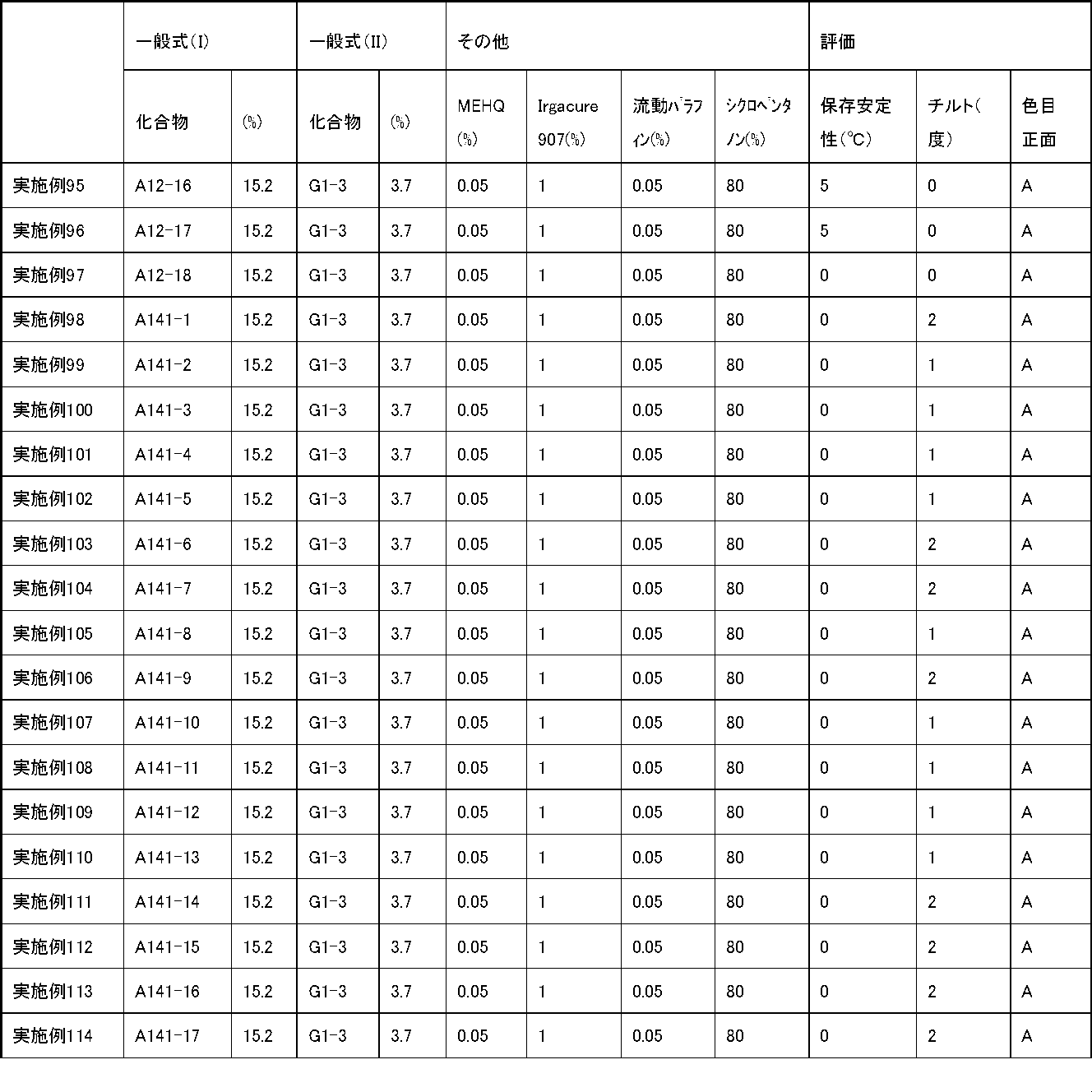
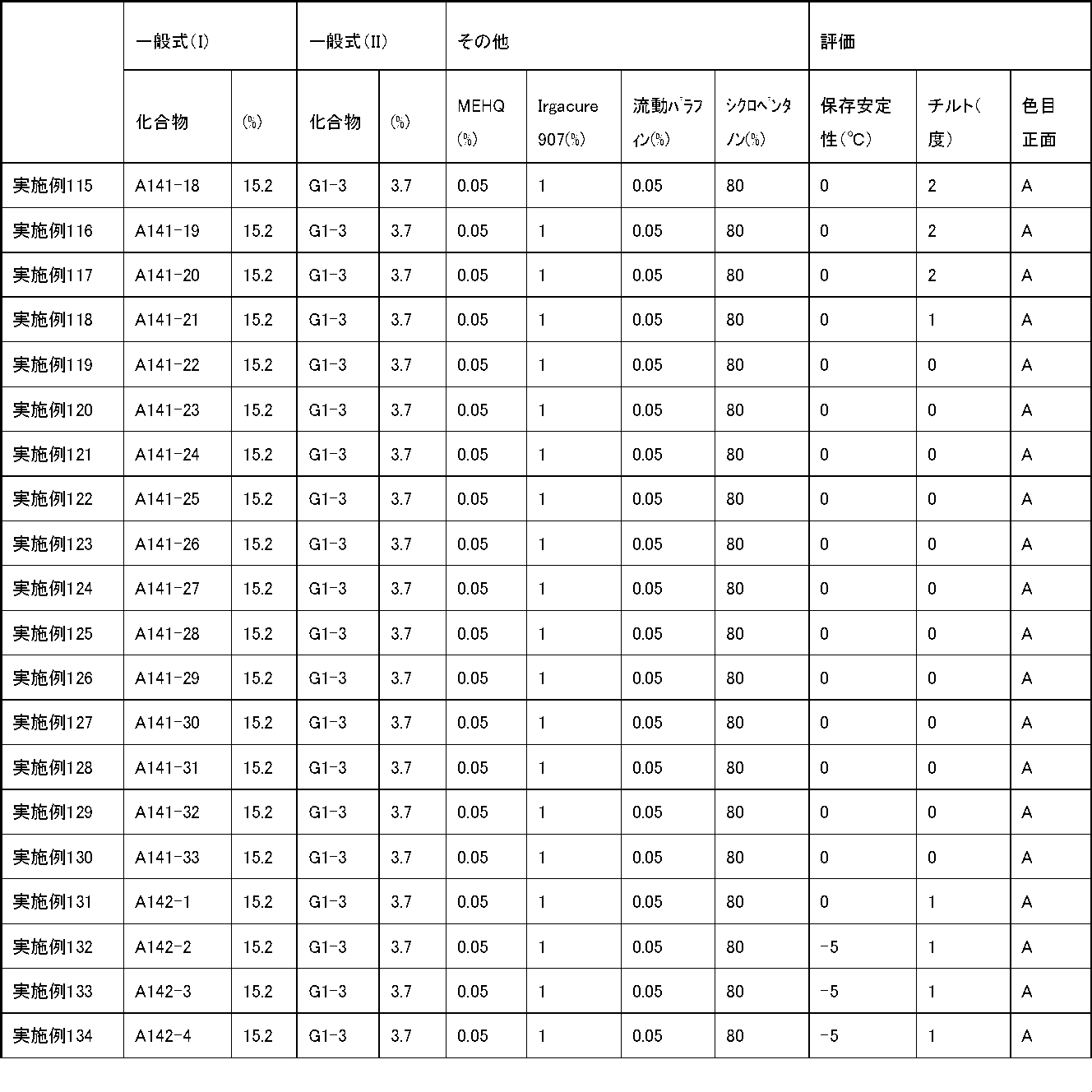


Claims (39)
- (a)一般式(I)

W1及びW2は各々独立して単結合又は2個から100個のπ電子を有する共役系を含む基を表し、
M1及びM2は各々独立してメソゲン基を含む基を表し、
n1及びn2は各々独立して0又は1を表すが、n1、n2が0である場合該当する基はそれぞれ水素原子を表し、
n3は1から1000までの整数を表すが、
W1、W2、M1、M2は、各々独立して置換基Lを有していても良く、Lはフッ素原子、塩素原子、臭素原子、ヨウ素原子、ペンタフルオロスルフラニル基、ニトロ基、シアノ基、イソシアノ基、アミノ基、ヒドロキシル基、メルカプト基、メチルアミノ基、ジメチルアミノ基、ジエチルアミノ基、ジイソプロピルアミノ基、トリメチルシリル基、ジメチルシリル基、チオイソシアノ基、又は、1個の-CH2-又は隣接していない2個以上の-CH2-が各々独立して-O-、-S-、-CO-、-COO-、-OCO-、-CO-S-、-S-CO-、-O-CO-O-、-CO-NH-、-NH-CO-、-CH=CH-COO-、-CH=CH-OCO-、-COO-CH=CH-、-OCO-CH=CH-、-CH=CH-、-CF=CF-又は-C≡C-によって置換されても良い炭素原子数1から20の直鎖状又は分岐状アルキル基を表すが、当該アルキル基中の任意の水素原子はフッ素原子に置換されても良く、若しくは、LはPL-(SL-XL)kL-で表される基を表しても良く、ここでPLは重合性基を表し、SLはスペーサー基又は単結合を表すが、SLが複数存在する場合それらは同一であっても異なっていても良く、XLは-O-、-S-、-OCH2-、-CH2O-、-CO-、-COO-、-OCO-、-CO-S-、-S-CO-、-O-CO-O-、-CO-NH-、-NH-CO-、-SCH2-、-CH2S-、-CF2O-、-OCF2-、-CF2S-、-SCF2-、-CH=CH-COO-、-CH=CH-OCO-、-COO-CH=CH-、-OCO-CH=CH-、-COO-CH2CH2-、-OCO-CH2CH2-、-CH2CH2-COO-、-CH2CH2-OCO-、-COO-CH2-、-OCO-CH2-、-CH2-COO-、-CH2-OCO-、-CH=CH-、-N=N-、-CH=N-N=CH-、-CF=CF-、-C≡C-又は単結合を表すが、XLが複数存在する場合それらは同一であっても異なっていても良いが、(ただし、PL-(SL-XL)kL-には-O-O-結合を含まない。)、化合物内にLが複数存在する場合それらは同一であっても異なっていても良く、kLは0から10の整数を表し、
M1-W1、W1-M2及び/又はM2-W2は各々独立して共役系を形成していても良い。)で表される逆分散性化合物、
(b)一般式(II)

S21は炭素原子数0~18のアルキレン基を表し(該アルキレン基中の水素原子は1つ以上のハロゲン原子又はCNにより置換されていても良く、この基中に存在する1つのCH2基又は隣接していない2つ以上のCH2基はそれぞれ相互に独立して、-O-、-COO-、-OCO-又は-OCO-O-により置き換えられていても良い。)、
X21は-O-、-S-、-OCH2-、-CH2O-、-CO-、-COO-、-OCO-、-CO-S-、-S-CO-、-O-CO-O-、-CO-NH-、-NH-CO-、-SCH2-、-CH2S-、-CF2O-、-OCF2-、-CF2S-、-SCF2-、-CH=CH-COO-、-CH=CH-OCO-、-COO-CH=CH-、-OCO-CH=CH-、-COO-CH2CH2-、-OCO-CH2CH2-、-CH2CH2-COO-、-CH2CH2-OCO-、-COO-CH2-、-OCO-CH2-、-CH2-COO-、-CH2-OCO-、-CH=CH-、-N=N-、-CH=N-N=CH-、-CF=CF-、-C≡C-又は単結合を表し(ただし、P21-S21、及びS21-X21は、-O-O-、-O-NH-、又は-O-S-基を含まない。)、
q1は0又は1を表し、
MGはメソゲン基を表し、
R21は、水素原子、ハロゲン原子、シアノ基、1個の-CH2-又は隣接していない2個以上の-CH2-が各々独立して-O-、-S-、-CO-、-COO-、-OCO-、-CO-S-、-S-CO-、-O-CO-O-、-CO-NH-、-NH-CO-、-CH=CH-COO-、-CH=CH-OCO-、-COO-CH=CH-、-OCO-CH=CH-、-CH=CH-、-CF=CF-又は-C≡C-によって置換されても良い炭素原子数1から12の直鎖又は分岐アルキル基、あるいは、一般式(II-a)

S22は、S21で定義されたものと同一のものを表し、
X22は、X21で定義されたものと同一のものを表し(ただし、P23-S22、及びS22-X22は、-O-O-、-O-NH-、又は-O-S-基を含まない。)、
q2は0又は1を表す。)
で表される化合物、
c)必要に応じて開始剤、
d)必要に応じて溶剤、
を含有することを特徴とする重合性組成物。 - 一般式(I)において、存在するR1、存在するR2、R3及びR4のうち少なくとも1つが重合性基を含む基を表す、請求項1記載の重合性組成物。
- 一般式(I)において、存在するR1、存在するR2、R3及びR4のうち少なくとも1つが一般式(I-R)

- 式(I-R)において、P1が下記の式(P-1)から式(P-20)
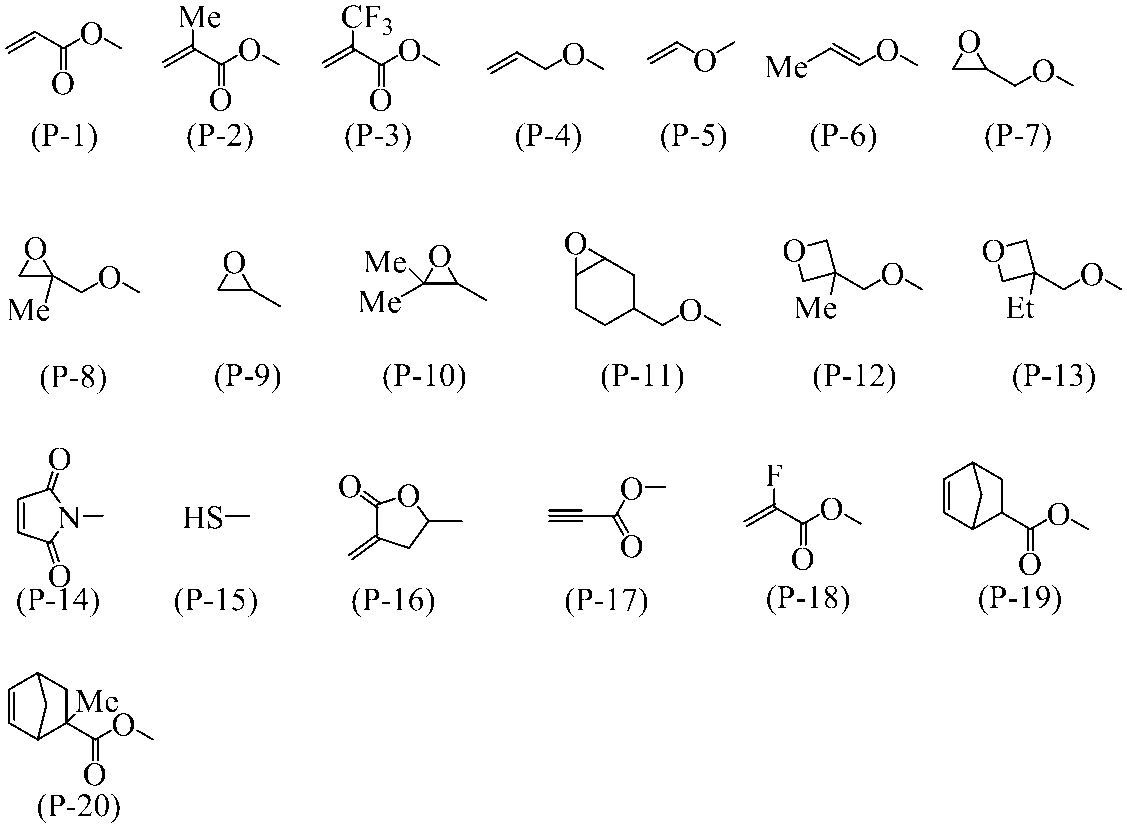
- 式(I-R)において、S1が各々独立して、1個の-CH2-又は隣接していない2個以上の-CH2-が各々独立して-O-、-COO-、-OCO-、-OCO-O-、-CO-NH-、-NH-CO-、-CH=CH-又は-C≡C-に置き換えられても良い炭素原子数1から20のアルキレン基を表す、請求項3又は請求項4に記載の重合性組成物。
- 一般式(I)において、W1が下記一般式(I-W1)、W2が下記一般式(I-W2)

- 存在するB1、存在するB2及びB3が各々独立して、下記の式(B-1)から式(B-21)又は単結合
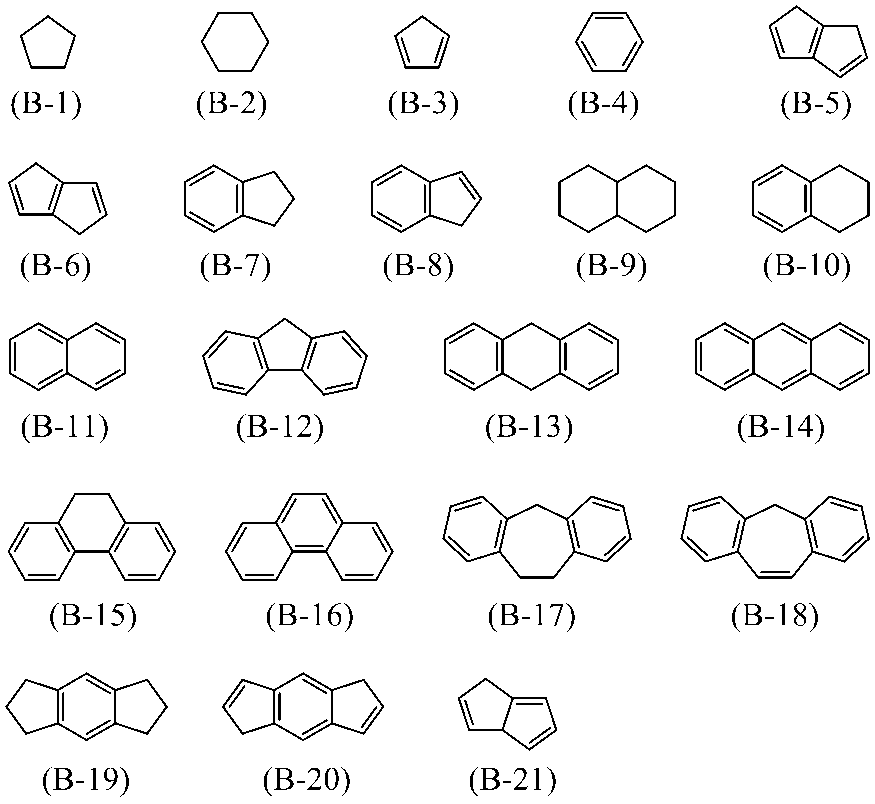
- V1、V2、V3及びV4がそれぞれ独立して、下記の式(V-1)から式(V-15)
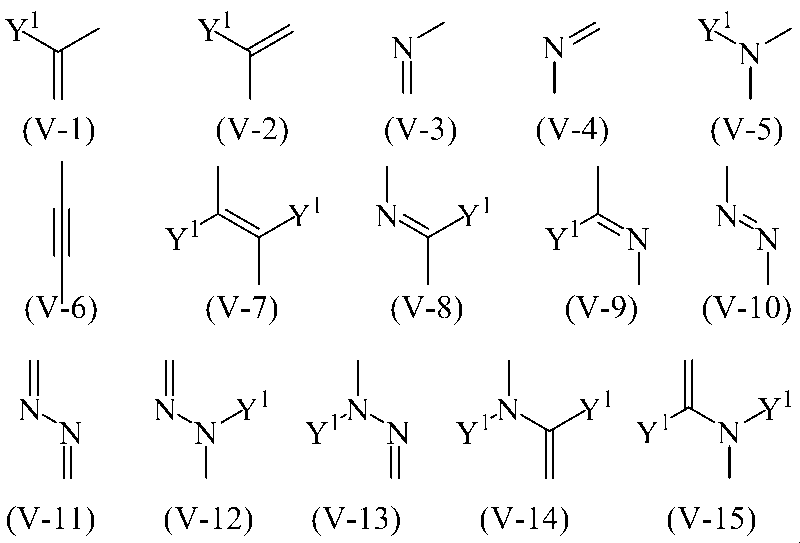
- 一般式(I)において、M1が下記の式(I-M1)、M2が下記の式(I-M2)
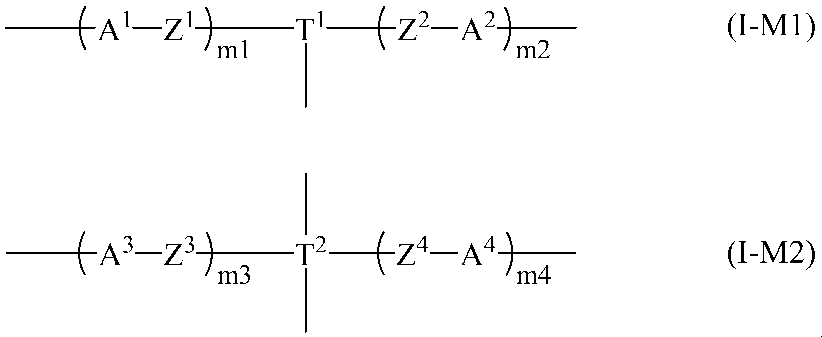
- T1及びT2が各々独立して下記の式(T-1)から式(T-22)

- 一般式(I)において、n1及びn2が0を表し、n3が1を表す、請求項1から請求項10のいずれか一項に記載の重合性組成物。
- 一般式(I)において、n1及びn2が0を表し、n3が1を表し、
R3が式(I-R)

- 一般式(I)において、W1が下記の式(I-W11)

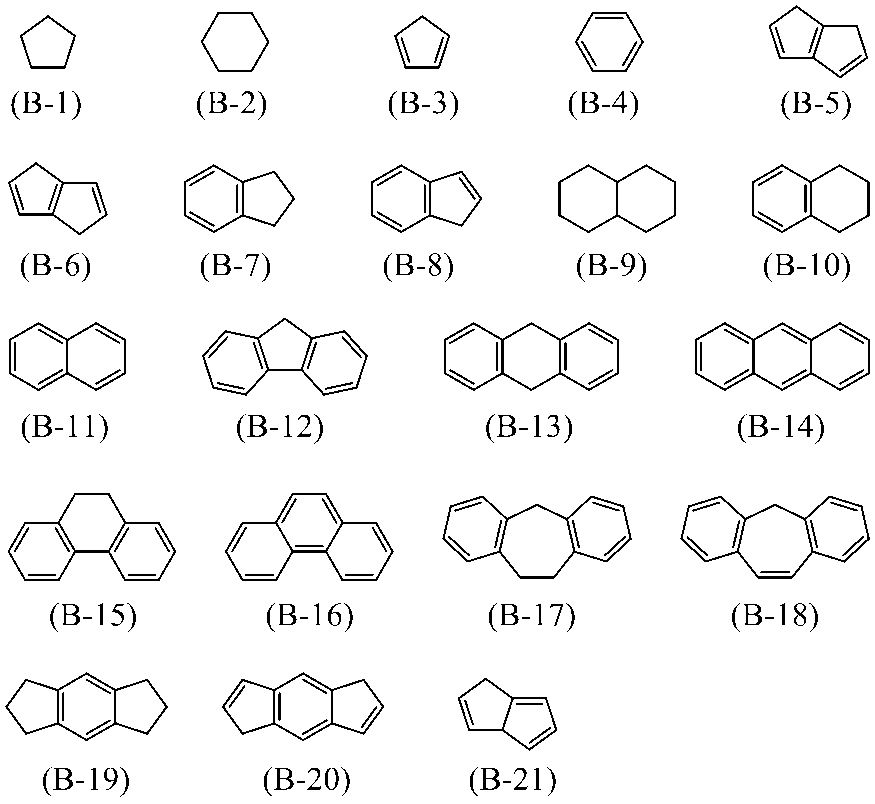
- 一般式(I)において、W1が下記の式(I-W12)
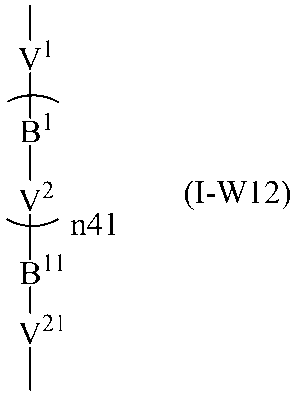
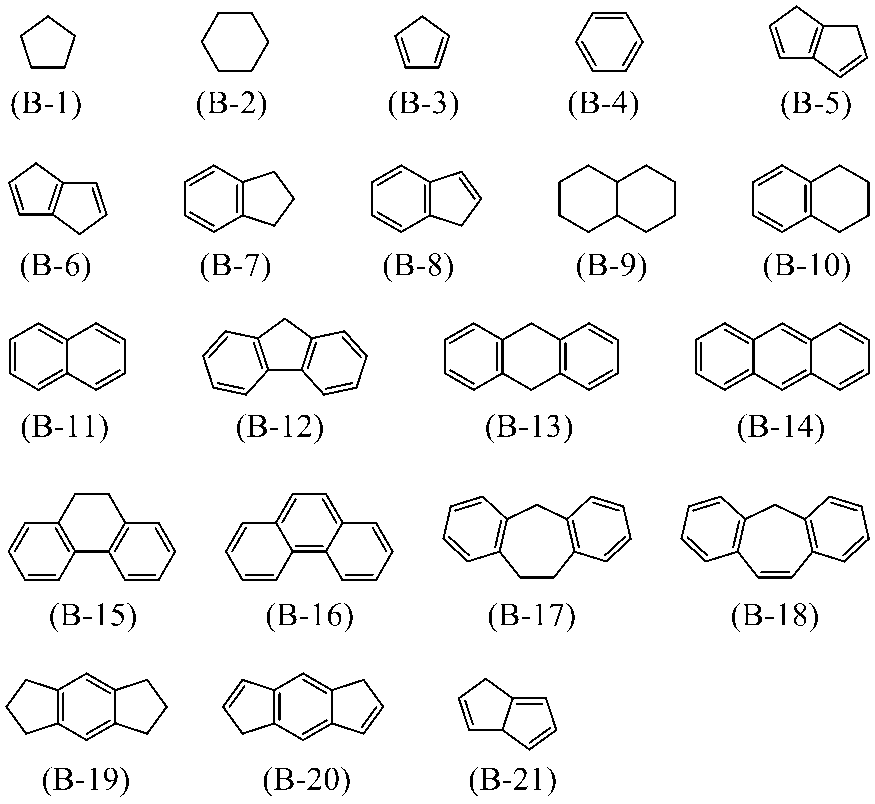
- 一般式(I)において、W1が下記の式(I-W13)

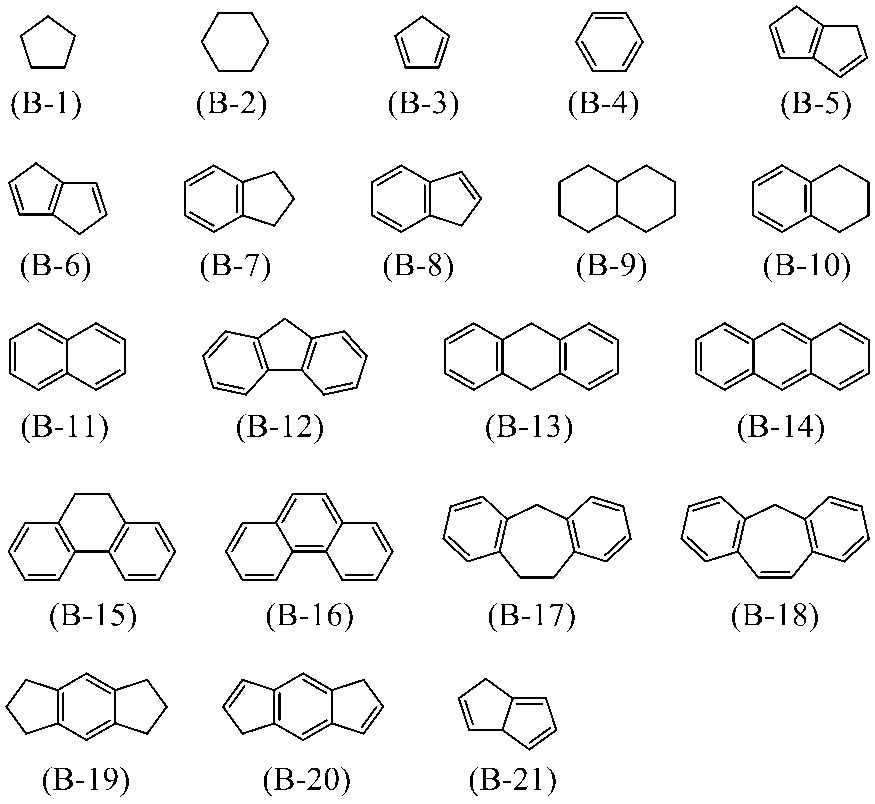
- 一般式(I)において、W1が下記の式(I-W14)


- 一般式(I)において、n1及びn2が0を表し、n3が1を表し、
M2が下記の式(I-M21)

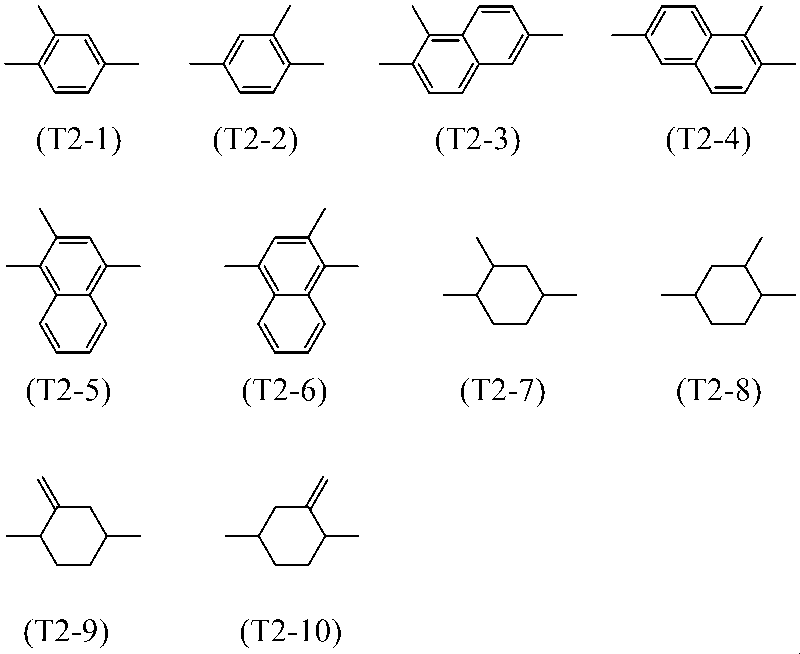
- 一般式(I)において、n1及びn2が0を表し、n3が1を表し、
M2が下記の式(I-M22)

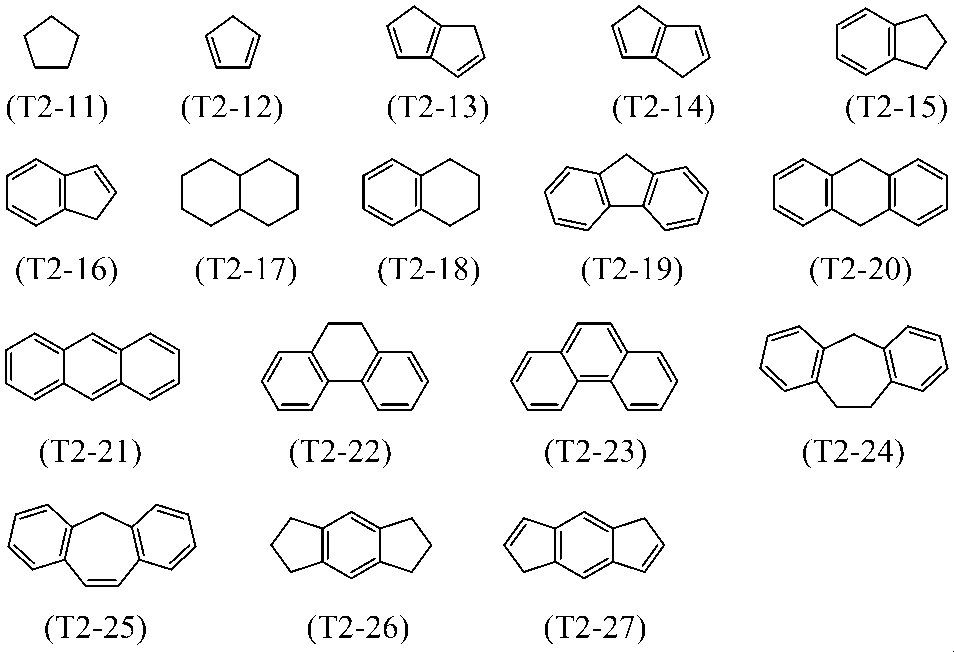

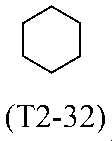

- 一般式(I)において、n1及びn2が0を表し、n3が1を表し、
M2が下記の式(I-M222)

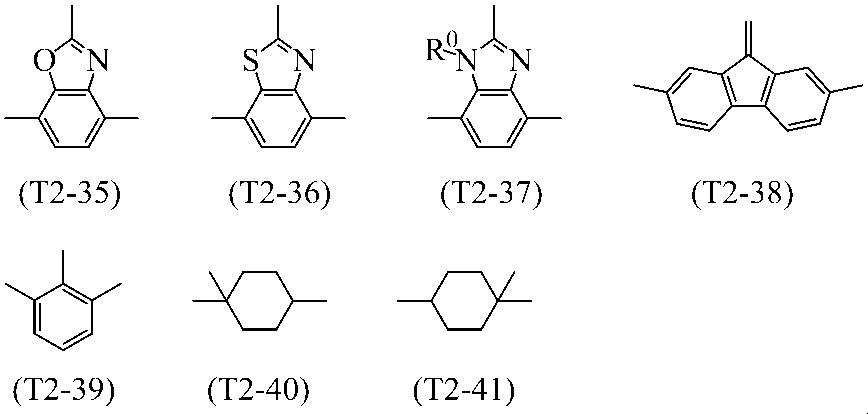
- 一般式(I)において、n1及びn2が0を表し、n3が1を表し、
M2が下記の式(I-M23)

- 一般式(I)において、n1及びn2が0を表し、n3が1を表し、
M2が下記の式(I-M232)

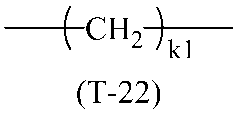
- 一般式(I)において、n1及びn3が1を表し、n2が0を表す、請求項1から請求項10のいずれか一項に記載の重合性組成物。
- 一般式(I)において、n1及びn3が1を表し、n2が0を表し、R2及びR3が式(I-R)

- 一般式(I)において、n1及びn3が1を表し、n2が0を表し、M1が下記の式(I-M1)、M2が下記の式(I-M2)
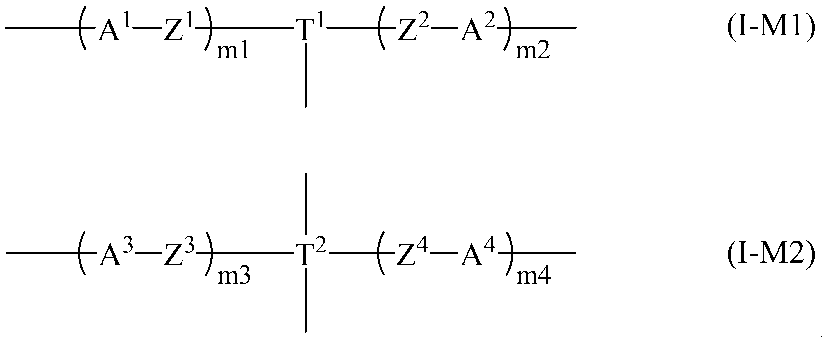
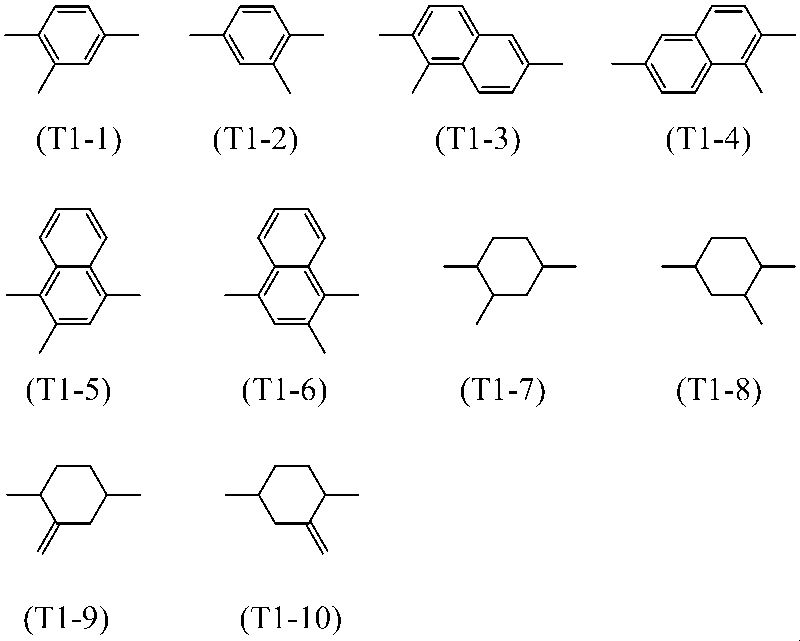

- 一般式(I)において、n1及びn3が1を表し、n2が0を表し、W1が、下記の式(I-W15)


- 一般式(I)において、n1が0を表し、n2及びn3が1を表す、請求項1から請求項10のいずれか一項に記載の重合性組成物。
- 一般式(I)において、n1が0を表し、n2及びn3が1を表し、R3が式(I-R)

- 一般式(I)において、n1が0を表し、n2及びn3が1を表し、
M2が下記の式(I-M2)


- 一般式(I)において、R3及びR4が式(I-R)


- 一般式(I)において、n1及びn2が0を表し、n3が2から1000を表す、請求項1から請求項10のいずれか一項に記載の重合性組成物。
- 一般式(I)において、n1及びn2が0を表し、n3が2から1000を表し、R3が式(I-R)

- 一般式(I)において、-(M2)n3-が下記の式(I-M3)

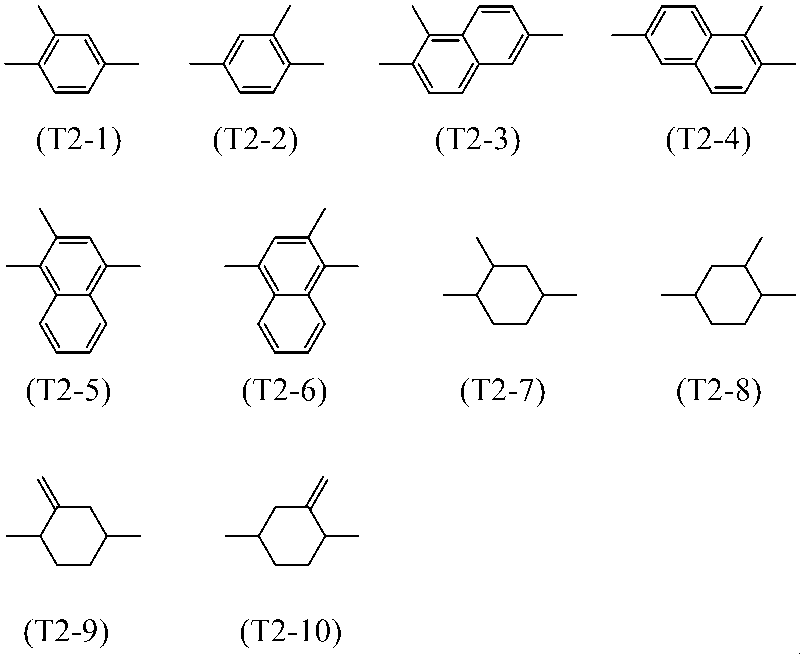
- 一般式(I)において、R3及びR4が式(I-R)


- 一般式(II)のMGが一般式(II-b)


S23は、炭素原子数1~18のアルキレン基を表し、X23は、-O-、-COO-、-OCO-、-OCH2-、-CH2O-、-CH2CH2OCO-、又は-CH2CH2COO-を表し、q3は0又は1を表し、q4は0又は1を表す。)を有していても良く、
Z1及びZ2はそれぞれ独立して、-COO-、-OCO-、-CH2 CH2-、-OCH2-、-CH2O-、-CH=CH-、-C≡C-、-CH=CHCOO-、-OCOCH=CH-、-CH2CH2COO-、-CH2CH2OCO-、-COOCH2CH2-、-OCOCH2CH2-、-CONH-、-NHCO-、ハロゲン原子を有してもよい炭素原子数2~10のアルキル基又は単結合を表し、
r1は0、1又は2を表し、B21、及びZ51が複数存在する場合は、それぞれ、同一であっても、異なっていても良い。)で表される化合物である、請求項1から請求項33のいずれか一項に記載の重合性組成物。 - 一般式(II-b)のB1、B2及びB3のいずれか一つ以上が、1,4-シクロヘキシレン基、1,4-シクロヘキセニル基、テトラヒドロピラン-2,5-ジイル基、1,3-ジオキサン-2,5-ジイル基、テトラヒドロチオピラン-2,5-ジイル基、1,4-ビシクロ(2,2,2)オクチレン基、又はデカヒドロナフタレン-2,6-ジイル基であることを特徴とする請求項34に記載の重合性組成物。
- 一般式(II-b)のr1が0であることを特徴とする請求項34に記載の重合性組成物。
- 請求項1から請求項36のいずれか一項に記載の重合性組成物を重合することにより得られる重合体。
- 請求項37に記載の重合体を用いた光学異方体。
- 請求項1から請求項36のいずれか一項に記載の重合性組成物を用いた樹脂、樹脂添加剤、オイル、フィルター、接着剤、粘着剤、油脂、インキ、医薬品、化粧品、洗剤、建築材料、包装材、液晶材料、有機EL材料、有機半導体材料、電子材料、表示素子、電子デバイス、通信機器、自動車部品、航空機部品、機械部品、農薬及び食品並びにそれらを使用した製品。
Priority Applications (4)
| Application Number | Priority Date | Filing Date | Title |
|---|---|---|---|
| US15/543,760 US20180037817A1 (en) | 2015-01-16 | 2016-01-12 | Polymerizable composition and optically anisotropic body |
| JP2016569357A JP6308407B2 (ja) | 2015-01-16 | 2016-01-12 | 重合性組成物及び光学異方体 |
| KR1020177017657A KR102552212B1 (ko) | 2015-01-16 | 2016-01-12 | 중합성 조성물 및 광학 이방체 |
| CN201680005637.7A CN107207676B (zh) | 2015-01-16 | 2016-01-12 | 聚合性组合物和光学各向异性体 |
Applications Claiming Priority (2)
| Application Number | Priority Date | Filing Date | Title |
|---|---|---|---|
| JP2015-006302 | 2015-01-16 | ||
| JP2015006302 | 2015-01-16 |
Publications (1)
| Publication Number | Publication Date |
|---|---|
| WO2016114255A1 true WO2016114255A1 (ja) | 2016-07-21 |
Family
ID=56405800
Family Applications (1)
| Application Number | Title | Priority Date | Filing Date |
|---|---|---|---|
| PCT/JP2016/050663 Ceased WO2016114255A1 (ja) | 2015-01-16 | 2016-01-12 | 重合性組成物及び光学異方体 |
Country Status (6)
| Country | Link |
|---|---|
| US (1) | US20180037817A1 (ja) |
| JP (2) | JP6308407B2 (ja) |
| KR (1) | KR102552212B1 (ja) |
| CN (1) | CN107207676B (ja) |
| TW (1) | TWI731847B (ja) |
| WO (1) | WO2016114255A1 (ja) |
Cited By (17)
| Publication number | Priority date | Publication date | Assignee | Title |
|---|---|---|---|---|
| JP2016166344A (ja) * | 2015-03-02 | 2016-09-15 | Jnc株式会社 | 重合性液晶組成物及び光学異方性フィルム |
| WO2017068860A1 (ja) * | 2015-10-23 | 2017-04-27 | Dic株式会社 | 重合性化合物及び光学異方体 |
| JP2017088591A (ja) * | 2015-11-09 | 2017-05-25 | Dic株式会社 | 重合性化合物及び光学異方体 |
| WO2018123625A1 (ja) * | 2016-12-26 | 2018-07-05 | 日本ゼオン株式会社 | 重合性化合物、混合物、高分子、光学フィルム、光学異方体、偏光板、表示装置および反射防止フィルム |
| WO2019160020A1 (ja) * | 2018-02-14 | 2019-08-22 | 富士フイルム株式会社 | 重合性液晶組成物、光学異方性膜、光学フィルム、偏光板および画像表示装置 |
| WO2019160014A1 (ja) * | 2018-02-14 | 2019-08-22 | 富士フイルム株式会社 | 重合性液晶組成物、光学異方性膜、光学フィルム、偏光板および画像表示装置 |
| JPWO2018123586A1 (ja) * | 2016-12-27 | 2019-10-31 | 日本ゼオン株式会社 | 重合性化合物、重合性液晶混合物、高分子、光学フィルム、光学異方体、偏光板、表示装置、反射防止フィルム、および化合物 |
| WO2020022429A1 (ja) * | 2018-07-25 | 2020-01-30 | 富士フイルム株式会社 | 液晶組成物、光学異方性膜、光学フィルム、偏光板および画像表示装置 |
| JP2020525837A (ja) * | 2017-07-10 | 2020-08-27 | エルジー・ケム・リミテッド | 円偏光板 |
| JP2020527250A (ja) * | 2017-07-10 | 2020-09-03 | エルジー・ケム・リミテッド | 円偏光板 |
| JP2021532412A (ja) * | 2018-11-02 | 2021-11-25 | エルジー・ケム・リミテッド | 偏光板 |
| JP2021532411A (ja) * | 2018-11-02 | 2021-11-25 | エルジー・ケム・リミテッド | 積層フィルム |
| US11186669B2 (en) | 2015-01-16 | 2021-11-30 | Dic Corporation | Polymerizable composition and optically anisotropic body using same |
| US11261378B2 (en) | 2014-12-25 | 2022-03-01 | Dic Corporation | Polymerizable compound and optically anisotropic object |
| KR20220053638A (ko) * | 2019-08-28 | 2022-04-29 | 롤릭 테크놀로지스 아게 | 중합 가능한 액정 조성물 |
| JPWO2022118959A1 (ja) * | 2020-12-04 | 2022-06-09 | ||
| US11697695B2 (en) | 2015-01-16 | 2023-07-11 | Dic Corporation | Polymerizable composition and optically anisotropic body using same |
Families Citing this family (12)
| Publication number | Priority date | Publication date | Assignee | Title |
|---|---|---|---|---|
| US20170145312A1 (en) | 2015-11-25 | 2017-05-25 | Sumitomo Chemical Company, Limited | Liquid crystal composition |
| KR102535210B1 (ko) * | 2015-12-29 | 2023-05-19 | 삼성전자주식회사 | 중합성 액정 화합물, 광학 필름용 조성물 및 이들을 포함하는 광학 필름, 반사방지 필름과 표시장치 |
| KR102812551B1 (ko) * | 2016-03-10 | 2025-05-28 | 스자좡 청즈 용화 디스플레이 메테리얼 씨오., 엘티디. | 에스테르기를 가지는 화합물의 제조 방법 |
| KR102196632B1 (ko) | 2018-05-03 | 2020-12-30 | 주식회사 엘지화학 | 중합성 액정 화합물, 광학 소자용 액정 조성물, 중합체, 광학 이방체 및 디스플레이 장치용 광학 소자 |
| US11353751B2 (en) * | 2019-09-26 | 2022-06-07 | Merck Patent Gmbh | Double layer liquid crystal device and process of manufacture |
| EP4301795A1 (en) * | 2021-03-03 | 2024-01-10 | 3M Innovative Properties Company | Fluorine-free dynamic water repellents with oil-repellent properties, water-repellent articles, and methods of making the same |
| KR102482982B1 (ko) * | 2021-07-06 | 2022-12-29 | 한승호 | 처짐성이 개선된 도료 조성물 및 이를 이용한 방수 및 방식 피막 접착공법 |
| KR102482978B1 (ko) * | 2021-07-06 | 2022-12-29 | 주식회사 에이드림 | 콘크리트 및 철재 구조물의 방수와 방식 막을 형성하는 도료 조성물 및 이를 이용한 피막접착공법 |
| KR102482981B1 (ko) * | 2021-07-06 | 2022-12-29 | 윤경찬 | 특정 화합물을 포함하는 도료 조성물 및 이를 이용한 내구성 피막 접착공법 |
| KR102482980B1 (ko) * | 2021-07-06 | 2022-12-29 | 한규택 | 철재 구조물 부식 방지와 콘크리트 구조물의 방수, 방식 및 내구성 증진을 위한 도료 조성물 및 이를 이용한 피막 접착공법 |
| KR102482979B1 (ko) * | 2021-07-06 | 2022-12-29 | 주식회사 삼주에스엠씨 | 산화 그래핀 함유 도료 조성물 및 이를 이용한 산화 그래핀 함유 방수 및 방식막 형성 피막 접착공법 |
| CN121226284A (zh) * | 2023-12-20 | 2025-12-30 | 江苏创拓新材料有限公司 | 成膜性能好的可聚合化合物及负色散光学膜 |
Citations (20)
| Publication number | Priority date | Publication date | Assignee | Title |
|---|---|---|---|---|
| JP2005289980A (ja) * | 2004-03-08 | 2005-10-20 | Fuji Photo Film Co Ltd | 液晶化合物、液晶組成物、重合体、位相差板、及び楕円偏光板 |
| JP2009029795A (ja) * | 2007-06-29 | 2009-02-12 | Sumitomo Chemical Co Ltd | 重合性化合物および光学フィルム |
| JP2009062508A (ja) * | 2007-08-14 | 2009-03-26 | Fujifilm Corp | 液晶組成物、及び光学異方性膜 |
| JP2011006361A (ja) * | 2009-06-26 | 2011-01-13 | Sumitomo Chemical Co Ltd | 化合物、光学フィルム及び光学フィルムの製造方法 |
| JP2011207765A (ja) * | 2009-03-16 | 2011-10-20 | Sumitomo Chemical Co Ltd | 化合物、光学フィルム及び光学フィルムの製造方法 |
| JP2011246381A (ja) * | 2010-05-26 | 2011-12-08 | Sumitomo Chemical Co Ltd | 化合物、光学フィルム及び光学フィルムの製造方法 |
| JP2012077055A (ja) * | 2010-10-06 | 2012-04-19 | Sumitomo Chemical Co Ltd | 化合物、光学フィルム及び光学フィルムの製造方法 |
| WO2012141245A1 (ja) * | 2011-04-15 | 2012-10-18 | 日本ゼオン株式会社 | 重合性化合物、重合性組成物、高分子、及び光学異方体 |
| WO2012147904A1 (ja) * | 2011-04-27 | 2012-11-01 | 日本ゼオン株式会社 | 重合性化合物、重合性組成物、高分子、及び光学異方体 |
| WO2012169424A1 (ja) * | 2011-06-10 | 2012-12-13 | 日本ゼオン株式会社 | 重合性化合物、重合性組成物、高分子、及び光学異方体 |
| WO2012176679A1 (ja) * | 2011-06-24 | 2012-12-27 | 日本ゼオン株式会社 | 重合性化合物、重合性組成物、高分子、及び光学異方体 |
| WO2013157888A1 (ko) * | 2012-04-20 | 2013-10-24 | 주식회사 엘지화학 | 중합성 액정 화합물, 중합성 액정 조성물 및 광학 이방체 |
| WO2014061709A1 (ja) * | 2012-10-19 | 2014-04-24 | 日本ゼオン株式会社 | 重合性化合物、重合性組成物、高分子、及び光学異方体 |
| WO2014069515A1 (ja) * | 2012-10-30 | 2014-05-08 | 日本ゼオン株式会社 | 液晶組成物、位相差板、画像表示装置、および光学異方性層の波長分散制御方法 |
| WO2014126113A1 (ja) * | 2013-02-15 | 2014-08-21 | 日本ゼオン株式会社 | 重合性化合物、重合性組成物、高分子、及び光学異方体 |
| JP2014231568A (ja) * | 2013-05-29 | 2014-12-11 | Dic株式会社 | 重合性液晶組成物、位相差膜、位相差パターニング膜、及びホモジニアス配向液晶フィルム |
| WO2015025793A1 (ja) * | 2013-08-22 | 2015-02-26 | 日本ゼオン株式会社 | 重合性化合物、重合性組成物、高分子、及び光学異方体 |
| JP2015087472A (ja) * | 2013-10-29 | 2015-05-07 | 日本ゼオン株式会社 | 物品の製造方法、及び偽造防止媒体 |
| WO2015122385A1 (ja) * | 2014-02-12 | 2015-08-20 | 日本ゼオン株式会社 | 重合性化合物、重合性組成物、高分子、及び光学異方体 |
| JP2015200877A (ja) * | 2014-03-31 | 2015-11-12 | 富士フイルム株式会社 | 液晶化合物および光学フィルム、ならびに光学フィルムの製造方法 |
Family Cites Families (17)
| Publication number | Priority date | Publication date | Assignee | Title |
|---|---|---|---|---|
| JP2007328053A (ja) | 2006-06-06 | 2007-12-20 | Dainippon Printing Co Ltd | 位相差フィルム、および、位相差フィルムの製造方法 |
| KR101641385B1 (ko) * | 2009-03-16 | 2016-07-20 | 스미또모 가가꾸 가부시끼가이샤 | 화합물, 광학 필름 및 광학 필름의 제조 방법 |
| JP5526619B2 (ja) * | 2009-06-25 | 2014-06-18 | ライオン株式会社 | 練歯磨剤組成物 |
| JP5549174B2 (ja) * | 2009-10-13 | 2014-07-16 | Dic株式会社 | 重合性ナフタレン化合物 |
| TWI477589B (zh) * | 2009-10-13 | 2015-03-21 | Dainippon Ink & Chemicals | Polymerizable compounds |
| JP5624393B2 (ja) * | 2010-07-13 | 2014-11-12 | 住友化学株式会社 | 組成物及び光学フィルム |
| US9995865B2 (en) * | 2012-10-22 | 2018-06-12 | Zeon Corporation | Phase difference plate, circularly polarizing plate, and image display device |
| KR20150113886A (ko) * | 2014-03-31 | 2015-10-08 | 후지필름 가부시키가이샤 | 광학 필름, 편광판, 및 광학 필름의 제조 방법 |
| JP6387109B2 (ja) * | 2014-12-04 | 2018-09-05 | Dic株式会社 | 重合性化合物、組成物、重合体、光学異方体、液晶表示素子及び有機el素子 |
| JP6568103B2 (ja) * | 2014-12-25 | 2019-08-28 | Dic株式会社 | 重合性化合物及び光学異方体 |
| CN107209308B (zh) * | 2015-01-16 | 2020-09-22 | Dic株式会社 | 相位差板和圆偏光板 |
| WO2016114348A1 (ja) * | 2015-01-16 | 2016-07-21 | Dic株式会社 | 重合性組成物及び光学異方体 |
| US20180066189A1 (en) * | 2015-01-16 | 2018-03-08 | Dic Corporation | Polymerizable composition and optically anisotropic body using same |
| EP3246340B1 (en) * | 2015-01-16 | 2019-10-09 | DIC Corporation | Polymerizable composition and optically anisotropic body using same |
| JP6066252B2 (ja) * | 2015-01-16 | 2017-01-25 | Dic株式会社 | 重合性化合物及び光学異方体 |
| KR20170121174A (ko) * | 2015-02-24 | 2017-11-01 | 디아이씨 가부시끼가이샤 | 중합성 화합물 및 광학 이방체 |
| CN108137486B (zh) * | 2015-10-23 | 2019-08-13 | Dic株式会社 | 聚合性化合物和光学各向异性体 |
-
2016
- 2016-01-12 KR KR1020177017657A patent/KR102552212B1/ko active Active
- 2016-01-12 US US15/543,760 patent/US20180037817A1/en not_active Abandoned
- 2016-01-12 JP JP2016569357A patent/JP6308407B2/ja active Active
- 2016-01-12 CN CN201680005637.7A patent/CN107207676B/zh active Active
- 2016-01-12 WO PCT/JP2016/050663 patent/WO2016114255A1/ja not_active Ceased
- 2016-01-13 TW TW105100910A patent/TWI731847B/zh active
-
2017
- 2017-09-29 JP JP2017190559A patent/JP2018009188A/ja active Pending
Patent Citations (20)
| Publication number | Priority date | Publication date | Assignee | Title |
|---|---|---|---|---|
| JP2005289980A (ja) * | 2004-03-08 | 2005-10-20 | Fuji Photo Film Co Ltd | 液晶化合物、液晶組成物、重合体、位相差板、及び楕円偏光板 |
| JP2009029795A (ja) * | 2007-06-29 | 2009-02-12 | Sumitomo Chemical Co Ltd | 重合性化合物および光学フィルム |
| JP2009062508A (ja) * | 2007-08-14 | 2009-03-26 | Fujifilm Corp | 液晶組成物、及び光学異方性膜 |
| JP2011207765A (ja) * | 2009-03-16 | 2011-10-20 | Sumitomo Chemical Co Ltd | 化合物、光学フィルム及び光学フィルムの製造方法 |
| JP2011006361A (ja) * | 2009-06-26 | 2011-01-13 | Sumitomo Chemical Co Ltd | 化合物、光学フィルム及び光学フィルムの製造方法 |
| JP2011246381A (ja) * | 2010-05-26 | 2011-12-08 | Sumitomo Chemical Co Ltd | 化合物、光学フィルム及び光学フィルムの製造方法 |
| JP2012077055A (ja) * | 2010-10-06 | 2012-04-19 | Sumitomo Chemical Co Ltd | 化合物、光学フィルム及び光学フィルムの製造方法 |
| WO2012141245A1 (ja) * | 2011-04-15 | 2012-10-18 | 日本ゼオン株式会社 | 重合性化合物、重合性組成物、高分子、及び光学異方体 |
| WO2012147904A1 (ja) * | 2011-04-27 | 2012-11-01 | 日本ゼオン株式会社 | 重合性化合物、重合性組成物、高分子、及び光学異方体 |
| WO2012169424A1 (ja) * | 2011-06-10 | 2012-12-13 | 日本ゼオン株式会社 | 重合性化合物、重合性組成物、高分子、及び光学異方体 |
| WO2012176679A1 (ja) * | 2011-06-24 | 2012-12-27 | 日本ゼオン株式会社 | 重合性化合物、重合性組成物、高分子、及び光学異方体 |
| WO2013157888A1 (ko) * | 2012-04-20 | 2013-10-24 | 주식회사 엘지화학 | 중합성 액정 화합물, 중합성 액정 조성물 및 광학 이방체 |
| WO2014061709A1 (ja) * | 2012-10-19 | 2014-04-24 | 日本ゼオン株式会社 | 重合性化合物、重合性組成物、高分子、及び光学異方体 |
| WO2014069515A1 (ja) * | 2012-10-30 | 2014-05-08 | 日本ゼオン株式会社 | 液晶組成物、位相差板、画像表示装置、および光学異方性層の波長分散制御方法 |
| WO2014126113A1 (ja) * | 2013-02-15 | 2014-08-21 | 日本ゼオン株式会社 | 重合性化合物、重合性組成物、高分子、及び光学異方体 |
| JP2014231568A (ja) * | 2013-05-29 | 2014-12-11 | Dic株式会社 | 重合性液晶組成物、位相差膜、位相差パターニング膜、及びホモジニアス配向液晶フィルム |
| WO2015025793A1 (ja) * | 2013-08-22 | 2015-02-26 | 日本ゼオン株式会社 | 重合性化合物、重合性組成物、高分子、及び光学異方体 |
| JP2015087472A (ja) * | 2013-10-29 | 2015-05-07 | 日本ゼオン株式会社 | 物品の製造方法、及び偽造防止媒体 |
| WO2015122385A1 (ja) * | 2014-02-12 | 2015-08-20 | 日本ゼオン株式会社 | 重合性化合物、重合性組成物、高分子、及び光学異方体 |
| JP2015200877A (ja) * | 2014-03-31 | 2015-11-12 | 富士フイルム株式会社 | 液晶化合物および光学フィルム、ならびに光学フィルムの製造方法 |
Cited By (38)
| Publication number | Priority date | Publication date | Assignee | Title |
|---|---|---|---|---|
| US11261378B2 (en) | 2014-12-25 | 2022-03-01 | Dic Corporation | Polymerizable compound and optically anisotropic object |
| US11186669B2 (en) | 2015-01-16 | 2021-11-30 | Dic Corporation | Polymerizable composition and optically anisotropic body using same |
| US11697695B2 (en) | 2015-01-16 | 2023-07-11 | Dic Corporation | Polymerizable composition and optically anisotropic body using same |
| JP2016166344A (ja) * | 2015-03-02 | 2016-09-15 | Jnc株式会社 | 重合性液晶組成物及び光学異方性フィルム |
| WO2017068860A1 (ja) * | 2015-10-23 | 2017-04-27 | Dic株式会社 | 重合性化合物及び光学異方体 |
| US10428032B2 (en) | 2015-10-23 | 2019-10-01 | Dic Corporation | Polymerizable compound and optically anisotropic body |
| JP2017088591A (ja) * | 2015-11-09 | 2017-05-25 | Dic株式会社 | 重合性化合物及び光学異方体 |
| US10919870B2 (en) | 2015-11-09 | 2021-02-16 | Dic Corporation | Polymerizable compound and optically anisotropic body |
| JP7180381B2 (ja) | 2016-12-26 | 2022-11-30 | 日本ゼオン株式会社 | 重合性化合物、混合物、高分子、光学フィルム、光学異方体、偏光板、表示装置および反射防止フィルム |
| JPWO2018123625A1 (ja) * | 2016-12-26 | 2019-10-31 | 日本ゼオン株式会社 | 重合性化合物、混合物、高分子、光学フィルム、光学異方体、偏光板、表示装置および反射防止フィルム |
| CN110072854A (zh) * | 2016-12-26 | 2019-07-30 | 日本瑞翁株式会社 | 聚合性化合物、混合物、高分子、光学膜、光学各向异性体、偏振片、显示装置以及防反射膜 |
| WO2018123625A1 (ja) * | 2016-12-26 | 2018-07-05 | 日本ゼオン株式会社 | 重合性化合物、混合物、高分子、光学フィルム、光学異方体、偏光板、表示装置および反射防止フィルム |
| JPWO2018123586A1 (ja) * | 2016-12-27 | 2019-10-31 | 日本ゼオン株式会社 | 重合性化合物、重合性液晶混合物、高分子、光学フィルム、光学異方体、偏光板、表示装置、反射防止フィルム、および化合物 |
| JP7067486B2 (ja) | 2016-12-27 | 2022-05-16 | 日本ゼオン株式会社 | 重合性化合物、重合性液晶混合物、高分子、光学フィルム、光学異方体、偏光板、表示装置、反射防止フィルム、および化合物 |
| US11411206B2 (en) | 2017-07-10 | 2022-08-09 | Lg Chem, Ltd. | Circularly polarizing plate |
| JP2020525837A (ja) * | 2017-07-10 | 2020-08-27 | エルジー・ケム・リミテッド | 円偏光板 |
| US11314007B2 (en) | 2017-07-10 | 2022-04-26 | Lg Chem, Ltd. | Circularly polarizing plate |
| JP2020527250A (ja) * | 2017-07-10 | 2020-09-03 | エルジー・ケム・リミテッド | 円偏光板 |
| JP7009702B2 (ja) | 2017-07-10 | 2022-01-26 | エルジー・ケム・リミテッド | 円偏光板 |
| JP7009703B2 (ja) | 2017-07-10 | 2022-01-26 | エルジー・ケム・リミテッド | 円偏光板 |
| WO2019160020A1 (ja) * | 2018-02-14 | 2019-08-22 | 富士フイルム株式会社 | 重合性液晶組成物、光学異方性膜、光学フィルム、偏光板および画像表示装置 |
| JPWO2019160020A1 (ja) * | 2018-02-14 | 2021-02-12 | 富士フイルム株式会社 | 重合性液晶組成物、光学異方性膜、光学フィルム、偏光板および画像表示装置 |
| JPWO2019160014A1 (ja) * | 2018-02-14 | 2021-03-04 | 富士フイルム株式会社 | 重合性液晶組成物、光学異方性膜、光学フィルム、偏光板および画像表示装置 |
| WO2019160014A1 (ja) * | 2018-02-14 | 2019-08-22 | 富士フイルム株式会社 | 重合性液晶組成物、光学異方性膜、光学フィルム、偏光板および画像表示装置 |
| JPWO2020022429A1 (ja) * | 2018-07-25 | 2021-06-03 | 富士フイルム株式会社 | 液晶組成物、光学異方性膜、光学フィルム、偏光板および画像表示装置 |
| WO2020022429A1 (ja) * | 2018-07-25 | 2020-01-30 | 富士フイルム株式会社 | 液晶組成物、光学異方性膜、光学フィルム、偏光板および画像表示装置 |
| JP2021532411A (ja) * | 2018-11-02 | 2021-11-25 | エルジー・ケム・リミテッド | 積層フィルム |
| JP2021532412A (ja) * | 2018-11-02 | 2021-11-25 | エルジー・ケム・リミテッド | 偏光板 |
| US11892669B2 (en) | 2018-11-02 | 2024-02-06 | Lg Chem, Ltd. | Polarizing plate and display device |
| US11867936B2 (en) | 2018-11-02 | 2024-01-09 | Lg Chem, Ltd. | Laminate film |
| JP7205980B2 (ja) | 2018-11-02 | 2023-01-17 | エルジー・ケム・リミテッド | 積層フィルム |
| JP7205981B2 (ja) | 2018-11-02 | 2023-01-17 | エルジー・ケム・リミテッド | 偏光板 |
| KR20220053638A (ko) * | 2019-08-28 | 2022-04-29 | 롤릭 테크놀로지스 아게 | 중합 가능한 액정 조성물 |
| JP2022545818A (ja) * | 2019-08-28 | 2022-10-31 | ロリク・テクノロジーズ・アーゲー | 重合性液晶の組成物 |
| JP7564192B2 (ja) | 2019-08-28 | 2024-10-08 | ロリク・テクノロジーズ・アーゲー | 重合性液晶の組成物 |
| JP2025000775A (ja) * | 2019-08-28 | 2025-01-07 | ロリク・テクノロジーズ・アーゲー | 重合性液晶の組成物 |
| KR102797581B1 (ko) | 2019-08-28 | 2025-04-22 | 롤릭 테크놀로지스 아게 | 중합 가능한 액정 조성물 |
| JPWO2022118959A1 (ja) * | 2020-12-04 | 2022-06-09 |
Also Published As
| Publication number | Publication date |
|---|---|
| CN107207676A (zh) | 2017-09-26 |
| TW201708282A (zh) | 2017-03-01 |
| US20180037817A1 (en) | 2018-02-08 |
| KR102552212B1 (ko) | 2023-07-06 |
| JP2018009188A (ja) | 2018-01-18 |
| CN107207676B (zh) | 2020-10-09 |
| KR20170105000A (ko) | 2017-09-18 |
| TWI731847B (zh) | 2021-07-01 |
| JPWO2016114255A1 (ja) | 2017-07-06 |
| JP6308407B2 (ja) | 2018-04-11 |
Similar Documents
| Publication | Publication Date | Title |
|---|---|---|
| JP6308407B2 (ja) | 重合性組成物及び光学異方体 | |
| JP5880994B1 (ja) | 重合性液晶組成物及び該組成物を用いて作製した光学異方体、位相差膜、位相差パターニング膜 | |
| JP6590075B2 (ja) | 重合性液晶組成物、及び、それを用いた光学フィルム | |
| JP6156588B2 (ja) | 重合性組成物、及び、それを用いたフィルム | |
| JP6255636B1 (ja) | 重合性組成物、及び、それを用いたフィルム | |
| CN106030394B (zh) | 含有具有介晶基的化合物的聚合性组合物及其聚合物 | |
| EP3088426A1 (en) | Compound containing mesogenic group, and mixture, composition, and optically anisotropic body using said compound | |
| JP6296135B2 (ja) | 重合性組成物、及び、それを用いたフィルム | |
| JP2018203945A (ja) | 重合性液晶組成物、及び、それを用いた光学異方体 | |
| JP6547912B2 (ja) | 重合性組成物、及び、それを用いた光学異方体 | |
| JP6288536B2 (ja) | 重合性組成物及びそれを用いた光学異方体 | |
| WO2018151070A1 (ja) | 光学異方体 |
Legal Events
| Date | Code | Title | Description |
|---|---|---|---|
| 121 | Ep: the epo has been informed by wipo that ep was designated in this application |
Ref document number: 16737326 Country of ref document: EP Kind code of ref document: A1 |
|
| ENP | Entry into the national phase |
Ref document number: 2016569357 Country of ref document: JP Kind code of ref document: A |
|
| ENP | Entry into the national phase |
Ref document number: 20177017657 Country of ref document: KR Kind code of ref document: A |
|
| WWE | Wipo information: entry into national phase |
Ref document number: 15543760 Country of ref document: US |
|
| NENP | Non-entry into the national phase |
Ref country code: DE |
|
| 122 | Ep: pct application non-entry in european phase |
Ref document number: 16737326 Country of ref document: EP Kind code of ref document: A1 |