WO2016017387A1 - アルキレングリコールモノアルキルエーテルの分離回収方法、レジスト組成物処理廃液の再利用方法及びレジスト組成物処理液のリサイクル方法 - Google Patents
アルキレングリコールモノアルキルエーテルの分離回収方法、レジスト組成物処理廃液の再利用方法及びレジスト組成物処理液のリサイクル方法 Download PDFInfo
- Publication number
- WO2016017387A1 WO2016017387A1 PCT/JP2015/069667 JP2015069667W WO2016017387A1 WO 2016017387 A1 WO2016017387 A1 WO 2016017387A1 JP 2015069667 W JP2015069667 W JP 2015069667W WO 2016017387 A1 WO2016017387 A1 WO 2016017387A1
- Authority
- WO
- WIPO (PCT)
- Prior art keywords
- solvent
- resist composition
- waste liquid
- glycol monoalkyl
- monoalkyl ether
- Prior art date
- Legal status (The legal status is an assumption and is not a legal conclusion. Google has not performed a legal analysis and makes no representation as to the accuracy of the status listed.)
- Ceased
Links
Images
Classifications
-
- B—PERFORMING OPERATIONS; TRANSPORTING
- B01—PHYSICAL OR CHEMICAL PROCESSES OR APPARATUS IN GENERAL
- B01D—SEPARATION
- B01D3/00—Distillation or related exchange processes in which liquids are contacted with gaseous media, e.g. stripping
-
- C—CHEMISTRY; METALLURGY
- C07—ORGANIC CHEMISTRY
- C07C—ACYCLIC OR CARBOCYCLIC COMPOUNDS
- C07C41/00—Preparation of ethers; Preparation of compounds having groups, groups or groups
- C07C41/01—Preparation of ethers
- C07C41/34—Separation; Purification; Stabilisation; Use of additives
- C07C41/40—Separation; Purification; Stabilisation; Use of additives by change of physical state, e.g. by crystallisation
- C07C41/42—Separation; Purification; Stabilisation; Use of additives by change of physical state, e.g. by crystallisation by distillation
-
- C—CHEMISTRY; METALLURGY
- C07—ORGANIC CHEMISTRY
- C07C—ACYCLIC OR CARBOCYCLIC COMPOUNDS
- C07C41/00—Preparation of ethers; Preparation of compounds having groups, groups or groups
- C07C41/01—Preparation of ethers
- C07C41/34—Separation; Purification; Stabilisation; Use of additives
- C07C41/44—Separation; Purification; Stabilisation; Use of additives by treatments giving rise to a chemical modification
-
- C—CHEMISTRY; METALLURGY
- C07—ORGANIC CHEMISTRY
- C07C—ACYCLIC OR CARBOCYCLIC COMPOUNDS
- C07C43/00—Ethers; Compounds having groups, groups or groups
- C07C43/02—Ethers
- C07C43/03—Ethers having all ether-oxygen atoms bound to acyclic carbon atoms
- C07C43/04—Saturated ethers
- C07C43/13—Saturated ethers containing hydroxy or O-metal groups
-
- G—PHYSICS
- G03—PHOTOGRAPHY; CINEMATOGRAPHY; ANALOGOUS TECHNIQUES USING WAVES OTHER THAN OPTICAL WAVES; ELECTROGRAPHY; HOLOGRAPHY
- G03F—PHOTOMECHANICAL PRODUCTION OF TEXTURED OR PATTERNED SURFACES, e.g. FOR PRINTING, FOR PROCESSING OF SEMICONDUCTOR DEVICES; MATERIALS THEREFOR; ORIGINALS THEREFOR; APPARATUS SPECIALLY ADAPTED THEREFOR
- G03F7/00—Photomechanical, e.g. photolithographic, production of textured or patterned surfaces, e.g. printing surfaces; Materials therefor, e.g. comprising photoresists; Apparatus specially adapted therefor
- G03F7/26—Processing photosensitive materials; Apparatus therefor
- G03F7/42—Stripping or agents therefor
Definitions
- the present invention relates to a method for separating and recovering an alkylene glycol monoalkyl ether, a method for reusing a resist composition treatment waste liquid, and a method for recycling a resist composition treatment liquid. More specifically, a solvent mixture containing an alkylene glycol monoalkyl ether and its corresponding carboxylic acid ester, for example, a method for separating and recovering an alkylene glycol monoalkyl ether from a treatment waste solution of a resist composition, and reuse of a resist composition treatment waste solution The present invention relates to a method and a method for recycling a resist composition treatment liquid.
- a lithography technique using a conventional liquid photosensitive composition (hereinafter also referred to as “resist”) has been used.
- a substrate such as a semiconductor (silicon substrate, etc.), glass, resin (polyimide, polyester, etc.) to form a pattern
- the liquid photosensitive composition adhered to the edge or back surface of the substrate.
- an apparatus for applying the liquid photosensitive composition or cleaning for removing the liquid photosensitive composition adhering to the surface of the member is required.
- the waste solvent produced by washing the liquid photosensitive composition using the solvent mixture is mixed with resin, solvent, and other additives that are constituents of the liquid photosensitive composition. It will be. However, it is strongly desired to reuse the waste solvent, that is, to separate and recover the active ingredient from the waste solvent and reuse it from the viewpoint of environmental problems that have been attracting attention in recent years and the reduction of manufacturing costs.
- Distillation is used as the most typical method for separating and recovering solvent components from a solvent mixture containing multiple components.
- each component in the waste solvent is separated and purified by distillation. This is not only complicated, but also economically difficult.
- alkylene glycol monoalkyl ether and alkylene glycol monoalkyl ether monocarboxylic acid ester have relatively close boiling points, it is difficult to separate and recover each with high purity and high recovery rate.
- the component having a relatively low boiling point Separating lower components (low boiling fraction) than glycol monoalkyl ether) and higher components (high boiling fraction) having higher boiling points (alkylene glycol monoalkyl ether monocarboxylic acid ester)
- a third component having a boiling point between two components it is difficult to separate only the third component.
- Patent Document 1 as a solvent recycling method for resist resin alcohol / ester solvent, water is added to a resist solvent composed of alcohol and a corresponding ester to cause hydrolysis of the ester, and the amount of alcohol is determined. It is disclosed to increase the amount before hydrolysis and then purify the resulting reaction mass by distillation.
- Patent Document 2 B component in a solvent mixture containing alkylene glycol monoalkyl ether (A component) and A component acetate ester (B component) is converted to A component by transesterification, and the solvent mixture is distilled. Thus, it is disclosed that component A is separated and recovered.
- Patent Document 1 discloses that the ratio of ester / alcohol in the solvent mixture can be arbitrarily adjusted by esterification reaction of alcohol by addition of carboxylic acid or hydrolysis of ester, but in the examples, by addition of carboxylic acid. Components other than the target ester and alcohol contained in the waste liquid before esterification reaction or before hydrolysis are very small amounts of 0.3%, and the coexistence of other components is carried out under almost no consideration. ing. That is, Patent Document 1 discloses only controlling the mixing ratio of both in a mixed solution containing substantially two components of ester / alcohol. In Patent Document 2, a transesterification reaction is used. However, since the transesterification reaction is an equilibrium reaction, it is difficult to convert 100% of the B component to the A component, and thus it is difficult to obtain a high yield.
- the present invention separates and recovers alkylene glycol monoalkyl ether in high purity and high yield from a solvent mixture containing alkylene glycol monoalkyl ether and its corresponding carboxylic acid ester and containing other solvents.
- One of the purposes is to provide a method to do this.
- Another object of the present invention is to provide a method for reusing a processing waste liquid of a resist composition containing an alkylene glycol monoalkyl ether and its corresponding carboxylic acid ester and a method for recycling a resist composition processing liquid.
- a first solvent represented by the following general formula (I), a second solvent represented by the following general formula (II), and the third solvent different from the first solvent and the second solvent A first solvent mixture comprising a first solvent mixture, wherein the first solvent is separated and recovered, A first step of obtaining a second solvent mixture obtained by saponifying the second solvent and converting it to the first solvent by adding an alkali compound to the first solvent mixture; A second step of distilling the second solvent mixture to recover the first solvent; A method for separating and recovering an alkylene glycol monoalkyl ether, comprising: [In the general formulas (I) and (II), R represents an alkyl group having 1 to 4 carbon atoms, R ′ represents an alkylene group having 2 to 4 carbon atoms, and R ′′ represents an alkyl group having 1 to 2 carbon atoms.
- R and R ′ are the same, and n is 1 or 2.
- the alkali compound is at least one alkali hydroxide compound selected from the group consisting of sodium hydroxide, potassium hydroxide, calcium hydroxide, and ammonium hydroxide. Separation and recovery method.
- the first solvent is propylene glycol monomethyl ether
- the second solvent is propylene glycol monomethyl ether acetate
- the third solvent is cyclopentanone, cyclohexanone, and methyl-3-methoxypropionate.
- the method for separating and recovering an alkylene glycol monoalkyl ether according to any one of [1] to [3], which is at least one selected from the group consisting of: [5] Any one of [1] to [4], wherein the first solvent mixture is a processing waste liquid obtained by treating the resist composition with a mixed solvent containing the first solvent and the second solvent.
- R and R ′ are the same, and n is 1 or 2.
- the alkali compound is at least one alkali hydroxide compound selected from the group consisting of sodium hydroxide, potassium hydroxide, calcium hydroxide, and ammonium hydroxide.
- the alkali compound is sodium hydroxide.
- Reuse method of composition processing waste liquid [11] A user purchases from a manufacturer a mixed solvent containing a first solvent represented by the following general formula (I) and a second solvent represented by the following general formula (II) in a predetermined blending ratio.
- a second step in which a user processes the resist composition using the mixed solvent A third step in which the manufacturer or recovery company collects the processing waste liquid generated in the second step; and a second solvent in the processing waste liquid by the manufacturer or the recovery company adding an alkali compound to the processing waste liquid.
- a fourth step of saponifying and converting to a first solvent A fifth step of recovering the first solvent by distilling the solvent mixture obtained in the fourth step by the manufacturer or the collector; A sixth step of re-preparing the mixed solvent having the predetermined mixing ratio by adding a new second solvent to the first solvent recovered in the fifth step by the manufacturer or the collector; A seventh step in which a user purchases the re-prepared mixed solvent from a manufacturer or a collector, and the resist composition treatment is performed repeatedly from the second step to the seventh step Liquid recycling method.
- R represents an alkyl group having 1 to 4 carbon atoms
- R ′ represents an alkylene group having 2 to 4 carbon atoms
- R ′′ represents an alkyl group having 1 to 2 carbon atoms.
- R and R ′ are the same, and n is 1 or 2.
- the alkali compound is at least one alkali hydroxide compound selected from the group consisting of sodium hydroxide, potassium hydroxide, calcium hydroxide, and ammonium hydroxide. Recycling method.
- alkylene glycol monoalkyl ether can be separated and recovered with high purity and high yield from a solvent mixture containing alkylene glycol monoalkyl ether and its corresponding carboxylic acid ester and other solvents.
- alkylene glycol monoalkyl ether can be separated and recovered in high purity and high yield from a processing waste solution of a resist composition containing alkylene glycol monoalkyl ether and its corresponding carboxylic acid ester and other solvents. Therefore, according to the present invention, it is possible to manufacture a semiconductor element, a liquid crystal display element, a color filter and the like at a low cost by reusing a processing waste liquid of the resist composition.
- a first embodiment of the present invention includes an alkylene glycol monoalkyl ether (first solvent), an alkylene glycol monoalkyl ether carboxylic acid ester (second solvent), an alkylene glycol monoalkyl ether ( An alkylene glycol monoalkyl ether from a solvent mixture (first solvent mixture) comprising a first solvent) and a different solvent (third solvent) than the alkylene glycol monoalkyl ether carboxylic acid ester (second solvent). This is a method for separating and collecting the first solvent).
- a first solvent mixture is obtained by adding an alkali compound to the first solvent mixture to saponify the alkylene glycol monoalkyl ether carboxylic acid ester in the first solvent mixture and convert it to an alkylene glycol monoalkyl ether. And a second step of separating and recovering the alkylene glycol monoalkyl ether by distilling the second solvent mixture.
- the first solvent mixture to be separated and recovered is an alkylene glycol monoalkyl ether (first solvent) represented by the following general formula (I) and the following general formula (II):
- An alkylene glycol monoalkyl ether carboxylic acid ester (second solvent) which is a corresponding carboxylic acid ester of the first solvent represented by the formula (1), and at least one solvent other than these two solvents (third Solvent).
- R represents an alkyl group having 1 to 4 carbon atoms
- R ′ represents an alkylene group having 2 to 4 carbon atoms
- R ′′ represents an alkyl group having 1 to 2 carbon atoms.
- R and R ′ are the same, and n is 1 or 2.
- the first solvent mixture contains, as essential components, the first solvent and the second solvent represented by the general formula (I) and the general formula (II), respectively, and at least other than these two solvents.
- the present invention is not particularly limited as long as it contains one kind of solvent (third solvent), but in the present invention, the boiling point of the third solvent is between the boiling point of the first solvent and the second solvent. Is particularly effective.
- a waste solvent of a mixed organic solvent used as a solvent for removing a resist composition, a solvent for cleaning, and the like is an object of separation and recovery.
- R examples include alkyl groups having 1 to 4 carbon atoms such as methyl, ethyl, propyl, isopropyl, n-butyl, and isobutyl groups.
- R ′ examples include ethylene group, trimethylene group, propylene group, butylene group and the like.
- R and R 'in general formula (I) and general formula (II) are the same.
- R ′′ in the general formula (II) is a methyl group or an ethyl group.
- N is 1 or 2.
- the first solvent represented by the general formula (I) include, for example, ethylene glycol monomethyl ether, ethylene glycol monoethyl ether, ethylene glycol monopropyl ether, ethylene glycol monobutyl ether, diethylene glycol monoethyl ether, propylene glycol. Examples thereof include monomethyl ether and dipropylene glycol monomethyl ether.
- the second solvent represented by the general formula (II) include those acetates and propionates.
- the first solvent mixture is a mixture containing a first solvent and a second solvent, and includes a mixed solution containing ethylene glycol monomethyl ether and ethylene glycol monomethyl ether acetate, ethylene glycol monoethyl ether and ethylene glycol monoethyl ether acetate.
- the separation and recovery method of the present invention can be suitably applied to a solvent mixture containing propylene glycol monomethyl ether as the first solvent and propylene glycol monomethyl ether acetate as the second solvent.
- the content ratio of the first solvent and the second solvent in the first solvent mixture is not particularly limited as long as these two components are mixed, but preferably the first solvent and the second solvent.
- the mixing ratio (first solvent / second solvent) in terms of mass is 1 or more, more preferably 1.5 or more, and still more preferably 2 or more.
- the content ratio of the second solvent is smaller, the amount of alkali compound (sodium hydroxide, etc.) required for the saponification reaction of the second solvent, which will be described later, can be reduced, and the alkali compound can be made more uniform in the solvent mixture. Can be dispersed.
- the first solvent mixture contains at least one third solvent other than the first solvent and the second solvent.
- the solvent blended in the resist composition can be the third solvent.
- the third solvent include ketones such as cyclopentanone and cyclohexanone, and esters such as ethyl lactate and methyl-3-methoxypropionate.
- the first solvent mixture may contain components other than the solvent.
- the waste liquid used for stripping or washing the resist composition generally contains a resin derived from the resist composition, additives (curing agents, pigments, etc.), and the like.
- the present invention converts the second solvent in the first solvent mixture into the first solvent in the first step. Apply a saponification reaction to achieve this.
- the saponification reaction can be carried out by adding an alkali compound, preferably any one alkali hydroxide compound selected from the group consisting of sodium hydroxide, potassium hydroxide, calcium hydroxide and ammonium hydroxide.
- an alkali compound preferably any one alkali hydroxide compound selected from the group consisting of sodium hydroxide, potassium hydroxide, calcium hydroxide and ammonium hydroxide.
- the saponification reaction in the case of using sodium hydroxide is represented by the following reaction formula (III).
- R represents an alkyl group having 1 to 4 carbon atoms
- R ′ represents an alkylene group having 2 to 4 carbon atoms
- R ′′ represents an alkyl group having 1 to 2 carbon atoms
- n is 1 or 2.
- the amount of the alkali compound used in the saponification reaction is 0.8 to 1.2 molar equivalents, preferably 0.9 to 1.1 molar equivalents relative to the second solvent contained in the first solvent mixture.
- the amount is preferably 0.95 to 1.05 molar equivalent.
- the amount of the alkali compound is less than 0.8 molar equivalent, the residual amount of the second solvent that is not converted to the first solvent increases and the yield decreases.
- the amount of the alkali compound is more than 1.2 molar equivalent, not only the amount that does not contribute to the saponification reaction is increased, but also it is disadvantageous in uniformly dispersing in the first solvent mixture.
- sodium hydroxide, potassium hydroxide, or calcium hydroxide When sodium hydroxide, potassium hydroxide, or calcium hydroxide is used as the alkali compound, these alkali hydroxide compounds have low solubility in the first solvent mixture, and thus it is desirable to stir them so that they are uniformly dispersed.
- Calcium hydroxide has a lower solubility in water than sodium hydroxide and potassium hydroxide, and the reaction rate is slower by that amount.
- a ketone solvent such as cyclopentanone or cyclohexanone
- the use of an alkali hydroxide compound causes dimerization (aldol condensation) of these ketone solvents, resulting in higher boiling point dimerization. A quantified product is formed.
- propylene glycol monomethyl ether when the component to be recovered is propylene glycol monomethyl ether and the ketone solvent is cyclopentanone (131 ° C.) having a boiling point relatively close to that of propylene glycol monomethyl ether (120 ° C.), propylene glycol monomethyl A dimerization product (boiling point> 160 ° C.) of a ketone solvent having a larger boiling point difference from ether can be produced and easily separated from propylene glycol monomethyl ether.
- potassium hydroxide has the same degree of reactivity as sodium hydroxide, it is more expensive than sodium hydroxide. Calcium hydroxide is less expensive but less reactive, so it is preferable to use sodium hydroxide. .
- Ammonium hydroxide can also be used, but when heated, it volatilizes as ammonia, which may not be desirable when the reaction reaches a high temperature.
- the alkali hydroxide compound can also be used as an aqueous solution.
- the use as an aqueous solution is advantageous from the viewpoint of uniform mixing into a solvent mixture, but the yield is disadvantageous because the solvent to be separated and recovered in the distillation step described below azeotropes with water. Therefore, it is preferable to suppress the addition of water to a necessary minimum (for example, when sodium hydroxide is used as an aqueous solution, use 48% by mass or more).
- the resist composition may contain a carboxylic acid ester other than the carboxylic acid ester represented by the general formula (II). May undergo a saponification reaction in the same manner as the carboxylic acid ester represented by the general formula (II) to consume an alkali compound. Therefore, when a carboxylic acid ester other than the carboxylic acid ester represented by the general formula (II) is contained in the first solvent mixture, the above-mentioned definition is made with respect to the total amount of carboxylic acid ester contained in the first solvent mixture. It is preferable to use an alkali compound in the range of.
- Saponification reaction conditions are not particularly limited, but the temperature is preferably in the range of room temperature to 100 ° C., and the time is preferably in the range of 1 to 10 hours.
- the reaction atmosphere is not particularly limited and can be carried out in the air or under an inert atmosphere (nitrogen, argon, etc.).
- an atmosphere having a low humidity for example, relative The humidity is preferably 50% or less, more preferably 10 to 40%.
- the second solvent mixture is distilled in order to separate and recover the first solvent from the solvent mixture (second solvent mixture) obtained after the saponification reaction.
- the second solvent mixture contains the carboxylate formed by the saponification reaction. Since the carboxylate is hardly dissolved in the solvent mixture (second solvent mixture), if the carboxylate is distilled in a state where it is contained in the second solvent mixture, the carboxylate precipitates during the distillation operation and the distillation equipment is installed. May be contaminated. Therefore, it is preferable to provide the process of isolate
- the separation step is not particularly limited as long as the carboxylate salt can be separated, and known methods such as evaporation separation, filtration separation, and centrifugal separation can be applied, but the ratio of the solvent contained in the solid (carboxylate salt) is lowered, It is desirable to use a thin film evaporator for efficient and efficient discharge.
- Thin-film distillation is an evaporator that increases the evaporation efficiency by forming a thin film of solution on the wall of a cylinder.
- Shinba Environmental Solution Co., Ltd. Exeva registered trademark
- Kimura Chemical Co., Ltd. forced sales expansion type evaporator And High Evaporator (registered trademark) of Sakai Seisakusho Co., Ltd.
- the thin film distillation can be carried out under normal pressure, but it is advantageous from the viewpoint of securing a supply heat source, etc., preferably under reduced pressure of about 100 to 300 torr.
- the solid components contained in the processing waste liquid are also simultaneously separated in the separation step. Separation of these solid components can be carried out before the saponification reaction of the first solvent mixture, but since the separation step of the carboxylate formed after the saponification reaction may be necessary again, the saponification reaction It is advantageous to separate with the carboxylate later.
- the distillation method and distillation apparatus for the second solvent mixture are not particularly limited.
- the distillation technique any conventionally known technique such as atmospheric distillation or vacuum distillation can be applied. Any of various known distillation apparatuses such as a continuous type and a batch type can be applied.
- a component having a lower boiling point than the first solvent (low boiling fraction) is distilled off by distillation, and then the first solvent is recovered.
- the second solvent can be converted to the first solvent by a saponification reaction and separated and recovered from the third solvent.
- the conditions for separating and recovering the first solvent by distillation are not particularly limited, but after refluxing for about 10 minutes to 2 hours at a temperature about the boiling point of the first solvent, the first solvent is distilled. It is preferable to isolate them. Such an operation makes it possible to recover the first solvent with high purity.
- the third solvent is a ketone solvent having a boiling point close to that of the first solvent
- the ketone solvent is dimerized by aldol condensation during the saponification reaction of the first solvent mixture. Since a dimer having a larger difference in boiling point from that of the above solvent is produced, the first solvent can be easily separated and recovered with high purity.
- high-purity alkylene glycol monoalkyl ether is efficiently obtained from a solvent mixture containing at least one alkylene glycol monoalkyl ether and its corresponding carboxylic acid ester and other solvents. It can be separated and recovered.
- the second embodiment of the present invention is an alkylene glycol monoalkyl ether carboxylic acid ester (second solvent) which is a corresponding carboxylic acid ester of an alkylene glycol monoalkyl ether (first solvent) and the first solvent. And a waste solution obtained by treating a resist composition using a mixed solvent containing a solvent.
- the waste liquid used in the second embodiment is equivalent to the processing waste liquid of the resist composition described in the first embodiment. Accordingly, the third step and the fourth step in the second embodiment correspond to the first step and the second step in the first embodiment, respectively, and thus description thereof is omitted.
- the first step in the second embodiment is a resist composition using a mixed solvent containing a solvent represented by the general formula (I) and the general formula (II), such as a solvent for removing the resist composition, a solvent for cleaning, and the like. For example, washing or rinsing. More specifically, in a manufacturing process of a semiconductor element, a liquid crystal display element, a color filter, etc., an unnecessary resist composition attached to a semiconductor substrate or a glass substrate, or a nozzle or a pipe of an apparatus for applying the resist composition to the substrate This is a step of removing the resist composition adhering to the surface.
- a solvent represented by the general formula (I) and the general formula (II) such as a solvent for removing the resist composition, a solvent for cleaning, and the like. For example, washing or rinsing. More specifically, in a manufacturing process of a semiconductor element, a liquid crystal display element, a color filter, etc., an unnecessary resist composition attached to a semiconductor substrate or a glass substrate, or
- the solvent for removing and the solvent for cleaning of the resist composition are substantially free of a third solvent other than the solvents represented by general formula (I) and general formula (II).
- substantially free means that the third solvent is not intentionally added, and impurities are contained within a range that satisfies the product standards of the resist solvent for the resist composition and the solvent for cleaning. Except when including.
- the second step in the second embodiment is a step of recovering the processing waste liquid containing the resist composition generated in the first step.
- the fifth step in the second embodiment has a predetermined blending ratio desirable for the intended use by newly adding the second solvent to the first solvent separated and recovered in the fourth step.
- This is a step of re-preparing the mixed solvent.
- An example is a step of adding a predetermined amount of a second solvent so that the resist composition used in the first step has the same composition as the solvent for removal or cleaning, but it is used in other applications. It is also possible to adjust the composition to a different composition ratio.
- the first solvent having a high purity is efficiently recovered from the waste liquid treated with the resist composition, and a predetermined amount of the second solvent is newly added.
- the stripping solvent, cleaning solvent, etc. of the composition can be re-prepared, that is, the processing waste liquid can be effectively reused.
- the treatment waste liquid (solvent mixture) is directly distilled to have a higher purity than the conventional method of separating and removing a fraction having a lower boiling point than the first solvent and a fraction having a higher boiling point than the second solvent.
- a mixed solvent can be obtained at low cost.
- a third embodiment is a method for recycling a resist composition processing solution. Regarding recovery of the first solvent from the resist composition processing waste liquid and re-preparation of a mixed solvent having a predetermined blending ratio by newly adding a second solvent, for example, a resist composition stripping solvent or a cleaning solvent Since it is equivalent to a 2nd embodiment, the overlapping description is abbreviate
- the processing waste liquid recovery process third process
- reaction process fourth process
- distillation process fifth process
- a solvent manufacturer or a recovery company collects a plurality of users and performs processing collectively.
- the solvent manufacturer performs processing
- the newly prepared second solvent is blended with the first solvent that has been processed and separated and recovered so as to meet the specifications of the resist composition processing solution.
- the mixed solution can be re-prepared.
- the manufacturer or the collector After the user purchases the resist composition processing solution from the manufacturer (first step) and the user performs the processing of the resist composition (second step), the manufacturer or the collector The third to sixth steps are performed, and the user purchases the re-prepared mixed solvent from the manufacturer or the collector (seventh step), and thereafter the second to seventh steps are repeatedly performed.
- Example 1 As a solvent mixture containing alkylene glycol monoalkyl ether (first solvent) and its corresponding carboxylic acid ester (second solvent) and other solvent (third solvent), propylene glycol having the composition shown in Table 1 below A solvent mixture (first solvent mixture) containing monomethyl ether (PGME), propylene glycol monomethyl ether acetate (PGMEA), and other solvents was prepared.
- a saponification reaction of a solvent mixture having the composition described in Table 1 was carried out. Specifically, 793 g of a solvent mixture (first solvent mixture) having the composition shown in Table 1 and 94 g of sodium hydroxide were charged into a 1-liter three-necked flask equipped with a reflux condenser and a stirring device. Was heated to 80 ° C. at normal pressure while flowing nitrogen, and held for 3 hours to carry out a saponification reaction. After the reaction, the solvent mixture (second solvent mixture) is allowed to cool to room temperature and then subjected to simple distillation to separate it from solids (sodium acetate) with an evaporator, followed by distillation to obtain the target product (PGME). I went again.
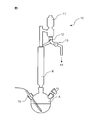
- the Oldershaw distillation apparatus 10 shown in FIG. 1 was used as the distillation apparatus.
- A is a 1 L flask equipped with a thermometer 15
- B is a rectifying column having 20 theoretical plates.
- the vapor rising to the top of the column is condensed in the reflux head 11 and the reflux ratio can be adjusted by the reflux / distillation switching funnel 12 operated by a solenoid valve.
- a distillation cock 13 was disposed on the distillation side, and a receiver 14 was prepared at the end.
- the simple distillation recovery liquid obtained above was put into Flask A, and the distillate was fractionated after heating and refluxing for 2 hours.
- Table 1 shows the results of gas chromatography (GC) analysis of the solvent mixture, simple distillation recovery liquid and distillation recovery liquid described in Table 1 above.
- the recovery rate by distillation in the simple distillation recovery liquid is the ratio of the mass of the simple distillation recovery liquid to the mass of the original solvent mixture used (first solvent mixture), and the PGME in the simple distillation recovery liquid.
- the recovery rate is the ratio of the PGME mass in the simple distillation recovery liquid to the sum of the PGME mass and the PGMEA mass in the original solvent mixture (first solvent mixture) used.
- the recovery rate by distillation in the distillation recovery liquid is the ratio of the mass of the final distillation recovery liquid to the mass of the original solvent mixture (first solvent mixture) used.
- What is the PGME recovery rate in the distillation recovery liquid? The ratio of the PGME mass in the final distillation recovery liquid to the sum of the PGME mass and the PGMEA mass in the original solvent mixture (first solvent mixture) used.
- GC gas chromatography
- Comparative Example 1 A solvent mixture obtained by adding 65 g of water to 714 g of the solvent mixture of Example 1 was heated and refluxed for 21 hours using a distillation apparatus in the same manner as in Example 1, and the distillate was collected and recovered. The rate was calculated and the purity of the distillate was confirmed by gas chromatography. The measurement conditions for gas chromatography are the same as in Example 1. The recovery rate and purity obtained are shown in Table 2. The PGME recovery rate was calculated by the following formula. The amount of water added is 65 g, and the third component (MMP and CYP) in the solvent mixture is the lowest azeotrope (the mixture when the boiling point of the azeotrope, that is, the azeotropic temperature takes a minimum value on the boiling point curve).
- Comparative Example 2 To the solvent mixture obtained by adding 138 g of methanol to 700 g of the solvent mixture of Example 1, about 0.8 g (0.01 times mol of PGMEA in the solvent mixture) using sodium methoxide as a catalyst was added. After a reaction at 190 ° C. for 190 minutes until normal pressure, using a distillation apparatus in the same manner as in Comparative Example 1, after heating and refluxing for 2 hours, the distillate was collected, and its recovery rate was calculated. The purity of the product was confirmed by gas chromatography. The recovery rate and purity obtained are shown in Table 2.
- the amount of methanol added 138 g was determined in consideration of the conversion rate of the transesterification reaction and the energy cost based on the subsequent separation process, and corresponds to a 3-fold molar amount of PGMEA in the solvent mixture. Equilibrium under the above conditions was confirmed by sampling over time and having a constant composition by gas chromatography. Even in this comparative example, there is no process corresponding to the simple distillation in Example 1.
- Comparative Example 3 The solvent mixture of Example 1 was heated and refluxed for 2 hours using a distillation apparatus without carrying out a saponification reaction, and then the distillate was collected, the recovery rate was calculated, and the purity of the distillate was determined. Confirmed by gas chromatography. The recovery rate and purity obtained are shown in Table 2. Even in this comparative example, there is no process corresponding to the simple distillation in Example 1.
- Comparative Example 4 700 g containing only propylene glycol monomethyl ether and propylene glycol monomethyl ether acetate is used as a solvent mixture, to which 33 g of sodium hydroxide and 14 g of water are added and subjected to a hydrolysis reaction at 120 ° C. for 4 hours at normal pressure. After 21 hours of heating under reflux, the distillate was collected and the recovery rate was calculated. Even in this comparative example, there is no process corresponding to the simple distillation in Example 1.
- Comparative Example 4 shows that a high-purity product can be obtained in a high yield, but no other impurities other than propylene glycol monomethyl ether (PGME) and propylene glycol monomethyl ether acetate (PGMEA) are contained in the solvent mixture As a result, PGME does not bring any knowledge about the ease of separation of PGME from other impurities.
- PGME propylene glycol monomethyl ether
- PGMEA propylene glycol monomethyl ether acetate
- alkylene glycol monoalkyl ether can be separated and recovered with high purity and high yield from a solvent mixture containing alkylene glycol monoalkyl ether and its corresponding carboxylic acid ester and other solvents.
- INDUSTRIAL APPLICABILITY The present invention is effective as a method for reusing a processing solution waste liquid, and enables low-cost production of semiconductor elements, liquid crystal display elements, color filters, and the like.
Landscapes
- Chemical & Material Sciences (AREA)
- Organic Chemistry (AREA)
- Chemical Kinetics & Catalysis (AREA)
- General Chemical & Material Sciences (AREA)
- Crystallography & Structural Chemistry (AREA)
- Physics & Mathematics (AREA)
- General Physics & Mathematics (AREA)
- Organic Low-Molecular-Weight Compounds And Preparation Thereof (AREA)
- Photosensitive Polymer And Photoresist Processing (AREA)
- Detergent Compositions (AREA)
Abstract
アルキレングリコールモノアルキルエーテルとその対応するカルボン酸エステルを含有し、かつその他の溶剤を含む溶剤混合物から、アルキレングリコールモノアルキルエーテルを高純度かつ高収率で分離回収する方法を提供する。アルキレングリコールモノアルキルエーテル(第一の溶剤)と、アルキレングリコールモノアルキルエーテル(第一の溶剤)に対応するアルキレングリコールモノアルキルエーテルカルボン酸エステル(第二の溶剤)と、アルキレングリコールモノアルキルエーテル(第一の溶剤)及びアルキレングリコールモノアルキルエーテルカルボン酸エステル(第二の溶剤)とは異なる溶剤(第三の溶剤)とを含む溶剤混合物にアルカリ化合物を添加することによりアルキレングリコールモノアルキルエーテルカルボン酸エステル(第二の溶剤)をケン化してアルキレングリコールモノアルキルエーテル(第一の溶剤)に変換した後、蒸留によりアルキレングリコールモノアルキルエーテル(第一の溶剤)を回収する。
Description
本発明はアルキレングリコールモノアルキルエーテルの分離回収方法、レジスト組成物処理廃液の再利用方法及びレジスト組成物処理液のリサイクル方法に関する。さらに詳しくは、アルキレングリコールモノアルキルエーテルとその対応するカルボン酸エステルを含有する溶剤混合物、例えばレジスト組成物の処理廃液から、アルキレングリコールモノアルキルエーテルを分離回収する方法、レジスト組成物処理廃液の再利用方法及びレジスト組成物処理液のリサイクル方法に関する。
半導体素子、液晶表示素子、カラーフィルター等の製造工程において、従来液状感光性組成物(本明細書において以下「レジスト」ともいう。)を用いるリソグラフィー技術が用いられている。この液状感光性組成物を半導体(シリコン基板等)、ガラス、樹脂(ポリイミド、ポリエステル等)等の基板上に塗布してパターン形成する際に基板の端部又は裏面に付着した液状感光性組成物、あるいは液状感光性組成物を塗布するための装置又は部材表面に付着した液状感光性組成物を除去するための洗浄が必要となる。
上記液状感光性組成物の構成成分である未硬化樹脂を溶解する等の目的でアルキレングリコールモノアルキルエーテルとその対応するカルボン酸エステルとを主成分とする各種の溶剤混合物が広く使用されている(特許文献1及び2参照)。それらは、繰り返し使用により徐々に洗浄能が低下し、その性能劣化があるレベルに達すると廃溶剤として排出される。
上記溶剤混合物を用いた液状感光性組成物の洗浄により生成する廃溶剤には、もともと溶剤混合物に含まれる溶剤以外に液状感光性組成物の構成成分である樹脂、溶剤、その他添加剤が混入することになる。しかしながら、近年注目されている環境問題対策、製造コストの低減等の観点から廃溶剤の再利用、すなわち、廃溶剤から有効成分を分離回収し再利用することが強く望まれている。
複数の成分を含む溶剤混合物から溶剤成分を分離回収する最も代表的な方法として蒸留が用いられているが、ことに多成分を含む場合に廃溶剤中の各成分を蒸留操作で分離及び精製することは、工程が煩雑になるのみならず経済的にも困難である。例えば、アルキレングリコールモノアルキルエーテルとアルキレングリコールモノアルキルエーテルモノカルボン酸エステルとは比較的沸点が近接しているため、各々を高純度かつ高回収率で分離回収することは難しい。また、3種類以上の溶剤混合物から特定の2成分(例えば、対応するアルキレングリコールモノアルキルエーテルとアルキレングリコールモノアルキルエーテルモノカルボン酸エステル)を回収する場合、沸点が相対的に低い方の成分(アルキレングリコールモノアルキルエーテル)よりさらに低い成分(低沸留分)及び沸点が相対的に高い方の成分(アルキレングリコールモノアルキルエーテルモノカルボン酸エステル)よりさらに高い成分(高沸留分)を分離することはできるが、2成分の間の沸点を有する第3成分が混在する場合第3成分のみを分離することは難しい。
特許文献1には、レジスト樹脂用アルコール/エステル系溶剤の溶剤再利用方法として、アルコールとそれに対応するエステルからなるレジスト用溶剤に水を添加してエステルの加水分解反応を行い、アルコールの量を加水分解前よりも増加させ、次いで得られた反応マスを蒸留精製することが開示されている。
特許文献2には、アルキレングリコールモノアルキルエーテル(A成分)とA成分の酢酸エステル(B成分)とを含有する溶剤混合物中のB成分をエステル交換反応によりA成分に変換し、溶剤混合物を蒸留してA成分を分離回収することが開示されている。
特許文献1には、カルボン酸添加によるアルコールのエステル化反応又はエステルの加水分解により、溶剤混合物中のエステル/アルコールの比率を任意に調整できることは開示されているが、実施例ではカルボン酸添加によるエステル化反応前又は加水分解前の廃液中に含有する、目的とするエステル及びアルコール以外の成分は0.3%と極めて微量であり、その他の成分の共存については殆ど考慮不要の条件で実施されている。すなわち、特許文献1には実質的にエステル/アルコールの2成分を含む混合液中の両者の混合比を制御することのみが開示されている。特許文献2では、エステル交換反応を利用しているが、エステル交換反応は平衡反応であるためB成分をA成分へ100%転化することは難しく、そのため高収率で得ることに難がある。
本発明は、上記事情に鑑み、アルキレングリコールモノアルキルエーテルとその対応するカルボン酸エステルを含有し、かつその他の溶剤を含む溶剤混合物から、アルキレングリコールモノアルキルエーテルを高純度かつ高収率で分離回収する方法を提供することを目的の一つとする。また、アルキレングリコールモノアルキルエーテルとその対応するカルボン酸エステルを含有するレジスト組成物の処理廃液の再利用方法及びレジスト組成物処理液のリサイクル方法を提供することを目的の一つとする。
本発明者らは、上記課題を解決すべく検討を重ねた結果、アルキレングリコールモノアルキルエーテル(第一の溶剤)と、対応カルボン酸エステルであるアルキレングリコールモノアルキルエーテルカルボン酸エステル(第二の溶剤)と、その他の溶剤(第三の溶剤)とを含有する溶剤混合物中の第二の溶剤を、ケン化反応によりアルキレングリコールモノアルキルエーテル(第一の溶剤)に変換した後蒸留することにより、アルキレングリコールモノアルキルエーテル(第一の溶剤)を効率良く分離回収し得ることを見出した。
すなわち、本発明は以下の[1]~[15]の実施態様を含む。
[1]下記一般式(I)で表される第一の溶剤と、下記一般式(II)で表される第二の溶剤と、前記第一の溶剤及び第二の溶剤とは異なる第三の溶剤とを含む第一の溶剤混合物から、第一の溶剤を分離回収する方法であって、
前記第一の溶剤混合物にアルカリ化合物を添加することにより前記第二の溶剤をケン化して第一の溶剤に変換した第二の溶剤混合物を得る第一の工程と、
前記第二の溶剤混合物を蒸留して第一の溶剤を回収する第二の工程と、
を含むことを特徴とするアルキレングリコールモノアルキルエーテルの分離回収方法。


[一般式(I)及び一般式(II)中、Rは炭素数1~4のアルキル基、R’は炭素数2~4のアルキレン基、R”は炭素数1~2のアルキル基を示し、一般式(I)及び一般式(II)におけるR及びR’は、それぞれ同一であり、nは、1又は2である。]
[2]前記アルカリ化合物が、水酸化ナトリウム、水酸化カリウム、水酸化カルシウム及び水酸化アンモニウムからなる群から選択される少なくとも一種の水酸化アルカリ化合物である[1]に記載のアルキレングリコールモノアルキルエーテルの分離回収方法。
[3]前記アルカリ化合物が、水酸化ナトリウムである[2]に記載のアルキレングリコールモノアルキルエーテルの分離回収方法。
[4]前記第一の溶剤がプロピレングリコールモノメチルエーテルであり、前記第二の溶剤がプロピレングリコールモノメチルエーテルアセテートであり、前記第三の溶剤がシクロペンタノン、シクロヘキサノン及びメチル-3-メトキシプロピオネートからなる群から選択される少なくとも一種である[1]~[3]のいずれかに記載のアルキレングリコールモノアルキルエーテルの分離回収方法。
[5]前記第一の溶剤混合物が、レジスト組成物を前記第一の溶剤及び第二の溶剤を含む混合溶剤で処理して得られた処理廃液である[1]~[4]のいずれかに記載のアルキレングリコールモノアルキルエーテルの分離回収方法。
[6]下記一般式(I)で表される第一の溶剤及び下記一般式(II)で表される第二の溶剤を含む混合溶剤を用いてレジスト組成物を処理する第一の工程と、
第一の工程により生成した処理廃液を回収する第二の工程と、
前記処理廃液にアルカリ化合物を添加することにより前記処理廃液中の第二の溶剤をケン化して第一の溶剤に変換する第三の工程と、
前記第三の工程で得られた溶剤混合物を蒸留して第一の溶剤を回収する第四の工程と、 前記第四の工程で回収された第一の溶剤に新たな第二の溶剤を添加して所定の配合比を有する混合溶剤を再調製する第五の工程と、
を有することを特徴とするレジスト組成物処理廃液の再利用方法。


[一般式(I)及び一般式(II)中、Rは炭素数1~4のアルキル基、R’は炭素数2~4のアルキレン基、R”は炭素数1~2のアルキル基を示し、一般式(I)及び一般式(II)におけるR及びR’は、それぞれ同一であり、nは、1又は2である。]
[7]前記アルカリ化合物が、水酸化ナトリウム、水酸化カリウム、水酸化カルシウム及び水酸化アンモニウムからなる群から選択される少なくとも一種の水酸化アルカリ化合物である[6]に記載のレジスト組成物処理廃液の再利用方法。
[8]前記アルカリ化合物が、水酸化ナトリウムである[7]に記載のレジスト組成物処理廃液の再利用方法。
[9]前記第一の溶剤がプロピレングリコールモノメチルエーテルであり、前記第二の溶剤がプロピレングリコールモノメチルエーテルアセテートである[6]~[8]のいずれかに記載のレジスト組成物処理廃液の再利用方法。
[10]前記第三の工程後第四の工程前に、前記処理廃液に含まれるケン化反応により生成した固形成分を分離する工程を有する[6]~[9]のいずれかに記載のレジスト組成物処理廃液の再利用方法。
[11]下記一般式(I)で表される第一の溶剤及び下記一般式(II)で表される第二の溶剤を所定の配合比で含む混合溶剤をユーザーが製造業者から購入する第一の工程と、 前記混合溶剤を用いてユーザーがレジスト組成物を処理する第二の工程と、
第二の工程により生成した処理廃液を製造業者又は回収業者が回収する第三の工程と、 製造業者又は回収業者が前記処理廃液にアルカリ化合物を添加することにより前記処理廃液中の第二の溶剤をケン化して第一の溶剤に変換する第四の工程と、
製造業者又は回収業者が前記第四の工程で得られた溶剤混合物を蒸留して第一の溶剤を回収する第五の工程と、
製造業者又は回収業者が前記第五の工程で回収された第一の溶剤に新たな第二の溶剤を添加して前記所定の配合比を有する混合溶剤を再調製する第六の工程と、
再調製された混合溶剤をユーザーが製造業者又は回収業者から購入する第七の工程と、を有し、前記第二の工程から第七の工程を繰り返し実施することを特徴とするレジスト組成物処理液のリサイクル方法。


[一般式(I)及び一般式(II)中、Rは炭素数1~4のアルキル基、R’は炭素数2~4のアルキレン基、R”は炭素数1~2のアルキル基を示し、一般式(I)及び一般式(II)におけるR及びR’は、それぞれ同一であり、nは、1又は2である。]
[12]前記アルカリ化合物が、水酸化ナトリウム、水酸化カリウム、水酸化カルシウム及び水酸化アンモニウムからなる群から選択される少なくとも一種の水酸化アルカリ化合物である[11]に記載のレジスト組成物処理液のリサイクル方法。
[13]前記アルカリ化合物が、水酸化ナトリウムである[12]に記載のレジスト組成物処理液のリサイクル方法。
[14]前記第一の溶剤がプロピレングリコールモノメチルエーテルであり、前記第二の溶剤がプロピレングリコールモノメチルエーテルアセテートである[11]~[13]のいずれかに記載のレジスト組成物処理液のリサイクル方法。
[15]前記第四の工程後第五の工程前にケン化反応により生成し前記処理廃液に含まれる固形成分を分離する工程を有する[11]~[14]のいずれかに記載のレジスト組成物処理液のリサイクル方法。
[1]下記一般式(I)で表される第一の溶剤と、下記一般式(II)で表される第二の溶剤と、前記第一の溶剤及び第二の溶剤とは異なる第三の溶剤とを含む第一の溶剤混合物から、第一の溶剤を分離回収する方法であって、
前記第一の溶剤混合物にアルカリ化合物を添加することにより前記第二の溶剤をケン化して第一の溶剤に変換した第二の溶剤混合物を得る第一の工程と、
前記第二の溶剤混合物を蒸留して第一の溶剤を回収する第二の工程と、
を含むことを特徴とするアルキレングリコールモノアルキルエーテルの分離回収方法。
[2]前記アルカリ化合物が、水酸化ナトリウム、水酸化カリウム、水酸化カルシウム及び水酸化アンモニウムからなる群から選択される少なくとも一種の水酸化アルカリ化合物である[1]に記載のアルキレングリコールモノアルキルエーテルの分離回収方法。
[3]前記アルカリ化合物が、水酸化ナトリウムである[2]に記載のアルキレングリコールモノアルキルエーテルの分離回収方法。
[4]前記第一の溶剤がプロピレングリコールモノメチルエーテルであり、前記第二の溶剤がプロピレングリコールモノメチルエーテルアセテートであり、前記第三の溶剤がシクロペンタノン、シクロヘキサノン及びメチル-3-メトキシプロピオネートからなる群から選択される少なくとも一種である[1]~[3]のいずれかに記載のアルキレングリコールモノアルキルエーテルの分離回収方法。
[5]前記第一の溶剤混合物が、レジスト組成物を前記第一の溶剤及び第二の溶剤を含む混合溶剤で処理して得られた処理廃液である[1]~[4]のいずれかに記載のアルキレングリコールモノアルキルエーテルの分離回収方法。
[6]下記一般式(I)で表される第一の溶剤及び下記一般式(II)で表される第二の溶剤を含む混合溶剤を用いてレジスト組成物を処理する第一の工程と、
第一の工程により生成した処理廃液を回収する第二の工程と、
前記処理廃液にアルカリ化合物を添加することにより前記処理廃液中の第二の溶剤をケン化して第一の溶剤に変換する第三の工程と、
前記第三の工程で得られた溶剤混合物を蒸留して第一の溶剤を回収する第四の工程と、 前記第四の工程で回収された第一の溶剤に新たな第二の溶剤を添加して所定の配合比を有する混合溶剤を再調製する第五の工程と、
を有することを特徴とするレジスト組成物処理廃液の再利用方法。
[7]前記アルカリ化合物が、水酸化ナトリウム、水酸化カリウム、水酸化カルシウム及び水酸化アンモニウムからなる群から選択される少なくとも一種の水酸化アルカリ化合物である[6]に記載のレジスト組成物処理廃液の再利用方法。
[8]前記アルカリ化合物が、水酸化ナトリウムである[7]に記載のレジスト組成物処理廃液の再利用方法。
[9]前記第一の溶剤がプロピレングリコールモノメチルエーテルであり、前記第二の溶剤がプロピレングリコールモノメチルエーテルアセテートである[6]~[8]のいずれかに記載のレジスト組成物処理廃液の再利用方法。
[10]前記第三の工程後第四の工程前に、前記処理廃液に含まれるケン化反応により生成した固形成分を分離する工程を有する[6]~[9]のいずれかに記載のレジスト組成物処理廃液の再利用方法。
[11]下記一般式(I)で表される第一の溶剤及び下記一般式(II)で表される第二の溶剤を所定の配合比で含む混合溶剤をユーザーが製造業者から購入する第一の工程と、 前記混合溶剤を用いてユーザーがレジスト組成物を処理する第二の工程と、
第二の工程により生成した処理廃液を製造業者又は回収業者が回収する第三の工程と、 製造業者又は回収業者が前記処理廃液にアルカリ化合物を添加することにより前記処理廃液中の第二の溶剤をケン化して第一の溶剤に変換する第四の工程と、
製造業者又は回収業者が前記第四の工程で得られた溶剤混合物を蒸留して第一の溶剤を回収する第五の工程と、
製造業者又は回収業者が前記第五の工程で回収された第一の溶剤に新たな第二の溶剤を添加して前記所定の配合比を有する混合溶剤を再調製する第六の工程と、
再調製された混合溶剤をユーザーが製造業者又は回収業者から購入する第七の工程と、を有し、前記第二の工程から第七の工程を繰り返し実施することを特徴とするレジスト組成物処理液のリサイクル方法。
[12]前記アルカリ化合物が、水酸化ナトリウム、水酸化カリウム、水酸化カルシウム及び水酸化アンモニウムからなる群から選択される少なくとも一種の水酸化アルカリ化合物である[11]に記載のレジスト組成物処理液のリサイクル方法。
[13]前記アルカリ化合物が、水酸化ナトリウムである[12]に記載のレジスト組成物処理液のリサイクル方法。
[14]前記第一の溶剤がプロピレングリコールモノメチルエーテルであり、前記第二の溶剤がプロピレングリコールモノメチルエーテルアセテートである[11]~[13]のいずれかに記載のレジスト組成物処理液のリサイクル方法。
[15]前記第四の工程後第五の工程前にケン化反応により生成し前記処理廃液に含まれる固形成分を分離する工程を有する[11]~[14]のいずれかに記載のレジスト組成物処理液のリサイクル方法。
本発明によれば、アルキレングリコールモノアルキルエーテル及びその対応するカルボン酸エステル並びにその他の溶剤を含有する溶剤混合物から、アルキレングリコールモノアルキルエーテルを高純度かつ高収率で分離回収することができる。また、アルキレングリコールモノアルキルエーテル及びその対応するカルボン酸エステル並びにその他の溶剤を含有するレジスト組成物の処理廃液からアルキレングリコールモノアルキルエーテルを高純度かつ高収率で分離回収することができる。したがって、本発明によればレジスト組成物の処理廃液の再利用による、半導体素子、液晶表示素子、カラーフィルター等の低コストでの製造が可能となる。
以下、本発明のアルキレングリコールモノアルキルエーテルの分離回収方法、レジスト組成物処理廃液の再利用方法及びレジスト組成物処理液のリサイクル方法について詳細に説明するが、本発明はこれらの説明に用いられた実施態様に限定されない。
第一の実施態様
本発明の第一の実施態様は、アルキレングリコールモノアルキルエーテル(第一の溶剤)と、アルキレングリコールモノアルキルエーテルカルボン酸エステル(第二の溶剤)と、アルキレングリコールモノアルキルエーテル(第一の溶剤)及びアルキレングリコールモノアルキルエーテルカルボン酸エステル(第二の溶剤)とは異なる溶剤(第三の溶剤)とを含む溶剤混合物(第一の溶剤混合物)からのアルキレングリコールモノアルキルエーテル(第一の溶剤)を分離回収する方法である。第一の溶剤混合物にアルカリ化合物を添加することにより第一の溶剤混合物中のアルキレングリコールモノアルキルエーテルカルボン酸エステルをケン化してアルキレングリコールモノアルキルエーテルに変換した第二の溶剤混合物を得る第一の工程と、第二の溶剤混合物を蒸留することによりアルキレングリコールモノアルキルエーテルを分離回収する第二の工程を有することを特徴とする。
本発明の第一の実施態様は、アルキレングリコールモノアルキルエーテル(第一の溶剤)と、アルキレングリコールモノアルキルエーテルカルボン酸エステル(第二の溶剤)と、アルキレングリコールモノアルキルエーテル(第一の溶剤)及びアルキレングリコールモノアルキルエーテルカルボン酸エステル(第二の溶剤)とは異なる溶剤(第三の溶剤)とを含む溶剤混合物(第一の溶剤混合物)からのアルキレングリコールモノアルキルエーテル(第一の溶剤)を分離回収する方法である。第一の溶剤混合物にアルカリ化合物を添加することにより第一の溶剤混合物中のアルキレングリコールモノアルキルエーテルカルボン酸エステルをケン化してアルキレングリコールモノアルキルエーテルに変換した第二の溶剤混合物を得る第一の工程と、第二の溶剤混合物を蒸留することによりアルキレングリコールモノアルキルエーテルを分離回収する第二の工程を有することを特徴とする。
第一の実施態様において分離回収の処理対象とされる第一の溶剤混合物は、下記一般式(I)で表されるアルキレングリコールモノアルキルエーテル(第一の溶剤)と、下記一般式(II)で表される第一の溶剤の対応カルボン酸エステルであるアルキレングリコールモノアルキルエーテルカルボン酸エステル(第二の溶剤)とを含み、さらにこれらの2種の溶剤以外の少なくとも1種の溶剤(第三の溶剤)を含む。


[一般式(I)及び一般式(II)中、Rは炭素数1~4のアルキル基、R’は炭素数2~4のアルキレン基、R”は炭素数1~2のアルキル基を示し、一般式(I)及び一般式(II)におけるR及びR’は、それぞれ同一であり、nは、1又は2である。]
第一の溶剤混合物は、上記のとおり一般式(I)及び一般式(II)でそれぞれ表される第一の溶剤及び第二の溶剤を必須成分として含み、これらの2種の溶剤以外の少なくとも1種の溶剤(第三の溶剤)を含むものであれば特に制限はないが、本発明は第三の溶剤の沸点が第一の溶剤の沸点と第二の溶剤の沸点の間である場合に特に有効である。例えば、半導体素子、液晶表示素子、カラーフィルター等の製造工程において、レジスト組成物の剥離用溶剤、洗浄用溶剤等として使用される混合有機溶剤の廃溶剤が分離回収の対象となる。
一般式(I)及び一般式(II)において、Rの具体例としてはメチル基、エチル基、プロピル基、イソプロピル基、n-ブチル基、イソブチル基等の炭素数が1~4のアルキル基が挙げられ、R’の具体例としては、エチレン基、トリメチレン基、プロピレン基、ブチレン基等が挙げられる。一般式(I)及び一般式(II)におけるR及びR’は、それぞれ同一である。一般式(II)におけるR”はメチル基又はエチル基である。nは、1又は2である。
一般式(I)にて示される第一の溶剤の具体例としては、例えば、エチレングリコールモノメチルエーテル、エチレングリコールモノエチルエーテル、エチレングリコールモノプロピルエーテル、エチレングリコールモノブチルエーテル、ジエチレングリコールモノエチルエーテル、プロピレングリコールモノメチルエーテル、ジプロピレングリコールモノメチルエーテル等を挙げることができる。一般式(II)にて示される第二の溶剤としては、それらの酢酸エステル又はプロピオン酸エステルを挙げることができる。
第一の溶剤混合物は、第一の溶剤と第二の溶剤を含む混合物であり、エチレングリコールモノメチルエーテルとエチレングリコールモノメチルエーテルアセテートを含む混合液、エチレングリコールモノエチルエーテルとエチレングリコールモノエチルエーテルアセテートを含む混合液、エチレングリコールモノプロピルエーテルとエチレングリコールモノプロピルエーテルアセテートを含む混合液、エチレングリコールモノブチルエーテルとエチレングリコールモノブチルエーテルアセテートを含む混合液、ジエチレングリコールモノエチルエーテルとジエチレングリコールモノエチルエーテルアセテートを含む混合液、プロピレングリコールモノメチルエーテルとプロピレングリコールモノメチルエーテルアセテートを含む混合液、ジプロピレングリコールモノメチルエーテルとジプロピレングリコールモノメチルエーテルアセテートを含む混合液等が挙げられる。これらの中でも、第一の溶剤としてプロピレングリコールモノメチルエーテルと、第二の溶剤としてプロピレングリコールモノメチルエーテルアセテートとを含む溶剤混合物に対して、本発明の分離回収方法を好適に適用できる。
第一の溶剤混合物における第一の溶剤と第二の溶剤の含有割合は、それら二成分が混合されていれば特に限定されるものではないが、好ましくは第一の溶剤と第二の溶剤の質量換算での混合比(第一の溶剤/第二の溶剤)が1以上、より好ましくは1.5以上、さらに好ましくは2以上である。第二の溶剤の含有割合が少ない方が後述する第二の溶剤のケン化反応に必要なアルカリ化合物(水酸化ナトリウム等)の量を少なくすることができ、アルカリ化合物を溶剤混合物中により均一に分散させることができる。好適な第一の溶剤混合物としてはプロピレングリコールモノメチルエーテル/プロピレングリコールモノメチルエーテルアセテート=6.8/3.2~7.2/2.8(質量比)、より好ましくはプロピレングリコールモノメチルエーテル/プロピレングリコールモノメチルエーテルアセテート=6.9/3.1~7.1/2.9(質量比)、最も好ましくはプロピレングリコールモノメチルエーテル/プロピレングリコールモノメチルエーテルアセテート=7/3(質量比)の混合溶剤を用いてレジストを処理したときに生成するレジスト処理廃液が挙げられる。
第一の溶剤混合物は、第一の溶剤及び第二の溶剤以外の第三の溶剤を少なくとも1種含む。第一の溶剤混合物がレジスト組成物の剥離又は洗浄に使用された廃液である場合には、レジスト組成物中に配合されている溶剤が第三の溶剤となりうる。第三の溶剤として、具体的には、シクロペンタノン、シクロヘキサノン等のケトン類、乳酸エチル、メチル-3-メトキシプロピオネート等のエステル類が例示される。第一の溶剤混合物は、溶剤以外の成分を含有してもよい。レジスト組成物の剥離又は洗浄に使用された廃液には、レジスト組成物に由来する樹脂、添加剤(硬化剤、顔料等)等が一般に含有される。
第一の溶剤混合物から、第一の溶剤であるアルキレングリコールモノアルキルエーテルを分離回収するため、本発明では第一の工程において第一の溶剤混合物中の第二の溶剤を第一の溶剤へ変換するためにケン化反応を適用する。ケン化反応は、アルカリ化合物、好ましくは水酸化ナトリウム、水酸化カリウム、水酸化カルシウム及び水酸化アンモニウムからなる群から選択されるいずれか一種の水酸化アルカリ化合物を添加することにより行うことができる。一例として、水酸化ナトリウムを使用する場合のケン化反応は下記反応式(III)で表される。

反応式(III)中、Rは炭素数1~4のアルキル基、R’は炭素数2~4のアルキレン基、R”は炭素数1~2のアルキル基を示し、nは1又は2である。
ケン化反応において用いるアルカリ化合物の量は、第一の溶剤混合物中に含まれる第二の溶剤に対して0.8~1.2モル当量、好ましくは0.9~1.1モル当量、さらに好ましくは0.95~1.05モル当量である。アルカリ化合物の量が0.8モル当量より少ないと第一の溶剤に転換されない第二の溶剤の残留量が多くなり収率が低下する。アルカリ化合物の量が1.2モル当量より多いとケン化反応に寄与しない量が多くなるのみならず第一の溶剤混合物に均一に分散させる上でも不利である。アルカリ化合物として水酸化ナトリウム、水酸化カリウム又は水酸化カルシウムを用いる場合、これらの水酸化アルカリ化合物は第一の溶剤混合物への溶解度が小さいため、均一に分散するように撹拌をすることが望ましい。水酸化ナトリウム、水酸化カリウム又は水酸化カルシウムの沈降防止、及びケン化反応の円滑な進行には水酸化ナトリウム、水酸化カリウム又は水酸化カルシウムとして小粒径のもの、例えば顆粒状のものを用いることが好ましい。水酸化ナトリウム又は水酸化カリウムは潮解性を有するので、水を添加しなくてもそれら自体に吸収された水分を微量含む。そのため、水を添加することなく固体のまま添加してもケン化反応は進行する。水酸化カルシウムは水酸化ナトリウム及び水酸化カリウムよりも水に対する溶解度が小さく、その分反応速度が遅い。後述するが、第三の溶剤としてシクロペンタノン、シクロヘキサノン等のケトン系溶媒を含む場合、水酸化アルカリ化合物を使用するとこれらのケトン系溶媒の二量化(アルドール縮合)が起こり、より高沸点の二量化物が生成する。そのため、例えば回収したい成分がプロピレングリコールモノメチルエーテルであって、ケトン系溶媒がプロピレングリコールモノメチルエーテルの沸点(120℃)と比較的近い沸点を有するシクロペンタノン(131℃)である場合、プロピレングリコールモノメチルエーテルとの沸点差がより大きいケトン系溶媒の二量化物(沸点>160℃)を生成させて、これをプロピレングリコールモノメチルエーテルから容易に分離することできる。水酸化カリウムは水酸化ナトリウムと反応性は同程度であるものの水酸化ナトリウムに比べると高価であり、水酸化カルシウムは低コストではあるが反応性に劣るので、水酸化ナトリウムを使用することが好ましい。
水酸化アンモニウムを使用することもできるが、加熱をするとアンモニアとして揮散するため、反応が高温となるときに望ましくない場合がある。水酸化アルカリ化合物は水溶液として用いることもできる。水溶液として用いた方が溶剤混合物への均一混合という観点では有利であるが、後述の蒸留工程において分離回収する溶剤が水と共沸することになるため収率の面では不利になる。そのため、水の添加は必要最低限(例えば水酸化ナトリウムを水溶液として使用する場合には48質量%以上のものを使用)に抑えることが好ましい。
第一の溶剤混合物がレジスト組成物の処理廃液である場合、レジスト組成物中に一般式(II)で表されるカルボン酸エステル以外のカルボン酸エステルが含まれることがあり、これらのカルボン酸エステルは一般式(II)で表されるカルボン酸エステルと同様にケン化反応を受けてアルカリ化合物を消費することがある。そのため、第一の溶剤混合物中に一般式(II)で表されるカルボン酸エステル以外のカルボン酸エステルが含まれる場合、第一の溶剤混合物中に含まれる全カルボン酸エステル量に対して上記規定の範囲のアルカリ化合物を用いることが好ましい。
ケン化反応条件(温度、時間、雰囲気等)に特に制限はないが、温度は室温から100℃の範囲、時間は1~10時間の範囲が好ましい。反応雰囲気も特に制限はなく、大気下、不活性雰囲気(窒素、アルゴン等)下のいずれで行うこともできるが、吸湿性の強い水酸化ナトリウムを使用する場合には湿度が低い雰囲気、例えば相対湿度が50%以下で行うことが好ましく、10~40%で行うことがより好ましい。
第二の工程において、ケン化反応後に得られる溶剤混合物(第二の溶剤混合物)より第一の溶剤を分離回収するため第二の溶剤混合物を蒸留する。第二の溶剤混合物にはケン化反応で生成したカルボン酸塩が含まれる。カルボン酸塩は溶剤混合物(第二の溶剤混合物)に殆ど溶解しないため、カルボン酸塩が第二の溶剤混合物中に含まれた状態で蒸留するとカルボン酸塩が蒸留操作中に析出し蒸留設備を汚染することがある。そのため、蒸留前にカルボン酸塩を分離する工程を設けることが好ましい。カルボン酸塩を分離することができれば特に分離工程に制限はなく、蒸発分離、濾過分離、遠心分離等公知の方法を適用できるが、固形物(カルボン酸塩)に含まれる溶剤の比率を下げ、かつ安定的な排出を効率的に行うには薄膜蒸発器を使用することが望ましい。薄膜蒸留とは円筒の壁面に溶液の薄膜を形成することにより蒸発効率を高めた蒸発器であり、例えば株式会社神鋼環境ソリューションのエクセバ(登録商標)、株式会社木村化工機の強制拡販式蒸発器、株式会社櫻製作所のハイエバオレーター(登録商標)等が挙げられる。薄膜蒸留は、常圧下で行うこともできるが、好ましくは100~300torr程度の減圧下で行うことが供給熱源確保の観点等で有利である。
第一の溶剤混合物がレジスト組成物の処理廃液である場合、分離工程において処理廃液中に含有される固形成分も同時に分離される。これらの固形成分の分離は第一の溶剤混合物のケン化反応前に実施することもできるが、ケン化反応後生成したカルボン酸塩の分離工程が再度必要となる場合があるため、ケン化反応後にカルボン酸塩とともに分離することが有利である。
第二の溶剤混合物の蒸留手法及び蒸留装置は、特に制限されるものではなく、例えば、蒸留手法としては、常圧蒸留、減圧蒸留等、従来から公知の手法の何れも適用でき、蒸留装置も、連続式、回分式等、公知の各種の蒸留装置の何れも適用できる。
蒸留操作により第一の溶剤よりも沸点の低い成分(低沸留分)を留去した後、第一の溶剤を回収する。第一の溶剤及び第二の溶剤を含む第一の溶剤混合物を蒸留する場合、第一の溶剤と第二の溶剤の中間の沸点を有する第三の溶剤を分離することは困難であるが、本発明ではケン化反応により第二の溶剤を第一の溶剤に転換して第三の溶剤から分離回収することができる。第一の溶剤を蒸留によって分離回収する際の条件は特に限定されるものでないが、第一の溶剤の沸点程度の温度で、10分~2時間程度還流した後、第一の溶剤を蒸留して単離することが好ましい。このような操作により純度の高い第一の溶剤を回収することが可能となる。前述したように第三の溶剤が第一の溶剤の沸点と近い沸点を有するケトン系溶媒である場合、第一の溶剤混合物のケン化反応時にケトン系溶媒がアルドール縮合により二量化し、第一の溶剤とは沸点の差がより大きな二量化物が生成するため、第一の溶剤を容易にかつ高純度で分離回収することができる。
本発明の第一の実施態様によれば、アルキレングリコールモノアルキルエーテル及びその対応するカルボン酸エステル、並びにその他の溶剤を少なくとも一種含有する溶剤混合物から、純度の高いアルキレングリコールモノアルキルエーテルを効率的に分離回収することができる。
第二の実施態様
本発明の第二の実施態様は、アルキレングリコールモノアルキルエーテル(第一の溶剤)と第一の溶剤の対応カルボン酸エステルであるアルキレングリコールモノアルキルエーテルカルボン酸エステル(第二の溶剤)とを含有する混合溶剤を用いてレジスト組成物を処理した廃液の再利用方法である。第二の実施態様で用いる廃液は、第一の実施態様において説明したレジスト組成物の処理廃液と同等である。したがって、第二の実施態様における第三の工程及び第四の工程は、各々第一の実施態様における第一の工程及び第二の工程に対応するため、説明は省略する。
本発明の第二の実施態様は、アルキレングリコールモノアルキルエーテル(第一の溶剤)と第一の溶剤の対応カルボン酸エステルであるアルキレングリコールモノアルキルエーテルカルボン酸エステル(第二の溶剤)とを含有する混合溶剤を用いてレジスト組成物を処理した廃液の再利用方法である。第二の実施態様で用いる廃液は、第一の実施態様において説明したレジスト組成物の処理廃液と同等である。したがって、第二の実施態様における第三の工程及び第四の工程は、各々第一の実施態様における第一の工程及び第二の工程に対応するため、説明は省略する。
第二の実施態様における第一の工程は、一般式(I)及び一般式(II)で表される溶剤を含む混合溶剤、例えばレジスト組成物の剥離用溶剤、洗浄用溶剤等でレジスト組成物を処理する、例えば洗浄又はリンスする工程である。より具体的には、半導体素子、液晶表示素子、カラーフィルター等の製造工程において、半導体基板若しくはガラス基板に付着した不要なレジスト組成物、又はレジスト組成物の前記基板への塗布装置のノズル、配管等に付着したレジスト組成物を除去する工程である。レジスト組成物の剥離用溶剤及び洗浄用溶剤は、通常一般式(I)及び一般式(II)で表される溶剤以外の第三の溶剤を実質的に含まない。ここで「実質的に含まない」とは、意図的に第三の溶剤が添加されていないことを意味し、レジスト組成物の剥離用溶剤及び洗浄用溶剤の製品規格を満たす範囲内で不純物を含む場合を除く。
第二の実施態様における第二の工程は、第一の工程で生成したレジスト組成物を含む処理廃液を回収する工程である。回収された廃液中には一般式(I)及び一般式(II)で表される溶剤以外の成分、すなわち、レジスト組成物に含まれる溶剤、樹脂、顔料等の固形成分、その他の添加剤成分が含まれる。
第二の実施態様における第五の工程は、第四の工程で分離回収された第一の溶剤に新たに第二の溶剤を添加することで、目的とする用途に望ましい所定の配合比を有する混合溶剤を再調製する工程である。一例としては、第一の工程に用いたレジスト組成物の剥離用溶剤又は洗浄用溶剤と同等の組成となるように第二の溶剤を所定量添加する工程が挙げられるが、他の用途で使用される配合比の異なる組成に調整することもできる。
本発明の第二の実施態様によれば、レジスト組成物を処理した廃液中から純度の高い第一の溶剤を効率的に回収し、新たに第二の溶剤を所定量添加することにより、レジスト組成物の剥離用溶剤、洗浄用溶剤等を再調製する、すなわち、処理廃液を有効に再利用することができる。この態様により、処理廃液(溶剤混合物)を直接蒸留することにより第一の溶剤より低沸点の留分及び第二の溶剤より高沸点の留分を分離除去する従来の方法よりも、高純度の混合溶剤を低コストで得ることができる。
第三の実施態様
第三の実施態様は、レジスト組成物処理液のリサイクル方法である。レジスト組成物処理廃液からの第一の溶剤の回収及び新たに第二の溶剤を添加して所定の配合比を有する混合溶剤、例えばレジスト組成物の剥離用溶剤又は洗浄用溶剤の再調製に関しては第二の実施態様と同等であるため、重複する説明は省略する。
第三の実施態様は、レジスト組成物処理液のリサイクル方法である。レジスト組成物処理廃液からの第一の溶剤の回収及び新たに第二の溶剤を添加して所定の配合比を有する混合溶剤、例えばレジスト組成物の剥離用溶剤又は洗浄用溶剤の再調製に関しては第二の実施態様と同等であるため、重複する説明は省略する。
レジスト組成物処理廃液をレジスト組成物処理液として再利用するにあたり、上記のとおり処理廃液の回収処理(第三の工程)、反応処理(第四の工程)、蒸留処理(第五の工程)等は、ユーザーが行うこともできるが、溶剤の製造業者又は回収業者が複数のユーザーから回収して、纏めて処理を行うことが好ましい。特に、溶剤の製造業者が処理を行う場合には、廃液を処理し分離回収した第一の溶剤に新規に製造した第二の溶剤を配合して、レジスト組成物処理液の規格を満たすように混合溶液を再調製することができる。第三の実施態様では、レジスト組成物処理液をユーザーが製造業者より購入し(第一の工程)、ユーザーがレジスト組成物の処理(第二の工程)を行った後、製造業者又は回収業者が第三から第六の工程を実施し、再調製された混合溶剤をユーザーが製造業者又は回収業者より購入し(第七の工程)、以降第二から第七の工程を繰り返し実施する。
本発明の第三の実施態様によれば、ユーザーにより使用されたレジスト組成物処理廃液を製造業者又は回収業者が回収及び再生処理し、再生されたレジスト組成物処理液をユーザーが使用するサイクルを反復するので、環境的な負荷が小さく、効率的にレジスト組成物用処理液を低コストでリサイクルすることができる。
以下、本発明を実施例により更に具体的に説明する。なお、本発明は実施例の記載内容に限定されるものでない。また、本発明には、以下の実施例の他にも、更には上記の具体的記述以外にも、本発明の趣旨を逸脱しない限りにおいて、当業者の知識に基づいて、種々なる変更、修正、改良等を加え得る。
実施例1
アルキレングリコールモノアルキルエーテル(第一の溶剤)及びその対応カルボン酸エステル(第二の溶剤)並びにその他の溶剤(第三の溶剤)を含む溶剤混合物として、下記表1に示される組成の、プロピレングリコールモノメチルエーテル(PGME)、プロピレングリコールモノメチルエーテルアセテート(PGMEA)、及びその他の溶剤を含む溶剤混合物(第一の溶剤混合物)を準備した。
アルキレングリコールモノアルキルエーテル(第一の溶剤)及びその対応カルボン酸エステル(第二の溶剤)並びにその他の溶剤(第三の溶剤)を含む溶剤混合物として、下記表1に示される組成の、プロピレングリコールモノメチルエーテル(PGME)、プロピレングリコールモノメチルエーテルアセテート(PGMEA)、及びその他の溶剤を含む溶剤混合物(第一の溶剤混合物)を準備した。

表1に記載の組成を有する溶剤混合物(第一の溶剤混合物)のケン化反応を実施した。具体的には還流冷却器及び撹拌装置を備えた容量1リットルの3ツ口フラスコに表1に記載の組成を有する溶剤混合物(第一の溶剤混合物)を793g、水酸化ナトリウム94gを仕込み、内部を窒素フローしながら常圧で80℃に加熱後3時間保持してケン化反応を行った。反応後の溶剤混合物(第二の溶剤混合物)を室温まで放冷後エバポレータにて固形分(酢酸ナトリウム)と分離するための単蒸留を行った後、目的物(PGME)を得るための蒸留を再度行った。
蒸留装置としては図1に示されるオールダーショウ蒸留装置10を使用した。図1中、Aは温度計15を備えた1Lのフラスコで、Bは理論段数が20段の精留塔である。塔頂に昇った蒸気は還流ヘッド11内で凝縮され、電磁弁で操作される還流・留出切替濾斗12にて還流比を調整できる仕組みとなっている。また留出側には留出コック13を配置し、その先に受器14を準備した。上記で得られた単蒸留回収液をフラスコAに入れ、2時間の加熱還流後、留出物を分取した。
上記表1に記載の溶剤混合物、単蒸留回収液及び蒸留回収液をガスクロマトグラフィ(GC)により分析した結果を表1に示す。表1において、単蒸留回収液における蒸留での回収率とは、使用した元の溶剤混合物(第一の溶剤混合物)の質量に対する単蒸留回収液の質量の割合であり、単蒸留回収液におけるPGME回収率とは、使用した元の溶剤混合物(第一の溶剤混合物)中のPGME質量とPGMEA質量の和に対する単蒸留回収液中のPGME質量の割合である。蒸留回収液における蒸留での回収率とは、使用した元の溶剤混合物(第一の溶剤混合物)の質量に対する最終的な蒸留回収液の質量の割合であり、蒸留回収液におけるPGME回収率とは、使用した元の溶剤混合物(第一の溶剤混合物)中のPGME質量とPGMEA質量の和に対する最終蒸留回収液中のPGME質量の割合である。
ガスクロマトグラフィ(GC)の測定条件は以下のとおりである。
装置:GC-14B(島津製作所製)
カラム:キャピラリーカラム(CBP1-M50-025)
固定相液体:メチルシリコーン
固定相液体厚:0.25μm
カラム材質:超高純度シリカ
カラム内径:0.22mm
カラム長:50m
キャリヤーガス:ヘリウム
流速:2mL/分
圧力:150kPa
検出器:水素炎イオン化検出器(FID)
水素圧:50kPa
空気圧:50kPa
カラム温度:50℃(1分間保持)→5℃/分昇温→145℃(5分間保持)
注入口温度:200℃
検出器温度:200℃
試料量:0.2μL(スプリット比1/50)
指定感度:10-2
定量方法:補正面積百分率法
装置:GC-14B(島津製作所製)
カラム:キャピラリーカラム(CBP1-M50-025)
固定相液体:メチルシリコーン
固定相液体厚:0.25μm
カラム材質:超高純度シリカ
カラム内径:0.22mm
カラム長:50m
キャリヤーガス:ヘリウム
流速:2mL/分
圧力:150kPa
検出器:水素炎イオン化検出器(FID)
水素圧:50kPa
空気圧:50kPa
カラム温度:50℃(1分間保持)→5℃/分昇温→145℃(5分間保持)
注入口温度:200℃
検出器温度:200℃
試料量:0.2μL(スプリット比1/50)
指定感度:10-2
定量方法:補正面積百分率法
比較例1
実施例1の溶剤混合物714gに水を65g添加して得られた溶剤混合物を、実施例1と同様に蒸留装置を用い、21時間の加熱還流の後、留出物を分取し、その回収率を算出するとともに、留出物の純度をガスクロマトグラフィーで確認した。ガスクロマトグラフィーの測定条件は実施例1の場合と同一である。得られた回収率と純度を表2に示す。PGME回収率は以下の式により算出した。上記水の添加量65gは、溶剤混合物中の第三の成分(MMP及びCYP)を最低共沸混合物(共沸混合物の沸点、すなわち共沸温度が沸点曲線上で極小値を取る場合の混合物)として除去できること及びPGMEのロスを最小限に抑えることを勘案し決定した。本比較例では実施例1と異なり酢酸ナトリウムの副生はないので、実施例1における単蒸留に相当する工程はない。
PGME回収率(%)=(回収されたPGME量)/(溶剤混合物中のPGME量+PGMEA量)×100
実施例1の溶剤混合物714gに水を65g添加して得られた溶剤混合物を、実施例1と同様に蒸留装置を用い、21時間の加熱還流の後、留出物を分取し、その回収率を算出するとともに、留出物の純度をガスクロマトグラフィーで確認した。ガスクロマトグラフィーの測定条件は実施例1の場合と同一である。得られた回収率と純度を表2に示す。PGME回収率は以下の式により算出した。上記水の添加量65gは、溶剤混合物中の第三の成分(MMP及びCYP)を最低共沸混合物(共沸混合物の沸点、すなわち共沸温度が沸点曲線上で極小値を取る場合の混合物)として除去できること及びPGMEのロスを最小限に抑えることを勘案し決定した。本比較例では実施例1と異なり酢酸ナトリウムの副生はないので、実施例1における単蒸留に相当する工程はない。
PGME回収率(%)=(回収されたPGME量)/(溶剤混合物中のPGME量+PGMEA量)×100
比較例2
実施例1の溶剤混合物700gにメタノール138gを添加して得られた溶剤混合物に、ナトリウムメトキシドを触媒として約0.8g(溶剤混合物中のPGMEAの0.01倍モル)を添加し、平衡となるまで常圧、70℃で190分間加熱反応後、比較例1と同様に蒸留装置を用い、2時間の加熱還流の後、留出物を分取し、その回収率を算出するとともに、留出物の純度をガスクロマトグラフィーで確認した。得られた回収率と純度を表2に示す。メタノールの添加量138gはエステル交換反応の転化率と、後の分離プロセスを踏まえたエネルギーコストを勘案して決定したものであり、溶剤混合物中のPGMEAの3倍モル量に相当する。上記条件で平衡となったことは経時的にサンプリングしてガスクロマトグラフィーにて組成が一定になったことで確認した。本比較例でも実施例1における単蒸留に相当する工程はない。
実施例1の溶剤混合物700gにメタノール138gを添加して得られた溶剤混合物に、ナトリウムメトキシドを触媒として約0.8g(溶剤混合物中のPGMEAの0.01倍モル)を添加し、平衡となるまで常圧、70℃で190分間加熱反応後、比較例1と同様に蒸留装置を用い、2時間の加熱還流の後、留出物を分取し、その回収率を算出するとともに、留出物の純度をガスクロマトグラフィーで確認した。得られた回収率と純度を表2に示す。メタノールの添加量138gはエステル交換反応の転化率と、後の分離プロセスを踏まえたエネルギーコストを勘案して決定したものであり、溶剤混合物中のPGMEAの3倍モル量に相当する。上記条件で平衡となったことは経時的にサンプリングしてガスクロマトグラフィーにて組成が一定になったことで確認した。本比較例でも実施例1における単蒸留に相当する工程はない。
比較例3
実施例1の溶剤混合物を、ケン化反応を実施することなく蒸留装置を用い2時間の加熱還流の後、留出物を分取し、その回収率を算出するとともに、留出物の純度をガスクロマトグラフィーで確認した。得られた回収率と純度を表2に示す。本比較例でも実施例1における単蒸留に相当する工程はない。
実施例1の溶剤混合物を、ケン化反応を実施することなく蒸留装置を用い2時間の加熱還流の後、留出物を分取し、その回収率を算出するとともに、留出物の純度をガスクロマトグラフィーで確認した。得られた回収率と純度を表2に示す。本比較例でも実施例1における単蒸留に相当する工程はない。
比較例4
プロピレングリコールモノメチルエーテルとプロピレングリコールモノメチルエーテルアセテートのみを含む700gを溶剤混合物とし、これに水酸化ナトリウム33g及び水14gを添加して常圧で120℃、4時間加水分解反応を行い、その後、蒸留装置を用い、21時間の加熱還流の後、留出物を分取し、その回収率を算出した。本比較例でも実施例1における単蒸留に相当する工程はない。
プロピレングリコールモノメチルエーテルとプロピレングリコールモノメチルエーテルアセテートのみを含む700gを溶剤混合物とし、これに水酸化ナトリウム33g及び水14gを添加して常圧で120℃、4時間加水分解反応を行い、その後、蒸留装置を用い、21時間の加熱還流の後、留出物を分取し、その回収率を算出した。本比較例でも実施例1における単蒸留に相当する工程はない。
以上の結果をまとめて表2に示す。表2の結果からも明らかなように、溶剤混合物に水を添加して蒸留した比較例1では、純度99.5%以上の高純度品としてのプロピレングリコールモノメチルエーテル(PGME)の回収率が58%であったのに対して、実施例1では、純度99.5%以上の高純度品としてのPGMEの回収率が比較例1より高いことが分かる。
溶剤混合物にメタノールを添加してエステル交換反応を行った比較例2では、純度99.5%以上の高純度品としてのプロピレングリコールモノメチルエーテル(PGME)の回収率が、シクロペンタノン等の不純物がPGMEの沸点に近接しているため73%であったのに対して、実施例1では、純度99.5%以上の高純度品としてのPGMEの回収率が比較例2より高いことが分かる。
ケン化反応を行わず蒸留のみを行った比較例3では、純度99.5%以上の高純度品としてのプロピレングリコールモノメチルエーテル(PGME)の回収率が44%であり、実施例1に比べて著しく劣っていることが分かる。
比較例4は、高純度品を高収率で得られることを示すが、溶剤混合物中にプロピレングリコールモノメチルエーテル(PGME)及びプロピレングリコールモノメチルエーテルアセテート(PGMEA)以外の他の不純物が含まれない場合の結果であり、PGMEを他の不純物からのPGMEの分離容易性について何らの知見ももたらさない。

本発明によれば、アルキレングリコールモノアルキルエーテル及びその対応するカルボン酸エステル並びにその他の溶剤を含有する溶剤混合物から、アルキレングリコールモノアルキルエーテルを高純度かつ高収率で分離回収することができる。本発明は、レジスト組成物の処理廃液の再利用方法として有効であり、半導体素子、液晶表示素子、カラーフィルター等の低コストでの製造を可能にする。
10 オールダーショウ蒸留装置
11 還流ヘッド
12 還流・留出切替濾斗
13 留出コック
14 受器
15 温度計
A 1Lフラスコ
B 精留塔
11 還流ヘッド
12 還流・留出切替濾斗
13 留出コック
14 受器
15 温度計
A 1Lフラスコ
B 精留塔
Claims (15)
- 下記一般式(I)で表される第一の溶剤と、下記一般式(II)で表される第二の溶剤と、前記第一の溶剤及び第二の溶剤とは異なる第三の溶剤とを含む第一の溶剤混合物から、第一の溶剤を分離回収する方法であって、
前記第一の溶剤混合物にアルカリ化合物を添加することにより前記第二の溶剤をケン化して第一の溶剤に変換した第二の溶剤混合物を得る第一の工程と、
前記第二の溶剤混合物を蒸留して第一の溶剤を回収する第二の工程と、
を含むことを特徴とするアルキレングリコールモノアルキルエーテルの分離回収方法。


- 前記アルカリ化合物が、水酸化ナトリウム、水酸化カリウム、水酸化カルシウム及び水酸化アンモニウムからなる群から選択される少なくとも一種の水酸化アルカリ化合物である請求項1に記載のアルキレングリコールモノアルキルエーテルの分離回収方法。
- 前記アルカリ化合物が、水酸化ナトリウムである請求項2に記載のアルキレングリコールモノアルキルエーテルの分離回収方法。
- 前記第一の溶剤がプロピレングリコールモノメチルエーテルであり、前記第二の溶剤がプロピレングリコールモノメチルエーテルアセテートであり、前記第三の溶剤がシクロペンタノン、シクロヘキサノン及びメチル-3-メトキシプロピオネートからなる群から選択される少なくとも一種である請求項1~3のいずれか一項に記載のアルキレングリコールモノアルキルエーテルの分離回収方法。
- 前記第一の溶剤混合物が、レジスト組成物を前記第一の溶剤及び第二の溶剤を含む混合溶剤で処理して得られた処理廃液である請求項1~4のいずれか一項に記載のアルキレングリコールモノアルキルエーテルの分離回収方法。
- 下記一般式(I)で表される第一の溶剤及び下記一般式(II)で表される第二の溶剤を含む混合溶剤を用いてレジスト組成物を処理する第一の工程と、
第一の工程により生成した処理廃液を回収する第二の工程と、
前記処理廃液にアルカリ化合物を添加することにより前記処理廃液中の第二の溶剤をケン化して第一の溶剤に変換する第三の工程と、
前記第三の工程で得られた溶剤混合物を蒸留して第一の溶剤を回収する第四の工程と、
前記第四の工程で回収された第一の溶剤に新たな第二の溶剤を添加して所定の配合比を有する混合溶剤を再調製する第五の工程と、
を有することを特徴とするレジスト組成物処理廃液の再利用方法。


- 前記アルカリ化合物が、水酸化ナトリウム、水酸化カリウム、水酸化カルシウム及び水酸化アンモニウムからなる群から選択される少なくとも一種の水酸化アルカリ化合物である請求項6に記載のレジスト組成物処理廃液の再利用方法。
- 前記アルカリ化合物が、水酸化ナトリウムである請求項7に記載のレジスト組成物処理廃液の再利用方法。
- 前記第一の溶剤がプロピレングリコールモノメチルエーテルであり、前記第二の溶剤がプロピレングリコールモノメチルエーテルアセテートである請求項6~8のいずれか一項に記載のレジスト組成物処理廃液の再利用方法。
- 前記第三の工程後第四の工程前に、前記処理廃液に含まれるケン化反応により生成した固形成分を分離する工程を有する請求項6~9のいずれか一項に記載のレジスト組成物処理廃液の再利用方法。
- 下記一般式(I)で表される第一の溶剤及び下記一般式(II)で表される第二の溶剤を所定の配合比で含む混合溶剤をユーザーが製造業者から購入する第一の工程と、
前記混合溶剤を用いてユーザーがレジスト組成物を処理する第二の工程と、
第二の工程により生成した処理廃液を製造業者又は回収業者が回収する第三の工程と、
製造業者又は回収業者が前記処理廃液にアルカリ化合物を添加することにより前記処理廃液中の第二の溶剤をケン化して第一の溶剤に変換する第四の工程と、
製造業者又は回収業者が前記第四の工程で得られた溶剤混合物を蒸留して第一の溶剤を回収する第五の工程と、
製造業者又は回収業者が前記第五の工程で回収された第一の溶剤に新たな第二の溶剤を添加して前記所定の配合比を有する混合溶剤を再調製する第六の工程と、
再調製された混合溶剤をユーザーが製造業者又は回収業者から購入する第七の工程と、
を有し、前記第二の工程から第七の工程を繰り返し実施することを特徴とするレジスト組成物処理液のリサイクル方法。


- 前記アルカリ化合物が、水酸化ナトリウム、水酸化カリウム、水酸化カルシウム及び水酸化アンモニウムからなる群から選択される少なくとも一種の水酸化アルカリ化合物である請求項11に記載のレジスト組成物処理液のリサイクル方法。
- 前記アルカリ化合物が、水酸化ナトリウムである請求項12に記載のレジスト組成物処理液のリサイクル方法。
- 前記第一の溶剤がプロピレングリコールモノメチルエーテルであり、前記第二の溶剤がプロピレングリコールモノメチルエーテルアセテートである請求項11~13のいずれか一項に記載のレジスト組成物処理液のリサイクル方法。
- 前記第四の工程後第五の工程前にケン化反応により生成し前記処理廃液に含まれる固形成分を分離する工程を有する請求項11~14のいずれか一項に記載のレジスト組成物処理液のリサイクル方法。
Priority Applications (2)
| Application Number | Priority Date | Filing Date | Title |
|---|---|---|---|
| CN201580033942.2A CN106660914B (zh) | 2014-07-30 | 2015-07-08 | 烷撑二醇单烷基醚的分离回收方法、抗蚀剂组合物处理废液的再利用方法和抗蚀剂组合物处理液的循环使用方法 |
| JP2016538245A JP6602301B2 (ja) | 2014-07-30 | 2015-07-08 | アルキレングリコールモノアルキルエーテルの分離回収方法、レジスト組成物処理廃液の再利用方法及びレジスト組成物処理液のリサイクル方法 |
Applications Claiming Priority (2)
| Application Number | Priority Date | Filing Date | Title |
|---|---|---|---|
| JP2014155104 | 2014-07-30 | ||
| JP2014-155104 | 2014-07-30 |
Publications (1)
| Publication Number | Publication Date |
|---|---|
| WO2016017387A1 true WO2016017387A1 (ja) | 2016-02-04 |
Family
ID=55217292
Family Applications (1)
| Application Number | Title | Priority Date | Filing Date |
|---|---|---|---|
| PCT/JP2015/069667 Ceased WO2016017387A1 (ja) | 2014-07-30 | 2015-07-08 | アルキレングリコールモノアルキルエーテルの分離回収方法、レジスト組成物処理廃液の再利用方法及びレジスト組成物処理液のリサイクル方法 |
Country Status (4)
| Country | Link |
|---|---|
| JP (1) | JP6602301B2 (ja) |
| CN (1) | CN106660914B (ja) |
| TW (1) | TWI588123B (ja) |
| WO (1) | WO2016017387A1 (ja) |
Families Citing this family (1)
| Publication number | Priority date | Publication date | Assignee | Title |
|---|---|---|---|---|
| CN109180425B (zh) * | 2018-10-29 | 2024-03-19 | 江阴市大洋固废处置利用有限公司 | 含环戊酮和丙二醇甲醚醋酸酯回收液的精制工艺及系统 |
Citations (13)
| Publication number | Priority date | Publication date | Assignee | Title |
|---|---|---|---|---|
| JPS5195008A (ja) * | 1975-02-14 | 1976-08-20 | Echirengurikooruarukirueeteruno seiseihoho | |
| JPS5589236A (en) * | 1978-12-28 | 1980-07-05 | Yotsukaichi Gosei Kk | Purification of crude glycol ether |
| JPH01180844A (ja) * | 1988-01-12 | 1989-07-18 | Daicel Chem Ind Ltd | ジグリセリンの精製方法 |
| JPH01275544A (ja) * | 1988-04-27 | 1989-11-06 | Kyowa Yuka Kk | グリコールエーテルの精製法 |
| JPH08507764A (ja) * | 1993-03-25 | 1996-08-20 | ヘンケル・コマンディットゲゼルシャフト・アウフ・アクチェン | ジグリセロールの製造方法 |
| JPH08231991A (ja) * | 1994-12-27 | 1996-09-10 | Hitachi Ltd | 洗浄用組成物、洗浄方法および洗浄液の製造方法 |
| JP2001064221A (ja) * | 1999-08-30 | 2001-03-13 | Lion Corp | 匂いの改良された(ポリ)エチレングリコールモノアルキルエーテル系溶剤及びその製造方法 |
| JP2002045602A (ja) * | 2000-08-07 | 2002-02-12 | Mitsubishi Chemicals Corp | 段塔式反応装置及びそれを用いたポリアルキレンエーテルグリコールの製造方法 |
| JP2005247816A (ja) * | 2004-03-08 | 2005-09-15 | Sanwa Yuka Kogyo Kk | アルキレングリコールモノアルキルエーテルの分離回収方法 |
| JP2007178589A (ja) * | 2005-12-27 | 2007-07-12 | Tokyo Ohka Kogyo Co Ltd | ホトリソグラフィ用洗浄液およびその循環使用方法 |
| JP2011509998A (ja) * | 2008-01-17 | 2011-03-31 | ライオンデル ケミカル テクノロジー、 エル.ピー. | プロピレングリコールモノアルキルエーテルの製造 |
| JP2013506658A (ja) * | 2009-09-30 | 2013-02-28 | ウィズケム カンパニー・リミテッド | 1,4−二置換シクロヘキサン誘導体の製造方法 |
| JP2013540171A (ja) * | 2010-09-27 | 2013-10-31 | イーストマン ケミカル カンパニー | 基材から物質を除去するための方法および組成物 |
Family Cites Families (3)
| Publication number | Priority date | Publication date | Assignee | Title |
|---|---|---|---|---|
| KR100944400B1 (ko) * | 2005-07-19 | 2010-02-25 | 쇼와 덴코 가부시키가이샤 | 감광성 조성물용 제거액 |
| KR100997743B1 (ko) * | 2008-06-25 | 2010-12-01 | 덕산약품공업주식회사 | 포토레지스트 제거용 폐액으로부터 유기용제의 회수 방법 |
| JP5433279B2 (ja) * | 2009-03-31 | 2014-03-05 | 東京応化工業株式会社 | 再生レジストの製造方法 |
-
2015
- 2015-07-08 JP JP2016538245A patent/JP6602301B2/ja active Active
- 2015-07-08 WO PCT/JP2015/069667 patent/WO2016017387A1/ja not_active Ceased
- 2015-07-08 CN CN201580033942.2A patent/CN106660914B/zh active Active
- 2015-07-23 TW TW104123876A patent/TWI588123B/zh active
Patent Citations (13)
| Publication number | Priority date | Publication date | Assignee | Title |
|---|---|---|---|---|
| JPS5195008A (ja) * | 1975-02-14 | 1976-08-20 | Echirengurikooruarukirueeteruno seiseihoho | |
| JPS5589236A (en) * | 1978-12-28 | 1980-07-05 | Yotsukaichi Gosei Kk | Purification of crude glycol ether |
| JPH01180844A (ja) * | 1988-01-12 | 1989-07-18 | Daicel Chem Ind Ltd | ジグリセリンの精製方法 |
| JPH01275544A (ja) * | 1988-04-27 | 1989-11-06 | Kyowa Yuka Kk | グリコールエーテルの精製法 |
| JPH08507764A (ja) * | 1993-03-25 | 1996-08-20 | ヘンケル・コマンディットゲゼルシャフト・アウフ・アクチェン | ジグリセロールの製造方法 |
| JPH08231991A (ja) * | 1994-12-27 | 1996-09-10 | Hitachi Ltd | 洗浄用組成物、洗浄方法および洗浄液の製造方法 |
| JP2001064221A (ja) * | 1999-08-30 | 2001-03-13 | Lion Corp | 匂いの改良された(ポリ)エチレングリコールモノアルキルエーテル系溶剤及びその製造方法 |
| JP2002045602A (ja) * | 2000-08-07 | 2002-02-12 | Mitsubishi Chemicals Corp | 段塔式反応装置及びそれを用いたポリアルキレンエーテルグリコールの製造方法 |
| JP2005247816A (ja) * | 2004-03-08 | 2005-09-15 | Sanwa Yuka Kogyo Kk | アルキレングリコールモノアルキルエーテルの分離回収方法 |
| JP2007178589A (ja) * | 2005-12-27 | 2007-07-12 | Tokyo Ohka Kogyo Co Ltd | ホトリソグラフィ用洗浄液およびその循環使用方法 |
| JP2011509998A (ja) * | 2008-01-17 | 2011-03-31 | ライオンデル ケミカル テクノロジー、 エル.ピー. | プロピレングリコールモノアルキルエーテルの製造 |
| JP2013506658A (ja) * | 2009-09-30 | 2013-02-28 | ウィズケム カンパニー・リミテッド | 1,4−二置換シクロヘキサン誘導体の製造方法 |
| JP2013540171A (ja) * | 2010-09-27 | 2013-10-31 | イーストマン ケミカル カンパニー | 基材から物質を除去するための方法および組成物 |
Also Published As
| Publication number | Publication date |
|---|---|
| JP6602301B2 (ja) | 2019-11-06 |
| CN106660914A (zh) | 2017-05-10 |
| JPWO2016017387A1 (ja) | 2017-05-18 |
| TW201619105A (zh) | 2016-06-01 |
| TWI588123B (zh) | 2017-06-21 |
| CN106660914B (zh) | 2019-06-04 |
Similar Documents
| Publication | Publication Date | Title |
|---|---|---|
| JP6450470B2 (ja) | 蒸留装置 | |
| KR102598771B1 (ko) | 포토레지스트 공정에 사용되는 고순도 알킬렌글리콜 모노알킬 에테르 카르복실산 에스테르의 정제방법 | |
| JP2019509165A (ja) | 加水分解性有機溶媒のための精製プロセス | |
| JP4593638B2 (ja) | エステル系溶剤の製造方法 | |
| CN102872679A (zh) | 从制备(甲基)丙烯酸的工艺的废水物流中去除有机化合物的方法 | |
| JP6602301B2 (ja) | アルキレングリコールモノアルキルエーテルの分離回収方法、レジスト組成物処理廃液の再利用方法及びレジスト組成物処理液のリサイクル方法 | |
| KR101282799B1 (ko) | Pma를 재생하기 위한 유기용제의 정제 방법 | |
| JP4563052B2 (ja) | アルキレングリコールモノアルキルエーテルの分離回収方法 | |
| WO2007122964A1 (ja) | (メタ)アクリル酸エステルの製造方法 | |
| JP3998892B2 (ja) | 高純度アルキルアダマンチルエステルの製造方法 | |
| KR101427397B1 (ko) | Pma 정제방법 | |
| JP5637470B2 (ja) | 有機溶剤の精製方法 | |
| KR102109403B1 (ko) | 신너 폐액의 정제방법 및 그로부터 수득되는 신너 조성물 | |
| KR101232334B1 (ko) | 유기용제의 정제 방법 | |
| JP2014218471A (ja) | スチレン誘導体の製造方法 | |
| JP2001328967A (ja) | 高純度アルキルアダマンチルエステルの製造方法 | |
| CN1296332C (zh) | 高纯度有机化合物的制备方法 | |
| JP2006298884A (ja) | 第3級アルコールの製造方法 | |
| TWI582070B (zh) | Production method of polyfunctional (meth) acrylate | |
| CN105324172A (zh) | 用于制造甲基丙烯酸酯的工艺 | |
| JP5207263B2 (ja) | 有機化合物の製造方法 | |
| KR101371209B1 (ko) | Pma 재생 방법 | |
| JP5498753B2 (ja) | 脂環構造と芳香環構造とを併せもつビニルエーテル | |
| CN114989047A (zh) | 一种从废有机溶剂中回收二甲基亚砜的方法 | |
| CN120442331A (zh) | 一种去除剥离液循环利用过程中新生有机杂质的方法 |
Legal Events
| Date | Code | Title | Description |
|---|---|---|---|
| 121 | Ep: the epo has been informed by wipo that ep was designated in this application |
Ref document number: 15826782 Country of ref document: EP Kind code of ref document: A1 |
|
| ENP | Entry into the national phase |
Ref document number: 2016538245 Country of ref document: JP Kind code of ref document: A |
|
| NENP | Non-entry into the national phase |
Ref country code: DE |
|
| 122 | Ep: pct application non-entry in european phase |
Ref document number: 15826782 Country of ref document: EP Kind code of ref document: A1 |