WO2004113442A1 - ポリプロピレン樹脂組成物 - Google Patents

ポリプロピレン樹脂組成物 Download PDF

Info

Publication number
WO2004113442A1
WO2004113442A1 PCT/JP2003/014309 JP0314309W WO2004113442A1 WO 2004113442 A1 WO2004113442 A1 WO 2004113442A1 JP 0314309 W JP0314309 W JP 0314309W WO 2004113442 A1 WO2004113442 A1 WO 2004113442A1
Authority
WO
WIPO (PCT)
Prior art keywords
dimethoxysilane
bis
weight
group
measured
Prior art date
Legal status (The legal status is an assumption and is not a legal conclusion. Google has not performed a legal analysis and makes no representation as to the accuracy of the status listed.)
Ceased
Application number
PCT/JP2003/014309
Other languages
English (en)
French (fr)
Inventor
Ikunori Sakai
Masamichi Naito
Yasufumi Takasaki
Kouhei Ueno
Takeshi Minoda
Mikio Hashimoto
Keita Itakura
Current Assignee (The listed assignees may be inaccurate. Google has not performed a legal analysis and makes no representation or warranty as to the accuracy of the list.)
Mitsui Chemicals Inc
Original Assignee
Mitsui Chemicals Inc
Priority date (The priority date is an assumption and is not a legal conclusion. Google has not performed a legal analysis and makes no representation as to the accuracy of the date listed.)
Filing date
Publication date
Application filed by Mitsui Chemicals Inc filed Critical Mitsui Chemicals Inc
Priority to EP03817212A priority Critical patent/EP1647575B1/en
Priority to JP2005500927A priority patent/JP4694369B2/ja
Publication of WO2004113442A1 publication Critical patent/WO2004113442A1/ja
Anticipated expiration legal-status Critical
Ceased legal-status Critical Current

Links

Classifications

    • CCHEMISTRY; METALLURGY
    • C08ORGANIC MACROMOLECULAR COMPOUNDS; THEIR PREPARATION OR CHEMICAL WORKING-UP; COMPOSITIONS BASED THEREON
    • C08LCOMPOSITIONS OF MACROMOLECULAR COMPOUNDS
    • C08L53/00Compositions of block copolymers containing at least one sequence of a polymer obtained by reactions only involving carbon-to-carbon unsaturated bonds; Compositions of derivatives of such polymers

Definitions

  • the present invention relates to a polypropylene resin composition, and more particularly, to a polypropylene resin and a composition which are excellent in mechanical properties and can provide a molded article excellent in appearance such as no flow mark or eld mark.
  • Polypropylene resin compositions are used in various fields such as automobile parts, machine parts, and electric parts, and various additives are blended according to required performance.
  • a polypropylene composition obtained by blending an elastomer and talc with a crystalline propylene block copolymer is used.
  • mechanical properties are improved by adding a large amount of an elastomer component.
  • An object of the present invention is to provide a polypropylene resin composition capable of obtaining a molded article having excellent mechanical properties and excellent appearance such as no flow mark or weld mark. Disclosure of the invention
  • the present inventors have studied the above causes and found that this phenomenon is that the compatibility between the elastomer component and the polypropylene matrix is not sufficient, so that the elastomer component separates and aggregates during the melt retention in the molding machine. As a result, they found that the impact strength of the molded product was reduced and appearance defects were caused.
  • the present inventors have studied a method for preventing the separation and aggregation of the elastomer during the melt stagnation of the crystalline propylene block copolymer composition containing the elastomer, and as a result, a specific propylene block copolymer was used. As a result, they have found that the above problem can be solved, and have completed the present invention.
  • a composition comprising:
  • the composition was melted and held at 230 ° C for 3 minutes in an injection molding machine with a capacity of 1 Ooz, then a test piece was molded according to the method of ASTM D256, and the value of the izod impact strength measured 48 hours later ( JZm: the IZ 230 _ 3), after the composition was 30 minutes melt held at 250 ° C in the same injection molding machine, and molding test pieces in the same manner, the Izod impact strength was measured hour after 48 Ratio (jZni: IZ 250 _ 30 ) has the following relationship 1. 0 ⁇ (IZ 250 — 3. ZI Z 23 ._ 3 ) ⁇ 0.5
  • Mz ZMw Mz: Z-average molecular weight, Mw measured by gel permeation chromatography (GPC) with the MF scale of the n-decane-insoluble part at room temperature in the range of 10 to 300 gZlO : Weight average molecular weight
  • the above (d1) room temperature n-decane insoluble portion is (a-1) 135.
  • C Intrinsic viscosity measured in Zakirin [] is from 6 to 13 dlZg 0.5 to 10% by weight of high molecular weight polypropylene part, (a-2) Intrinsic viscosity measured in 135 ° C decalin [9]
  • a polypropylene resin composition comprising 99.5 to 90% by weight of a low-molecular-weight polypropylene part having less than 6 d1 Zg.
  • the n-decane soluble part at room temperature has an ethylene content in the range of 20 to 50 mol%, and the intrinsic viscosity [77] measured in 135 ° C. dephosphorus is 1 to 5 d
  • Polypropylene, a propylene / ethylene random copolymer in the range of 1 Zg A resin composition is provided.
  • a polypropylene resin composition which is a composition comprising 0.5 to 20% by weight of a propylene random copolymer.
  • a polypropylene resin composition which is a composition comprising:
  • (a-2) Low molecular weight polypropylene having an intrinsic viscosity [r?] of less than 6 d1 / g measured in decalin at 35 ° C 90-65 weight 0 /.
  • a polypropylene resin composition which is a composition comprising:
  • the crystalline propylene block copolymer is (d 1) room temperature n-deca (D 2) room temperature n-decane soluble portion, the content of (d 2) room temperature n-decane soluble component is in the range of 17 to 35% by weight, and the MFR is 10 There is provided a polypropylene resin composition in the range of 100 g to 10 minutes.
  • a polypropylene resin composition is provided, wherein the elastomeric polymer (B) is a copolymer of ethylene and ⁇ -olefin having 4 to 10 carbon atoms.
  • the eleventh aspect of the present invention in any one of the first to tenth aspects, is a copolymer of ethylene and ⁇ -olefin having 4 to 10 carbon atoms.
  • a polypropylene resin composition is provided, wherein the elastomeric polymer ( ⁇ ) has an MFR of 0.5 to 30 gZlO.
  • the crystalline propylene block copolymer (A) used in the present invention is a block copolymer obtained from propylene and at least one olefin selected from other olefins other than propylene.
  • olefins examples include ethylene, olefins having 4 to 20 carbon atoms, bull compounds, bul esters, unsaturated organic acids or derivatives thereof, conjugated diene, and unconjugated polyene.
  • the crystalline propylene block copolymer (A) may be a branched olefin, for example, 3-methinole 1-butene, 3,3-dimethinole 1-butene, 3-methinole 1-pentene, 3-ethyl 1 1 ⁇ Pentane, 4-methyl-1-pentene, 3-methylenol 1-hexene, 4-methylinolene 1-hexene, 4,4-dimethinolene 1-hexene, 4,4-dimethinolene 1-pentene, 4-methylinolene 1-hexene , 3-ethyl 1-1-hexene, 3,5,5-trimethinol-1-hexene, vinylinoleic pentane, vinylinolecyclohexane, vinylinolecycloheptane, vinylinolenorrebonorenan, arinolenorepo / renan, styrene, dimethino Homopolymers
  • a homopolymer or copolymer of 3-methyl-1-butene is particularly preferred. It is preferable that a homopolymer or a copolymer of these branched olefins is contained as a prepolymer.
  • the room temperature n-decane soluble part (d2) and the room temperature n-decane insoluble part (dl) are components that are soluble in room temperature n-decane and are contained in the crystalline polypropylene block copolymer (A). This is the component when separated.
  • n-decane solvent separation at room temperature is performed as follows. That is, 5 g of a sample of the crystalline polypropylene block copolymer (A) is added to 500 ml of n-decane at 135 ° C, and the mixture is sufficiently stirred to completely dissolve the soluble component (soluble polymer). Then, cool to 23 ° C and leave for 24 hours. Next, the n-decane solution is centrifuged, and the separated liquid phase is decanted in 1000 ml of acetone to precipitate a polymer. The precipitate is filtered, washed, and dried to obtain a room temperature n-decane soluble part (d2). Components other than the n-decane-soluble part (d2) at room temperature are referred to as the n-decane-insoluble part (dl) at room temperature.
  • n- decane-insoluble portion (dl) is preferably be composed only of structural units derived from the normal propylene bur, a small amount, for example 1 0 mole 0/0 or less preferably it may contain structural units derived from 5 mole 0/0 following other monomers scratch.
  • Other monomers include, for example, ethylene, 1-butene, 1-pentene, 1-hexene, 4-methylin-1-1-pentene, 3-methylin-1-ene, 1-pentene, 1-butene, 1-octene, 1-nonene, 1-decene Prop such as 1 ⁇ -olefins other than styrene; vinyl compounds such as styrene, vinylinolecyclopentene, vinylinolecyclohexane, and burnorbornane; vinyl esters such as biel acetate; unsaturated organic acids such as maleic anhydride or derivatives thereof; Examples include non-conjugated polyenes such as pentadiene, 1,4-hexadiene, dicyclooctadiene, methylene norbornene, and 5-ethylidene-12-norbornene. Among them, ethylene and ⁇ -olefin having 4 to 10 carbon atoms are preferable. Two or more of these
  • the MFR of the room-temperature ⁇ -decane-insoluble portion (d 1) of the crystalline propylene block copolymer ( ⁇ ) is in the range of 10 to 300 g / 10 min, preferably 20 to 200 g / 100 min.
  • the MzZ Mw measured by gel permeation chromatography is 3.0 or more, preferably 3.1 or more. Further, Mw / Mn measured by the GPC method is preferably in the range of 6 to 20, particularly preferably 8 to 20.
  • Mw / Mn of the room temperature n-decane-insoluble portion (dl) is in the range of 6 to 20 and Mz / Mw is 3.0 or more means that the crystalline propylene block copolymer used in the present invention ( The room temperature n-decane-insoluble part (dl) of A) shows a broader distribution on the higher molecular weight side than ordinary polypropylene.
  • the room-temperature n-decane-insoluble part (d1) of the crystalline pyrene block copolymer (A) has an intrinsic viscosity [T7] measured at 135 ° C in decalin of 6 to 13 dlZg, preferably 7 ⁇ : High molecular weight polypropylene part (a-1) of 12 dl Zg and low molecular weight polypropylene having intrinsic viscosity [] of less than 6 dlZg measured in 135 ° C decalin
  • the pyrene part (a-2) is preferably composed of: High molecular weight polypropylene part (a one 1), at room temperature n- decane-insoluble portion (d 1) total 0.5 to 1 0% by weight, rather preferably is from 1.0 to 5 weight 0 /.
  • the low molecular weight polypropylene part (a-2) is 99.5-90 weight of the whole n-decane insoluble part (d1) at room temperature. / 0 , preferably
  • the isotactic pentad fraction (mmmm) of the crystalline propylene block copolymer (A) measured by 13 C-NMR at room temperature ⁇ -decane insoluble portion (d 1) of the crystalline propylene block copolymer (A) is 97% or more, preferably 97.5% or more.
  • the isotactic pentad fraction (mmmm fraction) is an index of the stereoregularity of polypropylene, and a larger value indicates a higher stereoregularity.
  • the isotactic pentad fraction (mmmm fraction) of 97% or more is polypropylene with high stereoregularity.
  • the isotactic pentad fraction is the isotactic chain in pentad units in the polypropylene molecular chain measured using 13 C-NMR, and five consecutive propylene monomer units. It is the fraction of propylene monomer units in the center of the meso-linked chain. Specifically, in the 13 C-NMR spectrum, it is a value obtained as a mmmm peak fraction of all absorption peaks in a methyl carbon region.
  • the room-temperature n-decane-soluble part (d 2) is mainly composed of a propylene ' ⁇ -olefin copolymer, but it has a high molecular weight polypropylene part (a-1) and / or a low molecular weight polypropylene part (a-2). Includes some or by-products produced when these are manufactured. 1 35 ° C n—soluble in decane and 23 ° C n—soluble in decane 14309
  • the insoluble components (dl) are mainly high-molecular-weight polypropylene and low-molecular-weight polypropylene, but are part of the propylene- ⁇ -olefin copolymer or by-products produced during its production. And so on.
  • Examples of the ⁇ -olefin of the propylene-hydroolefin copolymer forming the room-temperature ⁇ -decane-soluble portion (d 2) include ethylene and / or ⁇ -olefin having 4 to 12 carbon atoms. Specifically, ethylene, 1-butene, 1-pentene, 1-hexene, 4-methinole 1-pentene, 3-methinole 1-1-pentene, 1-heptene, 1-octene, 1-nonene, 1-decene, 1 ⁇ -olefins such as decodenes. Of these, ethylene is preferred.
  • RT ⁇ - decane-soluble portion (d 2) is an ethylene content of 20 to 50 mole 0/0, the preferred properly in the range of 25 to 35 mol%, intrinsic viscosity measured in 135 ° 0 de force in phosphoric [Tj] is preferably 1 to 5 d 1 Zg, particularly preferably 1.5 to 4.0 d 1 / g.
  • MFR Crystalline propylene Proc copolymer (A), MFR is 5 to 80 g, l 0 min, preferably 10 to 70 ⁇ 10 minutes, more preferably in the range of 20 to 60 GZL O min.
  • the (A) crystalline propylene block copolymer used in the present invention is preferably 99.5 to 80% by weight of the following specific crystalline propylene block copolymer (A-1). Details, and 98-85 wt%, a propylene homopolymer (A- 2) and Z or propylene random copolymer (A- 3) 0. 5 ⁇ 20 wt 0/0, preferably from 2 to 15 wt% And a composition comprising:
  • the composition is easy to manufacture.
  • the crystalline propylene block copolymer (A-1) is composed of (dl) n-decane-insoluble part at room temperature and (d 2) n-decane-soluble part at room temperature. ) Amounts of 17 to 35% by weight, particularly preferably 20 to 33% by weight.
  • melt flow rate (MFR / 230 ° C, load 2160 g) measured by the method of ASTM D1238 is 10 to: LOO gZlO content, particularly preferably 20 to 90 gZlO content. .
  • the crystalline propylene block copolymer (A-1) satisfies the above requirements, a composition having good moldability and excellent rigidity and impact resistance can be obtained.
  • the propylene homopolymer (A-2) and the propylene random copolymer (A-3) have an intrinsic viscosity [77] at room temperature of n-decane insoluble portion (dl) of 6 at 135 ° C in decalin. ⁇ : I 3 d lZg, preferably.
  • L 1 high fraction molecular weight polypropylene part of d lZg (a- 1) 10 ⁇ 80 weight 0/0, preferably from 10 to 70 wt%, more preferably from 10 to 35 wt%, particularly preferably a 15-30 wt%, 135 ° C lower molecular weight polypropylene part of less than 6 d lZg intrinsic viscosity [77], as measured in decalin (a- 2) 90 to 20 weight 0 / 0 , preferably 90 to 30% by weight, more preferably 90 to 65% by weight, particularly preferably 85 to 70% by weight.
  • the propylene random copolymer (A-3) is a copolymer of propylene and another ⁇ -olefin other than propylene.
  • a-olefins other than propylene include ethylene, 1-butene, 1-pentene, 1-hexene, 4-methylenole 1-pentene, 3-methylinole 1-pentene, 1-heptene, 1-octene, ⁇ -olefins such as 1-nonene, 1-decene, and 1-dedecene are exemplified. Of these, ethylene is preferred.
  • the constituent unit derived from ⁇ -olefin other than propylene is at most 5 mol%, preferably at most 3 mol%.
  • the crystalline propylene block copolymer ( ⁇ ) used in the present invention can be produced, for example, by multistage polymerization of three or more stages in the presence of a catalyst for producing highly stereoregular polypropylene.
  • the crystalline propylene block copolymer ( ⁇ ) of the present invention comprises (i) a solid titanium catalyst component containing magnesium, titanium, halogen and an electron donor; and (ii) an organometallic compound catalyst component.
  • a solid titanium catalyst component containing magnesium, titanium, halogen and an electron donor containing magnesium, titanium, halogen and an electron donor
  • an organometallic compound catalyst component containing magnesium, titanium, halogen and an electron donor
  • an organometallic compound catalyst component e.g., a polymerization catalyst for the production of highly stereoregular polypropylene formed from the electron donor component, and the intrinsic viscosity [ ⁇ ] is reduced.
  • the low-molecular-weight polypropylene part (a-2) having an intrinsic viscosity [] of less than 6 d 1 / g is polymerized to obtain a propylene block copolymer (A) finally obtained. 7 weight 0 /.
  • the propylene-co-olefin copolymer portion having an intrinsic viscosity [] of less than 6 dl Zg is added to the final propylene block copolymer (A) by 15 to 35% by weight. It can be produced by multi-stage polymerization of three or more stages including the production stage.
  • the method for adjusting the molecular weight and intrinsic viscosity [ ⁇ ] is not particularly limited, but a method using hydrogen as a molecular weight modifier is preferable.
  • the production sequence is as follows. In the first stage, after polymerizing a high molecular weight polypropylene portion (a-1) substantially in the absence of hydrogen, a low molecular weight polypropylene portion ( a-2) is preferably produced, and the propylene-olefin copolymer portion (ii) is preferably produced in the third and subsequent stages.
  • the production order can be changed, for example, after polymerizing the low molecular weight polypropylene part (a-2) in the first step, polymerizing the high molecular weight polypropylene part (a-1) in the second and subsequent steps.
  • propylene is polymerized in the first step of the process, and a low molecular weight having an intrinsic viscosity [77] of less than 6 dl Zg.
  • Propylene part (a-2) is produced, and in the second step, propylene and haloolefin are copolymerized to produce a propylene- ⁇ -olefin copolymer part with an intrinsic viscosity [77] of less than 6.
  • the first step comprises substantially hydrogen.
  • Propylene is polymerized in the absence of propylene to produce a high molecular weight polypropylene part with an intrinsic viscosity [] of 6 to 13 d 1 / g, and in the second stage propylene is polymerized in the presence of hydrogen, Low-molecular-weight polyp with viscosity [ ⁇ ] force S 6 d 1 Zg or less It manufactures pyrene part,
  • the second step for producing the finally obtained propylene homopolymer (A-2), and as the third step, the propylene block copolymer (A-1) and the propylene homopolymer (A-2) are melted.
  • a method for producing a crystalline propylene block copolymer (A) by mixing is exemplified. The above method is preferred because it is simple and easy to produce.
  • the polymerization in each stage can be carried out continuously, batchwise or semi-continuously, but preferably continuously.
  • the polymerization can be carried out by a known method such as a gas phase polymerization method, or a liquid phase polymerization method such as solution polymerization, slurry polymerization, and barta polymerization.
  • the polymerization in the second and subsequent stages is preferably performed continuously, following the polymerization in the previous stage.
  • multistage polymerization can be performed using one polymerization reactor. '' (Catalyst)
  • the polymerization catalyst used for producing the polypropylene block copolymer (A) of the present invention includes: (i) a solid titanium catalyst component containing magnesium, titanium, halogen and an electron donor; It is preferable to use a catalyst for producing a highly stereoregular polypropylene formed from a metal compound catalyst component and (iii) an electron donor component.
  • the solid titanium catalyst component can be prepared by contacting a magnesium compound (i-11), a titanium compound (i-2) and an electron donor (i_3).
  • Examples of the magnesium compound (i-11) include a magnesium compound having a reducing ability, such as a magnesium compound having a magnesium-carbon bond or a magnesium hydrogen bond, and a magnesium halide, an alkoxymagnesium.
  • a magnesium compound having a reducing ability such as a magnesium compound having a magnesium-carbon bond or a magnesium hydrogen bond
  • a magnesium halide such as magnesium halide, an alkoxymagnesium.
  • Magnesium compounds having no reducing ability such as halide, aryloxymagnesium halide, alkoxymagnesium, aryloxymagnesium, and magnesium ruthenate may be mentioned.
  • the solid titanium catalyst component (i) it is preferable to use, for example, a tetravalent titanium compound represented by the following formula (1) as the titanium compound (i-12).
  • R ⁇ hydrogen group, X is a halogen atom, 0 ⁇ g 4.
  • Tetra such specifically T i C l 4, T i B r 4, T i 1 4 titanium halides; T i (OCH 3) C 1 3, T i ( ⁇ C 2 H 5) C 1 3 , T i ( ⁇ one n- C 4 H 9) C 1 3, T i ( ⁇ C 2 H 5) B r 3, T i (O_iso- C 4 H 9) trihalide Arukokishichi Tan, such B r 3; T i (OCH 3) 2 C 1 2, T i (OC 2 H 5) 2 C 1 2, T i (O- n- C 4 H 9) 2 C 1 2, T i (OC 2 H 5) 2 dihalogenated dialkoxy titanium, such as B r 2; T i (OCH 3) 3 C 1, T monohalogenated trialkoxy titanium such as i (OC 2 H 5 ) 3 C 1, T i
  • Examples of the electron donor (i-13) used in the preparation of the solid titanium catalyst component (i) include alcohols, phenols, ketones, aldehydes, carboxylic acids, organic acid halides, organic acids and inorganic acids. Esters, ethers, acid amides, acid anhydrides, ammonia, amines, nitriles, isocyanates, nitrogen-containing cyclic compounds, oxygen-containing cyclic compounds, and the like.
  • a hydrocarbon solution of a magnesium compound (i-11) containing an electron donor (liquefier) (i-11) is brought into contact with an organometallic compound to precipitate a solid, or A contact reaction with a titanium compound (i-I2).
  • a contact product of an inorganic carrier and an organomagnesium compound (i_l) is contacted with a titanium compound (i-12) and an electron donor (i-13).
  • the contacted material may be previously contacted with a haeogen-containing compound or an organometallic compound.
  • the magnesium compound (i-11) was supported from a mixture of the magnesium compound (i-11) solution, the electron donor (i-13) and the carrier containing a liquefying agent and, in some cases, a hydrocarbon solvent. After obtaining the carrier, the titanium compound (i-12) is then brought into contact.
  • a method comprising bringing a carrier into contact with a solution containing a magnesium compound (i-11), a titanium compound (i-12), an electron donor (i-13), and optionally a hydrocarbon solvent.
  • a method comprising contacting a complex comprising an alkoxy group-containing magnesium compound (i-l) and an electron donor (i-13) with a titanium compound (i-12).
  • a method comprising bringing a complex comprising an alkoxy group-containing magnesium compound (i-l) and an electron donor (i-3) into contact with an organometallic compound and then contacting with a titanium compound (i--2).
  • each component may be pretreated with a reaction aid such as an electron donor (i-13), an organometallic compound, or a halogen-containing silicon compound.
  • a liquid magnesium compound (i-l) having no reducing ability is reacted with a liquid titanium compound (i-12) in the presence of an electron donor (i-13) to form a solid.
  • a method for precipitating a magnesium-titanium composite is reacted with a liquid titanium compound (i-12) in the presence of an electron donor (i-13) to form a solid.
  • the solid obtained by powdering the magnesium compound (i-l), the titanium compound (i-12), and the electron donor (i-13) is converted into a halogen, a halogenated compound or an aromatic compound.
  • a method of treating with any of the aromatic hydrocarbons in this method, only the magnesium compound (i-l) or the magnesium compound (i The method may include a step of pulverizing a complex compound consisting of (1) and an electron donor (i-13), or a magnesium compound (i_l) and a titanium compound (i-12).
  • a preliminary treatment with a reaction aid may be performed, followed by a treatment with a halogen or the like.
  • an organometallic compound or a halogen-containing silicon compound is used.
  • Magnesium compounds (i-1) such as magnesium salts of organic acids, alkoxymagnesiums, and arbor ximagnesium, titanium compounds (i_2), electron donors (i-13), and halogens as necessary
  • i-1 such as magnesium salts of organic acids, alkoxymagnesiums, and arbor ximagnesium, titanium compounds (i_2), electron donors (i-13), and halogens as necessary
  • a liquid magnesium compound (i-i-1) having no reducing ability is reacted with an organometallic compound to precipitate a solid magnesium-metal (aluminum) complex, and then an electron donor (i-i) 3) and a method of reacting a titanium compound (i_2).
  • organometallic compound catalyst component (ii) those containing a metal selected from Groups 1 to 3 of the periodic table are preferable. Specifically, organoaluminum compounds as shown below, and Group 1 metals and aluminum And an organometallic compound of a Group 2 metal.
  • R 31 and R 32 are each a hydrocarbon group containing usually 1 to 15, preferably 1 to 4 carbon atoms, which may be the same or different.
  • (Ii-1 2) is a complex alkylated product of a metal of Group 1 with aluminum.
  • R 31 and R 32 are the same as described above, and M 2 is Mg, 211 or.
  • organoaluminum compound (ii-1) examples include, for example,
  • R 31 hinderedA 1 X 3-m (R 31 is the same as above, X is a halogen, and m is preferably ⁇ m ⁇ 3.)
  • the electron donor component (iii) is known as an electron donor for producing a highly stereoregular polyolefin, and is, for example, a compound having two or more ether bonds existing through a plurality of atoms. (Iii-11), organic silane compounds (iii-2) and the like.
  • a compound having two or more ether bonds existing through a plurality of atoms (hereinafter sometimes referred to as a “polyether compound”), the atoms existing between these ether bonds are carbon atoms. At least one selected from the group consisting of, silicon, oxygen, sulfur, phosphorus, and boron, and has 2 or more atoms. Of these, relatively bulky substituents on the atoms between the ether bonds, specifically those having 2 or more carbon atoms, preferably 3 or more and having a linear, branched or cyclic structure, more preferably Is preferably a compound having a substituent having a branched or cyclic structure bonded thereto.
  • atoms present between two or more ether bonds contained a plurality, preferably 3 to 20, more preferably 3 to 10, and particularly preferably 3 to 7 carbon atoms.
  • Compounds are preferred. Examples of such a polyether compound include a compound represented by the following formula. Chemical 1
  • n is an integer of 2 ⁇ n ⁇ l 0, 1 ⁇ ⁇ 1 26 carbon, hydrogen, oxygen, halo gen, nitrogen, sulfur, phosphorus, at least one element selected from boron and Kei-containing And arbitrary lengths 1 to! ⁇ 6 , preferably 1 ⁇ to 1211, may together form a ring other than a benzene ring, and an atom other than carbon is contained in the main chain. May be included.
  • polyether compound as described above examples include 2- (2-ethylhexyl) -1,3-dimethoxypropane, 2-isopropyl-1,3-dimethoxypropane, and 2-butyl-1 , 3-Dimethoxypropane, 2-S-butyl-1,3-dimethoxypropane, 2-cyclohexyl-1,3-dimethoxypropane, 2-phenyl-1,3-dimethoxypropane, 2- Cumyl-1,3-dimethoxypropane, 2- (2-phenylethyl) -1,3-dimethoxypropane, 2- (2-cyclohexylethyl) -1,3-dimethoxypropane, 2- (p-chloro Mouth phenyl)-1,3-Dimethoxypropane, 2- (diphenylmethyl) -1,3-Dimethoxypropane, 2- (1-Naphthyl) -1,3-Dimeth
  • 1,3-diethers are preferably used, and in particular, 2,2-diisobutyl-1,3-dimethoxypropane, 2-isopropyl-2-isopentyl-1,3-dimethoxypropane, 2,2 -Dicyclohexynole-1,3-dimethoxypropane, 2,2-bis (cyclohexylmethyl) _1,3-dimethoxypropane, 2-cyclohexyl-2-isopropyl-1,3-dimethoxypropane, 2-Isopropyl-2-S-butyl-1,3-dimethoxypropane, 2,2-diphenyl-1,3-dimethoxypropane, 2-cyclopentyl-2-isopropyl-1,3-dimethoxypropane Is preferably used.
  • the organic silane compound (iii-12) include a compound represented by the following general formula (2).
  • R 41 is a group selected from the group consisting of cyclopentyl, cyclopentenyl, cyclopentenyl, and derivatives thereof, and R 42 and R 43 are hydrocarbons Represents a group.
  • R 41 examples include a cyclopentyl group, a 2-methylcyclopentyl group, a 3-methylcyclopentyl group, a 2-ethylcyclopentyl group, a 3-propylcyclopentyl group, and a 3-isopropylcyclopentyl group.
  • Cyclenyl pentenyl group or derivative thereof 1,3-cyclopentagenenyl group, 2,4-cyclopentagenenyl group, 1,4-cyclopentagenenyl group, 2-methyl-1,3-cyclopentadienyl group Dimethyl group, 2-methyl-1,2,4-cyclopentagenenyl group, 3-methyl-1,2,4-cyclopentagenenyl group, 2-ethyl-2,4-cyclopentagenenyl group, 2,2-dimethyl- 2,4-cyclopentagenenyl group, 2,3-dimension Lou 2, 4-cyclopentadiene Jefferies two Honoré group, 2, 5-dimethyl-2, 4-cyclopentadiene GETS two A cyclopentagenenyl group such as 2,3,4,5-tetramethyl-1,2,4-cyclopentagenyl group or a derivative thereof; and a derivative of a cyclopentyl group, a cyclopentyl group, or a cyclopentagenenyl group.
  • Indenyl group 2-methylindull group, 2-ethylindenyl group, 2-indenyl group, 1-methyl-2- ⁇ f ndenyl group, 1,3-dimethyl-2-indenyl group, indell group, 2-methylindane group , 2-Indanyl group, 1,3-Dimethyl-2-Indanyl group, 4,5,6,7-Tetrahydroindenyl group, 4,5,6,7-Tetrahydrido 2-Indenyl group, 4,5,6,7- Examples thereof include a tetrahydro-1-methyl-2-indenyl group, a 4,5,6,7-tetrahydro-1,3-dimethyl-12-indenyl group, and a fluorenyl group.
  • hydrocarbon group of R 42 and R 43 examples include hydrocarbon groups such as an alkyl group, a cycloalkyl group, an aryl group and an aralkyl group. When two or more R 42 or R 43 are present, R 42 or R 43 may be the same or different, and R 42 and R 43 may be the same or different.
  • R 41 and R 42 may be cross-linked by an alkylene group or the like.
  • R 41 is a cyclopentyl group
  • R 42 is an alkyl group or a cyclopentyl group
  • R 43 is an alkyl group, particularly, a methyl group or an ethyl group.
  • Organic silicon compounds are preferred.
  • organosilicon compound represented by the formula (2) examples include cyclopentyltrimethoxysilane, 2-methylcyclopentyltrimethoxysilane, 2,3-dimethyl / lecyclopentinoletrimethoxysilane, and 2,5-dimethinolecyclohexane.
  • another embodiment of the component (iii-12) organic silicon compound includes an organic silicon compound represented by the following general formula (3) or (4).
  • R 51 represents a hydrocarbon group having 1 to 8 carbon atoms.
  • hydrocarbon group having 1 to 8 carbon atoms include methyl, ethyl, n-propynole, iso-propyl, n-butynole, iso-butynole, tert-butynole, sec- Butynole group, n-pentynole group, iso-pentynole group, cyclopentynole group, n-hexyl group, cyclohexyl group, etc.Saturated aliphatic hydrocarbon group having 1 to 8 carbon atoms And 2 to 8 unsaturated hydrocarbon groups. Of these, a methyl group is particularly preferred. .
  • R 52 has 2 to 24 carbon atoms, preferably 2 to 8 hydrocarbon groups, 2 to 24 carbon atoms, preferably 2 to 8 hydrocarbon amino groups, or 1 to 24 carbon atoms. Preferably it is 1 to 8 hydrocarbon alkoxy groups. Among them, a hydrocarbon group having 2 to 24 carbon atoms or a hydrocarbon amino group having 2 to 24 carbon atoms is preferable. Specific examples of the hydrocarbon group having 2 to 24 carbon atoms include ethyl group, n-propynole group, iso-propyl group, n-butyl group, isobutyl group, sec-butynole group, tert-butyl group, and n-butyl group.
  • —Pentyl group isopentinol group, n-hexyl group, n-heptyl group, n-octyl group, cyclopentyl group, cyclohexyl group, texyl group, phenyl group, benzyl group, and tolyl group.
  • a hydrocarbon group containing a silicon atom such as a trimethylsilylmethyl group and a bistrimethylsilylmethyl group, may be mentioned.
  • hydrocarbon amino group having 2 to 24 carbon atoms include a dimethylamino group, a methylethylamino group, a getylamino group, an ethyl n-propylamino group, a di-n-propylamino group, and an ethylisopropylamino group. And a diisopropylamino group, a pyrrolidino group, a piperidino group, a hexamethyleneimino group and the like.
  • hydrocarbon alkoxy group having 1 to 24 carbon atoms include a methoxy group, an iso-propoxy group, and a tert-butoxy group.
  • propyl groups such as n-propyl group and iso-propyl group
  • butyl groups such as iso-butyl group and tert-butyl group
  • cyclopentyl group getylamino group, tert-butoxy group and the like are preferably used.
  • R 53 N is a polycyclic amino group having 7 to 40 carbon atoms forming a skeleton together with a nitrogen atom.
  • the polycyclic amino group may be a saturated polycyclic amino group or a polycyclic amino compound in which a part or all of the ring is unsaturated.
  • the nitrogen atom of the polycyclic amino group is directly bonded (Si—N bond) to the silicon atom of the organic silicon compound.
  • the hydrogen atom of the secondary amine R 53 NH S i and N are chemically bonded.
  • the two R 53 N groups may be the same or different.
  • R 53 NH are, Pahi mud indole represented by the following chemical structural formulas, Pahi Doroi Soi command over Honoré, Pahi Dorokinorin, Pahi Doroisokino phosphorus, Nono 0 - arsenide mud carbazole, Nono 0 - arsenide Doroakurijin, Pahi Dorofu ⁇ Nanthridine, perhydrobenzo (g) quinoline, perhydrobenzo (h) quinoline, norhidrobenzo (f) quinoline, perhidrobenzo (g) isoquinoline, perhydrobenz Amine compounds such as azo (h) isoquinoline, perhydrobenzene, (f) isoquinoline, / -hydroacequinoline, perhydroaceaisoquinoline, and perhydro-inosinoben, and nitrogen atoms in these amine compounds. In which some of the hydrogen atoms have been replaced with alkyl, phenyl, or cyclo
  • R 53 NH is perhydroquinoline, perhydrodisoquinoline, 1,2,3,4-tetrahydroquinoline, 1 , 2,3,4-tetrahydroisoquinoline and their derivatives.
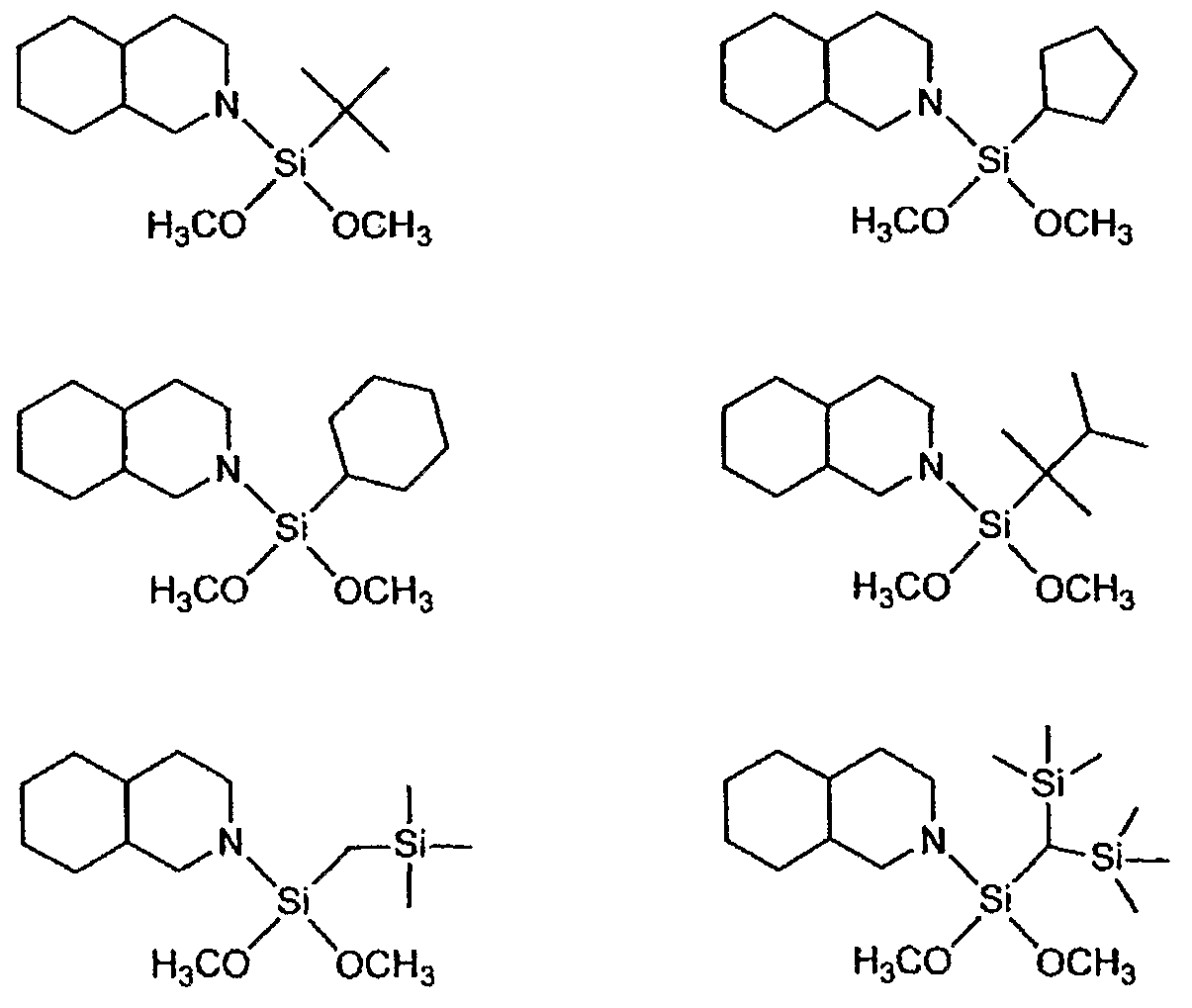
  • Examples of the organic silicon compound represented by the formula (3) include a bisperhydroquinolino compound, a bisperhydroisoquinolino compound, a (perhydroquinolino) (perhydroisoquinolino) compound, and a bis (1, 2,3,4-tetrahydroquinolino compound, bis (1,2,3,4-tetrahydroisoquinolino) compound, (1,2,3,4-tetrahydroquinolino) (1,2,3,4-tetrahydroquinoline) (Droisoquinolino) compound.
  • Chemical 5 Chemical 5
  • R 54 represents a substituent on the saturated ring of R 53 N, and is hydrogen or an unsaturated or saturated aliphatic hydrocarbon group having 1 to 24 carbon atoms.
  • Preferred as R 54 are hydrogen, methyl group, ethyl group, n-propyl group, iso-propyl group, n-butyl group, iso-butyl group, tert-butyl group, sec-butyl group and the like.
  • the hydrocarbon substituent on the saturated ring of R 53 N may be one or more.
  • Bisperhydroquinolino compounds include bis (perhydroquinolino) dimethoxysilane
  • Bis (2-methyl perhydroquinoline) dimethoxysilane bis (3-methyl Noreperhydroquinoline dimethoxysilane, bis (4-methylperhydroquinoline) dimethoxysilane, bis (5-methylperhydroquinolino) dimethoxysilane, bis (6-methylperhydroquinolino) dimethoxysilane, bis (7-methylperhydroquinoline) dimethoxysilane
  • Bis (8-methylperhydroquinolino) dimethoxysilane bis (9-methylperhydroquinolino) dimethoxysilane, bis (10-methylperhydroquinolino) dimethoxysilane, and other bis (methyl-substituted perhydroquinolino) dimethoxysilane;
  • Bisperhydroisoquinolino compounds include bis (perhydroisoquinolino) dimethoxysilane;
  • Examples of (perhydroquinoline) (perhydroquinoline) compounds include (perhydroquinoline) (perhydroquinoline) dimethoxysilane, (perhydroquinoline) (1-methyl perhydroquinoline) dimethoxysilane, and (perhydroquinoline) (3- Methyl perhydroisoquinolino dimethoxysilane, (perhydroquinoline) (4-methylperhydroisoquinolino) dimethoxysilane, (perhydroquinoline) (5-methylperhydroisoquinolino) dimethoxysilane, (perhydroquinolino) (6-methylperoxy dihydro) , (Perhydroquinoline) (7-methylperhydroquinoline) Dimethoxysilane, (Perhydroquinoline) (8-methylhydroquinoline) (Lino) dimethoxysilane, (perhydroquinoline) (9-methylperhydroquinoline) dimethoxysilane, (perhydroquinoline)
  • Bis (1,2,3,4-tetrahydroquinolino) compounds include bis (1,2,3,4-tetrahydroquinolino) dimethoxysilane;
  • organic silicon compound represented by the formula (3) examples include a compound represented by the following chemical structural formula.
  • Examples of the organic silicon compound represented by the formula (4) include a perhydroquinolino compound represented by the following formula (5) and a perhydroisoquinolino compound represented by the following formula (6).
  • R 54 represents a substituent on the saturated ring of R 53 N, and is a hydrogen atom, an unsaturated aliphatic hydrocarbon group having 1 to 24 carbon atoms, or an unsaturated hydrocarbon group having 2 to 24 carbon atoms.
  • Preferred as R 54 are hydrogen, methyl group, ethyl group, n-propyl group, iso-propynole group, n-butynole group, iso-butynole group, tert-butyl / le group, sec-butynole group and the like.
  • the number of hydrocarbon substituents on the saturated ring of R 53 N may be one or more.
  • Examples of the compound represented by the formula (5) include ethyl (perhydroquinolino) dimethoxysilane, n-propyl (perhydroquinolino) dimethoxysilane, iso-propyl pill (perhydroquinolino) dimethoxysilane, and n-butyl (perhydroquinolinino).
  • Droquinolinosilane compound ethyl (2-methylperhydrodinoquino) dimethoxysilane, n-propynole (2-methyl) -Hydroquinolino) dimethoxysilane, iso-propynole (2-methylperhydroquinolino) dimethoxysilane, n-butyl (2-methylperhydroquinolino) dimethoxysilane, iso-butyl (2-methylperhydroquinolino) dimethoxysilane, tert-butyl (2 —Methylperhydroquinolino) dimethoxysilane, sec-butyl (2-methylperhydroquinolino) dimethoxysilane, n-pentyl (2_methylperhydroquinolino) dimethoxysilane, iso-pentyl (2-methylperhydroquinolino) dimethoxysilacyclopentyl (2-)
  • Examples of the compound represented by the formula (6) include ethyl (perhydroisoquinolino) dimethoxysilane, n-propyl (perhydroisoquinolino) dimethoxysilane, iso-propyl (perhydroisoquinolino) dimethoxysilane, and n-butyl (perhydroisoquinolino).
  • Dimethoxysilane iso-butyl (perhydroisoquinolino) dimethoxysilane, tert-butyl (perhydroisoquinolino) dimethoxy Sisilane, sec-butyl (perhydroisoquinolino) dimethoxysilane, n-pentyl (perhydroisoquinolino) dimethoxysilane, iso-pentinole (perhydroisoquinolino) dimethoxysilane, cyclopentyl (perhydroisoquinolino) dimethoxysilane, n-hexyloxy (n-hexyloxy) ) Dimethoxysilane, cyclohexyl (perhydroisoquinolino) dimethoxysilane, texil (perhydroisoquinolino) dimethoxysilane, n-octinole (perhydroisoquinolino)
  • organic silicon compound represented by the formula (6) include the following chemical structural formula Embedded image
  • the above-mentioned organosilicon compounds having two saturated polycyclic amino groups include a saturated polycyclic amino group. Since there are geometrical isomers, ie, cis-form and trans-form, in the amino group, (trans monopolycyclic amino) (trans monopolyamino) dialkoxysilane, (cis monopolyamino) (cis Monopolycyclic amino) dialkoxysilanes, (transmonopolycyclic amino) (cis monopolycyclic amino) dialkoxysilanes are present.
  • Specific examples include bis (trans-hydroxyquinoline) dimethoxysilane, bis (cis-hydroxyquinoline) dimethoxysilane, bis (trans-hydroxyquinoline) dimethoxysilane, and bis (cis-hydroxyquinoline) dimethoxysilane. No.
  • a crystalline polypropylene block copolymer (A) is produced using a catalyst comprising the solid titanium catalyst component (i), the organometallic compound catalyst component (ii), and the electron donor component (iii) as described above.
  • preliminary polymerization may be performed in advance.
  • the olefin is polymerized in the presence of the solid titanium catalyst component (i), the organometallic compound catalyst component (ii), and, if necessary, the electron donor component (iii).
  • olefins used in the prepolymerization include linear olefins such as ethylene, propylene, 1-butene, 1-otaten, 1-hexadecene, and 1-eicosene; 3-methinoyl 1-butene; 1 1 pentene, 3 — ethynole 1 pentene, 4 methinolate 1 pentene, 4 methine 1 1 hexene, 4,4 dimethinole 1 hexene, 4, 4 dimethinole 1 pentene, 4 echinolle 1 1 1 hexene 1-hexene, arylenerenaphthalene, arinoleno / lebornane, styrene, dimethylstyrenes, vinylnaphthalenes, arinolenolenes, arinolebenzenes, vininolecyclohexane, vininolecyclopentane, biecyclocycloheptane
  • the prepolymerization is preferably carried out so as to produce about 0.1 to 1000 g, preferably about 0.3 to 500 g, of polymer per 1 g of the solid titanium catalyst component (i). If the prepolymerization amount is too large, the efficiency of (co) polymer formation in the main polymerization may decrease.
  • the catalyst can be used at a considerably higher concentration than the catalyst concentration in the system in the main polymerization.
  • the solid titanium catalyst component (U (or prepolymerized catalyst)) is used in an amount of about 0.0001 to 50 mmol, preferably about 0.001 to 10 mmol in terms of titanium atom per liter of polymerization volume.
  • the organometallic compound catalyst component (ii) is preferably used in an amount of about 1 to 2000 mol, preferably about 2 to 500 mol, in terms of the amount of metal atoms per 1 mol of titanium atoms in the polymerization system.
  • the organosilicon compound catalyst component (iii) is used in an amount of about 0.001 to 50 mol, preferably about 0.01 to 20 mol, per 1 mol of metal atom of the organometallic compound catalyst component (ii). It is desirable.
  • Inert hydrocarbons may be used as the polymerization medium, and liquid propylene may be used as the polymerization medium.
  • the polymerization conditions in each stage are such that the polymerization temperature is in the range of about 150 to + 200 ° C, preferably about 20 to 100 ° C, and the polymerization pressure is normal pressure to 9.8 MPa (gauge pressure). Preferably, it is appropriately selected within a range of about 0.2 to 4.9 MPa (gauge pressure).
  • the elastomeric polymer (B) used in the present invention preferably includes an olefin-based elastomer and a styrene-based elastomer.
  • olefinic elastomer a copolymer of two or more ⁇ -olefins selected from ⁇ -olefins having 2 to 20 carbon atoms, preferably 2 to 10 carbon atoms is used. it can.
  • a-olefins having 2 to 20 carbon atoms include ethylene, propylene, 1-pentene, 3-methinole 1-pentene, 4-methylinole 1-pentene, 1-hexene, 1-otaten, 1-decene, and 1-tetradecene , 1-octadecene and the like.
  • olefin-based elastomer examples include ethylene propylene copolymer rubber, ethylene 1-butene copolymer rubber, ethylene hexene copolymer rubber, ethylene 1-otaten copolymer rubber, and ethylene.
  • Amorphous or low-crystalline olefin copolymers that do not contain gen components such as decene copolymer rubber, propylene 'ethylene copolymer rubber, propylene' butene copolymer, and propylene butene.
  • Polymers ethylene / propylene / dicyclopentene pentagen copolymer rubber, ethylene 'propylene' 1,4-hexadiene copolymer rubber, ethylene / propylene / cyclooctadiene copolymer rubber, ethylene / propylene 'methylene Norbornene copolymer rubber, ethylene propylene 'ethylidene norportene copolymer rubber What ethylene propylene non-conjugated diene copolymer polymer rubber;... And ethylene butadiene copolymer rubber.
  • olefin-based elastomer a copolymer of ethylene and polyolefin having 4 to 10 carbon atoms is preferable.
  • a copolymer of ethylene and ⁇ -olefin having 4 to 10 carbon atoms is used as the elastomeric polymer (B)
  • a composition having an excellent balance between rigidity and impact resistance can be obtained. it can.
  • Styrene-based elastomer means an elastomer containing 20% or more of styrene units.
  • styrene-based elastomers include SBR (styrene-butadiene random copolymer) and SBS (styrene-butadiene-styrene block copolymer. ), SEB S (styrene 'ethylene / butylene' styrene block copolymer), polystyrene-polyisoprene block copolymer, SIS (styrene. Isoprene.
  • Styrene block copolymer and SIS hydrogenated product
  • Clayton Kraton: manufactured by Shell Chemical Co., Ltd.
  • Carriflex TR manufactured by Shell Chemical Co., Ltd.
  • Sorprene manufactured by Philippe Petroleum Corporation
  • Europrene SOLT manufactured by Anich
  • Tufprene manufactured by Asahi Kasei Corporation
  • Sorprene-I T manufactured by Nippon Elastomer Co., Ltd.
  • J SRTR manufactured by Nippon Synthetic Rubber Co., Ltd.
  • Electrification STR manufactured by Denki Kagaku
  • Quintac manufactured by Zeon Corporation
  • It is marketed under the trade names such as Clayton G (manufactured by Shell Chemical Co., Ltd.) and Tuftec (manufactured by Asahi Kasei Corporation).
  • SEBS is preferably used as the styrene-based elastomer.
  • SEBS is generally known as a hydrogenated product of SBS (styrene.butadiene / styrene block copolymer), which is a styrene / butadiene block copolymer.
  • SEBS is a thermoplastic elastomer composed of polystyrene block units and polyethylene Z-butylene rubber block units.
  • the polystyrene block unit which is a hard segment, forms a physical crosslink (domain) and exists as a cross-linking point of the rubber block unit.
  • the polyethylene Z-butylene rubber block unit existing between the polystyrene block units Is a soft segment having rubber elasticity.
  • the polystyrene units in an amount of 14 to 40 mole 0/0.
  • the content of units derived from styrene is a value measured by a conventional method such as infrared spectroscopy and NMR spectroscopy.
  • SEB S melt flow rate (MFR; 2 in accordance with ASTM D1238) (Measured under a load of 30 ° C and a load of 2.16 kg) is preferably from 0.01 to 100 gZ10 min, preferably from 0.1 to 50 gZl0 min.
  • SBS and other styrene / conjugated gen-based copolymers or their completely or incomplete hydrides can be used together with SEBS.
  • the intrinsic viscosity [77] e of the (B) elastomeric homopolymer used in the present invention is different from the intrinsic viscosity [ ⁇ ] a of the (A) crystalline propylene block copolymer in the n-decane soluble component. It is preferable that the relationship of the following formula (7) is satisfied because the impact strength during the residence of the resin composition is less likely to decrease.
  • the elastomeric polymer (B) preferably has an MFR in the range of 0.5 to 30 gZ10, preferably 2 to 15 gZ10. Use of the elastomeric polymer (B) having an MFR within the above range has good impact resistance and is unlikely to decrease due to melt retention.
  • Examples of the inorganic filler (C) used in the present invention include talc, clay, calcium carbonate, myriki, silicates, carbonates, and glass fibers.
  • the inorganic filler (C) can be used alone or in a combination of two or more.
  • Tanolek and calcium carbonate are preferable, and talc is particularly preferable.
  • the talc preferably has an average particle size of 1 to 5 ⁇ , preferably 1 to 3 ⁇ .
  • the polypropylene resin composition according to the present invention comprises a crystalline propylene block copolymer ( ⁇ ) in an amount of 55 to 94% by weight, preferably 55 to 85% by weight. 1 to 20% by weight of the stoma uniform polymer (B). /.
  • the inorganic filler (C) is contained in an amount of preferably 5 to 15% by weight, more preferably 5 to 15% by weight, and preferably 8 to 20% by weight.
  • the polypropylene resin composition of the present invention may further contain other polymers and additives, if necessary, as long as the object of the present invention is not impaired.
  • polymers include low density polyethylene (LDPE), linear low density polyethylene (LLDPE), high density polyethylene, and the like.
  • Additives include heat stabilizers, antistatic agents, weather stabilizers, light resistance stabilizers, antioxidants, antioxidants, fatty acid metal salts, softeners, dispersants, fillers, colorants, lubricants, pigments, etc. Is mentioned.
  • any of a phenol-based, an io-based or a phosphorus-based antioxidant can be blended.
  • the compounding amount of the antioxidant is preferably 0.01 to 1 part by weight, more preferably 0.05 to 0.3 part by weight, based on 100 parts by weight of the crystalline propylene block copolymer (A).
  • the method for producing the polypropylene resin composition of the present invention includes a propylene block copolymer (A), an elastomeric polymer (B), an inorganic filler (C), and, if necessary, a heat stabilizer.
  • a propylene block copolymer A
  • an elastomeric polymer B
  • an inorganic filler C
  • a heat stabilizer examples thereof include a method of mixing with a mixer, a V-blender, a ribbon blender or a tumbler blender, and obtaining the obtained composition as a pellet of a target polypropylene resin composition using an extruder or the like.
  • the polypropylene resin according to the present invention a composition,
  • the composition was melted and maintained at 230 for 3 minutes in an injection molding machine having a capacity of 10 oz, and then a test piece was molded in accordance with the method of ASTM D256.
  • the polypropylene resin composition according to the present invention has excellent fluidity at the time of molding, and also has an excellent balance of physical properties such as flexural modulus, impact resistance, hardness, and brittleness temperature (
  • the polypropylene resin composition of the present invention can be suitably used as a resin raw material for injection molding.
  • the polypropylene resin composition of the present invention is useful as a material for manufacturing various products such as interior and exterior materials for automobiles and home appliances, for example, bumpers, instrument panels and trims.
  • MFR Menoleto flow rate
  • Polypropylene was dissolved in 135 ° C decalin for measurement.
  • the GPC measurement conditions are as follows.
  • HDT Heat distortion temperature
  • the injection molded product obtained in the same manner as the Izod impact strength was measured under conditions in accordance with ASTM D648.
  • 52 ml of di-iso-octyl phthalate was added, and the temperature was further raised to 100 ° C.
  • the resulting slurry was continuously sent to a 90-liter vessel polymerization reactor for further polymerization.
  • Propylene was supplied at a rate of 15 kg / hour and hydrogen was supplied at a rate of 103 N liters to the polymerization reactor.
  • the polymerization was carried out at a polymerization temperature of 64 ° C and a pressure of 3.3 MPaG.
  • the polymerization was carried out at a polymerization temperature of 70 ° C and a pressure of 0.9 MPa aZG. By such an operation, a crystalline propylene block copolymer (A1-1) was obtained.
  • the resulting slurry was continuously sent to a 90-liter vessel polymerization reactor for further polymerization.
  • propylene was supplied at a rate of 15 kgZ hours, and hydrogen was supplied at a rate of 103 N liter hours.
  • Polymerization was performed at a polymerization temperature of 64 ° C and a pressure of 3.3 MPa ZG.
  • a polypropylene homopolymer powder was continuously fed into a 480-liter gas phase polymerization vessel to perform ethylene z propylene block copolymerization.
  • heptane 60 liters are charged into an autoclave with a content of 200 liters. 180 g of propylene was charged while maintaining the temperature at 5 ° C., and the mixture was stirred for 60 minutes. After that, the solid component was settled, and 120 liters of heptane was added. It was charged with 161 liters of heptane. After removing the supernatant liquid, heptane was added to bring the total heptane amount to 60 liters to obtain a slurry-form prepolymerization catalyst (catalyst slurry (2)).
  • the obtained slurry was continuously fed to a vessel polymerization vessel having a content of 90 liters for further polymerization.
  • Propylene was supplied at a rate of 15 kg / hour and hydrogen was supplied at a rate of 170 N liter Z hour to the polymerization reactor.
  • Polymerization was performed at a polymerization temperature of 64 ° C and a pressure of 3.3 MPa ZG.
  • the obtained slurry was continuously fed to a vessel polymerization vessel having a content of 90 liters for further polymerization.
  • Propylene was supplied to the polymerization reactor at a rate of 15 k hours and hydrogen was supplied at a rate of 103 Nl Z hours.
  • Polymerization was performed at a polymerization temperature of 64 ° C and a pressure of 3.3 MPa ZG.
  • Table 1 below shows the physical properties of 68.
  • the obtained slurry was continuously sent to a polymerization reactor (500 l), and further polymerized.
  • Heptane was charged into Polymerizer II at a rate of 32 liters Z hours, and the internal pressure of Polymerizer II was maintained at 0.69 MPa at a temperature of 70 ° C and the hydrogen concentration in the gas phase was maintained at 10% by volume.
  • Propylene and hydrogen were continuously supplied (second stage polymerization).
  • heptane is centrifuged by a usual method, and then dried at 80 ° C and 9.3 MPa for 10 hours to obtain a crystalline propylene resin.
  • a polymer (A2-1) was obtained.
  • the crystalline propylene-based polymer (A2-1) was obtained at a rate of 80 kgZ hours.
  • This crystalline propylene polymer (A2-1) had an MFR of 3.1 g / 10 min, an MwZMn of 15, and an MzZMw of 5.
  • the ratio of the polypropylene produced in the first-stage polymerization in the finally obtained crystalline propylene-based polymer (A2-1) calculated from the material balance was 20% by weight / 0 . Met.
  • propylene and hydrogen were continuously supplied so as to maintain the hydrogen concentration in the gas phase at 40% by volume
  • polymerization and drying were performed in the same manner as in Production Example 6 to obtain a crystalline propylene polymer ( A2-2) was obtained.
  • the crystalline propylene polymer (A2-2) has an MFR of 2.5 g / 10 min, an MwZMn of 15, an MzZMw of 5, and an ethylene content of 1.9 weight 0 / It was 0 , and the proportion of polypropylene produced in the first polymerization, calculated from the mass balance, was 30% by weight.
  • Polymerization and drying were carried out in the same manner as in Production Example 6 except that the polymerization amount distribution of the polymer to be polymerized in polymerization vessel I and polymerization vessel I was changed to obtain a crystalline propylene-based polymer (A2-3). .
  • the crystalline propylene polymer (A2-3) had an MFR of 0.05 g / 10 minutes, an Mw / Mn of 13 and an MzZMw of 6.
  • the proportion of the polypropylene produced in the first-stage polymerization in the finally obtained crystalline propylene polymer (A2-3) calculated from the material balance was 65% by weight.
  • the slurry in the polymerization reactor (2) was sampled, and the intrinsic viscosity of the polypropylene [77] was measured. As a result, it was 9. Odl / g.
  • component B elastomeric polymer
  • This pellet was molded into a test piece by an injection molding machine, and a physical property test and appearance evaluation were performed.
  • the additives used, the types of pigments, and the amounts to be added to 100 parts by weight of the composition are as follows.
  • IrganoxlOlO (trade name, manufactured by Ciba Specialty Chemicals): 0.10 parts by weight
  • Irgafosl68 (trade name, manufactured by Chipa Specialty Chemicals): 0.10 parts by weight
  • Chimassorb944 (trade name, manufactured by Ciba Specialty Chemicals): 0.15 Calcium phosphate (manufactured by NOF Corporation): 0.10 parts by weight Carbon black: 0.30 parts by weight Titanium oxide: 0.05 parts by weight
  • the polypropylene resin composition according to the present invention has excellent mechanical properties, and a molded article having excellent appearance such as no flow mark and no weld mark can be obtained. Therefore, the polypropylene resin composition can be preferably used as a raw material for automotive parts. High industrial value.

Landscapes

  • Chemical & Material Sciences (AREA)
  • Health & Medical Sciences (AREA)
  • Chemical Kinetics & Catalysis (AREA)
  • Medicinal Chemistry (AREA)
  • Polymers & Plastics (AREA)
  • Organic Chemistry (AREA)
  • Compositions Of Macromolecular Compounds (AREA)

Abstract

 (A)室温n−デカン可溶部の含有量が15~35重量%、MFRが5~80g/10分である結晶性プロピレンブロック共重合体 94~55重量%と、 (B)エラストマー性重合体 1~20重量%と、 (C)無機充填剤 5~25重量%とを含む組成物であって、 射出成形機中230℃で3分間溶融保持した後、試験片を成形し、48時間後に測定したアイゾット衝撃強度の値(IZ230-3)と、同一の射出成形機中250℃で30分間溶融保持した後、同様の方法で成形した試験片のアイゾット衝撃強度の値(IZ250-30)との比が、 1.0≧(IZ250-30/IZ230-3)≧0.5の関係を満たすポリプロピレン樹脂組成物。

Description

明 細 書 ポリプロピレン樹脂組成物 技術分野
本発明は、 ポリプロピレン樹脂組成物に関し、 さらに詳しくは、 機械物性に 優れ、 かつフローマークゃゥエルドマークがないなどの外観に優れた成形品が 得られるようなポリプロピレン樹脂,組成物に関する。 背景技術
ポリプロピレン樹脂組成物は、 自動車部品、 機械部品、 電気部品など種々の 分野で利用されており、 要求される性能に応じて種々の添加物が配合されてい る。 たとえば、 自動車部品などの機械的強度が要求される分野においては、 結 晶性プロピレンプロック共重合体にエラストマ一、 タルクを配合したポリプロ ピレン組成物が利用されている。 特に高い衝撃性を要求される場合には、 多量 のエラストマ 成分を添加することにより機械物性の改善を行っている。
しかしながら、 結晶性プロピレンブロック共重合体にエラストマ一を配合し た組成物では、実際の部品を成形する大型射出成形機にて部品を成形した場合、 組成物の滞留時間が増えるにつれて衝撃強度が低下するという現象があること が判明した。
本発明の目的は、 機械物性に優れ、 かつフローマークやウエルドマークがな いなどの外観に優れた成形体が得られるようなポリプロピレン樹脂組成物を提 供することにある。 発明の開示
本発明者らは、 上記原因を検討した結果、 この現象はエラストマ一成分とポ リプロピレンマトリックスとの相溶性が十分でないため、 成形機内での溶融滞 留時にエラストマ一成分が分離凝集し、 その結果として成形品の衝撃強度の低 下や外観不具合を招くことを見出した。
本発明者らは、 このエラストマ一配合結晶性プロピレンブロック共重合体組 成物の、 溶融滞留時におけるエラストマ一の分離凝集を防止する方法を検討し た結果、 特定のプロピレンブロック共重合体を用いることで、 上記問題が解決 でき得ることを見出し、 本発明を完成するに至った。
すなわち本発明の第 1の発明によれば、
(A) (d 1) 室温 n—デカン不溶部と (d 2) 室温 n—デカン可溶部とから なり、 上記 (d 2) 室温 n—デカン可溶部はその含有割合が 1 5〜 35重量% の範囲にあり、 共重合体のメルトフローレート (MFR、 ASTM D 1 23 8: 230°C、荷重 2160 gで測定、 以下同じ。) が 5〜80 gZl 0分の範 囲にある結晶性プロピレンブロック共重合体 94〜55重量%と、
(B) エラストマ一性重合体 1〜20重量%と、
( C ) 無機充填剤 5〜 25重量%と
を含む組成物であって、
容量 1 Ooz の射出成形機中で該組成物を 230°Cで 3分間溶融保持した後、 ASTM D 256の方法に準じた試験片を成形し、 48時間後に測定したァ ィゾット衝撃強度の値 (jZm : I Z 230_3) と、 同一の射出成形機中で該組成物 を 250°Cで 30分間溶融保持した後、 同様の方法で試験片を成形し、 48時 間後に測定したアイゾット衝撃強度の値 (jZni : I Z 250_30) との比が、 以下 の関係 1. 0≥ (I Z 2503。ZI Z23。_3) ≥ 0. 5
を満たすポリプロピレン樹脂組成物が提供される。
また、 本発明の第 2の発明によれば、 第 1の発明において、
上記 ( d 1 ) 室温 n—デカン不溶部の MF尺が 10〜300 gZl O分の範 囲にあり、 ゲルパーミエーシヨンクロマトグラフ (GPC) 法で測定した Mz ZMw (Mz : Z平均分子量、 Mw :重量平均分子量) が 3. 0以上であるポ リプロピレン樹脂組成物が提供される。
また、 本発明の第 3の発明によれば、 第 1または第 2のいずれかの発明にお いて、
上記 ( d 1 ) 室温 n—デカン不溶部が、 ( a— 1 ) 1 35。Cザ力リン中で測定 される極限粘度 [ ] が 6〜1 3 d lZgの高分子量ポリプロピレン部 0. 5〜10重量%と、 (a— 2) 135°Cデカリン中で測定される極限粘度 [ ] が 6 d 1 Zg未満の低分子量ポリプロピレン部 99. 5〜90重量%とから なるポリプロピレン樹脂 成物が提供される。
また、 本発明の第 4の発明によれば、 第 1ないし第 3のいずれかの発明にお レ、て、
上記 (d l) 室温 n—デカン不溶部の 13C— NMRで測定されるァイソタク チックペンタッド分率 (mmmm) が 97 %以上であるポリプロピレン樹脂組 成物が提供される。
また、 本発明の第 5の発明によれば、 第 1ないし第 4のいずれかの発明にお いて、
上記 ( d 2 ) 室温 n—デカン可溶部が、 ェチレン含有量が 20〜 50モル% の範囲にあり、 1 35 °〇デ力リン中で測定される極限粘度 [ 77 ] が 1〜 5 d 1 Zgの範囲にあるプロピレン ·エチレンランダム共重合体であるポリプロピレ ン樹脂組成物が提供される。
さらに、 本発明の第 6の発明によれば、 第 1の発明において、
上記 (A) 結晶性プロピレンプロック共重合体が、 (A— 1 ) 結晶性プロピレ ンプロック共重合体 99. 5〜80重量0 /0と、 (A— 2) プロピレン単独重合 体および/または(A— 3)プロピレンランダム共重合体 0. 5〜20重量% との組成物であるポリプロピレン樹脂組成物が提供される。
また、 本発明の第 7の発明によれば、 第 6の発明において、
上記 (A— 2) プロピレン単独重合体および (A— 3) プロピレンランダム 共重合体が、
(a - 1) 1 35 デ力リン中で測定される極限粘度 [η] が 6〜1 3 d lZ gの範囲にある高分子量ポリプロピレン 10〜80重量%と、
(a - 2) 1 35 デ力リン中で測定される極限粘度 [ 77 ] 力 S 6 d 1 / g未満 の低分子量ポリプロピレン 90〜20重量%と
からなる組成物であるポリプロピレン榭脂組成物が提供される。
また、 本発明の第 8の発明によれば、 第 7の発明において、
上記 (A— 2) プロピレン単独重合体および (A— 3) プロピレンランダム 共重合体が、
( a _ 1 ) 1 35 °< デ力リン中で測定される極限粘度 [ 7] ] が 6〜: 1 3 d l / gの範囲にある高分子量ポリプロピレン 10〜35重量%と、
(a - 2) 1 35°Cデカリン中で測定される極限粘度 [ r? ] が 6 d 1/g未満 の低分子量ポリプロピレン 90〜65重量0 /。と
からなる組成物であるポリプロピレン樹脂組成物が提供される。
また、 本発明の第 9の発明によれば、 第 6の発明において、
上記 (A— 1) 結晶性プロピレンプロック共重合体が、 (d 1) 室温 n—デカ ン不溶部と (d 2) 室温 n—デカン可溶部とからなり、 上記 (d 2) 室温 n— デカン可溶分の含有量が 1 7〜35重量%の範囲にあり、 MFRが 1 0〜1 0 0 gズ 1 0分の範囲にあるポリプロピレン樹脂組成物が提供される。
さらに、 本発明の第 1 0の発明によれば、 第 1ないし第 9のいずれかの発明 において、
上記エラス トマ一性重合体 (B) が、 エチレンと炭素原子数 4〜 1 0の α— ォレフインとの共重合体であるポリプロピレン樹脂組成物が提供される。 また、 本発明の第 1 1の発明によれば、 第 1ないし第 1 0のいずれかの発明 において、
上記エラストマ一性重合体 (Β) の MFRが 0. 5〜30 gZl O分である ポリプロピレン樹脂組成物が提供される。
また、 本発明の第 1 2の発明によれば、 第 1ないし第 1 1のいずれかの発明 において、
無機充填剤 ( C ) がタルクであるポリプロピレン樹脂組成物が提供される。 発明を実施するための最良の形態
以下、 本発明に係るポリプロピレン樹脂組成物について具体的に説明する。 '本発明に係るポリプロピレン樹脂組成物は、
(A) 結晶性プロピレンプロック共重合体と、
(B) エラストマ一性重合体と、
(C) 無機充填剤と
を含んでいる。
まず、 本発明に係るポリプロピレン樹脂組成物を形成する各成分について説 明する。 ( A ) 結晶性プロピレンブロック共重合体
本発明で用いられる結晶性プロピレンブロック共重合体 (A) は、 プロピレ ンと、 プロピレン以外の他のォレフィン類から選ばれる少なくとも 1種のォレ フィンとから得られるプロック共重合体である。
他のォレフィン類としては、 エチレン、 炭素原子数 4〜 2 0の ォレフィ ン、 ビュル化合物、 ビュルエステル、 不飽和有機酸またはその誘導体、 共役ジ ェン、 非共役ポリェンなどが挙げられる。
結晶性プロピレンブロック共重合体 (A) は、 分岐状ォレフイン類、 たとえ ば 3—メチノレー 1—ブテン、 3, 3—ジメチノレ一 1ーブテン、 3—メチノレ一 1 一ペンテン、 3—ェチル一 1一^ ンテン、 4—メチルー 1—ペンテン、 3—メ チノレー 1 一へキセン、 4ーメチノレー 1 一へキセン、 4 , 4一ジメチノレ一 1—へ キセン、 4 , 4ージメチノレー 1一ペンテン、 4 ーェチノレー 1 一へキセン、 3— ェチル一 1 一へキセン、 3, 5, 5—トリメチノレー 1 一へキセン、 ビニノレシク 口ペンタン、 ビニノレシクロへキサン、 ビニノレシクロヘプタン、 ビニノレノノレボノレ ナン、 ァリノレノノレポ/レナン、 スチレン、 ジメチノレスチレン、 ァリ /レベンゼン、 ァリルトルエン、 ァリルナフタレン、 ビュルナフタレンなどの単独重合体また は共重合体を 0 . 1重量%以下、 好ましくは 0 . 0 5重量%以下含有していて もよい。 これらの中では、 特に 3—メチルー 1ーブテンの単独重合体または共 重合体が好ましい。 これらの分岐状ォレフイン類の単独重合体または共重合体 は、 予備重合体として含有させることが好ましい。
結晶性プロピレンプロック共重合体(A)は、 n—デカン溶剤分別した場合、 室温 n—デカンに可溶な成分(室温 n _デカン可溶部(d 2 ) ) と室温 n—デカ ンに不溶な成分 (室温 n—デカン不溶部 (d 1 ) ) とに分別される。 その成分含 有量は好ましくは、 室温 n—デカン可溶部 (d 2 ) が 1 5〜 3 5重量%、 好ま しくは 20〜 30重量%であり、 室温 n—デカン不溶部 (d l) が 6 5〜 8 5 重量%、 特に好ましくは 70〜 80重量%である。 この室温 n—デカン可溶部 (d 2) および室温 n—デカン不溶部 (d l) 成分は、 室温 n—デカンに対す る溶解性で結晶性ポリプロピレンブロック共重合体 (A) 中の含有成分を分別 した場合の成分である。
結晶性プロピレンブロック共重合体 ( A) の室温 n—デカン不溶部 ( d 1 ) と室温 η—デカン可溶部 (d 2) との含有割合が上記範囲内にあると、 剛性、 耐衝擊性などの機械的物性に優れた組成物を得ることができるとともに、 大型 成形機内での滞留による耐衝撃性の低下が小さレ、。
上記の室温 n—デカン溶剤分別は、 次のようにして行う。 すなわち、 結晶性 ポリプロピレンプロック共重合体 (A) の試料 5 gを、 1 35°Cの n—デカン 500m lに添加し、 充分撹拌して可溶性の成分 (可溶性のポリマー) を完全 に溶解する。 その後、 23 °Cに降温して 24時間放置する。 次に、 この n—デ カン溶液を遠心分離し、 分離後の液相を 1000m lのアセトン中にデカンテ ーシヨンし、 ポリマーを析出させる。 この析出物を濾過、 洗浄、 乾燥し、 室温 n—デカン可溶部 (d 2) とする。 室温 n—デカン可溶部 (d 2) 以外の成分 を室温 n—デカン不溶部 (d l) とする。
結晶性プロピレンブロック共重合体 (A) において、 室温 n—デカン不溶部 (d l) は、 通常プロピレンから導かれる構造単位のみからなることが好まし いが、 少量、 たとえば 1 0モル0 /0以下、 好ましくは 5モル0 /0以下の他のモノマ 一から導かれる構造単位を含有していてもよい。
他のモノマーとしては、 たとえばエチレン、 1ープテン、 1一ペンテン、 1 一へキセン、 4ーメチノレ一 1一ペンテン、 3—メチノレ一 1 _ペンテン、 1一へ プテン、 1ーォクテン、 1一ノネン、 1ーデセン、 1ードデセンなどのプロピ レン以外の α—才レフイン; スチレン、 ビニノレシクロペンテン、 ビニノレシクロ へキサン、 ビュルノルボルナンなどのビニル化合物;酢酸ビエルなどのビュル エステル;無水マレイン酸などの不飽和有機酸またはその誘導体;共役ジェン; ジシクロペンタジェン、 1, 4一へキサジェン、 ジシクロォクタジェン、 メチ レンノルボルネン、 5—ェチリデン一 2—ノルボルネンなどの非共役ポリェン 類などが挙げられる。 これらの中では、 エチレン、 炭素原子数 4〜10の α— ォレフィンなどが好ましい。 これらは 2種以上共重合されていてもよい。
結晶性プロピレンプロック共重合体 ( Λ) の室温 η—デカン不溶部 ( d 1 ) の MFRは、 10〜300 g/10分、 好ましくは 20〜200 g/l 0分の 範囲である。
結晶性プロピレンブロック共重合体 (A) の室温 n—デカン不溶部 (d l) の M F Rの値が上記範囲内にあると、 流動性および耐衝撃性が良好な組成物を 得ることができる。
また、 ゲルパーミエーシヨンクロマトグラフ (GPC) 法で測定した MzZ Mwは 3. 0以上、 好ましくは 3. 1以上である。 さらに、 GPC法で測定し た Mw/Mnは、好ましくは 6〜20、特に好ましくは 8〜 20の範囲である。 室温 n—デカン不溶部 (d l) の Mw/Mnが 6〜20の範囲にあり、 かつ Mz/Mwが 3. 0以上であるということは、 本発明で用いる結晶性プロピレ ンブロック共重合体 (A) の室温 n—デカン不溶部 (d l) は、 通常のポリプ ロピレンに比べて高分子量側に分布が広いことを示している。
結晶性プ口ピレンブロック共重合体 ( A) の室温 n—デカン不溶部 ( d 1 ) は、 135°Cデカリン中で測定される極限粘度 [ T7 ] が 6〜13 d lZg、 好 ましくは 7〜: 12 d l Zgの高分子量ポリプロピレン部( a— 1 ) と、 1 35 °C デカリン中で測定される極限粘度 [ ] が 6 d lZg未満の低分子量ポリプロ ピレン部(a— 2 ) とからなることが好ましレ、。高分子量ポリプロピレン部 ( a 一 1 ) は、 室温 n—デカン不溶部 ( d 1 ) 全体の 0 . 5〜 1 0重量%、 好まし くは 1 . 0〜 5重量0/。の範囲にあり、低分子量ポリプロピレン部(a— 2 ) は、 室温 n—デカン不溶部( d 1 )全体の 9 9 . 5〜 9 0重量。 /0、好ましくは 9 9 . 0〜 9 5重量%の範囲にあることが望ましい。
結晶性プロピレンブロック共重合体 (A) が上記要件を満たすと、 フローマ ークの発生が少ない成形品を得ることができる。
また結晶性プロピレンプロック共重合体 (A) の室温 η—デカン不溶部 (d 1 ) の13 C—NMRで測定されるァイソタクチックペンタッド分率 (mmmm) は 9 7 %以上、 好ましくは 9 7 . 5 %以上である。
ァイソタクチックペンタッド分率 (mmmm分率) は、 ポリプロピレンの立 体規則性の指標となり、 この値が大きいほど立体規則性が高いことを示す。 ァ イソタクチックペンタッド分率 (mmmm分率) が 9 7 %以上であるというこ とは、 高立体規則性のポリプロピレンである。
ァイソタクチックペンタッド分率 (mmmm分率) は、 13 C— NMRを使用 して測定されるポリプロピレン分子鎖中のペンタッド単位でのァイソタクチッ ク連鎖であり、 プロピレンモノマー単位で 5個連続してメソ結合した連鎖の中 心にあるプロピレンモノマー単位の分率である。 具体的には、 13 C— NMRス ぺク トルにおいて、 メチル炭素領域の全吸収ピーク中の mmmmピーク分率と して求められる値である。
室温 n—デカン可溶部 (d 2 ) は、 主としてプロピレン ' α—ォレフィン共 重合体であるが、 高分子量ポリプロピレン部 (a— 1 ) およぴ または低分子 量ポリプロピレン部 (a— 2 ) の一部、 またはこれらを製造した際に生じる副 生物などが含まれる。 1 3 5 °C n—デカンに可溶で、 かつ 2 3 °C n—デカンに 14309
10 不溶な成分 (d l) は、 主として高分子量ポリプロピレン部および低分子量ポ リプロピレン部であるが、 プロピレン ' α—ォレフイン共重合体部の一部、 ま たはこれを製造した際に生じる副生物などが含まれる。
室温 η—デカン可溶部 (d 2) を形成するプロピレン ' ひーォレフイン共重 合体の α—ォレフインとしては、エチレンおよび/または炭素原子数 4〜 1 2 の α—ォレフインなどである。具体的なものとしては、エチレン、 1ーブテン、 1一ペンテン、 1一へキセン、 4ーメチノレー 1一ペンテン、 3—メチノレー 1一 ペンテン、 1一ヘプテン、 1ーォクテン、 1 _ノネン、 1—デセン、 1ードデ センなどの α—ォレフインが挙げられる。 これらの中では、 エチレンが好まし い。
室温 η—デカン可溶分 (d 2) は、 エチレン含量が 20〜50モル0 /0、 好ま しくは 25〜 35モル%の範囲にあり、 135 °0デ力リン中で測定される極限 粘度 [Tj ] は 1〜5 d 1 Zg、 特に 1. 5〜4. 0 d 1 /gであることが好ま しレ、。
室温 n—デカン可溶分 (d 2) のエチレン含量および極限粘度 [η] が上記 範囲内にあると、 組成物を大型成形機内で溶融滞留した際の耐衝撃性の低下が 小さい。
結晶性プロピレンプロック共重合体(A)は、 MFRが 5〜80 g,l 0分、 好ましくは 10〜70 § 10分、 より好ましくは 20〜60 gZl O分の範 囲にある。
結晶性プロピレンブロック共重合体 (A) の MFRの値が、 上記範囲内にあ ると成形加工性および機械的物性に優れた成形品を得ることができる。
本発明で用いられる (A) 結晶性プロピレンブロック共重合体は、 次の特定 の結晶性プロピレンブロック共重合体 (A— 1) 99. 5〜80重量%、 好ま しくは、 98〜85重量%と、 プロピレン単独重合体 (A— 2) および Zまた はプロピレンランダム共重合体 (A— 3) 0. 5〜20重量0 /0、 好ましくは 2 〜15重量%とからなる組成物であってもよい。
結晶性プロピレンプロック共重合体 (A) ヽ 結晶性プロピレンブロック共 重合体 (A— 1) と、 プロピレン単独重合体 (A— 2) および/またはプロピ レンランダム共重合体(A— 3)とからなる組成物であると製造が容易である。 結晶性プロピレンプロック共重合体 (A— 1) は、 (d l) 室温 n—デカン不 溶部と (d 2) 室温 n—デカン可溶部とからなり、 室温 n—デカン可溶分 (d 2 ) 量が 17〜 35重量%、特に好ましくは 20〜 33重量。 /0、 AS TM D 1 238の方法で測定したメルトフローレート (MF R/ 230 °C、 荷重 216 0 g) が 10〜: L O O gZl O分、 特に好ましくは 20〜90 gZl O分であ る。
結晶性プロピレンプロック共重合体 (A— 1) が上記要件を満たすと、 成形 加工性が良好で、 かつ剛性ゃ耐衝撃性に優れた組成物を得ることができる。 また、 プロピレン単独重合体 (A— 2) およびプロピレンランダム共重合体 (A— 3) は、 室温 n—デカン不溶部 (d l) が 135°Cデカリン中で測定さ れる極限粘度 [ 77 ] が 6〜: I 3 d lZg、 好ましくは 8〜: L 1 d lZgの高分 子量ポリプロピレン部 ( a— 1 ) 10〜 80重量0 /0、 好ましくは 10〜70 重量%、さらに好ましくは 10〜 35重量%、特に好ましくは 15〜 30重量% と、 135°Cデカリン中で測定される極限粘度 [ 77 ] が 6 d lZg未満の低分 子量ポリプロピレン部 (a— 2) 90〜20重量0 /0、 好ましくは 90〜 30 重量%、さらに好ましくは 90〜 65重量%、特に好ましくは 85〜 70重量% とからなることが好ましい。
プロピレン単独重合体(A—2)、 プロピレンランダム共重合体(A— 3) が TJP2003/014309
12 上記要件を満たすと、 成形品にフローマークの発生が少ない組成物を得ること ができる。
プロピレンランダム共重合体 (A— 3) は、 プロピレンと、 プロピレン以外 の他の α—ォレフインとの共重合体である。プロピレン以外の他の a—ォレフ インとしては、 エチレン、 1ーブテン、 1一ペンテン、 1一へキセン、 4ーメ チノレー 1一ペンテン、 3—メチノレー 1一ペンテン、 1一ヘプテン、 1一ォクテ ン、 1—ノネン、 1ーデセン、 1ードデセンなどの α—ォレフインが挙げられ る。 これらの中では、 エチレンが好ましい。 プロピレンランダム共重合体 (Α 一 3) において、 プロピレン以外の他の α—ォレフィンから導かれる構成単位 は、 5モル%以下、 好ましくは 3モル%以下である。
(結晶性プロピレンブロック共重合体 (Α) の製造方法)
本発明で用いられる結晶性プロピレンプロック共重合体(Α)は、たとえば、 高立体規則性ポリプロピレン製造用触媒の存在下に、 3段以上の多段重合によ り製造することができる。
すなわち、 本発明の結晶性プロピレンプロック共重合体 (Α) は、 ( i) マグ ネシゥム、 チタン、 ハロゲンおよび電子供与体を含有する固体状チタン触媒成 分と、 (ii) 有機金属化合物触媒成分と、 (iii) 電子供与体成分とから形成され る高立体規則性ポリプロピレン製造用の重合用触媒の存在下に、 実質的に水素 の非存在下でプロピレンを重合させて、 極限粘度 [η] が 6〜1 3 d l Zgの 高分子量ポリプロピレン部 (a— 1) を、 最終的に得られる結晶性プロピレン ブロック共重合体 (A) 全体の 0. 3〜8. 5重量%製造する段階と、 プロピ レンを重合させて、 極限粘度 [ ] が 6 d 1 /g未満の低分子量ポリプロピレ ン部 (a— 2) を、 最終的に得られるプロピレンブロック共重合体 (A) 全体 の 56. 5〜84. 7重量0 /。製造する段階と、 プロピレンおよび α—ォレフィ ンを共重合させて、 極限粘度 [ ] 6 d l Z g未満のプロピレン · ひーォレフ イン共重合体部を、 最終的に得られるプロピレンブロック共重合体 (A) 全体 の 1 5〜3 5重量%製造する段階とを含む 3段以上の多段重合により製造する ことができる。分子量および極限粘度 [ η ]の調整方法は特に制限されないが、 分子量調整剤として水素を使用する方法が好ましい。
製造順序としては、 第 1段目にて、 実質的に水素の非存在下で、 高分子量ポ リプロピレン部 (a— 1 ) を重合した後、 第 2段目以降で低分子量ポリプロピ レン部 (a— 2 ) を製造し、 第 3段目以降でプロピレン ' ーォレフイン共重 合体部 (ii) を製造することが好ましい。 製造順序を変更することもでき、 た とえば第 1段目で低分子量ポリプロピレン部 (a— 2 ) を重合した後、 第 2段 目以降で高分子量ポリプロピレン部 (a— 1 ) を重合することもできるが、 こ の場合には、 第 1段目の反応生成物中に含まれる水素などの分子量調整剤を、 第 2段目以降の重合開始前に限りなく除去する必要があるため、 重合装置が複 雑になり、 また第 2段目以降の極限粘度 [ ] が上がりにくい。
本発明で用いられる結晶性プロピレンブロック共重合体 (Α) を製造する他 の方法としては、 工程の第 1段でプロピレンを重合させて、 極限粘度 [ 77 ] が 6 d l Z g未満の低分子量ポリプロピレン部 (a— 2 ) を製造し、 第 2段でプ ロピレンおよび ひーォレフインを共重合させて、 極限粘度 [ 77 ] 6未満のプロ ピレン · α—ォレフィン共重合体部を製造することによりプロピレンブロック 共重合体 (Α— 1 ) を製造する第 1工程と、 別の工程であって高立体規則性ポ リプロピレン製造用の重合用触媒の存在下にて、 第 1段で実質的に水素の非存 在下でプロピレンを重合させて、 極限粘度 [ ] が 6〜1 3 d 1 / gの高分子 量ポリプロピレン部を製造し、 第 2段にて水素共存下でプロピレンを重合させ て、極限粘度 [ η ]力 S 6 d 1 Z g未満の低分子量ポリプロピレン部を製造して、 最終的に得られるプロピレン単独重合体 (A— 2 ) を製造する第 2工程と、 第 3工程として、 プロピレンブロック共重合体 (A— 1 ) とプロピレン単独重合 体 (A— 2 ) とを溶融混合して結晶性プロピレンブロック共重合体 (A) を製 造する方法を挙げることができる。 上記方法は、 簡便で製造が容易であるため 好ましい。
各段の重合は連続的に行うこともできるし、 バッチ式あるいは半連続式に行 うこともできるが、 連続的に行うことが好ましい。 また重合は気相重合法、 あ るいは溶液重合、 スラリー重合、 バルタ重合などの液相重合法など、 公知の方 法で行うことができる。 第 2段目以降の重合は、 前段の重合に引き続いて、 連 続的に行うのが好ましい。 バッチ式で行う場合、 1器の重合器を用いて多段重 合することもできる。 ' (触媒)
本発明のポリプロピレンブロック共重合体 (A) を製造する際に使用する重 合用触媒としては、 ( i ) マグネシウム、 チタン、ハロゲンおよび電子供与体を 含有する固体状チタン触媒成分と、 (ii) 有機金属化合物触媒成分と、 (iii) 電 子供与体成分とから形成される高立体規則性ポリプロピレン製造用触媒を使用 することが好ましい。
( ( i ) 固体状チタン触媒成分)
( i ) 固体状チタン触媒成分は、 マグネシウム化合物 (i 一 1 )、 チタン化合 物 (i— 2 ) および電子供与体 (i _ 3 ) を接触させることにより調製するこ とができる。
マグネシウム化合物 ( i 一 1 ) としては、 マグネシウム一炭素結合またはマ グネシゥムー水素結合を有するマグネシウム化合物のような還元能を有するマ グネシゥム化合物、 およびハロゲン化マグネシウム、 アルコキシマグネシウム ハライ ド、 ァリロキシマグネシウムハライ ド、 アルコキシマグネシウム、 ァリ 口キシマグネシゥム、 マグネシウムの力ルボン酸塩などの還元能を有さないマ グネシゥム化合物を挙げることができる。
固体状チタン触媒成分 ( i ) の調製の際には、 チタン化合物 ( i一 2) とし て、 たとえば下記式 (1) で示される 4価のチタン化合物を用いることが好ま しい。
T i (OR)gX4_g ··· (1)
(式 (1) 中、 Rは荧化水素基、 Xはハロゲン原子、 0≤ g 4である。) 具体的には T i C l4、 T i B r4、 T i 14などのテトラハロゲン化チタン; T i (O C H3) C 13、 T i (〇 C2H5) C 13、 T i (〇一 n— C4H9) C 13、 T i (〇 C2H5) B r3、 T i (O_iso— C4H9) B r 3などのトリハロゲン化アルコキシチ タン; T i (OCH3)2C 12、 T i (OC2H5)2C 12、 T i (O— n— C4H9)2C 12、 T i (OC2H5)2B r2などのジハロゲン化ジアルコキシチタン; T i (OCH3)3 C 1、 T i (OC2H5)3C 1、 T i (O— n— C4H9)3C 1、 T i (〇C2H5)3B r などのモノハロゲン化トリアルコキシチタン; T i (OCH3)4、T i (OC2H5)4、 T i (O— n— C4H9)4、 T i (O— iso— C4H9)4、 T i (O— 2_ェチルへキシ ル ) 4などのテトラアルコキシチタンなどが挙げられる。
固体状チタン触媒成分 ( i) の調製の際に用いられる電子供与体 ( i一 3) としては、 アルコール類、 フエノール類、 ケトン、 アルデヒ ド、 カルボン酸、 有機酸ハライ ド、 有機酸または無機酸のエステル、 エーテル、 酸アミ ド、 酸無 水物、 アンモニア、 ァミン、 二トリル、 イソシァネート、 含窒素環状化合物、 含酸素環状化合物などが挙げられる。
具体的には、 メタノーノレ、 エタノーノレ、 プロパノール、 ブタノール、 ペンタ ノーノレ、へキサノーノレ、 2 -ェチノレへキサノーノレ、才クタノ一ノレ、 ドデカノール、 ォクタデシノレアノレコール、 ォレイノレアノレコーノレ、 ペンジノレアノレコーノレ、 フエ二 ノレエチノレアノレコール、 クミルァノレコーノレ、 イ ソプロピノレアノレコーノレ、 イ ソプロ ピルべンジルアルコールなどの炭素原子数 1〜 1 8のアルコール類; トリクロ ロメタノ一ノレ、 トリクロ口エタノーノレ、 トリクロ口へキサノーノレなどの炭素原 子数 1〜 1 8のハロゲン含有アルコーノレ類;フエノーノレ、 クレゾ一ノレ、 キシレ ノーノレ、 ェチノレフエノーノレ、 プロピノレフエノーノレ、 ノニノレフエノーノレ、 クミノレ フエノール、 ナフトールなどの低級アルキル基を有してもよい炭素原子数 6〜 2 0のフエノール類;アセトン、 メチルェチルケトン、 メチルイソブチルケト ン、 ァセトフエノン、 ベンゾフエノン、 ベンゾキノンなどの炭素原子数 3〜 1 5のケトン類;ァセトアルデヒ ド、 プロピオンアルデヒ ド、 ォクチルアルデヒ ド、 ベンズアルデヒ ド、 トルアルデヒ ド、 ナフトアルデヒ ドなどの炭素原子数 2〜 1 5のアルデヒ ド類;ギ酸メチル、酢酸メチル、酢酸ェチル、酢酸ビュル、 酢酸プロピル、 酢酸オタチル、 酢酸シクロへキシル、 プロピオン酸ェチル、 酪 酸メチノレ、 吉草酸ェチル、 クロル酢酸メチノレ、 ジクロル酢酸ェチル、 メタタリ ル酸メチル、 クロトン酸ェチル、 シクロへキサンカルボン酸ェチル、 安息香酸 メチル、 安息香酸ェチル、 安息香酸プロピル、 安息香酸プチル、 安息香酸ォク チノレ、 安息香酸シクロへキシル、 安息香酸フエニル、 安息香酸ベンジル、 トル ィル酸メチル、 トルィル酸ェチル、 トルィル酸ァミル、ェチル安息香酸ェチル、 ァニス酸メチル、 ァニス酸ェチル、 エトキシ安息香酸ェチル、 ブチロラタト ン、 δ -バレロラタトン、 クマリン、 フタリ ド、 炭酸ェチルなどの炭素原子数 2 〜 3 0の有機酸エステル類;ァセチルク口リ ド、 ベンゾイルク口リ ド、 トルイ ル酸クロリ ド、 ァニス酸クロリ ドなどの炭素原子数 2〜1 5の酸ハライ ド類、 メチノレエーテノレ、 ェチノレエーテノレ、 イ ソプロピノレエーテノレ、 ブチノレエーテノレ、 ァミルエーテルなどが挙げられる。 固体状チタン触媒成分 (i) は、 公知の方法を含むあらゆる方法を採用して 調製することができるが、 下記に数例挙げて簡単に述べる。
(1) 電子供与体 (液状化剤) ( i一 3) を含むマグネシウム化合物 ( i一 1) の炭化水素溶液を、 有機金属化合物と接触反応させて固体を析出させた後、 ま たは析出させながらチタン化合物 ( i一 2) と接触反応させる方法。
(2) マグネシウム化合物 (i一 1) および電子供与体 ( i一 3) 力 らなる錯 体を有機金属化合物と接触、 反応させた後、 チタン化合物 ( i一 2) を接触反 応させる方法。
(3) 無機担体と有機マグネシウム化合物 ( i _ l) との接触物に、 チタン化 合物 ( i一 2) および電子供与体 (i一 3) を接触反応させる方法。 この際、 予め接触物をハ口ゲン含有化合物おょぴ または有機金属化合物と接触反応さ せてもよレ、。
( 4 ) 液状化剤および場合によっては炭化水素溶媒を含むマグネシゥム化合物 ( i一 1) 溶液、 電子供与体 ( i一 3) および担体の混合物から、 マグネシゥ ム化合物 ( i一 1 ) の担持された担体を得た後、 次いでチタン化合物 ( i一 2 ) を接触させる方法。
(5) マグネシウム化合物 (i一 1)、チタン化合物(i一 2)、電子供与体( i 一 3 )、場合によってはさらに炭化水素溶媒を含む溶液と、担体とを接触させる 方法。
(6) 液状の有機マグネシウム化合物 (i一 1) と、 ハロゲン含有チタン化合 物 ( i一 2) とを接触させる方法。 このとき、 電子供与体 (i一 3) を少なく とも 1回は用いる。
(7) 液状の有機マグネシウム化合物 ( i— l) とハロゲン含有化合物とを接 触させた後、 チタン化合物 ( i一 2) を接触させる方法。 この過程において、 電子供与体 (i一 3) を少なくとも 1回は用いる。
(8) アルコキシ基含有マグネシウム化合物 ( i— l) と、 ハロゲン含有チタ ン化合物 (i一 2) とを接触させる方法。 このとき、 電子供与体 ( i一 3) を 少なくとも 1回は用いる。
(9) アルコキシ基含有マグネシウム化合物 ( i—l) および電子供与体 ( i 一 3) からなる錯体と、 チタン化合物 ( i一 2) とを接触させる方法。
(10)アルコキシ基含有マグネシウム化合物( i— l)および電子供与体( i -3) からなる錯体を、 有機金属化合物と接触させた後、 チタン化合物 ( i - - 2) と接触反応させる方法。
(1 1) マグネシウム化合物 ( i— l) と、 電子供与体 ( i一 3) と、 チタン 化合物 ( i一 2) とを任意の順序で接触、 反応させる方法。 この反応に先立つ て、 各成分を、 電子供与体 (i一 3)、 有機金属化合物、 ハロゲン含有ケィ素化 合物などの反応助剤で予備処理してもよい。
(12) 還元能を有さない液状のマグネシウム化合物 (i—l) と、 液状チタ ン化合物 (i一 2) とを、 電子供与体 ( i一 3) の存在下で反応させて固体状 のマグネシウム ·チタン複合体を析出させる方法。
(13) 上記 (12) で得られた反応生成物に、 チタン化合物 (i— 2) をさ らに反応させる方法。
(14) 上記 (1 1) または (12) で得られる反応生成物に、電子供与体( i 一 3) およびチタン化合物 (i— 2) をさらに反応させる方法。
(15) マグネシウム化合物 (i— l) と、 チタン化合物 ( i一 2) と、 電子 供与体 (i一 3) とを粉枠して得られた固体状物を、 ハロゲン、 ハロゲン化合 物または芳香族炭化水素のいずれかで処理する方法。 なお、 この方法において は、 マグネシウム化合物 ( i—l) のみを、 あるいはマグネシウム化合物 ( i 一 1) と電子供与体 ( i一 3) とからなる錯化合物を、 あるいはマグネシウム 化合物 ( i _ l) とチタン化合物 ( i一 2) とを粉砕する工程を含んでいても よい。 また、 粉砕後に反応助剤で予備処理し、 次いでハロゲンなどで処理して もよレ、。 反応助剤としては、 有機金属化合物あるいはハロゲン含有ケィ素化合 物などが用いられる。
(1 6) マグネシウム化合物 ( i一 1) を粉砕した後、 チタン化合物 ( i— 2) を接触させる方法。 マグネシウム化合物 ( i一 1) の粉砕時および Zまたは接 ^時には、 電子供与体 ( i一 3) を必要に応じて反応助剤とともに用いる。
(1 7) 上記 (1 1) 〜 (1 6) で得られる化合物をハロゲンまたはハロゲン 化合物または芳香族炭化水素で処理する方法。
(1 8) 金属酸化物、 有機マグネシウム ( i一 1) およびハロゲン含有化合物 との接触反応物を、 電子供与体 ( i一 3) および好ましくはチタン化合物 ( i -2) と接触させる方法。
(1 9) 有機酸のマグネシウム塩、 アルコキシマグネシウム、 ァリ一口キシマ グネシゥムなどのマグネシウム化合物 ( i— 1) を、 チタン化合物 ( i _2)、 電子供与体 ( i一 3)、 必要に応じてハロゲン含有炭化水素と接触させる方法。
(20) マグネシウム化合物 ( i— 1) とアルコキシチタンとを含む炭化水素 溶液と、 電子供与体 ( i一 3) および必要に応じてチタン化合物 ( i一 2) と 接触させる方法。 この際、 ハロゲン含有ケィ素化合物などのハロゲン含有化合 物を共存させることが好ましい。
(21) 還元能を有さない液状のマグネシウム化合物 ( i一 1) と、 有機金属 化合物とを反応させて固体状のマグネシウム '金属 (アルミニウム) 複合体を 析出させ、 次いで電子供与体 ( i一 3) およびチタン化合物 ( i _2) を反応 させる方法。 09
• 20
((ii) 有機金属化合物触媒成分)
有機金属化合物触媒成分 (ii) としては、 周期表第 1族〜第 3族から選ばれ る金属を含むものが好ましく、 具体的には下記に示すような有機アルミニウム 化合物、 第 1族金属とアルミニウムとの錯アルキル化合物、 および第 2族金属 の有機金属化合物などを挙げることができる。
式 R31 raA 1 (OR32) nHpXq
(式中、 R31および R32は炭素原子を通常 1〜1 5個、好ましくは 1〜4個含む 炭化水素基であり、 これらは互いに同一でも異なっていてもよい。 Xはハロゲ ン原子を表し、 0く m^3、 nは 0≤nく 3、 pは 0≤p< 3、 qは O qく 3の数であり、 かつ m+n + p + q = 3である。)
で示される有機アルミニウム化合物 (ii一 1)。
式 M'A 1 R31 4
(式中、 M1は L i、 N aまたは Kであり、 R31は前記と同じである。) で示される第 1族金属とアルミニウムとの錯アルキル化物 (ii一 2)。
式 R31R32M2
(式中、 R31および R32は上記と同様であり、 M2は Mg、 211または。(1でぁ る。)
で示される第 2族または第 3族のジアルキル化合物 (ii一 3)。
有機アルミニウム化合物 (ii一 1) としては、 たとえば
R31 mA 1 (OR32)3ra
(R31および R32は前記と同様であり、 mは好ましくは 1. 5 m≤3の数であ る。)
で示される化合物、
R31„A 1 X 3-m (R31は前記と同様であり、 Xはハロゲンであり、 mは好ましくは◦く mく 3 である。)
で示される化合物、
raA 1 H3-m
( R31は前記と同様であり、 mは好ましくは 2≤mく 3である。)
で示される化合物、
R31 mA 1 (O R32) nXq
(R31および R32は前記と同様であり、 Xはハロゲン、 0 < m≤ 3、 0≤ n < 3 0≤q < 3であり、 かつ m + n + q = 3である。)
で示される化合物などが挙げられる。
( (iii) 電子供与体成分)
電子供与体成分(iii) としては、高立体規則性ポリオレフインを製造するた めの電子供与体として公知のものであり、 たとえば複数の原子を介して存在す る 2個以上のエーテル結合を有する化合物 (iii一 1 )、有機シラン化合物 (iii - 2 ) などが挙げられる。
(iii一 1 )複数の原子を介して存在する 2個以上のエーテル結合を有する化 合物 (以下 「ポリエーテル化合物」 ということもある。) では、 これらエーテル 結合間に存在する原子は、 炭素、 ケィ素、 酸素、 硫黄、 リン、 ホウ素からなる 群から選択される 1種以上であり、 原子数は 2以上である。 これらのうちエー テル結合間の原子に比較的嵩高い置換基、具体的には炭素原子数 2以上であり、 好ましくは 3以上で直鎖状、 分岐状、 環状構造を有する置換基、 より好ましく は分岐状または環状構造を有する置換基が結合しているものが望ましい。
また 2個以上のエーテル結合間に存在する原子に、 複数の、 好ましくは 3〜 2 0、 より好ましくは 3〜 1 0、 特に好ましくは 3〜 7の炭素原子が含まれた 化合物が好ましい。 このようなポリエーテル化合物としては、 たとえば下記式 で示される化合物が挙げられる。 化 1
R 22 R Π+1 R 2n R 24
R 21 C一 O一 C — C— 0— C一 R 26
R 23 R1 R 25
式中、 nは 2≤n≤ l 0の整数であり、 1^~ 1 26は炭素、 水素、 酸素、 ハロ ゲン、 窒素、 硫黄、 リン、 ホウ素およびケィ素から選択される少なくとも 1種 の元素を有する置換基であり、 任意の尺1〜!^6、 好ましくは 1^〜1 211は、 共同 してベンゼン環以外の環を形成していてもよく、 主鎖中に炭素以外の原子が含 まれていてもよい。
上記のようなポリエーテル化合物としては、 具体的に、 2- (2-ェチルへキシ ル) - 1,3 -ジメ トキシプロパン、 2-イソプロピル- 1, 3 -ジメ トキシプロパン、 2- ブチル -1, 3 -ジメ トキシプロパン、 2 - S-ブチル -1, 3 -ジメ トキシプロパン、 2 -シ クロへキシル -1, 3-ジメ トキシプロパン、 2 -フエニル- 1, 3-ジメ トキシプロパン、 2-クミル- 1, 3-ジメ トキシプロパン、 2- (2 -フエニルェチル) -1, 3-ジメ トキシ プロパン、 2- (2-シクロへキシルェチル) - 1,3-ジメ トキシプロパン、 2- (p- クロ口フエニル) - 1,3 -ジメ トキシプロパン、 2- (ジフエニルメチル) -1, 3 -ジ メ トキシプロパン、 2- (1-ナフチル) - 1,3 -ジメ トキシプロパン、 2- (2-フルォ 口フエニル) - 1,3-ジメ トキシプロパン、 2- (1-デカヒ ドロナフチル) - 1,3-ジ メ トキシプロパン、 2- (p - -ブチルフエニル) -1, 3 -ジメ トキシプロパン、 2, 2 - ジシクロへキシル- 1, 3 -ジメ トキシプロパン、 2, 2 -ジシクロペンチル- 1, 3-ジメ トキシプロパン、 2, 2-ジェチル- 1, 3-ジメ トキシプロパン、 2, 2-ジプロピル- 1, 3- ジメ トキシプロパン、 2, 2 -ジイソプロピル- 1, 3 -ジメ トキシプロパン、 2, 2 -ジブ チル- 1, 3 -ジメ トキシプロパン、 2-メチル -2-プロピル- 1, 3-ジメ トキシプロパン、 2-メチル -2 -ベンジル- 1, 3 -ジメ トキシプロパン、 2-メチル -2-ェチル -1, 3 -ジメ トキシプロパン、 2-メチル- 2 -ィソプロピル- 1, 3-ジメ トキシプロパン、 2 -メチ ノレ - 2-フエ二ノレ— 1, 3-ジメ トキシプロパン、 2—メチル—2—シクロへキシノレ- 1, 3 -ジ メ トキシプロパン、 2, 2-ビス (p -クロ口フエニル) - 1, 3 -ジメ トキシプロパン、 2, 2-ビス (2 -シクロへキシルェチル) -1, 3-ジメ トキシプロパン、 2-メチル -2- イソブチル- 1, 3 -ジメ トキシプロパン、 2-メチル -2- (2 -ェチルへキシル) - 1,3- ジメ トキシプロパン、 2, 2-ジイソプチル -1, 3-ジメ トキシプロパン、 2, 2-ジフエ ニル- 1, 3-ジメ トキシプロパン、 2, 2-ジベンジル- 1, 3 -ジメ トキシプロパン、 2, 2 - ビス (シクロへキシルメチル) -1, 3-ジメ トキシプロパン、 2, 2 -ジイソプチル -1, 3 -ジエトキシプロパン、 2, 2-ジイソプチル- 1, 3 -ジブトキシプロパン、 2-ィ ソブチル- 2-イソプロピル- 1, 3-ジメ トキシプロパン、 2- (1-メチルプチル) - 2 - ィソプロピル- 1, 3-ジメ トキシプロパン、 2- (1-メチルブチル) - 2-s -プチル- 1, 3 - ジメ トキシプロパン、 2, 2-ジ- s-プチ/レ- 1, 3 -ジメ トキシプロパン、 2, 2 -ジ- 1 - ブチル- 1, 3 -ジメ トキシプロパン、 2, 2 -ジネオペンチル -1, 3-ジメ トキシプロパ ン、 2-ィソプロピル- 2 -ィソペンチル- 1, 3-ジメ トキシプロパン、 2-フエ二ル- 2- イソプロピル- 1, 3-ジメ トキシプロパン、 2-フエニル- 2 - S-プチル- 1, 3-ジメ トキ シプロパン、 2-ベンジル- 2 -イソプロピル- 1, 3-ジメ トキシプロパン、 2-ベンジ ル -2 - S-プチル -1, 3-ジメ トキシプロパン、 2-フエニル _2 -ベンジル- 1, 3 -ジメ ト キシプロパン、 2 -シクロペンチノレ - 2-イソプロピル- 1, 3 -ジメ トキシプロパン、 2-シク口ペンチル- 2-s-ブチル - 1, 3-ジメ トキシプロパン、 2-シク口へキシル- 2- 14309
- 24 イソプロピル- 1, 3-ジメ トキシプロパン、 2-シクロへキシル- 2- s-ブチル -1, 3 - ジメ トキシプロパン、 2 -イソプロピル- 2- s-プチル- 1, 3 -ジメ トキシプロパン、 2-シクロへキシル -2 -シクロへキシルメチル -1, 3-ジメ トキシプロパン、 2, 3 -ジ フエ二ル- 1, 4-ジェトキシブタン、 2, 3-ジシク口へキシル -1, 4-ジェトキシブタ ン、 2, 2 -ジベンジル- 1, 4-ジェトキシブタン、 2, 3-ジシク口へキシル -1, 4-ジェ トキシプタン、 2, 3 -ジィソプロピル _1, 4-ジェトキシブタン、 2, 2-ビス (p-メチ /レフェニノレ) - 1,4-ジメ トキシブタン、 2, 3-ビス (p-クロ口フエ二ノレ) -1, 4 -ジ メ トキシブタン、 2, 3-ビス(p-フルオロフェニノレ) - 1, 4-ジメ トキシブタン、 2, 4 - ジフエニノレ- 1, 5 -ジメ トキシペンタン、 2, 5 -ジフエニノレ- 1, 5 -ジメ トキシへキサ ン、 2, 4-ジイソプロピル -1, 5 -ジメ トキシペンタン、 2, 4-ジイソブチル -1, 5 -ジ メ トキシペンタン、 2, 4 ジイソァミル- 1, 5-ジメ トキシペンタン、 3-メ トキシメ チルテトラヒ ドロフラン、 3 -メ トキシメチルジォキサン、 1, 3-ジイソブトキシ プロパン、 1, 2 -ジイソブトキシプロパン、 1, 2 -ジイソブトキシェタン、 1,3 -ジ イソアミロキシプロパン、 1, 3 -ジイソネオペンチ口キシェタン、 1, 3-ジネオペ ンチロキシプロパン、 2, 2 -テトラメチレン- 1, 3 -ジメ トキシプロパン、 2, 2-ペン タメチレン - 1, 3 -ジメ トキシプロパン、 2, 2 -へキサメチレン -1, 3 -ジメ トキシプ 口パン、 1, 2 -ビス(メ トキシメチル)シクロへキサン、 2, 8 -ジォキサスピロ [5, 5] ゥンデカン、 3, 7-ジォキサビシクロ [3, 3,1] ノナン、 3, 7-ジォキサビシクロ [3, 3, 0] オクタン、 3, 3-ジイソプチノレ- 1, 5-ォキソノナン、 6, 6 -ジイソプチノレ ジォキシヘプタン、 1, 1-ジメ トキシメチルシクロペンタン、 1, 1-ビス (ジメ ト キシメチル) シクロへキサン、 1,卜ビス (メ トキシメチル) ビシクロ [2, 2, 1] ヘプタン、 1, 1 -ジメ トキシメチルシクロペンタン、 2 -メチル -2 -メ トキシメチル - 1, 3-ジメ トキシプロパン、 2-シクロへキシル -2-ェトキシメチノレ- 1, 3-ジェトキ シプロパン、 2-シクロへキシル -2-メ トキシメチノレ- 1, 3-ジメ トキシプロパン、 2, 2 -ジイソブチル -1, 3 -ジメ トキシシクロへキサン、 2 イソプロピル- 2 -イソァ ミル - 1, 3 -ジメ トキシシクロへキサン、 2-シクロへキシル- 2-メ トキシメチノレ - 1, 3 -ジメ トキシシクロへキサン、 2 -イソプロピル - 2-メ トキシメチル- 1, 3 -ジメ トキシシクロへキサン、 2-イソブチル- 2-メ トキシメチル- 1, 3 -ジメ トキシシク 口へキサン、 2-シクロへキシル _2_エトキシメチル- 1, 3-ジエトキシシクロへキ サン、 2-シク口へキシル- 2-ェトキシメチル- 1, 3 -ジメ トキシシク口へキサン、 2-ィソプロピル- 2 -ェトキシメチル- 1, 3 -ジェトキシシクロへキサン、 2-ィソプ 口ピル- 2 -エトキシメチル- 1, 3 -ジメ トキシシクロへキサン、 2 -イソブチル -2- ェトキシメチ^^ー 1 ; 3ージェトキシシクロへキサン、 2 -イソプチノレ- 2-ェトキシメ チル -1, 3 -ジメ トキシシクロへキサン、 トリス (p-メ トキシフエニル) ホスフィ ン、 メチルフエ-ルビス (メ トキシメチル) シラン、 ジフエニルビス (メ トキ シメチル) シラン、 メチルシクロへキシルビス (メ トキシメチル) シラン、 ジ - 1_ ブチルビス (メ トキシメチル) シラン、 シクロへキシル -t-ブチルビス (メ トキシメチル) シラン、 i-プロピル- 1 -ブチルビス (メ トキシメチル) シランな どが挙げられる。これらのうち、 1, 3-ジエーテル類が好ましく用いられ、特に、 2, 2-ジイソプチル- 1, 3 -ジメ トキシプロパン、 2-イソプロピル- 2-イソペンチル -1, 3-ジメ トキシプロパン、 2, 2 -ジシクロへキシノレ- 1, 3 -ジメ トキシプロパン、 2, 2-ビス (シクロへキシルメチル) _1, 3-ジメ トキシプロパン、 2-シクロへキシ ル- 2 -イソプロピル- 1, 3-ジメ トキシプロパン、 2 -イソプロピル - 2- S-ブチル - 1, 3 -ジメ トキシプロパン、 2, 2 -ジフエニル- 1, 3-ジメ トキシプロパン、 2-シク 口ペンチル- 2-ィソプロピル- 1, 3 -ジメ トキシプ口パンが好ましく用いられる。 有機シラン化合物 (iii一 2 ) としては、 下記一般式 (2 ) で表される化合物 などが挙げられる。
S i R41R 2 n (O R43) 3-n - ( 2 ) (式 (2) 中、 nは 0、 1または 2、 R41はシクロペンチル基、 シクロペンテ ニル基、 シク口ペンタジェニル基およびこれらの誘導体からなる群から選ばれ る基、 R42および R43は炭化水素基を示す。)
式 (2) において、 R41の具体的なものとしては、 シクロペンチル基、 2— メチルシクロペンチル基、 3—メチルシクロペンチル基、 2—ェチルシクロぺ ンチル基、 3—プロビルシクロペンチル基、 3 _イソプロビルシクロペンチル 基、 3—プチルシクロペンチル基、 3—tert—ブチルシクロペンチノレ基、 2, 2—ジメチルシクロペンチル基、 2, 3—ジメチルシクロペンチル基、 2, 5 —ジメチルシクロペンチル基、 2, 2, 5—トリメチルシクロペンチル基、 2, 3, 4, 5—テトラメチルシクロペンチル基、 2, 2, 5 , 5—テトラメチル シクロペンチル基、 1ーシクロペンチルプロピル基、 1ーメチルー 1—シクロ ペンチルェチル基などのシクロペンチル基またはその誘導体;シクロペンテ二 ル基、 2—シクロペンテュル基、 3—シクロペンテュル基、 2—メチル一1一 シクロペンテュル基、 2—メチノレ _ 3—シクロペンテ二ノレ基、 3—メチル一3 ーシクロペンテニル基、 2—ェチルー 3—シクロペンテニル基、 2, 2—ジメ チル一 3—シク口ペンテニル基、 2, 5—ジメチル一 3—シク口ペンテニル基、 2, 3, 4, 5—テトラメチル一 3—シクロペンテ-ル基、 2, 2, 5, 5— テトラメチノレー 3—シク口ペンテニル基などのシク口ペンテニル基またはその 誘導体; 1, 3—シクロペンタジェニル基、 2, 4ーシクロペンタジェニル基、 1, 4ーシクロペンタジェニル基、 2—メチル一 1, 3—シクロペンタジェ二 ノレ基、 2—メチル一2, 4—シクロペンタジェニル基、 3—メチル一2, 4— シクロペンタジェニル基、 2—ェチルー 2, 4—シクロペンタジェニル基、 2 , 2—ジメチルー 2, 4—シクロペンタジェニル基、 2, 3—ジメチルー 2, 4 ーシクロペンタジェ二ノレ基、 2, 5—ジメチルー 2, 4ーシクロペンタジェ二 ル基、 2 , 3 , 4, 5—テトラメチル一 2 , 4—シクロペンタジェニル基など のシクロペンタジェニル基またはその誘導体; さらにシクロペンチル基、 シク 口ペンテュル基またはシク口ペンタジェニル基の誘導体としてィンデニル基、 2—メチルインデュル基、 2—ェチルインデニル基、 2—インデニル基、 1— メチルー 2—^ f ンデニル基、 1, 3—ジメチルー 2—インデニル基、 インダェ ル基、 2—メチルインダエル基、 2—インダニル基、 1, 3—ジメチルー 2— インダニル基、 4, 5 , 6 , 7—テトラヒ ドロインデニル基、 4 , 5 , 6 , 7 ーテトラヒ ドロー 2—インデニル基、 4, 5, 6, 7—テトラヒドロー 1ーメ チルー 2 _インデニル基、 4 , 5 , 6 , 7—テトラヒ ドロー 1 , 3—ジメチル 一 2—インデニル基、 フルォレニル基などが挙げられる。
また式( 2 )において、 R42および R43の炭化水素基の具体的なものとしては、 たとえばアルキル基、 シクロアルキル基、 ァリール基、 ァラルキル基などの炭 化水素基を挙げることができる。 R42または R43が 2個以上存在する場合、 R42 同士または R43同士は、 同一でも異なっていてもよく、 また R42と R43とは同一 でも異なっていてもよい。 また式 (2 ) において、 R41と R42とはアルキレン基 などで架橋されていてもよい。
式 (2 ) で表される有機ケィ素化合物の中では、 R41がシクロペンチル基で あり、 R42がアルキル基またはシクロペンチル基であり、 R43がアルキル基、 特 にメチル基またはェチル基である有機ケィ素化合物が好ましい。
式 (2 ) で表される有機ケィ素化合物の具体的なものとしては、 シクロペン チルトリメ トキシシラン、 2—メチルシクロペンチルトリメ トキシシラン、 2, 3—ジメチ /レシクロペンチノレトリメ トキシシラン、 2 , 5—ジメチノレシクロぺ ンチノレトリメ トキシシラン、 シクロペンチルトリエトキシシラン、 シクロペン テニルトリメ トキシシラン、 3—シクロペンテニルトリメ トキシシラン、 2, 4ーシク口ペンタジェニルトリメ トキシシラン、 ィンデニルトリメ トキシシラ ン、 フルォレニルトリメ トキシシランなどのトリアルコキシシラン類;ジシク 口ペンチルジメ トキシシラン、 ビス ( 2—メチルシク口ペンチル) ジメ トキシ シラン、ビス(3— tert—ブチルシク口ペンチル)ジメ トキシシラン、ビス(2, 3—ジメチルシクロペンチル) ジメ トキシシラン、 ビス (2 , 5—ジメチルシ クロペンチノレ) ジメ トキシシラン、 ジシクロペンチルジェトキシシラン、 ジシ クロペンテ二 ジメ トキシシラン、 ジ (3—シクロペンテ二ノレ) ジメ トキシシ ラン、 ビス (2 , 5—ジメチル一 3—シクロペンテニル、 ジメ トキシシラン、 ジ一 2, 4ーシクロペンタジェ二ルジメ トキシシラン、 ビス (2, 5—ジメチ ルー 2 , 4—シクロペンタジェニル) ジメ トキシシラン、 ビス (1—メチルー 1ーシクロペンチノレエチル) ジメ トキシシラン、 シク口ペンチノレシク口ペンテ ニノレジメ トキシシラン、 シクロペンチノレシクロペンタジェニノレジメ トキシシラ ン、 ジインデニルジメ トキシシラン、 ビス (1 , 3—ジメチルー 2—インデニ ル) ジメ トキシシラン、 シクロペンタジェニルインデニルジメ トキシシラン、 ジフルォレニルジメ トキシシラン、 シクロペンチルフルォレニルジメ トキシシ ラン、 インデュルフルォレニルジメ トキシシランなどのジアルコキシシラン 類; トリシクロペンチルメ トキシシラン、 トリシクロペンテニルメ トキシシラ ン、 トリシクロペンタジェニルメ トキシシラン、 トリシクロペンチノレエトキシ シラン、 ジシクロペンチルメチルメ トキシシラン、 ジシクロペンチルェチルメ トキシシラン、 ジシクロペンチルメチノレエトキシシラン、 シク口ペンチノレジメ チノレメ トキシシラン、 シクロペンチ ジェチノレメ トキシシラン、 シクロペンチ ルジメチノレエトキシシラン、 ビス (2, 5—ジメチルシクロペンチル) シクロ ペンチ/レメ トキシシラン、ジシクロペンチ ^シクロペンテ二 ^/メ トキシシラン、 ジシクロペンチノレシクロペンタジェニノレメ トキシシラン、 ジインデニノレシクロ アルコキシシラン類;その他、 エチレンビ スシク口ペンチルジメ トキシシランなどが挙げられる。
本発明において、 成分 (iii一 2 ) 有機ケィ素化合物の他の態様としては、 下 記一般式 (3 ) または (4 ) で表される有機ケィ素化合物が挙げられる。 化 2
53
R53N R
3 )
R OR
Figure imgf000030_0001
上記一般式 (3 ) または (4 ) において、 R51は炭素原子数 1〜 8の炭化水 素基を示す。
炭素原子数 1〜8の炭化水素基として具体的には、 メチル基、 ェチル基、 n —プロピノレ基、 iso—プロピル基、 n—ブチノレ基、 iso—ブチノレ基、 tert—ブチ ノレ基、 sec—ブチノレ基、 n—ペンチノレ基、 iso—ペンチノレ基、シクロペンチノレ基、 n一へキシル基、 シク口へキシル基など炭素原子数 1〜 8の飽和脂肪族炭化水 素基おょぴ炭素原子数 2·〜 8の不飽和炭化水素基などが挙げられる。 これらの 中で特に好ましくはメチル基である。 .
R52は炭素原子数 2〜 2 4、 好ましくは 2〜 8の炭化水素基、 炭素原子数 2 〜2 4、 好ましくは 2〜8の炭化水素アミノ基、 または炭素原子数 1〜2 4、 好ましくは 1 〜 8の炭化水素アルコキシ基である。 中でも、 炭素原子数 2 〜 2 4の炭化水素基または炭素原子数 2 〜 2 4の炭化水素ァミノ基が好ましい。 炭素原子数 2 〜 2 4の炭化水素基として具体的には、 ェチル基、 n—プロピ ノレ基、 iso—プロピル基、 n—ブチル基、 イソブチル基、 sec—プチノレ基、 tert 一プチル基、 n—ペンチル基、 イソペンチノレ基、 n —へキシル基、 n —へプチ ル基、 n—ォクチル基、 シクロペンチル基、 シクロへキシル基、 テキシル基、 フエニル基、 ベンジル基、 トルィル基などが挙げられる。 また、 トリメチルシ リルメチル基、 ビストリメチルシリルメチル基などのケィ素原子を含有する炭 化水素基が挙げられる。
炭素原子数 2 〜 2 4の炭化水素アミノ基として具体的には、 ジメチルァミノ 基、メチルェチルァミノ基、ジェチルァミノ基、ェチル n—プロピルアミノ基、 ジ n—プロピルアミノ基、 ェチルイソプロピルアミノ基、 ジイソプロピルアミ ノ基、 ピロリジノ基、 ピペリジノ基、 へキサメチレンイミノ基などが挙げられ る。
炭素原子数 1 〜 2 4の炭化水素アルコキシ基として具体的には、メ トキシ基、 iso—プロポキ基シ、 tert—ブトキシ基などが挙げられる。
上記の中でも、 n—プロピル基、 iso—プロピル基などのプロピル基、 iso— ブチル基、 tert—ブチル基などのブチル基、 シクロペンチル基、 ジェチルアミ ノ基、 tert—ブトキシ基などが好適に用いられる。
R53Nは窒素原子とともに骨格を形成する炭素原子数が 7 〜 4 0の多環式ァ ミノ基である。 該多環式ァミノ基としては、 飽和多環式ァミノ基であっても、 環の一部または全部が不飽和である多環式ァミノ化合物であってもよい。 該多 環式ァミノ基の窒素原子は、 有機ケィ素化合物のケィ素原子と直接結合 (S i —N結合) する。 すなわち、 第二級ァミンである R53N Hの水素原子が外れて S i と Nが化学結合したものである。 式 (3 ) において二つの R53N基は同じ であってもよいし、 異なっていてもよい。
R53N Hの具体例としては、 下記の化学構造式で示すパーヒ ドロインドール、 パーヒ ドロイソィンドーノレ、 パーヒ ドロキノリン、 パーヒ ドロイソキノ リン、 ノヽ0—ヒ ドロカルバゾール、 ノヽ0—ヒ ドロアクリジン、 パーヒ ドロフヱナントリジ ン、 パーヒ ドロべンゾ (g ) キノリン、 パーヒ ドロベンゾ (h ) キノ リン、 ノ ーヒ ドロべンゾ ( f ) キノリン、 パーヒ ドロべンゾ (g ) ィソキノ リン、 パー ヒ ドロべンゾ (h ) ィソキノ リン、 パーヒ ドロべンゾ ( f ) ィソキノ リン、 / ーヒ ドロアセキノリン、 パーヒ ドロアセィソキノリン、 パーヒ ドロイミノスチ ルベンなどのアミン化合物、 およびこれらのァミン化合物において窒素原子以 外の水素原子の一部がアルキル基、 フエ二ル基、 シクロアルキル基で置換され たァミン化合物が挙げられる。 化 3
Figure imgf000033_0001
n -ヒにロインド ~ n -ヒドロイソインに-ル Λ'- tド aキ /リン ハ'—ヒ Bイソキハ
Figure imgf000033_0002
A'-tドロカル/ ソ' - -ヒド πァクリ ' ン
Figure imgf000033_0003
Λ' - 1 ロへ' (g)キノリン n -ヒド πへ' yi (h)キ ン /、'- 1卟'へ'ンソ'(f)キノリン
Figure imgf000033_0004
ハ'—ヒド 0Λ*ンソ' (g)イソキノリン Λ·— tに。へ♦ン (h)イソキノリン 一 tロドへ · / (f)イソキハ Jン
Figure imgf000033_0005
ハ' -ヒドロアセキノリン A -ヒド Qァセイソキノリン A -ヒドロイミノスチ ン また、 R53NHとしては、 下記の化学構造式で示すように、 1, 2, 3, 4 ーテトラヒ ドロキノリン、 1, 2, 3, 4—テトラヒ ドロイソキノリンなどの 環の一部が不飽和である多環状アミノ基、 さらには窒素原子以外の水素原子の 一部がアルキル基、 フエニル基、 シクロアルキル基で置換されたァミン化合物 が挙げられる ( 化 4
Figure imgf000034_0001
1,2, 3, 4-テトラヒド口キノリン 1,2,3, 4 -テトラ tドロイソキノリン 特に好ましい R53NHとしては、 パーヒ ドロキノリン、 パーヒ ドロイソキノ リン、 1, 2, 3, 4—テトラヒ ドロキノリン、 1, 2, 3, 4—テトラヒ ド ロイソキノリンおよびそれらの誘導体が挙げられる。
式 (3) で表される有機ケィ素化合物としては、 下記一般式で表されるビス パーヒ ドロキノリノ化合物、 ビスパーヒ ドロイソキノ リノ化合物、 (パーヒ ドロ キノリノ) (パーヒドロイソキノリノ) 化合物、 ビス (1, 2, 3, 4ーテトラ ヒ ドロキノ リノ) 化合物、 ビス (1 , 2, 3, 4—テトラヒ ドロイソキノ リノ) 化合物、 (1, 2, 3, 4—テトラヒ ドロキノリノ) (1, 2, 3, 4ーテトラ ヒ ドロイソキノリノ) 化合物などが挙げられる。 化 5
Figure imgf000035_0001
ビスパ一ヒ ドロキノ リノ化合物
Figure imgf000035_0002
ビスパーヒドロイソキノリノ化合物
Figure imgf000035_0003
(パ—ヒ ドロキノ リノ)(パ一ヒドロイソキノ リノ) 化合物
6
Figure imgf000036_0001
Si
/ \ 51
R510 OR
ビス (1 , 2, 3, 4-テ トラヒ ドロキノリノ) 化合物
Figure imgf000036_0002
ビス (1 , 2, 3, 4-テトラヒ ドロイソキノ リノ) 化合物
Figure imgf000036_0003
R54は R53Nの飽和環上の置換基を表し、 水素、 または、 炭素原子数 1〜2 4 の不飽和あるいは飽和脂肪族炭化水素基である。 R54として好ましいものは、 水素、メチル基、ェチル基、 n—プロピル基、 iso—プロピル基、 n—ブチル基、 iso—ブチル基、 tert—プチル基、 sec—ブチル基などが挙げられる。 R 53Nの 飽和環上の炭化水素置換基は 1以上であつてもよい。
ビスパーヒ ドロキノリノ化合物としては、 ビス (パーヒドロキノリノ) ジメ トキシシラン;
ビス (2—メチルパーヒ ドロキノリノ) ジメ トキシシラン、 ビス (3—メチ ノレパーヒ ドロキノ リノ) ジメ トキシシラン、 ビス (4—メチルパーヒ ドロキノ リノ) ジメ トキシシラン、 ビス (5—メチルパーヒ ドロキノ リノ) ジメ トキシ シラン、 ビス (6—メチルパーヒ ドロキノリノ) ジメ トキシシラン、 ビス (7 一メチルパーヒ ドロキノ リノ) ジメ トキシシラン、 ビス (8—メチルパーヒ ド 口キノリノ) ジメ トキシシラン、 ビス (9—メチルパーヒ ドロキノリノ) ジメ トキシシラン、 ビス ( 1 0—メチルパーヒ ドロキノ リノ) ジメ トキシシランな どのビス (メチル置換パーヒ ドロキノリノ) ジメ トキシシラン ;
ビス (2 , 3—ジメチルパーヒ ドロキノ リノ) ジメ トキシシラン、 ビス (2, 4—ジメチ^/パーヒ ドロキノ リノ) ジメ トキシシラン、 ビス (2 , 5—ジメチ ルパーヒ ドロキノリノ) ジメ トキシシラン、 ビス (2 , 6—ジメチルパーヒ ド 口キノリノ) ジメ トキシシラン、 ビス (2, 7—ジメチルパーヒ ドロキノリノ) ジメ トキシシラン、 ビス (2 , 8—ジメチルパーヒ ドロキノ リノ) ジメ トキシ シラン、 ビス (2 , 9—ジメチルパーヒ ドロキノ リノ) ジメ トキシシラン、 ビ ス (2 , 1 0—ジメチルパーヒ ドロノリノ) ジメ トキシシラン、 ビス (3, 4 ージメチルパーヒ ドロキノリノ) ジメ トキシシラン、 ビス (3 , 5—ジメチル パーヒ ドロキノ リノ) ジメ トキシシラン、 ビス (3, 6—ジメチルパーヒ ドロ キノ リノ) ジメ トキシシランビス (3 , 7—ジメチルパーヒ ドロキノ リノ) ジ メ トキシシラン、 ビス (3, 8—ジメチルパーヒ ドロキノリノ) ジメ トキシシ ラン、 ビス (3, 9—ジメチルパーヒ ドロキノ リノ) ジメ トキシシラン、 ビス ( 3, 1 0—ジメチルパーヒ ドロキノ リノ) ジメ トキシシラン、 ビス (4, 5 ージメチルパーヒ ドロキノリノ) ジメ トキシシラン、 ビス (4 , 6—ジメチル パーヒ ドロキノリノ) ジメ トキシシラン、 ビス (4, 7—ジメチルパーヒ ドロ キノ リノ) ジメ トキシシラン、 ビス (4, 8—ジメチ パーヒ ドロキノ リノ) ジメ トキシシラン、 ビス (4 . 9ージメチルパーヒ ドロキノリノ) ジメ トキシシ ラン、 ビス (4, 1 0—ジメチルパーヒ ドロキノ リノ) ジメ トキシシラン、 ビ ス (5, 6—ジメチルパーヒ ドロキノ リノ) ジメ トキシシラン、 ビス (5. 7— ジメチルパーヒ ドロキノ リノ) ジメ トキシシラン、 ビス (5, 8—ジメチルバ ーヒ ドロキノ リノ) ジメ トキシシラン、 ビス (5, 9—ジメチルパーヒ ドロキ ノ リノ) ジメ トキシシラン、 ビス (5, 1 0—ジメチルパーヒ ドロキノ リノ) ジメ トキシシラン、 ビス (6, 7—ジメチルパーヒ ドロキノ リノ) ジメ トキシ シラン、 ビス (6, 8—ジメチルパーヒ ドロキノ リノ) ジメ トキシシラン、 ビ ス (6, 9—ジメチルパーヒ ドロキノリノ) ジメ トキシシラン、 ビス (6, 1 0—ジメチルパーヒ ドロキノ リノ) ジメ トキシシラン、 ビス (7, 8—ジメチ ルパーヒ ドロキノリノ) ジメ トキシシラン、 ビス (7, 9—ジメチルパーヒ ド 口キノリノ) ジメ トキシシラン、 ビス (7, 1 0_ジメチ パーヒ ドロキノ リ ノ) ジメ トキシシラン、 ビス (8, 9—ジメチルパーヒ ドロキノリノ) ジメ ト キシシラン、 ビス (8, 1 0—ジメチルパーヒ ドロキノリノ) ジメ トキシシラ ン、 ビス (9, 1 0—ジメチルパーヒ ドロキノリノ) ジメ トキシシランなどの ビス (ジメチル置換パーヒ ドロキノ リノ) ジメ トキシシラン ;
ビス (2, 3, 4一トリメチルパーヒ ドロキノリノ) ジメ トキシシラン、 ビ ス (3, 4, 5—トリメチルパーヒ ドロキノ リノ)ジメ トキシシラン、 ビス (4, 5, 6—トリメチルパーヒ ドロキノリノ) ジメ トキシシラン、 ビス (5, 6, 7— トリメチルパーヒ ドロキノ リノ) ジメ トキシシラン、 ビス (6, 7, 8— トリメチルパーヒ ドロキノ リノ) ジメ トキシシラン、 ビス (7, 8, 9一トリ メチルパーヒ ドロキノ リノ) ジメ トキシシラン、 ビス (8, 9, 1 0— トリメ チルパーヒ ドロキノリノ) ジメ トキシシランなどのビス (トリメチル置換パー ヒ ドロキノリノ) ジメ トキシシラン化合物;
(パーヒ ドロキノリノ)(2—メチルパーヒ ドロキノリノ)ジメ トキシシラン、 (パーヒ ドロキノリ ノ) (3—メチルパーヒ ドロキノ リノ) ジメ トキシシラン、 (パーヒ ドロキノリ ノ) (4一メチルパーヒ ドロキノ リノ) ジメ トキシシラン、 (パーヒ ドロキノリノ) (5—メチルパーヒ ドロキノ リノ) ジメ トキシシラン、 (パーヒ ドロキノリノ) (6—メチルパーヒ ドロキノ リノ) ジメ トキシシラン、 (パーヒ ドロキノリノ) (7—メチルパーヒ ドロキノリノ) ジメ トキシシラン、 (パーヒ ドロキノリノ) (8—メチルパーヒ ドロキノリノ) ジメ トキシシラン、 (パーヒ ドロキノリノ) (9一メチルパーヒ ドロキノリノ) ジメ トキシシラン、 (パーヒ ドロキノリノ) (1 0—メチルパーヒ ドロキノリノ) ジメ トキシシラン などが挙げられる。
上記の化合物の中でも、 ビス (パーヒ ドロキノ リノ) ジメ トキシシランが好 適である。
ビスパーヒ ドロイソキノリノ化合物としては、 ビス (パーヒ ドロイソキノ リ ノ) ジメ トキシシラン;
ビス ( 1一メチルパーヒ ドロイソキノリノ) ジメ トキシシラン、 ビス (3— メチルパーヒ ドロイソキノ リノ) ジメ トキシシラン、 ビス (4—メチルパーヒ ドロイソキノ リノ) ジメ トキシシラン、 ビス (5—メチルパーヒ ドロイソキノ リノ) ジメ トキシシラン、 ビス (6—メチルパーヒ ドロイソキノリノ) ジメ ト キシシラン、 ビス (7—メチルパーヒ ドロイソキノリノ) ジメ トキシシラン、 ビス (8—メチルパーヒ ドロイソキノ リノ) ジメ トキシシラン、 ビス (9—メ チルパーヒ ドロイソキノ リノ) ジメ トキシシラン、 ビス (1 0—メチルパーヒ ドロイソキノ リノ) ジメ トキシシランなどのビス (メチル置換パーヒ ドロイソ キノ リノ) ジメ トキシシラン化合物;
ビス (1 , 3—ジメチルパーヒ ドロイソキノリノ) ジメ トキシシラン、 ビス ( 1 , 4ージメチルパーヒ ドロイソキノ リノ) ジメ トキシシラン、 ビス (1, 5—ジメチルバーヒ ドロイソキノリノ) ジメ トキシシラン、 ビス (1 , 6—ジ メチルパーヒ ドロイソキノ リノ) ジメ トキシシラン、 ビス ( 1 , 7—ジメチル パーヒ ドロイソキノ リノ) ジメ トキシシラン、 ビス (1, 8—ジメチルパ一ヒ ドロイソキノリノ) ジメ トキシシラン、 ビス (1, 9ージメチルパーヒ ドロイ ソキノ リノ) ジメ トキシシラン、 ビス (1, 1 0—ジメチルパーヒ ドロイソキ ノ リノ) ジメ トキシシラン、 ビス (3 , 4—ジメチルパーヒ ドロイソキノ リノ) ジメ トキシシラン、 ビス (3 , 5—ジメチルパーヒ ドロイソキノ リノ) ジメ ト キシシラン、 ビス (3 , 6—ジメチルパーヒ ドロイソキノ リノ) ジメ トキシシ ラン、 ビス (3 , 7—ジメチルパーヒ ドロイソキノリノ) ジメ トキシシラン、 ビス(3, 8—ジメチルパーヒ ドロイソキノ リノ)ジメ トキシシラン、 ビス(3, 9ージメチルパーヒ ドロイソキノリノ) ジメ トキシシラン、 ビス (3 , 1 0— ジメチルパーヒ ドロイソキノリノ) ジメ トキシシラン、 ビス (4 , 5—ジメチ ノレパーヒ ドロイソキノリノ) ジメ トキシシラン、 ビス (4, 6—ジメチノレノ、。一 ヒ ドロイソキノ リノ) ジメ トキシシラン、 ビス (4 , 7—ジメチルバーヒ ドロ イソキノ リノ) ジメ トキシシラン、 ビス (4 , 8—ジメチルパーヒ ドロイソキ ノリノ) ジメ トキシシラン、 ビス (4 , 9ージメチルパーヒ ドロイソキノ リノ) ジメ トキシシラン、 ビス (4, 1 0—ジメチルパーヒ ドロイソキノリノ) ジメ トキシシラン、 ビス (5, 6—ジメチルパーヒ ドロイソキノリノ) ジメ トキシ シラン、 ビス (5, 7—ジメチルパーヒ ドロイソキノ リノ) ジメ トキシシラン、 ビス(5 , 8—ジメチルパーヒ ドロイソキノ リノ)ジメ トキシシラン、ビス( 5 , 9ージメチルパーヒ ドロイソキノリノ) ジメ トキシシラン、 ビス (5 , 1 0— ジメチルパーヒ ドロイソキノリノ) ジメ トキシシラン、 ビス (6, 7—ジメチ ルパーヒ ドロイソキノリノ) ジメ トキシシラン、 ビス (6 , 8—ジメチルパー ヒ ドロイソキノリノ) ジメ トキシシラン、 ビス (6 , 9—ジメチルパーヒ ドロ イソキノ リノ) ジメ トキシシラン、 ビス (6, 1 0—ジメチルバーヒ ドロイソ キノリノ) ジメ トキシシラン、 ビス (7 , 8—ジメチルパーヒ ドロイソキノ リ ノ) ジメ トキシシラン、 ビス (7, 9ージメチルパーヒ ドロイソキノ リノ) ジ メ トキシシラン、 ビス (7, 1 0—ジメチルパーヒ ドロイソキノ リノ) ジメ ト キシシラン、 ビス (8, 9ージメチルパーヒ ドロイソキノ リノ) ジメ トキシシ ラン、 ビス (8 , 1 0—ジメチルパーヒ ドロイソキノ リノ) ジメ トキシシラン、 ビス (9, 1 0—ジメチルパーヒ ドロイソキノ リノ) ジメ トキシシランなどの ビス (ジメチル置換パーヒ ドロイソキノ リノ) ジメ トキシシラン化合物; ビス (1 , 3, 4一トリメチルパーヒ ドロイソキノリノ) ジメ トキシシラン、 ビス (3 , 4 , 5— トリメチルパーヒ ドロイソキノ リノ) ジメ トキシシラン、 ビス (4, 5 , 6—トリメチルパーヒ ドロイソキノリノ) ジメ トキシシラン、 ビス (5, 6, 7—トリメチルパーヒ ドロイソキノ リノ) ジメ トキシシラン、 ビス (6, 7 , 8 _トリメチルパーヒ ドロイソキノ リノ) ジメ トキシシラン、 ビス (7, 8 , 9—トリメチルパーヒ ドロイソキノ リノ) ジメ トキシシラン、 ビス (8 , 9, 1 0—トリメチルパーヒ ドロイソキノリノ) ジメ トキシシラン などのビス (トリメチル置換パーヒ ドロイソキノ リノ) ジメ トキシシラン化合 物;
(パーヒ ドロイソキノ リノ) (2—メチルパーヒ ドロイソキノリノ) ジメ トキ シシラン、 (パーヒ ドロイソキノリノ) (3—メチルパーヒ ドロイソキノリノ) ジメ トキシシラン、 レ ーヒ ドロイソキノリノ) (4一メチルパーヒ ドロイソキ ノリノ) ジメ トキシシラン、 (パーヒ ドロイソキノ リノ) (5—メチルパーヒ ド 口イソキノリノ) ジメ トキシシラン、 (パーヒ ドロイソキノリノ) (6—メチル パーヒ ドロイソキノリノ) ジメ トキシシラン、 (パーヒ ドロイソキノリノ) (7 一メチルパーヒ ドロイソキノ リノ) ジメ トキシシラン、 (パーヒ ドロイソキノリ ( 8—メチルパーヒ ドロイソキノリノ) ジメ トキシシラン、 (パーヒ ドロイ ソキノリノ) (9一メチルパーヒ ドロイソキノ リノ) ジメ トキシシラン、 (パー ヒ ドロイソキノリノ) (1 0—メチルパーヒ ドロイソキノ リノ) ジメ トキシシラ ンなどが挙げられる。
上記の化合物の中でも、 ビス (パーヒ ドロイソキノ リノ) ジメ トキシシラン が好適である。
(パーヒ ドロキノ リノ)(パーヒ ドロイソキノ リノ)化合物としては、(パーヒ ド 口キノリノ) (パーヒ ドロイソキノ リノ) ジメ トキシシラン、 (パーヒ ドロキノ リノ) ( 1一メチルパーヒ ドロイソキノリノ) ジメ トキシシラン、 (パーヒ ドロ キノリノ) (3—メチルパーヒ ドロイソキノリノ) ジメ トキシシラン、 (パーヒ ドロキノリノ) (4一メチルパーヒ ドロイソキノリノ) ジメ トキシシラン、 (パ ーヒ ドロキノ リノ) (5—メチルパーヒ ドロイソキノ リノ) ジメ トキシシラン、 (パーヒ ドロキノ リノ) (6—メチルパーヒ ドロイソキノリノ) ジメ トキシシラ ン、 (パーヒ ドロキノ リノ) (7—メチルパーヒ ドロイソキノリノ) ジメ トキシ シラン、 (パーヒ ドロキノ リノ) (8—メチルパーヒ ドロイソキノリノ) ジメ ト キシシラン、 (パーヒ ドロキノリノ) (9一メチルパーヒ ドロイソキノリノ) ジ メ トキシシラン、 (パーヒ ドロキノリノ) ( 1 0—メチルパーヒ ドロイソキノリ ノ) ジメ トキシシラン、 (2—メチルパーヒ ドロキノリノ) (パーヒ ドロイソキ ノ リノ) ジメ トキシシラン、 (3—メチルパーヒ ドロキノ リノ) (パーヒ ドロイ ソキノリノ) ジメ トキシシラン、 (4一メチルパーヒ ドロキノリノ) (パーヒ ド 口イソキノリノ) ジメ トキシシラン、 (5—メチルパーヒ ドロキノリノ) (パー ヒ ドロイソキノリノ) ジメ トキシシラン、 (6—メチルパーヒ ドロキノリノ) (パ ーヒ ドロイソキノリノ) ジメ トキシシラン、 (7—メチルパーヒ ドロキノリノ) (パーヒ ドロイソキノ リノ) ジメ トキシシラン、 (8—メチルパーヒ ドロキノリ ノ) (パーヒ ドロイソキノ リノ) ジメ トキシシラン、 (9一メチルパーヒ ドロキ ノリノ) (パーヒ ドロイソキノ リノ) ジメ トキシシラン、 (1 0—メチルパーヒ ドロキノ リノ) (パーヒ ドロイソキノリノ) ジメ トキシシラン、 (2—メチルパ ーヒ ドロキノリノ) (1一メチルパーヒ ドロイソキノ リノ) ジメ トキシシラン、 ( 3—メチルパーヒ ドロキノ リノ) (3—メチルパーヒ ドロイソキノ リノ) ジメ トキシシラン、 (4一メチルパーヒ ドロキノ リノ) (4—メチルパーヒ ドロイソ キノ リノ) ジメ トキシシラン、 (5—メチルパーヒ ドロキノリノ) (5—メチル パーヒ ドロイソキノ リノ)ジメ トキシシラン、(6—メチルパーヒ ドロキノリノ) ( 6—メチルパーヒ ドロイソキノリノ) ジメ トキシシラン、 (7—メチルパーヒ ドロキノリノ) (7—メチルパーヒ ドロイソキノリノ) ジメ トキシシラン、 (8 一メチルパーヒ ドロキノリノ) (8—メチルパーヒ ドロイソキノ リノ) ジメ トキ シシラン、 (9—メチルパーヒ ドロキノ リノ) (9—メチルパーヒ ドロイソキノ リノ) ジメ トキシシラン、 (1 0—メチルパーヒ ドロキノ リノ) (1 0—メチル パーヒ ドロイソキノ リノ) ジメ トキシシランなどが挙げられる。
上記の化合物の中でも、 (パーヒ ドロキノ リノ) (パーヒ ドロイソキノ リノ) ジメ トキシシランが好適である。
ビス (1 , 2, 3 , 4 -テトラヒ ドロキノリノ) 化合物としては、 ビス (1 , 2, 3 , 4—テトラヒ ドロキノ リノ) ジメ トキシシラン ;
ビス (2—メチルー 1, 2 , 3, 4ーテトラヒ ドロキノリノ) ジメ トキシシ ラン、 ビス (3—メチルー 1 , 2 , 3, 4ーテトラヒ ドロキノ リノ) ジメ トキ シシラン、 ビス (4ーメチルー 1, 2 , 3, 4ーテトラヒ ドロキノリノ) ジメ トキシシラン、 ビス (6—メチルー 1 , 2 , 3, 4—テトラヒ ドロキノ リノ) ジメ トキシシラン、 ビス (7—メチルー 1 , 2 , 3 , 4—テトラヒ ドロキノリ ノ) ジメ トキシシラン、 ビス (8—メチルー 1 , 2, 3, 4ーテトラヒ ドロキ ノリノ) ジメ トキシシラン、 ビス (9ーメチル一 1, 2, 3, 4—テトラヒ ド 口キノリノ) ジメ トキシシランなどのビス (メチル置換一 1, 2, 3, 4—テ トラヒ ドロキノリノ) ジメ トキシシラン化合物;
ビス (2, 3—ジメチル一 1, 2., 3, 4ーテトラヒ ドロキノリノ) ジメ ト キシシラン、 ビス (2, 4—ジメチルー 1, 2, 3, 4—テトラヒ ドロキノリ ノ) ジメ トキシシラン、 ビス (2, 6—ジメチル一 1, 2, 3, 4ーテトラヒ ドロキノリノ) ジメ トキシシラン、 ビス (2, 7—ジメチルー 1, 2, 3, 4 ーテトラヒ ドロキノリノ) ジメ トキシシラン、 ビス (2, 8—ジメチルー 1, 2, 3, 4—テトラヒ ドロキノリノ) ジメ トキシシラン、 ビス (2, 9—ジメ チルー 1 , 2, 3, 4—テトラヒ ドロキノリノ) ジメ トキシシラン、 ビス (3, 4ージメチル一 1, 2, 3, 4—テトラヒドロキノリノ) ジメ トキシシラン、 ビス (3, 6—ジメチル一 1, 2, 3, 4ーテトラヒ ドロキノリノ) ジメ トキ シシラン、 ビス (3, 7—ジメチルー 1, 2, 3, 4—テトラヒ ドロキノリノ) ジメ トキシシラン、 ビス (3, 8—ジメチルー 1, 2, 3, 4—テトラヒ ドロ キノリノ) ジメ トキシシラン、 ビス (3, 9—ジメチルー 1, 2, 3, 4—テ トラヒ ドロキノリノ) ジメ トキシシラン、 ビス (4, 6—ジメチルー 1, 2, 3, 4ーテトラヒ ドロキノリノ) ジメ トキシシラン、 ビス (4, 7—ジメチル - 1 , 2, 3, 4ーテトラヒ ドロキノリノ) ジメ トキシシラン、 ビス (4, 8 一ジメチルー 1, 2, 3, 4ーテトラヒ ドロキノリノ) ジメ トキシシラン、 ビ ス (4, 9一ジメチルー 1, 2, 3, 4ーテトラヒ ドロキノリノ) ジメ トキシ シラン、 ビス (6, 7—ジメチル一 1, 2, 3, 4—テトラヒ ドロキノリノ) ジメ トキシシラン、 ビス (6, 8—ジメチルー 1, 2, 3, 4—テトラヒ ドロ キノリノ) ジメ トキシシラン、 ビス (6, 9—ジメチル一 1, 2, 3, 4—テ トラヒ ドロキノリノ) ジメ トキシシラン、 ビス (7, 8—ジメチル一 1, 2, 3, 4—テトラヒ ドロキノリノ) ジメ トキシシラン、 ビス (7, 9—ジメチル 一 1, 2, 3 , 4—テ トラヒ ドロキノリノ) ジメ トキシシラン、 ビス (8, 9 —ジメチルー 1 , 2, 3, 4ーテ トラヒ ドロキノ リノ) ジメ トキシシランなど のビス (ジメチル置換一 1, 2, 3, 4—テトラヒ ドロキノ リノ) ジメ トキシ シラン化合物;
ビス (2, 3, 4— トリメチルー 1 , 2, 3, 4—テトラヒ ドロキノ リノ) ジメ トキシシラン、 ビス (2, 3, 6—トリメチルー 1, 2, 3, 4—テトラ ヒ ドロキノリノ) ジメ トキシシラソ、 ビス (2, 3, 7—トリメチノレー 1 , 2, 3, 4—テトラヒ ドロキノリノ) ジメ トキシシラン、 ビス (2, 3, 8—トリ メチルー 1, 2, 3, 4—テトラヒ ドロキノリノ)ジメ トキシシラン、 ビス (2, 3, 9— トリメチル一 1 , 2, 3, 4ーテトラヒ ドロキノリノ) ジメ トキシシ ラン、 ビス (3, 4, 6—トリメチルー 1, 2, 3, 4—テトラヒ ドロキノ リ ノ) ジメ トキシシラン、 ビス (3, 4, 7—トリメチル一 1 , 2, 3, 4—テ トラヒ ドロキノ リノ) ジメ トキシシラン、 ビス (3, 4, 8—トリメチルー 1, 2, 3, 4—テトラヒ ドロキノリノ) ジメ トキシシラン、 ビス (3, 4, 9一 トリメチル一 1, 2, 3, 4ーテトラヒ ドロキノリノ) ジメ トキシシラン、 ビ ス (4, 6, 7—トリメチル一 1, 2, 3, 4ーテトラヒ ドロキノ リノ) ジメ トキシシラン、 ビス (4, 6, 8—トリメチルー 1 , 2, 3, 4ーテトラヒ ド 口キノ リノ) ジメ トキシシラン、 ビス (4, 6, 9—トリメチル一 1, 2, 3, 4ーテトラヒ ドロキノリノ) ジメ トキシシラン、 ビス (6, 7, 8—トリメチ ルー 1 , 2, 3, 4ーテトラヒ ドロキノリノ) ジメ トキシシラン、 ビス (6, 7, 9一トリメチルー 1 , 2, 3, 4ーテトラヒ ドロキノリノ) ジメ トキシシ ラン、 ビス (7, 8, 9—トリメチルー 1, 2, 3, 4—テトラヒ ドロキノ リ ノ) ジメ トキシシランなどのビス (トリメチル置換一 1 , 2, 3, 4—テトラ ヒ ドロキノリノ) ジメ トキシシラン化合物;
ビス (2, 3, 4, 6—テトラメチルー 1, 2, 3, 4ーテトラヒ ドロキノ リノ) ジメ トキシシラン、 ビス (2, 3, 4, 7—テトラメチルー 1, 2, 3, 4ーテトラヒ ドロキノリノ) ジメ トキシシラン、 ビス (2, 3, 4, 8—テト ラメチルー 1, 2, 3, 4ーテトラヒ ドロキノリノ) ジメ トキシシラン、 ビス
(2, 3, 4, 9—テトラメチルー 1, 2, 3, 4ーテトラヒ ドロキノリノ) ジメ トキシシラン、 ビス (3, 4, 6, 7—テトラメチルー 1, 2, 3, 4一 テトラヒ ドロキノリノ) ジメ トキシシラン、 ビス (3, 4, 6, 8—テトラメ チルー 1, 2, 3, 4—テトラヒドロキノリノ) ジメ トキシシラン、 ビス (3, 4, 6, 9—テトラメチル一 1, 2, 3, 4ーテトラヒ ドロキノリノ) ジメ ト キシシラン、 ビス (4, 6, 7, 8—テトラメチルー 1, 2, 3, 4—テトラ ヒ ドロキノリノ) ジメ トキシシラン、 ビス (4, 6, 7, 9ーテトラメチル一 1, 2, 3, 4ーテトラヒ ドロキノリノ) ジメ トキシシラン、 ビス (6, 7, 8, 9ーテトラメチルー 1, 2, 3, 4—テトラヒ ドロキノリノ) ジメ トキシ シランなどのビス (テトラメチル置換一 1, 2, 3, 4ーテトラヒ ドロキノリ ノ) ジメ トキシシランなどが挙げられる。
上記の化合物の中でも、 ビス (1, 2, 3, 4—テトラヒ ドロキノリノ) ジ メ トキシシランが好適である。
式 (3) で表される有機ケィ素化合物の具体例としては、 下記の化学構造式 で示される化合物が挙げられる。 化 7
Figure imgf000047_0001
Figure imgf000047_0002
化 8
Figure imgf000048_0001
式 (4) で表される有機ケィ素化合物としては、 下記式 (5) で表されるパ ーヒドロキノリノ化合物、 下記式 (6) で表されるパーヒドロイソキノリノ化 合物などが挙げられる。 化 9
Figure imgf000049_0001
R54は R53Nの飽和環上の置換基を表し、水素原子、 炭素原子数 1〜 2 4の不 飽和脂肪族炭化水素基または炭素原子数 2〜 2 4の不飽和炭化水素基である。 R54として好ましいのは、 水素、 メチル基、 ェチル基、 n—プロピル基、 iso— プロピノレ基、 n—ブチノレ基、 iso—ブチノレ基、 tert—プチ/レ基、 sec—ブチノレ基 などが挙げられる。 また、 R53Nの飽和環上の炭化水素置換基は 1以上であつ てもよい。
式 (5 ) で表される化合物としては、 ェチル (パーヒ ドロキノリノ) ジメ ト キシシラン、 n—プロピル (パーヒ ドロキノリノ) ジメ トキシシラン、 iso—プ 口ピル (パーヒ ドロキノリノ) ジメ トキシシラン、 n—ブチル (パーヒ ドロキ ノリノ) ジメ トキシシラン、 iso—プチル (パーヒドロキノリノ) ジメ トキシシ ラン、 tert—プチル(パーヒ ドロキノリノ)ジメ トキシシラン、 sec—プチル(パ ーヒ ドロキノリノ) ジメ トキシシラン、 n—ペンチル (パーヒドロキノリノ) ジメ トキシシラン、 iso—ペンチル (パーヒドロキノリノ) ジメ トキシシラン、 シクロペンチル (パーヒ ドロキノリノ) ジメ トキシシラン、 n —へキシノレ ーヒ ドロキノリノ) ジメ トキシシラン、 シク口へキシル (パーヒ ドロキノリ ジメ トキシシラン、 テキシル (パーヒ ドロキノリノ) ジメ トキシシラン、 n— ォクチル (パーヒ ドロキノリノ) ジメ トキシシラン、 フエニル (パーヒ ドロキ ノリノ) ジメ トキシシラン、 ピペリジノ (パーヒ ドロキノリノ) ジメ トキシシ ラン、 ジェチルァミノ (パ一ヒ ドロキノリノ) ジメ トキシシラン、 i so—プロボ キシ (パーヒ ドロキノリノ) ジメ トキシシラン、 tert—ブトキシ (パーヒ ドロ キノリノ) ジメ トキシシランなどのパーヒ ドロキノリノシラン化合物; ェチル ( 2—メチルパーヒ ドロキノリノ) ジメ トキシシラン、 n—プロピノレ ( 2—メチルパーヒ ドロキノリノ) ジメ トキシシラン、 iso—プロピノレ (2—メ チルパーヒ ドロキノリノ) ジメ トキシシラン、 n—ブチル (2—メチルパーヒ ドロキノリノ) ジメ トキシシラン、 iso—ブチル (2—メチルパーヒ ドロキノリ ノ) ジメ トキシシラン、 tert—ブチル (2—メチルパーヒドロキノリノ) ジメ トキシシラン、 sec—プチル (2—メチルパーヒ ドロキノリノ) ジメ トキシシラ ン、 n—ペンチル (2 _メチルパーヒ ドロキノリノ) ジメ トキシシラン、 iso —ペンチル (2—メチルパーヒ ドロキノリノ) ジメ トキシシラシクロペンチル ( 2—メチ Λ ^パーヒ ドロキノリノ) ジメ トキシシラン、 n —へキシノレ ( 2—メ チルパーヒ ドロキノリノ) ジメ トキシシラン、 シクロへキシル (2—メチルパ ーヒ ドロキノリノ) ジメ トキシシラン、 テキシル (2—メチルパーヒ ドロキノ リノ) ジメ トキシシラン、 n—ォクチル (2—メチルパーヒ ドロキノリノ) ジ メ トキシシラン、 n—デシル (2—メチルパーヒ ドロキノリノ) ジメ トキシシ ラン、 2—デカリノ (2—メチルパーヒ ドロキノリノ) ジメ トキシシラン、 フ ェ-ル (2—メチルパーヒ ドロキノリノ) ジメ トキシシランなどの 2—メチル パーヒドロキノリノシラン化合物; i so—プロピル (3—メチルパーヒ ドロキノリノ) ジメ トキシシラン、 iso— プロピル (4ーメチルパーヒ ドロキノリノ) ジメ トキシシラン、 i so—プロピル ( 5—メチルパーヒ ドロキノリノ) ジメ トキシシラン、 iso—プロピル (6—メ チルパーヒ ドロキノリノ) ジメ トキシシラン、 iso—プロピル (7—メチルパー ヒ ドロキノリノ) ジメ トキシシラン、 i so—プロピル (8—メチルパーヒ ドロキ ノリノ) ジメ トキシシラン、 iso—プロピル (9一メチルパーヒ ドロキノリノ) ジメ トキシシラン、 iso—プロピル(1 0—メチルパーヒ ドロキノリノ) ジメ ト キシシランなどのメチル置換パーヒ ドロキノリノシラン化合物などが挙げられ る。
上記の化合物の中でも、 ェチル (パーヒ ドロキノリノ) ジメ トキシシラン、 n—プロピル (パーヒ ドロキノリノ) ジメ トキシシラン、 i so—プロピル (パー ヒ ドロキノリノ) ジメ トキシシラン、 n—ブチル (パーヒ ドロキノリノ) ジメ トキシシラン、 iso—ブチル (パーヒ ドロキノリノ) ジメ トキシシラン、 tert 一プチノレ (パーヒ ドロキノリノ) ジメ トキシシラン、 sec—ブチル (パーヒ ドロ キノリノ) ジメ トキシシラン、 シクロペンチル (パーヒ ドロキノリノ) ジメ ト キシシラン、 n —へキシル (パーヒ ドロキノリノ) ジメ トキシシラン、 ピペリ ジノ (パーヒ ドロキノリノ) ジメ トキシシラン、 ジェチノレアミノ (パーヒ ドロ キノリノ) ジメ トキシシララン、 tert—ブトキシ (パーヒドロキノリノ) ジメ トキシシランなどの化合物が好適である。
式 (6 ) で表される化合物としては、 ェチル (パーヒ ドロイソキノリノ) ジ メ トキシシラン、 n—プロピル(パーヒ ドロイソキノリノ)ジメ トキシシラン、 iso—プロピル (パーヒ ドロイソキノリノ) ジメ トキシシラン、 n—ブチル (パ ーヒ ドロイソキノリノ) ジメ トキシシラン、 iso—ブチル (パーヒ ドロイソキノ リノ) ジメ トキシシラン、 tert—ブチル (パーヒ ドロイソキノリノ) ジメ トキ シシラン、 sec—ブチル (パーヒ ドロイソキノリノ) ジメ トキシシラン、 n —ぺ ンチル (パーヒ ドロイソキノリノ) ジメ トキシシラン、 i so—ペンチノレ (パーヒ ドロイソキノリノ) ジメ トキシシラン、 シクロペンチル (パーヒ ドロイソキノ リノ) ジメ トキシシラン、 n—へキシル (パーヒ ドロイソキノリノ) ジメ トキ シシラン、 シクロへキシル (パーヒ ドロイソキノリノ) ジメ トキシシラン、 テ キシル (パーヒ ドロイソキノリノ) ジメ トキシシラン、 n—ォクチノレ (パーヒ ドロイソキノリノ) ジメ トキシシラン、 n—デシノレ (パーヒ ドロイソキノリノ) ジメ トキシシラン、 2—デカリノ (パーヒ ドロイソキノリノ) ジメ トキシシラ ン、 フエ-ル (パーヒ ドロイソキノリノ) ジメ トキシシラン、 ピペリジノ (パ ーヒ ドロイソキノリジメ トキシシラン、 ジェチルァミノ (パーヒ ドロイソキノ リノ) ジメ トキシシラン、 i so—プロポキシ (パーヒ ドロイソキノリノ) ジメ ト キシシラン、 tert—ブトキシ (パーヒ ドロイソキノリノ) ジメ トキシシランな どのパーヒ ドロイソキノリノシラン化合物;
ェチル (2—メチルパーヒ ドロイソキノリノ) ジメ トキシシラン、 n—プロ ピル (2—メチルパーヒ ドロイソキノリノ) ジメ トキシシラン、 iso—プロピル ( 2—メチルパーヒ ドロイソキノリノ) ジメ トキシシラン、 n _ブチル (2— メチルパーヒ ドロイソキノリノ) ジメ トキシシラン、 i so—ブチル (2—メチル パーヒ ドロイソキノリノ) ジメ トキシシラン、 tert—ブチル (2—メチルパー ヒ ドロイソキノリノ) ジメ トキシシラン、 sec—ブチル (2—メチルパーヒ ドロ イソキノリノ) ジメ トキシシラン、 n—ペンチル (2—メチルパーヒ ドロイソ キノリノ) ジメ トキシシラン、 iso—ペンチ/レ(2—メチルパーヒ ドロイソキノ リノ) ジメ トキシシラン、 シクロペンチル (2—メチルパーヒ ドロイソキノリ ノ) ジメ トキシシラン、 n—へキシル (2—-メチルパーヒドロイソキノリノ) ジメ トキシシラン、 シクロへキシル (2—メチルパーヒ ドロイソキノリノ) ジ メ トキシシラン、 テキシル (2—メチルパーヒ ドロイソキノリノ) ジメ トキシ シラン、 n—ォクチル ( 2—メチルパーヒ ドロイソキノリノ) ジメ トキシシラ ン、 フエニル (2—メチルパーヒ ドロイソキノリノ) ジメ トキシシランなどの 2—メチルパーヒ ドロイソキノリノシラン化合物;
iso—プロピル(3—メチルパーヒ ドロイソキノリノ)ジメ トキシシラン、 iso —プロピル ( 4ーメチルパーヒ ドロイソキノリノ) ジメ トキシシラン、 i so—プ 口ピル (5—メチルパーヒドロイソキノリノ) ジメ トキシシラン、 iso—プロピ ル(6—メチルパーヒ ドロイソキノリノ)ジメ トキシシラン、 iso—プロピル(7 一メチルパーヒ ドロイソキノリノ) ジメ トキシシラン、 iso—プロピル (8—メ チルバーヒドロイソキノリノ) ジメ トキシシラン、 iso—プロピル(9ーメチノレ パーヒドロイソキノリジメ トキシシラン、 iso—プロピル(1 0—メチルパーヒ ドロイソキノリノ) ジメ トキシシランなどのメチル置換パーヒ ドロイソキノリ ノシラン化合物などが挙げられる。
上記の中でも、 ェチル (パーヒ ドロイソキノリノ) ジメ トキシシラン、 n— プロピル (パーヒ ドロイソキノリノ) ジメ トキシシラン、 iso—プロピル (パー ヒ ドイソキノリノ) ジメ トキシシラン、 n—ブチル (パーヒ ドロイソキノリノ) ジメ トシシラン、 iso—ブチル (パーヒ ドロイソキノリノ) ジメ トキシシラン、 tert—ブチル (パーヒ ドロイソキノリノ) ジメ トキシシラン、 sec—ブチル (パ ーヒ ドロイソキノリノ) ジメ トキシシラン、 シクロペンチル (パーヒ ドロイソ キノリノ) ジメ トキシシラン、 n —へキシル (パーヒ ドロイソキノリノ) ジメ トキシシラン、 ピペリジノ (パーヒ ドロイソキノリノ) ジメ トキシシラン、 tert 一ブトキシ (パーヒ ドロイソキノリノ) ジメ トキシシランジェチルァミノ (パ ーヒ ドロイソキノリノ) ジメ トキシシランなどの化合物が好適である。
式 (6 ) で表される有機ケィ素化合物の具体例としては、 下記の化学構造式 で示される化合物が挙げられる, 化 1 0
Figure imgf000054_0001
Figure imgf000054_0002
Figure imgf000054_0003
Figure imgf000054_0004
N- OCH3
Figure imgf000055_0001
Figure imgf000055_0002
Figure imgf000055_0003
Figure imgf000055_0004
上記の飽和多環式アミノ基を 2個有する有機ケィ素化合物には、 飽和多環式 ァミノ基の部分に幾何異性体、 すなわち、 シス体およびトランス体が存在する ため、 (トランス一多環式ァミノ) (トランス一多環式ァミノ) ジアルコキシシ ラン、 (シス一多環式ァミノ) (シス一多環式ァミノ) ジアルコキシシラン、 (ト ランス一多環式ァミノ)(シス一多環式ァミノ)ジアルコキシシランが存在する。 具体例として、 ビス (トランス一パーヒ ドロキノ リノ) ジメ トキシシラン、 ビ ス (シス一パーヒ ドロキノ リノ) ジメ トキシシラン、 ビス (トランス一パーヒ ドロイソキノ リノ) ジメ トキシシラン、 ビス (シス一パーヒ ドロイソキノ リノ) ジメ トキシシランなどが挙げられる。
上記のような固体状チタン触媒成分 ( i )、 有機金属化合物触媒成分 (ii)、 および電子供与体成分(iii)からなる触媒を用いて結晶性ポリプロピレンプロ ック共重合体 (A) を製造するに際して、 予め予備重合を行うこともできる。 予備重合は、 固体状チタン触媒成分 ( i )、 有機金属化合物触媒成分 (ii)、 および必要に応じて電子供与体成分(iii) の存在下に、 ォレフィンを重合させ る。
予備重合に用いられるォレフィンとしては、 エチレン、 プロピレン、 1ープ テン、 1—オタテン、 1 一へキサデセン、 1一エイコセンなどの直鎖状のォレ フィン; 3—メチノレ一 1ーブテン、 3—メチノレ一 1 _ペンテン、 3 —ェチノレー 1一ペンテン、 4ーメチノレー 1一ペンテン、 4ーメチノレー 1 一へキセン、 4 , 4ージメチノレー 1 一へキセン、 4, 4—ジメチノレー 1一ペンテン、 4ーェチノレ 一 1 一へキセン、 3—ェチルー 1 一へキセン、 ァリノレナフタレン、 ァリノレノ /レ ボルナン、 スチレン、 ジメチルスチレン類、 ビニルナフタレン類、 ァリノレトノレ ェン類、 ァリノレベンゼン、 ビニノレシクロへキサン、 ビニノレシクロペンタン、 ビ エルシクロヘプタン、 ァリルトリアルキルシラン類などの分岐構造を有するォ レフインなどを用いることができる。 これらは共重合させてもよい。 P2003/014309
56 予備重合は、 固体状チタン触媒成分 ( i ) l g当たり 0. l〜1000 g程 度、 好ましくは 0. 3〜500 g程度の重合体が生成するように行うことが望 ましい。 予備重合量が多すぎると、 本重合における (共) 重合体の生成効率が 低下することがある。 予備重合では、 本重合における系内の触媒濃度よりもか なり高濃度で触媒を用いることができる。
本重合の際には、 固体状チタン触媒成分 (U (または予備重合触媒) を重合 容積 1リットル当たりチタン原子に換算して約 0. 0001〜 50ミリモル、 好ましくは約 0. 001〜10ミリモルの量で用いることが望ましい。 有機金 属化合物触媒成分 (ii) は、 重合系中のチタン原子 1モルに対する金属原子量 で約 1〜 2000モル、 好ましくは約 2〜 500モル程度の量で用いることが 望ましい。有機ケィ素化合物触媒成分(iii) は、有機金属化合物触媒成分(ii) の金属原子 1モル当たり約 0. 001〜 50モル、 好ましくは約 0. 01〜 2 0モル程度の量で用いることが望ましい。
重合媒体として、 不活性炭化水素類を用いてもよく、 また液状のプロピレン を重合媒体としてもよい。 また各段の重合条件は、 重合温度が約一 50〜+ 2 00°C, 好ましくは約 20〜100°Cの範囲で、 また重合圧力が常圧〜 9. 8 MP a (ゲージ圧)、 好ましくは約 0. 2〜4. 9MP a (ゲージ圧) の範囲内 で適宜選択される。
(B) エラストマ一性重合体
本発明で用いられるエラストマ一性重合体 (B) としては、 好ましくはォレ フィン系エラストマ一およびスチレン系エラストマ一が挙げられる。
(ォレフイン系エラストマ一)
ォレフィン系エラストマ一としては炭素原子数 2〜 20、 好ましくは 2〜1 0の α—ォレフインから選ばれる 2種以上の α-ォレフィンの共重合体が使用 できる。 炭素原子数 2〜 2 0の a—ォレフィンとしては、 エチレン、 プロピレ ン、 1ープテン、 3—メチノレー 1一ペンテン、 4—メチノレー 1一ペンテン、 1 一へキセン、 1—オタテン、 1ーデセン、 1ーテトラデセン、 1—ォクタデセ ンなどが挙げられる。
ォレフィン系エラス トマ一として具体的には、 エチレン ' プロピレン共重合 体ゴム、 エチレン ' 1ーブテン共重合体ゴム、 エチレン 'へキセン共重合体ゴ ム、 エチレン ' 1—オタテン共重合体ゴム、 エチレン 'デセン共重合体ゴム、 プロピレン 'エチレン共重合体ゴム、 プロピレン ' プテン共重合体, プロピレ ン ·ブテン .エチレン共重合体などのジェン成分を含まない非晶性または低結 晶十生の ひーォレフイン共重合体;エチレン ·プロピレン ·ジシク口ペンタジェ ン共重合体ゴム、 エチレン 'プロピレン' 1 , 4 —へキサジェン共重合体ゴム、 エチレン · プロピレン · シクロォクタジェン共重合体ゴム、 エチレン · プロピ レン ' メチレンノルボルネン共重合体ゴム、 エチレン ·プロピレン 'ェチリデ ンノルポルネン共重合体ゴムなどのエチレン . プロピレン .非共役ジェン共重 合体ゴム ;エチレン .ブタジエン共重合体ゴムなどが挙げられる。
ォレフィン系エラストマ一としては、エチレンと炭素原子数 4〜 1 0の ひ 一 ォレフインとの共重合体が好ましい。 エラストマ一性重合体 (B ) としてェチ レンと炭素原子数 4〜 1 0の α—ォレフィンとの共重合体を用いると、剛性と 耐衝撃性とのバランスに優れた組成物を得ることができる。
(スチレン系エラストマ一)
スチレン系エラストマ一とは、 スチレン単位を 2 0 %以上含むエラス トマ一 をいう。
スチレン系エラストマ一として具体的には、 S B R (スチレン 'ブタジエン ランダム共重合体)、 S B S (スチレン 'ブタジエン 'スチレンブロック共重合 体)、 SEB S (スチレン 'エチレン/ブチレン'スチレンブロック共重合体)、 ポリスチレン一ポリイソプレンブロック共重合体、 S I S (スチレン .イソプ レン . スチレンブロック共重合体) および S I S水添物 (SEP S) などが挙 げられ、 たとえば、 クレイ トン (Kr a t o n :シェル化学 (株) 製)、 キヤリ フレックス TR (シェル化学 (株) 製)、 ソルプレン (フィ リ ップスペトロリア ム社製)、 ユーロプレン SOLT (ァニッチ社製)、 タフプレン (旭化成 (株) 製)、 ソルプレン一 T (日本エラストマ一社製)、 J SRTR (日本合成ゴム社 製)、 電化 STR (電気化学社製)、 クインタック (日本ゼオン社製)、 クレイ ト ン G (シェル化学 (株) 製)、 タフテック (旭化成 (株) 製) などの商品名で市 販されている。
本発明ではスチレン系エラストマ一として、 SEB Sが好ましく用いられる。
S EB Sは、 一般的にスチレン ·ブタジエンプロック共重合体である S B S (スチレン .ブタジエン ·スチレンプロック共重合体) の水添物として知られ ている。
SEB Sは、 ポリスチレンブロック単位とポリエチレン Zプチレンゴムプロ ック単位とからなる熱可塑性ェラス トマーである。 このような S E B Sでは、 ハードセグメントであるポリスチレンブロック単位が物理架橋 (ドメイン) を 形成してゴムブロック単位の橋かけ点として存在しており、 このポリスチレン プロック単位間に存在するポリエチレン Zブチレンゴムブロック単位はソフト セグメントであってゴム弾性を有している。
本発明の S EB Sは、 ポリスチレン単位を 14〜40モル0 /0の量で含有して いることが望ましい。 なおスチレンから導かれる単位の含有量は、 赤外線分光 法、 NMR分光法などの常法によつて測定される値である。
SEB Sのメルトフローレート (MFR; ASTM D 1 238に準拠して 2 3 0 °C、 2. 1 6 kg荷重下で測定) は 0. 0 1〜 1 0 0 g Z 1 0分、 好ましくは 0. l〜50 gZl 0分であることが望ましい。
本発明では、 S E B Sとともに S B Sおよび他のスチレン ·共役ジェン系共 重合体またはこれらの完全もしくは不完全水素化物を用いることができる。 本発明で用いられる (B) エラストマ一性重合体の極限粘度 [ 77 ] e は、 前 記(A)結晶性プロピレンプロック共重合体の n—デカン可溶分の極限粘度 [ η ] a との間に次の (7) 式の関係があることが樹脂組成物滞留時の衝撃強度がよ り低下しにくいため好ましい,,
0. 5≤ [ 77 ] e/ [ 77 ] a≤ 3. 2 … (7)
またエラストマ一性重合体 (B) は、 MF Rが 0. 5〜3 0 gZ l O分、 好 ましくは 2〜1 5 gZl 0分の範囲にあることが好ましい。 エラストマ一性重 合体 (B) として MFRが上記範囲内にあるものを用いると、 耐衝撃性が良好 で、 溶融滞留で低下しにくい。
(C) 無機充填剤
本発明で用いられる無機充填剤 (C) としては、 タルク、 クレー、 炭酸カル シゥム、 マイ力、 ケィ酸塩類、 炭酸塩類、 ガラス繊維などが挙げられる。 無機 充填剤 (C) は 1種単独で使用することもできるし、 2種以上を組み合せて使 用することもできる。
無機充填剤 (C) としては、 タノレク、 炭酸カルシウムが好ましく、 特にタル クが好ましい。
タルクは平均粒径が 1〜5 μ ιη、 好ましくは 1〜3 μ πιのものが望ましい。 組成物
本発明に係るポリプロピレン樹脂組成物は、 結晶性プロピレンプロック共重 合体 (Α) を 5 5〜9 4重量%、 好ましくは 5 5〜8 5重量%の割合で、 エラ ストマ一性重合体 ( B ) を 1〜 20重量。/。、 好ましくは 5〜 1 5重量%の割合 で、 無機充填剤 (C) を 5〜 25重量%、 好ましくは 8〜 20重量%の割合で 含有している。
本発明のポリプロピレン樹脂組成物には、 本発明の目的を損なわない範囲で あれば必要に応じて上記以外の他のポリマー類およびノまたは添加剤などが配 合されていてもよい。
上記の他のポリマー類としては、低密度ポリエチレン (LDPE)、線状低密 度ポリエ レン (LLDPE)、 高密度ポリエチレンなどが挙げられる。
また添加剤としては、 耐熱安定剤、 帯電防止剤、 耐候安定剤、 耐光安定剤、 老化防止剤、 酸化防止剤、 脂肪酸金属塩、 軟化剤、 分散剤、 充填剤、 着色剤、 滑剤、 顔料などが挙げられる。
前記酸化防止剤としてはフエノール系、 ィォゥ系またはリン系のいずれの酸 化防止剤でも配合することができる。 酸化防止剤の配合量は結晶性プロピレン ブロック共重合体 (A) 100重量部に対して 0. 01〜1重量部、 好ましく は 0. 05〜0. 3重量部とすることが望ましい。
本発明のポリプロピレン樹脂組成物の製造方法としては、 プロピレンプロッ ク共重合体 (A)、 エラストマ一性重合体 (B) および無機充填剤 (C)、 必要 に応じて耐熱安定剤などを、 ヘンシェルミキサー、 V—ブレンダー、 リボンブ レンダーまたはタンブラプレンダーなどで混合し、 得られた組成物を押出機な どを用いて目的とするポリプロピレン樹脂組成物のペレツトとして得る方法を 挙げることができる。
本発明に係るポリプロピレン樹脂,袓成物は、
容量 10 oz の射出成形機中で該組成物を 230でで 3分間溶融保持した後、 ASTM D 256の方法に準じた試験片を成形し、 48時間後に測定したァ ィゾット衝撃強度の値 ( J /m: I Z 23。_3) と、 同一の射出成形機中で該組成物 を 2 5 0 °Cで 3 0分間溶融保持した後、 同様の方法で試験片を成形し、 4 8時 間後に測定したアイゾット衝撃強度の値 (j Zm : I Z 25。-3。) との比が以下の
1 . 0 ( I 250-30ノ Z 2.30-3 3) ≥0 . 5
好ましくは
1 . 0≥ ( I Z 250-3o/ l Z 2303) ≥0 · 5 5
より好ましくは
1 . 0≥ ( I Z 250-30/ I Ζ 230-3) ^ 0 . 6
を満たす。
I Ζ 250_3ο/ I ζ 23。_3の値が上記範囲内であると、成形機内などでエラストマ 成分が分離することがなく、 衝撃強度の低下が少ない。
本発明に係るポリプロピレン樹脂組成物は、 成形時の流動性に優れ、 しかも 曲げ弾性率、 耐衝撃性、 硬度および脆化温度などの物性のバランスに優れてい る (
また、 エラストマ一成分とポリプロピレンマトリックスとの相溶十生がよいた め、 押出機、 射出成形機、 プランジャー内に溶融樹脂を滞留させても、 成形機 内などでエラストマ一成分が分離することがなく、 衝撃強度の低下が少ない。 このため本発明のポリプロピレン樹脂組成物は、 射出成形用の樹脂原料として 好適に利用することができる。
従って、 本発明のポリプロピレン樹脂組成物は、 自動車内外装材、 家庭電化 製品、 たとえばバンパー、 インパネ、 トリムなど各種の製品を製造するための 素材として有用である。 TJP2003/014309
62 以下、 実施例に基づいて本発明をさらに具体的に説明するが、 本発明はこれ ら実施例に限定されるものではない。
なお、 本発明における各物性の測定は次の方法に基づいて行った。
メノレトフローレート (MFR) :
ASTM D 1238に準拠した条件にて測定した。
曲げ弾性率 (FM) :
AS TM D 790に準拠した条件にて測定した。
極限粘度 [ 77 ] :
ポリプロピレンを 1 35°Cデカリンに溶解して測定した。
n :
ゲルパーミエーシヨンクロマトグラフィー (GPC) にて測定した。
G P C測定条件は次の通りである。
装置: W a t e r s社製、 GPC 1 50 CV
カラム :ポリマーラボラトリーズ社製、 PLカラム (Mi x e d— B, 35 0 mmX 2)
データ処理装置: ミレニアム
測定温度: 135°C
測定溶媒:オルトジクロ口ベンゼン
校正曲線:既知分子量の単分散ポリスチレンを使用した。
M z XM :
GP Cにて測定した。
ァイソタクチックペンタッド分率 (mramm分率) :
13 C— N M Rにて測定した。
室温 n -デカン不溶部、 室温 n—デカン可溶部 上述した方法にて測定した。
アイゾット衝撃強度 (23°C) :
ASTM D 256に準拠した条件にて測定した。
熱変形温度 (HDT) (荷重 0. 45 MP a) :
アイゾット衝撃強度と同様に得られた射出成形品について、 AS TM D 64 8に準拠した条件にて測定した。
脆化温度 (BT) ··
A S TM D 746に準拠した条件にて測定した。
(製造例 1 )
結晶性プロピレンブロック共重合体 (A1-1) の製造
(固体媒成分の調製)
窒素ガスで充分に置換され、 攪拌機を具備した容量 500m lの丸底フラス コに、 ジエトキシマグネシウム 10 gおよびトルエン 500mlを装入し、 懸濁状態とした。 この中に、 室温の四塩化チタン 500m lを装入し、攪拌し ながら 50°Cまで昇温し、 次いで、 ジ -iso -ォクチルフタレート 52m lを添 加後、 さらに昇温して 1 00°Cでジェチルフタレート 1 5m lを添力 tlし、次い で、 系内の温度を 1 1 5°Cに昇温して、 室温での粘度が 1 00 c S tのジメチ ルポリシロキサン 40m lを添カ卩して 2時間反応させた。反応終了後、上澄み 液を除去し、 トルエン 80 Om 1および四塩化チタン 200m lを用いて 1 00°Cにて 15分間処理し、さらにトルエン 100 Om 1を用いて 100°Cに て 3回洗浄した。 その後ステアリン酸ナトリウム 8 g、 トルエン 800m l およぴ四塩化チタン 200m lを新たに加え、 100°Cで 2時間攪拌しながら 処理し、 その後 40 °Cの n-ヘプタン 100 Om 1にて 8回洗浄して固体触媒 成分を得た。この固体触媒成分中の T i含有量を測定したところ、 2. 5重量% 9
64 であった。
(前重合触媒の調製)
上記固体触媒成分 60 g、 トリェチルアルミニウム 30. 8m 1、 2—ィ ソプロピル一 2—イソプチルー 1, 3—ジメ トキシシラン 1 0. 4m l、 ヘプ タン 60リ ッ トルを内容量 200リ ッ トルのオートクレープに装入し、内温 5 度に保ちプロピレン 180 gを装入し、 60分間攪拌後、固体成分を沈降させ、 ヘプタン 120リツトル追加後、 上澄み液を除去した。 再びヘプタン 1 6 1 リ ットルを装入した。 上澄み液を除去後、 ヘプタソを追加し、 全ヘプタン量を 6 0リットルとし、 スラリー状の前重合触媒 (触媒スラリー (1)) を得た。
(重合)
内容量 66リツトルの環状反応器にプロピレンを 30 k gZ時間、 水素を 2 05 Nリツトル/時間、 触媒スラリー ( 1 ) を固体触媒成分として 0. 23 g Z時間、 トリェチルアルミニウム 2. 5m 1 時間、 ジシクロペンチルジメ ト キシシラン 1. 3 m 1 Z時間の割合で連続的に供給し、気相の存在しなレヽ満液 の状態にて重合した。 環状反応器の温度は 67°Cであり、 圧力は 3. 6MP a であった。
得られたスラリーは、 内容量 90リツトルのベッセル重合器へ連続的に送り さらに重合を行った。 重合器へは、 プロピレンを 1 5 k g/時間、 水素を 1 0 3 Nリツトル 時間の割合で供給した。 重合温度は 64°C、 圧力は 3. 3 MP aノ Gで重合を行った。
得られたスラリーの分散媒をガス化させ、 気固分離を行った後、 480リツ トルの気相重合器に連続的にポリプロピレンホモポリマーパウダーを送り、 ェ チレン Zプロピレンブロック共重合を行った。 エチレン (エチレン +プロピ レン) = 0. 32 (モル比)、水素 Z (エチレン +プロピレン) = 0. 077 (モ 2003/014309
65 ル比)、 重合温度 70°C、圧力 0. 9MP aZGで重合を行った。 このような操 作により結晶性プロピレンプロック共重合体 (A 1 -1) を得た。
(製造例 2 )
結晶性プロピレンブロック共重合体 (A1 - 2) の製造
内容量 66リツトルの環状反応器にプロピレンを 3 O k g/時間、 水素を 2 05 Nリツトル Z時間、 触媒スラリー ( 1 ) を固体触媒成分として 0. 23 g 時間、 トリェチルアルミニウム 2. 5m 1 /時間、 ジシクロペンチルジメ ト キシシラン 1. 3mlノ時間の割合で連続的に供給し、気相の存在しない満液 の状態にて重合した。 環状反応器の温度は 67 °Cであり、 圧力は 3· 6MP a ZGであった。
得られたスラリーは、 内容量 90リツトルのベッセル重合器へ連続的に送り さらに重合を行った。 重合器へは、 プロピレンを 1 5 k gZ時間、 水素を 10 3 Nリツトル 時間の割合で供給した。 重合温度は 64 °C、 圧力は 3. 3 MP a ZGで重合を行った。
得られたスラリーの分散媒をガス化させ、 気固分離を行った後、 480リツ トルの気相重合器に連続的にポリプロピレンホモポリマーパウダーを送り、 ェ チレン zプロピレンプロック共重合を行った。 エチレン (エチレン +プロピ レン) =0. 43 (モル比)、水素 (エチレン +プロピレン) =0. 095 (モ ル比)、重合温度 70°C、圧力 0. 9MP aZGで重合を行った。 このような操 作により結晶性プロピレンプロック共重合体 (A1- 2) を得た。
(製造例 3 )
結晶性プロピレンプロック共重合体 (A1- 3) の製造
(前重合触媒の調製)
製造例 1で用いたものと同様の固体状触媒成分 60 g、 トリェチルアルミ二 P T/JP2003/014309
66 ゥム 30. 8m 1、 2—イソプロピル一 2—イソブチルー 1, 3—ジメ トキシ シラン 20. 8 m 1、 ヘプタン 60リ ツ トノレを内容量 200リ ツ トノレのォー トクレーブに装入し、 内温 5度に保ちプロピレンを 180 g装入し、 60分間 攪拌後、 固体成分を沈降させ、ヘプタン 120リツトル追加後、上澄み液を除 去した。 再ぴヘプタン 161リツトルを装入した。 上澄み液を除去後、ヘプタ ンを追加し、全ヘプタン量を 60リツトルとし、 スラリー状の前重合触媒(触 媒スラリー (2)) を得た。
(重合)
内容量 66リツトルの環状反応器にプロピレンを 30 k g/時間、 水素を 1 50 Nリツトル Z時間、 触媒スラリー ( 2 ) を固体触媒成分として 0. 23 g /時間、 トリェチルアルミニゥム 2. 5ml Z時間、 ェチル (パーヒ ドロキシ イソキノリノ) ジメ トキシシラン 1. 4m 1 時間の割合で連続的に供給し、 気相の存在しない満液の状態にて重合した。環状反応器の温度は 67°Cであり、 圧力は 3. 6MP aZGであった。
得られたスラリ一は、 内容量 90リ ツ トルのベッセル重合器へ連続的に送り さらに重合を行った。 重合器へは、 プロピレンを 15 k g/時間、 水素を 1 7 0 Nリツトル Z時間の割合供給した。 重合温度は 64 °C、 圧力は 3. 3MP a ZGで重合を行った。
得られたスラリーの分散媒をガス化させ、 気固分離を行った後、 480リツ トルの気相重合器に連続的にポリプロピレンホモポリマーパウダーを送り、 ェ チレン/プロピレンブロック共重合を行った。 エチレン (エチレン +プロピ レン) =0. 31 (モル比)、水素 Z (エチレン +プロピレン) = 0. 047 (モ ル比)、重合温度 70°C、圧力 1 · 2MP a,Gで重合を行った。 このような操 作により結晶性プロピレンブロック共重合体 (A1- 3) を得た。 9
67
(製造例 4 )
結晶性プロピレンブロック共重合体 (A1- 4) の製造
気相重合器での圧力を 0. 4MP aZG (エチレンノ (エチレン +プロピレ ン) =0. 33 (モル比)) としたこと以外は、 製造例 1と同様の方法で重合を 行い、 結晶性プロ,,ピレンブロック共重合体 (A1- 4) を得た。
(製造例 5 )
結晶性プロピレンブロック共重合体 (A1- 5) の製造
内容量 66リツトルの環状反応器にプロピレソを 30 k gZ時間、 水素を 2 05 Nリツトル Z時間、 触媒スラリー ( 1 ) を固体触媒成分として 0. 23 g /時間、 トリェチルアルミニウム 2. 5m 1 /時間、 ジシクロペンチルジメ ト キシシラン 1. 3m l /時間の割合で連続的に供給し、 気相の存在しない満液 の状態にて重合した。 環状反応器の温度は 67 °Cであり、 圧力は 3· 6MP a ZGであった。
得られたスラリーは、 内容量 90リ ツ トルのベッセル重合器へ連続的に送り さらに重合を行った。 重合器へは、 プロピレンを 15 k 時間、 水素を 10 3 Nリットル Z時間の割合で供給した。 重合温度は 64 °C、 圧力は 3. 3MP a ZGで重合を行った。
得られたスラリーの分散媒をガス化させ、 気固分離を行った後、 480リツ トルの気相重合器に連続的にポリプロピレンホモポリマーパウダーを送り、 ェ チレン /プロピレンブロック共重合を行った。 エチレンノ (エチレン +プロピ レン) =0. 33 (モル比)、水素 Z (エチレン +プロピレン) = 0. 077 (モ ル比)、 重合温度 70°C、圧力 1. 2MP aZGで重合を行った。 このような操 作により結晶性プロピレンブロック共重合体 ( A 1 - 5) を得た。
上記製造例おょぴ比較製造例で得られた結晶性プロピレンプロック共重合体 P T/JP2003/014309
68 の物性を下記表 1に示す。
表 1
Figure imgf000069_0001
(製造例 6 )
結晶性プロピレン系重合体 (A2- 1) の製造
(前重合触媒の調製)
製造例 1で用いたものと同様の固体状触媒成分 250 g、トリエチノレアノレミ ニゥム 32. 1 gおよびヘプタン 1 25リ ツ トルを内容量 200リ ツ トルの オートクレープに装入し、 内温 1 o°Cに保ちプロピレンを 1 80 g装入し、 3 0分間攪拌後、 四塩化チタン 18 gを装入して前重合触媒 (3) を得た。
(重合)
内容量 500リツトルの重合器①にヘプタン 87リツトル/時間、 触媒とし て上記前重合触媒 (3) を 9. 6 g/時間、 トリェチルアルミニウムを 1 8. TJP2003/014309
69
2 gZ時間およぴジシクロペンチルジメ トキシシランを 37. 2 gZ時間の割 合で連続的に供給し、 温度 60°Cで実質的に水素の存在しない条件下で重合器 ①の内圧を 0. 69 MP aに保つようにプロピレンを装入した (第 1段目の重 合)。 重合器①のスラリーをサンプリングし、 ポリプロピレンの極限粘度 [ 77 ] を測定したところ 9. l d lZgであった。
得られたスラリーを内容量 500リツトルの重合器②へ連続的に送り、 さら に重合した。 重合器②にはヘプタンを 32リットル Z時間の割合で装入し、 温 度 70°Cで重合器②の内圧を 0. 69 MP a、 気相部の水素濃度を 10容量% に保つようにプロピレンおよび水素を連続的に供給した (第 2段目の重合)。 重合器②を出たスラリーから未反応のモノマーを除去した後、 通常の方法で ヘプタンを遠心分離し、 その後 80°C、 9. 3MP aで 10時間乾燥し、 ノ ゥ ダー状の結晶性プロピレン系重合体 (A2- 1) を得た。 結晶性プロピレン系重 合体 (A2-1) は 80 k gZ時間の割合で得られた。 この結晶性プロピレン系 重合体 (A2- 1) は、 MFRが 3. 1 g/10分であり、 MwZMnが 1 5で あり、 MzZMwが 5であった。 また、 物質収支から算出した最終的に得られ た結晶性プロピレン系重合体 (A2- 1) に占める第 1段目の重合で生成したポ リプロピレンの割合は 20重量0/。であった。
(製造例 7)
結晶性プロピレン系重合体 (A2- 2) の製造
第 1段目の重合で重合器①の内圧を 0. 69 MP aに保つようにエチレン Z (エチレン +プロピレン) =0. 04 (モル比) を装入したことおよび第 2段 目の重合で気相部の水素濃度を 40容量%に保つようにプロピレンおよび水素 を連続的に供給したこと以外は、 製造例 6と同様の方法で重合おょぴ乾燥を行 い結晶性プロピレン系重合体 (A2- 2) を得た。 重合器①のスラリーをサンプ リングし、 プロピレン ·エチレンランダム共重合体の極限粘度 [ 7] ] を測定し たところ 9. 5 d l/gであった。
結晶性プロピレン系重合体(A 2- 2) は、 MFRが 2. 5 g / 10分であり、 MwZMnが 1 5であり、 MzZMwが 5であり、 エチレン含有量が 1. 9重 量0 /0であり、 物質収支から算出した第 1段目の重合で生成したポリプロピレン の割合は 30重量%であった。
(製造例 8 )
結晶性プロピレン系重合体 (A2- 3) の製造
重合器①および重合器②で重合されるポリマーの重合量配分を変更したこと 以外は、 製造例 6と同様の方法で重合および乾燥を行い結晶性プロピレン系重 合体 (A2-3) を得た。
結晶性プロピレン系重合体 (A2- 3) は、 MFRが 0. 05 g/1 0分であ り、 Mw/Mnが 1 3であり、 MzZMwが 6であった。 また、 物質収支から 算出した最終的に得られた結晶性プロピレン系重合体 (A2-3) に占める第 1 段目の重合で生成したポリプロピレンの割合は 65重量%であった。
重合器①のスラリーをサンプリングし、 ポリプロピレンの極限粘度 [ 77 ] を 測定したところ 9. O d l/gであった。
[成分 B]
成分 B (エラストマ一性重合体) としては以下のものを用いた。
B 1 :エチレン'ブテン一 1系エラストマ一(商品名:タフマー A4050、 三井化学 (株) 製、 MFR=6 gZl 0分、)
B 2 :エチレン ·オタテン系エラストマ一 (商品名 :タフマー H430、 三 井化学 (株) 製、 MFR=8 g/10分、)
B 3 :エチレン .へキセン系エラストマ一 (商品名 :エボリユー S P 054 0、 三井化学 (株) 製、 MF R= 8 gZl 0分)
B 4 : スチレン系エラス トマ一 (商品名 : クレイ トン G 1 6 5 7、 シェルジ ャパン社製、 MFR= 8 g/ 1 0分)
[成分 C]
C 1 .: タルク (商品名 :ハイフィラー 5 0 0 0 P J、 松村産業製、 平均粒径 = 2. 2 μ ιη)
実施例および比較例
表 2および 3に示した配合処方の結晶性プロピレンプロック共重合体、 エラ ス トマー性重合体、 タルクおよび下記添加剤、 顔料をタンブラ一ミキサーにて ドライブレンドした後、 2軸混練押出機 (テクノベル社製、 Z S K— 3 0) に て、 2 1 0°Cで溶融混練してペレツトイ匕した。
このペレツトを射出成形機にて試験片に成形し、 物性試験および外観評価を 行つた。 ここで用いた添加剤、 顔料の種類、 組成物 1 0 0重量部に対する配合 量は下記の通りである。
添加剤
IrganoxlOlO (商品名、 チバスペシャルティーケミカルズ社製) : 0. 1 0重 量部
Irgafosl68 (商品名、 チパスペシャルティーケミカルズ社製) : 0. 1 0重量 部
サノール L S 7 7 0 (商品名、 三共株式会社製) : 0. 1 5重量部
Chimassorb944 (商品名、 チバスペシャルティーケミカルズ社製) : 0. 1 5 リン酸カルシウム (日本油脂株式会社製) : 0. 1 0重量部 カーボンブラック : 0. 30重量部 酸化チタン: 0. 05重量部
P T/JP2003/014309
73
N
表 2 実施例 1 実施例 2 実施例 3 実施例 4 実施例 5 実施例 6 配合 (重量部)
(A 1) 成分 Al— 1 (72) Al-1 (72) Al-1 (68) Al-1 (72) Al - 2 (72) Al-3 (62)
(A 2) 成分 A2-1 (4) A2-1 (4) A2-1 (4) A2-1 (4) A2-1 (4) A2 - 2 (8)
(B) 成分 Bl (4) B2 (4) B3 (8) B4 (4) Bl (4) Bl (15)
(C) 成分 CI (20) CI (20) CI (20) CI (20) CI (20) CI (15)
MFR (g/10分) 25 26 27 27 25 27
FM (MPa) 2280 2260 2350 2290 23 10 1 5 50 Z 2303 (J/m) 351 362 300 405 308 587
227 232 1 77 288 1 72 399
HDT (°C) 1 25 1 24 1 27 1 23 1 24 1 18
BT CO 一 4 一 3 一 1 一 5 一 5 - 24 滞留 I Z保持率 I
I Z 0. 65 0. 64 0. 59 0. 71 0. 56 0. 68 フロ-マ ク発生点
(cm) 〇 〇 O 〇 〇 O 2003/014309
74
表 3 実施例 7 実施例 8 比較例 1 比較例 2 比較例 3 比較例 4 配合 (重量部)
(A 1) 成分 A1-3 (62) A1-1 (77) A1-4 (72) Al-4 (62) Al 1 (76) Al-5 (75)
(A 2) 成分 A2-1 (8) A2 - 3 (1.5) A2-1 (4) A2-1 (4) A2-1 (4)
(B) 成分 B2 (15) B1 (1.5) Bl (4) Bl (14) Bl (4) Bl (1)
(C) 成分 C1 (15) C1 (20) CI (20) CI (20) CI (20) CI (20)
MFR (g/10分) 2 8 22 2 8 24 2 9 5
FM (MPa) 1 540 2 2 7 0 2 3 80 2 2 90 2 2 1 0 1 4 70
6 1 2 3 2 8 1 1 5 3 70 3 8 3 6 2 2
I Z (J/raゾ 4 3 5 22 1 5 6 1 5 9 24 9 44 1
HDT (。C) 1 1 7 1 24 1 3 2 1 2 5 1 2 2 1 0 6
BT C) 一 2 5 一 2 > 1 0 一 1 —4 - 2 0 滞留 I Z保持率 I
0. 7 1 0. 6 7 0. 49 0. 4 3 0. 6 5 0. 7 1 フロ マク発生点
(cm) O 〇 〇 O X X
1 産業上の利用可能性
本発明に係るポリプロピレン樹脂組成物は、 機械物性に優れ、 かつフローマ ークゃウエルドマークがないなどの外観に優れた成形体が得られるので、 自動 車用部品の原料などとして好ましく使用でき、 その工業的価値が高い。

Claims

請 求 の 範 囲
1. (A) (d 1) 室温 n デカン不溶部と (d 2) 室温 n デカン可溶部と からなり、 上記 (d 2) 室温 n デカン可溶部は、 その含有割合が 1 5 35 重量0 /。の範囲にあり 共重合体のメルトフローレ ト (AS TM D 1 238 : 230°C、 荷重 2 1 60 gで測定) が 5 80 gZl 0分の範囲にある結晶性 プロピレンブロック共重合体 94 55重量%と、
(B) エラストマ 性重合体 1 20重量%と、
( C ) 無機充填剤 5 25重量%と
を含む組成物であって、
容量 10 oz の射出成形機中で該組成物を 230 °Cで 3分間溶融保持した後、 ASTM D 256の方法に準じた試験片を成形し、 48時間後に測定したァ ィゾット衝撃強度の値 (j/m : I Z23。_3) と、 同一の射出成形機中で該組成物 を 250 °Cで 30分間溶融保持した後、 同様の方法で試験片を成形し、 48時 間後に測定したアイゾット衝撃強度の値 (jZm : I Z 250.30) との比が、 以下 の関係
1. 0 ( I 250-30, I 230-3 0. O
を満たすポリプロピレン樹脂組成物。
2. 上記 (d 1) 室温 n—デカン不溶部のメルトフローレート (ASTM D 1 238 : 230°C, 荷重 2160 gで測定) が 1 0 300 g/10分の範 囲にあり、 ゲルパーミエーシヨンクロマトグラフ (GPC) 法で測定した Mz /Mw (Mz : Z平均分子量、 Mw:重量平均分子量) が 3. 0以上である請 求項 1に記載のポリプロピレン樹脂組成物。
3. 上記 (d 1) 室温 n—デカン不溶部が、 (a— 1) 1 35°Cデカリン中で 測定される極限粘度 [η]が 6 1 3 d lZgの高分子量ポリプロピレン部 0. 5〜1 0重量%と、 (a— 2) 1 35°Cデカリン中で測定される極限粘度 [ ] 力 S 6 d 1 Z g未満の低分子量ポリプロピレン部 99. 5〜 90重量0 /0とから なる請求項 1または 2に記載のポリプロピレン樹脂組成物。
4. 上記 (d l) 室温 n—デカン不溶部の 13 C— NMRで測定されるァイソ タクチックペンタッド分率 (mmmm) が 97 %以上である請求項 1〜 3のい ずれか 1項に記載のポリプロピレン樹脂組成物。
5. 上記 (d 2) 室温 n—デカン可溶部が、 エチレン含有量が 20〜 50モ ル%の範囲にあり、 1 35 °0デ力リン中で測定される極限粘度 [ 77 ] が 1〜 5 d 1 /gの範囲にあるプロピレン ·エチレンランダム共重合体である請求項 1 〜 4のいずれか 1項に記載のポリプロピレン樹脂組成物。
6. 上記 (A) 結晶性プロピレンプロック共重合体が、 (A— 1) 結晶性プロ ピレンプロック共重合体 99. 5〜80重量%と、 (A— 2) プロピレン単独 重合体おょぴ Zまたは (A— 3) プロピレンランダム共重合体 0. 5〜20 重量0 /0との組成物である請求項 1に記载のポリプロピレン樹脂組成物。
7. 上記 (A— 2) プロピレン単独重合体および (A— 3) プロピレンラン ダム共重合体が、
(a - 1) 1 35°Cデカリン中で測定される極限粘度 [η] が 6〜1 3 d l Z gの範囲にある高分子量ポリプロピレン 10〜80重量%と、
(a -2) 1 35°Cデカリン中で測定される極限粘度 [ 7 ] が 6 d lZg未満 の低分子量ポリプロピレン 90〜20重量%と
からなる組成物である請求項 6に記載のポリプロピレン樹脂組成物。
8. 上記 (A— 2) プロピレン単独重合体および (A— 3) プロピレンラン ダム共重合体が、
( a— 1 ) 1 35 °(:デ力リン中で測定される極限粘度 [ 77 ] 力 6〜13 d lZ gの範囲にある高分子量ポリプロピレン 1 0〜35重量%と、
(a -2) 1 35 デ力リン中で測定される極限粘度 [ 7? ] が 6 d 1 Z g未満 の低分子量ポリプロピレン 90〜65重量%と
からなる糸且成物である請求項 7に記載のポリプロピレン樹脂組成物。
9. 上記 ( A— 1 ) 結晶性プロピレンブロック共重合体が、 ( d 1 ) 室温 n— デカン不溶部と ( d 2 ) 室温 n—デカン可溶部とからなり、 上記 ( d 2 ) 室温 n—デカン可溶分の含有量が 1 7〜35重量0 /。の範囲にあり、 メルトフローレ ート (ASTM D 1 238 : 230 °C、 荷重 21 60 gで測定) 力 S 1 0〜 1
00 g/1 0分の範囲にある請求項 6に記載のポリプロピレン樹脂組成物。
1 0. 上記エラストマ一性重合体 (B) 、 エチレンと炭素原子数 4〜 10 の α—ォレフインとの共重合体である請求項 1〜9のいずれか 1項に記載の ポリプロピレン樹脂糸且成物。
1 1. 上記エラストマ一性重合体(Β) 、メルトフローレ一ト (AS TM D
1 238 : 230 °C、 荷重 21 60 gで測定) が 0. 5〜308 1 0分であ る請求項 1〜 1 0のいずれか 1項に記載のポリプロピレン樹脂組成物。
1 2. 無機充填剤 (C) がタルクである請求項 1〜1 1のいずれか 1項に記 載のポリプロピレン樹脂組成物。
PCT/JP2003/014309 2003-06-24 2003-11-11 ポリプロピレン樹脂組成物 Ceased WO2004113442A1 (ja)

Priority Applications (2)

Application Number Priority Date Filing Date Title
EP03817212A EP1647575B1 (en) 2003-06-24 2003-11-11 Polypropylene resin composition
JP2005500927A JP4694369B2 (ja) 2003-06-24 2003-11-11 ポリプロピレン樹脂組成物

Applications Claiming Priority (2)

Application Number Priority Date Filing Date Title
JP2003180149 2003-06-24
JP2003-180149 2003-06-24

Publications (1)

Publication Number Publication Date
WO2004113442A1 true WO2004113442A1 (ja) 2004-12-29

Family

ID=33535121

Family Applications (1)

Application Number Title Priority Date Filing Date
PCT/JP2003/014309 Ceased WO2004113442A1 (ja) 2003-06-24 2003-11-11 ポリプロピレン樹脂組成物

Country Status (6)

Country Link
EP (1) EP1647575B1 (ja)
JP (1) JP4694369B2 (ja)
AR (1) AR042727A1 (ja)
TW (1) TW200500409A (ja)
WO (1) WO2004113442A1 (ja)
ZA (1) ZA200600639B (ja)

Cited By (11)

* Cited by examiner, † Cited by third party
Publication number Priority date Publication date Assignee Title
JP2005298725A (ja) * 2004-04-14 2005-10-27 Mitsui Chemicals Inc ポリプロピレン系樹脂組成物
JP2006104278A (ja) * 2004-10-04 2006-04-20 Sumitomo Chemical Co Ltd 無機微粒子を含有する樹脂組成物
JP2006316106A (ja) * 2005-05-10 2006-11-24 Toyota Motor Corp ポリプロピレン樹脂組成物ならびにそれを用いた射出成形方法及び成形体
WO2014084165A1 (ja) 2012-11-27 2014-06-05 株式会社カネカ ポリプロピレン系樹脂発泡粒子およびポリプロピレン系樹脂型内発泡成形体ならびにそれらの製造方法
JP2016084387A (ja) * 2014-10-23 2016-05-19 株式会社プライムポリマー ポリプロピレン系樹脂組成物およびその用途
US9580585B2 (en) 2014-12-03 2017-02-28 Hyundai Motor Company High-flow and high-impact polyolefin resin composition
CN108794907A (zh) * 2017-04-27 2018-11-13 住友化学株式会社 丙烯聚合物组合物
JP2019011466A (ja) * 2017-06-30 2019-01-24 三井化学株式会社 プロピレン系重合体、オレフィン重合用触媒および成形体
CN111527141A (zh) * 2017-12-22 2020-08-11 博禄塑料(上海)有限公司 软质聚烯烃组合物
JP2020158652A (ja) * 2019-03-27 2020-10-01 株式会社プライムポリマー プロピレン系重合体組成物およびその成形体
CN116143958A (zh) * 2023-03-07 2023-05-23 浙江大学 一种聚丙烯基组合物的制备方法

Families Citing this family (7)

* Cited by examiner, † Cited by third party
Publication number Priority date Publication date Assignee Title
WO2007142193A1 (ja) * 2006-06-05 2007-12-13 Sumitomo Chemical Company, Limited ポリプロピレン系樹脂組成物およびそれからなる自動車用射出成形体
US8263701B2 (en) 2007-02-28 2012-09-11 Sumitomo Chemical Company, Limited Polypropylene resin composition and molded article
JP5666308B2 (ja) * 2008-10-31 2015-02-12 株式会社プライムポリマー 発泡成形用ポリプロピレン系樹脂組成物およびそれを用いた発泡成形体
EP3083819B1 (en) 2013-12-20 2019-01-30 Saudi Basic Industries Corporation Polyolefin composition
US10696829B2 (en) 2013-12-20 2020-06-30 Saudi Basic Industries Corporation Heterophasic propylene copolymer
EP3802702A1 (en) * 2018-06-04 2021-04-14 SABIC Global Technologies B.V. Impact-resistant polymer composition
US12570810B2 (en) * 2018-11-02 2026-03-10 Prime Polymer Co., Ltd. Long fiber-reinforced propylene resin composition and long fiber-reinforced molded product

Citations (10)

* Cited by examiner, † Cited by third party
Publication number Priority date Publication date Assignee Title
JPH07286022A (ja) * 1994-04-18 1995-10-31 Mitsui Petrochem Ind Ltd プロピレン系ブロック共重合体
JPH09227735A (ja) * 1995-12-22 1997-09-02 Mitsui Petrochem Ind Ltd ポリプロピレン系樹脂組成物
JP2001072828A (ja) * 1999-07-02 2001-03-21 Japan Polychem Corp 射出圧縮成形用プロピレン系樹脂組成物
JP2001151978A (ja) * 1999-11-22 2001-06-05 Grand Polymer:Kk ポリプロピレン系組成物
JP2001172466A (ja) * 1999-12-17 2001-06-26 Japan Polychem Corp 成形外観及び低温衝撃性に優れる熱可塑性樹脂組成物
JP2001181473A (ja) * 1999-12-27 2001-07-03 Japan Polychem Corp 成形性、物性に優れるポリプロピレン系樹脂組成物
JP2002155188A (ja) * 2000-11-22 2002-05-28 Japan Polychem Corp 自動車用トリム
JP2002249635A (ja) * 2001-02-26 2002-09-06 Japan Polychem Corp 自動車外装材用ポリプロピレン系樹脂組成物及びそれを成形してなる自動車用サイドモール
JP2003041088A (ja) * 2001-05-24 2003-02-13 Mitsui Chemicals Inc 自動車外装用樹脂組成物
JP2003253084A (ja) * 2002-02-28 2003-09-10 Mitsui Chemicals Inc ポリプロピレン樹脂組成物およびその発泡成形体

Family Cites Families (6)

* Cited by examiner, † Cited by third party
Publication number Priority date Publication date Assignee Title
JP2654356B2 (ja) * 1993-10-21 1997-09-17 住友ベークライト株式会社 熱可塑性エラストマー組成物
JPH08127625A (ja) * 1994-10-31 1996-05-21 Nippon Petrochem Co Ltd 靭性に優れた熱可塑性樹脂成形品用材料および成形品
DE69622986T2 (de) * 1995-09-14 2003-04-30 Mitsui Chemicals, Inc. Polyolefinzusammensetzung und daraus geformter gegenstand
JP3683409B2 (ja) * 1997-05-28 2005-08-17 三井化学株式会社 自動車内外装用ポリプロピレン樹脂組成物
JP4480863B2 (ja) * 2000-07-19 2010-06-16 三井化学株式会社 自動車用内外装材
KR100541582B1 (ko) * 2001-03-15 2007-04-16 미쓰이 가가쿠 가부시키가이샤 폴리프로필렌 수지 조성물로 되는 자동차 부품

Patent Citations (10)

* Cited by examiner, † Cited by third party
Publication number Priority date Publication date Assignee Title
JPH07286022A (ja) * 1994-04-18 1995-10-31 Mitsui Petrochem Ind Ltd プロピレン系ブロック共重合体
JPH09227735A (ja) * 1995-12-22 1997-09-02 Mitsui Petrochem Ind Ltd ポリプロピレン系樹脂組成物
JP2001072828A (ja) * 1999-07-02 2001-03-21 Japan Polychem Corp 射出圧縮成形用プロピレン系樹脂組成物
JP2001151978A (ja) * 1999-11-22 2001-06-05 Grand Polymer:Kk ポリプロピレン系組成物
JP2001172466A (ja) * 1999-12-17 2001-06-26 Japan Polychem Corp 成形外観及び低温衝撃性に優れる熱可塑性樹脂組成物
JP2001181473A (ja) * 1999-12-27 2001-07-03 Japan Polychem Corp 成形性、物性に優れるポリプロピレン系樹脂組成物
JP2002155188A (ja) * 2000-11-22 2002-05-28 Japan Polychem Corp 自動車用トリム
JP2002249635A (ja) * 2001-02-26 2002-09-06 Japan Polychem Corp 自動車外装材用ポリプロピレン系樹脂組成物及びそれを成形してなる自動車用サイドモール
JP2003041088A (ja) * 2001-05-24 2003-02-13 Mitsui Chemicals Inc 自動車外装用樹脂組成物
JP2003253084A (ja) * 2002-02-28 2003-09-10 Mitsui Chemicals Inc ポリプロピレン樹脂組成物およびその発泡成形体

Non-Patent Citations (1)

* Cited by examiner, † Cited by third party
Title
See also references of EP1647575A4 *

Cited By (15)

* Cited by examiner, † Cited by third party
Publication number Priority date Publication date Assignee Title
JP2005298725A (ja) * 2004-04-14 2005-10-27 Mitsui Chemicals Inc ポリプロピレン系樹脂組成物
JP2006104278A (ja) * 2004-10-04 2006-04-20 Sumitomo Chemical Co Ltd 無機微粒子を含有する樹脂組成物
JP2006316106A (ja) * 2005-05-10 2006-11-24 Toyota Motor Corp ポリプロピレン樹脂組成物ならびにそれを用いた射出成形方法及び成形体
WO2014084165A1 (ja) 2012-11-27 2014-06-05 株式会社カネカ ポリプロピレン系樹脂発泡粒子およびポリプロピレン系樹脂型内発泡成形体ならびにそれらの製造方法
US9493622B2 (en) 2012-11-27 2016-11-15 Kaneka Corporation Polypropylene resin foamed particles, polypropylene resin in-mold foam molded article, and method for producing same
JP2016084387A (ja) * 2014-10-23 2016-05-19 株式会社プライムポリマー ポリプロピレン系樹脂組成物およびその用途
US9580585B2 (en) 2014-12-03 2017-02-28 Hyundai Motor Company High-flow and high-impact polyolefin resin composition
CN108794907A (zh) * 2017-04-27 2018-11-13 住友化学株式会社 丙烯聚合物组合物
CN108794907B (zh) * 2017-04-27 2022-03-18 住友化学株式会社 丙烯聚合物组合物
JP2019011466A (ja) * 2017-06-30 2019-01-24 三井化学株式会社 プロピレン系重合体、オレフィン重合用触媒および成形体
JP7134743B2 (ja) 2017-06-30 2022-09-12 三井化学株式会社 プロピレン系重合体、オレフィン重合用触媒および成形体
CN111527141A (zh) * 2017-12-22 2020-08-11 博禄塑料(上海)有限公司 软质聚烯烃组合物
CN111527141B (zh) * 2017-12-22 2024-03-15 博禄塑料(上海)有限公司 软质聚烯烃组合物
JP2020158652A (ja) * 2019-03-27 2020-10-01 株式会社プライムポリマー プロピレン系重合体組成物およびその成形体
CN116143958A (zh) * 2023-03-07 2023-05-23 浙江大学 一种聚丙烯基组合物的制备方法

Also Published As

Publication number Publication date
EP1647575A1 (en) 2006-04-19
JPWO2004113442A1 (ja) 2006-07-27
TW200500409A (en) 2005-01-01
JP4694369B2 (ja) 2011-06-08
AR042727A1 (es) 2005-06-29
ZA200600639B (en) 2007-03-28
EP1647575B1 (en) 2009-07-29
EP1647575A4 (en) 2007-08-01

Similar Documents

Publication Publication Date Title
JP3749547B2 (ja) 結晶性ポリプロピレン、その製法、ポリプロピレン組成物および熱成形体
KR100532528B1 (ko) 폴리프로필렌 수지 조성물 및 사출 성형품
WO2006011334A1 (ja) オレフィン重合用触媒及び該触媒を用いる重合方法
KR0182339B1 (ko) 올레핀중합촉매와 폴리프로필렌 및 프로필렌블록공중합체 제조방법
US5412020A (en) Propylene polymer compositions
JP4694369B2 (ja) ポリプロピレン樹脂組成物
JPWO1997045463A1 (ja) 結晶性ポリプロピレン、その製法、ポリプロピレン組成物および熱成形体
JP4864274B2 (ja) ブテン系共重合体、その樹脂組成物およびそれらの成形体並びにそれを製造する固体状チタン触媒およびその製造方法
JP3763070B2 (ja) 結晶性ポリプロピレン樹脂組成物
JP3437636B2 (ja) プロピレン系ブロック共重合体
JP3690767B2 (ja) ポリプロピレン系樹脂組成物
JPWO1998047959A1 (ja) 結晶性ポリプロピレン樹脂組成物
JP2014091781A (ja) コンプレッション成形用ポリプロピレン系樹脂組成物および成形品
JP2009114249A (ja) プロピレン系樹脂組成物からなる自動車部品
JP4206645B2 (ja) 結晶性ポリプロピレン樹脂組成物およびそれから製造されるシート
JP3836202B2 (ja) プロピレン系重合体組成物およびその成形品
JP4240870B2 (ja) プロピレン−エチレンランダム共重合体及びその製造方法
JPH04202507A (ja) ポリプロピレンの製造方法、ポリプロピレン、ポリプロピレン組成物、およびそれらの用途
JP3483163B2 (ja) プロピレン系ブロック共重合体の製造方法
JP2953779B2 (ja) プロピレン系共重合体の製造方法、プロピレン系共重合体、プロピレン系共重合体組成物、およびそれらの用途
JP2000191859A (ja) ポリプロピレン系樹脂組成物
JPH1142664A (ja) 射出成形用ポリプロピレン樹脂組成物および射出成形品
JP7195897B2 (ja) プロピレン系樹脂組成物および成形体
JP2008115262A (ja) プロピレン系樹脂組成物からなる自動車部品
JP4712311B2 (ja) ポリプロピレン系樹脂組成物

Legal Events

Date Code Title Description
AK Designated states

Kind code of ref document: A1

Designated state(s): CA CN ID IN JP SG US ZA

AL Designated countries for regional patents

Kind code of ref document: A1

Designated state(s): CZ DE FR GB TR

121 Ep: the epo has been informed by wipo that ep was designated in this application
WWE Wipo information: entry into national phase

Ref document number: 2005500927

Country of ref document: JP

WWE Wipo information: entry into national phase

Ref document number: 2003817212

Country of ref document: EP

Ref document number: 2006/00639

Country of ref document: ZA

Ref document number: 200600639

Country of ref document: ZA

WWP Wipo information: published in national office

Ref document number: 2003817212

Country of ref document: EP