WO2004104702A1 - 化学増幅型ポジ型ホトレジスト組成物及びレジストパターン形成方法 - Google Patents
化学増幅型ポジ型ホトレジスト組成物及びレジストパターン形成方法 Download PDFInfo
- Publication number
- WO2004104702A1 WO2004104702A1 PCT/JP2004/007139 JP2004007139W WO2004104702A1 WO 2004104702 A1 WO2004104702 A1 WO 2004104702A1 JP 2004007139 W JP2004007139 W JP 2004007139W WO 2004104702 A1 WO2004104702 A1 WO 2004104702A1
- Authority
- WO
- WIPO (PCT)
- Prior art keywords
- component
- acid
- alkylene group
- resin
- general formula
- Prior art date
- Legal status (The legal status is an assumption and is not a legal conclusion. Google has not performed a legal analysis and makes no representation as to the accuracy of the status listed.)
- Ceased
Links
Classifications
-
- G—PHYSICS
- G03—PHOTOGRAPHY; CINEMATOGRAPHY; ANALOGOUS TECHNIQUES USING WAVES OTHER THAN OPTICAL WAVES; ELECTROGRAPHY; HOLOGRAPHY
- G03F—PHOTOMECHANICAL PRODUCTION OF TEXTURED OR PATTERNED SURFACES, e.g. FOR PRINTING, FOR PROCESSING OF SEMICONDUCTOR DEVICES; MATERIALS THEREFOR; ORIGINALS THEREFOR; APPARATUS SPECIALLY ADAPTED THEREFOR
- G03F7/00—Photomechanical, e.g. photolithographic, production of textured or patterned surfaces, e.g. printing surfaces; Materials therefor, e.g. comprising photoresists; Apparatus specially adapted therefor
- G03F7/004—Photosensitive materials
- G03F7/039—Macromolecular compounds which are photodegradable, e.g. positive electron resists
-
- G—PHYSICS
- G03—PHOTOGRAPHY; CINEMATOGRAPHY; ANALOGOUS TECHNIQUES USING WAVES OTHER THAN OPTICAL WAVES; ELECTROGRAPHY; HOLOGRAPHY
- G03F—PHOTOMECHANICAL PRODUCTION OF TEXTURED OR PATTERNED SURFACES, e.g. FOR PRINTING, FOR PROCESSING OF SEMICONDUCTOR DEVICES; MATERIALS THEREFOR; ORIGINALS THEREFOR; APPARATUS SPECIALLY ADAPTED THEREFOR
- G03F7/00—Photomechanical, e.g. photolithographic, production of textured or patterned surfaces, e.g. printing surfaces; Materials therefor, e.g. comprising photoresists; Apparatus specially adapted therefor
- G03F7/004—Photosensitive materials
- G03F7/039—Macromolecular compounds which are photodegradable, e.g. positive electron resists
- G03F7/0392—Macromolecular compounds which are photodegradable, e.g. positive electron resists the macromolecular compound being present in a chemically amplified positive photoresist composition
-
- Y—GENERAL TAGGING OF NEW TECHNOLOGICAL DEVELOPMENTS; GENERAL TAGGING OF CROSS-SECTIONAL TECHNOLOGIES SPANNING OVER SEVERAL SECTIONS OF THE IPC; TECHNICAL SUBJECTS COVERED BY FORMER USPC CROSS-REFERENCE ART COLLECTIONS [XRACs] AND DIGESTS
- Y10—TECHNICAL SUBJECTS COVERED BY FORMER USPC
- Y10S—TECHNICAL SUBJECTS COVERED BY FORMER USPC CROSS-REFERENCE ART COLLECTIONS [XRACs] AND DIGESTS
- Y10S430/00—Radiation imagery chemistry: process, composition, or product thereof
- Y10S430/1053—Imaging affecting physical property or radiation sensitive material, or producing nonplanar or printing surface - process, composition, or product: radiation sensitive composition or product or process of making binder containing
- Y10S430/1055—Radiation sensitive composition or product or process of making
- Y10S430/106—Binder containing
-
- Y—GENERAL TAGGING OF NEW TECHNOLOGICAL DEVELOPMENTS; GENERAL TAGGING OF CROSS-SECTIONAL TECHNOLOGIES SPANNING OVER SEVERAL SECTIONS OF THE IPC; TECHNICAL SUBJECTS COVERED BY FORMER USPC CROSS-REFERENCE ART COLLECTIONS [XRACs] AND DIGESTS
- Y10—TECHNICAL SUBJECTS COVERED BY FORMER USPC
- Y10S—TECHNICAL SUBJECTS COVERED BY FORMER USPC CROSS-REFERENCE ART COLLECTIONS [XRACs] AND DIGESTS
- Y10S430/00—Radiation imagery chemistry: process, composition, or product thereof
- Y10S430/1053—Imaging affecting physical property or radiation sensitive material, or producing nonplanar or printing surface - process, composition, or product: radiation sensitive composition or product or process of making binder containing
- Y10S430/1055—Radiation sensitive composition or product or process of making
- Y10S430/114—Initiator containing
- Y10S430/12—Nitrogen compound containing
-
- Y—GENERAL TAGGING OF NEW TECHNOLOGICAL DEVELOPMENTS; GENERAL TAGGING OF CROSS-SECTIONAL TECHNOLOGIES SPANNING OVER SEVERAL SECTIONS OF THE IPC; TECHNICAL SUBJECTS COVERED BY FORMER USPC CROSS-REFERENCE ART COLLECTIONS [XRACs] AND DIGESTS
- Y10—TECHNICAL SUBJECTS COVERED BY FORMER USPC
- Y10S—TECHNICAL SUBJECTS COVERED BY FORMER USPC CROSS-REFERENCE ART COLLECTIONS [XRACs] AND DIGESTS
- Y10S430/00—Radiation imagery chemistry: process, composition, or product thereof
- Y10S430/1053—Imaging affecting physical property or radiation sensitive material, or producing nonplanar or printing surface - process, composition, or product: radiation sensitive composition or product or process of making binder containing
- Y10S430/1055—Radiation sensitive composition or product or process of making
- Y10S430/114—Initiator containing
- Y10S430/122—Sulfur compound containing
Definitions
- the present invention relates to a chemically amplified positive photoresist composition and a method for forming a resist pattern.
- the present invention relates to a novel chemically amplified positive photoresist composition and a method for forming a resist pattern.
- the main components are soluble resins and quinonediazide group-containing compounds (photoactive compounds: PAC).
- G-line, h-line and i-line photoresist compositions i-line mainly composed of acid dissociable group-containing compound (resin) and acid generator (Photo Acid Generator: PAG), KrF, Chemical amplification type photoresist compositions for ArF or electron beams have been generally used.
- Examples of the chemically amplified photoresist composition include those described in Patent Documents 1 to 3 below.
- Patent Document 1 contains a linear polymer having an acid component and a hydroxyl group, PAG, and a compound having at least two specific enol ether groups, and the linear polymer and a specific compound are thermally crosslinked.
- a composition is described.
- Patent Document 2 discloses that a linear polymer having an acid group, PAG, and a compound having at least two specific enol ether groups are contained, and the linear polymer and the specific compound are thermally crosslinked. Are described.
- Patent Literature 3 describes a composition containing PAG and a partially crosslinked polymer obtained by reacting a hydroxyl group-containing polymer with polyvinyl ether in the presence of an acid catalyst.
- Patent Document 1 JP-A-6-148889
- Patent Document 2 JP-A-6-230574
- Patent Document 3 Japanese Patent Application Publication No. 2002-529552
- the degree of integration of semiconductor elements has been increasing more and more.
- Patent Document 4 discloses that a hydrogen of a hydroxyl group of polyhydroxystyrene having high transparency to KrF excimer laser light is converted to a tertiary alkyloxycarbonyl such as a t-b0c (tert-butoxycarpoyl) group.
- a two-component resist mainly composed of a base resin and an acid generator substituted with an acid-dissociable, alkaline-soluble dissolution inhibiting group such as an acetal group such as an ethoxyl group.
- the outline of the principle of resist pattern formation in the resist proposed in Patent Document 4 is as follows. That is, since the base resin has an alkali dissolution inhibiting group such as a t-b0c group, the alkali solubility thereof is lower than that of polyhydroxystyrene having no t-b0c group. I have. Then, when such a resin is mixed with an acid generator and selectively exposed, t-boc groups and the like are dissociated in the exposed area by the action of an acid generated from the acid generator, and polyhydroxystyrene is generated. Alkali soluble.
- Patent Document 4 Japanese Patent Application Laid-Open No. Hei 4-1 211258
- Patent Document 5 JP-A-10-268508
- Patent Document 6 Japanese Patent Application Laid-Open No. 2003-167357 Disclosure of the Invention
- Patent Literatures 1 and 2 have a problem in that the stability over time of the bottle after the preparation of the resist is inferior.
- the composition described in Patent Document 3 had a problem in that the acid catalyst used in the production of the polymer remained in the resist, and similarly, the stability with time of the bottle after the preparation of the resist.
- the first mode aims at solving the problem (first problem). Poor storage stability as a resist solution in a bottle means that the storage stability after preparation of the resist is inferior, mainly due to deterioration in characteristics such as a decrease in sensitivity. is there.
- the alkali solubility of the base resin at the time of selective exposure is such that the t-boc group and the like are dissociated by the exposure and the inherent solubility of polyhydroxystyrene is inherently high. Regaining it does not provide any further solubility.
- Patent Document 5 proposes a resist material using a resin in which a resin having a hydroxystyrene unit and a cyclohexanol unit has been crosslinked with an ether group in advance. is there.
- defect refers to any scum or other defects in the resist pattern that are detected when, for example, a surface defect observation device (trade name “KLA”) manufactured by KLA Tencor Inc. is observed from directly above the developed resist pattern. It is.
- KLA surface defect observation device
- Patent Document 6 discloses a resin composition
- a resin composition comprising a resin in which a part of the hydrogen atom of a hydroxyl group of hydroxystyrene is protected by an alkali dissolution inhibiting group such as an acetal group, an acid generator, and a crosslinkable polyvinyl ether compound.
- an alkali dissolution inhibiting group such as an acetal group, an acid generator, and a crosslinkable polyvinyl ether compound.
- PEB Post exposure bake
- the introduction of an alkali dissolution inhibiting group is insufficient due to the problem of diffect. Therefore, a second object of the present invention is to provide a positive resist composition and a method of forming a resist pattern, which can improve the resolution and reduce the number of defects.
- the present inventors have found the following means for solving the first problem.
- the chemically amplified positive photoresist composition according to the first embodiment has the following general formula (A):
- R 1 is an aralkylene group having 10 carbon atoms which may have a substituent, and is represented by the following general formula (II)
- R 4 represents an alkylene group having 1 to 10 carbon atoms which may have a substituent, and m represents 0 or 1.
- alkylene group may have an oxygen bond (ether bond) in the main chain
- R 2 and R 3 are each independently a hydrogen atom or a carbon atom.
- n represents an integer of 1 to 3.
- R 1 is an alkylene group having 1 to 10 carbon atoms which may have a substituent, or R 1 is a group represented by the above general formula (II) (wherein R 4 has a substituent Represents an alkylene group having 1 to 10 carbon atoms, m represents 0 or 1), and the alkylene group has an oxygen bond (ether bond) in the main chain.
- R 4 has a substituent Represents an alkylene group having 1 to 10 carbon atoms, m represents 0 or 1), and the alkylene group has an oxygen bond (ether bond) in the main chain.
- 2 and 3 each independently represent a hydrogen atom or an alkyl group having 1 to 3 carbon atoms, and n represents an integer of 1 to 3.
- a hardly soluble or insoluble nopolak resin that has the property of increasing solubility in aqueous solutions in the presence of an acid, and (B) generating an acid upon irradiation with radiation Compounds (hereinafter sometimes referred to as acid generators or photoacid generators),
- Is a chemically amplified positive photoresist composition (hereinafter, sometimes referred to as a resist composition) having an acid component content of 1 Oppm or less.
- the other chemically amplified photoresist composition according to the first embodiment has the following general formula (IV ′):
- R 1 is an alkylene group having 1 to 10 carbon atoms which may have a substituent, or the above-mentioned general formula (II) (wherein R 4 represents a substituent Represents an alkylene group having 1 to 10 carbon atoms, m represents 0 or 1), and the alkylene group contains an oxygen bond (ether bond) in the main chain.
- R 1 is an alkylene group having 1 to 10 carbon atoms which may have a substituent, or the above-mentioned general formula (II) (wherein R 4 represents a substituent Represents an alkylene group having 1 to 10 carbon atoms, m represents 0 or 1), and the alkylene group contains an oxygen bond (ether bond) in the main chain. (A '2)
- An alkali-insoluble or insoluble polyhydroxystyrene resin having a property of increasing solubility in an aqueous solution of an alkali in the presence of an acid
- Still Another Chemically Amplified Positive Photoresist Composition According to First Embodiment (Third Example) And (A ") a structural unit (a'1) represented by the general formula (IV) and one or both of an intermolecular cross-linking moiety (a'2) represented by the general formula (V): A hardly soluble or insoluble polyhydroxystyrene resin having a styrene-based constitutional unit and a property of increasing solubility in an aqueous solution in the presence of an acid; and (B) radiation A chemically amplified positive photoresist composition comprising a compound capable of generating an acid upon irradiation with an organic solvent.
- the method for synthesizing the component (A) is characterized in that a nopolak resin is reacted with a crosslinking agent represented by the following general formula (VI) in the substantial absence of an acid catalyst.
- R 1 is an alkylene group having 1 to 10 carbon atoms which may have a substituent, or the above general formula (II) (wherein R 4 is A good alkylene group having 1 to 10 carbon atoms, m represents 0 or 1), and these alkylene groups have an oxygen bond (ether bond) in the main chain. May be included.)
- the method for synthesizing the component ( ⁇ ′) is characterized in that a hydroxystyrene-based resin is reacted with a crosslinking agent represented by the general formula (VI) in the presence of an acid catalyst.
- the method for synthesizing the component ( ⁇ ′′) is characterized by reacting a hydroxystyrene-based resin with a crosslinking agent represented by the general formula (VI) in the presence of an acid catalyst.
- the method for forming a resist pattern according to the first embodiment is characterized in that a resist film comprising the chemically amplified positive resist composition of the first embodiment (the first to third examples described above) is formed by 2 to 7 zm.
- the thick film photolithography process is characterized by providing a thick film on the substrate, performing selective exposure, developing, post-exposure bake (PEB), and developing. This is a method for forming a resist pattern.
- the structural unit means a unit derived from each monomer which is a material of the polymer in the polymer.
- the chemically amplified positive resist composition according to the second embodiment comprises (A2) (A1) an alkali resin by the action of an acid consisting of a reactive product of a soluble resin and (C1) a crosslinkable polyvinyl ether compound. (B1) A chemically amplified positive photoresist composition containing a resin that increases solubility, and (B1) an acid generator that generates an acid upon irradiation with radiation (hereinafter may be referred to as a “two-component chemically amplified resist composition”).
- the component (A1) is represented by the following general formula ( ⁇ )
- R represents a hydrogen atom or a methyl group, and 1 represents an integer of 1 to 3.
- TMAH tetramethylammonium hydroxide
- the method for forming a resist pattern according to the second embodiment comprises applying the chemically amplified photoresist composition of the present embodiment onto a substrate, pre-baking, selectively exposing, and then PEB (post-exposure). (Heating) and alkali development to form a resist pattern.
- PEB post-exposure
- alkali development to form a resist pattern.
- a chemically amplified positive photoresist composition having excellent stability over time in a pottle can be obtained.
- the component (A) has one or both of a structural unit (al) represented by the general formula (I) and an intermolecular cross-linking portion (a 2) represented by the general formula (II), and It is a hardly soluble or insoluble nopolak resin that has the property of increasing its solubility in aqueous solutions in the presence of acids.
- the component (A) is obtained by reacting a nopolak resin with a crosslinking agent represented by the above general formula (VI), preferably in the substantial absence of an acid catalyst.
- a crosslinking agent represented by the above general formula (VI) preferably in the substantial absence of an acid catalyst.
- the ratio of the structural unit (al) in the component (A) and the ratio of the intermolecular cross-linking portion (a 2) vary depending on the reaction conditions and the like, and cannot be specified, but usually include both.
- the resist coating solution (composition) can be prevented from changing over time, and a resist material having less change in sensitivity can be obtained.
- the resist material is applied onto a substrate and heated, the phenolic hydroxyl group in the side chain of the component (A) reacts with the terminal vinyl group of the structural unit (a 1) to form a crosslinked structure. Is done.
- the resist film becomes hardly soluble in an alkaline aqueous solution such as an alkaline developer used for forming a resist pattern.
- the nopolak resin used is not particularly limited as long as it is generally used in a resist composition.At least one aromatic hydroxy compound such as phenol, cresol, xylenol, trimethylphenol, catechol, resorcinol, and hydroquinone is used. And aldehydes and / or ketones condensed in the presence of an acidic catalyst.
- aldehydes and ketones There are no particular restrictions on the aldehydes and ketones.
- Preferred examples of the aldehydes include, for example, formaldehyde, paraformaldehyde, propionaldehyde, salicylaldehyde, and crotonaldehyde.
- Preferred examples include ethyl ketone and getyl ketone.
- the acid catalyst examples include oxalic acid, p-toluenesulfonic acid, and acetic acid. Use of oxalic acid is preferred because it is inexpensive and easily available.
- a compound using at least one of phenol, xylenol (which may be any isomer), and cresol (which may be any of o-, m- and p-) as the aromatic hydroxy compound is preferable.
- cresol which may be any of o-, m- and p-
- those using only cresol and those using a mixture of m-cresol Zp-cresol 30Z70 to 50/50 (molar ratio) have excellent overall resist characteristics such as sensitivity, resolution and pattern shape. Preferred.
- aldehydes those synthesized using formalin and a bulky aldehyde are preferable from the viewpoint of improving heat resistance and increasing sensitivity.
- bulky aldehydes include salicylaldehyde, propionaldehyde, crotonaldehyde and the like.
- the ratio of formalin to the bulky aldehyde is 1 / 0.1 to LZ0.6 (molar ratio), particularly 1 to 0.2 to I / O.5 ( (Molar ratio).
- the nopolak resin has a polystyrene-equivalent mass average molecular weight (Mw, hereinafter sometimes simply referred to as mass average molecular weight) determined by gel permeation chromatography (GPC) of 1,000 to 10,000, particularly 2000 to 8,000, It is suitable in terms of properties, pattern perpendicularity, pattern dependence of resist shape, resolution, and high sensitivity. Reaction with crosslinker
- the acid component is, for example, an acid catalyst used when synthesizing a nopolak resin or an acid component such as a free acid present in a reaction solvent, and can be analyzed by gas chromatography or the like.
- ion exchange resin for removing the acid component
- washing with pure water for washing with pure water
- neutralization with an alkali can be applied.
- a method using an ion-exchange resin is preferable because organic acids can be reliably reduced.
- 100 g of nopolak resin is dissolved in a mixed solvent consisting of 300 to 600 g of methanol and 300 to 60 g of pure water, and the nopolak resin solution is purified using an ion exchange resin. Can be performed.
- ion-exchange resin examples include a monohead resin which has been subjected to advanced purification treatment for use in ultrapure water, such as Amberlite EG-4 and EG-290 manufactured by Organo. Can be used.
- Examples of the purification operation include (1) a column method and (2) a batch method.
- the column method is a method in which the above nopolak resin solution is filled with an ion-exchange resin obtained by sufficiently hydrating with pure water. It can be carried out by passing it through the column once or several times.
- (2) the batch method involves adding an ion exchange resin sufficiently hydrated with pure water to a beaker containing the above nopolak resin solution, for example, about 10% by mass based on the nopolak resin solid content. , And the mixture is put into the above beaker, stirred for about 1 hour, and then filtered through a filter paper. It is desirable that hydration conditions and the like are appropriately determined according to the method of using each ion exchange resin.
- the concentration of the acid component in the nopolak resin before the reaction with the crosslinking agent is preferably 0.1 ppm or less, particularly preferably 0.01 ppm or less.
- R 1 may have a substituent, may have a substituent, may have 1 to 10 carbon atoms, may be a branched, linear, or cyclic alkylene group; It is represented by the formula (II).
- the alkylene group may contain an oxygen bond (ether bond) in the main chain.
- R 4 is also a branched, linear, or cyclic alkylene group having 1 to 10 carbon atoms which may have a substituent, and the alkylene group is a main chain. May contain an oxygen bond (ether bond).
- R 1 is represented by — C 4 H 8 —, — C 2 H 4 OC 2 H 4 —, — C 2 H 4 ⁇ C 2 H 4 ⁇ C 2 H 4 —, and general formula (II) And the like, and particularly preferred are those represented by the general formula (II), and particularly preferred are those in which R 4 has 1 carbon atom and m is 1.
- the crosslinking agent is used in a proportion of 3 to 15% by mass, preferably 4 to 8% by mass based on the solid content of the nopolak resin. If the amount is less than 3% by mass, the film loss in the unexposed area of the resist pattern tends to increase, and the contrast of the resist pattern tends to decrease. There is a possibility that problems such as inferior sensitivity and pattern resolution will not occur.
- the reaction proceeds without using an acid catalyst.Therefore, it is not essential to use an acid catalyst. It is preferable not to have them.
- the mass average molecular weight of the component (A) after reaction with the crosslinking agent is 10,000 to 7000, especially 20000 to 50,000.
- Heat resistance, pattern perpendicularity, pattern dependence of resist shape, resolution, high sensitivity It is suitable in terms of conversion.
- the acid concentration in the component (A) after the reaction with the crosslinking agent is preferably 10%. It can be less than or equal to ppm, more preferably less than or equal to 1 ppm, and most preferably less than or equal to 0.1 ppm.
- the reaction between the nopolak resin and the cross-linking agent is performed, for example, by performing an operation of removing the acid component from the nopolak resin, dissolving the nopolak resin in the reaction solvent, and performing a concentration operation. Remove residual methanol, water, etc., and adjust the solids concentration. The solid concentration is preferably adjusted to, for example, about 30% by mass of the solid content. Then, the temperature is raised to an internal temperature of preferably about 100 to 110 ° C., and the mixture is stirred under this temperature condition. The crosslinking agent solution adjusted to about 10 to 50% by mass is dripped little by little.
- the solvent is preferably replaced with an organic solvent used for preparing a resist composition to obtain a mixture of the component (A) and the organic solvent.
- reaction solvent a solvent such as methyl isobutyl ketone, carboxylactone or the like can be appropriately used.
- cross-linking agent the same one as in a second embodiment described later can be used.
- the component ( ⁇ ′) has one or both of the structural unit (a ′ 1) and the intermolecular cross-linking part (a ′ 2), and has increased solubility in an aqueous alkaline solution in the presence of an acid. It is a hardly soluble or insoluble alkali-based polyhydroxystyrene resin having the following properties.
- the component ( ⁇ ′) can be synthesized by using a hydroxystyrene-based resin instead of the nopolak resin in the component ( ⁇ ) and reacting the same with the crosslinking agent.
- Hydroxystyrene resins are those commonly used in resist compositions. There is no particular limitation as long as it contains a hydroxystyrene structural unit. For example, a homopolymer of hydroxystyrene, a copolymer of hydroxystyrene with another hydroxystyrene-based monomer or styrene-based monomer, or a copolymer of hydroxystyrene with acrylic acid or methacrylic acid or a derivative thereof. Copolymers and the like can be mentioned.
- the hydroxystyrene-based resin contains at least 50 mol% or more, preferably 70 mol% or more, of the hydroxystyrene-based resin from the viewpoint of the reactivity of the crosslinking agent.
- a copolymer containing a hydroxystyrene-based structural unit and at least a styrene-based structural unit in addition to the above is preferred because it has high heat resistance and high sensitivity of the resist composition and has an effect of improving the shape of a line-shaped resist pattern.
- the component (A ) is obtained.
- the styrene-based structural unit is, for example, a structural unit represented by a formula (II ′) of a second embodiment described later.
- the content of the styrene-based structural unit is preferably from 1 to 30 mol%, more preferably from 5 to 15 mol%, from the viewpoint of ensuring reactivity with the crosslinking agent, improving heat resistance, and improving sensitivity.
- the weight-average molecular weight of the hydroxystyrene resin is preferably from 1000 to 800, particularly from 2000 to 500, depending on the heat resistance, pattern perpendicularity, and pattern of the resist shape. It is preferable in terms of properties, resolution, high sensitivity, and stability of the reaction with the crosslinking agent. Reaction with crosslinker
- the hydroxystyrene-based resin and the crosslinking agent are usually reacted under an acid catalyst.
- an acid catalyst those exemplified in the description of the synthesis of the nopolak resin and the like can be used.
- the content of the entire acid component including the acid catalyst is 10 to 100 ppm, preferably 5 to 100 ppm relative to the resin solid content. Preferably it is 0 to 500 ppm. Since the hydroxystyrene resin itself contains almost no acid impurities, the concentration of acid present in the reaction system during the reaction is almost equal to the concentration of the acid catalyst used as a catalyst. Can be controlled by the amount of the acid catalyst.
- the concentration is less than 10 ppm, the catalyst may not work at the time of crosslinking, and the reaction may not proceed.
- the reaction it is preferable to perform an operation for removing the acid component contained in the reaction product, if necessary.
- the method for removing the acid component the same method as in the case of the nopolak resin can be applied.
- the acid concentration in the styrenic resin after the reaction can be made preferably 1 Oppm or less, more preferably 1 ppm or less in the component ( ⁇ ′).
- a basic compound such as pyridine can be used for the purpose of controlling or stopping the crosslinking reaction.
- This is preferably used in an amount of about 1 to 5% by mass based on the resin solid content from the viewpoint of stabilizing the resin after the reaction with time.
- the mass average molecular weight of the component ( ⁇ ′) after reacting with the crosslinking agent in this manner is 5,000 to 150,000, especially 60,000 to 100,000. It is suitable in terms of high resolution, high sensitivity, suppression of film loss in unexposed areas, and improvement in coating properties.
- cross-linking agent the same one as described for the component (II) can be used.
- the crosslinking agent is used in a proportion of 3 to 15% by mass, preferably 5 to 10% by mass, based on the solid content of the hydroxystyrene resin. If the amount is less than 3% by mass, the film loss of the unexposed part of the resist pattern tends to increase, and the contrast of the resist pattern tends to decrease. If the amount exceeds 15% by mass, the solubility in a developing solution (alkali aqueous solution) tends to be remarkably poor. This may cause problems such as poor sensitivity and pattern resolution.
- the reaction between the hydroxystyrene-based resin and the cross-linking agent is, for example, a process of synthesizing a hydroxystyrene-based resin, removing the acid component if necessary, dissolving it in the reaction solvent, and performing concentration work. By doing so, methanol, water, etc. remaining in the hydroxystyrene resin are removed, and the solid content concentration is adjusted.
- the solid content concentration is preferably adjusted to, for example, about 30% by mass of the solid content.
- an acid catalyst is added to the concentrated solution so that the internal temperature is preferably about 100 to 110 ° C., and the mixture is stirred under this temperature condition.
- the crosslinking agent solution whose solid content concentration is adjusted to about 10 to 50% by mass is added dropwise little by little. After dropping, stirring was continued for about 20 hours while maintaining the above temperature, pyridine was added dropwise, the internal temperature was returned to room temperature (about 25 ° C), and stirring was continued for about 1 hour at that temperature. Thereafter, an organic solvent used for preparing a resist composition such as 2-heptanone is added and dissolved.
- this solution is washed several times with, for example, a solution of methanol / Z water to remove acid components. Separation from the organic shoulder such as 2-heptanone, concentration and removal of residual methanol-Z water yields a mixture of ( ⁇ ') component and organic solvent.
- a solution of methanol / Z water to remove acid components. Separation from the organic shoulder such as 2-heptanone, concentration and removal of residual methanol-Z water yields a mixture of ( ⁇ ') component and organic solvent.
- the resist composition of the present embodiment may contain one or both of the component ( ⁇ ) and the component ( ⁇ ′) [preferably, the component ( ⁇ ′ ′)].
- the component ( ⁇ ) and the component ( ⁇ ′) [preferably, the component ( ⁇ ′ ′)] may be of one or a combination of two or more different types.
- the component (II) is not particularly limited, and includes a photoacid generator conventionally known as a composition material of a chemically amplified positive photoresist composition.
- a sulfonyldiazomethane-based acid generator for example, a sulfonyldiazomethane-based acid generator, an ionic salt-based acid generator, an oxime sulfonate-based acid generator, and the like can be used.
- those that absorb i-rays are preferable because existing i-ray exposure apparatuses can be used as they are.
- a resist composition suitable for i-line is obtained.
- component (B) suitable for the i-ray exposure for example, the following compounds can be mentioned.
- m ′ is 0 or 1; is 1 or 2; is a phenyl group, a heteroaryl group, or the like which may be substituted by one or more alkyl groups having 1 to 12 carbon atoms, or m ′ is In the case of 0, an alkoxycarbonyl group having 2 to 6 carbon atoms, a phenoxyl propyl group, CN, etc .; an alkylene group having 2 to 12 carbon atoms; R 2 has 1 to 12 carbon atoms or more.
- R 6 and R 7 each represent an alkyl group having 1 to 3 carbon atoms.
- triazine compound (iv) examples include, for example, 2- [2- (3,4-dimethoxyphenyl) ethenyl] -14,6-bis (trichloromethyl) -1, 3,5-triazine, 2- [2- (3-methoxy-4-ethoxyphenyl) ethenyl] -1,4,6-bis (trichloromethyl) 1-1,3,5-triazine, 2- [2-1 ( 3-Methoxy-4-propoxyphenyl) ethyl] —4,6-bis (trichloromethyl) -1,3,5-triazine, 2- [2- (3-ethoxy-4-methoxyphenyl) ethenyl] 1-4 , 6-Bis (trichloromethyl) — 1,3,5-triazine, 2— [2— (3,4-Jetoxyphenyl) ethenyl] —4,6—Bis (trichloromethyl) 1-1,3,5 —Triazine
- the triazine compound (v) used in combination with the triazine compound (iv) as required includes, for example, 2- (4-methoxyphenyl) -1,4,6-bis (trichloromethyl) 1-1, 3,5-triazine, 2- (4-ethoxyphenyl) -4,6-bis (trichloromethyl) -1,3,5-triazine, 2- (4-propoxyphenyl) -4,6-bis ( Trichloromethyl) 1,1,3,5-triazine, 2- (4-butoxyphenyl) -1,4,6-bis (trichloromethyl) 1,1,3,5-triazine, 2- (4-methoxynaphthyl) —4,6 —Bis (trichloromethyl) -1,3,5-triazine, 2- (4-ethoxynaphthyl) —4,6-bis (trichloromethyl) -1,3,5-triazine, 2- (4-propoxynaph
- Ar is a substituted or unsubstituted phenyl group or naphthyl group; R ′′ is an alkyl group having 1 to 9 carbon atoms; n ′ is an integer of 2 or 3).
- R ′′ is an alkyl group having 1 to 9 carbon atoms; n ′ is an integer of 2 or 3.
- These compounds may be used alone or in combination of two or more.
- a compound represented by the formula (VII) and a compound represented by the following formula (vii) are preferably used because of excellent acid generation efficiency with respect to the i-line.
- the component (B) can be used alone or in combination of two or more.
- the amount of the component (B) is from 0.5 to 5 parts by mass based on 100 parts by mass of the resin solids. Preferably it is 1-4 mass parts. If the amount is less than 0.5 part by mass, the pattern may not be formed sufficiently.If the amount exceeds 5 parts by mass, the film loss of the unexposed portion tends to increase. (Storage stability as a resist solution by particles) tends to deteriorate.
- a basic compound preferably an amine
- component (C) in order to enhance the stability of the resist.
- the compound is not particularly limited as long as it has compatibility with the resist composition, and examples thereof include the compounds described in JP-A-9-601. .
- Japanese Patent Application Laid-Open No. 9-60001 is incorporated herein by reference. You.
- tertiary amines are preferable, and particularly, tree n-octylamine and tree n-decylamine are preferable from the viewpoint of stability over time in bottles.
- Pyridine-based compounds, especially 2,6-lutidine, are preferred because they have excellent post exposure delay (PED) after exposure.
- the component (C) can be used alone or in combination of two or more.
- the effect of the component (C) is effective when it is added in an amount of 0.01 to 5.0 parts by mass, particularly 0.1 to 1.0 part by mass, based on 100 parts by mass of the resin solid content. Preferred from the point.
- the organic solvent can be used without any particular limitation as long as it is used in a chemically amplified positive resist composition.
- propylene glycol monoalkyl ether acetate eg, propylene glycol monomethyl ether acetate (PGMEA), etc.
- ester solvents such as lactate ester (eg, ethyl lactate), acetone, methyl ethyl ketone, cyclohexanone , Methyl isoamyl ketone, ketones such as 2-hepnonone; ethylene glycol, propylene glycol, diethylene glycol, or their monomethyl ether, monoethyl ether, monopropyl ether, monobutyl ether, monophenyl ether, etc.
- ester solvents such as lactate ester (eg, ethyl lactate), acetone, methyl ethyl ketone, cyclohexanone , Methyl isoamyl ketone, ketones such as 2-hepnonone
- Non-ester solvents such as polyhydric alcohols and derivatives thereof; cyclic ethers such as dioxane; Since the ester solvent is a reaction product of an organic carboxylic acid and an alcohol, it contains an organic carboxylic acid which is a free acid. Therefore, in a resist composition not containing the component (C) or a resist composition not containing the storage stabilizer described later, it is preferable to select such a non-ester solvent containing no free acid, particularly Ketones (ketone solvents) are preferred. Among them, 2-heptanone is preferable from the viewpoints of coatability and solubility of the component (B).
- both the ester solvent and the non-ester solvent may decompose with time to produce an acid as a by-product.
- the decomposition reaction is suppressed.
- an ester solvent is preferred, and PGMEA is particularly preferred.
- One or more organic solvents can be used in combination.
- the organic solvent has a solid content of the resist composition of 20 to 50% by mass, preferably
- the resist composition of the present embodiment preferably further contains the following storage stabilizer as necessary.
- ester solvents but also non-ester solvents may be decomposed to produce an acid component as a by-product.
- the storage stabilizer is not particularly limited as long as it has an action of suppressing the decomposition reaction of the solvent.
- Examples of the storage stabilizer include oxidizing agents described in JP-A-58-194384. Inhibitors can be mentioned. The contents of Japanese Patent Application Laid-Open No. 58-194484 are incorporated herein.
- As antioxidants phenolic compounds and amine compounds are known, and phenolic compounds are particularly preferred. Among them, 2,6-di (tert-butyl) -p-cresol and derivatives thereof are ester solvents, It is preferable because it is effective against the deterioration of ketone solvents, is commercially available, is inexpensive, and has an excellent storage stability effect.
- the amount of the storage stabilizer is preferably in the range of 0.01 to 3 parts by mass, more preferably 0.0 parts by mass, based on 100 parts by mass of the resin solid content.
- the amount is less than this range, a sufficient storage stability effect cannot be obtained. If the amount exceeds this range, it is not preferable in terms of a reduced film shape at the top portion of the resist pattern, a reduction in sensitivity, and a change in exposure margin. Further, it is used in a thick film photolithography process to be described later (hereinafter, for a thick film, Since the resist composition generally has a high resist concentration (solid content concentration), the solubility of the component (B) in the resist is unstable, and causes the deposition of foreign substances. In such a case, it is preferable to incorporate a dissolution stabilizer into the composition.
- the resist composition for a thick film has a solid content of, for example, 25 to 50% by mass, and preferably 30 to 40% by mass, from the viewpoint of the applicability of the thick film.
- aptyrolactone is preferable.
- the compounding amount of the solvent stabilizer is preferably in the range of 1 to 10 parts by mass, more preferably 3 to 7 parts by mass, based on 100 parts by mass of the solid content of the resist composition.
- the resist composition of the present embodiment may contain, as necessary, a compatible additive, for example, an additional resin or a plastic for improving the performance of the resist film, as long as the purpose of the present embodiment is not impaired.
- a compatible additive for example, an additional resin or a plastic for improving the performance of the resist film, as long as the purpose of the present embodiment is not impaired.
- Commonly used agents, stabilizers, surfactants, colorants to make the developed image more visible, sensitizers to further improve the sensitizing effect, antihalation dyes, and adhesion improvers Can be contained.
- the concentration of the acid component in the resist composition is preferably 10 ppm or less, more preferably 8 ppm or less, and further preferably 5 ppm or less, from the viewpoint of the stability over time of the bottle. The closer to zero, the better, so there is no technical significance to limit the lower limit.
- the concentration of the acid component can be determined by performing a treatment to reduce the concentration of the acid component in the component (A) or the component ( ⁇ ′) as much as possible, or by using an organic solvent that does not easily generate an acid component. It can be adjusted by blending an amine or a storage stabilizer.
- the resist composition can have high heat resistance and high sensitivity, and can have a linear resist. It is preferable because it has the effect of improving the shape of the pattern Is as described above.
- the content of the acid component be 10 ppm or less in the positive photoresist composition.
- the chemically amplified positive photoresist composition using the component (A ") contains a styrene-based structural unit and a cross-linked structure formed by a reaction with a cross-linking agent. High heat resistance and high sensitivity can be obtained, and the effect of improving the shape of the linear resist pattern can be obtained.
- the resist composition thus adjusted is suitable for a so-called thick film process having a film thickness of about 2 to 7 m, for example.
- Such a thick resist pattern is used as a resist for high energy implantation or a resist for metal wiring.
- the resist composition for the thick film is particularly required to have heat resistance. Since the resist composition of this embodiment has good heat resistance and high sensitivity, it can sufficiently meet the required level.
- a preferred method of using the resist composition of the present embodiment will be described focusing on a thick film photolithography process (hereinafter, referred to as a thick film process).
- a resist composition prepared by dissolving various components in an organic solvent is applied to a substrate such as silicon wafer using a spinner or the like, and prebaked to form a resist with a thickness of about 2 to 7 m.
- a film (photosensitive layer) is formed, and then a light source, for example, a low-pressure mercury lamp, a high-pressure mercury lamp, or an ultra-high-pressure mercury lamp is irradiated with light, preferably i-line (365 nm), through a desired mask pattern. Selective exposure.
- PEB post-exposure bake
- a developer for example, an aqueous solution of 1 to 10% by mass of tetramethylammonium hydroxide (TMAH).
- TMAH tetramethylammonium hydroxide
- TMAH tetramethylammonium hydroxide
- a bomb bake is performed under a heating condition of about 90 to 140 ° C. to form a resist pattern for a thick film process.
- the resist pattern is excellent in a vertical shape even under the condition of about 2 to 7 thick films. Therefore, it is suitable as a resist film for implantation or metal wiring.
- the resist composition of the present embodiment has the following effects.
- the stability over time of the bottle is excellent.
- such a material is not necessarily used, so that the cost can be reduced.
- the resist composition of the present embodiment has a high perpendicularity of the cross-sectional shape, and a resist pattern having a good shape can be obtained.
- the resist composition of the present embodiment has high heat resistance, high sensitivity characteristics, and high perpendicularity of the cross-sectional shape, so that it can be used to form a thick resist pattern for ion plantation and metal wiring. It is suitable.
- the resist pattern formed by using the conventional resist composition has a problem that the taper shape is further enlarged during the post-baking.
- the vertical shape of the resist pattern is maintained even after post baking. The effect of being held is obtained.
- the resist composition of the present embodiment has a low dependence on the pattern size, and for example, even when a fine resist pattern having a width of about 1 m is formed, a resist pattern excellent in a vertical shape can be obtained, and Even when a very large resist pattern having a large width, for example, exceeding 100 zm, is formed, a good shape can be obtained without a tapered cross-sectional shape.
- the photoresist composition of the present embodiment is also suitable for system LCD.
- the chemically amplified positive resist composition according to the second embodiment is obtained by the action of an acid consisting of a reactive product of (A2) (A1) an alkaline resin and (C 1) a crosslinkable polybierether compound.
- a two-component chemically amplified positive photoresist composition comprising a resin having an increased alkali solubility, and (B 1) an acid generator which generates an acid upon irradiation with radiation,
- the component (A1) includes a unit (a) derived from (a-methyl) hydroxystyrene represented by the general formula ( ⁇ ) and an alkali-insoluble unit (A) having no acid dissociable, dissolution inhibiting group. a2 '), and that the dissolution rate of the (A1) component in 2.38% by mass of an aqueous solution of AH (tetramethylammonium hydroxide) is 10 to 100 nmZ seconds.
- AH tetramethylammonium hydroxide
- (A2) A resin whose solubility is increased by the action of an acid consisting of a reactive product of the component (A1) and the component (C1)
- component (A2) the reaction product of component (A1) and component (C1) (hereinafter referred to as component (A2)) will be described.
- the component (A2) is a reaction product obtained by reacting the component (A1) with the component (C1).
- the component (A2) is hardly soluble or insoluble in an aqueous solution of alcohol, and is converted into an acid by the action of an acid. It has the property of increasing solubility.
- Such a structural unit include a structural unit represented by the following general formula (2A).
- both terminal vinyl groups of the component (C1) react with the two phenolic hydroxyl groups in the side chain, for example, in the component (A1).
- a reaction product is obtained in which the respective bound moieties are present.
- Specific examples of such a structural unit include an intermolecular cross-linking portion represented by the following general formula (2B).
- reaction product (a) in which both a structural unit (for example, (2A)) to which only one end of the component (C1) is bonded and a portion to which both are bonded (for example, (2B)) are present ) Is obtained.
- R 12 is the same as general formula (IIII ′) described later.
- the component (II) in this example can be obtained by reacting the component (A1) with the component (C1), preferably in the substantial absence of an acid catalyst.
- a cross-linked structure is formed by the component (C1) in the component (A1), and the base resin ( ⁇ 2) in the resist composition has a strong property such as a developer used in forming a resist pattern. It is preferably hardly soluble or insoluble in an aqueous solution.
- the component (CI) is previously bonded to the hydroxyl group of the side chain of the alkali-soluble resin (A1), the change with time of the chemically amplified positive photoresist composition can be suppressed, and a material having a low sensitivity with time can be obtained. Become.
- the crosslinking reaction can proceed even at a temperature of 120 ° C. or lower, which is preferable.
- the concentration of the acid component is preferably set to 0.1 lppm or less, particularly preferably 0.01 pp.m or less.
- the component (C1) is used in a proportion of 5 to 50% by mass, preferably 10 to 30% by mass, based on the component (A1).
- the lower limit or more it is possible to prevent the crosslinking reaction from proceeding sufficiently and to prevent inconvenience such as a decrease in contrast between the unexposed portion and the exposed portion.
- the content is not more than the upper limit, it is not possible to obtain uniformity of the composition in the resist film, and it is possible to suppress inconveniences such as a decrease in lithography characteristics.
- Mass average molecular weight of component (Mw: gel permeation chromatograph It is preferably from 20000 to 150,000, and more preferably from 3000 to 100,000, from the viewpoint of stability over time and reduction of the effect. Further, in this range, it is possible to prevent the solvent from becoming insoluble or the dry etching resistance from being lowered.
- the degree of dispersion of the component (A2) is from 1.0 to 5.0, and preferably from 1.0 to 3.0, from the viewpoint of improving resolution and reducing effects. Is preferred.
- the component (A2) is suitably used in a two-component chemically amplified positive photoresist composition containing the component (B1) described below.
- the component (A1) has the structural unit (a l '), so that the component (A1) becomes alkali-soluble as a whole, and also reacts with the component (C1) during the reaction step and heating during prebaking. A cross-linking reaction product of the component (A1) and the component (C1) is obtained.
- R is a hydrogen atom or a methyl group, and is preferably a hydrogen atom. .
- the substitution position of the hydroxyl group may be any of the o-position, m-position and p-position. When 1 is 2 or 3, arbitrary substitution positions can be combined. When 1 is 1, it may be any of o-position, m-position, and p-position, but P-position is preferable because it is easily available and inexpensive.
- (hi-methyl) hydroxystyrene means one or both of hydroxystyrene and ⁇ -methylhydroxystyrene.
- Structuretural unit derived from (himethyl) hydroxystyrene means a structural unit formed by cleavage of an ethylenic double bond of —methyl) hydroxystyrene.
- unit or “structural unit” means a monomer unit constituting a polymer (polymer).
- the proportion of the structural unit (a l ′) is preferably at least 60 mol% in the component (A1), Good Preferably, it is 75 to 85 mol%.
- “having no acid dissociable, dissolution inhibiting group” means, for example, a unit having a phenolic hydroxyl group, wherein the hydrogen atom of the hydroxyl group is the t-boc (tert-butoxycarbonyl) Structural units substituted with an acid-dissociable, alkaline dissolution-inhibiting group such as an ethoxy group or an ethoxyxyl group, or a (meth) acrylate unit [(meth) acrylate represents one or both of acrylate and methacrylate And the meaning is to exclude tertiary ester structural units in which the OH group of the propyloxyl group of the structural unit derived from (meth) acrylic acid is substituted with a tertiary alkyloxy group.
- the resist composition of the present embodiment includes a structural unit (a 2 ′) which is hardly affected by an acid component generated from the component (B 1) described below and which is insoluble in alkali (insoluble in an alkali developing solution). By having this, swelling of the resist pattern due to alkali development can be prevented, and the resolution of particularly fine patterns can be improved.
- the structural unit (a 2 ′) does not have an acid dissociable, dissolution inhibiting group as described above, and is not particularly limited as long as it is insoluble in an alkali.
- a unit derived from (himethyl) styrene represented by the formula (1) is preferable because of its excellent dry etching resistance.
- R represents a hydrogen atom or a methyl group
- R 11 represents an alkyl group having 1 to 5 carbon atoms.
- P represents 0 or an integer of 1 to 3.
- ( ⁇ -methyl) styrene means one or both of styrene and a-methylstyrene.
- Structuretural unit derived from (himethyl) styrene is apparent from the above general formula (I ⁇ ⁇ ), and a structural unit formed by cleavage of the ethylenic double bond of ( ⁇ -methyl) styrene means. .
- R 11 is a linear or branched alkyl group having 1 to 5 carbon atoms, and is a methyl group, an ethyl group, a propyl group, an isopropyl group, an ⁇ -butyl group, an isobutyl group, a tert- Examples include a butyl group, a pentyl group, an isopentyl group, and a neopentyl group. Industrially, a methyl group or an ethyl group is preferred.
- P is 0 or an integer of 1-3. Of these, p is preferably 0 or 1, and particularly preferably 0 industrially.
- substitution position of R 3 may be any of o-position, m-position, and p-position, and when p is 2 or 3, any substitution position Positions can be combined.
- the proportion of the structural unit (a 2 ′) in the component (A 1) is 5 to 35 mol%, preferably 10 to 30 mol%, and more preferably 15 to 25 mol%. And desirable.
- the lower limit or more inconveniences such as a decrease in film thickness of an unexposed portion during development can be suppressed, and the resolution can be improved.
- swelling of the resist pattern due to alkali development can be prevented, and the resolution of particularly fine patterns can be improved.
- the content is equal to or less than the upper limit, it becomes easy to make the organic solvent soluble. Dissolution rate
- the component (A1) has a dissolution rate of 10 to 10 O nmZ seconds, preferably 20 to 38. 8% by mass in an aqueous solution of 818 (tetramethylammonium hydroxide). 880 nmZ seconds.
- the resolution is improved. This is because, as will be described later, the crosslinked structure formed between the component (C1) and the component (A1) is broken by the action of an acid in the exposed portion, thereby causing a reduction in the force of the resin. While it dissolves in the developer, it does not dissolve in the unexposed area in the developer. This is presumed to be because the interface contrast can be increased. In addition, the effect of reducing the effect can be obtained.
- the resist can be dissolved in an organic solvent and used as a resist.
- the dissolution rate can be adjusted, for example, by changing the ratio of the structural units (a l ') and (a 2'). For example, the dissolution rate can be reduced by increasing the proportion of the structural unit (a 2 ′).
- the value of the dissolution rate is specifically a value obtained as follows.
- a solution prepared by dissolving the component (A 1) in an organic solvent is applied onto a silicon wafer, and the organic solvent is volatilized by heat treatment to form a resin film (thickness 500 to 1300 nm, for example, 1000 nm thick). ) Is formed.
- the organic solvent is appropriately selected from known ones used for a chemically amplified positive photoresist composition as described later.
- the concentration of the component (A1) can be the same as the concentration in the resist composition, but is, for example, 10 to 25% by mass, for example, 20% by mass.
- the wafer is immersed in an aqueous solution of TMAH at 23 ° (2.38% by mass). The time required for the resin film to completely dissolve is measured. The amount of reduction (nm / sec) of the resin film per unit is determined.
- the amount of loss of the resin film thus determined is the dissolution rate of the component (A1).
- the component (A1) in addition to the structural unit (a 1 ′) and the structural unit (a 2 ′), the component (A1) can be copolymerized with the structural unit (al ′) and the structural unit (a 2 ′). Structural units may be contained, but the total of these structural units (al ') and structural units (a2') is preferably at least 80 mol%, preferably 90 mol%, and most preferably 1 mol%. 00 mol%.
- the component (A1) desirably comprises the structural unit (a l ′) and the structural unit (a 2 ′) from the viewpoint of, for example, reducing effects.
- a resin having a different mass average molecular weight, a resin having a different ratio of constituent units, or the like can be used alone or in combination of two or more.
- the component (A1) can be produced by subjecting a monomer or the like for deriving the structural units (al ′) and (a 2 ′) to known radical polymerization / living anion polymerization.
- the (Al) component has a mass average molecular weight (Mw: a value in terms of polystyrene by gel permeation chromatography) of, for example, 1500 to 30,000, preferably 2,000 to 20,000, and more preferably 3,000 to 20,000, which indicates stability over time. This is preferable from the viewpoint of reducing the effect. Further, in this range, it is possible to prevent the solvent from becoming insoluble or to reduce the dry etching resistance.
- the degree of dispersion of the component (A1) (MwZMn: Mn is the number average molecular weight) is from 1.0 to 5.0, preferably from 1.0 to 3.0, from the viewpoint of improving resolution and reducing effects. .
- the component (C1) functions as a crosslinking agent for the component (A1).
- the crosslinkable polypierether compound as the component (C1) has the following effects. That is, the component (C 1) functions as follows with respect to the component (A 1).
- a three-component chemically amplified positive photoresist composition is applied to a substrate or the like, and pre-baked at a temperature of 80 to: L 50 ° C, preferably 120 or more.
- a crosslinking reaction with the component (A1) occurs, and an alkali-insoluble or hardly-solubilized resist layer is formed on the entire surface of the substrate.
- the crosslink is decomposed by the action of the acid generated from the component (B1), and the exposed portion changes to alkali-soluble, and the unexposed portion remains unchanged in alkali. Therefore, the exposed portion can be removed by alkali development to form a resist pattern.
- the type of the component (C1) is not particularly limited as long as it has such a function.
- a compound having at least two crosslinkable bierether groups can be used.
- a crosslinkable dibutyl ether compound is more preferred.
- the divinyl ether compound those represented by the following general formula (II
- R 12 may have a substituent, and may be a branched chain having 1 to 10 carbon atoms.
- R 12 may have a substituent, and may be a branched chain having 1 to 10 carbon atoms.
- R 13 is also a branched or linear alkylene group having 1 to 10 carbon atoms which may have a substituent, and the alkylene group has an oxygen atom in its main chain. It may contain a bond (ether bond).
- ⁇ is 0 or 1.
- R 12 is represented by one C 4 H 8 —, one C 2 H 4 ⁇ C 2 H 4 —, -C 2 H 4 OC 2 H 4 OC 2 H 4 —, and the general formula (IV ′) Preferred are those represented by the general formula (IV ′), and particularly preferred are those in which R 13 has 1 carbon atom and ⁇ is 1 (cyclohexanedimethanol divinyl ether).
- component (C1) one type or a mixture of two or more types can be used.
- component (B 1) a compound that generates an acid upon irradiation with radiation
- the positive photoresist composition may further contain, as the component (B 1), a known acid generator used in a conventional chemically amplified photoresist composition.
- Acid generators have been used in the past, such as sodium salts such as rhododium salts and sulfonium salts, oxime sulfonates, bisalkyl or bisarylsulfonyldiazomethanes, poly (bissulfonyl) diazomethanes, diazomethaneditrobenzylsulfonates, Since various types such as iminosulfonates and disulfones are known, the component (B1) can be used from such known acid generators without any particular limitation.
- diazomethane-based acid generator examples include bis (isopropylsulfonyl) diazomethane, bis (p-toluenesulfonyl) diazomethane, bis (1,1-dimethylethylsulfonyl) diazomethane, bis (hexylsulfonyl) diazomethane, Bis (2,4-dimethylphenylsulfonyl) diazomethane and the like.
- oxime sulfonate-based acid generator examples include a- (methylsulfonyloxyimino) -phenylacetonitrile, a- (methylsulfonyloxyimino) -1-p-methoxyphenylacetonitrile, and-(trifluoromethylsulfonyloxyimino).
- the acid salt-based acid generator include trifluoromethanesulfonate or nonafluorobutanesulfonate of diphenylodonium, and trifluoromethanesulfonate or nonafluorobutanesulfonate of bis (4-tert-butylphenyl) iodenum.
- Examples of the poly (bissulfonyl) diazomethane-based acid generator include 1,3-bis (phenylsulfonyldiazomethylsulfonyl) propane having the following structure (compound A, decomposition point: 135 ° C ), 1,4-bis (phenylsulfonyldiazomethylsulfonyl) butane (compound B, decomposition point: 147 ° C), 1,6-bis (phenylsulfonyldiazomethylsulfonyl) hexane ( Compound C, melting point 1332 ° C, decomposition point 1 45 ° C), 1,10 _bis (phenylsulfonyldiazomethylsulfonyl) decane (compound D, decomposition point 147 ° C), 1,2-bis (cyclohexylsulfonyldiazomethylsulfonyl) ethane (Compound E, decomposition point: 1449
- Zomenoic acid generators are preferred, and compound G is most preferably used.
- the prebaking condition can be lowered to about 80 ° C., and the range of choice of the prebaking is preferably widened.
- the component (B 1) is not limited to those having good heat resistance, such as a poly (bissulfonyl) diazomethane-based acid generator, and the range of choice of the acid generator is preferably widened. Among them, bisalkyl or bisarylsulfonyldiazomethanes are preferable because of excellent resolution.
- the content of the component (B1) is 0.5 to 30 parts by mass, preferably 1 to 10 parts by mass, per 100 parts by mass of the component (A1). If the amount is less than the above range, pattern formation may not be sufficiently performed. If the amount exceeds the above range, a uniform solution may not be easily obtained and storage stability may be reduced.
- the component (B 1) can be used alone or in combination of two or more.
- the positive resist composition of the present embodiment further includes a nitrogen-containing organic compound (D ′) (hereinafter referred to as (D ′) ) Can be blended.
- D ′ nitrogen-containing organic compound
- the lower aliphatic amine refers to an alkyl or alkyl alcohol having 5 or less carbon atoms.
- the secondary and tertiary amines include trimethylamine, getylamine, triethylamine, di-n-propylamine, tri-n-propylamine, tripentylamine, diethanolamine, triethanolamine and the like.
- Tertiary alcohol such as trietanoamine Luamine is preferred.
- the component (D ') is generally used in the range of 0.01 to 5.0 parts by mass based on 100 parts by mass of the component (A1).
- the positive photoresist composition of the present embodiment may further include an optional component for the purpose of preventing sensitivity deterioration due to blending with the component (D ′), improving the resist pattern shape, and keeping stability.
- component (E) (hereinafter referred to as “component (E)”).
- component (D ′) and the component (E) can be used in combination, or one of them can be used.
- organic carboxylic acid for example, malonic acid, citric acid, malic acid, succinic acid, benzoic acid, salicylic acid and the like are suitable.
- Phosphorus oxo acids or derivatives thereof include phosphoric acid such as phosphoric acid, di-n-butyl phosphate, diphenyl phosphate, or derivatives thereof such as phosphonic acid, phosphonic acid dimethyl phosphonate, phosphonic acid Derivatives such as phosphonic acids and their esters such as di-n-butyl ester, phenylphosphonic acid, diphenyl phosphonate, and dibenzyl phosphonate; phosphinic acids such as phosphinic acid and phenylphosphinic acid; and their esters Among these, phosphonic acid is particularly preferred.
- the component (E) is used in an amount of 0.01 to 5.0 parts by mass per 100 parts by mass of the component (A1).
- Organic solvent 0.01 to 5.0 parts by mass per 100 parts by mass of the component (A1).
- the positive resist composition of this embodiment can be produced by dissolving the materials in an organic solvent.
- Any organic solvent may be used as long as it can dissolve each component to be used and can form a uniform solution.
- solvents for chemically amplified resists can be used. The above can be appropriately selected and used.
- ketones such as T-butyrolactone, acetone, methyl ethyl ketone, cyclohexanone, methyl isoamyl ketone, and 2-heptanone
- ethylene glycol ethylene glycol monoacetate, diethylene glycol, jeti-lendaricol monoacetate
- propylene glycol Polyhydric alcohols such as propylene glycol monoacetate, dipropylene glycol or dipropylene glycol monoacetate, such as monomethyl ether, monoethyl ether, monopropyl ether, monobutyl ether or monophenyl ether, and derivatives thereof, and dioxane.
- Cyclic ethers such as methyl lactate, ethyl lactate (EL), methyl acetate, ethyl acetate, butyl acetate, methyl pyruvate, and pyruvate Le, methyl methoxypropionate, and S. ethers such ethoxypropionate Echiru can be exemplified.
- organic solvents may be used alone or as a mixed solvent of two or more.
- a mixed solvent of propylene glycol monomethyl ether acetate (PGMEA) and a polar solvent is preferred.
- the compounding ratio may be appropriately determined in consideration of the compatibility of PGMEA with the polar solvent, and is preferably 1: 9 to 8: 2, more preferably 2: 8 to 5: : Preferably within the range of 5.
- the mass ratio of PGME A: EL is preferably 2: 8 to 5: 5, and more preferably 3: 7 to 4: 6. No.
- a mixed solvent of at least one selected from PGMEA and EL and carboxylactone is also preferable.
- the mixing ratio of the former and the latter is preferably 70:30 to 95: 5.
- the amount of the organic solvent used is not particularly limited, and is appropriately determined depending on the thickness of the coating at a concentration that can be applied to a substrate or the like. It is used within a range of a partial concentration of 2 to 20% by mass, preferably 5 to 15% by mass.
- Other optional ingredients are also preferable.
- the positive resist composition of the present embodiment further includes a miscible additive if desired, for example, an additional resin for improving the performance of the resist film, a surfactant for improving coating properties, a dissolution inhibitor, a plasticizer, a stabilizer, a coloring agent, an antihalation agent, etc. may be appropriately added and contained. it can.
- a miscible additive for example, an additional resin for improving the performance of the resist film, a surfactant for improving coating properties, a dissolution inhibitor, a plasticizer, a stabilizer, a coloring agent, an antihalation agent, etc. may be appropriately added and contained. it can.
- the method of forming a resist pattern according to this embodiment can be performed, for example, as follows. That is, first, the above-mentioned positive resist composition is applied on a substrate such as silicon wafer by a spinner or the like, and is pre-baked under a temperature condition of 80 ° C or more, preferably 12O or more and 150 ° C or less. (PB) for 40 to 120 seconds, preferably 60 to 90 seconds, and after selectively exposing one light of a KrF excimer laser through a desired mask pattern by, for example, a KrF exposure device, PEB (post-exposure bake) is applied for 40 to 120 seconds, preferably 60 to 90 seconds, at a temperature of 80 to 150 ° C.
- PB temperature condition of 80 ° C or more, preferably 12O or more and 150 ° C or less.
- PEB post-exposure bake
- the pre-baking conditions are more preferably 80 ° C. or higher, preferably 90 to 110 ° C., from the viewpoint of forming a crosslinked structure.
- an organic or inorganic antireflection film may be provided between the substrate and the coating layer of the resist composition.
- the wavelength used for the exposure is not particularly limited, and an ArF excimer laser, a KrF excimer laser, an F2 excimer laser, EUV (extreme ultraviolet), VUV (vacuum ultraviolet), EB ( It can be performed using radiation such as electron beam;), X-ray, and soft X-ray.
- the chemically amplified positive photoresist composition according to the present embodiment is effective for a KrF excimer laser.
- good resolution is obtained. For example, Kr F excimer A fine pattern required when a short-wavelength light source such as the one is used can be resolved.
- L ER unevenness of line side walls
- the unexposed portion becomes a coating containing a relatively high molecular weight base resin in which a crosslinked structure is formed by the component (C 1), so that the resist pattern has high heat resistance. can get.
- the sample was applied on a silicon wafer using a spinner, and dried on a hot plate at 130 for 90 seconds to obtain a resist film having a thickness of 3 m.
- a reduction projection exposure system NSR—200 5 i 10 D (Nikon Corporation, NA (Numerical Aperture) 0.57 (variable)), and then subjected to PEB (post-exposure bake) treatment for 11 seconds and 90 seconds to obtain 2.38% by mass.
- the film was developed with an aqueous solution at 23 ° C for 60 seconds, washed with water for 30 seconds and dried.
- the cross-sectional shape of a 1.5 im L & S 1: 1 resist pattern was observed with a scanning electron microscope (SEM) photograph.
- the rectangular shape was A, while the rectangular shape was T-top shape and substrate.
- Undercutting shape or tailing shape at the interface is shown as B, and no separation pattern was obtained as C.
- the exposure dimension curve was measured. As a result, the case where no dimensional change was observed even after 3 months had passed was indicated as A, and the case where dimensional change had occurred 2 weeks later was indicated as B.
- the measurement of the exposure dimension curve was performed by periodically sampling the resist composition during storage and performing selective exposure at the resist sensitivity (Eop sensitivity described above) before storage. The dimension width (line width) was measured with a side length SEM, and the values were plotted.
- post bake 110. C, 120 ° C, 130 ° C, 140 ° C, 150 ° C, 160 ° C were conducted for 300 seconds under each condition, and the 5.0 m pattern was observed with a cross-sectional SEM (scanning electron microscope).
- the maximum temperature at which the pattern shape did not substantially change is shown in the table. If the vertical shape is good even at 150 ° C or higher, it is suitable for a thick film used for implantation and metal wiring.
- the obtained nopolak resin had an Mw of 5449 and a degree of dispersion (Mw / Mn) of 10.4 (Mn: mass average molecular weight).
- the acid component concentration in the nopolak resin which was 10 ppm, was reduced to less than 1 Oppm by the following treatment.
- the acid component concentration after the treatment was lower than the detection limit of 0.1 ppm.
- Nopolak resin 100 g of Nopolak resin is dissolved in MIBK (methyl isobutyl ketone) so as to form a solution having a solid content of 30% by mass, and the same amount of pure water as the solution is added to the solution. Stirring was performed for 15 minutes. After completion of the stirring, the mixture was allowed to stand, the separated pure water layer was removed, and the same operation was repeated six times using pure water again. Thereafter, the solution was concentrated under reduced pressure until the water concentration in the solution became 0.1% by mass or less to obtain a nopolak resin solution from which an acid component had been removed.
- MIBK methyl isobutyl ketone
- a polycondensation reaction was carried out using m-cresol and formaldehyde by a conventional method to obtain a nopolak resin.
- the Mw of the obtained nopolak resin was 8137, and the degree of dispersion (Mw / Mn) was 11.5.
- the acid component concentration in the nopolak resin which was 10 ppm, was reduced to less than 1 Oppm.
- the acid component concentration after the treatment was lower than the detection limit of 0.1 ppm.
- the Mw of the obtained nopolak resin was 5718, and the dispersity (MwZMn) was 8.0.
- the concentration of the crosslinking agent at the time of dropping was 30% by mass (in the MIBK solution). After the reaction for 24 hours, the solution was stirred at room temperature for 12 hours or more, and then the solvent was replaced with 2-heptanone from MIBK.
- the weight average molecular weight of the obtained component (A) (pre-resin 1) was 25,000.
- the concentration of the acid component in the component (A) was 2.5 ppm.
- Pre-resin 2 was obtained in the same manner as in Synthesis Example 4 except that nopolak resin 2 was used.
- the weight average molecular weight was 38000, and the concentration of the acid component was 2.2 ppm.
- a resin 3 was obtained in the same manner as in Synthesis Example 4 except that nopolak resin 3 was used.
- the weight average molecular weight was 23000, and the concentration of the acid component was 1.8 ppm.
- Styrene resin 1 Hydrostyrene-styrene copolymer (content of styrene constituent unit: 10 mol%, mass average molecular weight 2500)] is purified by ion exchange, solvent-substituted with acetylolactone, and adjusted to 30 mass% concentration After that, 0.1% of acetic acid is added to the resin solid content, and a crosslinking agent (cyclohexane dimethanol divinyl ether) is added to the resin solid content at 100 parts by mass while stirring at an internal temperature of 100 to 110 ° C. Then, 9.5 parts by mass was dropped.
- a crosslinking agent cyclohexane dimethanol divinyl ether
- the concentration of the cross-linking agent at the time of dropping was 30% by mass (in the arptyrolactone solution).
- 4 g of pyridine was added dropwise, and the mixture was further stirred at room temperature for 1 hour, and then dissolved in 2-heptanone. After washing this with methanol / pure water five times, the 2-heptanone non-layer was separated and concentrated to remove residual methanol / water.
- the mass average molecular weight of the obtained component ( ⁇ ′) was 85563.
- the concentration of the acid component was 0.51 ppm.
- the ( ⁇ ') component (mass average) was used in the same manner as in Synthesis Example 7 except that styrene resin 2 [hydroxystyrene-styrene copolymer (content of styrene constituent units: 5 mol%, mass average molecular weight 4000)] was used. Molecular weight 96500, acid concentration 0.8 ppm) Manufactured.
- Styrene resin 3 Hydrostyrene-styrene copolymer (content of styrene structural unit: 20 mol%, mass average molecular weight 2000)] Except for using, the ( ⁇ ') component (mass average molecular weight) 65000, acid concentration 1.5 ppm).
- a ( ⁇ ') component (weight average molecular weight 87,000, acid component concentration 2.5 ppm) was produced in the same manner as in Synthesis Example 7 except that styrene resin 4 [polyhydroxystyrene (weight average molecular weight 4000)] was used.
- Component (B) [Compound represented by the above general formula (Vii)]: 2 parts by mass
- a resist composition was prepared in the same manner as in Example 1 except that the component (A) was replaced with the pre-resins 2 to 7 (corresponding to Examples 2 to 7, respectively) synthesized in the above Synthesis Examples. Was adjusted.
- Table 1 shows the physical properties of the above (1) to (5) and the acid component concentration of the resist composition.
- Example 1 a resist composition was prepared in the same manner as in Example 1 except that acetic acid was added to the resist composition used in Example 1 so that the acid component concentration of the resist composition was 24.9 ppm. Was adjusted.
- Table 1 shows the physical properties of the above (1) to (5) and the acid component concentration of the resist composition.
- Table 1 shows the physical properties of the above (1) to (5) and the acid component concentration of the resist composition.
- Examples 2 to 7 acetic acid was added to the resist compositions used in Examples 2 to 7, and the acid component concentrations of the resist compositions were adjusted to the concentrations shown in Table 1, respectively.
- a resist composition was prepared in the same manner as in 7.
- Table 1 shows the physical properties of the above (1) to (5) and the acid component concentration of the resist composition.
- TMR-iP5800 which is a nopolak-naphthoquinone-based positive-type photoresist composition for i-line instead of the composition of Example 1 (product name: manufactured by Tokyo Ohka Kogyo Co., Ltd.) Except for using in the same manner as in Example 1 c shows the physical properties of (1) to (5) in Table 1
- Example 1 320 0.7 AAA 160 0.4
- Example 2 380 0.7 BBA 120 0.3
- Example 3 260 0.7 BAA 140 0.3
- Example 4 140 0.8 AAA 150 0.3
- Example 5 200 0.8 BBA 150 0.1
- Example 6 180 0.8 BBA 140 0.4
- Example 7 180 0.8 BBA 140 0.8 Comparative example 1 320 0.7 AAB 160 24.9 Comparative example 2 420 0.6 BBB 160 4.2 Comparative Example 3 380 0.7 BBB 120 35.2 Comparative Example 4 260 0.7 BAB 140 49.5 Comparative Example 5 140 0.6 AAB 150 19.8 Comparative Example 6 200 0.8 BBB 150 33.7 Comparative Example 7 180 0.8 BBB 140 13.9 Comparative Example 8 180 0.8 BBB 140 21.2 Comparative Example 9 450 0.7 CBA 120 Not measured
- the resist composition according to this embodiment had good sensitivity, resolution, and stability over time in a bottle, and had a good cross-sectional shape even in a rough pattern or a fine pattern, and also had good heat resistance.
- Resin 1 and Resin 2 were synthesized as follows.
- R is a hydrogen atom
- 1 is 1
- P 1 is 1, and a monomer (P 1) is used to derive a structural unit (a 1 ′) in which a hydroxyl group is bonded at the first position.
- a monomer (p-hydroxystyrene) for deriving the structural unit (a 1 ′) and a monomer (styrene for deriving the structural unit (a 2 ′) Resin 2 was obtained in the same manner as in the synthesis of Resin 1 except that a copolymer (weight average molecular weight: 2500) having a ratio of 90 mol%: 10 mol%) was used.
- the weight average molecular weight was 8600.
- (A 2) component Resin 1 / resin 2 is mixed at a mass ratio of 1: 1 100 parts by mass of mixed resin (B2) component 5 parts by mass of a compound represented by the following chemical formula
- Organic solvent PGMEAZEL 6/4 (mass ratio) 630 quality
- R hydrogen atom
- 1 1, a hydroxystyrene resin consisting of only a structural unit ( a 1 ′) in which a hydroxyl group is bonded at the p-position ( a homopolymer of p-hydroxystyrene, 75 parts by mass of a resin in which 39 mol% of hydroxyl groups having a weight average molecular weight of 12000 and a dispersity of 2.2) is protected with 1-ethoxyl group, and
- Component (B1) bis (cyclohexylsulfonyl) diazomethane 5.0 parts by mass
- Example 10 was prebaked at 100 ° C for 60 seconds and Comparative Example 11 was 130 and 60 seconds at 130 ° C and dried for 60 seconds.
- the film thickness was 540 nm, and in Comparative Examples 10 and 11, A resist film having a thickness of 420 nm was obtained.
- an exposure amount (E ⁇ P3 () () , unit: mJZcm 2 ) capable of faithfully reproducing an L & S resist pattern having a line width of 300 nm and a pitch of 600 nm was obtained. See also EOP 3 above. .
- the pattern was selectively exposed at, and the formed pattern was observed with a scanning electron microscope.
- the L & S pattern of 180 nm (pitch: 360 nm) could be resolved, but in Comparative Example 10, only the L & S pattern of 220 nm (pitch: 440 nm) could be resolved.
- Comparative Example 11 all the resist films were dissolved during the development.
- the defect was measured using a surface defect observation device KLA2132 (product name) manufactured by KLA Tencor to evaluate the number of defects in the wafer.
- the chemically amplified positive photoresist composition and the method of forming a resist pattern of the present invention are suitably used in the field of semiconductor production, the field of liquid crystal element production, and the like.
Landscapes
- Physics & Mathematics (AREA)
- Spectroscopy & Molecular Physics (AREA)
- General Physics & Mathematics (AREA)
- Materials For Photolithography (AREA)
- Phenolic Resins Or Amino Resins (AREA)
- Addition Polymer Or Copolymer, Post-Treatments, Or Chemical Modifications (AREA)
Abstract
Description


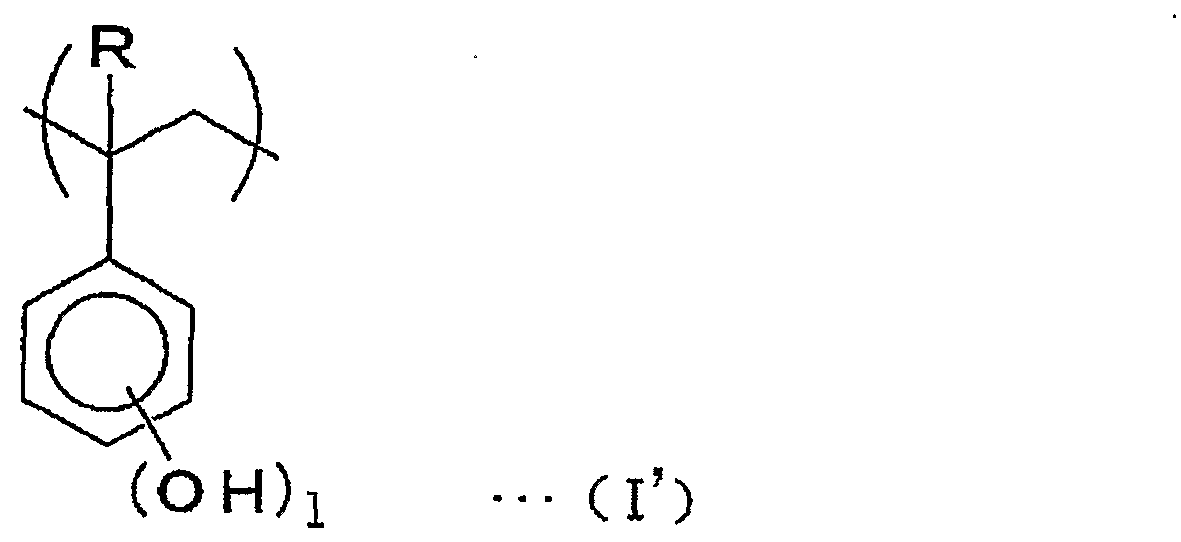


Claims


Priority Applications (4)
| Application Number | Priority Date | Filing Date | Title |
|---|---|---|---|
| DE112004000021T DE112004000021T5 (de) | 2003-05-20 | 2004-05-19 | Positiv-Photoresist-Zusammensetzung vom chemisch verstärkten Typ und Methode zur Bildung eines Resistmusters |
| US10/522,036 US7358028B2 (en) | 2003-05-20 | 2004-05-19 | Chemically amplified positive photo resist composition and method for forming resist pattern |
| JP2005506385A JP4510759B2 (ja) | 2003-05-20 | 2004-05-19 | 化学増幅型ポジ型ホトレジスト組成物の製造方法及びレジストパターン形成方法 |
| US11/622,988 US20070117045A1 (en) | 2003-05-20 | 2007-01-12 | Chemical amplification type positive photoresist composition and resist pattern forming method |
Applications Claiming Priority (4)
| Application Number | Priority Date | Filing Date | Title |
|---|---|---|---|
| JP2003141805 | 2003-05-20 | ||
| JP2003-141805 | 2003-05-20 | ||
| JP2003426503 | 2003-12-24 | ||
| JP2003-426503 | 2003-12-24 |
Related Child Applications (1)
| Application Number | Title | Priority Date | Filing Date |
|---|---|---|---|
| US11/622,988 Continuation US20070117045A1 (en) | 2003-05-20 | 2007-01-12 | Chemical amplification type positive photoresist composition and resist pattern forming method |
Publications (1)
| Publication Number | Publication Date |
|---|---|
| WO2004104702A1 true WO2004104702A1 (ja) | 2004-12-02 |
Family
ID=33478952
Family Applications (1)
| Application Number | Title | Priority Date | Filing Date |
|---|---|---|---|
| PCT/JP2004/007139 Ceased WO2004104702A1 (ja) | 2003-05-20 | 2004-05-19 | 化学増幅型ポジ型ホトレジスト組成物及びレジストパターン形成方法 |
Country Status (7)
| Country | Link |
|---|---|
| US (2) | US7358028B2 (ja) |
| JP (1) | JP4510759B2 (ja) |
| KR (2) | KR100813458B1 (ja) |
| CN (1) | CN1698016A (ja) |
| DE (1) | DE112004000021T5 (ja) |
| TW (1) | TWI282907B (ja) |
| WO (1) | WO2004104702A1 (ja) |
Cited By (17)
| Publication number | Priority date | Publication date | Assignee | Title |
|---|---|---|---|---|
| WO2005116762A1 (ja) * | 2004-05-31 | 2005-12-08 | Tokyo Ohka Kogyo Co., Ltd. | レジスト組成物、レジストパターンの形成方法 |
| JP2006276688A (ja) * | 2005-03-30 | 2006-10-12 | Fuji Photo Film Co Ltd | 化学増幅型レジスト組成物及びそれを用いたパターン形成方法 |
| JP2007171466A (ja) * | 2005-12-21 | 2007-07-05 | Tokyo Ohka Kogyo Co Ltd | レジスト組成物およびレジスト組成物の製造方法 |
| WO2007086249A1 (ja) * | 2006-01-25 | 2007-08-02 | Nissan Chemical Industries, Ltd. | ポジ型感光性樹脂組成物及びそれから得られる硬化膜 |
| JP2008134515A (ja) * | 2006-11-29 | 2008-06-12 | Sumitomo Chemical Co Ltd | 化学増幅型ポジ型レジスト組成物 |
| WO2009093419A1 (ja) * | 2008-01-21 | 2009-07-30 | Daicel Chemical Industries, Ltd. | 化学増幅型フォトレジスト用樹脂及びその製造方法 |
| JP2010152343A (ja) * | 2008-11-19 | 2010-07-08 | Rohm & Haas Electronic Materials Llc | 組成物およびフォトリソグラフィー方法 |
| JP2011502286A (ja) * | 2007-10-30 | 2011-01-20 | ブルーワー サイエンス アイ エヌ シー. | 光像形成性分岐ポリマー |
| JP2012056175A (ja) * | 2010-09-08 | 2012-03-22 | Canon Inc | インクジェットヘッドの製造方法 |
| JP2015194715A (ja) * | 2014-03-20 | 2015-11-05 | 東京応化工業株式会社 | 厚膜用化学増幅型ポジ型感光性樹脂組成物 |
| JP2016089114A (ja) * | 2014-11-10 | 2016-05-23 | Dic株式会社 | 変性ヒドロキシナフタレンノボラック樹脂、変性ヒドロキシナフタレンノボラック樹脂の製造方法、感光性組成物、レジスト材料、及び塗膜 |
| JP2016113587A (ja) * | 2014-12-17 | 2016-06-23 | Dic株式会社 | 変性ノボラック型フェノール樹脂、変性ノボラック型フェノール樹脂の製造方法、感光性組成物、レジスト材料、及びレジスト塗膜 |
| US9567483B2 (en) | 2014-06-10 | 2017-02-14 | Samsung Display Co., Ltd. | Resin composition, method of manufacturing display apparatus by using the same, and display apparatus manufactured by using the method |
| JPWO2020095641A1 (ja) * | 2018-11-07 | 2021-10-07 | 富士フイルム株式会社 | 感放射線性樹脂組成物、レジスト膜、パターン形成方法、電子デバイスの製造方法 |
| JP2023502086A (ja) * | 2019-11-19 | 2023-01-20 | メルク パテント ゲゼルシャフト ミット ベシュレンクテル ハフツング | Pag不含ポジ型化学増幅レジスト組成物及びそれの使用法 |
| WO2023165914A1 (en) | 2022-03-01 | 2023-09-07 | Merck Patent Gmbh | Ion implantation thick film resist composition, method for manufacturing processed substrate using the same and method for manufacturing device using the same |
| KR20250151151A (ko) | 2024-04-12 | 2025-10-21 | 디아이씨 가부시끼가이샤 | 포지티브형 감광성 수지 조성물, 레지스트막, 레지스트 하층막 및 레지스트 영구막 |
Families Citing this family (18)
| Publication number | Priority date | Publication date | Assignee | Title |
|---|---|---|---|---|
| JP2004354609A (ja) * | 2003-05-28 | 2004-12-16 | Tokyo Ohka Kogyo Co Ltd | 化学増幅型ポジ型ホトレジスト組成物およびレジストパターンの形成方法 |
| US20050014093A1 (en) * | 2003-07-17 | 2005-01-20 | Fuji Photo Film Co., Ltd. | Planographic printing plate precursor |
| US8575021B2 (en) * | 2004-11-22 | 2013-11-05 | Intermolecular, Inc. | Substrate processing including a masking layer |
| TWI414889B (zh) * | 2006-03-17 | 2013-11-11 | Sumitomo Chemical Co | Chemically enhanced positive type photoresist composition |
| KR101324645B1 (ko) * | 2006-05-08 | 2013-11-01 | 주식회사 동진쎄미켐 | 포토레지스트 조성물 |
| JP4905786B2 (ja) * | 2007-02-14 | 2012-03-28 | 富士フイルム株式会社 | レジスト組成物及びそれを用いたパターン形成方法 |
| US8110339B2 (en) * | 2007-09-06 | 2012-02-07 | Massachusetts Institute Of Technology | Multi-tone resist compositions |
| US8715918B2 (en) * | 2007-09-25 | 2014-05-06 | Az Electronic Materials Usa Corp. | Thick film resists |
| US8168691B2 (en) * | 2009-02-09 | 2012-05-01 | International Business Machines Corporation | Vinyl ether resist formulations for imprint lithography and processes of use |
| US8168109B2 (en) * | 2009-08-21 | 2012-05-01 | International Business Machines Corporation | Stabilizers for vinyl ether resist formulations for imprint lithography |
| JP5703819B2 (ja) * | 2010-05-14 | 2015-04-22 | Jsr株式会社 | 液晶表示素子、ポジ型感放射線性組成物、液晶表示素子用層間絶縁膜及びその形成方法 |
| KR102378364B1 (ko) * | 2014-07-16 | 2022-03-25 | 삼성디스플레이 주식회사 | 포토레지스트 조성물 및 이를 이용한 표시장치용 기판의 제조방법 |
| CN109844641B (zh) | 2016-08-09 | 2022-10-11 | 默克专利有限公司 | 环境稳定的厚膜的化学放大抗蚀剂 |
| TWI724029B (zh) * | 2016-09-28 | 2021-04-11 | 奇美實業股份有限公司 | 化學增幅型正型感光性樹脂組成物、附有鑄模的基板的製造方法以及電鍍成形體的製造方法 |
| EP4066059B1 (en) * | 2019-11-25 | 2024-02-28 | Merck Patent GmbH | Chemically amplified photoresist |
| US11592252B2 (en) | 2021-03-29 | 2023-02-28 | Blac-Rac Manufacturing, Inc. | Firearm security device with improved retention post |
| CN113419404B (zh) * | 2021-06-29 | 2023-04-18 | 北京科华微电子材料有限公司 | 一种光刻胶组合物 |
| WO2025140899A1 (en) * | 2023-12-28 | 2025-07-03 | Merck Patent Gmbh | Methods for stabilizing a photoactive generator |
Citations (10)
| Publication number | Priority date | Publication date | Assignee | Title |
|---|---|---|---|---|
| JPH03185448A (ja) * | 1989-12-15 | 1991-08-13 | Japan Synthetic Rubber Co Ltd | 感放射線性樹脂組成物 |
| JPH0643651A (ja) * | 1992-07-24 | 1994-02-18 | Japan Synthetic Rubber Co Ltd | 感放射線性樹脂組成物溶液 |
| JPH0968795A (ja) * | 1995-08-31 | 1997-03-11 | Toshiba Corp | 感光性組成物およびその製造方法 |
| JPH10204125A (ja) * | 1996-04-24 | 1998-08-04 | Shin Etsu Chem Co Ltd | 架橋基を有する高分子化合物の製造方法 |
| JPH10207066A (ja) * | 1996-04-24 | 1998-08-07 | Shin Etsu Chem Co Ltd | 化学増幅ポジ型レジスト材料及びパターン形成方法 |
| JP2001109155A (ja) * | 1999-10-12 | 2001-04-20 | Jsr Corp | 感放射線性樹脂組成物 |
| JP2002062656A (ja) * | 2000-08-21 | 2002-02-28 | Tokyo Ohka Kogyo Co Ltd | 架橋形成ポジ型ホトレジスト組成物 |
| JP2002072477A (ja) * | 2000-06-12 | 2002-03-12 | Jsr Corp | 感放射線性樹脂組成物 |
| JP2002099090A (ja) * | 2000-07-19 | 2002-04-05 | Shin Etsu Chem Co Ltd | 化学増幅ポジ型レジスト材料 |
| JP2003050460A (ja) * | 2001-08-06 | 2003-02-21 | Tokyo Ohka Kogyo Co Ltd | 化学増幅型ポジ型液晶素子用レジスト組成物 |
Family Cites Families (19)
| Publication number | Priority date | Publication date | Assignee | Title |
|---|---|---|---|---|
| JPS58194834A (ja) | 1982-06-17 | 1983-11-12 | Tokyo Ohka Kogyo Co Ltd | シクロヘキサノンの精製方法 |
| JP2970879B2 (ja) | 1990-01-30 | 1999-11-02 | 和光純薬工業株式会社 | 化学増幅型レジスト材料 |
| JP3206989B2 (ja) | 1992-11-13 | 2001-09-10 | 富士写真フイルム株式会社 | ポジ型感光性材料 |
| JPH06230574A (ja) | 1993-02-05 | 1994-08-19 | Fuji Photo Film Co Ltd | ポジ型感光性組成物 |
| JPH06289614A (ja) | 1993-04-06 | 1994-10-18 | Tokyo Ohka Kogyo Co Ltd | ネガ型感放射線レジスト組成物 |
| JPH07134412A (ja) | 1993-11-11 | 1995-05-23 | Tokyo Ohka Kogyo Co Ltd | ネガ型放射線感応性レジスト組成物 |
| JP3046225B2 (ja) | 1995-06-15 | 2000-05-29 | 東京応化工業株式会社 | ポジ型レジスト膜形成用塗布液 |
| JP3591743B2 (ja) * | 1996-02-02 | 2004-11-24 | 東京応化工業株式会社 | 化学増幅型レジスト組成物 |
| US5942367A (en) * | 1996-04-24 | 1999-08-24 | Shin-Etsu Chemical Co., Ltd. | Chemically amplified positive resist composition, pattern forming method, and method for preparing polymer having a crosslinking group |
| JPH10268508A (ja) | 1997-01-27 | 1998-10-09 | Shin Etsu Chem Co Ltd | 部分水素化高分子化合物及び化学増幅ポジ型レジスト材料 |
| TW550439B (en) * | 1997-07-01 | 2003-09-01 | Ciba Sc Holding Ag | New oxime sulfonates as latent acids and compositions and photoresists comprising said oxime sulfonates |
| US6072006A (en) * | 1998-11-06 | 2000-06-06 | Arch Specialty Chemicals, Inc. | Preparation of partially cross-linked polymers and their use in pattern formation |
| JP3963624B2 (ja) * | 1999-12-22 | 2007-08-22 | 富士フイルム株式会社 | 遠紫外線露光用ポジ型フォトレジスト組成物 |
| JP4070393B2 (ja) * | 2000-01-17 | 2008-04-02 | 富士フイルム株式会社 | ネガ型レジスト組成物 |
| EP1126321A1 (en) * | 2000-02-10 | 2001-08-22 | Shipley Company LLC | Positive photoresists containing crosslinked polymers |
| EP1136885B1 (en) * | 2000-03-22 | 2007-05-09 | Shin-Etsu Chemical Co., Ltd. | Chemically amplified positive resist composition and patterning method |
| TWI253543B (en) * | 2000-07-19 | 2006-04-21 | Shinetsu Chemical Co | Chemically amplified positive resist composition |
| ATE486301T1 (de) | 2000-08-21 | 2010-11-15 | Tokyo Ohka Kogyo Co Ltd | Vernetzte, positiv arbeitende photoresist- zusammensetzung |
| JP4057807B2 (ja) | 2001-12-03 | 2008-03-05 | 東京応化工業株式会社 | 微細レジストパターン形成方法 |
-
2004
- 2004-05-19 KR KR1020067021725A patent/KR100813458B1/ko not_active Expired - Fee Related
- 2004-05-19 WO PCT/JP2004/007139 patent/WO2004104702A1/ja not_active Ceased
- 2004-05-19 KR KR1020057002750A patent/KR100688109B1/ko not_active Expired - Fee Related
- 2004-05-19 CN CNA2004800006924A patent/CN1698016A/zh active Pending
- 2004-05-19 US US10/522,036 patent/US7358028B2/en not_active Expired - Lifetime
- 2004-05-19 TW TW093114114A patent/TWI282907B/zh not_active IP Right Cessation
- 2004-05-19 DE DE112004000021T patent/DE112004000021T5/de not_active Withdrawn
- 2004-05-19 JP JP2005506385A patent/JP4510759B2/ja not_active Expired - Fee Related
-
2007
- 2007-01-12 US US11/622,988 patent/US20070117045A1/en not_active Abandoned
Patent Citations (10)
| Publication number | Priority date | Publication date | Assignee | Title |
|---|---|---|---|---|
| JPH03185448A (ja) * | 1989-12-15 | 1991-08-13 | Japan Synthetic Rubber Co Ltd | 感放射線性樹脂組成物 |
| JPH0643651A (ja) * | 1992-07-24 | 1994-02-18 | Japan Synthetic Rubber Co Ltd | 感放射線性樹脂組成物溶液 |
| JPH0968795A (ja) * | 1995-08-31 | 1997-03-11 | Toshiba Corp | 感光性組成物およびその製造方法 |
| JPH10204125A (ja) * | 1996-04-24 | 1998-08-04 | Shin Etsu Chem Co Ltd | 架橋基を有する高分子化合物の製造方法 |
| JPH10207066A (ja) * | 1996-04-24 | 1998-08-07 | Shin Etsu Chem Co Ltd | 化学増幅ポジ型レジスト材料及びパターン形成方法 |
| JP2001109155A (ja) * | 1999-10-12 | 2001-04-20 | Jsr Corp | 感放射線性樹脂組成物 |
| JP2002072477A (ja) * | 2000-06-12 | 2002-03-12 | Jsr Corp | 感放射線性樹脂組成物 |
| JP2002099090A (ja) * | 2000-07-19 | 2002-04-05 | Shin Etsu Chem Co Ltd | 化学増幅ポジ型レジスト材料 |
| JP2002062656A (ja) * | 2000-08-21 | 2002-02-28 | Tokyo Ohka Kogyo Co Ltd | 架橋形成ポジ型ホトレジスト組成物 |
| JP2003050460A (ja) * | 2001-08-06 | 2003-02-21 | Tokyo Ohka Kogyo Co Ltd | 化学増幅型ポジ型液晶素子用レジスト組成物 |
Cited By (20)
| Publication number | Priority date | Publication date | Assignee | Title |
|---|---|---|---|---|
| WO2005116762A1 (ja) * | 2004-05-31 | 2005-12-08 | Tokyo Ohka Kogyo Co., Ltd. | レジスト組成物、レジストパターンの形成方法 |
| JP2006276688A (ja) * | 2005-03-30 | 2006-10-12 | Fuji Photo Film Co Ltd | 化学増幅型レジスト組成物及びそれを用いたパターン形成方法 |
| JP2007171466A (ja) * | 2005-12-21 | 2007-07-05 | Tokyo Ohka Kogyo Co Ltd | レジスト組成物およびレジスト組成物の製造方法 |
| WO2007086249A1 (ja) * | 2006-01-25 | 2007-08-02 | Nissan Chemical Industries, Ltd. | ポジ型感光性樹脂組成物及びそれから得られる硬化膜 |
| JP5019055B2 (ja) * | 2006-01-25 | 2012-09-05 | 日産化学工業株式会社 | ポジ型感光性樹脂組成物及びそれから得られる硬化膜 |
| JP2008134515A (ja) * | 2006-11-29 | 2008-06-12 | Sumitomo Chemical Co Ltd | 化学増幅型ポジ型レジスト組成物 |
| JP2011502286A (ja) * | 2007-10-30 | 2011-01-20 | ブルーワー サイエンス アイ エヌ シー. | 光像形成性分岐ポリマー |
| WO2009093419A1 (ja) * | 2008-01-21 | 2009-07-30 | Daicel Chemical Industries, Ltd. | 化学増幅型フォトレジスト用樹脂及びその製造方法 |
| JP2010152343A (ja) * | 2008-11-19 | 2010-07-08 | Rohm & Haas Electronic Materials Llc | 組成物およびフォトリソグラフィー方法 |
| JP2012056175A (ja) * | 2010-09-08 | 2012-03-22 | Canon Inc | インクジェットヘッドの製造方法 |
| JP2015194715A (ja) * | 2014-03-20 | 2015-11-05 | 東京応化工業株式会社 | 厚膜用化学増幅型ポジ型感光性樹脂組成物 |
| US9567483B2 (en) | 2014-06-10 | 2017-02-14 | Samsung Display Co., Ltd. | Resin composition, method of manufacturing display apparatus by using the same, and display apparatus manufactured by using the method |
| JP2016089114A (ja) * | 2014-11-10 | 2016-05-23 | Dic株式会社 | 変性ヒドロキシナフタレンノボラック樹脂、変性ヒドロキシナフタレンノボラック樹脂の製造方法、感光性組成物、レジスト材料、及び塗膜 |
| JP2016113587A (ja) * | 2014-12-17 | 2016-06-23 | Dic株式会社 | 変性ノボラック型フェノール樹脂、変性ノボラック型フェノール樹脂の製造方法、感光性組成物、レジスト材料、及びレジスト塗膜 |
| JPWO2020095641A1 (ja) * | 2018-11-07 | 2021-10-07 | 富士フイルム株式会社 | 感放射線性樹脂組成物、レジスト膜、パターン形成方法、電子デバイスの製造方法 |
| JP2023502086A (ja) * | 2019-11-19 | 2023-01-20 | メルク パテント ゲゼルシャフト ミット ベシュレンクテル ハフツング | Pag不含ポジ型化学増幅レジスト組成物及びそれの使用法 |
| JP7539466B2 (ja) | 2019-11-19 | 2024-08-23 | メルク パテント ゲゼルシャフト ミット ベシュレンクテル ハフツング | Pag不含ポジ型化学増幅レジスト組成物及びそれの使用法 |
| WO2023165914A1 (en) | 2022-03-01 | 2023-09-07 | Merck Patent Gmbh | Ion implantation thick film resist composition, method for manufacturing processed substrate using the same and method for manufacturing device using the same |
| KR20240158299A (ko) | 2022-03-01 | 2024-11-04 | 메르크 파텐트 게엠베하 | 이온 임플란테이션 후막 레지스트 조성물, 이를 사용하는 가공 기판의 제조방법 및 이를 사용하는 디바이스의 제조방법 |
| KR20250151151A (ko) | 2024-04-12 | 2025-10-21 | 디아이씨 가부시끼가이샤 | 포지티브형 감광성 수지 조성물, 레지스트막, 레지스트 하층막 및 레지스트 영구막 |
Also Published As
| Publication number | Publication date |
|---|---|
| US20070117045A1 (en) | 2007-05-24 |
| US20050244740A1 (en) | 2005-11-03 |
| JP4510759B2 (ja) | 2010-07-28 |
| KR20050043915A (ko) | 2005-05-11 |
| KR20060129092A (ko) | 2006-12-14 |
| TWI282907B (en) | 2007-06-21 |
| JPWO2004104702A1 (ja) | 2006-07-20 |
| KR100813458B1 (ko) | 2008-03-13 |
| CN1698016A (zh) | 2005-11-16 |
| TW200426518A (en) | 2004-12-01 |
| US7358028B2 (en) | 2008-04-15 |
| KR100688109B1 (ko) | 2007-03-02 |
| DE112004000021T5 (de) | 2005-07-28 |
Similar Documents
| Publication | Publication Date | Title |
|---|---|---|
| JP4510759B2 (ja) | 化学増幅型ポジ型ホトレジスト組成物の製造方法及びレジストパターン形成方法 | |
| JP4494061B2 (ja) | ポジ型レジスト組成物 | |
| JP2001281886A (ja) | レジストパターン縮小化材料及びそれを使用する微細レジストパターンの形成方法 | |
| WO2008012999A1 (en) | Positive resist composition and method of forming resist pattern | |
| US7504195B2 (en) | Photosensitive polymer and photoresist composition | |
| KR20060026955A (ko) | 레지스트 조성물, 적층체, 및 레지스트 패턴 형성 방법 | |
| US7329478B2 (en) | Chemical amplified positive photo resist composition and method for forming resist pattern | |
| CN100545753C (zh) | 化学放大型正性光致抗蚀剂组合物以及形成抗蚀剂图案的方法 | |
| JP4434570B2 (ja) | 樹脂の製造方法 | |
| WO2007148492A1 (ja) | ポジ型レジスト組成物およびレジストパターン形成方法 | |
| JP2002091001A (ja) | レジスト組成物及びそれに用いるレジスト用基材樹脂 | |
| WO2005026842A1 (ja) | ポジ型レジスト組成物およびレジストパターンの形成方法 | |
| KR101253272B1 (ko) | 감광성 고분자 및 이를 포함하는 포토레지스트 조성물 | |
| WO2006137340A1 (ja) | ネガ型レジスト組成物およびレジストパターン形成方法 | |
| KR100801047B1 (ko) | 중합체 화합물, 상기 중합체 화합물을 함유하는포토레지스트 조성물 및 레지스트 패턴 형성 방법 | |
| KR100825465B1 (ko) | 포토레지스트 조성물 및 레지스트 패턴 형성방법 | |
| KR101286308B1 (ko) | 감광성 화합물 및 이를 포함하는 포토레지스트 조성물 | |
| KR100787852B1 (ko) | 극자외선 및 심자외선용 감광성 고분자 및 이를 포함하는포토레지스트 조성물 | |
| JP5230400B2 (ja) | 樹脂の製造方法 | |
| JP2006309051A (ja) | g線、i線、KrFエキシマレーザーおよび電子線から選ばれる少なくとも2種の露光光源を用いて露光する工程に用いられるポジ型レジスト組成物およびレジストパターン形成方法 | |
| KR20070018332A (ko) | 감광성 고분자 및 이를 포함하는 포토레지스트 조성물 |
Legal Events
| Date | Code | Title | Description |
|---|---|---|---|
| AK | Designated states |
Kind code of ref document: A1 Designated state(s): AE AG AL AM AT AU AZ BA BB BG BR BW BY BZ CA CH CN CO CR CU CZ DE DK DM DZ EC EE EG ES FI GB GD GE GH GM HR HU ID IL IN IS JP KE KG KP KR KZ LC LK LR LS LT LU LV MA MD MG MK MN MW MX MZ NA NI NO NZ OM PG PH PL PT RO RU SC SD SE SG SK SL SY TJ TM TN TR TT TZ UA UG US UZ VC VN YU ZA ZM ZW |
|
| AL | Designated countries for regional patents |
Kind code of ref document: A1 Designated state(s): GM KE LS MW MZ NA SD SL SZ TZ UG ZM ZW AM AZ BY KG KZ MD RU TJ TM AT BE BG CH CY CZ DE DK EE ES FI FR GB GR HU IE IT LU MC NL PL PT RO SE SI SK TR BF BJ CF CG CI CM GA GN GQ GW ML MR NE SN TD TG |
|
| WWE | Wipo information: entry into national phase |
Ref document number: 2005506385 Country of ref document: JP |
|
| WWE | Wipo information: entry into national phase |
Ref document number: 10522036 Country of ref document: US |
|
| 121 | Ep: the epo has been informed by wipo that ep was designated in this application | ||
| WWE | Wipo information: entry into national phase |
Ref document number: 1020057002750 Country of ref document: KR |
|
| WWE | Wipo information: entry into national phase |
Ref document number: 20048006924 Country of ref document: CN |
|
| WWP | Wipo information: published in national office |
Ref document number: 1020057002750 Country of ref document: KR |
|
| RET | De translation (de og part 6b) |
Ref document number: 112004000021 Country of ref document: DE Date of ref document: 20050728 Kind code of ref document: P |
|
| WWE | Wipo information: entry into national phase |
Ref document number: DE |
|
| 122 | Ep: pct application non-entry in european phase |