US11431561B2 - Internet of things - Google Patents
Internet of things Download PDFInfo
- Publication number
- US11431561B2 US11431561B2 US16/466,978 US201716466978A US11431561B2 US 11431561 B2 US11431561 B2 US 11431561B2 US 201716466978 A US201716466978 A US 201716466978A US 11431561 B2 US11431561 B2 US 11431561B2
- Authority
- US
- United States
- Prior art keywords
- sub
- objects
- group
- accordance
- devices
- Prior art date
- Legal status (The legal status is an assumption and is not a legal conclusion. Google has not performed a legal analysis and makes no representation as to the accuracy of the status listed.)
- Active
Links
Images








Classifications
-
- H—ELECTRICITY
- H04—ELECTRIC COMMUNICATION TECHNIQUE
- H04L—TRANSMISSION OF DIGITAL INFORMATION, e.g. TELEGRAPHIC COMMUNICATION
- H04L41/00—Arrangements for maintenance, administration or management of data switching networks, e.g. of packet switching networks
- H04L41/08—Configuration management of networks or network elements
- H04L41/0803—Configuration setting
- H04L41/0806—Configuration setting for initial configuration or provisioning, e.g. plug-and-play
-
- H—ELECTRICITY
- H04—ELECTRIC COMMUNICATION TECHNIQUE
- H04W—WIRELESS COMMUNICATION NETWORKS
- H04W4/00—Services specially adapted for wireless communication networks; Facilities therefor
- H04W4/70—Services for machine-to-machine communication [M2M] or machine type communication [MTC]
-
- G—PHYSICS
- G06—COMPUTING OR CALCULATING; COUNTING
- G06F—ELECTRIC DIGITAL DATA PROCESSING
- G06F16/00—Information retrieval; Database structures therefor; File system structures therefor
- G06F16/10—File systems; File servers
- G06F16/18—File system types
- G06F16/182—Distributed file systems
- G06F16/1824—Distributed file systems implemented using Network-attached Storage [NAS] architecture
-
- G—PHYSICS
- G06—COMPUTING OR CALCULATING; COUNTING
- G06F—ELECTRIC DIGITAL DATA PROCESSING
- G06F16/00—Information retrieval; Database structures therefor; File system structures therefor
- G06F16/10—File systems; File servers
- G06F16/18—File system types
- G06F16/182—Distributed file systems
- G06F16/1834—Distributed file systems implemented based on peer-to-peer networks, e.g. gnutella
-
- H—ELECTRICITY
- H04—ELECTRIC COMMUNICATION TECHNIQUE
- H04L—TRANSMISSION OF DIGITAL INFORMATION, e.g. TELEGRAPHIC COMMUNICATION
- H04L41/00—Arrangements for maintenance, administration or management of data switching networks, e.g. of packet switching networks
- H04L41/12—Discovery or management of network topologies
-
- H—ELECTRICITY
- H04—ELECTRIC COMMUNICATION TECHNIQUE
- H04L—TRANSMISSION OF DIGITAL INFORMATION, e.g. TELEGRAPHIC COMMUNICATION
- H04L41/00—Arrangements for maintenance, administration or management of data switching networks, e.g. of packet switching networks
- H04L41/50—Network service management, e.g. ensuring proper service fulfilment according to agreements
- H04L41/5041—Network service management, e.g. ensuring proper service fulfilment according to agreements characterised by the time relationship between creation and deployment of a service
- H04L41/5054—Automatic deployment of services triggered by the service manager, e.g. service implementation by automatic configuration of network components
-
- H—ELECTRICITY
- H04—ELECTRIC COMMUNICATION TECHNIQUE
- H04L—TRANSMISSION OF DIGITAL INFORMATION, e.g. TELEGRAPHIC COMMUNICATION
- H04L45/00—Routing or path finding of packets in data switching networks
- H04L45/20—Hop count for routing purposes, e.g. TTL
-
- H04L61/1505—
-
- H04L61/2069—
-
- H—ELECTRICITY
- H04—ELECTRIC COMMUNICATION TECHNIQUE
- H04L—TRANSMISSION OF DIGITAL INFORMATION, e.g. TELEGRAPHIC COMMUNICATION
- H04L61/00—Network arrangements, protocols or services for addressing or naming
- H04L61/30—Managing network names, e.g. use of aliases or nicknames
- H04L61/3015—Name registration, generation or assignment
- H04L61/3025—Domain name generation or assignment
-
- H—ELECTRICITY
- H04—ELECTRIC COMMUNICATION TECHNIQUE
- H04L—TRANSMISSION OF DIGITAL INFORMATION, e.g. TELEGRAPHIC COMMUNICATION
- H04L61/00—Network arrangements, protocols or services for addressing or naming
- H04L61/45—Network directories; Name-to-address mapping
- H04L61/4505—Network directories; Name-to-address mapping using standardised directories; using standardised directory access protocols
-
- H—ELECTRICITY
- H04—ELECTRIC COMMUNICATION TECHNIQUE
- H04L—TRANSMISSION OF DIGITAL INFORMATION, e.g. TELEGRAPHIC COMMUNICATION
- H04L61/00—Network arrangements, protocols or services for addressing or naming
- H04L61/50—Address allocation
- H04L61/5069—Address allocation for group communication, multicast communication or broadcast communication
-
- H—ELECTRICITY
- H04—ELECTRIC COMMUNICATION TECHNIQUE
- H04L—TRANSMISSION OF DIGITAL INFORMATION, e.g. TELEGRAPHIC COMMUNICATION
- H04L61/00—Network arrangements, protocols or services for addressing or naming
- H04L61/50—Address allocation
- H04L61/5092—Address allocation by self-assignment, e.g. picking addresses at random and testing if they are already in use
-
- H—ELECTRICITY
- H04—ELECTRIC COMMUNICATION TECHNIQUE
- H04L—TRANSMISSION OF DIGITAL INFORMATION, e.g. TELEGRAPHIC COMMUNICATION
- H04L63/00—Network architectures or network communication protocols for network security
- H04L63/12—Applying verification of the received information
- H04L63/123—Applying verification of the received information received data contents, e.g. message integrity
-
- H—ELECTRICITY
- H04—ELECTRIC COMMUNICATION TECHNIQUE
- H04L—TRANSMISSION OF DIGITAL INFORMATION, e.g. TELEGRAPHIC COMMUNICATION
- H04L67/00—Network arrangements or protocols for supporting network services or applications
- H04L67/01—Protocols
- H04L67/10—Protocols in which an application is distributed across nodes in the network
-
- H—ELECTRICITY
- H04—ELECTRIC COMMUNICATION TECHNIQUE
- H04L—TRANSMISSION OF DIGITAL INFORMATION, e.g. TELEGRAPHIC COMMUNICATION
- H04L67/00—Network arrangements or protocols for supporting network services or applications
- H04L67/01—Protocols
- H04L67/10—Protocols in which an application is distributed across nodes in the network
- H04L67/104—Peer-to-peer [P2P] networks
-
- H—ELECTRICITY
- H04—ELECTRIC COMMUNICATION TECHNIQUE
- H04L—TRANSMISSION OF DIGITAL INFORMATION, e.g. TELEGRAPHIC COMMUNICATION
- H04L67/00—Network arrangements or protocols for supporting network services or applications
- H04L67/01—Protocols
- H04L67/10—Protocols in which an application is distributed across nodes in the network
- H04L67/104—Peer-to-peer [P2P] networks
- H04L67/1044—Group management mechanisms
- H04L67/1046—Joining mechanisms
-
- H—ELECTRICITY
- H04—ELECTRIC COMMUNICATION TECHNIQUE
- H04L—TRANSMISSION OF DIGITAL INFORMATION, e.g. TELEGRAPHIC COMMUNICATION
- H04L67/00—Network arrangements or protocols for supporting network services or applications
- H04L67/01—Protocols
- H04L67/10—Protocols in which an application is distributed across nodes in the network
- H04L67/104—Peer-to-peer [P2P] networks
- H04L67/1087—Peer-to-peer [P2P] networks using cross-functional networking aspects
- H04L67/1093—Some peer nodes performing special functions
-
- H—ELECTRICITY
- H04—ELECTRIC COMMUNICATION TECHNIQUE
- H04L—TRANSMISSION OF DIGITAL INFORMATION, e.g. TELEGRAPHIC COMMUNICATION
- H04L67/00—Network arrangements or protocols for supporting network services or applications
- H04L67/01—Protocols
- H04L67/12—Protocols specially adapted for proprietary or special-purpose networking environments, e.g. medical networks, sensor networks, networks in vehicles or remote metering networks
-
- H04L67/2809—
-
- H—ELECTRICITY
- H04—ELECTRIC COMMUNICATION TECHNIQUE
- H04L—TRANSMISSION OF DIGITAL INFORMATION, e.g. TELEGRAPHIC COMMUNICATION
- H04L67/00—Network arrangements or protocols for supporting network services or applications
- H04L67/2866—Architectures; Arrangements
- H04L67/30—Profiles
- H04L67/303—Terminal profiles
-
- H—ELECTRICITY
- H04—ELECTRIC COMMUNICATION TECHNIQUE
- H04L—TRANSMISSION OF DIGITAL INFORMATION, e.g. TELEGRAPHIC COMMUNICATION
- H04L67/00—Network arrangements or protocols for supporting network services or applications
- H04L67/50—Network services
- H04L67/56—Provisioning of proxy services
- H04L67/562—Brokering proxy services
-
- H—ELECTRICITY
- H04—ELECTRIC COMMUNICATION TECHNIQUE
- H04L—TRANSMISSION OF DIGITAL INFORMATION, e.g. TELEGRAPHIC COMMUNICATION
- H04L69/00—Network arrangements, protocols or services independent of the application payload and not provided for in the other groups of this subclass
- H04L69/18—Multiprotocol handlers, e.g. single devices capable of handling multiple protocols
-
- H—ELECTRICITY
- H04—ELECTRIC COMMUNICATION TECHNIQUE
- H04L—TRANSMISSION OF DIGITAL INFORMATION, e.g. TELEGRAPHIC COMMUNICATION
- H04L69/00—Network arrangements, protocols or services independent of the application payload and not provided for in the other groups of this subclass
- H04L69/22—Parsing or analysis of headers
-
- H—ELECTRICITY
- H04—ELECTRIC COMMUNICATION TECHNIQUE
- H04L—TRANSMISSION OF DIGITAL INFORMATION, e.g. TELEGRAPHIC COMMUNICATION
- H04L9/00—Cryptographic mechanisms or cryptographic arrangements for secret or secure communications; Network security protocols
- H04L9/08—Key distribution or management, e.g. generation, sharing or updating, of cryptographic keys or passwords
- H04L9/0816—Key establishment, i.e. cryptographic processes or cryptographic protocols whereby a shared secret becomes available to two or more parties, for subsequent use
- H04L9/0819—Key transport or distribution, i.e. key establishment techniques where one party creates or otherwise obtains a secret value, and securely transfers it to the other(s)
- H04L9/0825—Key transport or distribution, i.e. key establishment techniques where one party creates or otherwise obtains a secret value, and securely transfers it to the other(s) using asymmetric-key encryption or public key infrastructure [PKI], e.g. key signature or public key certificates
-
- H—ELECTRICITY
- H04—ELECTRIC COMMUNICATION TECHNIQUE
- H04L—TRANSMISSION OF DIGITAL INFORMATION, e.g. TELEGRAPHIC COMMUNICATION
- H04L9/00—Cryptographic mechanisms or cryptographic arrangements for secret or secure communications; Network security protocols
- H04L9/32—Cryptographic mechanisms or cryptographic arrangements for secret or secure communications; Network security protocols including means for verifying the identity or authority of a user of the system or for message authentication, e.g. authorization, entity authentication, data integrity or data verification, non-repudiation, key authentication or verification of credentials
- H04L9/3236—Cryptographic mechanisms or cryptographic arrangements for secret or secure communications; Network security protocols including means for verifying the identity or authority of a user of the system or for message authentication, e.g. authorization, entity authentication, data integrity or data verification, non-repudiation, key authentication or verification of credentials using cryptographic hash functions
- H04L9/3239—Cryptographic mechanisms or cryptographic arrangements for secret or secure communications; Network security protocols including means for verifying the identity or authority of a user of the system or for message authentication, e.g. authorization, entity authentication, data integrity or data verification, non-repudiation, key authentication or verification of credentials using cryptographic hash functions involving non-keyed hash functions, e.g. modification detection codes [MDCs], MD5, SHA or RIPEMD
-
- H—ELECTRICITY
- H04—ELECTRIC COMMUNICATION TECHNIQUE
- H04W—WIRELESS COMMUNICATION NETWORKS
- H04W12/00—Security arrangements; Authentication; Protecting privacy or anonymity
- H04W12/10—Integrity
- H04W12/106—Packet or message integrity
-
- H—ELECTRICITY
- H04—ELECTRIC COMMUNICATION TECHNIQUE
- H04W—WIRELESS COMMUNICATION NETWORKS
- H04W12/00—Security arrangements; Authentication; Protecting privacy or anonymity
- H04W12/60—Context-dependent security
- H04W12/69—Identity-dependent
-
- H—ELECTRICITY
- H04—ELECTRIC COMMUNICATION TECHNIQUE
- H04W—WIRELESS COMMUNICATION NETWORKS
- H04W12/00—Security arrangements; Authentication; Protecting privacy or anonymity
- H04W12/60—Context-dependent security
- H04W12/69—Identity-dependent
- H04W12/76—Group identity
-
- H—ELECTRICITY
- H04—ELECTRIC COMMUNICATION TECHNIQUE
- H04W—WIRELESS COMMUNICATION NETWORKS
- H04W4/00—Services specially adapted for wireless communication networks; Facilities therefor
- H04W4/06—Selective distribution of broadcast services, e.g. multimedia broadcast multicast service [MBMS]; Services to user groups; One-way selective calling services
- H04W4/08—User group management
-
- H—ELECTRICITY
- H04—ELECTRIC COMMUNICATION TECHNIQUE
- H04W—WIRELESS COMMUNICATION NETWORKS
- H04W84/00—Network topologies
- H04W84/18—Self-organising networks, e.g. ad-hoc networks or sensor networks
-
- H—ELECTRICITY
- H04—ELECTRIC COMMUNICATION TECHNIQUE
- H04W—WIRELESS COMMUNICATION NETWORKS
- H04W84/00—Network topologies
- H04W84/18—Self-organising networks, e.g. ad-hoc networks or sensor networks
- H04W84/22—Self-organising networks, e.g. ad-hoc networks or sensor networks with access to wired networks
-
- H04L2209/38—
-
- H—ELECTRICITY
- H04—ELECTRIC COMMUNICATION TECHNIQUE
- H04L—TRANSMISSION OF DIGITAL INFORMATION, e.g. TELEGRAPHIC COMMUNICATION
- H04L2209/00—Additional information or applications relating to cryptographic mechanisms or cryptographic arrangements for secret or secure communication H04L9/00
- H04L2209/56—Financial cryptography, e.g. electronic payment or e-cash
-
- H—ELECTRICITY
- H04—ELECTRIC COMMUNICATION TECHNIQUE
- H04L—TRANSMISSION OF DIGITAL INFORMATION, e.g. TELEGRAPHIC COMMUNICATION
- H04L41/00—Arrangements for maintenance, administration or management of data switching networks, e.g. of packet switching networks
- H04L41/08—Configuration management of networks or network elements
- H04L41/0803—Configuration setting
- H04L41/0813—Configuration setting characterised by the conditions triggering a change of settings
- H04L41/0816—Configuration setting characterised by the conditions triggering a change of settings the condition being an adaptation, e.g. in response to network events
-
- H—ELECTRICITY
- H04—ELECTRIC COMMUNICATION TECHNIQUE
- H04L—TRANSMISSION OF DIGITAL INFORMATION, e.g. TELEGRAPHIC COMMUNICATION
- H04L41/00—Arrangements for maintenance, administration or management of data switching networks, e.g. of packet switching networks
- H04L41/08—Configuration management of networks or network elements
- H04L41/0876—Aspects of the degree of configuration automation
- H04L41/0886—Fully automatic configuration
-
- H—ELECTRICITY
- H04—ELECTRIC COMMUNICATION TECHNIQUE
- H04L—TRANSMISSION OF DIGITAL INFORMATION, e.g. TELEGRAPHIC COMMUNICATION
- H04L41/00—Arrangements for maintenance, administration or management of data switching networks, e.g. of packet switching networks
- H04L41/16—Arrangements for maintenance, administration or management of data switching networks, e.g. of packet switching networks using machine learning or artificial intelligence
-
- H—ELECTRICITY
- H04—ELECTRIC COMMUNICATION TECHNIQUE
- H04L—TRANSMISSION OF DIGITAL INFORMATION, e.g. TELEGRAPHIC COMMUNICATION
- H04L9/00—Cryptographic mechanisms or cryptographic arrangements for secret or secure communications; Network security protocols
- H04L9/50—Cryptographic mechanisms or cryptographic arrangements for secret or secure communications; Network security protocols using hash chains, e.g. blockchains or hash trees
Definitions
- the present techniques relate generally to Internet of Things (IoT) devices. More specifically the present techniques relate to devices that can perform remote sensing and actuation functions.
- IoT Internet of Things
- a current view of the Internet is the connection of clients, such as personal computers, tablets, smart phones, servers, digital photo-frames, and many other types of devices, to publicly-accessible data-centers hosted in server farms.
- clients such as personal computers, tablets, smart phones, servers, digital photo-frames, and many other types of devices
- this view represents a small portion of the overall usage of the globally-connected network.
- a very large number of connected resources currently exist, but are not publicly accessible. Examples include corporate networks, private organizational control networks, and monitoring networks spanning the globe, often using peer-to-peer relays for anonymity.
- IoT internet of things
- IoT devices may provide opportunities for monitoring, tracking, or controlling other devices and items, including further IoT devices, other home and industrial devices, items in manufacturing and food production chains, and the like.
- IoT networks The emergence of IoT networks has served as a catalyst for profound change in the evolution of the Internet. In the future, the Internet is likely to evolve from a primarily human-oriented utility to an infrastructure where humans may eventually be minority actors in an interconnected world of devices.
- the Internet will become a communications system for devices, and networks of devices, to not only communicate with data centers, but with each other.
- the devices may form functional networks, or virtual devices, to perform functions, which may dissolve once the function is performed.
- FIG. 1 is a drawing of interconnections that may be present in the Internet in accordance with some embodiments.
- FIG. 2 is a drawing of a network topology for a number of internet-of-things (IoT) networks coupled through backbone links to gateways in accordance with some embodiments.
- IoT internet-of-things
- FIG. 3 is a drawing of a cloud computing network, or cloud, in communication with a number of IoT devices in accordance with some embodiments.
- FIG. 4 is a drawing of a cloud computing network, or cloud, in communication with a mesh network of IoT devices, which may be termed a fog device, operating at the edge of the cloud in accordance with some embodiments.
- FIG. 5 is a schematic drawing showing the formation of a composite object from a number of atomic objects in accordance with some embodiments.
- FIG. 6 is a schematic drawing of the formation of a group object from a collection of atomic objects and composite objects in accordance with some embodiments.
- FIG. 7 is a process flow diagram of an example method for group creation using a collection of objects in accordance with some embodiments.
- FIG. 8 is a block diagram of an example of components that may be present in an IoT device for offloading data in accordance with some embodiments.
- FIG. 9 is a block diagram of a non-transitory, machine readable medium including code to direct a processor to form group objects in accordance with some embodiments.
- FIG. 10 is a schematic drawing showing the use of Enhanced Privacy Identification (EPID) for object type identity in accordance with some embodiments.
- EPID Enhanced Privacy Identification
- FIG. 11 is a ladder diagram of an example method for dynamic creation of an object type in accordance with some embodiments.
- FIG. 12 is a ladder diagram of an example method for type introspection using recursion in accordance with some embodiments.
- FIG. 13 is a ladder diagram of an example method for recursive type attestation in accordance with some embodiments.
- FIG. 14 is a block diagram of an example of components that may be present in an IoT device for assigning types to composite objects as they are formed in accordance with some embodiments.
- FIG. 15 is a block diagram of a non-transitory, machine readable medium including code to direct a processor to form group objects in accordance with some embodiments.
- FIG. 16 is a schematic drawing of the formation of a coalition group in accordance with some embodiments.
- FIG. 17 is a process flow diagram of an example method for enrolling members in a coalition group in accordance with some embodiments.
- FIG. 18 is a block diagram of an example of components that may be present in an IoT device for creating coalition groups in accordance with some embodiments.
- FIG. 19 is a block diagram of a non-transitory, machine readable medium including code to direct a processor to create coalition groups in accordance with some embodiments.
- FIG. 20 is a schematic diagram of a semi-permissioned distributed ledger transaction in accordance with some embodiments.
- FIG. 21 is a process flow diagram of an example method for performing semi-permissioned transactions in accordance with some embodiments.
- FIG. 22 is a block diagram of an example of components that may be present in an IoT device for creating coalition groups in accordance with some embodiments.
- FIG. 23 is a block diagram of a non-transitory, machine readable medium including code to direct a processor to securely communicate in groups in accordance with some embodiments.
- FIG. 24 is a schematic diagram of the use of a trusted execution environment (TEE) to securely boot a device in an IoT environment in accordance with some embodiments.
- TEE trusted execution environment
- FIG. 25 is a block diagram of a blockchain block holding boot integrity transactions in accordance with some embodiments.
- FIG. 26 is a schematic diagram of the use of a whitelist image collection with a blockchain in accordance with some embodiments.
- FIG. 27 is a drawing of a blockchain block with integrity transactions for whitelist images in accordance with some embodiments.
- FIG. 28 is a process flow diagram of an example method for a secure boot process flow using blockchain roots-of-trust in accordance with some embodiments.
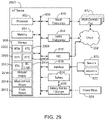
- FIG. 29 is a block diagram of an example of components that may be present in an IoT device for creating coalition groups in accordance with some embodiments.
- FIG. 30 is a block diagram of a non-transitory, machine readable medium including code to direct a processor to securely communicate in groups in accordance with some embodiments.
- FIG. 31 is a schematic drawing illustrating interoperability across public domains, private domains, and public-private domains in accordance with some embodiments.
- FIG. 32 is a schematic drawing of interoperability across a heterogeneous network of wired networks and wireless networks in accordance with some embodiments.
- FIG. 33 is a schematic drawing of an inline routing system connecting two different fog or cloud entities, such as cloud A with cloud B in accordance with some embodiments.
- FIG. 34 is a schematic drawing of in-line routing showing implicit pass-through routing by an IoT device in accordance with some embodiments.
- FIG. 35 is a schematic drawing of an explicit permissioned routing by an IoT device in accordance with some embodiments.
- FIG. 36 is a schematic drawing of an easement layer for in-line routing used for pass through policy control in accordance with some embodiments.
- FIG. 37 is a ladder diagram of an example method for explicit pass-through routing based on permissions in accordance with some embodiments.
- FIG. 38 is a ladder diagram of an example method of for a time limited lease approach for explicit pass-through in accordance with some embodiments.
- FIG. 39 is a block diagram of an example of components that may be present in an IoT device for creating coalition groups in accordance with some embodiments.
- FIG. 40 is a block diagram of a non-transitory, machine readable medium including code to direct a processor to transfer communications between devices through easements in accordance with some embodiments.
- FIG. 41 is a schematic drawing of using a frame structure to carry proof-of-provenance (PoP) information through devices in a network in accordance with some embodiments.
- PoP proof-of-provenance
- FIG. 42 is a schematic diagram of a procedure that may be used to create a PoP transit code or key in accordance with some embodiments.
- FIG. 43 is a process flow diagram of an example method for generating a PoP key in accordance with some embodiments.
- FIG. 44 is a process flow diagram of an example method for verifying the PoP keys in a packet in accordance with some embodiments.
- FIG. 45 is a block diagram of an example of components that may be present in an IoT device for tracking proof-of-provenance in packets in accordance with some embodiments.
- FIG. 46 is a block diagram of a non-transitory, machine readable medium including code to direct a processor to transfer communications between devices through easements in accordance with some embodiments.
- FIG. 47 is a schematic drawing of an example of a packet that includes micropayment information in a token bucket in accordance with some embodiments.
- FIG. 48 is a process flow diagram of an example method for using a token bucket to pass micropayments to transmitting systems in accordance with some embodiments.
- FIG. 49 is a block diagram of an example of components that may be present in an IoT device for using token buckets to facilitate payments in accordance with some embodiments.
- FIG. 50 is a block diagram of a non-transitory, machine readable medium including code to direct a processor to transfer communications between devices based on payments from a token bucket in accordance with some embodiments.
- FIG. 51 is a drawing of a heterogeneous network (hetnet) infrastructure, connecting IP domains to non-IP domains at multiple stages in accordance with some embodiments.
- FIG. 52 is a schematic drawing of protocol packing used to package frames from one protocol into another protocol in accordance with some embodiments.
- FIG. 53 is a schematic drawing of protocol packing used to package a Low Power Wide Area Network (LPWAN) protocol frame, such as a LoRaWAN frame inside an IEEE 802.11 (or Wi-Fi®) media access control (MAC) layer frame in accordance with some embodiments.
- LPWAN Low Power Wide Area Network
- MAC media access control
- FIG. 54 is a process flow diagram of an example method for protocol packing for the transmission of a frame in accordance with some embodiments.
- FIG. 55 is a block diagram of an example of components that may be present in an IoT device to package frames in a first protocol in frames of a different protocol in accordance with some embodiments.
- FIG. 56 is a block diagram of a non-transitory, machine readable medium including code to direct a processor to package frames in a first protocol in frames of a different protocol in accordance with some embodiments.
- FIG. 57 is a drawing of a frame structure that may be used as a payload in a low power wide area (LPWA) frame, such as a LoRaWAN frame in accordance with some embodiments.
- LPWA low power wide area
- FIG. 58 is a schematic drawing of transmission data payload being fragmented into a number of sub-blocks for sending in accordance with some embodiments.
- FIG. 59 is a schematic drawing of Network Division Multiplexing (NDM)-serial-to-parallel transmission in accordance with some embodiments.
- NDM Network Division Multiplexing
- FIG. 60 is a schematic drawing of the reception of the sub-blocks in accordance with some embodiments.
- FIG. 61 is a schematic drawing of the recombination of the sub-blocks to form the received data payload in accordance with some embodiments.
- FIG. 62 is a process flow diagram of an example method for fragmenting and dispatching a payload over multiple parallel communication channels in accordance with some embodiments.
- FIG. 63 is a process flow diagram of an example method for receiving and recombining packets sent using an NDM technique in accordance with some embodiments.
- FIG. 64 is a block diagram of an example of components that may be present in an IoT device for fragmenting payloads for transmission along multiple parallel paths in accordance with some embodiments.
- FIG. 65 is a block diagram of a non-transitory, machine readable medium including code to direct a processor to fragment and transmit payloads along multiple parallel paths in accordance with some embodiments.
- FIG. 66 is a schematic drawing of an overlay beaconing system in which a beaconing node provides a location message to a nearby IoT device in accordance with some embodiments.
- FIG. 67 is a process flow diagram of an example method for generating a location payload in accordance with some embodiments.
- FIG. 68 is a process flow diagram of an example method for parsing a frame that includes a location payload in accordance with some embodiments.
- FIG. 69 is a block diagram of an example of components that may be present in a beacon node for establishing a beacon node system for sharing location data in accordance with some embodiments.
- FIG. 70 is a block diagram of a non-transitory, machine readable medium including code to direct a processor to send and receive location payloads in accordance with some embodiments.
- FIG. 71 is a schematic drawing of a distributed content-distribution system for heterogeneous networks in accordance with some embodiments.
- FIG. 72 is a process flow diagram of an example method for dispersed content distribution in accordance with some embodiments.
- FIG. 73 is a block diagram of an example of components that may be present in an IoT device for implementing a distributed content-distribution system in accordance with some embodiments.
- FIG. 74 is a block diagram of a non-transitory, machine readable medium including code to direct a processor to implement a distributed content-distribution system in accordance with some embodiments.
- FIG. 75 is a schematic drawing of a wireless memory system in accordance with some embodiments.
- FIG. 76 is another schematic drawing of the wireless memory system in accordance with some embodiments.
- FIG. 77 is a process flow diagram of an example method for fragmenting and storing data in a transmission loop between devices in accordance with some embodiments.
- FIG. 78 is a process flow diagram of an example method for data storage and access using a communications channel for storage in accordance with some embodiments.
- FIG. 79 is a block diagram of an example of components that may be present in an IoT device for storing data in transmission channels in accordance with some embodiments.
- FIG. 80 is a block diagram of a non-transitory, machine readable medium including code to direct a processor to fragment and transmit payloads along multiple parallel paths in accordance with some embodiments.
- FIG. 81 is a drawing of a structure that may be used for dynamic signaling in accordance with some embodiments.
- FIG. 82 is a process flow diagram of an example method for transmission of data using a Zadoff-Chu (ZC) preamble structure in accordance with some embodiments.
- ZC Zadoff-Chu
- FIG. 83 is a process flow diagram of an example method for receiving data on multiple channels using the ZC shifted sequence in accordance with some embodiments.
- FIG. 84 is a series of plots illustrating the correlation process detailed in in the above equation for each of the sequences given by K in accordance with some embodiments.
- FIG. 85 is a block diagram of an example of components that may be present in an IoT device for using ZC sequences to send data in multiple simultaneous channels in accordance with some embodiments.
- FIG. 86 is a block diagram of a non-transitory, machine readable medium including code to direct a processor to communicate over channels modulate using ZC sequences in accordance with some embodiments.
- FIG. 87 is a schematic drawing of a multi-radio coexistence system in an IoT device in accordance with some embodiments.
- FIG. 88 is a ladder diagram of an example method of control and management of the operation and coexistence of multiple radios in accordance with some embodiments.
- FIG. 89 is a block diagram of an example of components that may be present in an IoT device for using multiple coexisting radios to communicate with other nodes in accordance with some embodiments.
- FIG. 90 is a block diagram of a non-transitory, machine readable medium including code to direct a processor to communicate over channels modulate using ZC sequences in accordance with some embodiments.
- FIG. 91 is a schematic diagram of a service network overlay function across a heterogeneous network in accordance with some embodiments.
- FIG. 92 is a process flow diagram of an example method for handling new requests for a service in accordance with some embodiments.
- FIG. 93 is a process flow diagram of an example method for registering an endpoint, or service component, with an network domain controller (NDC), or other service coordinator in accordance with some embodiments.
- NDC network domain controller
- FIG. 94 is a block diagram of an example of components that may be present in an IoT device for coordinating or fulfilling service requests in accordance with some embodiments.
- FIG. 95 is a block diagram of a non-transitory, machine readable medium including code to direct a processor, or processors, to coordinate or fulfill service requests in accordance with some embodiments.
- FIG. 96 is a schematic diagram of the ad-hoc formation of a reverse distributed hash table (DHT) network for IoT services in accordance with some embodiments.
- DHT reverse distributed hash table
- FIG. 97 is a schematic diagram of a process for tracking which nodes may be used for storing or transmitting file data in accordance with some embodiments.
- FIG. 98 is a process flow diagram of an example method for targeting storage or sending nodes in accordance with some embodiments.
- FIG. 99 is a process flow diagram of an example method for storing or transmitting data using a distributed hash table (DHT) in accordance with some embodiments.
- DHT distributed hash table
- FIG. 100 is a block diagram of an example of components that may be present in an IoT device for coordinating or fulfilling service requests in accordance with some embodiments.
- FIG. 101 is a block diagram of a non-transitory, machine readable medium including code to direct a processor, or processors, to coordinate or fulfill service requests in accordance with some embodiments.
- FIG. 102 is a schematic diagram of a multi-route communications system depicting three example routes between two endpoints and that may available for potential usage in accordance with some embodiments.
- FIG. 103 is a process flow diagram of an example method for selecting a communication path in accordance with some embodiments.
- FIG. 104 is a block diagram of an example of components that may be present in an IoT device for sending data over multiple communication channels in accordance with some embodiments.
- FIG. 105 is a block diagram of a non-transitory, machine readable medium including code to direct a processor to send data over multiple communication channels in accordance with some embodiments.
- FIG. 106 is a schematic drawing of an IoT gateway for secure communications and translations between domains in accordance with some embodiments.
- FIG. 107 is a process flow diagram of an example method for translating workloads in a secure IoT gateway in accordance with some embodiments.
- FIG. 108 is a block diagram of an example of components that may be present in an IoT gateway for translating workloads between domains in accordance with some embodiments.
- FIG. 109 is a block diagram of a non-transitory, machine readable medium including code to direct a processor to translate a workload between an ingress network and an egress network in accordance with some embodiments.
- FIG. 110 is a schematic diagram of devices that are onboarded by different domains being incorporated by a shared domain created to allow the devices to participate as components of a new domain in accordance with some embodiments.
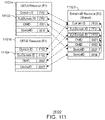
- FIG. 111 is a schematic diagram of the creation of a shared resource to allow a device to participate across domains in accordance with some embodiments.
- FIG. 112 is a process flow diagram of an example method for establishing a combined IoT domain including shared resources in accordance with some embodiments.
- FIG. 113 is a block diagram of an example of components that may be present in an IoT device for creating shared resources in accordance with some embodiments.
- FIG. 114 is a block diagram of a non-transitory, machine readable medium including code to direct a processor to establish shared resources across domains in accordance with some embodiments.
- FIG. 115 is a ladder diagram showing a stages in a product lifecycle for the implementation of a product tracing system in accordance with some embodiments.
- FIG. 116 is a schematic drawing of using private data stores, wherein a record key may be used to access the traceability records for each stage to in accordance with some embodiments.
- FIG. 117 is a schematic drawing of using a public or common data store in accordance with some embodiments.
- FIG. 118 is a schematic diagram of a process for implementing a traceability system in accordance with some embodiments.
- FIG. 119 is a block diagram of an example of components that may be present in an IoT device for providing traceability records for a product in accordance with some embodiments.
- FIG. 120 is a block diagram of a non-transitory, machine readable medium including code to direct a processor to share resources across domains in accordance with some embodiments.
- FIG. 121(A) is a schematic drawing of the hierarchical policy management system used in many current computer networks in accordance with some embodiments.
- FIG. 121(B) is a schematic drawing of policy management in a peer-to-peer (P2P) network, such as an IoT mesh network in accordance with some embodiments.
- P2P peer-to-peer
- FIG. 122 is a schematic diagram of systems in nodes to implement a distributed policy management system in accordance with some embodiments.
- FIG. 123(A) is a ladder diagram of an example method of a new non-configured node attempting to discover policies on a network, for example, from a peer node in accordance with some embodiments.
- FIG. 123(B) is a ladder diagram of an example method of a new non-configured node discovering policies from a configured node in accordance with some embodiments.
- FIG. 124 is a ladder diagram of an example method of a configured node communicating with a node having an updated policy to update the policies of the configured node in accordance with some embodiments.
- FIG. 125 is a ladder diagram of an example method showing the concatenation of policies obtained from different nodes by the configured node in accordance with some embodiments.
- FIG. 126 is a block diagram of an example of components that may be present in an IoT device for the distributed management of policies in accordance with some embodiments.
- FIG. 127 is a block diagram of a non-transitory, machine readable medium including code to direct a processor to manage policies in an IoT network in cooperation with other IoT devices in accordance with some embodiments.
- FIG. 128 is a drawing of a power plug device that may be used to improve the availability of an IoT device in accordance with some embodiments.
- FIG. 129 is a plot of a global state transition based on self-adaptation for the power plug device in accordance with some embodiments.
- FIG. 130 is a process flow diagram of an example method for using a power plug device to increase the reliability of an IoT device in accordance with some embodiments.
- FIG. 131 is a block diagram of an example of components that may be present in a power plug device for increasing the availability of an IoT device in accordance with some embodiments.
- FIG. 132 is a block diagram of a non-transitory, machine readable medium including code to direct a processor to increase the availability of an IoT device in accordance with some embodiments.
- FIG. 133 is a schematic diagram of a failover mechanism for a failed device in accordance with some embodiments.
- FIG. 134 is a process flow diagram of an example method for implementing a failover mechanism using a trusted reliability engine (TRE) in accordance with some embodiments.
- TRE trusted reliability engine
- FIG. 135 is a block diagram of an example of components that may be present in an IoT device for implementing a failover mechanism using a trusted reliability engine in accordance with some embodiments.
- FIG. 136 is a block diagram of a non-transitory, machine readable medium including code to direct a processor to implement a failover mechanism using a trusted reliability engine in accordance with some embodiments.
- FIG. 137 is a schematic diagram of the construction of a key using fractional keys and exchanged between nodes in an IoT network in accordance with some embodiments.
- FIG. 138 is a process flow diagram of an example method for assembling a full key from fractional keys stored in individual nodes in an IoT network in accordance with some embodiments.
- FIG. 139 is a schematic diagram of the assembly of a complete key from fractional keys provided by five nodes A-E in accordance with some embodiments.
- FIG. 140 is a block diagram of an example of components that may be present in an IoT device for assembling multiple fractional keys from different nodes in an IP mesh network into a single complete key in accordance with some embodiments.
- FIG. 141 is a block diagram of a non-transitory, machine readable medium including code to direct a processor to receive fractional keys, assemble the fractional keys into a final key, and use the final key in accordance with some embodiments.
- FIG. 142 is a schematic diagram of a procedure for generating keys on demand for devices on lossy networks in accordance with some embodiments.
- FIG. 143 is a schematic diagram of a key generation method that may be used in the on-demand process for key generation described above, as well as for generating keys in other contexts in accordance with some embodiments.
- FIG. 144 is a process flow diagram of an example method for generating keys in accordance with some embodiments.
- FIG. 145 is a block diagram of an example of components that may be present in an IoT device for generating keys on demand in accordance with some embodiments.
- FIG. 146 is a block diagram of a non-transitory, machine readable medium including code to direct a processor to generate keys on demand in accordance with some embodiments.
- FIG. 147 is a schematic diagram of an entropy multiplexing process for generating a number of seeds that may be used to generate new keys in accordance with some embodiments.
- FIG. 148 is a schematic diagram illustrating a process for generating a location seed tree in accordance with some embodiments.
- FIG. 149 is a process flow diagram of an example method for generating seeds using entropy multiplexing, and using those seeds to generate keys for encrypted communications in accordance with some embodiments.
- FIG. 150 is a block diagram of an example of components that may be present in an IoT device for assembling multiple fractional keys from different nodes in an IP mesh network into a single complete key in accordance with some embodiments.
- FIG. 151 is a block diagram of a non-transitory, machine readable medium including code to direct a processor to use entropy multiplexing to generate a common secret between devices in accordance with some embodiments.
- FIG. 152 is a ladder diagram of an example method for unified key management in an IoT network environment in accordance with some embodiments.
- FIG. 153 is a block diagram of an example of components that may be present in an IoT device for managing keys in a network of IoT mesh devices in accordance with some embodiments.
- FIG. 154 is a block diagram of a non-transitory, machine readable medium including code to direct a processor to manage keys for secure communications in accordance with some embodiments.
- FIG. 155 is a schematic diagram of a process for bootstrap and discovery of a device in accordance with some embodiments.
- FIG. 156 is a process flow diagram of an example method for bootstrapping and discovery of devices in accordance with some embodiments.
- FIG. 157 is a schematic diagram of a process for bootstrap, discovery, and lifecycle of devices using smart contract functions in accordance with some embodiments.
- FIG. 158 is a process flow diagram of an example method for bootstrapping, discovery, and lifecycle of devices using a smart contract in accordance with some embodiments.
- FIG. 159 is a block diagram of an example of components that may be present in an IoT device for bootstrap, discovery, and lifecycle management in accordance with some embodiments.
- FIG. 160 is a block diagram of a non-transitory, machine readable medium including code to direct a processor to manage keys for secure communications in accordance with some embodiments.
- FIG. 161 is a schematic diagram of a process using bloom filter hops to discover resources in accordance with some embodiments.
- FIG. 162 is a process flow diagram of an example method resource discovery using DHT in accordance with some embodiments.
- FIG. 163 is a block diagram of an example of components that may be present in an IoT device for assembling multiple fractional keys from different nodes in an IP mesh network into a single complete key in accordance with some embodiments.
- FIG. 164 is a block diagram of a non-transitory, machine readable medium including code to direct a processor to use a bloom filter hops method for resource discovery in accordance with some embodiments.
- FIG. 165 is a schematic diagram of an example method for a task definition and commissioning in accordance with some embodiments.
- FIG. 166 is a process flow diagram of an example method for protocol conversion brokering by a protocol conversion broker in accordance with some embodiments.
- FIG. 167 is a block diagram of an example of components that may be present in an IoT device to define tasks and commission nodes in accordance with some embodiments.
- FIG. 168 is a block diagram of a non-transitory, machine readable medium including code to define tasks and commission nodes in accordance with some embodiments.
- FIG. 169 is a process flow diagram of an example method to manage a floating service and value in a digital wallet in accordance with some embodiments.
- FIG. 170 is a schematic diagram of an example floating service data structure to manage a floating service and the options, conditions and terms in accordance with some embodiments.
- FIG. 171 is a process flow diagram of an example method for floating service management in accordance with some embodiments.
- FIG. 172 is a block diagram of an example of components that may be present in an IoT device to manage floating services in accordance with some embodiments.
- FIG. 173 is a block diagram of a non-transitory, machine readable medium including code to manage floating services in accordance with some embodiments.
- FIG. 174 is a schematic diagram showing an example permissions guide negotiation process in accordance with some embodiments.
- FIG. 175 is a process flow diagram of an example method for permissions guide negotiation in accordance with some embodiments.
- FIG. 176 is a schematic diagram of an example data structure to assess and assign a value to a unit of data in accordance with some embodiments.
- FIG. 177 is a block diagram of an example of components that may be present in an IoT device for negotiation with valued data units in accordance with some embodiments.
- FIG. 178 is a block diagram of a non-transitory, machine readable medium including code to define tasks and commission nodes in accordance with some embodiments.
- FIG. 179 is a schematic diagram of an example organization for the decentralized network access proxy to use functions in accordance with some embodiments.
- FIG. 180 is a process flow diagram of an example method for a decentralized network access proxy to use functions in accordance with some embodiments.
- FIG. 181 is a block diagram of an example of components that may be present in an IoT device for negotiation with valued data units in accordance with some embodiments.
- FIG. 182 is a block diagram of a non-transitory, machine readable medium including code to define tasks and commission nodes in accordance with some embodiments.
- FIG. 183 is a schematic diagram of an example organization for a decentralized version of providing authentication, authorization, and accounting with a permissions guide in accordance with some embodiments.
- FIG. 184 is a process flow diagram of an example method for a decentralized version of providing authentication, authorization, and accounting with a permissions guide in accordance with some embodiments.
- FIG. 185 is a block diagram of an example of components that may be present in an IoT device for decentralized authorization, authentication, and accounting with an IoT device in accordance with some embodiments.
- FIG. 186 is a block diagram of a non-transitory, machine readable medium including code for decentralized authorization, authentication, and accounting with an IoT device in accordance with some embodiments.
- FIG. 187 is a schematic diagram of a technique for decentralized authorization, authentication, and accounting on an IoT device using Remote Authentication Dial-In User Service (RADIUS) or a DIAMETER protocol in accordance with some embodiments.
- RADIUS Remote Authentication Dial-In User Service
- DIAMETER DIAMETER protocol
- FIG. 188 is a schematic diagram of an action diagram for the components of FIG. 187 to act through a decentralized RADIUS proxy for authorization, authentication, and accounting on an IoT device in accordance with some embodiments.
- FIG. 189 is a ladder diagram of an example method for the components of FIG. 187 to act through a decentralized API 18706 for authorization, authentication, and accounting on an IoT device in accordance with some embodiments.
- FIG. 190 is a schematic diagram of an action diagram for decentralized authorization, authentication, and accounting on an IoT device in accordance with some embodiments.
- FIG. 191 is a block diagram of an example of components that may be present in an IoT device for decentralized authorization, authentication, and accounting with an IoT device in accordance with some embodiments.
- FIG. 192 is a block diagram of a non-transitory, machine readable medium including code to direct a processor for decentralized authorization, authentication, and accounting with an IoT device in accordance with some embodiments.
- FIG. 193 is a schematic diagram of a process for configuring and operating a consensus network using a native decentralized database in accordance with some embodiments.
- FIG. 194 is a process flow diagram of an example method for joining and operating within a consensus network using a native decentralized database in accordance with some embodiments.
- FIG. 195 is a block diagram of an example of components that may be present in an IoT device for joining and operating a decentralized database in accordance with some embodiments.
- FIG. 196 is a block diagram of a non-transitory, machine readable medium including code to direct a processor for joining and operating a decentralized database in accordance with some embodiments.
- FIG. 197 is a schematic diagram of logical division for access control in an IoT object in accordance with some embodiments.
- FIG. 198 is a schematic diagram of logical divisions between a caller credential and a request for access control in an IoT object in accordance with some embodiments.
- FIG. 199 is a schematic diagram of logical divisions between of an object capability for access control using layers in an IoT object in accordance with some embodiments.
- FIG. 200 is a process flow diagram of an example method for access control in an IoT object in accordance with some embodiments.
- FIG. 201 is a block diagram of an example of components that may be present in an IoT device for access control in an IoT object in accordance with some embodiments.
- FIG. 202 is a block diagram of a non-transitory, machine readable medium 19600 including code to direct a processor for access control in an IoT object in accordance with some embodiments.
- FIG. 203 is a process flow diagram of an example method for use by an IoT device to map resources and requirements of self-describing hardware.
- FIG. 204 is a block diagram of an example of components that may be present in an IoT device to map resources and requirements of self-describing hardware in accordance with some embodiments.
- FIG. 205 is a block diagram of a non-transitory, machine readable medium including instructions that, when executed, direct a processor to map resources and requirements of self-describing hardware in accordance with some embodiments.
- FIG. 206 is a process flow diagram of an example method for use by an IoT device to map resources and requirements of self-describing hardware in accordance with some embodiments.
- FIG. 207 is a block diagram of an example of components that may be present in an IoT device for a calculation tool for self-describing hardware in accordance with some embodiments.
- FIG. 208 is a block diagram of a non-transitory, machine readable medium including instructions that, when executed, direct a processor to map resources and requirements of self-describing hardware in accordance with some embodiments.
- FIG. 209 is a process flow diagram of an example method for use by an IoT device to configure signal conditioning circuitry in accordance with some embodiments.
- FIG. 210 is a block diagram of an example of components that may be present in an IoT device to configure signal conditioning circuitry in accordance with some embodiments.
- FIG. 211 is a block diagram of a non-transitory, machine readable medium including instructions that, when executed, direct a processor to configure signal conditioning circuitry in accordance with some embodiments.
- FIG. 212 is a schematic diagram of hierarchical device and network health reporting in accordance with some embodiments.
- FIG. 213 is a schematic diagram of device level bloom filter and shadow filter health reporting in accordance with some embodiments.
- FIG. 214 is a schematic diagram of network level bloom filter reporting of historical intermittent loss of watchdog reporting in accordance with some embodiments.
- FIG. 215 shows a process flow diagram of an example method for use by an IoT device to report health using shadow and bloom filters in accordance with some embodiments.
- FIG. 216 is a block diagram of an example of components that may be present in an IoT device for reporting health of a network and network devices in accordance with some embodiments.
- FIG. 217 is a block diagram of a non-transitory, machine readable medium including code to report health of a network and network devices in accordance with some embodiments.
- FIG. 218 is a schematic diagram of a wireless wide area network (WWAN) where a control channel may be used across each connection in accordance with some embodiments.
- WWAN wireless wide area network
- FIG. 219 is a schematic diagram of a map of a physical area broken into zones in accordance with some embodiments.
- FIG. 220 shows a process flow diagram of an example method for use by an IoT device to report geolocation using time difference of arrival in accordance with some embodiments.
- FIG. 221 is a schematic diagram of a network for determining a time difference based on time of arrival information in a heterogeneous network using, in part, zone ID in accordance with some embodiments.
- FIG. 222 is a schematic diagram of an example control channel frame structure packed in an example low power wide area network frame (LPWAN) in accordance with some embodiments.
- LPWAN low power wide area network frame
- FIG. 223 is a block diagram of an example of components that may be present in an IoT device for discovery of resources and geolocation sector identification in accordance with some embodiments.
- FIG. 224 is a block diagram of a non-transitory, machine readable medium including code to report health of a network and network devices in accordance with some embodiments.
- FIG. 225 is a schematic diagram of a conceptual model of data analytics in accordance with some embodiments.
- FIG. 226 shows a process flow diagram of an example method for use by an IoT device to provide data analytics of IoT systems in accordance with some embodiments.
- FIG. 227 is a block diagram of an example of components that may be present in an IoT device to provide data analytics of IoT systems in accordance with some embodiments.
- FIG. 228 is a block diagram of a non-transitory, machine readable medium including code to report health of a network and network devices.
- FIG. 229 shows a process flow diagram of an example method for use by an IoT device in distributed neural network mapping and resource management in accordance with some embodiments.
- FIG. 230 is a schematic diagram for a distributed neural network mapping for resource management in accordance with some embodiments.
- FIG. 231 is a block diagram of an example of components that may be present in an IoT device for distributed neural network mapping and resource management in accordance with some embodiments.
- FIG. 232 is a block diagram of a non-transitory, machine readable medium including code to report health of a network and network devices in accordance with some embodiments.
- FIG. 233 is a schematic diagram of a hierarchy of blockchains associated with levels in a network hierarchy in accordance with some embodiments.
- FIG. 234 is a process flow diagram of an example method for constructing a blockchain hierarchy in accordance with some embodiments.
- FIG. 235 is expanded view of the Merkle trees described with respect to FIG. 233 in accordance with some embodiments.
- FIG. 236 is a process flow diagram of an example method for searching a blockchain hierarchy using Merkle tree indexes in accordance with some embodiments.
- FIG. 237 is a schematic diagram of a cached Merkle tree stored in a cloud server in accordance with some embodiments.
- FIG. 238 shows a schematic diagram of a distributed Merkle tree cache at the IoT network level H1, as described with respect to FIG. 233 , in accordance with some embodiments.
- FIG. 239 is a schematic diagram of a technique for maintaining a distributed cache with coherency in accordance with some embodiments.
- FIG. 240 is a process flow diagram of an example method to construct a coherent cache for a hierarchy of blockchains in accordance with some embodiments.
- FIG. 241 is a process flow diagram of an example method to maintain a coherent cache for a hierarchy of blockchains in accordance with some embodiments.
- FIG. 242 is a block diagram of an example of components that may be present in an IoT device for implementing hierarchical blockchains with associated indexes in accordance with some embodiments.
- FIG. 243 is a block diagram of a non-transitory, machine readable medium including code to direct a processor to manage keys for secure communications in accordance with some embodiments.
- FIG. 244 is a schematic diagram of using Pub-Sub routing based on bloom filters in accordance with some embodiments.
- FIG. 245 is a schematic diagram of using a whitelist bloom filter for allowing the distribution of content in accordance with some embodiments.
- FIG. 246 is a schematic diagram of using a blacklist bloom filter for preventing the distribution of content in accordance with some embodiments.
- FIG. 247 is a process flow diagram of an example method for implementing Pub-Sub with blacklist or white list bloom filters for content control in accordance with some embodiments.
- FIG. 248 is a block diagram of an example of components that may be present in an IoT device for implementing a Pub-Sub content distribution system using bloom filters in accordance with some embodiments.
- FIG. 249 is a block diagram of a non-transitory, machine readable medium including code to direct a processor to manage a Pub-Sub system using bloom filters for content distribution in accordance with some embodiments.
- FIG. 250 is a schematic diagram of topic notification with encrypted content in accordance with some embodiments.
- FIG. 251(A) is a schematic diagram of a group of routers receiving notifications of a topic that includes encrypted content in accordance with some embodiments.
- FIG. 251(B) is a schematic diagram of a group of routers warming their caches in anticipation of a subscriber requesting an encrypted topic in accordance with some embodiments.
- FIG. 252 is a process flow diagram of an example method for using key management notification and warm Key caching in accordance with some embodiments.
- FIG. 253 is a block diagram of an example of components that may be present in an IoT device for managing topic notification with encrypted content in accordance with some embodiments.
- FIG. 254 is a block diagram of a non-transitory, machine readable medium including code to direct a processor to manage topic notification with encrypted content in accordance with some embodiments.
- FIG. 255 is a schematic diagram of a subscriber obtaining a topic group key in accordance with some embodiments.
- FIG. 256 is a schematic diagram of a publisher generating a subscription bloom filter for notification of subscribers of available topics in accordance with some embodiments.
- FIG. 257 is a ladder diagram of an example method for topic encryption in accordance with some embodiments.
- FIG. 258 is a schematic diagram of the use of multilevel security labels in a publication-subscribe environment in accordance with some embodiments.
- FIG. 259 is a process flow diagram of an example method for implementing bloom filters to apply multi-level security policies to notification messages in accordance with some embodiments.
- FIG. 260 is a block diagram of an example of components that may be present in an IoT device for managing topic notification with encrypted content in accordance with some embodiments.
- FIG. 261 is a block diagram of a non-transitory, machine readable medium including code to direct a processor to manage topic notification with encrypted content in accordance with some embodiments.
- FIG. 262 is a drawing of an example of a shy robot in accordance with some embodiments.
- FIG. 263 is a block diagram of an example of components that may be present in a shy robot in accordance with some embodiments.
- FIG. 264 is a schematic diagram of the operation of the context engine in accordance with some embodiments.
- FIG. 265 is a schematic diagram of the operation to of a swarm of shy robots in accordance with some embodiments.
- FIG. 266 is a process flow diagram of an example method for the operation of a shy robot in a swarm in accordance with some embodiments.
- FIG. 267 is a block diagram of a non-transitory, machine readable medium including code to direct a processor to manage operations of shy robots in accordance with some embodiments.
- FIG. 268 is a schematic diagram of a use case showing drones as pre-first responder devices to a scene within a jurisdiction in accordance with some embodiments.
- FIG. 269 is a process flow diagram of an example method for performing a joining and registration process associated with the single and multiple jurisdictional control zones in FIG. 268 in accordance with some embodiments.
- FIG. 270 is a schematic diagram of trip planning for an emergency responder (ER), or other entity, to determine a route to a destination in accordance with some embodiments.
- ER emergency responder
- FIG. 271 is a schematic diagram of using emergency management (EM) sub-trees at each waypoint in accordance with some embodiments.
- EM emergency management
- FIG. 272 is a process flow diagram of an example method for dynamic configuration of a pre-first responder dispatch (PFRD) network at a scene in accordance with some embodiments.
- PFRD pre-first responder dispatch
- FIG. 273 is a ladder diagram of an example method for beaconing scene information by a PFRD in accordance with some embodiments.
- FIG. 274 is a block diagram of an example of components that may be present in a PFRD in accordance with some embodiments.
- FIG. 275 is a block diagram of a non-transitory, machine readable medium including code to direct a processor to manage operations of pre-first responder devices in accordance with some embodiments.
- the Internet-of-Things is a system in which a large number of computing devices are interconnected to each other and to a communications network (e.g., the Internet) to provide a functionality, such as data acquisition and actuation, at very low levels in networks. Low levels indicate devices that may be located at or near the edges of networks, such as the last devices before the networks end.
- an IoT device may include a device performing a function, such as sensing or control, among others, in communication with other IoT devices and a communications network.
- the IoT device may include an autonomous device or a semiautonomous device configured to perform one or more functions.
- IoT devices can be limited in memory, size, or functionality, allowing larger numbers to be deployed for a similar cost to a smaller number of larger devices.
- an IoT device may be a smart phone, laptop, tablet, PC, and/or other larger device.
- an IoT device may be a virtual device, such as an application on a smart phone or other computing device.
- IoT devices may include IoT gateways, used to couple IoT devices to other IoT devices and to cloud applications, for data storage, process control, and the like.
- Networks of IoT devices may include commercial and home devices, such as water distribution systems, electric power distribution systems, pipeline control systems, plant control systems, light switches, thermostats, locks, cameras, alarms, motion sensors, and the like.
- the IoT devices may be accessible through a controller, such as computers, servers, and other systems, for example, to control systems or access data.
- the controller and the IoT devices can be remotely located from one another.
- the Internet can be configured to provide communications to a large number of IoT devices. Accordingly, as described herein, a number of innovations for the future Internet are designed to address the need for network layers, from central servers, through gateways, down to edge devices, to grow unhindered, to discover and make accessible connected resources, and to support the ability to hide and compartmentalize connected resources. Any number of network protocols and communications standards may be used, wherein each protocol and standard is designed to address specific objectives. Further, the protocols are part of the fabric supporting human accessible services that operate regardless of location, time or space.
- the innovations include service delivery and associated infrastructure, such as hardware and software. The services may be provided in accordance with the Quality of Service (QoS) terms specified in service level and service delivery agreements.
- QoS Quality of Service
- the use of IoT devices and networks present a number of new challenges in a heterogeneous network of connectivity including a combination of wired and wireless technologies as depicted in FIGS. 1 and 2 .
- FIG. 1 is a drawing of interconnections that may be present between the Internet 100 and IoT networks in accordance with some embodiments.
- the interconnections may couple smaller networks 102 , down to the individual IoT device 104 , to the backbone 106 of the Internet 100 .
- the backbone 106 of the Internet 100 To simplify the drawing, not every device 104 , or other object, is labeled.
- top-level providers which may be termed tier 1 (“T1”) providers 108
- T1 tier 1
- T2 secondary or tier 2
- the backbone 106 can include optical fiber links.
- a T2 provider 110 may couple to a tower 112 of an LTE cellular network, for example, by further links, by microwave communications 114 , or by other communications technologies.
- the tower 112 may couple to a mesh network including IoT devices 104 through an LTE communication link 116 , for example, through a central node 118 .
- the communications between the individual IoT devices 104 may also be based on LTE communication links 116 .
- a high-speed uplink 119 may couple a T2 provider 110 to a gateway 120 .
- a number of IoT devices 104 may communicate with the gateway 120 , and with each other through the gateway 120 , for example, over Bluetooth low energy (BLE) links 122 .
- BLE Bluetooth low energy
- the backbone 106 may couple lower levels of service providers to the Internet, such as tier 3 (“T3”) providers 124 .
- T3 provider 124 may be considered a general Internet service provider (ISP), for example, purchasing access to the backbone 106 from a T2 provider 110 and providing access to a corporate gateway 126 and other customers.
- ISP Internet service provider
- a wireless local area network can be used to communicate with IoT devices 104 through Wi-Fi® links 128 .
- a Wi-Fi link 128 may also be used to couple to a low power wide area (LPWA) gateway 130 , which can communicate with IoT devices 104 over LPWA links 132 , for example, compatible with the LoRaWan specification promulgated by the LoRa alliance.
- LPWA low power wide area
- the T3 provider 124 may also provide access to a mesh network 134 through a coordinator device 136 that communicates with the T3 provider 124 using any number of communications links, such as an LTE cellular link, an LPWA link, or a link 138 based on the IEEE 802.15.4 standard, such as Zigbee®.
- Other coordinator devices 136 may provide a chain of links that forms one or more cluster tree of linked devices.
- one or more IoT devices 104 include the appropriate transceiver for the communications with other devices. Further, one or more IoT devices 104 may include other radio, optical, or acoustic transceivers, as well as wired network interfaces, for communications using additional protocols and frequencies. In some aspects, one or more IoT devices 104 includes components described in regard to FIG. 8 .
- the technologies and networks may enable the growth of devices and networks. As the technologies grow, the network may be developed for self-management, functional evolution, and/or collaboration, without needing direct human intervention. Thus, the technologies may enable networks to function without centralized controlled systems.
- the technologies described herein may automate the network management and operation functions beyond current capabilities. Further, the approaches may provide the flexibility to have a centralized control operating without human intervention, a centralized control that is automated, or any combinations thereof.
- FIG. 2 is a drawing of a network topology 200 that may be used for a number of internet-of-things (IoT) networks coupled through backbone links 202 to gateways 204 in accordance with some embodiments. Like numbered items are as described with respect to FIG. 1 . Further, to simplify the drawing, not every device 104 , or communications link 116 , 122 , 128 , or 132 is labeled.
- the backbone links 202 may include any number of wired or wireless technologies, and may be part of a local area network (LAN), a wide area network (WAN), or the Internet.
- topologies in FIG. 2 are hub-and-spoke and the topologies in FIG. 1 are peer-to-peer, it may be observed that these are not in conflict, but that peer-to-peer nodes may behave as hub-and-spoke through gateways. It may also be observed in FIG. 2 that a sub-net topology may have multiple gateways, rendering it a hybrid topology rather than a purely hub-and-spoke topology rather than a strictly hub-and-spoke topology.
- the network topology 200 may include any number of types of IoT networks, such as a mesh network 206 using Bluetooth Low Energy (BLE) links 122 .
- IoT networks such as a mesh network 206 using Bluetooth Low Energy (BLE) links 122 .
- Other IoT networks that may be present include a WLAN network 208 , a cellular network 210 , and an LPWA network 212 . Each of these IoT networks may provide opportunities for new developments, as described herein.
- communications between IoT devices 104 may be protected by a decentralized system for authentication, authorization, and accounting (AAA).
- AAA authentication, authorization, and accounting
- distributed payment, credit, audit, authorization, brokering, arbitration, and authentication systems may be implemented across interconnected heterogeneous infrastructure. This allows systems and networks to move towards autonomous operations.
- machines may contract for human resources and negotiate partnerships with other machine networks. This may allow the achievement of mutual objectives and balanced service delivery against outlined, planned service level agreements as well as achieve solutions that provide metering, measurements and traceability and trackability.
- the creation of new supply chain structures and methods may enable a multitude of services to be created, mined for value, and collapsed without any human involvement.
- the IoT networks may be further enhanced by the integration of sensing technologies, such as sound, light, electronic traffic, facial and pattern recognition, smell, and vibration, into the autonomous organizations.
- sensing technologies such as sound, light, electronic traffic, facial and pattern recognition, smell, and vibration
- the integration of sensory systems may allow systematic and autonomous communication and coordination of service delivery against contractual service objectives, orchestration and quality of service (QoS) based swarming and fusion of resources.
- QoS quality of service
- the mesh network 206 may be enhanced by systems that perform inline data-to-information transforms. For example, self-forming chains of processing resources comprising a multi-link network may distribute the transformation of raw data to information in an efficient manner. This may allow such functionality as a first stage performing a first numerical operation, before passing the result to another stage, the next stage then performing another numerical operation, and passing that result on to another stage.
- the system may provide the ability to differentiate between assets and resources and the associated management of each. Furthermore, the proper components of infrastructure and resource based trust and service indices may be inserted to improve the data integrity, quality assurance, and deliver a metric of data confidence.
- the WLAN network 208 may use systems that perform standards conversion to provide multi-standard connectivity, enabling IoT devices 104 using different protocols to communicate. Further systems may provide seamless interconnectivity across a multi-standard infrastructure comprising visible Internet resources and hidden Internet resources.
- Communications in the cellular network 210 may be enhanced by systems that offload data, extend communications to more remote devices, or both.
- the LPWA network 212 may include systems that perform non-Internet protocol (IP) to IP interconnections, addressing, and routing.
- IP Internet protocol
- FIG. 3 is a drawing 300 of a cloud computing network, or cloud 302 , in communication with a number of Internet of Things (IoT) devices in accordance with some embodiments.
- the cloud 302 may represent the Internet, or may be a local area network (LAN), or a wide area network (WAN), such as a proprietary network for a company.
- the IoT devices may include any number of different types of devices, grouped in various combinations.
- a traffic control group 306 may include IoT devices along streets in a city. These IoT devices may include stoplights, traffic flow monitors, cameras, weather sensors, and the like.
- the traffic control group 306 may be in communication with the cloud 302 through wireless links 308 , such as LPWA links, and the like.
- a wired or wireless sub-network 312 may allow the IoT devices to communicate with each other, such as through a local area network, a wireless local area network, and the like.
- the IoT devices may use another device, such as a gateway 310 to communicate with the cloud 302 .
- IoT devices may include remote weather stations 314 , local information terminals 316 , alarm systems 318 , automated teller machines 320 , alarm panels 322 , or moving vehicles, such as emergency vehicles 324 or other vehicles 326 , among many others.
- Each of these IoT devices may be in communication with other IoT devices, with servers 304 , or both.
- a large number of IoT devices may be communicating through the cloud 302 . This may allow different IoT devices to request or provide information to other devices autonomously.
- the traffic control group 306 may request a current weather forecast from a group of remote weather stations 314 , which may provide the forecast without human intervention.
- an emergency vehicle 324 may be alerted by an automated teller machine 320 that a burglary is in progress. As the emergency vehicle 324 proceeds towards the automated teller machine 320 , it may access the traffic control group 306 to request clearance to the location, for example, by lights turning red to block cross traffic at an intersection in sufficient time for the emergency vehicle 324 to have unimpeded access to the intersection.
- Clusters of IoT devices such as the remote weather stations 314 or the traffic control group 306 , may be equipped to communicate with other IoT devices as well as with the cloud 302 . This may allow the IoT devices to form an ad-hoc network between the devices, allowing them to function as a single device, which may be termed a fog device.
- the fog device is discussed further with respect to FIG. 4 .
- FIG. 4 is a drawing 400 of a cloud computing network, or cloud 302 , in communication with a mesh network of IoT devices, which may be termed a fog device 402 , operating at the edge of the cloud 302 in accordance with some embodiments.
- a fog device 402 is a cluster of devices that may be grouped to perform a specific function, such as traffic control, weather control, plant control, and the like.
- the fog device 402 includes a group of IoT devices at a traffic intersection.
- the fog device 402 may be established in accordance with specifications released by the OpenFog Consortium (OFC), among others. These specifications allow the formation of a hierarchy of computing elements between the gateways 310 coupling the fog device 402 to the cloud 302 and to endpoint devices, such as traffic lights 404 and data aggregators 406 in this example.
- the fog device 402 can leverage the combined processing and network resources that the collective of IoT devices provides. Accordingly, a fog device 402 may be used for any number of applications including, for example, financial modeling, weather forecasting, traffic analyses, and the like.
- traffic flow through the intersection may be controlled by a plurality of traffic lights 404 (e.g., three traffic lights 404 ).
- Analysis of the traffic flow and control schemes may be implemented by aggregators 406 that are in communication with the traffic lights 404 and each other through a mesh network.
- Data may be uploaded to the cloud 302 , and commands received from the cloud 302 , through gateways 310 that are in communication with the traffic lights 404 and the aggregators 406 through the mesh network.
- Shorter-range links 408 may provide local communications between IoT devices that are proximate to the intersection.
- Longer-range links 410 may provide communications between the IoT devices and the gateways 310 . To simplify the diagram, not every communication link 408 or 410 is labeled with a reference number.
- the fog device 402 may be considered to be a massively interconnected network wherein a number of IoT devices are in communications with each other, for example, by the communication links 408 and 410 .
- the network may be established using the open interconnect consortium (OIC) standard specification 1.0 released by the Open Connectivity FoundationTM (OCF) on Dec. 23, 2015. This standard allows devices to discover each other and establish communications for interconnects.
- OIC open interconnect consortium
- Other interconnection protocols may also be used, including, for example, the AllJoyn protocol from the AllSeen alliance, the optimized link state routing (OLSR) Protocol, or the better approach to mobile ad-hoc networking (B.A.T.M.A.N.), among many others.
- communications from one IoT device may be passed along the most convenient path to reach the gateways 310 , for example, the path having the fewest number of intermediate hops, or the highest bandwidth, among others.
- the number of interconnections provide substantial redundancy, allowing communications to be maintained, even with the loss of a number of IoT devices.
- the fog device 402 can include temporary IoT devices.
- not all of the IoT devices may be permanent members of the fog device 402 .
- three transient IoT devices have joined the fog device 402 , a first vehicle 412 , a second vehicle 414 , and a pedestrian 416 .
- the IoT device may be built into the vehicles 412 and 414 , or may be an app on a smart phone carried by the pedestrian 416 .
- Other IoT devices may also be present, such as IoT devices in bicycle computers, motorcycle computers, drones, and the like.
- the fog device 402 formed from the IoT devices may be presented to clients in the cloud 302 , such as the server 304 , as a single device located at the edge of the cloud 302 .
- the control communications to specific resources in the fog device 402 may occur without identifying any specific IoT device within the fog device 402 .
- other IoT devices in the fog device 402 may be able to discover and control a resource, such as an actuator, or other device attached to an IoT device.
- the traffic lights 404 may be wired so as to allow any one of the traffic lights 404 to control lights for the other traffic lights 404 .
- the aggregators 406 may also provide redundancy in the control of the traffic lights 404 and other functions of the fog device 402 .
- the IoT devices may be configured using an imperative programming style, e.g., with each IoT device having a specific function and communication partners.
- the IoT devices forming the fog device 402 may be configured in a declarative programming style, allowing the IoT devices to reconfigure their operations and communications, such as to determine needed resources in response to conditions, queries, and device failures. This may be performed as transient IoT devices, such as the pedestrian 416 , join the fog device 402 .
- the fog device 402 may reconfigure itself to ensure that the pedestrian 416 has sufficient time to make it through the intersection. This may be performed by forming a temporary group of the vehicles 412 and 414 and the pedestrian 416 to control the traffic lights 404 . If one or both of the vehicles 412 or 414 are autonomous, the temporary group may instruct the vehicles to slow down prior to the traffic lights 404 . Further, if all of the vehicles at the intersection are autonomous, the need for traffic signals may be diminished since autonomous vehicles' collision avoidance systems may allow for highly inter-leaved traffic patterns that may be too complex for traffic lights to manage. However, traffic lights 404 may still be important for the pedestrian 416 , cyclists, or non-autonomous vehicles.
- the fog device 402 may reconfigure itself to eliminate those IoT devices from the network. As other transient IoT devices approach the intersection, the fog device 402 may reconfigure itself to include those devices.
- the fog device 402 may include the traffic lights 404 for a number of intersections, such as along a street, along with all of the transient IoT devices along the street. The fog device 402 may then divide itself into functional units, such as the traffic lights 404 and other IoT devices proximate to a single intersection. This type of combination may enable the formation of larger IoT constructs, e.g., groups of IoT devices that perform a particular function, in the fog device 402 .
- an emergency construct or virtual device, may be created that includes all of the traffic lights 404 for the street, allowing control of the traffic flow patterns for the entire street.
- the emergency construct may instruct the traffic lights 404 along the street to stay red for opposing traffic and green for the emergency vehicle, expediting the passage of the emergency vehicle.
- the organic evolution of IoT networks is central to improving or maximizing the utility, availability and resiliency of IoT implementations. Further, the example indicates the usefulness of strategies for improving trust and therefore security.
- the local identification of devices may be important in implementations, as the decentralization of identity ensures a central authority cannot be exploited to allow impersonation of objects that may exist within the IoT networks. Further, local identification lowers communication overhead and latency.
- Blockchains may be used to decentralize identification as they may provide agreement between devices regarding names and identities that are in current use.
- a blockchain is a distributed database of identity records that is made up of data structure blocks.
- the term blockchain may include any one or more of other distributed ledger systems.
- Other distributed ledger approaches include Ripple, Hyperledger, Multichain, Keyless Signature Infrastructure, and the like.
- Each data structure block is based on a transaction, where the issuance of a new name to a device, composite device, or virtual device is one example of a transaction.
- FIG. 5 is a schematic drawing 500 showing the formation of a composite object 502 from a number of atomic objects 504 , 506 , and 508 in accordance with some embodiments.
- An object includes a data model representation of functionality, state and interface semantics that make up a node of a distributed system.
- an object, or IoT object may be a physical device made up of IoT devices, a virtual device formed from a group of physical or virtual devices, or any number of other configurations.
- Objects may interact to accomplish a larger function, goal or workflow.
- Objects may be identified in terms of their type, e.g., the function performed, and instance, e.g., presence.
- Multiple object instances may have the same type identity, but may have unique instance identities. Further, multiple object instances may be organized into groups where an instance of the grouping may have an identity.
- a group of objects that interact in a particular way, given their type, for example, function, state and interface semantics, may represent a composite object.
- the composition itself may have a type and instance abstraction. Hence, composite objects follow the same identity rules as atomic objects. Composition with type and instance properties allows object extensibility through composition.
- the object may last as long as a single device, such as a refrigerator, or only until a current function is completed.
- a refrigerator may be regarded as a composite object 502 consisting of multiple other objects, such as a light, a compressor, a temperature sensor, a thermostat, a water dispenser, an ice maker, and the like.
- the other objects may each be atomic objects 504 , 506 , and 508 , or may themselves be composite objects 502 .
- the ice maker may be composite object 502 formed from atomic objects 504 , 506 , and 508 , such as a temperature sensor, a thermostat, a solenoid-operated water valve, a timer, an ice tray, and the like.
- An example of a virtual composite object 502 made up of a number of physical devices is the intersection and the emergency cluster, described with respect to FIG. 4 .
- object identity may be understood in context of three abstractions: object instance, object type, and meta-identity.
- An object instance is a computational element that occupies finite resources, such as memory, CPU, bandwidth, status, and the like.
- Object instantiation has a lifecycle that involves creation, mutation, and deletion.
- An object type is a logical construct that declares expected or possible behavior, states, and composition. The object type can place constraints on how objects behave and interact when instantiated. The object type can also indicate the types of requests the object can respond to, for example, the interface.
- Meta-identity is a way of defining a meta-data context in which the object may exist.
- An object may not be aware of encapsulating meta-identity.
- Object instances may dynamically apply stereotyping information by defining a group having desired meta-data context then enrolling the object into the group.
- Authentication and identity are collated issues. An object identity cannot be believed if not authenticated. However, authentication without identity has limited utility.
- Asymmetric key signing such as ECDSA (Elliptic Curve Digital Signature Algorithm), RSA, or the like, is useful for authentication under the expectation that the ability to replicate and distribute the private key is restricted. The use of the key establishes proof a principal or agent has access to the key though restricted. Hence, the principal or agent must be authentic.
- the semantics of authentication when applied to object identities, also follows the three abstractions of object instance, object type, and meta-identity.
- the authentication challenge-response establishes that the current interaction can only be with a particular instantiation of the object.
- the authentication challenge-response attests that the current interaction is constrained by the semantics of type identification.
- the authentication challenge-response categorizes the current interaction according to the defined context.
- FIG. 6 is a schematic drawing 600 of the formation of a group object 602 from a collection of atomic objects 604 and composite objects 606 .
- the group object 602 belongs to an object class, which is a subset of the object type.
- An object class for example, might be a heat exchanger, while an object type of the class heat exchanger may be a more specific device, such as a refrigerator, a heat pump, an air-conditioner, an evaporative cooler, and the like.
- EPID Enhanced Privacy ID
- Authenticating an object class may be facilitated using EPID (Enhanced Privacy ID), which is an asymmetric encryption system involving a single public key matched to multiple private keys. A signature generated by any of the private keys can be verified with the single public key.
- the group object 602 may have a single public key, while each of the atomic objects 604 and composite objects 606 are issued a unique private ID.
- the system is not limited to using EPID, but may use other identification techniques, such as shared access signatures.
- object instances may authenticate its class to a verifier.
- f( ) may include using a cryptographic hash of each cx in C.
- f( ) may use an OID (Object Identifer) naming hierarchy where each cx is an OID subtree of a parent OID for C. There may be other methods for computing f( ) as well.
- Extensible composite object class identifiers allow systems of IoT objects to be combined at any time during the lifetime of the device owner 608 hosting the objects.
- a blockchain 610 may track the evolution of composed objects such that authoring tools may be informed by pre-existing compositions.
- a distributed schema library may be formed using the blockchain 610 by supplying a transaction 612 registering the object type identifier, e.g., gid, with the composite object definition, for example, C.
- Current centralized object repository schemes often depend on a single logical service that authoritatively maintains class definitions on central servers. However, a modification to the central servers could result in unauthorized schema changes.
- the use of a blockchain 610 may ensures a threshold consensus exists across a number of IoT devices, for example, in a fog, before an existing object class definition can be changed.
- the blockchain 610 facilitates identification of isomorphic object classifications.
- a new object class is proposed, for example, in a message 614 , the blockchain 610 can be searched to see if C already exists.
- Composing a group object 602 from sub-objects, forming composite objects is an extensibility mechanism for a IoT object model.
- Composed objects can be named using a function that relates the sub-objects, such as “intersection XYZ”.
- the collection of object instances may form the group object 602 when each proposed member of the group sends a message 616 to obtain a message 218 including the credential that identifies the collection.
- EPID is used as the credentialing mechanism
- each object in the collection can interact with each other or other IoT devices as an agent of the collection.
- the blockchain 610 is used by the system to remove the need for trust from the Name Server 620 . If a group name is reused while a group of the same name is currently in use, the blockchain 610 may police the misfeasance of the Name Server 620 .
- the reuse of a group name may be determined by the IoT devices that are storing and monitoring the blockchain 610 . This determination may be made by identifying that a current name request overlaps a previous block that is active and includes the group name.
- the primary collection group member (PCGM), or group object 602 , is configured to determine the group name based on the particular configuration of the collection.
- the PCGM communicates 622 the group name to other collection members, for example, the composite objects 606 and the atomic objects 604 , or another collection member, performs the same operations as the PCGM to arrive at the same group name.
- a function F( ) may compute the collection group name, C2_id, using a set membership logic so as to avoid differences in introspection order non-determinism when different members separately compute a group name.
- the EPID group ID may take a 32-bit or 128-bit value.
- the function F( ) may truncate the high-order 12 bytes.
- FIG. 7 is a process flow diagram of an example method 700 for group creation using a collection of objects in accordance with some embodiments.
- the method 700 may be run using the system 802 described with respect to FIG. 8 .
- the block 702 represents, for example, when a new group object is desired. This may occur when a transient object moves proximate to a current group object, as described with respect to the emergency cluster of FIG. 4 , which may be formed when an emergency vehicle approaches a street.
- the powering of a device such as the refrigerator described with respect to FIGS. 5 and 6 , may initiate the creation of a group object.
- a composite object is formed by maintaining a reference to the ID of each of the atomic (A) or composite (C) sub-objects that will make up the group object in a list in the primary collection group member (PCGM) of the composite object.
- the objects making up the composite object may be determined by the objects needed to accomplish the function, as determined by a consensus of the objects, by a previous program in a device owner, or by any number of other techniques, such as constructing an object with a number of IoT devices.
- a collection group identifier is formed. This may be done by applying a function to the list of object IDs in the PCGM that make up the group object.
- one or more of the sub-objects communicates with a name server, for example, in the device owner, to obtain a group key. This may be performed by using an EPID join protocol.
- the sub-object sends a join message to the name server, and receives an EPID credential, for example, for the C2_ID group object, in return.
- the group name server accepts the name calculated for the group from the list in the PCGM.
- the name server may then commit the name to a blockchain.
- the name server gets the name, e.g., C2_ID, from the blockchain.
- the blockchain is a distributed database of transactions saved at a number of individual IoT devices. The confirmation of the validity of the transactions may be performed by each of the IoT devices, providing multiple confirmations of authenticity and identity.
- a determination is made as to whether the name is already in use, for example, present in an earlier transaction block with no corresponding expiration of the name for the object. If so, at block 716 , a new name may be determined by recursive invocation of F( ), again supplying the group membership values, F′ F(m1, m2, . . . , mn, F(m1, m2, . . . , mn)).
- process flow returns to block 712 for the credentialing of the sub-object. If not, or if it was determined that a requester was not an authorized group member, the process ends at block 732 .
- FIG. 8 is a block diagram of an example of components that may be present in an IoT device 800 for offloading data.
- the IoT device 800 may include any combinations of the components shown in the example.
- the components may be implemented as ICs, portions thereof, discrete electronic devices, or other modules, logic, hardware, software, firmware, or a combination thereof adapted in the IoT device 800 , or as components otherwise incorporated within a chassis of a larger system.
- the block diagram of FIG. 8 is intended to show a high level view of components of the IoT device 800 . However, some of the components shown may be omitted, additional components may be present, and different arrangement of the components shown may occur in other implementations.
- the IoT device 800 may include a processor 802 , which may be a microprocessor, a multi-core processor, a multithreaded processor, an ultra-low voltage processor, an embedded processor, or other known processing element.
- the processor 802 may be a part of a system on a chip (SoC) in which the processor 802 and other components are formed into a single integrated circuit, or a single package, such as the EdisonTM or GalileoTM SoC boards from Intel.
- the processor 802 may include an Intel® Architecture CoreTM based processor, such as a QuarkTM, an AtomTM, an i3, an i5, an i7, or an MCU-class processor, or another such processor available from Intel® Corporation, Santa Clara, Calif.
- processors may be used, such as available from Advanced Micro Devices, Inc. (AMD) of Sunnyvale, Calif., a MIPS-based design from MIPS Technologies, Inc. of Sunnyvale, Calif., an ARM-based design licensed from ARM Holdings, Ltd. or customer thereof, or their licensees or adopters.
- the processors may include units such as an A5-A9 processor from Apple® Inc., a QualcommTM processor from Qualcomm® Technologies, Inc., or an OMAPTM processor from Texas Instruments, Inc.
- the processor 802 may communicate with a system memory 804 over a bus 806 .
- the memory can be random access memory (RAM) in accordance with a Joint Electron Devices Engineering Council (JEDEC) low power double data rate (LPDDR)-based design such as the current LPDDR2 standard according to JEDEC JESD 209-2E (published April 2009), or a next generation LPDDR standard, such as LPDDR3 or LPDDR4 that will offer extensions to LPDDR2 to increase bandwidth.
- the individual memory devices may be of any number of different package types such as single die package (SDP), dual die package (DDP) or quad die package (Q17P).
- CMOS complementary metal-oxide-semiconductor
- CMOS complementary metal-oxide-semiconductor
- BGA ball grid array
- a mass storage 808 may also be coupled to the processor 802 via the bus 806 .
- the mass storage 808 may be implemented via a solid state drive (SSD).
- SSD solid state drive
- Other devices that may be used for the mass storage 808 include flash memory cards, such as SD cards, microSD cards, xD picture cards, and the like, and USB flash drives.
- the mass storage 808 may be on-die memory or registers associated with the processor 802 .
- the mass storage 808 may be implemented using a micro hard disk drive (HDD).
- HDD micro hard disk drive
- any number of new technologies may be used for the mass storage 808 in addition to, or instead of, the technologies described, such resistance change memories, phase change memories, holographic memories, or chemical memories, among others.
- the IoT device 800 may incorporate the 3D XPOINT memories from Intel® and Micron®.
- the components may communicate over the bus 806 .
- the bus 806 may include any number of technologies, including industry standard architecture (ISA), extended ISA (EISA), peripheral component interconnect (PCI), peripheral component interconnect extended (PCIx), PCI express (PCIe), or any number of other technologies.
- ISA industry standard architecture
- EISA extended ISA
- PCI peripheral component interconnect
- PCIx peripheral component interconnect extended
- PCIe PCI express
- the bus 806 may be a proprietary bus, for example, used in a SoC based system.
- Other bus systems may be included, such as an I 2 C interface, I 3 C interface, an SPI interface, point to point interfaces, and a power bus, among others.
- the bus 806 may couple the processor 802 to a mesh transceiver 810 , for communications with other mesh devices 812 .
- the mesh transceiver 810 may use any number of frequencies and protocols, such as 2.4 gigahertz (GHz) transmissions under the IEEE 802.15.4 standard, using the Bluetooth® low energy (BLE) standard, as defined by the Bluetooth® Special Interest Group, or the ZigBee® standard, among others. Any number of radios, configured for a particular wireless communication protocol, may be used for the connections to the mesh devices 812 .
- a WLAN unit may be used to implement Wi-FiTM communications in accordance with the Institute of Electrical and Electronics Engineers (IEEE) 802.11 standard.
- IEEE Institute of Electrical and Electronics Engineers
- wireless wide area communications e.g., according to a cellular or other wireless wide area protocol, can occur via a WWAN unit.
- the mesh transceiver 810 may communicate using multiple standards or radios for communications at different range.
- the IoT device 800 may communicate with geographically proximate devices, e.g., within about 10 meters, using a local transceiver based on BLE, or another low power radio, to save power.
- More distant mesh devices 812 e.g., within about 50 meters, may be reached over ZigBee or other intermediate power radios.
- Both communications techniques may take place over a single radio at different power levels, or may take place over separate transceivers, for example, a local transceiver using BLE and a separate mesh transceiver using ZigBee.
- the mesh transceiver 810 may be incorporated into an MCU as an address directly accessible by the chip, such as in the Curie® units available from Intel.
- An uplink transceiver 814 may be included to communicate with devices in the cloud 302 .
- the uplink transceiver 814 may be LPWA transceiver that follows the IEEE 802.15.4, IEEE 802.15.4g, IEEE 802.15.4e, IEEE 802.15.4k, or NB-IoT standards, among others.
- the IoT device 800 may communicate over a wide area using LoRaWANTM (Long Range Wide Area Network) developed by Semtech and the LoRa Alliance.
- LoRaWANTM Long Range Wide Area Network
- the techniques described herein are not limited to these technologies, but may be used with any number of other cloud transceivers that implement long range, low bandwidth communications, such as Sigfox, and other technologies. Further, other communications techniques, such as time-slotted channel hopping, described in the IEEE 802.15.4e specification may be used.
- radio transceivers 810 and 812 may include an LTE or other cellular transceiver that uses spread spectrum (SPA/SAS) communications for implementing high-speed communications, such as for video transfers.
- SPA/SAS spread spectrum
- any number of other protocols may be used, such as Wi-Fi® networks for medium speed communications, such as still pictures, sensor readings, and provision of network communications.
- the radio transceivers 810 and 812 may include radios that are compatible with any number of 3GPP (Third Generation Partnership Project) specifications, notably Long Term Evolution (LTE), Long Term Evolution-Advanced (LTE-A), Long Term Evolution-Advanced Pro (LTE-A Pro), or Narrow Band IoT (NB-IoT), among others.
- LTE Long Term Evolution
- LTE-A Long Term Evolution-Advanced
- LTE-A Pro Long Term Evolution-Advanced Pro
- NB-IoT Narrow Band IoT
- radios compatible with any number of other fixed, mobile, or satellite communication technologies and standards may be selected. These may include, for example, any Cellular Wide Area radio communication technology, which may include e.g.
- 5G 5th Generation
- GSM Global System for Mobile Communications
- GPRS General Packet Radio Service
- EDGE Enhanced Data Rates for GSM Evolution
- 3GPP Third Generation Partnership Project
- UMTS Universal Mobile Telecommunications System
- FOMA Freedom of Multimedia Access
- 3GPP LTE Long Term Evolution
- 3GPP LTE Advanced Long Term Evolution Advanced
- 3GPP LTE Advanced Pro Long Term Evolution Advanced Pro
- CDMA2000 Code division multiple access 2000
- CDPD Cellular Digital Packet Data
- Mobitex 3G (Third Generation)
- CSD Circuit Switched Data
- HSCSD High-Speed Circuit-Switched Data
- UMTS (3G) Universal Mobile Telecommunications System (Third Generation)
- W-CDMA UMTS
- UMTS Wideband Code Division Multiple Access
- any number of satellite uplink technologies may be used for the uplink transceiver 814 , including, for example, radios compliant with standards issued by the ITU (International Telecommunication Union), or the ETSI (European Telecommunications Standards Institute), among others.
- ITU International Telecommunication Union
- ETSI European Telecommunications Standards Institute
- a network interface controller (NIC) 816 may be included to provide a wired communication to the cloud 302 or to other devices, such as the mesh devices 812 .
- the wired communication may provide an Ethernet connection, or may be based on other types of networks, such as Controller Area Network (CAN), Local Interconnect Network (LIN), DeviceNet, ControlNet, Data Highway+, PROFIBUS, or PROFINET, among many others.
- An additional NIC 816 may be included to allow connect to a second network, for example, a NIC 816 providing communications to the cloud over Ethernet, and a second NIC 816 providing communications to other devices over another type of network.
- the bus 806 may couple the processor 802 to an interface 818 that is used to connect external devices.
- the external devices may include sensors 820 , such as accelerometers, level sensors, flow sensors, temperature sensors, pressure sensors, barometric pressure sensors, and the like.
- the interface 818 may be used to connect the IoT device 800 to actuators 822 , such as power switches, valve actuators, an audible sound generator, a visual warning device, and the like.
- I/O devices may be present within, or connected to, the IoT device 800 .
- a display may be included to show information, such as sensor readings or actuator position.
- An input device such as a touch screen or keypad may be included to accept input.
- a battery 824 may power the IoT device 800 , although in examples in which the IoT device 800 is mounted in a fixed location, it may have a power supply coupled to an electrical grid.
- the battery 824 may be a lithium ion battery, a metal-air battery, such as a zinc-air battery, an aluminum-air battery, a lithium-air battery, a hybrid super-capacitor, and the like.
- a battery monitor/charger 826 may be included in the IoT device 800 to track the state of charge (SoCh) of the battery 820 .
- the battery monitor/charger 826 may be used to monitor other parameters of the battery 824 to provide failure predictions, such as the state of health (SoH) and the state of function (SoF) of the battery 824 .
- the battery monitor/charger 826 may include a battery monitoring integrated circuit, such as an LTC4020 or an LTC2990 from Linear Technologies, an ADT7488A from ON Semiconductor of Phoenix Ariz., or an IC from the UCD90xxx family from Texas Instruments of Dallas, Tex.
- the battery monitor/charger 826 may communicate the information on the battery 824 to the processor 802 over the bus 806 .
- the battery monitor/charger 826 may also include an analog-to-digital (ADC) convertor that allows the processor 802 to directly monitor the voltage of the battery 826 or the current flow from the battery 824 .
- ADC analog-to-digital
- the battery parameters may be used to determine actions that the IoT device 800 may perform, such as transmission frequency, mesh network operation, sensing frequency, and the like.
- a power block 828 may be coupled with the battery monitor/charger 826 to charge the battery 824 .
- the power block 828 may be replaced with a wireless power receiver to obtain the power wirelessly, for example, through a loop antenna in the IoT device 800 .
- a wireless battery charging circuit such as an LTC4020 chip from Linear Technologies of Milpitas, Calif., among others, may be included in the battery monitor/charger 826 . The specific charging circuits chosen depend on the size of the battery 824 , and thus, the current required.
- the charging may be performed using the Airfuel standard promulgated by the Airfuel Alliance, the Qi wireless charging standard promulgated by the Wireless Power Consortium, or the Rezence charging standard, promulgated by the Alliance for Wireless Power, among others.
- the power block 828 may be augmented or replaced with solar panels, a wind generator, a water generator, or other natural power systems.
- the mass storage 808 may include a number of modules to implement the group creation functions described herein. Although shown as code blocks in the mass storage 808 , it may be understood that any of the modules may be fully or partially replaced with hardwired circuits, for example, built into an application specific integrated circuit (ASIC).
- the mass storage 808 may include a sub-object list 830 of atomic objects and composite objects that may be used to form a group object.
- a collection group identifier 832 may use the sub-object list 830 to generate a group id, for example, using a hash formula on the sub-object list 830 .
- a name server 834 may be included to provide name support and commit names to the blockchain 836 .
- the name server 834 may confirm that the name selected is not in current use, and issue credentials to sub-objects to act on behalf of the group object.
- the blockchain 836 includes a transactional database that includes blocks of data that have transactions corresponding to names of group objects, the sub-objects forming the group object, and the current status of the group objects, such as formed, evolved, or dissolved.
- the blockchain 836 may include authorization information, such as public encryption keys for group objects and sub-objects.
- a copy of the blockchain 836 may be kept on a portion or all of the IoT devices in a mesh network. This allows other IoT devices to confirm changes in the blockchain 836 and flag any attempts to change the blockchain 836 without proper authorization.
- the blockchain 836 may be used for any number of other transactions related to security, payments, transactions, and the like, as described herein,
- a proxy broker 838 may provide credentials from the blockchain 836 to sub-objects for a group object if the composition of the group is to be considered private. This may be used, for example, to increase the security of IoT networks located in public places, such as intersections and streets.
- An EPID server 840 may be included to provide encryption services, such as encrypting and decrypting data using a public or private key. Further, the EPID server 840 may provide public keys or other credentials that can be used to authorize sub-objects to act on behalf of a group object, as well as acting as a key verification server. The EPID server 840 may also be used in other applications to form and issue keys, or to generate type identities, as discussed with respect to FIGS. 10 to 15 .
- FIG. 9 is a block diagram of an exemplary non-transitory, machine readable medium 900 including code to direct a processor 902 to form group objects in accordance with some embodiments.
- the processor 902 may access the non-transitory, machine readable medium 900 over a bus 904 .
- the processor 902 and bus 904 may be selected as described with respect to the processor 802 and bus 806 of FIG. 8 .
- the non-transitory, machine readable medium 900 may include devices described for the mass storage 808 of FIG. 8 or may include optical disks, thumb drives, or any number of other hardware devices.
- the non-transitory, machine readable medium 900 may include code 906 to direct the processor 902 to calculate a group name from a list of sub-objects, for example, as described with respect to FIGS. 6 and 7 .
- Code 908 may be included to direct the processor 902 to access a blockchain 910 , for example, for determining if a group object name is in the blockchain 910 , and, if so, the status of the group object.
- the code 908 may also direct the processor 902 to commit transactions to the blockchain 910 once the name has been confirmed.
- the code 908 may also direct the processor 902 to migrate changes to the blockchain 910 to other units in an IoT network.
- the machine readable medium 900 may include code 912 to direct the processor 902 to store the identities of sub-objects for the group object in a list.
- the code 912 may also direct the processor to determine if requests to join the group are from authorized sub-objects. If so, the code 912 may also direct the processor to issue credentials to the requesting sub-objects.
- the machine readable medium 900 may include code 914 to direct the processor to act as a proxy server for providing credentials to sub-objects for a privacy-protected group object.
- the machine readable medium 900 may include code 916 to direct the processor 902 to act as a name server for a group object.
- the machine readable medium 900 may include code 918 to direct the processor 902 to request credentials to join a group, for example, as a sub-object.
- FIG. 10 is a schematic drawing 1000 showing the use of EPID for object type identity in accordance with some embodiments.
- a device owner 1002 includes a type name server 1004 that enrolls new types based on enrollment requests 1006 or 1008 from composite objects 1010 or 1012 .
- enrolling a type or object means registering the type or object in a database or list of types or objects.
- the enrollment may include sending a transaction to a blockchain to store the type.
- a new object type, Tn+1 can be derived through composition of a composite group 1010 or 1012 from sub-objects 1014 to 1018 .
- the type names for the sub-objects 1014 to 1018 may be used to form a new type name for the composite objects 1010 or 1012 .
- the composite object 1010 or 1012 may dynamically determine a type name by inspecting the sub-objects 1014 to 1018 with which it interacts. Two methods may be used for inspecting the configuration of a sub-object 1014 to 1018 .
- a first method as described with respect to the ladder diagram of FIG. 12 , uses introspection.
- the IoT object or other device with a resource model definition, may describe itself when requested.
- the IoT object can be configured to provide the structures, interfaces and semantics implemented by the object when requested.
- the IoT object can describe the structures, interfaces and semantics using a data model language (DML) such as XML Schema, JSON Schema, and/or YANG.
- DML data model language
- the actual implementation may not directly interpret the data model as this could imply slow execution. But testing can be used to show the DM produced by introspection matches the behavior implemented.
- a second method may use attestation to validate the integrity, credentials, or identity of the device.
- attestation is a secure method for disclosing the trust properties of a device or platform, in which the device or platform self-reports the trust properties.
- the trust properties may include the platform manufacturer, certifications achieved by the vendor that reflect security hardening, such as FIPS140-2 for crypto module implementation. Further, ISO9000 may be relevant, as well as vendor processes followed to ensure quality. Attestation typically reveals the hardware, firmware and software versions and patch levels. It may reveal information about keys that are protected by the hardened environment, such as a trusted execute environment (TEE), and information about key types.
- TEE trusted execute environment
- a hardened environment may use a trusted platform module (TPM) to define key types where one type of key cannot be migrated out of the TPM, to a less hardened cryptographic module.
- TPM trusted platform module
- Both introspection and attestation may produce a set containing object membership based on sub-object typing. Further, the two methods may be used together, for example, using the attestation key to confirm that the introspection identity came from a particular unit. All IoT objects are typed, though not all may have a credential that authenticates the type.
- a method for deriving new object type names supports the automated generation of object types. Auto-generation allows useful collections of objects to form a pattern for object replication. A useful collection may then be instantiated more easily elsewhere in the network using the type name and pattern as input parameters.
- the type name server 1004 may use EPID to authenticate the object type identifier by admitting each instance of the same type object into an EPID group using the type name as the group ID.
- a blockchain 1022 can be used to record the creation of dynamically derived types, for example, by committing a transaction 1024 from the type name server 1004 , so that objects of the same type can be instantiated reliably without isomorphic redundancy.
- FIG. 11 is a ladder diagram of an example method 1100 for dynamic creation of an object type in accordance with some embodiments.
- the method 1100 of FIG. 11 may be implemented by the IoT device 1400 described with respect to FIG. 14 .
- a composite object 1102 can send a request 1104 to create a type group, e.g., T1, to a type name server 1106 .
- a type name server 1106 may be included in a device owner 1002 , as described with respect to FIG. 10 , or may be in a central or separate device, such as an aggregator 406 , described with respect to FIG. 4 .
- the type name server 1106 responds to the composite object 1102 with a request for type introspection.
- the request triggers a recursive sending of requests to sub-objects 1112 to provide introspection or attestation information.
- the sub-objects 1112 respond 1114 with the requested information.
- the composite object 1102 may then attest the type using the object instance key in an EPID join request 1118 to the type name server 1106 .
- the type name server 1106 sends a request 1120 to the administrator of the blockchain 1122 for a previous instantiation of the creation event.
- a message 1124 may be received from the administrator of the blockchain 1122 indicating that the type already exists. This may also be performed by a determination by the type name server 1106 that a previous type has already been created with that name and is present in the blockchain 1122 .
- the type name server issues 1126 a request 1128 to create the type in the blockchain 1122 . This may be done by committing the creation transaction to the instantiation of the blockchain 1122 residing in the IoT device that hosts the type name server 1106 .
- other IoT devices storing the blockchain 1122 may fail to validate the new creation, for example, locating another instantiation of the type in the blockchain 1122 they have stored. If a majority fail to validate the creation, it is rejected, and the blockchain 1122 reverts to the previous chain. The type name server 1106 may then rename 1126 the type and retry the creation 1128 .
- the type name server 1106 may then issue an EPID join request 1132 to the composite object 1102 .
- the EPID join request 1132 includes the EPID credentials for the type. These may be shared with the sub-objects 1112 directly by the composite object 1102 , or the sub-objects 1112 may send a join request with the new type name to have the type name server 1106 provide the credentials.
- FIG. 12 is a ladder diagram of an example method 1200 for type introspection using recursion in accordance with some embodiments. Like numbered items are as discussed with respect to FIG. 11 .
- the method 1200 of FIG. 12 may be implemented by the IoT device 1400 described with respect to FIG. 14 .
- the introspection provides a connection graph stemming from a composite object to leaf objects. Leaf objects are otherwise known as atomic objects because they do not have sub-objects.
- the composite object 1102 can send a command 1202 to a sub-object 1204 to instruct the sub-object 1204 to perform an introspection. If the sub-object 1204 is an atomic object, it returns a signature as identification of type. If the sub-object 1204 is, itself, a composite object, it sends a command 1206 to each sub-sub-object 1208 forming the sub-object 1204 to perform an introspection. This occurs recursively from the composite object 1102 to each sub-object 1204 and from each sub-object 1204 to each sub-sub-object 1208 , as indicated by a command 1210 sent to a lower layer, and a type graph 1212 or 1214 returned from the lower layer.
- Introspection uses recursion as a method for walking a sub-object graph.
- the recursion halts given one of two possible conditions, first if an atomic object is encountered and second if an already encountered object is encountered again.
- Recursive walking of the sub-object graph produces a tree (directed acyclic graph) consisting of at least and at most one way to reach every node in the graph.
- the current node Upon return from the recursive walk of the tree, the current node populates an entry in a manifest forming a tree structure containing the object's type information. If the object possesses an instance key, the type information is signed.
- G′′ (gn+2
- the resultant manifest is used by the composite object 1102 , as the root object, to generate 1218 its own type name. This may also include a locally scoped property name as input to the function F( ) used to generate a type name.
- the manifest may be supplied to a Type Name Server 1106 , as discussed with respect to FIG. 11 , which may verify the signatures and construction of the type name.
- the Type Name Server 1106 may check for a prior type name reservation in a blockchain. If an original type name is found and a credential is issued, a blockchain may be updated enabling independent verification of type name reservation status.
- FIG. 13 is a ladder diagram of an example method 1300 for recursive type attestation in accordance with some embodiments.
- the method 1300 of FIG. 13 may be implemented by the IoT device 1400 described with respect to FIG. 14
- Recursive object attestation is similar to recursive object introspection with the distinction that type information may be signed using a type name credential, for example, programmed into the device, or formed from a credential programmed into the device.
- the type name may identify a previously enrolled type, hence a blockchain may contain a historical record of its type hierarchy. Accordingly, use of a type credential may halt recursion.
- authenticated type termination may be ignored as a method for re-verifying a type hierarchy.
- the composite object 1102 sends a command 1302 to a sub-object 1204 to instruct the sub-object 1204 to send an attestation credential. If the sub-object 1204 is an atomic object, it returns an object credential as identification of type. If the sub-object 1204 is, itself, a composite object, it sends a command 1304 to each sub-sub-object 1208 forming the sub-object 1204 to send an attestation credential. This occurs recursively from the composite object 1102 to each sub-object 1204 and from each sub-object 1204 to each sub-sub-object 1208 , as indicated by a command 1306 sent to a lower layer, and a type graph 1308 returned from the lower layer.
- a similar type graph 1310 is returned from each sub-sub-object 1208 to the sub-object 1204 .
- a type graph 1312 may then be returned from each sub-object 1204 to the composite object 1102 .
- the composite object 1102 may then verify 1314 each signature.
- FIG. 14 is a block diagram of an example of components that may be present in an IoT device 1400 for assigning types to composite objects as they are formed in accordance with some embodiments. Like numbered items are as described with respect to FIGS. 3 and 8 . It can be noted that different components may be selected and used for the IoT device 800 discussed with respect to FIG. 8 , and the IoT Device 1400 discussed with respect to FIG. 14 .
- the mass storage 808 may include a number of modules to implement the type creation functions described herein. Although shown as code blocks in the mass storage 808 , it may be understood that any of the modules may be fully or partially replaced with hardwired circuits, for example, built into an application specific integrated circuit (ASIC).
- the mass storage 808 may include a type name server 1402 that lists atomic object types and composite objects types that may be used to form a group object.
- the type name server 1402 may issue a command to a type inspector 1404 to determine the types of sub-objects and sub-sub-objects forming a composite object.
- the type inspector 1404 may perform a recursive inspection of mesh devices 812 using introspection or attestation.
- a type graph generator 1406 may generate a type graph using the responses from the sub-objects and sub-sub-objects, including type graphs generated by lower level objects.
- a type name calculator 1408 may be used to generate a type name from the type graph generated, for example, by calculating a hash function of the entries in the type graph.
- Type credentials 1410 may be included to identify the type of the IoT device 1400 .
- the type credentials 1410 may include credentials programmed into the device by the manufacturer, for example, for attestation, or credentials provided to the IoT device 1400 by another device, for example, for attestation.
- a combined type credential may be created, using a credential manufactured into the device to validate or encrypt a credential provided to the device.
- a blockchain 836 may be included in the IoT device 1400 to record type name transactions, in addition to other information, such as group name transactions. As described herein, the blockchain 836 transactions may be validated by a majority vote of mesh devices 812 that are also storing copies of the blockchain 836 .
- FIG. 15 is a block diagram of an exemplary non-transitory, machine readable medium 1500 including code to direct a processor 902 to form group objects in accordance with some embodiments.
- the processor 902 may access the non-transitory, machine readable medium 1500 over a bus 904 .
- the processor 902 and bus 904 may be selected as described with respect to the processor 802 and bus 806 of FIG. 8 .
- the non-transitory, machine readable medium 1500 may include devices described for the mass storage 808 of FIG. 8 or may include optical disks, thumb drives, or any number of other hardware devices.
- the non-transitory, machine readable medium 1500 may include code 1502 to direct the processor 902 to perform a recursive type introspection to determine the types of devices in a composite object.
- Code 1504 may be included to direct the processor 902 to perform a sequential attestation to determine the types of devices in a composite object.
- Code 1506 may be included to direct the processor 902 to build a type graph with information returned from sub-objects and sub-sub-objects.
- Code 1508 may be included to direct the processor 902 to calculate a type name for the type, for example, calculating a hash function from the type graph.
- Code 1510 may be included to direct the processor 902 to determine if the type name is already in the blockchain and, if not, to commit the type name to the block chain.
- the code 910 may also direct the processor 902 to migrate changes to the blockchain stored in other devices in the mesh network.
- Code 1512 may be included to direct the processor 902 to send out EPID join requests to sub-objects create the type group. If the name is not created, for example, due to a redundancy or other fault in the blockchain records, code 1514 may be included to direct the processor 902 to regenerate the type name and repeat the commit process.
- FIG. 16 is a schematic drawing of the formation of a coalition group 1600 in accordance with some embodiments.
- IoT networks may form a loose coalition of objects that may not regularly interact, termed a coalition group 1600 .
- labeling the objects as part of a group abstraction may provide semantic value.
- Coalition groups 1600 can be formed by administrative decisions, for example, to indicate a region, location, or general purpose, such as devices located on a floor or in an apartment in a single building.
- An administrative authority such as a device owner 1602 , may choose the group identifier that the grouped devices use, for example, through a coalition group name server 1604 .
- Coalition group members 1606 may enroll in a coalition group 1600 by sending a join request 1608 to the device owner 1602 .
- credentials 1610 may be provided to the group members, including EPID credentials.
- the credentials 1610 may be further provided to sub-objects 1612 by the coalition group members 1606 , for example, through intra object interfaces 1614 .
- the coalition group name may be accessed from a blockchain 1616 , or committed to the blockchain 1616 upon creation.
- a credential for a coalition group 1600 allows the coalition group member 1606 to authenticate without revealing a value that may be used for tracking privacy.
- criteria for membership may be esoteric where the size of the group is used to determine the degree of privacy risk associated with use of the credential.
- Enrollment in a coalition group 1600 by an IoT device, or object allows the object to inherit properties and attributes of the coalition group 1600 .
- These properties and attributes for the coalition group members 1606 may not incorporate code, state or interfaces that process group properties and attributes. Nevertheless, other entities may name properties and attributes to sort, categorize, route, manage or perform analysis. In this sense, coalition grouping is a strategy for dynamic application of object meta-data.
- FIG. 17 is a process flow diagram of an example method 1700 for enrolling members in a coalition group in accordance with some embodiments.
- the method 1700 of FIG. 17 may be implemented by the IoT device 1800 described with respect to FIG. 18 .
- the block 1702 represents, for example, when a group of IoT devices are powered or otherwise activated, for example, when a virtual device is started.
- the network domain owner defines groups (G1, G2, . . . , Gn).
- a group may include a locality designation, such as upstairs, downstairs, and the like, or a functional designation, such as admin, climate control, and the like, and may include combinations of locality and function, such as evacuation, entry routes at a stadium, and the like. Any number of other designations may be used.
- the coalition group name is selected to provide useful metadata to a system.
- a request may be received from an object, for example, O1, to join the group, G1.
- EPID join parameters may be received from the object, O1. These may be sent in response to a request from the group device owner.
- a coalition group name server verifies the join request from O1.
- the request may be authenticated using any variety of credentials or techniques.
- the coalition group name server may check the instance, authority, or type name credentials to determine if the values are in the blockchain. In higher security applications, all of the credentials may be required to be correct before allowing the device to join the coalition group. Similarly, in lower security applications, the coalition group name server may not require credentials in enroll a device in a coalition group. If the request is determined to be valid at block 1716 , at block 1718 , a coalition group credential, such as an EPID, may be issued to the object O1. If the request is not determined to be valid, the process ends at block 1720 without the issuance of the credentials.
- a coalition group credential such as an EPID
- FIG. 18 is a block diagram of an example of components that may be present in an IoT device 1800 for creating coalition groups in accordance with some embodiments. Like numbered items are as described with respect to FIGS. 3 and 8 . It can be noted that different components may be selected and used for the IoT device 800 discussed with respect to FIG. 8 , and the IoT Device 1800 discussed with respect to FIG. 18 .
- the mass storage 808 may include a number of modules to implement the creation of coalition groups as described herein. Although shown as code blocks in the mass storage 808 , it may be understood that any of the modules may be fully or partially replaced with hardwired circuits, for example, built into an application specific integrated circuit (ASIC).
- the mass storage 808 may include a coalition group name server 1802 including convenient groupings for objects. As discussed herein, the groups may be formed based on location, functionality, or a combination. A user may define the parameters to be used for the grouping.
- the type name server 1802 may build and maintain a coalition group member list 1804 to generate a name for the coalition group.
- a publisher 1806 may make the characteristics of the group, including types, locations, and other metadata, available to other IoT devices, so that those IoT devices may determine if they should join the group. This may be performed, for example, by publishing the group name and composition to a blockchain 836 .
- the blockchain 836 may be included in the IoT device 1800 to record coalition group name transactions, in addition to other information, such as type name transactions and composite object transactions. As described herein, the blockchain 836 transactions may be validated by a majority vote of mesh devices 812 that are also storing copies of the blockchain 836 .
- a credential verifier 1808 may be included to receive credentials from IoT devices and composite objects that wish to join the coalition.
- the credential verifier 1808 may be checked against transactions in the blockchain 836 to determine if the credentials are valid. If so, the credential verifier 1808 may obtain credentials from the EPID server 840 and issue them to the IoT device or composite object that sent the join request. The credential verifier 1808 may then commit the transaction to the block chain 836 to record that the IoT device or composite object has joined the coalition group.
- FIG. 19 is a block diagram of a non-transitory, machine readable medium 1900 including code to direct a processor 902 to create coalition groups in accordance with some embodiments.
- the processor 902 may access the non-transitory, machine readable medium 1900 over a bus 904 .
- the processor 902 and bus 904 may be selected as described with respect to the processor 802 and bus 806 of FIG. 8 .
- the non-transitory, machine readable medium 1900 may include devices described for the mass storage 808 of FIG. 8 or may include optical disks, thumb drives, or any number of other hardware devices.
- the non-transitory, machine readable medium 1900 may include code 1902 to direct the processor 902 to define coalition groups, for example, by locations, function, or both.
- Code 1904 may be included to direct the processor 902 to determine if a coalition group is discoverable, for example, set up to respond to a discovery request with meta-data identifying the coalition group.
- Code 1906 may be included to direct the processor 902 to publish the coalition group to a blockchain, or directly to surrounding devices. This may make the presence of the coalition group known, discoverable, or both.
- Code 1908 may be included to direct the processor 902 to accept a join request for the coalition group from IoT devices, including atomic objects, composite objects, or both.
- the join request may identify the coalition group, and include verification information, such as location, type, and other credentials or metadata.
- Code 1910 may be included to direct the processor 902 to validate the credentials, for example, determining if they are present in the blockchain.
- Code 1912 may be included to issue credentials to the requestor, such as an EPID key.
- IoT devices may need to be secured, but this may be problematic for devices that are of limited functionality. Further, the IoT devices may be distributed across different networks, making securing the communications more challenging. A distributed ledger system may enhance security in communications by IoT devices.
- FIG. 20 is a schematic diagram of enabling communications between devices using a semi-permissioned distributed ledger transaction 2000 in accordance with some embodiments.
- a semi-permissioned distributed-ledger system uses Enhanced Privacy Id (EPID) keys to introduce transaction keys into the ledger.
- a namespace authority termed a Distributed Ledger Enumeration Authority (DLEA) 2002 allocates a unique number to an instance of a ledger.
- the DLEA 2002 may be operated by the Internet Assigned Numbers Authority (IANA), a public agency, a private entity, or any entity that manages a number space by taking steps to avoid reuse of numbers in use.
- IANA Internet Assigned Numbers Authority
- the algorithm used by the DLEA 2002 for assigning names/numbers may be distributed because the number space is sparse in relation to the assigned numbers in use. Thus, the possibility of collisions is small. Hence it is possible that multiple instances of the DLEA 2002 could operate independently. Accordingly, the DLEA 2002 may be hosted across geo-political boundaries where there isn't a need for a central controlling authority such as a government or the UN or a single large private organization. Further, the independence of distributed blockchains may not be compromised by a centralized naming authority.
- the operational integrity of the DLEA 2002 may be cross-checked using a public distributed ledger system that publishes DLEA numbers in use.
- This ledger, DLS-0 2004 is assigned the value of zero ‘0’ and is off limits for the DLEA 2002 to assign.
- the proper behavior of the DLEA number assignment may be strengthened by implementing the number space allocation algorithm in a trusted execution environment (TEE) such as an Intel SGX enclave, an ARM TrustZone, or a hardware security module (HSM), among others. In these environments, the number assignment algorithm may be confirmed by the global community of experts.
- TEE trusted execution environment
- HSM hardware security module
- a participant may send a request 2008 for an identifying number for communication transactions, e.g., DLS-X #, to the DLEA 2002 .
- the request may take the form [request DLS-X #, K TxRoot ] K TxRoot , in which the information in the brackets is the message, and the number outside the brackets is the public key for P1 2006 , K TxRoot , which indicates a signing of the message.
- the DLEA 2002 may assign a unique number to an instance of a semi-permissioned distributed ledger system (DLS), and post 2010 the DLEA allocated number to DLS-0 2004 along with the public key, K TxRoot .
- DLS-0 2004 is the public distributed ledger system (DLS) and is only writable by the DLEA 2002 , but is visible to all.
- P1 2006 may monitor 2012 the ledger, DLS-0 2004 , to determine when the assignment of a new key, X, has been recorded.
- the assigned number, X may be used by P1 2006 as the root or starting key of a newly formed ledger, DLS-X 2014 . This may be performed by creating the ledger, DLS-X 2014 , by committing a message 2016 to the new ledger DLS-X 2014 : [K TxRoot ]K DLS-X ; [K DLS-X , perm] K TxRoot ; and [K TxP2 ] K TxRoot , where K TxP2 is a new ledger transaction key.
- the new ledger, DLS-X 2014 may also be used to implement the EPID ‘join’ protocol that establishes EPID private keys for each new member of DLS-X 2014 . All subsequent use of EPID private keys may be verified using the public key, K TxRoot , of the first transaction to the ledger, DLS-X 2014 . Any of the EPID private keys may introduce ledger transaction keys (K Tx ) to DLS-X 2014 by signing the new TxK with the EPID key.
- the join request 2020 may include the message: [JoinP DLS-X]K Mfg2 ; [K TxP2 ]K TxP2 .
- the second participant, P2 2018 may have obtained the transaction key, K TxP2 , by accessing DLS-X 2014 .
- the second key, K Mfg2 may be a manufacturer's EPID key, such as K Mfg2 , where the root K Tx is attested, or signed, by a manufacturer supplied EPID key of the format K Mfg .
- the K Mfg attests that the trusted execution environment (TEE) containing the root TxK is sufficiently trustworthy.
- TEE trusted execution environment
- a K Mfg in the TEE of the new participant device is used to attest that the temporal key used to protect the join request 2020 , e.g., K TxP2 , is legitimate and trustworthy.
- P1 2006 may return a message 2022 to P2 2018 to finalize the join.
- the message 2022 may include [[JoinI DLS-X]K TxRoot ]K Mfg1 , in which K Mfg1 is the manufacturer's EPID for P1 2006 .
- the root K Tx , K TxRoot is used to authenticate the join protocol response.
- the devices P1 2006 and P2 2018 may exist at two different hierarchical levels. Thus a number of devices at the level of P2 2018 may join with P1 2006 , for example, as a composite object and sub-objects as described herein. Similarly, other devices may join with P2 2018 at a lower level, such as participant P3 2024 . To join, P3 2024 may send a join protocol request 2026 to P2 2018 of the form [JoinP DLS-X]K Mfg3 ; [K TxP3 ]K TxP3 .
- P2 2018 If P2 2018 authenticates the join protocol request 2026 , it may respond with a message 2028 of the format: [[JoinI DLS-X]K TxP2 ]K Mfg2 ; [TxData, K TxP3 ]K TxP2 .
- P3 2024 may commit the transaction to the distributed ledger, DLS-X 2014 by recording a signed message 2030 of the format: [[TxData, K TxP3 ]K TxP2 ]K DLS-XP3 in the ledger DLS-X 2014 .
- JoinP transactions P2 and P3 may be peer nodes in the blockchain (X). Accordingly, they may use the transaction keys (KT) to engage in commerce.
- the message 2028 may be buying a good or service and the message 2026 may be selling the good or service.
- they only need KTx keys, and the technique is describing a blockchain transaction key behavior.
- blockchains generally don't have a KDLS key. That means the blockchains may not be able to enforce semi-permissioned transactions.
- P2 is buying a good or service
- P3 knows that P2 is a member of a club, for example, a commercial establishment, an online auction site, a casino club, and the like. Accordingly, P2 may get a discounted offer if the Seller, P3, is also part of the club, or if club-owned currency, such as gambling chips, are exchanged for different goods or services provided by the club members.
- a wallet may be a cryptographically protected electronic storage that holds a currency or a link to a credit account.
- P2 and P3 may be different wallets that each hold a share of a distributed wallet, for example, each other's distributed wallets.
- the EPID may be used as a transaction key
- P2 and P3 are each members of a group, such as a group of employees at a company or a group of people that represent a church or civic enterprise, where the various members can act as agents of the enterprise. From a blockchain perspective, it doesn't matter semantically whether the Tx key is an EPID key or other types of keys as long as the signature verifies the identities.
- FIG. 21 is a process flow diagram of an example method 2100 for performing semi-permissioned transactions in accordance with some embodiments.
- the method 2100 of FIG. 21 may be implemented by the IoT device 2200 described with respect to FIG. 22 .
- the block 2102 represents, for example, when a device is instructed to join with other devices.
- a first participant determines that a community of things, such as the IoT devices forming a fog device, among others, may interact with high integrity assurances.
- the first participant reserves a name representing the community. This may be performed, for example, by sending a name, e.g., DLS-X, and a public key for the first participant to a DLEA.
- the name e.g., DLS-X
- the message may be signed by a private key for the first participant.
- the DLEA determines whether the name is in current use or has been previously assigned. If so, process flow returns to block 2106 for the first participant to select a new name. If not, at block 2110 , the DLEA reserves the name, DLS-X, by committing it to a distributed ledger, DLS-0. The key used to authenticate the initial transaction to the DLEA may be committed to the ledger along with the name.
- the first participant may use the DLS-X name when that name appears on DLS-0. This may be determined by the first participant monitoring the DLS-0 ledger.
- the first participant establishes a DLS-X group public key using EPID, and defines a permissioning policy. The group public key and policy are committed to the DLS-X ledger using the first participant's transaction key. The first participant's transaction may also be committed to the DLS-X using the EPID group private key.
- a second participant may join the DLS-X group by obtaining a DLS-X group private key from the first participant.
- the first participant may be acting as EPID group key issuer.
- the second participant may attest the trustworthiness of its device using a manufacturer's key, for example, a manufacturers EPID key.
- a determination is made as to whether the attestation of the second device is trustworthy. If not, the method 2100 ends at block 2120 .
- second participant receives EPID join protocol response allowing it to generate a second group private key under the EPID group public key for DLS-X.
- a second participant self-signs its transaction key, delivers it to the first participant.
- First participant signs second participant's public key and commits the transaction to the ledger, DLS-X, thereby introducing the second participant to DLS-X.
- a determination is made as to whether there is another participant. If so, process flow returns to block 2116 to resume the next registration.
- a third participant may introduce itself to a second participant. This may be done by the third participant self-signing a third participant transaction key and sending it to the second participant.
- the second participant signs the third participant public transaction key and optionally includes transaction data and signs with its transaction key and DLS-X group key.
- the third participant commits the transaction to DLS-X. This may be performed by the third participant signing the second participant's transaction data using the third participant's DLS-X group private key before committing the transaction to the DLS-X blockchain.
- the second participant may also commit the transaction data to the DLS-X ledger using its DLS-X group private key.
- the third participant also signs his self-signed tx key with the third participant's DLS-X group key.
- the method 2100 then ends at block 2120 .
- FIG. 22 is a block diagram of an example of components that may be present in an IoT device 2200 for creating coalition groups in accordance with some embodiments. Like numbered items are as described with respect to FIGS. 3 and 8 . It can be noted that different components may be selected and used for the IoT device 2200 than for those selected for the IoT device 800 discussed with respect to FIG. 8 , and other IoT devices discussed herein.
- the mass storage 808 may include a number of modules to implement the coalition group formation described herein. Although shown as code blocks in the mass storage 808 , it may be understood that any of the modules may be fully or partially replaced with hardwired circuits, for example, built into an application specific integrated circuit (ASIC).
- the mass storage 808 may include a group creator 2202 that determines if a group of objects can interact with high trust assurances.
- the assurances may be based attestation keys programmed into the IoT device 2200 , and other mesh devices 812 by manufacturers.
- the group creator 2202 may create a name for the group.
- a DLEA accessor 2204 may access a DLEA to determine if the name is available, or if the IoT device 2200 will have to create another name. If the name is available, the DLEA will commit the name to a distributed ledger, DLS-0.
- the DLEA accessor 2204 may monitor DLS-0 to determine if the name was committed.
- a key creator 2206 may create a key based on name created by the group creator 2202 , for example, using an EPID server.
- the key creator 2206 may commit the key to a local distributed ledger, DLS 2208 .
- DLS 2208 may exist in the IoT device 2200 , or may exist in another mesh device 812 .
- An attestation validator 2210 may be included to determine if a join request from another device is valid. If so, a group joiner 2212 may send out a join message with the group key.
- FIG. 23 is a block diagram of a non-transitory, machine readable medium 2300 including code to direct a processor 902 to securely communicate in groups in accordance with some embodiments.
- the processor 902 may access the non-transitory, machine readable medium 2300 over a bus 904 .
- the processor 902 and bus 904 may be selected as described with respect to the processor 802 and bus 806 of FIG. 8 .
- the non-transitory, machine readable medium 2300 may include devices described for the mass storage 808 of FIG. 8 or may include optical disks, thumb drives, or any number of other hardware devices.
- the non-transitory, machine readable medium 2300 may include code 2302 to direct the processor 902 to determine that a group may communicate with high integrity.
- Code 2304 may be included to direct the processor 902 to generate a name for the group, and reserve the name with a Distributed Ledger Enumeration Authority (DLEA).
- Code 2306 may be included to direct the processor 902 to create other keys from the registered name and commit the information to a new distribute ledger, DLS-X 2308 .
- DLEA Distributed Ledger Enumeration Authority
- Code 2310 may be included to direct the processor 902 to validate a join request for the group from IoT devices, composite objects, or both.
- the join request may include attestation information, such as a manufacturer's key provided to a requesting device.
- Code 2312 may be included to direct the processor 902 to issue credentials to the requestor, such as an EPID.
- Code 2314 may be included to direct the processor 902 to commit transaction data to the distributed ledger, DLS-X, using a private key, a public key, or a combination of both.
- TEM trusted execution module
- FIG. 24 is a schematic diagram 2400 of the use of a trusted execution environment (TEE) to securely boot a device in an IoT environment in accordance with some embodiments.
- Trusted computing is primarily concerned with the ability of a device to attest to trustworthy attributes of a computing device. Attributes typically affecting trust include a trusted or secure boot.
- Trusted boot instruments the boot sequence with measurement operations that compute a hash of the next code block to be loaded and executed. Measurements are stored in secure storage, such as a trusted module (TEE) 2402 .
- TEE trusted module
- the trusted module 2402 may be a separate device or may be a protected memory region that is encrypted or otherwise not generally accessible to the processor or general operating code of the IoT device.
- a secure boot is an extension to a trusted boot environment which adds the checking of measurements against a whitelist of permitted processes. Typically, the boot sequence is altered if actual and whitelist measurements do not agree, for example, by booting into a non-secure environment and informing other devices of this.
- a hardened execution environment may include any number of hardware enhanced security systems, such as a trusted platform module (TPM) to create the TEE.
- TPM trusted platform module
- the hardening techniques may include Software Guard Extensions (SGX) from Intel®, TrustZone® from ARM®, hardware security modules (HSMs) such as a TPM, smart cards, or virtualization, among others.
- the TEE may also provide an environment for secure update. Secure boot checks code authenticity at load time. Secure update uses code signing to ensure integrity and authenticity, such as with the AuthenticodeTM technology from Microsoft. A manifest structure may be used to manage association of code hash values and signatures over hash values as part of the install image. Technologies for installation image packages include the Itsy Package Management System (IPKG), Debian Linux installation files (DEB), RPM package manager files (RPM), and Clear Linux Bundles, among others.
- IPKG Itsy Package Management System
- DEB Debian Linux installation files
- RPM package manager files RPM package manager files
- Clear Linux Bundles among others.
- the TEE may provide secure storage for both temporal and long term storage of security relevant data.
- Data types include keys, whitelists, blacklists, measurements, audit logs, passwords, biometrics, certificates and policies.
- Hardening techniques include isolation, anti-tampering, encryption and obfuscation.
- Attestation may be a part of the secure environment. Attestation, as described herein, is a reporting function tied to a secure execution or secure storage function in which the device or platform self-reports its trust properties. It details the hardening techniques and assurances that are applied to the secure function in question.
- the attestation function itself must be a secure function where hardening and assurances exceed the level of quality of the function over which it is reporting.
- Trusted computing challenges may increase in an IoT setting due to several factors. For example, IoT devices may be constrained by size, functionality, and economics. Security hardening often comes as a trade-off to these costs. Inclusion of trusted computing building blocks may be missing or incomplete on cost constrained devices.
- IoT networks may distribute functionality over multiple devices, which results in a greater dependency on network building blocks. Consequently, network behaviors may be more problematic as the network becomes a larger ingredient of the overall computing fabric. Undesirable behaviors may be amplified as network complexity and scale increases.
- IoT networks may often include devices and application from a number of vendors, value-added-resellers, integrators, suppliers and analysts. Each of these players may create systems that have to cooperate to ensure interfaces, structures, computing environments and operations procedures fit together properly—without introducing unexpected and undesired behavior.
- IoT networks may have a distribution of trust across multiple devices. Distribution is one way to address diminished reliability, availability and safety that centralization brings. Distribution also scatters decision processes as the natural central control points dissolve.
- trusted computing attestation in IoT networks may be improved with the use of blockchain technology.
- Trusted computing concepts define a set of trust roots that perform a function fundamental to security where the proper and expected behavior of root functionality is implicitly trusted to work as expected.
- the trusted computing group (TCG) for example, in the trusted module 2402 , may include several trust roots.
- a root of trust for measurement (RTM) 2404 is a function that measures and may verify the first loadable object in a system.
- a root of trust for reporting (RTR) 2406 is a function that attests to values in the root of trust for storage (RTS) 2408 and to the computing environment that implements the RTM 2404 , RTR 2406 , and RTS 2408 .
- the attestation function may be recursively defined within the RTR 2406 .
- the root of trust for storage (RTS) 2408 is the function that stores values produced and consumed by the RTM 2404 and RTR 2406 .
- Blockchain roots-of-trust may be used in IoT network environments to increase security by distributing the security functions. Distributed trust in IoT networks using blockchain may add two additional roots-of-trust for the blockchain.
- a root of trust for chaining (RTC) 2410 is a function that exposes a blockchain resource to local trusted computing roots, such as the RTR 2406 .
- the RTC 2410 and RTR 2406 can work together to commit attested attributes to a blockchain, for example, by saving the attested attributes to a chain history 2412 .
- the trust properties of blockchains are highly desirable because they employ distribution as a mechanism for guaranteeing expected behavior using threshold consensus protocols.
- a root of trust for archival function (RTA) 2414 adds an availability component to the other roots.
- a constrained IoT device may not have the resources to maintain a history of measurements 2416 and measurement logs spanning multiple reboots. Further, it may not be capable of storing expansive whitelists 2418 that describe past or anticipated configurations. Trusted computing inquiry may require searching historical context.
- the RTA 2414 adds archival capability to RTC nodes that may not maintain the full block history.
- the system described herein may be used with blockchain logic 2420 that works with blockchain logic 2422 in other devices to maintain the chain history 2412 .
- This may include, for example, propagating 2424 the chain history 2412 of the blockchain to other devices.
- the chain history 2412 may be compared to local copies to make sure that the changes made are authorized. If a majority of devices agrees that the change was not authorized, the blockchain logic 2420 reverts the chain history 2412 to the previous history.
- FIG. 25 is a block diagram 2500 of a blockchain block 2502 holding boot integrity transactions in accordance with some embodiments.
- the blockchain block 2502 forms a single record in the chain history 2412 or other distributed ledger system.
- the RTC 2410 constructs a block including measurements 2504 in platform configuration registers (PCR).
- the PCR may be memory locations in a protected region, in a specific hardware device, or both.
- the sample rate for the measurements used for the blockchain block 2502 may be more granular than rate at which measurements are saved to the PCR, for example, PCR extends.
- every PCR extend may trigger a transaction that is added to a block.
- PCR values are signed by an attestation signing key 2506 that may differ from the block-signing key.
- the RTR 2406 is attesting to the blockchain its current integrity state.
- the RTC 2410 is attesting that the PCRs have not been overwritten by undetected system resets.
- the block diagram 2500 can also indicate the presence of previous blockchain blocks 2510 and 2512 . Although not shown in this figure, these blocks 2510 and 2512 may hold other boot integrity transactions, or may hold information on composite objects, object types, coalition group compositions, secure transaction data, or any number of other items to support the security of an IoT network.
- FIG. 26 is a schematic diagram 2600 of the use of a whitelist image collection with a blockchain in accordance with some embodiments. Like numbered items are as described with respect to FIG. 24 .
- a boot process is taking place on a first IoT device 2602 .
- An image repository 2604 may be accessed to obtain a whitelist image 2606 , for example, using communications 2608 that are encrypted with a manufacturer's key 2612 programmed into the system. In some examples, they may be accessed from a chain history 2412 or blockchain instead of, or in addition to, the image repository 2604 .
- the images in the image repository 2604 may have been stored by other, similar, IoT devices 2610 such that a reference count can be maintained. Since each device may sign their blockchain transaction that records boot integrity reports, the reference count can distinguish between re-boot activity from the same device vs. activity from different devices.
- Measurements are taken as the IoT device 2602 boots, for example, by calculating a hash code of the next software to be run in the boot sequence.
- the measurements may be compared to whitelist values, for example, in the whitelist image 2606 to ensure integrity.
- An image manifest 2614 may be used to validate origination of the whitelist value.
- the manifest 2614 may include white list hash values that can be compared with a dynamically obtained hash of the image 2606 .
- the blockchain history is a way to inform the Image Repository regarding the popularity of devices referencing its images. Devices that are no longer in service would not show up in the history 2412 hence would not be reference counted by the image repository.
- the image repository 2604 may maintain a “heat map” revealing the devices that perform boot integrity checking.
- a strategy obsoleting older devices no longer in deployment may be to remove their image 2606 from the image repository 2604 , and block whitelist referencing. This approach may be tuned to select a rate of decommissioning that correlates to a rate of growth that new images are created.
- FIG. 27 is a drawing of a blockchain block 2702 with integrity transactions for whitelist images in accordance with some embodiments.
- vendors, makers and code generation factories may incorporate blockchain capabilities in their production process.
- Each whitelist image may be signed using a manifest structure 2704 that includes the manifest 2706 .
- the developer or factory generating the image may sign it using a manufacturer's key 2708 , which may be an EPID key, to establish which entity manufactured the image.
- Signed manifests 2704 are added to the blockchain block 2702 and committed to the chain history 2412 ( FIG. 24 ) of the blockchain using an appropriate transaction key, as described herein.
- FIG. 28 is a process flow diagram of an example method 2800 for a secure boot process flow using blockchain roots-of-trust in accordance with some embodiments.
- the method 2800 of FIG. 28 may be implemented by the IoT device 2900 described with respect to FIG. 29 .
- the block 2802 represents, for example, when a boot integrity agent measures an object. As discussed herein, this may be performed by calculating a hash code of the next code to be booted, creating an image of the code.
- a determination is made as to whether the image is known to be good. If so, the method 2800 ends at block 2806 when the IoT device continues normal operations. If not, at block 2808 , a determination is made as to whether the image is known to be bad. If so, the method 2800 ends at block 2810 with the quarantine of the code and remediation of the issue.
- process flow proceeds to block 2812 , where a determination is made as to whether the image is unknown. If not, the method 2800 may end at block 2814 , for example, with the status being listed as not trusted. If so, the method 2800 may end at block 2816 where a local policy is consulted to determine the action to be applied.
- a site administrator may obtain a reference hash, for example, from a cloud repository.
- the hash may be obtained from other sources, including other IoT devices, manufacturers, and the like.
- a determination is made as to whether the signature on the hash is valid. If not, the method 2800 ends at block 2822 .
- a determination is made as to whether the image hash is equal to the blockchain (BC) hash. If so, at block 2826 , the site administrator signs the manifest for the image.
- the image is added to the whitelist and the whitelist is committed to the blockchain for access by the boot code.
- the whitelist image may then be used in the comparison at block 2804 , for example, by an IoT device accessing the whitelist in the blockchain or in an image repository.
- the image hash does not match the BC hash at block 2824 , at block 2830 , a determination is made as to whether the image hash contains an attack signature. If so, at block 2832 , the image may be added to a blacklist, and the blacklist may be committed to the blockchain. The blacklist image may then be used in the comparison at block 2808 , for example, by an IoT device accessing the blacklist in the blockchain or in an image repository.
- the image may be added to an unclassified list.
- the unclassified list may then be added to the blockchain.
- the unclassified image may then be used in the comparison at block 2812 , for example, by an IoT device accessing the unclassified list in the blockchain or in an image repository.
- the attack signatures can be identified by any number of techniques.
- a forensics lab may identify the attack and generate the attack signature for the image.
- a forensics lab may be a commercial security service that identifies malware, viruses, and other problematic code in circulation.
- the forensics lab may write the attack signature for the image to the blockchain.
- the site administrator may obtain the attack signature from a commercial forensics lab, and write the attack signature to the blockchain.
- the attack signature may be obtained from the blockchain for use at block 2830 .
- the secure boot process may be extended to include using a blockchain to obtain and validate reference measurements, formulate a whitelist, blacklist, or an unclassified list that may be used to evaluate local measurements. Secure boot enforcement occurs normally.
- the blockchain may provide information for enforcement points for network quarantine, which may place firewall restrictions on the flow of packets to or from devices when a known bad or unknown configuration is found. Further, the blockchain may inform software update servers that may seek to obtain reference measurements from a reliable source.
- FIG. 29 is a block diagram of an example of components that may be present in an IoT device 2900 for secure booting in accordance with some embodiments. Like numbered items are as described with respect to FIGS. 3 and 8 . It can be noted that different components may be selected and used for the IoT device 2900 than for those selected for the IoT device 800 discussed with respect to FIG. 8 , and other IoT devices discussed herein.
- the mass storage 808 may include a number of modules to implement the coalition group formation described herein. Although shown as code blocks in the mass storage 808 , it may be understood that any of the modules may be fully or partially replaced with hardwired circuits, for example, built into an application specific integrated circuit (ASIC).
- ASIC application specific integrated circuit
- the mass storage 808 may include a root-of-trust measurer (RTM) 2902 that measures and may verify the first loadable object in a system.
- RTM root-of-trust measurer
- a root-of-trust storage manager (RTS) 2904 may store values produced and consumed by other security systems, such as the RTM 2902 and a root-of-trust reporter (RTR) 2906 .
- the RTR 2906 may attests to values in the root of trust for storage (RTS) F 08 and to the environment that implements the RTM 2404 , RTR 2406 , and RTS 2408 .
- RTA root of trust archiver
- Various historical databases may be maintained in the IoT device 2900 , or may be accessed on other mesh devices 812 .
- blockchain logic 2914 may maintain a chain history 2912 that includes the blocks of the blockchain. Further, the blockchain logic 2914 may push changes to other mesh devices 812 , or accept and validate changes made in the blockchain by other mesh devices 812 .
- a whitelist history 2916 may hold the whitelist, and changes made to the whitelist items, for example, before the changes are committed to the chain history 2912 . Further, the whitelist history 2916 may hold other lists and changes, such as the blacklist, and the unclassified list.
- a measurement history 2918 may hold current and past measurements made during the boot process, for example, for comparison to the images.
- FIG. 30 is a block diagram of an exemplary non-transitory, machine readable medium 3000 including code to direct a processor 902 to securely boot in accordance with some embodiments.
- the processor 902 may access the non-transitory, machine readable medium 3000 over a bus 904 .
- the processor 902 and bus 904 may be selected as described with respect to the processor 802 and bus 806 of FIG. 8 .
- the non-transitory, machine readable medium 3000 may include devices described for the mass storage 808 of FIG. 8 or may include optical disks, thumb drives, or any number of other hardware devices.
- the non-transitory, machine readable medium 3000 may include code 3002 to direct the processor 902 to measure a code object before running the code object.
- Code 3004 may be included to direct the processor 902 to compare the measurement to a list of know good images.
- Code 3006 may be included to direct the processor 902 to compare the object to a list of known bad images.
- Code 3008 may be included to direct the processor 902 to classify the image and determine a trust level, for example, allowing the processor to boot into a trusted execution environment, allowing the processor to boot into an untrusted environment, or blocking a boot and alerting a site administrator.
- Code 3010 may be included to direct the processor 902 to maintain a blockchain 3014 , for example, committing transaction to a chain history, forwarding transaction changes to other IoT devices, or validating changes from other IoT devices, among others.
- Code 3012 may be included to maintain roots-of-trust, for example, as described with respect to FIG. 24 for the RTM 2404 , the RTR 2406 , the RTS 2408 , the RTC 2410 , and the RTA 2414 .
- the machine readable medium 3000 may also store the blockchain, such as the chain history 2412 , described with respect to FIG. 24 .
- FIG. 31 is a schematic drawing 3102 illustrating interoperability across public domains 3102 , private domains 3104 , and public-private domains 3106 in accordance with some embodiments.
- the network topology may be in a continuous state of change, making any attempt at permanent maps impossible.
- IoT devices may use the backbone resources, such as domain name servers (DNS) to send packets between domains.
- DNS domain name servers
- the packets may be routed between the domains 3102 , 3104 , and 3106 through the Internet backbone, shown as routers 3108 .
- DNS domain name servers
- the routers 3108 provide the edge connections that couple the domains to one another.
- any number of services may be provided at the edges of the domains 3102 , 3104 , and 3106 to enhance the interconnectivity.
- interconnections between the public domain 3102 and the private domains 3104 may provide opportunities for micropayments for domain access, explicit permission and tracking for domain access, and the separation of public and private traffic, among others.
- interconnections between the public domain 3102 and the public-private domain 3106 may provide opportunities for services such as time-based leases, resource marketplaces, and distributed identity servers, among others.
- Interconnections between the private domains 3104 and the public-private domains 3106 may provide opportunities for inline service interconnects, behavior based threat analysis, and proof-of-provenance, among others.
- FIG. 32 is a schematic drawing of interoperability across a heterogeneous 3200 network of wired networks 3202 and wireless networks 3204 and 3206 in accordance with some embodiments.
- the wireless networks 3204 and 3206 may be communicatively coupled by devices in the wired network 3202 . This provides opportunities for efficiency improvements in communications between devices in the wireless networks 3204 and 3206 , as well as improvements in communications between devices in a wireless network 3204 or 3206 and a device in the wired network 3202 .
- edge device 3208 coupling a first wireless network 3204 to the wired network 3202 may provide a data to information transform to reduce the size of the payload.
- the edge device 3208 may have a permissioning system that allows packets from the first wireless network 3204 to pass, while blocking unpermitted packets from transferring.
- the permissioning system may include systems to make micropayments to allow the information to move across the wired network 3202 .
- the first wireless network 3204 may be a ground moisture sensor array on an agricultural site.
- the reporting frequency may depend on the rate of change, which may increase costs due to the need to purchase bandwidth to match the highest reporting rate.
- a micropayment system may lower costs by allowing transactions to paid for on an as-needed basis.
- FIG. 33 is a schematic drawing of an inline routing system 3300 connecting two different fog or cloud entities, such as cloud A 3302 with cloud B 3304 in accordance with some embodiments.
- In-line routing may use IoT devices 3306 as conduits between multiple sources and destinations where the combined action of the IoT devices 3306 acting as in-line routers form what may currently be termed a gateway.
- In-line routing between connected IoT devices 3306 in a network may be performed using a stack-popping technique connecting at Layer 3 and Layer 4 of a networking stack. This technique may reduce the in-line latency and need for application-specific traffic management.
- the technique may be incorporated directly into a board support package (BSP) for various devices, such MCU-class devices.
- BSP board support package
- Subsystems may be included in the IoT devices 3306 to perform the routing function, such as an application/service manager 3308 to interface with applications and manage the network stack for communications between the IoT devices 3306 .
- a payment/credit manager 3310 may handle micropayments for transaction access to other networks, among other purposes. For example, the payment/credit manager 3310 may pay systems for allowing information transfer across a network or access to information, such as local weather information, traffic flow patterns, and the like.
- An easement system 3312 may control a network layer used to provide access rights to allow traffic to flow through a particular IoT device 3306 .
- a networking stack 3314 is configured to provide the different layers of the communications stack. Additional layers may be provided to implement the functionality described herein.
- the easement system 3312 may control an easement layer, as described herein.
- a timing subsystem 3316 may be used to add timing functionality to the communications. For example, communications through an easement layer may be permitted during a limited time window for a particular set of credentials. After the time expires, new credentials, or further payments, may be required to reopen the communications.
- the system may include a power subsystem 3318 to provide power to the device.
- FIG. 34 is a schematic drawing 3400 of in-line routing showing implicit pass-through routing by an IoT device 3306 in accordance with some embodiments. Like numbered items are as described with respect to FIG. 33 .
- the IoT device 3306 may be acting as an edge device between two domains, for example, translating the communications between different protocols.
- a first entity 3402 may communicate with the IoT device 3306 , for example, using a first protocol 3404 .
- the IoT device 3306 does not restrict the traffic, but passes it on through without further permissions.
- the IoT device 3306 may translate the packets to a second protocol 3406 when sending them on to the second entity 3408 .
- FIG. 35 is a schematic drawing of an explicit permissioned routing by an IoT device 3306 in accordance with some embodiments. Like numbered items are as described with respect to FIGS. 33 and 34 . This approach addresses a potential security flaw in systems in which pass-through is implicit. As described with respect to FIG. 34 , the IoT device 3306 may be acting as an edge device between two domains, for example, to translate the communications.
- a first entity 3402 communicates with the IoT device 3306 , for example, using a first protocol 3404 .
- the IoT device 3306 may issue challenges 3502 to one, or both devices, to determine permissions before passing the traffic through.
- permissioned pass-through is a method of asserting a right to pass through an in-line interconnection based on a key or token challenge, a time-limited easement, a behavior or reputation-based permission, a monetary or other electronic currency exchange, or any combinations thereof.
- the IoT device 3306 may accept an identification key from an entity 3402 or 3408 , and access a blockchain to confirm that the device is authorized to communicate with the other entity 3408 or 3402 .
- the IoT device 3306 may allow communications to continue for a predetermined amount of time, such as 1 second (s), 500 milliseconds (ms), 100 ms, or less.
- the IoT device 3306 may require a micropayment to allow the communications to proceed.
- the IoT device 3306 may translate the packets to a second protocol 3406 when sending them on to the second entity 3408 .
- FIG. 36 is a schematic drawing of an easement layer 3602 , 3604 , and 3606 for in-line routing used for pass through policy control. Like numbered items are as described for FIGS. 33 and 34 .
- easement describes a non-possessory right to relay information through a node without possessing the node. The process provides a conduit for communications across multiple nodes consenting to the use of their resources without intermediate nodes knowing of the packet ingress, egress, or contents, for example, in an easement layer below the application layer.
- the easement layer 3602 , 3604 , or 3606 may include part of a networking stack above the routing layer 3608 , 3610 , or 3612 , respectively.
- An application 3614 in a first entity 3402 may send a packet to an application 3616 in a second entity 3404 .
- the packet passes through the easement layer 3608 in the first entity 3402 , where it is packaged with the appropriate information to be transferred by a second easement layer 3604 , for example, in the IoT device 3306 .
- the packet transfer may take place through an easement layer 3604 in a network stack in the IoT device 3306 .
- the protocol of the packet may be converted to the second protocol 3406 in the easement layer 3604 .
- the packet is handled below the application layer 3618 in the IoT device 3306 , which is not aware of its contents or even that a packet has passed through.
- the packet is then passed on to the second entity 3408 .
- the easement layer 3606 in the second entity 3408 the easement information is removed from the packet, and the packet is sent on to the application layer 3616 for consumption by an application.
- a similar process works in the opposite direction for packets sent from the second entity 3408 to the first entity 3402 .
- the schematic diagram 3600 shows a single intermediate entity, the IoT device 3306 . However, as shown in FIG. 33 , multiple intermediate entities may be used to transfer the packet from the first entity 3402 to the second entity 3408 .
- FIG. 37 is a ladder diagram showing an example method 3700 for explicit pass-through routing based on permissions in accordance with some embodiments.
- the method 3700 of FIG. 37 may be implemented by the IoT device 3900 described with respect to FIG. 39 .
- Like numbered items are as described with respect to FIG. 33 .
- the permissions are based on electronic credits for micropayments, but similar permissions may be based on keys, unit identifications, reputational keys, and the like.
- an easement system 3312 may send a routing request 3702 to a device registrar 3704 to determine if a packet may be passed through the easement.
- the device registrar 3704 or escrow agent, may reside either within the node acting as the explicit pass-through node, or externally as a common agent to a group of nodes.
- the routing request 3702 includes the identification or keys associated with the requester, which may be used by the device registrar 3704 to determine if the pass-through request should be granted or denied.
- the ability of the requester to pay is also determined. This may be performed, for example, by the device registrar 3704 by looking up 3706 the identification or keys for the device in a blockchain.
- a token credit check 3708 may be performed on transactions in the blockchain to determine if sufficient credit exists to pay for the transaction. The token credit check 3708 may be based on a token embedded in the pass-through request, or on an amount of credit recorded in a blockchain.
- the permit or deny decision 3710 may then be made on the basis of the credit, identification, keys, or any combinations.
- a response 3712 may then be sent to the easement system 3312 to inform it of the outcome of the permit or deny decision 3710 . If the decision was to deny the packet transit, the easement system 3312 may delete the packet without further action, or inform the sender of the denial of access, among other events.
- the easement system 3312 may route the packet 3714 towards the target device.
- the determination of permission for example, the micropayment, may occur with transit through one or more of the IoT devices 3306 , or only through edge devices, such as routers coupling different domains.
- the easement system 3312 may send a notification 3716 that the routing has been completed to the device registrar 3704 .
- the device registrar 3704 can then release a micropayment 3718 , and send the payment 3720 to the easement system 3312 .
- the device registrar 3704 may record the payment in a block and commit the block to the blockchain to record the change in the amount of credit remaining.
- FIG. 38 is a ladder diagram of an example method 3800 of for a time limited lease approach for explicit pass-through in accordance with some embodiments.
- the method 3800 of FIG. 38 may be implemented by the IoT device 3900 described with respect to FIG. 39 .
- Like numbered items are as described with respect to FIGS. 33 and 37 .
- the device registrar 3704 receives a pass-through request that includes the identification or keys associated with the requester and a requested pass-through duration.
- the credentials and duration may be used by the registrar to determine if the request should be granted or denied. This may be performed, for example, by having the device registrar 3704 looking up 3804 the identification, keys, and permitted communications duration for the device in a blockchain.
- the permitted duration for the communications is determined. If the requested pass-through duration cannot be supported 3808 , a maximum permitted pass-through duration is specified in a response 3810 .
- the easement system 3312 may send a notification 3814 that the routing has been completed to the device registrar 3704 .
- the device registrar 3704 may then determine if the lease time has expired 3816 . If so, in step 3818 , the device registrar 3704 invalidates the lease, and in step 3820 , the device registrar 3704 sends a notification 3820 to the easement system 3312 to notify it of the lease expiration.
- FIG. 39 is a block diagram of an example of components that may be present in an IoT device 3900 for creating coalition groups in accordance with some embodiments. Like numbered items are as described with respect to FIGS. 3, 8, 33 , and 38 . It can be noted that different components may be selected and used for the IoT device 3900 than for those selected for the IoT device 800 discussed with respect to FIG. 8 , and other IoT devices discussed herein.
- the mass storage 808 may include a number of modules to implement the coalition group formation described herein. Although shown as code blocks in the mass storage 808 , it may be understood that any of the modules may be fully or partially replaced with hardwired circuits, for example, built into an application specific integrated circuit (ASIC).
- ASIC application specific integrated circuit
- the mass storage 808 may include an application/service manager 3308 that may provide an application operating environment, such as an operating system and a programming interface for communicating packets to other mesh devices 812 , devices in the cloud 302 , and the like.
- a payment/credit manager 3310 may handle micropayments for communications, as described with respect to FIG. 33 .
- An easement system 3312 may control an easement layer to provide access rights for packet transfer, as described with respect to FIGS. 37 and 38 .
- a network stack 3314 may provide the network layers for packaging and transferring packets. The network stack 3314 may include an easement, for example, as described with respect to FIG. 36 .
- a timing system 3316 may be included to add timing functionality for communications, for example, counting down the time before a lease expires.
- Blockchain logic 3902 may be included to access and maintain a blockchain of communication permissions, payments, or credits, among other items.
- FIG. 40 is a block diagram of a non-transitory, machine readable medium 4000 including code to direct a processor 902 to transfer communications between devices through easements.
- the processor 902 may access the non-transitory, machine readable medium 4000 over a bus 904 .
- the processor 902 and bus 904 may be implemented in a manner similar to the processor 902 and bus 904 described with respect to FIG. 9 .
- the non-transitory, machine readable medium 4000 may include devices described for the mass storage 808 of FIG. 8 or may include optical disks, thumb drives, or any number of other hardware devices.
- the non-transitory, machine readable medium 4000 may include code 4002 to direct the processor 902 send a routing request to a device registrar to determine if the communications are permitted.
- Code 4004 may be included to direct the processor 902 to route a packet between devices based on reputation, permission, micropayments, and the like.
- the code 4004 may direct the processor 902 to translate the packet to a new protocol, for example, when entering a new domain.
- Code 4006 may be included to direct the processor 902 to send a completion notification to the device registrar to inform it that communications, such as a group of packets forming a message, have been transferred.
- Code 4008 may be included to direct the processor 902 to accept payment from the device registrar for the communications, for example, which has been held in escrow by the device registrar pending completion of the transfer.
- code 4010 may be included to direct the processor 902 to lookup a requester, for example, accessing a blockchain to determine permissions and identities.
- Code 4012 may be included to direct the processor 902 to check a credit or payment to determine if it is sufficient for the communications. The code 4012 may direct the processor 902 to calculate a permitted communication time.
- Code 4014 may be included to direct the processor 902 to send a permission decision to an easement system 3312 , permitting the easement system 3312 to transfer or delete the packet or communication.
- Code 4016 may be included to direct the processor 902 to invalidate a time based lease, for example, if the last communication completed exceeded the permitted lease time. The code 4016 may direct the processor 902 to send a message to the easement system 3312 invalidating the lease.
- Tracking the devices that a frame passes through may provide an enhanced level of security as communications pass through different domains from a source device to a target device. This may help to prevent attacks that imitate source devices, such as man-in-the-middle attacks, among others.
- a man-in-the-middle attack a device intercepts communications intended for another device, and changes the communications to compromise security.
- FIG. 41 is a schematic drawing of using a frame structure to carry proof-of-provenance (PoP) information through devices in a network in accordance with some embodiments.
- the devices may include IoT devices, internet devices, edge devices, or any combinations thereof.
- Proof-of-provenance provides traceability of network traffic through a multi-link connectivity chain.
- the PoP method creates a traffic audit trail, and, as described herein, may be used to identify and block a man-in-the-middle attack.
- the PoP may be used when an entity 1 4102 initiates communications with another entity 4 4104 , for example, by sending a packet 4106 .
- the packet 4106 may include a number of placeholders 4108 to identify devices that the packet 4106 has passed through.
- the packet 4106 may be sent to a first device A 4110 , or router, in a first message 4112 .
- Device A 4110 may modify the packet 4106 to indicate the transition of the packet through the device A 4110 , for example, by writing 4114 a transit code, PoP1 4116 into the placeholders 4108 .
- the generation of the transit code is discussed further with respect to FIG. 42 .
- the packet 4106 may then be passed to another device, entity 2 4118 , in a second message 4120 .
- the second message 4120 may be in a different protocol from the first message 4112 , for example, being translated into the second protocol in device A 4110 .
- Entity 2 4118 may pass the packet along to another device B 4122 in a third message 4124 , and may also translate the packet into a new protocol.
- Device B 4122 may modify the packet 4106 to indicate the transition of the packet 4106 through device B 4122 , for example, by writing 4126 a second transit code, PoP2 4128 into the placeholders 4108 .
- Device B 4122 may then pass the packet on to another device, entity 3 4130 in another message 4132 .
- entity 3 4130 may translate the packet 4106 back to the initial protocol, before sending it on to device C 4134 in a message 4136 .
- Device C 4134 may modify the packet 4106 to indicate the transition of the packet 4106 through device C 4122 , for example, by writing 4138 a third transit code, PoP3 4140 into the placeholders 4108 . Device C 4134 may then pass the packet on to another device, entity 4 4140 in another message 4142 . Device C 4134 may or may not translate the packet 4106 to another protocol, before sending it on to entity 4 4140 .
- Each node in the chain may only have knowledge of the previous node and the next node in the chain.
- the PoP sequence in the packet 4106 provides a trail of devices that the packet 4106 transited.
- the placeholders 4108 are not explicitly used, with the PoP codes inserted into, or appended on, the packet 4106 .
- FIG. 42 is a schematic diagram 4200 of a procedure that may be used to create a PoP transit code or key in accordance with some embodiments.
- a PoP sequence 4206 may be generated by performing a transformation on a seed byte sequence.
- the seed byte sequence may be generated by a random number generator based on a device ID, or by any number of other techniques.
- the transformation process may entail an exclusive OR operation (XOR), or other binary calculation method.
- a node in the chain receives the PoP sequence and treats it as an ingress key 4208 .
- the node then performs a transformation 4210 using the incoming ingress sequence to produce its own PoP sequence 4212 .
- the ingress key 4208 may be combined with a device key 4214 using an exclusive OR function 4216 to generate the PoP sequence 4212 .
- the device key 4214 may be a manufacturer's key stored in the device, a device ID, a random number generator based on a device ID, and the like.
- the PoP sequence 4212 may then be added to the packet 4204 as a PoP key 4218 .
- the same sequence may be added as an egress key 4220 used by the next stage of the PoP to generate the next PoP key.
- the egress key 4220 may be left off, and the PoP key 4218 itself may be used for the next stage.
- a null sequence, or other standard sequence format, may be used to denote that a PoP transformation was not performed by the previous stage
- FIG. 43 is a process flow diagram of an example method 4300 for generating a PoP key.
- the method 4300 of FIG. 43 may be implemented by the IoT device 4500 described with respect to FIG. 45 .
- the block 4302 represents, for example, when a device receives from another device a packet intended for transmission to a third device.
- the ingress key is obtained, for example, by reading the PoP key generated by the last PoP stage.
- another PoP key is calculated, for example, using an XOR function of the previous PoP key and the device key, such as the private key or the common key used by the node.
- the newly generated PoP key is appended to the packet, leaving any previously generated PoP keys intact.
- the packet is routed to the next device.
- a determination is made as to whether the packet has reached the destination. If not, process flow returns to block 4302 to continue the process at the next node. If the packet has reached the destination, the method 4300 ends. It may be noted that not all devices need to insert or append a PoP key to the packet. Some devices, such as Entity 3 4130 , described with respect to FIG. 41 , may pass packets without placing a PoP key in the packet. These devices may be generic routers and other devices within a single domain.
- FIG. 44 is a process flow diagram of an example method 4400 for verifying the PoP keys in a packet in accordance with some embodiments.
- the destination node at the end of a continuous PoP chain will receive a valid sequence of PoP keys if the packet traveled through a complete chain.
- Device keys from the nodes in the chain may be made available to the destination node, or other validation entity, via a database, a blockchain, or other mechanisms.
- the device keys may be used to verify the full chain using a sequence transformation process, when having knowledge of the ingress and PoP keys for all of the nodes. This process can be used to determine if, and where, a break in the PoP chain occurred when the iterative verification calculation results in a PoP value that does not match the reported PoP sequence.
- the block 4402 represents, for example, when a validation device receives a packet.
- the concatenated list of PoP keys is extracted from the packet to be verified.
- the PoP keys may be tokenized to segment the string into the individual tokens/keys.
- a current PoP key may be verified.
- the current PoP key may be combined with a common secret key using an XOR process.
- the XOR result may be compared to the next token which is the ingress key for the next node in the route. If the XOR result and next ingress key don't match, process flow may proceed to block 4416 to report a failure condition.
- FIG. 45 is a block diagram of an example of components that may be present in an IoT device 4500 for tracking proof-of-provenance in packets in accordance with some embodiments. Like numbered items are as described with respect to FIGS. 3 and 8 . It can be noted that different components may be selected and used for the IoT device 4500 than for those selected for the IoT device 800 discussed with respect to FIG. 8 , and other IoT devices discussed herein.
- the mass storage 808 may include a number of modules to implement the coalition group formation described herein. Although shown as code blocks in the mass storage 808 , it may be understood that any of the modules may be fully or partially replaced with hardwired circuits, for example, built into an application specific integrated circuit (ASIC).
- ASIC application specific integrated circuit
- the mass storage 808 may include a communicator 4502 that accepts packets from mesh devices 812 or devices in the cloud 302 , and relays the packets to other mesh devices 812 , devices in the cloud 302 , and the like.
- the communicator 4502 may perform other functions, such as translation of packets between protocols, accepting micropayments, and the like. Further, the communicator 4502 may be part of an easement system 3312 , described with respect to FIG. 33 .
- An ingress key calculator 4504 may be used to determine the ingress key. If the packet has an appended PoP key, this may be read and identified as the ingress key. If the ingress key calculator 4504 finds a null character or other character indicating that the IoT device 4500 may be the first device in a chain, the IoT device may use a random number generator to calculate an ingress key. This may be based on a device key 4506 or other seed.
- the device key 4506 may be a stored value from a manufacturer, or may be a key that has been generated and assigned to the IoT device 4500 for secure communications in a group, as described with respect to FIG. 20 , among others.
- a PoP key calculator 4508 may be used to calculate PoP, or egress, keys from the device key 4506 and the ingress keys. This may be performed as discussed with respect to FIG. 42 .
- a packet builder 4510 may be used to construct the new packet, for example, once any translation to different protocols has been performed.
- the packet constructor may append the PoP key for the current node to the end of the packet, after any other keys.
- the packet constructor 4510 may be part of an easement layer, adding any easement information used for transmitting the packet by easement layers in other devices, as described with respect to FIG. 36 .
- a PoP sequence 4512 verifier may be included to analyze PoP sequences, as described with respect to FIG. 44 .
- the PoP sequence verify may determine that the PoP keys in a packet follow an allowed route through a chain of devices, and that the packet has not passed through an illegitimate device. This may protect from man-in-the-middle attacks.
- FIG. 46 is a block diagram of a non-transitory, machine readable medium 4600 including code to direct a processor 902 to transfer communications between devices through easements.
- the processor 902 may access the non-transitory, machine readable medium 4600 over a bus 904 .
- the processor 902 and bus 904 may be implemented in a manner similar to the processor 902 and bus 904 described with respect to FIG. 9 .
- the non-transitory, machine readable medium 4600 may include devices described for the mass storage 808 of FIG. 8 or may include optical disks, thumb drives, or any number of other hardware devices.
- the non-transitory, machine readable medium 4600 may include code 4602 to direct the processor 902 to read a received packet to determine an ingress key, for example, by detecting an appended PoP key.
- Code 4604 may be included to direct the processor 902 to generate, or otherwise provide, a device key for generating other keys.
- the device key may be a manufacturers key stored in the device, or may be a device-specific communications key accessed from a blockchain, among others.
- Code 4606 may be included to direct the processor 902 to calculate a new PoP key, for example, from the ingress key and the device key.
- Code 4608 may be included to direct the processor 902 to append the new PoP key to the end of a packet.
- Code 4610 may be included to direct the processor 902 to send the packet to the next device.
- Code 4612 may be included to direct the processor 902 to verify the sequence of PoP keys appended to a packet to make sure that the packet passed through legitimate devices.
- Code 4614 may be included to direct the processor 902 to report on the outcome of the verification procedure, for example, reporting to another device or group of devices, that the packet was compromised. A user may also be alerted to the illegitimate packet.
- FIG. 47 is a schematic drawing 4700 of an example of a packet 4702 that includes micropayment information in a token bucket 4704 .
- the token bucket 4704 is a region of the packet that includes a bit sequence that encodes tokens for micropayments.
- the use of the token bucket 4704 may enable a packet to pay for transit through systems that do not have access to a common database or blockchain.
- the token bucket 4704 may have an encrypted balance that may be decremented by one or more transmitting device.
- a token in the token bucket may be one or more sequences encrypted with a first key, where one or more of the edge devices 4706 - 4710 may have a key that decrypts the token file and removes a sequence or token.
- the token bucket 4704 may be accessed 4712 and decrypted to determine the balance left in the token bucket 4704 .
- the cost to transit through the edge device 4706 is deducted, and the token bucket is re-encrypted and accessed 4712 to save in the frame.
- the steps are repeated as the packet passes through other edge devices 4708 and 4710 .
- the token bucket 4704 includes a number of identical encrypted bit sequences. Each sequence represents a token, which is removed as the packet passes through the edge device 4706 - 4710 . If the token bucket 4704 is empty, or the balance is insufficient, the packet may be deleted or returned to the sender.
- the token bucket 4704 may allow for increased priority for transmitting the message.
- the cost may be directly related to the priority given a packet.
- the tokens themselves may carry this information. For example, if a token has a first balance, the edge devices 4706 - 4710 may transfer the packet following a normal first-in-first-out sequence. However, if a token has a higher balance, the edge device 4706 - 4710 may send the packet before other packets in the queue. This may be used to prioritize communications from an IoT device, for example, sending alarms at high priority while sending normal data messages at a lower priority.
- FIG. 48 is a process flow diagram of an example method 4800 for using a token bucket to pass micropayments to transmitting systems in accordance with some embodiments.
- the method 4800 of FIG. 48 may be implemented by the IoT device 4900 described with respect to FIG. 49 .
- the block 4802 represents, for example, when a transmitting system receives a packet.
- the packet frame metadata is parsed, for example, to locate the token bucket. If the parsed metadata is determined not to be correct at block 4806 , a sender may be alerted 4808 , for example, by sending a failed routing report. A determination is made at block 4810 as to whether to continue. If so, process flow returns to block 4802 .
- the payment to complete the transmission is calculated. This may be performed by simply multiplying the payload size by the charge per byte routed. In some examples, a priority routing may be charged a higher rate per byte.
- the payment for the routing is extracted from the token bucket. This may be performed by decrementing the token field.
- a local payment subtotal may be incremented.
- the local payment subtotal may be used to update a payment store, for example, in a database.
- the payment store may be a blockchain that includes the payment records.
- the metadata for an outgoing frame may be completed using the new token field.
- the packet may then be routed on from the transmitter.
- a determination is made as to whether to continue. This may be based on whether a sequence of communications is ongoing, among other items. If so, process flow returns to block 4802 to continue.
- FIG. 49 is a block diagram of an example of components that may be present in an IoT device 4900 for using token buckets to facilitate payments in accordance with some embodiments. Like numbered items are as described with respect to FIGS. 3 and 8 . It can be noted that different components may be selected and used for the IoT device 4900 than for those selected for the IoT device 800 discussed with respect to FIG. 8 , and other IoT devices discussed herein.
- the mass storage 808 may include a number of modules to implement the coalition group formation described herein. Although shown as code blocks in the mass storage 808 , it may be understood that any of the modules may be fully or partially replaced with hardwired circuits, for example, built into an application specific integrated circuit (ASIC).
- ASIC application specific integrated circuit
- the mass storage 808 may include a communicator 4902 that accepts packets from mesh devices 812 or devices in the cloud 302 , and relays the packets to other mesh devices 812 , devices in the cloud 302 , and the like.
- One or more packets may constitute a communication between devices.
- the communicator 4902 may perform other functions, such as translation of packets between protocols, performing proof-of-provenance additions, and the like. Further, the communicator 4902 may be part of an easement system 3312 , described with respect to FIG. 33 .
- a data parser 4904 may parse the metadata for a received packet to identify the token bucket. This may include decrypting the token bucket, for example, using a public or private key saved by the IoT device 4900 .
- a payment calculator 4906 may be used to calculate the payment required for transmitting a communication. The calculation may include a multiplier that accounts for a particular priority level, for example, multiplying the payment by the multiplier if a higher bandwidth channel is selected.
- a payment extractor 4908 may deduct the payment from the token bucket. This may be performed by deducting an amount from a balance recorded in the token bucket.
- the token bucket may include a number of discrete tokens, such as encrypted tokens, which can be discretely removed.
- a frame builder 4910 may rebuild the frame with the metadata, for example, encrypting the token bucket and assembling the packet payload and metadata to form the frame.
- the communicator 4902 may then be used to transmit the assembled packet.
- a payment acceptor 4912 may be used to accept payment from another source, for example, a blockchain identified by a bit sequence in the token bucket.
- FIG. 50 is a block diagram of a non-transitory, machine readable medium 5000 including code to direct a processor 902 to transfer communications between devices based on payments from a token bucket.
- the processor 902 may access the non-transitory, machine readable medium 5000 over a bus 904 .
- the processor 902 and bus 904 may be implemented in a manner similar to the processor 902 and bus 904 described with respect to FIG. 9 .
- the non-transitory, machine readable medium 5000 may include devices described for the mass storage 808 of FIG. 8 or may include optical disks, thumb drives, or any number of other hardware devices.
- the non-transitory, machine readable medium 5000 may include code 5002 to direct the processor 902 to parse metadata for a frame, for example, to extract a token bucket from the metadata.
- Code 5004 may be included to direct the processor 902 to calculate a payment for transmitting a message. The payment may be based, for example, on the size of the message and/or the priority for the message transmission.
- Code 5006 may be included to direct the processor 902 to extract the payment from the token bucket. This may be performed by reducing a balance in the token bucket or by removing a bit sequence, corresponding to a token, from the token bucket.
- Code 5008 may be included to direct the processor 902 to update the frame, for example, including the changed balance for the token bucket.
- the code 5008 may also direct the processor 902 to encrypt the token bucket before reassembling the frame.
- Code 5010 may be included to direct the processor 902 to route the frame towards a destination, for example, by sending the frame on to a subsequent device with an address indicating the final destination.
- Code 5012 may be included to direct the processor 902 to accept a payment to increase the balance in the token bucket.
- Code 5014 may be included to direct the processor 902 to increase the priority of the transmission based on the amount paid. For example, if the token bucket uses discrete bit sequences for the token, the transmitting device may set the priority based, at least in part, of the amounts of the individual tokens.
- FIG. 51 is a drawing of a heterogeneous network (hetnet) infrastructure 5100 , connecting IP domains 5102 to non-IP domains 5104 at multiple stages in accordance with some embodiments.
- an LPWA domain 5106 is in communications with an IEEE 802.15.4g mesh network 5108 .
- the mesh network 5108 is in communications with an IEEE 802.15.4 mesh network 5110 .
- An access point 5112 provides a communications connection 5114 (e.g., an Ethernet connection) to a core network 5116 .
- the core network 5116 may be coupled to a second access point 5118 .
- the second access point 5118 may provide communications to a second LPWA network 5120 .
- IP domains 5102 and non-IP domains 5104 coupled with providing support for a substantial number of services, militates against dedicated translation nodes. Further, dynamic interconnections may be useful for interacting with volatile IoT infrastructure, in which nodes can join networks, leave networks, and may be mobile.
- a protocol frame in a first protocol may be packaged into the payload field of a packet in another protocol.
- both protocols remain standards-compliant.
- a LoRaWAN frame received at a gateway 5122 from a sensor 5124 in fog device such as a LoRaWAN network 5106
- a LoRaWAN frame received at a gateway 5122 from a sensor 5124 in fog device such as a LoRaWAN network 5106
- a LoRaWAN network 5106 may be packaged into an IEEE 802.15.4 frame, before being sent on.
- Further protocol packing may be performed at the first access point 5112 .
- the packaging may be removed, and the frame sent on to a target device 5124 . This may be used for communications in fog devices that include remote devices that are accessed over different networks, or through a core network 5116 .
- FIG. 52 is a schematic drawing 5200 of protocol packing used to package frames from one protocol into another protocol in accordance with some embodiments.
- a LoRaWAN frame 5202 is packed into the payload field of a packet 5204 , which is included in an IEEE 802.15.4 MAC frame 5206 .
- the MAC frame 5206 has the headers 5208 that form a transmission frame for transmission to the destination.
- DOCSIS Data Over Cable Service Interface Specification
- AX.25 was developed by the Arlington Amateur Packet Radio (TAPR) and American Radio Relay League (ARRL) organizations in 1996 with an update in 1998 .
- AX.25 is a data link layer protocol derived from the AX.25 protocol and was primarily designed for use in impaired narrowband wireless networks, predominately in the amateur radio bands.
- FIG. 53 is a schematic drawing 5300 of protocol packing used to package a LoRaWAN frame 5302 inside an IEEE 802.11 (or Wi-Fi®) MAC frame 5304 in accordance with some embodiments.
- the LoRaWAN frame 5302 may be inserted as the network data 5306 in the IEEE 802.11 MAC frame 5304 .
- the IEEE 802.11 MAC frame 5304 reached the destination, such as a gateway leading to a LPWA network, the LoRaWAN frame 5302 may be read from the IEEE 802.11 MAC frame 5304 and transmitted to a destination.
- FIG. 54 is a process flow diagram of an example method 5400 for protocol packing for the transmission of a frame in accordance with some embodiments.
- the method 5400 described with respect to FIG. 54 may be implemented by the IoT device 5500 described with respect to FIG. 55 .
- the block 5402 represents, for example, when data is ready to be sent out.
- the source and destination protocols available are identified.
- An inventory of available protocols may be created and stored in the gateway or access point, and the ingress and egress protocols for the protocol packaging are identified.
- the payload sizes and constraints associated with each protocol for example, the required frame field information, such as addresses, flags, and the like, are identified.
- the payload constraints are checked against the payload, for example, the source frame, to be transmitted.
- a determination is made as to whether a source frame fits in the destination protocol payload. If not, at block 5410 , the payload is fragmented into multiple payloads. This may be performed, for example, by splitting the payload into N byte sequences. Each byte sequence may be placed into a separate destination protocol frame and the packet sequences are numbered.
- the payload and device metadata are written to the destination field.
- the frame is dispatched towards the destination.
- a determination is made as to whether all fragments of the data have been processed. If not, process flow returns to block 5414 to write and send the next fragment.
- FIG. 55 is a block diagram of an example of components that may be present in an IoT device 5500 to package frames in a first protocol in frames of a different protocol in accordance with some embodiments. Like numbered items are as described with respect to FIGS. 3 and 8 . It can be noted that different components may be selected and used for the IoT device 5500 than for those selected for the IoT device 800 discussed with respect to FIG. 8 , and other IoT devices discussed herein.
- the mass storage 808 may include a number of modules to implement the coalition group formation described herein. Although shown as code blocks in the mass storage 808 , it may be understood that any of the modules may be fully or partially replaced with hardwired circuits, for example, built into an application specific integrated circuit (ASIC).
- ASIC application specific integrated circuit
- the mass storage 808 may include a communicator 5502 that accepts frames from mesh devices 812 or devices in the cloud 302 , and relays the frames to other mesh devices 812 , devices in the cloud 302 , and the like.
- the communicator 5502 may perform other functions, such as translation of frames between protocols, performing proof-of-provenance additions, and the like. Further, the communicator 5502 may be part of an easement system 3312 , described with respect to FIG. 33 .
- a protocol library builder 5504 may determine what protocols are available, and construct a protocol library 5506 storing the protocols and formats for each.
- the formats may include constraints, such as data field length, and the like, that can be used to determine how to format the frame, such as breaking the ingress frame into fragments for transmission in multiple egress frames.
- a frame analyzer 5508 may be used to analyze the ingress frame 5510 , received from the sending device, to determine length, packaging protocol, and other constraints.
- a frame builder 5512 may build an egress frame 5514 using the constraints determined. For example, the frame builder 5512 may build multiple egress frames 5514 if the ingress frame 5510 is too large to fit within the payload field for the egress frame 5514 . Once the egress frame 5510 , or egress frames, are built, the communicator 5502 may transmit them towards the destination.
- FIG. 56 is a block diagram of an exemplary non-transitory, machine readable medium 5600 including code to direct a processor 902 to package frames in a first protocol in frames of a different protocol.
- the processor 902 may access the non-transitory, machine readable medium 5600 over a bus 904 .
- the processor 902 and bus 904 may be implemented in a manner similar to the processor 902 and bus 904 described with respect to FIG. 9 .
- the non-transitory, machine readable medium 5600 may include devices described for the mass storage 808 of FIG. 8 or may include optical disks, thumb drives, or any number of other hardware devices.
- the non-transitory, machine readable medium 5600 may include code 5602 to direct the processor 902 to create an inventory of possible ingress and egress protocols.
- Code 5604 may be included to direct the processor 902 to analyze an ingress frame to determine size and other constraints.
- Code 5606 may be included to direct the processor 902 to determine a protocol for an egress frame.
- Code 5608 may be included to direct the processor 902 to fragment the ingress frame if it is too large to fit within the payload field of the egress frame.
- the codes 5606 may direct the processor to label each fragment with a sequence number for correct reassembly at a destination.
- Code 5610 may be included to direct the processor 902 to write an egress frame, for example, by placing the ingress frame, or a fragment of the ingress frame with an associated sequence number, in the payload field of the egress frame.
- Code 5612 may be included to direct the processor 902 to route the egress frame towards a destination, for example, by sending the frame on to a subsequent device with an address indicating the final destination.
- FIG. 57 is a drawing of a payload structure 5700 that may be used as the payload in a low power wide area (LPWA) frame 5702 , such as a LoRaWAN frame in accordance with some embodiments.
- the payload structure 5700 may be used for multi-modal data, including, for example, information from one or multiple sources that may be in aggregated, fragmented, interleaved, or otherwise constructed. These types of multi-modal data may often result in data sizes that require more than one LPWA frame 5702 to dispatch to the intended destination.
- the payload structure 5700 specification provides a minimal frame overhead.
- the frame overhead may be as described in Table 1.
- the payload type identifier identifies the type of data carried in the payload structure 5700 , such as an image, a 24-bit GPS report, or a 3 ⁇ 2 byte sensor report, among others. Examples of values that may be used for the payload type identifier are present in Table 2. As this is a four-bit field, 15 possible identifiers may be used.
- Payload type identifiers Value Payload type 0x0 Invalid 0xA Image (JPEG) 0xB Image (PNG) 0x1 GPS report (24-bit format) 0x2 GPS report (IEEE 754 format) 0x3 3 ⁇ 2-byte sensor (temp/pressure/rainfall) 0x4 Battery + 2-byte lat./long. GPS report
- the Device ID can include a string (e.g., a four-byte string) that presents the unique identifier for the sending device. This may be the identifier assigned using the blockchain methods described herein, or may be a manufacturers assigned name, among others.
- the Device ID field may be used, for example, to support any number of endpoint IDs per radio head. In some examples, a two-byte identifier may be used to support up to 65535 endpoint IDs per radio head, assuming ID zero is invalid.
- the batch size indicates the number of payloads included in a single message.
- the sequence number indicates the position of the particular payload structure 5700 in a sequence for reassembly.
- the length of the payload field is carried in the length field.
- the LoRa frame encapsulation may provide a message integrity check (MIC) for uplink messages. If not, a separate MIC field may be included in the frame 5702 above.
- MIC message integrity check
- the payload for longer messages may need to be fragmented across multiple frames. These frames do not have to be sequentially sent in an IoT network, but may be sent over parallel radio channels to decrease the transmission time and improve the transmission efficiency.
- This technique termed Network Division Multiplexing (NDM), is a networking protocol-agnostic method of splitting data into multiple independent parallel data subsets and conveying them over multiple network paths before recombination at the destination. The technique leverages the ability to overlay multiple data streams operating in parallel over different interconnected network paths and infrastructure, for example, using different protocols.
- NDM supports multiple same-network paths, such as a number of LPWA paths, or multiple different network infrastructure paths, such as a number of LPWA paths in concert with a number of IEEE 802.15.4g routes.
- LPT Licklider Transmission Protocol
- BP Bundle Protocol
- data may be identified as important and less important.
- Important data such as headers, must be accurately transmitted and receipt acknowledged, before the data is discarded by the sending unit.
- Less important data such as a single pixel in a picture, may be recoverable from the transmission or less important if lost, and, thus, the data may be discarded after being sent. Due to the extreme latency, no negotiations are performed before initiating communications.
- the following figures described the transmission of data using the NDM technique.
- FIG. 58 is a schematic drawing 5800 of transmission data payload 5802 being fragmented into a number of sub-blocks 5804 for sending in accordance with some embodiments.
- Each of the sub-blocks 5804 may have a variable length, L.
- the sub-blocks 5802 may be assigned to N network paths where one or more network protocols or PHYs are used.
- Sub-header data may then be appended to each sub-block 5804 , for example, each frame in a data sub-stream may be encapsulated with header data to denote the sub-stream order in the main data payload to support recombination at the destination.
- the header data may also include a max transit time, for example, a time to live, as well as a priority ordering and a retry policy.
- FIG. 59 is a schematic drawing 5900 of NDM-serial-to-parallel transmission in accordance with some embodiments.
- the sub-blocks 5804 may be dispatched at time T tx 5902 for synchronized dispatch mode. In some cases, the sub-blocks 5804 may be sent in a synchronized per-path dispatch mode, at times T t ⁇ [i], in which each [i] represents a transmission path.
- FIG. 60 is a schematic drawing 6000 of the reception of the sub-blocks 5804 in accordance with some embodiments.
- the sub-blocks 5804 may be received in a different order than when dispatched and at different time offsets.
- the sub-blocks 5804 may be unpackaged, if packaged in a different protocol, and analyzed to determine the number and order of sub-blocks 5804 expected for the message.
- the sub-blocks 5804 may then be held until all parts are received before being reassembled into the TX data payload 5802 of FIG. 58 .
- FIG. 61 is a schematic drawing 6100 of the recombination of the sub-blocks 5804 to form the received data payload 6102 in accordance with some embodiments. Conversion from parallel to serial block form takes place using header data in each sub-block 5804 to identify block ordering. Depending on the instructions in the header, reassembly may occur even if sub-blocks 6102 are missing.
- FIG. 62 is a process flow diagram of an example method 6200 for fragmenting and dispatching a payload over multiple parallel communication channels in accordance with some embodiments.
- the method 6200 of FIG. 62 may be implemented by the IoT device 6400 described with respect to FIG. 64 .
- the method 6200 starts at block 6202 , for example, when a data payload is ready for transmission.
- the available network routes and associated protocols are discovered. These may be saved in a library in the IoT device, and periodically tested to confirm that connectivity is still present. The information discovered may also include data on allowed payload sizes for the supported protocols, transmission speeds, and the like.
- the payload is fragmented, for example, based on the available network routes and the maximum available payload sizes supported by the associated protocols.
- the fragmentation may account for other parameters of the communication channels, such as transmission rates, priority, and the like.
- the fragmentation may form the sub-blocks 5804 described with respect to FIGS. 57-61 .
- the fragments are indexed. This may be performed by assigning sequence numbers to the fragments, then constructing fragment headers that include the sequence numbers. The fragments are concatenated with the headers to form the sub-blocks. The individual sub-blocks may then be packaged into the protocol frames for the transmission over the different routes, for example, as described with respect to FIGS. 52-56 . At block 6212 , the sub-blocks or fragments of the payload are dispatched along the different transmission routes.
- FIG. 63 is a process flow diagram of an example method 6300 for receiving and recombining packets sent using an NDM technique in accordance with some embodiments.
- the method 6300 of FIG. 63 may be implemented by the IoT device 6400 described with respect to FIG. 64 .
- the method 6300 starts at block 6302 as fragments are received from a sending device over a number of different communications channels.
- the IoT device may not need to waits for all fragments to be received before starting to assemble the data. For example, a command in one of the fragments could indicate that a missing fragment contains less important data and should not stop reassembly.
- the fragments may be reordered and combined. For example, each fragment may be appended by sequence number and length to the reassembled data payload to form the received data payload.
- the recombined payload is output, for example, to the consumer process.
- FIG. 64 is a block diagram of an example of components that may be present in an IoT device 6400 for fragmenting payloads for transmission along multiple parallel paths in accordance with some embodiments. Like numbered items are as described with respect to FIGS. 3 and 8 . It can be noted that different components may be selected and used for the IoT device 6400 than for those selected for the IoT device 800 discussed with respect to FIG. 8 , and other IoT devices discussed herein.
- the mass storage 808 may include a number of modules to implement the coalition group formation described herein. Although shown as code blocks in the mass storage 808 , it may be understood that any of the modules may be fully or partially replaced with hardwired circuits, for example, built into an application specific integrated circuit (ASIC).
- ASIC application specific integrated circuit
- the mass storage 808 may include a communicator 6402 that sends receives frames from mesh devices 812 or devices in the cloud 302 over one more communications links, for example, through a mesh transceiver 810 , an uplink transceiver 814 , and a NIC 816 , among others.
- the communicator 6402 may perform other functions, such as translation of frames between protocols, packaging frames in other protocols, performing proof-of-provenance additions, and the like. Further, the communicator 6402 may be part of an easement system 3312 , described with respect to FIG. 33 .
- the communicator 6402 may be used by a network discoverer 6504 to identify available networks and protocols for communications between the IoT device 6400 and a target device.
- the network discoverer 6504 may build and maintain a list of available network communication paths and protocols to be used for parallel NDM communications.
- a payload 6406 may be built by the IoT device 6400 , for example, from measurements obtained from the sensors 820 .
- the payload 6406 may be passed from another IoT device in the mesh device 812 , such as a more remote device.
- the IoT device 6400 may be operating as a gateway to pass communications, including the payload, on to other devices.
- a payload fragmenter/packager 6408 may analyze the payload and available communications channels to determine the channel combinations likely to result in an optimum communication of the payload, based on speed of communications, reliability, power availability, or any number of other factors and combinations of factors. The payload fragmenter/packager 6408 may then fragment the payload into sub-objects for transmission. Headers and other identifying and sequence information may be appended for the transmission. Depending on the communications selected, the sub-objects may be packaged into the data fields of various protocol frames, then sent over the selected communications channels by the communicator 6402 .
- the communications may be bidirectional.
- a payload receiver/analyzer 6410 may receive frames from other devices, remove protocol packaging, and analyze the frames to identify message and sequence information.
- the payload receiver/analyzer 6410 may determine that the data fields of received frames are sub-objects of payloads.
- the payload receiver/analyzer 6410 may store the sub-objects and sequence numbers until various conditions are met, then pass the sequence numbers and storage information on to a payload defragmenter 6412 .
- the conditions may include a determination that all sub-objects in a payload have been received, or a determination that any missing sub-objects in a sequence include less important data and assembly should proceed.
- the payload defragmenter 6412 may reassemble the payloads into the final payload object, for example, as discussed in FIG. 63 .
- the payload may then be used by the IoT device 6400 , or sent on to a data consumer.
- FIG. 65 is a block diagram of a non-transitory, machine readable medium 6500 including code to direct a processor 902 to fragment and transmit payloads along multiple parallel paths in accordance with some embodiments.
- the processor 902 may access the non-transitory, machine readable medium 6500 over a bus 904 .
- the processor 902 and bus 904 may be implemented in a manner similar to the processor 902 and bus 904 described with respect to FIG. 9 .
- the non-transitory, machine readable medium 6500 may include devices described for the mass storage 808 of FIG. 8 or may include optical disks, thumb drives, or any number of other hardware devices.
- the non-transitory, machine readable medium 6500 may include code 6502 to direct the processor 902 to discover available network paths and protocols to a receiving device.
- Code 6504 may be included to direct the processor 902 to fragment a payload to fit into the data fields of frames for the protocols selected for the communications.
- the code 6504 may direct the processor 902 to append header information that includes the sequence number of the packet, among other information.
- Code 6506 may be included to direct the processor 902 to package the fragments into different protocol frames, depending on the selected communications.
- Code 6508 may be included to direct the processor 902 to dispatch the frames in the direction of the target device over the different communication channels selected.
- Code 6510 may be included to direct the processor 902 to receive the fragments, for example, in frames of different protocols.
- Code 6512 may be included to unpackage the payloads from the different protocol frames, then to parse the header information to identify a payload and sequence number. The code 6512 may instruct the processor 902 to determine when the reassembly of the payload should be attempted, for example, before all fragments have been received.
- Code 6514 may be included to direct the processor to reassemble the payload based on the sequence number.
- the communications techniques described above may be used to enable or enhance communications with remotely located IoT devices, for example, weather sensors, industrial units, and the like. Position determinations for these devices may be an issue, especially in networks that have battery powered units. Techniques that allow devices to determine their position from information communicated from other devices in a mesh network may allow at least a portion of the devices to conserve power. One technique for performing this is described in FIGS. 66-70 .
- FIG. 66 is a schematic drawing of an overlay beaconing system 6600 in which a beaconing node 6602 provides a location message 6604 to a nearby IoT device 6606 in accordance with some embodiments.
- the single IoT node, or beaconing node 6602 is equipped with a satellite-based positioning receiver and acts as a geolocation beacon to convey location and time data to adjacent connected nodes. This may be done over multiple heterogeneous networks by sending a location payload in a frame appropriate for each type of communication link, as part of the payload data.
- the beaconing node 6602 may be an IoT device that is equipped with GPS module, such as a satellite receiver to receive signals from the global positioning system (GPS) satellite system, the global navigation satellite system (GLONASS), or other global navigation satellite systems (GNSS).
- GPS global positioning system
- GLONASS global navigation satellite system
- GNSS global navigation satellite systems
- the beaconing node 6602 may determine its position by acquiring a signal 6608 from three or more global positioning system satellites 6610 .
- the beaconing node 6602 may convert the data received from the satellites, for example, as National Marine Electronics Association (NMEA) sentences, to a data type suitable for dispatch.
- a location payload 6612 may be created that includes position data, such as in an IEEE754 packed format. In this format, four bytes may be used to represent latitude 6614 , four bytes may be used to represent longitude 6616 , and four bytes may be an appended timestamp 6618 .
- the beacon node 6602 may pack the location payload 6612 into a protocol frame for transmission to other devices as the location message 6604 . As described herein, any number of protocols may be used, depending on the communications channels available.
- the beacon node 6602 transmits the location message 6604 .
- IoT devices or other nodes within range of the beacon node 6602 may receive the location message 6604 , and use the geolocation payload 6612 for their own messaging or other purposes. For example, time corrections for a local device may be performed using the timestamp 6618 from the beacon node 6602 .
- FIG. 67 is a process flow diagram of an example method 6700 for generating a location payload in accordance with some embodiments.
- the method 6700 of FIG. 67 may be implemented by the IoT device 6900 described with respect to FIG. 69 .
- the block 6702 represents, for example, when a device is powered, or otherwise instructed to start the geolocation process.
- a position fix is obtained.
- a command is sent to a GPS module to obtain a position fix.
- a wait time for a first fix is implemented, for example, 10 seconds, 30 seconds, 60 seconds, or longer. After the wait time is completed, at block 6708 , a determination is made as to whether a fix has been obtained. If not, process flow returns to block 6706 to wait for another increment. If a fix has been obtained, process flow returns to block 6704 with the location data from the GPS module.
- the location data is parsed. This may be implemented at block 6712 by extracting the longitude, latitude, time, and other data, such as altitude. The extracted data is stored in a local store 6714 .
- a location payload is constructed from the data in the local store 6714 .
- the payload may be constructed at block 6718 , by inserting the position fix into a packet, for example, using the IEEE754 format 4-byte representation of the latitude and longitude position data.
- a beacon ID may be inserted into the packet, and at block 6722 , a timestamp may be appended.
- the timestamp may be derived from a local clock, or may be time data extracted from the satellite data.
- the payload may be packed in a frame for the transmission.
- the protocol of the frame may be based on the communication channels to be used, such as Ethernet, LoRaWAN, or 4G, among others.
- the frame is broadcast to the surrounding IoT devices. This may entail activating a transmitter and dispatching the frame as a message over a radio transmission.
- the frame may be sent over a wired network, such as Ethernet.
- a simple packet construction may be used, for example, by appending a header to the payload to identify the packet as location information and broadcasting the packet to surrounding devices without a direct or targeted communication.
- a wait time may be implemented before repeating the process. This may be performed by activating a sleep command for a predetermined period of time.
- a determination is made as to whether to continue the location beacon process. If so, process flow returns to block 6704 to obtain the next position fix. If not, the process ends at block 6730 .
- FIG. 68 is a process flow diagram of an example method 6800 for parsing a frame that includes a location payload in accordance with some embodiments.
- the method 6800 of FIG. 67 may be implemented by the IoT device 6900 described with respect to FIG. 69 .
- the block 6802 represents, for example, when an IoT device discovers a beacon node.
- a beacon frame or location packet is received from the beacon node.
- the beacon ID is checked to confirm the identity of the beacon node.
- a frame integrity check is run to determine if the frame or location packet is valid. If not, process flow returns to block 6804 to await the receipt of another frame or location packet.
- positioning data for example, a location payload
- the location payload may be parsed. This may be performed by extracting the latitude and longitude, and altitude, if included, from the payload at block 6814 .
- the timestamp may be extracted at block 6818 .
- the information may be stored in a local store 6816 .
- the IoT device may then use the information from the local store 6816 , for example, for messaging, synchronization, or other purposes.
- process flow returns to block 6804 to process that frame. If not, process flow ends at block 6822 .
- every node does not need a dedicated GPS receiver, saving costs and battery power. In cases where exact per-device location or waypoint information is not needed this may provide sufficient information for IoT devices to identify their deployment area and perform location and/or time-dependent dependent tasks.
- FIG. 69 is a block diagram of an example of components that may be present in a beacon node 6900 for establishing a beacon node system for sharing location data in accordance with some embodiments. Like numbered items are as described with respect to FIGS. 3 and 8 . It can be noted that different components may be selected and used for the beacon node 6900 than for those selected for the IoT device 802 discussed with respect to FIG. 8 , and other IoT devices discussed herein.
- the IoT device 6900 may include a GPS module 6902 to receive and process satellite position data.
- the GPS module 6902 may be included in a number of interconnected mesh devices 812 , but only activated in one or a few. This may allow for the system to have some location and time redundancy if the beacon node 6900 fails, for example, due to a low battery.
- the mass storage 808 may include a number of modules to implement the beacon function described herein. Although shown as code blocks in the mass storage 808 , it may be understood that any of the modules may be fully or partially replaced with hardwired circuits, for example, built into an application specific integrated circuit (ASIC).
- ASIC application specific integrated circuit
- the mass storage 808 may include a packet communicator 6904 that sends and receives frames or location packets that include a location payload from mesh devices 812 or devices in the cloud 302 over one more communications links, for example, through a mesh transceiver 810 , an uplink transceiver 814 , and a NIC 816 , among others.
- the packet communicator 6904 may perform other functions, such as packaging location payloads in different protocols, performing proof-of-provenance checks, and the like. Further, the communicator 6904 may be part of an easement system 3312 , described with respect to FIG. 33 .
- a GPS locator 6906 may communicate with the GPS module 6902 to obtain location information.
- the GPS locator 6906 may power or depower the GPS module 6906 , for example, to control battery usage or to start a GPS module 6906 when another mesh device 812 having a GPS module fails.
- the GPS locator 6906 may collect and store the GPS location data from the GPS module 6906 .
- a data parser 6908 may parse the GPS location to determine latitude, longitude, time, and other parameters, such as altitude. The parsed data may be stored for further use.
- a payload constructor 6910 may use the parsed data to construct a location payload. This may be performed as described with respect to FIG. 66 .
- the payload may be packaged into a frame of a particular protocol type by the payload constructor 6910 .
- the frame may then be sent by the packet communicator 6904 .
- the IoT device is not limited to functioning as a beacon node, but may also receive location data. This may be useful when a GPS module 6902 fails, or is not able to determine a position. In some examples, the IoT device 6900 may not have a GPS module 6902 , but may function as a location consumer only.
- a frame validator 6912 may be used to validate frames received from a beacon node to determine if the packets match a beacon ID and contain valid data.
- the packet validator 6912 may refuse or ignore invalid packets, or may send a resend request, for example, if the beacon ID was correct, but the frame or location packet was corrupted.
- a packet extractor 6914 may analyze a received frame to extract the location payload. This may include determining the data that indicates the latitude, the longitude, and the time information, as well as other information such as altitude.
- FIG. 70 is a block diagram of an exemplary non-transitory, machine readable medium 7000 including code to direct a processor 902 to send and receive location payloads in accordance with some embodiments.
- the processor 902 may access the non-transitory, machine readable medium 7000 over a bus 904 .
- the processor 902 and bus 904 may be implemented in a manner similar to the processor 902 and bus 904 described with respect to FIG. 9 .
- the non-transitory, machine readable medium 7000 may include devices described for the mass storage 808 of FIG. 8 or may include optical disks, thumb drives, or any number of other hardware devices.
- the non-transitory, machine readable medium 7000 may include code 7002 to direct the processor 902 to get position data from GPS satellites, for example, using a GPS module.
- Code 7004 may be included to direct the processor 902 to parse the position data from the GPS module to obtain separate values for latitude, longitude, and time. The code 7004 may direct the processor 902 to determine other values, such as altitude, from the position data.
- Code 7006 may be included to direct the processor 902 to build a location payload including the latitude, longitude, and time. The code 7006 may direct the processor 902 to package the location payload in a frame of a particular protocol.
- Code 7008 may be included to direct the processor 902 to dispatch the payload data through various communication channels.
- Code 7012 may be included to direct the processor to extract location payload data from a valid frame received from a beacon and store the payload data for other purposes.
- Push can often be equated to the broadcast of a gateway or base station to all connected base nodes.
- This type of model is also often use in publish/subscribe models, where devices send data via channels as a means of sending data. Further, most model use a central server from where end-points broadcast data from (push), or a content server where they pull from.
- the techniques described with respect to FIGS. 71 to 74 use a combination of push and pull to distribute content across networks.
- FIG. 71 is a schematic drawing of a distributed content-distribution system 7100 for heterogeneous networks in accordance with some embodiments.
- the use of the distributed content-distribution system 7100 may enable the distribution across heterogeneous networks which may be lossy or have intermittent connectivity. Furthermore, it enables the distribution of data in a stateless fashion.
- One, or more, IoT device, or node 7102 , in the distributed content-distribution system 7100 has a data manager 7104 that is responsible for the management of data on the node.
- the data manager 7104 has a number of sub systems, including a data classifier 7106 that may classify the inbound data 7108 and outbound data 7110 that passes through the distributed content-distribution system 7100 . It uses three main classifications for the data, inbound, outbound, and cache.
- a data mapper 7112 is responsible for mapping the classified data to a physical location on the system.
- the data mapper 7112 may use an algorithm, such as a hash function, to determine the optimum location of the data.
- the data classifier 7106 communicates with a resource manager 7114 to determine the classification for outbound and cache data.
- Inbound data 7108 is data intended to be consumed by the node itself.
- the data mapper 7112 transfers the data to an inbox 7116 , and the resource manager 7114 monitors for changes or updates to the inbox 7116 .
- Outbound data 7110 may be shared by a node 7102 at greater than one hop distance, and is determined by the resource manager 7114 .
- the outbound data 7110 may be stored in an outbox 7118 .
- the resource manager 7114 calculates the number of hops by calculating the current resource availability at the node 7102 , such as power and network node count.
- Cached data is saved in a cache 7120 , and is data that has been determined to be useful for the node 7102 .
- a data historian 7122 may track data moving in and out of the node 7102 , such as inbound and outbound data requests.
- a protocol manager 7124 may manage the protocols used for incoming and outgoing frames, for example, based on the communications channels in use for the particular frames.
- a network manager 7126 may handle network communications on the various communications channels, for example, hosting the network stack.
- a communications manager 7128 may handle physical level, or PHY, operations, such as radios, network interface controllers, and the like.
- FIG. 72 is a process flow diagram of an example method 7200 for dispersed content distribution in accordance with some embodiments.
- the method 7200 of FIG. 72 may be implemented by the IoT device 7102 described with respect to FIGS. 71 and 73 .
- the data is classified. This is performed by classifying one or more pieces of inbound and outbound data that passes through the system, for example, as inbound data, outbound data, and cache data.
- the classified data is mapped to the correct physical location on the system. For example, as indicated at block 7206 , this may be performed using an algorithm to generate a hash code identifying the location of inbound data.
- the hash key is checked.
- the data is determined to be outbound data, at block 7224 , the maximum number of hops is calculated. This is termed time-to-live (TTL), and may be determined by calculating the current resource availability at the node, such as power, network node count.
- TTL time-to-live
- the data is dispatched, or pushed, to the target node.
- a target node may also pull data by requesting data from a node of one hop.
- the data pull request may have a TTL, measured in terms of hop count, i.e. number of hops a packet makes as it traverses a network where the TTL is decremented following each hop.
- hop count i.e. number of hops a packet makes as it traverses a network where the TTL is decremented following each hop.
- the TTL may be measured in absolute time, for example, in seconds, minutes, or hours, where the data fragment is invalidated when the timeout expires. If it does not get a pull request within the timeout, it can push a request to the node, which can then be forwarded through the system.
- Each node may keep track of inbound and outbound requests received in the data historian.
- a cache window may be maintained for all requests.
- the frequency can be determined by a number of factors, such as the number of requests over a period of time.
- the device also self-manages its cache size by applying an accessed counter and timer to determine how often the cached data is accessed. If the data is being accessed frequently it may increase the cache, and if accessed less frequently, it may decrease the cache. Each node also will determine if it can push or pull data via the data manager.
- FIG. 73 is a block diagram of an example of components that may be present in an IoT device 7300 for implementing a distributed content-distribution system in accordance with some embodiments. Like numbered items are as described with respect to FIGS. 3, 8, and 71 . It can be noted that different components may be selected and used for the IoT device 7300 than for those selected for the IoT device 800 discussed with respect to FIG. 8 , and other IoT devices discussed herein.
- the mass storage 808 may include a number of modules to implement the coalition group formation described herein. Although shown as code blocks in the mass storage 808 , it may be understood that any of the modules may be fully or partially replaced with hardwired circuits, for example, built into an application specific integrated circuit (ASIC).
- ASIC application specific integrated circuit
- the mass storage 808 may include the modules described with respect to FIG. 71 .
- Data stores 7304 such as the inbox 7116 , outbox 7118 , cache 7120 , and data historian 7122 may be included in the mass storage 808 , or may be stored in other locations, such as memory on another device.
- the mass storage 808 may include a communicator 7302 that sends packets to and receives frames from mesh devices 812 or devices in the cloud 302 over one more communications links, for example, through a mesh transceiver 810 , an uplink transceiver 814 , and a NIC 816 , among others.
- the communicator 7302 may perform other functions, such as translation of packets between protocols, performing proof-of-provenance additions, and the like. Further, the communicator 7302 may be part of an easement system 3312 , as described with respect to FIG. 33 .
- FIG. 74 is a block diagram of a non-transitory, machine readable medium 7400 including code to direct a processor 902 to implement a distributed content-distribution system in accordance with some embodiments.
- the processor 902 may access the non-transitory, machine readable medium 7400 over a bus 904 .
- the processor 902 and bus 904 may be implemented in a manner similar to the processor 902 and bus 904 described with respect to FIG. 9 .
- the non-transitory, machine readable medium 7400 may include devices described for the mass storage 808 of FIG. 8 or may include optical disks, thumb drives, or any number of other hardware devices.
- the non-transitory, machine readable medium 7400 may include code 7402 to classify the data that passes through the distributed content-distribution system as inbound data, outbound data, or cache data.
- Code 7404 may be included to direct the processor 902 to map the classified data to a physical location on the system.
- the code 7404 may direct the processor 902 to determine the optimum location of the data.
- the code 7406 may direct the processor 902 to calculate a hash function of the data.
- Code 7408 may be included to direct the processor 902 to determine if the hash key is in the local store.
- Code 7410 may be included to direct the processor 902 to store a new data fragment locally.
- Code 7412 may be included to update a locally stored data fragment.
- Code 7414 may be included to direct the processor to calculate a time-to-live for a data fragment, for example, in number of hops before deletion, or in amount of time before deletion, or both.
- Code 7416 may be included to dispatch data to other nodes, for example, in frames. The protocol for the frames may be selected based on the communications channel used for sending the frames.
- FIG. 75 is a schematic drawing of a wireless memory system 7500 in accordance with some embodiments.
- the wireless memory system 7500 uses a communication channel 7502 between two or more connected nodes, such as an originating node 7504 and receiving node 7506 as a storage medium 7508 .
- This is essentially a wireless sequential access memory system in which the radio signal itself is acting as the storage medium 7508 for the data being transferred between the nodes 7504 and 7506 .
- the node 7504 and 7506 may trade-off storage space for communications bandwidth.
- data 7510 arriving at the originating node 7504 is looped back 7512 to be sent to another node, such as the receiving node 7506 .
- the data 7514 arriving at the receiving node 7506 is then looped back 7516 and sent back to the originating node 7504 .
- multiple nodes may form a chain for receiving and transmitting the data. By repeating the process, data remains in-flight and the communications channel 7502 acts as a storage medium.
- FIG. 76 is another schematic drawing of the wireless memory system 7500 in accordance with some embodiments. Like numbered items are as described with respect to FIG. 75 .
- the network stack 7602 for the originating node 7504 and the network stack 7604 for the receiving node 7506 are shown.
- Data 7606 arriving from the application layer 7608 in the originating node 7504 may be tagged, secured, and transmitted for storage as a transmission 7514 to the receiving node 7506 .
- the receiving node 7506 may not pass the data in the transmission 7514 on to the application layer 7610 , but may perform a loopback operation 7516 in the networking/routing layer 7612 to send out the received data as another transmission 7510 , for example, back to the originating node 7504 .
- the round trip memory storage time, M tm is given as: TO stack +T TX +T 1 stack +T RX
- TO stack denotes the time taken for the storage payload to transit from the network/routing layer 7614 of the originating node 7504 and exit via a wireless transmission.
- T TX denotes the in-flight transmission time from the originating node 7504 to the receiving node 7506 .
- T1 stack denotes the time for the in-stack loopback 7516 to take place in the receiving node 7506
- T RX is the in-flight transmission time from the receiving node 7506 back to the originating node 7504 .
- FIG. 77 is a process flow diagram of an example method 7700 for fragmenting and storing data in a transmission loop between devices in accordance with some embodiments.
- the method 7700 of FIG. 77 may be implemented by the IoT device 7900 described with respect to FIG. 79 .
- the method 7700 starts at block 7702 when the system is powered.
- the communications subsystem is initiated and communications channels are established between the different devices.
- a routing operation between devices is initiated.
- the routing operation may be a data send or a data storage request.
- a determination is made as to whether the routing request is a data storage request. If not, the data is routed and process flow returns to block 7706 to wait for another routing request.
- the data to be stored is fragmented, for example, to fit into individual frames or other appropriate packaging.
- the data is encapsulated into a memory packet.
- the packaging may be simple, for example, the memory packet may be formed by appending a header indicating that it is stored data and a sequence number. This may reduce the overhead, allowing an increase in the amount of data to be stored.
- the memory packet is sequenced to allow reassembly, or identification of the starting point and ending point for the data.
- the memory packet is dispatched over the communication channel.
- a determination is made as to whether all memory packets have been sent. If not, process flow returns to block 7716 to dispatch another memory packet. If all packets have been dispatched, process flow returns to block 7706 .
- FIG. 78 is a process flow diagram of an example method 7800 for data storage and access using a communications channel for storage in accordance with some embodiments.
- the method 7800 of FIG. 78 may be implemented by the IoT device 7900 described with respect to FIG. 79 .
- the block 7802 represents, for example, when the device is powered up.
- a communication subsystem is initialized and communications channels are established with other devices.
- a routing operation takes place, for example, when a packet or frame is received by the device.
- a determination is made as to whether a memory packet has been received. If not, process flow returns to block 7806 to complete the routing and wait for another packet or frame to be received.
- the payload is stripped from the packet and stored.
- the sequence number is determined from the header information and stored for data reassembly.
- a determination is made as to whether all packets have been received. If not, process flow returns to block 7806 to wait for the next packets or frame.
- the payloads are reassembled to form the data.
- the data is used by the consumer.
- FIG. 79 is a block diagram of an example of components that may be present in an IoT device 7900 for storing data in transmission channels in accordance with some embodiments. Like numbered items are as described with respect to FIGS. 3 and 8 . It can be noted that different components may be selected and used for the IoT device 7900 than for those selected for the IoT device 800 discussed with respect to FIG. 8 , and other IoT devices discussed herein.
- the mass storage 808 may include a number of modules to implement the coalition group formation described herein. Although shown as code blocks in the mass storage 808 , it may be understood that any of the modules may be fully or partially replaced with hardwired circuits, for example, built into an application specific integrated circuit (ASIC).
- ASIC application specific integrated circuit
- a payload fragmenter 7902 may receive a storage request, and fragment the data into payloads based on the communications channel, size of the data, and the like.
- the payload fragmenter 7902 may determine an associated sequence number for the payload in the data stream.
- An encapsulator 7904 may encapsulate payload into a packet, with a header identifying the packet as a storage request. The header may also contain the sequence number for the payload.
- the packets may be packaged into the data fields of a protocol frames, although the overhead may militate towards using a simpler encapsulation.
- the mass storage 808 may include a communicator 7906 that sends packets to and receives packets from mesh devices 812 or devices in the cloud 302 over one more communications links, for example, through a mesh transceiver 810 , an uplink transceiver 814 , and a NIC 816 , among others.
- the packet communicator 7902 may perform other functions, such as translation of packets between protocols, performing proof-of-provenance additions, and the like. Further, the packet communicator 7902 may be part of an easement system 3312 , described with respect to FIG. 33 .
- a router 7908 may examine packets and frames that are received to determine if they are part of a storage request. Packets that include stored data may be retransmitted, for example, from a network/routing level in a communications stack. If a retrieval request is received, the router may intercept packets that include stored data for extraction. The router 7908 may also receive data from an application and determine if it is to be stored or transmitted.
- a payload extractor 7910 may take packets extracted from the storage stream, and extract a payload and a sequence number from the packets.
- a data assembler 7912 may then reassemble the retrieved data for use by the device. If some packets are missing, the data assembler 7912 may instruct the router to continue looking for those packets.
- FIG. 80 is a block diagram of an exemplary non-transitory, machine readable medium 8000 including code to direct a processor 902 to store data in transmission channels in accordance with some embodiments.
- the processor 902 may access the non-transitory, machine readable medium 8000 over a bus 904 .
- the processor 902 and bus 904 may be implemented in a manner similar to the processor 902 and bus 904 described with respect to FIG. 9 .
- the non-transitory, machine readable medium 8000 may include devices described for the mass storage 808 of FIG. 8 or may include optical disks, thumb drives, or any number of other hardware devices.
- the non-transitory, machine readable medium 8000 may include code 8002 to direct the processor 902 to establish communications channels with other devices.
- Code 8004 may be included to direct the processor 902 to determine if a routing request is a data storage request.
- Code 8004 may be included to direct the processor 902 to fragment the data for a storage request into payloads.
- Code 8008 may be included to direct the processor 902 to encapsulate the payloads into memory packets.
- Code 8010 may be included to direct the processor 902 to route the memory packets over the communications channel.
- the code 8010 may direct the processor 902 to determine if memory packets should be resent to another device, or intercepted for use.
- Code 8012 may be included to direct the processor 902 to unpackage the payloads from the memory packets, and then to parse the header information to identify sequence number.
- Code 8014 may be included to direct the processor 902 to reassemble the data from the payloads based on the sequence number.
- FIG. 81 is a drawing of a waveform 8100 that may be used for dynamic signaling in accordance with some embodiments.
- a preamble waveform 8102 and 8104 may be prepended to a transmitted waveform 8106 , where the transmitted waveform includes a number of overlapping frames in individual channels.
- the preamble waveform 8102 and 8104 may be used by a base station to dynamically determine the number of data channels that will be used by a client device for an uplink.
- Using the preamble waveform 8102 and 8104 may eliminate the use of out-of-band control messaging or other synchronization information to inform the base station of the data channels.
- the preamble waveform 8102 and 8104 may be an analog waveform built using a shifted Zadoff-Chu (ZC) sequence.
- ZC sequences are a family of so-called constant-amplitude, zero autocorrelation (CAZAC) sequences with auto and cross-correlation properties that make them highly attractive for synchronization purposes. They are predominately used in the long-term evolution (LTE) standard for high-speed wireless communications.
- a ZC sequence is a complex-valued mathematical sequence which, when applied to radio signals, gives rise to an electromagnetic signal of constant amplitude, whereby cyclically shifted versions of the sequence imposed on a signal result in zero cross-correlation with one another at the receiver.
- a generated sequence that has not been shifted is known as a root sequence.
- ZC sequences also have the property of constant amplitude. When adopted in a communications signal, this improves the efficiency of the power amplifier in the transmitter. This presents an opportunity to use lower cost power amplifiers than would be typically used for a high-linearity system such as orthogonal frequency division multiplexing (OFDM).
- OFDM orthogonal frequency division multiplexing
- the ability to maintain a linearly-amplified signal using a ZC or other constant envelope sequence is less complex and less expensive than using a sequence with a rapidly-changing amplitude profile. If linearity is compromised, the signal quality can be degraded.
- CAZAC sequences exhibit good anti-noise features and can be detected even when the signal to noise ratio is as low as ⁇ 10 dB. Taken together, all of these properties make ZC sequences very attractive when used for preamble signaling and synchronization in communications systems.
- the approach has been designed to prepend client and base station signaling waveforms to the frames that are exchanged, indicating the channel being used for a particular frame. Designed for wireless systems using dynamic spectrum access and adaptive bandwidth approaches, it is particularly suitable for systems that do not use or require control channels or scheduled uplink (UL)/downlink (DL) timeslots.
- the preamble structure 8102 and 8104 can enable client devices to inform a receiving base station of the number of channels that will be used to convey the UL data payload from the client device to a base station, before the client dispatches its UL payload message.
- client devices can inform a receiving base station of the number of channels that will be used to convey the UL data payload from the client device to a base station, before the client dispatches its UL payload message.
- An example usage is in low power wide area wireless communications used for low overhead IoT systems.
- the techniques enable these devices to dynamically change the bandwidth used in case more data is required to be dispatched to a base station in UL mode, and if variable data lengths are required to be dispatched from a base station to remote client devices, for example, to support over the air firmware and configuration updates.
- FIG. 82 is a process flow diagram of an example method 8200 for transmission of data using a ZC preamble structure in accordance with some embodiments.
- the method 8200 of FIG. 82 may be implemented by the IoT device 8500 described with respect to FIG. 85 .
- a client device determines the number of available, or possible, channels, N. This may be performed by an information theory analysis of the communication channels coupling the devices. The available number of channels may be sent to a receiving device to initialize communications, for example, in a single channel message.
- the set of NZC sequences are generated by generating a set, K, of integer, non-zero, and unique ZC shift values associated with each channel, K c , where c denotes the channel number. It may be noted that all wireless devices, including the base station, have knowledge of K, for example, generating their own copy of the channel information.
- the device may then determine the number of channels, k, it intends to use to dispatch UL data to a base station in a communication. For example, the device may not need to use all of the possible channels, but may use a fewer number to increase the signal-to-noise ratio for the transmission.
- the wireless client device selects a sequence K c corresponding to the number of channels, c, to be used to transmit the waveform.
- the client device than generates the ZC preamble at block 8208 .
- the wireless device prepends the single ZC sequence, xKc to the existing complex-value baseband waveform used by the device to send the modulated frames.
- the wireless client device then up-converts the baseband waveform and transmits it.
- FIG. 83 is a process flow diagram of an example method 8300 for receiving data on multiple channels using ZC shifted sequences in accordance with some embodiments.
- the method 8300 of FIG. 83 may be implemented by the IoT device 8500 described with respect to FIG. 85 .
- the method 8300 starts at block 8302 when the receiving device determines the number of channels that will be used by the sending device. This may be performed by an autocorrelation on incoming complex-valued sequences to detect a preamble.
- ZC sequences are periodic with period N ZC , if N ZC is prime. When N ZC is prime, the discrete Fourier transform (DFT) of a ZC sequence is also a ZC sequence.
- DFT discrete Fourier transform
- the autocorrelation of a prime length ZC sequence with a cyclically shifted version of itself is zero.
- the preamble may also be detected by performing a cross correlation with each of the shifted ZC sequences at the receiving device. If one sequence works, the signal intensity for that sequence will be much higher than the others, as described with respect to FIG. 84 .
- the number of channels intended to be used by the client device is determined from the cross correlation of the received ZC preamble against a known set of possible ZC-shifted sequences.
- the receiver requires a priori knowledge of the ZC sequence length, NZ C and the set of shift values, and may use the following equation:
- the cross correlation between two prime length ZC sequences is constant and equal to:
- the sequence used in the received signal is determined via the correlation results.
- the zero-autocorrelation ZC sequence properties enable this to be achieved with a high degree of confidence. If no ZC preamble is detected at block 8304 , process flow returns to block 8304 to repeat for the next frame.
- a reverse mapping is performed to determine the number of channels that corresponds to the detected ZC sequence used in the UL signal.
- the base station prepares its receive chain to receive and demodulate the combined i channel payload from the client device which immediately follows the ZC-based signaling waveform.
- the payload data for each of the N channel data is demodulated, for example, using a cross-correlation technique on the payload waveform with a shifted ZC sequence corresponding to a channel.
- FIG. 84 is a series of plots illustrating the correlation process detailed in in the equation for ⁇ circumflex over (R) ⁇ for each of the sequences given by K in accordance with some embodiments. This determines which sequence, K C , has resulted in the largest correlation peak.
- FIG. 85 is a block diagram of an example of components that may be present in an IoT device 8500 for using ZC sequences to send data in multiple simultaneous channels in accordance with some embodiments. Like numbered items are as described with respect to FIGS. 3 and 8 . It can be noted that different components may be selected and used for the IoT device 8500 than for those selected for the IoT device 800 discussed with respect to FIG. 8 , and other IoT devices discussed herein.
- the mass storage 808 may include a number of modules to implement the coalition group formation described herein. Although shown as code blocks in the mass storage 808 , it may be understood that any of the modules may be fully or partially replaced with hardwired circuits, for example, built into an application specific integrated circuit (ASIC).
- ASIC application specific integrated circuit
- the mass storage 808 may include a channel identifier 8502 that determines the maximum number of channels available.
- a sequence generator 8504 may generate the ZC sequences for each of the channels.
- a preamble generator may generate the preamble waveform that indicates the number of channels used in the communication.
- a communicator 8506 may generate a modulated waveform for each of the frames associated with a channel using the ZC sequence associated with that channel. The communicator 8506 may then superimpose the modulated waveforms, prepend the preamble waveform, and pass the resulting waveform to a transmitter, such as the mesh transceiver 810 .
- the communications are bidirectional.
- An index identifier 8510 may analyze a waveform received from another device and perform a cross-correlation to determine if a preamble is present. If so, the index identifier may perform a look-up to determine the number of channels in the payload.
- a channel demodulator 8512 may demodulate the information in each of the channels to recover the original frame sent in that channel.
- FIG. 86 is a block diagram of an exemplary non-transitory, machine readable medium 8600 including code to direct a processor 902 to communicate over channels modulate using ZC shifted sequences in accordance with some embodiments.
- the processor 902 may access the non-transitory, machine readable medium 8600 over a bus 904 .
- the processor 902 and bus 904 may be implemented in a manner similar to the processor 902 and bus 904 described with respect to FIG. 9 .
- the non-transitory, machine readable medium 8600 may include devices described for the mass storage 808 of FIG. 8 or may include optical disks, thumb drives, or any number of other hardware devices.
- the non-transitory, machine readable medium 8600 may include code 8602 to direct the processor 902 to determine the number of available channels. Code 8604 may be included to direct the processor 902 to generate ZC sequences for each of the channels. Code 8606 may be included to direct the processor 902 to generate a ZC preamble for a modulated waveform. Code 8608 may be included to direct the processor 902 to prepend the ZC preamble to the modulated waveform. Code 8610 may be included to direct the processor 902 to transmit the ZC preamble and the modulated waveform.
- Code 8612 may be included to direct the processor 902 to perform a cross correlation on a received waveform to determine if a ZC preamble is present, and, if so, how many channels are represented.
- Code 8614 may be included to direct the processor 902 to configure the receiver for the number of channels present.
- Code 8616 may be included to direct the processor 902 to demodulate the channels to recover the data from each channel.
- FIG. 87 is a schematic drawing of a multi-radio coexistence system 8700 in an IoT device 8702 in accordance with some embodiments.
- the IoT device 8702 may be a gateway or coordinator enabling communications with a cloud, or with other IoT devices in a fog device.
- the multi-radio coexistence system 8700 enables communications using multiple radio systems 8704 with radio systems in other nodes 8706 to enable more efficient use of spectrum. This may enable coexistence between different radio technologies as well as primary and secondary users of the frequency spectrum.
- Cognitive radios may detect which communication channels are in use and move communications to vacant channels while avoiding occupied ones.
- Devices operating on these frequency bands adhere to a defined set of rules, such as to protect the primary users and coexist with other users.
- CRs cover the use of white space (WS) spectrum
- the techniques described herein are directed to the coexistence of radio transceivers using standard, such as radios 8704 conforming to IEEE 802.11x, IEEE 802.15.4, and nonstandard radios such as LoRa.
- the communication between nodes AL 06 may be used to share information on coexistence between radio systems.
- a coexistence manager 8708 may track the radios 8704 in use for a particular communications and save the information to a channel data store 8710 .
- a universal coexistence interface 8712 may access the information from the coexistence manager 8708 , and identify what communications can be used at what points in time. Radio standards based on IEEE 802.22 and IEEE 802.11af already support methods for coexistence. For example, IEEE 802.22 uses a time based method for coexistence, while IEEE 802.19.1 provides mechanisms for sharing coexistence data only between TV WS frequencies.
- the universal coexistence interface 8712 may also enable the modification of operating parameters such as coding scheme and modulation, and the transmission power of individual radios.
- the communication channels that are selected by the universal coexistence interface 8712 may then be passed to a protocol abstraction API (application programming interface) 8714 to build frames for the particular communications channels.
- the protocol abstraction API 8714 may access a protocol data store 8716 to obtain the protocols that can be used for the communications channels selected.
- the frames may then be transmitted to, or received from the other nodes 8706 , as indicated by lines 8718 .
- FIG. 88 is a ladder diagram of an example method 8800 for control and management of multiple coexisting radios in accordance with some embodiments.
- the method 8800 of FIG. 88 may be implemented by the IoT device 8702 described with respect to FIGS. 87 and 89 .
- Like numbered items are as described with respect to FIG. 87 .
- a coexistence manager 8708 sends a request 8802 for available bands for communications to a local security authority domain broker (LSADB) 8804 .
- LSADB 8802 responds with a message 8806 providing the available bands.
- LSADB local security authority domain broker
- the coexistence manager 8708 calculates 8808 an initial band plan and builds 8810 a neighbor map that includes an identity of one or more neighbors. This information may be saved to the channel data store 8710 described with respect to FIG. 87 .
- the coexistence manager 8708 may then send a request 8812 to a cross-domain information sharing system (CDIS) 8814 to identify the communications channels, or bands, that may be used to communicate with the neighbors.
- CDIS 8814 may respond with a message 8815 identifying the communication channels that can be used with a neighbor.
- This information may be used by the coexistence manager 8708 to determine 8816 an initial coexistence model that identifies both neighbors and associated communications channels. At that point, the coexistence manager 8708 waits for further communications to set up the system.
- a radio system 8704 can send a message 8818 to the protocol translation API 8714 , enumerating the radio types available in the IoT device.
- the protocol translation API 8714 then verifies 8820 that the standards, such as protocols for frames, among others, used for the radio types present are available, for example, in the protocol data store 8716 described with respect to FIG. 87 . If not, the protocol translation API 8714 may download the appropriate standards from the cloud.
- the protocol translation API 8714 then confirms that the radios are following the standards 8822 , and sends a subscription request for the radios to the universal coexistence interface 8712 .
- the universal coexistence interface 8712 assigns a radio management identification to one or more of the radio types.
- the universal coexistence interface 8712 then sends a subscription request 8828 to the coexistence manager 8708 that includes the management ID for the radio types.
- the coexistence manager 8708 After receiving the subscription request 8828 , the coexistence manager 8708 determines 8830 an active coexistence model, updating or replacing the initial coexistence model. If any of the radio types were not present in the initial coexistence model, for example, due to not being present in the CDIS 8814 , the coexistence manager 8708 sends a request 8832 for a subscription for the new radio. The CDIS 8814 responds 8834 , for example, with a message indicating that the radio has been registered. The coexistence manager 8708 then sends a notification 8836 to the universal coexistence interface 8712 that the new radio subscription request has been accepted.
- the protocol translation API 8714 may send a message 8838 to the radio system 8704 to indicate that the function has been completed.
- the message 8838 may list the radio types enumerated to the universal coexistence interface 8712 .
- the radio system 8704 may send a message 8840 to the protocol translation API 8714 to restart radio initialization for one or more of the radios.
- the protocol translation API 8714 may again validate 8842 the standards for the radio types, and determine 8844 if any of the radios are not following the standards.
- the protocol translation API 8714 may then send a message 8846 to the radio system 8704 to set the configurable parameters for each of the radios.
- the radio system 8704 may respond with a message 8848 confirming the parameters set for the radios.
- the protocol translation API 8714 may then create a parameter mapping set for the radios in use and send a message 8852 to the radio system 8704 indicating the enumeration of the radio types is completed, and the communications with the radio system 8704 are initialized.
- the CDIS 8814 may send a message 8854 to the coexistence manager 8708 announcing the violation.
- the coexistence manager 8708 may verify the coexistence violation, for example, by determining if the associated radio is receiving a blocking signal, then set 8858 a flag indicating the violation. It may then send a message 8860 to the universal coexistence interface 8712 to request a reconfiguration of the communication parameters.
- the universal coexistence interface 8712 may verify 8862 the radio type for the coexistence violation, and send a message 8864 to the radio system 8704 with a new set of parameters, for example, temporarily disabling a particular radio, shifting to a different frequency, and the like.
- the radio system 8704 may respond with a message 8866 confirming the change in the radio parameters.
- the radio system 8704 may then reconfigure the active type list with the protocol translation API 8714 , for example, by sending the message 8840 to the protocol translation API 8714 to indicate radio initialization for the radios.
- the radio system 8704 may then restart the radio initialization sequence 8868 by sending a message 8840 to the protocol translation API 8714 .
- the protocol translation API 8714 may then step through the initialization sequence 8868 through message 8852 to the radio system 8704 to indicate the enumeration of the radio types is completed, and the communications with the radio system 8704 are initialized.
- the coexistence manager 8708 may perform a good neighbor check 8870 to determine which other nodes are still communicating with the IoT device. If communications have changed, the coexistence manager may determine 8872 a neighbor command list change, and make 8874 a local change in the list of commands. The coexistence manager 8708 may then send a reconfiguration message 8876 to the radio system 8704 with a new set of parameters. The radio system 8704 may respond with a message 8878 confirming acceptance of the parameters. As described herein, the radio system 8704 may then repeat the initialization sequence 8868 with the protocol translation API 8714 .
- the coexistence manager 8708 may determine 8880 that a request for a change has been received from a neighbor. The coexistence manager 8708 may then send the reconfiguration request 8882 , with the suggested parameters to the radio system 8704 . The radio system 8704 may then respond with a message 8884 confirming the parameters were accepted. The radio system 8704 may then repeat the initialization sequence 8868 with the protocol translation API 8714 .
- FIG. 89 is a block diagram of an example of components that may be present in an IoT device 8900 for using multiple coexisting radios to communicate with other nodes in accordance with some embodiments. Like numbered items are as described with respect to FIGS. 3, 8, and 87 . It can be noted that different components may be selected and used for the IoT device 8900 than for those selected for the IoT device 800 discussed with respect to FIG. 8 , and other IoT devices discussed herein.
- the radio system 8704 described with respect to FIG. 87 , may correspond to the radios used for the mesh transceiver 810 , the uplink transceiver 814 , or both.
- the other nodes 8706 may include mesh devices 812 , devices in the cloud 302 , or both.
- the mass storage 808 may include a number of modules to implement the coalition group formation described herein. Although shown as code blocks in the mass storage 808 , it may be understood that any of the modules may be fully or partially replaced with hardwired circuits, for example, built into an application specific integrated circuit (ASIC).
- ASIC application specific integrated circuit
- the mass storage 808 may include a coexistence manager 8708 to control the use of multiple coexisting radios.
- a universal coexistence interface 8712 may interface to the radios, for example, through a protocol translation API 8714 .
- the protocol abstraction API 8714 may track the different communication channels in use, and package data in frames for the particular protocols needed.
- a channel data store 8710 may hold the active communications plans and radios determined by the coexistence manager.
- a protocol data store 8716 may store the available protocols for the protocol translation API 8714 .
- a communicator 8902 may transmit the frames from the protocol translation API 8714 to another device using the appropriate radio, for example, in the mesh transceiver 810 or the uplink transceiver 814 .
- FIG. 90 is a block diagram of an exemplary non-transitory, machine readable medium 9000 including code to direct a processor 902 to manage multiple coexisting radios in accordance with some embodiments.
- the processor 902 may access the non-transitory, machine readable medium 9000 over a bus 904 .
- the processor 902 and bus 904 may be implemented in a manner similar to the processor 902 and bus 904 described with respect to FIG. 9 .
- the non-transitory, machine readable medium 9000 may include devices described for the mass storage 808 of FIG. 8 or may include optical disks, thumb drives, or any number of other hardware devices.
- the non-transitory, machine readable medium 9000 may include code 9002 to direct the processor 902 to determine an initial band plan and build a neighbor map that includes an identity of the neighbors and the communication channels that can be used with the identified neighbors.
- the initial band plan may be determined from a list of radios for the device and include what radios are expected to be available, and their associated protocols. The band plan may then be finalized after determining the radios that are actually available.
- Code 9004 may be included to direct the processor 902 to determine an initial coexistence model that identifies both neighbors and associated bands. The coexistence model may be finalized after the initialization of the radio systems allows the determination of what radios and bands are operational.
- Code 9006 may be included to direct the processor 902 to determine if a coexistence violation is present, for example, after being informed by an outside unit or by detecting an interfering transmission.
- Code 9008 may be included to direct the processor 902 to reconfigure communications, for example, if a coexistence violation is detected, if a recurring check of neighboring units indicates that the parameters need adjustment, or upon request from a neighboring unit.
- Code 9010 may be included to direct the processor 902 to initialize protocol translations, for example, by a radio system informing a protocol translation API of the communication channels available.
- Code 9012 may be included to direct the processor 902 to package data into frames for specific communication channels.
- Code 9014 may be included to direct the processor 902 to transmit the frames over the associated communication channels.
- Code 9016 may be included to direct the processor 902 to reinitialize a protocol translation function after radio operations have been modified.
- FIG. 91 is a schematic diagram of a service network overlay function across a heterogeneous network (HetNet) 9100 in accordance with some embodiments.
- HetNet heterogeneous network
- the technique allows the creation of service chains across heterogeneous networks, which may allow for the automatic provisioning and reconfiguration of IoT devices in a fog or mesh network.
- IoT devices may be functionally clustered to form a service, such as a temporary virtual or fog device, as described with respect to FIG. 4 .
- domains 9102 and 9104 may include IoT devices that may be grouped together to perform a particular function, such as a traffic control function at an intersection.
- the devices may be connected to each other, and to the cloud 302 , through any numbered of wired and wireless links 9106 .
- a network domain 9102 or 9104 may include a network domain controller (NDC) 9108 , or service coordinator, which runs on a device within the network domain 9102 or 9104 .
- the NDC 9108 may be dynamically moved to a network domain 9102 or 9104 or may be pre-installed on the device prior to deployment.
- the NDC 9108 may communicate with a higher level orchestrating system 9110 .
- the NDC 9108 may act as a service coordinator, identifying units or components that may participate in the service. It may be noted that other devices may act as the service coordinator, such as endpoint IoT devices, data aggregators, devices in the cloud 302 , or devices in other network domains 9102 or 9104 .
- Service management requests to perform a service, or create a fog device to perform a service may be passed to the NDC 9108 from an orchestrator 9112 .
- the orchestrator 9112 may be located in another unit in the cloud, such as a gateway interface to the domain 9102 or 9104 , a server 9114 acting as a data consumer, or in the NDC 9108 .
- Management applications in the orchestrator 9112 may include the creation, updating, deletion, and migration of network service overlays 9116 .
- the network service overlays 9116 may function as microprograms, for example, code segments designed to complete a specific task, such as obtaining a temperature from a location, or increasing traffic flow in one direction along a road, among others. Further, the network service overlays 9116 may function at higher levels, including code sequences for a service that include a number of calls to lower level network service overlays 9116 .
- the orchestrator 9112 may decompose the service, or virtual service network, into network service elements that may be completed by associated network service overlays 9116 .
- An NDC 9108 that is registered with the orchestrator 9116 may submit a provider request to the orchestrator 9112 to provide the resources, such as network service overlays or devices in the other domain 9102 or 9104 , to satisfy one or many of the service elements for a service management request.
- a network service element may be a code operated component of a system to provide data for the service. Multiple network service elements may be grouped together to provide a service, which may be a fog device 402 , as described with respect to FIG. 4 . It can be noted that a network service element may include a node 9118 or 9120 , a single sensor from a node 9118 or 9120 , a program running on a unit, such as a data aggregator 406 , or any number of other physical or virtual devices or systems.
- An NDC 9108 in the first domain 9102 may also communicate with an NDC 9108 in the second domain 9104 , for example, when a service will include devices from multiple network domains.
- the NDC 9108 may use a database 9122 to store data and meta-data, such as resources, from nodes 9118 or 9120 registered to a particular domain 9102 or 9104 , including attached devices and capabilities.
- the NDC 9108 may also maintain a shared virtual repository 9124 where it advertises network service elements that need action and stores identities of service components providing network service elements.
- the NDC 9108 may use a machine learning (ML) engine 9126 which it uses to select which nodes 9118 or 9120 , or combination of nodes 9118 or 9120 , will be used to satisfy the requirements of the service.
- the ML engine 9126 may use simulations, neural networks, statistical analysis, and any number of other techniques to determine which components may complete a network service element.
- the NDC 9108 may use a variety of criteria to select which nodes 9118 or 9120 , or other devices, will host network service elements.
- the selection criteria may include latency requirements, specific bandwidth needs, or reliability metrics.
- the data is stored in the database 9122 , and may be based on historic performance data.
- the NDC 9108 may also act as mediator when multiple end nodes bid to fulfill an advertisement request for the same network service element.
- the NDC 9108 is responsible for publishing the components or tasks it was assigned by the orchestrator 9112 .
- a network client 9128 may reside on each device, or node 9118 or 9120 , in the network domain 9102 or 9104 . It may be registered with the NDC 9108 or other service coordinator to provide information about the node 9118 or 9120 and any connected elements such as sensors, cameras, actuators, and the like. The type of information it provides may include performance and system telemetry information, such as power, performance, and reliability measurements.
- the network client 9128 also enables control by the NDC 9108 , or other service coordinator, to change the operation or configuration of the node 9118 or 9120 to ensure performance criteria are met. For example, an NDC 9108 may modify the duty cycle for collecting data from an attached sensor.
- the NDC 9108 may also configure the networking and transport settings of the end node 9118 or 9120 communicating within the network domain 9102 or 9104 , such as a gateway 310 , described with respect to FIGS. 3 and 4 .
- the network client 9118 may subscribe to or poll the shared virtual repository 9124 for any network service elements it can complete.
- the virtual shared repository 9124 may include a list of all tasks, for example, network service elements, requiring execution.
- a node 9118 or 9120 can advertise its ability to perform a task and request the task assignment.
- the NDC 9108 will perform a lookup of the requesting node 9118 or 9120 to ensure it has not previously violated or failed to execute a function. If the NDC 9108 decides to assign the task to the node 9118 or 9120 , it marks the task in the virtual shared repository 9124 as assigned.
- the virtual shared repository 9124 may be part of the database 9122 or may be a standalone system.
- the service and the network service element are not limited to a single node 9118 or 9120 , or even a single domain 9102 or 9104 .
- a service may be a fog device 9130 that is assigned nodes 9118 and 9120 in both domains 9102 and 9104 .
- the fog device 9130 crosses multiple domains 9102 and 9104 and is provided for nodes 9118 and 9120 under the direction of the NDC 9108 in the first domain 9102 and the NDC 9108 in the second domain 9104 .
- a third network domain 9132 may be accessed over the cloud 302 and may include, for example, a database 9134 to provide long term storage of data as a network service element.
- the components such as nodes 9118 or 9120 and database 9134 , that are located in other domains 9102 , 9104 , or 9132 , may be identified by the orchestrator 9112 , and may be incorporated into a shared virtual domain to share resources, as described with respect to FIGS. 110-114 .
- the network service overlays 9116 may be stored in a shared repository 9136 of tasks and components, that may also include other items requested by the orchestrator 9112 , the NDC 9108 , or other components.
- the nodes 9118 and 9120 may also request, or pull, network service overlays 9116 to complete a task, such as a network service element, for which they need code or other configuration information.
- FIG. 92 is a process flow diagram of an example method 9200 for handling new requests for a service in accordance with some embodiments.
- the method 9200 of FIG. 90 to may be implemented by the IoT device 9400 described with respect to FIG. 94 .
- the method 9200 starts at block 9202 , when an orchestration request is received, for example, at a network domain controller or other service coordinator.
- a determination is made as to whether the service request is new, for example, to form a new service or fog device. If not, at block 9206 , the orchestration request is passed to an existing service coordinator.
- the service request may be a request for data or information that is currently a purpose of the service or fog device, or it may repurpose the fog device to provide different information. If so, the service coordinator may modify the service by adding or dropping nodes. Further, the service coordinator or service components may request network service overlays to be downloaded to allow completion of network service elements.
- a service coordinator may be identified.
- the service coordinator may be an NDC located in a domain related to the service request, such as the NDC that services the largest number of nodes that would provide information for the service request.
- a service model may be prepared.
- the service model may be considered as a virtual parts list for a fog device or service to be used to fulfil the service request.
- the service model may identify what types of network service elements, end nodes, and other service providers are needed for the service.
- the service model may be constructed at the service coordinator or may be prepared at an orchestrator and downloaded to the service coordinator.
- the service coordinator may prepare the network service elements. These may be the portions of the service that identify the specific data requests, actions, and the like.
- the network service elements may already be present in a data store on the service coordinator, or may be network service overlays that are pulled from another store, such as in the cloud.
- the service coordinator may identify candidate service components, such as individual endpoint nodes, data sources, code, and the like, that are capable of providing specific network service elements.
- the individual endpoint nodes may be IoT devices that have registered their identity and capability with the NDC, as described with respect to FIG. 93 .
- the service coordinator may dispatch subscription requests for network service elements to the service components that have been identified.
- the service component may validate the subscription request. This may be performed by comparing the service request to the sensors and other devices present and operational in the service component to ensure that the service component is capable of performing the network service element in the service request.
- a determination is made as to whether the service request is supported. If not, at block 9222 , a denial message is sent to the service coordinator. The service coordinator may then remove the service component from the list of devices capable of fulfilling that network service element and look for another device capable of providing the network service element.
- the service component may send a confirmation message to the service coordinator, which may add it to the list of devices.
- a block chain transaction may be used to record the service component in a transaction, and a group identification may be issued to allow the service component to communicate as part of the group.
- the service component may have a network service overlay to implement the network service element in a local store, or may download the network service overlay from the service coordinator, or from a store in the cloud.
- the service component may perform the action for the network service element. This may be the collection of data from a sensor, such as temperature, wind speed, precipitation, and the like, associated with the service component.
- the network service element may be completed by the service component performing an action, such as turning a light on or off, activating a compressor to lower a temperature, and the like.
- the service component returns data or an acknowledgement to the service coordinator. This may be the data associated with a sensor reading, or confirmation that an action has been taken.
- FIG. 93 is a process flow diagram of an example method 9300 for registering an endpoint, or service component, with an NDC, or other service coordinator in accordance with some embodiments.
- the method 9300 of FIG. 93 to may be implemented by the IoT device 9400 described with respect to FIG. 94 .
- the block 9302 represents, for example, when a service component, such as an IoT device or endpoint node, looks up a local service coordinator. This may be an NDC operating in the network domain that includes the service component.
- the service component sends a connection request to the service coordinator.
- the service component may send a shared key, or other identifying information, such as a blockchain generated key, to the service coordinator.
- the service component may send the service coordinator the device peripheral data, such as attached sensors, actuators, and the like.
- a determination is made as to whether the service component is still registered. If not, process flow may return to block 9302 to reregister the device.
- a subscription request may be received by the service component. Once the service component has acted on the subscription, it may return to block 9312 to determine if the device is still registered. If the service component is no longer registered, process flow may return to 9302 to repeat the process.
- FIG. 94 is a block diagram of an example of components that may be present in an IoT device 9400 for coordinating or fulfilling service requests in accordance with some embodiments. Like numbered items are as described with respect to FIGS. 3, 8, and 91 . It can be noted that different components may be selected and used for the IoT device 9400 than for those selected for the IoT device 800 discussed with respect to FIG. 8 , and other IoT devices discussed herein.
- the IoT device 9400 may be an orchestrator, an NDC, an endpoint node, or function as a combination of these systems.
- the mass storage 808 may include a number of modules to implement the coalition group formation described herein. Although shown as code blocks in the mass storage 808 , it may be understood that any of the modules may be fully or partially replaced with hardwired circuits, for example, built into an application specific integrated circuit (ASIC).
- ASIC application specific integrated circuit
- the mass storage 808 may include an orchestrator 9112 to submit service requests to other units, such as service coordinators.
- a database 9122 may store data, meta-data, and resources from nodes registered to a particular domain, including attached devices and capabilities.
- a virtual shared repository 9124 may be used to advertise network service elements that need action and store identities of service components providing network service elements.
- a machine learning engine 9126 may be used to select which service components, such as mesh devices 812 or devices in the cloud 302 , may be used to satisfy the requirements of the service.
- a client 9128 may register with the service coordinator and provide information on connected devices and capabilities. The client 9128 may advertise the availability of the IoT device 9500 to fulfill a network service element 9402 .
- the client 9128 may respond to a service request with a confirmation that the IoT device 9400 can complete the actions for the network service element 9402 , or send a denial informing the service coordinator that it cannot complete the actions.
- the client 9128 may access the service coordinator to obtain any network service overlays needed to complete the network service element 9402 or may directly access a store in the cloud 302 to download the needed network service overlays.
- FIG. 95 is a block diagram of an exemplary non-transitory, machine readable medium 9500 including code to direct a processor 902 , or processors, to coordinate or fulfill service requests in accordance with some embodiments. Like numbered items are as described with respect to FIG. 9 .
- the processor 902 may access the non-transitory, machine readable medium 9500 over a bus 904 .
- the non-transitory, machine readable medium 9500 may include devices described for the mass storage 808 of FIG. 8 or may include optical disks, thumb drives, or any number of other hardware devices.
- the non-transitory, machine readable medium 9500 may include code 9502 to direct the processor 902 to identify a service coordinator, such as a network domain controller in the local domain.
- Code 9504 may be included to direct the processor 902 to prepare the network service elements for a service request.
- Code 9506 may be included to direct the processor 902 to identify candidate service components that are capable of providing specific network service elements.
- Code 9508 may be included to direct the processor 902 to validate a subscription request.
- Code 9510 may be included to direct the processor 902 to perform the action for a network service element.
- Code 9512 may be included to direct the processor 902 to return data or an acknowledgement to a service coordinator.
- Code 9514 may be included to direct the processor 902 to send a connection request to the service coordinator.
- Code 9516 may be included to direct the processor 902 to send the service coordinator the device peripheral data, such as attached sensors, actuators, and the like.
- Code 9518 may be included to direct the processor 902 to send subscription requests to other units. It can be noted of these units may be present in every device. For example, an end point node may not function as a service coordinator or orchestrator, and, in that example, would not include code blocks 9502 , 9504 , 9506 , and 9518 that perform those functions.
- Mesh networks are useful in environments where an actor may want access to data with very low latency or when the data might be tightly coupled in a temporal spatial fashion.
- data exchange at the intersections may occur at very high volume, velocity, and variety between road users such as vehicles, pedestrians, cyclists, and traffic lights or other roadside units.
- the environment of the intersection may be particularly challenging with fast moving vehicular traffic, minimal fixed infrastructure, and signal propagation conditions that may be difficult.
- One approach to improving performance and improve latency is to perform network data storage and content delivery at the very edge of the network. This may include caching data requiring very fast access in devices capable of holding the data and are close to applications needing the data.
- An intersection may use a number of applications for traffic control and other purposes.
- the applications may include collision prevention systems, emergency services, modification of operations based on environmental data, retail and advertising services, among others.
- a good deal of that data is temporally and spatially dependent. For example, a traffic jam the data is tightly coupled to the location and the time.
- the data is often intended to be consumed by proximate groups, such as traffic control systems, vehicles, cyclists, pedestrians, police, emergency services, and the like.
- IP based technologies may perform poorly in environments in which contact time between devices may be very low.
- Data semantics, and other technologies described herein, may provide a means to simplify accessing and using data.
- the technologies may enable users of data to access the data from devices in close proximity. Vehicles may also act as mules to move data, for example, between different intersections and systems.
- One technique that may be used for these types of communication is the use of distributed hash tables to describe, store, and publish data in a network.
- FIG. 96 is a schematic diagram 9600 of the ad-hoc formation of a reverse distributed hash table (DHT) network for IoT services in accordance with some embodiments.
- the IoT services may include the sending or storage of data.
- DHT networks may be formed by the generation of a unique hash to describe, or publish a file within a network as fragments sent to various nodes. Nodes that have received fragments of the file become the source of new copies of the file. Nodes wishing to access that file download file fragments from other nodes until they have the complete file. As nodes begin to receive fragments of the file, then can share, or seed, those fragments onto other nodes that wish to acquire the file.
- a reverse version of this may also be applied to data transmission to lower the probability of data loss during events.
- a sensor node such as node 1 in the diagram, detects an event storm which is generating a high volume of data.
- the event storm may correspond to an emergency event, a high traffic flow in an intersection, an increased period of data collection, and the like.
- Node 1 proceeds to send the data to the cloud 302 , or to a fog node, a gateway or some other upstream data sink over a first communication channel 9602 .
- the first communication channel 9602 has limited network bandwidth and quickly becomes congested, forcing a backlog of messages to queue up on node 1.
- the queue may take a significant period of time to be cleared, delaying messages to the destination, or even causing the loss of data if the queue overflows.
- node 1 may use the network capacity of its neighboring nodes to send the excess message load to the same end destination.
- Node 1 may discover the neighboring nodes 1 . . . n, for example, over uncongested network links 9606 .
- Various techniques may be used for the peer discovery, including mesh networking protocols, such as the specifications from the Openfog consortium, the Alljoyn specification, and others including various open source ad-hoc networking protocols.
- the IP protocols for IPv6 include native support for peer discovery, as do other networking protocols.
- the uncongested network links 9606 may include any number of network links, such as Wi-Fi, or Bluetooth, among others.
- the nodes may be coupled by a wired network, while each individual node may also have a wireless link to a gateway. Physically proximate nodes may have higher bandwidth connections than remote ones, thus, a congested node can send file fragments to surrounding peers and have them route the messages to their destination.
- the data sink in this example, located in the cloud 302 may acknowledge the received messages to the node which sent it, for example, if node 2 sends a portion of the data to the data sink, the data sink may acknowledge receipt to node 2. Node 2 would then acknowledge the receipt of the data by the data sink to node 1, the data source. Once node 1 receives an acknowledgement message (ACK) from any source, such as node 2 or other peers, on the delivery of a particular message, it may consider the message delivered and remove it from the queue.
- ACK acknowledgement message
- the rate at which the ACKs are received back by the data source may allow flow control. For example, if node 2 is sending an acknowledgement every second and node 3 is sending an acknowledgement every two seconds, it would indicate that node 2 is able to handle a higher message load, and thus node 1 would adjust its operation to send more messages to node 2 than to node 3.
- the source sensor node may track the message flow and implement mechanisms to allow for peers failing to deliver a message. For example, if a peer node, such as node 4, does not return an ACK for a message it is sent, the source node may stop routing messages to it for a configurable period of time. Further, any messages sent to node 4 may be considered lost and may be resent through other peers or directly from the sensor node to the device in the cloud 302 .
- FIG. 97 is a schematic diagram 9700 of a process for tracking which nodes may be used for storing or transmitting file data 9702 in accordance with some embodiments.
- the file data 9702 may be broken into fragments 9704 - 9708 .
- a hash function 9710 - 9714 may be performed on each of the fragments 9704 - 9708 to generate a key 9716 - 9720 .
- the key 9716 - 9612 may then be used to determine which node should be used to store or send a data fragment in a dispersed mesh 9722 of nodes.
- FIG. 98 is a process flow diagram of an example method 9800 for targeting storage or sending nodes in accordance with some embodiments.
- the method 9800 of FIG. 90 to may be implemented by the IoT device 10000 described with respect to FIG. 100 .
- the block 9802 represents, for example, when a node generates a file for storage or transmission.
- a new file storage or transmission request is generated for the file.
- the file is fragmented into N fragments, depending, for example, on the payload size of packets or frames used to transmit the data.
- a hash may be computed for each fragment.
- the target storage or transmission node for each fragment may be identified. This may be performed by extracting the first M bytes from the hash code of the fragment, where the number, M, may be determined by the length of node IDs used in the mesh network. The bytes from the hash may then be used to determine a target node by identifying the target node as a closest match between the first M bytes of the node ID and first M bytes of the file fragment hash. The node ID may then form a part of the file address table. Knowing the node ID, a determination may be made as to the range of file fragments that it is responsible for saving or transmitting. For nodes with closely matching IDs, the technique may build in redundancy in cases where node availability is not guaranteed, such as in volatile network environments.
- the fragment is sent to the target storage or transmission node, packaged in a packet or frame.
- the process may end when the data storage is finished, or may wait until ACKs are received for all fragments being sent by other nodes.
- FIG. 99 is a process flow diagram of an example method 9900 for storing or transmitting data using a distributed hash table (DHT) in accordance with some embodiments.
- the method 9900 of FIG. 99 to may be implemented by the IoT device 10002 described with respect to FIG. 100 .
- the block 9902 represents, for example, when device is powered and joins an ad-hoc network.
- a node ID of n-bits in length is calculated or obtained. This may be an ID assigned from a blockchain, as described herein, an ID assigned by a manufacturer, or an ID calculated from a random number generator, among others.
- a wait period for an incoming storage or transmission request is implemented. Once the wait period is completed, at block 9908 a determination is made as to whether data has been received for storage or transmission. If not, process flow returns to block 9906 for another wait period.
- a key is generated for the data received. This may be performed by calculating a hash function for the data received.
- the key and the data are stored locally or transmitted. This may be performed by storing or transmitting the data in the node, then prepending the node ID to the key.
- the resulting key may be stored in a local store, for example, in a list, a table, a queue, or a database, among other data structures.
- FIG. 100 is a block diagram of an example of components that may be present in an IoT device 10000 for coordinating or fulfilling service requests in accordance with some embodiments. Like numbered items are as described with respect to FIGS. 3 and 8 . It can be noted that different components may be selected and used for the IoT device 10000 than for those selected for the IoT device 800 discussed with respect to FIG. 8 , and other IoT devices discussed herein.
- the other nodes may include mesh devices 812 , devices in the cloud 302 , or both.
- the mass storage 808 may include a number of modules to implement the coalition group formation described herein. Although shown as code blocks in the mass storage 808 , it may be understood that any of the modules may be fully or partially replaced with hardwired circuits, for example, built into an application specific integrated circuit (ASIC).
- the mass storage 808 may include a data fragmenter 10002 to fragment a data file to fit within the payload field of packets or frames.
- a hash calculator 10004 may calculate hash keys to identify storage or transmission nodes for the data.
- a message generator 10006 may use the hash keys to determine node IDs for storage or transmission of the data.
- the message generator 10006 may also format a data fragment for sending it to another node for storage or transmission, for example, packaging the data fragment in a payload field of a packet or frame.
- a communicator 10008 may send the packaged data fragment to another node for storage or transmission.
- the communicator 10008 may also receive an acknowledgement from another node, such as a mesh device 812 , and determine if the acknowledgment was from an upstream destination, such as a device in the cloud 302 .
- a data tracker 10010 may use the acknowledgments to determine whether data has been sent to the target device from the sending node, or needs to be resent.
- the data tracker 10010 may also implement flow control, for example, based on the rate of acknowledgments coming in from other nodes.
- a data store 10012 may save a key with the location and identity of a data fragment. The key may prepend the hash code for the fragment to the ID of the node, or mesh device 812 , holding the stored data.
- FIG. 101 is a block diagram of an exemplary non-transitory, machine readable medium 10100 including code to direct a processor 902 , or processors, to coordinate or fulfill service requests in accordance with some embodiments. Like numbered items are as described with respect to FIG. 9 .
- the processor 902 may access the non-transitory, machine readable medium 10100 over a bus 904 .
- the non-transitory, machine readable medium 10100 may include devices described for the mass storage 808 of FIG. 8 or may include optical disks, thumb drives, or any number of other hardware devices.
- the non-transitory, machine readable medium 10100 may include code 10102 to direct the processor 902 to segment a file into fragments.
- Code 10104 may be included to direct the processor 902 to compute a hash code for each fragment.
- Code 10106 may be included to direct the processor 902 to identify the target storage or transmission node for each fragment.
- Code 10108 may be included to direct the processor 902 to send a data fragment to a target node.
- Code 10110 may be included to direct the processor 902 to calculate a node ID.
- Code 10112 may be included to direct the processor 902 to generate a key for storage.
- Code 10114 may be included to direct the processor 902 to store the key and hash.
- the communications by the different nodes do not have to be over the same types of communication channels.
- Different communication routes, frequencies, and the like may be used depending on the application requirements.
- appropriate traffic routes may be selected for data.
- the techniques allow the selection of different paths or combinations of paths to be used to address application requirements, ranging from high to low latency, and from connection oriented to connection-less. This extends transport selection and use criteria beyond multi-path Transmission Control Protocol (TCP).
- TCP Transmission Control Protocol
- FIG. 102 is a schematic diagram of a multi-route communications system depicting three example routes between two endpoints 10202 and 10204 that may available for potential usage in accordance with some embodiments.
- the routes include a satellite uplink 10206 , an internet backbone, or wired, connection 10208 , and an LTE connection 10210 .
- any number of wired or wireless connections may be used between the two endpoints, including any of the radio connections discussed with respect to FIG. 8 , as well as optical fiber, microwave, and other connections.
- the selection of the data path may depend on the amount of data to be transferred, the reliability of the data path, the speed of the communications, and the like. For example, if a wired connection 10208 is lost or unavailable, an endpoint 10202 may select an alternate communication path 10206 or 10210 based on the application requirements.
- FIG. 103 is a process flow diagram of an example method 10300 for selecting a communication path in accordance with some embodiments.
- the method 10300 of FIG. 103 to may be implemented by the IoT device 10400 described with respect to FIG. 104 . It can be noted that multiple communication paths may be used in parallel.
- the block 10302 represents, for example, when a device is powered or when a network service overlay allowing the use of multiple communication paths is downloaded, among others.
- lfconfig is a Unix type command that may be used by some operating systems to initialize network interfaces.
- ipconfig is a command that may be used in a number of operating systems, including, for example, systems from Apple, Microsoft, and others, that may display all currently TCP/IP configuration values, including the interfaces in a system.
- available routes between the endpoints over the active network interfaces are discovered.
- the number of available routes may be larger than the number of network interfaces due to the potentially different topologies, security credentials, and protocols supported by each individual network interface. This may be performed by, e.g., discovering logical channels, obtaining last known active routes, and the like.
- the routes that are discovered may be saved to a route database.
- the route database may be located locally on the device, on a remote server, or on another device in a mesh network, among others.
- a remotely-connected database may be used by one or multiple devices which may be on the device or on another device in a mesh network.
- the routes may be ranked.
- the ranking process can include ordering the routes by, e.g., expected or historical quality of service, capacity, cost, latency.
- the updated route information may be stored in the route database.
- the routing strategy can be directed by local policy objectives, such as best QoS routing, lowest cost routing, lowest latency routing, and the like.
- the routing strategy may begin at block 10314 with a determination as to whether a single best route should be used. If so, at block 10316 , the single route is selected, for example, based on desired route characteristic such as cost, reliability, latency, etc., determined from the ranking information in the routing database. If a multiple route strategy is to be selected, at block 10318 , multiple routes in the routing database may be selected for use, for example, based on total data for transfer, reliability, and the like.
- packets or frames are prepared for deployment over the selected routes. This may be performed by fragmenting the data into sizes that fit within the payloads of the packets or frames used for the selected routes. The fragments are then packed into the packets or frames for the selected routes.
- packets are dispatched over the selected routes to the target.
- performance statistics may be collected for the different routes used, and, at block 10326 , the route rankings in the routing database may be updated based on the performance statistics.
- the performance statistics may include, for example, whether the dispatch was successful on a given route, and the packet error rate, latency, route reliability, number of retries, total data transferred, and the like, for the route.
- FIG. 104 is a block diagram of an example of components that may be present in an IoT device 10400 for sending data over multiple communication channels in accordance with some embodiments. Like numbered items are as described with respect to FIGS. 3 and 8 . It can be noted that different components may be selected and used for the IoT device 10400 than for those selected for the IoT device 800 discussed with respect to FIG. 8 , and other IoT devices discussed herein.
- the mass storage 808 may include a number of modules to implement the route determination described herein. Although shown as code blocks in the mass storage 808 , it may be understood that any of the modules may be fully or partially replaced with hardwired circuits, for example, built into an application specific integrated circuit (ASIC).
- ASIC application specific integrated circuit
- the mass storage 808 may include a route discoverer 10402 that identifies the network connections present and determines the routes, or communication channels, from the IoT device 10400 to an end device, such as a mesh device 812 or a device in the cloud 302 .
- a route ranker 10404 may rate the routes, for example, based on transmission rates, reliability, and other performance statistics.
- a route database 10408 may store the routes, rankings, and associated performance statistics. The route database 10408 may be used to store other related information, such as protocols for communication channels, access information and credentials for channels, and the like.
- a route calculator 10406 may determine a route or routes to send data from the IoT device 10400 to an end point.
- the route calculator may use information stored on the routes and rankings in the route database 10408 .
- a data preparer 10410 may take the information from the route calculator 10406 and prepare data, such as packets or frames, to be sent over the route or routes selected.
- the preparation may include fragmenting the data to fit into the payload fields of packets or frames associated with the different routes, and packaging the data in the packets or frames.
- a communicator 10412 may send the packets or frames to the target device over a transmitter, such as the mesh transceiver 810 or the uplink transceiver 814 , or over the Internet via a network interface controller 816 .
- a performance monitor 10414 collects performance data for the communication channels.
- the performance monitor 10414 may update the route rankings saved in the route database 10408 .
- the performance monitor 10414 may also note when a route has failed, for example, by noting the lack of an acknowledgment from a target device within a determined period of time, then resend the frame and flag the route as being potentially inappropriate in the route database 10406 .
- the route discoverer 10402 may periodically check the flagged route to determine if it has been reestablished.
- FIG. 105 is a block diagram of a non-transitory, machine readable medium 10500 including code to direct a processor 902 to send data over multiple communication channels in accordance with some embodiments.
- the processor 902 may access the non-transitory, machine readable medium 10500 over a bus 904 .
- the processor 902 and bus 904 may be as described with respect to FIG. 9 .
- the non-transitory, machine readable medium 10500 may include devices described for the mass storage 808 of FIG. 8 or may include optical disks, thumb drives, or any number of other hardware devices.
- the non-transitory, machine readable medium 10500 may include code 10502 to direct the processor 902 to discover network interfaces.
- Code 10504 may be included to direct the processor 902 to discover available routes to an endpoint device using the discover network interfaces. The code 10504 may rank the routes by various performance statistics, such as communications speed, reliability, and the like.
- Code 10506 may be included to direct the processor 902 to calculate a routing strategy for a data file over a route or a group of routes, for example, using the rankings, among other factors.
- Code 10508 may be included to direct the processor 902 to prepare data for deployment, for example, by fragment a data file into sizes that fit into data fields for packets or frames associated with the communication channels.
- Code 10510 may be included to direct the processor 902 to transmit the packets or frames to the target device over the route or routes selected.
- Code 10512 may be included to direct the processor 902 to collect route performance statistics, including time to receive and acknowledgement, failure to receive an acknowledgement, and the like.
- Code 10514 may be included to direct the processor 902 to update the rankings based on the performance statistics collected for the routes. Techniques disclosed herein may help provide for congestion management in IoT networks, and other types of mesh networks.
- FIG. 106 is a schematic drawing of an IoT gateway 10600 for secure communications and translations between domains in accordance with some embodiments.
- IoT networks are often heterogeneous, with different domains and protocols functioning at multiple layers.
- IoT frameworks may define session and application level protocol and data models.
- end-to-end data protection uses encryption and signature formats that are often incompatible with IoT frameworks, and use a gateway for translation.
- Gateway strategies may use plug-ins that contain protocol translation logic.
- IoT gateways may not combine protocol translation, security translation, and semantic translation into a single IoT gateway.
- Ingress data 10602 may enter the IoT gateway 10600 from a first domain, such as the Internet, or cloud.
- the ingress data 10602 may be in a first protocol P1 10604 , have a first security level 10606 , and represent data and devices using a first sematic representation 10608 .
- the egress data 10610 leaving the IoT gateway 10600 may be in a second protocol 10612 , have a second security level 10614 , and use a second sematic representation 10616 .
- the IoT gateway 10600 may use a trusted execution environment (TEE) 10618 to protect upstream and downstream devices from corrupted data caused by attacks on the IoT gateway 10600 .
- TEE trusted execution environment
- the TEE 10618 may include any number of different security techniques that may implement a secure boot environment, pre-execution validation of code, isolated execution, remote attestation, secure storage, secure provisioning, a trusted path, and the like. For example, any number of systems compliant with the specifications released by the Trusted Computing Group (TCG) may be used.
- the ingress data 10602 may be processed in a protocol translator 10620 to remove the payload from an ingress packet or frame. This may be performed by the IoT gateway 10600 using a first protocol plug-in 10622 . The ingress data may then be passed to a security translator 10624 for processing.
- a first security plug-in 10626 may be used to analyze the ingress data for a biometrically encrypted payload. If the security translation policy 10628 allows for decryption of the biometrically encoded package, the payload may be decrypted.
- the first security plug-in 10626 is not limited to biometric payloads. For example, a payload in the ingress data 10602 may be encrypted at a first security level 10606 , such as 1024 bits. If the security translation policy 10628 allows, the payload may be decrypted, for later encryption using a second security level 10614 , such as 512 bits, 2048 bits, and the like, for the egress data 10610 .
- the security translation policy 10628 may have the keys for the decryption and encryption processes, and may set limits on the maximum mismatch in security level, for example, allowing a 1024 to 2048-bit change between ingress data 10602 and egress data 10610 , but blocking a 2048 to 512-bit change, among others.
- a semantic translator 10630 may be used to translate the sematic representation of the payload in the ingress data 10602 to the sematic representation used for the payload in the egress data 10610 . This may involve, for example, using a first data semantics plug-in 10632 to convert the payload from a first sematic representation 10608 , such as HTML to an intermediate state, then using a second data semantics plug-in 10634 to convert the data from the intermediate state to a second sematic representation 10616 , such as XML. Many different semantic representations may be used, and the plug-ins may be selected based on the translations needed.
- a single first data semantics plug-in 10632 may be paired with two different second data semantics plug-ins 10634 . This may be useful if data from different IoT networks is passing through the IoT gateway 10600 from a common source or sink, such as a database in the cloud.
- the translation 10636 may be bidirectional, depending on the origin and destination of the data.
- the semantic translator 10630 may have a single plug-in, allowing conversion directly between the sematic representations 10608 and 10616 .
- the payload for the egress data 10610 passes to the security translator 10624 for conversion to the security level S2 10614 for the egress data 10610 .
- This may involve encrypting the payload in a second security plug-in 10638 to the egress data security level 10614 , as allowed by the security translation policy 10628 .
- the payload may be encrypted at a different bit level than the ingress data 10602 . If a biometric marker was used to protect the payload, the data may be re-protected using a simulated biometric marker.
- the payload for the egress data 10610 is then passed to the protocol translator 10620 .
- a second protocol plug-in 10642 is used to package the payload in the protocol P2 10616 for the egress data 10610 . This may involve packaging the egress data 10610 in the payload field of a packet or frame matching the protocol for the transmission route to downstream devices. If the payload for the egress data 10610 is too large for the payload field of the particular packet or frame, it may be fragmented and packaged into multiple packets or frames.
- the protocol translation 10644 completes the processing of the ingress data 10602 to form the egress data 10610 .
- the egress data 10610 is then transmitted to the downstream device.
- a plug-in installer 10646 may validate and install plug-ins into the appropriate translator 10620 , 10624 , or 10630 .
- the validate process may include taking a measurement (e.g., calculating a hash code) of the plug-in using a trusted platform module (TPM), or other system, and comparing the measurement to a whitelist of accepted values.
- TPM trusted platform module
- a script compiler 10648 may be included to compile scripts used in plug-ins. This may be useful for applications, such as video feeds, among others, that have high-speed and high bandwidth requirements.
- a payload in the ingress data 10602 may be processed to remove the payload from an ingress frame, then directly processed to be packaged in an egress frame, and sent out as the egress data 10610 .
- a semantic translation may not be used.
- a security translation 10640 may be performed and the payload returned to the protocol translator 10620 for packaging in an egress frame before sending it out as the egress data. Any combinations of the translation functions may be used depending on the parameters of the ingress and egress networks.
- a resource partitioning scheme may include multiple virtual clients.
- the resources used to process a gateway translation with data and control ingress and egress from a first virtual IoT Client to a first virtual IoT Server may be isolated from resources for controlling the transfer of data from a second virtual IoT Client to a second virtual IoT server.
- This platform partitioning scheme may include exchanging keys between a Client and a Server within TEE “channels”.
- a virtual client on one side of a channel negotiates keys used by the virtual server on the other side of the same channel. In this way, the security semantics and security level may be preserved across dissimilar IoT networks that are bridged.
- Resource partitioning and assignment may be aligned with the gateway notion of “channels” in which a virtual client and virtual server may interact.
- This example includes a gateway abstraction, in which a virtual client and a virtual server may be communicating over a secure channel that has a security level.
- Different system resource partitioning and assignment schemes may be used, for example, based on Intel virtualization technology (VT-X and VT-d), or on Intel SGX (software guard extensions). Resource partitioning and assignment may be aligned with the gateway's channel, such that all keys, communication and processing are performed at the appropriate security level.
- a security policy describing security levels may be associated with ingress and egress channels, wherein a first channel is at a first security level and a second channel is at a second security level.
- a first security level may include encrypting data using a 1024-bit encryption
- a second security level may include encrypting data using a 256-bit encryption.
- the hardware partitioning scheme may be sufficient to enforce channel isolation at or above the security level assigned.
- the secure or trust boot scheme may ensure the hardware partitioning scheme is in force and verifiable and attestable according to a trusted platform module (TPM), or other trusted execution environment scheme such as Intel TXT, Intel SGX, or ARM Trustzone.
- TPM trusted platform module
- Intel TXT Intel TXT
- Intel SGX Intel SGX
- ARM Trustzone a trusted platform module
- FIG. 107 is a process flow diagram of an example method 10700 for translating workloads in a secure IoT gateway in accordance with some embodiments.
- the method 10700 of FIG. 107 to may be implemented by the IoT device 10800 described with respect to FIG. 108 .
- the block 10702 represents, for example, when a workload arrives at the gateway for translation.
- the ingress data is processed to obtain the ingress payload, using the ingress protocol.
- an ingress privacy policy may be applied, for example, to decode the ingress payload.
- an IoT object having a first identity such as a UUID
- the privacy policy may instruct the translator to replace a first UUID with a second randomly generated UUID so as to avoid tracking, collaboration, or other analytics based on the UUID.
- the policy may further detect object data values that can be fingerprinted, such that a further analysis of the data using differential analysis might reveal statistical correlations with other data values obtained from other objects. This may be used to block inferences that may be made of internal behaviors, processes and decisions.
- the privacy policy module may cause the data value in question to be substituted for another having less granularity, less resolution, greater abstraction, or greater generality. The privacy policy module may simply refuse to supply the requested data value over the gateway interface.
- the privacy policy may further instruct the credentials used by the gateway to authenticate, authorize, or otherwise protect the data to use an EPID private key.
- the selection of the EPID key may align with a person or group or community of things, people, devices or concepts that can be numbered, and where the number of instances satisfies a privacy policy. For example, the degree of anonymity, based on population of numbered instances, may prevent differential privacy analytics from converging on a statistically relevant inference of knowledge.
- the ingress representation may be directly converted from the ingress representation to the egress representation to lower conversion times. This may be performed for data having a high bandwidth, or when both formats are very common, among other reasons.
- the egress payload may be encrypted at the bit-level required by the security policy.
- the egress payload is processed according to the egress protocol, for example, being packed into the data field of an egress packet or frame.
- the egress packet or frame is then sent over the egress network to the target device.
- the method 10700 may also include a number of actions to prepare the IoT gateway for the translation functions.
- a plug-in installer may identify a translation profile between ingress and egress networks, including plug-ins to be used for protocol, privacy, security, and semantic translations.
- the identification and discovery of the ingress and egress networks may be performed in the IoT gateway, or may be performed at another device, such as a database located in the cloud. If another device has the network catalog, the plug-in installer in the IoT gateway may accept the list of plug-ins, and then download and attempt installation of the plug-ins into the IoT gateway.
- each plug-in is validated, for example, as to the authenticity, integrity, version, and compatibility of the plug-in with the IoT gateway, among other items.
- process flow returns to block 10736 to find a replacement for that plug-in. If no replacement can be found, an alert message may be sent.
- a script compiler may determine which translation routines may be performed using interpreted code, and which may be accelerated by compilation to binary code.
- the security and privacy policies are configured. Process flow the returns to block 10702 to begin the translation workload.
- Process flow may return to the configuration blocks 10736 to 10748 as needed to reconfigure the system. This may be performed when a new network is coupled to the IoT gateway, or an older network is decoupled from the IoT gateway. Further, reconfiguration may be performed when new privacy, security, or semantic translations are to be used for payloads.
- FIG. 108 is a block diagram of an example of components that may be present in an IoT gateway 10800 for translating workloads between domains in accordance with some embodiments. Like numbered items are as described with respect to FIGS. 3, 8, and 106 . It can be noted that different components may be selected and used for the IoT gateway 10800 than for those selected for the IoT device 800 discussed with respect to FIG. 8 , and other IoT devices discussed herein.
- the IoT gateway 10800 may include a trusted platform module (TPM) 10802 , for example, compliant with the specification promulgated by the Trusted Computing Group as ISO/IEC 11889 in 2009.
- the TMP 10802 may include a cryptographic processor (CP) 10804 , non-volatile memory (NVM) 10806 , and secure memory (SM) 10808 .
- the CP 10804 may provide a random number generator, an RSA hash generator, a SHA-1 hash generator, and an encryption-decryption engine, among others.
- the NVM 10806 may include keys programmed at the time of manufacture that include, for example, an RSA key, among others.
- the SM 10808 may hold measurements taken on software in platform configuration registers.
- a measurement is a hash code calculated on a code or data segment stored in the storage 808 or memory 804 . Starting from a measurement of a boot code segment, the measurements may be used to establish a trusted execution environment 10618 , as described with respect to FIG. 106 , by creating a chain-of-trust from the initial booting.
- the mass storage 808 may include a number of modules to implement the translation functions described herein. Although shown as code blocks in the mass storage 808 , it may be understood that any of the modules may be fully or partially replaced with hardwired circuits, for example, built into an application specific integrated circuit (ASIC).
- ASIC application specific integrated circuit
- the mass storage 808 may include a secure booter/measurer 10806 that performs measurements on code or data.
- a measurement may be the generation of a hash code of the code or data. The hash code may be compared to an expected measurement value before the code or data is run or transmitted. An initial boot measurement may be performed by the processor 802 to set up the secure booter/measurer 10806 to perform additional measurements.
- a protocol translator 10620 may perform translations between an ingress protocol and an egress protocol.
- a security translator 10624 may perform security translations between an ingress security level and an egress security level.
- a privacy translator 10808 may perform privacy translations, for example, based on biometric credentials, among others.
- a semantic translator 10624 may perform a data semantics translation between an ingress payload and an egress payload.
- a secure data store 10810 may store plug-ins, security policies, privacy policies, a script compiler, and the like.
- Ingress and egress policies may authorize security level upgrade, for example, from unclassified to classified, or a downgrade, for example, from classified to unclassified.
- the policies may authorize data integrity classification, for example, from sanitized to unsanitized or from manufacturing to engineering, or following any other data categorization scheme.
- FIG. 109 is a block diagram of a non-transitory, machine readable medium 10900 including code to direct a processor 902 to translate a workload between an ingress network and an egress network in accordance with some embodiments.
- the processor 902 may access the non-transitory, machine readable medium 10900 over a bus 904 .
- the processor 902 and bus 904 may be implemented in a manner similar to the processor 902 and bus 904 described with respect to FIG. 9 .
- the non-transitory, machine readable medium 10900 may include devices described for the mass storage 808 of FIG. 8 or may include optical disks, thumb drives, or any number of other hardware devices.
- the non-transitory, machine readable medium 10900 may include code 10902 to direct the processor 902 to process an ingress payload under an ingress protocol.
- Code 10904 may be included to direct the processor 902 to process an ingress payload under an ingress privacy policy.
- Code 10906 may be included to direct the processor 902 to process an ingress payload under an ingress security policy.
- Code 10908 may be included to direct the processor 902 to translate the data semantics of an ingress payload to the data semantics of an egress payload.
- Code 10910 may be included to direct the processor 902 to process an egress payload under an egress security policy.
- Code 10912 may be included to process an egress payload under an egress privacy policy.
- Code 10914 may be included to direct the processor 902 to process an egress payload under an egress protocol policy.
- Code 10916 may be included to direct the processor 902 to perform software measurements of plug-ins and policies, for example, prior to installation.
- Code 10918 may be included to direct the processor 902 to verify and install plug-ins.
- Code 10920 may be included to direct the processor 902 to compile plug-ins.
- IoT networks may be considered a collection of devices forming a fog device.
- the individual devices may connect via a variety of network transport, session, and application layer communication paths.
- An owner of the IoT network such as a user, organization, or group has a common interest and participation in the IoT network.
- the owner may determine that devices belong to an organization because the owner manages, legally owns, or orchestrates collaboration among the various devices.
- a device may be onboarded into an IoT network so as to allow an owner to take ownership of the device, thereby registering it with the owner as an owned device.
- onboarding indicates that activities to join a device, such as the exchange of join requests, and verification of identities, and the creation of device resources, have taken place.
- a device may in turn acknowledge ownership in the domain by recording the owner/domain information in device resources.
- a device may allow or have multiple owners. In some examples, the devices may exist in multiple domains, complicating the recognition of the devices by each other.
- FIG. 110 is a schematic diagram 11000 of devices that are onboarded by different domains being incorporated by a shared domain created to allow the devices to participate as components of a new domain in accordance with some embodiments.
- a first device 11002 is onboarded into a first domain A 11004 by an onboarding tool (OBTA) 11006 .
- a second device 11008 is onboarded into a second domain B 11010 by a second onboarding tool (OBTB) 11012 .
- the devices 11002 and 11008 may regard themselves as members of domains A 11004 and B 11010 respectively.
- Interactions between devices D1 11002 and D2 11008 may be permitted under the security levels, for example, if the domains are part of a family, but may not be permitted, in some cases, because the disparate OBTA 11006 and OBTB 11012 establish a division between the resources 11014 or 11016 in the networks.
- the OBTA 11006 for domain A 11004 may not recognize or trust a device onboarded in a foreign domain B 11010 . This could be due to, for example, the respective onboarding tools not sharing a common resource 11014 or 11016 containing onboarded, and, therefore, trusted devices 11002 and 11008 .
- a new domain 11018 may be created that has a shared resource 11020 .
- the shared resource 11020 may include information from resources 11014 or 11016 in the individual parent domains 11004 and 11010 . This is discussed further with respect to FIG. 111 .
- FIG. 111 is a schematic diagram 11100 of an exemplary creation of a shared resource to allow a device to participate across domains in accordance with some embodiments.
- FIG. 110 discovering local onboarding resources R1 11012 and R2 11016 in another domain results in the creation of a shared resource, R3 11020 , such that records contained in R1 11014 are stored in R3 11020 , allowing access by the onboarding tool, OBTB 11012 , in domain B 11010 .
- records contained in R2 11016 are stored in R3 11020 , and may be accessed by the onboarding tool, OBTA 11014 , in domain A 11004 .
- the shared resource R3 11020 may resolve naming conflicts, for example, when a presumed domain name by OBTA 11006 is the same as a presumed domain name by OBTB 11012 , among other conflicts.
- the techniques find or create a new domain ID for the union of the domains 11004 and 11010 , for example, a new UUID, such that the shared resource R3 11020 synchronizes a DomainID in a local resource R1 11014 and R2 11016 .
- a subdomain ID 11102 in R1 11014 may differ from a subdomain ID 11104 in R2 RP 16 such that each subdomain respectively becomes a subdomain of the newly formed domain 11018 .
- the shared resource R3 11020 synchronizes with the respective local resources, R1 11014 and R2 11016 , to populate the merged resource showing the multiple sub-domain IDs.
- the onboarding tools OBT-A 11006 and OBT-B 11012 similarly are synchronized with the shared resource 11020 establishing each as members of a common domain 11018 .
- devices D1 11002 and D2 11008 are synchronized with the shared resource 11020 establishing each as a member of the same common domain 11018 but may retain, respectively, membership in the respective sub-domain 11004 or 11010 that originally onboarded the device 11002 or 11008 .
- FIG. 112 is a process flow diagram of an exemplary method 11200 for establishing a combined IoT domain including shared resources in accordance with some embodiments.
- the method 11200 of FIG. 112 may be implemented by the IoT device 11300 described with respect to FIG. 113 .
- the shared resources may include virtualized resources, storage resources, communication resources, onboarding resources, service provider resources, and the like.
- the resources may exist at the domain level, the sub-domain level, or the device level.
- the block 11202 represents, for example, when a first onboarding tool joins a first device to a first network domain.
- the first onboarding tool adds the device to a local resource, for example, as a member or owned device.
- a second onboarding tool adds a second device to a second network domain.
- the second onboarding tool adds the device a local resource, for example, as a member or owned device.
- the onboarding tools discover each other on a network and establish trust between them. This may be performed by, for example, mutual attestation, individual pairing, through an administrative console, or by a blockchain, as described herein.
- the onboarding tools create a shared resource, where they are shareholders in the resource.
- the onboarding tools link their respective resources to the shared resource.
- the resources of the first device are accessible to the second onboarding tool, and the resources of the second device are accessible to the first on-boarding tool.
- a new domain is formed that is based on the union of the two device domains. The Domain ID for the new domain is recorded in the shared resource.
- any number of devices that need to be incorporated from overlapping domains may be used.
- two domains with multiple devices may be joined by a shared domain created by onboarding tools in both domains.
- devices in three or more domains may be joined by a shared domain.
- FIG. 113 is a block diagram of an example of components that may be present in an IoT device 11300 for creating shared resources in accordance with some embodiments. Like numbered items are as described with respect to FIGS. 3 and 8 . It can be noted that different components may be selected and used for the IoT device 11300 than for those selected for the IoT device 800 discussed with respect to FIG. 8 , and other IoT devices discussed herein.
- the mass storage 808 may include a number of modules to implement the cross domain sharing of resources described herein. Although shown as code blocks in the mass storage 808 , it may be understood that any of the modules may be fully or partially replaced with hardwired circuits, for example, built into an application specific integrated circuit (ASIC).
- ASIC application specific integrated circuit
- the mass storage 808 may include an onboarding tool 11302 that joins devices to the domain of the IoT device 11300 , and creates a store of device resources 11304 for the devices.
- a device discover 11306 may identify devices in other domains that may be used as part of a fog device with devices in the current domain. The device discoverer 11306 may use information provided by an orchestrator to discover other devices, as described herein.
- a trust builder 11308 may use various techniques to establish trust between the onboarding tool 11302 , and an onboarding tool in another domain. The trust builder 11308 may exchange attestation information, identification keys, or may use an assigned trust certificate from an administrator workstation. In some examples, the trust builder 11308 may use a blockchain root-of-trust, as described herein.
- a shared domain creator 11310 may work to assist the onboarding tool in working with onboarding tools from the other domains to create a shared domain.
- the shared domain may include a shared resource directory 11312 that is accessible to all of the onboarding tools across the different domains, or is mirrored in each of the IoT devices hosting onboarding tools.
- FIG. 114 is a block diagram of a non-transitory, machine readable medium 11400 including code to direct a processor 902 to establish shared resources across domains in accordance with some embodiments.
- the processor 902 may access the non-transitory, machine readable medium 11400 over a bus 904 .
- the processor 902 and bus 904 may be implemented in a manner similar to the processor 902 and bus 904 described with respect to FIG. 9 .
- the non-transitory, machine readable medium 11400 may include devices described for the mass storage 808 of FIG. 8 or may include optical disks, thumb drives, or any number of other hardware devices.
- the non-transitory, machine readable medium 11400 may include code 11402 to direct the processor 902 to join a device to a domain.
- Code 11404 may be included to direct the processor 902 to create local resources for the device in the domain.
- Code 11406 may be included to direct the processor 902 to discover relevant devices in other domains, including, for example, onboarding tools in those domains.
- Code 11408 may be included to direct the processor 902 to link resources for local devices to resources in other domains.
- Code 11410 may be included to direct the processor 902 to create a shared domain that holds the shared resources for all of the devices.
- Code 11412 may be included to direct the processor 902 to determine if there are any name, or ID, overlaps between domains, onboarding tools, and devices.
- Code 11414 may be included to direct the processor 902 to correct the name overlaps by renaming domains, onboarding tools, or devices that were last to join, and propagating the new names to all relevant resources.
- a distributed network may be used to implement traceability of end products, such as food stuffs, pharmaceuticals, or industrial product.
- a method for establishing trust properties of the record key.
- the framework such as the blockchain trust described herein, may be useful for developing trust in the traceability system.
- the IoT traceability system may be implemented using an IoT network, as described with respect to FIG. 3 , or a fog device, for example, as described with respect to FIG. 4 .
- the IoT traceability system may cross domains, such as public and private domains, IP and IoT network domains, and through domains controlled by various suppliers or commercial entities.
- FIG. 115 is a ladder diagram 11500 showing stages in a product lifecycle for the implementation of a product tracing system in accordance with some embodiments.
- the ladder diagram 11500 of FIG. 115 may be implemented by the IoT device 11900 described with respect to FIG. 119 .
- the traceability systems may implement the recording, storage, verification, securitization, and retrieval of chain of command and trace information from the origin 11502 of the product to the sales outlet 11504 , for example, as it passes through a processing facility 11506 and distribution center 11508 , among others.
- the information generated during the transitions 11510 , 11512 , and 11514 from one stage to the next is also relevant.
- the transitions 11510 , 11512 , and 11514 occur as the product is moved from the origin 11502 , such as a farm, to a processing plant 11506 or from the processing plant 11506 to a distribution center 11508 .
- the information may include, for example, inventory, such as shipping date, product types, and amount, and transforms, such as harvest dates (for produce), production dates (for goods), storage temperature history, or any number of other parameters that affect changes in the products.
- a record key 11516 , 11518 , and 11520 may be generated at one or more stages to store and access the information, termed traceability records herein, for that stage.
- traceability is an aspect of trust. Traceability presumes there is a method for establishing whether the trace histories are indicative of expected good behavior versus unexpected or inappropriate behavior. In cases where provincial and institutional trust are involved, it is possible for the criteria that defines expected, e.g., good, or unexpected, e.g., inappropriate behavior, are not well defined. The process of employing infrastructural trust, for example, through a blockchain, necessitates definition of these criteria and the use of a consensus truth regarding expected behavior.
- the traceability records may be stored in a publicly accessible store, private stores, or in a combination thereof. Further, traceability records may be partially stored in a public store, such as the record key, with the remaining details kept in private stores for access in troubleshooting later occurrences.
- FIG. 116 is a schematic drawing of using private data stores 11602 , wherein record keys 11604 may be used to access the traceability records 11606 to 11612 for a stage 11614 to 11620 in accordance with some embodiments.
- the traceability records 11606 to 11612 that are accessible by the public may not include detailed processes or information associated with the farmer, manufacturer, and the like.
- calls 11622 to 11628 sent to the separate data stores 11602 is utilized to extract the traceability records 11606 to 11612 .
- the separate private data stores 11602 could present security and reliability issues as the private data stores 11602 are managed by different entities.
- FIG. 117 is a schematic drawing of using a public or common data store 11702 in accordance with some embodiments.
- the data may be stored publicly, but encrypted under the record keys 11704 for the different stages.
- the record keys 11704 may also act as indices for the common data store 11702 , where chain of command and traceability data may be extracted.
- a record key 11704 may access and decrypt the traceability records 11706 to 11712 for a stage.
- key 11714 may locate and decrypt traceability record 11706 .
- the record keys 11704 may be appended into a chain, and passed along through the stages, either physically or through markings on the product packaging.
- an IoT device associated with the packaging of the product may join with a mesh network, or fog device, at a facility, such as a processing plant, upon delivery of the product to a loading dock.
- the IoT device may follow the product through the processing plant and leave with the processed product, for example, in the associated packaging.
- the IoT device As the IoT device is loaded into a truck for delivery to another stage, such as retail sales, the mesh network, or fog device, in the facility may program the IoT device with the record key 11704 for that stage.
- the traceability record for that stage may be saved to a public data store 11702 , or to a private data store 11602 as described with respect to FIG. 116 , or both.
- FIG. 118 is a schematic diagram of an exemplary process 11800 for implementing a traceability system in accordance with some embodiments.
- the process 11800 of FIG. 118 may be implemented by the IoT device 11900 described with respect to FIG. 119 .
- the product is produce, such as grain, fruit, and the like.
- the stages are directed to an action taken for the produce, such as growing, shipping, processing, and the like. While the stages below are discussed with respect to a specific product, the example applies to any type of product, grown or manufactured. Thus, actions in the first stage may concern actions taking place in, for example, a manufacturing plant as a product is built.
- the first stage 11804 concerns the process lifecycle associated with the origination of the produce.
- the first stage 11804 may begin at block 11806 with the planting of the produce.
- the planting may be tracked and monitored by an IoT mesh network associated with the planting device, such as a tractor. Many tractors are equipped with GPS and computer monitors to direct the tractor on the most efficient course through the field.
- the IoT mesh network may include the on-board computers, as well as devices monitoring the seed drill planting the seeds, the seed reservoir, the planting temperature, the soil moisture level, and other planting parameters, as well as equipment parameters such as fuel level, compressor pressure for an air seeder, fuel levels, and the like.
- the data 11808 that is generated may be stored in a farm data store 11810 , such as a central server.
- the tractor may be in continuous communications with the farm store 11810 over a LPWA network, LTE network, satellite uplink, or other radio network, or may store the data for downloading when the tractor reaches a main building or barn.
- the farm data store 11810 may be located at a remote site, for example, in the cloud.
- the crop may be fertilized, for example, by injection of liquid ammonia.
- This may be monitored by the IoT mesh network associated with the tractor, with additional devices monitoring the nutrient applicator. These devices can monitor the anhydrous ammonia reservoir, injection pressure, and the like.
- Other processes can be monitored at this block in addition to, or instead of, the fertilization.
- This may include the application of solid fertilizers and irrigation.
- Solid fertilizer application may be monitored through the tractor IoT mesh network.
- Irrigation may be monitored through an IoT mesh network associated with an irrigation system, such as pumps, flow meters, pressure sensors, motors moving booms, and the like.
- the irrigation network may report to the central system through a radio link, such as an LPWA network.
- Data 11808 from these processes may also be stored in the farm data store 11810 , for example, in a private blockchain.
- the crop may be harvested, for example, using a combine.
- combines often have an extensive computer control system including GPS and data collection.
- An IoT mesh network may be installed on the combine and joined to the computer system on the combine to track the produce as it is harvested.
- the mesh network may include devices that track the weight of the harvested material, the field locations for the harvested material, and other parameters that may be used for traceability.
- the IoT mesh network may include devices located on auxiliary vehicles, such as grain trucks, fuel trucks, and other devices. These may be used to provide a further record of the product location and transforms as it moves through multiple devices. Further, devices in fixed locations may participate in the IoT mesh network, such as devices in produce refrigerators, silos, and other crop storage areas, which track amount of stored product, water content, pest activity, dust amounts, and the like. These devices may be part of the farm network, or may be part of a corporate network that collects information primarily for the traceability record.
- the product may have a minimal traceable unit, for example, the amount held in a combine, produce truck, grain truck, and the like.
- An amount below the minimal traceable unit may not be distinguishable as the tracking information only applies to the minimal traceable unit.
- some commingling of the product may be expected in storage, for example, in a grain silo, although the flow characteristics may be used to determine the amount of commingling that is taking place. The same issue may apply to a pharmaceutical product, or other products in which a batch size may determine the minimal traceable unit.
- the product may be sorted and packaged. For example, being loaded onto a truck or railcar.
- extra information may be added for a traceability record, such as time, date, location of the production, shipping company, and the like. This information may be included in the public information, or kept in the farm data store 11810 .
- the produce may be tagged for shipping. This may involve attaching an IoT device to the produce packaging, or otherwise associating an IoT device with the product, before shipping.
- the IoT device may store a record key from the farm data store 11810 .
- a barcode may be printed on the produce packaging before shipping.
- the tag may include the record key to access the traceability record from the farm data store 11810 .
- the record key may also be sent 11822 to a public data store 11824 , such as a public blockchain. From the public store 11824 , record keys for a stage may be accessible.
- the product may be transported from the farm to production facility.
- the time date and transit company may be recorded as well as the batch IDs of the product.
- the data 11830 may be sent to a shipping store 11832 , for example located on a computer or server associated with the truck.
- the shipping store 11832 may also be located at a central shipping office for the trucking company.
- the data 11830 may be uploaded to the central shipping office through a radio uplink, for example an LTE link or a satellite link.
- IoT devices such as an IoT device associated with the product packaging, or other IoT devices on a truck or shipping platform, may monitor in-transit events.
- the in-transit events may include, for example, temperature fluctuations, G forces, transportation time, or delays in the transportation, among others.
- the data 11830 , from block 11834 may also be sent to the shipping store 11832 .
- the delivery status of the product may be recorded. This may include the time, location, and date of delivery.
- the delivery data may be sent to the shipping store 11832 .
- a record key may be created for stage 2 11826 and stored in the shipping store 11832 , and appended at block 11838 to the record key for stage 1 11804 .
- the record key may be transmitted 11840 to the public store 11824 , and saved in an IoT device associated with the packaging. After stage one 11826 is completed the product may be at the loading dock of a processing facility.
- stage 3 11842 the product is processed for sales.
- the time, date, packaging company, and batch IDs of the material is recorded.
- the data 11846 is sent to a processing data store 11852 .
- This may include packaging and presale processing. For example, for a fresh cut salad the processing may include washing the ingredients, chopping the ingredients, mixing the ingredients, and packaging the ingredients.
- data on the status may be sent to the processing data store 11852 .
- the record ID for the stage 3 11842 is appended to the record ID for previous stages, saved to the processing data store 11852 and sent to the public store 11853 .
- the packaged, processed product is then moved to a loading dock for stage 4 11854 , to be transported to the final point-of-sale.
- the appended record keys may be saved in IoT devices associated with the packaging.
- the IoT devices may also track in-transit events.
- stage 4 11854 at block 11856 the time, date, transit company, and batch IDs for the product are recorded.
- the data 11858 may be sent to a shipping store 11866 , for example, aboard the truck or located at the shipping company.
- the IoT devices monitor the shipping parameters for the product, for example, recording temperature fluctuations G forces and other parameters that may affect the quality of the product.
- the data 11858 from monitoring the shipping parameters may also be sent to the shipping store 11866 .
- the product arrives at the destination, for example, a retail sales outlet.
- the delivery status is recorded, and at block 11862 a record ID, or key, is appended to the record ID, or key, for previous stages.
- the appended key may be stored by the IoT device, and sent 11864 to the public store 11824 .
- the final stage 11868 is the point of sale in this example.
- the time date and stocking location is recorded.
- the freshness of the product may be taken into account, at block 11872 , for example, by the rotation of older goods to be replaced with the newer goods.
- the consumer purchases the product.
- the consumer may be a commercial company or may be a private individual purchasing the product at a store or other retail outlet.
- the traceability record may be accessed to determine an origin of a contamination in the product.
- a determination is made as to whether a traceability check has been requested. If so, at block 11878 the record key is accessed.
- this may be performed by obtaining the record key from an IoT device on the packaging or shipping container, or accessing the data 11882 from the public store 11824 , using a SKU number or other package marking.
- the appended record key comprising the concatenated record keys for the stages, is first checked for continuity from the origin to the point of sale.
- This process may involve a cyclic redundancy check of the full key, an XOR of the individual record keys with a check for zero to denote validity, or an online verification process involving a key lookup in a database or the public store 11824 .
- the record key may be used to access 11886 data saved in the private stores 11810 , 11832 , 11852 , or 11866 .
- the data may then be presented to the requester.
- Available options may include displaying a full or partial path from the origin to sales to the requestor.
- Other options may include displaying a value or text message regarding the result of the traceability key, this may involve activating a sound, a color, an image, or other type of sensory alert to the requestor.
- a blockchain may be an inherently traceable system, such that the IoT devices may make use of public and private blockchains as a way to establish trust in the operation of the IoT network using distributed trust semantics.
- An auditing system may help ensure that the collection and storage of traceability hashes are managed correctly under a provincial trust method.
- a system such as that based on a TPM with a PKI for signing PCR measurements of traceability hashes may be a strategy that relies on institutional trust.
- a method that builds the private store around a blockchain or hierarchy of blockchains employs infrastructural trust.
- FIG. 119 is a block diagram of an example of components that may be present in an IoT device 11900 for providing traceability records for a product in accordance with some embodiments. Like numbered items are as described with respect to FIGS. 3 and 8 . It can be noted that different components may be selected and used for the IoT device 11900 than for those selected for the IoT device 800 discussed with respect to FIG. 8 , and other IoT devices discussed herein.
- the mass storage 808 may include a number of modules to implement the traceability of records for a product, as described herein. Although shown as code blocks in the mass storage 808 , it may be understood that any of the modules may be fully or partially replaced with hardwired circuits, for example, built into an application specific integrated circuit (ASIC).
- ASIC application specific integrated circuit
- the mass storage 808 may include a record key generator 11902 that generates a record key at the production and sales stages, which may include generating the record key at a stage.
- a private store communicator 11904 may communicate with a private store to save the record key and data collected from the IoT device 11900 , and other IoT devices 812 , at the production or sales process stages.
- a public store communicator 11906 may communicate with the public store to save the record key to the public store.
- the public store communicator 11906 may save other information to the public store, such as transit temperature, transit time, and the like.
- the public store communicator 11906 may save the appended record keys for all stages from a record key store 11908 to the public store.
- a data monitor 11910 may monitor sensors 820 , such as temperature sensors, G4 sensors, and others, over the interface 818 , to determine if there have been any transit problems, such as temperature extremes, shock extremes, and the like, for the product.
- An alerter 11912 may activate an actuator 822 over the interface 818 , for example, a light, sound, or other device, if an in transit limit, such as temperature, has been breached.
- the alerter 11912 may also store any in transit breaches to the public data store, for example, through the public store communicator 11906 .
- FIG. 120 is a block diagram of a non-transitory, machine readable medium 12000 including code to direct a processor 902 to share resources across domains in accordance with some embodiments.
- the processor 902 may access the non-transitory, machine readable medium 12000 over a bus 904 .
- the processor 902 and bus 904 may be as described with respect to FIG. 9 .
- the non-transitory, machine readable medium 12000 may include devices described for the mass storage 808 of FIG. 8 or may include optical disks, thumb drives, or any number of other hardware devices.
- the non-transitory, machine readable medium 12000 may include code 12002 to direct the processor 902 to record data while a product is in a processing or shipping stage.
- Code 12004 may be included to direct the processor 902 to communicate the stage data to a private store.
- Code 12006 may be included to direct the processor 902 to generate a record key for a stage.
- Code 12008 may be included to direct the processor 902 to save the record key for the stage to the private store.
- Code 12010 may be included to direct the processor 902 to append the record key for the stage to previous record keys for previous stages.
- Code 12012 may be included to direct the processor 902 to send the appended stage keys to a public store.
- Code 12014 may be included to direct the processor 902 to alert if data limits, such as temperature limits, among others, have been breached during a stage.
- Code 12014 may be included to direct the processor 902 to save the data limit breach to the public store.
- policies are defined as a set of rules to manage and control access to network resources.
- a policy may include a set of events, conditions, actions, subjects and targets.
- a policy aggregates the events, conditions, actions, subjects and targets into a policy structure that directs a device or network to respond to conditions that arise.
- policies may need to be addressed.
- the use of widely distributed IoT networks may increase the relevance of policies, such as policies to protect the security of data, to change the data collected, or to increase the accessibility of that data.
- FIG. 121(A) is a schematic drawing of a hierarchical policy management system 12100 used in computer networks in accordance with some embodiments.
- An approach for the real time management of device policies is a hierarchical broadcast architecture. This may be replaced with a publication-subscription model based on bloom filters, as described herein.
- the typical flow is from a central system, such as a centralized cloud server 12102 , which propagates policies to subunits, such as a gateway 12104 .
- the gateway 12104 may then propagate the policy to a lower level 12106 , including IoT endpoint devices 12406 .
- One of the IoT endpoint devices 12108 may then propagate the policies to a lower level 12110 , for example, to sensor devices or other units.
- the individual devices are directly addressable.
- the deployment of policies in this architecture may require the administrator to explicitly know the address of all the targeted nodes and how to replace defective nodes, or policies.
- devices may often store a limited number of policies in the local memory due to resource constraints and replace the policies when additional policies are implemented.
- a distributed policy-based management framework may be implemented to store, locate, access, and execute policies in a network.
- This framework may use a peer-to-peer (P2P) policy storage and deployment mechanism to utilize available memory, for example, in the IoT mesh network. This may result in a policy system that helps with respect to node failure, and single points of failure.
- P2P peer-to-peer
- FIG. 121(B) is a schematic drawing of policy management in a peer-to-peer (P2P) network, such as an IoT mesh network in accordance with some embodiments.
- P2P peer-to-peer
- a coordinator 12112 such as a gateway, distributes policies 12114 to neighbors, such as coupled nodes 12116 , which may be the nearest neighbors. These neighbors may then pass the policy along to other coupled nodes 12116 .
- Autonomic network management such as distributed policy management, may automate and distribute the decision making processes involved in optimizing network operations. This may enable administrators to focus less on low-level device configuration processes. Incorporating policies into an autonomic management system may involve methods and algorithms for policy translation, code generation, conflict analysis and policy enforcement.
- FIG. 122 is a schematic diagram of systems in nodes 12116 to implement a distributed policy management system 12200 in accordance with some embodiments. Like numbered items are as discussed with respect to FIG. 121 .
- Each of the nodes 12116 may implement a policy decision engine 12202 , a policy enforcement engine 12204 , a policy repository 12206 , and a monitor 12208 .
- the policy repository 12206 stores the policies for the node 12116 , which may not require a high storage capacity.
- the policy decision engine 12202 makes decisions on which policies are going to be enforced that are passed to the policy enforcement engine 12204 . The decisions may be based on the policies stored in the policy repository 12206 as well as on state information reported by the monitor 12208 .
- the policy decision engine 12202 interacts with other nodes 12116 in order to distribute policies to non-configured nodes. In a non-configured node, the policy decision engine 12202 may communicate with other nodes 12116 to access policies.
- the policy enforcement engine 12204 implements policy decisions provided by the local policy decision engine 12202 .
- the local policy enforcement engine 12204 also collects information about its state, network traffic, transmission errors and information reported to it from the monitor 12208 .
- the monitor 12208 interfaces to the local policy enforcement engine 12204 and to monitors 12208 in other nodes 12116 .
- the monitor 12208 collects information at specific intervals and stores it in a database, for example in the local policy repository 12206 . Examples of information that may be collected by the monitor 12208 include current device configuration, capabilities and functions supported by each node. Other information that can be collected by the monitor 12208 includes information about the services which are being offered, node requirements for the network, resource availability estimation, triggered events, and the like.
- FIG. 123(A) is a ladder diagram of an example method 12300 of a new non-configured node 12302 attempting to discover policies on a network, for example, from a peer node 12304 in accordance with some embodiments.
- the method 12300 of FIG. 123(A) may be implemented by the IoT device 12600 described with respect to FIG. 126 .
- the new non-configured node 12302 joins the network it initiates a policy discovery action. It may broadcast a discover message 12306 to a peer node 12304 and wait until a discover timeout timer 12308 expires. If it does not receive any response, it re-sends the discover message 12306 .
- a coordinating node may be modeled using a pub-sub notification system using bloom filters, as described herein.
- a bloom filter ‘router’ node may serve as a coordinator node to help ensure that new non-configured nodes can find existing configured nodes.
- Existing configured nodes are publishers of the policy objects they currently implement.
- New non-configured nodes may subscribe to the policy objects of the configured nodes. Changes or updates to configured nodes' policy objects may generate a cascade of notification traffic that may permeate the network.
- FIG. 123(B) is a ladder diagram of an example method 12310 of a new non-configured node 12302 discovering policies from a configured node 12312 in accordance with some embodiments.
- the method 12310 of FIG. 123(B) may be implemented by the IoT device 12600 described with respect to FIG. 126 .
- the configured node 12312 has a high level policy that satisfies an objective of the network.
- the high level policy may include how devices in the network are to handle communications to balance quality of service with power reserve. Any number of other policies may be implemented.
- the new non-configured node 12302 sends a discover message 12306 to the configured node 12312 .
- the configured node 12312 responds with an offer message 12314 .
- the non-configured node 12302 Upon receiving the offer message 12314 , the non-configured node 12302 checks the message. If the offer is accepted, it sends an accept message 12316 as a response. Otherwise, a reject message is sent back to the configured node 12312 .
- the configured node 12312 Upon receiving the accept message 12316 , the configured node 12312 sends an InitPolicy message 12318 to the non-configured node 12302 .
- the InitPolicy message 12318 incorporates the policies to be sent to the non-configured node 12302 .
- the non-configured node 12302 processes the policy objects, installs the policies, and updates 12320 its state to a configured node 12322 .
- An updated policy may be dispatched, for example, from a coordinator 12324 , in an update message 12326 that is received by a configured node 12312 .
- the configured node 12312 may perform an update 12328 to the policy in force following validation and policy integrity checks.
- the validation check may determine whether the policy conflicts with a current objective. For example, a policy directing all devices to conserve power may be dispatched to all the nodes in a network. As described herein, this may be described in terms of a pub-sub system, in which a power management policy is enumerated and subscribed to as the pub-sub “topic”. For example, a policy direction that says to operate at power level 4 may be published to subscribers of the power management topic. An efficient bloom filter based message delivery system will help ensure subscribers of the power management topic will be notified of the policy change.
- the policy object implies a security or safety critical function then receipt of the topic notification message may be followed by opening a secure session to a policy decision point where the node may authenticate and establish end-to-end security credentials before acting on the notification.
- the nodes may already be actively implementing a policy which requires the devices to maintain a particular quality of service (QoS).
- QoS quality of service
- the implementation of the power conserving policy could conflict with the QoS policy. Therefore, the new policy may be rejected.
- the update may perform a partial replacement of the policy in force.
- a partial replacement may involve the calculation of a differential between the current policy in force and the updated policy.
- the partial update can potentially reduce the impact of a complete policy change by only modifying the affected policy parameters or conditions. This is discussed further with respect to FIG. 124 .
- the update message 12326 may also involve a concatenation of policies. This is especially applicable in distributed and dispersed network environments where a base level policy is augmented by additional policy rules received from neighboring nodes. This is discussed further with respect to FIG. 125 .
- a conflict alert message 12340 may be sent to another configured node 12322 to alert it to the policy conflict.
- Policy conflict analysis processes must be efficient and scalable to cope with the dynamic nature and size of such communications networks.
- a policy selection process for policy conflict analysis may maintain a history of previous policy comparisons in a tree based data structure to reduce the number of comparisons required in subsequent iterations.
- FIG. 124 is a ladder diagram of an example method 12400 of a configured node 12322 communicating with a node 12402 having an updated policy to update the policies of the configured node 12322 in accordance with some embodiments.
- the method 12400 of FIG. 124 may be implemented by the IoT device 12600 described with respect to FIG. 126 .
- Like numbered items are as described with respect to FIG. 123 . This may occur, for example, when the configured node 12322 receives a conflict alert message 12340 from the other node 12402 .
- the configured node 12322 may send a discover message 12306 to the updated node 12402 .
- the updated node 12402 may reply with an offer message 12314 that alerts the configured node 12322 to the policy update.
- the configured node 12322 may then reply with an accept message 12316 to indicate to the updated node 12402 that it may send the updated policy.
- the updated policy may then be sent in an update message 12404 from the updated node 12402 to the configured node 12322 .
- After validation and policy integrity checks the configured node 12322 may then perform 12328 a complete or partial replacement of a policy in force.
- a method may be implemented to calculate a delta between the policies. For example, a comparison may be made between individual rules in the new policy and the old policy to determine if rules have been added, removed, or modified, such as by the change of a parameter value for the rule.
- a comparison may be made between individual rules in the new policy and the old policy to determine if rules have been added, removed, or modified, such as by the change of a parameter value for the rule.
- the different tenants of a policy are representable as notifications in the bloom filter. Changes in policy decision are propagated to policy enforcement points, who are the subscribers to PDPs which are the publishers. The same efficiency aspects afforded by bloom filter notification messaging, as described herein, may be leveraged to implement distributed policy management.
- delta technology will be integral to a distributed policy management system.
- a smaller file size for a delta file may lower the update file size that is distributed over the network, taking less time, and causing less network congestion.
- policy updates may be varied in terms of priority, complexity, and size, sending only the changes may generate smaller files. These files would effectively encapsulate the difference (or delta) between the currently policy and the new policy, for example, by selecting an adaptive delta compression technique based on the requirements or desires of the client.
- Policy updates may also take into account limitations of the hardware on the client-side.
- IoT mesh networks such as automotive Electronic Control Units (ECUs), embedded modules, and Machine-to-Machine (M2M) devices used in utilities, manufacturing, and logistics
- ECUs automotive Electronic Control Units
- M2M Machine-to-Machine
- a compressed file that is sent out can only be reconstructed according to the capacity of the hardware. It may be limited by CPU, memory and storage. If the receiving device doesn't have the resources to implement a policy change, then the sender may need to anticipate this. These restrictions may vary from device to device so an adjustable and adaptive system may need to be able to compress accordingly.
- the ability to incorporate historical information into the selection process may be performed by a two phase approach in the conflict analysis algorithm.
- the first phase of the algorithm initializes a relationship pattern matrix between a candidate policy and a deployed policy, the second phase matches this pattern against a conflict signature.
- Some solutions compare candidate policies against all deployed policies sequentially.
- the exemplary approach described herein may reuse the patterns already discovered from previous iterations of the algorithm to reduce the number of comparisons. Performance improvements may be made using this approach, but the degree of this improvement may depend on the nature of the relationships between deployed policies.
- the policies may be tiered. For example, a policy may have a flag that requires it be implemented without hypothesis checking. Conversely, a node could suggest a policy compromise in the event that it could not implement a policy. This could be conducted in a closed loop system.
- An example may be a policy that requests that the IoT devices increase transmission intervals from every 5 minutes to every 5 hours. If implemented this policy could breach the QoS requirements for the device. The device may offer a transmission rate of every hour.
- a set of policies representing the available parameters controllable by a site policy may be modeled using a set of policy object identifiers, each corresponding to a notification message further representable by a bloom filter, as described herein.
- An existing notification delivery capability based on bloom filters may be leveraged to deliver notifications corresponding to policy changes imposed by a network administrative entity.
- the node may open a secure connection to a policy server to obtain further direction regarding policy enforcement point adjustments.
- Non-file base policies may be implemented for enhanced security. Further, non-file based systems could be used for storing polices in devices lacking storage outside of RAM. According to some aspects, when a device receives a policy, the policy isn't stored, instead certain parameters are, for example, updated in RAM and implemented on the fly. Further, policy parameters may be stored in ROM. In a secure lightweight device, the execution of the policies may be performed from ROM with some parameters read from RAM. Thus, a ROM may act as the kernel with all other features operating in RAM.
- FIG. 125 is a ladder diagram 12500 of an example method for the concatenation of policies obtained from different nodes by the configured node in accordance with some embodiments.
- the method 12500 of FIG. 125 may be implemented by the IoT device 12600 described with respect to FIG. 126 .
- Like numbered items are as described with respect to FIG. 123 .
- a first node 12502 has updated policy component A
- a second node 12504 has updated policy component B.
- the configured node 12322 may have received a conflict alert message 12340 indicating that it needs to update policies in the configured node 12322 .
- the configured node 12322 sends a first discovery message 12506 to the first node 12502 .
- the configured node also sends a second discover message 12508 to the second node 12504 .
- the first node 12502 sends a policy update message 12510 to the configured node 12322 .
- the policy update message 12510 includes policy component A, which the configured node 12322 appends 12512 to the current policy.
- the second node 12504 sends an offer message 12514 to the configured node 12322 , letting the configured node 12322 know that the second node 12504 has policy component B.
- the configured node 12322 sends an acceptance message 12516 to the second node 12504 , letting it know that it accepts the update.
- the second node 12504 then sends a policy update message 12518 , which includes policy component B, which the configured node 12322 appends 12520 to the current policy. This results in a policy configuration for the configured node 12322 that is a combination of the policy components from the various other nodes, as shown in Table 3.
- the policy object may associate a policy object identifier (OID) with line items in the policy structure where each policy OID may correspond to a bit in a bloom filter.
- OID policy object identifier
- every node implementing a set of OIDs may subscribe to the bloom filter covering an OID. Consequently, the same notification system that implements pub-sub routing may be leveraged to implement a distributed policy enforcement method.
- the nodes in a mesh network are not limited to implementing all of the same policies, or all in the same way. For example, a node that is experiencing a low battery may implement a policy to conserve battery power, while other nodes not sharing this limitation may continue with policies that maintain a QoS.
- FIG. 126 is a block diagram of an example of components that may be present in an IoT device 12600 for the distributed management of policies in accordance with some embodiments. Like numbered items are as described with respect to FIGS. 3, 8, and 122 . It can be noted that different components may be selected and used for the IoT device 12600 than for those selected for the IoT device 800 discussed with respect to FIG. 8 , and other IoT devices discussed herein.
- the mass storage 808 may include a number of modules to implement the coalition group formation described herein. Although shown as code blocks in the mass storage 808 , it may be understood that any of the modules may be fully or partially replaced with hardwired circuits, for example, built into an application specific integrated circuit (ASIC).
- ASIC application specific integrated circuit
- the mass storage 808 may include a policy decision engine 12202 to determine which policies are going to be enforced.
- a policy enforcement engine 12204 implements the policy decisions.
- a policy repository 12206 stores the policies for the IoT device 12600 .
- the monitor 12208 communicates with monitors in other nodes in the mesh network 812 , and collects information including, for example, the device configuration, capabilities, and functions supported by the nodes.
- a data collector 12602 may collect data from the sensors 820 through the interface 818 .
- a communicator 12604 may transfer the data collected from the data collector 12602 or from other units such as the monitor 12208 or the local policy decision engine 12202 , to other devices in the mesh 812 or in the cloud 302 .
- FIG. 127 is a block diagram of a non-transitory, machine readable medium 12700 including code to direct a processor 902 to manage policies in an IoT network in cooperation with other IoT devices in accordance with some embodiments.
- the processor 902 may access the non-transitory, machine readable medium 12700 over a bus 904 .
- the processor 902 and bus 904 may be as described with respect to FIG. 9 .
- the non-transitory, machine readable medium 12700 may include devices described for the mass storage 808 of FIG. 8 or may include optical disks, thumb drives, or any number of other hardware devices.
- the non-transitory, machine readable medium 12700 may include code 12702 to direct the processor 902 to discover policies in other nodes.
- Code 12704 may be included to direct the processor 902 to update policies from messages sent by the other nodes.
- Code 12706 may be included to direct the processor 902 to concatenate the policies obtained from multiple nodes.
- Code 12708 may be included to direct the processor 902 to validate the policies obtained from the other nodes.
- Code 12710 may be included to direct the processor 902 to calculate a Delta, or change, for policies from current policies.
- Code 12712 may be included to direct the processor 902 to reject policies that conflict with group objectives.
- the code 12712 may be included to direct the processor 902 to negotiate partial implementation of policies that conflict with group objectives.
- Code 12714 may be included to direct the processor 902 to change policies implemented to match current conditions.
- maintaining the availability of IoT devices is relevant, for example, to helping to prevent the loss of data collected by the IoT devices.
- a technique that may increase the availability of IoT devices could use out-of-band mechanisms to ensure their availability.
- FIG. 128 is a drawing of an exemplary power plug device 12800 that may be used to improve the availability of an IoT device in accordance with some embodiments.
- the power plug device 12800 is built into a 220 VAC plug. Linux and other operating systems implement functions which can interact either with software or hardware watchdogs. These watchdogs are on-board functions and they may not always be present in embedded devices or in IoT devices.
- the power plug device 12800 is may be an out-of-band mechanism to manage the availability of generic or utility IoT devices. It may perform this function by communicating with an IoT device over one or more of its available interfaces 12802 to determine if the IoT device is operational and functioning correctly.
- the power plug device 12800 can take remedial actions to return the IoT device to a healthy state. As described herein, the power plug device 12800 may act as the primary power source for the IoT device. In this way it may improve availability by being able to cycle the power of a managed device connected to it.
- a range of out-of-band management technologies may be implemented. Examples of these may include for desktop or client systems, the vPro from Intel Corporation, and for server or datacenter systems, the Intelligent Platform Management Interface (IPMI) from Intel Corporation.
- IPMI Intelligent Platform Management Interface
- these technologies have not been made available in embedded or IoT class devices.
- IoT devices introduce a new level of complexity in achieving availability, as these devices may pose management challenges.
- the power plug device 12800 may use a standard wall socket as its power source, or it may be supplied with power by batteries or via a power-over-Ethernet connection, among others. It may run its own operating system, such as a basic OS, RTOS or BIOS.
- the configuration of the device may include a login service which may have roles for admins and operators.
- a settings screen for an interface may indicate if anything is connected to the interface.
- Parameters may be set on the interface to act as rules or policies to dictate when and what types of actions should be taken if the device encounters an operational issue. These may range from restarting a service or the operating system of the IOT device to cycling the power of the IoT device, for example.
- the power plug device 12800 may have its own communication channels, enabling it to act as an out-of-band mechanism to contact IoT devices which are offline.
- the device may be manufactured to fit the requirements of an IoT deployment, or it might be made more generically with a variety of interfaces 12802 to fit a wide range of devices.
- the interfaces 12802 may include, for example, USB connections, Ethernet connections, SPI/I2C/I3C, Sensor HID, Magnetometers/radios, or JTAG. These interfaces 12802 are discussed further with respect to FIG. 131 .
- FIG. 129 is a plot 12900 of a global state transition based on self-adaptation for the power plug device in accordance with some embodiments.
- a determination 12902 may be made as to whether an IoT device is in service or out of service.
- Another determination 12904 may be made as to whether the managed IoT device is healthy or not healthy.
- a healthy device is performing its designated functions and communicating with a network, while a device that is not healthy is either not performing functions, not communicating, or both.
- the power plug device may determine that the IoT device is out of service 12906 by determining that the IoT device is not powered, not in communication with the power plug device, or otherwise not responding to the power plug device. This may be performed in several ways, for example, if the power plug device is interfaced to the IoT device through an SPI, I2C, or an I3C interface, it may be able to detect the hardware status of components on the IoT device. If these are not functioning correctly, then a corrective action can be taken, such as resetting the device, cycling the power, and the like.
- the power plug device may determine if the IoT device is in service but not healthy 12910 by determining if the operating system is running on the IoT device. This may be tested by communicating with the service to prove that the operating system is responsive, such as mounting a disk on the IoT device, telnetting to a port, or activating another service, among other tests.
- the power plug device may determine if communications are functioning on the IoT device. This may be tested by pinging the IoT device over an Ethernet connection or another wired connection. It may also be performed by sensing if the radio is transmitting on the IoT device or querying a cloud fog service about the last message received from the IoT device.
- the power plug device may have received a last will command from the IoT device.
- the IoT device may be configured to issue a last will command over any or all of its communication paths in the event of a system crash. This is an available feature of various protocols such as MQTT, but it may be implemented at a hardware level by the developer of the IoT device to create a signal on the SPI, I2C, or an I3C interface bus which the power plug device may receive through an SPI, I2C, or an I3C interface.
- the last will command may inform other devices that the IoT device has failed or crashed, or may include instructions on actions to take in event of a failure or crash. Further, the absence of a periodic “Is Alive” message, or other heartbeat signal, from a watchdog agent in the IoT device to the power plug device may be used as a trigger to reset the IoT device.
- Other devices in a cloud or mesh may determine that the IoT device is either out of service 12906 or in service but not healthy 12910 .
- a cloud or fog service which detects that the IoT device has not sent a message for a configurable period of time may send a remote command to the power plug device to reset the IoT device power supply to attempt to return it to a healthy state.
- the power plug device may then perform the reset command for the IoT device, for example, by pulling a reset pin low, cycling the power, and the like.
- the power plug device may implement a reset time to live (TTL). For example, on a regular basis the power plug device may periodically cycle the power for the IoT device. In many deployments, regularly cycling the power may result in greater uptime. Cycling the power may be more preferable to a scripted shutdown method, during which an unresponsive process may prevent the operating system from going down.
- TTL reset time to live
- the power plug device may maintain the IoT device in the healthy and in service quadrant 12908 for longer periods of time. This may increase the uptime, and thus the reliability of the IoT device and IoT network, over a deployment in the absence of the power plug device.
- FIG. 130 is a process flow diagram of an example method 13000 for using a power plug device to increase the reliability of an IoT device in accordance with some embodiments.
- the method 13000 of FIG. 130 may be implemented by the IoT device 13100 described with respect to FIG. 131 .
- the block 13002 represents, for example, when the power plug device boots. During booting the power plug device loads an operating system, then loads any required firmware and drivers from an internal storage device.
- the power plug device discovers a list of managed devices. This may include a single device plugged into the power plug device, several devices, or an IoT mesh network or fog device. This discovery may be performed dynamically or statically. Examples of dynamic discovery would be to enumerate all the physical paths connected to the power plug device, querying what is physically connected, or it can include cycling through its radio and communication links to discover near-by devices which may be managed.
- the device may also include a static list of managed devices listed in a local configuration file stored on the device.
- the power plug device adds the managed devices to a list stored locally.
- the discovery may be repeated as necessary or implemented upon the detection of a newly connected IoT device. For example, the presence of sensor HID and USB make it possible to have plug-n-play detection of managed devices.
- the power plug device may periodically cycle through radios and communication links to determine if a new IoT device is present and should be added to the management list.
- Static lists may be provided to the device from a fog or cloud service, or through direct human or device interaction with the power plug device through an interface it may make available, such as a RESTful user interface or application programming interface.
- the power plug device initializes and may begin operation.
- the power plug device may load policies from a remote host or an orchestration device, which may be cloud or fog based. Policies may be loaded onto the power plug device using an interface which runs on the device.
- the policies may include sets of rules to identify which managed devices are associated with which policies. This may allow support operators to define what kinds of actions are possible for which kinds of devices. This may be based on the type of connection to the device.
- the power plug device monitors the managed IoT devices over their respective connections.
- the health checks may include the power and communication monitoring described herein, a report on health from a watchdog agent in the IoT device, or a failure to receive a health report from the watchdog agent.
- the power plug device may report the status. For example, if the managed device is not functioning as expected, an alert policy may be used to determine if an alert should be sent and what type of alert to send. Alerts may be classified as warnings, errors, or critical failures. Different messaging mechanisms, such as email, an event written to a log, a text or SMS message, or other kind of alert, may be associated with the alert levels. Each of those, or combinations thereof, may be sent to different end points, users, distribution lists, and the like.
- the power plug device may attempt to take action to correct a failure. For example, depending on the connection type, the power plug device may attempt to contain services running on the failing or failed managed IoT device, and take actions to correct the failure, before attempting to recover the device.
- the managed IoT device is connected over a wireless connection, then standard commands may be used to remotely restart or reset the device. However, this may not work if the operating system in the managed IoT device is not responding. Accordingly, if the IoT device is connected over a medium that also supplies power to it, such as power-over-Ethernet (PoE), USB, or power-out connections, then the power plug device can cycle the power to the managed IoT device if an issue is detected.
- PoE power-over-Ethernet
- a JTAG interface may have a dedicated debug port that implements a serial communication interface.
- the JTAG interface may be connected from the power plug device to a port on the IoT device that connects to a test access port (TAP) on the processor of the IoT device.
- TAP test access port
- the managed IoT devices may be designed to incorporate an awareness of the power plug devices on the network. For example, if one knows that a useful method to recover a failed device is to cycle the power to it, then one may implement mechanisms into the boot sequence of the managed device to clean up logs, check for common errors and restart all processes automatically without human intervention. This approach may provide additional functionality, but even in the case of less aware IoT devices, the power plug device may cycle the power to attempt to return them to a healthy state.
- FIG. 131 is a block diagram of an example of components that may be present in a power plug device 13100 , which may be used for increasing the availability of an IoT device in accordance with some embodiments. Like numbered items are as described with respect to FIGS. 3 and 8 .
- the power plug device 13100 may have a power supply 13102 that is coupled to the grid 13104 or other power source, such as a power-over-Ethernet connection, a battery, and the like.
- the power supply 13102 provides power to a power controller 13106 which then may supply that power to an external plug 13108 for an IoT device.
- the power control 13106 may be coupled to the processor 802 through the bus 806 to allow the power to an IoT device to be cycled.
- the power plug device 13100 may include a USB interface 13110 . This allows the power plug device 13100 to act as a USB client of an IoT device and to supply power over USB to the IOT device.
- a USB port 13112 coupled to the USB interface 13110 may provide both a data coupling and a power connection.
- the network interface controller (NIC) 816 may provide a direct connection to IoT devices that have an Ethernet connection, through an Ethernet port 13114 .
- the Ethernet port 13114 may also provide power to the IoT device, for example, in accordance with the power-over-Ethernet specification promulgated in IEEE 802.3at Type 1, for 12.95 Watts (W), or IEEE 802.3at Type 2, for 25.5 W.
- the power plug device 13100 may include an interface 13116 for a serial peripheral interface (SPI) bus, an I2C bus, or an I3C bus, or a combination thereof. Through this interface 13116 , the power plug device may be directly interfaced to an IoT device over communication interfaces that are often available on embedded devices.
- the interface 13116 may couple to an IoT device through one or more ports 13118 provided at the outside of the power plug device. If more than one of these buses is present in the power plug device 13100 , ports 13118 may be provided for each of the different buses.
- the power plug device 13100 may include an HID transport interface 13120 to allow the power plug device 13100 to interface with certain classes of sensors 820 .
- Sensors 820 that may be supported by the HID transport interface 13120 include, for example, an ambient temperature sensor, a humidity sensor, a proximity sensor, or a presence sensor, among others.
- the HID transport interface 13120 may be supported by an HID class driver in the operating system termed SensorHID.
- SensorHID is a functional block which supports the plug-n-play interfacing of a sensor into the power plug device 13100 over the HID transport interface 13120 , as well as sensors that may be interfaced through the USB interface 13110 , or the SPI, I2C or 130 busses 13116 .
- the sensors 820 coupled to the power plug device 13110 may include sensors for monitoring the power plug device 13110 itself, as well as sensors 820 for monitoring the environment, such as temperature and humidity, and sensors 8204 monitoring the IoT device.
- the sensors 820 for monitoring the IoT device may include power consumption sensors, magnetometers, and the like. These sensors may be used to detect if managed IoT devices are transmitting.
- the power plug device 13100 may include a JTAG interface 13124 to provide chip level access to the IoT device to enable it to be remotely debugged.
- the JTAG interface 13124 may couple to the IoT device through a port 13126 on the power plug device 13100 .
- the JTAG interface 13124 may also allow a power reset function for the IoT device. Further, the JTAG interface 13124 may be used to remotely flash non-volatile memory in IoT devices.
- the transceivers 810 and 814 in the power plug device 13100 may be used to communicate with nearby IoT devices using their short range radios or to establish if devices with certain hardware signatures are still transmitting signals. However, a physical connection to the managed device may be required for the power plug device 13100 to cycle the power for the managed IoT device, if the IoT device is not functioning.
- the power plug device 13100 may include a trusted platform module (TPM) 13128 , for example, compliant with the specification promulgated by the Trusted Computing Group as ISO/IEC 11889 in 2009.
- the TMP 13128 may include a cryptographic processor (CP) 13130 , non-volatile memory (NVM) 13132 , and secure memory (SM) 13134 .
- the CP 13130 may provide a random number generator, an RSA hash generator, a SHA-1 hash generator, and an encryption-decryption engine, among others.
- the NVM 13132 may include keys programs at the time of manufacture that include, for example, an RSA key, among others.
- the SM 13134 may hold measurements taken on software in platform configuration registers. As used herein, a measurement is a hash code calculated on a code or data segment stored in the mass storage 808 or memory 804 .
- the measurements may be used to establish a trusted execute environment (TEE) by creating a chain-of-trust from the initial booting.
- TEE trusted execute environment
- the TEE may be based on other technologies, such as EPID, SGX, or similar technologies.
- the TEE may be used to protect the IoT device from attacks from a power plug device 13100 that has been compromised.
- the mass storage 808 may include a number of modules to implement the coalition group formation described herein. Although shown as code blocks in the mass storage 808 , it may be understood that any of the modules may be fully or partially replaced with hardwired circuits, for example, built into an application specific integrated circuit (ASIC). As IoT devices are often constrained in both computing power and other parameters, other devices may be implemented in simpler circuitry as well. For example, a TPM as a separate security co-processor may be a more significant processor than those targeting constrained devices for IoT. Hence, a more constrained “TPM” is likely to be employed than is specified by the TCG TPM specifications. Further, trusted computing primitives, such as for TPM operations, may be implemented in an FPGA for improved time to market over an ASIC solution.
- TPM application specific integrated circuit
- the coalition group formation logic described here may be represented by the TRE architecture in 13340 and may implement some portion of the TPM functionality as defined herein. Again, the logic may be instantiated in an FPGA, ASIC, or a hybrid approach to optimize time to market, flexibility, and cost.
- the mass storage 808 may include a basic input-output system and an operating system (OS/BIOS) 13122 .
- the OS/BIOS 13122 may be a real time OS (RTOS), an extended BIOS, a Linux OS, a windows kernel, or a HAL.
- the OS may be a simplified system or a full system, depending on the capabilities of the processor, memory, and storage.
- the FW/Drivers 13136 represent any software used as firmware (FW) or drivers required by the power plug device 13100 to operate.
- the FW/Drivers 13136 may include drivers and policies to interface with the IoT device.
- the mass storage 808 may include a software repository (SW Repo) 13138 , which may act as a staging point for over-the-air (OTA) upgrades to devices which are managed by the power plug device 13100 .
- SW Repo software repository
- a monitor 13140 may be included to monitor the managed IoT devices.
- the mass storage 808 may include an actuator 13142 to implement the actions that are to be taken to restore operations for the managed IoT devices, such as cycling the power, among others.
- a reporter 13144 may perform the reporting function, reporting on the status of the managed devices.
- FIG. 132 is a block diagram of a non-transitory, machine readable medium 13200 including code to direct a processor 902 to increase the availability of an IoT device in accordance with some embodiments.
- the processor 902 may access the non-transitory, machine readable medium 13200 over a bus 904 .
- the processor 902 and bus 904 may be as described with respect to FIG. 9 .
- the non-transitory, machine readable medium 13200 may include devices described for the mass storage 808 of FIG. 8 or may include optical disks, thumb drives, or any number of other hardware devices.
- the non-transitory, machine readable medium 13200 may include code 13202 to direct the processor 902 to discover IoT devices that may be managed.
- the code 13202 may direct the processor 902 to build a list 13204 of IoT devices.
- Code 13206 be included to direct the processor 902 to initialize a power plug device.
- Code 13208 may be included to direct the processor 902 to monitor managed IoT devices.
- Code 13210 may be included to direct the processor 902 to report on IoT devices, for example, when a fault has occurred.
- Code 13212 may be included to direct the processor 902 to actuate IoT devices to restore operations.
- IoT devices In addition to ensuring the availability of IoT devices, techniques for dealing with the failure of IoT devices are provided. These techniques may include alerting other IoT devices to the failure, for example, through the use of block chains as described herein.
- the IoT devices that are alerted to the failure may include an IoT device similar enough to the failed device to take over the functionality from that device.
- FIG. 133 is a schematic diagram of a failover mechanism 13300 for a failed device 13302 in accordance with some embodiments.
- the failed device 13302 may include a trusted reliability engine (TRE) 13304 that has an independent power supply 13306 .
- the TRE 13304 may implement blockchain logic 13308 in hardware, such as ASIC, FPGA, or EC, among others.
- a host environment 13310 may include a watchdog agent (WA) 13312 that generates watchdog messages 13314 that report on the health and operation of the host environment 13310 to the TRE 13304 .
- the host environment 13310 may run on host hardware 13316 separate from the hardware of the TRE 13304 .
- the TRE may be a MESH network, for example, including multiple instances of 13304 , that cooperate to perform a last-ditch failover function when expected watchdog reports stop coming in from the local host.
- a lack of a watchdog messages 13314 may be an indication the host environment 13310 has died or otherwise is inoperable. An aspect at this point is to get a failover message delivered before the node goes dark.
- the TRE 13304 is designed with a small amount of reserve power, for example, enough to perform the failover actions with a peer TRE.
- the WA 13312 may independently deliver watchdog messages 13314 to a blockchain where blockchain observers may analyze the pattern of received watchdog events to draw conclusions about the health of the host. Intermittent losses may be an indication of potential failures in the host environment 13310 or a network environment. These may be health conditions that can be proactively corrected, but may not prompt failover actions.
- the watchdog messages 13314 may be written to a block chain 13320 , through block chain transactions 13318 from the block chain logic 13308 .
- Writing the watchdog messages 13314 to the blockchain 13320 may synchronize them across other IoT devices, for example, in a mesh or fog network.
Landscapes
- Engineering & Computer Science (AREA)
- Computer Networks & Wireless Communication (AREA)
- Signal Processing (AREA)
- Computer Security & Cryptography (AREA)
- Theoretical Computer Science (AREA)
- Computing Systems (AREA)
- Physics & Mathematics (AREA)
- General Engineering & Computer Science (AREA)
- Multimedia (AREA)
- General Physics & Mathematics (AREA)
- Data Mining & Analysis (AREA)
- Databases & Information Systems (AREA)
- Health & Medical Sciences (AREA)
- General Health & Medical Sciences (AREA)
- Medical Informatics (AREA)
- Mathematical Physics (AREA)
- Computer Hardware Design (AREA)
- Data Exchanges In Wide-Area Networks (AREA)
- Mobile Radio Communication Systems (AREA)
- Computer And Data Communications (AREA)
- Telephonic Communication Services (AREA)
- Management, Administration, Business Operations System, And Electronic Commerce (AREA)
- Telephone Function (AREA)
- Measurement Of The Respiration, Hearing Ability, Form, And Blood Characteristics Of Living Organisms (AREA)
- Financial Or Insurance-Related Operations Such As Payment And Settlement (AREA)
Priority Applications (1)
| Application Number | Priority Date | Filing Date | Title |
|---|---|---|---|
| US16/466,978 US11431561B2 (en) | 2016-12-30 | 2017-12-28 | Internet of things |
Applications Claiming Priority (3)
| Application Number | Priority Date | Filing Date | Title |
|---|---|---|---|
| US201662441070P | 2016-12-30 | 2016-12-30 | |
| US16/466,978 US11431561B2 (en) | 2016-12-30 | 2017-12-28 | Internet of things |
| PCT/US2017/068683 WO2018125989A2 (en) | 2016-12-30 | 2017-12-28 | The internet of things |
Related Parent Applications (1)
| Application Number | Title | Priority Date | Filing Date |
|---|---|---|---|
| PCT/US2017/068683 A-371-Of-International WO2018125989A2 (en) | 2016-12-30 | 2017-12-28 | The internet of things |
Related Child Applications (1)
| Application Number | Title | Priority Date | Filing Date |
|---|---|---|---|
| US17/898,227 Continuation US12218795B2 (en) | 2016-12-30 | 2022-08-29 | Internet of things |
Publications (2)
| Publication Number | Publication Date |
|---|---|
| US20190349426A1 US20190349426A1 (en) | 2019-11-14 |
| US11431561B2 true US11431561B2 (en) | 2022-08-30 |
Family
ID=61018023
Family Applications (17)
| Application Number | Title | Priority Date | Filing Date |
|---|---|---|---|
| US16/466,978 Active US11431561B2 (en) | 2016-12-30 | 2017-12-28 | Internet of things |
| US16/466,987 Active US11128528B2 (en) | 2016-12-30 | 2017-12-28 | Decentralized data storage and processing for IoT devices |
| US16/467,002 Active US11296935B2 (en) | 2016-12-30 | 2017-12-28 | Service provision to IoT devices |
| US16/466,982 Active 2038-12-23 US11290324B2 (en) | 2016-12-30 | 2017-12-28 | Blockchains for securing IoT devices |
| US16/466,992 Active US11108627B2 (en) | 2016-12-30 | 2017-12-28 | Object identification for groups of IoT devices |
| US16/466,997 Active 2038-08-09 US11196623B2 (en) | 2016-12-30 | 2017-12-28 | Data packaging protocols for communications between IoT devices |
| US17/033,639 Active US11296937B2 (en) | 2016-12-30 | 2020-09-25 | Decentralized data storage and processing for IoT devices |
| US17/459,653 Active US11637746B2 (en) | 2016-12-30 | 2021-08-27 | Object identification for groups of IoT devices |
| US17/542,206 Active 2038-01-23 US11902090B2 (en) | 2016-12-30 | 2021-12-03 | Data packaging protocols for communications between IoT devices |
| US17/702,488 Active 2037-12-28 US11916730B2 (en) | 2016-12-30 | 2022-03-23 | Service provision to IoT devices |
| US17/702,463 Active 2038-11-08 US12132609B2 (en) | 2016-12-30 | 2022-03-23 | Blockchains for securing IoT devices |
| US17/713,139 Active US11770296B2 (en) | 2016-12-30 | 2022-04-04 | Decentralized data storage and processing for IoT devices |
| US17/898,227 Active 2038-08-28 US12218795B2 (en) | 2016-12-30 | 2022-08-29 | Internet of things |
| US18/395,116 Pending US20240205080A1 (en) | 2016-12-30 | 2023-12-22 | DATA PACKAGING PROTOCOLS FOR COMMUNICATIONS BETWEEN IoT DEVICES |
| US18/421,990 Pending US20240235931A1 (en) | 2016-12-30 | 2024-01-25 | SERVICE PROVISION TO IoT DEVICES |
| US18/913,652 Pending US20250039041A1 (en) | 2016-12-30 | 2024-10-11 | Blockchains For Securing IoT Devices |
| US19/000,386 Pending US20250220403A1 (en) | 2016-12-30 | 2024-12-23 | The Internet of Things |
Family Applications After (16)
| Application Number | Title | Priority Date | Filing Date |
|---|---|---|---|
| US16/466,987 Active US11128528B2 (en) | 2016-12-30 | 2017-12-28 | Decentralized data storage and processing for IoT devices |
| US16/467,002 Active US11296935B2 (en) | 2016-12-30 | 2017-12-28 | Service provision to IoT devices |
| US16/466,982 Active 2038-12-23 US11290324B2 (en) | 2016-12-30 | 2017-12-28 | Blockchains for securing IoT devices |
| US16/466,992 Active US11108627B2 (en) | 2016-12-30 | 2017-12-28 | Object identification for groups of IoT devices |
| US16/466,997 Active 2038-08-09 US11196623B2 (en) | 2016-12-30 | 2017-12-28 | Data packaging protocols for communications between IoT devices |
| US17/033,639 Active US11296937B2 (en) | 2016-12-30 | 2020-09-25 | Decentralized data storage and processing for IoT devices |
| US17/459,653 Active US11637746B2 (en) | 2016-12-30 | 2021-08-27 | Object identification for groups of IoT devices |
| US17/542,206 Active 2038-01-23 US11902090B2 (en) | 2016-12-30 | 2021-12-03 | Data packaging protocols for communications between IoT devices |
| US17/702,488 Active 2037-12-28 US11916730B2 (en) | 2016-12-30 | 2022-03-23 | Service provision to IoT devices |
| US17/702,463 Active 2038-11-08 US12132609B2 (en) | 2016-12-30 | 2022-03-23 | Blockchains for securing IoT devices |
| US17/713,139 Active US11770296B2 (en) | 2016-12-30 | 2022-04-04 | Decentralized data storage and processing for IoT devices |
| US17/898,227 Active 2038-08-28 US12218795B2 (en) | 2016-12-30 | 2022-08-29 | Internet of things |
| US18/395,116 Pending US20240205080A1 (en) | 2016-12-30 | 2023-12-22 | DATA PACKAGING PROTOCOLS FOR COMMUNICATIONS BETWEEN IoT DEVICES |
| US18/421,990 Pending US20240235931A1 (en) | 2016-12-30 | 2024-01-25 | SERVICE PROVISION TO IoT DEVICES |
| US18/913,652 Pending US20250039041A1 (en) | 2016-12-30 | 2024-10-11 | Blockchains For Securing IoT Devices |
| US19/000,386 Pending US20250220403A1 (en) | 2016-12-30 | 2024-12-23 | The Internet of Things |
Country Status (8)
| Country | Link |
|---|---|
| US (17) | US11431561B2 (https=) |
| EP (6) | EP3563596B1 (https=) |
| JP (2) | JP7205994B2 (https=) |
| KR (1) | KR102659439B1 (https=) |
| CN (5) | CN110024352B (https=) |
| DE (1) | DE112017006701T5 (https=) |
| TW (2) | TWI815443B (https=) |
| WO (6) | WO2018126076A1 (https=) |
Cited By (29)
| Publication number | Priority date | Publication date | Assignee | Title |
|---|---|---|---|---|
| US20200279052A1 (en) * | 2017-09-25 | 2020-09-03 | Bundesdruckerei Gmbh | Datacule structure and method for storing data in a tamper-proof manner |
| US20200396081A1 (en) * | 2019-06-11 | 2020-12-17 | Celo Labs Inc. | Tree structure for byzantine fault tolerance |
| US20210096971A1 (en) * | 2019-10-01 | 2021-04-01 | Tektronix, Inc. | Bus autodetect |
| US20210385102A1 (en) * | 2019-01-17 | 2021-12-09 | Samsung Electronics Co., Ltd. | Electronic apparatus, system and method for providing service based on internet of things |
| US20210409914A1 (en) * | 2020-06-30 | 2021-12-30 | Stmicroelectronics, Inc. | Device, system and method for synchronizing of data from multiple sensors |
| US20220078211A1 (en) * | 2019-01-24 | 2022-03-10 | Zhnith Incorporated | Multiple sentinels for securing communications |
| US20220121592A1 (en) * | 2020-10-19 | 2022-04-21 | Samsung Electronics Co., Ltd. | Apparatus and method for training device-to-device physical interface |
| US20220148437A1 (en) * | 2020-11-10 | 2022-05-12 | Joby Aero, Inc. | Systems and Methods for Facilitating Communication Between Aerial Computing Devices |
| US20220222388A1 (en) * | 2021-01-12 | 2022-07-14 | Dell Products L.P. | Locking apparatus for securing a transceiver module |
| US20220229577A1 (en) * | 2020-03-13 | 2022-07-21 | Tencent Technology (Shenzhen) Company Limited | Cross-blockchain data migration |
| US20220337408A1 (en) * | 2020-01-16 | 2022-10-20 | Zte Corporation | Method, Device, and System for Application Key Generation and Management in a Communication Network for Encrypted Communication with Service Applications |
| US20220405751A1 (en) * | 2021-06-10 | 2022-12-22 | Fong Chuan Julian Yu | Two level crux chain platform for protecting and verifying blockchain data |
| US11556521B2 (en) | 2017-09-29 | 2023-01-17 | Oracle International Corporation | System and method for providing an interface for a blockchain cloud service |
| US20230032090A1 (en) * | 2021-07-29 | 2023-02-02 | International Business Machines Corporation | Data traffic prioritization based on content |
| US20230198829A1 (en) * | 2021-12-16 | 2023-06-22 | Sagemcom Broadband Sas | Method and system for detecting incidents in at least one local area communication network |
| US20230217307A1 (en) * | 2020-10-20 | 2023-07-06 | L3Vel, Llc | Edge computing platform based on wireless mesh architecture |
| US11818267B1 (en) * | 2021-06-25 | 2023-11-14 | T-Mobile Innovations Llc | Multi-level access distributed ledger system |
| US11916730B2 (en) | 2016-12-30 | 2024-02-27 | Intel Corporation | Service provision to IoT devices |
| US20240106735A1 (en) * | 2021-02-18 | 2024-03-28 | Panasonic Intellectual Property Management Co., Ltd. | Communication system, slave, controller, and communication method |
| US12063161B1 (en) * | 2023-05-31 | 2024-08-13 | Cisco Technology, Inc. | Discovering multi-application workflows to identify potential qoe- impacting issues |
| US20240356753A1 (en) * | 2023-04-20 | 2024-10-24 | Stmicroelectronics International N.V. | Secure communications |
| US20240364657A1 (en) * | 2022-01-14 | 2024-10-31 | VMware LLC | Performance improvement of ipsec traffic using sa-groups and mixed-mode sas |
| US20250045108A1 (en) * | 2023-07-31 | 2025-02-06 | Ford Global Technologies, Llc | Vehicle workload offboarding |
| US12328305B2 (en) | 2020-01-16 | 2025-06-10 | Zte Corporation | Method, device, and system for anchor key generation and management in a communication network for encrypted communication with service applications |
| US12418542B2 (en) | 2023-06-30 | 2025-09-16 | International Business Machines Corporation | Global control access platform |
| US12537768B1 (en) * | 2021-11-04 | 2026-01-27 | Harmonic, Inc. | Enhanced parallelism in DOCSIS filter group processing |
| US12549944B2 (en) | 2024-02-13 | 2026-02-10 | International Business Machines Corporation | Elevated device authentication through mutual identification |
| US12574388B2 (en) | 2023-06-29 | 2026-03-10 | International Business Machines Corporation | Network-based attestation of device ownership |
| US12598067B2 (en) | 2020-01-16 | 2026-04-07 | Zte Corporation | Method, device, and system for updating anchor key in a communication network for encrypted communication with service applications |
Families Citing this family (1326)
| Publication number | Priority date | Publication date | Assignee | Title |
|---|---|---|---|---|
| US12457127B2 (en) | 2011-10-04 | 2025-10-28 | Ei Electronics Llc | Internet of things (IoT) intelligent electronic devices, systems and methods |
| US12260078B2 (en) | 2011-10-04 | 2025-03-25 | Ei Electronics Llc | Dynamic webpage interface for an intelligent electronic device |
| US10275840B2 (en) | 2011-10-04 | 2019-04-30 | Electro Industries/Gauge Tech | Systems and methods for collecting, analyzing, billing, and reporting data from intelligent electronic devices |
| US20150356104A9 (en) | 2011-10-04 | 2015-12-10 | Electro Industries/Gauge Tech | Systems and methods for collecting, analyzing, billing, and reporting data from intelligent electronic devices |
| US10862784B2 (en) | 2011-10-04 | 2020-12-08 | Electro Industries/Gauge Tech | Systems and methods for processing meter information in a network of intelligent electronic devices |
| US12576237B2 (en) | 2013-03-15 | 2026-03-17 | Sleep Solutions Inc. | Smart platform for stress reduction and sleep promotion |
| US11896774B2 (en) | 2013-03-15 | 2024-02-13 | Sleep Solutions Inc. | System for enhancing sleep recovery and promoting weight loss |
| US10986933B2 (en) | 2013-03-15 | 2021-04-27 | Kryo, Inc. | Article comprising a temperature-conditioned surface, thermoelectric control unit, and method for temperature-conditioning the surface of an article |
| US11813076B2 (en) | 2013-03-15 | 2023-11-14 | Sleepme Inc. | Stress reduction and sleep promotion system |
| US11883606B2 (en) | 2013-03-15 | 2024-01-30 | Sleep Solutions Inc. | Stress reduction and sleep promotion system |
| US12208216B2 (en) | 2015-09-15 | 2025-01-28 | Sleep Solutions Inc. | System for enhancing sleep recovery and promoting weight loss |
| US11812859B2 (en) | 2013-03-15 | 2023-11-14 | Sleepme Inc. | System for enhancing sleep recovery and promoting weight loss |
| US11816465B2 (en) | 2013-03-15 | 2023-11-14 | Ei Electronics Llc | Devices, systems and methods for tracking and upgrading firmware in intelligent electronic devices |
| US11602611B2 (en) | 2013-03-15 | 2023-03-14 | Sleepme Inc. | System for enhancing sleep recovery and promoting weight loss |
| CN105684032B (zh) * | 2013-08-16 | 2020-05-12 | 直观外科手术操作公司 | 用于异构设备间的协调运动的系统和方法 |
| US10185584B2 (en) * | 2013-08-20 | 2019-01-22 | Teleputers, Llc | System and method for self-protecting data |
| US9729578B2 (en) * | 2014-01-10 | 2017-08-08 | Arista Networks, Inc. | Method and system for implementing a network policy using a VXLAN network identifier |
| US11611473B2 (en) | 2014-01-14 | 2023-03-21 | Zixcorp Systems, Inc. | Provisioning a service using file distribution technology |
| US12013819B2 (en) * | 2014-01-14 | 2024-06-18 | Zixcorp Systems, Inc. | Asynchronous method for provisioning a service using file distribution technology |
| US11436197B2 (en) * | 2020-07-29 | 2022-09-06 | Zixcorp Systems, Inc. | Asynchronous method for provisioning a service using file distribution technology |
| US11734396B2 (en) | 2014-06-17 | 2023-08-22 | El Electronics Llc | Security through layers in an intelligent electronic device |
| US10277616B2 (en) | 2014-09-25 | 2019-04-30 | Vigilant Ip Holdings Llc | Secure digital traffic analysis |
| US9774604B2 (en) | 2015-01-16 | 2017-09-26 | Zingbox, Ltd. | Private cloud control |
| US10476757B1 (en) | 2015-01-27 | 2019-11-12 | Nutanix, Inc. | Architecture for implementing centralized management for a computing environment |
| CN107409051B (zh) | 2015-03-31 | 2021-02-26 | 深圳市大疆创新科技有限公司 | 用于生成飞行管制的认证系统和方法 |
| JP6459014B2 (ja) | 2015-03-31 | 2019-01-30 | エスゼット ディージェイアイ テクノロジー カンパニー リミテッドSz Dji Technology Co.,Ltd | ジオフェンシング装置 |
| US10212178B2 (en) | 2015-04-07 | 2019-02-19 | Zingbox, Ltd. | Packet analysis based IoT management |
| US10958435B2 (en) | 2015-12-21 | 2021-03-23 | Electro Industries/ Gauge Tech | Providing security in an intelligent electronic device |
| JP6514100B2 (ja) * | 2015-12-28 | 2019-05-15 | 株式会社東芝 | 通信装置、通信システム及びネットワーク管理方法 |
| US10817593B1 (en) | 2015-12-29 | 2020-10-27 | Wells Fargo Bank, N.A. | User information gathering and distribution system |
| US10599459B2 (en) | 2016-02-12 | 2020-03-24 | Nutanix, Inc. | Entity database distributed replication |
| EP3420518B1 (en) | 2016-02-23 | 2023-08-23 | nChain Licensing AG | Methods and systems for efficient transfer of entities on a peer-to-peer distributed ledger using the blockchain |
| CN114282928B (zh) | 2016-02-23 | 2026-02-17 | 恩链控股有限公司 | 基于区块链系统结合钱包管理系统的加密密钥存储和转移 |
| EP3860037A1 (en) | 2016-02-23 | 2021-08-04 | Nchain Holdings Limited | Cryptographic method and system for secure extraction of data from a blockchain |
| SG11201806711QA (en) | 2016-02-23 | 2018-09-27 | Nchain Holdings Ltd | Method and system for efficient transfer of cryptocurrency associated with a payroll on a blockchain that leads to An Automated payroll method and system based on smart contracts |
| AU2017222468B2 (en) | 2016-02-23 | 2023-01-12 | nChain Holdings Limited | Agent-based turing complete transactions integrating feedback within a blockchain system |
| EP3420507A1 (en) | 2016-02-23 | 2019-01-02 | Nchain Holdings Limited | Tokenisation method and system for implementing exchanges on a blockchain |
| AU2017222421B2 (en) | 2016-02-23 | 2022-09-01 | nChain Holdings Limited | Personal device security using elliptic curve cryptography for secret sharing |
| EP4369273B1 (en) * | 2016-02-23 | 2025-11-05 | nChain Licensing AG | A method and system for securing computer software using a distributed hash table and a blockchain |
| CN109074580B (zh) | 2016-02-23 | 2022-09-30 | 区块链控股有限公司 | 在区块链上安全转移实体的方法和系统 |
| SG11201806704TA (en) | 2016-02-23 | 2018-09-27 | Nchain Holdings Ltd | Blockchain-based exchange with tokenisation |
| SG11201806784UA (en) | 2016-02-23 | 2018-09-27 | Nchain Holdings Ltd | System and method for controlling asset-related actions via a blockchain |
| CN109417465B (zh) | 2016-02-23 | 2021-01-15 | 区块链控股有限公司 | 区块链执行的智能合约的注册和自动化管理方法 |
| WO2017145016A1 (en) | 2016-02-23 | 2017-08-31 | nChain Holdings Limited | Determining a common secret for the secure exchange of information and hierarchical, deterministic cryptographic keys |
| EP3855677B1 (en) | 2016-02-23 | 2025-11-12 | nChain Licensing AG | Blockchain-implemented method for control and distribution of digital content |
| EA201891832A1 (ru) | 2016-02-23 | 2019-02-28 | Нчейн Холдингс Лимитед | Универсальная система токенизации для криптовалют на основе блокчейна |
| US11774944B2 (en) | 2016-05-09 | 2023-10-03 | Strong Force Iot Portfolio 2016, Llc | Methods and systems for the industrial internet of things |
| US11366455B2 (en) | 2016-05-09 | 2022-06-21 | Strong Force Iot Portfolio 2016, Llc | Methods and systems for optimization of data collection and storage using 3rd party data from a data marketplace in an industrial internet of things environment |
| US11327475B2 (en) | 2016-05-09 | 2022-05-10 | Strong Force Iot Portfolio 2016, Llc | Methods and systems for intelligent collection and analysis of vehicle data |
| US10983507B2 (en) | 2016-05-09 | 2021-04-20 | Strong Force Iot Portfolio 2016, Llc | Method for data collection and frequency analysis with self-organization functionality |
| US11567993B1 (en) | 2016-09-26 | 2023-01-31 | Splunk Inc. | Copying buckets from a remote shared storage system to memory associated with a search node for query execution |
| US11599541B2 (en) | 2016-09-26 | 2023-03-07 | Splunk Inc. | Determining records generated by a processing task of a query |
| US11615104B2 (en) | 2016-09-26 | 2023-03-28 | Splunk Inc. | Subquery generation based on a data ingest estimate of an external data system |
| US10353965B2 (en) | 2016-09-26 | 2019-07-16 | Splunk Inc. | Data fabric service system architecture |
| US11550847B1 (en) | 2016-09-26 | 2023-01-10 | Splunk Inc. | Hashing bucket identifiers to identify search nodes for efficient query execution |
| US11663227B2 (en) | 2016-09-26 | 2023-05-30 | Splunk Inc. | Generating a subquery for a distinct data intake and query system |
| US12013895B2 (en) | 2016-09-26 | 2024-06-18 | Splunk Inc. | Processing data using containerized nodes in a containerized scalable environment |
| US11586627B2 (en) | 2016-09-26 | 2023-02-21 | Splunk Inc. | Partitioning and reducing records at ingest of a worker node |
| US11294941B1 (en) * | 2016-09-26 | 2022-04-05 | Splunk Inc. | Message-based data ingestion to a data intake and query system |
| US11580107B2 (en) | 2016-09-26 | 2023-02-14 | Splunk Inc. | Bucket data distribution for exporting data to worker nodes |
| US11321321B2 (en) | 2016-09-26 | 2022-05-03 | Splunk Inc. | Record expansion and reduction based on a processing task in a data intake and query system |
| US11269939B1 (en) | 2016-09-26 | 2022-03-08 | Splunk Inc. | Iterative message-based data processing including streaming analytics |
| US11461334B2 (en) | 2016-09-26 | 2022-10-04 | Splunk Inc. | Data conditioning for dataset destination |
| US11562023B1 (en) | 2016-09-26 | 2023-01-24 | Splunk Inc. | Merging buckets in a data intake and query system |
| US11604795B2 (en) | 2016-09-26 | 2023-03-14 | Splunk Inc. | Distributing partial results from an external data system between worker nodes |
| US11874691B1 (en) | 2016-09-26 | 2024-01-16 | Splunk Inc. | Managing efficient query execution including mapping of buckets to search nodes |
| US11232100B2 (en) | 2016-09-26 | 2022-01-25 | Splunk Inc. | Resource allocation for multiple datasets |
| US10956415B2 (en) | 2016-09-26 | 2021-03-23 | Splunk Inc. | Generating a subquery for an external data system using a configuration file |
| US11416528B2 (en) | 2016-09-26 | 2022-08-16 | Splunk Inc. | Query acceleration data store |
| US11250056B1 (en) | 2016-09-26 | 2022-02-15 | Splunk Inc. | Updating a location marker of an ingestion buffer based on storing buckets in a shared storage system |
| US11593377B2 (en) | 2016-09-26 | 2023-02-28 | Splunk Inc. | Assigning processing tasks in a data intake and query system |
| US11281706B2 (en) | 2016-09-26 | 2022-03-22 | Splunk Inc. | Multi-layer partition allocation for query execution |
| US11620336B1 (en) | 2016-09-26 | 2023-04-04 | Splunk Inc. | Managing and storing buckets to a remote shared storage system based on a collective bucket size |
| US11442935B2 (en) | 2016-09-26 | 2022-09-13 | Splunk Inc. | Determining a record generation estimate of a processing task |
| US20180089324A1 (en) | 2016-09-26 | 2018-03-29 | Splunk Inc. | Dynamic resource allocation for real-time search |
| US11860940B1 (en) | 2016-09-26 | 2024-01-02 | Splunk Inc. | Identifying buckets for query execution using a catalog of buckets |
| US10185550B2 (en) | 2016-09-28 | 2019-01-22 | Mcafee, Inc. | Device-driven auto-recovery using multiple recovery sources |
| CN109155759B (zh) * | 2016-09-29 | 2021-08-13 | Sk电信有限公司 | 网络设备及网络设备的操作方法 |
| US11153277B2 (en) * | 2016-10-24 | 2021-10-19 | Mission Secure, Inc. | Security system, device, and method for internet of things networks |
| US12549519B2 (en) | 2016-10-24 | 2026-02-10 | Servicenow, Inc. | Security system, device, and method for protecting control systems |
| US11301347B2 (en) * | 2016-10-31 | 2022-04-12 | Harman Becker Automotive Systems Gmbh | Software update mechanism for safety critical systems |
| US10380348B2 (en) | 2016-11-21 | 2019-08-13 | ZingBox, Inc. | IoT device risk assessment |
| CN115051884A (zh) * | 2016-12-27 | 2022-09-13 | 英特尔公司 | 用于iot协议标识和管理的方法和装置 |
| US11461771B2 (en) * | 2017-01-06 | 2022-10-04 | FirstBlood Technologies, Inc. | Hybrid digital ledger control with address encoding |
| US11468439B2 (en) * | 2017-01-12 | 2022-10-11 | American Express Travel Related Services Company, Inc. | Systems and methods for blockchain based proof of payment |
| WO2018140833A1 (en) * | 2017-01-27 | 2018-08-02 | Walmart Apollo, Llc | Managing participation in a monitored system using blockchain technology |
| US10419225B2 (en) | 2017-01-30 | 2019-09-17 | Factom, Inc. | Validating documents via blockchain |
| US20190079998A1 (en) * | 2017-01-31 | 2019-03-14 | Thomas Jay Rush | Blockchain data-processing engine |
| JP6904369B2 (ja) * | 2017-02-02 | 2021-07-14 | 日本電信電話株式会社 | 制御装置、制御方法、及びプログラム |
| US10484346B2 (en) | 2017-02-07 | 2019-11-19 | Microsoft Technology Licensing, Llc | Establishment of consortium blockchain network |
| WO2018146373A1 (en) * | 2017-02-13 | 2018-08-16 | Nokia Technologies Oy | Network access sharing |
| CN107040582B (zh) | 2017-02-17 | 2020-08-14 | 创新先进技术有限公司 | 一种数据处理方法及装置 |
| US10411897B2 (en) | 2017-02-17 | 2019-09-10 | Factom, Inc. | Secret sharing via blockchains |
| US10817873B2 (en) | 2017-03-22 | 2020-10-27 | Factom, Inc. | Auditing of electronic documents |
| JP6749281B2 (ja) * | 2017-03-23 | 2020-09-02 | エヌ・ティ・ティ・コミュニケーションズ株式会社 | IoTデバイス、シグナリングサーバ、メッセージバス管理サーバ、コネクション形成方法、及びプログラム |
| WO2018194368A1 (en) * | 2017-04-18 | 2018-10-25 | Samsung Electronics Co., Ltd. | Method and apparatus for access control in distributed blockchain-based internet of things (iot) network |
| US10690466B2 (en) | 2017-04-19 | 2020-06-23 | Global Tel*Link Corporation | Mobile correctional facility robots |
| US10949940B2 (en) * | 2017-04-19 | 2021-03-16 | Global Tel*Link Corporation | Mobile correctional facility robots |
| US10270599B2 (en) * | 2017-04-27 | 2019-04-23 | Factom, Inc. | Data reproducibility using blockchains |
| US11122412B2 (en) * | 2017-05-09 | 2021-09-14 | Intel Corporation | Device discovery |
| DE102017208503A1 (de) * | 2017-05-19 | 2018-11-22 | Bayerische Motoren Werke Aktiengesellschaft | Verfahren, Computerlesbares Medium, System und Fahrzeug umfassend das System zum Bereitstellen eines Datensatzes eines Fahrzeugs an einen Dritten |
| US10708070B2 (en) * | 2017-05-24 | 2020-07-07 | Nxm Labs Canada Inc. | System and method for utilizing connected devices to enable secure and anonymous electronic interaction in a decentralized manner |
| EP3631719A1 (en) | 2017-05-26 | 2020-04-08 | Nchain Holdings Limited | Script-based blockchain interaction |
| EP3639466B1 (en) * | 2017-06-12 | 2022-05-11 | British Telecommunications public limited company | Expendable cryptographic key access |
| GB2565411A (en) | 2017-06-12 | 2019-02-13 | British Telecomm | Improved hardware security module management |
| WO2018228950A1 (en) | 2017-06-12 | 2018-12-20 | British Telecommunications Public Limited Company | Home network access |
| EP3639496B1 (en) | 2017-06-12 | 2022-10-26 | British Telecommunications public limited company | Improved network access point |
| US11470092B2 (en) | 2017-06-12 | 2022-10-11 | British Telecommunications Public Limited Company | Expendable network access |
| US10613489B2 (en) * | 2017-06-20 | 2020-04-07 | Baidu Usa Llc | Method and system for determining optimal coefficients of controllers for autonomous driving vehicles |
| US11216539B2 (en) * | 2018-10-19 | 2022-01-04 | Oracle International Corporation | Authorization proxy platform |
| US10944546B2 (en) | 2017-07-07 | 2021-03-09 | Microsoft Technology Licensing, Llc | Blockchain object interface |
| US10419446B2 (en) * | 2017-07-10 | 2019-09-17 | Cisco Technology, Inc. | End-to-end policy management for a chain of administrative domains |
| US12248484B2 (en) | 2017-07-31 | 2025-03-11 | Splunk Inc. | Reassigning processing tasks to an external storage system |
| US11989194B2 (en) | 2017-07-31 | 2024-05-21 | Splunk Inc. | Addressing memory limits for partition tracking among worker nodes |
| US11921672B2 (en) | 2017-07-31 | 2024-03-05 | Splunk Inc. | Query execution at a remote heterogeneous data store of a data fabric service |
| US12118009B2 (en) | 2017-07-31 | 2024-10-15 | Splunk Inc. | Supporting query languages through distributed execution of query engines |
| WO2019027445A1 (en) * | 2017-08-01 | 2019-02-07 | Visa International Service Association | TREATMENT OF PRIVATE DATA |
| US10908602B2 (en) | 2017-08-02 | 2021-02-02 | Strong Force Iot Portfolio 2016, Llc | Systems and methods for network-sensitive data collection |
| EP3665858B1 (en) * | 2017-08-09 | 2022-05-25 | Visa International Service Association | Verification of interactions system and method |
| CN109429243B (zh) | 2017-08-22 | 2022-12-27 | 阿里巴巴集团控股有限公司 | 监测配网设备的网络接入状态的方法、装置和系统 |
| US11765559B2 (en) * | 2017-08-29 | 2023-09-19 | Microlab/Fxr Llc | Passive radio frequency components with voltage standing wave ratio monitors |
| US11256799B2 (en) * | 2017-08-29 | 2022-02-22 | Seagate Technology Llc | Device lifecycle distributed ledger |
| US10929823B2 (en) * | 2017-09-12 | 2021-02-23 | Northwestern University | Peer auditing in a blockchain distribution network |
| CA3074707A1 (en) * | 2017-09-12 | 2019-03-21 | John Mezzalingua Associates, LLC | Edge-based location-specific warning system for lte networks |
| US12462295B2 (en) * | 2017-09-13 | 2025-11-04 | Fetch.AI Limited | Distributed computer system and method enabling application of autonomous agents |
| US10873457B1 (en) | 2017-09-13 | 2020-12-22 | Inveniam.io, LLC | Data structure having internal self-references suitable for immutably representing and verifying data generated over time |
| US10860618B2 (en) | 2017-09-25 | 2020-12-08 | Splunk Inc. | Low-latency streaming analytics |
| US10896182B2 (en) | 2017-09-25 | 2021-01-19 | Splunk Inc. | Multi-partitioning determination for combination operations |
| US11070568B2 (en) | 2017-09-27 | 2021-07-20 | Palo Alto Networks, Inc. | IoT device management visualization |
| US12348048B2 (en) | 2017-10-09 | 2025-07-01 | TeraNova Energy Inc. | Systems, methods, apparatuses, and devices for facilitating harnessing terahertz electromagnetic waves for photovoltaically generating electrical energy |
| US11545855B2 (en) | 2017-10-09 | 2023-01-03 | Voice Life Inc. | Receiver device for facilitating transaction of energy wirelessly received by the receiver device |
| US11735960B2 (en) | 2017-10-09 | 2023-08-22 | Voice Life FZCO | Systems, methods, apparatuses, and devices for facilitating wireless energy transmissions |
| US10878248B2 (en) | 2017-10-26 | 2020-12-29 | Seagate Technology Llc | Media authentication using distributed ledger |
| US11082296B2 (en) | 2017-10-27 | 2021-08-03 | Palo Alto Networks, Inc. | IoT device grouping and labeling |
| US12126736B2 (en) * | 2017-11-03 | 2024-10-22 | Microsoft Technology Licensing, Llc | Provisioning trusted execution environment(s) based on chain of trust including platform |
| US11943368B2 (en) | 2017-11-03 | 2024-03-26 | Microsoft Technology Licensing, Llc | Provisioning trusted execution environment based on chain of trust including platform |
| US9967238B1 (en) * | 2017-11-09 | 2018-05-08 | Broadridge Financial Solutions, Inc. | Database-centered computer network systems and computer-implemented methods for cryptographically-secured distributed data management |
| US11025493B2 (en) * | 2017-11-14 | 2021-06-01 | Volkan Sevindik | Smallcell network deployment, optimization and management based on blockchain technology |
| US10999780B2 (en) * | 2017-11-15 | 2021-05-04 | Apple Inc. | Bluetooth trigger for NAN |
| US10666446B2 (en) * | 2017-11-15 | 2020-05-26 | Xage Security, Inc. | Decentralized enrollment and revocation of devices |
| US12587549B2 (en) | 2017-11-27 | 2026-03-24 | Kevin Tobin | Information security using blockchain technology |
| US10700991B2 (en) * | 2017-11-27 | 2020-06-30 | Nutanix, Inc. | Multi-cluster resource management |
| WO2019104287A1 (en) * | 2017-11-27 | 2019-05-31 | Tobin Kevin | Information security using blockchain technology |
| US11271800B1 (en) * | 2017-11-29 | 2022-03-08 | Syed Muhammad Sajjad Rizvi | Leaderless, parallel, and topology-aware protocol for achieving consensus with recovery from failure of all nodes in a group |
| CN111433803B (zh) * | 2017-12-01 | 2024-09-03 | 快特网络有限公司 | 区块链通信和排序 |
| US11088925B2 (en) * | 2017-12-04 | 2021-08-10 | Salesforce.Com, Inc. | Technologies for capacity remediation in multi-tenant cloud environments |
| US10783272B2 (en) * | 2017-12-08 | 2020-09-22 | Nec Corporation | Method and system of preserving privacy for usage of lightweight blockchain clients |
| US10931587B2 (en) * | 2017-12-08 | 2021-02-23 | Reniac, Inc. | Systems and methods for congestion control in a network |
| CN109936547A (zh) | 2017-12-18 | 2019-06-25 | 阿里巴巴集团控股有限公司 | 身份认证方法、系统及计算设备 |
| US10630769B2 (en) * | 2017-12-26 | 2020-04-21 | Akamai Technologies, Inc. | Distributed system of record transaction receipt handling in an overlay network |
| US20190034716A1 (en) | 2017-12-28 | 2019-01-31 | Intel Corporation | Privacy-preserving demographics identification |
| US20200250003A1 (en) | 2017-12-28 | 2020-08-06 | Intel Corporation | Visual fog |
| CN108234642B (zh) * | 2017-12-29 | 2021-01-26 | 中国银联股份有限公司 | 一种用户追踪方法、服务器和用户端 |
| US11367068B2 (en) | 2017-12-29 | 2022-06-21 | Entefy Inc. | Decentralized blockchain for artificial intelligence-enabled skills exchanges over a network |
| US10455640B2 (en) * | 2017-12-30 | 2019-10-22 | Intel Corporation | IoT networking extension with bi-directional packet relay |
| US11232523B2 (en) * | 2018-01-02 | 2022-01-25 | Patrick Schur | System and method for providing an intelligent operating interface and intelligent personal assistant as a service on a crypto secure social media and cross bridge service with continuous prosumer validation based on i-operant tags, i-bubble tags, demojis and demoticons |
| KR102035706B1 (ko) * | 2018-01-03 | 2019-11-18 | 홍익대학교세종캠퍼스산학협력단 | 신재생에너지의 발전량 데이터를 모니터링하는 메타 모델 기반 프로토콜의 저용량 전송을 위한 데이터 변형 방법 및 신재생에너지의 발전량 데이터를 모니터링하기 위한 메타 모델 기반 프로토콜의 저용량 전송을 위한 데이터 전송 시스템 |
| US11159404B1 (en) * | 2018-01-03 | 2021-10-26 | Amazon Technologies, Inc. | Definition schema for device capabilities |
| EP3718288A1 (en) | 2018-01-03 | 2020-10-07 | Convida Wireless, LLC | Cross-domain discovery between service layer systems and web of things systems |
| US11412383B2 (en) | 2018-01-03 | 2022-08-09 | Helium Systems , Inc. | Systems and methods for providing and using a decentralized wireless network |
| US11147459B2 (en) | 2018-01-05 | 2021-10-19 | CareBand Inc. | Wearable electronic device and system for tracking location and identifying changes in salient indicators of patient health |
| US11647090B2 (en) * | 2018-01-15 | 2023-05-09 | Korea Advanced Institute Of Science And Technology | Spatio-cohesive service discovery and dynamic service handover for distributed IoT environments |
| US11372847B2 (en) * | 2018-01-19 | 2022-06-28 | Nippon Telegraph and Telephone Corporatioin | Block verification device, block verification method, and program |
| US20210067507A1 (en) * | 2018-01-22 | 2021-03-04 | Sony Corporation | Information processing apparatus and processing method for the same |
| US11218315B2 (en) * | 2018-01-24 | 2022-01-04 | Safeshare, Inc. | System and method establishing a trust model for shared content on the internet |
| US12149637B2 (en) * | 2018-01-24 | 2024-11-19 | Comcast Cable Communications, Llc | Blockchain for the connected home |
| CN110086755B (zh) | 2018-01-26 | 2022-06-21 | 巍乾全球技术有限责任公司 | 实现物联网服务的方法、应用服务器、物联网设备和介质 |
| US11580238B2 (en) * | 2018-01-29 | 2023-02-14 | Vinay Kumar Agarwal | Proof-of-approval distributed ledger |
| CN108430038B (zh) * | 2018-01-29 | 2019-09-06 | 盾钰(上海)互联网科技有限公司 | 基于蓝牙多端对多端通讯的方法及系统 |
| US11281779B2 (en) * | 2018-01-31 | 2022-03-22 | Cable Television Laboratories, Inc. | Systems and methods for privacy management using a digital ledger |
| US10997180B2 (en) | 2018-01-31 | 2021-05-04 | Splunk Inc. | Dynamic query processor for streaming and batch queries |
| US10764309B2 (en) | 2018-01-31 | 2020-09-01 | Palo Alto Networks, Inc. | Context profiling for malware detection |
| US11159538B2 (en) | 2018-01-31 | 2021-10-26 | Palo Alto Networks, Inc. | Context for malware forensics and detection |
| US20190246281A1 (en) * | 2018-02-02 | 2019-08-08 | Atc Technologies, Llc | Network device data exchange coordination |
| US10824744B2 (en) * | 2018-02-08 | 2020-11-03 | Cisco Technology, Inc. | Secure client-server communication |
| EP3752975A4 (en) * | 2018-02-14 | 2021-10-27 | Telefonaktiebolaget LM Ericsson (publ) | REAL-TIME INTELLIGENT CONTRACT MANAGEMENT |
| US11507540B1 (en) * | 2018-02-15 | 2022-11-22 | EMC IP Holding Company LLC | Decentralized file system and message bus architecture for processing training sets in multi-cloud computing environment |
| US11734704B2 (en) * | 2018-02-17 | 2023-08-22 | Ei Electronics Llc | Devices, systems and methods for the collection of meter data in a common, globally accessible, group of servers, to provide simpler configuration, collection, viewing, and analysis of the meter data |
| US11686594B2 (en) | 2018-02-17 | 2023-06-27 | Ei Electronics Llc | Devices, systems and methods for a cloud-based meter management system |
| US11754997B2 (en) | 2018-02-17 | 2023-09-12 | Ei Electronics Llc | Devices, systems and methods for predicting future consumption values of load(s) in power distribution systems |
| US12013813B2 (en) * | 2018-02-20 | 2024-06-18 | Tyson York Winarski | Regulating distributed network generation of blockchain blocks |
| EP3528468B1 (en) * | 2018-02-20 | 2021-04-07 | Nokia Technologies Oy | Profile information sharing |
| US10817829B2 (en) * | 2018-02-23 | 2020-10-27 | Bank Of America Corporation | Blockchain-based supply chain smart recall |
| US11055658B2 (en) | 2018-02-23 | 2021-07-06 | Bank Of America Corporation | Blockchain-based supply chain certification systems and methods |
| US10609069B2 (en) | 2018-02-23 | 2020-03-31 | Bank Of America Corporation | Reflexive benign service attack on IoT device(s) |
| JP6805196B2 (ja) * | 2018-02-23 | 2020-12-23 | 日本電信電話株式会社 | ポリシー競合解消システム及びポリシー競合解消方法 |
| GB2571342A (en) * | 2018-02-26 | 2019-08-28 | Nokia Technologies Oy | Artificial Neural Networks |
| US10728218B2 (en) * | 2018-02-26 | 2020-07-28 | Mcafee, Llc | Gateway with access checkpoint |
| US11599688B2 (en) * | 2018-02-26 | 2023-03-07 | Noblis, Inc. | Multi-layer cyber-physical systems simulation platform |
| US11122037B2 (en) | 2018-02-27 | 2021-09-14 | Bank Of America Corporation | Internet of things (“IoT”) protection retro-system |
| CN108415784B (zh) | 2018-02-27 | 2020-04-24 | 阿里巴巴集团控股有限公司 | 跨区块链的交互方法及装置、系统、电子设备 |
| US10833943B1 (en) * | 2018-03-01 | 2020-11-10 | F5 Networks, Inc. | Methods for service chaining and devices thereof |
| US10911559B2 (en) | 2018-03-04 | 2021-02-02 | Netskrt Systems, Inc. | System and apparatus for implementing a high speed link between a mobile cache and an edge cache |
| US10700867B2 (en) | 2018-03-09 | 2020-06-30 | Bank Of America Corporation | Internet of things (“IoT”) multi-layered embedded handshake |
| US10681020B2 (en) * | 2018-03-12 | 2020-06-09 | The Boeing Company | Blockchain fortified aircraft communications addressing and reporting system (ACARS) communication |
| US11836720B2 (en) * | 2018-03-12 | 2023-12-05 | The Pen | Infinitely scalable cryptocurrency system with fast, secure verification |
| US10721132B2 (en) | 2018-03-12 | 2020-07-21 | Bank Of America Corporation | IoT circuitry modules |
| US10574651B2 (en) | 2018-03-13 | 2020-02-25 | Bank Of America Corporation | Internet of things (“IoT”) chain link |
| US10728321B2 (en) * | 2018-03-15 | 2020-07-28 | International Business Machines Corporation | Create machine-to-machine trust to automatically share resources between internet of things devices |
| US11582042B2 (en) * | 2018-03-16 | 2023-02-14 | General Electric Company | Industrial data verification using secure, distributed ledger |
| US10645108B2 (en) * | 2018-03-19 | 2020-05-05 | Bank Of America Corporation | Smart Internet of Things (“IoT”) web of trust |
| US10637873B2 (en) * | 2018-03-20 | 2020-04-28 | Bank Of America Corporation | Smart internet of things (“IOT”) relay monitors |
| US10819746B2 (en) | 2018-03-21 | 2020-10-27 | Bank Of America Corporation | Nodes on an internet of things (“IoT”) with dual-network access ports |
| US11388252B2 (en) | 2018-03-22 | 2022-07-12 | Netskrt Systems, Inc. | Micro-cache method and apparatus for a mobile environment with variable connectivity |
| US11356530B2 (en) | 2018-03-22 | 2022-06-07 | Netskrt Systems, Inc. | Leveraging mobile environment to distribute cache data |
| US11140583B2 (en) | 2018-03-22 | 2021-10-05 | Netskrt Systems, Inc. | Transforming video manifests to enable efficient media distribution |
| US11128728B2 (en) | 2018-03-22 | 2021-09-21 | Netskrt Systems, Inc. | Method and apparatus for walled garden with a mobile content distribution network |
| US11399058B2 (en) | 2018-03-22 | 2022-07-26 | Netskrt Systems, Inc. | Immutable ledger method and apparatus for managing the distribution of content |
| US11375036B2 (en) | 2018-03-22 | 2022-06-28 | Netskrt Systems, Inc. | Method and apparatus to prioritize and schedule the distribution of learned content |
| US11252253B2 (en) | 2018-03-22 | 2022-02-15 | Netskrt Systems, Inc. | Caching aggregate content based on limited cache interaction |
| US11323536B2 (en) | 2018-03-22 | 2022-05-03 | Netskrt Systems, Inc. | Apparatus and method for trans-border movement of streaming media content |
| US11140180B2 (en) * | 2018-03-23 | 2021-10-05 | International Business Machines Corporation | Guard system for automatic network flow controls for internet of things (IoT) devices |
| US10567390B2 (en) * | 2018-03-26 | 2020-02-18 | Bank Of America Corporation | Peer to peer internet of things (“IoT”) validation system |
| US10831914B2 (en) | 2018-03-26 | 2020-11-10 | Bank Of America Corporation | Secure extensible wireless communication with IoT devices |
| US11327993B2 (en) * | 2018-03-26 | 2022-05-10 | Verizon Patent And Licensing Inc. | Systems and methods for managing and delivering digital content |
| EP3780692B1 (en) * | 2018-03-26 | 2023-09-06 | Sony Group Corporation | Communication control device and communication control method |
| US11057462B2 (en) * | 2018-03-27 | 2021-07-06 | Bank Of America Corporation | Asset management block chain |
| US10848588B2 (en) | 2018-03-27 | 2020-11-24 | Bank Of America Corporation | Reverse proxy server for an internet of things (“IoT”) network |
| US10602930B2 (en) | 2018-03-29 | 2020-03-31 | Bank Of America Corporation | Multi-biometric-factor, internet of things (IOT), secured network |
| US11018967B2 (en) | 2018-03-29 | 2021-05-25 | Viavi Solutions Inc. | Determining an end user experience score based on client device, network, server device, and application metrics |
| CN110546629A (zh) * | 2018-03-29 | 2019-12-06 | 安纳科技有限公司 | 用于操作区块链网络的系统和方法 |
| US11985053B2 (en) | 2018-03-29 | 2024-05-14 | Viavi Solutions Inc. | Determining an end user experience score based on client device, network, server device, and application metrics |
| US20190303935A1 (en) * | 2018-03-30 | 2019-10-03 | Walmart Apollo, Llc | System and methods for preventing reverse transactions in a distributed environment |
| US10645088B1 (en) | 2018-04-02 | 2020-05-05 | Fuze, Inc. | Generic unified presence detection system |
| US20190305957A1 (en) * | 2018-04-02 | 2019-10-03 | Ca, Inc. | Execution smart contracts configured to establish trustworthiness of code before execution |
| JP7165934B2 (ja) * | 2018-04-03 | 2022-11-07 | ボイス・ライフ・インコーポレーテッド | 無線電力受信を効率化する受信装置 |
| US10616369B1 (en) | 2018-04-04 | 2020-04-07 | Fuze, Inc. | System and method for distributing communication requests based on collaboration circle membership data using machine learning |
| US10922425B2 (en) * | 2018-04-04 | 2021-02-16 | Microsoft Technology Licensing, Llc | Establishment of a confidential blockchain network |
| US10848302B2 (en) * | 2018-04-12 | 2020-11-24 | Simmonds Precision Products, Inc. | Network security framework for wireless aircraft communication |
| US10841303B2 (en) * | 2018-04-12 | 2020-11-17 | Bank Of America Corporation | Apparatus and methods for micro-segmentation of an enterprise internet-of-things network |
| US11531975B2 (en) * | 2018-04-13 | 2022-12-20 | International Business Machines Corporation | Network node management on a blockchain |
| US10924363B2 (en) * | 2018-04-13 | 2021-02-16 | The Curators Of The University Of Missouri | Method and system for secure resource management utilizing blockchain and smart contracts |
| ES2914510T3 (es) | 2018-04-16 | 2022-06-13 | Bc Dev Labs Gmbh | Red de nodos remotos incentivado sin estado sin confianza utilizando clientes de verificación mínima |
| US11847241B1 (en) * | 2018-04-20 | 2023-12-19 | Amazon Technologies, Inc. | Management of service permissions |
| FR3080510A1 (fr) * | 2018-04-23 | 2019-10-25 | Orange | Procede d'elaboration de donnees d'utilisation de relais utilises au cours d'une communication entre deux appareils, de recherche desdites donnees, et appareils associes. |
| US12278893B2 (en) * | 2018-04-25 | 2025-04-15 | EMC IP Holding Company LLC | Lightweight security for internet of things messaging |
| US10742397B2 (en) * | 2018-04-26 | 2020-08-11 | Jonathan Sean Callan | Method and system for managing decentralized data access permissions through a blockchain |
| US11429725B1 (en) * | 2018-04-26 | 2022-08-30 | Citicorp Credit Services, Inc. (Usa) | Automated security risk assessment systems and methods |
| EP3562091B1 (en) * | 2018-04-27 | 2023-04-19 | Hewlett Packard Enterprise Development LP | Highly available dhcp service by running dhcp servers on a blockchain network |
| US20200401944A1 (en) * | 2018-04-27 | 2020-12-24 | Sony Corporation | Mechanism for machine learning in distributed computing |
| US10833865B2 (en) * | 2018-04-30 | 2020-11-10 | Dell Products L.P. | Blockchain-based method and system for immutable resource allocation in a cloud computing environment |
| US11334543B1 (en) | 2018-04-30 | 2022-05-17 | Splunk Inc. | Scalable bucket merging for a data intake and query system |
| US11030217B2 (en) * | 2018-05-01 | 2021-06-08 | International Business Machines Corporation | Blockchain implementing cross-chain transactions |
| US11194837B2 (en) | 2018-05-01 | 2021-12-07 | International Business Machines Corporation | Blockchain implementing cross-chain transactions |
| US20190340352A1 (en) * | 2018-05-03 | 2019-11-07 | Ivan JC Peeters | Method for producing dynamic password identification for users such as machines |
| US10855448B2 (en) * | 2018-05-03 | 2020-12-01 | Honeywell International Inc. | Apparatus and method for using blockchains to establish trust between nodes in industrial control systems or other systems |
| US11483129B2 (en) * | 2018-05-09 | 2022-10-25 | Hefei Dappworks Technology Co., Ltd. | Method and apparatus for reaching blockchain consensus |
| US10749852B2 (en) * | 2018-05-10 | 2020-08-18 | Rovi Guides, Inc. | Systems and methods for connecting private devices to public devices according to connection parameters |
| US10757109B2 (en) * | 2018-05-10 | 2020-08-25 | Rovi Guides, Inc. | Systems and methods for connecting a public device to a private device with pre-installed content management applications |
| US11032260B2 (en) | 2018-05-10 | 2021-06-08 | Microsoft Technology Licensing, Llc | Front-end user interface for confidential transactions |
| CN108600272B (zh) | 2018-05-10 | 2020-08-04 | 阿里巴巴集团控股有限公司 | 一种区块链数据处理方法、装置、处理设备及系统 |
| EP3570513B1 (en) * | 2018-05-16 | 2025-09-03 | Siemens Aktiengesellschaft | Internet of things structure with a 3d adaption matrix |
| CN108664223B (zh) * | 2018-05-18 | 2021-07-02 | 百度在线网络技术(北京)有限公司 | 一种分布式存储方法、装置、计算机设备及存储介质 |
| US12058214B2 (en) | 2018-05-18 | 2024-08-06 | Nant Holdings Ip, Llc | Fine grained network management to edge device features |
| US10783164B2 (en) | 2018-05-18 | 2020-09-22 | Factom, Inc. | Import and export in blockchain environments |
| US10594549B2 (en) * | 2018-05-18 | 2020-03-17 | Nant Holdings Ip, Llc | Fine grained network management to edge device features |
| US11170366B2 (en) | 2018-05-18 | 2021-11-09 | Inveniam Capital Partners, Inc. | Private blockchain services |
| US11134120B2 (en) | 2018-05-18 | 2021-09-28 | Inveniam Capital Partners, Inc. | Load balancing in blockchain environments |
| US11139956B2 (en) | 2018-05-24 | 2021-10-05 | Dapper Labs Inc. | Decentralized computation system architecture based on node specialization |
| EP3804211A1 (en) * | 2018-05-24 | 2021-04-14 | British Telecommunications public limited company | Cryptographic key generation and storage |
| US11184437B2 (en) | 2018-05-24 | 2021-11-23 | Dapper Labs Inc. | Decentralized computation system architecture based on node specialization |
| WO2019231678A1 (en) * | 2018-05-28 | 2019-12-05 | Carrier Corporation | End user inclusion and access of devices |
| US10728361B2 (en) * | 2018-05-29 | 2020-07-28 | Cisco Technology, Inc. | System for association of customer information across subscribers |
| US11475398B2 (en) * | 2018-05-30 | 2022-10-18 | Ncr Corporation | Product traceability processing |
| US11082430B1 (en) * | 2018-05-31 | 2021-08-03 | Amazon Technologies, Inc. | Device authorizations using certificates and service access policy templates |
| KR102617352B1 (ko) * | 2018-06-04 | 2023-12-26 | 삼성전자주식회사 | 블록체인을 이용하는 사용자 장치, 이를 포함하는 블록체인 시스템 및 그것의 제품 정보 관리 방법 |
| US10880743B1 (en) * | 2018-06-05 | 2020-12-29 | Equinix, Inc. | Interconnection and activation for internet of things devices in multi-tenant data center facilities |
| JP7082282B2 (ja) * | 2018-06-06 | 2022-06-08 | 富士通株式会社 | パケット解析プログラム、パケット解析方法およびパケット解析装置 |
| US11642183B2 (en) * | 2018-06-06 | 2023-05-09 | Verily Life Sciences Llc | Systems and methods for fleet management of robotic surgical systems |
| US10506436B1 (en) | 2018-06-11 | 2019-12-10 | Anduril Industries Inc. | Lattice mesh |
| US10862894B2 (en) * | 2018-06-11 | 2020-12-08 | FogChain Inc. | Decentralized access control for authorized modifications of data using a cryptographic hash |
| WO2019246169A1 (en) | 2018-06-18 | 2019-12-26 | ZingBox, Inc. | Pattern match-based detection in iot security |
| US20190384842A1 (en) * | 2018-06-19 | 2019-12-19 | Toyota Motor Engineering & Manufacturing North America, Inc. | Systems, methods and data structures for workflow blockchains |
| US11303449B2 (en) * | 2018-06-22 | 2022-04-12 | Salesforce.Com, Inc. | User device validation at an application server |
| WO2020003768A1 (ja) * | 2018-06-27 | 2020-01-02 | パナソニック株式会社 | 情報提供方法及び情報提供装置 |
| US10764258B2 (en) * | 2018-06-29 | 2020-09-01 | Arm Ip Limited | Blockchain infrastructure for securing and/or managing electronic artifacts |
| US11223606B2 (en) * | 2018-06-29 | 2022-01-11 | Intel Corporation | Technologies for attesting a deployed workload using blockchain |
| US11095433B2 (en) | 2018-07-02 | 2021-08-17 | International Business Machines Corporation | On-chain governance of blockchain |
| US11212277B1 (en) * | 2018-07-02 | 2021-12-28 | Knwn Technologies, Inc. | System and method for securing, perfecting and accelerating biometric identification via holographic environmental data |
| US11108544B2 (en) | 2018-07-02 | 2021-08-31 | International Business Machines Corporation | On-chain governance of blockchain |
| US11165826B2 (en) | 2018-07-02 | 2021-11-02 | International Business Machines Corporation | On-chain governance of blockchain |
| US11924323B2 (en) * | 2018-07-02 | 2024-03-05 | International Business Machines Corporation | On-chain governance of blockchain |
| US10979445B2 (en) * | 2018-07-09 | 2021-04-13 | At&T Intellectual Property I, L.P. | Security management of devices using blockchain technology |
| CN110708178B (zh) * | 2018-07-09 | 2022-06-21 | 中兴通讯股份有限公司 | 网络部署方法及装置 |
| GB201811263D0 (en) * | 2018-07-10 | 2018-08-29 | Netmaster Solutions Ltd | A method and system for managing digital using a blockchain |
| WO2020010515A1 (en) * | 2018-07-10 | 2020-01-16 | Apple Inc. | Identity-based message integrity protection and verification for wireless communication |
| US11099925B2 (en) | 2018-07-10 | 2021-08-24 | EMC IP Holding Company LLC | Datacenter preemptive measures for improving protection using IoT sensors |
| CN109040195B (zh) * | 2018-07-11 | 2022-01-25 | 北京欧链科技有限公司 | Dapp服务数据的处理方法、装置及电子设备 |
| US10956377B2 (en) * | 2018-07-12 | 2021-03-23 | EMC IP Holding Company LLC | Decentralized data management via geographic location-based consensus protocol |
| US11373202B2 (en) * | 2018-07-16 | 2022-06-28 | Mastercard International Incorporated | Method and system for referral fraud prevention via blockchain |
| EP3598689B1 (en) * | 2018-07-17 | 2022-01-05 | Assa Abloy AB | Managing central secret keys of a plurality of user devices associated with a single public key |
| CN110740196A (zh) * | 2018-07-19 | 2020-01-31 | 中国移动通信有限公司研究院 | 一种物联网标识的处理方法、装置及终端设备 |
| CN108901044B (zh) * | 2018-07-23 | 2021-09-21 | 成都鼎桥通信技术有限公司 | 多级中继网络的数据传输方法、装置及设备 |
| CN109104472B (zh) * | 2018-07-26 | 2021-06-29 | 北京京东尚科信息技术有限公司 | 区块链网络组网方法、装置、设备及计算机可读存储介质 |
| US11507971B2 (en) * | 2018-07-26 | 2022-11-22 | Gemini Ip, Llc | Cryptocurrency loyalty program based on transactional data |
| EP3831012B1 (en) * | 2018-07-27 | 2023-08-23 | HRL Laboratories, LLC | Bidirectional blockchain |
| CN112204921A (zh) * | 2018-07-27 | 2021-01-08 | 赫尔实验室有限公司 | 利用区块链和多方计算保护轻量级设备的数据隐私的系统和方法 |
| US11374753B2 (en) | 2018-07-27 | 2022-06-28 | Hrl Laboratories, Llc | System and method for selective transparency for public ledgers |
| US11250466B2 (en) | 2018-07-30 | 2022-02-15 | Hewlett Packard Enterprise Development Lp | Systems and methods for using secured representations of user, asset, and location distributed ledger addresses to prove user custody of assets at a location and time |
| US11488160B2 (en) | 2018-07-30 | 2022-11-01 | Hewlett Packard Enterprise Development Lp | Systems and methods for using captured time series of secured representations of distributed ledger addresses and smart contract deployed on distributed ledger network to prove compliance |
| GB201812371D0 (en) * | 2018-07-30 | 2018-09-12 | Young & Frewin Ltd | Battery monitor |
| US11356443B2 (en) | 2018-07-30 | 2022-06-07 | Hewlett Packard Enterprise Development Lp | Systems and methods for associating a user claim proven using a distributed ledger identity with a centralized identity of the user |
| US11403674B2 (en) | 2018-07-30 | 2022-08-02 | Hewlett Packard Enterprise Development Lp | Systems and methods for capturing time series dataset over time that includes secured representations of distributed ledger addresses |
| US11270403B2 (en) | 2018-07-30 | 2022-03-08 | Hewlett Packard Enterprise Development Lp | Systems and methods of obtaining verifiable image of entity by embedding secured representation of entity's distributed ledger address in image |
| US11184175B2 (en) | 2018-07-30 | 2021-11-23 | Hewlett Packard Enterprise Development Lp | Systems and methods for using secured representations of location and user distributed ledger addresses to prove user presence at a location and time |
| US11233641B2 (en) | 2018-07-31 | 2022-01-25 | Hewlett Packard Enterprise Development Lp | Systems and methods for using distributed attestation to verify claim of attestation holder |
| US11488161B2 (en) | 2018-07-31 | 2022-11-01 | Hewlett Packard Enterprise Development Lp | Systems and methods for providing transaction provenance of off-chain transactions using distributed ledger transactions with secured representations of distributed ledger addresses of transacting parties |
| US11165694B2 (en) * | 2018-07-31 | 2021-11-02 | Mcafee, Llc | Methods, systems, articles of manufacture and apparatus to identify applications |
| US11271908B2 (en) | 2018-07-31 | 2022-03-08 | Hewlett Packard Enterprise Development Lp | Systems and methods for hiding identity of transacting party in distributed ledger transaction by hashing distributed ledger transaction ID using secured representation of distributed ledger address of transacting party as a key |
| US10924269B1 (en) * | 2018-08-02 | 2021-02-16 | Inphi Corporation | Compact optical module integrated for communicating cryptocurrency transaction |
| WO2020028732A1 (en) * | 2018-08-02 | 2020-02-06 | PeerNova, Inc. | Linking events with lineage rules |
| EP3605253B1 (de) * | 2018-08-02 | 2023-05-10 | Siemens Aktiengesellschaft | Automatisierte public key infrastructure initialisierung |
| CN109033406B (zh) * | 2018-08-03 | 2020-06-05 | 上海点融信息科技有限责任公司 | 用于搜索区块链数据的方法、装置及存储介质 |
| CN109033403B (zh) * | 2018-08-03 | 2020-05-12 | 上海点融信息科技有限责任公司 | 用于搜索区块链数据的方法、装置及存储介质 |
| US10666557B2 (en) * | 2018-08-03 | 2020-05-26 | Hitachi, Ltd. | Method to manage data flow for edge-core distributed analytics systems |
| CN111768304A (zh) | 2018-08-06 | 2020-10-13 | 阿里巴巴集团控股有限公司 | 区块链交易方法及装置、电子设备 |
| CN109359971B (zh) | 2018-08-06 | 2020-05-05 | 阿里巴巴集团控股有限公司 | 区块链交易方法及装置、电子设备 |
| US11328290B2 (en) | 2018-08-06 | 2022-05-10 | Inveniam Capital Partners, Inc. | Stable cryptocurrency coinage |
| US11036903B2 (en) | 2018-08-06 | 2021-06-15 | Noblis, Inc. | Data structures and processing methods for highly scalable simulation platforms |
| US11620642B2 (en) * | 2018-08-06 | 2023-04-04 | Inveniam Capital Partners, Inc. | Digital contracts in blockchain environments |
| GB2576160B (en) * | 2018-08-06 | 2023-01-04 | Univ Of Wolverhampton | Distributed ledger system |
| US10826762B2 (en) * | 2018-08-06 | 2020-11-03 | Cisco Technology, Inc. | Configuring resource-constrained devices in a network |
| US11989208B2 (en) | 2018-08-06 | 2024-05-21 | Inveniam Capital Partners, Inc. | Transactional sharding of blockchain transactions |
| US11410174B2 (en) * | 2018-08-07 | 2022-08-09 | International Business Machines Corporation | Custom blockchain for IoT devices |
| DE102018213304A1 (de) * | 2018-08-08 | 2020-02-13 | Robert Bosch Gmbh | Verfahren und Vorrichtung zum Prüfen eines Sachverhaltes in einem dezentralen Transaktionssystem |
| US10944547B2 (en) * | 2018-08-10 | 2021-03-09 | International Business Machines Corporation | Secure environment device management |
| CN110855783B (zh) * | 2018-08-11 | 2020-07-24 | 深圳市都市交通规划设计研究院有限公司 | 基于大数据的智慧城市数据系统 |
| CN109086139B (zh) * | 2018-08-15 | 2020-10-09 | 昧来网络科技(上海)有限公司 | 动态分片方法、设备和计算机存储介质 |
| CN109167768B (zh) * | 2018-08-20 | 2021-04-09 | 合肥工业大学 | 一种工业物联网中工业现场数据远程访问与防篡改系统 |
| CN110851152B (zh) * | 2018-08-20 | 2023-10-13 | 联想企业解决方案(新加坡)有限公司 | 使用区块链执行固件更新的方法 |
| CN109088874A (zh) * | 2018-08-21 | 2018-12-25 | 北京睦合达信息技术股份有限公司 | 一种数据传输方法及设备 |
| US10915521B2 (en) * | 2018-08-21 | 2021-02-09 | Syniverse Technologies, Llc | Blockchain gateway device and associated method of use |
| US11063760B2 (en) * | 2018-08-22 | 2021-07-13 | Sasken Technologies Ltd | Method for ensuring security of an internet of things network |
| TWI813744B (zh) | 2018-08-23 | 2023-09-01 | 美商阿爾克斯股份有限公司 | 具有主機確定學習及本地化路由與橋接整合的主機路由覆蓋機制系統 |
| US12523972B2 (en) * | 2018-08-24 | 2026-01-13 | Tyco Fire & Security Gmbh | Event engine for building management system using distributed devices and blockchain ledger |
| WO2020037689A1 (en) * | 2018-08-24 | 2020-02-27 | Nokia Shanghai Bell Co., Ltd. | Apparatus and method for handling managed object priorities in 5g network |
| TWI672606B (zh) * | 2018-08-28 | 2019-09-21 | 國立暨南國際大學 | 基於認證和密鑰協商協議之授權認證方法 |
| EP3844940B1 (en) * | 2018-08-29 | 2025-01-29 | Fathym, Inc. | Method for communicating and debugging across iot systems |
| CN112651740B (zh) | 2018-08-30 | 2024-10-29 | 蚂蚁链技术有限公司 | 区块链交易方法及装置、电子设备 |
| EP3618403A1 (en) * | 2018-08-31 | 2020-03-04 | Siemens Aktiengesellschaft | Method and system for managing operation associated with an object on iot enabled devices |
| GB201814189D0 (en) * | 2018-08-31 | 2018-10-17 | Nordic Semiconductor Asa | Radio communication |
| CN109274728B (zh) * | 2018-09-03 | 2021-08-10 | 北京飞纳泰科信息技术有限公司 | 区块链数据生命周期管理方法 |
| WO2020051161A1 (en) | 2018-09-04 | 2020-03-12 | ZingBox, Inc. | Iot application learning |
| US10893123B2 (en) * | 2018-09-05 | 2021-01-12 | Moac Block Chain Tech Inc. | Apparatus and method for flexible access control and resource control in a decentralized system |
| US11245576B2 (en) * | 2018-09-07 | 2022-02-08 | Dell Products L.P. | Blockchain-based configuration profile provisioning system |
| US10986185B1 (en) * | 2018-09-10 | 2021-04-20 | Saltstack, Inc. | Managing functionality of multiple devices via a delta proxy |
| WO2020061597A2 (en) * | 2018-09-13 | 2020-03-26 | First Genesis, Inc. | BLOCKCHAIN PLATFORM AS A SERVICE (BPaaS) |
| US11864072B2 (en) | 2018-09-14 | 2024-01-02 | Hewlett Packard Enterprise Development Lp | Rewards for custom data transmissions |
| US10922097B2 (en) * | 2018-09-18 | 2021-02-16 | International Business Machines Corporation | Collaborative model execution |
| US11032063B2 (en) | 2018-09-19 | 2021-06-08 | International Business Machines Corporation | Distributed platform for computation and trusted validation |
| US11940978B2 (en) * | 2018-09-19 | 2024-03-26 | International Business Machines Corporation | Distributed platform for computation and trusted validation |
| US11212076B2 (en) | 2018-09-19 | 2021-12-28 | International Business Machines Corporation | Distributed platform for computation and trusted validation |
| US12288058B2 (en) | 2018-09-20 | 2025-04-29 | Ei Electronics Llc | Devices, systems and methods for tracking and upgrading firmware in intelligent electronic devices |
| CN111833186B (zh) | 2018-09-20 | 2024-11-01 | 蚂蚁链技术有限公司 | 基于区块链的交易方法、装置和节点设备 |
| RU2738197C2 (ru) * | 2018-09-24 | 2020-12-09 | "Ай-Брэйн Тех ЛТД" | Система и способ формирования команд управления на основании биоэлектрических данных оператора |
| CN109345389A (zh) * | 2018-09-25 | 2019-02-15 | 阿里巴巴集团控股有限公司 | 一种资源分享方法、装置及设备 |
| RU2018133712A (ru) * | 2018-09-25 | 2020-03-25 | Алексей Викторович Шторм | Способы подтверждения транзакций в распределенной сети наружной рекламы |
| WO2020069119A1 (en) * | 2018-09-26 | 2020-04-02 | Vitro Tv Hk Ltd | Systems and methods for minting a physical device based on hardware unique key generation |
| FR3086821A1 (fr) * | 2018-09-28 | 2020-04-03 | Orange | Procedes de collaboration et de demande de collaboration entre services de protection associes a au moins un domaine, agents et programme d’ordinateur correspondants. |
| US11399284B1 (en) | 2018-09-28 | 2022-07-26 | Helium Systems, Inc. | Systems and methods for providing and using proof of coverage in a decentralized wireless network |
| CN109274499B (zh) * | 2018-09-29 | 2021-10-08 | 四川赢才多多科技有限公司 | 用于区块链的时间戳分布采集方法 |
| CN109547524B (zh) * | 2018-09-30 | 2022-07-05 | 青岛海尔科技有限公司 | 基于物联网的用户行为存储方法、装置、设备及存储介质 |
| CN109583886B (zh) | 2018-09-30 | 2020-07-03 | 阿里巴巴集团控股有限公司 | 基于区块链的交易方法、装置和汇出方设备 |
| US10775976B1 (en) | 2018-10-01 | 2020-09-15 | Splunk Inc. | Visual previews for programming an iterative publish-subscribe message processing system |
| US10761813B1 (en) | 2018-10-01 | 2020-09-01 | Splunk Inc. | Assisted visual programming for iterative publish-subscribe message processing system |
| US11368446B2 (en) * | 2018-10-02 | 2022-06-21 | International Business Machines Corporation | Trusted account revocation in federated identity management |
| US11303442B2 (en) | 2018-10-09 | 2022-04-12 | International Business Machines Corporation | Blockchain notification board storing blockchain resources |
| US11520773B2 (en) | 2018-10-09 | 2022-12-06 | International Business Machines Corporation | Blockchain notification board storing blockchain resources |
| US10997159B2 (en) * | 2018-10-09 | 2021-05-04 | International Business Machines Corporation | Blockchain notification board storing blockchain resources |
| US10862962B2 (en) * | 2018-10-10 | 2020-12-08 | Palo Alto Research Center Incorporated | Dynamic content distribution in an enterprise network |
| US11106528B2 (en) * | 2018-10-10 | 2021-08-31 | EMC IP Holding Company LLC | Datacenter IoT-triggered preemptive measures using machine learning |
| US11256964B2 (en) * | 2018-10-11 | 2022-02-22 | Qualcomm Incorporated | Recursive multi-fidelity behavior prediction |
| CN113424157B (zh) | 2018-10-15 | 2025-01-10 | 帕洛阿尔托网络公司 | IoT设备行为的多维周期性检测 |
| US10805154B2 (en) * | 2018-10-16 | 2020-10-13 | Hartford Fire Insurance Company | Secure configuration management system |
| CN109347955B (zh) * | 2018-10-19 | 2021-03-02 | 北京奇艺世纪科技有限公司 | 一种区块链网络系统以及信息处理方法 |
| US11086664B2 (en) * | 2018-10-22 | 2021-08-10 | Honeywell International Inc. | Validating a task being performed on an HVAC system |
| TWI780243B (zh) * | 2018-10-23 | 2022-10-11 | 智邦科技股份有限公司 | 時鐘同步裝置及時鐘同步方法 |
| JP7046782B2 (ja) * | 2018-10-25 | 2022-04-04 | アズビル株式会社 | 制御システムおよび電子回路モジュール |
| CN109377224A (zh) | 2018-10-25 | 2019-02-22 | 阿里巴巴集团控股有限公司 | 区块链交易方法及装置、电子设备 |
| US11296894B2 (en) * | 2018-10-29 | 2022-04-05 | Seagate Technology Llc | Storage medium including computing capability for authentication |
| CN111131345B (zh) * | 2018-10-30 | 2022-04-15 | 伊姆西Ip控股有限责任公司 | 多云计算环境中的分散式节点查找器 |
| EP3647983A1 (de) * | 2018-10-30 | 2020-05-06 | Siemens Aktiengesellschaft | Vorrichtung und betriebsverfahren zum überprüfen von betriebsdaten einer gesicherten start-betriebsphase eines insbesondere in einer industriellen anlagenumgebung verwendbaren gerätes |
| CN113434592A (zh) | 2018-10-31 | 2021-09-24 | 创新先进技术有限公司 | 基于区块链的数据存证方法及装置、电子设备 |
| CN109257441B (zh) * | 2018-10-31 | 2022-01-28 | 维沃移动通信有限公司 | 一种无线局域网位置获取方法及装置 |
| US10936585B1 (en) | 2018-10-31 | 2021-03-02 | Splunk Inc. | Unified data processing across streaming and indexed data sets |
| US11023624B2 (en) * | 2018-10-31 | 2021-06-01 | Kyocera Document Solutions Inc. | Method and apparatus for locating tracked items using a multipart sensor |
| US11308194B2 (en) | 2018-10-31 | 2022-04-19 | Seagate Technology Llc | Monitoring device components using distributed ledger |
| JP7212500B2 (ja) * | 2018-10-31 | 2023-01-25 | ダイキン工業株式会社 | 遠隔管理装置及び遠隔管理システム |
| US11972032B2 (en) * | 2018-11-02 | 2024-04-30 | Telefonaktiebolagget LM Ericsson (Publ) | Authentication of an original equipment manufacturer entity |
| JP2020071791A (ja) * | 2018-11-02 | 2020-05-07 | 富士通株式会社 | 通信方法、通信プログラムおよび通信装置 |
| US10636030B1 (en) * | 2018-11-06 | 2020-04-28 | Capital One Services, Llc | System and method for creating a secure mesh network utilizing the blockchain |
| US11514434B2 (en) * | 2018-11-06 | 2022-11-29 | Capital One Services, Llc | Localized blockchain utilizing mesh networks for localized events |
| US10579994B1 (en) | 2018-11-06 | 2020-03-03 | Capital One Services, Llc | Method for routing to mesh network content utilizing blockchain technology |
| US11362827B2 (en) * | 2018-11-06 | 2022-06-14 | Schlumberger Technology Corporation | IOT security mechanisms for industrial applications |
| US11615882B2 (en) * | 2018-11-07 | 2023-03-28 | Ge Healthcare Limited | Apparatus, non-transitory computer-readable storage medium, and computer-implemented method for distributed ledger management of nuclear medicine products |
| ES2759536A1 (es) * | 2018-11-08 | 2020-05-11 | Univ Coruna | Procedimiento, modulo de control y producto de programa de ordenador para controlar un dispositivo con modulo de gestion de blockchain para realizar la identificacion y el seguimiento de una persona, vehiculo, producto, subproducto, activo o elemento fisico |
| TWI673610B (zh) * | 2018-11-09 | 2019-10-01 | 財團法人資訊工業策進會 | 遠端工作系統及其工作方法 |
| KR101940983B1 (ko) * | 2018-11-15 | 2019-01-22 | 주식회사 유니온플레이스 | 멀티캐스트 그룹 내의 디바이스 |
| US11012324B2 (en) * | 2018-11-15 | 2021-05-18 | Microsoft Technology Licensing, Llc | Explicit interaction contracts for network connected devices |
| US10965551B2 (en) * | 2018-11-21 | 2021-03-30 | Microsoft Technology Licensing, Llc | Secure count in cloud computing networks |
| US11336662B2 (en) * | 2018-11-21 | 2022-05-17 | Abb Schweiz Ag | Technologies for detecting abnormal activities in an electric vehicle charging station |
| CN109493227B (zh) * | 2018-11-23 | 2021-10-22 | 贵州电网有限责任公司 | 一种基于能源互联网的区块链弱中心化能源在线交易方法 |
| US11627490B2 (en) * | 2018-11-26 | 2023-04-11 | Qualcomm Incorporated | Integrity protection at packet data convergence protocol layer |
| US10949417B2 (en) | 2018-11-26 | 2021-03-16 | Bank Of America Corporation | Blockchain augmented internet of things (“IoT”) device-based system for dynamic supply chain tracking |
| US11706314B2 (en) * | 2018-11-26 | 2023-07-18 | Amazon Technologies, Inc. | Configuration of workflows for coordinated device environments |
| US10700850B2 (en) | 2018-11-27 | 2020-06-30 | Alibaba Group Holding Limited | System and method for information protection |
| MY188126A (en) | 2018-11-27 | 2021-11-23 | Advanced New Technologies Co Ltd | System and method for information protection |
| MY197480A (en) | 2018-11-27 | 2023-06-19 | Advanced New Technologies Co Ltd | System and method for information protection |
| CN111224925A (zh) * | 2018-11-27 | 2020-06-02 | 中国移动通信集团辽宁有限公司 | 物联网设备的控制方法、装置、物联网设备及存储介质 |
| BR112019007232B1 (pt) | 2018-11-27 | 2022-02-15 | Advanced New Technologies Co., Ltd | Métodos implementados por computador para proteção da informação, sistemas para proteção da informação e meio de armazenamento legível por computador não transitório |
| PL3549303T3 (pl) | 2018-11-27 | 2021-11-22 | Advanced New Technologies Co., Ltd. | System i sposób ochrony informacji |
| SG11201903419WA (en) | 2018-11-27 | 2019-05-30 | Alibaba Group Holding Ltd | System and method for information protection |
| WO2020112104A1 (en) * | 2018-11-28 | 2020-06-04 | Visa International Service Association | Blockchain-based accountable data publishing and usage |
| EP3888291A4 (en) * | 2018-11-28 | 2022-08-17 | Visa International Service Association | TECHNIQUES TO PREVENT COLLUSION USING SIMULTANEOUS KEY SHARING |
| US11521089B2 (en) * | 2018-11-29 | 2022-12-06 | Sap Se | In-database predictive pipeline incremental engine |
| DK3661155T3 (da) * | 2018-11-29 | 2022-09-05 | Tata Consultancy Services Ltd | Autonomt kontekstbevidst status-udvekslende hierarkisk kognitivt edge-netværk |
| EP3888310A1 (en) * | 2018-11-30 | 2021-10-06 | Sony Group Corporation | Spectrum access restriction and re-routing of data |
| US10965569B2 (en) * | 2018-11-30 | 2021-03-30 | Sap Se | IoT monitoring |
| US11171960B2 (en) * | 2018-12-03 | 2021-11-09 | At&T Intellectual Property I, L.P. | Network security management based on collection and cataloging of network-accessible device information |
| US11483347B2 (en) * | 2018-12-05 | 2022-10-25 | Akamai Technologies, Inc. | High performance distributed system of record with secure interoperability to external systems |
| US11184446B2 (en) * | 2018-12-05 | 2021-11-23 | Micron Technology, Inc. | Methods and apparatus for incentivizing participation in fog networks |
| CN109687996B (zh) * | 2018-12-06 | 2021-10-12 | 成都佰纳瑞信息技术有限公司 | 一种适用于区块链网络的切分方法 |
| US11129129B2 (en) | 2018-12-11 | 2021-09-21 | Qirfiraz Siddiqui | Apparatus, systems, and methods for determining a geo-location |
| WO2020123493A1 (en) * | 2018-12-11 | 2020-06-18 | Qirfiraz Siddiqui | Apparatus, systems, and methods for determining a geo-location |
| US11451571B2 (en) * | 2018-12-12 | 2022-09-20 | Palo Alto Networks, Inc. | IoT device risk assessment and scoring |
| EP3895049B1 (en) * | 2018-12-12 | 2024-05-29 | Thermo Electron Scientific Instruments LLC | Utilizing independently stored validation keys to enable auditing of instrument measurement data maintained in a blockchain |
| CN109600376B (zh) * | 2018-12-13 | 2021-03-26 | 南京大学(溧水)生态环境研究院 | 一种基于物联网的分散式厨余垃圾回收处理系统 |
| US11133983B2 (en) | 2018-12-14 | 2021-09-28 | T-Mobile Usa, Inc. | Provisioning edge devices in a mobile carrier network as compute nodes in a blockchain network |
| DE102018009945A1 (de) * | 2018-12-18 | 2020-06-18 | Giesecke+Devrient Gesellschaft mit beschränkter Haftung | Verfahren zum direkten Austausch eines Münzdatensatzes zwischen Sicherheitselementen |
| DE102018009952A1 (de) * | 2018-12-18 | 2020-06-18 | Giesecke+Devrient Gesellschaft mit beschränkter Haftung | Verfahren zum direkten Austausch eines Münzdatensatzes zwischen Sicherheitselementen |
| CN109615015A (zh) * | 2018-12-18 | 2019-04-12 | 北京工业大学 | 一种基于区块链智能合约与机器学习的数据预处理方法 |
| JP6694048B1 (ja) * | 2018-12-20 | 2020-05-13 | ぷらっとホーム株式会社 | データ取引システム |
| WO2020124241A1 (en) * | 2018-12-21 | 2020-06-25 | Sightline Innovation Inc. | Systems and methods for computer-implemented data trusts |
| TWI713957B (zh) * | 2018-12-22 | 2020-12-21 | 新唐科技股份有限公司 | 具有解鎖除錯功能的電子裝置 |
| US11150888B2 (en) | 2018-12-22 | 2021-10-19 | Daniel Ivan Beard | Software bill of materials validation systems and methods |
| US11902448B2 (en) * | 2018-12-28 | 2024-02-13 | The Flowchain Foundation Limited | Hybrid blockchain architecture with computing pool |
| WO2019072308A2 (en) * | 2018-12-28 | 2019-04-18 | Alibaba Group Holding Limited | ENHANCED BLOCK CHAIN TRANSACTION SPEEDS USING GLOBAL ACCELERATION NODES |
| US12067561B2 (en) | 2018-12-28 | 2024-08-20 | Love The Block, Inc. | System architecture for enabling distributed temporary control of discrete units of an asset |
| US10949619B1 (en) * | 2018-12-28 | 2021-03-16 | 8X8, Inc. | Routing data communications between client-specific servers and data-center communications servers |
| US11044338B1 (en) | 2018-12-28 | 2021-06-22 | 8X8, Inc. | Server-presented inquiries using specific context from previous communications |
| RU2721008C1 (ru) | 2018-12-29 | 2020-05-15 | Алибаба Груп Холдинг Лимитед | Система и способ для защиты информации |
| CN109688012B (zh) * | 2018-12-29 | 2020-07-17 | 杭州趣链科技有限公司 | 一种联盟链节点热备切换的方法 |
| US11039317B2 (en) | 2018-12-31 | 2021-06-15 | T-Mobile Usa, Inc. | Using a blockchain to determine trustworthiness of messages within a telecommunications network for a smart city |
| US11689573B2 (en) | 2018-12-31 | 2023-06-27 | Palo Alto Networks, Inc. | Multi-layered policy management |
| US11159945B2 (en) | 2018-12-31 | 2021-10-26 | T-Mobile Usa, Inc. | Protecting a telecommunications network using network components as blockchain nodes |
| US11601787B2 (en) | 2018-12-31 | 2023-03-07 | T-Mobile Usa, Inc. | Using a blockchain to determine trustworthiness of messages between vehicles over a telecommunications network |
| US11329982B2 (en) | 2018-12-31 | 2022-05-10 | T-Mobile Usa, Inc. | Managing internet of things devices using blockchain operations |
| EP3906657A4 (en) * | 2018-12-31 | 2023-01-04 | T-Mobile USA, Inc. | USING A BLOCKCHAIN TO DETERMINE THE TRUSTNESS OF MESSAGES IN A TELECOMMUNICATIONS NETWORK FOR A SMART CITY |
| EP3674993A1 (en) * | 2018-12-31 | 2020-07-01 | Tata Consultancy Services Limited | Systems and methods for extending reasoning capability for data analytics in internet-of-things (iot) platform |
| US11133984B2 (en) * | 2018-12-31 | 2021-09-28 | Dish Network L.L.C. | Internet-of-things device autonomous activation |
| JP7686560B2 (ja) * | 2019-01-03 | 2025-06-02 | ネイバー コーポレーション | エンドデバイス、エンドデバイスを制御するためのエッジサーバ、およびクラウドサーバを含む三者間通信システムとこの動作方法 |
| KR20200084743A (ko) | 2019-01-03 | 2020-07-13 | 네이버랩스 주식회사 | 엔드 디바이스, 엔드 디바이스를 제어하기 위한 에지 서버 및 클라우드 서버를 포함하는 3자간 통신 시스템, 및 그의 동작 방법 |
| TWI670671B (zh) * | 2019-01-03 | 2019-09-01 | 中華電信股份有限公司 | 基於區塊鏈的環境偵測方法及其系統 |
| US11013043B2 (en) | 2019-01-08 | 2021-05-18 | Micron Technology, Inc. | Methods and apparatus for routine based fog networking |
| JP7148800B2 (ja) * | 2019-01-09 | 2022-10-06 | 富士通株式会社 | データ収集プログラム、データ収集装置およびデータ収集方法 |
| US11455569B2 (en) * | 2019-01-09 | 2022-09-27 | International Business Machines Corporation | Device discovery and classification from encrypted network traffic |
| US11979946B2 (en) * | 2019-01-10 | 2024-05-07 | International Business Machines Corporation | Shareable transient IoT gateways |
| CN109873808A (zh) * | 2019-01-11 | 2019-06-11 | 平安科技(深圳)有限公司 | 区块链节点之间的通信方法及装置、存储介质及电子设备 |
| CN109873861B (zh) * | 2019-01-11 | 2022-04-12 | 平安科技(深圳)有限公司 | 跨区块链节点的交互方法及装置、存储介质及电子设备 |
| US12106303B2 (en) | 2019-01-14 | 2024-10-01 | David Bernard THAW | General purpose blockchain |
| WO2020150185A1 (en) * | 2019-01-14 | 2020-07-23 | Thaw David Bernard | A general purpose blockchain |
| US11303605B2 (en) * | 2019-01-15 | 2022-04-12 | Illumio, Inc. | Domain name based visibility and policy enforcement in a segmented network environment |
| US10962965B2 (en) | 2019-01-15 | 2021-03-30 | Fisher-Rosemount Systems, Inc. | Maintaining quality control, regulatory, and parameter measurement data using distributed ledgers in process control systems |
| US11115218B2 (en) * | 2019-01-15 | 2021-09-07 | Fisher-Rosemount Systems, Inc. | System for secure metering from systems of untrusted data derived from common sources |
| US11418402B1 (en) | 2019-01-17 | 2022-08-16 | Artema Labs, Inc | Robust and secure proof of space based mining |
| US20200233650A1 (en) * | 2019-01-17 | 2020-07-23 | Honeywell International Inc. | Systems and methods for collecting, monitoring, and analyzing vehicle data from a plurality of vehicles using edge computing |
| CN109936620B (zh) * | 2019-01-21 | 2022-02-01 | 中国联合网络通信集团有限公司 | 基于区块链的存储方法及装置、系统与存储介质 |
| US10956187B2 (en) * | 2019-01-22 | 2021-03-23 | Vmware, Inc. | Method and system for enhancing virtualized infrastructure at customer's premise with cloud analytics |
| KR102185191B1 (ko) * | 2019-01-22 | 2020-12-01 | (주)에스투더블유랩 | 암호화폐 거래 분석 방법 및 시스템 |
| US10897498B1 (en) * | 2019-01-29 | 2021-01-19 | Sprint Communications Company L.P. | Distributed ledger technology (DLT) control over wireless data relays that serve user equipment (UE) |
| US11930110B2 (en) * | 2019-01-30 | 2024-03-12 | Zengo Ltd | System and method for key recovery and verification in blockchain based networks |
| US10498829B1 (en) * | 2019-01-30 | 2019-12-03 | Capital One Services, Llc | Smart-device communication in response to event |
| WO2020157369A1 (en) * | 2019-01-30 | 2020-08-06 | Nokia Solutions And Networks Oy | Remote blockchain network agent for verifying and accepting patch requests from a patch initiator and method thereof |
| US11875400B2 (en) * | 2019-01-31 | 2024-01-16 | Salesforce, Inc. | Systems, methods, and apparatuses for dynamically assigning nodes to a group within blockchains based on transaction type and node intelligence using distributed ledger technology (DLT) |
| US10997033B2 (en) * | 2019-01-31 | 2021-05-04 | Rubrik, Inc. | Distributed streaming database restores |
| JP7437722B2 (ja) * | 2019-01-31 | 2024-02-26 | コネクトフリー株式会社 | データ送信方法、通信処理方法、装置、および通信処理プログラム |
| US11240027B2 (en) | 2019-02-04 | 2022-02-01 | Hewlett Packard Enterprise Development Lp | Synchronizing radius server databases using distributed ledger network |
| US10955830B2 (en) * | 2019-02-08 | 2021-03-23 | Nebbiolo Technologies, Inc. | Systems and methods for designing and securing edge data processing pipelines |
| US11522856B2 (en) | 2019-02-08 | 2022-12-06 | Johann Donikian | System and method for selecting an electronic communication pathway from a pool of potential pathways |
| SG10201901191YA (en) * | 2019-02-12 | 2020-09-29 | Blocksane Pte Ltd | System and Method of Protecting Transmitted Data in the NMEA Protocols In Vehicle Control Systems |
| CN109673018B (zh) * | 2019-02-13 | 2020-09-15 | 同济大学 | 无线异构网络中的新型内容缓存分布优化方法 |
| US11831669B2 (en) * | 2019-02-14 | 2023-11-28 | Raytheon Bbn Technologies Corp. | Systems and methods for evaluating cyber assets |
| US11327551B2 (en) | 2019-02-14 | 2022-05-10 | Micron Technology, Inc. | Methods and apparatus for characterizing memory devices |
| US10957416B2 (en) | 2019-02-14 | 2021-03-23 | Micron Technology, Inc. | Methods and apparatus for maintaining characterized memory devices |
| US11256778B2 (en) | 2019-02-14 | 2022-02-22 | Micron Technology, Inc. | Methods and apparatus for checking the results of characterized memory searches |
| EP3925197B1 (en) * | 2019-02-14 | 2025-05-07 | INTEL Corporation | Establishing cloud-to-cloud access for internet of things (iot) devices |
| EP3696708B1 (en) * | 2019-02-17 | 2022-04-20 | Accenture Global Solutions Limited | Cryptologic sovereign profile control and exchange arbitration |
| EP3696698A1 (en) * | 2019-02-18 | 2020-08-19 | Verimatrix | Method of protecting a software program against tampering |
| RU2712111C1 (ru) * | 2019-02-19 | 2020-01-24 | Общество с ограниченной ответственностью "ИНСАЙТ - Менеджмент" | Универсальный модульный IoT-контроллер для системы глобального мониторинга и управления энергопотреблением |
| RU192192U1 (ru) * | 2019-02-19 | 2019-09-06 | Общество с ограниченной ответственностью "ИНСАЙТ - Менеджмент" | Универсальный модульный IoT-контроллер для системы глобального мониторинга и управления энергопотреблением |
| CN109861922B (zh) * | 2019-02-21 | 2022-03-29 | 北京百度网讯科技有限公司 | 用于控制流量的方法和装置 |
| JP7025105B2 (ja) * | 2019-02-22 | 2022-02-24 | 日本電信電話株式会社 | データ圧縮伝送システム、中間サーバ、方法およびプログラム |
| WO2020176535A1 (en) * | 2019-02-25 | 2020-09-03 | Intel Corporation | 5g network edge and core service dimensioning |
| US11393341B2 (en) * | 2019-02-26 | 2022-07-19 | Beijing Didi Infinity Technology And Development Co., Ltd. | Joint order dispatching and fleet management for online ride-sharing platforms |
| US10945120B2 (en) | 2019-02-27 | 2021-03-09 | Oracle International Corporation | Methods, systems, and computer readable media for dynamically provisioning and using public land mobile network (PLMN) location mappings in service capability exposure function (SCEF) or network exposure function (NEF) |
| WO2019101231A2 (en) * | 2019-03-04 | 2019-05-31 | Alibaba Group Holding Limited | Methods and devices for processing certificates in blockchain system |
| KR102544628B1 (ko) * | 2019-03-08 | 2023-06-19 | 한국전자통신연구원 | 블록체인 기반의 분산 데이터 공유 환경에서 데이터 공유 플랫폼을 위한 시스템, 상기 시스템에서 데이터 검색 방법 및 상기 시스템에서 검색 인덱스를 제공하는 방법 |
| US11356537B2 (en) * | 2019-03-11 | 2022-06-07 | At&T Intellectual Property I, L.P. | Self-learning connected-device network |
| US11838406B2 (en) * | 2019-03-18 | 2023-12-05 | Reliance Jio Infocomm Limited | Systems and methods for control-data plane partitioning in virtual distributed ledger networks |
| US11445063B1 (en) | 2019-03-18 | 2022-09-13 | 8X8, Inc. | Apparatuses and methods involving an integrated contact center |
| US11196866B1 (en) | 2019-03-18 | 2021-12-07 | 8X8, Inc. | Apparatuses and methods involving a contact center virtual agent |
| US11622043B1 (en) | 2019-03-18 | 2023-04-04 | 8X8, Inc. | Apparatuses and methods involving data-communications virtual assistance |
| KR102452250B1 (ko) * | 2019-03-18 | 2022-10-07 | 한국전자통신연구원 | 오프체인 데이터 저장 방법 및 장치 |
| US11539541B1 (en) | 2019-03-18 | 2022-12-27 | 8X8, Inc. | Apparatuses and methods involving data-communications room predictions |
| US11228434B2 (en) * | 2019-03-20 | 2022-01-18 | Zettaset, Inc. | Data-at-rest encryption and key management in unreliably connected environments |
| US10936422B1 (en) | 2019-03-22 | 2021-03-02 | T-Mobile lnnovations LLC | Recovery of virtual network function (VNF) boot functionality |
| US11233650B2 (en) | 2019-03-25 | 2022-01-25 | Micron Technology, Inc. | Verifying identity of a vehicle entering a trust zone |
| US11218330B2 (en) | 2019-03-25 | 2022-01-04 | Micron Technology, Inc. | Generating an identity for a computing device using a physical unclonable function |
| US11323275B2 (en) | 2019-03-25 | 2022-05-03 | Micron Technology, Inc. | Verification of identity using a secret key |
| US11188228B1 (en) * | 2019-03-25 | 2021-11-30 | Amazon Technologies, Inc. | Graphing transaction operations for transaction compliance analysis |
| US11088821B2 (en) * | 2019-03-25 | 2021-08-10 | Micron Technology, Inc. | Secure communication in a traffic control network |
| US11108892B2 (en) * | 2019-03-25 | 2021-08-31 | Real-Time Innovations, Inc. | Language binding for DDS types that allows publishing and receiving data without marshaling |
| US11361660B2 (en) | 2019-03-25 | 2022-06-14 | Micron Technology, Inc. | Verifying identity of an emergency vehicle during operation |
| CA3058239C (en) * | 2019-03-26 | 2021-01-05 | Alibaba Group Holding Limited | Field-programmable gate array based trusted execution environment for use in a blockchain network |
| US11310032B2 (en) | 2019-03-28 | 2022-04-19 | Advanced New Technologies Co., Ltd. | System and method for parallel-processing blockchain transactions |
| US11423254B2 (en) * | 2019-03-28 | 2022-08-23 | Intel Corporation | Technologies for distributing iterative computations in heterogeneous computing environments |
| RU2728504C1 (ru) * | 2019-03-29 | 2020-07-29 | Акционерное общество "Лаборатория Касперского" | Система и способ поэтапного повышения информационной безопасности элементов технологической системы |
| CN110945550B (zh) | 2019-04-03 | 2023-10-27 | 创新先进技术有限公司 | 在可信执行环境下处理和存储区块链数据 |
| US11151660B1 (en) * | 2019-04-03 | 2021-10-19 | Progressive Casualty Insurance Company | Intelligent routing control |
| US11106375B2 (en) * | 2019-04-04 | 2021-08-31 | Netapp, Inc. | Deduplication of encrypted data within a remote data store |
| US11343261B2 (en) * | 2019-04-05 | 2022-05-24 | Cisco Technology, Inc. | Technologies for proving packet transit through uncompromised nodes |
| US11182742B2 (en) | 2019-04-05 | 2021-11-23 | Nike, Inc. | Radio frequency identification scanning using the internet of things |
| WO2020206370A1 (en) | 2019-04-05 | 2020-10-08 | Cisco Technology, Inc. | Discovering trustworthy devices using attestation and mutual attestation |
| CN109978546B (zh) * | 2019-04-08 | 2024-11-29 | 北京邮电大学 | 一种联盟区块链架构及其分级存储和交易穿孔方法 |
| US11392611B2 (en) | 2019-04-08 | 2022-07-19 | International Business Machines Corporation | Blockchain based IOT data management |
| US10939405B1 (en) * | 2019-04-08 | 2021-03-02 | Helium Systems, Inc. | Systems and methods for implementing permissionless network consensus using blockchain |
| CN115633050B (zh) * | 2019-04-08 | 2023-08-04 | 阿里巴巴集团控股有限公司 | 镜像管理方法、设备及存储介质 |
| WO2020206620A1 (en) * | 2019-04-09 | 2020-10-15 | Orange | Methods and apparatus to discriminate authentic wireless internet-of-things devices |
| US11803169B2 (en) * | 2019-04-09 | 2023-10-31 | Intertrust Technologies Corporation | Connected device information management systems and methods |
| CN110047148B (zh) * | 2019-04-10 | 2024-01-26 | 珠海惠中智能技术有限公司 | 一种虚拟机器人工作站的仿真互动可视化系统及实现方法 |
| CN110009518A (zh) * | 2019-04-11 | 2019-07-12 | 阿里巴巴集团控股有限公司 | 基于区块链的信息读写方法以及装置 |
| GB2582978B (en) * | 2019-04-12 | 2022-05-04 | Nchain Holdings Ltd | Methods and devices for propagating blocks in a blockchain network |
| CN110189121B (zh) * | 2019-04-15 | 2021-04-09 | 创新先进技术有限公司 | 数据处理方法、装置、区块链客户端和区块链节点 |
| US10999283B2 (en) | 2019-04-15 | 2021-05-04 | Advanced New Technologies Co., Ltd. | Addressing transaction conflict in blockchain systems |
| US11709956B2 (en) * | 2019-04-15 | 2023-07-25 | Accenture Global Solutions Limited | Secure data broker |
| US20220200973A1 (en) * | 2019-04-15 | 2022-06-23 | Bear System, LLC | Blockchain schema for secure data transmission |
| US11392467B2 (en) * | 2019-04-17 | 2022-07-19 | Microsoft Technology Licensing, Llc | Failover between decentralized identity stores |
| US11159620B2 (en) | 2019-04-17 | 2021-10-26 | International Business Machines Corporation | Blockchain based data transformation |
| US11095512B2 (en) | 2019-04-17 | 2021-08-17 | Bank Of America Corporation | Internet of things (“IoT”) versatile nodes |
| US11070379B2 (en) * | 2019-04-18 | 2021-07-20 | Advanced New Technologies Co., Ltd. | Signature verification for a blockchain ledger |
| US11729175B2 (en) | 2019-04-25 | 2023-08-15 | Comcast Cable Communications, Llc | Blockchain folding |
| US11381567B2 (en) | 2019-04-29 | 2022-07-05 | Microsoft Technology Licensing, Llc | Execution of an application within a scope of user-granted permission |
| US12075246B2 (en) | 2019-04-29 | 2024-08-27 | Sonicwall Inc. | Securing transmission paths in a mesh network |
| US11997635B2 (en) | 2019-04-29 | 2024-05-28 | Sonicwall Inc. | Establishing simultaneous mesh node connections |
| CN111866044B (zh) * | 2019-04-29 | 2024-09-17 | 华为技术有限公司 | 数据采集方法、装置、设备及计算机可读存储介质 |
| US10972916B2 (en) | 2019-04-29 | 2021-04-06 | Sonicwall Inc. | Instant secure wireless network setup |
| US11429743B2 (en) | 2019-04-29 | 2022-08-30 | Microsoft Technology Licensing, Llc | Localization of DID-related claims and data |
| US12022295B2 (en) * | 2019-04-29 | 2024-06-25 | Sonicwall Inc. | Streamlined creation and expansion of a wireless mesh network |
| WO2020220216A1 (en) | 2019-04-29 | 2020-11-05 | Splunk Inc. | Search time estimate in data intake and query system |
| CN112750037B (zh) * | 2019-04-30 | 2024-10-29 | 蚂蚁链技术有限公司 | 基于区块链的数据压缩、查询方法及装置和电子设备 |
| US10785098B1 (en) * | 2019-04-30 | 2020-09-22 | Alibaba Group Holding Limited | Network configuration using multicast address modulation |
| US11715051B1 (en) | 2019-04-30 | 2023-08-01 | Splunk Inc. | Service provider instance recommendations using machine-learned classifications and reconciliation |
| JP7607288B2 (ja) * | 2019-05-02 | 2024-12-27 | ネットスカート システムズ インコーポレイテッド | 可変的な接続性を有するモバイル環境のためのマイクロキャッシュ方法及び装置 |
| US11003771B2 (en) | 2019-05-03 | 2021-05-11 | Microsoft Technology Licensing, Llc | Self-help for DID claims |
| US12118056B2 (en) | 2019-05-03 | 2024-10-15 | Micron Technology, Inc. | Methods and apparatus for performing matrix transformations within a memory array |
| US11222137B2 (en) | 2019-05-03 | 2022-01-11 | Microsoft Technology Licensing, Llc | Storing and executing an application in a user's personal storage with user granted permission |
| US11411959B2 (en) | 2019-05-03 | 2022-08-09 | Microsoft Technology Licensing, Llc | Execution of application in a container within a scope of user-granted permission |
| US20200349625A1 (en) | 2019-05-05 | 2020-11-05 | Microsoft Technology Licensing, Llc | Monetizable template for asset token |
| US20200359550A1 (en) * | 2019-05-13 | 2020-11-19 | Bao Tran | Farm ecosystem |
| US12387827B2 (en) | 2019-05-15 | 2025-08-12 | Express Scripts Strategic Development, Inc. | Computerized aggregation and transaction processing architecture for digital health infrastructure |
| US12148014B1 (en) | 2019-05-15 | 2024-11-19 | Express Scripts Strategic Development, Inc. | Computerized aggregation and distribution architecture for digital health infrastructure |
| CN110247894B (zh) * | 2019-05-16 | 2021-06-18 | 中国联合网络通信集团有限公司 | 一种识别伪造handle服务器的方法及装置 |
| US10972368B2 (en) * | 2019-05-17 | 2021-04-06 | Oracle International Corporation | Methods, systems, and computer readable media for providing reduced signaling internet of things (IoT) device monitoring |
| US11645920B2 (en) * | 2019-05-20 | 2023-05-09 | T-Mobile Usa, Inc. | Secure unmanned aerial vehicle flight planning |
| EP3742295A1 (en) * | 2019-05-23 | 2020-11-25 | NXP USA, Inc. | Automatic firmware rollback |
| CN110324174B (zh) * | 2019-05-23 | 2022-04-22 | 深圳壹账通智能科技有限公司 | 区块链环境检测方法、设备、装置及存储介质 |
| US11513815B1 (en) | 2019-05-24 | 2022-11-29 | Hiro Systems Pbc | Defining data storage within smart contracts |
| US11657391B1 (en) | 2019-05-24 | 2023-05-23 | Hiro Systems Pbc | System and method for invoking smart contracts |
| US11082521B2 (en) * | 2019-05-24 | 2021-08-03 | California Eastern Laboratories, Inc. | Single source of information apparatuses, methods, and systems |
| US10699269B1 (en) * | 2019-05-24 | 2020-06-30 | Blockstack Pbc | System and method for smart contract publishing |
| US11757875B2 (en) * | 2019-05-29 | 2023-09-12 | Johnson Controls Tyco IP Holdings LLP | System and method for checking default configuration settings of device on a network |
| US11823016B2 (en) | 2019-05-29 | 2023-11-21 | Bank Of America Corporation | Optimized IoT data processing for real-time decision support systems |
| US11611532B1 (en) * | 2019-05-30 | 2023-03-21 | Cable Television Laboratories, Inc. | Systems and methods for network security model |
| US11115289B1 (en) | 2019-05-30 | 2021-09-07 | Cable Television Laboratories, Inc. | Systems and methods for network security model |
| US11687830B2 (en) * | 2019-05-31 | 2023-06-27 | Apple Inc. | Integration of learning models into a software development system |
| US10977268B2 (en) | 2019-05-31 | 2021-04-13 | Snowflake Inc. | Data exchange |
| US11222333B2 (en) | 2019-05-31 | 2022-01-11 | Panasonic Avionics Corporation | In-flight fiat payment authorization and capture settlement |
| US10652184B1 (en) * | 2019-06-03 | 2020-05-12 | Syniverse Technologies, Llc | System and method using blockchain ledger and zero knowledge proof for tokenized communications |
| US11194933B2 (en) * | 2019-06-04 | 2021-12-07 | Intel Corporation | Circuits supporting improved side channel and fault injection attack resistance |
| CA3139747A1 (en) | 2019-06-04 | 2020-12-10 | Qohash Inc. | System and method for certifying integrity of data assets |
| CN110197708B (zh) * | 2019-06-05 | 2023-01-24 | 重庆邮电大学 | 一种面向电子医疗病历的区块链迁移与存储方法 |
| US10826684B1 (en) * | 2019-06-06 | 2020-11-03 | Syniverse Technologies, Llc | System and method of validating Internet of Things (IOT) devices |
| US11863589B2 (en) | 2019-06-07 | 2024-01-02 | Ei Electronics Llc | Enterprise security in meters |
| US11418373B2 (en) | 2019-06-07 | 2022-08-16 | The Florida State University Research Foundation, Inc. | ZCNET—low power wide area network (LPWAN) code division multiplexing (CDM) and modulation system, process, computer program product, and circuitry |
| US11169976B2 (en) * | 2019-06-11 | 2021-11-09 | International Business Machines Corporation | Data quality control |
| US12154667B2 (en) * | 2019-06-11 | 2024-11-26 | International Business Machines Corporation | Secure environment device management |
| EP3984187B1 (en) * | 2019-06-12 | 2025-12-31 | Telefonaktiebolaget Lm Ericsson (Publ) | RELIABILITY AS A SERVICE (TaaS) OF THE INTERNET OF THINGS (IoT) |
| TWI720510B (zh) * | 2019-06-13 | 2021-03-01 | 國立政治大學 | 飛行器線條跟隨控制方法及運用該方法的飛行控制方法 |
| DE102019208678B4 (de) * | 2019-06-14 | 2026-03-12 | Robert Bosch Gmbh | Kommunikationsverfahren |
| US11341503B2 (en) * | 2019-06-17 | 2022-05-24 | American Express Travel Related Services Company, Inc. | Deploying a cloud-based system using a distributed ledger |
| US11263569B2 (en) * | 2019-06-18 | 2022-03-01 | Advanced New Technologies Co., Ltd. | Blockchain-based information processing method and apparatus, and device |
| US10880260B1 (en) * | 2019-06-19 | 2020-12-29 | Etherweb Technologies LLC | Distributed domain name resolution and method for use of same |
| US11856899B2 (en) * | 2019-06-20 | 2024-01-02 | Reinke Manufacturing Co., Inc. | Monitoring and control of a movable tower in an irrigation system |
| US20210217091A1 (en) * | 2019-06-21 | 2021-07-15 | Dustin van Schouwen | Systems and methods for encrypted, dark messaging continuity and bid negotiation over peer to peer (p2p) communication |
| US11252255B2 (en) * | 2019-06-21 | 2022-02-15 | Bank Of America Corporation | Data aggregation via an edge computing system |
| GB2585010B (en) * | 2019-06-24 | 2022-07-13 | Blockstar Developments Ltd | Cryptocurrency key management |
| EP3987489A4 (en) * | 2019-06-24 | 2023-06-28 | Touchmagix Media Pvt. Ltd. | Interactive reality activity augmentation |
| KR20220024210A (ko) * | 2019-06-26 | 2022-03-03 | 광동 오포 모바일 텔레커뮤니케이션즈 코포레이션 리미티드 | 사물 인터넷 디바이스를 프로비저닝하는 방법 및 사물 인터넷 디바이스 |
| CN112150141A (zh) | 2019-06-26 | 2020-12-29 | 京东数字科技控股有限公司 | 一种区块链共识方法、装置和系统 |
| US11269619B2 (en) | 2019-06-27 | 2022-03-08 | Phosphorus Cybersecurity Inc. | Firmware management for IoT devices |
| CN110347660B (zh) * | 2019-06-28 | 2020-08-11 | 阿里巴巴集团控股有限公司 | 基于区块链的分级存储方法及装置、电子设备 |
| US10789222B2 (en) * | 2019-06-28 | 2020-09-29 | Alibaba Group Holding Limited | Blockchain-based hierarchical data storage |
| US11036720B2 (en) | 2019-06-28 | 2021-06-15 | Advanced New Technologies Co., Ltd. | Blockchain-based hierarchical data storage |
| US11658990B2 (en) * | 2019-06-28 | 2023-05-23 | The Boeing Company | Systems and methods for detecting cybersecurity threats |
| CN110266807A (zh) * | 2019-06-28 | 2019-09-20 | 中兴通讯股份有限公司 | 物联网数据处理方法及装置 |
| US11307848B2 (en) * | 2019-07-01 | 2022-04-19 | Bank Of America Corporation | System for electronic integration and deployment of computer code in a code development network |
| US11196763B2 (en) * | 2019-07-02 | 2021-12-07 | Bank Of America Corporation | Edge-computing-based architectures for multi-layered fraud mitigation |
| US20210110384A1 (en) * | 2019-07-04 | 2021-04-15 | Vikatron, Inc. | Ad Hoc Neural Network for Proof of Wallet |
| RU2714217C1 (ru) * | 2019-07-05 | 2020-02-13 | Максим Олегович Калинин | Способ осуществления правил политики безопасности в одноранговых коммуникационных сетях киберфизических устройств |
| US10867655B1 (en) | 2019-07-08 | 2020-12-15 | Micron Technology, Inc. | Methods and apparatus for dynamically adjusting performance of partitioned memory |
| US11290397B2 (en) * | 2019-07-10 | 2022-03-29 | Insolar Holding Ltd. | Systems and methods for efficiently storing a distributed ledger of records |
| US11558379B2 (en) * | 2019-07-15 | 2023-01-17 | Hewlett Packard Enterprise Development Lp | Network access authentication and authorization using a blockchain network |
| US11146383B1 (en) | 2019-07-15 | 2021-10-12 | Sprint Communications Company L.P. | Blockchain foundry built into integrated circuit |
| US11238048B1 (en) | 2019-07-16 | 2022-02-01 | Splunk Inc. | Guided creation interface for streaming data processing pipelines |
| US10958560B2 (en) | 2019-07-16 | 2021-03-23 | At&T Intellectual Property I, L.P. | Common abstraction for network traffic migration |
| WO2021009866A1 (ja) * | 2019-07-17 | 2021-01-21 | 三菱電機株式会社 | データ配信システム、データ処理装置、及びプログラム |
| CN112241276B (zh) * | 2019-07-19 | 2022-04-22 | 华为技术有限公司 | 一种设备的升级方法及装置 |
| US11189291B2 (en) * | 2019-07-22 | 2021-11-30 | Vmware, Inc. | Staged user enrollment using audio devices |
| US11010327B2 (en) * | 2019-07-23 | 2021-05-18 | Qualcomm Incorporated | I3C point to point |
| US11388197B2 (en) * | 2019-07-24 | 2022-07-12 | Research & Business Foundation Sungkyunkwan University | I2NSF NSF monitoring YANG data model |
| KR102819125B1 (ko) * | 2019-07-24 | 2025-06-11 | 성균관대학교산학협력단 | I2nsf 소비자 직면 인터페이스 양 데이터 모델 |
| US11514140B2 (en) * | 2019-07-26 | 2022-11-29 | EMC IP Holding Company LLC | Method and system for post-purchase data usage and license enforcement |
| US11562254B2 (en) * | 2019-07-30 | 2023-01-24 | Mcafee, Llc | Distribution of neural networks with blockchains |
| US11445373B1 (en) | 2019-08-05 | 2022-09-13 | Satelles, Inc. | Validation of position, navigation, time signals |
| US20210042748A1 (en) * | 2019-08-07 | 2021-02-11 | American Lebanese Syrian Associated Charities, Inc. | Blockchain-based secure resource management |
| US11263050B2 (en) | 2019-08-07 | 2022-03-01 | Bank Of America Corporation | System for generating electronic alerts through predictive optimization analysis of resource conversions |
| CN110557439B (zh) * | 2019-08-07 | 2022-02-11 | 中国联合网络通信集团有限公司 | 一种网络内容管理方法及区块链内容网络平台 |
| CN110557438B (zh) * | 2019-08-07 | 2022-02-11 | 中国联合网络通信集团有限公司 | 一种网络内容管理方法及区块链内容网络平台 |
| CN119854784A (zh) * | 2019-08-13 | 2025-04-18 | 上海诺基亚贝尔股份有限公司 | 用于网络切片管理的数据安全性 |
| WO2021029993A1 (en) * | 2019-08-15 | 2021-02-18 | Barlea Corporation | Technologies for authorizing, authenticating, and granting exceptional access to an electronic device or account |
| US11349870B2 (en) * | 2019-08-16 | 2022-05-31 | Verizon Patent And Licensing Inc. | Methods and devices for virtualizing device security using a multi-access server that is separate from a device |
| US11194613B2 (en) * | 2019-08-16 | 2021-12-07 | Verizon Patent And Licensing Inc. | Methods and devices for virtualizing a device management client in a multi-access server separate from a device |
| CN110502303B (zh) * | 2019-08-20 | 2023-07-11 | 银康(中山)科技有限公司 | 评估老年人能力的方法、装置、电子设备和存储介质 |
| US11075848B2 (en) * | 2019-08-21 | 2021-07-27 | Hewlett Packard Enterprise Development Lp | Fast path for acknowledgement frames in wireless networks |
| US11520904B2 (en) * | 2019-08-27 | 2022-12-06 | Accenture Global Solutions Limited | AI-based blockchain hybrid consensus |
| US11102064B2 (en) * | 2019-08-28 | 2021-08-24 | International Business Machines Corporation | Dynamically adapting an internet of things (IOT) device |
| EP3787251A1 (de) * | 2019-08-30 | 2021-03-03 | Siemens Aktiengesellschaft | Verfahren, kommunikationsvorrichtung und netzwerkapplikation zum geschützten übermitteln von einem datensatz |
| CN110674130A (zh) * | 2019-08-30 | 2020-01-10 | 深圳鸿智云创科技有限公司 | 数据传输方法 |
| US11297036B1 (en) * | 2019-09-03 | 2022-04-05 | Rapid7, Inc. | Single whitelisted ingress endpoint on 1 and 2 way TLS connections |
| US11201897B1 (en) | 2019-09-03 | 2021-12-14 | Rapid7, Inc. | Secure multiplexed routing |
| EP3790224A1 (en) * | 2019-09-04 | 2021-03-10 | I25S ApS | Sparsed merkle tree method and system for processing sets of data for storing and keeping track of the same in a specific network |
| KR102258936B1 (ko) * | 2019-09-06 | 2021-06-02 | 주식회사 커먼컴퓨터 | 블록체인 기반 서버레스 컴퓨팅 시스템 및 방법 |
| GB2586865A (en) * | 2019-09-06 | 2021-03-10 | Nchain Holdings Ltd | Methods and Devices for Tracking and Measuring Proof-of-Work Contributions in a Mining Pool |
| CN110557455A (zh) * | 2019-09-10 | 2019-12-10 | 上海黔易数据科技有限公司 | 一种基于在线时间的区块链节点激励方法 |
| WO2021050269A1 (en) * | 2019-09-10 | 2021-03-18 | Arris Enterprises Llc | User interface for configuring device-specific iot applications |
| SG11202001978YA (en) | 2019-09-11 | 2020-04-29 | Alibaba Group Holding Ltd | Shared blockchain data storage based on error correction coding in trusted execution environments |
| US12368723B2 (en) | 2019-09-12 | 2025-07-22 | Jabil Inc. | Method and system for managing secure IoT device applications |
| WO2019228571A2 (en) | 2019-09-12 | 2019-12-05 | Alibaba Group Holding Limited | Log-structured storage systems |
| US11228957B2 (en) | 2019-09-13 | 2022-01-18 | Microsoft Technology Licensing, Llc | Seamless roaming of real time media sessions |
| US11356436B2 (en) | 2019-09-13 | 2022-06-07 | Sony Corporation | Single sign-on authentication via multiple authentication options |
| US10938657B1 (en) * | 2019-09-13 | 2021-03-02 | Servicenow, Inc. | Enhancing discovery patterns with shell command exit status |
| US11106612B2 (en) | 2019-09-20 | 2021-08-31 | Apple Inc. | Coordinating operations of multiple communication chips via local hub device |
| KR102285255B1 (ko) * | 2019-09-24 | 2021-08-04 | 윤여표 | 블록체인 및 차량을 이용한 정보 활용 시스템 |
| US12067104B2 (en) * | 2019-09-25 | 2024-08-20 | Hilti Aktiengesellschaft | Systems and methods for data security within power tools |
| CN110717203B (zh) * | 2019-09-25 | 2021-04-27 | 支付宝(杭州)信息技术有限公司 | 基于fpga实现隐私区块链的方法及装置 |
| US11245577B2 (en) * | 2019-09-26 | 2022-02-08 | Amazon Technologies, Inc. | Template-based onboarding of internet-connectible devices |
| US11954681B2 (en) * | 2019-09-30 | 2024-04-09 | Southeast University | Blockchain-enhanced open internet of things access architecture |
| US11140027B2 (en) * | 2019-09-30 | 2021-10-05 | Lenovo (Singapore) Pte. Ltd. | Integratation of internet of things device into network |
| US10789354B1 (en) * | 2019-10-01 | 2020-09-29 | Capital One Services, Llc | Computer-based systems configured for detecting and sandboxing external resources and methods of use thereof |
| WO2021065425A1 (ja) * | 2019-10-02 | 2021-04-08 | 株式会社Jvcケンウッド | 無線通信システムおよび通信方法 |
| CN112631549A (zh) * | 2019-10-08 | 2021-04-09 | 橙载(上海)信息技术有限公司 | 一种对fts随机算法中伪随机数生成器的跨平台改造方法 |
| WO2021071918A1 (en) * | 2019-10-08 | 2021-04-15 | Lg Electronics, Inc. | Balancing privacy and efficiency for revocation in vehicular public key infrastructures |
| US11252241B2 (en) * | 2019-10-09 | 2022-02-15 | Rama Vamshi Krishna Dhulipala | System and method for provisioning protocol agnostic interface to internet of things application frameworks |
| US11159610B2 (en) | 2019-10-10 | 2021-10-26 | Dell Products, L.P. | Cluster formation offload using remote access controller group manager |
| KR102152537B1 (ko) * | 2019-10-10 | 2020-09-07 | (주) 모로보기 | 사물 인터넷 장치를 위한 블록체인 네트워크 |
| US11432149B1 (en) | 2019-10-10 | 2022-08-30 | Wells Fargo Bank, N.A. | Self-sovereign identification via digital credentials for selected identity attributes |
| JP7469826B2 (ja) * | 2019-10-18 | 2024-04-17 | デフィニティ スティフトゥング | 分散ネットワークにおけるメッセージング |
| KR102929039B1 (ko) * | 2019-10-18 | 2026-02-20 | 삼성전자주식회사 | 블록체인 기반 시스템을 위한 키의 저장 및 복구 방법과 그 장치 |
| US11494380B2 (en) | 2019-10-18 | 2022-11-08 | Splunk Inc. | Management of distributed computing framework components in a data fabric service system |
| CN110879687B (zh) * | 2019-10-18 | 2021-03-16 | 蚂蚁区块链科技(上海)有限公司 | 一种基于磁盘存储的数据读取方法、装置及设备 |
| US11245545B2 (en) | 2019-10-24 | 2022-02-08 | Dell Products L.P. | Implementation of internet of things-enabled connectivity devices for processing operation information of devices lacking network connectivity |
| US11201801B2 (en) * | 2019-10-24 | 2021-12-14 | Dell Products L.P. | Machine learning-based determinations of lifespan information for devices in an internet of things environment |
| US11353331B2 (en) * | 2019-10-25 | 2022-06-07 | Here Global B.V. | Method, apparatus, and computer program product for requesting traffic data |
| CN110781508B (zh) * | 2019-10-25 | 2022-06-03 | 四川长虹电器股份有限公司 | 一种基于区块链技术的个人数据托管方法 |
| EP3817332B1 (en) | 2019-10-30 | 2024-04-24 | Secure Thingz Limited | Data provisioning device for provisioning a data processing entity |
| CN110992177B (zh) * | 2019-10-31 | 2023-09-12 | 中国科学院计算技术研究所 | 基于链外通道路由评价机制的区块链通量提高方法及系统 |
| CN110769010B (zh) * | 2019-11-03 | 2020-04-03 | 长沙豆芽文化科技有限公司 | 一种数据管理权限处理方法、装置及计算机设备 |
| WO2021092260A1 (en) | 2019-11-05 | 2021-05-14 | Strong Force Vcn Portfolio 2019, Llc | Control tower and enterprise management platform for value chain networks |
| US20210133670A1 (en) | 2019-11-05 | 2021-05-06 | Strong Force Vcn Portfolio 2019, Llc | Control tower and enterprise management platform with a machine learning/artificial intelligence managing sensor and the camera feeds into digital twin |
| AU2020379834A1 (en) * | 2019-11-05 | 2022-06-09 | Strong Force Vcn Portfolio 2019, Llc | Control tower and enterprise management platform for value chain networks |
| CN111107131B (zh) * | 2019-11-05 | 2023-07-21 | 远景智能国际私人投资有限公司 | 物联网设备的管理方法、装置、服务器及存储介质 |
| TWI722643B (zh) * | 2019-11-07 | 2021-03-21 | 新漢智能系統股份有限公司 | 快速部署雲端服務的方法 |
| US11132470B2 (en) * | 2019-11-07 | 2021-09-28 | Micron Technology, Inc. | Semiconductor device with secure access key and associated methods and systems |
| US11182308B2 (en) | 2019-11-07 | 2021-11-23 | Micron Technology, Inc. | Semiconductor device with secure access key and associated methods and systems |
| US11494522B2 (en) | 2019-11-07 | 2022-11-08 | Micron Technology, Inc. | Semiconductor device with self-lock security and associated methods and systems |
| US11030124B2 (en) | 2019-11-07 | 2021-06-08 | Micron Technology, Inc. | Semiconductor device with secure access key and associated methods and systems |
| WO2020035089A2 (en) | 2019-11-08 | 2020-02-20 | Alipay (Hangzhou) Information Technology Co., Ltd. | System and method for blockchain-based decentralized application development |
| CN111373402B (zh) | 2019-11-08 | 2022-03-25 | 支付宝(杭州)信息技术有限公司 | 轻量去中心化应用平台 |
| CN110851531B (zh) * | 2019-11-08 | 2022-06-28 | 咪咕文化科技有限公司 | 协作边缘计算方法、区块链和协作边缘计算系统 |
| US10764725B1 (en) * | 2019-11-08 | 2020-09-01 | Motorola Solutions, Inc. | Override of ad hoc talkgroup auto-dropping |
| US11323489B1 (en) | 2019-11-09 | 2022-05-03 | Arrowhead Center, Inc. | Scalable auditability of monitoring process using public ledgers |
| US12289398B2 (en) * | 2019-11-11 | 2025-04-29 | Brian Richard Mullin | Method and protocol for triple-blind identity mapping |
| GB2588820B (en) * | 2019-11-11 | 2022-04-13 | Jaguar Land Rover Ltd | Method and system for data communication network in a vehicle |
| JP6771244B1 (ja) * | 2019-11-13 | 2020-10-21 | IoT−EX株式会社 | IoT接続システム、コンピュータプログラムおよび情報処理方法 |
| US11372632B2 (en) * | 2019-11-14 | 2022-06-28 | Mojatatu Networks | Systems and methods for creating and deploying applications and services |
| CN110839029B (zh) * | 2019-11-14 | 2021-06-25 | 腾讯科技(深圳)有限公司 | 一种微服务注册方法和装置 |
| KR102732509B1 (ko) * | 2019-11-15 | 2024-11-21 | 한국전자통신연구원 | 릴레이 노드, 릴레이 네트워크 시스템 및 이의 동작 방법 |
| US11316683B2 (en) * | 2019-11-18 | 2022-04-26 | Ciot | Systems and methods for providing IoT security service using hardware security module |
| CN112513900B (zh) * | 2019-11-19 | 2024-03-26 | 支付宝(杭州)信息技术有限公司 | 用于共识管理的系统和方法 |
| US11449577B2 (en) | 2019-11-20 | 2022-09-20 | Micron Technology, Inc. | Methods and apparatus for performing video processing matrix operations within a memory array |
| US11134112B2 (en) | 2019-11-21 | 2021-09-28 | Visa International Service Association | Secure multi-party random bit generation |
| CN110955407B (zh) * | 2019-11-21 | 2022-04-01 | 杭州趣链科技有限公司 | 一种基于区块链的随机数取号方法 |
| US11252570B2 (en) | 2019-11-22 | 2022-02-15 | John Junior Richardson | Computer system and method for software authentication and single application enforcement |
| US11291077B2 (en) * | 2019-11-25 | 2022-03-29 | International Business Machines Corporation | Internet of things sensor major and minor event blockchain decisioning |
| US11341463B2 (en) | 2019-11-25 | 2022-05-24 | International Business Machines Corporation | Blockchain ledger entry upon maintenance of asset and anomaly detection correction |
| US11449811B2 (en) | 2019-11-25 | 2022-09-20 | International Business Machines Corporation | Digital twin article recommendation consultation |
| TWI728571B (zh) * | 2019-11-26 | 2021-05-21 | 中華電信股份有限公司 | 區塊鏈服務的資源管理方法及系統 |
| US11587189B2 (en) * | 2019-11-27 | 2023-02-21 | International Business Machines Corporation | Formal verification of smart contracts |
| US10848567B1 (en) * | 2019-11-29 | 2020-11-24 | Cygnus, LLC | Remote support for IoT devices |
| US20210166069A1 (en) * | 2019-12-02 | 2021-06-03 | Veniam, Inc. | Methods and systems for dynamic gathering, classification, and accounting of metadata in a network of moving things |
| JP2023504173A (ja) * | 2019-12-02 | 2023-02-01 | ヴェニアム,インコーポレーテッド | 移動物体のネットワークにおけるメタデータの収集、分類、アカウンティング、およびビリングのための方法およびシステム |
| KR102501671B1 (ko) * | 2019-12-03 | 2023-02-20 | 한국조폐공사 | IoT 디바이스를 인증하며 IoT 디바이스의 무결성을 검증하는 방법 및 이를 이용한 컨트롤 디바이스 |
| US11703853B2 (en) * | 2019-12-03 | 2023-07-18 | University-Industry Cooperation Group Of Kyung Hee University | Multiple unmanned aerial vehicles navigation optimization method and multiple unmanned aerial vehicles system using the same |
| US10999719B1 (en) * | 2019-12-03 | 2021-05-04 | Gm Cruise Holdings Llc | Peer-to-peer autonomous vehicle communication |
| US11522670B2 (en) * | 2019-12-04 | 2022-12-06 | MaataData, Inc. | Pyramid construct with trusted score validation |
| US11853385B2 (en) | 2019-12-05 | 2023-12-26 | Micron Technology, Inc. | Methods and apparatus for performing diversity matrix operations within a memory array |
| EP4055774A1 (en) * | 2019-12-05 | 2022-09-14 | Huawei Technologies Co., Ltd. | System and method of establishing a trusted relationship in a distributed system |
| CN110995718B (zh) * | 2019-12-09 | 2022-02-25 | 广东电网有限责任公司 | 一种基于区块链的电力终端跨域认证方法 |
| CN111147384B (zh) * | 2019-12-09 | 2021-10-22 | 南京泛在地理信息产业研究院有限公司 | 一种面向溯源的遥感影像数据传输路径编码方法 |
| KR102145812B1 (ko) * | 2019-12-11 | 2020-08-28 | 주식회사 에스비이엔씨 | 블록체인을 이용한 가정의 전자제품 원격 제어 시스템 |
| US11887072B2 (en) | 2019-12-11 | 2024-01-30 | Bitt Inc. | Digital currency minting in a system of network nodes implementing a distributed ledger |
| KR102145813B1 (ko) * | 2019-12-11 | 2020-08-19 | 주식회사 에스비이엔씨 | 블록체인을 이용한 가정의 전자제품 원격 제어 방법 |
| TWI727551B (zh) * | 2019-12-13 | 2021-05-11 | 中華電信股份有限公司 | 健康資訊去識別化及查詢處理之方法 |
| US12069557B2 (en) * | 2019-12-16 | 2024-08-20 | Lyft, Inc. | Mobile mesh network provisioning systems and methods |
| CN111177164B (zh) * | 2019-12-17 | 2023-08-01 | 陕西天行健车联网信息技术有限公司 | 一种基于定时任务框架的车辆实时信息调度方法 |
| IT201900024334A1 (it) * | 2019-12-17 | 2021-06-17 | Telecom Italia Spa | Sistema e metodo per gestire la qualità di servizio fornita da un sistema di comunicazione ad un veicolo autonomo senza pilota |
| CN111131218A (zh) * | 2019-12-19 | 2020-05-08 | 平安资产管理有限责任公司 | 一种黑名单管理方法、装置、计算机系统及可读存储介质 |
| CN110990490B (zh) * | 2019-12-19 | 2023-09-01 | 京东科技信息技术有限公司 | 区块链网络中区块链的入账方法、装置、设备及介质 |
| US11275851B2 (en) * | 2019-12-19 | 2022-03-15 | Beijing Didi Infinity Technology And Development Co., Ltd. | System, method, and storage medium for distributed data management |
| US12192175B2 (en) * | 2019-12-20 | 2025-01-07 | Cisco Technology, Inc. | Intent-based security for industrial IoT devices |
| TWI795619B (zh) * | 2019-12-23 | 2023-03-11 | 奇邑科技股份有限公司 | 內建伺服模組的閘道裝置與通信系統 |
| SG10201912999VA (en) * | 2019-12-23 | 2020-09-29 | Islamic Res And Training Institute | Method and System for Transaction Validation in a Distributed Computing System |
| US11960374B1 (en) * | 2019-12-25 | 2024-04-16 | Dell Products L.P. | System for managing an instructure security |
| US11784888B2 (en) * | 2019-12-25 | 2023-10-10 | Moogsoft Inc. | Frequency-based sorting algorithm for feature sparse NLP datasets |
| CN111065076B (zh) * | 2019-12-25 | 2021-04-20 | 郭晋华 | 一种应用于新一代信息技术基于信号强度阈值的m2m物联网改进通信方法、设备和系统 |
| US11960601B2 (en) * | 2019-12-25 | 2024-04-16 | Dell Products L.P. | System for managing an instructure with security |
| US11681708B2 (en) | 2019-12-26 | 2023-06-20 | Snowflake Inc. | Indexed regular expression search with N-grams |
| US10997179B1 (en) * | 2019-12-26 | 2021-05-04 | Snowflake Inc. | Pruning index for optimization of pattern matching queries |
| CN111026972B (zh) * | 2019-12-26 | 2023-07-28 | 远景智能国际私人投资有限公司 | 物联网中的订阅数据推送方法、装置、设备及存储介质 |
| CN110913430B (zh) * | 2019-12-27 | 2021-07-27 | 华中科技大学 | 无线网络中文件的主动式协作缓存方法及缓存管理装置 |
| US11224009B2 (en) * | 2019-12-30 | 2022-01-11 | Oracle International Corporation | Methods, systems, and computer readable media for enabling transport quality of service (QoS) in 5G networks |
| KR102317863B1 (ko) * | 2019-12-30 | 2021-10-27 | 인하대학교 산학협력단 | 블록체인을 이용한 영상저작권 보호 방식 |
| CN111190547B (zh) * | 2019-12-30 | 2023-02-24 | 中国电子科技集团公司信息科学研究院 | 一种分布式容器镜像存储与分发系统与方法 |
| US12021650B2 (en) | 2019-12-31 | 2024-06-25 | Tyco Fire & Security Gmbh | Building data platform with event subscriptions |
| US11777757B2 (en) | 2019-12-31 | 2023-10-03 | Johnson Controls Tyco IP Holdings LLP | Building data platform with event based graph queries |
| US11894944B2 (en) | 2019-12-31 | 2024-02-06 | Johnson Controls Tyco IP Holdings LLP | Building data platform with an enrichment loop |
| US12058025B2 (en) * | 2020-01-06 | 2024-08-06 | Essence Security International (E.S.I.) Ltd. | Hierarchical resource constrained network |
| US11200040B2 (en) * | 2020-01-08 | 2021-12-14 | The Boeing Company | Distributed ledger for software distribution in a wireless ad hoc network for ad-hoc data processing on a source node |
| KR102450412B1 (ko) * | 2020-01-10 | 2022-09-30 | 제주대학교 산학협력단 | 사물인터넷에서 서비스 수준 협약 기반 공유경제 서비스 제공시스템 및 제공방법 |
| US11343075B2 (en) | 2020-01-17 | 2022-05-24 | Inveniam Capital Partners, Inc. | RAM hashing in blockchain environments |
| US11334667B1 (en) * | 2020-01-17 | 2022-05-17 | Wells Fargo Bank, N.A. | Systems and methods for disparate quantum computing threat detection |
| US11907730B2 (en) * | 2020-01-22 | 2024-02-20 | Acentium Inc | Systems and methods for identifying and managing mutually independent computer subsystems |
| WO2021150163A1 (en) * | 2020-01-22 | 2021-07-29 | The Flowchain Foundation Limited | Storage virtualization architecture with hybrid blockchain and the method thereof |
| EP3859629A1 (en) * | 2020-01-29 | 2021-08-04 | Carrier Corporation | A system and a method for determining missing information in a blockchain network |
| US11922222B1 (en) | 2020-01-30 | 2024-03-05 | Splunk Inc. | Generating a modified component for a data intake and query system using an isolated execution environment image |
| CA3166703A1 (en) * | 2020-01-30 | 2021-08-05 | Johann Donikian | A system and method for selecting an electronic communication pathway from a pool of potential pathways |
| US11489663B2 (en) | 2020-01-31 | 2022-11-01 | International Business Machines Corporation | Correlation-based hash tree verification |
| US12099997B1 (en) | 2020-01-31 | 2024-09-24 | Steven Mark Hoffberg | Tokenized fungible liabilities |
| US11874804B2 (en) * | 2020-02-05 | 2024-01-16 | International Business Machines Corporation | Load balancing based blockchain transaction submission |
| WO2021160747A1 (de) * | 2020-02-11 | 2021-08-19 | Dryad Networks GmbH | Mesh-gateway-netzwerk und verfahren |
| US11580098B2 (en) * | 2020-02-14 | 2023-02-14 | International Business Machines Corporation | Multi-client transaction validation |
| US11474582B2 (en) * | 2020-02-14 | 2022-10-18 | International Business Machines Corporation | Automated validation of power topology via power state transitioning |
| US11966400B2 (en) | 2020-02-18 | 2024-04-23 | Sony Group Corporation | Common database architecture to support largescale transactions and node archival on a MaaS platform |
| CN111355780B (zh) * | 2020-02-18 | 2022-09-13 | 杭州云象网络技术有限公司 | 一种基于区块链的物联网监控管理方法及系统 |
| JP7466329B2 (ja) * | 2020-02-19 | 2024-04-12 | キヤノン株式会社 | 制御装置、システム、リソグラフィ装置、物品の製造方法、制御方法、およびプログラム |
| US11836548B2 (en) * | 2020-02-19 | 2023-12-05 | T-Mobile Usa, Inc. | Smart event monitoring of IoT devices using message queue |
| EP3869376B1 (en) | 2020-02-19 | 2022-10-26 | Tata Consultancy Services Limited | System and method for blockchain based decentralized storage with dynamic data operations |
| US12399749B2 (en) * | 2020-02-19 | 2025-08-26 | Hewlett-Packard Development Company, L.P. | Neural paths for workload execution |
| WO2021173634A1 (en) * | 2020-02-24 | 2021-09-02 | Gfycat, Inc. | Internet meme economy |
| US11604986B2 (en) | 2020-02-28 | 2023-03-14 | International Business Machines Corporation | Blockchain-enabled decentralized ecosystem for secure training of deep neural networks using trusted execution environments |
| EP4049408B1 (en) * | 2020-03-02 | 2025-05-07 | Nec Corporation | Method for supporting sharing of travel history of travelers in airports |
| US11424911B2 (en) * | 2020-03-03 | 2022-08-23 | International Business Machines Corporation | Storage and communication environment for cryptographic tags |
| CN111459101B (zh) * | 2020-03-05 | 2021-04-27 | 明珞汽车装备(上海)有限公司 | 仿真逻辑块的创建数据的处理方法、系统和存储介质 |
| US20210287117A1 (en) * | 2020-03-11 | 2021-09-16 | Ark.One Health, Inc. | Blockchain implemented distributed processing of artificial intelligence for data analysis |
| CN111275569B (zh) * | 2020-03-13 | 2024-01-23 | 中国农业科学院烟草研究所 | 一种烤烟产区生态特征测定方法、系统、存储介质、终端 |
| EP3883144B1 (en) * | 2020-03-18 | 2022-12-07 | Airbus Defence and Space GmbH | Method for synchronizing wireless network nodes and wireless communication network |
| US11126157B1 (en) * | 2020-03-23 | 2021-09-21 | Vmware, Inc. | Hybrid internet of things evaluation framework |
| US20210303427A1 (en) * | 2020-03-26 | 2021-09-30 | Rohde & Schwarz Gmbh & Co. Kg | System for testing a blockchain enabled device-under-test |
| US11330468B2 (en) * | 2020-03-27 | 2022-05-10 | Qualcomm Incorporated | Low power techniques for bluetooth low energy in scanning state |
| RU199082U1 (ru) * | 2020-03-27 | 2020-08-13 | Федеральное государственное бюджетное образовательное учреждение высшего образования "МИРЭА - Российский технологический университет" | Устройство регистрации меток времени событий синхронизации интегрированной микросхемы беспроводной связи стандарта ieee 802.11 |
| CN111460429B (zh) * | 2020-03-30 | 2024-01-02 | 北京百度网讯科技有限公司 | 基于可信执行环境的任务处理方法、装置、设备和介质 |
| US11329872B2 (en) * | 2020-03-30 | 2022-05-10 | Ubicquia, Inc. | Industrial internet of things device provisioning |
| US12481703B2 (en) * | 2020-03-30 | 2025-11-25 | International Business Machines Corporation | Shard hashing for database objects within a distributed database |
| US11580542B2 (en) * | 2020-03-30 | 2023-02-14 | Dwolla, Inc. | Distributed database stored at an edge application |
| US11477134B1 (en) * | 2020-03-31 | 2022-10-18 | United Services Automobile Association (Usaa) | Computer resource-based API transaction method and system |
| CN111443992B (zh) * | 2020-03-31 | 2023-04-07 | 高新兴科技集团股份有限公司 | docker镜像的差量导出方法、计算机存储介质及电子设备 |
| CN112084175B (zh) * | 2020-04-06 | 2024-03-29 | 南京大学 | 一种基于区块链和大数据技术的新型知识产权交易系统与指数评价系统 |
| CN111488396B (zh) * | 2020-04-08 | 2021-01-01 | 北京瑞策科技有限公司 | 业务数据区块链的数据同步方法及装置 |
| CN111478908B (zh) * | 2020-04-09 | 2022-05-03 | 杭州溪塔科技有限公司 | 一种p2p网络中用户建立通讯的方法、装置及电子设备 |
| CN111538329B (zh) * | 2020-04-09 | 2023-02-28 | 北京石头创新科技有限公司 | 一种图像查看方法、终端及清洁机 |
| CN111526193B (zh) * | 2020-04-17 | 2021-10-01 | 中国科学院上海微系统与信息技术研究所 | 基于雾计算和区块链平台的分布式气象站系统及工作方法 |
| EP3901796A1 (de) * | 2020-04-20 | 2021-10-27 | Siemens Aktiengesellschaft | Verfahren und vorrichtung zur erkennung von schädlichen diensten in einem netz |
| US12307838B2 (en) | 2020-04-22 | 2025-05-20 | CareBand Inc. | Method and system for connectivity and control of a hazard-prone environment using a low power wide area network |
| US11665159B2 (en) | 2020-04-22 | 2023-05-30 | Kyndryl, Inc. | Secure resource access by amalgamated identities and distributed ledger |
| US12375366B2 (en) | 2020-04-22 | 2025-07-29 | CareBand Inc. | Method and system for connectivity and control of industrial equipment using a low power wide area network |
| KR102775668B1 (ko) * | 2020-04-23 | 2025-03-05 | 한국전자통신연구원 | 신경망 동기화에 기반한 비밀키 생성 방법 및 장치 |
| EP3902231B1 (en) * | 2020-04-24 | 2026-04-01 | Honeywell International Inc. | Systems and methods for secure access smart hub for cyber-physical systems |
| US11418587B2 (en) | 2020-04-30 | 2022-08-16 | T-Mobile Usa, Inc. | 5G on-demand dynamically instantiated blockchain for highly distributed peer-to-peer consumer cloud |
| US11614923B2 (en) | 2020-04-30 | 2023-03-28 | Splunk Inc. | Dual textual/graphical programming interfaces for streaming data processing pipelines |
| US11539787B2 (en) | 2020-04-30 | 2022-12-27 | T-Mobile Usa, Inc. | 5G enabled massively distributed on-demand personal cloud system and method |
| CN111654430A (zh) * | 2020-04-30 | 2020-09-11 | 广东电网有限责任公司 | 一种230MHz LoRa型通信网关及其系统 |
| US11573952B2 (en) * | 2020-05-04 | 2023-02-07 | International Business Machines Corporation | Private shared resource confirmations on blockchain |
| US11405216B2 (en) * | 2020-05-07 | 2022-08-02 | Adp, Inc. | System for authenticating verified personal credentials |
| CN111601378B (zh) * | 2020-05-11 | 2022-03-11 | 重庆邮电大学 | 一种能量收集不均衡传感网中的富余能量主动分享方法 |
| CN111614643B (zh) * | 2020-05-12 | 2022-11-25 | 傲林科技有限公司 | 一种密钥管理方法及区块链系统 |
| US11651349B2 (en) * | 2020-05-12 | 2023-05-16 | Hood Mountain, LLC | Compensation management system for rules-based behavior |
| CN112449014A (zh) * | 2020-05-14 | 2021-03-05 | 丁勇军 | 基于分布式的工业互联网设备协同作业方法及系统 |
| CN111625597A (zh) * | 2020-05-14 | 2020-09-04 | 上海四人行信息科技有限公司 | 一种基于区块链的供应链大数据管理系统 |
| AU2021271726B2 (en) * | 2020-05-15 | 2024-05-16 | Google Llc | Thread over internet protocol |
| CN111628929A (zh) * | 2020-05-18 | 2020-09-04 | 安徽斯瑞菱智能科技有限公司 | 一种智能物联网信息融合网关系统及其工作方法 |
| KR102178673B1 (ko) * | 2020-05-20 | 2020-11-13 | (주)가민정보시스템 | 이종의 블록체인 플랫폼의 채널 관리 시스템 및 방법 |
| US20210367775A1 (en) * | 2020-05-21 | 2021-11-25 | Sectigo, Inc. | Devices, Systems, And Methods For Providing Security To IoT Networks And Sensors |
| KR102648498B1 (ko) | 2020-05-25 | 2024-03-19 | 한국전자통신연구원 | 블록체인 기반 센서 데이터 제공 장치 및 방법 |
| CN111735639B (zh) * | 2020-05-26 | 2022-03-22 | 清华大学苏州汽车研究院(相城) | 一种面向智能网联汽车示范区的自动驾驶场景最小集生成方法 |
| US11595819B2 (en) * | 2020-05-26 | 2023-02-28 | At&T Intellectual Property I, L.P. | Secure attestation packages for devices on a wireless network |
| US12476800B2 (en) * | 2020-05-27 | 2025-11-18 | Dtcc Digital (Us) Inc. | Method, apparatus, and computer-readable medium for authentication and authorization of networked data transactions |
| US11711394B2 (en) * | 2020-05-29 | 2023-07-25 | Cyberus Labs sp. z o.o. | System for managing IoT devices |
| US11481207B2 (en) * | 2020-05-29 | 2022-10-25 | Santa Clara University | Blockchain based secure software updates for IoT devices |
| CN111667281B (zh) * | 2020-05-31 | 2024-03-19 | 友安云(厦门)数据科技有限公司 | 一种基于电子秤节点的区块链农产品溯源系统及溯源方法 |
| US11115799B1 (en) * | 2020-06-01 | 2021-09-07 | Palo Alto Networks, Inc. | IoT device discovery and identification |
| US12302451B2 (en) | 2020-06-01 | 2025-05-13 | Palo Alto Networks, Inc. | IoT security policy on a firewall |
| JP6965400B1 (ja) | 2020-06-02 | 2021-11-10 | ぷらっとホーム株式会社 | データ取引システム |
| US20210385674A1 (en) * | 2020-06-09 | 2021-12-09 | Nordic Semiconductor Asa | Digital radio transmissions |
| CN111711567B (zh) * | 2020-06-12 | 2022-01-07 | 杭州溪塔科技有限公司 | 一种基于区块链的网络消息传输方法装置及电子设备 |
| CN111667318B (zh) * | 2020-06-18 | 2023-03-03 | 广州市九重天信息科技有限公司 | 一种基于区块链特征的虚拟货币价格波动溯源方法 |
| US10992338B1 (en) * | 2020-06-19 | 2021-04-27 | Microsoft Technology Licensing, Llc | Secure wireless IOT platform |
| US11089118B1 (en) * | 2020-06-19 | 2021-08-10 | Northrop Grumman Systems Corporation | Interlock for mesh network |
| US11356383B2 (en) * | 2020-06-19 | 2022-06-07 | Hewlett Packard Enterprise Development Lp | Cloud translation mechanism |
| US12457148B2 (en) * | 2020-06-19 | 2025-10-28 | Kookmin University Industry Academy Cooperation Foundation | Underwater network management system and operation method thereof |
| CN111770148B (zh) * | 2020-06-22 | 2022-04-29 | 重庆邮电大学 | 一种基于区块链技术的雾计算卸载模型优化方法 |
| US11361649B2 (en) * | 2020-06-24 | 2022-06-14 | McLane Company, Inc. | Tamper resistant data management in a sensor network |
| DE112020007348T5 (de) * | 2020-06-25 | 2023-04-06 | NEC Laboratories Europe GmbH | Verfahren und system zur ausführung eines byzantine-fault-tolerant- bzw. bft-protokolls |
| WO2021262059A1 (en) * | 2020-06-26 | 2021-12-30 | Telefonaktiebolaget Lm Ericsson (Publ) | Method and apparatus for user-designated priorities in online charging |
| US11258850B2 (en) * | 2020-06-26 | 2022-02-22 | Bank Of America Corporation | Distributed register intelligent node transfer engine |
| US11477848B2 (en) * | 2020-06-29 | 2022-10-18 | At&T Intellectual Property I, L.P. | Disseminating alerts or other notifications using ProSe direct discovery signaling |
| US11233738B1 (en) * | 2020-06-30 | 2022-01-25 | Amazon Technologies, Inc. | Dynamic performance configuration for data traffic workflows |
| US11425000B2 (en) * | 2020-07-01 | 2022-08-23 | Paypal, Inc. | On-the-fly reorganization of directed acyclic graph nodes of a computing service for high integration flexibility |
| US11729092B2 (en) * | 2020-07-02 | 2023-08-15 | Northrop Grumman Systems Corporation | System and method for multi-path mesh network communications |
| WO2022006493A1 (en) | 2020-07-02 | 2022-01-06 | Cal-Chip Electronics Specialty Products, Inc. | Connected secure key redistribution system and method |
| CN111526217B (zh) | 2020-07-03 | 2020-10-09 | 支付宝(杭州)信息技术有限公司 | 一种区块链中的共识方法和系统 |
| CN111835755B (zh) * | 2020-07-09 | 2022-06-10 | 中国联合网络通信集团有限公司 | 物联网设备和物联网业务系统的相互认证方法及其设备 |
| CN111787119A (zh) * | 2020-07-10 | 2020-10-16 | 福富信息科技(上海)有限公司 | 一种基于区块链技术控制工业物联网设备通讯协议装置 |
| TWI775112B (zh) * | 2020-07-15 | 2022-08-21 | 塞席爾商阿普科爾公司 | 暫存器存取的方法及系統 |
| CN111967137B (zh) * | 2020-07-15 | 2024-05-17 | 北京北方华创微电子装备有限公司 | 一种半导体设备建模方法及装置 |
| CN111865967B (zh) * | 2020-07-16 | 2023-05-16 | 北京市建筑设计研究院有限公司 | 一种基于区块链的设备认证方法 |
| US11277727B1 (en) * | 2020-07-17 | 2022-03-15 | Sprint Communications Company L.P. | Internet of Things communication service |
| US11750715B2 (en) * | 2020-07-17 | 2023-09-05 | Rockwell Automation Technologies, Inc. | Industrial automation broker device |
| US11381955B2 (en) | 2020-07-17 | 2022-07-05 | Oracle International Corporation | Methods, systems, and computer readable media for monitoring machine type communications (MTC) device related information |
| CN111737265B (zh) | 2020-07-24 | 2020-12-04 | 支付宝(杭州)信息技术有限公司 | 区块数据访问方法、区块数据存储方法及装置 |
| EP3945702A1 (de) * | 2020-07-27 | 2022-02-02 | Siemens Aktiengesellschaft | Kanalbasierte kommunikation in einem iot-netzwerk |
| US11947499B2 (en) * | 2020-07-31 | 2024-04-02 | EMC IP Holding Company LLC | Peer-to-peer global namespace for storage system metadata federations |
| WO2022027143A1 (en) * | 2020-08-06 | 2022-02-10 | Curiato Inc. | System and method for modular flexible sensing array system |
| KR20220023640A (ko) * | 2020-08-21 | 2022-03-02 | 삼성전자주식회사 | 직렬 인터페이스를 운영하는 전자 장치 및 그 제어 방법 |
| CN114125847B (zh) * | 2020-08-27 | 2023-12-15 | 东北大学秦皇岛分校 | 泛在电力物联网下一种基于设备指纹的终端身份认证方法 |
| US12367464B2 (en) * | 2020-09-01 | 2025-07-22 | International Business Machines Corporation | Predictive device maintenance |
| CN114157428A (zh) * | 2020-09-04 | 2022-03-08 | 中国移动通信集团重庆有限公司 | 一种基于区块链的数字证书管理方法和系统 |
| US12111820B2 (en) | 2020-09-14 | 2024-10-08 | International Business Machines Corporation | Ensuring secure provisioning of blockchain infrastructure |
| US11949778B1 (en) | 2020-09-16 | 2024-04-02 | Snap Inc. | Privacy-preserving multi-touch attribution |
| US11632255B2 (en) * | 2020-09-19 | 2023-04-18 | Radu VESTEMEAN | Method and system for storing and retrieving electronic files using blockchains |
| US12464006B2 (en) * | 2020-09-22 | 2025-11-04 | The Trustees Of Princeton University | System and method for graphical reticulated attack vectors for internet of things aggregate security (gravitas) |
| CN112165399B (zh) * | 2020-09-24 | 2023-07-14 | 北京八分量信息科技有限公司 | 基于可信根度量进行区块链节点故障的处理方法、装置及相关产品 |
| CN113919511B (zh) * | 2020-09-24 | 2025-03-18 | 京东科技控股股份有限公司 | 联邦学习方法及装置 |
| CN114258043B (zh) * | 2020-09-25 | 2024-07-05 | 瑞昱半导体股份有限公司 | 配网系统及其方法 |
| US11328111B2 (en) | 2020-09-25 | 2022-05-10 | Intel Corporation | Broadcast remote sealing for scalable trusted execution environment provisioning |
| US11757652B2 (en) * | 2020-09-25 | 2023-09-12 | Wickr Inc. | Decentralized system for securely resolving domain names |
| US11985252B1 (en) * | 2020-09-28 | 2024-05-14 | Unstoppable Domains Inc. | Resolving and managing blockchain domains |
| CN112533221B (zh) * | 2020-09-28 | 2022-03-01 | 南京航空航天大学 | 一种联合轨迹规划与频谱决策的无人机抗干扰方法 |
| CN112214802B (zh) * | 2020-09-30 | 2023-04-28 | 电子科技大学 | 一种区块链智能合约消息发布订阅方法 |
| US12554885B1 (en) | 2020-09-30 | 2026-02-17 | Snap Inc. | Accurate and anonymized attribution |
| US11615074B2 (en) | 2020-10-01 | 2023-03-28 | Bank Of America Corporation | System and methods for intelligent path selection of enhanced distributed processors |
| US11947681B2 (en) * | 2020-10-02 | 2024-04-02 | Blockframe, Inc. | Cryptographic secret generation and provisioning |
| US12217256B2 (en) | 2020-10-07 | 2025-02-04 | International Business Machines Corporation | Scaling transactions with signal analysis |
| US11606694B2 (en) | 2020-10-08 | 2023-03-14 | Surendra Goel | System that provides cybersecurity in a home or office by interacting with internet of things devices and other devices |
| KR102367017B1 (ko) * | 2020-10-13 | 2022-02-24 | 주식회사 한국금융솔루션 | 통신 네트워크 시스템 및 그것의 제어방법 |
| US11515035B1 (en) | 2020-10-16 | 2022-11-29 | Express Scripts Strategic Development, Inc. | Automated device efficacy determination systems for health monitoring devices |
| GB2599945B (en) * | 2020-10-16 | 2022-12-28 | British Telecomm | Unmanned aerial vehicle |
| US11929163B1 (en) | 2020-10-16 | 2024-03-12 | Express Scripts Strategic Development, Inc. | Automated device efficacy determination systems for health monitoring devices |
| US11704313B1 (en) | 2020-10-19 | 2023-07-18 | Splunk Inc. | Parallel branch operation using intermediary nodes |
| TWI810492B (zh) * | 2020-10-21 | 2023-08-01 | 元皓能源股份有限公司 | 可應用於不同場域之環境偵測聯網控制構造 |
| KR102924463B1 (ko) * | 2020-10-22 | 2026-02-06 | 삼성에스디에스 주식회사 | P2p 연결 제어 방법 및 장치 |
| CN112215626B (zh) * | 2020-10-22 | 2022-09-13 | 合肥工业大学 | 支持环形订单可验证的网约车系统与方法 |
| CN112256390B (zh) * | 2020-10-22 | 2023-08-29 | 海光信息技术股份有限公司 | 一种度量管理方法及相关设备 |
| TWI770646B (zh) * | 2020-10-23 | 2022-07-11 | 遠傳電信股份有限公司 | 物聯網設備管理系統及物聯網設備管理方法 |
| US11520397B2 (en) | 2020-10-23 | 2022-12-06 | Microsoft Technology Licensing, Llc | Power management of artificial intelligence (AI) models |
| CN112286724B (zh) * | 2020-10-24 | 2021-12-07 | 农夫铺子发展集团有限公司 | 基于区块链和云计算的数据恢复处理方法及云计算中心 |
| US11423154B2 (en) | 2020-10-26 | 2022-08-23 | Micron Technology, Inc. | Endpoint authentication based on boot-time binding of multiple components |
| US11665262B2 (en) * | 2020-10-28 | 2023-05-30 | Viavi Solutions Inc. | Analyzing network data for debugging, performance, and identifying protocol violations using parallel multi-threaded processing |
| US11656850B2 (en) * | 2020-10-30 | 2023-05-23 | Oracle International Corporation | System and method for bounded recursion with a microservices or other computing environment |
| CN116368861A (zh) | 2020-11-02 | 2023-06-30 | 昕诺飞控股有限公司 | 用于在可操作地互连的节点设备的网络中中继消息的方法和节点设备 |
| EP3993340A1 (en) * | 2020-11-02 | 2022-05-04 | Schneider Electric Industries SAS | Iot gateway for industrial control systems, associated devices, systems and methods |
| CN112184194A (zh) * | 2020-11-02 | 2021-01-05 | 立旃(上海)科技有限公司 | 基于区块链的资源授权方法及装置 |
| KR102486634B1 (ko) * | 2020-11-04 | 2023-01-10 | 주식회사 케이사인 | 건물 설비 관리 정보를 블록 체인에 등록하는 방법과, 상기 정보를 통한 설비 정보 관리 시스템의 자동 가상화 및 배포 방법 |
| US11622006B2 (en) * | 2020-11-04 | 2023-04-04 | Panduit Corp. | Single pair ethernet sensor device and sensor network |
| US11586182B2 (en) * | 2020-11-04 | 2023-02-21 | The Boeing Company | System and device to automatically identify data tags within a data stream |
| US11870747B2 (en) * | 2020-11-09 | 2024-01-09 | Mitel Networks Corporation | Blockchain-driven certification of iterative electronic communications |
| US12107973B1 (en) * | 2020-11-10 | 2024-10-01 | Arizona Board Of Regents On Behalf Of Northern Arizona University | PUF based key generation for lattice and code cryptography |
| CN112416704B (zh) * | 2020-11-10 | 2026-03-24 | 北京三快在线科技有限公司 | 一种检测系统故障的方法及装置 |
| CN112416389B (zh) * | 2020-11-11 | 2024-06-11 | 沈海峰 | 一种基于区块链技术的ota软件版本管理方法 |
| CN112449156A (zh) * | 2020-11-12 | 2021-03-05 | 上海良延环保科技发展有限公司 | 一种建筑垃圾回收箱的线上监控系统 |
| CN112073542B (zh) * | 2020-11-12 | 2021-02-05 | 腾讯科技(深圳)有限公司 | 雾节点调度方法、装置、计算机设备和存储介质 |
| EP4002791B1 (en) * | 2020-11-13 | 2024-10-23 | Secure Thingz Limited | A provisioning system and method |
| HRP20251404T1 (hr) * | 2020-11-13 | 2026-01-02 | Vega Grieshaber Kg | Uređaj za zaštitu pristupa segmentima u distribuiranim sustavima |
| EP4002788A1 (en) * | 2020-11-13 | 2022-05-25 | Secure Thingz Limited | A system and devices for secure and efficient provisioning of electronic devices |
| EP4002789A1 (en) * | 2020-11-13 | 2022-05-25 | Secure Thingz Limited | A provisioning system and method |
| CN112491823B (zh) * | 2020-11-13 | 2022-07-19 | 齐鲁工业大学 | 基于区块链的DDoS攻击联合防御系统及方法 |
| JP7310782B2 (ja) * | 2020-11-16 | 2023-07-19 | 横河電機株式会社 | インターフェイス装置、インターフェイス方法、および、インターフェイスプログラム |
| US20220156381A1 (en) * | 2020-11-19 | 2022-05-19 | Moxa Inc. | Method of Handling Security of an Operating System |
| US11949788B1 (en) * | 2020-11-21 | 2024-04-02 | CodeNotary Inc. | System and method to shorten cryptographic proofs |
| CN112612580A (zh) * | 2020-11-25 | 2021-04-06 | 北京思特奇信息技术股份有限公司 | 一种组合事件触发方法及触发系统 |
| CN112468248B (zh) * | 2020-11-25 | 2022-08-09 | 云南电网有限责任公司信息中心 | 基于电力无线专网的认知无线电频谱检测方法 |
| CN112566119B (zh) * | 2020-11-30 | 2025-01-17 | 腾讯科技(深圳)有限公司 | 终端认证方法、装置、计算机设备及存储介质 |
| US11626977B2 (en) | 2020-11-30 | 2023-04-11 | Toyota Motor North America, Inc. | Out-of-band key splitting and key derivation |
| KR102634988B1 (ko) * | 2020-12-03 | 2024-02-07 | 한국전자통신연구원 | 사물 인터넷 통신 단말의 위성 통신 방법 및 장치 |
| US12494885B2 (en) | 2020-12-03 | 2025-12-09 | Electronics And Telecommunications Research Institute | Satellite communication method and apparatus for internet of things communication |
| CN112474403B (zh) * | 2020-12-03 | 2022-10-18 | 中邮信息科技(北京)有限公司 | 一种自主集包的管理方法、装置、介质及电子设备 |
| CN112637000B (zh) * | 2020-12-04 | 2022-08-16 | 珠海格力电器股份有限公司 | 物联网设备的监控方法、服务器和物联网设备 |
| GB2601539A (en) | 2020-12-04 | 2022-06-08 | Nchain Holdings Ltd | Methods and systems for streaming block templates with cross-references |
| JP2022090784A (ja) * | 2020-12-08 | 2022-06-20 | キヤノン株式会社 | エッジデバイス、プログラム、及びエッジデバイスの制御方法 |
| TWI764432B (zh) * | 2020-12-14 | 2022-05-11 | 嘉藥學校財團法人嘉南藥理大學 | 物聯網系統及其資訊傳輸方法 |
| CN114024959A (zh) * | 2020-12-14 | 2022-02-08 | 北京八分量信息科技有限公司 | 一种通过优化节点通讯来实现快速验证的方法 |
| US11575751B2 (en) * | 2020-12-14 | 2023-02-07 | International Business Machines Corporation | Dynamic creation of sensor area networks based on geofenced IoT devices |
| US20220191256A1 (en) * | 2020-12-16 | 2022-06-16 | Ncr Corporation | Agnostic data collection platform |
| EP4016922A1 (en) | 2020-12-17 | 2022-06-22 | Telefónica Cybersecurity & Cloud Tech, S.L.U. | A method for providing identity and authentication to a data-generation device and a data-generation device |
| US11777863B2 (en) * | 2020-12-21 | 2023-10-03 | Landis+ Gyr Innovations | Optimized route for time-critical traffic in mesh network |
| MX2023007370A (es) * | 2020-12-22 | 2023-09-04 | 701X Inc | Sistema de gestion de ganado. |
| WO2022138232A1 (ja) * | 2020-12-23 | 2022-06-30 | ソニーグループ株式会社 | 通信装置、通信方法、および通信システム |
| US20210110374A1 (en) * | 2020-12-23 | 2021-04-15 | Ned M. Smith | Micro payments in a mobility-as-a-service network |
| CN114666327B (zh) * | 2020-12-23 | 2023-12-19 | 富泰华工业(深圳)有限公司 | 基于区块链交易的区块打包方法、装置及电子设备 |
| CN112631777B (zh) * | 2020-12-26 | 2023-12-15 | 扬州大学 | 基于区块链和边缘计算的搜索和资源分配方法 |
| CN114760316B (zh) * | 2020-12-28 | 2023-09-26 | 富泰华工业(深圳)有限公司 | 区块链构建方法及相关设备 |
| CN112613056B (zh) * | 2020-12-28 | 2022-03-08 | 浙江万里学院 | 基于区块链的物流信息管理方法 |
| US12069050B1 (en) | 2020-12-29 | 2024-08-20 | Strat ID GIC, Inc. | Reciprocal authentication of digital transmissions and method |
| CN116802628A (zh) * | 2020-12-30 | 2023-09-22 | 西门子(中国)有限公司 | 数据管理和查询方法、装置、服务网格系统、计算设备 |
| US11720540B2 (en) | 2020-12-30 | 2023-08-08 | Itron, Inc. | Secure blockchain data recovery |
| US11588620B2 (en) * | 2020-12-30 | 2023-02-21 | Itron, Inc. | Forming a blockchain in low-bandwidth, resource-constrained network |
| US11762844B2 (en) | 2020-12-30 | 2023-09-19 | Itron, Inc. | Secure trimming of blockchain in a resource-constrained network |
| CN116710914A (zh) | 2020-12-31 | 2023-09-05 | 美国亚德诺半导体公司 | 边缘设备的密钥撤销 |
| US11734044B2 (en) | 2020-12-31 | 2023-08-22 | Nutanix, Inc. | Configuring virtualization system images for a computing cluster |
| US11863344B2 (en) * | 2020-12-31 | 2024-01-02 | Fortinet, Inc. | Enabling global quality of service for real-time selection of best data communications channels in autonomous driving vehicles |
| US11611618B2 (en) | 2020-12-31 | 2023-03-21 | Nutanix, Inc. | Orchestrating allocation of shared resources in a datacenter |
| US11892990B2 (en) * | 2021-01-04 | 2024-02-06 | International Business Machines Corporation | Removal of transaction noise |
| US12299601B2 (en) | 2021-01-04 | 2025-05-13 | International Business Machines Corporation | Vector alignment of signal lag |
| US11849028B2 (en) * | 2021-01-13 | 2023-12-19 | Tata Consultancy Services Limited | Method and system for secure IoT device onboarding using a blockchain network |
| US11886425B2 (en) | 2021-01-13 | 2024-01-30 | Unstoppable Domains Inc. | Blockchain registry scaling |
| JP7400744B2 (ja) * | 2021-01-14 | 2023-12-19 | トヨタ自動車株式会社 | 車両制御システム |
| US11638125B2 (en) | 2021-01-15 | 2023-04-25 | Oshkosh Corporation | System and method for automatic generation of work site equipment groupings |
| CN114765558B (zh) | 2021-01-15 | 2024-04-09 | 台达电子工业股份有限公司 | 工业设备监控方法及工业设备监控系统 |
| US11507698B2 (en) * | 2021-01-19 | 2022-11-22 | Dell Products L.P. | Blockchain-based attestation service |
| US11516311B2 (en) * | 2021-01-22 | 2022-11-29 | Avago Technologies International Sales Pte. Limited | Distributed machine-learning resource sharing and request routing |
| US12425192B2 (en) * | 2021-01-26 | 2025-09-23 | Ford Global Technologies, Llc | Service-oriented architecture in a vehicle |
| CN112436940B (zh) * | 2021-01-27 | 2021-04-30 | 电子科技大学 | 一种基于零知识证明的物联网设备可信启动管理方法 |
| KR102541462B1 (ko) * | 2021-01-28 | 2023-06-12 | 한국과학기술원 | 이형 코어 아키텍처 기반의 캡슐 신경망 추론 장치 및 그 방법 |
| US11636116B2 (en) | 2021-01-29 | 2023-04-25 | Splunk Inc. | User interface for customizing data streams |
| EP4285547A1 (de) * | 2021-01-29 | 2023-12-06 | Asvin GmbH | Verfahren zur kommunikation zwischen elektronischen geräten und system zur kommunikation zwischen elektronischen geräten |
| US12164524B2 (en) | 2021-01-29 | 2024-12-10 | Splunk Inc. | User interface for customizing data streams and processing pipelines |
| JP2024506541A (ja) * | 2021-02-03 | 2024-02-14 | インターデイジタル パテント ホールディングス インコーポレイテッド | ブロックチェーンオフライン動作管理のための方法 |
| US11770701B2 (en) | 2021-02-05 | 2023-09-26 | Argo AI, LLC | Secure communications with autonomous vehicles |
| US11985022B2 (en) | 2021-02-05 | 2024-05-14 | Saudi Arabian Oil Company | Systems and methods for managing devices on a wireless communications networks |
| US20220255928A1 (en) * | 2021-02-05 | 2022-08-11 | Dish Wireless L.L.C. | Systems and methods for device location verification |
| CN116762063A (zh) * | 2021-02-08 | 2023-09-15 | 三菱电机株式会社 | 终端装置、设备管理服务器、信息处理系统、信息处理方法及信息处理程序 |
| TWI742999B (zh) * | 2021-02-09 | 2021-10-11 | 中華電信股份有限公司 | 聯網設備資料缺漏分析與補值裝置、系統、方法及電腦可讀媒介 |
| US11201789B1 (en) * | 2021-02-12 | 2021-12-14 | International Business Machines Corporation | Coordinated device grouping in fog computing |
| JP2022124361A (ja) * | 2021-02-15 | 2022-08-25 | 富士通株式会社 | 情報処理装置、情報処理方法及び情報処理プログラム |
| KR102563572B1 (ko) * | 2021-02-18 | 2023-08-03 | 주식회사 엘지유플러스 | 차량 avn의 동작 방법 및 이를 위한 차량 avn |
| CN113220795B (zh) * | 2021-02-19 | 2022-06-24 | 腾讯科技(深圳)有限公司 | 基于分布式存储的数据处理方法、装置、设备以及介质 |
| US20220269284A1 (en) * | 2021-02-23 | 2022-08-25 | Yokogawa Electric Corporation | Systems and methods for management of a robot fleet |
| FR3120154B1 (fr) * | 2021-02-24 | 2023-04-14 | Systemes Et Tech Identification Stid | Procédé d’échanges sécurisés entre un lecteur de contrôle d’accès, concentrateur IOT et une unité de traitement de données. |
| DE102021105237B3 (de) * | 2021-03-04 | 2021-12-09 | Leica Microsystems Cms Gmbh | Vorrichtung und Verfahren zum Bereitstellen von Funktionalitäten |
| US11687053B2 (en) | 2021-03-08 | 2023-06-27 | Saudi Arabian Oil Company | Intelligent safety motor control center (ISMCC) |
| US11687487B1 (en) | 2021-03-11 | 2023-06-27 | Splunk Inc. | Text files updates to an active processing pipeline |
| US12314849B2 (en) | 2021-03-12 | 2025-05-27 | Oracle International Corporation | Smart production system |
| DE102021106261A1 (de) * | 2021-03-15 | 2022-09-15 | Audi Aktiengesellschaft | Verfahren zur Autorisierung eines ersten Teilnehmers in einem Kommunikationsnetz, Verarbeitungseinrichtung, Kraftfahrzeug und Infrastruktureinrichtung |
| US11620363B1 (en) | 2021-03-15 | 2023-04-04 | SHAYRE, Inc. | Systems and methods for authentication and authorization for software license management |
| US12126204B2 (en) * | 2021-03-16 | 2024-10-22 | China Energy Investment Corporation Limited | Battery management unit to determine updated SOC and energy reading, energy storage system comprising, the same, and method of using the same |
| KR102478699B1 (ko) | 2021-03-18 | 2022-12-16 | 중앙대학교 산학협력단 | 블록체인 기반 IoT 보안 방법 및 장치 |
| US20220303642A1 (en) * | 2021-03-19 | 2022-09-22 | Product Development Associates, Inc. | Securing video distribution |
| KR20220130917A (ko) * | 2021-03-19 | 2022-09-27 | 삼성전자주식회사 | 블록 체인 기반의 서비스를 제공하는 전자 장치 및 그 운용 방법 |
| US12561654B2 (en) * | 2021-03-22 | 2026-02-24 | Worldpay, Llc | Systems and methods for executing real-time electronic transactions using a routing decision model |
| US11876886B2 (en) * | 2021-03-22 | 2024-01-16 | Oracle International Corporation | Proof of eligibility consensus for the blockchain network |
| KR102529809B1 (ko) * | 2021-03-23 | 2023-05-08 | 주식회사 헤세그 | 신뢰할 수 있는 노드를 통한 블록체인 액세스 방법, 이를 저장하는 컴퓨터로 판독 가능한 기록매체 및 그 시스템 |
| DE102021107263A1 (de) * | 2021-03-23 | 2022-09-29 | Jochen Kuhn | Schmuckgegenstand mit RFID-Transpondern |
| CN115134376A (zh) * | 2021-03-26 | 2022-09-30 | 中兴通讯股份有限公司 | 数据处理方法、设备和存储介质 |
| CN113037501A (zh) * | 2021-03-26 | 2021-06-25 | 同济大学 | IoT中基于区块链技术及零知识证明的位置验证系统 |
| US12597066B2 (en) | 2021-03-26 | 2026-04-07 | Inveniam Capital Partners, Inc. | Federated data room server and method for use in blockchain environments |
| US12008526B2 (en) | 2021-03-26 | 2024-06-11 | Inveniam Capital Partners, Inc. | Computer system and method for programmatic collateralization services |
| US20220318270A1 (en) * | 2021-03-30 | 2022-10-06 | Bank Of America Corporation | Artificial intelligence (ai)-based blockchain management |
| US12282865B2 (en) | 2021-03-30 | 2025-04-22 | Bank Of America Corporation | Artificial intelligence (AI)-based blockchain management |
| US11556316B2 (en) * | 2021-03-31 | 2023-01-17 | Intuit Inc. | Distributed extensible dynamic graph |
| US11956212B2 (en) * | 2021-03-31 | 2024-04-09 | Palo Alto Networks, Inc. | IoT device application workload capture |
| CN113032401B (zh) * | 2021-03-31 | 2023-09-08 | 合安科技技术有限公司 | 基于异形结构树的大数据处理方法、装置及相关设备 |
| WO2022212079A1 (en) * | 2021-04-01 | 2022-10-06 | University Of South Florida | Deep reinforcement learning for adaptive network slicing in 5g for intelligent vehicular systems and smart cities |
| US11556637B2 (en) | 2021-04-05 | 2023-01-17 | Bank Of America Corporation | Information security system and method for anomaly and security threat detection |
| US11822701B2 (en) * | 2021-04-09 | 2023-11-21 | VIQ Solutions Inc. | Securing and managing offline digital evidence with a smart data lease system |
| US11632362B1 (en) | 2021-04-14 | 2023-04-18 | SHAYRE, Inc. | Systems and methods for using JWTs for information security |
| US11625728B2 (en) * | 2021-04-16 | 2023-04-11 | Somos, Inc. | Systems and methods for provisioning embedded internet of things universal IDS (IoT UIDs) in brownfield devices |
| US11271843B1 (en) * | 2021-04-20 | 2022-03-08 | Netapp, Inc. | Quality of service performance diagnostic mechanism |
| TWI779571B (zh) | 2021-04-21 | 2022-10-01 | 宏碁股份有限公司 | 聲音處理選擇裝置及聲音處理選擇方法 |
| CA3215640A1 (en) * | 2021-04-23 | 2022-10-27 | Lattice Industries, Inc. | Method and system for data security and verification |
| US11663219B1 (en) | 2021-04-23 | 2023-05-30 | Splunk Inc. | Determining a set of parameter values for a processing pipeline |
| US12242499B2 (en) * | 2021-04-27 | 2025-03-04 | Technologies IP, LLC. | System and method of electronic health record permissioning and monetization |
| US11757995B2 (en) | 2021-04-27 | 2023-09-12 | Stmicroelectronics S.R.L. | Sensors with enhanced time division multiplexing frames |
| CN113194469B (zh) * | 2021-04-28 | 2022-05-13 | 四川师范大学 | 基于区块链的5g无人机跨域身份认证方法、系统及终端 |
| JP7286056B2 (ja) * | 2021-04-28 | 2023-06-02 | 三菱電機株式会社 | 情報処理装置、情報処理方法、及び情報処理プログラム |
| US11604789B1 (en) | 2021-04-30 | 2023-03-14 | Splunk Inc. | Bi-directional query updates in a user interface |
| US12242892B1 (en) | 2021-04-30 | 2025-03-04 | Splunk Inc. | Implementation of a data processing pipeline using assignable resources and pre-configured resources |
| WO2022234870A1 (ko) * | 2021-05-04 | 2022-11-10 | (주) 글루시스 | Ai 마이크로 서비스 제공을 위한 엣지시스템 리소스 모니터링 및 그 구성방법 |
| CN113239325A (zh) * | 2021-05-13 | 2021-08-10 | 河南中州智慧水利研究院有限公司 | 基于区块链和雾运算的水利数据运算系统和方法 |
| US11997096B2 (en) | 2021-05-18 | 2024-05-28 | Akamai Technologies, Inc. | Fast, secure, and scalable data store at the edge for connecting network enabled devices |
| WO2022245351A1 (en) | 2021-05-19 | 2022-11-24 | Micro Focus Llc | Blockchain consolidation with active archiving |
| US12192870B1 (en) * | 2021-05-20 | 2025-01-07 | Orbcomm, Inc. | System, method and apparatus for non-invasive sensor configuration and networking |
| US20240249743A1 (en) * | 2021-05-25 | 2024-07-25 | Google Llc | Enhancing Audio Content of a Captured Sense |
| DE102021113579A1 (de) | 2021-05-26 | 2022-12-01 | Sennheiser Electronic Gmbh & Co. Kg | Verfahren und Vorrichtung zur Synchronisation |
| US20220385483A1 (en) * | 2021-05-27 | 2022-12-01 | Kigen (Uk) Limited | Credential bootstrapping |
| US11979273B1 (en) | 2021-05-27 | 2024-05-07 | 8X8, Inc. | Configuring a virtual assistant based on conversation data in a data-communications server system |
| US20220383305A1 (en) * | 2021-05-28 | 2022-12-01 | Civic Technologies, Inc. | Methods and apparatus for validation of rules of a smart contract on a centralized or distributed digital ledger |
| US11502908B1 (en) * | 2021-06-02 | 2022-11-15 | Zscaler, Inc. | Geo tagging for advanced analytics and policy enforcement on remote devices |
| US12585843B2 (en) * | 2021-06-02 | 2026-03-24 | The Boeing Company | Aircraft wire routing to account for electromagnetic disturbances |
| US20220405374A1 (en) * | 2021-06-03 | 2022-12-22 | Authenticity Institute Inc. | Decentralized network security |
| CN113364584B (zh) * | 2021-06-04 | 2022-06-14 | 华中师范大学 | 一种物联网设备与雾节点认证系统和方法 |
| US12184907B2 (en) | 2021-06-04 | 2024-12-31 | Netskrt Systems, Inc. | Method and apparatus for multicast control of a live video stream |
| US20220391534A1 (en) * | 2021-06-06 | 2022-12-08 | Apple Inc. | Privacy preserving logging |
| US11785012B2 (en) | 2021-06-07 | 2023-10-10 | Bank Of America Corporation | Data processing for internet of things (IoT) devices based on recorded user behavior |
| US11853278B2 (en) * | 2021-06-10 | 2023-12-26 | Jpmorgan Chase Bank , N.A. | Systems and methods for combining graph embedding and random forest classification for improving classification of distributed ledger activities |
| US20220398256A1 (en) * | 2021-06-14 | 2022-12-15 | Christopher Hartline | Decentralized information system and method |
| US11824989B2 (en) * | 2021-06-17 | 2023-11-21 | Vmware, Inc. | Secure onboarding of computing devices using blockchain |
| CN113507453B (zh) * | 2021-06-18 | 2023-02-14 | 深圳市永联科技股份有限公司 | 物联信息传输方法、嵌入式设备和存储介质 |
| US12007972B2 (en) | 2021-06-19 | 2024-06-11 | Inveniam Capital Partners, Inc. | Systems and methods for processing blockchain transactions |
| US12137179B2 (en) | 2021-06-19 | 2024-11-05 | Inveniam Capital Partners, Inc. | Systems and methods for processing blockchain transactions |
| US11895080B2 (en) | 2021-06-23 | 2024-02-06 | Oracle International Corporation | Methods, systems, and computer readable media for resolution of inter-network domain names |
| US11902334B2 (en) * | 2021-06-23 | 2024-02-13 | Microsoft Technology Licensing, Llc | Proxy services for controlling the persistency, utilization, and dissemination of information provided to a service worker |
| TWI793650B (zh) * | 2021-06-24 | 2023-02-21 | 泓格科技股份有限公司 | 具深度學習之工控網路威脅智慧偵測系統及訓練系統 |
| US12184621B2 (en) | 2021-06-25 | 2024-12-31 | Eleven-X Incorporated | Method and apparatus for authenticating encrypted communication |
| US11621830B1 (en) | 2021-06-28 | 2023-04-04 | SHAYRE, Inc. | Systems and methods for facilitating asynchronous secured point-to-point communications |
| TWI853178B (zh) * | 2021-06-29 | 2024-08-21 | 財團法人工業技術研究院 | 路由建置方法及應用其之通訊路由器 |
| CN115550185A (zh) * | 2021-06-29 | 2022-12-30 | 华为技术有限公司 | 网络拓扑生成方法和相关装置 |
| EP4364377B1 (en) * | 2021-06-30 | 2025-02-26 | Telefonaktiebolaget LM Ericsson (publ) | Boost enhanced active measurement |
| CN113179507B (zh) * | 2021-06-30 | 2021-09-28 | 南京沁恒微电子股份有限公司 | 基于蓝牙mesh的无需主设备的自配网组网方法及系统 |
| IT202100017513A1 (it) * | 2021-07-02 | 2023-01-02 | Pragma Etimos S R L | Metodo di elaborazione di un flusso audio per il riconoscimento di voci e/o suoni di sottofondo e relativo sistema |
| EP4117229A1 (fr) * | 2021-07-05 | 2023-01-11 | Bull SAS | Procédé de détection d'anomalie(s) dans un réseau blockchain et réseau blockchain mettant en uvre un tel procédé |
| BR102021013821A2 (pt) * | 2021-07-13 | 2023-01-24 | Jong Hwan Kim | Localizador autônomo de objetos e animais via comunicação sem fio |
| BR102021013827A2 (pt) * | 2021-07-13 | 2023-01-24 | Jong Hwan Kim | Comunicador e repetidor para monitaramento de objetos e animais via comunicação sem fio |
| US12120243B2 (en) | 2021-07-14 | 2024-10-15 | Barlea Corporation | Technologies for auditing and maintaining access to protected data |
| US20220006791A1 (en) * | 2021-07-15 | 2022-01-06 | Mohammed Mujib Alshahrani | Secured Node Authentication and Access Control Model for IoT Smart City |
| KR102378161B1 (ko) | 2021-07-16 | 2022-03-28 | 주식회사 비즈니스캔버스 | 백링크 버튼을 이용하여 문서와 연계된 리소스 정보를 제공하는 문서 편집 인터페이스 제공 방법 및 장치 |
| US12267325B2 (en) * | 2021-07-16 | 2025-04-01 | Whitestar Communications, Inc. | Localized machine learning of user behaviors in network operating system for enhanced secure services in secure data network |
| US12375559B2 (en) * | 2021-07-16 | 2025-07-29 | Telefonaktiebolaget Lm Ericsson (Publ) | Managing data storage in a communication system |
| TWI784623B (zh) * | 2021-07-19 | 2022-11-21 | 林春蓉 | 碎片式數位創作管理方法及電腦程式產品 |
| US11336732B1 (en) * | 2021-07-26 | 2022-05-17 | Schneider Electric USA, Inc. | IoT licensing platform and architecture |
| TWI809462B (zh) * | 2021-07-29 | 2023-07-21 | 費米股份有限公司 | 具升降功能之共享裝置的控制系統及其控制方法 |
| US12072939B1 (en) | 2021-07-30 | 2024-08-27 | Splunk Inc. | Federated data enrichment objects |
| US11989592B1 (en) | 2021-07-30 | 2024-05-21 | Splunk Inc. | Workload coordinator for providing state credentials to processing tasks of a data processing pipeline |
| WO2023008763A1 (en) * | 2021-07-30 | 2023-02-02 | Samsung Electronics Co., Ltd. | Method and electronic device for managing machine learning services in wireless communication network |
| US12381748B2 (en) * | 2021-08-03 | 2025-08-05 | Unified Sentinel Data Networks, LLC | Method for zero touch provisioning of an operational node for a virtualized network |
| US11528197B1 (en) * | 2021-08-04 | 2022-12-13 | International Business Machines Corporation | Request facilitation for approaching consensus for a service transaction |
| CN115733884B (zh) * | 2021-08-25 | 2023-10-24 | 荣耀终端有限公司 | 请求的处理方法及相关装置 |
| US12299597B2 (en) | 2021-08-27 | 2025-05-13 | Macronix International Co., Ltd. | Reconfigurable AI system |
| WO2023033823A1 (en) * | 2021-09-01 | 2023-03-09 | Hewlett-Packard Development Company, L.P. | Producing messages |
| CN113747433B (zh) * | 2021-09-07 | 2023-12-19 | 深圳市兴海物联科技有限公司 | 一种雾网络中基于区块侧链结构的设备认证方法 |
| CN113741297B (zh) * | 2021-09-10 | 2023-06-23 | 北京京东乾石科技有限公司 | 用于多个机器人的任务处理方法、装置及系统、机器人 |
| EP4402852A4 (en) * | 2021-09-14 | 2025-07-23 | Byos Inc | APPARATUS AND METHOD FOR REMOTE ACCESS TO COMMUNICATION SYSTEMS |
| US12164522B1 (en) | 2021-09-15 | 2024-12-10 | Splunk Inc. | Metric processing for streaming machine learning applications |
| US11595264B1 (en) * | 2021-09-17 | 2023-02-28 | Microsoft Technology Licensing, Llc | Provisioning edge backhauls for dynamic workloads |
| WO2023055603A1 (en) * | 2021-09-20 | 2023-04-06 | Milvado Energy Llc | Decentralized network of electric cars charging stations |
| US12223079B2 (en) * | 2021-09-23 | 2025-02-11 | Intel Corporation | Provisioning federated computation on distributed private data |
| US20230093992A1 (en) * | 2021-09-24 | 2023-03-30 | Apple Inc. | Secure Communication in a Computing System |
| US20220014917A1 (en) * | 2021-09-24 | 2022-01-13 | Intel Corporation | Wireless Network Authentication by a Trusted Virtual Machine |
| US11968307B2 (en) * | 2021-09-27 | 2024-04-23 | International Bisuness Machines Corporation | Private ledger partitions in blockchain networks |
| CN113766458B (zh) * | 2021-09-29 | 2023-06-02 | 重庆长安汽车股份有限公司 | 一种基于iot的车端后装设备实现网联的方法、与汽车远程控制终端交互的方法及系统 |
| TWI805005B (zh) * | 2021-09-30 | 2023-06-11 | 鴻海精密工業股份有限公司 | 圖像檢測方法、電子設備及存儲介質 |
| CN115915127A (zh) * | 2021-09-30 | 2023-04-04 | 维沃移动通信有限公司 | 用户相关的数据服务的处理方法、装置及网元 |
| US12212583B2 (en) | 2021-09-30 | 2025-01-28 | Palo Alto Networks, Inc. | IoT security event correlation |
| FR3128343B1 (fr) * | 2021-10-18 | 2024-11-29 | Dotdot | Methode de transmission de donnees dans un reseau maille et dispositif de communication dans un tel reseau |
| US11552975B1 (en) * | 2021-10-26 | 2023-01-10 | Palo Alto Networks, Inc. | IoT device identification with packet flow behavior machine learning model |
| CN114298817B (zh) * | 2021-10-26 | 2025-10-14 | 海南火链科技有限公司 | 基于区块链的个人贷款金额评估模型的训练方法及装置 |
| CN113691380B (zh) * | 2021-10-26 | 2022-01-18 | 西南石油大学 | 一种智能电网中多维隐私数据聚合方法 |
| CN113742370B (zh) * | 2021-11-02 | 2022-04-19 | 阿里云计算有限公司 | 全加密数据库的数据查询方法、统计信息密文生成方法 |
| US20230140623A1 (en) * | 2021-11-04 | 2023-05-04 | Mastercard International Incorporated | Method and system for tamper-resistant event sourcing using a distributed ledger |
| WO2023079664A1 (ja) * | 2021-11-04 | 2023-05-11 | 株式会社Subaru | 通信システム |
| CN114238430B (zh) * | 2021-11-04 | 2024-04-26 | 清科汇(北京)信息技术有限责任公司 | 基于可验证隐秘布隆过滤器的真实存储方法和系统 |
| WO2023081432A1 (en) * | 2021-11-07 | 2023-05-11 | Squire Solutions, Inc. | System and method for coordinating and executing complex communication tasks using structured messaging and off-line synchronization |
| US20250045538A1 (en) * | 2021-11-10 | 2025-02-06 | Leslie G. Butler | Counterfeit detection and provenance with grating interferometry, blockchain, and smart contracts |
| US11587429B1 (en) * | 2021-11-16 | 2023-02-21 | Honeywell International Inc. | Event detection using distributed event devices |
| JP7806454B2 (ja) | 2021-11-18 | 2026-01-27 | オムロン株式会社 | 情報処理システム、情報処理方法および情報処理プログラム |
| JP7779099B2 (ja) | 2021-11-18 | 2025-12-03 | オムロン株式会社 | 情報処理システムおよび情報処理方法 |
| EP4184892B1 (en) * | 2021-11-23 | 2025-01-01 | Abb Schweiz Ag | Method and system for executing internet-of-things-applications |
| CN113839967B (zh) * | 2021-11-26 | 2022-02-15 | 深圳市聚慧合创信息技术有限公司 | 基于大数据技术的物联网设备欺诈防控系统 |
| DE112021008266T5 (de) * | 2021-11-29 | 2024-07-18 | Fanuc Corporation | Service-Bereitstellungsvorrichtung, Service-Bereitstellungssystem und computerlesbares Aufzeichnungsmedium |
| CN114257589B (zh) * | 2021-11-30 | 2023-02-17 | 深圳技术大学 | 基于IoT云的轻量级数据通信方法、装置及可读介质 |
| US11748374B2 (en) | 2021-11-30 | 2023-09-05 | Snowflake Inc. | Replication group objects configuration in a network-based database system |
| US12033085B2 (en) * | 2021-12-01 | 2024-07-09 | Capital One Services, Llc | Replica reliability |
| US11627063B1 (en) * | 2021-12-02 | 2023-04-11 | Verizon Patent And Licensing Inc. | Systems and methods for measuring unidirectional latency of applications over asymmetric links |
| WO2023099895A1 (en) * | 2021-12-02 | 2023-06-08 | Royal Holloway University Of London | A method and system for securely sharing data |
| CN114138441B (zh) * | 2021-12-02 | 2024-12-20 | 杭州幻方人工智能基础研究有限公司 | 一种集群管理任务调度的方法及装置 |
| TWI800135B (zh) | 2021-12-03 | 2023-04-21 | 財團法人工業技術研究院 | 建立應用程式白名單的方法及系統 |
| US20250028846A1 (en) * | 2021-12-03 | 2025-01-23 | Wells Fargo Bank, N.A. | Storing portions of data across multiple machines |
| WO2023107614A2 (en) * | 2021-12-08 | 2023-06-15 | Xinsere Inc. | Highly distributed, cryptographic-based data storage method |
| GB202117683D0 (en) * | 2021-12-08 | 2022-01-19 | British Telecomm | Network path verification technical field |
| US12218741B2 (en) * | 2021-12-08 | 2025-02-04 | Microsoft Technology Licensing, Llc. | Satellite communication with distributed ground stations using a multi-level queue |
| KR20230086495A (ko) * | 2021-12-08 | 2023-06-15 | 펜타시큐리티시스템 주식회사 | 블록체인 기반의 데이터 공유 방법 및 장치 |
| TWI803093B (zh) * | 2021-12-09 | 2023-05-21 | 中華電信股份有限公司 | 處理豐富文字之語意理解系統、方法及其電腦可讀媒介 |
| US12015706B2 (en) | 2021-12-14 | 2024-06-18 | Micron Technology, Inc. | Combined cryptographic key management services for access control and proof of space |
| US12579082B2 (en) | 2021-12-14 | 2026-03-17 | Micron Technology, Inc. | Automated participation of solid state drives in activities involving proof of space |
| US12045504B2 (en) | 2021-12-14 | 2024-07-23 | Micron Technology, Inc. | Burn-in solid state drives through generation of proof of space plots in a manufacturing facility |
| US20230186289A1 (en) * | 2021-12-14 | 2023-06-15 | Micron Technology, Inc. | Solid State Drives with Autonomous Control of Proof of Space Activities |
| US12443380B2 (en) * | 2021-12-17 | 2025-10-14 | Intel Corporation | Apparatus, systems, and methods for display content control at electronic user devices |
| US12400192B1 (en) | 2021-12-17 | 2025-08-26 | U.S. Bank National Association | Autonomous tracking of disparate assets |
| AT525553B1 (de) * | 2021-12-21 | 2023-05-15 | Avl Ditest Gmbh | Messgerät und Verfahren zum Betreiben eines Messgeräts |
| WO2023127530A1 (ja) * | 2021-12-28 | 2023-07-06 | 京セラ株式会社 | システム、ノード、及びプログラム |
| CN114218809B (zh) * | 2021-12-29 | 2022-06-03 | 中国科学技术大学 | 面向以太坊智能合约的协议自动形式化建模方法与系统 |
| CN114024776A (zh) * | 2022-01-05 | 2022-02-08 | 北京理工大学 | 支持定时解密的加密传输方法及系统 |
| US12307099B2 (en) * | 2022-01-05 | 2025-05-20 | Kyndryl, Inc. | Method and system for tape storage utilization |
| JP7552623B2 (ja) * | 2022-01-12 | 2024-09-18 | トヨタ自動車株式会社 | 通信装置、車両、通信方法、及びプログラム |
| US11924222B2 (en) | 2022-01-13 | 2024-03-05 | Bank Of America Corporation | Intelligent real time dynamic smart contract generation for secure processing of internet of things (IoT) device based events |
| US12301600B2 (en) | 2022-01-18 | 2025-05-13 | Palo Alto Networks, Inc. | IoT device identification by machine learning with time series behavioral and statistical features |
| EP4216115A1 (en) * | 2022-01-19 | 2023-07-26 | Siemens Aktiengesellschaft | Device with recyclable computing component and method |
| US12284167B2 (en) * | 2022-01-21 | 2025-04-22 | Dell Products L.P. | Method and system for a conditional key storage using network information of a key management service |
| US12212547B2 (en) | 2022-01-21 | 2025-01-28 | Red Hat, Inc. | Floating PV service for mesh secure message transfer |
| US12143498B2 (en) * | 2022-01-23 | 2024-11-12 | Dell Products L.P. | Trust and traceability for software development life cycle |
| CN114115834B (zh) * | 2022-01-25 | 2022-04-26 | 之江实验室 | 一种软硬件协同编译处理方法及系统 |
| US20230239141A1 (en) * | 2022-01-27 | 2023-07-27 | Carrier Corporation | Encrypted communication protocol for networked hvac systems |
| CN116561187B (zh) * | 2022-01-30 | 2025-09-16 | 腾讯科技(深圳)有限公司 | 一种基于区块链的数据处理方法、设备以及可读存储介质 |
| US12086432B2 (en) | 2022-02-02 | 2024-09-10 | Micron Technology, Inc. | Gradually reclaim storage space occupied by a proof of space plot in a solid state drive |
| US11977742B2 (en) | 2022-02-02 | 2024-05-07 | Micron Technology, Inc. | Solid state drives configurable to use storage spaces of remote devices in activities involving proof of space |
| US12388643B2 (en) * | 2022-02-07 | 2025-08-12 | International Business Machines Corporation | Authorization management in an internet of things (IoT) network |
| US11627125B1 (en) * | 2022-02-08 | 2023-04-11 | My Job Matcher, Inc. | Apparatus and methods for credentialing users across user devices |
| CN114219802B (zh) * | 2022-02-21 | 2022-06-14 | 成都飞机工业(集团)有限责任公司 | 一种基于图像处理的蒙皮连接孔孔位检测方法 |
| US20250168087A1 (en) * | 2022-02-28 | 2025-05-22 | Verifone, Inc. | Systems and methods for incident reporting from secured devices |
| US12596584B2 (en) | 2022-03-01 | 2026-04-07 | Nvidia Corporation | Application programing interface to indicate concurrent wireless cell capability |
| US20240098470A1 (en) * | 2022-03-01 | 2024-03-21 | Nvidia Corporation | Application programming interface to determine whether wireless cells have been allocated |
| TWI835083B (zh) * | 2022-03-02 | 2024-03-11 | 友達光電股份有限公司 | 用於管理場域的三維物件顯示系統及其三維物件顯示方法 |
| US12511163B2 (en) | 2022-03-03 | 2025-12-30 | Bank Of America Corporation | System for predicting memory resources and scheduling jobs in service-oriented architectures using database processors and a job ingestion processor |
| KR102766253B1 (ko) * | 2022-03-08 | 2025-02-13 | 한국전자통신연구원 | 모빌리티를 고려한 원격 검증 장치 및 방법 |
| US12225111B2 (en) * | 2022-03-08 | 2025-02-11 | SanDisk Technologies, Inc. | Authorization requests from a data storage device to multiple manager devices |
| US12003370B2 (en) | 2022-03-16 | 2024-06-04 | Bank Of America Corporation | Dynamic internet of things device records for use in validating communications from internet of things devices subject to data drift |
| US12301553B2 (en) | 2022-03-16 | 2025-05-13 | Bank Of America Corporation | System and method for intelligent validation of communications initiated by internet of things devices |
| US12147539B2 (en) | 2022-03-16 | 2024-11-19 | Bank Of America Corporation | System and method for automatic identification of unauthorized updates to internet of things devices |
| TWI810853B (zh) * | 2022-03-21 | 2023-08-01 | 安研科技股份有限公司 | 具有工業物聯網模型預測與行動稽核功能的雲端平台 |
| JP7717656B2 (ja) * | 2022-03-29 | 2025-08-04 | 株式会社東芝 | 暗号通信路の監視システム、監視方法 |
| CN118871910A (zh) * | 2022-03-29 | 2024-10-29 | 三菱电机株式会社 | 数据验证装置、客户端应用、区块链系统、数据验证方法以及数据验证程序 |
| US20220222583A1 (en) * | 2022-03-30 | 2022-07-14 | Intel Corporation | Apparatus, articles of manufacture, and methods for clustered federated learning using context data |
| US12405820B2 (en) | 2022-03-30 | 2025-09-02 | International Business Machines Corporation | Central randomized scheduler for hypothesis-based workloads |
| CN114826979B (zh) * | 2022-04-07 | 2023-08-15 | 中国联合网络通信集团有限公司 | 网络链路质量获取方法、装置、系统、设备及存储介质 |
| US12205084B1 (en) * | 2022-04-12 | 2025-01-21 | Wells Fargo Bank, N.A. | Systems and methods for private network issuance of digital currency |
| WO2023200260A1 (en) * | 2022-04-13 | 2023-10-19 | Samsung Electronics Co., Ltd. | Method and apparatus for handling pemc switchover in wireless communication system |
| CN114493810B (zh) * | 2022-04-14 | 2022-07-05 | 成都信息工程大学 | 物联网数据处理方法、装置及介质 |
| WO2023203275A1 (en) * | 2022-04-22 | 2023-10-26 | Everynet Oy | Methods and systems for limiting backhaul utilization in low power wide area networks |
| CN114884664B (zh) * | 2022-04-24 | 2025-04-08 | 河南大学 | 基于区块链无人机的身份认证方法 |
| CN114531248B (zh) * | 2022-04-24 | 2022-07-05 | 国网浙江省电力有限公司电力科学研究院 | 区块链与5g融合的分布式能源系统去中心控制方法及系统 |
| CN114944941B (zh) * | 2022-04-24 | 2023-03-17 | 北京交通大学 | 一种基于区块链的物联网服务分布式访问控制方法 |
| US12093272B1 (en) | 2022-04-29 | 2024-09-17 | Splunk Inc. | Retrieving data identifiers from queue for search of external data system |
| US11868219B2 (en) | 2022-05-04 | 2024-01-09 | Red Hat, Inc. | Data preservation for node evacuation in unstable nodes within a mesh |
| WO2023224592A1 (en) * | 2022-05-18 | 2023-11-23 | Ege Üni̇versi̇tesi̇ | Secure communication protocol for swarms of unmanned aerial vehicles (uavs) |
| US12117990B2 (en) | 2022-05-20 | 2024-10-15 | Evernorth Strategic Development, Inc. | Enterprise data management logic configuration |
| US12314211B2 (en) * | 2022-05-24 | 2025-05-27 | Sony Semiconductor Solutions Corporation | Communication device and communication system |
| US12073376B2 (en) | 2022-05-31 | 2024-08-27 | Bank Of America Corporation | Light-weight and secure payment processing using a low-power wide-area networking protocol |
| US12423199B2 (en) * | 2022-06-06 | 2025-09-23 | Mongodb, Inc. | Systems and methods for synchronizing between a source database cluster and a destination database cluster |
| US12271389B1 (en) | 2022-06-10 | 2025-04-08 | Splunk Inc. | Reading query results from an external data system |
| CN115017048B (zh) * | 2022-06-13 | 2025-06-27 | 深圳前海微众银行股份有限公司 | 一种测试种子的确定方法及装置 |
| US12262449B2 (en) | 2022-06-15 | 2025-03-25 | T-Mobile Innovations Llc | Data attestation in a wireless communication system |
| KR102840956B1 (ko) * | 2022-06-20 | 2025-08-01 | 주식회사 마인드웨어웍스 | 인공지능 서버를 통한 아이오티 기기 통합 제어 서비스 제공 시스템 |
| CN115296976B (zh) * | 2022-06-28 | 2024-03-22 | 青岛海尔科技有限公司 | 物联网设备故障检测方法、装置、设备及存储介质 |
| US20240005032A1 (en) * | 2022-06-30 | 2024-01-04 | Accenture Global Solutions Limited | Discovering, assessing, and remediating cloud native application risks due to security misconfigurations |
| US12041168B2 (en) * | 2022-07-08 | 2024-07-16 | Anon-X, Inc. | Internet packet provenance to verify packet validity and control packet usage |
| US11777870B1 (en) * | 2022-07-08 | 2023-10-03 | Bank Of America Corporation | Machine-learning (ML)-based systems and methods for maximizing resource utilization |
| CN115361165B (zh) * | 2022-07-11 | 2024-09-20 | 浙江提提教育科技有限公司 | 基于区块链与可更新加密的可验证动态可搜索加密方法 |
| WO2024012664A1 (en) * | 2022-07-12 | 2024-01-18 | S1Seven Gmbh | Cryptographically secure derived quality data of a metallic product |
| US20240022429A1 (en) * | 2022-07-14 | 2024-01-18 | Nokia Solutions And Networks Oy | Registering and validating a new validator for a proof-of-origin blockchain |
| TWI806711B (zh) * | 2022-07-20 | 2023-06-21 | 財團法人工業技術研究院 | 感測器之上下游組態建立方法、異常檢測方法及管理系統 |
| CN115334102B (zh) * | 2022-07-22 | 2025-06-17 | 蔚来汽车科技(安徽)有限公司 | 车辆通信方法和终端、车辆以及计算机可读存储介质 |
| CN115277168B (zh) * | 2022-07-25 | 2023-05-26 | 绿盟科技集团股份有限公司 | 一种访问服务器的方法以及装置、系统 |
| US20240037550A1 (en) * | 2022-07-29 | 2024-02-01 | Ncr Corporation | Information encoding and transmission techniques |
| US12470476B2 (en) * | 2022-07-30 | 2025-11-11 | Cisco Technology, Inc. | Predictive application-aware routing for remote work |
| JP2024022912A (ja) | 2022-08-08 | 2024-02-21 | 富士通株式会社 | 情報秘匿化プログラム、情報秘匿化方法及び情報管理装置 |
| JP2024024554A (ja) * | 2022-08-09 | 2024-02-22 | 富士通株式会社 | 対価分配プログラム、対価分配方法及び情報管理装置 |
| CN115484569B (zh) * | 2022-08-12 | 2024-12-17 | 北京邮电大学 | 缓存数据的传输方法、装置、电子设备及介质 |
| US12335906B2 (en) * | 2022-08-17 | 2025-06-17 | At&T Intellectual Property I, L.P. | Apparatuses and methods for enhancing hub location estimations using cloud sourced data |
| US12335830B1 (en) * | 2022-08-22 | 2025-06-17 | Amazon Technologies, Inc. | Detecting and controlling different types of Zigbee devices on different networks and channels |
| US11949500B2 (en) * | 2022-08-29 | 2024-04-02 | Stmicroelectronics S.R.L. | Time division multiplexing hub |
| US12505465B2 (en) * | 2022-09-01 | 2025-12-23 | Unl Network B.V. | Method and article of manufacture for a fair marketplace for time-sensitive and location-based data |
| EP4584613A1 (en) * | 2022-09-06 | 2025-07-16 | Satelles, Inc. | Validation of position, navigation, time signals |
| TWI849573B (zh) * | 2022-11-09 | 2024-07-21 | 和昕精密科技有限公司 | 機器設備智能監測系統及方法 |
| US20240092209A1 (en) * | 2022-09-15 | 2024-03-21 | Toyota Motor Engineering & Manufacturing North America, Inc. | Scheduling delivery of charge to electric vehicles |
| CN117763553A (zh) * | 2022-09-19 | 2024-03-26 | 华为技术有限公司 | 计算机设备及其运行方法、安全芯片 |
| TWI830392B (zh) * | 2022-09-20 | 2024-01-21 | 國立虎尾科技大學 | 無人機半開源控制系統及其設計方法 |
| EP4344123A1 (en) * | 2022-09-20 | 2024-03-27 | Thales Dis Cpl Usa, Inc. | System and method supporting data residency requirement in cloud hosted hardware security modules |
| US20240106827A1 (en) * | 2022-09-26 | 2024-03-28 | Red Hat, Inc. | Distributed access policies |
| US20240104359A1 (en) * | 2022-09-27 | 2024-03-28 | Sap Se | Distributed neural network |
| WO2024073116A1 (en) * | 2022-09-29 | 2024-04-04 | Byt, Inc. | Computer systems and computer-implemented methods utilizing digital resource accessing mechanism schema for digital tokens |
| US20230022409A1 (en) * | 2022-09-30 | 2023-01-26 | Intel Corporation | Methods, systems, articles of manufacture and apparatus to manage a self-adaptive heterogeneous emergency network (shen) |
| US12425237B2 (en) | 2022-10-14 | 2025-09-23 | Dell Products L.P. | Guarding device onboarding ownership vouchers against unauthorized ownership changes |
| US12556365B2 (en) * | 2022-10-14 | 2026-02-17 | Tencent Technology (Shenzhen) Company Limited | Data processing methods and apparatuses based on blockchain, electronic device, computer-readable storage medium, and computer program product |
| US12166871B2 (en) * | 2022-10-14 | 2024-12-10 | Dell Products L.P. | Mitigating against spurious deliveries in device onboarding |
| WO2024086858A1 (en) * | 2022-10-18 | 2024-04-25 | Heimdall (Pty) Ltd | Ledger environment threat detection protocol system and method |
| CN115334486B (zh) * | 2022-10-18 | 2023-03-03 | 成都锐成芯微科技股份有限公司 | 蓝牙通信方法及蓝牙系统 |
| US12363662B2 (en) * | 2022-10-20 | 2025-07-15 | Cypress Semiconductor Corporation | Frame synchronization detection with fractional approximation |
| CN115714669B (zh) * | 2022-10-20 | 2024-02-06 | 云南师范大学 | 一种区块链下基于purh-cp-abe的隐私数据跨域共享方法 |
| US11870660B1 (en) * | 2022-10-25 | 2024-01-09 | Zoom Video Communications, Inc. | Dynamic and configurable local mesh network for video conference |
| US12488321B2 (en) | 2022-11-08 | 2025-12-02 | Dell Products L.P. | Smart contract deployment for DCF trust services billing |
| US12040955B2 (en) | 2022-11-08 | 2024-07-16 | Be Broadband Technologies (Bbt.Live) Ltd. | System and method for the management and optimization of software defined networks |
| US20240160750A1 (en) * | 2022-11-15 | 2024-05-16 | Red Hat, Inc. | Transforming container images into confidential workloads |
| DE102022130483A1 (de) * | 2022-11-17 | 2024-05-23 | Infineon Technologies Ag | Verfahren zum beglaubigen eines hardware-wallets einer blockchain |
| TWI844171B (zh) * | 2022-11-21 | 2024-06-01 | 財團法人工業技術研究院 | 設備服務數據防竄改方法及其系統 |
| US20230344716A1 (en) * | 2022-11-22 | 2023-10-26 | Intel Corporation | Methods and apparatus to autonomously implement policies at the edge |
| US12131189B2 (en) * | 2022-11-30 | 2024-10-29 | VMware LLC | Change management service |
| CN115550194B (zh) * | 2022-12-01 | 2023-04-28 | 中国科学院合肥物质科学研究院 | 基于类最远采样的区块链网络传输方法及存储介质 |
| CN115913546B (zh) * | 2022-12-09 | 2025-05-06 | 长沙理工大学 | 一种基于区块链的隐私数据共享方法及系统 |
| US20240193610A1 (en) * | 2022-12-09 | 2024-06-13 | Assurant, Inc. | Electronic data management for an asset associated with a property identifier based on a distributed ledger |
| US20240195635A1 (en) * | 2022-12-12 | 2024-06-13 | Intel Corporation | Roots of trust in intellectual property (ip) blocks in a system on a chip (soc) |
| US12598447B2 (en) * | 2022-12-14 | 2026-04-07 | Red Hat, Inc. | Abstract model generation as a data service for edge devices |
| US12431122B2 (en) * | 2022-12-14 | 2025-09-30 | Google Llc | Training a language model of an end-to-end automatic speech recognition model using random encoder features |
| TWI859667B (zh) * | 2022-12-15 | 2024-10-21 | 中華電信股份有限公司 | 智慧化多元解釋通用模型之系統、方法及其電腦可讀媒介 |
| CN118211224A (zh) * | 2022-12-15 | 2024-06-18 | 博通集成电路(上海)股份有限公司 | 为物联网中的安全启动打补丁的方法 |
| US12580754B2 (en) * | 2022-12-20 | 2026-03-17 | Movius Interactive Corporation | Decentralized blockchain enabled mobile communications on a secure, open and distributed network |
| US12568152B2 (en) | 2022-12-27 | 2026-03-03 | Dell Products L.P. | Data confidence fabrics and a sidecar proxy |
| US11870879B1 (en) * | 2023-01-04 | 2024-01-09 | Getac Technology Corporation | Device communication during emergent conditions |
| US20240231767A1 (en) * | 2023-01-05 | 2024-07-11 | Cypress Semiconductor Corporation | Systems, methods, and devices for providing a unified debug and rendering interface |
| US12475460B2 (en) * | 2023-01-09 | 2025-11-18 | Marqeta, Inc. | Managing cryptographic key lifecycles via multi-layer metadata and dynamic key exchanges |
| US12056731B1 (en) | 2023-01-11 | 2024-08-06 | Wells Fargo Bank, N.A. | Self-disclosed identity on a network |
| US20240246572A1 (en) * | 2023-01-20 | 2024-07-25 | Kyndryl, Inc. | Consumer services in autonomous vehicles |
| US12287790B2 (en) | 2023-01-31 | 2025-04-29 | Splunk Inc. | Runtime systems query coordinator |
| US12591578B1 (en) | 2023-01-31 | 2026-03-31 | Cisco Technology, Inc. | Query modification using partitioned commands |
| US12456104B2 (en) | 2023-02-10 | 2025-10-28 | linch Limited | Dynamic multi-path transfers |
| US12321603B2 (en) | 2023-02-22 | 2025-06-03 | Macronix International Co., Ltd. | High bandwidth non-volatile memory for AI inference system |
| TWI891009B (zh) * | 2023-02-22 | 2025-07-21 | 旺宏電子股份有限公司 | 用於ai推論系統的高頻寬非揮發性記憶體及ai推論方法 |
| US12536404B2 (en) | 2023-02-22 | 2026-01-27 | Macronix International Co., Ltd. | Data optimization for high bandwidth (HBW) NVM AI inference system |
| TWI841271B (zh) * | 2023-03-03 | 2024-05-01 | 張順雄 | 一種基於本質模態函數集中能量頻譜熵之藍鯨聲音訊號偵測方法 |
| EP4429173B1 (en) * | 2023-03-10 | 2026-01-21 | NXP USA, Inc. | Personal area network security |
| CN115987782B (zh) * | 2023-03-20 | 2023-06-06 | 建信金融科技有限责任公司 | 云主机名的生成方法、装置、设备、存储介质和程序产品 |
| US20240321004A1 (en) * | 2023-03-24 | 2024-09-26 | Konica Minolta Business Solutions U.S.A., Inc. | Method of management of a visitor workflow |
| US12040950B1 (en) * | 2023-03-26 | 2024-07-16 | International Business Corporation Machines | Detecting a topology in a data center |
| CN116346468B (zh) * | 2023-03-29 | 2025-11-04 | 石家庄铁道大学 | 基于层次身份基密码的联盟链实体身份信任关系建立方法 |
| DE102023203193A1 (de) | 2023-04-05 | 2024-10-10 | Volkswagen Aktiengesellschaft | Verfahren zur Erhebung von Daten aus Fahrzeugen |
| TWI830649B (zh) * | 2023-04-14 | 2024-01-21 | 鴻銘資訊有限公司 | 交通道路設備路由監控數據裝置 |
| TWI838221B (zh) * | 2023-04-14 | 2024-04-01 | 鴻銘資訊有限公司 | 交通道路設備雲端管理平台 |
| TWI863220B (zh) * | 2023-04-14 | 2024-11-21 | 鴻銘資訊有限公司 | 交通道路設備雲端監控系統 |
| TWI858679B (zh) * | 2023-04-26 | 2024-10-11 | 中華電信股份有限公司 | 用於支援雙中心之網路資料庫系統、方法及其電腦程式產品 |
| US12339987B2 (en) * | 2023-04-26 | 2025-06-24 | Wells Fargo Bank, N.A. | Automated machine learning access rights engine |
| US12563451B2 (en) | 2023-04-28 | 2026-02-24 | Dell Products L.P. | System and method for managing methods of communication between data processing systems using a digital twin |
| US12556587B2 (en) | 2023-04-28 | 2026-02-17 | Dell Products L.P. | System and method for managing security models through scenario generation and evaluation |
| US20240362555A1 (en) * | 2023-04-28 | 2024-10-31 | Oracle International Corporation | System and method for managing subscriptions associated with cloud services |
| US12452082B2 (en) * | 2023-04-28 | 2025-10-21 | Dell Products L.P. | System and method for securing data processing systems through recognition and analysis of commands |
| US12585931B2 (en) * | 2023-05-04 | 2026-03-24 | Macronix International Co., Ltd. | 3D hybrid bonding 3D memory devices with NPU/CPU for AI inference application |
| CN116546458B (zh) * | 2023-05-09 | 2024-08-13 | 西安电子科技大学 | 混合交通场景下的车联网双向多跳通信的方法 |
| US12417170B2 (en) | 2023-05-10 | 2025-09-16 | Macronix International Co., Ltd. | Computing system and method of operation thereof |
| KR20240164716A (ko) | 2023-05-12 | 2024-11-20 | 이화여자대학교 산학협력단 | IoT 환경에서 연합학습을 수행하는 연합학습 시스템 및 연합학습 방법 |
| US20240386425A1 (en) * | 2023-05-18 | 2024-11-21 | International Business Machines Corporation | Revoking in-fly audited transactions |
| CN116305220B (zh) * | 2023-05-18 | 2023-08-08 | 天云融创数据科技(北京)有限公司 | 一种基于大数据的资源数据处理方法及系统 |
| US12609934B2 (en) * | 2023-05-18 | 2026-04-21 | Pure Storage, Inc. | Service mesh-based control of access to a storage application |
| US12034726B1 (en) * | 2023-05-31 | 2024-07-09 | Cloudflare, Inc. | Logging access types based on inserting tenant control headers into requests |
| WO2024249824A2 (en) * | 2023-06-01 | 2024-12-05 | Real Time Vehicle Decisions Llc (Dba Real Time Decisions) | Methods and apparatus for using artificial intelligence to provide real-time traffic updates |
| US20240411900A1 (en) * | 2023-06-08 | 2024-12-12 | Auradine, Inc. | End-to-end hardware acceleration for zkp from witness generation to proof generation |
| CN121693898A (zh) * | 2023-06-22 | 2026-03-17 | 瑞典爱立信有限公司 | 用于以安全方式确定和共享网络资源的强健性级别的代理 |
| US12470927B1 (en) * | 2023-06-28 | 2025-11-11 | Loyalty Iot, Inc. | Proof of geofence |
| US20250007741A1 (en) * | 2023-06-30 | 2025-01-02 | Omnumi, Inc. | Systems, methods, and computer readable medium for controlling blockchain operation |
| TWI862001B (zh) * | 2023-07-12 | 2024-11-11 | 信誠金融科技股份有限公司 | 程式產生系統、程式產生方法、服務系統以及服務系統執行方法 |
| US12265525B2 (en) | 2023-07-17 | 2025-04-01 | Splunk Inc. | Modifying a query for processing by multiple data processing systems |
| US12562889B2 (en) | 2023-07-31 | 2026-02-24 | Dell Products L.P. | Global topics in a distributed ledger to share trust provider information |
| US12518257B2 (en) | 2023-07-31 | 2026-01-06 | Dell Products L.P. | Smart contract invocation during DCF annotation |
| US12549391B2 (en) | 2023-07-31 | 2026-02-10 | Dell Products L.P. | Subscription-based model with protection against billing avoidance |
| US12481978B2 (en) * | 2023-07-31 | 2025-11-25 | Dell Products L.P. | Third-party proxies for crypto-based DCF |
| US20250045301A1 (en) * | 2023-08-01 | 2025-02-06 | Paypal, Inc. | Systems and methods for classifying substructure in graph data |
| TWI909185B (zh) * | 2023-08-02 | 2025-12-21 | 緯創資通股份有限公司 | 飛行器飛航路線規劃方法、裝置及非暫時性電腦可讀儲存媒體 |
| JP2025024459A (ja) * | 2023-08-07 | 2025-02-20 | 株式会社東芝 | 通信システム、コントローラ、サーバ装置及び方法 |
| US12309152B2 (en) * | 2023-08-15 | 2025-05-20 | Citibank, N.A. | Access control for requests to services |
| JP7570139B1 (ja) | 2023-08-23 | 2024-10-21 | 株式会社パラミックス | 情報管理システムおよび情報管理方法 |
| US20250071378A1 (en) * | 2023-08-25 | 2025-02-27 | Roku, Inc. | Unification reduction of complex traversal and search application programming interface |
| EP4524798A1 (en) * | 2023-09-14 | 2025-03-19 | Bull Sas | Digital asset management system, corresponding method and computer program |
| WO2025071501A1 (en) * | 2023-09-26 | 2025-04-03 | Gencay Omer | Lpwan tunneling relay |
| US20250111273A1 (en) * | 2023-09-29 | 2025-04-03 | Citibank, N.A. | Systems and Methods for Mitigating Hindsight Bias Related to Training and Using Artificial Intelligence Models for Outlier Events By Applying Model Constraints to a Synthetic Data Generator Model |
| US12034807B1 (en) | 2023-09-29 | 2024-07-09 | Bank Of America Corporation | System and method to manage data exchanges in a decentralized network |
| US12418793B2 (en) | 2023-10-02 | 2025-09-16 | T-Mobile Innovations Llc | Wireless data service using content-addressing |
| US20250119446A1 (en) * | 2023-10-05 | 2025-04-10 | Darktrace Holdings Limited | Artificial intelligence based cybersecurity system for monitoring automotive ecosystems |
| US20250142660A1 (en) * | 2023-11-01 | 2025-05-01 | Verizon Patent And Licensing Inc. | Dynamic inter-region connection distribution to 5g network functions |
| US12081532B1 (en) * | 2023-11-03 | 2024-09-03 | Citigroup Technology, Inc. | Systems and methods for facilitating a double-layer restriction subnet architecture using subnet specific restrictions within data streamed using hierarchical subnet restrictions |
| TWI851477B (zh) * | 2023-11-13 | 2024-08-01 | 中華電信股份有限公司 | 基於低代碼來管理外部場域的裝置及方法 |
| US12452368B2 (en) | 2023-11-14 | 2025-10-21 | Bank Of America Corporation | AI automated facilitation of support agent/client interactions in multi-modal communications |
| TWI847921B (zh) * | 2023-11-22 | 2024-07-01 | 立鴻半導體股份有限公司 | 記憶體內二進位浮點乘法裝置及其操作方法 |
| EP4564205A1 (en) * | 2023-12-01 | 2025-06-04 | Nokia Solutions and Networks Oy | Web3-based software download and integrity assurance in remote devices |
| US20250181545A1 (en) * | 2023-12-04 | 2025-06-05 | Pctel, Inc. | Serial Peripheral Interface Control Method |
| CN117880804B (zh) * | 2023-12-04 | 2024-07-12 | 南方电网储能股份有限公司信息通信分公司 | 一种wapi可信无线局域网设备 |
| US12468833B2 (en) * | 2023-12-05 | 2025-11-11 | Binarii Labs Limited | Digital storage and data transport system using file fragments assigned to data storage packets |
| US20250317350A1 (en) * | 2023-12-08 | 2025-10-09 | Cisco Technology, Inc. | Heterogeneous network services using platform-agnostic extensions |
| US12591689B2 (en) | 2023-12-11 | 2026-03-31 | Dell Products L.P. | Analyzing risk for devices within a managed environment |
| US12418539B2 (en) | 2023-12-14 | 2025-09-16 | Oracle International Corporation | Re-executing an authorization process to determine an updated set of authorized actions that may be initiated by a computing entity during a session |
| US12556584B2 (en) * | 2023-12-15 | 2026-02-17 | Dell Products, L.P. | Customer-secured telemetry in a zero-trust computing environment |
| WO2025136709A1 (en) * | 2023-12-18 | 2025-06-26 | Marc Chelnik | Connectivity of kind |
| CN117541199B (zh) * | 2024-01-09 | 2024-04-16 | 成都了了科技有限公司 | 一种基于统一调度的事件枢纽平台 |
| US12494901B2 (en) | 2024-01-11 | 2025-12-09 | Oracle International Corporation | Issuing surrogate credentials for accessing target resources |
| CN117610561B (zh) * | 2024-01-23 | 2024-04-16 | 国网山东省电力公司东营供电公司 | 一种远程监督学习的电力文本审计异常识别方法及系统 |
| US12561699B2 (en) * | 2024-01-23 | 2026-02-24 | Dell Products L.P. | Sustainable enterprise energy balancing |
| US20250258902A1 (en) * | 2024-02-08 | 2025-08-14 | Micron Technology, Inc. | Cloud architecture for tracking field entropy |
| US12468799B2 (en) | 2024-02-20 | 2025-11-11 | Bank Of America Corporation | Systems and methods for authorizing devices using a decentralized node database |
| US20250272420A1 (en) * | 2024-02-27 | 2025-08-28 | Bmc Software, Inc. | Dynamic distributed data access control |
| CN117808563B (zh) * | 2024-02-29 | 2024-06-07 | 中国十九冶集团有限公司 | 基于区块链智能合约的灯杆异质业务定制接入装置及方法 |
| US12608709B2 (en) * | 2024-03-15 | 2026-04-21 | Degensoft Ltd. | Decentralized systems and methods for response generation to API calls |
| CN117979281B (zh) * | 2024-04-02 | 2024-05-28 | 北京大学 | 面向无人机的区块链侧链创建方法和交互方法 |
| US12443515B1 (en) | 2024-04-11 | 2025-10-14 | Dropbox, Inc. | Context engine test generation |
| US12574234B2 (en) * | 2024-04-18 | 2026-03-10 | Degensoft Ltd | Secure cross-chain atomic swaps |
| CN120835010A (zh) * | 2024-04-19 | 2025-10-24 | 戴尔产品有限公司 | 用于验证物联网设备的方法、设备和计算机程序产品 |
| CN118094176B (zh) * | 2024-04-22 | 2024-06-18 | 杭州海康威视数字技术股份有限公司 | 多模态智能模型系统化安全防护方法、装置及设备 |
| US12549196B2 (en) | 2024-04-23 | 2026-02-10 | Bank Of America Corporation | Systems and methods for dynamically generating and mapping unicode for cross-distributed network data transmissions |
| WO2025230592A1 (en) * | 2024-04-29 | 2025-11-06 | Innopeak Technology, Inc. | Apparatuses and communication methods of protecting aiot device identity |
| TWI877022B (zh) * | 2024-06-03 | 2025-03-11 | 臺灣銀行股份有限公司 | 數位身分驗證工具管理系統 |
| US20250384436A1 (en) * | 2024-06-12 | 2025-12-18 | BitVaulty Inc. | Systems and methods of facilitating protection of a digital vault against an unauthorized access |
| WO2025264961A1 (en) * | 2024-06-21 | 2025-12-26 | University Of Florida Research Foundation, Inc. | Hardware security for internet things and wireless sensor networks |
| US12309878B1 (en) * | 2024-06-21 | 2025-05-20 | Ubiety Technologies, Inc. | Electronic device identification using emitted electromagnetic signals |
| US20250392603A1 (en) * | 2024-06-24 | 2025-12-25 | Zscaler, Inc. | Systems and methods for traffic inspection using payload offsets |
| US20260011238A1 (en) * | 2024-07-03 | 2026-01-08 | Get Buzzed Inc. | Alert system for use in a limited decentralized point to point network environment |
| US20260012381A1 (en) * | 2024-07-08 | 2026-01-08 | Samsung Electronics Co., Ltd. | On-off keying signal based on ofdm waveform |
| KR20260015573A (ko) | 2024-07-25 | 2026-02-03 | 국립부경대학교 산학협력단 | 탈중앙 기계 학습 시스템에서 속성 기반 프록시 재암호화를 사용한 데이터셋의 분할 및 공유 방법 |
| US20260067291A1 (en) * | 2024-08-27 | 2026-03-05 | Ziff Davis, Inc. | Monitoring, detecting, and remediating security issues |
| KR102942088B1 (ko) * | 2024-09-13 | 2026-03-23 | (주)비스텔리젼스 | 스마트 시티의 실시간 의사결정을 위한 분산 엣지 기반의 오케스트레이션 시스템 |
| CN119135754B (zh) * | 2024-09-19 | 2025-10-28 | 中国联合网络通信集团有限公司 | 服务调用方法、装置、数据中心、存储介质及产品 |
| EP4716159A1 (en) * | 2024-09-19 | 2026-03-25 | Peeriot GmbH | Method for building a device network and a corresponding device network |
| US20260087139A1 (en) * | 2024-09-24 | 2026-03-26 | Denso Corporation | Verifier device and remote attestation system |
| TWI909745B (zh) * | 2024-10-11 | 2025-12-21 | 王智純 | 用於偵測能源站之異常行為之系統及方法 |
| CN119473545B (zh) * | 2024-10-31 | 2025-09-19 | 深圳前海微众银行股份有限公司 | 基于联盟链交易冲突的并行控制方法、装置及相关设备 |
| CN119739523B (zh) * | 2024-12-20 | 2025-10-14 | 中国人民解放军国防科技大学 | 一种分布式LoRA卸载运算方法及系统 |
| CN120030568B (zh) * | 2025-01-22 | 2025-08-15 | 朴道征信有限公司 | 基于加密请求的数据获取方法、装置、电子设备和介质 |
| TWI911044B (zh) * | 2025-02-07 | 2026-01-01 | 宏正自動科技股份有限公司 | 資料運算裝置、運算加速器及資料運算方法 |
| CN119706540B (zh) * | 2025-02-28 | 2025-06-17 | 常熟理工学院 | 一种智能电梯信号传输系统的实现方法 |
| CN119892884B (zh) | 2025-03-20 | 2025-06-17 | 成都秦川物联网科技股份有限公司 | 一种基于工业物联网数据中心的数据管理系统和方法 |
| CN120069473B (zh) * | 2025-04-27 | 2025-08-12 | 南京信息工程大学 | 一种面向多仓协同的自适应物流任务分配方法 |
| CN120186675B (zh) * | 2025-05-19 | 2025-09-02 | 中国民航大学 | 一种基于信誉机制的无人机集群跨分片协同共识方法 |
| CN120434626B (zh) * | 2025-07-08 | 2025-09-16 | 南京大学 | 基于差分联邦学习的水下边缘隐私保护任务卸载方法 |
| CN120951325B (zh) * | 2025-10-15 | 2026-01-27 | 成都房联云码科技有限公司 | 基于图数据库的智能代码分析系统及方法 |
Citations (51)
| Publication number | Priority date | Publication date | Assignee | Title |
|---|---|---|---|---|
| US6058383A (en) | 1996-06-27 | 2000-05-02 | Kent Ridge Digital Labs | Computationally efficient method for trusted and dynamic digital objects dissemination |
| WO2000065800A1 (en) | 1999-04-26 | 2000-11-02 | Nokia Mobile Phones Limited | Radio terminal for browsing the internet |
| US20040081203A1 (en) | 2002-07-16 | 2004-04-29 | Enterasys Networks, Inc. | Apparatus and method for a virtual hierarchial local area network |
| WO2004073281A2 (en) | 2003-02-12 | 2004-08-26 | Saviso Group Ltd | Methods and apparatus for traffic management in peer-to.peer networks |
| JP2006253837A (ja) | 2005-03-08 | 2006-09-21 | Sony Corp | 通信方法,移動通信装置,サーバ装置,およびコンピュータプログラム |
| JP2007202036A (ja) | 2006-01-30 | 2007-08-09 | Fujitsu Ltd | パケット中継方法及びパケット中継システム |
| US20070233881A1 (en) | 2006-03-31 | 2007-10-04 | Zoltan Nochta | Active intervention in service-to-device mapping for smart items |
| JP2007264922A (ja) | 2006-03-28 | 2007-10-11 | Seiko Epson Corp | UPnPの規定に基づいてデジタルコンテンツを管理するサーバへのデジタルコンテンツのアップロード |
| WO2009141385A2 (en) | 2008-05-23 | 2009-11-26 | Nokia Siemens Networks Oy | Providing station context and mobility in a wireless local area network having a split mac architecture |
| WO2012018130A1 (en) | 2010-08-05 | 2012-02-09 | Nec Corporation | Group security in machine-type communication |
| US20120210066A1 (en) | 2011-02-15 | 2012-08-16 | Fusion-Io, Inc. | Systems and methods for a file-level cache |
| US8356067B2 (en) | 2002-10-24 | 2013-01-15 | Intel Corporation | Servicing device aggregates |
| EP2566204A1 (en) | 2010-04-27 | 2013-03-06 | China Mobile Communications Corporation | Authentication method and device, authentication centre and system |
| US20130346842A1 (en) * | 2011-03-02 | 2013-12-26 | Mitsubishi Electric Corporation | Programmable display device and drawing-data creation method |
| US20140095867A1 (en) * | 2012-09-28 | 2014-04-03 | Ned M. Smith | Device, method, and system for secure trust anchor provisioning and protection using tamper-resistant hardware |
| JP2014082624A (ja) | 2012-10-16 | 2014-05-08 | Nippon Telegraph & Telephone West Corp | プロキシ装置及び中継装置 |
| US20140161079A1 (en) * | 2010-04-13 | 2014-06-12 | Lg Electronics Inc. | Method and apparatus for communication in a wireless lan system |
| US8996459B2 (en) | 2007-09-28 | 2015-03-31 | Xcerion Aktiebolag | Offline and/or client-side execution of a network application |
| US20150156266A1 (en) | 2013-11-29 | 2015-06-04 | Qualcomm Incorporated | Discovering cloud-based services for iot devices in an iot network associated with a user |
| WO2015126734A1 (en) | 2014-02-23 | 2015-08-27 | Intel Corporation | Orchestration and management of services to deployed devices |
| US20150244690A1 (en) | 2012-11-09 | 2015-08-27 | Ent Technologies, Inc. | Generalized entity network translation (gent) |
| WO2015130752A1 (en) | 2014-02-28 | 2015-09-03 | John Boudreaux | Sensor network gateway |
| US20160007325A1 (en) * | 2014-07-04 | 2016-01-07 | Newracom, Inc. | Downlink physical layer protocol data unit format in a high efficiency wireless lan |
| US20160021661A1 (en) * | 2014-07-16 | 2016-01-21 | Qualcomm Incorporated | Techniques for scaling bandwidth of an unlicensed radio frequency spectrum band |
| CN105404701A (zh) | 2015-12-31 | 2016-03-16 | 浙江图讯科技股份有限公司 | 一种基于对等网络的异构数据库同步方法 |
| US20160100396A1 (en) * | 2014-10-06 | 2016-04-07 | Newracom, Inc. | Beamformed transmission in high efficiency wireless lan |
| US20160113009A1 (en) * | 2014-10-16 | 2016-04-21 | Newracom, Inc. | Bandwidth determination for multiple user transmission in a high efficiency wireless lan |
| US20160182497A1 (en) | 2014-12-18 | 2016-06-23 | Ned M. Smith | Trusted ephemeral identifier to create a group for a serivce and/or to provide the service |
| US20160191345A1 (en) | 2013-09-06 | 2016-06-30 | Huawei Technologies Co., Ltd. | System and method for service embedding and resource orchestration |
| US20160212246A1 (en) * | 2014-12-30 | 2016-07-21 | Newracom, Inc. | Method and apparatus for wide bandwidth ppdu transmission in a high efficiency wireless lan |
| US20160217176A1 (en) * | 2015-01-25 | 2016-07-28 | Iguazio Systems Ltd. | Application-centric object configuration |
| US20160275461A1 (en) | 2015-03-20 | 2016-09-22 | Rivetz Corp. | Automated attestation of device integrity using the block chain |
| US20160345349A1 (en) * | 2015-05-22 | 2016-11-24 | Newracom, Inc. | Resource request and allocation for uplink multi-user communication |
| US20160380968A1 (en) * | 2015-06-26 | 2016-12-29 | Intel Corporation | Generating network device names |
| US20160379212A1 (en) | 2015-06-26 | 2016-12-29 | Intel Corporation | System, apparatus and method for performing cryptographic operations in a trusted execution environment |
| US20170033984A1 (en) * | 2015-07-30 | 2017-02-02 | Cisco Technology, Inc. | Network connected device usage profile management |
| US20170046638A1 (en) * | 2015-08-13 | 2017-02-16 | TD Bank Group | Systems and Methods for Monitoring Referrals |
| US20170048048A1 (en) * | 2015-08-14 | 2017-02-16 | Newracom, Inc. | Block acknowledgement for multi-user transmissions in wlan systems |
| US20170063566A1 (en) * | 2011-10-04 | 2017-03-02 | Electro Industries/Gauge Tech | Internet of things (iot) intelligent electronic devices, systems and methods |
| US20170064708A1 (en) * | 2015-08-28 | 2017-03-02 | Newracom, Inc. | Apparatus and method for network allocation vector operations |
| WO2017066002A1 (en) | 2015-10-17 | 2017-04-20 | Banqu, Inc. | Blockchain-based identity and transaction platform |
| US20170180380A1 (en) * | 2015-12-16 | 2017-06-22 | Verizon Patent And Licensing Inc. | NETWORK ACCESS SECURITY FOR INTERNET OF THINGS (IoT) DEVICES |
| US20170352027A1 (en) * | 2016-06-07 | 2017-12-07 | Cornell University | Authenticated data feed for blockchains |
| US20180035351A1 (en) * | 2016-07-26 | 2018-02-01 | At&T Intellectual Property I, L.P. | Method and apparatus for dynamic data path selection for narrow band wireless communication |
| US20180117446A1 (en) * | 2016-05-02 | 2018-05-03 | Bao Tran | Smart device |
| US20180160429A1 (en) * | 2014-12-30 | 2018-06-07 | Newracom, Inc. | Method and apparatus for wide bandwidth ppdu transmission in a high efficiency wireless lan |
| US20180183676A1 (en) * | 2016-01-06 | 2018-06-28 | LiveView Technologies, LLC | Dynamically mapping network addresses |
| WO2018126077A1 (en) | 2016-12-30 | 2018-07-05 | Intel Corporation | Service provision to iot devices |
| US10182361B1 (en) * | 2015-04-09 | 2019-01-15 | Newracom, Inc. | Receiver behavior for uplink multi-user transmission in wireless LAN systems |
| US20190035018A1 (en) * | 2017-12-29 | 2019-01-31 | Intel Corporation | Securing Distributed Electronic Wallet Shares |
| US10425414B1 (en) * | 2015-08-31 | 2019-09-24 | United Services Automobile Association (Usaa) | Security platform |
Family Cites Families (152)
| Publication number | Priority date | Publication date | Assignee | Title |
|---|---|---|---|---|
| AU5953394A (en) * | 1992-12-17 | 1994-07-04 | Legent Corporation | System and method for generating local area network operating statistics |
| US5720716A (en) | 1995-06-07 | 1998-02-24 | Cobe Laboratories, Inc. | Extracorporeal blood processing methods and apparatus |
| JP3671759B2 (ja) | 1999-08-26 | 2005-07-13 | 株式会社日立製作所 | ソフトウェア配布方法およびシステム |
| SG97830A1 (en) * | 2000-01-07 | 2003-08-20 | Matsushita Electric Industrial Co Ltd | Time based multimedia objects streaming apparatus and method |
| US20020031230A1 (en) * | 2000-08-15 | 2002-03-14 | Sweet William B. | Method and apparatus for a web-based application service model for security management |
| US7145919B2 (en) * | 2001-06-01 | 2006-12-05 | Telefonaktienbolaget Lm Ericsson (Publ) | Method and apparatus for transporting different classes of data bits in a payload over a radio interface |
| US7010613B2 (en) * | 2001-09-07 | 2006-03-07 | Intel Corporation | Methods and apparatus for reducing frame overhead on local area networks |
| US6970703B2 (en) * | 2002-01-23 | 2005-11-29 | Motorola, Inc. | Integrated personal communications system and method |
| JP2004048660A (ja) * | 2002-05-24 | 2004-02-12 | Sony Corp | 情報処理システムおよび方法、情報処理装置および方法、記録媒体、並びにプログラム |
| US7305422B1 (en) | 2002-09-26 | 2007-12-04 | Oracle International Corporation | Performing computationally intensive calculations within a database server that provides a recovery mechanism |
| US20100017627A1 (en) * | 2003-02-07 | 2010-01-21 | Broadon Communications Corp. | Ensuring authenticity in a closed content distribution system |
| FR2853302B1 (fr) | 2003-04-02 | 2006-02-24 | Nestle Waters Man & Technology | Capsule a opercule percable, bouchon muni d'une telle capsule contenant une substance destinee a etre ajoutee au contenu du recipient ainsi bouche et recipient correspondant |
| US7103763B2 (en) | 2003-04-24 | 2006-09-05 | International Business Machines Corporation | Storage and access of configuration data in nonvolatile memory of a logically-partitioned computer |
| WO2004099953A2 (en) * | 2003-05-09 | 2004-11-18 | Philips Intellectual Property & Standards Gmbh | Generation of cryptographic keys |
| CN1234226C (zh) * | 2003-06-27 | 2005-12-28 | 中国科学院计算技术研究所 | 一种利用分组头中的剩余生命期进行分组传输服务质量调度的方法 |
| US8345701B1 (en) * | 2003-08-26 | 2013-01-01 | F5 Networks, Inc. | Memory system for controlling distribution of packet data across a switch |
| US7421588B2 (en) * | 2003-12-30 | 2008-09-02 | Lenovo Pte Ltd | Apparatus, system, and method for sealing a data repository to a trusted computing platform |
| CN1950775B (zh) | 2004-04-29 | 2011-03-16 | Nxp股份有限公司 | 用于程序执行期间的入侵检测的方法,设备和计算机系统 |
| JP4931542B2 (ja) | 2005-10-12 | 2012-05-16 | パナソニック株式会社 | ロード先情報に対する改ざん検証機能を備えたプログラムローダ、プログラムローダを含むプロセッサ、プロセッサを含むデータ処理装置、プログラムロード方法、及び集積回路 |
| US7424602B2 (en) | 2005-12-29 | 2008-09-09 | Sap Ag | Application system configuration packages |
| JP4728871B2 (ja) | 2006-05-08 | 2011-07-20 | 株式会社日立製作所 | 機器検疫方法、検疫機器、集約クライアント管理機器、集約クライアント管理プログラム、ネットワーク接続機器およびユーザ端末 |
| US8554536B2 (en) * | 2006-05-24 | 2013-10-08 | Verizon Patent And Licensing Inc. | Information operations support system, method, and computer program product |
| US8058383B2 (en) | 2006-12-18 | 2011-11-15 | E. I. Du Pont De Nemours And Company | Arylene-fluorinated-sulfonimide ionomers and membranes for fuel cells |
| US7934221B2 (en) | 2007-02-27 | 2011-04-26 | Serena Software, Inc. | Approach for proactive notification of contract changes in a software service |
| US8838818B2 (en) * | 2007-06-29 | 2014-09-16 | Blackberry Limited | System and method for accessing features offered by an application server |
| US20200267163A1 (en) | 2008-04-25 | 2020-08-20 | Kelce S. Wilson | Blockchain for Documents Having Legal Evidentiary Value |
| JP4972046B2 (ja) | 2008-07-14 | 2012-07-11 | 日本電信電話株式会社 | アクセス監視システムおよびアクセス監視方法 |
| KR101156619B1 (ko) * | 2008-12-22 | 2012-06-14 | 한국전자통신연구원 | 프레임 축소 방법 및 장치 |
| WO2010123306A2 (ko) * | 2009-04-24 | 2010-10-28 | 한국전자통신연구원 | 송신 장치 및 재전송 방법 |
| WO2010148238A2 (en) | 2009-06-17 | 2010-12-23 | Board Of Regents, The University Of Texas System | System and method for solving multiobjective optimization problems |
| BR112012001510B1 (pt) | 2009-07-23 | 2021-11-09 | S3G Technology Llc | Sistema para modificar uma máquina de terminal e uma máquina de provedor de serviço e método de conduzir um diálogo entre uma máquina de terminal e uma máquina de provedor de serviço |
| JP5509754B2 (ja) | 2009-09-15 | 2014-06-04 | 株式会社リコー | ソフトウェア管理装置、ソフトウェア配信システム、インストール方法およびプログラム |
| US8675662B2 (en) * | 2009-12-15 | 2014-03-18 | Verizon Patent And Licensing Inc. | IPv6 VLAN tag packet transport optimization |
| JP2011186823A (ja) | 2010-03-09 | 2011-09-22 | Nec Corp | ウイルスチェックシステム、ウイルスチェック装置、及び、プログラム |
| JP2012083849A (ja) | 2010-10-07 | 2012-04-26 | Hitachi Ltd | マルウェア検知装置、及びその方法とプログラム |
| CN101990238B (zh) | 2010-11-05 | 2013-06-26 | 中国科学院声学研究所 | 一种传感器网络数据聚合的实现方法 |
| US8713589B2 (en) * | 2010-12-23 | 2014-04-29 | Microsoft Corporation | Registration and network access control |
| US9110936B2 (en) | 2010-12-28 | 2015-08-18 | Microsoft Technology Licensing, Llc | Using index partitioning and reconciliation for data deduplication |
| US9565074B2 (en) | 2011-04-26 | 2017-02-07 | Openet Telecom Ltd. | Systems, devices, and methods of orchestrating resources and services across multiple heterogeneous domains |
| US8503674B2 (en) * | 2011-04-28 | 2013-08-06 | Microsoft Corporation | Cryptographic key attack mitigation |
| US8732693B2 (en) | 2011-08-04 | 2014-05-20 | Microsoft Corporation | Managing continuous software deployment |
| US8683443B2 (en) | 2011-08-25 | 2014-03-25 | Salesforce.Com, Inc. | Streamlined methodology for resolving software integration conflicts |
| US9686131B2 (en) * | 2011-12-14 | 2017-06-20 | Moxa Inc. | System, gateway, and method for automatic setting configuration by learning commands |
| US20130185234A1 (en) | 2012-01-16 | 2013-07-18 | Amrinder Arora | System and Method for Using Genetic Algorithm for Optimization of Targeting Systems, Based on Aggregated Scoring Models |
| CN103297468B (zh) | 2012-02-29 | 2017-12-01 | 华为技术有限公司 | 针对群组资源的操作方法、群组服务器 |
| KR101321583B1 (ko) * | 2012-04-17 | 2013-10-30 | 한국과학기술원 | IoT를 위한 글로벌 ID를 이용한 통신 방법 및 시스템 |
| US8879550B2 (en) * | 2012-05-08 | 2014-11-04 | Telefonaktiebolaget L M Ericsson (Publ) | Method and apparatus for packet classification |
| EP2667541B1 (en) * | 2012-05-23 | 2015-08-05 | Alcatel Lucent | Connectivity service orchestrator |
| US9589129B2 (en) * | 2012-06-05 | 2017-03-07 | Lookout, Inc. | Determining source of side-loaded software |
| CN104904157A (zh) | 2012-11-09 | 2015-09-09 | 蒂莫西·莫斯伯格 | 实体网络翻译 |
| CN103106068B (zh) | 2013-02-28 | 2015-03-18 | 江苏中科物联网科技创业投资有限公司 | 物联网大数据快速校验方法 |
| CN103200616B (zh) * | 2013-03-06 | 2015-12-23 | 重庆邮电大学 | 一种建立物联网网络模型的节能部署方法 |
| US20150095253A1 (en) | 2013-04-21 | 2015-04-02 | Daniel Kibum Lim | Method and system for creating a list of organizations based on an individual's preferences and personal characteristics |
| US10068228B1 (en) * | 2013-06-28 | 2018-09-04 | Winklevoss Ip, Llc | Systems and methods for storing digital math-based assets using a secure portal |
| US11282139B1 (en) * | 2013-06-28 | 2022-03-22 | Gemini Ip, Llc | Systems, methods, and program products for verifying digital assets held in a custodial digital asset wallet |
| US8918775B1 (en) | 2013-07-12 | 2014-12-23 | Ca, Inc. | Dynamic release control of software application version changes |
| WO2015007839A1 (de) | 2013-07-18 | 2015-01-22 | Basf Se | Verfahren zur oxidativen dehydrierung von n-butenen zu 1,3-butadien |
| US20150170072A1 (en) * | 2013-07-26 | 2015-06-18 | Ad-Vantage Networks, Inc. | Systems and methods for managing network resource requests |
| US11716211B2 (en) | 2016-10-01 | 2023-08-01 | James L. Schmeling | 3D-printed packaging with blockchain integration |
| CA2927722C (en) * | 2013-10-18 | 2018-08-07 | Fraunhofer-Gesellschaft Zur Forderung Der Angewandten Forschung E.V. | Concept for encoding an audio signal and decoding an audio signal using deterministic and noise like information |
| GB2520489A (en) * | 2013-11-20 | 2015-05-27 | Ibm | Deletion of content in digital storage systems |
| US10078635B2 (en) * | 2013-11-22 | 2018-09-18 | Genband Us Llc | Systems and methods for customizing SIP message processing |
| US10268485B2 (en) | 2014-02-28 | 2019-04-23 | Tyco Fire & Security Gmbh | Constrained device and supporting operating system |
| WO2015175722A1 (en) | 2014-05-13 | 2015-11-19 | Nant Holdings Ip, Llc | Healthcare transaction validation via blockchain proof-of-work, systems and methods |
| US10257678B2 (en) * | 2014-05-20 | 2019-04-09 | Convida Wireless, Llc | Scalable data discovery in an internet of things (IoT) system |
| US11604598B2 (en) * | 2014-07-02 | 2023-03-14 | Pure Storage, Inc. | Storage cluster with zoned drives |
| US9819648B1 (en) * | 2014-10-21 | 2017-11-14 | Amazon Technologies, Inc. | Secure content delivery |
| EP3020335B1 (en) | 2014-11-11 | 2019-07-24 | HTC Corporation | Method and apparatus for advising physical condition and recording medium using the method |
| TW201621646A (zh) * | 2014-12-10 | 2016-06-16 | Li-Yu Chao | 電子系統、物聯網裝置及其控制方法 |
| US11405389B2 (en) | 2015-01-29 | 2022-08-02 | Htc Corporation | Internet of Things system and control method thereof |
| US9967333B2 (en) | 2015-03-02 | 2018-05-08 | Dell Products Lp | Deferred configuration or instruction execution using a secure distributed transaction ledger |
| US9967334B2 (en) | 2015-03-02 | 2018-05-08 | Dell Products Lp | Computing device configuration and management using a secure decentralized transaction ledger |
| US11023968B2 (en) | 2015-03-05 | 2021-06-01 | Goldman Sachs & Co. LLC | Systems and methods for updating a distributed ledger based on partial validations of transactions |
| FR3033668B1 (fr) | 2015-03-09 | 2019-07-26 | Safran Aircraft Engines | Pile a combustible presentant une structure renforcee |
| US20160283920A1 (en) * | 2015-03-28 | 2016-09-29 | Justin Fisher | Authentication and verification of digital data utilizing blockchain technology |
| US12452075B2 (en) * | 2015-07-14 | 2025-10-21 | Fmr Llc | Asynchronous crypto asset transfer and social aggregating, fractionally efficient transfer guidance, conditional triggered transaction, datastructures, apparatuses, methods and systems |
| US9985837B2 (en) | 2015-07-23 | 2018-05-29 | Cisco Technology, Inc. | Refresh of the binding tables between data-link-layer and network-layer addresses on mobility in a data center environment |
| EP3347850B1 (en) * | 2015-09-07 | 2020-04-01 | Karamba Security | Context-based secure controller operation and malware prevention |
| US9977667B2 (en) * | 2015-09-09 | 2018-05-22 | Red Hat, Inc. | Updating software utilizing domain name system (DNS) |
| DE112016004283B4 (de) * | 2015-09-23 | 2024-09-19 | Google Llc | Systeme und Verfahren für Mobilitätsmanagement in einem verteilten Paketkernsystem eines software-definierten Netzes |
| US10514848B2 (en) * | 2015-09-28 | 2019-12-24 | Beijing Lenovo Software Ltd. | Data storage method for selectively storing data in a buffer preset in a memory of an electronic device or an inherent buffer in an SSD |
| US10050840B2 (en) | 2015-11-23 | 2018-08-14 | Telefonaktiebolaget Lm Ericsson (Publ) | Method and system for an internet of things (IOT) device access in a software-defined networking (SDN) system |
| US10805393B2 (en) | 2015-12-02 | 2020-10-13 | Olea Networks, Inc. | System and method for data management structure using auditable delta records in a distributed environment |
| US10355854B2 (en) * | 2015-12-17 | 2019-07-16 | Intel Corporation | Privacy preserving group formation with distributed content key generation |
| US10713654B2 (en) | 2016-01-21 | 2020-07-14 | International Business Machines Corporation | Enterprise blockchains and transactional systems |
| US9684544B1 (en) | 2016-02-05 | 2017-06-20 | Sas Institute Inc. | Distributed data set storage and analysis reproducibility |
| US10083055B2 (en) * | 2016-02-12 | 2018-09-25 | At&T Intellectual Property I, L.P. | Management of IoT devices in a virtualized network |
| CN109417465B (zh) | 2016-02-23 | 2021-01-15 | 区块链控股有限公司 | 区块链执行的智能合约的注册和自动化管理方法 |
| CN114282928B (zh) | 2016-02-23 | 2026-02-17 | 恩链控股有限公司 | 基于区块链系统结合钱包管理系统的加密密钥存储和转移 |
| US10140100B2 (en) * | 2016-03-04 | 2018-11-27 | Google Llc | Device common model interface |
| CN105763423B (zh) | 2016-03-22 | 2019-06-04 | 翔鸿电子科技(深圳)有限公司 | 一种无人机信息交换方法 |
| GB2549085B (en) | 2016-03-30 | 2020-11-18 | British Telecomm | Blockchain state reliability determination |
| CN105763426B (zh) * | 2016-04-12 | 2018-04-06 | 北京理工大学 | 一种基于多协议即时通信系统的物联网业务处理系统 |
| GB201607477D0 (en) * | 2016-04-29 | 2016-06-15 | Eitc Holdings Ltd | A method and system for controlling the performance of a contract using a distributed hash table and a peer to peer distributed ledger |
| US10532268B2 (en) * | 2016-05-02 | 2020-01-14 | Bao Tran | Smart device |
| US10659325B2 (en) * | 2016-06-15 | 2020-05-19 | Thousandeyes, Inc. | Monitoring enterprise networks with endpoint agents |
| US10108954B2 (en) | 2016-06-24 | 2018-10-23 | PokitDok, Inc. | System and method for cryptographically verified data driven contracts |
| US11854011B1 (en) * | 2016-07-11 | 2023-12-26 | United Services Automobile Association (Usaa) | Identity management framework |
| US10628807B2 (en) * | 2016-08-16 | 2020-04-21 | Visa International Service Association | Techniques for transaction management |
| US10368288B2 (en) * | 2016-08-18 | 2019-07-30 | Bridgefy, Inc. | Systems and methods for connecting devices through intermediate nodes |
| US10878522B2 (en) * | 2016-08-18 | 2020-12-29 | First American Financial Corporation | Systems and methods for using blockchains to record, manage, and transfer ownership rights to land titles |
| US20170220928A1 (en) | 2016-08-22 | 2017-08-03 | Yasin Hajizadeh | Method and System for Innovation Management and Optimization under Uncertainty |
| US11463526B2 (en) * | 2016-08-25 | 2022-10-04 | Intel Corporation | Future proofing and prototyping an internet of things network |
| US20180268386A1 (en) * | 2016-09-13 | 2018-09-20 | C. Jay Wack | Identity Management Distributed Ledger and Blockchain |
| US10057061B1 (en) * | 2016-09-13 | 2018-08-21 | Wells Fargo Bank, N.A. | Secure digital communications |
| US10193802B2 (en) * | 2016-09-13 | 2019-01-29 | Oracle International Corporation | Methods, systems, and computer readable media for processing messages using stateful and stateless decode strategies |
| US10142364B2 (en) * | 2016-09-21 | 2018-11-27 | Upguard, Inc. | Network isolation by policy compliance evaluation |
| US10185550B2 (en) | 2016-09-28 | 2019-01-22 | Mcafee, Inc. | Device-driven auto-recovery using multiple recovery sources |
| US11115205B2 (en) * | 2016-09-29 | 2021-09-07 | Nokia Technologies Oy | Method and apparatus for trusted computing |
| US10798063B2 (en) * | 2016-10-21 | 2020-10-06 | Nebbiolo Technologies, Inc. | Enterprise grade security for integrating multiple domains with a public cloud |
| US10178579B2 (en) * | 2016-10-21 | 2019-01-08 | Afero, Inc. | Internet of things (IoT) system and method for selecting a secondary communication channel |
| US20180137219A1 (en) | 2016-11-14 | 2018-05-17 | General Electric Company | Feature selection and feature synthesis methods for predictive modeling in a twinned physical system |
| US10540652B2 (en) * | 2016-11-18 | 2020-01-21 | Intel Corporation | Technology for secure partitioning and updating of a distributed digital ledger |
| US10693638B1 (en) * | 2016-12-01 | 2020-06-23 | Amazon Technologies, Inc. | Protected cryptographic environment |
| US11194889B2 (en) * | 2016-12-15 | 2021-12-07 | Telefonakitebolaget Lm Ericsson (Publ) | Methods, apparatuses, computer programs, computer program products and systems for sharing content |
| US10318738B2 (en) * | 2016-12-27 | 2019-06-11 | Intel Corporation | Distributed secure boot |
| WO2018138880A1 (ja) | 2017-01-27 | 2018-08-02 | 三菱日立パワーシステムズ株式会社 | モデルパラメータ値推定装置及び推定方法、プログラム、プログラムを記録した記録媒体、モデルパラメータ値推定システム |
| US10744372B2 (en) | 2017-03-03 | 2020-08-18 | Cognizant Technology Solutions U.S. Corporation | Behavior dominated search in evolutionary search systems |
| US20180285217A1 (en) * | 2017-03-31 | 2018-10-04 | Intel Corporation | Failover response using a known good state from a distributed ledger |
| US10642522B2 (en) * | 2017-09-15 | 2020-05-05 | Alibaba Group Holding Limited | Method and system for in-line deduplication in a storage drive based on a non-collision hash |
| US10306513B2 (en) * | 2017-09-29 | 2019-05-28 | Intel Corporation | Connectivity service level orchestrator and arbitrator in internet of things (IoT) platforms |
| US10735450B2 (en) * | 2017-11-30 | 2020-08-04 | Intel Corporation | Trust topology selection for distributed transaction processing in computing environments |
| US11527308B2 (en) | 2018-02-06 | 2022-12-13 | Cognizant Technology Solutions U.S. Corporation | Enhanced optimization with composite objectives and novelty-diversity selection |
| US20190286984A1 (en) | 2018-03-13 | 2019-09-19 | Google Llc | Neural architecture search by proxy |
| JP7834277B2 (ja) | 2018-05-06 | 2026-03-24 | ストロング フォース ティエクス ポートフォリオ 2018,エルエルシー | エネルギー、コンピュータ、ストレージ、及びその他のリソースの、スポット市場及び先物市場における分散型元帳及びその他のトランザクションの実行を自動化する、機械及びシステムを改善するための方法及びシステム |
| US11995538B2 (en) | 2018-05-10 | 2024-05-28 | Microsoft Technology Licensing, Llc | Selecting a neural network architecture for a supervised machine learning problem |
| US11741342B2 (en) | 2018-05-18 | 2023-08-29 | Baidu Usa Llc | Resource-efficient neural architects |
| EP3858693B1 (en) | 2018-09-26 | 2024-05-22 | Nissan Motor Co., Ltd. | Electric-powered vehicle control method and electric-powered vehicle drive system |
| US20200104715A1 (en) | 2018-09-28 | 2020-04-02 | Xilinx, Inc. | Training of neural networks by including implementation cost as an objective |
| WO2020070799A1 (ja) | 2018-10-02 | 2020-04-09 | 株式会社アクション・リサーチ | 携帯端末およびプログラム |
| US11327735B2 (en) * | 2018-10-16 | 2022-05-10 | Intel Corporation | Attestation manifest derivation and distribution using software update image |
| CN113287121A (zh) | 2018-10-31 | 2021-08-20 | 莫维迪厄斯有限公司 | 神经网络的自动生成 |
| US12282845B2 (en) | 2018-11-01 | 2025-04-22 | Cognizant Technology Solutions US Corp. | Multiobjective coevolution of deep neural network architectures |
| US11210578B2 (en) | 2018-12-12 | 2021-12-28 | International Business Machines Corporation | Automatic determination of cognitive models for deployment at computerized devices having various hardware constraints |
| US11353858B2 (en) | 2019-01-18 | 2022-06-07 | United States Postal Service | Systems and methods for automated guided vehicle control |
| EP3702974B1 (en) | 2019-02-27 | 2025-11-19 | Ovh | Systems and methods for operating a data center based on a generated machine learning pipeline |
| US11443162B2 (en) | 2019-08-23 | 2022-09-13 | Google Llc | Resource constrained neural network architecture search |
| WO2021054614A1 (en) | 2019-09-16 | 2021-03-25 | Samsung Electronics Co., Ltd. | Electronic device and method for controlling the electronic device thereof |
| US11907821B2 (en) | 2019-09-27 | 2024-02-20 | Deepmind Technologies Limited | Population-based training of machine learning models |
| US11556850B2 (en) | 2019-10-10 | 2023-01-17 | Accenture Global Solutions Limited | Resource-aware automatic machine learning system |
| CN110689127B (zh) | 2019-10-15 | 2022-05-06 | 北京小米智能科技有限公司 | 神经网络结构模型搜索方法、装置及存储介质 |
| US20210256511A1 (en) * | 2020-02-14 | 2021-08-19 | SOS Solutions, lnc. | Systems and methods for facilitating transactions |
| JP6885553B1 (ja) | 2020-07-14 | 2021-06-16 | エッジコーティックス ピーティーイー. リミテッド | ハードウェアとニューラルアーキテクチャとの共同探索 |
| CN116113967A (zh) | 2020-07-16 | 2023-05-12 | 强力交易投资组合2018有限公司 | 用于控制数字知识相关权利的系统和方法 |
| US20220198260A1 (en) | 2020-12-22 | 2022-06-23 | International Business Machines Corporation | Multi-level multi-objective automated machine learning |
| EP4268077A4 (en) | 2020-12-24 | 2024-07-17 | INTEL Corporation | METHODS, SYSTEMS, ARTICLES OF MANUFACTURE AND APPARATUS FOR RESOURCE OPTIMIZATION IN EDGE NETWORKS |
| US20220230048A1 (en) | 2021-01-15 | 2022-07-21 | Google Llc | Neural Architecture Scaling For Hardware Accelerators |
| US20220284582A1 (en) | 2021-03-03 | 2022-09-08 | Nvidia Corporation | Selecting a neural network based on an amount of memory |
| US12432111B2 (en) * | 2021-09-25 | 2025-09-30 | Intel Corporation | Systems, apparatus, and methods for data resiliency in an edge network environment |
| US20220036194A1 (en) | 2021-10-18 | 2022-02-03 | Intel Corporation | Deep neural network optimization system for machine learning model scaling |
| US12579274B2 (en) * | 2021-11-16 | 2026-03-17 | Intel Corporation | Intent-driven power management |
| US12418773B2 (en) * | 2021-12-20 | 2025-09-16 | Intel Corporation | Digital twin framework for next generation networks |
-
2017
- 2017-12-28 WO PCT/US2017/068830 patent/WO2018126076A1/en not_active Ceased
- 2017-12-28 US US16/466,978 patent/US11431561B2/en active Active
- 2017-12-28 CN CN201780074262.4A patent/CN110024352B/zh active Active
- 2017-12-28 EP EP17835980.8A patent/EP3563596B1/en active Active
- 2017-12-28 DE DE112017006701.4T patent/DE112017006701T5/de active Pending
- 2017-12-28 EP EP17835558.2A patent/EP3563521B1/en active Active
- 2017-12-28 WO PCT/US2017/068806 patent/WO2018126065A1/en not_active Ceased
- 2017-12-28 CN CN201780074114.2A patent/CN110024422B/zh active Active
- 2017-12-28 EP EP17835976.6A patent/EP3639536B1/en active Active
- 2017-12-28 WO PCT/US2017/068743 patent/WO2018126029A2/en not_active Ceased
- 2017-12-28 KR KR1020197015664A patent/KR102659439B1/ko active Active
- 2017-12-28 TW TW111117966A patent/TWI815443B/zh active
- 2017-12-28 JP JP2019535869A patent/JP7205994B2/ja active Active
- 2017-12-28 CN CN201780074400.9A patent/CN110024330B/zh active Active
- 2017-12-28 WO PCT/US2017/068828 patent/WO2018126075A1/en not_active Ceased
- 2017-12-28 US US16/466,987 patent/US11128528B2/en active Active
- 2017-12-28 WO PCT/US2017/068683 patent/WO2018125989A2/en not_active Ceased
- 2017-12-28 TW TW106146289A patent/TWI764971B/zh active
- 2017-12-28 WO PCT/US2017/068832 patent/WO2018126077A1/en not_active Ceased
- 2017-12-28 US US16/467,002 patent/US11296935B2/en active Active
- 2017-12-28 CN CN201780074210.7A patent/CN110050474A/zh active Pending
- 2017-12-28 EP EP21193365.0A patent/EP3934203A1/en active Pending
- 2017-12-28 CN CN202111034096.XA patent/CN113765715A/zh active Pending
- 2017-12-28 US US16/466,982 patent/US11290324B2/en active Active
- 2017-12-28 US US16/466,992 patent/US11108627B2/en active Active
- 2017-12-28 EP EP17832873.8A patent/EP3563545B1/en active Active
- 2017-12-28 EP EP17832879.5A patent/EP3563546B1/en active Active
- 2017-12-28 US US16/466,997 patent/US11196623B2/en active Active
-
2020
- 2020-09-25 US US17/033,639 patent/US11296937B2/en active Active
-
2021
- 2021-08-27 US US17/459,653 patent/US11637746B2/en active Active
- 2021-12-03 US US17/542,206 patent/US11902090B2/en active Active
-
2022
- 2022-03-23 US US17/702,488 patent/US11916730B2/en active Active
- 2022-03-23 US US17/702,463 patent/US12132609B2/en active Active
- 2022-04-04 US US17/713,139 patent/US11770296B2/en active Active
- 2022-08-29 US US17/898,227 patent/US12218795B2/en active Active
- 2022-12-27 JP JP2022210951A patent/JP7571353B2/ja active Active
-
2023
- 2023-12-22 US US18/395,116 patent/US20240205080A1/en active Pending
-
2024
- 2024-01-25 US US18/421,990 patent/US20240235931A1/en active Pending
- 2024-10-11 US US18/913,652 patent/US20250039041A1/en active Pending
- 2024-12-23 US US19/000,386 patent/US20250220403A1/en active Pending
Patent Citations (57)
| Publication number | Priority date | Publication date | Assignee | Title |
|---|---|---|---|---|
| US6058383A (en) | 1996-06-27 | 2000-05-02 | Kent Ridge Digital Labs | Computationally efficient method for trusted and dynamic digital objects dissemination |
| WO2000065800A1 (en) | 1999-04-26 | 2000-11-02 | Nokia Mobile Phones Limited | Radio terminal for browsing the internet |
| US20040081203A1 (en) | 2002-07-16 | 2004-04-29 | Enterasys Networks, Inc. | Apparatus and method for a virtual hierarchial local area network |
| US8356067B2 (en) | 2002-10-24 | 2013-01-15 | Intel Corporation | Servicing device aggregates |
| WO2004073281A2 (en) | 2003-02-12 | 2004-08-26 | Saviso Group Ltd | Methods and apparatus for traffic management in peer-to.peer networks |
| JP2006253837A (ja) | 2005-03-08 | 2006-09-21 | Sony Corp | 通信方法,移動通信装置,サーバ装置,およびコンピュータプログラム |
| JP2007202036A (ja) | 2006-01-30 | 2007-08-09 | Fujitsu Ltd | パケット中継方法及びパケット中継システム |
| JP2007264922A (ja) | 2006-03-28 | 2007-10-11 | Seiko Epson Corp | UPnPの規定に基づいてデジタルコンテンツを管理するサーバへのデジタルコンテンツのアップロード |
| US20070233881A1 (en) | 2006-03-31 | 2007-10-04 | Zoltan Nochta | Active intervention in service-to-device mapping for smart items |
| US8996459B2 (en) | 2007-09-28 | 2015-03-31 | Xcerion Aktiebolag | Offline and/or client-side execution of a network application |
| WO2009141385A2 (en) | 2008-05-23 | 2009-11-26 | Nokia Siemens Networks Oy | Providing station context and mobility in a wireless local area network having a split mac architecture |
| US20140161079A1 (en) * | 2010-04-13 | 2014-06-12 | Lg Electronics Inc. | Method and apparatus for communication in a wireless lan system |
| EP2566204A1 (en) | 2010-04-27 | 2013-03-06 | China Mobile Communications Corporation | Authentication method and device, authentication centre and system |
| WO2012018130A1 (en) | 2010-08-05 | 2012-02-09 | Nec Corporation | Group security in machine-type communication |
| US20120210066A1 (en) | 2011-02-15 | 2012-08-16 | Fusion-Io, Inc. | Systems and methods for a file-level cache |
| US20130346842A1 (en) * | 2011-03-02 | 2013-12-26 | Mitsubishi Electric Corporation | Programmable display device and drawing-data creation method |
| US20170063566A1 (en) * | 2011-10-04 | 2017-03-02 | Electro Industries/Gauge Tech | Internet of things (iot) intelligent electronic devices, systems and methods |
| US20140095867A1 (en) * | 2012-09-28 | 2014-04-03 | Ned M. Smith | Device, method, and system for secure trust anchor provisioning and protection using tamper-resistant hardware |
| JP2014082624A (ja) | 2012-10-16 | 2014-05-08 | Nippon Telegraph & Telephone West Corp | プロキシ装置及び中継装置 |
| US20150244690A1 (en) | 2012-11-09 | 2015-08-27 | Ent Technologies, Inc. | Generalized entity network translation (gent) |
| US20160191345A1 (en) | 2013-09-06 | 2016-06-30 | Huawei Technologies Co., Ltd. | System and method for service embedding and resource orchestration |
| US20150156266A1 (en) | 2013-11-29 | 2015-06-04 | Qualcomm Incorporated | Discovering cloud-based services for iot devices in an iot network associated with a user |
| WO2015126734A1 (en) | 2014-02-23 | 2015-08-27 | Intel Corporation | Orchestration and management of services to deployed devices |
| WO2015130752A1 (en) | 2014-02-28 | 2015-09-03 | John Boudreaux | Sensor network gateway |
| US20160007325A1 (en) * | 2014-07-04 | 2016-01-07 | Newracom, Inc. | Downlink physical layer protocol data unit format in a high efficiency wireless lan |
| US20160021661A1 (en) * | 2014-07-16 | 2016-01-21 | Qualcomm Incorporated | Techniques for scaling bandwidth of an unlicensed radio frequency spectrum band |
| US20160100396A1 (en) * | 2014-10-06 | 2016-04-07 | Newracom, Inc. | Beamformed transmission in high efficiency wireless lan |
| US20160113009A1 (en) * | 2014-10-16 | 2016-04-21 | Newracom, Inc. | Bandwidth determination for multiple user transmission in a high efficiency wireless lan |
| US20160182497A1 (en) | 2014-12-18 | 2016-06-23 | Ned M. Smith | Trusted ephemeral identifier to create a group for a serivce and/or to provide the service |
| US20160212246A1 (en) * | 2014-12-30 | 2016-07-21 | Newracom, Inc. | Method and apparatus for wide bandwidth ppdu transmission in a high efficiency wireless lan |
| US20180160429A1 (en) * | 2014-12-30 | 2018-06-07 | Newracom, Inc. | Method and apparatus for wide bandwidth ppdu transmission in a high efficiency wireless lan |
| US20160217176A1 (en) * | 2015-01-25 | 2016-07-28 | Iguazio Systems Ltd. | Application-centric object configuration |
| US20160275461A1 (en) | 2015-03-20 | 2016-09-22 | Rivetz Corp. | Automated attestation of device integrity using the block chain |
| US10182361B1 (en) * | 2015-04-09 | 2019-01-15 | Newracom, Inc. | Receiver behavior for uplink multi-user transmission in wireless LAN systems |
| US20160345349A1 (en) * | 2015-05-22 | 2016-11-24 | Newracom, Inc. | Resource request and allocation for uplink multi-user communication |
| US20160380968A1 (en) * | 2015-06-26 | 2016-12-29 | Intel Corporation | Generating network device names |
| US20160379212A1 (en) | 2015-06-26 | 2016-12-29 | Intel Corporation | System, apparatus and method for performing cryptographic operations in a trusted execution environment |
| US20170033984A1 (en) * | 2015-07-30 | 2017-02-02 | Cisco Technology, Inc. | Network connected device usage profile management |
| US20170046638A1 (en) * | 2015-08-13 | 2017-02-16 | TD Bank Group | Systems and Methods for Monitoring Referrals |
| US20170048048A1 (en) * | 2015-08-14 | 2017-02-16 | Newracom, Inc. | Block acknowledgement for multi-user transmissions in wlan systems |
| US20170064708A1 (en) * | 2015-08-28 | 2017-03-02 | Newracom, Inc. | Apparatus and method for network allocation vector operations |
| US10425414B1 (en) * | 2015-08-31 | 2019-09-24 | United Services Automobile Association (Usaa) | Security platform |
| WO2017066002A1 (en) | 2015-10-17 | 2017-04-20 | Banqu, Inc. | Blockchain-based identity and transaction platform |
| US20170180380A1 (en) * | 2015-12-16 | 2017-06-22 | Verizon Patent And Licensing Inc. | NETWORK ACCESS SECURITY FOR INTERNET OF THINGS (IoT) DEVICES |
| CN105404701A (zh) | 2015-12-31 | 2016-03-16 | 浙江图讯科技股份有限公司 | 一种基于对等网络的异构数据库同步方法 |
| US20180183676A1 (en) * | 2016-01-06 | 2018-06-28 | LiveView Technologies, LLC | Dynamically mapping network addresses |
| US20180117446A1 (en) * | 2016-05-02 | 2018-05-03 | Bao Tran | Smart device |
| US20170352027A1 (en) * | 2016-06-07 | 2017-12-07 | Cornell University | Authenticated data feed for blockchains |
| US20180035351A1 (en) * | 2016-07-26 | 2018-02-01 | At&T Intellectual Property I, L.P. | Method and apparatus for dynamic data path selection for narrow band wireless communication |
| WO2018126075A1 (en) | 2016-12-30 | 2018-07-05 | Intel Corporation | Type naming and blockchain for the sub-objects of a composite object in an internet of things network |
| WO2018126076A1 (en) | 2016-12-30 | 2018-07-05 | Intel Corporation | Data packaging protocols for communications between iot devices |
| WO2018126029A2 (en) | 2016-12-30 | 2018-07-05 | Intel Corporation | Blockchains for securing iot devices |
| WO2018125989A2 (en) | 2016-12-30 | 2018-07-05 | Intel Corporation | The internet of things |
| WO2018126065A1 (en) | 2016-12-30 | 2018-07-05 | Intel Corporation | Decentralized data storage and processing for iot devices |
| WO2018126077A1 (en) | 2016-12-30 | 2018-07-05 | Intel Corporation | Service provision to iot devices |
| US20190349426A1 (en) | 2016-12-30 | 2019-11-14 | Intel Corporation | The internet of things |
| US20190035018A1 (en) * | 2017-12-29 | 2019-01-31 | Intel Corporation | Securing Distributed Electronic Wallet Shares |
Non-Patent Citations (25)
| Title |
|---|
| Antonopoulos, Andreas M. "Mastering Bitcoin: Unlocking Digital Cryptocurrencies" Chapter 9, Dec. 20, 2014 O'Reilly Publishing,Tokyo Japan. |
| Ergen et al; "MAC Protocol Engine for Sensor Networks" Global Telecommunications Conference Nov. 2009 GLOBECOM, Piscataway New Jersey Abstract only. 1 page. |
| European Pa I Ent Office, "Communication pursuant to Article 94(3) EPC," issued in connection with European Patent Application No. 17 835 796.6, dated Mar. 17, 2022, 5 pages. |
| European Patent Office, "Communication pursuant to Article 94(3) EPC", issued in connection with EP patent application No. 17835976.6, dated Oct. 26, 2020 (6 pages). |
| European Patent Office, "Communication pursuant to Article 94(3) EPC", issued in connection with European Patent Application No. 17835976.6, dated Jun. 11, 2021, (4 pages). |
| Fromknecht et al; "CertCoin:A NameCoin Based Decentralized Authentication System 6.857 Class Project" May 2014, retrieved from the Internet on Jun. 3, 2019 https://courses.csail.mit.edu/6.857/2014/files/19-fromknecht-velicann-yakoubov-certcoin.pdf 19 pages. |
| Fromknecht et al;:"A Decentralized Public Key Infrastructure with Identity Retention" Published in IACR Cryptology ePrint Archive Nov. 2014, 16 pages. |
| Hardjono et al., "Verifiable Anonymous Identities and Access Control in Permissioned Blockchains," Draft Apr. 17, 2016, submitted Mar. 11, 2019, arXiv:1903.04584v1 [cs.CR] (9 pages). |
| Hardjono et al; "Anonymous Identities for Permissioned Blockchains" (DRAFT v06C—Jan. 24, 2016—Please Do Not Distribute) 16 pages, retrieved from the internet on May 31, 2019 https://pdfs.semanticscholar.org/2ef6/d571f3d0a9927fbe29363a8038b0d148f881.pdf. |
| Hardjono et al; "Cloud-Based Commissioning of Constrained Devices using Permissioned Blockchains" Proceedings of ACM IoT Privacy, Trust & Security—IoTPTS 2016 Xi'an, China, May 2016, 8 pages. |
| Hardjono et al; "Verifiable Anonymous Identities and Access Control in Permissioned Blockchains" Draft Apr. 17, 2016, retrieved from the internet on May 31, 2019 https://arxiv.org/pdf/1903.04584.pdf 9 pages. |
| Intellectual Property India, "Examination Report," issued in connection with Indian Patent Application No. 201947022378, dated Jan. 6, 2021, 6 pages. |
| International Bureau, "International Preliminary Report on Patentability," issued in connection with International Patent Application No. PCT/US2017/068683, dated Jul. 2, 2019, 11 pages. |
| International Search Report for related PCT Application PCT/US2017/068743 with a completion date of Jun. 28, 2018 and dated Jul. 6, 2018, 6 pages. |
| International Search Report for related PCT Application PCT/US2017/068828 with a completion date of Mar. 22, 2018 and dated Mar. 29, 2018, 3 pages. |
| International Search Report for related PCT Application PCT/US2017/068832 with a completion date of Mar. 15, 2018 and dated May 17, 2018, 4 pages. |
| International Search Report for related PCT Application PCT/US2017068683 with a completion date of Jul. 4, 2018 and dated Jul. 7, 2018, 7 pages. |
| International Search Report for related PCT Application PCT/US2017068806 with a completion date of Mar. 14, 2018 and dated Mar. 21, 2018, 3 pages. |
| International Search Report for related PCT Application PCT/US2017068830 with a completion date of Mar. 14, 2018 and dated Mar. 22, 2018, 2 pages. |
| Japanese Patent Office, "Notice of Reasons for Refusal," issued in connection with Japanese Application No. 2019-535869, dated Dec. 21, 2021, 10 pages. Machine Translation Included. |
| Kim et al; "Increasing Web Server Throughput with Network Interface Data Caching"; Computer Systems Laboratory , Rice University Houston Texas; Operating Systems Review, vol. 36 No. 5; ACM Oct. 2002. |
| Shigenori Ohashi et al., "A Registration Method for Digital Content Management Systems Utilizing Blockchains", The Institute of Electronics Information and Communication Engineers, dated May 27, 2016, 10 pages. English Abstract Included. |
| Taiwan Intellectual Property Office, "Notice of Allowance," issued in connection with Taiwanese Patent Application No. 106146289, dated Feb. 11, 2022, 3 pages. English version Included. |
| Taiwanese Patent Office, "Office Action," issued in connection with application No. 106146289, dated Oct. 5, 2021, 24 pages. Machine Translation Included. |
| Taiwanese Patent Office, "Search Report," issued in connection with application No. 106146289, dated Sep. 24, 2021, 3 pages. English Translation Included. |
Cited By (50)
| Publication number | Priority date | Publication date | Assignee | Title |
|---|---|---|---|---|
| US12218795B2 (en) | 2016-12-30 | 2025-02-04 | Intel Corporation | Internet of things |
| US11916730B2 (en) | 2016-12-30 | 2024-02-27 | Intel Corporation | Service provision to IoT devices |
| US12132609B2 (en) | 2016-12-30 | 2024-10-29 | Intel Corporation | Blockchains for securing IoT devices |
| US11669631B2 (en) * | 2017-09-25 | 2023-06-06 | Bundesdruckerei Gmbh | Datacule structure and method for storing data in a tamper-proof manner |
| US20200279052A1 (en) * | 2017-09-25 | 2020-09-03 | Bundesdruckerei Gmbh | Datacule structure and method for storing data in a tamper-proof manner |
| US11556521B2 (en) | 2017-09-29 | 2023-01-17 | Oracle International Corporation | System and method for providing an interface for a blockchain cloud service |
| US11636095B2 (en) | 2017-09-29 | 2023-04-25 | Oracle International Corporation | System and method for providing a representational state transfer proxy service for a blockchain cloud service |
| US20210385102A1 (en) * | 2019-01-17 | 2021-12-09 | Samsung Electronics Co., Ltd. | Electronic apparatus, system and method for providing service based on internet of things |
| US20220078211A1 (en) * | 2019-01-24 | 2022-03-10 | Zhnith Incorporated | Multiple sentinels for securing communications |
| US11792231B2 (en) * | 2019-01-24 | 2023-10-17 | Zhnith Incorporated | Multiple sentinels for securing communications |
| US11611439B2 (en) * | 2019-06-11 | 2023-03-21 | Celo Foundation | Tree structure for byzantine fault tolerance |
| US20200396081A1 (en) * | 2019-06-11 | 2020-12-17 | Celo Labs Inc. | Tree structure for byzantine fault tolerance |
| US12524321B2 (en) * | 2019-10-01 | 2026-01-13 | Tektronix, Inc. | Bus autodetect |
| US20210096971A1 (en) * | 2019-10-01 | 2021-04-01 | Tektronix, Inc. | Bus autodetect |
| US12598067B2 (en) | 2020-01-16 | 2026-04-07 | Zte Corporation | Method, device, and system for updating anchor key in a communication network for encrypted communication with service applications |
| US20220337408A1 (en) * | 2020-01-16 | 2022-10-20 | Zte Corporation | Method, Device, and System for Application Key Generation and Management in a Communication Network for Encrypted Communication with Service Applications |
| US12328305B2 (en) | 2020-01-16 | 2025-06-10 | Zte Corporation | Method, device, and system for anchor key generation and management in a communication network for encrypted communication with service applications |
| US12316757B2 (en) * | 2020-01-16 | 2025-05-27 | Zte Corporation | Method, device, and system for application key generation and management in a communication network for encrypted communication with service applications |
| US20220229577A1 (en) * | 2020-03-13 | 2022-07-21 | Tencent Technology (Shenzhen) Company Limited | Cross-blockchain data migration |
| US12293104B2 (en) * | 2020-03-13 | 2025-05-06 | Tencent Technology (Shenzhen) Company Limited | Cross-blockchain data migration |
| US12513499B2 (en) * | 2020-06-30 | 2025-12-30 | Stmicroelectronics S.R.L. | Device, system and method for synchronizing of data from multiple sensors |
| US11968602B2 (en) * | 2020-06-30 | 2024-04-23 | Stmicroelectronics S.R.L. | Device, system and method for synchronizing of data from multiple sensors |
| US20210409914A1 (en) * | 2020-06-30 | 2021-12-30 | Stmicroelectronics, Inc. | Device, system and method for synchronizing of data from multiple sensors |
| US20240244406A1 (en) * | 2020-06-30 | 2024-07-18 | Stmicroelectronics S.R.L. | Device, system and method for synchronizing of data from multiple sensors |
| US20220121592A1 (en) * | 2020-10-19 | 2022-04-21 | Samsung Electronics Co., Ltd. | Apparatus and method for training device-to-device physical interface |
| US12189560B2 (en) * | 2020-10-19 | 2025-01-07 | Samsung Electronics Co., Ltd. | Apparatus and method for training device-to-device physical interface |
| US20230217307A1 (en) * | 2020-10-20 | 2023-07-06 | L3Vel, Llc | Edge computing platform based on wireless mesh architecture |
| US12022325B2 (en) * | 2020-10-20 | 2024-06-25 | L3Vel, Llc | Edge computing platform based on wireless mesh architecture |
| US20220148437A1 (en) * | 2020-11-10 | 2022-05-12 | Joby Aero, Inc. | Systems and Methods for Facilitating Communication Between Aerial Computing Devices |
| US11836281B2 (en) * | 2021-01-12 | 2023-12-05 | Dell Products L.P. | Locking apparatus for securing a transceiver module |
| US20220222388A1 (en) * | 2021-01-12 | 2022-07-14 | Dell Products L.P. | Locking apparatus for securing a transceiver module |
| US20240106735A1 (en) * | 2021-02-18 | 2024-03-28 | Panasonic Intellectual Property Management Co., Ltd. | Communication system, slave, controller, and communication method |
| US20220405751A1 (en) * | 2021-06-10 | 2022-12-22 | Fong Chuan Julian Yu | Two level crux chain platform for protecting and verifying blockchain data |
| US11593803B2 (en) * | 2021-06-10 | 2023-02-28 | Fong Chuan Julian Yu | Two level crux chain platform for protecting and verifying blockchain data |
| US20240031157A1 (en) * | 2021-06-25 | 2024-01-25 | T-Mobile Innovations Llc | Multi-level Access Distributed Ledger System |
| US12069177B2 (en) * | 2021-06-25 | 2024-08-20 | T-Mobile Innovations Llc | Multi-level access distributed ledger system |
| US11818267B1 (en) * | 2021-06-25 | 2023-11-14 | T-Mobile Innovations Llc | Multi-level access distributed ledger system |
| US11983125B2 (en) * | 2021-07-29 | 2024-05-14 | International Business Machines Corporation | Data traffic prioritization based on content |
| US20230032090A1 (en) * | 2021-07-29 | 2023-02-02 | International Business Machines Corporation | Data traffic prioritization based on content |
| US12537768B1 (en) * | 2021-11-04 | 2026-01-27 | Harmonic, Inc. | Enhanced parallelism in DOCSIS filter group processing |
| US20230198829A1 (en) * | 2021-12-16 | 2023-06-22 | Sagemcom Broadband Sas | Method and system for detecting incidents in at least one local area communication network |
| US12513039B2 (en) * | 2021-12-16 | 2025-12-30 | Sagemcom Broadband Sas | Method and system for detecting incidents in at least one local area communication network |
| US12513104B2 (en) * | 2022-01-14 | 2025-12-30 | VMware LLC | Performance improvement of IPSEC traffic using SA-groups and mixed-mode SAS |
| US20240364657A1 (en) * | 2022-01-14 | 2024-10-31 | VMware LLC | Performance improvement of ipsec traffic using sa-groups and mixed-mode sas |
| US20240356753A1 (en) * | 2023-04-20 | 2024-10-24 | Stmicroelectronics International N.V. | Secure communications |
| US12063161B1 (en) * | 2023-05-31 | 2024-08-13 | Cisco Technology, Inc. | Discovering multi-application workflows to identify potential qoe- impacting issues |
| US12574388B2 (en) | 2023-06-29 | 2026-03-10 | International Business Machines Corporation | Network-based attestation of device ownership |
| US12418542B2 (en) | 2023-06-30 | 2025-09-16 | International Business Machines Corporation | Global control access platform |
| US20250045108A1 (en) * | 2023-07-31 | 2025-02-06 | Ford Global Technologies, Llc | Vehicle workload offboarding |
| US12549944B2 (en) | 2024-02-13 | 2026-02-10 | International Business Machines Corporation | Elevated device authentication through mutual identification |
Also Published As
Similar Documents
| Publication | Publication Date | Title |
|---|---|---|
| US12218795B2 (en) | Internet of things | |
| US11888858B2 (en) | Calculus for trust in edge computing and named function networks | |
| Sinha et al. | Building an E Ective IoT Ecosystem for Your Business | |
| US20210110310A1 (en) | Methods and apparatus to verify trained models in an edge environment | |
| CN114026834A (zh) | 边缘计算部署中的多实体资源、安全性和服务管理 |
Legal Events
| Date | Code | Title | Description |
|---|---|---|---|
| FEPP | Fee payment procedure |
Free format text: ENTITY STATUS SET TO UNDISCOUNTED (ORIGINAL EVENT CODE: BIG.); ENTITY STATUS OF PATENT OWNER: LARGE ENTITY |
|
| STPP | Information on status: patent application and granting procedure in general |
Free format text: NON FINAL ACTION MAILED |
|
| AS | Assignment |
Owner name: INTEL CORPORATION, CALIFORNIA Free format text: ASSIGNMENT OF ASSIGNORS INTEREST;ASSIGNORS:ANDERSON, GLEN J.;BRADY, JOHN;CAHILL, NIALL;AND OTHERS;SIGNING DATES FROM 20171214 TO 20201210;REEL/FRAME:054617/0640 |
|
| STPP | Information on status: patent application and granting procedure in general |
Free format text: RESPONSE TO NON-FINAL OFFICE ACTION ENTERED AND FORWARDED TO EXAMINER |
|
| STPP | Information on status: patent application and granting procedure in general |
Free format text: FINAL REJECTION MAILED |
|
| STPP | Information on status: patent application and granting procedure in general |
Free format text: RESPONSE AFTER FINAL ACTION FORWARDED TO EXAMINER |
|
| STPP | Information on status: patent application and granting procedure in general |
Free format text: ADVISORY ACTION MAILED |
|
| STPP | Information on status: patent application and granting procedure in general |
Free format text: DOCKETED NEW CASE - READY FOR EXAMINATION |
|
| STPP | Information on status: patent application and granting procedure in general |
Free format text: NOTICE OF ALLOWANCE MAILED -- APPLICATION RECEIVED IN OFFICE OF PUBLICATIONS |
|
| STPP | Information on status: patent application and granting procedure in general |
Free format text: DOCKETED NEW CASE - READY FOR EXAMINATION |
|
| STPP | Information on status: patent application and granting procedure in general |
Free format text: NOTICE OF ALLOWANCE MAILED -- APPLICATION RECEIVED IN OFFICE OF PUBLICATIONS |
|
| STPP | Information on status: patent application and granting procedure in general |
Free format text: PUBLICATIONS -- ISSUE FEE PAYMENT VERIFIED |
|
| STCF | Information on status: patent grant |
Free format text: PATENTED CASE |
|
| CC | Certificate of correction | ||
| MAFP | Maintenance fee payment |
Free format text: PAYMENT OF MAINTENANCE FEE, 4TH YEAR, LARGE ENTITY (ORIGINAL EVENT CODE: M1551); ENTITY STATUS OF PATENT OWNER: LARGE ENTITY Year of fee payment: 4 |