EP4438749A2 - Lithiumextraktion mit beschichteten ionenaustauschteilchen - Google Patents
Lithiumextraktion mit beschichteten ionenaustauschteilchen Download PDFInfo
- Publication number
- EP4438749A2 EP4438749A2 EP24194816.5A EP24194816A EP4438749A2 EP 4438749 A2 EP4438749 A2 EP 4438749A2 EP 24194816 A EP24194816 A EP 24194816A EP 4438749 A2 EP4438749 A2 EP 4438749A2
- Authority
- EP
- European Patent Office
- Prior art keywords
- ion exchange
- less
- particles
- porous structure
- combinations
- Prior art date
- Legal status (The legal status is an assumption and is not a legal conclusion. Google has not performed a legal analysis and makes no representation as to the accuracy of the status listed.)
- Withdrawn
Links
Images


Classifications
-
- B—PERFORMING OPERATIONS; TRANSPORTING
- B01—PHYSICAL OR CHEMICAL PROCESSES OR APPARATUS IN GENERAL
- B01D—SEPARATION
- B01D15/00—Separating processes involving the treatment of liquids with solid sorbents; Apparatus therefor
- B01D15/08—Selective adsorption, e.g. chromatography
- B01D15/26—Selective adsorption, e.g. chromatography characterised by the separation mechanism
- B01D15/36—Selective adsorption, e.g. chromatography characterised by the separation mechanism involving ionic interaction, e.g. ion-exchange, ion-pair, ion-suppression or ion-exclusion
- B01D15/361—Ion-exchange
-
- B—PERFORMING OPERATIONS; TRANSPORTING
- B01—PHYSICAL OR CHEMICAL PROCESSES OR APPARATUS IN GENERAL
- B01D—SEPARATION
- B01D15/00—Separating processes involving the treatment of liquids with solid sorbents; Apparatus therefor
- B01D15/08—Selective adsorption, e.g. chromatography
- B01D15/26—Selective adsorption, e.g. chromatography characterised by the separation mechanism
- B01D15/36—Selective adsorption, e.g. chromatography characterised by the separation mechanism involving ionic interaction, e.g. ion-exchange, ion-pair, ion-suppression or ion-exclusion
- B01D15/361—Ion-exchange
- B01D15/362—Cation-exchange
-
- B—PERFORMING OPERATIONS; TRANSPORTING
- B01—PHYSICAL OR CHEMICAL PROCESSES OR APPARATUS IN GENERAL
- B01J—CHEMICAL OR PHYSICAL PROCESSES, e.g. CATALYSIS OR COLLOID CHEMISTRY; THEIR RELEVANT APPARATUS
- B01J20/00—Solid sorbent compositions or filter aid compositions; Sorbents for chromatography; Processes for preparing, regenerating or reactivating thereof
- B01J20/281—Sorbents specially adapted for preparative, analytical or investigative chromatography
- B01J20/282—Porous sorbents
-
- B—PERFORMING OPERATIONS; TRANSPORTING
- B01—PHYSICAL OR CHEMICAL PROCESSES OR APPARATUS IN GENERAL
- B01J—CHEMICAL OR PHYSICAL PROCESSES, e.g. CATALYSIS OR COLLOID CHEMISTRY; THEIR RELEVANT APPARATUS
- B01J39/00—Cation exchange; Use of material as cation exchangers; Treatment of material for improving the cation exchange properties
- B01J39/02—Processes using inorganic exchangers
-
- B—PERFORMING OPERATIONS; TRANSPORTING
- B01—PHYSICAL OR CHEMICAL PROCESSES OR APPARATUS IN GENERAL
- B01J—CHEMICAL OR PHYSICAL PROCESSES, e.g. CATALYSIS OR COLLOID CHEMISTRY; THEIR RELEVANT APPARATUS
- B01J39/00—Cation exchange; Use of material as cation exchangers; Treatment of material for improving the cation exchange properties
- B01J39/08—Use of material as cation exchangers; Treatment of material for improving the cation exchange properties
- B01J39/10—Oxides or hydroxides
-
- B—PERFORMING OPERATIONS; TRANSPORTING
- B01—PHYSICAL OR CHEMICAL PROCESSES OR APPARATUS IN GENERAL
- B01J—CHEMICAL OR PHYSICAL PROCESSES, e.g. CATALYSIS OR COLLOID CHEMISTRY; THEIR RELEVANT APPARATUS
- B01J47/00—Ion-exchange processes in general; Apparatus therefor
- B01J47/016—Modification or after-treatment of ion-exchangers
-
- B—PERFORMING OPERATIONS; TRANSPORTING
- B01—PHYSICAL OR CHEMICAL PROCESSES OR APPARATUS IN GENERAL
- B01J—CHEMICAL OR PHYSICAL PROCESSES, e.g. CATALYSIS OR COLLOID CHEMISTRY; THEIR RELEVANT APPARATUS
- B01J47/00—Ion-exchange processes in general; Apparatus therefor
- B01J47/018—Granulation; Incorporation of ion-exchangers in a matrix; Mixing with inert materials
-
- C—CHEMISTRY; METALLURGY
- C22—METALLURGY; FERROUS OR NON-FERROUS ALLOYS; TREATMENT OF ALLOYS OR NON-FERROUS METALS
- C22B—PRODUCTION AND REFINING OF METALS; PRETREATMENT OF RAW MATERIALS
- C22B26/00—Obtaining alkali, alkaline earth metals or magnesium
- C22B26/10—Obtaining alkali metals
- C22B26/12—Obtaining lithium
-
- C—CHEMISTRY; METALLURGY
- C22—METALLURGY; FERROUS OR NON-FERROUS ALLOYS; TREATMENT OF ALLOYS OR NON-FERROUS METALS
- C22B—PRODUCTION AND REFINING OF METALS; PRETREATMENT OF RAW MATERIALS
- C22B3/00—Extraction of metal compounds from ores or concentrates by wet processes
- C22B3/20—Treatment or purification of solutions, e.g. obtained by leaching
- C22B3/42—Treatment or purification of solutions, e.g. obtained by leaching by ion-exchange extraction
-
- H—ELECTRICITY
- H01—ELECTRIC ELEMENTS
- H01M—PROCESSES OR MEANS, e.g. BATTERIES, FOR THE DIRECT CONVERSION OF CHEMICAL ENERGY INTO ELECTRICAL ENERGY
- H01M10/00—Secondary cells; Manufacture thereof
- H01M10/54—Reclaiming serviceable parts of waste accumulators
-
- Y—GENERAL TAGGING OF NEW TECHNOLOGICAL DEVELOPMENTS; GENERAL TAGGING OF CROSS-SECTIONAL TECHNOLOGIES SPANNING OVER SEVERAL SECTIONS OF THE IPC; TECHNICAL SUBJECTS COVERED BY FORMER USPC CROSS-REFERENCE ART COLLECTIONS [XRACs] AND DIGESTS
- Y02—TECHNOLOGIES OR APPLICATIONS FOR MITIGATION OR ADAPTATION AGAINST CLIMATE CHANGE
- Y02E—REDUCTION OF GREENHOUSE GAS [GHG] EMISSIONS, RELATED TO ENERGY GENERATION, TRANSMISSION OR DISTRIBUTION
- Y02E60/00—Enabling technologies; Technologies with a potential or indirect contribution to GHG emissions mitigation
- Y02E60/10—Energy storage using batteries
-
- Y—GENERAL TAGGING OF NEW TECHNOLOGICAL DEVELOPMENTS; GENERAL TAGGING OF CROSS-SECTIONAL TECHNOLOGIES SPANNING OVER SEVERAL SECTIONS OF THE IPC; TECHNICAL SUBJECTS COVERED BY FORMER USPC CROSS-REFERENCE ART COLLECTIONS [XRACs] AND DIGESTS
- Y02—TECHNOLOGIES OR APPLICATIONS FOR MITIGATION OR ADAPTATION AGAINST CLIMATE CHANGE
- Y02P—CLIMATE CHANGE MITIGATION TECHNOLOGIES IN THE PRODUCTION OR PROCESSING OF GOODS
- Y02P10/00—Technologies related to metal processing
- Y02P10/20—Recycling
-
- Y—GENERAL TAGGING OF NEW TECHNOLOGICAL DEVELOPMENTS; GENERAL TAGGING OF CROSS-SECTIONAL TECHNOLOGIES SPANNING OVER SEVERAL SECTIONS OF THE IPC; TECHNICAL SUBJECTS COVERED BY FORMER USPC CROSS-REFERENCE ART COLLECTIONS [XRACs] AND DIGESTS
- Y02—TECHNOLOGIES OR APPLICATIONS FOR MITIGATION OR ADAPTATION AGAINST CLIMATE CHANGE
- Y02W—CLIMATE CHANGE MITIGATION TECHNOLOGIES RELATED TO WASTEWATER TREATMENT OR WASTE MANAGEMENT
- Y02W30/00—Technologies for solid waste management
- Y02W30/50—Reuse, recycling or recovery technologies
- Y02W30/84—Recycling of batteries or fuel cells
Definitions
- Lithium is an essential element for high-energy rechargeable batteries and other technologies. Lithium can be found in a variety of liquid solutions, including natural and synthetic brines, leachate solutions from minerals, and recycled products.
- Lithium can be extracted from liquid resources using an ion exchange process based on inorganic ion exchange materials.
- Inorganic ion exchange materials absorb lithium ions from a liquid resource while releasing hydrogen ions, and then elute lithium ions in acid while absorbing hydrogen ions.
- the ion exchange process can be repeated to extract lithium ions from a liquid resource and yield a concentrated lithium ion solution.
- the concentrated lithium ion solution can be further processed into chemicals for the battery industry or other industries.
- a major challenge for lithium extraction using inorganic ion exchange materials is the dissolution and degradation of materials. This is especially so during lithium elution in acid but also during lithium uptake in liquid resources.
- To yield a concentrated lithium solution from the ion exchange process it is desirable to use a concentrated acid solution to elute the lithium.
- concentrated acid solutions dissolve and degrade inorganic ion exchange materials, which decrease the performance and lifespan of the materials. There is a need therefore for a method of extracting lithium ions in which inorganic ion exchange materials are protected from dissolution and degradation.
- An aspect described herein is a coated ion exchange particle comprising an ion exchange material and a coating material.
- the coating material prevents dissolution of the ion exchange material. In some embodiments, the coating material allows diffusion of lithium ions and hydrogen ions to and from the ion exchange material.
- the coating material comprises a carbide, a nitride, an oxide, a phosphate, a fluoride, a polymer, carbon, a carbonaceous material, or combinations thereof.
- the coating material comprises TiO 2 , ZrO 2 , MoO 2 , SnO 2 , Nb 2 O 5 , Ta 2 O 5 , Li 2 TiO 3 , SiO 2 , Li 2 ZrO 3 , Li 2 MoO 3 , LiNbO 3 , LiTaO 3 , AlPO 4 , LaPO 4 , ZrSiO 4 , ZrP 2 O 7 , MoP 2 O 7 , Mo 2 P 3 O 12 , BaSO 4 , AlF 3 , SiC, TiC, ZrC, Si 3 N 4 , ZrN, BN, carbon, graphitic carbon, amorphous carbon, hard carbon, diamond-like carbon, solid solutions thereof, or combination thereof.
- the coating material comprises TiO 2 , ZrO 2 , MoO
- the ion exchange material comprises an oxide, a phosphate, an oxyfluoride, a fluorophosphate, or combinations thereof.
- the ion exchange material is selected from Li 4 Mn 5 O 12 , Li 4 Ti 5 O 12 , Li 2 TiO 3 , Li 2 MnO 3 , Li 2 SnO 3 , LiMn 2 O 4 , Li 1.6 Mn 1.6 O 4 , LiAlO 2 , LiCuO 2 , LiTiO 2 , Li 4 TiO 4 , Li 7 Ti 44 O 24 , Li 3 VO 4 , Li 2 Si 3 O 7 , LiFePO 4 , LiMnPO 4 , Li 2 CuP 2 O 7 , Al(OH) 3 , LiCl ⁇ xAl(OH) 3 ⁇ yH 2 O, SnO 2 ⁇ xSb 2 O 5 ⁇ yH 2 O, TiO 2 ⁇ xSb 2 O 5 ⁇ yH 2 O, solid solutions thereof, and combinations thereof
- x is selected from 0.1, 0.2, 0.3, 0.4, 0.5, 0.6, 0.7, 0.8, 0.9, 1, 2, 3, 4, 5, 6, 7, 8, 9, and 10.
- y is selected from 0.1, 0.2, 0.3, 0.4, 0.5, 0.6, 0.7, 0.8, 0.9, 1, 2, 3, 4, 5, 6, 7, 8, 9, and 10.
- x and y is independently selected from 0.1, 0.2, 0.3, 0.4, 0.5, 0.6, 0.7, 0.8, 0.9, 1, 2, 3, 4, 5, 6, 7, 8, 9, and 10.
- the ion exchange material is selected from Li 2 SnO 3 , Li 2 MnO 3 , Li 2 TiO 3 , Li 4 Ti 5 O 12 , Li 4 Mn 5 O 12 , Li 1.6 Mn 1.6 O 4 , and combinations thereof.
- the coated ion exchange particle has an average diameter of less than 100 ⁇ m. In some embodiments, the coated ion exchange particle has an average diameter of less than 10 ⁇ m. In some embodiments, the coated ion exchange particle has an average diameter of less than 1,000 nm. In some embodiments, the coated ion exchange particle has an average diameter of less than 100 nm.
- An aspect described herein is a porous structure for ion exchange comprising: a) a structural support; and b) a plurality of particles selected from coated ion exchange particles, uncoated ion exchange particles, and a combination thereof.
- the structural support comprises a polymer, an oxide, a phosphate, or combinations thereof. In some embodiments, the structural support comprises a polymer. In some embodiments, the polymer is polyvinylidene fluoride, polyvinyl fluoride, polyvinyl chloride, polyvinylidene chloride, a chloro-polymer, a fluoro-polymer, a fluoro-chloro-polymer, polyethylene, polypropylene, polyphenylene sulfide, polytetrafluoroethylene, sulfonated polytetrafluoroethylene, polystyrene, polydivinylbenzene, polybutadiene, a sulfonated polymer, a carboxylated polymer, polyacrylonitrile, tetrafluoroethylene, perfluoro-3,6-dioxa-4-methyl-7-octene-sulfonic acid (Nation ® ), copolymers
- the porous structure has a connected network of pores that enables liquid solutions to penetrate quickly into the bead and deliver lithium ion and hydrogen ions to and from ion exchange particles in the bead.
- the porous structure has a connected network of pores that are structured to enable fast infiltration by liquid solutions to create liquid diffusion channels from the bead surface to the ion exchange particles in the bead.
- the porous bead has a hierarchical connected network of pores with a distribution of pore sizes such that the pore network creates pathways between the surface of the bead and the ion exchange particles in the bead.
- the porous structure includes pores with diameters ranging from less than 10 ⁇ m to greater than 50 ⁇ m. In some embodiments, the porous structure includes pores with diameters ranging from more than 1 ⁇ m, more than 2 ⁇ m, more than 4 ⁇ m, more than 6 ⁇ m, more than 8 ⁇ m, more than 10 ⁇ m, more than 15 ⁇ m, more than 20 ⁇ m, more than 40 ⁇ m, more than 60 ⁇ m, more than 80 ⁇ m, more than 100 ⁇ m, less than 2 ⁇ m, less than 4 ⁇ m, less than 6 ⁇ m, less than 8 ⁇ m, less than 10 ⁇ m, less than 15 ⁇ m, less than 20 ⁇ m, less than 40 ⁇ m, less than 60 ⁇ m, less than 80 ⁇ m, less than 100 ⁇ m, from about 1 ⁇ m to about 100 ⁇ m, from about 5 ⁇ m to about 75 ⁇ m, or from about 10 ⁇ m to about 50 ⁇ m.
- the porous structure forms a porous membrane, porous bead, other porous structure, dense membrane, dense bead, scaffold, a woven membrane, a wound membrane, a spiral wound membrane, or combinations thereof. In some embodiments, the porous structure forms a porous membrane, a porous bead, or combinations thereof.
- the coated ion exchange particles comprise an ion exchange material and a coating material. In some embodiments, the coating material of the coated ion exchange particles prevents dissolution of the ion exchange material. In some embodiments, the coating material of the coated ion exchange particles allows diffusion of lithium ions and hydrogen ions to and from the ion exchange material.
- the coating material of the coated ion exchange particles comprises a carbide, a nitride, an oxide, a phosphate, a fluoride, a polymer, carbon, a carbonaceous material, or combinations thereof.
- the coating material of the coated ion exchange particles comprises TiO 2 , ZrO 2 , MoO 2 , SnO 2 , Nb 2 O 5 , Ta 2 O 5 , Li 2 TiO 3 , SiO 2 , Li 2 ZrO 3 , Li 2 MoO 3 , LiNbO 3 , LiTaO 3 , AlPO 4 , LaPO 4 , ZrSiO 4 , ZrP 2 O 7 , MoP 2 O 7 , Mo 2 P 3 O 12 , BaSO 4 , AlF 3 , SiC, TiC, ZrC, Si 3 N 4 , ZrN, BN, carbon, graphitic carbon, amorphous carbon, hard carbon, diamond-like carbon, solid solutions thereof,
- the coating material of the coated ion exchange particles comprises TiO 2 . In some embodiments, the coating material of the coated ion exchange particles comprises SiO 2 . In some embodiments, the coating material of the coated ion exchange particles comprises ZrO 2 .
- the ion exchange material of the coated ion exchange particle comprises an oxide, a phosphate, an oxyfluoride, a fluorophosphate, or combinations thereof.
- the ion exchange material of the coated ion exchange particle is selected from Li 4 Mn 5 O 12 , Li 4 Ti 5 O 12 , Li 2 TiO 3 , Li 2 MnO 3 , Li 2 SnO 3 , LiMn 2 O 4 , Li 1.6 Mn 1.6 O 4 , LiAlO 2 , LiCuO 2 , LiTiO 2 , Li 4 TiO 4 , Li 7 Ti 11 O 24 , Li 3 VO 4 , Li 2 Si 3 O 7 , LiFePO 4 , LiMnPO 4 , Li 2 CuP 2 O 7 , Al(OH) 3 , LiCl ⁇ xAl(OH) 3 ⁇ yH 2 O, SnO 2 ⁇ xSb 2 O 5 ⁇ yH 2 O, TiO 2 ⁇ xSb 2
- x is selected from 0.1, 0.2, 0.3, 0.4, 0.5, 0.6, 0.7, 0.8, 0.9, 1, 2, 3, 4, 5, 6, 7, 8, 9, and 10.
- y is selected from 0.1, 0.2, 0.3, 0.4, 0.5, 0.6, 0.7, 0.8, 0.9, 1, 2, 3, 4, 5, 6, 7, 8, 9, and 10.
- x and y is independently selected from 0.1, 0.2, 0.3, 0.4, 0.5, 0.6, 0.7, 0.8, 0.9, 1, 2, 3, 4, 5, 6, 7, 8, 9, or 10.
- the ion exchange material of the coated ion exchange particle is selected from Li 2 SnO 3 , Li 2 MnO 3 , Li 2 TiO 3 , Li 4 Ti 5 O 12 , Li 4 Mn 5 O 12 , Li 1.6 Mn 1.6 O 4 , and combinations thereof.
- the coated ion exchange particle has an average diameter of less than 100 ⁇ m. In some embodiments, the coated ion exchange particle has an average diameter of less than 10 ⁇ m. In some embodiments, the coated ion exchange particle has an average diameter of less than 1,000 nm. In some embodiments, the coated ion exchange particle has an average diameter of less than 100 nm.
- the uncoated ion exchange particles comprise an ion exchange material.
- the ion exchange material of the uncoated ion exchange particle comprises an oxide, a phosphate, an oxyfluoride, a fluorophosphate, or combinations thereof.
- the ion exchange material of the uncoated ion exchange particle is selected Li 4 Mn 5 O 12 , Li 4 Ti 5 O 12 , Li 2 TiO 3 , Li 2 MnO 3 , Li 2 SnO 3 , LiMn 2 O 4 , Li 1.6 Mn 1.6 O 4 , LiAlO 2 , LiCuO 2 , LiTiO 2 , Li 4 TiO 4 , Li 7 Ti 11 O 24 , Li 3 VO 4 , Li 2 Si 3 O 7 , LiFePO 4 , LiMnPO 4 , Li 2 CuP 2 O 7 , Al(OH) 3 , LiCl ⁇ xAl(OH) 3 ⁇ yH 2 O, SnO 2 ⁇ xSb 2 O 5 ⁇ yH 2 O, TiO 2 ⁇ xSb 2 O 5 ⁇ yH 2 O, solid solutions thereof, and combinations thereof.
- x is selected from 0.1, 0.2, 0.3, 0.4, 0.5, 0.6, 0.7, 0.8, 0.9, 1, 2, 3, 4, 5, 6, 7, 8, 9, and 10.
- y is selected from 0.1, 0.2, 0.3, 0.4, 0.5, 0.6, 0.7, 0.8, 0.9, 1, 2, 3, 4, 5, 6, 7, 8, 9, and 10.
- x and y is independently selected from 0.1, 0.2, 0.3, 0.4, 0.5, 0.6, 0.7, 0.8, 0.9, 1, 2, 3, 4, 5, 6, 7, 8, 9, and 10.
- the ion exchange material of the uncoated ion exchange particle is selected from Li 2 SnO 3 , Li 2 MnO 3 , Li 2 TiO 3 , Li 4 Ti 5 O 12 , Li 4 Mn 5 O 12 , Li 1.6 Mn 1.6 O 4 , and combinations thereof.
- the uncoated ion exchange particle has an average diameter of less than 100 ⁇ m. In some embodiments, the uncoated ion exchange particle has an average diameter of less than 10 ⁇ m. In some embodiments, the uncoated ion exchange particle has an average diameter of less than 1,000 nm. In some embodiments, the uncoated ion exchange particle has an average diameter of less than 100 nm.
- the porous structure is in the form of a porous bead.
- the porous bead is approximately spherical.
- the porous bead has an average diameter of less than 10 cm.
- the porous bead has an average diameter of less than 1 cm.
- the porous bead has an average diameter of less than 1 mm.
- the porous bead had an average diameter of less than 100 ⁇ m.
- the porous bead has an average diameter of less than 10 ⁇ m.
- the porous bead is approximately spherical with an average diameter of from about 1 ⁇ m to about 100 ⁇ m, from about 1 mm to about 100 mm, from about 1 mm to about 80 mm, from about 1 mm to about 60 mm, from about 1 to about 40 mm, from about 1 to about 20 mm, from about 1 to about 10 mm, from about 1 cm to about 10 cm, from about 1 cm to about 8 cm, from about 1 cm to about 6 cm, or from about 1 cm to about 4 cm.
- the porous bead is tablet-shaped. In some embodiments, the porous bead has a diameter of less than 20 mm and a height of less than 20 mm. In some embodiments, the porous bead has a diameter of less than 8 mm and a height of less than 8 mm. In some embodiments, the porous bead has a diameter of less than 4 mm and a height of less than 4 mm. In some embodiments, the porous bead has a diameter of less than 2 mm and a height of less than 2 mm. In some embodiments, the porous bead has a diameter of less than 1 mm and a height of less than 1 mm.
- An aspect described herein is a method of extracting lithium from a liquid resource, comprising: contacting the coated ion exchange particle with a liquid resource to produce lithiated coated ion exchange particles; and treating the lithiated coated ion exchange particles with an acid solution to produce a salt solution comprising lithium ions.
- the liquid resource is a natural brine, a dissolved salt flat, seawater, concentrated seawater, a desalination effluent, a concentrated brine, a processed brine, an oilfield brine, a liquid from an ion exchange process, a liquid from a solvent extraction process, a synthetic brine, a leachate from an ore or combination of ores, a leachate from a mineral or combination of minerals, a leachate from a clay or combination of clays, a leachate from recycled products, a leachate from recycled materials, or combinations thereof.
- the acid solution comprises hydrochloric acid, sulfuric acid, phosphoric acid, hydrobromic acid, chloric acid, perchloric acid, nitric acid, formic acid, acetic acid, or combinations thereof.
- the salt solution further comprises an impurity derived from the coated ion exchange particle.
- the impurity is present in a concentration of more than 1 ppb, more than 5 ppb, more than 10 ppb, more than 100 ppb, more than 1 ppm, more than 2 ppm, more than 4 ppm, more than 6 ppm, more than 8 ppm, less than 10 ppm, less than 8 ppm, less than 6 ppm, less than 4 ppm, less than 2 ppm, less than 1 ppm, less than 100 ppb, less than 10 ppb, less than 5 ppb, from about 1 ppb to about 10 ppm, from about 5 ppb to about 10 ppm, from about 10 ppb to about 10 ppm, from about 50 ppb to about 10 ppm, from about 100 ppb to about 10 ppm, from about 1 ppm to about 10 ppm, from about 2 ppm to about 10 ppm, from about 4 ppm to about 10 ppm, from about 6 ppm to about
- An aspect described herein is a method of extracting lithium from a liquid resource, comprising: contacting the porous structure with a liquid resource to produce a lithiated porous structure; and treating the lithiated porous structure with an acid solution to produce a salt solution comprising lithium ions.
- the liquid resource is a natural brine, a dissolved salt flat, seawater, concentrated seawater, a desalination effluent, a concentrated brine, a processed brine, an oilfield brine, a liquid from an ion exchange process, a liquid from a solvent extraction process, a synthetic brine, a leachate from an ore or combination of ores, a leachate from a mineral or combination of minerals, a leachate from a clay or combination of clays, a leachate from recycled products, a leachate from recycled materials, or combinations thereof.
- the acid solution comprises hydrochloric acid, sulfuric acid, phosphoric acid, hydrobromic acid, chloric acid, perchloric acid, nitric acid, formic acid, acetic acid, or combinations thereof.
- An aspect described herein is a method of extracting lithium from a liquid resource, comprising: contacting the porous bead with a liquid resource to produce lithiated porous beads; and treating the lithiated porous beads with an acid solution to produce a salt solution comprising lithium ions.
- the liquid resource is a natural brine, a dissolved salt flat, seawater, concentrated seawater, a desalination effluent, a concentrated brine, a processed brine, an oilfield brine, a liquid from an ion exchange process, a liquid from a solvent extraction process, a synthetic brine, a leachate from an ore or combination of ores, a leachate from a mineral or combination of minerals, a leachate from a clay or combination of clays, a leachate from recycled products, a leachate from recycled materials, or combinations thereof.
- the acid solution comprises hydrochloric acid, sulfuric acid, phosphoric acid, hydrobromic acid, chloric acid, perchloric acid, nitric acid, formic acid, acetic acid, or combinations thereof.
- the method is conducted in a column.
- lithium lithium ion
- Li + lithium ion
- hydrogen hydrogen ion
- proton hydrogen ion
- H + hydrogen ion
- coated ion exchange particles comprising ion exchange material and coating material.
- the coating material prevents the dissolution of the ion exchange material. In some embodiments, the coating material protects the ion exchange material from dissolution and degradation during lithium elution in acid, during lithium uptake from a liquid resource, and during other embodiments of an ion exchange process. In some embodiments, the coating material enables the use of concentrated acids in the ion exchange process to: (1) yield concentrated lithium ion solutions; (2) shift the equilibrium such that lithium ions move from the ion exchange material; and (3) maximize ion exchange capacity of the ion exchange material.
- FIG. 1 One example of a coated ion exchange particle is shown in FIG. 1 .
- the coating material allows diffusion to and from the ion exchange material.
- the coating material facilitates diffusion of lithium ions and hydrogen ions between the coated ion exchange particles and various liquid resources.
- the coating material enables the adherence of coated ion exchange particles to a structural support and suppresses structural and mechanical degradation of the coated ion exchange particles.
- the coating material comprises a carbide, a nitride, an oxide, a phosphate, a fluoride, a polymer, carbon, a carbonaceous material, or combinations thereof.
- the coating material comprises Nb 2 O 5 , Ta 2 O 5 , MoO 2 , TiO 2 , ZrO 2 , MoO 2 , SnO 2 , SiO 2 , Li 2 O, Li 2 TiO 3 , Li 2 ZrO 3 , Li 2 MoO 3 , LiNbO 3 , LiTaO 3 , Li 2 SiO 3 , Li 2 Si 2 O 5 , Li 2 MnO 3 , ZrSiO 4 , AlPO 4 , LaPO 4 , ZrP 2 O 7 , MoP 2 O 7 , Mo 2 P 3 O 12 , BaSO 4 , AlF 3 , SiC, TiC, ZrC, Si 3 N 4 , ZrN, BN, carbon, graphitic carbon, a
- the coating material comprises polyvinylidene difluoride, polyvinyl chloride, a fluoro-polymer, a chloro-polymer, or a fluoro-chloro-polymer.
- the coating material comprises TiO 2 , ZrO 2 , SiO 2 MoO 2 , Li 2 TiO 3 , Li 2 ZrO 3 , Li 2 MnO 3 , ZrSiO 4 , or LiNbO 3 , AlF 3 , SiC, Si 3 N 4 , graphitic carbon, amorphous carbon, diamond-like carbon, or combinations thereof.
- the coating material comprises TiO 2 , SiO 2 , or ZrO 2 .
- the coating material comprises TiO 2 .
- the coating material comprises SiO 2 .
- the coating material comprises ZrO 2 .
- the coating coats primary ion exchange particles or secondary ion exchange particles. In some embodiments, the coating coats both the primary ion exchange particles and the secondary ion exchange particles. In some embodiments, the primary ion exchange particles have a first coating and the secondary ion exchange particles have a second coating that is identical, similar, or different in composition to the first coating.
- the coating material has a thickness of less than 1 nm, less than 10 nm, less than 100 nm, less than 1,000 nm, less than 10,000 nm, more than 1 nm, more than 10 nm, more than 100 nm, more than 1,000 nm, more than 10,000 nm, from about 1 nm to about 10,000 nm, from about 10 nm, to about 1,000 nm, or from about 100 to about 1,000nm.
- the coating material has a thickness of less than 5 nm, less than 10 nm, less than 50 nm, less than 100 nm, less than 500 nm, more than 1 nm, more than 5 nm, more than 10 nm, more than 50 nm, more than 100 nm, from about 1 nm to about 500 nm, from about 1 nm to about 100 nm, from about 1 nm to about 50 nm, from about 1 nm to about 10 nm, from about 1 nm to about 5 nm, or from about 5 nm to about 100 nm.
- the coating material is deposited by a method such as chemical vapor deposition, atomic layer deposition, physical vapor deposition, hydrothermal, solvothermal, sol-gel, solid state, molten salt flux, ion exchange, microwave, chemical precipitation, co-precipitation, ball milling, pyrolysis, or combinations thereof.
- the coating material is deposited by a method such as chemical vapor deposition, hydrothermal, solvothermal, sol-gel, precipitation, microwave sol-gel, chemical precipitation, or combinations thereof.
- the coating materials is deposited in a reactor that is a batch tank reactor, a continuous tank reactor, a batch furnace, a continuous furnace, a tube furnace, a rotary tube furnace, or combinations thereof.
- the coating material is deposited in a reactor by suspending the ion exchange material in a solvent with reagents that is added all at once or added over time.
- the reagents are added in a specific time series to control reaction rates and coating depositions.
- the solvent is aqueous or non-aqueous.
- the solvent is an alcohol such as ethanol, propanol, butanol, pentanol, hexanol, septanol, or octanol.
- the reagents include metal chlorides, metal oxides, metal alkoxides, metal oxychlorides, metalloid oxides, metalloid alkoxides, metalloid chlorides, metalloid oxychlorides, or combinations thereof.
- the reagents include monomers, oligomers, polymers, gels, or combinations thereof.
- the reagents include water, oxidants, reductants, acids, bases, or combinations thereof.
- the reagents are added in the presence of catalysts such as acids, bases, or combinations thereof.
- the reagents are added during a time period of less than 1 minute, less than 1 hour, less than 1 day, less about 1 week, more than 1 minute, more than 1 hour, more than 1 day, from about 1 minute to about 60 minutes, from about 1 hour to about 24 hours, or from about 1 day to about 7 days.
- the reagents are dripped into the reactor continuously or at intervals.
- multiple reagents are added to the reactor at different rates.
- some reagents are combined separately and reacted to form a gel or polymer prior to addition to the reactor.
- the freshly coated ion exchange material is heated to one or more temperatures to age, dry, react, or crystallize the coating. In some embodiments, the freshly coated ion exchange material is heated to a temperature of less than about 100°C, less than about 200°C, less than about 300°C, less than about 400°C, less than about 500°C, less than about 600°C, less than about 700°C, or less than about 800°C. In some embodiments, the freshly coated ion exchange material is heated to a temperature of more than about 100°C, more than about 200°C, more than about 300°C, more than about 400°C, more than about 500°C, more than about 600°C, more than about 700°C, or more than about 800°C.
- the freshly coated ion exchange material is heated to a temperature from about 100°C to about 800°C, from about 200°C to about 800°C, from about 300°C to about 700°C, from about 400°C to about 700°C, from about 500°C to about 700°C, from about 100°C to about 300°C, from about 200°C to about 400°C, from about 300°C to about 500°C, from about 400°C to about 600°C, from about 500°C to about 700°C, or from about 600°C to about 800°C.
- the freshly coated ion exchange material is heated in an atmosphere of air comprising oxygen, nitrogen, hydrogen, argon, or combinations thereof.
- the freshly coated ion exchange material is heated for a time period of less than about 1 hour, less than about 2 hours, less than about 4 hours, less than about 8 hours, less than about 24 hours, more than 1 hour, more than 2 hours, more than 4 hours, more than 8 hours, from about 0.5 hours to about 24 hours, from about 0.5 hours to about 8 hours, from about 0.5 hours to about 4 hours, from about 0.5 hours to about 2 hours, or from about 0.5 hours to about 1 hour.
- the coating material is deposited with physical characteristics such as crystalline, amorphous, full coverage, partial coverage, uniform, non-uniform, or combinations thereof.
- multiple coatings are deposited on the ion exchange material in an arrangement such as concentric, patchwork, or combinations thereof.
- the ion exchange material is suitable for high lithium absorption capacity and for lithium ions in a liquid resource relative to other ions such as sodium ions and magnesium ions. In some embodiments, the ion exchange material is suitable for strong lithium ion uptake in liquid resources including those with low concentrations of lithium ions, facile elution of lithium ions with a small excess of acid, and fast ionic diffusion.
- the ion exchange material comprises an oxide, a phosphate, an oxyfluoride, a fluorophosphate, or combinations thereof.
- x is selected from 0.1, 0.2, 0.3, 0.4, 0.5, 0.6, 0.7, 0.8, 0.9, 1, 2, 3, 4, 5, 6, 7, 8, 9, and 10.
- y is selected from 0.1, 0.2, 0.3, 0.4, 0.5, 0.6, 0.7, 0.8, 0.9, 1, 2, 3, 4, 5, 6, 7, 8, 9, and 10.
- x and y is independently selected from 0.1, 0.2, 0.3, 0.4, 0.5, 0.6, 0.7, 0.8, 0.9, 1, 2, 3, 4, 5, 6, 7, 8, 9, and 10.
- an ion exchange material comprises LiFePO 4 , Li 2 SnO 3 , Li 2 MnO 3 , Li 2 TiO 3 , Li 4 Ti 5 O 12 , Li 4 Mn 5 O 12 , Li 1.6 Mn 1.6 O 4 , solid solutions thereof, or combinations thereof.
- the ion exchange material is synthesized by a method such as hydrothermal, solvothermal, sol-gel, solid state, molten salt flux, ion exchange, microwave, ball milling, chemical precipitation, co-precipitation, vapor deposition, or combinations thereof. In some embodiments, the ion exchange material is synthesized by a method such as chemical precipitation, hydrothermal, solid state, microwave, or combinations thereof.
- the ion exchange materials are synthesized in a lithiated state with a sub-lattice fully or partly occupied by lithium ions. In some embodiments, the ion exchange materials are synthesized in a hydrated state with a sub-lattice fully or partly occupied by hydrogen ions.
- the ion exchange material and the coating material form one or more concentration gradients where the chemical composition of the coated ion exchange particle varies between two or more compositions.
- the chemical composition varies between the ion exchange materials and the coating in a manner that is continuous, discontinuous, or continuous and discontinuous in different regions of the coated ion exchange particle.
- the ion exchange materials and the coating materials form a concentration gradient that extends over a thickness of less than 1 nm, less than 10 nm, less than 100 nm, less than 1,000 nm, less than 10,000 nm, less than 100,000 nm, more than 1 nm, more than 10 nm, more than 100 nm, more than 1,000 nm, more than 10,000 nm, from about 1 nm to about 100,000 nm, from about 10 nm to about 10,000 nm, or from about 100 to about 1,000nm.
- the coated ion exchange particle has an average diameter of less than about 10 nm, less than about 20 nm, less than about 30 nm, less than about 40 nm, less than about 50 nm, less than about 60 nm, less than about 70 nm, less than about 80 nm, less than about 90 nm, less than about 100 nm, less than about 1,000 nm, less than about 10,000 nm, less than about 100,000 nm, more than about 10 nm, more than about 20 nm, more than about 30 nm, more than about 40 nm, more than about 50 nm, more than about 60 nm, more than about 70 nm, more than about 80 nm, more than about 90 nm, more than about 100 nm, more than about 1,000 nm, more than about 10,000 nm, from about 1 nm to about 10,000 nm, from about 1 nm to about 1,000 nm, from about 1 nm to about 100 nm.
- the coated ion exchange particles have an average size of less than about 100 nm, less than about 1,000 nm, or less than about 10,000 nm.
- the coated ion exchange particles are secondary particles comprised of smaller primary particles, wherein the secondary particles have an average diameter of less than about 10 nm, less than about 20 nm, less than about 30 nm, less than about 40 nm, less than about 50 nm, less than about 60 nm, less than about 70 nm, less than about 80 nm, less than about 90 nm, less than about 100 nm, less than about 1,000 nm, less than about 10,000 nm, less than about 100,000 nm, more than about 10 nm, more than about 20 nm, more than about 30 nm, more than about 40 nm, more than about 50 nm, more than about 60 nm, more than about 70 nm, more than about 80 nm, more than about 90 nm, more than about 100 nm, less than about 1,000
- the coated ion exchange particle has an average diameter of less than about 10 ⁇ m, less than about 20 ⁇ m, less than about 30 ⁇ m, less than about 40 ⁇ m, less than about 50 ⁇ m, less than about 60 ⁇ m, less than about 70 ⁇ m, less than about 80 ⁇ m, less than about 90 ⁇ m, less than about 100 ⁇ m, less than about 1,000 ⁇ m, less than about 10,000 ⁇ m, less than about 100,000 ⁇ m, more than about 10 ⁇ m, more than about 20 ⁇ m, more than about 30 ⁇ m, more than about 40 ⁇ m, more than about 50 ⁇ m, more than about 60 ⁇ m, more than about 70 ⁇ m, more than about 80 ⁇ m, more than about 90 ⁇ m, more than about 100 ⁇ m, more than about 1,000 ⁇ m, more than about 10,000 ⁇ m, from about 1 ⁇ m to about 10,000 ⁇ m, from about 1 ⁇ m to about 1,000 ⁇ m, from about 1 ⁇ m to about 100 ⁇ m
- the coated ion exchange particles have an average size of less than about 100 ⁇ m, less than about 1,000 ⁇ m, or less than about 10,000 ⁇ m.
- the coated ion exchange particles are secondary particles comprised of smaller primary particles, wherein the secondary particles have an average diameter of less than about 10 ⁇ m, less than about 20 ⁇ m, less than about 30 ⁇ m, less than about 40 ⁇ m, less than about 50 ⁇ m, less than about 60 ⁇ m, less than about 70 ⁇ m, less than about 80 ⁇ m, less than about 90 ⁇ m, less than about 100 ⁇ m, less than about 1,000 ⁇ m, less than about 10,000 ⁇ m, less than about 100,000 ⁇ m, more than about 10 ⁇ m, more than about 20 ⁇ m, more than about 30 ⁇ m, more than about 40 ⁇ m, more than about 50 ⁇ m, more than about 60 ⁇ m, more than about 70 ⁇ m, more than about 80 ⁇ m, more than about 90 ⁇ m, more than about 100 ⁇ m, less than about 1,000
- the average diameter of the coated ion exchange particles or the average diameter of coated ion exchange particles which are secondary particles comprised of smaller primary particles is determined by measuring the particle size distribution of the coated ion exchange particles or the coated ion exchange particles which are secondary particles comprised of smaller primary particles, and determining the mean particle size.
- coated ion exchange particles comprise coating on primary ion exchange particles or secondary ion exchange particles. In some embodiments, coated ion exchange particles comprise the coating on primary ion exchange particles and secondary ion exchange particles. In some embodiments, the secondary ion exchange particles comprise primary ion exchange particles. In some embodiments, the coating is on the primary ion exchange particles which are a component of the secondary ion exchange particles and a further coating is applied on the secondary ion exchange particles. In some embodiments, the primary ion exchange particles have a first coating and the secondary ion exchange particles have a second coating that is identical, similar, or different in composition to the first coating.
- coated ion exchange particles, uncoated ion exchange particles, and combinations thereof are optionally embedded in, adhered to, or otherwise supported by a structural support.
- the structural support comprises a polymer, an oxide, a phosphate, or combinations thereof.
- the structural support comprises polyvinylidene difluoride, polyvinyl chloride, polyvinyl dichloride, a chloro-polymer, a fluoro-polymer, a fluoro-chloro-polymer, polyethylene, polypropylene, polyphenylene sulfide, polytetrafluoroethylene, polytetrofluoroethylene, sulfonated polytetrafluoroethylene, polystyrene, polydivinylbenzene, polybutadiene, sulfonated polymer, carboxylated polymer, polyacrylonitrile, polyacrylonitrile, tetrafluoroethylene, perfluoro-3,6-dioxa-4-methyl-7-octene-sulfonic acid (Nafion ® ), copolymers thereof, and combinations thereof.
- the structural support is used with the coated ion exchange particles, uncoated ion exchange particles, and combinations thereof in a mass ratio of polymer to particles that is about 1:100, about 1:20, about 1:5, about 1:1, about 5:1, about 20:1, from 1: 100 to about 20:1, from 1:20 to 20: 1, from 1:5 to 20: 1, from 1:1 to 20: 1, from 5:1 to 20: 1, from 1:1 to 1:20, from 1:1 to 1:15, or from 1:1 to 1:10.
- the structural support is a polymer that is dissolved and mixed with the coated ion exchange particles, the uncoated ion exchange particles and combinations thereof, using a solvent selected from N-methyl-2-pyrrolidone, dimethyl sulfoxide, tetrahydrofuran, dimethylformamide, dimethylacetamide, methyl ethyl ketone, and combinations thereof.
- the porous structure has a hierarchical connected network of pores with a distribution of pore sizes such that the pore network creates pathways between the surface of the porous structure and the coated ion exchange particles, uncoated ion exchange particles, and combinations thereof in the porous structure.
- the hierarchical connected network of pores comprises large channels from which medium channels branch from and/or medium channels from which small channels branch from.
- the hierarchical connected network of pores comprises small channels converging to medium channels and/or medium channels converging to large channels.
- the hierarchical connected network of pores creates fast penetration of liquid solutions into the pores.
- the hierarchical connected network of pores creates fast diffusion of lithium ions and protons through the pores from the surface of the porous structure to the coated ion exchange particles, uncoated ion exchange particles, and combinations thereof in the porous structure.
- the porous structure includes pores with diameters of more than about 10 ⁇ m, more than about 20 ⁇ m, more than about 30 ⁇ m, more than about 40 ⁇ m, more than about 50 ⁇ m, more than about 60 ⁇ m, more than about 70 ⁇ m, more than about 80 ⁇ m, more than about 90 ⁇ m, or more than about 100 ⁇ m. In some embodiments, the porous structure includes pores with diameters from about 1 ⁇ m to about 100 ⁇ m, from about 5 ⁇ m to about 90 ⁇ m, from about 10 ⁇ m to about 80 ⁇ m, from about 20 ⁇ m to about 70 ⁇ m, or from about 30 ⁇ m to about 60 ⁇ m.
- coated ion exchange particles, uncoated ion exchange particles, and combinations thereof are embedded in a support structure, which is a membrane, a spiral-wound membrane, a hollow fiber membrane, or a mesh.
- the coated ion exchange particles, uncoated ion exchange particles, and combinations thereof are embedded on a support structure comprised of a polymer, a ceramic, or combinations thereof.
- the porous structure is loaded directly into a column with no additional support structure.
- the structural support takes the form of a porous membrane, porous bead, other porous structure, dense membrane, dense bead, scaffold, or combinations thereof. In some embodiments, the structural support takes the form of a porous membrane, porous bead, or combinations thereof.
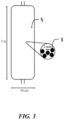
- a structural support is a porous bead, shown in FIG. 2 .
- the structural support is a bead with an average diameter less than about 10 ⁇ m, less than about 100 ⁇ m, less than about 1 mm, less than about 1 cm, or less than about 10 cm, more than 1 ⁇ m, more than 10 ⁇ m, more than 100 ⁇ m, more than 1 mm, more than 1 cm, from about 1 ⁇ m to about 10 cm, from about 10 ⁇ m to about 1 cm, from about 100 ⁇ m to about 1 cm, from about 1 mm to about 1 cm, from about 0.5 mm to about 1 cm, from about 0.25 mm to about 1 cm, from about 0.25 mm to about 100 mm, from about 0.25 mm to about 75 mm, from about 0.25 mm to about 50 mm, from about 0.25 mm to about 25 mm, from about 0.25 mm to about 10 mm, or from about 10 mm to about 1cm.
- the structural support is a bead with an average diameter less than about 100 ⁇ m, less than about 1 mm, less than 1 cm, less than 2 cm, less than 3 cm, less than 4 cm, less than 5 cm, less than 6 cm, less than 7 cm, less than 8 cm, less than 9 cm, or less than about 10 cm.
- the structural support is a membrane with an average thickness less than about 10 ⁇ m, less than about 100 ⁇ m, less than about 1 cm, less than about 10 cm, more than 1 ⁇ m, more than 10 ⁇ m, more than 100 ⁇ m, more than 1 cm, from about 1 ⁇ m to about 100 ⁇ m, or from about 1 cm to about 10 cm.
- coated ion exchange particles which are a component of a porous structure, wherein the coated ion exchange particles comprise ion exchange material and coating material.
- the coating material prevents the dissolution of the ion exchange material. In some embodiments, the coating material protects the ion exchange material from dissolution and degradation during lithium elution in acid, during lithium uptake from a liquid resource, and during other embodiments of an ion exchange process. In some embodiments, the coating material enables the use of concentrated acids in the ion exchange process to: (1) yield concentrated lithium ion solutions; (2) shift the equilibrium such that lithium ions move from the ion exchange material; and (3) maximize ion exchange capacity of the ion exchange material.
- the coating material allows diffusion to and from the ion exchange material. In some embodiments, the coating material facilitates diffusion of lithium ions and hydrogen ions between the coated ion exchange particles and various liquid resources. In some embodiments, the coating material enables the adherence of coated ion exchange particles to the structural support and suppresses structural and mechanical degradation of the coated ion exchange particles.
- the coating material comprises a carbide, a nitride, an oxide, a phosphate, a fluoride, a polymer, carbon, a carbonaceous material, or combinations thereof.
- the coating material comprises Nb 2 O 5 , Ta 2 O 5 , MoO 2 , TiO 2 , ZrO 2 , MoO 2 , SnO 2 , SiO 2 , Li 2 O, Li 2 TiO 3 , Li 2 ZrO 3 , Li 2 MoO 3 , LiNbO 3 , LiTaO 3 , Li 2 SiO 3 , Li 2 Si 2 O 5 , Li 2 MnO 3 , ZrSiO 4 , AlPO 4 , LaPO 4 , ZrP 2 O 7 , MoP 2 O 7 , Mo 2 P 3 O 12 , BaSO 4 , AlF 3 , SiC, TiC, ZrC, Si 3 N 4 , ZrN, BN, carbon, graphitic carbon, a
- the coating material comprises polyvinylidene difluoride, polyvinyl chloride, a fluoro-polymer, a chloro-polymer, or a fluoro-chloro-polymer.
- the coating material comprises TiO 2 , ZrO 2 , SiO 2 MoO 2 , Li 2 TiO 3 , Li 2 ZrO 3 , Li 2 MnO 3 , ZrSiO 4 , or LiNbO 3 , AlF 3 , SiC, Si 3 N 4 , graphitic carbon, amorphous carbon, diamond-like carbon, or combinations thereof.
- the coating material comprises TiO 2 , SiO 2 , or ZrO 2 .
- the coating material comprises TiO 2 .
- the coating material comprises SiO 2 .
- the coating material comprises ZrO 2 .
- the coating coats primary ion exchange particles or secondary ion exchange particles. In some embodiments, the coating coats both the primary ion exchange particles and the secondary ion exchange particles. In some embodiments, the primary ion exchange particles have a first coating and the secondary ion exchange particles have a second coating that is identical, similar, or different in composition to the first coating.
- the coating material has a thickness of less than 1 nm, less than 10 nm, less than 100 nm, less than 1,000 nm, less than 10,000 nm, more than 1 nm, more than 10 nm, more than 100 nm, more than 1,000 nm, more than 10,000 nm, from about 1 nm to about 10,000 nm, from about 10 nm, to about 1,000 nm, or from about 100 to about 1,000nm.
- the coating material has a thickness of less than 5 nm, less than 10 nm, less than 50 nm, less than 100 nm, less than 500 nm, more than 1 nm, more than 5 nm, more than 10 nm, more than 50 nm, more than 100 nm, from about 1 nm to about 500 nm, from about 1 nm to about 100 nm, from about 1 nm to about 50 nm, from about 1 nm to about 10 nm, from about 1 nm to about 5 nm, or from about 5 nm to about 100 nm..
- the coating material is deposited by a method such as chemical vapor deposition, atomic layer deposition, physical vapor deposition, hydrothermal, solvothermal, sol-gel, solid state, molten salt flux, ion exchange, microwave, chemical precipitation, co-precipitation, ball milling, pyrolysis, or combinations thereof.
- the coating material is deposited by a method such as chemical vapor deposition, hydrothermal, solvothermal, sol-gel, precipitation, microwave sol-gel, chemical precipitation, or combinations thereof.
- the coating materials are deposited in a reactor that is a batch tank reactor, a continuous tank reactor, a batch furnace, a continuous furnace, a tube furnace, a rotary tube furnace, or combinations thereof.
- the coating material is deposited in a reactor by suspending the ion exchange material in a solvent with reagents that is added all at once or added over time.
- the reagents are added in a specific time series to control reaction rates and coating depositions.
- the solvent is aqueous or non-aqueous.
- the solvent is an alcohol such as ethanol, propanol, butanol, pentanol, hexanol, septanol, or octanol.
- the reagents include metal chlorides, metal oxides, metal alkoxides, metal oxychlorides, metalloid oxides, metalloid alkoxides, metalloid chlorides, metalloid oxychlorides, or combinations thereof.
- the reagents include monomers, oligomers, polymers, gels, or combinations thereof.
- the reagents include water, oxidants, reductants, acids, bases, or combinations thereof.
- the reagents be added in the presence of catalysts such as acids, bases, or combinations thereof.
- the reagents are added during a time period of less than about 1 minute, less than about 1 hour, less than about 1 day, less than about 1 week, more than 1 minute, more than 1 hour, more than 1 day, from about 1 minute to about 60 minutes, from about 1 hour to about 24 hours, or from about 1 day to about 7 days.
- the reagents are dripped into the reactor continuously or at intervals.
- multiple reagents are added to the reactor at different rates.
- some reagents are combined separately and reacted to form a gel or polymer prior to addition to the reactor.
- the freshly coated ion exchange material is heated to one or more temperatures to age, dry, react, or crystallize the coating. In some embodiments, the freshly coated ion exchange material is heated to a temperature of less than about 100°C, less than about 200°C, less than about 300°C, less than about 400°C, less than about 500°C, less than about 600°C, less than about 700°C, or less than about 800°C. In some embodiments, the freshly coated ion exchange material is heated to a temperature of more than about 100°C, more than about 200°C, more than about 300°C, more than about 400°C, more than about 500°C, more than about 600°C, more than about 700°C, or more than about 800°C.
- the freshly coated ion exchange material is heated to a temperature from about 100°C to about 800°C, from about 200°C to about 800°C, from about 300°C to about 700°C, from about 400°C to about 700°C, from about 500°C to about 700°C, from about 100°C to about 300°C, from about 200°C to about 400°C, from about 300°C to about 500°C, from about 400°C to about 600°C, from about 500°C to about 700°C, or from about 600°C to about 800°C.
- the freshly coated ion exchange material is heated in an atmosphere of air comprising oxygen, nitrogen, hydrogen, argon, or combinations thereof.
- the freshly coated ion exchange material is heated for a time period of less than about 1 hour, less than about 2 hours, less than about 4 hours, less than about 8 hours, less than about 24 hours, more than 1 hour, more than 2 hours, more than 4 hours, more than 8 hours, from about 0.5 hours to about 24 hours, from about 0.5 hours to about 8 hours, from about 0.5 hours to about 4 hours, from about 0.5 hours to about 2 hours, or from about 0.5 hours to about 1 hour.
- the coating material is deposited with physical characteristics such as crystalline, amorphous, full coverage, partial coverage, uniform, non-uniform, or combinations thereof.
- multiple coatings are deposited on the ion exchange material in an arrangement such as concentric, patchwork, or combinations thereof.
- the ion exchange material is suitable for high lithium absorption capacity and for lithium ions in a liquid resource relative to other ions such as sodium ions and magnesium ions. In some embodiments, the ion exchange material is suitable for strong lithium ion uptake in liquid resources including those with low concentrations of lithium ions, facile elution of lithium ions with a small excess of acid, and fast ionic diffusion.
- the ion exchange material comprises an oxide, a phosphate, an oxyfluoride, a fluorophosphate, or combinations thereof.
- x is selected from 0.1, 0.2, 0.3, 0.4, 0.5, 0.6, 0.7, 0.8, 0.9, 1, 2, 3, 4, 5, 6, 7, 8, 9, and 10.
- y is selected from 0.1, 0.2, 0.3, 0.4, 0.5, 0.6, 0.7, 0.8, 0.9, 1, 2, 3, 4, 5, 6, 7, 8, 9, and 10.
- x and y is independently selected from 0.1, 0.2, 0.3, 0.4, 0.5, 0.6, 0.7, 0.8, 0.9, 1, 2, 3, 4, 5, 6, 7, 8, 9, and 10.
- an ion exchange material comprises LiFePO 4 , Li 2 SnO 3 , Li 2 MnO 3 , Li 2 TiO 3 , Li 4 Ti 5 O 12 , Li 4 Mn 5 O 12 , Li 1.6 Mn 1.6 O 4 , solid solutions thereof, or combinations thereof.
- the ion exchange material is synthesized by a method such as hydrothermal, solvothermal, sol-gel, solid state, molten salt flux, ion exchange, microwave, ball milling, chemical precipitation, co-precipitation, vapor deposition, or combinations thereof. In some embodiments, the ion exchange material is synthesized by a method such as chemical precipitation, hydrothermal, solid state, microwave, or combinations thereof.
- the ion exchange materials are synthesized in a lithiated state with a sub-lattice fully or partly occupied by lithium ions. In some embodiments, the ion exchange materials are synthesized in a hydrated state with a sub-lattice fully or partly occupied by hydrogen ions.
- the ion exchange material and the coating material form one or more concentration gradients where the chemical composition of the coated ion exchange particle varies between two or more compositions.
- the chemical composition varies between the ion exchange materials and the coating in a manner that is continuous, discontinuous, or continuous and discontinuous in different regions of the coated ion exchange particle.
- the ion exchange materials and the coating materials form a concentration gradient that extends over a thickness of less than 1 nm, less than 10 nm, less than 100 nm, less than 1,000 nm, less than 10,000 nm, less than 100,000 nm, more than 1 nm, more than 10 nm, more than 100 nm, more than 1,000 nm, more than 10,000 nm, from about 1 nm to about 100,000 nm, from about 10 nm, to about 10,000 nm, or from about 100 to about 1,000nm.
- the coated ion exchange particle has an average diameter of less than about 10 nm, less than about 20 nm, less than about 30 nm, less than about 40 nm, less than about 50 nm, less than about 60 nm, less than about 70 nm, less than about 80 nm, less than about 90 nm, less than about 100 nm, less than about 1,000 nm, less than about 10,000 nm, less than about 100,000 nm, more than about 10 nm, more than about 20 nm, more than about 30 nm, more than about 40 nm, more than about 50 nm, more than about 60 nm, more than about 70 nm, more than about 80 nm, more than about 90 nm, more than about 100 nm, more than about 1,000 nm, more than about 10,000 nm, from about 1 nm to about 10,000 nm, from about 1 nm to about 1,000 nm, from about 1 nm to about 100 nm.
- the coated ion exchange particles have an average size of less than about 100 nm, less than about 1,000 nm, or less than about 10,000 nm.
- the coated ion exchange particles are secondary particles comprised of smaller primary particles, wherein the secondary particles have an average diameter of less than about 10 nm, less than about 20 nm, less than about 30 nm, less than about 40 nm, less than about 50 nm, less than about 60 nm, less than about 70 nm, less than about 80 nm, less than about 90 nm, less than about 100 nm, less than about 1,000 nm, less than about 10,000 nm, less than about 100,000 nm, more than about 10 nm, more than about 20 nm, more than about 30 nm, more than about 40 nm, more than about 50 nm, more than about 60 nm, more than about 70 nm, more than about 80 nm, more than about 90 nm, more than about 100 nm, less than about 1,000
- the coated ion exchange particle has an average diameter of less than about 10 ⁇ m, less than about 20 ⁇ m, less than about 30 ⁇ m, less than about 40 ⁇ m, less than about 50 ⁇ m, less than about 60 ⁇ m, less than about 70 ⁇ m, less than about 80 ⁇ m, less than about 90 ⁇ m, less than about 100 ⁇ m, less than about 1,000 ⁇ m, less than about 10,000 ⁇ m, less than about 100,000 ⁇ m, more than about 10 ⁇ m, more than about 20 ⁇ m, more than about 30 ⁇ m, more than about 40 ⁇ m, more than about 50 ⁇ m, more than about 60 ⁇ m, more than about 70 ⁇ m, more than about 80 ⁇ m, more than about 90 ⁇ m, more than about 100 ⁇ m, more than about 1,000 ⁇ m, more than about 10,000 ⁇ m, from about 1 ⁇ m to about 10,000 ⁇ m, from about 1 ⁇ m to about 1,000 ⁇ m, from about 1 ⁇ m to about 100 ⁇ m
- the coated ion exchange particles have an average size of less than about 100 ⁇ m, less than about 1,000 ⁇ m, or less than about 10,000 ⁇ m.
- the coated ion exchange particles are secondary particles comprised of smaller primary particles, wherein the secondary particles have an average diameter of less than about 10 ⁇ m, less than about 20 ⁇ m, less than about 30 ⁇ m, less than about 40 ⁇ m, less than about 50 ⁇ m, less than about 60 ⁇ m, less than about 70 ⁇ m, less than about 80 ⁇ m, less than about 90 ⁇ m, less than about 100 ⁇ m, less than about 1,000 ⁇ m, less than about 10,000 ⁇ m, less than about 100,000 ⁇ m, more than about 10 ⁇ m, more than about 20 ⁇ m, more than about 30 ⁇ m, more than about 40 ⁇ m, more than about 50 ⁇ m, more than about 60 ⁇ m, more than about 70 ⁇ m, more than about 80 ⁇ m, more than about 90 ⁇ m, more than about 100 ⁇ m, less than about 1,000
- the average diameter of the coated ion exchange particles or the average diameter of coated ion exchange particles which are secondary particles comprised of smaller primary particles is determined by measuring the particle size distribution of the coated ion exchange particles or the coated ion exchange particles which are secondary particles comprised of smaller primary particles, and determining the mean particle size.
- uncoated ion exchange particles are embedded in, adhered to, or otherwise supported by the structural support.
- the ion exchange material is suitable for high lithium absorption capacity and for lithium ions in a liquid resource relative to other ions such as sodium ions and magnesium ions. In some embodiments, the ion exchange material is suitable for strong lithium ion uptake in liquid resources including those with low concentrations of lithium ions, facile elution of lithium ions with a small excess of acid, and fast ionic diffusion.
- the ion exchange material comprises an oxide, a phosphate, an oxyfluoride, a fluorophosphate, or combinations thereof.
- x is selected from 0.1, 0.2, 0.3, 0.4, 0.5, 0.6, 0.7, 0.8, 0.9, 1, 2, 3, 4, 5, 6, 7, 8, 9, and 10.
- y is selected from 0.1, 0.2, 0.3, 0.4, 0.5, 0.6, 0.7, 0.8, 0.9, 1, 2, 3, 4, 5, 6, 7, 8, 9, and 10.
- x and y is independently selected from 0.1, 0.2, 0.3, 0.4, 0.5, 0.6, 0.7, 0.8, 0.9, 1, 2, 3, 4, 5, 6, 7, 8, 9, and 10.
- an ion exchange material comprises LiFePO 4 , Li 2 SnO 3 , Li 2 MnO 3 , Li 2 TiO 3 , Li 4 Ti 5 O 12 , Li 4 Mn 5 O 12 , Li 1.6 Mn 1.6 O 4 , solid solutions thereof, or combinations thereof.
- the ion exchange material is synthesized by a method such as hydrothermal, solvothermal, sol-gel, solid state, molten salt flux, ion exchange, microwave, ball milling, chemical precipitation, co-precipitation, vapor deposition, or combinations thereof. In some embodiments, the ion exchange material is synthesized by a method such as chemical precipitation, hydrothermal, solid state, microwave, or combinations thereof.
- the ion exchange materials are synthesized in a lithiated state with a sub-lattice fully or partly occupied by lithium ions. In some embodiments, the ion exchange materials are synthesized in a hydrated state with a sub-lattice fully or partly occupied by hydrogen ions.
- the uncoated ion exchange particle has an average diameter of less than about 10 nm, less than about 20 nm, less than about 30 nm, less than about 40 nm, less than about 50 nm, less than about 60 nm, less than about 70 nm, less than about 80 nm, less than about 90 nm, less than about 100 nm, less than about 1,000 nm, less than about 10,000 nm, less than about 100,000 nm, more than about 10 nm, more than about 20 nm, more than about 30 nm, more than about 40 nm, more than about 50 nm, more than about 60 nm, more than about 70 nm, more than about 80 nm, more than about 90 nm, more than about 100 nm, more than about 1,000 nm, more than about 10,000 nm, from about 1 nm to about 10,000 nm, from about 1 nm to about 1,000 nm, from about 1 nm to about 100 nm, from
- the uncoated ion exchange particles have an average size of less than about 100 nm, less than about 1,000 nm, or less than about 10,000 nm.
- the uncoated ion exchange particles are secondary particles comprised of smaller primary particles, wherein the secondary particles have an average diameter of less than about 10 nm, less than about 20 nm, less than about 30 nm, less than about 40 nm, less than about 50 nm, less than about 60 nm, less than about 70 nm, less than about 80 nm, less than about 90 nm, less than about 100 nm, less than about 1,000 nm, less than about 10,000 nm, less than about 100,000 nm, more than about 10 nm, more than about 20 nm, more than about 30 nm, more than about 40 nm, more than about 50 nm, more than about 60 nm, more than about 70 nm, more than about 80 nm, more than about 90 nm, more
- the uncoated ion exchange particle has an average diameter of less than about 10 ⁇ m, less than about 20 ⁇ m, less than about 30 ⁇ m, less than about 40 ⁇ m, less than about 50 ⁇ m, less than about 60 ⁇ m, less than about 70 ⁇ m, less than about 80 ⁇ m, less than about 90 ⁇ m, less than about 100 ⁇ m, less than about 1,000 ⁇ m, less than about 10,000 ⁇ m, less than about 100,000 ⁇ m, more than about 10 ⁇ m, more than about 20 ⁇ m, more than about 30 ⁇ m, more than about 40 ⁇ m, more than about 50 ⁇ m, more than about 60 ⁇ m, more than about 70 ⁇ m, more than about 80 ⁇ m, more than about 90 ⁇ m, more than about 100 ⁇ m, more than about 1,000 ⁇ m, more than about 10,000 ⁇ m, from about 1 ⁇ m to about 10,000 ⁇ m, from about 1 ⁇ m to about 1,000 ⁇ m, from about 1 ⁇ m to about 100 ⁇ m, from
- the uncoated ion exchange particles have an average size of less than about 100 ⁇ m, less than about 1,000 ⁇ m, or less than about 10,000 ⁇ m.
- the uncoated ion exchange particles are secondary particles comprised of smaller primary particles, wherein the secondary particles have an average diameter of less than about 10 ⁇ m, less than about 20 ⁇ m, less than about 30 ⁇ m, less than about 40 ⁇ m, less than about 50 ⁇ m, less than about 60 ⁇ m, less than about 70 ⁇ m, less than about 80 ⁇ m, less than about 90 ⁇ m, less than about 100 ⁇ m, less than about 1,000 ⁇ m, less than about 10,000 ⁇ m, less than about 100,000 ⁇ m, more than about 10 ⁇ m, more than about 20 ⁇ m, more than about 30 ⁇ m, more than about 40 ⁇ m, more than about 50 ⁇ m, more than about 60 ⁇ m, more than about 70 ⁇ m, more than about 80 ⁇ m, more than about 90 ⁇ m, more
- the average diameter of the uncoated ion exchange particles or the average diameter of the uncoated ion exchange particles which are secondary particles comprised of smaller primary particles is determined by measuring the particle size distribution of the uncoated ion exchange particles or the uncoated ion exchange particles which are secondary particles comprised of smaller primary particles, and determining the mean particle size.
- the porous structure is in the form of a porous bead.
- the porous bead is formed from dry powder using a mechanical press, a pellet press, a tablet press, a pill press, a rotary press, or combinations thereof.
- the porous bead is formed from a solvent slurry by dripping the slurry into a different liquid solution.
- the solvent slurry is formed using a solvent of N-methyl-2-pyrrolidone, dimethyl sulfoxide, tetrahydrofuran, dimethylformamide, dimethylacetamide, methyl ethyl ketone, or combinations thereof.
- the different liquid solutions comprise water, ethanol, iso -propyl alcohol, acetone, or combinations thereof.
- the porous bead is approximately spherical with an average diameter of less than 10 ⁇ m, less than 100 ⁇ m, less than 1 mm, less than 1 cm, less than 10 cm, more than 10 ⁇ m, more than 100 ⁇ m, more than 1 mm, more than 1 cm, from about 1 ⁇ m to about 100 ⁇ m, from about 1 mm to about 100 mm, from about 1 mm to about 80 mm, from about 1 mm to about 60 mm, from about 1 to about 40 mm, from about 1 to about 20 mm, from about 1 to about 10 mm, from about 1 cm to about 10 cm, from about 1 cm to about 8 cm, from about 1 cm to about 6 cm, or from about 1 cm to about 4 cm.
- the porous bead is approximately spherical with an average diameter of less than 200 ⁇ m, less than 2 mm, less than 20 mm, more than 200 ⁇ m, more than 2 mm, more than 20 mm, from about 1 ⁇ to about 100 ⁇ m, from about 1 ⁇ m to about 200 ⁇ m, from about 1 ⁇ m to about 2 mm, from about 1 ⁇ m to about 20 mm, or from about 2 mm to about 200 mm.
- the porous bead is tablet-shaped with a diameter of less than 1 mm, less than 2 mm, less than 4 mm, less than 8 mm, less than 20 mm, more than 1 mm, more than 2 mm, more than 4 mm, more than 8 mm, from about 0.5 mm to about 1 mm, from about 0.5 mm to about 2 mm, from about 1 mm to about 4 mm, from about 1 mm to about 8 mm, from about 1 mm to about 20 mm, and with a height of less than 1 mm, less than 2 mm, less than 4 mm, less than 8 mm, less than 20 mm, more than 1 mm, more than 2 mm, more than 4 mm, more than 8 mm, from about 0.5 mm to about 1 mm, from about 0.5 mm to about 2 mm, from about 1 mm to about 4 mm, from about 1 mm to about 8 mm, from about 1 mm to about 20 mm.
- the porous bead has a diameter of less than 8 mm and a height of less than 8 mm. In some embodiments, the porous bead has a diameter of less than 4 mm and a height of less than 4 mm. In some embodiments, the porous bead has a diameter of less than 2 mm and a height of less than 2 mm. In some embodiments, the porous bead has a diameter of less than 1 mm and a height of less than 1 mm.
- the coated ion exchange particles are optionally mixed with a liquid resource to absorb lithium and then recovered through filtration, gravimetric separation, or other means.
- the liquid resource is a natural brine, a dissolved salt flat, seawater, concentrated seawater, desalination effluent, a concentrated brine, a processed brine, liquid from an ion exchange process, liquid from a solvent extraction process, a synthetic brine, leachate from ores, leachate from minerals, leachate from clays, leachate from recycled products, leachate from recycled materials, water from an oilfield, effluent from a chemical process, or combinations thereof.
- a liquid resource is a natural brine, a dissolved salt flat, a concentrated brine, water from an oilfield, a processed brine, a synthetic brine, liquid from an ion exchange process, liquid from a solvent extraction process, leachate from minerals, leachate from clays, leachate from recycled products, leachate from recycled materials, or combinations thereof.
- the pH of the brine is adjusted before or after ion exchange to neutralize acidic protons released by the ion exchange material during lithium uptake.
- the liquid resource has a lithium ion concentration of less than about 100,000 ppm, less than about 10,000 ppm, less than about 1,000 ppm, less than about 100 ppm, less than about 10 ppm, or combinations thereof. In some embodiments, the liquid resource has a lithium ion concentration less than about 5,000 ppm, less than about 500 ppm, less than about 50 ppm, or combinations thereof. In some embodiments, the liquid resource has sodium ion, calcium ion, magnesium ion, potassium ion, or strontium ion concentrations greater than about 100 ppm, greater than about 1,000 ppm, greater than about 10,000 ppm, or greater than about 100,000 ppm.
- the liquid resource has hydrocarbon, hydrogen sulfide, surfactant, or microbe concentrations greater than about 1 ppb, 1 ppm, 10 ppm, 100 ppm, 1,000 ppm, or 10,000 ppm. In some embodiments, the liquid resource has suspended solids at a concentration of greater than about 1 ppb, 1 ppm, 10 ppm, 100 ppm, or 1,000 ppm.
- the acid solution used for recovering lithium ions from the coated ion exchange particles is prepared with hydrochloric acid, sulfuric acid, phosphoric acid, hydrobromic acid, chloric acid, perchloric acid, nitric acid, formic acid, acetic acid, or combinations thereof.
- the acid solution is prepared with hydrochloric acid, sulfuric acid, nitric phosphoric acid, or combinations thereof.
- the acid solution has an acid concentration greater than about 0.1 M, greater than about 0.5 M, greater than about 1 M, greater than about 5 M, or greater than about 10 M, or combinations thereof.
- the acid solution has an acid concentration lesser than about 0.1 M, lesser than about 0.5 M, lesser than about 1 M, lesser than about 5 M, or lesser than about 10 M, or combinations thereof. In some embodiments, the acid solution has an acid concentration from about 0.1 M to about 10 M, from about 0.5 M to about 5 M, or from about 0.5 M to about 1 M. In some embodiments, the acid solution has a pH less than about 4, less than about 2, less than about 1, or less than about 0. In some embodiments, the acid solution has a pH that increases over time as the acid solution is exposed to the coated ion exchange particles and the coated ion exchange particles absorb protons while releasing lithium ions.
- the coated ion exchange particles perform the ion exchange reaction repeatedly over a number of cycles greater than about 10 cycles, greater than about 30 cycles, greater than about 100 cycles, or greater than about 300 cycles. In some embodiments, the coated ion exchange particles are used until their lithium uptake capacity drops by greater than about 5%, greater than about 10%, greater than about 20%, greater than about 40%, or greater than about 60% below their initial lithium uptake capacity. In some embodiments, the coated ion exchange particles are used until their lithium uptake capacity drops by lesser than about 5%, lesser than about 10%, lesser than about 20%, lesser than about 40%, or lesser than about 60% below their initial lithium uptake capacity.
- the coated ion exchange particles have an average diameter less than about 10 nm, less than about 20 nm, less than about 30 nm, less than about 40 nm, less than about 50 nm, less than about 60 nm, less than about 70 nm, less than about 80 nm, less than about 90 nm, less than about 100 nm, less than about 1,000 nm, less than about 10,000 nm, less than about 100,000 nm, more than about 10 nm, more than about 20 nm, more than about 30 nm, more than about 40 nm, more than about 50 nm, more than about 60 nm, more than about 70 nm, more than about 80 nm, more than about 90 nm, more than about 100 nm, more than about 1,000 nm, more than about 10,000 nm, from about 1 nm to about 10,000 nm, from about 1 nm to about 1,000 nm, from about 1 nm to about 100 nm, from about 1
- the coating material has a thickness of less than 5 nm, less than 10 nm, less than 50 nm, less than 100 nm, less than 500 nm, more than 1 nm, more than 5 nm, more than 10 nm, more than 50 nm, more than 100 nm, from about 1 nm to about 500 nm, from about 1 nm to about 100 nm, from about 1 nm to about 50 nm, from about 1 nm to about 10 nm, from about 1 nm to about 5 nm, or from about 5 nm to about 100 nm.
- the coated ion exchange particles are created by synthesizing the ion exchange material using a method such as hydrothermal, solid state, microwave, or combinations thereof.
- the coating material is deposited on the surface of the ion exchange material using a method such as chemical vapor deposition, hydrothermal, solvothermal, sol-gel, precipitation, microwave or by suspending the ion exchange material in a solvent and then adding reagents including metal chloride, metal oxychloride, metal alkoxide, water, acid, base, or combinations thereof.
- the coated ion exchange particles are treated with an acid solution prepared with hydrochloric acid, sulfuric acid, nitric acid, or combinations thereof wherein the concentration of the acid solution is greater than about 0.1 M, greater than about 0.5 M, greater than about 2 M, greater than about 5 M, or combinations thereof.
- the coated ion exchange particles absorb hydrogen ions while releasing lithium ions.
- the ion exchange material is converted to a protonated state.
- the coating material allows diffusion of hydrogen ions and lithium ions respectively to and from the ion exchange material while providing a protective barrier that limits dissolution of the ion exchange material.
- the protonated coated ion exchange particles are treated with a liquid resource wherein the liquid resource is a natural brine, a dissolved salt flat, a concentrated brine, a processed brine, a synthetic brine, an oilfield brine, liquid from an ion exchange process, liquid from a solvent extraction process, leachate from minerals, leachate from clays, leachate from recycled products, leachate from recycled materials, or combinations thereof.
- the coated ion exchange particles absorb lithium ions while releasing hydrogen ions.
- the lithium salt solution is collected and processed into lithium carbonate, lithium hydroxide, or lithium phosphate.
- methods of extracting lithium from a liquid resource comprising contacting the porous structure with a liquid resource to produce a lithiated porous structure, and treating the lithiated porous structure with an acid solution to produce a salt solution comprising lithium ions.
- the liquid resource is a natural brine, a dissolved salt flat, seawater, concentrated seawater, desalination effluent, a concentrated brine, a processed brine, liquid from an ion exchange process, liquid from a solvent extraction process, a synthetic brine, leachate from ores, leachate from minerals, leachate from clays, leachate from recycled products, leachate from recycled materials, water from an oilfield, effluent from a chemical process, or combinations thereof.
- a liquid resource is a natural brine, a dissolved salt flat, a concentrated brine, water from an oilfield, a processed brine, a synthetic brine, liquid from an ion exchange process, liquid from a solvent extraction process, leachate from minerals, leachate from clays, leachate from recycled products, leachate from recycled materials, or combinations thereof.
- the pH of the brine is adjusted before or after ion exchange to neutralize acidic protons released during lithium uptake.
- the liquid resource has a lithium ion concentration of less than about 100,000 ppm, less than about 10,000 ppm, less than about 1,000 ppm, less than about 100 ppm, less than about 10 ppm, or combinations thereof. In some embodiments, the liquid resource has a lithium ion concentration less than about 5,000 ppm, less than about 500 ppm, less than about 50 ppm, or combinations thereof. In some embodiments, the liquid resource has sodium ion, calcium ion, magnesium ion, potassium ion, or strontium ion concentrations greater than about 100 ppm, greater than about 1,000 ppm, greater than about 10,000 ppm, or greater than about 100,000 ppm.
- the liquid resource has hydrocarbon, hydrogen sulfide, surfactant, or microbe concentrations greater than about 1 ppb, 1 ppm, 10 ppm, 100 ppm, 1,000 ppm, or 10,000 ppm. In some embodiments, the liquid resource has suspended solids at a concentration of greater than about 1 ppb, 1 ppm, 10 ppm, 100 ppm, or 1,000 ppm.
- the acid solution used for recovering lithium ions from the porous structure is prepared with hydrochloric acid, sulfuric acid, phosphoric acid, hydrobromic acid, chloric acid, perchloric acid, nitric acid, formic acid, acetic acid, or combinations thereof.
- the acid solution is prepared with hydrochloric acid, sulfuric acid, nitric phosphoric acid, or combinations thereof.
- the acid solution has an acid concentration greater than about 0.1 M, greater than about 0.5 M, greater than about 1 M, greater than about 5 M, or greater than about 10 M, or combinations thereof.
- the acid solution has an acid concentration lesser than about 0.1 M, lesser than about 0.5 M, lesser than about 1 M, lesser than about 5 M, or lesser than about 10 M, or combinations thereof. In some embodiments, the acid solution has an acid concentration from about 0.1 M to about 10 M, from about 0.5 M to about 5 M, or from about 0.5 M to about 1 M. In some embodiments, the acid solution has a pH less than about 4, less than about 2, less than about 1, or less than about 0. In some embodiments, the acid solution has a pH that increases over time as the acid solution is exposed to the porous structure and the porous structure absorbs protons while releasing lithium ions.
- the porous structure performs the ion exchange reaction repeatedly over a number of cycles greater than 10 cycles, greater than 30 cycles, greater than 100 cycles, greater than 300 cycles, or greater than 1,000 cycles. In some embodiments, the porous structure performs the ion exchange reaction repeatedly over a number of cycles greater than 50 cycles, greater than 100 cycles, or greater than 200 cycles.
- the coated ion exchange particles, the uncoated ion exchange particles, and combinations thereof in the porous structure perform the ion exchange reaction repeatedly over a number of cycles greater than about 10 cycles, greater than about 30 cycles, greater than about 100 cycles, or greater than about 300 cycles.
- the coated ion exchange particles, the uncoated ion exchange particles, and combinations thereof in the porous bead are used until lithium uptake capacity drops by greater than about 5%, greater than about 10%, greater than about 20%, greater than about 40%, or greater than about 60% below their initial lithium uptake capacity.
- the coated ion exchange particles are used until their lithium uptake capacity drops by lesser than about 5%, lesser than about 10%, lesser than about 20%, lesser than about 40%, or lesser than about 60% below their initial lithium uptake capacity.
- the coated ion exchange particles of the porous structure have an average diameter less than about 10 nm, less than about 20 nm, less than about 30 nm, less than about 40 nm, less than about 50 nm, less than about 60 nm, less than about 70 nm, less than about 80 nm, less than about 90 nm, less than about 100 nm, less than about 1,000 nm, less than about 10,000 nm, less than about 100,000 nm, more than about 10 nm, more than about 20 nm, more than about 30 nm, more than about 40 nm, more than about 50 nm, more than about 60 nm, more than about 70 nm, more than about 80 nm, more than about 90 nm, more than about 100 nm, more than about 1,000 nm, more than about 10,000 nm, from about 1 nm to about 10,000 nm, from about 1 nm to about 1,000 nm, from about 1 nm to about 100 nm
- the coating material has a thickness of less than 5 nm, less than 10 nm, less than 50 nm, less than 100 nm, less than 500 nm, more than 1 nm, more than 5 nm, more than 10 nm, more than 50 nm, more than 100 nm, from about 1 nm to about 500 nm, from about 1 nm to about 100 nm, from about 1 nm to about 50 nm, from about 1 nm to about 10 nm, from about 1 nm to about 5 nm, or from about 5 nm to about 100 nm.
- the coated ion exchange particles of the porous structure are created by first synthesizing the ion exchange material using a method such as hydrothermal, solid state, microwave, or combinations thereof.
- the coating material is deposited on the surface of the ion exchange material using a method such as chemical vapor deposition, hydrothermal, solvothermal, sol-gel, precipitation, or microwave by suspending the ion exchange material in a solvent and then adding reagents including metal chloride, metal oxychloride, metal alkoxide, water, acid, base, or combinations thereof.
- the coated ion exchange particles of the porous structure is treated with an acid solution prepared with hydrochloric acid, sulfuric acid, nitric acid, or combinations thereof wherein the concentration of the acid solution is greater than about 0.1 M, greater than about 0.5 M, greater than about 2 M, greater than about 5 M, or combinations thereof.
- the coated ion exchange particles of the porous structure absorb hydrogen ions while releasing lithium ions.
- the ion exchange material is converted to a protonated state.
- the coating material allows diffusion of hydrogen ions and lithium ions respectively to and from the ion exchange material while providing a protective barrier that limits dissolution of the ion exchange material.
- the uncoated ion exchange particles of the porous structure have an average diameter less than about 10 nm, less than about 20 nm, less than about 30 nm, less than about 40 nm, less than about 50 nm, less than about 60 nm, less than about 70 nm, less than about 80 nm, less than about 90 nm, less than about 100 nm, less than about 1,000 nm, less than about 10,000 nm, less than about 100,000 nm, more than about 10 nm, more than about 20 nm, more than about 30 nm, more than about 40 nm, more than about 50 nm, more than about 60 nm, more than about 70 nm, more than about 80 nm, more than about 90 nm, more than about 100 nm, more than about 1,000 nm, more than about 10,000 nm, from about 1 nm to about 10,000 nm, from about 1 nm to about 1,000 nm, from about 1 nm to about 100
- the uncoated ion exchange particles of the porous structure are created by synthesizing the ion exchange material using a method such as hydrothermal, solid state, microwave, or combinations thereof.
- the uncoated ion exchange particles of the porous structure is treated with an acid solution prepared with hydrochloric acid, sulfuric acid, nitric acid, or combinations thereof wherein the concentration of the acid solution is greater than about 0.1 M, greater than about 0.5 M, greater than about 2 M, greater than about 5 M, or combinations thereof.
- the uncoated ion exchange particles of the porous structure absorb hydrogen ions while releasing lithium ions.
- the ion exchange material is converted to a protonated state.
- the protonated uncoated ion exchange particles are treated with a liquid resource wherein the liquid resource is a natural brine, a dissolved salt flat, a concentrated brine, a processed brine, a synthetic brine, an oilfield brine, liquid from an ion exchange process, liquid from a solvent extraction process, leachate from minerals, leachate from clays, leachate from recycled products, leachate from recycled materials, or combinations thereof.
- the uncoated ion exchange particles absorb lithium ions while releasing hydrogen ions.
- the lithium salt solution is collected and processed into lithium carbonate, lithium hydroxide, or lithium phosphate.
- the combination of coated ion exchange particles and uncoated ion exchange particles in the porous structure is treated with an acid solution prepared with hydrochloric acid, sulfuric acid, nitric acid, or combinations thereof wherein the concentration of the acid solution is greater than about 0.1 M, greater than about 0.5 M, greater than about 2 M, greater than about 5 M, lesser than about 0.1 M, lesser than about 0.5 M, lesser than about 1 M, lesser than about 5 M, or lesser than about 10 M, from about 0.1 M to about 10 M, from about 0.5 M to about 5 M, or from about 0.5 M to about 1 M, or combinations thereof.
- the combination of coated ion exchange particles and uncoated ion exchange particles in the porous structure absorb hydrogen ions while releasing lithium ions.
- the ion exchange material is converted to a protonated state.
- the combination of protonated coated ion exchange particles and protonated uncoated ion exchange particles are treated with a liquid resource wherein the liquid resource is a natural brine, a dissolved salt flat, a concentrated brine, a processed brine, a synthetic brine, an oilfield brine, liquid from an ion exchange process, liquid from a solvent extraction process, leachate from minerals, leachate from clays, leachate from recycled products, leachate from recycled materials, or combinations thereof.
- the liquid resource is a natural brine, a dissolved salt flat, seawater, concentrated seawater, desalination effluent, a concentrated brine, a processed brine, liquid from an ion exchange process, liquid from a solvent extraction process, a synthetic brine, leachate from ores, leachate from minerals, leachate from clays, leachate from recycled products, leachate from recycled materials, water from an oilfield, effluent from a chemical process, or combinations thereof.
- a liquid resource is a natural brine, a dissolved salt flat, a concentrated brine, water from an oilfield, a processed brine, a synthetic brine, liquid from an ion exchange process, liquid from a solvent extraction process, leachate from minerals, leachate from clays, leachate from recycled products, leachate from recycled materials, or combinations thereof.
- the pH of the brine is adjusted before or after ion exchange to neutralize acidic protons released during lithium uptake.
- the liquid resource has a lithium ion concentration of less than about 100,000 ppm, less than about 10,000 ppm, less than about 1,000 ppm, less than about 100 ppm, less than about 10 ppm, or combinations thereof. In some embodiments, the liquid resource has a lithium ion concentration less than about 5,000 ppm, less than about 500 ppm, less than about 50 ppm, or combinations thereof. In some embodiments, the liquid resource has sodium ion, calcium ion, magnesium ion, potassium ion, or strontium ion concentrations greater than about 100 ppm, greater than about 1,000 ppm, greater than about 10,000 ppm, or greater than about 100,000 ppm.
- the acid solution used for recovering lithium ions from the porous beads are prepared with hydrochloric acid, sulfuric acid, phosphoric acid, hydrobromic acid, chloric acid, perchloric acid, nitric acid, formic acid, acetic acid, or combinations thereof.
- the acid solution is prepared with hydrochloric acid, sulfuric acid, nitric phosphoric acid, or combinations thereof.
- the acid solution has an acid concentration greater than about 0.1 M, greater than about 0.5 M, greater than about 1 M, greater than about 5 M, or greater than about 10 M, or combinations thereof.
- the acid solution has an acid concentration lesser than about 0.1 M, lesser than about 0.5 M, lesser than about 1 M, lesser than about 5 M, or lesser than about 10 M, or combinations thereof. In some embodiments, the acid solution has an acid concentration from about 0.1 M to about 10 M, from about 0.5 M to about 5 M, or from about 0.5 M to about 1 M. In some embodiments, the acid solution has a pH less than about 4, less than about 2, less than about 1, or less than about 0. In some embodiments, the acid solution has a pH that increases over time as the acid solution is exposed to the porous beads and the porous beads absorb protons while releasing lithium ions.
- the porous bead performs the ion exchange reaction repeatedly over a number of cycles greater than 10 cycles, greater than 30 cycles, greater than 100 cycles, greater than 300 cycles, or greater than 1,000 cycles. In some embodiments, the porous bead performs the ion exchange reaction repeatedly over a number of cycles greater than 50 cycles, greater than 100 cycles, or greater than 200 cycles.
- the coated ion exchange particles, the uncoated ion exchange particles, and combinations thereof in the porous bead perform the ion exchange reaction repeatedly over a number of cycles greater than about 10 cycles, greater than about 30 cycles, greater than about 100 cycles, or greater than about 300 cycles.
- the coated ion exchange particles, the uncoated ion exchange particles, and combinations thereof in the porous bead are used until lithium uptake capacity drops by greater than about 5%, greater than about 10%, greater than about 20%, greater than about 40%, or greater than about 60% below their initial lithium uptake capacity.
- the coated ion exchange particles are used until their lithium uptake capacity drops by lesser than about 5%, lesser than about 10%, lesser than about 20%, lesser than about 40%, or lesser than about 60% below their initial lithium uptake capacity.
- the coated ion exchange particles of the porous bead have an average diameter less than about 10 nm, less than about 20 nm, less than about 30 nm, less than about 40 nm, less than about 50 nm, less than about 60 nm, less than about 70 nm, less than about 80 nm, less than about 90 nm, less than about 100 nm, less than about 1,000 nm, less than about 10,000 nm, less than about 100,000 nm, more than about 10 nm, more than about 20 nm, more than about 30 nm, more than about 40 nm, more than about 50 nm, more than about 60 nm, more than about 70 nm, more than about 80 nm, more than about 90 nm, more than about 100 nm, more than about 1,000 nm, more than about 10,000 nm, from about 1 nm to about 10,000 nm, from about 1 nm to about 1,000 nm, from about 1 nm to about 100
- the coated ion exchange particles of the porous bead is treated with an acid solution prepared with hydrochloric acid, sulfuric acid, nitric acid, or combinations thereof wherein the concentration of the acid solution is greater than about 0.1 M, greater than about 0.5 M, greater than about 2 M, greater than about 5 M, or combinations thereof.
- the coated ion exchange particles of the porous bead absorb hydrogen ions while releasing lithium ions.
- the ion exchange material is converted to a protonated state.
- the coating material allows diffusion of hydrogen ions and lithium ions respectively to and from the ion exchange material while providing a protective barrier that limits dissolution of the ion exchange material.
- the protonated coated ion exchange particles of the porous bead are treated with a liquid resource wherein the liquid resource is a natural brine, a dissolved salt flat, a concentrated brine, a processed brine, a synthetic brine, an oilfield brine, liquid from an ion exchange process, liquid from a solvent extraction process, leachate from minerals, leachate from clays, leachate from recycled products, leachate from recycled materials, or combinations thereof.
- the coated ion exchange particles of the porous bead absorb lithium ions while releasing hydrogen ions.
- the lithium salt solution is collected and processed into lithium carbonate, lithium hydroxide, or lithium phosphate.
- the uncoated ion exchange particles of the porous bead has an average diameter less than about 10 nm, less than about 20 nm, less than about 30 nm, less than about 40 nm, less than about 50 nm, less than about 60 nm, less than about 70 nm, less than about 80 nm, less than about 90 nm, less than about 100 nm, less than about 1,000 nm, less than about 10,000 nm, less than about 100,000 nm, more than about 10 nm, more than about 20 nm, more than about 30 nm, more than about 40 nm, more than about 50 nm, more than about 60 nm, more than about 70 nm, more than about 80 nm, more than about 90 nm, more than about 100 nm, more than about 1,000 nm, more than about 10,000 nm, from about 1 nm to about 10,000 nm, from about 1 nm to about 1,000 nm, from about 1 nm to about
- the uncoated ion exchange particles of the porous bead are created by synthesizing the ion exchange material using a method such as hydrothermal, solid state, microwave, or combinations thereof.
- the uncoated ion exchange particles of the porous bead is treated with an acid solution prepared with hydrochloric acid, sulfuric acid, nitric acid, or combinations thereof wherein the concentration of the acid solution is greater than about 0.1 M, greater than about 0.5 M, greater than about 2 M, greater than about 5 M, or combinations thereof.
- the uncoated ion exchange particles of the porous bead absorb hydrogen ions while releasing lithium ions.
- the ion exchange material is converted to a protonated state.
- the protonated uncoated ion exchange particles are treated with a liquid resource wherein the liquid resource is a natural brine, a dissolved salt flat, a concentrated brine, a processed brine, a synthetic brine, an oilfield brine, liquid from an ion exchange process, liquid from a solvent extraction process, leachate from minerals, leachate from clays, leachate from recycled products, leachate from recycled materials, or combinations thereof.
- the uncoated ion exchange particles absorb lithium ions while releasing hydrogen ions.
- the lithium salt solution is collected and processed into lithium carbonate, lithium hydroxide, or lithium phosphate.
- the combination of coated ion exchange particles and uncoated ion exchange particles in the porous bead is treated with an acid solution prepared with hydrochloric acid, sulfuric acid, nitric acid, or combinations thereof wherein the concentration of the acid solution is greater than about 0.1 M, greater than about 0.5 M, greater than about 2 M, greater than about 5 M, or combinations thereof.
- the combination of coated ion exchange particles and uncoated ion exchange particles in the porous bead absorb hydrogen ions while releasing lithium ions.
- the ion exchange material is converted to a protonated state.
- the combination of protonated coated ion exchange particles and protonated uncoated ion exchange particles in the porous bead are treated with a liquid resource wherein the liquid resource is a natural brine, a dissolved salt flat, a concentrated brine, a processed brine, a synthetic brine, an oilfield brine, liquid from an ion exchange process, liquid from a solvent extraction process, leachate from minerals, leachate from clays, leachate from recycled products, leachate from recycled materials, or combinations thereof.
- the combination of protonated coated ion exchange particles and protonated uncoated ion exchange particles in the porous bead absorb lithium ions while releasing hydrogen ions.
- the lithium salt solution is collected and processed into lithium carbonate, lithium hydroxide, or lithium phosphate.
- the coated ion exchange particles, porous structures, and/or porous beads are loaded into an ion exchange column.
- An ion exchange column is shown in FIG. 3 .
- the ion exchange column directs liquids to percolate around the coated ion exchange particles, porous structures, and/or porous beads, thereby facilitating ion exchange between the coated ion exchange particles, the uncoated ion exchange particles, and/or combinations thereof, and the liquid resource.
- the liquid resource containing lithium ions is pumped through the ion exchange column so that the coated ion exchange particles, the uncoated ion exchange particles, and/or combinations thereof absorb lithium from the liquid resource while releasing hydrogen.
- an acid solution is pumped through the column so that the coated ion exchange particles, the uncoated ion exchange particles, and/or combinations thereof release lithium ions into the acid solution while absorbing hydrogen ions.
- the column is optionally operated in co-flow mode with the liquid resource and acid solution alternately flowing through the column in the same direction or the column is optionally operated in counter-flow mode with a liquid resource and acid solution alternately flowing through the column in opposite directions.
- the column is optionally treated or washed with water or other solutions for purposes such as adjusting pH in the column or removing potential contaminants.
- the pH of the liquid is optionally adjusted with NaOH or other chemicals to facilitate the ion exchange reaction as well as handling or disposal of the spent liquid resource.
- the liquid resource Before or after the liquid resource flows through the column, the liquid resource is optionally subjected to other processes including other ion exchange processes, solvent extraction, evaporation, chemical treatment, or precipitation to remove lithium ions, to remove other chemical species, or to otherwise treat the brine.
- ion exchange particles When the ion exchange particles are treated with acid, a lithium ion solution is produced. This lithium ion solution is further processed to produce lithium chemicals. In some embodiments, these lithium chemicals are supplied for an industrial application.
- lithium ions are extracted from a liquid resource.
- the liquid resource is a natural brine, a dissolved salt flat, a concentrated brine, a processed brine, a synthetic brine, an oilfield brine, liquid from an ion exchange process, liquid from a solvent extraction process, leachate from minerals, leachate from clays, leachate from recycled products, leachate from recycled materials, or combinations thereof.
- the impurity is present in a concentration of more than 1 ppb, more than 5 ppb, more than 10 ppb, more than 100 ppb, more than 1 ppm, more than 2 ppm, more than 3 ppm, more than 4 ppm, more than 5 ppm, more than 6 ppm, more than 7 ppm, more than 8 ppm, more than 9 ppm, less than 10 ppm, less than 9 ppm, less than 8 ppm, less than 7 ppm, less than 6 ppm, less than 5 ppm, less than 4 ppm, less than 3 ppm, less than 2 ppm, less than 1 ppm, less than 100 ppb, less than 10 ppb, less than 5 ppb, from
- ICP-AES Inductively Coupled Plasma-Atomic Emission Spectroscopy
- ICP-MS Inductively Coupled Plasma-Mass Spectrometry
- the concentrated lithium ion solution is further processed into lithium raw materials using methods such as solvent extraction, ion exchange, chemical substitution, chemical precipitation, electrodialysis, electrowinning, evaporation, heat treatment, or combinations thereof.
- the concentrated lithium ion solution is further processed into lithium chemicals such as lithium chloride, lithium carbonate, lithium hydroxide, lithium phosphate, lithium metal, lithium metal oxide, lithium metal phosphate, lithium sulfide, or combinations thereof.
- the lithium chemicals produced is used in an industrial application such as lithium batteries, metal alloys, glass, grease, or combinations thereof. In some embodiments, the lithium chemicals produced are used in an application such as lithium batteries, lithium-ion batteries, lithium sulfur batteries, lithium solid-state batteries, and combinations thereof.
- Example 1 Synthesis of coated ion exchange particles (Li 4 Mn 5 O 12 /ZrO 2 )
- the coated ion exchange particles are comprised of an ion exchange material and a coating material.
- the ion exchange material is Li 4 Mn 5 O 12 and the coating material is ZrO 2 .
- the particles are created by first synthesizing Li 4 Mn 5 O 12 and then depositing the coating on the surface of the Li 4 Mn 5 O 12 .
- the ion exchange material, Li 4 Mn 5 O 12 is synthesized using hydrothermal synthesis, solid state synthesis, microwave synthesis or combinations thereof.
- the coating material (ZrO 2 ) is deposited on the surface of the Li 4 Mn 5 O 12 using chemical vapor deposition, hydrothermal deposition, solvothermal deposition, sol-gel deposition, precipitation, microwave deposition or by suspending Li 4 Mn 5 O 12 in a solvent and then adding reagents including metal chloride, metal oxychloride, metal alkoxide, water, acid, base, or combinations thereof.
- the particles comprise of 98 wt.% ion exchange material (Li 4 Mn 5 O 12 ) and 2 wt.% of the coating (ZrO 2 ). The particles have a mean diameter of 1 microns, and the coating thickness is approximately 2 nm.
- Example 2 Synthesis of coated ion exchange particles (Li 4 Mn 5 O 12 /ZrO 2 )
- the coated ion exchange particles were comprised of an ion exchange material and a coating material.
- the ion exchange material was Li 4 Mn 5 O 12 and the coating material was ZrO 2 .
- the particles were created by first synthesizing Li 4 Mn 5 O 12 and then depositing the coating on the surface of the Li 4 Mn 5 O 12 .
- the Li 4 Mn 5 O 12 ion exchange material was synthesized using a solid-state method from electrolytic manganese dioxide and lithium nitrate precursors.
- the precursors were ball-milled using 5 mm ZrO 2 grinding media for 30 minutes in a planetary ball mill.
- the resulting mixture was fired in a furnace with a heating rate of 5°C/min up to 550°C for 36 hours and then cooled slowly to room temperature.
- the resulting powder was comprised of Li 4 Mn 5 O 12 ion exchange material.
- a ZrO 2 coating was deposited on the Li 4 Mn 5 O 12 ion exchange material.
- the ion exchange material was suspended in a mixture of butanol, ethanol, and water with vigorous stirring, and a mixture of butanol and zirconium butoxide was dripped into the suspension over the course of 30 minutes.
- the suspension was stirred for 2 hours to allow the zirconium butoxide to react with the water and form a ZrO 2 precursor on the particle surfaces.
- the coated powder was then fired in a furnace at 400°C for 2 hours.
- the resulting powder was coated ion exchange particles comprised of Li 4 Mn 5 O 12 particles with ZrO 2 coatings.
- the particles were comprised of 98 wt.% ion exchange material (Li 4 Mn 5 O 12 ) and 2 wt.% of the coating (ZrO 2 ).
- the particles had a mean diameter of 1 micron, and the coating thickness was approximately 2 nm.
- Example 3 Synthesis of coated ion exchange particles (Li 2 TiO 3 /SiO 2 )
- the coated ion exchange particles were comprised of an ion exchange material and a coating material.
- the ion exchange material was Li 2 TiO 3 and the coating material was SiO 2 .
- the particles were created by first synthesizing Li 2 TiO 3 and then depositing the SiO 2 coating on the surface of the Li 2 TiO 3 .
- the Li 2 TiO 3 powder was synthesized using a solid-state method from titanium dioxide and lithium carbonate precursors.
- the precursors were ball-milled using 5mm ZrO 2 grinding media for 30 minutes in a planetary ball mill.
- the resulting mixture was fired in a furnace with a heating rate of 5°C/min up to 700°C for 24 hours and then cooled slowly to room temperature.
- the resulting powder was comprised of Li 2 TiO 3 ion exchange material.
- a SiO 2 coating was deposited on the Li 2 TiO 3 ion exchange material.
- the ion exchange material was suspended in a mixture of ethanol and water with vigorous stirring, and a mixture of tetraethyl orthosilicate (TEOS), water, and hydrochloric acid was dripped into the suspension over the course of 120 minutes.
- the suspension was stirred for 2 hours to allow the TEOS to deposit on the particle surfaces, and the solvent was evaporated.
- the coated powder was then fired in a furnace at 400°C for 2 hours.
- the resulting powder was coated ion exchange particles comprised of Li 2 TiO 3 particles with SiO 2 coatings.
- the particles were comprised of 96 wt.% ion exchange material and 4 wt.% of the coating.
- the particles had a mean diameter of 4 microns, and the coating thickness was approximately 35 nm.
- Example 4 Use of coated ion exchange particles (Li 4 Mn 5 O 12 /ZrO 2 )
- Lithium is extracted from a brine using coated ion exchange particles (Li 4 Mn 5 O 12 /ZrO 2 ).
- the brine is an aqueous solution containing 50,000 ppm Na and 1,000 ppm Li.
- the coated ion exchange particles are treated with HCl acid to yield LiCl in solution.
- the coated ion exchange particles absorb hydrogen ions while releasing lithium ions.
- the Li 4 Mn 5 O 12 active material is converted to a protonated state.
- the ZrO 2 coating allows diffusion of hydrogen and lithium respectively to and from the active material while providing a protective barrier that limits dissolution of manganese and oxygen from the active material.
- the solution is collected for elemental analysis to measure lithium yield.
- the protonated coated ion exchange particles are treated with brine wherein the coated ion exchange particles absorb lithium ions while releasing hydrogen ions.
- the coated ion exchange particles are converted from a protonated state to a lithiated state.
- the solution is collected for elemental analysis to measure lithium uptake.
- the lithiated coated ion exchange particles are then treated again with acid to yield lithium ions in solution.
- the cycle of protonation and lithiation is repeated to extract lithium ions from the brine and yield a LiCl solution.
- Dissolution and degradation of the active material in acid is limited due to the coating providing a protective barrier. Dissolution of the active material is measured through elemental analysis of the acid solution following stirring.
- Example 5 Use of coated ion exchange particles (Li 2 TiO 3 /SiO 2 )
- Lithium was extracted from a brine using coated ion exchange particles (Li 2 TiO 3 /SiO 2 ).
- the brine was an aqueous solution containing 50,000 ppm Na, 30,000 ppm Ca, 5,000 ppm Mg, and 100 ppm Li.
- the coated ion exchange particles were treated with HCl acid to yield LiCl in solution.
- the coated ion exchange particles absorbed hydrogen ions while releasing lithium ions.
- the Li 2 TiO 3 active material was converted to a protonated state.
- the SiO 2 coating allowed diffusion of hydrogen ions and lithium ions respectively to and from the active material while providing a protective barrier that limited dissolution of titanium and oxygen from the active material.
- the solution was collected for elemental analysis to measure lithium yield.
- FIG 4 depicts the effect of the coating, which limits dissolution of the material while allowing lithium release.
- the protonated coated ion exchange particles were treated with brine wherein the coated ion exchange particles absorbed lithium ions while releasing hydrogen ions.
- the particles were converted from a protonated state to a lithiated state.
- the solution was then collected for elemental analysis to measure lithium uptake.
- the lithiated coated ion exchange particles were then treated again with acid to yield lithium in solution.
- the cycle of protonation and lithiation was repeated to extract lithium ions from the brine and yield a LiCl solution.
- Dissolution and degradation of the active material in acid was limited due to the coating providing a protective barrier. Dissolution of the active material was measured through elemental analysis of the acid solution following stirring.
- Lithium is extracted from a brine using porous beads.
- the porous beads are comprised of coated ion exchange particles (Li 4 Mn 5 O 12 /ZrO 2 ) and a polymer matrix.
- the coated ion exchange particles are comprised of a Li 4 Mn 5 O 12 with a ZrO 2 coating.
- the ion exchange particles contain 95 wt% Li 4 Mn 5 O 12 and 5 wt% ZrO 2 .
- the particles are approximately spherical with a mean diameter of 2 microns, and the coating thickness is approximately 12 nm.
- the polymer matrix is comprised of polyvinylidene fluoride.
- the porous beads are created by dissolving polyvinylidene fluoride in N-methyl-2-pyrrolidone (NMP) to form a solution. This solution is then mixed with the coated ion exchange particles to form a slurry. The slurry is dripped into an aqueous solution to form beads.
- the porous beads are comprised of 10 wt.% polyvinylidene fluoride matrix and 90 wt.% coated ion exchange particles.
- the porous beads have an average diameter of 2 mm and a porosity of 35%.
- the porous beads contain pores with a distribution of pore sizes providing diffusion channels from the bead surface into the bead interior and to the ion exchange particles. When the porous beads are submerged in aqueous or other solutions, the pores are infiltrated with the solutions.
- the beads have a distribution of shapes that are approximately spherical on average with a 1 mm average diameter.
- the brine is an aqueous chloride solution containing 100 ppm Li, 40,000 ppm Na, 30,000 ppm Ca, and 3,000 ppm Mg.
- the porous beads are treated with HCl acid to yield LiCl in solution. 1 g of the beads are stirred in 30 mL of 1 M HCl acid for 4 hours at room temperature.
- the pores in the beads allow the acid solution to penetrate into the bead and access the ion exchange particles. Therefore, the ion exchange particles absorb hydrogen ions from the acid while releasing lithium ions into the acid.
- the Li 4 Mn 5 O 12 of the coated ion exchange particles in the porous beads is converted to a protonated state Li 4-x H x Mn 5 O 12 where x may be about to 3.5.
- the ZrO 2 coating of the coated ion exchange particles allows diffusion of hydrogen ions and lithium ions respectively to and from the ion exchange material while providing a protective barrier that limits dissolution of manganese and oxygen from the ion exchange material. After 4 hours of stirring, the solution is collected for elemental analysis to measure lithium yield.
- the protonated porous beads are treated with brine wherein the coated ion exchange particles absorb lithium ions while releasing hydrogen ions.
- the protonated porous beads are stirred in 500 mL of brine for 4 hours at room temperature.
- the pores in the porous beads allow the brine solution to penetrate into the porous bead and access the coated ion exchange particles. Therefore, the coated ion exchange particles absorb lithium ions from the brine while releasing hydrogen ions into the brine.
- the coated ion exchange particles in the porous beads are converted from a protonated state to a lithiated state Li 4-x H x Mn 5 O 12 where x may be about to 2. After 4 hours of stirring, the solution is collected for elemental analysis to measure lithium uptake.
- the lithiated porous beads are then treated again with acid to yield lithium ions in.
- the cycle of protonation and lithiation is repeated to extract lithium ions from the brine and yield a LiCl solution.
- the pores in the porous beads facilitate penetration of the acid and brine solutions into the porous beads, facilitating absorption and release of lithium ions and hydrogen ions by the coated ion exchange particles (Li 4 Mn 5 O 12 /ZrO 2 ) in the porous bead.
- Dissolution and degradation of the active material in acid is limited due to the ZrO 2 coating providing a protective barrier. Dissolution of the active material is measured with elemental analysis of the acid solution following stirring.
- Lithium is extracted from a brine using an ion exchange column loaded with porous beads containing coated ion exchange particles (Li 4 Mn 5 O 12 /ZrO 2 ).
- the coated ion exchange particles are comprised of an active material and a protective surface coating.
- the active material is Li 4 Mn 5 O 12 and the coating is ZrO 2 .
- the particles are created by synthesizing Li 4 Mn 5 O 12 and then depositing the coating on the surface of the Li 4 Mn 5 O 12 .
- the coated ion exchange particles are comprised of 95 wt.% active material constitutes and 5 wt.% of the coating and have a mean diameter of 2 microns, and a coating thickness is approximately 12 nm.
- the porous beads are created by dissolving polyvinylidene fluoride in N-methyl-2-pyrrolidone (NMP) to form a solution. This solution is then mixed with the coated ion exchange particles to form a slurry. The slurry is dripped into an aqueous solution to form beads.
- the porous beads are comprised of 10 wt.% polyvinylidene fluoride matrix and 90 wt.% coated ion exchange particles.
- the porous beads have an average diameter of 2 mm and a porosity of 35%.
- the brine is natural brine containing approximately 500 ppm Li, 50,000 ppm Na, and other chemical species including K, Mg, Ca, and sulfate.
- the ion exchange column is 2 meters in length and 50 cm in diameter.
- the column is loaded with the porous beads. 10 M HCl is pumped into the bottom of the column to elute a LiCl solution out the top of the column.
- the coated ion exchange particles absorb hydrogen ions while releasing lithium ions to yield LiCl.
- the Li 4 Mn 5 O 12 active material is converted to a protonated state. Lithium recovery from the column is monitored using pH measurements and elemental analysis. After lithium recovery, the column is flushed with water.
- brine is pumped down through the column.
- the coated ion exchange particles absorb lithium ions while releasing hydrogen ions.
- the protonated material is converted to a lithiated state.
- Lithium ion uptake by the porous beads in the column is monitored using pH measurements and elemental analysis.
- the brine exiting the column is adjusted to a neutral pH using NaOH. After lithium ion uptake, the column is flushed with water.
- the LiCl solution from the column operation is processed into lithium raw materials including Li 2 CO 3 , LiOH, and Li metal. These lithium raw materials are sold for use in batteries, alloys, and other products.
- Example 8 Use of porous beads containing coated ion exchange particles (Li 2 TiO 3 /SiO 2 ) in a column
- Lithium is extracted from a brine using an ion exchange column loaded with porous beads containing coated ion exchange particles.
- the coated ion exchange particles (Li 2 TiO 3 /SiO 2 ) are comprised of an active material and a protective surface coating.
- the active material is Li 2 TiO 3 and the coating is SiO 2 .
- the particles are created by synthesizing Li 2 TiO 3 and then depositing the SiO 2 coating on the surface of the Li 2 TiO 3 .
- the coated ion exchange particles are comprised of 96 wt.% active material and 4 wt.% of the coating and have a mean diameter of 4 microns, and the coating thickness is approximately 35 nm.
- the porous beads are created by dissolving polyvinylchloride in N-methyl-2-pyrrolidone (NMP) to form a solution. This solution is then mixed with the coated ion exchange particles to form a slurry. The slurry is dripped into an aqueous solution to form porous beads.
- the beads are comprised of 20 wt.% polyvinyl chloride matrix and 80 wt.% coated ion exchange particles. The beads have an average diameter of 1 mm and a porosity of 25%.
- the brine is a natural brine containing approximately 50 ppm Li, 60,000 ppm Na, and other chemical species including K, Mg, Ca, and Cl.
- the ion exchange column is 2 meters in length and 50 cm in diameter.
- the column is loaded with the beads.
- 0.5 M HCl is pumped into the bottom of the column to elute a LiCl solution out the top of the column.
- the coated ion exchange particles absorb hydrogen ions while releasing lithium ions to yield LiCl.
- the Li 2 TiO 3 active material is converted to a protonated state. Lithium recovery from the column is monitored using pH measurements and elemental analysis. After lithium recovery, the column is flushed with water.
- brine is pumped down through the column.
- the coated ion exchange particles (Li 2 TiO 3 /SiO 2 ) absorb lithium ions while releasing hydrogen ions.
- the protonated material is converted to a lithiated state.
- Lithium ion uptake by the porous beads in the column is monitored using pH measurements and elemental analysis.
- the brine exiting the column is adjusted to a neutral pH using NaOH. After lithium uptake, the column was flushed with an aqueous solution to remove contaminants.
- the column is operated by repeating the previously described steps of acid and brine pumping in alternation. This column is operated to extract lithium from the brine and produce a concentrated LiCl solution. During column operation, the ion exchange particles are protected from dissolution and degradation due to the surface coating, which provides a protective barrier.
- the LiCl solution from the column operation is processed into lithium raw materials including Li 2 CO 3 , LiOH, and Li metal. These lithium raw materials are sold for use in batteries, alloys, and other products.
Landscapes
- Chemical & Material Sciences (AREA)
- Organic Chemistry (AREA)
- Chemical Kinetics & Catalysis (AREA)
- Engineering & Computer Science (AREA)
- Materials Engineering (AREA)
- Manufacturing & Machinery (AREA)
- Analytical Chemistry (AREA)
- Metallurgy (AREA)
- Environmental & Geological Engineering (AREA)
- Mechanical Engineering (AREA)
- Life Sciences & Earth Sciences (AREA)
- Geology (AREA)
- General Life Sciences & Earth Sciences (AREA)
- Geochemistry & Mineralogy (AREA)
- Inorganic Chemistry (AREA)
- Electrochemistry (AREA)
- General Chemical & Material Sciences (AREA)
- Inorganic Compounds Of Heavy Metals (AREA)
- Battery Electrode And Active Subsutance (AREA)
- Manufacture And Refinement Of Metals (AREA)
- Treatment Of Water By Ion Exchange (AREA)
- Solid-Sorbent Or Filter-Aiding Compositions (AREA)
- Extraction Or Liquid Replacement (AREA)
Applications Claiming Priority (3)
| Application Number | Priority Date | Filing Date | Title |
|---|---|---|---|
| US201662421934P | 2016-11-14 | 2016-11-14 | |
| PCT/US2017/061384 WO2018089932A1 (en) | 2016-11-14 | 2017-11-13 | Lithium extraction with coated ion exchange particles |
| EP17869271.1A EP3538266B1 (de) | 2016-11-14 | 2017-11-13 | Lithiumextraktion mit beschichteten ionenaustauschteilchen |
Related Parent Applications (1)
| Application Number | Title | Priority Date | Filing Date |
|---|---|---|---|
| EP17869271.1A Division EP3538266B1 (de) | 2016-11-14 | 2017-11-13 | Lithiumextraktion mit beschichteten ionenaustauschteilchen |
Publications (2)
| Publication Number | Publication Date |
|---|---|
| EP4438749A2 true EP4438749A2 (de) | 2024-10-02 |
| EP4438749A3 EP4438749A3 (de) | 2025-01-08 |
Family
ID=62106558
Family Applications (2)
| Application Number | Title | Priority Date | Filing Date |
|---|---|---|---|
| EP24194816.5A Withdrawn EP4438749A3 (de) | 2016-11-14 | 2017-11-13 | Lithiumextraktion mit beschichteten ionenaustauschteilchen |
| EP17869271.1A Active EP3538266B1 (de) | 2016-11-14 | 2017-11-13 | Lithiumextraktion mit beschichteten ionenaustauschteilchen |
Family Applications After (1)
| Application Number | Title | Priority Date | Filing Date |
|---|---|---|---|
| EP17869271.1A Active EP3538266B1 (de) | 2016-11-14 | 2017-11-13 | Lithiumextraktion mit beschichteten ionenaustauschteilchen |
Country Status (9)
| Country | Link |
|---|---|
| US (4) | US10150056B2 (de) |
| EP (2) | EP4438749A3 (de) |
| JP (2) | JP7542949B2 (de) |
| KR (1) | KR20190072667A (de) |
| CN (1) | CN110139712B (de) |
| AR (2) | AR112849A1 (de) |
| CA (1) | CA3042432A1 (de) |
| CL (1) | CL2019001294A1 (de) |
| WO (1) | WO2018089932A1 (de) |
Families Citing this family (52)
| Publication number | Priority date | Publication date | Assignee | Title |
|---|---|---|---|---|
| US10322950B2 (en) * | 2016-02-01 | 2019-06-18 | Northwestern University | Method for lithium extraction via ion exchange |
| EP4438749A3 (de) | 2016-11-14 | 2025-01-08 | Lilac Solutions, Inc. | Lithiumextraktion mit beschichteten ionenaustauschteilchen |
| US11365128B2 (en) | 2017-06-15 | 2022-06-21 | Energysource Minerals Llc | Process for selective adsorption and recovery of lithium from natural and synthetic brines |
| US10604414B2 (en) | 2017-06-15 | 2020-03-31 | Energysource Minerals Llc | System and process for recovery of lithium from a geothermal brine |
| AR112663A1 (es) * | 2017-08-02 | 2019-11-27 | Lilac Solutions Inc | Extracción de litio con perlas porosas de intercambio iónico |
| US10439200B2 (en) | 2017-08-02 | 2019-10-08 | Lilac Solutions, Inc. | Ion exchange system for lithium extraction |
| US11534748B2 (en) * | 2017-12-27 | 2022-12-27 | Standard Lithium Ltd. | Process for recovery of lithium from brine |
| US11518686B2 (en) * | 2017-12-27 | 2022-12-06 | Standard Lithium Ltd. | Process for recovery of lithium from brine |
| US11583830B2 (en) * | 2017-12-27 | 2023-02-21 | Standard Lithium Ltd. | Process for recovery of lithium from brine |
| US10648090B2 (en) * | 2018-02-17 | 2020-05-12 | Lilac Solutions, Inc. | Integrated system for lithium extraction and conversion |
| KR20200116526A (ko) | 2018-02-28 | 2020-10-12 | 리락 솔루션즈, 인크. | 리튬 추출을 위한 입자 트랩을 가진 이온 교환 반응기 |
| EA202092983A1 (ru) * | 2018-07-06 | 2021-07-26 | Мозэлл Текнолоджис, Ллс | Способы и композиции для выделения лития из жидких растворов с применением наночастиц |
| CN113439070B (zh) * | 2018-12-18 | 2023-10-03 | 标准锂业有限公司 | 利用添加碱从盐水中回收锂的方法 |
| CN110028099A (zh) * | 2019-05-24 | 2019-07-19 | 江苏特丰新材料科技有限公司 | 一种粉末型高容量钛系锂离子交换剂的制备方法 |
| CL2020001650A1 (es) | 2019-06-18 | 2021-01-29 | Schlumberger Technology Bv | Extracción de litio |
| CN110350172A (zh) * | 2019-07-05 | 2019-10-18 | 贵州大学 | 一种偏钛酸锂包覆钛酸锂电极材料方法 |
| CN110724818B (zh) * | 2019-09-29 | 2021-05-18 | 湖南雅城新材料有限公司 | 一种废旧锂电池的全湿法回收工艺 |
| CN111018061B (zh) * | 2019-12-30 | 2021-08-24 | 江苏大学 | 一种在含锂的水溶液中提取锂的电解池用离子筛阴极及其制造方法 |
| KR20220119166A (ko) | 2020-01-09 | 2022-08-26 | 리락 솔루션즈, 인크. | 바람직하지 않은 금속의 분리 방법 |
| US11904297B1 (en) | 2023-01-11 | 2024-02-20 | Iliad Ip Company, Llc | Process for manufacturing lithium selective adsorption/separation media |
| CN111250063B (zh) * | 2020-03-06 | 2022-04-08 | 合肥工业大学 | 一种导电锰-钛锂离子筛/石墨烯复合水凝胶的制备及其在盐湖卤水提取锂中的应用 |
| WO2021188570A2 (en) * | 2020-03-16 | 2021-09-23 | The Board Of Trustees Of The Leland Stanford Junior University | Lithium extraction through pulsed electrochemical intercalation method |
| CA3184777A1 (en) * | 2020-06-08 | 2021-12-16 | Standard Lithium Ltd. | Process for recovery of lithium from brine |
| CA3178825A1 (en) | 2020-06-09 | 2021-12-16 | David Henry SNYDACKER | Lithium extraction in the presence of scalants |
| CN111969189B (zh) * | 2020-08-21 | 2021-10-26 | 贵州梅岭电源有限公司 | 一种锂离子电池复合负极材料及其制备方法 |
| KR20230058051A (ko) * | 2020-08-28 | 2023-05-02 | 리투스 인크. | 수성 용액으로부터 리튬의 추출 및 회수에 유용한 나노물질 복합체 |
| GB202016329D0 (en) * | 2020-10-15 | 2020-12-02 | Johnson Matthey Plc | Selective recovery of LI |
| MX2023004555A (es) * | 2020-10-23 | 2023-05-08 | Geolith | Material compuesto y proceso para extraer litio utilizandolo. |
| CA3199218A1 (en) | 2020-11-20 | 2022-05-27 | David Henry SNYDACKER | Lithium production with volatile acid |
| CN112808226B (zh) * | 2020-12-18 | 2022-11-15 | 湖南邦普循环科技有限公司 | 一种铝基锂离子筛及其制备方法和应用 |
| CN112791691B (zh) * | 2020-12-23 | 2023-07-25 | 礼思(上海)材料科技有限公司 | 一种包覆型锂离子筛及其制备方法 |
| KR20240014047A (ko) * | 2021-04-23 | 2024-01-31 | 리락 솔루션즈, 인크. | 리튬 추출을 위한 이온 교환 장치 |
| CN114558557B (zh) * | 2022-03-22 | 2022-09-09 | 北京中科顺谷科技发展有限公司 | 基于分子筛吸附剂的天然卤水中锂提取吸附颗粒及其制备方法 |
| EP4499260A4 (de) | 2022-03-28 | 2026-04-01 | Lilac Solutions Inc | Vorrichtungen zur effizienten sorptionsmittelnutzung bei der lithiumextraktion |
| AR128953A1 (es) | 2022-04-01 | 2024-06-26 | Lilac Solutions Inc | Extracción de litio con aditivos químicos |
| CN115181865B (zh) * | 2022-05-16 | 2023-09-22 | 山西大学 | 一种pH响应型提锂膜及其制备方法和应用 |
| JP2023178232A (ja) | 2022-06-03 | 2023-12-14 | 国立大学法人 鹿児島大学 | リチウム吸着用粒状体およびその製造方法 |
| CN115634667B (zh) * | 2022-10-31 | 2024-01-26 | 中核坤华能源发展有限公司 | 改性羧甲基纤维素微球吸附材料及制备方法及应用 |
| WO2024097961A1 (en) * | 2022-11-03 | 2024-05-10 | Cornell University | Recovery of energy critical high value metals using functionalized materials |
| CN115738892B (zh) * | 2022-11-30 | 2023-06-02 | 中国科学院青海盐湖研究所 | 一种球形组合锂吸附剂及其造粒方法 |
| US12479726B2 (en) * | 2022-12-04 | 2025-11-25 | Robert Brian Huang | Method for the high efficiency recycling of iron phosphate black powder slag |
| GB202218894D0 (en) * | 2022-12-14 | 2023-01-25 | Watercycle Tech Ltd | Lithium extraction |
| US11732326B1 (en) | 2023-02-08 | 2023-08-22 | Extractive Metallurgy Consultancy, LLC | Extraction of lithium from mudstone and sequestration of carbon dioxide |
| CN116281926B (zh) * | 2023-02-21 | 2024-09-10 | 广东邦普循环科技有限公司 | 一种磁性内核活性材料及其制备方法与应用 |
| WO2024192624A1 (zh) * | 2023-03-20 | 2024-09-26 | 广东邦普循环科技有限公司 | 一种电极材料、制备方法与在电化学脱嵌法盐湖直接提锂中的应用 |
| GB202308221D0 (en) * | 2023-06-01 | 2023-07-19 | Watercycle Tech Ltd | Method |
| WO2025014088A1 (ko) * | 2023-07-12 | 2025-01-16 | 주식회사 케이켐비즈 | 양극 및 이를 포함하는 이차 전지 |
| KR102780890B1 (ko) | 2023-08-23 | 2025-03-14 | 한국지질자원연구원 | 리튬 함유 광물로부터 리튬을 추출하는 방법 및 이에 의해 추출된 리튬 화합물 |
| WO2025107174A1 (zh) * | 2023-11-22 | 2025-05-30 | 广东邦普循环科技有限公司 | 一种锂基蒙脱石包覆LiFePO4核壳材料及其制备方法和应用 |
| CN117778750B (zh) * | 2023-12-20 | 2024-09-27 | 重庆鑫景特种玻璃有限公司 | 一种从废旧锂电池材料中提锂的方法 |
| CA3262675A1 (en) * | 2024-02-02 | 2025-11-29 | Aquatech International, Llc | METHOD FOR IMPROVING THE LITHIUM YIELD OF A DIRECT LITHIUM EXTRACTION PROCESS |
| US20250256258A1 (en) * | 2024-02-13 | 2025-08-14 | Chemetics Inc. | Method of Synthesizing an Engineered Adsorbent for Selective Extraction of Lithium |
Family Cites Families (154)
| Publication number | Priority date | Publication date | Assignee | Title |
|---|---|---|---|---|
| US2608465A (en) | 1946-10-28 | 1952-08-26 | American Potash & Chem Corp | Process of producing lithium sulfate from lithium phosphates |
| US4382124B1 (en) | 1958-07-18 | 1994-10-04 | Rohm & Haas | Process for preparing macroreticular resins, copolymers and products of said process |
| US3207577A (en) | 1961-02-11 | 1965-09-21 | Asahi Chemical Ind | Method for the recovery of copper from a slurry containing the same |
| US3793433A (en) | 1971-07-23 | 1974-02-19 | Atomic Energy Commission | Extraction of lithium from neutral brines using a beta diketone and trioctylphosphine oxide |
| DE2228657C3 (de) | 1972-06-13 | 1978-10-19 | Layer + Knoedler Abwassertechnik + Kunststoffbau Gmbh, 7050 Waiblingen | Vorrichtung zum Behandeln von Wasser oder wäßrigen Lösungen |
| US4116858A (en) | 1977-07-05 | 1978-09-26 | The Dow Chemical Company | Recovery of lithium from brines |
| US4291001A (en) | 1979-12-26 | 1981-09-22 | The Dow Chemical Company | Recovery of lithium from brine |
| JPS61283342A (ja) | 1985-06-05 | 1986-12-13 | Agency Of Ind Science & Technol | リチウム吸着剤とその製造方法 |
| US4747949A (en) * | 1986-10-23 | 1988-05-31 | The United States Of America As Represented By The United States Department Of Energy | Liquid membrane coated ion-exchange column solids |
| WO1988009799A1 (en) | 1987-06-12 | 1988-12-15 | Asahi Glass Company Ltd. | Method for producing an alkali metal hydroxide |
| JPH0626661B2 (ja) * | 1989-06-02 | 1994-04-13 | 工業技術院長 | 粒状リチウム吸着剤及びそれを用いたリチウム回収方法 |
| US5242119A (en) | 1992-01-13 | 1993-09-07 | Vichai Jariyasunant | Laminar spout attachment |
| DE69317154T2 (de) | 1992-05-29 | 1998-11-12 | Rohm & Haas | Verfahren zur Herstellung vernetzter Copolymere von Methacrylsäureanhydrid |
| AUPM807094A0 (en) | 1994-09-09 | 1994-10-06 | Commonwealth Scientific And Industrial Research Organisation | Polymer beads and method for preparation thereof |
| JP3172388B2 (ja) * | 1995-02-27 | 2001-06-04 | 三洋電機株式会社 | リチウム二次電池 |
| US5766796A (en) * | 1997-05-06 | 1998-06-16 | Eic Laboratories, Inc. | Passivation-free solid state battery |
| US6482374B1 (en) * | 1999-06-16 | 2002-11-19 | Nanogram Corporation | Methods for producing lithium metal oxide particles |
| US6325976B1 (en) | 1998-02-26 | 2001-12-04 | Dionex Corporation | Continuous electrolytically regenerated packed bed suppressor for ion chromatography |
| US7157065B2 (en) | 1998-07-16 | 2007-01-02 | Chemetall Foote Corporation | Production of lithium compounds directly from lithium containing brines |
| DE19855889A1 (de) * | 1998-12-03 | 2000-06-08 | Basf Ag | Für elektrochemische Zellen geeignete Membran |
| US6645673B2 (en) * | 1999-02-16 | 2003-11-11 | Toho Titanium Co., Ltd. | Process for producing lithium titanate and lithium ion battery and negative electrode therein |
| CA2270771A1 (fr) | 1999-04-30 | 2000-10-30 | Hydro-Quebec | Nouveaux materiaux d'electrode presentant une conductivite de surface elevee |
| DE19922522A1 (de) * | 1999-05-15 | 2000-11-16 | Merck Patent Gmbh | Beschichtete Lithium-Mischoxid-Partikel und deren Verwendung |
| US7390466B2 (en) | 1999-07-14 | 2008-06-24 | Chemetall Foote Corporation | Production of lithium compounds directly from lithium containing brines |
| JP2002167626A (ja) | 2000-11-28 | 2002-06-11 | National Institute Of Advanced Industrial & Technology | リチウム回収装置および方法 |
| EP1239495B1 (de) * | 2001-03-09 | 2006-08-09 | Asahi Glass Company Ltd. | Sekundär-Energiequelle |
| US20030231996A1 (en) | 2002-06-18 | 2003-12-18 | Industrial Technology Research Institute | Method for adsorbing lithium ions from a lithium-containing aqueous solution by a granular adsorbent |
| JP4011440B2 (ja) | 2002-08-28 | 2007-11-21 | オルガノ株式会社 | イオン吸着モジュール及び水処理方法 |
| JP2004230215A (ja) | 2003-01-28 | 2004-08-19 | Nissan Motor Co Ltd | イオン交換樹脂フィルタ |
| MXPA04009844A (es) | 2003-02-10 | 2004-12-07 | Nippon Catalytic Chem Ind | Absorbente de agua de particulado que contiene resina absorbente de agua en la forma de un componente principal. |
| US20050196370A1 (en) | 2003-03-18 | 2005-09-08 | Zhi-Jian Yu | Stable ophthalmic oil-in-water emulsions with sodium hyaluronate for alleviating dry eye |
| JP2005296811A (ja) | 2004-04-12 | 2005-10-27 | Eco Solution:Kk | 金属イオンの分離方法 |
| JP2006159039A (ja) | 2004-12-03 | 2006-06-22 | Hiroyuki Yoshida | 浄水シリンダー及び浄水シリンダーの製造方法 |
| US8343546B2 (en) * | 2005-09-13 | 2013-01-01 | Coating Place, Inc. | Ion exchange resin treated to control swelling |
| JP4955015B2 (ja) | 2005-12-20 | 2012-06-20 | セラマテック・インク | Naイオン伝導セラミックス膜を使用した次亜塩素酸ナトリウム製造の電解プロセス |
| US7674835B2 (en) | 2005-12-21 | 2010-03-09 | 3M Innovative Properties Company | Method of making macroporous anion exchange resins |
| US7820327B2 (en) | 2006-04-11 | 2010-10-26 | Enerdel, Inc. | Lithium titanate and lithium cells and batteries including the same |
| US8168330B2 (en) | 2006-04-11 | 2012-05-01 | Enerdel, Inc. | Lithium titanate cell with reduced gassing |
| US7541016B2 (en) | 2006-04-11 | 2009-06-02 | Enerdel, Inc. | Lithium titanate and method of forming the same |
| US20080119350A1 (en) * | 2006-11-20 | 2008-05-22 | Korea Institute Of Geosciences And Mineral Resources | Ion exchange type lithium adsorbent using filter and method for preparing the same |
| JP2010042395A (ja) | 2008-03-05 | 2010-02-25 | Mitsubishi Chemicals Corp | アニオン交換樹脂、マクロポーラス型アニオン交換樹脂の製造方法、脱塩装置、発電所用復水脱塩装置、および懸濁性金属腐蝕生成物の除去方法 |
| US20110044882A1 (en) | 2008-04-22 | 2011-02-24 | David Buckley | Method of making high purity lithium hydroxide and hydrochloric acid |
| JP2012504190A (ja) * | 2008-09-29 | 2012-02-16 | 韓国地質資源研究院 | 分離膜貯留層を用いるリチウム回収装置、これを用いるリチウム回収方法、及びこれを用いるリチウム吸脱着システム |
| CN105498545A (zh) | 2008-11-17 | 2016-04-20 | 罗克伍德锂公司 | 从水溶液中回收锂的方法 |
| CN101759227A (zh) * | 2008-12-24 | 2010-06-30 | 比亚迪股份有限公司 | 一种钛酸锂复合材料及其制备方法 |
| FI121785B (fi) | 2009-03-11 | 2011-04-15 | Outotec Oyj | Menetelmä litiumbikarbonaatin puhdistamiseksi |
| US9034294B1 (en) | 2009-04-24 | 2015-05-19 | Simbol, Inc. | Preparation of lithium carbonate from lithium chloride containing brines |
| US10190030B2 (en) | 2009-04-24 | 2019-01-29 | Alger Alternative Energy, Llc | Treated geothermal brine compositions with reduced concentrations of silica, iron and lithium |
| US8454816B1 (en) | 2009-09-11 | 2013-06-04 | Simbol Inc. | Selective recovery of manganese and zinc from geothermal brines |
| US8637428B1 (en) * | 2009-12-18 | 2014-01-28 | Simbol Inc. | Lithium extraction composition and method of preparation thereof |
| US20140239224A1 (en) * | 2009-11-13 | 2014-08-28 | Simbol Inc. | Sorbent for Lithium Extraction |
| CN101764209A (zh) * | 2010-01-04 | 2010-06-30 | 苏州星恒电源有限公司 | 具有表面包覆层的钛酸锂复合电极材料 |
| US9120037B2 (en) | 2010-01-25 | 2015-09-01 | Spf Innovations, Llc | Stackable planar adsorptive devices |
| CN103080009B (zh) | 2010-04-23 | 2015-08-19 | 辛博尔股份有限公司 | 由氯化锂制备碳酸锂的方法 |
| CN102312110B (zh) * | 2010-07-09 | 2013-10-09 | 何涛 | 膜萃取-反萃从盐湖卤水和海水中提取碱金属的方法 |
| JP5587500B2 (ja) | 2010-07-09 | 2014-09-10 | リサーチ インスティチュート オブ インダストリアル サイエンス アンド テクノロジー | リチウム含有溶液からリチウムを抽出する方法 |
| KR101238898B1 (ko) | 2010-08-12 | 2013-03-04 | 재단법인 포항산업과학연구원 | 해수로부터 리튬, 탄산리튬 및 수산화 리튬을 고순도로 회수하는 방법과, 리튬 2차전지 양극재 및 리튬 2차전지용 LiFePO₄양극재의 제조 방법 |
| CN101961634B (zh) | 2010-09-16 | 2012-05-30 | 中南大学 | 一种锰系锂离子筛吸附剂及其前躯体的制备方法 |
| KR101047986B1 (ko) | 2010-11-26 | 2011-07-13 | 한국지질자원연구원 | Ccd 공정을 이용한 리튬 이온의 흡착/탈착 장치 및 그 방법 |
| KR101321070B1 (ko) | 2010-12-07 | 2013-10-23 | 재단법인 포항산업과학연구원 | 염수로부터 고순도의 인산리튬 추출 방법 |
| US8834605B2 (en) | 2011-02-18 | 2014-09-16 | Lawrence Livermore National Security, Llc. | Separation of a target substance from a fluid or mixture using encapsulated sorbents |
| KR101182271B1 (ko) | 2011-04-28 | 2012-09-12 | 한국지질자원연구원 | 스피넬형 구조를 갖는 다공성 망간산화물계 리튬 흡착제 및 그 제조방법 |
| CN102382984B (zh) * | 2011-07-04 | 2013-03-13 | 中南大学 | 一种盐湖卤水镁锂分离及富集锂的方法 |
| US8679224B2 (en) | 2011-08-31 | 2014-03-25 | Babcock & Wilcox Technical Services Y-12, Llc | Hydrogen, lithium, and lithium hydride production |
| US20130306565A1 (en) | 2011-11-10 | 2013-11-21 | Jake Davis | Electrochemical Ion Exchange Water Treatment |
| WO2013089400A1 (en) | 2011-12-12 | 2013-06-20 | Research Institute Of Industrial Science & Technology | Method for extraction of lithium from lithium bearing solution |
| US9677152B2 (en) | 2012-02-10 | 2017-06-13 | Sumitomo Metal Mining Co., Ltd. | Method for recovering lithium |
| KR101405486B1 (ko) | 2012-04-05 | 2014-06-13 | 주식회사 포스코 | 수산화리튬의 제조 방법 및 이를 이용한 탄산리튬의 제조 방법 |
| EP2833984A4 (de) | 2012-04-05 | 2016-01-06 | 3M Innovative Properties Co | Zusammengesetzte ionenaustauschermedien für flüssigkeitsfiltriersysteme |
| EP2841623B1 (de) | 2012-04-23 | 2020-10-28 | Nemaska Lithium Inc. | Verfahren zur herstellung von lithiumhydroxid |
| KR101405484B1 (ko) | 2012-07-31 | 2014-06-13 | 재단법인 포항산업과학연구원 | 리튬 함유 용액으로부터 리튬을 추출하는 방법 |
| AU2013201833B2 (en) | 2012-08-13 | 2014-07-17 | Reed Advanced Materials Pty Ltd | Processing of Lithium Containing Ore |
| CN102872792A (zh) | 2012-08-28 | 2013-01-16 | 常州大学 | 一种去除天然水体中锂离子的复合吸附材料及其制备方法 |
| HUE044211T2 (hu) | 2012-08-31 | 2019-10-28 | Glaxosmithkline Biologicals Sa | Staphylococcus aureus elleni immunizálásra szolgáló, stabilizált fehérjék |
| JP5898021B2 (ja) | 2012-09-11 | 2016-04-06 | 株式会社日立製作所 | リチウムイオン電池の再資源化方法、およびその装置 |
| US20140076734A1 (en) * | 2012-09-19 | 2014-03-20 | Consejo Nacional De Investigaciones Cientificas Y Tecnicas (Conicet) | Method and electrochemical device for low environmental impact lithium recovery from aqueous solutions |
| US9059451B2 (en) | 2012-10-18 | 2015-06-16 | GM Global Technology Operations LLC | Coatings for lithium titanate to suppress gas generation in lithium-ion batteries and methods for making and use thereof |
| KR101983235B1 (ko) | 2012-12-21 | 2019-05-28 | 재단법인 포항산업과학연구원 | 해수 내 리튬을 회수하는 방법 |
| CN103318928B (zh) | 2013-06-20 | 2014-12-03 | 西藏金浩投资有限公司 | 一种快速提取盐湖水中碳酸锂的方法及系统 |
| JP2015020090A (ja) * | 2013-07-16 | 2015-02-02 | 独立行政法人産業技術総合研究所 | リチウム吸着材料の製造方法およびリチウム吸着材料 |
| WO2015037842A1 (ko) | 2013-09-12 | 2015-03-19 | 한국지질자원연구원 | 근해의 리튬 흡착설비와 연안의 리튬 분리설비를 사용한 해수의 리튬 회수장치, 리튬 회수 스테이션, 및 에어레이션을 이용한 리튬 탈착 장치 |
| CA3275949A1 (en) | 2014-02-24 | 2025-10-31 | Nemaska Lithium Inc. | Methods for treating lithium-containing materials |
| CN103794779A (zh) * | 2014-02-27 | 2014-05-14 | 广西师范大学 | 氧化铝包覆尖晶石锰酸锂正极材料及其制备方法 |
| US9745644B2 (en) * | 2014-03-11 | 2017-08-29 | Myongji University Industry And Academia Cooperation Foundation | Composite nanofiber membrane for adsorbing lithium, method of manufacturing the same and apparatus and method for recovering lithium using the same |
| US10682641B2 (en) | 2014-04-15 | 2020-06-16 | Trailblazer Technologies (Pty) Ltd | Ion exchange process |
| WO2015171109A1 (en) | 2014-05-05 | 2015-11-12 | Simbol, Inc. | Improved sorbent for lithium extraction |
| EP2945211B1 (de) | 2014-05-15 | 2018-11-21 | Saft Groupe S.A. | Lithiumtitanatoxid als negativelektrode in li-ionen-zellen |
| WO2016064689A2 (en) | 2014-10-20 | 2016-04-28 | Albemarle Corporation | Process for concentration of lithium containing solutions |
| US9988279B2 (en) | 2014-11-05 | 2018-06-05 | Reed Advanced Materials Pty Ltd | Production of lithium hydroxide |
| AR100672A1 (es) | 2015-01-27 | 2016-10-26 | Reed Advanced Mat Pty Ltd | PROCESAMIENTO DE MATERIAL QUE CONTIENE LITIO INCLUYENDO INYECCIÓN DE HCl |
| KR101529897B1 (ko) | 2015-01-28 | 2015-06-19 | 한국지질자원연구원 | 대면적 리튬 흡착제 제조 방법 |
| US9540303B2 (en) | 2015-04-01 | 2017-01-10 | Celanese International Corporation | Processes for producing acetic acid |
| FR3034781B1 (fr) | 2015-04-07 | 2017-05-19 | Ceram Hyd | Cellule electrolytique pour la production d'au moins une substance chimique |
| US10596547B2 (en) | 2015-04-22 | 2020-03-24 | Arkema Inc. | Porous article having polymer binder sub-micron particle |
| KR101905398B1 (ko) | 2015-04-23 | 2018-10-08 | 최병락 | 방풍부재용 연질필름을 이용한 방풍부재 |
| JP6525708B2 (ja) | 2015-04-24 | 2019-06-05 | キヤノン株式会社 | 画像読取装置、及び、画像読取装置の制御方法 |
| CN105152193B (zh) | 2015-05-18 | 2017-01-04 | 北京化工大学 | 从卤水中提取镁、锂同时生产水滑石的工艺方法 |
| CN104961143B (zh) | 2015-07-03 | 2017-08-01 | 青海恒信融锂业科技有限公司 | 从盐湖卤水中提取锂的方法 |
| MX2018001457A (es) | 2015-08-06 | 2018-05-28 | Inneovation Pty Ltd | Extraccion de litio a partir de salmuera. |
| AU2015408086A1 (en) | 2015-08-28 | 2018-03-15 | Albemarle Corporation | Processes for recovering lithium values from lithium-containing brines |
| KR101604954B1 (ko) | 2015-09-22 | 2016-03-18 | 강원대학교산학협력단 | 폐전지의 리튬폐액을 활용한 고순도 인산리튬 제조방법 |
| CN105238927B (zh) | 2015-11-09 | 2017-10-03 | 华东理工大学 | 一种钛系锂离子筛吸附剂、其前驱体、制备方法及应用 |
| CN205151853U (zh) | 2015-11-27 | 2016-04-13 | 福州一化化学品股份有限公司 | 一种双单元共阴极处理含盐废水同时回收酸碱的电解槽 |
| CN105289455A (zh) | 2015-11-27 | 2016-02-03 | 上海空间电源研究所 | 一种限制实际使用容量以提高锂离子筛吸附剂寿命的方法 |
| CN105251436A (zh) | 2015-11-27 | 2016-01-20 | 上海空间电源研究所 | 提高锂离子筛吸附剂使用寿命的流水线系统及其操作方法 |
| CN106906359B (zh) | 2015-12-22 | 2018-12-11 | 理查德.亨威克 | 从硅酸盐矿物收取锂 |
| JP6818334B2 (ja) | 2016-01-29 | 2021-01-20 | 国立研究開発法人量子科学技術研究開発機構 | リチウム選択透過膜、リチウム回収装置、リチウム回収方法、水素製造方法 |
| US10322950B2 (en) | 2016-02-01 | 2019-06-18 | Northwestern University | Method for lithium extraction via ion exchange |
| GB201602259D0 (en) | 2016-02-08 | 2016-03-23 | Bateman Advanced Technologies Ltd | Integrated Lithium production process |
| CN106311190B (zh) | 2016-08-18 | 2018-11-23 | 佛山科学技术学院 | 多孔锰系锂离子筛吸附剂的制备方法 |
| US20180080133A1 (en) | 2016-09-19 | 2018-03-22 | Bes Technologies, LLC | Recycling lithium from mixtures including radioactive metal ions and other contaminants |
| EP3524575B1 (de) | 2016-10-10 | 2023-11-08 | POSCO Co., Ltd | Verfahren zur herstellung einer lithiumverbindung |
| EP4438749A3 (de) | 2016-11-14 | 2025-01-08 | Lilac Solutions, Inc. | Lithiumextraktion mit beschichteten ionenaustauschteilchen |
| CN106673023B (zh) | 2017-01-06 | 2018-07-31 | 深圳市聚能永拓科技开发有限公司 | 一种从天然卤水中提取锂的方法 |
| CN106835194A (zh) | 2017-01-12 | 2017-06-13 | 江苏凯力克钴业股份有限公司 | 一种氯化钴电积工艺 |
| KR101780248B1 (ko) | 2017-03-31 | 2017-09-20 | 한국지질자원연구원 | 리튬 이온 흡탈착 공정을 위한 육상형 리튬회수장치 및 이를 이용한 리튬회수방법 |
| US10688441B2 (en) | 2017-04-19 | 2020-06-23 | Mann+Hummel Gmbh | Integrated ultrafiltration membrane and ion-exchange filtration system |
| CN107043116B (zh) | 2017-04-24 | 2018-10-23 | 北京化工大学 | 从除镁卤水中提取锂并制备电池级碳酸锂的方法 |
| US11365128B2 (en) | 2017-06-15 | 2022-06-21 | Energysource Minerals Llc | Process for selective adsorption and recovery of lithium from natural and synthetic brines |
| US10604414B2 (en) | 2017-06-15 | 2020-03-31 | Energysource Minerals Llc | System and process for recovery of lithium from a geothermal brine |
| US20200299805A1 (en) | 2017-06-27 | 2020-09-24 | Purlucid Treatment Solutions (Canada) Inc. | Method and apparatus for the treatment of water with the recovery of metals |
| AR112663A1 (es) | 2017-08-02 | 2019-11-27 | Lilac Solutions Inc | Extracción de litio con perlas porosas de intercambio iónico |
| US10439200B2 (en) * | 2017-08-02 | 2019-10-08 | Lilac Solutions, Inc. | Ion exchange system for lithium extraction |
| US20190062207A1 (en) | 2017-08-30 | 2019-02-28 | Corning Incorporated | Method of removing residue containing lithium phosphate compounds from a surface cross-reference to related applications |
| KR101973483B1 (ko) | 2017-11-14 | 2019-04-29 | 강원대학교산학협력단 | 폐리튬이차전지를 이용한 고순도 탄산리튬 및 황산바륨의 제조방법 |
| KR101973479B1 (ko) | 2017-11-14 | 2019-09-02 | 강원대학교산학협력단 | 입도, 입도분포 및 형상이 조절된 고순도 탄산리튬의 제조방법 |
| JP7031263B2 (ja) | 2017-12-04 | 2022-03-08 | 住友金属鉱山株式会社 | リチウムの回収方法 |
| US11518686B2 (en) | 2017-12-27 | 2022-12-06 | Standard Lithium Ltd. | Process for recovery of lithium from brine |
| US11534748B2 (en) | 2017-12-27 | 2022-12-27 | Standard Lithium Ltd. | Process for recovery of lithium from brine |
| US10648090B2 (en) | 2018-02-17 | 2020-05-12 | Lilac Solutions, Inc. | Integrated system for lithium extraction and conversion |
| KR102667270B1 (ko) | 2018-02-17 | 2024-05-17 | 리락 솔루션즈, 인크. | 리튬 추출 및 전환을 위한 통합 시스템 |
| KR20200116526A (ko) | 2018-02-28 | 2020-10-12 | 리락 솔루션즈, 인크. | 리튬 추출을 위한 입자 트랩을 가진 이온 교환 반응기 |
| AU2019277207B2 (en) | 2018-05-30 | 2025-03-27 | Australian Nuclear Science And Technology Organisation | Process for recovering lithium phosphate and lithium sulfate from lithium-bearing silicates |
| WO2019227157A1 (en) | 2018-05-30 | 2019-12-05 | Lithium Australia Nl | Process for recovering lithium values |
| CN112805242A (zh) | 2018-08-02 | 2021-05-14 | 株式会社Posco | 硫酸锂制备装置及其制备方法 |
| CN209123481U (zh) | 2018-08-30 | 2019-07-19 | 成都泰利创富锂业科技有限公司 | 一种用于工业提锂的连续吸附解吸系统 |
| KR102177039B1 (ko) | 2018-09-11 | 2020-11-10 | 주식회사 포스코 | 리튬 화합물 제조방법 |
| CN112573546A (zh) | 2019-09-30 | 2021-03-30 | 戴艾霖 | 硫酸锂与碳酸钠(钾)直产碳酸锂降低硫酸根含量新方法 |
| KR20220119166A (ko) | 2020-01-09 | 2022-08-26 | 리락 솔루션즈, 인크. | 바람직하지 않은 금속의 분리 방법 |
| WO2021142147A1 (en) | 2020-01-09 | 2021-07-15 | Lilac Solutions, Inc. | Process for separating undesirable metals |
| CA3166269A1 (en) | 2020-01-29 | 2021-08-05 | Uong Chon | Lithium extraction method |
| JP7156322B2 (ja) | 2020-02-17 | 2022-10-19 | 住友金属鉱山株式会社 | 水酸化リチウムの製造方法 |
| WO2021212214A1 (en) | 2020-04-20 | 2021-10-28 | Recion Technologies, Inc. | Lithium extraction process |
| CA3178825A1 (en) | 2020-06-09 | 2021-12-16 | David Henry SNYDACKER | Lithium extraction in the presence of scalants |
| WO2021252381A1 (en) | 2020-06-09 | 2021-12-16 | Lilac Solutions, Inc. | Lithium extraction in the presence of scalants |
| MX2023004555A (es) | 2020-10-23 | 2023-05-08 | Geolith | Material compuesto y proceso para extraer litio utilizandolo. |
| WO2022109156A1 (en) | 2020-11-20 | 2022-05-27 | Lilac Solutions, Inc. | Lithium production with volatile acid |
| EP4063527A1 (de) | 2021-03-10 | 2022-09-28 | EnBW Energie Baden-Württemberg AG | Verfahren zur gewinnung von lithium aus sole und zur rückgewinnung von lithium beim recycling von lithium-ionen-akkumulatoren |
| KR20240014047A (ko) | 2021-04-23 | 2024-01-31 | 리락 솔루션즈, 인크. | 리튬 추출을 위한 이온 교환 장치 |
| CA3222737A1 (en) | 2021-06-11 | 2022-12-15 | Geo40 Limited | Process and system for lithium extraction |
| US20230064968A1 (en) | 2021-08-13 | 2023-03-02 | Bher Minerals, Llc | Lithium recovery from brnie |
| US20240424451A1 (en) | 2021-11-08 | 2024-12-26 | The Regents Of The University Of California | Compositions and methods for selective extraction of lithium |
| US11638916B1 (en) | 2021-11-22 | 2023-05-02 | Clayton McMonigle Jones | Ion lithium extraction apparatus |
| US20220121470A1 (en) | 2021-12-23 | 2022-04-21 | Intel Corporation | Optimizing deployment and security of microservices |
-
2017
- 2017-11-13 EP EP24194816.5A patent/EP4438749A3/de not_active Withdrawn
- 2017-11-13 CN CN201780082001.7A patent/CN110139712B/zh active Active
- 2017-11-13 WO PCT/US2017/061384 patent/WO2018089932A1/en not_active Ceased
- 2017-11-13 JP JP2019524198A patent/JP7542949B2/ja active Active
- 2017-11-13 KR KR1020197017037A patent/KR20190072667A/ko not_active Ceased
- 2017-11-13 AR ARP170103157A patent/AR112849A1/es active IP Right Grant
- 2017-11-13 US US15/811,415 patent/US10150056B2/en active Active
- 2017-11-13 CA CA3042432A patent/CA3042432A1/en active Pending
- 2017-11-13 EP EP17869271.1A patent/EP3538266B1/de active Active
-
2018
- 2018-10-18 US US16/163,887 patent/US10695694B2/en active Active
-
2019
- 2019-05-13 CL CL2019001294A patent/CL2019001294A1/es unknown
-
2020
- 2020-05-29 US US16/888,517 patent/US11806641B2/en active Active
-
2021
- 2021-04-14 AR ARP210100981A patent/AR121838A2/es active IP Right Grant
-
2022
- 2022-10-27 JP JP2022172636A patent/JP2023024975A/ja active Pending
-
2023
- 2023-05-19 US US18/199,494 patent/US20230405492A1/en active Pending
Also Published As
| Publication number | Publication date |
|---|---|
| AR112849A1 (es) | 2019-12-26 |
| WO2018089932A1 (en) | 2018-05-17 |
| US20180133619A1 (en) | 2018-05-17 |
| EP3538266B1 (de) | 2024-08-21 |
| CN110139712A (zh) | 2019-08-16 |
| US11806641B2 (en) | 2023-11-07 |
| US20200289958A1 (en) | 2020-09-17 |
| CL2019001294A1 (es) | 2019-10-11 |
| EP3538266A1 (de) | 2019-09-18 |
| JP7542949B2 (ja) | 2024-09-02 |
| US20230405492A1 (en) | 2023-12-21 |
| CA3042432A1 (en) | 2018-05-17 |
| US10150056B2 (en) | 2018-12-11 |
| JP2019535503A (ja) | 2019-12-12 |
| JP2023024975A (ja) | 2023-02-21 |
| US10695694B2 (en) | 2020-06-30 |
| AR121838A2 (es) | 2022-07-13 |
| CN110139712B (zh) | 2023-08-15 |
| EP4438749A3 (de) | 2025-01-08 |
| US20190046898A1 (en) | 2019-02-14 |
| EP3538266C0 (de) | 2024-08-21 |
| KR20190072667A (ko) | 2019-06-25 |
| EP3538266A4 (de) | 2020-06-17 |
Similar Documents
| Publication | Publication Date | Title |
|---|---|---|
| US20230405492A1 (en) | Lithium extraction with coated ion exchange particles | |
| US11794182B2 (en) | Lithium extraction with porous ion exchange beads | |
| US20250323240A1 (en) | Ion exchange system for lithium extraction | |
| US10648090B2 (en) | Integrated system for lithium extraction and conversion | |
| JP7379351B2 (ja) | リチウムの抽出と変換のための統合システム | |
| KR20130135356A (ko) | 재충전 전지용 유리 코팅된 캐소드 분말 | |
| US10170759B2 (en) | Metal oxides from acidic solutions | |
| KR20150135493A (ko) | 개질된 다결정 리튬 금속 포스페이트를 포함하는 세라믹 전해질 물질 | |
| CA3188536A1 (en) | Process for precipitating a mixed hydroxide | |
| WO2024220812A1 (en) | Methods and systems for processing lithium compounds | |
| Habiba et al. | Porous alumina-supported lithium aluminum titanium phosphate membrane for lithium extraction using the electrodialysis process | |
| CN1747224A (zh) | 从废旧的锂离子电池中回收制备LixCoO2的方法 |
Legal Events
| Date | Code | Title | Description |
|---|---|---|---|
| PUAI | Public reference made under article 153(3) epc to a published international application that has entered the european phase |
Free format text: ORIGINAL CODE: 0009012 |
|
| STAA | Information on the status of an ep patent application or granted ep patent |
Free format text: STATUS: THE APPLICATION HAS BEEN PUBLISHED |
|
| AC | Divisional application: reference to earlier application |
Ref document number: 3538266 Country of ref document: EP Kind code of ref document: P |
|
| AK | Designated contracting states |
Kind code of ref document: A2 Designated state(s): AL AT BE BG CH CY CZ DE DK EE ES FI FR GB GR HR HU IE IS IT LI LT LU LV MC MK MT NL NO PL PT RO RS SE SI SK SM TR |
|
| REG | Reference to a national code |
Ref country code: DE Ref legal event code: R079 Free format text: PREVIOUS MAIN CLASS: C22B0003420000 Ipc: B01J0039100000 |
|
| PUAL | Search report despatched |
Free format text: ORIGINAL CODE: 0009013 |
|
| AK | Designated contracting states |
Kind code of ref document: A3 Designated state(s): AL AT BE BG CH CY CZ DE DK EE ES FI FR GB GR HR HU IE IS IT LI LT LU LV MC MK MT NL NO PL PT RO RS SE SI SK SM TR |
|
| RIC1 | Information provided on ipc code assigned before grant |
Ipc: C22B 3/42 20060101ALI20241203BHEP Ipc: B01J 47/018 20170101ALI20241203BHEP Ipc: B01J 47/016 20170101ALI20241203BHEP Ipc: B01J 39/02 20060101ALI20241203BHEP Ipc: B01D 15/36 20060101ALI20241203BHEP Ipc: H01M 10/54 20060101ALI20241203BHEP Ipc: C22B 26/12 20060101ALI20241203BHEP Ipc: B01J 39/10 20060101AFI20241203BHEP |
|
| STAA | Information on the status of an ep patent application or granted ep patent |
Free format text: STATUS: THE APPLICATION IS DEEMED TO BE WITHDRAWN |
|
| 18D | Application deemed to be withdrawn |
Effective date: 20250709 |