EP4083285B1 - Pile fabric and manufacturing method therefor - Google Patents
Pile fabric and manufacturing method therefor Download PDFInfo
- Publication number
- EP4083285B1 EP4083285B1 EP20908275.9A EP20908275A EP4083285B1 EP 4083285 B1 EP4083285 B1 EP 4083285B1 EP 20908275 A EP20908275 A EP 20908275A EP 4083285 B1 EP4083285 B1 EP 4083285B1
- Authority
- EP
- European Patent Office
- Prior art keywords
- pile
- pile portion
- polyester
- less
- based fibers
- Prior art date
- Legal status (The legal status is an assumption and is not a legal conclusion. Google has not performed a legal analysis and makes no representation as to the accuracy of the status listed.)
- Active
Links
Images
Classifications
-
- D—TEXTILES; PAPER
- D04—BRAIDING; LACE-MAKING; KNITTING; TRIMMINGS; NON-WOVEN FABRICS
- D04B—KNITTING
- D04B1/00—Weft knitting processes for the production of fabrics or articles not dependent on the use of particular machines; Fabrics or articles defined by such processes
- D04B1/02—Pile fabrics or articles having similar surface features
- D04B1/04—Pile fabrics or articles having similar surface features characterised by thread material
-
- D—TEXTILES; PAPER
- D01—NATURAL OR MAN-MADE THREADS OR FIBRES; SPINNING
- D01D—MECHANICAL METHODS OR APPARATUS IN THE MANUFACTURE OF ARTIFICIAL FILAMENTS, THREADS, FIBRES, BRISTLES OR RIBBONS
- D01D5/00—Formation of filaments, threads, or the like
- D01D5/253—Formation of filaments, threads, or the like with a non-circular cross section; Spinnerette packs therefor
-
- D—TEXTILES; PAPER
- D02—YARNS; MECHANICAL FINISHING OF YARNS OR ROPES; WARPING OR BEAMING
- D02J—FINISHING OR DRESSING OF FILAMENTS, YARNS, THREADS, CORDS, ROPES OR THE LIKE
- D02J13/00—Heating or cooling the yarn, thread, cord, rope, or the like, not specific to any one of the processes provided for in this subclass
-
- D—TEXTILES; PAPER
- D04—BRAIDING; LACE-MAKING; KNITTING; TRIMMINGS; NON-WOVEN FABRICS
- D04B—KNITTING
- D04B1/00—Weft knitting processes for the production of fabrics or articles not dependent on the use of particular machines; Fabrics or articles defined by such processes
- D04B1/02—Pile fabrics or articles having similar surface features
- D04B1/025—Pile fabrics or articles having similar surface features incorporating loose fibres, e.g. high-pile fabrics or artificial fur
-
- D—TEXTILES; PAPER
- D06—TREATMENT OF TEXTILES OR THE LIKE; LAUNDERING; FLEXIBLE MATERIALS NOT OTHERWISE PROVIDED FOR
- D06C—FINISHING, DRESSING, TENTERING OR STRETCHING TEXTILE FABRICS
- D06C15/00—Calendering, pressing, ironing, glossing or glazing textile fabrics
-
- D—TEXTILES; PAPER
- D06—TREATMENT OF TEXTILES OR THE LIKE; LAUNDERING; FLEXIBLE MATERIALS NOT OTHERWISE PROVIDED FOR
- D06N—WALL, FLOOR, OR LIKE COVERING MATERIALS, e.g. LINOLEUM, OILCLOTH, ARTIFICIAL LEATHER, ROOFING FELT, CONSISTING OF A FIBROUS WEB COATED WITH A LAYER OF MACROMOLECULAR MATERIAL; FLEXIBLE SHEET MATERIAL NOT OTHERWISE PROVIDED FOR
- D06N3/00—Artificial leather, oilcloth or other material obtained by covering fibrous webs with macromolecular material, e.g. resins, rubber or derivatives thereof
- D06N3/0002—Artificial leather, oilcloth or other material obtained by covering fibrous webs with macromolecular material, e.g. resins, rubber or derivatives thereof characterised by the substrate
- D06N3/0009—Artificial leather, oilcloth or other material obtained by covering fibrous webs with macromolecular material, e.g. resins, rubber or derivatives thereof characterised by the substrate using knitted fabrics
-
- D—TEXTILES; PAPER
- D06—TREATMENT OF TEXTILES OR THE LIKE; LAUNDERING; FLEXIBLE MATERIALS NOT OTHERWISE PROVIDED FOR
- D06N—WALL, FLOOR, OR LIKE COVERING MATERIALS, e.g. LINOLEUM, OILCLOTH, ARTIFICIAL LEATHER, ROOFING FELT, CONSISTING OF A FIBROUS WEB COATED WITH A LAYER OF MACROMOLECULAR MATERIAL; FLEXIBLE SHEET MATERIAL NOT OTHERWISE PROVIDED FOR
- D06N3/00—Artificial leather, oilcloth or other material obtained by covering fibrous webs with macromolecular material, e.g. resins, rubber or derivatives thereof
- D06N3/007—Artificial leather, oilcloth or other material obtained by covering fibrous webs with macromolecular material, e.g. resins, rubber or derivatives thereof characterised by mechanical or physical treatments
- D06N3/0077—Embossing; Pressing of the surface; Tumbling and crumbling; Cracking; Cooling; Heating, e.g. mirror finish
-
- D—TEXTILES; PAPER
- D06—TREATMENT OF TEXTILES OR THE LIKE; LAUNDERING; FLEXIBLE MATERIALS NOT OTHERWISE PROVIDED FOR
- D06N—WALL, FLOOR, OR LIKE COVERING MATERIALS, e.g. LINOLEUM, OILCLOTH, ARTIFICIAL LEATHER, ROOFING FELT, CONSISTING OF A FIBROUS WEB COATED WITH A LAYER OF MACROMOLECULAR MATERIAL; FLEXIBLE SHEET MATERIAL NOT OTHERWISE PROVIDED FOR
- D06N3/00—Artificial leather, oilcloth or other material obtained by covering fibrous webs with macromolecular material, e.g. resins, rubber or derivatives thereof
- D06N3/04—Artificial leather, oilcloth or other material obtained by covering fibrous webs with macromolecular material, e.g. resins, rubber or derivatives thereof with macromolecular compounds obtained by reactions only involving carbon-to-carbon unsaturated bonds
- D06N3/042—Acrylic polymers
-
- D—TEXTILES; PAPER
- D06—TREATMENT OF TEXTILES OR THE LIKE; LAUNDERING; FLEXIBLE MATERIALS NOT OTHERWISE PROVIDED FOR
- D06N—WALL, FLOOR, OR LIKE COVERING MATERIALS, e.g. LINOLEUM, OILCLOTH, ARTIFICIAL LEATHER, ROOFING FELT, CONSISTING OF A FIBROUS WEB COATED WITH A LAYER OF MACROMOLECULAR MATERIAL; FLEXIBLE SHEET MATERIAL NOT OTHERWISE PROVIDED FOR
- D06N3/00—Artificial leather, oilcloth or other material obtained by covering fibrous webs with macromolecular material, e.g. resins, rubber or derivatives thereof
- D06N3/12—Artificial leather, oilcloth or other material obtained by covering fibrous webs with macromolecular material, e.g. resins, rubber or derivatives thereof with macromolecular compounds obtained otherwise than by reactions only involving carbon-to-carbon unsaturated bonds, e.g. gelatine proteins
- D06N3/14—Artificial leather, oilcloth or other material obtained by covering fibrous webs with macromolecular material, e.g. resins, rubber or derivatives thereof with macromolecular compounds obtained otherwise than by reactions only involving carbon-to-carbon unsaturated bonds, e.g. gelatine proteins with polyurethanes
-
- D—TEXTILES; PAPER
- D10—INDEXING SCHEME ASSOCIATED WITH SUBLASSES OF SECTION D, RELATING TO TEXTILES
- D10B—INDEXING SCHEME ASSOCIATED WITH SUBLASSES OF SECTION D, RELATING TO TEXTILES
- D10B2321/00—Fibres made from polymers obtained by reactions only involving carbon-to-carbon unsaturated bonds
- D10B2321/10—Fibres made from polymers obtained by reactions only involving carbon-to-carbon unsaturated bonds polymers of unsaturated nitriles, e.g. polyacrylonitrile, polyvinylidene cyanide
- D10B2321/101—Fibres made from polymers obtained by reactions only involving carbon-to-carbon unsaturated bonds polymers of unsaturated nitriles, e.g. polyacrylonitrile, polyvinylidene cyanide modacrylic
-
- D—TEXTILES; PAPER
- D10—INDEXING SCHEME ASSOCIATED WITH SUBLASSES OF SECTION D, RELATING TO TEXTILES
- D10B—INDEXING SCHEME ASSOCIATED WITH SUBLASSES OF SECTION D, RELATING TO TEXTILES
- D10B2331/00—Fibres made from polymers obtained otherwise than by reactions only involving carbon-to-carbon unsaturated bonds, e.g. polycondensation products
- D10B2331/04—Fibres made from polymers obtained otherwise than by reactions only involving carbon-to-carbon unsaturated bonds, e.g. polycondensation products polyesters, e.g. polyethylene terephthalate [PET]
-
- D—TEXTILES; PAPER
- D10—INDEXING SCHEME ASSOCIATED WITH SUBLASSES OF SECTION D, RELATING TO TEXTILES
- D10B—INDEXING SCHEME ASSOCIATED WITH SUBLASSES OF SECTION D, RELATING TO TEXTILES
- D10B2501/00—Wearing apparel
- D10B2501/04—Outerwear; Protective garments
- D10B2501/044—Fur garments; Garments of fur substitutes
Definitions
- the present invention relates to a pile fabric in which polyester-based fibers are used, and a method for manufacturing the pile fabric.
- polyester-based fibers have excellent firmness and low cold setting properties, and thus the use of polyester-based fibers in a pile fabric is being looked into.
- the term "cold setting” refers to the fixation of the shape of a pile fabric in a deformed state at room temperature in, e.g., storage in the deformed state.
- polyester-based fibers have excellent, low cold setting properties, the polyester-based fibers are less likely to be severely disturbed even when compressed and packed. Thus, marketability of pile fabrics is less likely to be significantly compromised.
- a pile fabric in which polyester-based fibers are used is excellent in voluminousness and compression recoverability, the polyester-based fibers are insufficiently polished at a temperature at which modacrylic fibers usually used are polished in the production of the pile fabric. Thus, crimps on the polyester-based fibers are not sufficiently removed. Thus, the pile fibers are entangled with each other, which results in a rough feel and a hair split. Consequently, the pile fabric has a feel and an appearance different from those of natural fur.
- Patent Document 1 proposes to improve the crimp removability of polyester-based fibers by adjusting, e.g., a fiber cross-section, fineness, fiber length, crimp frequency, percentage of crimp, and crimp fastness.
- Patent Document 2 proposes to improve the crimp removability of polyester-based fibers in polishing by crimping the polyester-based fibers after the polyester-based fibers are subjected to heat treatment at 160°C to 230°C under conditions in which shrinkage is limited to 1% to 7% in spinning.
- Patent Document 3 discloses a pile cloth with level differences having long pile parts and short pile parts.
- Patent Document 4 discloses a pile fabric used for artificial fur, stuffed animals, rugs and the like.
- Patent Document 5 discloses a high-and-low piles-revealing cut pile fabric having rugged surface with snarled piles.
- Patent Document 6 discloses thermal fabric articles.
- Patent Document 1 JP S60-162857 A Patent Document 2: JP H05-140860 A Patent Document 3: JP 2007 002343 A Patent Document 5: US 6,076,242 Patent Document 4: JP H04 136241 A Patent Document 6: US 2008/189824 A1
- a pile fabric in which polyester-based fibers are used still needs to be subjected to polishing at a high temperature close to 200°C, and has a problem of the improvement of crimp removability.
- the present invention provides a pile fabric that includes a long pile portion and a short pile portion, has a good appearance, and good voluminousness and compression recoverability, and further has excellent crimp removability.
- the present invention also provides a method for manufacturing the pile fabric.
- the pile fabric includes a pile portion.
- the pile portion includes a long pile portion and a short pile portion.
- An average pile length of the long pile portion differs from an average pile length of the short pile portion by 2 mm or more.
- the long pile portion contains crimped polyester-based fibers in an amount of 60% by weight or more.
- the short pile portion contains crimped polyester-based fibers in an amount of 60% by weight or more.
- a crimp removal temperature of the crimped polyester-based fibers of the long pile portion is lower than a crimp removal temperature of the crimped polyester-based fibers of the short pile portion.
- the crimp removal temperature of the crimped polyester-based fibers of the short pile portion is 90°C or more and 120°C or less.
- Each of the crimp removal temperatures indicates a minimum temperature that satisfies the following numerical formula (1): A ⁇ B / A ⁇ 100 ⁇ 3 % where, in the formula (1),
- One or more embodiments of the present invention also relate to a method for manufacturing the pile fabric that includes polishing at a temperature of 90°C or more and 160°C or less.
- the present invention and the manufacturing method of the present invention can provide a pile fabric that includes a long pile portion and a short pile portion, has a good appearance, and good voluminousness and compression recoverability, and further has excellent crimp removability.
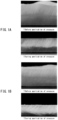
- FIG. 1 is a view illustrating criteria for evaluating the appearance of a pile fabric.
- the present inventors conducted intensive studies to solve the above problem. As a result of this, the inventors found that a pile fabric with an excellent feel and excellent voluminousness and compression recoverability can be obtained by using, in a pile fabric that includes a long pile portion and a short pile portion, polyester-based fibers as main components of fibers constituting the long pile portion and fibers constituting the short pile portion, and appropriately adjusting the crimp removability of the polyester-based fibers.
- polystyrene-based fibers refers to polyester-based fibers both of the long pile portion and of the short pile portion.
- polyester-based fibers of the long pile portion and the term “polyester-based fibers of the short pile portion” refer to the polyester-based fibers of the long pile portion and the polyester-based fibers of the short pile portion, respectively.
- the long pile portion in the pile fabric contains crimped polyester-based fibers in an amount of 60% by weight or more.
- the short pile portion in the pile fabric contains crimped polyester-based fibers in an amount of 60% by weight or more.
- a pile portion is a napped portion of the pile fabric other than a base fabric (also referred to as a "ground structure") portion.
- the long pile portion contains the crimped polyester-based fibers in an amount of 60% by weight or more, preferably in an amount of 70% by weight or more, and more preferably in an amount of 80% by weight or more of the total weight of the long pile portion
- the short pile portion contains the crimped polyester-based fibers in an amount of 60% by weight or more, preferably in an amount of 70% by weight or more, and more preferably in an amount of 80% by weight or more of the total weight of the short pile portion.
- fibers constituting the pile portion are also referred to as "pile fibers”.
- the pile fabric includes the long pile portion and the short pile portion having different pile lengths.
- the average pile length of the long pile portion differs from the average pile length of the short pile portion by 2 mm or more. Thus, it is possible to achieve a two-layer structure closely resembling natural fur.
- the average pile length of the long pile portion differs from that of the short pile portion preferably by 5 mm or more and 50 mm or less.
- the pile fabric may further include a medium pile portion as well as the long pile portion and the short pile portion.
- the pile fabric can have an appearance closer to that of natural far by including the medium pile portion.
- the average pile length of the long pile portion differs from that of the short pile portion by 2 mm or more.
- the average pile length of the long pile portion differs from that of the short pile portion preferably by 5 mm or more and 50 mm or less, and more preferably by 10 mm or more and 50 mm or less.
- the medium pile portion also contains polyester-based fibers in an amount of 60% by weight or more, more preferably in an amount of 70% by weight or more, and further preferably in an amount of 80% by weight or more of the total weight of the medium pile portion.
- the average pile length is determined by vertically standing the fibers constituting each pile portion of the pile fabric such that the fibers are aligned, measuring the lengths from the roots of the fibers constituting each pile portion of the pile fabric (roots on the front surface side of the pile fabric) to the tip of each pile portion at 10 sections in each pile portion, and averaging the measured lengths.
- a pile portion having the longest average pile length is referred to as a "long pile portion”
- a pile portion having the shortest average pile length is referred to as a "short pile portion”.
- the phrase "pile portions having different pile lengths” means that the average pile lengths of the respective pile portions differ from each other by 2 mm or more.
- the pile portion may contain other fibers, e.g., modacrylic fibers and vinyl chloride-based fibers, as well as the polyester-based fibers.
- the long pile portion preferably contains modacrylic fibers constituted by an acrylic-based copolymer containing acrylonitrile in an amount of 35% by weight or more and less than 95% by weight. It is possible to provide a pile fabric with good texture, recovering strength, and voluminousness by using the polyester-based fibers and the modacrylic fibers in combination.
- the long pile portion may contain. the polyester-based fibers in an amount of 60% by weight or more and 100% by weight or less and the modacrylic fibers in an amount of 40% by weight or less.
- the long pile portion may contain the polyester-based fibers in an amount of 70% by weight or more and 100% by weight or less and the modacrylic fibers in an amount of 30% by weight or less.
- the long pile portion may contain the polyester-based fibers in an amount of 80% by weight or more and 100% by weight or less and the modacrylic fibers in an amount of 20% by weight or less.
- the acrylic-based copolymer preferably contains another monomer that is copolymerizable with acrylonitrile in an amount of more than 5% by weight and 65% by weight or less as well as acrylonitrile.
- the other monomer is not particularly limited, but is preferably at least one monomer selected from the group consisting of vinyl halides, vinylidene halides, and metal salts of sulfonic acid-containing monomers, and more preferably at least one monomer selected from the group consisting of vinyl chloride, vinylidene chloride, and sodium styrenesulfonate, for example.
- the pile fabric can be produced in the same manner as usual pile fabrics except that polishing is performed at a temperature of 90°C or more and 160°C or less.
- a sliver constituted by pile fibers is knitted into a pile fabric (which may be referred to as a "knitted fabric") by a sliver knitting machine, and pre-polishing is performed at a temperature of 90°C or more and 160°C or less, and then polishing is performed at a temperature of 90°C or more and 160°C or less so that crimps are removed. Polishing may be performed multiple times at different temperatures.
- a back surface (opposite side of the napped portion) of the pile fabric may be coated with a backing resin before polishing in order to eliminate or reduce pile fiber loss and for tentering.
- the backing resin may be an acrylic acid ester-based adhesive or polyurethane-based adhesive. Further, pre-shearing and shearing may be performed as needed.
- a polyester-based resin constituting the polyester-based fibers may be, e.g., polyalkylene terephthalate, a copolyester containing polyalkylene terephthalate as the main component, or a combination thereof, but is not particularly limited thereto.
- the polyalkylene terephthalate include, but are not particularly limited to, polyethylene terephthalate, polypropylene terephthalate, polybutylene terephthalate, and polytrimethylene terephthalate. In particular, from the viewpoint of heat characteristics, polyethylene terephthalate is preferred.
- copolyester containing polyalkylene terephthalate as the main component examples include, but are not particularly limited to, copolyesters containing polyalkylene terephthalate such as polyethylene terephthalate, polypropylene terephthalate, polybutylene terephthalate, or polytrimethylene terephthalate as the main component and containing other copolymer components.
- copolyester containing polyethylene terephthalate as the main component is preferred because of its relatively high decomposition temperature (Tg) and excellent handleability.
- the term "main component” refers to a component contained in an amount of 50 mol% or more
- the term "copolyester containing polyalkylene terephthalate as the main component” refers to a copolyester containing polyalkylene terephthalate in an amount of 50 mol% or more.
- the copolyester containing polyalkylene terephthalate as the main component contains polyalkylene terephthalate preferably in an amount of 60 mol% or more, more preferably in an amount of 70 mol% or more, and further preferably in an amount of 80 mol% or more.
- Examples of the other copolymer components include the following: polycarboxylic acids such as isophthalic acid, orthophthalic acid, naphthalenedicarboxylic acid, paraphenylenedicarboxylic acid, trimellitic acid, pyromellitic acid, succinic acid, glutaric acid, adipic acid, suberic acid, azelaic acid, sebacic acid, and dodecanedioic acid, and their derivatives; dicarboxylic acids including a sulfonic acid salt such as 5-sodiumsulfoisophthalic acid and dihydroxyethyl 5-sodiumsulfoisophthalate, and their derivatives; and 1,2-propanediol, 1,3-propanediol, 1,4-butanediol, 1,6-hexanediol, neopentyl glycol, 1,4-cyclohexanedimethanol, diethylene glycol, polyethylene glycol, trimethylo
- copolyester containing polyalkylene terephthalate as the main component include polyesters obtained through copolymerization of polyethylene terephthalate as the main component with at least one compound selected from the group consisting of ethylene glycol ether of bisphenol A, 1,4-cyclohexanedimethanol, isophthalic acid, and dihydroxyethyl 5-sodiumsulfoisophthalate.
- the polyalkylene terephthalates and the copolyesters containing polyalkylene terephthalate as the main component may be used alone or in combination of two or more.
- the following are used alone or in combination of two or more: polyethylene terephthalate, polypropylene terephthalate, polybutylene terephthalate, polytrimethylene terephthalate, a polyester obtained through copolymerization of polyethylene terephthalate as the main component with ethylene glycol ether of bisphenol A, a polyester obtained through copolymerization of polyethylene terephthalate as the main component with 1,4-cyclohexanedimethanol, a polyester obtained through copolymerization of polyethylene terephthalate as the main component with isophthalic acid, and a polyester obtained through copolymerization of polyethylene terephthalate as the main component with dihydroxyethyl 5-sodiumsulfoisophthalate.
- the intrinsic viscosity (IV value) of the polyester-based resin is, although not particularly limited, preferably 0.3 or more and 1.2 or less, and more preferably 0.4 or more and 1.0 or less.
- the intrinsic viscosity thereof is 0.3 or more, the mechanical strength of fibers obtained does not decrease.
- the intrinsic viscosity is 1.2 or less, the molecular weight is not too large, and the melt viscosity is not too high. Thus, it is easy to perform melt spinning, and the fineness of the fibers obtained is likely to be uniform.
- an additive agent such as a delustering agent, a lubricant, an antioxidant, a color pigment, a stabilizing agent, a flame retardant, or a toughening agent may be added to the polyester-based resin constituting the polyester-based fibers as needed.
- the delustering agent may be, e.g., titanium dioxide.
- the lubricant include silica microparticles and alumina microparticles.
- the cross-sectional shape of the polyester-based fibers is not particularly limited.
- Examples of the cross-sectional shape include a circular shape and a modified shape.
- Examples of the modified shape include a Y shape and a flat shape.
- Examples of the flat shape include an oval shape, a rectangle, a flat multilobed shape, and a flat constriction shape.
- Examples of the flat constriction shape include shapes having circles or ovals linearly aligned such as a cocoon shape, a four skewered-dumpling shape, and a five skewered-dumpling shape.
- the polyester-based fibers preferably have a flat shape in which a length (b) of a long side of a fiber cross-section is larger than a length (a) of a short side of the fiber cross-section, and the length (b) of a long side of a fiber cross-section is more preferably not less than two times the length (a) of a short side of the fiber cross-section.
- the length (b) of a long side of a fiber cross-section of the polyester-based fibers is, although not particularly limited, preferably not more than eight times, and more preferably not more than six times the length (a) of a short side of the fiber cross-section, for example.
- the term "long side of a fiber cross-section" refers to a line segment having the maximum length of a fiber cross-section, that is, a line segment having the maximum length, out of straight lines connecting any two points on an outer circumference of the fiber cross-section.
- short side of the fiber cross-section refers to a line segment having the maximum width of the fiber cross-section, that is, a line segment having the maximum length, out of straight lines that connect any two points on the outer circumference of the fiber cross-section which are perpendicular to the long side of the fiber cross-section.
- the length (b) of the long side of a fiber cross-section is the same as the length (a) of the short side of the fiber cross-section.
- the polyester-based fibers have a crimp(s).
- the term "crimp” refers to a crimp imparted by a known crimp imparting method such as a gear crimping method or a stuffing box method, but is not particularly limited thereto.
- the crimp frequency of the polyester-based fibers is not particularly limited. From the viewpoints of bulkiness and processability in a carding machine, the crimp frequency is preferably 5 crimps/25 mm or more and 18 crimps/25 mm or less, and more preferably 8 crimps/25 mm or more and 14 crimps/25 mm or less, for example. In one or more embodiments of the present invention, the crimp frequency is measured in accordance with JIS L-1015.
- Examples of the form of the crimped polyester-based fibers include, although not particularly limited, a filament form, a staple form, and a tow form in which filaments are bundled together.
- the polyester-based fibers of the short pile portion have a crimp removal temperature of 90°C or more and 120°C or less.
- crimp removal temperature refers to the minimum temperature that satisfies the following numerical formula (1): A ⁇ B / A ⁇ 100 ⁇ 3 % where, in the formula (1), A represents the length of a fiber bundle of the polyester-based fibers under a load of 4 mg/dtex after the fiber bundle is subjected to dry heat treatment at a predetermined temperature for 60 seconds under a load of 4 mg/dtex, and B represents the length of the fiber bundle under no load after the dry heat treatment is performed as above.
- the polyester-based fibers are bundled to prepare a fiber bundle with 9000 dtex. Both ends of the fiber bundle are trimmed such that the resulting sample has a length of about 200 mm.
- the sample is suspended vertically in a hot-air convection dryer. A 36 g-weight is suspended from a lower end of the fiber bundle (a load of 4 mg/dtex is applied to the fiber bundle).
- the sample is subjected to heat treatment for 60 seconds at a predetermined temperature starting from 50°C and increasing in increments of 10°C.
- crimp removal temperature indicates the minimum temperature that satisfies the numerical formula (1).
- the crimp removal temperature of the polyester-based fibers of the short pile portion is 90°C or more and 120°C or less.
- crimps are removed moderately from the polyester-based fibers of the short pile portion in a relatively low temperature range of 90°C or more and 160°C or less in polishing that is a step in pile fabric processing.
- polishing that is a step in pile fabric processing.
- only crimps on a napped surface layer portion of the pile fabric are likely to be removed.
- the crimp removal temperature of the polyester-based fibers of the short pile portion exceeds 120°C, crimps are not sufficiently removed in polishing at a low temperature of 90°C or more and 160°C or less, and crimps on the pile fibers are hardly removed, resulting in a pile fabric having a poor appearance and feel.
- the crimp removal temperature is lower than 90°C, crimps on the pile fibers are almost completely removed in polishing at a low temperature of 90°C or more and 160°C or less, resulting in a pile fabric with inferior voluminousness.
- the crimp removal temperature of the polyester-based fibers after the hot-water treatment is preferably 90°C or more and 120°C or less.
- the crimp removal temperature of the polyester-based fibers is also 90°C or more and 120°C or less even after the hot-water treatment, crimps are removed moderately in polishing at a low temperature of 90°C or more and 160°C or less even through a step such as dyeing under hot-water conditions. Specifically, only the crimps on the napped surface layer portion of the pile fabric are likely to be removed. Thus, it is possible to obtain a pile fabric having a good appearance and excellent voluminousness.
- the single fiber fineness of the polyester-based fibers of the short pile portion is, although not particularly limited, preferably 12 dtex or less, more preferably 10 dtex or less, further preferably 7 dtex or less, and particularly preferably 5 dtex or less, for example. If the single fiber fineness exceeds 12 dtex, heat is not sufficiently transferred in polishing, and the number of instances of polishing may need to be increased to moderately remove crimps. Moreover, an increase in the number of instances of polishing may deteriorate soft texture. Furthermore, from the viewpoint of fiber handleability, the single fiber fineness of the polyester-based fibers of the short pile portion is, although not particularly limited, preferably 1 dtex or more.
- the single fiber fineness of the other fibers is also preferably 12 dtex or less, more preferably 10 dtex or less, further preferably 7 dtex or less, and particularly preferably 5 dtex or less. Moreover, from the viewpoint of fiber handleability, the single fiber fineness of the other fibers is also preferably 1 dtex or more.
- the polyester-based fibers of the short pile portion can be produced in the same manner as usual polyester-based fibers except that no heat treatment is performed on drawn yarns before crimping, after crimping, or before and after crimping; heat treatment is performed on drawn yarns at a temperature of 25°C or more and 120°C or less before crimping, after crimping, or before and after crimping; or heat treatment is performed on drawn yarns at a temperature of 100°C or more and 200°C or less before crimping, and heat treatment is performed on the drawn yarns at a temperature of 25°C or more and 140°C or less after crimping.
- before crimping refers to a time period starting from the completion of drawing polyester-based fibers to the start of crimping.
- after crimping refers to a time period starting from the completion of crimping until crimped polyester-based fibers are finally obtained.
- heat treatment at 100°C is performed in a time period starting from the completion of crimping until crimped polyester-based fibers are finally obtained, for example.
- Crystallization of the polyester-based fibers is not facilitated before crimping, after crimping, or before and after crimping by performing no heat treatment on drawn yarns before crimping, after crimping, or before and after crimping; or by performing heat treatment on drawn yarns at a temperature of 25°C or more and 120°C or less before crimping, after crimping, or before and after crimping. Therefore, it is possible to obtain polyester-based fibers having a crimp removal temperature of 90°C or more and 120°C or less.
- polyester-based fibers are used for the short pile portion of the pile fabric, crimps are moderately removed from the polyester-based fibers in polishing at a low temperature of 90°C or more and 160°C or less in the pile fabric processing. Specifically, only the crimps on the napped surface layer portion of the pile fabric are likely to be removed. Thus, it is possible to obtain a pile fabric having a good appearance and excellent voluminousness.
- heat treatment is performed on drawn yarns preferably at a temperature of 25°C or more and 120°C or less, more preferably at a temperature of 60°C or more and 110°C or less, and further preferably at a temperature of 80°C or more and 110°C or less after crimping when no heat treatment is performed before crimping.
- the heat treatment time may be, e.g., 10 minutes or more and 50 minutes or less, but is not particularly limited thereto.
- heat treatment after crimping is performed preferably at a temperature of 60°C or more and 110°C or less for 10 minutes or more and 50 minutes or less, and more preferably at a temperature of 80°C or more and 110°C or less for 20 minutes or more and 40 minutes or less.
- crimps imparted to the polyester-based fibers may be tightly fixed thereto if the temperature of the heat treatment exceeds 120°C. In this case, there is a possibility that the crimp removal temperature of the polyester-based fibers exceeds 120°C.
- the productivity and production processability will be improved.
- heat treatment when heat treatment is performed on drawn yarns before and after crimping, heat treatment may be performed on the drawn yarns at a temperature of 100°C or more and 200°C or less before crimping, and heat treatment may also be performed on the drawn yarns at a temperature of 25°C or more and 140°C or less after crimping.
- heat treatment is performed on the drawn yarns preferably at a temperature of 100°C or more and 170°C or less, and more preferably at a temperature of 100°C or more and 150°C or less, before crimping.
- heat treatment is performed preferably at a temperature of 25°C or more and 130°C or less, and more preferably at a temperature of 25°C or more and 120°C or less.
- the heat treatment time may be 10 seconds or more and 5 minutes or less, and 20 seconds or more and 4 minutes or less before crimping, but is not particularly limited thereto.
- the heat treatment time may be 5 minutes or more and 40 minutes or less, and 10 minutes or more and 30 minutes or less after crimping, but is not particularly limited thereto.
- the crimp removal temperature of the obtained polyester-based fibers is reduced by subjecting the drawn yarns to heat treatment under the above-described conditions before and after crimping.
- the obtained polyester-based fibers are also likely to have a crimp removal temperature of 90°C or more and 120°C or less even after hot-water treatment.
- crimps are moderately removed in polishing at a low temperature of 90°C or more and 160°C or less even through a step such as dyeing under hot-water conditions.
- only the crimps on the napped surface layer portion of the pile fabric are likely to be removed.
- Heat treatment performed before crimping, after crimping, or before and after crimping may be dry heat treatment or wet heat treatment. Dry heat treatment is preferred because the process is simple. It is possible to perform dry heat treatment using, e.g., a uniform hot-air dryer or a suction dryer. The heat treatment may be performed in a relaxed state. The relaxation rate may be set to, e.g., 20% or less, but is not particularly limited thereto.
- the polyester-based fibers of the long pile portion have a lower crimp removal temperature than the polyester-based fibers of the short pile portion.
- the long pile portion is located on an outer layer (surface layer) of the pile fabric and comes into contact with the human skin directly.
- the long pile portion more exerts influence on a feel.
- crimps left in the long pile portion result in a rough feel.
- the long pile portion less tends to exert influence on the voluminousness of the pile fabric compared to the short pile portion. For these reasons, the crimp removability of the polyester-based fibers of the long pile portion needs to be higher than that of the polyester-based fibers of the short pile portion.
- the crimp removal temperature of the polyester-based fibers of the long pile portion needs to be lower than that of the polyester-based fibers of the short pile portion.
- the crimp removal temperature of the polyester-based fibers of the long pile portion is preferably 110°C or less, and more preferably 90°C or less.
- the crimp removal temperature of the polyester-based fibers of the long pile portion differs from that of the polyester-based fibers of the short pile portion preferably by, e.g., 10°C or more.
- the crimp removal temperature of the polyester-based fibers after the hot-water treatment is preferably less than 120°C, more preferably 110°C or less, and further preferably 90°C or less.
- the crimp removal temperature of the polyester-based fibers of the long pile portion is less than 120°C, crimps are removed well from the polyester-based fibers of the long pile portion in a relatively low temperature range of 90°C or more and 160°C or less in polishing, and it is possible to obtain a pile fabric having a good appearance and feel. If the crimp removal temperature is 120°C or more, crimps are not sufficiently removed in polishing at a low temperature of 90°C or more and 160°C or less, and crimps on the pile fibers are hardly removed, resulting in a pile fabric having a poor appearance and feel.
- the single fiber fineness of the polyester-based fibers of the long pile portion is, although not particularly limited, preferably 10 dtex or more and 50 dtex or less, and more preferably 15 dtex or more and 40 dtex or less, for example.
- the single fiber fineness of the other fibers are also preferably 10 dtex or more and 50 dtex or less, and more preferably 15 dtex or more and 40 dtex or less.
- polyester-based fibers having a crimp removal temperature of 120°C or less can be used for the medium pile portion.
- a method of producing the polyester-based fibers is not particularly limited.
- the polyester-based fibers can be produced in the same manner as usual polyester-based fibers except the steps described above.
- the polyester-based fibers can be produced by, e.g., melt kneading, using various general kneading machines, the polyester-based resin or a polyester-based resin composition obtained by dry blending the polyester-based resin and an additive agent, pelletizing the polyester-based resin or the polyester-based resin composition, and then melt spinning the resulting pellets. Melt spinning is performed while the temperatures (spinning temperatures) of, e.g., an extruder, a gear pump, and a spinneret are set to 250°C or more and 300°C or less.
- the obtained spun yarns are passed through a heated tube, then cooled to a temperature of not more than the glass transition point of the polyester-based resin, and wound up at a speed of 50 m/min or more and 4500 m/min or less to obtain spun yarns (undrawn yarns).
- the spun yarns (undrawn yarns) can be drawn through hot drawing.
- the heating means for the hot drawing may be, e.g., a heating roller, a heat plate, a steam jet apparatus, or a hot water bath, and they can be used in combination as appropriate.
- Crimping can be performed by a known crimp imparting apparatus such as a gear crimper or a stuffing box crimper. Similarly to usual crimping, it is possible to crimp the polyester-based fibers in a state in which the polyester-based fibers are preheated to a temperature that is higher than or equal to a softening temperature. Similarly to usual crimping, preheating can be performed by wet heat, e.g., by steam at 85°C or more and 110°C or less.
- the polyester-based fibers have a Young's modulus of preferably 4.0 GPa or more, and more preferably 5.0 GPa or more. This is because the higher the Young's modulus is, the higher the rigidity of the fibers is, and the better the voluminousness of the pile fabric is.
- the pile fabric preferably includes the short pile portion in an amount of 50% by weight or more and 95% by weight or less of the total weight of the pile portion and the long pile portion in an amount of 5% by weight or more and 50% by weight or less of the total weight of the pile portion, and the pile fabric more preferably includes the short pile portion in an amount of 60% by weight or more and 80% by weight or less of the total weight of the pile portion and the long pile portion in an amount of 20% by weight or more and 40% by weight or less of the total weight of the pile portion.
- the pile fabric may include the short pile portion in an amount of 50% by weight or more and 95% by weight or less of the total weight of the pile portion, the medium pile portion in an amount of 30% by weight or less of the total weight of the pile portion, and the long pile portion in an amount of 5% by weight or more and 50% by weight or less of the total weight of the pile portion, and the pile fabric may include the short pile portion in an amount of 60% by weight or more and 80% by weight or less of the total weight of the pile portion, the medium pile portion in an amount of 30% by weight or less of the total weight of the pile portion, and the long pile portion in an amount of 20% by weight or more and 40% by weight or less of the total weight of the pile portion.
- Polyester-based fibers were bundled to prepare a fiber bundle with 9000 dtex. Both ends of the fiber bundle were trimmed such that the resulting sample had a length of about 200 mm.
- the sample was suspended vertically in a hot-air convection dryer. A 36 g-weight was suspended from a lower end of the fiber bundle (a load of 4 mg/dtex was applied to the fiber bundle).
- the sample was subjected to heat treatment for 60 seconds at a predetermined temperature starting from 50°C and increasing in increments of 10°C. After each instance of heat treatment, a length A of the fiber bundle under a load of 4 mg/dtex, and a length B of the fiber bundle under no load after the weight had been removed were measured. The measurement thereof was performed five times at each temperature.
- the crimp removal temperature indicates the minimum temperature that satisfies the following numerical formula (1).
- the crimp removability of pile portions of a pile fabric was sensory evaluated based on the following five criteria.
- the criterion of the crimp removability was 3, only crimps on a napped surface layer portion of the pile fabric were removed.
- crimps are preferably left appropriately in a short pile portion, and the crimp removability of the short pile portion is preferably 3.
- crimps are preferably removed neatly in a long pile portion, and the crimp removability of the long pile portion is preferably 5.
- the crimp removability of a medium pile portion is preferably 3 or 4.
- FIG. 1 The voluminousness of a pile fabric was evaluated based on the following criteria. Reference photographs for the respective criteria are shown in FIG. 1 . Specifically, FIG. 1A shows reference photographs when a pile fabric had good voluminousness, and FIG. 1B shows reference photographs when a pile fabric had poor voluminousness.
- the thickness of the pile fabrics placed on each other was about 60% or more of the thickness of the pile fabrics obtained before the pressure was applied, and the pile fabrics had sufficient voluminousness.
- a surface of a napped portion (pile portion) of a pile fabric was observed, and was sensory evaluated based on the following criteria.
- a pile fabric was cut into a square with a weight of 53 g.
- the fabric piece thus obtained was packed into a 0.28 L columnar container and allowed to stand still at room temperature. After 24 hours, the fabric piece was taken out from the container. The compression recoverability of the fabric piece was evaluated based on the following criteria.
- PET fibers ⁇ Production of polyester-based fibers (PET fibers)>
- PET Polyethylene terephthalate
- IV value intrinsic viscosity
- the undrawn yarns were drawn by 500% in a uniform hot-air drawing machine set at 90°C and immediately subjected to heat treatment while subjected to a 3% limited shrinkage in a uniform hot-air heat treatment machine set at 150°C for one minute to obtain heat treated yarns.
- the heat treated yarns were assembled to an appropriate fineness, the heat treated yarns were crimped through preheating at 98°C by a stuffing box crimper.
- the yarns were subjected to heat treatment in a uniform hot-air dryer set at 100°C for 30 minutes in a relaxed state in which the relaxation rate was 15% or less.
- crimped fibers having a single fiber fineness of 10 dtex and a five skewered-dumpling shape in cross section were obtained. Finally, the crimped fibers were cut to 51 mm to obtain a raw cotton 1A for a pile fabric.
- the raw cotton 1A had a crimp removal temperature of 100°C.
- a raw cotton 1B for a pile fabric was obtained in the same manner as the raw cotton 1A for a pile fabric. However, spinning was performed using a spinneret with 200 holes having a Y shape in cross section at a winding speed of 220 m/min to obtain undrawn yarns having a single fiber fineness of 31 dtex. The draw ratio was set to 420%. The heat treatment temperature after crimping was set to 80°C. Thus, crimped fibers having a single fiber fineness of 7 dtex and a Y shape in cross section were obtained. Finally, the crimped fibers were cut to 51 mm to obtain the raw cotton 1B for a pile fabric. The raw cotton 1B had a crimp removal temperature of 90°C.
- a raw cotton 1C for a pile fabric was obtained in the same manner as the raw cotton 1A for a pile fabric. However, spinning was performed using a spinneret with 80 holes having a cocoon shape in cross section at a winding speed of 150 m/min. Moreover, PET was blended with 2 parts by weight of titanium oxide, 0.5 parts by weight of modified silica, and 4 parts by weight of a brown pigment compound. Furthermore, the draw ratio was set to 415%. The heat treatment temperature after drawing and before crimping was set to 180°C. Heat treatment after crimping was not performed. Thus, crimped fibers having a single fiber fineness of 35 dtex and a cocoon shape in cross section were obtained. Finally, the crimped fibers were cut to 102 mm to obtain the raw cotton 1C for a pile fabric. The raw cotton 1C had a crimp removal temperature of 80°C.
- Crimped fibers having a single fiber fineness of 10 dtex and a five skewered-dumpling shape in cross section were obtained in the same manner as in Example 1 except that the yarns were not subjected to heat treatment before crimping, but were subjected to heat treatment in a uniform hot-air dryer set at 150°C for 30 minutes after crimping.
- a raw cotton 1D had a crimp removal temperature of 150°C.
- a raw cotton 1E for a pile fabric was obtained in the same manner as the raw cotton 1A for a pile fabric. However, spinning was performed using a spinneret with 150 holes having a four finger shape in cross section at a winding speed of 400 m/min to obtain undrawn yarns having a single fiber fineness of 18 dtex. Moreover, the draw ratio was set to 400%. Heat treatment after crimping was performed for 15 minutes. Thus, crimped fibers having a single fiber fineness of 4.5 dtex and a four skewered-dumpling shape in cross section were obtained. Finally, the raw cotton 1E for a pile fabric was obtained. The raw cotton 1E had a crimp removal temperature of 100°C.
- a raw cotton 1F for a pile fabric was obtained in the same manner as the raw cotton 1A for a pile fabric. However, spinning was performed using a spinneret with 35 holes having a five finger shape in cross section at a winding speed of 170 m/min. Moreover, PET was blended with 2 parts by weight of titanium oxide and 0.5 parts by weight of modified silica. Furthermore, the draw ratio was set to 510%. Heat treatment temperature after drawing and before crimping was set to 210°C. Heat treatment after crimping was not performed. Thus, crimped fibers having a single fiber fineness of 35 dtex and a five skewered-dumpling shape in cross section were obtained. Finally, the crimped fibers were cut to 102 mm to obtain the raw cotton 1F for a pile fabric. The raw cotton 1 F had a crimp removal temperature of 80°C.
- Modacrylic fibers (trade name "Kanekalon (registered trademark) RCL” manufactured by Kaneka Corporation) having a softening point of 180°C to 190°C, a fineness of 12 dtex, and a cut length of 76 mm were used (hereinafter, simply referred to as "RCL").
- Modacrylic fibers (trade name "Kanekalon (registered trademark) ELP” manufactured by Kaneka Corporation) having a softening point of 180°C to 190°C, a fineness of 27 dtex, and a cut length of 102 mm were used (hereinafter, simply referred to as "ELP").
- Modacrylic fibers (trade name "Kanekalon (registered trademark) AH” manufactured by Kaneka Corporation) having a softening point of 180°C to 190°C, a fineness of 3.3 dtex, and a cut length of 51 mm were used (hereinafter, simply referred to as "AH").
- the raw cottons 1A, 1B, and 1C for a pile fabric thus obtained were used in a weight ratio of 50:20:30 to produce a sliver.
- the obtained sliver was knitted into a pile fabric by a sliver knitting machine.
- the raw cottons 1A and 1B were used for a short pile portion.
- the raw cotton 1C was used for a long pile portion.
- pre-polishing was performed at 120°C
- a back surface of the pile fabric was back-coated with an acrylic acid ester-based adhesive, and tentering was performed.
- polishing was performed at 160°C three times, at 130°C three times, and at 100°C three times.
- a pile fabric having a basis weight of about 1600 g/m 2 was obtained.
- a pile fabric having a basis weight of about 2000 g/m 2 was produced in the same manner as in Example 1 except that the raw cottons 1E and 1F for a pile fabric were used in a weight ratio of 70:30 as raw cottons for a pile fabric.
- the raw cotton 1E was used for a short pile portion.
- the raw cotton 1F was used for a long pile portion.
- a pile fabric having a basis weight of about 1730 g/m 2 was produced in the same manner as in Example 1 except that the raw cottons 1A and 1B for a pile fabric, RCL, and ELP were used in a weight ratio of 35:15:20:30 as raw cottons for a pile fabric, RCL was used for a medium pile portion, and ELP was used for a long pile portion.
- a pile fabric having a basis weight of about 1540 g/m 2 was produced in the same manner as in Example 1 except that the raw cotton 1D for a pile fabric and ELP were used in a weight ratio of 70:30 as raw cottons for a pile fabric, the raw cotton 1D was used for a short pile portion, and ELP was used for a long pile portion.
- a pile fabric having a basis weight of about 1540 g/m 2 was produced in the same manner as in Example 1 except that the raw cottons AH, RCL, and ELP for a pile fabric were used in a weight ratio of 50:20:30 as raw cottons for a pile fabric, AH was used for a short pile portion, RCL was used for a medium pile portion, and ELP was used for a long pile portion.
- the crimp removability, appearance, and voluminousness of the pile fabric were good in Comparative Example 1 in which the PET fibers having a predetermined crimp removal temperature were used for the short pile portion and only modacrylic fibers RCL and ELP were used for the long pile portion.
- the compression recoverability of the pile fabric was poor in Comparative Example 1.
- the crimp removability of the short pile portion of the pile fabric was 1 in Comparative Example 2 in which the PET fibers having a crimp removal temperature of 150°C were used for the short pile portion and crimps were not able to be removed in the pile fabric.
- the appearance and compression recoverability thereof were poor.
- the crimp removability and appearance were good, but the voluminousness and compression recoverability were poor in Comparative Example 3 in which the modacrylic fibers were used both for the long pile portion and for the short pile portion.
Landscapes
- Engineering & Computer Science (AREA)
- Textile Engineering (AREA)
- Chemical & Material Sciences (AREA)
- Chemical Kinetics & Catalysis (AREA)
- Dispersion Chemistry (AREA)
- Mechanical Engineering (AREA)
- Knitting Of Fabric (AREA)
- Treatment Of Fiber Materials (AREA)
- Yarns And Mechanical Finishing Of Yarns Or Ropes (AREA)
- Woven Fabrics (AREA)
Applications Claiming Priority (2)
| Application Number | Priority Date | Filing Date | Title |
|---|---|---|---|
| JP2019233718 | 2019-12-25 | ||
| PCT/JP2020/045222 WO2021131610A1 (ja) | 2019-12-25 | 2020-12-04 | パイル布帛、及びその製造方法 |
Publications (3)
| Publication Number | Publication Date |
|---|---|
| EP4083285A1 EP4083285A1 (en) | 2022-11-02 |
| EP4083285A4 EP4083285A4 (en) | 2023-10-11 |
| EP4083285B1 true EP4083285B1 (en) | 2025-01-29 |
Family
ID=76574055
Family Applications (1)
| Application Number | Title | Priority Date | Filing Date |
|---|---|---|---|
| EP20908275.9A Active EP4083285B1 (en) | 2019-12-25 | 2020-12-04 | Pile fabric and manufacturing method therefor |
Country Status (6)
| Country | Link |
|---|---|
| US (1) | US12286732B2 (https=) |
| EP (1) | EP4083285B1 (https=) |
| JP (1) | JP7606982B2 (https=) |
| CN (1) | CN113906175B (https=) |
| TW (1) | TWI837446B (https=) |
| WO (1) | WO2021131610A1 (https=) |
Family Cites Families (23)
| Publication number | Priority date | Publication date | Assignee | Title |
|---|---|---|---|---|
| JPS5938352B2 (ja) * | 1976-10-04 | 1984-09-17 | 株式会社クラレ | カツトパイル布の製法 |
| US4316924A (en) | 1979-03-26 | 1982-02-23 | Teijin Limited | Synthetic fur and process for preparation thereof |
| JPS56107044A (en) * | 1980-01-24 | 1981-08-25 | Teijin Ltd | Artificial leather |
| JPS60155781A (ja) * | 1984-01-25 | 1985-08-15 | Toray Ind Inc | 人工毛皮およびその縫製品 |
| JPS60162857A (ja) | 1984-02-03 | 1985-08-24 | 株式会社クラレ | 獣毛調ハイパイル布帛の製造方法 |
| JP3065645B2 (ja) * | 1990-09-26 | 2000-07-17 | 三菱レイヨン株式会社 | パイル布帛及びその製造方法 |
| JPH05140860A (ja) * | 1991-11-19 | 1993-06-08 | Kuraray Co Ltd | 立毛布帛の製造方法 |
| JP3207775B2 (ja) * | 1996-12-13 | 2001-09-10 | 帝人株式会社 | 長短パイルを生起可能な立毛布帛 |
| US5834119A (en) * | 1997-01-03 | 1998-11-10 | E. I. Du Pont De Nemours And Company | Filament cross-sections |
| JP2001181927A (ja) * | 1999-12-27 | 2001-07-03 | Kanegafuchi Chem Ind Co Ltd | 捲縮除去性に優れた立毛布帛用アクリル系合成繊維及びその製造方法、並びに該繊維からなる立毛布帛。 |
| JP2001181926A (ja) * | 1999-12-27 | 2001-07-03 | Kanegafuchi Chem Ind Co Ltd | 捲縮除去性に優れた立毛布帛用アクリル系合成繊維及びその製造方法。 |
| JP3865731B2 (ja) * | 2001-12-28 | 2007-01-10 | 三菱レイヨン株式会社 | 高収縮性アクリル系繊維及び該繊維を含むパイル組成物並びに該パイル組成物を用いた立毛布帛 |
| JP3989883B2 (ja) * | 2002-09-26 | 2007-10-10 | 帝人ファイバー株式会社 | 凹凸模様付き多色パイル布帛 |
| JP2004308025A (ja) * | 2003-04-02 | 2004-11-04 | Kuraray Co Ltd | 払拭用基布 |
| JP2004308080A (ja) * | 2003-04-10 | 2004-11-04 | Solotex Corp | 織物の製法 |
| JP4343014B2 (ja) * | 2004-04-13 | 2009-10-14 | 帝人ファイバー株式会社 | 緻密超短立毛布帛およびその製造方法およびカーシート部材 |
| JP2005325462A (ja) * | 2004-05-12 | 2005-11-24 | Kaneka Corp | 意匠性に優れた衣料用パイル布帛 |
| EP1774076A4 (en) * | 2004-06-24 | 2008-04-30 | Mmi Ipco Llc | MANUFACTURED FABRIC ARTICLES |
| US20120260422A1 (en) * | 2005-06-23 | 2012-10-18 | Mmi-Ipco, Llc | Thermal blankets |
| JP2007002343A (ja) * | 2005-06-21 | 2007-01-11 | Kaneka Corp | 段差に優れたパイル布帛 |
| JP5817942B2 (ja) * | 2013-11-08 | 2015-11-18 | 三菱レイヨン株式会社 | 高収縮性アクリル繊維と同繊維を含む紡績糸と同紡績糸を用いた段差パイル布帛 |
| CN112352069B (zh) | 2018-07-11 | 2022-04-01 | 株式会社钟化 | 聚酯系纤维、使用其的绒头布帛及它们的制造方法 |
| HK1255791A2 (zh) * | 2018-07-13 | 2019-08-23 | LeapXpert Limited | 用於确认通信通道上的指令的系统和方法 |
-
2020
- 2020-12-04 JP JP2021567155A patent/JP7606982B2/ja active Active
- 2020-12-04 CN CN202080040301.0A patent/CN113906175B/zh active Active
- 2020-12-04 WO PCT/JP2020/045222 patent/WO2021131610A1/ja not_active Ceased
- 2020-12-04 EP EP20908275.9A patent/EP4083285B1/en active Active
- 2020-12-16 TW TW109144474A patent/TWI837446B/zh active
-
2022
- 2022-04-14 US US17/720,637 patent/US12286732B2/en active Active
Also Published As
| Publication number | Publication date |
|---|---|
| CN113906175A (zh) | 2022-01-07 |
| US20220235500A1 (en) | 2022-07-28 |
| EP4083285A1 (en) | 2022-11-02 |
| WO2021131610A1 (ja) | 2021-07-01 |
| JP7606982B2 (ja) | 2024-12-26 |
| TW202130878A (zh) | 2021-08-16 |
| JPWO2021131610A1 (https=) | 2021-07-01 |
| EP4083285A4 (en) | 2023-10-11 |
| US12286732B2 (en) | 2025-04-29 |
| TWI837446B (zh) | 2024-04-01 |
| CN113906175B (zh) | 2022-11-04 |
Similar Documents
| Publication | Publication Date | Title |
|---|---|---|
| JP3801562B2 (ja) | 紡績糸 | |
| JPWO2001075200A1 (ja) | モノフィラメント糸及びその製造方法 | |
| HK1054251A1 (zh) | 单丝及其制造方法 | |
| EP3933080B1 (en) | Crimped polyester-based fiber, method for producing such fiber and method for producing a pile fabric | |
| KR101989959B1 (ko) | 인공 모발 및 이를 이용한 가발 | |
| EP4083285B1 (en) | Pile fabric and manufacturing method therefor | |
| EP3822398A1 (en) | Polyester-based fiber and pile fabric cloth using same, and methods respectively for producing these products | |
| JP4853847B2 (ja) | ポリエステル混繊糸およびその織編物 | |
| JP2005139578A (ja) | マスクストラップ用加工糸およびその製造方法 | |
| JP6638437B2 (ja) | 混繊糸、それを用いた織編物及びスエード調織編物 | |
| JP3260327B2 (ja) | 起毛布帛 | |
| JP2001279562A (ja) | 交編編地 | |
| JP2000064139A (ja) | 特殊断面ポリエステル複合糸 | |
| JP3618496B2 (ja) | マルチフィラメント | |
| JP2005082908A (ja) | 先染め糸およびその製造方法 | |
| JPH0978383A (ja) | ポリエステル複合糸及びポリエステル複合糸からなる織編物 | |
| JPH06128830A (ja) | 高級綿様風合を有する長短複合糸の製造方法 | |
| JP2003313757A (ja) | 編み地 | |
| JP2003227042A (ja) | ポリエステル系複合繊維 | |
| JP2019085676A (ja) | ポリエステル複合仮撚糸 | |
| JP2004091995A (ja) | 不織布 | |
| JP2003003325A (ja) | ポリエステル繊維およびそれを用いた立毛布帛 | |
| JPH0345735A (ja) | 混繊交絡糸 |
Legal Events
| Date | Code | Title | Description |
|---|---|---|---|
| STAA | Information on the status of an ep patent application or granted ep patent |
Free format text: STATUS: THE INTERNATIONAL PUBLICATION HAS BEEN MADE |
|
| PUAI | Public reference made under article 153(3) epc to a published international application that has entered the european phase |
Free format text: ORIGINAL CODE: 0009012 |
|
| STAA | Information on the status of an ep patent application or granted ep patent |
Free format text: STATUS: REQUEST FOR EXAMINATION WAS MADE |
|
| 17P | Request for examination filed |
Effective date: 20220630 |
|
| AK | Designated contracting states |
Kind code of ref document: A1 Designated state(s): AL AT BE BG CH CY CZ DE DK EE ES FI FR GB GR HR HU IE IS IT LI LT LU LV MC MK MT NL NO PL PT RO RS SE SI SK SM TR |
|
| DAV | Request for validation of the european patent (deleted) | ||
| DAX | Request for extension of the european patent (deleted) | ||
| A4 | Supplementary search report drawn up and despatched |
Effective date: 20230908 |
|
| RIC1 | Information provided on ipc code assigned before grant |
Ipc: D04B 1/04 20060101ALI20230904BHEP Ipc: D04B 1/02 20060101AFI20230904BHEP |
|
| GRAP | Despatch of communication of intention to grant a patent |
Free format text: ORIGINAL CODE: EPIDOSNIGR1 |
|
| GRAP | Despatch of communication of intention to grant a patent |
Free format text: ORIGINAL CODE: EPIDOSNIGR1 |
|
| STAA | Information on the status of an ep patent application or granted ep patent |
Free format text: STATUS: GRANT OF PATENT IS INTENDED |
|
| INTG | Intention to grant announced |
Effective date: 20240614 |
|
| GRAJ | Information related to disapproval of communication of intention to grant by the applicant or resumption of examination proceedings by the epo deleted |
Free format text: ORIGINAL CODE: EPIDOSDIGR1 |
|
| STAA | Information on the status of an ep patent application or granted ep patent |
Free format text: STATUS: REQUEST FOR EXAMINATION WAS MADE |
|
| GRAP | Despatch of communication of intention to grant a patent |
Free format text: ORIGINAL CODE: EPIDOSNIGR1 |
|
| STAA | Information on the status of an ep patent application or granted ep patent |
Free format text: STATUS: GRANT OF PATENT IS INTENDED |
|
| P01 | Opt-out of the competence of the unified patent court (upc) registered |
Free format text: CASE NUMBER: APP_46657/2024 Effective date: 20240812 |
|
| INTC | Intention to grant announced (deleted) | ||
| INTG | Intention to grant announced |
Effective date: 20240912 |
|
| GRAS | Grant fee paid |
Free format text: ORIGINAL CODE: EPIDOSNIGR3 |
|
| GRAA | (expected) grant |
Free format text: ORIGINAL CODE: 0009210 |
|
| STAA | Information on the status of an ep patent application or granted ep patent |
Free format text: STATUS: THE PATENT HAS BEEN GRANTED |
|
| AK | Designated contracting states |
Kind code of ref document: B1 Designated state(s): AL AT BE BG CH CY CZ DE DK EE ES FI FR GB GR HR HU IE IS IT LI LT LU LV MC MK MT NL NO PL PT RO RS SE SI SK SM TR |
|
| REG | Reference to a national code |
Ref country code: GB Ref legal event code: FG4D |
|
| REG | Reference to a national code |
Ref country code: CH Ref legal event code: EP |
|
| REG | Reference to a national code |
Ref country code: DE Ref legal event code: R096 Ref document number: 602020045668 Country of ref document: DE |
|
| REG | Reference to a national code |
Ref country code: IE Ref legal event code: FG4D |
|
| REG | Reference to a national code |
Ref country code: NL Ref legal event code: MP Effective date: 20250129 |
|
| PG25 | Lapsed in a contracting state [announced via postgrant information from national office to epo] |
Ref country code: NL Free format text: LAPSE BECAUSE OF FAILURE TO SUBMIT A TRANSLATION OF THE DESCRIPTION OR TO PAY THE FEE WITHIN THE PRESCRIBED TIME-LIMIT Effective date: 20250129 |
|
| PG25 | Lapsed in a contracting state [announced via postgrant information from national office to epo] |
Ref country code: RS Free format text: LAPSE BECAUSE OF FAILURE TO SUBMIT A TRANSLATION OF THE DESCRIPTION OR TO PAY THE FEE WITHIN THE PRESCRIBED TIME-LIMIT Effective date: 20250429 |
|
| PG25 | Lapsed in a contracting state [announced via postgrant information from national office to epo] |
Ref country code: FI Free format text: LAPSE BECAUSE OF FAILURE TO SUBMIT A TRANSLATION OF THE DESCRIPTION OR TO PAY THE FEE WITHIN THE PRESCRIBED TIME-LIMIT Effective date: 20250129 |
|
| PG25 | Lapsed in a contracting state [announced via postgrant information from national office to epo] |
Ref country code: PL Free format text: LAPSE BECAUSE OF FAILURE TO SUBMIT A TRANSLATION OF THE DESCRIPTION OR TO PAY THE FEE WITHIN THE PRESCRIBED TIME-LIMIT Effective date: 20250129 |
|
| PG25 | Lapsed in a contracting state [announced via postgrant information from national office to epo] |
Ref country code: ES Free format text: LAPSE BECAUSE OF FAILURE TO SUBMIT A TRANSLATION OF THE DESCRIPTION OR TO PAY THE FEE WITHIN THE PRESCRIBED TIME-LIMIT Effective date: 20250129 |
|
| REG | Reference to a national code |
Ref country code: LT Ref legal event code: MG9D |
|
| PG25 | Lapsed in a contracting state [announced via postgrant information from national office to epo] |
Ref country code: IS Free format text: LAPSE BECAUSE OF FAILURE TO SUBMIT A TRANSLATION OF THE DESCRIPTION OR TO PAY THE FEE WITHIN THE PRESCRIBED TIME-LIMIT Effective date: 20250529 Ref country code: NO Free format text: LAPSE BECAUSE OF FAILURE TO SUBMIT A TRANSLATION OF THE DESCRIPTION OR TO PAY THE FEE WITHIN THE PRESCRIBED TIME-LIMIT Effective date: 20250429 |
|
| REG | Reference to a national code |
Ref country code: AT Ref legal event code: MK05 Ref document number: 1763512 Country of ref document: AT Kind code of ref document: T Effective date: 20250129 |
|
| PG25 | Lapsed in a contracting state [announced via postgrant information from national office to epo] |
Ref country code: HR Free format text: LAPSE BECAUSE OF FAILURE TO SUBMIT A TRANSLATION OF THE DESCRIPTION OR TO PAY THE FEE WITHIN THE PRESCRIBED TIME-LIMIT Effective date: 20250129 |
|
| PG25 | Lapsed in a contracting state [announced via postgrant information from national office to epo] |
Ref country code: LV Free format text: LAPSE BECAUSE OF FAILURE TO SUBMIT A TRANSLATION OF THE DESCRIPTION OR TO PAY THE FEE WITHIN THE PRESCRIBED TIME-LIMIT Effective date: 20250129 Ref country code: PT Free format text: LAPSE BECAUSE OF FAILURE TO SUBMIT A TRANSLATION OF THE DESCRIPTION OR TO PAY THE FEE WITHIN THE PRESCRIBED TIME-LIMIT Effective date: 20250529 |
|
| PG25 | Lapsed in a contracting state [announced via postgrant information from national office to epo] |
Ref country code: GR Free format text: LAPSE BECAUSE OF FAILURE TO SUBMIT A TRANSLATION OF THE DESCRIPTION OR TO PAY THE FEE WITHIN THE PRESCRIBED TIME-LIMIT Effective date: 20250430 Ref country code: BG Free format text: LAPSE BECAUSE OF FAILURE TO SUBMIT A TRANSLATION OF THE DESCRIPTION OR TO PAY THE FEE WITHIN THE PRESCRIBED TIME-LIMIT Effective date: 20250129 |
|
| PG25 | Lapsed in a contracting state [announced via postgrant information from national office to epo] |
Ref country code: AT Free format text: LAPSE BECAUSE OF FAILURE TO SUBMIT A TRANSLATION OF THE DESCRIPTION OR TO PAY THE FEE WITHIN THE PRESCRIBED TIME-LIMIT Effective date: 20250129 |
|
| PG25 | Lapsed in a contracting state [announced via postgrant information from national office to epo] |
Ref country code: SE Free format text: LAPSE BECAUSE OF FAILURE TO SUBMIT A TRANSLATION OF THE DESCRIPTION OR TO PAY THE FEE WITHIN THE PRESCRIBED TIME-LIMIT Effective date: 20250129 |
|
| PG25 | Lapsed in a contracting state [announced via postgrant information from national office to epo] |
Ref country code: SM Free format text: LAPSE BECAUSE OF FAILURE TO SUBMIT A TRANSLATION OF THE DESCRIPTION OR TO PAY THE FEE WITHIN THE PRESCRIBED TIME-LIMIT Effective date: 20250129 |
|
| PG25 | Lapsed in a contracting state [announced via postgrant information from national office to epo] |
Ref country code: DK Free format text: LAPSE BECAUSE OF FAILURE TO SUBMIT A TRANSLATION OF THE DESCRIPTION OR TO PAY THE FEE WITHIN THE PRESCRIBED TIME-LIMIT Effective date: 20250129 |
|
| PG25 | Lapsed in a contracting state [announced via postgrant information from national office to epo] |
Ref country code: EE Free format text: LAPSE BECAUSE OF FAILURE TO SUBMIT A TRANSLATION OF THE DESCRIPTION OR TO PAY THE FEE WITHIN THE PRESCRIBED TIME-LIMIT Effective date: 20250129 Ref country code: CZ Free format text: LAPSE BECAUSE OF FAILURE TO SUBMIT A TRANSLATION OF THE DESCRIPTION OR TO PAY THE FEE WITHIN THE PRESCRIBED TIME-LIMIT Effective date: 20250129 |
|
| PG25 | Lapsed in a contracting state [announced via postgrant information from national office to epo] |
Ref country code: RO Free format text: LAPSE BECAUSE OF FAILURE TO SUBMIT A TRANSLATION OF THE DESCRIPTION OR TO PAY THE FEE WITHIN THE PRESCRIBED TIME-LIMIT Effective date: 20250129 |
|
| PG25 | Lapsed in a contracting state [announced via postgrant information from national office to epo] |
Ref country code: SK Free format text: LAPSE BECAUSE OF FAILURE TO SUBMIT A TRANSLATION OF THE DESCRIPTION OR TO PAY THE FEE WITHIN THE PRESCRIBED TIME-LIMIT Effective date: 20250129 |
|
| REG | Reference to a national code |
Ref country code: DE Ref legal event code: R097 Ref document number: 602020045668 Country of ref document: DE |
|
| PLBE | No opposition filed within time limit |
Free format text: ORIGINAL CODE: 0009261 |
|
| STAA | Information on the status of an ep patent application or granted ep patent |
Free format text: STATUS: NO OPPOSITION FILED WITHIN TIME LIMIT |
|
| 26N | No opposition filed |
Effective date: 20251030 |
|
| PGFP | Annual fee paid to national office [announced via postgrant information from national office to epo] |
Ref country code: GB Payment date: 20251030 Year of fee payment: 6 |
|
| PGFP | Annual fee paid to national office [announced via postgrant information from national office to epo] |
Ref country code: IT Payment date: 20251121 Year of fee payment: 6 |
|
| PGFP | Annual fee paid to national office [announced via postgrant information from national office to epo] |
Ref country code: FR Payment date: 20251110 Year of fee payment: 6 |