EP3307705B1 - Preparation of high conductivity copper films - Google Patents
Preparation of high conductivity copper films Download PDFInfo
- Publication number
- EP3307705B1 EP3307705B1 EP16806465.7A EP16806465A EP3307705B1 EP 3307705 B1 EP3307705 B1 EP 3307705B1 EP 16806465 A EP16806465 A EP 16806465A EP 3307705 B1 EP3307705 B1 EP 3307705B1
- Authority
- EP
- European Patent Office
- Prior art keywords
- copper
- ink
- alkyl
- substrate
- membered
- Prior art date
- Legal status (The legal status is an assumption and is not a legal conclusion. Google has not performed a legal analysis and makes no representation as to the accuracy of the status listed.)
- Active
Links
Images

Classifications
-
- C—CHEMISTRY; METALLURGY
- C09—DYES; PAINTS; POLISHES; NATURAL RESINS; ADHESIVES; COMPOSITIONS NOT OTHERWISE PROVIDED FOR; APPLICATIONS OF MATERIALS NOT OTHERWISE PROVIDED FOR
- C09D—COATING COMPOSITIONS, e.g. PAINTS, VARNISHES OR LACQUERS; FILLING PASTES; CHEMICAL PAINT OR INK REMOVERS; INKS; CORRECTING FLUIDS; WOODSTAINS; PASTES OR SOLIDS FOR COLOURING OR PRINTING; USE OF MATERIALS THEREFOR
- C09D11/00—Inks
- C09D11/52—Electrically conductive inks
-
- C—CHEMISTRY; METALLURGY
- C08—ORGANIC MACROMOLECULAR COMPOUNDS; THEIR PREPARATION OR CHEMICAL WORKING-UP; COMPOSITIONS BASED THEREON
- C08J—WORKING-UP; GENERAL PROCESSES OF COMPOUNDING; AFTER-TREATMENT NOT COVERED BY SUBCLASSES C08B, C08C, C08F, C08G or C08H
- C08J7/00—Chemical treatment or coating of shaped articles made of macromolecular substances
- C08J7/04—Coating
- C08J7/043—Improving the adhesiveness of the coatings per se, e.g. forming primers
-
- C—CHEMISTRY; METALLURGY
- C08—ORGANIC MACROMOLECULAR COMPOUNDS; THEIR PREPARATION OR CHEMICAL WORKING-UP; COMPOSITIONS BASED THEREON
- C08J—WORKING-UP; GENERAL PROCESSES OF COMPOUNDING; AFTER-TREATMENT NOT COVERED BY SUBCLASSES C08B, C08C, C08F, C08G or C08H
- C08J7/00—Chemical treatment or coating of shaped articles made of macromolecular substances
- C08J7/04—Coating
- C08J7/044—Forming conductive coatings; Forming coatings having anti-static properties
-
- C—CHEMISTRY; METALLURGY
- C08—ORGANIC MACROMOLECULAR COMPOUNDS; THEIR PREPARATION OR CHEMICAL WORKING-UP; COMPOSITIONS BASED THEREON
- C08J—WORKING-UP; GENERAL PROCESSES OF COMPOUNDING; AFTER-TREATMENT NOT COVERED BY SUBCLASSES C08B, C08C, C08F, C08G or C08H
- C08J7/00—Chemical treatment or coating of shaped articles made of macromolecular substances
- C08J7/04—Coating
- C08J7/06—Coating with compositions not containing macromolecular substances
- C08J7/065—Low-molecular-weight organic substances, e.g. absorption of additives in the surface of the article
-
- C—CHEMISTRY; METALLURGY
- C08—ORGANIC MACROMOLECULAR COMPOUNDS; THEIR PREPARATION OR CHEMICAL WORKING-UP; COMPOSITIONS BASED THEREON
- C08J—WORKING-UP; GENERAL PROCESSES OF COMPOUNDING; AFTER-TREATMENT NOT COVERED BY SUBCLASSES C08B, C08C, C08F, C08G or C08H
- C08J7/00—Chemical treatment or coating of shaped articles made of macromolecular substances
- C08J7/08—Heat treatment
-
- C—CHEMISTRY; METALLURGY
- C09—DYES; PAINTS; POLISHES; NATURAL RESINS; ADHESIVES; COMPOSITIONS NOT OTHERWISE PROVIDED FOR; APPLICATIONS OF MATERIALS NOT OTHERWISE PROVIDED FOR
- C09D—COATING COMPOSITIONS, e.g. PAINTS, VARNISHES OR LACQUERS; FILLING PASTES; CHEMICAL PAINT OR INK REMOVERS; INKS; CORRECTING FLUIDS; WOODSTAINS; PASTES OR SOLIDS FOR COLOURING OR PRINTING; USE OF MATERIALS THEREFOR
- C09D11/00—Inks
- C09D11/02—Printing inks
- C09D11/03—Printing inks characterised by features other than the chemical nature of the binder
- C09D11/033—Printing inks characterised by features other than the chemical nature of the binder characterised by the solvent
-
- C—CHEMISTRY; METALLURGY
- C09—DYES; PAINTS; POLISHES; NATURAL RESINS; ADHESIVES; COMPOSITIONS NOT OTHERWISE PROVIDED FOR; APPLICATIONS OF MATERIALS NOT OTHERWISE PROVIDED FOR
- C09D—COATING COMPOSITIONS, e.g. PAINTS, VARNISHES OR LACQUERS; FILLING PASTES; CHEMICAL PAINT OR INK REMOVERS; INKS; CORRECTING FLUIDS; WOODSTAINS; PASTES OR SOLIDS FOR COLOURING OR PRINTING; USE OF MATERIALS THEREFOR
- C09D11/00—Inks
- C09D11/02—Printing inks
- C09D11/03—Printing inks characterised by features other than the chemical nature of the binder
- C09D11/037—Printing inks characterised by features other than the chemical nature of the binder characterised by the pigment
-
- C—CHEMISTRY; METALLURGY
- C09—DYES; PAINTS; POLISHES; NATURAL RESINS; ADHESIVES; COMPOSITIONS NOT OTHERWISE PROVIDED FOR; APPLICATIONS OF MATERIALS NOT OTHERWISE PROVIDED FOR
- C09D—COATING COMPOSITIONS, e.g. PAINTS, VARNISHES OR LACQUERS; FILLING PASTES; CHEMICAL PAINT OR INK REMOVERS; INKS; CORRECTING FLUIDS; WOODSTAINS; PASTES OR SOLIDS FOR COLOURING OR PRINTING; USE OF MATERIALS THEREFOR
- C09D11/00—Inks
- C09D11/30—Inkjet printing inks
- C09D11/32—Inkjet printing inks characterised by colouring agents
-
- C—CHEMISTRY; METALLURGY
- C09—DYES; PAINTS; POLISHES; NATURAL RESINS; ADHESIVES; COMPOSITIONS NOT OTHERWISE PROVIDED FOR; APPLICATIONS OF MATERIALS NOT OTHERWISE PROVIDED FOR
- C09D—COATING COMPOSITIONS, e.g. PAINTS, VARNISHES OR LACQUERS; FILLING PASTES; CHEMICAL PAINT OR INK REMOVERS; INKS; CORRECTING FLUIDS; WOODSTAINS; PASTES OR SOLIDS FOR COLOURING OR PRINTING; USE OF MATERIALS THEREFOR
- C09D11/00—Inks
- C09D11/30—Inkjet printing inks
- C09D11/36—Inkjet printing inks based on non-aqueous solvents
-
- H—ELECTRICITY
- H05—ELECTRIC TECHNIQUES NOT OTHERWISE PROVIDED FOR
- H05K—PRINTED CIRCUITS; CASINGS OR CONSTRUCTIONAL DETAILS OF ELECTRIC APPARATUS; MANUFACTURE OF ASSEMBLAGES OF ELECTRICAL COMPONENTS
- H05K1/00—Printed circuits
- H05K1/02—Details
- H05K1/09—Use of materials for the conductive, e.g. metallic pattern
- H05K1/092—Dispersed materials, e.g. conductive pastes or inks
- H05K1/097—Inks comprising nanoparticles and specially adapted for being sintered at low temperature
-
- H—ELECTRICITY
- H05—ELECTRIC TECHNIQUES NOT OTHERWISE PROVIDED FOR
- H05K—PRINTED CIRCUITS; CASINGS OR CONSTRUCTIONAL DETAILS OF ELECTRIC APPARATUS; MANUFACTURE OF ASSEMBLAGES OF ELECTRICAL COMPONENTS
- H05K3/00—Apparatus or processes for manufacturing printed circuits
- H05K3/10—Apparatus or processes for manufacturing printed circuits in which conductive material is applied to the insulating support in such a manner as to form the desired conductive pattern
- H05K3/12—Apparatus or processes for manufacturing printed circuits in which conductive material is applied to the insulating support in such a manner as to form the desired conductive pattern using thick film techniques, e.g. printing techniques to apply the conductive material or similar techniques for applying conductive paste or ink patterns
- H05K3/1283—After-treatment of the printed patterns, e.g. sintering or curing methods
-
- C—CHEMISTRY; METALLURGY
- C08—ORGANIC MACROMOLECULAR COMPOUNDS; THEIR PREPARATION OR CHEMICAL WORKING-UP; COMPOSITIONS BASED THEREON
- C08J—WORKING-UP; GENERAL PROCESSES OF COMPOUNDING; AFTER-TREATMENT NOT COVERED BY SUBCLASSES C08B, C08C, C08F, C08G or C08H
- C08J2379/00—Characterised by the use of macromolecular compounds obtained by reactions forming in the main chain of the macromolecule a linkage containing nitrogen with or without oxygen, or carbon only, not provided for in groups C08J2361/00 - C08J2377/00
- C08J2379/04—Polycondensates having nitrogen-containing heterocyclic rings in the main chain; Polyhydrazides; Polyamide acids or similar polyimide precursors
- C08J2379/08—Polyimides; Polyester-imides; Polyamide-imides; Polyamide acids or similar polyimide precursors
-
- H—ELECTRICITY
- H05—ELECTRIC TECHNIQUES NOT OTHERWISE PROVIDED FOR
- H05K—PRINTED CIRCUITS; CASINGS OR CONSTRUCTIONAL DETAILS OF ELECTRIC APPARATUS; MANUFACTURE OF ASSEMBLAGES OF ELECTRICAL COMPONENTS
- H05K1/00—Printed circuits
- H05K1/02—Details
- H05K1/03—Use of materials for the substrate
- H05K1/0393—Flexible materials
-
- H—ELECTRICITY
- H05—ELECTRIC TECHNIQUES NOT OTHERWISE PROVIDED FOR
- H05K—PRINTED CIRCUITS; CASINGS OR CONSTRUCTIONAL DETAILS OF ELECTRIC APPARATUS; MANUFACTURE OF ASSEMBLAGES OF ELECTRICAL COMPONENTS
- H05K2201/00—Indexing scheme relating to printed circuits covered by H05K1/00
- H05K2201/01—Dielectrics
- H05K2201/0137—Materials
- H05K2201/0145—Polyester, e.g. polyethylene terephthalate [PET], polyethylene naphthalate [PEN]
-
- H—ELECTRICITY
- H05—ELECTRIC TECHNIQUES NOT OTHERWISE PROVIDED FOR
- H05K—PRINTED CIRCUITS; CASINGS OR CONSTRUCTIONAL DETAILS OF ELECTRIC APPARATUS; MANUFACTURE OF ASSEMBLAGES OF ELECTRICAL COMPONENTS
- H05K2201/00—Indexing scheme relating to printed circuits covered by H05K1/00
- H05K2201/01—Dielectrics
- H05K2201/0137—Materials
- H05K2201/0154—Polyimide
-
- H—ELECTRICITY
- H05—ELECTRIC TECHNIQUES NOT OTHERWISE PROVIDED FOR
- H05K—PRINTED CIRCUITS; CASINGS OR CONSTRUCTIONAL DETAILS OF ELECTRIC APPARATUS; MANUFACTURE OF ASSEMBLAGES OF ELECTRICAL COMPONENTS
- H05K2201/00—Indexing scheme relating to printed circuits covered by H05K1/00
- H05K2201/01—Dielectrics
- H05K2201/0137—Materials
- H05K2201/0158—Polyalkene or polyolefin, e.g. polyethylene [PE], polypropylene [PP]
-
- H—ELECTRICITY
- H05—ELECTRIC TECHNIQUES NOT OTHERWISE PROVIDED FOR
- H05K—PRINTED CIRCUITS; CASINGS OR CONSTRUCTIONAL DETAILS OF ELECTRIC APPARATUS; MANUFACTURE OF ASSEMBLAGES OF ELECTRICAL COMPONENTS
- H05K2201/00—Indexing scheme relating to printed circuits covered by H05K1/00
- H05K2201/01—Dielectrics
- H05K2201/0137—Materials
- H05K2201/0162—Silicon containing polymer, e.g. silicone
Definitions
- This application relates to processes and compositions for preparing high conductivity copper films on substrates, especially for use in flexible circuits.
- PET polyethylene terephthalate
- Copper formates coordinated with pyridine derivatives have been used as precursors for metallic copper ( US 6,770,122 ). Copper formates coordinated with piperidine derivatives have been used as precursors for metallic copper ( US 2014/0349017 ).
- these documents do not demonstrate utility to make printable inks that can also be sintered at low temperatures, in less time and at ambient pressure compatible with PET to produce copper films of low resistivity.
- Patent application US 2015/0189748 describes using copper film-forming agents to form copper film under atmospheric pressure and at a temperature of 130° C or lower, where the copper film-forming agents contain cyclic amines.
- Patent application WO 03/095701 uses 1,3-diimine copper complexes for the deposition of copper films on substrates or in or on porous solids in an Atomic Layer Deposition process.
- a copper precursor composition comprising: a first copper complex comprising an imine or a first cyclic amine coordinated to a first copper precursor compound, the imine comprising a compound of Formula (I) where R 1 , R 2 and R 3 are the same or different and are H, C 1-8 alkyl, C 2-8 alkenyl, C 2-8 alkynyl, C 3-8 cycloalkyl, C 6-14 aryl, C 7-20 alkaryl, C 7-20 aralkyl, OH, O-C 1-8 alkyl, O-C 7-20 aralkyl, O-C 7-20 alkaryl, CO 2 -(C 1-8 alkyl), SO 2 -(C 1-8 alkyl) or SO-(C 1-8 alkyl) or R 1 and R 2 taken together form a C 3 -C 8 ring, with the proviso that at least one of R 1 , R 2 and R 3 is not H, the first cyclic amine comprising a 5-membered, 6-
- a copper ink comprising a copper precursor composition as described above and a solvent.
- a substrate comprising a trace of the copper ink deposited on a surface of the substrate.
- a process for producing a metallic copper film comprising: depositing the copper ink on a surface of a substrate; and, sintering the ink to produce a metallic copper film.
- the copper precursor composition comprises a first copper complex comprising an imine or a first cyclic amine coordinated to a first copper precursor compound, and a second copper complex comprising a primary amine or a second cyclic amine coordinated to a second copper precursor compound.
- the first copper complex comprises: two cyclic amines, which may be the same or different, preferably the same; two imines, which may be the same or different, preferably the same; or, one cyclic amine and one imine.
- the second copper complex comprises: two primary amines, which may be the same or different, preferably the same; two cyclic amines, which may be the same or different, preferably the same; or, one primary amine and one cyclic amine.
- the first and second copper complexes are different complexes.
- the copper precursor composition comprises a copper complex comprising an imine coordinated to a copper precursor compound.
- Cyclic amines comprise a ring structure comprising one or more nitrogen atoms in the ring.
- the ring may contain, for example, 1, 2 or 3 nitrogen atoms. At least one of the nitrogen atoms should be available for coordination to copper.
- the ring contains 1 or 2 nitrogen atoms, more preferably 1 nitrogen atom.
- the ring also contains at least one carbon atom, preferably 1-7 carbon atoms.
- the ring may also contain one or more heteroatoms, for example O or S.
- the ring comprises only nitrogen and carbon atoms.
- the cyclic amine comprises a 4-membered ring, a 5-membered ring, a 6-membered ring, a 7-membered ring or an 8-membered ring.
- the first and second cyclic amine comprises a 5-membered rings, 6-membered rings or 7-membered ring. 6-membered rings are most preferred.
- the cyclic amine may comprise one or more ring structures, where the ring structures are fused or unfused. At least one of the ring structures contains a nitrogen atom, whereas the other ring structures may or may not contain a nitrogen atom.
- the ring structures may be aromatic or non-aromatic.
- the rings may be unsubstituted or substituted with one or more substituents.
- Substituents may include, for example, hydrogen, halogen, hydroxyl, sulfhydryl, carboxyl, substituted carboxyl, alkyl, substituted alkyl, alkenyl, substituted alkenyl, alkynyl and substituted alkynyl.
- Substituted substituents may be substituted with one or substituents, which may be the same as those listed above.
- the substituents comprise alkyl, substituted alkyl, alkenyl, substituted alkenyl, alkynyl or substituted alkynyl.
- Substituents on the rings are preferred in some embodiments because substituents on the rings may help the first copper complex be more compatible with the second copper complex.
- the substituents on the rings of the first copper complex preferably have similar solubility properties as the organic groups that form part of the primary amines or cyclic amines of the second copper complex. Compatibilzation of the first and second copper complexes may reduce a tendency for one or the other of the copper complexes to crystallize.
- the first and second cyclic amine comprises from 1 to 30 carbon atoms and from 1 to 3 nitrogen atoms.
- the cyclic amine more preferably comprises from 4 to 20 carbon atoms.
- the first and second cyclic amine comprises at least 1 nitrogen atom, which is in the ring structure and available for coordination to the copper of the first copper precursor compound.
- the ring structure in the cyclic amine comprises from 4 to 6 carbon atoms. Any substituents on the ring structure preferably each comprise from 1 to 8 carbon atoms.
- the ring structures comprise from 1 to 3 substituents other than hydrogen.
- nitrogen-containing ring structures include unsubstituted or substituted aziridine, diazine, azetidine, dihydroazete, diazetidine, pyrrolidine, pyrrole, imidazolidine, pyrazolidine, imidazole, pyrazoline, pyrazole, triazole, tetrazole, piperidine, pyridine, tetrahydropyran, pyran, piperazine, pyrazine, pyrimidine, pyridazine, morpholine, triazine, azepane, azepine, homopiperazine, diazepine, azocane, azocine and structural isomers thereof. Pyridine and piperidine are particularly preferred.
- substituents on the ring structures preferably include C 1-8 alkyl groups, C 2-8 alkenyl groups and C 2-8 alkynyl groups.
- C 1-8 alkyl groups are more preferred.
- C 1-8 alkyl groups include, for example, methyl, ethyl, n -propyl, i -propyl, n -butyl, sec -butyl, tert -butyl, pentyl, hexyl, heptyl, octyl and isomers thereof.
- alkyl-substituted pyridines and piperidines are alkyl-substituted pyridines and piperidines.
- One or more alkyl groups may be substituted on the pyridine or piperidine ring.
- the alkyl substituents are preferably C 1-8 alkyl groups.
- Imines contain at least one nitrogen atom that coordinates to copper.
- the imine comprises a compound of Formula (I): where R 1 , R 2 and R 3 are the same or different and may be H, alkyl (e.g. C 1-8 alkyl), alkenyl (e.g. C 2-8 alkenyl), alkynyl (e.g. C 2-8 alkynyl), cycloalkyl (e.g. C 3-8 cycloalkyl), aryl (e.g. C 6-14 aryl), alkaryl (e.g. C 7-20 alkaryl), aralkyl (e.g. C 7-20 aralkyl), OH, O-alkyl (e.g.
- O-C 1-8 alkyl O-aralkyl (e.g. O-C 7-20 aralkyl), O-alkaryl (e.g. O-C 7-20 alkaryl), CO 2 -alkyl (e.g. CO 2 -(C 1-8 alkyl)), SO 2 -alkyl (e.g. SO 2 -(C 1-8 alkyl)) or SO-alkyl (e.g. SO-(C 1-8 alkyl)) or R 1 and R 2 taken together form a ring (e.g. a C 3 -C 8 ring), with the proviso that at least one of R 1 , R 2 and R 3 is not H.
- a ring e.g. a C 3 -C 8 ring
- alkyl groups include, for example, methyl, ethyl, n -propyl, i- propyl, n -butyl, sec -butyl, tert -butyl, pentyl, hexyl, heptyl, octyl and isomers thereof.
- Aryl groups include, for example, phenyl, naphthyl and anthracyl.
- Cycloalkyl groups include, for example, cyclopropyl, cyclobutyl, cyclopentyl, cycohexyl, cycloheptyl and cyclooctyl.
- Aralkyl groups include, for example (C 6-14 aryl)(C 1-4 alkyl) x , where x is 1-3.
- Alkaryl groups include, for example, (C 1-4 alkyl)(C 6-14 aryl).
- Cyclic imines are of particular note. Some examples of cyclic imines are unsubstituted and substituted azirine, azete and pyrroline.
- the primary amine comprises the formula R-NH 2 , where R is a C 3 -C 20 organic group, more preferably a C 6 -C 12 organic group.
- the organic group is preferably an unsubstituted alkyl group, an unsubstituted alkenyl group or an unsubstituted alkynyl group, more preferably an unsubstituted alkyl group.
- the unsubstituted alkyl, alkenyl or alkynyl groups are preferably straight or branched chains.
- Some particular examples of primary amines include hexylamine, octylamine and ethylhexylamine.
- Copper precursor compounds comprise a copper ion, preferably a copper (II) ion, and one or more ligands coordinated to the copper ion.
- the one or more ligands may be any ligand which is removable from the copper ion by the action of heat.
- Suitable ligands for copper precursor compounds are known in the art.
- suitable ligands include organic or inorganic ligands that bind to the copper through an atom other than carbon such as oxygen, nitrogen, sulfur and halogen. A combination comprising at least one of the foregoing can be used.
- Inorganic ligands include, for example, nitrate, carbonate, halide, perchlorate, hydroxide and tetrafluoroborate.
- Organic ligands include, for example, carboxylates, sulfonates and amides.
- the two ligands may be the same or different, preferably the same.
- the one or more ligands preferably comprise carboxylate anions, for example, formate, acetate, oxalate, propionate, butanoate, ethylhexanoate, neodecanoate, pentafluoropropionate, citrate, glycolate, benzoate, trifluoroacetate, phenylacetate, acetylacetonate and hexafluoroacetyl-acetonate groups. C 1-12 alkanoates are particularly preferred. Formate is most preferred.
- the first and second copper precursor compounds may be the same or different, preferably the same.
- Copper complexes may be prepared by reacting cyclic amine, imine or primary amine, as the case may be, with the copper precursor compound.
- the copper precursor compound may comprise one or more coordinated leaving groups (e.g. water, ammonia and the like), which are displaced by the cyclic amine, imine or primary amine during the reaction.
- the reaction may be conducted in a solvent, preferably a solvent that facilitates the displacement of the leaving group while not out-competing the cyclic amine, imine or primary amine for coordination to the copper.
- solvents are well known in the art, for example acetonitrile, dimethyl sulfoxide (DMSO), tetrahydrofuran (THF) and the like.
- the reaction may be performed at elevated temperatures to assist in the displacement of the leaving group.
- the amount of cyclic amine, imine or primary amine depends on the number of such molecules to be coordinated to the copper. Using two molar equivalents of cyclic amine, imine or primary amine with one molar equivalent of copper precursor compound permits coordination of two molecules of the cyclic amine, imine or primary amine to the copper.
- the amount of the first copper complex and second copper complex in a copper precursor composition may be adjusted by simple experimentation to determine the best ratio of one to the other depending on the nature of the first and second copper complexes.
- the amount (w/w) of the first copper complex with respect to the second copper complex may be in the range of about 1-99% based on total weight of the first and second copper complexes, preferably about 5-95%, more preferably about 10-75%, or about 20-75%, or about 40-75%, or about 50-75%, or about 60-66%.
- the copper ink comprises a solvent in addition to the copper precursor composition.
- the copper precursor composition may comprise about 1-99 wt% of the ink, based on weight of the ink.
- the copper precursor composition comprises about 5-95 wt%, or about 10-90 wt%, or about 20-80 wt% of the ink.
- the solvent generally makes up the balance of the ink after considering all other components including the copper precursor composition, any binders that are present and any other component. The balance may be, in some instances, about 1-99 wt%, based on weight of the ink.
- the solvent preferably comprises about 5-95 wt%, or about 15-95 wt%, or about 20-75 wt%, or about 20-40 wt% of the ink.
- the solvent may comprise an aqueous medium, an organic medium or a mixture thereof.
- Aqueous media comprise water or water with one or more other ingredients dispersed therein.
- Organic media may comprise an organic solvent or mixture of organic solvents.
- the copper precursor composition is preferably dispersable, more preferably soluble, in the solvent.
- Organic solvents include, for example, alcohol-based solvents, diol-based solvents, ketone-based solvents, ester-based solvents, ether-based solvents, aliphatic or alicyclic hydrocarbon-based solvents, aromatic hydrocarbon-based solvents, cyano-containing hydrocarbon solvents, and other solvents.
- Alcohol-based solvents include, for example, methanol, ethanol, propanol, isopropanol, 1-butanol, isobutanol, 2-butanol, tertiary butanol, pentanol, isopentanol, 2-pentanol, neopentanol, tertiary pentanol, hexanol, 2-hexanol, heptanol, 2-heptanol, octanol, 2-ethylhexanol, 2-octanol, cyclopentanol, cyclohexanol, cycloheptanol, methylcyclopentanol, methylcyclohexanol, methylcycloheptanol, benzyl alcohol, ethylene glycol monoacetate, ethylene glycol monoethyl ether, ethylene glycol monophenyl ether, ethylene glycol monobutyl
- Diol-based solvents include, for example, ethylene glycol, propylene glycol, 1,2-butanediol, 1,3-butanediol, 1,4-butanediol, 1,5-pentanediol, neopentyl glycol, isoprene glycol (3-methyl-1,3-butanediol), 1,2-hexanediol, 1,6-hexanediol, 3-methyl-1,5-pentanediol, 1,2-octanediol, octanediol (2-ethyl-1,3-hexanediol), 2-butyl-2-ethyl-1,3-propanediol, 2.5-dimethyl-2.5-hexanedioL 1,2-cyclohexanediol, 1,4-cyclohexanediol, 1,4-cyclohexanedimethanol
- Ketone-based solvents include, for example, acetone, ethyl methyl ketone, methyl butyl ketone, methyl isobutyl ketone, ethyl butyl ketone, dipropyl ketone, diisobutyl ketone, methyl amyl ketone, cyclohexanone, methylcyclohexanone, and the like.
- Ester-based solvents include, for example, methylformate, ethyl formate, methyl acetate, ethyl acetate, isopropyl acetate, butyl acetate, isobutyl acetate, sec-butyl acetate, tert -butyl acetate, amyl acetate, isoamyl acetate, tert -amyl acetate, phenyl acetate, methyl propionate, ethyl propionate, isopropyl propionate, butyl propionate, isobutyl propionate, sec -butyl propionate, tert -butyl propionate, amyl propionate, isoamyl propionate, tert -amyl propionate, phenyl propionate, methyl 2-ethylhexanoate, ethyl 2-ethylhexanoate, propyl 2-eth
- Ether-based solvents include, for example, tetrahydrofuran, tetrahydropyran, morpholine, ethylene glycol dimethyl ether, diethylene glycol dimethyl ether, triethylene glycol dimethyl ether, dibutyl ether, diethyl ether, dioxane, and the like.
- Aliphatic or alicyclic hydrocarbon solvents include, for example, pentane, hexane, cyclohexane, methylcyclohexane, dimethylcyclohexane, ethylcyclohexane, heptane, octane, decaline, solvent naphtha, and the like.
- Aromatic hydrocarbon-based solvents include, for example, benzene, toluene, ethylbenzene, xylene, trimethylbenzenes (e.g. mesitylene), diethylbenzene, cumene, isobutylbenzene, cymene, tetralin, chlorobenzene, benzyl ether, anisole, benzonitrile, propylbenzene, cumene, isobutylbenzene, indane, tetralin, durene, indane, and the like.
- benzene toluene
- ethylbenzene ethylbenzene
- xylene trimethylbenzenes (e.g. mesitylene)
- diethylbenzene cumene
- isobutylbenzene cymene
- tetralin chlorobenzene
- benzyl ether anisole, benz
- Cyano-containing hydrocarbon solvents include, for example, include 1-cyanopropane, 1-cyano butane, 1-cyanohexane, cyanocyclohexane, cyanobenzene, 1,3-dicyanopropane, 1,4-dicyanobutane, 1,6-dicyanohexane, 1,4-dicyanocyclohexane, 1,4-dicyanobenzene, and the like.
- the solvent may be the same as the amines or imines used to form the copper complexes.
- the copper ink may also comprise a binder.
- a binder is any material that binds the ink together into a film and binds the ink to a surface on which the ink is deposited.
- the binder preferably comprises a polymeric material, especially an organic polymer.
- the amount of binder may be expressed in terms of the total mass of the copper in the copper precursor composition.
- the binder may be present in the ink in a range of about 2.5-55 wt% based on weight of the copper in the copper precursor composition.
- Weight of the copper in the copper precursor composition is the total weight of the copper without the other elements that comprise the precursor composition. More preferably, the binder is in a range of about 5-35 wt% based on weight of the copper in the copper precursor composition.
- the binder preferably comprises an organic polymeric binder, for example, ethyl cellulose, polypyrrolidone, epoxies, phenolic resins, phenol formaldehyde resins (e.g. NovolacTM, ResoleTM), acrylics, urethanes, silicones, styrene allyl alcohols, polyalkylene carbonates, polyvinyl acetals, polyesters, polyurethanes, polyolefins, fluoroplastics, fluoroelastomers, thermoplastic elastomers or any mixture thereof.
- organic polymeric binder for example, ethyl cellulose, polypyrrolidone, epoxies, phenolic resins, phenol formaldehyde resins (e.g. NovolacTM, ResoleTM), acrylics, urethanes, silicones, styrene allyl alcohols, polyalkylene carbonates, polyvinyl acetals, polyesters, poly
- the substrate may be any surface on to which the ink may be deposited, preferably any printable surface.
- Surfaces may comprise, for example, polyethylene terephthalate (PET), polyolefin (e.g. silica-filled polyolefin (TeslinTM)), polyethylene naphthalate (PEN), polydimethylsiloxane (PDMS), polystyrene, polycarbonate (PC), polyimide (e.g. KaptonTM), silicone membranes, epoxy resin (e.g. glass-reinforced epoxy resin laminate), textiles (e.g. cellulosic textiles), paper, glass, metal, dielectric coatings, among others.
- Plastic substrates are preferred. Flexible substrates are preferred.
- Polyethylene terephthalate, polyethylene naphthalate, polycarbonate and FR-4 (glass-reinforced epoxy resin laminate) are preferred, especially polyethylene terephthalate, polyethylene naphthalate and FR-4.
- Polyethylene terephthalate (PET) is of particular note.
- Inks may be deposited on a substrate by any suitable method, for example screen printing, inkjet printing, flexography printing (e.g. stamps), gravure printing, off-set printing, airbrushing, aerosol printing, typesetting, spin coating, dip coating spray coating, roll coating, knife coating, bar coating, slit coating, brush coating or any other method. Printing methods are preferred.
- the ink may be dried or cured, for example by allowing the ink to dry in ambient conditions or heating the ink for an appropriately long period of time to evaporate the solvent.
- the inks of the present invention are particularly suited to inkjet, screen, roll-to-roll, flexography or gravure printing. The inks are well-suited for roll-to-roll printing as they require lower temperature and less time to sinter.
- the ink may be deposited, for example printed, onto a substrate to form a trace of the ink on the substrate. Drying and decomposing the trace to form conductive copper films may be accomplished by any suitable technique, where the techniques and conditions are guided by the type of substrate on which the ink traces are deposited. Heating the substrate dries and sinters the trace to form a conductive copper film. Sintering decomposes the copper precursor composition to form conductive copper nanoparticles. Heating is preferably performed at a temperature of about 150°C or less, or about 140°C or less, or about 135°C or less, or about 130°C or less, or about 125°C or less.
- Heating is preferably performed at a temperature of about 90°C or more, or about 100°C or more.
- the ink trace is preferably sintered for a time of about 30 min or less, or about 10 min or less, or about 5 min or less. There is a balance between temperature and time whereby sintering at lower temperature generally requires a longer time. Pressure may also be adjusted during sintering to alter the temperature and/or time required to form conductive copper films. The pressure is preferably about 3 atm or less, or about 2 atm or less. In one embodiment, no additional pressure is used.
- the type of heating apparatus also factors into the temperature and time required for sintering. Sintering may be performed with the substrate under an oxidizing atmosphere (e.g. air) or an inert atmosphere (e.g. nitrogen and/or argon gas). For copper inks, an inert or a reducing atmosphere may be desired, or an oxygen depleted atmosphere having an oxygen content of preferably about 1000 ppm or less, more preferably about 500 pp
- Sintering conditions time, temperature and pressure required for inks of the present invention may be amenable to roll-to-roll printing, a feature that was previously not possible with the primary amine coordinated copper formate complexes due to relatively long sintering times. Further, sintering conditions may be amenable for printing on PET substrates, another feature that was previously not possible with the primary amine coordinated copper formate complexes. Copper precursor compositions of the present invention reduce the temperature at which the ink needs to be sintered to produce copper films of good conductivity (low resistivity) in a short period of time.
- a conductive copper film produced from the copper precursor composition preferably has a resistivity of about 150 ⁇ •cm or less, or about 100 ⁇ •cm or less, or even as low as 50 ⁇ •cm or less.
- Conductive copper films may have resistivity values at least as good as currently known inks, while being produced at lower sintering temperatures in less time.
- the copper precursor composition is thermally degradable at a temperature lower than a comparable composition comprising only the second copper complex under otherwise the same conditions to produce a metallic copper film having a resistivity of about 200 ⁇ •cm or less.
- the substrate may be incorporated into an electronic device, for example electrical circuits, conductive bus bars (e.g. for photovoltaic cells), sensors, antennae (e.g. RFID antennae), touch sensors, thin film transistors and smart packaging (e.g. smart drug packaging).
- the substrates may be used as any conductive element, for example interconnectors.
- the copper precursor composition and inks produced therefrom enable miniaturization of such electronic devices.
- Copper (II) formate complexes are prepared by coordinating 2 molar equivalents of different amines with 1 molar equivalent of copper (II) formate.
- Bis(2-ethyl-1-hexylamine) copper (II) formate (EtHex) was prepared by suspending 1.0 g of copper (II) formate dihydrate in 25 mL of acetonitrile and adding 1.74 mL of 2-ethyl-1-hexylamine (a primary amine). The solution was immediately filtered to remove unreacted copper (II) formate and subsequently rotary evaporated to remove the acetonitrile.
- Bis(3-butylpyridine) copper (II) formate (3ButPy) was prepared in a similar manner as primary amine copper (II) formate complexes by suspending 1.0 g of copper (II) formate dihydrate in 25 mL of acetonitrile and adding 1.57 mL of 3-butylpyridine (a pyridine). The solution was immediately filtered to remove unreacted copper formate and subsequently rotary evaporated to remove the acetonitrile.
- Bis(3,5-dimethylpiperidine) copper (II) formate (DiMePip) was prepared by suspending 2 g of copper (II) formate dihydrate in 50 mL of acetonitrile and adding 2.809 mL of 3,5-dimethylpiperidine (a piperidine). The solution was immediately filtered to remove unreacted copper (II) formate and subsequently rotary evaporated to remove the acetonitrile.
- Inks of individual amine copper (II) formate complexes were prepared by mixing 1.00 g of the complex with 20%-40% (g/g) of anisole. The mixtures were homogenized by planetary mixing for 8 minutes.
- Copper precursor compositions comprising a primary amine copper (II) formate complex and either a pyridine copper (II) formate complex or a piperidine copper (II) formate complex were prepared by mixing a primary amine copper (II) formate complex with either a pyridine copper (II) formate complexes or a piperidine copper (II) formate complex.
- the mixtures varied from 25% to 80% (g/g) of the primary amine copper (II) formate complex.
- Inks of the copper precursor compositions were prepared by mixing 1.00 g of the copper precursor compositions, containing the desired mixture of primary amine copper (II) formate complex and pyridine or piperidine copper (II) formate complex, with 20%-40% (g/g) of anisole.
- the mixtures of the copper precursor compositions and anisole were homogenized by planetary mixing for 8 minutes.
- Inks prepared above were printed on KaptonTM substrates (polyimide) as squares with dimensions of 1 cm x 1 cm.
- KaptonTM substrates polyimide
- the inks were heated through convection using a Kar-X-Reflow 306 LF convection oven in a nitrogen atmosphere with an oxygen concentration below 200 ppm, in which the squares were heated at a temperature of 135°C to 185°C for 5 minutes.
- inks containing piperidine copper (II) formate complexes the inks were heated through conduction using a hotplate in a nitrogen glove box with an oxygen concentration below 1.0 ppm, where the squares were heated at a temperature of 110°C to 150°C for 5 minutes.
- inks containing only primary amine copper (II) formate complexes were heated by both methods. Heating the inks on the substrate resulted in the formation of copper films on the substrates.
- Inks comprising the alkylamine complexes, or mixtures of the alkylamine complexes and the pyridine or piperidine complexes, decomposed into films without significant cracking.
- inks comprising only tButPy and 3ButPy decomposed into films with significant cracking.
- electrical resistance measurements of films produced from inks comprising only tButPy and 3ButPy were unreliable. Decreasing the rate of heating and lowering the sintering temperatures did not improved the film quality for films produced from inks comprising only tButPy and 3ButPy.
- Inks containing a mixture of EtHex and 3ButPy combined the good film forming properties of EtHex and the low decomposition temperature of 3ButPy.
- Example 4 Resistivity of copper traces
- Resistivity values of the copper films were determined on the 1 cm x 1 cm squares using a four-point probe technique.
- a Keithley 220 programmable current source, a HP 3478A multimeter and a SP4 tip from Lucas Lab were used for the four-point probe measurement.
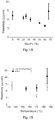
- the optimal weight fraction of 3ButPy (e.g. 3ButPy/[3ButPy+EtHex]) was determined at about 170°C to ensure that all blend variants were fully sintered.
- Fig. 1A shows that the resistivity of the films gradually decreases as the fraction of 3ButPy increases. A minimum resistivity of 6.5 ⁇ •cm was achieved with 60% 3ButPy.
- Fig. 1B the resistivity values of pure EtHex complex (diamonds) are compared to a blend of 60% 3ButPy (squares) in order to assess their performance as a function of temperature.
- Table 1 illustrates substrate compatibility of EtHex and 3ButPy/EtHex inks based on resistivity values obtained by sintering 5 min at various temperatures.
- Table 2 illustrates the sheet resistances of copper films formed from the EtHex and 3ButPy/EtHex inks at various sintering temperatures.
- Table 3 illustrates sheet resistances ( ⁇ / ⁇ ) for copper films produced from 3ButPy/EtHex inks of varying compositions when sintered at 170°C.
- Table 3 3ButPy:EtHex Sheet Resistance ( ⁇ / ⁇ ) Standard Error Film Thickness (nm) 0 0.0338 0.0024 4110 0.2 0.0263 0.0035 4380 0.25 0.0274 0.0028 4540 0.33 0.00891 0.0011 11100 0.5 0.0095 0.0006 8580 0.6 0.0076 0.0006 8700 0.67 0.0275 0.0072 5150
- Fig. 2 shows the resistivity of copper films made from various DiMePip-containing inks as a function of temperature.
- the films made from pure EtHex show the lowest resistivity of all the ink mixtures but do not conduct when sintered at 110°C.
- the films made from pure DiMetPip show higher resistivity, DiMetPip and mixtures containing more than 50% DiMetPip conduct when sintered at 110°C.
- mixtures of DiMetPip and EtHex form conductive copper films when sintered at lower temperatures than EtHex alone and form copper films with better conductivity than films formed from DiMetPip alone.
- Inks with EtHex alone must be sintered at higher temperatures in order to form conductive copper films and DiMetPip alone results in copper films of lower conductivity (higher resistivity).
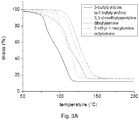
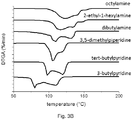
- Fig. 3A and Fig. 3B show the mass loss (TGA) and derivative of the mass loss (DTGA) of the complexes as they are heated to 400°C under Argon. The graphs show that the decomposition temperatures of the complexes decrease in the following order: primary alkylamine > secondary alkylamine > secondary cyclic alkylamine > tertiary cyclic aromatic amine.
- the tButPy and 3ButPy complexes decompose between 90-130°C and 75-120°C, respectively, whereas the mass loss of Octyl and EtHex complexes spans 100-155°C.
- the pyridine complexes decompose within a narrower temperature range than the alkylamine complexes suggesting formation of smaller copper particles with a narrower size distribution, which was confirmed by scanning electron microscope (SEM) images of the copper films.
- tButPy leads to copper particles having smaller diameters and narrower size distributions (26 ⁇ 6 nm) than particles made from EtHex (100 ⁇ 30 nm) and Octyl (240 ⁇ 60 nm).
- Pyridine and piperidine derivatives coordinated to copper (II) formate have lower decomposition temperatures than the alkylamine counterparts.
- the 3-butyl-pyridine ligand, coordinated to copper (II) formate, initiates decomposition near 80°C, 30°C lower than alkylamine-Cu(OOCH) 2 derivatives.
- the complex can be combined with bis(2-ethyl-1-hexylamine) copper (II) formate to yield an ink with good film forming properties, short sintering times and low decomposition temperatures.
- Inks that combine pyridine-Cu(OOCH) 2 or piperidine-Cu(OOCH) 2 with alkylamine-Cu(OOCH) 2 generate copper films with high conductivity values (low resistivity values) while being produced in a lower temperature process.
Landscapes
- Chemical & Material Sciences (AREA)
- Engineering & Computer Science (AREA)
- Organic Chemistry (AREA)
- Life Sciences & Earth Sciences (AREA)
- Wood Science & Technology (AREA)
- Materials Engineering (AREA)
- Chemical Kinetics & Catalysis (AREA)
- Microelectronics & Electronic Packaging (AREA)
- Health & Medical Sciences (AREA)
- Medicinal Chemistry (AREA)
- Polymers & Plastics (AREA)
- General Chemical & Material Sciences (AREA)
- Dispersion Chemistry (AREA)
- Nanotechnology (AREA)
- Manufacturing & Machinery (AREA)
- Physics & Mathematics (AREA)
- Thermal Sciences (AREA)
- Inks, Pencil-Leads, Or Crayons (AREA)
- Conductive Materials (AREA)
- Pyridine Compounds (AREA)
- Manufacturing Of Electric Cables (AREA)
- Hydrogenated Pyridines (AREA)
Applications Claiming Priority (2)
| Application Number | Priority Date | Filing Date | Title |
|---|---|---|---|
| US201562174426P | 2015-06-11 | 2015-06-11 | |
| PCT/CA2016/050091 WO2016197234A1 (en) | 2015-06-11 | 2016-02-02 | Preparation of high conductivity copper films |
Publications (3)
| Publication Number | Publication Date |
|---|---|
| EP3307705A1 EP3307705A1 (en) | 2018-04-18 |
| EP3307705A4 EP3307705A4 (en) | 2019-01-23 |
| EP3307705B1 true EP3307705B1 (en) | 2021-05-05 |
Family
ID=57502729
Family Applications (1)
| Application Number | Title | Priority Date | Filing Date |
|---|---|---|---|
| EP16806465.7A Active EP3307705B1 (en) | 2015-06-11 | 2016-02-02 | Preparation of high conductivity copper films |
Country Status (8)
| Country | Link |
|---|---|
| US (1) | US10954406B2 (enExample) |
| EP (1) | EP3307705B1 (enExample) |
| JP (1) | JP6775531B2 (enExample) |
| KR (1) | KR102522823B1 (enExample) |
| CN (1) | CN107614481B (enExample) |
| CA (1) | CA2988797C (enExample) |
| TW (1) | TWI680134B (enExample) |
| WO (1) | WO2016197234A1 (enExample) |
Families Citing this family (4)
| Publication number | Priority date | Publication date | Assignee | Title |
|---|---|---|---|---|
| WO2018118460A1 (en) | 2016-12-24 | 2018-06-28 | Electroninks Incorporated | Copper based conductive ink composition and method of making the same |
| US11993719B2 (en) | 2017-10-27 | 2024-05-28 | National Research Council Of Canada | Boron nitride nanotube coated substrates for sintering of metallic traces by intense pulse light |
| KR20190131242A (ko) * | 2018-05-16 | 2019-11-26 | 도레이첨단소재 주식회사 | 전도성 섬유집합체 및 그 제조방법 |
| TWI853828B (zh) | 2018-08-07 | 2024-09-01 | 加拿大國家研究委員會 | 包覆成型的印刷電子零件和其製造方法 |
Family Cites Families (41)
| Publication number | Priority date | Publication date | Assignee | Title |
|---|---|---|---|---|
| JPS5413260B2 (enExample) | 1973-09-04 | 1979-05-29 | ||
| DE3810958A1 (de) | 1988-03-31 | 1989-10-12 | Basf Ag | Tinten fuer ink-jet-aufzeichnungsverfahren |
| CN1071182A (zh) | 1991-09-28 | 1993-04-21 | 胡贵友 | 热敏变色油墨 |
| JP3912844B2 (ja) | 1997-04-09 | 2007-05-09 | キヤノン株式会社 | 有機金属を含有するインク並びに電極、電子放出素子および画像形成装置の製造方法 |
| US5980622A (en) | 1997-08-29 | 1999-11-09 | Hewlett-Packard Company | Magenta dyes for ink-jet inks |
| JP3813750B2 (ja) | 1998-08-27 | 2006-08-23 | 大日精化工業株式会社 | カラーフィルターの製造方法及びカラーフィルター |
| DE50000718D1 (de) | 1999-09-27 | 2002-12-12 | Ciba Sc Holding Ag | Magentafärbende Tinten enthaltend Kupferkomplexazofarbstoffe auf der Bais von 1-Naphthol-di-oder trisulfonsäuren |
| US6369256B1 (en) * | 2000-06-09 | 2002-04-09 | National Research Council Of Canada | Self-reducible copper(II) source reagents for chemical vapor deposition of copper metal |
| US7629017B2 (en) * | 2001-10-05 | 2009-12-08 | Cabot Corporation | Methods for the deposition of conductive electronic features |
| CN1602314A (zh) * | 2001-12-12 | 2005-03-30 | 纳幕尔杜邦公司 | 采用甲酸铜配合物的铜沉积方法 |
| JP2005520053A (ja) * | 2002-01-18 | 2005-07-07 | イー・アイ・デュポン・ドウ・ヌムール・アンド・カンパニー | 原子層堆積によって銅薄膜を堆積させるための揮発性銅(ii)錯体 |
| WO2004015164A1 (en) * | 2002-08-09 | 2004-02-19 | E.I. Du Pont De Nemours And Company | Pyrrolyl complexes of copper for copper metal deposition |
| TW200416261A (en) | 2002-10-18 | 2004-09-01 | Nippon Kayaku Kk | Phthalocyanine compound for ink-jet printing, water-soluble green ink composition containing such compound and coloring substance using such composition |
| JP2004162110A (ja) | 2002-11-12 | 2004-06-10 | Mitsubishi Paper Mills Ltd | 銅/アミン組成物 |
| JP4964152B2 (ja) | 2005-03-04 | 2012-06-27 | インクテック カンパニー リミテッド | 導電性インク組成物及びこの製造方法 |
| JP5205717B2 (ja) * | 2006-07-04 | 2013-06-05 | セイコーエプソン株式会社 | ギ酸銅錯体、銅粒子の製造方法および配線基板の製造方法 |
| JP5045015B2 (ja) * | 2006-07-28 | 2012-10-10 | セイコーエプソン株式会社 | ギ酸銅の製造方法、銅粒子の製造方法および配線基板の製造方法 |
| JP2008205430A (ja) | 2007-01-26 | 2008-09-04 | Konica Minolta Holdings Inc | 金属パターン形成方法及び金属塩混合物 |
| KR20080083790A (ko) | 2007-03-13 | 2008-09-19 | 삼성전자주식회사 | 무전해 구리 도금액, 그의 제조방법 및 무전해 구리도금방법 |
| CN101519356A (zh) * | 2008-02-28 | 2009-09-02 | 华东理工大学 | 螺环双亚胺和制备方法及其应用 |
| JP2009256218A (ja) | 2008-04-14 | 2009-11-05 | Toray Ind Inc | 銅前駆体組成物およびそれを用いた銅膜の製造方法。 |
| US9095898B2 (en) * | 2008-09-15 | 2015-08-04 | Lockheed Martin Corporation | Stabilized metal nanoparticles and methods for production thereof |
| US8262894B2 (en) | 2009-04-30 | 2012-09-11 | Moses Lake Industries, Inc. | High speed copper plating bath |
| KR20120036476A (ko) * | 2010-10-08 | 2012-04-18 | 에스케이이노베이션 주식회사 | 구리(ⅱ) 포르메이트 착제를 포함하는 잉크 조성물의 제조방법 |
| CN102605355B (zh) * | 2012-02-21 | 2014-07-02 | 北京化工大学 | 基材表面的铜膜、其制备方法及应用 |
| JP5876749B2 (ja) * | 2012-02-29 | 2016-03-02 | 国立大学法人広島大学 | 導電性物質前駆体組成物、及びそれを用いた導電性物質の製造方法 |
| EP2820093B1 (en) * | 2012-02-29 | 2024-09-18 | Singapore Asahi Chemical & Solder Ind. Pte. Ltd. | Inks containing metal precursors nanoparticles |
| JP5923351B2 (ja) * | 2012-03-16 | 2016-05-24 | 株式会社Adeka | 銅膜形成用組成物及び該組成物を用いた銅膜の製造方法 |
| JP2013206722A (ja) * | 2012-03-28 | 2013-10-07 | Fujifilm Corp | 液状組成物、金属銅膜、及び導体配線、並びに金属銅膜の製造方法 |
| JP6027613B2 (ja) | 2012-07-09 | 2016-11-16 | 四国化成工業株式会社 | 銅被膜形成剤及び銅被膜の形成方法 |
| KR101288106B1 (ko) * | 2012-12-20 | 2013-07-26 | (주)피이솔브 | 금속 전구체 및 이를 이용한 금속 전구체 잉크 |
| JP2014182913A (ja) * | 2013-03-19 | 2014-09-29 | Fujifilm Corp | 導電膜形成用組成物およびこれを用いる導電膜の製造方法 |
| KR20140142406A (ko) * | 2013-06-03 | 2014-12-12 | 고성국 | 유기 동 전구체를 사용한 잉크 조성물 및 그 제조방법 |
| JP6156991B2 (ja) * | 2013-07-25 | 2017-07-05 | 株式会社Adeka | 銅膜形成用組成物及びそれを用いた銅膜の製造方法 |
| CN104341860B (zh) * | 2013-08-01 | 2019-04-09 | 索尼公司 | 纳米导电墨水及其制备方法 |
| KR102233293B1 (ko) * | 2014-01-15 | 2021-03-29 | (주)창성 | 구리포메이트-아민 컴플렉스를 포함하는 잉크 조성물의 제조방법 |
| JP6468889B2 (ja) * | 2014-03-11 | 2019-02-13 | 三井金属鉱業株式会社 | 導電性組成物、及びそれを用いた導電体の製造方法 |
| SG11201610182SA (en) | 2014-06-19 | 2017-01-27 | Nat Res Council Canada | Molecular inks |
| US20160057866A1 (en) * | 2014-08-19 | 2016-02-25 | Jsr Corporation | Metal film forming method and conductive ink used in said method |
| US9809489B2 (en) * | 2014-09-12 | 2017-11-07 | Jsr Corporation | Composition for forming a conductive film, a conductive film, a method for producing a plating film, a plating film, and an electronic device |
| JP7186709B2 (ja) * | 2016-10-25 | 2022-12-09 | イー2アイピー テクノロジーズ インコーポレイテッド | プリンテッド・エレクトロニクス |
-
2016
- 2016-02-02 CN CN201680032492.XA patent/CN107614481B/zh active Active
- 2016-02-02 CA CA2988797A patent/CA2988797C/en active Active
- 2016-02-02 KR KR1020187000929A patent/KR102522823B1/ko active Active
- 2016-02-02 EP EP16806465.7A patent/EP3307705B1/en active Active
- 2016-02-02 WO PCT/CA2016/050091 patent/WO2016197234A1/en not_active Ceased
- 2016-02-02 JP JP2017563208A patent/JP6775531B2/ja active Active
- 2016-02-02 US US15/835,688 patent/US10954406B2/en active Active
- 2016-02-05 TW TW105104063A patent/TWI680134B/zh active
Also Published As
| Publication number | Publication date |
|---|---|
| TW201643172A (zh) | 2016-12-16 |
| CA2988797A1 (en) | 2016-12-15 |
| EP3307705A1 (en) | 2018-04-18 |
| JP6775531B2 (ja) | 2020-10-28 |
| CN107614481A (zh) | 2018-01-19 |
| CN107614481B (zh) | 2021-05-07 |
| TWI680134B (zh) | 2019-12-21 |
| CA2988797C (en) | 2023-08-01 |
| JP2018525770A (ja) | 2018-09-06 |
| US20180134909A1 (en) | 2018-05-17 |
| KR102522823B1 (ko) | 2023-04-18 |
| US10954406B2 (en) | 2021-03-23 |
| KR20180018694A (ko) | 2018-02-21 |
| WO2016197234A1 (en) | 2016-12-15 |
| EP3307705A4 (en) | 2019-01-23 |
Similar Documents
| Publication | Publication Date | Title |
|---|---|---|
| TWI607114B (zh) | 導電膜的製造方法以及導電膜 | |
| EP3307705B1 (en) | Preparation of high conductivity copper films | |
| KR100895192B1 (ko) | 도전배선 형성용 페이스트에 사용되는 유기 은 착화합물 | |
| EP2871260B1 (en) | Copper film-forming agent and method for forming copper film | |
| EP3491082B1 (en) | Copper ink and conductive solderable copper traces produced therefrom | |
| KR101986866B1 (ko) | 구리 패턴 형성용 조성물 및 구리 패턴의 제조 방법 | |
| KR20150037994A (ko) | 은 미립자 잉크, 은 미립자 소결체 및 은 미립자 잉크의 제조 방법 | |
| KR101467470B1 (ko) | 구리 착화합물을 이용한 전도성 구리 나노잉크 및 그 제조방법 | |
| EP3029119B1 (en) | Electroconductive-film-forming composition and method for producing electroconductive film | |
| Knapp et al. | Precursors for Atmospheric Plasma‐Enhanced Sintering: Low‐Temperature Inkjet Printing of Conductive Copper | |
| EP2684917B1 (en) | Zinc oxide film-forming composition, zinc oxide film production method, and zinc compound | |
| US20130236637A1 (en) | Process for manufacturing copper hydride fine particle dispersion, electroconductive ink, and process for manufacturing substrate equipped with conductor | |
| TW201437266A (zh) | 導電膜形成用組成物及使用其的導電膜的製造方法 | |
| CN111051442B (zh) | 铜油墨 | |
| Bei et al. | Research Status and Prospects of Particle-Free Silver Conductive Ink | |
| KR20170019157A (ko) | 저온 소성용 구리 나노잉크 제조를 위한 구리 나노 입자 제조방법 | |
| US20250297120A1 (en) | Conductive ink compositions comprising gold complexes | |
| Farraj et al. | Ink-jet printed copper complex MOD ink for plastic electronics | |
| US20250382487A1 (en) | Conductive ink compositions comprising gold complexes | |
| KR102681330B1 (ko) | 고전도성 미세한 인쇄를 위한 구리 잉크 | |
| TW201503163A (zh) | 導電膜形成用組成物及使用其的導電膜的製造方法 |
Legal Events
| Date | Code | Title | Description |
|---|---|---|---|
| STAA | Information on the status of an ep patent application or granted ep patent |
Free format text: STATUS: THE INTERNATIONAL PUBLICATION HAS BEEN MADE |
|
| PUAI | Public reference made under article 153(3) epc to a published international application that has entered the european phase |
Free format text: ORIGINAL CODE: 0009012 |
|
| STAA | Information on the status of an ep patent application or granted ep patent |
Free format text: STATUS: REQUEST FOR EXAMINATION WAS MADE |
|
| 17P | Request for examination filed |
Effective date: 20180110 |
|
| AK | Designated contracting states |
Kind code of ref document: A1 Designated state(s): AL AT BE BG CH CY CZ DE DK EE ES FI FR GB GR HR HU IE IS IT LI LT LU LV MC MK MT NL NO PL PT RO RS SE SI SK SM TR |
|
| AX | Request for extension of the european patent |
Extension state: BA ME |
|
| DAV | Request for validation of the european patent (deleted) | ||
| DAX | Request for extension of the european patent (deleted) | ||
| A4 | Supplementary search report drawn up and despatched |
Effective date: 20190104 |
|
| RIC1 | Information provided on ipc code assigned before grant |
Ipc: H05K 1/09 20060101ALI20181220BHEP Ipc: C07D 211/12 20060101ALI20181220BHEP Ipc: C07C 211/65 20060101AFI20181220BHEP Ipc: C08J 7/06 20060101ALI20181220BHEP Ipc: C09D 11/037 20140101ALI20181220BHEP Ipc: C09D 11/36 20140101ALI20181220BHEP Ipc: H05K 3/12 20060101ALI20181220BHEP Ipc: B29C 71/02 20060101ALI20181220BHEP Ipc: C09D 11/52 20140101ALI20181220BHEP Ipc: C07D 213/16 20060101ALI20181220BHEP Ipc: C09D 11/32 20140101ALI20181220BHEP Ipc: H05K 1/03 20060101ALI20181220BHEP Ipc: C01G 3/00 20060101ALI20181220BHEP Ipc: C09D 11/033 20140101ALI20181220BHEP |
|
| STAA | Information on the status of an ep patent application or granted ep patent |
Free format text: STATUS: EXAMINATION IS IN PROGRESS |
|
| 17Q | First examination report despatched |
Effective date: 20190905 |
|
| GRAP | Despatch of communication of intention to grant a patent |
Free format text: ORIGINAL CODE: EPIDOSNIGR1 |
|
| STAA | Information on the status of an ep patent application or granted ep patent |
Free format text: STATUS: GRANT OF PATENT IS INTENDED |
|
| INTG | Intention to grant announced |
Effective date: 20200901 |
|
| GRAS | Grant fee paid |
Free format text: ORIGINAL CODE: EPIDOSNIGR3 |
|
| GRAJ | Information related to disapproval of communication of intention to grant by the applicant or resumption of examination proceedings by the epo deleted |
Free format text: ORIGINAL CODE: EPIDOSDIGR1 |
|
| GRAL | Information related to payment of fee for publishing/printing deleted |
Free format text: ORIGINAL CODE: EPIDOSDIGR3 |
|
| STAA | Information on the status of an ep patent application or granted ep patent |
Free format text: STATUS: EXAMINATION IS IN PROGRESS |
|
| INTC | Intention to grant announced (deleted) | ||
| GRAP | Despatch of communication of intention to grant a patent |
Free format text: ORIGINAL CODE: EPIDOSNIGR1 |
|
| STAA | Information on the status of an ep patent application or granted ep patent |
Free format text: STATUS: GRANT OF PATENT IS INTENDED |
|
| GRAA | (expected) grant |
Free format text: ORIGINAL CODE: 0009210 |
|
| STAA | Information on the status of an ep patent application or granted ep patent |
Free format text: STATUS: THE PATENT HAS BEEN GRANTED |
|
| INTG | Intention to grant announced |
Effective date: 20210317 |
|
| REG | Reference to a national code |
Ref country code: DE Ref legal event code: R083 Ref document number: 602016057488 Country of ref document: DE |
|
| AK | Designated contracting states |
Kind code of ref document: B1 Designated state(s): AL AT BE BG CH CY CZ DE DK EE ES FI FR GB GR HR HU IE IS IT LI LT LU LV MC MK MT NL NO PL PT RO RS SE SI SK SM TR |
|
| REG | Reference to a national code |
Ref country code: GB Ref legal event code: FG4D |
|
| REG | Reference to a national code |
Ref country code: CH Ref legal event code: EP |
|
| REG | Reference to a national code |
Ref country code: AT Ref legal event code: REF Ref document number: 1391533 Country of ref document: AT Kind code of ref document: T Effective date: 20210515 |
|
| RIN2 | Information on inventor provided after grant (corrected) |
Inventor name: PAQUET, CHANTAL Inventor name: LACELLE, THOMAS Inventor name: MALENFANT, PATRICK R.L. |
|
| REG | Reference to a national code |
Ref country code: IE Ref legal event code: FG4D |
|
| REG | Reference to a national code |
Ref country code: DE Ref legal event code: R096 Ref document number: 602016057488 Country of ref document: DE |
|
| REG | Reference to a national code |
Ref country code: FI Ref legal event code: FGE |
|
| REG | Reference to a national code |
Ref country code: SE Ref legal event code: TRGR |
|
| REG | Reference to a national code |
Ref country code: LT Ref legal event code: MG9D |
|
| REG | Reference to a national code |
Ref country code: AT Ref legal event code: MK05 Ref document number: 1391533 Country of ref document: AT Kind code of ref document: T Effective date: 20210505 |
|
| PG25 | Lapsed in a contracting state [announced via postgrant information from national office to epo] |
Ref country code: LT Free format text: LAPSE BECAUSE OF FAILURE TO SUBMIT A TRANSLATION OF THE DESCRIPTION OR TO PAY THE FEE WITHIN THE PRESCRIBED TIME-LIMIT Effective date: 20210505 Ref country code: HR Free format text: LAPSE BECAUSE OF FAILURE TO SUBMIT A TRANSLATION OF THE DESCRIPTION OR TO PAY THE FEE WITHIN THE PRESCRIBED TIME-LIMIT Effective date: 20210505 Ref country code: AT Free format text: LAPSE BECAUSE OF FAILURE TO SUBMIT A TRANSLATION OF THE DESCRIPTION OR TO PAY THE FEE WITHIN THE PRESCRIBED TIME-LIMIT Effective date: 20210505 Ref country code: BG Free format text: LAPSE BECAUSE OF FAILURE TO SUBMIT A TRANSLATION OF THE DESCRIPTION OR TO PAY THE FEE WITHIN THE PRESCRIBED TIME-LIMIT Effective date: 20210805 |
|
| PG25 | Lapsed in a contracting state [announced via postgrant information from national office to epo] |
Ref country code: PT Free format text: LAPSE BECAUSE OF FAILURE TO SUBMIT A TRANSLATION OF THE DESCRIPTION OR TO PAY THE FEE WITHIN THE PRESCRIBED TIME-LIMIT Effective date: 20210906 Ref country code: NO Free format text: LAPSE BECAUSE OF FAILURE TO SUBMIT A TRANSLATION OF THE DESCRIPTION OR TO PAY THE FEE WITHIN THE PRESCRIBED TIME-LIMIT Effective date: 20210805 Ref country code: PL Free format text: LAPSE BECAUSE OF FAILURE TO SUBMIT A TRANSLATION OF THE DESCRIPTION OR TO PAY THE FEE WITHIN THE PRESCRIBED TIME-LIMIT Effective date: 20210505 Ref country code: RS Free format text: LAPSE BECAUSE OF FAILURE TO SUBMIT A TRANSLATION OF THE DESCRIPTION OR TO PAY THE FEE WITHIN THE PRESCRIBED TIME-LIMIT Effective date: 20210505 Ref country code: IS Free format text: LAPSE BECAUSE OF FAILURE TO SUBMIT A TRANSLATION OF THE DESCRIPTION OR TO PAY THE FEE WITHIN THE PRESCRIBED TIME-LIMIT Effective date: 20210905 Ref country code: GR Free format text: LAPSE BECAUSE OF FAILURE TO SUBMIT A TRANSLATION OF THE DESCRIPTION OR TO PAY THE FEE WITHIN THE PRESCRIBED TIME-LIMIT Effective date: 20210806 Ref country code: LV Free format text: LAPSE BECAUSE OF FAILURE TO SUBMIT A TRANSLATION OF THE DESCRIPTION OR TO PAY THE FEE WITHIN THE PRESCRIBED TIME-LIMIT Effective date: 20210505 |
|
| REG | Reference to a national code |
Ref country code: NL Ref legal event code: MP Effective date: 20210505 |
|
| PG25 | Lapsed in a contracting state [announced via postgrant information from national office to epo] |
Ref country code: NL Free format text: LAPSE BECAUSE OF FAILURE TO SUBMIT A TRANSLATION OF THE DESCRIPTION OR TO PAY THE FEE WITHIN THE PRESCRIBED TIME-LIMIT Effective date: 20210505 |
|
| PG25 | Lapsed in a contracting state [announced via postgrant information from national office to epo] |
Ref country code: SM Free format text: LAPSE BECAUSE OF FAILURE TO SUBMIT A TRANSLATION OF THE DESCRIPTION OR TO PAY THE FEE WITHIN THE PRESCRIBED TIME-LIMIT Effective date: 20210505 Ref country code: SK Free format text: LAPSE BECAUSE OF FAILURE TO SUBMIT A TRANSLATION OF THE DESCRIPTION OR TO PAY THE FEE WITHIN THE PRESCRIBED TIME-LIMIT Effective date: 20210505 Ref country code: ES Free format text: LAPSE BECAUSE OF FAILURE TO SUBMIT A TRANSLATION OF THE DESCRIPTION OR TO PAY THE FEE WITHIN THE PRESCRIBED TIME-LIMIT Effective date: 20210505 Ref country code: RO Free format text: LAPSE BECAUSE OF FAILURE TO SUBMIT A TRANSLATION OF THE DESCRIPTION OR TO PAY THE FEE WITHIN THE PRESCRIBED TIME-LIMIT Effective date: 20210505 Ref country code: DK Free format text: LAPSE BECAUSE OF FAILURE TO SUBMIT A TRANSLATION OF THE DESCRIPTION OR TO PAY THE FEE WITHIN THE PRESCRIBED TIME-LIMIT Effective date: 20210505 Ref country code: EE Free format text: LAPSE BECAUSE OF FAILURE TO SUBMIT A TRANSLATION OF THE DESCRIPTION OR TO PAY THE FEE WITHIN THE PRESCRIBED TIME-LIMIT Effective date: 20210505 Ref country code: CZ Free format text: LAPSE BECAUSE OF FAILURE TO SUBMIT A TRANSLATION OF THE DESCRIPTION OR TO PAY THE FEE WITHIN THE PRESCRIBED TIME-LIMIT Effective date: 20210505 |
|
| REG | Reference to a national code |
Ref country code: DE Ref legal event code: R097 Ref document number: 602016057488 Country of ref document: DE |
|
| PLBE | No opposition filed within time limit |
Free format text: ORIGINAL CODE: 0009261 |
|
| STAA | Information on the status of an ep patent application or granted ep patent |
Free format text: STATUS: NO OPPOSITION FILED WITHIN TIME LIMIT |
|
| 26N | No opposition filed |
Effective date: 20220208 |
|
| PG25 | Lapsed in a contracting state [announced via postgrant information from national office to epo] |
Ref country code: IS Free format text: LAPSE BECAUSE OF FAILURE TO SUBMIT A TRANSLATION OF THE DESCRIPTION OR TO PAY THE FEE WITHIN THE PRESCRIBED TIME-LIMIT Effective date: 20210905 Ref country code: AL Free format text: LAPSE BECAUSE OF FAILURE TO SUBMIT A TRANSLATION OF THE DESCRIPTION OR TO PAY THE FEE WITHIN THE PRESCRIBED TIME-LIMIT Effective date: 20210505 |
|
| PG25 | Lapsed in a contracting state [announced via postgrant information from national office to epo] |
Ref country code: MC Free format text: LAPSE BECAUSE OF FAILURE TO SUBMIT A TRANSLATION OF THE DESCRIPTION OR TO PAY THE FEE WITHIN THE PRESCRIBED TIME-LIMIT Effective date: 20210505 |
|
| REG | Reference to a national code |
Ref country code: CH Ref legal event code: PL |
|
| REG | Reference to a national code |
Ref country code: BE Ref legal event code: MM Effective date: 20220228 |
|
| PG25 | Lapsed in a contracting state [announced via postgrant information from national office to epo] |
Ref country code: LU Free format text: LAPSE BECAUSE OF NON-PAYMENT OF DUE FEES Effective date: 20220202 |
|
| PG25 | Lapsed in a contracting state [announced via postgrant information from national office to epo] |
Ref country code: LI Free format text: LAPSE BECAUSE OF NON-PAYMENT OF DUE FEES Effective date: 20220228 Ref country code: IE Free format text: LAPSE BECAUSE OF NON-PAYMENT OF DUE FEES Effective date: 20220202 Ref country code: CH Free format text: LAPSE BECAUSE OF NON-PAYMENT OF DUE FEES Effective date: 20220228 |
|
| PG25 | Lapsed in a contracting state [announced via postgrant information from national office to epo] |
Ref country code: BE Free format text: LAPSE BECAUSE OF NON-PAYMENT OF DUE FEES Effective date: 20220228 |
|
| P01 | Opt-out of the competence of the unified patent court (upc) registered |
Effective date: 20230414 |
|
| REG | Reference to a national code |
Ref country code: DE Ref legal event code: R081 Ref document number: 602016057488 Country of ref document: DE Owner name: E2IP TECHNOLOGIES INC., ST-LAURENT, CA Free format text: FORMER OWNER: NATIONAL RESEARCH COUNCIL OF CANADA, OTTAWA, ONTARIO, CA |
|
| PG25 | Lapsed in a contracting state [announced via postgrant information from national office to epo] |
Ref country code: HU Free format text: LAPSE BECAUSE OF FAILURE TO SUBMIT A TRANSLATION OF THE DESCRIPTION OR TO PAY THE FEE WITHIN THE PRESCRIBED TIME-LIMIT; INVALID AB INITIO Effective date: 20160202 |
|
| PG25 | Lapsed in a contracting state [announced via postgrant information from national office to epo] |
Ref country code: MK Free format text: LAPSE BECAUSE OF FAILURE TO SUBMIT A TRANSLATION OF THE DESCRIPTION OR TO PAY THE FEE WITHIN THE PRESCRIBED TIME-LIMIT Effective date: 20210505 Ref country code: CY Free format text: LAPSE BECAUSE OF FAILURE TO SUBMIT A TRANSLATION OF THE DESCRIPTION OR TO PAY THE FEE WITHIN THE PRESCRIBED TIME-LIMIT Effective date: 20210505 |
|
| REG | Reference to a national code |
Ref country code: FI Ref legal event code: PCE Owner name: NATIONAL RESEARCH COUNCIL OF CANADA; E2IP TECHNOLOGIES INC. |
|
| PG25 | Lapsed in a contracting state [announced via postgrant information from national office to epo] |
Ref country code: MT Free format text: LAPSE BECAUSE OF FAILURE TO SUBMIT A TRANSLATION OF THE DESCRIPTION OR TO PAY THE FEE WITHIN THE PRESCRIBED TIME-LIMIT Effective date: 20210505 |
|
| PGFP | Annual fee paid to national office [announced via postgrant information from national office to epo] |
Ref country code: DE Payment date: 20250218 Year of fee payment: 10 |
|
| PGFP | Annual fee paid to national office [announced via postgrant information from national office to epo] |
Ref country code: FI Payment date: 20250220 Year of fee payment: 10 |
|
| PGFP | Annual fee paid to national office [announced via postgrant information from national office to epo] |
Ref country code: SE Payment date: 20250218 Year of fee payment: 10 |
|
| PGFP | Annual fee paid to national office [announced via postgrant information from national office to epo] |
Ref country code: FR Payment date: 20250221 Year of fee payment: 10 |
|
| PGFP | Annual fee paid to national office [announced via postgrant information from national office to epo] |
Ref country code: IT Payment date: 20250224 Year of fee payment: 10 Ref country code: GB Payment date: 20250220 Year of fee payment: 10 |
|
| REG | Reference to a national code |
Ref country code: GB Ref legal event code: 732E Free format text: REGISTERED BETWEEN 20250821 AND 20250827 |
|
| PG25 | Lapsed in a contracting state [announced via postgrant information from national office to epo] |
Ref country code: TR Free format text: LAPSE BECAUSE OF FAILURE TO SUBMIT A TRANSLATION OF THE DESCRIPTION OR TO PAY THE FEE WITHIN THE PRESCRIBED TIME-LIMIT Effective date: 20210505 |