EP3253837B1 - Label assemblies for adverse environments - Google Patents
Label assemblies for adverse environments Download PDFInfo
- Publication number
- EP3253837B1 EP3253837B1 EP16709614.8A EP16709614A EP3253837B1 EP 3253837 B1 EP3253837 B1 EP 3253837B1 EP 16709614 A EP16709614 A EP 16709614A EP 3253837 B1 EP3253837 B1 EP 3253837B1
- Authority
- EP
- European Patent Office
- Prior art keywords
- adhesive
- face
- label assembly
- layer
- article
- Prior art date
- Legal status (The legal status is an assumption and is not a legal conclusion. Google has not performed a legal analysis and makes no representation as to the accuracy of the status listed.)
- Active
Links
Images
Classifications
-
- C—CHEMISTRY; METALLURGY
- C09—DYES; PAINTS; POLISHES; NATURAL RESINS; ADHESIVES; COMPOSITIONS NOT OTHERWISE PROVIDED FOR; APPLICATIONS OF MATERIALS NOT OTHERWISE PROVIDED FOR
- C09F—NATURAL RESINS; FRENCH POLISH; DRYING-OILS; OIL DRYING AGENTS, i.e. SICCATIVES; TURPENTINE
- C09F3/00—Obtaining spirits of turpentine
- C09F3/02—Obtaining spirits of turpentine as a by-product in the paper-pulping process
-
- B—PERFORMING OPERATIONS; TRANSPORTING
- B31—MAKING ARTICLES OF PAPER, CARDBOARD OR MATERIAL WORKED IN A MANNER ANALOGOUS TO PAPER; WORKING PAPER, CARDBOARD OR MATERIAL WORKED IN A MANNER ANALOGOUS TO PAPER
- B31D—MAKING ARTICLES OF PAPER, CARDBOARD OR MATERIAL WORKED IN A MANNER ANALOGOUS TO PAPER, NOT PROVIDED FOR IN SUBCLASSES B31B OR B31C
- B31D1/00—Multiple-step processes for making flat articles ; Making flat articles
- B31D1/02—Multiple-step processes for making flat articles ; Making flat articles the articles being labels or tags
- B31D1/027—Multiple-step processes for making flat articles ; Making flat articles the articles being labels or tags involving, marking, printing or coding
-
- B—PERFORMING OPERATIONS; TRANSPORTING
- B65—CONVEYING; PACKING; STORING; HANDLING THIN OR FILAMENTARY MATERIAL
- B65C—LABELLING OR TAGGING MACHINES, APPARATUS, OR PROCESSES
- B65C1/00—Labelling flat essentially-rigid surfaces
- B65C1/02—Affixing labels to one flat surface of articles, e.g. of packages, of flat bands
-
- B—PERFORMING OPERATIONS; TRANSPORTING
- B65—CONVEYING; PACKING; STORING; HANDLING THIN OR FILAMENTARY MATERIAL
- B65C—LABELLING OR TAGGING MACHINES, APPARATUS, OR PROCESSES
- B65C3/00—Labelling other than flat surfaces
- B65C3/02—Affixing labels to elongated objects, e.g. wires, cables, bars, tubes
-
- C—CHEMISTRY; METALLURGY
- C09—DYES; PAINTS; POLISHES; NATURAL RESINS; ADHESIVES; COMPOSITIONS NOT OTHERWISE PROVIDED FOR; APPLICATIONS OF MATERIALS NOT OTHERWISE PROVIDED FOR
- C09J—ADHESIVES; NON-MECHANICAL ASPECTS OF ADHESIVE PROCESSES IN GENERAL; ADHESIVE PROCESSES NOT PROVIDED FOR ELSEWHERE; USE OF MATERIALS AS ADHESIVES
- C09J5/00—Adhesive processes in general; Adhesive processes not provided for elsewhere, e.g. relating to primers
-
- C—CHEMISTRY; METALLURGY
- C09—DYES; PAINTS; POLISHES; NATURAL RESINS; ADHESIVES; COMPOSITIONS NOT OTHERWISE PROVIDED FOR; APPLICATIONS OF MATERIALS NOT OTHERWISE PROVIDED FOR
- C09J—ADHESIVES; NON-MECHANICAL ASPECTS OF ADHESIVE PROCESSES IN GENERAL; ADHESIVE PROCESSES NOT PROVIDED FOR ELSEWHERE; USE OF MATERIALS AS ADHESIVES
- C09J7/00—Adhesives in the form of films or foils
- C09J7/20—Adhesives in the form of films or foils characterised by their carriers
- C09J7/21—Paper; Textile fabrics
-
- C—CHEMISTRY; METALLURGY
- C09—DYES; PAINTS; POLISHES; NATURAL RESINS; ADHESIVES; COMPOSITIONS NOT OTHERWISE PROVIDED FOR; APPLICATIONS OF MATERIALS NOT OTHERWISE PROVIDED FOR
- C09J—ADHESIVES; NON-MECHANICAL ASPECTS OF ADHESIVE PROCESSES IN GENERAL; ADHESIVE PROCESSES NOT PROVIDED FOR ELSEWHERE; USE OF MATERIALS AS ADHESIVES
- C09J7/00—Adhesives in the form of films or foils
- C09J7/20—Adhesives in the form of films or foils characterised by their carriers
- C09J7/22—Plastics; Metallised plastics
- C09J7/24—Plastics; Metallised plastics based on macromolecular compounds obtained by reactions involving only carbon-to-carbon unsaturated bonds
- C09J7/241—Polyolefin, e.g.rubber
- C09J7/243—Ethylene or propylene polymers
-
- C—CHEMISTRY; METALLURGY
- C09—DYES; PAINTS; POLISHES; NATURAL RESINS; ADHESIVES; COMPOSITIONS NOT OTHERWISE PROVIDED FOR; APPLICATIONS OF MATERIALS NOT OTHERWISE PROVIDED FOR
- C09J—ADHESIVES; NON-MECHANICAL ASPECTS OF ADHESIVE PROCESSES IN GENERAL; ADHESIVE PROCESSES NOT PROVIDED FOR ELSEWHERE; USE OF MATERIALS AS ADHESIVES
- C09J7/00—Adhesives in the form of films or foils
- C09J7/20—Adhesives in the form of films or foils characterised by their carriers
- C09J7/22—Plastics; Metallised plastics
- C09J7/24—Plastics; Metallised plastics based on macromolecular compounds obtained by reactions involving only carbon-to-carbon unsaturated bonds
- C09J7/245—Vinyl resins, e.g. polyvinyl chloride [PVC]
-
- C—CHEMISTRY; METALLURGY
- C09—DYES; PAINTS; POLISHES; NATURAL RESINS; ADHESIVES; COMPOSITIONS NOT OTHERWISE PROVIDED FOR; APPLICATIONS OF MATERIALS NOT OTHERWISE PROVIDED FOR
- C09J—ADHESIVES; NON-MECHANICAL ASPECTS OF ADHESIVE PROCESSES IN GENERAL; ADHESIVE PROCESSES NOT PROVIDED FOR ELSEWHERE; USE OF MATERIALS AS ADHESIVES
- C09J7/00—Adhesives in the form of films or foils
- C09J7/20—Adhesives in the form of films or foils characterised by their carriers
- C09J7/28—Metal sheet
-
- C—CHEMISTRY; METALLURGY
- C09—DYES; PAINTS; POLISHES; NATURAL RESINS; ADHESIVES; COMPOSITIONS NOT OTHERWISE PROVIDED FOR; APPLICATIONS OF MATERIALS NOT OTHERWISE PROVIDED FOR
- C09J—ADHESIVES; NON-MECHANICAL ASPECTS OF ADHESIVE PROCESSES IN GENERAL; ADHESIVE PROCESSES NOT PROVIDED FOR ELSEWHERE; USE OF MATERIALS AS ADHESIVES
- C09J7/00—Adhesives in the form of films or foils
- C09J7/30—Adhesives in the form of films or foils characterised by the adhesive composition
-
- C—CHEMISTRY; METALLURGY
- C09—DYES; PAINTS; POLISHES; NATURAL RESINS; ADHESIVES; COMPOSITIONS NOT OTHERWISE PROVIDED FOR; APPLICATIONS OF MATERIALS NOT OTHERWISE PROVIDED FOR
- C09J—ADHESIVES; NON-MECHANICAL ASPECTS OF ADHESIVE PROCESSES IN GENERAL; ADHESIVE PROCESSES NOT PROVIDED FOR ELSEWHERE; USE OF MATERIALS AS ADHESIVES
- C09J7/00—Adhesives in the form of films or foils
- C09J7/30—Adhesives in the form of films or foils characterised by the adhesive composition
- C09J7/35—Heat-activated
-
- C—CHEMISTRY; METALLURGY
- C09—DYES; PAINTS; POLISHES; NATURAL RESINS; ADHESIVES; COMPOSITIONS NOT OTHERWISE PROVIDED FOR; APPLICATIONS OF MATERIALS NOT OTHERWISE PROVIDED FOR
- C09J—ADHESIVES; NON-MECHANICAL ASPECTS OF ADHESIVE PROCESSES IN GENERAL; ADHESIVE PROCESSES NOT PROVIDED FOR ELSEWHERE; USE OF MATERIALS AS ADHESIVES
- C09J7/00—Adhesives in the form of films or foils
- C09J7/30—Adhesives in the form of films or foils characterised by the adhesive composition
- C09J7/38—Pressure-sensitive adhesives [PSA]
-
- C—CHEMISTRY; METALLURGY
- C09—DYES; PAINTS; POLISHES; NATURAL RESINS; ADHESIVES; COMPOSITIONS NOT OTHERWISE PROVIDED FOR; APPLICATIONS OF MATERIALS NOT OTHERWISE PROVIDED FOR
- C09J—ADHESIVES; NON-MECHANICAL ASPECTS OF ADHESIVE PROCESSES IN GENERAL; ADHESIVE PROCESSES NOT PROVIDED FOR ELSEWHERE; USE OF MATERIALS AS ADHESIVES
- C09J9/00—Adhesives characterised by their physical nature or the effects produced, e.g. glue sticks
-
- G—PHYSICS
- G09—EDUCATION; CRYPTOGRAPHY; DISPLAY; ADVERTISING; SEALS
- G09F—DISPLAYING; ADVERTISING; SIGNS; LABELS OR NAME-PLATES; SEALS
- G09F3/00—Labels, tag tickets, or similar identification or indication means; Seals; Postage or like stamps
- G09F3/02—Forms or constructions
-
- G—PHYSICS
- G09—EDUCATION; CRYPTOGRAPHY; DISPLAY; ADVERTISING; SEALS
- G09F—DISPLAYING; ADVERTISING; SIGNS; LABELS OR NAME-PLATES; SEALS
- G09F3/00—Labels, tag tickets, or similar identification or indication means; Seals; Postage or like stamps
- G09F3/08—Fastening or securing by means not forming part of the material of the label itself
- G09F3/10—Fastening or securing by means not forming part of the material of the label itself by an adhesive layer
-
- C—CHEMISTRY; METALLURGY
- C09—DYES; PAINTS; POLISHES; NATURAL RESINS; ADHESIVES; COMPOSITIONS NOT OTHERWISE PROVIDED FOR; APPLICATIONS OF MATERIALS NOT OTHERWISE PROVIDED FOR
- C09J—ADHESIVES; NON-MECHANICAL ASPECTS OF ADHESIVE PROCESSES IN GENERAL; ADHESIVE PROCESSES NOT PROVIDED FOR ELSEWHERE; USE OF MATERIALS AS ADHESIVES
- C09J2203/00—Applications of adhesives in processes or use of adhesives in the form of films or foils
- C09J2203/326—Applications of adhesives in processes or use of adhesives in the form of films or foils for bonding electronic components such as wafers, chips or semiconductors
-
- C—CHEMISTRY; METALLURGY
- C09—DYES; PAINTS; POLISHES; NATURAL RESINS; ADHESIVES; COMPOSITIONS NOT OTHERWISE PROVIDED FOR; APPLICATIONS OF MATERIALS NOT OTHERWISE PROVIDED FOR
- C09J—ADHESIVES; NON-MECHANICAL ASPECTS OF ADHESIVE PROCESSES IN GENERAL; ADHESIVE PROCESSES NOT PROVIDED FOR ELSEWHERE; USE OF MATERIALS AS ADHESIVES
- C09J2203/00—Applications of adhesives in processes or use of adhesives in the form of films or foils
- C09J2203/334—Applications of adhesives in processes or use of adhesives in the form of films or foils as a label
-
- C—CHEMISTRY; METALLURGY
- C09—DYES; PAINTS; POLISHES; NATURAL RESINS; ADHESIVES; COMPOSITIONS NOT OTHERWISE PROVIDED FOR; APPLICATIONS OF MATERIALS NOT OTHERWISE PROVIDED FOR
- C09J—ADHESIVES; NON-MECHANICAL ASPECTS OF ADHESIVE PROCESSES IN GENERAL; ADHESIVE PROCESSES NOT PROVIDED FOR ELSEWHERE; USE OF MATERIALS AS ADHESIVES
- C09J2301/00—Additional features of adhesives in the form of films or foils
- C09J2301/30—Additional features of adhesives in the form of films or foils characterized by the chemical, physicochemical or physical properties of the adhesive or the carrier
- C09J2301/302—Additional features of adhesives in the form of films or foils characterized by the chemical, physicochemical or physical properties of the adhesive or the carrier the adhesive being pressure-sensitive, i.e. tacky at temperatures inferior to 30°C
-
- G—PHYSICS
- G09—EDUCATION; CRYPTOGRAPHY; DISPLAY; ADVERTISING; SEALS
- G09F—DISPLAYING; ADVERTISING; SIGNS; LABELS OR NAME-PLATES; SEALS
- G09F3/00—Labels, tag tickets, or similar identification or indication means; Seals; Postage or like stamps
- G09F3/02—Forms or constructions
- G09F2003/023—Adhesive
- G09F2003/0232—Resistance to heat
-
- G—PHYSICS
- G09—EDUCATION; CRYPTOGRAPHY; DISPLAY; ADVERTISING; SEALS
- G09F—DISPLAYING; ADVERTISING; SIGNS; LABELS OR NAME-PLATES; SEALS
- G09F3/00—Labels, tag tickets, or similar identification or indication means; Seals; Postage or like stamps
- G09F3/02—Forms or constructions
- G09F2003/023—Adhesive
- G09F2003/0233—Resistance to humidity
-
- G—PHYSICS
- G09—EDUCATION; CRYPTOGRAPHY; DISPLAY; ADVERTISING; SEALS
- G09F—DISPLAYING; ADVERTISING; SIGNS; LABELS OR NAME-PLATES; SEALS
- G09F3/00—Labels, tag tickets, or similar identification or indication means; Seals; Postage or like stamps
- G09F3/02—Forms or constructions
- G09F2003/023—Adhesive
- G09F2003/0235—Resistance to chemicals
Definitions
- the present invention relates to a label assembly for use in adverse environments and particularly for applications in which a permanent bond is desired between a label and substrate, to a method of labeling an article using said label assembly, to an article labeled by said method of labeling an article, and to a labeled article comprising said label assembly.
- Labels are used in many applications such as for example to provide information about a product or component.
- the information may include instructions for use of the product, supplier or manufacturer information, and/or safety information.
- local or national laws may require that labels containing such information be secured to a product and visible.
- the product or component and its accompanying label(s) are exposed to adverse environmental conditions.
- harsh weather may result in label(s) being exposed to rain, moisture, and cold temperatures.
- High temperatures are of particular concern as many labels degrade or detach from the surface to which they were previously adhered. High temperatures typically result from exposure to sunlight and/or heating from nearby sources such as machinery and vehicle engines for example.
- viscous and/or thick adhesive coatweights can be used to counter the difficulties of adhering a label to an irregular or roughened surface, such adhesives may be inadequate upon exposure to adverse environments and particularly high temperatures. For example, many adhesives tend to flow or "ooze" upon exposure to high temperatures.
- WO 2005/103178 A1 discloses an anaerobic pressure sensitive adhesive
- EP 0 529 546 A1 discloses a curable silicone pressure sensitive adhesive tape
- WO 2014/138166 A2 discloses differential dual functional foam tapes
- WO 2015/053807 A1 discloses adhesive articles and related methods
- WO 2016/053933 A1 discloses a tire tracking RFID label.
- the present invention provides a label assembly as defined in claim 1 comprising a specific face layer defining a first face and an oppositely directed second face.
- the label assembly also comprises a specific two stage adhesive disposed on at least one of the first face and the second face.
- the two stage adhesive exhibits a first stage in which the adhesive is initially in the form of a pressure sensitive adhesive (PSA) and upon heat conversion to a second stage, the adhesive is in the form of a permanent, non-PSA adhesive.
- PSA pressure sensitive adhesive
- the present invention provides a method of labeling an article.
- the method comprises providing an article having an outer surface.
- the method also comprises providing the above label assembly.
- the method also comprises adhering the adhesive of the label assembly to the outer surface of the article.
- the present invention provides an article labeled by the above method wherein the article is selected from the group consisting of vehicular components, vehicle accessories, consumer goods, industrial goods, and electronic goods.
- the present invention provides a labeled article comprising an article having an outer surface, and the above label assembly.
- the present invention provides a label assembly that is adapted for use in adverse conditions.
- the label comprises a face or "face stock” layer, and a layer or region of a two stage adhesive, and an optional liner covering the adhesive layer.
- An optional primer layer may be utilized between the face layer and the adhesive.
- the same or a different primer layer may be utilized on an opposite side of the face layer, such as for example to promote printing thereon.
- One or more optional topcoat(s) can also be used along an outer surface of the face layer.
- a wide array of materials and combinations of materials is as defined in claim 1 can be used for the face layer of the label assembly.
- any material that is suitable for use in a label and which can survive 10 minutes of heat at 90° C without any visible or mechanical degradation can potentially be used as a face layer material in the label assembly of the present invention.
- the face layer is a single extruded layer of crosslinked polyolefin or blend of polyolefins, or the face layer comprises a plurality of coextruded layers of polymeric material, the outer layer of which comprises a crosslinked polyolefin or polyolefin blend, nylon 6, polymethylpentene, polyethylene terephthalate, polybutylene terephthalate, copolyesters, polyamides, or polyimides, and the other extruded layer(s) of polymeric material are selected from polymeric materials including polyolefins, polyesters, nylons, polystyrenes, acrylonitrile butadiene rubbers, and compatible blends thereof.
- the label assembly of the present invention is useful as a protective "overlam" film which is adhered over indicia or text-bearing surfaces to protect and preserve the underlying surface and/or text.
- the face layer is transparent or substantially so.
- a representative, but non-exclusive, list of polyolefins suitable for use as the face layer includes polyethylene, polypropylene, polybutene (e.g., poly 1-butene), ethylene copolymers (such as linear low density polyethylene and other copolymers of ethylene and another monomer or monomers, e.g., hexene, butene, octene, etc.), propylene copolymers, butylene copolymers, and compatible blends thereof.
- two polymeric materials are considered to be "compatible” if they are capable of existing in close and permanent physical association without exhibiting gross symptoms of polymer segregation.
- a polymer blend that is heterogenous on a macroscopic level is considered to be incompatible.
- the face layer is a single extruded layer of crosslinked polyolefin or blend of polyolefins.
- crosslinked linear low density polyethylene (LLDPE) face layers can be used.
- the face layer comprises a unitary coextrudate, i.e., a plurality of coextruded layers of polymeric material, typically thermoplastic polymers and/or polymer blends, adhered to each other in a substantially permanent state.
- An outer layer of the unitary coextrudate comprises a crosslinked polyolefin or polyolefin blend, as described above.
- the other layer or layers of the coextrudate are polymers selected for one or more desirable properties, e.g., strength, modulus, cost, etc., and are selected from polymeric materials including polyolefins, polyesters, nylons, polystyrenes, acrylonitrile butadiene rubbers, and compatible blends thereof.
- a multilayer face layer can be prepared by simultaneously extruding a plurality of thermoplastic charges, at least one of which is a crosslinkable polyolefin or polyolefin blend serving as an outer layer of the face stock. Any suitable known type of coextrusion die can be used.
- nylon 6 and polyethylene can be coextruded to form a substantially permanent, unitary coextrudate by simultaneously extruding nylon 6, polyethylene, and a polymer having good affinity for both materials, such as a modified polyethylene or an ethylene vinyl acetate copolymer.
- Such a polymer becomes a "tie” layer between the nylon 6 and polyethylene layers.
- the choice of "tie” layer material depends, at least in part, on various properties of the materials to be joined, or “tied,” together, including, for example, the materials' polar vs. nonpolar nature, modulus, flow properties, etc.
- the face layer is typically crosslinked in a conventional manner, after being extruded.
- Crosslinking may be accomplished by electron beam irradiation.
- a variety of other electron accelerators are known and can be employed to crosslink the polyolefin outer layer.
- the outer layer comprises nylon 6, polymethylpentene, polyethylene terephthalate, polybutylene terephthalate, copolyesters (such as KODAR THERMX crystallizable copolyester 6761, sold by Eastman Chemical Co.), polyamides, or polyimides.
- the other extruded layers of polymeric material are selected for their physical properties (e.g., strength, modulus, etc.) and/or cost, and are selected from polymeric materials including polyolefins, polyesters, nylons, polystyrenes, acrylonitrile butadiene rubbers, and compatible blends thereof, as mentioned above.
- the coextruded polymeric film face layer is prepared in a conventional manner by simultaneously extruding two or more charges of polymeric material, at least one of which is heat resistant, through a suitable extrusion die.
- One or more "tie" layers can be included within the coextruded face layer, as necessary to ensure adherence between layers, as described above.
- fillers such as calcium carbonate, mica, talc, titanium dioxide, and aluminum oxide can be included in the melt of the pre-extruded polymeric material to impart opacity, strength, and/or other properties to the film.
- fillers such as calcium carbonate, mica, talc, titanium dioxide, and aluminum oxide.
- the face layer of the label assembly of the present invention may exhibit low shrink properties, good UV stability, good UV flexo properties, good UV offset properties, good thermal transfer printability, relatively high resistance to chemical cleaning agents and in particular applications resistance to acidic agents and cooling agents.
- the face layer(s) may exhibit resistance to detergents, dry cleaning agents, salt water, and resistance to scuffing.
- the face layer of the label assembly typically has a total thickness of from 10 ⁇ m to 400 ⁇ m, and particularly from 20 ⁇ m to 200 ⁇ m.
- face layers of labels for automotive and textile applications are from 50 ⁇ m to 250 ⁇ m in thickness
- labels for electronic applications are from 20 ⁇ m to 150 ⁇ m in thickness.
- the present invention includes the use of face layer thicknesses less than and/or greater than these representative thicknesses.
- the label assembly of the present invention utilizes a two stage adhesive.
- the adhesive is disposed on the face layer in the form of a layer or one or more regions.
- the two stage adhesive exhibits a first stage in which the adhesive is in the form of a pressure sensitive adhesive (PSA) and upon conversion to a second stage, the adhesive is in the form of a permanent, non-PSA adhesive.
- PSA pressure sensitive adhesive
- the two stage adhesive utilized in the present invention includes (i) an acrylic based bodying component, (ii) one or more structural diluents, (iii) one or more radical addition diluents, and (iv) one or more additives selected from the group consisting of (a) crosslinkers, (b) catalysts such as thermal catalysts and base catalysts, (c) photoinitiators including radical photoinitiators, UV radical photoinitiators and type I and II photoinitiators, (d) photosensitizers including dyes, and (e) stabilizers or process aids.
- Bodying components are broadly defined herein as having a molecular weight (Mw) of at least 25,000 g/mol.
- the bodying components may be present in the adhesive composition of the label assembly of the present invention in an amount of 10-90 wt%, 20-80 wt%, 30-70 wt%, 5-70 wt%, 40-60 wt%, 30-50 wt%, 5-15 wt%, 10-15 wt%, or 80 wt%.
- the bodying components are acrylic based.
- the bodying components may have molecular weights (Mw) of 5,000-1,000,000, 15,000-250,000, 15,000-100,000, 1,000-500,000, 1,000-100,000, 1,000-50,000, or 18,000-70,000.
- Acrylic based bodying components can be used as follows. It will be understood that the present invention includes the use of corresponding methacrylate monomers, oligomers, or components instead of, or in addition to, any of the noted acrylate monomers, oligomers, or components.
- MJZ4-87-1 Bodying Component.
- This bodying component is a random acrylic copolymer with a number average molecular weight (Mn) of 50k, (polydispersity index (PDI) 3.5, random copolymer) consisting of 55 wt% 2-ethylhexyl acrylate, 25 wt% vinyl acetate, 18 wt% methyl acrylate, and 2 wt% Additol TM S-100.
- Mn number average molecular weight
- PDI polydispersity index
- MW1-65 Bodying Component.
- This bodying component is a random acrylic copolymer with Mn of 50k, (PDI 3.5, random copolymer) consisting of 50 wt% 2-ethylhexyl acrylate, 48 wt% methyl acrylate and 2 wt% Additol TM S-100.
- MW1-69 Bodying Component.
- This bodying component is a random acrylic copolymer with Mn of 50k, (PDI 3.5, random copolymer) consisting of 44.9 wt% 2-ethylhexyl acrylate, 43.1 wt% methyl acrylate 43.1%, 10.2 wt% Elvacite TM 1020 (pMMA) and 1.8 wt% Additol TM S-100.
- MW1-91 Bodying Component.
- This bodying component is a random acrylic copolymer with Mn of 50k, PDI 3.5, random copolymer, consisting of 56.1 wt% 2-ethylhexyl acrylate, 25.5 wt% vinyl acetate, 18.4 wt% methyl acrylate.
- This bodying component is a random acrylic copolymer with Mn of 50k, PDI 3.5, random copolymer consisting of 55 wt% 2-ethylhexyl acrylate, 25 wt% vinyl acetate, 18 wt% methyl acrylate, 2 wt% glycidyl ethacrylate.
- MW1-94 Bodying Component. This bodying component is an adduct of acrylic acid and MW1-93, containing 98 wt% of MW1-93 and 2 wt% glycidyl methacrylate and a chromium (3+) catalyst.
- Table 1 Detailed Formulations of Bodying Components Used In Adhesive Compositions
- Component Backbone COMPOSITION Structure MOLECULAR WEIGHT
- Monomer 1 Monomer 2
- Monomer 3 Monomer 4
- Functionality Mw Mn PDI AS-2549 Acrylic 51% 2EHA 45% BA 4% acid random 380961 61545 6.19 Kh4-67 Acrylic 25 % 2EHA 72% EOEOEA 3 % epoxy P-telechelic 60441 20043 3.02 Kh4-46 Acrylic 25 % 2EHA 72% EOEOEA 3% alcohol random 36747 13301 2.76 Kh4-105 Acrylic 25% 2EHA 72% EOEOEA 3% alcohol p-telechelic n/a Kh4-37 Acrylic 50% BA 50% EOEOEA none random 54424 17337 3.14 EB13-84 Acrylic 79% BA 20% tBA 1% alcohol tadpole 80987 53591 1.51 LRK3-33 Acrylic 79% BA 20% tBA 1% alcohol
- Radical addition diluents are acrylic based monomers having a molecular weight (Mw) of generally less than 25,000 and/or generally having a viscosity below 25,000 mPa ⁇ s at 25° C. Radical addition diluents are periodically referred to herein as reactive diluents. Radical addition diluents may be present in the adhesive composition of the label assembly of the present invention in an amount of 10-80 wt%, 50-70 wt%, 10-60 wt%, 5-70 wt%, 30-40 wt%, or 7-25 wt%. Radical addition diluents can have an overall Mw of less than 10,000 g/mol.
- the radical addition diluent is selected from the group consisting of the compounds represented by the following formulae (1) to (4):
- Alkoxylated THF acrylate is a low viscosity monofunctional monomer available from Sartomer as CD-611, where n is not disclosed, and which is shown below as formula (1):
- Phenoxy ethyl acrylate This radical addition diluent is shown below as formula (3): This low viscosity monofunctional monomer is available from Sartomer as SR339.
- Tetrahydrofurfuryl acrylate (THFA or THF acrylate): This radical addition diluent is shown below as formula (4). This low viscosity monofunctional monomer is available from Sartomer as SR285.
- Structural diluents may be present in the adhesive composition of the label assembly of the present invention in an amount of 5-80 wt%, 5-50 wt%, 10-50 wt%, 5-40 wt%, 10-30 wt%, 20-40 wt%, 65-95 wt%, 75-85 wt%, 75-95 wt%, 7-25 wt%, 45-65 wt%, 45-60 wt%, 75-85 wt%, or 15-20 wt%.
- Structural diluents are periodically referred to herein as structural components.
- the structural diluent is selected from the group consisting of the compounds represented by the following formulae (5) to (9):
- TMPTA Trimethylolpropane triacrylate
- Tripropyleneglycol diacrylate available from Sartomer as SR306 and shown below as formula (6):
- Bisphenol A diglycidyl ether diacrylate is shown below as formula (9): This monomer is available from Cytec as Ebecryl 600.
- the term "curative” refers to an agent or stimulus that promotes or causes polymerization of the polymer(s) in the adhesive composition.
- the term “curative” includes a single agent, a single stimulus, multiple agents, multiple stimuli, combinations of agents, combinations of stimuli, and combinations of one or more agents with one or more stimuli.
- the curative is activable, i.e., activatable, by at least one of radiation, heat, moisture, pressure, ultrasound, exposure to chemical agents, and combinations thereof.
- the term “curative” as used herein refers to catalysts and/or photoinitiators. However, it will be appreciated that the term may include a wide array of other agents and stimuli.
- the catalysts suitable herein may be external or internal. Catalysts may be used in an amount of 0-10 wt%, 0.1-10 wt%, 0-5 wt%, 0.1-5 wt%, 0-4 wt%, 0.1-4 wt%, 0-2 wt%, 0.1-2 wt%, or 0.01-2 wt%.
- Suitable catalysts include blocked strong acid catalysts, which are based on acids consisting of, for example trifluoromethanesulfonic acid (triflic acid), dinonylnaphthalene sulfonic acid (DSA), dinonylnaphthalene disulfonic acid (DDSA), hexafluorophosphate, and ammonium antimony hexafluoride (a Lewis acid), and are available from King Industries for example as K-Pure ® CXC 1615 (diethylamine salt of trifluoromethanesulfonic acid), Nacure ® 155 (a blocked acid catalyst based on DNNDSA), K-Pure ® CXC 1612 (ammonium antimony hexafluoride), Nacure ® Super-A218 (zinc salt of trifluoromethanesulfonic acid), K-Pure ® CXC 1738 (ammonium hexafluorophosphate), and K-Pure ® CXC 1614
- Base catalysts can be primary, secondary or tertiary amines.
- a suitable primary diamine is diamino diphenyl sulfone.
- Other bases include imidizoles and ketimines. Suitable imidizoles include 2-methyl imidizole, 2-ethyl 4-methyl imidizole, 2-phenyl imidizole.
- a listing of imidizole curatives are found in US 2009/0194320 A1 , paragraph [0045].
- a latent base curative is dicyandiamide [DICY].
- Photoinitiators include radical photoinitiators and UV radical photoinitiators. Photoinitiators may be present in the adhesive composition of the label assembly of the present invention in amounts of 0-10 wt%, 0.01-10 wt%, 2-5 wt%, or 1-3 wt%.
- Thermal initiators include t-butyl peroxy 2-ethylhexanoate, t-butyl peroxy pivalate, t-amylperoxy-2-ethyl hexanoate, benzoyl peroxide, t-amyl peroxybenzoate, t-butyl peroxy acetate, and azo compounds sold under the trade name Vazo, such as for example Vazo 52, Vazo 67, and Vazo 88.
- UV Radical Photoinitiators The photoinitiators which are suitable in the present invention include both type I and type II photoinitiators.
- Type I photoinitiators are defined to essentially undergo a unimolecular bond cleavage reaction upon irradiation thereby yielding free radicals.
- Suitable type I photoinitiators are selected from a group consisting of benzoin ethers, benzil ketals, alpha-dialkoxy-acetophenones, ⁇ -hydroxyalkylphenones and acyl-phosphine oxides.
- Suitable type I photoinitiators are commercially available, for example, as Esacure KIP 100 from Lamberti Spa, Gallarate, Italy, or as Irgacure 651 from Ciba-Geigy, Lautertal, Germany.
- the type I photoinitiator compounds suitable herein are selected from a group consisting of benzoin ethers, benzil ketals, ⁇ -dialkoxy-acetophenones, ⁇ -hydroxyalkylphenones and acyl-phosphine oxides.
- Type II photoinitiators are defined to essentially undergo a bimolecular reaction where the photoinitiators interact in an excited state with a second compound acting as co-initiator, to generate free radicals.
- Suitable type II photoinitiators are selected from a group comprising benzophenones, thioxanthones and titanocenes.
- Suitable co-initiators are preferably selected from a group consisting of amine functional monomers, oligomers or polymers whereby amino functional monomers and oligomers may be used. Both primary, secondary and tertiary amines can be used. For example, tertiary amines can be used.
- Suitable type II photoinitiators are commercially available, for example, as Esacure TZT from Lamberti Spa, Gallarate, Italy, or as 2- or 3-methylbenzophenone from Aldrich Co., Milwaukee, Wisconsin, USA.
- Suitable amine co-initiators are commercially available, for example, as GENOMER ® 5275 from Rahn AG, Zurich, Switzerland.
- type II photoinitiator compounds include benzophenones and thioxanthones.
- Co-initiator compounds such as amines may be present and may interact with the type II photoinitiator compounds.
- crosslinkers useful herein include radiation activatable crosslinking agents, which are selected from the group consisting of aldehydes, ketones, quinones, thioxanthones, and s-triazines. Metal chelate crosslinker catalysts are also envisioned.
- the crosslinkers may be present in the adhesive composition of the label assembly of the present invention in an amount of 2 to 95 wt%, 0-4 wt%, 0.01-4 wt%, 0.01-2 wt%, 0-2 wt%, 0.01-1 wt%, 0-1 wt%, 0.01-0.5 wt%, or 0-0.5 wt%.
- Photosensitizers Each sensitizer tends to have its own characteristic response in the visible and ultraviolet light spectrum, so photosensitizers may be used in combination to broaden the light response and/or increase the speed of response to exposure to light.
- Photosensitizers may be used in the adhesive composition of the label assembly of the present invention in amounts such as 0-15 wt%, 0-01-15 wt%, 0-10 wt%, 0.01-10 wt%, 0-5 wt%, 0.01-5 wt%, 0-2 wt%, 0.01-2 wt%, 0-1 wt, or 0.01-1 wt%.
- Photosensitizers may be sensitizing dyes.
- Illustrative sensitizing dyes are those in the following categories: diphenylmethane, xanthene, acridine, methine and polymethine, thiazole, thiazine, azine, aminoketone, porphyrin, colored aromatic polycyclic hydrocarbons, thioxanthenones p-substituted aminostyryl compounds and aminotriaryl methanes.
- Stabilizers and Processing Aids include oils/waxes, antioxidants, photosensitizers, rheology modifiers, fillers, radical structural components, ring opening structural components, epoxies, oxetanes, anhydrides, lactams, lactones, oxazolines, isocyanates, bismaleimides, and azodioxides.
- Stabilizers and process aids are used in the adhesive composition of the label assembly of the present invention in amounts such as 0-10 wt%, 0.1-10 wt%, 0-4 wt%, 0.1-4 wt%, 0-3 wt%, or 0.1-3 wt%.
- UVTS-52 is a thermally reversible azodioxide. UVTS-52 ( CAS 34122-40-2 ) is believed to be 1,4,4-trimethyl-2,3-diazabicyclo-[3.2.2]-non-2-ene-2,3-dioxide.
- Plasticizers- Oils and waxes include plasticizing oils, such as mineral oil, but also olefin oligomers and low molecular weight polymers, or glycol benzoates, as well as vegetable and animal oil and derivatives of such oils.
- the petroleum-derived oils that may be employed are relatively high boiling temperature materials containing only a minor proportion of aromatic hydrocarbons. In this regard, the aromatic hydrocarbons should be less than 30%, and more particularly less than 15%, by weight, of the oil. Alternately, the oil may be fully non-aromatic.
- Suitable oligomers included as plasticizers may be polypropylenes, polybutenes, hydrogenated polyisoprene, or hydrogenated butadiene having average molecular weights between 100 and 10,000 g/mol.
- Suitable vegetable and animal oils include glycerol esters of the usual fatty acids (for example, stearic, oleic, linoleic, linolenic) and polymerization products thereof.
- Other plasticizers may be used provided they have suitable compatibility.
- Nyflex ® 222B a naphthenic mineral oil manufactured by Nynas Corporation, has also been found to be an appropriate plasticizer.
- plasticizers have typically been employed to reduce the viscosity of the overall adhesive composition without substantially decreasing the adhesive strength and/or the service temperature of the adhesive.
- the choice of plasticizer can be useful in formulation for specific end uses (such as wet strength core applications). Because of economics involved in production and in material cost, as plasticizers are usually of lower cost than other materials involved in the formulation like polymers and tackifying resins, the amount of plasticizer in the adhesive should be maximized for cost considerations.
- Waxes in amounts of 0% to 20% by weight or 0.1-20 wt%, or 0.1-15 wt%, can also be used in the adhesive composition, and are used to reduce the melt viscosity of the adhesives without appreciably decreasing their adhesive bonding characteristics. These waxes also are used to reduce the open time of the adhesive composition without affecting the temperature performance.
- useful wax materials include the following: Low molecular weight (100-6000 g/mol) polyethylene having a hardness value, as determined by ASTM method D-1321, of from 0.1 to 120 and ASTM softening points of from 66° C to 120° C can possibly be used.
- Petroleum waxes such as paraffin wax having a melting point of from 54° C (130° F) to 77° C (170° F) and microcrystalline wax having a melting point of from 57° C (135° F) to 93° C (200° F), the latter melting points being determined by ASTM method D 127-60 can possibly be used.
- Atactic polypropylene having a Ring and Ball softening point of from 120° C to 160° C can potentially be used.
- Metallocene catalyzed propylene-based wax under the name "Licocene” commercialized by Clariant International, Ltd., Muttenz, Switzerland, can possibly be used.
- Paraffin waxes can possibly be used.
- microcrystalline waxes polyethylene waxes, polypropylene waxes, byproduct polyethylene waxes, synthetic waxes made by polymerizing carbon monoxide and hydrogen such as Fischer-Tropsch waxes, oxidized Fischer-Tropsch waxes, functionalized waxes, and mixtures thereof, can possibly be used.
- polyolefin waxes refers to those polymeric or long-chain entities comprised of olefinic monomer units. These materials are commercially available from Westlake Chemical Co. under the trade name "Epolene”.
- the materials which are used herein may have a Ring and Ball softening point of 93° C (200° F) to 177° C (350° F).
- each of these waxes is solid at room temperature.
- Other useful substances include hydrogenated animal, fish and vegetable fats and oils such as hydrogenated tallow, lard, soy oil, cottonseed oil, castor oil, menhadin oil, cod liver oil, etc., and which are solid at ambient temperature by virtue of their being hydrogenated, have also been found to be useful with respect to functioning as a wax material equivalent.
- These hydrogenated materials are often referred to in the adhesives industry as "animal or vegetable waxes”.
- the adhesive also typically includes 0.1% to 5% of a stabilizer or antioxidant.
- the stabilizers which are useful in the adhesive composition of the label assembly of the present invention are incorporated to help protect the polymers noted above, and thereby the total adhesive system, from the effects of thermal and oxidative degradation which normally occurs during the manufacture and application of the adhesive as well as in the ordinary exposure of the final product to the ambient environment. Such degradation is usually manifested by a deterioration in the appearance, physical properties and performance characteristics of the adhesive.
- a particularly useful antioxidant is Irganox 1010, a tetrakis(methylene(3,5-di-teri-butyl-4-hydroxyhydrocinnamate))methane manufactured by Ciba-Geigy.
- hindered phenols include:
- These stabilizers may be further enhanced by utilizing, in conjunction therewith; (1) synergists such as, for example, as thiodipropionate esters and phosphites; and (2) chelating agents and metal deactivators as, for example, ethylenediaminetetraacetic acid, salts thereof, and disalicylalpropylenediimine.
- synergists such as, for example, as thiodipropionate esters and phosphites
- chelating agents and metal deactivators as, for example, ethylenediaminetetraacetic acid, salts thereof, and disalicylalpropylenediimine.
- Antioxidants may be used to retard the oxidative attack on the adhesive composition, which can result in loss of the adhesive and cohesive strength of the adhesive composition.
- Useful antioxidants include but are not limited to amines, such as N-N'-di-beta-naphthyl-1,4-phenylenediamine, available as AGERITE D, phenolics, such as 2,5-di-(t-amyl) hydroquinone, available as SANTOVAR A, from Monsanto Chemical Co., tetrakis[ethylene 3-(3',5'-di-tert-butyl-4'-hydroxyphenyl)propianate]methane, available as IRGANOX 1010 from Ciba-Geigy Corp., and 2-2'-methylenebis(4-methyl-6-tert butyl phenol), available as ANTIOXIDANT 2246, and dithiocarbamates, such as zinc dithiodibutyl carbamate
- Rheology modifiers can be added to change the thixotropic properties of the adhesive composition.
- Suitable rheology modifiers include polyamide waxes, fumed silica, flow control additives, reactive diluents, anti-settling agents, alpha-olefins, hydroxyl-terminated silicone-organic copolymers, including but not limited to hydroxyl-terminated polypropyleneoxide-dimethylsiloxane copolymers, and combinations thereof.
- Fillers can be used to impart strength or reduce overall cost.
- Useful fillers herein include aluminum trihydroxide, calcium hydroxide, expandable microspheres sold under the trade name Expancel ® , carbon black, titanium dioxide or nickel coated glass spheres.
- a filler, rheology modifier and/or pigment may be present in the adhesive. These can perform several functions, such as modifying the rheology of the adhesive in a desirable way, absorbing moisture or oils from the adhesive or from a substrate to which it is applied, and/or promoting cohesive, rather than adhesive, failure.
- Other examples of such materials include calcium carbonate, calcium oxide, talc, coal tar, textile fibers, glass particles or fibers, aramid pulp, boron fibers, carbon fibers, mineral silicates, mica, powdered quartz, bentonite, wollastonite, kaolin, fumed silica, silica aerogel or metal powders such as aluminum powder or iron powder.
- calcium carbonate, talc, calcium oxide, fumed silica and wollastonite are particularly useful, either singly or in some combination, as these often promote the desired cohesive failure mode.
- the adhesive layer is typically applied at a coatweight of from 10 g/m 2 to 50 g/m 2 .
- an adhesive coatweight of from 10 g/m 2 to 20 g/m 2 and particularly 15 g/m 2 can be used.
- an adhesive coatweight of from 20 g/m 2 to 30 g/m 2 can be used.
- a coatweight of from 20 g/m 2 to 40 g/m 2 can be used. It will be understood that the present invention includes the use of adhesive coatweights less than and/or greater than these representative values.
- a transparent polymer protective topcoat or overcoat layer may be present in the label assembly of the present invention.
- the protective topcoat or overcoat layer provides desirable properties to the label before and after the label is affixed to a substrate.
- the presence of a transparent topcoat layer over a print layer may provide additional properties such as antistatic properties stiffness and/or weatherability, and the topcoat may protect the print layer from, e.g., weather, sun, abrasion, moisture, water, etc.
- the transparent topcoat layer can enhance the properties of the underlying print layer to provide a glossier and richer image.
- the protective transparent protective layer may also be designed to be abrasion resistant, radiation resistant (e.g, UV), chemically resistant, thermally resistant thereby protecting the label and, particularly the print layer from degradation from such causes.
- the protective overcoat may also contain antistatic agents, or anti-block agents to provide for easier handling when the label is being applied to containers or other articles at high speeds.
- the protective layer may be applied to the print layer by techniques known to those skilled in the art.
- the polymer film may be deposited from a solution, applied as a preformed film (laminated to the print layer), etc.
- a transparent topcoat or overcoat layer When a transparent topcoat or overcoat layer is present, it may have a single layer or a multilayered structure.
- the thickness of the protective layer is generally in the range of 12.5 ⁇ m to 125 ⁇ m, e.g., 25 ⁇ m to 75 ⁇ m. Examples of the topcoat layers are described in US 6,106,982 .
- the protective layer may comprise polyolefins, thermoplastic polymers of ethylene and propylene, polyesters, polyurethanes, polyacryls, polymethacryls, epoxy, vinyl acetate homopolymers, co- or terpolymers, ionomers, and mixtures thereof.
- the transparent protective layer may contain UV light absorbers and/or other light stabilizers.
- UV light absorbers that are useful are the hindered amine absorbers available from Ciba Specialty Chemical under the trade designations "Tinuvin".
- the light stabilizers that can be used include the hindered amine light stabilizers available from Ciba Specialty Chemical under the trade designations Tinuvin 111, Tinuvin 123, (bis-(1-octyloxy-2,2,6,6-tetramethyl-4-piperidinyl) sebacate; Tinuvin 622, (a dimethyl succinate polymer with 4-hydroxy-2,2,6,6-tetramethyl-1-piperidniethanol); Tinuvin 770 (bis-(2,2,6,6-tetramethyl-4-piperidinyl)-sebacate); and Tinuvin 783.
- Additional light stabilizers include the hindered amine light stabilizers available from Ciba Specialty Chemical under the trade designation "Chemassorb”, especially Chemassorb 119 and Chemassorb 944.
- the concentration of the UV light absorber and/or light stabilizer is in the range of up to 2.5% by weight, e.g., 0.05% to 1% by weight.
- the label assembly of the present invention may optionally comprise one or more liners.
- the liner(s) typically cover the adhesive layer or region(s) and are removed to expose the adhesive prior to use or application of the label to a substrate or surface of interest.
- BG bleached glassine
- PET poly(ethylene terephthalate)
- PP polypropylene
- SCK semi-calendered kraft
- HF wood-free kraft
- label assembly of the present invention can be provided in a linerless form in which a nontacky or partially tacky adhesive is used and which is rendered tacky prior to label application.
- a linerless construction can also be provided in the form of a self wound construction in which a face or printed side has a release layer on an outer surface.
- the label assembly of the present invention may optionally comprise one or more layers or region of primer materials.
- the primers are typically disposed between the face layer and the adhesive. However, primers can also be applied onto an opposite side of the face layer.
- the primer may be in the form of an adhesion promoter or barrier coating. Ink primers can also be used.
- Useful primers may be transparent or opaque and the primers may be solvent-based or water-based.
- the primers may be radiation curable (e.g., UV).
- the primer may comprise a lacquer and a diluent.
- the lacquer may be comprised of one or more polyolefins, polyamides, polyesters, polyester copolymers, polyurethanes, polysulfones, polyvinylidine chloride, styrene-maleic anhydride copolymers, styrene-acrylonitrile copolymers, ionomers based on sodium or zinc salts or ethylene methacrylic acid, polymethyl methacrylates, acrylic polymers and copolymers, polycarbonates, polyacrylonitriles, ethylene-vinyl acetate copolymers, and mixtures of two or more thereof.
- diluents examples include alcohols such as ethanol, isopropanol and butanol; esters such as ethyl acetate, propyl acetate and butyl acetate; aromatic hydrocarbons such as toluene and xylene; ketones such as acetone and methyl ethyl ketone; aliphatic hydrocarbons such as heptane; and mixtures thereof.
- the ratio of lacquer to diluent is dependent on the viscosity required for application of the primer, the selection of such viscosity being within the skill of the art.
- the primer layer(s) or region(s) if used typically have a total thickness of from 0.5 ⁇ m to 3 ⁇ m. However, it will be appreciated that thicknesses outside of this range can be used in the label assembly of the present invention.
- the primer(s) if used are typically applied to the face layer by conventional techniques such as co-extrusion or spraying.
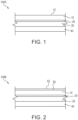
- FIG. 1 is a schematic cross sectional illustration of a label assembly 100A in accordance with the present invention.
- the label 100A comprises a face layer 10, a primer layer 20, an adhesive layer 30, and a liner 40.
- the face layer 10 defines an outer face 12.
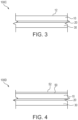
- FIG. 2 is a schematic cross sectional illustration of a label assembly 100B in accordance with the present invention.
- the label 100B comprises a face layer 10, a primer layer 20, an adhesive layer 30, and a liner 40.
- the label 100B also comprises a topcoat 50 disposed on the face layer 10.
- the topcoat 50 defines an outer face 52.
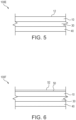
- FIG 3 is a schematic cross sectional illustration of a label assembly 100C in accordance with the present invention.
- the label 100C comprises a face layer 10, a primer layer 20, and an adhesive layer 30.
- the face layer 10 defines an outer face 12.
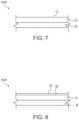
- FIG 4 is a schematic cross sectional illustration of a label assembly 100D in accordance with the present invention.
- the label 100D comprises a face layer 10, a primer layer 20, and an adhesive layer 30.
- the label 100D also comprises a topcoat 50 disposed on the face layer 10.
- the topcoat 50 defines an outer face 52.
- FIG. 5 is a schematic cross sectional illustration of a label assembly 100E in accordance with the present invention.
- the label 100E comprises a face layer 10, an adhesive layer 30, and a liner 40.
- the face layer 10 defines an outer face 12.
- FIG. 6 is a schematic cross sectional illustration of a label assembly 100F in accordance with the present invention.
- the label 100F comprises a face layer 10, an adhesive layer 30, and a liner 40.
- the label 100F also comprises a topcoat 50.
- the topcoat 50 defines an outer face 52.
- FIG. 7 is a schematic cross sectional illustration of a label assembly 100G in accordance with the present invention.
- the label 100G comprises a face layer 10 and an adhesive layer 30.
- the face layer 10 defines an outer face 12.
- Figure 8 is a schematic cross sectional illustration of a label assembly 100H in accordance with the present invention.
- the label 100H comprises a face layer 10 and an adhesive layer 30.
- the label 100H also comprises a topcoat 50.
- the topcoat 50 defines an outer face 52.
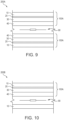
- Figure 9 depicts a cross sectional illustration of a label assembly 200A including two labels 100A as previously described which are positioned to encompass and/or enclose one or more electronic components (or any other component or part that needs to be protected such as for example a washing tag) 80 which for example can be an RFID component as known in the art. It will be appreciated that prior to enclosure of the component 80, the liners 40 of the labels 100A are removed to thereby expose adhesive layers 30.
- Figure 10 depicts another label assembly 200B including a label assembly 100A as previously described which is used in conjunction with a face layer 10 to enclose and/or encompass an electronic component 80, which may be for example an RFID component.
- an electronic component 80 which may be for example an RFID component.
- the present invention includes a wide array of variations of label assemblies 200A, 200B and includes for example nearly any combination of labels 100A-100H and variations thereof.
- the label assembly of the present inventions includes one or more layer(s) or region(s) of the noted two stage adhesive which is initially in a PSA form.
- the label is attached to a surface of interest by contacting the exposed PSA to the surface.
- the tacky adhesive surface adheres the label and maintains the label in a desired position or location on the surface.
- a contact force or application pressure may be applied to the label to promote adherence to the surface.
- the two stage adhesive Upon appropriate placement of the label upon the surface of interest, heat is applied to thereby convert the two stage adhesive to a permanent, non-PSA adhesive.
- a conversion temperature of at least 80° C, in particular at least 120° C, at least 150° C, or at least 180° C is used. In particular applications, it is contemplated that the conversion temperature may be as high as 240° C.
- the two stage adhesive has a conversion temperature within a range of from 80° C to 240° C.
- heating is performed in combination with contacting the adhesive of the label assembly to an outer surface of an article or other surface of interest.
- the time period for such contact time while heating is from 1 second up to 200 seconds for example. Such time periods may be longer such as up to 10 minutes or more.
- Representative lamination time periods can be from 0.5 seconds up to 10 seconds with many applications utilizing a lamination time period of 1 to 3 seconds.
- Representative lamination pressures are typically from 6.89 kPa (1 psi) to 689 kPa (100 psi), with typical lamination pressures being from 34.5 kPa (5 psi) to 138 kPa (20 psi). It will be appreciated that the method of the present invention includes the use of time periods and pressures different than the representative values described herein.
- the label assembly of the present invention can be used in a wide array of applications.
- the label can be attached to vehicular components, vehicle accessories, consumer goods, industrial goods, and electronic components.
- vehicular components include sun visors, seat belts, interior components such as plastic panels, and fabric covered components, exterior vehicle components such as body panels which may be painted, engine components and engine accessories such as oil filters and hoses, and tire labels and particularly for application to tires prior to vulcanization.
- the label can also be attached to a wide array of other articles that are to be vulcanized.
- vehicle accessories include infant and child seats and floor mats.
- Nonlimiting examples of consumer goods include shoes and particularly shoe tongs or tongues, textiles or clothing such as garments and fabric items, and household bedding and blankets.
- Nonlimiting examples of industrial goods include drums and containers such as utilized for storage and/or transport of materials, electrical components such as transformers, converters, and motors, and piping and conduits such as plastic piping and steel or metal pipes.
- Nonlimiting examples of electronic components include power supplies, batteries, circuit boards, and frames and housings. It will be understood that the present invention includes other labeled articles.
Landscapes
- Chemical & Material Sciences (AREA)
- Organic Chemistry (AREA)
- Physics & Mathematics (AREA)
- General Physics & Mathematics (AREA)
- Engineering & Computer Science (AREA)
- Theoretical Computer Science (AREA)
- Chemical Kinetics & Catalysis (AREA)
- Laminated Bodies (AREA)
- Adhesives Or Adhesive Processes (AREA)
- Adhesive Tapes (AREA)
- Labeling Devices (AREA)
Applications Claiming Priority (2)
| Application Number | Priority Date | Filing Date | Title |
|---|---|---|---|
| US201562112216P | 2015-02-05 | 2015-02-05 | |
| PCT/US2016/016774 WO2016127056A1 (en) | 2015-02-05 | 2016-02-05 | Label assemblies for adverse environments |
Publications (2)
| Publication Number | Publication Date |
|---|---|
| EP3253837A1 EP3253837A1 (en) | 2017-12-13 |
| EP3253837B1 true EP3253837B1 (en) | 2024-07-31 |
Family
ID=55524430
Family Applications (1)
| Application Number | Title | Priority Date | Filing Date |
|---|---|---|---|
| EP16709614.8A Active EP3253837B1 (en) | 2015-02-05 | 2016-02-05 | Label assemblies for adverse environments |
Country Status (12)
| Country | Link |
|---|---|
| US (2) | US11049421B2 (enExample) |
| EP (1) | EP3253837B1 (enExample) |
| JP (2) | JP6537620B2 (enExample) |
| KR (1) | KR101996828B1 (enExample) |
| CN (1) | CN107207924B (enExample) |
| AU (1) | AU2016215123B2 (enExample) |
| BR (1) | BR112017016860A2 (enExample) |
| CA (1) | CA2975298C (enExample) |
| ES (1) | ES2992760T3 (enExample) |
| MX (1) | MX2017010047A (enExample) |
| RU (1) | RU2677155C1 (enExample) |
| WO (1) | WO2016127056A1 (enExample) |
Families Citing this family (12)
| Publication number | Priority date | Publication date | Assignee | Title |
|---|---|---|---|---|
| WO2014059058A1 (en) | 2012-10-09 | 2014-04-17 | Avery Dennison Corporation | Adhesives and related methods |
| US9458358B2 (en) * | 2014-01-08 | 2016-10-04 | Avery Dennison Corporation | Article, compositions, systems, and methods using selectively detackified adhesives |
| JP6537620B2 (ja) * | 2015-02-05 | 2019-07-03 | アベリー・デニソン・コーポレイションAvery Dennison Corporation | 苛酷な環境のためのラベルアセンブリー |
| US10526511B2 (en) | 2016-12-22 | 2020-01-07 | Avery Dennison Corporation | Convertible pressure sensitive adhesives comprising urethane (meth)acrylate oligomers |
| MX2019011578A (es) * | 2017-05-08 | 2019-12-19 | Avery Dennison Corp | Etiqueta de neumatico de vulcanizacion. |
| EP3879459A1 (en) | 2017-08-29 | 2021-09-15 | Hill-Rom Services, Inc. | Rfid tag inlay for incontinence detection pad |
| WO2020260765A1 (en) * | 2019-06-28 | 2020-12-30 | Upm Raflatac Oy | Density adjustable label |
| CN114269872B (zh) * | 2019-08-20 | 2023-12-29 | 3M创新有限公司 | 包括混合溶剂屏障和底漆层的膜 |
| US20220332150A1 (en) * | 2019-10-04 | 2022-10-20 | Pirelli Tyre S.P.A. | A label for a tyre of vehicle wheels, a process for manufacturing said label and a process for manufacturing a tyre including said label |
| WO2021064517A1 (en) * | 2019-10-04 | 2021-04-08 | Pirelli Tyre S.P.A. | A label for a tyre of vehicle wheels, a process for manufacturing said label and a process for manufacturing a tyre including said label |
| CN110746836B (zh) * | 2019-11-06 | 2022-02-01 | 焦作卓立膜材料有限责任公司 | 一种耐高温蒸汽的热转印离型剂及其制备方法 |
| US20250166760A1 (en) * | 2023-11-17 | 2025-05-22 | Lauren Crafton | Information Tag and Emergency Medical Wristband |
Family Cites Families (216)
| Publication number | Priority date | Publication date | Assignee | Title |
|---|---|---|---|---|
| US2884126A (en) * | 1955-11-18 | 1959-04-28 | Minnesota Mining & Mfg | Pressure-sensitive adhesive sheet material |
| US3408008A (en) | 1966-12-02 | 1968-10-29 | Eric H. Cocks | Apparatus for applying hot melt adhesives |
| CH481197A (de) | 1967-02-22 | 1969-11-15 | Breveteam Sa | Kleber zur unterseitigen Beschichtung von Bodenbelägen |
| US3639500A (en) | 1968-05-09 | 1972-02-01 | Avery Products Corp | Curable pressure sensitive adhesive containing a polyepoxide a carboxylated diene polymer and an acrylic ester tackifier |
| DE2446438C2 (de) | 1974-09-28 | 1985-04-11 | Bayer Ag, 5090 Leverkusen | Verfahren zur Herstellung von Oxazolidingruppen enthaltenden Urethanen und ihre Verwendung |
| US4049483A (en) | 1976-11-18 | 1977-09-20 | Minnesota Mining And Manufacturing Company | Pressure sensitive hot-melt adhesive system |
| US4135033A (en) | 1977-02-16 | 1979-01-16 | Lawton William R | Heat-activated adhesive coating |
| US4143858A (en) | 1977-08-29 | 1979-03-13 | Eastman Kodak Company | Substantially amorphous polyolefins useful as pressure-sensitive adhesives |
| US4185050A (en) * | 1978-12-26 | 1980-01-22 | Celanese Corporation | Pressure sensitive adhesive compositions comprising a mixture of terpolymers |
| CA1154287A (en) | 1979-02-26 | 1983-09-27 | Joseph E. Gervay | Dry-developing photosensitive dry film resist |
| US4288527A (en) | 1980-08-13 | 1981-09-08 | W. R. Grace & Co. | Dual UV/thermally curable acrylate compositions with pinacol |
| JPS58152074A (ja) | 1982-03-05 | 1983-09-09 | Mitsui Toatsu Chem Inc | 陶磁器質タイル用接着剤組成物 |
| US4507429A (en) * | 1984-01-12 | 1985-03-26 | Air Products And Chemicals, Inc. | Pressure sensitive adhesives with improved shear resistance |
| EP0210261B1 (en) | 1985-02-05 | 1991-06-26 | Avery International Corporation | Composite facestocks and liners |
| US4914253A (en) | 1988-11-04 | 1990-04-03 | Exxon Chemical Patents Inc. | Method for preparing polyethylene wax by gas phase polymerization |
| FI915319A0 (fi) | 1989-05-11 | 1991-11-11 | Landec Lab Inc | Temperaturaktiverade limkompositioner. |
| EP0400703A1 (en) | 1989-05-24 | 1990-12-05 | Akzo Nobel N.V. | Adhesive based on a thermoplastic polyester with an aluminium compound incorporated therein |
| US5194486A (en) | 1989-06-09 | 1993-03-16 | H & N Chemical Company | Adhesive |
| US5264532A (en) * | 1989-08-14 | 1993-11-23 | Avery Dennison Corporation | Emulsion pressure-sensitive adhesives |
| US5024880A (en) | 1990-01-03 | 1991-06-18 | Minnesota Mining And Manufacturing Company | Cellular pressure-sensitive adhesive membrane |
| DE4021659A1 (de) | 1990-07-07 | 1992-01-09 | Bayer Ag | Bisoxazolane, im wesentlichen aus diesen bestehende oxazolangemische, ein verfahren zu deren herstellung und ihre verwendung als haerter fuer isocyanatgruppen aufweisende kunststoffvorlaeufer |
| CA2048232A1 (en) | 1990-09-05 | 1992-03-06 | Jerry W. Williams | Energy curable pressure-sensitive compositions |
| US5264278A (en) | 1991-03-20 | 1993-11-23 | Minnesota Mining And Manufacturing Company | Radiation-curable acrylate/silicone pressure-sensitive adhesive coated tapes adherable to paint coated substrates |
| CA2076278A1 (en) | 1991-08-22 | 1993-02-23 | Joseph T. Braun | Curable silicone pressure sensitive adhesive tape |
| JP3035565B2 (ja) | 1991-12-27 | 2000-04-24 | 株式会社半導体エネルギー研究所 | 薄膜太陽電池の作製方法 |
| US5252694A (en) | 1992-01-22 | 1993-10-12 | Minnesota Mining And Manufacturing Company | Energy-polymerization adhesive, coating, film and process for making the same |
| NZ247073A (en) * | 1992-08-26 | 1994-12-22 | Lintec Corp | Pressure sensitive adhesive label sheet with label film being polyethylene resin of a density of .925-.95 g/cc |
| CA2077103C (en) * | 1992-08-28 | 2003-06-10 | Moore U.S.A. Inc. | Multipurpose label construction |
| WO1994008781A1 (en) * | 1992-10-20 | 1994-04-28 | Avery Dennison Corporation | Pressure-sensitive structural adhesive |
| US5322731A (en) | 1993-03-09 | 1994-06-21 | Minnesota Mining And Manufacturing Company | Adhesive beads |
| US7575653B2 (en) | 1993-04-15 | 2009-08-18 | 3M Innovative Properties Company | Melt-flowable materials and method of sealing surfaces |
| US5468652A (en) | 1993-07-14 | 1995-11-21 | Sandia Corporation | Method of making a back contacted solar cell |
| US5721289A (en) | 1994-11-04 | 1998-02-24 | Minnesota Mining And Manufacturing Company | Stable, low cure-temperature semi-structural pressure sensitive adhesive |
| US5645764A (en) | 1995-01-19 | 1997-07-08 | International Business Machines Corporation | Electrically conductive pressure sensitive adhesives |
| US5695837A (en) | 1995-04-20 | 1997-12-09 | Minnesota Mining And Manufacturing Company | Tackified acrylic adhesives |
| US5905099A (en) | 1995-11-06 | 1999-05-18 | Minnesota Mining And Manufacturing Company | Heat-activatable adhesive composition |
| US5800724A (en) | 1996-02-14 | 1998-09-01 | Fort James Corporation | Patterned metal foil laminate and method for making same |
| ID17196A (id) | 1996-03-14 | 1997-12-11 | Dow Chemical Co | Bahan-bahan perekat yang mengandung polimer-polimer olefin |
| ATE228554T1 (de) | 1996-07-22 | 2002-12-15 | Dow Chemical Co | Heissschmelzklebstoffe |
| TW412560B (en) | 1996-09-04 | 2000-11-21 | Dow Chemical Co | Compositions and adhesives comprising a substantially random interpolymer of at least one vinylidene and at least one vinylidene aromatic monomer or hindered aliphatic vinylidene monomer, and coextruded or laminated multilayer film and tape |
| ES2242235T3 (es) * | 1996-09-27 | 2005-11-01 | Avery Dennison Corporation | Estructuras adhesivas sensibles a la presion preestratificadas. |
| EP0966503B2 (en) | 1997-03-14 | 2008-01-09 | Minnesota Mining And Manufacturing Company | Cure-on-demand, moisture-curable compositions having reactive silane functionality |
| US6011307A (en) | 1997-08-12 | 2000-01-04 | Micron Technology, Inc. | Anisotropic conductive interconnect material for electronic devices, method of use and resulting product |
| US6077527A (en) | 1997-10-28 | 2000-06-20 | National Starch And Chemical Investment Holding Corporation | Enhancer tolerant pressure sensitive adhesives for transdermal drug delivery |
| US5951786A (en) | 1997-12-19 | 1999-09-14 | Sandia Corporation | Laminated photovoltaic modules using back-contact solar cells |
| DE19800676A1 (de) | 1998-01-10 | 1999-07-15 | Henkel Kgaa | Verwendung ausgewählter Klebstoffgemische für die Überlappungsverklebung von Rundumetiketten bei ihrem Auftrag auf Kunststoff-Flaschen |
| FI106470B (fi) | 1998-03-09 | 2001-02-15 | Neste Chemicals Oy | Vaahdotettu hartsiliima ja sen käyttö puupohjaisten levyjen liimaamiseen |
| US6106982A (en) | 1998-05-11 | 2000-08-22 | Avery Dennison Corporation | Imaged receptor laminate and process for making same |
| US6391415B1 (en) | 1998-08-31 | 2002-05-21 | Environmental Inks And Coatings Corporation | Label system |
| US6362249B2 (en) | 1998-09-04 | 2002-03-26 | Dsm Desotech Inc. | Radiation-curable coating compositions, coated optical fiber, radiation-curable matrix forming material and ribbon assembly |
| US6844391B1 (en) | 1998-09-23 | 2005-01-18 | Avery Dennison Corporation | Adhesives with improved rivet properties and laminates using the same |
| US6228486B1 (en) | 1998-10-06 | 2001-05-08 | Avery Dennison Corporation | Thermal transfer laminate |
| US6235850B1 (en) | 1998-12-11 | 2001-05-22 | 3M Immovative Properties Company | Epoxy/acrylic terpolymer self-fixturing adhesive |
| TR200101608T2 (tr) | 1998-12-11 | 2001-10-22 | Henkel Kommanditgesellschaft Auf Aktien | Yüksek katı madde içerikli silil uçlu polimerlerin dağılımları, üretimi ve kullanımı |
| US6541872B1 (en) | 1999-01-11 | 2003-04-01 | Micron Technology, Inc. | Multi-layered adhesive for attaching a semiconductor die to a substrate |
| US6503620B1 (en) * | 1999-10-29 | 2003-01-07 | Avery Dennison Corporation | Multilayer composite PSA constructions |
| US6664318B1 (en) | 1999-12-20 | 2003-12-16 | 3M Innovative Properties Company | Encapsulant compositions with thermal shock resistance |
| JP2001288438A (ja) | 2000-04-06 | 2001-10-16 | Sekisui Chem Co Ltd | 粘着剤組成物 |
| DE60121965T2 (de) | 2000-06-01 | 2006-11-30 | Kraton Polymers Research B.V. | Funktionalisierte blockcopolymere enthaltende zusammensetzungen, die mit aluminiumacetylacetonaten vernetzt sind |
| US6353037B1 (en) | 2000-07-12 | 2002-03-05 | 3M Innovative Properties Company | Foams containing functionalized metal oxide nanoparticles and methods of making same |
| US6841234B2 (en) | 2000-08-04 | 2005-01-11 | Scapa Tapes North America Inc. | Heat-activated adhesive tape having an acrylic foam-like backing |
| US6497949B1 (en) | 2000-08-11 | 2002-12-24 | 3M Innovative Properties Company | Adhesive blends comprising hydrophilic and hydrophobic pressure sensitive adhesives |
| US6756095B2 (en) | 2001-01-10 | 2004-06-29 | Avery Dennison Corporation | Heat-sealable laminate |
| US6951596B2 (en) | 2002-01-18 | 2005-10-04 | Avery Dennison Corporation | RFID label technique |
| JP2002285106A (ja) | 2001-03-27 | 2002-10-03 | The Inctec Inc | 活性エネルギー線硬化型感圧接着剤 |
| US6686425B2 (en) * | 2001-06-08 | 2004-02-03 | Adhesives Research, Inc. | High Tg acrylic polymer and epoxy-containing blend therefor as pressure sensitive adhesive |
| US6602958B2 (en) | 2001-07-10 | 2003-08-05 | Ips Corporation | Adhesives for bonding composites |
| EP1410109B1 (en) | 2001-07-26 | 2011-10-26 | Basf Se | Photosensitive resin composition |
| US20030095388A1 (en) | 2001-11-16 | 2003-05-22 | Jinbao Jiao | Method and apparatus for securing a circuit board to a rigid surface |
| US6866919B2 (en) | 2002-02-21 | 2005-03-15 | Mitsubishi Gas Chemical Company, Inc. | Heat-resistant film base-material-inserted B-stage resin composition sheet for lamination and use thereof |
| CA2493296A1 (en) * | 2002-07-19 | 2004-01-29 | Avery Dennison Corporation | Labeling method employing two-part curable adhesives |
| US6613857B1 (en) | 2002-07-26 | 2003-09-02 | Avery Dennison Corporation | UV-crosslinked, pressure-sensitive adhesives |
| WO2004015019A1 (en) | 2002-07-31 | 2004-02-19 | Nexicor Llc | Induction bondable high-pressure laminate |
| MXPA05001109A (es) | 2002-07-31 | 2005-09-08 | Surface Specialties Sa | Adhesivos de acrilico sensibles a la presion. |
| US6653408B1 (en) | 2002-11-21 | 2003-11-25 | Kraton Polymers U.S. Llc | Compositions comprising a functionalized block copolymer crosslinked with aluminum acetylacetonate |
| US7225992B2 (en) | 2003-02-13 | 2007-06-05 | Avery Dennison Corporation | RFID device tester and method |
| DE10322898A1 (de) | 2003-05-21 | 2004-12-16 | Tesa Ag | Flammfeste und Hitze-aktivierbare Haftklebemassen |
| WO2004109786A1 (ja) | 2003-06-06 | 2004-12-16 | Hitachi Chemical Co., Ltd. | 接着シート、ダイシングテープ一体型接着シート、及び半導体装置の製造方法 |
| EP1867665A3 (en) | 2003-06-09 | 2008-04-02 | Mitsui Chemicals, Inc. | Crosslinkable methacrylic resin composition and transparent member |
| US7170001B2 (en) | 2003-06-26 | 2007-01-30 | Advent Solar, Inc. | Fabrication of back-contacted silicon solar cells using thermomigration to create conductive vias |
| US7691437B2 (en) | 2003-10-31 | 2010-04-06 | 3M Innovative Properties Company | Method for preparing a pressure-sensitive adhesive |
| US7270889B2 (en) | 2003-11-04 | 2007-09-18 | Kimberly-Clark Worldwide, Inc. | Tackified amorphous-poly-alpha-olefin-bonded structures |
| JPWO2005042612A1 (ja) | 2003-11-04 | 2007-04-05 | 綜研化学株式会社 | 重合性組成物及び(メタ)アクリル系熱伝導性シート |
| US7144751B2 (en) | 2004-02-05 | 2006-12-05 | Advent Solar, Inc. | Back-contact solar cells and methods for fabrication |
| EA011898B1 (ru) * | 2004-03-09 | 2009-06-30 | Спир Груп Холдингз Лимитед | Этикетка для стеклянной бутылки и способ ее удаления |
| US7524911B2 (en) | 2004-03-17 | 2009-04-28 | Dow Global Technologies Inc. | Adhesive and marking compositions made from interpolymers of ethylene/α-olefins |
| US7088248B2 (en) | 2004-03-24 | 2006-08-08 | Avery Dennison Corporation | System and method for selectively reading RFID devices |
| US20050215655A1 (en) * | 2004-03-29 | 2005-09-29 | Bilodeau Wayne L | Anaerobic pressure sensitive adhesive |
| US7645829B2 (en) | 2004-04-15 | 2010-01-12 | Exxonmobil Chemical Patents Inc. | Plasticized functionalized propylene copolymer adhesive composition |
| US20050266237A1 (en) | 2004-05-28 | 2005-12-01 | Siddhartha Asthana | Heat-activated sound and vibration damping sealant composition |
| EP1640388B1 (en) | 2004-09-24 | 2015-02-25 | Rohm and Haas Company | Biomass based Michael addition composition |
| KR20070049105A (ko) * | 2004-10-22 | 2007-05-10 | 가부시키가이샤 사토 | Rfid 태그를 갖춘 라벨을 물품 상에 부착하는 방법 |
| US20080280111A1 (en) * | 2004-11-10 | 2008-11-13 | Avery Dennison Corporation | In-Mold Labels and Uses Thereof |
| US7212127B2 (en) | 2004-12-20 | 2007-05-01 | Avery Dennison Corp. | RFID tag and label |
| US7786216B2 (en) | 2005-03-17 | 2010-08-31 | Dow Global Technologies Inc. | Oil based blends of interpolymers of ethylene/α-olefins |
| JP5231987B2 (ja) | 2005-03-17 | 2013-07-10 | ダウ グローバル テクノロジーズ エルエルシー | エチレン/α−オレフィン共重合体から製造される接着剤およびマーキング用組成物 |
| EP1858937B1 (en) | 2005-03-17 | 2019-09-25 | Dow Global Technologies LLC | Functionalized ethylene/(alpha) -olefin interpolymer compositions |
| US7756154B2 (en) | 2005-03-22 | 2010-07-13 | Netapp, Inc. | Shared implementation for multiple system interfaces |
| TWI353360B (en) | 2005-04-07 | 2011-12-01 | Nippon Catalytic Chem Ind | Production process of polyacrylic acid (salt) wate |
| US7298266B2 (en) | 2005-05-09 | 2007-11-20 | Avery Dennison | RFID communication systems and methods |
| JP4634856B2 (ja) | 2005-05-12 | 2011-02-16 | 利昌工業株式会社 | 白色プリプレグ、白色積層板、及び金属箔張り白色積層板 |
| US8287949B2 (en) | 2005-07-07 | 2012-10-16 | Dow Global Technologies Inc. | Aqueous dispersions |
| CN101223257B (zh) | 2005-07-19 | 2011-06-29 | 陶氏康宁公司 | 压敏粘合剂及其制备方法 |
| JP4711777B2 (ja) | 2005-08-11 | 2011-06-29 | 日東電工株式会社 | 粘着シートとその製造方法、及び、製品の加工方法 |
| US20100311920A1 (en) | 2005-08-26 | 2010-12-09 | Cid Centro De Investigacion Y Desarrollo Tecnologico Sa De Cv | Using Reactive Block Copolymers as Chain Extenders and Surface Modifiers |
| US20070088145A1 (en) | 2005-10-19 | 2007-04-19 | Mgaya Alexander P | Adhesive useful for film laminating applications |
| US20070092733A1 (en) | 2005-10-26 | 2007-04-26 | 3M Innovative Properties Company | Concurrently curable hybrid adhesive composition |
| ES2557155T3 (es) | 2005-12-01 | 2016-01-22 | Henkel Ag & Co. Kgaa | Nuevo material formador de estructuras supramoleculares, proceso y usos |
| CN101000899A (zh) | 2006-01-11 | 2007-07-18 | 南茂科技股份有限公司 | 晶片封装结构 |
| US20070231571A1 (en) | 2006-04-04 | 2007-10-04 | Richard Lane | Pressure sensitive adhesive (PSA) laminates |
| JP2007286193A (ja) * | 2006-04-13 | 2007-11-01 | Brother Ind Ltd | タグテープ及び無線タグラベル |
| US8785531B2 (en) | 2006-07-06 | 2014-07-22 | Dow Global Technologies Llc | Dispersions of olefin block copolymers |
| JP5433416B2 (ja) | 2006-08-08 | 2014-03-05 | ワールド プラパティーズ、 インコーポレイテッド | 回路材料、回路および多層回路積層板 |
| JP2008060151A (ja) | 2006-08-29 | 2008-03-13 | Nitto Denko Corp | 半導体ウエハ裏面加工方法、基板裏面加工方法、及び放射線硬化型粘着シート |
| US7776969B2 (en) | 2006-12-04 | 2010-08-17 | Bayer Materialscience Llc | Allophanate-modified stabilizers and the polymer polyols prepared from these stabilizers |
| CA2671033C (en) | 2006-12-07 | 2016-04-19 | 3M Innovative Properties Company | Block copolymer blend adhesives with multiple tackifiers |
| TW200842174A (en) | 2006-12-27 | 2008-11-01 | Cheil Ind Inc | Composition for pressure sensitive adhesive film, pressure sensitive adhesive film, and dicing die bonding film including the same |
| KR100907982B1 (ko) | 2006-12-27 | 2009-07-16 | 제일모직주식회사 | 점착필름 형성용 조성물에 의한 반도체 패키지용 점착필름을 포함하는 다이싱 다이본드 필름 |
| WO2008093398A1 (ja) | 2007-01-30 | 2008-08-07 | Asics Corporation | シューズの製造方法、及びシューズ |
| JP5089201B2 (ja) | 2007-03-12 | 2012-12-05 | 日東電工株式会社 | アクリル系粘着テープ又はシート、およびその製造方法 |
| AU2008228842B2 (en) | 2007-03-21 | 2014-01-16 | Avery Dennison Corporation | Pressure sensitive adhesives |
| JP5419376B2 (ja) | 2007-04-20 | 2014-02-19 | 日東電工株式会社 | 粘着シートの自動車塗膜面への接着方法 |
| JP5038770B2 (ja) | 2007-05-01 | 2012-10-03 | 日東電工株式会社 | 車両用塗膜面に対する粘着シートの接着方法 |
| JP5118880B2 (ja) | 2007-05-08 | 2013-01-16 | 日東電工株式会社 | 粘着剤組成物及びそれを用いた粘着製品、ディスプレイ |
| US8334037B2 (en) | 2007-05-11 | 2012-12-18 | 3M Innovative Properties Company | Multi-layer assembly, multi-layer stretch releasing pressure-sensitive adhesive assembly, and methods of making and using the same |
| US8222339B2 (en) | 2007-08-24 | 2012-07-17 | Dow Global Technologies Llc | Adhesives made from interpolymers of ethylene/alpha-olefins |
| KR100922684B1 (ko) | 2007-08-31 | 2009-10-19 | 제일모직주식회사 | 점착층용 광경화 조성물 및 이를 포함하는 다이싱 테이프 |
| WO2009036784A1 (en) | 2007-09-19 | 2009-03-26 | Henkel Ag & Co. Kgaa | Highly damping expandable material and devices |
| US20090142506A1 (en) | 2007-11-29 | 2009-06-04 | Bayer Material Science Llc | Ethylenically unsaturated polyisocyanate addition compounds based on lysine triisocyanate, their use in coating compositions and processes for their preparation |
| US7786868B2 (en) | 2007-12-11 | 2010-08-31 | Avery Dennison Corporation | RFID device with multiple passive operation modes |
| JP2009256607A (ja) | 2008-03-17 | 2009-11-05 | Nitto Denko Corp | アクリル系粘着剤、アクリル系粘着剤層、アクリル系粘着テープ又はシート |
| US20110067799A1 (en) | 2008-04-30 | 2011-03-24 | Tesa Se | Adhesive tape |
| US8289165B2 (en) | 2008-06-11 | 2012-10-16 | Avery Dennison Corporation | RFID device with conductive loop shield |
| KR101082447B1 (ko) | 2008-07-16 | 2011-11-11 | 주식회사 엘지화학 | 점착제 조성물, 편광판 및 액정표시장치 |
| US8080177B2 (en) | 2008-08-19 | 2011-12-20 | The Boeing Company | Low RF loss static dissipative adhesive |
| BRPI0917383A2 (pt) | 2008-08-27 | 2015-11-17 | Hitachi Chemical Co Ltd | composicao adesiva fotossensivel, adesivo em pelicula fotossensevel, padrao adesivo, wafer semicondutor com adesivo, dispositivo semicondutor e componente eletronico |
| DE102008045802A1 (de) | 2008-09-05 | 2010-03-11 | Henkel Ag & Co. Kgaa | Schmelzklebstoff auf Basis von Metallocene-katalysierten Olefin-α-Olefin Copolymeren |
| US8068028B2 (en) | 2008-09-26 | 2011-11-29 | Avery Dennison Corporation | Encapsulated RFID device for flexible, non-planar or curvilinear surfaces |
| WO2010039623A2 (en) | 2008-09-30 | 2010-04-08 | Henkel Corporation | Shear-and/or pressure-resistant microspheres |
| WO2010074135A1 (ja) | 2008-12-26 | 2010-07-01 | 東洋紡績株式会社 | 接着剤用樹脂組成物、これを含有する接着剤、接着シート及びこれを接着層として含むプリント配線板 |
| AT12321U1 (de) | 2009-01-09 | 2012-03-15 | Austria Tech & System Tech | Multilayer-leiterplattenelement mit wenigstens einem laserstrahl-stoppelement sowie verfahren zum anbringen eines solchen laserstrahl- stoppelements in einem multilayer- leiterplattenelement |
| US20100200063A1 (en) | 2009-02-12 | 2010-08-12 | Derek Djeu | Thin film solar cell |
| JP5294931B2 (ja) | 2009-03-11 | 2013-09-18 | 日東電工株式会社 | アクリル系粘着シート |
| EP2236534A1 (de) | 2009-03-31 | 2010-10-06 | Sika Technology AG | Zweistufig aushärtende Zusammensetzung enthaltend ein oberflächendesaktiviertes Polyisocyanat |
| JP5404174B2 (ja) | 2009-05-14 | 2014-01-29 | 日東電工株式会社 | 熱剥離性感圧接着テープ又はシート |
| BRPI1010733A2 (pt) | 2009-06-11 | 2016-03-15 | Henkel Corp | composição adesiva de fusão a quente termicamente reversível contendo compostos de dieno e dienófilo multifuncionais. |
| US8593256B2 (en) | 2009-06-23 | 2013-11-26 | Avery Dennison Corporation | Washable RFID device for apparel tracking |
| CN102498170B (zh) | 2009-07-24 | 2015-12-16 | 波士胶公司 | 基于烯烃嵌段共聚物的热熔性粘合剂 |
| CN102574596B (zh) * | 2009-07-27 | 2015-07-22 | 艾利丹尼森公司 | 施加收缩标签的系统和方法 |
| US8242185B2 (en) | 2009-08-03 | 2012-08-14 | Morgan Adhesives Company | Adhesive compositions for easy application and improved durability |
| DE112010003180T5 (de) | 2009-08-04 | 2012-07-26 | 3M Innovative Properties Company | Haftklebstoff aus einem Gemisch von nicht-halogeniertemPolyisobutylen und thermoplastischem Elastomer |
| EP2479229A4 (en) | 2009-09-16 | 2014-06-18 | Nitto Denko Corp | ACRYLIC ADHESIVE STRIP |
| US8916485B2 (en) | 2009-09-24 | 2014-12-23 | Avery Dennison Corporation | Acrylic compositions adhering to low surface energy substrates |
| JP2011096988A (ja) | 2009-11-02 | 2011-05-12 | Keiwa Inc | 太陽電池モジュール裏面保護用粘着シート及びこれを用いた太陽電池モジュール |
| EP2695624A1 (en) | 2009-12-16 | 2014-02-12 | Avery Dennison Corporation | Photovoltaic Backsheet |
| US8759664B2 (en) | 2009-12-28 | 2014-06-24 | Hanergy Hi-Tech Power (Hk) Limited | Thin film solar cell strings |
| WO2011112447A2 (en) | 2010-03-09 | 2011-09-15 | 3M Innovative Properties Company | Heat activated optically clear adhesive for bonding display panels |
| WO2011119393A2 (en) | 2010-03-26 | 2011-09-29 | 3M Innovative Properties Company | Method of sterilization of wound dressings |
| JP2011231319A (ja) | 2010-04-09 | 2011-11-17 | Nitto Denko Corp | 粘着性組成物およびアクリル系粘着テープ |
| JP5749052B2 (ja) | 2010-04-12 | 2015-07-15 | 日東電工株式会社 | 硬化多層シートの製造方法及び硬化多層シート |
| US9074087B2 (en) | 2010-05-11 | 2015-07-07 | 3M Innovative Properties Company | Curable composition, pressure-sensitive adhesive, method of making the same, and adhesive articles |
| BR112012031670B8 (pt) | 2010-06-14 | 2023-01-24 | Avery Dennison Corp | Método de fabricação de uma trama de estruturas condutoras |
| JP5432853B2 (ja) | 2010-07-30 | 2014-03-05 | 日東電工株式会社 | ダイシングテープ一体型半導体裏面用フィルム及びその製造方法並びに半導体装置の製造方法 |
| US20130136874A1 (en) | 2010-08-18 | 2013-05-30 | 3M Innovative Properties Company | Optical assemblies including stress-relieving optical adhesives and methods of making same |
| KR101732344B1 (ko) | 2010-08-26 | 2017-05-04 | 헨켈 아이피 앤드 홀딩 게엠베하 | 저온 적용 비정질 폴리-α-올레핀 접착제 |
| WO2012026118A1 (ja) | 2010-08-27 | 2012-03-01 | 日東電工株式会社 | アクリル系粘着剤組成物、アクリル系粘着剤層およびアクリル系粘着テープ |
| DE102010035889B4 (de) | 2010-08-30 | 2021-11-11 | Bundesdruckerei Gmbh | Wert- und/oder Sicherheitsdokument und Verfahren zu dessen Herstellung |
| JP5854404B2 (ja) | 2010-09-17 | 2016-02-09 | 昭和電工株式会社 | 光硬化性透明粘着シート用組成物 |
| JP6144868B2 (ja) | 2010-11-18 | 2017-06-07 | 日東電工株式会社 | フリップチップ型半導体裏面用フィルム、ダイシングテープ一体型半導体裏面用フィルム、及び、フリップチップ型半導体裏面用フィルムの製造方法 |
| JP2014500360A (ja) | 2010-11-23 | 2014-01-09 | アドヒーシブズ・リサーチ・インコーポレーテッド | 反応性導電性感圧接着テープ |
| US9208911B2 (en) | 2010-11-23 | 2015-12-08 | Westinghouse Electric Company Llc | Full spectrum LOCA evaluation model and analysis methodology |
| WO2012082448A1 (en) | 2010-12-13 | 2012-06-21 | 3M Innovative Properties Company | Pressure sensitive adhesives for low surface energy substrates |
| WO2012088384A1 (en) | 2010-12-22 | 2012-06-28 | Bostik Inc. | Olefin block copolymer based packaging adhesive |
| JP5689336B2 (ja) | 2011-03-03 | 2015-03-25 | 日東電工株式会社 | 加熱剥離型粘着シート |
| JP2012193317A (ja) | 2011-03-17 | 2012-10-11 | Nitto Denko Corp | 電子部品仮固定用粘着テープ |
| WO2012129489A2 (en) | 2011-03-24 | 2012-09-27 | Henkel Corporation | Stretch film lamination adhesive |
| BR112013025928B1 (pt) | 2011-04-08 | 2021-02-09 | Bostik, Inc. | composição de adesivo termofundível |
| JP2012229375A (ja) | 2011-04-27 | 2012-11-22 | Nitto Denko Corp | 粘着シート |
| US9000659B2 (en) | 2011-05-09 | 2015-04-07 | Kenneth S. Chin | Lamp socket |
| KR101956939B1 (ko) | 2011-05-10 | 2019-03-11 | 데쿠세리아루즈 가부시키가이샤 | 양면 점착 테이프 및 그의 제조 방법 |
| PL2545798T3 (pl) | 2011-07-13 | 2018-07-31 | 3M Innovative Properties Company | System wyrobów higienicznych |
| US20130017389A1 (en) | 2011-07-15 | 2013-01-17 | Nitto Denko Corporation | Double-sided pressure-sensitive adhesive sheet |
| EP2551102B1 (en) | 2011-07-29 | 2014-12-03 | 3M Innovative Properties Company | Self-stick foam adhesive |
| EP2581423A1 (en) | 2011-10-14 | 2013-04-17 | 3M Innovative Properties Company | Primerless multilayer adhesive film for bonding glass substrates |
| CN103814095B (zh) | 2011-11-08 | 2016-08-17 | Lg化学株式会社 | 用于具有抗静电性的保护膜的压敏粘合剂组合物及其制备方法 |
| DE102011088170A1 (de) | 2011-12-09 | 2013-06-13 | Bayer Materialscience Aktiengesellschaft | Reaktive Haftklebstoffe |
| US20140335299A1 (en) | 2011-12-22 | 2014-11-13 | 3M Innovative Properties Company | Olefinic block copolymer based pressure sensitive adhesives |
| DE102012200854A1 (de) | 2012-01-20 | 2013-07-25 | Tesa Se | Vernetzer-Beschleuniger-System für Polyacrylate |
| EP2810539B1 (en) | 2012-02-03 | 2018-03-28 | Avery Dennison Corporation | Laser patterning of photovoltaic backsheet |
| TWI488930B (zh) | 2012-03-12 | 2015-06-21 | Lg Chemical Ltd | 壓感性黏著組成物 |
| JP5900091B2 (ja) | 2012-03-27 | 2016-04-06 | 大日本印刷株式会社 | 化粧シート及びそれを有する化粧板 |
| KR20200024337A (ko) | 2012-03-30 | 2020-03-06 | 다우 글로벌 테크놀로지스 엘엘씨 | 폴리올레핀 접착제 조성물 |
| CA2869108A1 (en) | 2012-03-30 | 2013-10-03 | Bioformix Inc. | Methods for activating polymerizable compositions, polymerizable systems, and products formed thereby |
| CN102634286B (zh) | 2012-05-17 | 2013-08-14 | 深圳市飞世尔实业有限公司 | 一种光热双重固化型异方性导电膜的制备方法 |
| CN104350121A (zh) | 2012-05-29 | 2015-02-11 | 日东电工株式会社 | 粘合剂和使用所述粘合剂的透明基板 |
| DE102012209116A1 (de) | 2012-05-30 | 2013-12-05 | Tesa Se | Heißsiegelbares Klebeband |
| DE102013209827A1 (de) | 2012-06-21 | 2013-12-24 | Tesa Se | Hitzebeständiges Klebeband |
| JP5961055B2 (ja) | 2012-07-05 | 2016-08-02 | 日東電工株式会社 | 封止樹脂シート、電子部品パッケージの製造方法及び電子部品パッケージ |
| JP6252473B2 (ja) | 2012-07-05 | 2017-12-27 | 株式会社スリーボンド | シート状接着剤およびこれを用いた有機elパネル |
| EP2877883B1 (en) | 2012-07-26 | 2017-08-23 | 3M Innovative Properties Company | Heat de-bondable optical articles |
| CN104812859B (zh) | 2012-07-26 | 2018-03-02 | 3M创新有限公司 | 可热脱粘的粘合剂制品 |
| WO2014059058A1 (en) | 2012-10-09 | 2014-04-17 | Avery Dennison Corporation | Adhesives and related methods |
| US20140162082A1 (en) | 2012-12-07 | 2014-06-12 | H.B. Fuller Company | Composition, an article and a method for the bonding of non-woven substrates |
| US9023954B1 (en) | 2012-12-26 | 2015-05-05 | The United States Of America As Represented By The Secretary Of The Navy | Side-chain and end-group modified poly-p-phenylene oligomers |
| BR112015017383A2 (pt) | 2013-01-24 | 2017-07-11 | Henkel Ag & Co Kgaa | composições de adesivo de fusão a quente espumável e uso das mesmas |
| ES2676694T3 (es) | 2013-01-24 | 2018-07-24 | Basf Se | Productos adhesivos reactivos sensibles a la presión |
| CN105518093A (zh) * | 2013-03-05 | 2016-04-20 | 艾利丹尼森公司 | 不同的双功能泡沫带 |
| EP2978795B1 (en) | 2013-03-28 | 2017-05-31 | Dow Corning Corporation | Organosiloxane compositions and coatings, manufactured articles, methods and uses |
| CN103275656B (zh) | 2013-05-29 | 2015-07-08 | 北京化工大学 | 固化后具有结构胶性能的反应型压敏胶黏剂及其制备方法 |
| CN105555892A (zh) | 2013-09-23 | 2016-05-04 | 路博润先进材料公司 | 组合热熔粘合剂和压敏性粘合剂体系和由其制得的复合材料 |
| AU2014324898B2 (en) | 2013-09-25 | 2018-04-05 | Bostik, Inc. | Hot melt adhesive with functionalized metallocene catalyzed polyolefins |
| CN104870590A (zh) * | 2013-10-10 | 2015-08-26 | 艾利丹尼森公司 | 胶黏剂和相关方法 |
| CN106471083A (zh) | 2014-06-18 | 2017-03-01 | 艾利丹尼森公司 | 可转变压敏胶粘剂、制品及相关方法 |
| US10152672B2 (en) | 2014-09-29 | 2018-12-11 | Avery Dennison Corporation | Tire tracking RFID label |
| JP6537620B2 (ja) * | 2015-02-05 | 2019-07-03 | アベリー・デニソン・コーポレイションAvery Dennison Corporation | 苛酷な環境のためのラベルアセンブリー |
| US10526511B2 (en) | 2016-12-22 | 2020-01-07 | Avery Dennison Corporation | Convertible pressure sensitive adhesives comprising urethane (meth)acrylate oligomers |
-
2016
- 2016-02-05 JP JP2017541384A patent/JP6537620B2/ja active Active
- 2016-02-05 CA CA2975298A patent/CA2975298C/en active Active
- 2016-02-05 ES ES16709614T patent/ES2992760T3/es active Active
- 2016-02-05 KR KR1020177024792A patent/KR101996828B1/ko active Active
- 2016-02-05 WO PCT/US2016/016774 patent/WO2016127056A1/en not_active Ceased
- 2016-02-05 AU AU2016215123A patent/AU2016215123B2/en not_active Ceased
- 2016-02-05 RU RU2017131055A patent/RU2677155C1/ru not_active IP Right Cessation
- 2016-02-05 MX MX2017010047A patent/MX2017010047A/es unknown
- 2016-02-05 US US15/016,919 patent/US11049421B2/en active Active
- 2016-02-05 BR BR112017016860A patent/BR112017016860A2/pt not_active Application Discontinuation
- 2016-02-05 CN CN201680009007.7A patent/CN107207924B/zh active Active
- 2016-02-05 EP EP16709614.8A patent/EP3253837B1/en active Active
-
2019
- 2019-04-04 JP JP2019072211A patent/JP6789343B2/ja active Active
-
2021
- 2021-05-27 US US17/331,766 patent/US20210287575A1/en not_active Abandoned
Also Published As
| Publication number | Publication date |
|---|---|
| CN107207924A (zh) | 2017-09-26 |
| US20160232821A1 (en) | 2016-08-11 |
| US20210287575A1 (en) | 2021-09-16 |
| AU2016215123A1 (en) | 2017-09-14 |
| JP2018508030A (ja) | 2018-03-22 |
| CA2975298C (en) | 2020-03-10 |
| RU2677155C1 (ru) | 2019-01-15 |
| JP6789343B2 (ja) | 2020-11-25 |
| AU2016215123B2 (en) | 2018-08-09 |
| JP6537620B2 (ja) | 2019-07-03 |
| US11049421B2 (en) | 2021-06-29 |
| WO2016127056A8 (en) | 2017-08-17 |
| KR101996828B1 (ko) | 2019-07-05 |
| CN107207924B (zh) | 2020-03-13 |
| EP3253837A1 (en) | 2017-12-13 |
| ES2992760T3 (en) | 2024-12-17 |
| CA2975298A1 (en) | 2016-08-11 |
| BR112017016860A2 (pt) | 2018-03-27 |
| JP2019135106A (ja) | 2019-08-15 |
| MX2017010047A (es) | 2017-12-18 |
| WO2016127056A1 (en) | 2016-08-11 |
| KR20170115571A (ko) | 2017-10-17 |
Similar Documents
| Publication | Publication Date | Title |
|---|---|---|
| EP3253837B1 (en) | Label assemblies for adverse environments | |
| KR102295538B1 (ko) | 접착제 물품 및 관련 방법 | |
| JP6255764B2 (ja) | 接着剤組成物及びそれを用いた熱融着性部材 | |
| EP3055372B1 (en) | Adhesive articles and related methods | |
| JP2009269374A (ja) | 耐熱性及び貼り付け性に優れた粘着フィルム | |
| CN105051134A (zh) | 胶黏剂和相关方法 | |
| JP2010121014A (ja) | 防水片面粘着テープ | |
| CN104870589A (zh) | 胶黏剂和相关方法 |
Legal Events
| Date | Code | Title | Description |
|---|---|---|---|
| STAA | Information on the status of an ep patent application or granted ep patent |
Free format text: STATUS: THE INTERNATIONAL PUBLICATION HAS BEEN MADE |
|
| PUAI | Public reference made under article 153(3) epc to a published international application that has entered the european phase |
Free format text: ORIGINAL CODE: 0009012 |
|
| STAA | Information on the status of an ep patent application or granted ep patent |
Free format text: STATUS: REQUEST FOR EXAMINATION WAS MADE |
|
| 17P | Request for examination filed |
Effective date: 20170803 |
|
| AK | Designated contracting states |
Kind code of ref document: A1 Designated state(s): AL AT BE BG CH CY CZ DE DK EE ES FI FR GB GR HR HU IE IS IT LI LT LU LV MC MK MT NL NO PL PT RO RS SE SI SK SM TR |
|
| AX | Request for extension of the european patent |
Extension state: BA ME |
|
| DAV | Request for validation of the european patent (deleted) | ||
| DAX | Request for extension of the european patent (deleted) | ||
| STAA | Information on the status of an ep patent application or granted ep patent |
Free format text: STATUS: EXAMINATION IS IN PROGRESS |
|
| 17Q | First examination report despatched |
Effective date: 20200813 |
|
| RAP3 | Party data changed (applicant data changed or rights of an application transferred) |
Owner name: AVERY DENNISON CORPORATION |
|
| RAP3 | Party data changed (applicant data changed or rights of an application transferred) |
Owner name: AVERY DENNISON CORPORATION |
|
| REG | Reference to a national code |
Ref country code: DE Ref legal event code: R079 Free format text: PREVIOUS MAIN CLASS: C09J0009000000 Ipc: C09J0007380000 Ref country code: DE Ref legal event code: R079 Ref document number: 602016088641 Country of ref document: DE Free format text: PREVIOUS MAIN CLASS: C09J0009000000 Ipc: C09J0007380000 |
|
| GRAP | Despatch of communication of intention to grant a patent |
Free format text: ORIGINAL CODE: EPIDOSNIGR1 |
|
| STAA | Information on the status of an ep patent application or granted ep patent |
Free format text: STATUS: GRANT OF PATENT IS INTENDED |
|
| INTG | Intention to grant announced |
Effective date: 20240301 |
|
| RIC1 | Information provided on ipc code assigned before grant |
Ipc: C09J 9/00 20060101ALI20240216BHEP Ipc: C09J 7/38 20180101AFI20240216BHEP |
|
| GRAS | Grant fee paid |
Free format text: ORIGINAL CODE: EPIDOSNIGR3 |
|
| GRAA | (expected) grant |
Free format text: ORIGINAL CODE: 0009210 |
|
| STAA | Information on the status of an ep patent application or granted ep patent |
Free format text: STATUS: THE PATENT HAS BEEN GRANTED |
|
| P01 | Opt-out of the competence of the unified patent court (upc) registered |
Free format text: CASE NUMBER: APP_35762/2024 Effective date: 20240614 |
|
| AK | Designated contracting states |
Kind code of ref document: B1 Designated state(s): AL AT BE BG CH CY CZ DE DK EE ES FI FR GB GR HR HU IE IS IT LI LT LU LV MC MK MT NL NO PL PT RO RS SE SI SK SM TR |
|
| REG | Reference to a national code |
Ref country code: CH Ref legal event code: EP Ref country code: GB Ref legal event code: FG4D |
|
| REG | Reference to a national code |
Ref country code: DE Ref legal event code: R096 Ref document number: 602016088641 Country of ref document: DE |
|
| REG | Reference to a national code |
Ref country code: IE Ref legal event code: FG4D |
|
| REG | Reference to a national code |
Ref country code: LT Ref legal event code: MG9D |
|
| REG | Reference to a national code |
Ref country code: NL Ref legal event code: MP Effective date: 20240731 |
|
| PG25 | Lapsed in a contracting state [announced via postgrant information from national office to epo] |
Ref country code: PT Free format text: LAPSE BECAUSE OF FAILURE TO SUBMIT A TRANSLATION OF THE DESCRIPTION OR TO PAY THE FEE WITHIN THE PRESCRIBED TIME-LIMIT Effective date: 20241202 |
|
| REG | Reference to a national code |
Ref country code: AT Ref legal event code: MK05 Ref document number: 1708461 Country of ref document: AT Kind code of ref document: T Effective date: 20240731 |
|
| REG | Reference to a national code |
Ref country code: ES Ref legal event code: FG2A Ref document number: 2992760 Country of ref document: ES Kind code of ref document: T3 Effective date: 20241217 |
|
| PG25 | Lapsed in a contracting state [announced via postgrant information from national office to epo] |
Ref country code: PT Free format text: LAPSE BECAUSE OF FAILURE TO SUBMIT A TRANSLATION OF THE DESCRIPTION OR TO PAY THE FEE WITHIN THE PRESCRIBED TIME-LIMIT Effective date: 20241202 |
|
| PG25 | Lapsed in a contracting state [announced via postgrant information from national office to epo] |
Ref country code: NO Free format text: LAPSE BECAUSE OF FAILURE TO SUBMIT A TRANSLATION OF THE DESCRIPTION OR TO PAY THE FEE WITHIN THE PRESCRIBED TIME-LIMIT Effective date: 20241031 |
|
| PG25 | Lapsed in a contracting state [announced via postgrant information from national office to epo] |
Ref country code: PL Free format text: LAPSE BECAUSE OF FAILURE TO SUBMIT A TRANSLATION OF THE DESCRIPTION OR TO PAY THE FEE WITHIN THE PRESCRIBED TIME-LIMIT Effective date: 20240731 Ref country code: FI Free format text: LAPSE BECAUSE OF FAILURE TO SUBMIT A TRANSLATION OF THE DESCRIPTION OR TO PAY THE FEE WITHIN THE PRESCRIBED TIME-LIMIT Effective date: 20240731 Ref country code: NL Free format text: LAPSE BECAUSE OF FAILURE TO SUBMIT A TRANSLATION OF THE DESCRIPTION OR TO PAY THE FEE WITHIN THE PRESCRIBED TIME-LIMIT Effective date: 20240731 Ref country code: GR Free format text: LAPSE BECAUSE OF FAILURE TO SUBMIT A TRANSLATION OF THE DESCRIPTION OR TO PAY THE FEE WITHIN THE PRESCRIBED TIME-LIMIT Effective date: 20241101 |
|
| PG25 | Lapsed in a contracting state [announced via postgrant information from national office to epo] |
Ref country code: BG Free format text: LAPSE BECAUSE OF FAILURE TO SUBMIT A TRANSLATION OF THE DESCRIPTION OR TO PAY THE FEE WITHIN THE PRESCRIBED TIME-LIMIT Effective date: 20240731 |
|
| PG25 | Lapsed in a contracting state [announced via postgrant information from national office to epo] |
Ref country code: LV Free format text: LAPSE BECAUSE OF FAILURE TO SUBMIT A TRANSLATION OF THE DESCRIPTION OR TO PAY THE FEE WITHIN THE PRESCRIBED TIME-LIMIT Effective date: 20240731 |
|
| PG25 | Lapsed in a contracting state [announced via postgrant information from national office to epo] |
Ref country code: IS Free format text: LAPSE BECAUSE OF FAILURE TO SUBMIT A TRANSLATION OF THE DESCRIPTION OR TO PAY THE FEE WITHIN THE PRESCRIBED TIME-LIMIT Effective date: 20241130 Ref country code: AT Free format text: LAPSE BECAUSE OF FAILURE TO SUBMIT A TRANSLATION OF THE DESCRIPTION OR TO PAY THE FEE WITHIN THE PRESCRIBED TIME-LIMIT Effective date: 20240731 |
|
| PG25 | Lapsed in a contracting state [announced via postgrant information from national office to epo] |
Ref country code: HR Free format text: LAPSE BECAUSE OF FAILURE TO SUBMIT A TRANSLATION OF THE DESCRIPTION OR TO PAY THE FEE WITHIN THE PRESCRIBED TIME-LIMIT Effective date: 20240731 |
|
| PG25 | Lapsed in a contracting state [announced via postgrant information from national office to epo] |
Ref country code: RS Free format text: LAPSE BECAUSE OF FAILURE TO SUBMIT A TRANSLATION OF THE DESCRIPTION OR TO PAY THE FEE WITHIN THE PRESCRIBED TIME-LIMIT Effective date: 20241031 |
|
| PG25 | Lapsed in a contracting state [announced via postgrant information from national office to epo] |
Ref country code: RS Free format text: LAPSE BECAUSE OF FAILURE TO SUBMIT A TRANSLATION OF THE DESCRIPTION OR TO PAY THE FEE WITHIN THE PRESCRIBED TIME-LIMIT Effective date: 20241031 Ref country code: PL Free format text: LAPSE BECAUSE OF FAILURE TO SUBMIT A TRANSLATION OF THE DESCRIPTION OR TO PAY THE FEE WITHIN THE PRESCRIBED TIME-LIMIT Effective date: 20240731 Ref country code: NO Free format text: LAPSE BECAUSE OF FAILURE TO SUBMIT A TRANSLATION OF THE DESCRIPTION OR TO PAY THE FEE WITHIN THE PRESCRIBED TIME-LIMIT Effective date: 20241031 Ref country code: NL Free format text: LAPSE BECAUSE OF FAILURE TO SUBMIT A TRANSLATION OF THE DESCRIPTION OR TO PAY THE FEE WITHIN THE PRESCRIBED TIME-LIMIT Effective date: 20240731 Ref country code: LV Free format text: LAPSE BECAUSE OF FAILURE TO SUBMIT A TRANSLATION OF THE DESCRIPTION OR TO PAY THE FEE WITHIN THE PRESCRIBED TIME-LIMIT Effective date: 20240731 Ref country code: IS Free format text: LAPSE BECAUSE OF FAILURE TO SUBMIT A TRANSLATION OF THE DESCRIPTION OR TO PAY THE FEE WITHIN THE PRESCRIBED TIME-LIMIT Effective date: 20241130 Ref country code: HR Free format text: LAPSE BECAUSE OF FAILURE TO SUBMIT A TRANSLATION OF THE DESCRIPTION OR TO PAY THE FEE WITHIN THE PRESCRIBED TIME-LIMIT Effective date: 20240731 Ref country code: GR Free format text: LAPSE BECAUSE OF FAILURE TO SUBMIT A TRANSLATION OF THE DESCRIPTION OR TO PAY THE FEE WITHIN THE PRESCRIBED TIME-LIMIT Effective date: 20241101 Ref country code: FI Free format text: LAPSE BECAUSE OF FAILURE TO SUBMIT A TRANSLATION OF THE DESCRIPTION OR TO PAY THE FEE WITHIN THE PRESCRIBED TIME-LIMIT Effective date: 20240731 Ref country code: BG Free format text: LAPSE BECAUSE OF FAILURE TO SUBMIT A TRANSLATION OF THE DESCRIPTION OR TO PAY THE FEE WITHIN THE PRESCRIBED TIME-LIMIT Effective date: 20240731 Ref country code: AT Free format text: LAPSE BECAUSE OF FAILURE TO SUBMIT A TRANSLATION OF THE DESCRIPTION OR TO PAY THE FEE WITHIN THE PRESCRIBED TIME-LIMIT Effective date: 20240731 |
|
| PGFP | Annual fee paid to national office [announced via postgrant information from national office to epo] |
Ref country code: DE Payment date: 20250109 Year of fee payment: 10 |
|
| PG25 | Lapsed in a contracting state [announced via postgrant information from national office to epo] |
Ref country code: DK Free format text: LAPSE BECAUSE OF FAILURE TO SUBMIT A TRANSLATION OF THE DESCRIPTION OR TO PAY THE FEE WITHIN THE PRESCRIBED TIME-LIMIT Effective date: 20240731 Ref country code: SM Free format text: LAPSE BECAUSE OF FAILURE TO SUBMIT A TRANSLATION OF THE DESCRIPTION OR TO PAY THE FEE WITHIN THE PRESCRIBED TIME-LIMIT Effective date: 20240731 Ref country code: RO Free format text: LAPSE BECAUSE OF FAILURE TO SUBMIT A TRANSLATION OF THE DESCRIPTION OR TO PAY THE FEE WITHIN THE PRESCRIBED TIME-LIMIT Effective date: 20240731 |
|
| PGFP | Annual fee paid to national office [announced via postgrant information from national office to epo] |
Ref country code: ES Payment date: 20250306 Year of fee payment: 10 |
|
| PG25 | Lapsed in a contracting state [announced via postgrant information from national office to epo] |
Ref country code: EE Free format text: LAPSE BECAUSE OF FAILURE TO SUBMIT A TRANSLATION OF THE DESCRIPTION OR TO PAY THE FEE WITHIN THE PRESCRIBED TIME-LIMIT Effective date: 20240731 |
|
| PG25 | Lapsed in a contracting state [announced via postgrant information from national office to epo] |
Ref country code: CZ Free format text: LAPSE BECAUSE OF FAILURE TO SUBMIT A TRANSLATION OF THE DESCRIPTION OR TO PAY THE FEE WITHIN THE PRESCRIBED TIME-LIMIT Effective date: 20240731 |
|
| PGFP | Annual fee paid to national office [announced via postgrant information from national office to epo] |
Ref country code: FR Payment date: 20250110 Year of fee payment: 10 |
|
| PG25 | Lapsed in a contracting state [announced via postgrant information from national office to epo] |
Ref country code: SK Free format text: LAPSE BECAUSE OF FAILURE TO SUBMIT A TRANSLATION OF THE DESCRIPTION OR TO PAY THE FEE WITHIN THE PRESCRIBED TIME-LIMIT Effective date: 20240731 |
|
| PGFP | Annual fee paid to national office [announced via postgrant information from national office to epo] |
Ref country code: IT Payment date: 20250212 Year of fee payment: 10 Ref country code: GB Payment date: 20250109 Year of fee payment: 10 |
|
| REG | Reference to a national code |
Ref country code: DE Ref legal event code: R097 Ref document number: 602016088641 Country of ref document: DE |
|
| PLBE | No opposition filed within time limit |
Free format text: ORIGINAL CODE: 0009261 |
|
| STAA | Information on the status of an ep patent application or granted ep patent |
Free format text: STATUS: NO OPPOSITION FILED WITHIN TIME LIMIT |
|
| 26N | No opposition filed |
Effective date: 20250501 |
|
| PG25 | Lapsed in a contracting state [announced via postgrant information from national office to epo] |
Ref country code: SE Free format text: LAPSE BECAUSE OF FAILURE TO SUBMIT A TRANSLATION OF THE DESCRIPTION OR TO PAY THE FEE WITHIN THE PRESCRIBED TIME-LIMIT Effective date: 20240731 |
|
| PG25 | Lapsed in a contracting state [announced via postgrant information from national office to epo] |
Ref country code: MC Free format text: LAPSE BECAUSE OF FAILURE TO SUBMIT A TRANSLATION OF THE DESCRIPTION OR TO PAY THE FEE WITHIN THE PRESCRIBED TIME-LIMIT Effective date: 20240731 |
|
| REG | Reference to a national code |
Ref country code: CH Ref legal event code: PL |
|
| PG25 | Lapsed in a contracting state [announced via postgrant information from national office to epo] |
Ref country code: LU Free format text: LAPSE BECAUSE OF NON-PAYMENT OF DUE FEES Effective date: 20250205 |
|
| PG25 | Lapsed in a contracting state [announced via postgrant information from national office to epo] |
Ref country code: CH Free format text: LAPSE BECAUSE OF NON-PAYMENT OF DUE FEES Effective date: 20250228 |