EP3171892B1 - Anti-pd-1 antibodies - Google Patents
Anti-pd-1 antibodies Download PDFInfo
- Publication number
- EP3171892B1 EP3171892B1 EP15824277.6A EP15824277A EP3171892B1 EP 3171892 B1 EP3171892 B1 EP 3171892B1 EP 15824277 A EP15824277 A EP 15824277A EP 3171892 B1 EP3171892 B1 EP 3171892B1
- Authority
- EP
- European Patent Office
- Prior art keywords
- antibody
- antibodies
- cancer
- humanized
- fragment
- Prior art date
- Legal status (The legal status is an assumption and is not a legal conclusion. Google has not performed a legal analysis and makes no representation as to the accuracy of the status listed.)
- Active
Links
Images








Classifications
-
- A—HUMAN NECESSITIES
- A61—MEDICAL OR VETERINARY SCIENCE; HYGIENE
- A61K—PREPARATIONS FOR MEDICAL, DENTAL OR TOILETRY PURPOSES
- A61K39/00—Medicinal preparations containing antigens or antibodies
- A61K39/395—Antibodies; Immunoglobulins; Immune serum, e.g. antilymphocytic serum
-
- C—CHEMISTRY; METALLURGY
- C07—ORGANIC CHEMISTRY
- C07K—PEPTIDES
- C07K16/00—Immunoglobulins [IG], e.g. monoclonal or polyclonal antibodies
- C07K16/18—Immunoglobulins [IG], e.g. monoclonal or polyclonal antibodies against material from animals or humans
- C07K16/28—Immunoglobulins [IG], e.g. monoclonal or polyclonal antibodies against material from animals or humans against receptors, cell surface antigens or cell surface determinants
-
- C—CHEMISTRY; METALLURGY
- C07—ORGANIC CHEMISTRY
- C07K—PEPTIDES
- C07K16/00—Immunoglobulins [IG], e.g. monoclonal or polyclonal antibodies
- C07K16/18—Immunoglobulins [IG], e.g. monoclonal or polyclonal antibodies against material from animals or humans
- C07K16/28—Immunoglobulins [IG], e.g. monoclonal or polyclonal antibodies against material from animals or humans against receptors, cell surface antigens or cell surface determinants
- C07K16/2803—Immunoglobulins [IG], e.g. monoclonal or polyclonal antibodies against material from animals or humans against receptors, cell surface antigens or cell surface determinants against the immunoglobulin superfamily
- C07K16/2818—Immunoglobulins [IG], e.g. monoclonal or polyclonal antibodies against material from animals or humans against receptors, cell surface antigens or cell surface determinants against the immunoglobulin superfamily against CD28 or CD152
-
- A—HUMAN NECESSITIES
- A61—MEDICAL OR VETERINARY SCIENCE; HYGIENE
- A61P—SPECIFIC THERAPEUTIC ACTIVITY OF CHEMICAL COMPOUNDS OR MEDICINAL PREPARATIONS
- A61P11/00—Drugs for disorders of the respiratory system
-
- A—HUMAN NECESSITIES
- A61—MEDICAL OR VETERINARY SCIENCE; HYGIENE
- A61P—SPECIFIC THERAPEUTIC ACTIVITY OF CHEMICAL COMPOUNDS OR MEDICINAL PREPARATIONS
- A61P11/00—Drugs for disorders of the respiratory system
- A61P11/04—Drugs for disorders of the respiratory system for throat disorders
-
- A—HUMAN NECESSITIES
- A61—MEDICAL OR VETERINARY SCIENCE; HYGIENE
- A61P—SPECIFIC THERAPEUTIC ACTIVITY OF CHEMICAL COMPOUNDS OR MEDICINAL PREPARATIONS
- A61P17/00—Drugs for dermatological disorders
-
- A—HUMAN NECESSITIES
- A61—MEDICAL OR VETERINARY SCIENCE; HYGIENE
- A61P—SPECIFIC THERAPEUTIC ACTIVITY OF CHEMICAL COMPOUNDS OR MEDICINAL PREPARATIONS
- A61P31/00—Antiinfectives, i.e. antibiotics, antiseptics, chemotherapeutics
-
- A—HUMAN NECESSITIES
- A61—MEDICAL OR VETERINARY SCIENCE; HYGIENE
- A61P—SPECIFIC THERAPEUTIC ACTIVITY OF CHEMICAL COMPOUNDS OR MEDICINAL PREPARATIONS
- A61P31/00—Antiinfectives, i.e. antibiotics, antiseptics, chemotherapeutics
- A61P31/04—Antibacterial agents
-
- A—HUMAN NECESSITIES
- A61—MEDICAL OR VETERINARY SCIENCE; HYGIENE
- A61P—SPECIFIC THERAPEUTIC ACTIVITY OF CHEMICAL COMPOUNDS OR MEDICINAL PREPARATIONS
- A61P31/00—Antiinfectives, i.e. antibiotics, antiseptics, chemotherapeutics
- A61P31/04—Antibacterial agents
- A61P31/06—Antibacterial agents for tuberculosis
-
- A—HUMAN NECESSITIES
- A61—MEDICAL OR VETERINARY SCIENCE; HYGIENE
- A61P—SPECIFIC THERAPEUTIC ACTIVITY OF CHEMICAL COMPOUNDS OR MEDICINAL PREPARATIONS
- A61P31/00—Antiinfectives, i.e. antibiotics, antiseptics, chemotherapeutics
- A61P31/10—Antimycotics
-
- A—HUMAN NECESSITIES
- A61—MEDICAL OR VETERINARY SCIENCE; HYGIENE
- A61P—SPECIFIC THERAPEUTIC ACTIVITY OF CHEMICAL COMPOUNDS OR MEDICINAL PREPARATIONS
- A61P31/00—Antiinfectives, i.e. antibiotics, antiseptics, chemotherapeutics
- A61P31/12—Antivirals
-
- A—HUMAN NECESSITIES
- A61—MEDICAL OR VETERINARY SCIENCE; HYGIENE
- A61P—SPECIFIC THERAPEUTIC ACTIVITY OF CHEMICAL COMPOUNDS OR MEDICINAL PREPARATIONS
- A61P31/00—Antiinfectives, i.e. antibiotics, antiseptics, chemotherapeutics
- A61P31/12—Antivirals
- A61P31/14—Antivirals for RNA viruses
- A61P31/16—Antivirals for RNA viruses for influenza or rhinoviruses
-
- A—HUMAN NECESSITIES
- A61—MEDICAL OR VETERINARY SCIENCE; HYGIENE
- A61P—SPECIFIC THERAPEUTIC ACTIVITY OF CHEMICAL COMPOUNDS OR MEDICINAL PREPARATIONS
- A61P33/00—Antiparasitic agents
- A61P33/02—Antiprotozoals, e.g. for leishmaniasis, trichomoniasis, toxoplasmosis
-
- A—HUMAN NECESSITIES
- A61—MEDICAL OR VETERINARY SCIENCE; HYGIENE
- A61P—SPECIFIC THERAPEUTIC ACTIVITY OF CHEMICAL COMPOUNDS OR MEDICINAL PREPARATIONS
- A61P33/00—Antiparasitic agents
- A61P33/02—Antiprotozoals, e.g. for leishmaniasis, trichomoniasis, toxoplasmosis
- A61P33/06—Antimalarials
-
- A—HUMAN NECESSITIES
- A61—MEDICAL OR VETERINARY SCIENCE; HYGIENE
- A61P—SPECIFIC THERAPEUTIC ACTIVITY OF CHEMICAL COMPOUNDS OR MEDICINAL PREPARATIONS
- A61P33/00—Antiparasitic agents
- A61P33/10—Anthelmintics
- A61P33/12—Schistosomicides
-
- A—HUMAN NECESSITIES
- A61—MEDICAL OR VETERINARY SCIENCE; HYGIENE
- A61P—SPECIFIC THERAPEUTIC ACTIVITY OF CHEMICAL COMPOUNDS OR MEDICINAL PREPARATIONS
- A61P35/00—Antineoplastic agents
-
- A—HUMAN NECESSITIES
- A61—MEDICAL OR VETERINARY SCIENCE; HYGIENE
- A61P—SPECIFIC THERAPEUTIC ACTIVITY OF CHEMICAL COMPOUNDS OR MEDICINAL PREPARATIONS
- A61P35/00—Antineoplastic agents
- A61P35/02—Antineoplastic agents specific for leukemia
-
- A—HUMAN NECESSITIES
- A61—MEDICAL OR VETERINARY SCIENCE; HYGIENE
- A61P—SPECIFIC THERAPEUTIC ACTIVITY OF CHEMICAL COMPOUNDS OR MEDICINAL PREPARATIONS
- A61P43/00—Drugs for specific purposes, not provided for in groups A61P1/00-A61P41/00
-
- C—CHEMISTRY; METALLURGY
- C12—BIOCHEMISTRY; BEER; SPIRITS; WINE; VINEGAR; MICROBIOLOGY; ENZYMOLOGY; MUTATION OR GENETIC ENGINEERING
- C12N—MICROORGANISMS OR ENZYMES; COMPOSITIONS THEREOF; PROPAGATING, PRESERVING, OR MAINTAINING MICROORGANISMS; MUTATION OR GENETIC ENGINEERING; CULTURE MEDIA
- C12N15/00—Mutation or genetic engineering; DNA or RNA concerning genetic engineering, vectors, e.g. plasmids, or their isolation, preparation or purification; Use of hosts therefor
- C12N15/09—Recombinant DNA-technology
- C12N15/63—Introduction of foreign genetic material using vectors; Vectors; Use of hosts therefor; Regulation of expression
- C12N15/64—General methods for preparing the vector, for introducing it into the cell or for selecting the vector-containing host
-
- C—CHEMISTRY; METALLURGY
- C12—BIOCHEMISTRY; BEER; SPIRITS; WINE; VINEGAR; MICROBIOLOGY; ENZYMOLOGY; MUTATION OR GENETIC ENGINEERING
- C12N—MICROORGANISMS OR ENZYMES; COMPOSITIONS THEREOF; PROPAGATING, PRESERVING, OR MAINTAINING MICROORGANISMS; MUTATION OR GENETIC ENGINEERING; CULTURE MEDIA
- C12N5/00—Undifferentiated human, animal or plant cells, e.g. cell lines; Tissues; Cultivation or maintenance thereof; Culture media therefor
- C12N5/06—Animal cells or tissues; Human cells or tissues
- C12N5/0602—Vertebrate cells
- C12N5/0634—Cells from the blood or the immune system
- C12N5/0636—T lymphocytes
-
- A—HUMAN NECESSITIES
- A61—MEDICAL OR VETERINARY SCIENCE; HYGIENE
- A61K—PREPARATIONS FOR MEDICAL, DENTAL OR TOILETRY PURPOSES
- A61K39/00—Medicinal preparations containing antigens or antibodies
- A61K2039/505—Medicinal preparations containing antigens or antibodies comprising antibodies
-
- C—CHEMISTRY; METALLURGY
- C07—ORGANIC CHEMISTRY
- C07K—PEPTIDES
- C07K2317/00—Immunoglobulins specific features
- C07K2317/20—Immunoglobulins specific features characterized by taxonomic origin
- C07K2317/24—Immunoglobulins specific features characterized by taxonomic origin containing regions, domains or residues from different species, e.g. chimeric, humanized or veneered
-
- C—CHEMISTRY; METALLURGY
- C07—ORGANIC CHEMISTRY
- C07K—PEPTIDES
- C07K2317/00—Immunoglobulins specific features
- C07K2317/30—Immunoglobulins specific features characterized by aspects of specificity or valency
- C07K2317/33—Crossreactivity, e.g. for species or epitope, or lack of said crossreactivity
-
- C—CHEMISTRY; METALLURGY
- C07—ORGANIC CHEMISTRY
- C07K—PEPTIDES
- C07K2317/00—Immunoglobulins specific features
- C07K2317/50—Immunoglobulins specific features characterized by immunoglobulin fragments
- C07K2317/56—Immunoglobulins specific features characterized by immunoglobulin fragments variable (Fv) region, i.e. VH and/or VL
-
- C—CHEMISTRY; METALLURGY
- C07—ORGANIC CHEMISTRY
- C07K—PEPTIDES
- C07K2317/00—Immunoglobulins specific features
- C07K2317/50—Immunoglobulins specific features characterized by immunoglobulin fragments
- C07K2317/56—Immunoglobulins specific features characterized by immunoglobulin fragments variable (Fv) region, i.e. VH and/or VL
- C07K2317/565—Complementarity determining region [CDR]
-
- C—CHEMISTRY; METALLURGY
- C07—ORGANIC CHEMISTRY
- C07K—PEPTIDES
- C07K2317/00—Immunoglobulins specific features
- C07K2317/70—Immunoglobulins specific features characterized by effect upon binding to a cell or to an antigen
- C07K2317/73—Inducing cell death, e.g. apoptosis, necrosis or inhibition of cell proliferation
-
- C—CHEMISTRY; METALLURGY
- C07—ORGANIC CHEMISTRY
- C07K—PEPTIDES
- C07K2317/00—Immunoglobulins specific features
- C07K2317/70—Immunoglobulins specific features characterized by effect upon binding to a cell or to an antigen
- C07K2317/74—Inducing cell proliferation
-
- C—CHEMISTRY; METALLURGY
- C07—ORGANIC CHEMISTRY
- C07K—PEPTIDES
- C07K2317/00—Immunoglobulins specific features
- C07K2317/70—Immunoglobulins specific features characterized by effect upon binding to a cell or to an antigen
- C07K2317/76—Antagonist effect on antigen, e.g. neutralization or inhibition of binding
-
- C—CHEMISTRY; METALLURGY
- C07—ORGANIC CHEMISTRY
- C07K—PEPTIDES
- C07K2317/00—Immunoglobulins specific features
- C07K2317/90—Immunoglobulins specific features characterized by (pharmaco)kinetic aspects or by stability of the immunoglobulin
- C07K2317/92—Affinity (KD), association rate (Ka), dissociation rate (Kd) or EC50 value
-
- C—CHEMISTRY; METALLURGY
- C07—ORGANIC CHEMISTRY
- C07K—PEPTIDES
- C07K2319/00—Fusion polypeptide
- C07K2319/30—Non-immunoglobulin-derived peptide or protein having an immunoglobulin constant or Fc region, or a fragment thereof, attached thereto
-
- C—CHEMISTRY; METALLURGY
- C07—ORGANIC CHEMISTRY
- C07K—PEPTIDES
- C07K2319/00—Fusion polypeptide
- C07K2319/32—Fusion polypeptide fusions with soluble part of a cell surface receptor, "decoy receptors"
-
- C—CHEMISTRY; METALLURGY
- C12—BIOCHEMISTRY; BEER; SPIRITS; WINE; VINEGAR; MICROBIOLOGY; ENZYMOLOGY; MUTATION OR GENETIC ENGINEERING
- C12N—MICROORGANISMS OR ENZYMES; COMPOSITIONS THEREOF; PROPAGATING, PRESERVING, OR MAINTAINING MICROORGANISMS; MUTATION OR GENETIC ENGINEERING; CULTURE MEDIA
- C12N2501/00—Active agents used in cell culture processes, e.g. differentation
- C12N2501/50—Cell markers; Cell surface determinants
- C12N2501/599—Cell markers; Cell surface determinants with CD designations not provided for elsewhere
-
- Y—GENERAL TAGGING OF NEW TECHNOLOGICAL DEVELOPMENTS; GENERAL TAGGING OF CROSS-SECTIONAL TECHNOLOGIES SPANNING OVER SEVERAL SECTIONS OF THE IPC; TECHNICAL SUBJECTS COVERED BY FORMER USPC CROSS-REFERENCE ART COLLECTIONS [XRACs] AND DIGESTS
- Y02—TECHNOLOGIES OR APPLICATIONS FOR MITIGATION OR ADAPTATION AGAINST CLIMATE CHANGE
- Y02A—TECHNOLOGIES FOR ADAPTATION TO CLIMATE CHANGE
- Y02A50/00—TECHNOLOGIES FOR ADAPTATION TO CLIMATE CHANGE in human health protection, e.g. against extreme weather
- Y02A50/30—Against vector-borne diseases, e.g. mosquito-borne, fly-borne, tick-borne or waterborne diseases whose impact is exacerbated by climate change
Definitions
- the present invention relates to antibodies and antigen-binding fragments thereof that bind to PD-1, and to methods of using such antibodies and antigen-binding fragments.
- PD-1 Programmed death receptor 1
- PD-L1 is primarily expressed on lymphocytes and has two ligands, PD-L1 and PD-L2.
- PD-1 is a 55 kDa protein encoded by a gene Pdcd1 and was shown to down-regulate antigen receptor signaling driven by its ligand's engagement ( Freeman et al. (2000) J Exp Med 192:1027-34 ; Latchman, et. al. (2001) Nat Immunol 2:261-8 ; Carter et al. (2002) Eur J Immunol 32:634-43 ).
- PD-1 belongs to the immunoglobulin superfamily which includes members such as CD28, CTLA-4, ICOS and BTLA.
- PD-1 is type I transmembrane glycoprotein containing an Ig variable-type (V-type) domain for ligand binding and a cytoplasmic tail for the binding of signaling molecules.
- PD-1 contains two cytoplasmic tyrosine-based signaling motifs, an immunoreceptor tyrosine-based inhibition motif (ITIM) and an immunoreceptor tyrosine-based switch motif (ITSM).
- ITIM immunoreceptor tyrosine-based inhibition motif
- ITSM immunoreceptor tyrosine-based switch motif
- PD-1's ligands (PD-L1 and PD-L2) have two short cytoplasmic regions with no known functions.
- the ligands have an extracellular region containing IgV- and IgC-like domains and are constitutively expressed or can be induced in a variety of cell types, including non-hematopoietic tissues as well as various tumor types.
- PD-L1 is not only expressed on B, T, myeloid and dendritic cells (DCs), but also on peripheral cells, like microvascular endothelial cells and non-lymphoid organs like heart, lung etc.
- DCs myeloid and dendritic cells
- PD-L2 is only found on macrophages and DCs.
- PD-1 ligands The expression pattern of PD-1 ligands is suggestive of a role for PD-1 in maintaining peripheral tolerance and may serve regulate self-reactive T- and B-cell responses in the periphery.
- numerous studies have shown that interaction of PD-1 with its ligands leads to the inhibition of lymphocyte proliferation in vitro and in vivo. Disruption of the PD-1/PDL1 interaction has been shown to increase T cell proliferation and promote cytokine production.
- US 2011/008369 describes PD-1 binding proteins.
- the present disclosure provides antibodies and antigen-binding fragments thereof that bind to programmed death receptor 1 (PD-1).
- the antibodies and antigen-binding fragments thereof bind to human PD-1.
- the antibodies and antigen-binding fragments thereof bind to PD-1 and block binding of PD-L1 and/or PD-L2 to PD-1.
- the anti-PD-1 antibodies and fragments thereof bind to PD-1 and disrupt the PD-1/PD-L1 or PD1/PD-L2 pathway.
- the antibody or fragment thereof is a murine antibody, a chimeric antibody, a human antibody or a humanized antibody.
- the anti-PD-1 antibody or fragment thereof is a monoclonal antibody, scFv, Fab fragment, Fab' fragment, F(ab)' fragment, bispecific antibody, immunoconjugate, or a combination thereof.
- the antibody or antibody fragment thereof comprises a light chain CDR1, CDR2, and CDR3 according to SEQ ID NOs: 115, 116, 117, respectively, and a heavy chain CDR1, CDR2, and CDR3 according to SEQ ID NOs: 110, 111, and 112, respectively.
- the disclosure provides anti-PD-1 antibodies that comprise a variable light chain of an antibody selected from the group consisting of 7A4, and 7A4D and a variable heavy chain of antibody 7A4.
- the disclosure provides an antibody or fragment thereof comprising a light chain variable region comprising SEQ ID NO: 133 and a heavy chain variable region comprising SEQ ID NO: 131; or a light chain variable region comprising SEQ ID NO: 152 and a heavy chain variable region comprising SEQ ID NO: 131.
- the anti-PD-1 antibody provided herein is a humanized antibody having a light chain variable region amino acid sequence according to SEQ ID NO: 133 and a heavy chain variable region amino acid according to SEQ ID NO: 131; or having a light chain variable region amino acid sequence according to SEQ ID NO: 152 and a heavy chain variable region amino acid sequence according to SEQ ID NO: 131; wherein the anti-PD-1 antibody has a PD-1 binding EC50 of about 200ng/ml or less or about 150 ng/mL or less or about 100 ng/mL or less or about 80 ng/ml or less or about 60 ng/mL or less, as measured by ELISA or FACS.
- the anti-PD-1 antibody provided herein is a humanized antibody having a light chain variable region amino acid sequence according to SEQ ID NO: 133 and a heavy chain variable region amino acid according to SEQ ID NO: 131; or having a light chain variable region amino acid sequence according to SEQ ID NO: 152 and a heavy chain variable region amino acid sequence according to SEQ ID NO: 131; wherein the anti-PD-1 antibody has a PD-L1 blockage IC50 of about 1000 ng/mL or less, or about 800 ng/mL or less, or about 600 ng/mL or less, or about 500 ng/mL or less, or about 400 ng/mL or less, or about 300 ng/mL or less, or about 200 ng/mL or less, or about 100 ng/mL or less, or about 60 ng/mL or less, or about 30 ng/mL or less, or about 25 ng/mL or less, or about 20 ng/mL or less, or about 10 ng
- the anti-PD-1 antibody provided herein is a humanized antibody having a light chain variable region amino acid sequence according to SEQ ID NO: 133 and a heavy chain variable region amino acid according to SEQ ID NO: 131; or having a light chain variable region amino acid sequence according to SEQ ID NO: 152 and a heavy chain variable region amino acid sequence according to SEQ ID NO: 131; wherein the anti-PD-1 antibody has an affinity for PD-1 of about 1 nM or less, or about 0.5 nM or less, or about 0.1 nM or less, or about 0.05nM or less. In a particular aspect, the humanized anti-PD-1 antibody has an affinity for PD-1 of about 0.1 nM.
- the anti-PD-1 antibodies and fragments thereof provided bind to PD-1 on T cells, disrupting the PD-1/PD-L1 interaction and resulting in an increase in T cell activation.
- the antibodies and fragments thereof bind PD-1 and result in an increase in T cell proliferation and/or cytokine production.
- the antibodies and fragments thereof bind PD-1 and result in an increase of one or more cytokines selected from the group consisting of IL-2, IPN ⁇ , TNF, IL-1, IL-4, IL-5, IL-6, IL-12, IL-13, IL-17, and GM-CSF.
- the present disclosure provides methods for modulating an immune response comprising contacting T cells with the anti-PD-1 antibody or fragment thereof.
- the modulation of an immune response by the anti-PD-1 antibodies and fragments provided herein may be measured in a mixed lymphocyte (MLR) reaction.
- the anti-PD-1 antibodies provided herein increase the level of cytokine production from lymphocytes in an MLR.
- the anti-PD-1 antibodies increase the level of IL-2 production and/or IPN ⁇ production in an MLR.
- the anti-PD-1 antibodies increase the level of IL-2 production and IPN ⁇ production in an MLR.
- the anti-PD-1 antibodies enhance memory T cell responses.
- the anti-PD-1 antibodies enhance memory T cell responses as measured by an increase in IPN ⁇ production from memory T cells.
- the present invention also provides isolated polynucleotides encoding the antibodies and fragments thereof provided herein.
- Expression vectors comprising the isolated polynucleotides, and host cells comprising such expression vectors, are also encompassed in the invention.
- the present invention provides anti-PD-1 antibody immunoconjugates.
- the present invention provides an antibody or fragment thereof that binds to PD-1 and that is linked or conjugated to a therapeutic agent.
- Therapeutic agents that may be linked or conjugated to the anti-PD-1 antibody may include, but are not limited to, cytotoxic drugs, radioactive isotopes, immunomodulators, or antibodies.
- compositions comprising one or more anti-PD-1 antibody or fragment thereof provided herein, and a pharmaceutically acceptable carrier.
- the present invention provides an anti-PD-1 antibody or fragment thereof provided herein for use in a method for treating cancer in a subject in need thereof, comprising administering to the subject a therapeutically effective amount of an anti-PD-1 antibody or fragment of the invention.
- the cancer is selected from the group consisting of lymphoma, leukemia, melanoma, glioma, breast cancer, lung cancer, colon cancer, bone cancer, ovarian cancer, bladder cancer, kidney cancer, liver cancer, stomach cancer, rectal cancer, testicular cancer, salivary gland cancer, thyroid cancer, thymic cancer, epithelial cancer, head or neck cancer, gastric cancer, pancreatic cancer, or a combination thereof.
- the present invention provides an anti-PD-1 antibody or fragment thereof provided herein for use in a method for treating an infectious disease in a subject in need thereof, comprising administering to the subject a therapeutically effective amount of an anti-PD-1 antibody or fragment of the invention.
- the infectious disease is selected from the group consisting of candidiasis, candidemia, aspergillosis, streptococcal pneumonia, streptococcal skin and oropharyngeal conditions, gram negative sepsis, tuberculosis, mononucleosis, influenza, respiratory illness caused by Respiratory Syncytial Virus, malaria, schistosomiasis, and trypanosomiasis.
- PD-1 Programmed death receptor 1
- PD-1 has two ligands, PD-L1 and PD-L2.
- PD-1 has been found to have a correlation with cancer growth and development due to its role in protecting tumor cells from efficient immune destruction. Its ligand, PD-L1, has been revealed to have significant expression on a number of mouse and human tumors, which is postulated to mediate immune evasion ( Iwai, Y. et al., Proc. Natl. Acad. Sci. USA.99: 12293-12297 (2002 ); Strome S. E. et al., Cancer Res., 63:6501-6505 (2003 ); Dong et al. (2002) Nat. Med. 8:787-9 ).
- PD-1 on tumor infiltrating lymphocytes
- PD-L1 on tumor cells
- Such tissues include cancers of the lung, liver, ovary, cervix, skin, colon, glioma, bladder, breast, kidney, esophagus, stomach, oral squamous cell, urothelial cell, and pancreas as well as tumors of the head and neck ( Brown J. A.et al., J. Immunol. 170: 1257-1266 (2003 ); Dong H. et al., Nat.Med.
- Cancer Res. 13: 2151-2157, 2007 demonstrated the therapeutic efficacy of PD-1/PD-L1 blockade.
- Administration of either PD-1 or PD-L1 directed antibody significantly inhibited tumor growth.
- Antibody blockade effectively promoted tumor reactive CD8+ T cell infiltration into the tumor resulting in the up-regulation of anti-tumor effectors including IFN- ⁇ , granzyme B and perforin.
- the authors showed that PD-1 blockade can be effectively combined with chemotherapy to yield a synergistic effect.
- antibody blockade of PD-1 or PD-L1 significantly inhibited tumor growth ( Tsushima F. et al., Oral Oncol. 42:268-274 (2006 )).
- PD-1 blockade using a fully human anti-PD-1 antibody augmented the absolute numbers of tumor-specific CD8+ T cells (CTLs) in ex vivo stimulation assays using vaccine antigens and cells from vaccinated individuals.
- CTLs tumor-specific CD8+ T cells
- antibody blockade of PD-L1 resulted in enhanced cytolytic activity of tumor-associated antigen-specific cytotoxic T cells and increased cytokine production by tumor specific TH cells ( Blank C. et al., Int. J. Cancer 119: 317-327 (2006 )).
- the same authors showed that PD-L1 blockade augments tumor-specific T cell responses in vitro when used in combination with anti-CTLA-4 blockade.
- Anti-PD-1 antibodies may also be useful in chronic viral infection.
- Memory CD8+ T cells generated after an acute viral infection are highly functional and constitute an important component of protective immunity.
- chronic infections are often characterized by varying degrees of functional impairment (exhaustion) of virus-specific T-cell responses, and this defect is a principal reason for the inability of the host to eliminate the persisting pathogen.
- functional effector T cells are initially generated during the early stages of infection, they gradually lose function during the course of a chronic infection. Barber et al.
- mice infected with a laboratory strain of LCMV showed that mice infected with a laboratory strain of LCMV developed chronic infection resulting in high levels of virus in the blood and other tissues. These mice initially developed a robust T cell response, but eventually succumbed to the infection upon T cell exhaustion. The authors found that the decline in number and function of the effector T cells in chronically infected mice could be reversed by injecting an antibody that blocked the interaction between PD-1 and PD-L1.
- the present disclosure provides antibodies or antigen binding fragments thereof that bind to programmed cell death 1 (PD-1). PD-1. In one aspect, the antibodies or fragments thereof bind to human PD-1. In another aspect, the antibodies or fragments thereof bind to human and to cynomolgous PD-1. In another aspect, the antibodies or fragments thereof block the interaction of PD-1 on T cells with its ligand PD-L1. In one aspect, the present disclosure provides methods of making and using the anti-PD-1 antibodies or fragments thereof, and compositions comprising anti-PD-1 antibodies or fragments thereof, including pharmaceutical compositions.
- antibody refers to a binding protein having at least one antigen binding domain.
- the antibodies and fragments thereof of the present invention may be whole antibodies or any fragment thereof.
- the antibodies and fragments of the invention include monoclonal antibodies or fragments thereof and antibody variants or fragments thereof, as well as immunoconjugates.
- antibody fragments include Fab fragments, Fab' fragments, F(ab)' fragments, Fv fragments, isolated CDR regions, single chain Fv molecules (scFv), and other antibody fragments known in the art.
- Antibodies and fragments thereof may also include recombinant polypeptides, fusion proteins, and bi-specific antibodies.
- the anti-PD-1 antibodies and fragments thereof disclosed herein may be of an IgG1, IgG2, IgG3, or IgG4 isotype.
- the term "isotype" refers to the antibody class encoded by the heavy chain constant region genes.
- the anti-PD-1 antibodies and fragments thereof disclosed herein are of an IgG1 or an IgG4 isotype.
- the PD-1 antibodies and fragments thereof of the present invention may be derived from any species including, but not limited to, mouse, rat, rabbit, primate, llama, and human.
- the PD-1 antibodies and fragments thereof may be chimeric, humanized, or fully human antibodies.
- the anti-PD-1 antibodies are murine antibodies.
- the anti-PDl antibodies are chimeric antibodies.
- the chimeric antibodies are mouse-human chimeric antibodies.
- the antibodies are derived from mice and are humanized.
- a “chimeric antibody” is an antibody having at least a portion of the heavy chain variable region and at least a portion of the light chain variable region derived from one species; and at least a portion of a constant region derived from another species.
- a chimeric antibody may comprise murine variable regions and a human constant region.
- a “humanized antibody” is an antibody containing complementarity determining regions (CDRs) that are derived from a non-human antibody; and framework regions as well as constant regions that are derived from a human antibody.
- the anti-PD-1 antibodies provided herein may comprise CDRs derived from one or more murine antibodies and human framework and constant regions.
- the humanized antibody provided herein binds to the same epitope on PD-1 as the murine antibody from which the antibody's CDRs are derived.
- Exemplary humanized antibodies are provided herein. Additional anti-PD-1 antibodies comprising the heavy and light chain CDRs provided herein, or variants thereof, may be generated using any human framework sequence, and are also encompassed in the present disclosure.
- framework sequences suitable for use in the present disclosure include those framework sequences that are structurally similar to the framework sequences provided herein. Further modifications in the framework regions may be made to improve the properties of the antibodies provided herein. Such further framework modifications may include chemical modifications; point mutations to reduce immunogenicity or remove T cell epitopes; or back mutation to the residue in the original germline sequence.
- such framework modifications include those corresponding to the mutations exemplified herein, including backmutations to the germline sequence.
- one or more amino acids in the human framework regions of the VH and/or VL of the humanized antibodies provided herein are back mutated to the corresponding amino acid in the parent murine antibody.
- VH and VL of 7A4 and 13F1 several sites of framework amino acid of the aforementioned template human antibody were back mutated to the corresponding amino acid sequences in mouse 7A4 and 13F1 antibody.
- the amino acid at positions 40 and/or 45 and/or 70 and/or 72 of the light chain variable region is back mutated to the corresponding amino acid found at that position in the mouse 7A4 or 13F1 light chain variable region.
- the amino acid at positions 2 and/or 26 and/or 46 and/or 48 and/or 49 and/or 67 and/or 70 and/or 71 of the heavy chain variable region is back mutated to the corresponding amino acid found at that position in the mouse 7A4 or 13F1 heavy chain variable region.
- the humanized 7A4 antibody comprises a light chain variable region wherein the amino acid at position 40 is mutated from Tyr (Y) to Phe (F) and the amino acid at position 72 is mutated from Gly (G) to Arg (R); and a heavy chain variable region wherein the amino acid at position 2 is mutated from Val (V) to Ile (I), the amino acid at position 46 is mutated from Glu (E) to Lys (K), and the amino acid at position 70 is mutated from Phe (F) to Ile (I).
- the humanized 13F1 antibody comprises a light chain variable region wherein the amino acid at position 45 is mutated from Leu (L) to Pro (P) and the amino acid at position 70 is mutated from Phe (F) to Tyr (Y); and a heavy chain variable region wherein the amino acid at position 26 is mutated from Gly (G) to Tyr (Y), the amino acid at position 48 is mutated from Ile (I) to Met (M), the amino acid at position 49 is mutated from Gly (G) to Ala (A), the amino acid at position 67 is mutated from Val (V) to Ile (I), and the amino acid at position 71 is mutated from Val (V) to Arg (R). Additional or alternate back mutations may be made in the framework regions of the humanized antibodies provided herein in order to improve the properties of the antibodies.
- the present disclosure also encompasses humanized antibodies that bind to PD-1 and comprise framework modifications corresponding to the exemplary modifications described herein with respect to any suitable framework sequence, as well as other framework modifications that otherwise improve the properties of the antibodies.
- the antibodies provided herein comprise one or more mutations to remove one or more deamidation sites or one or more oxidation sites.
- the antibodies provided herein comprise a mutation of one or more asparagine residues to remove one or more deamidation sites; and/or mutation of one or more methionine residues to remove one or more oxidation sites.
- the antibodies provided herein comprise one or more mutations to improve stability, improve solubility, alter glycosylation, and/or reduce immunogenicity, such as, for example, by targeted amino acid changes that reduce deamidation or oxidation, reduce isomerization, optimize the hydrophobic core and/or charge cluster residues, remove hydrophobic surface residues, optimize residues involved in the interface between the variable heavy and variable light chains, and/or modify the isoelectric point.
- the term "derived" when used to refer to a molecule or polypeptide relative to a reference antibody or other binding protein means a molecule or polypeptide that is capable of binding with specificity to the same epitope as the reference antibody or other binding protein.
- the antibodies and antigen-binding fragments thereof disclosed herein are specific for PD-1.
- the antibodies and fragments thereof are specific for human PD-1.
- the antibodies and fragments provided herein bind to human or primate PD-1 but not to PD-1 from any other mammal.
- the antibodies and fragments thereof do not bind to mouse PD-1.
- the terms "human PD-1,” “hPD-1”, and “huPD-1” and the like are used interchangeably herein and refer to human PD-1 and variants or isoforms of human PD-1.
- specifically for is meant that the antibodies and fragments thereof bind PD-1 receptor with greater affinity than any other target.
- the PD-1 antibodies and fragments provided herein are specific for PD-1 and do not cross react with CTLA4, ICOS, or CD28.
- the term “EC50” refers to the effective concentration, 50% maximal response of the antibody.
- the term “IC50” refers to the inhibitory concentration, 50% maximal response of the antibody. Both EC50 and IC50 may be measured by ELISA or FACS analysis, or any other method known in the art.
- the anti-PDl antibodies and fragments or variants thereof have an affinity (KD) for PD-1 in the range of about 0.001 nM to about 100 nM, about 0.002 nM to about 50 nM, about 0.005 nM to about 5 nM, about 0.01 nM to about 1 nM, or about 0.05 nM to about 0.1 nM.
- KD affinity for PD-1 in the range of about 0.001 nM to about 100 nM, about 0.002 nM to about 50 nM, about 0.005 nM to about 5 nM, about 0.01 nM to about 1 nM, or about 0.05 nM to about 0.1 nM.
- the antibodies and fragments thereof have an affinity (KD) for PD-1 of about 50 nM or less, about 25 nM or less, about 20 nM or less, about 15 nM or less, about 10 nM or less, about 8 nM or less, about 6 nM or less, about 4 nM or less, about 2 nM or less, about 1 nM or less, about 0.9 nM or less, about 0.8 nM or less, about 0.7 nM or less, about 0.6 nM or less, about 0.5 nM or less, about 0.4 nM or less, about 0.3 nM or less, about 0.2 nM or less, about 0.1 nM or less, about 0.09 nM or less, about 0.08 nM or less, about 0.07 nM or less, about 0.06 nM or less, about 0.05 nM or less, about 0.04 nM or less, about 0.03 nM or less, about 0.02 nM or less,
- the antibodies and fragments thereof have an affinity (KD) for PD-1 of about 10 nM, about 9 nM, about 8 nM, about 7 nM, about 6 nM, about 5 nM, about 4 nM, about 3 nM, about 2 nM, about 1 nM, about 0.9 nM, about 0.8 nM, about 0.7 nM, about 0.6 nM, about 0.5 nM, about 0.4 nM, about 0.3 nM, about 0.2 nM, about 0.1 nM, about 0.09 nM, about 0.08 nM, about 0.07 nM, about 0.06 nM, about 0.05 nM, about 0.04 nM, about 0.03 nM, about 0.02 nM, about 0.01 nM, about 0.009 nM, about 0.008 nM, about 0.007 nM, about 0.006 nM, about 0.005 nM, about 0.004 nM
- the antibodies and fragments provided herein comprise a light chain and a heavy chain, each of which comprises three CDR regions.
- Exemplary light chain CDR sequences (LCDR1, LCDR2, and LCDR3) for PD-1 antibodies of the disclosure are provided below in Table 1.
- Exemplary heavy chain CDR sequences (HCDR1, HCDR2, and HCDR3) for PD-1 antibodies of the disclosure are provided below in Table 2.
- Exemplary variable regions and full antibody sequences for PD-1 antibodies of the disclosure are provided below in Table 3. Table 1.
- Light chain and heavy chain variable region sequences and full antibody sequences Name Region 1 SEQ ID NO Sequence 10D1 murine Light chain variable 23 10D1 murine Heavy chain variable 18 4C10 murine Light chain variable 33 4C10 murine Heavy chain variable 28 7D3 murine Light chain variable 44 7D3 murine Heavy chain variable 39 13F1 murine Light chain variable 54 13F1 murine Heavy chain variable 49 15H5 murine Light chain variable 64 15H5 murine Heavy chain variable 59 14A6 murine Light chain variable 74 14A6 murine Heavy chain variable 69 22A5 murine Light chain variable 84 22A5 murine Heavy chain variable 79 6E1 murine Light chain variable 94 6E1 murine Heavy chain variable 89 5A8 murine Light chain variable 104 5A8 murine Heavy chain variable 99 7A4 murine Light chain variable 114 7A4 murine Heavy chain variable 109 7A4 chimeric Full length heavy chain IgG1 119 7A4 chimeric Full length heavy chain IgG4 121 7A4 chimeric Full length light
- the disclosure provides anti-PD-1 antibodies that comprise the light chain CDRs and heavy chain CDRs of antibodies 10D1, 4C10, 7D3, 13F1, 15H5, 14A6, 22A5, 6E1, 5A8, and/or 7A4.
- the person of skill in the art will understand that the heavy and light chain CDRs of the antibodies provided herein may be independently selected, or mixed and matched, to form an antibody or binding fragment thereof comprising any light chain CDR1, CDR2, and CDR3; and any heavy chain CDR1, CDR2, and CDR3 from the antibodies provided herein.
- anti-PD-1 antibodies that comprise a light chain CDR1 comprising an amino acid sequence selected from the group consisting of SEQ ID NOs: 24, 34, 45, 55, 65, 75, 85, 95, 105, and 115; a light chain CDR2 comprising an amino acid sequence selected from the group consisting of SEQ ID NOs: 25, 35, 46, 56, 66, 76, 86, 96, 106, and 116; a light chain CDR3 comprising an amino acid sequence selected from the group consisting of SEQ ID NOs: 26, 36, 47, 57, 67, 77, 87, 97, 107, and 117; a heavy chain CDR1 comprising an amino acid sequence selected from the group consisting of SEQ ID NOs: 19, 29, 40, 50, 60, 70, 80, 90, 100, and 110; a heavy chain CDR2 comprising an amino acid sequence selected from the group consisting of SEQ ID NOs: 20, 30, 41, 51, 61, 71, 81, 91, 101
- the present disclosure pvovides anti-PD-1 antibodies comprising heavy and light chain CDR regions comprising amino acid sequences having at least 75%, at least 80%, at least at least 81%, at least 82%, at least 83%, at least 84%, at least 85%, at least 86%, at least 87%, at least 88%, at least 89%, at least 90%, at least 91%, at least 92%, at least 93%, at least 94%, at least 95%, at least 96%, at least 97%, at least 98%, or at least 99% homology to the corresponding light or heavy chain CDR1, CDR2, or CDR3 provided herein.
- the present disclosure pvovides anti-PD-1 antibodies comprising heavy and light chain CDR regions comprising amino acid sequences having 1, 2, 3, 4, 5, or 6 amino acid substitutions, deletions, or insertions relative to the corresponding light or heavy chain CDR1, CDR2, or CDR3 provided herein.
- the disclosure provides anti-PD-1 antibodies that comprise a variable light chain of an antibody selected from the group consisting of 10D1, 4C10, 7D3, 13F1, 15H5, 14A6, 22A5, 6E1, 5A8, 7A4 and 7A4D and a variable heavy chain of an antibody selected from the group consisting of 10D1, 4C10, 7D3, 13F1, 15H5, 14A6, 22A5, 6E1, 5A8, and 7A4.
- the antibodies and fragments provided herein comprise a light chain variable region comprising an amino acid sequence that is at least 75%, at least 80%, at least at least 81%, at least 82%, at least 83%, at least 84%, at least 85%, at least 86%, at least 87%, at least 88%, at least 89%, at least 90%, at least 91%, at least 92%, at least 93%, at least 94%, at least 95%, at least 96%, at least 97%, at least 98%, or at least 99% homology to a light chain variable region according to SEQ ID NOs: 23, 33, 44, 54, 64, 74, 84, 94, 104, 114, 133, 143 and 152.
- the antibodies and fragments provided herein comprise a light chain variable region comprising an amino acid sequence according to SEQ ID NO: 23, 33, 44, 54, 64, 74, 84, 94, 104, 114, 133, 143, 152, or a variant thereof, wherein the variant comprises 1, 2, 3, 4, 5, 6, 7, 8, 9, or 10 amino acid substitutions or deletions, or a combination thereof.
- the amino acid substitutions are conservative substitutions.
- the amino acid substitutions improve the properties of the antibodies as provided herein, for example, by removing a deamidation site. For example, in one aspect, an asparagine (Asn; N) residue is mutated.
- the Asn is mutated to aspartic acid (Asp; D).
- the Asn at position 85 in framework region 3 of the light chain variable region is mutated to Asp.
- the present disclosure provides humanized antibody 7A4D, which comprises the same amino acid sequence as humanized antibody 7A4 except with a mutation in framework 3 (position 85) of the light chain to remove the deamidation site.
- the antibodies and fragments provided herein comprise a heavy chain variable region comprising an amino acid sequence that is at least 75%, at least 80%, at least at least 81%, at least 82%, at least 83%, at least 84%, at least 85%, at least 86%, at least 87%, at least 88%, at least 89%, at least 90%, at least 91%, at least 92%, at least 93%, at least 94%, at least 95%, at least 96%, at least 97%, at least 98%, or at least 99% homology to a light chain variable region according to SEQ ID NOs: 18, 28, 39, 49, 59, 69, 79, 89, 99, 109, 131, and 141, or 84.
- the antibodies and fragments provided herein comprise a heavy chain variable region comprising an amino acid sequence according to SEQ ID NO: 18, 28, 39, 49, 59, 69, 79, 89, 99, 109, 131, 141, or a variant thereof, wherein the variant comprises 1, 2, 3, 4, 5, 6, 7, 8, 9, 10, or more amino acid substitutions, insertions, or deletions, or a combination thereof.
- the amino acid substitutions are conservative substitutions.
- the amino acid substitutions improve the properties of the antibodies as provided herein, for example, by removing a deamidation site.
- an asparagine (Asn; N) residue is mutated.
- the Asn is mutated to aspartic acid (Asp; D).
- the anti-PD-1 antibodies disclosed herein having one or more amino acid substitution, insertion, deletion, or combination thereof in the CDR or variable light or heavy chain region retain the biological activity of the corresponding anti-PD-1 antibody that does not have an amino acid substitution, insertion, or deletion.
- the variant anti-PD-1 antibodies provided herein retain binding to PD-1.
- Percent homology refers to the number of identical amino acid sequences shared by two reference sequences, divided by the total number of amino acid positions, multiplied by 100.
- the anti-PD-1 antibodies provided herein comprise conservative amino acid substitutions.
- a conservative amino acid substitution is a substitution of one amino acid with another amino acid that has a similar structural or chemical properties, such as, for example, a similar side chain.
- Exemplary conservative substitutions are described in the art, for example, in Watson et ⁇ l., Molecular Biology of the Gene, The Bengamin/Cummings Publication Company, 4th Ed. (1987 ).
- variable light and variable heavy chains may be independently selected, or mixed and matched, from the antibodies provided herein.
- the present disclosure provides anti-PD-1 antibodies comprising a light chain variable region having at least 80% homology to an amino acid sequence selected from the group consisting of SEQ ID NOs: 23, 33, 44, 54, 64, 74, 84, 94, 104, 114, 133, 143, and 152; and a heavy chain variable region having at least 80% homology to an amino acid sequence selected from the group consisting of SEQ ID NOs: 18, 28, 39, 49, 59, 69, 79, 89, 99, 109, 131, and 141.
- the present disclosure provides antibodies that bind to the same epitope as any one of the exemplary antibodies disclosed herein.
- the present disclosure provides antibodies that compete for binding to PD-1 with the exemplary antibodies provided herein.
- the anti-PD-1 antibodies and fragments thereof provided herein may further comprise Fc region modifications to alter effector functions.
- Fc modifications may be amino acid insertions, deletions, or substitutions, or may be chemical modifications.
- Fc region modifications may be made to increase or decrease complement binding, to increase or decrease antibody-dependent cellular cytoxicity, or to increase or decrease the half life of the antibody.
- Some Fc modifications increase or decrease the affinity of the antibody for an Fc ⁇ receptor such as Fc ⁇ RI, Fc ⁇ RII, Fc ⁇ RIII, or FcRn.
- Fc region glycosylation patters are altered.
- the Fc region is modified by pegylation (e.g., by reacting the antibody or fragment thereof with polyethylene glycol (PEG).
- the antibodies or fragments thereof provided herein are immunoconjugates comprising an anti-PD-1 antibody or fragment thereof and further comprising an agent selected from the group including an additional therapeutic agent, a cytotoxic agent, an immunoadhesion molecule, and an imaging agent.
- the imaging agent is selected from the group consisting of a radiolabel, an enzyme, a fluorescent label, a luminescent label, a bioluminescent label, a magnetic label, and biotin.
- the imaging agent is a radiolabel selected from the group consisting of: 3 H, 14 C, 35 S, 62 , 64 Cu, 89 Zr, 90 Y, 99 Tc, 111 In, 125 I, 131 I, 177 Lu, 166 Ho, and 153 Sm.
- the therapeutic agent or cytotoxic agent is selected from the group including a chemotherapeutic agent, an immunosuppressive agent, an immuno-stimulatory agent, an anti-metabolite, an alkylating agent, an antibiotic, a growth factor, a cytokine, an anti-angiogenic agent, an anti-mitotic agent, an anthracycline, a toxin, and an apoptotic agent.
- the binding protein is conjugated directly to the agent. In other aspects, the binding protein is conjugated to the agent via a linker.
- Suitable linkers include, but are not limited to, amino acid and polypeptide linkers disclosed herein. Linkers may be cleavable or non-cleavable.
- the present disclosure provides bispecific or multispecific antibodies specific for PD-1 and at least one other antigen or epitope.
- the anti-PD-1 antibodies and fragments thereof provided herein may be tested for binding to PD-1 using the binding assays provided herein, or any other binding assay known in the art.
- the practice of the present invention employs conventional molecular biology, cell biology, biochemistry, and immunology techniques that are well known in the art and described, for example, in Methods in Molecular Biology, Humana Press ; Molecular Cloning: A Laboratory Manual, second edition (Sambrook et al., 1989 ), Current Protocols in Immunology (J. E. Coliganet al., eds., 1991 ); Immunobiology (C. A. Janeway and P. Travers, 1997 ); Antibodies (P. Finch, 1997 ); Antibodies: a practical approach (D. Catty., ed., IRL Press, 1988-1989 ); Monoclonal antibodies: a practical approach (P. Shepherd and C.
- the present disclosure provides methods for treating a subject for a disease or condition responsive to enhancing, stimulating, or eliciting an immune response.
- treatment or “treating” refers to both therapeutic treatment and prophylactic or preventive measures.
- Subjects in need of treatment include those subjects that already have the disease or condition, as well as those that may develop the disease or condition and in whom the object is to prevent, delay, or diminish the disease or condition.
- subject denotes a mammal, such as a rodent, a feline, a canine, and a primate.
- a subject according to the invention is a human.
- terapéuticaally effective amount refers to the amount of a compound or composition that is necessary to provide a therapeutic and/or preventative benefit to the subject.
- the antibodies and antigen binding fragments thereof are useful in the treatment of solid or non-solid tumors.
- the present disclosure provides methods for treatment of cancer.
- Cancer refers to the physiological condition in mammals that is typically characterized by unregulated cell growth.
- cancer examples include but are not limited to carcinoma, lymphoma, blastoma, sarcoma (including liposarcoma, osteogenic sarcoma, angiosarcoma, endotheliosarcoma, leiomyosarcoma, chordoma, lymphangiosarcoma, lymphangioendotheliosarcoma, rhabdomyosarcoma, fibrosarcoma, myxosarcoma, chondrosarcoma), neuroendocrine tumors, mesothelioma, synovioma, schwanoma, meningioma, adenocarcinoma, melanoma, and leukemia or lymphoid malignancies.
- sarcoma including liposarcoma, osteogenic sarcoma, angiosarcoma, endotheliosarcoma, leiomyosarcoma, chordoma, lymphangiosarcoma, lymph
- squamous cell cancer e.g. epithelial squamous cell cancer
- Hodgkin's lymphoma e.g. epithelial squamous cell cancer
- non-Hodgkin's lymphomas Bovine's lymphoma, small lymphocytic lymphoma/chronic lymphocytic leukemia, mycosis fungoides, mantle cell lymphoma, follicular lymphoma, diffuse large B-cell lymphoma, marginal zone lymphoma, hairy cell leukemia and lymphoplasmacytic leukemia
- tumors of lymphocyte precursor cells including B-cell acute lymphoblastic leukemia/lymphoma, and T-cell acute lymphoblastic leukemia/lymphoma, thymoma, tumors of the mature T and NK cells, including peripheral T-cell leukemias, adult T-cell leukemia/T-cell lymphomas and large granular lymphocytic leukemia
- the antibodies and fragments thereof provided herein are useful in the treatment of diseases caused by infectious agents.
- infectious agents include, but are not limited to, bacterial, mycological, parasitic, and viral agents.
- infectious agents include the following: staphylococcus, methicillin-resistant staphylococcus aureus, Escherichia coli, streptococcaceae, neisseriaaceae, cocci, enterobacteriaceae, enterococcus, vancomycin-resistant enterococcus, cryptococcus, histoplasmosis, aspergillus, pseudomonadaceae, vibrionaceae, campylobacter, pasteurellaceae, bordetella, francisella, brucella, legionellaceae, bacteroidaceae, gram-negativebacilli, clostridium, corynebacterium, propionibacterium, gram-positive bacilli, anthrax, actinomyces,
- infectious diseases include but are not limited to candidiasis, candidemia, aspergillosis, streptococcal pneumonia, streptococcal skin and oropharyngeal conditions, gram negative sepsis, tuberculosis, mononucleosis, influenza, respiratory illness caused by Respiratory Syncytial Virus, malaria, schistosomiasis, and trypanosomiasis.
- the antibodies and fragments thereof provided herein are useful in the treatment of diseases mediated by T-helper type 2 (Th2) T cells, such as, for example, asthma, allergy, or graft versus host disease.
- Th2 T-helper type 2
- the antibodies and fragments thereof provided herein are useful in for the stimulation of an immune response in a subject in need thereof.
- the anti-PD-1 antibodies and fragments thereof may be administered in conjunction with an antigen of interest for the purpose of eliciting an immune response to said antigen.
- An antigen of interest may be an antigen associated with a pathogen such as a virus or bacterium.
- the present disclosure provides a vaccine comprising an anti-PD-1 antibody and an antigen, wherein the vaccine elicits an antigen-specific immune response.
- the anti-PD-1 antibodies provided herein modulate regulatory T cell function.
- CD4+ CD25+ regulatory T cells are lymphocytes that suppress or reduce the effects of effector T cell functions.
- the terms "regulatory T cell” and “Treg” are used interchangeably herein.
- the anti-PD-1 antibodies provided herein prevent or reverse the inhibitory effects of regulatory T cells on effector T cell cytokine production.
- the anti-PD-1 antibodies provided herein restore the capacity for IPN ⁇ production to effector T cells in contact with regulatory T cells.
- the antibodies and fragments thereof disclosed herein may be administered to the subject by at least one route selected from parenteral, subcutaneous, intramuscular, intravenous, intrarticular, intrabronchial, intraabdominal, intracapsular, intracartilaginous, intracavitary, intracelial, intracerebellar, intracerebroventricular, intracolic, intracervical, intragastric, intrahepatic, intramyocardial, intraosteal, intrapelvic, intrapericardiac, intraperitoneal, intrapleural, intraprostatic, intrapulmonary, intrarectal, intrarenal, intraretinal, intraspinal, intrasynovial, intrathoracic, intratympanic, intrauterine, intravesical, intravitreal, bolus, subconjunctival, vaginal, rectal, buccal, sublingual, intranasal, intratumoral, and transdermal.
- parenteral subcutaneous, intramuscular, intravenous, intrarticular, intrabronchial, intraa
- the antibodies and fragments thereof disclosed herein may be administered to a subject in need thereof in combination with one or more additional therapeutic agent.
- the antibodies and fragments thereof may be administered to a subject before, during, and/or after administration to the subject of the additional therapeutic agent.
- the additional therapeutic agent is a chemotherapeutic agent, radiotherapeutic agent, cytokine, antibody or fragment thereof, or any other additional therapeutic that is indicated for the disease to be treated.
- the anti-PD-1 antibody and the additional therapeutic agent exhibit therapeutic synergy when administered together, whether concurrently or sequentially.
- the anti-PD-1 antibody and the additional therapeutic agent are administered in separate formulations.
- the anti-PD-1 antibody and the additional therapeutic agent are administered in the same formulation.
- the anti-PD-1 antibodies and fragments provided herein enhance the immune modulating effect of the one or more additional therapeutic agent.
- the one or more additional therapeutic agent enhances the effect of the anti-PD-1 antibody or fragment thereof.
- the present invention provides isolated antibodies and antigen binding fragments thereof, and nucleic acids encoding such antibodies and fragments, as well as compositions comprising such isolated antibodies, fragments, and nucleic acids.
- isolated refers to a compound of interest (e.g., an antibody or nucleic acid) that has been separated from its natural environment.
- present invention further provides pharmaceutical compositions comprising the isolated antibodies or fragments thereof, or nucleic acids encoding such antibodies or fragments, and further comprising one or more pharmaceutically acceptable carrier.
- Pharmaceutically acceptable carriers include, for example, excipients, diluents, encapsulating materials, fillers, buffers, or other agents.
- cDNAs encoding the open reading frame of the extracellular domain of hPD-1 fused with a histidine tag (hPD-1-HisTag, SEQ ID NO:1), mouse Fc (hPD-L1-mFc, SEQ ID NO:13), and human Fc tag (hPD-1-hFc, SEQ ID NO:5) were obtained by PCR and subcloned into expression vector pcDNA3.1 (Invitrogen CAT#:V-790), respectively.
- hPD-1-HisTag was purified with NTA column (GE healthcare)
- hPD-1-mFc and hPD-1-hFc were purified with Protein G column (GE healthcare).
- mice necessary for generating hybridoma cell lines 100 ⁇ g of human PD-1-mouse Fc fusion protein or and a complete Freund's adjuvant in the same amount were mixed, and the mixture was administered via an subcutaneous injection to each of five 6 to 7-week-old BALB/c mice. After two weeks, the antigen (half the previously injected amount) was mixed with an incomplete Freund's adjuvant using the same method as described above, and the mixture was administered to each mouse via subcutaneous injection. After one week, final boosting was performed, and blood was collected from the tail of each mouse after three days to obtain serum.
- mice in which a sufficient amount of the antibody was obtained were selected, and a cell fusion process was performed on the selected mice.
- a mixture of 50 ⁇ g of PBS and human PD-1-mFc fusion protein was administered via an intraperitoneal injection to each mouse.
- Each immunized mouse was anesthetized, and its spleen located on the left side of the body was then extracted and ground with a mesh to isolate cells, which were mixed with a culture medium (RPMI1640) to prepare a spleen cell suspension.
- the suspension was centrifuged to collect a cell layer.
- the obtained 1 ⁇ 10 8 of spleen cells were mixed with 1.5 ⁇ 10 7 of myeloma cells (Sp2/0), and the mixture was centrifuged to precipitate the cells.
- the precipitate was slowly dispersed and treated with PEG Hybri-Max (Sigma Inc., CAT#:7181).
- the mixed cells were distributed into 96-well plates at 0.1 ml per well and incubated at 37°C, 5% CO 2 incubator. On day 1, the cells were fed by the addition of an additional 0.1 ml media containing serum and HAT plus 2 ⁇ methotrexate for each well. On day 3 and day 7, 0.1 ml of medium from each well was replaced with 0.1 ml of fresh HT medium. The screening typically occurred between days 9-14.
- Example 2 Selection of the Hybridoma Cells that Produce Monoclonal Antibodies Against human PD-1 Protein based on ELISA and FACS analyses.
- ELISA binding analysis was conducted based on human PD-1-hFc Protein.
- 96-well plates (Costar, Cat No:9018) were coated with 100 ⁇ L of 2 ⁇ g/ml PD1-hFc (CrownBio) in coating buffer (PBS, Hyclone, Cat No:SH30256.01B) overnight at 4° C.
- the wells were aspirated and non-specific binding sites were blocked by adding 200 ⁇ L of blocking buffer with 1% (w/v) of bovine serum albumin (BSA, Roche, Cat No: 738328) and incubating for 1 hour at 37° C.
- BSA bovine serum albumin
- wash buffer PBS with 0.05%(v/v) Tween20 (Sigma, Cat No:P1379)
- 100 ⁇ L/well of a suitable dilutions of hybridoma supernatant in blocking buffer were added and incubated at room temperature for 1 hour.
- the plates were washed and incubated with 100 ⁇ L/well of Goat anti-Mouse IgG (H+L) (Thermo, Cat No: 31432) in blocking buffer for 60 min.
- 100 ⁇ L/well of substrate solution TMB(eBioscience, Cat No:00-4201-56) was added and the plates were incubated for 2min at room temperature.
- ELISA based ligand blockage analysis was conducted via blocking biotinylated human PD-L1-mFcs from binding to human PD-1-hFc.
- PD-1-mFc antigen (CrownBio) was suspended in PBS (Hyclone,Cat No:SH30256.01B) buffer (2ug/ml, 100ul/well) and coated on the 96 well plate (costar, Cat No.:9018) 4°C overnight. Plates were washed 3 times using washing buffer: PBS+0.05% Tween 20(Sigma, Cat No.:P1379).
- FACS based ligand blockage analysis was conducted to determine the anti-PD-1 hybridoma antibodies in the blockage of biotinylated human PD-L1 and PD-L2 binding to hPD-1-293T cells using a flow cytometry assay.
- PD-1 expressing 293T cells were suspended in FACS buffer (PBS with 3% fetal calf serum).
- FACS buffer PBS with 3% fetal calf serum
- Various concentrations of the testing hybridoma antibodies were added to the cell suspension and incubated at 4°C for 60 minutes in 96 well plates.
- Biotin-labeled PD-L1 protein or Biotin-labeled PD-L2 protein was added into the wells and incubated at 4°C for 60 minutes.
- Subcloning is based on the procedure of limited dilution, and is designed to obtain individual hybridoma clones producing monoclonal antibodies. Each of the hybridomas was subjected to multiple rounds (4 rounds) of limiting dilution. For each round of subcloning, the clones were tested by ELISA and FACS based blockage analyses.
- Antibody purification was conducted for a total of twenty two anti-hPD-1 hybridoma antibodies.
- the hybridoma cells were cultured in Dulbecco's Modified Eagle's medium (GIBCO; Invitrogen Corporation, Carlsbad, Calif.) containing 10% fetal calf serum, 1% penicillin/streptomycin, 2% L-glutamine, and 1% adjusted NaHCO 3 solution.
- the selected hybridoma cells were then adapted in serum free culture medium and the antibody was purified from the supernatant using Protein-G column (GE healthcare). After washing with PBS, bound antibodies were eluted using 0.1 M Glycine pH3.0, followed by pH neutralization using 2.0 M Tris. Ultra-15 centrifugal concentrators (Amicon) were used for buffer exchanging and antibody concentrating.
- the purified hybridoma antibodies were characterized further based on ELISA and FACS analyses. The methods used were similar to those described above in Example 2 except that in these cases, purified antibodies were measured in amount and concentration, and the results were used to calculate EC50 and IC50 values.
- Tables 1-5 show the results of 10 antibodies. Table 1. ELISA based binding EC50 of 10 murine anti-PD-1 antibodies ng/ml 15H5 22A5 14A6 6E1 7D3 10D1 4C10 13F1 5A8 7A4 EC50 13.35 19.38 7.07 15.67 24.36 17.18 13.25 17.33 11.25 9.32 Table 2.
- ELISA based blockage IC50 of 10 murine anti-PD-1 antibodies ng/ml 15H5 22A5 14A6 6E1 7D3 10D1 4C10 13F1 5A8 7A4 IC50 873.2 1114.8 923 961.2 982.0 1409 1464.3 701.0 1128.7 698.8 Table 3.
- FACS based binding EC50 of 10 murine anti-PD-1 antibodies ng/ml 15H5 22A5 14A6 6.00E+01 7D3 10D1 4C10 13F1 5A8 7A4 EC50 45.37 77.45 NA 49.09 52.66 NA 108.9 30.79 NA 38.93 Table 4.
- FACS based PD-L1 blockage IC50 of 10 murine anti-PD-1 antibodies selected. ng/ml 15H5 22A5 14A6 6E1 7D3 10D1 4C10 13F1 5A8 7A4 IC50 35.64 56.22 21.13 26.85 38 36.9 83.32 19.86 28.22 28.85 Table 5.
- FACS based PD-L2 blockage IC50 of 10 murine anti-PD-1 antibodies selected ng/ml 15H5 22A5 14A6 6E1 7D3 10D1 4C10 13F1 5A8 7A4 IC50 63.04 210.1 91.98 113.7 140.5 150 250.7 52.93 18.84 4.45
- the mouse and cynomolgus macaque PD-1 receptors were cloned by PCR and stably transfected 293T-PD-1 cells were generated.
- the antibodies were tested for binding to the cynomolgus receptor using protein based ELISA.
- the results of the study showed that the antibodies bind with equal affinity to human and cynomolgus PD-1 and block binding of hPD-Ll/Fc and hPD-L2/Fc to cynomolgous PD-1 with similar efficacy as compared to human PD-1. None of the antibodies selected bound mouse PD-1 with detectable affinity in any of the assays used. None cross reacts with human CTLA4, ICOS and CD28 (see Table 8).
- a mixed lymphocyte reaction was used to demonstrate the effect of blocking the PD-1 pathway on lymphocyte effector cells.
- T cells in the assay were tested for proliferation, IFN- ⁇ secretion and IL-2 secretion in the presence or absence of a murine anti-human PD-1 monoclonal antibody.
- human CD4+ T-cells were purified from PBMC using a CD4+ negative selection (Miltenyi Biotech, cat# 130-091-155).
- Mature Dendritic cells (DC) were derived from purified monocytes (Miltenyi, Mo-DC Generation Toolbox, cat#130-093-568) culture with Mo-DC Differentiation Medium for 7 days; then, DC maturation was induced with Mo-Dc Maturation for 2 days.
- Each culture contained 10 5 purified T-cells and 10 4 allogeneic dendritic cells in a total volume of 200 ⁇ l.
- Anti-PD-1 monoclonal antibody 4C10, 5A8, 6E1, 7D3, 7A4, 10D1, 13F1, 14A6, 15H5, or 22A5 was added to each culture at different antibody concentrations. Either no antibody or an isotype control antibody was used as a negative control.
- the cells were cultured for 5 days at 37° C. On 5 day, 50 ⁇ l of medium was collected for measurement of IL-2 and IFN- ⁇ .
- RNA isolated from the hybridoma cell line producing hPD-1 antibody by RNeasy Mini Kit (Qiagen, CAT#:74104) was used as the template to synthesize first-strand cDNA with SuperScript® II Reverse Transcriptase (Life Technology, CAT#: 18064-14) according to the manufacturer's instructions.
- the cDNA product was then subjected to PCR in a 50 ⁇ l volume reaction mixture using degenerate mouse IgG primers ( Kettleborough CA, et al, European Journal of Immunology 23: 206-211 (1993 ), Strebe N, et al, Antibody Engineering 1:3-14 (2010 )).
- the reaction was carried out in a S1000TM Thermal Cycler (Bio-Rad, CAT#:184-2000) with 30 cycles of: 94° C, 1.5 minutes for denaturation; 50° C, 1 minutes for annealing; and 72° C, 1 minute for synthesis. At the end of the 30th cycle, the reaction mixture was incubated another 7 minutes at 72° C for extension.
- S1000TM Thermal Cycler Bio-Rad, CAT#:184-2000
- the PCR mixture was subjected to electrophoresis in a 1% agarose/Tris-Borate gel containing 0.5 ⁇ g/ml ethidium bromide.
- DNA fragments having the expected sizes (approximately 400 bp for the heavy chain and the light chain) were excised from the gel and purified.3 ⁇ l of purified PCR product were cloned into the pMD-18T vector (Takara, CAT#:D101A) and transformed into One Shot® TOP10 Chemically Competent E. coli (Invitrogen, CAT#:C4040-03). Clones were screened by colony PCR using universal M13 forward and reverse primers, and 10 positive clones from each reaction were chosen for DNA sequencing in both directions using M13 forward and M13 reverse primers.
- variable region sequences of antibodies 4C10 (SEQ ID NOs: 28, 33), 5A8 (SEQ ID NOs: 99, 104), 6E1 (SEQ ID NOs: 89, 94), 7D3 (SEQ ID NOs: 39, 44), 7A4 (SEQ ID NOs: 109, 114), 10D1 (SEQ ID NOs: 18, 23), 13F1 (SEQ ID NOs: 49, 54), 14A6 (SEQ ID NOs:69, 74), 15H5 (SEQ ID NOs: 59, 64) and 22A5 (SEQ ID NOs: 79, 84) were amplified from the corresponding hybridoma clones. These antibodies showed desired functions, such as blocking PD-1 binding to PD-L1 and enhanced T cell activation and cytokine release.
- 7A4 and 13F1 chimeric light chains (SEQ ID NOs: 123 and 129, respectively) were constructed by linking the PCR-cloned cDNAs of mouse VL regions to human kappa and IgG1, respectively.
- 7A4 and 13F1 chimeric IgG1 heavy chains (SEQ ID NOs: 119 and 125, respectively) were constructed by linking the PCR-cloned cDNAs of mouse VH regions to human IgG1 constant region.
- 7A4 and 13F1 chimeric IgG4 heavy chains (SEQ ID NOs: 121 and 127, respectively) were constructed by linking the PCR-cloned cDNAs of mouse VH regions to human IgG4 constant region The 5'ends of the mouse cDNA sequences were modified using PCR primers designed to add a leader sequence to both light chain and heavy chain.
- Freestyle 293 cells (200 mL at 10 6 /mL) were transfected with 100 ⁇ g of each of the chimeric heavy and light chain expression plasmids and cultured for 6 days.
- the chimeric antibody in the supernatant was then purified with Protein-G column (GE healthcare). Binding of the chimeric antibodies to PD-1 was measured by ELISA and Biacore as described above in Examples 2 and 5, and was shown to bind to PD-1 with comparable affinity to that of the murine parent antibody.
- Table 9 shows the binding EC50 of each of the chimeric anti-PD-1 antibodies as measured by ELISA.
- Table 10 shows the PD-L1 blockage IC50 of each of the chimeric anti-PD-1 antibodies as measured by ELISA.
- Table 11 shows the binding EC50 of each of the chimeric anti-PD-1 antibodies as measured by FACS.
- Table 12 shows the PD-L1 blockage IC50 of each of the chimeric anti-PD-1 antibodies as measured by FACS.
- Table 9. ELISA based binding EC50 of chimeric anti-PD-1 antibodies ng/ml 15H5 hIgG4 22A5 hIgG4 14A6 hIgG4 6E1 hIgG4 7D3 hIgG4 10D1 hIgG4 4C10 hIgG4 13F1 hIgG4 7A4 hIgG4 EC50(ug/ml) 81.8 41.3 64.6 32.54 51.7 58.8 94.56 58.73 62 Table 10.
- ELISA based blockage IC50 of chimeric anti-PD-1 antibodies ng/ml 15H5 hIgG4 22A5 hIgG4 14A6 hIgG4 6E1 hIgG4 7D3 hIgG4 10D1 hIgG4 4C10 hIgG4 13F1 hIgG4 7A4 hIgG4 IC50 1367. 0 1010.9 823.4 868.6 948.1 1034.5 977.6 856.2 871.1 Table 11.
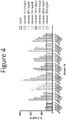
- Example 7 Mixed lympohcyte reactions as described above in Example 7 were used to determine the effect of the chimeric anti-PD-1 antibodies on IL-2 secretion ( Figure 4 ) and IFN- ⁇ secretion ( Figure 5 ) from T cells.
- Each of the chimeric anti-PD-1 monoclonal antibodies promoted IL-2 secretion and IPN ⁇ secretion in a concentration dependent manner in the MLR assay.
- the isotype control antibody hIgG4 did not elicit IL-2 secretion or IPN ⁇ secretion at any concentration tested.
- 7A4 and 13F1 antibody were humanized using a CDR grafting approach ( U.S. Pat. No.5,225,539 ).
- the light chain and heavy chain variable chain sequences of the murine antibody 7A4 and 13F1 were compared to those available in the Research Collaboratory for Structural Bioinformatics (RCSB) protein databank by searching the NCBI database, http://www.ncbi.nlm.nih.gov/igblast/igblast.cgi.
- the model of 7A4 and 13F1 were generated respectively based on the VH and VL structure with the highest sequence homology.
- the template human antibodies to be grafted with the complementary determining regions (CDRs) in the VH and VL of mouse 7A4 and 13F1 antibody were selected from human antibody germlines having an amino acid sequence with high homology with the mouse 7A4 and 13F1 antibody by searching the IMGT/Domain Gap Align 3D structure database, http://www.imgt.org/3Dstructure-DB/cgi/DomainGapAlign.cgi.
- the template human VH selected was a combination of IGHV2-5 ⁇ 10 and IGHJ4 ⁇ 01
- template human VL selected was a combination of IGKV1-33 ⁇ 01 and IGKJ2 ⁇ 01.
- the template human VH selected was a combination of IGHV3-21 ⁇ 04 and IGHJ4 ⁇ 01
- template human VL selected was a combination of IGKV7-3 ⁇ 01 and IGKJ2 ⁇ 01.
- CDR amino acid sequences of the aforementioned template human antibodies were substituted by the amino acid sequence of CDRs of mouse 7A4 and 13F1 antibody.
- the frameworks of the above-mentioned template human antibody VH and VL were grafted with the necessary amino acid sequences from VH and VL of mouse 7A4 and 13F1 antibody to give a functional humanized antibody.
- VH and VL of 7A4 and 13F1 several sites of framework amino acid of the aforementioned template human antibody were back mutated to the corresponding amino acid sequences in mouse 7A4 and 13F1 antibody.
- the amino acid at position 40 was mutated from Tyr (Y) to Phe (F) and the amino acid at position 72 was mutated from Gly (G) to Arg (R); and for the heavy chain variable region of humanized 7A4 antibody, the amino acid at position 2 was mutated from Val (V) to Ile (I), the amino acid at position 46 was mutated from Glu (E) to Lys (K), and the amino acid at position 70 was mutated from Phe (F) to Ile (I).
- the amino acid at position 45 was mutated from Leu (L) to Pro (P) and the amino acid at position 70 was mutated from Phe (F) to Tyr (Y); and for the heavy chain variable region of humanized 13F1 antibody, the amino acid at position 26 was mutated from Gly (G) to Tyr (Y), the amino acid at position 48 was mutated from Ile (I) to Met (M), the amino acid at position 49 was mutated from Gly (G) to Ala (A), the amino acid at position 67 was mutated from Val (V) to Ile (I), and the amino acid at position 71 was mutated from Val (V) to Arg (R).
- the amino acid sequences of the variable light and variable heavy chains of humanized 13F1 antibody were designated SEQ ID NOs: 143 and 141, respectively.
- the base sequences of DNAs encoding the amino acid sequences were designed (SEQ ID NO: 140 and 142, respectively).
- the amino acid sequences of the variable light and variable heavy chains of humanized 7A4 antibody were designated SEQ ID NOs: 133 and 131, respectively.
- the base sequences of DNAs encoding the amino acid sequences were designed (SEQ ID NO: 130 and 132, respectively).
- IgG1 and IgG4 versions of the humanized 7A4 and 13F1 antibodies were produced (h13F1-IgG1, h13F1-IgG4, h7A4-IgG1 and h7A4-IgG4).
- the IgG1 constant region carries D265A mutation ( Clynes R, et al, Nature Medicine 6: 443-446 (2000 )) while IgG4 constant region has F234A and L235A double mutation ( Xu D, et al, Cellular Immunology 200: 16-26 (2000 )).
- the constant region sequences are disclosed in SEQ ID NOS: 150 and 151.
- the full light and heavy chain amino acid sequences for h13F1-IgG1 (SEQ ID NOs: 149 and 145), h13F1-IgG4 (SEQ ID NOs: 149 and 147), h7A4-IgG1 (SEQ ID NOs: 139 and 135), and h7A4-IgG4 (SEQ ID NOs: 139 and 137) are provided above in Table 3.
- Asn85 is mutated to Asp (h7A4D).
- the light chain variable region (SEQ ID NO: 152) and full light amino acid sequences (SEQ ID NO: 153) are also provided above in Table 3.
- DNA encoding humanized 7A4, 7A4D and 13F1 antibody light chain and heavy chain was synthesized and cloned to the expression vector pcDNA3.1 (Invitrogen, CAT: #V-790).
- Freestyle 293 cells 200 mL at 10 6 /mL were transfected with 100 ⁇ g of each of the humanized heavy and light chain expression plasmids and cultured for 6 days.
- the humanized antibody in the supernatant was then purified with Protein-G column (GE healthcare).
- humanized 13F1 antibodies hu-13F1-hIgG1 and hu-13F1-hIgG4 exhibited similar binding to PD-1 compared to the chimeric antibody 13F1-chimeric ( Figure 6A , top panel); and humanized 7A4 antibodies hu-7A4-D265A-hIgG1 and 7A4-huIgG4 exhibited similar binding to PD-1 compared to the chimeric 7A4 antibodies ( Figure 6B , top panel).
- the isotype control hIgG4 antibody did not exhibit PD-1 binding.
- the bottom panels of Figure 6A and Figure 6B show the EC50 for each of the antibodies tested, calculated from the ELISA binding data, and demonstrates that the humanized 13F1 and 7A4 antibodies exhibited PD-1 binding.
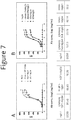
- humanized 13F1 antibodies hu-13F1-hIgG1 and hu-13F1-hIgG4 ( Figure 7A , top panel) and humanized 7A4 antibodies hu-7A4-D265A-hIgG1 and 7A4-huIgG4 ( Figure 7B , top panel) exhibited binding to PD-1.
- the EC50 calculated from the FACS binding data for humanized 13F1 and 7A4 antibodies are shown in Figure 7A and Figure 7B , respectively.
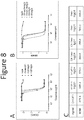
- Figure 8 shows the results of the ELISA-based ligand blocking assays for humanized 13F1 and humanized 7A4 antibodies. As shown in Figure 8A and Figure 8B , the humanized 13F1 and 7A4 antibodies, respectively, exhibited similar ligand blockage activity relative to the corresponding chimeric antibody. Quantification of the IC50 for each of the humanized and chimeric antibodies is shown in Figure 8C .
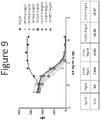
- Figure 9 shows that each of the humanized 13F1 and humanized 7A4 antibodies blocked PD-L1 binding as measured by FACS-based ligand blockage assay.
- the bottom panel of Figure 9 provides the IC50 for each of the humanized antibodies.
- the binding kinetics between PD-1 and PD-1 antibodies were measured by Biacore3000 and recorded with a data collection rate of 1 Hz.
- the polyclonal rabbit anti-mouse IgG (GE, BR-1008-38) was diluted with 10 mM pH 5.0 sodium acetate and immobilized onto reference and experiment flow cells of a CM5 biosensor chip to around 15000RU using an amine coupling kit (GE, BR10050). In the beginning of each cycle, diluted test antibody (1.5 ⁇ g/mL) was injected over experiment flow cell for 1 minute to be captured.
- PD-1 analyte series were prepared by diluting the stocks with running buffer to 100nM followed by 2X serial dilution in the same buffer down to 0.78nM. Analytes were injected in series over the reference and experiment flow cells for 3 minutes at a flow rate of 30 ⁇ L/minute. Then running buffer (PBS with 0.05% P20) was allowed to flow over for 10 minutes at a flow rate of 30 ⁇ L/minute. At the end of each cycle, the biosensor surface was regenerated with 3 minutes injection of 10 mM pH1.7 Glycine-HCl buffer at a flow rate of 10 ⁇ L/minute. For each analyte sample injection (i.e.
- binding responses obtained from the experimental biosensor surface were double referenced by subtracting simultaneously recorded responses from the reference surface followed by additional subtraction of responses from a single referenced running buffer sample.
- the association and dissociation rate constants (ka and kd) were determined simultaneously by fitting double-referenced sensorgrams of the entire titration series to Langmuir model (1:1) using Biaevaluation 4.0 software.
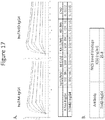
- the humanized anti-PD-1 antibodies 13F1, 7A4, and 7A4D bound human PD-1 with high affinity.
- FIG. 10 and 17A The Biocore binding curves are shown in Figures 10 and 17A , top panel, and the quantified binding data are summarized in Figures 10 and 17A , bottom panel.
- Figure 17B indicates the blockage IC50 of PD-Ll's binding to 293T-PD1 cells by 7A4D-hIgG4 antibody.
- MLR Mixed Lymphocyte Reactions
- T cells in the assay were tested for IPN ⁇ and IL-2 secretion in the presence or absence of anti-PD-1 antibodies.
- Human CD4 + T-cells were purified from human PBMC using a CD4 negative selection isolation kit (Mitenyi Biotech, cat# 130-091-155).
- Immature dendritic cells (DC) were derived from monocytes isolated from human PBMC using the Mo-DC Generation Toolbox (Miltenyi, cat#130-093-568).
- the cells were cultured with Mo-DC Differentiation Medium for 7 days, and were then induced to be mature DC with Mo-Dc Maturation medium for 2 days.
- 10 5 purified T-cells and 10 4 allogeneic mature DC cells in a total volume of 200 ⁇ l were added to each well.
- the testing antibody was assayed at a range of concentrations from 20 ⁇ g/ml to 0.002 ⁇ g/ml. Either no antibody or an isotype control antibody (hIgG4) was used as a negative control.
- the cells were cultured for 5 days at 37 °C.
- Example 13 Human recall T cell response to Tetanus Toxoid challenge is enhanced by humanized anti-PD-1 antibody
- the human T-cell recall assay was employed using tetanus toxoid (TT) antigen to stimulate pre-existing memory T cells in the blood of healthy TT immunized donors.
- TT tetanus toxoid
- fresh PBMC recently collected (samples collected within less than 1 year) from TT immunized donors were plated into 96-well round bottom plates (costar, cat#3799) at 4 ⁇ 10 5 cells/well using RPMI1640 (Invitrogen, cat# A10491-01) supplemented with 80 U/ml penicillin, 80 g/ml streptomycin and 30% autologous serum.
- Humanized 13F1 or 7A4 antibodies were added at various concentrations, and stimulated with 0.1ug/ml SEB and 1ug/ml TT (Astarte Biologies). After co-culture for 7 days at 37°C, 5% CO 2 , the supernatant was harvested and the concentration of IFN- ⁇ was measured. The results of the study are shown in Figure 15 , and demonstrate that, compared to TT antigen alone, PD-L1 blockage with anti-PD-1 antibodies resulted in enhanced IFN- ⁇ secretion by memory T cells.
Landscapes
- Health & Medical Sciences (AREA)
- Life Sciences & Earth Sciences (AREA)
- Chemical & Material Sciences (AREA)
- Organic Chemistry (AREA)
- General Health & Medical Sciences (AREA)
- Medicinal Chemistry (AREA)
- Veterinary Medicine (AREA)
- Engineering & Computer Science (AREA)
- Animal Behavior & Ethology (AREA)
- Pharmacology & Pharmacy (AREA)
- Public Health (AREA)
- General Chemical & Material Sciences (AREA)
- Chemical Kinetics & Catalysis (AREA)
- Nuclear Medicine, Radiotherapy & Molecular Imaging (AREA)
- Immunology (AREA)
- Genetics & Genomics (AREA)
- Bioinformatics & Cheminformatics (AREA)
- Biomedical Technology (AREA)
- Wood Science & Technology (AREA)
- Zoology (AREA)
- Biotechnology (AREA)
- Oncology (AREA)
- Biochemistry (AREA)
- Communicable Diseases (AREA)
- Molecular Biology (AREA)
- Pulmonology (AREA)
- Microbiology (AREA)
- General Engineering & Computer Science (AREA)
- Biophysics (AREA)
- Tropical Medicine & Parasitology (AREA)
- Virology (AREA)
- Hematology (AREA)
- Cell Biology (AREA)
- Proteomics, Peptides & Aminoacids (AREA)
- Plant Pathology (AREA)
- Physics & Mathematics (AREA)
- Dermatology (AREA)
- Otolaryngology (AREA)
- Mycology (AREA)
- Epidemiology (AREA)
Applications Claiming Priority (2)
| Application Number | Priority Date | Filing Date | Title |
|---|---|---|---|
| CN2014082721 | 2014-07-22 | ||
| PCT/US2015/041575 WO2016014688A2 (en) | 2014-07-22 | 2015-07-22 | Anti-pd-1 antibodies |
Publications (3)
| Publication Number | Publication Date |
|---|---|
| EP3171892A2 EP3171892A2 (en) | 2017-05-31 |
| EP3171892A4 EP3171892A4 (en) | 2018-01-17 |
| EP3171892B1 true EP3171892B1 (en) | 2021-11-24 |
Family
ID=55163959
Family Applications (1)
| Application Number | Title | Priority Date | Filing Date |
|---|---|---|---|
| EP15824277.6A Active EP3171892B1 (en) | 2014-07-22 | 2015-07-22 | Anti-pd-1 antibodies |
Country Status (16)
| Country | Link |
|---|---|
| US (3) | US10428146B2 (enExample) |
| EP (1) | EP3171892B1 (enExample) |
| JP (2) | JP6986965B2 (enExample) |
| KR (1) | KR102524920B1 (enExample) |
| CN (1) | CN106573052B (enExample) |
| AU (2) | AU2015292678B2 (enExample) |
| BR (2) | BR112017001385B1 (enExample) |
| CA (1) | CA2955788C (enExample) |
| ES (1) | ES2905301T3 (enExample) |
| IL (2) | IL250222B (enExample) |
| MX (1) | MX388181B (enExample) |
| NZ (1) | NZ728688A (enExample) |
| RU (1) | RU2711141C2 (enExample) |
| SG (2) | SG11201700496WA (enExample) |
| WO (1) | WO2016014688A2 (enExample) |
| ZA (1) | ZA201700551B (enExample) |
Families Citing this family (66)
| Publication number | Priority date | Publication date | Assignee | Title |
|---|---|---|---|---|
| CR20160319A (es) | 2013-12-12 | 2016-11-08 | Jiangsu Hengrui Medicine Co | Anticuerpo pd-1, fragmento de union al antigeno de este y uso médico de este |
| TWI693232B (zh) | 2014-06-26 | 2020-05-11 | 美商宏觀基因股份有限公司 | 與pd-1和lag-3具有免疫反應性的共價結合的雙抗體和其使用方法 |
| KR102524920B1 (ko) | 2014-07-22 | 2023-04-25 | 아폴로믹스 인코포레이티드 | 항-pd-1 항체 |
| SG10201901057UA (en) | 2014-08-05 | 2019-03-28 | Cb Therapeutics Inc | Anti-pd-l1 antibodies |
| TWI773646B (zh) | 2015-06-08 | 2022-08-11 | 美商宏觀基因股份有限公司 | 結合lag-3的分子和其使用方法 |
| MX383464B (es) | 2015-07-13 | 2025-03-14 | Cytomx Therapeutics Inc | Anticuerpos anti-pd-1, anticuerpos anti-pd-1 activables, y métodos de uso de los mismos. |
| PE20231958A1 (es) | 2015-07-30 | 2023-12-06 | Macrogenics Inc | Moleculas de union a pd-1 y metodos de uso de las mismas |
| JP6869987B2 (ja) | 2015-09-01 | 2021-05-12 | アジェナス インコーポレイテッド | 抗pd−1抗体及びその使用方法 |
| BR112018006237A2 (pt) | 2015-09-29 | 2018-10-09 | Celgene Corp | proteínas de ligação a pd-1 e métodos de uso das mesmas |
| US12030942B2 (en) | 2015-10-02 | 2024-07-09 | Les Laboratoires Servier | Anti-PD-1 antibodies and compositions |
| PT3370768T (pt) | 2015-11-03 | 2022-04-21 | Janssen Biotech Inc | Anticorpos que se ligam especificamente ao pd-1 e seus usos |
| CN108367069B (zh) | 2015-12-14 | 2022-08-23 | 宏观基因有限公司 | 对于pd-1和ctla-4具有免疫反应性的双特异性分子及其使用方法 |
| CN107286242B (zh) * | 2016-04-01 | 2019-03-22 | 中山康方生物医药有限公司 | 抗pd-1的单克隆抗体 |
| WO2017189963A1 (en) * | 2016-04-29 | 2017-11-02 | Voyager Therapeutics, Inc. | Compositions for the treatment of disease |
| EP3448987A4 (en) | 2016-04-29 | 2020-05-27 | Voyager Therapeutics, Inc. | COMPOSITIONS FOR TREATING A DISEASE |
| KR102379464B1 (ko) | 2016-06-20 | 2022-03-29 | 키맵 리미티드 | 항-pd-l1 항체 |
| TN2019000081A1 (en) * | 2016-09-14 | 2020-07-15 | Beijing hanmi pharm co ltd | Antibody specifically binding to pd-1 and functional fragment thereof |
| EP3515944A4 (en) | 2016-09-19 | 2020-05-06 | Celgene Corporation | METHOD FOR TREATING IMMUNE DISEASES USING PD-1 BINDING PROTEINS |
| EP3515943A4 (en) | 2016-09-19 | 2020-05-06 | Celgene Corporation | METHODS OF TREATING VITILIGO WITH PD-1 BINDING PROTEINS |
| JP6967515B2 (ja) * | 2016-10-15 | 2021-11-17 | イノベント バイオロジックス (スウツォウ) カンパニー,リミテッド | Pd−1抗体 |
| TWI780083B (zh) * | 2016-11-18 | 2022-10-11 | 丹麥商賽門弗鎮公司 | 抗pd-1抗體及組成物 |
| CN110300599B (zh) | 2016-12-07 | 2024-07-02 | 艾吉纳斯公司 | 抗体和其使用方法 |
| CN106519034B (zh) * | 2016-12-22 | 2020-09-18 | 鲁南制药集团股份有限公司 | 抗pd-1抗体及其用途 |
| CN110366564B (zh) * | 2016-12-23 | 2023-07-07 | 瑞美德生物医药科技有限公司 | 使用与程序性死亡1(pd-1)结合的抗体的免疫疗法 |
| JP7275030B2 (ja) * | 2017-01-20 | 2023-05-17 | タユー ファシャ バイオテック メディカル グループ カンパニー, リミテッド | 抗pd-1抗体およびその使用 |
| CN108341871A (zh) * | 2017-01-24 | 2018-07-31 | 三生国健药业(上海)股份有限公司 | 抗pd-1单克隆抗体及其制备方法和应用 |
| BR112019017628A2 (pt) | 2017-02-24 | 2020-07-07 | Macrogenics, Inc. | molécula de ligação a cd137 x ta, composições farmacêuticas, uso da molécula de ligação a cd137 x ta, molécula de ligação a cd137, uso da molécula de ligação a cd137, molécula de ligação a her2/neu, uso da molécula de ligação a her2/neu, e uso de uma composição |
| US11483810B2 (en) * | 2017-04-03 | 2022-10-25 | Huawei Technologies Co., Ltd. | Methods and systems for resource configuration of wireless communication systems |
| AU2018247916B2 (en) | 2017-04-05 | 2025-04-24 | Les Laboratoires Servier | Combination therapies targeting PD-1, TIM-3, and LAG-3 |
| BR112019021520A2 (pt) | 2017-04-14 | 2020-08-04 | Tollnine, Inc. | oligonucleotídeo, composto, polinucleotídeo imunomodulador, composição, conjugado, método para modular um receptor, método de tratamento de um tumor, método de tratamento de câncer, método para tratar um tumor, método de prevenção de câncer, método para induzir uma resposta imune |
| WO2018231339A2 (en) | 2017-04-20 | 2018-12-20 | Dana-Farber Cancer Institute, Inc. | Anti-phosphotyrosinylated pd-1 antibodies and uses thereof |
| CN110799537B (zh) * | 2017-06-25 | 2023-07-28 | 西雅图免疫公司 | 抗pd-1抗体及其制备和使用方法 |
| JP7795860B2 (ja) | 2017-09-07 | 2026-01-08 | オーガスタ ユニバーシティ リサーチ インスティテュート,インコーポレーテッド | プログラム細胞死タンパク質1に対する抗体 |
| KR20190065234A (ko) * | 2017-11-30 | 2019-06-11 | 그리폴스 다이어그노스틱 솔루션즈 인크. | 면역 관문 억제제인 pd-1 및 pd-l1에 대한 항체 치료를 모니터링하기 위한 면역분석 및 조작된 단백질 |
| WO2019109974A1 (zh) * | 2017-12-06 | 2019-06-13 | 正大天晴药业集团南京顺欣制药有限公司 | 抗pd-l1抗体及其抗原结合片段 |
| CN107880127B (zh) * | 2017-12-08 | 2020-05-22 | 浙江大学 | 全人源抗pdl-1单链抗体b129及其应用 |
| CN108059678B (zh) * | 2017-12-08 | 2020-05-22 | 浙江大学 | 全人源抗pdl-1单链抗体b30及其应用 |
| CN108059677B (zh) * | 2017-12-08 | 2020-05-22 | 浙江大学 | 全人源抗pdl-1单链抗体b36及其应用 |
| US12398209B2 (en) | 2018-01-22 | 2025-08-26 | Janssen Biotech, Inc. | Methods of treating cancers with antagonistic anti-PD-1 antibodies |
| EP3752528A4 (en) * | 2018-02-17 | 2021-11-03 | Apollomics Inc. | CANCER TREATMENT USING A COMBINATION OF A NEUTROPHIL MODULATOR WITH AN IMMUNE CHECKPOINT MODULATOR |
| CN112020516B (zh) * | 2018-03-13 | 2025-01-03 | 塔斯克疗法有限公司 | 用于肿瘤特异性细胞清除的抗-cd25 |
| KR102558418B1 (ko) | 2018-04-15 | 2023-07-24 | 임비라 컴퍼니 리미티드 | Pd-1에 결합하는 항체 및 그 용도 |
| WO2019219064A1 (en) * | 2018-05-17 | 2019-11-21 | Nanjing Leads Biolabs Co.Ltd | Antibody binding pd-1 and use thereof |
| TWI806870B (zh) * | 2018-05-23 | 2023-07-01 | 中國大陸商大有華夏生物醫藥集團有限公司 | 抗pd-1抗體及其用途 |
| KR20210030366A (ko) | 2018-06-20 | 2021-03-17 | 인사이트 코포레이션 | 항-pd-1 항체 및 이의 용도 |
| CN110624106A (zh) * | 2018-06-22 | 2019-12-31 | 嘉和生物药业有限公司 | Pd-1信号通路拮抗剂与艾滋病疫苗的联合应用 |
| EP3823991A4 (en) | 2018-07-19 | 2022-08-03 | Tayu Huaxia Biotech Medical Group Co., Ltd. | ANTI-PD-1 ANTIBODIES, DOSAGE FORMS AND USES THEREOF |
| CN111423510B (zh) * | 2019-01-10 | 2024-02-06 | 迈威(上海)生物科技股份有限公司 | 重组抗人pd-1抗体及其应用 |
| MX2021009041A (es) * | 2019-02-03 | 2021-08-19 | Jiangsu Hengrui Medicine Co | Anticuerpo anti-pd-1, fragmento de union a antigeno del mismo y uso farmaceutico del mismo. |
| JP2022537515A (ja) * | 2019-06-10 | 2022-08-26 | アポロミクス インコーポレイテッド(ハンジョウ) | 抗体-インターロイキン融合タンパク質および使用方法 |
| JP6881658B2 (ja) | 2019-07-05 | 2021-06-02 | 小野薬品工業株式会社 | Pd−1/cd3二重特異性タンパク質による血液がん治療 |
| WO2021025140A1 (ja) | 2019-08-08 | 2021-02-11 | 小野薬品工業株式会社 | 二重特異性タンパク質 |
| CN114206931B (zh) * | 2019-09-30 | 2024-06-04 | 四川科伦博泰生物医药股份有限公司 | 抗pd-1抗体及其用途 |
| EP4059518A4 (en) * | 2019-11-13 | 2023-11-29 | Kyoto University | Pd-1 signal inhibitor combination therapy |
| CN113134080A (zh) * | 2020-01-17 | 2021-07-20 | 嘉和生物药业有限公司 | 抗pd-1抗体和呋喹替尼联合在制备治疗癌症的药物中的用途 |
| IL295759A (en) | 2020-02-28 | 2022-10-01 | Tallac Therapeutics Inc | Transglutaminase mediated coupling |
| CN114761434B (zh) * | 2020-09-30 | 2023-06-27 | 苏州沙砾生物科技有限公司 | Pd-1抗体及其制备方法与应用 |
| GB202107994D0 (en) | 2021-06-04 | 2021-07-21 | Kymab Ltd | Treatment of cancer |
| CN115611981A (zh) * | 2021-07-12 | 2023-01-17 | 嘉和生物药业有限公司 | 抗pd-1抗体在治疗外周t细胞淋巴瘤中的应用 |
| CN115607664A (zh) * | 2021-07-15 | 2023-01-17 | 嘉和生物药业有限公司 | 抗pd-1抗体在治疗宫颈癌中的应用 |
| CN115607663A (zh) * | 2021-07-15 | 2023-01-17 | 嘉和生物药业有限公司 | 抗pd-1抗体在治疗原发纵隔大b细胞淋巴瘤中的应用 |
| WO2023147470A2 (en) | 2022-01-28 | 2023-08-03 | Georgiamune Inc. | Antibodies to programmed cell death protein 1 that are pd-1 agonists |
| WO2024119068A2 (en) * | 2022-12-02 | 2024-06-06 | Ohio State Innovation Foundation | S100a7 as a diagnostic marker and therapeutic target for disorders |
| US20240294651A1 (en) | 2023-01-30 | 2024-09-05 | Kymab Limited | Antibodies |
| JP2026517843A (ja) | 2023-05-03 | 2026-06-02 | アイオーエックス セラピューティクス リミテッド | Inkt細胞調節剤リポソーム組成物及び使用方法 |
| WO2025128263A1 (en) * | 2023-12-15 | 2025-06-19 | Pharmaessentia Corporation | Anti-pd-1 monoclonal antibody and methods of preparation thereof |
Citations (1)
| Publication number | Priority date | Publication date | Assignee | Title |
|---|---|---|---|---|
| WO2017011580A2 (en) * | 2015-07-13 | 2017-01-19 | Cytomx Therapeutics, Inc. | Anti-pd-1 antibodies, activatable anti-pd-1 antibodies, and methods of use thereof |
Family Cites Families (102)
| Publication number | Priority date | Publication date | Assignee | Title |
|---|---|---|---|---|
| US5225539A (en) | 1986-03-27 | 1993-07-06 | Medical Research Council | Recombinant altered antibodies and methods of making altered antibodies |
| JP3101690B2 (ja) | 1987-03-18 | 2000-10-23 | エス・ビィ・2・インコーポレイテッド | 変性抗体の、または変性抗体に関する改良 |
| US5859205A (en) | 1989-12-21 | 1999-01-12 | Celltech Limited | Humanised antibodies |
| US5994514A (en) | 1991-08-14 | 1999-11-30 | Genentech, Inc. | Immunoglobulin variants |
| AU4116793A (en) | 1992-04-24 | 1993-11-29 | Board Of Regents, The University Of Texas System | Recombinant production of immunoglobulin-like domains in prokaryotic cells |
| AU691811B2 (en) | 1993-06-16 | 1998-05-28 | Celltech Therapeutics Limited | Antibodies |
| US5595756A (en) * | 1993-12-22 | 1997-01-21 | Inex Pharmaceuticals Corporation | Liposomal compositions for enhanced retention of bioactive agents |
| CA2143491C (en) | 1994-03-01 | 2011-02-22 | Yasumasa Ishida | A novel peptide related to human programmed cell death and dna encoding it |
| US6528624B1 (en) | 1998-04-02 | 2003-03-04 | Genentech, Inc. | Polypeptide variants |
| US6194551B1 (en) | 1998-04-02 | 2001-02-27 | Genentech, Inc. | Polypeptide variants |
| GB9809951D0 (en) | 1998-05-08 | 1998-07-08 | Univ Cambridge Tech | Binding molecules |
| HUP0104865A3 (en) | 1999-01-15 | 2004-07-28 | Genentech Inc | Polypeptide variants with altered effector function |
| US6737056B1 (en) | 1999-01-15 | 2004-05-18 | Genentech, Inc. | Polypeptide variants with altered effector function |
| ES2539411T3 (es) | 1999-08-23 | 2015-06-30 | Dana-Farber Cancer Institute, Inc. | PD-1, receptor para la B7-4 y su utilización |
| MXPA02001878A (es) | 1999-08-23 | 2003-08-20 | Dana Farber Cancer Inst Inc | Moleculas b7-4 novedosas y usos de las mismas. |
| EP1266014A2 (en) | 2000-03-24 | 2002-12-18 | Peter Kufer | Multifunctional polypeptides comprising a binding site to an epitope of the nkg2d receptor complex |
| AU5345901A (en) | 2000-04-13 | 2001-10-30 | Univ Rockefeller | Enhancement of antibody-mediated immune responses |
| WO2002039813A1 (en) | 2000-11-15 | 2002-05-23 | Ono Pharmaceutical Co., Ltd. | Pd-1-lacking mouse and use thereof |
| EP1355919B1 (en) | 2000-12-12 | 2010-11-24 | MedImmune, LLC | Molecules with extended half-lives, compositions and uses thereof |
| US20030133939A1 (en) | 2001-01-17 | 2003-07-17 | Genecraft, Inc. | Binding domain-immunoglobulin fusion proteins |
| JP4361273B2 (ja) | 2001-02-27 | 2009-11-11 | アメリカ合衆国 | 潜在的な血管形成阻害剤としてのサリドマイド類似体 |
| DK1366067T3 (da) | 2001-03-07 | 2012-10-22 | Merck Patent Gmbh | Ekspressionsteknologi for proteiner indeholdende en hybrid isotype-antistof-enhed |
| AR036993A1 (es) | 2001-04-02 | 2004-10-20 | Wyeth Corp | Uso de agentes que modulan la interaccion entre pd-1 y sus ligandos en la submodulacion de respuestas inmunologicas |
| US7317091B2 (en) | 2002-03-01 | 2008-01-08 | Xencor, Inc. | Optimized Fc variants |
| US8093357B2 (en) | 2002-03-01 | 2012-01-10 | Xencor, Inc. | Optimized Fc variants and methods for their generation |
| DE60334303D1 (de) | 2002-07-03 | 2010-11-04 | Tasuku Honjo | Immunpotenzierende zusammensetzungen |
| MXPA05004677A (es) | 2002-10-31 | 2005-11-17 | Genentech Inc | Metodos y composiciones para aumentar la produccion de anticuerpos. |
| ES2367430T3 (es) | 2002-12-23 | 2011-11-03 | Wyeth Llc | Anticuerpos contra pd-1 y sus usos. |
| US7960512B2 (en) | 2003-01-09 | 2011-06-14 | Macrogenics, Inc. | Identification and engineering of antibodies with variant Fc regions and methods of using same |
| US7355008B2 (en) | 2003-01-09 | 2008-04-08 | Macrogenics, Inc. | Identification and engineering of antibodies with variant Fc regions and methods of using same |
| US7563869B2 (en) | 2003-01-23 | 2009-07-21 | Ono Pharmaceutical Co., Ltd. | Substance specific to human PD-1 |
| US8084582B2 (en) | 2003-03-03 | 2011-12-27 | Xencor, Inc. | Optimized anti-CD20 monoclonal antibodies having Fc variants |
| AU2004266159A1 (en) | 2003-08-22 | 2005-03-03 | Biogen Idec Ma Inc. | Improved antibodies having altered effector function and methods for making the same |
| US20060134105A1 (en) | 2004-10-21 | 2006-06-22 | Xencor, Inc. | IgG immunoglobulin variants with optimized effector function |
| EP1697520A2 (en) | 2003-12-22 | 2006-09-06 | Xencor, Inc. | Fc polypeptides with novel fc ligand binding sites |
| GB0400440D0 (en) | 2004-01-09 | 2004-02-11 | Isis Innovation | Receptor modulators |
| JP4958555B2 (ja) | 2004-09-22 | 2012-06-20 | 協和発酵キリン株式会社 | 安定化されたヒトIgG4抗体 |
| TW200639163A (en) | 2005-02-04 | 2006-11-16 | Genentech Inc | RAF inhibitor compounds and methods |
| CN1296385C (zh) | 2005-03-30 | 2007-01-24 | 王哲 | 抗猪生长激素单克隆抗体及制备方法及应用 |
| EP3530736A3 (en) * | 2005-05-09 | 2019-11-06 | ONO Pharmaceutical Co., Ltd. | Human monoclonal antibodies to programmed death 1 (pd-1) and methods for treating cancer using anti-pd-1 antibodies alone or in combination with other immunotherapeutics |
| KR101704734B1 (ko) | 2005-07-01 | 2017-02-09 | 이. 알. 스퀴부 앤드 선즈, 엘.엘.씨. | 예정 사멸 리간드 1 (피디-엘1)에 대한 인간 모노클로날 항체 |
| PL1976877T5 (pl) | 2005-11-30 | 2017-09-29 | Abbvie Inc | Przeciwciała monoklonalne przeciwko białku amyloidu beta oraz ich zastosowania |
| WO2007067444A1 (en) | 2005-12-08 | 2007-06-14 | Millennium Pharmaceuticals, Inc. | Bicyclic compounds with kinase inhibitory activity |
| MY169492A (en) | 2006-03-23 | 2019-04-15 | Bioarctic Neuroscience Ab | Improved protofibril selective antibodies and the use thereof |
| AU2007254325B2 (en) | 2006-05-15 | 2012-05-10 | Merck Sharp & Dohme Corp. | Antidiabetic bicyclic compounds |
| CN101104640A (zh) | 2006-07-10 | 2008-01-16 | 苏州大学 | 抗人pd-l1单克隆抗体制备及应用 |
| BRPI0714381A2 (pt) | 2006-07-10 | 2013-03-05 | Biogen Idec Inc | composiÇÕes e mÉtodos para inibir crescimento de cÂnceres deficientes em smad4 |
| US20080227704A1 (en) | 2006-12-21 | 2008-09-18 | Kamens Joanne S | CXCL13 binding proteins |
| CA2673870A1 (en) | 2006-12-27 | 2008-07-10 | Emory University | Compositions and methods for the treatment of infections and tumors |
| AU2008255352B2 (en) | 2007-05-31 | 2014-05-22 | Genmab A/S | Stable IgG4 antibodies |
| US7615883B2 (en) | 2007-06-06 | 2009-11-10 | Meheen H Joe | Wind driven venturi turbine |
| AU2014201367B2 (en) | 2007-06-18 | 2016-01-28 | Merck Sharp & Dohme B.V. | Antibodies to human programmed death receptor pd-1 |
| PT2170959E (pt) | 2007-06-18 | 2014-01-07 | Merck Sharp & Dohme | Anticorpos para o receptor humano de morte programada pd-1 |
| EP2195347A1 (en) | 2007-08-17 | 2010-06-16 | INSERM (Institut National de la Santé et de la Recherche Médicale) | Method for treating and diagnosing hematologic malignancies |
| MX2010004251A (es) | 2007-10-16 | 2010-08-30 | Sbi Biotech Co Ltd | Anticuerpo anti-bst2. |
| JO3076B1 (ar) | 2007-10-17 | 2017-03-15 | Janssen Alzheimer Immunotherap | نظم العلاج المناعي المعتمد على حالة apoe |
| US8168757B2 (en) | 2008-03-12 | 2012-05-01 | Merck Sharp & Dohme Corp. | PD-1 binding proteins |
| WO2010098788A2 (en) | 2008-08-25 | 2010-09-02 | Amplimmune, Inc. | Pd-i antagonists and methods for treating infectious disease |
| AU2009290543B2 (en) | 2008-09-12 | 2015-09-03 | Oxford University Innovation Limited | PD-1 specific antibodies and uses thereof |
| AU2009290544B2 (en) | 2008-09-12 | 2015-07-16 | Oxford University Innovation Limited | PD-1 specific antibodies and uses thereof |
| WO2010036959A2 (en) | 2008-09-26 | 2010-04-01 | Dana-Farber Cancer Institute | Human anti-pd-1, pd-l1, and pd-l2 antibodies and uses therefor |
| KR101050829B1 (ko) | 2008-10-02 | 2011-07-20 | 서울대학교산학협력단 | 항 pd-1 항체 또는 항 pd-l1 항체를 포함하는 항암제 |
| MX2011005691A (es) | 2008-11-28 | 2011-07-20 | Univ Emory | Metodos para el tratamiento de infecciones y tumores. |
| MX356367B (es) | 2008-12-09 | 2018-05-25 | Genentech Inc | Anticuerpos anti-pd-l1 y su uso para mejorar la funcion de celulas t. |
| US20100197924A1 (en) | 2008-12-22 | 2010-08-05 | Millennium Pharmaceuticals, Inc. | Preparation of aminotetralin compounds |
| WO2010089411A2 (en) | 2009-02-09 | 2010-08-12 | Universite De La Mediterranee | Pd-1 antibodies and pd-l1 antibodies and uses thereof |
| CN102421801B (zh) | 2009-03-10 | 2016-03-16 | 比奥根Ma公司 | 抗-bcma抗体 |
| US9493578B2 (en) | 2009-09-02 | 2016-11-15 | Xencor, Inc. | Compositions and methods for simultaneous bivalent and monovalent co-engagement of antigens |
| JP5774595B2 (ja) | 2009-10-28 | 2015-09-09 | ヤンセン バイオテツク,インコーポレーテツド | 抗glp−1r抗体及びそれらの使用 |
| US10053513B2 (en) | 2009-11-30 | 2018-08-21 | Janssen Biotech, Inc. | Antibody Fc mutants with ablated effector functions |
| EP3053932B1 (en) | 2010-02-19 | 2020-07-22 | Xencor, Inc. | Novel ctla4-ig immunoadhesins |
| CN102892786B (zh) | 2010-03-11 | 2016-03-16 | Ucb医药有限公司 | Pd-1抗体 |
| US20130108623A1 (en) | 2010-03-29 | 2013-05-02 | Zymeworks Inc | Antibodies with Enhanced or Suppressed Effector Function |
| WO2012009705A1 (en) | 2010-07-15 | 2012-01-19 | Zyngenia, Inc. | Ang-2 binding complexes and uses thereof |
| LT2691417T (lt) | 2011-03-29 | 2018-10-25 | Roche Glycart Ag | Antikūno fc variantai |
| WO2012135408A1 (en) | 2011-03-31 | 2012-10-04 | Merck Sharp & Dohme Corp. | Stable formulations of antibodies to human programmed death receptor pd-1 and related treatments |
| CA2833636A1 (en) | 2011-04-20 | 2012-10-26 | Amplimmune, Inc. | Antibodies and other molecules that bind b7-h1 and pd-1 |
| SG194212A1 (en) | 2011-05-02 | 2013-11-29 | Ym Biosciences Australia Pty | Multiple myeloma treatment |
| ES2929575T3 (es) | 2011-06-06 | 2022-11-30 | Novo Nordisk As | Anticuerpos terapéuticos |
| BR112014002353B1 (pt) | 2011-08-01 | 2022-09-27 | Genentech, Inc | Usos de antagonistas de ligação do eixo pd-1 e inibidores de mek, composições farmacêuticas, e kit |
| BR112014012819B1 (pt) | 2011-11-28 | 2022-08-16 | Merck Patent Gmbh | Anticorpo anti-pd-l1 ou fragmento de ligação ao antígeno do mesmo e composição |
| EP4624490A3 (en) | 2012-02-09 | 2025-11-05 | Chugai Seiyaku Kabushiki Kaisha | Modified fc region of antibody |
| CA2871934C (en) | 2012-04-30 | 2023-06-13 | Medimmune, Llc | Molecules with reduced effector function and extended half-lives, compositions, and uses thereof |
| US9856320B2 (en) | 2012-05-15 | 2018-01-02 | Bristol-Myers Squibb Company | Cancer immunotherapy by disrupting PD-1/PD-L1 signaling |
| US9175082B2 (en) | 2012-05-31 | 2015-11-03 | Sorrento Therapeutics, Inc. | Antigen binding proteins that bind PD-L1 |
| ES2742379T3 (es) | 2012-05-31 | 2020-02-14 | Hoffmann La Roche | Procedimientos de tratamiento del cáncer usando antagonistas de unión al eje de PD-1 y antagonistas de VEGF |
| AU2013287119A1 (en) | 2012-07-03 | 2015-01-22 | Janssen Alzheimer Immunotherapy | C-terminal and central epitope a-beta antibodies |
| CN111499755A (zh) | 2012-08-03 | 2020-08-07 | 丹娜法伯癌症研究院 | 抗-pd-l1和pd-l2双结合抗体单一试剂及其使用方法 |
| BR112015007672A2 (pt) | 2012-10-04 | 2017-08-08 | Dana Farber Cancer Inst Inc | anticorpos anti-pd-l1 monoclonais humanos e métodos de uso |
| CA2889182A1 (en) | 2012-10-26 | 2014-05-01 | The University Of Chicago | Synergistic combination of immunologic inhibitors for the treatment of cancer |
| EP2934577A1 (en) | 2012-12-19 | 2015-10-28 | Adimab, LLC | Multivalent antibody analogs, and methods of their preparation and use |
| AR093984A1 (es) | 2012-12-21 | 2015-07-01 | Merck Sharp & Dohme | Anticuerpos que se unen a ligando 1 de muerte programada (pd-l1) humano |
| TWI682941B (zh) | 2013-02-01 | 2020-01-21 | 美商再生元醫藥公司 | 含嵌合恆定區之抗體 |
| RS57582B1 (sr) | 2013-02-20 | 2018-11-30 | Regeneron Pharma | Nehumane životinje sa modifikovanim sekvencama imunoglobulinskog teškog lanca |
| JP6404314B2 (ja) | 2013-03-15 | 2018-10-10 | リジェネロン・ファーマシューティカルズ・インコーポレイテッドRegeneron Pharmaceuticals, Inc. | Il−33拮抗薬とその使用法 |
| CA3175360C (en) | 2013-05-31 | 2024-05-28 | Sorrento Therapeutics, Inc. | Antigen binding proteins that bind pd-1 |
| SMT202300039T1 (it) | 2013-09-13 | 2023-03-17 | Beigene Switzerland Gmbh | Anticorpi anti-pd1 e loro uso come terapia e per diagnostica |
| TWI726608B (zh) | 2014-07-03 | 2021-05-01 | 英屬開曼群島商百濟神州有限公司 | 抗pd-l1抗體及其作為治療及診斷之用途 |
| KR102524920B1 (ko) | 2014-07-22 | 2023-04-25 | 아폴로믹스 인코포레이티드 | 항-pd-1 항체 |
| SG10201901057UA (en) | 2014-08-05 | 2019-03-28 | Cb Therapeutics Inc | Anti-pd-l1 antibodies |
| US9139653B1 (en) | 2015-04-30 | 2015-09-22 | Kymab Limited | Anti-human OX40L antibodies and methods of treatment |
| WO2017024465A1 (en) | 2015-08-10 | 2017-02-16 | Innovent Biologics (Suzhou) Co., Ltd. | Pd-1 antibodies |
-
2015
- 2015-07-22 KR KR1020177005011A patent/KR102524920B1/ko active Active
- 2015-07-22 EP EP15824277.6A patent/EP3171892B1/en active Active
- 2015-07-22 WO PCT/US2015/041575 patent/WO2016014688A2/en not_active Ceased
- 2015-07-22 CA CA2955788A patent/CA2955788C/en active Active
- 2015-07-22 BR BR112017001385-1A patent/BR112017001385B1/pt active IP Right Grant
- 2015-07-22 ES ES15824277T patent/ES2905301T3/es active Active
- 2015-07-22 AU AU2015292678A patent/AU2015292678B2/en active Active
- 2015-07-22 NZ NZ728688A patent/NZ728688A/en unknown
- 2015-07-22 SG SG11201700496WA patent/SG11201700496WA/en unknown
- 2015-07-22 SG SG10201900571YA patent/SG10201900571YA/en unknown
- 2015-07-22 BR BR122020025583-8A patent/BR122020025583B1/pt active IP Right Grant
- 2015-07-22 RU RU2017105915A patent/RU2711141C2/ru active
- 2015-07-22 US US15/328,225 patent/US10428146B2/en active Active
- 2015-07-22 MX MX2017000985A patent/MX388181B/es unknown
- 2015-07-22 JP JP2017525309A patent/JP6986965B2/ja active Active
- 2015-07-22 CN CN201580040301.XA patent/CN106573052B/zh active Active
-
2017
- 2017-01-22 IL IL250222A patent/IL250222B/en active IP Right Grant
- 2017-01-24 ZA ZA2017/00551A patent/ZA201700551B/en unknown
-
2019
- 2019-08-12 US US16/538,448 patent/US10981994B2/en active Active
-
2020
- 2020-05-14 JP JP2020085029A patent/JP2020188760A/ja active Pending
-
2021
- 2021-01-18 AU AU2021200264A patent/AU2021200264B2/en active Active
- 2021-03-08 US US17/195,226 patent/US11560429B2/en active Active
- 2021-04-18 IL IL282403A patent/IL282403B2/en unknown
Patent Citations (1)
| Publication number | Priority date | Publication date | Assignee | Title |
|---|---|---|---|---|
| WO2017011580A2 (en) * | 2015-07-13 | 2017-01-19 | Cytomx Therapeutics, Inc. | Anti-pd-1 antibodies, activatable anti-pd-1 antibodies, and methods of use thereof |
Also Published As
Similar Documents
| Publication | Publication Date | Title |
|---|---|---|
| US11560429B2 (en) | Anti PD-1 antibodies | |
| US11827707B2 (en) | Anti PD-L1 antibodies | |
| JP2022120008A (ja) | Pd-l1特異的抗体およびそれを使用する方法 | |
| CN102131828A (zh) | 针对人程序性死亡受体pd-1的抗体 | |
| CN112292399A (zh) | 抗cd27抗体及其用途 | |
| HK1242960B (en) | Anti-pd-1 antibodies | |
| HK40112828A (zh) | 抗pd-l1抗体 | |
| BR122020026802B1 (pt) | Anticorpo isolado que se liga a pd-l1 ou fragmento do mesmo, uso do anticorpo ou fragmento, composição, polinucleotídeo isolado e vetor de expressão | |
| BR112017002234B1 (pt) | Anticorpo isolado que se liga a pd-l1 ou fragmento do mesmo, uso do anticorpo ou fragmento, composição, polinucleotídeo isolado e vetor de expressão |
Legal Events
| Date | Code | Title | Description |
|---|---|---|---|
| STAA | Information on the status of an ep patent application or granted ep patent |
Free format text: STATUS: THE INTERNATIONAL PUBLICATION HAS BEEN MADE |
|
| PUAI | Public reference made under article 153(3) epc to a published international application that has entered the european phase |
Free format text: ORIGINAL CODE: 0009012 |
|
| STAA | Information on the status of an ep patent application or granted ep patent |
Free format text: STATUS: REQUEST FOR EXAMINATION WAS MADE |
|
| 17P | Request for examination filed |
Effective date: 20170127 |
|
| AK | Designated contracting states |
Kind code of ref document: A2 Designated state(s): AL AT BE BG CH CY CZ DE DK EE ES FI FR GB GR HR HU IE IS IT LI LT LU LV MC MK MT NL NO PL PT RO RS SE SI SK SM TR |
|
| AX | Request for extension of the european patent |
Extension state: BA ME |
|
| DAV | Request for validation of the european patent (deleted) | ||
| DAX | Request for extension of the european patent (deleted) | ||
| A4 | Supplementary search report drawn up and despatched |
Effective date: 20171215 |
|
| RIC1 | Information provided on ipc code assigned before grant |
Ipc: C12N 5/0783 20100101ALI20171212BHEP Ipc: A61K 39/395 20060101AFI20171212BHEP Ipc: C07K 16/28 20060101ALI20171212BHEP Ipc: A61K 39/00 20060101ALI20171212BHEP Ipc: C07K 16/18 20060101ALI20171212BHEP |
|
| REG | Reference to a national code |
Ref country code: HK Ref legal event code: DE Ref document number: 1242960 Country of ref document: HK |
|
| STAA | Information on the status of an ep patent application or granted ep patent |
Free format text: STATUS: EXAMINATION IS IN PROGRESS |
|
| 17Q | First examination report despatched |
Effective date: 20181102 |
|
| RAP1 | Party data changed (applicant data changed or rights of an application transferred) |
Owner name: APOLLOMICS INC. |
|
| REG | Reference to a national code |
Ref country code: DE Ref legal event code: R079 Ref document number: 602015075275 Country of ref document: DE Free format text: PREVIOUS MAIN CLASS: A61K0039395000 Ipc: C07K0016280000 |
|
| GRAP | Despatch of communication of intention to grant a patent |
Free format text: ORIGINAL CODE: EPIDOSNIGR1 |
|
| STAA | Information on the status of an ep patent application or granted ep patent |
Free format text: STATUS: GRANT OF PATENT IS INTENDED |
|
| RIC1 | Information provided on ipc code assigned before grant |
Ipc: C07K 16/28 20060101AFI20201119BHEP Ipc: A61P 35/00 20060101ALI20201119BHEP Ipc: A61P 11/00 20060101ALI20201119BHEP |
|
| INTG | Intention to grant announced |
Effective date: 20201211 |
|
| GRAJ | Information related to disapproval of communication of intention to grant by the applicant or resumption of examination proceedings by the epo deleted |
Free format text: ORIGINAL CODE: EPIDOSDIGR1 |
|
| STAA | Information on the status of an ep patent application or granted ep patent |
Free format text: STATUS: EXAMINATION IS IN PROGRESS |
|
| INTC | Intention to grant announced (deleted) | ||
| GRAP | Despatch of communication of intention to grant a patent |
Free format text: ORIGINAL CODE: EPIDOSNIGR1 |
|
| STAA | Information on the status of an ep patent application or granted ep patent |
Free format text: STATUS: GRANT OF PATENT IS INTENDED |
|
| INTG | Intention to grant announced |
Effective date: 20210623 |
|
| GRAS | Grant fee paid |
Free format text: ORIGINAL CODE: EPIDOSNIGR3 |
|
| GRAA | (expected) grant |
Free format text: ORIGINAL CODE: 0009210 |
|
| STAA | Information on the status of an ep patent application or granted ep patent |
Free format text: STATUS: THE PATENT HAS BEEN GRANTED |
|
| AK | Designated contracting states |
Kind code of ref document: B1 Designated state(s): AL AT BE BG CH CY CZ DE DK EE ES FI FR GB GR HR HU IE IS IT LI LT LU LV MC MK MT NL NO PL PT RO RS SE SI SK SM TR |
|
| REG | Reference to a national code |
Ref country code: GB Ref legal event code: FG4D |
|
| REG | Reference to a national code |
Ref country code: AT Ref legal event code: REF Ref document number: 1449822 Country of ref document: AT Kind code of ref document: T Effective date: 20211215 |
|
| REG | Reference to a national code |
Ref country code: DE Ref legal event code: R096 Ref document number: 602015075275 Country of ref document: DE |
|
| REG | Reference to a national code |
Ref country code: IE Ref legal event code: FG4D |
|
| REG | Reference to a national code |
Ref country code: LT Ref legal event code: MG9D |
|
| REG | Reference to a national code |
Ref country code: NL Ref legal event code: MP Effective date: 20211124 |
|
| REG | Reference to a national code |
Ref country code: ES Ref legal event code: FG2A Ref document number: 2905301 Country of ref document: ES Kind code of ref document: T3 Effective date: 20220407 |
|
| REG | Reference to a national code |
Ref country code: AT Ref legal event code: MK05 Ref document number: 1449822 Country of ref document: AT Kind code of ref document: T Effective date: 20211124 |
|
| PG25 | Lapsed in a contracting state [announced via postgrant information from national office to epo] |
Ref country code: RS Free format text: LAPSE BECAUSE OF FAILURE TO SUBMIT A TRANSLATION OF THE DESCRIPTION OR TO PAY THE FEE WITHIN THE PRESCRIBED TIME-LIMIT Effective date: 20211124 Ref country code: LT Free format text: LAPSE BECAUSE OF FAILURE TO SUBMIT A TRANSLATION OF THE DESCRIPTION OR TO PAY THE FEE WITHIN THE PRESCRIBED TIME-LIMIT Effective date: 20211124 Ref country code: FI Free format text: LAPSE BECAUSE OF FAILURE TO SUBMIT A TRANSLATION OF THE DESCRIPTION OR TO PAY THE FEE WITHIN THE PRESCRIBED TIME-LIMIT Effective date: 20211124 Ref country code: BG Free format text: LAPSE BECAUSE OF FAILURE TO SUBMIT A TRANSLATION OF THE DESCRIPTION OR TO PAY THE FEE WITHIN THE PRESCRIBED TIME-LIMIT Effective date: 20220224 Ref country code: AT Free format text: LAPSE BECAUSE OF FAILURE TO SUBMIT A TRANSLATION OF THE DESCRIPTION OR TO PAY THE FEE WITHIN THE PRESCRIBED TIME-LIMIT Effective date: 20211124 |
|
| PG25 | Lapsed in a contracting state [announced via postgrant information from national office to epo] |
Ref country code: IS Free format text: LAPSE BECAUSE OF FAILURE TO SUBMIT A TRANSLATION OF THE DESCRIPTION OR TO PAY THE FEE WITHIN THE PRESCRIBED TIME-LIMIT Effective date: 20220324 Ref country code: SE Free format text: LAPSE BECAUSE OF FAILURE TO SUBMIT A TRANSLATION OF THE DESCRIPTION OR TO PAY THE FEE WITHIN THE PRESCRIBED TIME-LIMIT Effective date: 20211124 Ref country code: PT Free format text: LAPSE BECAUSE OF FAILURE TO SUBMIT A TRANSLATION OF THE DESCRIPTION OR TO PAY THE FEE WITHIN THE PRESCRIBED TIME-LIMIT Effective date: 20220324 Ref country code: PL Free format text: LAPSE BECAUSE OF FAILURE TO SUBMIT A TRANSLATION OF THE DESCRIPTION OR TO PAY THE FEE WITHIN THE PRESCRIBED TIME-LIMIT Effective date: 20211124 Ref country code: NO Free format text: LAPSE BECAUSE OF FAILURE TO SUBMIT A TRANSLATION OF THE DESCRIPTION OR TO PAY THE FEE WITHIN THE PRESCRIBED TIME-LIMIT Effective date: 20220224 Ref country code: NL Free format text: LAPSE BECAUSE OF FAILURE TO SUBMIT A TRANSLATION OF THE DESCRIPTION OR TO PAY THE FEE WITHIN THE PRESCRIBED TIME-LIMIT Effective date: 20211124 Ref country code: LV Free format text: LAPSE BECAUSE OF FAILURE TO SUBMIT A TRANSLATION OF THE DESCRIPTION OR TO PAY THE FEE WITHIN THE PRESCRIBED TIME-LIMIT Effective date: 20211124 Ref country code: HR Free format text: LAPSE BECAUSE OF FAILURE TO SUBMIT A TRANSLATION OF THE DESCRIPTION OR TO PAY THE FEE WITHIN THE PRESCRIBED TIME-LIMIT Effective date: 20211124 Ref country code: GR Free format text: LAPSE BECAUSE OF FAILURE TO SUBMIT A TRANSLATION OF THE DESCRIPTION OR TO PAY THE FEE WITHIN THE PRESCRIBED TIME-LIMIT Effective date: 20220225 |
|
| PG25 | Lapsed in a contracting state [announced via postgrant information from national office to epo] |
Ref country code: SM Free format text: LAPSE BECAUSE OF FAILURE TO SUBMIT A TRANSLATION OF THE DESCRIPTION OR TO PAY THE FEE WITHIN THE PRESCRIBED TIME-LIMIT Effective date: 20211124 Ref country code: SK Free format text: LAPSE BECAUSE OF FAILURE TO SUBMIT A TRANSLATION OF THE DESCRIPTION OR TO PAY THE FEE WITHIN THE PRESCRIBED TIME-LIMIT Effective date: 20211124 Ref country code: RO Free format text: LAPSE BECAUSE OF FAILURE TO SUBMIT A TRANSLATION OF THE DESCRIPTION OR TO PAY THE FEE WITHIN THE PRESCRIBED TIME-LIMIT Effective date: 20211124 Ref country code: EE Free format text: LAPSE BECAUSE OF FAILURE TO SUBMIT A TRANSLATION OF THE DESCRIPTION OR TO PAY THE FEE WITHIN THE PRESCRIBED TIME-LIMIT Effective date: 20211124 Ref country code: DK Free format text: LAPSE BECAUSE OF FAILURE TO SUBMIT A TRANSLATION OF THE DESCRIPTION OR TO PAY THE FEE WITHIN THE PRESCRIBED TIME-LIMIT Effective date: 20211124 Ref country code: CZ Free format text: LAPSE BECAUSE OF FAILURE TO SUBMIT A TRANSLATION OF THE DESCRIPTION OR TO PAY THE FEE WITHIN THE PRESCRIBED TIME-LIMIT Effective date: 20211124 |
|
| REG | Reference to a national code |
Ref country code: DE Ref legal event code: R097 Ref document number: 602015075275 Country of ref document: DE |
|
| PLBE | No opposition filed within time limit |
Free format text: ORIGINAL CODE: 0009261 |
|
| STAA | Information on the status of an ep patent application or granted ep patent |
Free format text: STATUS: NO OPPOSITION FILED WITHIN TIME LIMIT |
|
| PG25 | Lapsed in a contracting state [announced via postgrant information from national office to epo] |
Ref country code: AL Free format text: LAPSE BECAUSE OF FAILURE TO SUBMIT A TRANSLATION OF THE DESCRIPTION OR TO PAY THE FEE WITHIN THE PRESCRIBED TIME-LIMIT Effective date: 20211124 |
|
| 26N | No opposition filed |
Effective date: 20220825 |
|
| PG25 | Lapsed in a contracting state [announced via postgrant information from national office to epo] |
Ref country code: SI Free format text: LAPSE BECAUSE OF FAILURE TO SUBMIT A TRANSLATION OF THE DESCRIPTION OR TO PAY THE FEE WITHIN THE PRESCRIBED TIME-LIMIT Effective date: 20211124 |
|
| PG25 | Lapsed in a contracting state [announced via postgrant information from national office to epo] |
Ref country code: MC Free format text: LAPSE BECAUSE OF FAILURE TO SUBMIT A TRANSLATION OF THE DESCRIPTION OR TO PAY THE FEE WITHIN THE PRESCRIBED TIME-LIMIT Effective date: 20211124 |
|
| REG | Reference to a national code |
Ref country code: BE Ref legal event code: MM Effective date: 20220731 |
|
| PG25 | Lapsed in a contracting state [announced via postgrant information from national office to epo] |
Ref country code: LU Free format text: LAPSE BECAUSE OF NON-PAYMENT OF DUE FEES Effective date: 20220722 |
|
| PG25 | Lapsed in a contracting state [announced via postgrant information from national office to epo] |
Ref country code: BE Free format text: LAPSE BECAUSE OF NON-PAYMENT OF DUE FEES Effective date: 20220731 |
|
| P01 | Opt-out of the competence of the unified patent court (upc) registered |
Effective date: 20230505 |
|
| PG25 | Lapsed in a contracting state [announced via postgrant information from national office to epo] |
Ref country code: HU Free format text: LAPSE BECAUSE OF FAILURE TO SUBMIT A TRANSLATION OF THE DESCRIPTION OR TO PAY THE FEE WITHIN THE PRESCRIBED TIME-LIMIT; INVALID AB INITIO Effective date: 20150722 |
|
| PG25 | Lapsed in a contracting state [announced via postgrant information from national office to epo] |
Ref country code: MK Free format text: LAPSE BECAUSE OF FAILURE TO SUBMIT A TRANSLATION OF THE DESCRIPTION OR TO PAY THE FEE WITHIN THE PRESCRIBED TIME-LIMIT Effective date: 20211124 Ref country code: CY Free format text: LAPSE BECAUSE OF FAILURE TO SUBMIT A TRANSLATION OF THE DESCRIPTION OR TO PAY THE FEE WITHIN THE PRESCRIBED TIME-LIMIT Effective date: 20211124 |
|
| PG25 | Lapsed in a contracting state [announced via postgrant information from national office to epo] |
Ref country code: TR Free format text: LAPSE BECAUSE OF FAILURE TO SUBMIT A TRANSLATION OF THE DESCRIPTION OR TO PAY THE FEE WITHIN THE PRESCRIBED TIME-LIMIT Effective date: 20211124 |
|
| PG25 | Lapsed in a contracting state [announced via postgrant information from national office to epo] |
Ref country code: MT Free format text: LAPSE BECAUSE OF FAILURE TO SUBMIT A TRANSLATION OF THE DESCRIPTION OR TO PAY THE FEE WITHIN THE PRESCRIBED TIME-LIMIT Effective date: 20211124 |
|
| PGFP | Annual fee paid to national office [announced via postgrant information from national office to epo] |
Ref country code: ES Payment date: 20250826 Year of fee payment: 11 |
|
| PGFP | Annual fee paid to national office [announced via postgrant information from national office to epo] |
Ref country code: DE Payment date: 20250722 Year of fee payment: 11 |
|
| PGFP | Annual fee paid to national office [announced via postgrant information from national office to epo] |
Ref country code: IT Payment date: 20250724 Year of fee payment: 11 |
|
| PGFP | Annual fee paid to national office [announced via postgrant information from national office to epo] |
Ref country code: GB Payment date: 20250722 Year of fee payment: 11 |
|
| PGFP | Annual fee paid to national office [announced via postgrant information from national office to epo] |
Ref country code: FR Payment date: 20250725 Year of fee payment: 11 |
|
| PGFP | Annual fee paid to national office [announced via postgrant information from national office to epo] |
Ref country code: CH Payment date: 20250801 Year of fee payment: 11 |
|
| PGFP | Annual fee paid to national office [announced via postgrant information from national office to epo] |
Ref country code: IE Payment date: 20250723 Year of fee payment: 11 |
|
| REG | Reference to a national code |
Ref country code: CH Ref legal event code: U11 Free format text: ST27 STATUS EVENT CODE: U-0-0-U10-U11 (AS PROVIDED BY THE NATIONAL OFFICE) Effective date: 20260801 |