EP3143134B1 - Modified natural killer cells and uses thereof - Google Patents
Modified natural killer cells and uses thereof Download PDFInfo
- Publication number
- EP3143134B1 EP3143134B1 EP15792972.0A EP15792972A EP3143134B1 EP 3143134 B1 EP3143134 B1 EP 3143134B1 EP 15792972 A EP15792972 A EP 15792972A EP 3143134 B1 EP3143134 B1 EP 3143134B1
- Authority
- EP
- European Patent Office
- Prior art keywords
- cell
- cells
- functional portion
- mbil15
- transduced
- Prior art date
- Legal status (The legal status is an assumption and is not a legal conclusion. Google has not performed a legal analysis and makes no representation as to the accuracy of the status listed.)
- Active
Links
Images



Classifications
-
- C—CHEMISTRY; METALLURGY
- C12—BIOCHEMISTRY; BEER; SPIRITS; WINE; VINEGAR; MICROBIOLOGY; ENZYMOLOGY; MUTATION OR GENETIC ENGINEERING
- C12N—MICROORGANISMS OR ENZYMES; COMPOSITIONS THEREOF; PROPAGATING, PRESERVING, OR MAINTAINING MICROORGANISMS; MUTATION OR GENETIC ENGINEERING; CULTURE MEDIA
- C12N5/00—Undifferentiated human, animal or plant cells, e.g. cell lines; Tissues; Cultivation or maintenance thereof; Culture media therefor
- C12N5/06—Animal cells or tissues; Human cells or tissues
- C12N5/0602—Vertebrate cells
- C12N5/0634—Cells from the blood or the immune system
- C12N5/0646—Natural killers cells [NK], NKT cells
-
- A—HUMAN NECESSITIES
- A61—MEDICAL OR VETERINARY SCIENCE; HYGIENE
- A61K—PREPARATIONS FOR MEDICAL, DENTAL OR TOILETRY PURPOSES
- A61K38/00—Medicinal preparations containing peptides
- A61K38/16—Peptides having more than 20 amino acids; Gastrins; Somatostatins; Melanotropins; Derivatives thereof
- A61K38/17—Peptides having more than 20 amino acids; Gastrins; Somatostatins; Melanotropins; Derivatives thereof from animals; from humans
- A61K38/19—Cytokines; Lymphokines; Interferons
- A61K38/20—Interleukins [IL]
- A61K38/2013—IL-2
-
- A—HUMAN NECESSITIES
- A61—MEDICAL OR VETERINARY SCIENCE; HYGIENE
- A61K—PREPARATIONS FOR MEDICAL, DENTAL OR TOILETRY PURPOSES
- A61K38/00—Medicinal preparations containing peptides
- A61K38/16—Peptides having more than 20 amino acids; Gastrins; Somatostatins; Melanotropins; Derivatives thereof
- A61K38/17—Peptides having more than 20 amino acids; Gastrins; Somatostatins; Melanotropins; Derivatives thereof from animals; from humans
- A61K38/19—Cytokines; Lymphokines; Interferons
- A61K38/20—Interleukins [IL]
- A61K38/2086—IL-13 to IL-16
-
- A—HUMAN NECESSITIES
- A61—MEDICAL OR VETERINARY SCIENCE; HYGIENE
- A61K—PREPARATIONS FOR MEDICAL, DENTAL OR TOILETRY PURPOSES
- A61K40/00—Cellular immunotherapy
- A61K40/10—Cellular immunotherapy characterised by the cell type used
- A61K40/15—Natural-killer [NK] cells; Natural-killer T [NKT] cells
-
- A—HUMAN NECESSITIES
- A61—MEDICAL OR VETERINARY SCIENCE; HYGIENE
- A61K—PREPARATIONS FOR MEDICAL, DENTAL OR TOILETRY PURPOSES
- A61K40/00—Cellular immunotherapy
- A61K40/30—Cellular immunotherapy characterised by the recombinant expression of specific molecules in the cells of the immune system
- A61K40/35—Cytokines
-
- A—HUMAN NECESSITIES
- A61—MEDICAL OR VETERINARY SCIENCE; HYGIENE
- A61K—PREPARATIONS FOR MEDICAL, DENTAL OR TOILETRY PURPOSES
- A61K40/00—Cellular immunotherapy
- A61K40/40—Cellular immunotherapy characterised by antigens that are targeted or presented by cells of the immune system
- A61K40/41—Vertebrate antigens
- A61K40/42—Cancer antigens
-
- A—HUMAN NECESSITIES
- A61—MEDICAL OR VETERINARY SCIENCE; HYGIENE
- A61P—SPECIFIC THERAPEUTIC ACTIVITY OF CHEMICAL COMPOUNDS OR MEDICINAL PREPARATIONS
- A61P35/00—Antineoplastic agents
-
- A—HUMAN NECESSITIES
- A61—MEDICAL OR VETERINARY SCIENCE; HYGIENE
- A61P—SPECIFIC THERAPEUTIC ACTIVITY OF CHEMICAL COMPOUNDS OR MEDICINAL PREPARATIONS
- A61P35/00—Antineoplastic agents
- A61P35/02—Antineoplastic agents specific for leukemia
-
- A—HUMAN NECESSITIES
- A61—MEDICAL OR VETERINARY SCIENCE; HYGIENE
- A61P—SPECIFIC THERAPEUTIC ACTIVITY OF CHEMICAL COMPOUNDS OR MEDICINAL PREPARATIONS
- A61P43/00—Drugs for specific purposes, not provided for in groups A61P1/00-A61P41/00
-
- C—CHEMISTRY; METALLURGY
- C07—ORGANIC CHEMISTRY
- C07K—PEPTIDES
- C07K14/00—Peptides having more than 20 amino acids; Gastrins; Somatostatins; Melanotropins; Derivatives thereof
- C07K14/435—Peptides having more than 20 amino acids; Gastrins; Somatostatins; Melanotropins; Derivatives thereof from animals; from humans
- C07K14/52—Cytokines; Lymphokines; Interferons
- C07K14/54—Interleukins [IL]
- C07K14/5443—IL-15
-
- C—CHEMISTRY; METALLURGY
- C07—ORGANIC CHEMISTRY
- C07K—PEPTIDES
- C07K14/00—Peptides having more than 20 amino acids; Gastrins; Somatostatins; Melanotropins; Derivatives thereof
- C07K14/435—Peptides having more than 20 amino acids; Gastrins; Somatostatins; Melanotropins; Derivatives thereof from animals; from humans
- C07K14/52—Cytokines; Lymphokines; Interferons
- C07K14/54—Interleukins [IL]
- C07K14/55—IL-2
-
- C—CHEMISTRY; METALLURGY
- C07—ORGANIC CHEMISTRY
- C07K—PEPTIDES
- C07K14/00—Peptides having more than 20 amino acids; Gastrins; Somatostatins; Melanotropins; Derivatives thereof
- C07K14/435—Peptides having more than 20 amino acids; Gastrins; Somatostatins; Melanotropins; Derivatives thereof from animals; from humans
- C07K14/705—Receptors; Cell surface antigens; Cell surface determinants
- C07K14/70503—Immunoglobulin superfamily
- C07K14/70517—CD8
-
- C—CHEMISTRY; METALLURGY
- C12—BIOCHEMISTRY; BEER; SPIRITS; WINE; VINEGAR; MICROBIOLOGY; ENZYMOLOGY; MUTATION OR GENETIC ENGINEERING
- C12N—MICROORGANISMS OR ENZYMES; COMPOSITIONS THEREOF; PROPAGATING, PRESERVING, OR MAINTAINING MICROORGANISMS; MUTATION OR GENETIC ENGINEERING; CULTURE MEDIA
- C12N15/00—Mutation or genetic engineering; DNA or RNA concerning genetic engineering, vectors, e.g. plasmids, or their isolation, preparation or purification; Use of hosts therefor
- C12N15/09—Recombinant DNA-technology
- C12N15/11—DNA or RNA fragments; Modified forms thereof; Non-coding nucleic acids having a biological activity
- C12N15/62—DNA sequences coding for fusion proteins
-
- C—CHEMISTRY; METALLURGY
- C12—BIOCHEMISTRY; BEER; SPIRITS; WINE; VINEGAR; MICROBIOLOGY; ENZYMOLOGY; MUTATION OR GENETIC ENGINEERING
- C12N—MICROORGANISMS OR ENZYMES; COMPOSITIONS THEREOF; PROPAGATING, PRESERVING, OR MAINTAINING MICROORGANISMS; MUTATION OR GENETIC ENGINEERING; CULTURE MEDIA
- C12N5/00—Undifferentiated human, animal or plant cells, e.g. cell lines; Tissues; Cultivation or maintenance thereof; Culture media therefor
- C12N5/0006—Modification of the membrane of cells, e.g. cell decoration
-
- A—HUMAN NECESSITIES
- A61—MEDICAL OR VETERINARY SCIENCE; HYGIENE
- A61K—PREPARATIONS FOR MEDICAL, DENTAL OR TOILETRY PURPOSES
- A61K2239/00—Indexing codes associated with cellular immunotherapy of group A61K40/00
- A61K2239/31—Indexing codes associated with cellular immunotherapy of group A61K40/00 characterized by the route of administration
-
- A—HUMAN NECESSITIES
- A61—MEDICAL OR VETERINARY SCIENCE; HYGIENE
- A61K—PREPARATIONS FOR MEDICAL, DENTAL OR TOILETRY PURPOSES
- A61K2239/00—Indexing codes associated with cellular immunotherapy of group A61K40/00
- A61K2239/38—Indexing codes associated with cellular immunotherapy of group A61K40/00 characterised by the dose, timing or administration schedule
-
- A—HUMAN NECESSITIES
- A61—MEDICAL OR VETERINARY SCIENCE; HYGIENE
- A61K—PREPARATIONS FOR MEDICAL, DENTAL OR TOILETRY PURPOSES
- A61K2239/00—Indexing codes associated with cellular immunotherapy of group A61K40/00
- A61K2239/46—Indexing codes associated with cellular immunotherapy of group A61K40/00 characterised by the cancer treated
- A61K2239/48—Blood cells, e.g. leukemia or lymphoma
-
- C—CHEMISTRY; METALLURGY
- C07—ORGANIC CHEMISTRY
- C07K—PEPTIDES
- C07K2319/00—Fusion polypeptide
- C07K2319/01—Fusion polypeptide containing a localisation/targetting motif
- C07K2319/03—Fusion polypeptide containing a localisation/targetting motif containing a transmembrane segment
-
- C—CHEMISTRY; METALLURGY
- C12—BIOCHEMISTRY; BEER; SPIRITS; WINE; VINEGAR; MICROBIOLOGY; ENZYMOLOGY; MUTATION OR GENETIC ENGINEERING
- C12N—MICROORGANISMS OR ENZYMES; COMPOSITIONS THEREOF; PROPAGATING, PRESERVING, OR MAINTAINING MICROORGANISMS; MUTATION OR GENETIC ENGINEERING; CULTURE MEDIA
- C12N2501/00—Active agents used in cell culture processes, e.g. differentation
- C12N2501/20—Cytokines; Chemokines
- C12N2501/23—Interleukins [IL]
- C12N2501/2315—Interleukin-15 (IL-15)
-
- C—CHEMISTRY; METALLURGY
- C12—BIOCHEMISTRY; BEER; SPIRITS; WINE; VINEGAR; MICROBIOLOGY; ENZYMOLOGY; MUTATION OR GENETIC ENGINEERING
- C12N—MICROORGANISMS OR ENZYMES; COMPOSITIONS THEREOF; PROPAGATING, PRESERVING, OR MAINTAINING MICROORGANISMS; MUTATION OR GENETIC ENGINEERING; CULTURE MEDIA
- C12N2510/00—Genetically modified cells
Definitions
- NK cells survival and proliferation of NK cells in vivo requires stimulation by cytokines, such as IL-2 and IL-15.
- cytokines such as IL-2 and IL-15.
- IL-2 can have considerable side effects.
- IL-2 administration can lead to more serious and potentially fatal consequences, such as capillary leak syndrome. Decreasing the dose of IL-2 should reduce the risk of side effects but can result in stimulation of regulatory T cells which can inhibit NK cell function and possibly nullify its anti-cancer effect.
- US 2013/266551 describes a construct consisting of human IL-15 mature peptide fused to the signal peptide and transmembrane domain of human CD8 ⁇ to express membrane bound IL-15.
- US 2006/0093605 relates to methods for preferentially activating and expanding NK cells which methods utilize the stimulatory effects of IL-15 and CD27 ligand to preferentially expand and activate NK cells in a mixed culture comprising NK cells.
- US 2012/040323 describes multimeric IL-15 soluble fusion molecules and methods of making and using the same.
- NK cell survival and, hence, cytotoxicity requires cytokine support.
- IL-15 interleukin-15
- the human IL15 gene was linked to that encoding CD8 ⁇ transmembrane domain ("mbIL15"). After retroviral transduction, human NK cells expressed mbIL-15 on the cell surface but IL-15 secretion was negligible.
- mbIL15-NK cells expanded without IL-2, and were detectable in all tissues examined (except brain) in much higher numbers than mock-transduced NK cells (P ⁇ 0.001). Expansion in vitro and in vivo further increased with IL-2.
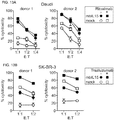
- mbIL15 The primary mechanism of mbIL15 stimulation was autocrine; it activated IL-15 signaling and anti-apoptotic signaling. Cytotoxicity against leukemia, lymphoma and solid tumor cell lines was consistently higher with mbIL15-NK cells. Median 24-hour cytotoxicity at 1:4 E:T was 71% versus 22% with mock-transduced cells; at 1:1 E:T, it was 99% versus 54% (P ⁇ 0.0001). Increased anti-tumor capacity was also evident in immunodeficient mice engrafted with leukemia (U937) or sarcoma (ES8) cells. Thus, mbIL15 conferred independent growth to NK cells and enhanced their anti-tumor capacity. Infusion of mbIL15-NK cells allows NK cell therapy without the adverse effects of IL-2.
- a cell that responds to IL-15 includes a cell in which one or more of its activities are regulated by IL-15. Examples of such cells include natural killer (NK) cells, T-cells, dendritic cells and moncytes.
- NK natural killer
- T-cells T-cells
- dendritic cells dendritic cells and moncytes.
- the one or more (e.g., isolated) cells can express all or a functional portion of IL-15 as a membrane-bound polypeptide, as a secretory protein or as a combination thereof.
- the disclosure is directed to a natural killer (NK) cell(s) that expresses all or a functional portion of interleukin-15 (IL-15).
- NK natural killer
- the one or more ( e.g. , isolated) NK cells can express all or a functional portion of IL-15 as a membrane-bound polypeptide, as a secretory protein or as a combination thereof.
- a first aspect of the present invention provides a natural killer (NK) cell that expresses all or a functional portion of interleukin-15 (IL-15), wherein:
- NK cells Natural Killer Cells
- MHC Major Histocompatibility Complex
- NK cells are unique, however, as they have the ability to recognize stressed cells regardless of whether peptides from pathogens are present on MHC molecules. They were named "natural killers” because of the initial notion that they do not require prior activation in order to kill target.
- NK cells are large granular lymphocytes (LGL) and are known to differentiate and mature in the bone marrow from where they then enter into the circulation.
- the NK cell is a mammalian NK cell.
- mammalian or “mammals” include primates ( e.g. , human), canines, felines, rodents, porcine, ruminants, and the like. Specific examples include humans, dogs, cats, horses, cows, sheep, goats, rabbits, guinea pigs, rats and mice.
- the mammalian NK cell is a human NK cell.
- Interleukin-15 refers to a cytokine that regulates T and NK cell activation and proliferation. This cytokine and interleukin 2 share many biological activities. They are found to bind common receptor subunits, and may compete for the same receptor, and thus negatively regulate each other's activity. The number of CD8+ memory cells is shown to be controlled by a balance between IL-15 and IL-2.
- This cytokine induces the activation of JAK kinases, as well as the phosphorylation and activation of transcription activators STAT3, STAT5, and STAT6 and may increase the expression of apoptosis inhibitor BCL2L1/BCL-x(L), possibly through the transcription activation activity of STAT6, and thus prevent apoptosis.
- a “functional portion” (“biologically active portion”) of IL-15 refers to a portion of IL-15 that retains one or more functions of full length or mature IL-15. Such functions include the promotion of NK cell survival, regulation of NK cell and T cell activation and proliferation as well as the support of NK cell development from hematopoietic stem cells.
- the sequence of a variety of IL-15 molecules are known in the art.
- the IL-15 is a wild type IL-15.
- the IL-15 is a mammalian IL-15 (e.g., Homo sapiens interleukin 15 (IL15), transcript variant 3, mRNA, NCBI Reference Sequence: NM_000585.4; Canis lupus familiaris interleukin 15 (IL15), mRNA, NCBI Reference Sequence: NM_001197188.1; Felis catus interleukin 15 (IL15), mRNA, NCBI Reference Sequence: NM_001009207.1).
- IL-15 Homo sapiens interleukin 15
- transcript variant 3 mRNA
- NCBI Reference Sequence NM_000585.4
- mammalian or “mammals” include primates ( e.g., human), canines, felines, rodents, porcine, ruminants, and the like. Specific examples include humans, dogs, cats, horses, cows, sheep, goats, rabbits, guinea pigs, rats and mice.
- the mammalian IL-15 is a human IL-15.
- All or a functional portion of IL-15 can be expressed by one or more NK cells (as a membrane-bound and/or secreted polypeptide) in a variety of ways.
- all or a functional portion of the IL-15 can be expressed within the NK cell and secreted from the NK cell and/or can be linked (conjugated; fused) directly or indirectly (e.g., ionic, non-ionic, covalent linkage) to the surface (e.g., at the surface, or within the membrane, of an NK cell) of the NK cell using any of a variety of linkers known in the art ( Hermanson, G., Bioconjugate Techniques, Academic Press 1996 ).
- all or a functional portion of the IL-15 is linked to all or a portion of a transmembrane protein.
- the NK cell expresses a fusion protein comprising all or a portion of IL-15 fused to all or a portion of a transmembrane protein.
- the portion of the transmembrane protein comprises all or a portion of a transmembrane domain of the transmembrane protein.
- a "transmembrane protein” or “membrane protein” is a protein located at and/or within a membrane such as the phospholipid bilayer of a biological membrane (e.g., biomembranes such as the membrane of a cell).
- Membrane proteins enable the membrane to carry out its distinctive activities.
- the complement of proteins attached to a membrane varies depending on cell type and subcellular location. Some proteins are bound only to the membrane surface, whereas others have one or more regions buried within the membrane and/or domains on one or both sides of the membrane. Protein domains on the extracellular membrane surface are generally involved in cell-cell signaling or interactions.
- transmembrane domains are a three-dimensional protein structure which is thermodynamically stable in a membrane (e.g., a membrane of a vesicle such as a cell).
- transmembrane domains include a single alpha helix, a stable complex of several transmembrane alpha helices, a transmembrane beta barrel, a beta-helix of gramicidin A, or any other structure.
- Transmembrane helices are usually about 20 amino acids in length.
- membrane proteins are classified into two broad categories-integral (intrinsic) and peripheral (extrinsic)-based on the nature of the membrane-protein interactions. Most biomembranes contain both types of membrane proteins.
- Integral membrane proteins also called intrinsic proteins, have one or more segments that are embedded in the phospholipid bilayer. Integral membrane proteins include transmembrane proteins and lipid-anchored proteins. Most integral proteins contain residues with hydrophobic side chains that interact with fatty acyl groups of the membrane phospholipids, thus anchoring the protein to the membrane. Most integral proteins span the entire phospholipid bilayer. These transmembrane proteins contain one or more membrane-spanning domains as well as domains, from four to several hundred residues long, extending into the aqueous medium on each side of the bilayer. Typically, the membrane-spanning domains are one or more (e.g., about 1, 2, 3, 4, 5, 6, 7, 8, 9, 10 or more) ⁇ helices and/or ⁇ strands.
- Membrane-spanning ⁇ -helical domains are typically embedded in membranes by hydrophobic interactions with the lipid interior of the bilayer and probably also by ionic interactions with the polar head groups of the phospholipids (e.g., glycophorin).
- the structure of ⁇ strands are typically in the form of membrane spanning barrels (e.g., porin).
- Some integral proteins are anchored to one of the membrane leaflets by covalently bound fatty acids. In these proteins, the bound fatty acid is embedded in the membrane, but the polypeptide chain does not enter the phospholipid bilayer.
- Some cell-surface proteins are anchored to the exoplasmic face of the plasma membrane by a complex glycosylated phospholipid that is linked to the C-terminus (e.g., glycosylphosphatidylinositol, alkaline phosphatase).
- Some cytosolic proteins are anchored to the cytosolic face of membranes by a hydrocarbon moiety covalently attached to a cysteine near the C-terminus (e.g., prenyl, farnesyl, and geranylgeranyl groups).
- a fatty acyl group e.g., myristate or palmitate
- an amide bond to the N-terminal glycine residue.
- Peripheral membrane proteins do not interact with the hydrophobic core of the phospholipid bilayer. Instead they are usually bound to the membrane indirectly by interactions with integral membrane proteins or directly by interactions with lipid polar head groups.
- Peripheral proteins localized to the cytosolic face of the plasma membrane include the cytoskeletal proteins spectrin and actin in erythrocytes and the enzyme protein kinase C. This enzyme shuttles between the cytosol and the cytosolic face of the plasma membrane and plays a role in signal transduction.
- Other peripheral proteins including certain proteins of the extracellular matrix, are localized to the outer (exoplasmic) surface of the plasma membrane.
- transmembrane proteins examples include a receptor, a ligand, an immunoglobulin, a glycophorin or a combination thereof.
- specific examples of transmembrane proteins include CD8 ⁇ , CD4, CD3 ⁇ , CD3 ⁇ , CD3 ⁇ , CD28, CD137, Fc ⁇ RI ⁇ , a T-cell receptor (TCR such as TCR ⁇ and/or TCR ⁇ ), a nicotinic acetylcholine receptor, a GABA receptor, or a combination thereof.
- TCR T-cell receptor
- immunoglobulins include IgG, IgA, IgM, IgE, IgD or a combination thereof.
- Specific examples of glycophorin include glycophorin A, glycophorin D or a combination thereof.
- all or a functional portion of the IL-15 can be linked to other components such as a signal peptide (e.g., a CD8 ⁇ signal sequence), a leader sequence, a secretory signal, a label (e.g., a reporter gene), etc.
- a signal peptide e.g., a CD8 ⁇ signal sequence
- a leader sequence e.g., a leader sequence
- a secretory signal e.g., a reporter gene
- the disclosure is directed to a method of producing a natural killer (NK) cell that expresses all or a functional portion of interleukin-15 (IL-15). All or a portion of the IL-15 can be expressed as a membrane-bound polypeptide, a secreted polypeptide or as a combination thereof.
- the method comprises introducing nucleic acid encoding all or a functional portion of IL-15 into the one or more NK cells.
- the nucleic acid encoding all or a functional portion of IL-15 is linked (e.g., fused) to all or a portion of a transmembrane protein.
- nucleic acid encoding all or a functional portion of IL-15 is introduced into the NK cell (e.g., wild type IL-15).
- NK cell e.g., wild type IL-15
- aspects in which nucleic acid encoding all or a functional portion if IL-15 and all or a functional portion of IL-15 fused to all or a portion of a transmembrane protein is introduced in to NK cell can be done so using a single nucleic acid or multiple ( e.g., separate; two) nucleic acids.
- the NK cell is maintained under conditions in which all or a functional portion of the IL-15 is expressed as a membrane-bound polypeptide and/or as a secreted polypeptide thereby producing a NK cell that expresses all or a functional portion of IL-15 as a membrane-bound polypeptide and/or as a secreted polypeptide.
- nucleic acid encoding all or a functional portion of IL-15 is fused to a signal peptide of CD8 ⁇ and all or a portion of a transmembrane domain of CD8 ⁇ is introduced into the NK cell.
- a method for producing an NK cell of the first aspect of the invention comprising:
- the disclosure is directed to a method of enhancing expansion and/or survival of NK cells (e.g., in vitro, ex vivo, and/or in vivo ).
- the method comprises introducing nucleic acid encoding all or a functional portion of IL-15.
- Nucleic acid encoding all or a portion of the IL-15 e.g., wild type IL-15
- encoding all or a functional portion of IL-15 fused to all or a portion of a transmembrane protein can be introduced into the NK cell.
- the NK cell can express all or a functional portion of IL-15 as a membrane-bound polypeptide, a secreted polypeptide or as a combination thereof.
- the NK cells are maintained under conditions in which all or a portion of the IL-15 is expressed as a membrane-bound polypeptide, a secreted polypeptide or as a combination thereof and in which the NK cells proliferate.
- nucleic acid encoding all or a functional portion of IL-15 is fused to a signal peptide of CD8 ⁇ and all or a portion of a transmembrane domain of CD8 ⁇ is introduced into the NK cell.
- the method can further comprise contacting the NK cells comprising membrane-bound IL-15 and/or secreted IL-15 with IL-2.
- the concentration of IL-2 is from about 10 IU/ml to about 1000IU/ml.
- the concentration of IL-2 is about 20, 40, 60, 80, 100, 120, 140, 160, 180, 200, 220, 240, 260, 280, 300, 320, 340, 360, 380, 400, 420, 440, 460, 480, 500, 520, 540, 560, 580, 600, 620, 640, 660, 680, 700, 720 740, 760, 780, 800, 820, 840, 860, 880, 900, 920, 940, 960, 980 IU/ml.
- nucleic acid e.g., transfection, transduction, and/or transposon system
- methods for introducing nucleic acid e.g., transfection, transduction, and/or transposon system
- a variety of methods for introducing nucleic acid e.g., transfection, transduction, and/or transposon system
- a functional portion of IL-15 as a transmembrane polypeptide and/or as a secreted polypeptide into a NK cell
- methods include chemical-based methods (e.g., involving the use of calcium phosphate; highly branched organic compounds (e.g., dendrimers); liposomes (lipofection); and/or cationic polymers (e.g., DEAE dextran; polyethylenimine)), non-chemical-based methods (e.g.
- electroporation electroporation; cell squeezing; sonoporation; optical transfection; impalefection; hydrodynamic delivery
- particle-based methods e.g., gene gun; magnetofection; particle bombardment
- vector-based methods e.g., vectors including viral vectors such as retroviral vector, lentiviral vectors, adenoviral vectors, etc.
- nucleotransfection e.g., Sleeping Beauty, PiggyBAC, etc.
- RNA transfection e.g., RNA transfection.
- NK cells can be grown and/or maintained at an appropriate temperature and gas mixture (e.g., about 25°C to about 37°C, about 5% CO 2 in a cell incubator). Culture conditions can vary widely, and variation of conditions for a particular cell type can result in different phenotypes.
- a commonly varied factor in culture systems is the cell growth medium.
- Recipes for growth media can vary in pH, glucose concentration, growth factors, and the presence of other nutrients.
- the growth factors used to supplement media are often derived from the serum of animal blood, such as fetal bovine serum (FBS), bovine calf serum, equine serum, porcine serum and/or human platelet lysate (hPL).
- FBS fetal bovine serum
- bovine calf serum bovine calf serum
- equine serum porcine serum
- hPL human platelet lysate
- Other factors considered for maintaining cells include plating density (number of cells per volume of culture medium) and growth of the cells in suspension or adherent cultures.
- the methods can further comprise isolating or separating the one or more NK cells produced by the methods provided herein, In addition, the methods can further comprises culturing the one or more NK cells. In some aspects, an NK cell line is produced.
- the disclosure also encompasses a (one or more) natural killer (NK) cell or cell line produced by the methods described herein, and compositions comprising the NK cells provided herein.
- the composition is a pharmaceutical composition comprising one or more of the NK cells or cell lines provided herein.
- the pharmaceutical composition can further comprise all or a functional portion of IL-2 (e.g., all or a functional portion of an (one or more) IL-2 protein; nucleic acid encoding all or a functional portion of IL-2).
- the present invention provides, in a fourth aspect of the invention, a composition comprising an NK cell of the first or third aspect of the invention.
- the composition is a pharmaceutical composition further comprising all or a functional portion of IL-2.
- IL-2 refers to a member of a cytokine family that also includes IL-4, IL-7, IL-9, IL-15 and IL-21. IL-2 signals through a receptor complex consisting of three chains, termed alpha, beta and gamma. The gamma chain is shared by all members of this family of cytokine receptors. IL-2, which similar to IL-15, facilitates production of immunoglobulins made by B cells and induces the differentiation and proliferation of NK cells. Primary differences between IL-2 and IL-15 are found in adaptive immune responses. For example, IL-2 is necessary for adaptive immunity to foreign pathogens, as it is the basis for the development of immunological memory. On the other hand, IL-15 is necessary for maintaining highly specific T cell responses by supporting the survival of CD8 memory T cells.
- the disclosure is directed to a method of treating a disease and/or condition involving NK cell therapy in an individual in need thereof comprising administering to the individual a natural killer (NK) cell that expresses all or a functional portion of interleukin-15 (IL-15).
- NK natural killer
- the NK cells express all or a functional portion of IL-15 as a membrane-bound polypeptide and/or as a secreted polypeptide.
- diseases and/or conditions that involve NK cell therapy include NK cell deficiencies, cancer, autoimmune diseases, infectious diseases and the like.
- the disclosure is directed to a method of treating cancer (e.g., a tumor) in an individual in need thereof comprising administering to the individual a natural killer (NK) cell that expresses all or a functional portion of interleukin-15 (IL-15). All or a functional portion of IL-15 can be expressed as a membrane-bound polypeptide and/or as a secreted polypeptide.
- NK natural killer
- a fifth aspect of the present invention provides an NK cell according to the first aspect of the invention, or a composition according to the fourth aspect of the invention, for use in a method of treating cancer in an individual in need thereof by administering to the individual the NK cell or the composition.
- the method can further comprise administering one or more antibodies, antigenic fragments and/or fusions thereof specific to the cancer (e.g., tumor).
- the method can further comprise administering one or more antibodies directed against one or more tumor antigens.
- the one or more antibodies can be a polyclonal antibody, a monoclonal antibody, a multivalent (e.g., bivalent, trivalent) antibody, a chimeric antibody, a humanized antibody, etc. and combinations thereof.
- antigenic fragments and/or fusions include Fab', F(ab') 2 , single chain variable fragment (scFv), multivalent scFv (e.g., di-scFv, tri-scFv), single domain antibody (nanobody) and etc.
- the cancer is a leukemia (e.g., acute lymphoblastic leukemia; acute myeloid leukemia; chronic myelogenous leukemia, chronic lymphocytic leukemia), a myelodysplastic syndrome, a lymphoma (e.g., B cell non-Hodgkin lymphoma, Hodgkin lymphoma, T-cell lymphoblastic lymphoma, anaplastic large cell lymphoma), a solid tumor (e.g., a breast cancer, prostate cancer, gastric cancer, colon cancer, hepatocellular carcinoma, nasopharyngeal carcinoma, neuroblastoma, high grade glioma), a sarcoma (e.g., Ewing sarcoma, rhabdomyosarcoma, non-rhabdomyosarcoma soft-tissue sarcoma, osteosarcoma).
- a leukemia e.g., acute lymphoblastic leukemia
- the method of treating cancer can further comprise administering IL-2 (all or a functional portion of IL-2 protein; nucleic acid encoding all or a functional portion of IL-2) to the individual.
- IL-2 is mammalian IL-2, such as human IL-2.
- a low dose of the IL-2 is administered to the individual.
- a "low dose" of IL-12 refers to a dose of IL-2 of about 1 million IU/m 2 or less ( e.g., about 800,000 IU/m 2 ; 600,000 IU/m 2 ; 400,000 IU/m 2 ; 200,000 IU/m 2 ; 100,000 IU/m 2 ; 80,000 IU/m 2 ; 60,000 IU/m 2 ; 40,000 IU/m 2 ; 20,000 IU/m 2 ; 10,000 IU/m 2 ; 8,000 IU/m 2 ; 6,000 IU/m 2 ; 4,000 IU/m 2 ; 2,000 IU/m 2 ; 1,000 IU/m 2 ; 800 IU/m 2 ; 600 IU/m 2 ; 400 IU/m 2 ; 200 IU/m 2 ; 100 IU/m 2 ).
- a normal dose of IL-2 is about 1 million IU/m 2 to about 5 million IU/m 2 .
- the one or more natural killer (NK) cell(s) that express all or a functional portion of interleukin-15 (IL-15) are administered in a therapeutically effective amount (i.e., an amount that is sufficient to treat the cancer, such as by ameliorating symptoms associated with the cancer, preventing or delaying the onset of the cancer, also lessening the severity or frequency of symptoms of the cancer and/or preventing, delaying or overcoming metastasis of the cancer).
- a therapeutically effective amount i.e., an amount that is sufficient to treat the cancer, such as by ameliorating symptoms associated with the cancer, preventing or delaying the onset of the cancer, also lessening the severity or frequency of symptoms of the cancer and/or preventing, delaying or overcoming metastasis of the cancer.
- the amount that will be therapeutically effective in the treatment of a particular individual will depend on the symptoms and severity of the condition (e.g., cancer), and can be determined by standard clinical techniques.
- in vitro or in vivo assays may optionally be employed to help identify optimal dosage ranges.
- the precise dose to be employed in the formulation will also depend on the route of administration, and the seriousness of the cancer, and should be decided according to the judgment of a practitioner and each patient's circumstances. Effective doses may be extrapolated from dose-response curves derived from in vitro or animal model test systems.
- the therapeutic compound can be delivered in a composition (e.g., a pharmaceutical composition), as described above, or by themselves. They can be administered systemically, or can be targeted to a particular tissue.
- the therapeutic compounds can be produced by a variety of means, including chemical synthesis; recombinant production; in vivo production (e.g., a transgenic animal, such as U.S. Patent No. 4,873,316 to Meade et al. ), for example, and can be isolated using standard means such as those described herein. A combination of any of the above methods of treatment can also be used.
- the compounds for use in the methods described herein can be formulated with a physiologically acceptable carrier or excipient to prepare a pharmaceutical composition.
- the carrier and composition can be sterile.
- the formulation should suit the mode of administration.
- Suitable pharmaceutically acceptable carriers include but are not limited to water, salt solutions (e.g., NaCl), saline, buffered saline, alcohols, glycerol, ethanol, gum arabic, vegetable oils, benzyl alcohols, polyethylene glycols, gelatin, carbohydrates such as lactose, amylose or starch, dextrose, magnesium stearate, talc, silicic acid, viscous paraffin, perfume oil, fatty acid esters, hydroxymethylcellulose, polyvinyl pyrolidone, etc., as well as combinations thereof.
- the pharmaceutical preparations can, if desired, be mixed with auxiliary agents, e.g., lubricants, preservatives, stabilizers, wetting agents, emulsifiers, salts for influencing osmotic pressure, buffers, coloring, flavoring and/or aromatic substances and the like that do not deleteriously react with the active compounds.
- auxiliary agents e.g., lubricants, preservatives, stabilizers, wetting agents, emulsifiers, salts for influencing osmotic pressure, buffers, coloring, flavoring and/or aromatic substances and the like that do not deleteriously react with the active compounds.
- the composition can also contain minor amounts of wetting or emulsifying agents, or pH buffering agents.
- the composition can be a liquid solution, suspension, emulsion, tablet, pill, capsule, sustained release formulation, or powder.
- the composition can be formulated as a suppository, with traditional binders and carriers such as triglycerides.
- Oral formulation can include standard carriers such as pharmaceutical grades of mannitol, lactose, starch, magnesium stearate, polyvinyl pyrollidone, sodium saccharine, cellulose, magnesium carbonate, etc.
- compositions of this invention include, but are not limited to, intradermal, intramuscular, intraperitoneal, intravenous, subcutaneous, topical, oral and intranasal.
- Other suitable methods of introduction can also include gene therapy (as described below), rechargeable or biodegradable devices, particle acceleration devises ("gene guns") and slow release polymeric devices.
- the pharmaceutical compositions of this invention can also be administered as part of a combinatorial therapy with other compounds.
- compositions for intravenous administration typically are solutions in sterile isotonic aqueous buffer.
- the composition may also include a solubilizing agent and a local anesthetic to ease pain at the site of the injection.
- the ingredients are supplied either separately or mixed together in unit dosage form, for example, as a dry lyophilized powder or water free concentrate in a hermetically sealed container such as an ampule or sachette indicating the quantity of active compound.
- the composition is to be administered by infusion, it can be dispensed with an infusion bottle containing sterile pharmaceutical grade water, saline or dextrose/water.
- an ampule of sterile water for injection or saline can be provided so that the ingredients may be mixed prior to administration.
- nonsprayable forms viscous to semi-solid or solid forms comprising a carrier compatible with topical application and having a dynamic viscosity preferably greater than water
- Suitable formulations include but are not limited to solutions, suspensions, emulsions, creams, ointments, powders, enemas, lotions, sols, liniments, salves, aerosols, etc., that are, if desired, sterilized or mixed with auxiliary agents, e.g., preservatives, stabilizers, wetting agents, buffers or salts for influencing osmotic pressure, etc.
- auxiliary agents e.g., preservatives, stabilizers, wetting agents, buffers or salts for influencing osmotic pressure, etc.
- compositions described herein can be formulated as neutral or salt forms.
- Pharmaceutically acceptable salts include those formed with free amino groups such as those derived from hydrochloric, phosphoric, acetic, oxalic, tartaric acids, etc., and those formed with free carboxyl groups such as those derived from sodium, potassium, ammonium, calcium, ferric hydroxides, isopropylamine, triethylamine, 2-ethylamino ethanol, histidine, procaine, etc.
- the disclosure is directed to pharmaceutical compositions comprising one or more NK cells that expresses all or a functional portion of interleukin-15 (IL-15) as a membrane-bound polypeptide.
- the pharmaceutical composition comprises one or more NK cells of the first or third aspect of the invention.
- compositions e.g., pharmaceutical compositions
- the agents identified herein can be used in the treatment of cancer.
- the agents identified herein can be used in the manufacture of a medicament for the treatment of cancer.
- an "individual” refers to an animal, and in a particular aspect, a mammal.
- mammals include primates, a canine, a feline, a rodent, and the like. Specific examples include humans, dogs, cats, horses, cows, sheep, goats, rabbits, guinea pigs, rats and mice.
- the term "individual in need thereof” refers to an individual who is in need of treatment or prophylaxis as determined by a researcher, veterinarian, medical doctor or other clinician. In one embodiment, an individual in need thereof is a mammal, such as a human.
- an NK cell is one that is separated from (substantially isolated with respect to) the complex cellular milieu in which it naturally occurs, or culture medium when produced by recombinant techniques, or chemical precursors or other chemicals when chemically synthesized.
- the isolated material will form part of a composition (for example, a crude extract containing other substances), buffer system, or reagent mix.
- the material may be purified to essential homogeneity, for example, as determined by agarose gel electrophoresis or column chromatography such as HPLC.
- an NK cell comprises at least about 50%, 80%, 90%, 95%, 98% or 99% (on a molar basis) of all macromolecular species present.
- Embodiments are provided in which more than one, or all of the group members are present, employed in, or otherwise relevant to a given product or process. Any one or more claims may be amended to explicitly exclude any embodiment, aspect, feature, element, or characteristic, or any combination thereof. Any one or more claims may be amended to exclude any agent, composition, amount, dose, administration route, cell type, target, cellular marker, antigen, targeting moiety, or combination thereof.
- the human cell lines Nalm-6 (B-lineage acute lymphoblastic leukemia), Daudi (B-cell lymphoma), K562 and U937(acute myeloid leukemia), and SK-BR-3 (breast carcinoma) were obtained from the American Type Culture Collection, the Ewing sarcoma cell line ES8 was from the St. Jude Children's Research Hospital tissue repository. All of the cell lines were transduced with a MSCV-internal ribosome entry site (IRES)-GFP retroviral vector (from the St. Jude Vector Development and Production Shared Resource) containing the firefly luciferase gene.
- IRS MSCV-internal ribosome entry site
- GFP retroviral vector from the St. Jude Vector Development and Production Shared Resource
- Transduced cells were selected for their expression of GFP with a MoFlo (Beckman Coulter, Miami, FL) or a FACSAria (BD Biosciences, San Jose, CA).
- MoFlo Bacillus Coulter, Miami, FL
- FACSAria BD Biosciences, San Jose, CA
- RPMI-1640 Invitrogen, Carlsbad, CA
- FBS fetal bovine serum
- FBS fetal bovine serum
- ES8 was validated by DNA fingerprinting at DSMZ (Braunschweig, Germany).
- Peripheral blood samples were obtained from discarded byproducts of platelet collections from healthy adult donors. Mononuclear cells were purified by centrifugation on an Accu-Prep density step (Accurate, Westbury, NY) and washed twice in RPMI-1640. To expand CD56+ CD3- NK cells, peripheral blood mononuclear cells and the genetically modified K562-mb15-41BBL cell line were co-cultured, as previously described in Fujisaki et al., Cancer Res, 69(9):4010-4017 (2009 ); Imai et al., Blood, 106:376-383 (2005 )).
- peripheral blood mononuclear cells were cultured with 100 Gy-irradiated K562-mb15-41BBL cell at 1.5 : 1 ratio in SCGM (CellGenix, Freiburg, Germany) containing 10% FBS, antibiotics and 10 IU/mL of recombinant human interleukin-2 (IL-2; Roche, Mannheim, Germany) in 6-well tissue culture plates. Tissue culture medium was partly exchanged every 2 days. After 7 days of co-culture, residual T cells were removed with Dynabeads CD3 (Invitrogen), resulting in cell population containing >95% CD56+ CD3- NK cells.
- the pMSCV-IRES-GFP, pEQ-PAM3(-E), and pRDF were obtained from the St. Jude Vector Development and Production Shared Resource.
- Interleukin-15 (IL-15) with a long signal peptide was sub-cloned by polymerase chain reaction (PCR) from a human spleen cDNA library (from Dr G. Neale, St Jude Children's Research Hospital) used as a template.
- the cDNA encoding the signal peptide of CD8 ⁇ , the mature peptide of IL-15 and the transmembrane domain of CD8 ⁇ were assembled by the splicing by overlapping extension by PCR (SOE-PCR) to encode a membrane-bound form of IL-15 ("mbIL15"); a wild-type form of IL-15 (not linked to CD8 ⁇ transmembrane domain; "wtIL15”) was also tested prepared.
- the resulting expression cassettes were sub-cloned into EcoRI and Xhol sites of murine stem-cell virus-internal ribosome entry site-green fluorescent protein (MSCV-IRES-GFP).
- RD144-pseudotyped retrovirus 3.0 x10 6 293T cells were transfected using X-tremeGENE 9 DNA (Roche, Mannheim, Germany), maintained in 10-cm tissue culture dishes for 18h, with 3.5 ⁇ g of cDNA encoding mbIL15 constructs, 3.5 ⁇ g of pEQ-PAM3(-E), and 3 ⁇ g of pRDF.
- the conditioned medium containing retrovirus was harvested at 36-96 hours and added to polypropylene tubes coated with RetroNectin (Takara, Otsu, Japan), which were centrifugated at 1400 g for 10 min and incubated at 37°C and 5% CO 2 for 4 hours. After additional centrifugation, and removal of the supernatant, expanded NK cells (0.5-1 x 10 6 ) were added to the tubes and left in at 37°C for 12 hours; these steps were repeated up to 6 times over 2-3 days. Cells were then maintained in RPMI-1640 with FBS, antibiotics and 100 IU/ml of IL-2. Transduced cells were assayed 3-29 days after transduction.
- mbIL-15 Surface expression of mbIL-15 was analyzed by flow cytometry using an anti-human IL-15 antibody (R&D, Minneapolis, MN) and phycoerythrin conjugated goat anti-mouse IgG1(Southern Biotech, Birmingham, AL). Antibody staining was detected with a Fortessa flow cytometer (Becton Dickinson). Levels of IL-15 in culture supernatants were measured with the Quantikine Immunoassay (R&D).
- transduced NK cells (1 x 10 6 cells/mL) were resuspended in RPMI-1640 with 10% FBS and antibiotics, placed into the wells of either a 24- or a 96-well plate (Costar, Corning, NY) and cultured without or with IL-2 (10-100 IU/ml). Numbers of viable GFP+ cells were determined with an Accuri C6 flow cytometer (Becton Dickinson), after staining with propidium iodide. In some experiments, cells were incubated for 10 minutes with a neutralizing anti-IL-15 antibody (R&D) or an isotype-matched non-reactive antibody before culture.
- R&D neutralizing anti-IL-15 antibody
- NK cell immunophenotyping was performed using the antibodies listed in the Table, visualized with a Fortessa flow cytometer and analyzed by Diva (Becton Dickinson) and FlowJo (TreeStar, Ashland, OR) software.
- Diva Becton Dickinson
- FlowJo TeStar, Ashland, OR
- Cell lysates were prepared using a lysis buffer containing 20 mM 3-(N-morpholino) propanesulfonic acid , 2 mM EGTA, 5 mM EDTA, 30 mM sodium fluoride, 60 mM ⁇ -glycerophosphate, 20 mM sodium pyrophosphate, 1 mM sodium orthovanadate, 1% Triton X-100, Complete Mini protease inhibitor cocktail (Roche, Mannheim, Germany) and 1 mM dithiothreitol. After sonication, lysates were frozen at -80°C and shipped in dry ice to Kinexus (Vancouver, CA) for Kinex Antibody Microarray analysis.
- a lysis buffer containing 20 mM 3-(N-morpholino) propanesulfonic acid , 2 mM EGTA, 5 mM EDTA, 30 mM sodium fluoride, 60 mM ⁇ -glycerophosphate, 20 mM
- luciferase-labeled target cells and NK cells were plated in 96-well, flat-bottomed black Viewplates (Corning) at various effector : target (E: T) ratios and cultured for 4 or 24 hours.
- Adherent cell lines were incubated at 37°C and 5% CO 2 for 4 hours before adding NK cells to allow for cell attachment.
- NK cells (cultured for 48 hours without IL-2) were cocultured with K562,U937 cells, or 721.221 cells and their Cw6-expressing variant for 4 hours.
- PE- or PE-Cy7-conjugated anti-CD107a antibody (BD Biosciences) at the beginning of the cultures and GolgiStop (0.15 ⁇ L; BD Biosciences) 1 hour later. Percentage of CD107a+ NK cells was determined by flow cytometry.
- human NK cells transduced with mbIL15 or mock-transduced (6-9 x 10⁶ cells per mouse) were injected in the tail vein of NOD.Cg-Prkdc scid IL2rg tmlWj1 /SzJ (NOD/scid IL2RGnull) mice (Jackson Laboratories, Bar Harbor, ME).
- NOD/scid IL2RGnull mice Jackson Laboratories, Bar Harbor, ME.
- mice To test tumor cell killing in mice, we prepared two xenograft models. In the first, U937 cells expressing luciferase were injected i.p. in NOD.Cg-Prkdc scid IL2rg tmlWjl /SzJ (NOD/scid IL2RGnull) mice (1 x 10 4 cells per mouse). Three days later, NK cells transduced with the MSCV vector containing either GFP alone or mbIL15 were injected i.p. (1 x 10 7 cells per mouse); NK cell injection was repeated on day 7. As a control, a group of mice received tissue culture medium instead of NK cells.
- mice were engrafted with ES8 cells (i.p.; 1 x 10 5 cells per mouse), followed by 1 NK cell injection on day 3 as above.
- Tumor engraftment and progression was evaluated using a Xenogen IVIS-200 system (Caliper Life Sciences, Hopkinton, MA), with imaging beginning 5 minutes after i.p. injection of an aqueous solution of D-luciferin potassium salt (3 mg/mouse). Photons emitted from luciferase-expression cells were quantified using the Living Image 4.3.1 software program.
- IL15 transmembrane domain of CD8 ⁇
- mbIL15 transmembrane domain of CD8 ⁇
- wtIL15 wild-type unmodified form
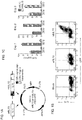
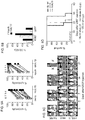
- Production of soluble IL-15 by the transduced NK cells was determined by testing supernatants collected after 24 and 48 hours of culture. A shown in Fig. 1C , cells expressing wtIL15 secreted substantial amounts of IL-15 whereas this was minimal in mbIL15-NK cells and undetectable in mock-transduced NK cells.
- NK cells expressing IL-15 have autonomous survival and expansion capacity 1
- NK cells from 15 donors were transduced with the mbIL15 construct and cultured in the absence of IL-2; cell numbers after culture were then compared to those in parallel cultures with mock-transduced NK cells.
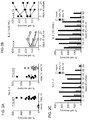
- Fig. 2A expression of mbIL-15 dramatically increased NK cell survival: after 7 days of culture, median cell recovery was 85% while virtually no viable mock-transduced NK cell was detectable ( ⁇ 1%; P ⁇ 0.0001 by paired t test).
- the effect of mbIL15 significantly decreased if an anti-IL-15 neutralizing antibody was added to the cultures ( Figs. 6A-6B ).
- mbIL15 In experiments with expanded NK cells from 6 of the 9 donors, the capacity of mbIL15 to support NK cell survival beyond 7 days with low dose IL-2 (10 IU/mL) was determined. On day 14, mbIL15 NK cell numbers were maintained or increased in 4 of the 6 cultures; in 2 of these cells had further expanded by day 21. Only 2 of the 6 cultures with mock-transduced NK cells from the same donors had maintained cell numbers on day 14 and 21, and no cell growth was observed; median cell recovery on day 21 was 205% for mbIL15 NK cells and 80% for mock-transduced NK cells. Thus, even in the presence of low dose IL-2, expression mbIL15 conferred a considerable survival and growth advantage.
- NK cells In cultures of NK cells from one donor, a particularly high cell recovery was observed on day 7 when IL15 was expressed (261% with mbIL15 and 161% with wtIL15 in the absence of IL-2; 266% and 188% with 10 IU/mL IL-2). These cultures were monitored for 2 months and remarkable improvements in cell expansion and survival brought about by the expression of mbIL15 were observed ( Fig. 2C ). Even in the absence of IL-2, mbIL-15 NK cells continued to survive until day 21 and they were still detectable 75 days after initiation of the culture, while mock-transduced cells had become undetectable on day 7 and wtIL15-transduced NK cells on day 42.
- NK cells transduced with either mbIL155 or wtIL15 had a similar persistence profile, both cell types surviving longer than mock-transduced NK cells even under these conditions.
- IL15 expression improved survival and expansion of NK cells and that mbIL15 produced overall better stimulation. Whether mbIL15 expression would sustain expansion of human NK cells in NOD/scid IL2RGnull mice was next determined.
- Activated NK cells from 4 donors were transduced with mbIL15 (52%-74% GFP-positive) and injected into 4 mice (one mouse per donor); 4 control mice were injected with mock-transduced NK cells from the same donors.
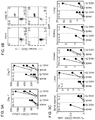
- mbIL15 NK cells comprised 168.5 cells/ ⁇ l (range, 94-355) of peripheral blood mononucleated cells in the absence of IL-2 and 382 cells/ ⁇ l (151-710) when IL-2 was also administered ( Fig. 3A, B ).
- Human CD45+ cells also expressed CD56 and lack CD3 (not shown).
- the proportion of GFP+ had increased from 66.5% ⁇ 9.9% before injection to 93.8% ⁇ 4.4% on day 7 and 94.8% ⁇ 3.4% on day 11 (P ⁇ 0.01 for both comparisons).
- mbIL15 predominantly stimulated cells in trans (IL-15 presented on one NK cell stimulating a neighboring cell (a mechanism reported to occur physiologically)) or cis (by direct binding of mbIL15 to receptors expressed in the same cell)
- trans IL-15 presented on one NK cell stimulating a neighboring cell (a mechanism reported to occur physiologically)
- cis by direct binding of mbIL15 to receptors expressed in the same cell
- the proportions of GFP+ and GFP- NK cells in the cultures were evaluated after 7 days of culture. If the trans mechanism was predominant, the ratio between GFP+ and GFP- NK cells should remain unaltered during culture; if cis was predominant, the proportion of GFP+ cells should increase.
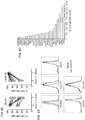
- mbIL15 NK cells expressed moderately higher levels of the activation receptors NKG2D, NKp44 (CD336) and NKp30 (CD337) as well as of CD16 and CD56, while expression of NKp46 (CD335) decreased and that of other molecules, such as DNAM-1 (CD226), remained unchanged ( Fig. 4B ; the Table).
- the signal transduction pathways activated by the expression of mbIL15 were also determined. As shown in Fig.
- mbIL-15 NK cells had several highly phosphorylated molecules. These included molecules known to be phosphorylated in response to IL-15 signaling, such as the transcription factors STAT1, STAT3 and STAT5, the kinases src, Erk1/2 and Mek1. Notably, a marked phosphorylation of Bad, as well as phosphorylation of Caspase 7 and 9, collectively indicative of an anti-apoptotic effect, were observed.
- Other highly phosphorylated molecules in mbIL15 NK cells whose role in IL-15 signaling is unclear included CDK6 and RafA.
- NK-mediated killing of tumor cells would likely also increase.
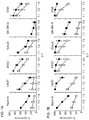
- This notion was first tested by comparing tumor cell cytotoxicity exerted by mbIL15-NK cells to that of mock transduced NK cells from the same donors.
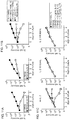
- mice were injected with the human acute myeloid leukemia (AML) cell line U937 and then treated with either mbIL15- or mock-transduced NK cells.
- AML human acute myeloid leukemia
- mice were also tested in a second xenograft model in which NOD/scid IL2RGnull mice were injected with the Ewing sarcoma cell line ES8, which has a much slower growth rate, and the mice were treated with one injection of NK cells.
- ES8 Ewing sarcoma cell line
- NK cells persist in sufficient numbers to achieve an E:T ratio likely to produce tumor cytoreduction.32 Demonstrated herein is that expression of a membrane-bound form of IL-15 in human NK cells supported their autonomous expansion and extended survival in the absence of IL-2. NK cells expressing mbIL15 could be maintained in vitro for up to 2 months without exogenous IL-2. NK cells expressing mbIL15 could expand in immunodeficient mice and infiltrated multiple tissues where they could be found in much larger numbers than mock-transduced cells.
- mbIL-15 NK cells Expansion of mbIL-15 NK cells was further increased by a low concentration of IL-2 both in vitro and in vivo. Expression of mbIL15 did not impair the cytotoxic capacity of NK cells. In fact, in xenograft models, mbIL15 NK cells exerted anticancer activity which was more powerful than that of mock-transduced cells, indicating that this approach might improve the antitumor capacity of NK cell infusions while averting the side effects of IL-2 administration.
- IL-15 ectopic expression of IL-15 in human NK cells caused a stronger survival-promoting effect when IL-15 was presented in a membrane-bound form than in a secreted form.
- mbIL15 expressed in NK cells preferentially stimulates in cis rather than in the trans when IL-15 is presented by other cells. That is, mbIL15 appears to preferentially engage IL-15 receptors on the same cells, resulting in autocrine stimulation.
- This mechanism explains the IL-15 expression pattern that was consistently observed when mbIL15-transduced NK cells were labeled with an anti-IL-15 antibody, showing a substantial proportion of cells with strong GFP expression but ostensibly lacking IL-15 ( Fig. 1B ).
- IL-15 is expressed but not accessible to antibody because it is bound to its receptor and/or internalized.
- the capacity of mbIL15 to promote NK cell viability likely explains the increased cytotoxicity exerted by these cells, particularly in 24-hour in vitro assays and in vivo.
- the superiority of mbIL15-NK cells was also clear in short-term (4-hour) assays and these cells also released more lytic granules according to the CD107a test. Therefore, expression of mbIL15 is likely to increase NK cell cytotoxicity by other means, possibly by enhancing their activation status.
- NK cells typically relies on IL-2 to support their survival and expansion in vivo.
- the multiple side effects related to IL-2 administration are potentially serious and often render administration of this cytokine poorly tolerated. Stopping IL-2 administration or reducing its dose may results in decreased NK cell expansion and inefficient anti-tumor effect, which may be further inhibited by the stimulation of regulatory T cells.
- replacing IL-2 with IL-15 is potentially attractive but the clinical formulation of IL-15 is still being tested.
- adverse effects were observed in some animals, including diarrhea, emesis, weight loss, transient neutropenia, increase in transaminases and hyponatremia.
- NK cells In addition to T and NK cell expansion, expansion of regulatory T cells has been observed. Contrary to NK cells transduced with wtIL15, those transduced with mbIL15 released exceedingly small amount of IL-15 in the supernatant. Thus, any potential side effect that may be caused by the interaction of IL-15 with cells other than NK cells should be minimized by this approach. Of note, prolonged exposure of murine large granular lymphocytes to IL-15 leads to their leukemic growth. This poses a potential safety concern for IL-15 administration in patients and also for the use of NK cells expressing IL-15, particularly if such cells were administered to patients at a low risk of relapse.
- NK cells expressing mbIL15 generally survived for much shorter periods than the one year or more reported for T cell clones expressing soluble IL-15. Moreover, persistent NK expansion was not observed in immunodeficient mice, with a follow-up exceeding 9 months.
- NK cells also play a critical role in mediating antibody-dependent cell cytotoxicity in patients treated with monoclonal antibodies. Thus, infusion of NK cells is likely beneficial in multiple settings. Expansion of human NK cells in large numbers ex vivo is feasible; robust large-scale methods for this purpose have been established and are being used in clinical trials. Genetic modification of NK cells by retroviral transduction or electroporation is also possible. Therefore, the translation of the approach described herein into clinical-grade conditions is realistic and it is warranted by the superior expansion and cytotoxicity of mbIL15-NK cells.
- Antibodies were from BD Biosciences (CD56 PE, CD16 PE-Cy7, CD69 PE, CD25 PE-Cy7, CD122 BV421, CD158b PE), Beckman Coulter (CD335 PE, CD336 PE, CD337 PE, CD158ah PE, CD159a PE), Miltenyi Biotech (CD226 PE, CD158e APC), R&D Systems (NKG2D PE), Biolegend (CD132 APC). 2 Percentages refer to GFP+ cells expressing the marker. 3 Overexpressed markers are highlighted in bold font. MFI, mean fluorescence intensity
Landscapes
- Health & Medical Sciences (AREA)
- Life Sciences & Earth Sciences (AREA)
- Chemical & Material Sciences (AREA)
- Engineering & Computer Science (AREA)
- Organic Chemistry (AREA)
- General Health & Medical Sciences (AREA)
- Genetics & Genomics (AREA)
- Zoology (AREA)
- Biomedical Technology (AREA)
- Bioinformatics & Cheminformatics (AREA)
- Biotechnology (AREA)
- Wood Science & Technology (AREA)
- Medicinal Chemistry (AREA)
- Biochemistry (AREA)
- Animal Behavior & Ethology (AREA)
- Public Health (AREA)
- Veterinary Medicine (AREA)
- Immunology (AREA)
- Molecular Biology (AREA)
- Proteomics, Peptides & Aminoacids (AREA)
- Gastroenterology & Hepatology (AREA)
- General Engineering & Computer Science (AREA)
- Epidemiology (AREA)
- Cell Biology (AREA)
- Biophysics (AREA)
- Pharmacology & Pharmacy (AREA)
- Microbiology (AREA)
- Toxicology (AREA)
- Hematology (AREA)
- General Chemical & Material Sciences (AREA)
- Chemical Kinetics & Catalysis (AREA)
- Nuclear Medicine, Radiotherapy & Molecular Imaging (AREA)
- Plant Pathology (AREA)
- Physics & Mathematics (AREA)
- Oncology (AREA)
- Micro-Organisms Or Cultivation Processes Thereof (AREA)
- Medicines Containing Material From Animals Or Micro-Organisms (AREA)
- Medicines That Contain Protein Lipid Enzymes And Other Medicines (AREA)
- Virology (AREA)
- Developmental Biology & Embryology (AREA)
Priority Applications (1)
| Application Number | Priority Date | Filing Date | Title |
|---|---|---|---|
| EP20195681.0A EP3805371A1 (en) | 2014-05-15 | 2015-05-14 | Modified natural killer cells and uses thereof |
Applications Claiming Priority (2)
| Application Number | Priority Date | Filing Date | Title |
|---|---|---|---|
| US201461993494P | 2014-05-15 | 2014-05-15 | |
| PCT/SG2015/050111 WO2015174928A1 (en) | 2014-05-15 | 2015-05-14 | Modified natural killer cells and uses thereof |
Related Child Applications (2)
| Application Number | Title | Priority Date | Filing Date |
|---|---|---|---|
| EP20195681.0A Division-Into EP3805371A1 (en) | 2014-05-15 | 2015-05-14 | Modified natural killer cells and uses thereof |
| EP20195681.0A Division EP3805371A1 (en) | 2014-05-15 | 2015-05-14 | Modified natural killer cells and uses thereof |
Publications (3)
| Publication Number | Publication Date |
|---|---|
| EP3143134A1 EP3143134A1 (en) | 2017-03-22 |
| EP3143134A4 EP3143134A4 (en) | 2017-10-18 |
| EP3143134B1 true EP3143134B1 (en) | 2020-10-28 |
Family
ID=54480322
Family Applications (2)
| Application Number | Title | Priority Date | Filing Date |
|---|---|---|---|
| EP15792972.0A Active EP3143134B1 (en) | 2014-05-15 | 2015-05-14 | Modified natural killer cells and uses thereof |
| EP20195681.0A Pending EP3805371A1 (en) | 2014-05-15 | 2015-05-14 | Modified natural killer cells and uses thereof |
Family Applications After (1)
| Application Number | Title | Priority Date | Filing Date |
|---|---|---|---|
| EP20195681.0A Pending EP3805371A1 (en) | 2014-05-15 | 2015-05-14 | Modified natural killer cells and uses thereof |
Country Status (12)
| Country | Link |
|---|---|
| US (5) | US10428305B2 (enExample) |
| EP (2) | EP3143134B1 (enExample) |
| JP (4) | JP6694875B2 (enExample) |
| KR (3) | KR102211120B1 (enExample) |
| CN (2) | CN112175911B (enExample) |
| AU (3) | AU2015259877B2 (enExample) |
| CA (1) | CA2948462A1 (enExample) |
| DK (1) | DK3143134T3 (enExample) |
| ES (1) | ES2839089T3 (enExample) |
| PT (1) | PT3143134T (enExample) |
| SG (1) | SG11201609118RA (enExample) |
| WO (1) | WO2015174928A1 (enExample) |
Families Citing this family (75)
| Publication number | Priority date | Publication date | Assignee | Title |
|---|---|---|---|---|
| US10967298B2 (en) | 2012-03-15 | 2021-04-06 | Flodesign Sonics, Inc. | Driver and control for variable impedence load |
| US10322949B2 (en) | 2012-03-15 | 2019-06-18 | Flodesign Sonics, Inc. | Transducer and reflector configurations for an acoustophoretic device |
| US9752113B2 (en) | 2012-03-15 | 2017-09-05 | Flodesign Sonics, Inc. | Acoustic perfusion devices |
| US9745548B2 (en) | 2012-03-15 | 2017-08-29 | Flodesign Sonics, Inc. | Acoustic perfusion devices |
| US9950282B2 (en) | 2012-03-15 | 2018-04-24 | Flodesign Sonics, Inc. | Electronic configuration and control for acoustic standing wave generation |
| US10689609B2 (en) | 2012-03-15 | 2020-06-23 | Flodesign Sonics, Inc. | Acoustic bioreactor processes |
| US10704021B2 (en) | 2012-03-15 | 2020-07-07 | Flodesign Sonics, Inc. | Acoustic perfusion devices |
| US9458450B2 (en) | 2012-03-15 | 2016-10-04 | Flodesign Sonics, Inc. | Acoustophoretic separation technology using multi-dimensional standing waves |
| US10737953B2 (en) | 2012-04-20 | 2020-08-11 | Flodesign Sonics, Inc. | Acoustophoretic method for use in bioreactors |
| EP3974520A1 (en) | 2013-05-14 | 2022-03-30 | Board of Regents, The University of Texas System | Human application of engineered chimeric antigen receptor (car) t-cells |
| US9745569B2 (en) | 2013-09-13 | 2017-08-29 | Flodesign Sonics, Inc. | System for generating high concentration factors for low cell density suspensions |
| CA2935960C (en) | 2014-01-08 | 2023-01-10 | Bart Lipkens | Acoustophoresis device with dual acoustophoretic chamber |
| CA3190002A1 (en) | 2014-02-14 | 2015-08-20 | Board Of Regents, The University Of Texas System | Chimeric antigen receptors and methods of making |
| KR102211120B1 (ko) | 2014-05-15 | 2021-02-03 | 내셔널 유니버시티 오브 싱가포르 | 변형된 천연 살해 세포 및 그의 용도 |
| US9744483B2 (en) | 2014-07-02 | 2017-08-29 | Flodesign Sonics, Inc. | Large scale acoustic separation device |
| US11377651B2 (en) | 2016-10-19 | 2022-07-05 | Flodesign Sonics, Inc. | Cell therapy processes utilizing acoustophoresis |
| US11708572B2 (en) | 2015-04-29 | 2023-07-25 | Flodesign Sonics, Inc. | Acoustic cell separation techniques and processes |
| US11021699B2 (en) | 2015-04-29 | 2021-06-01 | FioDesign Sonics, Inc. | Separation using angled acoustic waves |
| US11459540B2 (en) | 2015-07-28 | 2022-10-04 | Flodesign Sonics, Inc. | Expanded bed affinity selection |
| US11474085B2 (en) | 2015-07-28 | 2022-10-18 | Flodesign Sonics, Inc. | Expanded bed affinity selection |
| EP3443001B1 (en) | 2016-04-11 | 2025-04-30 | Obsidian Therapeutics, Inc. | REGULATED BIOCIRCUIT SYSTEMS |
| US10875919B2 (en) | 2016-04-26 | 2020-12-29 | Alector Llc | Chimeric receptors and methods of use thereof |
| US11085035B2 (en) | 2016-05-03 | 2021-08-10 | Flodesign Sonics, Inc. | Therapeutic cell washing, concentration, and separation utilizing acoustophoresis |
| US11214789B2 (en) | 2016-05-03 | 2022-01-04 | Flodesign Sonics, Inc. | Concentration and washing of particles with acoustics |
| SG11201809858RA (en) * | 2016-05-07 | 2018-12-28 | Celularity Inc | Methods of treating acute myeloid leukemia and multiple myeloma using natural killer cells |
| CN110494543A (zh) | 2016-10-19 | 2019-11-22 | 弗洛设计声能学公司 | 通过声学的亲和细胞提取 |
| CA3049652A1 (en) | 2017-01-10 | 2018-07-19 | Intrexon Corporation | Modulating expression of polypeptides via new gene switch expression systems |
| WO2018161026A1 (en) * | 2017-03-03 | 2018-09-07 | Obsidian Therapeutics, Inc. | Il15 compositions and methods for immunotherapy |
| US11629340B2 (en) | 2017-03-03 | 2023-04-18 | Obsidian Therapeutics, Inc. | DHFR tunable protein regulation |
| WO2018182511A1 (en) | 2017-03-27 | 2018-10-04 | National University Of Singapore | Stimulatory cell lines for ex vivo expansion and activation of natural killer cells |
| IL269553B2 (en) | 2017-03-27 | 2025-10-01 | Nat Univ Singapore | Truncated NKG2D chimeric receptors and their uses in immunotherapy with natural killer cells |
| AU2018265258B2 (en) | 2017-05-10 | 2023-01-05 | Pharma Cinq, Llc | Enveloped virus resistant to complement inactivation for the treatment of cancer |
| US12060577B2 (en) | 2017-05-19 | 2024-08-13 | Case Western Reserve University | Compositions for expanding natural killer cells |
| SG11202003907WA (en) | 2017-12-14 | 2020-05-28 | Flodesign Sonics Inc | Acoustic transducer drive and controller |
| KR20250048610A (ko) | 2017-12-22 | 2025-04-09 | 페이트 세러퓨틱스, 인코포레이티드 | 향상된 면역 효과기 세포 및 이의 용도 |
| AU2019215034C1 (en) * | 2018-02-01 | 2022-01-06 | Nkmax Co., Ltd. | Method of producing natural killer cells and composition for treating cancer |
| US20210054409A1 (en) * | 2018-02-09 | 2021-02-25 | National University Of Singapore | Adhesion Receptor Constructs and Uses Thereof in Natural Killer Cell Immunotherapy |
| CN111801348A (zh) | 2018-02-09 | 2020-10-20 | 新加坡国立大学 | 活化性嵌合受体及其在自然杀伤细胞免疫疗法中的用途 |
| CN118374524A (zh) * | 2018-02-09 | 2024-07-23 | 美国卫生和人力服务部 | 拴系白细胞介素-15和白细胞介素-21 |
| SG11202008976YA (en) | 2018-04-02 | 2020-10-29 | Nat Univ Singapore | Neutralization of human cytokines with membrane-bound anti-cytokine non-signaling binders expressed in immune cells |
| CN108715834B (zh) * | 2018-06-01 | 2021-09-14 | 天晴干细胞股份有限公司 | 一种富含cd41+、cd81+微囊的血小板裂解液制备方法 |
| EP3844186A4 (en) | 2018-08-29 | 2022-08-17 | National University of Singapore | METHOD OF SPECIFIC STIMULATION OF SURVIVAL AND EXPANSION OF GENETICALLY MODIFIED IMMUNE CELLS |
| WO2020056045A1 (en) | 2018-09-13 | 2020-03-19 | Nkarta, Inc. | Natural killer cell compositions and immunotherapy methods for treating tumors |
| CA3120563A1 (en) | 2018-11-26 | 2020-06-04 | Nkarta, Inc. | Methods for the simultaneous expansion of multiple immune cell types, related compositions and uses of same in cancer immunotherapy |
| WO2020180882A1 (en) | 2019-03-05 | 2020-09-10 | Nkarta, Inc. | Cd19-directed chimeric antigen receptors and uses thereof in immunotherapy |
| KR20210149062A (ko) * | 2019-03-08 | 2021-12-08 | 더 리서치 인스티튜트 앳 네이션와이드 칠드런스 하스피탈 | 보다 강력한 nk 세포를 설계하기 위한 stat3 전사체 |
| JP7411674B2 (ja) | 2019-03-15 | 2024-01-11 | ナントセル,インコーポレイテッド | 組換えerIL-15 NK細胞 |
| KR20200110576A (ko) * | 2019-03-15 | 2020-09-24 | 재단법인대구경북과학기술원 | 사이토카인 기반 면역세포 및 그의 면역 치료 용도 |
| WO2020223445A1 (en) | 2019-04-30 | 2020-11-05 | Senti Biosciences, Inc. | Chimeric receptors and methods of use thereof |
| WO2020247392A1 (en) * | 2019-06-04 | 2020-12-10 | Nkarta, Inc. | Combinations of engineered natural killer cells and engineered t cells for immunotherapy |
| CN114450015A (zh) * | 2019-07-31 | 2022-05-06 | 恩卡尔塔公司 | 用于天然杀伤细胞的增强的扩增和细胞毒性的方法和组合物 |
| WO2021046451A1 (en) | 2019-09-06 | 2021-03-11 | Obsidian Therapeutics, Inc. | Compositions and methods for dhfr tunable protein regulation |
| MX2022002747A (es) * | 2019-09-10 | 2022-04-06 | Obsidian Therapeutics Inc | Proteinas de fusion de ca2-il15 para regulacion ajustable. |
| US20220333079A1 (en) * | 2019-09-18 | 2022-10-20 | Slbigen Inc. | Genetically modified nk cell line transduced with gene encoding novel chimeric antigen receptor and use thereof |
| CN113603787B (zh) * | 2020-05-04 | 2023-05-23 | 英诺康生物医药科技(广州)有限公司 | 一种非分泌型的人白细胞介素15及应用 |
| WO2021242869A2 (en) * | 2020-05-29 | 2021-12-02 | Icell Gene Therapeutics Llc | Engineered immune cells, compositions and methods thereof |
| WO2021252804A1 (en) * | 2020-06-12 | 2021-12-16 | Nkarta, Inc. | Genetically modified natural killer cells for cd70-directed cancer immunotherapy |
| EP4243839A1 (en) | 2020-11-13 | 2023-09-20 | Catamaran Bio, Inc. | Genetically modified natural killer cells and methods of use thereof |
| AU2021388155A1 (en) | 2020-11-25 | 2023-06-15 | Catamaran Bio, Inc. | Cellular therapeutics engineered with signal modulators and methods of use thereof |
| US11459372B2 (en) | 2020-11-30 | 2022-10-04 | Crispr Therapeutics Ag | Gene-edited natural killer cells |
| TW202237827A (zh) | 2020-12-03 | 2022-10-01 | 美商世紀治療股份有限公司 | 經基因工程改造之細胞及其用途 |
| US11661459B2 (en) | 2020-12-03 | 2023-05-30 | Century Therapeutics, Inc. | Artificial cell death polypeptide for chimeric antigen receptor and uses thereof |
| JP2024500847A (ja) | 2020-12-18 | 2024-01-10 | センチュリー セラピューティクス,インコーポレイテッド | 適合可能な受容体特異性を有するキメラ抗原受容体システム |
| US11473060B2 (en) | 2020-12-30 | 2022-10-18 | Crispr Therapeutics Ag | Compositions and methods for differentiating stem cells into NK cells |
| CA3205291A1 (en) * | 2021-01-19 | 2022-07-28 | Rachel BURGA | Tumor-infiltrating lymphocytes with membrane bound interleukin 15 and uses thereof |
| AU2022301302A1 (en) | 2021-07-01 | 2024-01-25 | Indapta Therapeutics, Inc. | Engineered natural killer (nk) cells and related methods |
| JPWO2023199961A1 (enExample) * | 2022-04-14 | 2023-10-19 | ||
| EP4522751A1 (en) | 2022-05-10 | 2025-03-19 | Miltenyi Biotec B.V. & Co. KG | Compositions comprising il-15, il-15 receptor alpha and the intracellular signaling domain of cd2 for immune cell therapy |
| CN120051297A (zh) | 2022-06-30 | 2025-05-27 | 因达普塔治疗公司 | 工程化自然杀伤(nk)细胞与抗体疗法的组合及相关方法 |
| WO2024020537A2 (en) * | 2022-07-22 | 2024-01-25 | Board Of Regents, The University Of Texas System | Cd3-expressing natural killer cells with enhanced function for adoptive immunotherapy |
| WO2024153124A1 (zh) * | 2023-01-18 | 2024-07-25 | 南京传奇生物科技有限公司 | 经修饰的原代t细胞及其用途 |
| CN117467022B (zh) * | 2023-09-28 | 2024-10-22 | 上海恩凯细胞技术有限公司 | 嵌合抗原受体及其应用 |
| WO2025184170A1 (en) | 2024-02-27 | 2025-09-04 | Overt Bio, Inc. | Methods and compositions for improving t cell function in an immunosuppressive environment |
| KR20250138419A (ko) * | 2024-03-13 | 2025-09-22 | 차의과학대학교 산학협력단 | 자연살해세포의 암세포로의 이동능 또는 암세포 사멸능을 향상시키는 방법 및 자연살해세포의 배양물을 포함하는 종양 치료용 약학 조성물 |
| CN118406654B (zh) * | 2024-04-26 | 2025-03-21 | 中国海洋大学 | 经修饰的nk细胞及其构建方法和应用 |
Family Cites Families (233)
| Publication number | Priority date | Publication date | Assignee | Title |
|---|---|---|---|---|
| US4650764A (en) | 1983-04-12 | 1987-03-17 | Wisconsin Alumni Research Foundation | Helper cell |
| US4690915A (en) | 1985-08-08 | 1987-09-01 | The United States Of America As Represented By The Department Of Health And Human Services | Adoptive immunotherapy as a treatment modality in humans |
| US4844893A (en) | 1986-10-07 | 1989-07-04 | Scripps Clinic And Research Foundation | EX vivo effector cell activation for target cell killing |
| US4980289A (en) | 1987-04-27 | 1990-12-25 | Wisconsin Alumni Research Foundation | Promoter deficient retroviral vector |
| US4873316A (en) | 1987-06-23 | 1989-10-10 | Biogen, Inc. | Isolation of exogenous recombinant proteins from the milk of transgenic mammals |
| US6303121B1 (en) | 1992-07-30 | 2001-10-16 | Advanced Research And Technology | Method of using human receptor protein 4-1BB |
| US6355476B1 (en) | 1988-11-07 | 2002-03-12 | Advanced Research And Technologyinc | Nucleic acid encoding MIP-1α Lymphokine |
| US5124263A (en) | 1989-01-12 | 1992-06-23 | Wisconsin Alumni Research Foundation | Recombination resistant retroviral helper cell and products produced thereby |
| US5399346A (en) | 1989-06-14 | 1995-03-21 | The United States Of America As Represented By The Department Of Health And Human Services | Gene therapy |
| US6319494B1 (en) | 1990-12-14 | 2001-11-20 | Cell Genesys, Inc. | Chimeric chains for receptor-associated signal transduction pathways |
| ATE145428T1 (de) | 1990-12-14 | 1996-12-15 | Cell Genesys Inc | Chimärische ketten zur transduktion von rezeptorverbundenen signalwegen |
| EP0585257A4 (en) | 1991-03-28 | 1995-02-22 | Univ Minnesota | DNA AND AMINO ACID SEQUENCE SPECIFIC TO NATURAL K KILLER CELLS. |
| WO1994026290A1 (en) | 1993-05-07 | 1994-11-24 | Immunex Corporation | Cytokine designated 4-1bb ligand and human receptor that binds thereto |
| WO1995007358A1 (en) | 1993-07-30 | 1995-03-16 | University Of Medicine & Dentistry Of New Jersey | Efficient gene transfer into primary lymphocytes |
| US5653977A (en) | 1993-09-09 | 1997-08-05 | Uab Research Foundation | Anti-idiotypic antibody that mimics the GD2 antigen |
| US5595756A (en) | 1993-12-22 | 1997-01-21 | Inex Pharmaceuticals Corporation | Liposomal compositions for enhanced retention of bioactive agents |
| US5712149A (en) | 1995-02-03 | 1998-01-27 | Cell Genesys, Inc. | Chimeric receptor molecules for delivery of co-stimulatory signals |
| US6103521A (en) | 1995-02-06 | 2000-08-15 | Cell Genesys, Inc. | Multispecific chimeric receptors |
| DE19520729A1 (de) | 1995-06-07 | 1996-12-12 | Orpegen Pharma Gmbh | Testsystem zur Erfassung der Aktivität von NK-Zellen |
| GB9526131D0 (en) | 1995-12-21 | 1996-02-21 | Celltech Therapeutics Ltd | Recombinant chimeric receptors |
| US7070771B1 (en) | 1996-12-09 | 2006-07-04 | Regents Of The University Of California | Methods of expressing chimeric mouse and human CD40 ligand in human CD40+ cells |
| US20020018783A1 (en) | 1997-03-20 | 2002-02-14 | Michel Sadelain | Fusion proteins of a single chain antibody and cd28 and uses thereof |
| GB9713473D0 (en) | 1997-06-25 | 1997-09-03 | Celltech Therapeutics Ltd | Biological products |
| PT1003861E (pt) | 1997-08-01 | 2007-01-31 | Schering Corp | Proteínas de membrana de células de mamíferos;reagentes relacionados |
| GB9725764D0 (en) | 1997-12-04 | 1998-02-04 | Isis Innovation | HLA-E binding |
| CA2318372C (en) | 1998-02-02 | 2008-08-19 | Johns Hopkins University School Of Medicine | A universal immunomodulatory cytokine-expressing bystander cell line and related compositions and methods of manufacture and use |
| DE19813759C1 (de) | 1998-03-27 | 1999-07-15 | Gsf Forschungszentrum Umwelt | Verfahren zur Induktion einer durch NK-Zellen vermittelten Immunantwort |
| GB9809658D0 (en) | 1998-05-06 | 1998-07-01 | Celltech Therapeutics Ltd | Biological products |
| US6361998B1 (en) | 1998-06-25 | 2002-03-26 | Hemosol Inc. | Efficient culture of stem cells for the production of hemoglobin |
| WO2000014257A1 (en) | 1998-09-04 | 2000-03-16 | Sloan-Kettering Institute For Cancer Research | Fusion receptors specific for prostate-specific membrane antigen and uses thereof |
| AU2472400A (en) | 1998-10-20 | 2000-05-08 | City Of Hope | CD20-specific redirected T cells and their use in cellular immunotherapy of CD20+ malignancies |
| AU4418900A (en) | 1999-04-16 | 2000-11-02 | Celltech Therapeutics Limited | Synthetic transmembrane components |
| AU7954500A (en) | 1999-10-21 | 2001-04-30 | Yuji Ohkubo | Method of in vitro culture of lymphocytes and gene therapy compositions |
| JP3619853B2 (ja) | 1999-11-26 | 2005-02-16 | 独立行政法人理化学研究所 | ナチュラルキラー細胞の増殖方法 |
| US6797514B2 (en) | 2000-02-24 | 2004-09-28 | Xcyte Therapies, Inc. | Simultaneous stimulation and concentration of cells |
| JP2002045174A (ja) | 2000-07-31 | 2002-02-12 | Inst Of Physical & Chemical Res | ナチュラルキラー細胞増殖法 |
| GB0025307D0 (en) | 2000-10-16 | 2000-11-29 | Celltech Chiroscience Ltd | Biological products |
| AU2001297703B2 (en) | 2000-11-07 | 2006-10-19 | City Of Hope | CD19-specific redirected immune cells |
| US7070995B2 (en) | 2001-04-11 | 2006-07-04 | City Of Hope | CE7-specific redirected immune cells |
| US20030129649A1 (en) | 2001-04-24 | 2003-07-10 | Kobilka Brian K. | Conformational assays to detect binding to G protein-coupled receptors |
| ATE429486T1 (de) | 2001-08-15 | 2009-05-15 | Takara Bio Inc | Expansionskulturverfahren für antigenspezifische zytotoxische t-lymphozyten |
| US7763243B2 (en) * | 2001-08-17 | 2010-07-27 | Roger Williams Medical Center | In situ immunization |
| AU2003202908A1 (en) | 2002-01-03 | 2003-07-24 | The Trustees Of The University Of Pennsylvania | Activation and expansion of t-cells using an engineered multivalent signaling platform |
| CA2483343A1 (en) | 2002-04-22 | 2003-10-30 | Fred Hutchinson Cancer Research Center | Soluble mic polypeptides as markers for diagnosis, prognosis and treatment of cancer and autoimmune diseases or conditions |
| US7446190B2 (en) | 2002-05-28 | 2008-11-04 | Sloan-Kettering Institute For Cancer Research | Nucleic acids encoding chimeric T cell receptors |
| WO2004027036A2 (en) | 2002-09-19 | 2004-04-01 | Johns Hopkins University School Of Medicine | Cancer immunotherapy with a viral antigen-defined, immunomodulator-secreting cell vaccine |
| GB0225279D0 (en) | 2002-10-30 | 2002-12-11 | Celltech R&D Ltd | Biological products |
| US9068234B2 (en) | 2003-01-21 | 2015-06-30 | Ptc Therapeutics, Inc. | Methods and agents for screening for compounds capable of modulating gene expression |
| US20050129671A1 (en) | 2003-03-11 | 2005-06-16 | City Of Hope | Mammalian antigen-presenting T cells and bi-specific T cells |
| CA2530349A1 (en) | 2003-06-27 | 2005-01-06 | Dnavec Research Inc. | Method for transplanting lymphohematopoietic cells into mammal |
| US7435596B2 (en) | 2004-11-04 | 2008-10-14 | St. Jude Children's Research Hospital, Inc. | Modified cell line and method for expansion of NK cell |
| US20050113564A1 (en) * | 2003-11-05 | 2005-05-26 | St. Jude Children's Research Hospital | Chimeric receptors with 4-1BB stimulatory signaling domain |
| US20130266551A1 (en) | 2003-11-05 | 2013-10-10 | St. Jude Children's Research Hospital, Inc. | Chimeric receptors with 4-1bb stimulatory signaling domain |
| CA2568344C (en) | 2004-05-27 | 2016-01-19 | The Trustees Of The University Of Pennsylvania | Novel artificial antigen presenting cells and uses therefor |
| PL2921500T3 (pl) | 2004-07-10 | 2024-02-05 | The Institute For Cancer Research | Genetycznie zmodyfikowane ludzkie linie komórkowe naturalni zabójcy |
| US7994298B2 (en) | 2004-09-24 | 2011-08-09 | Trustees Of Dartmouth College | Chimeric NK receptor and methods for treating cancer |
| GB0426903D0 (en) | 2004-12-08 | 2005-01-12 | Alexis Biotech Ltd | Complexes and methods |
| PA8672101A1 (es) | 2005-04-29 | 2006-12-07 | Centocor Inc | Anticuerpos anti-il-6, composiciones, métodos y usos |
| EP1777294A1 (en) | 2005-10-20 | 2007-04-25 | Institut National De La Sante Et De La Recherche Medicale (Inserm) | IL-15Ralpha sushi domain as a selective and potent enhancer of IL-15 action through IL-15Rbeta/gamma, and hyperagonist (IL15Ralpha sushi -IL15) fusion proteins |
| EP1945771A1 (en) | 2005-10-28 | 2008-07-23 | Novo Nordisk A/S | Fusion proteins that bind effector lymphocytes and target cells |
| US20070160578A1 (en) | 2005-12-14 | 2007-07-12 | The Gov. Of The Usa As Represented By The Secretary Of The Dep. Of Health And Human Services | Expansion of natural killer and CD8 T-cells with IL-15R/ligand activator complexes |
| ATE555383T1 (de) | 2006-06-22 | 2012-05-15 | Novo Nordisk As | Lösliche heterodimere rezeptoren und ihre verwendung |
| PL2856876T3 (pl) | 2007-03-30 | 2018-06-29 | Memorial Sloan-Kettering Cancer Center | Konstytutywna ekspresja ligandów kostymulujących na limfocytach T poddanych transferowi adoptywnemu |
| WO2009117566A1 (en) | 2008-03-21 | 2009-09-24 | H. Lee Moffitt Cancer Center And Research Institute, Inc. | Chemokine gene-modified cells for cancer immunotherapy |
| US8822647B2 (en) | 2008-08-26 | 2014-09-02 | City Of Hope | Method and compositions using a chimeric antigen receptor for enhanced anti-tumor effector functioning of T cells |
| CN101684456A (zh) | 2008-09-28 | 2010-03-31 | 江门罗森生物制药有限公司 | 一种体外培养条件下扩增人nk细胞的方法 |
| WO2010071836A1 (en) | 2008-12-19 | 2010-06-24 | Inserm | Il-15 mediated nk and t cell maturation |
| US8469717B2 (en) | 2009-03-20 | 2013-06-25 | EBM Corporation | Blood vessel model for medical training and method for manufacturing same |
| EP2411507B1 (en) | 2009-03-26 | 2019-09-25 | CellProtect Nordic Pharmaceuticals AB | Expansion of nk cells |
| EP3135294B1 (en) | 2009-08-14 | 2020-06-03 | The Government of the United States of America as represented by the Secretary of the Department of Health and Human Services | Use of il-15-il-15 receptor heterodimers to treat lymphopenia |
| WO2011053322A1 (en) | 2009-10-30 | 2011-05-05 | University Of Arkansas For Medical Science | Use of autologous effector cells and antibodies for treatment of multiple myeloma |
| EP2493485A1 (en) | 2009-10-30 | 2012-09-05 | University Of Arkansas For Medical Science | Use of autologous effector cells for treatment of multiple myeloma |
| MX337600B (es) | 2009-12-02 | 2016-03-11 | Imaginab Inc | Minicuerpos j591 y diacuerpos-cys para apuntar con especificidad de objetivo a un antigeno de membrana especifico para prostata de humano (psma) y metodos para su uso. |
| US20130011376A1 (en) | 2009-12-29 | 2013-01-10 | Gamida Cell Ltd. | Methods for Enhancing Natural Killer Cell Proliferation and Activity |
| JP5916718B2 (ja) | 2010-06-04 | 2016-05-11 | ビオメリューBiomerieux | 結腸直腸癌の予後判定のための方法及びキット |
| KR20180099915A (ko) | 2010-07-13 | 2018-09-05 | 안트로제네시스 코포레이션 | 천연 킬러 세포의 생성 방법 |
| EP2614077B1 (en) | 2010-09-08 | 2016-08-17 | Chemotherapeutisches Forschungsinstitut Georg-Speyer-Haus | Chimeric antigen receptors with an optimized hinge region |
| WO2012136231A1 (en) * | 2010-09-08 | 2012-10-11 | Chemotherapeutisches Forschungsinstitut Georg-Speyer-Haus | Interleukin 15 as selectable marker for gene transfer in lymphocytes |
| EP2619229B1 (en) * | 2010-09-21 | 2016-04-06 | Altor BioScience Corporation | Multimeric il-15 soluble fusion molecules and methods of making and using same |
| BR112013012138B1 (pt) | 2010-11-22 | 2022-02-22 | Innate Pharma Sa | Uso de um composto que inibe um receptor inibidor de célula natural killer (nkcir) |
| PH12013501201A1 (en) | 2010-12-09 | 2013-07-29 | Univ Pennsylvania | Use of chimeric antigen receptor-modified t cells to treat cancer |
| US20120321666A1 (en) | 2011-05-23 | 2012-12-20 | Cooper Laurence J N | T cell therapy for b cell lymphoma |
| EP2755487B1 (en) | 2011-09-16 | 2018-12-19 | Baylor College Of Medicine | Targeting the tumor microenvironment using manipulated nkt cells |
| US10421960B2 (en) | 2011-09-16 | 2019-09-24 | The Trustees Of The University Of Pennsylvania | RNA engineered T cells for the treatment of cancer |
| JP6066356B2 (ja) | 2011-09-23 | 2017-01-25 | ブルーバード バイオ, インコーポレイテッド | 改善された遺伝子治療方法 |
| ITMO20110270A1 (it) | 2011-10-25 | 2013-04-26 | Sara Caldrer | Una cellula effettrice modificata per il trattamento di neoplasie esprimenti il disialonganglioside gd2 |
| WO2013074916A1 (en) * | 2011-11-18 | 2013-05-23 | Board Of Regents, The University Of Texas System | Car+ t cells genetically modified to eliminate expression of t- cell receptor and/or hla |
| CN103294374A (zh) | 2012-02-23 | 2013-09-11 | 中兴通讯股份有限公司 | 一种触摸屏解锁方法及装置 |
| CN104750498B (zh) | 2012-02-24 | 2018-12-18 | 青岛海信电器股份有限公司 | 一种控制鼠标模块的方法及电子设备 |
| EP4279579A3 (en) | 2012-06-28 | 2024-02-21 | University Of Central Florida Research Foundation Incorporated | Methods and compositions for natural killer cells |
| US20160235787A1 (en) | 2012-07-13 | 2016-08-18 | The Trustees Of The University Of Pennsylvania | Epitope Spreading Associated with CAR T-Cells |
| US9175266B2 (en) | 2012-07-23 | 2015-11-03 | Gamida Cell Ltd. | Enhancement of natural killer (NK) cell proliferation and activity |
| WO2014022826A2 (en) | 2012-08-03 | 2014-02-06 | Icahn School Of Medicine At Mount Sinai | Biomarker associated with risk of melanoma reoccurrence |
| AR092745A1 (es) | 2012-10-01 | 2015-04-29 | Univ Pennsylvania | Composiciones que comprenden un dominio de union anti-fap y metodos para hacer blanco en celulas estromales para el tratamiento del cancer |
| WO2014055413A2 (en) | 2012-10-02 | 2014-04-10 | Bloodcenter Research Foundation | A method of providing cellular therapy using modified natural killer cells or t lymphocytes |
| SG11201502598SA (en) | 2012-10-02 | 2015-05-28 | Sloan Kettering Inst Cancer | Compositions and methods for immunotherapy |
| WO2014055657A1 (en) | 2012-10-05 | 2014-04-10 | The Trustees Of The University Of Pennsylvania | Use of a trans-signaling approach in chimeric antigen receptors |
| WO2014099671A1 (en) | 2012-12-20 | 2014-06-26 | Bluebird Bio, Inc. | Chimeric antigen receptors and immune cells targeting b cell malignancies |
| WO2014117121A1 (en) | 2013-01-28 | 2014-07-31 | St. Jude Children's Research Hospital, Inc. | A chimeric receptor with nkg2d specificity for use in cell therapy against cancer and infectious disease |
| SI3300745T1 (sl) | 2013-02-15 | 2020-01-31 | The Regents Of The University Of California | Himerni antigenski receptor in postopki njihove uporabe |
| BR112015020516A2 (pt) | 2013-02-26 | 2017-10-10 | Memorial Sloan Kettering Cancer Center | composições e métodos para imunoterapia |
| CN103113470B (zh) | 2013-02-27 | 2015-04-22 | 四川大学 | 靶向人egfr的基因工程化淋巴细胞及其制备方法和用途 |
| EP3241897B1 (en) | 2013-03-07 | 2018-10-03 | Baylor College of Medicine | Targeting cd138 in cancer |
| HK1220614A1 (zh) | 2013-03-10 | 2017-05-12 | Baylor College Of Medicine | 耐化疗免疫细胞 |
| US9446105B2 (en) | 2013-03-15 | 2016-09-20 | The Trustees Of The University Of Pennsylvania | Chimeric antigen receptor specific for folate receptor β |
| EP2970426B1 (en) | 2013-03-15 | 2019-08-28 | Michael C. Milone | Targeting cytotoxic cells with chimeric receptors for adoptive immunotherapy |
| JP6857028B2 (ja) | 2013-03-15 | 2021-04-14 | メモリアル スローン ケタリング キャンサー センター | 免疫治療のための組成物および方法 |
| TWI654206B (zh) | 2013-03-16 | 2019-03-21 | 諾華公司 | 使用人類化抗-cd19嵌合抗原受體治療癌症 |
| EP2986636B1 (en) | 2013-04-17 | 2018-11-14 | Baylor College Of Medicine | Immunosuppressive tgf-beta signal converter |
| EP3974520A1 (en) | 2013-05-14 | 2022-03-30 | Board of Regents, The University of Texas System | Human application of engineered chimeric antigen receptor (car) t-cells |
| ES2897579T3 (es) | 2013-06-10 | 2022-03-01 | Dana Farber Cancer Inst Inc | Métodos y composiciones para reducir la inmunosupresión por células tumorales |
| WO2015058018A1 (en) | 2013-10-17 | 2015-04-23 | National University Of Singapore | Chimeric receptor that triggers antibody-dependent cell cytotoxicity against multiple tumors |
| US10144770B2 (en) | 2013-10-17 | 2018-12-04 | National University Of Singapore | Chimeric receptors and uses thereof in immune therapy |
| AU2014342020C1 (en) | 2013-10-31 | 2019-09-05 | Fred Hutchinson Cancer Research Center | Modified hematopoietic stem/progenitor and non-T effector cells, and uses thereof |
| MX377283B (es) | 2013-11-21 | 2025-03-07 | Ucl Business Ltd | Célula t o nk que coexpresa un receptor antigénico quimérico (car). |
| AU2014368892B2 (en) | 2013-12-20 | 2019-06-13 | Fred Hutchinson Cancer Center | Tagged chimeric effector molecules and receptors thereof |
| WO2015092024A2 (en) | 2013-12-20 | 2015-06-25 | Cellectis | Method of engineering multi-input signal sensitive t cell for immunotherapy |
| US20160333108A1 (en) | 2014-01-13 | 2016-11-17 | Stephen J. Forman | CHIMERIC ANTIGEN RECEPTORS (CARs) HAVING MUTATIONS IN THE FC SPACER REGION AND METHODS FOR THEIR USE |
| US20170015975A1 (en) | 2014-02-10 | 2017-01-19 | Nvigen, Inc. | Cell modulation nanocomposition, and methods of use |
| CA3190002A1 (en) | 2014-02-14 | 2015-08-20 | Board Of Regents, The University Of Texas System | Chimeric antigen receptors and methods of making |
| US20170081411A1 (en) | 2014-03-15 | 2017-03-23 | Novartis Ag | Regulatable chimeric antigen receptor |
| GB201405845D0 (en) | 2014-04-01 | 2014-05-14 | Ucl Business Plc | Signalling system |
| WO2015154012A1 (en) | 2014-04-03 | 2015-10-08 | Memorial Sloan-Kettering Cancer Center | Clonogenic natural killer (nk) cell populations and methods of producing and using such populations |
| IL296691B2 (en) | 2014-04-25 | 2023-11-01 | 2Seventy Bio Inc | MND promoter chimeric antigen receptors |
| KR102211120B1 (ko) | 2014-05-15 | 2021-02-03 | 내셔널 유니버시티 오브 싱가포르 | 변형된 천연 살해 세포 및 그의 용도 |
| CN106793780B (zh) | 2014-06-06 | 2020-05-26 | 蓝鸟生物公司 | 改善的t细胞组合物 |
| CN106459916A (zh) | 2014-06-18 | 2017-02-22 | 乔治-施派尔-豪斯化学疗法研究所 | 作为细胞治疗剂的car‑表达nk‑92细胞 |
| AU2015289644A1 (en) | 2014-07-15 | 2017-02-02 | Juno Therapeutics, Inc. | Engineered cells for adoptive cell therapy |
| WO2016025880A1 (en) | 2014-08-14 | 2016-02-18 | Novartis Ag | Treatment of cancer using gfr alpha-4 chimeric antigen receptor |
| TWI805109B (zh) | 2014-08-28 | 2023-06-11 | 美商奇諾治療有限公司 | 對cd19具專一性之抗體及嵌合抗原受體 |
| ES3034398T3 (en) | 2014-08-28 | 2025-08-18 | Bioatla Inc | Conditionally active chimeric antigen receptors for modified t-cells |
| GB201415347D0 (en) | 2014-08-29 | 2014-10-15 | Ucl Business Plc | Signalling system |
| ES2808914T3 (es) | 2014-09-04 | 2021-03-02 | Stemcell Tech Inc | Complejos de anticuerpo solubles para la activación y expansión de linfocitos T o células NK |
| EP3191507A1 (en) | 2014-09-09 | 2017-07-19 | Unum Therapeutics | Chimeric receptors and uses thereof in immune therapy |
| MX378859B (es) | 2014-09-15 | 2025-03-11 | Molmed Spa | Receptores de antigenos quimericos. |
| US20170246217A1 (en) | 2014-09-16 | 2017-08-31 | Funndación Pública Andaluza Progreso y Salud | Use of cord blood plasma to treat nk cell-mediated diseases and ifn-γ mediated diseases |
| MA41538A (fr) | 2014-10-17 | 2017-12-26 | Baylor College Medicine | Cellules immunitaires bipartites et tripartites de signalisation |
| BR112017008696A2 (pt) | 2014-10-27 | 2017-12-26 | Univ Central Florida Res Found Inc | métodos e composições para células exterminadoras naturais |
| KR20170075785A (ko) | 2014-11-05 | 2017-07-03 | 보드 오브 리전츠, 더 유니버시티 오브 텍사스 시스템 | 유전자 변형된 면역 효과기 세포 및 면역 효과기 세포의 증식용 가공된 세포 |
| WO2016073629A1 (en) | 2014-11-05 | 2016-05-12 | Board Of Regents, The University Of Texas System | Chimeric antigen receptors (car) to selectively target protein complexes |
| CN113736828A (zh) | 2014-11-05 | 2021-12-03 | 朱诺治疗学股份有限公司 | 用于转导及细胞处理的方法 |
| EP3018200A1 (en) | 2014-11-07 | 2016-05-11 | Fondazione Matilde Tettamanti e Menotti de Machi Onlus | Improved method for the generation of genetically modified cells |
| US11072644B2 (en) | 2014-11-12 | 2021-07-27 | Allogene Therapeutics, Inc. | Inhibitory chimeric antigen receptors |
| KR102923234B1 (ko) | 2014-12-19 | 2026-02-04 | 다나-파버 캔서 인스티튜트 인크. | 키메라 항원 수용체 및 이의 사용 방법 |
| EP3240552A4 (en) | 2014-12-31 | 2018-06-20 | Anthrogenesis Corporation | Natural killer cells and uses thereof |
| EP3240551A4 (en) | 2014-12-31 | 2018-08-08 | Anthrogenesis Corporation | Methods of treating hematological disorders, solid tumors, or infectious diseases using natural killer cells |
| US11459390B2 (en) | 2015-01-16 | 2022-10-04 | Novartis Ag | Phosphoglycerate kinase 1 (PGK) promoters and methods of use for expressing chimeric antigen receptor |
| US10377988B2 (en) | 2015-01-23 | 2019-08-13 | Musc Foundation For Research Development | Cytokine receptor genes and the use thereof to enhance therapy |
| MA41433A (fr) | 2015-01-26 | 2017-12-05 | Baylor College Medicine | Cellules immunitaires universelles pour l'immunothérapie anticancéreuse |
| JP6849600B6 (ja) | 2015-01-29 | 2021-06-30 | リージェンツ オブ ザ ユニバーシティ オブ ミネソタ | キメラ抗原受容体、組成物及び方法 |
| US11161907B2 (en) | 2015-02-02 | 2021-11-02 | Novartis Ag | Car-expressing cells against multiple tumor antigens and uses thereof |
| GB201501936D0 (en) | 2015-02-05 | 2015-03-25 | Ucl Business Plc | Signalling system |
| US10765699B2 (en) | 2015-02-06 | 2020-09-08 | National University Of Singapore | Methods for enhancing efficacy of therapeutic immune cells |
| EP3253866B1 (en) | 2015-02-06 | 2024-12-04 | Cellectis | Primary hematopoietic cells genetically engineered by slow release of nucleic acids using nanoparticles |
| GB201503742D0 (en) | 2015-03-05 | 2015-04-22 | Ucl Business Plc | Chimeric antigen receptor |
| CN107531805A (zh) | 2015-03-05 | 2018-01-02 | 弗雷德哈钦森癌症研究中心 | 免疫调节融合蛋白及其用途 |
| EP3064507A1 (en) | 2015-03-06 | 2016-09-07 | Deutsches Krebsforschungszentrum Stiftung des öffentlichen Rechts | Fusion proteins comprising a binding protein and an interleukin-15 polypeptide having a reduced affinity for IL15ra and therapeutic uses thereof |
| US9777064B2 (en) | 2015-03-17 | 2017-10-03 | Chimera Bioengineering, Inc. | Smart CAR devices, DE CAR polypeptides, side CARs and uses thereof |
| EP3270960A4 (en) | 2015-03-20 | 2018-08-08 | Bluebird Bio, Inc. | Vector formulations |
| GB201504840D0 (en) | 2015-03-23 | 2015-05-06 | Ucl Business Plc | Chimeric antigen receptor |
| EP3270937A4 (en) | 2015-03-26 | 2018-09-12 | The Trustees Of Dartmouth College | Anti-mica antigen binding fragments, fusion molecules, cells which express and methods of using |
| CN108367057B (zh) | 2015-04-06 | 2022-11-22 | 赛通免疫股份有限公司 | 用于胶质母细胞瘤的egfr导向的car疗法 |
| EP3283113A4 (en) | 2015-04-15 | 2018-12-05 | The California Institute for Biomedical Research | Optimized pne-based chimeric receptor t cell switches and uses thereof |
| US20180092968A1 (en) | 2015-04-23 | 2018-04-05 | The Trustees Of The University Of Pennsylvania | Compositions to disrupt protein kinase a anchoring and uses thereof |
| EP3286211A1 (en) | 2015-04-23 | 2018-02-28 | Novartis AG | Treatment of cancer using chimeric antigen receptor and protein kinase a blocker |
| GB201507111D0 (en) | 2015-04-27 | 2015-06-10 | Ucl Business Plc | Nucleic acid construct |
| GB201507104D0 (en) | 2015-04-27 | 2015-06-10 | Ucl Business Plc | Nucleic acid construct |
| GB201507119D0 (en) | 2015-04-27 | 2015-06-10 | Ucl Business Plc | Nucleic Acid Construct |
| GB201507108D0 (en) | 2015-04-27 | 2015-06-10 | Ucl Business Plc | Nucleic acid construct |
| GB201507115D0 (en) | 2015-04-27 | 2015-06-10 | Ucl Business Plc | Nucleic Acid Construct |
| WO2016174652A1 (en) | 2015-04-30 | 2016-11-03 | Technion Research & Development Foundation Limited | Chimeric antigen receptors and methods of their use |
| GB201507368D0 (en) | 2015-04-30 | 2015-06-17 | Ucl Business Plc | Cell |
| WO2016179684A1 (en) | 2015-05-11 | 2016-11-17 | University Health Network | Method for expansion of double negative regulatory t cells |
| CN107921064A (zh) | 2015-05-28 | 2018-04-17 | 凯德药业股份有限公司 | 用于t细胞疗法的诊断方法 |
| US20160361415A1 (en) | 2015-05-28 | 2016-12-15 | Armo Biosciences, Inc. | Methods of Using Interleukin-10 for Treating Diseases and Disorders |
| MA43344A (fr) | 2015-05-29 | 2018-04-11 | Juno Therapeutics Inc | Composition et procédés de régulation des interactions inhibitrices dans les cellules génétiquement modifiées |
| WO2016197108A1 (en) | 2015-06-05 | 2016-12-08 | Board Of Regents, The University Of Texas System | Methods of treatment with natural killer cells matched for killer immunoglobulin receptor type |
| CN107709552B (zh) | 2015-06-10 | 2022-05-13 | 南克维斯特公司 | 用于治疗癌症的修饰的nk-92细胞 |
| TW202444897A (zh) | 2015-06-25 | 2024-11-16 | 美商生物細胞基因治療有限公司 | 嵌合抗原受體(car)、組合物及其使用方法 |
| US20180185434A1 (en) | 2015-06-29 | 2018-07-05 | The Johns Hopkins University | Immune checkpoint chimeric antigen receptors therapy |
| MA42895A (fr) | 2015-07-15 | 2018-05-23 | Juno Therapeutics Inc | Cellules modifiées pour thérapie cellulaire adoptive |
| EP3328994A4 (en) | 2015-07-31 | 2019-04-17 | Memorial Sloan-Kettering Cancer Center | CD56-Faced Antigen-Binding Proteins and Uses Thereof |
| GB201513540D0 (en) | 2015-07-31 | 2015-09-16 | King S College London | Therapeutic agents |
| DK3331912T3 (da) | 2015-08-04 | 2024-07-29 | Xyphos Biosciences Inc | Indsættelige variable fragmenter af antistoffer og modificerede a1-a2-domæner af nkg2d-ligander og ikke-naturlige nkg2d-ligander, der binder ikke-naturlige nkg2d-receptorer |
| KR20250008141A (ko) | 2015-08-07 | 2025-01-14 | 이미지냅 인코포레이티드 | 분자를 표적화하기 위한 항원 결합 구조체 |
| GB201514874D0 (en) | 2015-08-20 | 2015-10-07 | Autolus Ltd | Cell |
| GB201514875D0 (en) | 2015-08-20 | 2015-10-07 | Autolus Ltd | Receptor |
| CN107922498A (zh) | 2015-08-24 | 2018-04-17 | 塞勒克提斯公司 | 具有整合可控功能的嵌合抗原受体 |
| EP3138905A1 (en) | 2015-09-04 | 2017-03-08 | Miltenyi Biotec GmbH | Method for natural killer cell expansion |
| US11365391B2 (en) | 2015-09-28 | 2022-06-21 | Trustees Of Dartmouth College | Chimeric antigen receptor anti-inflammatory cells and methods of use |
| WO2017058753A1 (en) | 2015-09-28 | 2017-04-06 | Trustees Of Dartmouth College | Chimeric antigen receptor, regulatory cells and methods of use |
| CN108779174B (zh) | 2015-11-04 | 2022-11-29 | 希望之城公司 | 靶向her2的嵌合抗原受体 |
| MX2018005618A (es) | 2015-11-05 | 2018-08-01 | Juno Therapeutics Inc | Receptores quimericos que contienen dominios inductores de traf y composiciones y metodos relacionados. |
| CN107109363A (zh) | 2015-11-09 | 2017-08-29 | 张明杰 | 增强对异常细胞杀伤力的方法和药物组合物 |
| CN108884140B (zh) | 2015-12-03 | 2022-10-25 | 朱诺治疗学股份有限公司 | 修饰的嵌合受体及相关组合物和方法 |
| JP6853514B2 (ja) | 2015-12-27 | 2021-03-31 | 国立大学法人東海国立大学機構 | 炎症性サイトカインの産生が抑制されるキメラ抗原受容体遺伝子改変リンパ球 |
| SG11201805186VA (en) | 2016-01-20 | 2018-07-30 | Fate Therapeutics Inc | Compositions and methods for immune cell modulation in adoptive immunotherapies |
| WO2017172981A2 (en) | 2016-03-29 | 2017-10-05 | University Of Southern California | Chimeric antigen receptors targeting cancer |
| WO2017186928A1 (en) | 2016-04-29 | 2017-11-02 | Curevac Ag | Rna encoding an antibody |
| CN105838677B (zh) | 2016-05-20 | 2019-07-02 | 杭州优善生物科技有限公司 | 一种高效扩增冷冻保存nk细胞的方法及其应用 |
| EP3468994A1 (en) | 2016-06-08 | 2019-04-17 | Intrexon Corporation | Cd33 specific chimeric antigen receptors |
| CN105985931A (zh) | 2016-06-21 | 2016-10-05 | 黑龙江天晴干细胞股份有限公司 | 一种nk细胞体外扩增组合物及nk细胞扩增方法 |
| CA2937157A1 (en) | 2016-07-25 | 2018-01-25 | Ucl Business Ltd | Protein-based t-cell receptor knockdown |
| CN109844099B (zh) | 2016-07-25 | 2024-01-02 | 美国政府(由卫生和人类服务部的部长所代表) | 产生经修饰的自然杀伤细胞的方法及使用方法 |
| MA46998A (fr) | 2016-12-05 | 2019-10-09 | Juno Therapeutics Inc | Production de cellules modifiées pour une thérapie cellulaire adoptive |
| CN108148862B (zh) | 2016-12-05 | 2019-03-08 | 上海优卡迪生物医药科技有限公司 | 一种封闭pdl1的用于抑制免疫逃脱的car-t转基因载体及其构建方法和应用 |
| CN110121505B (zh) | 2016-12-28 | 2023-08-01 | 株式会社绿十字细胞治疗 | 嵌合抗原受体和表达其的自然杀伤细胞 |
| IL269553B2 (en) | 2017-03-27 | 2025-10-01 | Nat Univ Singapore | Truncated NKG2D chimeric receptors and their uses in immunotherapy with natural killer cells |
| WO2018182511A1 (en) | 2017-03-27 | 2018-10-04 | National University Of Singapore | Stimulatory cell lines for ex vivo expansion and activation of natural killer cells |
| CN111247241A (zh) | 2017-08-10 | 2020-06-05 | 新加坡国立大学 | T细胞受体缺陷型嵌合抗原受体t细胞和其使用方法 |
| CN109554348A (zh) | 2017-09-27 | 2019-04-02 | 亘喜生物科技(上海)有限公司 | 可诱导分泌抗cd47抗体的工程化免疫细胞 |
| CA3079076A1 (en) | 2017-10-18 | 2019-04-25 | Chemotherapeutisches Forschungsinstitut Georg-Speyer-Haus | Methods and compounds for improved immune cell therapy |
| CN107827990B (zh) | 2017-10-30 | 2020-07-10 | 河北森朗生物科技有限公司 | 一种多肽、编码其的核酸、其修饰的t淋巴细胞及其应用 |
| EP3707248A4 (en) | 2017-11-10 | 2021-08-18 | Chineo Medical Technology Co., Ltd. | MODIFIED IMMUNE CELLS AND THEIR USES |
| CN109971712B (zh) | 2017-12-28 | 2023-06-20 | 上海细胞治疗研究院 | 特异性靶向cd19抗原且高水平稳定表达pd-1抗体的car-t细胞及用途 |
| WO2019127215A1 (en) | 2017-12-28 | 2019-07-04 | Nanjing Legend Biotech Co., Ltd. | Multispecific chimeric receptors comprising an nkg2d domain and methods of use thereof |
| US20210054409A1 (en) | 2018-02-09 | 2021-02-25 | National University Of Singapore | Adhesion Receptor Constructs and Uses Thereof in Natural Killer Cell Immunotherapy |
| CN111801348A (zh) | 2018-02-09 | 2020-10-20 | 新加坡国立大学 | 活化性嵌合受体及其在自然杀伤细胞免疫疗法中的用途 |
| EP3759132A1 (en) | 2018-03-02 | 2021-01-06 | Allogene Therapeutics, Inc. | Inducible chimeric cytokine receptors |
| US11965176B2 (en) | 2018-03-14 | 2024-04-23 | Hunan Siweikang Therapeutics Co. Ltd | Modification of immune cells for reducing toxicity and uses thereof in adoptive cell therapy |
| SG11202008976YA (en) | 2018-04-02 | 2020-10-29 | Nat Univ Singapore | Neutralization of human cytokines with membrane-bound anti-cytokine non-signaling binders expressed in immune cells |
| EP3844186A4 (en) | 2018-08-29 | 2022-08-17 | National University of Singapore | METHOD OF SPECIFIC STIMULATION OF SURVIVAL AND EXPANSION OF GENETICALLY MODIFIED IMMUNE CELLS |
| WO2020056045A1 (en) | 2018-09-13 | 2020-03-19 | Nkarta, Inc. | Natural killer cell compositions and immunotherapy methods for treating tumors |
| CN111088231A (zh) | 2018-10-24 | 2020-05-01 | 艾生命序公司 | Pd-l1抗体分泌的抗间皮素car-t细胞肿瘤免疫治疗 |
| CA3120563A1 (en) | 2018-11-26 | 2020-06-04 | Nkarta, Inc. | Methods for the simultaneous expansion of multiple immune cell types, related compositions and uses of same in cancer immunotherapy |
| WO2020180882A1 (en) | 2019-03-05 | 2020-09-10 | Nkarta, Inc. | Cd19-directed chimeric antigen receptors and uses thereof in immunotherapy |
| WO2020247392A1 (en) | 2019-06-04 | 2020-12-10 | Nkarta, Inc. | Combinations of engineered natural killer cells and engineered t cells for immunotherapy |
| AU2020315213A1 (en) | 2019-07-17 | 2022-02-03 | National University Of Singapore | Functional binders synthesized and secreted by immune cells |
| CN114450015A (zh) | 2019-07-31 | 2022-05-06 | 恩卡尔塔公司 | 用于天然杀伤细胞的增强的扩增和细胞毒性的方法和组合物 |
| CA3164666A1 (en) | 2020-01-13 | 2021-07-22 | Kanya Lakshmi RAJANGAM | Bcma-directed cellular immunotherapy compositions and methods |
| WO2021252804A1 (en) | 2020-06-12 | 2021-12-16 | Nkarta, Inc. | Genetically modified natural killer cells for cd70-directed cancer immunotherapy |
| EP4204560A4 (en) | 2020-09-02 | 2024-10-16 | Nkarta, Inc. | ENHANCED EXPANSION AND CYTOTOXICITY OF MODIFIED NATURAL KILLER CELLS AND RELATED USES |
| JP2025508050A (ja) | 2022-03-07 | 2025-03-21 | ンカルタ・インコーポレイテッド | Cd70指向性がん免疫療法のための多重遺伝子編集細胞 |
-
2015
- 2015-05-14 KR KR1020167033317A patent/KR102211120B1/ko active Active
- 2015-05-14 EP EP15792972.0A patent/EP3143134B1/en active Active
- 2015-05-14 KR KR1020217002832A patent/KR20210014210A/ko not_active Ceased
- 2015-05-14 CN CN202011087292.9A patent/CN112175911B/zh active Active
- 2015-05-14 JP JP2017512628A patent/JP6694875B2/ja active Active
- 2015-05-14 EP EP20195681.0A patent/EP3805371A1/en active Pending
- 2015-05-14 ES ES15792972T patent/ES2839089T3/es active Active
- 2015-05-14 KR KR1020247026187A patent/KR20240123416A/ko active Pending
- 2015-05-14 CA CA2948462A patent/CA2948462A1/en active Pending
- 2015-05-14 PT PT157929720T patent/PT3143134T/pt unknown
- 2015-05-14 US US15/309,362 patent/US10428305B2/en active Active
- 2015-05-14 SG SG11201609118RA patent/SG11201609118RA/en unknown
- 2015-05-14 DK DK15792972.0T patent/DK3143134T3/da active
- 2015-05-14 WO PCT/SG2015/050111 patent/WO2015174928A1/en not_active Ceased
- 2015-05-14 AU AU2015259877A patent/AU2015259877B2/en active Active
- 2015-05-14 CN CN201580024756.2A patent/CN106459914B/zh active Active
-
2019
- 2019-08-26 US US16/550,548 patent/US10774311B2/en active Active
-
2020
- 2020-04-20 JP JP2020074650A patent/JP7141644B2/ja active Active
- 2020-08-06 US US16/986,742 patent/US11560548B2/en active Active
-
2021
- 2021-05-21 AU AU2021203276A patent/AU2021203276B2/en active Active
-
2022
- 2022-08-31 JP JP2022137956A patent/JP7421194B2/ja active Active
- 2022-12-16 US US18/067,199 patent/US12264335B2/en active Active
-
2023
- 2023-08-09 AU AU2023214279A patent/AU2023214279B2/en active Active
- 2023-12-28 JP JP2023223254A patent/JP2024045158A/ja active Pending
-
2025
- 2025-02-14 US US19/054,108 patent/US20250320457A1/en active Pending
Non-Patent Citations (1)
| Title |
|---|
| None * |
Also Published As
Similar Documents
| Publication | Publication Date | Title |
|---|---|---|
| US12264335B2 (en) | Natural killer cells expressing membrane-bound interleukin 15 (mbIL15) and uses thereof | |
| US12202856B2 (en) | Tethered interleukin-2 to its receptor IL-2RBETA, a platform to enhance natural killer and regulatory T cell activity | |
| CN111247242A (zh) | 嵌合抗原受体(CARs)、组合物及其使用方法 | |
| WO2022232796A1 (en) | Il2 tethered to its receptor il2rbeta and pore-forming proteins as a platform to enhance immune cell activity | |
| KR102338957B1 (ko) | 형질전환된 t세포를 이용한 제대혈 유래 자연살해세포의 배양방법 | |
| CN113347991B (zh) | 用于消除和增强受试者骨髓中造血干细胞植入的组合物的组合 | |
| HK40042905A (en) | Modified natural killer cells and uses thereof | |
| HK40042905B (zh) | 经修饰的自然杀伤细胞及其用途 | |
| HK1233307A1 (en) | Modified natural killer cells and uses thereof | |
| HK1233307B (zh) | 经修饰的自然杀伤细胞及其用途 |
Legal Events
| Date | Code | Title | Description |
|---|---|---|---|
| STAA | Information on the status of an ep patent application or granted ep patent |
Free format text: STATUS: THE INTERNATIONAL PUBLICATION HAS BEEN MADE |
|
| PUAI | Public reference made under article 153(3) epc to a published international application that has entered the european phase |
Free format text: ORIGINAL CODE: 0009012 |
|
| STAA | Information on the status of an ep patent application or granted ep patent |
Free format text: STATUS: REQUEST FOR EXAMINATION WAS MADE |
|
| 17P | Request for examination filed |
Effective date: 20161214 |
|
| AK | Designated contracting states |
Kind code of ref document: A1 Designated state(s): AL AT BE BG CH CY CZ DE DK EE ES FI FR GB GR HR HU IE IS IT LI LT LU LV MC MK MT NL NO PL PT RO RS SE SI SK SM TR |
|
| AX | Request for extension of the european patent |
Extension state: BA ME |
|
| RAP1 | Party data changed (applicant data changed or rights of an application transferred) |
Owner name: ST. JUDE CHILDREN'S RESEARCH HOSPITAL, INC. Owner name: NATIONAL UNIVERSITY OF SINGAPORE |
|
| DAV | Request for validation of the european patent (deleted) | ||
| DAX | Request for extension of the european patent (deleted) | ||
| A4 | Supplementary search report drawn up and despatched |
Effective date: 20170919 |
|
| RIC1 | Information provided on ipc code assigned before grant |
Ipc: C07K 14/705 20060101ALI20170913BHEP Ipc: C12N 5/0783 20100101AFI20170913BHEP Ipc: A61K 38/20 20060101ALI20170913BHEP Ipc: C07K 14/54 20060101ALI20170913BHEP Ipc: C12N 15/24 20060101ALI20170913BHEP Ipc: C12N 15/62 20060101ALI20170913BHEP Ipc: A61K 35/17 20150101ALI20170913BHEP |
|
| STAA | Information on the status of an ep patent application or granted ep patent |
Free format text: STATUS: EXAMINATION IS IN PROGRESS |
|
| 17Q | First examination report despatched |
Effective date: 20180917 |
|
| GRAP | Despatch of communication of intention to grant a patent |
Free format text: ORIGINAL CODE: EPIDOSNIGR1 |
|
| STAA | Information on the status of an ep patent application or granted ep patent |
Free format text: STATUS: GRANT OF PATENT IS INTENDED |
|
| INTG | Intention to grant announced |
Effective date: 20200511 |
|
| GRAS | Grant fee paid |
Free format text: ORIGINAL CODE: EPIDOSNIGR3 |
|
| GRAA | (expected) grant |
Free format text: ORIGINAL CODE: 0009210 |
|
| STAA | Information on the status of an ep patent application or granted ep patent |
Free format text: STATUS: THE PATENT HAS BEEN GRANTED |
|
| AK | Designated contracting states |
Kind code of ref document: B1 Designated state(s): AL AT BE BG CH CY CZ DE DK EE ES FI FR GB GR HR HU IE IS IT LI LT LU LV MC MK MT NL NO PL PT RO RS SE SI SK SM TR |
|
| REG | Reference to a national code |
Ref country code: GB Ref legal event code: FG4D |
|
| REG | Reference to a national code |
Ref country code: CH Ref legal event code: EP |
|
| REG | Reference to a national code |
Ref country code: AT Ref legal event code: REF Ref document number: 1328242 Country of ref document: AT Kind code of ref document: T Effective date: 20201115 |
|
| REG | Reference to a national code |
Ref country code: DE Ref legal event code: R096 Ref document number: 602015061199 Country of ref document: DE |
|
| REG | Reference to a national code |
Ref country code: IE Ref legal event code: FG4D |
|
| REG | Reference to a national code |
Ref country code: CH Ref legal event code: NV Representative=s name: VENI GMBH, CH |
|
| REG | Reference to a national code |
Ref country code: PT Ref legal event code: SC4A Ref document number: 3143134 Country of ref document: PT Date of ref document: 20201204 Kind code of ref document: T Free format text: AVAILABILITY OF NATIONAL TRANSLATION Effective date: 20201126 |
|
| REG | Reference to a national code |
Ref country code: FI Ref legal event code: FGE |
|
| REG | Reference to a national code |
Ref country code: DK Ref legal event code: T3 Effective date: 20201222 |
|
| REG | Reference to a national code |
Ref country code: SE Ref legal event code: TRGR |
|
| REG | Reference to a national code |
Ref country code: NL Ref legal event code: FP |
|
| REG | Reference to a national code |
Ref country code: NO Ref legal event code: T2 Effective date: 20201028 |
|
| REG | Reference to a national code |
Ref country code: AT Ref legal event code: MK05 Ref document number: 1328242 Country of ref document: AT Kind code of ref document: T Effective date: 20201028 |
|
| PG25 | Lapsed in a contracting state [announced via postgrant information from national office to epo] |
Ref country code: GR Free format text: LAPSE BECAUSE OF FAILURE TO SUBMIT A TRANSLATION OF THE DESCRIPTION OR TO PAY THE FEE WITHIN THE PRESCRIBED TIME-LIMIT Effective date: 20210129 Ref country code: RS Free format text: LAPSE BECAUSE OF FAILURE TO SUBMIT A TRANSLATION OF THE DESCRIPTION OR TO PAY THE FEE WITHIN THE PRESCRIBED TIME-LIMIT Effective date: 20201028 |
|
| REG | Reference to a national code |
Ref country code: LT Ref legal event code: MG4D |
|
| PG25 | Lapsed in a contracting state [announced via postgrant information from national office to epo] |
Ref country code: PL Free format text: LAPSE BECAUSE OF FAILURE TO SUBMIT A TRANSLATION OF THE DESCRIPTION OR TO PAY THE FEE WITHIN THE PRESCRIBED TIME-LIMIT Effective date: 20201028 Ref country code: LV Free format text: LAPSE BECAUSE OF FAILURE TO SUBMIT A TRANSLATION OF THE DESCRIPTION OR TO PAY THE FEE WITHIN THE PRESCRIBED TIME-LIMIT Effective date: 20201028 Ref country code: IS Free format text: LAPSE BECAUSE OF FAILURE TO SUBMIT A TRANSLATION OF THE DESCRIPTION OR TO PAY THE FEE WITHIN THE PRESCRIBED TIME-LIMIT Effective date: 20210228 Ref country code: BG Free format text: LAPSE BECAUSE OF FAILURE TO SUBMIT A TRANSLATION OF THE DESCRIPTION OR TO PAY THE FEE WITHIN THE PRESCRIBED TIME-LIMIT Effective date: 20210128 Ref country code: AT Free format text: LAPSE BECAUSE OF FAILURE TO SUBMIT A TRANSLATION OF THE DESCRIPTION OR TO PAY THE FEE WITHIN THE PRESCRIBED TIME-LIMIT Effective date: 20201028 |
|
| PG25 | Lapsed in a contracting state [announced via postgrant information from national office to epo] |
Ref country code: HR Free format text: LAPSE BECAUSE OF FAILURE TO SUBMIT A TRANSLATION OF THE DESCRIPTION OR TO PAY THE FEE WITHIN THE PRESCRIBED TIME-LIMIT Effective date: 20201028 |
|
| REG | Reference to a national code |
Ref country code: ES Ref legal event code: FG2A Ref document number: 2839089 Country of ref document: ES Kind code of ref document: T3 Effective date: 20210705 |
|
| REG | Reference to a national code |
Ref country code: DE Ref legal event code: R097 Ref document number: 602015061199 Country of ref document: DE |
|
| PG25 | Lapsed in a contracting state [announced via postgrant information from national office to epo] |
Ref country code: LT Free format text: LAPSE BECAUSE OF FAILURE TO SUBMIT A TRANSLATION OF THE DESCRIPTION OR TO PAY THE FEE WITHIN THE PRESCRIBED TIME-LIMIT Effective date: 20201028 Ref country code: SK Free format text: LAPSE BECAUSE OF FAILURE TO SUBMIT A TRANSLATION OF THE DESCRIPTION OR TO PAY THE FEE WITHIN THE PRESCRIBED TIME-LIMIT Effective date: 20201028 Ref country code: RO Free format text: LAPSE BECAUSE OF FAILURE TO SUBMIT A TRANSLATION OF THE DESCRIPTION OR TO PAY THE FEE WITHIN THE PRESCRIBED TIME-LIMIT Effective date: 20201028 Ref country code: SM Free format text: LAPSE BECAUSE OF FAILURE TO SUBMIT A TRANSLATION OF THE DESCRIPTION OR TO PAY THE FEE WITHIN THE PRESCRIBED TIME-LIMIT Effective date: 20201028 Ref country code: CZ Free format text: LAPSE BECAUSE OF FAILURE TO SUBMIT A TRANSLATION OF THE DESCRIPTION OR TO PAY THE FEE WITHIN THE PRESCRIBED TIME-LIMIT Effective date: 20201028 Ref country code: EE Free format text: LAPSE BECAUSE OF FAILURE TO SUBMIT A TRANSLATION OF THE DESCRIPTION OR TO PAY THE FEE WITHIN THE PRESCRIBED TIME-LIMIT Effective date: 20201028 |
|
| PLBE | No opposition filed within time limit |
Free format text: ORIGINAL CODE: 0009261 |
|
| STAA | Information on the status of an ep patent application or granted ep patent |
Free format text: STATUS: NO OPPOSITION FILED WITHIN TIME LIMIT |
|
| 26N | No opposition filed |
Effective date: 20210729 |
|
| PG25 | Lapsed in a contracting state [announced via postgrant information from national office to epo] |
Ref country code: AL Free format text: LAPSE BECAUSE OF FAILURE TO SUBMIT A TRANSLATION OF THE DESCRIPTION OR TO PAY THE FEE WITHIN THE PRESCRIBED TIME-LIMIT Effective date: 20201028 |
|
| PG25 | Lapsed in a contracting state [announced via postgrant information from national office to epo] |
Ref country code: SI Free format text: LAPSE BECAUSE OF FAILURE TO SUBMIT A TRANSLATION OF THE DESCRIPTION OR TO PAY THE FEE WITHIN THE PRESCRIBED TIME-LIMIT Effective date: 20201028 |
|
| PG25 | Lapsed in a contracting state [announced via postgrant information from national office to epo] |
Ref country code: MC Free format text: LAPSE BECAUSE OF FAILURE TO SUBMIT A TRANSLATION OF THE DESCRIPTION OR TO PAY THE FEE WITHIN THE PRESCRIBED TIME-LIMIT Effective date: 20201028 Ref country code: LU Free format text: LAPSE BECAUSE OF NON-PAYMENT OF DUE FEES Effective date: 20210514 |
|
| PG25 | Lapsed in a contracting state [announced via postgrant information from national office to epo] |
Ref country code: IS Free format text: LAPSE BECAUSE OF FAILURE TO SUBMIT A TRANSLATION OF THE DESCRIPTION OR TO PAY THE FEE WITHIN THE PRESCRIBED TIME-LIMIT Effective date: 20210228 |
|
| PG25 | Lapsed in a contracting state [announced via postgrant information from national office to epo] |
Ref country code: HU Free format text: LAPSE BECAUSE OF FAILURE TO SUBMIT A TRANSLATION OF THE DESCRIPTION OR TO PAY THE FEE WITHIN THE PRESCRIBED TIME-LIMIT; INVALID AB INITIO Effective date: 20150514 |
|
| P01 | Opt-out of the competence of the unified patent court (upc) registered |
Effective date: 20230515 |
|
| PG25 | Lapsed in a contracting state [announced via postgrant information from national office to epo] |
Ref country code: CY Free format text: LAPSE BECAUSE OF FAILURE TO SUBMIT A TRANSLATION OF THE DESCRIPTION OR TO PAY THE FEE WITHIN THE PRESCRIBED TIME-LIMIT Effective date: 20201028 |
|
| PG25 | Lapsed in a contracting state [announced via postgrant information from national office to epo] |
Ref country code: MK Free format text: LAPSE BECAUSE OF FAILURE TO SUBMIT A TRANSLATION OF THE DESCRIPTION OR TO PAY THE FEE WITHIN THE PRESCRIBED TIME-LIMIT Effective date: 20201028 |
|
| PG25 | Lapsed in a contracting state [announced via postgrant information from national office to epo] |
Ref country code: TR Free format text: LAPSE BECAUSE OF FAILURE TO SUBMIT A TRANSLATION OF THE DESCRIPTION OR TO PAY THE FEE WITHIN THE PRESCRIBED TIME-LIMIT Effective date: 20201028 |
|
| PG25 | Lapsed in a contracting state [announced via postgrant information from national office to epo] |
Ref country code: MT Free format text: LAPSE BECAUSE OF FAILURE TO SUBMIT A TRANSLATION OF THE DESCRIPTION OR TO PAY THE FEE WITHIN THE PRESCRIBED TIME-LIMIT Effective date: 20201028 |
|
| PGFP | Annual fee paid to national office [announced via postgrant information from national office to epo] |
Ref country code: NL Payment date: 20250317 Year of fee payment: 11 |
|
| PGFP | Annual fee paid to national office [announced via postgrant information from national office to epo] |
Ref country code: IE Payment date: 20250310 Year of fee payment: 11 |
|
| PGFP | Annual fee paid to national office [announced via postgrant information from national office to epo] |
Ref country code: FR Payment date: 20250310 Year of fee payment: 11 |
|
| PGFP | Annual fee paid to national office [announced via postgrant information from national office to epo] |
Ref country code: GB Payment date: 20250320 Year of fee payment: 11 |
|
| PGFP | Annual fee paid to national office [announced via postgrant information from national office to epo] |
Ref country code: FI Payment date: 20250513 Year of fee payment: 11 |
|
| PGFP | Annual fee paid to national office [announced via postgrant information from national office to epo] |
Ref country code: DE Payment date: 20250319 Year of fee payment: 11 |
|
| PGFP | Annual fee paid to national office [announced via postgrant information from national office to epo] |
Ref country code: ES Payment date: 20250606 Year of fee payment: 11 Ref country code: DK Payment date: 20250516 Year of fee payment: 11 |
|
| PGFP | Annual fee paid to national office [announced via postgrant information from national office to epo] |
Ref country code: NO Payment date: 20250509 Year of fee payment: 11 |
|
| PGFP | Annual fee paid to national office [announced via postgrant information from national office to epo] |
Ref country code: BE Payment date: 20250410 Year of fee payment: 11 Ref country code: IT Payment date: 20250422 Year of fee payment: 11 |
|
| PGFP | Annual fee paid to national office [announced via postgrant information from national office to epo] |
Ref country code: PT Payment date: 20250514 Year of fee payment: 11 |
|
| PGFP | Annual fee paid to national office [announced via postgrant information from national office to epo] |
Ref country code: CH Payment date: 20250601 Year of fee payment: 11 |
|
| PGFP | Annual fee paid to national office [announced via postgrant information from national office to epo] |
Ref country code: SE Payment date: 20260327 Year of fee payment: 12 |