EP2492284A1 - Hydroxyalkylzellulose-mikropartikel - Google Patents
Hydroxyalkylzellulose-mikropartikel Download PDFInfo
- Publication number
- EP2492284A1 EP2492284A1 EP10833196A EP10833196A EP2492284A1 EP 2492284 A1 EP2492284 A1 EP 2492284A1 EP 10833196 A EP10833196 A EP 10833196A EP 10833196 A EP10833196 A EP 10833196A EP 2492284 A1 EP2492284 A1 EP 2492284A1
- Authority
- EP
- European Patent Office
- Prior art keywords
- hydroxyalkylcellulose
- microparticles
- aqueous solution
- producing
- hydroxypropylcellulose
- Prior art date
- Legal status (The legal status is an assumption and is not a legal conclusion. Google has not performed a legal analysis and makes no representation as to the accuracy of the status listed.)
- Granted
Links
Images




Classifications
-
- A—HUMAN NECESSITIES
- A61—MEDICAL OR VETERINARY SCIENCE; HYGIENE
- A61K—PREPARATIONS FOR MEDICAL, DENTAL OR TOILETRY PURPOSES
- A61K9/00—Medicinal preparations characterised by special physical form
- A61K9/0012—Galenical forms characterised by the site of application
- A61K9/0053—Mouth and digestive tract, i.e. intraoral and peroral administration
- A61K9/0056—Mouth soluble or dispersible forms; Suckable, eatable, chewable coherent forms; Forms rapidly disintegrating in the mouth; Lozenges; Lollipops; Bite capsules; Baked products; Baits or other oral forms for animals
-
- C—CHEMISTRY; METALLURGY
- C08—ORGANIC MACROMOLECULAR COMPOUNDS; THEIR PREPARATION OR CHEMICAL WORKING-UP; COMPOSITIONS BASED THEREON
- C08B—POLYSACCHARIDES; DERIVATIVES THEREOF
- C08B15/00—Preparation of other cellulose derivatives or modified cellulose, e.g. complexes
- C08B15/02—Oxycellulose; Hydrocellulose; Cellulosehydrate, e.g. microcrystalline cellulose
-
- A—HUMAN NECESSITIES
- A61—MEDICAL OR VETERINARY SCIENCE; HYGIENE
- A61K—PREPARATIONS FOR MEDICAL, DENTAL OR TOILETRY PURPOSES
- A61K47/00—Medicinal preparations characterised by the non-active ingredients used, e.g. carriers or inert additives; Targeting or modifying agents chemically bound to the active ingredient
- A61K47/30—Macromolecular organic or inorganic compounds, e.g. inorganic polyphosphates
- A61K47/36—Polysaccharides; Derivatives thereof, e.g. gums, starch, alginate, dextrin, hyaluronic acid, chitosan, inulin, agar or pectin
- A61K47/38—Cellulose; Derivatives thereof
-
- A—HUMAN NECESSITIES
- A61—MEDICAL OR VETERINARY SCIENCE; HYGIENE
- A61K—PREPARATIONS FOR MEDICAL, DENTAL OR TOILETRY PURPOSES
- A61K9/00—Medicinal preparations characterised by special physical form
- A61K9/14—Particulate form, e.g. powders, Processes for size reducing of pure drugs or the resulting products, Pure drug nanoparticles
- A61K9/16—Agglomerates; Granulates; Microbeadlets ; Microspheres; Pellets; Solid products obtained by spray drying, spray freeze drying, spray congealing,(multiple) emulsion solvent evaporation or extraction
- A61K9/1605—Excipients; Inactive ingredients
- A61K9/1629—Organic macromolecular compounds
- A61K9/1652—Polysaccharides, e.g. alginate, cellulose derivatives; Cyclodextrin
-
- A—HUMAN NECESSITIES
- A61—MEDICAL OR VETERINARY SCIENCE; HYGIENE
- A61K—PREPARATIONS FOR MEDICAL, DENTAL OR TOILETRY PURPOSES
- A61K9/00—Medicinal preparations characterised by special physical form
- A61K9/20—Pills, tablets, discs, rods
-
- A—HUMAN NECESSITIES
- A61—MEDICAL OR VETERINARY SCIENCE; HYGIENE
- A61K—PREPARATIONS FOR MEDICAL, DENTAL OR TOILETRY PURPOSES
- A61K9/00—Medicinal preparations characterised by special physical form
- A61K9/20—Pills, tablets, discs, rods
- A61K9/2004—Excipients; Inactive ingredients
- A61K9/2022—Organic macromolecular compounds
- A61K9/205—Polysaccharides, e.g. alginate, gums; Cyclodextrin
- A61K9/2054—Cellulose; Cellulose derivatives, e.g. hydroxypropyl methylcellulose
-
- C—CHEMISTRY; METALLURGY
- C08—ORGANIC MACROMOLECULAR COMPOUNDS; THEIR PREPARATION OR CHEMICAL WORKING-UP; COMPOSITIONS BASED THEREON
- C08B—POLYSACCHARIDES; DERIVATIVES THEREOF
- C08B11/00—Preparation of cellulose ethers
- C08B11/02—Alkyl or cycloalkyl ethers
- C08B11/04—Alkyl or cycloalkyl ethers with substituted hydrocarbon radicals
- C08B11/08—Alkyl or cycloalkyl ethers with substituted hydrocarbon radicals with hydroxylated hydrocarbon radicals; Esters, ethers, or acetals thereof
-
- C—CHEMISTRY; METALLURGY
- C08—ORGANIC MACROMOLECULAR COMPOUNDS; THEIR PREPARATION OR CHEMICAL WORKING-UP; COMPOSITIONS BASED THEREON
- C08J—WORKING-UP; GENERAL PROCESSES OF COMPOUNDING; AFTER-TREATMENT NOT COVERED BY SUBCLASSES C08B, C08C, C08F, C08G or C08H
- C08J3/00—Processes of treating or compounding macromolecular substances
- C08J3/12—Powdering or granulating
-
- C—CHEMISTRY; METALLURGY
- C08—ORGANIC MACROMOLECULAR COMPOUNDS; THEIR PREPARATION OR CHEMICAL WORKING-UP; COMPOSITIONS BASED THEREON
- C08L—COMPOSITIONS OF MACROMOLECULAR COMPOUNDS
- C08L1/00—Compositions of cellulose, modified cellulose or cellulose derivatives
- C08L1/08—Cellulose derivatives
- C08L1/26—Cellulose ethers
- C08L1/28—Alkyl ethers
- C08L1/284—Alkyl ethers with hydroxylated hydrocarbon radicals
-
- C—CHEMISTRY; METALLURGY
- C08—ORGANIC MACROMOLECULAR COMPOUNDS; THEIR PREPARATION OR CHEMICAL WORKING-UP; COMPOSITIONS BASED THEREON
- C08J—WORKING-UP; GENERAL PROCESSES OF COMPOUNDING; AFTER-TREATMENT NOT COVERED BY SUBCLASSES C08B, C08C, C08F, C08G or C08H
- C08J2301/00—Characterised by the use of cellulose, modified cellulose or cellulose derivatives
- C08J2301/08—Cellulose derivatives
- C08J2301/26—Cellulose ethers
- C08J2301/28—Alkyl ethers
-
- C—CHEMISTRY; METALLURGY
- C08—ORGANIC MACROMOLECULAR COMPOUNDS; THEIR PREPARATION OR CHEMICAL WORKING-UP; COMPOSITIONS BASED THEREON
- C08L—COMPOSITIONS OF MACROMOLECULAR COMPOUNDS
- C08L2205/00—Polymer mixtures characterised by other features
- C08L2205/14—Polymer mixtures characterised by other features containing polymeric additives characterised by shape
- C08L2205/18—Spheres
-
- Y—GENERAL TAGGING OF NEW TECHNOLOGICAL DEVELOPMENTS; GENERAL TAGGING OF CROSS-SECTIONAL TECHNOLOGIES SPANNING OVER SEVERAL SECTIONS OF THE IPC; TECHNICAL SUBJECTS COVERED BY FORMER USPC CROSS-REFERENCE ART COLLECTIONS [XRACs] AND DIGESTS
- Y10—TECHNICAL SUBJECTS COVERED BY FORMER USPC
- Y10T—TECHNICAL SUBJECTS COVERED BY FORMER US CLASSIFICATION
- Y10T428/00—Stock material or miscellaneous articles
- Y10T428/29—Coated or structually defined flake, particle, cell, strand, strand portion, rod, filament, macroscopic fiber or mass thereof
- Y10T428/2982—Particulate matter [e.g., sphere, flake, etc.]
Definitions
- the present invention relates to hydroxyalkylcellulose microparticles, a method of producing the same, and a solid preparation containing the microparticles.
- Priority is claimed on Japanese Patent Application No. 2009-266821, filed November 24, 2009 , and Japanese Patent Application No. 2010-135622, filed June 14, 2010 , the contents of which are incorporated herein by reference.
- Direct compression methods and granule compression methods and the like are known examples of methods of producing solid preparations. Direct compression methods have fewer steps than granule compression methods, which require a granulation operation, and are also superior from the viewpoint of validation. However, direct compression methods are more readily affected by the properties of the powder, and therefore appropriate control of the powder properties of the principal agent and any additives, and appropriate selection of the production equipment and process are important factors from the viewpoint of achieving stable tablet production. Compression moldability can be particularly problematic in the direct compression method. If the compression moldability is low, then the tablets obtained upon molding tend to have low hardness and suffer from high friability. As a result, the tablets tend to be prone to damage during packaging and filling steps, and during transport. A binder is typically used to improve the compression moldability. However, there are very few compounds that can be used satisfactorily as a binder that can be used in a dry direct compression method and can generate appropriate bonding strength in a small amount.
- Hydroxyalkylcellulose is used as a binder and molding base material for addition to solid preparations such as granules and tablets of medicines, as a binder for producing ceramics, as a coating agent for films, and as a viscosity modifier, dispersant or tackifier. Hydroxyalkylcellulose is usually supplied in powder form. Spray dry methods have been reported as methods of preparing hydroxypropylcellulose particles. When a spray dry method is used, the particles must be prepared from a dilute solution in order to obtain the target particles, which is problematic from a productivity perspective. Further, Patent Document 1 discloses hydroxypropylcellulose particles having a particle size of 1 to 150 ⁇ m for use in a tacky layer for a patch.
- Patent Document 2 and Patent Document 3 disclose low-substitution degree hydroxypropylcellulose particles for use in solid preparations, the particles having a volume-average particle size measured by a dry laser diffraction method of not more than 25 ⁇ m. These hydroxypropylcellulose particles are prepared as fluidized bed granules using a powder obtained from a vibration mill or the like.
- Patent Documents 1 to 3 make no disclosure of a production method for obtaining hydroxyalkylcellulose microparticles of less than 15 ⁇ m, and include no disclosure to suggest that hydroxyalkylcellulose microparticles of less than 15 ⁇ m were actually able to be produced.
- the particulate hydroxyalkylcellulose actually produced and used in Patent Document 1 has an average particle size of 70 to 130 ⁇ m, and the low-substitution degree hydroxypropylcellulose particles actually produced and used in Patent Document 2 and Patent Document 3 have a volume-average particle size of 15 to 23 ⁇ m.
- an object of an aspect of the present invention is to provide hydroxyalkylcellulose microparticles that are suitable for obtaining a solid preparation having excellent tensile strength and disintegration properties.
- the inventors of the present invention discovered a method of producing hydroxyalkylcellulose microparticles, the method including generating a pulse shock wave, and supplying a hydroxyalkylcellulose aqueous solution to the pulse shock wave generation region, thereby crushing and drying the hydroxyalkylcellulose aqueous solution.
- this production method enabled hydroxyalkylcellulose microparticles having a volume-average particle size of at least 0.1 ⁇ m but less than 15 ⁇ m to be obtained with ease.
- the inventors also discovered that when a solid preparation such as a tablet was produced by a direct compression method using the hydroxyalkylcellulose microparticles obtained from this production method, the tensile strength of the solid preparation was enhanced, and the fluctuation in the disintegration properties caused by fluctuations in the compression pressure was extremely small. As a result of further investigation based on these findings, the inventors were able to complete the present invention.
- the method of producing hydroxyalkylcellulose microparticles according to the present invention includes the aspects described below.
- hydroxyalkylcellulose microparticles according to the present invention include the aspects described below.
- the present invention also includes the aspects described below.
- hydroxyalkylcellulose microparticles having a volume-average particle size of less than 15 ⁇ m can be obtained with ease.
- the hydroxyalkylcellulose microparticles can be used favorably in the production of solid preparations such as tablets using a direct compression method.
- solid preparations such as tablets using a direct compression method.
- the tensile strength of the solid preparation is increased, and the fluctuation in the disintegration properties caused by fluctuations in the compression pressure is reduced.
- the bonding strength can be increased and the disintegration time of the solid preparation can be lengthened, meaning the preparation can be more easily imparted with sustained release properties.
- the method of producing hydroxyalkylcellulose microparticles according to the present invention includes generating a pulse shock wave, and supplying a hydroxyalkylcellulose aqueous solution to the pulse shock wave generation region, thereby crushing and drying the hydroxyalkylcellulose aqueous solution.
- a crushing and drying apparatus containing a pulse combustor and a raw material supply port positioned close to the outlet of the exhaust pipe of the pulse combustor can be used favorably in this production method.
- a crushing and drying apparatus containing a pulse combustor and a raw material supply port positioned close to the outlet of the exhaust pipe of the pulse combustor, and also containing a gas regulation device which sets alterably the particle Reynolds number of the exhaust gas from the pulse combustor that surrounds the particles of the supplied raw material to apply the continuously generated nonlinear waves to the raw material can be used particularly favorably.
- the hydroxyalkylcellulose used in the present invention is obtained, for example, by reacting sodium hydroxide with a raw material cellulose to form an alkali cellulose, and then performing a substitution reaction between the alkali cellulose and an alkylene oxide. Following the substitution reaction, an acid such as acetic acid or hydrochloric acid is added to the reaction solution to neutralize the sodium hydroxide, and the product may then be purified. As a result of the substitution reaction, some or all of the -OH groups within the glucose ring units of the cellulose are substituted with -O-(R-O) m -H groups.
- R represents a divalent alkyl group.
- m is a natural number of 1 or greater.
- alkylene oxides examples include ethylene oxide and propylene oxide. Of these, propylene oxide can be used particularly favorably in the present invention.
- the substitution reaction is performed using propylene oxide, a hydroxypropylcellulose is obtained.
- the hydroxyalkylcellulose supplied in the form of an aqueous solution has a hydroxyalkyl group content that is preferably within a range from 40 to 80% by weight, and more preferably within a range from 53 to 78% by weight. Further, the hydroxyalkylcellulose is preferably a hydroxypropylcellulose. Moreover, the hydroxyalkylcellulose supplied as an aqueous solution has a viscosity at 20°C for a 2% aqueous solution that is preferably within a range from 2.0 to 20.0 mPa ⁇ s, and more preferably within a range from 2.0 to 10.0 mPa ⁇ s.
- the hydroxyalkylcellulose aqueous solution supplied to the pulse shock wave generation region has a concentration that is preferably within a range from 1 to 30% by weight, more preferably from 1 to 20% by weight, still more preferably from 1 to 10% by weight, and most preferably from 1 to 5% by weight.
- the pulse shock waves (hereinafter also referred to as the "pulse jet” or the “nonlinear waves”) are ultra-high sound pressure waves generated in association with the combustion in the pulse combustor. These ultra-high sound pressure waves typically exceed 150 dB.
- the pulse combustor has a combustion chamber and an exhaust pipe. Air and a fuel are supplied to the combustion chamber through respective supply pipes to form a mixed gas. Upon activation, a spark plug ignites the mixed gas in the combustion chamber. As a result of the combustion of the mixed gas, the combustion gas pressure increases, and that high-pressure gas is jetted from the exhaust pipe at high speed. Even following completion of the combustion, the action of inertia causes the jet to continue.
- the jet of combustion gases causes a negative pressure inside the combustion chamber, and as a result, fresh air and fuel are sucked into the combustion chamber and the high-temperature combustion gas inside the exhaust pipe flows back into the combustion chamber.
- the temperature of the pulse combustor has increased as a result of continuous operation, and the combustion gas has reached a sufficiently high temperature, the fresh mixed gas sucked into the combustion chamber self-ignites due to the back flow of the combustion gas, and the pulse combustor operates under continuous so-called "pulse combustion", in which explosions occur repeatedly, at a rate between one hundred and several tens of times through to several hundred times per second, even without using the spark plug.
- the material to be dried is crushed as well as being dried via a solid-liquid separation due to the action of the pulse shock waves.
- the pulse shock waves combine a high sound pressure wave with a hot air stream generated by the combustion.
- the material to be dried can be dispersed into very fine particles and dried instantaneously as the air boundary layer at the particle surface is destroyed and any moisture in the vicinity of the particle surface is stripped away.
- the "particle Reynolds number” is a dimensionless quantity which, based on the difference in speed between a particle and a surrounding gas, represents the ratio between the viscous force imparted by the gas and the inertial force of the gas.
- the fuel supply volume, the primary air volume (the volume of air for combustion), the secondary air volume (the volume of air within the combustion gas or the volume of air blown around the combustion gas), the raw material supply volume or the raw material supply mode is operated.
- the raw material supply mode includes, for example, the injection pressure in those cases where the raw material is injected through a nozzle, the pressure and volume of the air or the like injected with the raw material, and the raw material particle size (primary particle size) at the time of injection which is determined by the above properties.
- the gas regulation device which sets alternably the particle Reynolds number, and any device that enables the fuel supply volume, primary air volume, secondary air volume, raw material supply volume or raw material supply mode to be altered may be used.
- the exhaust gas temperature within the region to which the hydroxyalkylcellulose aqueous solution is supplied is preferably within a range from 50 to 100°C, and more preferably within a range from 70 to 90°C. If the exhaust gas temperature is too high, then thermal degradation of the hydroxyalkylcellulose becomes more likely. If the temperature of the exhaust gas is too low, then the efficiency of the crushing and drying tends to deteriorate.
- the hydroxyalkylcellulose microparticles of the present invention have a volume-average particle size that is preferably at least 0.1 ⁇ m but less than 15 ⁇ m, more preferably at least 0.1 ⁇ m but less than 10 ⁇ m, and still more preferably at least 1 ⁇ m but less than 9 ⁇ m.
- a spherical shape or a collapsed spherical shape namely a shape with substantially no angular portions and having an overall rounded surface, is preferred.
- the volume-average particle size refers to the particle size D 50 at the point where the cumulative volume reaches 50% in a particle size distribution obtained by performing measurements using a laser scattering particle size distribution measurement device (for example, LDSA-2400 manufactured by Tonichi Computer Applications K.K.) under conditions including an air pressure of 3.0 kgf/cm 2 and a focal length of 100 mm. Further, the particle shape can be confirmed by observation using a scanning electron microscope (for example, JSM-7330 manufactured by Jeol Ltd.).
- a laser scattering particle size distribution measurement device for example, LDSA-2400 manufactured by Tonichi Computer Applications K.K.
- the hydroxyalkyl group (-(R-O) m -H) content is preferably within a range from 40 to 80% by weight, and more preferably from 53 to 78% by weight. Provided the hydroxyalkyl group content is within this range, a solid preparation having excellent tensile strength and disintegration properties can be more easily obtained.
- the particle shape tends to become closer to a spherical shape as the hydroxyalkyl group content decreases.
- the hydroxyalkyl group content can be determined using the method prescribed in USP24 (United States Pharmacopeia) or a method according to the method described in Patent Document 7.
- the hydroxyalkylcellulose microparticles are preferably hydroxypropylcellulose microparticles.
- the hydroxyalkylcellulose microparticles of the present invention have a viscosity at 20°C for a 2% aqueous solution of the hydroxyalkylcellulose microparticles that is within a range from 2.0 to 20.0 mPa ⁇ s, and more preferably within a range from 2.0 to 10.0 mPa ⁇ s.
- the viscosity is an indicator of the polymerization degree of the hydroxyalkylcellulose. Provided the viscosity falls within the type of range specified above, the workability associated with obtaining granules or tablets or the like is favorable. A higher viscosity tends to result in a slightly higher tensile strength for the obtained solid preparation. A lower viscosity tends to result in a shorter disintegration time for the obtained solid preparation.
- the hydroxyalkylcellulose microparticles of the present invention can be used as a binder or molding base material for addition to solid preparations such as granules or tablets (including sugar-coated tablets, film-coated tablets, sublingual tablets and orally disintegratable tablets), as a binder for producing ceramics, as a film or coating agent, and also as a viscosity modifier, a dispersant or a tackifier or the like.
- the hydroxyalkylcellulose microparticles of the present invention are preferably used in solid preparations such as granules or tablets (including sugar-coated tablets, film-coated tablets, sublingual tablets and orally disintegratable tablets), and particularly preferably used in solid preparations prepared by dry direct compression methods.
- a solid preparation of the present invention is prepared by formulating hydroxyalkylcellulose microparticles of the present invention having the aforementioned properties.
- a solid preparation refers to granules or tablets (including sugar-coated tablets, film-coated tablets, sublingual tablets and orally disintegratable tablets) or the like, and the solid preparation of the present invention is preferably a tablet (including sugar-coated tablets, film-coated tablets, sublingual tablets and orally disintegratable tablets).
- the solid preparation typically contains a principal agent as a medicinal component, and may also include additives such as excipients, binders, disintegrators, lubricants, sustained release agents, base materials, colorants, pH regulators, pH buffers, surfactants, stabilizers, acidifiers, flavorings and fragrances, fluidizers, algefacients, sweeteners, flavor enhancers and sweetness enhancers as required.
- the hydroxyalkylcellulose microparticles are typically included as a material having the function of a binder or a base material.
- Examples of the principal agent include medicinal drugs, agricultural chemicals and health food components and the like.
- Examples of the medicinal drugs include analgesics, antipyretic analgesics, headache treatment drugs, antitussives, expectorants, sedatives, antispasmodics, antihistamines, antiallergic agents, antiplasminic agents, bronchodilators, asthma treatment drugs, diabetes treatment drugs, liver disease treatment drugs, ulcer treatment drugs, gastritis treatment drugs, digestants, gastrointestinal motility activators, hypertension treatment drugs, angina treatment drugs, antihypertensive agents, hypotension treatment drugs, hyperlipidemia treatment agents, hormone drugs, antibiotics, antiviral drugs, sulfa drugs, anti-inflammatory agents, psychoneurosis drugs, intraocular pressure reducing agents, antiemetics, antidiarrheal drugs, gout treatment drugs, arrhythmia treatment drugs, vasoconstrictors, digestives, sleeping or hypnosis-inducing drugs, sympatholytics, anemia treatment drugs, antie
- crude drug components generally exhibit poor tablet moldability, and therefore application of the solid preparation of the present invention is preferable.
- the agricultural chemicals include antibacterial agents, antiviral agents, fungicides, miticides, insecticides, nematicides, rat poisons, herbicides, plant growth regulators, fertilizers and agents to reduce harmful effects of medicines.
- the health food components there are no limitations on the health food components, provided they are substances to be formulated for the purpose of enhancing health, and specific examples thereof include green vegetable juice powder, aglycon, agaricus, ashwagandha, astaxanthin, acerola, amino acids (such as valine, leucine, isoleucine, lysine, methionine, phenylalanine, threonine, tryptophan, histidine, cystine, tyrosine, arginine, alanine, aspartic acid, powdered seaweed, glutamine, glutamic acid, glycine, proline and serine), alginic acid, Ginkgo biloba extract, sardine peptides, turmeric, uronic acid, echinacea, Siberian ginseng, oligosaccharides, oleic acid, nucleoproteins, dried skipjack peptides, catechin, potassium, calcium, carotenoids, garcinia c
- excipients examples include oligosaccharides (such as lactose), sugars, starches, processed starches, sugar alcohols (such as mannitol, sorbitol, xylitol and lactitol), inorganic acid salts, calcium sulfate, and aluminum and magnesium silicate complexes and oxides.
- specific examples of the inorganic salt excipients include phosphoric salts such as calcium diphosphate dihydrate and hydrosulfates.
- disintegrators examples include croscarmellose sodium, crospovidone, polyvinylpyrrolidone, sodium carboxymethyl starch, corn starch, and low-substituted degree hydroxypropylcellulose.
- lubricants that may be added besides the hydroxyalkylcellulose include magnesium stearate, stearic acid, palmitic acid, calcium stearate, talc, carnauba wax, hydrogenated vegetable oils, mineral oils, polyethylene glycol, sodium stearyl fumarate and sucrose fatty acid esters (of stearic acid, palmitic acid, myristic acid, oleic acid, lauric acid, behenic acid and erucic acid and the like).
- sustained release agents examples include sodium alginate, carboxy vinyl polymers, and acrylic acid-based polymers such as aminoalkyl methacrylate copolymer RS (Eudragit RS (product name), manufactured by Rohm Pharma GmbH) and ethyl acrylate-methyl methacrylate copolymer suspension (Eudragit NE (product name, manufactured by Rohm Pharma GmbH).
- sugar coating base material include white soft sugar, talc, precipitated calcium carbonate, calcium phosphate, calcium sulfate, gelatin, gum arabic, polyvinylpyrrolidone and pullulan.
- water-soluble film coating base materials include: synthetic polymer compounds such as polyvinyl alcohol, polyvinyl alcohol-polyethylene glycol graft copolymers, polyvinyl alcohol-acrylic acid-methyl methacrylate copolymers, polyvinyl acetal diethylaminoacetate, aminoalkyl methacrylate copolymers, polyvinylpyrrolidone and macrogol; and polysaccharides such as pullulan.
- enteric film coating base materials include: acrylic acid derivatives such as methacrylic acid copolymer L, methacrylic acid copolymer LD and methacrylic acid copolymer S; and natural materials such as shellac.
- the sustained release film coating base materials include acrylic acid derivatives such as aminoalkyl methacrylate copolymer RS and ethyl acrylate-methyl methacrylate copolymer emulsion.
- pH regulators that may be added besides the hydroxyalkylcellulose include any compounds for pharmaceutical use, and specific examples thereof include inorganic acids such as hydrochloric acid, sulfuric acid, hydrobromic acid and phosphoric acid, organic acids such as acetic acid, succinic acid, fumaric acid, malic acid, oxalic acid, lactic acid, glutaric acid, salicylic acid and tartaric acid, and salts thereof.
- inorganic acids such as hydrochloric acid, sulfuric acid, hydrobromic acid and phosphoric acid
- organic acids such as acetic acid, succinic acid, fumaric acid, malic acid, oxalic acid, lactic acid, glutaric acid, salicylic acid and tartaric acid, and salts thereof.
- pH buffers examples include amine-based buffers and carbonate-based buffers.
- surfactants examples include sodium lauryl sulfate, polysorbate 80, hydrogenated oil, and polyoxyethylene (160) polyoxypropylene (30) glycol.
- stabilizers examples include tocopherol, tetrasodium edetate, nicotinamide and cyclodextrins.
- acidifiers that may be added besides the hydroxyalkylcellulose include citric acid, tartaric acid, malic acid and ascorbic acid.
- fluidizer examples include light anhydrous silicic acid, hydrated silicone dioxide and talc.
- algefacients that may be added besides the hydroxyalkylcellulose include terpene-based compounds (such as monoterpene alcohol) such as menthol, camphor, and borneol.
- artificial and natural sweeteners such as aspartame, acesulfame potassium, saccharin, sodium saccharin, sucralose
- sugar sweeteners such as xylose, ribose, glucose, mannose, galactose, fructose, dextrose, sucrose, maltose and partially hydrogenated starches (such as maltitol
- flavor enhancers examples include glutamic acid, inosinic acid, and salts thereof.
- sweetness enhancers examples include sodium chloride, potassium chloride, organic acid salts and phosphoric salts.
- the amount of the hydroxyalkylcellulose microparticles in the solid preparation of the present invention is preferably within a range from 0.5 to 15% by weight, and more preferably from 1 to 10% by weight, of the solid preparation.
- the method for producing the solid preparation examples thereof include: a method in which an excipient, a disintegrator, and the like are added to and mixed with the principal agent, a binder (the hydroxyalkylcellulose microparticles) is added to and kneaded with the mixture, the kneaded mixture is granulated using a granulator, the resulting granules are dried and graded, a lubricant such as magnesium stearate is mixed with the graded granules, and then the resulting mixture is subjected to tablet compression (namely, a wet granule tableting method or dry granule tableting method); and a method in which the principal agent is mixed with an excipient and a base material (the hydroxyalkylcellulose microparticles), a lubricant is mixed therewith, and the resulting mixture is then subjected to tablet compression (namely, a dry direct tableting method).
- the dry direct tableting method or the dry direct tableting method namely,
- a mortar having a diameter of 8 mm that had been externally lubricated using an acetone suspension of magnesium stearate (10 mg/ml) was packed with 200 mg of the aforementioned preparation A, and a universal tension and compression testing machine (AUTOGRAPH, manufactured by Shimadzu Corporation) was used to compress the preparation under conditions including a compression pressure of 100 MPa and a compression speed of 10 mm/minute.
- the cycle energy (CE) and expansion energy (EE) were determined, and EE/CE (%) was calculated using the formula below.
- EE / CE % Expansion Energy / Cycle Energy ⁇ 100
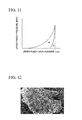
- the region B in FIG. 9 corresponds with EE, and the region composed of a combination of A and B corresponds with CE.
- a mortar having a diameter of 8 mm was packed with 200 mg of the preparation A, a tableting process analyzer (Tab-All, manufactured by Okada Seiko Co., Ltd.) was used to compress the preparation under conditions including a compression pressure of 200 MPa and a compression speed of 10 spm, and the yield pressure was determined on the basis of the Heckel equation. This test yielded a tablet A.
- P represents the compression pressure (MPa)
- K represents the slope of the straight line portion obtained by plotting the compression pressure P in an x axis and the value of ln(1(1-D)) in a y axis
- the yield pressure is calculated as the value of l/K.
- a load cell-type tablet hardness meter (PORTABLE CHECKER PC-30, manufactured by Okada Seiko Co., Ltd.) was used to measured the hardness under conditions including a fracture speed of 30 mm/minute (in the diameter direction), and the tensile strength of the tablet was calculated using the following equation.
- TS 2 ⁇ P / ⁇ DT TS represents the tensile strength (MPa) of the tablet
- P represents the hardness (N) of the tablet
- ⁇ is the ratio of circumference to diameter
- D represents the diameter (mm) of the tablet
- T represents the thickness (mm) of the tablet.
- a hydroxypropylcellulose bulk powder conforming to the Japanese Pharmacopoeia (“HPC L" manufactured by Nippon Soda Co., Ltd., viscosity at 20°C of a 2% aqueous solution: 6.0 to 10.0 mPa ⁇ s) was dissolved in water to prepare aqueous solutions having concentrations of 1%, 2%, 5% and 10% respectively.
- the bulk powder of the hydroxypropylcellulose HPC L had a volume-average particle size of 103.6 ⁇ m and was amorphous (see FIG. 12 ).
- Each of the above hydroxypropylcellulose aqueous solutions was supplied to a crushing and drying apparatus having a pulse combustor (HYPULCON, manufactured by Ohkawara Kakohki Co., Ltd.), and the pulse jet was applied to the aqueous solution to achieve crushing and drying.
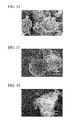
- the exhaust gas temperature in the region to which the aqueous solution was supplied was set at 80°C. This crushing and drying yielded hydroxypropylcellulose microparticles. These microparticles were all slightly flattened spherical shapes (see FIG. 13 ).
- the particle sizes D 16 , D 50 and D 84 of each sample of microparticles were as shown in Table 1.
- the viscosity at 20°C of a 2% aqueous solution of the obtained hydroxypropylcellulose microparticles was the same as that of the bulk powder in each case, confirming that no thermal degradation of the hydroxypropylcellulose itself had occurred during the drying process.
- hydroxypropylcellulose microparticles were obtained using the same procedure as that described for Example 1.
- the particle sizes D 16 , D 50 and D 84 of the microparticles were as shown in Table 2.
- the microparticles were slightly flattened spherical shapes.
- the viscosity at 20°C of a 2% aqueous solution of the obtained hydroxypropylcellulose microparticles was the same as that of the bulk powder.
- the bulk powder of the hydroxypropylcellulose HPC SL had a volume-average particle size of 83.3 ⁇ m and had an angular irregular-shape.
- hydroxypropylcellulose microparticles were obtained using the same procedure as that described for Example 1.
- the particle sizes D 16 , D 50 and D 84 of the microparticles were as shown in Table 2.
- the microparticles had slightly flattened spherical shapes (see FIG. 14 and FIG. 15 ).
- the viscosity at 20°C of a 2% aqueous solution of the obtained hydroxypropylcellulose microparticles was the same as that of the bulk powder.
- hydroxypropylcellulose microparticles were obtained using the same procedure as that described for Example 3.
- the particle sizes D 16 , D 50 and D 84 of the microparticles were as shown in Table 3.
- the microparticles had slightly flattened spherical shapes (see FIG. 16 ).
- the viscosity at 20°C of a 2% aqueous solution of the obtained hydroxypropylcellulose microparticles was the same as that of the bulk powder.
- the bulk powder of the hydroxypropylcellulose HPC SSL had angular irregular-shapes.
- a 1% aqueous solution of hydroxypropylcellulose (“HPC L” manufactured by Nippon Soda Co., Ltd., viscosity at 20°C of a 2% aqueous solution: 6.0 to 10.0 mPa ⁇ s) was dried at 150°C using a spray drying method. This drying yielded a hydroxypropylcellulose SD1.
- the shape of the SD1 was shown in FIG. 17 .
- the particle sizes D 16 , D 50 and D 84 of SD1 were as shown in Table 3.
- a hydroxypropylcellulose SD2 was obtained using the same procedure as that described for Comparative example 1.
- the shape of the SD2 was shown in FIG. 18 .
- the particle sizes D 16 , D 50 and D 84 of SD2 were as shown in Table 3.
- the hydroxypropylcellulose bulk powder HPC L (hereinafter abbreviated as "L"), the hydroxypropylcellulose microparticles having a volume-average particle size of 6.5 ⁇ m obtained in Example 1 (hereinafter abbreviated as "LM”), the hydroxypropylcellulose bulk powder HPC SL (hereinafter abbreviated as “SL”), the hydroxypropylcellulose microparticles having a volume-average particle size of 7.5 ⁇ m obtained in Example 2 (hereinafter abbreviated as “SLM”), the hydroxypropylcellulose microparticles having a volume-average particle size of 11.6 ⁇ m obtained in Example 3 (hereinafter abbreviated as "L10”), the hydroxypropylcellulose microparticles having a volume-average particle size of 13.9 ⁇ m obtained in Example 3 (hereinafter abbreviated as "L20”), the hydroxypropylcellulose bulk powder HPC SSL (hereinafter abbreviated as "SSL”), the hydroxypropyl
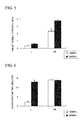
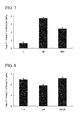
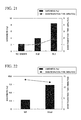
- the tensile strength and disintegration time were compared for tablets obtained by performing tablet compression at a compression pressure of 100 MPa and tablets obtained by performing tablet compression at a compression pressure of 200 MPa (see FIG. 5 and FIG. 6 ). It is clear from the results that use of the hydroxypropylcellulose microparticles (LM) of the present invention yielded a significant increase in the tensile strength. Further, by using the hydroxypropylcellulose microparticles (LM) of the present invention, the disintegration time became unaffected by the compression pressure. Based on the results, it is evident that even if the tablet compression conditions fluctuate, fluctuation in the sustained release properties of the tablet is unlikely. Moreover, as shown in FIG.
- hydroxypropylcellulose microparticles LM
- 0.5% by weight of a silica SYLYSIA 350, manufactured by Fuji Silysia Chemical Ltd.
- 1% by weight of magnesium stearate 10% by weight, 15% by weight or 20% by weight of crospovidone (disintegrator), and 85.5% by weight, 80.5% by weight or 75.5% by weight of erythritol were mixed together thoroughly to obtain preparations B-1, B-2 and B-3 respectively.
- tablets B-1, B-2 and B-3 were obtained using the same procedure as that described above for the method of producing the tablet A.
- the tablet tensile strength was determined using the same procedure as that described above. The results are shown in FIG. 10 . It is evident that addition of the disintegrator further increased the tensile strength. Further, the preparations B-1, B-2 and B-3 each had a disintegration time of 30 seconds or less in the disintegration test described above.
- a hydroxypropylcellulose 10% by weight of a hydroxypropylcellulose, 63% by weight of lactose (Dailactose S, manufactured by Freund Corporation), 27% by weight of a corn starch (Corn Starch W, manufactured by Nihon Shokuhin Kako Co., Ltd.) and 0.5% by weight of magnesium stearate (in outer percentage) were mixed together thoroughly to obtain a preparation C.
- a tablet C was obtained using the same procedure as that described above for the method of producing the tablet A.
- the tablet hardness and disintegration time were determined using the same procedures as described above.
- hydroxypropylcellulose microparticles L2 having a volume-average particle size of 12 ⁇ m obtained using the same procedure as that described for Example 3
- hydroxypropylcellulose microparticles SSL2 having a volume-average particle size of 12 ⁇ m obtained using the same procedure as that described for Example 4
- a hydroxypropylcellulose obtained by passing the hydroxypropylcellulose bulk powder HPC L through a 100-mesh (hereinafter abbreviated as LB, volume-average particle size: 44 ⁇ m) were used, respectively.
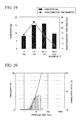
- the particle size distribution of the hydroxypropylcellulose microparticles SSL2 is shown in FIG. 20 .
- a preparation D 2.5% by weight of a hydroxypropylcellulose, 73.1% by weight of lactose (Dailactose S, manufactured by Freund Corporation), 24.4% by weight of a corn starch (Corn Starch W, manufactured by Nihon Shokuhin Kako Co., Ltd.) and 0.5% by weight of magnesium stearate (in outer percentage) were mixed together thoroughly to obtain a preparation D.
- a tablet D was obtained using the same procedure as that described above for the method of producing the tablet A.
- the tablet hardness and disintegration time were determined using the same procedures as described above.
- hydroxypropylcellulose microparticles SSL2 having a volume-average particle size of 12 ⁇ m obtained using the same procedure as that described for Example 4 were used. It is evident that by adding a small amount of the hydroxypropylcellulose microparticles SSL2, tablets having a high degree of hardness and a short disintegration time can be obtained.
- a hydroxypropylcellulose 50% by weight of acetaminophen (fine powder, manufactured by Yamamoto Corporation), 31.5% by weight of lactose (Dailactose S, manufactured by Freund Corporation), 13.5% by weight of a corn starch (Corn Starch W, manufactured by Nihon Shokuhin Kako Co., Ltd.) and 0.5% by weight of magnesium stearate (in outer percentage) were mixed together thoroughly to obtain a preparation E.
- a tablet E was obtained using the same procedure as that described above for the tablet A.
- the tablet hardness and disintegration time were determined using the same procedures as described above.
- hydroxypropylcellulose microparticles SL2 having a volume-average particle size of 13 ⁇ m obtained using the same procedure as that described for Example 2, and a hydroxypropylcellulose obtained by passing the hydroxypropylcellulose bulk powder HPC SL through a 100-mesh (hereinafter abbreviated as SLB, volume-average particle size: 40 ⁇ m) were used.
- acetaminophen fine powder, manufactured by Yamamoto Corporation
- lactose Dailactose S, manufactured by Freund Corporation
- a corn starch Corn Starch W, manufactured by Nihon Shokuhin Kako Co., Ltd.
- magnesium stearate in outer percentage
- the hydroxypropylcellulose LB obtained by passing the hydroxypropylcellulose bulk powder HPC L through a 100-mesh, and hydroxypropylcellulose microparticles SSL2 having a volume-average particle size of 12 ⁇ m obtained using the same procedure as that described for Example 4 were used.
- hydroxypropylcellulose microparticles SSL2 having a volume-average particle size of 12 ⁇ m obtained using the same procedure as that described for Example 4, 1 part by weight of magnesium stearate (lubricant), 1 part by weight of crospovidone (disintegrator) and 95 parts by weight of erythritol were subjected to tablet compression at a compression pressure of 200 MPa, yielding a tablet H.
- the "intraoral disintegration time” refers to the average time, across six male and female adults, determined by rinsing the mouth with distilled water, placing a tablet in the mouth, and measuring the time taken for the tablet to disintegrate completely without chewing.
- the tensile strength decreased as the amount of hydroxypropylcellulose microparticles was reduced, but even for the formulation containing 1.5 parts by weight of the hydroxypropylcellulose microparticles (tablet K), a tensile strength of 1 MPa was obtained.
- the disintegration time was substantially the same for all of the formulations. Further, the intraoral disintegration time for the tablet K was approximately 20 seconds.
Landscapes
- Health & Medical Sciences (AREA)
- Chemical & Material Sciences (AREA)
- Medicinal Chemistry (AREA)
- Life Sciences & Earth Sciences (AREA)
- Veterinary Medicine (AREA)
- Polymers & Plastics (AREA)
- Chemical Kinetics & Catalysis (AREA)
- Organic Chemistry (AREA)
- Pharmacology & Pharmacy (AREA)
- Public Health (AREA)
- General Health & Medical Sciences (AREA)
- Animal Behavior & Ethology (AREA)
- Epidemiology (AREA)
- Engineering & Computer Science (AREA)
- Materials Engineering (AREA)
- Biochemistry (AREA)
- Bioinformatics & Cheminformatics (AREA)
- Zoology (AREA)
- Nutrition Science (AREA)
- Physiology (AREA)
- Inorganic Chemistry (AREA)
- Medicinal Preparation (AREA)
- Polysaccharides And Polysaccharide Derivatives (AREA)
- Jellies, Jams, And Syrups (AREA)
Priority Applications (2)
| Application Number | Priority Date | Filing Date | Title |
|---|---|---|---|
| SI201031618T SI2492284T1 (en) | 2009-11-24 | 2010-11-24 | HYDROXYCARCULULOSE MICROELECTRONICS |
| HRP20180035TT HRP20180035T1 (hr) | 2009-11-24 | 2010-11-24 | Mikročestice od hidroksalkilceluloze |
Applications Claiming Priority (3)
| Application Number | Priority Date | Filing Date | Title |
|---|---|---|---|
| JP2009266821 | 2009-11-24 | ||
| JP2010135622 | 2010-06-14 | ||
| PCT/JP2010/070867 WO2011065350A1 (ja) | 2009-11-24 | 2010-11-24 | ヒドロキシアルキルセルロース微粒子 |
Publications (3)
| Publication Number | Publication Date |
|---|---|
| EP2492284A1 true EP2492284A1 (de) | 2012-08-29 |
| EP2492284A4 EP2492284A4 (de) | 2013-11-06 |
| EP2492284B1 EP2492284B1 (de) | 2017-12-06 |
Family
ID=44066455
Family Applications (1)
| Application Number | Title | Priority Date | Filing Date |
|---|---|---|---|
| EP10833196.8A Active EP2492284B1 (de) | 2009-11-24 | 2010-11-24 | Hydroxyalkylzellulose-mikropartikel |
Country Status (12)
| Country | Link |
|---|---|
| US (2) | US8568787B2 (de) |
| EP (1) | EP2492284B1 (de) |
| JP (2) | JPWO2011065350A1 (de) |
| KR (1) | KR101450979B1 (de) |
| CN (1) | CN102666590B (de) |
| ES (1) | ES2656522T3 (de) |
| HR (1) | HRP20180035T1 (de) |
| HU (1) | HUE035786T2 (de) |
| PT (1) | PT2492284T (de) |
| SI (1) | SI2492284T1 (de) |
| TW (1) | TWI400089B (de) |
| WO (1) | WO2011065350A1 (de) |
Cited By (1)
| Publication number | Priority date | Publication date | Assignee | Title |
|---|---|---|---|---|
| WO2015101786A1 (en) * | 2013-12-30 | 2015-07-09 | Jonas Lindh | Processes for the preparation of cellulose beads by reaction of a cellulose substrate with an oxidant |
Families Citing this family (10)
| Publication number | Priority date | Publication date | Assignee | Title |
|---|---|---|---|---|
| WO2012138529A1 (en) * | 2011-04-06 | 2012-10-11 | Dow Global Technologies Llc | Novel polysaccharide derivatives and dosage forms |
| HUE061785T2 (hu) | 2011-09-26 | 2023-08-28 | Nippon Soda Co | Finomított hidroxialkil-cellulóz részecskéket tartalmazó orálisan szétesõ tabletta |
| CN103156878A (zh) * | 2013-04-11 | 2013-06-19 | 天津市园艺工程研究所 | 一种桑黃多糖opc缓释微囊 |
| EP2907508A1 (de) | 2014-02-14 | 2015-08-19 | Shin-Etsu Chemical Co., Ltd. | Hydroxyalkylalkyl-Cellulose zur Tablettierung und feste Zubereitung damit |
| JP6266804B2 (ja) * | 2014-10-16 | 2018-01-24 | 堺ディスプレイプロダクト株式会社 | 表示装置 |
| EP3011956B1 (de) | 2014-10-23 | 2018-12-26 | Shin-Etsu Chemical Co., Ltd. | Methyl zellulose zur verwendung in der tablettierung und die daraus gebildete feste zubereitungsform |
| JP6660694B2 (ja) * | 2015-09-15 | 2020-03-11 | 株式会社ファンケル | シリマリン含有錠剤 |
| US10426838B2 (en) | 2015-11-30 | 2019-10-01 | Asahi Kasei Kabushiki Kaisha | Composite particles including cellulose, inorganic compound, and hydroxypropyl cellulose |
| EP3216463B1 (de) | 2016-03-09 | 2020-12-23 | Shin-Etsu Chemical Co., Ltd. | Feststoffpräparat mit alkylcellulose und verfahren zur herstellung davon |
| PL3886814T3 (pl) | 2018-11-26 | 2025-04-07 | The Procter & Gamble Company | Stały preparat farmaceutyczny zawierający kwas liponowy i jego zastosowanie |
Family Cites Families (21)
| Publication number | Priority date | Publication date | Assignee | Title |
|---|---|---|---|---|
| JPH01152103A (ja) * | 1987-12-08 | 1989-06-14 | Nippon Soda Co Ltd | セルロース誘導体球状粒子およびその製造方法 |
| JPH0633939A (ja) | 1992-07-15 | 1994-02-08 | Enomoto:Kk | 直動機械要素 |
| JP3276188B2 (ja) | 1993-01-08 | 2002-04-22 | 積水化学工業株式会社 | 貼付剤及びその製造方法 |
| JPH0770203A (ja) * | 1993-08-31 | 1995-03-14 | Shin Etsu Chem Co Ltd | セルロース誘導体の微粉砕化方法 |
| JPH08100001A (ja) * | 1994-09-28 | 1996-04-16 | Teijin Ltd | 蛍光標識化セルロース類 |
| JP3284353B2 (ja) * | 1995-11-22 | 2002-05-20 | 高田製薬株式会社 | 水酸化アルミニウム・水酸化マグネシウム含有固形製剤 |
| JPH11322584A (ja) * | 1998-05-07 | 1999-11-24 | Sawai Pharmaceutical Co Ltd | ベザフィブラート徐放性製剤 |
| DE19901692C2 (de) * | 1999-01-18 | 2002-06-20 | Gruenenthal Gmbh | Verfahren zur Herstellung von Pellets mit einem Gehalt von bis zu 90 Gew.% eines pharmazeutischen Wirkstoffes |
| US6602994B1 (en) * | 1999-02-10 | 2003-08-05 | Hercules Incorporated | Derivatized microfibrillar polysaccharide |
| US6680069B1 (en) * | 1999-11-09 | 2004-01-20 | Shin-Etsu Chemical Co., Ltd. | Low-substituted hydroxypropyl cellulose and process for manufacturing the same |
| JP4070402B2 (ja) | 1999-11-09 | 2008-04-02 | 信越化学工業株式会社 | 低置換度ヒドロキシプロピルセルロース及びその製造方法 |
| JP2001322927A (ja) * | 2000-05-12 | 2001-11-20 | Shin Etsu Chem Co Ltd | 低置換度ヒドロキシプロピルセルロース含有固形製剤及びその製造方法 |
| JP2002207030A (ja) | 2001-01-09 | 2002-07-26 | Nippon Soda Co Ltd | ヒドロキシプロピル基含量測定方法及び装置 |
| JP4082656B2 (ja) * | 2002-03-04 | 2008-04-30 | 信越化学工業株式会社 | 低置換度セルロースエーテル粉末とその製造方法 |
| JP2006090571A (ja) * | 2004-09-21 | 2006-04-06 | Kyoto Univ | 粉砕乾燥方法および粉砕乾燥装置 |
| JP2007176869A (ja) * | 2005-12-28 | 2007-07-12 | Univ Meijo | 難溶性薬物含有微細粒子 |
| JP2007211006A (ja) | 2006-01-16 | 2007-08-23 | Ono Pharmaceut Co Ltd | 溶出安定性を有するコーティング固形製剤 |
| JP5208729B2 (ja) * | 2006-04-12 | 2013-06-12 | 日本曹達株式会社 | 徐放性錠剤の製造方法 |
| CA2649272A1 (en) * | 2006-04-20 | 2007-11-01 | Itoham Foods Inc. | Pharmaceutical composition for conformational disease |
| JP5258223B2 (ja) | 2006-08-08 | 2013-08-07 | 信越化学工業株式会社 | 腸溶性固体分散体の固形製剤及びその製造方法 |
| CA2680536A1 (en) * | 2007-03-13 | 2008-10-09 | Dainippon Sumitomo Pharma Co., Ltd. | Oral disintegrating tablet |
-
2010
- 2010-11-23 TW TW099140331A patent/TWI400089B/zh active
- 2010-11-24 EP EP10833196.8A patent/EP2492284B1/de active Active
- 2010-11-24 HU HUE10833196A patent/HUE035786T2/hu unknown
- 2010-11-24 US US13/510,096 patent/US8568787B2/en active Active
- 2010-11-24 PT PT108331968T patent/PT2492284T/pt unknown
- 2010-11-24 KR KR1020127012768A patent/KR101450979B1/ko active Active
- 2010-11-24 CN CN201080052422.3A patent/CN102666590B/zh active Active
- 2010-11-24 ES ES10833196.8T patent/ES2656522T3/es active Active
- 2010-11-24 SI SI201031618T patent/SI2492284T1/en unknown
- 2010-11-24 HR HRP20180035TT patent/HRP20180035T1/hr unknown
- 2010-11-24 JP JP2011543254A patent/JPWO2011065350A1/ja active Pending
- 2010-11-24 WO PCT/JP2010/070867 patent/WO2011065350A1/ja not_active Ceased
-
2013
- 2013-09-09 US US14/021,995 patent/US9090714B2/en active Active
-
2014
- 2014-12-01 JP JP2014243228A patent/JP6081436B2/ja active Active
Non-Patent Citations (1)
| Title |
|---|
| See references of WO2011065350A1 * |
Cited By (1)
| Publication number | Priority date | Publication date | Assignee | Title |
|---|---|---|---|---|
| WO2015101786A1 (en) * | 2013-12-30 | 2015-07-09 | Jonas Lindh | Processes for the preparation of cellulose beads by reaction of a cellulose substrate with an oxidant |
Also Published As
| Publication number | Publication date |
|---|---|
| CN102666590B (zh) | 2015-02-18 |
| TWI400089B (zh) | 2013-07-01 |
| HRP20180035T1 (hr) | 2018-03-23 |
| KR20120073342A (ko) | 2012-07-04 |
| US9090714B2 (en) | 2015-07-28 |
| JPWO2011065350A1 (ja) | 2013-04-11 |
| US20120232167A1 (en) | 2012-09-13 |
| WO2011065350A1 (ja) | 2011-06-03 |
| KR101450979B1 (ko) | 2014-10-15 |
| HUE035786T2 (hu) | 2018-08-28 |
| CN102666590A (zh) | 2012-09-12 |
| SI2492284T1 (en) | 2018-04-30 |
| US8568787B2 (en) | 2013-10-29 |
| US20140034760A1 (en) | 2014-02-06 |
| EP2492284B1 (de) | 2017-12-06 |
| TW201124158A (en) | 2011-07-16 |
| ES2656522T3 (es) | 2018-02-27 |
| JP2015071783A (ja) | 2015-04-16 |
| JP6081436B2 (ja) | 2017-02-15 |
| EP2492284A4 (de) | 2013-11-06 |
| PT2492284T (pt) | 2018-01-30 |
Similar Documents
| Publication | Publication Date | Title |
|---|---|---|
| US8568787B2 (en) | Hydroxyalkylcellulose microparticles | |
| EP2647648B1 (de) | Feste Darreichungsform enthaltend eine niedrigviskose HYDROXYALKYLCELLULOSE | |
| JP2010070576A (ja) | 速溶解性錠剤 | |
| US10426838B2 (en) | Composite particles including cellulose, inorganic compound, and hydroxypropyl cellulose | |
| JP5717424B2 (ja) | コーティング粒子 | |
| JP2018118966A (ja) | 3位が置換されたγ−アミノ酪酸誘導体を含有する圧縮固形医薬組成物。 | |
| EP2570120A1 (de) | Beschichtete partikel und verfahren zur herstellung beschichteter partikel | |
| A. AlHusban et al. | Recent patents and trends in orally disintegrating tablets | |
| CN112996850B (zh) | 纤维素组合物及片剂 | |
| KR20200138037A (ko) | 정제의 제조 방법 | |
| JP7414668B2 (ja) | ポリビニルアルコール含有造粒物及び固形製剤 | |
| JP2013087170A (ja) | ヒドロキシプロピルセルロース微粒子 | |
| JP2000044463A (ja) | 速溶解性錠剤 | |
| WO2025100523A1 (ja) | 固形製剤の製造方法および錠剤 | |
| JP2015020964A (ja) | ヒドロキシプロピルセルロース |
Legal Events
| Date | Code | Title | Description |
|---|---|---|---|
| PUAI | Public reference made under article 153(3) epc to a published international application that has entered the european phase |
Free format text: ORIGINAL CODE: 0009012 |
|
| 17P | Request for examination filed |
Effective date: 20120522 |
|
| AK | Designated contracting states |
Kind code of ref document: A1 Designated state(s): AL AT BE BG CH CY CZ DE DK EE ES FI FR GB GR HR HU IE IS IT LI LT LU LV MC MK MT NL NO PL PT RO RS SE SI SK SM TR |
|
| DAX | Request for extension of the european patent (deleted) | ||
| A4 | Supplementary search report drawn up and despatched |
Effective date: 20131004 |
|
| RIC1 | Information provided on ipc code assigned before grant |
Ipc: A61K 47/38 20060101ALI20130927BHEP Ipc: C08B 11/08 20060101AFI20130927BHEP Ipc: A61K 9/20 20060101ALI20130927BHEP |
|
| 17Q | First examination report despatched |
Effective date: 20160201 |
|
| GRAP | Despatch of communication of intention to grant a patent |
Free format text: ORIGINAL CODE: EPIDOSNIGR1 |
|
| STAA | Information on the status of an ep patent application or granted ep patent |
Free format text: STATUS: GRANT OF PATENT IS INTENDED |
|
| INTG | Intention to grant announced |
Effective date: 20170622 |
|
| RAP1 | Party data changed (applicant data changed or rights of an application transferred) |
Owner name: OHKAWARA KAKOHKI CO., LTD. Owner name: TAKEUCHI, HIROFUMI Owner name: NIPPON SODA CO., LTD. |
|
| GRAS | Grant fee paid |
Free format text: ORIGINAL CODE: EPIDOSNIGR3 |
|
| RIN1 | Information on inventor provided before grant (corrected) |
Inventor name: TAKEUCHI HIROFUMI Inventor name: ABE SATORU Inventor name: SHIMOTORI TAKESHI Inventor name: NEMOTO GENTARO |
|
| GRAA | (expected) grant |
Free format text: ORIGINAL CODE: 0009210 |
|
| STAA | Information on the status of an ep patent application or granted ep patent |
Free format text: STATUS: THE PATENT HAS BEEN GRANTED |
|
| RAP1 | Party data changed (applicant data changed or rights of an application transferred) |
Owner name: TAKEUCHI, HIROFUMI Owner name: NIPPON SODA CO., LTD. |
|
| AK | Designated contracting states |
Kind code of ref document: B1 Designated state(s): AL AT BE BG CH CY CZ DE DK EE ES FI FR GB GR HR HU IE IS IT LI LT LU LV MC MK MT NL NO PL PT RO RS SE SI SK SM TR |
|
| REG | Reference to a national code |
Ref country code: GB Ref legal event code: FG4D |
|
| REG | Reference to a national code |
Ref country code: AT Ref legal event code: REF Ref document number: 952296 Country of ref document: AT Kind code of ref document: T Effective date: 20171215 Ref country code: CH Ref legal event code: EP |
|
| REG | Reference to a national code |
Ref country code: IE Ref legal event code: FG4D |
|
| REG | Reference to a national code |
Ref country code: HR Ref legal event code: TUEP Ref document number: P20180035 Country of ref document: HR |
|
| REG | Reference to a national code |
Ref country code: DE Ref legal event code: R096 Ref document number: 602010047252 Country of ref document: DE |
|
| REG | Reference to a national code |
Ref country code: PT Ref legal event code: SC4A Ref document number: 2492284 Country of ref document: PT Date of ref document: 20180130 Kind code of ref document: T Free format text: AVAILABILITY OF NATIONAL TRANSLATION Effective date: 20180122 |
|
| REG | Reference to a national code |
Ref country code: SE Ref legal event code: TRGR |
|
| REG | Reference to a national code |
Ref country code: ES Ref legal event code: FG2A Ref document number: 2656522 Country of ref document: ES Kind code of ref document: T3 Effective date: 20180227 |
|
| REG | Reference to a national code |
Ref country code: HR Ref legal event code: T1PR Ref document number: P20180035 Country of ref document: HR |
|
| REG | Reference to a national code |
Ref country code: NL Ref legal event code: MP Effective date: 20171206 |
|
| REG | Reference to a national code |
Ref country code: LT Ref legal event code: MG4D |
|
| PG25 | Lapsed in a contracting state [announced via postgrant information from national office to epo] |
Ref country code: NO Free format text: LAPSE BECAUSE OF FAILURE TO SUBMIT A TRANSLATION OF THE DESCRIPTION OR TO PAY THE FEE WITHIN THE PRESCRIBED TIME-LIMIT Effective date: 20180306 Ref country code: LT Free format text: LAPSE BECAUSE OF FAILURE TO SUBMIT A TRANSLATION OF THE DESCRIPTION OR TO PAY THE FEE WITHIN THE PRESCRIBED TIME-LIMIT Effective date: 20171206 Ref country code: FI Free format text: LAPSE BECAUSE OF FAILURE TO SUBMIT A TRANSLATION OF THE DESCRIPTION OR TO PAY THE FEE WITHIN THE PRESCRIBED TIME-LIMIT Effective date: 20171206 |
|
| PG25 | Lapsed in a contracting state [announced via postgrant information from national office to epo] |
Ref country code: GR Free format text: LAPSE BECAUSE OF FAILURE TO SUBMIT A TRANSLATION OF THE DESCRIPTION OR TO PAY THE FEE WITHIN THE PRESCRIBED TIME-LIMIT Effective date: 20180307 Ref country code: RS Free format text: LAPSE BECAUSE OF FAILURE TO SUBMIT A TRANSLATION OF THE DESCRIPTION OR TO PAY THE FEE WITHIN THE PRESCRIBED TIME-LIMIT Effective date: 20171206 Ref country code: LV Free format text: LAPSE BECAUSE OF FAILURE TO SUBMIT A TRANSLATION OF THE DESCRIPTION OR TO PAY THE FEE WITHIN THE PRESCRIBED TIME-LIMIT Effective date: 20171206 |
|
| PG25 | Lapsed in a contracting state [announced via postgrant information from national office to epo] |
Ref country code: NL Free format text: LAPSE BECAUSE OF FAILURE TO SUBMIT A TRANSLATION OF THE DESCRIPTION OR TO PAY THE FEE WITHIN THE PRESCRIBED TIME-LIMIT Effective date: 20171206 |
|
| PG25 | Lapsed in a contracting state [announced via postgrant information from national office to epo] |
Ref country code: SK Free format text: LAPSE BECAUSE OF FAILURE TO SUBMIT A TRANSLATION OF THE DESCRIPTION OR TO PAY THE FEE WITHIN THE PRESCRIBED TIME-LIMIT Effective date: 20171206 Ref country code: EE Free format text: LAPSE BECAUSE OF FAILURE TO SUBMIT A TRANSLATION OF THE DESCRIPTION OR TO PAY THE FEE WITHIN THE PRESCRIBED TIME-LIMIT Effective date: 20171206 |
|
| REG | Reference to a national code |
Ref country code: HU Ref legal event code: AG4A Ref document number: E035786 Country of ref document: HU |
|
| PG25 | Lapsed in a contracting state [announced via postgrant information from national office to epo] |
Ref country code: PL Free format text: LAPSE BECAUSE OF FAILURE TO SUBMIT A TRANSLATION OF THE DESCRIPTION OR TO PAY THE FEE WITHIN THE PRESCRIBED TIME-LIMIT Effective date: 20171206 Ref country code: RO Free format text: LAPSE BECAUSE OF FAILURE TO SUBMIT A TRANSLATION OF THE DESCRIPTION OR TO PAY THE FEE WITHIN THE PRESCRIBED TIME-LIMIT Effective date: 20171206 Ref country code: SM Free format text: LAPSE BECAUSE OF FAILURE TO SUBMIT A TRANSLATION OF THE DESCRIPTION OR TO PAY THE FEE WITHIN THE PRESCRIBED TIME-LIMIT Effective date: 20171206 |
|
| REG | Reference to a national code |
Ref country code: DE Ref legal event code: R097 Ref document number: 602010047252 Country of ref document: DE |
|
| PLBE | No opposition filed within time limit |
Free format text: ORIGINAL CODE: 0009261 |
|
| STAA | Information on the status of an ep patent application or granted ep patent |
Free format text: STATUS: NO OPPOSITION FILED WITHIN TIME LIMIT |
|
| 26N | No opposition filed |
Effective date: 20180907 |
|
| PG25 | Lapsed in a contracting state [announced via postgrant information from national office to epo] |
Ref country code: DK Free format text: LAPSE BECAUSE OF FAILURE TO SUBMIT A TRANSLATION OF THE DESCRIPTION OR TO PAY THE FEE WITHIN THE PRESCRIBED TIME-LIMIT Effective date: 20171206 |
|
| REG | Reference to a national code |
Ref country code: HR Ref legal event code: ODRP Ref document number: P20180035 Country of ref document: HR Payment date: 20181115 Year of fee payment: 9 |
|
| PG25 | Lapsed in a contracting state [announced via postgrant information from national office to epo] |
Ref country code: MC Free format text: LAPSE BECAUSE OF FAILURE TO SUBMIT A TRANSLATION OF THE DESCRIPTION OR TO PAY THE FEE WITHIN THE PRESCRIBED TIME-LIMIT Effective date: 20171206 Ref country code: LU Free format text: LAPSE BECAUSE OF NON-PAYMENT OF DUE FEES Effective date: 20181124 |
|
| REG | Reference to a national code |
Ref country code: HR Ref legal event code: ODRP Ref document number: P20180035 Country of ref document: HR Payment date: 20191107 Year of fee payment: 10 |
|
| PG25 | Lapsed in a contracting state [announced via postgrant information from national office to epo] |
Ref country code: MT Free format text: LAPSE BECAUSE OF NON-PAYMENT OF DUE FEES Effective date: 20181124 |
|
| PG25 | Lapsed in a contracting state [announced via postgrant information from national office to epo] |
Ref country code: CY Free format text: LAPSE BECAUSE OF FAILURE TO SUBMIT A TRANSLATION OF THE DESCRIPTION OR TO PAY THE FEE WITHIN THE PRESCRIBED TIME-LIMIT Effective date: 20171206 Ref country code: MK Free format text: LAPSE BECAUSE OF NON-PAYMENT OF DUE FEES Effective date: 20171206 |
|
| PG25 | Lapsed in a contracting state [announced via postgrant information from national office to epo] |
Ref country code: AL Free format text: LAPSE BECAUSE OF FAILURE TO SUBMIT A TRANSLATION OF THE DESCRIPTION OR TO PAY THE FEE WITHIN THE PRESCRIBED TIME-LIMIT Effective date: 20171206 Ref country code: IS Free format text: LAPSE BECAUSE OF FAILURE TO SUBMIT A TRANSLATION OF THE DESCRIPTION OR TO PAY THE FEE WITHIN THE PRESCRIBED TIME-LIMIT Effective date: 20180406 |
|
| REG | Reference to a national code |
Ref country code: HR Ref legal event code: ODRP Ref document number: P20180035 Country of ref document: HR Payment date: 20201117 Year of fee payment: 11 |
|
| REG | Reference to a national code |
Ref country code: AT Ref legal event code: UEP Ref document number: 952296 Country of ref document: AT Kind code of ref document: T Effective date: 20171206 |
|
| REG | Reference to a national code |
Ref country code: HR Ref legal event code: ODRP Ref document number: P20180035 Country of ref document: HR Payment date: 20211117 Year of fee payment: 12 |
|
| REG | Reference to a national code |
Ref country code: HR Ref legal event code: ODRP Ref document number: P20180035 Country of ref document: HR Payment date: 20221114 Year of fee payment: 13 |
|
| P01 | Opt-out of the competence of the unified patent court (upc) registered |
Effective date: 20230507 |
|
| REG | Reference to a national code |
Ref country code: HR Ref legal event code: ODRP Ref document number: P20180035 Country of ref document: HR Payment date: 20231116 Year of fee payment: 14 |
|
| REG | Reference to a national code |
Ref country code: HR Ref legal event code: ODRP Ref document number: P20180035 Country of ref document: HR Payment date: 20241114 Year of fee payment: 15 |
|
| PGFP | Annual fee paid to national office [announced via postgrant information from national office to epo] |
Ref country code: BG Payment date: 20241121 Year of fee payment: 15 |
|
| PGFP | Annual fee paid to national office [announced via postgrant information from national office to epo] |
Ref country code: ES Payment date: 20241230 Year of fee payment: 15 |
|
| PGFP | Annual fee paid to national office [announced via postgrant information from national office to epo] |
Ref country code: SI Payment date: 20241114 Year of fee payment: 15 |
|
| REG | Reference to a national code |
Ref country code: CH Ref legal event code: U11 Free format text: ST27 STATUS EVENT CODE: U-0-0-U10-U11 (AS PROVIDED BY THE NATIONAL OFFICE) Effective date: 20251201 |
|
| PGFP | Annual fee paid to national office [announced via postgrant information from national office to epo] |
Ref country code: PT Payment date: 20251113 Year of fee payment: 16 |
|
| PGFP | Annual fee paid to national office [announced via postgrant information from national office to epo] |
Ref country code: HU Payment date: 20251121 Year of fee payment: 16 |
|
| REG | Reference to a national code |
Ref country code: HR Ref legal event code: ODRP Ref document number: P20180035 Country of ref document: HR Payment date: 20251113 Year of fee payment: 16 |
|
| PGFP | Annual fee paid to national office [announced via postgrant information from national office to epo] |
Ref country code: DE Payment date: 20251119 Year of fee payment: 16 |
|
| PGFP | Annual fee paid to national office [announced via postgrant information from national office to epo] |
Ref country code: GB Payment date: 20251121 Year of fee payment: 16 |
|
| PGFP | Annual fee paid to national office [announced via postgrant information from national office to epo] |
Ref country code: AT Payment date: 20251120 Year of fee payment: 16 |
|
| PGFP | Annual fee paid to national office [announced via postgrant information from national office to epo] |
Ref country code: IT Payment date: 20251125 Year of fee payment: 16 |
|
| PGFP | Annual fee paid to national office [announced via postgrant information from national office to epo] |
Ref country code: HR Payment date: 20251113 Year of fee payment: 16 Ref country code: FR Payment date: 20251125 Year of fee payment: 16 |
|
| PGFP | Annual fee paid to national office [announced via postgrant information from national office to epo] |
Ref country code: TR Payment date: 20251118 Year of fee payment: 16 Ref country code: BE Payment date: 20251119 Year of fee payment: 16 |
|
| PGFP | Annual fee paid to national office [announced via postgrant information from national office to epo] |
Ref country code: SE Payment date: 20251119 Year of fee payment: 16 Ref country code: CH Payment date: 20251201 Year of fee payment: 16 |
|
| PGFP | Annual fee paid to national office [announced via postgrant information from national office to epo] |
Ref country code: IE Payment date: 20251121 Year of fee payment: 16 Ref country code: CZ Payment date: 20251119 Year of fee payment: 16 |