EP2423243A1 - Layered articles made from DMBPC polycarbonate homopolymer and copolymer - Google Patents
Layered articles made from DMBPC polycarbonate homopolymer and copolymer Download PDFInfo
- Publication number
- EP2423243A1 EP2423243A1 EP20110183445 EP11183445A EP2423243A1 EP 2423243 A1 EP2423243 A1 EP 2423243A1 EP 20110183445 EP20110183445 EP 20110183445 EP 11183445 A EP11183445 A EP 11183445A EP 2423243 A1 EP2423243 A1 EP 2423243A1
- Authority
- EP
- European Patent Office
- Prior art keywords
- polycarbonate
- layer
- sheet
- bis
- window
- Prior art date
- Legal status (The legal status is an assumption and is not a legal conclusion. Google has not performed a legal analysis and makes no representation as to the accuracy of the status listed.)
- Withdrawn
Links
- 0 CC(c(cc(C1(CCCCC1)c(cc1C)ccc1O)cc1)c1O)=* Chemical compound CC(c(cc(C1(CCCCC1)c(cc1C)ccc1O)cc1)c1O)=* 0.000 description 2
- YVFISSGGDZBYCC-UHFFFAOYSA-N Cc(cc(C1(CCCCC1)c(cc1)cc(C=C)c1O)cc1)c1O Chemical compound Cc(cc(C1(CCCCC1)c(cc1)cc(C=C)c1O)cc1)c1O YVFISSGGDZBYCC-UHFFFAOYSA-N 0.000 description 1
Images









Classifications
-
- B—PERFORMING OPERATIONS; TRANSPORTING
- B32—LAYERED PRODUCTS
- B32B—LAYERED PRODUCTS, i.e. PRODUCTS BUILT-UP OF STRATA OF FLAT OR NON-FLAT, e.g. CELLULAR OR HONEYCOMB, FORM
- B32B27/00—Layered products comprising a layer of synthetic resin
- B32B27/36—Layered products comprising a layer of synthetic resin comprising polyesters
-
- C—CHEMISTRY; METALLURGY
- C08—ORGANIC MACROMOLECULAR COMPOUNDS; THEIR PREPARATION OR CHEMICAL WORKING-UP; COMPOSITIONS BASED THEREON
- C08G—MACROMOLECULAR COMPOUNDS OBTAINED OTHERWISE THAN BY REACTIONS ONLY INVOLVING UNSATURATED CARBON-TO-CARBON BONDS
- C08G64/00—Macromolecular compounds obtained by reactions forming a carbonic ester link in the main chain of the macromolecule
- C08G64/04—Aromatic polycarbonates
- C08G64/06—Aromatic polycarbonates not containing aliphatic unsaturation
-
- B—PERFORMING OPERATIONS; TRANSPORTING
- B32—LAYERED PRODUCTS
- B32B—LAYERED PRODUCTS, i.e. PRODUCTS BUILT-UP OF STRATA OF FLAT OR NON-FLAT, e.g. CELLULAR OR HONEYCOMB, FORM
- B32B17/00—Layered products essentially comprising sheet glass, or glass, slag, or like fibres
- B32B17/06—Layered products essentially comprising sheet glass, or glass, slag, or like fibres comprising glass as the main or only constituent of a layer, next to another layer of a specific material
- B32B17/10—Layered products essentially comprising sheet glass, or glass, slag, or like fibres comprising glass as the main or only constituent of a layer, next to another layer of a specific material of synthetic resin
-
- B—PERFORMING OPERATIONS; TRANSPORTING
- B32—LAYERED PRODUCTS
- B32B—LAYERED PRODUCTS, i.e. PRODUCTS BUILT-UP OF STRATA OF FLAT OR NON-FLAT, e.g. CELLULAR OR HONEYCOMB, FORM
- B32B27/00—Layered products comprising a layer of synthetic resin
- B32B27/06—Layered products comprising a layer of synthetic resin as the main or only constituent of a layer, which is next to another layer of the same or of a different material
- B32B27/08—Layered products comprising a layer of synthetic resin as the main or only constituent of a layer, which is next to another layer of the same or of a different material of synthetic resin
-
- B—PERFORMING OPERATIONS; TRANSPORTING
- B32—LAYERED PRODUCTS
- B32B—LAYERED PRODUCTS, i.e. PRODUCTS BUILT-UP OF STRATA OF FLAT OR NON-FLAT, e.g. CELLULAR OR HONEYCOMB, FORM
- B32B27/00—Layered products comprising a layer of synthetic resin
- B32B27/36—Layered products comprising a layer of synthetic resin comprising polyesters
- B32B27/365—Layered products comprising a layer of synthetic resin comprising polyesters comprising polycarbonates
-
- C—CHEMISTRY; METALLURGY
- C08—ORGANIC MACROMOLECULAR COMPOUNDS; THEIR PREPARATION OR CHEMICAL WORKING-UP; COMPOSITIONS BASED THEREON
- C08G—MACROMOLECULAR COMPOUNDS OBTAINED OTHERWISE THAN BY REACTIONS ONLY INVOLVING UNSATURATED CARBON-TO-CARBON BONDS
- C08G64/00—Macromolecular compounds obtained by reactions forming a carbonic ester link in the main chain of the macromolecule
- C08G64/04—Aromatic polycarbonates
-
- E—FIXED CONSTRUCTIONS
- E06—DOORS, WINDOWS, SHUTTERS, OR ROLLER BLINDS IN GENERAL; LADDERS
- E06B—FIXED OR MOVABLE CLOSURES FOR OPENINGS IN BUILDINGS, VEHICLES, FENCES OR LIKE ENCLOSURES IN GENERAL, e.g. DOORS, WINDOWS, BLINDS, GATES
- E06B3/00—Window sashes, door leaves, or like elements for closing wall or like openings; Layout of fixed or moving closures, e.g. windows in wall or like openings; Features of rigidly-mounted outer frames relating to the mounting of wing frames
-
- B—PERFORMING OPERATIONS; TRANSPORTING
- B32—LAYERED PRODUCTS
- B32B—LAYERED PRODUCTS, i.e. PRODUCTS BUILT-UP OF STRATA OF FLAT OR NON-FLAT, e.g. CELLULAR OR HONEYCOMB, FORM
- B32B2250/00—Layers arrangement
- B32B2250/24—All layers being polymeric
-
- B—PERFORMING OPERATIONS; TRANSPORTING
- B32—LAYERED PRODUCTS
- B32B—LAYERED PRODUCTS, i.e. PRODUCTS BUILT-UP OF STRATA OF FLAT OR NON-FLAT, e.g. CELLULAR OR HONEYCOMB, FORM
- B32B2255/00—Coating on the layer surface
- B32B2255/10—Coating on the layer surface on synthetic resin layer or on natural or synthetic rubber layer
-
- B—PERFORMING OPERATIONS; TRANSPORTING
- B32—LAYERED PRODUCTS
- B32B—LAYERED PRODUCTS, i.e. PRODUCTS BUILT-UP OF STRATA OF FLAT OR NON-FLAT, e.g. CELLULAR OR HONEYCOMB, FORM
- B32B2255/00—Coating on the layer surface
- B32B2255/26—Polymeric coating
-
- B—PERFORMING OPERATIONS; TRANSPORTING
- B32—LAYERED PRODUCTS
- B32B—LAYERED PRODUCTS, i.e. PRODUCTS BUILT-UP OF STRATA OF FLAT OR NON-FLAT, e.g. CELLULAR OR HONEYCOMB, FORM
- B32B2307/00—Properties of the layers or laminate
- B32B2307/40—Properties of the layers or laminate having particular optical properties
- B32B2307/412—Transparent
-
- B—PERFORMING OPERATIONS; TRANSPORTING
- B32—LAYERED PRODUCTS
- B32B—LAYERED PRODUCTS, i.e. PRODUCTS BUILT-UP OF STRATA OF FLAT OR NON-FLAT, e.g. CELLULAR OR HONEYCOMB, FORM
- B32B2307/00—Properties of the layers or laminate
- B32B2307/50—Properties of the layers or laminate having particular mechanical properties
- B32B2307/584—Scratch resistance
-
- B—PERFORMING OPERATIONS; TRANSPORTING
- B32—LAYERED PRODUCTS
- B32B—LAYERED PRODUCTS, i.e. PRODUCTS BUILT-UP OF STRATA OF FLAT OR NON-FLAT, e.g. CELLULAR OR HONEYCOMB, FORM
- B32B2307/00—Properties of the layers or laminate
- B32B2307/70—Other properties
- B32B2307/714—Inert, i.e. inert to chemical degradation, corrosion
-
- B—PERFORMING OPERATIONS; TRANSPORTING
- B32—LAYERED PRODUCTS
- B32B—LAYERED PRODUCTS, i.e. PRODUCTS BUILT-UP OF STRATA OF FLAT OR NON-FLAT, e.g. CELLULAR OR HONEYCOMB, FORM
- B32B2410/00—Agriculture-related articles
-
- B—PERFORMING OPERATIONS; TRANSPORTING
- B32—LAYERED PRODUCTS
- B32B—LAYERED PRODUCTS, i.e. PRODUCTS BUILT-UP OF STRATA OF FLAT OR NON-FLAT, e.g. CELLULAR OR HONEYCOMB, FORM
- B32B2419/00—Buildings or parts thereof
-
- B—PERFORMING OPERATIONS; TRANSPORTING
- B32—LAYERED PRODUCTS
- B32B—LAYERED PRODUCTS, i.e. PRODUCTS BUILT-UP OF STRATA OF FLAT OR NON-FLAT, e.g. CELLULAR OR HONEYCOMB, FORM
- B32B2457/00—Electrical equipment
-
- B—PERFORMING OPERATIONS; TRANSPORTING
- B32—LAYERED PRODUCTS
- B32B—LAYERED PRODUCTS, i.e. PRODUCTS BUILT-UP OF STRATA OF FLAT OR NON-FLAT, e.g. CELLULAR OR HONEYCOMB, FORM
- B32B2605/00—Vehicles
- B32B2605/006—Transparent parts other than made from inorganic glass, e.g. polycarbonate glazings
-
- Y—GENERAL TAGGING OF NEW TECHNOLOGICAL DEVELOPMENTS; GENERAL TAGGING OF CROSS-SECTIONAL TECHNOLOGIES SPANNING OVER SEVERAL SECTIONS OF THE IPC; TECHNICAL SUBJECTS COVERED BY FORMER USPC CROSS-REFERENCE ART COLLECTIONS [XRACs] AND DIGESTS
- Y10—TECHNICAL SUBJECTS COVERED BY FORMER USPC
- Y10T—TECHNICAL SUBJECTS COVERED BY FORMER US CLASSIFICATION
- Y10T428/00—Stock material or miscellaneous articles
- Y10T428/31504—Composite [nonstructural laminate]
-
- Y—GENERAL TAGGING OF NEW TECHNOLOGICAL DEVELOPMENTS; GENERAL TAGGING OF CROSS-SECTIONAL TECHNOLOGIES SPANNING OVER SEVERAL SECTIONS OF THE IPC; TECHNICAL SUBJECTS COVERED BY FORMER USPC CROSS-REFERENCE ART COLLECTIONS [XRACs] AND DIGESTS
- Y10—TECHNICAL SUBJECTS COVERED BY FORMER USPC
- Y10T—TECHNICAL SUBJECTS COVERED BY FORMER US CLASSIFICATION
- Y10T428/00—Stock material or miscellaneous articles
- Y10T428/31504—Composite [nonstructural laminate]
- Y10T428/31507—Of polycarbonate
Definitions
- Polycarbonate is known as being an excellent molding material since products made therefrom exhibit such properties as high impact strength, toughness, high transparency, wide temperature limits for thermal endurance, good dimensional stability, good creep resistance, and the like.
- the present invention provides polycarbonate articles that exhibit reduced polymer degradation when exposed basic environments such as an ammonia-rich atmosphere. Further the articles of the present invention have been found to be more resistant to scratches and abrasion than traditional types of polycarbonate. It has herein been found that polymerizing or copolymerizing a monomer of structure I: into polycarbonate results in superior properties including scratch and abrasion resistance as well as reduced degradation when the polycarbonate is exposed to a basic environment such as an ammonia environment.
- a window comprising: a frame, and a first sheet supported by the frame, wherein the first sheet comprises a first layer, wherein the first layer comprises polycarbonate comprising repeat units derived from a monomer of structure I.
- dimethyl bisphenol cyclohexane when used as a monomer in the production of polycarbonate has been found to provide superior properties to the polycarbonate compared to traditional BPA polycarbonate and other types of polycarbonates. These properties include increased scratch resistance and superior resistance to molecular weight degradation when the polymer is exposed to a basic environment such as an ammonia environment.
- a window comprising: a frame, and a first sheet supported by the frame, wherein the first sheet comprises a first layer, and wherein the first layer comprises polycarbonate comprising repeat units derived from a monomer of structure I:
- DMBPC polycarbonate of the present invention includes and are not limited to its use in basic environments and environments where exposure to abrasive forces are common.
- the DMBPC polycarbonate of the present invention has a strong resistance to the polymer degradation forces of Ammonia.
- Ammonia serves as a useful cleaning agent in all types of industries and within the home.
- ammonia or a diluted ammonia solution is commonly used as a household and industrial cleaner.
- high concentrations of ammonia can be found in agricultural environments such as in the livestock stables and especially in pig stables.
- polycarbonate When exposed to an environment having a basic agent such as ammonia, polycarbonate degrades, changing a once transparent article into a hazy non-transparent and degraded one.
- DMBPC when used as a monomer in a polycarbonate article provides superior resistance to the degradation forces of ammonia. Also, it has been found that the use of DMBPC as a monomer provides a sheet or article of polycarbonate with superior scratch and abrasion resistance as compared to traditional BPA polycarbonate sheets or articles. In another embodiment a window made from a traditional BPA polycarbonate substrate having a top layer of DMBPC polycarbonate has excellent ammonia resistance and is scratch resistant.
- Polycarbonate refers to polycarbonates incorporating repeat units derived from at least one dihydroxy aromatic compound and includes copolyestercarbonates, for example a polycarbonate comprising repeat units derived from resorcinol, bisphenol A, and dodecandioic acid.
- copolyestercarbonates for example a polycarbonate comprising repeat units derived from resorcinol, bisphenol A, and dodecandioic acid.
- Repeat unit(s) means the block units or dihydroxy residues that are contained within the polymer chain of the polycarbonate and are derived from the starting dihydroxy compositions described below.
- the windows, sheets, and other articles of the present invention may be transparent, translucent, or opaque depending on the application. For example, it may be desirable to have a translucent sheet in showers and light fixtures, while sheets in which portions of, or the entire sheet is opaque, may be helpful in applications such as in roofing materials or in areas of public transportation where scratch resistance and the ability to use strong cleaners is desirable.
- the windows, sheets, and other articles may also include combinations of transparent, translucent, and opaque regions.
- Transparent is understood to mean in one embodiment that the sheet or article has light transmission of 50%, preferably 70%, and most preferably greater than 80% and a haze of less than 7, preferably less than 5, more preferably less than 2. Further, the term “transparent” does not require that all of the sheet or article is transparent and portions of the sheet or article may be opaque or translucent, for example to form a decorative pattern. All light transmission and haze values referred to herein are measured by ASTM D1003 at a thickness of 4.0 millimeters.
- Translucent is herein defined as having a light transmission of about 25 to about 95% and haze less than 104% and greater than 7%.
- Coating is a substance placed on the inner and/or outer surfaces of the sheet or an article of the present invention.
- Typical coatings are anti-static coatings, UV protection coating, Easy Clean (R) coatings, anti-microbial coatings, infra red shielding coatings, and hard coats.
- Typical hard coats can be silicone hard coats, acrylate hard coats (UV or thermally curable), silicone hard coats with acrylate primers, polyurethane hard coats, and melamine hard coats. Silicone hard coats are often preferred.
- Coplanar as used in the present invention is not meant to indicate that the windows, sheets, or articles of present invention are necessarily flat or defined solely in single plane.
- the term as used herein means that the identified "coplanar" layer has the same relative shape as the underlying or overlying layer that it is referenced to.
- the sheets and articles of the present invention may be curved. Notwithstanding this definition it is an embodiment of the present invention that some of the windows, sheets, and other articles described herein are flat.
- FIGS. 1-10 are not drawn to scale and are only meant to be illustrative of the invention.
- Figure 1 depicts an embodiment of the present invention providing a window 1 having: a frame 3, and a first sheet 5 in the form of a first layer 6 supported by the frame 3, wherein the first layer 6 comprises polycarbonate comprising repeat units derived from a monomer of structure I:
- the first sheet 5/layer 6 is formed from a polycarbonate comprising the DMBPC monomer of the present invention.
- This sheet is supported by a frame 3.
- the frame 3 of the present invention is not particularly limited as it can be any structure of any material that supports the first sheet 5.
- the frame 3 may support the first sheet 5 at an edge thereof and is not necessarily limited to enclosing all edges of the first sheet 5, Further, frame 3 may support the first sheet 5 at a position located, not an edge but, within the first sheet 5,
- the first sheet 5 is transparent in window applications.
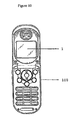
- the window 1 may for example be a window 1 of a cell phone 100 as depicted in figure 10 , a video display window, a vehicle window, a sliding glass door, an awning type window, a single hung window, a rolling window, a french door, a double hung window, or a window in a sound wall such as that found near highways.
- a frame 3 would be disposed, inter alia , in or integral with the housing of a cell phone or other electronic device, the body of a car, or within or on the outside of a building.
- the first sheet be translucent wherein light passes through the first sheet while objects located on the opposite side of the first sheet are not clearly discernable.
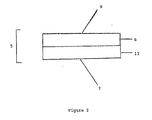
- Figure 2 depicts an embodiment of the present invention wherein the first sheet 5 has an inner side 7 and an outer side 9 wherein the first sheet 5 further comprises a coplanar substrate 11 wherein the substrate 11 is on the inner side 7 and the first layer 6 is on the outer side 9. It is often preferred that the substrate 11 comprise polycarbonate wherein the polycarbonate may or may not include repeat units derived from a monomer of structure I.
- Figure 3 depicts another embodiment of the first sheet 5 wherein the first sheet 5 further comprises a coplanar second layer 13 either in combination with or without the substrate 11, wherein the second layer 13 is disposed over the first layer 6 on the outer side 9 of the first sheet 5. It is often preferred that such second layer 13 be a coating layer as described above.
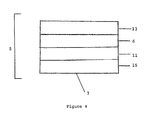
- Figure 4 depicts another embodiment of the first sheet 5 where the first sheet 5 further comprises a coplanar third layer 15 wherein the third layer 15 is disposed on the substrate 11 on the inner side 7 of the first sheet 5 wherein the third layer 15 comprises polycarbonate, wherein the polycarbonate of the third layer 15 comprises repeat units derived from the DMBPC monomer of structure I.
- Figure 5 depicts another embodiment of the first sheet 5 wherein the first sheet 5 further comprises a fourth layer 17, wherein the fourth layer 17 is disposed over the third layer 15 on the inner side 7 of the first sheet 5. It is often preferred that such fourth layer 17 be a coating, for example a hard coat layer as described above.
- Figure 6 depicts yet another embodiment of the present invention wherein a double pane window 21 is provided wherein the window embodiments described above further comprise a second sheet 23 supported by a frame 25.
- the second sheet 23 comprises a first layer 27 of polycarbonate, wherein the first layer 27 of polycarbonate of the second sheet 23 comprises repeat units derived from the DMBPC monomer of structure I and wherein the first 5 and second 23 sheets have inner 31 and outer 29 sides wherein the inner side 31. of the first sheet 5 faces the inner side 31 of the second sheet 23.
- a sealed gap 22 exists between the panes (sheets) 5, 23 which can be a vacuum or filled with an inert gas such as argon as is conventional in multiple-pane windows.
- the panes 5, 23 may have any of the configurations described above or shown in figures 1 to 5 .
- first, second, or both the first and the second sheets (panes) may be transparent.
- Windows with additional panes, for example triple pane windows, can also be used and are within the scope of the invention.
- the method of making the DMBPC polycarbonate of the sheets and articles of the present invention is not particularly limited. It may be produced by any known method of producing polycarbonate including the well-known interfacial process using phosgene and/or the melt process using a diaryl carbonate, such as diphenyl carbonate or bismethyl salicyl carbonate, as the carbonate source.
- a diaryl carbonate such as diphenyl carbonate or bismethyl salicyl carbonate
- an additional monomer such as bisphenol A (BPA)
- BPA bisphenol A
- Additional monomer units may be derived from dihydroxy compounds comprising aliphatic diols and/or acids. The following is a non-limiting list of such compounds:
- the dihydroxy composition may also be a dihydroxy aromatic compound.
- a preferred dihydroxy aromatic composition of the present invention is bisphenol A (BPA).
- BPA has the structure:
- R 3 - R 10 are independently a hydrogen atom, halogen atom, nitro group, cyano group, C 1 - C 20 alkyl radical, C 4 - C 20 cycloalkyl radical, or C 6 - C 20 C aryl radical;
- W is a bond, an oxygen atom, a sulfur atom, a SO 2 group, a C 1 - C 20 aliphatic radical, a C 6 - C 20 aromatic radical, a C 6 - C 20 cycloaliphatic radical, or the group
- R 11 and R 12 are independently a hydrogen atom, C 1 - C 20 alkyl radical, C 4 - C 20 cycloalkyl radical, or C 4 - C 20 aryl radical; or R 11 and R 12 together form a C 4 - C 20 cycloaliphatic ring which is optionally substituted by one or more C 1
- Suitable bisphenols II are illustrated by 2,2-bis(4-hydroxyphenyl)propane(bisphenol A); 2,2-bis(3-chloro-4-hydroxyphenyl)propane; 2,2-bis(3-bromo-4-hydroxyphenyl)propane; 2,2-bis(4-hydroxy-3-methylphenyl)propane; 2,2-bis(4-hydroxy-3-isopropylphenyl)propane; 2,2-bis(3-t-butyl-4-hydroxyphenyl)propane; 2,2-bis(3-phenyl-4-hydroxyphenyl)propane; 2,2-bis(3,5-dichloro-4-hydroxyphenyl)-propane; 2,2-bis(3,5-dibromo-4-hydroxyphenyl)propane; 2,2-bis(3,5-dimethyl-4-hydroxyphenyl)propane; 2,2-bis(3-chloro-4-hydroxy-5-methylphenyl)propane; 2,2-bis(3-bromo-4-hydroxy-5-
- Suitable dihydroxy benzenes III are illustrated by hydroquinone, resorcinol, methylhydroquinone, butylhydroquinone, phenylhydroquinone, 4-phenylresorcinol and 4-methylresorcinol.
- Suitable dihydroxy naphthalenes IV are illustrated by 2,6-dihydroxy naphthalene; 2,6-dihydroxy-3-methyl naphthalene; and 2,6-dihydroxy-3-phenyl naphthalene.
- Suitable dihydroxy naphthalenes V are illustrated by 1,4-dihydroxy naphthalene; 1,4-dihydroxy-2-methyl naphthalene; 1,4-dihydroxy-2-phenyl naphthalene and 1,3-dihydroxy naphthalene.
- the DMBPC monomer of structure I be incorporated into the polycarbonate at greater than 25% by weight to the entire weight of the polycarbonate, more preferably in an amount great than 50%, and more preferably in an amount greater than 75% by weight.
- Blends of polymers are typical in industry.
- the DMBPC polycarbonate of the present invention may be blended with other polymeric materials, for example, other polycarbonates, polyestercarbonates, polyesters and olefin polymers such as ABS.
- the polycarbonates of the present invention may be blended with conventional additives such as heat stabilizers, mold release agents, and UV stabilizers, flame retardants, infrared shielding agents, whitening agents, thermal stabilizers, antioxidants, light stabilizers, plasticizers, colorants, extenders, antistatic agents, catalyst quenchers, mold releasing agents, additional resin, blowing agents, and processing aids.
- the present invention also provides an article comprising: a layered sheet comprising: a substrate, and a first coplanar layer, wherein the first layer comprises polycarbonate comprising repeat units derived from the DMBPC monomer of structure I, wherein at least 20% of the surface area of the article is transparent.
- the first layer comprises polycarbonate comprising repeat units derived from the DMBPC monomer of structure I, wherein at least 20% of the surface area of the article is transparent.
- the surface area of the article be at least 40% and more preferably at least 60% transparent.
- the substrate comprises polycarbonate wherein the polycarbonate may or may not include repeat units derived from a monomer of structure I.
- Another embodiment provides an article with a coplanar second layer disposed on the first layer away from the substrate. As described above it is often preferred that this second layer be a coating layer such as a hard coat layer.
- the present invention also provides a method of forming a window wherein the window comprises: a frame, and a first sheet, wherein the first sheet is supported by the frame and comprises a first layer, and wherein the first layer comprises polycarbonate comprising repeat units derived from the DMBPC monomer of structure I; and wherein the method comprises the steps of: (i) forming the first sheet; and (ii) supporting the first sheet with the frame, thereby forming a window.
- the invention provides an enclosure comprising a window, wherein the window comprises: a frame; and a first sheet supported by the frame, wherein the first comprises a first layer, wherein the first layer comprises polycarbonate, wherein the polycarbonate of the first layer comprises repeat units derived from the DMBPC monomer of structure I.
- the enclosure of the present invention may be a building.
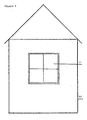
- Figure 8 depicts an enclosure, here building 50, of the present invention wherein building 50 comprises the window 52 described above.
- the building described in this embodiment may suitably be situated in an agricultural environment, for example on a farm such as an animal stable such as a pig stable, or another environment that has an elevated concentration of ammonia.
- a method of improving the scratch resistance and base resistance, such as resistance against ammonia, of polycarbonate comprising the step of incorporating into the polycarbonate repeat units derived from a monomer of structure I.
- the method may further comprise the step of adding a coating layer to the polycarbonate wherein the coating layer is described above.
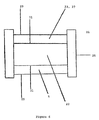
- the present invention also provides an enclosed electrical fixture 62 having: an electrical fixture 40, a base 42, and a cover 44, wherein the cover 44 is supported by the base 42 and the electrical fixture 40 is enclosed between the cover 44 and the base 42.
- the cover 44 comprises a first layer, wherein the first layer comprises a polycarbonate comprising repeat units derived from the DMBPC monomer of structure I.
- the electrical fixture 40 can be, for example, a socket capable of receiving an illuminating device such as a light bulb or a fluorescent tube, a surveillance fixture capable of receiving a surveillance camera, a switch fixture, a plug receiver capable of receiving a plug, or any other electrical fixture that can be enclosed by a cover and a base.
- the cover 44 be detachable from the base 42 such that access to the electrical fixture 40 can be obtained.
- the enclosed electrical fixture 40 of the present invention also comprise a sealing system 46 capable of sealing the cover 44 to the base 42 to prevent harmful gases to reach the electrical fixture 40 enclosed between the cover 44 and the base 42.
- This sealing system 46 is not limited and can be, for example, an o-ring disposed between the base 42 and the cover 44 wherein a seal 46 between the base 42 and cover 44 is created when the cover 44 is supported by the base 42.
- the supporting part of the base 42 which supports the cover 44 is not particularly limited and may include, for example, a screw and thread system wherein the cover 44 is screwed into the base 42, a lock and key arrangement, a male-female interaction, or a latch securing system.
- the base 42 is also made from polycarbonate comprising repeat units derived from the monomer of structure 1.
- the present invention also provides a building comprising this type of enclosed electrical fixture 62.
- Figure 9 depicts an enclosure, here building 60, comprising the enclosed electrical fixture 62 described above.
- the method of forming the sheets and articles formed from the sheets comprising the DMBPC monomer of the present invention are not particularly limited.
- the sheets and articles may be formed by, inter alia, the processes of lamination, injection molding, blow molding, extrusion, and/or coextrusion.
- Molecular weight degradation resistance was evaluated by exposing parts made from the example plastic resin compositions to ammonia vapor. Exposure was carried out by placing the parts in an enclosed container in an atmosphere saturated with the vapor generated from an aqueous ammonia solution. The molecular weight of the polycarbonate of the part was measured after the ammonia vapor exposure, and the degree degradation due to hydrolysis is thus the change in molecular weight.
- Ammonia resistance of multi-layer sheets was determined by covering a beaker filled with an aqueous ammonia solution by the part with the side to be evaluated facing the solution.
- Scratch resistance was evaluated by dragging a stylus pin on the surface of parts made from the example plastic resin compositions at a constant load of 6 N and measuring the depth of the scratches produced. Higher pencil hardness and shallower scratches (lower scratch depths) indicate better scratch resistance.
- Abrasion resistance was evaluated by subjecting parts made from the example plastic resins to the abrasion protocol of the Taber Abrasion test, according to ASTM D1044 with 4 th generation CS10-F wheels and 250 gram load. After 100 cycles of abrasion, the optical haze of the parts were measured. The less haze generated during the abrasion, the better the abrasion resistance.
- Examples 1 - 8 and comparative examples 1 - 5 below depict the scratch resistance and ammonia resistance properties of the uncoated DMBPC polycarbonate of the present invention as compared to traditional uncoated BPA polycarbonate of the prior art.
- Comparative Example 1 Commercially produced BPA polycarbonate homopolymer.
- Comparative Example 5 Commercially produced BPA polycarbonate homopolymer.
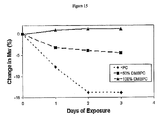
- Examples 1 - 8 demonstrate that a polycarbonate comprising repeat units derived from DMBPC monomers exhibits superior M w degradation resistance and scratch resistance properties as compared to a polycarbonate formed from traditional BPA monomers.
- the results of the above test are graphically displayed in figures 11-15 .
- Figure 11 is a graph showing the molecular weight degradation after exposure to vapors from a 2.5% ammonia solution for 3 days (Comparative Examples 1 - 3 and Examples 1 - 6).
- Figure 12 is a graph showing the molecular weight degradation after exposure to vapors from a 10% ammonia solution for 1 day (Comparative Examples 1 - 3 and Examples 1 - 6).
- Figure 13 is a graph showing the scratch depth caused by dragging a stylus across the samples at a constant vertical scratch force of 6 N (Comparative Examples 1 - 3 and Examples 1 - 6).
- Figure 14 is a graph showing the haze after 100 cycles of Taber abrasion (Comparative Examples 1 - 3 and Examples 1 - 6).
- Figure 15 is a graph showing the molecular weight degradation during exposure to vapors from a 2.3% ammonia solution over 3 days (Comparative Example 4 and Examples 7 & 8).
- the resin as described in examples 9 - 11 was applied as a co-extruded layer on top of a sheet of commercial PC.
- the multi-layer sheets were made by a coextrusion process in which each layer was molten in an extruder, both melts were combined in a heated feedblock and the combined layers were extruded to a sheet in a 'coathanger' die. After extrusion the molten sheet was caelered between heated, polished metal rolls and cooled by air and then tested.
- the sheets were coated by taking the respective multi-layer sheet and flowing a primer coating, in this case SHP401 obtained from GE Bayer Silicones, vertically over the sheet and drying the sheet at room temperature for at least 20 minutes.
- a silicon hard coat in this case AS4000 obtained from GE Bayer Silicones, was flowed vertically over the primed sheet, it was dried for 20 minutes at room temperature and cured for 90 minutes at 130 EC in an oven and then tested.
- Example 9 Copolycarbonate resin of 50/50 mol % DMBPC/BPA synthesized via the melt process blended with 10 wt. % of UV stabilizer 3030.
- Example 10 DMBPC homopolymer synthesized via the melt process blended with 20 wt. % of ITR/BPA copolymer.
- Example 11 DMBPC homopolymer synthesized via the melt process blended with 10 wt. % of UV stabilizer 3030.
- Example 12 AS4000 coating applied over the blended copolycarbonate resin of example 9.
- Example 13 AS4000 coating applied over the blended polycarbonate resin of example 10.
- Example 14 AS4000 coating applied over the blended polycarbonate resin of example 11.
- Comparative Example 7 AS4000 coating applied over the commercially produced BPA polycarbonate homopolymer of comparative example 6.
- Table 3 (Comparative Examples 6 - 7 and Examples 9 - 14) Data showing improvements in scratch resistance (given as scratch depth [micrometers] at 6 N of force and pencil hardness at 1 kgf) of the DMBPC polycarbonate of the present invention as compared to traditional BPA polycarbonate.
- Examples 9 - 14 demonstrate that a polycarbonate comprising repeat units derived from DMBPC monomers, that further comprises a coating layer, exhibits superior pencil hardness and decreased scratch depth as compared to polycarbonate formed from traditional BPA monomers with the same coating layer (i.e. comparative examples).
- the results of the above test are graphically displayed in figures 16 - 17 .
- Figure 16 is a graph showing the scratch depth at 6 N of an 4 different polycarbonate configurations with various hard coat layers. (Comparative examples 6 - 7 and Examples 9 - 14).
- Figure 17 is a graph showing the pencil hardness of 4 different polycarbonate configurations with various hard coat configurations (Comparative examples 6 - 7 and Examples 9 - 14).
- Examples 15 - 19 as illustrated in Table 4 show improvements in scratch resistance of traditional BPA polycarbonate that has a cap layer comprising DMBPC.
- comparative example 8 has a cap layer of traditional BPA polycarbonate while examples 15 - 19 demonstrate the benefit of a copolymer cap layer comprising repeat units derived from DMBPC (examples 15 - 18) and also of a homopolymer cap layer derived from DMBPC (example 19).
- Table 4 Data showing improvements in scratch resistance (given as scratch depth [micrometers] at 6 N) of molded plaques and multi-layer sheets consisting of a BPA-PC substrate and different cap layers.
Landscapes
- Chemical & Material Sciences (AREA)
- Health & Medical Sciences (AREA)
- Chemical Kinetics & Catalysis (AREA)
- Medicinal Chemistry (AREA)
- Polymers & Plastics (AREA)
- Organic Chemistry (AREA)
- Engineering & Computer Science (AREA)
- Civil Engineering (AREA)
- Structural Engineering (AREA)
- Laminated Bodies (AREA)
- Polyesters Or Polycarbonates (AREA)
- Securing Of Glass Panes Or The Like (AREA)
- Coating Of Shaped Articles Made Of Macromolecular Substances (AREA)
- Compositions Of Macromolecular Compounds (AREA)
- Manufacture Of Macromolecular Shaped Articles (AREA)
Applications Claiming Priority (2)
| Application Number | Priority Date | Filing Date | Title |
|---|---|---|---|
| US11/177,134 US7521119B2 (en) | 2005-07-07 | 2005-07-07 | Windows and other articles made from DMBPC polycarbonate homopolymer and copolymer |
| EP20060785575 EP1937749B1 (en) | 2005-07-07 | 2006-06-26 | Windows and other articles made from dmbpc polycarbonate homopolymer and copolymer |
Related Parent Applications (1)
| Application Number | Title | Priority Date | Filing Date |
|---|---|---|---|
| EP06785575.9 Division | 2006-06-26 |
Publications (1)
| Publication Number | Publication Date |
|---|---|
| EP2423243A1 true EP2423243A1 (en) | 2012-02-29 |
Family
ID=37532985
Family Applications (3)
| Application Number | Title | Priority Date | Filing Date |
|---|---|---|---|
| EP20110183445 Withdrawn EP2423243A1 (en) | 2005-07-07 | 2006-06-26 | Layered articles made from DMBPC polycarbonate homopolymer and copolymer |
| EP20060785575 Not-in-force EP1937749B1 (en) | 2005-07-07 | 2006-06-26 | Windows and other articles made from dmbpc polycarbonate homopolymer and copolymer |
| EP20110183440 Not-in-force EP2428528B1 (en) | 2005-07-07 | 2006-06-26 | Electrical fixture made from DMBPC polycarbonate homopolymer and copolymer |
Family Applications After (2)
| Application Number | Title | Priority Date | Filing Date |
|---|---|---|---|
| EP20060785575 Not-in-force EP1937749B1 (en) | 2005-07-07 | 2006-06-26 | Windows and other articles made from dmbpc polycarbonate homopolymer and copolymer |
| EP20110183440 Not-in-force EP2428528B1 (en) | 2005-07-07 | 2006-06-26 | Electrical fixture made from DMBPC polycarbonate homopolymer and copolymer |
Country Status (6)
| Country | Link |
|---|---|
| US (1) | US7521119B2 (https=) |
| EP (3) | EP2423243A1 (https=) |
| JP (1) | JP5173803B2 (https=) |
| KR (1) | KR20080023672A (https=) |
| CN (1) | CN101208372B (https=) |
| WO (1) | WO2007008390A2 (https=) |
Families Citing this family (42)
| Publication number | Priority date | Publication date | Assignee | Title |
|---|---|---|---|---|
| US7816444B2 (en) * | 2006-07-12 | 2010-10-19 | Sabic Innovative Plastics Ip B.V. | Glossy colored injection molded article |
| US8674007B2 (en) | 2006-07-12 | 2014-03-18 | Sabic Innovative Plastics Ip B.V. | Flame retardant and scratch resistant thermoplastic polycarbonate compositions |
| US20080254299A1 (en) * | 2007-04-13 | 2008-10-16 | General Electric Company | Scratch-resistant Layered Composite and Articles |
| US20090124749A1 (en) * | 2007-11-09 | 2009-05-14 | Sabic Innovative Plastics Ip Bv | Scratch resistant polycarbonate compositions |
| US7923100B2 (en) * | 2008-01-28 | 2011-04-12 | Sabic Innovative Plastics Ip B.V. | Multilayer articles and methods for making multilayer articles |
| US20090191411A1 (en) * | 2008-01-28 | 2009-07-30 | Sandeep Tripathi | Cycloaliphatic Polyester Copolymer Articles And Methods for Making Articles Therefrom |
| US20100003523A1 (en) * | 2008-07-02 | 2010-01-07 | Sabic Innovative Plastics Ip B.V. | Coated Film for Insert Mold Decoration, Methods for Using the Same, and Articles Made Thereby |
| DE102008059658A1 (de) * | 2008-11-28 | 2010-06-02 | Bayer Materialscience Ag | Copolycarbonate mit verbesserter Oberflächenhärte |
| JP5468896B2 (ja) * | 2009-01-22 | 2014-04-09 | 帝人株式会社 | ポリカーボネート樹脂積層体 |
| DE102009013643A1 (de) * | 2009-03-18 | 2010-09-30 | Bayer Materialscience Ag | Copolycarbonate mit verbesserten Eigenschaften |
| JP2011088402A (ja) * | 2009-10-26 | 2011-05-06 | Sumitomo Bakelite Co Ltd | ポリカーボネート樹脂積層体、携帯用表示体および支持基板 |
| EP2336245A1 (de) | 2009-12-12 | 2011-06-22 | Bayer MaterialScience AG | Polycarbonatzusammensetzungen mit verbesserter Oberflächenhärte |
| EP3034302B1 (en) * | 2010-03-03 | 2018-08-22 | Mitsubishi Chemical Corporation | Laminate |
| JP5542492B2 (ja) * | 2010-03-24 | 2014-07-09 | 三菱化学株式会社 | 表面保護パネル及び液晶画像表示装置 |
| JP2011218634A (ja) * | 2010-04-08 | 2011-11-04 | Mitsubishi Plastics Inc | 積層体 |
| JP5903904B2 (ja) * | 2011-01-24 | 2016-04-13 | 三菱化学株式会社 | ポリカーボネート樹脂成形体及びその製造方法 |
| JP5771021B2 (ja) * | 2011-02-16 | 2015-08-26 | 帝人株式会社 | 積層フィルム |
| KR101968772B1 (ko) | 2011-02-17 | 2019-04-12 | 미쯔비시 케미컬 주식회사 | 폴리카보네이트 수지 조성물 |
| JP2013040309A (ja) * | 2011-08-19 | 2013-02-28 | Mitsubishi Chemicals Corp | ポリカーボネート樹脂シート |
| JP5796424B2 (ja) * | 2011-09-06 | 2015-10-21 | 三菱化学株式会社 | ポリカーボネート樹脂積層体及びその製造方法 |
| JP5869268B2 (ja) * | 2011-09-16 | 2016-02-24 | 三菱化学株式会社 | ポリカーボネート樹脂組成物 |
| US9441106B2 (en) | 2011-11-11 | 2016-09-13 | Sabic Global Technologies B.V. | Composition, multilayer sheets made therefrom, and methods for making and using the same |
| KR101459130B1 (ko) * | 2011-12-30 | 2014-11-10 | 제일모직주식회사 | 플라스틱 글레이징 및 그 제조방법 |
| WO2013120269A1 (en) * | 2012-02-17 | 2013-08-22 | Sabic Innovative Plastics Ip B.V. | Transparent thin-wall scratch-resistant article |
| US20130216942A1 (en) * | 2012-02-17 | 2013-08-22 | Mohd Shamsul Hairi bin Mohd SALLEH | Polycarbonate binder for electrophotographic photoreceptor coatings |
| KR102042294B1 (ko) | 2012-05-18 | 2019-11-07 | 미츠비시 가스 가가쿠 가부시키가이샤 | 합성 수지 적층체 |
| US9446562B2 (en) | 2012-06-22 | 2016-09-20 | Sabic Global Technologies B.V. | Coated film for insert mold decoration, methods for using the same, and articles made thereby |
| JP6078258B2 (ja) * | 2012-08-07 | 2017-02-08 | 三菱瓦斯化学株式会社 | 透明多層シート |
| CN104769039B (zh) | 2012-09-05 | 2016-08-24 | 三菱化学株式会社 | 聚碳酸酯树脂组合物及其成型品 |
| KR20140119860A (ko) * | 2013-03-27 | 2014-10-13 | 삼성디스플레이 주식회사 | 표시장치용 윈도우 및 이를 포함하는 표시 장치 |
| KR20150004496A (ko) * | 2013-07-02 | 2015-01-13 | 삼성디스플레이 주식회사 | 표시장치용 윈도우 및 이를 포함하는 표시 장치 |
| KR20160090847A (ko) | 2013-11-26 | 2016-08-01 | 미츠비시 가스 가가쿠 가부시키가이샤 | 투명 수지 적층체 |
| CN106573454B (zh) | 2014-07-09 | 2018-09-18 | 三菱瓦斯化学株式会社 | 合成树脂叠层体 |
| JP6522752B2 (ja) * | 2015-06-22 | 2019-06-05 | 富士フイルム株式会社 | 熱線遮蔽材、及びこれを用いる建築部材、ケージ部材並びに側面壁 |
| EP3369759B1 (en) | 2015-10-29 | 2019-06-26 | Teijin Limited | Polycarbonate resin having amine resistance |
| CN105348774A (zh) * | 2015-11-30 | 2016-02-24 | 广东优巨先进材料研究有限公司 | 一种纤维增强聚芳醚砜合金制备方法 |
| KR102610854B1 (ko) | 2016-08-26 | 2023-12-06 | 삼성디스플레이 주식회사 | 표시 장치용 커버 윈도우 및 이를 포함하는 표시 장치 |
| CN108239295A (zh) * | 2016-12-26 | 2018-07-03 | 科思创聚合物(中国)有限公司 | 具有提高的铅笔硬度的聚碳酸酯复合物 |
| CN110225934B (zh) | 2017-01-27 | 2021-08-03 | 帝人株式会社 | 聚碳酸酯共聚物 |
| EP3744790B1 (en) | 2018-01-23 | 2021-07-21 | Mitsubishi Gas Chemical Company, Inc. | Molded article |
| DE102019130337A1 (de) | 2019-11-11 | 2021-05-12 | Dr. Ing. H.C. F. Porsche Aktiengesellschaft | Lastverwaltungssystem und Verfahren zur Regelung eines solchen Lastverwaltungssystems |
| WO2023067426A1 (en) * | 2021-10-19 | 2023-04-27 | Shpp Global Technologies B.V. | Thermoplastic compositions and uses thereof |
Citations (3)
| Publication number | Priority date | Publication date | Assignee | Title |
|---|---|---|---|---|
| US20020197441A1 (en) * | 2001-03-29 | 2002-12-26 | Ramesh Hariharan | Storage medium for data |
| WO2003093382A1 (en) * | 2002-05-02 | 2003-11-13 | General Electric Company | Solvent cast films and process made thereby |
| EP1537571B1 (en) * | 2002-09-04 | 2006-06-21 | General Electric Company | Limited play data storage media and method for limiting access to data thereon |
Family Cites Families (45)
| Publication number | Priority date | Publication date | Assignee | Title |
|---|---|---|---|---|
| US3410739A (en) * | 1963-08-02 | 1968-11-12 | Ppg Industries Inc | Method for producing window panels |
| US3356833A (en) * | 1963-08-02 | 1967-12-05 | Pittsburgh Plate Glass Co | Laminated window panels |
| US3441924A (en) * | 1965-05-07 | 1969-04-29 | Cecil Herbert Peek | Window and alarm apparatus incorporating same |
| US3424642A (en) * | 1966-08-19 | 1969-01-28 | Pittsburgh Plate Glass Co | Laminated window panels |
| US3528722A (en) * | 1968-10-30 | 1970-09-15 | Polaroid Corp | High order wave plate correction of sunlight polariscope effect in windows |
| US3734698A (en) * | 1970-09-18 | 1973-05-22 | Ppg Industries Inc | Transparent electroconductive window and electroconductive solder therefor |
| US3900655A (en) * | 1973-05-14 | 1975-08-19 | Atlantic Richfield Co | Laminated safety glass and/or plastic |
| US4045269A (en) * | 1975-12-22 | 1977-08-30 | Sierracin Corporation | Transparent formable polyurethane polycarbonate lamination |
| WO1980000348A1 (en) | 1978-07-31 | 1980-03-06 | Gen Electric | Polycarbonate compositions having improved barrier properties |
| US4304899A (en) * | 1978-07-31 | 1981-12-08 | General Electric Company | Polycarbonate compositions having improved barrier properties |
| US4443074A (en) * | 1979-05-03 | 1984-04-17 | Morwen S.R.L. | Method for making reinforced plastics material eyeglass frames |
| US4727134A (en) * | 1985-02-22 | 1988-02-23 | General Electric Company | Method for preparing cyclic polycarbonate oligomer mixtures |
| US4930163A (en) * | 1988-12-15 | 1990-06-05 | King Mathew B | Apparatus for supporting an eyeglass frame lens assembly in a diving or protective mask |
| DE3926767A1 (de) * | 1988-12-21 | 1990-07-05 | Bayer Ag | Polycarbonate aus mehrfach substituierten cyclohexylidenbisphenolen |
| DE3926766A1 (de) * | 1988-12-21 | 1990-07-05 | Bayer Ag | Polycarbonate aus cycloalkylidenbisphenolen |
| DE3926719A1 (de) * | 1988-12-23 | 1990-07-05 | Bayer Ag | Polycarbonate aus alkylcyclohexylidenbisphenolen |
| DE3926614A1 (de) | 1989-03-11 | 1990-09-13 | Bayer Ag | Thermoplastische legierungen mit polycarbonaten auf basis n-alkyl-substituierter cyclohexylidenbisphenole |
| CA2013353A1 (en) * | 1989-07-03 | 1991-01-03 | Richard P. Joyce | Thermoplastic polyarylate compositions having improved oxygen barrier properties |
| US5051490A (en) * | 1989-07-03 | 1991-09-24 | General Electric Company | Thermoplastic polyarylate compositions having improved oxygen barrier properties |
| DE3926768A1 (de) | 1989-08-12 | 1991-02-14 | Bayer Ag | Verwendung von polycarbonaten aus n-alkyl-substituierten cyclohexylidenbisphenolen |
| DE3927656A1 (de) * | 1989-08-22 | 1991-02-28 | Bayer Ag | Polycarbonate aus substituierten cyclohexylidenbisphenolen |
| US6136441A (en) * | 1998-03-24 | 2000-10-24 | General Electric Company | Multilayer plastic articles |
| US6482488B1 (en) * | 1998-10-28 | 2002-11-19 | 3M Innovative Properties Company | Repaired scratched and/or abraded transparent substrates having protective removable sheets thereon and a method of making |
| JP4243893B2 (ja) * | 1998-12-24 | 2009-03-25 | 株式会社Adeka | ポリカーボネート樹脂成形物 |
| US6001953A (en) * | 1999-03-18 | 1999-12-14 | General Electric Company | Polycarbonates suitable for use in optical articles |
| US6060577A (en) * | 1999-03-18 | 2000-05-09 | General Electric Company | Polycarbonates derived from alicyclic bisphenols |
| JP4166363B2 (ja) * | 1999-03-29 | 2008-10-15 | 出光興産株式会社 | 窓ガラス |
| JP2001198947A (ja) * | 2000-01-21 | 2001-07-24 | Teijin Ltd | ポリカーボネート樹脂積層成形体およびその製造方法 |
| CN1180025C (zh) | 2000-05-01 | 2004-12-15 | 通用电气公司 | 透明的聚碳酸酯混合物 |
| US6593425B2 (en) * | 2000-05-31 | 2003-07-15 | General Electric Company | Data storage media containing transparent polycarbonate blends |
| US6441123B1 (en) * | 2000-05-31 | 2002-08-27 | General Electric Company | Vibration damping monolithic polymers |
| US6537636B1 (en) * | 2000-06-05 | 2003-03-25 | General Electric Company | Data storage media containing clear polycarbonate blends |
| JP2002014480A (ja) | 2000-06-30 | 2002-01-18 | Kyocera Mita Corp | 単層型電子写真感光体 |
| US6255438B1 (en) * | 2000-07-20 | 2001-07-03 | General Electric Company | Phenolic compounds, polymers derived therefrom, and method |
| JP2002040679A (ja) | 2000-07-31 | 2002-02-06 | Kyocera Mita Corp | 電子写真感光体 |
| US6395364B1 (en) * | 2000-07-31 | 2002-05-28 | General Electric Company | Data storage media containing clear polycarbonate terpolymer |
| US6465102B1 (en) * | 2001-03-22 | 2002-10-15 | General Electric Company | Formed decorative article |
| US20030060575A1 (en) * | 2001-07-16 | 2003-03-27 | Caruso Andrew James | Polycarbonates suitable for use in optical articles |
| US6518391B1 (en) * | 2001-07-24 | 2003-02-11 | General Electric Company | Method of polycarbonate preparation by solid state polymerization |
| US6552158B1 (en) * | 2002-07-03 | 2003-04-22 | General Electric Company | Dimensionally stable polycarbonate articles |
| WO2004068189A2 (en) * | 2003-01-27 | 2004-08-12 | David Stark | Hermetic window assemblies and frames |
| DE10333928A1 (de) * | 2003-07-25 | 2005-02-24 | Bayer Materialscience Ag | Polyformale und Copolyformale mit reduzierter Wasseraufnahme, ihre Herstellung und Verwendung |
| US6844071B1 (en) * | 2003-10-06 | 2005-01-18 | General Electric Company | Multilayer articles comprising polycarbonate and polypropylene and method for their preparation |
| US7138479B2 (en) * | 2003-12-31 | 2006-11-21 | General Electric Company | Aliphatic diol polycarbonates and their preparation |
| US20060135662A1 (en) * | 2004-12-22 | 2006-06-22 | General Electric Company | Polycarbonates with fluoroalkylene carbonate end groups |
-
2005
- 2005-07-07 US US11/177,134 patent/US7521119B2/en not_active Expired - Fee Related
-
2006
- 2006-06-26 CN CN200680023100XA patent/CN101208372B/zh active Active
- 2006-06-26 KR KR1020077017859A patent/KR20080023672A/ko not_active Withdrawn
- 2006-06-26 JP JP2008519450A patent/JP5173803B2/ja active Active
- 2006-06-26 EP EP20110183445 patent/EP2423243A1/en not_active Withdrawn
- 2006-06-26 EP EP20060785575 patent/EP1937749B1/en not_active Not-in-force
- 2006-06-26 EP EP20110183440 patent/EP2428528B1/en not_active Not-in-force
- 2006-06-26 WO PCT/US2006/024786 patent/WO2007008390A2/en not_active Ceased
Patent Citations (3)
| Publication number | Priority date | Publication date | Assignee | Title |
|---|---|---|---|---|
| US20020197441A1 (en) * | 2001-03-29 | 2002-12-26 | Ramesh Hariharan | Storage medium for data |
| WO2003093382A1 (en) * | 2002-05-02 | 2003-11-13 | General Electric Company | Solvent cast films and process made thereby |
| EP1537571B1 (en) * | 2002-09-04 | 2006-06-21 | General Electric Company | Limited play data storage media and method for limiting access to data thereon |
Also Published As
| Publication number | Publication date |
|---|---|
| CN101208372A (zh) | 2008-06-25 |
| EP2428528A1 (en) | 2012-03-14 |
| JP2009500195A (ja) | 2009-01-08 |
| EP2428528B1 (en) | 2014-08-13 |
| KR20080023672A (ko) | 2008-03-14 |
| CN101208372B (zh) | 2013-01-16 |
| US20070009741A1 (en) | 2007-01-11 |
| JP5173803B2 (ja) | 2013-04-03 |
| EP1937749A2 (en) | 2008-07-02 |
| US7521119B2 (en) | 2009-04-21 |
| WO2007008390A2 (en) | 2007-01-18 |
| EP1937749B1 (en) | 2012-12-19 |
| WO2007008390A3 (en) | 2007-03-22 |
Similar Documents
| Publication | Publication Date | Title |
|---|---|---|
| US7521119B2 (en) | Windows and other articles made from DMBPC polycarbonate homopolymer and copolymer | |
| CN109334171B (zh) | 轻量化、高刚度玻璃层叠结构 | |
| EP0193176B1 (en) | Laminate formed from a polyarylate sheet and a polycarbonate and/or polyester sheet | |
| US6265072B1 (en) | UV-stabilized polymeric structures | |
| CN1237105C (zh) | 含聚碳酸酯和颜料的组合物 | |
| JP2009505861A (ja) | 多層熱可塑性フィルムおよび製造方法 | |
| JPH0637108B2 (ja) | 改良された耐候性を有する共有押出製品 | |
| JPS60233126A (ja) | ポリカーボネート成形物 | |
| EP3131967B1 (en) | High heat polycarbonate compositions | |
| CA2434999A1 (en) | Multi-layer product containing polycarbonate | |
| EP3131968B1 (en) | High heat polycarbonate compositions | |
| RU2448989C2 (ru) | Поликарбонат для получения путем экструзии пленок фактически без дефектов поверхности | |
| US10633487B2 (en) | Inherently healing polycarbonate resins | |
| EP1971632B1 (en) | Method of producing polycarbonate articles by rotation molding and rotation molded articles made by the method | |
| JP4907755B2 (ja) | ポリカーボネート樹脂積層体 | |
| JP2014205335A (ja) | 三次元構造を有するポリカーボネート樹脂成形品の製造方法およびその成形品 | |
| JP6627608B2 (ja) | 積層体 | |
| AU2671701A (en) | Solar desalination plant comprising coated transparent formed bodies | |
| US7691477B2 (en) | Polyformals as a coextrusion protective layer on polycarbonate | |
| CN105246953B (zh) | 使用硬涂层的塑料基材的改进的最大加工温度 | |
| AU2005205110A1 (en) | Polyformals and copolyformals as a protective layer against hydrolysis on polycarbonate | |
| MXPA01010804A (en) | Uv-stabilized polymeric structures |
Legal Events
| Date | Code | Title | Description |
|---|---|---|---|
| AC | Divisional application: reference to earlier application |
Ref document number: 1937749 Country of ref document: EP Kind code of ref document: P |
|
| AK | Designated contracting states |
Kind code of ref document: A1 Designated state(s): AT BE BG CH CY CZ DE DK EE ES FI FR GB GR HU IE IS IT LI LT LU LV MC NL PL PT RO SE SI SK TR |
|
| PUAI | Public reference made under article 153(3) epc to a published international application that has entered the european phase |
Free format text: ORIGINAL CODE: 0009012 |
|
| STAA | Information on the status of an ep patent application or granted ep patent |
Free format text: STATUS: THE APPLICATION IS DEEMED TO BE WITHDRAWN |
|
| 18D | Application deemed to be withdrawn |
Effective date: 20120830 |