EP2392579B1 - Niedermolekulares polysulfatiertes hyaluronsäurederivat und medikament, welches dieses enthält - Google Patents
Niedermolekulares polysulfatiertes hyaluronsäurederivat und medikament, welches dieses enthält Download PDFInfo
- Publication number
- EP2392579B1 EP2392579B1 EP10735677.6A EP10735677A EP2392579B1 EP 2392579 B1 EP2392579 B1 EP 2392579B1 EP 10735677 A EP10735677 A EP 10735677A EP 2392579 B1 EP2392579 B1 EP 2392579B1
- Authority
- EP
- European Patent Office
- Prior art keywords
- production example
- compound
- nmr
- chart
- optionally substituted
- Prior art date
- Legal status (The legal status is an assumption and is not a legal conclusion. Google has not performed a legal analysis and makes no representation as to the accuracy of the status listed.)
- Active
Links
- 0 CCC(C)(*)OC(C(*)C(OC(C(C(O)=O)OC(C1O*)C(C)(*)C=CN)[C@]1O*)OC1*)C1O* Chemical compound CCC(C)(*)OC(C(*)C(OC(C(C(O)=O)OC(C1O*)C(C)(*)C=CN)[C@]1O*)OC1*)C1O* 0.000 description 11
- SCIFESDRCALIIM-VIFPVBQESA-N CN[C@@H](Cc1ccccc1)C(O)=O Chemical compound CN[C@@H](Cc1ccccc1)C(O)=O SCIFESDRCALIIM-VIFPVBQESA-N 0.000 description 1
- GUBZNLBDQBXDQM-UHFFFAOYSA-N NC(C(C(C1O)O)O)OC1C(O)=O Chemical compound NC(C(C(C1O)O)O)OC1C(O)=O GUBZNLBDQBXDQM-UHFFFAOYSA-N 0.000 description 1
- APGGNVICWFPFJM-UHFFFAOYSA-N NC(C1O)OC(C(O)=O)=CC1O Chemical compound NC(C1O)OC(C(O)=O)=CC1O APGGNVICWFPFJM-UHFFFAOYSA-N 0.000 description 1
Images


Classifications
-
- A—HUMAN NECESSITIES
- A61—MEDICAL OR VETERINARY SCIENCE; HYGIENE
- A61K—PREPARATIONS FOR MEDICAL, DENTAL OR TOILETRY PURPOSES
- A61K31/00—Medicinal preparations containing organic active ingredients
- A61K31/70—Carbohydrates; Sugars; Derivatives thereof
- A61K31/715—Polysaccharides, i.e. having more than five saccharide radicals attached to each other by glycosidic linkages; Derivatives thereof, e.g. ethers, esters
- A61K31/726—Glycosaminoglycans, i.e. mucopolysaccharides
- A61K31/728—Hyaluronic acid
-
- C—CHEMISTRY; METALLURGY
- C08—ORGANIC MACROMOLECULAR COMPOUNDS; THEIR PREPARATION OR CHEMICAL WORKING-UP; COMPOSITIONS BASED THEREON
- C08B—POLYSACCHARIDES; DERIVATIVES THEREOF
- C08B37/00—Preparation of polysaccharides not provided for in groups C08B1/00 - C08B35/00; Derivatives thereof
-
- A—HUMAN NECESSITIES
- A61—MEDICAL OR VETERINARY SCIENCE; HYGIENE
- A61P—SPECIFIC THERAPEUTIC ACTIVITY OF CHEMICAL COMPOUNDS OR MEDICINAL PREPARATIONS
- A61P11/00—Drugs for disorders of the respiratory system
- A61P11/02—Nasal agents, e.g. decongestants
-
- A—HUMAN NECESSITIES
- A61—MEDICAL OR VETERINARY SCIENCE; HYGIENE
- A61P—SPECIFIC THERAPEUTIC ACTIVITY OF CHEMICAL COMPOUNDS OR MEDICINAL PREPARATIONS
- A61P11/00—Drugs for disorders of the respiratory system
- A61P11/06—Antiasthmatics
-
- A—HUMAN NECESSITIES
- A61—MEDICAL OR VETERINARY SCIENCE; HYGIENE
- A61P—SPECIFIC THERAPEUTIC ACTIVITY OF CHEMICAL COMPOUNDS OR MEDICINAL PREPARATIONS
- A61P17/00—Drugs for dermatological disorders
-
- A—HUMAN NECESSITIES
- A61—MEDICAL OR VETERINARY SCIENCE; HYGIENE
- A61P—SPECIFIC THERAPEUTIC ACTIVITY OF CHEMICAL COMPOUNDS OR MEDICINAL PREPARATIONS
- A61P27/00—Drugs for disorders of the senses
- A61P27/02—Ophthalmic agents
-
- A—HUMAN NECESSITIES
- A61—MEDICAL OR VETERINARY SCIENCE; HYGIENE
- A61P—SPECIFIC THERAPEUTIC ACTIVITY OF CHEMICAL COMPOUNDS OR MEDICINAL PREPARATIONS
- A61P27/00—Drugs for disorders of the senses
- A61P27/02—Ophthalmic agents
- A61P27/14—Decongestants or antiallergics
-
- A—HUMAN NECESSITIES
- A61—MEDICAL OR VETERINARY SCIENCE; HYGIENE
- A61P—SPECIFIC THERAPEUTIC ACTIVITY OF CHEMICAL COMPOUNDS OR MEDICINAL PREPARATIONS
- A61P37/00—Drugs for immunological or allergic disorders
-
- A—HUMAN NECESSITIES
- A61—MEDICAL OR VETERINARY SCIENCE; HYGIENE
- A61P—SPECIFIC THERAPEUTIC ACTIVITY OF CHEMICAL COMPOUNDS OR MEDICINAL PREPARATIONS
- A61P37/00—Drugs for immunological or allergic disorders
- A61P37/08—Antiallergic agents
-
- C—CHEMISTRY; METALLURGY
- C07—ORGANIC CHEMISTRY
- C07H—SUGARS; DERIVATIVES THEREOF; NUCLEOSIDES; NUCLEOTIDES; NUCLEIC ACIDS
- C07H15/00—Compounds containing hydrocarbon or substituted hydrocarbon radicals directly attached to hetero atoms of saccharide radicals
- C07H15/02—Acyclic radicals, not substituted by cyclic structures
- C07H15/04—Acyclic radicals, not substituted by cyclic structures attached to an oxygen atom of the saccharide radical
-
- C—CHEMISTRY; METALLURGY
- C08—ORGANIC MACROMOLECULAR COMPOUNDS; THEIR PREPARATION OR CHEMICAL WORKING-UP; COMPOSITIONS BASED THEREON
- C08B—POLYSACCHARIDES; DERIVATIVES THEREOF
- C08B37/00—Preparation of polysaccharides not provided for in groups C08B1/00 - C08B35/00; Derivatives thereof
- C08B37/006—Heteroglycans, i.e. polysaccharides having more than one sugar residue in the main chain in either alternating or less regular sequence; Gellans; Succinoglycans; Arabinogalactans; Tragacanth or gum tragacanth or traganth from Astragalus; Gum Karaya from Sterculia urens; Gum Ghatti from Anogeissus latifolia; Derivatives thereof
- C08B37/0063—Glycosaminoglycans or mucopolysaccharides, e.g. keratan sulfate; Derivatives thereof, e.g. fucoidan
- C08B37/0072—Hyaluronic acid, i.e. HA or hyaluronan; Derivatives thereof, e.g. crosslinked hyaluronic acid (hylan) or hyaluronates
Definitions
- the present invention relates to a low-molecular-weight polysulfatedhyaluronic acid derivative (HAPS) useful for prevention and/or treatment of an allergic disease.
- HAPS low-molecular-weight polysulfatedhyaluronic acid derivative
- Hyaluronic acid is a linear polymeric polysaccharide in which ⁇ -D-N-acetylglucosamine and ⁇ -D-glucuronic acid are alternately bonded, is a relatively easily available mucopolysaccharide, and exhibits specific physicochemical properties and physiological properties, and hence, hyaluronic acid itself or various derivatives thereof are used as pharmaceuticals and cosmetics.
- polysulfated hyaluronic acid which is a derivative of hyaluronic acid, has an activity of inhibiting a kallikrein-kinin system (Patent Document 1) and an activity of inhibiting phospholipase A2 (Patent Document 2), can be used as a therapeutic agent for an allergic disease (Patent Document 3), and exhibits a strong anti-inflammatory action to inflammation mediated by selectin, which is one of the adhesion molecules (Patent Document 4).
- Non-Patent Document 5 polysulfated oligohyaluronates having a low molecular weight such as a viscosity-average molecular weight of 10,000 or less can be used as an active ingredient for cosmetics having excellent skin permeability
- Patent Document 5 polysulfated hyaluronan oligosaccharides ranging from a tetrasaccharide to an eicosasaccharide have an anti-coagulant activity and an anti-hyaluronidase activity, and can be used as an anti-cancer agent.
- the patent application US 6 689 748 discloses the use of chondroitin sulfate, keratan sulfate and dermatan sulfate for the treatment of allergic diseases including allergic conjunctivitis, rhinitis, otitis, asthma and atopic dermatitis.
- Non-Patent Document 1 Glycobiology, vol.11, No.1, pp. 57 - 64, 2001
- polysulfated hyaluronic acid and polysulfated hyaluronan oligomer themselves have a stimulating action such as a vascular permeability increasing activity, and hence, some of them are not suitable for clinical applications.
- a stimulating action such as a vascular permeability increasing activity
- a few of them meet all requirements such as a pharmacological activity and safety.
- the present invention relates to the provision of a low-molecular-weight hyaluronic acid derivative free of such problems and useful for the prevention and/or treatment of an allergic disease.
- the inventors of the present invention have intensively studied to develop a compound useful for prevention and/or treatment of an allergic disease, and as a result, the inventors have found that low-molecular-weight polysulfated hyaluronic acid derivatives represented by the following general formulae (IA) and (IB) has an anti-allergy action and an anti-inflammatory action and does not have a vascular permeability increasing activity, and hence is useful as a pharmaceutical.
- the present invention relates to the following items (1) to (14) :
- the low-molecular-weight polysulfated hyaluronic acid derivative or the pharmaceutically acceptable salt thereof of the present invention has an excellent anti-allergy action and an excellent anti-inflammatory action and does not have a vascular permeability increasing activity, and hence can be used as an agent for prevention and/or treatment of allergic diseases such as pollinosis, allergic rhinitis, allergic conjunctivitis, atopic dermatitis, and asthma, the agent exerting a few side effects and being excellent in safety.
- a compound group represented by the general formula (IA) wherein Y represents the formula (d) or (e) and a compound group represented by the general formula (IB) have advantages that the compounds of the groups are highly stable in aqueous solutions, and hence, easily formed into preparations.
- the low-molecular-weight polysulfated hyaluronic acid derivative of the present invention is a derivative in which all hydroxyl groups in a hyaluronan oligomer are excessively sulfated, and the degree of its sulfation (or degree of its substitution) is SO 3 H groups accounting for 80 to 100% of the total number (in the whole oligomer) of R's in the general formulae (IA) and (IB), and the SO 3 H groups preferably account for 90 to 100%.
- SO 3 H groups in the oligomer may be unevenly distributed, however in general, the oligomer in which SO 3 H groups are evenly distributed in its whole molecule is preferred from the viewpoints of its preparation and use.
- a compound represented by the general formula (IA) wherein Y represents the formula (d) or (e) (i.e., a compound represented by the general formula (IA')), and a compound represented by the general formula (IB) are novel compounds that have not been disclosed in any document.
- Examples of the "lower alkyl” of the optionally substituted lower alkyl group, the optionally substituted aryl group, the optionally substituted aralkyl group, and the optionally substituted heteroaryl group represented by Z 1 and Z 2 in the above general formulae (IA) and (IB) include linear or branched alkyl groups having 1 to 6 carbon atoms (hereinafter, abbreviated as "C 1-6 ”) such as methyl, ethyl, n-propyl, isopropyl, n-butyl, isobutyl, sec-butyl, tert-butyl, n-pentyl, and n-hexyl groups.
- C 1-6 linear or branched alkyl groups having 1 to 6 carbon atoms
- a C 1-4 alkyl group is preferable, methyl, ethyl, n-propyl, isopropyl, n-butyl, isobutyl, sec-butyl, and tert-butyl groups are more preferable, and methyl and ethyl groups are even more preferable.
- aryl group examples include C 6-14 , monocyclic to tricyclic, aromatic hydrocarbon ring groups such as phenyl, naphthyl, and anthracenyl groups. Among these, a phenyl group is preferable.
- heteroaryl group examples include saturated or unsaturated, monocyclic or polycyclic heterocyclic groups having at least one hetero atom selected from a nitrogen atom, a sulfur atom, and an oxygen atom.
- lower alkyl group may be substituted by, for example, a halogen atom, a carboxy group, an aryl group, a lower alkoxyl group, or an acyl group
- aryl group and heteroaryl group may each be substituted by, for example, a halogen atom, a carboxy group, a lower alkyl group, a lower alkoxyl group, or an acyl group.
- examples of the aryl group include phenyl and naphthyl groups
- examples of the lower alkyl group include the above-mentioned C 1-6 alkyl groups.
- halogen atom examples include fluorine, chlorine, bromine, and iodine.
- examples of the lower alkoxyl group include linear or branched C 1-6 alkoxyl groups such as methoxy, ethoxy, n-propoxy, isopropoxy, n-butoxy, isobutoxy, sec-butoxy, tert-butoxy, n-pentoxy, and n-hexoxy.
- a C 1-4 alkoxyl group is preferable, methoxy, ethoxy, n-propoxy, isopropoxy, n-butoxy, isobutoxy, sec-butoxy, and tert-butoxy groups are more preferable, and methoxy and ethoxy groups are even more preferable.
- acyl group examples include CHO, C 1-6 alkyl-carbonyl, C 1-6 alkoxy-carbonyl, aryl carbonyl, aryl-C 1-6 alkylene-carbonyl, heteroaryl carbonyl, and heteroaryl-C 1-6 alkylene-carbonyl groups.
- examples of the C 1-6 alkyl, C 1-6 alkoxy, aryl, and heteroaryl groups are the same as those described above.
- examples of the C 1-6 alkylene groups include linear or branched C 1-6 alkylene groups such as methylene, ethylene, trimethylene, tetramethylene, pentamethylene, hexamethylene, propylene, methylmethylene, ethylethylene, 1,2-dimethylethylene, and 1,1,2,2-tetramethylethylene groups.
- methylene, ethylene, and trimethylene groups are preferable.
- examples of the "aralkyl group” include aryl-C 1-6 alkyl groups.
- examples of the aryl and C 1-6 alkyl groups are the same as those described above.
- suitable aralkyl groups are, for example, benzyl and phenethyl groups.
- the aralkyl group may be substituted by, for example, any one of the exemplary groups by which the above-mentioned aryl group and lower alkyl group may be substituted.
- the "optionally substituted lower alkyl group" which is represented by each of Z 1 and Z 2 is preferably, for example, a trifluoromethyl, benzyl, 2-, 3-, or 4-methylbenzyl, 2-, 3-, or 4-methoxybenzyl, methoxymethyl, or methoxycarbonylmethyl group
- the "optionally substituted aryl group" which is represented by each of Z 1 and Z 2 is preferably, for example, a 2-, 3-, or 4-methylphenyl, 2-, 3-, or 4-methoxyphenyl, 2-, 3-, or 4-fluorophenyl, 2-, 3-, or 4-trifluoromethyl, or 2-, 3-, or 4-carboxyphenyl group
- the "optionally substituted aralkyl group" which is represented by each of Z 1 and Z 2 is preferably, for example, a benzyl, 2-, 3-, or 4-methylbenzyl, or 2-, 3-, or 4-methoxybenzyl group
- Examples of an amino acid residue or a peptide residue when -NZ 1 Z 2 collectively represents the amino acid residue or the peptide residue include: amino acid residues such as alanine, arginine, asparagine, aspartic acid, cysteine, glutamine, glutamic acid, glycine, histidine, isoleucine, leucine, lysine, methionine, phenylalanine, proline, serine, threonine, tryptophan, tyrosine, valine, ⁇ -alanine, sarcosine, phenylglycine, N-ethylglycine, N-n-propylglycine, N-isopropylglycine, N-n-butylglycine, N-tert-butylglycine, N-n-pentylglycine, and N-n-hexylglycine; and peptide residues such as sarcosylglycine
- n represents a number of 0 to 15, preferably 3 to 9, more preferably 3, 4, or 5, or even more preferably 4 or 5.
- the compounds represented by the above general formulae (IA) or (IB) includes various stereoisomers, optical isomers, and solvates such as a hydrate.
- a suitable salt of the low-molecular-weight polysulfated hyaluronic acid derivative of the present invention is apharmaceutically acceptable salt.
- the salt include: metal salts including alkali metal salts (such as a sodium salt and potassium salt) and alkali earth metal salts (such as a magnesium salt and calcium salt) ; salts with inorganic bases such as an ammonium salt, and hydroxides, carbonates, or hydrogen carbonates of alkali metals (such as sodium and potassium) and alkali earth metals (such as magnesium and calcium); and salts with organic bases such as organic amines (such as trimethylamine and triethylamine), pyridine, quinoline, piperidine, imidazole, picoline, dimethylaminopyridine, dimethylaniline, and N-methylmorpholine.
- the low-molecular-weight polysulfated hyaluronic acid derivative or the pharmaceutically acceptable salt thereof of the present invention preferably has an average molecular weight of 1, 500 to 13, 500, though the average molecular weight varies depending on the kind of salts.
- a compound represented by the general formula (IA) or (IB) of the present invention can be produced by, for example, sulfating a low-molecular-weight hyaluronic acid derivative represented by the general formula (IIA) or (IIB) as shown in Reaction-1 below.
- the above-mentioned suitable salts may be used as material compounds and target compounds.
- substituents represented by Z 3 and Z 4 correspond to Z 1 and Z 2 , respectively, and the meanings of the respective substituents are as described above. or
- X 1 represents the following (a 1 ) or (b 1 ) ;
- Y 1 represents the following (c 1 ), (d 1 ) or (e 1 ) ;
- W 1 represents the following (f 1 ) or (g 1 ) ;
- R 1' represents -OH or -NZ 3 Z 4 (wherein Z 3 and Z 4 each independently represent a hydrogen atom, an optionally substituted lower alkyl group, an optionally substituted aryl group, an optionally substituted aralkyl group, or an optionally substituted heteroaryl group, or -NZ 3 Z 4 collectively represents an amino acid residue or a peptide residue); and n, X, Y, W, R, and * are each the same as described above.]
- the reaction can be performed by a known sulfation reaction, for example, dissolving a compound (IIA) or (IIB) and a sulfating agent in an appropriate solvent and allowing them to react under heating.
- Examples of the solvent used in the subject invention include: N,N-dimethylformamide, dimethyl sulfoxide, N-methylpyrrolidone, N,N-dimethylacetamide, 1,1,3,3-tetramethylurea, pyridine, and N,N-dimethylacrylamide; ionic liquids such as 1-ethyl-3-methylimidazolium hexaflurophosphate, 1-butyl-1-methylpyrrolidinium tetrafluoroborate, and 1-butylpyridinium chloride; and mixed solvents thereof.
- the sulfating agent is not particularly limited, and preferably used are complexes of sulfuric anhydride with pyridine, picoline, 2,6-lutidine, trimethylamine, triethylamine, N,N-dimethylformamide, dioxane, and the like, or sulfuric acid-dicyclohexylcarbodiimide, chlorosulfone, and the like.
- the sulfating agent is preferably used in 1 to 100 equivalents with respect to the amount of the compound (IIA) or (IIB).
- an acid catalyst such as trifluoroacetic acid, trifluoromethanesulfonic acid, or the like may be added to the reaction system.
- the reaction temperature and the reaction time are not particularly limited, and for example, are from 0 to 120°C and from 30 minutes to 20 days, respectively.
- a compound represented by the general formula (IIA) wherein Y 1 represents the formula (d 1 ) or (e 1 ) and R 1' represents -OH, or a compound represented by the general formula (IIB) where R 1' represents -OH can be prepared by a reduction shown in below Reaction-2.
- the starting compounds and target compounds may be the above-mentioned suitable salts. or
- a 1 represents the following (h) or (i);
- a 2 represents the following (j) or (k) ; and
- n, X 1 , and * are each the same as described above.
- the compound (II-1) or (II-2) can be prepared by subjecting a compound (III-1) or (III-2) to, for example, a reduction in an appropriate solvent in the presence of a reducing agent.
- Examples of the solvent to be used in the reaction include: water; lower alcohols such as methanol, ethanol, isopropanol, butanol, tert-butanol, and ethylene glycol; acetonitrile; fatty acids such as formic acid and acetic acid; ethers such as diethyl ether, tetrahydrofuran, dioxane, monoglyme, and diglyme; aromatic hydrocarbons such as benzene, toluene, and xylene; halogenated hydrocarbons such as dichloromethane, dichloroethane, chloroform, and carbon tetrachloride; N,N-dimethylformamide; and mixed solvents thereof.
- lower alcohols such as methanol, ethanol, isopropanol, butanol, tert-butanol, and ethylene glycol
- acetonitrile fatty acids such as formic acid and acetic acid
- ethers such as
- Examples of the reducing agent include sodium borohydride, lithium borohydride, potassium borohydride, tetrabutylammonium borohydride, zinc borohydride, lithium tri(sec-butyl)borohydride, borane analogs, diisobutyl aluminum hydride, and lithium aluminum hydride.
- the reducing agent is generally used in an amount of about 0.1- to 60-fold per mole of the compound (III-1) or (III-2).
- Zinc chloride, cobalt(II) chloride, samarium(III) chloride, cerium(III) chloride, titanium(III) chloride, iron(II) chloride, iron(III) chloride, nickel(II) chloride, or the like may be added to the reaction system in the presence of an amine such as pyridine, trimethylamine, triethylamine, or N-ethyldiisopropylamine, an inorganic base such as sodium hydroxide, and/or a ligand such as dimethyl glyoxime, 2,2'-bipyridyl, or 1,10-phenanthrolin.
- an amine such as pyridine, trimethylamine, triethylamine, or N-ethyldiisopropylamine
- an inorganic base such as sodium hydroxide
- a ligand such as dimethyl glyoxime, 2,2'-bipyridyl, or 1,10-phenanthrolin
- the reduction may also be carried out by catalytic hydrogenation in the presence of a transition metal catalyst such as palladium or platinum.
- the reaction can be performed usually at about -80 to 100°C, preferably at about -80 to 70°C, and in general, the reaction is completed in about 30 minutes to 60 hours.
- a compound represented by the general formula (IIA) where Y 1 represents the formula (d 1 ) or (e 1 ) and R 1 ' represents -NZ 3 Z 4 or a compound represented by the general formula (IIB) where R 1 ' represents -NZ 3 Z 4 can be produced by a reductive amination reaction shown in below Reaction-3.
- the starting compounds and target compounds may be the above-mentioned suitable salts. or
- the reaction is, for example, what is called a reductive amination reaction in which a compound (III-1) or (III-2) is allowed to react with an amine (IV) in an appropriate solvent in the presence of a reducing agent to form a Schiff base, followed by reduction.
- the amine (IV) is usually used in about 1- to 5-fold per mole of the compound (III-1) or (III-2).
- Examples of the solvent to be used in the reaction include: water; lower alcohols such as methanol, ethanol, isopropanol, butanol, tert-butanol, and ethylene glycol; acetonitrile; fatty acids such as formic acid and acetic acid; ethers such as diethyl ether, tetrahydrofuran, dioxane, monoglyme, and diglyme; aromatic hydrocarbons such as benzene, toluene, and xylene; halogenated hydrocarbons such as dichloromethane, dichloroethane, chloroform, and carbon tetrachloride; N,N-dimethylformamide; and mixed solvents thereof.
- lower alcohols such as methanol, ethanol, isopropanol, butanol, tert-butanol, and ethylene glycol
- acetonitrile fatty acids such as formic acid and acetic acid
- ethers such as
- Examples of the reducing agent to be used in the reaction include sodium borohydride, lithium borohydride, potassium borohydride, tetrabutylammonium borohydride, sodium cyanotrihydridoborate, and sodium triacetoxyhydroborate.
- the reducing agent is usually used in about 0.1- to 60-fold per mole of the compound (III).
- the reaction may be performed usually at about -80 to 100°C, preferably at about -80 to 70°C, and in general, the reaction is completed in about 30 minutes to 60 hours.
- the reaction may be performed in the presence of organic acids or salts thereof in 1- to 50-fold per mole as required.
- organic acids or the salts thereof include acetic acid, trifluoroacetic acid, and alkali metal salts of these acids (such as sodium acetate).
- Zinc chloride, cobalt(II) chloride, samarium(III) chloride, cerium(III) chloride, titanium(III) chloride, iron(II) chloride, iron (III) chloride, or nickel (II) chloride maybe added to the system in the presence of an amine such as pyridine, trimethylamine, triethylamine, or N-ethyldiisopropylamine, an inorganic base such as sodium hydroxide, and/or a ligand such as dimethyl glyoxime, 2,2'-bipyridyl, or 1,10-phenanthrolin.
- an amine such as pyridine, trimethylamine, triethylamine, or N-ethyldiisopropylamine
- an inorganic base such as sodium hydroxide
- a ligand such as dimethyl glyoxime, 2,2'-bipyridyl, or 1,10-phenanthrolin.
- boric acid may be added to the reaction system.
- Transformation between compounds having even numberd sugars and compounds having odd numberd sugars can be performed through the following Reaction-4 or Reaction-5 in order to prepare a compound in which one constitutional sugars is subtracted from a starting compound.
- the reaction is an elimination reaction from N-acetylglucosamine with a weak alkali treatment under heating.
- the compound (VI) can be prepared by stirring the compound (V) under heating in a borate buffer having a pH of 9.18, following the method of Reissig et al. ( Reissig. J. L. , et al. , J. Biol. Chem. , 217, 959 (1955 )).
- the reaction can be performed usually at about 50 to 120°C, preferably at about 70 to 90°C, and in general, the reaction is completed in about 30 minutes to 60 hours.
- D 1 represents the following (r) or (s), and n and * are each the same as described above.
- the reaction is an elimination reaction of glucuronic acid using ⁇ -glucuronidase.
- the compound (VIII) can be prepared by stirring the compound (VII) under presence of ⁇ -glucuronidase in an appropriate buffer.
- the reaction can be performed usually at room temperature to 60°C, preferably at about 30 to 40°C, and in general, the reaction is completed in about 30 minutes to 60 hours.
- Each of the target compounds obtained in the above-mentioned reaction formulae can be purified by purification methods commonly used for various modified saccharides.
- Specific purification methods include desalting using gel filtration, neutralization, and dialysis, a collecting operation using a precipitating operation by addition of an organic solvent, and a collecting operation by freeze-drying.
- the compound of the present invention shows an anti-allergy action and an anti-inflammatory action, and does not show any vascular permeability increasing activity, and hence is useful in pharmaceuticals for prevention and/or treatment of allergic diseases such as pollinosis, allergic rhinitis, allergic conjunctivitis, atopic dermatitis, and asthma.
- Those pharmaceuticals are formed as a general form of medical formulation using the compound of the present invention into, and are prepared by using a diluting agent such as a filler, an expander, a binder, a humectant, a disintegrant, a surfactant, or a lubricant, or an excipient.
- a diluting agent such as a filler, an expander, a binder, a humectant, a disintegrant, a surfactant, or a lubricant, or an excipient.
- Those pharmaceuticals can be selected from various forms depending on the therapeutic purposes, and typical examples of the pharmaceuticals include a tablet, a pill, a powder, a liquid, a suspension, an emulsion, a granule, a capsule, a suppository, an injection (liquid, suspension, and the like), an eye-drop, an ointment, and an inhalant.
- any known carrier may be used when forming a tablet.
- excipients such as lactose, sucrose, sodium chloride, glucose, urea, starch, calcium carbonate, kaolin, and crystalline cellulose
- binders such as water, ethanol, propanol, single syrup, a glucose liquid, a starch liquid, a gelatin solution, carboxymethylcellulose, shellac, methylcellulose, potassium phosphate, and polyvinyl pyrrolidone
- disintegrants such as dry starch, a polyoxyethylene sorbitan fatty acid ester, sodium lauryl sulfate, stearic acid monoglyceride, starch, and lactose
- disintegration suppressants such as sucrose, stearin, cacao butter, and a hydrogenated oil
- absorbefacients such as a quaternary ammonium base and sodium lauryl sulfate
- humectants such as glycerin and starch
- the tablet can be, as required, prepared as a coated tablet.
- examples thereof include sugar coated agents, gelatin encapsulated tablets, enteric-coated tablets, and film coated tablets, or double layered tablets and multi-layered tablets.
- Any known carrier may be used when forming a pill.
- excipients such as glucose, lactose, starch, a cacao oil, a hardened vegetable oil, kaolin, and talc
- binders such as powdered acacia, powdered tragacanth, gelatin, and ethanol
- disintegrants such as laminaran and agar.
- Any known carrier may be used when forming a suppository.
- examples thereof include polyethylene glycol, a cacao oil, higher alcohols, esters of higher alcohols, gelatin, and semi-synthetic glyceride.
- aliquid, an emulsion, and a suspension are preferable to be sterilized and be isotonic to blood.
- a widely used and known diluent may be used for preparing liquid, emulsion, and suspension.
- the diluting agent include water, ethanol, propylene glycol, ethoxylated isostearyl alcohol, polyoxylated isostearyl alcohol, and a polyoxyethylene sorbitan fatty acid ester.
- the medical formulation may contain sodium chloride, glucose, or glycerol in an amount enough for adjusting an isotonic liquid, and alternatively, the medical formulation may contain, for example, a general solubilizing agent, buffer, or soothing agent, and may contain a colorant, a preservative, a flavor, a savoring agent, a sweetener, or another pharmaceutical as required.
- the amount of the compound of the present invention contained in the pharmaceutical is not particularly limited and can be appropriately selected from a wide range. Ingeneral, it is preferred that the compound of the present invention be contained in an amount of 1 to 70 wt% of the pharmaceutical.
- the method of administering the pharmaceutical according to the present invention is not particularly limited, and the pharmaceutical is administered by any kinds of method depending on the form of various preparations, the age, sex, and condition of the disease of a patient, and other conditions.
- a tablet, a pill, a liquid, a suspension, an emulsion, a granule, and a capsule are orally administered.
- an injection may be administered alone or in combination with a general fluid replacement such as a liquid of glucose or a liquid of an amino acid in the vein, and moreover, can be administered alone intramuscularly, intradermally, subcutaneously, or intraperitoneally as required.
- a suppository is administered intrarectally.
- the dosage of the above pharmaceutical may be appropriately selected depending on the usage, the age, sex, and degree of the disease of a patient, and other conditions, and the pharmaceutical is administered in a daily dosage of 0.001 to 100 mg, preferably 0.001 to 50 mg per kg body weight once or in several portions a day.
- the above dosage varies depending on various conditions, a fewer dosage than the above ranges is sufficient in some cases, and a more dosage than the above ranges is necessary in other cases.
- Sodium hyaluronate (BIO Sodium Hyaluronate HA9, manufactured by Shiseido Co., Ltd.) and bovine testis-derived hyaluronidase (Hyaluronidase Bovine T 100KU, manufactured by Calbiochem Behring Corporation) were subjected to separation in accordance with the method described in Glycobiology, vol. 12, No. 7, pp. 421 to 426, 2002 , to yield a hyaluronan oligosaccharide 4-mer.
- the hyaluronan oligosaccharide 4-mer (20 mg) was dissolved in methanol (1 ml) and water (0.5 ml), and sodium borohydride (10 mg) was added to the mixture while cooling with ice, followed by stirring. The temperature of the resultant was warmed to room temperature and the mixture was stirred overnight. The completion of the reaction was confirmed by mass spectrometry.
- a 10% acetic acid solution in methanol (0.5 ml) and water (1 ml) were added to the resultant while cooling with ice, and the mixture was then subjected to concentration under reduced pressure.
- Another 10% acetic acid solution in methanol (0.5 ml) was added and the resultant was subjected to azeotropy.
- methanol (2 ml) was added and the resultant was subjected to azeotropy twice.
- FIG. 1 illustrates the chart.
- FIG. 2 illustrates the chart.
- FIG. 3 illustrates the chart.
- FIG. 4 illustrates the chart.
- FIG. 5 illustrates the chart.
- FIG. 6 illustrates the chart.
- the hyaluronan oligosaccharide 16-mer (10 mg) was dissolved in methanol (0.6 ml) and water (0.3 ml), and sodium borohydride (5 mg) was added to the mixture while cooling with ice, followed by stirring. The temperature of the resultant was warmed to room temperature and the mixture was stirred overnight. The completion of the reaction was confirmed by mass spectrometry.
- a 10% acetic acid solution in methanol (0. 1 ml) and water (0.2 ml) were added to the resultant while cooling with ice, and the mixture was then subjected to concentration under reduced pressure.
- FIG. 7 illustrates the chart.
- FIG. 8 illustrates the chart.
- FIG. 9 illustrates the chart.
- a hyaluronan oligosaccharide 10-mer (20 mg) was dissolved in water (0.8 ml), followed by cooling with ice.
- Anthranilic acid (30 mg), boronic acid (40 mg), sodium acetate (80 mg), and sodium cyanotrihydridoborate (5 mg) were dissolved in methanol (1 ml) and water (0.2 ml).
- the resultant solution was added to the solution of the hyaluronan oligosaccharide 10-mer, followed by stirring at 80°C for 5 hours. The completion of the reaction was confirmed by mass spectrometry.
- FIG. 10 illustrates the chart.
- a hyaluronan oligosaccharide 10-mer (20 mg) was dissolved in water (0.8 ml), followed by cooling with ice.
- Aniline (30 mg), boronic acid (40 mg), sodium acetate (80 mg), and sodium cyanotrihydridoborate (5 mg) were dissolved in methanol (1 ml) and water (0.2 ml).
- the resultant solution was added to the solution of the hyaluronan oligosaccharide 10-mer, followed by stirring at 80°C for 5 hours. The completion of the reaction was confirmed by mass spectrometry.
- FIG. 11 illustrates the chart.
- hyaluronate BIO Sodium Hyaluronate HA9, manufactured by Shiseido Co., Ltd.
- bovine testis-derived hyaluronidase Hyaluronidase Bovine T 100KU, manufactured by Calbiochem Behring Corporation
- the temperature of the resultant was warmed to room temperature, and methanol (3 ml) was added to the mixture, followed by concentration under reduced pressure. The residue was dissolved in water (2 ml) and the resultant was filtrated through a disk filter (manufactured by Nihon Pall Ltd., 0.45 ⁇ m). After that, the AKTA system (manufactured by GE Healthcare Bioscience Bioprocess Corp.) was used to apply the filtrate to gel filtration chromatography (G-10, 16 mm ⁇ 600 mm, water) to perform desalting, and then, target fractions were concentrated to yield white powders.
- theobtainedwhitepowders (25mg) were dissolved in methanol (1 ml) and water (0.5 ml), and sodium borohydride (10 mg) was added to the mixture while cooling with ice, followed by stirring. The temperature of the resultant was warmed to room temperature and the mixture was stirred overnight. The completion of the reaction was confirmed by mass spectrometry. A 10% acetic acid solution in methanol (0.2 ml) was added to the resultant while cooling with ice, and the mixture was then subj ected to concentration under reduced pressure. The residue was dissolved in water (2 ml) and the resultant was filtrated through a disk filter (manufactured by Nihon Pall Ltd., 0.45 ⁇ m).
- FIG. 12 illustrates the chart.
- FIG. 15 illustrates the chart.
- the compound obtained in Production Example 1 (17 mg) was dissolved in a buffer (prepared by mixing a sodium chloride aqueous solution (300 mM, 1 ml) and a sodium acetate aqueous solution (200 mM, 1 ml) and adjusting the pH to 5.2 with glacial acetic acid) (2 ml), and bovine liver ⁇ -glucuronidase Type B-1 (manufactured by Sigma-Aldrich Corporation) (8 mg) was added to the resultant, followed by incubation at 37°C for 8 hours.
- the reaction solution was subjected to ultrafiltration (Amicon Ultra 4 ml 10K Nominal Molecular Weight Limit, manufactured by Millipore Corporation) to perform purification.
- FIG. 21 illustrates the chart.
- FIG. 30 illustrates the chart.
- the unsaturated hyaluronan oligosaccharide 4-mer (8 mg) was dissolved in methanol (2 ml) and water (1 ml), and sodium borohydride (4 mg) was added to the mixture while cooling with ice, followed by stirring. The temperature of the resultant was warmed to room temperature and the mixture was stirred overnight. The completion of the reaction was confirmed by mass spectrometry. A 10% acetic acid solution in methanol (0.2 ml) was added to the resultant while cooling with ice, and the mixture was then subjected to concentration under reduced pressure.
- FIG. 32 illustrates the chart.
- the unsaturated hyaluronan oligosaccharide 4-mer (10 mg) was dissolved in a borate buffer (pH 9.18) (1 ml), and the mixture was stirred at 80°C for 1 hour. The temperature of the resultant was warmed to room temperature, and methanol (3 ml) was added to the mixture, followed by concentration under reduced pressure. The residue was dissolved in water (2 ml) and the resultant was filtrated through a disk filter (manufactured by Nihon Pall Ltd., 0.45 ⁇ m).
- the AKTA system manufactured by GE Healthcare Bioscience Bioprocess Corp. was used to apply the filtrate to gel filtration chromatography (G-10, 16 mm x 600 mm, water) to perform desalting, and then, target fractions were concentrated to yield white powders.
- the obtained white powders (6 mg) were dissolved in methanol (1 ml) and water (0.5 ml), and sodium borohydride (10 mg) was added to the mixture while cooling with ice, followed by stirring. The temperature of the resultant was warmed to room temperature and the mixture was stirred overnight. The completion of the reaction was confirmed by mass spectrometry. A 10% acetic acid solution in methanol (0.2 ml) was added to the resultant while cooling with ice, and the mixture was then subj ected to concentration under reduced pressure. The residue was dissolved in water (2 ml) and the resultant was filtrated through a disk filter (manufactured by Nihon Pall Ltd., 0.45 ⁇ m).
- FIG. 38 illustrates the chart.
- FIG. 41 illustrates the chart.
- FIG. 43 illustrates the chart.
- FIG. 44 illustrates the chart.
- FIG. 45 illustrates the chart.
- FIG. 46 illustrates the chart.
- FIG. 47 illustrates the chart.
- FIG. 48 illustrates the chart.
- FIG. 50 illustrates the chart.
- FIG. 51 illustrates the chart.
- FIG. 52 illustrates the chart.
- the compound synthesized in Production Example 1 (12 mg) was dissolved in water (1 ml), and tributylamine (100 ⁇ l) was added to the mixture, followed by stirring. After that, the mixture was concentrated under reduced pressure. N,N-dimethylformamide (2 ml) was added to the concentrate, followed by azeotropy twice. The residue was dissolved in N,N-dimethylformamide (1 ml), and pyridine-sulfur trioxide (150 mg) was added to the resultant, followed by stirring at 42°C for 3 hours under a nitrogen atmosphere.
- the solution was stirred with a Voltex mixer, and then, the resultant was subjected to centrifugation under cooling (at 4°C, at 3000 rpm, and for 15 minutes) to collect a precipitate. Again, after the supernatant was discarded, water (1 ml) was added to dissolve the residue, and a saturated sodium acetate solution in ethanol (20 ml) was then added to cause precipitation. The solution was stirred with a Voltex mixer, and then, the resultant was subjected to centrifugation under cooling (at 4°C, at 3000 rpm, and for 15 minutes) to collect a precipitate. Then, after the supernatant was discarded, the residue was dissolved in water (2 ml), followed by concentration under reduced pressure.
- FIG. 54 illustrates the chart.
- FIG. 55 illustrates the chart.
- FIG. 58 illustrates the chart.
- the solution was stirred with a Voltex mixer, and then, the resultant was subj ected to centrifugation under cooling (at 4°C, at 3000 rpm, and for 15 minutes) to collect a precipitate. Again, after the supernatant was discarded, water (1 ml) was added to dissolve the residue, and a saturated sodium acetate solution in ethanol (20 ml) was then added to cause precipitation. The solution was stirred with a Voltex mixer, and then, the resultant was subjected to centrifugation under cooling (at 4°C, at 3000 rpm, and for 15 minutes) to collect a precipitate. Then, after the supernatant was discarded, the residue was dissolved in water (2 ml), followed by concentration under reduced pressure.
- FIG. 59 illustrates the chart.
- FIG. 60 illustrates the chart.
- FIG. 61 illustrates the chart.
- FIG. 62 illustrates the chart.
- FIG. 63 illustrates the chart.
- Example 12 The same process as that in Example 1 was performed except that the compound obtained in Production Example 12 (10 mg) was used instead as a material to yield Compound 12 (10 mg, white powder).
- Example 13 The same process as that in Example 1 was performed except that the compound obtained in Production Example 13 (10 mg) was used instead as a material to yield Compound 13 (21 mg, white powder).
- the solution was stirred with a Voltex mixer, and then, the resultant was subjected to centrifugation under cooling (at 4°C, at 3000 rpm, and for 15 minutes) to collect a precipitate. Again, after the supernatant was discarded, water (1 ml) was added to dissolve the residue, and a saturated sodium acetate solution in ethanol (25 ml) was then added to cause precipitation. The solution was stirred with a Voltex mixer, and then, the resultant was subjected to centrifugation under cooling (at 4°C, at 3000 rpm, and for 15 minutes) to collect a precipitate.
- FIG. 64 illustrates the chart.
- FIG. 65 illustrates the chart.
- FIG. 66 illustrates the chart.
- FIG. 69 illustrates the chart.
- FIG. 70 illustrates the chart.
- FIG. 71 illustrates the chart.
- FIG. 72 illustrates the chart.
- FIG. 73 illustrates the chart.
- FIG. 76 illustrates the chart.
- FIG. 78 illustrates the chart.
- FIG. 81 illustrates the chart.
- FIG. 82 illustrates the chart.
- FIG. 83 illustrates the chart.
- the solution was stirred with a Voltex mixer, and then, the resultant was subj ected to centrifugation under cooling (at 4°C, at 3000 rpm, and for 15 minutes) to collect a precipitate. Again, after the supernatant was discarded, water (1 ml) was added to dissolve the residue, and a saturated sodium acetate solution in ethanol (25 ml) was then added to cause precipitation. The solution was stirred with a Voltex mixer, and then, the resultant was subjected to centrifugation under cooling (at 4°C, at 3000 rpm, and for 15 minutes) to collect a precipitate.
- FIG. 84 illustrates the chart.
- FIG. 85 illustrates the chart.
- FIG. 86 illustrates the chart.
- FIG. 87 illustrates the chart.
- FIG. 88 illustrates the chart.
- FIG. 89 illustrates the chart.
- FIG. 90 illustrates the chart.
- FIG. 91 illustrates the chart.
- FIG. 92 illustrates the chart.
- FIG. 93 illustrates the chart.
- FIG. 94 illustrates the chart.
- FIG. 95 illustrates the chart.
- FIG. 96 illustrates the chart.
- FIG. 97 illustrates the chart.
- FIG. 98 illustrates the chart.
- the compounds (known compounds) of the present invention shown in Table 15 were produced according to a method described in the document, Glycobiology, vol. 11, No. 1, pp. 57 to 64, 2001 .
- hyaluronate BIO Sodium Hyaluronate HA9, manufactured by Shiseido Co., Ltd.
- bovine testis-derived hyaluronidase Hyaluronidase Bovine T 100KU, manufactured by Calbiochem Behring Corporation
- the hyaluronan oligosaccharide 4-mer (20 mg) was used as a material to perform production according to the above document, Glycobiology, vol. 11, No. 1, pp. 57 to 64, 2001 to yield Compound 49 (21 mg, white powder).
- Test Example 1 Anti-allergy action; guinea pig allergic rhinitis model (nasal obstruction model)
- Hartley guinea pigs male, 6 or 7 weeks old at the time of the first sensitization were used in experiments.
- physiological saline containing ovalbumin (OVA, 1 mg) and an aluminum hydroxide gel (Alum, 10 mg) was administered subcutaneously to the back of each animal at an amount of 1 ml per animal. Then, physiological saline containing 10 mg/ml OVA was administered into both nasal cavities of the animal with a micropipette at an amount of 20 ⁇ l each, once (i.e. , one week after the first sensitization) or twice (i.e., one week and two weeks after the first sensitization), to thereby perform local sensitization.
- Grouping of the animals was performed using a two-dimensional stratified random sampling method based on their body weights on the day of completion of sensitization and body weight changes from the day of initiation of sensitization to the day of completion of sensitization as indices.
- physiological saline containing 20 mg/ml OVA was administered into both nasal cavities of the animal at an amount of 10 ⁇ l each, inducing an antigen-antibody reaction.
- physiological saline was administered to a control group (non-inducing group).
- test substances 10 ⁇ l each of test substances were administered into both nasal cavities of the animal 30 minutes before the start of the induction.
- Each of the test substances was dissolved in physiological saline to be used as a solution having a concentration of 500 ⁇ g/ml for administration.
- physiological saline was administered to the control group (non-inducing group) and a saline group (solvent control group).
- a "Flunase" manufactured by GlaxoSmithKline K.K. was used as a control agent (containing no compound).
- nRaw Nasal airway resistance
- Rate of increase of nRaw in each measurement time period % R x ⁇ R 0 R 0 ⁇ 100
- FIGS. 99 and 100 show the results.
- FIGS. 99 and 100 show that the compounds of the present invention exert an inhibiting effect on an immediate-type allergic response and an inhibiting effect on a delayed allergic response.
- Hartley guinea pigs male, 5 weeks old or older were used in experiments.
- An anti-OVA serum obtained by immunizing a guinea pig with OVA was diluted by 500 fold with physiological saline (Solution A).
- test substances listed in Table 16 below were diluted to 200 ⁇ g/ml with physiological saline (Solution B).
- Solution B was mixed with a solution obtained by diluting a guinea pig anti-OVA serum by 250 fold in an equivalent amount, and the final concentration of the mixture was adjusted to 100 ⁇ g/ml for the test substance and 500 fold for the anti-OVA serum (Solution C).
- a guinea pig was intradermally injected with 100 ⁇ l of physiological saline, Solution A, or Solution C per spot on the back where hair had been shaved.
- Table 16 above shows that the compounds of the present invention show suppression effect on the PCA.
- Test Example 3 Test on vascular permeability increasing activity Hartley-guinea pigs (male, 5 weeks old or older) were used in experiments.
- Test substance was diluted to 100 ⁇ g/ml with physiological saline.
- sulfated hyaluronic acid (a mixture of a tetrasaccharide to a near heptacontasaccharide synthesized according to the example (Production Example 1) of JP-A-1999-147901 , or the like).
- a guinea pig was intradermally injected with 100 ⁇ l per spot of physiological saline or physiological saline containing the test substance on the back where hair had been shaved.
- a 0.5% Evans blue physiological saline was intravenously administered to the guinea pig at 1 ml/body.
- the amount of pigment at a spot where dextran sulfate 10000 was administered was defined as 100%, and based on the definition, the results of the image processing are shown as a vascular permeability rate of the test substance in FIGS. 101 to 103 .
- FIGS. 101 to 103 show that the compounds of the present invention, unlike known polymeric polysulfated hyaluronic acid, do not have a vascular permeability increasing activity and do not exhibit a stimulating action that itself is a side effect.
- Test Example 4 Long-term stability (in aqueous solution)
- Aqueous solutions containing Compound 4 and Compound 50 at 1 mg/ml were adjusted to perform HPLC analysis.
- Table 17 shows that no change in the pattern of the peaks for Compound 4 was observed after storage at room temperature for 4 months, and hence, Compound 4 is stable in an aqueous solution, while time-dependent increase in the area of the second peak and time-dependent decrease in the area of the third peak among three main peaks for Compound 50 were observed even though it was stored in the cold place, and hence, Compound 50 is unstable in an aqueous solution.
- a compound group represented by the general formula (IA) wherein Y represents the formula (d) or (e), or a compound group represented by the general formula (IB) is particularly useful as a compound being stable in an aqueous solution.
- the low-molecular-weight polysulfated hyaluronic acid derivative or the pharmaceutically acceptable salt thereof of the present invention shows weak vascularpermeability increasing activity (causing an inflammatory side effect to a small extent), and hence can be used as a significantly safe agent for prevention and/or treatment of an allergic disease.
Landscapes
- Health & Medical Sciences (AREA)
- Chemical & Material Sciences (AREA)
- Life Sciences & Earth Sciences (AREA)
- General Health & Medical Sciences (AREA)
- Medicinal Chemistry (AREA)
- Organic Chemistry (AREA)
- Engineering & Computer Science (AREA)
- Veterinary Medicine (AREA)
- Chemical Kinetics & Catalysis (AREA)
- Public Health (AREA)
- Animal Behavior & Ethology (AREA)
- Pharmacology & Pharmacy (AREA)
- Molecular Biology (AREA)
- General Chemical & Material Sciences (AREA)
- Bioinformatics & Cheminformatics (AREA)
- Nuclear Medicine, Radiotherapy & Molecular Imaging (AREA)
- Dermatology (AREA)
- Biochemistry (AREA)
- Pulmonology (AREA)
- Epidemiology (AREA)
- Materials Engineering (AREA)
- Polymers & Plastics (AREA)
- Immunology (AREA)
- Ophthalmology & Optometry (AREA)
- Otolaryngology (AREA)
- Crystallography & Structural Chemistry (AREA)
- Biotechnology (AREA)
- Genetics & Genomics (AREA)
- Pharmaceuticals Containing Other Organic And Inorganic Compounds (AREA)
- Polysaccharides And Polysaccharide Derivatives (AREA)
- Saccharide Compounds (AREA)
Claims (14)
- Mittel zur Verwendung in einem Verfahren zur Prävention und/oder Behandlung einer allergischen Erkrankung, ausgewählt aus Heuschnupfen, allergischer Rhinitis, allergischer Konjunktivitis, atopischer Dermatitis und Asthma, umfassend als Wirkstoff ein niedermolekulares polysulfatiertes Hyaluronsäurederivat der folgenden allgemeinen Formel (IA) oder (IB) oder ein pharmazeutisches verträgliches Salz desselben:

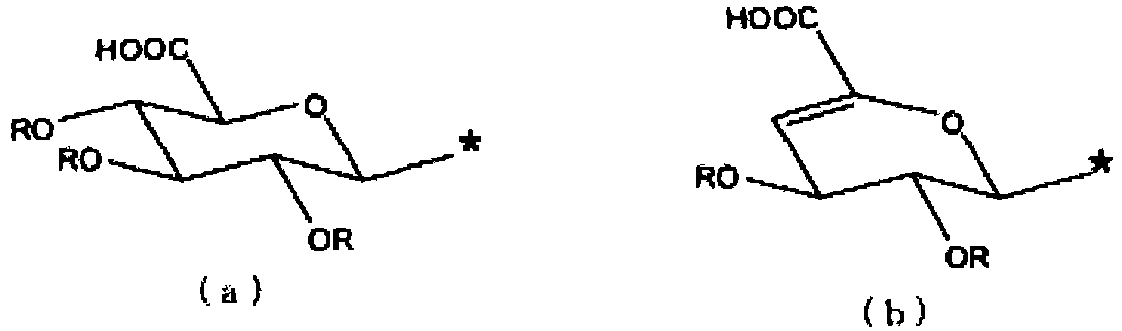


- Das Mittel zur Verwendung in dem Verfahren zur Prävention und/oder Behandlung nach Anspruch 1, wobei Y in der allgemeinen Formel (IA) für die Formeln (d) oder (e) steht.
- Das Mittel zur Verwendung in dem Verfahren zur Prävention und/oder Behandlung nach Anspruch 2, wobei X für die Formel (a) steht.
- Das Mittel zur Verwendung in dem Verfahren zur Prävention und/oder Behandlung nach Anspruch 3, wobei n für 3, 4 oder 5 steht.
- Das Mittel zur Verwendung in dem Verfahren zur Prävention und/oder Behandlung nach Anspruch 3, wobei n für 4 oder 5 steht.
- Das Mittel zur Verwendung in dem Verfahren zur Prävention und/oder Behandlung nach Anspruch 1, wobei das niedermolekulare polysulfatierte Hyaluronsäurederivat durch die allgemeine Formel (IB) wiedergegeben wird.
- Das Mittel zur Verwendung in dem Verfahren zur Prävention und/oder Behandlung nach Anspruch 6, wobei n für 3, 4 oder 5 steht.
- Das Mittel zur Verwendung in dem Verfahren zur Prävention und/oder Behandlung nach Anspruch 6, wobei n für 4 oder 5 steht.
- Verwendung eines niedermolekularen polysulfatierten Hyaluronsäurederivats oder eines pharmazeutisch verträglichen Salzes desselben nach einem der Ansprüche 1 bis 8 zur Herstellung eines Mittels zur Prävention und/oder Behandlung einer allergischen Erkrankung, ausgewählt aus Heuschnupfen, allergischer Rhinitis, allergischer Konjunktivitis, atopischer Dermatitis und Asthma.
- Niedermolekulares polysulfatiertes Hyaluronsäurederivat der folgenden allgemeinen Formel (IA') oder (IB) oder ein pharmazeutisch verträgliches Salz desselben:

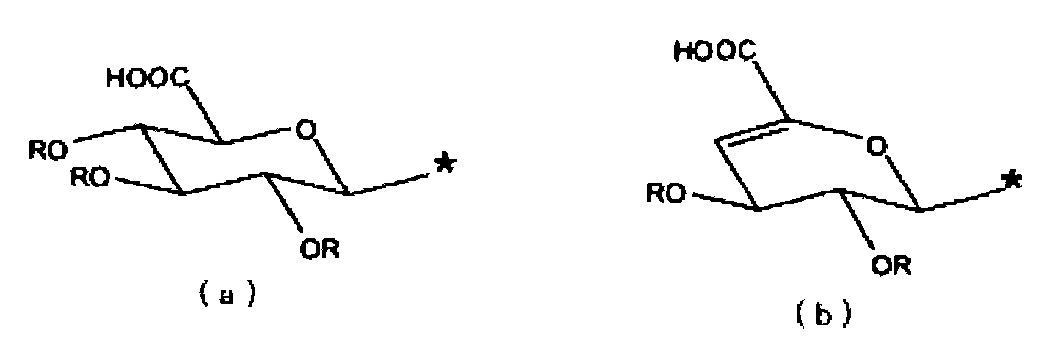


- Das niedermolekulare polysulfatierte Hyaluronsäurederivat oder ein pharmazeutisch verträgliches Salz desselben nach Anspruch 10, wobei X in der allgemeinen Formel (IA') für die Formel (a) steht.
- Das niedermolekulare polysulfatierte Hyaluronsäurederivat oder ein pharmazeutisch verträgliches Salz desselben nach Anspruch 10, welches durch die allgemeine Formel (IB) wiedergegeben wird
- Das niedermolekulare polysulfatierte Hyaluronsäurederivat oder ein pharmazeutisch verträgliches Salz desselben nach Anspruch 11 oder 12, wobei n für 3, 4 oder 5 steht.
- Pharmazeutische Zusammensetzung, umfassend ein niedermolekulares polysulfatiertes Hyaluronsäurederivat nach einem der Ansprüche 10 bis 13 oder ein pharmazeutisch verträgliches Salz desselben und einen pharmazeutisch verträglichen Hilfsstoff.
Applications Claiming Priority (2)
| Application Number | Priority Date | Filing Date | Title |
|---|---|---|---|
| JP2009021820 | 2009-02-02 | ||
| PCT/JP2010/000583 WO2010087207A1 (ja) | 2009-02-02 | 2010-02-01 | 低分子量多硫酸化ヒアルロン酸誘導体及びこれを含有する医薬 |
Publications (3)
| Publication Number | Publication Date |
|---|---|
| EP2392579A1 EP2392579A1 (de) | 2011-12-07 |
| EP2392579A4 EP2392579A4 (de) | 2012-09-26 |
| EP2392579B1 true EP2392579B1 (de) | 2016-11-23 |
Family
ID=42395469
Family Applications (1)
| Application Number | Title | Priority Date | Filing Date |
|---|---|---|---|
| EP10735677.6A Active EP2392579B1 (de) | 2009-02-02 | 2010-02-01 | Niedermolekulares polysulfatiertes hyaluronsäurederivat und medikament, welches dieses enthält |
Country Status (19)
| Country | Link |
|---|---|
| US (1) | US8993536B2 (de) |
| EP (1) | EP2392579B1 (de) |
| JP (2) | JP4884559B2 (de) |
| KR (1) | KR101678429B1 (de) |
| CN (1) | CN102300870B (de) |
| AR (1) | AR075224A1 (de) |
| BR (1) | BRPI1007325A2 (de) |
| CA (1) | CA2750188C (de) |
| CO (1) | CO6362026A2 (de) |
| ES (1) | ES2610240T3 (de) |
| IL (1) | IL213323A (de) |
| MX (1) | MX2011008119A (de) |
| MY (1) | MY160359A (de) |
| NZ (1) | NZ594854A (de) |
| RU (1) | RU2519781C2 (de) |
| SG (2) | SG2014006985A (de) |
| TW (1) | TWI539955B (de) |
| UA (1) | UA105781C2 (de) |
| WO (1) | WO2010087207A1 (de) |
Families Citing this family (24)
| Publication number | Priority date | Publication date | Assignee | Title |
|---|---|---|---|---|
| JP5758797B2 (ja) | 2008-04-04 | 2015-08-05 | ユニバーシティ・オブ・ユタ・リサーチ・ファウンデイション | アルキル化半合成グリコサミノグリカンエーテルならびにその製造および使用方法 |
| EP2397484A1 (de) * | 2010-06-11 | 2011-12-21 | Immunovo B.V. | Trisaccharidderivate und ihre Verwendung als Adjuvantien |
| JP2012046511A (ja) * | 2010-07-30 | 2012-03-08 | Otsuka Chem Co Ltd | 低分子量多硫酸化ヒアルロン酸誘導体を含有する医薬 |
| JP6062917B2 (ja) | 2011-03-23 | 2017-01-18 | ザ ユニバーシティ オブ ユタ リサーチ ファウンデイション | 泌尿器科の炎症の治療及び予防の方法 |
| JP5871500B2 (ja) * | 2011-06-20 | 2016-03-01 | 公益財団法人先端医療振興財団 | α−Klotho/FGF23複合体形成阻害化合物 |
| WO2013141350A1 (ja) * | 2012-03-22 | 2013-09-26 | 大塚製薬株式会社 | オリゴ糖化合物及びその製造方法とその中間体 |
| CN102579478A (zh) * | 2012-03-30 | 2012-07-18 | 济南康众医药科技开发有限公司 | 玻璃酸钠在制备药物中的应用 |
| JP2014047155A (ja) * | 2012-08-30 | 2014-03-17 | Tottori Univ | 保護硫酸化オリゴ糖化合物及びその製造方法 |
| SE538503C2 (en) | 2014-11-11 | 2016-08-16 | Tx Medic Ab | New dextran sulfate |
| ITUB20155623A1 (it) * | 2015-11-16 | 2017-05-16 | Fidia Farm Spa | Processo migliorato per la produzione di HA solfatato di elevata purezza |
| JP6225321B1 (ja) | 2016-08-31 | 2017-11-08 | 王子ホールディングス株式会社 | ポリ硫酸ペントサンの製造方法 |
| EP3677587A4 (de) | 2016-08-31 | 2021-04-14 | Oji Holdings Corporation | Herstellungsverfahren für saures xylooligosaccharid sowie saures xylooligosaccharid |
| WO2018053111A1 (en) | 2016-09-15 | 2018-03-22 | University Of Utah Research Foundation | In situ gelling compositions for the treatment or prevention of inflammation and tissue damage |
| JP6281659B1 (ja) * | 2017-02-28 | 2018-02-21 | 王子ホールディングス株式会社 | ポリ硫酸ペントサン、医薬組成物及び抗凝固剤 |
| CN116622006B (zh) | 2017-03-10 | 2025-05-30 | 北卡罗来纳大学查珀尔希尔分校 | 短效的基于肝素的抗凝血剂化合物和方法 |
| CA3065747C (en) | 2017-05-31 | 2024-10-01 | Oji Holdings Corporation | MOISTURIZING COMPOSITION CONTAINING PENTOSANNE POLYSULFATE |
| WO2019010216A1 (en) | 2017-07-03 | 2019-01-10 | The University Of North Carolina At Chapel Hill | ENZYMATIC SYNTHESIS OF HOMOGENEOUS CHONDROITIN SULFATE OLIGOSACCHARIDES |
| AU2018333249B2 (en) | 2017-09-12 | 2023-03-02 | Oji Holdings Corporation | Pentosan polysulfate and method for producing pentosan polysulfate |
| US11865137B2 (en) | 2017-11-03 | 2024-01-09 | The University Of North Carolina At Chapel Hill | Sulfated oligosaccharides having anti-inflammatory activity |
| WO2019124363A1 (ja) | 2017-12-20 | 2019-06-27 | 王子ホールディングス株式会社 | ポリ硫酸ペントサン及びポリ硫酸ペントサンを含む医薬 |
| US11633424B2 (en) * | 2018-06-20 | 2023-04-25 | The University Of North Carolina At Chapel Hill | Cell protective methods and compositions |
| CN111228653A (zh) | 2018-11-13 | 2020-06-05 | 格莱科米拉治疗公司 | 用电离辐射加强癌症治疗的方法 |
| CN114980904A (zh) | 2019-11-13 | 2022-08-30 | 北卡罗来纳大学查珀尔希尔分校 | 硫酸乙酰肝素(hs)低聚糖在肝缺血再灌注损伤中的影响 |
| CN120112299A (zh) | 2022-09-29 | 2025-06-06 | 爱多拉动物健康公司 | 用于治疗疼痛和其他医学病症的硫酸化糖胺聚糖及其衍生片段的储存稳定的制剂 |
Family Cites Families (12)
| Publication number | Priority date | Publication date | Assignee | Title |
|---|---|---|---|---|
| WO1996024362A1 (en) | 1995-02-07 | 1996-08-15 | Shiseido Company, Ltd. | Antiinflammatory agents |
| JPH08277224A (ja) * | 1995-02-07 | 1996-10-22 | Shiseido Co Ltd | 抗炎症剤 |
| JPH10195107A (ja) | 1997-01-10 | 1998-07-28 | Shiseido Co Ltd | オリゴ硫酸化ヒアルロン酸 |
| JPH11147901A (ja) | 1997-11-19 | 1999-06-02 | Maruho Co Ltd | カリクレイン−キニン系阻害剤 |
| JPH11269077A (ja) * | 1998-03-19 | 1999-10-05 | Maruho Co Ltd | ホスホリパーゼa2阻害用医薬組成物 |
| US6689748B1 (en) | 1998-04-08 | 2004-02-10 | Theoharis C. Theoharides | Method of treating mast cell activation-induced diseases with a proteoglycan |
| JPH11335288A (ja) * | 1998-05-20 | 1999-12-07 | Maruho Co Ltd | アレルギー性疾患の予防または治療薬 |
| WO2000069917A1 (fr) | 1999-05-18 | 2000-11-23 | Maruho Kabushikikaisha | Compositions medicinales destinees a inhiber le systeme kallikreine-kinine ou la phospholipase a¿2? |
| JP2004059506A (ja) | 2002-07-29 | 2004-02-26 | Taisho Pharmaceut Co Ltd | セレクチン及びケモカインに作用する過硫酸化オリゴ糖 |
| FR2845686B1 (fr) * | 2002-10-10 | 2013-08-30 | Aventis Pharma Sa | Melanges de polysaccharides derives d'heparine, leur preparation et les compositions pharmaceutiques les contenant |
| US20040171819A1 (en) | 2002-10-10 | 2004-09-02 | Aventis Pharma S.A. | Mixtures of polysaccharides derived from heparin, their preparation and pharmaceutical compositions containing them |
| CA2576131C (en) * | 2004-08-05 | 2012-04-24 | Ivax Drug Research Institute Ltd. | Polysulfated glycosides and salts thereof |
-
2010
- 2010-02-01 KR KR1020117017561A patent/KR101678429B1/ko not_active Expired - Fee Related
- 2010-02-01 US US13/143,129 patent/US8993536B2/en active Active
- 2010-02-01 ES ES10735677.6T patent/ES2610240T3/es active Active
- 2010-02-01 MX MX2011008119A patent/MX2011008119A/es active IP Right Grant
- 2010-02-01 RU RU2011136250/04A patent/RU2519781C2/ru not_active IP Right Cessation
- 2010-02-01 MY MYPI2011003178A patent/MY160359A/en unknown
- 2010-02-01 SG SG2014006985A patent/SG2014006985A/en unknown
- 2010-02-01 UA UAA201110592A patent/UA105781C2/uk unknown
- 2010-02-01 EP EP10735677.6A patent/EP2392579B1/de active Active
- 2010-02-01 CN CN201080005887.3A patent/CN102300870B/zh active Active
- 2010-02-01 WO PCT/JP2010/000583 patent/WO2010087207A1/ja not_active Ceased
- 2010-02-01 NZ NZ594854A patent/NZ594854A/xx unknown
- 2010-02-01 SG SG2011054913A patent/SG173470A1/en unknown
- 2010-02-01 JP JP2010539078A patent/JP4884559B2/ja active Active
- 2010-02-01 BR BRPI1007325A patent/BRPI1007325A2/pt not_active IP Right Cessation
- 2010-02-01 CA CA2750188A patent/CA2750188C/en active Active
- 2010-02-02 TW TW099103059A patent/TWI539955B/zh not_active IP Right Cessation
- 2010-02-02 AR ARP100100285A patent/AR075224A1/es unknown
-
2011
- 2011-03-14 JP JP2011055681A patent/JP5554738B2/ja active Active
- 2011-06-02 IL IL213323A patent/IL213323A/en not_active IP Right Cessation
- 2011-07-21 CO CO11090783A patent/CO6362026A2/es active IP Right Grant
Non-Patent Citations (1)
| Title |
|---|
| None * |
Also Published As
| Publication number | Publication date |
|---|---|
| JPWO2010087207A1 (ja) | 2012-08-02 |
| JP2011168591A (ja) | 2011-09-01 |
| NZ594854A (en) | 2013-03-28 |
| EP2392579A4 (de) | 2012-09-26 |
| CN102300870A (zh) | 2011-12-28 |
| AU2010209200A1 (en) | 2011-06-30 |
| WO2010087207A1 (ja) | 2010-08-05 |
| AR075224A1 (es) | 2011-03-16 |
| CA2750188A1 (en) | 2010-08-05 |
| MX2011008119A (es) | 2011-08-24 |
| RU2519781C2 (ru) | 2014-06-20 |
| MY160359A (en) | 2017-02-28 |
| KR101678429B1 (ko) | 2016-11-22 |
| JP4884559B2 (ja) | 2012-02-29 |
| IL213323A0 (en) | 2011-07-31 |
| EP2392579A1 (de) | 2011-12-07 |
| SG173470A1 (en) | 2011-09-29 |
| IL213323A (en) | 2014-12-31 |
| ES2610240T3 (es) | 2017-04-26 |
| KR20110117118A (ko) | 2011-10-26 |
| TWI539955B (zh) | 2016-07-01 |
| UA105781C2 (uk) | 2014-06-25 |
| TW201032814A (en) | 2010-09-16 |
| JP5554738B2 (ja) | 2014-07-23 |
| CO6362026A2 (es) | 2012-01-20 |
| US8993536B2 (en) | 2015-03-31 |
| CN102300870B (zh) | 2014-12-03 |
| CA2750188C (en) | 2016-11-29 |
| SG2014006985A (en) | 2014-04-28 |
| US20110281819A1 (en) | 2011-11-17 |
| HK1159642A1 (en) | 2012-08-03 |
| BRPI1007325A2 (pt) | 2019-09-24 |
| RU2011136250A (ru) | 2013-03-10 |
Similar Documents
| Publication | Publication Date | Title |
|---|---|---|
| EP2392579A1 (de) | Niedermolekulares polysulfatiertes hyaluronsäurederivat und medikament, welches dieses enthält | |
| US11547719B2 (en) | Acetylation of aloe polysaccharides | |
| JP6511418B2 (ja) | 高純度ヘパリンおよびその製造方法 | |
| EP2222713B1 (de) | Gemischte butyrin-formyl-ester aus sauren polysacchariden, ihre herstellung und ihre verwendung als hautkosmetika | |
| Montanari et al. | Halting hyaluronidase activity with hyaluronan-based nanohydrogels: Development of versatile injectable formulations | |
| EP2648715B1 (de) | Carnosine-hyaluronsäure mischungen und deren verwendung | |
| Zheng et al. | Bioactive glycyrrhizic acid–astragalus polysaccharide hydrogel facilitates gastric ulcer healing via ROS scavenging and anti-apoptotic effects | |
| EP2049572A1 (de) | Verzweigte hyaluronsäure und herstellungsverfahren dafür | |
| US20260014068A1 (en) | Hydrogel based on zinc gluconate and hyaluronic acid esters | |
| EP3658237B1 (de) | Kreuzpolymere aus polysacchariden und polyaminosäuren sowie verwendungen davon | |
| JP2012046511A (ja) | 低分子量多硫酸化ヒアルロン酸誘導体を含有する医薬 | |
| JP2003313201A (ja) | 硫酸化セルロースを含有する角膜又は結膜疾患治療又は予防薬 | |
| HK1159642B (en) | Low-molecular polysulfated hyaluronic acid derivative and medicine containing same | |
| EP4628481A1 (de) | Verbindung und verwendung davon bei der behandlung von treg-bedingten erkrankungen | |
| JP2020510104A (ja) | 内因系テンナーゼ複合体を阻害するオリゴ糖、その製造方法と用途 | |
| CN110612305A (zh) | 硫酸乙酰肝素糖模拟化合物及其医药与化妆品用途 | |
| WO2015002078A1 (ja) | ボロン酸化合物の新規製剤 | |
| CA3171629A1 (en) | Sulfated glycosaminoglycan biomaterials as proteoglycan mimics |
Legal Events
| Date | Code | Title | Description |
|---|---|---|---|
| PUAI | Public reference made under article 153(3) epc to a published international application that has entered the european phase |
Free format text: ORIGINAL CODE: 0009012 |
|
| 17P | Request for examination filed |
Effective date: 20110526 |
|
| AK | Designated contracting states |
Kind code of ref document: A1 Designated state(s): AT BE BG CH CY CZ DE DK EE ES FI FR GB GR HR HU IE IS IT LI LT LU LV MC MK MT NL NO PL PT RO SE SI SK SM TR |
|
| RAP1 | Party data changed (applicant data changed or rights of an application transferred) |
Owner name: OTSUKA CHEMICAL CO., LTD. Owner name: OTSUKA PHARMACEUTICAL CO., LTD. |
|
| DAX | Request for extension of the european patent (deleted) | ||
| REG | Reference to a national code |
Ref country code: HK Ref legal event code: DE Ref document number: 1159642 Country of ref document: HK |
|
| A4 | Supplementary search report drawn up and despatched |
Effective date: 20120828 |
|
| RIC1 | Information provided on ipc code assigned before grant |
Ipc: A61P 17/00 20060101ALI20120822BHEP Ipc: A61P 27/14 20060101ALI20120822BHEP Ipc: A61P 11/06 20060101ALI20120822BHEP Ipc: C07H 15/04 20060101AFI20120822BHEP Ipc: A61K 31/728 20060101ALI20120822BHEP Ipc: A61P 11/02 20060101ALI20120822BHEP Ipc: C08B 37/08 20060101ALI20120822BHEP Ipc: A61P 37/08 20060101ALI20120822BHEP |
|
| GRAP | Despatch of communication of intention to grant a patent |
Free format text: ORIGINAL CODE: EPIDOSNIGR1 |
|
| INTG | Intention to grant announced |
Effective date: 20160623 |
|
| GRAS | Grant fee paid |
Free format text: ORIGINAL CODE: EPIDOSNIGR3 |
|
| GRAA | (expected) grant |
Free format text: ORIGINAL CODE: 0009210 |
|
| AK | Designated contracting states |
Kind code of ref document: B1 Designated state(s): AT BE BG CH CY CZ DE DK EE ES FI FR GB GR HR HU IE IS IT LI LT LU LV MC MK MT NL NO PL PT RO SE SI SK SM TR |
|
| REG | Reference to a national code |
Ref country code: GB Ref legal event code: FG4D |
|
| REG | Reference to a national code |
Ref country code: CH Ref legal event code: EP |
|
| RAP2 | Party data changed (patent owner data changed or rights of a patent transferred) |
Owner name: OTSUKA PHARMACEUTICAL CO., LTD. Owner name: OTSUKA CHEMICAL CO., LTD. |
|
| REG | Reference to a national code |
Ref country code: IE Ref legal event code: FG4D |
|
| REG | Reference to a national code |
Ref country code: AT Ref legal event code: REF Ref document number: 847816 Country of ref document: AT Kind code of ref document: T Effective date: 20161215 |
|
| REG | Reference to a national code |
Ref country code: DE Ref legal event code: R096 Ref document number: 602010038236 Country of ref document: DE |
|
| REG | Reference to a national code |
Ref country code: NL Ref legal event code: FP |
|
| REG | Reference to a national code |
Ref country code: SE Ref legal event code: TRGR |
|
| REG | Reference to a national code |
Ref country code: FR Ref legal event code: PLFP Year of fee payment: 8 |
|
| PG25 | Lapsed in a contracting state [announced via postgrant information from national office to epo] |
Ref country code: LV Free format text: LAPSE BECAUSE OF FAILURE TO SUBMIT A TRANSLATION OF THE DESCRIPTION OR TO PAY THE FEE WITHIN THE PRESCRIBED TIME-LIMIT Effective date: 20161123 |
|
| REG | Reference to a national code |
Ref country code: LT Ref legal event code: MG4D |
|
| REG | Reference to a national code |
Ref country code: AT Ref legal event code: MK05 Ref document number: 847816 Country of ref document: AT Kind code of ref document: T Effective date: 20161123 |
|
| REG | Reference to a national code |
Ref country code: ES Ref legal event code: FG2A Ref document number: 2610240 Country of ref document: ES Kind code of ref document: T3 Effective date: 20170426 |
|
| PG25 | Lapsed in a contracting state [announced via postgrant information from national office to epo] |
Ref country code: GR Free format text: LAPSE BECAUSE OF FAILURE TO SUBMIT A TRANSLATION OF THE DESCRIPTION OR TO PAY THE FEE WITHIN THE PRESCRIBED TIME-LIMIT Effective date: 20170224 Ref country code: LT Free format text: LAPSE BECAUSE OF FAILURE TO SUBMIT A TRANSLATION OF THE DESCRIPTION OR TO PAY THE FEE WITHIN THE PRESCRIBED TIME-LIMIT Effective date: 20161123 Ref country code: NO Free format text: LAPSE BECAUSE OF FAILURE TO SUBMIT A TRANSLATION OF THE DESCRIPTION OR TO PAY THE FEE WITHIN THE PRESCRIBED TIME-LIMIT Effective date: 20170223 |
|
| REG | Reference to a national code |
Ref country code: CH Ref legal event code: PUEA Owner name: OTSUKA PHARMACEUTICAL CO., LTD., JP Free format text: FORMER OWNER: OTSUKA PHARMACEUTICAL CO., LTD., JP |
|
| PG25 | Lapsed in a contracting state [announced via postgrant information from national office to epo] |
Ref country code: AT Free format text: LAPSE BECAUSE OF FAILURE TO SUBMIT A TRANSLATION OF THE DESCRIPTION OR TO PAY THE FEE WITHIN THE PRESCRIBED TIME-LIMIT Effective date: 20161123 Ref country code: BE Free format text: LAPSE BECAUSE OF NON-PAYMENT OF DUE FEES Effective date: 20170228 Ref country code: HR Free format text: LAPSE BECAUSE OF FAILURE TO SUBMIT A TRANSLATION OF THE DESCRIPTION OR TO PAY THE FEE WITHIN THE PRESCRIBED TIME-LIMIT Effective date: 20161123 Ref country code: FI Free format text: LAPSE BECAUSE OF FAILURE TO SUBMIT A TRANSLATION OF THE DESCRIPTION OR TO PAY THE FEE WITHIN THE PRESCRIBED TIME-LIMIT Effective date: 20161123 Ref country code: PT Free format text: LAPSE BECAUSE OF FAILURE TO SUBMIT A TRANSLATION OF THE DESCRIPTION OR TO PAY THE FEE WITHIN THE PRESCRIBED TIME-LIMIT Effective date: 20170323 Ref country code: PL Free format text: LAPSE BECAUSE OF FAILURE TO SUBMIT A TRANSLATION OF THE DESCRIPTION OR TO PAY THE FEE WITHIN THE PRESCRIBED TIME-LIMIT Effective date: 20161123 |
|
| PG25 | Lapsed in a contracting state [announced via postgrant information from national office to epo] |
Ref country code: SK Free format text: LAPSE BECAUSE OF FAILURE TO SUBMIT A TRANSLATION OF THE DESCRIPTION OR TO PAY THE FEE WITHIN THE PRESCRIBED TIME-LIMIT Effective date: 20161123 Ref country code: DK Free format text: LAPSE BECAUSE OF FAILURE TO SUBMIT A TRANSLATION OF THE DESCRIPTION OR TO PAY THE FEE WITHIN THE PRESCRIBED TIME-LIMIT Effective date: 20161123 Ref country code: EE Free format text: LAPSE BECAUSE OF FAILURE TO SUBMIT A TRANSLATION OF THE DESCRIPTION OR TO PAY THE FEE WITHIN THE PRESCRIBED TIME-LIMIT Effective date: 20161123 Ref country code: RO Free format text: LAPSE BECAUSE OF FAILURE TO SUBMIT A TRANSLATION OF THE DESCRIPTION OR TO PAY THE FEE WITHIN THE PRESCRIBED TIME-LIMIT Effective date: 20161123 |
|
| REG | Reference to a national code |
Ref country code: DE Ref legal event code: R097 Ref document number: 602010038236 Country of ref document: DE |
|
| PG25 | Lapsed in a contracting state [announced via postgrant information from national office to epo] |
Ref country code: SM Free format text: LAPSE BECAUSE OF FAILURE TO SUBMIT A TRANSLATION OF THE DESCRIPTION OR TO PAY THE FEE WITHIN THE PRESCRIBED TIME-LIMIT Effective date: 20161123 Ref country code: BE Free format text: LAPSE BECAUSE OF FAILURE TO SUBMIT A TRANSLATION OF THE DESCRIPTION OR TO PAY THE FEE WITHIN THE PRESCRIBED TIME-LIMIT Effective date: 20161123 Ref country code: BG Free format text: LAPSE BECAUSE OF FAILURE TO SUBMIT A TRANSLATION OF THE DESCRIPTION OR TO PAY THE FEE WITHIN THE PRESCRIBED TIME-LIMIT Effective date: 20170223 |
|
| PG25 | Lapsed in a contracting state [announced via postgrant information from national office to epo] |
Ref country code: MC Free format text: LAPSE BECAUSE OF FAILURE TO SUBMIT A TRANSLATION OF THE DESCRIPTION OR TO PAY THE FEE WITHIN THE PRESCRIBED TIME-LIMIT Effective date: 20161123 |
|
| PLBE | No opposition filed within time limit |
Free format text: ORIGINAL CODE: 0009261 |
|
| STAA | Information on the status of an ep patent application or granted ep patent |
Free format text: STATUS: NO OPPOSITION FILED WITHIN TIME LIMIT |
|
| 26N | No opposition filed |
Effective date: 20170824 |
|
| REG | Reference to a national code |
Ref country code: IE Ref legal event code: MM4A |
|
| PG25 | Lapsed in a contracting state [announced via postgrant information from national office to epo] |
Ref country code: SI Free format text: LAPSE BECAUSE OF FAILURE TO SUBMIT A TRANSLATION OF THE DESCRIPTION OR TO PAY THE FEE WITHIN THE PRESCRIBED TIME-LIMIT Effective date: 20161123 |
|
| PG25 | Lapsed in a contracting state [announced via postgrant information from national office to epo] |
Ref country code: LU Free format text: LAPSE BECAUSE OF NON-PAYMENT OF DUE FEES Effective date: 20170201 |
|
| REG | Reference to a national code |
Ref country code: HK Ref legal event code: GR Ref document number: 1159642 Country of ref document: HK |
|
| REG | Reference to a national code |
Ref country code: FR Ref legal event code: PLFP Year of fee payment: 9 |
|
| PG25 | Lapsed in a contracting state [announced via postgrant information from national office to epo] |
Ref country code: IE Free format text: LAPSE BECAUSE OF NON-PAYMENT OF DUE FEES Effective date: 20170201 |
|
| PG25 | Lapsed in a contracting state [announced via postgrant information from national office to epo] |
Ref country code: MT Free format text: LAPSE BECAUSE OF NON-PAYMENT OF DUE FEES Effective date: 20170201 |
|
| PGFP | Annual fee paid to national office [announced via postgrant information from national office to epo] |
Ref country code: CZ Payment date: 20190118 Year of fee payment: 10 |
|
| PGFP | Annual fee paid to national office [announced via postgrant information from national office to epo] |
Ref country code: SE Payment date: 20190212 Year of fee payment: 10 |
|
| PG25 | Lapsed in a contracting state [announced via postgrant information from national office to epo] |
Ref country code: HU Free format text: LAPSE BECAUSE OF FAILURE TO SUBMIT A TRANSLATION OF THE DESCRIPTION OR TO PAY THE FEE WITHIN THE PRESCRIBED TIME-LIMIT; INVALID AB INITIO Effective date: 20100201 |
|
| PG25 | Lapsed in a contracting state [announced via postgrant information from national office to epo] |
Ref country code: CY Free format text: LAPSE BECAUSE OF NON-PAYMENT OF DUE FEES Effective date: 20161123 |
|
| PG25 | Lapsed in a contracting state [announced via postgrant information from national office to epo] |
Ref country code: MK Free format text: LAPSE BECAUSE OF FAILURE TO SUBMIT A TRANSLATION OF THE DESCRIPTION OR TO PAY THE FEE WITHIN THE PRESCRIBED TIME-LIMIT Effective date: 20161123 |
|
| PG25 | Lapsed in a contracting state [announced via postgrant information from national office to epo] |
Ref country code: IS Free format text: LAPSE BECAUSE OF FAILURE TO SUBMIT A TRANSLATION OF THE DESCRIPTION OR TO PAY THE FEE WITHIN THE PRESCRIBED TIME-LIMIT Effective date: 20170323 |
|
| REG | Reference to a national code |
Ref country code: SE Ref legal event code: EUG |
|
| REG | Reference to a national code |
Ref country code: CH Ref legal event code: PL |
|
| REG | Reference to a national code |
Ref country code: NL Ref legal event code: MM Effective date: 20200301 |
|
| PG25 | Lapsed in a contracting state [announced via postgrant information from national office to epo] |
Ref country code: SE Free format text: LAPSE BECAUSE OF NON-PAYMENT OF DUE FEES Effective date: 20200202 Ref country code: CZ Free format text: LAPSE BECAUSE OF NON-PAYMENT OF DUE FEES Effective date: 20200201 |
|
| PG25 | Lapsed in a contracting state [announced via postgrant information from national office to epo] |
Ref country code: CH Free format text: LAPSE BECAUSE OF NON-PAYMENT OF DUE FEES Effective date: 20200229 Ref country code: LI Free format text: LAPSE BECAUSE OF NON-PAYMENT OF DUE FEES Effective date: 20200229 |
|
| PG25 | Lapsed in a contracting state [announced via postgrant information from national office to epo] |
Ref country code: NL Free format text: LAPSE BECAUSE OF NON-PAYMENT OF DUE FEES Effective date: 20200301 |
|
| PG25 | Lapsed in a contracting state [announced via postgrant information from national office to epo] |
Ref country code: TR Free format text: LAPSE BECAUSE OF NON-PAYMENT OF DUE FEES Effective date: 20200201 |
|
| PGFP | Annual fee paid to national office [announced via postgrant information from national office to epo] |
Ref country code: ES Payment date: 20240325 Year of fee payment: 15 |
|
| PGFP | Annual fee paid to national office [announced via postgrant information from national office to epo] |
Ref country code: IT Payment date: 20240228 Year of fee payment: 15 |
|
| PG25 | Lapsed in a contracting state [announced via postgrant information from national office to epo] |
Ref country code: IT Free format text: LAPSE BECAUSE OF NON-PAYMENT OF DUE FEES Effective date: 20250201 |
|
| REG | Reference to a national code |
Ref country code: ES Ref legal event code: FD2A Effective date: 20260326 |
|
| PGFP | Annual fee paid to national office [announced via postgrant information from national office to epo] |
Ref country code: GB Payment date: 20260219 Year of fee payment: 17 |
|
| PG25 | Lapsed in a contracting state [announced via postgrant information from national office to epo] |
Ref country code: ES Free format text: LAPSE BECAUSE OF NON-PAYMENT OF DUE FEES Effective date: 20250202 |
|
| PGFP | Annual fee paid to national office [announced via postgrant information from national office to epo] |
Ref country code: DE Payment date: 20260218 Year of fee payment: 17 |
|
| PGFP | Annual fee paid to national office [announced via postgrant information from national office to epo] |
Ref country code: FR Payment date: 20260218 Year of fee payment: 17 |