EP2262901B1 - Primary alcohol producing organisms - Google Patents
Primary alcohol producing organisms Download PDFInfo
- Publication number
- EP2262901B1 EP2262901B1 EP09717987.3A EP09717987A EP2262901B1 EP 2262901 B1 EP2262901 B1 EP 2262901B1 EP 09717987 A EP09717987 A EP 09717987A EP 2262901 B1 EP2262901 B1 EP 2262901B1
- Authority
- EP
- European Patent Office
- Prior art keywords
- coa
- growth
- production
- dehydrogenase
- acyl
- Prior art date
- Legal status (The legal status is an assumption and is not a legal conclusion. Google has not performed a legal analysis and makes no representation as to the accuracy of the status listed.)
- Active
Links
Images










Classifications
-
- C—CHEMISTRY; METALLURGY
- C12—BIOCHEMISTRY; BEER; SPIRITS; WINE; VINEGAR; MICROBIOLOGY; ENZYMOLOGY; MUTATION OR GENETIC ENGINEERING
- C12P—FERMENTATION OR ENZYME-USING PROCESSES TO SYNTHESISE A DESIRED CHEMICAL COMPOUND OR COMPOSITION OR TO SEPARATE OPTICAL ISOMERS FROM A RACEMIC MIXTURE
- C12P7/00—Preparation of oxygen-containing organic compounds
- C12P7/02—Preparation of oxygen-containing organic compounds containing a hydroxy group
- C12P7/04—Preparation of oxygen-containing organic compounds containing a hydroxy group acyclic
-
- C—CHEMISTRY; METALLURGY
- C12—BIOCHEMISTRY; BEER; SPIRITS; WINE; VINEGAR; MICROBIOLOGY; ENZYMOLOGY; MUTATION OR GENETIC ENGINEERING
- C12N—MICROORGANISMS OR ENZYMES; COMPOSITIONS THEREOF; PROPAGATING, PRESERVING, OR MAINTAINING MICROORGANISMS; MUTATION OR GENETIC ENGINEERING; CULTURE MEDIA
- C12N15/00—Mutation or genetic engineering; DNA or RNA concerning genetic engineering, vectors, e.g. plasmids, or their isolation, preparation or purification; Use of hosts therefor
- C12N15/09—Recombinant DNA-technology
- C12N15/11—DNA or RNA fragments; Modified forms thereof; Non-coding nucleic acids having a biological activity
- C12N15/52—Genes encoding for enzymes or proenzymes
-
- C—CHEMISTRY; METALLURGY
- C12—BIOCHEMISTRY; BEER; SPIRITS; WINE; VINEGAR; MICROBIOLOGY; ENZYMOLOGY; MUTATION OR GENETIC ENGINEERING
- C12N—MICROORGANISMS OR ENZYMES; COMPOSITIONS THEREOF; PROPAGATING, PRESERVING, OR MAINTAINING MICROORGANISMS; MUTATION OR GENETIC ENGINEERING; CULTURE MEDIA
- C12N9/00—Enzymes; Proenzymes; Compositions thereof; Processes for preparing, activating, inhibiting, separating or purifying enzymes
- C12N9/0004—Oxidoreductases (1.)
- C12N9/0006—Oxidoreductases (1.) acting on CH-OH groups as donors (1.1)
-
- C—CHEMISTRY; METALLURGY
- C12—BIOCHEMISTRY; BEER; SPIRITS; WINE; VINEGAR; MICROBIOLOGY; ENZYMOLOGY; MUTATION OR GENETIC ENGINEERING
- C12N—MICROORGANISMS OR ENZYMES; COMPOSITIONS THEREOF; PROPAGATING, PRESERVING, OR MAINTAINING MICROORGANISMS; MUTATION OR GENETIC ENGINEERING; CULTURE MEDIA
- C12N9/00—Enzymes; Proenzymes; Compositions thereof; Processes for preparing, activating, inhibiting, separating or purifying enzymes
- C12N9/0004—Oxidoreductases (1.)
- C12N9/0008—Oxidoreductases (1.) acting on the aldehyde or oxo group of donors (1.2)
-
- C—CHEMISTRY; METALLURGY
- C12—BIOCHEMISTRY; BEER; SPIRITS; WINE; VINEGAR; MICROBIOLOGY; ENZYMOLOGY; MUTATION OR GENETIC ENGINEERING
- C12N—MICROORGANISMS OR ENZYMES; COMPOSITIONS THEREOF; PROPAGATING, PRESERVING, OR MAINTAINING MICROORGANISMS; MUTATION OR GENETIC ENGINEERING; CULTURE MEDIA
- C12N9/00—Enzymes; Proenzymes; Compositions thereof; Processes for preparing, activating, inhibiting, separating or purifying enzymes
- C12N9/0004—Oxidoreductases (1.)
- C12N9/001—Oxidoreductases (1.) acting on the CH-CH group of donors (1.3)
-
- C—CHEMISTRY; METALLURGY
- C12—BIOCHEMISTRY; BEER; SPIRITS; WINE; VINEGAR; MICROBIOLOGY; ENZYMOLOGY; MUTATION OR GENETIC ENGINEERING
- C12N—MICROORGANISMS OR ENZYMES; COMPOSITIONS THEREOF; PROPAGATING, PRESERVING, OR MAINTAINING MICROORGANISMS; MUTATION OR GENETIC ENGINEERING; CULTURE MEDIA
- C12N9/00—Enzymes; Proenzymes; Compositions thereof; Processes for preparing, activating, inhibiting, separating or purifying enzymes
- C12N9/10—Transferases (2.)
- C12N9/1025—Acyltransferases (2.3)
- C12N9/1029—Acyltransferases (2.3) transferring groups other than amino-acyl groups (2.3.1)
-
- C—CHEMISTRY; METALLURGY
- C12—BIOCHEMISTRY; BEER; SPIRITS; WINE; VINEGAR; MICROBIOLOGY; ENZYMOLOGY; MUTATION OR GENETIC ENGINEERING
- C12N—MICROORGANISMS OR ENZYMES; COMPOSITIONS THEREOF; PROPAGATING, PRESERVING, OR MAINTAINING MICROORGANISMS; MUTATION OR GENETIC ENGINEERING; CULTURE MEDIA
- C12N9/00—Enzymes; Proenzymes; Compositions thereof; Processes for preparing, activating, inhibiting, separating or purifying enzymes
- C12N9/88—Lyases (4.)
-
- C—CHEMISTRY; METALLURGY
- C12—BIOCHEMISTRY; BEER; SPIRITS; WINE; VINEGAR; MICROBIOLOGY; ENZYMOLOGY; MUTATION OR GENETIC ENGINEERING
- C12P—FERMENTATION OR ENZYME-USING PROCESSES TO SYNTHESISE A DESIRED CHEMICAL COMPOUND OR COMPOSITION OR TO SEPARATE OPTICAL ISOMERS FROM A RACEMIC MIXTURE
- C12P7/00—Preparation of oxygen-containing organic compounds
- C12P7/02—Preparation of oxygen-containing organic compounds containing a hydroxy group
-
- C—CHEMISTRY; METALLURGY
- C12—BIOCHEMISTRY; BEER; SPIRITS; WINE; VINEGAR; MICROBIOLOGY; ENZYMOLOGY; MUTATION OR GENETIC ENGINEERING
- C12Y—ENZYMES
- C12Y101/00—Oxidoreductases acting on the CH-OH group of donors (1.1)
- C12Y101/01—Oxidoreductases acting on the CH-OH group of donors (1.1) with NAD+ or NADP+ as acceptor (1.1.1)
- C12Y101/01001—Alcohol dehydrogenase (1.1.1.1)
-
- C—CHEMISTRY; METALLURGY
- C12—BIOCHEMISTRY; BEER; SPIRITS; WINE; VINEGAR; MICROBIOLOGY; ENZYMOLOGY; MUTATION OR GENETIC ENGINEERING
- C12Y—ENZYMES
- C12Y101/00—Oxidoreductases acting on the CH-OH group of donors (1.1)
- C12Y101/01—Oxidoreductases acting on the CH-OH group of donors (1.1) with NAD+ or NADP+ as acceptor (1.1.1)
- C12Y101/01035—3-Hydroxyacyl-CoA dehydrogenase (1.1.1.35)
-
- C—CHEMISTRY; METALLURGY
- C12—BIOCHEMISTRY; BEER; SPIRITS; WINE; VINEGAR; MICROBIOLOGY; ENZYMOLOGY; MUTATION OR GENETIC ENGINEERING
- C12Y—ENZYMES
- C12Y102/00—Oxidoreductases acting on the aldehyde or oxo group of donors (1.2)
- C12Y102/01—Oxidoreductases acting on the aldehyde or oxo group of donors (1.2) with NAD+ or NADP+ as acceptor (1.2.1)
- C12Y102/0105—Long-chain-fatty-acyl-CoA reductase (1.2.1.50)
-
- C—CHEMISTRY; METALLURGY
- C12—BIOCHEMISTRY; BEER; SPIRITS; WINE; VINEGAR; MICROBIOLOGY; ENZYMOLOGY; MUTATION OR GENETIC ENGINEERING
- C12Y—ENZYMES
- C12Y203/00—Acyltransferases (2.3)
- C12Y203/01—Acyltransferases (2.3) transferring groups other than amino-acyl groups (2.3.1)
- C12Y203/01009—Acetyl-CoA C-acetyltransferase (2.3.1.9)
-
- C—CHEMISTRY; METALLURGY
- C12—BIOCHEMISTRY; BEER; SPIRITS; WINE; VINEGAR; MICROBIOLOGY; ENZYMOLOGY; MUTATION OR GENETIC ENGINEERING
- C12Y—ENZYMES
- C12Y203/00—Acyltransferases (2.3)
- C12Y203/01—Acyltransferases (2.3) transferring groups other than amino-acyl groups (2.3.1)
- C12Y203/01016—Acetyl-CoA C-acyltransferase (2.3.1.16)
-
- C—CHEMISTRY; METALLURGY
- C12—BIOCHEMISTRY; BEER; SPIRITS; WINE; VINEGAR; MICROBIOLOGY; ENZYMOLOGY; MUTATION OR GENETIC ENGINEERING
- C12Y—ENZYMES
- C12Y402/00—Carbon-oxygen lyases (4.2)
- C12Y402/01—Hydro-lyases (4.2.1)
- C12Y402/01017—Enoyl-CoA hydratase (4.2.1.17), i.e. crotonase
-
- Y—GENERAL TAGGING OF NEW TECHNOLOGICAL DEVELOPMENTS; GENERAL TAGGING OF CROSS-SECTIONAL TECHNOLOGIES SPANNING OVER SEVERAL SECTIONS OF THE IPC; TECHNICAL SUBJECTS COVERED BY FORMER USPC CROSS-REFERENCE ART COLLECTIONS [XRACs] AND DIGESTS
- Y02—TECHNOLOGIES OR APPLICATIONS FOR MITIGATION OR ADAPTATION AGAINST CLIMATE CHANGE
- Y02E—REDUCTION OF GREENHOUSE GAS [GHG] EMISSIONS, RELATED TO ENERGY GENERATION, TRANSMISSION OR DISTRIBUTION
- Y02E50/00—Technologies for the production of fuel of non-fossil origin
- Y02E50/10—Biofuels, e.g. bio-diesel
Definitions
- This invention relates generally to biosynthetic processes and, more specifically to organisms having primary alcohol biosynthetic capability.
- Primary alcohols are a product class of compounds having a variety of industrial applications which include a variety of biofuels and specialty chemicals. Primary alcohols also can be used to make a large number of additional industrial products including polymers and surfactants. For example, higher primary alcohols (C 4 -C 20 ) and their ethoxylates are used as surfactants in many consumer detergents, cleaning products and personal care products worldwide such as laundry powders and liquids, dishwashing liquid and hard surface cleaners. They are also used in the manufacture of a variety of industrial chemicals and in lubricating oil additives. Long-chain primary alcohols, such as octanol and hexanol, have useful organoleptic properties and have long been employed as fragrance and flavor materials. Smaller chain (C4-C8) higher primary alcohols (e.g., butanol) are used as chemical intermediates for production of derivatives such as acrylates used in paints, coatings, and adhesives applications.
- C 4 -C 20 higher primary alcohols
- Primary alcohols are currently produced from, for example, hydrogenation of fatty acids, hydroformylation of terminal olefins, partial oxidation of n-paraffins and the Al-catalyzed polymerization of ethylene.
- n-paraffins petroleum-based linear hydrocarbons
- This impracticality is because the oxidation of n-paraffins produces primarily secondary alcohols, tertiary alcohols or ketones, or a mixture of these compounds, but does not produce high yields of primary alcohols.
- currently known methods for producing primary alcohols suffer from the disadvantage that they are restricted to feedstock which is relatively expensive, notably ethylene, which is produced via the thermal cracking of petroleum.
- current methods require several steps, and several catalyst types.
- LCA production by microorganisms involves fatty acid synthesis followed by acyl-reduction steps.
- the universal fatty acid biosynthesis pathway found in most cells has been investigated for production of LCAs and other fatty acid derivatives.
- a non-naturally occurring microbial organism having a microbial organism having a malonyl-CoA-independent fatty acid synthesis (FAS) pathway and an acyl-reduction pathway having at least one exogenous nucleic acid encoding a malonyl-CoA-independent FAS pathway enzyme expressed in sufficient amounts to produce a primary alcohol, the malonyl-CoA-independent FAS pathway having ketoacyl-CoA acyltransferase or ketoacyl-CoA thiolase, 3-hydroxyacyl-CoA dehydrogenase, enoyl-CoA hydratase and enoyl-CoA reductase, the acyl-reduction pathway having an acyl-CoA reductase and an alcohol dehydrogenase.
- FOS malonyl-CoA-independent fatty acid synthesis
- a method for producing a primary alcohol includes culturing a non-naturally occurring microbial organism have having a malonyl-CoA-independent fatty acid synthesis (FAS) pathway and an acyl-reduction pathway having at least one exogenous nucleic acid encoding a malonyl-CoA-independent FAS pathway enzyme expressed in sufficient amounts to produce a primary alcohol under substantially anaerobic conditions for a sufficient period of time to produce the primary alcohol, the malonyl-CoA-independent FAS pathway having ketoacyl-CoA acyltransferase or ketoacyl-CoA thiolase, 3-hydroxyacyl-CoA dehydrogenase, enoyl-CoA hydratase and enoyl-CoA reductase, the acyl-reduction pathway having an acyl-CoA reductase and an alcohol dehydrogenase.
- FAS malonyl-CoA-independent fatty acid synthesis
- a non-naturally occurring microbial organism that includes one or more gene disruptions occurring in genes encoding enzymes that couple long-chain alcohol (LCA) production to growth of the non-naturally occurring microbial organism.
- LCA production can be accomplished during non-growth phases using the same disruption strategies.
- the one or more gene disruptions reduce the activity of the enzyme, whereby the gene disruptions confer production of LCA onto the non-naturally occurring microbial organism.
- a method for producing LCA that includes culturing a non-naturally occurring microbial organism having one or more gene disruptions.
- the one or more gene disruptions occur in genes encoding an enzyme that confers LCA production in the organism.
- a non-naturally occurring eukaryotic organism that includes one or more gene disruptions.
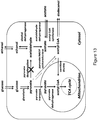
- the one or more gene disruptions occur in genes that encode enzymes such as a cytosolic pyruvate decarboxylase, a mitochondrial pyruvate dehydrogenase, a cytosolic ethanol-specific alcohol dehydrogenase and a mitochondrial ethanol-specific alcohol dehydrogenase. These disruptions confer production of long chain alcohols in the cytosol of the organism.
- a non-naturally occurring eukaryotic organism that includes one or more gene disruptions.
- the one or more gene disruptions occur in genes encoding enzymes such as a cytosolic pyruvate decarboxylase, a cytosolic ethanol-specific alcohol dehydrogenase, and a mitochondrial ethanol-specific alcohol dehydrogenase. These disruptions confer production of long chain alcohols in the mitochondrion of said organism.
- disclosed herein is a method for producing long chain alcohols, including culturing these non-naturally occurring eukaryotic organisms.
- the invention is directed, in part, to recombinant microorganisms capable of synthesizing the primary alcohols using a malonyl-CoA-independent fatty acid synthesis and reduction pathway.
- the modified microorganisms of the disclosure also are capable of secreting the resultant primary alcohol into the culture media or fermentation broth for further manipulation or isolation.
- Recombinant microorganisms of the disclosure can be engineered to produce commercial quantities of a variety of different primary alcohols having different chain lengths between 4 (C4) and 24 (C24) or more carbon atoms.
- Production of primary alcohols through the modified pathways of the disclosure is particularly useful because it results in higher product and ATP yields than through naturally occurring biosynthetic pathways such as the well-documented malonyl-CoA dependent fatty acid synthesis pathway.
- acetyl-CoA as a C2 extension unit instead of malonyl-acyl carrier protein (malonyl-ACP) saves one ATP molecule per unit flux of acetyl-CoA entering the elongation cycle.
- the elongation cycle results in acyl-CoA instead of acyl-ACP, and precludes the need of the ATP-consuming acyl-CoA synthase reactions for the production of octanol and other primary alcohols.
- the primary alcohol producing organisms of the disclosure can additionally allow the use of biosynthetic processes to convert low cost renewable feedstock for the manufacture of chemical products.
- the invention utilizes a heterologous malonyl-CoA-independent fatty acid synthesis pathway coupled with an acyl-CoA reduction pathway to form primary alcohol species.
- the coupling of these two pathways will convert a carbon or energy source into acetyl-CoA, which is used as both primer and extension unit in biosynthetic elongation cycle.
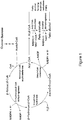
- the elongation cycle includes ketoacyl-CoA thiolase (or ketoacyl-CoA acyltransferase), 3-hydroxyacyl-CoA dehydrogenase, enoyl-CoA hydratase and enoyl-CoA reductase.
- Each cycle results in the formation of an acyl-CoA extended by one C2 unit compared to the acyl-CoA substrate entering the elongation cycle.
- Carbon chain-length of the primary alcohols can be controlled by chain-length specific enoyl-CoA reductase, ketoacyl-CoA thiolase and/or acyl-CoA reductase.
- Acyl-CoA products with desired chain-lengths are funneled into a reduction pathway and reduced through the combination of acyl-CoA reductase and alcohol dehydrogenase or the fatty alcohol forming acyl-CoA reductase to form desired primary alcohol.
- These reduction steps serve as another mechanism for control of chain length, for example, through the use of chain-length specific acyl-CoA reductases.
- non-naturally occurring when used in reference to a microbial organism or microorganism of the disclosure is intended to mean that the microbial organism has at least one genetic alteration not normally found in a naturally occurring strain of the referenced species, including wild-type strains of the referenced species.
- Genetic alterations include, for example, modifications introducing expressible nucleic acids encoding metabolic polypeptides, other nucleic acid additions, nucleic acid deletions and/or other functional disruption of the microbial genetic material. Such modifications include, for example, coding regions and functional fragments thereof, for heterologous, homologous or both heterologous and homologous polypeptides for the referenced species.
- Additional modifications include, for example, non-coding regulatory regions in which the modifications alter expression of a gene or operon.
- Exemplary metabolic polypeptides include enzymes within a malonyl-CoA-independent fatty acid biosynthetic pathway and enzymes within an acyl-reduction pathway.
- isolated when used in reference to a microbial organism is intended to mean an organism that is substantially free of at least one component as the referenced microbial organism is found in nature.
- the term includes a microbial organism that is removed from some or all components as it is found in its natural environment.
- the term also includes a microbial organism that is removed from some or all components as the microbial organism is found in non-naturally occurring environments. Therefore, an isolated microbial organism is partly or completely separated from other substances as it is found in nature or as it is grown, stored or subsisted in non-naturally occurring environments.
- Specific examples of isolated microbial organisms include partially pure microbes, substantially pure microbes and microbes cultured in a medium that is non-naturally occurring.
- microbial As used herein, the terms "microbial,” “microbial organism” or “microorganism” is intended to mean any organism that exists as a microscopic cell that is included within the domains of archaea, bacteria or eukarya. Therefore, the term is intended to encompass prokaryotic or eukaryotic cells or organisms having a microscopic size and includes bacteria, archaea and eubacteria of all species as well as eukaryotic microorganisms such as yeast and fungi. The term also includes cell cultures of any species that can be cultured for the production of a biochemical.
- primary alcohol is intended to mean an alcohol which has the hydroxyl radical connected to a primary carbon.
- the term includes an alcohol that possesses the group -CH 2 OH which can be oxidized so as to form a corresponding aldehyde and acid having the same number of carbon atoms.
- Alcohols include any of a series of hydroxyl compounds, the simplest of which are derived from saturated hydrocarbons, have the general formula C n H 2n +1OH, and include ethanol and methanol.
- Exemplary primary alcohols include butanol, hexanol, heptanol, octanol, nananol, decanol, dodecanol, tetradecanol, and hexadecanol.
- CoA or "coenzyme A” is intended to mean an organic cofactor or prosthetic group (nonprotein portion of an enzyme) whose presence is required for the activity of many enzymes (the apoenzyme) to form an active enzyme system.
- Coenzyme A functions, for example, in certain condensing enzymes, acts in acetyl or other acyl group transfer and in fatty acid synthesis and oxidation.
- substantially anaerobic when used in reference to a culture or growth condition is intended to mean that the amount of oxygen is less than about 10% of saturation for dissolved oxygen in liquid media.
- the term also is intended to include sealed chambers of liquid or solid medium maintained with an atmosphere of less than about 1% oxygen.
- Exogenous as it is used herein is intended to mean that the referenced molecule or the referenced activity is introduced into the host microbial organism. Therefore, the term as it is used in reference to expression of an encoding nucleic acid refers to introduction of the encoding nucleic acid in an expressible form into the microbial organism. When used in reference to a biosynthetic activity, the term refers to an activity that is introduced into the host reference organism.
- the source can be, for example, a homologous or heterologous encoding nucleic acids that expresses the referenced activity following introduction into the host microbial organism. Therefore, the term “endogenous” refers to a referenced molecule or activity that is present in the host.
- an encoding nucleic acid refers to expression of an encoding nucleic acid contained within the microbial organism.
- heterologous refers to a molecule or activity derived from a source other than the referenced species whereas "homologous” refers to a molecule or activity derived from the host microbial organism. Accordingly, exogenous expression of an encoding nucleic acid of the disclosure can utilize either or both a heterologous or homologous encoding nucleic acid.
- the term “growth-coupled” when used in reference to the production of a biochemical is intended to mean that the biosynthesis of the referenced biochemical is a product produced during the growth phase of a microorganism.
- “Non-growth-coupled when used in reference to the production of a biochemical is intended to mean that the biosynthesis of the referenced biochemical is a product produced during a non-growth phase of a microorganism. Production of a biochemical product can be optionally obligatory to the growth of the organism.
- metabolic modification is intended to refer to a biochemical reaction that is altered from its naturally occurring state. Metabolic modifications can include, for example, elimination of a biochemical reaction activity by functional disruptions of one or more genes encoding an enzyme participating in the reaction. Sets of exemplary metabolic modifications are illustrated in Table 1. Individual reactions specified by such metabolic modifications and their corresponding gene complements are exemplified in Table 2 for Escherichia coli. Reactants and products utilized in these reactions are exemplified in Table 3.
- the term "gene disruption,” or grammatical equivalents thereof, is intended to mean a genetic alteration that renders the encoded gene product inactive.
- the genetic alteration can be, for example, deletion of the entire gene, deletion of a regulatory sequence required for transcription or translation, deletion of a portion of the gene with results in a truncated gene product or by any of various mutation strategies that inactivate the encoded gene product.
- One particularly useful method of gene disruption is complete gene deletion because it reduces or eliminates the occurrence of genetic reversions in the non-naturally occurring microorganisms of the disclosure.
- the term “gene disruption” is also intended to mean a genetic alteration that lowers the activity of a given gene product relative to its activity in a wild-type organism.
- This attenuation of activity can be due to, for example, a deletion in a portion of the gene which results in a truncated gene product or any of various mutation strategies that render the encoded gene product less active than its natural form, replacement or mutation of the promoter sequence leading to lower or less efficient expression of the gene, culturing the organism under a condition where the gene is less highly expressed than under normal culture conditions, or introducing antisense RNA molecules that interact with complementary mRNA molecules of the gene and alter its expression.
- stable when used in reference to growth-coupled production of a biochemical product is intended to refer to microorganism that can be cultured for greater than five generations without loss of the coupling between growth and biochemical synthesis.
- stable growth-coupled biochemical production will be greater than 10 generations, particularly stable growth-coupled biochemical production will be greater than about 25 generations, and more particularly, stable growth-coupled biochemical production will be greater than 50 generations, including indefinitely.
- Stable growth-coupled production of a biochemical can be achieved, for example, by disruption of a gene encoding an enzyme catalyzing each reaction within a set of metabolic modifications.
- the stability of growth-coupled production of a biochemical can be enhanced through multiple disruptions, significantly reducing the likelihood of multiple compensatory reversions occurring for each disrupted activity.
- confers production refers not only to organisms that lack operational metabolic pathways for the production of LCAs, but also to organisms that may have some level of production of LCAs. Thus, an organism that already generates LCAs can benefit from improved production conferred onto the organism by the disruption of one or more genes.
- the term "eukaryotic organism” refers to any organism having a cell type having specialized organelles in the cytoplasm and a membrane-bound nucleus enclosing genetic material organized into chromosomes. The term is intended to encompass all eukaryotic organisms including eukaryotic microbial organisms such as yeast and fungi. The term also includes cell cultures of any eukaryotic species that can be cultured for the production of a biochemical where the eukaryotic species need not be a microbial organism.
- a "eukaryotic microbial organism,” “microbial organism” or “microorganism” is intended to mean any eukaryotic organism that exists as a microscopic cell that is included within the domain of eukarya.
- ortholog is a gene or genes that are related by vertical descent and are responsible for substantially the same or identical functions in different organisms.
- mouse epoxide hydrolase and human epoxide hydrolase can be considered orthologs for the biological function of hydrolysis of epoxides.
- Genes are related by vertical descent when, for example, they share sequence similarity of sufficient amount to indicate they are homologous, or related by evolution from a common ancestor.
- Genes can also be considered orthologs if they share three-dimensional structure but not necessarily sequence similarity, of a sufficient amount to indicate that they have evolved from a common ancestor to the extent that the primary sequence similarity is not identifiable.
- Genes that are orthologous can encode proteins with sequence similarity of about 25% to 100% amino acid sequence identity.
- Genes encoding proteins sharing an amino acid similarity less that 25% can also be considered to have arisen by vertical descent if their three-dimensional structure also shows similarities.
- Members of the serine protease family of enzymes, including tissue plasminogen activator and elastase, are considered to have arisen by vertical descent from a common ancestor.
- Orthologs include genes or their encoded gene products that through, for example, evolution, have diverged in structure or overall activity. For example, where one species encodes a gene product exhibiting two functions and where such functions have been separated into distinct genes in a second species, the three genes and their corresponding products are considered to be orthologs. For the growth-coupled production of a biochemical product, those skilled in the art will understand that the orthologous gene harboring the metabolic activity to be disrupted is to be chosen for construction of the non-naturally occurring microorganism.
- An example of orthologs exhibiting separable activities is where distinct activities have been separated into distinct gene products between two or more species or within a single species.
- a specific example is the separation of elastase proteolysis and plasminogen proteolysis, two types of serine protease activity, into distinct molecules as plasminogen activator and elastase.
- a second example is the separation of mycoplasma 5'-3' exonuclease and Drosophila DNA polymerase III activity.
- the DNA polymerase from the first species can be considered an ortholog to either or both of the exonuclease or the polymerase from the second species and vice versa.
- paralogs are homologs related by, for example, duplication followed by evolutionary divergence and have similar or common, but not identical functions.
- Paralogs can originate or derive from, for example, the same species or from a different species.
- microsomal epoxide hydrolase epoxide hydrolase I
- soluble epoxide hydrolase epoxide hydrolase II
- Paralogs are proteins from the same species with significant sequence similarity to each other suggesting that they are homologous, or related through co-evolution from a common ancestor.
- Groups of paralogous protein families include HipA homologs, luciferase genes, peptidases, and others.
- a nonorthologous gene displacement is a nonorthologous gene from one species that can substitute for a referenced gene function in a different species. Substitution includes, for example, being able to perform substantially the same or a similar function in the species of origin compared to the referenced function in the different species.
- a nonorthologous gene displacement will be identifiable as structurally related to a known gene encoding the referenced function, less structurally related but functionally similar genes and their corresponding gene products nevertheless will still fall within the meaning of the term as it is used herein.
- Functional similarity requires, for example, at least some structural similarity in the active site or binding region of a nonorthologous gene compared to a gene encoding the function sought to be substituted. Therefore, a nonorthologous gene includes, for example, a paralog or an unrelated gene.
- Orthologs, paralogs and nonorthologous gene displacements can be determined by methods well known to those skilled in the art. For example, inspection of nucleic acid or amino acid sequences for two polypeptides will reveal sequence identity and similarities between the compared sequences. Based on such similarities, one skilled in the art can determine if the similarity is sufficiently high to indicate the proteins are related through evolution from a common ancestor. Algorithms well known to those skilled in the art, such as Align, BLAST, Clustal W and others compared and determine a raw sequence similarity or identity, and also determine the presence or significance of gaps in the sequence which can be assigned a weight or score. Such algorithms also are known in the art and are similarly applicable for determining nucleotide sequence similarity or identity.
- Parameters for sufficient similarly to determine relatedness are computed based on well known methods for calculating statistical similarity, or the chance of finding a similar match in a random polypeptide, and the significance of the match determined.
- a computer comparison of two or more sequences can, if desired, also be optimized visually by those skilled in the art.
- Related gene products or proteins can be expected to have a high similarity, for example, 25% to 100% sequence identity. Proteins that are unrelated can have an identity which is essentially the same as would be expected to occur by chance, if a database of sufficient size is scanned (about 5%). Sequences between 5% and 24% may or may not represent sufficient homology to conclude that the compared sequences are related. Additional statistical analysis to determine the significance of such matches given the size of the data set can be carried out to determine the relevance of these sequences.
- Exemplary parameters for determining relatedness of two or more sequences using the BLAST algorithm can be as set forth below.
- amino acid sequence alignments can be performed using BLASTP version 2.0.8 (Jan-05-1999) and the following parameters: Matrix: 0 BLOSUM62; gap open: 11; gap extension: 1; x_dropoff: 50; expect: 10.0; wordsize: 3; filter: on.
- Nucleic acid sequence alignments can be performed using BLASTN version 2.0.6 (Sept-16-1998) and the following parameters: Match: 1; mismatch: -2; gap open: 5; gap extension: 2; x_dropoff: 50; expect: 10.0; wordsize: 11; filter: off.
- Those skilled in the art will know what modifications can be made to the above parameters to either increase or decrease the stringency of the comparison, for example, and determine the relatedness of two or more sequences.
- the non-naturally occurring microbial organisms of the disclosure can contain stable genetic alterations, which refer to microorganisms that can be cultured for greater than five generations without loss of the alteration.
- stable genetic alterations include modifications that persist greater than 10 generations, particularly stable modifications will persist more than about 25 generations, and more particularly, stable genetic modifications will be greater than 50 generations, including indefinitely.
- the disclosure provides a non-naturally occurring microbial organism having a malonyl-CoA-independent fatty acid synthesis (FAS) pathway and an acyl-reduction pathway having at least one exogenous nucleic acid encoding a malonyl-CoA-independent FAS pathway enzyme expressed in sufficient amounts to produce a primary alcohol, said malonyl-CoA-independent FAS pathway comprising ketoacyl-CoA acyltransferase or ketoacyl-CoA thiolase, 3-hydroxyacyl-CoA dehydrogenase, enoyl-CoA hydratase and enoyl-CoA reductase, said acyl-reduction pathway comprising an acyl-CoA reductase and an alcohol dehydrogenase.
- FAS malonyl-CoA-independent fatty acid synthesis
- Malonyl-CoA-independent fatty acid synthesis is a metabolic process used by photosynthetic flagellate such as Euglena gracilis ( Inui et al., Euro. J. Biochem. 96:931-34 (1984 ). These single cell organisms exhibit both algae and protozoan characteristics and, depending on conditions, can utilize either light energy (photosynthesis) or chemical energy (eating) for biochemical processes. Under anaerobic conditions, E.
- gracilis converts paramylon, the reserve beta-1,2-glucan polysaccharide, into wax ester with concomitant generation of ATP, a phenomenon named wax ester fermentation (Inui et al., supra, 1982; Inui et al., Agricultural and Biological Chemistry 47:2669-2671 (1983 )).
- Fatty acid synthesis through the malonyl-CoA-independent pathway results in a net gain of ATP, whereas other fatty acid synthesis systems can not support the net gain of ATP.
- ATP also can be produced under aerobic conditions ( Inui et al., Archives Biochemistry and Biophysics 237:423-29 (1985 )).
- acetyl-CoA is generated from pyruvate via an oxygen-sensitive pyruvate:NADP+ oxidoreductase (Inui et al., supra, 1984; Inui et al., supra, 1985; Inui et al., Archives of Biochemistry and Biophysics 280:292-98 (1990 ); Inui et al., Journal of Biological Chemistry 262:9130-35 (1987 )), and serves as the terminal electron acceptor of glucose oxidation via the malonyl-CoA-independent fatty acid synthesis to form wax ester (Inui et al., supra, (1985)).
- gracilis contains five different systems of fatty acid synthesis, including four fatty acid synthesis systems located in different compartments, and the mitochondrial malonyl-CoA-independent FAS system involved in anaerobic wax ester fermentation ( Hoffmeister et al., J. of Biological Chemistry 280:4329-38 (2005 )).
- the malonyl-CoA-independent FAS system has been shown to produce C8-C18 fatty acids.
- a fatty acid is reduced to alcohol, esterified with another fatty acid, and deposited in the cytosol as waxes ( Inui et al., Febs Letters 150:89-93 (1982 ); Inui et al., European Journal of Biochemistry 142:121-126 (1984 )).
- the wax can constitute approximately 50% of the total lipid in dark grown cells ( Rosenberg, A., Biochemistry 2:1148 (1963 )).
- a particularly useful embodiment of the invention harness the malonyl-CoA-independent fatty acid synthesis (FAS) system under anaerobic conditions to produce large quantities of alcohols using the modified biosynthetic pathways described herein.
- FAS malonyl-CoA-independent fatty acid synthesis
- the malonyl-CoA-independent fatty acid synthesis pathway is similar to the reversal of fatty acid oxidation and is referred as the fatty acid synthesis in mitochondria or acyl-carrier protein (ACP)-independent fatty acid synthesis as it is known in the art.
- ACP acyl-carrier protein
- acetyl-CoA is used as the extension unit instead of malonyl-ACP.
- acetyl-CoA as elongation substrate in the malonyl-CoA-independent pathway eliminates the need for acetyl-CoA carboxylase complex (ACC), which converts acetyl-CoA to malonyl-CoA, and thus conserves one ATP molecule per unit flux of acetyl-CoA entering the elongation cycle.
- ACC acetyl-CoA carboxylase complex
- the elongation cycle can include (i) ketoacyl-CoA acyltransferase (or ketoacyl-CoA thiolase, EC 2.3.1.16), (ii) 3-hydroxyacyl-CoA dehydrogenase (EC 1.1.1.35 and 1.1.1.211), (iii) enoyl-CoA hydratase (EC 4.2.1.17 and 4.2.1.74), and (iv) enoyl-CoA reductase (EC 1.3.1.44 and 1.3.1.38).
- the product from the elongation cycle is acyl-CoA, which can be utilized directly by acyl-CoA reductase, followed by a dehydrogenase for conversion to alcohol, or by fatty acid forming acyl-CoA reductase (FAR), which converts acyl-CoA directly to alcohol. Therefore, thioesterase and acyl-CoA synthase are not required for the production of primary alcohols, as is the case with the malonyl-CoA-dependent pathways.
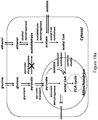
- the microorganisms of the disclosure utilize the malonyl-CoA-independent fatty acid synthesis pathway coupled with the reduction of the fatty acid to form primary alcohol as illustrated in Figure 1 .
- the microorganism can additionally be modified to convert, for example, renewable feedstock to acetyl-CoA.
- acetyl-CoA can be used as both a primer and an extension unit in the elongation cycle described above.
- an acyl-CoA is formed that is one C2 unit longer than the acyl-CoA entering the elongation cycle. Coupling the above synthesis pathway to a reduction pathway yields the primary alcohol products of the disclosure.
- acyl-CoA having a desired chain-length is coupled to a reduction pathway that uses the combination of chain-length specific acyl-CoA reductase (EC 1.2.1.50) and alcohol dehydrogenase (1.1.1.1) or the fatty alcohol forming acyl-CoA reductase (FAR, EC 1.1.1) to form desired primary alcohol.
- Chain-length of the primary alcohols can be controlled by chain-length specific enoyl-CoA reductase, ketoacyl-CoA thiolase and/or acyl-CoA reductase.
- microorganisms of the disclosure having the coupled biosynthetic pathways described above can produce primary alcohols at very high levels.
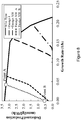
- the maximum theoretical yield for octanol using the malonyl-CoA-independent fatty acid biosynthetic pathway and the associated energetics were calculated by adding the malonyl-CoA-independent fatty acid synthesis, acyl-CoA reductase and alcohol dehydrogenase reactions to a predictive E. coli metabolic stoichiometric network using the in silico metabolic modeling system known in the art as SimPhenyTM (see, for example, U.S. Patent Application Serial No. 10/173,547, filed June 14, 2002 , and in International Patent Application No.
- Table 4 Comparison of the maximum theoretical yield of octanol using (1) the malonyl-CoA-independent fatty acid synthesis and acyl-reduction pathway and (2) the ACP-dependent fatty acid synthesis and pathway.
- Malonyl-CoA-independent fatty acid biosynthetic and reduction pathway Typical fatty acid biosynthetic and reduction pathway Anaerobic Aerobic Anaerobic Aerobic Octanol Yield (mole/mole glucose) 0.5 0.5 0.375 0.48 Max ATP Yield @ max octanol yield (mole/mole glucose) 2.125 2.125 0 0
- a non-naturally occurring microbial organism of the disclosure employs combinations of metabolic reactions for biosynthetically producing a target primary alcohol or a target mixture of primary alcohols of the disclosure.
- the combination of metabolic reactions can be engineered in a variety of different alternatives to achieve exogenous expression of a malonyl-CoA-independent FAS pathway in sufficient amounts to produce a primary alcohol.
- the non-naturally occurring microbial organisms will express at least one exogenous nucleic acid encoding a malonyl-CoA-independent FAS pathway enzyme.
- the non-naturally occurring microbial organisms will be engineered to exogenously express more than one, including all, nucleic acids encoding some or all of the enzymes for the complete pathway of malonyl-CoA independent FAS pathway enzymes. Some or all of the enzymes for acyl-reduction also can be exogenously expressed. Exogenous expression should be at levels sufficient to produce metabolically utilizable gene product and result in the production of a target primary alcohol or set of alcohols.
- the biochemical reactions for formation of primary alcohols from a carbon or other energy source through a malonyl-CoA independent FAS pathway is shown in Figure 1 .
- the malonyl-CoA independent FAS pathway produces acyl-CoA.
- Concomitant utilization of this intermediate product to produce target primary alcohols by an acyl-reduction pathway also is shown in Figure 1 .
- reference herein to a gene or encoding nucleic acid also constitutes a reference to the corresponding encoded enzyme and the reaction it catalyzes as well as the reactants and products of the reaction.
- Microbial organisms other than Euglena gracilis generally lack the capacity to synthesize acyl-CoA through a malonyl-CoA independent FAS pathway. Moreover, organisms having all of the requisite metabolic enzymatic capabilities are not known to produce acyl-CoA from the enzymes described and biochemical pathways exemplified herein. Rather, microorganisms having the enzymatic constituents of malonyl-CoA independent FAS pathway operate to degrade short, medium, and long chain fatty-acyl-CoA compounds to acetyl-CoA. E.
- gracilis having a malonyl-CoA independent FAS pathway, utilizes this pathway to produce acylglycerols, trihydric sugar alcohols, phospholipids, wax esters and/or fatty acids.
- the non-naturally occurring microbial organisms of the disclosure generate acyl-CoA as a product of the malonyl-CoA independent FAS pathway and funnel this product into an acyl-reduction pathway via favorable thermodynamic characteristics.
- Product biosynthesis of using the non-naturally occurring organisms of the disclosure is not only particularly useful for the production of primary alcohols, it also allows for the further biosynthesis of compounds using acyl-CoA and/or primary alcohols as an intermediate reactant.
- the non-naturally occurring primary alcohol-producing microbial organisms of the disclosure are generated by ensuring that a host microbial organism includes functional capabilities for the complete biochemical synthesis of a malonyl-CoA independent fatty acid biosynthetic pathway and for an acyl-reduction pathway of the disclosure. Ensuring complete functional capabilities for both pathways will confer primary alcohol biosynthesis capability onto the host microbial organism.
- the enzymes participating in a malonyl-CoA independent FAS pathway include ketoacyl-CoA acyltransferase or ketoacyl-CoA thiolase, 3-hydroxyacyl-CoA dehydrogenase, enoyl-CoA hydratase and enoyl-CoA reductase.
- the enzymes participating in an acyl-reduction pathway include an acyl-CoA reductase and an alcohol dehydrogenase or an enzyme having dual reductase and dehydrogenase activity.
- the non-naturally occurring microbial organisms of the disclosure can be produced by introducing expressible nucleic acids encoding one or more of the enzymes participating in the malonyl-CoA independent FAS and/or acyl-reduction pathways. Depending on the host microbial organism chosen for biosynthesis, nucleic acids for some or all of these biosynthetic pathways can be expressed.
- a chosen host is deficient in all of the enzymes in the malonyl-CoA independent FAS pathway, then expressible nucleic acids for each of the four enzymes ketoacyl-CoA acyltransferase or ketoacyl-CoA thiolase, 3-hydroxyacyl-CoA dehydrogenase, enoyl-CoA hydratase and enoyl-CoA reductase are introduced into the host for subsequent exogenous expression.
- the chosen host is deficient less than all four of the above enzymes, then all that is needed is to express nucleic acids encoding the deficient enzymes.
- a functionally complete malonyl-CoA independent FAS pathway can be engineererd by introduction of nucleic acids encoding these two enzymes.
- the non-naturally occurring microbial organisms of the disclosure will include at least one exogenously expressed malonyl-CoA independent FAS pathway-encoding nucleic acid and up to all six malonyl-CoA independent FAS and acyl-reduction pathway encoding nucleic acids.
- a non-naturally occurring microbial organism of the disclosure can have one, two, three, four, five or six encoding nucleic acids encoding the above enzymes constituting the malonyl-CoA independent FAS pathway, an acyl-reduction pathway or both the malonyl-CoA independent FAS and acyl-reduction biosynthetic pathways.
- the non-naturally occurring microbial organisms also can include other genetic modifications that facilitate or optimize acyl-CoA and/or primary alcohol biosynthesis or that confer other useful functions onto the host microbial organism.
- One such other functionality can include, for example, augmentation of the synthesis of one or more of the malonyl-CoA independent FAS pathway precursors such as acetyl-CoA, ⁇ -ketoacyl-CoA, ⁇ -hydroxyacyl-CoA, trans -2-enoyl-CoA and/or fatty aldehyde.
- a non-naturally occurring microbial organisms generated from a host that contains the enzymatic capability to synthesize acyl-CoA through a malonyl-CoA independent FAS pathway, or having the capability to catalyze one or more of the enzymatic steps within the malonyl-CoA independent FAS and/or acyl-reduction pathways.
- it can be useful to increase the synthesis or accumulation of a malonyl-CoA independent FAS pathway product or an acyl-reduction pathway product to, for example, efficiently drive malonyl-CoA independent FAS and/or acyl-reduction pathway reactions toward primary alcohol production.
- Increased synthesis or accumulation can be accomplished by, for example, overexpression of nucleic acids encoding one or more of the above-described malonyl-CoA independent FAS and/or acyl-reduction pathway enzymes.
- Over expression of the desired pathway enzyme or enzymes can occur, for example, through exogenous expression of the endogenous gene or genes, or through exogenous expression of a heterologous gene or genes. Therefore, naturally occurring organisms can readily be generated to be non-naturally primary alcohol producing microbial organisms of the disclosure through overexpression of one, two, three, four, five or all six nucleic acids encoding a malonyl-CoA independent FAS and/or a acyl-reduction pathway enzymes.
- a non-naturally occurring organism can be generated by mutagenesis of an endogenous gene that results in an increase in activity of an enzyme in the malonyl-CoA independent FAS and/or acyl-reduction biosynthetic pathways.
- exogenous expression of the encoding nucleic acids is employed.
- Exogenous expression confers the ability to custom tailor the expression and/or regulatory elements to the host and application to achieve a desired expression level that is controlled by the user.
- endogenous expression also can be utilized in other embodiments such as by removing a negative regulatory effector or induction of the gene's promoter when linked to an inducible promoter or other regulatory element. For example, activation of fadB, an E.
- coli gene having malonyl-CoA independent FAS activity corresponding to 3-hydroxyacyl-CoA dehydrogenase and enoyl-CoA hydratase activities can be accomplished by genetically knocking out a negative regulator, fadR, and co-expressing a heterologous ketothiolase ( phaA from Ralstonia eutropha ; Sato et al., Journal of Bioscience and Bioengineering 103:38-44 (2007 )).
- an endogenous gene having a naturally occurring inducible promoter can be up-regulated by providing the appropriate inducing agent, or the regulatory region of an endogenous gene can be engineered to incorporate an inducible regulatory element, thereby allowing the regulation of increased expression of an endogenous gene at a desired time.
- an inducible promoter can be included as a regulatory element for an exogenous gene introduced into a non-naturally occurring microbial organism.
- an endogenous enzyme or enzymes operate in a reverse direction to the desired malonyl-CoA independent FAS pathway
- genetic modifications can be made to attenuate or eliminate such activities.
- the ketothiolase, dehydrogenase, and enoyl-CoA hydratase steps are reversible whereas the enoyl-CoA reductase step is primarily oxidative under physiological conditions ( Hoffmeister et al., Journal of Biological Chemistry 280:4329-4338 (2005 ); Campbell, J. W. and J. E. Cronan, Jr., J Bacteriol. 184:3759-3764 (2002 )).
- a genetic modification can be introduced to attenuate or eliminate the reverse oxidative reaction.
- Sources of encoding nucleic acids for a malonyl-CoA independent FAS and/or acyl-reduction pathway enzyme can include, for example, any species where the encoded gene product is capable of catalyzing the referenced reaction.
- species include both prokaryotic and eukaryotic organisms including, but not limited to, bacteria, including archaea and eubacteria, and eukaryotes, including yeast, plant, insect, animal, and mammal, including human.
- the microbial organisms having primary alcohol biosynthetic production are exemplified herein with reference to an E. coli host.
- coli can be readily applied to other microorganisms, including prokaryotic and eukaryotic organisms alike. Given the teachings and guidance provided herein, those skilled in the art will know that a metabolic alteration exemplified in one organism can be applied equally to other organisms.
- primary alcohol biosynthesis can be conferred onto the host species by, for example, exogenous expression of a paralog or paralogs from the unrelated species that catalyzes a similar, yet non-identical metabolic reaction to replace the referenced reaction. Because certain differences among metabolic networks exist between different organisms, those skilled in the art will understand that the actual genes usage between different organisms may differ.
- teachings and methods of the disclosure can be applied to all microbial organisms using the cognate metabolic alterations to those exemplified herein to construct a microbial organism in a species of interest that will synthesize the primary alcohol products of the disclosure.
- genes fadA and fadB encode a multienzyme complex that exhibits three constituent activities of the malonyl-CoA independent FAS pathway, namely, ketoacyl-CoA thiolase, 3-hydroxyacyl-CoA dehydrogenase, and enoyl-CoA hydratase activities ( Nakahigashi, K. and H.
- fadI and fadJ genes encode similar activities which can substitute for the above malonyl-CoA independent FAS conferring genes fadA and fadB. These genes are naturally expressed under anaerobic conditions (Campbell and Cronan, supra, (2002)).
- nucleic acid sequences for each of the above fad genes are well known in the art and can be accessed in the public databases such as Genbank using the following accession numbers. fadA YP_026272.1 Escherichia coli fadB NP_418288.1 Escherichia coli fadI NP_416844.1 Escherichia coli fadJ NP_416843.1 Escherichia coli fadR NP_415705.1 Escherichia coli
- ketothiolase step examples include ato B which can catalyze the reversible condensation of 2 acetyl-CoA molecules (Sato et al., supra, 2007), and its homolog yqeF .
- Non- E. coli genes that can be used include phaA from R. eutropha ( Jenkins, L. S. and W. D. Nunn. Journal of Bacteriology 169:42-52 (1987 )), and the two ketothiolases, thiA and thiB, from Clostridium acetobutylicum ( Winzer et al., Journal of Molecular Microbiology and Biotechnology 2:531-541 (2000 )).
- E. coli An exemplary gene from E. coli which can be used for conferring 3-hydroxyacyl-CoA dehydrogenase transformation activity is paaH ( Ismail et al., European Journal of Biochemistry 270:3047-3054 (2003 )).
- Non-E. coli genes applicable for conferring this activity include AAO72312.1 from E.
- Exemplary genes encoding the enoyl-CoA hydratase step include, for example, maoC ( Park and Lee, Journal Bacteriology 185:5391-5397 (2003 )), paaF ( Ismail et al., European Journal of Biochemistry 270:3047-3054 (2003 ); Park and Lee, Appl. Biochem. Biotechnol. 113-116:335-346 (2004 ) and Park and Yup, Biotechnol. Bioeng. 86:681-686 (2004 )), and paaG ( Ismail et al., European Journal of Biochemistry 270:3047-3054 (2003 ); Park and Lee, Appl. Biochem. Biotechnol.
- acetobutylicum also can be used ( Atsumi et al., Metabolic Engineering (2007 ) and Boynton et al., Journal of Bacteriology 178: 3015-3024 (1996 .
- the sequences for each of these exemplary genes can be found at the following Genbank accession numbers: maoC NP_415905.1 Escherichia coli paaF NP_415911.1 Escherichia coli paaG NP_415912.1 Escherichia coli paaA NP_745427.1 Pseudomonas putida paaA ABF82233.1 Pseudomonas fluorescens paaB NP_745426.1 Pseudomonas putida paaB ABF82234.1 Pseudomonas fluorescens paaN NP_745413.1 Pseudomonas putida paaN ABF82246.1 Pseudomonas flu
- An exemplary gene which can be introduced into a non-naturally occurring microbial organism of the disclosure to confer enoyl-CoA reductase activity is the mitochondrial enoyl-CoA reductase from E. gracilis Hoffmeister et al., supra (2005)).
- a construct derived from this sequence following the removal of its mitochondrial targeting leader sequence has been cloned and expressed in E. coli.
- This approach for heterologous expression of membrane targeted polypeptides in a soluble form is well known to those skilled in the art of expressing eukaryotic genes, particularly those with leader sequences that may target the gene product to a specific intracellular compartment, in prokaryotic organisms.
- TDE0597 from the prokaryote Treponema denticola represents also can be employed to confer enoyl-CoA reductase activity ( Tucci and Martin, FEBS Letters 581:1561-1566 (2007 )).
- Butyryl-CoA dehydrogenase encoded by bcd from C. acetobutylicum, is a further exemplary enzyme that can be used to confer enoyl-CoA reductase activity onto a host microbial organism of the disclosure ( Atsumi et al., Metabolic Engineering (2007 ) and Boynton et al., Journal of Bacteriology 178: 3015-3024 (1996 )).
- E . coli genes exhibiting this activity can be obtained using methods well known in the art (see, for example, Mizugaki et al., Chemical & Pharmaceutical Bulletin 30:206-213 (1982 ) and Nishimaki et al., Journal of Biochemistry 95:1315-1321 (1984 )).
- the sequences for each of the above exemplary genes can be found at the following Genbank accession numbers: TER Q5EU90.1 Euglena gracilis TDE0597 NP_971211.1 Treponema denticola bcd NP_349317.1 Clostridium acetobutylicum
- At least three mitochondrial enoyl-CoA reductase enzymes exist in E. gracilis that similarly are applicable for use in the disclosure.
- Each enoyl-CoA reductase enzyme exhibits a unique chain length preference ( Inui et al., European Journal of Biochemistry 142:121-126 (1984 )), which is particularly useful for dictating the chain length of the desired primary alcohol products of the disclosure.
- EST's ELL00002199, ELL00002335, and ELL00002648 which are all annotated as mitochondrial trans-2-enoyl-CoA reductases, can be used to isolate these additional enoyl-CoA reductase genes as described further below.
- nucleic acids encoding any or all of the malonyl-CoA independent FAS pathway or acyl-reduction pathway enzymes by cloning using known sequences from available sources.
- any or all of the encoding nucleic acids for the malonyl-CoA independent FAS pathway can be readily obtained using methods well known in the art from E. gracilis as this pathway has been well characterized in this organism.
- E. gracilis encoding nucleic acids can be isolated from, for example, an E. gracilis cDNA library using probes of known sequence.
- the probes can be designed with whole or partial DNA sequences from the following EST sequences from the publically available sequence database TBestDB (http://tbestdb.bcm.umontreal.ca).
- TBestDB http://tbestdb.bcm.umontreal.ca.
- the above EST sequences can be used to identify homologue polypeptides in GenBank through BLAST search.
- the resulting homologue polypeptides and their corresponding gene sequences provide additional encoding nucleic acids for transformation into E. coli or other microorganisms to generate the primary alcohol producing organisms of the disclosure .
- Listed below are exemplary homologue polypeptide and their gene accession numbers in GenBank which are applicable for use in the non-naturally occurring organisms of the disclosure.
- ketoacyl-CoA acyltransferase (or ketoacyl-CoA thiolase) YP_001530041 Desulfococcus oleovorans Hxd3 ZP_0213 3 627 Desulfatibacillum alkenivorans AK-01 ZP_01860900 Bacillus sp.
- YP_001669856 Pseudomonas putida GB-1 YP_641317 Mycobacterium sp.
- MCS YP_959434 Marinobacter aquaeolei VT8 ABK24445 Picea sitchensis XP_640315 Dictyostelium discoideum YP_633978 Myxococcus xanthus DK 1622 YP_467905 Rhizobium etli CFN 42 YP_419997 Magnetospirillum magneticum AMB-1 YP_001172441 Pseudomonas stutzeri A1501 enoyl-CoA reductase.
- XP_642118 Dictyostelium discoideum AX4 XP_001639469 Nematostella vectensis XP_001648220 Aedes aegypti XP_974428 Tribolium castaneum XP_535334 Canis lupus familiaris (dog) NP_001016371 Xenopus tropicalis XP_320682 Anopheles gambiae str. PEST ZP_01645699 Stenotrophomonas maltophilia XP_001679449 Caenorhabditis briggsae AF16 ZP_01443601 Roseovarius sp.
- the resulting acyl-CoA can be reduced to produce a primary alcohol by either a single enzyme or pair of enzymes that exhibit acyl-CoA reductase and alcohol dehydrogenase activities.
- Exemplary genes that encode enzymes for catalyzing the reduction of an acyl-CoA to its corresponding aldehyde include the Acinetobacter calcoaceticus acrl encoding a fatty acyl-CoA reductase ( Reiser and Somerville, Journal of Bacteriology 179:2969-2975 (1997 )), the Acinetobacter sp.
- Exemplary genes encoding enzymes that catalyze the conversion of an aldehyde to alcohol include alrA encoding a medium-chain alcohol dehydrogenase for C2-C14 ( Tani et al., Appl. Environ. Microbiol. 66:5231-5235 (2000 )), ADH2 from Saccharomyces cerevisiae ( Atsumi et al., Nature 451:86-89 (2008 )), and yqhD from E.
- the fatty acyl-CoA can be reduced in one step by a fatty alcohol forming acyl-CoA reductase or any other enzyme with dual acyl-CoA reductase and alcohol dehydrogenase activity.
- a fatty alcohol forming acyl-CoA reductase or any other enzyme with dual acyl-CoA reductase and alcohol dehydrogenase activity For example, the jojoba ( Simmondsia chinensis ) FAR encodes an alcohol-forming fatty acyl-CoA reductase and its overexpression in E. coli resulted in FAR activity and the accumulation of fatty alcohol ( Metz et al., Plant Physiology 122:635-644 (2000 )). The reductase with narrow substrate chain-length specificities will also function as additional control for product chain-length. Additional gene candidates include the E.
- E. gracilis nucleic acid sequences encoding enzymes for the reduction step can be obtained and transformed into a host as described previously for the malonyl-CoA independent FAS pathway encoding nucleic acids. Isolated from an E. gracilis cDNA library using probes, designed with whole or partial DNA sequences from the following EST sequences from TBestDB (http://tbestdb.bcm.umontreal.ca) can be performed as described previously. aldehyde dehydrogenase
- nucleic acids other than those within the malonyl-CoA independent FAS and/or acyl-reduction pathways of the disclosure also can be introduced into a host organism for further production of primary alcohols.
- the Ralstonia eutropha BktB and PhbB genes catalyze the condensation of butyryl-CoA and acetyl-CoA to form ⁇ -keto-hexanoyl-CoA and the reduction of ⁇ -keto-hexanoyl-CoA to 3-hydroxy-hexanoyl-CoA ( Fukui et al., Biomacromolecules 3:618-624 (2002 )).
- exogenous DNA sequences encoding for these specific enzymes can be expressed in the production host of interest.
- the above described enzymes can be subjected to directed evolution to generate improved versions of these enzymes with high activity and high substrate specificity.
- a similar approach also can be utilized with any or all other enzymatic steps in the primary alcohol producing pathways of the disclosure to, for example, improve enzymatic activity and/or specificity and/or to generate long chain alcohols of a predetermined chain length or lengths.
- esters of various lengths can be formed between: 1) fatty acyl-CoA and short-chain alcohols such as methanol, ethanol, propanol, etc.; 2) fatty alcohols and short-chain acyl-CoA such as formyl-CoA, acetyl-CoA, and propionyl-CoA, etc.; 3) fatty acyl-CoA and fatty alcohols as shown in the following equations.
- the fatty (or long-chain) alcohols can be synthesized intracellularly by the pathways described herein or can be added to the medium and taken up by the engineered microbe. Similarly, short-chain alcohols can be added to the medium or produced endogenously.
- Ethanol is an exemplary short chain alcohol that is naturally produced by many microorganisms including Escherichia coli and Saccahyromyces cerevisiae.
- Exemplary fatty esters include, but not limited to, fatty acid methyl esters (FAMEs), fatty acid ethyl esters (FAEEs), acetyl esters, and wax.
- Fatty esters in this context, are differentiated from wax by the size of the hydrocarbon chain on each side of the ester bond.
- Waxes have long chain hydrocarbons on each side of the ester bond, whereas fatty esters have one short chain and one long chain hydrocarbon on each side of the ester bond, respectively.
- the reactions to produce these esters can be catalyzed by enzymes with acyl-CoA:alcohol transacylase activities.
- Exemplary enzymes for catalyzing the formation of fatty esters include the acyl-CoA:fatty alcohol acyltransferase (wax ester synthase, WS, EC 2.3.1.75) and acetyl-CoA:alcohol O-acetyltransferase (EC 2.3.1.84).
- Exemplary genes coding for these enzymes include the Acinetobacter sp.
- ADP1 atfA encoding a bifunctional enzyme with both wax ester synthase (WS) and acyl-CoA: diacylglycerol acyltransferase (DGAT) activities ( Kalscheuer et al. AJ Biol Chem 2003, 278: 8075-8082 .); the Simmondsia chinensis gene AAD38041 encoding a WS required for the accumulation of waxes in jojoba seeds ( Lardizabal et al. Plant Physiology 2000, 122: 645-655 .); the Alcanivorax borkumensis atfA1 and atfA2 encoding bifunctional WS/DGAT enzymes ( Kalscheuer et al.
- ADP1 AAD38041 Simmondsia chinensis atfA1 YP_694462 Alcanivorax borkumensis SK2 atfA2 YP_693524 Alcanivorax borkumensis SK2 AAT AAG13130 Fragaria x ananassa AAT1 Q5I6B5 Rosa hybrid cultivar ATF1 P40353 Saccharomyces cerevisiae ATF2 P53296 Saccharomyces cerevisiae
- Host microbial organisms can be selected from, and the non-naturally occurring microbial organisms generated in, for example, bacteria, yeast, fungus or any of a variety of other microorganisms applicable to fermentation processes.
- Exemplary bacteria include species selected from E.
- yeasts or fungi include species selected from Saccharomyces cerevisiae, Schizosaccharomyces pombe, Kluyveromyces lactis, Kluyveromyces marxianus, Aspergillus terreus, Aspergillus niger and Pichia pastoris.
- Methods for constructing and testing the expression levels of a non-naturally occurring primary alcohol-producing host can be performed, for example, by recombinant and detection methods well known in the art. Such methods can be found described in, for example, Sambrook et al., Molecular Cloning: A Laboratory Manual, Third Ed., Cold Spring Harbor Laboratory, New York (2001 ); Ausubel et al., Current Protocols in Molecular Biology, John Wiley and Sons, Baltimore, MD (1999 ).
- nucleic acids encoding enzymes in the malonyl-CoA independent FAS and/or acyl-reduction pathway can be introduced stably or transiently into a host cell using techniques well known in the art including, but not limited to, conjugation, electroporation, chemical transformation, transduction, transfection, and ultrasound transformation.
- mitochondrial genes will encode an N-terminal targeting signals, which can be removed before transformation into host cells.
- genes can be expressed in the cytosol without the addition of the targeting sequence, or alternatively, can be targeted to mitochondrion with the addition of mitochondrial targeting signal functional in the host organism.
- genes can be subjected for codon optimization with techniques well known in the art, to achieve optimal expression of the one or more malonyl-CoA independent FAS and/or acyl-reduction pathway gene products.
- An expression vector or vectors can be constructed to harbor one or more malonyl-CoA independent FAS and/or acyl-reduction pathway encoding nucleic acids operably linked to expression control sequences functional in the host organism.
- Expression vectors applicable for use in the microbial host organisms of the disclosure include, for example, plasmids, phage vectors, viral vectors and artificial chromosomes. Selectable marker genes also can be included that, for example, provide resistance to antibiotics or toxins, complement auxotrophic deficiencies, or supply critical nutrients not in the culture media.
- Expression control sequences can include constitutive and inducible promoters, transcription enhancers, transcription terminators, and the like which are well known in the art.
- both nucleic acids can be inserted, for example, into a single expression vector or in separate expression vectors.
- the encoding nucleic acids can be operationally linked to one common expression control sequence or linked to different expression control sequences, such as one inducible promoter and one constitutive promoter.
- the transformation of exogenous DNA sequences involved in a metabolic or synthetic pathway will be confirmed using methods well known in the art.
- Primary alcohol production can be detected and/or monitored using methods well known to those skilled in the art.
- final product of primary alcohol and/or intermediates such as acyl-CoA and organic acids can be analyzed by HPLC, GC-MS and LC-MS.
- the release or secretion of primary alcohol into the culture medium or fermentation broth also can be detected using these procedures. Activities of one or more enzymes in the malonyl-CoA independent FAS and/or acyl-reduction pathway also can be measured using methods well known in the art.
- the non-naturally occurring microbial organisms of the disclosure are constructed using methods well known in the art as exemplified above to exogenously express at least one nucleic acid encoding a malonyl-CoA independent FAS pathway enzyme in sufficient amounts to produce primary alcohol.
- the non-naturally occurring microbial organisms of the disclosure can achieve biosynthesis of greater than that which can be synthesized in naturally occurring organisms.
- the intracellular concentration of, for example, octanol is about 54 ⁇ g/L and decanol is about 148 ⁇ g/L.
- one exemplary growth condition for achieving biosynthesis of primary alcohols includes anaerobic culture or fermentation conditions.
- the non-naturally occurring microbial organisms can be sustained, cultured or fermented under anaerobic or substantially anaerobic conditions.
- anaerobic conditions refers to an environment devoid of oxygen.
- substantially anaerobic conditions include, for example, a culture, batch fermentation or continuous fermentation such that the dissolved oxygen concentration in the medium remains between 0 and 10% of saturation.
- Substantially anaerobic conditions also includes growing or resting cells in liquid medium or on solid agar inside a sealed chamber maintained with an atmosphere of less than 1% oxygen. The percent of oxygen can be maintained by, for example, sparging the culture with an N 2 /CO 2 mixture or other suitable non-oxygen gas or gases.
- the disclosure further provides a method for the production of primary alcohols.
- the method includes culturing a non-naturally occurring microbial organism have having a malonyl-CoA-independent fatty acid synthesis (FAS) pathway and an acyl-reduction pathway comprising at least one exogenous nucleic acid encoding a malonyl-CoA-independent FAS pathway enzyme expressed in sufficient amounts to produce a primary alcohol under substantially anaerobic conditions for a sufficient period of time to produce said primary alcohol, said malonyl-CoA-independent FAS pathway comprising ketoacyl-CoA acyltransferase or ketoacyl-CoA thiolase, 3-hydroxyacyl-CoA dehydrogenase, enoyl-CoA hydratase and enoyl-CoA reductase, said acyl-reduction pathway comprising an acyl-CoA reductase and an alcohol dehydrogenase.
- FOS malony
- any of the non-naturally occurring microbial organisms described previously can be cultured to produce the biosynthetic products of the disclosure.
- the primary alcohol producers can be cultured for the biosynthetic production of its engineered target primary alcohol.
- the primary alcohol can be isolated or isolated and further utilized in a wide variety of products and procedures.
- culture conditions include anaerobic or substantially anaerobic growth or maintenance conditions.
- Exemplary anaerobic conditions have been described previously and are well known in the art.
- Exemplary anaerobic conditions for fermentation processes are described below and are well known in the art. Any of these conditions can be employed with the non-naturally occurring microbial organisms as well as other anaerobic conditions well known in the art.
- the culture conditions can include, for example, liquid culture procedures as well as fermentation and other large scale culture procedures. As described further below in the Examples, particularly useful yields of the biosynthetic products of the disclosure can be obtained under anaerobic or substantially anaerobic culture conditions.
- Exemplary growth procedures include, for example, fed-batch fermentation and batch separation; fed-batch fermentation and continuous separation, or continuous fermentation and continuous separation. All of these processes are well known in the art.
- Fermentation procedures are particularly useful for the biosynthetic production of commercial quantities of primary alcohols.
- the continuous and/or near-continuous production of primary alcohols will include culturing a non-naturally occurring primary alcohol producing organism of the disclosure in sufficient neutrients and medium to sustain and/or nearly sustain growth in an exponential phase.
- Continuous culture under such conditions can be include, for example, 1 day, 2, 3, 4, 5, 6 or 7 days or more.
- continuous culture can include 1 week, 2, 3, 4 or 5 or more weeks and up to several months.
- organisms of the disclosure can be cultured for hours, if suitable for a particular application. It is to be understood that the continuous and/or near-continuous culture conditions also can include all time intervals in between these exemplary periods.
- Fermentation procedures are well known in the art. Briefly, fermentation for the biosynthetic production of primary alcohol products of the disclosure can be utilized in, for example, fed-batch fermentation and batch separation; fed-batch fermentation and continuous separation, or continuous fermentation and continuous separation. Examples of batch and continuous fermentation procedures well known in the art are exemplified further below in the Examples.
- the primary alcohol producing microbial organisms utilize renewable feedstocks and carbon-containing gas as carbon sources for growth.
- Employing these alternative materials as a feedstock is particularly useful because they are beneficial from an environmental standpoint and lower production costs of bioprocess-derived products such as the primary alcohols of the disclosure.
- Renewable feedstocks useful for growth of the primary alcohol producing organisms of the disclosure can include any regenerative raw material which can be used by the cell as a supply a carbon or other energy source.
- renewable feedstock are derived from living organisms or their metabolic byproducts including material derived from biomass, often consisting of underutilized components like chaff.
- Agricultural products specifically grown for use as renewable feedstocks and useful in the methods of the disclosure include, for example, corn, soybeans and cotton; flaxseed and rapeseed; sugar cane and palm oil.
- Renewable feedstocks that can be used therefore include an array of carbohydrates, fats and proteins derived from agricultural and/or animal matter which can be harnessed by the primary alcohol producing organisms of the disclosure as a source for carbon.
- Plant-derived biomass which is available as an energy source on a sustainable basis includes, for example, herbaceous and woody energy crops, agricultural food and feed crops, agricultural crop wastes and residues, wood wastes and residues, aquatic plants, and other waste materials including some municipal wastes (see, for example, the URL 1.eere.energy.gov/biomass/information_resources.html, which includes a database describing more than 150 exemplary kinds of biomass sources).
- Exemplary types of biomasses that can be used as feedstocks in the methods of the disclosure include cellulosic biomass, hemicellulosic biomass and lignin feedstocks or portions of feedstocks.
- Such biomass feedstocks contain, for example, carbohydrate substrates useful as carbon sources such as glucose, xylose, arabinose, galactose, mannose, fructose and starch.
- carbohydrate substrates useful as carbon sources such as glucose, xylose, arabinose, galactose, mannose, fructose and starch.
- the primary alcohol producing microbial organisms of the disclosure also can be modified for growth on syngas as its source of carbon.
- one or more proteins or enzymes are expressed in the primary alcohol producing organisms to provide a metabolic pathway for utilization of syngas or other gaseous carbon source.
- Synthesis gas also known as syngas or producer gas
- syngas is the major product of gasification of coal and of carbonaceous materials such as biomass materials, including agricultural crops and residues.
- Syngas is a mixture primarily of H 2 and CO and can be obtained from the gasification of any organic feedstock, including but not limited to coal, coal oil, natural gas, biomass, and waste organic matter. Gasification is generally carried out under a high fuel to oxygen ratio. Although largely H 2 and CO, syngas can also include CO 2 and other gases in smaller quantities.
- synthesis gas provides a cost effective source of gaseous carbon such as CO and, additionally, CO 2 .
- the Wood-Ljungdahl pathway catalyzes the conversion of CO and H 2 to acetyl-CoA and other products such as acetate.
- Organisms capable of utilizing CO and syngas also generally have the capability of utilizing CO 2 and CO 2 /H 2 mixtures through the same basic set of enzymes and transformations encompassed by the Wood-Ljungdahl pathway.
- H 2 -dependent conversion of CO 2 to acetate by microorganisms was recognized long before it was revealed that CO also could be used by the same organisms and that the same pathways were involved.
- non-naturally occurring microorganisms possessing the Wood-Ljungdahl pathway can utilize CO 2 and H 2 mixtures as well for the production of acetyl-CoA and other desired products.
- the Wood-Ljungdahl pathway is well known in the art and consists of 12 reactions which can be separated into two branches: (1) methyl branch and (2) carbonyl branch.
- the methyl branch converts syngas to methyl-tetrahydrofolate (methyl-THF) whereas the carbonyl branch converts methyl-THF to acetyl-CoA.
- the reactions in the methyl branch are catalyzed in order by the following enzymes: ferredoxin oxidoreductase, formate dehydrogenase, formyltetrahydrofolate synthetase, methenyltetrahydrofolate cyclodehydratase, methylenetetrahydrofolate dehydrogenase and methylenetetrahydrofolate reductase.
- the reactions in the carbonyl branch are catalyzed in order by the following enzymes: cobalamide corrinoid/iron-sulfur protein, methyltransferase, carbon monoxide dehydrogenase, acetyl-CoA synthase, acetyl-CoA synthase disulfide reductase and hydrogenase.
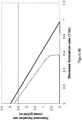
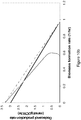
- the disclosure is also directed, in part, to the design and creation of cells and organisms having growth-coupled production of LCA.
- the disclosure utilizes optimization-based approaches based on in silico stoichiometric model of Escherichia coli metabolism that identify metabolic designs for optimal production of LCA.
- a bilevel programming framework, OptKnock is applied within an iterative algorithm to predict multiple sets of gene disruptions, that collectively result in the growth-coupled production of LCA.
- the results described herein indicate that combinations of strategically placed gene deletions or functional disruptions of genes significantly improve the LCA production capabilities of Escherichia coli and other cells or organisms.
- the strain design strategies are equally applicable if an organism other than E.
- coli is chosen as the production host, even if the organism naturally lacks the activity or exhibits low activity of a subset of the gene products marked for disruption. In those cases, disruptions must only be introduced to eliminate or lessen the enzymatic activities of the gene products that are naturally present in the chosen production host. Growth-coupled production of LCA for the in silico designs are confirmed by construction of strains having the designed metabolic genotype.
- metabolically engineered cells or organisms also can be subjected to adaptive evolution to further augment growth-coupled product production.
- the disclosure is also directed, in part, to the design and creation of cells and organisms that produce long chain alcohols, LCAs based on in silico stoichiometric model of Saccharomyces cerevisiae metabolism.
- LCAs long chain alcohols
- One skilled in the art will recognize the ability to also produce LCAs by non-growth-coupled production by providing a non-producing growth phase, followed by a non-growth production phase, for example.
- the results described herein indicate that combinations of gene deletions or functional disruptions of genes significantly improve the LCA production capabilities of Saccharomyces cerevisaie and other cells of eukaryotic organisms and eukaryotic microbial organisms.
- the strain design pathways are equally applicable if a eukaryotic microbial organism other than S.
- cerevisiae is chosen as the production host, even if the organism naturally lacks the activity or exhibits low activity of a subset of the gene products marked for disruption. In the latter case, disruptions can be introduced to eliminate or lessen the enzymatic activities of the gene products that are naturally present in the chosen production host.
- growth-coupled production of LCA for the in silico determined metabolic pathways is confirmed by construction of strains having the designed metabolic genotype.
- These metabolically engineered cells or organisms can also be subjected to adaptive evolution to further augment growth-coupled product production.
- the engineered cells or organisms can also incorporate additional copies of beneficial genes to increase flux through a particular metabolic pathway.
- exogenous gene insertions from another organism can be used to install functionality that is not present in the host organism.
- the designed LCA production pathway utilizes a malonyl-CoA-independent fatty acid synthesis pathway coupled with reduction of the fatty acid to form primary alcohol as shown in Figure 1 .
- the malonyl-CoA independent LCA production pathway (MI-LCA pathway) comprises the malonyl-CoA-independent fatty acid synthesis steps and the acyl-CoA reduction steps.
- An engineered microorganism possessing the MI-LCA pathway will convert low cost renewable feedstocks, such as glucose and sucrose, to acetyl-CoA through glycolysis.
- Acetyl-CoA then is used as both primer and extension units in an elongation cycle that involves the ketoacyl-CoA thiolase, 3-hydroxyacyl-CoA dehydrogenase, enoyl-CoA hydratase, and enoyl-CoA reductase.
- an acyl-CoA is formed that is one C 2 unit longer than the acyl-CoA entering the elongation cycle.
- the acyl-CoA with a desired chain-length is then reduced through the combination of acyl-CoA reductase and alcohol dehydrogenase or the fatty alcohol forming acyl-CoA reductase to form the desired primary alcohol.
- the carbon chain-length of the LCA can be controlled by chain-length specific enoyl-CoA reductase, ketoacyl-CoA thiolase, and/or acyl-CoA reductase.
- the MI-LCA pathway has the advantage of better product and ATP yields than that through the typical energy-intensive fatty acid synthesis pathways for LCA production.
- the maximum theoretical yield for dodecanol (C 12 ) using the MI-LCA pathway is 0.333 mol per mol of glucose consumed under both aerobic and anaerobic conditions: 3C 6 H 12 O 6 ⁇ C 12 H 26 O + 6CO 2 + 5H 2 O
- Some disclosures are directed to an integrated computational and engineering platform for developing metabolically altered microorganism strains having enhanced LCA producing characteristics. Strains identified via the computational component of the platform are put into actual production by genetically engineering the predicted metabolic alterations which lead to the enhanced production of LCA. Production of the desired product is coupled to optimal growth of the microorganism to optimize yields of this product during fermentation. In yet another disclosure strains exhibiting growth-coupled production of LCA are further subjected to adaptive evolution to further augment product biosynthesis. The levels of growth-coupled product production following adaptive evolution also can be predicted by the computational component of the system where, the elevated product levels are realized only following evolution.
- the disclosure provides a non-naturally occurring microbial organism, that includes one or more gene disruptions.
- the disruptions occur in genes encoding an enzyme that couples LCA production to growth of the organism when the gene disruption reduces the activity of the enzyme, such that the gene disruptions confer stable growth-coupled production of LCA onto the non-naturally occurring organism.
- the disclosure further provides a non-naturally occurring eukaryotic organism, that includes one or more gene disruptions.
- the one or more gene disruptions occur in genes that encode enzymes that include, for example a cytosolic pyruvate decarboxylase, a mitochondrial pyruvate dehydrogenase, a cytosolic ethanol-specific alcohol dehydrogenase or a mitochondrial ethanol-specific alcohol dehydrogenase.
- enzymes include, for example a cytosolic pyruvate decarboxylase, a mitochondrial pyruvate dehydrogenase, a cytosolic ethanol-specific alcohol dehydrogenase or a mitochondrial ethanol-specific alcohol dehydrogenase.
- the present disclosure provides methods of producing such non-naturally microbial organisms having stable growth-coupled production of LCA.
- the method includes: (a) identifying in silico a set of metabolic modifications requiring LCA production during cell growth, and (b) genetically modifying a microorganism to contain the set of metabolic modifications requiring LCA production.
- bioprocessing is whether to use a batch or continuous fermentation scheme.
- One difference between the two schemes that will influence the amount of product produced is the presence of a preparation, lag, and stationary phase for the batch scheme in addition to the exponential growth phase.
- continuous processes are kept in a state of constant exponential growth and, if properly operated, can run for many months at a time.
- productivities i.e., dilution rate times cell mass
- OptKnock is a metabolic modeling and simulation program that suggests gene disruption strategies that result in genetically stable microorganisms which overproduce the target product.
- the framework examines the complete metabolic and/or biochemical network of a microorganism in order to suggest genetic manipulations that force the desired biochemical to become a byproduct of cell growth.
- OptKnock is a term used herein to refer to a computational method and system for modeling cellular metabolism.
- the OptKnock program relates to a framework of models and methods that incorporate particular constraints into flux balance analysis (FBA) models. These constraints include, for example, qualitative kinetic information, qualitative regulatory information, and/or DNA microarray experimental data.
- OptKnock also computes solutions to various metabolic problems by, for example, tightening the flux boundaries derived through flux balance models and subsequently probing the performance limits of metabolic networks in the presence of gene additions or disruptions.
- OptKnock computational framework allows the construction of model formulations that enable an effective query of the performance limits of metabolic networks and provides methods for solving the resulting mixed-integer linear programming problems.
- OptKnock The metabolic modeling and simulation methods referred to herein as OptKnock are described in, for example, U.S. Patent Application Serial No. 10/043,440, filed January 10, 2002 , and in International Patent No. PCT/US02/00660, filed January 10, 2002 .
- SimPheny® Another computational method for identifying and designing metabolic alterations favoring growth-coupled production of a product is metabolic modeling and simulation system termed SimPheny®.
- This computational method and system is described in, for example, U.S. Patent Application Serial No. 10/173,547, filed June 14, 2002 , and in International Patent Application No. PCT/US03/18838, filed June 13, 2003 .
- SimPheny® is a computational system that can be used to produce a network model in silico and to simulate the flux of mass, energy or charge through the chemical reactions of a biological system to define a solution space that contains any and all possible functionalities of the chemical reactions in the system, thereby determining a range of allowed activities for the biological system.
- This approach is referred to as constraints-based modeling because the solution space is defined by constraints such as the known stoichiometry of the included reactions as well as reaction thermodynamic and capacity constraints associated with maximum fluxes through reactions.
- the space defined by these constraints can be interrogated to determine the phenotypic capabilities and behavior of the biological system or of its biochemical components.
- Flux balance analysis is based on flux balancing in a steady state condition and can be performed as described in, for example, Varma and Palsson, Biotech. Bioeng. 12:994-998 (1994 ). Flux balance approaches have been applied to reaction networks to simulate or predict systemic properties of, for example, adipocyte metabolism as described in Fell and Small, J. Biochem. 138:781-786 (1986 ), acetate secretion from E. coli under ATP maximization conditions as described in Majewski and Domach, Biotech. Bioeng.
- metabolic modeling and simulation methods include, for example, the computational systems exemplified above as SimPheny® and OptKnock.
- SimPheny® and OptKnock the computational systems exemplified above as SimPheny® and OptKnock.
- the methods and strains will be described herein with reference to the OptKnock computation framework for modeling and simulation.
- Those skilled in the art will know how to apply the identification, design and implementation of the metabolic alterations using OptKnock to any of such other metabolic modeling and simulation computational frameworks and methods well known in the art.
- the ability of a cell or organism to couple growth to the production of a biochemical product can be illustrated in the context of the biochemical production limits of a typical metabolic network calculated using an in silico model. These limits are obtained by fixing the uptake rate(s) of the limiting substrate(s) to their experimentally measured value(s) and calculating the maximum and minimum rates of biochemical production at each attainable level of growth. As shown in Figure 2 , the production of a desired biochemical generally is in direct competition with biomass formation for intracellular resources. Under these circumstances, enhanced rates of biochemical production will necessarily result in sub-maximal growth rates.
- the OptKnock mathematical framework is exemplified herein for pinpointing gene disruptions leading to growth-coupled biochemical production as illustrated in Figure 2 .
- the procedure builds upon constraint-based metabolic modeling which narrows the range of possible phenotypes that a cellular system can display through the successive imposition of governing physico-chemical constraints, Price et al., Nat Rev Microbiol, 2: 886-97 (2004 ).
- constraint-based models and simulations are well known in the art and generally invoke the optimization of a particular cellular objective, subject to network stoichiometry, to suggest a likely flux distribution.
- v substrate _ uptake represents the assumed or measured uptake rate(s) of the limiting substrate(s)
- v atp _ main is the non-growth associated ATP maintenance requirement.
- the vector v includes both internal and external fluxes.
- the cellular objective is often assumed to be a drain of biosynthetic precursors in the ratios required for biomass formation, Neidhardt, F.C. et al., 2nd ed. 1996, Washington, D.C.: ASM Press. 2 v. (xx, 2822, lxxvi).
- the fluxes are generally reported per 1 gDW ⁇ hr (gram of dry weight times hour) such that biomass formation is expressed as g biomass produced / gDW ⁇ hr or 1 / hr.
- v j min ⁇ y j ⁇ v j ⁇ v j max ⁇ y j , ⁇ j ⁇ M ensures that reaction flux v j is set to zero only if variable y j is equal to zero.
- v j is free to assume any value between a lower v j min and an upper v j max bound.
- v j min and v j max are identified by minimizing and maximizing, respectively, every reaction flux subject to the network constraints described above, Mahadevan et al., Metab Eng, 5: 264-76 (2003 ).
- this bilevel optimization problem is illustrated in Figure 2 .
- v chemical is the production of the desired target product, for example LCA or other biochemical product
- K is the number of allowable knockouts.
- Any solution of the above described bilevel OptKnock problem will provide one set of metabolic reactions to disrupt. Elimination of each reaction within the set or metabolic modification can result in LCA as a product during the growth phase of the organism. Because the reactions are known, a solution to the bilevel OptKnock problem also will provide the associated gene or genes encoding one or more enzymes that catalyze each reaction within the set of reactions. Identification of a set of reactions and their corresponding genes encoding the enzymes participating in each reaction is generally an automated process, accomplished through correlation of the reactions with a reaction database having a relationship between enzymes and encoding genes.
- the set of reactions that are to be disrupted in order to achieve growth-coupled LCA production are implemented in the target cell or organism by functional disruption of at least one gene encoding each metabolic reaction within the set.
- one particularly useful means to achieve functional disruption of the reaction set is by deletion of each encoding gene.
- These latter aberrations, resulting in less than total deletion of the gene set can be useful, for example, when rapid assessments of the product coupling are desired or when genetic reversion is less likely to occur.
- integer cuts an optimization method, termed integer cuts. This method proceeds by iteratively solving the OptKnock problem exemplified above with the incorporation of an additional constraint referred to as an integer cut at each iteration. Integer cut constraints effectively prevent the solution procedure from choosing the exact same set of reactions identified in any previous iteration that couples product biosynthesis to growth.
- Constraints of the above form preclude identification of larger reaction sets that include previously identified sets. For example, employing the integer cut optimization method above in a further iteration would preclude identifying a quadruple reaction set that specified reactions 1, 2, and 3 for disruption since these reactions had been previously identified. To ensure identification of all possible reaction sets leading to growth-coupled production of a product, a modification of the integer cut method was employed.
- the modified integer cut procedure begins with iteration 'zero' which calculates the maximum production of the desired biochemical at optimal growth for a wild-type network. This calculation corresponds to an OptKnock solution with K equaling 0.
- the two parameter sets, objstore iter and ystore iterj are introduced to store the objective function ( v chemical ) and reaction on-off information ( y j ), respectively, at each iteration, iter.
- the following constraints are then successively added to the OptKnock formulation at each iteration.
- v chemical ⁇ objstor e iter + ⁇ ⁇ M ⁇ ⁇ j ⁇ ystor e iter , j 0 y j
- ⁇ and Mare a small and a large numbers, respectively.
- ⁇ can be set at about 0.01 and M can be set at about 1000.
- M ensures that the constraint can be binding only for previously identified disruption strategies
- ⁇ ensures that adding disruptions to a previously identified strategy must lead to an increase of at least ⁇ in biochemical production at optimal growth.
- the approach moves onto double disruptions whenever a single disruption strategy fails to improve upon the wild-type strain. Triple disruptions are then considered when no double disruption strategy improves upon the wild-type strain, and so on.
- the end result is a ranked list, represented as desired biochemical production at optimal growth, of distinct disruption strategies that differ from each other by at least one disruption.
- the methods of the disclosure enable the construction of cells and organisms that couple the production of a target biochemical product to growth of the cell or organism engineered to harbor the identified genetic alterations.
- metabolic alterations have been identified that obligatorily couple the production to organism growth.
- Microbial organism strains constructed with the identified metabolic alterations produce elevated levels during the exponential growth phase. These strains can be beneficially used for the commercial production of LCA in continuous fermentation process without being subjected to the negative selective pressures described previously.
- the methods of the disclosure provide a set of metabolic modifications that are identified by an in silico method selected from OptKnock.
- the set of metabolic modifications can include functional disruption of one or more metabolic reactions including, for example, disruption by gene deletion.
- For LCA production metabolic modifications can be selected from the set of metabolic modifications listed in Table 1.
- the method includes: (a) identifying in silico a set of metabolic modifications requiring LCA production during exponential growth; (b) genetically modifying an organism to contain the set of metabolic modifications requiring product production, and culturing the genetically modified organism. Culturing can include adaptively evolving the genetically modified organism under conditions requiring product production.
- the methods of the disclosure are applicable to bacterium, yeast and fungus as well as a variety of other cells and microorganism. Exemplary bacteria include species selected from E.
- Exemplary eukaryotic organisms include species selected from Saccharomyces cerevisiae, Schizosaccharomyces pombe, Kluyveromyces lactis, Kluyveromyces marxianus, Aspergillus terreus, Aspergillus niger, Rhizopus arrhizus, Rhizopus oryzae, and Pichia pastoris.
- a microbial organism produced by the methods of the disclosure is further provided. Additionally, the disclosure provides a non-naturally occurring microbial organism comprising one or more gene disruptions encoding an enzyme associated with growth-coupled production of LCA and exhibiting stable growth-coupled production of these products.
- the non-naturally occurring microbial organism of the disclosure includes one or more gene disruptions occurring in genes encoding an enzyme obligatorily coupling LCA production to growth of the microbial organism when the gene disruption reduces an activity of the enzyme, whereby the one or more gene disruptions confers stable growth-coupled production of LCA onto the non-naturally occurring microbial organism.
- the non-naturally occurring microbial organism can have one or more gene disruptions included in a metabolic modification listed in Table 1.
- the one or more gene disruptions can be a deletion.
- the non-naturally occurring microbial organism of the disclosure can be selected from a group of microbial organism having a metabolic modification listed in Tables 1.
- Non-naturally occurring microbial organisms of the disclosure include bacteria, yeast, fungus, or any of a variety of other microorganisms applicable to fermentation processes.
- Exemplary bacteria include species selected from E. coli, A. succiniciproducens, A. succinogenes, M. succiniciproducens, R. etli, Bacillus subtilis, C. glutamicum, G. oxydans, Z. mobilis, L.
- lactis lactis, L. plantarum, S. coelicolor, C. acetobutylicum, P. fluorescens, and P. putida.
- exemplary eukaryotic organisms include species selected from S. cerevisiae, S. pombe, K. lactis, K. marxianus, A. terreus, A. niger, R. arrhizus, R. oryzae, and P. pastoris.
- the microbial organisms having growth-coupled LCA production are exemplified herein with reference to an Escherichia coli genetic background.
- the complete genome sequence available for now more than 550 species including 395 microorganism genomes and a variety of yeast, fungi, plant, and mammalian genomes
- the identification of an alternate species homolog for one or more genes including for example, orthologs, paralogs and nonorthologous gene displacements, and the interchange of genetic alterations between organisms is routine and well known in the art.
- homologues can include othologs and/or nonorthologous gene displacements.
- functional disruption can be accomplished by, for example, deletion of a paralog that catalyzes a similar, yet non-identical metabolic reaction which replaces the referenced reaction. Because certain differences among metabolic networks between different organisms, those skilled in the art will understand that the actual genes disrupted between different organisms may differ.
- reference herein to a gene also constitutes a reference to the corresponding encoded enzyme and the reaction it catalyzes as well as the reactants and products of the reaction.
- exemplary reactions, reaction nomenclature, reactants, products, cofactors and genes encoding enzymes catalyzing a reaction involved in the growth-coupled production are set forth in Tables 2 and 3.
- the disclosure provides non naturally occurring microbial organisms having growth-coupled production of LCA.
- Product production is obligatorily linked to the exponential growth phase of the microorganism by genetically altering the metabolic pathways of the cell.
- the genetic alterations make the desired product a product during the growth phase.
- Sets of metabolic alterations or transformations that result in elevated levels biosynthesis are exemplified in Table 1, respectively. Each alteration within a set corresponds to the requisite metabolic reaction that should be functionally disrupted. Functional disruption of all reactions within each set results in the production of LCA by the engineered strain during the growth phase.
- the corresponding reactions to the referenced alterations and the gene or genes that potentially encode them in Escherichia coli are set forth in Table 2.
- the various metabolites, their abbreviations and location are set forth in Table 3.
- the metabolic alterations that can be generated for growth coupled LCA production are shown in each row. These alterations include the functional disruption of from one to six or more reactions.
- 995 strains are exemplified in Table 1 that have non-naturally occurring metabolic genotypes.
- Each of these non-naturally occurring alterations result in an enhanced level of LCA production during the exponential growth phase of the microbial organism compared to a wild-type strain, under appropriate culture conditions.
- Appropriate conditions include, for example, those exemplified further below in the Example I such as particular carbon sources or reactant availabilities and/or adaptive evolution.
- Disruption can occur by a variety of means including, for example, deletion of an encoding gene or incorporation of a genetic alteration in one or more of the encoding gene sequences.
- the encoding genes targeted for disruption can be one, some, or all of the genes encoding enzymes involved in the catalytic activity. For example, where a single enzyme is involved in a targeted catalytic activity disruption can occur by a genetic alteration that reduces or destroys the catalytic activity of the encoded gene product.
- disruption can occur by a genetic alteration that reduces or destroys the function of one or all subunits of the encoded gene products. Destruction of activity can be accomplished by loss of the binding activity of one or more subunits in order to form an active complex, by destruction of the catalytic subunit of the multimeric complex or by both.
- Other functions of multimeric protein association and activity also can be targeted in order to disrupt a metabolic reaction of the disclosure. Such other functions are well known to those skilled in the art.
- some or all of the functions of a single polypeptide or multimeric complex can be disrupted according to the disclosure in order to reduce or abolish the catalytic activity of one or more enzymes involved in a reaction or metabolic modification of the disclosure.
- some or all of enzymes involved in a reaction or metabolic modification of the disclosure can be disrupted so long as the targeted reaction is reduced or destroyed.
- an enzymatic reaction can be disrupted by reducing or eliminating reactions encoded by a common gene and/or by one or more orthologs of that gene exhibiting similar or substantially the same activity. Reduction of both the common gene and all orthologs can lead to complete abolishment of any catalytic activity of a targeted reaction. However, disruption of either the common gene or one or more orthologs can lead to a reduction in the catalytic activity of the targeted reaction sufficient to promote coupling of growth to product biosynthesis.
- Exemplified herein are both the common genes encoding catalytic activities for a variety of metabolic modifications as well as their orthologs.
- the OptKnock algorithm identified designs based on a stoichiometric model of Escherichia coli metabolism. Assumptions include (i) a glucose uptake rate of 10 mmol/gdw/hr; (ii) anaerobic or microaerobic conditions; and (iii) a minimum non-growth associated maintenance requirement of 3 mmol/gdw/hr. Dodecanol, a C 12 molecule, was chosen as an exemplary long chain alcohol whose production can be coupled to growth following the teachings of this disclosure.
- Design I All growth coupled designs in this document build upon Design I which calls for the joint disruption of acetylaldehyde-CoA dehydrogenase (ADHEr) and lactate dehydrogenase (LDH_D) activities to reduce the formation of ethanol and lactate, respectively.
- a dodecanol yield of 0.14 mol/mol glucose is predicted to be attained upon achieving a maximum growth rate of 0.20 1/hr (Design I, Figure 3 ).
- Design II specifies the removal, attenuation, or absence of ADHEr, LDH_D, and pyruvate formate lyase (PFLi) and is predicted to result in a dodecanol yield of 0.28 mol/mol glucose at maximum growth as shown in Figure 4 .
- a tighter coupling of LCA production to growth is attained by the further disruption of fumarate reductase (FRD2), fumarase (FUM), or malate dehydrogenase (MDH) activity as indicated by the solution boundary of Designs III-V in Figure 4 .
- An even tighter coupling of production to growth is attained by the further disruption of glutamate dehydrogenase (GLUDy) or NADP transhydrogenase (THD2) activity as shown in solution boundary of Designs VI - XI in Figure 4 .
- Designs VI - XI actually require a non-insignificant yield of LCA, specifically, 0.05 mol dodecanol/mol glucose, to enable a minimal amount of cell growth.
- Design XII calls for the disruption of phosphotransacetylase (PTAr) and/or acetate kinase (ACKr) activity in addition to ADHEr and LDH_D to prevent or lessen the production of acetate, ethanol, and lactate, respectively.
- PTAr phosphotransacetylase
- ACKr acetate kinase
- a dodecanol yield of 0.28 mol/mol is required to attain a maximum growth rate of 0.16 1/hr assuming a glucose uptake rate of 10 mmol/gDW/hr as shown in Figure 5 .
- a tighter coupling of LCA production to growth is attained by the further disruption of FRD2, FUM, or MDH as indicated by the solution boundary of Designs XIII - XV.
- Designs XVI - XVIII specify that the disruption of FRD2, FUM, or MDH activity in addition to ADHEr and LDH_D results in a tighter coupling of dodecanol production to cell growth as compared to Design I as shown in Figure 6 .
- Further disrupting ATP synthase activity in designs XIX - XXI is predicted to result in a dodecanol yield of 0.30 mol/mol at a maximum growth rate of 0.13 1/hr as shown in Figure 6 .
- the disruption of this activity forces the organism to rely on the MI-LCA pathway for energy generation. Accordingly, a minimum dodecanol yield of 0.05 mol/mol is required for any growth to be attained assuming that the organism lacks the activities listed in Designs XIX - XXI.
- Design V_A involves disruption of Acetaldehyde-CoA dehydrogenase (ADHEr), lactate dehydrogenase (LDH_D), malate dehydrogenase (MDH), pyruvate formate lyase (PFLi), L-aspartase (ASPT), pyruvate kinase (PYK), glucose 6-phosphate dehydrogenase (G6PDHy), and dihydroxyacetone phosphotransferase (DHAPT).
- ADHEr Acetaldehyde-CoA dehydrogenase
- LDH_D lactate dehydrogenase
- MDH malate dehydrogenase
- PFLi pyruvate formate lyase
- AKT L-aspartase
- PYK pyruvate kinase
- G6PDHy glucose 6-phosphate dehydrogenase
- DHAPT dihydroxyacetone phosphotransferase
- an engineered strain containing disruptions in these activities is predicted to have a growth-coupled dodecanol yield of 0.327 mol/mol glucose at the maximum growth rate of 0.02 1/hr ( Figure 7 , point A). This corresponds to 98% of the maximum theoretical yield of 0.333 mol dodecanol/mol glucose.
- the maximum growth rate of such a strain is predicted to be approximately 10% of the wide type strain while a minimum dodecanol yield of 0.09 mol/mol is required for growth ( Figure 7 , point B).
- a recombinant strain containing reduced activity of these functionalities can be constructed in a single step or in subsequent steps by, for example, disrupting 2-3 activities each step. For example, one can engineer E.
- Design V coli for growth coupled LCA production by first removing genes encoding ADHEr and LDH_D activities resulting in Design I.
- Design V is then constructed by further deleting genes responsible for MDH and PFLi activities.
- Design V_A is then constructed by deleting genes encoding ASPT, PYK, G6PDHy, and DHAPT activities.
- several activities i.e., 6-phosphogluconolactonase (PGL), phosphogluconate dehydratase (PGDHY), or 2-dehydro-3-deoxy-phosphogluconate aldolase (EDA)
- PDL 6-phosphogluconolactonase
- PGDHY phosphogluconate dehydratase
- EDA 2-dehydro-3-deoxy-phosphogluconate aldolase
- Design XII_A involves disruption of Acetaldehyde-CoA dehydrogenase (ADHEr), lactate dehydrogenase (LDH_D), acetate kinase (ACKr) and/or phosphotransacetylase (PTAr), glutamate dehydrogenase (NADP) (GLUDy), phosphogluconate dehydrogenase (PGDH), and glucose-6-phosphate isomerase (PGI).
- ADHEr Acetaldehyde-CoA dehydrogenase
- LDH_D lactate dehydrogenase
- ACKr acetate kinase
- PTAr phosphotransacetylase
- NADP glutamate dehydrogenase
- PGDH phosphogluconate dehydrogenase
- PGI glucose-6-phosphate isomerase
- Design XII_B involves disruption of Acetaldehyde-CoA dehydrogenase (ADHEr), lactate dehydrogenase (LDH_D), acetate kinase (ACKr) and/or phosphotransacetylase (PTAr), glutamate dehydrogenase (NADP) (GLUDy), phosphogluconate dehydrogenase (PGDH), glucose-6-phosphate isomerase (PGI), and D-glucose transport via PEP:Pyr PTS (GLCpts).
- ADHEr Acetaldehyde-CoA dehydrogenase
- LDH_D lactate dehydrogenase
- ACKr acetate kinase
- PTAr phosphotransacetylase
- GACpts D-glucose transport via PEP:Pyr PTS
- an engineered strain lacking the activities specified by Design XII_B is predicted to have a growth-coupled dodecanol yield of 0.322 mol/mol glucose at the maximum growth rate of 0.04 1/hr ( Figure 8 , point A). This corresponds to 97% of the maximum theoretical yield of 0.333 mol dodecanol/mol glucose.
- the maximum growth rate of such a strain is predicted to be approximately 20% of the wild type strain while a minimum dodecanol yield of 0.05 mol/mol is required for growth ( Figure 8 , point B).
- a recombinant strain containing reduced activity of these functionalities can be constructed in a single step or in subsequent steps by, for example, removing additional activities each step.
- E. coli for growth coupled LCA production by first removing genes encoding ADHEr and LDH_D activities resulting in Design I.
- Design XII is then constructed by further deleting genes encoding PTAr and/or ACKr activities.
- Design XII_A is then constructed by deleting the genes responsible for GLUDy, PGDH, and PGI activities.
- Design XII_B is constructed by further deleting a gene essential for GLCpts activity.
- the disclosure also provides a non-naturally occurring microbial organism having a set of metabolic modifications coupling LCA production to growth of the organism, the set of metabolic modifications includes disruption of one or more genes selected from the set of genes encoding proteins that include an acetylaldehyde-CoA dehydrogenase and a lactate dehydrogenase.
- the present disclosure also provides a strain lacking the activities listed for Design I above that further lack at least one of the following activities: pyruvate formate lyase (PFLi), phosphotransacetylase (PTAr), acetate kinase (ACKr), fumarate reductase (FRD2), fumarase (FUM), or malate dehydrogenase (MDH) as exemplified by Designs II, XII, XVI, XVII, and XVIII.
- PFLi pyruvate formate lyase
- PTAr phosphotransacetylase
- ACKr acetate kinase
- FUM fumarate reductase
- MDH malate dehydrogenase
- the disclosure provides a strain lacking the activities listed for Design II above and further lacks at least one of the following activities: fumarate reductase (FRD2), fumarase (FUM), or malate dehydrogenase (MDH) as exemplified by Designs III, IV, and V.
- FFD2 fumarate reductase
- FUM fumarase
- MDH malate dehydrogenase
- the disclosure provides strains lacking the activities listed for Designs III, IV, or V, above and further lack glutamate dehydrogenase (GLUDy) activity as exemplified by Designs VI, VII, and VIII.
- GLUDy glutamate dehydrogenase
- the disclosure also provides strains lacking the activities listed for designs III, IV, or V, above and further lack NAD(P) transhydrogenase (THD2) activity as exemplified by Designs IX, X, and XI.
- NAD(P) transhydrogenase TDD2
- the disclosure provides a strain lacking the activities listed for Design XII above and further lack at least one of the following activities: fumarate reductase (FRD2), fumarase (FUM), or malate dehydrogenase (MDH) as exemplified by Designs XIII, XIV, and XV.
- FFD2 fumarate reductase
- FUM fumarase
- MDH malate dehydrogenase
- the disclosure provides strains lacking the activities listed for designs XVI, XVII, and XVIII, above and further lack ATP synthase (ATPS4r) activity as exemplified by Designs XIX, XX, and XXI.
- ATPS4r ATP synthase
- the OptKnock algorithm described herein further below, identified designs based on a stoichiometric model of Saccharomyces cerevisaiemetabolism. Assumptions include (i) a glucose uptake rate of 10 mmol/gdw/hr; (ii) anaerobic or microaerobic conditions; and (iii) a minimum non-growth associated maintenance requirement of 3 mmol/gdw/hr. Dodecanol, a C 12 molecule, was chosen as an exemplary long chain alcohol whose production can be coupled to growth following the teachings of this disclosure.
- glucose was assumed to be the growth substrate, it is understood that the methods are applicable to any substrate including glucose, sucrose, xylose, arabinose, or glycerol.
- the designs were identified using a metabolic model of S. cerevisiae metabolism the method of choosing the metabolic engineering pathways and also the designs themselves are applicable to any LCA-producing eukaryotic organism. Thus, the designs are essentially lists of enzymatic transformations whose activity must be either eliminated, attenuated, or initially absent from a microorganism to enable the production of long chain alcohols.
- the organisms of the present disclosure can be cultured in a substantially anaerobic culture medium or a microaerobic culture medium as detailed herein below further.
- Such organisms have one or more gene disruptions which may include complete deletion in some embodiments, or disruption by removal or changes in functional portions encoded by fragments of the entire gene.
- the present disclosure provides non-naturally occurring eukaryotic microbial organisms that produce LCAs in the cytosol.
- cytosol herein refers to any compartment outside the mitochondrion.
- one or more gene disruptions in the eukaryotic organism encoding an enzyme include, for example, a cytosolic pyruvate decarboxylase, a mitochondrial pyruvate dehydrogenase, a cytosolic ethanol-specific alcohol dehydrogenase and a mitochondrial ethanol-specific alcohol dehydrogenase.
- genes endocing these enzymes include, for example, YLR044C, YLR134W, YGR087C, PDC3, YNL071W, YER178W, YBR221C, YGR193C, YFL018C, YBR145W, YGL256W, YOL086C, YMR303, YMR083W, YPL088W, YAL061W, YMR318C, YCR105W, and YDL168W.
- genes encoding an enzyme include, for example, a cytosolic malate dehydrogenase, a glycerol-3-phospate dehydrogenase shuttle, an external NADH dehydrogenase, and an internal mitochondrial NADH dehydrogenase can also be effected.
- Exemplary genes of the later include, for example, YOL126C, YDL022W, YOL059W, YIL155C, YMR145C, YDL085W, and YML120C.
- These organisms can also include an exogenous nucleic acid encoding an enzyme in the cytosol including, for example, an acetyl-CoA synthetase (AMP-forming), an ADP-dependent acetate-CoA ligase, an acylating acetaldehyde dehydrogenase, a pyruvate dehydrogenase, a pyruvate:NADP oxidoreductase, and a pyruvate formate lyase, or their corresponding gene regulatory regions.
- An exogenous nucleic acid encoding a cytosolic transhydrogenase or its gene regulatory region can also be incorporated.
- these gene products may be natively expressed in the cytosol, while in other embodiments, they may be overexpressed by, for example, adding copies of the gene from the same source or from other organisms, or by introducing or changing gene regulatory regions.
- gene regulatory regions include, for example, alternate promoters, inducible promoters, variant promoters or enhancers to enhance gene expression.
- Functional disruption of negative regulatory elements such as repressors and/or silencers also can be employed to enhance gene expression.
- Similar modifications can be made to translation regulatory regions to enhance polypeptide synthesis and include, for example, substitution of a ribosome binding site with an optimal or consensus sequence and/or removing secondary structures.
- Acetyl CoA is the primary carbon precursor for the production of LCA via the proposed MI-LCA route. All the reactions enabling the formation of dodecanol via the malonyl-CoA independent pathway are operational in the cytosol.
- ketoacyl-CoA thiolase, 3-hydroxyacyl-CoA dehydrogenase, enoyl-CoA hydratase, and enoyl-CoA reductase function in the appropriate direction to form acyl CoA which is then reduced to fatty aldehyde and dodecanol via acyl CoA reductase and alcohol dehydrogenase.
- MI-LCA pathway in the cytosol prevented any flux through the native pyruvate dehydrogenase in silico. Under anaerobic conditions and in conditions where glucose concentrations are high in the medium, the capacity of this mitochondrial enzyme is very limited and there is no significant flux through it. However, in some embodiments, this enzyme can be deleted or attenuated to increase LCA production.
- LCA production in the cytosol uses the AMP-forming acetyl-CoA synthetase.
- Dodecanol production in the cytosol relies on the native cell machinery to provide the precursors needed in LCA production.
- a majority of the pyruvate flux generated by glycolysis is channeled into the formation of acetyl CoA via the pyruvate dehydrogenase bypass comprised of the pyruvate decarboxylase, the acetaldehyde dehydrogenase and the AMP-forming acetyl-CoA synthetase ( Figure 9a ).
- This bypass is reported to have significant flux through it even under aerobic conditions at high concentrations of glucose ( Pronk et al., Yeast 12:1607-1633 (1996 )).
- the last step of the bypass that converts acetate into acetyl-CoA is catalyzed by acetyl-CoA synthetase, encoded by the ACS1 and ACS2 genes.
- ACS2 is constitutively expressed on glucose and is present in cytosol among other compartments, in some disclosures the non-naturally occurring eukarotyic organism is engineered to overexpress ACS2.
- the ACS2 gene is replaced with a mutant ACS from Salmonellas enterica (Genbank id NP_807785.1) that is not subject to post-translational modification and has higher activity in S. cerevisiae as compared to ACS1 or ACS2 ( Shiba et al., Metab Eng. 9:160-168 (2007 )).
- the AMP-generating acetyl CoA synthetase uses two ATP equivalents for the conversion of each molecule of acetate into acetyl CoA (CoA+ acetate + ATP ⁇ acetyl-CoA + PPi + AMP).
- ATP acetate + ATP ⁇ acetyl-CoA + PPi + AMP.
- the production of dodecanol via the AMP-forming acetyl CoA synthetase is not energetically favorable. Therefore, a small amount of oxygen is made available to the cell to fulfill its energetic requirements, simultaneously increasing the conversion of acetate into acetyl CoA.
- dodecanol can be improved by disruption of ethanol-specific alcohol dehydrogenases to prevent acetyl-CoA and NADH from being used for ethanol production. Additionally, the production of LCA benefits from preventing NADH from being used in the respiratory electron-transport chain.
- disruptions in the internal mitochondrial NADH dehydrogenase, the glycerol-3-phosphate dehydrogenase shuttle consisting of cytosolic NADH-linked glycerol-3-phosphate dehydrogenase and a membrane-bound glycerol-3-phosphate:ubiquinone oxidoreductase) ( Bakker et al., FEMS Microbiol. Rev.
- NADH dehydrogenase 25:15-37 (2001 )
- cytosolic malate dehydrogenase that can potentially draw NADH away from dodecanol production is also disrupted.
- a growth-coupled production envelope after imposing these disruptions is shown in dark gray in Figure 9b and compared with the dodecanol production characteristics under aerobic conditions.
- the non-naturally occurring eukaryotic organism incorporates an exogenous gene encoding an ADP-forming acetate CoA ligase.
- the AMP-forming acetyl CoA synthetase in the cytosol is replaced by the ADP-forming acetate CoA ligase (CoA+ acetate + ATP ⁇ acetyl-CoA + Pi + ADP) ( Figure 10a ).
- Exogenous genes to introduce acetate CoA ligase include, for example, acdA and acdB from Pyrococcus furiosus ( Glaseraum et al., Eur. J. Biochem. 244:561-567 (1997 )) ( Mai and Adams, J.
- one or more of the following knockouts can be introduced for LCA production: cytosolic malate dehydrogenase, glycerol-3-phospate dehydrogenase shuttle, the external NADH dehydrogenase, and the internal mitochondrial NADH dehydrogenase.
- the growth-coupled production after imposition of these disruptions is shown in Figure 10b in dark gray.
- the black curve shows the production envelope for the wild-type strain under aerobic conditions and the light gray curve shows the envelope when the network is augmented with acetate-CoA ligase. Note the increase in the maximum theoretical yield of dodecanol after introduction of this enzyme.
- the non-naturally occurring eukaryotic organism incorporates an exogenous gene encoding an acylating acetaldehyde dehydrogenase.
- Improvement in the energetics of the dodecanol process can be accomplished by using the acylating acetaldehyde dehydrogenase (acetaldehyde + CoA + NAD ⁇ acetyl-CoA + NADH) for the conversion of acetaldehyde into acetyl CoA ( Figure 11a ).
- the benefits of using this enzyme are that (i) no energy is expended for production of acetyl CoA, and (ii) one molecule of NADH is formed for every molecule of acetyl CoA formed.
- the reducing equivalents needed for the production of acetyl CoA can also be generated.
- the introduction of this enzyme allows production of LCA under anaerobic conditions.
- Acetobacterium woodii Mai and Adams, J. Bacteriol. 178:5897-5903 (1996 )
- Clostridium kluyveri Seedorf et al., Proc. Natl. Acad. Sci. U. S. A 105:2128-2133 (2008 ); Smith and Kaplan, Arch. Biochem. Biophys. 203:663-675(1980 )
- Clostridium beijerinckii Yan et al., Appl. Environ.
- each of the strains above can be supplemented with additional disruptions.
- some other enzymes not known to possess significant activity under the growth conditions can become active due to adaptive evolution or random mutagenesis and can also be disrupted.
- the anaerobic growth-coupled production of dodecanol can be accomplished by disrupting ethanol-specific alcohol dehydrogenase activity.
- the production envelope is shown in Figure 11b .
- the wild-type S. cerevisiae (black) network can form only small amounts of dodecanol as an byproduct of growth under anaerobic conditions.
- the non-naturally occurring eukaryotic organism uses a cytosolic pyruvate dehydrogenase for dodecanol production.
- Cytosolic pyruvate dehydrogenase for generating the precursors for the MI-LCA pathway are shown in Figure 12 .
- (i) pyruvate is directly converted into acetyl CoA in the cytosol without the expenditure of energy, and (ii) more reducing equivalents are available to the cell.
- the non-naturally occurring eukaryotic organism is engineered to retarget the native mitochondrial pyruvate dehydrogenase to the cytosol.
- a heterologous cytosolic enzyme is introduced into the organism. The retargeting of an enzyme to a different compartment can be accomplished by changing the targeting sequence of the protein ( van Loon and Young, EMBO J. 5:161-165 (1986 )).
- Disruption of the native pyruvate decarboxylase enables a majority of the carbon flux to be introduced into the cytosol for processing by cytosolic pyruvate dehydrogenase. This also allows the production of dodecanol under anaerobic conditions.
- the growth-coupled production envelope is similar to that depicted in Figure 11b . Note that pyruvate decarboxylase is disrupted instead of alcohol dehydrogenase to achieve growth-coupling in the network.
- the non-naturally occurring eukaryotic organism uses a cytosolic pyruvate:NADP oxidoreductase.
- Pyruvate: NADP oxidoreductase allows for the production of acetyl CoA and reducing equivalents in the cytosol as shown in Figure 13 .
- the addition of this enzyme allows for the production of acetyl CoA without expending energy that would otherwise have been required by acetyl CoA synthetase.
- the enzyme has been purified from the mitochondrion of Euglena gracilis and is oxygen-sensitive ( Inui et al., Journal of Biochemistry 96:931-934 (1984 ); Inui et al., Archives of Biochemistry and Biophysics 237:423-429 (1985 ); Inui et al., Archives of Biochemistry and Biophysics 274:434-442 (1989 ); Inui et al., Archives of Biochemistry and Biophysics 280:292-298 (1990 )). It is used for generating acetyl CoA from pyruvate, simultaneously producing NADPH. The corresponding gene is pno and its Genbank id is: CAC37628.1.
- transhydrogenase can be introduced as an exogenous gene from an organism such as E. coli to convert the generated NADPH into NADH ( Nissen et al., Yeast 18:19-32 (2001 )).
- a non-naturally occurring eukaryotic organism uses a pyruvate formate lyase.
- a heterologous cytosolic pyruvate formate lyase ( pfl ) is used to generate both acetyl CoA and NADH as shown in Figure 14 .
- This enzyme is active typically under anaerobic conditions in organisms such as E. coli.
- the lack of energy requirement for conversion of pyruvate into acetyl CoA makes the production of dodecanol feasible under anaerobic conditions.
- Organisms that produce LCAs in the mitochondrion include one or more disruptions in genes that encode enzymes such as a cytosolic pyruvate decarboxylase, a cytosolic ethanol-specific alcohol dehydrogenase, and amitochondrial ethanol-specific alcohol dehydrogenase.
- genese encoding these enzymes include, for example, YLR044C, YLR134W, YGR087C, PDC3, YBR145W, YGL256W, YOL086C, YMR303, YMR083W, YPL088W, YAL061W, YMR318C, YCR105W, and YDL168W.
- genes disruptions include those encoding an enzyme suchas a cytosolic malate dehydrogenase, glycerol-3-phospate dehydrogenase shuttle, catalyzed by, the external NADH dehydrogenase, and internal NADH dehydrogenase.
- exemplary genes of the latter include, for example, YOL126C, YDL022W, YOL059W, YIL155C, YMR145C, YDL085W, and YML120C.
- Organisms that produce LCAs in the mitochondrion can also include an exogenous nucleic acid encoding an enzyme such as a pyruvate dehydrogenase, a pyruvate: NADP oxidoreductase, a pyruvate formate lyase, an acylating acetaldehyde dehydrogenase, an acetate CoA ligase, and an AMP-forming acetyl CoA synthetase or their corresponding gene regulatory regions as described above. Additionally, such organisms benefit from enhanced NADH transporting shuttle systems for transport of NADH from the cytosol into the mitochondrion.
- an enzyme such as a pyruvate dehydrogenase, a pyruvate: NADP oxidoreductase, a pyruvate formate lyase, an acylating acetaldehyde dehydrogenase, an acetate CoA liga
- exogenous nucleic acids encoding an enzyme that can be inserted in such organisms include a transhydrogenase, formate dehydrogenase, a pyruvate decarboxylase, and a pyruvate oxidase, all in the mitochondrion, or their corresponding gene regulatory regions.
- a mitochondrial pyruvate dehydrogenase is used in the non-naturally occurring eukaryotic organism.
- This can be the native pyruvate dehydrogenase which produces both acetyl CoA and NADH as shown in Figure 15a . Since, there is no energy requirement for the conversion of pyruvate to acetyl CoA via this route; the production of dodecanol, for example, is energetically favorable even under anaerobic conditions.
- the mitochondrial pyruvate dehydrogenase is known to be active in both aerobic and anaerobic conditions in S . cerevisiae ( Pronk et al., Yeast 12:1607-1633 (1996 )).
- the enzyme is overexpressed in its native or a heterologous form.
- the native enzyme can be overexpressed by using a stronger promoter.
- mutations can be introduced aimed at increasing its activity under anaerobic conditions ( Kim et al., J. Bacteriol. 190:3851-3858 (2008 )). Reducing equivalents generated in the cytosol are made available in the mitochondrion for dodecanol production by using the redox shuttles present in S. cerevisiae.
- a non-naturally occurring eukaryotic organism uses a heterologous pyruvate:NADP-oxidoreductase.
- the production of dodecanol in the mitochondrion can be achieved by introduction of the pyruvate:NADP oxidoreductase in the mitochondrion as shown in Figure 16 .
- This enzyme is purified from E. gracilis. Since the enzyme is naturally present in mitochondrion and is active under anaerobic conditions, it is possible to get high activity of the enzyme under anaerobic conditions. The introduction of this enzyme provides the precursor acetyl CoA for dodecanol production and also reducing equivalents.
- the NADPH generated by the enzyme is converted into NADH by a transhydrogenase, which can be introduced into the mitochondrion.
- the redox shuttles need to transport NADH from the cytosol to the mitochondrion.
- the growth-coupled production of LCA using this enzyme can be obtained by disruption of pyruvate decarboxylase.
- the production curve of the mutant strain is very similar to the one shown in Figure 15b .
- a non-naturally occurring eukaryotic organism uses a heterologous pyruvate formate lyase.
- the production of dodecanol using a pyruvate formate lyase in mitochondrion is shown in Figure 17 .
- These genes have been outlined herein above.
- the native formate dehydrogenase is retargeted to the mitochondrion to allow for further metabolizing formate and generating more reducing equivalents.
- This strain can be adopted to carry sufficient flux to sustain high yield and productivity of LCA production in the mitochondrion in the absence of oxygen.
- Anaerobic growth conditions are feasible for the production of dodecanol using this strain design.
- Redox shuttles can be overexpressed to transport NADH generated in the cytosol to the mitochondrion. Production in this scenario is possible by disrupting the cytosolic pyruvate decarboxylase activity.
- the production characteristics of the mutant strain are similar to that shown in Figure 15b .
- a non-naturally occurring eukaryotic organism uses a heterologous acetaldehyde dehydrogenase (acylating).
- acylating acetaldehyde dehydrogenase is introduced into the mitochondrion to provide both acetyl-CoA and NADH for LCA production as shown in Figure 18 .
- a pyruvate decarboxylase isozyme is retargeted to the mitochondrion to convert pyruvate into acetaldehyde in some embodiments. The expression of these two activities in the mitochondrion is equivalent to the activity of pyruvate dehydrogenase.
- the growth-coupled production curve is the same as that shown in Figure 15b .
- the growth-coupled production strain has the native mitochondrial acetaldehyde dehydrogenase ( Pronk et al., Yeast 12:1607-1633 (1996 )) and the cytosolic pyruvate decarboxylase disrupted in some embodiments. In other disclosures the mitochondrial ethanol-specific alcohol dehydrogenase is also disrupted to prevent the conversion of acetaldehyde into ethanol.
- a non-naturally occurring eukaryotic organism uses a mitochondrial acetyl CoA synthetase (AMP-forming).
- AMP-forming mitochondrial acetyl CoA synthetase
- the expression of this enzyme requires oxygen for favorable energetics.
- ACS1 an isozyme of acetyl CoA synthetase is expressed in S. cerevisiae in the mitochondrion under aerobic conditions but is repressed by glucose.
- This enzyme can be mutated to eliminate the repression or a heterologous enzyme that is expressed under the conditions of interest can be introduced.
- pyruvate decarboxylase also can be expressed in the mitochondrion to form acetate.
- pyruvate oxidase can be heterologously expressed to convert pyruvate into acetate.
- pyruvate oxidase from E. coli (Genbank id: NP_451392.1). This enzyme is naturally expressed in the presence of oxygen.
- the production of LCA using this strain design benefits from one or more of the following disrupted enzymes: cytosolic malate dehydrogenase, the glycerol-3-phospate dehydrogenase shuttle, the external NADH dehydrogenase, and the internal mitochondrial NADH dehydrogenase.
- the glycerol-3-phosphate shuttle is comprised of the cytosolic glycerol-3-phosphate dehydrogenase and the membrane-bound glycerol-3-phosphate:ubiquionone oxidoreductase, with the latter also functioning as the mitochondrial glycerol-3-phosphate dehydrogenase.
- the mitochondrial ethanol-specific alcohol dehydrogenase is also disrupted to prevent or reduce the conversion of acetaldehyde into ethanol.
- the production curve for the wild type strain with a mitochondrial pyruvate decarboxylase added to the network is shown in black in Figure 19b . This curve is shown for aerobic conditions.
- the production characteristics when the aforementioned disruptions are imposed on the network are shown in light gray.
- the downregulation of the oxidative part of the pentose phosphate pathway, especially the committing step, glucose-6-phosphate dehydrogenase further improves the LCA production characteristics of the network.
- a non-naturally occurring eukaryotic organism uses a mitochondrial acetate CoA ligase (ADP-forming).
- Mitochondrial LCA production can also be accomplished using an acetate-CoA ligase to convert acetate into acetyl-CoA as shown in Figure 20 .
- the use of this enzyme is energetically favorable and LCA production is energetically neutral unless oxygen is supplied.
- the mitochondrial expression of pyruvate decarboxylase is used in such embodiments.
- LCA production is obtained by imposing disruptions in cytosolic malate dehydrogenase, the glycerol-3-phospate dehydrogenase shuttle, the external NADH dehydrogenase, and the internal NADH dehydrogenase.
- the downregulation of the oxidative part of the pentose phosphate pathway further improves the growth-coupled production characteristics to yield a production curve similar to the one shown in Figure 19b .
- the mitochondrial ethanol-specific alcohol dehydrogenase is also disrupted to prevent or reduce the conversion of acetaldehyde into ethanol.
- the design strategies described herein are useful not only for enhancing growth-coupled production, but they are also well-suited for enhancing non-growth coupled production because they link the production of long chain alcohols to energy generation and/or redox balance.
- Exemplary non-growth coupled production methods include implementing an aerobic growth phase followed by an anaerobic production phase.
- Vemuri et al. J. Ind. Microbiol. Biotechnol. (6):325-332, (2002 ) describe a dual-phase process for the production of succinate in E. Coli. Okino et al. Appl. Microbiol. Biotechnol. Sep 6. (2008 ) [Currently available in online edition]. describe a similar non-growth couple production process in a strain of Corynebacterium glutamicum strain.
- Another such method involves withholding an essential nutrient from a propogated cell culture, thereby limiting growth, but not precluding production as described in Durner et al. Appl. Environ. Microbiol. (8):3408-3414(2000 ).
- Yet another strategy aimed at decoupling growth from production involves replacing the growth substrate with another compound that is more slowly metabolizable as described in Altamirano et al. Biotechnol. Bioeng. 76:351-360 (2001 ). Growth decoupled-product formation can also be brought about by specific genetic modifications as described in Blombach et al. Appl. Microbiol. Biotechnol. 79:471-9 (2008 ).
- Some microbial organisms capable of LCA production are exemplified herein with reference to an Saccharomyces cerevisaie genetic background.
- the complete genome sequence available now for more than 550 species including 395 microorganism genomes and a variety of yeast, fungi, plant, and mammalian genomes
- the identification of an alternate species homolog for one or more genes including for example, orthologs, paralogs and nonorthologous gene displacements, and the interchange of genetic alterations between eukaryotic organisms is routine and well known in the art.
- the methods of the disclosure are applicable to various eukarotic organisms such as yeast and fungus.
- the yeast can include S. cerevisiae and Rhizopus arrhizus, for example.
- Exemplary eukaryotic species include those selected from Saccharomyces cerevisiae, Schizosaccharomyces pombe, Kluyveromyces lactis, Kluyveromyces marxianus, Aspergillus terreus, Aspergillus niger, Rhizopus arrhizus, Rhizopus oryzae, Candida albicans, Candida boidinii and Pichia pastoris. Additionally, select cells from larger eukaryotic organisms are also applicable to methods of the present disclosure.
- Genes can be inserted into S. cerevisiae, using several methods; some of these are plasmid-based whereas others allow for the incorporation of the gene in the chromosome.
- the latter approach employs an integrative promoter based expression vector, for example, the pGAPZ or the pGAPZa vector based on the GAP promoter.
- the expression vector constitutes the GAP promoter, the HIS4 wild-type allele for integration and the 3' AOX transcription termination region of P. pastoris in addition to a KanMX cassette, flanked by loxP sites enabling removal and recycling of the resistance marker.
- the vectors are commercially available from Invitrogen. The details of which are elaborated in the Example below.
- the engineered strains are characterized by measuring the growth rate, the substrate uptake rate, and the product/byproduct secretion rate. Cultures are grown overnight and used as inoculum for a fresh batch culture for which measurements are taken during exponential growth. The growth rate is determined by measuring optical density using a spectrophotometer (A600). Concentrations of glucose, alcohols, and other organic acid byproducts in the culture supernatant will be determined by analytical methods including HPLC using an HPX-87H column (BioRad), or GC-MS, and used to calculate uptake and secretion rates. All experiments are performed with triplicate cultures.
- the disclosure also provides a method for producing long chain alcohols by culturing the non-naturally occurring eukaryotic organism described herein above.
- the one or more gene disruptions occur in genes encoding an enzyme to coupling long chain alcohol production to growth of the organism when the gene disruption reduces an activity of the enzyme.
- the one or more gene disruptions confers stable growth-coupled production of long chain alcohols onto the organism.
- the gene disruptions can enhance LCA production in a non-growth dependent manner.
- strains presented herein may be supplemented with additional disruptions if it is determined that the predicted strain designs do not sufficiently couple the formation of LCAs with biomass formation.
- list of gene disruption sets provided here serves as an excellent starting point for the construction of high-yielding growth-coupled LCA production strains.
- Each of the proposed strains can be supplemented with additional disruptions if it is determined that the predicted strain designs do not sufficiently couple the formation of the product with biomass formation.
- some other enzymes not known to possess significant activity under the growth conditions can become active due to adaptive evolution or random mutagenesis and can also be disrupted.
- the list of gene disruption sets provided here serves as a starting point for construction of high-yielding growth-coupled LCA production strains.
- the non-naturally occurring microbial organisms of the disclosure can be employed in the growth-coupled production of LCA.
- any quantity, including commercial quantities, can be synthesized using the growth-coupled LCA producers of the disclosure.
- the organisms of the disclosure obligatorily couple LCA to continuous growth or near-continuous growth processes are particularly useful for biosynthetic production of LCA.
- Such continuous and/or near continuous growth processes are described above and exemplified below in the Example I.
- Continuous and/or near-continuous microorganism growth processes also are well known in the art. Briefly, continuous and/or near-continuous growth processes involve maintaining the microorganism in an exponential growth or logarithmic phase.
- Procedures include using apparatuses such as the EvolugatorTM evolution machine (Evolugate LLC, Gainesville, FL), fermentors and the like. Additionally, shake flask fermentation and grown under microaerobic conditions also can be employed. Given the teachings and guidance provided herein those skilled in the art will understand that the growth-coupled LCA producing microorganisms can be employed in a variety of different settings under a variety of different conditions using a variety of different processes and/or apparatuses well known in the art.
- apparatuses such as the EvolugatorTM evolution machine (Evolugate LLC, Gainesville, FL), fermentors and the like. Additionally, shake flask fermentation and grown under microaerobic conditions also can be employed. Given the teachings and guidance provided herein those skilled in the art will understand that the growth-coupled LCA producing microorganisms can be employed in a variety of different settings under a variety of different conditions using a variety of different processes and/or apparatuses well known in the art.
- the continuous and/or near-continuous production of LCA will include culturing a non-naturally occurring growth-coupled LCA producing organism of the disclosure in sufficient nutrients and medium to sustain and/or nearly sustain growth in an exponential phase.
- Continuous culture under such conditions can be grown, for example, for a day, 2, 3, 4, 5, 6 or 7 days or more.
- continuous cultures can include time durations of 1 week, 2, 3, 4 or 5 or more weeks and up to several months. It is to be understood that the continuous and/or near-continuous culture conditions also can include all time intervals in between these exemplary periods. In particular disclosures culturing is conducted in a substantially anaerobic culture medium.
- LCA can be harvested or isolated at any time point during the continuous and/or near-continuous culture period exemplified above. As exemplified below, the longer the microorganisms are maintained in a continuous and/or near-continuous growth phase, the proportionally greater amount of LCA can be produced.
- the disclosure provides a method for producing LCA that includes culturing a non-naturally occurring microbial organism that includes one or more gene disruptions.
- the disruptions can occur in genes encoding an enzyme to coupling LCA production to growth of the microorganism when the gene disruption reduces an activity of the enzyme, such that the disruptions confer stable growth-coupled production of LCA onto the non-naturally microbial organism.
- the gene disruption can include a complete gene deletion.
- other means to disrupt a gene include, for example, frameshifting by omission or addition of oligonucleotides or by mutations that render the gene inoperable.
- frameshifting by omission or addition of oligonucleotides or by mutations that render the gene inoperable.
- the gene disruptions are selected from the gene set that includes genes detailed herein above.
- the metabolic engineering strategies listed in this disclosure assume that the organism can produce long chain alcohols via the malonyl-CoA independent pathway.
- the construction of a recombinant host organism capable of producing long chain alcohols via the malonyl-CoA independent pathway involves engineering a non-naturally occurring microbial organism having a malonyl-CoA-independent fatty acid synthesis (FAS) pathway and an acyl-reduction pathway having at least one exogenous nucleic acid encoding a malonyl-CoA-independent FAS pathway enzyme expressed in sufficient amounts to produce a primary alcohol.
- FOS malonyl-CoA-independent fatty acid synthesis
- Such a malonyl-CoA-independent FAS pathway includes a ketoacyl-CoA acyltransferase or ketoacyl-CoA thiolase, 3-hydroxyacyl-CoA dehydrogenase, enoyl-CoA hydratase and enoyl-CoA reductase.
- the acyl-reduction pathway includes an acyl-CoA reductase and an alcohol dehydrogenase.
- the strains In order to validate the computational predictions presented herein, the strains must be constructed, evolved, and tested. Escherichia coli K-12 MG1655 housing the MI-LCA pathway will serve as the strain into which the disruptions will be introduced.
- the disruptions will be constructed by incorporating in-frame deletions using homologous recombination via the ⁇ Red recombinase system of Datsenko and Wanner ( Datsenko, K.A. and B.L. Wanner, One-step inactivation of chromosomal genes in Escherichia coli K-12 using PCR products. Proc Natl Acad Sci USA, 2000. 97(12): p. 6640-5 .).
- the approach involves replacing a chromosomal sequence (i.e., the gene targeted for removal) with a selectable antibiotic resistance gene, which itself is later removed. Knockouts are integrated one by one into the recipient strain. No antibiotic resistance markers remain after each deletion allowing accumulation of multiple mutations in each target strain. The deletion technology completely removes the gene targeted for removal so as to substantially reduce the possibility of the constructed mutants reverting back to the wild-type.
- strain performance will be quantified by performing shake flask fermentations. Anaerobic conditions will be obtained by sealing the flasks with a rubber septum and then sparging the medium with nitrogen. For strains where growth is not observed under strict anaerobic conditions, microaerobic conditions can be applied by covering the flask with foil and poking a small hole for limited aeration. All experiments are performed using M9 minimal medium supplemented with glucose unless otherwise stated. Pre-cultures are grown overnight and used as inoculum for a fresh batch culture for which measurements are taken during exponential growth. The growth rate is determined by measuring optical density using a spectrophotometer (600 nm), and the glucose uptake rate by monitoring carbon source depletion over time. LCAs, ethanol, and organic acids are analyzed by GC-MS or HPLC using routine procedures. Triplicate cultures are grown for each strain.
- the performance of select strains is tested in anaerobic, pH-controlled batch fermentations. This enables reliable quantification of the growth, glucose uptake, and formation rates of all products, as well as ensuring that the accumulation of acidic fermentation products will not limit cell growth. In addition, it allows accurate determination of LCA volumetric productivity and yield, two important parameters in benchmarking strain performance. Fermentations are carried out in 1-L bioreactors with 600 mL working volume, equipped with temperature and pH control. The reactor is continuously sparged with N 2 at approximately 0.5 L/min to ensure that DO levels remain below detection levels.
- the culture medium is the same as described above, except that the glucose concentration is increased in accordance with the higher cell density achievable in a fermentation vessel.
- Chemostat experiments will be conducted to obtain a direct measure of how the switch in fermentation mode from batch to continuous affects LCA yield and volumetric productivity.
- the bioreactors described above using batch mode are operated in chemostat mode through continuous supply of medium and removal of spent culture.
- the inlet flow rate is set to maintain a constant dilution rate of 80% of the maximum growth rate observed for each strain in batch, and the outlet flow is controlled to maintain level.
- Glucose is the limiting nutrient in the medium, and set to achieve the desired optical density in the vessel.
- the recombinant strains are initially expected to exhibit suboptimal growth rates until their metabolic networks have adjusted to their missing functionalities. To enable this adjustment, the strains are adaptively evolved. By subjecting the strains to adaptive evolution, cellular growth rate becomes the primary selection pressure and the mutant cells are compelled to reallocate their metabolic fluxes in order to enhance their rates of growth. This reprogramming of metabolism has been recently demonstrated for several E. coli mutants that had been adaptively evolved on various substrates to reach the growth rates predicted a priori by an in silico model ( Fong, S.S. and B.O. Palsson, Metabolic gene-deletion strains of Escherichia coli evolve to computationally predicted growth phenotypes. Nat Genet, 2004.
- the engineered strains can be characterized by measuring the growth rate, the substrate uptake rate, and the product/byproduct secretion rate. Cultures are grown overnight and used as inoculum for a fresh batch culture for which measurements are taken during exponential growth. The growth rate can be determined by measuring optical density using a spectrophotometer (A600). Concentrations of glucose and other organic acid byproducts in the culture supernatant are determined by HPLC using an HPX-87H column (BioRad), and used to calculate uptake and secretion rates. All experiments are performed with triplicate cultures.
- the new strains are characterized again by measuring the growth rate, the substrate uptake rate, and the product/byproduct secretion rate. These results will be compared to the OptKnock predictions by plotting actual growth and production yields along side the production envelopes in the above figures.
- the most successful OptKnock design/evolution combinations are chosen to pursue further, and are characterized in lab-scale batch and continuous fermentations.
- the growth-coupled biochemical production concept behind the OptKnock approach should also result in the generation of genetically stable overproducers.
- the cultures are maintained in continuous mode for one month to evaluate long-term stability. Periodic samples are taken to ensure that yield and productivity are maintained throughout the experiment.
- one computational method for identifying and designing metabolic alterations favoring biosynthesis of a desired product is the OptKnock computational framework ( Burgard et al., Biotechnol. Bioeng. 84:647-657 (2003 )).
- the framework examines the complete metabolic and/or biochemical network of a microorganism in order to suggest genetic manipulations that force the desired biochemical to become a byproduct of cell growth.
- OptKnock is a term used herein to refer to a computational method and system for modeling cellular metabolism.
- the OptKnock program relates to a framework of models and methods that incorporate particular constraints into flux balance analysis (FBA) models. These constraints include, for example, qualitative kinetic information, qualitative regulatory information, and/or DNA microarray experimental data.
- OptKnock also computes solutions to various metabolic problems by, for example, tightening the flux boundaries derived through flux balance models and subsequently probing the performance limits of metabolic networks in the presence of gene additions or disruptions.
- OptKnock computational framework allows the construction of model formulations that enable an effective query of the performance limits of metabolic networks and provides methods for solving the resulting mixed-integer linear programming problems.
- SimPheny® Another computational method for identifying and designing metabolic alterations favoring biosynthetic production of a product is a metabolic modeling and simulation system termed SimPheny®.
- This computational method and system is described in, for example, U.S. publication 2003/0233218, filed June 14, 2002 , and in International Patent Application No. PCT/US03/18838, filed June 13, 2003 .
- SimPheny® is a computational system that can be used to produce a network model in silico and to simulate the flux of mass, energy or charge through the chemical reactions of a biological system to define a solution space that contains any and all possible functionalities of the chemical reactions in the system, thereby determining a range of allowed activities for the biological system.
- constraints-based modeling because the solution space is defined by constraints such as the known stoichiometry of the included reactions as well as reaction thermodynamic and capacity constraints associated with maximum fluxes through reactions.
- the space defined by these constraints can be interrogated to determine the phenotypic capabilities and behavior of the biological system or of its biochemical components.
- metabolic modeling and simulation methods include, for example, the computational systems exemplified above as SimPheny® and OptKnock.
- SimPheny® and OptKnock computational systems exemplified above as SimPheny® and OptKnock.
- some methods are described herein with reference to the OptKnock computation framework for modeling and simulation.
- Those skilled in the art will know how to apply the identification, design and implementation of the metabolic alterations using OptKnock to any of such other metabolic modeling and simulation computational frameworks and methods well known in the art.
- the methods described above will provide one set of metabolic reactions to disrupt. Elimination of each reaction within the set or metabolic modification can result in a desired product as a product during the growth phase of the organism. Because the reactions are known, a solution to the bilevel OptKnock problem also will provide the associated gene or genes encoding one or more enzymes that catalyze each reaction within the set of reactions. Identification of a set of reactions and their corresponding genes encoding the enzymes participating in each reaction is generally an automated process, accomplished through correlation of the reactions with a reaction database having a relationship between enzymes and encoding genes.
- the set of reactions that are to be disrupted in order to achieve production of a desired product are implemented in the target cell or organism by functional disruption of at least one gene encoding each metabolic reaction within the set.
- One particularly useful means to achieve functional disruption of the reaction set is by deletion of each encoding gene.
- These latter aberrations, resulting in less than total deletion of the gene set can be useful, for example, when rapid assessments of the coupling of a product are desired or when genetic reversion is less likely to occur.
- an optimization method termed integer cuts. This method proceeds by iteratively solving the OptKnock problem exemplified above with the incorporation of an additional constraint referred to as an integer cut at each iteration. Integer cut constraints effectively prevent the solution procedure from choosing the exact same set of reactions identified in any previous iteration that obligatorily couples product biosynthesis to growth. For example, if a previously identified growth-coupled metabolic modification specifies reactions 1, 2, and 3 for disruption, then the following constraint prevents the same reactions from being simultaneously considered in subsequent solutions.
- the integer cut method is well known in the art and can be found described in, for example, Burgard et al., Biotechnol. Prog. 17:791-797 (2001 ). As with all methods described herein with reference to their use in combination with the OptKnock computational framework for metabolic modeling and simulation, the integer cut method of reducing redundancy in iterative computational analysis also can be applied with other computational frameworks well known in the art including, for example, SimPheny®.
- the methods exemplified herein allow the construction of cells and organisms that biosynthetically produce a desired product, including the coupling of production of a target biochemical product to growth of the cell or organism engineered to harbor the identified genetic alterations. Therefore, the computational methods described herein allow the identification and implementation of metabolic modifications that are identified by an in silico method selected from OptKnock or SimPheny®.
- the set of metabolic modifications can include, for example, addition of one or more biosynthetic pathway enzymes and/or functional disruption of one or more metabolic reactions including, for example, disruption by gene deletion.
- the OptKnock methodology was developed on the premise that mutant microbial networks can be evolved towards their computationally predicted maximum-growth phenotypes when subjected to long periods of growth selection. In other words, the approach leverages an organism's ability to self-optimize under selective pressures.
- the OptKnock framework allows for the exhaustive enumeration of gene disruption combinations that force a coupling between biochemical production and cell growth based on network stoichiometry.
- the identification of optimal gene/reaction disruptions requires the solution of a bilevel optimization problem that chooses the set of active reactions such that an optimal growth solution for the resulting network overproduces the biochemical of interest ( Burgard et al., Biotechnol. Bioeng. 84:647-657 (2003 )).
- An in silico stoichiometric model of Escherichia coli metabolism can be employed to identify essential genes for metabolic pathways as exemplified previously and described in, for example, U.S. patent publications US 2002/0012939 , US 2003/0224363 , US 2004/0029149 , US 2004/0072723 , US 2003/0059792 , US 2002/0168654 and US 2004/0009466 , and in U.S. Patent No. 7,127,379 .
- the OptKnock mathematical framework can be applied to pinpoint gene disruptions leading to the growth-coupled production of a desired product. Further, the solution of the bilevel OptKnock problem provides only one set of disruptions.
- integer cuts an optimization technique, termed integer cuts. This entails iteratively solving the OptKnock problem with the incorporation of an additional constraint referred to as an integer cut at each iteration, as discussed above.
- Adaptive evolution is a powerful experimental technique that can be used to increase growth rates of mutant or engineered microbial strains, or of wild-type strains growing under unnatural environmental conditions. It is especially useful for strains designed via the OptKnock formalism, which results in growth-coupled product formation. Therefore, evolution toward optimal growing strains will indirectly optimize production as well.
- Unique strains of E. coli K-12 MG1655 were created through gene knockouts and adaptive evolution. ( Fong, S. S. and B. O. Palsson, Nat.Genet. 36:1056-1058 (2004 ).) In this work, all adaptive evolutionary cultures were maintained in prolonged exponential growth by serial passage of batch cultures into fresh medium before the stationary phase was reached, thus rendering growth rate as the primary selection pressure.
- Knockout strains were constructed and evolved on minimal medium supplemented with different carbon substrates (four for each knockout strain). Evolution cultures were carried out in duplicate or triplicate, giving a total of 50 evolution knockout strains.
- Serial culture involves repetitive transfer of a small volume of grown culture to a much larger vessel containing fresh growth medium. When the cultured organisms have grown to saturation in the new vessel, the process is repeated.
- This method has been used to achieve the longest demonstrations of sustained culture in the literature, ( Lenski, R. E. and M. Travisano, Proc Natl Acad Sci U S.A. 91:6808-6814 (1994 ).) in experiments which clearly demonstrated consistent improvement in reproductive rate over period of years.
- transfer is usually performed during exponential phase, so each day the transfer volume is precisely calculated to maintain exponential growth through the next 24 hour period. This process is usually done manually, with considerable labor investment, and is subject to contamination through exposure to the outside environment. Furthermore, since such small volumes are transferred each time, the evolution is inefficient and many beneficial mutations are lost.
- serial dilution is inexpensive and easy to parallelize.
- EvolugatorTM is a continuous culture device developed by Evolugate, LLC (Gainesville, FL) exhibits significant time and effort savings over traditional evolution techniques. ( de Crecy, E., Metzgar, D., Allen, C., Penicaud, M., Lyons, B., Hansen, C.J., de Crecy-Lagard, V. Appl. Microbiol. Biotechnol. 77:489-496 (2007 ).) The cells are maintained in prolonged exponential growth by the serial passage of batch cultures into fresh medium before the stationary phase is attained. By automating optical density measurement and liquid handling, the Evolugator can perform serial transfer at high rates using large culture volumes, thus approaching the efficiency of a chemostat in evolution of cell fitness.
- a mutant of Acinetobacter sp ADP1 deficient in a component of the translation apparatus, and having severely hampered growth was evolved in 200 generations to 80% of the wild-type growth rate.
- the machine operates by moving from one "reactor” to the next in subdivided regions of a spool of tubing, thus eliminating any selection for wall-growth.
- the transfer volume is adjustable, and normally set to about 50%.
- This Example describes the generation of a microbial organism capable of producing primary alcohols using a malonyl-CoA independent FAS metabolic pathway and acyl-reduction metabolic pathways.
- Escherichia coli is used as a target organism to engineer a malonyl-CoA-independent FAS and acyl-reduction pathway as shown in Figure 1 .
- E. coli provides a good host for generating a non-naturally occurring microorganism capable of producing primary alcohol, such as octanol.
- E . coli is amenable to genetic manipulation and is known to be capable of producing various products, like ethanol, effectively under anaerobic conditions.
- nucleic acids encoding the enzymes utilized in the malonyl-CoA-independent FAS and acyl-reduction pathway as described previously, are expressed in E. coli using well known molecular biology techniques (see, for example, Sambrook, supra, 2001; Ausubel supra, 1999; Roberts et al., supra, 1989).
- the fadI / fadJ genes (NP_416844.1 and NP_416843.1), encoding the multienzyme complex with ketoacyl-CoA thiolase, 3-hydroxyacyl-CoA dehydrogenase, and enoyl-CoA hydratase activities under anaerobic conditions, and the TDE0597 (NP_971211.1), encoding enoyl-CoA reductase, are cloned into the pZE13 vector (Expressys, Ruelzheim, Germany) under the PA1/lacO promoter.
- the acr1 gene (YP_047869.1), encoding acyl-CoA reductase, and the alrA gene (BAB12273.1), encoding alcohol dehydrogenase, are cloned into the pZA33 vector (Expressys, Ruelzheim, Germany) under the PA1/lacO promoter.
- the two sets of plasmids are transformed into E. coli strain MG1655 to express the proteins and enzymes required for the malonyl-CoA-independent FAS and acyl-reduction pathway.
- the resulting genetically engineered organism is cultured in glucose containing medium following procedures well known in the art (see, for example, Sambrook et al., supra, 2001).
- the expression of malonyl-CoA-independent FAS and acyl-reduction pathway genes is corroborated using methods well known in the art for determining polypeptide expression or enzymatic activity, including for example, Northern blots, PCR amplification of mRNA, immunoblotting. Enzymatic activities of the expressed enzymes are confirmed using assays specific for the individually activities (see, for example, Tucci, supra, 2007; Hoffmeister et al., 2005; Inui et al., supra, 1984; Winkler, 2003; Tani, 2000; Reiser, 1997; Ishige, 2000).
- the ability of the engineered E. coli strain to produce primary alcohol, such as octanol is confirmed using HPLC, gas chromatography-mass spectrometry (GCMS) or liquid chromatography-mass spectrometry
- Microbial strains engineered to have a functional malonyl-CoA-independent FAS and acyl-reduction pathway is further augmented by optimization for efficient utilization of the pathway. Briefly, the engineered strain is assessed to determine whether any of the exogenous genes are expressed at a rate limiting level. Expression is increased for any enzymes expressed at low levels that can limit the flux through the pathway by, for example, introduction of additional gene copy numbers.
- Modeling is also used to design gene knockouts that additionally optimize utilization of the pathway (see, for example, U.S. patent publications US 2002/0012939 , US 2003/0224363 , US 2004/0029149 , US 2004/0072723 , US 2003/0059792 , US 2002/0168654 and US 2004/0009466 , and in U.S. Patent No. 7,127,379 ).
- Modeling analysis allows reliable predictions of the effects on cell growth of shifting the metabolism towards more efficient production of primary alcohols.
- One modeling method is the bilevel optimization approach, OptKnock ( Burgard et al., Biotechnol. Bioengineer.
- Adaptive evolution also can be used to generate better producers of, for example, the acetyl-CoA intermediate or the primary alcohol product. Adaptive evolution is performed to improve both growth and production characteristics ( Fong and Palsson, Nat. Genet. 36:1056-1058 (2004 ); Alper et al., Science 314:1565-1568 (2006 )). Based on the results, subsequent rounds of modeling, genetic engineering and adaptive evolution can be applied to the primary alcohol producer to further increase their production.
- the above malonyl-CoA independent FAS pathway-containing organism is cultured in a fermenter using a medium known in the art to support growth of the organism under anaerobic conditions. Fermentations are performed in either a batch, fed-batch or continuous manner. Anaerobic conditions are maintained by first sparging the medium with nitrogen and then sealing culture vessel (e.g., flasks can be sealed with a septum and crimp-cap). Microaerobic conditions also can be utilized by providing a small hole for limited aeration. The pH of the medium is maintained at a pH of 7 by addition of an acid, such as H2SO4.
- an acid such as H2SO4.
- the growth rate is determined by measuring optical density using a spectrophotometer (600 nm), and the glucose uptake rate by monitoring carbon source depletion over time.
- Byproducts such as undesirable alcohols, organic acids, and residual glucose can be quantified by HPLC (Shimadzu) with an HPX-087 column (BioRad), using a refractive index detector for glucose and alcohols, and a UV detector for organic acids, Lin et al., Biotechnol. Bioeng., 775-779 (2005 ).
- Isolation of the product primary alcohol is performed based their insolubility in water.
- a two-phase fermentation process is used for separation of these product alcohols where they can either form a separate phase or be readily extracted in an organic phase from the fermentation broth. Residual cells and any other insoluble impurities are removed by filtration, allowing a continuous or semi-continuous fermentation process.
- This Example describes the construction in silico designed strains for the growth-coupled production of LCA.
- E. coli K-12 MG1655 serves as the wild-type strain into which the disruptions are introduced.
- the disruptions are constructed by incorporating in-frame deletions using homologous recombination via the ⁇ Red recombinase system of Datsenko and Wanner. ( Datsenko, K.A. and B.L. Wanner, Proc Natl Acad Sci USA., 97(12):6640-5 (2000 ).)
- the approach involves replacing a chromosomal sequence (i.e., the gene targeted for removal) with a selectable antibiotic resistance gene, which itself is later removed. Knockouts are integrated one by one into the recipient strain. No antibiotic resistance markers will remain after each deletion allowing accumulation of multiple mutations in each target strain.
- the deletion technology completely removes the gene targeted for removal so as to substantially reduce the possibility of the constructed mutants reverting back to the wild-type.
- one exemplary growth condition for achieving biosynthesis of LCA includes anaerobic culture or fermentation conditions.
- the non-naturally occurring microbial organism of the disclosure can be sustained, cultured or fermented under anaerobic or substantially anaerobic conditions.
- anaerobic conditions refers to an environment devoid of oxygen.
- Substantially anaerobic conditions include, for example, a culture, batch fermentation or continuous fermentation such that the dissolved oxygen concentration in the medium remains between 0 and 10% of saturation.
- Substantially anaerobic conditions also includes growing or resting cells in liquid medium or on solid agar inside a sealed chamber maintained with an atmosphere of less than 1% oxygen. The percent of oxygen can be maintained by, for example, sparging the culture with an N 2 /CO 2 mixture or other suitable non-oxygen gas or gases.
- the engineered strains are characterized by measuring the growth rate, the substrate uptake rate, and the product/byproduct secretion rate. Cultures are grown overnight and used as inoculum for a fresh batch culture for which measurements are taken during exponential growth. The growth rate is determined by measuring optical density using a spectrophotometer (A600). Concentrations of glucose, LCA, and other organic acid byproducts in the culture supernatant are determined by HPLC using an HPX-87H column (BioRad), and are used to calculate uptake and secretion rates. All experiments are performed with triplicate cultures.
- the recombinant strains can exhibit suboptimal growth rates until their metabolic networks have adjusted to their missing functionalities. To enable this adjustment, the strains are adaptively evolved. By subjecting the strains to adaptive evolution, cellular growth rate becomes the primary selection pressure and the mutant cells are compelled to reallocate their metabolic fluxes in order to enhance their rates of growth. This reprogramming of metabolism has been recently demonstrated for several E. coli mutants that had been adaptively evolved on various substrates to reach the growth rates predicted a priori by an in silico model. ( Fong, S.S. and B.O. Palsson, Nat Genet, 36(10):1056-8 (2004 ).) These teachings can be applied to Escherichia coli.
- the OptKnock-generated strains are adaptively evolved in triplicate (running in parallel) due to differences in the evolutionary patterns witnessed previously in E. coli ( Fong, S.S. and B.O. Palsson, Nat Genet, 36(10):1056-8 (2004 ); Fong, S.S., J.Y. Marciniak, and B.O. Palsson, J Bacteriol, 185(21):6400-8 (2003 ); Ibarra, R.U., J.S. Edwards, and B.O.
- the evolutions are performed in triplicate due to differences in the evolutionary patterns witnessed previously Donnelly et al., Appl Biochem Biotechnol 70-72: 187-98 (1998 ); Vemuri et al., Appl Environ Microbiol 68:1715-27 (2002 ), that could potentially result in one strain having superior production qualities over the others.
- the adaptive evolution step can take up to about two months or more.
- the adaptive evolution step also can be less than two months depending on the strain design, for example.
- Another process can evolve cells using automation technology and is commercially available by Evolugate, LLC (Gainesville, FL) under a service contract.
- the procedure employs the EvolugatorTM evolution machine which results in significant time and effort savings over non-automated evolution techniques.
- Cells are maintained in prolonged exponential growth by the serial passage of batch cultures into fresh medium before the stationary phase is attained.
- automating optical density measurement and liquid handling the Evolugator can perform serial transfer at high rates using large culture volumes, thus approaching the efficiency of a chemostat for evolution of cell fitness.
- a mutant of Acinetobacter sp ADP1 deficient in a component of the translation apparatus, and having severely hampered growth was evolved in 200 generations to 80% of the wild-type growth rate.
- the machine operates by moving from one "reactor" to the next in subdivided regions of a spool of tubing, thus eliminating any selection for wall-growth.
- the transfer volume is adjustable, and normally set to about 50%.
- the machine operates by moving from one "reactor” to the next in subdivided regions of a spool of tubing, thus eliminating any selection for wall-growth.
- Culture samples are taken, frozen with liquid nitrogen, and the optical culture density recorded each day throughout the course of the evolutions. The Evolugator is used for each strain until a stable growth rate is achieved. Growth rate improvements of nearly 50% have been observed in two weeks using this device.
- the above-described strains are adaptively evolved in triplicate (running in parallel). At ten day intervals, culture samples are taken from the Evolugator, purified on agar plates, and cultured in triplicate as discussed above to assess strain physiology. EvolugatorTM is a continuous culture device that exhibits significant time and effort savings over traditional evolution techniques. ( de Crecy et al., Appl. Microbiol. Biotechnol. 77:489-496 (2007 )).
- the new strains are again characterized by measuring the growth rate, the substrate uptake rate, and the product/byproduct secretion rate. These results are compared to the OptKnock predictions by plotting actual growth and production yields along side the production envelopes.
- the most successful OptKnock design/evolution combinations are chosen to pursue further, and is characterized in lab-scale batch and continuous fermentations.
- the growth-coupled biochemical production concept behind the OptKnock approach should also result in the generation of genetically stable overproducers.
- the cultures can be maintained in continuous mode for one month to evaluate long-term stability. Periodic samples will be taken to ensure that yield and productivity are maintained throughout the experiment.
- This Example describes the construction in silico designed strains for the growth-coupled production of LCA.
- This linear DNA is transformed into wild-type S . cerevisiae, and recombinants are selected by geneticin resistance (Wach, A., et al. supra ] . Colonies are purified and tested for correct double crossover by PCR. To remove the KanMX marker, a plasmid containing the Cre recombinase and bleomycin resistance are introduced, promoting recombination between the loxP sites ( Gueldener, U., et al., Nucleic Acids Res. e23 (2002 ))]. Finally, the resulting strain is cured of the Cre plasmid by successive culturing on media without any antibiotic present. The final strain will have a markerless gene deletion, and thus the same method can be used to introduce multiple deletions in the same strain.
- the strains are constructed, evolved, and tested by methods disclosed herein.
- Genes can be inserted into S . cerevisiae, for example, using several methods. These methods can be plasmid-based whereas others allow for the incorporation of the gene in the chromosome.
- the latter approach employs an integrative promoter based expression vector, for example, the pGAPZ or the pGAPZ ⁇ vector based on the GAP promoter.
- the expression vector constitutes the GAP promoter, the HIS4 wild-type allele for integration and the 3' AOX transcription termination region of P. pastoris in addition to a KanMX cassette, flanked by loxP sites enabling removal and recycling of the resistance marker. Both of these vectors are commercially available from Invitrogen (Carlsbad, CA).
- the method entails the synthesis and amplification of the gene of interest with suitable primers, followed by the digestion of the gene at a unique restriction site, such as that created by the EcoRI / XhoI enzymes ( Vellanki et al., Biotechnol. Lett. 29:313-318 (2007 )).
- the gene is inserted at the EcoRI and XhoI sites in the expression vector, downstream of the GAP promoter.
- the gene insertion is verified by PCR and/or DNA sequence analysis.
- the recombinant plasmid is then linearized with NarI for histidine integration, purified and integrated into the chromosomal DNA of S. cerevisiae using an appropriate transformation method.
- the cells are plated on the YPD medium with the appropriate selection marker (e.g., kanamycin) and incubated for 2-3 days.
- the transformants will then be analyzed for the requisite gene insert by colony PCR.
- a plasmid containing the Cre recombinase is introduced, promoting recombination between the loxP sites (Gueldener et al., supra ) .
- the resulting strain is cured of the Cre plasmid by successive culturing on media without any antibiotic present.
- the final strain will have a markerless gene deletion, and thus the same method can be used to introduce multiple insertions in the same strain.
- the engineered strains are characterized by measuring the growth rate, the substrate uptake rate, and the product/byproduct secretion rate. Cultures are grown overnight and used as inoculum for a fresh batch culture for which measurements are taken during exponential growth. The growth rate is determined by measuring optical density using a spectrophotometer (A600). Concentrations of glucose, alcohols, and other organic acid byproducts in the culture supernatant are determined by analytical methods including HPLC using an HPX-87H column (BioRad), or GC-MS, and used to calculate uptake and secretion rates. All experiments are performed with triplicate cultures.
- the knockout strains are initially anticipated to exhibit suboptimal growth rates until their metabolic networks have adjusted to their missing functionalities. To enable this adjustment, the strains will be adaptively evolved. By subjecting the strains to adaptive evolution, cellular growth rate becomes the primary selection pressure and the mutant cells will be compelled to reallocate their metabolic fluxes in order to enhance their rates of growth. This reprogramming of metabolism has been recently demonstrated for several E. coli mutants that had been adaptively evolved on various substrates to reach the growth rates predicted a priori by an in silico model. The growth improvements brought about by adaptive evolution can be accompanied by enhanced rates of LCA production.
- the OptKnock-generated strains can be adaptively evolved in triplicate (running in parallel) due to differences in the evolutionary patterns witnessed previously in E. coli that could potentially result in one strain having superior production qualities over the others. Evolutions can be run for a period of 2-6 weeks, or longer depending upon the rate of growth improvement attained. In general, evolutions can be stopped once a stable phenotype is obtained.
- the adaptive evolution step can take up to about two months or more. The adaptive evolution step also can be less than two months depending on the strain design, for example.
- Another process can evolve cells using automation technology and is commercially available by Evolugate, LLC (Gainesville, FL) under a service contract.
- the procedure employs the EvolugatorTM evolution machine which results in significant time and effort savings over non-automated evolution techniques.
- Cells are maintained in prolonged exponential growth by the serial passage of batch cultures into fresh medium before the stationary phase is attained.
- the Evolugator can perform serial transfer at high rates using large culture volumes, thus approaching the efficiency of a chemostat for evolution of cell fitness 25 .
- the machine operates by moving from one "reactor” to the next in subdivided regions of a spool of tubing, thus eliminating any selection for wall-growth.
- Culture samples are taken, frozen with liquid nitrogen, and the optical culture density recorded each day throughout the course of the evolutions. The Evolugator is used for each strain until a stable growth rate is achieved. Growth rate improvements of nearly 50% have been observed in two weeks using this device.
- the above-described strains are adaptively evolved in triplicate (running in parallel). At ten day intervals, culture samples are taken from the Evolugator, purified on agar plates, and cultured in triplicate as discussed above to assess strain physiology.
- the new strains are again characterized by measuring the growth rate, the substrate uptake rate, and the product/byproduct secretion rate. These results are compared to the OptKnock predictions by plotting actual growth and production yields along side the production envelopes.
- the most successful OptKnock design/evolution combinations are chosen to pursue further, and is characterized in lab-scale batch and continuous fermentations.
- the growth-coupled biochemical production concept behind the OptKnock approach should also result in the generation of genetically stable overproducers.
- the cultures can be maintained in continuous mode for one month to evaluate long-term stability. Periodic samples will be taken to ensure that yield and productivity are maintained throughout the experiment.
- OptKnock methodology for generating useful gene disruption targets.
- Multiple disruption strategies were enumerated for establishing the coupling between LCA production and Escherichia coli growth. This methodology is applicable to a wide variety of cells and microorganisms other than Escherichia coli and also can utilize metabolic modeling and simulation systems other than OptKnock.
- the present disclosure provides gene disruption strategies for growth-coupled production of LCA in Escherichia coli under anaerobic conditions.
- the suggested strategies can increase product yields significantly over the reported yields for each of these products.
- a comprehensive list of the strategies is listed in Table 1 for LCA production.
- the associated genes and stoichiometries for each of the reaction disruption are catalogued in Table 2.
- Table 3 lists metabolite abbreviations and their corresponding names along with their location.
- Table 1 The list of all disruption strategies identified by OptKnock that are most likely to provide growth-coupled LCA produciton.
Landscapes
- Chemical & Material Sciences (AREA)
- Organic Chemistry (AREA)
- Life Sciences & Earth Sciences (AREA)
- Health & Medical Sciences (AREA)
- Engineering & Computer Science (AREA)
- Genetics & Genomics (AREA)
- Wood Science & Technology (AREA)
- Zoology (AREA)
- Bioinformatics & Cheminformatics (AREA)
- General Engineering & Computer Science (AREA)
- General Health & Medical Sciences (AREA)
- Biochemistry (AREA)
- Biotechnology (AREA)
- Biomedical Technology (AREA)
- Microbiology (AREA)
- Molecular Biology (AREA)
- Medicinal Chemistry (AREA)
- Chemical Kinetics & Catalysis (AREA)
- General Chemical & Material Sciences (AREA)
- Physics & Mathematics (AREA)
- Biophysics (AREA)
- Plant Pathology (AREA)
- Micro-Organisms Or Cultivation Processes Thereof (AREA)
- Preparation Of Compounds By Using Micro-Organisms (AREA)
Priority Applications (3)
| Application Number | Priority Date | Filing Date | Title |
|---|---|---|---|
| PL09717987T PL2262901T3 (pl) | 2008-03-05 | 2009-03-05 | Organizmy wytwarzające alkohole pierwszorzędowe |
| EP18201495.1A EP3450550A1 (en) | 2008-03-05 | 2009-03-05 | Primary alcohol producing organisms |
| SI200931911T SI2262901T1 (sl) | 2008-03-05 | 2009-03-05 | Primarni alkohol producirajoči organizmi |
Applications Claiming Priority (4)
| Application Number | Priority Date | Filing Date | Title |
|---|---|---|---|
| US3414608P | 2008-03-05 | 2008-03-05 | |
| US9017108P | 2008-08-19 | 2008-08-19 | |
| US11050008P | 2008-10-31 | 2008-10-31 | |
| PCT/US2009/036242 WO2009111672A1 (en) | 2008-03-05 | 2009-03-05 | Primary alcohol producing organisms |
Related Child Applications (1)
| Application Number | Title | Priority Date | Filing Date |
|---|---|---|---|
| EP18201495.1A Division EP3450550A1 (en) | 2008-03-05 | 2009-03-05 | Primary alcohol producing organisms |
Publications (3)
| Publication Number | Publication Date |
|---|---|
| EP2262901A1 EP2262901A1 (en) | 2010-12-22 |
| EP2262901A4 EP2262901A4 (en) | 2014-07-16 |
| EP2262901B1 true EP2262901B1 (en) | 2018-11-21 |
Family
ID=41056374
Family Applications (2)
| Application Number | Title | Priority Date | Filing Date |
|---|---|---|---|
| EP09717987.3A Active EP2262901B1 (en) | 2008-03-05 | 2009-03-05 | Primary alcohol producing organisms |
| EP18201495.1A Pending EP3450550A1 (en) | 2008-03-05 | 2009-03-05 | Primary alcohol producing organisms |
Family Applications After (1)
| Application Number | Title | Priority Date | Filing Date |
|---|---|---|---|
| EP18201495.1A Pending EP3450550A1 (en) | 2008-03-05 | 2009-03-05 | Primary alcohol producing organisms |
Country Status (11)
| Country | Link |
|---|---|
| US (5) | US7977084B2 (enExample) |
| EP (2) | EP2262901B1 (enExample) |
| JP (2) | JP5755884B2 (enExample) |
| BR (1) | BRPI0909690A2 (enExample) |
| CA (2) | CA2717586C (enExample) |
| DK (1) | DK2262901T3 (enExample) |
| ES (1) | ES2703775T3 (enExample) |
| PL (1) | PL2262901T3 (enExample) |
| SI (1) | SI2262901T1 (enExample) |
| WO (1) | WO2009111672A1 (enExample) |
| ZA (1) | ZA201007065B (enExample) |
Families Citing this family (81)
| Publication number | Priority date | Publication date | Assignee | Title |
|---|---|---|---|---|
| US8110670B2 (en) | 2006-05-19 | 2012-02-07 | Ls9, Inc. | Enhanced production of fatty acid derivatives |
| US20100242345A1 (en) | 2006-05-19 | 2010-09-30 | LS9, Inc | Production of fatty acids & derivatives thereof |
| US20100274033A1 (en) | 2009-04-27 | 2010-10-28 | Ls9, Inc. | Production of fatty acid esters |
| BRPI0811747A8 (pt) | 2007-05-17 | 2014-10-14 | Univ Illinois | Métodos e composições para a produção de solventes |
| CA2712779C (en) | 2008-01-22 | 2021-03-16 | Genomatica, Inc. | Methods and organisms for utilizing synthesis gas or other gaseous carbon sources and methanol |
| BRPI0909690A2 (pt) | 2008-03-05 | 2019-02-26 | Genomatica Inc | organismos produtores de alcoóis primários |
| CN105483068A (zh) | 2008-05-16 | 2016-04-13 | Reg生命科学有限责任公司 | 产生碳氢化合物的方法和组合物 |
| WO2009155382A1 (en) | 2008-06-17 | 2009-12-23 | Genomatica, Inc. | Microorganisms and methods for the biosynthesis of fumarate, malate, and acrylate |
| US8647642B2 (en) | 2008-09-18 | 2014-02-11 | Aviex Technologies, Llc | Live bacterial vaccines resistant to carbon dioxide (CO2), acidic PH and/or osmolarity for viral infection prophylaxis or treatment |
| EP2352824B1 (en) | 2008-10-07 | 2015-09-02 | REG Life Sciences, LLC | Method and compositions for producing fatty aldehydes |
| BRPI0920010A2 (pt) | 2008-10-28 | 2016-04-19 | Ls9 Inc | métodos para produzir álcool graxo e surfactante |
| WO2010057022A1 (en) * | 2008-11-14 | 2010-05-20 | Genomatica, Inc. | Microorganisms for the production of methyl ethyl ketone and 2-butanol |
| WO2010077806A1 (en) * | 2008-12-15 | 2010-07-08 | Greenlight Biosciences, Inc. | Methods for control of flux in metabolic pathways |
| JP2012511928A (ja) | 2008-12-16 | 2012-05-31 | ゲノマチカ, インク. | 合成ガス及び他の炭素源の有用な製品への変換のための微生物及び方法 |
| US20100279354A1 (en) * | 2009-04-29 | 2010-11-04 | Evolugate, Llc | Adapting microorganisms for agricultural products |
| WO2010144746A2 (en) * | 2009-06-10 | 2010-12-16 | Genomatica, Inc. | Microorganisms and methods for carbon-efficient biosynthesis of mek and 2-butanol |
| EP2277989A1 (en) | 2009-07-24 | 2011-01-26 | Technische Universiteit Delft | Fermentative glycerol-free ethanol production |
| KR20120120493A (ko) | 2009-12-10 | 2012-11-01 | 게노마티카 인코포레이티드 | 합성 가스 또는 기타 가스상 탄소원 및 메탄올을 1,3-부탄디올로 변환하는 방법 및 변환용 유기체 |
| US8445244B2 (en) | 2010-02-23 | 2013-05-21 | Genomatica, Inc. | Methods for increasing product yields |
| ES2741637T3 (es) | 2010-03-09 | 2020-02-11 | Mitsui Chemicals Inc | Bacteria productora de alcohol isopropílico altamente productora |
| WO2011127409A2 (en) | 2010-04-08 | 2011-10-13 | Ls9, Inc. | Methods and compositions related to fatty alcohol biosynthetic enzymes |
| US20110269201A1 (en) * | 2010-04-30 | 2011-11-03 | Qteros, Inc. | Redirected bioenergetics in recombinant cellulolytic clostridium microorganisms |
| CA2798452C (en) * | 2010-05-05 | 2019-09-03 | Mascoma Corporation | Detoxification of biomass derived acetate via metabolic conversion to ethanol, acetone, isopropanol, or ethyl acetate |
| KR20130071433A (ko) | 2010-05-07 | 2013-06-28 | 그린라이트 바이오사이언시스, 아이엔씨. | 효소의 재배치를 통한 대사 경로에서의 흐름의 제어 방법 |
| WO2012009523A2 (en) | 2010-07-15 | 2012-01-19 | The Procter & Gamble Company | A personal care composition comprising a near-terminal branched compound |
| US10138504B2 (en) | 2010-08-06 | 2018-11-27 | Lallemand Hungary Liquidity Management Llc | Production of malonyl-CoA derived products via anaerobic pathways |
| DK3219796T3 (da) | 2010-08-31 | 2020-12-21 | Greenlight Biosciences Inc | Fremgangsmåder til kontrol af strømningen i metaboliske reaktionsveje ved hjælp af proteasemanipulation |
| EP2655612B1 (en) * | 2010-12-23 | 2017-07-19 | Shell Internationale Research Maatschappij B.V. | Gene disruptants producing fatty acyl-coa derivatives |
| EP2673369B1 (en) | 2011-02-07 | 2017-04-05 | William Marsh Rice University | Reverse beta oxidation pathway |
| EP2675784B1 (en) | 2011-02-17 | 2017-09-13 | The Procter and Gamble Company | Bio-based linear alkylphenyl sulfonates |
| CN103380204B (zh) | 2011-02-17 | 2016-02-03 | 宝洁公司 | 包含c10-c13烷基苯基磺酸盐的混合物的组合物 |
| US9594869B2 (en) | 2011-03-01 | 2017-03-14 | Rutgers, The State University Of New Jersey | Genetically engineered microbes and uses thereof |
| CN102174419B (zh) * | 2011-03-24 | 2013-04-03 | 南京工业大学 | 一株米根霉菌株及其诱变筛选方法和发酵生产富马酸的方法 |
| WO2012177726A1 (en) * | 2011-06-22 | 2012-12-27 | Genomatica, Inc. | Microorganism for producing primary alcohols and related compounds and methods related thereto |
| WO2013003432A1 (en) * | 2011-06-29 | 2013-01-03 | Genomatica, Inc. | Microorganisms for producing succinate and methods related thereto |
| CA2841175C (en) * | 2011-07-12 | 2016-02-02 | Scientist Of Fortune S.A. | Recombinant microorganism for the production of useful metabolites |
| CN103842502A (zh) | 2011-08-03 | 2014-06-04 | Ls9公司 | 制备具有改良的脂肪链长度和饱和度特性的脂肪酸及其衍生物 |
| CN103998600A (zh) * | 2011-09-07 | 2014-08-20 | 威廉马什莱斯大学 | 通过反向脂肪酸氧化的官能化羧酸和醇 |
| JP2014526250A (ja) | 2011-09-09 | 2014-10-06 | グリーンライト バイオサイエンシーズ インコーポレーテッド | カルバペネムの無細胞調製 |
| DE102012207921A1 (de) | 2012-05-11 | 2013-11-14 | Evonik Industries Ag | Mehrstufiges Syntheseverfahren mit Synthesegas |
| KR101464656B1 (ko) | 2012-06-15 | 2014-12-02 | 한국생명공학연구원 | 발효산물 고생성능을 가지는 변이 미생물 및 이를 이용한 발효산물의 제조방법 |
| WO2014004616A2 (en) * | 2012-06-26 | 2014-01-03 | Gevo, Inc. | Engineered yeast with improved growth under low aeration |
| WO2014016328A1 (en) * | 2012-07-25 | 2014-01-30 | Total Marketing Services | Genetically engineered micro-organisms for production of fatty acids |
| CA2881666A1 (en) | 2012-08-10 | 2014-02-13 | Opx Biotechnologies, Inc. | Microorganisms and methods for the production of fatty acids and fatty acid derived products |
| CA2888197C (en) * | 2012-10-15 | 2023-03-07 | Genomatica, Inc. | Microorganisms and methods for production of specific length fatty alcohols and related compounds |
| AU2013364025A1 (en) | 2012-12-21 | 2015-07-23 | Greenlight Biosciences, Inc. | Cell-free system for converting methane into fuel, pyruvate or isobutanol |
| BR112015020827A2 (pt) * | 2013-02-28 | 2017-10-10 | Euglena Co Ltd | método para a introdução de gene em euglena, e transformante do mesmo |
| JP2014193153A (ja) * | 2013-02-28 | 2014-10-09 | Euglena Co Ltd | ユーグレナへの遺伝子導入方法 |
| US9267158B2 (en) | 2013-03-14 | 2016-02-23 | Intrexon Corporation | Biological production of multi-carbon compounds from methane |
| WO2014146026A1 (en) | 2013-03-15 | 2014-09-18 | Opx Biotechnologies, Inc. | Bioproduction of chemicals |
| US20160040172A1 (en) | 2013-03-15 | 2016-02-11 | Genomatica, Inc. | Microorganisms and methods for producing butadiene and related compounds by formate assimilation |
| BR112016001026A2 (pt) * | 2013-07-19 | 2017-10-24 | Cargill Inc | organismo geneticamente modificado |
| US11408013B2 (en) | 2013-07-19 | 2022-08-09 | Cargill, Incorporated | Microorganisms and methods for the production of fatty acids and fatty acid derived products |
| US9688977B2 (en) | 2013-08-05 | 2017-06-27 | Greenlight Biosciences, Inc. | Engineered phosphoglucose isomerase proteins with a protease cleavage site |
| CN103571764B (zh) * | 2013-08-26 | 2015-06-10 | 天津科技大学 | 一种高产中链脂肪酸乙酯的酿酒酵母工程菌及其构建方法 |
| US10704050B2 (en) | 2013-10-18 | 2020-07-07 | Biopetrolia Ab | Engineering of acetyl-CoA metabolism in yeast |
| EP3077501B1 (en) | 2013-12-03 | 2021-07-28 | Genomatica, Inc. | Microorganisms and methods for improving product yields on methanol using acetyl-coa synthesis |
| CN113416686B (zh) | 2013-12-27 | 2024-08-06 | 基因组股份公司 | 具有增加的碳通量效率的方法和生物 |
| JP6189793B2 (ja) | 2014-05-30 | 2017-08-30 | トヨタ自動車株式会社 | 組換え微生物及び当該組換え微生物を用いた物質製造方法 |
| JP6034332B2 (ja) | 2014-05-30 | 2016-11-30 | トヨタ自動車株式会社 | 組換え微生物及び当該組換え微生物を用いた物質製造方法 |
| DK3155424T3 (en) | 2014-06-12 | 2018-04-23 | Hyglos Invest Gmbh | Disassembly of endotoxins in solution |
| EP3470840B1 (en) | 2014-06-12 | 2021-03-03 | Hyglos Invest GmbH | Unmasking endotoxins in solution |
| EP2993228B1 (en) | 2014-09-02 | 2019-10-09 | Cargill, Incorporated | Production of fatty acid esters |
| US20170298363A1 (en) | 2014-09-18 | 2017-10-19 | Genomatica, Inc | Non-natural microbial organisms with improved energetic efficiency |
| AU2016243623B2 (en) | 2015-03-30 | 2022-04-14 | Greenlight Biosciences, Inc. | Cell-free production of ribonucleic acid |
| US11319562B2 (en) | 2015-04-15 | 2022-05-03 | Ramon Gonzalez | Modified fatty acid biosynthesis with ACP-dependent thiolases |
| WO2016168681A1 (en) * | 2015-04-15 | 2016-10-20 | William Marsh Rice University | Iterative platform for the synthesis of alpha functionalized products |
| US10676723B2 (en) | 2015-05-11 | 2020-06-09 | David Gordon Bermudes | Chimeric protein toxins for expression by therapeutic bacteria |
| CN105331647B (zh) * | 2015-07-03 | 2019-02-22 | 赣南师范大学 | 一种微生物体内合成脂肪醇乙酸酯的方法 |
| US10301653B2 (en) * | 2015-07-06 | 2019-05-28 | Wisconsin Alumni Research Foundation | Microorganisms that co-consume glucose with non-glucose carbohydrates and methods of use |
| US11441128B2 (en) | 2015-10-30 | 2022-09-13 | Genomatica, Inc. | Methanol dehydrogenase fusion proteins |
| EP3440215A1 (en) | 2016-04-06 | 2019-02-13 | Greenlight Biosciences, Inc. | Cell-free production of ribonucleic acid |
| US11180535B1 (en) | 2016-12-07 | 2021-11-23 | David Gordon Bermudes | Saccharide binding, tumor penetration, and cytotoxic antitumor chimeric peptides from therapeutic bacteria |
| US11129906B1 (en) | 2016-12-07 | 2021-09-28 | David Gordon Bermudes | Chimeric protein toxins for expression by therapeutic bacteria |
| CA3049386A1 (en) | 2017-01-06 | 2018-07-12 | Greenlight Biosciences, Inc. | Cell-free production of sugars |
| US11345938B2 (en) | 2017-02-02 | 2022-05-31 | Cargill, Incorporated | Genetically modified cells that produce C6-C10 fatty acid derivatives |
| AR113764A1 (es) | 2017-10-11 | 2020-06-10 | Greenlight Biosciences Inc | Métodos y composiciones para la producción de nucleósido trifosfato y ácido ribonucleico |
| US20210079334A1 (en) | 2018-01-30 | 2021-03-18 | Genomatica, Inc. | Fermentation systems and methods with substantially uniform volumetric uptake rate of a reactive gaseous component |
| US11541105B2 (en) | 2018-06-01 | 2023-01-03 | The Research Foundation For The State University Of New York | Compositions and methods for disrupting biofilm formation and maintenance |
| JP2021528977A (ja) | 2018-06-26 | 2021-10-28 | ジェノマティカ, インコーポレイテッド | グリセルアルデヒド3−リン酸(g3p)を3−ホスホグリセリン酸(3pg)に変換する酵素および/またはフルクトース−1,6−ビスホスファターゼを有する組換え微生物(合成または増強されたメチロトロフィーを有するものを含む) |
| WO2023178261A1 (en) * | 2022-03-16 | 2023-09-21 | Genomatica, Inc. | Microbial production of z3-hexenol, z3-hexenal and z3-hexenyl acetate |
Family Cites Families (180)
| Publication number | Priority date | Publication date | Assignee | Title |
|---|---|---|---|---|
| US3513209A (en) * | 1968-08-19 | 1970-05-19 | Du Pont | Method of making 1,4-cyclohexadiene |
| US4076948A (en) * | 1968-10-10 | 1978-02-28 | El Paso Products Company | Process for treatment of adipic acid mother liquor |
| GB1230276A (enExample) | 1968-12-09 | 1971-04-28 | ||
| US3965182A (en) * | 1969-10-02 | 1976-06-22 | Ethyl Corporation | Preparation of aniline from phenol and ammonia |
| JPS506776Y1 (enExample) | 1969-12-27 | 1975-02-26 | ||
| JPS4831084B1 (enExample) | 1970-09-04 | 1973-09-26 | ||
| GB1344557A (en) | 1972-06-23 | 1974-01-23 | Mitsubishi Petrochemical Co | Process for preparing 1,4-butanediol |
| JPS506776A (enExample) | 1973-05-28 | 1975-01-23 | ||
| DE2455617C3 (de) * | 1974-11-23 | 1982-03-18 | Basf Ag, 6700 Ludwigshafen | Verfahren zur Herstellung von Butandiol und/oder Tetrahydrofuran über die Zwischenstufe des γ-Butyrolactons |
| DE2501499A1 (de) | 1975-01-16 | 1976-07-22 | Hoechst Ag | Verfahren zur herstellung von butandiol-(1.4) |
| US4344002A (en) | 1978-02-22 | 1982-08-10 | Supertex, Inc. | Detection circuit and structure therefor |
| US4301077A (en) * | 1980-12-22 | 1981-11-17 | Standard Oil Company | Process for the manufacture of 1-4-butanediol and tetrahydrofuran |
| IT1190783B (it) | 1981-04-29 | 1988-02-24 | Davy Mckee Oil & Chem | Processo per l'idrogenolisi di esteri di acidi carbossilici |
| US4652685A (en) * | 1985-11-15 | 1987-03-24 | General Electric Company | Hydrogenation of lactones to glycols |
| EP0249773B1 (en) * | 1986-06-11 | 1992-12-16 | Michigan Biotechnology Institute | A process for the production of succinic acid by anaerobic fermentation |
| US5143834A (en) * | 1986-06-11 | 1992-09-01 | Glassner David A | Process for the production and purification of succinic acid |
| US5168055A (en) * | 1986-06-11 | 1992-12-01 | Rathin Datta | Fermentation and purification process for succinic acid |
| US5182199A (en) * | 1987-05-27 | 1993-01-26 | Hartley Brian S | Thermophilic ethanol production in a two-stage closed system |
| EP0633319B1 (en) * | 1988-04-27 | 1999-03-17 | Daicel Chemical Industries, Ltd. | Process for producing optically active 1,3-butanediol |
| WO1990012888A1 (en) * | 1989-04-27 | 1990-11-01 | Biocontrol Systems, Incorporated | Precipitate test for microorganisms |
| US5192673A (en) * | 1990-04-30 | 1993-03-09 | Michigan Biotechnology Institute | Mutant strain of C. acetobutylicum and process for making butanol |
| US5079143A (en) * | 1990-05-02 | 1992-01-07 | The Upjohn Company | Method of indentifying compounds useful as antiparasitic drugs |
| DE69132472T2 (de) | 1990-10-15 | 2001-03-15 | Daicel Chemical Industries, Ltd. | Verfahren zur Herstellung von optisch aktivem 1,3-Butandiol |
| US5173429A (en) * | 1990-11-09 | 1992-12-22 | The Board Of Trustees Of The University Of Arkansas | Clostridiumm ljungdahlii, an anaerobic ethanol and acetate producing microorganism |
| IL100572A (en) | 1991-01-03 | 1997-01-10 | Lepetit Spa | Amides of antibiotic ge 2270 factors their preparation and pharmaceutical compositions containing them |
| US5416020A (en) * | 1992-09-29 | 1995-05-16 | Bio-Technical Resources | Lactobacillus delbrueckii ssp. bulgaricus strain and fermentation process for producing L-(+)-lactic acid |
| US5807722A (en) * | 1992-10-30 | 1998-09-15 | Bioengineering Resources, Inc. | Biological production of acetic acid from waste gases with Clostridium ljungdahlii |
| US6136577A (en) * | 1992-10-30 | 2000-10-24 | Bioengineering Resources, Inc. | Biological production of ethanol from waste gases with Clostridium ljungdahlii |
| FR2702492B1 (fr) * | 1993-03-12 | 1995-05-24 | Rhone Poulenc Chimie | Procédé de production par fermentation d'acide itaconique. |
| US5487987A (en) * | 1993-09-16 | 1996-01-30 | Purdue Research Foundation | Synthesis of adipic acid from biomass-derived carbon sources |
| US5521075A (en) | 1994-12-19 | 1996-05-28 | Michigan Biotechnology Institute | Method for making succinic acid, anaerobiospirillum succiniciproducens variants for use in process and methods for obtaining variants |
| US5504004A (en) * | 1994-12-20 | 1996-04-02 | Michigan Biotechnology Institute | Process for making succinic acid, microorganisms for use in the process and methods of obtaining the microorganisms |
| US5700934A (en) * | 1995-03-01 | 1997-12-23 | Dsm N.V. | Process for the preparation of epsilon-caprolactam and epsilon-caprolactam precursors |
| US5478952A (en) * | 1995-03-03 | 1995-12-26 | E. I. Du Pont De Nemours And Company | Ru,Re/carbon catalyst for hydrogenation in aqueous solution |
| US5863782A (en) | 1995-04-19 | 1999-01-26 | Women's And Children's Hospital | Synthetic mammalian sulphamidase and genetic sequences encoding same |
| US5686276A (en) * | 1995-05-12 | 1997-11-11 | E. I. Du Pont De Nemours And Company | Bioconversion of a fermentable carbon source to 1,3-propanediol by a single microorganism |
| FR2736927B1 (fr) * | 1995-07-18 | 1997-10-17 | Rhone Poulenc Fibres & Polymer | Enzymes a activite amidase, outils genetiques et microorganismes hotes permettant leur obtention et procede d'hydrolyse mettant en oeuvre lesdites enzymes |
| US5573931A (en) * | 1995-08-28 | 1996-11-12 | Michigan Biotechnology Institute | Method for making succinic acid, bacterial variants for use in the process, and methods for obtaining variants |
| US5770435A (en) * | 1995-11-02 | 1998-06-23 | University Of Chicago | Mutant E. coli strain with increased succinic acid production |
| US5869301A (en) * | 1995-11-02 | 1999-02-09 | Lockhead Martin Energy Research Corporation | Method for the production of dicarboxylic acids |
| JP2000506012A (ja) * | 1996-02-27 | 2000-05-23 | ミシガン ステイト ユニヴァーシティー | サーモアンエアロバクター・エタノリカス39eの第二級アルコールデヒドロゲナーゼをコードする遺伝子のクローニング及び発現並びに酵素の生化学的特徴付け |
| US5958745A (en) * | 1996-03-13 | 1999-09-28 | Monsanto Company | Methods of optimizing substrate pools and biosynthesis of poly-β-hydroxybutyrate-co-poly-β-hydroxyvalerate in bacteria and plants |
| JP4101295B2 (ja) | 1996-07-01 | 2008-06-18 | バイオエンジニアリング・リソーシズ・インコーポレーテツド | 廃ガスからの酢酸の生物学的生産 |
| KR100459818B1 (ko) * | 1996-09-02 | 2004-12-03 | 이. 아이. 두퐁 드 느무르 앤드 컴퍼니 | ε-카프로락탐의 제조방법 |
| US6117658A (en) * | 1997-02-13 | 2000-09-12 | James Madison University | Methods of making polyhydroxyalkanoates comprising 4-hydroxybutyrate monomer units |
| US6274790B1 (en) * | 1997-04-14 | 2001-08-14 | The University Of British Columbia | Nucleic acids encoding a plant enzyme involved in very long chain fatty acid synthesis |
| KR19990013007A (ko) * | 1997-07-31 | 1999-02-25 | 박원훈 | 형질전환된 대장균 ss373(kctc 8818p)과 이를 이용한숙신산의 생산방법 |
| JPH11103863A (ja) * | 1997-10-08 | 1999-04-20 | Nippon Shokubai Co Ltd | マレイン酸異性化酵素遺伝子 |
| US6280986B1 (en) * | 1997-12-01 | 2001-08-28 | The United States Of America As Represented By The Secretary Of Agriculture | Stabilization of pet operon plasmids and ethanol production in bacterial strains lacking lactate dehydrogenase and pyruvate formate lyase activities |
| US20030087381A1 (en) * | 1998-04-13 | 2003-05-08 | University Of Georgia Research Foundation, Inc. | Metabolically engineered organisms for enhanced production of oxaloacetate-derived biochemicals |
| DK1073722T3 (da) * | 1998-04-13 | 2010-06-07 | Univ Georgia | Pyruvat-carboxylase-overekspression til øget produktion af biokemikalier, der er afledt af oxaloacetat, i mikrobielle celler |
| US6159738A (en) * | 1998-04-28 | 2000-12-12 | University Of Chicago | Method for construction of bacterial strains with increased succinic acid production |
| DE19820652A1 (de) | 1998-05-08 | 1999-11-11 | Basf Ag | Kationische Rutheniumkomplexe, Verfahren zu ihrer Herstellung und ihre Verwendung |
| US6432686B1 (en) | 1998-05-12 | 2002-08-13 | E. I. Du Pont De Nemours And Company | Method for the production of 1,3-propanediol by recombinant organisms comprising genes for vitamin B12 transport |
| US6444784B1 (en) * | 1998-05-29 | 2002-09-03 | Exxonmobil Research & Engineering Company | Wax crystal modifiers (LAW657) |
| US6187569B1 (en) | 1998-07-02 | 2001-02-13 | E. I. Du Pont De Nemours And Company | Microbial production of terephthalic acid and isophthalic acid |
| DE19856136C2 (de) | 1998-12-04 | 2002-10-24 | Pasteur Institut | Verfahren und Vorrichtung zur Selektion beschleunigter Proliferation lebender Zellen in Suspension |
| AU3482200A (en) | 1999-02-02 | 2000-08-25 | Bernhard Palsson | Methods for identifying drug targets based on genomic sequence data |
| US6686310B1 (en) * | 1999-02-09 | 2004-02-03 | E. I. Du Pont De Nemours And Company | High surface area sol-gel route prepared hydrogenation catalysts |
| US6365376B1 (en) * | 1999-02-19 | 2002-04-02 | E. I. Du Pont De Nemours And Company | Genes and enzymes for the production of adipic acid intermediates |
| EP1159435A1 (en) * | 1999-03-05 | 2001-12-05 | Monsanto Technology LLC | Multigene expression vectors for the biosynthesis of products via multienzyme biological pathways |
| US6852517B1 (en) * | 1999-08-30 | 2005-02-08 | Wisconsin Alumni Research Foundation | Production of 3-hydroxypropionic acid in recombinant organisms |
| EP1124979B1 (en) | 1999-08-30 | 2006-08-30 | Wisconsin Alumni Research Foundation | Production of 3-hydroxypropionic acid in recombinant organisms |
| US6660857B2 (en) * | 2000-02-03 | 2003-12-09 | Dsm N.V. | Process for the preparation of ε-caprolactam |
| US6878861B2 (en) | 2000-07-21 | 2005-04-12 | Washington State University Research Foundation | Acyl coenzyme A thioesterases |
| PL205622B1 (pl) * | 2000-07-25 | 2010-05-31 | Emmaus Foundation | Ciągły sposób wytwarzania etanolu w beztlenowej fermentacji bakteryjnej |
| US7233567B1 (en) * | 2000-09-22 | 2007-06-19 | Nortel Networks Limited | Apparatus and method for supporting multiple traffic redundancy mechanisms |
| AU2002219818B2 (en) * | 2000-11-20 | 2007-08-16 | Cargill, Incorporated | 3-hydroxypropionic acid and other organic compounds |
| CA2430270A1 (en) * | 2000-11-22 | 2002-05-30 | Cargill Dow Polymers, Llc | Methods and materials for the synthesis of organic products |
| CN1358841A (zh) | 2000-12-11 | 2002-07-17 | 云南省微生物研究所 | 云南链霉菌 |
| WO2002053746A1 (fr) * | 2000-12-28 | 2002-07-11 | Toyota Jidosha Kabushiki Kaisha | Procédé de production d'alcool prényle |
| JP4776146B2 (ja) | 2001-01-10 | 2011-09-21 | ザ・ペン・ステート・リサーチ・ファンデーション | 細胞代謝をモデル化する方法及びシステム |
| US7127379B2 (en) | 2001-01-31 | 2006-10-24 | The Regents Of The University Of California | Method for the evolutionary design of biochemical reaction networks |
| EP1381860A4 (en) * | 2001-03-01 | 2008-10-15 | Univ California | MODELS AND METHOD FOR DETERMINING SYSTEMIC PROPERTIES OF REGULATED RESPONSE NETWORKS |
| US6743610B2 (en) * | 2001-03-30 | 2004-06-01 | The University Of Chicago | Method to produce succinic acid from raw hydrolysates |
| MXPA03010183A (es) | 2001-05-07 | 2004-03-16 | Cargill Inc | Proceso para preparar acidos carboxilicos y derivados de los mismos. |
| JP4630486B2 (ja) | 2001-05-28 | 2011-02-09 | ダイセル化学工業株式会社 | 新規な(r)−2,3−ブタンジオール脱水素酵素、その製造方法、及びこれを利用した光学活性アルコールの製造方法 |
| EP1409702A1 (en) | 2001-07-20 | 2004-04-21 | Youming Zhang | Improved rect or recet cloning and subcloning method |
| CA2356540A1 (en) * | 2001-08-30 | 2003-02-28 | Emory University | Expressed dna sequences involved in mitochondrial functions |
| US7256016B2 (en) * | 2001-11-02 | 2007-08-14 | Rice University | Recycling system for manipulation of intracellular NADH availability |
| ATE432338T1 (de) * | 2002-01-18 | 2009-06-15 | Novozymes As | Alanin-2,3-aminomutase |
| WO2003066863A1 (fr) | 2002-02-06 | 2003-08-14 | Showa Denko K.K. | Gene reductase d'un compose carbonyle alpha-substitue-alpha, beta-insature |
| EP1485471B1 (en) | 2002-03-18 | 2007-08-29 | BioCatalytics Inc. | Alcohol dehydrogenases with high solvent and temperature stability |
| US20030224363A1 (en) | 2002-03-19 | 2003-12-04 | Park Sung M. | Compositions and methods for modeling bacillus subtilis metabolism |
| CA2480216A1 (en) | 2002-03-29 | 2003-10-09 | Genomatica, Inc. | Human metabolic models and methods |
| JPWO2003095651A1 (ja) * | 2002-05-10 | 2005-09-15 | 協和醗酵工業株式会社 | メバロン酸の製造方法 |
| CN100471950C (zh) | 2002-06-14 | 2009-03-25 | Dsmip财产有限公司 | 具有α-H-α-氨基酸酰胺消旋酶活性的多肽和编码该多肽的核酸 |
| US7856317B2 (en) * | 2002-06-14 | 2010-12-21 | Genomatica, Inc. | Systems and methods for constructing genomic-based phenotypic models |
| US7826975B2 (en) | 2002-07-10 | 2010-11-02 | The Penn State Research Foundation | Method for redesign of microbial production systems |
| EP1532516A4 (en) * | 2002-07-10 | 2007-05-23 | Penn State Res Found | Method for determining gene knockout strategies |
| US7413878B2 (en) * | 2002-07-15 | 2008-08-19 | Kosan Biosciences, Inc. | Recombinant host cells expressing atoAD and capable of making a polyketide using a starter unit |
| US7371558B2 (en) * | 2002-10-04 | 2008-05-13 | E.I. Du Pont De Nemours And Company | Process for the biological production of 1,3-propanediol with high yield |
| JP5064656B2 (ja) | 2002-10-15 | 2012-10-31 | ザ リージェンツ オブ ザ ユニバーシティ オブ カリフォルニア | 実施反応経路を同定するための方法およびシステム |
| US20040152159A1 (en) * | 2002-11-06 | 2004-08-05 | Causey Thomas B. | Materials and methods for the efficient production of acetate and other products |
| BRPI0406756A (pt) | 2003-01-13 | 2005-12-20 | Cargill Inc | Método para fabricação de agentes quìmicos industriais |
| JP4275666B2 (ja) * | 2003-02-24 | 2009-06-10 | 財団法人地球環境産業技術研究機構 | 微生物による高効率水素製造方法 |
| RU2268300C2 (ru) | 2003-04-07 | 2006-01-20 | Закрытое акционерное общество "Научно-исследовательский институт Аджиномото-Генетика" | СПОСОБ ПОЛУЧЕНИЯ L-АМИНОКИСЛОТ С ИСПОЛЬЗОВАНИЕМ БАКТЕРИЙ, ОБЛАДАЮЩИХ ПОВЫШЕННОЙ ЭКСПРЕССИЕЙ ГЕНА pckA |
| DK1647594T3 (da) | 2003-07-29 | 2010-05-25 | Res Inst Innovative Tech Earth | Koryneform bakteriel transformant og fremgangsmåde til fremstilling af dicarboxylsyre under anvendelse af denne |
| US7927859B2 (en) * | 2003-08-22 | 2011-04-19 | Rice University | High molar succinate yield bacteria by increasing the intracellular NADH availability |
| WO2005026349A1 (ja) * | 2003-09-17 | 2005-03-24 | Mitsubishi Chemical Corporation | 非アミノ有機酸の製造方法 |
| EP1664286A1 (en) | 2003-09-18 | 2006-06-07 | Ciba SC Holding AG | Alcohol dehydrogenases with increased solvent and temperature stability |
| FR2862068B1 (fr) | 2003-11-06 | 2007-10-12 | Metabolic Explorer Sa | Souches de microorganismes optimisees pour des voies de biosyntheses consommatrices de nadph |
| US7244610B2 (en) * | 2003-11-14 | 2007-07-17 | Rice University | Aerobic succinate production in bacteria |
| FR2864967B1 (fr) * | 2004-01-12 | 2006-05-19 | Metabolic Explorer Sa | Microorganisme evolue pour la production de 1,2-propanediol |
| US7491520B2 (en) | 2004-01-19 | 2009-02-17 | Dsm Ip Assets B.V. | Biochemical synthesis of 6-amino caproic acid |
| US7608700B2 (en) | 2004-03-08 | 2009-10-27 | North Carolina State University | Lactobacillus acidophilus nucleic acid sequences encoding stress-related proteins and uses therefor |
| DE102004029112B4 (de) | 2004-06-11 | 2007-06-21 | Julich Chiral Solutions Gmbh | Alkoholdehydrogenase zur stereoselektiven Gewinnung von Hydroxyverbindungen |
| DE102004031177A1 (de) | 2004-06-29 | 2006-01-19 | Henkel Kgaa | Neue Geruchsstoffe bildende Genprodukte von Bacillus licheniformis und darauf aufbauende verbesserte biotechnologische Produktionsverfahren |
| US7262046B2 (en) * | 2004-08-09 | 2007-08-28 | Rice University | Aerobic succinate production in bacteria |
| CN101044245B (zh) | 2004-08-27 | 2012-05-02 | 莱斯大学 | 具有增加的琥珀酸产量的突变大肠杆菌菌株 |
| JP4712716B2 (ja) * | 2004-09-09 | 2011-06-29 | 財団法人地球環境産業技術研究機構 | プロモーター機能を有するdna断片 |
| KR20070065870A (ko) | 2004-09-17 | 2007-06-25 | 라이스 유니버시티 | 다량의 숙신산염을 생산하는 세균 |
| US20070022497A1 (en) * | 2004-10-08 | 2007-01-25 | Basf Plant Science Gmbh | Trans-2-enoyl-coa reductase gene of euglena gracilis |
| US7569380B2 (en) * | 2004-12-22 | 2009-08-04 | Rice University | Simultaneous anaerobic production of isoamyl acetate and succinic acid |
| JP2006204255A (ja) | 2005-01-31 | 2006-08-10 | Canon Inc | アセチル−CoAアシルトランスフェラーゼ遺伝子破壊ポリヒドロキシアルカノエート生産菌、またこれを利用したポリヒドロキシアルカノエート生産方法 |
| WO2006109312A2 (en) | 2005-04-15 | 2006-10-19 | Vascular Biogenics Ltd. | Compositions containing beta 2-glycoprotein i-derived peptides for the prevention and/or treatment of vascular disease |
| WO2007001982A1 (en) | 2005-06-20 | 2007-01-04 | Archer-Daniels-Midland Company | Altered glyoxylate shunt for improved production of aspartate-derived amino acids and chemicals |
| KR100679638B1 (ko) * | 2005-08-19 | 2007-02-06 | 한국과학기술원 | 포메이트 디하이드로게나제 d 또는 e를 코딩하는 유전자로 형질전환된 미생물 및 이를 이용한 숙신산의 제조방법 |
| KR100676160B1 (ko) * | 2005-08-19 | 2007-02-01 | 한국과학기술원 | 말릭효소를 코딩하는 유전자로 형질전환된 재조합 미생물 및 이를 이용한 숙신산의 제조방법 |
| AU2006287257A1 (en) * | 2005-09-09 | 2007-03-15 | Genomatica, Inc. | Methods and organisms for the growth-coupled production of succinate |
| US7901915B2 (en) | 2005-09-19 | 2011-03-08 | Basf Se | Biocatalytic manufacturing of (meth) acrylic esters |
| US9297028B2 (en) * | 2005-09-29 | 2016-03-29 | Butamax Advanced Biofuels Llc | Fermentive production of four carbon alcohols |
| NZ566406A (en) | 2005-10-26 | 2012-04-27 | Butamax Advanced Biofuels Llc | Fermentive production of four carbon alcohols |
| DE102006017760A1 (de) | 2006-03-24 | 2007-09-27 | Ufz-Umweltforschungszentrum Leipzig-Halle Gmbh | Verfahren zur enzymatischen Herstellung von 2-Hydroxy-2-methylcarbonsäuren |
| CA2650505A1 (en) | 2006-05-01 | 2008-02-14 | University Of Florida Research Foundation, Inc. | Ethanol production in non-recombinant hosts |
| US8206970B2 (en) * | 2006-05-02 | 2012-06-26 | Butamax(Tm) Advanced Biofuels Llc | Production of 2-butanol and 2-butanone employing aminobutanol phosphate phospholyase |
| US20100274033A1 (en) | 2009-04-27 | 2010-10-28 | Ls9, Inc. | Production of fatty acid esters |
| MX344588B (es) * | 2006-05-19 | 2016-12-20 | Reg Life Sciences Llc | Produccion de acidos grasos y derivados de los mismos. |
| US8110670B2 (en) | 2006-05-19 | 2012-02-07 | Ls9, Inc. | Enhanced production of fatty acid derivatives |
| US20100242345A1 (en) | 2006-05-19 | 2010-09-30 | LS9, Inc | Production of fatty acids & derivatives thereof |
| DE102006025821A1 (de) | 2006-06-02 | 2007-12-06 | Degussa Gmbh | Ein Enzym zur Herstellung von Mehylmalonatsemialdehyd oder Malonatsemialdehyd |
| US20080293101A1 (en) * | 2006-07-27 | 2008-11-27 | Peters Matthew W | Engineered microorganisms for increasing product yield in biotransformations, related methods and systems |
| RU2311231C1 (ru) | 2006-08-15 | 2007-11-27 | ООО "Объединенный центр исследований и разработок" | Катализатор для получения эфиров акриловой кислоты по реакции метатезиса диалкилмалеатов (варианты) и каталитическая композиция на его основе |
| BRPI0716212A2 (pt) | 2006-08-30 | 2013-10-15 | Cargill Inc | Beta-alanina/alfa-cetoglutarato aminotransferase para produção de ácido 3-hidroxipropiônico |
| EP2097528A2 (en) * | 2006-10-31 | 2009-09-09 | DSMIP Assets B.V. | Butanol production in a eukaryotic cell |
| US20090155869A1 (en) * | 2006-12-01 | 2009-06-18 | Gevo, Inc. | Engineered microorganisms for producing n-butanol and related methods |
| US8017364B2 (en) | 2006-12-12 | 2011-09-13 | Butamax(Tm) Advanced Biofuels Llc | Solvent tolerant microorganisms |
| WO2008080124A2 (en) * | 2006-12-21 | 2008-07-03 | Gevo, Inc. | Butanol production by metabolically engineered yeast |
| EP2126042A4 (en) | 2007-01-12 | 2010-08-04 | Univ Colorado Regents | COMPOSITIONS AND METHODS FOR INCREASING TOLERANCE FOR THE PRODUCTION BY MICRO-ORGANISMS OF PRODUCED ORGANIC CHEMICALS |
| EP2118266A4 (en) * | 2007-02-09 | 2010-05-19 | Univ California | BIOFUEL PRODUCTION BY RECOMBINANT MICROORGANISMS |
| US8110093B2 (en) | 2007-03-14 | 2012-02-07 | Ls9, Inc. | Process for producing low molecular weight hydrocarbons from renewable resources |
| TWI568847B (zh) * | 2007-03-16 | 2017-02-01 | 奇諾麥提卡公司 | 用於1,4-丁二醇及其前驅物之生物合成的組合物及方法 |
| AU2008230735A1 (en) | 2007-03-28 | 2008-10-02 | Ls9, Inc. | Enhanced production of fatty acid derivatives |
| US20100159546A1 (en) * | 2007-03-30 | 2010-06-24 | Aristos Aristidou | Metabolic engineering of yeasts for the production of 1-butanol |
| EP2147111A4 (en) * | 2007-04-18 | 2010-06-23 | Gevo Inc | MANIPULATED MICROORGANISMS FOR THE MANUFACTURE OF ISOPROPANOL |
| WO2008130995A2 (en) | 2007-04-18 | 2008-10-30 | E. I. Du Pont De Nemours And Company | Fermentive production of isobutanol using highly active ketol-acid reductoisomerase enzymes |
| US20080293060A1 (en) | 2007-04-23 | 2008-11-27 | Ls9, Inc. | Methods and Compositions for Identification of Hydrocarbon Response, Transport and Biosynthesis Genes |
| US8426174B2 (en) | 2007-05-02 | 2013-04-23 | Butamax(Tm) Advanced Biofuels Llc | Method for the production of 2-butanol |
| US20080274522A1 (en) * | 2007-05-02 | 2008-11-06 | Bramucci Michael G | Method for the production of 2-butanone |
| BRPI0811747A8 (pt) | 2007-05-17 | 2014-10-14 | Univ Illinois | Métodos e composições para a produção de solventes |
| BRPI0813359A2 (pt) | 2007-05-22 | 2014-10-14 | Ls9 Inc | Ácidos nucleicos isolados, vetor, células, métodos para produzir um hidrocarboneto, para produzir uma cetona alifática, para produzir um polipeptídeo purificado, para produzir um hidrocarboneto, para produzir biocombustíveis, hidrocarboneto, biocombustível, polipeptídeo isolado, ácido nucleico isolado, organismos geneticamente engenheirados, método para identificar uma enzima útil para a produção de hidrocarbonetos |
| BRPI0811967B1 (pt) | 2007-06-01 | 2023-01-17 | Terravia Holdings, Inc | Microalga chlorella ou prototheca e método para produção de lipídios microbianos |
| BRPI0812515A2 (pt) | 2007-06-15 | 2014-12-30 | Evonik Degussa Gmbh | Micro-organismo com sistema de vitamina b12 desregulado |
| US20100199548A1 (en) | 2007-07-06 | 2010-08-12 | Ls9, Inc. | Systems and methods for the production of fatty esters |
| EP2017344A1 (en) | 2007-07-20 | 2009-01-21 | Nederlandse Organisatie voor toegepast- natuurwetenschappelijk onderzoek TNO | Production of itaconic acid |
| US20100205857A1 (en) | 2007-07-23 | 2010-08-19 | Einte-Karst Dijk | Butanol production in a eukaryotic cell |
| WO2009013158A1 (en) * | 2007-07-23 | 2009-01-29 | Dsm Ip Assets B.V. | Butanol production in a eukaryotic cell |
| EP2173881B1 (en) * | 2007-07-23 | 2016-09-28 | DSM IP Assets B.V. | Acetyl-coa producing enzymes in yeast |
| US8285554B2 (en) * | 2007-07-27 | 2012-10-09 | Dsp Group Limited | Method and system for dynamic aliasing suppression |
| US7947483B2 (en) * | 2007-08-10 | 2011-05-24 | Genomatica, Inc. | Methods and organisms for the growth-coupled production of 1,4-butanediol |
| KR101042242B1 (ko) | 2007-09-07 | 2011-06-17 | 한국과학기술원 | 1,4-부탄디올 생성능을 가지는 변이체 및 이를 이용한1,4-부탄디올의 제조방법 |
| WO2009049274A2 (en) | 2007-10-12 | 2009-04-16 | The Regents Of The University Of California | Microorganism engineered to produce isopropanol |
| US8183028B2 (en) | 2007-12-21 | 2012-05-22 | Ls9, Inc. | Methods and compositions for producing olefins |
| CA2712779C (en) | 2008-01-22 | 2021-03-16 | Genomatica, Inc. | Methods and organisms for utilizing synthesis gas or other gaseous carbon sources and methanol |
| WO2009103026A1 (en) | 2008-02-15 | 2009-08-20 | Gevo, Inc. | Engineered microorganisms for producing isopropanol |
| US20090246842A1 (en) | 2008-02-15 | 2009-10-01 | Gevo, Inc. | Engineered microorganisms for producing propanol |
| WO2009111513A1 (en) | 2008-03-03 | 2009-09-11 | Joule Biotechnologies, Inc. | Engineered co2 fixing microorganisms producing carbon-based products of interest |
| BRPI0909690A2 (pt) | 2008-03-05 | 2019-02-26 | Genomatica Inc | organismos produtores de alcoóis primários |
| HUE037878T2 (hu) | 2008-03-11 | 2018-09-28 | Genomatica Inc | Adipátészter vagy tioészter szintézis |
| CN109055450A (zh) | 2008-03-11 | 2018-12-21 | 基因组股份公司 | 从5-甲酰缬草酸制备6-氨基己酸 |
| PL2265709T3 (pl) | 2008-03-27 | 2018-05-30 | Genomatica, Inc. | Mikroorganizmy do produkcji kwasu adypinowego i innych związków |
| CN102016006B (zh) | 2008-04-25 | 2013-04-10 | 财团法人地球环境产业技术研究机构 | 具有异丙醇生产能力的棒状细菌转化体 |
| CN105483068A (zh) | 2008-05-16 | 2016-04-13 | Reg生命科学有限责任公司 | 产生碳氢化合物的方法和组合物 |
| WO2009155382A1 (en) * | 2008-06-17 | 2009-12-23 | Genomatica, Inc. | Microorganisms and methods for the biosynthesis of fumarate, malate, and acrylate |
| WO2010022090A1 (en) | 2008-08-18 | 2010-02-25 | Ls9, Inc. | Systems and methods for the production of mixed fatty esters |
| WO2010022763A1 (en) | 2008-08-25 | 2010-03-04 | Metabolic Explorer | Method for the preparation of 2-hydroxy-isobutyrate |
| US8354563B2 (en) * | 2008-10-16 | 2013-01-15 | Maverick Biofuels, Inc. | Methods and apparatus for synthesis of alcohols from syngas |
| BRPI0920010A2 (pt) * | 2008-10-28 | 2016-04-19 | Ls9 Inc | métodos para produzir álcool graxo e surfactante |
| ES2639413T3 (es) | 2008-12-12 | 2017-10-26 | Cj Research Center Llc | Procedimiento y composiciones ecológicas para la producción de productos químicos de poli(5HV) y de 5 carbonos |
| US9101598B2 (en) | 2011-11-30 | 2015-08-11 | Merial, Inc. | Recombinant Gallid herpesvirus 3 (MDV serotype 2) vectors expressing antigens of avian pathogens and uses thereof |
-
2009
- 2009-03-05 BR BRPI0909690A patent/BRPI0909690A2/pt not_active Application Discontinuation
- 2009-03-05 DK DK09717987.3T patent/DK2262901T3/en active
- 2009-03-05 WO PCT/US2009/036242 patent/WO2009111672A1/en not_active Ceased
- 2009-03-05 EP EP09717987.3A patent/EP2262901B1/en active Active
- 2009-03-05 SI SI200931911T patent/SI2262901T1/sl unknown
- 2009-03-05 EP EP18201495.1A patent/EP3450550A1/en active Pending
- 2009-03-05 CA CA2717586A patent/CA2717586C/en active Active
- 2009-03-05 CA CA3081506A patent/CA3081506A1/en active Pending
- 2009-03-05 PL PL09717987T patent/PL2262901T3/pl unknown
- 2009-03-05 US US12/398,996 patent/US7977084B2/en active Active
- 2009-03-05 JP JP2010549897A patent/JP5755884B2/ja not_active Expired - Fee Related
- 2009-03-05 ES ES09717987T patent/ES2703775T3/es active Active
-
2010
- 2010-10-04 ZA ZA2010/07065A patent/ZA201007065B/en unknown
-
2011
- 2011-06-24 US US13/168,833 patent/US9260729B2/en active Active
-
2014
- 2014-03-05 JP JP2014042892A patent/JP2014100147A/ja not_active Withdrawn
-
2016
- 2016-01-04 US US14/987,489 patent/US10208320B2/en active Active
-
2018
- 2018-12-26 US US16/233,018 patent/US20190309329A1/en not_active Abandoned
-
2020
- 2020-05-27 US US16/884,976 patent/US11613767B2/en active Active
Non-Patent Citations (1)
| Title |
|---|
| None * |
Also Published As
| Publication number | Publication date |
|---|---|
| US9260729B2 (en) | 2016-02-16 |
| ES2703775T3 (es) | 2019-03-12 |
| CA3081506A1 (en) | 2009-09-11 |
| EP2262901A4 (en) | 2014-07-16 |
| DK2262901T3 (en) | 2019-01-21 |
| US20120040426A1 (en) | 2012-02-16 |
| US20160355845A1 (en) | 2016-12-08 |
| SI2262901T1 (sl) | 2019-02-28 |
| US7977084B2 (en) | 2011-07-12 |
| US10208320B2 (en) | 2019-02-19 |
| JP5755884B2 (ja) | 2015-07-29 |
| CA2717586C (en) | 2020-08-11 |
| US20210108232A1 (en) | 2021-04-15 |
| JP2014100147A (ja) | 2014-06-05 |
| CA2717586A1 (en) | 2009-09-11 |
| BRPI0909690A2 (pt) | 2019-02-26 |
| JP2011512848A (ja) | 2011-04-28 |
| PL2262901T3 (pl) | 2019-04-30 |
| US20090275097A1 (en) | 2009-11-05 |
| ZA201007065B (en) | 2011-07-27 |
| EP3450550A1 (en) | 2019-03-06 |
| US20190309329A1 (en) | 2019-10-10 |
| US11613767B2 (en) | 2023-03-28 |
| WO2009111672A1 (en) | 2009-09-11 |
| EP2262901A1 (en) | 2010-12-22 |
Similar Documents
| Publication | Publication Date | Title |
|---|---|---|
| US11613767B2 (en) | Primary alcohol producing organisms | |
| US20210040511A1 (en) | Microorganisms for the production of methacrylic acid | |
| US8470582B2 (en) | Methods and organisms for the growth-coupled production of 1,4-butanediol | |
| US20100184173A1 (en) | Microorganisms for the production of methyl ethyl ketone and 2-butanol | |
| EP2909325A1 (en) | Microorganisms and methods for enhancing the availability of reducing equivalents in the presence of methanol, and for producing succinate related thereto | |
| WO2012177726A1 (en) | Microorganism for producing primary alcohols and related compounds and methods related thereto | |
| AU2013203440A1 (en) | Methods and organisms for the growth-coupled production of 1,4-butanediol | |
| WO2014207099A1 (en) | Anoxic biological production of fuels and of bulk chemicals from second generation feedstocks | |
| BR122018011330B1 (pt) | Micro-organismo de ocorrência não-natural e método para a produção de 1,4-butanodiol | |
| AU2013202923A1 (en) | Microorganism for producing primary alcohols and related compounds and methods related thereto |
Legal Events
| Date | Code | Title | Description |
|---|---|---|---|
| PUAI | Public reference made under article 153(3) epc to a published international application that has entered the european phase |
Free format text: ORIGINAL CODE: 0009012 |
|
| 17P | Request for examination filed |
Effective date: 20101005 |
|
| AK | Designated contracting states |
Kind code of ref document: A1 Designated state(s): AT BE BG CH CY CZ DE DK EE ES FI FR GB GR HR HU IE IS IT LI LT LU LV MC MK MT NL NO PL PT RO SE SI SK TR |
|
| AX | Request for extension of the european patent |
Extension state: AL BA RS |
|
| DAX | Request for extension of the european patent (deleted) | ||
| A4 | Supplementary search report drawn up and despatched |
Effective date: 20140613 |
|
| RIC1 | Information provided on ipc code assigned before grant |
Ipc: C12N 9/00 20060101ALI20140606BHEP Ipc: C12N 1/00 20060101ALI20140606BHEP Ipc: C12P 7/02 20060101AFI20140606BHEP |
|
| RAP1 | Party data changed (applicant data changed or rights of an application transferred) |
Owner name: GENOMATICA, INC. |
|
| 17Q | First examination report despatched |
Effective date: 20150811 |
|
| STAA | Information on the status of an ep patent application or granted ep patent |
Free format text: STATUS: EXAMINATION IS IN PROGRESS |
|
| GRAP | Despatch of communication of intention to grant a patent |
Free format text: ORIGINAL CODE: EPIDOSNIGR1 |
|
| STAA | Information on the status of an ep patent application or granted ep patent |
Free format text: STATUS: GRANT OF PATENT IS INTENDED |
|
| INTG | Intention to grant announced |
Effective date: 20180524 |
|
| GRAS | Grant fee paid |
Free format text: ORIGINAL CODE: EPIDOSNIGR3 |
|
| GRAJ | Information related to disapproval of communication of intention to grant by the applicant or resumption of examination proceedings by the epo deleted |
Free format text: ORIGINAL CODE: EPIDOSDIGR1 |
|
| GRAL | Information related to payment of fee for publishing/printing deleted |
Free format text: ORIGINAL CODE: EPIDOSDIGR3 |
|
| STAA | Information on the status of an ep patent application or granted ep patent |
Free format text: STATUS: EXAMINATION IS IN PROGRESS |
|
| INTC | Intention to grant announced (deleted) | ||
| GRAR | Information related to intention to grant a patent recorded |
Free format text: ORIGINAL CODE: EPIDOSNIGR71 |
|
| STAA | Information on the status of an ep patent application or granted ep patent |
Free format text: STATUS: GRANT OF PATENT IS INTENDED |
|
| GRAA | (expected) grant |
Free format text: ORIGINAL CODE: 0009210 |
|
| STAA | Information on the status of an ep patent application or granted ep patent |
Free format text: STATUS: THE PATENT HAS BEEN GRANTED |
|
| INTG | Intention to grant announced |
Effective date: 20181011 |
|
| AK | Designated contracting states |
Kind code of ref document: B1 Designated state(s): AT BE BG CH CY CZ DE DK EE ES FI FR GB GR HR HU IE IS IT LI LT LU LV MC MK MT NL NO PL PT RO SE SI SK TR |
|
| REG | Reference to a national code |
Ref country code: CH Ref legal event code: EP |
|
| REG | Reference to a national code |
Ref country code: IE Ref legal event code: FG4D |
|
| REG | Reference to a national code |
Ref country code: DE Ref legal event code: R096 Ref document number: 602009055755 Country of ref document: DE |
|
| REG | Reference to a national code |
Ref country code: AT Ref legal event code: REF Ref document number: 1067569 Country of ref document: AT Kind code of ref document: T Effective date: 20181215 |
|
| REG | Reference to a national code |
Ref country code: NL Ref legal event code: FP |
|
| REG | Reference to a national code |
Ref country code: DK Ref legal event code: T3 Effective date: 20190108 |
|
| REG | Reference to a national code |
Ref country code: SE Ref legal event code: TRGR |
|
| REG | Reference to a national code |
Ref country code: NO Ref legal event code: T2 Effective date: 20181121 |
|
| REG | Reference to a national code |
Ref country code: ES Ref legal event code: FG2A Ref document number: 2703775 Country of ref document: ES Kind code of ref document: T3 Effective date: 20190312 |
|
| REG | Reference to a national code |
Ref country code: AT Ref legal event code: MK05 Ref document number: 1067569 Country of ref document: AT Kind code of ref document: T Effective date: 20181121 |
|
| PG25 | Lapsed in a contracting state [announced via postgrant information from national office to epo] |
Ref country code: LT Free format text: LAPSE BECAUSE OF FAILURE TO SUBMIT A TRANSLATION OF THE DESCRIPTION OR TO PAY THE FEE WITHIN THE PRESCRIBED TIME-LIMIT Effective date: 20181121 Ref country code: HR Free format text: LAPSE BECAUSE OF FAILURE TO SUBMIT A TRANSLATION OF THE DESCRIPTION OR TO PAY THE FEE WITHIN THE PRESCRIBED TIME-LIMIT Effective date: 20181121 Ref country code: BG Free format text: LAPSE BECAUSE OF FAILURE TO SUBMIT A TRANSLATION OF THE DESCRIPTION OR TO PAY THE FEE WITHIN THE PRESCRIBED TIME-LIMIT Effective date: 20190221 Ref country code: LV Free format text: LAPSE BECAUSE OF FAILURE TO SUBMIT A TRANSLATION OF THE DESCRIPTION OR TO PAY THE FEE WITHIN THE PRESCRIBED TIME-LIMIT Effective date: 20181121 Ref country code: IS Free format text: LAPSE BECAUSE OF FAILURE TO SUBMIT A TRANSLATION OF THE DESCRIPTION OR TO PAY THE FEE WITHIN THE PRESCRIBED TIME-LIMIT Effective date: 20190321 Ref country code: AT Free format text: LAPSE BECAUSE OF FAILURE TO SUBMIT A TRANSLATION OF THE DESCRIPTION OR TO PAY THE FEE WITHIN THE PRESCRIBED TIME-LIMIT Effective date: 20181121 |
|
| PG25 | Lapsed in a contracting state [announced via postgrant information from national office to epo] |
Ref country code: PT Free format text: LAPSE BECAUSE OF FAILURE TO SUBMIT A TRANSLATION OF THE DESCRIPTION OR TO PAY THE FEE WITHIN THE PRESCRIBED TIME-LIMIT Effective date: 20190321 Ref country code: GR Free format text: LAPSE BECAUSE OF FAILURE TO SUBMIT A TRANSLATION OF THE DESCRIPTION OR TO PAY THE FEE WITHIN THE PRESCRIBED TIME-LIMIT Effective date: 20190222 |
|
| PG25 | Lapsed in a contracting state [announced via postgrant information from national office to epo] |
Ref country code: CZ Free format text: LAPSE BECAUSE OF FAILURE TO SUBMIT A TRANSLATION OF THE DESCRIPTION OR TO PAY THE FEE WITHIN THE PRESCRIBED TIME-LIMIT Effective date: 20181121 |
|
| REG | Reference to a national code |
Ref country code: DE Ref legal event code: R097 Ref document number: 602009055755 Country of ref document: DE |
|
| PG25 | Lapsed in a contracting state [announced via postgrant information from national office to epo] |
Ref country code: SK Free format text: LAPSE BECAUSE OF FAILURE TO SUBMIT A TRANSLATION OF THE DESCRIPTION OR TO PAY THE FEE WITHIN THE PRESCRIBED TIME-LIMIT Effective date: 20181121 Ref country code: EE Free format text: LAPSE BECAUSE OF FAILURE TO SUBMIT A TRANSLATION OF THE DESCRIPTION OR TO PAY THE FEE WITHIN THE PRESCRIBED TIME-LIMIT Effective date: 20181121 Ref country code: RO Free format text: LAPSE BECAUSE OF FAILURE TO SUBMIT A TRANSLATION OF THE DESCRIPTION OR TO PAY THE FEE WITHIN THE PRESCRIBED TIME-LIMIT Effective date: 20181121 |
|
| PLBE | No opposition filed within time limit |
Free format text: ORIGINAL CODE: 0009261 |
|
| STAA | Information on the status of an ep patent application or granted ep patent |
Free format text: STATUS: NO OPPOSITION FILED WITHIN TIME LIMIT |
|
| 26N | No opposition filed |
Effective date: 20190822 |
|
| PG25 | Lapsed in a contracting state [announced via postgrant information from national office to epo] |
Ref country code: MC Free format text: LAPSE BECAUSE OF FAILURE TO SUBMIT A TRANSLATION OF THE DESCRIPTION OR TO PAY THE FEE WITHIN THE PRESCRIBED TIME-LIMIT Effective date: 20181121 |
|
| PG25 | Lapsed in a contracting state [announced via postgrant information from national office to epo] |
Ref country code: LU Free format text: LAPSE BECAUSE OF NON-PAYMENT OF DUE FEES Effective date: 20190305 |
|
| PG25 | Lapsed in a contracting state [announced via postgrant information from national office to epo] |
Ref country code: IE Free format text: LAPSE BECAUSE OF NON-PAYMENT OF DUE FEES Effective date: 20190305 |
|
| PG25 | Lapsed in a contracting state [announced via postgrant information from national office to epo] |
Ref country code: TR Free format text: LAPSE BECAUSE OF FAILURE TO SUBMIT A TRANSLATION OF THE DESCRIPTION OR TO PAY THE FEE WITHIN THE PRESCRIBED TIME-LIMIT Effective date: 20181121 |
|
| PG25 | Lapsed in a contracting state [announced via postgrant information from national office to epo] |
Ref country code: MT Free format text: LAPSE BECAUSE OF NON-PAYMENT OF DUE FEES Effective date: 20190305 |
|
| PGFP | Annual fee paid to national office [announced via postgrant information from national office to epo] |
Ref country code: NO Payment date: 20210309 Year of fee payment: 13 |
|
| PG25 | Lapsed in a contracting state [announced via postgrant information from national office to epo] |
Ref country code: CY Free format text: LAPSE BECAUSE OF FAILURE TO SUBMIT A TRANSLATION OF THE DESCRIPTION OR TO PAY THE FEE WITHIN THE PRESCRIBED TIME-LIMIT Effective date: 20181121 |
|
| PG25 | Lapsed in a contracting state [announced via postgrant information from national office to epo] |
Ref country code: HU Free format text: LAPSE BECAUSE OF FAILURE TO SUBMIT A TRANSLATION OF THE DESCRIPTION OR TO PAY THE FEE WITHIN THE PRESCRIBED TIME-LIMIT; INVALID AB INITIO Effective date: 20090305 |
|
| PG25 | Lapsed in a contracting state [announced via postgrant information from national office to epo] |
Ref country code: MK Free format text: LAPSE BECAUSE OF FAILURE TO SUBMIT A TRANSLATION OF THE DESCRIPTION OR TO PAY THE FEE WITHIN THE PRESCRIBED TIME-LIMIT Effective date: 20181121 |
|
| REG | Reference to a national code |
Ref country code: NO Ref legal event code: MMEP |
|
| PG25 | Lapsed in a contracting state [announced via postgrant information from national office to epo] |
Ref country code: NO Free format text: LAPSE BECAUSE OF NON-PAYMENT OF DUE FEES Effective date: 20220331 |
|
| P01 | Opt-out of the competence of the unified patent court (upc) registered |
Effective date: 20230522 |
|
| PGFP | Annual fee paid to national office [announced via postgrant information from national office to epo] |
Ref country code: NL Payment date: 20240215 Year of fee payment: 16 |
|
| PGFP | Annual fee paid to national office [announced via postgrant information from national office to epo] |
Ref country code: FI Payment date: 20240315 Year of fee payment: 16 Ref country code: GB Payment date: 20240215 Year of fee payment: 16 |
|
| PGFP | Annual fee paid to national office [announced via postgrant information from national office to epo] |
Ref country code: SI Payment date: 20240219 Year of fee payment: 16 |
|
| PGFP | Annual fee paid to national office [announced via postgrant information from national office to epo] |
Ref country code: SE Payment date: 20240212 Year of fee payment: 16 Ref country code: PL Payment date: 20240214 Year of fee payment: 16 Ref country code: IT Payment date: 20240212 Year of fee payment: 16 Ref country code: FR Payment date: 20240223 Year of fee payment: 16 Ref country code: DK Payment date: 20240314 Year of fee payment: 16 |
|
| PGFP | Annual fee paid to national office [announced via postgrant information from national office to epo] |
Ref country code: CH Payment date: 20240401 Year of fee payment: 16 |
|
| PGFP | Annual fee paid to national office [announced via postgrant information from national office to epo] |
Ref country code: ES Payment date: 20250729 Year of fee payment: 17 |
|
| PG25 | Lapsed in a contracting state [announced via postgrant information from national office to epo] |
Ref country code: FI Free format text: LAPSE BECAUSE OF NON-PAYMENT OF DUE FEES Effective date: 20250305 |
|
| PGFP | Annual fee paid to national office [announced via postgrant information from national office to epo] |
Ref country code: DE Payment date: 20250716 Year of fee payment: 17 |
|
| PGFP | Annual fee paid to national office [announced via postgrant information from national office to epo] |
Ref country code: BE Payment date: 20250716 Year of fee payment: 17 |
|
| REG | Reference to a national code |
Ref country code: CH Ref legal event code: H13 Free format text: ST27 STATUS EVENT CODE: U-0-0-H10-H13 (AS PROVIDED BY THE NATIONAL OFFICE) Effective date: 20251023 |
|
| REG | Reference to a national code |
Ref country code: DK Ref legal event code: EBP Effective date: 20250331 |
|
| REG | Reference to a national code |
Ref country code: SE Ref legal event code: EUG |
|
| REG | Reference to a national code |
Ref country code: NL Ref legal event code: MM Effective date: 20250401 |
|
| GBPC | Gb: european patent ceased through non-payment of renewal fee |
Effective date: 20250305 |
|
| PG25 | Lapsed in a contracting state [announced via postgrant information from national office to epo] |
Ref country code: NL Free format text: LAPSE BECAUSE OF NON-PAYMENT OF DUE FEES Effective date: 20250401 |