EP2139058B1 - Sekundärbatterie mit wasserfreiem elektrolyt und herstellungsverfahren dafür - Google Patents
Sekundärbatterie mit wasserfreiem elektrolyt und herstellungsverfahren dafür Download PDFInfo
- Publication number
- EP2139058B1 EP2139058B1 EP07860252A EP07860252A EP2139058B1 EP 2139058 B1 EP2139058 B1 EP 2139058B1 EP 07860252 A EP07860252 A EP 07860252A EP 07860252 A EP07860252 A EP 07860252A EP 2139058 B1 EP2139058 B1 EP 2139058B1
- Authority
- EP
- European Patent Office
- Prior art keywords
- layered oxide
- positive electrode
- lithium
- nonaqueous electrolyte
- less
- Prior art date
- Legal status (The legal status is an assumption and is not a legal conclusion. Google has not performed a legal analysis and makes no representation as to the accuracy of the status listed.)
- Not-in-force
Links
- 239000011255 nonaqueous electrolyte Substances 0.000 title claims description 65
- 238000004519 manufacturing process Methods 0.000 title claims description 15
- 239000007774 positive electrode material Substances 0.000 claims abstract description 78
- 229910052744 lithium Inorganic materials 0.000 claims abstract description 64
- WHXSMMKQMYFTQS-UHFFFAOYSA-N Lithium Chemical compound [Li] WHXSMMKQMYFTQS-UHFFFAOYSA-N 0.000 claims abstract description 44
- 239000011734 sodium Substances 0.000 claims abstract description 27
- 238000005342 ion exchange Methods 0.000 claims abstract description 26
- KKCBUQHMOMHUOY-UHFFFAOYSA-N sodium oxide Chemical compound [O-2].[Na+].[Na+] KKCBUQHMOMHUOY-UHFFFAOYSA-N 0.000 claims abstract description 23
- 229910001948 sodium oxide Inorganic materials 0.000 claims abstract description 23
- DGAQECJNVWCQMB-PUAWFVPOSA-M Ilexoside XXIX Chemical compound C[C@@H]1CC[C@@]2(CC[C@@]3(C(=CC[C@H]4[C@]3(CC[C@@H]5[C@@]4(CC[C@@H](C5(C)C)OS(=O)(=O)[O-])C)C)[C@@H]2[C@]1(C)O)C)C(=O)O[C@H]6[C@@H]([C@H]([C@@H]([C@H](O6)CO)O)O)O.[Na+] DGAQECJNVWCQMB-PUAWFVPOSA-M 0.000 claims abstract description 19
- 229910052708 sodium Inorganic materials 0.000 claims abstract description 19
- 238000002156 mixing Methods 0.000 claims abstract description 10
- 229910001416 lithium ion Inorganic materials 0.000 claims description 33
- HBBGRARXTFLTSG-UHFFFAOYSA-N Lithium ion Chemical compound [Li+] HBBGRARXTFLTSG-UHFFFAOYSA-N 0.000 claims description 13
- 239000003575 carbonaceous material Substances 0.000 claims description 11
- OKTJSMMVPCPJKN-UHFFFAOYSA-N Carbon Chemical compound [C] OKTJSMMVPCPJKN-UHFFFAOYSA-N 0.000 claims description 9
- 229910052782 aluminium Inorganic materials 0.000 claims description 8
- XAGFODPZIPBFFR-UHFFFAOYSA-N aluminium Chemical compound [Al] XAGFODPZIPBFFR-UHFFFAOYSA-N 0.000 claims description 8
- 239000006104 solid solution Substances 0.000 claims description 5
- 229910017225 MnxCoy Inorganic materials 0.000 claims description 4
- 229910052799 carbon Inorganic materials 0.000 claims description 4
- 239000002131 composite material Substances 0.000 claims description 4
- GYHNNYVSQQEPJS-UHFFFAOYSA-N Gallium Chemical compound [Ga] GYHNNYVSQQEPJS-UHFFFAOYSA-N 0.000 claims description 3
- XUIMIQQOPSSXEZ-UHFFFAOYSA-N Silicon Chemical compound [Si] XUIMIQQOPSSXEZ-UHFFFAOYSA-N 0.000 claims description 3
- ATJFFYVFTNAWJD-UHFFFAOYSA-N Tin Chemical compound [Sn] ATJFFYVFTNAWJD-UHFFFAOYSA-N 0.000 claims description 3
- 229910045601 alloy Inorganic materials 0.000 claims description 3
- 239000000956 alloy Substances 0.000 claims description 3
- 229910052733 gallium Inorganic materials 0.000 claims description 3
- 229910052732 germanium Inorganic materials 0.000 claims description 3
- GNPVGFCGXDBREM-UHFFFAOYSA-N germanium atom Chemical compound [Ge] GNPVGFCGXDBREM-UHFFFAOYSA-N 0.000 claims description 3
- 229910052738 indium Inorganic materials 0.000 claims description 3
- APFVFJFRJDLVQX-UHFFFAOYSA-N indium atom Chemical compound [In] APFVFJFRJDLVQX-UHFFFAOYSA-N 0.000 claims description 3
- 229910052710 silicon Inorganic materials 0.000 claims description 3
- 239000010703 silicon Substances 0.000 claims description 3
- 239000002210 silicon-based material Substances 0.000 claims description 3
- 229910052718 tin Inorganic materials 0.000 claims description 3
- 150000002500 ions Chemical class 0.000 claims description 2
- 150000001875 compounds Chemical class 0.000 abstract description 5
- 238000010306 acid treatment Methods 0.000 abstract description 2
- 238000012360 testing method Methods 0.000 description 137
- 239000011572 manganese Substances 0.000 description 34
- 239000000203 mixture Substances 0.000 description 23
- 229910002983 Li2MnO3 Inorganic materials 0.000 description 16
- PXHVJJICTQNCMI-UHFFFAOYSA-N Nickel Chemical compound [Ni] PXHVJJICTQNCMI-UHFFFAOYSA-N 0.000 description 11
- 239000000463 material Substances 0.000 description 10
- 239000011230 binding agent Substances 0.000 description 8
- 239000006258 conductive agent Substances 0.000 description 8
- 238000010586 diagram Methods 0.000 description 8
- -1 lithium transition metal Chemical class 0.000 description 8
- 238000000034 method Methods 0.000 description 7
- 239000007773 negative electrode material Substances 0.000 description 7
- WMFOQBRAJBCJND-UHFFFAOYSA-M Lithium hydroxide Chemical compound [Li+].[OH-] WMFOQBRAJBCJND-UHFFFAOYSA-M 0.000 description 6
- 239000013078 crystal Substances 0.000 description 6
- 238000000113 differential scanning calorimetry Methods 0.000 description 6
- 239000003792 electrolyte Substances 0.000 description 6
- 150000003839 salts Chemical class 0.000 description 6
- KMTRUDSVKNLOMY-UHFFFAOYSA-N Ethylene carbonate Chemical compound O=C1OCCO1 KMTRUDSVKNLOMY-UHFFFAOYSA-N 0.000 description 5
- 229910017052 cobalt Inorganic materials 0.000 description 5
- 239000010941 cobalt Substances 0.000 description 5
- GUTLYIVDDKVIGB-UHFFFAOYSA-N cobalt atom Chemical compound [Co] GUTLYIVDDKVIGB-UHFFFAOYSA-N 0.000 description 5
- 239000011267 electrode slurry Substances 0.000 description 5
- 238000005259 measurement Methods 0.000 description 5
- 229910013191 LiMO2 Inorganic materials 0.000 description 4
- SECXISVLQFMRJM-UHFFFAOYSA-N N-Methylpyrrolidone Chemical compound CN1CCCC1=O SECXISVLQFMRJM-UHFFFAOYSA-N 0.000 description 4
- KWGKDLIKAYFUFQ-UHFFFAOYSA-M lithium chloride Chemical compound [Li+].[Cl-] KWGKDLIKAYFUFQ-UHFFFAOYSA-M 0.000 description 4
- IIPYXGDZVMZOAP-UHFFFAOYSA-N lithium nitrate Chemical compound [Li+].[O-][N+]([O-])=O IIPYXGDZVMZOAP-UHFFFAOYSA-N 0.000 description 4
- 238000006864 oxidative decomposition reaction Methods 0.000 description 4
- AHKZTVQIVOEVFO-UHFFFAOYSA-N oxide(2-) Chemical compound [O-2] AHKZTVQIVOEVFO-UHFFFAOYSA-N 0.000 description 4
- UZKWTJUDCOPSNM-UHFFFAOYSA-N 1-ethenoxybutane Chemical compound CCCCOC=C UZKWTJUDCOPSNM-UHFFFAOYSA-N 0.000 description 3
- WEVYAHXRMPXWCK-UHFFFAOYSA-N Acetonitrile Chemical compound CC#N WEVYAHXRMPXWCK-UHFFFAOYSA-N 0.000 description 3
- OIFBSDVPJOWBCH-UHFFFAOYSA-N Diethyl carbonate Chemical compound CCOC(=O)OCC OIFBSDVPJOWBCH-UHFFFAOYSA-N 0.000 description 3
- RTZKZFJDLAIYFH-UHFFFAOYSA-N Diethyl ether Chemical compound CCOCC RTZKZFJDLAIYFH-UHFFFAOYSA-N 0.000 description 3
- XEKOWRVHYACXOJ-UHFFFAOYSA-N Ethyl acetate Chemical compound CCOC(C)=O XEKOWRVHYACXOJ-UHFFFAOYSA-N 0.000 description 3
- PWHULOQIROXLJO-UHFFFAOYSA-N Manganese Chemical compound [Mn] PWHULOQIROXLJO-UHFFFAOYSA-N 0.000 description 3
- ZMXDDKWLCZADIW-UHFFFAOYSA-N N,N-Dimethylformamide Chemical compound CN(C)C=O ZMXDDKWLCZADIW-UHFFFAOYSA-N 0.000 description 3
- 239000002033 PVDF binder Substances 0.000 description 3
- 230000000052 comparative effect Effects 0.000 description 3
- 238000010304 firing Methods 0.000 description 3
- 239000011888 foil Substances 0.000 description 3
- AMWRITDGCCNYAT-UHFFFAOYSA-L hydroxy(oxo)manganese;manganese Chemical compound [Mn].O[Mn]=O.O[Mn]=O AMWRITDGCCNYAT-UHFFFAOYSA-L 0.000 description 3
- 229910052748 manganese Inorganic materials 0.000 description 3
- 229920002981 polyvinylidene fluoride Polymers 0.000 description 3
- 239000000843 powder Substances 0.000 description 3
- 239000002904 solvent Substances 0.000 description 3
- YLQBMQCUIZJEEH-UHFFFAOYSA-N tetrahydrofuran Natural products C=1C=COC=1 YLQBMQCUIZJEEH-UHFFFAOYSA-N 0.000 description 3
- DHKHKXVYLBGOIT-UHFFFAOYSA-N 1,1-Diethoxyethane Chemical compound CCOC(C)OCC DHKHKXVYLBGOIT-UHFFFAOYSA-N 0.000 description 2
- VQKFNUFAXTZWDK-UHFFFAOYSA-N 2-Methylfuran Chemical compound CC1=CC=CO1 VQKFNUFAXTZWDK-UHFFFAOYSA-N 0.000 description 2
- YEJRWHAVMIAJKC-UHFFFAOYSA-N 4-Butyrolactone Chemical compound O=C1CCCO1 YEJRWHAVMIAJKC-UHFFFAOYSA-N 0.000 description 2
- XKRFYHLGVUSROY-UHFFFAOYSA-N Argon Chemical compound [Ar] XKRFYHLGVUSROY-UHFFFAOYSA-N 0.000 description 2
- RYGMFSIKBFXOCR-UHFFFAOYSA-N Copper Chemical compound [Cu] RYGMFSIKBFXOCR-UHFFFAOYSA-N 0.000 description 2
- XTHFKEDIFFGKHM-UHFFFAOYSA-N Dimethoxyethane Chemical compound COCCOC XTHFKEDIFFGKHM-UHFFFAOYSA-N 0.000 description 2
- XEEYBQQBJWHFJM-UHFFFAOYSA-N Iron Chemical compound [Fe] XEEYBQQBJWHFJM-UHFFFAOYSA-N 0.000 description 2
- 229910008522 Li1.2Mn0.54Co0.13Ni0.13O2 Inorganic materials 0.000 description 2
- WYURNTSHIVDZCO-UHFFFAOYSA-N Tetrahydrofuran Chemical compound C1CCOC1 WYURNTSHIVDZCO-UHFFFAOYSA-N 0.000 description 2
- USHGRFXQYJEHII-UHFFFAOYSA-M [O-]P(O)(O)=O.[Li+].F.F.F.F.F.F Chemical compound [O-]P(O)(O)=O.[Li+].F.F.F.F.F.F USHGRFXQYJEHII-UHFFFAOYSA-M 0.000 description 2
- 239000006230 acetylene black Substances 0.000 description 2
- 150000001408 amides Chemical class 0.000 description 2
- RDOXTESZEPMUJZ-UHFFFAOYSA-N anisole Chemical compound COC1=CC=CC=C1 RDOXTESZEPMUJZ-UHFFFAOYSA-N 0.000 description 2
- 239000003125 aqueous solvent Substances 0.000 description 2
- QVGXLLKOCUKJST-UHFFFAOYSA-N atomic oxygen Chemical compound [O] QVGXLLKOCUKJST-UHFFFAOYSA-N 0.000 description 2
- 239000001768 carboxy methyl cellulose Substances 0.000 description 2
- 235000010948 carboxy methyl cellulose Nutrition 0.000 description 2
- 239000008112 carboxymethyl-cellulose Substances 0.000 description 2
- 229940105329 carboxymethylcellulose Drugs 0.000 description 2
- 150000005678 chain carbonates Chemical class 0.000 description 2
- 150000005676 cyclic carbonates Chemical class 0.000 description 2
- 150000004292 cyclic ethers Chemical class 0.000 description 2
- MHDVGSVTJDSBDK-UHFFFAOYSA-N dibenzyl ether Chemical compound C=1C=CC=CC=1COCC1=CC=CC=C1 MHDVGSVTJDSBDK-UHFFFAOYSA-N 0.000 description 2
- IEJIGPNLZYLLBP-UHFFFAOYSA-N dimethyl carbonate Chemical compound COC(=O)OC IEJIGPNLZYLLBP-UHFFFAOYSA-N 0.000 description 2
- USIUVYZYUHIAEV-UHFFFAOYSA-N diphenyl ether Chemical compound C=1C=CC=CC=1OC1=CC=CC=C1 USIUVYZYUHIAEV-UHFFFAOYSA-N 0.000 description 2
- 230000000694 effects Effects 0.000 description 2
- 150000002148 esters Chemical class 0.000 description 2
- FJKIXWOMBXYWOQ-UHFFFAOYSA-N ethenoxyethane Chemical compound CCOC=C FJKIXWOMBXYWOQ-UHFFFAOYSA-N 0.000 description 2
- 150000002170 ethers Chemical class 0.000 description 2
- FKRCODPIKNYEAC-UHFFFAOYSA-N ethyl propionate Chemical compound CCOC(=O)CC FKRCODPIKNYEAC-UHFFFAOYSA-N 0.000 description 2
- 229910002804 graphite Inorganic materials 0.000 description 2
- 239000010439 graphite Substances 0.000 description 2
- 125000004435 hydrogen atom Chemical group [H]* 0.000 description 2
- 229910000625 lithium cobalt oxide Inorganic materials 0.000 description 2
- VVNXEADCOVSAER-UHFFFAOYSA-N lithium sodium Chemical compound [Li].[Na] VVNXEADCOVSAER-UHFFFAOYSA-N 0.000 description 2
- BFZPBUKRYWOWDV-UHFFFAOYSA-N lithium;oxido(oxo)cobalt Chemical compound [Li+].[O-][Co]=O BFZPBUKRYWOWDV-UHFFFAOYSA-N 0.000 description 2
- WPBNNNQJVZRUHP-UHFFFAOYSA-L manganese(2+);methyl n-[[2-(methoxycarbonylcarbamothioylamino)phenyl]carbamothioyl]carbamate;n-[2-(sulfidocarbothioylamino)ethyl]carbamodithioate Chemical compound [Mn+2].[S-]C(=S)NCCNC([S-])=S.COC(=O)NC(=S)NC1=CC=CC=C1NC(=S)NC(=O)OC WPBNNNQJVZRUHP-UHFFFAOYSA-L 0.000 description 2
- 229910000473 manganese(VI) oxide Inorganic materials 0.000 description 2
- 239000002931 mesocarbon microbead Substances 0.000 description 2
- UNASZPQZIFZUSI-UHFFFAOYSA-N methylidyneniobium Chemical compound [Nb]#C UNASZPQZIFZUSI-UHFFFAOYSA-N 0.000 description 2
- NFFIWVVINABMKP-UHFFFAOYSA-N methylidynetantalum Chemical compound [Ta]#C NFFIWVVINABMKP-UHFFFAOYSA-N 0.000 description 2
- 229910052759 nickel Inorganic materials 0.000 description 2
- 150000004767 nitrides Chemical class 0.000 description 2
- 150000002825 nitriles Chemical class 0.000 description 2
- 239000001301 oxygen Substances 0.000 description 2
- 229910052760 oxygen Inorganic materials 0.000 description 2
- 239000008188 pellet Substances 0.000 description 2
- 229910021332 silicide Inorganic materials 0.000 description 2
- FVBUAEGBCNSCDD-UHFFFAOYSA-N silicide(4-) Chemical compound [Si-4] FVBUAEGBCNSCDD-UHFFFAOYSA-N 0.000 description 2
- 239000002002 slurry Substances 0.000 description 2
- 239000000243 solution Substances 0.000 description 2
- 229920003048 styrene butadiene rubber Polymers 0.000 description 2
- 229910003468 tantalcarbide Inorganic materials 0.000 description 2
- 239000002562 thickening agent Substances 0.000 description 2
- 229910000314 transition metal oxide Inorganic materials 0.000 description 2
- MTPVUVINMAGMJL-UHFFFAOYSA-N trimethyl(1,1,2,2,2-pentafluoroethyl)silane Chemical compound C[Si](C)(C)C(F)(F)C(F)(F)F MTPVUVINMAGMJL-UHFFFAOYSA-N 0.000 description 2
- ABDKAPXRBAPSQN-UHFFFAOYSA-N veratrole Chemical compound COC1=CC=CC=C1OC ABDKAPXRBAPSQN-UHFFFAOYSA-N 0.000 description 2
- RBACIKXCRWGCBB-UHFFFAOYSA-N 1,2-Epoxybutane Chemical compound CCC1CO1 RBACIKXCRWGCBB-UHFFFAOYSA-N 0.000 description 1
- ZZXUZKXVROWEIF-UHFFFAOYSA-N 1,2-butylene carbonate Chemical compound CCC1COC(=O)O1 ZZXUZKXVROWEIF-UHFFFAOYSA-N 0.000 description 1
- LZDKZFUFMNSQCJ-UHFFFAOYSA-N 1,2-diethoxyethane Chemical compound CCOCCOCC LZDKZFUFMNSQCJ-UHFFFAOYSA-N 0.000 description 1
- BGJSXRVXTHVRSN-UHFFFAOYSA-N 1,3,5-trioxane Chemical compound C1OCOCO1 BGJSXRVXTHVRSN-UHFFFAOYSA-N 0.000 description 1
- WNXJIVFYUVYPPR-UHFFFAOYSA-N 1,3-dioxolane Chemical compound C1COCO1 WNXJIVFYUVYPPR-UHFFFAOYSA-N 0.000 description 1
- RYHBNJHYFVUHQT-UHFFFAOYSA-N 1,4-Dioxane Chemical compound C1COCCO1 RYHBNJHYFVUHQT-UHFFFAOYSA-N 0.000 description 1
- WEEGYLXZBRQIMU-UHFFFAOYSA-N 1,8-cineole Natural products C1CC2CCC1(C)OC2(C)C WEEGYLXZBRQIMU-UHFFFAOYSA-N 0.000 description 1
- GDXHBFHOEYVPED-UHFFFAOYSA-N 1-(2-butoxyethoxy)butane Chemical compound CCCCOCCOCCCC GDXHBFHOEYVPED-UHFFFAOYSA-N 0.000 description 1
- DURPTKYDGMDSBL-UHFFFAOYSA-N 1-butoxybutane Chemical compound CCCCOCCCC DURPTKYDGMDSBL-UHFFFAOYSA-N 0.000 description 1
- RRQYJINTUHWNHW-UHFFFAOYSA-N 1-ethoxy-2-(2-ethoxyethoxy)ethane Chemical compound CCOCCOCCOCC RRQYJINTUHWNHW-UHFFFAOYSA-N 0.000 description 1
- UALKQROXOHJHFG-UHFFFAOYSA-N 1-ethoxy-3-methylbenzene Chemical compound CCOC1=CC=CC(C)=C1 UALKQROXOHJHFG-UHFFFAOYSA-N 0.000 description 1
- BPIUIOXAFBGMNB-UHFFFAOYSA-N 1-hexoxyhexane Chemical compound CCCCCCOCCCCCC BPIUIOXAFBGMNB-UHFFFAOYSA-N 0.000 description 1
- CRWNQZTZTZWPOF-UHFFFAOYSA-N 2-methyl-4-phenylpyridine Chemical compound C1=NC(C)=CC(C=2C=CC=CC=2)=C1 CRWNQZTZTZWPOF-UHFFFAOYSA-N 0.000 description 1
- JWUJQDFVADABEY-UHFFFAOYSA-N 2-methyltetrahydrofuran Chemical compound CC1CCCO1 JWUJQDFVADABEY-UHFFFAOYSA-N 0.000 description 1
- GKZFQPGIDVGTLZ-UHFFFAOYSA-N 4-(trifluoromethyl)-1,3-dioxolan-2-one Chemical compound FC(F)(F)C1COC(=O)O1 GKZFQPGIDVGTLZ-UHFFFAOYSA-N 0.000 description 1
- UNDXPKDBFOOQFC-UHFFFAOYSA-N 4-[2-nitro-4-(trifluoromethyl)phenyl]morpholine Chemical compound [O-][N+](=O)C1=CC(C(F)(F)F)=CC=C1N1CCOCC1 UNDXPKDBFOOQFC-UHFFFAOYSA-N 0.000 description 1
- SBLRHMKNNHXPHG-UHFFFAOYSA-N 4-fluoro-1,3-dioxolan-2-one Chemical compound FC1COC(=O)O1 SBLRHMKNNHXPHG-UHFFFAOYSA-N 0.000 description 1
- SBUOHGKIOVRDKY-UHFFFAOYSA-N 4-methyl-1,3-dioxolane Chemical compound CC1COCO1 SBUOHGKIOVRDKY-UHFFFAOYSA-N 0.000 description 1
- QYEXBYZXHDUPRC-UHFFFAOYSA-N B#[Ti]#B Chemical compound B#[Ti]#B QYEXBYZXHDUPRC-UHFFFAOYSA-N 0.000 description 1
- XMWRBQBLMFGWIX-UHFFFAOYSA-N C60 fullerene Chemical compound C12=C3C(C4=C56)=C7C8=C5C5=C9C%10=C6C6=C4C1=C1C4=C6C6=C%10C%10=C9C9=C%11C5=C8C5=C8C7=C3C3=C7C2=C1C1=C2C4=C6C4=C%10C6=C9C9=C%11C5=C5C8=C3C3=C7C1=C1C2=C4C6=C2C9=C5C3=C12 XMWRBQBLMFGWIX-UHFFFAOYSA-N 0.000 description 1
- 229920000049 Carbon (fiber) Polymers 0.000 description 1
- 229920002134 Carboxymethyl cellulose Polymers 0.000 description 1
- 229910021359 Chromium(II) silicide Inorganic materials 0.000 description 1
- 229910019918 CrB2 Inorganic materials 0.000 description 1
- ZAFNJMIOTHYJRJ-UHFFFAOYSA-N Diisopropyl ether Chemical compound CC(C)OC(C)C ZAFNJMIOTHYJRJ-UHFFFAOYSA-N 0.000 description 1
- WEEGYLXZBRQIMU-WAAGHKOSSA-N Eucalyptol Chemical compound C1C[C@H]2CC[C@]1(C)OC2(C)C WEEGYLXZBRQIMU-WAAGHKOSSA-N 0.000 description 1
- PSMFFFUWSMZAPB-UHFFFAOYSA-N Eukalyptol Natural products C1CC2CCC1(C)COCC2(C)C PSMFFFUWSMZAPB-UHFFFAOYSA-N 0.000 description 1
- 229910003862 HfB2 Inorganic materials 0.000 description 1
- 206010021143 Hypoxia Diseases 0.000 description 1
- 229910025794 LaB6 Inorganic materials 0.000 description 1
- 229910000733 Li alloy Inorganic materials 0.000 description 1
- 229910005716 Li(Li1/3Mn2/3)O2 Inorganic materials 0.000 description 1
- 229910008514 Li1.2Mn0.54Ni0.13Co0.13O2 Inorganic materials 0.000 description 1
- 229910008555 Li1.2Mn0.6Ni0.2O2 Inorganic materials 0.000 description 1
- 229910001559 LiC4F9SO3 Inorganic materials 0.000 description 1
- 229910000552 LiCF3SO3 Inorganic materials 0.000 description 1
- 229910016145 LiMn1 Inorganic materials 0.000 description 1
- 229910001267 Li[Li0.2Mn0.54Ni0.13Co0.13]O2 Inorganic materials 0.000 description 1
- 229910001228 Li[Ni1/3Co1/3Mn1/3]O2 (NCM 111) Inorganic materials 0.000 description 1
- FYYHWMGAXLPEAU-UHFFFAOYSA-N Magnesium Chemical compound [Mg] FYYHWMGAXLPEAU-UHFFFAOYSA-N 0.000 description 1
- RJUFJBKOKNCXHH-UHFFFAOYSA-N Methyl propionate Chemical compound CCC(=O)OC RJUFJBKOKNCXHH-UHFFFAOYSA-N 0.000 description 1
- 229910015425 Mo2B5 Inorganic materials 0.000 description 1
- 229910015503 Mo5Si3 Inorganic materials 0.000 description 1
- 229910020968 MoSi2 Inorganic materials 0.000 description 1
- ZOKXTWBITQBERF-UHFFFAOYSA-N Molybdenum Chemical compound [Mo] ZOKXTWBITQBERF-UHFFFAOYSA-N 0.000 description 1
- 229910014537 Na0.7CoO2 Inorganic materials 0.000 description 1
- 229910014548 Na0.7Li0.16Mn0.5Co0.5O2 Inorganic materials 0.000 description 1
- 229910014545 Na0.7Li0.1Mn0.5Co0.5O2 Inorganic materials 0.000 description 1
- 229910014790 Na0.7Li0.22Mn0.5Co0.5O2 Inorganic materials 0.000 description 1
- 229910014837 Na0.7Mn0.5Co0.5O2 Inorganic materials 0.000 description 1
- 229910014887 Na0.8Mn0.5Co0.5O2 Inorganic materials 0.000 description 1
- 229910021227 NaCo1/2Mn1/2O2 Inorganic materials 0.000 description 1
- 229910019742 NbB2 Inorganic materials 0.000 description 1
- 229910020044 NbSi2 Inorganic materials 0.000 description 1
- 229920003171 Poly (ethylene oxide) Polymers 0.000 description 1
- 239000004698 Polyethylene Substances 0.000 description 1
- 239000004372 Polyvinyl alcohol Substances 0.000 description 1
- XBDQKXXYIPTUBI-UHFFFAOYSA-M Propionate Chemical compound CCC([O-])=O XBDQKXXYIPTUBI-UHFFFAOYSA-M 0.000 description 1
- GOOHAUXETOMSMM-UHFFFAOYSA-N Propylene oxide Chemical compound CC1CO1 GOOHAUXETOMSMM-UHFFFAOYSA-N 0.000 description 1
- VYPSYNLAJGMNEJ-UHFFFAOYSA-N Silicium dioxide Chemical compound O=[Si]=O VYPSYNLAJGMNEJ-UHFFFAOYSA-N 0.000 description 1
- VMHLLURERBWHNL-UHFFFAOYSA-M Sodium acetate Chemical compound [Na+].CC([O-])=O VMHLLURERBWHNL-UHFFFAOYSA-M 0.000 description 1
- 229910004533 TaB2 Inorganic materials 0.000 description 1
- 229910004217 TaSi2 Inorganic materials 0.000 description 1
- 229910033181 TiB2 Inorganic materials 0.000 description 1
- 229910008479 TiSi2 Inorganic materials 0.000 description 1
- RTAQQCXQSZGOHL-UHFFFAOYSA-N Titanium Chemical compound [Ti] RTAQQCXQSZGOHL-UHFFFAOYSA-N 0.000 description 1
- NRTOMJZYCJJWKI-UHFFFAOYSA-N Titanium nitride Chemical compound [Ti]#N NRTOMJZYCJJWKI-UHFFFAOYSA-N 0.000 description 1
- 238000002441 X-ray diffraction Methods 0.000 description 1
- QCWXUUIWCKQGHC-UHFFFAOYSA-N Zirconium Chemical compound [Zr] QCWXUUIWCKQGHC-UHFFFAOYSA-N 0.000 description 1
- 229910007948 ZrB2 Inorganic materials 0.000 description 1
- WEVMDWQCQITELQ-UHFFFAOYSA-N [O-]B(O)O.[Li+].F.F.F.F Chemical compound [O-]B(O)O.[Li+].F.F.F.F WEVMDWQCQITELQ-UHFFFAOYSA-N 0.000 description 1
- GEIJUOCMDNDDBH-UHFFFAOYSA-L [OH-].[OH-].[Mn].[Co++] Chemical compound [OH-].[OH-].[Mn].[Co++] GEIJUOCMDNDDBH-UHFFFAOYSA-L 0.000 description 1
- KXKVLQRXCPHEJC-UHFFFAOYSA-N acetic acid trimethyl ester Natural products COC(C)=O KXKVLQRXCPHEJC-UHFFFAOYSA-N 0.000 description 1
- 239000007864 aqueous solution Substances 0.000 description 1
- 229910052786 argon Inorganic materials 0.000 description 1
- 229910021383 artificial graphite Inorganic materials 0.000 description 1
- CFJRGWXELQQLSA-UHFFFAOYSA-N azanylidyneniobium Chemical compound [Nb]#N CFJRGWXELQQLSA-UHFFFAOYSA-N 0.000 description 1
- IVHJCRXBQPGLOV-UHFFFAOYSA-N azanylidynetungsten Chemical compound [W]#N IVHJCRXBQPGLOV-UHFFFAOYSA-N 0.000 description 1
- DFJQEGUNXWZVAH-UHFFFAOYSA-N bis($l^{2}-silanylidene)titanium Chemical compound [Si]=[Ti]=[Si] DFJQEGUNXWZVAH-UHFFFAOYSA-N 0.000 description 1
- VWZIXVXBCBBRGP-UHFFFAOYSA-N boron;zirconium Chemical compound B#[Zr]#B VWZIXVXBCBBRGP-UHFFFAOYSA-N 0.000 description 1
- YFNONBGXNFCTMM-UHFFFAOYSA-N butoxybenzene Chemical compound CCCCOC1=CC=CC=C1 YFNONBGXNFCTMM-UHFFFAOYSA-N 0.000 description 1
- 239000004917 carbon fiber Substances 0.000 description 1
- 239000002041 carbon nanotube Substances 0.000 description 1
- 229910021393 carbon nanotube Inorganic materials 0.000 description 1
- 238000001311 chemical methods and process Methods 0.000 description 1
- RFFOTVCVTJUTAD-UHFFFAOYSA-N cineole Natural products C1CC2(C)CCC1(C(C)C)O2 RFFOTVCVTJUTAD-UHFFFAOYSA-N 0.000 description 1
- 238000000975 co-precipitation Methods 0.000 description 1
- 239000011248 coating agent Substances 0.000 description 1
- 238000000576 coating method Methods 0.000 description 1
- 229910000428 cobalt oxide Inorganic materials 0.000 description 1
- IVMYJDGYRUAWML-UHFFFAOYSA-N cobalt(ii) oxide Chemical compound [Co]=O IVMYJDGYRUAWML-UHFFFAOYSA-N 0.000 description 1
- 239000000571 coke Substances 0.000 description 1
- 229910052802 copper Inorganic materials 0.000 description 1
- 239000010949 copper Substances 0.000 description 1
- 239000011889 copper foil Substances 0.000 description 1
- 150000003983 crown ethers Chemical class 0.000 description 1
- 238000002447 crystallographic data Methods 0.000 description 1
- 230000007423 decrease Effects 0.000 description 1
- 230000003247 decreasing effect Effects 0.000 description 1
- 229940019778 diethylene glycol diethyl ether Drugs 0.000 description 1
- SBZXBUIDTXKZTM-UHFFFAOYSA-N diglyme Chemical compound COCCOCCOC SBZXBUIDTXKZTM-UHFFFAOYSA-N 0.000 description 1
- NKDDWNXOKDWJAK-UHFFFAOYSA-N dimethoxymethane Chemical compound COCOC NKDDWNXOKDWJAK-UHFFFAOYSA-N 0.000 description 1
- POLCUAVZOMRGSN-UHFFFAOYSA-N dipropyl ether Chemical compound CCCOCCC POLCUAVZOMRGSN-UHFFFAOYSA-N 0.000 description 1
- 238000007606 doctor blade method Methods 0.000 description 1
- 238000000921 elemental analysis Methods 0.000 description 1
- 229940093499 ethyl acetate Drugs 0.000 description 1
- JBTWLSYIZRCDFO-UHFFFAOYSA-N ethyl methyl carbonate Chemical compound CCOC(=O)OC JBTWLSYIZRCDFO-UHFFFAOYSA-N 0.000 description 1
- CYEDOLFRAIXARV-UHFFFAOYSA-N ethyl propyl carbonate Chemical compound CCCOC(=O)OCC CYEDOLFRAIXARV-UHFFFAOYSA-N 0.000 description 1
- 238000011156 evaluation Methods 0.000 description 1
- 229910003472 fullerene Inorganic materials 0.000 description 1
- 229910021385 hard carbon Inorganic materials 0.000 description 1
- 229910003437 indium oxide Inorganic materials 0.000 description 1
- PJXISJQVUVHSOJ-UHFFFAOYSA-N indium(iii) oxide Chemical compound [O-2].[O-2].[O-2].[In+3].[In+3] PJXISJQVUVHSOJ-UHFFFAOYSA-N 0.000 description 1
- 229910052742 iron Inorganic materials 0.000 description 1
- 239000003273 ketjen black Substances 0.000 description 1
- 239000001989 lithium alloy Substances 0.000 description 1
- XGZVUEUWXADBQD-UHFFFAOYSA-L lithium carbonate Chemical compound [Li+].[Li+].[O-]C([O-])=O XGZVUEUWXADBQD-UHFFFAOYSA-L 0.000 description 1
- 229910052808 lithium carbonate Inorganic materials 0.000 description 1
- 229910001540 lithium hexafluoroarsenate(V) Inorganic materials 0.000 description 1
- 229910001496 lithium tetrafluoroborate Inorganic materials 0.000 description 1
- 229910021437 lithium-transition metal oxide Inorganic materials 0.000 description 1
- ACFSQHQYDZIPRL-UHFFFAOYSA-N lithium;bis(1,1,2,2,2-pentafluoroethylsulfonyl)azanide Chemical compound [Li+].FC(F)(F)C(F)(F)S(=O)(=O)[N-]S(=O)(=O)C(F)(F)C(F)(F)F ACFSQHQYDZIPRL-UHFFFAOYSA-N 0.000 description 1
- QSZMZKBZAYQGRS-UHFFFAOYSA-N lithium;bis(trifluoromethylsulfonyl)azanide Chemical compound [Li+].FC(F)(F)S(=O)(=O)[N-]S(=O)(=O)C(F)(F)F QSZMZKBZAYQGRS-UHFFFAOYSA-N 0.000 description 1
- VROAXDSNYPAOBJ-UHFFFAOYSA-N lithium;oxido(oxo)nickel Chemical compound [Li+].[O-][Ni]=O VROAXDSNYPAOBJ-UHFFFAOYSA-N 0.000 description 1
- 229910052749 magnesium Inorganic materials 0.000 description 1
- 239000011777 magnesium Substances 0.000 description 1
- 239000011302 mesophase pitch Substances 0.000 description 1
- 239000002905 metal composite material Substances 0.000 description 1
- VNWKTOKETHGBQD-UHFFFAOYSA-N methane Chemical compound C VNWKTOKETHGBQD-UHFFFAOYSA-N 0.000 description 1
- RCIJMMSZBQEWKW-UHFFFAOYSA-N methyl propan-2-yl carbonate Chemical compound COC(=O)OC(C)C RCIJMMSZBQEWKW-UHFFFAOYSA-N 0.000 description 1
- 229940017219 methyl propionate Drugs 0.000 description 1
- KKQAVHGECIBFRQ-UHFFFAOYSA-N methyl propyl carbonate Chemical compound CCCOC(=O)OC KKQAVHGECIBFRQ-UHFFFAOYSA-N 0.000 description 1
- PQIOSYKVBBWRRI-UHFFFAOYSA-N methylphosphonyl difluoride Chemical group CP(F)(F)=O PQIOSYKVBBWRRI-UHFFFAOYSA-N 0.000 description 1
- 229910052750 molybdenum Inorganic materials 0.000 description 1
- 239000011733 molybdenum Substances 0.000 description 1
- 239000004570 mortar (masonry) Substances 0.000 description 1
- YKYONYBAUNKHLG-UHFFFAOYSA-N n-Propyl acetate Natural products CCCOC(C)=O YKYONYBAUNKHLG-UHFFFAOYSA-N 0.000 description 1
- 229910021382 natural graphite Inorganic materials 0.000 description 1
- 239000003960 organic solvent Substances 0.000 description 1
- HPUOAJPGWQQRNT-UHFFFAOYSA-N pentoxybenzene Chemical compound CCCCCOC1=CC=CC=C1 HPUOAJPGWQQRNT-UHFFFAOYSA-N 0.000 description 1
- 150000002978 peroxides Chemical class 0.000 description 1
- DLRJIFUOBPOJNS-UHFFFAOYSA-N phenetole Chemical compound CCOC1=CC=CC=C1 DLRJIFUOBPOJNS-UHFFFAOYSA-N 0.000 description 1
- 229920000058 polyacrylate Polymers 0.000 description 1
- 229920002239 polyacrylonitrile Polymers 0.000 description 1
- 229920000573 polyethylene Polymers 0.000 description 1
- 229920001223 polyethylene glycol Polymers 0.000 description 1
- 229920000193 polymethacrylate Polymers 0.000 description 1
- 229920001343 polytetrafluoroethylene Polymers 0.000 description 1
- 239000004810 polytetrafluoroethylene Substances 0.000 description 1
- 229920002689 polyvinyl acetate Polymers 0.000 description 1
- 239000011118 polyvinyl acetate Substances 0.000 description 1
- 229920002451 polyvinyl alcohol Polymers 0.000 description 1
- 229940090181 propyl acetate Drugs 0.000 description 1
- RUOJZAUFBMNUDX-UHFFFAOYSA-N propylene carbonate Chemical compound CC1COC(=O)O1 RUOJZAUFBMNUDX-UHFFFAOYSA-N 0.000 description 1
- 239000001632 sodium acetate Substances 0.000 description 1
- 235000017281 sodium acetate Nutrition 0.000 description 1
- 238000001228 spectrum Methods 0.000 description 1
- 239000010935 stainless steel Substances 0.000 description 1
- 229910001220 stainless steel Inorganic materials 0.000 description 1
- 239000007858 starting material Substances 0.000 description 1
- 229910052712 strontium Inorganic materials 0.000 description 1
- CIOAGBVUUVVLOB-UHFFFAOYSA-N strontium atom Chemical compound [Sr] CIOAGBVUUVVLOB-UHFFFAOYSA-N 0.000 description 1
- 238000001308 synthesis method Methods 0.000 description 1
- MZLGASXMSKOWSE-UHFFFAOYSA-N tantalum nitride Chemical compound [Ta]#N MZLGASXMSKOWSE-UHFFFAOYSA-N 0.000 description 1
- XOLBLPGZBRYERU-UHFFFAOYSA-N tin dioxide Chemical compound O=[Sn]=O XOLBLPGZBRYERU-UHFFFAOYSA-N 0.000 description 1
- 229910001887 tin oxide Inorganic materials 0.000 description 1
- 239000010936 titanium Substances 0.000 description 1
- 229910052719 titanium Inorganic materials 0.000 description 1
- 238000012546 transfer Methods 0.000 description 1
- 229910052723 transition metal Inorganic materials 0.000 description 1
- YFNKIDBQEZZDLK-UHFFFAOYSA-N triglyme Chemical compound COCCOCCOCCOC YFNKIDBQEZZDLK-UHFFFAOYSA-N 0.000 description 1
- RIUWBIIVUYSTCN-UHFFFAOYSA-N trilithium borate Chemical compound [Li+].[Li+].[Li+].[O-]B([O-])[O-] RIUWBIIVUYSTCN-UHFFFAOYSA-N 0.000 description 1
- UONOETXJSWQNOL-UHFFFAOYSA-N tungsten carbide Chemical compound [W+]#[C-] UONOETXJSWQNOL-UHFFFAOYSA-N 0.000 description 1
- NQPDZGIKBAWPEJ-UHFFFAOYSA-N valeric acid Chemical compound CCCCC(O)=O NQPDZGIKBAWPEJ-UHFFFAOYSA-N 0.000 description 1
- XLYOFNOQVPJJNP-UHFFFAOYSA-N water Substances O XLYOFNOQVPJJNP-UHFFFAOYSA-N 0.000 description 1
- 229910052726 zirconium Inorganic materials 0.000 description 1
- 229910021354 zirconium(IV) silicide Inorganic materials 0.000 description 1
Images


Classifications
-
- H—ELECTRICITY
- H01—ELECTRIC ELEMENTS
- H01M—PROCESSES OR MEANS, e.g. BATTERIES, FOR THE DIRECT CONVERSION OF CHEMICAL ENERGY INTO ELECTRICAL ENERGY
- H01M4/00—Electrodes
- H01M4/02—Electrodes composed of, or comprising, active material
- H01M4/13—Electrodes for accumulators with non-aqueous electrolyte, e.g. for lithium-accumulators; Processes of manufacture thereof
- H01M4/131—Electrodes based on mixed oxides or hydroxides, or on mixtures of oxides or hydroxides, e.g. LiCoOx
-
- H—ELECTRICITY
- H01—ELECTRIC ELEMENTS
- H01M—PROCESSES OR MEANS, e.g. BATTERIES, FOR THE DIRECT CONVERSION OF CHEMICAL ENERGY INTO ELECTRICAL ENERGY
- H01M4/00—Electrodes
- H01M4/02—Electrodes composed of, or comprising, active material
- H01M4/36—Selection of substances as active materials, active masses, active liquids
- H01M4/48—Selection of substances as active materials, active masses, active liquids of inorganic oxides or hydroxides
-
- H—ELECTRICITY
- H01—ELECTRIC ELEMENTS
- H01M—PROCESSES OR MEANS, e.g. BATTERIES, FOR THE DIRECT CONVERSION OF CHEMICAL ENERGY INTO ELECTRICAL ENERGY
- H01M10/00—Secondary cells; Manufacture thereof
- H01M10/05—Accumulators with non-aqueous electrolyte
-
- H—ELECTRICITY
- H01—ELECTRIC ELEMENTS
- H01M—PROCESSES OR MEANS, e.g. BATTERIES, FOR THE DIRECT CONVERSION OF CHEMICAL ENERGY INTO ELECTRICAL ENERGY
- H01M10/00—Secondary cells; Manufacture thereof
- H01M10/05—Accumulators with non-aqueous electrolyte
- H01M10/052—Li-accumulators
-
- H—ELECTRICITY
- H01—ELECTRIC ELEMENTS
- H01M—PROCESSES OR MEANS, e.g. BATTERIES, FOR THE DIRECT CONVERSION OF CHEMICAL ENERGY INTO ELECTRICAL ENERGY
- H01M10/00—Secondary cells; Manufacture thereof
- H01M10/05—Accumulators with non-aqueous electrolyte
- H01M10/058—Construction or manufacture
-
- H—ELECTRICITY
- H01—ELECTRIC ELEMENTS
- H01M—PROCESSES OR MEANS, e.g. BATTERIES, FOR THE DIRECT CONVERSION OF CHEMICAL ENERGY INTO ELECTRICAL ENERGY
- H01M4/00—Electrodes
- H01M4/02—Electrodes composed of, or comprising, active material
-
- H—ELECTRICITY
- H01—ELECTRIC ELEMENTS
- H01M—PROCESSES OR MEANS, e.g. BATTERIES, FOR THE DIRECT CONVERSION OF CHEMICAL ENERGY INTO ELECTRICAL ENERGY
- H01M4/00—Electrodes
- H01M4/02—Electrodes composed of, or comprising, active material
- H01M4/04—Processes of manufacture in general
-
- H—ELECTRICITY
- H01—ELECTRIC ELEMENTS
- H01M—PROCESSES OR MEANS, e.g. BATTERIES, FOR THE DIRECT CONVERSION OF CHEMICAL ENERGY INTO ELECTRICAL ENERGY
- H01M4/00—Electrodes
- H01M4/02—Electrodes composed of, or comprising, active material
- H01M4/13—Electrodes for accumulators with non-aqueous electrolyte, e.g. for lithium-accumulators; Processes of manufacture thereof
- H01M4/139—Processes of manufacture
- H01M4/1391—Processes of manufacture of electrodes based on mixed oxides or hydroxides, or on mixtures of oxides or hydroxides, e.g. LiCoOx
-
- H—ELECTRICITY
- H01—ELECTRIC ELEMENTS
- H01M—PROCESSES OR MEANS, e.g. BATTERIES, FOR THE DIRECT CONVERSION OF CHEMICAL ENERGY INTO ELECTRICAL ENERGY
- H01M4/00—Electrodes
- H01M4/02—Electrodes composed of, or comprising, active material
- H01M4/36—Selection of substances as active materials, active masses, active liquids
- H01M4/362—Composites
- H01M4/366—Composites as layered products
-
- H—ELECTRICITY
- H01—ELECTRIC ELEMENTS
- H01M—PROCESSES OR MEANS, e.g. BATTERIES, FOR THE DIRECT CONVERSION OF CHEMICAL ENERGY INTO ELECTRICAL ENERGY
- H01M4/00—Electrodes
- H01M4/02—Electrodes composed of, or comprising, active material
- H01M4/36—Selection of substances as active materials, active masses, active liquids
- H01M4/48—Selection of substances as active materials, active masses, active liquids of inorganic oxides or hydroxides
- H01M4/485—Selection of substances as active materials, active masses, active liquids of inorganic oxides or hydroxides of mixed oxides or hydroxides for inserting or intercalating light metals, e.g. LiTi2O4 or LiTi2OxFy
-
- H—ELECTRICITY
- H01—ELECTRIC ELEMENTS
- H01M—PROCESSES OR MEANS, e.g. BATTERIES, FOR THE DIRECT CONVERSION OF CHEMICAL ENERGY INTO ELECTRICAL ENERGY
- H01M4/00—Electrodes
- H01M4/02—Electrodes composed of, or comprising, active material
- H01M4/36—Selection of substances as active materials, active masses, active liquids
- H01M4/48—Selection of substances as active materials, active masses, active liquids of inorganic oxides or hydroxides
- H01M4/50—Selection of substances as active materials, active masses, active liquids of inorganic oxides or hydroxides of manganese
- H01M4/505—Selection of substances as active materials, active masses, active liquids of inorganic oxides or hydroxides of manganese of mixed oxides or hydroxides containing manganese for inserting or intercalating light metals, e.g. LiMn2O4 or LiMn2OxFy
-
- H—ELECTRICITY
- H01—ELECTRIC ELEMENTS
- H01M—PROCESSES OR MEANS, e.g. BATTERIES, FOR THE DIRECT CONVERSION OF CHEMICAL ENERGY INTO ELECTRICAL ENERGY
- H01M4/00—Electrodes
- H01M4/02—Electrodes composed of, or comprising, active material
- H01M4/36—Selection of substances as active materials, active masses, active liquids
- H01M4/48—Selection of substances as active materials, active masses, active liquids of inorganic oxides or hydroxides
- H01M4/52—Selection of substances as active materials, active masses, active liquids of inorganic oxides or hydroxides of nickel, cobalt or iron
- H01M4/525—Selection of substances as active materials, active masses, active liquids of inorganic oxides or hydroxides of nickel, cobalt or iron of mixed oxides or hydroxides containing iron, cobalt or nickel for inserting or intercalating light metals, e.g. LiNiO2, LiCoO2 or LiCoOxFy
-
- H—ELECTRICITY
- H01—ELECTRIC ELEMENTS
- H01M—PROCESSES OR MEANS, e.g. BATTERIES, FOR THE DIRECT CONVERSION OF CHEMICAL ENERGY INTO ELECTRICAL ENERGY
- H01M4/00—Electrodes
- H01M4/02—Electrodes composed of, or comprising, active material
- H01M2004/026—Electrodes composed of, or comprising, active material characterised by the polarity
- H01M2004/028—Positive electrodes
-
- Y—GENERAL TAGGING OF NEW TECHNOLOGICAL DEVELOPMENTS; GENERAL TAGGING OF CROSS-SECTIONAL TECHNOLOGIES SPANNING OVER SEVERAL SECTIONS OF THE IPC; TECHNICAL SUBJECTS COVERED BY FORMER USPC CROSS-REFERENCE ART COLLECTIONS [XRACs] AND DIGESTS
- Y02—TECHNOLOGIES OR APPLICATIONS FOR MITIGATION OR ADAPTATION AGAINST CLIMATE CHANGE
- Y02E—REDUCTION OF GREENHOUSE GAS [GHG] EMISSIONS, RELATED TO ENERGY GENERATION, TRANSMISSION OR DISTRIBUTION
- Y02E60/00—Enabling technologies; Technologies with a potential or indirect contribution to GHG emissions mitigation
- Y02E60/10—Energy storage using batteries
-
- Y—GENERAL TAGGING OF NEW TECHNOLOGICAL DEVELOPMENTS; GENERAL TAGGING OF CROSS-SECTIONAL TECHNOLOGIES SPANNING OVER SEVERAL SECTIONS OF THE IPC; TECHNICAL SUBJECTS COVERED BY FORMER USPC CROSS-REFERENCE ART COLLECTIONS [XRACs] AND DIGESTS
- Y02—TECHNOLOGIES OR APPLICATIONS FOR MITIGATION OR ADAPTATION AGAINST CLIMATE CHANGE
- Y02P—CLIMATE CHANGE MITIGATION TECHNOLOGIES IN THE PRODUCTION OR PROCESSING OF GOODS
- Y02P70/00—Climate change mitigation technologies in the production process for final industrial or consumer products
- Y02P70/50—Manufacturing or production processes characterised by the final manufactured product
-
- Y—GENERAL TAGGING OF NEW TECHNOLOGICAL DEVELOPMENTS; GENERAL TAGGING OF CROSS-SECTIONAL TECHNOLOGIES SPANNING OVER SEVERAL SECTIONS OF THE IPC; TECHNICAL SUBJECTS COVERED BY FORMER USPC CROSS-REFERENCE ART COLLECTIONS [XRACs] AND DIGESTS
- Y10—TECHNICAL SUBJECTS COVERED BY FORMER USPC
- Y10T—TECHNICAL SUBJECTS COVERED BY FORMER US CLASSIFICATION
- Y10T29/00—Metal working
- Y10T29/49—Method of mechanical manufacture
- Y10T29/49002—Electrical device making
- Y10T29/49108—Electric battery cell making
Definitions
- the present invention relates to a nonaqueous electrolyte secondary battery including a positive electrode, a negative electrode, and a non-aqueous electrolyte and a method of manufacturing the same.
- Nonaqueous electrolyte secondary batteries employing nonaqueous electrolytes are widely utilized today as secondary batteries with high energy density.
- transfer of lithium ions between a positive electrode and a negative electrode causes charges and discharges.
- a lithium transition metal composite oxide having a layered structure such as lithium-nickel oxide (LiNiO 2 ), lithium-cobalt oxide (LiCoO 2 ), or LiNi 1/3 Co 1/3 Mn 1/3 O 2 is employed as the positive electrode, and a carbon material capable of storing and releasing lithium, a lithium metal, a lithium alloy or the like is employed as the negative electrode in such a nonaqueous electrolyte secondary battery.
- LiNiO 2 lithium-nickel oxide
- LiCoO 2 lithium-cobalt oxide
- LiNi 1/3 Co 1/3 Mn 1/3 O 2 LiNi 1/3 Co 1/3 Mn 1/3 O 2
- the nonaqueous electrolyte produced by dissolving electrolyte salt such as lithium tetrafluoroborate (LiBF 4 ) or lithium hexafluorophosphate (LiPF 6 ) in an organic solvent such as ethylene carbonate or diethyl carbonate is used.
- nonaqueous electrolyte secondary batteries have recently been used as power sources for mobile equipment and so on, it is desired to develop nonaqueous electrolyte secondary batteries capable of providing higher energy density with increasing power consumption due to expansion in functionality of the mobile equipment.
- Positive electrode active materials such as Li 2 MnO 3 and Li 1.2 Mn 0.6 Ni 0.2 O 2 that is a solid solution of Li 2 MnO 3 have been studied in order to obtain the positive electrode materials with increased capacity.
- An object of the present invention is to provide a nonaqueous electrolyte secondary battery capable of improving initial charge-discharge efficiency while maintaining high capacity and a method of manufacturing the same.
- the first layered oxide whose initial charge-discharge efficiency is less than 100 % has a large capacity density.
- the first layered oxide is separately used as the positive electrode active material, however, part of lithium released in the nonaqueous electrolyte does not return to the positive electrode active material.
- the second layered oxide whose initial charge-discharge efficiency is 100 % or more is separately used as the positive electrode active material, a significant amount of lithium is needed for the counter electrode (negative electrode).
- a mixed positive electrode active material formed by mixing the first layered oxide whose initial charge-discharge efficiency is less than 100 % and the second layered oxide whose initial charge-discharge efficiency is 100 % or more is used, so that lithium in the positive electrode active material can be effectively utilized. As a result, high capacity can be maintained and the initial charge-discharge efficiency can be improved.
- a mixture ratio of the first layered oxide and the second layered oxide in such a mixed positive electrode active material is adjusted, so that the initial charge-discharge efficiency can be controlled to a desired value. Accordingly, various other materials with different reversibility (storage property and release property) of lithium ions other than a carbon material can be used as a negative electrode material.
- mixture of the first layered oxide and the second layered oxide results in a lower average potential of the mixed positive electrode active material than an average potential of each of the first and second layered oxides before the mixture. This reduces a possibility of occurrence of oxidative decomposition reaction in the nonaqueous electrolyte.
- the second layered oxide after the ion exchange is used, thereby improving a theoretical discharge capacity density per unit weight.
- the nonaqueous electrolyte secondary battery according to the present embodiment is composed of a positive electrode, a negative electrode and a nonaqueous electrolyte.
- the present embodiment employs a positive electrode active material, which is obtained by mixing a layered oxide with initial charge-discharge efficiency of less than 100 % when lithium metal is used for a counter electrode (hereinafter referred to as a first layered oxide) and a layered oxide with initial charge-discharge efficiency of 100 % or more when lithium metal is used for the counter electrode (hereinafter referred to as a second layered oxide).
- the foregoing positive electrode active material is hereinafter referred to as a mixed positive electrode active material.
- the above-mentioned charge-discharge efficiency (%) is defined by a ratio of a discharge capacity density to a charge-capacity density.
- the charge-discharge efficiency (%) is obtained on condition that measurement is performed with lithium used as the counter electrode.
- a layered lithium-rich oxide (high lithium-containing layered oxide) can be used as the first layered oxide with the initial charge-discharge efficiency of less than 100 %.
- Examples of the first layered oxide include Li 1+a Mn x Co y Ni z O 2 .
- this layered oxide 0 ⁇ a ⁇ 0.34, 0 ⁇ x ⁇ 1, 0 ⁇ y ⁇ 1, 0 ⁇ z ⁇ 1, 0.95 ⁇ a + x + y + z ⁇ 1.05.
- a solid solution or a composite oxide of Li 2 MnO 3 and LiMO 2 which belongs to a space group R3-m, can be used as the first layered oxide.
- xLi 2 MnO 3 +(1-x)LiMn 1/3 C 1/3 O 2 (0 ⁇ x ⁇ 1) corresponds to the foregoing solid solution or composite oxide, and when x is 0.6, the composition is Li 1.2 Mn 0.54 Ni 0.13 CO 0.13 O 2 .
- Li 2 MnO 3 has a layered structure that belongs to a space group C2/c or C2/m.
- Li 2 MnO 3 can be expressed by LiMO 2 as Li(Li 1/3 Mn 2/3 )O 2 , it is different from LiMO 2 belonging to the foregoing space group R3-m.
- LiMO 2 belonging to the foregoing space group R3-m may be subjected to addition of, coating with or replacement with at least one of magnesium, zirconium, aluminum, molybdenum, and strontium at not more than 5 % in order to improve various battery performance such as a cycle performance, a temperature performance and so on.
- sodium, manganese, cobalt, nickel, iron, copper, aluminum, titanium or the like may be used instead of the foregoing lithium as an element constituting the foregoing first layered oxide.
- a sodium oxide such as Li A Na B Mn X Co Y Ni Z O 2
- other than a layered compound from which lithium is previously extracted by acid treatment or the like can be used as the second layered oxide with the initial charge-discharge efficiency of 100 % or more in the present embodiment.
- this sodium oxide 0 ⁇ A ⁇ 0.22, 0.6 ⁇ B ⁇ 0.8, 0 ⁇ X ⁇ 1, 0 ⁇ Y ⁇ 1,0 ⁇ Z ⁇ 1, 0.95 ⁇ X + Y + Z ⁇ 1.05.
- the foregoing sodium oxide may have various crystal structures such as a P3 structure belonging to a space group R3m or a P2 structure belonging to a space group P6 3 /mmc.
- the sodium oxide having the P2 structure belonging to the space group P6 3 /mmc is preferably used as the second layered oxide.
- the discharge capacity density is increased with increasing the amount of lithium in a range of 0 ⁇ A ⁇ 0.22.
- this sodium oxide is measured by an XRD (X-Ray Diffractometer)
- a peak a peak when a diffraction angle 2 ⁇ is in a range from 18.5° to 19.5°
- the discharge capacity density decreases.
- the foregoing Li A Na B Mn X Co Y Ni Z O 2 can be directly used as the foregoing second layered oxide, or a layered oxide resulting from replacement (ion exchange) of sodium in the foregoing Li A Na B- Mn X Co Y Ni Z O 2 with lithium can be used as the second layered oxide.
- the theoretical discharge capacity density per unit weight can be improved through ion exchange of sodium in Li A Na B Mn X Co Y Ni Z O 2 for lithium.
- the layered oxide after the ion exchange is expressed by Li A+ ⁇ Na B- ⁇ Mn X Co Y Ni Z O 2 .
- the layered oxide after the ion exchange preferably belongs to a space group P6 3 mc, P3ml or P-6m2.
- the layered oxide after the ion exchange may contain Li 2 MnO 3 belonging to the space group C2/c or C2/m similarly to the sodium oxide before the ion exchange. Since the amount of Li 2 MnO 3 does not experimentally excess the amount of prepared lithium, the content of Li 2 MnO 3 is less than 30 mol% in each of the layered oxide before the ion exchange and the layered oxide after the ion exchange. Note that the content of Li 2 MnO 3 is preferably less than 20 mol%, and more preferably less than 10 mol%.
- Li 2 MnO 3 is one example of Li 1+C [Mn D Co 1-D ] 1-C O 2 , wherein C is 1/3 and D is 1.
- the method of forming the first layered oxide having the initial charge-discharge efficiency of less than 100 % is described below.
- the resulting mixture is fired for 20 hours in an air at 900 °C, for example.
- the first layered oxide having the initial charge-discharge efficiency of less than 100 % can be obtained.
- powder resulting from the mixture is molded into pellets.
- the pellets are subjected to preliminary firing for 10 hours in an air at 700 °C, and subsequently to main firing for 20 hours in an air at 800 °C, for example.
- the foregoing material after the main firing is then washed with water.
- the sodium oxide having the P2 structure as the second layered oxide can be obtained.
- a sodium oxide to which lithium is added (a lithium-added sodium oxide) as the second layered oxide can be obtained in the same manner.
- the lithium-added sodium oxide has a peak (a peak when the diffraction angle 28 is in the range from 18.5° to 19.5°) that is considered to be derived from the crystal structure of Li 2 MnO 3 in XRD spectrum.
- the second layered oxide with the initial charge-discharge efficiency of 100 % or more can be also obtained by performing the ion exchange to the foregoing sodium oxide or lithium-added sodium oxide as follows.
- the foregoing sodium oxide or lithium-added sodium oxide is added to a mixture obtained by mixing lithium nitrate and lithium chloride at a weight ratio of 88: 11, for example, such that a weight ratio of the mixture and the oxide is 10: 3.
- a material after the addition is left for 10 hours under temperature environment of 300 °C, for example, thus carrying out the ion exchange.
- Such ion exchange allows a sodium oxide containing lithium with the initial charge-discharge efficiency of 100 % or more to be obtained as the second layered oxide.
- the first layered oxide with the initial charge-discharge efficiency of less than 100 % and the second layered oxide with the initial charge-discharge efficiency of 100 % or more that are formed in the above-described manner are mixed at a weight ratio of 35: 65, for example.
- the mixed positive electrode active material can be obtained.
- the mixture may be performed by hand using an agate mortar or the like, the mixture is preferably performed using a grinder or the like for at least 20 minutes, for example. Accordingly, the mixture with a sufficiently good degree can be achieved.
- the mixed positive electrode active material 80 % by weight of the mixed positive electrode active material, 10 % by weight of acetylene black as conductive agent and 10 % by weight of polyvinylidene fluoride as a binder are mixed, so that a positive electrode material is obtained.
- the positive electrode material is mixed into an N-methyl-2-pyrrolidone solution of, for example, 10 % by weight to the positive electrode material, thus producing slurry as a positive electrode mixture.
- the produced slurry is applied on an aluminum foil as a positive electrode collector by a doctor blade method, and subsequently dried in a vacuum at 110 °C, for example, thereby forming a positive electrode active material layer.
- a positive electrode tab is arranged on a region of the aluminum foil where the positive electrode active material is not formed, so that the positive electrode is completed.
- At least one selected from polytetrafluoroethylene, polyvinylidene fluoride, polyethylene oxide, polyvinyl acetate, polymethacrylate, polyacrylate, polyacrylonitrile, polyvinyl alcohol, styrene-butadiene rubber, carboxymethylcellulose or the like can be used as the binder that is added during fabrication of the positive electrode.
- the amount of the added binder is set to within a range of 0 to 30 % by weight of the entire positive electrode, preferably within a range of 0 to 20 % by weight, and more preferably within a range of 0 to 10 % by weight.
- the conductive agent is preferably added during the fabrication of the positive electrode in order to obtain better charge-discharge performance as described above.
- any materials with conductivity may be used as the conductive agent.
- at least one of oxide, carbide, nitride, a carbon material, boride, and silicide that have high conductivity can be preferably used.
- oxide with high conductivity examples include tin oxide, indium oxide and the like.
- carbide with high conductivity examples include titanium carbide (TiC), tantalum carbide (TaC), niobium carbide (NbC), tungsten carbide (WC), and the like.
- nitride with high conductivity examples include titanium nitride (TiN), tantalum nitride (TaN), niobium nitride (NbN), tungsten nitride (WN) and the like.
- carbon material with high conductivity examples include Ketjen black, acetylene black, graphite and the like.
- boride with high conductivity examples include TiB 2 , ZrB 2 , HfB 2 , VB 2 , NbB 2 , TaB 2 , CrB, CrB 2 , Mo 2 B, MoB, Mo 2 B 5 , WB, W 2 B 5 , LaB 6 , and the like.
- silicide with high conductivity examples include TiSi 2 , ZrSi 2 , NbSi 2 , TaSi 2 , CrSi 2 , Mo 5 Si 3 , MoSi 2 , and the like.
- the amount of the added conductive agent is set to within a range of 0 to 30 % by weight of the entire positive electrode, preferably within a range of 0 to 20 % by weight, and more preferably within a range of 0 to 10 % by weight.
- One or plurality of materials selected from a group composed of lithium metal, silicon, carbon, tin, germanium, aluminum, lead, indium, gallium, a lithium-containing alloy, a carbon material in which lithium is previously stored and a silicon material in which lithium is previously stored can be used as a negative electrode material capable of storing and releasing lithium ions.
- the carbon material is preferably used as the negative electrode material.
- the carbon material include natural graphite, artificial graphite, mesophase pitch-based carbon fiber (MCF), mesocarbon microbead (MCMB), coke, hard carbon, fullerene, carbon nanotube and the like.
- a nonaqueous electrolyte produced by dissolving an electrolyte salt in a nonaqueous solvent can be used.
- nonaqueous solvent may include cyclic carbonate, chain carbonate, esters, cyclic ethers, chain ethers, nitriles, amides, and a combination thereof, which are typically used as the nonaqueous solvent for a battery.
- cyclic carbonate may include ethylene carbonate, propylene carbonate, butylene carbonate, and any of the above having its hydrogen group partly or entirely fluorinated such as trifluoropropylene carbonate and fluoroethylene carbonate.
- chain carbonate may include dimethyl carbonate, ethyl methyl carbonate, diethyl carbonate, methyl propyl carbonate, ethyl propyl carbonate, methyl isopropyl carbonate, and any of the above having its hydrogen group partly or entirely fluorinated.
- esters may include methyl acetate, ethyl acetate, propyl acetate, methyl propionate, ethyl propionate, and ⁇ -butyrolactone.
- cyclic ethers may include 1,3-dioxolane, 4-methyl-1,3-dioxolane, tetrahydrofuran, 2-methyltetrahydrofuran, propylene oxide, 1,2-butylene oxide, 1,4-dioxane, 1,3,5-trioxane, furan, 2-methylfuran, 1,8-cineol, and crown ether.
- chain ethers may include 1,2-dimethoxyethane, diethyl ether, dipropyl ether, diisopropyl ether, dibutyl ether, dihexyl ether, ethyl vinyl ether, butyl vinyl ether, methylphenyl ether, ethylphenyl ether, butylphenyl ether, pentylphenyl ether, methoxytoluene, benzyl ethyl ether, diphenyl ether, dibenzyl ether, o-dimethoxybenzene, 1,2-diethoxyethane, 1,2-dibutoxyethane, diethylene glycol dimethyl ether, diethylene glycol diethyl ether, diethylene glycol dibutyl ether, 1,1-dimethoxymethane, 1,1-diethoxyethane, triethylene glycol dimethyl ether, and tetraethylene glycol dimethyl.
- Examples of the nitriles may include acetonitrile, and examples of the amides may include dimethylformamide.
- An example of the electrolyte salt is selected from a group composed of lithium phosphate hexafluoride (LiPF 6 ), lithium borate tetrafluoride (LiBF 4 ), LiCF 3 SO 3 , LiC 4 F 9 SO 3 , LiN(CF 3 SO 2 ) 2 , LiN(C 2 F 5 SO 2 ) 2 , LiAsF 6 and difluoro(oxalato)lithium borate that are soluble in a non-aqueous solvent, not peroxide, and have high safety.
- LiPF 6 lithium phosphate hexafluoride
- LiBF 4 lithium borate tetrafluoride
- LiCF 3 SO 3 LiC 4 F 9 SO 3
- LiN(CF 3 SO 2 ) 2 LiN(C 2 F 5 SO 2 ) 2
- LiAsF 6 and difluoro(oxalato)lithium borate that are soluble in a non-aqueous solvent, not peroxide, and have high safety
- a non-aqueous solvent obtained by mixing ethylene carbonate and diethyl carbonate at a volume ratio of 30: 70 to which lithium phosphate hexafluoride as an electrolyte salt is added at a concentration of 1 mol/l can be used as a non-aqueous electrolyte.
- a test cell of the nonaqueous electrolyte secondary battery is fabricated as follows using the foregoing positive electrode, negative electrode and nonaqueous electrolyte.
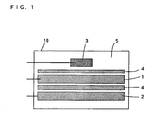
- Fig. 1 is a schematic explanatory view of the test cell of the nonaqueous electrolyte secondary battery according to the present embodiment.
- a lead is attached to the foregoing positive electrode to form a working electrode 1
- a lead is attached to the foregoing negative electrode that is made of a lithium metal to form a counter electrode 2.
- a separator 4 is inserted between the working electrode 1 and the counter electrode 2, and then the working electrode 1, the counter electrode 2, and a reference electrode 3 that is made of, for example, a lithium metal are arranged in a laminate vessel 10.
- the above-described non-aqueous electrolyte 5 is injected into the laminate vessel 10 to fabricate the nonaqueous electrolyte secondary battery as the test cell.
- a separator 4 is also inserted between the working electrode 2 and the reference electrode 3.
- the first layered oxide with the initial charge-discharge efficiency of less than 100% has a large capacity density.
- the first layered oxide is separately used as the positive electrode active material, however, part of lithium released in the nonaqueous electrolyte 5 does not return to the positive electrode active material.
- the second layered oxide with the initial charge-discharge efficiency of 100 % or more is separately used as the positive electrode active material, the counter electrode needs a significant amount of lithium.
- the mixed positive electrode active material formed by mixture of the first layered oxide with the initial charge-discharge efficiency of less than 100% and the second layered oxide with the initial charge-discharge efficiency of 100 % or more is used, so that lithium in the positive electrode material can be effectively utilized. As a result, high capacity can be maintained and the initial charge-discharge efficiency can be improved.
- a mixture ratio of the first layered oxide and the second layered oxide in such a mixed positive electrode active material is adjusted, so that the initial charge-discharge efficiency can be controlled to a desired value. Accordingly, various other materials with different reversibility (storage property and release property) of lithium ions other than the carbon material can be used as the negative electrode material.
- the first layered oxide and the second layered oxide are mixed, so that an average potential (V) of the mixed positive electrode active material is smaller than an average potential of each of the first and second layered oxides before the mixture. This reduces possibility of occurrence of oxidative decomposition reaction in the nonaqueous electrolyte.
- test cell of the nonaqueous electrolyte secondary battery was fabricated based on the foregoing embodiment, and the charge-discharge test was performed using the fabricated test cell.
- a current density as used herein was 0.125 mA/cm 2 , which corresponds to about 1/5 It. Note that a current value at which a rated capacity is completely discharged in an hour is referred to as a rated current, and expressed as 1.0 C. This is expressed as 1.0 It by SI (System International) units.
- Examples of the first layered oxide with the initial charge-discharge efficiency of less than 100 % used in the charge-discharge test, and initial discharge capacity densities, initial charge-discharge efficiencies and average potentials thereof are shown in Table 1.
- Table 1 No. COMPOSITION FORMULA INITIAL DISCHARGE CAPACITY DENSITY [mAh/g] INITIAL CHARGE-DISCHARGE EFFICIENCY [%]
- a discharge cutoff potential and a charge cutoff potential were set to 2.0-4.8 V (vs. LilLi + ) in the nonaqueous electrolyte secondary batteries using the first layered oxides (1) and (2), respectively, as the positive electrode active material, and the discharge cutoff potential and the charge cutoff potential were set to 2.0-5.0 V (vs. Li/Li + ) in the nonaqueous electrolyte secondary batteries using the first layered oxides (3) to (6), respectively, as the positive electrode active material.
- the discharge cutoff potential and the charge cutoff potential were set to 2.0-4.5 V (vs. Li/Li + ) in the nonaqueous electrolyte secondary batteries using the second layered oxides, respectively.
- the second layered oxide [5] in Table 2 has the P3 structure belonging to the space group R3m, and the second layered oxides excluding the second layered oxide [5] in Table 2 have the P2 structure belonging to the space group P6 3 /mmc.
- a material resulting from the ion exchange of the second layered oxide [2] of Table 2 (the second layered oxide ⁇ I>) is expressed as Na 0.7- ⁇ Li ⁇ Mn 0.5 CO 0.5 O 2
- a material resulting from the Ion exchange of the second layered oxide [7] of Table 2 (the second layered oxide ⁇ II>) is expressed as Na 0.7- ⁇ Li 0.16+ ⁇ Mn 0.5 Co 0.5 O 2 .
- the first layered oxide (2) of Table 1 and the second layered oxide ⁇ I> of Table 3 were mixed, thereby forming the mixed positive electrode active material.
- the discharge cutoff potential and the charge cutoff potential were set to 2.5-4.8 V (vs. Li/Li + ) in the nonaqueous electrolyte secondary batteries using the mixed positive electrode active materials, respectively.
- the average potentials of the first layered oxide (2) and the second layered oxide ⁇ I> in the range of 2.5-4.8 V were 3.68 V and 3.64 V, respectively.
- the first layered oxide (2) having the initial charge-discharge efficiency of less than 100 % and the second layered oxide ⁇ I> having the initial charge-discharge efficiency of 100% or more are preferably mixed in a 35: 65 ratio to achieve balance between the initial charge-discharge efficiency and the initial discharge capacity density.
- Table 4 shows that the average potential of each of the mixed positive electrode active materials was smaller by about 0.1 V than the average potential of each of the foregoing first layered oxides and second layered oxides before the mixture. Accordingly, it is considered that the possibility of occurrence of the oxidative decomposition reaction in the nonaqueous electrolyte was reduced and a level of safety was improved.
- the test sample A corresponds to the first layered oxide.
- Li 0.7 Li 0.1 Mn 0.5 Co 0.5 O 2 (a mixture of 88 % lithium nitrate and 11 % lithium chloride) was put in a molten salt bed, and held for 10 hours at 300 °C, so that Li 0.8 Mn 0.5 Co 0.5 O 2 was obtained as the test sample B.
- the test sample B corresponds to the second layered oxide.
- the ratio of lithium, manganese and cobalt is 0.81: 0.5: 0.5 (Li: Mn: Co), and oxygen is O 2 .
- oxygen it is considered that some oxygen deficiency may exist.
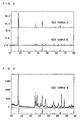
- XRD measurement of the obtained test sample A and test sample B was performed. The results are shown in Figs. 2 and 3.
- Fig. 2 shows XRD profiling of the test sample A and test sample 8
- Fig. 3 shows an enlarged view of the XRD profiling of the test sample B.
- PDF Powder Diffraction File
- ICDD International Center for Diffraction Data
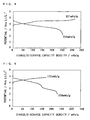
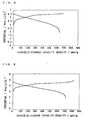
- the charge-discharge test was performed in the test cell with the positive electrode containing the test sample A as the positive electrode active material. Note that the current density was 20 It, and the charge-discharge range was 2.0 V - 4.8 V (vs. Li/Li + ). The result is shown in Fig. 4 . As shown in Fig. 4 , the charge-discharge test resulted in the initial discharge capacity density of 258 mAh/g, the initial charge-discharge efficiency of 80 %, and the average potential of 3.61 V (vs. Li/Li + ).
- the charge-discharge test was performed in the test cell with the positive electrode containing the test sample B as the positive electrode active material. Note that the current density was 20 It, and the charge-discharge range was 2.0 V - 4.8 V (vs. Li/Li + ). The result is shown in Fig. 5 . As shown in Fig. 5 , the charge-discharge test resulted in the initial discharge capacity density of 230 mAh/g, the initial charge-discharge efficiency of 133 %, and the average potential of 3.86 V (vs. Li/Li + ).
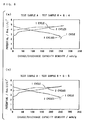
- Two types of the mixed positive electrode active materials were formed by mixing the foregoing test sample A and test sample B at 60:40 (weight %) and 50:50 (weight %). Respective test cells were formed using these mixed positive electrode active materials, and the charge-discharge test was performed. Note that the current density was 20 It, and the charge-discharge range was 2.0 V - 4.8 V (vs. Li/Li + ).
- Fig. 6 (a) shows the result of using the mixed positive electrode active material in which the test sample A and the test sample B were mixed at 60: 40 (weight %)
- Fig. 6 (b) shows the result of using the mixed positive electrode active material in which the test sample A and the test sample B were mixed at 50: 50 (weight %).
- Fig. 6 (a) when the mixed positive electrode active material in which the test sample A and the test sample B were mixed at 60: 40 (weight %) was used, the initial discharge capacity density was 255 mAh/g, the average discharge potential was 3.59 V (vs. Li/Li + ), and the initial charge-discharge efficiency was 96 %.
- Fig. 6 (b) when the mixed positive electrode active material in which the test sample A and the test sample B were mixed at 50: 50 (weight %) was used, the initial discharge capacity density was 255 mAh/g, the average discharge potential was 3.58 V (vs. Li/Li + ), and the initial charge-discharge efficiency was 100 %.
- Li 1.2 Mn 0.54 Co 0.13 Ni 0.13 O 2 was used as the first layered oxide of the mixed positive electrode active material, and Li 0.81 Mn 0.5 Co 0.5 O 2 was used as the second layered oxide, so that high capacity was maintained and the initial charge-discharge efficiency was improved.
- the mixed positive electrode active material in which the test sample A and the test sample B of the inventive example 2 were mixed at 50: 50 (weight %), carbon as the conductive agent, and an N-methyl-2-pyrrolidone solution with polyvinylidene-fluoride as the binder dissolved therein were adjusted such that the weight ratio of the mixed positive electrode active material, the conductive agent and the binder was 90: 5: 5 to be kneaded, so that the positive electrode slurry was prepared.
- the prepared positive electrode slurry was applied on an aluminum foil as the collector to be dried, so that a positive plate was obtained. Then, the obtained positive plate was cut in a long-sized shape of 750 X 55 mm 2 , thus obtaining the positive electrode.
- Graphite as a negative electrode active material, styrene-butadiene rubber as the binder, and an aqueous solution in which carboxy-methyl-cellulose as a thickener was dissolved were adjusted such that a weight ratio of the negative electrode active material, the binder and the thickener was 98: 1: 1 to be kneaded, so that negative electrode slurry was prepared.
- the prepared negative electrode slurry was applied on a copper foil as the collector to be dried, thus obtaining a negative plate. Note that an amount of application of the negative electrode slurry was adjusted such that a negative electrode/positive electrode initial charge capacity ratio was 1.1. Then, the obtained negative plate was cut in a long-sized shape of 785 X 58 mm 2 , thus obtaining the negative electrode.
- Fig. 7 is a partially cutaway perspective view of a wind test cell used in the inventive example 3.
- the fabricated positive electrode 11 and negative electrode 12 were opposite to each other with a separator 13 made of polyethylene sandwiched therebetween to be wound along a longitudinal direction, so that a wind electrode body 14 was fabricated.
- the wind electrode body 14 was housed in a laminate vessel 15 having a substantially cylindrical shape, and the nonaqueous electrolyte was poured into the laminate vessel.
- the wind test cell 16 was completed.
- the charge-discharge test was performed using the wind test cell 16 fabricated in the foregoing manner. Note that the charge-discharge range was 4.5-1.9 V (vs. Li/Li + ). The charge was performed at 1/25 It until 4.5 V, and then at a constant voltage of 4.5 V with a charge termination current at 3 mA. The discharge was performed at 1/25 It. The result is shown in Fig. 8 . As shown in Fig. 8 , the charge-discharge test resulted in the initial discharge capacity density of 641 mAh and the initial charge-discharge efficiency of 91 %.
- a power cycle test was performed using the foregoing wind test-cell 16. Note that the charge-discharge range was 4.5-1.9 V (vs. Li/Li + ). The charge was performed at 1/20 It until 4.5 V, and then at the constant voltage of 4.5 V with the charge termination current at 3 mA. The discharge was sequentially performed at current densities of 2 It. 1 It. 1/2 It, 1/5 It, 1/10 It and 1/20 It, and a 10-minute interval was provided for each discharge. The thickness of the positive electrode was 50 ⁇ m.
- the similar power cycle test was performed to the test cell (see Fig. 1 ) using the test sample A as the positive electrode active material and to the test cell using the test sample B as the positive electrode active material. Note that lithium metal was used as the counter electrode of the test cell.
- the thickness of the positive electrode of the test cell using the test sample A was 28 ⁇ m, and the thickness of the positive electrode of the test cell using the test sample B was 20 ⁇ m.
- Fig. 10 shows the result of the power cycle test using the wind test cell 16 of this example.
- Table 5 shows magnitudes of the discharge capacity density for each discharge in the wind test cell 16 of this example and the test cells of the comparative examples.
- the magnitude of the discharge capacity density when the discharge was performed at the current density of 1/20 It is 100%, and the magnitude of the discharge capacity density for each discharge is expressed in percentage.
- test sample D Differential Scanning Calorimetry
- test cells were fabricated using the test sample C and the test sample D, respectively, as the positive electrode active materials. Then, the fabricated test cells were charged until 5.0 V (vs. Li/Li + ), and subsequently disassembled in an argon dry box.
- the positive electrodes of the test cells were washed with dimethyl carbonate, and 3mg of ethylene carbonate and 5 mg of the positive electrode active material were extracted from each of the washed positive electrodes.
- the extracted ethylene carbonate and positive electrode active material were sealed in respective cells made of pressure-proof stainless steel for DSC, and heated to 300 °C at 5 °C/min.
- DSC was similarly performed to the test sample A and the test Sample B.
- Fig.11 shows the result of DSC for each test sample.
- temperatures at peaks of the test sample C and the test sample D were higher than a temperature at the peak of the test sample A. This shows that improved safety of the nonaqueous electrolyte secondary battery can be achieved when the test sample A and the test sample B were mixed to be used, as compared with the case where the test sample A was separately used. Meanwhile, the temperatures at the peaks of the test sample C and the test sample D were lower than a temperature at the peak of the test sample B. Note that when the test sample B was separately used, performance of the nonaqueous electrolyte secondary battery is significantly decreased.
- test sample A and the test sample B were mixed to be used.
- improved safety was achieved when the test sample A and the test sample B were mixed at 50: 50 (weight %) to be used, as compared with the case where the test sample A and the test sample B were mixed at 40:60 (weight %) to be used.
- a nonaqueous electrolyte secondary battery according to the present invention may be applied as various power supplies such as a portable power supply and an automotive power supply.
Landscapes
- Chemical & Material Sciences (AREA)
- Chemical Kinetics & Catalysis (AREA)
- Electrochemistry (AREA)
- General Chemical & Material Sciences (AREA)
- Engineering & Computer Science (AREA)
- Manufacturing & Machinery (AREA)
- Inorganic Chemistry (AREA)
- Composite Materials (AREA)
- Materials Engineering (AREA)
- Battery Electrode And Active Subsutance (AREA)
- Secondary Cells (AREA)
- Inorganic Compounds Of Heavy Metals (AREA)
Claims (10)
- Sekundärbatterie mit nichtwässrigem Elektrolyt, die eine positive Elektrode, die ein aktives positives Elektrodenmaterial enthält, eine negative Elektrode und einen nichtwässrigen Elektrolyt, der Lithiumionen enthält, umfasst, worin
das aktive positive Elektrodenmaterial Folgendes umfasst:ein erstes Schichtoxid, dessen anfängliche Lade-Entlade-Effizienz, wenn Lithiummetall für eine Gegenelektrode verwendet wird, weniger als 100 % beträgt, undein zweites Schichtoxid, das Natrium enthält und dessen anfängliche Lade-Entlade-Effizienz, wenn Lithiummetall für die Gegenelektrode verwendet wird, 100 % oder mehr beträgt. - Sekundärbatterie mit nichtwässrigem Elektrolyt nach Anspruch 1, worin
das erste Schichtoxid Li1+aMnxCoyNizO2 umfasst,
a größer als 0 und kleiner als 0,34 ist, x, y und z jeweils nicht kleiner als 0 sind und kleiner als 1 sind und a + x + y + z nicht kleiner als 0,95 und nicht größer als 1,05 sind. - Sekundärbatterie mit nichtwässrigem Elektrolyt nach Anspruch 1, worin
das zweite Schichtoxid LiANaBMnXCoYNiZO2 enthält,
A nicht kleiner als 0 und nicht größer als 0,22 ist, B nicht kleiner als 0,6 und nicht größer als 0,8 ist, X, Y und Z jeweils nicht kleiner als 0 und nicht größer als 1 sind und X + Y + Z nicht kleiner als 0,95 und nicht größer als 1,05 sind. - Sekundärbatterie mit nichtwässrigem Elektrolyt nach Anspruch 1, worin
das zweite Schichtoxid ein Natriumoxid mit einer P2-Struktur umfasst, die zur Raumgruppe P63/mmc gehört. - Sekundärbatterie mit nichtwässrigem Elektrolyt nach Anspruch 1, worin
das zweite Schichtoxid LiA+αNaB-αMnYCoYNiZO2 enthält, hergestellt durch Ionenaustausch eines Teils des Natriums in LiANaBMnYCoYNiZO2 durch Lithium, und
A nicht kleiner als 0 und nicht größer als 0,22 ist, B nicht kleiner als 0,6 und nicht größer als 0,8 ist, X, Y und Z nicht kleiner als 0 und nicht größer als 1 sind, X + Y + Z nicht kleiner als 0,95 und nicht größer als 1,05 ist und α größer als 0 und nicht größer als B ist. - Sekundärbatterie mit nichtwässrigem Elektrolyt nach Anspruch 5, worin das LiA+αNaB-βMnXCoYNiZO2 zur Raumgruppe P63mc gehört.
- Sekundärbatterie mit nichtwässrigem Elektrolyt nach Anspruch 1, dadurch gekennzeichnet, dass
das zweite Schichtoxid einen Anteil von weniger als 30 Mol-% von Li1+C[MnDCo1-D]1-CO2, das zur Raumgruppe C2/m oder C2/c gehört, als feste Lösung oder Verbundoxid aufweist und
C nicht kleiner als 0 und nicht größer als 1/3 ist und D größer als 0 und nicht größer als 1 ist. - Sekundärbatterie mit nichtwässrigem Elektrolyt nach Anspruch 1, worin
die negative Elektrode zumindest ein aus einer aus Lithiummetall, Silicium, Kohlenstoff, Zinn, Germanium, Aluminium, Blei, Indium, Gallium, einer lithiumhältigen Legierung, einem Kohlenstoffmaterial, in dem Lithium vorher gespeichert wird, und einem Siliciummaterial, worin Lithium vorher gespeichert wird, bestehenden Gruppe ausgewähltes Material umfasst. - Verfahren zur Herstellung einer Sekundärbatterie mit nichtwässrigem Elektrolyt, folgende Schritte umfassend:Herstellung einer positiven Elektrode, die ein aktives positives Elektrodenmaterial umfasst;Herstellung einer negativen Elektrode; undAusbildung eines nichtwässrigen Elektrolyts, der Lithiumionen enthält, worin der Schritt der Herstellung der positiven Elektrode folgende Schritte umfasst:Herstellung eines ersten Schichtoxids, dessen anfängliche Lade-Entlade-Effizienz, wenn Lithiummetall für eine Gegenelektrode verwendet wird, weniger als 100 % beträgt,Herstellung eines zweiten Schichtoxids, das Natrium enthält und dessen anfängliche Lade-Entlade-Effizienz, wenn Lithiummetall für die Gegenelektrode verwendet wird, 100 % oder mehr beträgt, undAusbildung des aktiven positiven Elektrodenmaterials durch Vermischen des ersten Schichtoxids und des zweiten Schichtoxids.
- Verfahren zur Herstellung einer Sekundärbatterie mit nichtwässrigem Elektrolyt nach Anspruch 9, worin der Schritt der Herstellung des zweiten Schichtoxids auch den Schritt der Herstellung des zweiten Schichtoxids mittels Ionenaustausch eines Teils des Natriums in einem Natriumoxid durch Lithium umfasst.
Applications Claiming Priority (2)
| Application Number | Priority Date | Filing Date | Title |
|---|---|---|---|
| JP2006351455 | 2006-12-27 | ||
| PCT/JP2007/075023 WO2008081839A1 (ja) | 2006-12-27 | 2007-12-26 | 非水電解質二次電池およびその製造方法 |
Publications (3)
| Publication Number | Publication Date |
|---|---|
| EP2139058A1 EP2139058A1 (de) | 2009-12-30 |
| EP2139058A4 EP2139058A4 (de) | 2011-01-19 |
| EP2139058B1 true EP2139058B1 (de) | 2012-02-01 |
Family
ID=39588521
Family Applications (1)
| Application Number | Title | Priority Date | Filing Date |
|---|---|---|---|
| EP07860252A Not-in-force EP2139058B1 (de) | 2006-12-27 | 2007-12-26 | Sekundärbatterie mit wasserfreiem elektrolyt und herstellungsverfahren dafür |
Country Status (7)
| Country | Link |
|---|---|
| US (1) | US8067118B2 (de) |
| EP (1) | EP2139058B1 (de) |
| JP (1) | JP4827931B2 (de) |
| KR (1) | KR101109893B1 (de) |
| CN (1) | CN101573813B (de) |
| AT (1) | ATE544188T1 (de) |
| WO (1) | WO2008081839A1 (de) |
Families Citing this family (68)
| Publication number | Priority date | Publication date | Assignee | Title |
|---|---|---|---|---|
| JP4832229B2 (ja) * | 2006-01-23 | 2011-12-07 | 三洋電機株式会社 | 非水電解質二次電池 |
| JP5014218B2 (ja) * | 2007-03-22 | 2012-08-29 | 三洋電機株式会社 | 非水電解質二次電池 |
| JP4823275B2 (ja) * | 2007-06-25 | 2011-11-24 | 三洋電機株式会社 | 非水電解質二次電池 |
| WO2009001557A1 (ja) * | 2007-06-25 | 2008-12-31 | Sanyo Electric Co., Ltd. | 非水電解質二次電池および正極の製造方法 |
| KR20100119760A (ko) * | 2008-02-04 | 2010-11-10 | 스미또모 가가꾸 가부시키가이샤 | 복합 금속 산화물 및 나트륨 이차 전지 |
| JP5309581B2 (ja) * | 2008-02-04 | 2013-10-09 | 住友化学株式会社 | 正極活物質用粉末、正極活物質およびナトリウム二次電池 |
| WO2009099061A1 (ja) | 2008-02-04 | 2009-08-13 | Sumitomo Chemical Company, Limited | 複合金属酸化物およびナトリウム二次電池 |
| JP5515306B2 (ja) * | 2008-02-06 | 2014-06-11 | 住友化学株式会社 | 複合金属酸化物およびナトリウム二次電池 |
| JP5391709B2 (ja) * | 2008-02-06 | 2014-01-15 | 住友化学株式会社 | 複合金属酸化物およびナトリウム二次電池 |
| JP4440339B2 (ja) | 2008-05-15 | 2010-03-24 | パナソニック株式会社 | 非水電解質二次電池用正極活物質、非水電解質二次電池用正極および非水電解質二次電池 |
| US8389160B2 (en) * | 2008-10-07 | 2013-03-05 | Envia Systems, Inc. | Positive electrode materials for lithium ion batteries having a high specific discharge capacity and processes for the synthesis of these materials |
| JP5405091B2 (ja) * | 2008-12-01 | 2014-02-05 | 三洋電機株式会社 | 非水電解質電池 |
| US8465873B2 (en) | 2008-12-11 | 2013-06-18 | Envia Systems, Inc. | Positive electrode materials for high discharge capacity lithium ion batteries |
| JP2011034943A (ja) * | 2009-03-16 | 2011-02-17 | Sanyo Electric Co Ltd | 非水電解液二次電池 |
| JP5425504B2 (ja) * | 2009-03-27 | 2014-02-26 | 三洋電機株式会社 | 非水電解質電池 |
| KR20120089845A (ko) * | 2009-08-27 | 2012-08-14 | 엔비아 시스템즈 인코포레이티드 | 높은 비용량과 우수한 사이클링을 갖는 층-층 리튬-리치 복합 금속 산화물 |
| CN102576869B (zh) * | 2009-09-30 | 2016-01-20 | 户田工业株式会社 | 正极活性物质颗粒粉末及其制造方法、以及非水电解质二次电池 |
| US9843041B2 (en) | 2009-11-11 | 2017-12-12 | Zenlabs Energy, Inc. | Coated positive electrode materials for lithium ion batteries |
| JP5474597B2 (ja) * | 2010-02-16 | 2014-04-16 | 三洋電機株式会社 | 非水電解質二次電池及びその製造方法 |
| JP5668537B2 (ja) * | 2010-03-31 | 2015-02-12 | 三洋電機株式会社 | 非水電解質二次電池 |
| US8741484B2 (en) | 2010-04-02 | 2014-06-03 | Envia Systems, Inc. | Doped positive electrode active materials and lithium ion secondary battery constructed therefrom |
| JP5605662B2 (ja) * | 2010-08-05 | 2014-10-15 | トヨタ自動車株式会社 | 二次電池 |
| WO2012020647A1 (ja) * | 2010-08-09 | 2012-02-16 | 株式会社 村田製作所 | 電極活物質およびそれを備えた非水電解質二次電池 |
| US8928286B2 (en) | 2010-09-03 | 2015-01-06 | Envia Systems, Inc. | Very long cycling of lithium ion batteries with lithium rich cathode materials |
| JP5758720B2 (ja) * | 2010-09-30 | 2015-08-05 | 三洋電機株式会社 | 非水電解質二次電池及びその製造方法 |
| EP2636649B1 (de) * | 2010-11-05 | 2017-11-29 | Tokyo University Of Science Educational Foundation Administrative Organization | Verbundmetalloxid, verfahren zur herstellung des verbundmetalloxids, positiv wirkendes material für eine natriumsekundärbatterie, positivelektrode für eine natriumsekundärbatterie und natriumsekundärbatterie |
| JP2012104335A (ja) * | 2010-11-09 | 2012-05-31 | Sanyo Electric Co Ltd | 非水電解液二次電池 |
| DE102010044008A1 (de) | 2010-11-16 | 2012-05-16 | Varta Micro Innovation Gmbh | Lithium-Ionen-Zelle mit verbessertem Alterungsverhalten |
| WO2012067675A1 (en) * | 2010-11-17 | 2012-05-24 | Uchicago Argonne, Llc, Operator Of Argonne National Laboratory | Electrode structures and surfaces for li batteries |
| CN103181005B (zh) | 2011-02-21 | 2016-05-18 | 株式会社Lg化学 | 具有改善的功率特性的混合正极活性材料和包含其的锂二次电池 |
| US20140079990A1 (en) * | 2011-05-31 | 2014-03-20 | Sanyo Electric Co., Ltd. | Nonaqueous electrolyte battery |
| CN103078116B (zh) * | 2011-10-26 | 2016-10-05 | 比亚迪股份有限公司 | 一种镍氢电池的正极添加剂及正极材料 |
| US9991566B2 (en) | 2011-11-03 | 2018-06-05 | Johnson Controls Technology Company | Cathode active material for overcharge protection in secondary lithium batteries |
| JP2015018602A (ja) * | 2011-11-11 | 2015-01-29 | 旭硝子株式会社 | 非水電解液二次電池 |
| JP2015018601A (ja) * | 2011-11-11 | 2015-01-29 | 旭硝子株式会社 | 非水電解液二次電池 |
| JP6003157B2 (ja) * | 2012-03-30 | 2016-10-05 | 戸田工業株式会社 | 正極活物質粒子粉末及びその製造方法、並びに非水電解質二次電池 |
| US9552901B2 (en) | 2012-08-17 | 2017-01-24 | Envia Systems, Inc. | Lithium ion batteries with high energy density, excellent cycling capability and low internal impedance |
| JP2016027530A (ja) * | 2012-11-29 | 2016-02-18 | 三洋電機株式会社 | 非水電解質二次電池 |
| WO2014083848A1 (ja) * | 2012-11-30 | 2014-06-05 | 三洋電機株式会社 | 非水電解質二次電池 |
| JP6498861B2 (ja) * | 2012-12-12 | 2019-04-10 | 三星エスディアイ株式会社SAMSUNG SDI Co., LTD. | リチウム二次電池用正極活物質、並びにこれを含むリチウム二次電池用正極及びリチウム二次電池 |
| US10115962B2 (en) | 2012-12-20 | 2018-10-30 | Envia Systems, Inc. | High capacity cathode material with stabilizing nanocoatings |
| WO2014103303A1 (ja) * | 2012-12-28 | 2014-07-03 | 三洋電機株式会社 | 非水電解質二次電池用正極活物質及びこれを用いた非水電解質二次電池 |
| CN103078100B (zh) * | 2013-01-15 | 2016-01-27 | 中南大学 | 一种锰酸钠锂正极材料及其制备方法 |
| JP6321973B2 (ja) * | 2013-01-23 | 2018-05-09 | 学校法人東京理科大学 | 複合金属酸化物、ナトリウム二次電池用正極活物質、ナトリウム二次電池用正極、及びナトリウム二次電池 |
| TWI615358B (zh) * | 2013-07-26 | 2018-02-21 | Lg化學股份有限公司 | 多晶型氧化錳鋰粒子,其製備方法,以及含彼之陰極活性材料 |
| WO2015079546A1 (ja) * | 2013-11-29 | 2015-06-04 | 株式会社日立製作所 | リチウムイオン二次電池用正極およびリチウムイオン二次電池 |
| US10256469B2 (en) * | 2014-01-31 | 2019-04-09 | Sanyo Electric Co., Ltd. | Nonaqueous-electrolyte secondary battery and method for manufacturing nonaqueous-electrolyte secondary battery |
| CN104882592B (zh) * | 2014-02-27 | 2019-08-30 | 松下知识产权经营株式会社 | 非水电解质二次电池用正极活性物质及其制造方法、以及非水电解质二次电池 |
| US9893356B2 (en) * | 2014-04-15 | 2018-02-13 | Panasonic Intellectual Property Management Co., Ltd. | Cathode active material for nonaqueous electrolyte secondary battery, nonaqueous electrolyte secondary battery, and method of producing cathode active material for nonaqueous electrolyte secondary battery |
| GB201409163D0 (en) * | 2014-05-22 | 2014-07-09 | Faradion Ltd | Compositions containing doped nickelate compounds |
| JP6394956B2 (ja) * | 2014-09-30 | 2018-09-26 | 株式会社Gsユアサ | 非水電解質二次電池 |
| US9660263B2 (en) * | 2014-12-23 | 2017-05-23 | Sharp Kabushiki Kaisha | Layered oxide materials for batteries |
| KR102391115B1 (ko) | 2015-01-21 | 2022-04-27 | 삼성에스디아이 주식회사 | 양극 활물질 및 이를 포함한 양극을 함유한 리튬 이차 전지 |
| EP3332437B1 (de) * | 2015-07-15 | 2020-09-02 | Toyota Motor Europe | Natriumschichtoxid als kathodenmaterial für natriumionenbatterie |
| US10910645B2 (en) * | 2015-09-14 | 2021-02-02 | City University Of Hong Kong | Copper substituted compound, cathode of battery comprising same, and battery comprising such cathode |
| US10741839B2 (en) | 2017-03-02 | 2020-08-11 | Uchicago Argonne, Llc | Surface treatment for lithium battery electrode materials |
| CN109560258A (zh) * | 2017-09-26 | 2019-04-02 | 中国科学院物理研究所 | 一种阴离子变价层状氧化物材料、制备方法和用途 |
| KR102851179B1 (ko) * | 2018-10-02 | 2025-08-28 | 하이드로-퀘벡 | 층상 나트륨 금속 산화물을 포함하는 전극 재료, 이를 포함하는 전극 및 전기화학에서 이의 용도 |
| JP7127631B2 (ja) * | 2019-10-21 | 2022-08-30 | トヨタ自動車株式会社 | 正極活物質の製造方法、及びリチウムイオン電池の製造方法 |
| CN113839012B (zh) | 2020-06-08 | 2023-01-20 | 宁德新能源科技有限公司 | 一种正极活性材料及包含其的电化学装置 |
| CN112331841B (zh) * | 2020-11-10 | 2022-06-24 | 宁德新能源科技有限公司 | 正极活性材料及电化学装置 |
| CN112563564B (zh) * | 2020-11-13 | 2021-11-09 | 上海空间电源研究所 | 一种制备钠离子固体电解质的软化学合成方法 |
| JP7363747B2 (ja) * | 2020-11-13 | 2023-10-18 | トヨタ自動車株式会社 | 正極活物質の製造方法、正極活物質およびリチウムイオン電池の製造方法 |
| EP4489122B1 (de) * | 2022-03-25 | 2026-04-01 | Aichi Steel Corporation | Positivelektrodenaktivmaterial, verfahren zur herstellung davon und sekundärbatterie mit wasserfreiem elektrolyt |
| US20240158257A1 (en) * | 2022-11-11 | 2024-05-16 | Honda Motor Co., Ltd. | Manganese oxides and cathode active materials |
| CN115763732B (zh) * | 2022-11-15 | 2025-06-06 | 珠海冠宇电池股份有限公司 | 一种正极材料及包括该正极材料的正极片和电池 |
| CN116190560B (zh) * | 2023-02-16 | 2026-04-10 | 珠海冠宇电池股份有限公司 | 一种正极片和电池 |
| CN118841513A (zh) * | 2024-06-26 | 2024-10-25 | 珠海冠启新材料有限公司 | 一种正极片及锂离子电池 |
Family Cites Families (16)
| Publication number | Priority date | Publication date | Assignee | Title |
|---|---|---|---|---|
| WO1999050924A1 (en) * | 1998-03-31 | 1999-10-07 | Board Of Regents, The University Of Texas System | Composite manganese oxide cathodes for rechargeable lithium batteries |
| JP2000203844A (ja) | 1998-05-22 | 2000-07-25 | Toyota Central Res & Dev Lab Inc | リチウム二次電池正極活物質用リチウムマンガン複合酸化物、その製造方法、およびそれを正極活物質に用いたリチウム二次電池 |
| US6306542B1 (en) | 1998-05-22 | 2001-10-23 | Kabushiki Kaisha Toyota Chuo Kenkyusho | Lithium manganese composite oxide for lithium secondary battery cathode active material, manufacturing method thereof, and lithium secondary battery using the composite oxide as cathode active material |
| JP2002220231A (ja) * | 2000-11-27 | 2002-08-09 | National Institute For Materials Science | 層状ナトリウムコバルトマンガン酸化物及びその製造方法 |
| EP1209124A1 (de) | 2000-11-27 | 2002-05-29 | National Institute for Materials Science | Lamellares Natrium-Kobalt-Manganoxid und Verfahren zu dessen Herstellung |
| JP2004031165A (ja) | 2002-06-26 | 2004-01-29 | Sony Corp | 非水電解質電池 |
| US20070141468A1 (en) | 2003-04-03 | 2007-06-21 | Jeremy Barker | Electrodes Comprising Mixed Active Particles |
| US7041239B2 (en) * | 2003-04-03 | 2006-05-09 | Valence Technology, Inc. | Electrodes comprising mixed active particles |
| JP4604460B2 (ja) | 2003-05-16 | 2011-01-05 | パナソニック株式会社 | 非水電解質二次電池および電池充放電システム |
| JP2005078985A (ja) * | 2003-09-02 | 2005-03-24 | Toshiba Battery Co Ltd | 非水系二次電池用電極及びこれを用いたリチウム二次電池。 |
| JP4172423B2 (ja) | 2004-05-26 | 2008-10-29 | ソニー株式会社 | 正極活物質および非水電解質二次電池 |
| JP5066798B2 (ja) * | 2005-07-29 | 2012-11-07 | ソニー株式会社 | 二次電池 |
| JP5092224B2 (ja) * | 2005-10-05 | 2012-12-05 | パナソニック株式会社 | 非水電解液二次電池とその電池パックおよび電子機器 |
| JP4832229B2 (ja) | 2006-01-23 | 2011-12-07 | 三洋電機株式会社 | 非水電解質二次電池 |
| JP2007273224A (ja) * | 2006-03-31 | 2007-10-18 | Mitsui Mining & Smelting Co Ltd | 非水電解液二次電池 |
| JP5013508B2 (ja) * | 2006-07-05 | 2012-08-29 | 日立マクセルエナジー株式会社 | 非水電解液二次電池 |
-
2007
- 2007-12-26 JP JP2008552138A patent/JP4827931B2/ja active Active
- 2007-12-26 CN CN2007800485424A patent/CN101573813B/zh active Active
- 2007-12-26 WO PCT/JP2007/075023 patent/WO2008081839A1/ja not_active Ceased
- 2007-12-26 EP EP07860252A patent/EP2139058B1/de not_active Not-in-force
- 2007-12-26 AT AT07860252T patent/ATE544188T1/de active
- 2007-12-26 KR KR1020097015596A patent/KR101109893B1/ko not_active Expired - Fee Related
- 2007-12-26 US US12/518,513 patent/US8067118B2/en active Active
Also Published As
| Publication number | Publication date |
|---|---|
| KR101109893B1 (ko) | 2012-01-31 |
| EP2139058A1 (de) | 2009-12-30 |
| ATE544188T1 (de) | 2012-02-15 |
| JPWO2008081839A1 (ja) | 2010-04-30 |
| CN101573813B (zh) | 2012-05-23 |
| US8067118B2 (en) | 2011-11-29 |
| CN101573813A (zh) | 2009-11-04 |
| JP4827931B2 (ja) | 2011-11-30 |
| WO2008081839A1 (ja) | 2008-07-10 |
| EP2139058A4 (de) | 2011-01-19 |
| KR20090096534A (ko) | 2009-09-10 |
| US20100104944A1 (en) | 2010-04-29 |
Similar Documents
| Publication | Publication Date | Title |
|---|---|---|
| US8067118B2 (en) | Nonaqueous electrolyte secondary battery and method of manufacturing the same | |
| US8048564B2 (en) | Nonaqueous electrolyte secondary battery and method of forming positive electrode | |
| US8263263B2 (en) | Nonaqueous electrolyte secondary battery | |
| US7695868B2 (en) | Sodium ion secondary battery | |
| US9350045B2 (en) | Nonaqueous electrolyte secondary battery and method for manufacturing the same | |
| US20090011335A1 (en) | Positive electrode active material, method of manufacturing the positive electrode active material, and non-aqueous electrolyte secondary battery | |
| US20110200879A1 (en) | Non-aqueous electrolyte secondary battery and method of manufacturing the same | |
| US8178243B2 (en) | Non-aqueous electrolyte secondary battery and method of manufacturing the same | |
| US20080261115A1 (en) | Non-aqueous electrolyte secondary battery and positive electrode | |
| JP2010092824A (ja) | 非水電解質二次電池用正極活物質、それを用いた非水電解質二次電池及び非水電解質二次電池用正極活物質の製造方法 | |
| KR20040084761A (ko) | 비수전해질 2차 전지, 정극 활물질 및 그의 제조 방법 | |
| JP2009217981A (ja) | 非水電解質二次電池 | |
| US7838151B2 (en) | Non-aqueous electrolyte secondary battery | |
| JP4993891B2 (ja) | 非水電解質二次電池 | |
| KR101676687B1 (ko) | 리튬 이차전지용 양극 활물질, 이의 제조방법, 및 이를 포함하는 리튬 이차전지 | |
| US8852799B2 (en) | Non-aqueous electrolyte secondary battery | |
| JP2008251526A (ja) | 非水電解質二次電池および正極 | |
| JP5100069B2 (ja) | 非水電解質二次電池およびその製造方法 | |
| JP2007242420A (ja) | 非水電解質二次電池および非水電解質二次電池用正極活物質の製造方法 | |
| EP4614586A1 (de) | Lithiumsekundärbatterie | |
| JP2007242570A (ja) | 非水電解質二次電池 | |
| JPH07176324A (ja) | リチウム二次電池 |
Legal Events
| Date | Code | Title | Description |
|---|---|---|---|
| PUAI | Public reference made under article 153(3) epc to a published international application that has entered the european phase |
Free format text: ORIGINAL CODE: 0009012 |
|
| 17P | Request for examination filed |
Effective date: 20090617 |
|
| AK | Designated contracting states |
Kind code of ref document: A1 Designated state(s): AT BE BG CH CY CZ DE DK EE ES FI FR GB GR HU IE IS IT LI LT LU LV MC MT NL PL PT RO SE SI SK TR |
|
| DAX | Request for extension of the european patent (deleted) | ||
| A4 | Supplementary search report drawn up and despatched |
Effective date: 20101220 |
|
| GRAP | Despatch of communication of intention to grant a patent |
Free format text: ORIGINAL CODE: EPIDOSNIGR1 |
|
| RIC1 | Information provided on ipc code assigned before grant |
Ipc: H01M 4/02 20060101AFI20110704BHEP Ipc: H01M 4/52 20100101ALI20110704BHEP Ipc: H01M 4/50 20100101ALI20110704BHEP Ipc: H01M 4/04 20060101ALI20110704BHEP |
|
| GRAS | Grant fee paid |
Free format text: ORIGINAL CODE: EPIDOSNIGR3 |
|
| GRAA | (expected) grant |
Free format text: ORIGINAL CODE: 0009210 |
|
| AK | Designated contracting states |
Kind code of ref document: B1 Designated state(s): AT BE BG CH CY CZ DE DK EE ES FI FR GB GR HU IE IS IT LI LT LU LV MC MT NL PL PT RO SE SI SK TR |
|
| REG | Reference to a national code |
Ref country code: GB Ref legal event code: FG4D |
|
| REG | Reference to a national code |
Ref country code: AT Ref legal event code: REF Ref document number: 544188 Country of ref document: AT Kind code of ref document: T Effective date: 20120215 Ref country code: CH Ref legal event code: EP |
|
| REG | Reference to a national code |
Ref country code: DE Ref legal event code: R096 Ref document number: 602007020513 Country of ref document: DE Effective date: 20120329 |
|
| REG | Reference to a national code |
Ref country code: NL Ref legal event code: VDEP Effective date: 20120201 |
|
| LTIE | Lt: invalidation of european patent or patent extension |
Effective date: 20120201 |
|
| PG25 | Lapsed in a contracting state [announced via postgrant information from national office to epo] |
Ref country code: LT Free format text: LAPSE BECAUSE OF FAILURE TO SUBMIT A TRANSLATION OF THE DESCRIPTION OR TO PAY THE FEE WITHIN THE PRESCRIBED TIME-LIMIT Effective date: 20120201 Ref country code: NL Free format text: LAPSE BECAUSE OF FAILURE TO SUBMIT A TRANSLATION OF THE DESCRIPTION OR TO PAY THE FEE WITHIN THE PRESCRIBED TIME-LIMIT Effective date: 20120201 Ref country code: IS Free format text: LAPSE BECAUSE OF FAILURE TO SUBMIT A TRANSLATION OF THE DESCRIPTION OR TO PAY THE FEE WITHIN THE PRESCRIBED TIME-LIMIT Effective date: 20120601 |
|
| PG25 | Lapsed in a contracting state [announced via postgrant information from national office to epo] |
Ref country code: PL Free format text: LAPSE BECAUSE OF FAILURE TO SUBMIT A TRANSLATION OF THE DESCRIPTION OR TO PAY THE FEE WITHIN THE PRESCRIBED TIME-LIMIT Effective date: 20120201 Ref country code: BE Free format text: LAPSE BECAUSE OF FAILURE TO SUBMIT A TRANSLATION OF THE DESCRIPTION OR TO PAY THE FEE WITHIN THE PRESCRIBED TIME-LIMIT Effective date: 20120201 Ref country code: PT Free format text: LAPSE BECAUSE OF FAILURE TO SUBMIT A TRANSLATION OF THE DESCRIPTION OR TO PAY THE FEE WITHIN THE PRESCRIBED TIME-LIMIT Effective date: 20120601 Ref country code: LV Free format text: LAPSE BECAUSE OF FAILURE TO SUBMIT A TRANSLATION OF THE DESCRIPTION OR TO PAY THE FEE WITHIN THE PRESCRIBED TIME-LIMIT Effective date: 20120201 Ref country code: FI Free format text: LAPSE BECAUSE OF FAILURE TO SUBMIT A TRANSLATION OF THE DESCRIPTION OR TO PAY THE FEE WITHIN THE PRESCRIBED TIME-LIMIT Effective date: 20120201 Ref country code: GR Free format text: LAPSE BECAUSE OF FAILURE TO SUBMIT A TRANSLATION OF THE DESCRIPTION OR TO PAY THE FEE WITHIN THE PRESCRIBED TIME-LIMIT Effective date: 20120502 |
|
| REG | Reference to a national code |
Ref country code: AT Ref legal event code: MK05 Ref document number: 544188 Country of ref document: AT Kind code of ref document: T Effective date: 20120201 |
|
| PG25 | Lapsed in a contracting state [announced via postgrant information from national office to epo] |
Ref country code: CY Free format text: LAPSE BECAUSE OF FAILURE TO SUBMIT A TRANSLATION OF THE DESCRIPTION OR TO PAY THE FEE WITHIN THE PRESCRIBED TIME-LIMIT Effective date: 20120201 |
|
| PG25 | Lapsed in a contracting state [announced via postgrant information from national office to epo] |
Ref country code: SE Free format text: LAPSE BECAUSE OF FAILURE TO SUBMIT A TRANSLATION OF THE DESCRIPTION OR TO PAY THE FEE WITHIN THE PRESCRIBED TIME-LIMIT Effective date: 20120201 Ref country code: SI Free format text: LAPSE BECAUSE OF FAILURE TO SUBMIT A TRANSLATION OF THE DESCRIPTION OR TO PAY THE FEE WITHIN THE PRESCRIBED TIME-LIMIT Effective date: 20120201 Ref country code: CZ Free format text: LAPSE BECAUSE OF FAILURE TO SUBMIT A TRANSLATION OF THE DESCRIPTION OR TO PAY THE FEE WITHIN THE PRESCRIBED TIME-LIMIT Effective date: 20120201 Ref country code: RO Free format text: LAPSE BECAUSE OF FAILURE TO SUBMIT A TRANSLATION OF THE DESCRIPTION OR TO PAY THE FEE WITHIN THE PRESCRIBED TIME-LIMIT Effective date: 20120201 Ref country code: EE Free format text: LAPSE BECAUSE OF FAILURE TO SUBMIT A TRANSLATION OF THE DESCRIPTION OR TO PAY THE FEE WITHIN THE PRESCRIBED TIME-LIMIT Effective date: 20120201 Ref country code: DK Free format text: LAPSE BECAUSE OF FAILURE TO SUBMIT A TRANSLATION OF THE DESCRIPTION OR TO PAY THE FEE WITHIN THE PRESCRIBED TIME-LIMIT Effective date: 20120201 |
|
| PG25 | Lapsed in a contracting state [announced via postgrant information from national office to epo] |
Ref country code: SK Free format text: LAPSE BECAUSE OF FAILURE TO SUBMIT A TRANSLATION OF THE DESCRIPTION OR TO PAY THE FEE WITHIN THE PRESCRIBED TIME-LIMIT Effective date: 20120201 |
|
| PLBE | No opposition filed within time limit |
Free format text: ORIGINAL CODE: 0009261 |
|
| STAA | Information on the status of an ep patent application or granted ep patent |
Free format text: STATUS: NO OPPOSITION FILED WITHIN TIME LIMIT |
|
| 26N | No opposition filed |
Effective date: 20121105 |
|
| PG25 | Lapsed in a contracting state [announced via postgrant information from national office to epo] |
Ref country code: AT Free format text: LAPSE BECAUSE OF FAILURE TO SUBMIT A TRANSLATION OF THE DESCRIPTION OR TO PAY THE FEE WITHIN THE PRESCRIBED TIME-LIMIT Effective date: 20120201 |
|
| REG | Reference to a national code |
Ref country code: DE Ref legal event code: R097 Ref document number: 602007020513 Country of ref document: DE Effective date: 20121105 |
|
| PG25 | Lapsed in a contracting state [announced via postgrant information from national office to epo] |
Ref country code: ES Free format text: LAPSE BECAUSE OF FAILURE TO SUBMIT A TRANSLATION OF THE DESCRIPTION OR TO PAY THE FEE WITHIN THE PRESCRIBED TIME-LIMIT Effective date: 20120512 |
|
| PG25 | Lapsed in a contracting state [announced via postgrant information from national office to epo] |
Ref country code: MC Free format text: LAPSE BECAUSE OF NON-PAYMENT OF DUE FEES Effective date: 20121231 Ref country code: BG Free format text: LAPSE BECAUSE OF FAILURE TO SUBMIT A TRANSLATION OF THE DESCRIPTION OR TO PAY THE FEE WITHIN THE PRESCRIBED TIME-LIMIT Effective date: 20120501 |
|
| REG | Reference to a national code |
Ref country code: CH Ref legal event code: PL |
|
| REG | Reference to a national code |
Ref country code: IE Ref legal event code: MM4A |
|
| PG25 | Lapsed in a contracting state [announced via postgrant information from national office to epo] |
Ref country code: LI Free format text: LAPSE BECAUSE OF NON-PAYMENT OF DUE FEES Effective date: 20121231 Ref country code: CH Free format text: LAPSE BECAUSE OF NON-PAYMENT OF DUE FEES Effective date: 20121231 Ref country code: IE Free format text: LAPSE BECAUSE OF NON-PAYMENT OF DUE FEES Effective date: 20121226 |
|
| PG25 | Lapsed in a contracting state [announced via postgrant information from national office to epo] |
Ref country code: MT Free format text: LAPSE BECAUSE OF FAILURE TO SUBMIT A TRANSLATION OF THE DESCRIPTION OR TO PAY THE FEE WITHIN THE PRESCRIBED TIME-LIMIT Effective date: 20120201 |
|
| PGFP | Annual fee paid to national office [announced via postgrant information from national office to epo] |
Ref country code: GB Payment date: 20131227 Year of fee payment: 7 Ref country code: DE Payment date: 20131218 Year of fee payment: 7 |
|
| PGFP | Annual fee paid to national office [announced via postgrant information from national office to epo] |
Ref country code: FR Payment date: 20131209 Year of fee payment: 7 Ref country code: IT Payment date: 20131216 Year of fee payment: 7 |
|
| PG25 | Lapsed in a contracting state [announced via postgrant information from national office to epo] |
Ref country code: TR Free format text: LAPSE BECAUSE OF FAILURE TO SUBMIT A TRANSLATION OF THE DESCRIPTION OR TO PAY THE FEE WITHIN THE PRESCRIBED TIME-LIMIT Effective date: 20120201 |
|
| PG25 | Lapsed in a contracting state [announced via postgrant information from national office to epo] |
Ref country code: LU Free format text: LAPSE BECAUSE OF NON-PAYMENT OF DUE FEES Effective date: 20121226 |
|
| PG25 | Lapsed in a contracting state [announced via postgrant information from national office to epo] |
Ref country code: HU Free format text: LAPSE BECAUSE OF FAILURE TO SUBMIT A TRANSLATION OF THE DESCRIPTION OR TO PAY THE FEE WITHIN THE PRESCRIBED TIME-LIMIT Effective date: 20071226 |
|
| REG | Reference to a national code |
Ref country code: DE Ref legal event code: R119 Ref document number: 602007020513 Country of ref document: DE |
|
| GBPC | Gb: european patent ceased through non-payment of renewal fee |
Effective date: 20141226 |
|
| REG | Reference to a national code |
Ref country code: FR Ref legal event code: ST Effective date: 20150831 |
|
| PG25 | Lapsed in a contracting state [announced via postgrant information from national office to epo] |
Ref country code: GB Free format text: LAPSE BECAUSE OF NON-PAYMENT OF DUE FEES Effective date: 20141226 Ref country code: DE Free format text: LAPSE BECAUSE OF NON-PAYMENT OF DUE FEES Effective date: 20150701 |
|
| PG25 | Lapsed in a contracting state [announced via postgrant information from national office to epo] |
Ref country code: FR Free format text: LAPSE BECAUSE OF NON-PAYMENT OF DUE FEES Effective date: 20141231 |
|
| PG25 | Lapsed in a contracting state [announced via postgrant information from national office to epo] |
Ref country code: IT Free format text: LAPSE BECAUSE OF NON-PAYMENT OF DUE FEES Effective date: 20141226 |