EP2111414B1 - Glucagon/glp-1 receptor co-agonists - Google Patents
Glucagon/glp-1 receptor co-agonists Download PDFInfo
- Publication number
- EP2111414B1 EP2111414B1 EP20080729769 EP08729769A EP2111414B1 EP 2111414 B1 EP2111414 B1 EP 2111414B1 EP 20080729769 EP20080729769 EP 20080729769 EP 08729769 A EP08729769 A EP 08729769A EP 2111414 B1 EP2111414 B1 EP 2111414B1
- Authority
- EP
- European Patent Office
- Prior art keywords
- seq
- lactam
- ftsdy skyld
- lmnta
- dfvqw
- Prior art date
- Legal status (The legal status is an assumption and is not a legal conclusion. Google has not performed a legal analysis and makes no representation as to the accuracy of the status listed.)
- Revoked
Links
- WMCBCKAJVDSHNW-LURJTMIESA-N CC([C@H](CSCC(O)=O)NC)=O Chemical compound CC([C@H](CSCC(O)=O)NC)=O WMCBCKAJVDSHNW-LURJTMIESA-N 0.000 description 1
Images











Classifications
-
- C—CHEMISTRY; METALLURGY
- C07—ORGANIC CHEMISTRY
- C07K—PEPTIDES
- C07K14/00—Peptides having more than 20 amino acids; Gastrins; Somatostatins; Melanotropins; Derivatives thereof
- C07K14/435—Peptides having more than 20 amino acids; Gastrins; Somatostatins; Melanotropins; Derivatives thereof from animals; from humans
- C07K14/575—Hormones
- C07K14/605—Glucagons
-
- A—HUMAN NECESSITIES
- A61—MEDICAL OR VETERINARY SCIENCE; HYGIENE
- A61K—PREPARATIONS FOR MEDICAL, DENTAL OR TOILETRY PURPOSES
- A61K38/00—Medicinal preparations containing peptides
- A61K38/16—Peptides having more than 20 amino acids; Gastrins; Somatostatins; Melanotropins; Derivatives thereof
- A61K38/17—Peptides having more than 20 amino acids; Gastrins; Somatostatins; Melanotropins; Derivatives thereof from animals; from humans
- A61K38/22—Hormones
- A61K38/26—Glucagons
-
- A—HUMAN NECESSITIES
- A61—MEDICAL OR VETERINARY SCIENCE; HYGIENE
- A61K—PREPARATIONS FOR MEDICAL, DENTAL OR TOILETRY PURPOSES
- A61K47/00—Medicinal preparations characterised by the non-active ingredients used, e.g. carriers or inert additives; Targeting or modifying agents chemically bound to the active ingredient
- A61K47/50—Medicinal preparations characterised by the non-active ingredients used, e.g. carriers or inert additives; Targeting or modifying agents chemically bound to the active ingredient the non-active ingredient being chemically bound to the active ingredient, e.g. polymer-drug conjugates
- A61K47/51—Medicinal preparations characterised by the non-active ingredients used, e.g. carriers or inert additives; Targeting or modifying agents chemically bound to the active ingredient the non-active ingredient being chemically bound to the active ingredient, e.g. polymer-drug conjugates the non-active ingredient being a modifying agent
- A61K47/56—Medicinal preparations characterised by the non-active ingredients used, e.g. carriers or inert additives; Targeting or modifying agents chemically bound to the active ingredient the non-active ingredient being chemically bound to the active ingredient, e.g. polymer-drug conjugates the non-active ingredient being a modifying agent the modifying agent being an organic macromolecular compound, e.g. an oligomeric, polymeric or dendrimeric molecule
- A61K47/59—Medicinal preparations characterised by the non-active ingredients used, e.g. carriers or inert additives; Targeting or modifying agents chemically bound to the active ingredient the non-active ingredient being chemically bound to the active ingredient, e.g. polymer-drug conjugates the non-active ingredient being a modifying agent the modifying agent being an organic macromolecular compound, e.g. an oligomeric, polymeric or dendrimeric molecule obtained otherwise than by reactions only involving carbon-to-carbon unsaturated bonds, e.g. polyureas or polyurethanes
- A61K47/60—Medicinal preparations characterised by the non-active ingredients used, e.g. carriers or inert additives; Targeting or modifying agents chemically bound to the active ingredient the non-active ingredient being chemically bound to the active ingredient, e.g. polymer-drug conjugates the non-active ingredient being a modifying agent the modifying agent being an organic macromolecular compound, e.g. an oligomeric, polymeric or dendrimeric molecule obtained otherwise than by reactions only involving carbon-to-carbon unsaturated bonds, e.g. polyureas or polyurethanes the organic macromolecular compound being a polyoxyalkylene oligomer, polymer or dendrimer, e.g. PEG, PPG, PEO or polyglycerol
-
- A—HUMAN NECESSITIES
- A61—MEDICAL OR VETERINARY SCIENCE; HYGIENE
- A61P—SPECIFIC THERAPEUTIC ACTIVITY OF CHEMICAL COMPOUNDS OR MEDICINAL PREPARATIONS
- A61P1/00—Drugs for disorders of the alimentary tract or the digestive system
-
- A—HUMAN NECESSITIES
- A61—MEDICAL OR VETERINARY SCIENCE; HYGIENE
- A61P—SPECIFIC THERAPEUTIC ACTIVITY OF CHEMICAL COMPOUNDS OR MEDICINAL PREPARATIONS
- A61P21/00—Drugs for disorders of the muscular or neuromuscular system
-
- A—HUMAN NECESSITIES
- A61—MEDICAL OR VETERINARY SCIENCE; HYGIENE
- A61P—SPECIFIC THERAPEUTIC ACTIVITY OF CHEMICAL COMPOUNDS OR MEDICINAL PREPARATIONS
- A61P3/00—Drugs for disorders of the metabolism
- A61P3/04—Anorexiants; Antiobesity agents
-
- A—HUMAN NECESSITIES
- A61—MEDICAL OR VETERINARY SCIENCE; HYGIENE
- A61P—SPECIFIC THERAPEUTIC ACTIVITY OF CHEMICAL COMPOUNDS OR MEDICINAL PREPARATIONS
- A61P3/00—Drugs for disorders of the metabolism
- A61P3/06—Antihyperlipidemics
-
- A—HUMAN NECESSITIES
- A61—MEDICAL OR VETERINARY SCIENCE; HYGIENE
- A61P—SPECIFIC THERAPEUTIC ACTIVITY OF CHEMICAL COMPOUNDS OR MEDICINAL PREPARATIONS
- A61P3/00—Drugs for disorders of the metabolism
- A61P3/08—Drugs for disorders of the metabolism for glucose homeostasis
-
- A—HUMAN NECESSITIES
- A61—MEDICAL OR VETERINARY SCIENCE; HYGIENE
- A61P—SPECIFIC THERAPEUTIC ACTIVITY OF CHEMICAL COMPOUNDS OR MEDICINAL PREPARATIONS
- A61P3/00—Drugs for disorders of the metabolism
- A61P3/08—Drugs for disorders of the metabolism for glucose homeostasis
- A61P3/10—Drugs for disorders of the metabolism for glucose homeostasis for hyperglycaemia, e.g. antidiabetics
-
- A—HUMAN NECESSITIES
- A61—MEDICAL OR VETERINARY SCIENCE; HYGIENE
- A61P—SPECIFIC THERAPEUTIC ACTIVITY OF CHEMICAL COMPOUNDS OR MEDICINAL PREPARATIONS
- A61P9/00—Drugs for disorders of the cardiovascular system
-
- A—HUMAN NECESSITIES
- A61—MEDICAL OR VETERINARY SCIENCE; HYGIENE
- A61P—SPECIFIC THERAPEUTIC ACTIVITY OF CHEMICAL COMPOUNDS OR MEDICINAL PREPARATIONS
- A61P9/00—Drugs for disorders of the cardiovascular system
- A61P9/10—Drugs for disorders of the cardiovascular system for treating ischaemic or atherosclerotic diseases, e.g. antianginal drugs, coronary vasodilators, drugs for myocardial infarction, retinopathy, cerebrovascula insufficiency, renal arteriosclerosis
-
- A—HUMAN NECESSITIES
- A61—MEDICAL OR VETERINARY SCIENCE; HYGIENE
- A61P—SPECIFIC THERAPEUTIC ACTIVITY OF CHEMICAL COMPOUNDS OR MEDICINAL PREPARATIONS
- A61P9/00—Drugs for disorders of the cardiovascular system
- A61P9/12—Antihypertensives
-
- C—CHEMISTRY; METALLURGY
- C07—ORGANIC CHEMISTRY
- C07K—PEPTIDES
- C07K16/00—Immunoglobulins [IGs], e.g. monoclonal or polyclonal antibodies
-
- A—HUMAN NECESSITIES
- A61—MEDICAL OR VETERINARY SCIENCE; HYGIENE
- A61K—PREPARATIONS FOR MEDICAL, DENTAL OR TOILETRY PURPOSES
- A61K38/00—Medicinal preparations containing peptides
-
- C—CHEMISTRY; METALLURGY
- C07—ORGANIC CHEMISTRY
- C07K—PEPTIDES
- C07K2317/00—Immunoglobulins specific features
- C07K2317/50—Immunoglobulins specific features characterized by immunoglobulin fragments
- C07K2317/52—Constant or Fc region; Isotype
-
- C—CHEMISTRY; METALLURGY
- C07—ORGANIC CHEMISTRY
- C07K—PEPTIDES
- C07K2319/00—Fusion polypeptide
- C07K2319/30—Non-immunoglobulin-derived peptide or protein having an immunoglobulin constant or Fc region, or a fragment thereof, attached thereto
Definitions
- Pre-proglucagon is a 158 amino acid precursor polypeptide that is processed in different tissues to form a number of different proglucagon-derived peptides, including glucagon, glucagon-like peptide-1 (GLP-1), glucagon-like peptide-2 (GLP-2) and oxyntomodulin (OXM), that are involved in a wide variety of physiological functions, including glucose homeostasis, insulin secretion, gastric emptying, and intestinal growth, as well as the regulation of food intake.
- GLP-1 glucagon-like peptide-1
- GLP-2 glucagon-like peptide-2
- OXM oxyntomodulin
- Glucagon is a 29-amino acid peptide that corresponds to amino acids 33 through 61 of pre-proglucagon, while GLP-1 is produced as a 37-amino acid peptide that corresponds to amino acids 72 through 108 of pre-proglucagon.
- GLP-1 (7-36) amide or GLP-1 (7-37)acid are biologically potent forms of GLP-1, that demonstrate essentially equivalent activity at the GLP-1 receptor.
- hypoglycemia occurs when blood glucose levels drops too low to provide enough energy for the body's activities. In adults or children older than 10 years, hypoglycemia is uncommon except as a side effect of diabetes treatment, but it can result from other medications or diseases, hormone or enzyme deficiencies, or tumors.
- glucagon a hormone produced by the pancreas, signals the liver to break down glycogen and release glucose, causing blood glucose levels to rise toward a normal level.
- glucagon's general role in glucose regulation is to counteract the action of insulin and maintain blood glucose levels. However for diabetics, this glucagon response to hypoglycemia may be impaired, making it harder for glucose levels to return to the normal range.
- hypoglycemia is a life threatening event that requires immediate medical attention.
- the administration of glucagon is an established medication for treating acute hypoglycemia and it can restore normal levels of glucose within minutes of administration.
- glucagon is used in the acute medical treatment of hypoglycemia, a crystalline form of glucagon is solubilized with a dilute acid buffer and the solution is injected intramuscularly. While this treatment is effective, the methodology is cumbersome and dangerous for someone that is semi-conscious. Accordingly, there is a need for a glucagon analog that maintains or exceeds the biological performance of the parent molecule but is sufficiently soluble and stable, under relevant physiological conditions, that it can be pre-formulated as a solution, ready for injection.
- diabetics are encouraged to maintain near normal blood glucose levels to delay or prevent microvascular complications. Achievement of this goal usually requires intensive insulin therapy. In striving to achieve this goal, physicians have encountered a substantial increase in the frequency and severity of hypoglycemia in their diabetic patients. Accordingly, improved pharmaceuticals and methodologies are needed for treating diabetes that are less likely to induce hypoglycemia than current insulin therapies.
- GLP-1 has different biological activities compared to glucagon. Its actions include stimulation of insulin synthesis and secretion, inhibition of glucagon secretion, and inhibition of food intake. GLP-1 has been shown to reduce hyperglycemia (elevated glucose levels) in diabetics. Exendin-4, a peptide from lizard venom that shares about 50% amino acid identity with GLP-1, activates the GLP-1 receptor and likewise has been shown to reduce hyperglycemia in diabetics.
- hyperglycemia elevated glucose levels
- Exendin-4 a peptide from lizard venom that shares about 50% amino acid identity with GLP-1, activates the GLP-1 receptor and likewise has been shown to reduce hyperglycemia in diabetics.
- GLP-1 and exendin-4 may reduce food intake and promote weight loss, an effect that would be beneficial not only for diabetics but also for patients suffering from obesity.
- Patients with obesity have a higher risk of diabetes, hypertension, hyperlipidemia, cardiovascular disease, and musculoskeletal diseases.
- the present invention relates to a non-native glucagon peptide as defined in claims 1 to 19.
- the present invention also relates to a pharmaceutical composition as defined in claims 20 and 21.
- the present invention further relates to a non-native glucagon peptide as defined in claims 1 to 19, or a pharmaceutically acceptable salt thereof, for use in treating diabetes or for use in reducing weight gain or inducing weight loss.
- high potency glucagon agonists analogs are provided that also exhibit increased activity at the glucagon receptor, and in further embodiments exhibit enhanced biophysical stability and/or aqueous solubility.
- glucagon agonist analogs are provided that have lost native glucagon's selectivity for the glucagon receptor verses the GLP-1 receptor, and thus represent co-agonists of those two receptors. Selected amino acid modifications within the glucagon analogs can control the relative activity of the analog at the GLP-1 receptor verses the glucagon receptor.
- glucagon co-agonist analogs that have higher activity at the glucagon receptor versus the GLP-1 receptor, glucagon co-agonist analogs that have approximately equivalent activity at both receptors, and glucagon co-agonist analogs that have higher activity at the GLP-1 receptor versus the glucagon receptor.
- the latter category of co-agonist can be engineered to exhibit little or no activity at the glucagon receptor, and yet retain ability to activate the GLP-1 receptor with the same or better potency than native GLP-1. Any of these analogs may also include modifications that confer enhanced biophysical stability and/or aqueous solubility.
- Glucagon analogs that demonstrate co-agonism at the glucagon and GLP-1 receptors are advantageous for several applications.
- First of all the use of glucagon to treat hypoglycemia may overcompensate for low blood glucose levels and result in excess blood glucose levels. If a glucagon/GLP-1 receptor co-agonist is administered, the additional GLP-1 stimulation may buffer the glucagon agonist effect to prevent excessive glucose blood levels resulting from treatment of hypoglycemia.
- glucagon co-agonist analogs as disclosed herein may be used to control hyperglycemia, or to induce weight loss or prevent weight gain, when administered alone or in combination with other anti-diabetic or anti-obesity treatments.
- Another compound that induces weight loss is oxyntomodulin, a naturally occurring digestive hormone found in the small intestine (see Diabetes 2005; 54:2390-2395 ).
- Oxyntomodulin is a 37 amino acid peptide that contains the 29 amino acid sequence of glucagon (i.e. SEQ ID NO: 1) followed by an 8 amino acid carboxy terminal extension of SEQ ID NO: 27 (KRNRNNIA).
- glucagon analogs described herein may optionally be joined to this 8 amino acid carboxy terminal extension (SEQ ID NO: 27), the present disclosure in some embodiments also specifically contemplates analogs and uses of analogs lacking the 8 contiguous carboxy amino acids of SEQ ID NO: 27.
- the compounds can be customized by amino acid modifications to regulate the GLP-1 activity of the peptide, and thus the glucagon analogs of the present can be tailored to treat a particular condition or disease. More particularly, glucagon analogs are provided herein wherein each analog displays a characteristic relative level of activity at the respective glucagon and GLP-1 receptors.
- each peptide to produce a glucagon peptide having anywhere from at least about 10% (including at least about 20%, 30%, 40%, 50%, 60%, 75%, 100%, 125%, 150%, 175%) to about 200% or higher activity at the GLP-1 receptor relative to native GLP-1 and anywhere from at least about 10% (including about 20%, 30%, 40%, 50%, 60%, 75%, 100%, 125%, 150%, 175%, 200%, 250%, 300%, 350%, 400%, 450%) to about 500% or higher activity at the glucagon receptor relative to native glucagon.
- a glucagon peptide may exhibit at least 10% of the activity of native glucagon at the glucagon receptor and at least 50% of the activity of native GLP-1 at the GLP-1 receptor, or at least 40% of the activity of native glucagon at the glucagon receptor and at least 40% of the activity of native GLP-1 at the GLP-1 receptor, or at least 60% of the activity of native glucagon at the glucagon receptor and at least 60% of the activity of native GLP-1 at the GLP-1 receptor.
- Selectivity of a glucagon peptide for the glucagon receptor versus the GLP-1 receptor can be described as the relative ratio of glucagon/GLP-1 activity (the peptide's activity at the glucagon receptor relative to native glucagon, divided by the peptide's activity at the GLP-1 receptor relative to native GLP-1).
- a glucagon peptide that exhibits 60% of the activity of native glucagon at the glucagon receptor and 60% of the activity of native GLP-1 at the GLP-1 receptor has a 1:1 ratio of glucagon/GLP-1 activity.
- Exemplary ratios of glucagon/GLP-1 activity include about 1:1, 1.5:1, 2:1, 3:1, 4:1, 5:1, 6:1, 7:1, 8:1, 9:1 or 10:1, or about 1:10, 1:9, 1:8, 1:7, 1:6, 1:5, 1:4, 1:3, 1:2, or 1:1.5.
- a glucagon/GLP-1 activity ratio of 10:1 indicates a 10-fold selectivity for the glucagon receptor versus the GLP-1 receptor.
- a GLP-1/glucagon activity ratio of 10:1 1 indicates a 10-fold selectivity for the GLP-1 receptor versus the glucagon receptor.
- analogs of glucagon are provided that have enhanced potency and optionally improved solubility and stability.
- enhanced glucagon potency is provided by an amino acid modification at position 16 of native glucagon (SEQ ID NO: 1).
- such enhanced potency can be provided by substituting the naturally occurring serine at position 16 with glutamic acid or with another negatively charged amino acid having a side chain with a length of 4 atoms, or alternatively with any one of glutamine, homoglutamic acid, or homocysteic acid, or a charged amino acid having a side chain containing at least one heteroatom, (e.g.
- the enhanced potency glucagon agonist comprises a peptide of SEQ ID NO: 2, SEQ ID NO: 3, SEQ ID NO: 4, SEQ ID NO: 5, SEQ ID NO: 6, SEQ ID NO: 7 or a glucagon agonist analog of SEQ ID NO: 5.
- a glucagon analog protein having enhanced potency at the glucagon receptor relative to wild type glucagon wherein the peptide comprises the sequence of SEQ ID NO: 7, SEQ ID NO: 8, SEQ ID NO: 9 or SEQ ID NO: 10, wherein the glucagon peptide retains its selectivity for the glucagon receptor relative to the GLP-1 receptors.
- Glucagon receptor activity can be reduced by an amino acid modification at position 3, e.g. substitution of the naturally occurring glutamine at position 3 with any amino acid. Substitution at this position with an acidic, basic, or a hydrophobic amino acid (glutamic acid, ornithine, norleucine) has been shown to substantially reduce or destroy glucagon receptor activity.
- the analogs have about 10% or less of the activity of native glucagon at the glucagon receptor, e.g. about 1-10%, or about 0.1-10%, or greater than about 0.1 % but less than about 10%, while exhibiting at least 20% of the activity of GLP-1 at the GLP-1 receptor.
- exemplary analogs described herein have about 0.5%, about 1 % or about 7% of the activity of native glucagon, while exhibiting at least 20% of the activity of GLP-1 at the GLP-1 receptor.
- analogs of glucagon are provided that have enhanced or retained potency at the glucagon receptor relative to the native glucagon peptide, but also have greatly enhanced activity at the GLP-1 receptor.
- Glucagon normally has about 1% of the activity of native-GLP-1 at the GLP-1 receptor, while GLP-1 normally has less than about 0.01 % of the activity of native glucagon at the glucagon receptor.
- Enhanced activity at the GLP-1 receptor is provided by replacing the carboxylic acid of the C-terminal amino acid with a charge-neutral group, such as an amide or ester.
- these glucagon analogs comprise a sequence of SEQ ID NO: 20 wherein the carboxy terminal amino acid has an amide group in place of the carboxylic acid group found on the native amino acid.
- These glucagon analogs have strong activity at both the glucagon and GLP-1 receptors and thus act as co-agonists at both receptors.
- a glucagon and GLP-1 receptor co-agonist is provided wherein the peptide comprises the sequence of SEQ ID NO: 20, wherein the amino acid at position 28 is Asn or Lys and the amino acid at position 29 is Thr-amide.
- Enhanced activity at the GLP-1 receptor is also provided by stabilizing the alpha-helix structure in the C-terminal portion of glucagon (around amino acids 12-29), through formation of an intramolecular bridge between the side chains of two amino acids that are separated by three intervening amino acids.
- the bridge or linker is about 8 (or about 7-9) atoms in length and forms between side chains of amino acids at positions 12 and 16, or at positions 16 and 20, or at positions 20 and 24, or at positions 24 and 28.
- the side chains of these amino acids can be linked to one another through hydrogen-bonding or ionic interactions, such as the formation of salt bridges, or by covalent bonds.
- a glucagon agonist comprising a glucagon peptide of SEQ ID NO: 20, wherein a lactam ring is formed between the side chains of a lysine residue, located at position 12, 20 or 28, and a glutamic acid residue, located at position 16 or 24, wherein the two amino acids of the glucagon peptide whose side chains participate in forming the lactam ring are spaced from one another by three intervening amino acids.
- the lactam bearing glucagon analog comprises an amino acid sequence selected from the group consisting of SEQ ID NO: 11, SEQ ID NO: 12, SEQ ID NO: 13, SEQ ID NO: 14, SEQ ID NO: 15, SEQ ID NO: 16, SEQ ID NO: 17 and SEQ ID NO: 18.
- the carboxy terminal amino acid of the lactam bearing peptide comprises an amide group or an ester group in place of the terminal carboxylic acid.
- a glucagon peptide of SEQ ID NO: 11, SEQ ID NO: 12, SEQ ID NO: 13, and SEQ ID NO: 14, SEQ ID NO: 15, SEQ ID NO: 16, SEQ ID NO: 17 and SEQ ID NO: 18 further comprises an additional amino acid covalently bound to the carboxy terminus of SEQ ID NO: 11, SEQ ID NO: 12, SEQ ID NO: 13, SEQ ID NO: 14, SEQ ID NO: 15, SEQ ID NO: 16, SEQ ID NO: 17 or SEQ ID NO: 18.
- a glucagon peptide comprising a sequence selected from the group consisting of SEQ ID NO: 66, SEQ ID NO: 67, SEQ ID NO: 68 and SEQ ID NO: 69 further comprises an additional amino acid covalently bound to the carboxy terminus of SEQ ID NO: 66, SEQ ID NO: 67, SEQ ID NO: 68 and SEQ ID NO: 69.
- the amino acid at position 28 is asparagine or lysine and the amino acid at position 29 is threonine.
- Enhanced activity at the GLP-1 receptor is also provided by an amino acid modification at position 20.
- the glutamine at position 20 is replaced with another hydrophilic amino acid having a side chain that is either charged or has an ability to hydrogen-bond, and is at least about 5 (or about 4-6) atoms in length, for example, lysine, citrulline, arginine, or ornithine.
- any of the modifications described above which increase or decrease glucagon receptor activity and which increase GLP-1 receptor activity can be applied individually or in combination. Combinations of the modifications that increase GLP-1 receptor activity generally provide higher GLP-1 activity than any of such modifications taken alone.
- the present disclosure provides glucagon analogs that comprise modifications at position 16, at position 20, and at the C-terminal carboxylic acid group, optionally with a covalent bond between the amino acids at positions 16 and 20; glucagon analogs that comprise modifications at position 16 and at the C-terminal carboxylic acid group; glucagon analogs that comprise modifications at positions 16 and 20, optionally with a covalent bond between the amino acids at positions 16 and 20; and glucagon analogs that comprise modifications at position 20 and at the C-terminal carboxylic acid group; optionally with the proviso that the amino acid at position 12 is not Arg; or optionally with the proviso that the amino acid at position 9 is not Glu.
- DPP IV dipeptidyl peptidase IV
- the amino acid at position 2 may be substituted with D-serine, alanine, D-alanine, valine, glycine, N-methyl serine, N-methyl alanine, or amino isobutyric acid.
- the amino acid at position 1 may be substituted with D-histidine, desaminohistidine, hydroxyl-histidine, acetyl-histidine, homo-histidine, N-methyl histidine, alpha-methyl histidine, imidazole acetic acid, or alpha, alpha-dimethyl imidiazole acetic acid (DMIA).
- D-histidine desaminohistidine
- hydroxyl-histidine acetyl-histidine
- homo-histidine N-methyl histidine
- alpha-methyl histidine imidazole acetic acid
- imidazole acetic acid or alpha, alpha-dimethyl imidiazole acetic acid (DMIA).
- DMIA alpha-dimethyl imidiazole acetic acid
- any of the foregoing compounds can be further modified to improve stability by modifying the amino acid at position 15 of SEQ ID NO: 1 to reduce degradation of the peptide over time, especially in acidic or alkaline buffers.
- the solubility of the glucagon peptides disclosed herein are enhanced by the covalent linkage of a hydrophilic moiety to the peptide.
- the hydrophilic moiety is a polyethylene glycol (PEG) chain, optionally linked to the peptide at one or more of positions 16, 17, 21, 24, 29, or the C-terminus.
- the native amino acid at that position is substituted with an amino acid having a side chain suitable for crosslinking with hydrophilic moieties, to facilitate linkage of the hydrophilic moiety to the peptide.
- an amino acid modified to comprise a hydrophilic group is added to the peptide at the C-terminus.
- the peptide co-agonist comprises a sequence selected from the group consisting of SEQ ID NO: 11, SEQ ID NO: 12, SEQ ID NO: 13, SEQ ID NO: 14, SEQ ID NO: 15, SEQ ID NO: 16, SEQ ID NO: 17, SEQ ID NO: 18 and SEQ ID NO: 19 wherein the side chain of an amino acid residue at one of position 16, 17, 21 or 24 of said glucagon peptide further comprises a polyethylene glycol chain, having a molecular weight selected from the range of about 500 to about 40,000 Daltons.
- the polyethylene glycol chain has a molecular weight selected from the range of about 500 to about 5,000 Daltons.
- the polyethylene glycol chain has a molecular weight of about 10,000 to about 20,000 Daltons.
- the polyethylene glycol chain has a molecular weight of about 20,000 to about 40,000 Daltons.
- the solubility of any of the preceding glucagon analogs can be improved by amino acid substitutions and/or additions that introduce a charged amino acid into the C-terminal portion of the peptide, preferably at a position C-terminal to position 27 of SEQ ID NO: 1.
- one, two or three charged amino acids may be introduced within the C-terminal portion, preferably C-terminal to position 27.
- the native amino acid(s) at positions 28 and/or 29 are substituted with a charged amino acids, and/or in a further embodiment one to three charged amino acids are also added to the C-terminus of the peptide.
- one, two or all of the charged amino acids are negatively charged. Additional modifications, e.g.
- an analog of the peptide of SEQ ID NO: 20 is provided wherein the analog differs from SEQ ID NO: 20 by 1 to 2 amino acid substitutions at positions 17-26, and in one embodiment the analog differs from the peptide of SEQ ID NO: 20 by an amino acid substitution at position 20.
- glucagon peptides disclosed herein are modified by the addition of a second peptide to the carboxy terminus of the glucagon peptide, for example, SEQ ID NO: 26, SEQ ID NO: 27 or SEQ ID NO: 28.
- a glucagon peptide having a peptide sequence selected from the group consisting of SEQ ID NO: 11, SEQ ID NO: 12, SEQ ID NO: 13, SEQ ID NO: 14, SEQ ID NO: 15, SEQ ID NO: 16, SEQ ID NO: 17, SEQ ID NO: 18, SEQ ID NO: 19, SEQ ID NO: 66, SEQ ID NO: 67, SEQ ID NO: 68, and SEQ ID NO: 69 is covalently bound through a peptide bond to a second peptide, wherein the second peptide comprises a sequence selected from the group consisting of SEQ ID NO: 26, SEQ ID NO: 27 and SEQ ID NO: 28.
- glucagon peptides which comprise the C-terminal extension in glucagon peptides which comprise the C-terminal extension, the threonine at position 29 of the native glucagon peptide is replaced with a glycine.
- a glucagon analog having a glycine substitution for threonine at position 29 and comprising the carboxy terminal extension of SEQ ID NO: 26 is four times as potent at the GLP-1 receptor as native glucagon modified to comprise the carboxy terminal extension of SEQ ID NO: 26. Potency at the GLP-1 receptor can be further enhanced by an alanine substitution for the native arginine at position 18.
- high potency glucagon analogs or glucagon co-agonist analogs are provided that also exhibit improved solubility and/or stability.
- An exemplary high potency glucagon analog exhibits at least about 200% of the activity of native glucagon at the glucagon receptor, and optionally is soluble at a concentration of at least 1 mg/mL at a pH between 6 and 8 (e.g. pH 7), and optionally retains at least 95% of the original peptide (e.g. 5% or less of the original peptide is degraded or cleaved) after 24 hours at 25°C.
- an exemplary glucagon co-agonist analog exhibits greater than about 40% or greater than about 60% activity at both the glucagon and the GLP-1 receptors (at a ratio between about 1:3 and 3:1, or between about 1:2 and 2:1), is optionally soluble at a concentration of at least 1 mg/mL at a pH between 6 and 8 (e.g. pH 7), and optionally retains at least 95% of the original peptide after 24 hours at 25°C.
- Another exemplary glucagon co-agonist analog exhibits about 175% or more of the activity of native glucagon at the glucagon receptor and about 20% or less of the activity of native GLP-1 at the GLP-1 receptor, is optionally soluble at a concentration of at least 1 mg/mL at a pH between 6 and 8 (e.g. pH 7), and optionally retains at least 95% of the original peptide after 24 hours at 25°C.
- Yet another exemplary glucagon co-agonist analog exhibits about 10% or less of the activity of native glucagon at the glucagon receptor and at least about 20% of the activity of native GLP-1 at the GLP-1 receptor, is optionally soluble at a concentration of at least 1 mg/mL at a pH between 6 and 8 (e.g. pH 7), and optionally retains at least 95% ofthe original peptide after 24 hours at 25°C.
- Yet another exemplary glucagon co-agonist analog exhibits about 10% or less but above 0.1% , 0.5% or 1% ofthe activity of native glucagon at the glucagon receptor and at least about 50%, 60%, 70%, 80%, 90% or 100% or more of the activity of native GLP-1 at the GLP-1 receptor, is optionally soluble at a concentration of at least 1 mg/mL at a pH between 6 and 8 (e.g. pH 7), and optionally retains at least 95% ofthe original peptide after 24 hours at 25°C.
- such glucagon analogs retain at least 22, 23, 24, 25, 26, 27 or 28 of the naturally occurring amino acids at the corresponding positions in native glucagon (e.g. have 1-7, 1-5 or 1-3 modifications relative to naturally occurring glucagon).
- any one of the following peptides is excluded from the compounds as disclosed herein, although further modifications thereto exhibiting the desired co-agonist activity, pharmaceutical compositions, kits, and treatment methods using such compounds may be included herein:
- a pharmaceutical composition comprising any of the novel glucagon peptides disclosed herein, preferably sterile and preferably at a purity level of at least 90%, 91%, 92%, 93%, 94%, 95%, 96%, 97%, 98% or 99%, and a pharmaceutically acceptable diluent, carrier or excipient.
- compositions may contain a glucagon peptide at a concentration of at least 0.5 mg/ml, 1 mg/ml, 2 mg/ml, 3 mg/ml, 4 mg/ml, 5 mg/ml, 6 mg/ml, 7 mg/ml, 8 mg/ml, 9 mg/ml, 10 mg/ml, 11 mg/ml, 12 mg/ml, 13 mg/ml, 14 mg/ml, 15 mg/ml, 16 mg/ml, 17 mg/ml, 18 mg/ml, 19 mg/ml, 20 mg/ml, 21 mg/ml, 22 mg/ml, 23 mg/ml, 24 mg/ml, 25 mg/ml or higher.
- the pharmaceutical compositions comprise aqueous solutions that are sterilized and optionally stored within various containers.
- the compounds as disclosed herein can be used in accordance with one embodiment to prepare pre-formulated solutions ready for injection.
- the pharmaceutical compositions comprise a lyophilized powder.
- the pharmaceutical compositions can be further packaged as part of a kit that includes a disposable device for administering the composition to a patient.
- the containers or kits may be labeled for storage at ambient room temperature or at refrigerated temperature.
- a method of rapidly increasing glucose level or treating hypoglycemia using a pre-formulated aqueous composition of glucagon peptides as disclosed herein comprises the step of administering an effective amount of an aqueous solution comprising a novel modified glucagon peptide of the present disclosure.
- the glucagon peptide is pegylated at position 21 or 24 of the glucagon peptide and the PEG chain has a molecular weight of about 500 to about 5,000 Daltons.
- the modified glucagon solution is prepackaged in a device that is used to administer the composition to the patient suffering from hypoglycemia.
- an improved method of regulating blood glucose levels in insulin dependent patients comprises the steps of administering insulin in an amount therapeutically effective for the control of diabetes and administering a novel modified glucagon peptide of the present disclosure in an amount therapeutically effective for the prevention of hypoglycemia, wherein said administering steps are conducted within twelve hours of each other.
- the glucagon peptide and the insulin are co-administered as a single composition, wherein the glucagon peptide is pegylated with a PEG chain having a molecular weight selected from the range of about 5,000 to about 40,000 Daltons
- a method for inducing the temporary paralysis of the intestinal tract.
- the method comprises the step of administering one or more of the glucagon peptides disclosed herein to a patient.
- a method of treating hyperglycemia, or a method of reducing weight gain or inducing weight loss involves administering an effective amount of an aqueous solution comprising a glucagon peptide as disclosed herein.
- either method comprises administering an effective amount of a composition comprising a glucagon agonist selected from the group consisting of SEQ ID NO: 11, SEQ ID NO: 12, SEQ ID NO: 13, SEQ ID NO: 14, SEQ ID NO: 15, SEQ ID NO: 16, SEQ ID NO: 17, SEQ ID NO: 18 and SEQ ID NO: 19.
- the method comprises administering an effective amount of a composition comprising a glucagon agonist, wherein the glucagon agonist comprising a glucagon peptide selected from the group consisting of SEQ ID NO: 11, SEQ ID NO: 12, SEQ ID NO: 13, SEQ ID NO: 14, SEQ ID NO: 15, SEQ ID NO: 16, SEQ ID NO: 17, SEQ ID NO: 18, SEQ ID NO: 19, SEQ ID NO: 66, SEQ ID NO: 67, SEQ ID NO: 68, and SEQ ID NO: 69, wherein amino acid 29 of the glucagon peptide is bound to a second peptide through a peptide bond, and said second peptide comprises the sequence of SEQ ID NO: 26, SEQ ID NO: 27 or SEQ ID NO: 28.
- the glucagon agonist comprising a glucagon peptide selected from the group consisting of SEQ ID NO: 11, SEQ ID NO: 12, SEQ ID NO: 13, SEQ ID NO: 14, SEQ ID NO:
- methods of treating diabetes involving co-administering a conventional dose or a reduced dose of insulin and a glucagon peptide as disclosed herein are provided. Methods of treating diabetes with a glucagon peptide as disclosed herein, without co-administering insulin are also provided.
- novel methods for treating hyperglycemia and novel methods for decreasing appetite or promoting body weight loss that involve administration of a glucagon/GLP-1 co-agonist molecule (including pharmaceutically acceptable salts thereof) that activates both the glucagon receptor and the GLP-1 receptor.
- Agonism, i.e., activation, of both the glucagon and GLP-1 receptors provides an unexpected improvement compared to GLP-1 agonism alone in treating hyperglycemia.
- the addition of glucagon agonism provides an unexpected additive or synergistic effect, or other unexpected clinical benefit(s).
- Administration with a conventional dose of insulin, a reduced dose of insulin, or without insulin is contemplated according to such methods.
- Agonism of the glucagon receptor also has an unexpected beneficial effect compared to GLP-1 agonism alone in promoting weight loss or preventing weight gain.
- Exemplary glucagon/GLP-1 co-agonist molecules include glucagon peptides as disclosed herein, GLP-1 analogs that activate both GLP-1 and glucagon receptors, fusions of glucagon and GLP-1, or fusions of glucagon analogs and GLP-1 analogs, or chemically modified derivatives thereof.
- a compound that activates the glucagon receptor can be co-administered with a compound that activates the GLP-1 receptor (such as a GLP-1 analog, an exendin-4 analog, or derivatives thereof).
- the coadministration of a glucagon agonist analog with a GLP-1 agonist analog is also contemplated herein.
- Such methods for treating hyperglycemia and/or for decreasing appetite or promoting body weight loss include administration of a glucagon analog with a modification at position 12 (e.g. Arg12), optionally in combination with modifications at position 16 and/or 20.
- the methods disclosed herein also include administration of glucagon analogs comprising an intramolecular bridge between the side chains of two amino acids within the region of amino acids 12 and 29 that are separated by three intervening amino acids, e.g. positions 12 and 16, positions 13 and 17 (e.g,. Lys13 Glu17 or Glu13 Lys17), positions 16 and 20, positions 17 and 21 (e.g. Lys17 Glu 21 or Glu17 Lys 21), positions 20 and 24, or positions 24 and 28, with the optional proviso that the amino acid at position 9 is not Glu, and optionally including a C-terminal amide or ester.
- glucagon/GLP-1 co-agonist molecules are any glucagon analogs or GLP-1 analogs in the prior art known to be useful in such a method.
- peptides described in U.S. Patent No. 6,864,069 as acting as both a GLP-1 agonist and a glucagon antagonist for treating diabetes are also excluded as glucagon/GLP-1 co-agonist molecules.
- excluded is the use of glucagon antagonists to treat diabetes, such as the antagonists described in Unson et al., J. Biol. Chem., 264:789-794 (1989 ), Ahn et al., J. Med.
- oxyntomodulin or a glucagon analog that contains the 8 C-terminal amino acids of oxyntomodulin are also excluded as glucagon/GLP-1 co-agonist molecules.
- Such methods for treating hyperglycemia are expected to be useful for a variety of types of hyperglycemia, including diabetes, diabetes mellitus type I, diabetes mellitus type II, or gestational diabetes, either insulin-dependent or non-insulin-dependent, and reducing complications of diabetes including nephropathy, retinopathy and vascular disease.
- Such methods for reducing appetite or promoting loss of body weight are expected to be useful in reducing body weight, preventing weight gain, or treating obesity of various causes, including drug-induced obesity, and reducing complications associated with obesity including vascular disease (coronary artery disease, stroke, peripheral vascular disease, ischemia reperfusion, etc.), hypertension, onset of diabetes type II, hyperlipidemia and musculoskeletal diseases.
- glucagon analogs includes all pharmaceutically acceptable salts or esters thereof
- the term "pharmaceutically acceptable carrier” includes any of the standard pharmaceutical carriers, such as a phosphate buffered saline solution, water, emulsions such as an oil/water or water/oil emulsion, and various types of wetting agents.
- the term also encompasses any of the agents approved by a regulatory agency of the US Federal government or listed in the US Pharmacopeia for use in animals, including humans.
- pharmaceutically acceptable salt refers to salts of compounds that retain the biological activity of the parent compound, and which are not biologically or otherwise undesirable. Many of the compounds disclosed herein are capable of forming acid and/or base salts by virtue of the presence of amino and/or carboxyl groups or groups similar thereto.
- Pharmaceutically acceptable base addition salts can be prepared from inorganic and organic bases.
- Salts derived from inorganic bases include by way of example only, sodium, potassium, lithium, ammonium, calcium and magnesium salts.
- Salts derived from organic bases include, but are not limited to, salts of primary, secondary and tertiary amines.
- Salts derived from inorganic acids include hydrochloric acid, hydrobromic acid, sulfuric acid, nitric acid, phosphoric acid, and the like.
- Salts derived from organic acids include acetic acid, propionic acid, glycolic acid, pyruvic acid, oxalic acid, malic acid, malonic acid, succinic acid, maleic acid, fumaric acid, tartaric acid, citric acid, benzoic acid, cinnamic acid, mandelic acid, methanesulfonic acid, ethanesulfonic acid, p-toluene-sulfonic acid, salicylic acid, and the like.
- treating includes prophylaxis of the specific disorder or condition, or alleviation of the symptoms associated with a specific disorder or condition and/or preventing or eliminating said symptoms.
- treating diabetes will refer in general to altering glucose blood levels in the direction of normal levels and may include increasing or decreasing blood glucose levels depending on a given situation.
- an "effective" amount or a "therapeutically effective amount” of a glucagon peptide refers to a nontoxic but sufficient amount of the peptide to provide the desired effect.
- one desired effect would be the prevention or treatment of hypoglycemia, as measured, for example, by an increase in blood glucose level.
- An alternative desired effect for the co-agonist analogs of the present disclosure would include treating hyperglycemia, e.g., as measured by a change in blood glucose level closer to normal, or inducing weight loss/preventing weight gain, e.g., as measured by reduction in body weight, or preventing or reducing an increase in body weight, or normalizing body fat distribution.
- the amount that is “effective” will vary from subject to subject, depending on the age and general condition of the individual, mode of administration, and the like. Thus, it is not always possible to specify an exact “effective amount.” However, an appropriate “effective” amount in any individual case may be determined by one of ordinary skill in the art using routine experimentation.
- parenteral means not through the alimentary canal but by some other route such as subcutaneous, intramuscular, intraspinal, or intravenous.
- purified and like terms relate to the isolation of a molecule or compound in a form that is substantially free of contaminants normally associated with the molecule or compound in a native or natural environment. As used herein, the term “purified” does not require absolute purity; rather, it is intended as a relative definition.
- purified polypeptide is used herein to describe a polypeptide which has been separated from other compounds including, but not limited to nucleic acid molecules, lipids and carbohydrates.
- isolated requires that the referenced material be removed from its original environment (e.g., the natural environment if it is naturally occurring).
- a naturally-occurring polynucleotide present in a living animal is not isolated, but the same polynucleotide, separated from some or all of the coexisting materials in the natural system, is isolated.
- peptide encompasses a sequence of 3 or more amino acids and typically less than 50 amino acids, wherein the amino acids are naturally occurring or non-naturally occurring amino acids.
- Non-naturally occurring amino acids refer to amino acids that do not naturally occur in vivo but which, nevertheless, can be incorporated into the peptide structures described herein.
- polypeptide and “protein” are terms that are used interchangeably to refer to a polymer of amino acids, without regard to the length of the polymer. Typically, polypeptides and proteins have a polymer length that is greater than that of "peptides.”
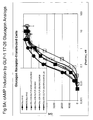
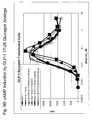
- a "glucagon peptide” as used herein includes any peptide comprising, either the amino acid sequence of SEQ ID NO: 1, or any analog of the amino acid sequence of SEQ. ID NO: 1, including amino acid substitutions, additions, deletions or post translational modifications (e.g., methylation, acylation, ubiquitination, intramolecular covalent bonding such as lactam bridge formation, PEGylation, and the like) of the peptide, wherein the analog stimulates glucagon or GLP-1 receptor activity, e.g., as measured by cAMP production using the assay described in Example 14.
- glucagon agonist refers to a complex comprising a glucagon peptide that stimulates glucagon receptor activity, e.g., as measured by cAMP production using the assay described in Example 14.
- glucagon agonist analog is a glucagon peptide comprising a sequence selected from the group consisting of SEQ ID NO: 10, SEQ ID NO: 11, SEQ ID NO: 12, SEQ ID NO: 13, SEQ ID NO: 14 and SEQ ID NO: 15, or an analog of such a sequence that has been modified to include one or more conservative amino acid substitutions at one or more of positions 2, 5, 7, 10, 11, 12, 13, 14, 17, 18, 19, 20, 21, 24, 27, 28 or 29.
- an amino acid “modification” refers to a substitution, addition or deletion of an amino acid, and includes substitution with or addition of any of the 20 amino acids commonly found in human proteins, as well as atypical or non-naturally occurring amino acids.
- all references to a particular amino acid position by number refer to the amino acid at that position in native glucagon (SEQ ID NO: 1) or the corresponding amino acid position in any analogs thereof.
- position 28 would mean the corresponding position 27 for a glucagon analog in which the first amino acid of SEQ ID NO: 1 has been deleted.
- position 28 would mean the corresponding position 29 for a glucagon analog in which one amino acid has been added before the N-terminus of SEQ ID NO: 1.
- Commercial sources of atypical amino acids include Sigma-Aldrich (Milwaukee, WI), ChemPep Inc. (Miami, FL), and Genzyme Pharmaceuticals (Cambridge, MA).
- Atypical amino acids may be purchased from commercial suppliers, synthesized de novo, or chemically modified or derivatized from other amino acids.
- glucagon co-agonist is a glucagon peptide that exhibits activity at the glucagon receptor of at least about 10% to about 500% or more relative to native glucagon and also exhibits activity at the GLP-1 receptor of about at least 10% to about 200% or more relative to native GLP-1.
- glucagon/GLP-1 co-agonist molecule is a molecule that exhibits activity at the glucagon receptor of at least about 10% relative to native glucagon and also exhibits activity at the GLP-1 receptor of at least about 10% relative to native GLP-1.
- glucagon refers to a peptide consisting of the sequence of SEQ ID NO: 1
- native GLP-1 is a generic term that designates GLP-1(7-36)amide (consisting of the sequence of SEQ ID NO: 52), GLP-1 (7-37)acid (consisting of the sequence of SEQ ID NO: 50) or a mixture of those two compounds.
- glucagon or “GLP-1” in the absence of any further designation is intended to mean native glucagon or native GLP-1, respectively.
- substitution refers to the replacement of one amino acid residue by a different amino acid residue.
- polyethylene glycol chain refers to mixtures of condensation polymers of ethylene oxide and water, in a branched or straight chain, represented by the general formula H(OCH 2 CH 2 ) n OH, wherein n is at least 9. Absent any further characterization, the term is intended to include polymers of ethylene glycol with an average total molecular weight selected from the range of 500 to 40,000 Daltons. "polyethylene glycol chain” or “PEG chain” is used in combination with a numeric suffix to indicate the approximate average molecular weight thereof. For example, PEG-5,000 refers to polyethylene glycol chain having a total molecular weight average of about 5,000.
- pegylated and like terms refers to a compound that has been modified from its native state by linking a polyethylene glycol chain to the compound.
- a “pegylated glucagon peptide” is a glucagon peptide that has a PEG chain covalently bound to the glucagon peptide.
- a general reference to a peptide is intended to encompass peptides that have modified amino and carboxy termini.
- an amino acid chain comprising an amide group in place ofthe terminal carboxylic acid is intended to be encompassed by an amino acid sequence designating the standard amino acids.
- Linker is a bond, molecule or group of molecules that binds two separate entities to one another. Linkers may provide for optimal spacing of the two entities or may further supply a labile linkage that allows the two entities to be separated from each other. Labile linkages include photocleavable groups, acid-labile moieties, base-labile moieties and enzyme-cleavable groups.
- a "dimer” is a complex comprising two subunits covalently bound to one another via a linker.
- dimer when used absent any qualifying language, encompasses both homodimers and heterodimers.
- a homodimer comprises two identical subunits, whereas a heterodimer comprises two subunits that differ, although the two subunits are substantially similar to one another.
- charged amino acid refers to an amino acid that comprises a side chain that is negatively charged (i.e., de-protonated) or positively charged (i.e., protonated) in aqueous solution at physiological pH.
- negatively charged amino acids include aspartic acid, glutamic acid, cysteic acid, homocysteic acid, and homoglutamic acid
- positively charged amino acids include arginine, lysine and histidine.
- Charged amino acids include the charged amino acids among the 20 amino acids commonly found in human proteins, as well as atypical or non-naturally occurring amino acids.
- acidic amino acid refers to an amino acid that comprises a second acidic moiety, including for example, a carboxylic acid or sulfonic acid group.
- the present invention relates to a non-native glucagon peptide as defined in claims 1 to 19, to a pharmaceutical composition as defined in claims 20 and 21, and to a non-native glucagon peptide as defined in claims 1 to 19, or a pharmaceutically acceptable salt thereof, for use in treating diabetes or for use in reducing weight gain or inducing weight loss.
- the embodiments related to the present invention are also shown below along with other embodiments which do not belong to the present invention.
- the present disclosure provides glucagon peptides with increased or decreased activity at the glucagon receptor, or GLP-1 receptor, or both.
- the present disclosure also provides glucagon peptides with altered selectivity for the glucagon receptor versus the GLP-1 receptor.
- Increased activity at the glucagon receptor is provided by an amino acid modification at position 16 of native glucagon (SEQ ID NO: 1) as described herein.
- Reduced activity at the glucagon receptor is provided, e.g., by an amino acid modification at position 3 as described herein.
- Increased activity at the GLP-1 receptor is provided by replacing the carboxylic acid of the C-terminal amino acid with a charge-neutral group, such as an amide or ester.
- Increased activity at the GLP-1 receptor is provided by modifications that permit formation of an intramolecular bridge between the side chains of two amino acids that are separated by three intervening amino acids, for example, positions 12 and 16, or 16 and 20, or 20 and 24, as described herein.
- Increased activity at the GLP-1 receptor is provided by an amino acid modification at position 20 as described herein.
- GLP-1 activity at the GLP-1 receptor is provided in glucagon analogs comprising the C-terminal extension of SEQ ID NO: 26.
- GLP-1 activity in such analogs comprising SEQ ID NO: 26 can be further increased by modifying the amino acid at position 18, 28 or 29, or at position 18 and 29, as described herein.
- glucagon activity which has been reduced by amino acid modifications at positions 1 and 2 is provided by a covalent bond between the side chains of two amino acids that are separated by three intervening amino acids, for example, positions 12 and 16, or 16 and 20, or 20 and 24, as described herein.
- a further modest increase in GLP-1 potency is provided by modifying the amino acid at position 10 to be Trp.
- any of the modifications described above which increase or decrease glucagon receptor activity and which increase GLP-1 receptor activity can be applied individually or in combination. Any of the modifications described above can also be combined with other modifications that confer other desirable properties, such as increased solubility and/or stability and/or duration of action. Alternatively, any of the modifications described above can be combined with other modifications that do not substantially affect solubility or stability or activity. Exemplary modifications include but are not limited to:
- the glucagon peptide may comprise a total of 1, up to 2, up to 3, up to 4, up to 5, up to 6, up to 7, up to 8, up to 9, or up to 10 amino acid modifications relative to the native glucagon sequence.
- One embodiment disclosed herein is directed to a glucagon agonist that has been modified relative to the wild type peptide of His-Ser-Gln-Gly-Thr-Phe-Thr-Ser-Asp-Tyr-Ser-Lys-Tyr-Leu-Asp-Ser-Arg-Arg-Ala-Gln-Asp-Phe-Val-Gln-Trp-Leu-Met-Asn-Thr (SEQ ID NO: 1) to enhance the peptide's potency at the glucagon receptor.
- the normally occurring serine at position 16 of native glucagon can be substituted with select acidic amino acids to enhance the potency of glucagon, in terms of its ability to stimulate cAMP synthesis in a validated in vitro model assay (see Example 14). More particularly, this substitution enhances the potency of the analog at least 2-fold, 4-fold, 5-fold, and up to 10-fold greater at the glucagon receptor. This substitution also enhances the analog's activity at the GLP-1 receptor at least 5-fold, 10-fold, or 15-fold relative to native glucagon, but selectivity is maintained for the glucagon receptor over the GLP-1 receptor.
- the serine residue at position 16 of native glucagon is substituted with an amino acid selected from the group consisting of glutamic acid, glutamine, homoglutamic acid, homocysteic acid, threonine or glycine.
- the serine residue at position 16 of native glucagon is substituted with an amino acid selected from the group consisting of glutamic acid, glutamine, homoglutamic acid and homocysteic acid, and in one embodiment the serine residue is substituted with glutamic acid.
- the glucagon peptide having enhanced specificity for the glucagon receptor comprises the peptide of SEQ ID NO: 8, SEQ ID NO: 9, SEQ ID NO: 10 or a glucagon agonist analog thereof, wherein the carboxy terminal amino acid retains its native carboxylic acid group.
- a glucagon agonist comprising the sequence of NH 2 -His-Ser-Gln-Gly-Thr-Phe-Thr-Ser-Asp-Tyr-Ser-Lys-Tyr-Leu-Asp-Glu-Arg-Arg-Ala-Gln-Asp-Phe-Val-Gln-Trp-Leu-Met-Asn-Thr-COOH (SEQ ID NO: 10) is provided, wherein the peptide exhibits approximately fivefold enhanced potency at the glucagon receptor, relative to native glucagon as measured by the in vitro cAMP assay of Example 14.
- the glucagon peptides as disclosed herein can be further modified to improve the peptide's solubility and stability in aqueous solutions at physiological pH, while retaining the high biological activity relative to native glucagon.
- introduction of hydrophilic groups at positions 17,21, and 24 of the peptide of SEQ ID NO: 9 or SEQ ID NO: 10 are anticipated to improve the solubility and stability of the high potency glucagon analog in solutions having a physiological pH. Introduction of such groups also increases duration of action, e.g. as measured by a prolonged half-life in circulation.
- Suitable hydrophilic moieties include any water soluble polymers known in the art, including PEG, homo- or co-polymers of PEG, a monomethyl-substituted polymer of PEG (mPEG), or polyoxyethylene glycerol (POG).
- the hydrophilic group comprises a polyethylene (PEG) chain.
- the glucagon peptide comprises the sequence of SEQ ID NO: 6 or SEQ ID NO: 7 wherein a PEG chain is covalently linked to the side chains of amino acids present at positions 21 and 24 of the glucagon peptide and the carboxy terminal amino acid of the peptide has the carboxylic acid group.
- the present disclosure also encompasses other conjugates in which glucagon peptides as disclosed herein are linked, optionally via covalent bonding and optionally via a linker, to a conjugate.
- Linkage can be accomplished by covalent chemical bonds, physical forces such electrostatic, hydrogen, ionic, van der Waals, or hydrophobic or hydrophilic interactions.
- a variety of non-covalent coupling systems may be used, including biotin-avidin, ligand/receptor, enzyme/substrate, nucleic acid/nucleic acid binding protein, lipid/lipid binding protein, cellular adhesion molecule partners; or any binding partners or fragments thereof which have affinity for each other.
- conjugates include but are not limited to a heterologous peptide or polypeptide (including for example, a plasma protein), a targeting agent, an immunoglobulin or portion thereof (e.g. variable region, CDR, or Fc region), a diagnostic label such as a radioisotope, fluorophore or enzymatic label, a polymer including water soluble polymers, or other therapeutic or diagnostic agents.
- a conjugate is provided comprising a glucagon peptide as disclosed herein and a plasma protein, wherein the plasma protein is selected form the group consisting of albumin, transferin, fibrinogen and glubulins.
- the plasma protein moiety of the conjugate is albumin or transferin.
- the linker comprises a chain of atoms from 1 to about 60, or 1 to 30 atoms or longer, 2 to 5 atoms, 2 to 10 atoms, 5 to 10 atoms, or 10 to 20 atoms long.
- the chain atoms are all carbon atoms.
- the chain atoms in the backbone of the linker are selected from the group consisting of C, O, N, and S. Chain atoms and linkers may be selected according to their expected solubility (hydrophilicity) so as to provide a more soluble conjugate.
- the linker provides a functional group that is subject to cleavage by an enzyme or other catalyst or hydrolytic conditions found in the target tissue or organ or cell.
- the length of the linker is long enough to reduce the potential for steric hindrance.
- the linker is a covalent bond or a peptidyl bond and the conjugate is a polypeptide
- the entire conjugate can be a fusion protein.
- peptidyl linkers may be any length. Exemplary linkers are from about 1 to 50 amino acids in length, 5 to 50, 3 to 5, 5 to 10, 5 to 15, or 10 to 30 amino acids in length.
- Such fusion proteins may alternatively be produced by recombinant genetic engineering methods known to one of ordinary skill in the art.
- the present disclosure also encompasses glucagon fusion peptides or proteins wherein a second peptide or polypeptide has been fused to a terminus, e.g., the carboxy terminus of the glucagon peptide.
- the fusion glucagon peptide may comprise a glucagon agonist of SEQ ID NO: 55, SEQ ID NO: 9 or SEQ ID NO: 10 further comprising an amino acid sequence of SEQ ID NO: 26 (GPSSGAPPPS), SEQ ID NO: 27 (KRNRNNIA) or SEQ ID NO: 28 (KRNR) linked to amino acid 29 of the glucagon peptide.
- amino acid sequence of SEQ ID NO: 26 is bound to amino acid 29 of the glucagon peptide through a peptide bond.
- Applicants have discovered that in glucagon fusion peptides comprising the C-terminal extension peptide of Exendin-4 (e.g., SEQ ID NO: 26 or SEQ ID NO: 29), substitution of the native threonine residue at position 29 with glycine dramatically increases GLP-1 receptor activity. This amino acid substitution can be used in conjunction with other modifications disclosed herein to enhance the affinity of the glucagon analogs for the GLP-1 receptor.
- the T29G substitution can be combined with the S 16E and N20K amino acid substitutions, optionally with a lactam bridge between amino acids 16 and 20, and optionally with addition of a PEG chain as described herein.
- a glucagon/GLP-1 receptor co-agonist is provided, comprising the sequence of SEQ ID NO: 64.
- the glucagon peptide portion of the glucagon fusion peptide is selected from the group consisting of SEQ ID NO: 55, SEQ ID NO: 2, SEQ ID NO: 3, SEQ ID NO: 4, and SEQ ID NO: 5 wherein a PEG chain, when present at positions 17, 21, 24, or the C-terminal amino acid, or at both 21 and 24, is selected from the range of 500 to 40,000 Daltons. More particularly, in one embodiment the glucagon peptide segment is selected from the group consisting of SEQ ID NO: 7, SEQ ID NO: 8, and SEQ ID NO: 63, wherein the PEG chain is selected from the range of 500 to 5,000.
- the glucagon peptide is a fusion peptide comprising the sequence of SEQ ID NO: 55 and SEQ ID NO: 65 wherein the peptide of SEQ ID NO: 65 is linked to the carboxy terminus of SEQ ID NO: 55.
- an additional chemical modification of the glucagon peptide of SEQ ID NO: 10 bestows increased GLP-1 receptor potency to a point where the relative activity at the glucagon and GLP-1 receptors is virtually equivalent.
- a glucagon/GLP-1 receptor co-agonist is provided wherein the terminal amino acid of the glucagon peptides as disclosed herein have an amide group in place of the carboxylic acid group that is present on the native amino acid.
- the relative activity of the glucagon analog at the respective glucagon and GLP-1 receptors can be adjusted by further modifications to the glucagon peptide to produce analogs demonstrating about 40% to about 500% or more of the activity of native glucagon at the glucagon receptor and about 20% to about 200% or more of the activity of native GLP-1 at the GLP-1 receptor, e.g. 50-fold, 100-fold or more increase relative to the normal activity of glucagon at the GLP-1 receptor
- glucagon analogs that exhibit glucagon/GLP-1 receptor co-agonist activity wherein an intramolecular bridge is formed between two amino acid side chains to stabilize the three dimensional structure of the carboxy terminus of the peptide. More particularly, the side chains of the amino acid pairs 12 and 16, 16 and 20 , 20 and 24 or 24 and 28 are linked to one another and thus stabilize the glucagon alpha helix. The two side chains can be linked to one another through hydrogen-bonding, ionic interactions, such as the formation of salt bridges, or by covalent bonds. In some embodiments, the size of the ring or linker is about 8 atoms, or about 7-9 atoms.
- amino acid pairings that may form an eight-atom linker include Lys-Glu (lactam); Homolys-Asp (lactam); Orn-Homoglu (lactam); 4-aminoPhe-Asp (lactam); or Tyr-Asp (lactone).
- One of ordinary skill in the art can envision alternative pairings or alternative amino acid analogs, including chemically modifiedderivatives, that would create a stabilizing structure of similar size and desired effect.
- a homocysteine-homocysteine disulfide bridge is 6 atoms in length and may be further modified to provide the desired effect.
- the amino acid pairings described above or similar pairings that one of ordinary skill in the art can envision may also provide added stability to the alpha-helix through non-covalent bonds, for example, through formation of salt bridges or hydrogen-bonding interactions.
- Further exemplary embodiments include the following pairings, optionally with a lactam bridge: Glu at position 12 with Lys at position 16; native Lys at position 12 with Glu at position 16; Glu at position 16 with Lys at position 20; Lys at position 16 with Glu at position 20; Glu at position 20 with Lys at position 24; Lys at position 20 with Glu at position 24; Glu at position 24 with Lys at position 28; Lys at position 24 with Glu at position 28.
- a glucagon analog that exhibits glucagon/GLP-1 receptor co-agonist activity wherein the analog comprises an amino acid sequence selected from the group consisting of SEQ ID NO: 11, 47, 48 and 49.
- the side chains are covalently bound to one another, and in one embodiment the two amino acids are bound to one another to form a lactam ring.
- the size of the lactam ring can vary depending on the length of the amino acid side chains, and in one embodiment the lactam is formed by linking the side chains of a lysine amino acid to a glutamic acid side chain.
- a lactam ring can be formed between the side chains of a Lys12 and a Glu16 or alternatively between a Glu 12 and a Lys16).
- a glucagon analog of SEQ ID NO: 45 is provided wherein at least one lactam ring is formed between the side chains of an amino acid pair selected from the group consisting of amino acid pairs 12 and 16, 16 and 20 , 20 and 24 or 24 and 28.
- a glucagon/GLP-1 receptor co-agonist wherein the co-agonist comprises a glucagon peptide analog of SEQ ID NO: 20 wherein the peptide comprises an intramolecular lactam bridge formed between amino acid positions 12 and 16 or between amino acid positions 16 and 20.
- a glucagon/GLP-1 receptor co-agonist comprising the sequence of SEQ ID NO: 20, wherein an intramolecular lactam bridge is formed between amino acid positions 12 and 16, between amino acid positions 16 and 20, or between amino acid positions 20 and 24 and the amino acid at position 29 is glycine, wherein the sequence of SEQ ID NO: 29 is linked to the C-terminal amino acid of SEQ ID NO: 20.
- the amino acid at position 28 is aspartic acid.
- the solubility of the glucagon peptide of SEQ ID NO: 20 can be further improved, for example, by introducing one, two, three or more charged amino acid(s) to the C-terminal portion of glucagon peptide of SEQ ID NO: 20, preferably at a position C-terminal to position 27.
- a charged amino acid can be introduced by substituting a native amino acid with a charged amino acid, e.g. at positions 28 or 29, or alternatively by adding a charged amino acid, e.g. after position 27, 28 or 29.
- one, two, three or all of the charged amino acids are negatively charged.
- solubility can also be enhanced by covalently linking hydrophilic moieties, such as polyethylene glycol, to the peptide.
- a glucagon analog comprising the sequence of SEQ ID NO: 55, wherein said analog differs from SEQ ID NO: 55 by 1 to 3 amino acids, selected from positions 1, 2, 3, 5, 7, 10, 11, 13, 14, 17, 18, 19, 21, 24, 27, 28, and 29, wherein said glucagon peptide exhibits at least 20% of the activity of native GLP-1 at the GLP-1 receptor.
- glucagon/GLP-1 receptor co-agonist comprising the sequence:
- a co-agonist comprising the sequence of SEQ ID NO: 33 wherein an additional acidic amino acid added to the carboxy terminus of the peptide.
- the carboxy terminal amino acid of the glucagon analog has an amide in place of the carboxylic acid group of the natural amino acid.
- the glucagon analog comprises a sequence selected from the group consisting of SEQ ID NO: 40, SEQ ID NO: 41, SEQ ID NO: 42, SEQ ID NO: 43 and SEQ ID NO: 44.
- a glucagon peptide analog of SEQ ID NO: 33 wherein said analog differs from SEQ ID NO: 33 by 1 to 3 amino acids, selected from positions 1, 2, 3, 5, 7, 10, 11, 13, 14, 17, 18, 19, 21 and 27, with the proviso that when the amino acid at position 16 is serine, either position 20 is lysine, or a lactam bridge is formed between the amino acid at position 24 and either the amino acid at position 20 or position 28.
- the analog differs from SEQ ID NO: 33 by 1 to 3 amino acids selected from positions 1, 2, 3, 21 and 27.
- the glucagon peptide analog of SEQ ID NO: 33 differs from that sequence by 1 to 2 amino acids, or in one embodiment by a single amino acid, selected form positions 1, 2, 3, 5, 7, 10, 11, 13, 14, 17, 18, 19, 21 and 27, with the proviso that when the amino acid at position 16 is serine, either position 20 is lysine, or a lactam bridge is formed between the amino acid at position 24 and either the amino acid at position 20 or position 28.
- a relatively selective GLP-1 receptor agonist comprising the sequence NH2-His-Ser-Xaa-Gly-Thr-Phe- Thr-Ser-Asp-Tyr-Ser-Lys-Tyr-Leu-Xaa-Xaa-Arg-Arg-Ala-Xaa-Asp-Phe-Val-Xaa-Trp-Leu-Met-Xaa-Xaa-R (SEQ ID NO: 53) wherein the Xaa at position 3 is selected from the group of amino acids consisting of Glu, Orn or Nle, the Xaa at position 15 is selected from the group of amino acids consisting of Asp, Glu, cysteic acid, homoglutamic acid and homocysteic acid, Xaa at position 16 is selected from the group of amino acids consisting of Ser, Glu, Gln, homoglutamic acid and homocysteic acid, the Xaa at position 20 is Gln or
- the amino acid at position 3 is glutamic acid.
- the acidic amino acid substituted at position 28 and/or 29 is aspartic acid or glutamic acid.
- the glucagon peptide, including a co-agonist peptide comprises the sequence of SEQ ID NO: 33 further comprising an additional acidic amino acid added to the carboxy terminus of the peptide.
- the carboxy terminal amino acid of the glucagon analog has an amide in place of the carboxylic acid group of the natural amino acid.
- a glucagon/GLP-1 receptor co-agonist comprising a modified glucagon peptide selected from the group consisting of: NH 2 -His-Ser-Gln-Gly-Thr-Phe-Thr-Ser-Asp-Tyr-Ser-Lys-Tyr-Leu-Xaa-Xaa-Arg-Arg-Ala-Xaa-Asp-Phe-Val-Xaa-Trp-Leu-Met-Xaa-Xaa-R (SEQ ID NO: 34), wherein the Xaa at position 15 is selected from the group of amino acids consisting of Asp, Glu, cysteic acid, homoglutamic acid and homocysteic acid, Xaa at position 16 is selected from the group of amino acids consisting of Ser, Glu, Gln, homoglutamic acid and homocysteic acid, the Xaa at position 20 is Gln or Lys, the Xa
- R is CONH 2
- the Xaa at position 15 is Asp
- the Xaa at position 16 is selected from the group of amino acids consisting of Glu, Gln, homoglutamic acid and homocysteic acid
- the Xaas at positions 20 and 24 are each Gln
- the Xaa at position 28 is Asn or Asp
- the Xaa at position 29 is Thr.
- the Xaas at positions 15 and 16 are each Glu
- the Xaas at positions 20 and 24 are each Gln
- the Xaa at position 28 is Asn or Asp
- the Xaa at position 29 is Thr
- R is CONH 2 .
- glucagon peptide can be modified while retaining at least some of the activity of the parent peptide. Accordingly, applicants anticipate that one or more of the amino acids located at positions at positions 2, 5, 7, 10, 11, 12, 13, 14, 17, 18, 19, 20, 21, 24, 27, 28 or 29 of the peptide of SEQ ID NO: 11 can be substituted with an amino acid different from that present in the native glucagon peptide, and still retain activity at the glucagon receptor.
- the methionine residue present at position 27 of the native peptide is changed to leucine or norleucine to prevent oxidative degradation of the peptide.
- amino acid at position 20 is substituted with Lys, Arg, Orn or Citrullene and/or position 21 is substituted with Glu, homoglutamic acid or homocysteic acid.
- a glucagon analog of SEQ ID NO: 20 wherein 1 to 6 amino acids, selected from positions 1, 2, 5, 7, 10, 11, 13, 14, 17, 18, 19, 21, 27, 28 or 29 of the analog differ from the corresponding amino acid of SEQ ID NO: 1, with the proviso that when the amino acid at position 16 is serine, position 20 is Lys, or alternatively when position 16 is serine the position 24 is Glu and either position 20 or position 28 is Lys.
- a glucagon analog of SEQ ID NO: 20 is provided wherein 1 to 3 amino acids selected from positions 1, 2, 5, 7, 10, 11, 13, 14, 17, 18, 19, 20, 21, 27, 28 or 29 of the analog differ from the corresponding amino acid of SEQ ID NO: 1.
- a glucagon analog of SEQ ID NO: 8, SEQ ID NO: 9 or SEQ ID NO: 11 is provided wherein 1 to 2 amino acids selected from positions 1, 2, 5, 7, 10, 11, 13, 14, 17, 18, 19, 20 or 21 of the analog differ from the corresponding amino acid of SEQ ID NO: 1, and in a further embodiment the one to two differing amino acids represent conservative amino acid substitutions relative to the amino acid present in the native glucagon sequence (SEQ ID NO: 1).
- glucagon peptide of SEQ ID NO: 12, SEQ ID NO: 13, SEQ ID NO: 14 or SEQ ID NO: 15 is provided wherein the glucagon peptide further comprises one, two or three amino acid substitutions at positions selected from positions 2, 5, 7, 10, 11, 13, 14, 17, 18, 19, 20, 21, 27 or 29. In one embodiment the substitutions at positions 2, 5, 7, 10, 11, 13, 14, 16, 17, 18, 19, 20, 21, 27 or 29 are conservative amino acid substitutions.
- a glucagon/GLP-1 receptor co-agonist comprising a variant of the sequence of SEQ ID NO 33, wherein 1 to 10 amino acids selected from positions 16, 17, 18, 20, 21, 23, 24, 27, 28 and 29, respectively, of the variant differ from the corresponding amino acid of SEQ ID NO: 1.
- a variant of the sequence of SEQ ID NO 33 is provided wherein the variant differs from SEQ ID NO: 33 by one or more amino acid substitutions selected from the group consisting of Gln17, Ala18, Glu21, Ile23, Ala24, Val27 and Gly29.
- a glucagon/GLP-1 receptor co-agonist comprising variants of the sequence of SEQ ID NO 33, wherein 1 to 2 amino acids selected from positions 17-26 of the variant differ from the corresponding amino acid of SEQ ID NO: 1.
- a variant of the sequence of SEQ ID NO 33 is provided wherein the variant differs from SEQ ID NO: 33 by an amino acid substitution selected from the group consisting of Gln17, Alga18, Glu21, Ile23 and Ala24.
- a variant of the sequence of SEQ ID NO 33 wherein the variant differs from SEQ ID NO: 33 by an amino acid substitution at position 18 wherein the substituted amino acid is selected from the group consisting of Ala, Ser, Thr, Pro and Gly.
- a variant of the sequence of SEQ ID NO 33 is provided wherein the variant differs from SEQ ID NO: 33 by an amino acid substitution of Ala at position 18. Such variations are encompassed by SEQ ID NO: 55.
- a glucagon/GLP-1 receptor co-agonist comprising variants of the sequence of SEQ ID NO 33, wherein 1 to 2 amino acids selected from positions 17-22 of the variant differ from the corresponding amino acid of SEQ ID NO: 1, and in a further embodiment a variant of SEQ ID NO 33 is provided wherein the variant differs from SEQ ID NO: 33 by 1 or 2 amino acid substitutions at positions 20 and 21.
- a glucagon/GLP-1 receptor co-agonist comprising the sequence: NH2-His-Ser-Gln-Gly-Thr-Phe-Thr-Ser-Asp-Tyr-Ser-Lys-Tyr-Leu-Xaa-Xaa-Arg-Arg-Ala-Xaa-Xaa-Phe-Val-Xaa-Trp-Leu-Met-Xaa-Xaa-R (SEQ ID NO: 51), wherein the Xaa at position 15 is Asp, Glu, cysteic acid, homoglutamic acid or homocysteic acid, the Xaa at position 16 is Ser, Glu, Gln, homoglutamic acid or homocysteic acid, the Xaa at position 20 is Gln, Lys, Arg, Orn or citrulline, the Xaa at position 21 is Asp, Glu, homoglutamic acid or homocysteic acid, the
- R is CONH 2 .
- a glucagon/GLP-1 receptor co-agonist comprising a variant of SEQ ID NO: 11, SEQ ID NO: 12, SEQ ID NO: 13, SEQ ID NO: 14, SEQ ID NO: 15, SEQ ID NO: 47, SEQ ID NO: 48 or SEQ ID NO: 49, wherein the variant differs from said sequence by an amino acid substitution at position 20.
- the amino acid substitution is selected form the group consisting of Lys, Arg, Orn or citrulline for position 20.
- a glucagon agonist comprising an analog peptide of SEQ ID NO: 34 wherein the analog differs from SEQ ID NO: 34 by having an amino acid other than serine at position 2.
- the serine residue is substituted with aminoisobutyric acid or alanine, and in one embodiment the serine residue is substituted with aminoisobutyric acid.
- Such modifications suppresses cleavage by dipeptidyl peptidase IV while retaining the inherent potency of the parent compound (e.g. at least 75, 80, 85, 90, 95% or more of the potentcy of the parent compound).
- the solubility of the analog is increased, for example, by introducing one, two, three or more charged amino acid(s) to the C-terminal portion of native glucagon, preferably at a position C-terminal to position 27.
- one, two, three or all of the charged amino acids are negatively charged.
- the analog further comprises an acidic amino acid substituted for the native amino acid at position 28 or 29 or an acidic amino acid added to the carboxy terminus of the peptide of SEQ ID NO: 34.
- the glucagon analogs disclosed herein are further modified at position 1 or 2 to reduce susceptibility to cleavage by dipeptidyl peptidase IV.
- a glucagon analog of SEQ ID NO: 9, SEQ ID NO: 11, SEQ ID NO: 12, SEQ ID NO: 13, SEQ ID NO: 14 or SEQ ID NO: 15 is provided wherein the analog differs from the parent molecule by a substitution at position 2 and exhibits reduced susceptibility (i.e. resistance) to cleavage by dipeptidyl peptidase IV.
- position 2 of the analog peptide is substituted with an amino acid selected from the group consisting of d-serine, alanine, valine, amino n-butyric acid, glycine, N-methyl serine and aminoisobutyric acid.
- position 2 of the analog peptide is substituted with an amino acid selected from the group consisting of d-serine, alanine, glycine, N-methyl serine and aminoisobutyric acid.
- position 2 of the analog peptide is substituted with an amino acid selected from the group consisting of d-serine glycine, N-methyl serine and aminoisobutyric acid.
- the glucagon peptide comprises the sequence of SEQ ID NO: 21 or SEQ ID NO: 22.
- a glucagon analog of SEQ ID NO: 9, SEQ ID NO: 11, SEQ ID NO: 12, SEQ ID NO: 13, SEQ ID NO: 14 or SEQ ID NO: 15 is provided wherein the analog differs from the parent molecule by a substitution at position 1 and exhibits reduced susceptibility (i.e. resistance) to cleavage by dipeptidyl peptidase IV.
- position 1 of the analog peptide is substituted with an amino acid selected from the group consisting of d-histidine, alpha, alpha-dimethyl imidiazole acetic acid (DMIA), N-methyl histidine, alpha-methyl histidine, imidazole acetic acid, desaminohistidine, hydroxyl-histidine, acetyl-histidine and homo-histidine.
- a glucagon agonist is provided comprising an analog peptide of SEQ ID NO: 34 wherein the analog differs from SEQ ID NO: 34 by having an amino acid other than histidine at position 1.
- the solubility of the analog is increased, for example, by introducing one, two, three or more charged amino acid(s) to the C-terminal portion of native glucagon, preferably at a position C-terminal to position 27.
- one, two, three or all of the charged amino acids are negatively charged.
- the analog further comprises an acidic amino acid substituted for the native amino acid at position 28 or 29 or an acidic amino acid added to the carboxy terminus of the peptide of SEQ ID NO: 34.
- the acidic amino acid is aspartic acid or glutamic acid.
- the glucagon/GLP-1 receptor co-agonist comprises a sequence of SEQ ID NO: 20 further comprising an additional carboxy terminal extension of one amino acid or a peptide selected from the group consisting of SEQ ID NO: 26, SEQ ID NO: 27 and SEQ ID NO: 28.
- the amino acid is typically selected from one of the 20 common amino acids, and in one embodiment the additional carboxy terminus amino acid has an amide group in place of the carboxylic acid of the native amino acid.
- the additional amino acid is selected from the group consisting of glutamic acid, aspartic acid and glycine.
- a glucagon/GLP-1 receptor co-agonist wherein the peptide comprises at least one lactam ring formed between the side chain of a glutamic acid residue and a lysine residue, wherein the glutamic acid residue and a lysine residue are separated by three amino acids.
- the carboxy terminal amino acid of the lactam bearing glucagon peptide has an amide group in place of the carboxylic acid of the native amino acid.
- R is selected from the group consisting of COOH, CONH 2 , glutamic acid, aspartic acid, glycine, the amino acid at position 28 is Asn, and the amino acid at position 29 is threonine.
- R is CONH 2 , the amino acid at position 28 is Asn and the amino acid at position 29 is threonine.
- R is selected from the group consisting of SEQ ID NO: 26, SEQ ID NO: 29 and SEQ ID NO: 65 and the amino acid at position 29 is glycine.
- the glucagon/GLP-1 receptor co-agonist is selected from the group consisting of SEQ ID NO: 11, SEQ ID NO: 12, SEQ ID NO: 13, SEQ ID NO: 14, SEQ ID NO: 15, SEQ ID NO: 16, SEQ ID NO: 17 and SEQ ID NO: 18, wherein the peptide further comprises an additional carboxy terminal extension of one amino acid or a peptide selected from the group consisting of SEQ ID NO: 26, SEQ ID NO: 27 and SEQ ID NO: 28.
- the terminal extension comprises the sequence of SEQ ID NO: 26, SEQ ID NO: 29 or SEQ ID NO: 65 and the glucagon peptide comprises the sequence of SEQ ID NO: 55.
- the glucagon/GLP-1 receptor co-agonist comprises the sequence of SEQ ID NO: 33 wherein the amino acid at position 16 is glutamic acid, the amino acid at position 20 is lysine, the amino acid at position 28 is asparagine and the amino acid sequence of SEQ ID No: 26 or SEQ ID NO: 29 is linked to the carboxy terminus of SEQ ID NO: 33.
- the amino acid is typically selected from one of the 20 common amino acids, and in one embodiment the amino acid has an amide group in place of the carboxylic acid of the native amino acid.
- the additional amino acid is selected from the group consisting of glutamic acid and aspartic acid and glycine.
- the glucagon agonist analog further comprises a carboxy terminal extension, the carboxy terminal amino acid of the extension, in one embodiment, ends in an amide group or an ester group rather than a carboxylic acid.
- the glucagon/GLP-1 receptor co-agonist comprises the sequence: NH 2 -His-Ser-Gln-Gly-Thr-Phe-Thr-Ser-Asp-Tyr-Ser-Lys-Tyr-Leu-Asp-Glu-Arg-Arg-Ala-Gln-Asp-Phe-Val-Gln-Trp-Leu-Met-Asn-Thr-Xaa-CONH 2 (SEQ ID NO: 19), wherein the Xaa at position 30 represents any amino acid.
- Xaa is selected from one of the 20 common amino acids, and in one embodiment the amino acid is glutamic acid, aspartic acid or glycine.
- the solubility of this peptide can be further improved by covalently linking a PEG chain to the side chain of amino acid at position 17, 21, 24 or 30 of SEQ ID NO: 19.
- the peptide comprises an additional carboxy terminal extension of a peptide selected from the group consisting of SEQ ID NO: 26, SEQ ID NO: 27 and SEQ ID NO: 28.
- the glucagon/GLP-1 receptor co-agonist comprises the sequence of SEQ ID NO: 30, SEQ ID NO: 31 and SEQ ID NO: 32.
- SEQ ID NO: 11 SEQ ID NO: 12, SEQ ID NO: 13, SEQ ID NO: 14, SEQ ID NO: 15, SEQ ID NO: 16, SEQ ID NO: 17, SEQ ID NO: 18, SEQ ID NO: 19 and SEQ ID NO: 64 can be made to yield a set of glucagon agonists that possess variable degrees of GLP-1 agonism. Accordingly, peptides that possess virtually identical in vitro potency at each receptor have been prepared and characterized. Similarly, peptides with tenfold selectively enhanced potency at each of the two receptors have been identified and characterized.
- substitution of the serine residue at position 16 with glutamic acid enhances the potency of native glucagon at both the Glucagon and GLP-1 receptors, but maintains approximately a tenfold selectivity for the glucagon receptor.
- substitution of the native glutamine at position 3 with glutamic acid SEQ ID NO: 22
- substitution of the native glutamine at position 3 with glutamic acid SEQ ID NO: 22
- the solubility of the glucagon/GLP-1 co-agonist peptides can be further enhanced in aqueous solutions at physiological pH, while retaining the high biological activity relative to native glucagon by the introduction of hydrophilic groups at positions 16, 17, 21, and 24 of the peptide, or by the addition of a single modified amino acid (i.e. an amino acid modified to comprise a hydrophilic group) at the carboxy terminus of the glucagon/GLP-1 co-agonist peptide.
- the hydrophilic group comprises a polyethylene (PEG) chain.
- the glucagon peptide comprises the sequence of SEQ ID NO: 10, SEQ ID NO: 11, SEQ ID NO: 12, SEQ ID NO: 13, SEQ ID NO: 14, SEQ ID NO: 15, SEQ ID NO: 16, SEQ ID NO: 17 or SEQ ID NO: 18 wherein a PEG chain is covalently linked to the side chain of an amino acids at position 16, 17, 21, 24, 29 or the C-terminal amino acid of the glucagon peptide, with the proviso that when the peptide comprises SEQ ID NO: 10, SEQ ID NO: 11, SEQ ID NO: 12 or SEQ ID NO: 13 the polyethylene glycol chain is covalently bound to an amino acid residue at position 17, 21 or 24, when the peptide comprises SEQ ID NO: 14 or SEQ ID NO: 15 the polyethylene glycol chain is covalently bound to an amino acid residue at position 16, 17 or 21, and when the peptide comprises SEQ ID NO: 16, SEQ ID NO: 17 or SEQ ID NO: 18 the polyethylene glycol chain is covalently bound
- the glucagon peptide comprises the sequence of SEQ ID NO: 11, SEQ ID NO: 12 or SEQ ID NO: 13, wherein a PEG chain is covalently linked to the side chain of an amino acids at position 17, 21, 24, or the C-terminal amino acid of the glucagon peptide, and the carboxy terminal amino acid of the peptide has an amide group in place of the carboxylic acid group of the native amino acid.
- the glucagon/GLP-1 receptor co-agonist peptide comprises a sequence selected from the group consisting of SEQ ID NO: 12, SEQ ID NO: 13, SEQ ID NO: 14, SEQ ID NO: 15, SEQ ID NO: 16, SEQ ID NO: 17, SEQ ID NO: 18 and SEQ ID NO: 19, wherein a PEG chain is covalently linked to the side chain of an amino acid at position 17, 21 or 24 of SEQ ID NO: 12, SEQ ID NO: 13 and SEQ ID NO: 19, or at position 16, 17 or 21 of SEQ ID NO: 14 and SEQ ID NO: 15 or at position 17 or 21 of SEQ ID NO: 16, SEQ ID NO: 17 and SEQ ID NO: 18 of the glucagon peptide.
- the glucagon/GLP-1 receptor co-agonist peptide comprises the sequence of SEQ ID NO: 11 or SEQ ID NO: 19, wherein a PEG chain is covalently linked to the side chain of an amino acids at position 17, 21 or 24 or the C-terminal amino acid of the glucagon peptide.
- the glucagon co-agonist peptide is modified to contain one or more amino acid substitution at positions 16, 17, 21, 24, or 29 or the C-terminal amino acid, wherein the native amino acid is substituted with an amino acid having a side chain suitable for crosslinking with hydrophilic moieties, including for example, PEG.
- the native peptide can be substituted with a naturally occurring amino acid or a synthetic (non-naturally occurring) amino acid.
- Synthetic or non-naturally occurring amino acids refer to amino acids that do not naturally occur in vivo but which, nevertheless, can be incorporated into the peptide structures described herein.
- the amino acid having a side chain suitable for crosslinking with hydrophilic moieties can be added to the carboxy terminus of any of the glucagon analogs disclosed herein.
- an amino acid substitution is made in the glucagon/GLP-1 receptor co-agonist peptide at a position selected from the group consisting of 16, 17, 21, 24, or 29 replacing the native amino acid with an amino acid selected from the group consisting of lysine, cysteine, ornithine, homocysteine and acetyl phenylalanine, wherein the substituting amino acid further comprises a PEG chain covalently bound to the side chain of the amino acid.
- a glucagon peptide selected form the group consisting of SEQ ID NO: 12, SEQ ID NO: 13, SEQ ID NO: 14, SEQ ID NO: 15, SEQ ID NO: 16, SEQ ID NO: 17, SEQ ID NO: 18, and SEQ ID NO: 19 is further modified to comprise a PEG chain is covalently linked to the side chain of an amino acid at position 17 or 21 of the glucagon peptide.
- the pegylated glucagon/GLP-1 receptor co-agonist further comprises the sequence of SEQ ID NO: 26, SEQ ID NO: 27 or SEQ ID NO: 29.
- the glucagon peptide comprises the sequence of SEQ ID NO: 55 or SEQ ID NO: 56, further comprising a C-terminal extension of SEQ ID NO: 26, SEQ ID NO: 29 or SEQ ID NO: 65 linked to the C-terminal amino acid of SEQ ID NO: 55 or SEQ ID NO: 56, and optionally further comprising a PEG chain covalently linked to the side chain of an amino acids at position 17, 18, 21, 24 or 29 or the C-terminal amino acid of the peptide.
- the glucagon peptide comprises the sequence of SEQ ID NO: 55 or SEQ ID NO: 56, wherein a PEG chain is covalently linked to the side chain of an amino acids at position 21 or 24 of the glucagon peptide and the peptide further comprises a C-terminal extension of SEQ ID NO: 26, or SEQ ID NO: 29.
- the glucagon peptide comprises the sequence of SEQ ID NO: 55, or SEQ ID NO: 33 or SEQ ID NO: 34, wherein an additional amino acid is added to the carboxy terminus of SEQ ID NO: 33 or SEQ ID NO: 34, and a PEG chain is covalently linked to the side chain of the added amino acid.
- the pegylated glucagon analog further comprises a C-terminal extension of SEQ ID NO: 26 or SEQ ID NO: 29 linked to the C-terminal amino acid of SEQ ID NO: 33 or SEQ ID NO: 34.
- the glucagon peptide comprises the sequence of SEQ ID NO: 19, wherein a PEG chain is covalently linked to the side chain of the amino acid at position 30 of the glucagon peptide and the peptide further comprises a C-terminal extension of SEQ ID NO: 26 or SEQ ID NO: 29 linked to the C-terminal amino acid of SEQ ID NO: 19.
- the polyethylene glycol chain may be in the form of a straight chain or it may be branched. In accordance with one embodiment the polyethylene glycol chain has an average molecular weight selected from the range of about 500 to about 10,000 Daltons. In one embodiment the polyethylene glycol chain has an average molecular weight selected from the range of about 1,000 to about 5,000 Daltons. In an alternative embodiment the polyethylene glycol chain has an average molecular weight selected from the range of about 10,000 to about 20,000 Daltons. In accordance with one embodiment the pegylated glucagon peptide comprises two or more polyethylene chains covalently bound to the glucagon peptide wherein the total molecular weight of the glucagon chains is about 1,000 to about 5,000 Daltons.
- the pegylated glucagon agonist comprises a peptide consisting of SEQ ID NO: 5 or a glucagon agonist analog of SEQ ID NO: 5, wherein a PEG chain is covalently linked to the amino acid residue at position 21 and at position 24, and wherein the combined molecular weight of the two PEG chains is about 1,000 to about 5,000 Daltons.
- the glucagon agonists as disclosed herein have enhanced biophysical stability and aqueous solubility while demonstrating enhanced bioactivity relative to the native peptide. Accordingly, the glucagon agonists as disclosed herein are believed to be suitable for any use that has previously been described for the native glucagon peptide. Accordingly, the modified glucagon peptides described herein can be used to treat hypoglycemia or to increase blood glucose level, to induce temporary paralysis of the gut for radiological uses, or treat other metabolic diseases that result from low blood levels of glucagon. The glucagon peptides described herein also are expected to be used to reduce or maintain body weight, or to treat hyperglycemia, or to reduce blood glucose level, or to normalize blood glucose level.
- glucagon peptides as disclosed herein may be administered alone or in combination with other anti-diabetic or anti-obesity agents.
- Anti-diabetic agents known in the art or under investigation include insulin, sulfonylureas, such as tolbutamide (Orinase), acetohexamide (Dymelor), tolazamide (Tolinase), chlorpropamide (Diabinese), glipizide (Glucotrol), glyburide (Diabeta, Micronase, Glynase), glimepiride (Amaryl), or gliclazide (Diamicron); meglitinides, such as repaglinide (Prandin) or nateglinide (Starlix); biguanides such as metformin (Glucophage) or phenformin; thiazolidinediones such as rosiglitazone (Avandia), pioglitazone (Actos), or
- Anti-obesity agents known in the art or under investigation include appetite suppressants, including phenethylamine type stimulants, phentermine (optionally with fenfluramine or dexfenfluramine), diethylpropion (Tenuate®), phendimetrazine (Prelu-2®, Bontril®), benzphetamine (Didrex®), sibutramine (Meridia®, Reductil®); rimonabant (Acomplia®), other cannabinoid receptor antagonists; oxyntomodulin; fluoxetine hydrochloride (Prozac); Qnexa (topiramate and phentermine), Excalia (bupropion and zonisamide) or Contrave (bupropion and naltrexone); or lipase inhibitors, similar to xenical (Orlistat) or Cetilistat (also known as ATL-962), or GT 389-255.
- appetite suppressants including phenethylamine type stimulants
- One aspect of the present disclosure is directed to a pre-formulated aqueous solution of the presently disclosed glucagon agonist for use in treating hypoglycemia.
- the improved stability and solubility of the agonist compositions described herein allow for the preparation of pre-formulated aqueous solutions of glucagon for rapid administration and treatment of hypoglycemia.
- a solution comprising a pegylated glucagon agonist is provided for administration to a patient suffering from hypoglycemia, wherein the total molecular weight of the PEG chains linked to the pegylated glucagon agonist is between about 500 to about 5,000 Daltons.
- the pegylated glucagon agonist comprises a peptide selected from the group consisting of SEQ ID NO: 23, SEQ ID NO: 24, and SEQ ID NO: 25, and glucagon agonist analogs of SEQ ID NO: 23, SEQ ID NO: 24, and SEQ ID NO: 25, or a pegylated lactam derivative of glucagon comprising the sequence of SEQ ID NO: 20, wherein the side chain of an amino acid residue of said glucagon peptide is covalently bound to the polyethylene glycol chain.
- the method of treating hypoglycemia as disclosed herein comprises the steps of administering the presently disclosed glucagon agonists to a patient using any standard route of administration, including parenterally, such as intravenously, intraperitoneally, subcutaneously or intramuscularly, intrathecally, transdermally, rectally, orally, nasally or by inhalation.
- parenterally such as intravenously, intraperitoneally, subcutaneously or intramuscularly, intrathecally, transdermally, rectally, orally, nasally or by inhalation.
- the composition is administered subcutaneously or intramuscularly.
- the composition is administered parenterally and the glucagon composition is prepackaged in a syringe.
- pegylated glucagon peptides can be prepared that retain the parent peptide's bioactivity and specificity.
- a glucagon peptide of SEQ ID NO: 23, SEQ ID NO: 24, and SEQ ID NO: 25, or a glucagon agonist analog thereof, or a pegylated lactam derivative of glucagon comprising the sequence of SEQ ID NO: 20 wherein the peptide comprises one or more polyethylene glycol chains, wherein the total molecular weight of the linked PEG is greater than 5,000 Daltons, and in one embodiment is greater than 10,000 Daltons, but less than 40,000 Daltons.
- modified glucagon peptides have a delayed or prolonged time of activity but without loss of the bioactivity. Accordingly, such compounds can be administered to extend the effect of the administered glucagon peptide.
- Glucagon peptides that have been modified to be covalently bound to a PEG chain having a molecular weight of greater than 10,000 Daltons can be administered in conjunction with insulin to buffer the actions of insulin and help to maintain stable blood glucose levels in diabetics.
- the modified glucagon peptides ofthe present disclosure can be co-administered with insulin as a single composition, simultaneously administered as separate solutions, or alternatively, the insulin and the modified glucagon peptide can be administered at different time relative to one another.
- the composition comprising insulin and the composition comprising the modified glucagon peptide are administered within 12 hours of one another. The exact ratio of the modified glucagon peptide relative to the administered insulin will be dependent in part on determining the glucagon levels of the patient, and can be determined through routine experimentation.
- a composition comprising insulin and a modified glucagon peptide selected from the group consisting of SEQ ID NO: 2, SEQ ID NO: 3, SEQ ID NO: 4, SEQ ID NO: 5 and glucagon agonist analogs thereof, wherein the modified glucagon peptide further comprises a polyethylene glycol chain covalently bound to an amino acid side chain at position 17, 21, 24 or 21 and 24.
- the composition is an aqueous solution comprising insulin and the glucagon analog.
- the glucagon peptide comprises the sequence of SEQ ID NO: 24 or SEQ ID NO: 25
- the PEG chain is covalently bound at position 21 or 24 of the glucagon peptide.
- the polyethylene glycol chain has a molecular weight of about 10,000 to about 40,000.
- the modified glucagon peptides disclosed herein are used to induce temporary paralysis of the intestinal tract.
- This method has utility for radiological purposes and comprises the step of administering an effective amount of a pharmaceutical composition comprising a pegylated glucagon peptide, a glucagon peptide comprising a c-terminal extension or a dimer of such peptides.
- the glucagon peptide comprises a sequence selected from the group consisting of SEQ ID NO: 2, SEQ ID NO: 3, SEQ ID NO: 4, SEQ ID NO: 5, SEQ ID NO: 6, SEQ ID NO: 7, SEQ ID NO: 8, SEQ ID NO: 9, SEQ ID NO: 10, SEQ ID NO: 11, SEQ ID NO: 12, SEQ ID NO: 13 SEQ ID NO: 14 and SEQ ID NO: 15.
- the glucagon peptide further comprises a PEG chain, of about 1,000 to 40,000 Daltons is covalently bound to an amino acid residue at position 21 or 24.
- the glucagon peptide is selected from the group consisting of SEQ ID NO: 10, SEQ ID NO: 11, SEQ ID NO: 12, SEQ ID NO: 13, SEQ ID NO: 14 and SEQ ID NO: 15.
- the PEG chain has a molecular weight of about 500 to about 5,000 Daltons.
- the composition used to induce temporary paralysis of the intestinal tract comprises a first modified glucagon peptide and a second modified glucagon peptide.
- the first modified peptide comprises a sequence selected from the group consisting of SEQ ID NO: 23, SEQ ID NO: 24 and SEQ ID NO: 25, optionally linked to a PEG chain of about 500 to about 5,000 Daltons
- the second peptide comprises a sequence selected from the group consisting of SEQ ID NO: 23, SEQ ID NO: 24 and SEQ ID NO: 25, covalently linked to a PEG chain of about 10,000 to about 40,000 Daltons.
- the PEG chain of each peptide is covalently bound to an amino acid residue at either position 17, 21 or 24 of the respective peptide, and independent of one another.
- Oxyntomodulin a naturally occurring digestive hormone found in the small intestine, has been reported to cause weight loss when administered to rats or humans (see Diabetes 2005;54:2390-2395 ).
- Oxyntomodulin is a 37 amino acid peptide that contains the 29 amino acid sequence of glucagon (i.e. SEQ ID NO: 1) followed by an 8 amino acid carboxy terminal extension of SEQ ID NO: 27 (KRNRNNIA). Accordingly, applicants believe that the bioactivity of oxyntomodulin can be retained (i.e.
- the present present disclosure also encompasses the modified glucagon peptides as disclosed herein that have a carboxy terminal extension of SEQ ID NO: 27 (KRNRNNIA) or SEQ ID NO: 28.
- KRNRNNIA carboxy terminal extension of SEQ ID NO: 27
- SEQ ID NO: 28 SEQ ID NO: 28
- a glucagon agonist analog of SEQ ID NO: 33 or SEQ ID NO: 20 further comprising the amino acid sequence of SEQ ID NO: 27 (KRNRNNIA) or SEQ ID NO: 28 linked to amino acid 29 of the glucagon peptide, is administered to individuals to induce weight loss or prevent weight gain.
- the glucagon peptide comprises a sequence selected from the group consisting of SEQ ID NO: 10, SEQ ID NO: 12, SEQ ID NO: 13 SEQ ID NO: 14 and SEQ ID NO: 15, further comprising the amino acid sequence of SEQ ID NO: 27 (KRNRNNIA) or SEQ ID NO: 28 linked to amino acid 29 of the glucagon peptide.
- Exendin-4 is a peptide made up of 39 amino acids. It is a powerful stimulator of a receptor known as GLP-1. This peptide has also been reported to suppress appetite and induce weight loss. Applicants have found that the terminal sequence of Exendin-4 when added at the carboxy terminus of glucagon improves the solubility and stability of glucagon without compromising the bioactivity of glucagon. In one embodiment the terminal ten amino acids of Exendin-4 (i.e. the sequence of SEQ ID NO: 26 (GPSSGAPPPS)) are linked to the carboxy terminus of a glucagon peptide of the present disclosure. These fusion proteins are anticipated to have pharmacological activity for suppressing appetite and inducing weight loss/weight maintenance.
- a glucagon agonist analog of SEQ ID NO: 33 or SEQ ID NO: 20, further comprising the amino acid sequence of SEQ ID NO: 26 (GPSSGAPPPS) or SEQ ID NO: 29 linked to amino acid 29 of the glucagon peptide is administered to individuals to induce weight loss or prevent weight gain.
- the glucagon peptide comprises a sequence selected from the group consisting of SEQ ID NO: 10, SEQ ID NO: 12, SEQ ID NO: 13 SEQ ID NO: 14, SEQ ID NO: 15, SEQ ID NO: 16, SEQ ID NO: 17, SEQ ID NO: 18, SEQ ID NO: 66, SEQ ID NO: 67, SEQ ID NO: 68, SEQ ID NO: 69, SEQ ID NO: 55 and SEQ ID NO: 56 further comprising the amino acid sequence of SEQ ID NO: 26 (GPSSGAPPPS) or SEQ ID NO: 29 linked to amino acid 29 of the glucagon peptide.
- the administered glucagon peptide analog comprises the sequence of SEQ ID NO: 64.
- the present disclosure also encompasses multimers of the modified glucagon peptides disclosed herein.
- Two or more of the modified glucagon peptides can be linked together using standard linking agents and procedures known to those skilled in the art.
- dimers can be formed between two modified glucagon peptides through the use of bifunctional thiol crosslinkers and bi-functional amine crosslinkers, particularly for the glucagon peptides that have been substituted with cysteine, lysine ornithine, homocysteine or acetyl phenylalanine residues (e.g. SEQ ID NO: 3 and SEQ ID NO: 4).
- the dimer can be a homodimer or alternatively can be a heterodimer.
- the dimer comprises a homodimer of a glucagon fusion peptide wherein the glucagon peptide portion comprises SEQ ID NO: 11 or SEQ ID NO: 20 and an amino acid sequence of SEQ ID NO: 26 (GPSSGAPPPS), SEQ ID NO: 27 (KRNRNNIA) or SEQ ID NO: 28 (KRNR) linked to amino acid 29 of the glucagon peptide.
- the dimer comprises a homodimer of a glucagon agonist analog of SEQ ID NO: 11, wherein the glucagon peptide further comprises a polyethylene glycol chain covalently bound to position 21 or 24 of the glucagon peptide.
- a dimer comprising a first glucagon peptide bound to a second glucagon peptide via a linker, wherein the first glucagon peptide comprises a peptide selected from the group consisting of SEQ ID NO: 8, SEQ ID NO: 9, SEQ ID NO: 10 and SEQ ID NO: 11 and the second glucagon peptide comprises SEQ ID NO: 20.
- a dimer comprising a first glucagon peptide bound to a second glucagon peptide via a linker, wherein said first glucagon peptide comprises a sequence selected from the group consisting of SEQ ID NO: 2, SEQ ID NO: 3, SEQ ID NO: 4, SEQ ID NO: 5, SEQ ID NO: 8, SEQ ID NO: 9, SEQ ID NO: 10, SEQ ID NO: 11 and the second glucagon peptide comprise SEQ ID NO: 11, and pharmaceutically acceptable salts of said glucagon polypeptides.
- a dimer comprising a first glucagon peptide bound to a second glucagon peptide via a linker, wherein said first glucagon peptide is selected from the group consisting of SEQ ID NO: 11, SEQ ID NO: 12, SEQ ID NO: 13 SEQ ID NO: 14, SEQ ID NO: 15, SEQ ID NO: 16, SEQ ID NO: 17 and SEQ ID NO: 18 and the second glucagon peptide is independently selected from the group consisting of SEQ ID NO: 11, SEQ ID NO: 12, SEQ ID NO: 13 SEQ ID NO: 14, SEQ ID NO: 15, SEQ ID NO: 16, SEQ ID NO: 17 and SEQ ID NO: 18, and pharmaceutically acceptable salts of said glucagon polypeptides.
- the first glucagon peptide is selected from the group consisting of SEQ ID NO: 20 and the second glucagon peptide is independently selected from the group consisting of SEQ ID NO: 8, SEQ ID NO: 9 and SEQ ID NO: 11.
- the dimer is formed between two peptides wherein each peptide comprises the amino acid sequence of SEQ ID NO: 11.
- kits for administering a glucagon agonist to a patient in need thereof comprises a modified glucagon peptide selected from the group consisting of 1) a glucagon peptide comprising the sequence of SEQ ID NO: 20, SEQ ID NO: 9, SEQ ID NO: 10 or SEQ ID NO: 11; 2) a glucagon fusion peptide comprising a glucagon agonist analog of SEQ ID NO: 11, SEQ ID NO: 20 or SEQ ID NO: 55, and an amino acid sequence of SEQ ID NO: 26 (GPSSGAPPPS), SEQ ID NO: 27 (KRNRNNIA) or SEQ ID NO: 28 (KRNR) linked to amino acid 29.of the glucagon peptide; and 3) a pegylated glucagon peptide of SEQ ID NO: 11 or SEQ ID NO: 51, further
- the kit comprise a glucagon/GLP-1 coagonist wherein the peptide comprises a sequence selected from the group consisting of SEQ ID NO: 11, SEQ ID NO: 12, SEQ ID NO: 13 SEQ ID NO: 14, SEQ ID NO: 15, SEQ ID NO: 16, SEQ ID NO: 17 and SEQ ID NO: 18.
- the kit is provided with a device for administering the glucagon composition to a patient, e.g. syringe needle, pen device, jet injector or other needle-free injector.
- the kit may alternatively or in addition include one or more containers, e.g., vials, tubes, bottles, single or multi-chambered pre-filled syringes, cartridges, infusion pumps (external or implantable), jet injectors, pre-filled pen devices and the like, optionally containing the glucagon peptide in a lyophilized form or in an aqueous solution.
- the kits will also include instructions for use.
- the device of the kit is an aerosol dispensing device, wherein the composition is prepackaged within the aerosol device.
- the kit comprises a syringe and a needle, and in one embodiment the sterile glucagon composition is prepackaged within the syringe.
- the compounds as disclosed herein may be prepared by standard synthetic methods, recombinant DNA techniques, or any other methods of preparing peptides and fusion proteins. Although certain non-natural amino acids cannot be expressed by standard recombinant DNA techniques, techniques for their preparation are known in the art. Compounds as disclosed herein that encompass non-peptide portions may be synthesized by standard organic chemistry reactions, in addition to standard peptide chemistry reactions when applicable.
- Glucagon analogs were synthesized using HBTU-activated "Fast Boc" single coupling starting from 0.2mmole of Boc Thr(OBzI)Pam resin on a modified Applied Biosystem 430 A peptide synthesizer. Boc amino acids and HBTU were obtained from Midwest Biotech (Fishers, IN). Side chain protecting groups used were: Arg(Tos), Asn(Xan), Asp(OcHex), Cys(pMeBzl), His(Bom), Lys(2Cl-Z), Ser(OBzl), Thr(OBzl), Tyr(2Br-Z), and Trp(CHO). The side-chain protecting group on the N-terminal His was Boc.
- Each completed peptidyl resin was treated with a solution of 20% piperdine in dimethylformamide to remove the formyl group from the tryptophan.
- Liquid hydrogen fluoride cleavages were performed in the presence ofp-cresol and dimethyl sulfide. The cleavage was run for 1 hour in an ice bath using an HF apparatus (Penninsula Labs). After evaporation of the HF, the residue was suspended in diethyl ether and the solid materials were filtered.
- the glucagon Cys analog is dissolved in phosphate buffered saline (5-10mg/ml) and 0.01M ethylenediamine tetraacetic acid is added (10-15% of total volume). Excess (2-fold) maleimido methoxyPEG reagent (Nektar) is added and the reaction stirred at room temp while monitoring reaction progress by HPLC. After 8-24hrs, the reaction mixture, is acidified and loaded onto a preparative reverse phase column for purification using 0.1 %TFA/acetonitrile gradient. The appropriate fractions were combined and lyophilized to give the desired pegylated analogs.
- the fractions containing the purest product (48-52) were combined frozen, and lyophilized to give 30.1mg.
- An HPLC analysis of the product demonstrated a purity of >90% and MALDI mass spectral analysis demonstrated the desired mass of 3429.7.
- Glucagon Cys 21 , Glucagon Cys 24 , and Glucagon Cys 29 were similarly prepared.
- Glucagon Cys 17 15.1mg of Glucagon Cys 17 (1-29) and 27.3mg methoxy poly(ethyleneglycol) maleimide avg. M.W.5000 (mPEG-Mal-5000,Nektar Therapeutics) were dissolved in 3.5ml phosphate buffered saline (PBS) and 0.5ml 0.01 M ethylenediamine tetraacetic acid (EDTA) was added.
- PBS phosphate buffered saline
- EDTA ethylenediamine tetraacetic acid
- the reaction mixture was loaded onto 2.2 x 25 cm Kromasil C18 preparastive reverse phase column.
- An acetonitrile gradient was run on a Pharmacia FPLC while monitoring the UV wavelength at 214nm and collecting 5 min fractions.
- the fractions corresponding to product were combined, frozen and lyophilized to give 45.8mg.
- MALDI mass spectral analysis showed a typical PEG broad signal with a maximum at 9175.2 which is approximately 5,000 a.m.u. more than Glucagon C 24 (3457.8).
- a buffer 0.1 %TFA
- B buffer 0.1 %TFA/50%ACN
- flow 4ml/min
- 5 min fractions were collected while monitoring the UV at 214nm (2.0A).
- the fractions containing homogeneous product were combined, frozen and lyophilized to give 25.7 mg.
- Purity as determined by analytical HPLC was ⁇ 90%.
- a MALDI mass spectral analysis showed a broad peak from 23,000 to 27,000 which is approximately 20,000 a.m.u. more than starting Glucagon C 24 (3457.8).
- Glucagon Cys 24 (1-29) was added 4ml 0.05M ammonium bicarbonate/50%acetonitrile and 5.5 ul of a solution of 2-bromo-4-hydroxybutyric acid- ⁇ -lactone (100ul in 900ul acetonitrile). After 3hrs of stirring at room temperature, another 105 ul of lactone solution was added to the reaction mixture which was stirred another 15hrs. The reaction mixture was diluted to 10ml with 10% aqueous acetic acid and was loaded onto a 2.2 x 25 cm Kromasil C18 preparative reverse phase column.
- Lys(Cl-Z) was used at position 12 if lactams were constructed from 16-20, 20-24, or 24-28.
- the completed peptidyl resin was treated with 20% piperidine/dimethylformamide for one hour with rotation to remove the Trp formyl group as well as the Fmoc and OFm protection from Lys12 and Glu16.
- the removal of the Boc group was confirmed by a positive ninhydrin reaction.
- the resin was washed with dimethylformamide and dichloromethane and dried before being transferred to a hydrofluoric acid (HF) reaction vessel.
- HF hydrofluoric acid
- 500 ⁇ L p-cresol was added along with a magnetic stir bar.
- the vessel was attached to the HF apparatus (Peninsula Labs), cooled in a dry ice/methanol bath, evacuated, and approximately 10 mL of liquid hydrofluoric acid was condensed into the vessel.
- the reaction was stirred for 1 hour in an ice bath and the HF was subsequently removed in vacuo.
- the residue was suspended in ethyl ether; the solids were filtered, washed with ether, and the peptide was solubilized with 150 mL 20% acetonitrile/1% acetic acid.
- HPLC analysis of the purified peptide demonstrated greater than 95% purity and electrospray ionization mass spectral analysis confirmed a mass of 3506 Da for the 12-16 lactam. Lactams from 16-20, 20-24, and 24-28 were prepared similarly.
- a solution (1mg/ml or 3mg/ml) of glucagon (or an analog) is prepared in 0.01N HCl.
- 100ul of stock solution is diluted to 1ml with 0.01N HCl and the UV absorbance (276nm) is determined.
- the pH of the remaining stock solution is adjusted to pH7 using 200-250ul 0.1M Na 2 HPO 4 (pH9.2).
- the solution is allowed to stand overnight at 4°C then centrifuged. 100ul of supernatant is then diluted to 1ml with 0.01N HCl, and the UV absorbance is determined (in duplicate).
- the affinity of peptides to the glucagon receptor was measured in a competition binding assay utilizing scintillation proximity assay technology.
- Serial 3-fold dilutions of the peptides made in scintillation proximity assay buffer (0.05 M Tris-HCl, pH 7.5, 0.15 M NaCl, 0.1 % w/v bovine serum albumin) were mixed in 96 well white/clear bottom plate (Coming Inc., Acton, MA) with 0.05 nM (3-[ 125 I]-iodotyrosyl) Tyr10 glucagon (Amersham Biosciences, Piscataway, NJ), 1-6 micrograms per well, plasma membrane fragments prepared from cells over-expressing human glucagon receptor, and 1 mg/well polyethyleneimine-treated wheat germ agglutinin type A scintillation proximity assay beads (Amersham Biosciences, Piscataway, NJ).
- % Specific Binding ((Bound-NSB)/(Total bound-NSB)) X 100. IC 50 values were determined by using Origin software (OriginLab, Northampton, MA).
- glucagon analogs to induce cAMP was measured in a firefly luciferase-based reporter assay.
- HEK293 cells co-transfected with either glucagon- or GLP-1 receptor and luciferase gene linked to cAMP responsive element were serum deprived by culturing 16h in DMEM (Invitrogen, Carlsbad, CA) supplemented with 0.25% Bovine Growth Serum (HyClone, Logan, UT) and then incubated with serial dilutions of either glucagon, GLP-1 or novel glucagon analogs for 5 h at 37°C, 5% CO 2 in 96 well poly-D-Lysine-coated "Biocoat” plates (BD Biosciences, San Jose, CA).
- glucagon analog was dissolved in water or PBS and an initial HPLC analysis was conducted. After adjusting the pH ( 4, 5, 6, 7), the samples were incubated over a specified time period at 37°C and re-analyzed by HPLC to determine the integrity of the peptide. The concentration of the specific peptide of interest was determined and the percent remaining intact was calculated relative to the initial analysis. Results for Glucagon Cys 21 -maleimidoPEG 5K are shown in Figs. 1 and 2 .
- glucagon peptides are constructed generally as described above in Examples 1-11: In all of the following sequences, "a” means a C-terminal amide.
- glucagon peptides with a GLP-I /glucagon activity ratio of about 5 or more are also constructed generally as described above in Examples 1-11.
- AIB at position 2 provides DPP IV resistance but also significantly reduces glucagon activity.
- glucagon peptides which are GLP-1/glucagon co-agonists are also constructed generally as described above in Examples 1-11. Formation of a lactam bridge between amino acids 16 and 20 restores the reduction in glucagon activity caused by the substitution at position 2.
- HX2QGT FTSDY SKYLD EQAAK EFIC*W LMNTa (lactam @ 16-20; SEQ ID NO: 504)
- any of the preceding sequences can include additional modifications, e.g., 1, 2, 3, 4 or 5 modifications that do not destroy activity, including but not limited to W10 or R20 substitutions that can be used to enhance potency. Any of the preceding sequences can also be produced without the modifications that confer DPP IV resistance, i.e. in which the native His is at position 1 and the native Ser is at position 2.
- any of the preceding compounds may optionally be linked to a conjugate, such as a heterologous polypeptide, an immunoglobulin or a portion thereof (e.g. Fc region), a targeting agent, a diagnostic label, or a diagnostic or therapeutic agent.
- glucagon peptides modified to comprise the c-terminal extension of SEQ ID NO: 26 linked to the carboxy terminus of the glucagon peptide were constructed generally as described above in Examples 1-11 and assayed for activity at the GLP-1 and glucagon receptors using the in vitro assay described in Example 14.
- Table 11 represents the activity of various glucagon analogs at the glucagon and GLP-1 receptors.
- the data shows that for glucagon analogs comprising the c-terminal extension of SEQ ID NO: 26, amino acid substititions at positions 16, 20, 28 and 29 can impact the analogs activity at the GLP-1 receptor.
- Table 12 represents in vitro data accumulated for various glucagon peptides comparing their relative activities at the glucagon and GLP-1 receptors.
- Table 12 COMPARISON OF AGONISTS AND CO-AGONISTS w/ and w/o PEG % Potency Relative to Native CONTROLS GR GL-1R Glucagon 100 0.78 GLP-1 ⁇ 0.01 100 Parent w/o PEG Parent w/PEG % Potency Relative to Native % Potency Relative to Native AGONISTS GR GLP-1R GR GLP-1R Chimera AIB2, Cys24 (SEQ ID NO: 486) 15.4 160.6 2.6 82.5 Chimera AIB2, Cys29 (SEQ ID NO: 487) 20.1 124.6 5.6 54.3 Chimera AIB2, GLy29,30 Cys40 Cex (SEQ ID NO: 488) 2.2 359.1 0.3 68.8 Chimera AIB2, GLy29,30 Cys40 Cex Lactam (S
Landscapes
- Health & Medical Sciences (AREA)
- Life Sciences & Earth Sciences (AREA)
- Chemical & Material Sciences (AREA)
- General Health & Medical Sciences (AREA)
- Medicinal Chemistry (AREA)
- Organic Chemistry (AREA)
- Engineering & Computer Science (AREA)
- Bioinformatics & Cheminformatics (AREA)
- Veterinary Medicine (AREA)
- Public Health (AREA)
- Pharmacology & Pharmacy (AREA)
- Animal Behavior & Ethology (AREA)
- Chemical Kinetics & Catalysis (AREA)
- General Chemical & Material Sciences (AREA)
- Nuclear Medicine, Radiotherapy & Molecular Imaging (AREA)
- Endocrinology (AREA)
- Proteomics, Peptides & Aminoacids (AREA)
- Diabetes (AREA)
- Gastroenterology & Hepatology (AREA)
- Zoology (AREA)
- Epidemiology (AREA)
- Biochemistry (AREA)
- Molecular Biology (AREA)
- Genetics & Genomics (AREA)
- Biophysics (AREA)
- Immunology (AREA)
- Obesity (AREA)
- Hematology (AREA)
- Toxicology (AREA)
- Heart & Thoracic Surgery (AREA)
- Cardiology (AREA)
- Emergency Medicine (AREA)
- Urology & Nephrology (AREA)
- Physical Education & Sports Medicine (AREA)
- Orthopedic Medicine & Surgery (AREA)
- Vascular Medicine (AREA)
- Neurology (AREA)
- Child & Adolescent Psychology (AREA)
- Medicines That Contain Protein Lipid Enzymes And Other Medicines (AREA)
- Peptides Or Proteins (AREA)
Priority Applications (1)
| Application Number | Priority Date | Filing Date | Title |
|---|---|---|---|
| EP20110196006 EP2487184A1 (en) | 2007-02-15 | 2008-02-13 | Glucagon/GLP-1 receptor co-agonists |
Applications Claiming Priority (3)
| Application Number | Priority Date | Filing Date | Title |
|---|---|---|---|
| US89008707P | 2007-02-15 | 2007-02-15 | |
| US93856507P | 2007-05-17 | 2007-05-17 | |
| PCT/US2008/053857 WO2008101017A2 (en) | 2007-02-15 | 2008-02-13 | Glucagon/glp-1 receptor co-agonists |
Related Child Applications (1)
| Application Number | Title | Priority Date | Filing Date |
|---|---|---|---|
| EP20110196006 Division-Into EP2487184A1 (en) | 2007-02-15 | 2008-02-13 | Glucagon/GLP-1 receptor co-agonists |
Publications (2)
| Publication Number | Publication Date |
|---|---|
| EP2111414A2 EP2111414A2 (en) | 2009-10-28 |
| EP2111414B1 true EP2111414B1 (en) | 2014-07-02 |
Family
ID=39690775
Family Applications (2)
| Application Number | Title | Priority Date | Filing Date |
|---|---|---|---|
| EP20110196006 Withdrawn EP2487184A1 (en) | 2007-02-15 | 2008-02-13 | Glucagon/GLP-1 receptor co-agonists |
| EP20080729769 Revoked EP2111414B1 (en) | 2007-02-15 | 2008-02-13 | Glucagon/glp-1 receptor co-agonists |
Family Applications Before (1)
| Application Number | Title | Priority Date | Filing Date |
|---|---|---|---|
| EP20110196006 Withdrawn EP2487184A1 (en) | 2007-02-15 | 2008-02-13 | Glucagon/GLP-1 receptor co-agonists |
Country Status (28)
| Country | Link |
|---|---|
| US (3) | US8454971B2 (OSRAM) |
| EP (2) | EP2487184A1 (OSRAM) |
| JP (2) | JP6017754B2 (OSRAM) |
| KR (2) | KR20150116465A (OSRAM) |
| CN (1) | CN101790538B (OSRAM) |
| AR (2) | AR065349A1 (OSRAM) |
| AU (1) | AU2008216265B2 (OSRAM) |
| BR (1) | BRPI0807728A2 (OSRAM) |
| CA (1) | CA2677932A1 (OSRAM) |
| CL (1) | CL2008000479A1 (OSRAM) |
| CR (1) | CR11028A (OSRAM) |
| DO (1) | DOP2009000194A (OSRAM) |
| EA (1) | EA017849B1 (OSRAM) |
| EC (1) | ECSP099622A (OSRAM) |
| GE (1) | GEP20135944B (OSRAM) |
| GT (1) | GT200900229A (OSRAM) |
| HN (1) | HN2009001593A (OSRAM) |
| IL (1) | IL200396A (OSRAM) |
| MA (1) | MA31242B1 (OSRAM) |
| MX (1) | MX2009008241A (OSRAM) |
| NI (1) | NI200900158A (OSRAM) |
| NZ (1) | NZ578948A (OSRAM) |
| PA (1) | PA8769301A1 (OSRAM) |
| PE (2) | PE20140159A1 (OSRAM) |
| TN (1) | TN2009000313A1 (OSRAM) |
| TW (1) | TWI547499B (OSRAM) |
| WO (1) | WO2008101017A2 (OSRAM) |
| ZA (1) | ZA200905521B (OSRAM) |
Families Citing this family (217)
| Publication number | Priority date | Publication date | Assignee | Title |
|---|---|---|---|---|
| US9006175B2 (en) | 1999-06-29 | 2015-04-14 | Mannkind Corporation | Potentiation of glucose elimination |
| SI1494732T1 (sl) | 2002-03-20 | 2008-08-31 | Mannking Corp | Inhalacijski aparat |
| KR101273120B1 (ko) | 2004-08-20 | 2013-06-13 | 맨카인드 코포레이션 | 다이케토피페라진 합성의 촉매 작용 |
| BR122019022692B1 (pt) | 2004-08-23 | 2023-01-10 | Mannkind Corporation | Composição terapêutica em pó seco contendo dicetopiperazina, pelo menos um tipo de cátion e um agente biologicamente ativo |
| KR101486829B1 (ko) | 2005-09-14 | 2015-01-29 | 맨카인드 코포레이션 | 결정질 미립자 표면에 대한 활성제의 친화력의 증가를 기반으로 하는 약물 제제의 방법 |
| CA2628241C (en) | 2005-11-07 | 2016-02-02 | Indiana University Research And Technology Corporation | Glucagon analogs exhibiting physiological solubility and stability |
| EP1986679B1 (en) | 2006-02-22 | 2017-10-25 | MannKind Corporation | A method for improving the pharmaceutic properties of microparticles comprising diketopiperazine and an active agent |
| SG177953A1 (en) | 2007-01-05 | 2012-02-28 | Univ Indiana Res & Tech Corp | Glucagon analogs exhibiting enhanced solubility in physiological ph buffers |
| JP6017754B2 (ja) | 2007-02-15 | 2016-11-02 | インディアナ ユニバーシティー リサーチ アンド テクノロジー コーポレーションIndiana University Research And Technology Corporation | グルカゴン/glp−1受容体コアゴニスト |
| ATE520714T1 (de) | 2007-06-15 | 2011-09-15 | Zealand Pharma As | Glucagonanaloga |
| RU2474415C2 (ru) * | 2007-10-24 | 2013-02-10 | Маннкайнд Корпорейшн | Способ предотвращения побочных эффектов glp-1 |
| US8981047B2 (en) * | 2007-10-30 | 2015-03-17 | Indiana University Research And Technology Corporation | Glucagon antagonists |
| CA2702289A1 (en) * | 2007-10-30 | 2009-05-07 | Indiana University Research And Technology Corporation | Compounds exhibiting glucagon antagonist and glp-1 agonist activity |
| JP2011511778A (ja) * | 2008-01-30 | 2011-04-14 | インディアナ ユニバーシティー リサーチ アンド テクノロジー コーポレーション | エステルに基づいたペプチドプロドラッグ |
| US8485180B2 (en) | 2008-06-13 | 2013-07-16 | Mannkind Corporation | Dry powder drug delivery system |
| TWI677355B (zh) | 2008-06-13 | 2019-11-21 | 美商曼凱公司 | 用於藥物傳輸之乾粉吸入器及系統 |
| EP2307037A4 (en) * | 2008-06-17 | 2011-08-03 | Univ Indiana Res & Tech Corp | GLUCAGON ANALOGUE WITH IMPROVED SOLUBILITY AND STABILITY IN PHYSIOLOGICAL PH BUFFERS |
| AU2013205144B2 (en) * | 2008-06-17 | 2015-07-16 | Indiana University Research And Technology Corporation | GIP-based mixed agonists for treatment of metabolic disorders and obesity |
| BRPI0915282A2 (pt) | 2008-06-17 | 2017-02-07 | Univ Indiana Res & Tech Corp | agonistas mistos baseados no gip para o tratamento de distúrbios metabólicos e obesidade |
| CA2728284C (en) * | 2008-06-17 | 2019-09-10 | Richard D. Dimarchi | Glucagon/glp-1 receptor co-agonists |
| ES2421385T3 (es) | 2008-06-20 | 2013-09-02 | Mannkind Corp | Aparato interactivo y procedimiento para establecer el perfil, en tiempo real, de esfuerzos de inhalación |
| TWI614024B (zh) | 2008-08-11 | 2018-02-11 | 曼凱公司 | 超快起作用胰島素之用途 |
| JO2870B1 (en) | 2008-11-13 | 2015-03-15 | ميرك شارب اند دوهم كورب | Amino Tetra Hydro Pirans as Inhibitors of Peptide Dipeptide IV for the Treatment or Prevention of Diabetes |
| MX2011006313A (es) * | 2008-12-15 | 2011-09-27 | Zealand Pharma As | Analogos de glucagon. |
| US8642540B2 (en) * | 2008-12-15 | 2014-02-04 | Zealand Pharma A/S | Glucagon analogues |
| PL2370461T3 (pl) * | 2008-12-15 | 2014-03-31 | Zealand Pharma As | Analogi glukagonu |
| PL2370462T3 (pl) * | 2008-12-15 | 2015-01-30 | Zealand Pharma As | Analogi glukagonu |
| AR074811A1 (es) * | 2008-12-19 | 2011-02-16 | Univ Indiana Res & Tech Corp | Profarmaco de peptido de la superfamilia de glucagon basados en amida |
| RU2578591C2 (ru) * | 2008-12-19 | 2016-03-27 | Индиана Юниверсити Рисерч Энд Текнолоджи Корпорейшн | Лекарственные средства, связанные с дипептидами |
| US8314106B2 (en) | 2008-12-29 | 2012-11-20 | Mannkind Corporation | Substituted diketopiperazine analogs for use as drug delivery agents |
| WO2010096052A1 (en) | 2009-02-19 | 2010-08-26 | Merck Sharp & Dohme Corp. | Oxyntomodulin analogs |
| EP2676695A3 (en) | 2009-03-11 | 2017-03-01 | MannKind Corporation | Apparatus, system and method for measuring resistance of an inhaler |
| MY186975A (en) | 2009-06-12 | 2021-08-26 | Mannkind Corp | Diketopiperazine microparticles with defined specific surface areas |
| US9150632B2 (en) * | 2009-06-16 | 2015-10-06 | Indiana University Research And Technology Corporation | GIP receptor-active glucagon compounds |
| US9156901B2 (en) * | 2009-07-13 | 2015-10-13 | Ditte Riber | Acylated glucagon analogues |
| CN101993485B (zh) * | 2009-08-20 | 2013-04-17 | 重庆富进生物医药有限公司 | 促胰岛素分泌肽类似物同源二聚体及其用途 |
| WO2011028455A1 (en) | 2009-09-02 | 2011-03-10 | Merck Sharp & Dohme Corp. | Aminotetrahydropyrans as dipeptidyl peptidase-iv inhibitors for the treatment or prevention of diabetes |
| US9016147B2 (en) | 2009-11-03 | 2015-04-28 | Mannkind Corporation | Apparatus and method for simulating inhalation efforts |
| US8703701B2 (en) | 2009-12-18 | 2014-04-22 | Indiana University Research And Technology Corporation | Glucagon/GLP-1 receptor co-agonists |
| AR079344A1 (es) | 2009-12-22 | 2012-01-18 | Lilly Co Eli | Analogo peptidico de oxintomodulina, composicion farmaceutica que lo comprende y uso para preparar un medicamento util para tratar diabetes no insulinodependiente y/u obesidad |
| AR079345A1 (es) | 2009-12-22 | 2012-01-18 | Lilly Co Eli | Analogo peptidico de oxintomodulina |
| NZ601167A (en) * | 2010-01-20 | 2014-12-24 | Zealand Pharma As | Treatment of cardiac conditions |
| CN102834108A (zh) | 2010-01-27 | 2012-12-19 | 印第安纳大学研究及科技有限公司 | 用于治疗代谢紊乱和肥胖症的胰高血糖素拮抗剂-gip激动剂偶联物和组合物 |
| US8853212B2 (en) | 2010-02-22 | 2014-10-07 | Merck Sharp & Dohme Corp | Substituted aminotetrahydrothiopyrans and derivatives thereof as dipeptidyl peptidase-IV inhibitors for the treatment of diabetes |
| WO2011107494A1 (de) | 2010-03-03 | 2011-09-09 | Sanofi | Neue aromatische glykosidderivate, diese verbindungen enthaltende arzneimittel und deren verwendung |
| CN102933598A (zh) | 2010-03-26 | 2013-02-13 | 诺沃—诺迪斯克有限公司 | 新型胰高血糖素类似物 |
| WO2011117415A1 (en) | 2010-03-26 | 2011-09-29 | Novo Nordisk A/S | Novel glucagon analogues |
| DE102010015123A1 (de) | 2010-04-16 | 2011-10-20 | Sanofi-Aventis Deutschland Gmbh | Benzylamidische Diphenylazetidinone, diese Verbindungen enthaltende Arzneimittel und deren Verwendung |
| WO2011134471A1 (en) | 2010-04-27 | 2011-11-03 | Zealand Pharma A/S | Peptide conjugates of glp-1 receptor agonists and gastrin and their use |
| KR20130111923A (ko) | 2010-05-13 | 2013-10-11 | 인디애나 유니버시티 리서치 앤드 테크놀로지 코퍼레이션 | G-단백결합 수용체 활성을 나타내는 글루카곤 슈퍼패밀리 펩티드 |
| EP2569000B1 (en) | 2010-05-13 | 2017-09-27 | Indiana University Research and Technology Corporation | Glucagon superfamily peptides exhibiting nuclear hormone receptor activity |
| EP2571876B1 (en) | 2010-05-21 | 2016-09-07 | Merck Sharp & Dohme Corp. | Substituted seven-membered heterocyclic compounds as dipeptidyl peptidase-iv inhibitors for the treatment of diabetes |
| EP2582709B1 (de) | 2010-06-18 | 2018-01-24 | Sanofi | Azolopyridin-3-on-derivate als inhibitoren von lipasen und phospholipasen |
| US8530413B2 (en) | 2010-06-21 | 2013-09-10 | Sanofi | Heterocyclically substituted methoxyphenyl derivatives with an oxo group, processes for preparation thereof and use thereof as medicaments |
| MX359281B (es) | 2010-06-21 | 2018-09-21 | Mannkind Corp | Sistema y metodos para suministrar un farmaco en polvo seco. |
| UY33462A (es) | 2010-06-23 | 2012-01-31 | Zealand Pharma As | Analogos de glucagon |
| EP2585102B1 (en) | 2010-06-24 | 2015-05-06 | Indiana University Research and Technology Corporation | Amide-based insulin prodrugs |
| AU2011269430A1 (en) | 2010-06-24 | 2013-01-10 | Zealand Pharma A/S | Glucagon analogues |
| CA2796894A1 (en) | 2010-06-24 | 2011-12-29 | Indiana University Research And Technology Corporation | Amide based glucagon superfamily peptide prodrugs |
| TW201215388A (en) | 2010-07-05 | 2012-04-16 | Sanofi Sa | (2-aryloxyacetylamino)phenylpropionic acid derivatives, processes for preparation thereof and use thereof as medicaments |
| TW201221505A (en) | 2010-07-05 | 2012-06-01 | Sanofi Sa | Aryloxyalkylene-substituted hydroxyphenylhexynoic acids, process for preparation thereof and use thereof as a medicament |
| TW201215387A (en) | 2010-07-05 | 2012-04-16 | Sanofi Aventis | Spirocyclically substituted 1,3-propane dioxide derivatives, processes for preparation thereof and use thereof as a medicament |
| CN101974077A (zh) * | 2010-09-15 | 2011-02-16 | 南京瑞年天平医药科技有限公司 | 一种新颖的多肽化合物 |
| ES2533601T3 (es) | 2010-11-03 | 2015-04-13 | Arecor Limited | Nueva composición que comprende glucagón |
| WO2012088116A2 (en) | 2010-12-22 | 2012-06-28 | Indiana University Research And Technology Corporation | Glucagon analogs exhibiting gip receptor activity |
| AR085086A1 (es) | 2011-01-20 | 2013-09-11 | Zealand Pharma As | Uso de analogos de glucagon acilados |
| EP2691108A1 (en) | 2011-03-28 | 2014-02-05 | Novo Nordisk A/S | Novel glucagon analogues |
| US8925726B2 (en) | 2011-04-01 | 2015-01-06 | Mannkind Corporation | Blister package for pharmaceutical cartridges |
| WO2012150503A2 (en) | 2011-05-03 | 2012-11-08 | Zealand Pharma A/S | Glu-glp-1 dual agonist signaling-selective compounds |
| EP2707713A2 (en) | 2011-05-10 | 2014-03-19 | Zealand Pharma A/S | Glu-glp-1 dual agonist signaling-selective compounds |
| WO2012158962A2 (en) * | 2011-05-18 | 2012-11-22 | Eumederis Pharmaceuticals, Inc. | Improved peptide pharmaceuticals |
| AR086866A1 (es) * | 2011-06-10 | 2014-01-29 | Hanmi Science Co Ltd | Derivados de oxintomodulina y composicion farmaceutica que los comprende para el tratamiento de la obesidad |
| WO2012174472A1 (en) | 2011-06-17 | 2012-12-20 | Mannkind Corporation | High capacity diketopiperazine microparticles |
| PT2721062T (pt) * | 2011-06-17 | 2019-02-12 | Hanmi Science Co Ltd | Conjugado que compreende oxintomodulina e um fragmento de imunoglobulina e utilização do mesmo |
| EP2723766A4 (en) * | 2011-06-22 | 2015-05-20 | Univ Indiana Res & Tech Corp | COAGONISTS OF GLUCAGON / GLP-1 RECEPTOR |
| PH12013502671A1 (en) * | 2011-06-22 | 2022-04-08 | Univ Indiana Res & Tech Corp | Glucagon/glp-1 receptor co-agonists |
| EP2729493B1 (en) | 2011-07-04 | 2020-06-10 | IP2IPO Innovations Limited | Novel compounds and their effects on feeding behaviour |
| EP2567959B1 (en) | 2011-09-12 | 2014-04-16 | Sanofi | 6-(4-hydroxy-phenyl)-3-styryl-1h-pyrazolo[3,4-b]pyridine-4-carboxylic acid amide derivatives as kinase inhibitors |
| WO2013037390A1 (en) | 2011-09-12 | 2013-03-21 | Sanofi | 6-(4-hydroxy-phenyl)-3-styryl-1h-pyrazolo[3,4-b]pyridine-4-carboxylic acid amide derivatives as kinase inhibitors |
| CN104093735B (zh) | 2011-09-23 | 2018-07-06 | 诺沃—诺迪斯克有限公司 | 新的胰高血糖素类似物 |
| EP2760862B1 (en) | 2011-09-27 | 2015-10-21 | Sanofi | 6-(4-hydroxy-phenyl)-3-alkyl-1h-pyrazolo[3,4-b]pyridine-4-carboxylic acid amide derivatives as kinase inhibitors |
| CA2852536A1 (en) | 2011-10-24 | 2013-05-02 | Mannkind Corporation | Methods and compositions for treating pain |
| CN104144704B (zh) | 2011-11-03 | 2018-03-23 | 西兰制药公司 | Glp‑1受体激动剂肽胃泌素缀合物 |
| CN103087174B (zh) * | 2011-11-03 | 2015-11-18 | 华东师范大学 | 一种glp-1衍生物dlg3312及其固相化学合成方法 |
| US8859491B2 (en) | 2011-11-17 | 2014-10-14 | Indiana University Research And Technology Corporation | Glucagon superfamily peptides exhibiting glucocorticoid receptor activity |
| EA201490982A1 (ru) | 2011-12-23 | 2015-01-30 | Зилэнд Фарма А/С | Аналоги глюкагона |
| WO2013098408A1 (en) | 2011-12-30 | 2013-07-04 | Zealand Pharma A/S | Glucagon and cck receptor agonist peptide conjugates |
| CN104411710A (zh) | 2012-04-16 | 2015-03-11 | 卡内克制药公司 | 作为ptp-1b抑制剂前体的稠合的芳族膦酸酯衍生物 |
| IN2014MN02304A (OSRAM) | 2012-05-03 | 2015-08-07 | Zealand Pharma As | |
| WO2013170636A1 (zh) | 2012-05-18 | 2013-11-21 | 爱德迪安(北京)生物技术有限公司 | 用于糖尿病治疗的蛋白、蛋白缀合物及其应用 |
| CA2875743A1 (en) | 2012-06-14 | 2013-12-19 | Sanofi | Exendin-4 peptide analogues |
| US9340600B2 (en) | 2012-06-21 | 2016-05-17 | Indiana University Research And Technology Corporation | Glucagon analogs exhibiting GIP receptor activity |
| PL2864350T3 (pl) * | 2012-06-21 | 2019-01-31 | Indiana University Research And Technology Corporation | Analogi glukagonu wykazujące aktywność wobec receptora GIP |
| CA2878457C (en) | 2012-07-12 | 2021-01-19 | Mannkind Corporation | Dry powder drug delivery systems and methods |
| CN109456400A (zh) | 2012-07-23 | 2019-03-12 | 西兰制药公司 | 胰高血糖素类似物 |
| KR101968344B1 (ko) | 2012-07-25 | 2019-04-12 | 한미약품 주식회사 | 옥신토모듈린 유도체를 포함하는 고지혈증 치료용 조성물 |
| TWI608013B (zh) | 2012-09-17 | 2017-12-11 | 西蘭製藥公司 | 升糖素類似物 |
| AR092873A1 (es) | 2012-09-26 | 2015-05-06 | Cadila Healthcare Ltd | Peptidos como agonistas triples de los receptores de gip, glp-1 y glugagon |
| UA116217C2 (uk) | 2012-10-09 | 2018-02-26 | Санофі | Пептидна сполука як подвійний агоніст рецепторів glp1-1 та глюкагону |
| CN105142621A (zh) | 2012-10-24 | 2015-12-09 | 国家健康科学研究所 | 用于预防或治疗糖尿病和促进β-细胞存活的TPL2激酶抑制剂 |
| EP2911690A1 (en) | 2012-10-26 | 2015-09-02 | MannKind Corporation | Inhalable influenza vaccine compositions and methods |
| WO2014067084A1 (zh) * | 2012-10-31 | 2014-05-08 | 深圳翰宇药业股份有限公司 | 一种艾塞那肽的制备方法 |
| KR101993393B1 (ko) | 2012-11-06 | 2019-10-01 | 한미약품 주식회사 | 옥신토모듈린 유도체를 포함하는 당뇨병 또는 비만성 당뇨병 치료용 조성물 |
| KR102311517B1 (ko) | 2012-11-06 | 2021-10-14 | 한미약품 주식회사 | 옥신토모듈린과 면역글로불린 단편을 포함하는 단백질 결합체의 액상 제제 |
| WO2014081864A1 (en) | 2012-11-20 | 2014-05-30 | Eumederis Pharmaceuticals, Inc. | Improved peptide pharmaceuticals |
| JP6525456B2 (ja) | 2012-11-20 | 2019-06-05 | メデリス ダイアビーティーズ,エルエルシー | インスリン抵抗性のための改善されたペプチド製剤 |
| WO2014081849A1 (en) | 2012-11-20 | 2014-05-30 | Phasebio Pharmaceuticals, Inc. | Formulations of active agents for sustained release |
| US20150344540A1 (en) * | 2012-12-19 | 2015-12-03 | Novo Nordisk A/S | Novel glp-1 receptor agonists with cholesterol efflux activity |
| SG10201705097PA (en) | 2012-12-21 | 2017-07-28 | Sanofi Sa | Functionalized exendin-4 derivatives |
| US20160024169A1 (en) | 2013-03-14 | 2016-01-28 | Indiana University Research And Technology Corporation | Insulin-incretin conjugates |
| EP2970149B1 (en) | 2013-03-15 | 2019-08-21 | MannKind Corporation | Microcrystalline diketopiperazine compositions and methods |
| EP4091624A1 (en) | 2013-03-15 | 2022-11-23 | Protagonist Therapeutics, Inc. | Hepcidin analogues and uses thereof |
| HUE033371T2 (en) | 2013-03-21 | 2017-11-28 | Sanofi Aventis Deutschland | Process for the preparation of peptide products containing a ring imide |
| EP2976331B1 (en) | 2013-03-21 | 2017-03-01 | Sanofi-Aventis Deutschland GmbH | Synthesis of hydantoin containing peptide products |
| WO2014161835A1 (en) | 2013-04-03 | 2014-10-09 | Sanofi | Modified blood glucose regulating proteins with altered pharmacological activity profile and preparation thereof |
| WO2014170496A1 (en) | 2013-04-18 | 2014-10-23 | Novo Nordisk A/S | Stable, protracted glp-1/glucagon receptor co-agonists for medical use |
| EP3021834A1 (en) | 2013-07-18 | 2016-05-25 | MannKind Corporation | Heat-stable dry powder pharmaceutical compositions and methods |
| CN105517607A (zh) | 2013-08-05 | 2016-04-20 | 曼金德公司 | 吹入设备和方法 |
| RS57632B1 (sr) | 2013-10-17 | 2018-11-30 | Zealand Pharma As | Acilovani analozi glukagona |
| US9988429B2 (en) | 2013-10-17 | 2018-06-05 | Zealand Pharma A/S | Glucagon analogues |
| JP2017503474A (ja) | 2013-11-06 | 2017-02-02 | ジーランド ファーマ アクティーゼルスカブ | グルカゴン−glp−1−gipトリプルアゴニスト化合物 |
| CN105849122B (zh) | 2013-11-06 | 2021-04-30 | 西兰制药公司 | Gip-glp-1双重激动剂化合物及方法 |
| CN105934257B (zh) | 2013-12-06 | 2020-10-09 | 韩捷 | 用于含氮和羟基的药物的生物可逆引入基团 |
| WO2015086728A1 (en) | 2013-12-13 | 2015-06-18 | Sanofi | Exendin-4 peptide analogues as dual glp-1/gip receptor agonists |
| EP3080154B1 (en) | 2013-12-13 | 2018-02-07 | Sanofi | Dual glp-1/gip receptor agonists |
| TW201609797A (zh) | 2013-12-13 | 2016-03-16 | 賽諾菲公司 | 雙重glp-1/升糖素受體促效劑 |
| TW201609796A (zh) | 2013-12-13 | 2016-03-16 | 賽諾菲公司 | 非醯化之艾塞那肽-4(exendin-4)胜肽類似物 |
| TW201609800A (zh) | 2013-12-13 | 2016-03-16 | 賽諾菲公司 | 做為雙重glp-1/升糖素受體促效劑之艾塞那肽-4胜肽類似物 |
| MX2016010599A (es) | 2014-02-18 | 2016-11-18 | Novo Nordisk As | Analogos de glucagon estables y uso para el tratamiento de hipoglucemia. |
| US10307464B2 (en) | 2014-03-28 | 2019-06-04 | Mannkind Corporation | Use of ultrarapid acting insulin |
| TW201625670A (zh) | 2014-04-07 | 2016-07-16 | 賽諾菲公司 | 衍生自exendin-4之雙重glp-1/升糖素受體促效劑 |
| TW201625669A (zh) | 2014-04-07 | 2016-07-16 | 賽諾菲公司 | 衍生自艾塞那肽-4(Exendin-4)之肽類雙重GLP-1/升糖素受體促效劑 |
| TW201625668A (zh) | 2014-04-07 | 2016-07-16 | 賽諾菲公司 | 作為胜肽性雙重glp-1/昇糖素受體激動劑之艾塞那肽-4衍生物 |
| CA2949215C (en) | 2014-05-16 | 2023-03-14 | Protagonist Therapeutics, Inc. | .alpha.4.beta.7 integrin thioether peptide antagonists |
| US9856306B2 (en) | 2014-05-28 | 2018-01-02 | Spitfire Pharma, Inc. | Peptide pharmaceuticals for insulin resistance |
| US10570184B2 (en) | 2014-06-04 | 2020-02-25 | Novo Nordisk A/S | GLP-1/glucagon receptor co-agonists for medical use |
| US9932381B2 (en) | 2014-06-18 | 2018-04-03 | Sanofi | Exendin-4 derivatives as selective glucagon receptor agonists |
| JP5912150B2 (ja) * | 2014-07-04 | 2016-04-27 | ジーランド ファーマ アクティーゼルスカブ | グルカゴン類似体 |
| JP5912151B2 (ja) * | 2014-07-04 | 2016-04-27 | ジーランド ファーマ アクティーゼルスカブ | グルカゴン類似体 |
| JP6018129B2 (ja) * | 2014-07-04 | 2016-11-02 | ジーランド ファーマ アクティーゼルスカブ | グルカゴン類似体 |
| JP6006264B2 (ja) * | 2014-07-16 | 2016-10-12 | ジーランド ファーマ アクティーゼルスカブ | グルカゴン類似体 |
| EP4378536A3 (en) | 2014-07-17 | 2024-10-09 | Protagonist Therapeutics, Inc. | Oral peptide inhibitors of interleukin-23 receptor and their use to treat inflammatory bowel diseases |
| CN104558198A (zh) * | 2014-07-25 | 2015-04-29 | 成都贝爱特生物科技有限公司 | GLP-1类似物和amylin类似物的融合蛋白制备及其用途 |
| TWI772252B (zh) | 2014-09-16 | 2022-08-01 | 南韓商韓美藥品股份有限公司 | 長效glp-1/高血糖素受體雙促效劑治療非酒精性脂肝疾病之用途 |
| CN108271356A (zh) | 2014-09-24 | 2018-07-10 | 印第安纳大学研究及科技有限公司 | 肠降血糖素-胰岛素缀合物 |
| US10561806B2 (en) | 2014-10-02 | 2020-02-18 | Mannkind Corporation | Mouthpiece cover for an inhaler |
| CA3093383A1 (en) | 2014-10-24 | 2016-04-28 | Merck Sharp & Dohme Corp. | Co-agonists of the glucagon and glp-1 receptors |
| TWI705973B (zh) | 2014-10-29 | 2020-10-01 | 丹麥商西蘭製藥公司 | Gip促效劑化合物及方法 |
| KR102418477B1 (ko) * | 2014-12-30 | 2022-07-08 | 한미약품 주식회사 | 글루카곤 유도체 |
| US11135271B2 (en) | 2014-12-30 | 2021-10-05 | Hanmi Pharm. Co., Ltd. | Glucagon derivatives with improved stability |
| PE20180497A1 (es) | 2015-03-18 | 2018-03-09 | Zealand Pharma As | Analogos de amilina |
| WO2016151018A1 (en) | 2015-03-24 | 2016-09-29 | INSERM (Institut National de la Santé et de la Recherche Médicale) | Method and pharmaceutical composition for use in the treatment of diabetes |
| PL3283507T3 (pl) | 2015-04-16 | 2020-05-18 | Zealand Pharma A/S | Acylowany analog glukagonu |
| AR105319A1 (es) | 2015-06-05 | 2017-09-27 | Sanofi Sa | Profármacos que comprenden un conjugado agonista dual de glp-1 / glucagón conector ácido hialurónico |
| WO2016198624A1 (en) | 2015-06-12 | 2016-12-15 | Sanofi | Exendin-4 derivatives as trigonal glp-1/glucagon/gip receptor agonists |
| WO2016198628A1 (en) | 2015-06-12 | 2016-12-15 | Sanofi | Non-acylated exendin-4 derivatives as dual glp-1/glucagon receptor agonists |
| US10696725B2 (en) | 2015-06-30 | 2020-06-30 | Hanmi Pharm. Co., Ltd. | Glucagon derivative and a composition comprising a long acting conjugate of the same |
| AR105284A1 (es) | 2015-07-10 | 2017-09-20 | Sanofi Sa | Derivados de exendina-4 como agonistas peptídicos duales específicos de los receptores de glp-1 / glucagón |
| BR112018000691A2 (pt) | 2015-07-15 | 2018-09-18 | Protagonist Therapeutics Inc | inibidores peptídicos do receptor de interleucina-23 e seu uso para tratar doenças inflamatórias |
| TWI622596B (zh) * | 2015-10-26 | 2018-05-01 | 美國禮來大藥廠 | 升糖素受體促效劑 |
| EP3377521A4 (en) | 2015-10-27 | 2019-05-01 | Merck Sharp & Dohme Corp. | LONG-ACTING CO AGONISTS OF GLUCAGON AND GLP-1 RECEPTORS |
| EP3394091A4 (en) | 2015-12-09 | 2019-12-18 | Merck Sharp & Dohme Corp. | CO-AGONISTS OF GLUCAGON AND GLP-1 RECEPTORS |
| CN109715662B (zh) | 2015-12-23 | 2023-07-21 | 美国安进公司 | 使用gipr结合蛋白与glp-1激动剂的组合来治疗或改善代谢病症的方法 |
| CN106938050B (zh) | 2015-12-29 | 2021-08-24 | 派格生物医药(苏州)股份有限公司 | 包含glp-1受体激动剂和胰高血糖素受体激动剂的组合物及其用途 |
| CN116063453A (zh) * | 2015-12-31 | 2023-05-05 | 韩美药品株式会社 | 胰高血糖素/glp-1/gip受体三重激动剂 |
| WO2017210241A1 (en) * | 2016-06-02 | 2017-12-07 | Indiana University Research And Technology Corporation | Aqueously soluble & chemically stable glucagon peptides |
| EP3463423A4 (en) * | 2016-06-02 | 2019-05-08 | Indiana University Research & Technology Corporation | GLUCAGON-T3 CONJUGATES |
| CN106084031B (zh) * | 2016-06-02 | 2020-03-31 | 中国药科大学 | 一类glp-1r/gcgr双重激动剂在用于降糖和减肥药物中的运用 |
| GB201611077D0 (en) | 2016-06-24 | 2016-08-10 | Arecor Ltd | Novel composition |
| TN2018000452A1 (en) * | 2016-06-29 | 2020-06-15 | Hanmi Pharm Ind Co Ltd | Glucagon derivative, conjugate thereof, composition comprising same and therapeutic use thereof |
| MA45843B1 (fr) | 2016-08-05 | 2021-06-30 | Boehringer Ingelheim Int | Dérivés d'oxadiazolopyridine utilisés comme inhibiteurs de la ghréline o-acyl transférase (chèvre) |
| TWI784968B (zh) | 2016-09-09 | 2022-12-01 | 丹麥商西蘭製藥公司 | 澱粉素類似物 |
| AR110299A1 (es) | 2016-12-02 | 2019-03-13 | Sanofi Sa | Conjugados que comprenden un agonista dual de glp-1 / glucagón, un conector y ácido hialurónico |
| EP3551651B1 (en) | 2016-12-09 | 2024-03-06 | Zealand Pharma A/S | Acylated glp-1/glp-2 dual agonists |
| JOP20190177A1 (ar) | 2017-01-17 | 2019-07-16 | Amgen Inc | طريقة لعلاج أو تحسين اضطرابات أيضية باستخدام مساعدات مستقبل glp-1 مقترنة بمناهضات لمستقبل ببتيد مثبط معوي (gipr) |
| CA3049889A1 (en) | 2017-01-18 | 2018-07-26 | Protagonist Therapeutics, Inc. | Peptide inhibitors of interleukin-23 receptor and their use to treat inflammatory diseases |
| ES2894629T3 (es) | 2017-06-16 | 2022-02-15 | Zealand Pharma As | Pautas posológicas para la administración de análogos del péptido 2 similar al glucagón (GLP-2) |
| WO2018237097A1 (en) | 2017-06-20 | 2018-12-27 | Amgen Inc. | METHOD OF TREATING OR REDUCING METABOLIC DISORDERS USING GASTRIC INHIBITING PEPTIDE RECEPTOR BINDING PROTEINS (GIPR) IN ASSOCIATION WITH GLP-1 AGONISTS |
| EP3642238A1 (en) | 2017-06-21 | 2020-04-29 | Amgen Inc. | Method of treating or ameliorating metabolic disorders using antagonistic binding proteins for gastric inhibitory peptide receptor (gipr)/glp-1 receptor agonist fusion proteins |
| MX2020003217A (es) | 2017-09-25 | 2020-07-29 | Merck Sharp & Dohme | Coagonistas de accion prolongada de los receptores de glucagon y glp-1. |
| CN116143939A (zh) * | 2017-11-24 | 2023-05-23 | 浙江道尔生物科技有限公司 | 一种治疗代谢疾病的多重活性蛋白 |
| CN120887972A (zh) * | 2017-11-24 | 2025-11-04 | 浙江道尔生物科技有限公司 | 一种治疗代谢疾病的胰高血糖素类似物 |
| CN109836504B (zh) * | 2017-11-24 | 2022-08-02 | 浙江道尔生物科技有限公司 | 一种治疗代谢疾病的多结构域活性蛋白 |
| EP3735295B1 (en) | 2018-01-03 | 2024-08-21 | Mederis Diabetes, LLC | Improved peptide pharmaceuticals for treatment of nash and other disorders |
| JP7083397B2 (ja) | 2018-02-02 | 2022-06-10 | ベーリンガー インゲルハイム インターナショナル ゲゼルシャフト ミット ベシュレンクテル ハフツング | グレリンo-アシルトランスフェラーゼ(goat)阻害剤として使用するためのトリアゾロピリミジン誘導体 |
| CN111655700B (zh) | 2018-02-02 | 2023-07-18 | 勃林格殷格翰国际有限公司 | 作为饥饿素o-酰基转移酶(goat)抑制剂的噁二唑并吡啶衍生物 |
| EP3746449B1 (en) | 2018-02-02 | 2022-03-30 | Boehringer Ingelheim International GmbH | Pyrazole- and indazole-substituted oxadiazolopyridine derivatives for use as ghrelin o-acyl transferase (goat) inhibitors |
| JP7150032B2 (ja) | 2018-02-02 | 2022-10-07 | ベーリンガー インゲルハイム インターナショナル ゲゼルシャフト ミット ベシュレンクテル ハフツング | グレリンo-アシルトランスフェラーゼ(goat)阻害薬として使用するためのヘテロシクリル置換オキサジアゾロピリジン誘導体 |
| CA3089868A1 (en) | 2018-02-08 | 2019-08-15 | Protagonist Therapeutics, Inc. | Conjugated hepcidin mimetics |
| MX2021007444A (es) | 2018-12-21 | 2021-08-05 | Jiangsu Hengrui Medicine Co | Proteina biespecifica. |
| CN114853908B (zh) * | 2019-05-16 | 2024-06-07 | 浙江道尔生物科技有限公司 | 一种治疗代谢疾病的融合蛋白 |
| MX2022001020A (es) | 2019-07-29 | 2022-04-06 | Univ Illinois | Composicion y metodo para promover la cicatrizacion de heridas. |
| JP2022546878A (ja) | 2019-09-03 | 2022-11-09 | プロタゴニスト セラピューティクス, インコーポレイテッド | コンジュゲートされたヘプシジン模倣物 |
| WO2021070202A1 (en) * | 2019-10-09 | 2021-04-15 | Prasad Alaparthi Lakshmi | A method for preparing glp-1 analogue by solid-phase peptide synthesis |
| PH12022551101A1 (en) | 2019-11-11 | 2023-11-13 | Boehringer Ingelheim Int | Npy2 receptor agonists |
| EP3842449A1 (en) | 2019-12-23 | 2021-06-30 | Merck Sharp & Dohme Corp. | Stapled olefin co-agonists of the glucagon and glp-1 receptors |
| EP3842061A1 (en) * | 2019-12-23 | 2021-06-30 | Merck Sharp & Dohme Corp. | Stapled triazole co-agonists of the glucagon and glp-1 receptors |
| EP3842060A1 (en) * | 2019-12-23 | 2021-06-30 | Merck Sharp & Dohme Corp. | Stapled lactam co-agonists of the glucagon and glp-1 receptors |
| WO2021146454A1 (en) | 2020-01-15 | 2021-07-22 | Janssen Biotech, Inc. | Peptide inhibitors of interleukin-23 receptor and their use to treat inflammatory diseases |
| WO2021146441A1 (en) | 2020-01-15 | 2021-07-22 | Janssen Biotech, Inc. | Peptide inhibitors of interleukin-23 receptor and their use to treat inflammatory diseases |
| CA3175852A1 (en) * | 2020-04-29 | 2021-11-04 | Onegene Biotechnology Inc. | Novel protein conjugate, and use thereof for preventing or treating nonalcoholic steatohepatitis, obesity and diabetes |
| CN115916789B (zh) | 2020-05-22 | 2025-06-27 | 勃林格殷格翰国际有限公司 | 制备烷基7-氨基-5-甲基-[1,2,5]噁二唑并[3,4-b]吡啶羧酸酯的连续方法 |
| ES2984466T3 (es) | 2020-05-22 | 2024-10-29 | Boehringer Ingelheim Int | Procedimiento de fabricación de 7-amino-5-metil-[1,2,5]oxadiazolo[3,4-b]piridín-carboxilato de alquilo |
| WO2022029231A1 (en) | 2020-08-07 | 2022-02-10 | Boehringer Ingelheim International Gmbh | Soluble npy2 receptor agonists |
| EP4247403A4 (en) | 2020-11-20 | 2024-12-11 | JANSSEN Pharmaceutica NV | COMPOSITIONS OF PEPTIDE INHIBITORS OF THE INTERLEUKIN-23 RECEPTOR |
| US12171806B2 (en) | 2021-09-28 | 2024-12-24 | Spitfire Pharma Llc | Therapeutic regimens and methods for lowering blood glucose and/or body weight using GLP-1R and GCGR balanced agonists |
| WO2022232168A1 (en) | 2021-04-27 | 2022-11-03 | Aardvark Therapeutics, Inc. | Combination of bitter receptor agonist and gut-signaling compound |
| KR20240032010A (ko) | 2021-06-09 | 2024-03-08 | 더 스크립스 리서치 인스티튜트 | 장기 지속형 이중 gip/glp-1 펩타이드 접합체 및 사용 방법 |
| WO2022262825A1 (zh) * | 2021-06-18 | 2022-12-22 | 南京明德新药研发有限公司 | 含内酰胺桥的多肽化合物 |
| GB202109087D0 (en) | 2021-06-24 | 2021-08-11 | Norwegian Univ Sci & Tech Ntnu | Therapeutic methods and devices |
| JP2024525732A (ja) | 2021-07-14 | 2024-07-12 | ヤンセン バイオテツク,インコーポレーテツド | インターロイキン-23受容体の脂質化ペプチド阻害剤 |
| WO2023016346A1 (zh) * | 2021-08-10 | 2023-02-16 | 南京明德新药研发有限公司 | 含内酰胺桥的多肽化合物 |
| CN115536739B (zh) * | 2022-07-04 | 2023-04-14 | 北京惠之衡生物科技有限公司 | 一种glp-1受体和gcg受体共激动多肽衍生物的制备方法 |
| WO2024165571A2 (en) | 2023-02-06 | 2024-08-15 | E-Therapeutics Plc | Inhibitors of expression and/or function |
| WO2025125576A2 (en) | 2023-12-15 | 2025-06-19 | E-Therapeutics Plc | Inhibitors of expression and/or function |
| WO2025133348A1 (en) | 2023-12-22 | 2025-06-26 | E-Therapeutics Plc | Inhibitors of expression and/or function |
| WO2025196502A1 (en) | 2024-03-20 | 2025-09-25 | North Carolina Agricultural & Technical State University | Choline kinase inhibitors as a therapeutic treatment for obesity |
Family Cites Families (119)
| Publication number | Priority date | Publication date | Assignee | Title |
|---|---|---|---|---|
| US4275152A (en) * | 1977-02-03 | 1981-06-23 | Eastman Kodak Company | Hydrolysis of protein-bound cholesterol esters |
| PT83613B (en) | 1985-10-28 | 1988-11-21 | Lilly Co Eli | Process for the selective chemical removal of a protein amino-terminal residue |
| ES2075196T3 (es) | 1989-02-17 | 1995-10-01 | Chiron Mimotopes Pty Ltd | Metodo para el uso y la sintesis de peptidos. |
| US5545618A (en) | 1990-01-24 | 1996-08-13 | Buckley; Douglas I. | GLP-1 analogs useful for diabetes treatment |
| EP0512042B1 (en) | 1990-01-24 | 1998-04-08 | BUCKLEY, Douglas I. | Glp-1 analogs useful for diabetes treatment |
| CA2024855C (en) | 1990-09-07 | 1997-12-09 | Boehringer Ingelheim (Canada) Ltd./ Boehringer Ingelheim (Canada) Ltee | Process and intermediates for producing glucagon |
| JPH04145099A (ja) | 1990-10-05 | 1992-05-19 | Sanwa Kagaku Kenkyusho Co Ltd | Gip様活性を有するポリペプチド誘導体及びその用途 |
| US5510459A (en) * | 1991-01-17 | 1996-04-23 | Zymogenetics, Inc. | Glucagon antagonists |
| US5359030A (en) * | 1993-05-10 | 1994-10-25 | Protein Delivery, Inc. | Conjugation-stabilized polypeptide compositions, therapeutic delivery and diagnostic formulations comprising same, and method of making and using the same |
| US5480867A (en) * | 1993-12-29 | 1996-01-02 | The Rockefeller University | Glucagon analogs with serine replacements |
| US5512549A (en) * | 1994-10-18 | 1996-04-30 | Eli Lilly And Company | Glucagon-like insulinotropic peptide analogs, compositions, and methods of use |
| US5869602A (en) | 1995-03-17 | 1999-02-09 | Novo Nordisk A/S | Peptide derivatives |
| DE19530865A1 (de) | 1995-08-22 | 1997-02-27 | Michael Dr Med Nauck | Wirkstoff sowie Mittel zur parenteralen Ernährung |
| JP2001503963A (ja) | 1996-02-06 | 2001-03-27 | イーライ・リリー・アンド・カンパニー | 糖尿病治療 |
| DK0915910T3 (da) | 1996-06-05 | 2006-05-22 | Roche Diagnostics Gmbh | Exendin-analoger, fremgangsmåder til fremstilling deraf samt lægemidlter der indeholder disse |
| AU724326B2 (en) | 1996-09-09 | 2000-09-14 | Zealand Pharmaceuticals A/S | Peptide prodrugs containing an alpha-hydroxyacid linker |
| UA65549C2 (uk) | 1996-11-05 | 2004-04-15 | Елі Ліллі Енд Компані | Спосіб регулювання ожиріння шляхом периферійного введення аналогів та похідних glp-1 (варіанти) та фармацевтична композиція |
| WO1998024464A1 (en) | 1996-12-03 | 1998-06-11 | Trustees Of Boston University | Specific antagonists for glucose-dependent insulinotropic polypeptide (gip) |
| CA2321026A1 (en) | 1998-03-09 | 1999-09-16 | Zealand Pharmaceuticals A/S | Pharmacologically active peptide conjugates having a reduced tendency towards enzymatic hydrolysis |
| DE19828113A1 (de) | 1998-06-24 | 2000-01-05 | Probiodrug Ges Fuer Arzneim | Prodrugs von Inhibitoren der Dipeptidyl Peptidase IV |
| US20030236190A1 (en) * | 1998-09-02 | 2003-12-25 | Renuka Pillutla | Isulin and IGF-1 receptor agonists and antagonists |
| WO2000020592A1 (en) | 1998-10-07 | 2000-04-13 | Medical College Of Georgia Research Institute, Inc. | Glucose-dependent insulinotropic peptide for use as an osteotropic hormone |
| DE69922043T2 (de) | 1998-12-07 | 2005-11-24 | Société de Conseils de Recherches et d'Applications Scientifiques S.A.S. | Glp-1 analoge |
| AU3033500A (en) | 1999-01-15 | 2000-08-01 | Agouron Pharmaceuticals, Inc. | Non-peptide glp-1 agonists |
| DE60012721D1 (de) | 1999-03-29 | 2004-09-09 | Uutech Ltd | Analoge des magensaft inhibierenden peptides und ihre verwendung für die behandlung von diabetes |
| GB0404124D0 (en) | 2004-02-25 | 2004-03-31 | Univ Ulster | Antagonists of GIP |
| CN1191273C (zh) | 1999-05-17 | 2005-03-02 | 康久化学公司 | 长效促胰岛肽 |
| CA2405900A1 (en) | 2000-04-27 | 2001-11-01 | Bionebraska, Inc. | Gastric inhibitory polypeptide diagnostic test for detecting susceptibility to type-2 diabetes, impaired glucose tolerance, or impaired fasting glucose |
| US6677136B2 (en) * | 2000-05-03 | 2004-01-13 | Amgen Inc. | Glucagon antagonists |
| AU2001269833A1 (en) | 2000-06-14 | 2001-12-24 | Cytovax Biotechnologies, Inc. | Use of coiled-coil structural scaffold to generate structure-specific peptides |
| CA2412004C (en) | 2000-06-16 | 2010-12-21 | Eli Lilly And Company | Glucagon-like peptide-1 analogs |
| CN1454214A (zh) | 2000-08-02 | 2003-11-05 | 赛莱技术公司 | 具有增高功效的修饰生物肽 |
| US6262062B1 (en) | 2000-08-15 | 2001-07-17 | Cpd, Llc | Method of treating the syndrome of coronary heart disease risk factors in humans |
| US6528520B2 (en) | 2000-08-15 | 2003-03-04 | Cpd, Llc | Method of treating the syndrome of coronary heart disease risk factors in humans |
| US6846831B2 (en) | 2000-08-15 | 2005-01-25 | Cpd, Llc | Method of treating the syndrome of lipodystrophy |
| US20020045572A1 (en) | 2000-08-15 | 2002-04-18 | Cpd, Llc | Method of treating the syndrome of type 2 diabetes in humans |
| ES2367891T3 (es) * | 2000-09-29 | 2011-11-10 | Schering Corporation | Interleucina-10 pegilada. |
| AU2002228608A1 (en) | 2000-12-13 | 2002-06-24 | Eli Lilly And Company | Amidated glucagon-like peptide-1 |
| JP2005501058A (ja) | 2001-07-31 | 2005-01-13 | ザ ガバメント オブ ザ ユナイテッドステイツ オブ アメリカ アズ リプレゼンテッド バイ ザ セクレタリー デパートメント オブ ヘルス アンド ヒューマン サービシーズ ザ ナショナル インステ | Glp−1、exendin−4、そのペプチド・アナログ及びその使用 |
| JP2005509409A (ja) * | 2001-08-08 | 2005-04-14 | ジェンザイム・コーポレーション | 糖尿病および他の血糖疾患の治療方法 |
| EP1432430A4 (en) * | 2001-08-28 | 2006-05-10 | Lilly Co Eli | PREMIXTURES OF GLP-1 AND BASALINSULIN |
| GB0121709D0 (en) | 2001-09-07 | 2001-10-31 | Imp College Innovations Ltd | Food inhibition agent |
| US6864069B2 (en) | 2001-10-05 | 2005-03-08 | Bayer Pharmaceuticals Corporation | Peptides acting as both GLP-1 receptor agonists and glucagon receptor antagonists and their pharmacological methods of use |
| US7041646B2 (en) | 2001-10-05 | 2006-05-09 | Bayer Pharmaceuticals Corporation | Methods of treating type 2 diabetes with peptides acting as both GLP-1 receptor agonists and glucagon receptor antagonists |
| AR036711A1 (es) * | 2001-10-05 | 2004-09-29 | Bayer Corp | Peptidos que actuan como agonistas del receptor del glp-1 y como antagonistas del receptor del glucagon y sus metodos de uso farmacologico |
| RU2353625C2 (ru) * | 2001-10-18 | 2009-04-27 | Бристол-Маерс Сквибб Компани | Миметики человеческого глюканоподобного пептида-1 и их применение в лечении диабета и родственных состояний |
| JP2005508360A (ja) | 2001-10-19 | 2005-03-31 | イーライ・リリー・アンド・カンパニー | Glp−1およびインスリンの二相混合物 |
| AU2002351752A1 (en) * | 2001-12-29 | 2003-07-30 | Novo Nordisk A/S | Combined use of a glp-1 compound and another drug for treating dyslipidemia |
| JP4282485B2 (ja) | 2002-01-08 | 2009-06-24 | イーライ リリー アンド カンパニー | 伸長グルカゴン様ペプチド−1アナログ |
| US20030232761A1 (en) | 2002-03-28 | 2003-12-18 | Hinke Simon A. | Novel analogues of glucose-dependent insulinotropic polypeptide |
| EP1575490A4 (en) | 2002-06-04 | 2007-08-08 | Lilly Co Eli | MODIFIED ANALOGUES OF GLUCAGON-LIKE PEPTIDE-1 (GLP-1) |
| AU2003237933A1 (en) | 2002-06-11 | 2003-12-22 | Cellartis Ab | Use of compounds having gip activity for the treatment of disorders associated with abnormal loss of cells and/or for the treatment of obesity |
| EP1526864A4 (en) | 2002-06-15 | 2006-11-08 | Enteromed Inc | PREVENTION AND TREATMENT OF NON-ALCOHOLIC FAT TREATMENT DISEASE (NAFLD) BY ANTAGONISM OF THE RECEPTOR OF GLUCOSE-DEPENDENT INSULINOTROPE POLYPEPTIDE (GIP) |
| AU2003273300A1 (en) | 2002-09-06 | 2004-03-29 | Bayer Pharmaceuticals Corporation | Modified glp-1 receptor agonists and their pharmacological methods of use |
| US7192922B2 (en) | 2002-11-19 | 2007-03-20 | Allegheny-Singer Research Institute | Method of treating left ventricular dysfunction |
| WO2004067548A2 (en) | 2003-01-31 | 2004-08-12 | Theratechnologies Inc. | Chemically modified metabolites of regulatory peptides and methods of producing and using same |
| WO2004078777A2 (en) | 2003-03-04 | 2004-09-16 | Biorexis Pharmaceutical Corporation | Dipeptidyl-peptidase protected proteins |
| BRPI0407936A (pt) | 2003-03-19 | 2006-02-21 | Lilly Co Eli | composto de glp-1 peguilado, método de estimular o receptor de glp-1 em um indivìduo, e, uso de composto glp-1 peguilado |
| PL1620118T3 (pl) | 2003-04-08 | 2014-11-28 | Yeda Res & Dev | Leki odwracalnie pegylowane |
| CA2525574C (en) | 2003-05-15 | 2015-06-30 | Trustees Of Tufts College | Stable analogs of peptide and polypeptide therapeutics |
| KR101293507B1 (ko) | 2003-06-03 | 2013-08-06 | 노보 노르디스크 에이/에스 | 안정화된 약학적 펩티드 조성물 |
| EP1633391B1 (en) | 2003-06-03 | 2011-10-19 | Novo Nordisk A/S | Stabilized pharmaceutical peptide compositions |
| NZ543292A (en) | 2003-06-12 | 2008-04-30 | Lilly Co Eli | GLP-1 analog fusion proteins |
| WO2004111078A2 (en) | 2003-06-18 | 2004-12-23 | Theratechnologies Inc. | Compounds that modulate the glucagon response and uses thereof |
| JP4949838B2 (ja) | 2003-09-19 | 2012-06-13 | ノヴォ ノルディスク アー/エス | 新規glp−1誘導体 |
| US7364875B2 (en) * | 2003-10-30 | 2008-04-29 | Cresent Innovations, Inc. | Method for producing medical and commercial grade poly-gamma-glutamic acid of high molecular weight |
| WO2005058954A1 (en) | 2003-12-18 | 2005-06-30 | Novo Nordisk A/S | Novel glp-1 compounds |
| US20060286129A1 (en) | 2003-12-19 | 2006-12-21 | Emisphere Technologies, Inc. | Oral GLP-1 formulations |
| US20080318837A1 (en) * | 2003-12-26 | 2008-12-25 | Nastech Pharmaceutical Company Inc. | Pharmaceutical Formation For Increased Epithelial Permeability of Glucose-Regulating Peptide |
| US7442682B2 (en) | 2004-10-19 | 2008-10-28 | Nitto Denko Corporation | Transepithelial delivery of peptides with incretin hormone activities |
| US8263545B2 (en) | 2005-02-11 | 2012-09-11 | Amylin Pharmaceuticals, Inc. | GIP analog and hybrid polypeptides with selectable properties |
| AU2006213607A1 (en) | 2005-02-11 | 2006-08-17 | Amylin Pharmaceuticals, Llc | GIP analog and hybrid polypeptides with selectable properties |
| JP2008533104A (ja) | 2005-03-18 | 2008-08-21 | ノボ ノルディスク アクティーゼルスカブ | Glp−1受容体の二量体ペプチドアゴニスト |
| WO2006121904A1 (en) | 2005-05-06 | 2006-11-16 | Bayer Pharmaceuticals Corporation | Glucose-dependent insulinotropic polypeptide (gip) receptor agonists and their pharmacological methods of use |
| KR101011081B1 (ko) | 2005-05-13 | 2011-01-25 | 일라이 릴리 앤드 캄파니 | Peg화된 glp-1 화합물 |
| PL1891105T3 (pl) | 2005-06-13 | 2012-09-28 | Imperial Innovations Ltd | Analogi oksyntomoduliny i ich wpływ na zachowania żywieniowe |
| EP1922336B1 (en) | 2005-08-11 | 2012-11-21 | Amylin Pharmaceuticals, LLC | Hybrid polypeptides with selectable properties |
| US20090170762A1 (en) | 2005-09-08 | 2009-07-02 | Uutech Limited | Treatment of Diabetes Related Obesity |
| AU2006289259A1 (en) | 2005-09-08 | 2007-03-15 | Uutech Limited | Analogs of gastric inhibitory polypeptide as a treatment for age related decreased pancreatic beta cell function |
| CA2628241C (en) * | 2005-11-07 | 2016-02-02 | Indiana University Research And Technology Corporation | Glucagon analogs exhibiting physiological solubility and stability |
| WO2007100535A2 (en) | 2006-02-22 | 2007-09-07 | Merck & Co., Inc. | Oxyntomodulin derivatives |
| ES2397659T3 (es) | 2006-03-15 | 2013-03-08 | Novo Nordisk A/S | Mezclas de amilina e insulina |
| CN101432025B (zh) | 2006-03-21 | 2012-04-04 | 安米林药品公司 | 肽-肽酶抑制剂结合物及其使用方法 |
| CA2800389A1 (en) | 2006-04-20 | 2007-11-01 | Amgen Inc. | Glp-1 compounds |
| WO2008022015A2 (en) | 2006-08-11 | 2008-02-21 | Trustees Of Tufts College | Retro-inverso incretin analogues, and methods of use thereof |
| EP2057188B1 (en) | 2006-08-17 | 2013-07-31 | Amylin Pharmaceuticals, LLC | Dpp-iv resistant gip hybrid polypeptides with selectable properties |
| US20090318353A1 (en) | 2006-08-25 | 2009-12-24 | Novo Nordisk A/S | Acylated Exendin-4 Compounds |
| CA2663083A1 (en) * | 2006-09-08 | 2008-03-13 | Ambrx, Inc. | Modified human plasma polypeptide or fc scaffolds and their uses |
| WO2008076933A2 (en) | 2006-12-14 | 2008-06-26 | Bolder Biotechnology, Inc. | Long acting proteins and peptides and methods of making and using the same |
| SG177953A1 (en) * | 2007-01-05 | 2012-02-28 | Univ Indiana Res & Tech Corp | Glucagon analogs exhibiting enhanced solubility in physiological ph buffers |
| JP6017754B2 (ja) | 2007-02-15 | 2016-11-02 | インディアナ ユニバーシティー リサーチ アンド テクノロジー コーポレーションIndiana University Research And Technology Corporation | グルカゴン/glp−1受容体コアゴニスト |
| ATE520714T1 (de) | 2007-06-15 | 2011-09-15 | Zealand Pharma As | Glucagonanaloga |
| WO2009030774A1 (en) | 2007-09-05 | 2009-03-12 | Novo Nordisk A/S | Truncated glp-1 derivatives and their therapeutical use |
| JP5476304B2 (ja) | 2007-09-05 | 2014-04-23 | ノボ・ノルデイスク・エー/エス | グルカゴン様ペプチド−1誘導体及びそれらの医薬用途 |
| US20100256056A1 (en) | 2007-09-07 | 2010-10-07 | Zheng Xin Dong | Analogues of exendin-4 and exendin-3 |
| EP2036923A1 (en) | 2007-09-11 | 2009-03-18 | Novo Nordisk A/S | Improved derivates of amylin |
| EP2036539A1 (en) | 2007-09-11 | 2009-03-18 | Novo Nordisk A/S | Stable formulations of amylin and its analogues |
| EP2200635A1 (en) | 2007-09-11 | 2010-06-30 | Novo Nordisk A/S | Mixture comprising an amylin peptide and a protracted insulin |
| US8981047B2 (en) | 2007-10-30 | 2015-03-17 | Indiana University Research And Technology Corporation | Glucagon antagonists |
| CA2702289A1 (en) * | 2007-10-30 | 2009-05-07 | Indiana University Research And Technology Corporation | Compounds exhibiting glucagon antagonist and glp-1 agonist activity |
| WO2009059278A1 (en) | 2007-11-02 | 2009-05-07 | Centocor, Inc. | Semi-synthetic glp-1 peptide-fc fusion constructs, methods and uses |
| JP2011511778A (ja) | 2008-01-30 | 2011-04-14 | インディアナ ユニバーシティー リサーチ アンド テクノロジー コーポレーション | エステルに基づいたペプチドプロドラッグ |
| RU2010136023A (ru) | 2008-02-01 | 2012-03-10 | Асцендис Фарма Ас (Dk) | Пролекарство, содержащее саморасщепляемый линкер |
| CA2728284C (en) | 2008-06-17 | 2019-09-10 | Richard D. Dimarchi | Glucagon/glp-1 receptor co-agonists |
| EP2307037A4 (en) * | 2008-06-17 | 2011-08-03 | Univ Indiana Res & Tech Corp | GLUCAGON ANALOGUE WITH IMPROVED SOLUBILITY AND STABILITY IN PHYSIOLOGICAL PH BUFFERS |
| BRPI0915282A2 (pt) | 2008-06-17 | 2017-02-07 | Univ Indiana Res & Tech Corp | agonistas mistos baseados no gip para o tratamento de distúrbios metabólicos e obesidade |
| RU2578591C2 (ru) | 2008-12-19 | 2016-03-27 | Индиана Юниверсити Рисерч Энд Текнолоджи Корпорейшн | Лекарственные средства, связанные с дипептидами |
| AR074811A1 (es) | 2008-12-19 | 2011-02-16 | Univ Indiana Res & Tech Corp | Profarmaco de peptido de la superfamilia de glucagon basados en amida |
| WO2010096052A1 (en) | 2009-02-19 | 2010-08-26 | Merck Sharp & Dohme Corp. | Oxyntomodulin analogs |
| US9150632B2 (en) | 2009-06-16 | 2015-10-06 | Indiana University Research And Technology Corporation | GIP receptor-active glucagon compounds |
| US8703701B2 (en) | 2009-12-18 | 2014-04-22 | Indiana University Research And Technology Corporation | Glucagon/GLP-1 receptor co-agonists |
| AR079344A1 (es) | 2009-12-22 | 2012-01-18 | Lilly Co Eli | Analogo peptidico de oxintomodulina, composicion farmaceutica que lo comprende y uso para preparar un medicamento util para tratar diabetes no insulinodependiente y/u obesidad |
| AR079345A1 (es) | 2009-12-22 | 2012-01-18 | Lilly Co Eli | Analogo peptidico de oxintomodulina |
| CN102834108A (zh) | 2010-01-27 | 2012-12-19 | 印第安纳大学研究及科技有限公司 | 用于治疗代谢紊乱和肥胖症的胰高血糖素拮抗剂-gip激动剂偶联物和组合物 |
| AR080592A1 (es) | 2010-03-26 | 2012-04-18 | Lilly Co Eli | Peptido con actividad para el gip-r y glp-1-r, formulacion famaceutica que lo comprende, su uso para preparar un medicamento util para el tratamiento de diabetes mellitus y para inducir la perdida de peso |
| KR20130111923A (ko) | 2010-05-13 | 2013-10-11 | 인디애나 유니버시티 리서치 앤드 테크놀로지 코퍼레이션 | G-단백결합 수용체 활성을 나타내는 글루카곤 슈퍼패밀리 펩티드 |
| EP2569000B1 (en) | 2010-05-13 | 2017-09-27 | Indiana University Research and Technology Corporation | Glucagon superfamily peptides exhibiting nuclear hormone receptor activity |
| CA2796894A1 (en) | 2010-06-24 | 2011-12-29 | Indiana University Research And Technology Corporation | Amide based glucagon superfamily peptide prodrugs |
| WO2011163473A1 (en) | 2010-06-25 | 2011-12-29 | Indiana University Research And Technology Corporation | Glucagon analogs exhibiting enhanced solubility and stability in physiological ph buffers |
-
2008
- 2008-02-13 JP JP2009549703A patent/JP6017754B2/ja not_active Expired - Fee Related
- 2008-02-13 GE GEAP200811468A patent/GEP20135944B/en unknown
- 2008-02-13 EP EP20110196006 patent/EP2487184A1/en not_active Withdrawn
- 2008-02-13 CA CA 2677932 patent/CA2677932A1/en not_active Abandoned
- 2008-02-13 KR KR1020157026403A patent/KR20150116465A/ko not_active Ceased
- 2008-02-13 WO PCT/US2008/053857 patent/WO2008101017A2/en not_active Ceased
- 2008-02-13 EA EA200901108A patent/EA017849B1/ru not_active IP Right Cessation
- 2008-02-13 AU AU2008216265A patent/AU2008216265B2/en not_active Ceased
- 2008-02-13 KR KR20097018548A patent/KR20090119876A/ko not_active Ceased
- 2008-02-13 BR BRPI0807728-2A patent/BRPI0807728A2/pt not_active IP Right Cessation
- 2008-02-13 CN CN200880012086.2A patent/CN101790538B/zh not_active Expired - Fee Related
- 2008-02-13 US US12/527,140 patent/US8454971B2/en not_active Expired - Fee Related
- 2008-02-13 EP EP20080729769 patent/EP2111414B1/en not_active Revoked
- 2008-02-13 NZ NZ578948A patent/NZ578948A/en not_active IP Right Cessation
- 2008-02-13 MX MX2009008241A patent/MX2009008241A/es active IP Right Grant
- 2008-02-14 PA PA8769301A patent/PA8769301A1/es unknown
- 2008-02-14 PE PE2013000081A patent/PE20140159A1/es not_active Application Discontinuation
- 2008-02-14 CL CL2008000479A patent/CL2008000479A1/es unknown
- 2008-02-14 AR ARP080100632 patent/AR065349A1/es not_active Application Discontinuation
- 2008-02-14 TW TW097105251A patent/TWI547499B/zh active
- 2008-02-14 PE PE2008000317A patent/PE20090108A1/es not_active Application Discontinuation
-
2009
- 2009-07-30 DO DO2009000194A patent/DOP2009000194A/es unknown
- 2009-07-30 TN TNP2009000313A patent/TN2009000313A1/fr unknown
- 2009-08-06 ZA ZA2009/05521A patent/ZA200905521B/en unknown
- 2009-08-13 NI NI200900158A patent/NI200900158A/es unknown
- 2009-08-13 GT GT200900229A patent/GT200900229A/es unknown
- 2009-08-13 HN HN2009001593A patent/HN2009001593A/es unknown
- 2009-08-13 IL IL200396A patent/IL200396A/en active IP Right Grant
- 2009-09-07 MA MA32206A patent/MA31242B1/fr unknown
- 2009-09-10 EC ECSP099622 patent/ECSP099622A/es unknown
- 2009-09-14 CR CR11028A patent/CR11028A/es unknown
-
2011
- 2011-04-14 AR ARP110101281 patent/AR080904A2/es not_active Application Discontinuation
-
2013
- 2013-01-09 US US13/737,232 patent/US8900593B2/en not_active Expired - Fee Related
-
2014
- 2014-03-05 JP JP2014043047A patent/JP2014141500A/ja active Pending
- 2014-11-07 US US14/535,853 patent/US9447162B2/en not_active Expired - Fee Related
Also Published As
Similar Documents
| Publication | Publication Date | Title |
|---|---|---|
| EP2111414B1 (en) | Glucagon/glp-1 receptor co-agonists | |
| JP6657230B2 (ja) | インクレチン−インスリンコンジュゲート | |
| EP2300037B1 (en) | Glucagon/glp-1 receptor co-agonists | |
| EP2443146B1 (en) | Gip receptor-active glucagon compounds | |
| EP2300035B1 (en) | Gip-based mixed agonists for treatment of metabolic disorders and obesity | |
| EP2124974B1 (en) | Glucagon analogs exhibiting enhanced solubility in physiological ph buffers | |
| EP2970511B1 (en) | Insulin-incretin conjugates | |
| CA2852177A1 (en) | Glucagon/glp-1 receptor co-agonists | |
| AU2013204126A1 (en) | Glucagon/GLP-1 receptor co-agonists | |
| HK1135993B (en) | Glucagon/glp-1 receptor co-agonists | |
| HK1154799B (en) | Glucagon/glp-1 receptor co-agonists |
Legal Events
| Date | Code | Title | Description |
|---|---|---|---|
| PUAI | Public reference made under article 153(3) epc to a published international application that has entered the european phase |
Free format text: ORIGINAL CODE: 0009012 |
|
| 17P | Request for examination filed |
Effective date: 20090826 |
|
| AK | Designated contracting states |
Kind code of ref document: A2 Designated state(s): AT BE BG CH CY CZ DE DK EE ES FI FR GB GR HR HU IE IS IT LI LT LU LV MC MT NL NO PL PT RO SE SI SK TR |
|
| AX | Request for extension of the european patent |
Extension state: AL BA MK RS |
|
| 17Q | First examination report despatched |
Effective date: 20091229 |
|
| REG | Reference to a national code |
Ref country code: HK Ref legal event code: DE Ref document number: 1135993 Country of ref document: HK |
|
| REG | Reference to a national code |
Ref country code: DE Ref legal event code: R079 Ref document number: 602008033093 Country of ref document: DE Free format text: PREVIOUS MAIN CLASS: C07K0014605000 Ipc: A61K0038000000 |
|
| GRAP | Despatch of communication of intention to grant a patent |
Free format text: ORIGINAL CODE: EPIDOSNIGR1 |
|
| RIC1 | Information provided on ipc code assigned before grant |
Ipc: A61K 38/00 20060101AFI20140131BHEP Ipc: C07K 14/605 20060101ALI20140131BHEP |
|
| INTG | Intention to grant announced |
Effective date: 20140227 |
|
| RIN1 | Information on inventor provided before grant (corrected) |
Inventor name: SMILEY, DAVID Inventor name: DIMARCHI, MARIA Inventor name: DIMARCHI, RICHARD D. Inventor name: DAY, JONATHAN Inventor name: PATTERSON, JAMES Inventor name: CHABENNE, JOSEPH |
|
| GRAS | Grant fee paid |
Free format text: ORIGINAL CODE: EPIDOSNIGR3 |
|
| GRAA | (expected) grant |
Free format text: ORIGINAL CODE: 0009210 |
|
| AK | Designated contracting states |
Kind code of ref document: B1 Designated state(s): AT BE BG CH CY CZ DE DK EE ES FI FR GB GR HR HU IE IS IT LI LT LU LV MC MT NL NO PL PT RO SE SI SK TR |
|
| AX | Request for extension of the european patent |
Extension state: AL BA MK RS |
|
| REG | Reference to a national code |
Ref country code: GB Ref legal event code: FG4D |
|
| REG | Reference to a national code |
Ref country code: AT Ref legal event code: REF Ref document number: 675543 Country of ref document: AT Kind code of ref document: T Effective date: 20140715 Ref country code: CH Ref legal event code: EP |
|
| REG | Reference to a national code |
Ref country code: IE Ref legal event code: FG4D |
|
| REG | Reference to a national code |
Ref country code: DE Ref legal event code: R096 Ref document number: 602008033093 Country of ref document: DE Effective date: 20140814 |
|
| REG | Reference to a national code |
Ref country code: HK Ref legal event code: GR Ref document number: 1135993 Country of ref document: HK |
|
| REG | Reference to a national code |
Ref country code: AT Ref legal event code: MK05 Ref document number: 675543 Country of ref document: AT Kind code of ref document: T Effective date: 20140702 |
|
| REG | Reference to a national code |
Ref country code: NL Ref legal event code: VDEP Effective date: 20140702 |
|
| REG | Reference to a national code |
Ref country code: LT Ref legal event code: MG4D |
|
| PG25 | Lapsed in a contracting state [announced via postgrant information from national office to epo] |
Ref country code: ES Free format text: LAPSE BECAUSE OF FAILURE TO SUBMIT A TRANSLATION OF THE DESCRIPTION OR TO PAY THE FEE WITHIN THE PRESCRIBED TIME-LIMIT Effective date: 20140702 Ref country code: BG Free format text: LAPSE BECAUSE OF FAILURE TO SUBMIT A TRANSLATION OF THE DESCRIPTION OR TO PAY THE FEE WITHIN THE PRESCRIBED TIME-LIMIT Effective date: 20141002 Ref country code: GR Free format text: LAPSE BECAUSE OF FAILURE TO SUBMIT A TRANSLATION OF THE DESCRIPTION OR TO PAY THE FEE WITHIN THE PRESCRIBED TIME-LIMIT Effective date: 20141003 Ref country code: FI Free format text: LAPSE BECAUSE OF FAILURE TO SUBMIT A TRANSLATION OF THE DESCRIPTION OR TO PAY THE FEE WITHIN THE PRESCRIBED TIME-LIMIT Effective date: 20140702 Ref country code: CZ Free format text: LAPSE BECAUSE OF FAILURE TO SUBMIT A TRANSLATION OF THE DESCRIPTION OR TO PAY THE FEE WITHIN THE PRESCRIBED TIME-LIMIT Effective date: 20140702 Ref country code: PT Free format text: LAPSE BECAUSE OF FAILURE TO SUBMIT A TRANSLATION OF THE DESCRIPTION OR TO PAY THE FEE WITHIN THE PRESCRIBED TIME-LIMIT Effective date: 20141103 Ref country code: SE Free format text: LAPSE BECAUSE OF FAILURE TO SUBMIT A TRANSLATION OF THE DESCRIPTION OR TO PAY THE FEE WITHIN THE PRESCRIBED TIME-LIMIT Effective date: 20140702 Ref country code: LT Free format text: LAPSE BECAUSE OF FAILURE TO SUBMIT A TRANSLATION OF THE DESCRIPTION OR TO PAY THE FEE WITHIN THE PRESCRIBED TIME-LIMIT Effective date: 20140702 Ref country code: NO Free format text: LAPSE BECAUSE OF FAILURE TO SUBMIT A TRANSLATION OF THE DESCRIPTION OR TO PAY THE FEE WITHIN THE PRESCRIBED TIME-LIMIT Effective date: 20141002 |
|
| PG25 | Lapsed in a contracting state [announced via postgrant information from national office to epo] |
Ref country code: LV Free format text: LAPSE BECAUSE OF FAILURE TO SUBMIT A TRANSLATION OF THE DESCRIPTION OR TO PAY THE FEE WITHIN THE PRESCRIBED TIME-LIMIT Effective date: 20140702 Ref country code: CY Free format text: LAPSE BECAUSE OF FAILURE TO SUBMIT A TRANSLATION OF THE DESCRIPTION OR TO PAY THE FEE WITHIN THE PRESCRIBED TIME-LIMIT Effective date: 20140702 Ref country code: AT Free format text: LAPSE BECAUSE OF FAILURE TO SUBMIT A TRANSLATION OF THE DESCRIPTION OR TO PAY THE FEE WITHIN THE PRESCRIBED TIME-LIMIT Effective date: 20140702 Ref country code: HR Free format text: LAPSE BECAUSE OF FAILURE TO SUBMIT A TRANSLATION OF THE DESCRIPTION OR TO PAY THE FEE WITHIN THE PRESCRIBED TIME-LIMIT Effective date: 20140702 Ref country code: IS Free format text: LAPSE BECAUSE OF FAILURE TO SUBMIT A TRANSLATION OF THE DESCRIPTION OR TO PAY THE FEE WITHIN THE PRESCRIBED TIME-LIMIT Effective date: 20141102 Ref country code: PL Free format text: LAPSE BECAUSE OF FAILURE TO SUBMIT A TRANSLATION OF THE DESCRIPTION OR TO PAY THE FEE WITHIN THE PRESCRIBED TIME-LIMIT Effective date: 20140702 Ref country code: NL Free format text: LAPSE BECAUSE OF FAILURE TO SUBMIT A TRANSLATION OF THE DESCRIPTION OR TO PAY THE FEE WITHIN THE PRESCRIBED TIME-LIMIT Effective date: 20140702 |
|
| REG | Reference to a national code |
Ref country code: DE Ref legal event code: R026 Ref document number: 602008033093 Country of ref document: DE |
|
| PLBI | Opposition filed |
Free format text: ORIGINAL CODE: 0009260 |
|
| PG25 | Lapsed in a contracting state [announced via postgrant information from national office to epo] |
Ref country code: RO Free format text: LAPSE BECAUSE OF FAILURE TO SUBMIT A TRANSLATION OF THE DESCRIPTION OR TO PAY THE FEE WITHIN THE PRESCRIBED TIME-LIMIT Effective date: 20140702 Ref country code: SK Free format text: LAPSE BECAUSE OF FAILURE TO SUBMIT A TRANSLATION OF THE DESCRIPTION OR TO PAY THE FEE WITHIN THE PRESCRIBED TIME-LIMIT Effective date: 20140702 Ref country code: DK Free format text: LAPSE BECAUSE OF FAILURE TO SUBMIT A TRANSLATION OF THE DESCRIPTION OR TO PAY THE FEE WITHIN THE PRESCRIBED TIME-LIMIT Effective date: 20140702 Ref country code: EE Free format text: LAPSE BECAUSE OF FAILURE TO SUBMIT A TRANSLATION OF THE DESCRIPTION OR TO PAY THE FEE WITHIN THE PRESCRIBED TIME-LIMIT Effective date: 20140702 Ref country code: IT Free format text: LAPSE BECAUSE OF FAILURE TO SUBMIT A TRANSLATION OF THE DESCRIPTION OR TO PAY THE FEE WITHIN THE PRESCRIBED TIME-LIMIT Effective date: 20140702 |
|
| PLAX | Notice of opposition and request to file observation + time limit sent |
Free format text: ORIGINAL CODE: EPIDOSNOBS2 |
|
| 26 | Opposition filed |
Opponent name: NEUEFEIND, REGINA Effective date: 20150402 |
|
| REG | Reference to a national code |
Ref country code: DE Ref legal event code: R026 Ref document number: 602008033093 Country of ref document: DE Effective date: 20150402 |
|
| PG25 | Lapsed in a contracting state [announced via postgrant information from national office to epo] |
Ref country code: BE Free format text: LAPSE BECAUSE OF NON-PAYMENT OF DUE FEES Effective date: 20150228 |
|
| PLAF | Information modified related to communication of a notice of opposition and request to file observations + time limit |
Free format text: ORIGINAL CODE: EPIDOSCOBS2 |
|
| PG25 | Lapsed in a contracting state [announced via postgrant information from national office to epo] |
Ref country code: LU Free format text: LAPSE BECAUSE OF FAILURE TO SUBMIT A TRANSLATION OF THE DESCRIPTION OR TO PAY THE FEE WITHIN THE PRESCRIBED TIME-LIMIT Effective date: 20150213 |
|
| REG | Reference to a national code |
Ref country code: CH Ref legal event code: PL |
|
| PG25 | Lapsed in a contracting state [announced via postgrant information from national office to epo] |
Ref country code: CH Free format text: LAPSE BECAUSE OF NON-PAYMENT OF DUE FEES Effective date: 20150228 Ref country code: MC Free format text: LAPSE BECAUSE OF FAILURE TO SUBMIT A TRANSLATION OF THE DESCRIPTION OR TO PAY THE FEE WITHIN THE PRESCRIBED TIME-LIMIT Effective date: 20140702 Ref country code: LI Free format text: LAPSE BECAUSE OF NON-PAYMENT OF DUE FEES Effective date: 20150228 |
|
| PLBB | Reply of patent proprietor to notice(s) of opposition received |
Free format text: ORIGINAL CODE: EPIDOSNOBS3 |
|
| REG | Reference to a national code |
Ref country code: IE Ref legal event code: MM4A |
|
| PG25 | Lapsed in a contracting state [announced via postgrant information from national office to epo] |
Ref country code: SI Free format text: LAPSE BECAUSE OF FAILURE TO SUBMIT A TRANSLATION OF THE DESCRIPTION OR TO PAY THE FEE WITHIN THE PRESCRIBED TIME-LIMIT Effective date: 20140702 |
|
| PG25 | Lapsed in a contracting state [announced via postgrant information from national office to epo] |
Ref country code: IE Free format text: LAPSE BECAUSE OF NON-PAYMENT OF DUE FEES Effective date: 20150213 |
|
| REG | Reference to a national code |
Ref country code: FR Ref legal event code: PLFP Year of fee payment: 9 |
|
| PGFP | Annual fee paid to national office [announced via postgrant information from national office to epo] |
Ref country code: DE Payment date: 20160226 Year of fee payment: 9 |
|
| PGFP | Annual fee paid to national office [announced via postgrant information from national office to epo] |
Ref country code: FR Payment date: 20160217 Year of fee payment: 9 Ref country code: GB Payment date: 20160226 Year of fee payment: 9 |
|
| PG25 | Lapsed in a contracting state [announced via postgrant information from national office to epo] |
Ref country code: BE Free format text: LAPSE BECAUSE OF FAILURE TO SUBMIT A TRANSLATION OF THE DESCRIPTION OR TO PAY THE FEE WITHIN THE PRESCRIBED TIME-LIMIT Effective date: 20140702 |
|
| PLAY | Examination report in opposition despatched + time limit |
Free format text: ORIGINAL CODE: EPIDOSNORE2 |
|
| PG25 | Lapsed in a contracting state [announced via postgrant information from national office to epo] |
Ref country code: MT Free format text: LAPSE BECAUSE OF FAILURE TO SUBMIT A TRANSLATION OF THE DESCRIPTION OR TO PAY THE FEE WITHIN THE PRESCRIBED TIME-LIMIT Effective date: 20140702 |
|
| PG25 | Lapsed in a contracting state [announced via postgrant information from national office to epo] |
Ref country code: HU Free format text: LAPSE BECAUSE OF FAILURE TO SUBMIT A TRANSLATION OF THE DESCRIPTION OR TO PAY THE FEE WITHIN THE PRESCRIBED TIME-LIMIT; INVALID AB INITIO Effective date: 20080213 |
|
| RAP2 | Party data changed (patent owner data changed or rights of a patent transferred) |
Owner name: INDIANA UNIVERSITY RESEARCH AND TECHNOLOGY CORPORA |
|
| PG25 | Lapsed in a contracting state [announced via postgrant information from national office to epo] |
Ref country code: TR Free format text: LAPSE BECAUSE OF FAILURE TO SUBMIT A TRANSLATION OF THE DESCRIPTION OR TO PAY THE FEE WITHIN THE PRESCRIBED TIME-LIMIT Effective date: 20140702 |
|
| RDAF | Communication despatched that patent is revoked |
Free format text: ORIGINAL CODE: EPIDOSNREV1 |
|
| REG | Reference to a national code |
Ref country code: DE Ref legal event code: R119 Ref document number: 602008033093 Country of ref document: DE |
|
| STAA | Information on the status of an ep patent application or granted ep patent |
Free format text: STATUS: THE PATENT HAS BEEN GRANTED |
|
| REG | Reference to a national code |
Ref country code: DE Ref legal event code: R064 Ref document number: 602008033093 Country of ref document: DE Ref country code: DE Ref legal event code: R103 Ref document number: 602008033093 Country of ref document: DE |
|
| GBPC | Gb: european patent ceased through non-payment of renewal fee |
Effective date: 20170213 |
|
| REG | Reference to a national code |
Ref country code: FR Ref legal event code: ST Effective date: 20171031 |
|
| RDAG | Patent revoked |
Free format text: ORIGINAL CODE: 0009271 |
|
| 27W | Patent revoked |
Effective date: 20170911 |
|
| PG25 | Lapsed in a contracting state [announced via postgrant information from national office to epo] |
Ref country code: FR Free format text: LAPSE BECAUSE OF NON-PAYMENT OF DUE FEES Effective date: 20170228 Ref country code: DE Free format text: LAPSE BECAUSE OF NON-PAYMENT OF DUE FEES Effective date: 20170901 |
|
| PG25 | Lapsed in a contracting state [announced via postgrant information from national office to epo] |
Ref country code: GB Free format text: LAPSE BECAUSE OF NON-PAYMENT OF DUE FEES Effective date: 20170213 |
|
| STAA | Information on the status of an ep patent application or granted ep patent |
Free format text: STATUS: PATENT REVOKED |