EP1978587B1 - Lithium-Sekundärbatterie - Google Patents
Lithium-Sekundärbatterie Download PDFInfo
- Publication number
- EP1978587B1 EP1978587B1 EP08001317A EP08001317A EP1978587B1 EP 1978587 B1 EP1978587 B1 EP 1978587B1 EP 08001317 A EP08001317 A EP 08001317A EP 08001317 A EP08001317 A EP 08001317A EP 1978587 B1 EP1978587 B1 EP 1978587B1
- Authority
- EP
- European Patent Office
- Prior art keywords
- anode
- cathode
- formula
- carbonate
- volume
- Prior art date
- Legal status (The legal status is an assumption and is not a legal conclusion. Google has not performed a legal analysis and makes no representation as to the accuracy of the status listed.)
- Active
Links
Images


Classifications
-
- H—ELECTRICITY
- H01—ELECTRIC ELEMENTS
- H01M—PROCESSES OR MEANS, e.g. BATTERIES, FOR THE DIRECT CONVERSION OF CHEMICAL ENERGY INTO ELECTRICAL ENERGY
- H01M10/00—Secondary cells; Manufacture thereof
- H01M10/05—Accumulators with non-aqueous electrolyte
- H01M10/056—Accumulators with non-aqueous electrolyte characterised by the materials used as electrolytes, e.g. mixed inorganic/organic electrolytes
- H01M10/0564—Accumulators with non-aqueous electrolyte characterised by the materials used as electrolytes, e.g. mixed inorganic/organic electrolytes the electrolyte being constituted of organic materials only
- H01M10/0566—Liquid materials
- H01M10/0569—Liquid materials characterised by the solvents
-
- H—ELECTRICITY
- H01—ELECTRIC ELEMENTS
- H01M—PROCESSES OR MEANS, e.g. BATTERIES, FOR THE DIRECT CONVERSION OF CHEMICAL ENERGY INTO ELECTRICAL ENERGY
- H01M10/00—Secondary cells; Manufacture thereof
- H01M10/05—Accumulators with non-aqueous electrolyte
- H01M10/052—Li-accumulators
- H01M10/0525—Rocking-chair batteries, i.e. batteries with lithium insertion or intercalation in both electrodes; Lithium-ion batteries
-
- H—ELECTRICITY
- H01—ELECTRIC ELEMENTS
- H01M—PROCESSES OR MEANS, e.g. BATTERIES, FOR THE DIRECT CONVERSION OF CHEMICAL ENERGY INTO ELECTRICAL ENERGY
- H01M2300/00—Electrolytes
- H01M2300/0017—Non-aqueous electrolytes
- H01M2300/0025—Organic electrolyte
-
- H—ELECTRICITY
- H01—ELECTRIC ELEMENTS
- H01M—PROCESSES OR MEANS, e.g. BATTERIES, FOR THE DIRECT CONVERSION OF CHEMICAL ENERGY INTO ELECTRICAL ENERGY
- H01M2300/00—Electrolytes
- H01M2300/0017—Non-aqueous electrolytes
- H01M2300/0025—Organic electrolyte
- H01M2300/0028—Organic electrolyte characterised by the solvent
- H01M2300/0037—Mixture of solvents
- H01M2300/004—Three solvents
-
- H—ELECTRICITY
- H01—ELECTRIC ELEMENTS
- H01M—PROCESSES OR MEANS, e.g. BATTERIES, FOR THE DIRECT CONVERSION OF CHEMICAL ENERGY INTO ELECTRICAL ENERGY
- H01M2300/00—Electrolytes
- H01M2300/0017—Non-aqueous electrolytes
- H01M2300/0025—Organic electrolyte
- H01M2300/0028—Organic electrolyte characterised by the solvent
- H01M2300/0037—Mixture of solvents
- H01M2300/0042—Four or more solvents
-
- H—ELECTRICITY
- H01—ELECTRIC ELEMENTS
- H01M—PROCESSES OR MEANS, e.g. BATTERIES, FOR THE DIRECT CONVERSION OF CHEMICAL ENERGY INTO ELECTRICAL ENERGY
- H01M4/00—Electrodes
- H01M4/02—Electrodes composed of, or comprising, active material
- H01M4/13—Electrodes for accumulators with non-aqueous electrolyte, e.g. for lithium-accumulators; Processes of manufacture thereof
- H01M4/131—Electrodes based on mixed oxides or hydroxides, or on mixtures of oxides or hydroxides, e.g. LiCoOx
-
- H—ELECTRICITY
- H01—ELECTRIC ELEMENTS
- H01M—PROCESSES OR MEANS, e.g. BATTERIES, FOR THE DIRECT CONVERSION OF CHEMICAL ENERGY INTO ELECTRICAL ENERGY
- H01M4/00—Electrodes
- H01M4/02—Electrodes composed of, or comprising, active material
- H01M4/13—Electrodes for accumulators with non-aqueous electrolyte, e.g. for lithium-accumulators; Processes of manufacture thereof
- H01M4/133—Electrodes based on carbonaceous material, e.g. graphite-intercalation compounds or CFx
-
- H—ELECTRICITY
- H01—ELECTRIC ELEMENTS
- H01M—PROCESSES OR MEANS, e.g. BATTERIES, FOR THE DIRECT CONVERSION OF CHEMICAL ENERGY INTO ELECTRICAL ENERGY
- H01M4/00—Electrodes
- H01M4/02—Electrodes composed of, or comprising, active material
- H01M4/36—Selection of substances as active materials, active masses, active liquids
- H01M4/48—Selection of substances as active materials, active masses, active liquids of inorganic oxides or hydroxides
- H01M4/50—Selection of substances as active materials, active masses, active liquids of inorganic oxides or hydroxides of manganese
- H01M4/505—Selection of substances as active materials, active masses, active liquids of inorganic oxides or hydroxides of manganese of mixed oxides or hydroxides containing manganese for inserting or intercalating light metals, e.g. LiMn2O4 or LiMn2OxFy
-
- H—ELECTRICITY
- H01—ELECTRIC ELEMENTS
- H01M—PROCESSES OR MEANS, e.g. BATTERIES, FOR THE DIRECT CONVERSION OF CHEMICAL ENERGY INTO ELECTRICAL ENERGY
- H01M4/00—Electrodes
- H01M4/02—Electrodes composed of, or comprising, active material
- H01M4/36—Selection of substances as active materials, active masses, active liquids
- H01M4/48—Selection of substances as active materials, active masses, active liquids of inorganic oxides or hydroxides
- H01M4/52—Selection of substances as active materials, active masses, active liquids of inorganic oxides or hydroxides of nickel, cobalt or iron
- H01M4/525—Selection of substances as active materials, active masses, active liquids of inorganic oxides or hydroxides of nickel, cobalt or iron of mixed oxides or hydroxides containing iron, cobalt or nickel for inserting or intercalating light metals, e.g. LiNiO2, LiCoO2 or LiCoOxFy
-
- H—ELECTRICITY
- H01—ELECTRIC ELEMENTS
- H01M—PROCESSES OR MEANS, e.g. BATTERIES, FOR THE DIRECT CONVERSION OF CHEMICAL ENERGY INTO ELECTRICAL ENERGY
- H01M4/00—Electrodes
- H01M4/02—Electrodes composed of, or comprising, active material
- H01M4/36—Selection of substances as active materials, active masses, active liquids
- H01M4/58—Selection of substances as active materials, active masses, active liquids of inorganic compounds other than oxides or hydroxides, e.g. sulfides, selenides, tellurides, halogenides or LiCoFy; of polyanionic structures, e.g. phosphates, silicates or borates
- H01M4/583—Carbonaceous material, e.g. graphite-intercalation compounds or CFx
- H01M4/587—Carbonaceous material, e.g. graphite-intercalation compounds or CFx for inserting or intercalating light metals
-
- Y—GENERAL TAGGING OF NEW TECHNOLOGICAL DEVELOPMENTS; GENERAL TAGGING OF CROSS-SECTIONAL TECHNOLOGIES SPANNING OVER SEVERAL SECTIONS OF THE IPC; TECHNICAL SUBJECTS COVERED BY FORMER USPC CROSS-REFERENCE ART COLLECTIONS [XRACs] AND DIGESTS
- Y02—TECHNOLOGIES OR APPLICATIONS FOR MITIGATION OR ADAPTATION AGAINST CLIMATE CHANGE
- Y02E—REDUCTION OF GREENHOUSE GAS [GHG] EMISSIONS, RELATED TO ENERGY GENERATION, TRANSMISSION OR DISTRIBUTION
- Y02E60/00—Enabling technologies; Technologies with a potential or indirect contribution to GHG emissions mitigation
- Y02E60/10—Energy storage using batteries
-
- Y—GENERAL TAGGING OF NEW TECHNOLOGICAL DEVELOPMENTS; GENERAL TAGGING OF CROSS-SECTIONAL TECHNOLOGIES SPANNING OVER SEVERAL SECTIONS OF THE IPC; TECHNICAL SUBJECTS COVERED BY FORMER USPC CROSS-REFERENCE ART COLLECTIONS [XRACs] AND DIGESTS
- Y02—TECHNOLOGIES OR APPLICATIONS FOR MITIGATION OR ADAPTATION AGAINST CLIMATE CHANGE
- Y02T—CLIMATE CHANGE MITIGATION TECHNOLOGIES RELATED TO TRANSPORTATION
- Y02T10/00—Road transport of goods or passengers
- Y02T10/60—Other road transportation technologies with climate change mitigation effect
- Y02T10/70—Energy storage systems for electromobility, e.g. batteries
Definitions
- the present invention relates to a novel lithium secondary battery having a high input/output performance and suitable for hybrid electric vehicles and the like.
- Hybrid electric vehicles in which an engine and a motor serve as power sources, have been developed and commercialized for environmental protection and energy saving.
- fuel cell hybrid electric vehicles in which a fuel cell is used in place of an engine have been extensively under development for vehicles in the future.
- Secondary batteries which can undergo a number of charging/discharging cycles, are essential devices as power sources for hybrid electric vehicles.
- lithium secondary batteries are promising, because of their high operational voltage and capability of generating a high output, and are of increasing importance as power sources for hybrid electric vehicles.
- An electrolyte solution for lithium secondary batteries is required to have high voltage-resistant characteristics, and an organic electrolyte solution containing an organic solvent is used.
- an organic solvent involves disadvantages of poor solubility for lithium salts and large dependence of its conductivity on temperature, thus resulting in a marked deterioration in operational characteristics at low temperatures over those at room temperature.
- Carbonate ester compounds are now mainly used as solvents for organic electrolyte solutions for lithium secondary batteries, because of their high voltage-resistant characteristics.
- Cyclic carbonate ester solvents have a high viscosity, although they have a high solubility for lithium salts.
- Linear carbonate ester solvents have a low solubility for lithium salts, although they have a low viscosity.
- Patent Documents 1 to 5 shown below disclose use of a linear carbonate ester incorporated with ethyl methyl carbonate (EMC) of an asymmetric structure.
- EMC ethyl methyl carbonate
- Patent Document 6 shown below discloses use of an acetate ester, which has a lower molecular weight than EMC and works as a solvent of a low viscosity and a low melting point.
- the present invention provides a lithium secondary battery comprises a cathode and an anode, both capable of storing/releasing a lithium ion, a separator which separates these electrodes from each other, and an electrolyte solution, wherein the electrolyte solution comprises as solvents:
- the cathode mixture layer has a porosity of 25 to 40%, inclusive, and the anode mixture layer also has a porosity of 25 to 40%, inclusive, based on the respective layers, all percentages by volume.
- the cathode comprises a cathode mixture and a cathode-side current collector, wherein the cathode mixture comprises a cathode-active material, an electroconductive agent and a binder, and is spread over the cathode-side current collector to form a cathode mixture layer thereon.
- the anode comprises an anode mixture and an anode-side current collector, wherein the anode mixture comprises an anode-active material, an electroconductive agent and a binder, and is spread over the anode-side current collector to form an anode mixture layer thereon.
- the present invention can provide a lithium secondary battery which uses an electrolyte solution exhibiting no inflammability at room temperature (20°C) and not deteriorating output characteristics of the battery at low temperatures and room temperature.
- the present invention comprises a cathode of a cathode mixture comprising a lithium composite oxide, an electroconductive agent mainly composed of graphite-base carbon and a binder, spread on an aluminum foil, wherein the cathode mixture layer has a porosity of 25 to 40% by volume, inclusive, based on the layer.
- the porosity is less than 25%, the electrolyte solution may not permeate the cathode mixture layer in a sufficient quantity to decrease the number of lithium ions in the layer.
- the lithium secondary battery may not produce a sufficient output due to short supply of the lithium ions to the cathode-active material, in particular at low temperatures.
- the porosity is more than 40%, on the other hand, the content of the cathode mixture in the layer may be insufficient to cause insufficient input/output.
- the anode for the present invention comprises an anode mixture comprising amorphous carbon, an electroconductive agent and a binder, spread on a copper foil, wherein the anode mixture layer has a porosity of 25 to 40% by volume, inclusive, based on the layer.
- the porosity is less than 25%, the electrolyte solution may not permeate the anode mixture layer in a sufficient quantity.
- the lithium secondary battery may not produce a sufficient input due to short supply of lithium ions to the anode-active material, in particular at low temperatures.
- the porosity is more than 40%, on the other hand, the content of the anode mixture in the layer may be insufficient to cause insufficient input/output.
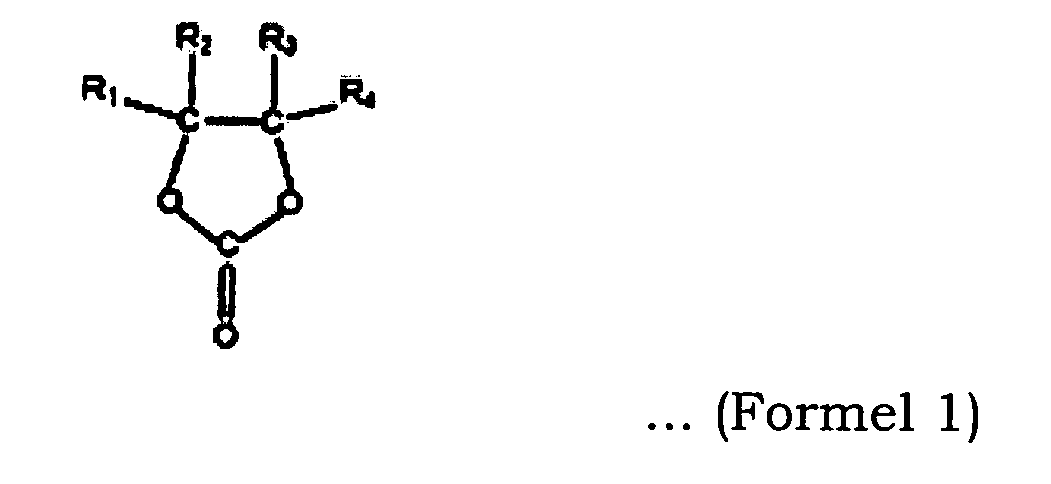
- the solvents represented by the formula (1) include ethylene carbonate (EC), trifluoropropylene carbonate (TFPC), chloroethylene carbonate (ClEC), trifluoroethylene carbonate (TFEC), difluoroethylene carbonate (DFEC) and vinyl ethylene carbonate (VEC).
- EC ethylene carbonate
- TFPC trifluoropropylene carbonate
- ClEC chloroethylene carbonate
- TFEC trifluoroethylene carbonate
- DFEC difluoroethylene carbonate
- VEC vinyl ethylene carbonate
- EC is more preferable, viewed from formation of a coating film on the anode.
- TFPC or DFEC may be incorporated in a small quantity (2% by volume or less) for facilitating formation of a coating film on the cathode.
- the solvents represented by the formula (2) include dimethyl carbonate (DMC), ethyl methyl carbonate (EMC), diethyl carbonate (DEC), methyl propyl carbonate (MPC), ethyl propyl carbonate (EPC), trifluoromethyl ethyl carbonate(TFMEC) and 1,1,1-trifluoroethyl methyl carbonate (TFEMC).
- DMC dimethyl carbonate
- EMC ethyl methyl carbonate
- DEC diethyl carbonate
- MPC methyl propyl carbonate
- EPC ethyl propyl carbonate
- TFEMC 1,1,1-trifluoroethyl methyl carbonate
- DMC is highly compatible with many solvents, and is suitable for being mixed with EC or the like.
- DEC has a lower melting point than DMC, and is suitable for improving low-temperature (-30°C) characteristics.
- EMC has an asymmetric structure and also a low melting point, and is suitable for improving low-temperature characteristics.
- EPC and TFMEC have a propylene side chain and asymmetric structure, and are suitable as solvents for adjusting low-temperature characteristics.
- TFEMC has a molecule partly fluorinated to have an increased dipole moment, and is suitable for keeping dissociation of lithium salts at low temperatures and also for improving low-temperature characteristics.
- the compounds represented by the formula (3) include vinylene carbonate (VC), methylvinylene carbonate (MVC), dimethylvinylene carbonate (DMVC), ethylvinylene carbonate (EVC) and diethylvinylene carbonate (DEVC).
- VC has a low molecular weight, and is considered to form a dense coating film on the electrode.
- MVC, DMVC, EVC, DEVC or the like is a VC substituted with an alkyl group and is considered to form a low-density coating film on the electrode, magnitude of density depending on size of the alkyl chain with which the compound is substituted, thus to have the effect of improving low-temperature characteristics.
- the cyclic carbonate represented by formula 1 is ethylene carbonate (EC)
- the linear carbonate represented by formula 2 is dimethylcarbonate (DMC) and ethyl methyl carbonate (EMC)
- the compound represented by formula 3 is vinylene carbonate (VC).
- the lithium salt for the electrolyte solution is not limited.
- the lithium salts useful for the present invention include inorganic lithium salts, e.g., LiPF 6 , LiBF 4 , LiClO 4 , LiI, LiCl and LiBr; and organic lithium salts, e.g., LiB[OCOCF 3 ] 4 , LiB[OCOCF 2 CF 3 ] 4 , LiPF 4 (CF 3 ) 2 , LiN(SO 2 CF 3 ) 2 and LiN (SO 2 CF 2 CF 3 ) 2 .
- inorganic lithium salts e.g., LiPF 6 , LiBF 4 , LiClO 4 , LiI, LiCl and LiBr
- organic lithium salts e.g., LiB[OCOCF 3 ] 4 , LiB[OCOCF 2 CF 3 ] 4 , LiPF 4 (CF 3 ) 2 , LiN(SO 2 CF 3 ) 2 and LiN (SO 2
- LiPF 6 which has been widely used for batteries for domestic purposes, is a suitable compound because of its quality stability.
- LiB[OCOCF 3 ] 4 is an effective compound, because it exhibits high dissociation capability and solubility, and also high conductivity even at a low content.
- An electrolyte solution preferably has a flash point of 21°C or higher and an ion conductivity of 2 mS/cm or more at -30°C to simultaneously satisfy safety and low-temperature characteristics.
- DMC and EMC in a ratio of 0.6 to 1.3 by volume, particularly preferably 0.8 to 1.
- a DMC/EMC ratio of 0.6 to 1.3 will secure an electrolyte solution having a flash point of 21°C or higher and an ion conductivity of 2 mS/cm or more at -30°C.
- a DMC/EMC ratio of 0.8 to 1 will secure an electrolyte solution having a flash point of 21°C or higher and an ion conductivity of 2.2 mS/cm or more at -30°C, and hence is more preferable.
- the anode-active materials useful for the present invention include natural graphite, composite carbonaceous material with natural graphite coated with a film formed by dry chemical vapor deposition (CVD) or wet spraying, synthetic graphite produced by sintering a resin (e.g., epoxy or phenolic resin) or pitch from petroleum or coal, another carbonaceous material (e.g., amorphous material), lithium metal having a capability of storing/releasing lithium by forming a compound with lithium, silicon reacting with lithium to form a compound to have a capability of storing/releasing lithium by being held in the interstices between the crystals, and oxide or nitride of an element belonging to the IV group (e.g., germanium or tin). They may be generally referred to as anode-active materials.
- a carbonaceous material is an excellent material because of its high electroconductivity, low-temperature characteristics and good cycle stability.
- carbonaceous materials those having a wide interlayer space between carbon network planes (d 002 ) are suitable for their rapid charging/discharging capability and excellent low-temperature characteristics.
- the electrode may be incorporated with a highly electroconductive carbonaceous material, e.g., graphite-like material, amorphous material or activated carbon.
- a highly electroconductive carbonaceous material e.g., graphite-like material, amorphous material or activated carbon.
- Graphite-like materials useful for the present invention include those having one of the following characteristics (1) to (3):
- LiMn 1/3 Ni 1/3 Co 1/3 O 2 is still more preferable.
- the composition has an increased capacity as the Ni content increases, an increased output at low temperatures as the Co content increases, and decreases in production cost as the Mn content increases.
- the additive elements have effects of improving cycle characteristics.
- Other compounds e.g., those represented by the general formula LiM x PO 4 (M: Fe or Mn, and 0.01 ⁇ X ⁇ 0.4), and orthorhombic phosphorus compounds having space group Pmnb symmetry represented by LiMn 1-x M x PO 4 (M: divalent cation other than Mn, and 0.01 ⁇ X ⁇ 0.4) may be also used for the present invention.
- LiMn 1/3 Ni 1/3 Co 1/3 O 2 in particular, is suitable as a lithium battery material for hybrid electric vehicles (HEVs) because of its high low-temperature characteristics and cycle stability.
- HEVs hybrid electric vehicles
- the lithium secondary battery described above as one embodiment of the present invention has improved safety over conventional lithium secondary batteries, mainly coming from use of an electrolyte solution which is not inflammable at room temperature (20°C) while not deteriorating output characteristics at low temperatures and room temperature or output maintenance characteristics during storage at high temperatures over an extended period.
- an electrolyte solution which is not inflammable at room temperature (20°C) while not deteriorating output characteristics at low temperatures and room temperature or output maintenance characteristics during storage at high temperatures over an extended period.
- it can find wide use in various areas, e.g., power sources for hybrid electric vehicles, and power sources including back-up power sources for electrically driven control systems for vehicles.
- it is also suitable as a power source for industrial machines, e.g., electrically driven tools and forklifts.
- the lithium secondary battery as one embodiment of the present invention has improved characteristics, in particular output characteristics at low temperatures, and useful for vehicles frequently working in cold districts.
- the improved output characteristics at low temperatures reduce size and weight of a module in which the batteries are assembled to produce power of several hundred volts by reducing a required number of the batteries.
- An electrolyte solution was prepared by dissolving LiPF 6 as a lithium salt to a concentration of 1 M in a mixed solvent of EC:VC:DMC:EMC having a composition ratio of 19.4:0.6:40:40 by volume.
- the electrolyte solution was not inflammable as confirmed by the flash point test carried out at 20°C.
- Flash point was determined using an automatic tag closed flash point tester in accordance with JIS K-2265.
- the sample solution (5 mL) put in a glass bottle was measured for its ion conductivity at -30°C by a digital electroconductivity meter (CM-60V, Toa Denpa) whose electrodes were immersed in the sample solution, where the measurement was started 90 minutes after the bottle was held in a constant-temperature bath.
- CM-60V digital electroconductivity meter
- the electrolyte solution preferably has a flash point of 21°C or higher and an ion conductivity of 2 mS/cm or more at -30°C to simultaneously satisfy safety and low-temperature characteristics.
- Fig. 2 shows an ion conductivity of mixed electrolyte solutions of EC/VC/DMC/EMC having a composition ratio of 19.4/0.6/X/80-X% by volume, changing with the DMC/EMC volume ratio.
- the results indicate that the electrolyte solution has a flash point of 21°C or higher and an ion conductivity of 2 mS/cm or more at -30°C when the DMC/EMC volume ratio is set at 0.6 to 1.3.
- the ratio of 0.8 to 1 is more preferable, because it gives a flash point of 21°C or higher and an ion conductivity of 2.2 mS/cm or more at -30°C.
- FIG. 1 is a cross-sectional view illustrating one side of the battery.
- a cathode material paste was prepared using LiMn 1/3 Ni 1/3 Co 1/3 O 2 as a cathode-active material, carbon black (CB1) and graphite (GF1) as electroconductive materials, polyvinylidene fluoride (PVDF) as a binder, and N-methylpyrrolidone (NMP) as a solvent to have a composition ratio of LiMn 1/3 Ni 1/3 CO 1/3 O 2 :CB1:GF1:PVDF of 86:9:2:3 by mass (dry basis).
- the cathode material paste was spread over an aluminum foil, which became a cathode-side current collector 1, dried at 80°C, roll-pressed, and dried at 120°C to prepare a cathode mixture layer 2 on the cathode-side current collector 1.
- the cathode mixture layer had a porosity set at 30% based on the whole layer (the value is hereinafter referred to as cathode porosity).
- an anode material paste was prepared using pseudo-anisotropic carbon as amorphous carbon serving as an anode-active material, carbon black (CB2) as an electroconductive material, PVDF as a binder and NMP as a solvent, to have a composition of pseudo-anisotropic carbon:CB2:PVDF of 88:5:7 by mass (dry basis).
- the anode material paste was spread over a copper foil, which became an anode-side current collector 3, dried at 80°C, roll-pressed, and dried at 120°C to prepare an anode mixture layer 4 on the anode-side current collector 3.
- the anode mixture layer had a porosity set at 35% based on the whole layer (the value is hereinafter referred to as anode porosity), so as to form a battery.
- a separator 7 was placed between the cathode and anode prepared above to form a spirally wound assembly, which was encased in an anode battery can 13.
- the electrolyte solution prepared in Example 1 was injected into the assembly and sealed by caulking to form a spirally wound battery.
- Fig. 1 The other components shown in Fig. 1 are 9: anode-side lead, 10: cathode-side lead, 11: cathode-side insulator, 12: anode-side insulator, 14: gasket, and 15: cathode battery lid.
- Porosity was determined by mercury porosimetry for the cathode and anode after the mixture layer was separated from the current collector of each side.
- the spirally wound battery illustrated in Fig. 1 was evaluated for direct current resistance (DCR) at 25 and -30°C, and pulse cycle characteristics (characteristics after the battery was subjected to pulse cycles for 1000 hours).
- DCR direct current resistance
- the battery was charged with electricity at a constant current of 0.7 A to 4.1 V, and then at a constant voltage of 4.1 V until the amperage reached 20 mA. Then, it was allowed to discharge electricity to 2.7 V at 0.7 A, after it was halted for 30 minutes. These cycles were repeated 3 times.
- the battery was charged with electricity at a constant current of 0.7 A to 3.8 V, allowed to discharge electricity at 10 A for 10 seconds, again charged with electricity to 3.8 V at a constant current, allowed to discharge electricity at 20 A for 10 seconds, again charged with electricity to 3.8 V, and allowed to discharge electricity at 30 A for 10 seconds.
- the battery was evaluated for DCR based on the I-V characteristics observed.
- the battery was subjected to a pulse cycle test in which charging/discharging were repeated at 20 A for 2 seconds in a constant-temperature bath kept at 50°C, and evaluated for DCR at 25 and -30°C, after it was subjected to the pulse cycles for 1000 hours.
- the evaluation results are given in Table 1.
- An electrolyte solution was prepared by dissolving LiPF 6 as a lithium salt to a concentration of 1 M in a mixed solvent of EC:VC:DMC:EMC having a composition ratio of 19.5:0.5:40:40 by volume, and evaluated for ion conductivity and inflammability in the same manner as in Example 1.
- a spirally wound battery was prepared, and evaluated for porosity and battery characteristics in the same manner as in Example 1. It was confirmed to have a cathode porosity of 30% and anode porosity of 35%, all percentages by volume. The evaluation results are given in Table 1.
- An electrolyte solution was prepared by dissolving LiPF 6 as a lithium salt to a concentration of 1 M in a mixed solvent of EC:VC:DMC:EMC having a composition ratio of 19.6:0.4:40:40 by volume, and evaluated for ion conductivity and inflammability in the same manner as in Example 1.
- a spirally wound battery was prepared, and evaluated for porosity and battery characteristics in the same manner as in Example 1. It was confirmed to have a cathode porosity of 30% and anode porosity of 35%, all percentages by volume. The evaluation results are given in Table 1.
- An electrolyte solution was prepared by dissolving LiPF 6 as a lithium salt to a concentration of 1 M in a mixed solvent of EC:VC:DMC:EMC having a composition ratio of 19.8:0.2:40:40 by volume, and evaluated for ion conductivity and inflammability in the same manner as in Example 1.
- a spirally wound battery was prepared, and evaluated for porosity and battery characteristics in the same manner as in Example 1. It was confirmed to have a cathode porosity of 30% and anode porosity of 35%, all percentages by volume. The evaluation results are given in Table 1.
- An electrolyte solution was prepared by dissolving LiPF 6 as a lithium salt to a concentration of 1 M in a mixed solvent of EC:VC:DMC:EMC having a composition ratio of 19.7:0.3:40:40 by volume, and evaluated for ion conductivity and inflammability in the same manner as in Example 1.
- a spirally wound battery was prepared, and evaluated for porosity and battery characteristics in the same manner as in Example 1. It was confirmed to have a cathode porosity of 30% and anode porosity of 35%, all percentages by volume. The evaluation results are given in Table 1.
- An electrolyte solution was prepared by dissolving LiPF 6 as a lithium salt to a concentration of 1 M in a mixed solvent of EC:VC:DMC:EMC having a composition ratio of 21.7:0.3:38:40 by volume, and evaluated for ion conductivity and inflammability in the same manner as in Example 1.
- a spirally wound battery was prepared, and evaluated for porosity and battery characteristics in the same manner as in Example 1. It was confirmed to have a cathode porosity of 30% and anode porosity of 35%, all percentages by volume. The evaluation results are given in Table 1.
- An electrolyte solution was prepared by dissolving LiPF 6 as a lithium salt to a concentration of 1 M in a mixed solvent of EC:VC:DMC:EMC having a composition ratio of 23.7:0.3:36:40 by volume, and evaluated for ion conductivity and inflammability in the same manner as in Example 1.
- a spirally wound battery was prepared, and evaluated for porosity and battery characteristics in the same manner as in Example 1. It was confirmed to have a cathode porosity of 30% and anode porosity of 35%, all percentages by volume. The evaluation results are given in Table 1.
- An electrolyte solution was prepared by dissolving LiPF 6 as a lithium salt to a concentration of 1 M in a mixed solvent of EC:VC:DMC:EMC having a composition ratio of 29.7:0.3:30:40 by volume, and evaluated for ion conductivity and inflammability in the same manner as in Example 1.
- a spirally wound battery was prepared, and evaluated for porosity and battery characteristics in the same manner as in Example 1. It was confirmed to have a cathode porosity of 30% and anode porosity of 35%, all percentages by volume. The evaluation results are given in Table 1.
- An electrolyte solution was prepared by dissolving LiPF 6 as a lithium salt to a concentration of 1.2 M in a mixed solvent of EC:VC:DMC:EMC having a composition ratio of 23.7:0.3:36:40 by volume, and evaluated for ion conductivity and inflammability in the same manner as in Example 1.
- a spirally wound battery was prepared, and evaluated for porosity and battery characteristics in the same manner as in Example 1. It was confirmed to have a cathode porosity of 30% and anode porosity of 35%, all percentages by volume. The evaluation results are given in Table 1.
- An electrolyte solution was prepared by dissolving LiPF 6 as a lithium salt to a concentration of 1.1 M in a mixed solvent of EC:VC:DMC:EMC having a composition ratio of 23.7:0.3:36:40 by volume, and evaluated for ion conductivity and inflammability in the same manner as in Example 1.
- a spirally wound battery was prepared, and evaluated for porosity and battery characteristics in the same manner as in Example 1. It was confirmed to have a cathode porosity of 30% and anode porosity of 35%, all percentages by volume. The evaluation results are given in Table 1.
- An electrolyte solution was prepared by dissolving LiPF 6 as a lithium salt to a concentration of 1.1 M in a mixed solvent of EC:VC:DMC:EMC having a composition ratio of 23.7:0.3:36:40 by volume, and evaluated for ion conductivity and inflammability in the same manner as in Example 1.
- a spirally wound battery was prepared, and evaluated for porosity and battery characteristics in the same manner as in Example 1. It was confirmed to have a cathode porosity of 25% and anode porosity of 25%, all percentages by volume. The evaluation results are given in Table 1.
- An electrolyte solution was prepared by dissolving LiPF 6 as a lithium salt to a concentration of 1.1 M in a mixed solvent of EC:VC:DMC:EMC having a composition ratio of 23.7:0.3:36:40 by volume, and evaluated for ion conductivity and inflammability in the same manner as in Example 1.
- a spirally wound battery was prepared, and evaluated for porosity and battery characteristics in the same manner as in Example 1. It was confirmed to have a cathode porosity of 35% and anode porosity of 40%, all percentages by volume. The evaluation results are given in Table 1.
- An electrolyte solution was prepared by dissolving LiPF 6 as a lithium salt to a concentration of 1.1 M in a mixed solvent of EC:VC:DMC:EMC having a composition ratio of 23.7:0.3:36:40 by volume, and evaluated for ion conductivity and inflammability in the same manner as in Example 1.
- a spirally wound battery was prepared, and evaluated for porosity and battery characteristics in the same manner as in Example 1. It was confirmed to have a cathode porosity of 40% and anode porosity of 40%, all percentages by volume. The evaluation results are given in Table 1.
- a comparative electrolyte solution was prepared by dissolving LiPF 6 as a lithium salt to a concentration of 1 M in a mixed solvent of EC:VC:DMC:EMC:methyl acetate (MA) having a composition ratio of 29.4:0.6:30:30:10 by volume, and evaluated for ion conductivity and inflammability in the same manner as in Example 1.
- a spirally wound battery was prepared, and evaluated for porosity and battery characteristics in the same manner as in Example 1. It was confirmed to have a cathode porosity of 30% and anode porosity of 35%, all percentages by volume. The evaluation results are given in Table 1.
- a comparative electrolyte solution was prepared by dissolving LiPF 6 as a lithium salt to a concentration of 1 M in a mixed solvent of EC:VC:DMC:EMC having a composition ratio of 34:0:33:33 by volume, and evaluated for ion conductivity and inflammability in the same manner as in Example 1.
- a spirally wound battery was prepared, and evaluated for porosity and battery characteristics in the same manner as in Example 1. It was confirmed to have a cathode porosity of 30% and anode porosity of 35%, all percentages by volume. The evaluation results are given in Table 1.
- a comparative electrolyte solution was prepared by dissolving LiPF 6 as a lithium salt to a concentration of 1 M in a mixed solvent of EC:VC:DMC:EMC having a composition ratio of 15:0:35:50 by volume, and evaluated for ion conductivity and inflammability in the same manner as in Example 1.
- a spirally wound battery was prepared, and evaluated for porosity and battery characteristics in the same manner as in Example 1. It was confirmed to have a cathode porosity of 30% and anode porosity of 35%, all percentages by volume. The evaluation results are given in Table 1.
- a comparative electrolyte solution was prepared by dissolving LiPF 6 as a lithium salt to a concentration of 1 M in a mixed solvent of EC:VC:DMC:EMC having a composition ratio of 18:2:40:40 by volume, and evaluated for ion conductivity and inflammability in the same manner as in Example 1.
- a spirally wound battery was prepared, and evaluated for porosity and battery characteristics in the same manner as in Example 1. It was confirmed to have a cathode porosity of 30% and anode porosity of 35%, all percentages by volume. The evaluation results are given in Table 1.
- a comparative electrolyte solution was prepared by dissolving LiPF 6 as a lithium salt to a concentration of 1.1 M in a mixed solvent of EC:VC:DMC:EMC having a composition ratio of 23.7:0.3:36:40 by volume, and evaluated for ion conductivity and inflammability in the same manner as in Example 1.
- a spirally wound battery was prepared, and evaluated for porosity and battery characteristics in the same manner as in Example 1. It was confirmed to have a cathode porosity of 20% and anode porosity of 20%, all percentages by volume. The evaluation results are given in Table 1.
- a comparative electrolyte solution was prepared by dissolving LiPF 6 as a lithium salt to a concentration of 1.1 M in a mixed solvent of EC:VC:DMC:EMC having a composition ratio of 23.7:0.3:36:40 by volume, and evaluated for ion conductivity and inflammability in the same manner as in Example 1.
- a spirally wound battery was prepared, and evaluated for porosity and battery characteristics in the same manner as in Example 1. It was confirmed to have a cathode porosity of 38% and anode porosity of 40%, all percentages by volume. The evaluation results are given in Table 1.
- the battery prepared in Comparative Example 1 with an electrolyte solution containing MA exhibits good characteristics, in particular lower DCR at -30°C than the other Comparative Examples; with MA-free electrolyte solutions. Nevertheless, it is not preferable because of inflammability observed at 20°C, and lower pulse cycle characteristics after it is subjected to pulse cycles for 1000 hours than those prepared in Examples 1 to 13.
- the battery prepared in Comparative Example 2 with an electrolyte solution containing EC at a higher content of 34% by volume than those prepared in Examples 1 to 13 is not preferable, because of its higher DCR at -30°C.
- the battery prepared in Comparative Example 3 with an electrolyte solution containing EC at a lower content of 1-5% by volume than those prepared in Examples 1 to 13 is not preferable, because of its lower DCR at 25°C.
- the battery prepared in Comparative Example 4 with an electrolyte solution containing VC at a higher content of 2% by volume than those prepared in Examples 1 to 13 is not preferable, because of its lower DCR at 25 and -30°C.
- the battery prepared in Comparative Example 5 with lower porosities of 20% by volume in the cathode and anode than those prepared in Examples 1 to 13 is not preferable, because of its higher DCR at 25 and - 30°C.
- the battery prepared in Comparative Example 6 with a higher porosity of 45% by volume in each of the cathode and anode than those prepared in Examples 1 to 13 is not preferable, because of its higher DCR at 25 and -30°C.
- each of Examples 1 to 13 can provide a lithium secondary battery which exhibits improved safety, in particular with an electrolyte solution exhibiting no inflammability at room temperature (20°C), while not deteriorating output characteristics at low temperatures and room temperature, and output maintenance characteristics when the battery is preserved at high temperature (50°C).
- the lithium secondary battery prepared in each of Examples 1 to 13 as a high-output battery has improved DCR at low temperatures and low-temperature input/output characteristics over conventional ones.
- the lithium secondary battery prepared in each of Examples 1 to 13 has improved characteristics, in particular output characteristics at low temperatures, which make the battery effective for use in vehicles frequently working in cold districts.
- the improved output characteristics at low temperatures bring advantages of reducing size and weight of a module in which the batteries are assembled to produce power of several hundred volts by reducing a required number of the batteries.
Landscapes
- Chemical & Material Sciences (AREA)
- Engineering & Computer Science (AREA)
- Manufacturing & Machinery (AREA)
- Chemical Kinetics & Catalysis (AREA)
- Electrochemistry (AREA)
- General Chemical & Material Sciences (AREA)
- General Physics & Mathematics (AREA)
- Inorganic Chemistry (AREA)
- Condensed Matter Physics & Semiconductors (AREA)
- Physics & Mathematics (AREA)
- Materials Engineering (AREA)
- Secondary Cells (AREA)
- Battery Electrode And Active Subsutance (AREA)
- Carbon And Carbon Compounds (AREA)
Claims (9)
- Lithium-Akkumulator, der mit einer Kathode und mit einer Anode, die beide befähigt sind, Lithiumionen aufzunehmen/abzugeben, einem Separator, der die Elektroden voneinander trennt, und einer Elektrolytlösung ausgestattet ist, wobei die Elektrolytlösung als Lösemittel enthält:ein cyclisches Carbonat der Formel (1):
 ein lineares Carbonat der Formel (2):
 eine Verbindung der Formel (3):
 der Anteil des cyclischen Carbonats der Formel (1) in der Zusammensetzung 18,0 bis 30,0 %, der Anteil des linearen Carbonats der Formel (2) in der Zusammensetzung 4,0 bis 81,9 % und der Anteil der Verbindung der Formel (3) in der Zusammensetzung 0,1 bis 1,0 % ist, bezogen auf diese Lösemittel (100 %), wobei alle Prozentangaben Volumenprozent sind,die Kathode ein Kathodengemisch umfasst und einen kathodenseitigen Stromkollektor (1) aufweist,das Kathodengemisch, das ein aktives Kathodenmaterial, einen elektrisch leitfähigen Stoff und ein Bindemittel umfasst, zur Bildung einer Kathodengemischschicht (2) auf dem kathodenseitigen Stromkollektor (1) verteilt wird, wobei die Kathodengemischschicht eine Porosität von 25 bis 40 Vol.-%, bezogen auf die Schicht, aufweist,die Anode ein Anodengemisch umfasst und einen anodenseitigen Stromkollektor (3) aufweist, unddas Anodengemisch, das ein aktives Anodenmaterial, einen elektrisch leitfähigen Stoff und ein Bindemittel umfasst, zur Bildung einer Anodengemischschicht auf dem anodenseitigen Stromkollektor (3) verteilt wird, wobei die Anodengemischschicht eine Porosität von 25 bis 40 Vol.-%, bezogen auf die Schicht, aufweist.
 - Lithium-Akkumulator nach Anspruch 1, wobei die Kathode ein Lithiummischoxid der Formel LiαMnxM1yM2zO2 umfasst (wobei M1 unter zumindest einem aus Co und Ni und M2 unter zumindest einem aus Co, Ni, Al, B, Fe, Mg und Cr ausgewählt ist, x + y + z = 1, 0 < α < 1,2, 0,2 ≤ x ≤ 0,6, 0,2 ≤ y ≤ 0,4 und 0,05 ≤ z ≤ 0,4).
- Lithium-Akkumulator nach Anspruch 1 oder 2, wobei die Anode zumindest einen der folgenden Stoffe umfasst: ein kohlenstoffhaltiges Material, ein Oxid eines zur Gruppe IV gehörenden Elements und ein Nitrid eines zur Gruppe IV gehörenden Elements.
- Lithium-Akkumulator nach einem der Ansprüche 1 bis 3, wobei das cyclische Carbonat der Formel (1) Ethylencarbonat (EC) ist, das lineare Carbonat der Formel (2) Dimethylcarbonat (DMC) und Ethylmethylcarbonat (EMC) bedeutet und die Verbindung der Formel (3) Vinylencarbonat (VC) ist.
- Lithium-Akkumulator nach Anspruch 4, wobei DMC und EMC in einem Volumenverhältnis DMC/EMC von 0,6 bis 1,3 eingebracht werden.
- Lithium-Akkumulator nach einem der Ansprüche 1 bis 5, wobei die Kathode gebildet wird, indem auf einer Aluminiumfolie ein Kathodengemisch verteilt wird, das ein Lithiummischoxid, einen elektrisch leitfähigen Stoff, der hauptsächlich aus einem kohlenstoffhaltigen Material auf Graphitbasis zusammengesetzt ist, und ein Bindemittel umfasst, und die Anode gebildet wird, in dem auf einer Kupferfolie ein Anodengemisch verteilt wird, das amorphen Kohlenstoff, einen elektrisch leitfähigen Stoff und ein Bindemittel umfasst.
- Lithium-Akkumulator nach einem der Ansprüche 1 bis 6, wobei die Elektrolytlösung einen Flammpunkt von 21 °C oder darüber und bei -30°C eine Anionenleitfähigkeit von 2 mS/cm oder mehr aufweist.
- Lithium-Akkumulator nach einem der Ansprüche 1 bis 7, wobei das cyclische Carbonat der Formel (1) Ethylencarbonat (EC) umfasst, das lineare Carbonat der Formel (2) Dimethylcarbonat (DMC) und Ethylmethylcarbonat (EMC) umfasst und die Verbindung der Formel (3) Vinylencarbonat (VC) umfasst, und DMC und EMC in einem Volumenverhältnis DMC/EMC von 0,8 bis 1,0 eingebracht werden.
- Lithium-Akkumulator nach einem der Ansprüche 1 bis 8, wobei die Anode ein kohlenstoffhaltiges Material mit einem d002-Wert von 0,39 nm oder weniger enthält.
Priority Applications (1)
| Application Number | Priority Date | Filing Date | Title |
|---|---|---|---|
| EP11153916A EP2320512B1 (de) | 2007-03-27 | 2008-01-24 | Lithium-Sekundärbatterie |
Applications Claiming Priority (2)
| Application Number | Priority Date | Filing Date | Title |
|---|---|---|---|
| JP2007080449 | 2007-03-27 | ||
| JP2007278278 | 2007-10-26 |
Related Child Applications (2)
| Application Number | Title | Priority Date | Filing Date |
|---|---|---|---|
| EP11153916A Division EP2320512B1 (de) | 2007-03-27 | 2008-01-24 | Lithium-Sekundärbatterie |
| EP11153916.9 Division-Into | 2011-02-09 |
Publications (2)
| Publication Number | Publication Date |
|---|---|
| EP1978587A1 EP1978587A1 (de) | 2008-10-08 |
| EP1978587B1 true EP1978587B1 (de) | 2011-06-22 |
Family
ID=39495360
Family Applications (2)
| Application Number | Title | Priority Date | Filing Date |
|---|---|---|---|
| EP08001317A Active EP1978587B1 (de) | 2007-03-27 | 2008-01-24 | Lithium-Sekundärbatterie |
| EP11153916A Active EP2320512B1 (de) | 2007-03-27 | 2008-01-24 | Lithium-Sekundärbatterie |
Family Applications After (1)
| Application Number | Title | Priority Date | Filing Date |
|---|---|---|---|
| EP11153916A Active EP2320512B1 (de) | 2007-03-27 | 2008-01-24 | Lithium-Sekundärbatterie |
Country Status (4)
| Country | Link |
|---|---|
| US (2) | US7862933B2 (de) |
| EP (2) | EP1978587B1 (de) |
| JP (2) | JP5451976B2 (de) |
| CN (2) | CN101276932B (de) |
Cited By (1)
| Publication number | Priority date | Publication date | Assignee | Title |
|---|---|---|---|---|
| US11848428B2 (en) | 2016-12-16 | 2023-12-19 | Medtronic, Inc. | Lithium ion batteries and methods of sterilization |
Families Citing this family (50)
| Publication number | Priority date | Publication date | Assignee | Title |
|---|---|---|---|---|
| GB2395059B (en) | 2002-11-05 | 2005-03-16 | Imp College Innovations Ltd | Structured silicon anode |
| GB0601318D0 (en) * | 2006-01-23 | 2006-03-01 | Imp Innovations Ltd | Method of etching a silicon-based material |
| GB0601319D0 (en) | 2006-01-23 | 2006-03-01 | Imp Innovations Ltd | A method of fabricating pillars composed of silicon-based material |
| GB0709165D0 (en) * | 2007-05-11 | 2007-06-20 | Nexeon Ltd | A silicon anode for a rechargeable battery |
| GB0713896D0 (en) | 2007-07-17 | 2007-08-29 | Nexeon Ltd | Method |
| GB0713898D0 (en) | 2007-07-17 | 2007-08-29 | Nexeon Ltd | A method of fabricating structured particles composed of silcon or a silicon-based material and their use in lithium rechargeable batteries |
| GB0713895D0 (en) | 2007-07-17 | 2007-08-29 | Nexeon Ltd | Production |
| GB2464158B (en) | 2008-10-10 | 2011-04-20 | Nexeon Ltd | A method of fabricating structured particles composed of silicon or a silicon-based material and their use in lithium rechargeable batteries |
| GB2464157B (en) | 2008-10-10 | 2010-09-01 | Nexeon Ltd | A method of fabricating structured particles composed of silicon or a silicon-based material |
| KR20100062744A (ko) * | 2008-12-02 | 2010-06-10 | 삼성에스디아이 주식회사 | 이차전지용 ncm계 양극 활물질 조성물 및 이를 포함하는이차전지 |
| KR20100093321A (ko) * | 2009-02-16 | 2010-08-25 | 삼성에스디아이 주식회사 | 비수 전해질, 및 이를 포함하는 리튬 이차 전지 |
| WO2010100764A1 (en) * | 2009-03-02 | 2010-09-10 | Showa Denko K.K. | Composite graphite particles and lithium secondary battery using the same |
| JP5381199B2 (ja) * | 2009-03-18 | 2014-01-08 | 株式会社豊田中央研究所 | リチウム二次電池 |
| GB2470056B (en) | 2009-05-07 | 2013-09-11 | Nexeon Ltd | A method of making silicon anode material for rechargeable cells |
| US9853292B2 (en) | 2009-05-11 | 2017-12-26 | Nexeon Limited | Electrode composition for a secondary battery cell |
| GB2470190B (en) | 2009-05-11 | 2011-07-13 | Nexeon Ltd | A binder for lithium ion rechargeable battery cells |
| CN102484290A (zh) * | 2009-09-25 | 2012-05-30 | 丰田自动车株式会社 | 锂二次电池和其制造方法 |
| JP2011150920A (ja) * | 2010-01-22 | 2011-08-04 | Hitachi Vehicle Energy Ltd | リチウムイオン電池 |
| GB201005979D0 (en) | 2010-04-09 | 2010-05-26 | Nexeon Ltd | A method of fabricating structured particles composed of silicon or a silicon-based material and their use in lithium rechargeable batteries |
| GB201009519D0 (en) | 2010-06-07 | 2010-07-21 | Nexeon Ltd | An additive for lithium ion rechargeable battery cells |
| GB201014707D0 (en) | 2010-09-03 | 2010-10-20 | Nexeon Ltd | Electroactive material |
| GB201014706D0 (en) | 2010-09-03 | 2010-10-20 | Nexeon Ltd | Porous electroactive material |
| US20120070745A1 (en) * | 2010-09-16 | 2012-03-22 | Samsung Sdi Co., Ltd. | Negative active material for rechargeable lithium battery and rechargeable lithium battery including the same |
| KR101504051B1 (ko) | 2010-11-12 | 2015-03-18 | 도요타지도샤가부시키가이샤 | 이차 전지 |
| KR101503195B1 (ko) | 2010-11-12 | 2015-03-16 | 도요타지도샤가부시키가이샤 | 이차 전지 |
| JP5741899B2 (ja) * | 2010-11-18 | 2015-07-01 | トヨタ自動車株式会社 | 二次電池 |
| JP6011906B2 (ja) * | 2011-01-19 | 2016-10-25 | 株式会社Gsユアサ | 負極、電極体、蓄電素子、及び蓄電素子の製造方法 |
| CN102971893B (zh) | 2011-05-06 | 2015-07-01 | 丰田自动车株式会社 | 锂离子二次电池 |
| KR101569297B1 (ko) | 2011-06-08 | 2015-11-13 | 도요타지도샤가부시키가이샤 | 리튬 이온 이차 전지 |
| WO2013031226A1 (ja) * | 2011-08-31 | 2013-03-07 | パナソニック株式会社 | 非水電解質二次電池 |
| US10128491B2 (en) | 2011-12-01 | 2018-11-13 | Nanoscale Components, Inc. | Method for alkaliating electrodes |
| CA2857491C (en) * | 2011-12-01 | 2022-01-04 | Robert W. Grant | Method for alkaliating anodes |
| US9673446B2 (en) | 2012-02-28 | 2017-06-06 | Hitachi Maxell, Ltd. | Lithium ion secondary battery containing a negative electrode material layer containing Si and O as constituent elements |
| CN102637899A (zh) * | 2012-04-29 | 2012-08-15 | 上海贯裕能源科技有限公司 | 锂离子电池 |
| CN104956522A (zh) | 2013-01-30 | 2015-09-30 | 那诺思卡乐康母庞特公司 | 分阶段将锂导入锂离子电化学电池的预锂化阳极 |
| US20160013480A1 (en) * | 2013-03-15 | 2016-01-14 | Applied Materials, Inc. | Multi-layer battery electrode design for enabling thicker electrode fabrication |
| KR101758002B1 (ko) * | 2013-03-26 | 2017-07-13 | 닛산 지도우샤 가부시키가이샤 | 비수전해질 이차 전지 |
| JP6245470B2 (ja) * | 2013-09-20 | 2017-12-13 | トヨタ自動車株式会社 | 二次電池の製造方法 |
| WO2015045519A1 (ja) * | 2013-09-27 | 2015-04-02 | Necエナジーデバイス株式会社 | 二次電池とその製造方法 |
| CN105047996B (zh) * | 2015-05-28 | 2017-08-04 | 河南省法恩莱特新能源科技有限公司 | 一种锂离子电池低温电解液及锂离子电池 |
| JP6776995B2 (ja) * | 2017-04-18 | 2020-10-28 | トヨタ自動車株式会社 | 全固体リチウムイオン二次電池の製造方法 |
| JP6776994B2 (ja) * | 2017-04-18 | 2020-10-28 | トヨタ自動車株式会社 | 全固体リチウムイオン二次電池の製造方法 |
| KR102840419B1 (ko) | 2017-07-10 | 2025-07-30 | 나노스캐일 컴포넌츠, 인코포레이티드 | 애노드 상에 sei 층을 형성하기 위한 방법 |
| CN109546222B (zh) * | 2018-11-28 | 2020-12-18 | 深圳中科瑞能实业有限公司 | 铝负极储能器件电解液、铝负极储能器件及其制备方法 |
| WO2020137817A1 (ja) * | 2018-12-28 | 2020-07-02 | 三洋電機株式会社 | 非水電解質二次電池 |
| CN112186256A (zh) * | 2019-07-03 | 2021-01-05 | 华南师范大学 | 锂金属电池用电解液及其制备方法与应用 |
| EP3913721B1 (de) * | 2019-12-03 | 2022-11-23 | Contemporary Amperex Technology Co., Limited | Sekundärbatterie, elektrolyt, und vorrichtung enthaltend die besagte sekundärbatterie |
| JP7720254B2 (ja) * | 2019-12-25 | 2025-08-07 | 三洋電機株式会社 | 非水電解質二次電池 |
| US12580195B2 (en) | 2022-04-06 | 2026-03-17 | Saft America | Lithium-ion secondary battery |
| US20260074292A1 (en) * | 2022-07-25 | 2026-03-12 | Panasonic Intellectual Property Management Co., Ltd. | Lithium secondary battery and method for producing same |
Family Cites Families (49)
| Publication number | Priority date | Publication date | Assignee | Title |
|---|---|---|---|---|
| JP2705529B2 (ja) * | 1993-08-02 | 1998-01-28 | 日本電池株式会社 | 有機電解液二次電池 |
| JP3218982B2 (ja) * | 1995-07-25 | 2001-10-15 | 住友化学工業株式会社 | 非水電解液とリチウム二次電池 |
| JPH1027625A (ja) | 1996-02-14 | 1998-01-27 | Mitsui Petrochem Ind Ltd | 非水電解液および非水電解液二次電池 |
| JPH09245838A (ja) | 1996-03-01 | 1997-09-19 | Nippon Telegr & Teleph Corp <Ntt> | 非水溶媒電解液を有する二次電池 |
| JP4145391B2 (ja) * | 1997-06-27 | 2008-09-03 | 三井化学株式会社 | 非水電解液及び非水電解液二次電池 |
| JP3332834B2 (ja) * | 1997-12-17 | 2002-10-07 | 三洋電機株式会社 | リチウムイオン電池 |
| JP2005340223A (ja) * | 1998-02-20 | 2005-12-08 | Hitachi Ltd | リチウム2次電池とその電解液及び電気機器 |
| US6746804B2 (en) * | 1998-05-13 | 2004-06-08 | Wilson Greatbatch Technologies, Inc. | Nonaqueous organic electrolytes for low temperature discharge of rechargeable electrochemical cells |
| FR2787243B1 (fr) | 1998-12-10 | 2003-10-03 | Cit Alcatel | Generateur electrochimique rechargeable au lithium utilisable a basse temperature |
| JP4915025B2 (ja) | 1999-11-19 | 2012-04-11 | 住友化学株式会社 | 非水電解液とリチウム二次電池 |
| EP1347524B1 (de) | 2000-12-28 | 2018-08-01 | Murata Manufacturing Co., Ltd. | Aktives positivelektrodenmaterial und nichtwässrige elektrolytische sekundärzelle |
| JP2002305035A (ja) | 2001-02-05 | 2002-10-18 | Ngk Insulators Ltd | リチウム二次電池 |
| CN1204648C (zh) | 2001-02-28 | 2005-06-01 | 东芝株式会社 | 非水电解质及非水电解质二次电池 |
| DE10111410C1 (de) * | 2001-03-08 | 2002-07-25 | Chemetall Gmbh | Elektrolyt, enthaltend Lithium-bis(oxalato)borat und dessen Verwendung |
| US6586135B2 (en) * | 2001-03-21 | 2003-07-01 | Wilson Greatbach Ltd. | Electrochemical cell having an electrode with a dicarbonate additive in the electrode active mixture |
| KR20030023290A (ko) * | 2001-09-13 | 2003-03-19 | 삼성에스디아이 주식회사 | 탄소-탄소 이중결합을 가진 카보네이트를 함유하는 유기전해액 및 이를 이용하여 제조되는 고분자 전해질 및 리튬2차 전지 |
| JP2003092142A (ja) * | 2001-09-18 | 2003-03-28 | Sony Corp | 非水電解質電池及びその製造方法 |
| JP3654592B2 (ja) | 2001-10-29 | 2005-06-02 | 松下電器産業株式会社 | リチウムイオン二次電池 |
| JP4007011B2 (ja) * | 2002-02-04 | 2007-11-14 | 三菱化学株式会社 | 非水系電解液及びそれを用いたリチウム二次電池 |
| JP4051947B2 (ja) * | 2002-02-12 | 2008-02-27 | 三菱化学株式会社 | 非水系電解液及びそれを用いたリチウム二次電池 |
| JP2003257427A (ja) | 2002-02-28 | 2003-09-12 | Sumitomo Chem Co Ltd | 非水二次電池用電極材料 |
| JP4079681B2 (ja) | 2002-04-26 | 2008-04-23 | 株式会社デンソー | 非水電解液および該電解液を用いた非水電解液二次電池 |
| JP4259885B2 (ja) * | 2002-07-15 | 2009-04-30 | パナソニック株式会社 | 非水電解質二次電池 |
| JP4537035B2 (ja) * | 2003-01-09 | 2010-09-01 | 三星エスディアイ株式会社 | 非水電解液及びリチウム二次電池 |
| JP4963780B2 (ja) * | 2003-02-27 | 2012-06-27 | 三菱化学株式会社 | 非水系電解液およびリチウム二次電池 |
| CN100347903C (zh) * | 2003-02-27 | 2007-11-07 | 三菱化学株式会社 | 非水电解质溶液及锂二次电池 |
| US7083878B2 (en) | 2003-02-27 | 2006-08-01 | Mitsubishi Chemical Corporation | Nonaqueous electrolytic solution and lithium secondary battery |
| US7718321B2 (en) * | 2004-02-04 | 2010-05-18 | Quallion Llc | Battery having electrolyte including organoborate salt |
| JP4417649B2 (ja) * | 2003-04-11 | 2010-02-17 | パナソニック株式会社 | 非水電解質二次電池 |
| JP2005158623A (ja) * | 2003-11-28 | 2005-06-16 | Shin Kobe Electric Mach Co Ltd | 非水電解液二次電池 |
| JP2005222780A (ja) * | 2004-02-04 | 2005-08-18 | Matsushita Electric Ind Co Ltd | リチウムイオン二次電池 |
| US8389163B2 (en) * | 2004-03-16 | 2013-03-05 | Panasonic Corporation | Lithium secondary battery containing organic peroxide in non-aqueous electrolyte, positive electrode, or negative electrode |
| JP4812067B2 (ja) * | 2004-03-16 | 2011-11-09 | 日立マクセルエナジー株式会社 | 有機電解液およびそれを用いた有機電解液電池 |
| JP4291195B2 (ja) * | 2004-03-30 | 2009-07-08 | 宇部興産株式会社 | 非水電解質二次電池 |
| JP3769291B2 (ja) * | 2004-03-31 | 2006-04-19 | 株式会社東芝 | 非水電解質電池 |
| JP4525177B2 (ja) * | 2004-05-26 | 2010-08-18 | 三菱化学株式会社 | 非水系電解液および非水系電解液電池 |
| JP2006172775A (ja) * | 2004-12-14 | 2006-06-29 | Hitachi Ltd | エネルギー貯蔵デバイスとそのモジュール及びそれを用いた自動車 |
| JP4483618B2 (ja) * | 2005-02-17 | 2010-06-16 | ソニー株式会社 | 二次電池 |
| US9240593B2 (en) * | 2005-04-28 | 2016-01-19 | Sumitomo Chemical Company, Limited | Active material for nonaqueous secondary battery and method for producing same |
| KR101340357B1 (ko) | 2005-05-17 | 2013-12-13 | 데이진 가부시키가이샤 | 리튬 이온 2 차 전지용 세퍼레이터 및 리튬 이온 2 차 전지 |
| CN100563056C (zh) * | 2005-06-15 | 2009-11-25 | 三菱化学株式会社 | 锂二次电池 |
| JP4867208B2 (ja) * | 2005-06-15 | 2012-02-01 | 三菱化学株式会社 | リチウム二次電池 |
| JP4934999B2 (ja) * | 2005-06-27 | 2012-05-23 | 三菱化学株式会社 | 非水系電解液及び非水系電解液電池 |
| JP5034224B2 (ja) * | 2005-08-05 | 2012-09-26 | 宇部興産株式会社 | 非水電解液及びそれを用いたリチウム二次電池 |
| JP4876495B2 (ja) * | 2005-09-13 | 2012-02-15 | ソニー株式会社 | リチウムイオン二次電池用電解液およびリチウムイオン二次電池 |
| JP5173145B2 (ja) * | 2006-02-08 | 2013-03-27 | 三洋電機株式会社 | 非水電解質二次電池 |
| JP5103766B2 (ja) * | 2006-03-24 | 2012-12-19 | 三菱化学株式会社 | 非水系電解液及び非水系電解液電池 |
| JP4931489B2 (ja) * | 2006-06-21 | 2012-05-16 | 株式会社デンソー | 非水電解液および該電解液を用いた二次電池 |
| JP5223258B2 (ja) * | 2007-07-25 | 2013-06-26 | 三菱化学株式会社 | 非水系電解液二次電池用非水系電解液及び非水系電解液電池 |
-
2008
- 2008-01-24 EP EP08001317A patent/EP1978587B1/de active Active
- 2008-01-24 EP EP11153916A patent/EP2320512B1/de active Active
- 2008-01-25 US US12/019,858 patent/US7862933B2/en active Active
- 2008-01-25 CN CN200810008923.6A patent/CN101276932B/zh active Active
- 2008-01-25 CN CN201410393666.8A patent/CN104134821B/zh active Active
- 2008-02-25 JP JP2008042324A patent/JP5451976B2/ja active Active
-
2010
- 2010-08-03 US US12/849,036 patent/US8263269B2/en active Active
-
2013
- 2013-12-25 JP JP2013266300A patent/JP5779639B2/ja active Active
Cited By (1)
| Publication number | Priority date | Publication date | Assignee | Title |
|---|---|---|---|---|
| US11848428B2 (en) | 2016-12-16 | 2023-12-19 | Medtronic, Inc. | Lithium ion batteries and methods of sterilization |
Also Published As
| Publication number | Publication date |
|---|---|
| JP5779639B2 (ja) | 2015-09-16 |
| US8263269B2 (en) | 2012-09-11 |
| US20100297509A1 (en) | 2010-11-25 |
| JP2009123671A (ja) | 2009-06-04 |
| CN104134821B (zh) | 2016-11-23 |
| EP2320512A1 (de) | 2011-05-11 |
| JP2014056847A (ja) | 2014-03-27 |
| US20080241701A1 (en) | 2008-10-02 |
| EP1978587A1 (de) | 2008-10-08 |
| CN101276932A (zh) | 2008-10-01 |
| US7862933B2 (en) | 2011-01-04 |
| CN101276932B (zh) | 2014-09-10 |
| EP2320512B1 (de) | 2012-09-12 |
| CN104134821A (zh) | 2014-11-05 |
| JP5451976B2 (ja) | 2014-03-26 |
Similar Documents
| Publication | Publication Date | Title |
|---|---|---|
| EP2320512B1 (de) | Lithium-Sekundärbatterie | |
| EP3166170B1 (de) | Elektrolytlösung für batterien mit wasserfreier elektrolytlösung und batterie mit wasserfreier elektrolytlösung | |
| US7608364B2 (en) | Lithium ion secondary battery | |
| US20090325041A1 (en) | Lithium Secondary Battery | |
| US20120100436A1 (en) | Lithium-ion secondary battery | |
| KR20200070802A (ko) | 리튬 이차전지 전해액 및 이를 포함하는 리튬 이차전지 | |
| KR102684992B1 (ko) | 리튬 이차전지 전해액 및 이를 포함하는 리튬 이차전지 | |
| KR20190101876A (ko) | 리튬 이차전지 전해액 및 이를 포함하는 리튬 이차전지 | |
| US20100248036A1 (en) | Lithium Secondary Battery | |
| KR20200104772A (ko) | 화합물, 이를 포함하는 리튬 이차전지용 전해액 및 리튬 이차전지 | |
| US11024853B2 (en) | Nonaqueous electrolyte secondary cell and method for manufacturing nonaqueous electrolyte secondary cell | |
| JP4997699B2 (ja) | リチウムニ次電池 | |
| US20150155597A1 (en) | Non-aqueous electrolyte secondary battery | |
| JP2010135190A (ja) | リチウムイオン二次電池 | |
| KR20200105242A (ko) | 화합물, 이를 포함하는 이차전지용 전해액 및 이차전지 | |
| JP5171854B2 (ja) | リチウム二次電池 | |
| US8409757B2 (en) | Lithium secondary battery | |
| WO2025239320A1 (ja) | リチウムイオン二次電池用非水電解液およびそれを用いたリチウムイオン二次電池 | |
| KR20200105248A (ko) | 화합물, 이를 포함하는 이차전지용 전해액 및 이차전지 | |
| KR20180067869A (ko) | 이차전지용 전해액 및 이를 포함하는 이차전지 |
Legal Events
| Date | Code | Title | Description |
|---|---|---|---|
| PUAI | Public reference made under article 153(3) epc to a published international application that has entered the european phase |
Free format text: ORIGINAL CODE: 0009012 |
|
| 17P | Request for examination filed |
Effective date: 20080124 |
|
| AK | Designated contracting states |
Kind code of ref document: A1 Designated state(s): AT BE BG CH CY CZ DE DK EE ES FI FR GB GR HR HU IE IS IT LI LT LU LV MC MT NL NO PL PT RO SE SI SK TR |
|
| AX | Request for extension of the european patent |
Extension state: AL BA MK RS |
|
| 17Q | First examination report despatched |
Effective date: 20090130 |
|
| AKX | Designation fees paid |
Designated state(s): DE FR GB IT |
|
| GRAP | Despatch of communication of intention to grant a patent |
Free format text: ORIGINAL CODE: EPIDOSNIGR1 |
|
| RIC1 | Information provided on ipc code assigned before grant |
Ipc: H01M 10/0525 20100101ALI20101206BHEP Ipc: H01M 4/525 20100101ALN20101206BHEP Ipc: H01M 4/587 20100101ALN20101206BHEP Ipc: H01M 4/505 20100101ALN20101206BHEP Ipc: H01M 4/133 20100101ALN20101206BHEP Ipc: H01M 4/131 20100101ALN20101206BHEP Ipc: H01M 10/0569 20100101AFI20101206BHEP |
|
| GRAS | Grant fee paid |
Free format text: ORIGINAL CODE: EPIDOSNIGR3 |
|
| GRAA | (expected) grant |
Free format text: ORIGINAL CODE: 0009210 |
|
| AK | Designated contracting states |
Kind code of ref document: B1 Designated state(s): DE FR GB IT |
|
| REG | Reference to a national code |
Ref country code: GB Ref legal event code: FG4D |
|
| RIN2 | Information on inventor provided after grant (corrected) |
Inventor name: YOSHIKAWA, MASANORI Inventor name: YANAI, YOSHIMI Inventor name: YUASA, TOYOTAKA Inventor name: YAMAKI, TAKAHIRO Inventor name: OKUMURA, TAKEFUMI |
|
| REG | Reference to a national code |
Ref country code: DE Ref legal event code: R096 Ref document number: 602008007714 Country of ref document: DE Effective date: 20110811 |
|
| PLBE | No opposition filed within time limit |
Free format text: ORIGINAL CODE: 0009261 |
|
| STAA | Information on the status of an ep patent application or granted ep patent |
Free format text: STATUS: NO OPPOSITION FILED WITHIN TIME LIMIT |
|
| 26N | No opposition filed |
Effective date: 20120323 |
|
| REG | Reference to a national code |
Ref country code: DE Ref legal event code: R097 Ref document number: 602008007714 Country of ref document: DE Effective date: 20120323 |
|
| REG | Reference to a national code |
Ref country code: DE Ref legal event code: R082 Ref document number: 602008007714 Country of ref document: DE Representative=s name: BEETZ & PARTNER PATENT- UND RECHTSANWAELTE, DE |
|
| REG | Reference to a national code |
Ref country code: GB Ref legal event code: 732E Free format text: REGISTERED BETWEEN 20140828 AND 20140903 |
|
| REG | Reference to a national code |
Ref country code: DE Ref legal event code: R082 Ref document number: 602008007714 Country of ref document: DE Representative=s name: BEETZ & PARTNER PATENT- UND RECHTSANWAELTE, DE Effective date: 20140903 Ref country code: DE Ref legal event code: R081 Ref document number: 602008007714 Country of ref document: DE Owner name: HITACHI AUTOMOTIVE SYSTEMS, LTD., HITACHINAKA-, JP Free format text: FORMER OWNER: HITACHI VEHICLE ENERGY, LTD., HITACHINAKA-SHI, IBARAKI, JP Effective date: 20140903 Ref country code: DE Ref legal event code: R082 Ref document number: 602008007714 Country of ref document: DE Representative=s name: BEETZ & PARTNER MBB, DE Effective date: 20140903 Ref country code: DE Ref legal event code: R082 Ref document number: 602008007714 Country of ref document: DE Representative=s name: BEETZ & PARTNER MBB PATENTANWAELTE, DE Effective date: 20140903 Ref country code: DE Ref legal event code: R082 Ref document number: 602008007714 Country of ref document: DE Representative=s name: BEETZ & PARTNER MBB PATENT- UND RECHTSANWAELTE, DE Effective date: 20140903 |
|
| REG | Reference to a national code |
Ref country code: FR Ref legal event code: TP Owner name: HITACHI AUTOMOTIVE SYSTEMS, LTD., JP Effective date: 20141002 |
|
| REG | Reference to a national code |
Ref country code: FR Ref legal event code: PLFP Year of fee payment: 9 |
|
| REG | Reference to a national code |
Ref country code: FR Ref legal event code: PLFP Year of fee payment: 10 |
|
| REG | Reference to a national code |
Ref country code: FR Ref legal event code: PLFP Year of fee payment: 11 |
|
| REG | Reference to a national code |
Ref country code: DE Ref legal event code: R082 Ref document number: 602008007714 Country of ref document: DE Representative=s name: BEETZ & PARTNER MBB PATENTANWAELTE, DE Ref country code: DE Ref legal event code: R081 Ref document number: 602008007714 Country of ref document: DE Owner name: VEHICLE ENERGY JAPAN INC., HITACHINAKA-SHI, JP Free format text: FORMER OWNER: HITACHI AUTOMOTIVE SYSTEMS, LTD., HITACHINAKA-SHI, IBARAKI, JP |
|
| REG | Reference to a national code |
Ref country code: GB Ref legal event code: 732E Free format text: REGISTERED BETWEEN 20200423 AND 20200429 |
|
| PGFP | Annual fee paid to national office [announced via postgrant information from national office to epo] |
Ref country code: GB Payment date: 20251204 Year of fee payment: 19 |
|
| PGFP | Annual fee paid to national office [announced via postgrant information from national office to epo] |
Ref country code: FR Payment date: 20251128 Year of fee payment: 19 |
|
| PGFP | Annual fee paid to national office [announced via postgrant information from national office to epo] |
Ref country code: DE Payment date: 20251203 Year of fee payment: 19 |
|
| PGFP | Annual fee paid to national office [announced via postgrant information from national office to epo] |
Ref country code: IT Payment date: 20251219 Year of fee payment: 19 |