EP1437223B1 - Ink-jet recording head - Google Patents
Ink-jet recording head Download PDFInfo
- Publication number
- EP1437223B1 EP1437223B1 EP03029989A EP03029989A EP1437223B1 EP 1437223 B1 EP1437223 B1 EP 1437223B1 EP 03029989 A EP03029989 A EP 03029989A EP 03029989 A EP03029989 A EP 03029989A EP 1437223 B1 EP1437223 B1 EP 1437223B1
- Authority
- EP
- European Patent Office
- Prior art keywords
- discharge
- port portion
- ink
- port
- facing
- Prior art date
- Legal status (The legal status is an assumption and is not a legal conclusion. Google has not performed a legal analysis and makes no representation as to the accuracy of the status listed.)
- Expired - Lifetime
Links
- 239000000758 substrate Substances 0.000 claims description 71
- 238000007599 discharging Methods 0.000 claims description 21
- 239000007788 liquid Substances 0.000 claims description 9
- 239000012530 fluid Substances 0.000 description 26
- 238000000034 method Methods 0.000 description 21
- 238000010586 diagram Methods 0.000 description 20
- 230000009467 reduction Effects 0.000 description 13
- 238000009835 boiling Methods 0.000 description 5
- 230000002411 adverse Effects 0.000 description 3
- 230000008859 change Effects 0.000 description 2
- 230000008034 disappearance Effects 0.000 description 2
- 238000012986 modification Methods 0.000 description 2
- 230000004048 modification Effects 0.000 description 2
- 238000012545 processing Methods 0.000 description 2
- 238000001454 recorded image Methods 0.000 description 2
- 230000001070 adhesive effect Effects 0.000 description 1
- 238000013459 approach Methods 0.000 description 1
- 239000000919 ceramic Substances 0.000 description 1
- 238000010276 construction Methods 0.000 description 1
- 238000011161 development Methods 0.000 description 1
- 230000018109 developmental process Effects 0.000 description 1
- 239000006185 dispersion Substances 0.000 description 1
- 238000006073 displacement reaction Methods 0.000 description 1
- 239000011521 glass Substances 0.000 description 1
- 230000012447 hatching Effects 0.000 description 1
- 238000010438 heat treatment Methods 0.000 description 1
- 239000002184 metal Substances 0.000 description 1
- 238000005192 partition Methods 0.000 description 1
- 230000002093 peripheral effect Effects 0.000 description 1
- 230000001681 protective effect Effects 0.000 description 1
- 239000011347 resin Substances 0.000 description 1
- 229920005989 resin Polymers 0.000 description 1
- 238000009751 slip forming Methods 0.000 description 1
Images





Classifications
-
- B—PERFORMING OPERATIONS; TRANSPORTING
- B41—PRINTING; LINING MACHINES; TYPEWRITERS; STAMPS
- B41J—TYPEWRITERS; SELECTIVE PRINTING MECHANISMS, i.e. MECHANISMS PRINTING OTHERWISE THAN FROM A FORME; CORRECTION OF TYPOGRAPHICAL ERRORS
- B41J2/00—Typewriters or selective printing mechanisms characterised by the printing or marking process for which they are designed
- B41J2/005—Typewriters or selective printing mechanisms characterised by the printing or marking process for which they are designed characterised by bringing liquid or particles selectively into contact with a printing material
- B41J2/01—Ink jet
- B41J2/135—Nozzles
- B41J2/14—Structure thereof only for on-demand ink jet heads
- B41J2/14016—Structure of bubble jet print heads
- B41J2/14032—Structure of the pressure chamber
- B41J2/1404—Geometrical characteristics
-
- B—PERFORMING OPERATIONS; TRANSPORTING
- B41—PRINTING; LINING MACHINES; TYPEWRITERS; STAMPS
- B41J—TYPEWRITERS; SELECTIVE PRINTING MECHANISMS, i.e. MECHANISMS PRINTING OTHERWISE THAN FROM A FORME; CORRECTION OF TYPOGRAPHICAL ERRORS
- B41J2/00—Typewriters or selective printing mechanisms characterised by the printing or marking process for which they are designed
- B41J2/005—Typewriters or selective printing mechanisms characterised by the printing or marking process for which they are designed characterised by bringing liquid or particles selectively into contact with a printing material
- B41J2/01—Ink jet
- B41J2/135—Nozzles
- B41J2/14—Structure thereof only for on-demand ink jet heads
- B41J2/1433—Structure of nozzle plates
-
- B—PERFORMING OPERATIONS; TRANSPORTING
- B41—PRINTING; LINING MACHINES; TYPEWRITERS; STAMPS
- B41J—TYPEWRITERS; SELECTIVE PRINTING MECHANISMS, i.e. MECHANISMS PRINTING OTHERWISE THAN FROM A FORME; CORRECTION OF TYPOGRAPHICAL ERRORS
- B41J2/00—Typewriters or selective printing mechanisms characterised by the printing or marking process for which they are designed
- B41J2/005—Typewriters or selective printing mechanisms characterised by the printing or marking process for which they are designed characterised by bringing liquid or particles selectively into contact with a printing material
- B41J2/01—Ink jet
- B41J2/135—Nozzles
- B41J2/145—Arrangement thereof
-
- B—PERFORMING OPERATIONS; TRANSPORTING
- B41—PRINTING; LINING MACHINES; TYPEWRITERS; STAMPS
- B41J—TYPEWRITERS; SELECTIVE PRINTING MECHANISMS, i.e. MECHANISMS PRINTING OTHERWISE THAN FROM A FORME; CORRECTION OF TYPOGRAPHICAL ERRORS
- B41J2/00—Typewriters or selective printing mechanisms characterised by the printing or marking process for which they are designed
- B41J2/005—Typewriters or selective printing mechanisms characterised by the printing or marking process for which they are designed characterised by bringing liquid or particles selectively into contact with a printing material
- B41J2/01—Ink jet
- B41J2/135—Nozzles
- B41J2/14—Structure thereof only for on-demand ink jet heads
- B41J2002/14387—Front shooter
-
- B—PERFORMING OPERATIONS; TRANSPORTING
- B41—PRINTING; LINING MACHINES; TYPEWRITERS; STAMPS
- B41J—TYPEWRITERS; SELECTIVE PRINTING MECHANISMS, i.e. MECHANISMS PRINTING OTHERWISE THAN FROM A FORME; CORRECTION OF TYPOGRAPHICAL ERRORS
- B41J2/00—Typewriters or selective printing mechanisms characterised by the printing or marking process for which they are designed
- B41J2/005—Typewriters or selective printing mechanisms characterised by the printing or marking process for which they are designed characterised by bringing liquid or particles selectively into contact with a printing material
- B41J2/01—Ink jet
- B41J2/135—Nozzles
- B41J2/14—Structure thereof only for on-demand ink jet heads
- B41J2002/14403—Structure thereof only for on-demand ink jet heads including a filter
-
- B—PERFORMING OPERATIONS; TRANSPORTING
- B41—PRINTING; LINING MACHINES; TYPEWRITERS; STAMPS
- B41J—TYPEWRITERS; SELECTIVE PRINTING MECHANISMS, i.e. MECHANISMS PRINTING OTHERWISE THAN FROM A FORME; CORRECTION OF TYPOGRAPHICAL ERRORS
- B41J2/00—Typewriters or selective printing mechanisms characterised by the printing or marking process for which they are designed
- B41J2/005—Typewriters or selective printing mechanisms characterised by the printing or marking process for which they are designed characterised by bringing liquid or particles selectively into contact with a printing material
- B41J2/01—Ink jet
- B41J2/135—Nozzles
- B41J2/14—Structure thereof only for on-demand ink jet heads
- B41J2002/14467—Multiple feed channels per ink chamber
-
- B—PERFORMING OPERATIONS; TRANSPORTING
- B41—PRINTING; LINING MACHINES; TYPEWRITERS; STAMPS
- B41J—TYPEWRITERS; SELECTIVE PRINTING MECHANISMS, i.e. MECHANISMS PRINTING OTHERWISE THAN FROM A FORME; CORRECTION OF TYPOGRAPHICAL ERRORS
- B41J2/00—Typewriters or selective printing mechanisms characterised by the printing or marking process for which they are designed
- B41J2/005—Typewriters or selective printing mechanisms characterised by the printing or marking process for which they are designed characterised by bringing liquid or particles selectively into contact with a printing material
- B41J2/01—Ink jet
- B41J2/135—Nozzles
- B41J2/14—Structure thereof only for on-demand ink jet heads
- B41J2002/14475—Structure thereof only for on-demand ink jet heads characterised by nozzle shapes or number of orifices per chamber
Definitions
- the present invention relates to a liquid-discharge head for performing recording on a recording medium by discharging droplets of a liquid, such as ink, or the like. More particularly, the invention relates to a liquid discharge head for performing ink-jet recording.
- An ink-jet recording method is one of so-called non-impact recording methods.
- noise generated during recording is negligibly small, and high-speed recording can be performed.
- recording can be performed on various recording media.
- ink is fixed without requiring particular processing, and a very precise image can be inexpensively obtained. Because of such features, the ink-jet recording method has been rapidly diffused recently not only for printers, serving as peripheral apparatuses of computers, but also as recording means for copiers, facsimile apparatuses, word processors, and the like.
- Generally utilized ink discharge methods of the ink-jet recording method includes a method of using electrothermal transducers, such as heaters or the like, as discharge-energy generation elements used for discharging ink droplets, and a method of using piezoelectric elements. Each of these methods can control discharge of ink droplets by an electric signal.
- the principle of the ink discharge method using electrothermal transducers consists in causing ink near an electrothermal transducer to instantaneously boil by applying a voltage to the electrothermal transducer, and discharging an ink droplet at a high speed by an abrupt bubble pressure generated by a phase change of ink at boiling (see, e.g., US 5,900,894 or EP 0 867 292 A2 ).
- the method of discharging ink using piezoelectric elements consists in discharging ink droplets by a pressure generated during displacement of a piezoelectric element caused by application of a voltage to the piezoelectric element.
- the ink discharge method using electrothermal transducers has, for example, the features that it is unnecessary to provide a large space for disposing discharge-energy generation elements, the structure of a recording head is simple, and nozzles can be easily integrated.
- this method has, for example, the peculiar problems that the volume of a traveling ink droplet changes due to storage of heat generated by the electrothermal transducers within the recording head, cavitation produced by disappearance of a bubble adversely influences the electrothermal transducers, and the discharge characteristics of ink droplets and the image quality are adversely influenced by a bubble of air dissolved within ink that remains within the recording head.
- Japanese Patent Application Laid-Open (Kokai) Nos. 54-161935 (1979 ), 61-185455 (1986 ), 61-249768 (1986 ) and 4-10941 1992 ) disclose ink-jet recording methods and recording heads.
- a bubble generated by driving an electrothermal transducer is caused to communicate with external air.
- the configuration of a recording head of this type includes an element substrate where electrothermal transducers for discharging ink, and a channel-configuration substrate (also termed an "orifice substrate") for providing ink channels by being connected to the element substrate.
- the channel-configuration substrate includes a plurality of nozzles where ink flows, a supply chamber for supplying these nozzles with ink, and a plurality of discharge ports, serving as nozzle-distal-end openings for discharging ink droplets.
- the nozzle includes a bubble generation chamber for generating a bubble by a corresponding one of the electrothermal transducers, and a supply channel for supplying the bubble generation chamber with ink.
- the element substrate includes the electrothermal transducers at positions corresponding to the bubble generation chambers.
- the element substrate also includes a supply port for supplying the supply chamber with ink from a back surface opposite to a main surface contacting the channel-configuration substrate.
- the channel-configuration substrate includes discharge ports at positions facing corresponding ones of the electrothermal transducers on the element substrate.
- ink supplied from the supply port into the supply chamber is supplied along each of the nozzles, and is filled within the bubble generation chamber.
- the ink filled within the bubble generation chamber is caused to travel in a direction substantially orthogonal to the main surface of the element substrate by a bubble generated by film boiling by the electrothermal transducer, and is discharged from the discharge port as an ink droplet (a head of this type is hereinafter termed a "side-shooter-type ink-jet head").
- ink filled within the bubble generation chamber travels separately toward the discharge port side and the supply channel side due to a bubble generated within the bubble generation chamber. At that time, part of a pressure due to bubble generation in the ink is applied toward the supply channel side, or a pressure loss is generated due to friction with the inner wall of the discharge port. This phenomenon adversely influences ink discharge, and is more pronounced as the amount of the discharged ink droplet is smaller (as the volume of the discharged droplet is smaller).
- the fluid resistance of the discharge port greatly increases to reduce the flow rate toward the discharge port and increase the flow rate toward the supply channel, thereby reducing the discharge speed of the ink droplet.
- the present invention provides the ink jet recording head according to claim 1.
- the other claims relate to further developments.
- a pressure loss in the flow of the liquid toward the discharge ports can be minimized.
- the fluid resistance in the direction of the discharge ports at the first discharge-port portion is increased by further reducing the size of the discharge ports at distal ends of nozzles, it is possible to suppress reduction of the flow rate in the direction of the discharge ports when discharging the liquid, and prevent reduction in the discharge speed of a liquid droplet.
- An ink discharge method in which a bubble generated by the discharge-energy generation element communicates with external air may be suitably applied to the ink-jet recording head of the present invention.
- FIG. 1 is a partly broken perspective view illustrating an ink-jet recording head according to the present invention
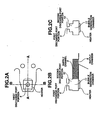
- FIGS. 2A - 2C are diagrams illustrating the structure of a nozzle of an ink-jet recording head according to a first reference example
- FIGS. 3A - 3C are diagrams illustrating the structure of a nozzle of an ink-jet recording head according to a second reference example ;
- FIGS. 4A - 4C are diagrams illustrating the structure of a nozzle of an ink-jet recording head according to a first embodiment of the present invention
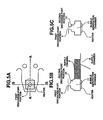
- FIGS. 5A.- 5C are diagrams illustrating the structure of a nozzle of an ink-jet recording head according to a second embodiment of the present invention.
- FIGS. 6A - 6C are diagrams illustrating the structure of a nozzle of an ink-jet recording head according to a third reference example
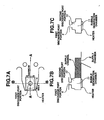
- FIGS. 7A - 7C are diagrams illustrating the structure of a nozzle of an ink-jet recording head according to a fourth reference example
- FIG. 8 is a diagram illustrating the structure of a nozzle of an ink-jet recording head according to still another embodiment of the present invention.
- FIG. 9 is a diagram illustrating the structure of a nozzle of an inkjet recording head according to still a further embodiment of the present invention.
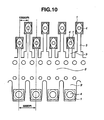
- FIG. 10 is a diagram illustrating the structure of a nozzle of an inkjet recording head according to yet a further embodiment of the present invention.
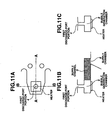
- FIGS. 11A - 11C are diagrams illustrating one of a plurality of nozzles of a conventional inkjet print head.
- An ink-jet recording head adopts a method, from among various ink-jet recording methods, in which means for generating thermal energy utilized for discharging ink in the form of a liquid is provided, and a change in the state of the ink is caused to occur by the thermal energy.
- a change in the state of the ink is caused to occur by the thermal energy.
- characters, images and the like are recorded very precisely at a high density.
- an electrothermal transducer is used as means for generating thermal energy, and ink is discharged utilizing a pressure due to a bubble generated when ink is subjected to film boiling by being heated
- FIG. 1 is a partly broken perspective view illustrating the ink-jet recording head of the invention.
- a partition wall for individually forming nozzles 5, each serving as an ink channel, for a plurality of heaters 1, each serving as an electrothermal transducer, is extended from a first discharge-port portion 4 to a portion near a supply chamber 6.
- the ink-jet recording head has the plurality of heaters 2 and the plurality of nozzles 5, and has a first nozzle row in which the longitudinal direction of each of the nozzles 5 is arranged in parallel, and a second nozzle row 8 in which the longitudinal direction of each of the nozzles 5 is arranged in parallel at a position facing the first nozzle row 7 across the supply chamber 6.
- nozzles are arranged at a pitch of 600 - 1,200 dpi (dots per inch).
- the nozzles 5 of the first nozzle row 8 are arranged by being shifted by a 1/2 pitch with respect to the nozzles 5 of the first nozzle row 7.
- This recording head has ink discharge means to which an ink-jet recording method disclosed in Japanese Patent Application Laid-Open (Kokai) Nos. 4-10940 (1992 ) and 4-10941 (1992 ) is applied, and can have a structure in which a bubble generated during ink discharge is caused to communicate with external air via a discharge port.
- the ink-jet recording head of the invention includes a channel-configuration substrate 3 that includes the plurality of nozzles 5 in which ink flows, the supply chamber 6 for supplying each of the nozzles 5 with ink, and the plurality of first discharge-port portion 4, each serving as a nozzle-distal-end opening for discharging an ink droplet.
- the nozzle 5 includes a discharge-port portion including the first discharge-port portion 4, a bubble generation chamber 11 for generating a bubble by thermal energy generated by the heater 1, serving as an electrothermal transducer, a second discharge-port portion 10 for causing the discharge-port portion to communicate with the bubble generation chamber 11, and a supply channel 9 for supplying the bubble generation chamber 11 with ink.
- the ink-jet recording head also includes an element substrate 2 on which the heaters 1 are provided, and to a main surface of which the channel-configuration substrate is connected.
- the second discharge-port portion 10 is connected to the first discharge-port portion 4 and the bubble generation chamber 11 with respective steps.
- the cross section of the second discharge-port portion 10 along a plane substantially parallel to the main surface of the element substrate 2 is outside of the cross section of the discharge port in the same direction and inside of the cross section of the bubble generation chamber 11 in the same direction.
- the second discharge-port portion 10 has an end surface that includes a border portion with the first discharge-port portion 4 and is parallel to the main surface (a surface where the channel-configuration substrate is connected) of the element substrate 2.
- An area of a cross section of the second discharge-port portion 10 that is parallel to the main surface of the element substrate 2 is larger than an area of the border portion (an opening surface of the first discharge-port portion 4 facing the second discharge-port portion 10) at any cross section from an opening surface facing the bubble generation chamber 11 to the end surface facing the first discharge-port portion 4.
- a cross section of the opening surface of the second discharge-port portion 10 facing the bubble generation chamber 11 that is parallel to the main surface of the element substrate 2 has a shape such that a length in a direction perpendicular to a direction of arrangement of the discharge ports is larger than a length in a direction parallel to the direction of arrangement of the discharge ports.
- the size of the nozzle In order to reduce the amount of a discharged ink droplet (reduce the volume of the ink droplet), the size of the nozzle must be reduced. In this case, the fluid resistance of the supply channel greatly increases. As a result, the time required for refilling increases than before the size of the nozzle is reduced.
- By providing two ink supply channels facing across a heating resistor it is possible to reduce the total fluid resistance of the ink supply channel, and shorten the time required for refilling.
- the configuration of the present invention is preferable.
- the bubble pressure When providing a heater in which the length in a direction perpendicular to the direction of arrangement of the discharge ports is larger than the length in a direction parallel to the direction of arrangement of the discharge ports, the bubble pressure has a spread in the direction perpendicular to the direction of arrangement of the discharge ports. Since the opening surface of the second discharge-port portion facing the bubble generation chamber is wide in the direction perpendicular to the direction of arrangement of the discharge ports, the bubble pressure having the spread can be sufficiently utilized as energy in the direction of ink discharge. Since the second discharge-port portion can be provided by being adjusted with the effective bubble area, the state of bubble generation can be more stabilized.
- FIGS. 2A - 2C illustrate the structure of a nozzle of an ink-jet recording head according to a first reference example.
- FIG. 2A is a plan perspective diagram in which one of a plurality of nozzles of the ink-jet recording head is seen from a direction perpendicular to a main surface (a surface where the channel-configuration substrate of the element substrate 2 is connected) of the element substrate 2;
- FIG. 2B is a cross-sectional view taken along line A - A shown in FIG. 2A;
- FIG. 2C is a cross-sectional view taken along line B - B shown in FIG. 2A .
- the recording head having the nozzle structure of the first reference example includes the element substrate 2 on which the plurality of heaters 1, each serving as an electrothermal transducer, are provided, and the channel-configuration substrate 3 that constitutes a plurality of ink channels by being connected to the main surface of the element substrate 2 in a laminated state.
- the element substrate 2 is made of glass, ceramics, a resin, a metal, or the like. In general, the element substrate 2 is made of Si.
- the heater 1, electrodes (not shown) for applying a voltage to the heater 1, and wires (not shown) connected to the electrodes are provided for each of the ink channels with a predetermined wiring pattern.
- An insulating film (not shown) for improving the heat dispersion property is provided on the main surface of the element substrate 2 so as to cover the heaters 1.
- a protective film (not shown) for protecting the components from cavitation generated when a bubble disappears is provided so as to cover the insulating film.
- the channel configuration substrate 3 includes the plurality of nozzles 5 where ink flows, the supply chamber 6 for supplying the nozzles 5 with ink, and the plurality of first discharge-port portions 4, each serving as a distal-end opening of the nozzle 5 for discharging an ink droplet.
- the first discharge-port portions 4 are formed at positions facing the heaters 1 on the element substrate 2.
- the nozzle 5 has the first discharge-port portion 4 having a substantially constant diameter, the second discharge-port portion 10 for reducing the fluid resistance at the discharge port side, the bubble generation chamber 11, and the supply channel 9 (indicated by hatching in FIG. 2B ).
- the bubble generation chamber 11 is formed on the heater 1 so that the base facing the opening surface of the first discharge-port portion 4 has a substantially rectangular shape.
- One end of the supply channel 9 communicates with the bubble generation chamber 11, and another end of the supply channel 9 communicates with the supply chamber 6.
- the supply channel 9 has a straight shape with a substantially constant width from the supply chamber 6 to the bubble generation chamber 11.
- the second discharge-port portion 10 is continuously formed above the bubble generation chamber 11.
- the nozzle 5 is formed such that the direction of discharge of an ink droplet from the first discharge-port portion 4 is orthogonal to the direction of flow of ink within the supply channel 9.
- the inner-wall surface facing the main surface of the element substrate 2 is parallel to the main surface of the element substrate 2 from the supply chamber 6 to the bubble generation chamber 11.
- the second discharge-port portion 10 has an end surface that includes a border portion with the first discharge-port portion 4 and is parallel to the main surface (a surface where the channel-configuration substrate 3 is connected) of the element substrate 2.
- the area of the end surface of the second discharge-port portion 10 facing the first discharge-port portion 4 is larger than the area of the border portion (an opening surface of the first discharge-port portion 4 facing the second discharge-port portion 10).
- the cross section of the opening surface of the second discharge-port portion 10 facing the bubble generation chamber 11 that is parallel to the main surface of the element substrate 2 has a shape such that the length in a direction perpendicular to a direction of arrangement of the first discharge-port portion 4 is larger than the length in a direction parallel to the direction of arrangement of the discharge-port portion 4.
- the end surface facing the first discharge-port portion 4 has the same cross section as the opening surface facing the bubble generation chamber 11.
- a cross section obtained by cutting the second discharge-port portion 10 along a plane substantially parallel to the surface where the heater 1 is formed is substantially rectangular.
- the second discharge-port portion 10 is made symmetrical with respect to the perpendicular drawn from the center of the first discharge-port portion 4 toward the main surface of the element substrate 2, to provide a well-balanced shape.
- the side wall of the second discharge-port portion 10 is represented by straight lines at any cross section passing through the center of the first discharge-port portion 4 and perpendicular to the main surface of the element substrate 2.
- the opening surfaces of the second discharge-port portion 10 facing the first discharge-port portion 4 and the bubble generation chamber 11, respectively, and the main surface of the element substrate 2 are substantially parallel.
- ink supplied into the supply chamber 6 is supplied to the respective nozzles 5 of the first nozzle row 7 and the second nozzle row 8.
- the ink supplied to each of the nozzles 5 is filled into the bubble generation chamber 11 by flowing along the supply channel 9.
- the ink filled within the bubble generation chamber 11 is discharged from the first discharge-port portion 4 as an ink droplet by the pressure of a growing bubble generated by film boiling caused by the heater 1.
- part of the ink within the bubble generation chamber 11 flows toward the supply channel 9 by the pressure of the bubble generated within the bubble generation chamber 11.
- the pressure of the bubble generated within the bubble generation chamber 11 is also transmitted to the second discharge-port portion 10 instantaneously, and ink filled in the bubble generation chamber 11 and the second discharge-port portion 10 moves within the second discharge-port portion 10.
- a nozzle structure is adopted in which the second discharge-port portion has a tapered shape in order to reduce stagnation of ink at the second discharge-port portion. Portions different from the first reference example will now be mainly described with reference to FIGS. 3A - 3C .
- FIGS. 3A - 3C illustrate the structure of a nozzle of an ink-jet recording head according to the second reference example.
- FIG. 3A is a plan perspective diagram in which one of a plurality of nozzles of the ink-jet recording head is seen from a direction perpendicular to the main surface of the element substrate 2;
- FIG. 3B is a cross-sectional view taken along line A-A shown in FIG. 3A;
- FIG. 3C is a cross-sectional view taken along line B - B shown in FIG. 3A .
- the second discharge-port portion 10 has an end surface that includes a border portion with the first discharge-port portion 4 and is parallel to the main surface (a surface where the channel-configuration substrate 3 is connected) of the element substrate 2.
- the area of the end surface of the second discharge-port portion 10 facing the first discharge-port portion 4 is larger than the area of the border portion (an opening surface of the first discharge-port portion 4 facing the second discharge-port portion 10).
- the cross section of the opening surface of the second discharge-port portion 10 facing the bubble generation chamber 11 that is parallel to the main surface of the element substrate 2 has a shape such that the length in a direction perpendicular to a direction of arrangement of the first discharge-port portion 4 is longer than the length in a direction parallel to the direction of arrangement of the discharge-port portion 4.
- the end surface facing the discharge first discharge-port portion 4 is similar to and has a smaller cross section than the opening surface facing the bubble generation chamber 11.
- a cross section obtained by cutting the second discharge-port portion 10 along a plane substantially parallel to the surface where the heater 1 is formed is substantially rectangular.
- the cross section of the second discharge-port portion 10 parallel to the main surface of the element substrate 2, i.e., the spatial volume, is larger than the border portion between the first discharge-port portion 4 and the second discharge-port portion 10 compared with the recording head shown in FIGS. 11A - 11C in which the discharge-port portion 4 within the nozzle is cylindrical, a pressure loss is very small, and ink is excellently discharged toward the first discharge-port portion 4.
- An object of a first embodiment of the present invention is to reduce the region of ink stagnation in order to reduce variations in the discharge volume.
- the cross section of the second discharge-port portion is substantially rectangular. In the first embodiment, however, the cross section of the second discharge-port portion is elliptical.
- FIGS. 4A - 4C illustrate the structure of a nozzle of an ink-jet recording head according to the first embodiment.
- FIG. 4A is a plan perspective diagram in which one of a plurality of nozzles of the ink-jet recording head is seen from a direction perpendicular to the main surface of the element substrate 2;
- FIG. 4B is a cross-sectional view taken along line A-A shown in FIG. 4A;
- FIG. 4C is a cross-sectional view taken along line B - B shown in FIG. 4A .
- the opening surface of the second discharge-port portion 10 facing the bubble generation chamber 11 is elliptic or oval in which the diameter in a direction parallel to the direction of arrangement of the first discharge-port portion 4 is larger than the diameter in a direction perpendicular to the direction of arrangement of the first discharge-port portion 4.
- the end surface facing the first discharge-port portion 4 is similar to and has a cross section having a smaller area than the opening surface facing the bubble generation chamber 11.
- the area is reduced by an area of four corners.
- the portion of the four corners is a portion of stagnation where ink does not flow, a fluid resistance equivalent to that in the first or second reference example can be maintained.
- the cross section of the second discharge-port portion 10 parallel to the main surface of the element substrate 2 is smaller by the area of four corners than in the first and second reference examples , the region of stagnation of ink is reduced, and variations in the volume of a discharged droplet are reduced.
- the cross section of the second discharge-port portion 10 parallel to the main surface of the element substrate 2, i.e., the spatial volume, is larger than in the recording head shown in FIGS. 11A - 11C in which the discharge-port portion 4 within the nozzle is cylindrical, a pressure loss is very small, and ink is excellently discharged toward the first discharge-port portion 4. Accordingly, even if the fluid resistance in the direction of the discharge port at the discharge-port portion 4 increases by further reducing the discharge port at the distal end of the nozzle, it is possible to suppress reduction in the flow rate in the direction of the discharge port, and prevent a decrease in the discharge speed of the ink droplet.
- An object of a second embodiment of the present invention is also to reduce the region of ink stagnation than in the first embodiment, in order to reduce variations in the discharge volume.
- an object of a second embodiment of the present invention is further to remove instable ink discharge due to deviation of a region of stagnation produced at a step portion between the first discharge-port portion 4 and the second discharge-port portion 10, by making the opening surface of the first discharge-port portion 4 facing the second discharge-port portion 10 and the end surface of the second discharge-port portion 10 facing the first discharge-port portion 4 are concentric (in the form of a ring) with respect to the perpendicular drawn from the center of the first discharge-port portion 4 toward the main surface of the element substrate 2.
- FIGS. 5A - 5C illustrate the structure of a nozzle of an ink-jet recording head according to the second embodiment.
- FIG. 5A is a plan perspective diagram in which one of a plurality of nozzles of the ink-jet recording head is seen from a direction perpendicular to the main surface of the element substrate 2;
- FIG. 5B is a cross-sectional view taken along line A-A shown in FIG. 5A;
- FIG. 5C is a cross-sectional view taken along line B - B shown in FIG. 5A .
- the opening surface of the second discharge-port portion 10 facing the bubble generation chamber 11 is elliptic or oval in which the diameter in a direction parallel to the direction of arrangement of the first discharge-port portion 4 is larger than the diameter in a direction perpendicular to the direction of arrangement of the first discharge-port portion 4.
- the end surface of the second discharge-port portion 10 facing the first discharge-port portion 4 is circular, and is inside of the opening surface facing the bubble generation chamber 11.
- the cross section of the second discharge-port portion 10 parallel to the main surface of the element substrate 2 is reduced, there is the possibility that the entire fluid resistance of the second discharge-port portion 10 increases compared with the first reference example.
- the step portion between the first discharge-port portion 4 and the second discharge-port portion 10 is a portion of stagnation where ink does not flow, a fluid resistance equivalent to that in the first reference example can be maintained.
- the cross section of the second discharge-port portion 10 parallel to the main surface of the element substrate 2, i.e., the spatial volume, is larger than in the recording head shown in FIGS. 11A - 11C in which the discharge-port portion 4 within the nozzle is cylindrical, a pressure loss is very small, and ink is excellently discharged toward the first discharge-port portion 4. Accordingly, even if the fluid resistance in the direction of the discharge port at the first discharge-port portion 4 increases by further reducing the discharge port at the distal end of the nozzle, it is possible to suppress reduction in the flow rate in the direction of the discharge port, and prevent a decrease in the discharge speed of the ink droplet.
- the cross section of the second discharge-port portion 10 parallel to the main surface of the element substrate 2, i.e., the spatial volume, is larger than in the recording head shown in FIGS. 11A - 11C in which the discharge-port portion 4 within the nozzle is cylindrical, a pressure loss is very small, and ink is excellently discharged toward the first discharge-port portion 4. Accordingly, even if the fluid resistance in the direction of the discharge port at the first discharge-port portion 4 increases by further reducing the discharge port at the distal end of the nozzle, it is possible to suppress reduction in the flow rate in the direction of the discharge port, and prevent a decrease in the discharge speed of the ink droplet.
- the second embodiment also, by making the length of the opening surface of the second discharge-port portion 10 facing the bubble generation chamber 11 in a direction perpendicular to the direction of arrangement of the discharge ports longer than the length in a direction parallel to the direction of arrangement of the discharge ports, it is possible to increase the cross section of the second discharge-port portion 10 without being limited by the width of the bubble generation chamber 11 even if the width is reduced in accordance with reduction in the size of the ink droplet. Hence, it is possible to further reduce the entire fluid resistance in the direction of the discharge ports.
- a third reference example by providing a sub-supply channel, the total fluid resistance in the two supply channels (the supply channel 9 and a sub-supply channel 12) is reduced to allow refilling processing at a high frequency. Portions in the third reference example that are different from the first reference example will now be mainly described with reference to FIGS. 6A- 6C .
- FIGS. 6A - 6C illustrate the structure of a nozzle of an ink-jet recording head according to the third reference example.
- FIG. 6A is a plan perspective diagram in which one of a plurality of nozzles of the ink-jet recording head is seen from a direction perpendicular to the main surface of the element substrate 2;
- FIG. 6B is a cross-sectional view taken along line A-A shown in FIG. 6A;
- FIG. 6C is a cross-sectional view taken along line B - B shown in FIG. 6A .
- the opening surface of the second discharge-port portion 10 facing the bubble generation chamber 11 has a shape such that the length in a direction perpendicular to the direction of arrangement of the first discharge-port portion 4 is larger than the length in a direction parallel to the direction of arrangement of the first discharge-port portion 4.
- the end surface facing the first discharge-port portion 4 is similar to and has a cross section having a smaller area than the opening surface facing the bubble generation chamber 11.
- the cross section obtained by cutting the second discharge-port portion 10 with a plane substantially parallel to the forming surface of the heater 1 is substantially rectangular.
- a sub-ink supply channel 12 is provided in addition to the ink supply channel 9.
- ink supplied into the supply chamber 6 is supplied to the respective nozzles 5 of the first nozzle row 7 and the second nozzle row 8.
- the ink supplied to each of the nozzles 5 is filled into the bubble generation chamber 11 by flowing along the supply channel 9.
- the ink filled within the bubble generation chamber 11 is discharged from the first discharge-port portion 4 as an ink droplet by the pressure of a growing bubble generated by film boiling caused by the heater 1.
- part of the ink within the bubble generation chamber 11 flows toward the supply channel 6 and the sub-supply channel 12 by the pressure of the bubble generated within the bubble generation chamber 11.
- the pressure of the bubble generated within the bubble generation chamber 11 is also transmitted to the second discharge-port portion 10 instantaneously, and ink filled in the bubble generation chamber 11 and the second discharge-port portion 10 moves within the second discharge-port portion 10.
- the cross section of the second discharge-port portion 10 parallel to the main surface of the element substrate 2, i.e., the spatial volume, is larger than in the recording head shown in FIGS. 11A - 11C in which the first discharge-port portion 4 within the nozzle is cylindrical, a pressure loss is very small, and ink is excellently discharged toward the first discharge-port portion 4. Accordingly, even if the fluid resistance in the direction of the discharge port at the first discharge-port portion 4 increases by further reducing the discharge port at the distal end of the nozzle, it is possible to suppress reduction in the flow rate in the direction of the discharge port, and prevent a decrease in the discharge speed of the ink droplet.
- the third reference example in order to deal with reduction in the amount a discharged ink droplet (provision of a small ink droplet), by providing two supply channels, the total fluid resistance at the two supply channels is reduced, thereby allowing refilling at a high frequency.
- the opening surface of the second discharge-port portion 10 facing the bubble generation chamber 11 is increased by making the length in a direction perpendicular to the direction of arrangement of the discharge ports larger than the length in a direction parallel to the direction of arrangement of the discharge ports, and the lengths of the two supply channels (i.e., the supply channel 9 and the sub-supply channel 12) having a fluid resistance larger than in the second discharge-port portion 10 in a direction perpendicular to the direction of arrangement of the nozzles (i.e., the direction of ink supply) are shortened.
- the two supply channels i.e., the supply channel 9 and the sub-supply channel 12
- the discharge efficiency is improved by providing a second discharge-port portion having a small fluid resistance.
- the energy of the heater i.e., the area of the heater, may be increased.
- the nozzle arrangement density must be increased.
- a heater (a longitudinal heater) is provided in which the length in a direction perpendicular to the direction of arrangement of discharge ports is larger than the length in a direction parallel to the direction of arrangement of the discharge ports.
- the heater In order to realize energy saving, it is necessary to output discharge energy equivalent to the current energy value with a small current. For that purpose, the heater must have a high electric resistance.
- the longitudinal heater is suitable for this purpose because this heater is long in the direction of wiring (not shown).
- the bubble pressure has a spread in a direction perpendicular to the direction of arrangement of the discharge ports.
- the opening surface of the second discharge-port portion facing the bubble generation chamber is large in a direction perpendicular to the direction of arrangement of the discharge ports, even the bubble pressure having the spread can be sufficiently utilized as energy in a direction of ink discharge.
- FIGS. 7A - 7C illustrate the structure of a nozzle of an ink-jet recording head according to the sixth embodiment.
- FIG. 7A is a plan perspective diagram in which one of a plurality of nozzles of the ink-jet recording head is seen from a direction perpendicular to the main surface of the element substrate 2;
- FIG. 7B is a cross-sectional view taken along line A - A shown in FIG. 7A; and
- FIG. 7C is a cross-sectional view taken along line B - B shown in FIG. 7A .
- the cross section of the second discharge-port portion 10 that is parallel to the main surface of the element substrate 2 has a shape such that the length in a direction perpendicular to the direction of arrangement of the first discharge-port portion 4 is larger than the length in a direction parallel to the direction of arrangement of the first discharge-port portion 4 at any cross section from the opening surface facing the bubble generation chamber 11 to the end surface facing the first discharge-port portion 4.
- the opening surface facing the first discharge-port portion 4 is similar to and has a cross section having a smaller area than the opening surface facing the bubble generation chamber 11.
- the cross section obtained by cutting the second discharge-port portion 10 with a plane substantially parallel to the forming surface of the heater 1 is substantially rectangular.
- the heater 1 has a rectangular shape such that the length in a direction perpendicular to the direction of arrangement of the discharge ports is longer than the length in a direction parallel to the direction of arrangement of the discharge ports.
- a heater is provided in which the length in a direction perpendicular to the direction of arrangement of discharge ports is larger than the length in a direction parallel to the direction of arrangement of the discharge ports, is provided.
- the bubble pressure due to thermal energy generated by the heater has a spread in a direction perpendicular to the direction of arrangement of the discharge ports.
- the opening surface of the second discharge-port portion facing the bubble generation chamber is large in a direction perpendicular to the direction of arrangement of the discharge ports, even the bubble pressure having the spread can be sufficiently utilized as energy in a direction of ink discharge.
- the opening surface of the second discharge-port portion facing the bubble generation chamber is provided at a position facing the heater, with a rectangular shape that is substantially the same as the shape of the heater.
- the opening surface of the second discharge-port portion facing the first discharge port portion may have a shape identical to the shape of the effective bubble generation region that contributes to bubble generation. Even if the heater is more or less larger than the opening surface of the second discharge-port portion facing the first discharge-port portion by taking into consideration of the effective bubble generation region, the opening surface of the second discharge-port portion facing the bubble generation chamber is assumed to have a shape substantially identical to the shape of the heater.
- the length of the opening surface of the second discharge-port portion 10 facing the bubble generation chamber in a direction perpendicular to the direction of arrangement of the discharge ports is longer than the length in a direction parallel to the direction of arrangement of the discharge ports, it is possible to increase the cross section of the second discharge-port portion 10 without being limited by the width of the bubble generation chamber 11 even if the width is reduced in order to provide a small ink droplet. Hence, it is possible to further reduce the entire fluid resistance in the direction of the discharge ports.
- FIGS. 8 and 9 illustrates the arrangement of a plurality of nozzles of the above-described ink-jet recording head.
- a plurality of discharge ports are arranged along the supply chamber 6 with a pitch of 1,200 dpi.
- each of the nozzles of the above-described embodiments it is preferable to provide a configuration in which the cross section of each of the first discharge-port portion 4 and the second discharge-port portion 10 at the end surface of the second discharge-port portion 10 facing the first discharge-port portion 4 has a shape such that the ratio of the length of the second discharge-port portion 10 to the length of the first discharge-port portion 4 in a direction perpendicular to the direction of arrangement of the discharge ports is larger than the ratio of the length of the second discharge-port portion 10 to the length of the first discharge-port portion 4 in a direction parallel to the direction of arrangement of the discharge ports.
- Each of the above-described embodiments may also be applied to an ink-jet recording head for discharging a plurality of ink droplets having different volumes.
- FIG. 10 it is preferable to adopt the configuration of each of the above-described embodiments to a nozzle for discharging an ink droplet having a relatively small volume.
- the configuration of each of the above-described embodiments may also be applied to a nozzle for discharging an ink droplet having a relatively large volume.
Landscapes
- Physics & Mathematics (AREA)
- Geometry (AREA)
- Particle Formation And Scattering Control In Inkjet Printers (AREA)
Applications Claiming Priority (4)
| Application Number | Priority Date | Filing Date | Title |
|---|---|---|---|
| JP2003004306 | 2003-01-10 | ||
| JP2003004306 | 2003-01-10 | ||
| JP2003427054A JP4323947B2 (ja) | 2003-01-10 | 2003-12-24 | インクジェット記録ヘッド |
| JP2003427054 | 2003-12-24 |
Publications (3)
| Publication Number | Publication Date |
|---|---|
| EP1437223A2 EP1437223A2 (en) | 2004-07-14 |
| EP1437223A3 EP1437223A3 (en) | 2005-06-01 |
| EP1437223B1 true EP1437223B1 (en) | 2009-10-07 |
Family
ID=32510693
Family Applications (1)
| Application Number | Title | Priority Date | Filing Date |
|---|---|---|---|
| EP03029989A Expired - Lifetime EP1437223B1 (en) | 2003-01-10 | 2003-12-31 | Ink-jet recording head |
Country Status (5)
| Country | Link |
|---|---|
| US (2) | US7628472B2 (https=) |
| EP (1) | EP1437223B1 (https=) |
| JP (1) | JP4323947B2 (https=) |
| KR (1) | KR100554041B1 (https=) |
| DE (1) | DE60329571D1 (https=) |
Families Citing this family (25)
| Publication number | Priority date | Publication date | Assignee | Title |
|---|---|---|---|---|
| JP4323947B2 (ja) * | 2003-01-10 | 2009-09-02 | キヤノン株式会社 | インクジェット記録ヘッド |
| JP4311050B2 (ja) * | 2003-03-18 | 2009-08-12 | セイコーエプソン株式会社 | 機能液滴吐出ヘッドの駆動制御方法および機能液滴吐出装置 |
| WO2006051762A1 (en) * | 2004-11-10 | 2006-05-18 | Canon Kabushiki Kaisha | Liquid discharge head |
| JP4574515B2 (ja) * | 2004-11-10 | 2010-11-04 | キヤノン株式会社 | 液体吐出ヘッド |
| JP4553360B2 (ja) * | 2004-12-24 | 2010-09-29 | キヤノン株式会社 | インクジェット記録ヘッド |
| JP4614388B2 (ja) * | 2005-04-01 | 2011-01-19 | キヤノン株式会社 | 記録装置、記録ヘッド及びその駆動方法 |
| JP2007223146A (ja) * | 2006-02-23 | 2007-09-06 | Fujifilm Corp | 液体吐出ヘッド及びこれを備えた画像形成装置 |
| JP4856982B2 (ja) * | 2006-03-02 | 2012-01-18 | キヤノン株式会社 | インクジェット記録ヘッド |
| JP4994924B2 (ja) * | 2006-05-02 | 2012-08-08 | キヤノン株式会社 | インクジェット記録ヘッド |
| US7909434B2 (en) * | 2006-10-27 | 2011-03-22 | Hewlett-Packard Development Company, L.P. | Printhead and method of printing |
| JP5037903B2 (ja) | 2006-11-09 | 2012-10-03 | キヤノン株式会社 | インクジェット記録ヘッドおよびインクジェット記録装置 |
| JP5058719B2 (ja) * | 2007-08-30 | 2012-10-24 | キヤノン株式会社 | 液体吐出ヘッド及びインクジェット記録装置 |
| JP5264123B2 (ja) * | 2007-08-31 | 2013-08-14 | キヤノン株式会社 | 液体吐出ヘッド |
| US7735962B2 (en) * | 2007-08-31 | 2010-06-15 | Canon Kabushiki Kaisha | Ink jet print head |
| JP5031534B2 (ja) * | 2007-11-30 | 2012-09-19 | キヤノン株式会社 | インクジェット記録ヘッド |
| JP5590813B2 (ja) * | 2008-04-30 | 2014-09-17 | キヤノン株式会社 | インクジェット記録方法、記録ユニット、及びインクジェット記録装置 |
| JP5393082B2 (ja) * | 2008-08-29 | 2014-01-22 | キヤノン株式会社 | 液体吐出ヘッド |
| JP2010214894A (ja) | 2009-03-18 | 2010-09-30 | Toshiba Tec Corp | インクジェットヘッドおよびノズルプレート |
| JP2012152970A (ja) * | 2011-01-25 | 2012-08-16 | Seiko Epson Corp | 液体噴射ヘッドおよび液体噴射装置 |
| US20120274707A1 (en) * | 2011-04-29 | 2012-11-01 | Xiaorong Cai | Ejection devices for inkjet printers and method for fabricating ejection devices |
| US10293607B2 (en) * | 2016-01-08 | 2019-05-21 | Canon Kabushiki Kaisha | Recording element board and liquid discharge head |
| JP6381581B2 (ja) * | 2016-05-30 | 2018-08-29 | キヤノン株式会社 | 記録素子基板および液体吐出ヘッド |
| US10300698B2 (en) | 2017-06-05 | 2019-05-28 | Canon Kabushiki Kaisha | Liquid ejection head |
| JP7286403B2 (ja) * | 2019-04-26 | 2023-06-05 | キヤノン株式会社 | 液体吐出ヘッド、液体吐出装置、及び記録装置 |
| JP2024029581A (ja) * | 2022-08-22 | 2024-03-06 | キヤノン株式会社 | 液体吐出ヘッドおよび液体吐出装置 |
Citations (1)
| Publication number | Priority date | Publication date | Assignee | Title |
|---|---|---|---|---|
| EP0867292A2 (en) * | 1997-03-28 | 1998-09-30 | Lexmark International, Inc. | Ink jet printer nozzle plates |
Family Cites Families (38)
| Publication number | Priority date | Publication date | Assignee | Title |
|---|---|---|---|---|
| JPS54161935A (en) | 1978-06-12 | 1979-12-22 | Seiko Epson Corp | Ink jet printer |
| JPS61185455A (ja) | 1985-02-14 | 1986-08-19 | Olympus Optical Co Ltd | インクジエツトプリンタ |
| JPS61249768A (ja) | 1985-04-30 | 1986-11-06 | Olympus Optical Co Ltd | インクジエツト記録装置 |
| DE3604844A1 (de) | 1986-02-15 | 1987-08-20 | Daimler Benz Ag | Schwingungsdaempfer fuer fahrzeuge |
| JPS62194045U (https=) * | 1986-06-02 | 1987-12-10 | ||
| JPH0735139B2 (ja) | 1987-09-14 | 1995-04-19 | 株式会社ケンウッド | 車載機器の照明装置 |
| JPH0174142U (https=) * | 1987-11-07 | 1989-05-19 | ||
| JPH0410941A (ja) | 1990-04-27 | 1992-01-16 | Canon Inc | 液滴噴射方法及び該方法を用いた記録装置 |
| JP2783647B2 (ja) | 1990-04-27 | 1998-08-06 | キヤノン株式会社 | 液体噴射方法および該方法を用いた記録装置 |
| JPH0412859A (ja) * | 1990-04-28 | 1992-01-17 | Canon Inc | 液体噴射方法、該方法を用いた記録ヘッド及び該方法を用いた記録装置 |
| JPH04232752A (ja) | 1990-06-24 | 1992-08-21 | Lexmark Internatl Inc | インクジエツト・プリントヘツド及びインクジエツトのプリント方法 |
| US5455613A (en) * | 1990-10-31 | 1995-10-03 | Hewlett-Packard Company | Thin film resistor printhead architecture for thermal ink jet pens |
| JPH05177834A (ja) * | 1991-06-04 | 1993-07-20 | Seiko Epson Corp | インクジェット記録ヘッド |
| JP3044863B2 (ja) * | 1991-09-27 | 2000-05-22 | セイコーエプソン株式会社 | インクジェットヘッド |
| JP3165717B2 (ja) * | 1991-10-29 | 2001-05-14 | キヤノン株式会社 | インク滴噴射記録ヘッド及びそれを用いる記録方法 |
| DE69333236T2 (de) * | 1992-06-29 | 2004-08-05 | Hewlett-Packard Co. (N.D.Ges.D.Staates Delaware), Palo Alto | Dünnschichtwiderstandsdruckkopf für Thermo-Tintenstrahldrucker |
| JP3189484B2 (ja) * | 1993-04-19 | 2001-07-16 | セイコーエプソン株式会社 | インクジェットヘッド |
| US5825385A (en) * | 1995-04-12 | 1998-10-20 | Eastman Kodak Company | Constructions and manufacturing processes for thermally activated print heads |
| WO1996032267A1 (en) * | 1995-04-12 | 1996-10-17 | Eastman Kodak Company | Constructions and manufacturing processes for thermally activated print heads |
| JPH0952358A (ja) * | 1995-08-14 | 1997-02-25 | Fujitsu Ltd | インクジェットプリンタ |
| US6527369B1 (en) * | 1995-10-25 | 2003-03-04 | Hewlett-Packard Company | Asymmetric printhead orifice |
| US6557974B1 (en) * | 1995-10-25 | 2003-05-06 | Hewlett-Packard Company | Non-circular printhead orifice |
| US6113221A (en) * | 1996-02-07 | 2000-09-05 | Hewlett-Packard Company | Method and apparatus for ink chamber evacuation |
| JP3183206B2 (ja) | 1996-04-08 | 2001-07-09 | 富士ゼロックス株式会社 | インクジェットプリントヘッドとその製造方法およびインクジェット記録装置 |
| JP3675272B2 (ja) * | 1999-01-29 | 2005-07-27 | キヤノン株式会社 | 液体吐出ヘッドおよびその製造方法 |
| JP2000334965A (ja) * | 1999-05-28 | 2000-12-05 | Ricoh Co Ltd | ノズル形成部材及びインクジェットヘッド並びにノズル形成部材の製造方法 |
| JP2001277499A (ja) * | 2000-03-30 | 2001-10-09 | Kyocera Corp | インクジェット記録ヘッド |
| JP2002036569A (ja) * | 2000-07-27 | 2002-02-05 | Ricoh Co Ltd | インクジェットヘッド及び画像形成装置 |
| US6902252B1 (en) | 2000-08-16 | 2005-06-07 | Hewlett-Packard Development Company, L.P. | Fluid ejection device with staggered ink drop generators |
| KR100406941B1 (ko) * | 2000-09-30 | 2003-11-21 | 삼성전자주식회사 | 잉크젯 프린터 헤드 |
| JP3871320B2 (ja) * | 2001-06-21 | 2007-01-24 | キヤノン株式会社 | インクジェット記録ヘッド |
| JP2003025577A (ja) * | 2001-07-11 | 2003-01-29 | Canon Inc | 液体吐出ヘッド |
| US6854820B2 (en) * | 2001-09-26 | 2005-02-15 | Canon Kabushiki Kaisha | Method for ejecting liquid, liquid ejection head and image-forming apparatus using the same |
| US6942318B2 (en) * | 2002-05-31 | 2005-09-13 | Hewlett-Packard Development Company, L.P. | Chamber having a protective layer |
| JP4027282B2 (ja) | 2002-07-10 | 2007-12-26 | キヤノン株式会社 | インクジェット記録ヘッド |
| JP4027281B2 (ja) | 2002-07-10 | 2007-12-26 | キヤノン株式会社 | インクジェット記録ヘッド |
| JP4323947B2 (ja) * | 2003-01-10 | 2009-09-02 | キヤノン株式会社 | インクジェット記録ヘッド |
| JP4232752B2 (ja) | 2005-03-28 | 2009-03-04 | パナソニック株式会社 | 電子部品装着装置、電子部品装着方法 |
-
2003
- 2003-12-24 JP JP2003427054A patent/JP4323947B2/ja not_active Expired - Fee Related
- 2003-12-30 US US10/747,204 patent/US7628472B2/en not_active Expired - Fee Related
- 2003-12-31 EP EP03029989A patent/EP1437223B1/en not_active Expired - Lifetime
- 2003-12-31 DE DE60329571T patent/DE60329571D1/de not_active Expired - Lifetime
-
2004
- 2004-01-09 KR KR1020040001431A patent/KR100554041B1/ko not_active Expired - Fee Related
-
2009
- 2009-10-27 US US12/606,372 patent/US8083322B2/en not_active Expired - Fee Related
Patent Citations (1)
| Publication number | Priority date | Publication date | Assignee | Title |
|---|---|---|---|---|
| EP0867292A2 (en) * | 1997-03-28 | 1998-09-30 | Lexmark International, Inc. | Ink jet printer nozzle plates |
Also Published As
| Publication number | Publication date |
|---|---|
| US20040218007A1 (en) | 2004-11-04 |
| EP1437223A3 (en) | 2005-06-01 |
| US8083322B2 (en) | 2011-12-27 |
| JP2004230885A (ja) | 2004-08-19 |
| JP4323947B2 (ja) | 2009-09-02 |
| KR20040064637A (ko) | 2004-07-19 |
| KR100554041B1 (ko) | 2006-02-24 |
| US20100045748A1 (en) | 2010-02-25 |
| EP1437223A2 (en) | 2004-07-14 |
| US7628472B2 (en) | 2009-12-08 |
| DE60329571D1 (de) | 2009-11-19 |
Similar Documents
| Publication | Publication Date | Title |
|---|---|---|
| US8083322B2 (en) | Ink-jet recording head | |
| KR100977645B1 (ko) | 액체 토출 헤드 | |
| JP5084478B2 (ja) | インクジェット記録ヘッドおよびインクジェット記録装置 | |
| RU2394688C1 (ru) | Струйная печатающая головка | |
| CN101797841B (zh) | 喷墨打印头 | |
| JP4027282B2 (ja) | インクジェット記録ヘッド | |
| JP3950730B2 (ja) | インクジェット記録ヘッドおよびインク吐出方法 | |
| KR100335589B1 (ko) | 잉크 제트 헤드용 기판, 잉크 제트 헤드, 잉크 제트카트리지 및 잉크 제트 기록 장치 | |
| US8083325B2 (en) | Liquid ejection recording head having element substrate with plural supply ports | |
| JP4027281B2 (ja) | インクジェット記録ヘッド | |
| JP5230084B2 (ja) | インクジェット記録ヘッド | |
| JP5031534B2 (ja) | インクジェット記録ヘッド | |
| US20070146451A1 (en) | Inkjet printhead | |
| JP4574385B2 (ja) | インクジェット記録ヘッドおよび記録装置 | |
| JP4208399B2 (ja) | インクジェット記録装置、及びインクジェット記録方法 | |
| JP2006175822A (ja) | インクジェット記録ヘッド | |
| JP4137164B2 (ja) | インクジェット記録ヘッド | |
| JP3152841B2 (ja) | プリントヘッド、プリント装置およびプリントヘッドの駆動方法 | |
| JP3586987B2 (ja) | インクジェットプリントヘッド | |
| JP2005125696A (ja) | インクジェット記録ヘッド | |
| JP2006224443A (ja) | インクジェット記録ヘッド、記録装置、および記録方法 | |
| JP2007301937A (ja) | 記録ヘッド、及び該記録ヘッド用基板 | |
| JPH06316075A (ja) | サーマルインクジェット・プリントヘッド | |
| JPH04211950A (ja) | 液体噴射記録ヘッドおよび液体噴射記録装置 | |
| JP2008149611A (ja) | インクジェット記録方法 |
Legal Events
| Date | Code | Title | Description |
|---|---|---|---|
| PUAI | Public reference made under article 153(3) epc to a published international application that has entered the european phase |
Free format text: ORIGINAL CODE: 0009012 |
|
| AK | Designated contracting states |
Kind code of ref document: A2 Designated state(s): AT BE BG CH CY CZ DE DK EE ES FI FR GB GR HU IE IT LI LU MC NL PT RO SE SI SK TR |
|
| AX | Request for extension of the european patent |
Extension state: AL LT LV MK |
|
| PUAL | Search report despatched |
Free format text: ORIGINAL CODE: 0009013 |
|
| AK | Designated contracting states |
Kind code of ref document: A3 Designated state(s): AT BE BG CH CY CZ DE DK EE ES FI FR GB GR HU IE IT LI LU MC NL PT RO SE SI SK TR |
|
| AX | Request for extension of the european patent |
Extension state: AL LT LV MK |
|
| RIC1 | Information provided on ipc code assigned before grant |
Ipc: 7B 41J 2/14 A Ipc: 7B 41J 2/145 B |
|
| 17P | Request for examination filed |
Effective date: 20051201 |
|
| AKX | Designation fees paid |
Designated state(s): DE FR GB IT |
|
| 17Q | First examination report despatched |
Effective date: 20070115 |
|
| GRAP | Despatch of communication of intention to grant a patent |
Free format text: ORIGINAL CODE: EPIDOSNIGR1 |
|
| GRAS | Grant fee paid |
Free format text: ORIGINAL CODE: EPIDOSNIGR3 |
|
| GRAA | (expected) grant |
Free format text: ORIGINAL CODE: 0009210 |
|
| AK | Designated contracting states |
Kind code of ref document: B1 Designated state(s): DE FR GB IT |
|
| REG | Reference to a national code |
Ref country code: GB Ref legal event code: FG4D |
|
| REF | Corresponds to: |
Ref document number: 60329571 Country of ref document: DE Date of ref document: 20091119 Kind code of ref document: P |
|
| PLBE | No opposition filed within time limit |
Free format text: ORIGINAL CODE: 0009261 |
|
| STAA | Information on the status of an ep patent application or granted ep patent |
Free format text: STATUS: NO OPPOSITION FILED WITHIN TIME LIMIT |
|
| 26N | No opposition filed |
Effective date: 20100708 |
|
| REG | Reference to a national code |
Ref country code: FR Ref legal event code: PLFP Year of fee payment: 13 |
|
| REG | Reference to a national code |
Ref country code: FR Ref legal event code: PLFP Year of fee payment: 14 |
|
| PGFP | Annual fee paid to national office [announced via postgrant information from national office to epo] |
Ref country code: GB Payment date: 20161230 Year of fee payment: 14 |
|
| PGFP | Annual fee paid to national office [announced via postgrant information from national office to epo] |
Ref country code: IT Payment date: 20161207 Year of fee payment: 14 Ref country code: FR Payment date: 20161223 Year of fee payment: 14 |
|
| PGFP | Annual fee paid to national office [announced via postgrant information from national office to epo] |
Ref country code: DE Payment date: 20161231 Year of fee payment: 14 |
|
| REG | Reference to a national code |
Ref country code: DE Ref legal event code: R119 Ref document number: 60329571 Country of ref document: DE |
|
| GBPC | Gb: european patent ceased through non-payment of renewal fee |
Effective date: 20171231 |
|
| REG | Reference to a national code |
Ref country code: FR Ref legal event code: ST Effective date: 20180831 |
|
| PG25 | Lapsed in a contracting state [announced via postgrant information from national office to epo] |
Ref country code: FR Free format text: LAPSE BECAUSE OF NON-PAYMENT OF DUE FEES Effective date: 20180102 Ref country code: IT Free format text: LAPSE BECAUSE OF NON-PAYMENT OF DUE FEES Effective date: 20171231 Ref country code: DE Free format text: LAPSE BECAUSE OF NON-PAYMENT OF DUE FEES Effective date: 20180703 |
|
| PG25 | Lapsed in a contracting state [announced via postgrant information from national office to epo] |
Ref country code: GB Free format text: LAPSE BECAUSE OF NON-PAYMENT OF DUE FEES Effective date: 20171231 |