EP1281733A1 - Hydrophobe, nicht getemperte Fällungskiesels-ure mit hohem Weissgrad - Google Patents
Hydrophobe, nicht getemperte Fällungskiesels-ure mit hohem Weissgrad Download PDFInfo
- Publication number
- EP1281733A1 EP1281733A1 EP02012874A EP02012874A EP1281733A1 EP 1281733 A1 EP1281733 A1 EP 1281733A1 EP 02012874 A EP02012874 A EP 02012874A EP 02012874 A EP02012874 A EP 02012874A EP 1281733 A1 EP1281733 A1 EP 1281733A1
- Authority
- EP
- European Patent Office
- Prior art keywords
- precipitated silica
- silica
- hydrophobic
- carried out
- hydrophobic precipitated
- Prior art date
- Legal status (The legal status is an assumption and is not a legal conclusion. Google has not performed a legal analysis and makes no representation as to the accuracy of the status listed.)
- Granted
Links
- VYPSYNLAJGMNEJ-UHFFFAOYSA-N Silicium dioxide Chemical compound O=[Si]=O VYPSYNLAJGMNEJ-UHFFFAOYSA-N 0.000 title claims abstract description 275
- 239000000377 silicon dioxide Substances 0.000 title claims abstract description 136
- 230000002209 hydrophobic effect Effects 0.000 title claims abstract description 50
- OKKJLVBELUTLKV-UHFFFAOYSA-N Methanol Chemical compound OC OKKJLVBELUTLKV-UHFFFAOYSA-N 0.000 claims abstract description 103
- 229920001296 polysiloxane Polymers 0.000 claims abstract description 44
- 239000000203 mixture Substances 0.000 claims abstract description 32
- LZZYPRNAOMGNLH-UHFFFAOYSA-M Cetrimonium bromide Chemical compound [Br-].CCCCCCCCCCCCCCCC[N+](C)(C)C LZZYPRNAOMGNLH-UHFFFAOYSA-M 0.000 claims abstract description 30
- 229910052799 carbon Inorganic materials 0.000 claims abstract description 12
- 230000003750 conditioning effect Effects 0.000 claims abstract description 9
- XLYOFNOQVPJJNP-UHFFFAOYSA-N water Substances O XLYOFNOQVPJJNP-UHFFFAOYSA-N 0.000 claims description 76
- 238000000034 method Methods 0.000 claims description 50
- 230000001143 conditioned effect Effects 0.000 claims description 25
- 229920002379 silicone rubber Polymers 0.000 claims description 19
- 239000004945 silicone rubber Substances 0.000 claims description 18
- 230000008569 process Effects 0.000 claims description 13
- 238000010058 rubber compounding Methods 0.000 claims description 13
- 238000002156 mixing Methods 0.000 claims description 10
- 239000000945 filler Substances 0.000 claims description 9
- 239000007787 solid Substances 0.000 claims description 8
- 229920001971 elastomer Polymers 0.000 claims description 7
- 239000002245 particle Substances 0.000 claims description 7
- 239000000806 elastomer Substances 0.000 claims description 6
- 238000000926 separation method Methods 0.000 claims description 6
- 238000002360 preparation method Methods 0.000 claims description 5
- 239000002917 insecticide Substances 0.000 claims description 4
- 238000010438 heat treatment Methods 0.000 claims description 3
- 238000003860 storage Methods 0.000 claims description 3
- 239000000049 pigment Substances 0.000 claims description 2
- 229920000642 polymer Polymers 0.000 claims description 2
- 239000000565 sealant Substances 0.000 claims description 2
- 230000001804 emulsifying effect Effects 0.000 claims 1
- DOIRQSBPFJWKBE-UHFFFAOYSA-N dibutyl phthalate Chemical compound CCCCOC(=O)C1=CC=CC=C1C(=O)OCCCC DOIRQSBPFJWKBE-UHFFFAOYSA-N 0.000 abstract description 24
- 238000010521 absorption reaction Methods 0.000 abstract description 13
- OKTJSMMVPCPJKN-UHFFFAOYSA-N Carbon Chemical compound [C] OKTJSMMVPCPJKN-UHFFFAOYSA-N 0.000 abstract description 12
- 238000004519 manufacturing process Methods 0.000 abstract description 3
- -1 polysiloxane Polymers 0.000 description 35
- 239000000523 sample Substances 0.000 description 28
- 239000000243 solution Substances 0.000 description 26
- 238000004448 titration Methods 0.000 description 26
- KWYUFKZDYYNOTN-UHFFFAOYSA-M Potassium hydroxide Chemical compound [OH-].[K+] KWYUFKZDYYNOTN-UHFFFAOYSA-M 0.000 description 25
- 229920002545 silicone oil Polymers 0.000 description 24
- 239000000725 suspension Substances 0.000 description 24
- CDOUZKKFHVEKRI-UHFFFAOYSA-N 3-bromo-n-[(prop-2-enoylamino)methyl]propanamide Chemical compound BrCCC(=O)NCNC(=O)C=C CDOUZKKFHVEKRI-UHFFFAOYSA-N 0.000 description 16
- 235000019329 dioctyl sodium sulphosuccinate Nutrition 0.000 description 16
- 238000009826 distribution Methods 0.000 description 15
- 238000005259 measurement Methods 0.000 description 12
- 235000012239 silicon dioxide Nutrition 0.000 description 12
- 239000003795 chemical substances by application Substances 0.000 description 11
- 238000002845 discoloration Methods 0.000 description 11
- 239000000843 powder Substances 0.000 description 11
- 239000000126 substance Substances 0.000 description 11
- RMAQACBXLXPBSY-UHFFFAOYSA-N silicic acid Chemical compound O[Si](O)(O)O RMAQACBXLXPBSY-UHFFFAOYSA-N 0.000 description 10
- 125000005372 silanol group Chemical group 0.000 description 9
- 239000004594 Masterbatch (MB) Substances 0.000 description 8
- 239000008367 deionised water Substances 0.000 description 8
- 235000013870 dimethyl polysiloxane Nutrition 0.000 description 8
- 238000001035 drying Methods 0.000 description 8
- 239000011521 glass Substances 0.000 description 8
- 229920000435 poly(dimethylsiloxane) Polymers 0.000 description 8
- 235000011118 potassium hydroxide Nutrition 0.000 description 8
- BPQQTUXANYXVAA-UHFFFAOYSA-N Orthosilicate Chemical compound [O-][Si]([O-])([O-])[O-] BPQQTUXANYXVAA-UHFFFAOYSA-N 0.000 description 7
- 229910021641 deionized water Inorganic materials 0.000 description 7
- 239000012065 filter cake Substances 0.000 description 7
- 238000001914 filtration Methods 0.000 description 7
- 239000012530 fluid Substances 0.000 description 7
- 150000004760 silicates Chemical class 0.000 description 7
- FAPWRFPIFSIZLT-UHFFFAOYSA-M Sodium chloride Chemical compound [Na+].[Cl-] FAPWRFPIFSIZLT-UHFFFAOYSA-M 0.000 description 6
- 239000004205 dimethyl polysiloxane Substances 0.000 description 6
- 238000009472 formulation Methods 0.000 description 6
- 239000000463 material Substances 0.000 description 6
- VEXZGXHMUGYJMC-UHFFFAOYSA-N Hydrochloric acid Chemical compound Cl VEXZGXHMUGYJMC-UHFFFAOYSA-N 0.000 description 5
- 230000032683 aging Effects 0.000 description 5
- 230000008901 benefit Effects 0.000 description 5
- 150000001875 compounds Chemical class 0.000 description 5
- 239000013530 defoamer Substances 0.000 description 5
- 239000006185 dispersion Substances 0.000 description 5
- 125000002496 methyl group Chemical group [H]C([H])([H])* 0.000 description 5
- 239000005871 repellent Substances 0.000 description 5
- 230000002940 repellent Effects 0.000 description 5
- 238000003756 stirring Methods 0.000 description 5
- 238000005496 tempering Methods 0.000 description 5
- IJGRMHOSHXDMSA-UHFFFAOYSA-N Atomic nitrogen Chemical compound N#N IJGRMHOSHXDMSA-UHFFFAOYSA-N 0.000 description 4
- 238000004364 calculation method Methods 0.000 description 4
- 238000006243 chemical reaction Methods 0.000 description 4
- 239000003995 emulsifying agent Substances 0.000 description 4
- 238000000227 grinding Methods 0.000 description 4
- 239000012535 impurity Substances 0.000 description 4
- 239000007788 liquid Substances 0.000 description 4
- 150000003961 organosilicon compounds Chemical class 0.000 description 4
- 238000001179 sorption measurement Methods 0.000 description 4
- WFDIJRYMOXRFFG-UHFFFAOYSA-N Acetic anhydride Chemical compound CC(=O)OC(C)=O WFDIJRYMOXRFFG-UHFFFAOYSA-N 0.000 description 3
- 239000012736 aqueous medium Substances 0.000 description 3
- 239000002585 base Substances 0.000 description 3
- 239000003153 chemical reaction reagent Substances 0.000 description 3
- 238000012937 correction Methods 0.000 description 3
- LIKFHECYJZWXFJ-UHFFFAOYSA-N dimethyldichlorosilane Chemical compound C[Si](C)(Cl)Cl LIKFHECYJZWXFJ-UHFFFAOYSA-N 0.000 description 3
- 125000000524 functional group Chemical group 0.000 description 3
- 150000004820 halides Chemical group 0.000 description 3
- 229910052739 hydrogen Inorganic materials 0.000 description 3
- 239000012763 reinforcing filler Substances 0.000 description 3
- 239000011780 sodium chloride Substances 0.000 description 3
- 230000003595 spectral effect Effects 0.000 description 3
- 239000004094 surface-active agent Substances 0.000 description 3
- VTYYLEPIZMXCLO-UHFFFAOYSA-L Calcium carbonate Chemical compound [Ca+2].[O-]C([O-])=O VTYYLEPIZMXCLO-UHFFFAOYSA-L 0.000 description 2
- LFQSCWFLJHTTHZ-UHFFFAOYSA-N Ethanol Chemical compound CCO LFQSCWFLJHTTHZ-UHFFFAOYSA-N 0.000 description 2
- 239000004890 Hydrophobing Agent Substances 0.000 description 2
- 240000005110 Lotus tetragonolobus Species 0.000 description 2
- 239000002253 acid Substances 0.000 description 2
- 125000003342 alkenyl group Chemical group 0.000 description 2
- 125000003545 alkoxy group Chemical group 0.000 description 2
- 239000007864 aqueous solution Substances 0.000 description 2
- QVGXLLKOCUKJST-UHFFFAOYSA-N atomic oxygen Chemical compound [O] QVGXLLKOCUKJST-UHFFFAOYSA-N 0.000 description 2
- 239000007853 buffer solution Substances 0.000 description 2
- 230000008859 change Effects 0.000 description 2
- 239000011248 coating agent Substances 0.000 description 2
- 238000000576 coating method Methods 0.000 description 2
- 230000000694 effects Effects 0.000 description 2
- 239000000706 filtrate Substances 0.000 description 2
- 239000001257 hydrogen Substances 0.000 description 2
- 125000002887 hydroxy group Chemical group [H]O* 0.000 description 2
- 238000000691 measurement method Methods 0.000 description 2
- 239000012528 membrane Substances 0.000 description 2
- GBMDVOWEEQVZKZ-UHFFFAOYSA-N methanol;hydrate Chemical compound O.OC GBMDVOWEEQVZKZ-UHFFFAOYSA-N 0.000 description 2
- 229910052757 nitrogen Inorganic materials 0.000 description 2
- 230000003287 optical effect Effects 0.000 description 2
- 239000001301 oxygen Substances 0.000 description 2
- 229910052760 oxygen Inorganic materials 0.000 description 2
- 235000019353 potassium silicate Nutrition 0.000 description 2
- 239000000047 product Substances 0.000 description 2
- 238000002310 reflectometry Methods 0.000 description 2
- 239000011347 resin Substances 0.000 description 2
- 229920005989 resin Polymers 0.000 description 2
- 239000013049 sediment Substances 0.000 description 2
- NTHWMYGWWRZVTN-UHFFFAOYSA-N sodium silicate Chemical compound [Na+].[Na+].[O-][Si]([O-])=O NTHWMYGWWRZVTN-UHFFFAOYSA-N 0.000 description 2
- 239000007921 spray Substances 0.000 description 2
- 238000012546 transfer Methods 0.000 description 2
- IAYPIBMASNFSPL-UHFFFAOYSA-N Ethylene oxide Chemical compound C1CO1 IAYPIBMASNFSPL-UHFFFAOYSA-N 0.000 description 1
- 206010053317 Hydrophobia Diseases 0.000 description 1
- 239000005909 Kieselgur Substances 0.000 description 1
- 239000000020 Nitrocellulose Substances 0.000 description 1
- 239000004743 Polypropylene Substances 0.000 description 1
- GOOHAUXETOMSMM-UHFFFAOYSA-N Propylene oxide Chemical compound CC1CO1 GOOHAUXETOMSMM-UHFFFAOYSA-N 0.000 description 1
- XUIMIQQOPSSXEZ-UHFFFAOYSA-N Silicon Chemical compound [Si] XUIMIQQOPSSXEZ-UHFFFAOYSA-N 0.000 description 1
- NINIDFKCEFEMDL-UHFFFAOYSA-N Sulfur Chemical group [S] NINIDFKCEFEMDL-UHFFFAOYSA-N 0.000 description 1
- FJWGYAHXMCUOOM-QHOUIDNNSA-N [(2s,3r,4s,5r,6r)-2-[(2r,3r,4s,5r,6s)-4,5-dinitrooxy-2-(nitrooxymethyl)-6-[(2r,3r,4s,5r,6s)-4,5,6-trinitrooxy-2-(nitrooxymethyl)oxan-3-yl]oxyoxan-3-yl]oxy-3,5-dinitrooxy-6-(nitrooxymethyl)oxan-4-yl] nitrate Chemical compound O([C@@H]1O[C@@H]([C@H]([C@H](O[N+]([O-])=O)[C@H]1O[N+]([O-])=O)O[C@H]1[C@@H]([C@@H](O[N+]([O-])=O)[C@H](O[N+]([O-])=O)[C@@H](CO[N+]([O-])=O)O1)O[N+]([O-])=O)CO[N+](=O)[O-])[C@@H]1[C@@H](CO[N+]([O-])=O)O[C@@H](O[N+]([O-])=O)[C@H](O[N+]([O-])=O)[C@H]1O[N+]([O-])=O FJWGYAHXMCUOOM-QHOUIDNNSA-N 0.000 description 1
- 150000001298 alcohols Chemical class 0.000 description 1
- 239000003513 alkali Substances 0.000 description 1
- 125000000217 alkyl group Chemical group 0.000 description 1
- 125000000304 alkynyl group Chemical group 0.000 description 1
- 150000001412 amines Chemical class 0.000 description 1
- 125000003277 amino group Chemical group 0.000 description 1
- 238000004458 analytical method Methods 0.000 description 1
- 238000000137 annealing Methods 0.000 description 1
- 238000013459 approach Methods 0.000 description 1
- 125000003118 aryl group Chemical group 0.000 description 1
- 150000005840 aryl radicals Chemical class 0.000 description 1
- 239000010425 asbestos Substances 0.000 description 1
- QRUDEWIWKLJBPS-UHFFFAOYSA-N benzotriazole Chemical compound C1=CC=C2N[N][N]C2=C1 QRUDEWIWKLJBPS-UHFFFAOYSA-N 0.000 description 1
- 239000012964 benzotriazole Substances 0.000 description 1
- 230000015572 biosynthetic process Effects 0.000 description 1
- 239000012496 blank sample Substances 0.000 description 1
- 239000002981 blocking agent Substances 0.000 description 1
- 150000004758 branched silanes Chemical class 0.000 description 1
- 229910000019 calcium carbonate Inorganic materials 0.000 description 1
- 239000003054 catalyst Substances 0.000 description 1
- 238000001816 cooling Methods 0.000 description 1
- 238000005260 corrosion Methods 0.000 description 1
- 230000007797 corrosion Effects 0.000 description 1
- 238000004132 cross linking Methods 0.000 description 1
- 239000003431 cross linking reagent Substances 0.000 description 1
- 150000004759 cyclic silanes Chemical class 0.000 description 1
- 238000003795 desorption Methods 0.000 description 1
- 230000004069 differentiation Effects 0.000 description 1
- 238000009792 diffusion process Methods 0.000 description 1
- 229920005645 diorganopolysiloxane polymer Polymers 0.000 description 1
- KPUWHANPEXNPJT-UHFFFAOYSA-N disiloxane Chemical class [SiH3]O[SiH3] KPUWHANPEXNPJT-UHFFFAOYSA-N 0.000 description 1
- 239000000975 dye Substances 0.000 description 1
- 239000003792 electrolyte Substances 0.000 description 1
- 238000004945 emulsification Methods 0.000 description 1
- 238000011156 evaluation Methods 0.000 description 1
- 239000012765 fibrous filler Substances 0.000 description 1
- 239000010419 fine particle Substances 0.000 description 1
- 150000002222 fluorine compounds Chemical group 0.000 description 1
- NBVXSUQYWXRMNV-UHFFFAOYSA-N fluoromethane Chemical compound FC NBVXSUQYWXRMNV-UHFFFAOYSA-N 0.000 description 1
- 239000003205 fragrance Substances 0.000 description 1
- 230000006870 function Effects 0.000 description 1
- 239000007789 gas Substances 0.000 description 1
- 239000003365 glass fiber Substances 0.000 description 1
- 230000007062 hydrolysis Effects 0.000 description 1
- 238000006460 hydrolysis reaction Methods 0.000 description 1
- 238000005286 illumination Methods 0.000 description 1
- 238000010348 incorporation Methods 0.000 description 1
- 239000003112 inhibitor Substances 0.000 description 1
- 229910052500 inorganic mineral Inorganic materials 0.000 description 1
- 150000004757 linear silanes Chemical class 0.000 description 1
- 239000007791 liquid phase Substances 0.000 description 1
- 238000003760 magnetic stirring Methods 0.000 description 1
- 229910044991 metal oxide Inorganic materials 0.000 description 1
- 150000004706 metal oxides Chemical class 0.000 description 1
- 229910052914 metal silicate Inorganic materials 0.000 description 1
- 235000010755 mineral Nutrition 0.000 description 1
- 239000011707 mineral Substances 0.000 description 1
- 229920001220 nitrocellulos Polymers 0.000 description 1
- 239000003921 oil Substances 0.000 description 1
- 125000000962 organic group Chemical group 0.000 description 1
- 239000012860 organic pigment Substances 0.000 description 1
- 239000003960 organic solvent Substances 0.000 description 1
- 150000001282 organosilanes Chemical class 0.000 description 1
- 238000010979 pH adjustment Methods 0.000 description 1
- 125000001997 phenyl group Chemical group [H]C1=C([H])C([H])=C(*)C([H])=C1[H] 0.000 description 1
- 239000004014 plasticizer Substances 0.000 description 1
- 229920000570 polyether Polymers 0.000 description 1
- 229920001155 polypropylene Polymers 0.000 description 1
- 229920000915 polyvinyl chloride Polymers 0.000 description 1
- 239000004800 polyvinyl chloride Substances 0.000 description 1
- 239000011148 porous material Substances 0.000 description 1
- 238000001556 precipitation Methods 0.000 description 1
- 239000002243 precursor Substances 0.000 description 1
- 238000004321 preservation Methods 0.000 description 1
- 238000011085 pressure filtration Methods 0.000 description 1
- 238000012545 processing Methods 0.000 description 1
- 230000001698 pyrogenic effect Effects 0.000 description 1
- 239000010453 quartz Substances 0.000 description 1
- 230000005855 radiation Effects 0.000 description 1
- 230000002787 reinforcement Effects 0.000 description 1
- 230000003014 reinforcing effect Effects 0.000 description 1
- 229910052895 riebeckite Inorganic materials 0.000 description 1
- 238000005096 rolling process Methods 0.000 description 1
- 229920002631 room-temperature vulcanizate silicone Polymers 0.000 description 1
- 150000003839 salts Chemical class 0.000 description 1
- 238000004062 sedimentation Methods 0.000 description 1
- 238000005204 segregation Methods 0.000 description 1
- 229910052710 silicon Inorganic materials 0.000 description 1
- 239000010703 silicon Substances 0.000 description 1
- 150000003377 silicon compounds Chemical class 0.000 description 1
- APSBXTVYXVQYAB-UHFFFAOYSA-M sodium docusate Chemical compound [Na+].CCCCC(CC)COC(=O)CC(S([O-])(=O)=O)C(=O)OCC(CC)CCCC APSBXTVYXVQYAB-UHFFFAOYSA-M 0.000 description 1
- 239000007790 solid phase Substances 0.000 description 1
- 239000002904 solvent Substances 0.000 description 1
- 238000000527 sonication Methods 0.000 description 1
- 238000001694 spray drying Methods 0.000 description 1
- 230000000087 stabilizing effect Effects 0.000 description 1
- 239000007858 starting material Substances 0.000 description 1
- 229910052717 sulfur Chemical group 0.000 description 1
- 239000011593 sulfur Chemical group 0.000 description 1
- 238000012360 testing method Methods 0.000 description 1
- 238000009210 therapy by ultrasound Methods 0.000 description 1
- 238000007669 thermal treatment Methods 0.000 description 1
- 230000008719 thickening Effects 0.000 description 1
- 125000000026 trimethylsilyl group Chemical group [H]C([H])([H])[Si]([*])(C([H])([H])[H])C([H])([H])[H] 0.000 description 1
- 238000004073 vulcanization Methods 0.000 description 1
- 239000000230 xanthan gum Substances 0.000 description 1
- 239000010457 zeolite Substances 0.000 description 1
Images

Classifications
-
- C—CHEMISTRY; METALLURGY
- C09—DYES; PAINTS; POLISHES; NATURAL RESINS; ADHESIVES; COMPOSITIONS NOT OTHERWISE PROVIDED FOR; APPLICATIONS OF MATERIALS NOT OTHERWISE PROVIDED FOR
- C09C—TREATMENT OF INORGANIC MATERIALS, OTHER THAN FIBROUS FILLERS, TO ENHANCE THEIR PIGMENTING OR FILLING PROPERTIES ; PREPARATION OF CARBON BLACK ; PREPARATION OF INORGANIC MATERIALS WHICH ARE NO SINGLE CHEMICAL COMPOUNDS AND WHICH ARE MAINLY USED AS PIGMENTS OR FILLERS
- C09C1/00—Treatment of specific inorganic materials other than fibrous fillers; Preparation of carbon black
- C09C1/28—Compounds of silicon
- C09C1/30—Silicic acid
- C09C1/3081—Treatment with organo-silicon compounds
-
- B—PERFORMING OPERATIONS; TRANSPORTING
- B01—PHYSICAL OR CHEMICAL PROCESSES OR APPARATUS IN GENERAL
- B01D—SEPARATION
- B01D19/00—Degasification of liquids
- B01D19/02—Foam dispersion or prevention
- B01D19/04—Foam dispersion or prevention by addition of chemical substances
- B01D19/0404—Foam dispersion or prevention by addition of chemical substances characterised by the nature of the chemical substance
- B01D19/0409—Foam dispersion or prevention by addition of chemical substances characterised by the nature of the chemical substance compounds containing Si-atoms
-
- B—PERFORMING OPERATIONS; TRANSPORTING
- B01—PHYSICAL OR CHEMICAL PROCESSES OR APPARATUS IN GENERAL
- B01J—CHEMICAL OR PHYSICAL PROCESSES, e.g. CATALYSIS OR COLLOID CHEMISTRY; THEIR RELEVANT APPARATUS
- B01J2/00—Processes or devices for granulating materials, e.g. fertilisers in general; Rendering particulate materials free flowing in general, e.g. making them hydrophobic
- B01J2/30—Processes or devices for granulating materials, e.g. fertilisers in general; Rendering particulate materials free flowing in general, e.g. making them hydrophobic using agents to prevent the granules sticking together; Rendering particulate materials free flowing in general, e.g. making them hydrophobic
-
- C—CHEMISTRY; METALLURGY
- C01—INORGANIC CHEMISTRY
- C01B—NON-METALLIC ELEMENTS; COMPOUNDS THEREOF; METALLOIDS OR COMPOUNDS THEREOF NOT COVERED BY SUBCLASS C01C
- C01B33/00—Silicon; Compounds thereof
- C01B33/113—Silicon oxides; Hydrates thereof
- C01B33/12—Silica; Hydrates thereof, e.g. lepidoic silicic acid
- C01B33/18—Preparation of finely divided silica neither in sol nor in gel form; After-treatment thereof
-
- C—CHEMISTRY; METALLURGY
- C01—INORGANIC CHEMISTRY
- C01P—INDEXING SCHEME RELATING TO STRUCTURAL AND PHYSICAL ASPECTS OF SOLID INORGANIC COMPOUNDS
- C01P2006/00—Physical properties of inorganic compounds
- C01P2006/10—Solid density
-
- C—CHEMISTRY; METALLURGY
- C01—INORGANIC CHEMISTRY
- C01P—INDEXING SCHEME RELATING TO STRUCTURAL AND PHYSICAL ASPECTS OF SOLID INORGANIC COMPOUNDS
- C01P2006/00—Physical properties of inorganic compounds
- C01P2006/12—Surface area
-
- C—CHEMISTRY; METALLURGY
- C01—INORGANIC CHEMISTRY
- C01P—INDEXING SCHEME RELATING TO STRUCTURAL AND PHYSICAL ASPECTS OF SOLID INORGANIC COMPOUNDS
- C01P2006/00—Physical properties of inorganic compounds
- C01P2006/19—Oil-absorption capacity, e.g. DBP values
-
- C—CHEMISTRY; METALLURGY
- C01—INORGANIC CHEMISTRY
- C01P—INDEXING SCHEME RELATING TO STRUCTURAL AND PHYSICAL ASPECTS OF SOLID INORGANIC COMPOUNDS
- C01P2006/00—Physical properties of inorganic compounds
- C01P2006/40—Electric properties
-
- C—CHEMISTRY; METALLURGY
- C01—INORGANIC CHEMISTRY
- C01P—INDEXING SCHEME RELATING TO STRUCTURAL AND PHYSICAL ASPECTS OF SOLID INORGANIC COMPOUNDS
- C01P2006/00—Physical properties of inorganic compounds
- C01P2006/42—Magnetic properties
-
- C—CHEMISTRY; METALLURGY
- C01—INORGANIC CHEMISTRY
- C01P—INDEXING SCHEME RELATING TO STRUCTURAL AND PHYSICAL ASPECTS OF SOLID INORGANIC COMPOUNDS
- C01P2006/00—Physical properties of inorganic compounds
- C01P2006/60—Optical properties, e.g. expressed in CIELAB-values
-
- C—CHEMISTRY; METALLURGY
- C01—INORGANIC CHEMISTRY
- C01P—INDEXING SCHEME RELATING TO STRUCTURAL AND PHYSICAL ASPECTS OF SOLID INORGANIC COMPOUNDS
- C01P2006/00—Physical properties of inorganic compounds
- C01P2006/80—Compositional purity
-
- C—CHEMISTRY; METALLURGY
- C01—INORGANIC CHEMISTRY
- C01P—INDEXING SCHEME RELATING TO STRUCTURAL AND PHYSICAL ASPECTS OF SOLID INORGANIC COMPOUNDS
- C01P2006/00—Physical properties of inorganic compounds
- C01P2006/80—Compositional purity
- C01P2006/82—Compositional purity water content
-
- Y—GENERAL TAGGING OF NEW TECHNOLOGICAL DEVELOPMENTS; GENERAL TAGGING OF CROSS-SECTIONAL TECHNOLOGIES SPANNING OVER SEVERAL SECTIONS OF THE IPC; TECHNICAL SUBJECTS COVERED BY FORMER USPC CROSS-REFERENCE ART COLLECTIONS [XRACs] AND DIGESTS
- Y10—TECHNICAL SUBJECTS COVERED BY FORMER USPC
- Y10T—TECHNICAL SUBJECTS COVERED BY FORMER US CLASSIFICATION
- Y10T428/00—Stock material or miscellaneous articles
- Y10T428/29—Coated or structually defined flake, particle, cell, strand, strand portion, rod, filament, macroscopic fiber or mass thereof
- Y10T428/2982—Particulate matter [e.g., sphere, flake, etc.]
- Y10T428/2991—Coated
- Y10T428/2993—Silicic or refractory material containing [e.g., tungsten oxide, glass, cement, etc.]
- Y10T428/2995—Silane, siloxane or silicone coating
Definitions
- the invention relates to a hydrophobic precipitated silica which is produced without tempering has a high degree of whiteness and is good in silicone rubber formulations can be incorporated and has a high reinforcing effect in the silicone vulcanizates.
- organosilicon Compounds such as organopolysiloxanes are e.g. B. is known for example from DE 30 85 905.
- the tempering process carried out here is carried out under nitrogen inerting.
- hydrophobic silicates are for example from DE 24 35 860, DE 22 42 728 and DE 25 13 608 known.
- hydrophilic silicates and precipitated silicas are made hydrophobic by an implementation of the silicates and precipitated silicas with organosilicon compounds he follows.
- hydrophobizing agents e.g. Organohalosilanes or Organopolysiloxane compounds used.
- DE 26 28 975 and DE 27 29 244 describe the production of hydrophobic silicas described in which a hydrophilic precipitated silica with low water absorption is reacted with silicone oil or dimethyldichlorosilane.
- the hydrophobizing agent silicone oil
- the hydrophobing agent dimethyldichlorosilane
- an annealing process closes after the hydrophobization step at elevated temperatures, i.e. between 200 and 400 ° C.
- a disadvantage of this method is that it becomes hydrophobic in this way Precipitated silica discolored at the required process temperatures.
- the discoloration of the Silicic acid is particularly troublesome when added to silicone formulations noticeable, i.e. with the addition of these hydrophobic precipitated silicas Silicone rubber formulations or in silicone oil based defoaming mixtures.
- the so-called reflectance value can serve as a measure of the discoloration.
- the reflectance measurement is used to investigate the diffuse reflectivity of a sample. The higher the diffuse reflectivity of a sample, the higher its reflectance value and thus the whiteness of the sample.
- Precipitated silicas generally have a remission value of a maximum of 97%.
- a The object of the present invention is therefore to make silicas hydrophobic carry out that the reflectance value of the original silica is ideally obtained remains.
- the object of the present invention was therefore to provide a hydrophobic precipitated silica To provide a high degree of whiteness, works well in silicone rubber formulations can be incorporated, and good reinforcement properties in silicone rubber shows.
- the present invention therefore relates to hydrophobic precipitated silicas which have the following properties: - carbon content 1.0 - 8%, preferably 2 - 6% - Methanol wettability 20 - 55% - Remission value > 94% - BET / CTAB ratio ⁇ 1 - DBP recording 250 g / 100 g, preferably 200 g / 100 g - BET surface 50-110 m 2 / g - CTAB surface 100-150 m 2 / g - Sears number ⁇ 13.
- the silica of the invention has the advantage that it is commercially available, hydrophilic Precipitated silicas with inexpensive polysiloxane derivatives at temperatures ⁇ 200 ° C can be made hydrophobic and therefore significantly cheaper than that by tempering manufactured, hydrophobic silicas can be produced. In the temperature range ⁇ 200 ° C does not occur with the polysiloxane derivatives used Signs of discoloration.
- hydrophobic silicas according to the invention can furthermore each be characterized independently of one another by the following properties -PH value 5-9 - water content ⁇ 7% - conductivity ⁇ 200 ⁇ S - loss of ignition 3-14%
- the conductivity can be below 150, 100, 60, or even below 40 ⁇ S.
- Process step b) is preferably carried out by heat treatment for 0.5 to 2 hours 100 to 150 ° C or by storage at room temperature (10 - 30 ° C) for a period of at least 48 h.
- the process for the preparation of the silica according to the invention makes it possible without the Use of solvents (except water), emulsifiers, surfactants or others surface-active parts of the molecule in the hydrophobic agent and still get along to obtain a homogeneous distribution of the hydrophobizing agent so that this silica combines low thickening properties with no discoloration.
- the good distribution of the water repellent and the homogeneous water repellency of the Precipitated silica according to the invention cause a in silicone rubber formulations good incorporation of silica with good mechanical and optical properties Properties of the vulcanizates.
- the silica according to the invention is preferably treated with a polysiloxane that contains mostly methyl groups as organic residues, which leads to a high thermal Resilience leads (temperatures up to 200 ° C do not cause any discoloration)
- the low water absorption of a precipitated silica of the inventive Hydrophobic precipitated silica is made by choosing a hydrophilic one Precipitated silica with a very low silanol group density and a very homogeneous Hydrophobization with organosilicon compounds enables.
- Silanol group density is the Sears number, the measurement of which is defined in the examples.
- liquid polysiloxane preferably polydimethylsiloxane, preferably 30-100 cSt enables an optimal distribution on the silica surface.
- polydimethylsiloxanes of this viscosity range are still thin enough to distribute itself well on the silica, but on the other hand already big enough to get through multible hydrogen bonds between the silanol groups of the silica and the To bind the siloxane bridges of the siloxane molecules firmly to the silica surface.
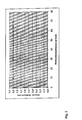
- Conditioned silicas according to the invention show a steep methanol wettability, i. H. it is a homogeneous hydrophobization (Fig. 1).
- Fig. 2 shows one Methanol wettability of conventional hydrophobic silicas, in which the Organopolysiloxane derivative was distributed on the silica without conditioning.
- silica according to the invention can be used as a carrier substance, in particular for Insecticides, as an insecticide as such, as an anti-blocking agent, as a filler in tires or used as an emulsification aid.
- organosilanes or organohalosilanes can be used as the organopolysiloxane derivative are, which are usually used for the hydrophobization of precipitated silicas.
- a masterbatch ie a conditioned precipitated silica
- a conditioned precipitated silica can first be obtained by process steps a) and b) and mixed with a (hydrophilic) or water-containing precipitated silica.
- the water content of the hydrophilic precipitated silica can fluctuate in the ranges already mentioned.
- the base silica can e.g. B. in a mass ratio of 1: 1 to 1: 3 with silicone oil z.
- B. DOW CORNING (R) 200 FLUID 50 CS (dimethylpolysiloxane 50 mPas, with trimethysilyl groups terminated, carbon content approx. 33%) can be documented (step a)).
- step b) is carried out here until a material is formed, that is water wettable (methanol wettability ⁇ 20, to define the For methanol wettability, see measurement procedure), but with silica and Do not separate silicone oil from each other when entering water (if after step b) Step c) immediately follows, then a methanol wettability> 20 is preferred).
- a masterbatch e.g. 50% by weight silica and 50% by weight Silicone oil
- aqueous silica dispersions or silica suspension stable mixtures in which the silicone oil no longer separates from the silica.
- the total mixture typically contains 1 part by weight of silicone oil, approx. 4-8 parts by weight Silica and 20-60 parts by weight of water.
- the masterbatch e.g. 50% silica and 50% silicone oil
- Amount of filter cake (solids content approx. 20%) and approx. 10-20 times the amount additional water can be mixed intensively.
- the advantage of this approach is in that the water-wettable masterbatch (which is up to 75% hydrophobic Organopolysiloxane contains!) Directly in silicic acid suspension suspensions or silicic acid dishes can be distributed very finely and stably without the use of emulsifiers or surfactants is required. After drying or filtration and subsequent drying of such The organic polysiloxane-containing silica obtained in this way can be conditioned again (step b).
- Process step b) is preferably carried out by heat treatment at 100-150 ° C. from 0.5 to 2 hours. After conditioning, a partially hydrophobic Silicic acid with a methanol wettability of 20% and more are present. in principle can be differentiated between wet and dry water repellency.
- silicate educts are aqueous Silicic acid suspensions, silicic acid dishes or highly hydrated silicic acid filter cakes deals, which are covered with the appropriate hydrophobing agents, as z. B. in DE 27 29 244 for precipitation suspensions with organohalosilanes is described.
- Dry hydrophobization means that the silicate educts are Silica powder with different moisture contents from 1 to 75% that deals with the corresponding water repellents are documented. This method is e.g. B. in DE 26 28 975.
- Organopolysiloxane derivatives are used to produce the silica according to the invention used; However, other silicon compounds can also be used, which are under react to organopolysiloxanes under the chosen reaction conditions (e.g. Dichlorodimethylsilane in an aqueous environment).
- R can be alkyl and / or aryl radicals which can be substituted with functional groups such as the hydroxyl group, the amino group, polyethers such as ethylene oxide and / or propylene oxide and halide groups such as fluoride.
- R can also contain groups such as hydroxy, amino, halide, alkoxy, alkenyl, alkynyl and aryl groups and sulfur-containing groups.
- X can be reactive groups such as silanol, amino, mercapto, halide, alkoxy, alkenyl and hydride groups.
- polysiloxane can result in salts or low-molecular substances such as NH 3 , amines, alcohols, etc., which can lead to disruptive impurities.
- An important exception here are silanol-functionalized polysiloxanes, since only water is produced as an impurity that can be easily removed under the selected process conditions.
- the hydrophobizing agent can preferably be a methyl-terminated one Polydimethylsiloxane, in particular one with a viscosity of 30-100 mPas, is preferred Act 40 - 60 mPas.
- a suitable polysiloxane oil is e.g. B. DOW CORNING (R) 200 FLUID 50 CS.
- the hydrophobized silica is ground after the conditioning step.
- a grinding before the coating step a) is not indicated and leads to inhomogeneous coating and hydrophobization.
- the grinding is preferably carried out to give a product with an average particle size d 4.3 of 2 to 30 ⁇ m, particularly preferably 8 to 15 ⁇ m.
- Silicone rubber formulations need to fully develop their mechanical Properties of active reinforcing fillers. It is usually highly disperse Silicas used. The reinforcing filler must have good mechanical properties effect in the vulcanizate and easily work into the silicone rubber formulation to let.
- HTV and LSR silicone rubber formulations are processed at temperatures well above 100 ° C.
- Water-containing fillers can lead to annoying vapor bubbles in the silicone formulation.
- the basic silica is preferably a precipitated silica which has a very low silanol group density (the ratio of the Sears number to the BET surface area serves as a measure of the silanol group density).
- the low silanol group density of the basic silica is also expressed in a low loss on ignition of 3.0 ⁇ 0.5 - with a BET surface area of 150 - 170 m 2 / g.
- the hydrophobic precipitated silicas according to the invention are preferably used in amounts of 5 to 50% by weight in silicone rubber formulations, preferably 10% to 40% by weight, based on the total weight of the compositions curable to give elastomers. Up to 50% by weight can be used for HTV organopolysiloxane elastomers.
- the compositions curable to elastomers can contain the hydrophobicized precipitated silica according to the invention, crosslinking agents and crosslinking catalysts, if appropriate conventionally mostly or frequently in fillers used to prepare elastomers.
- Such substances are fillers with a surface area below 50 m 2 / g, such as quartz powder, diatomaceous earth, furthermore silicon silicate and calcium carbonate, furthermore untreated pyrogenic silicon dioxide, organic resins such as polyvinyl chloride powder, organopolysiloxane resins, fibrous fillers such as asbestos, glass fibers and organic pigments , soluble dyes, fragrances, corrosion inhibitors, the compositions stabilizing against the influence of water, and acetic anhydride, curing retardants such as benzotriazole and plasticizers, such as dimethylpolysiloxanes endblocked by trimethylsiloxy groups.
- organic resins such as polyvinyl chloride powder, organopolysiloxane resins, fibrous fillers such as asbestos, glass fibers and organic pigments , soluble dyes, fragrances, corrosion inhibitors, the compositions stabilizing against the influence of water, and acetic anhydride, curing retardants such as benzotriazole and plasticizers, such
- Hydrophobic precipitated silica leads to an excellent reinforcing filler.
- the optimally adjusted pH value and the low DBP number lead to noticeably shorter soft rolling times.
- the low electrolyte content in combination with the low moisture content ultimately leads to good electrical properties of the vulcanizates.
- Precipitated silicas which are very suitable, are preferably used as the silicate starting material low silanol group density, i.e. a low ratio of alkali consumption / BET surface area, a relatively high CTAB surface with approximately the same BET surface area and has a high degree of whiteness and purity.
- the mixture of the basic silica and the polysiloxane are up to a certain Carbon content carried out, d. H. the mixing ratio results from the mathematical relationship to the setting of the required carbon content.
- Silicas the surfaces of which are modified with non-hydrolyzable, organic groups are usually not wetted by water.
- hydrophobic silicas can be obtained from a methanol / water mixture wet.
- the proportion of methanol in this mixture - expressed in percent by weight - is a measure of the hydrophobicity of the modified silica. The higher the methanol content the better the substance is hydrophobic.
- DBP intake which is a measure of the absorbency of the precipitated silica is determined as follows:
- the Brabender plastograph is used to determine the dibutyl phthalate number.
- the DBP number is a measure of the absorbency or the absorption capacity of a person powdered product on liquid.
- the absorption capacity depends on Moisture content, the grain size and weight of the examined material.
- the density of DBP is 1.047 g / ml.
- the DBP intake is based on the anhydrous, dried substance.
- the value should be corrected using the correction table.
- Correction table for dibutyl phthalate intake - anhydrous - % Water % Water % Water , 0 2 , 4 , 6 ,8th 0 0 2 4 5 7 1 9 10 12 13 15 2 16 18 19 20 22 3 23 24 26 27 28 4 28 29 29 30 31 5 31 32 32 33 33 6 34 34 35 35 36 7 36 37 38 38 39 8th 39 40 40 41 41 9 42 43 43 44 44 10 45 45 46 46 47
- the correction value according to the water content becomes the experimentally determined DBP value added to; z. B. would have a water content of 5.8% for a surcharge of 33 g / 100g mean the DBP intake.
- the particle size is determined using a "Malvern Mastersizer” in ethanol after 5 minutes of ultrasound treatment. The measurement is carried out automatically and provides the average particle size d 4.3 from a volume distribution.
- the Datacolor 3890 spectrophotometer is used to determine the standard color value R y for silicas, silicates and zeolites (powder suspension).
- the samples are measured to an average particle diameter of 8 - 15 ⁇ m ground and then compressed into a tablet using a powder press.
- the needed The amount depends on the fine particle size of the powder. So much powder is poured in that the Thread of the press lock reaches the last gear.
- the samples are placed under the measuring device and the menu item whiteness measurement R y and R 460 is selected on the control computer. After entering the sample name, the "Space" button is pressed to start the measurement.
- the measured values are printed out.
- Free OH groups can be found by titration with 0.1 N KOH in the range from pH 6 to pH 9 to capture.
- the initial pH of the suspension is measured, then depending on Result with KOH or HCl the pH adjusted to 6. Then 20 ml of NaCl solution added. The titration is then continued with 0.1 N KOH to pH 9.
- 10 g of the sample to be examined are accurate to 0.01 g on the precision balance weighed and filled into the graduated 250 ml glass cylinder of the tamped volume. To The volume of the tamped material is read from 1250 poundings.
- the ramming volume corresponds to the value read.
- the material can be sieved through a 500 ⁇ m sieve or the sample weight can be increased. This must be stated in the test report.
- CTAB N-cetyl-N, N, N-trimethylammonium bromide
- non-adsorbed CTAB is by back titration with NDSS (dioctyl sodium sulfosuccinate solution) with a titroprocessor, whereby the end point is given by the maximum turbidity of the solution and with a Phototrode is determined.
- NDSS dioctyl sodium sulfosuccinate solution
- the determination is based on ASTM 3765.
- a standard sample of type VN 3 silica must also be tested for each series of measurements.
- the sample is kept at constant temperature (30 ° C) exposed to different relative air humidities. Waiting for one has set constant weight.
- the silica base is dried and coated with silicone oil (e.g. DOW CORNING (R) 200 FLUID 50 CS, carbon content approx. 33%, viscosity of 50 mPas) using a spin flash dryer.
- silicone oil e.g. DOW CORNING (R) 200 FLUID 50 CS, carbon content approx. 33%, viscosity of 50 mPas
- the silica is then conditioned (at least 48 hours aging at room temperature) until it has a methanol wettability of at least 20%.
- Table 1.1 The analytical data of the conditioned silica are shown in Table 1.1.
- the basic silica is coated in a Gericke mixer in a mass ratio of 1: 1 with silicone oil (dimethylpolysiloxane, 50 mPas, e.g. DOW CORNING (R) 200 FLUID 50 CS, carbon content approx. 33%).
- silicone oil dimethylpolysiloxane, 50 mPas, e.g. DOW CORNING (R) 200 FLUID 50 CS, carbon content approx. 33%).
- the resulting powder is conditioned for one hour at a temperature of 105 ° C. This creates a material that is water-wettable, but in which silica and silicone oil in water no longer separate. Mixing this masterbatch with filter cake of the basic silica produces stable formulations in which the silicone oil no longer separates from the hydrophilic filter cake.
- a hydrophobic masterbatch produced in this way and a hydrophilic filter cake are conveyed together into the spin flash dryer, where they are mixed and dried.
- the dimethylsiloxane treated silica is conditioned by aging for at least 48 hours (approx. 3 days) at room temperature until it has reached a methanol wettability of at least 20%.
- the analytical data of the conditioned silica are given in Table 2.1.
- silicone oil viscosity of 50 mPas, methyl-terminated, e.g. DOW CORNING (R) 200 FLUID 50 CS, carbon content approx. 33%) on the silica (in the form of filter cake) - with simultaneous drying - takes place in the spin flash dryer.
- the dimethylsiloxane-treated silica is conditioned by aging for 48 hours (approx. 3 days) at room temperature until it has reached a methanol wettability of at least 20%.
- the analytical data of the conditioned silica are shown in Table 3.1.
- the basic silica is coated in a Gericke mixer in a mass ratio of 1: 1 with silicone oil (dimethylpolysiloxane 50 mPas, terminated with trimethylsilyl groups, e.g. DOW CORNING (R) 200 FLUID 50 CS, carbon content approx. 33%).
- silicone oil dimethylpolysiloxane 50 mPas, terminated with trimethylsilyl groups, e.g. DOW CORNING (R) 200 FLUID 50 CS, carbon content approx. 33%).
- the resulting powder is conditioned for one hour at a temperature of 105 ° C. This creates a material that is water-resistant, but that no longer separates silica and silicone oil in water.
- Mixing this masterbatch ie 50% silica and 50% silicone oil
- aqueous silica dispersions creates stable suspensions in which the silicone oil no longer separates from the silica.
- the total mixture typically contains 1 part by weight of silicone oil, approx. 4-8 parts by weight of silica and 20-6 parts by weight of water.
- the masterbatch ie 50% silica and 50% silicone oil
- the masterbatch is intensified with about 14-16 times the amount of filter cake (solids content about 20%) and about 11-13 times with additional water mixed.
- the analytical data of the suspension are in Table 4.1
- the analytical data of the corresponding conditioned silica are in Table 4.2.
- suspension data Solids content % 12.8 PH value 5.2 conductivity ⁇ S 382 viscosity mPas 183
- the suspension is dried using a spray dryer.
- the dimethylsiloxane-treated silica is conditioned by aging for 48 hours (approx. 3 days) at room temperature until it has reached a methanol wettability of at least 20%.
- the analytical data of the conditioned silica are shown in Table 4.2. Analytical data on conditioned silica loss on ignition % 12.4 water % 2.2 PH value 6.4 conductivity ⁇ S 135 N 2 surface m 2 / g 80 CTAB surface m 2 / g 131 DBP absorption g / 100g 236 tapped density g / L 256 remission % 94.5 C-content % 4.21 methanol wettability % > 20%
- Silicone oil (polydimethylsiloxane methyl terminated, 50 mPas, e.g. DOW CORNING (R) 200 FLUID 50 CS, carbon content approx. 33%) is suspended in a silica suspension of basic silica (12.8% solids content) with the help of a high-shear mixing unit.
- the distribution of the silicone oil in the silica suspension is preserved by an immediate spray drying.
- the dimethylsiloxane-treated silica is conditioned by aging for 48 hours (approx. 3 days) at room temperature until it has reached a methanol wettability of at least 20%.
- the analytical data of the conditioned silica are shown in Table 5.1.
Landscapes
- Chemical & Material Sciences (AREA)
- Organic Chemistry (AREA)
- Chemical Kinetics & Catalysis (AREA)
- Inorganic Chemistry (AREA)
- Health & Medical Sciences (AREA)
- Toxicology (AREA)
- Dispersion Chemistry (AREA)
- Silicon Compounds (AREA)
- Compositions Of Macromolecular Compounds (AREA)
- Pigments, Carbon Blacks, Or Wood Stains (AREA)
Abstract
Description
| - Kohlenstoffgehalt | 1,0 - 8 %, bevorzugt 2 - 6 % |
| - Methanolbenetzbarkeit | 20 - 55 % |
| - Remissionswert | > 94 % |
| - Verhältnis von BET/CTAB | ≤ 1 |
| - DBP-Aufnahme | 250 g/100 g, bevorzugt 200 g/100g |
| - BET-Oberfläche | 50 - 110 m2/g |
| - CTAB-Oberfäche | 100 - 150 m2/g |
| - Searszahl | < 13. |
| -pH-Wert | 5-9 |
| - Wassergehalt | < 7 % |
| - Leitfähigkeit | < 200 µS |
| - Glühverlust | 3-14 % |
- einen außergewöhnlich hohen Weißgrad (Remission über 94 %)
- auch bei Temperaturen bis 200 °C sind keine Verfärbungserscheinungen zu beobachten
- eine sehr homogene Hydrophobierung, das heißt eine steile Methanolbenetzbarkeitskurve
- Methanolbenetzbarkeiten von 20 - 55 %
- gute Einarbeitbarkeit in Silikonkautschukformulierungen
- enthält kaum ionischen Verunreinigungen, d. h. niedrige Leitfähigkeit
- enthält keine Tenside, Emulgatoren oder organische Lösungsmittel, die zur Verfärbung bei erhöhten Temperaturen führen können.
- Stabilität gegenüber wässrigen Medien (keine Abspaltung von Hydrophobierungsmitteln)
- Zunächst erfolgt die physikalische Vorverteilung eines flüssigen Polysiloxanderivates auf der Kieselsäureoberfläche. Wird die Vorverteilung in wässrigen Medien, d. h. Suspensionen oder Kieselsäure mit einem Wassergehalt über 70 % durchgeführt, dann ist diese typischerweise nicht beständig. Es muß daher nach der Vorverteilung schnell abfiltriert und/oder eine Kurzzeittrocknung (z. B. Spin-Flash-, Düsenturm-Trockner) durchgeführt werden. Dies führt zu einer Konservierung der Verteilung der Organopolysiloxantröpfchen auf der Kieselsäure und verhindert die Entmischung in Wasser, Silikonöl und Kieselsäure.
- Anschließend wird durch einen gezielten Konditionierungschritt Verfahrensschritt b) die Verteilung des Hydrophobierungsmittels weiter verbessert und ein Aufziehen des Polysiloxanderivates auf der Kieselsäureoberfläche erreicht. Die Verteilung ist auch in wässrigen Medien stabil. Das Polysiloxanderviat trennt sich nach dem Verfahrensschritt b) nicht mehr von der Kieselsäure ab. Die so konditionierten Kieselsäuren lassen sich bei Kohlenstoffgehalten ≥ 3,1 stufenlos auf eine Methanolbenetzbarkeit bis zu 55 % einstellen. Das BET/CTAB-Verhältnis ist nach diesem Verfahrensschritt < 1. Die Anbindung des Polysiloxans an die Kieselsäure erfolgt vermutlich durch die Ausbildung multibler Wasserstoffbrückenbindungen zwischen den Siloxanbrücken der Polysiloxanmoleküle und den Silanolgruppen der Kieselsäureoberfläche.
- Zugabe von Organopolysiloxanderivat auf eine Fällungskieselsäure mit einem Wassergehalt von 1 bis 80 Gew.-%, bevorzugt 20 bis 60 Gew.-%.
- Zugabe des Organopolysiloxanderivats in eine Dispersion der Fällungskieselsäure, d. h. nach erfolgter Fällung von Silikat mit einer Säure z. B. mit einem Rhein-Hütte-Mischer oder Kolthof-Mischsirene oder Ultra-Turrax. Dies erfordert eine rasche Filtration bzw. eine Kurzzeit-Trocknung nach der Umsetzung.
- Zugabe des Organopolysiloxanderivats auf eine Fällungskieselsäure mit einem Wassergehalt von 70 bis 99 Gew.-% bei anschließender Trennung des Feststoffs vom Wasser. Die Trennung kann durch Filtration, Spin-flash-Trocknung oder eine sonstige Kurzzeit-Trocknung (z. B. mit Hilfe eines Sprühtrockners oder Düsenturm-Trockners) erfolgen. Je höher der Wassergehalt, desto rascher sollte die Trennung durchgeführt werden. Eine Entmischung ist zu vermeiden.
- Gleichzeitiges Zuführen der Fällungskiesel- bzw. wasserhaltigen Kieselsäure oder der Kieselsäurensuspension und des Organopolysiloxanderivats in einen Spin-Flash-Trockner.
- Mischen von trockener Fällungskieselsäure mit Polysiloxan, z. B. in einem Gericke-Mischer.
Der Wassergehalt der hydrophilen Fällungskieselsäure kann in den bereits genannten Bereichen schwanken.
- Einer der Verfahrensschritte a) oder b) wird mehrmals (2 bis 5 mal) hintereinander ausgeführt.
- Die Verfahrensschritte a) und b) werden mehrmals (2 bis 5 mal) hintereinander durchgeführt, .d. h. der Prozess wird mehrmals durchlaufen.
Deshalb stellt eine niedrige Feuchtigkeitsaufnahme wie in der erfindungsgemäßen Kieselsäure einen Vorteil in der Verarbeitbarkeit der Kieselsäure in diesen Silikonkautschukformulierungen dar.
Selbstverständlich können die zu Elastomeren härtbaren Massen außer Diorganopolysiloxanen, die erfindungsgemäße hydrophobierte Fällungskieselsäure, Vernetzungsmitteln und Vernetzungskatalysatoren, gegebenenfalls herkömmlicherweise meist oder häufig in zu Elastomeren härtbaren Massen verwendete Füllstoffe, enthalten. Beispiele für solche Stoffe sind Füllstoffe mit einer Oberfläche unterhalb 50 m2/g, wie Quarzmehl, Diatomeenerde, ferner Zikoniumsilikat und Calciumcarbonat, ferner unbehandeltes pyrogen erzeugtes Siliciumdioxid, organische Harze, wie Polyvinylchloridpulver, Organopolysiloxanharze, faserige Füllstoffe , wie Asbest, Glasfasern und organische Pigmente, lösliche Farbstoffe, Duftstoffe, Korrosionsinhibitoren, die Massen gegen den Einfluß von Wasser stabilisiernde Mittel, sowie Essigsäureanhydrid, die Härtung verzögernde Mittel wie Benzotriazol und Weichmacher, wie durch Trimethylsiloxygruppen endgeblockte Dimethylpolysiloxane.
| BET-Oberfläche [m2/g] | 150-170 |
| CTAB-Oberfläche [m2/g] | 150-170 |
| Glühverlust bez. auf die 2h/105 C°getr. Subst. (DIN 55921) [%] pH-Wert 5% (Methanol.-wässr. Lsg.) (DIN 53200) 6 - 7 | 3 ± 0,5 |
| Leitfähigkeit (in 5 %iger wässriger Dispersion) [µS] | < 150 |
| Stampfdichte | > 250 g/L |
| Korrekturtabelle für Dibutylphthalataufnahme - wasserfrei - | |||||
| % Wasser | % Wasser | ||||
| % Wasser | ,0 | ,2 | ,4 | ,6 | ,8 |
| 0 | 0 | 2 | 4 | 5 | 7 |
| 1 | 9 | 10 | 12 | 13 | 15 |
| 2 | 16 | 18 | 19 | 20 | 22 |
| 3 | 23 | 24 | 26 | 27 | 28 |
| 4 | 28 | 29 | 29 | 30 | 31 |
| 5 | 31 | 32 | 32 | 33 | 33 |
| 6 | 34 | 34 | 35 | 35 | 36 |
| 7 | 36 | 37 | 38 | 38 | 39 |
| 8 | 39 | 40 | 40 | 41 | 41 |
| 9 | 42 | 43 | 43 | 44 | 44 |
| 10 | 45 | 45 | 46 | 46 | 47 |

- Y ( λ)
- die Normspektralwertfunktion
- S (λ)
- relative spektrale Strahlungsverteilung der Beleuchtungsquelle und
- R ( λ)
- den spektralen Remissionsgrad der Probe bedeuten.
pH
- V1
- in ml/5 g
- V2
- in ml/5 g


E = Einwaage in g
I = Inhalt in ml
- Stampfvolumeter
- Fa. Engelsmann, Ludwigshafen
- 250 ml Glaszylinder graduiert
- Fa. Engelsmann, Ludwigshafen

pH-Elektrode, z. B. Fabrikat Mettler, Typ DG 111
Phototrode, z. B Fabrikat Mettler, Typ DP 550 und
Kolbenbürette, 20 ml Inhalt für NDSS-Lösung
Kolbenbürette, 10 ml Inhalt für KOH, 0.1 N
Achtung:Aufbewahrung der Lösung und Durchführung der Bestimmung müssen bei ≥ 23 °C erfolgen, da CTAB unterhalb dieser Temperatur auskristallisiert. Die Lösung sollte 10-14 Tage vor Gebrauch hergestellt werden.
- V1 =
- Blindprobe (ml NDSS bei Anwendung von 5 ml CTAB)
- V2 =
- Verbrauch (ml NDSS bei Anwendung von 5 ml Filtrat)
- E =
- Einwaage g CTAB/l (5.5 g)
- 578.435 =
- Platzbedarf von 1 g CTAB in m2.
- zu 1.
- In der Literatur wird NDSS (Dioctylnatriumsulfosuccinat) auch Aerosol OT
genannt.
An den Proben mit einem pH-Wert > 9, wie z. B. Extrusil, wird der pH-Wert gemessen, aber nicht korrigiert, weil die Säure die Oberfläche verändern kann.
Die Phototrode wird vor Beginn der Titration auf 1000 mV eingestellt, entsprechend einer Transparenz von 100 %. - zu 3.
- Für das Abmessen der vorgegebenen unterschiedlichen Volumina der CTAB-Lösung können auch Dispenser bzw. Kolbenhubpipetten verwendet werden, soweit diese regelmäßig kalibriert werden.
- zu 4.
- Die unter Punkt 4.1 und 4.3 angegebenen Lösungen sind auch als gebrauchsfertige
Lösungen zu beziehen. Lieferant ist z. Z. Firma Kraft, Duisburg.
Telefon: 0203-58-3025.
- Bestell-Nr. 6056.4 CTAb-Lösung 0.0151 ml/l
- Bestell-Nr. 6057.4 NDSS-Lösung 0.00423 mol/l
(in glasflaschen ä 2,5 Liter) - zu 5.2.4
- Hydrophobe Proben, die nach dem Rühren nicht benetzt sind, werden vor der Einstellung des pH-Wertes mit einem ULTRA-TURRAX vorsichtig dispergiert, um sie zu benetzen.
- zu 5.2.5
- Für die Einstellung des pH-Wertes empfiehlt sich die Verwendung eines Titrators. Die Titration wird nach der Endpunktmethode durchgeführt.
- zu 5.2.7
- Für die Filtration wird Stickstoff aus einer Druckgasflasche verwendet, es ist ein Vordruck von 4-6 bar einzustellen.
- zu 6.
- Bei einer eventuell erforderlichen Wiederholung einer Meßreihe ist insbesondere darauf zu achten, dass auch das für die Einstellung des pH-Wertes verwendete pH-Meter nochmals neu kalibriert wird.
Um Hystereseeffekte auszuschließen, wird sowohl die Wasseradsorption wie auch die Wasserdampfdesorption gemessen.
| Analytische Daten der konditionierten Kieselsäure | ||
| Wasser | % | 5,2 |
| pH-Wert | 6,1 | |
| Leitfähigkeit | µS | 41 |
| N2-Oberfläche | m2/ g | 84 |
| CTAB-Oberfläche | m2/ g | 132 |
| Stampfdichte | g/ L | 317 |
| Alpine SR > 180 µm | % | 63 |
| Remission | % | 95,9 |
| C-Gehalt | % | 4,12 |
| Methanolbenetzbarkeit | % | > 20 |
| Analytische Daten der konditionierten Kieselsäure | ||
| Wasser | % | 3,4 |
| pH-Wert | 6,3 | |
| Leitfähigkeit | µS | 100 |
| N2-Oberfläche | m2/ g | 74 |
| CTAB-Oberfläche | m2/ g | 119 |
| DBP-Aufnahme | g/ 100g | 198 |
| Stampfdichte | g/ L | 323 |
| Remission | % | 95,9 |
| C-Gehalt | % | 5,03 |
| Methanolbenetzbarkeit | % | > 20 |
| Analytische Daten der konditionierten Kieselsäure | ||
| Wasser | % | 5,2 |
| pH-Wert | 6,1 | |
| Leitfähigkeit | µS | 41 |
| N2-Oberfläche | m2/ g | 84 |
| CTAB-Oberfläche | m2/ g | 132 |
| Stampfdichte | g/ L | 317 |
| Remission | % | 95,9 |
| C-Gehalt | % | 4,12 |
| Methanolbenetzbarkeit | % | > 20 |
| Suspensionsdaten | ||
| Feststoffgehalt | % | 12,8 |
| pH-Wert | 5,2 | |
| Leitfähigkeit | µS | 382 |
| Viskosität | mPas | 183 |
| Analytische Daten der konditionierten Kieselsäure | ||
| Glühverlust | % | 12,4 |
| Wasser | % | 2,2 |
| pH-Wert | 6,4 | |
| Leitfähigkeit | µS | 135 |
| N2-Oberfläche | m2/ g | 80 |
| CTAB-Oberfläche | m2/ g | 131 |
| DBP-Aufnahme | g/ 100g | 236 |
| Stampfdichte | g/ L | 256 |
| Remission | % | 94,5 |
| C-Gehalt | % | 4,21 |
| Methanolbenetzbarkeit | % | > 20 % |
| Analytische Daten der konditionierten Kieselsäure | ||
| Glühverlust | % | 13,0 |
| Wasser | % | 2,2 |
| pH-Wert | 5,5 | |
| Leitfähigkeit | µS | 100 |
| N2-Oberfläche | m2/ g | 85 |
| CTAB-Oberfläche | m2/ g | 137 |
| DBP-Aufnahme | g/ 100g | 253 |
| Stampfdichte | g/ L | 270 |
| Remission | % | 94,2 |
| C-Gehalt | % | 4,78 |
| Methanolbenetzbarkeit | % | > 20 % |
Claims (25)
- Hydrophobe Fällungskieselsäuren,
gekennzeichnet durch die folgenden Eigenschaften:- Kohlenstoffgehalt 1,0 - 8,0 % - Methanolbenetzbarkeit 20 - 55 % - Remissionswert > 94 % - Verhältnis von BET/CTAB ≤ 1 - DBP-Aufnahme < 250 g/100 g - BET-Oberfläche 50 - 110 m2/g - CTAB-Oberfäche 100 - 150 m2/g - Searszahl < 13. - Hydrophobe Fällungskieselsäure nach Anspruch 1,
gekennzeichnet durch eine mittlere Teilchengröße von 2 - 30 µm. - Hydrophobe Fällungskieselsäure nach Anspruch 1 oder 2,
gekennzeichnet durch einen pH-Wert von 5-9. - Hydrophobe Fällungskieselsäure nach einem der Ansprüche bis 1 bis 3,
gekennzeichnet durch einen Wassergehalt von < 7. - Hydrophobe Fällungskieselsäure nach einem der Ansprüche 1 bis 4,
gekennzeichnet durch eine Leitfähigkeit von < 200 µS. - Hydrophobe Fällungskieselsäure nach einem der Ansprüche 1 bis 5,
gekennzeichnet durch einen Glühverlust von 3 bis 14 %. - Verfahren zur Herstellung hydrophober Fällungskieselsäure,
dadurch gekennzeichnet, dassa) eine Mischung aus einem Organopolysiloxanderivat und einer Fällungskieselsäure hergestellt wird undb) eine Konditionierung der Mischung für einen Zeitraum von 0,5 bis 72 h bei 10 bis 150 °C
durchgeführt wird. - Verfahren nach Anspruch 7,
dadurch gekennzeichnet, dass Verfahrensschritt a) durch Zugabe des Organopolysiloxanderivats auf eine Fällungskieselsäure mit einem Wasseranteil von 1 bis 80 % erfolgt. - Verfahren nach Anspruch 7,
dadurch gekennzeichnet, dass Verfahrensschritt a) durch Zugabe des Organopolysiloxanderivats auf eine Fällungskieselsäure mit einem Wasseranteil von 70 bis 99 % bei anschließender Trennung des Feststoffs von Wasser erfolgt. - Verfahren nach einem der Ansprüche 7 bis 9,
dadurch gekennzeichnet, dass Verfahrensschritt a) durch gleichzeitiges Zuführen einer Fällungskieselsäure oder wasserhaltiger Fällungskieselsäure und eines Organopolysiloxanderviats in einen Spin-Flash-Trockner erfolgt. - Verfahren nach einem der Ansprüche 7 bis 9,
dadurch gekennzeichnet, dass Verfahrensschritt a) durch Mischen einer Fällungskieselsäure mit einer bereits konditionierten Fällungskieselsäure, erhalten nach dem Verfahrensschritt a) und b), durchgeführt wird. - Verfahren nach Anspruch 7 bis 11,
dadurch gekennzeichnet, dass einer der Verfahrensschritte a) oder b) mehrmals hintereinander durchgeführt wird. - Verfahren nach einem der Ansprüchen 1 bis 12,
dadurch gekennzeichnet, dass die Verfahrensschritte a) und b) mehrmals hintereinander durchgeführt werden. - Verfahren nach einem der Ansprüche 7 bis 13,
dadurch gekennzeichnet, dass Verfahrensschritt b) durch eine 0,5 bis 2-stündige Wärmebehandlung bei 100 bis 150 °C erfolgt. - Verfahren nach einem der Ansprüche 7 bis 13,
dadurch gekennzeichnet, dass Verfahrensschritt b) durch eine mindestens 48-stündige Lagerung bei Raumtemperatur erfolgt. - Verwendung der hydrophoben Fällungskieselsäuren nach einem der Ansprüche 1 bis 6 in Silikonkautschukformulierungen.
- Verwendung der hydrophoben Fällungskieselsäuren nach einem der Ansprüche 1 bis 6 in Entschäumern.
- Verwendung der hydrophoben Fällungskieselsäuren nach einem der Ansprüche 1 bis 6 in Free-flow-Hilfsmitteln.
- Verwendung der hydrophoben Fällungskieselsäuren nach einem der Ansprüche 1 bis 6 in als Füllstoff in Polymeren.
- Verwendung der hydrophoben Fällungskieselsäuren nach einem der Ansprüche 1 bis 6 in als Füllstoff in Elastomerenmischungen, Reifen oder Dichtungsmassen.
- Verwendung der hydrophoben Fällungskieselsäure nach einem der Ansprüche 1 bis 6 als Trägersubstanz.
- Verwendung der hydrophoben Fällungskieselsäure nach einem der Ansprüche 1 bis 6 als Emulgierhilfsmittel.
- Verwendung der hydrophoben Fällungskieselsäure nach einem der Ansprüche 1 bis 6 als Antiblocking Hilfsmittel.
- Verwendung der hydrophoben Fällungskieselsäure nach einem der Ansprüche 1 bis 6 als Pigment.
- Verwendung der hydrophoben Fällungskieselsäure nach einem der Ansprüche 1 bis 6 als Insektizid.
Applications Claiming Priority (2)
| Application Number | Priority Date | Filing Date | Title |
|---|---|---|---|
| DE10138492A DE10138492A1 (de) | 2001-08-04 | 2001-08-04 | Hydrophobe, nicht getemperte Fällungskieselsäure mit hohem Weißgrad |
| DE10138492 | 2001-08-04 |
Publications (2)
| Publication Number | Publication Date |
|---|---|
| EP1281733A1 true EP1281733A1 (de) | 2003-02-05 |
| EP1281733B1 EP1281733B1 (de) | 2007-08-01 |
Family
ID=7694516
Family Applications (1)
| Application Number | Title | Priority Date | Filing Date |
|---|---|---|---|
| EP02012874A Expired - Lifetime EP1281733B1 (de) | 2001-08-04 | 2002-06-11 | Hydrophobe, nicht getemperte Fällungskiesels-ure mit hohem Weissgrad |
Country Status (10)
| Country | Link |
|---|---|
| US (1) | US6899951B2 (de) |
| EP (1) | EP1281733B1 (de) |
| JP (1) | JP4440520B2 (de) |
| KR (1) | KR100923647B1 (de) |
| CN (1) | CN1405085A (de) |
| AT (1) | ATE368708T1 (de) |
| BR (1) | BR0202882A (de) |
| DE (2) | DE10138492A1 (de) |
| ES (1) | ES2290216T3 (de) |
| TW (1) | TWI296995B (de) |
Cited By (4)
| Publication number | Priority date | Publication date | Assignee | Title |
|---|---|---|---|---|
| EP1333053A3 (de) * | 2002-01-30 | 2004-03-03 | Degussa AG | Raumtemperaturvernetzende Einkomponenten-Silikonkautschukformulierungen mit hydrophoben Kieselsäuren |
| EP1477457A1 (de) * | 2003-05-14 | 2004-11-17 | Degussa AG | Oberflächenmodifizierte Fällungskieselsäuren |
| WO2005016823A1 (en) * | 2003-08-13 | 2005-02-24 | Degussa Ag | Carrier based on granules produced from pyrogenically prepared silicon dioxides |
| WO2018019373A1 (de) * | 2016-07-27 | 2018-02-01 | Wacker Chemie Ag | Verfahren zur herstellung einer modifizierten fällungskieselsäure und zusammensetzung enthaltend diese |
Families Citing this family (53)
| Publication number | Priority date | Publication date | Assignee | Title |
|---|---|---|---|---|
| DE10138490A1 (de) * | 2001-08-04 | 2003-02-13 | Degussa | Hydrophobe Fällungskieselsäure mit hohem Weißgrad und extrem niedriger Feuchtigkeitsaufnahme |
| JP2003155383A (ja) * | 2001-11-21 | 2003-05-27 | Toyo Tire & Rubber Co Ltd | タイヤトレッド用ゴム組成物 |
| AU2003242650A1 (en) * | 2002-06-14 | 2003-12-31 | Degussa Ag | Aluminum-containing precipitated silicic acid having an adjustable bet/ctab ratio |
| KR100960519B1 (ko) | 2003-01-22 | 2010-06-03 | 에보닉 데구사 게엠베하 | 고무에 사용하기 위한 고분산성 실리카 |
| BRPI0406904A (pt) * | 2003-01-22 | 2005-12-13 | Degussa | ácidos silìcicos especialmente precipitados para aplicações em borrachas |
| TW200427732A (en) * | 2003-02-18 | 2004-12-16 | Circle Promotion Science & Eng | Polymer-coated metal oxide and the method for producing it |
| DE102004012090A1 (de) * | 2003-05-14 | 2004-12-09 | Degussa Ag | Oberflächenmodifizierte Fällungskieselsäuren |
| JP4524565B2 (ja) * | 2004-01-22 | 2010-08-18 | 信越化学工業株式会社 | 湿式シリカ含有シリコーンゴム硬化物の発泡を抑制する方法 |
| DE102004005411A1 (de) * | 2004-02-03 | 2005-08-18 | Degussa Ag | Hydrophobe Fällungskieselsäure für Entschäumerformulierungen |
| DE102004005409A1 (de) * | 2004-02-03 | 2005-08-18 | Degussa Ag | Hydrophile Fällungskieselsäure für Entschäumerformulierungen |
| DE102004005222A1 (de) * | 2004-02-03 | 2005-08-18 | Degussa Ag | Silikonkautschuk |
| DE102004010755A1 (de) * | 2004-03-05 | 2005-09-22 | Degussa Ag | Silikonkautschuk |
| DE102004029069A1 (de) | 2004-06-16 | 2005-12-29 | Degussa Ag | Oberflächenmodifizierte Silicagele |
| DE102004029074A1 (de) * | 2004-06-16 | 2005-12-29 | Degussa Ag | Lackformulierung zur Verbesserung der Oberflächeneigenschaften |
| DE102004029073A1 (de) * | 2004-06-16 | 2005-12-29 | Degussa Ag | Lackformulierung mit verbesserten rheologischen Eigenschaften |
| FR2882272B1 (fr) * | 2005-02-22 | 2007-05-18 | Rincent Btp Services Soc En Co | Procede de traitement de surface de granulats a base d'elastomere |
| JP4905652B2 (ja) * | 2005-05-13 | 2012-03-28 | 信越化学工業株式会社 | 室温硬化性オルガノポリシロキサン組成物 |
| US7276156B2 (en) * | 2005-05-26 | 2007-10-02 | Tony Mason Lockerman | Storm drain filter |
| DE102005043201A1 (de) * | 2005-09-09 | 2007-03-15 | Degussa Ag | Fällungskieselsäuren mit einer besonderen Porengrößenverteilung |
| DE102005043202A1 (de) * | 2005-09-09 | 2007-03-15 | Degussa Ag | Fällungskieselsäuren mit besonderer Porengrößenverteilung |
| DE102006048850A1 (de) * | 2006-10-16 | 2008-04-17 | Evonik Degussa Gmbh | Amorphe submicron Partikel |
| US7767180B2 (en) | 2006-05-26 | 2010-08-03 | Degussa Gmbh | Precipitated silicas having special surface properties |
| DE102006024590A1 (de) * | 2006-05-26 | 2007-11-29 | Degussa Gmbh | Hydrophile Kieselsäure für Dichtungsmassen |
| US8202502B2 (en) | 2006-09-15 | 2012-06-19 | Cabot Corporation | Method of preparing hydrophobic silica |
| US8435474B2 (en) * | 2006-09-15 | 2013-05-07 | Cabot Corporation | Surface-treated metal oxide particles |
| US8455165B2 (en) * | 2006-09-15 | 2013-06-04 | Cabot Corporation | Cyclic-treated metal oxide |
| US20080070146A1 (en) * | 2006-09-15 | 2008-03-20 | Cabot Corporation | Hydrophobic-treated metal oxide |
| DE102007025685A1 (de) * | 2007-06-01 | 2008-12-04 | Evonik Degussa Gmbh | RTV-Zweikomponenten-Silikonkautschuk |
| DE102007052269A1 (de) * | 2007-11-02 | 2009-05-07 | Evonik Degussa Gmbh | Fällungskieselsäuren für lagerstabile RTV-1 Siliconkautschukformulierungen ohne Stabilisator |
| US7985292B2 (en) | 2007-11-26 | 2011-07-26 | Evonik Degussa Corporation | Precipitated silica for thickening and creating thixotropic behavior in liquid systems |
| CN101904802B (zh) | 2009-06-03 | 2015-03-11 | 赢创德固赛有限公司 | 油包水乳液体系及其制备方法 |
| DE102009045109A1 (de) * | 2009-09-29 | 2011-03-31 | Evonik Degussa Gmbh | Oberflächenmodifizierte Semi-Gele |
| DE102009045104A1 (de) | 2009-09-29 | 2011-03-31 | Evonik Degussa Gmbh | Neuartige Mattierungsmittel für UV-Lacke |
| US20110244382A1 (en) | 2010-04-06 | 2011-10-06 | Christopher Alyson M | Hydrophobic silica particles and method of producing same |
| DE102010029945A1 (de) * | 2010-06-10 | 2011-12-15 | Evonik Degussa Gmbh | Neuartige Mattierungsmittel für UV-Überdrucklacke |
| WO2013148241A1 (en) | 2012-03-26 | 2013-10-03 | Cabot Corporation | Treated fumed silica |
| US20140271900A1 (en) * | 2013-03-15 | 2014-09-18 | J.M. Huber Corporation | High Cleaning Silica with Low Abrasion and Method for Making Same |
| KR101509478B1 (ko) * | 2013-07-22 | 2015-04-06 | 넥센타이어 주식회사 | 수분 함량이 조절된 실리카를 포함하는 타이어 트레드용 고무의 제조방법 및 조성물 |
| JP6884574B2 (ja) * | 2016-12-28 | 2021-06-09 | ポーラ化成工業株式会社 | 粉体粒子表面の改質方法 |
| JP6855583B2 (ja) * | 2017-02-27 | 2021-04-07 | ワッカー ケミー アクチエンゲゼルシャフトWacker Chemie AG | 疎水性シリカ顆粒の製造法 |
| JP6778662B2 (ja) * | 2017-08-01 | 2020-11-04 | 信越化学工業株式会社 | 造粒処理シリカの製造方法 |
| EP3781625A4 (de) | 2018-05-04 | 2022-01-05 | Bridgestone Americas Tire Operations, LLC | Kautschukzusammensetzung für reifenlauffläche |
| WO2019213185A1 (en) | 2018-05-04 | 2019-11-07 | Bridgestone Americas Tire Operations, Llc | Tire tread rubber composition |
| JP2021523264A (ja) | 2018-05-04 | 2021-09-02 | ブリヂストン アメリカズ タイヤ オペレーションズ、 エルエルシー | タイヤトレッドゴム組成物 |
| JP2021523261A (ja) | 2018-05-04 | 2021-09-02 | ブリヂストン アメリカズ タイヤ オペレーションズ、 エルエルシー | タイヤトレッドゴム組成物 |
| US12427444B2 (en) | 2018-06-15 | 2025-09-30 | W.R. Grace & Co.-Conn. | Defoamer active, manufacturing thereof, and deforming formulation |
| EP3653673A1 (de) * | 2018-11-16 | 2020-05-20 | Rhodia Operations | Organosilanmodifizierte gefällte kieselsäure |
| JP7445681B2 (ja) | 2019-05-29 | 2024-03-07 | ブリヂストン アメリカズ タイヤ オペレーションズ、 エルエルシー | タイヤトレッドゴム組成物及び関連方法 |
| JP2022534568A (ja) | 2019-05-29 | 2022-08-02 | ブリヂストン アメリカズ タイヤ オペレーションズ、 エルエルシー | タイヤトレッドゴム組成物及びその関連方法 |
| US12365787B2 (en) | 2019-05-29 | 2025-07-22 | Bridgestone Americas Tire Operations, Llc | Tire tread rubber composition and related methods |
| WO2021167728A1 (en) | 2020-02-20 | 2021-08-26 | Dow Silicones Corporation | Foam control composition |
| DE102020208510A1 (de) | 2020-07-07 | 2022-01-13 | Evonik Operations Gmbh | Modifizierte Kieselsäuren, Verfahren zur deren Herstellung und deren Verwendung |
| EP3954743A1 (de) | 2020-08-12 | 2022-02-16 | Evonik Operations GmbH | Verwendung von siliziumdioxid zur verbesserung der leitfähigkeit von beschichtungen |
Citations (9)
| Publication number | Priority date | Publication date | Assignee | Title |
|---|---|---|---|---|
| GB813453A (en) * | 1954-12-14 | 1959-05-13 | Columbia Southern Chem Corp | Silica pigments |
| US3334062A (en) * | 1965-03-01 | 1967-08-01 | Dow Corning | Process for rendering inorganic powders hydrophobic |
| US3830738A (en) * | 1970-02-16 | 1974-08-20 | Ici Ltd | Surface treatment of particulate solids |
| US4849022A (en) * | 1986-06-25 | 1989-07-18 | Toray Silicone Co., Ltd. | Method for modifying the surface of finely divided silica |
| EP0340129A1 (de) * | 1988-04-28 | 1989-11-02 | Rhone-Poulenc Chimie | Hydrophobe Fällungskieselsäure mit verbesserten Eigenschaften |
| EP0367934A1 (de) * | 1988-10-19 | 1990-05-16 | Degussa Aktiengesellschaft | Insektizide |
| US5959005A (en) * | 1996-04-26 | 1999-09-28 | Degussa-Huls Aktiengesellschaft | Silanized silica |
| WO2001012731A1 (en) * | 1999-08-19 | 2001-02-22 | Ppg Industries Ohio, Inc. | Hydrophobic particulate inorganic oxides and polymeric compositions containing same |
| US6197384B1 (en) * | 1998-06-25 | 2001-03-06 | Degussa-Huls Ag | Hydrophobic precipitated silica |
Family Cites Families (18)
| Publication number | Priority date | Publication date | Assignee | Title |
|---|---|---|---|---|
| DE2435860B2 (de) | 1974-07-25 | 1977-10-20 | Deutsche Gold- U. Silber-Scheideanstalt, Vorm. Roessler, 6000 Frankfurt | Verfahren zur herstellung von feinteiligen hydrophoben kieselsaeuren oder silicaten |
| DE2513608C2 (de) | 1975-03-27 | 1982-08-05 | Degussa Ag, 6000 Frankfurt | Verfahren zur Hydrophobierung von Kieselsäuren und Silikaten mit Organosilanen |
| DE2628975A1 (de) * | 1976-06-28 | 1977-12-29 | Degussa | Faellungskieselsaeure |
| US4344858A (en) | 1977-03-23 | 1982-08-17 | Kalcor Coatings Company, Inc. | Anti-foaming compositions |
| DE2729244A1 (de) | 1977-06-29 | 1979-01-04 | Degussa | Faellungskieselsaeure |
| FR2471947A1 (fr) * | 1979-12-20 | 1981-06-26 | Rhone Poulenc Ind | Silice de precipitation, notamment utilisable comme charge renforcante |
| US4377493A (en) | 1981-06-26 | 1983-03-22 | Drew Chemical Corporation | Defoamer composition and use thereof |
| JPH06191826A (ja) * | 1992-12-25 | 1994-07-12 | Mitsui Toatsu Chem Inc | 撥水性シリカの製造方法 |
| JPH06316408A (ja) * | 1993-05-06 | 1994-11-15 | Nippon Shirika Kogyo Kk | 疎水性湿式法合成珪酸の製造方法 |
| WO1995005880A1 (en) | 1993-08-20 | 1995-03-02 | Henkel Corporation | Defoamer |
| DE4419234A1 (de) * | 1994-06-01 | 1995-12-07 | Wacker Chemie Gmbh | Verfahren zur Silylierung von anorganischen Oxiden |
| JP3534464B2 (ja) * | 1994-12-22 | 2004-06-07 | 東ソー・シリカ株式会社 | 部分疎水性化沈降ケイ酸 |
| US6191122B1 (en) * | 1996-03-29 | 2001-02-20 | DEGUSSA HüLS AKTIENGESELLSCHAFT | Partially hydrophobic precipitated silicas |
| IN191468B (de) | 1996-03-29 | 2003-12-06 | Degussa | |
| DE19616781A1 (de) * | 1996-04-26 | 1997-11-06 | Degussa | Silanisierte Kieselsäure |
| US5908660A (en) * | 1997-09-03 | 1999-06-01 | Dow Corning Corporation | Method of preparing hydrophobic precipitated silica |
| US6184408B1 (en) * | 1999-04-28 | 2001-02-06 | Dow Corning Corporation | Method for preparation of hydrophobic precipitated silica |
| US6736891B1 (en) * | 1999-08-19 | 2004-05-18 | Ppg Industries Ohio, Inc. | Process for producing hydrophobic particulate inorganic oxides |
-
2001
- 2001-08-04 DE DE10138492A patent/DE10138492A1/de not_active Ceased
-
2002
- 2002-06-11 ES ES02012874T patent/ES2290216T3/es not_active Expired - Lifetime
- 2002-06-11 EP EP02012874A patent/EP1281733B1/de not_active Expired - Lifetime
- 2002-06-11 AT AT02012874T patent/ATE368708T1/de not_active IP Right Cessation
- 2002-06-11 DE DE50210583T patent/DE50210583D1/de not_active Expired - Lifetime
- 2002-08-01 BR BR0202882-4A patent/BR0202882A/pt not_active Application Discontinuation
- 2002-08-01 JP JP2002225136A patent/JP4440520B2/ja not_active Expired - Fee Related
- 2002-08-02 KR KR1020020045799A patent/KR100923647B1/ko not_active Expired - Fee Related
- 2002-08-02 TW TW091117474A patent/TWI296995B/zh not_active IP Right Cessation
- 2002-08-02 CN CN02129705A patent/CN1405085A/zh active Pending
- 2002-08-05 US US10/211,277 patent/US6899951B2/en not_active Expired - Fee Related
Patent Citations (9)
| Publication number | Priority date | Publication date | Assignee | Title |
|---|---|---|---|---|
| GB813453A (en) * | 1954-12-14 | 1959-05-13 | Columbia Southern Chem Corp | Silica pigments |
| US3334062A (en) * | 1965-03-01 | 1967-08-01 | Dow Corning | Process for rendering inorganic powders hydrophobic |
| US3830738A (en) * | 1970-02-16 | 1974-08-20 | Ici Ltd | Surface treatment of particulate solids |
| US4849022A (en) * | 1986-06-25 | 1989-07-18 | Toray Silicone Co., Ltd. | Method for modifying the surface of finely divided silica |
| EP0340129A1 (de) * | 1988-04-28 | 1989-11-02 | Rhone-Poulenc Chimie | Hydrophobe Fällungskieselsäure mit verbesserten Eigenschaften |
| EP0367934A1 (de) * | 1988-10-19 | 1990-05-16 | Degussa Aktiengesellschaft | Insektizide |
| US5959005A (en) * | 1996-04-26 | 1999-09-28 | Degussa-Huls Aktiengesellschaft | Silanized silica |
| US6197384B1 (en) * | 1998-06-25 | 2001-03-06 | Degussa-Huls Ag | Hydrophobic precipitated silica |
| WO2001012731A1 (en) * | 1999-08-19 | 2001-02-22 | Ppg Industries Ohio, Inc. | Hydrophobic particulate inorganic oxides and polymeric compositions containing same |
Non-Patent Citations (1)
| Title |
|---|
| "CHEMICAL ABSTRACTS + INDEXES, AMERICAN CHEMICAL SOCIETY. COLUMBUS, US", CHEMICAL ABSTRACTS + INDEXES, AMERICAN CHEMICAL SOCIETY. COLUMBUS, US, XP000121954, ISSN: 0009-2258 * |
Cited By (10)
| Publication number | Priority date | Publication date | Assignee | Title |
|---|---|---|---|---|
| EP1333053A3 (de) * | 2002-01-30 | 2004-03-03 | Degussa AG | Raumtemperaturvernetzende Einkomponenten-Silikonkautschukformulierungen mit hydrophoben Kieselsäuren |
| US6956080B2 (en) | 2002-01-30 | 2005-10-18 | Degussa Ag | Room temperature crosslinking, one component silicone rubber formulation with hydrophobic silica |
| EP1477457A1 (de) * | 2003-05-14 | 2004-11-17 | Degussa AG | Oberflächenmodifizierte Fällungskieselsäuren |
| JP2004339515A (ja) * | 2003-05-14 | 2004-12-02 | Degussa Ag | 沈降珪酸、その製造法および該沈降珪酸の使用 |
| US7553889B2 (en) | 2003-05-14 | 2009-06-30 | Degussa Ag | Surface-modified precipitated silicas |
| US7816442B2 (en) | 2003-05-14 | 2010-10-19 | Evonik Degussa Gmbh | Surface-modified precipitated silicas |
| WO2005016823A1 (en) * | 2003-08-13 | 2005-02-24 | Degussa Ag | Carrier based on granules produced from pyrogenically prepared silicon dioxides |
| WO2018019373A1 (de) * | 2016-07-27 | 2018-02-01 | Wacker Chemie Ag | Verfahren zur herstellung einer modifizierten fällungskieselsäure und zusammensetzung enthaltend diese |
| CN109071240A (zh) * | 2016-07-27 | 2018-12-21 | 瓦克化学股份公司 | 用于生产改性的沉淀二氧化硅的方法及含其组合物 |
| US10995218B2 (en) | 2016-07-27 | 2021-05-04 | Wacker Chemie Ag | Method for producing modified precipitated silica and a composition containing the same |
Also Published As
| Publication number | Publication date |
|---|---|
| TWI296995B (en) | 2008-05-21 |
| EP1281733B1 (de) | 2007-08-01 |
| ATE368708T1 (de) | 2007-08-15 |
| DE50210583D1 (de) | 2007-09-13 |
| KR100923647B1 (ko) | 2009-10-28 |
| DE10138492A1 (de) | 2003-02-13 |
| JP2003160327A (ja) | 2003-06-03 |
| JP4440520B2 (ja) | 2010-03-24 |
| CN1405085A (zh) | 2003-03-26 |
| US6899951B2 (en) | 2005-05-31 |
| ES2290216T3 (es) | 2008-02-16 |
| KR20030012822A (ko) | 2003-02-12 |
| US20030162881A1 (en) | 2003-08-28 |
| BR0202882A (pt) | 2003-06-03 |
Similar Documents
| Publication | Publication Date | Title |
|---|---|---|
| EP1281733B1 (de) | Hydrophobe, nicht getemperte Fällungskiesels-ure mit hohem Weissgrad | |
| EP1281735B1 (de) | Hydrophobe Fällungskieselsäure mit hohem Weissgrad und extrem niedriger Feuchtigkeitsaufnahme | |
| EP1333053B1 (de) | Raumtemperaturvernetzende Einkomponenten-Silikonkautschukformulierungen mit hydrophoben Kieselsäuren | |
| EP1295906A1 (de) | Silikonkautschukformulierungen mit hydrophoben Kieselsäuren | |
| EP1281734A1 (de) | Verfahren zur Herstellung einer hydrophoben Füllungskieselsäure mit hohem Weissgrad und extrem niedriger Feuchtigkeitsaufnahme | |
| EP0798348B1 (de) | Teilhydrophobe Fällungskieselsäuren | |
| EP1304361B1 (de) | Verfahren zur Herstellung von Kieselsäure mit homogener Silyliermittelschicht | |
| EP1561728B1 (de) | Hydrophobe Fällungskieselsäure für Entschäumerformulierungen | |
| EP0967252A1 (de) | Hydrophobe Fällungskieselsäure | |
| EP2171003B1 (de) | Verfahren zur herstellung eines nanoskaligen siliciumdioxids | |
| DE10200247A1 (de) | Silikonkautschukformulierungen mit hydrophoben Kieselsäuren | |
| DE102013224210A1 (de) | Silanisierte hochhydrophobe Kieselsäuren |
Legal Events
| Date | Code | Title | Description |
|---|---|---|---|
| PUAI | Public reference made under article 153(3) epc to a published international application that has entered the european phase |
Free format text: ORIGINAL CODE: 0009012 |
|
| 17P | Request for examination filed |
Effective date: 20020611 |
|
| AK | Designated contracting states |
Designated state(s): AT BE CH CY DE DK ES FI FR GB GR IE IT LI LU MC NL PT SE TR |
|
| AX | Request for extension of the european patent |
Extension state: AL LT LV MK RO SI |
|
| 17Q | First examination report despatched |
Effective date: 20030829 |
|
| AKX | Designation fees paid |
Designated state(s): AT BE CH CY DE DK ES FI FR GB GR IE IT LI LU MC NL PT SE TR |
|
| GRAP | Despatch of communication of intention to grant a patent |
Free format text: ORIGINAL CODE: EPIDOSNIGR1 |
|
| RAP1 | Party data changed (applicant data changed or rights of an application transferred) |
Owner name: DEGUSSA GMBH |
|
| GRAS | Grant fee paid |
Free format text: ORIGINAL CODE: EPIDOSNIGR3 |
|
| GRAA | (expected) grant |
Free format text: ORIGINAL CODE: 0009210 |
|
| AK | Designated contracting states |
Kind code of ref document: B1 Designated state(s): AT BE CH CY DE DK ES FI FR GB GR IE IT LI LU MC NL PT SE TR |
|
| REG | Reference to a national code |
Ref country code: GB Ref legal event code: FG4D Free format text: NOT ENGLISH |
|
| REG | Reference to a national code |
Ref country code: CH Ref legal event code: EP |
|
| REG | Reference to a national code |
Ref country code: IE Ref legal event code: FG4D Free format text: LANGUAGE OF EP DOCUMENT: GERMAN |
|
| REF | Corresponds to: |
Ref document number: 50210583 Country of ref document: DE Date of ref document: 20070913 Kind code of ref document: P |
|
| GBT | Gb: translation of ep patent filed (gb section 77(6)(a)/1977) |
Effective date: 20070919 |
|
| RAP2 | Party data changed (patent owner data changed or rights of a patent transferred) |
Owner name: EVONIK DEGUSSA GMBH |
|
| ET | Fr: translation filed | ||
| NLT2 | Nl: modifications (of names), taken from the european patent patent bulletin |
Owner name: EVONIK DEGUSSA GMBH Effective date: 20071107 |
|
| REG | Reference to a national code |
Ref country code: ES Ref legal event code: FG2A Ref document number: 2290216 Country of ref document: ES Kind code of ref document: T3 |
|
| REG | Reference to a national code |
Ref country code: IE Ref legal event code: FD4D |
|
| PG25 | Lapsed in a contracting state [announced via postgrant information from national office to epo] |
Ref country code: DK Free format text: LAPSE BECAUSE OF FAILURE TO SUBMIT A TRANSLATION OF THE DESCRIPTION OR TO PAY THE FEE WITHIN THE PRESCRIBED TIME-LIMIT Effective date: 20070801 Ref country code: GR Free format text: LAPSE BECAUSE OF FAILURE TO SUBMIT A TRANSLATION OF THE DESCRIPTION OR TO PAY THE FEE WITHIN THE PRESCRIBED TIME-LIMIT Effective date: 20071102 |
|
| PG25 | Lapsed in a contracting state [announced via postgrant information from national office to epo] |
Ref country code: IE Free format text: LAPSE BECAUSE OF FAILURE TO SUBMIT A TRANSLATION OF THE DESCRIPTION OR TO PAY THE FEE WITHIN THE PRESCRIBED TIME-LIMIT Effective date: 20070801 Ref country code: PT Free format text: LAPSE BECAUSE OF FAILURE TO SUBMIT A TRANSLATION OF THE DESCRIPTION OR TO PAY THE FEE WITHIN THE PRESCRIBED TIME-LIMIT Effective date: 20080102 |
|
| PLBE | No opposition filed within time limit |
Free format text: ORIGINAL CODE: 0009261 |
|
| STAA | Information on the status of an ep patent application or granted ep patent |
Free format text: STATUS: NO OPPOSITION FILED WITHIN TIME LIMIT |
|
| PG25 | Lapsed in a contracting state [announced via postgrant information from national office to epo] |
Ref country code: SE Free format text: LAPSE BECAUSE OF FAILURE TO SUBMIT A TRANSLATION OF THE DESCRIPTION OR TO PAY THE FEE WITHIN THE PRESCRIBED TIME-LIMIT Effective date: 20071101 |
|
| 26N | No opposition filed |
Effective date: 20080506 |
|
| PG25 | Lapsed in a contracting state [announced via postgrant information from national office to epo] |
Ref country code: MC Free format text: LAPSE BECAUSE OF NON-PAYMENT OF DUE FEES Effective date: 20080630 |
|
| REG | Reference to a national code |
Ref country code: CH Ref legal event code: PL |
|
| PG25 | Lapsed in a contracting state [announced via postgrant information from national office to epo] |
Ref country code: CH Free format text: LAPSE BECAUSE OF NON-PAYMENT OF DUE FEES Effective date: 20080630 Ref country code: LI Free format text: LAPSE BECAUSE OF NON-PAYMENT OF DUE FEES Effective date: 20080630 |
|
| PG25 | Lapsed in a contracting state [announced via postgrant information from national office to epo] |
Ref country code: CY Free format text: LAPSE BECAUSE OF FAILURE TO SUBMIT A TRANSLATION OF THE DESCRIPTION OR TO PAY THE FEE WITHIN THE PRESCRIBED TIME-LIMIT Effective date: 20070801 |
|
| PG25 | Lapsed in a contracting state [announced via postgrant information from national office to epo] |
Ref country code: AT Free format text: LAPSE BECAUSE OF NON-PAYMENT OF DUE FEES Effective date: 20080611 |
|
| NLT1 | Nl: modifications of names registered in virtue of documents presented to the patent office pursuant to art. 16 a, paragraph 1 |
Owner name: EVONIK DEGUSSA GMBH |
|
| REG | Reference to a national code |
Ref country code: FR Ref legal event code: CA |
|
| PG25 | Lapsed in a contracting state [announced via postgrant information from national office to epo] |
Ref country code: LU Free format text: LAPSE BECAUSE OF NON-PAYMENT OF DUE FEES Effective date: 20080611 |
|
| PGFP | Annual fee paid to national office [announced via postgrant information from national office to epo] |
Ref country code: ES Payment date: 20110624 Year of fee payment: 10 Ref country code: FR Payment date: 20110630 Year of fee payment: 10 Ref country code: TR Payment date: 20110525 Year of fee payment: 10 |
|
| PGFP | Annual fee paid to national office [announced via postgrant information from national office to epo] |
Ref country code: GB Payment date: 20110620 Year of fee payment: 10 Ref country code: NL Payment date: 20110621 Year of fee payment: 10 Ref country code: FI Payment date: 20110613 Year of fee payment: 10 |
|
| PGFP | Annual fee paid to national office [announced via postgrant information from national office to epo] |
Ref country code: DE Payment date: 20110622 Year of fee payment: 10 Ref country code: BE Payment date: 20110614 Year of fee payment: 10 Ref country code: IT Payment date: 20110623 Year of fee payment: 10 |
|
| BERE | Be: lapsed |
Owner name: EVONIK DEGUSSA G.M.B.H. Effective date: 20120630 |
|
| REG | Reference to a national code |
Ref country code: NL Ref legal event code: V1 Effective date: 20130101 |
|
| PG25 | Lapsed in a contracting state [announced via postgrant information from national office to epo] |
Ref country code: FI Free format text: LAPSE BECAUSE OF NON-PAYMENT OF DUE FEES Effective date: 20120611 |
|
| GBPC | Gb: european patent ceased through non-payment of renewal fee |
Effective date: 20120611 |
|
| PG25 | Lapsed in a contracting state [announced via postgrant information from national office to epo] |
Ref country code: IT Free format text: LAPSE BECAUSE OF NON-PAYMENT OF DUE FEES Effective date: 20120611 |
|
| REG | Reference to a national code |
Ref country code: FR Ref legal event code: ST Effective date: 20130228 |
|
| REG | Reference to a national code |
Ref country code: DE Ref legal event code: R119 Ref document number: 50210583 Country of ref document: DE Effective date: 20130101 |
|
| PG25 | Lapsed in a contracting state [announced via postgrant information from national office to epo] |
Ref country code: DE Free format text: LAPSE BECAUSE OF NON-PAYMENT OF DUE FEES Effective date: 20130101 Ref country code: BE Free format text: LAPSE BECAUSE OF NON-PAYMENT OF DUE FEES Effective date: 20120630 Ref country code: GB Free format text: LAPSE BECAUSE OF NON-PAYMENT OF DUE FEES Effective date: 20120611 Ref country code: FR Free format text: LAPSE BECAUSE OF NON-PAYMENT OF DUE FEES Effective date: 20120702 Ref country code: NL Free format text: LAPSE BECAUSE OF NON-PAYMENT OF DUE FEES Effective date: 20130101 |
|
| REG | Reference to a national code |
Ref country code: ES Ref legal event code: FD2A Effective date: 20131021 |
|
| PG25 | Lapsed in a contracting state [announced via postgrant information from national office to epo] |
Ref country code: ES Free format text: LAPSE BECAUSE OF NON-PAYMENT OF DUE FEES Effective date: 20120612 |
|
| PG25 | Lapsed in a contracting state [announced via postgrant information from national office to epo] |
Ref country code: TR Free format text: LAPSE BECAUSE OF NON-PAYMENT OF DUE FEES Effective date: 20120611 |