EP1268446B1 - Verfahren zur herstellung von unsymmetrischen 4,6-bis(aryloxy)pyrimidin-derivaten - Google Patents
Verfahren zur herstellung von unsymmetrischen 4,6-bis(aryloxy)pyrimidin-derivaten Download PDFInfo
- Publication number
- EP1268446B1 EP1268446B1 EP01915326A EP01915326A EP1268446B1 EP 1268446 B1 EP1268446 B1 EP 1268446B1 EP 01915326 A EP01915326 A EP 01915326A EP 01915326 A EP01915326 A EP 01915326A EP 1268446 B1 EP1268446 B1 EP 1268446B1
- Authority
- EP
- European Patent Office
- Prior art keywords
- carbon atoms
- case
- compounds
- formula
- process according
- Prior art date
- Legal status (The legal status is an assumption and is not a legal conclusion. Google has not performed a legal analysis and makes no representation as to the accuracy of the status listed.)
- Expired - Lifetime
Links
- 238000004519 manufacturing process Methods 0.000 title claims abstract 4
- 125000004104 aryloxy group Chemical group 0.000 title abstract description 22
- -1 nitro, formyl Chemical group 0.000 claims description 198
- 238000000034 method Methods 0.000 claims description 68
- 150000001875 compounds Chemical class 0.000 claims description 56
- 125000004432 carbon atom Chemical group C* 0.000 claims description 48
- BWHMMNNQKKPAPP-UHFFFAOYSA-L potassium carbonate Chemical compound [K+].[K+].[O-]C([O-])=O BWHMMNNQKKPAPP-UHFFFAOYSA-L 0.000 claims description 29
- NTIZESTWPVYFNL-UHFFFAOYSA-N Methyl isobutyl ketone Chemical compound CC(C)CC(C)=O NTIZESTWPVYFNL-UHFFFAOYSA-N 0.000 claims description 27
- UIHCLUNTQKBZGK-UHFFFAOYSA-N Methyl isobutyl ketone Natural products CCC(C)C(C)=O UIHCLUNTQKBZGK-UHFFFAOYSA-N 0.000 claims description 27
- 125000003545 alkoxy group Chemical group 0.000 claims description 27
- 125000000217 alkyl group Chemical group 0.000 claims description 27
- 229910052736 halogen Inorganic materials 0.000 claims description 24
- 150000002367 halogens Chemical group 0.000 claims description 24
- IMNIMPAHZVJRPE-UHFFFAOYSA-N triethylenediamine Chemical compound C1CN2CCN1CC2 IMNIMPAHZVJRPE-UHFFFAOYSA-N 0.000 claims description 23
- 229910052731 fluorine Inorganic materials 0.000 claims description 22
- 239000011737 fluorine Substances 0.000 claims description 22
- PXGOKWXKJXAPGV-UHFFFAOYSA-N Fluorine Chemical compound FF PXGOKWXKJXAPGV-UHFFFAOYSA-N 0.000 claims description 20
- 125000002496 methyl group Chemical group [H]C([H])([H])* 0.000 claims description 19
- ZAMOUSCENKQFHK-UHFFFAOYSA-N Chlorine atom Chemical compound [Cl] ZAMOUSCENKQFHK-UHFFFAOYSA-N 0.000 claims description 18
- 125000001997 phenyl group Chemical group [H]C1=C([H])C([H])=C(*)C([H])=C1[H] 0.000 claims description 18
- 239000000460 chlorine Substances 0.000 claims description 17
- 229910052801 chlorine Inorganic materials 0.000 claims description 17
- 239000003085 diluting agent Substances 0.000 claims description 17
- 229910000027 potassium carbonate Inorganic materials 0.000 claims description 15
- 239000002904 solvent Substances 0.000 claims description 15
- 125000001424 substituent group Chemical group 0.000 claims description 15
- 125000004093 cyano group Chemical group *C#N 0.000 claims description 14
- 229910052739 hydrogen Inorganic materials 0.000 claims description 14
- 239000001257 hydrogen Substances 0.000 claims description 14
- 125000002023 trifluoromethyl group Chemical group FC(F)(F)* 0.000 claims description 14
- XJPZKYIHCLDXST-UHFFFAOYSA-N 4,6-dichloropyrimidine Chemical class ClC1=CC(Cl)=NC=N1 XJPZKYIHCLDXST-UHFFFAOYSA-N 0.000 claims description 13
- 125000004414 alkyl thio group Chemical group 0.000 claims description 13
- 125000005843 halogen group Chemical group 0.000 claims description 13
- CDBYLPFSWZWCQE-UHFFFAOYSA-L Sodium Carbonate Chemical compound [Na+].[Na+].[O-]C([O-])=O CDBYLPFSWZWCQE-UHFFFAOYSA-L 0.000 claims description 12
- 125000001495 ethyl group Chemical group [H]C([H])([H])C([H])([H])* 0.000 claims description 12
- 125000004390 alkyl sulfonyl group Chemical group 0.000 claims description 11
- 125000001797 benzyl group Chemical group [H]C1=C([H])C([H])=C(C([H])=C1[H])C([H])([H])* 0.000 claims description 11
- 125000001188 haloalkyl group Chemical group 0.000 claims description 11
- 125000000623 heterocyclic group Chemical group 0.000 claims description 10
- 125000004453 alkoxycarbonyl group Chemical group 0.000 claims description 9
- 125000004457 alkyl amino carbonyl group Chemical group 0.000 claims description 9
- 125000004448 alkyl carbonyl group Chemical group 0.000 claims description 9
- 125000003917 carbamoyl group Chemical group [H]N([H])C(*)=O 0.000 claims description 9
- 125000004473 dialkylaminocarbonyl group Chemical group 0.000 claims description 9
- 125000004438 haloalkoxy group Chemical group 0.000 claims description 9
- 125000002887 hydroxy group Chemical group [H]O* 0.000 claims description 9
- WKBOTKDWSSQWDR-UHFFFAOYSA-N Bromine atom Chemical compound [Br] WKBOTKDWSSQWDR-UHFFFAOYSA-N 0.000 claims description 7
- 125000004644 alkyl sulfinyl group Chemical group 0.000 claims description 7
- GDTBXPJZTBHREO-UHFFFAOYSA-N bromine Substances BrBr GDTBXPJZTBHREO-UHFFFAOYSA-N 0.000 claims description 7
- 229910052794 bromium Inorganic materials 0.000 claims description 7
- 125000000753 cycloalkyl group Chemical group 0.000 claims description 7
- CIUQDSCDWFSTQR-UHFFFAOYSA-N [C]1=CC=CC=C1 Chemical compound [C]1=CC=CC=C1 CIUQDSCDWFSTQR-UHFFFAOYSA-N 0.000 claims description 6
- 239000002253 acid Substances 0.000 claims description 6
- 125000003302 alkenyloxy group Chemical group 0.000 claims description 6
- 125000003236 benzoyl group Chemical group [H]C1=C([H])C([H])=C(C([H])=C1[H])C(*)=O 0.000 claims description 6
- 125000004786 difluoromethoxy group Chemical group [H]C(F)(F)O* 0.000 claims description 6
- 125000003754 ethoxycarbonyl group Chemical group C(=O)(OCC)* 0.000 claims description 6
- 125000006260 ethylaminocarbonyl group Chemical group [H]N(C(*)=O)C([H])([H])C([H])([H])[H] 0.000 claims description 6
- 125000001153 fluoro group Chemical group F* 0.000 claims description 6
- 125000001449 isopropyl group Chemical group [H]C([H])([H])C([H])(*)C([H])([H])[H] 0.000 claims description 6
- 125000001160 methoxycarbonyl group Chemical group [H]C([H])([H])OC(*)=O 0.000 claims description 6
- 125000004458 methylaminocarbonyl group Chemical group [H]N(C(*)=O)C([H])([H])[H] 0.000 claims description 6
- 125000001501 propionyl group Chemical group O=C([*])C([H])([H])C([H])([H])[H] 0.000 claims description 6
- 229910000029 sodium carbonate Inorganic materials 0.000 claims description 6
- 125000000999 tert-butyl group Chemical group [H]C([H])([H])C(*)(C([H])([H])[H])C([H])([H])[H] 0.000 claims description 6
- 125000003342 alkenyl group Chemical group 0.000 claims description 5
- 125000004663 dialkyl amino group Chemical group 0.000 claims description 5
- 125000000959 isobutyl group Chemical group [H]C([H])([H])C([H])(C([H])([H])[H])C([H])([H])* 0.000 claims description 5
- 125000004108 n-butyl group Chemical group [H]C([H])([H])C([H])([H])C([H])([H])C([H])([H])* 0.000 claims description 5
- 125000004123 n-propyl group Chemical group [H]C([H])([H])C([H])([H])C([H])([H])* 0.000 claims description 5
- 125000001624 naphthyl group Chemical group 0.000 claims description 5
- 125000004043 oxo group Chemical group O=* 0.000 claims description 5
- 125000002914 sec-butyl group Chemical group [H]C([H])([H])C([H])([H])C([H])(*)C([H])([H])[H] 0.000 claims description 5
- 125000004205 trifluoroethyl group Chemical group [H]C([H])(*)C(F)(F)F 0.000 claims description 5
- 125000006176 2-ethylbutyl group Chemical group [H]C([H])([H])C([H])([H])C([H])(C([H])([H])*)C([H])([H])C([H])([H])[H] 0.000 claims description 4
- 125000003903 2-propenyl group Chemical group [H]C([*])([H])C([H])=C([H])[H] 0.000 claims description 4
- 125000001494 2-propynyl group Chemical group [H]C#CC([H])([H])* 0.000 claims description 4
- 125000003647 acryloyl group Chemical group O=C([*])C([H])=C([H])[H] 0.000 claims description 4
- 125000003282 alkyl amino group Chemical group 0.000 claims description 4
- 125000005336 allyloxy group Chemical group 0.000 claims description 4
- 125000000113 cyclohexyl group Chemical group [H]C1([H])C([H])([H])C([H])([H])C([H])(*)C([H])([H])C1([H])[H] 0.000 claims description 4
- 125000001511 cyclopentyl group Chemical group [H]C1([H])C([H])([H])C([H])([H])C([H])(*)C1([H])[H] 0.000 claims description 4
- 125000002541 furyl group Chemical class 0.000 claims description 4
- 125000005394 methallyl group Chemical group 0.000 claims description 4
- 125000004184 methoxymethyl group Chemical group [H]C([H])([H])OC([H])([H])* 0.000 claims description 4
- 125000001971 neopentyl group Chemical group [H]C([*])([H])C(C([H])([H])[H])(C([H])([H])[H])C([H])([H])[H] 0.000 claims description 4
- 125000003884 phenylalkyl group Chemical group 0.000 claims description 4
- 125000000286 phenylethyl group Chemical group [H]C1=C([H])C([H])=C(C([H])=C1[H])C([H])([H])C([H])([H])* 0.000 claims description 4
- 125000004344 phenylpropyl group Chemical group 0.000 claims description 4
- 125000004076 pyridyl group Chemical class 0.000 claims description 4
- 125000001544 thienyl group Chemical class 0.000 claims description 4
- 125000000391 vinyl group Chemical group [H]C([*])=C([H])[H] 0.000 claims description 4
- 229920002554 vinyl polymer Polymers 0.000 claims description 4
- 125000004174 2-benzimidazolyl group Chemical group [H]N1C(*)=NC2=C([H])C([H])=C([H])C([H])=C12 0.000 claims description 3
- 125000005090 alkenylcarbonyl group Chemical group 0.000 claims description 3
- 125000004183 alkoxy alkyl group Chemical group 0.000 claims description 3
- 125000005196 alkyl carbonyloxy group Chemical group 0.000 claims description 3
- 125000006350 alkyl thio alkyl group Chemical group 0.000 claims description 3
- 125000005125 aryl alkyl amino carbonyl group Chemical group 0.000 claims description 3
- 239000007795 chemical reaction product Substances 0.000 claims description 3
- 125000000000 cycloalkoxy group Chemical group 0.000 claims description 3
- 125000004983 dialkoxyalkyl group Chemical group 0.000 claims description 3
- 125000005202 dialkylaminocarbonyloxy group Chemical group 0.000 claims description 3
- 125000004415 heterocyclylalkyl group Chemical group 0.000 claims description 3
- 125000001715 oxadiazolyl group Chemical group 0.000 claims description 3
- 125000005188 oxoalkyl group Chemical group 0.000 claims description 3
- 125000002947 alkylene group Chemical group 0.000 claims description 2
- 238000005580 one pot reaction Methods 0.000 claims description 2
- 125000005702 oxyalkylene group Chemical group 0.000 claims description 2
- 125000004435 hydrogen atom Chemical class [H]* 0.000 claims 7
- 125000003178 carboxy group Chemical group [H]OC(*)=O 0.000 claims 3
- IAYPIBMASNFSPL-UHFFFAOYSA-N Ethylene oxide Chemical group C1CO1 IAYPIBMASNFSPL-UHFFFAOYSA-N 0.000 claims 2
- 125000001183 hydrocarbyl group Chemical group 0.000 claims 1
- 229940043265 methyl isobutyl ketone Drugs 0.000 description 25
- 238000006243 chemical reaction Methods 0.000 description 19
- 239000000203 mixture Substances 0.000 description 19
- 229940083082 pyrimidine derivative acting on arteriolar smooth muscle Drugs 0.000 description 16
- 150000003230 pyrimidines Chemical class 0.000 description 16
- CSCPPACGZOOCGX-UHFFFAOYSA-N Acetone Chemical compound CC(C)=O CSCPPACGZOOCGX-UHFFFAOYSA-N 0.000 description 15
- HEMHJVSKTPXQMS-UHFFFAOYSA-M Sodium hydroxide Chemical compound [OH-].[Na+] HEMHJVSKTPXQMS-UHFFFAOYSA-M 0.000 description 15
- PMZURENOXWZQFD-UHFFFAOYSA-L Sodium Sulfate Chemical compound [Na+].[Na+].[O-]S([O-])(=O)=O PMZURENOXWZQFD-UHFFFAOYSA-L 0.000 description 13
- YMWUJEATGCHHMB-UHFFFAOYSA-N Dichloromethane Chemical compound ClCCl YMWUJEATGCHHMB-UHFFFAOYSA-N 0.000 description 12
- 235000011181 potassium carbonates Nutrition 0.000 description 12
- 239000012074 organic phase Substances 0.000 description 11
- RTZKZFJDLAIYFH-UHFFFAOYSA-N Diethyl ether Chemical compound CCOCC RTZKZFJDLAIYFH-UHFFFAOYSA-N 0.000 description 10
- XLYOFNOQVPJJNP-UHFFFAOYSA-N water Substances O XLYOFNOQVPJJNP-UHFFFAOYSA-N 0.000 description 10
- 239000008346 aqueous phase Substances 0.000 description 9
- 239000002585 base Substances 0.000 description 9
- 239000000284 extract Substances 0.000 description 9
- 229910052938 sodium sulfate Inorganic materials 0.000 description 9
- 235000011152 sodium sulphate Nutrition 0.000 description 9
- 239000007858 starting material Substances 0.000 description 9
- 0 C=*c1ncnc(F)c1 Chemical compound C=*c1ncnc(F)c1 0.000 description 8
- 238000001816 cooling Methods 0.000 description 8
- 239000012973 diazabicyclooctane Substances 0.000 description 8
- 238000002360 preparation method Methods 0.000 description 8
- 150000002430 hydrocarbons Chemical group 0.000 description 7
- 150000003254 radicals Chemical class 0.000 description 7
- RGBIKVOIODUDLX-UHFFFAOYSA-N 4-chloro-6-(2-chlorophenoxy)-5-fluoropyrimidine Chemical compound FC1=C(Cl)N=CN=C1OC1=CC=CC=C1Cl RGBIKVOIODUDLX-UHFFFAOYSA-N 0.000 description 6
- WEVYAHXRMPXWCK-UHFFFAOYSA-N Acetonitrile Chemical compound CC#N WEVYAHXRMPXWCK-UHFFFAOYSA-N 0.000 description 6
- UHOVQNZJYSORNB-UHFFFAOYSA-N Benzene Chemical compound C1=CC=CC=C1 UHOVQNZJYSORNB-UHFFFAOYSA-N 0.000 description 6
- XEKOWRVHYACXOJ-UHFFFAOYSA-N Ethyl acetate Chemical compound CCOC(C)=O XEKOWRVHYACXOJ-UHFFFAOYSA-N 0.000 description 6
- UFHFLCQGNIYNRP-UHFFFAOYSA-N Hydrogen Chemical compound [H][H] UFHFLCQGNIYNRP-UHFFFAOYSA-N 0.000 description 6
- KWYUFKZDYYNOTN-UHFFFAOYSA-M Potassium hydroxide Chemical compound [OH-].[K+] KWYUFKZDYYNOTN-UHFFFAOYSA-M 0.000 description 6
- YXFVVABEGXRONW-UHFFFAOYSA-N Toluene Chemical compound CC1=CC=CC=C1 YXFVVABEGXRONW-UHFFFAOYSA-N 0.000 description 6
- JFDZBHWFFUWGJE-UHFFFAOYSA-N benzonitrile Chemical compound N#CC1=CC=CC=C1 JFDZBHWFFUWGJE-UHFFFAOYSA-N 0.000 description 6
- VLKZOEOYAKHREP-UHFFFAOYSA-N n-Hexane Chemical compound CCCCCC VLKZOEOYAKHREP-UHFFFAOYSA-N 0.000 description 6
- DGMIGAHDDPJOPN-UHFFFAOYSA-N 4,6-dichloro-5-fluoropyrimidine Chemical compound FC1=C(Cl)N=CN=C1Cl DGMIGAHDDPJOPN-UHFFFAOYSA-N 0.000 description 5
- 229910052784 alkaline earth metal Inorganic materials 0.000 description 5
- 150000001342 alkaline earth metals Chemical class 0.000 description 5
- 125000003118 aryl group Chemical group 0.000 description 5
- 150000002431 hydrogen Chemical class 0.000 description 5
- 150000002576 ketones Chemical class 0.000 description 5
- 125000002950 monocyclic group Chemical group 0.000 description 5
- 239000000047 product Substances 0.000 description 5
- 239000011541 reaction mixture Substances 0.000 description 5
- 235000011121 sodium hydroxide Nutrition 0.000 description 5
- 150000003512 tertiary amines Chemical class 0.000 description 5
- ZWEHNKRNPOVVGH-UHFFFAOYSA-N 2-Butanone Chemical compound CCC(C)=O ZWEHNKRNPOVVGH-UHFFFAOYSA-N 0.000 description 4
- XJQQCAPATAGZII-UHFFFAOYSA-N 4-methylpentan-2-one;hydrate Chemical compound O.CC(C)CC(C)=O XJQQCAPATAGZII-UHFFFAOYSA-N 0.000 description 4
- HEDRZPFGACZZDS-UHFFFAOYSA-N Chloroform Chemical compound ClC(Cl)Cl HEDRZPFGACZZDS-UHFFFAOYSA-N 0.000 description 4
- XTHFKEDIFFGKHM-UHFFFAOYSA-N Dimethoxyethane Chemical compound COCCOC XTHFKEDIFFGKHM-UHFFFAOYSA-N 0.000 description 4
- IAZDPXIOMUYVGZ-UHFFFAOYSA-N Dimethylsulphoxide Chemical compound CS(C)=O IAZDPXIOMUYVGZ-UHFFFAOYSA-N 0.000 description 4
- ZMXDDKWLCZADIW-UHFFFAOYSA-N N,N-Dimethylformamide Chemical compound CN(C)C=O ZMXDDKWLCZADIW-UHFFFAOYSA-N 0.000 description 4
- IMNFDUFMRHMDMM-UHFFFAOYSA-N N-Heptane Chemical compound CCCCCCC IMNFDUFMRHMDMM-UHFFFAOYSA-N 0.000 description 4
- UIIMBOGNXHQVGW-UHFFFAOYSA-M Sodium bicarbonate Chemical compound [Na+].OC([O-])=O UIIMBOGNXHQVGW-UHFFFAOYSA-M 0.000 description 4
- WYURNTSHIVDZCO-UHFFFAOYSA-N Tetrahydrofuran Chemical compound C1CCOC1 WYURNTSHIVDZCO-UHFFFAOYSA-N 0.000 description 4
- RDOXTESZEPMUJZ-UHFFFAOYSA-N anisole Chemical compound COC1=CC=CC=C1 RDOXTESZEPMUJZ-UHFFFAOYSA-N 0.000 description 4
- 125000002837 carbocyclic group Chemical group 0.000 description 4
- MVPPADPHJFYWMZ-UHFFFAOYSA-N chlorobenzene Chemical compound ClC1=CC=CC=C1 MVPPADPHJFYWMZ-UHFFFAOYSA-N 0.000 description 4
- JHIVVAPYMSGYDF-UHFFFAOYSA-N cyclohexanone Chemical compound O=C1CCCCC1 JHIVVAPYMSGYDF-UHFFFAOYSA-N 0.000 description 4
- NNBZCPXTIHJBJL-UHFFFAOYSA-N decalin Chemical compound C1CCCC2CCCCC21 NNBZCPXTIHJBJL-UHFFFAOYSA-N 0.000 description 4
- 125000005842 heteroatom Chemical group 0.000 description 4
- UAEPNZWRGJTJPN-UHFFFAOYSA-N methylcyclohexane Chemical compound CC1CCCCC1 UAEPNZWRGJTJPN-UHFFFAOYSA-N 0.000 description 4
- SCVFZCLFOSHCOH-UHFFFAOYSA-M potassium acetate Chemical compound [K+].CC([O-])=O SCVFZCLFOSHCOH-UHFFFAOYSA-M 0.000 description 4
- 235000017550 sodium carbonate Nutrition 0.000 description 4
- 239000007787 solid Substances 0.000 description 4
- VZGDMQKNWNREIO-UHFFFAOYSA-N tetrachloromethane Chemical compound ClC(Cl)(Cl)Cl VZGDMQKNWNREIO-UHFFFAOYSA-N 0.000 description 4
- NGTOQTNVQSGXIS-ZRDIBKRKSA-N 2-[(E)-C-(5,6-dihydro-1,4,2-dioxazin-3-yl)-N-methoxycarbonimidoyl]phenol Chemical compound C=1C=CC=C(O)C=1C(=N/OC)\C1=NOCCO1 NGTOQTNVQSGXIS-ZRDIBKRKSA-N 0.000 description 3
- MCLDVUCSDZGNRR-UHFFFAOYSA-N 4,6-difluoropyrimidine Chemical compound FC1=CC(F)=NC=N1 MCLDVUCSDZGNRR-UHFFFAOYSA-N 0.000 description 3
- OLMUYUVYDDETNR-UHFFFAOYSA-N 4-chloro-5-fluoro-6-[4-fluoro-3-(trifluoromethyl)phenoxy]pyrimidine Chemical compound C1=C(C(F)(F)F)C(F)=CC=C1OC1=NC=NC(Cl)=C1F OLMUYUVYDDETNR-UHFFFAOYSA-N 0.000 description 3
- MKBFAWAVXXZETC-UHFFFAOYSA-N 4-chloro-6-(3-chloro-2-methylphenoxy)-5-fluoropyrimidine Chemical compound CC1=C(Cl)C=CC=C1OC1=NC=NC(Cl)=C1F MKBFAWAVXXZETC-UHFFFAOYSA-N 0.000 description 3
- SJRJJKPEHAURKC-UHFFFAOYSA-N N-Methylmorpholine Chemical compound CN1CCOCC1 SJRJJKPEHAURKC-UHFFFAOYSA-N 0.000 description 3
- ZMANZCXQSJIPKH-UHFFFAOYSA-N Triethylamine Chemical compound CCN(CC)CC ZMANZCXQSJIPKH-UHFFFAOYSA-N 0.000 description 3
- 125000006125 ethylsulfonyl group Chemical group 0.000 description 3
- 239000000543 intermediate Substances 0.000 description 3
- 125000004170 methylsulfonyl group Chemical group [H]C([H])([H])S(*)(=O)=O 0.000 description 3
- 229910052757 nitrogen Inorganic materials 0.000 description 3
- 150000002989 phenols Chemical class 0.000 description 3
- 229920006395 saturated elastomer Polymers 0.000 description 3
- 125000000876 trifluoromethoxy group Chemical group FC(F)(F)O* 0.000 description 3
- VPWGKZJMAGHQMR-OVVQPSECSA-N (2e)-2-[2-[6-(3-chloro-2-methylphenoxy)-5-fluoropyrimidin-4-yl]oxyphenyl]-2-methoxyimino-n-methylacetamide Chemical compound CNC(=O)C(=N\OC)\C1=CC=CC=C1OC1=NC=NC(OC=2C(=C(Cl)C=CC=2)C)=C1F VPWGKZJMAGHQMR-OVVQPSECSA-N 0.000 description 2
- KVOJAZGPKIIYFV-RPPGKUMJSA-N (e)-1-[2-[2-[6-(2-chlorophenoxy)-5-fluoropyrimidin-4-yl]oxyphenyl]-1,4,2-dioxazinan-3-yl]-n-methoxymethanimine Chemical compound CO\N=C\C1OCCON1C1=CC=CC=C1OC1=NC=NC(OC=2C(=CC=CC=2)Cl)=C1F KVOJAZGPKIIYFV-RPPGKUMJSA-N 0.000 description 2
- UOCLXMDMGBRAIB-UHFFFAOYSA-N 1,1,1-trichloroethane Chemical compound CC(Cl)(Cl)Cl UOCLXMDMGBRAIB-UHFFFAOYSA-N 0.000 description 2
- SCYULBFZEHDVBN-UHFFFAOYSA-N 1,1-Dichloroethane Chemical compound CC(Cl)Cl SCYULBFZEHDVBN-UHFFFAOYSA-N 0.000 description 2
- LZDKZFUFMNSQCJ-UHFFFAOYSA-N 1,2-diethoxyethane Chemical compound CCOCCOCC LZDKZFUFMNSQCJ-UHFFFAOYSA-N 0.000 description 2
- RYHBNJHYFVUHQT-UHFFFAOYSA-N 1,4-Dioxane Chemical compound C1COCCO1 RYHBNJHYFVUHQT-UHFFFAOYSA-N 0.000 description 2
- OCJBOOLMMGQPQU-UHFFFAOYSA-N 1,4-dichlorobenzene Chemical compound ClC1=CC=C(Cl)C=C1 OCJBOOLMMGQPQU-UHFFFAOYSA-N 0.000 description 2
- PAMIQIKDUOTOBW-UHFFFAOYSA-N 1-methylpiperidine Chemical compound CN1CCCCC1 PAMIQIKDUOTOBW-UHFFFAOYSA-N 0.000 description 2
- ISPYQTSUDJAMAB-UHFFFAOYSA-N 2-chlorophenol Chemical compound OC1=CC=CC=C1Cl ISPYQTSUDJAMAB-UHFFFAOYSA-N 0.000 description 2
- QDFXRVAOBHEBGJ-UHFFFAOYSA-N 3-(cyclononen-1-yl)-4,5,6,7,8,9-hexahydro-1h-diazonine Chemical compound C1CCCCCCC=C1C1=NNCCCCCC1 QDFXRVAOBHEBGJ-UHFFFAOYSA-N 0.000 description 2
- WADSJYLPJPTMLN-UHFFFAOYSA-N 3-(cycloundecen-1-yl)-1,2-diazacycloundec-2-ene Chemical compound C1CCCCCCCCC=C1C1=NNCCCCCCCC1 WADSJYLPJPTMLN-UHFFFAOYSA-N 0.000 description 2
- CSDQQAQKBAQLLE-UHFFFAOYSA-N 4-(4-chlorophenyl)-4,5,6,7-tetrahydrothieno[3,2-c]pyridine Chemical compound C1=CC(Cl)=CC=C1C1C(C=CS2)=C2CCN1 CSDQQAQKBAQLLE-UHFFFAOYSA-N 0.000 description 2
- IJGRMHOSHXDMSA-UHFFFAOYSA-N Atomic nitrogen Chemical compound N#N IJGRMHOSHXDMSA-UHFFFAOYSA-N 0.000 description 2
- BVKZGUZCCUSVTD-UHFFFAOYSA-M Bicarbonate Chemical class OC([O-])=O BVKZGUZCCUSVTD-UHFFFAOYSA-M 0.000 description 2
- XDTMQSROBMDMFD-UHFFFAOYSA-N Cyclohexane Chemical compound C1CCCCC1 XDTMQSROBMDMFD-UHFFFAOYSA-N 0.000 description 2
- ZAFNJMIOTHYJRJ-UHFFFAOYSA-N Diisopropyl ether Chemical compound CC(C)OC(C)C ZAFNJMIOTHYJRJ-UHFFFAOYSA-N 0.000 description 2
- DGAQECJNVWCQMB-PUAWFVPOSA-M Ilexoside XXIX Chemical compound C[C@@H]1CC[C@@]2(CC[C@@]3(C(=CC[C@H]4[C@]3(CC[C@@H]5[C@@]4(CC[C@@H](C5(C)C)OS(=O)(=O)[O-])C)C)[C@@H]2[C@]1(C)O)C)C(=O)O[C@H]6[C@@H]([C@H]([C@@H]([C@H](O6)CO)O)O)O.[Na+] DGAQECJNVWCQMB-PUAWFVPOSA-M 0.000 description 2
- BZLVMXJERCGZMT-UHFFFAOYSA-N Methyl tert-butyl ether Chemical compound COC(C)(C)C BZLVMXJERCGZMT-UHFFFAOYSA-N 0.000 description 2
- JLTDJTHDQAWBAV-UHFFFAOYSA-N N,N-dimethylaniline Chemical compound CN(C)C1=CC=CC=C1 JLTDJTHDQAWBAV-UHFFFAOYSA-N 0.000 description 2
- SECXISVLQFMRJM-UHFFFAOYSA-N N-Methylpyrrolidone Chemical compound CN1CCCC1=O SECXISVLQFMRJM-UHFFFAOYSA-N 0.000 description 2
- ATHHXGZTWNVVOU-UHFFFAOYSA-N N-methylformamide Chemical compound CNC=O ATHHXGZTWNVVOU-UHFFFAOYSA-N 0.000 description 2
- CTQNGGLPUBDAKN-UHFFFAOYSA-N O-Xylene Chemical compound CC1=CC=CC=C1C CTQNGGLPUBDAKN-UHFFFAOYSA-N 0.000 description 2
- XBDQKXXYIPTUBI-UHFFFAOYSA-M Propionate Chemical compound CCC([O-])=O XBDQKXXYIPTUBI-UHFFFAOYSA-M 0.000 description 2
- JUJWROOIHBZHMG-UHFFFAOYSA-N Pyridine Chemical compound C1=CC=NC=C1 JUJWROOIHBZHMG-UHFFFAOYSA-N 0.000 description 2
- VMHLLURERBWHNL-UHFFFAOYSA-M Sodium acetate Chemical compound [Na+].CC([O-])=O VMHLLURERBWHNL-UHFFFAOYSA-M 0.000 description 2
- 150000001242 acetic acid derivatives Chemical class 0.000 description 2
- KXKVLQRXCPHEJC-UHFFFAOYSA-N acetic acid trimethyl ester Natural products COC(C)=O KXKVLQRXCPHEJC-UHFFFAOYSA-N 0.000 description 2
- 125000002777 acetyl group Chemical group [H]C([H])([H])C(*)=O 0.000 description 2
- 125000002723 alicyclic group Chemical group 0.000 description 2
- 125000001931 aliphatic group Chemical group 0.000 description 2
- 229910000288 alkali metal carbonate Inorganic materials 0.000 description 2
- 150000008041 alkali metal carbonates Chemical class 0.000 description 2
- 229910000102 alkali metal hydride Inorganic materials 0.000 description 2
- 150000008046 alkali metal hydrides Chemical class 0.000 description 2
- 150000008044 alkali metal hydroxides Chemical class 0.000 description 2
- 125000000304 alkynyl group Chemical group 0.000 description 2
- 150000001408 amides Chemical class 0.000 description 2
- 150000001412 amines Chemical class 0.000 description 2
- 150000004945 aromatic hydrocarbons Chemical class 0.000 description 2
- 150000004649 carbonic acid derivatives Chemical class 0.000 description 2
- 230000003197 catalytic effect Effects 0.000 description 2
- 230000000052 comparative effect Effects 0.000 description 2
- 229940117389 dichlorobenzene Drugs 0.000 description 2
- 150000002148 esters Chemical class 0.000 description 2
- 150000002170 ethers Chemical class 0.000 description 2
- 238000002474 experimental method Methods 0.000 description 2
- 125000000262 haloalkenyl group Chemical group 0.000 description 2
- 150000008282 halocarbons Chemical class 0.000 description 2
- GNOIPBMMFNIUFM-UHFFFAOYSA-N hexamethylphosphoric triamide Chemical compound CN(C)P(=O)(N(C)C)N(C)C GNOIPBMMFNIUFM-UHFFFAOYSA-N 0.000 description 2
- 150000007529 inorganic bases Chemical class 0.000 description 2
- UZKWTJUDCOPSNM-UHFFFAOYSA-N methoxybenzene Substances CCCCOC=C UZKWTJUDCOPSNM-UHFFFAOYSA-N 0.000 description 2
- GYNNXHKOJHMOHS-UHFFFAOYSA-N methyl-cycloheptane Natural products CC1CCCCCC1 GYNNXHKOJHMOHS-UHFFFAOYSA-N 0.000 description 2
- 125000006216 methylsulfinyl group Chemical group [H]C([H])([H])S(*)=O 0.000 description 2
- 150000002825 nitriles Chemical class 0.000 description 2
- 150000007530 organic bases Chemical class 0.000 description 2
- 239000003960 organic solvent Substances 0.000 description 2
- 239000003208 petroleum Substances 0.000 description 2
- 235000011056 potassium acetate Nutrition 0.000 description 2
- 239000011736 potassium bicarbonate Substances 0.000 description 2
- 229910000028 potassium bicarbonate Inorganic materials 0.000 description 2
- 235000015497 potassium bicarbonate Nutrition 0.000 description 2
- NTTOTNSKUYCDAV-UHFFFAOYSA-N potassium hydride Chemical compound [KH] NTTOTNSKUYCDAV-UHFFFAOYSA-N 0.000 description 2
- 229910000105 potassium hydride Inorganic materials 0.000 description 2
- TYJJADVDDVDEDZ-UHFFFAOYSA-M potassium hydrogencarbonate Chemical compound [K+].OC([O-])=O TYJJADVDDVDEDZ-UHFFFAOYSA-M 0.000 description 2
- 235000011118 potassium hydroxide Nutrition 0.000 description 2
- FVSKHRXBFJPNKK-UHFFFAOYSA-N propionitrile Chemical compound CCC#N FVSKHRXBFJPNKK-UHFFFAOYSA-N 0.000 description 2
- 239000011734 sodium Substances 0.000 description 2
- 239000001632 sodium acetate Substances 0.000 description 2
- 235000017281 sodium acetate Nutrition 0.000 description 2
- 229910000030 sodium bicarbonate Inorganic materials 0.000 description 2
- 235000017557 sodium bicarbonate Nutrition 0.000 description 2
- 229910000104 sodium hydride Inorganic materials 0.000 description 2
- HXJUTPCZVOIRIF-UHFFFAOYSA-N sulfolane Chemical compound O=S1(=O)CCCC1 HXJUTPCZVOIRIF-UHFFFAOYSA-N 0.000 description 2
- 150000003457 sulfones Chemical class 0.000 description 2
- 150000003462 sulfoxides Chemical class 0.000 description 2
- HVZJRWJGKQPSFL-UHFFFAOYSA-N tert-Amyl methyl ether Chemical compound CCC(C)(C)OC HVZJRWJGKQPSFL-UHFFFAOYSA-N 0.000 description 2
- YLQBMQCUIZJEEH-UHFFFAOYSA-N tetrahydrofuran Natural products C=1C=COC=1 YLQBMQCUIZJEEH-UHFFFAOYSA-N 0.000 description 2
- 125000001889 triflyl group Chemical group FC(F)(F)S(*)(=O)=O 0.000 description 2
- GETQZCLCWQTVFV-UHFFFAOYSA-N trimethylamine Chemical compound CN(C)C GETQZCLCWQTVFV-UHFFFAOYSA-N 0.000 description 2
- PXXNTAGJWPJAGM-UHFFFAOYSA-N vertaline Natural products C1C2C=3C=C(OC)C(OC)=CC=3OC(C=C3)=CC=C3CCC(=O)OC1CC1N2CCCC1 PXXNTAGJWPJAGM-UHFFFAOYSA-N 0.000 description 2
- 239000008096 xylene Substances 0.000 description 2
- MACTWFFQLVYKLA-FMIVXFBMSA-N (2E)-2-(2-hydroxyphenyl)-2-methoxyimino-N-methylacetamide Chemical compound CNC(=O)C(=N\OC)\C1=CC=CC=C1O MACTWFFQLVYKLA-FMIVXFBMSA-N 0.000 description 1
- OOHAIDAIIYLZFL-UDWIEESQSA-N (e)-1-[2-(6-chloro-5-fluoropyrimidin-4-yl)oxyphenyl]-1-(5,6-dihydro-1,4,2-dioxazin-3-yl)-n-methoxymethanimine Chemical compound C=1C=CC=C(OC=2C(=C(Cl)N=CN=2)F)C=1C(=N/OC)\C1=NOCCO1 OOHAIDAIIYLZFL-UDWIEESQSA-N 0.000 description 1
- 125000004493 2-methylbut-1-yl group Chemical group CC(C*)CC 0.000 description 1
- 125000005916 2-methylpentyl group Chemical group 0.000 description 1
- WADQOGCINABPRT-UHFFFAOYSA-N 3-chloro-2-methylphenol Chemical compound CC1=C(O)C=CC=C1Cl WADQOGCINABPRT-UHFFFAOYSA-N 0.000 description 1
- 125000005917 3-methylpentyl group Chemical group 0.000 description 1
- FRKOSTAEQUOGMG-UHFFFAOYSA-N 4-[4-chloro-3-(trifluoromethyl)phenoxy]-5-fluoro-6-[4-fluoro-3-(trifluoromethyl)phenoxy]pyrimidine Chemical compound C1=C(C(F)(F)F)C(F)=CC=C1OC1=NC=NC(OC=2C=C(C(Cl)=CC=2)C(F)(F)F)=C1F FRKOSTAEQUOGMG-UHFFFAOYSA-N 0.000 description 1
- ZLFPIEUWXNRPNM-UHFFFAOYSA-N 4-chloro-3-(trifluoromethyl)phenol Chemical compound OC1=CC=C(Cl)C(C(F)(F)F)=C1 ZLFPIEUWXNRPNM-UHFFFAOYSA-N 0.000 description 1
- DHPCRFYUUWAGAH-UHFFFAOYSA-N 4-fluoro-3-(trifluoromethyl)phenol Chemical compound OC1=CC=C(F)C(C(F)(F)F)=C1 DHPCRFYUUWAGAH-UHFFFAOYSA-N 0.000 description 1
- UFEODZBUAFNAEU-NLRVBDNBSA-N CO/N=C(\c(cccc1)c1Oc1ncnc(Oc(cccc2)c2Cl)c1F)/C1=NOCCO1 Chemical compound CO/N=C(\c(cccc1)c1Oc1ncnc(Oc(cccc2)c2Cl)c1F)/C1=NOCCO1 UFEODZBUAFNAEU-NLRVBDNBSA-N 0.000 description 1
- OKTJSMMVPCPJKN-UHFFFAOYSA-N Carbon Chemical compound [C] OKTJSMMVPCPJKN-UHFFFAOYSA-N 0.000 description 1
- SBUKLPSBNFWJCU-UHFFFAOYSA-N ClIBr Chemical compound ClIBr SBUKLPSBNFWJCU-UHFFFAOYSA-N 0.000 description 1
- FXHOOIRPVKKKFG-UHFFFAOYSA-N N,N-Dimethylacetamide Chemical compound CN(C)C(C)=O FXHOOIRPVKKKFG-UHFFFAOYSA-N 0.000 description 1
- ZLMJMSJWJFRBEC-UHFFFAOYSA-N Potassium Chemical compound [K] ZLMJMSJWJFRBEC-UHFFFAOYSA-N 0.000 description 1
- NINIDFKCEFEMDL-UHFFFAOYSA-N Sulfur Chemical compound [S] NINIDFKCEFEMDL-UHFFFAOYSA-N 0.000 description 1
- HXELGNKCCDGMMN-UHFFFAOYSA-N [F].[Cl] Chemical group [F].[Cl] HXELGNKCCDGMMN-UHFFFAOYSA-N 0.000 description 1
- 229910000095 alkaline earth hydride Inorganic materials 0.000 description 1
- 125000005087 alkynylcarbonyl group Chemical group 0.000 description 1
- 125000005133 alkynyloxy group Chemical group 0.000 description 1
- 125000005427 anthranyl group Chemical group 0.000 description 1
- 125000004429 atom Chemical group 0.000 description 1
- QVGXLLKOCUKJST-UHFFFAOYSA-N atomic oxygen Chemical compound [O] QVGXLLKOCUKJST-UHFFFAOYSA-N 0.000 description 1
- 125000002619 bicyclic group Chemical group 0.000 description 1
- 229910052799 carbon Inorganic materials 0.000 description 1
- XXBDWLFCJWSEKW-UHFFFAOYSA-N dimethylbenzylamine Chemical compound CN(C)CC1=CC=CC=C1 XXBDWLFCJWSEKW-UHFFFAOYSA-N 0.000 description 1
- 125000005291 haloalkenyloxy group Chemical group 0.000 description 1
- 125000004440 haloalkylsulfinyl group Chemical group 0.000 description 1
- 125000004441 haloalkylsulfonyl group Chemical group 0.000 description 1
- 125000004995 haloalkylthio group Chemical group 0.000 description 1
- 238000011065 in-situ storage Methods 0.000 description 1
- PNDPGZBMCMUPRI-UHFFFAOYSA-N iodine Chemical compound II PNDPGZBMCMUPRI-UHFFFAOYSA-N 0.000 description 1
- 238000011031 large-scale manufacturing process Methods 0.000 description 1
- 238000002156 mixing Methods 0.000 description 1
- PSHKMPUSSFXUIA-UHFFFAOYSA-N n,n-dimethylpyridin-2-amine Chemical compound CN(C)C1=CC=CC=N1 PSHKMPUSSFXUIA-UHFFFAOYSA-N 0.000 description 1
- JIKUXBYRTXDNIY-UHFFFAOYSA-N n-methyl-n-phenylformamide Chemical compound O=CN(C)C1=CC=CC=C1 JIKUXBYRTXDNIY-UHFFFAOYSA-N 0.000 description 1
- 229910052760 oxygen Inorganic materials 0.000 description 1
- 239000001301 oxygen Substances 0.000 description 1
- 125000004430 oxygen atom Chemical group O* 0.000 description 1
- 239000000575 pesticide Substances 0.000 description 1
- 125000005561 phenanthryl group Chemical group 0.000 description 1
- 125000000951 phenoxy group Chemical group [H]C1=C([H])C([H])=C(O*)C([H])=C1[H] 0.000 description 1
- 125000003367 polycyclic group Chemical group 0.000 description 1
- UMJSCPRVCHMLSP-UHFFFAOYSA-N pyridine Natural products COC1=CC=CN=C1 UMJSCPRVCHMLSP-UHFFFAOYSA-N 0.000 description 1
- LJXQPZWIHJMPQQ-UHFFFAOYSA-N pyrimidin-2-amine Chemical class NC1=NC=CC=N1 LJXQPZWIHJMPQQ-UHFFFAOYSA-N 0.000 description 1
- 238000011084 recovery Methods 0.000 description 1
- 229930195734 saturated hydrocarbon Natural products 0.000 description 1
- 238000000926 separation method Methods 0.000 description 1
- 238000003756 stirring Methods 0.000 description 1
- 125000000547 substituted alkyl group Chemical group 0.000 description 1
- 229910052717 sulfur Inorganic materials 0.000 description 1
- 239000011593 sulfur Substances 0.000 description 1
- IMFACGCPASFAPR-UHFFFAOYSA-N tributylamine Chemical compound CCCCN(CCCC)CCCC IMFACGCPASFAPR-UHFFFAOYSA-N 0.000 description 1
- 125000005034 trifluormethylthio group Chemical group FC(S*)(F)F 0.000 description 1
- 229930195735 unsaturated hydrocarbon Natural products 0.000 description 1
Classifications
-
- C—CHEMISTRY; METALLURGY
- C07—ORGANIC CHEMISTRY
- C07D—HETEROCYCLIC COMPOUNDS
- C07D403/00—Heterocyclic compounds containing two or more hetero rings, having nitrogen atoms as the only ring hetero atoms, not provided for by group C07D401/00
- C07D403/02—Heterocyclic compounds containing two or more hetero rings, having nitrogen atoms as the only ring hetero atoms, not provided for by group C07D401/00 containing two hetero rings
- C07D403/12—Heterocyclic compounds containing two or more hetero rings, having nitrogen atoms as the only ring hetero atoms, not provided for by group C07D401/00 containing two hetero rings linked by a chain containing hetero atoms as chain links
-
- C—CHEMISTRY; METALLURGY
- C07—ORGANIC CHEMISTRY
- C07D—HETEROCYCLIC COMPOUNDS
- C07D239/00—Heterocyclic compounds containing 1,3-diazine or hydrogenated 1,3-diazine rings
- C07D239/02—Heterocyclic compounds containing 1,3-diazine or hydrogenated 1,3-diazine rings not condensed with other rings
- C07D239/24—Heterocyclic compounds containing 1,3-diazine or hydrogenated 1,3-diazine rings not condensed with other rings having three or more double bonds between ring members or between ring members and non-ring members
- C07D239/28—Heterocyclic compounds containing 1,3-diazine or hydrogenated 1,3-diazine rings not condensed with other rings having three or more double bonds between ring members or between ring members and non-ring members with hetero atoms or with carbon atoms having three bonds to hetero atoms with at the most one bond to halogen, directly attached to ring carbon atoms
- C07D239/46—Two or more oxygen, sulphur or nitrogen atoms
- C07D239/52—Two oxygen atoms
-
- C—CHEMISTRY; METALLURGY
- C07—ORGANIC CHEMISTRY
- C07D—HETEROCYCLIC COMPOUNDS
- C07D413/00—Heterocyclic compounds containing two or more hetero rings, at least one ring having nitrogen and oxygen atoms as the only ring hetero atoms
- C07D413/02—Heterocyclic compounds containing two or more hetero rings, at least one ring having nitrogen and oxygen atoms as the only ring hetero atoms containing two hetero rings
- C07D413/12—Heterocyclic compounds containing two or more hetero rings, at least one ring having nitrogen and oxygen atoms as the only ring hetero atoms containing two hetero rings linked by a chain containing hetero atoms as chain links
-
- C—CHEMISTRY; METALLURGY
- C07—ORGANIC CHEMISTRY
- C07D—HETEROCYCLIC COMPOUNDS
- C07D419/00—Heterocyclic compounds containing two or more hetero rings, at least one ring having nitrogen, oxygen, and sulfur atoms as the only ring hetero atoms
- C07D419/02—Heterocyclic compounds containing two or more hetero rings, at least one ring having nitrogen, oxygen, and sulfur atoms as the only ring hetero atoms containing two hetero rings
- C07D419/12—Heterocyclic compounds containing two or more hetero rings, at least one ring having nitrogen, oxygen, and sulfur atoms as the only ring hetero atoms containing two hetero rings linked by a chain containing hetero atoms as chain links
Definitions
- the invention relates to a novel process for the preparation of unsymmetrical, known 4,6-bis (aryloxy) pyrimidine derivatives.
- Unsymmetrical 4,6-bis (aryloxy) pyrimidine derivatives are known and are used, for example, in crop protection as pesticides (cf. WO 94/02470 . WO 97/27189 . WO 98/21189 . WO 99/57116 ).
- WO 94/02470 describes the preparation of unsymmetrical 4,6-bis (aryloxy) pyrimidine derivatives by a two-step process.
- 4,6-dichloropyrimidine (A) with one equivalent of a phenol derivative (B) under basic reaction conditions and subsequent reaction with a second phenol derivative (D)
- unsymmetrical 4,6-bis (aryloxy) -pyrimidine derivatives (E) are obtained (see Scheme 1).
- the starting compound used can be 4,6-difluoropyrimidine (compare Scheme 2 and WO 94/02470 . EP-A1-794177 ).
- 4,6-difluoropyrimidine is prepared by a chlorine-fluorine exchange starting from 4,6-dichloropyrimidine.
- an additional reaction step is required to produce unsymmetrical 4,6-bis (aryloxy) pyrimidine derivatives. Therefore, 4,6-dichloropyrimidine and 4,6-dichloropyrimidine derivatives are preferred as starting compounds.
- the aryloxy-chloropyrimidine derivative (C) obtained after the first reaction step is treated with at least one molar equivalent of a tertiary amine.
- the saturated or unsaturated hydrocarbon chains such as alkyl, alkanediyl, alkenyl or alkynyl, also in combination with heteroatoms, such as in alkoxy, alkylthio or alkylamino, are each straight-chain or branched. Unless otherwise indicated, preferred are hydrocarbon chains of 1 to 6 carbon atoms. Unless otherwise indicated, preferred alkenyl or alkynyl are hydrocarbon chains of 2 to 6 carbon atoms.
- Halogen is generally fluorine, chlorine, bromine or iodine, preferably fluorine, chlorine or bromine, in particular fluorine or chlorine.
- Aryl represents aromatic, mono- or polycyclic hydrocarbon rings, such as e.g. Phenyl, naphthyl, anthranyl, phenanthryl, preferably phenyl or naphthyl, especially phenyl.
- Heterocyclyl represents saturated or unsaturated, as well as aromatic, ring-shaped compounds in which at least one ring member is a heteroatom, that is, an atom other than carbon. If the ring contains several heteroatoms, they may be the same or different. Heteroatoms are preferably oxygen, nitrogen or sulfur. If the ring contains several oxygen atoms, these are not adjacent.
- the ring-shaped compounds together with other carbocyclic or heterocyclic, fused or bridged rings form together a polycyclic ring system. Preference is given to mono- or bicyclic ring systems, in particular mono- or bicyclic, aromatic ring systems.
- Cycloalkyl is saturated, carbocyclic, ring-shaped compounds which optionally form a polycyclic ring system with other carbocyclic, fused or bridged rings.
- a polycyclic ring system may be linked to a heterocyclic ring or a fused carbocyclic ring.
- the heterocyclyl thus described may also be monosubstituted or polysubstituted, preferably by methyl, ethyl or halogen. Preference is given to mono- or bicyclic ring systems, in particular mono- or bicyclic ring systems.
- Haloalkoxy is partially or fully halogenated alkoxy.
- the halogen atoms may be identical or different.
- Preferred halogen atoms are fluorine and chlorine, in particular fluorine. If the haloalkoxy carries further substituents, the maximum possible number of halogen atoms is reduced to the various free valencies. Unless otherwise indicated, preferred are hydrocarbon chains of 1 to 6 carbon atoms.
- Haloalkyl is partially or completely halogenated alkyl.
- the halogen atoms may be identical or different.
- Preferred halogen atoms are fluorine and chlorine, in particular fluorine. If the haloalkyl carries further substituents, the maximum possible number of halogen atoms is reduced to the remaining free valencies. Unless otherwise indicated, preferred are hydrocarbon chains of 1 to 6 carbon atoms.
- the starting compounds of formulas (III) and (V), the intermediates of formulas (IV) and (VI) and the end products of general formula (I) may be prepared as pure isomers of various possible isomeric forms, e.g. B. as E or Z isomers or optionally as mixtures of various possible isomeric forms, in particular of heteroisomers, such as E / Z mixtures, are present.
- L 1 , L 2 , L 3 and L 4 are identical or different and are each independently preferably hydrogen, fluorine, chlorine, bromine, cyano, nitro, acetyl, propionyl, methoxycarbonyl, ethoxycarbonyl, methylaminocarbonyl, ethylaminocarbonyl , Dimethylaminocarbonyl, diethylaminocarbonyl, methyl, ethyl, n- or i-propyl, n-, i-, s- or t-butyl, methoxy, ethoxy, n- or i-propoxy, methylthio, ethylthio, methylsulfinyl, ethylsulfinyl, methylsulfonyl or Ethylsulfonyl, trifluoromethyl, trifluoroethyl, difluoromethoxy, trifluoromethoxy
- L 1 , L 2 , L 3 and L 4 are hydrogen or methyl.
- L 1 , L 2 , L 3 and L 4 are hydrogen.
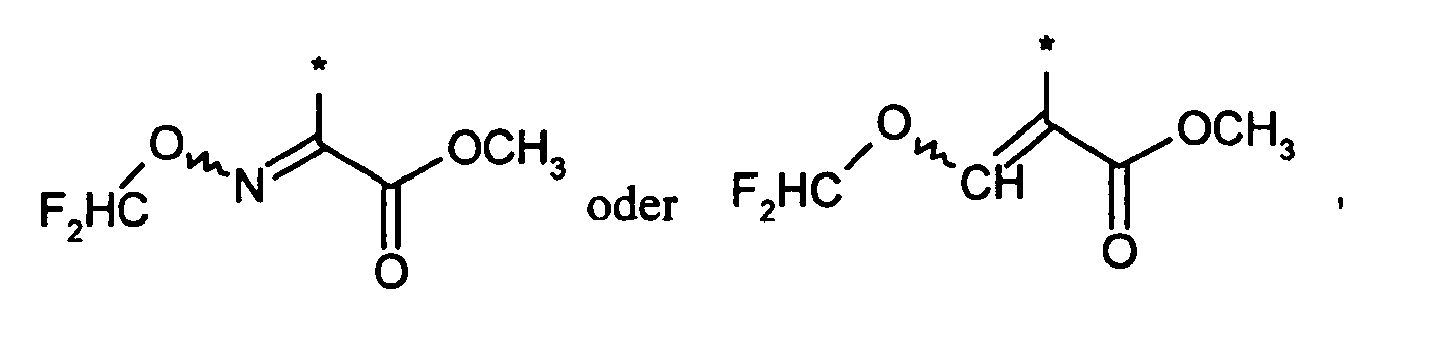
- L 5 is one of the following groups: where * denotes the point of attachment to the phenyl radical.
- radical definitions given in the respective combinations or preferred combinations of radicals in detail for these radicals are, irrespective of the particular combination of radicals, also arbitrarily replaced by radical definitions of other preferred ranges.
- the inventive method has a number of advantages.
- the unsymmetrical 4,6-bis (aryloxy) pyrimidine derivatives are obtained in high yields and purities.
- the more readily available in comparison to the 4,6-difluoropyrimidine derivatives 4,6-dichloropyrimidine derivatives can be used.
- the recovery of the amine is also not required since only catalytic amounts of DABCO are required to carry out the process.
- the compounds of the formula (II) required as starting materials for carrying out the process according to the invention are known and can be prepared by known methods (cf. DE-A1-197 10 609 . WO 97/49605 . DE-A1-196 42 533 and DE-A1- 195 31299 ) or are commercially available commercial products.
- the compounds of the formula (III) required as starting materials for carrying out the process according to the invention are customary commercial products or can be prepared therefrom by simple processes.
- the compounds of the formula (V) required as starting materials for carrying out the process according to the invention are known and can be prepared by known methods (cf. DE-A1 196 11 653 . WO 95/24396 . WO 95/04728 . WO 97/27189 . WO 97/14687 . WO 98/23155 . WO 98/21189 . WO 98/55461 . WO 99/09026 . WO 99/57116 ). All other starting compounds are common commercial products or can be prepared from them by simple methods.
- Suitable diluents for carrying out the first step of the process according to the invention are all inert organic solvents. These include, by way of example and by way of example, aliphatic, alicyclic or aromatic hydrocarbons, such as, for example, petroleum ether, hexane, heptane, cyclohexane, methylcyclohexane, benzene, toluene, xylene or decalin; halogenated hydrocarbons such as chlorobenzene, dichlorobenzene, dichloromethane, chloroform, carbon tetrachloride, dichloroethane or trichloroethane; Ethers such as diethyl ether, diisopropyl ether, methyl t-butyl ether, methyl t-amyl ether, dioxane, tetrahydrofuran, 1,2-dimethoxyethane, 1,2-diethoxyethane or anisole,
- the first step of the process according to the invention is optionally carried out in the presence of a suitable acid acceptor.
- a suitable acid acceptor all customary inorganic or organic bases are suitable.
- these include, by way of example and by way of preference, alkaline earth metal or alkali metal hydroxides, acetates, carbonates or bicarbonates, such as, for example, sodium hydroxide, potassium hydroxide, sodium acetate, potassium acetate, sodium carbonate, potassium carbonate, potassium bicarbonate or sodium bicarbonate; tertiary amines, for example trimethylamine, triethylamine, tributylamine, N, N-dimethylaniline, N, N-dimethylbenzylamine, pyridine, N-methylpiperidine, N-methylmorpholine, N, N-dimethylaminopyridine, diazabicyclononene (DBN) or diazabicycloundecene (DBU) ; and alkaline earth metal or alkali metal
- reaction temperatures can be varied within a relatively wide range in the first stage of the process according to the invention. In general, one works at temperatures of 0 ° C or 100 ° C, preferably at temperatures of 40 ° C to 80 ° C.
- the general procedure is as follows.
- the 4,6-dichloropyrimidine derivative of the formula (II) is optionally combined with a base in the presence of a diluent.
- the compound of the formula (III) or the compound of the formula (V) is optionally added in the presence of a diluent, and if appropriate stirred at elevated or at reduced temperature until the reaction is complete.
- the reaction mixture is worked up in the usual manner or reacted directly in situ in the second stage of the process according to the invention.
- Suitable diluents for carrying out the second step of the process according to the invention are all inert organic solvents. These include, by way of example and by way of example, aliphatic, alicyclic or aromatic hydrocarbons, such as, for example, petroleum ether, hexane, heptane, cyclohexane, methylcyclohexane, benzene, toluene, xylene or decalin; halogenated hydrocarbons, such as chlorobenzene, dichlorobenzene, dichloromethane, chloroform, carbon tetrachloride, dichloroethane or trichloroethane; Ethers, such as diethyl ether, diisopropyl ether, methyl t-butyl ether, methyl t-amyl ether, dioxane, tetrahydrofuran, 1,2-dimethoxyethane, 1,2-diethoxyethane or ani
- the second stage of the process according to the invention is optionally carried out in the presence of a suitable acid acceptor.
- a suitable acid acceptor As such, all customary inorganic or organic bases are suitable. These include, by way of example and by way of preference, alkaline earth metal or alkali metal hydroxides, acetates, carbonates or bicarbonates, such as sodium hydroxide, potassium hydroxide, sodium acetate, potassium acetate, sodium carbonate, potassium carbonate, potassium bicarbonate or sodium bicarbonate; and alkaline earth or alkali metal hydrides, such as calcium hydride, sodium or potassium hydride.
- alkaline earth metal or alkali metal carbonates in particular potassium or sodium carbonate.
- the second stage of the process according to the invention is carried out in the presence of catalytic amounts of 1,4-diazabicyclo [2.2.2] octane (DABCO).
- DABCO 1,4-diazabicyclo [2.2.2] octane
- reaction temperatures can be varied within a relatively wide range when carrying out the second step of the process according to the invention. In general, one works at temperatures of 0 ° C to 100 ° C, preferably at temperatures of 40 ° C to 90 °, in particular at temperatures of 50 ° C to 80 ° C.
- the general procedure is as follows.
- the compounds of formula (V) are optionally added in the presence of a diluent with a base and 1,4-diazabicyclo [2.2.2] octane.
- the compounds of the formula (IV) are optionally added in Presence of a diluent and stirring, optionally at elevated temperature. After completion of the reaction, the reaction mixture is worked up in the usual manner.
- the second stage of process variant a) can also be carried out by mixing the compounds of the formula (IV), if appropriate in the presence of a diluent, with a base and 1,4-diazabicyclo [2.2.2] octane.
- the compounds of the formula (V) are optionally added in the presence of a diluent and stirred, if appropriate at elevated temperature. After completion of the reaction, the reaction mixture is worked up in the usual manner.
- the general procedure is as follows. If appropriate, the compounds of the formula (III) are combined with a base and 1,4-diazabicyclo [2.2.2] octane in the presence of a diluent. To this end, the compounds of the formula (VI) are optionally added in the presence of a diluent and stirred, if appropriate at elevated temperature. After completion of the reaction, the reaction mixture is worked up in the usual manner.
- the carrying out of process step b) can also be carried out by admixing the compounds of the formula (VI), if appropriate in the presence of a diluent, with a base and 1,4-diazabicyclo [2.2.2] octane.
- the compounds of the formula (III) are optionally added in the presence of a diluent and stirred, if appropriate at elevated temperature. After completion of the reaction, the reaction mixture is worked up in the usual manner.
- a special variant of the method according to the invention is the implementation as a one-pot reaction.
- 4,6-Dichloro-5-fluoropyrimidine (1.67 g, content: 98.9%) is initially charged with potassium carbonate (1.72 g) in methyl isobutyl ketone (5 ml) and stirred at 60 ° C. over a period of 3 hours a solution of 1.8 g of 4-fluoro-3- (trifluoromethyl) phenol in 5 ml of methyl isobutyl ketone added dropwise. The mixture is stirred for 1.5 hours at 60 ° C, after cooling with water, the organic phase is separated off, the aqueous phase extracted again with methyl isobutyl ketone, the organic extracts combined, dried over sodium sulfate and the solvent is distilled off. This gives 4-chloro-5-fluoro-6- [4-fluoro-3- (trifluoromethyl) phenoxy] pyrimidine (2.74 g, content: 93.9%, 83.8% of theory) as an oil.
- 4,6-Dichloro-5-fluoropyrimidine (16.7 g, content: 99.7%) is charged with potassium carbonate (20.2 g) in methyl isobutyl ketone (50 ml) and at 60 ° C over a period of 3.5 Hours with a solution of 14.3 g of 3-chloro-2-methylphenol in 50 ml of methyl isobutyl ketone added dropwise.
- the mixture is stirred for 2 hours at 60 ° C, after cooling with water, the organic phase is separated off, the aqueous phase is extracted again with methyl isobutyl ketone, the organic extracts are combined, dried over sodium sulfate and the solvent is distilled off.
- 4-chloro-6- (3-chloro-2-methylphenoxy) -5-fluoropyrimidine (26.8 g, content: 96.7%, 95.2% of theory) as a solid.
- 4,6-Dichloro-5-fluoropyrimidine (33.5 g, content: 98.9%) is charged with potassium carbonate (34.4 g) in a methyl isobutyl ketone-water mixture (120 ml, 5/1) and at 60 ° C over a period of 3 hours with a solution of 25.7 g of o-chlorophenol in 100 ml of methyl isobutyl ketone added dropwise.
- the mixture is stirred for 6 hours at 60 ° C., the organic phase is separated off after cooling, the organic phase is washed with 5% NaOH, the aqueous phase is extracted with methyl isobutyl ketone, the organic extracts are combined, dried over sodium sulphate and the solvent is distilled off.
- 4-chloro-6- (2-chlorophenoxy) -5-fluoropyrimidine (48.4 g, content: 95.6%, 90.3% of theory) as an oil.
- 4,6-Dichloro-5-fluoropyrimidine (33.5 g, content: 98.9%) is charged with potassium carbonate (34.4 g) in a methyl isobutyl ketone-water mixture (120 ml, 5/1) and at 60 ° C over a period of 3 hours with a solution of 25.7 g of o-chlorophenol in 100 ml of methyl isobutyl ketone added dropwise.
- the mixture is stirred for 6 hours at 60 ° C., the organic phase is separated off after cooling, the organic phase is washed with 5% NaOH, the aqueous phase is extracted with methyl isobutyl ketone, the organic extracts are combined, dried over sodium sulphate and the solvent is distilled off.
- 4-chloro-6- (2-chlorophenoxy) -5-fluoropyrimidine (48.4 g, content: 95.6%, 90.3% of theory) as an oil.
- 4,6-Dichloro-5-fluoropyrimidine (31.8 g, content: 98.9%) is initially charged with potassium carbonate (31.5 g) in acetone (115 ml) and stirred at 60 ° C. for a period of 6 hours a solution of 44.9 g of (E) -5,6-dihydro-1,4,2-dioxazin-3-yl (2-hydroxyphenyl) methanone O-methyloxime in 350 ml of acetone added dropwise.
Landscapes
- Chemical & Material Sciences (AREA)
- Organic Chemistry (AREA)
- Plural Heterocyclic Compounds (AREA)
- Organic Low-Molecular-Weight Compounds And Preparation Thereof (AREA)
- Nitrogen Condensed Heterocyclic Rings (AREA)
- Liquid Crystal Substances (AREA)
Description
- Die Erfindung betrifft ein neues Verfahren zur Herstellung von unsymmetrischen, bekannten 4,6-Bis(aryloxy)pyrimidin-Derivaten.
- Unsymmetrische 4,6-Bis(aryloxy)pyrimidin-Derivate sind bekannt und werden beispielsweise im Pflanzenschutz als Schädlingsbekämpfungsmittel eingesetzt (vgl.
WO 94/02470 WO 97/27189 WO 98/21189 WO 99/57116 - Die Herstellung unsymmetrischer 4,6-Bis(aryloxy)pyrimidin-Derivate ist schwieriger als die Herstellung symmetrischer 4,6-Bis(aryloxy)pyrimidin-Verbindungen, da die unterschiedlichen Aryloxygruppen in getrennten Reaktionen eingeführt werden müssen.
- Es sind bereits mehrere Verfahren zur Herstellung von unsymmetrischen 4,6-Bis(aryloxy)pyrimidin-Derivaten bekannt.
- In
WO 94/02470 
- Der Nachteil dieses Verfahrens liegt darin, dass es im zweiten Reaktionsschritt zum Austausch der Aryloxygruppen kommt, wodurch ein Produktgemisch aus unsymmetrischen 4,6-Bis(aryloxy)pyrimidin-Derivaten (E) und den symmetrischen 4,6-Bis(aryloxy)pyrimidin-Derivaten (F) und (G) erhalten wird.
- Die unsymmetrischen 4,6-Bis(aryloxy)pyrimidin-Derivate (E) werden daher in schlechter Ausbeute erhalten und können nur mittels aufwendiger Trennmethoden isoliert werden.
- Um das Problem des Austauschs der Aryloxygruppen in der zweiten Reaktionstufe zu umgehen, kann als Ausgangsverbindung 4,6-Difluorpyrimidin verwendet werden (vgl. Schema 2 und
WO 94/02470 EP-A1-794 177 
- Ein Nachteil dieses Verfahrens liegt jedoch darin, dass 4,6-Difluorpyrimidin durch einen Chlor-Fluor-Austausch ausgehend von 4,6-Dichlor-pyrimidin hergestellt wird. Folglich ist zur Herstellung von unsymmetrischen 4,6-Bis(aryloxy)pyrimidin-Derivaten ein zusätzlicher Reaktionsschritt erforderlich. Daher sind 4,6-Dichlorpyrimidin bzw. 4,6-Dichlorpyrimidin-Derivate als Ausgangsverbindungen bevorzugt.
- Die Herstellung von unsymmetrischen 4,6-Bis(aryloxy)pyrimidin-Derivaten, ausgehend von 4,6-Dichlor-5-halogen-pyrimidin analog dem in
WO 94/02470 WO 98/41513 - In
EP-A1-794 177 US 5,849,910 undUS 5,977,363 wird ein weiteres Verfahren zur Herstellung von unsymmetrischen 4,6-Bis(aryloxy)pyrimidin-Derivaten (E) ausgehend von 4,6-Dichlorpyrimidin (A) beschrieben (vgl. Schema 3).
- In diesem Verfahren wird das nach dem ersten Reaktionsschritt erhaltene Aryloxy-Chlorpyrimidin-Derivat (C) mit mindestens einem molaren Äquivalent eines tertiären Amins behandelt.
- Als Zwischenprodukte entstehen Pyrimidinyl-Ammonium-Derivate (J), die mit Phenol-Derivaten (D) zu den unsymmetrischen 4,6-Bis(aryloxy)pyrimidin-Derivaten (E) umgesetzt werden.
- Der Nachteil dieses Verfahrens liegt daran, dass das tertiäre Amin mindestens in molaren äquivalenten Mengen erforderlich ist und nur mittels aufwendiger Verfahren zurückgewonnen werden kann. Außerdem werden die unsymmetrischen 4,6-Bis(aryl-oxy)pyrimidin-Derivate nur in mäßigen Ausbeuten erhalten. Dieses Verfahren ist daher für die großtechnische Herstellung, vor allem bei Verwendung teurer Amine, nicht geeignet.
- Es wurde nun gefunden, dass man unsymmetrische 4,6-Bis(aryloxy)pyrimidin-Derivate der allgemeinen Formel (I),

- Ar1 für gegebenenfalls durch Halogen oder durch Alkyl, Alkoxy, Halogenalkyl, Halogenalkoxy mit jeweils 1 bis 4 Kohlenstoffatomen substituiertes Heterocyclyl mit 3 bis 7 Ringgliedern steht;
oder für jeweils gegebenenfalls einfach bis vierfach, gleich oder verschieden substituiertes Phenyl oder Naphthyl steht, wobei die möglichen Substituenten vorzugsweise aus der nachstehenden Aufzählung ausgewählt sind: - Halogen, Cyano, Nitro, Formyl, Carboxy, Carbamoyl, Thiocarbamoyl;
- jeweils geradkettiges oder verzweigtes Alkyl, Oxoalkyl, Alkoxy, Alkoxyalkyl, Alkylthioalkyl, Dialkoxyalkyl, Alkylthio, Alkylsulfinyl oder Alkylsulfonyl mit jeweils 1 bis 8 Kohlenstoffatomen;
- jeweils geradkettiges oder verzweigtes Alkenyl oder Alkenyloxy mit jeweils 2 bis 6 Kohlenstoffatomen;
- jeweils geradkettiges oder verzweigtes Halogenalkyl, Halogenalkoxy, Halogenalkylthio, Halogenalkylsulfinyl oder Halogenalkylsulfonyl mit jeweils 1 bis 6 Kohlenstoffatomen und 1 bis 13 gleichen oder verschiedenen Halogenatomen;
- jeweils geradkettiges oder verzweigtes Halogenalkenyl oder Halogenalkenyloxy mit jeweils 2 bis 6 Kohlenstoffatomen und 1 bis 11 gleichen oder verschiedenen Halogenatomen;
- jeweils geradkettiges oder verzweigtes Dialkylamino,
- Alkylcarbonyl, Alkylcarbonyloxy, Alkoxycarbonyl, Alkylaminocarbonyl, Dialkylaminocarbonyl, Arylalkylaminocarbonyl, Dialkylaminocarbonyloxy, Alkenylcarbonyl oder Alkinylcarbonyl, mit 1 bis 6 Kohlenstoffatomen in den jeweiligen Kohlenwasserstoffketten;
- Cycloalkyl oder Cycloalkyloxy mit jeweils 3 bis 6 Kohlenstoffatomen;
- jeweils gegebenenfalls einfach bis vierfach, gleich oder verschieden durch Fluor, Chlor, Oxo, Methyl, Trifluormethyl oder Ethyl substituiertes, jeweils zweifach verknüpftes Alkylen mit 3 oder 4 Kohlenstoffatomen, Oxyalkylen mit 2 oder 3 Kohlenstoffatomen oder Dioxyalkylen mit 1 oder 2 Kohlenstoffatomen;
- oder eine Gruppierung

- A1 für Wasserstoff, Hydroxy oder Alkyl mit 1 bis 4 Kohlenstoffatomen oder Cycloalkyl mit 1 bis 6 Kohlenstoffatomen steht und
- A2 für Hydroxy, Methoxy, Ethoxy, Amino, Methylamino, Phenyl, Benzyl oder für jeweils gegebenenfalls durch Cyano, Alkoxy, Alkylthio, Alkylamino, Dialkylamino oder Phenyl substituiertes Alkyl oder Alkoxy mit 1 bis 4 Kohlenstoffatomen, oder für Alkenyloxy oder Alkinyloxy mit jeweils 2 bis 4 Kohlenstoffatomen steht,
sowie jeweils gegebenenfalls im Ringteil einfach bis dreifach durch Halogen, und/oder geradkettiges oder verzweigtes Alkyl oder Alkoxy mit 1 bis 4 Kohlenstoffatomen substituiertes Phenyl, Benzoyl, Benzoylethenyl, Cinnamoyl, Heterocyclyl oder Phenylalkyl, Phenylalkyloxy oder Heterocyclylalkyl, mit jeweils 1 bis 3 Kohlenstoffatomen in den jeweiligen Alkylteilen, - X für Fluor oder Chlor steht,
- L1, L2, L3, L4 und L5 gleich oder verschieden sind und unabhängig voneinander jeweils für Wasserstoff, Halogen, Cyano, Nitro, Formyl, Alkylcarbonyl, Alkoxycarbonyl, Aminocarbonyl, Alkylaminocarbonyl, Dialkylaminocarbonyl mit jeweils 1 bis 6 Kohlenstoffatomen, jeweils gegebenenfalls durch 1 bis 5 Halogenatome substituiertes Alkyl, Alkoxy, Alkylthio, Alkylsulfonyl oder Alkylsulfonyl mit jeweils 1 bis 6 Kohlenstoffatomen stehen,
oder - L1, L2, L3 und L4 gleich oder verschieden sind und unabhängig voneinander jeweils für Wasserstoff, Halogen, Cyano, Nitro, Formyl, Alkylcarbonyl, Alkoxycarbonyl, Aminocarbonyl, Alkylaminocarbonyl, Dialkylaminocarbonyl, mit jeweils 1 bis 6 Kohlenstoffatomen, jeweils gegebenenfalls durch 1 bis 5 Halogenatome substituiertes Alkyl, Alkoxy, Alkylthio, Alkylsulfinyl oder Alkylsulfonyl mit jeweils 1 bis 6 Kohlenstoffatomen stehen und
und - L5 für eine der folgenden Gruppen steht:


und wobei die Reste - Ar1 und

erhält, wenn man - 4,6-Dichlorpyrimidin-Derivate der allgemeinen Formel (II),

- X die oben angegebene Bedeutung hat,
- a) zunächst in einer ersten Stufe mit Verbindungen der allgemeinen Formel (III),
Ar1-OH, (III)
in welcher- Ar1 die oben angegebene Bedeutung hat,
- gegebenenfalls in Gegenwart eines Verdünnungsmittels und gegebenenfalls in Gegenwart eines Säureakzeptors umsetzt,
- und die dabei entstehenden Verbindungen der Formel (IV),

- Ar1 und X die oben angegebenen Bedeutungen haben,
dann in einer zweiten Stufe mit Verbindungen der allgemeinen Formel (V),
- L1, L2, L3, L4 und L5 die oben angegebenen Bedeutungen haben,
- gegebenenfalls in Gegenwart eines Lösungsmittel, in Gegenwart einer Base und unter Zusatz von 2 bis 20 Mol-% 1,4-Diazabicyclo[2.2.2]octan (DABCO) umsetzt,
oder
- b) zunächst in einer ersten Stufe mit Verbindungen der allgemeinen Formel (V),

- L1, L2, L3, L4 und L2 die oben angegebenen Bedeutungen haben,
- gegebenenfalls in Gegenwart eines Verdünnungsmittels und gegebenenfalls in Gegenwart eines Säureakzeptors umsetzt,
- und die dabei entstehenden Verbindungen der Formel (VI),

- X, L1, L2, L3, L4 und L5 die oben angegebenen Bedeutungen haben,
dann in einer zweiten Stufe mit Verbindungen der allgemeinen Formel (III),
Ar1-OH, (III)
in welcher - Ar1 die oben angegebene Bedeutung hat,
- gegebenenfalls in Gegenwart eines Lösungsmittel, gegebenenfalls in Gegenwart einer Base und unter Zusatz von 2 bis 20 Mol-% 1,4-Diazabicyclo[2.2.2]octan (DABCO) umsetzt.
- In den Definitionen sind die gesättigten oder ungesättigten Kohlenwasserstoffketten, wie Alkyl, Alkandiyl, Alkenyl oder Alkinyl, auch in Verknüpfung mit Heteroatomen, wie beispielsweise in Alkoxy, Alkylthio oder Alkylamino, jeweils geradkettig oder verzweigt. Bevorzugt sind, wenn nicht anders angegeben, Kohlenwasserstoffketten mit 1 bis 6 Kohlenstoffatomen. Bevorzugt sind für Alkenyl oder Alkinyl, wenn nicht anders angegeben, Kohlenwasserstoffketten mit 2 bis 6 Kohlenstoffatomen.
- Halogen steht im allgemeinen für Fluor, Chlor, Brom oder Iod, vorzugsweise für Fluor, Chlor oder Brom, insbesondere für Fluor oder Chlor.
- Aryl steht für aromatische, mono- oder polycyclische Kohlenwasserstoffringe, wie z.B. Phenyl, Naphthyl, Anthranyl, Phenanthryl, vorzugsweise Phenyl oder Naphthyl, insbesondere Phenyl.
- Heterocyclyl steht für gesättigte oder ungesättigte, sowie aromatische, ringförmige Verbindungen, in denen mindestens ein Ringglied ein Heteroatom, d. h. ein von Kohlenstoff verschiedenes Atom, ist. Enthält der Ring mehrere Heteroatome, können diese gleich oder verschieden sein. Heteroatome sind bevorzugt Sauerstoff, Stickstoff oder Schwefel. Enthält der Ring mehrere Sauerstoffatome, stehen diese nicht benachbart. Gegebenenfalls bilden die ringförmigen Verbindungen mit weiteren carbocyclischen oder heterocyclischen, ankondensierten oder überbrückten Ringen gemeinsam ein polycyclisches Ringsystem. Bevorzugt sind mono- oder bicyclische Ringsysteme, insbesondere mono- oder bicyclische, aromatische Ringsysteme.
- Cycloalkyl steht für gesättigte, carbocyclische, ringförmige Verbindungen, die gegebenenfalls mit weiteren carbocyclischen, ankondensierten oder überbrückten Ringen ein polycyclisches Ringsystem bilden.
- Ein polycyclisches Ringsystem kann mit einem heterocyclischen Ring oder einem ankondensierten carbocyclischen Ring verknüpft sein. Das so beschriebene Heterocyclyl kann auch einfach oder mehrfach substituiert sein, vorzugsweise durch Methyl, Ethyl oder Halogen. Bevorzugt sind mono- oder bicyclische Ringsysteme, insbesondere mono- oder bicyclische Ringsysteme.
- Halogenalkoxy steht für teilweise oder vollständig halogeniertes Alkoxy. Bei mehrfach halogeniertem Halogenalkoxy können die Halogenatome gleich oder verschieden sein. Bevorzugte Halogenatome sind Fluor und Chlor, insbesondere Fluor. Trägt das Halogenalkoxy noch weitere Substituenten, reduziert sich die maximal mögliche Zahl der Halogenatome auf die verschiedenen freien Valenzen. Bevorzugt sind, wenn nicht anders angegeben, Kohlenwasserstoffketten mit 1 bis 6 Kohlenstoffatomen.
- Halogenalkyl steht für teilweise oder vollständig halogeniertes Alkyl. Bei mehrfach halogeniertem Halogenalkyl können die Halogenatome gleich oder verschieden sein. Bevorzugte Halogenatome sind Fluor und Chlor, insbesondere Fluor. Trägt das Halogenalkyl noch weitere Substituenten, reduziert sich die maximal mögliche Zahl der Halogenatome auf die verbleibenden freien Valenzen. Bevorzugt sind, wenn nicht anders angegeben, Kohlenwasserstoffketten mit 1 bis 6 Kohlenstoffatomen. Die Ausgangsverbindungen der Formeln (III) und (V), die Zwischenprodukte der Formeln (IV) und (VI) und die Endprodukte der allgemeinen Formel (I) können als reine Isomere verschiedener möglicher isomerer Formen, z. B. als E oder Z-Isomere oder gegebenenfalls als Mischungen verschiedener möglicher isomerer Formen, insbesondere von Heteroisomeren, wie z.B. als E-/Z-Gemische, vorliegen.
- Bevorzugt sind Verbindungen, in denen Ar1 für:
- gegebenenfalls durch Methyl, Ethyl, Methoxy, Ethoxy, Trifluormethyl oder Trifluormethoxy substituiertes Thienyl, Pyridyl oder Furyl steht;
- oder für jeweils gegebenenfalls einfach bis vierfach, gleich oder verschieden substituiertes Phenyl steht, wobei die möglichen Substituenten vorzugsweise aus der nachstehenden Aufzählung ausgewählt sind:
- Fluor, Chlor, Brom, Iod, Cyano, Nitro, Formyl, Carboxy, Carbamoyl, Thiocarbamoyl,
- Methyl, Ethyl, n- oder i-Propyl, n-, i-, s- oder t-Butyl, 1-, 2-, 3-, neo-Pentyl, 1-, 2-, 3-, 4-(2-Methylbutyl), 1-, 2-, 3-Hexyl, 1-, 2-, 3-, 4-, 5-(2-Methylpentyl), 1-, 2-, 3-(3-Methylpentyl), 2-Ethylbutyl, 1-, 3-, 4-(2,2-Dimetylbutyl), 1-, 2-(2,3-Dimethylbutyl), 3-Oxobutyl, Methoxymethyl, Dimethoxymethyl, Methoxy, Ethoxy, n- oder i-Propoxy,
- Methylthio, Ethylthio, n- oder i-Propylthio, Methylsulfinyl, Ethylsulfinyl, Methylsulfonyl oder Ethylsulfonyl,
- Vinyl, Allyl, 2-Methylallyl, Propen-1-yl, Crotonyl, Propargyl, Vinyloxy, Allyloxy, 2-Methylallyloxy, Propen-1-yloxy, Crotonyloxy, Propargyloxy;
- Trifluormethyl, Trifluorethyl,
- Difluormethoxy, Trifluormethoxy, Difluorchlormethoxy, Trifluorethoxy, Difluormethylthio, Trifluormethylthio, Difluorchlormethylthio, Trifluormethylsulfinyl oder Trifluormethylsulfonyl,
- Dimethylamino, Diethylamino,
- Acetyl, Propionyl, Methoxycarbonyl, Ethoxycarbonyl, Methylaminocarbonyl, Ethylaminocarbonyl, Dimethylaminocarbonyl, Diethylaminocarbonyl, Dimethylaminocarbonyloxy, Diethylaminocarbonyloxy, Benzylaminocarbonyl, Acryloyl, Propioloyl,
- Cyclopentyl, Cyclohexyl,
- jeweils gegebenenfalls einfach bis vierfach, gleich oder verschieden durch Fluor, Chlor, Oxo, Methyl oder Trifluormethyl substituiertes, jeweils zweifach verknüpftes Propandiyl, Ethylenoxy,
- oder eine Gruppierung

- A1 für Wasserstoff, Methyl oder Hydroxy steht und
- A2 für Hydroxy, Methoxy, Ethoxy, Amino, Methylamino, Phenyl oder Benzyl steht, sowie
jeweils gegebenenfalls im Ringteil einfach bis dreifach durch Halogen, und/oder geradkettiges oder verzweigtes Alkyl oder Alkoxy mit 1 bis 4 Kohlenstoffatomen substituiertes Phenyl, Benzoyl, Benzoylethenyl, Cinnamoyl, Benzyl, Phenylethyl, Phenylpropyl, Benzyloxy, 5,6-Dihydro-1,4,2-dioxazin-3-ylmethyl, Triazolylmethyl, Benzoxazol-2-ylmethyl, 1,3-Dioxan-2-yl, Benzimidazol-2-yl, Dioxol-2-yl, Oxadiazolyl. - In einer weiteren ganz besonders bevorzugten Gruppe von Verbindungen steht Ar1 für einfach bis vierfach substituiertes Phenyl, wobei die Substituenten aus der nachstehenden Aufzählung ausgewählt sind:
- Halogen, Cyano, jeweils geradkettiges oder verzweigtes Alkyl oder Halogenalkyl mit insbesondere 1 bis 4 Kohlenstoffatomen.
- Besonders bevorzugt sind Verbindungen, in denen X für Fluor steht.
- Bevorzugt sind Verbindungen, in denen L1, L2, L3 und L4 gleich oder verschieden sind und unabhängig voneinander vorzugsweise jeweils für Wasserstoff, Fluor, Chlor, Brom, Cyano, Nitro, Acetyl, Propionyl, Methoxycarbonyl, Ethoxycarbonyl, Methylaminocarbonyl, Ethylaminocarbonyl, Dimethylaminocarbonyl, Diethylaminocarbonyl, Methyl, Ethyl, n- oder i-Propyl, n-, i-, s- oder t-Butyl, Methoxy, Ethoxy, n-oder i-Propoxy, Methylthio, Ethylthio, Methylsulfinyl, Ethylsulfinyl, Methylsulfonyl oder Ethylsulfonyl, Trifluormethyl, Trifluorethyl, Difluormethoxy, Trifluormethoxy, Difluorchlormethoxy, Trifluorethoxy, Difluormethylthio, Difluorchlormethylthio, Trifluormethylthio, Trifluormethylsulfinyl oder Trifluormethylsulfonyl stehen.
- In einer ganz besonders bevorzugten Gruppe von Verbindungen stehen L1, L2, L3 und L4 für Wasserstoff oder Methyl.
- In einer weiteren ganz besonders bevorzugten Gruppe von Verbindungen stehen stehen L1, L2, L3 und L4 für Wasserstoff.
- Bevorzugt sind Verbindungen, in denen L5 für eine der folgenden Gruppen steht:


- In einer ganz besonders bevorzugten Gruppe von Verbindungen steht L5 für eine der folgenden Gruppen:

- Die oben aufgeführten allgemein oder in Vorzugsbereichen angegebenen Restedefinitionen gelten sowohl für die Endprodukte der Formel (I) als auch entsprechend für die jeweils zur Herstellung benötigten Ausgangsstoffe bzw. Zwischenprodukte.
- Die in den jeweiligen Kombinationen bzw. bevorzugten Kombinationen von Resten im einzelnen für diese Reste angegebenen Restedefinitionen werden unabhängig von der jeweilig angegebenen Kombination der Reste, beliebig auch durch Restedefinitionen anderer Vorzugsbereiche ersetzt.
- Es ist als ausgesprochen überraschend zu bezeichnen, dass beim erfindungsgemäßen Verfahren Aryloxyhalogenpyrimidin-Derivate unter Zusatz von 2 bis 20 Mol-% des tertiären Amins 1,4-Diazabicyclo[2.2.2]octan (DABCO) zu unsymmetrischen 4,6-Bis(aryl)oxypyrimidin-Derivaten mit hoher Selektivität und Ausbeute reagieren. Da im Stand der Technik (vgl.
EP-A1-794 177 US 5,849,990 undUS 5,977,363 ) darauf hingewiesen wird, dass für diese Reaktion mindestens ein molares Äquivalent eines tertiären Amins erforderlich ist, ist es äußerst überraschend, dass diese Reaktion auch mit 2 bis 20 Mol-% DABCO in hervorragenden Ausbeuten durchgeführt werden kann. Dies wird durch einen Vergleichsversuch bestätigt, bei dem die Umsetzung ohne Zusatz von DABCO durchgeführt wurde (vgl. Beispiel 4, zweite Stufe). Das Produkt kann nur in sehr schlechten Ausbeuten isoliert werden. - Das erfindungsgemäße Verfahren weist eine Reihe von Vorteilen auf. Die unsymmetrischen 4,6-Bis(aryloxy)pyrimidin-Derivate werden in hohen Ausbeuten und Reinheiten erhalten. Außerdem können als Ausgangsverbindungen die im Vergleich zu den 4,6-Difluorpyrimidin-Derivaten leichter zugänglichen 4,6-Dichlorpyrimidin-Derivate eingesetzt werden. Die Wiedergewinnung des Amins ist ebenfalls nicht erforderlich, da nur katalytische Mengen an DABCO zur Durchführung des Verfahrens erforderlich sind.
- Die zur Durchführung des erfindungsgemäßen Verfahrens als Ausgangsstoffe benötigten Verbindungen der Formel (II) sind bekannt und lassen sich nach bekannten Methoden herstellen (vgl.
DE-A1-197 10 609 ,WO 97/49605 DE-A1-196 42 533 undDE-A1- 195 31299 ) oder sind käufliche Handelsprodukte. - Die zur Durchführung des erfindungsgemäßen Verfahrens als Ausgangsstoffe benötigten Verbindungen der Formel (III) sind gängige Handelsprodukte oder können durch einfache Verfahren aus diesen hergestellt werden.
- Die zur Durchführung des erfindungsgemäßen Verfahrens als Ausgangsstoffe benötigten Verbindungen der Formel (V) sind bekannt und lassen sich nach bekannten Methoden herstellen (vgl.
DE-A1 196 11 653 ,WO-A-95/24396 WO 95/04728 WO 97/27189 WO 97/14687 WO 98/23155 WO 98/21189 WO 98/55461 WO 99/09026 WO 99/57116 - Als Verdünnungsmittel zur Durchführung der ersten Stufe des erfindungsgemäßen Verfahrens kommen alle inerten organischen Lösungsmittel in Betracht. Hierzu gehören beispielhaft und vorzugsweise aliphatische, alicyclische oder aromatische Kohlenwasserstoffe, wie beispielsweise Petrolether, Hexan, Heptan, Cyclohexan, Methylcyclohexan, Benzol, Toluol, Xylol oder Decalin; halogenierte Kohlenwasserstoffe wie beispielsweise Chlorbenzol, Dichlorbenzol, Dichlormethan, Chloroform, Tetrachlormethan, Dichlorethan oder Trichlorethan; Ether wie beispielsweise Diethylether, Diisopropylether, Methyl-t-butylether, Methyl-t-amylether, Dioxan, Tetrahydrofuran, 1,2-Dimethoxyethan, 1,2-Diethoxyethan oder Anisol, Ketone wie beispielweise Aceton, Butanon, Methylisobutylketon oder Cyclohexanon, Nitrile, wie beispielsweise Acetonnitril, Propionitril, n- oder i-Butyronitril oder Benzonitril, Amide, wie N,N'-Dimethylformamid, N,N'-Dimethylacetamid, N-Methylformamid, N-Methylpyrrolidon oder Hexamethylphosphorsäuretriamid; Ester wie Essigsäuremethylester oder Essigsäureethylester; Sulfoxide, wie Dimethylsulfoxid; Sulfone, wie Sulfolan; oder deren Gemische mit Wasser. Bevorzugt werden in der ersten Stufe des erfindungsgemäßen Verfahrens Ketone, insbesondere Methylisobutylketon verwendet.
- Die erste Stufe des erfindungsgemäßen Verfahrens wird gegebenenfalls in Gegenwart eines geeigneten Säureakzeptors durchgeführt. Als solche kommen alle üblichen anorganischen oder organischen Basen infrage. Hierzu gehören beispielhaft und vorzugsweise Erdalkalimetall- oder Alkalimetallhydroxide, -acetate, -carbonate oder -hydrogencarbonate, wie beispielsweise Natriumhydroxid, Kaliumhydroxid, Natriumacetat, Kaliumacetat, Natriumcarbonat, Kaliumcarbonat, Kaliumhydrogencarbonat oder Natriumhydrogencarbonat; tertiäre Amine, wie beispielsweise Trimethylamin, Triethylamin, Tributylamin, N,N-Dimethylanilin, N,N-Dimethyl-benzylamin, Pyridin, N-Methylpiperidin, N-Methylmorpholin, N,N-Dimethylaminopyridin, Diazabicyclononen (DBN) oder Diazabicycloundecen (DBU); sowie Erdalkalimetall- oder Alkalimetallhydride, wie beispielsweise Calciumhydrid, Natrium- oder Kaliumhydrid. Bevorzugt werden in der ersten Stufe des erfindungsgemäßen Verfahrens Erdalkalimetall- oder Alkalimetallcarbonate, insbesondere Kalium- oder Natriumcarbonat verwendet.
- Die Reaktionstemperaturen können bei der der ersten Stufe des erfindungsgemäßen Verfahrens in einem größerem Bereich variiert werden. Im Allgemeinen arbeitet man bei Temperaturen von 0°C oder 100°C, vorzugsweise bei Temperaturen von 40°C bis 80°C.
- Zur Durchführung des erfindungsgemäßen Verfahrens setzt man pro Mol der Verbindungen der Formel (III) im Allgemeinen 1 bis 4 Mol, vorzugsweise 1 bis 1,1 Mol des 4,6-Dichlorpyrimidin-Derivates der Formel (II) ein.
- Zur Durchführung des erfindungsgemäßen Verfahrens setzt man pro Mol der Verbindungen der Formel (V) im Allgemeinen 1 bis 4 Mol, vorzugsweise 1 bis 1,1 Mol des 4,6-Dichlorpyrimidin-Derivates der Formel (II) ein.
- Zur Durchführung der ersten Stufe des erfindungsgemäßen Verfahrens geht man im Allgemeinen wie folgt vor. Das 4,6-Dichlorpyrimidin-Derivat der Formel (II) wird gegebenenfalls in Gegenwart eines Verdünnungsmittels mit einer Base versetzt. Hierzu gibt man die Verbindung der Formel (III) bzw. die Verbindung der Formel (V) gegebenenfalls in Gegenwart eines Verdünnungsmittels, und rührt gegebenenfalls bei erhöhter oder bei erniedrigter Temperatur, bis die Umsetzung vollständig ist. Nach beendeter Umsetzung wird das Reaktionsgemisch in üblicher Weise aufgearbeitet oder direkt in situ in der zweiten Stufe des erfindungsgemäßen Verfahrens umgesetzt.
- Die Zugabe von Verbindungen der Formel (III) bzw. von Verbindungen der Formel (V) gegebenenfalls in Gegenwart eines Verdünnungsmittels in der ersten Stufe des erfindungsgemäßen Verfahrens erfolgt insbesondere durch Dosierung zu Verbindungen der Formel (II), die gegebenenfalls in einem Keton, insbesondere in Methylisobutylketon gelöst sind. Die Zugabe erfolgt auf einmal bis innerhalb von 12 Stunden, bevorzugt auf einmal bis innerhalb von 6 Stunden.
- Als Verdünnungsmittel zur Durchführung der zweiten Stufe des erfindungsgemäßen Verfahrens kommen alle inerten organischen Lösungsmittel in Betracht. Hierzu gehören beispielhaft und vorzugsweise aliphatische, alicyclische oder aromatische Kohlenwasserstoffe, wie beispielsweise Petrolether, Hexan, Heptan, Cyclohexan, Methylcyclohexan, Benzol, Toluol, Xylol oder Decalin; halogenierte Kohlenwasserstoffe, wie beispielsweise Chlorbenzol, Dichlorbenzol, Dichlormethan, Chloroform, Tetrachlormethan, Dichlorethan oder Trichlorethan; Ether, wie beispielsweise Diethylether, Diisopropylether, Methyl-t-butylether, Methyl-t-amylether, Dioxan, Tetrahydrofuran, 1,2- Dimethoxyethan, 1,2-Diethoxyethan oder Anisol; Ketone, wie beispielsweise Aceton, Butanon, Methylisobutylketon oder Cyclohexanon; Nitrile, wie beispielsweise Acetonitril, Propionitril, n- oder i-Butyronitril oder Benzonitril; Amide, wie N,N-Dimethylformamid, N,N-Dimethylacetamid, N-Methylformanilid, N-Methylpyrrolidon oder Hexamethylphosphorsäuretriamid; Ester wie Essigsäuremethylester oder Essigsäureethylester; Sulfoxide, wie Dimethylsulfoxid; Sulfone, wie Sulfolan; oder deren Gemische mit Wasser. Bevorzugt werden in der zweiten Stufe des erfindungsgemäßen Verfahrens Ketone, insbesondere Methylisobutylketon verwendet.
- Die zweite Stufe des erfindungsgemäßen Verfahrens wird gegebenenfalls in Gegenwart eines geeigneten Säureakzeptors durchgeführt. Als solche kommen alle üblichen anorganischen oder organischen Basen infrage. Hierzu gehören beispielhaft und vorzugsweise Erdalkalimetall- oder Alkalimetallhydroxide, -acetate, -carbonate oder -hydrogencarbonate, wie Natriumhydroxid, Kaliumhydroxid, Natriumacetat, Kaliumacetat, Natriumcarbonat, Kaliumcarbonat, Kaliumhydrogencarbonat oder Natriumhydrogencarbonat; sowie Erdalkali- oder Alkalimetallhydride, wie beispielsweise Calciumhydrid, Natrium- oder Kaliumhydrid. Bevorzugt in der zweiten Stufe des erfindungsgemäßen Verfahrens Erdalkali- oder Alkalimetallcarbonate, insbesondere Kalium- oder Natriumcarbonat verwendet.
- Die zweite Stufe des erfindungsgemäßen Verfahrens wird in Gegenwart von katalytischen Mengen 1,4-Diazabicyclo[2.2.2]octan (DABCO) durchgeführt.
- Die Reaktionstemperaturen können bei der Durchführung zweiten Stufe des erfindungsgemäßen Verfahrens in einem größeren Bereich variert werden. Im Allgemeinen arbeitet man bei Temperaturen von 0°C bis 100°C, vorzugsweise bei Temperaturen von 40°C bis 90°, insbesondere bei Temperaturen von 50°C bis 80°C.
- Zur Durchführung des erfindungsgemäßen Verfahrens setzt man pro Mol der Verbindungen der Formel (IV) im Allgemeinen 0,8 bis 4 Mol, vorzugsweise 0,95 bis 1,05 Mol der Verbindungen der Formel (V) ein.
- Zur Durchführung des erfindungsgemäßen Verfahrens setzt man pro Mol der Verbindungen der Formel (VI) im Allgemeinen 0,8 bis 4 Mol, vorzugsweise 0,95 bis 1,05 Mol der Verbindungen der Formel (III) ein.
- Zur Durchführung des erfindungsgemäßen Verfahrens setzt man pro Mol der Verbindungen der Formel (IV) im Allgemeinen 2 bis 20 Mol-% 1,4-Diazabicyclo[2.2.2]octan ein.
- Zur Durchführung des erfindungsgemäßen Verfahrens setzt man pro Mol der Verbindungen der Formel (VI) im Allgemeinen 2 bis 20 Mol-%, bevorzugt 2 bis 20 Mol-% 1,4-Diazabicyclo[2.2.2]octan ein.
Zur Durchführung der zweiten Stufe der Verfahrensvariante a) geht man im Allgemeinen wie folgt vor. Die Verbindungen der Formel (V) werden gegebenenfalls in Gegenwart eines Verdünnungsmittels mit einer Base und 1,4-Diazabicyclo[2.2.2]-octan versetzt. Hierzu gibt man die Verbindungen der Formel (IV) gegebenenfalls in Gegenwart eines Verdünnungsmittels und rührt, gegebenenfalls bei erhöhter Temperatur. Nach beendeter Reaktion wird das Reaktionsgemisch in üblicher Weise aufgearbeitet. - Alternativ kann die Durchführung der zweiten Stufe der Verfahrensvariante a) auch dadurch erfolgen, dass die Verbindungen der Formel (IV) gegebenenfalls in Gegenwart eines Verdünnungsmittels mit einer Base und 1,4-Diazabicyclo[2.2.2]octan versetzt werden. Hierzu gibt man die Verbindungen der Formel (V) gegebenenfalls in Gegenwart eines Verdünnungsmittels und rührt, gegebenenfalls bei erhöhter Temperatur. Nach beendeter Reaktion wird das Reaktionsgemisch in üblicher Weise aufgearbeitet.
- Zur Durchführung der zweiten Stufe der Verfahrensvariante b) geht man im Allgemeinen wie folgt vor. Die Verbindungen der Formel (III) werden gegebenenfalls in Gegenwart eines Verdünnungsmittels mit einer Base und 1,4-Diazabicyclo[2.2.2]-octan versetzt. Hierzu gibt man die Verbindungen der Formel (VI) gegebenenfalls in Gegenwart eines Verdünnungsmittels und rührt, gegebenenfalls bei erhöhter Temperatur. Nach beendeter Reaktion wird das Reaktionsgemisch in üblicher Weise aufgearbeitet.
- Alternativ kann die Durchführung des Verfahrensschritts b) auch dadurch erfolgen, dass die Verbindungen der Formel (VI) gegebenenfalls in Gegenwart eines Verdünnungsmittels mit einer Base und 1,4-Diazabicyclo[2.2.2]octan versetzt werden. Hierzu gibt man die Verbindungen der Formel (III) gegebenenfalls in Gegenwart eines Verdünnungsmittels und rührt, gegebenenfalls bei erhöhter Temperatur. Nach beendeter Reaktion wird das Reaktionsgemisch in üblicher Weise aufgearbeitet. Eine spezielle Variante des erfindungsgemäßen Verfahrens ist die Durchführung als Eintopfreaktion.
- Die nachfolgenden Beispiele dienen der Erläuterung der Erfindung. Die Erfindung ist jedoch nicht auf die Beispiele limitiert.
-

- 4,6-Dichlor-5-fluorpyrimidin (1,67 g, Gehalt: 98,9 %) wird mit Kaliumcarbonat (1,72 g) in Methylisobutylketon (5 ml) vorgelegt und bei 60°C über einen Zeitraum von 3 Stunden mit einer Lösung von 1,8 g 4-Fluor-3-(trifluormethyl)phenol in 5 ml Methylisobutylketon tropfenweise versetzt. Man rührt 1,5 Stunden bei 60°C, versetzt nach Abkühlung mit Wasser, trennt die organische Phase ab, extrahiert die wässrige Phase erneut mit Methylisobutylketon, vereinigt die organischen Extrakte, trocknet über Natriumsulfat und destilliert das Lösungsmittel ab. Man erhält 4-Chlor-5-fluor-6-[4-fluor-3-(trifluormethyl)phenoxy]pyrimidin (2,74 g, Gehalt: 93,9%, 83,8% d.Th.) als Öl.
-

- 4-Chlor-3-(trifluormethyl)phenol (0,98 g) wird mit Kaliumcarbonat (0,9 g) und 1,4-Diazabicyclooctan[2.2.2] (DABCO) (28 mg) in einem Methylisobutylketon-Wasser-Gemisch (8 ml, 7/1) vorgelegt und bei 70-80°C mit einer Lösung von 4-Chlor-5-fluor-6-[4-fluor-3-(trifluormethyl)phenoxy]pyrimidin (1,56 g, Gehalt: 98,8 %) in 7 ml Methylisobutylketon versetzt. Man rührt 2 Stunden bei 70-80°C, gibt nach Abkühlung Wasser hinzu, trennt die organische Phase ab, extrahiert die wässrige Phase mit Methylisobutylketon, trocknet die vereinigten organischen Extrakte über Natriumsulfat und destilliert das Lösungsmittel ab. Man erhält 4-[4-Chlor-3-trifluormethyl)phenoxy]-5-fluor-6-[4-fluor-3-(trifluormethyl)phenoxy]pyrimidin (1,92 g, Gehalt: 96,5 %, 79,2 % d. Th.) als Feststoff.
-

- 4,6-Dichlor-5-fluorpyrimidin (16,7 g, Gehalt: 99,7 %) wird mit Kaliumcarbonat (20,2 g) in Methylisobutylketon (50 ml) vorgelegt und bei 60°C über einen Zeitraum von 3,5 Stunden mit einer Lösung von 14,3 g 3-Chlor-2-methylphenol in 50 ml Methylisobutylketon tropfenweise versetzt. Man rührt 2 Stunden bei 60°C, versetzt nach Abkühlung mit Wasser, trennt die organische Phase ab, extrahiert die wässrige Phase erneut mit Methylisobutylketon, vereinigt die organischen Extrakte, trocknet über Natriumsulfat und destilliert das Lösungsmittel ab. Man erhält 4-Chlor-6-(3-chlor-2-methylphenoxy)-5-fluorpyrimidin (26,8 g, Gehalt: 96,7 %, 95,2 % d.Th.) als Feststoff.
-

- (2E)-2-(2-Hydroxyphenyl)-2-(methoxyimino)-N-methylethanamid (4,16 g, Gehalt: 99,7 %) wird mit Kaliumcarbonat (3,7 g) und DABCO (110 mg) in Methylisobutylketon (30 ml) vorgelegt und bei 50°C mit einer Lösung von 4-Chlor-6-(3-chlor-2-methylphenoxy)-5-fluorpyrimidin (5,46 g, Gehalt. 98.1 %) in 30 ml Methylisobutylketon versetzt. Man rührt 4 Stunden bei 50°C, gibt nach Abkühlung Wasser hinzu, trennt die organische Phase ab, extrahiert die wässrige Phase mit Methylisobutylketon, trocknet die vereinigten die organischen Extrakte über Natriumsulfat und destilliert das Lösungsmittel ab. Man erhält (2E)-2-(2-{[6-(3-Chlor-2-methyl-phenoxy)-5-fluor-4-pyrimidinyl]oxy}phenyl)-2-(methoxyimino)-N-methylethanamid (9,15 g, Gehalt: 94,2 %, 96,9 % d.Th.) als Öl.
-

- 4,6-Dichlor-5-fluorpyrimidin (33,5 g, Gehalt: 98,9 %) wird mit Kaliumcarbonat (34,4 g) in einem Methylisobutylketon-Wasser-Gemisch (120 ml, 5/1) vorgelegt und bei 60°C über einen Zeitraum von 3 Stunden mit einer Lösung von 25,7 g o-Chlorphenol in 100 ml Methylisobutylketon tropfenweise versetzt. Man rührt 6 Stunden bei 60°C, trennt nach Abkühlung die organische Phase ab, wäscht die organische Phase mit 5 % NaOH, extrahiert die wässrige Phase mit Methylisobutylketon, vereinigt die organischen Extrakte, trocknet über Natriumsulfat und destilliert das Lösungsmittel ab. Man erhält 4-Chlor -6-(2-chlorphenoxy)-5-fluorpyrimidin (48,4 g, Gehalt: 95,6 %, 90,3 % d.Th.) als Öl.
-

- (E)-5,6-Dihydro-1,4,2-dioxazin-3-yl(2-hydroxyphenyl)methanon O-methyloxim (11,8 g) wird mit Kaliumcarbonat (9,0 g) und DABCO (280 mg) in einem Methylisobutylketon-Wasser-Gemisch (80 ml, 7/1) vorgelegt und bei 80°C mit einer Lösung von 4-Chlor-6-(2-chlorphenoxy)-5-fluorpyrimidin (13,1 g, Gehalt. 98,1 %) in 70 ml Methylisobutylketon versetzt. Man rührt 1,5 Stunden bei 80°C, gibt nach Abkühlung Wasser hinzu, trennt die organische Phase ab, extrahiert die wässrige Phase mit Methylisobutylketon, trocknet die vereinigten organischen Extrakte über Natriumsulfat und destilliert das Lösungsmittel ab. Man erhält (E)-2-(2-{[6-(2-Chlorphenoxy)-5-fluor-4-pyrimidinyl]oxy}phenyl)(5,6-dihydro-1,4,2-dioxazin-3-yl)-methanon O-methyloxim (23,4 g, Gehalt: 95,2 %, 97,9 % d.Th.) als Feststoff.
-

- 4,6-Dichlor-5-fluorpyrimidin (33,5 g, Gehalt: 98,9 %) wird mit Kaliumcarbonat (34,4 g) in einem Methylisobutylketon-Wasser-Gemisch (120 ml, 5/1) vorgelegt und bei 60°C über einen Zeitraum von 3 Stunden mit einer Lösung von 25,7 g o-Chlorphenol in 100 ml Methylisobutylketon tropfenweise versetzt. Man rührt 6 Stunden bei 60°C, trennt nach Abkühlung die organische Phase ab, wäscht die organische Phase mit 5 % NaOH, extrahiert die wässrige Phase mit Methylisobutylketon, vereinigt die organischen Extrakte, trocknet über Natriumsulfat und destilliert das Lösungsmittel ab. Man erhält 4-Chlor -6-(2-chlorphenoxy)-5-fluorpyrimidin (48,4 g, Gehalt: 95,6 %, 90,3 % d.Th.) als Öl.
-
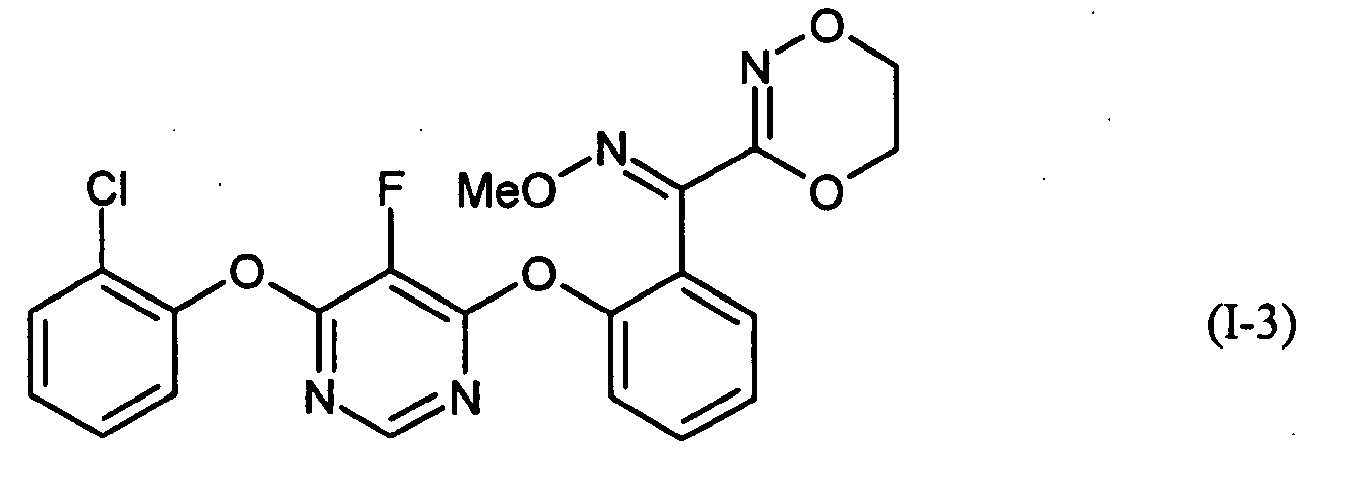
- (E)-5,6-Dihydro-1,4,2-dioxazin-3-yl(2-hydroxyphenyl)methanon O-methyloxim (11,8 g) wird mit Kaliumcarbonat (9,0 g) in einem Methylisobutylketon-Wasser-Gemisch (80 ml, 7/1) vorgelegt und bei 50°C mit einer Lösung von 4-Chlor-6-(2-chlorphenoxy)-5-fluorpyrimidin (13,1 g, Gehalt. 98,1 %) in 70 ml Methylisobutylketon versetzt. Man rührt 24 Stunden bei 50°C, gibt nach Abkühlung Wasser hinzu, trennt die organische Phase ab, extrahiert die wässrige Phase mit Methylisobutylketon, trocknet die vereinigten organischen Extrakte über Natriumsulfat und destilliert das Lösungsmittel ab. Man erhält (E)-2-(2-{[6-(2-Chlorphenoxy)-5-fluor-4-pyrimidinyl]oxy}phenyl)(5,6-dihydro-1,4,2-dioxazin-3-yl)methanon O-methyloxim (26,4 g, Gehalt: 33,3 %, 38,6 % d.Th.) als Öl.
-

- 4,6-Dichlor-5-fluorpyrimidin (31,8 g, Gehalt: 98,9 %) wird mit Kaliumcarbonat (31,5 g) in Aceton (115 ml) vorgelegt und bei 60°C über einen Zeitraum von 6 Stunden mit einer Lösung von 44,9 g (E)-5,6-Dihydro-1,4,2-dioxazin-3-yl(2-hydroxyphenyl)methanon O-methyloxim in 350 ml Aceton tropfenweise versetzt. Man rührt 2 Stunden bei 60°C, destilliert das Aceton ab, versetzt mit Methylenchlorid und Wasser, trennt die organische Phase ab, extrahiert die wässrige Phase mit Methylenchlorid, vereinigt die organischen Extrakte, wäscht diese mit 5 % NaOH, trocknet über Natriumsulfat und destilliert das Lösungsmittel ab. Man erhält (E)-{2-[(6-Chlor-5-fluor-4-pyrimidinyl)oxy]phenyl}(5,6-dihydro-1,4,2,-dioxazin-3-yl)-methanon O-methyloxim (68,0 g, Gehalt: 95,8 %, 94,5 % d.Th.) als Feststoff.
Claims (15)
- Verfahren zur Herstellung von Verbindungen der allgemeinen Formel (I),
 Ar1 für gegebenenfalls durch Halogen oder durch Alkyl, Alkoxy, Halogenalkyl, Halogenalkoxy mit jeweils 1 bis 4 Kohlenstoffatomen substituiertes Heterocyclyl mit 3 bis 7 Ringgliedern steht;
oder für jeweils gegebenenfalls einfach bis vierfach, gleich oder verschieden substituiertes Phenyl oder Naphthyl steht, wobei die möglichen Substituenten vorzugsweise aus der nachstehenden Aufzählung ausgewählt sind:Halogen, Cyano, Nitro, Formyl, Carboxy, Carbamoyl, Thiocarbamoyl;jeweils geradkettiges oder verzweigtes Alkyl, Oxoalkyl, Alkoxy, Alkoxyalkyl, Alkylthioalkyl, Dialkoxyalkyl, Alkylthio, Alkylsulfinyl oder Alkylsulfonyl mit jeweils 1 bis 8 Kohlenstoffatomen;jeweils geradkettiges oder verzweigtes Alkenyl oder Alkenyloxy mit jeweils 2 bis 6 Kohlenstoffatomen;jeweils geradkettiges oder verzweigtes Halogenalkyl, Halogenalkoxy, Halogenalkylthio, Halogenalkylsulfinyl oder Halogenalkylsulfonyl mit jeweils 1 bis 6 Kohlenstoffatomen und 1 bis 13 gleichen oder verschiedenen Halogenatomen;jeweils geradkettiges oder verzweigtes Halogenalkenyl oder Halogenalkenyloxy mit jeweils 2 bis 6 Kohlenstoffatomen und 1 bis 11 gleichen oder verschiedenen Halogenatomen;jeweils geradkettiges oder verzweigtes Dialkylamino,Alkylcarbonyl, Alkylcarbonyloxy, Alkoxycarbonyl, Alkylaminocarbonyl, Dialkylaminocarbonyl, Arylalkylaminocarbonyl, Dialkylaminocarbonyloxy, Alkenylcarbonyl oder Alkinylcarbonyl, mit 1 bis 6 Kohlenstoffatomen in den jeweiligen Kohlenwasserstoffketten;Cycloalkyl oder Cycloalkyloxy mit jeweils 3 bis 6 Kohlenstoffatomen;jeweils gegebenenfalls einfach bis vierfach, gleich oder verschieden durch Fluor, Chlor, Oxo, Methyl, Trifluormethyl oder Ethyl substituiertes, jeweils zweifach verknüpftes Alkylen mit 3 oder 4 Kohlenstoffatomen, Oxyalkylen mit 2 oder 3 Kohlenstoffatomen oder Dioxyalkylen mit 1 oder 2 Kohlenstoffatomen;oder eine Gruppierung A1 für Wasserstoff, Hydroxy oder Alkyl mit 1 bis 4 Kohlenstoffatomen oder Cycloalkyl mit 1 bis 6 Kohlenstoffatomen steht undA2 für Hydroxy, Methoxy, Ethoxy, Amino, Methylamino, Phenyl, Benzyl oder für jeweils gegebenenfalls durch Cyano, Alkoxy, Alkylthio, Alkylamino, Dialkylamino oder Phenyl substituiertes Alkyl oder Alkoxy mit 1 bis 4 Kohlenstoffatomen, oder für Alkenyloxy oder Alkinyloxy mit jeweils 2 bis 4 Kohlenstoffatomen steht,
sowie jeweils gegebenenfalls im Ringteil einfach bis dreifach durch Halogen, und/oder geradkettiges oder verzweigtes Alkyl oder Alkoxy mit 1 bis 4 Kohlenstoffatomen substituiertes Phenyl, Benzoyl, Benzoylethenyl, Cinnamoyl, Heterocyclyl oder Phenylalkyl, Phenylalkyloxy oder Heterocyclylalkyl, mit jeweils 1 bis 3 Kohlenstoffatomen in den jeweiligen Alkylteilen,X für Fluor oder Chlor steht,L1, L2, L3, L4 und L5 gleich oder verschieden sind und unabhängig voneinander jeweils für Wasserstoff, Halogen, Cyano, Nitro, Formyl, Alkylcarbonyl, Alkoxycarbonyl, Aminocarbonyl, Alkylaminocarbonyl, Dialkylaminocarbonyl mit jeweils 1 bis 6 Kohlenstoffatomen, jeweils gegebenenfalls durch 1 bis 5 Halogenatome substituiertes Alkyl, Alkoxy, Alkylthio, Alkylsulfinyl oder Alkylsulfonyl mit jeweils 1 bis 6 Kohlenstoffatomen stehen,
oderL1, L2, L3 und L4 gleich oder verschieden sind und unabhängig voneinander jeweils für Wasserstoff, Halogen, Cyano, Nitro, Formyl, Alkylcarbonyl, Alkoxycarbonyl, Aminocarbonyl, Alkylaminocarbonyl, Dialkylaminocarbonyl, mit jeweils 1 bis 6 Kohlenstoffatomen, jeweils gegebenenfalls durch 1 bis 5 Halogenatome substituiertes Alkyl, Alkoxy, Alkylthio, Alkylsulfinyl oder Alkylsulfonyl mit jeweils 1 bis 6 Kohlenstoffatomen stehen und
undL5 für eine der folgenden Gruppen steht:
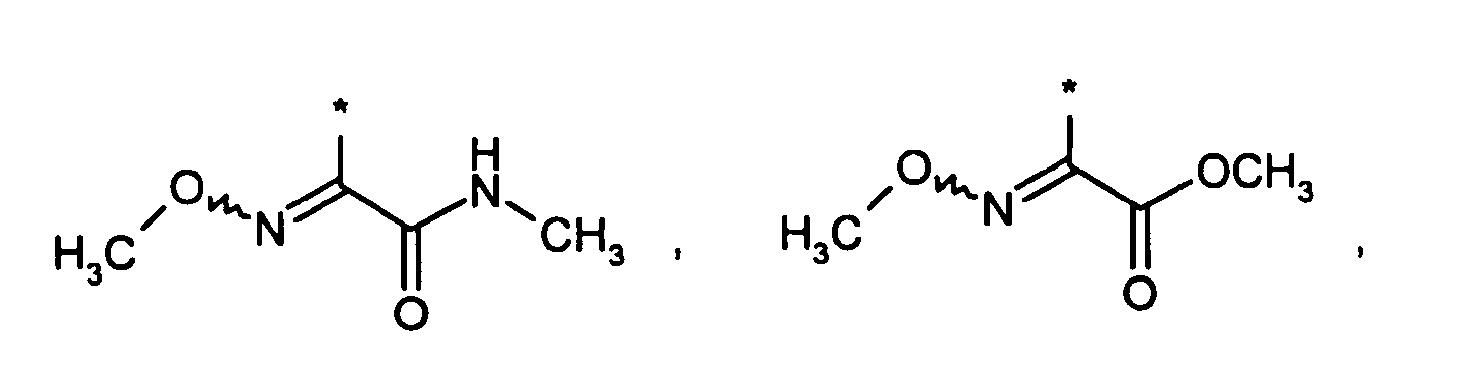


 wobei * die Anknüpfungsstelle an den Phenylrest bezeichnet,und wobei die ResteAr1 und
dadurch gekennzeichnet, dass man4,6-Dichlorpyrimidin-Derivate der allgemeinen Formel (II), X die oben angegebene Bedeutung hat,a) zunächst in einer ersten Stufe mit Verbindungen der allgemeinen Formel (III),
Ar1-OH, (III)
in welcherAr1 die oben angegebene Bedeutung hat,gegebenenfalls in Gegenwart eines Verdünnungsmittels und gegebenenfalls in Gegenwart eines Säureakzeptors umsetzt,und die dabei entstehenden Verbindungen der Formel (IV), Ar1 und X die oben angegebenen Bedeutungen haben,dann in einer zweiten Stufe mit Verbindungen der allgemeinen Formel (V),
 L1, L2, L3, L4 und L5 die oben angegebenen Bedeutungen haben,gegebenenfalls in Gegenwart eines Lösungsmittel, in Gegenwart einer Base und unter Zusatz von 2 bis 20 Mol-% 1,4-Diazabicyclo[2.2.2]octan (DABCO) umsetzt,oderb) zunächst in einer ersten Stufe mit Verbindungen der allgemeinen Formel (V),
 L1, L2, L3, L4 und L5 die oben angegebenen Bedeutungen haben,gegebenenfalls in Gegenwart eines Verdünnungsmittels und gegebenenfalls in Gegenwart eines Säureakzeptors umsetzt,und die dabei entstehenden Verbindungen der Formel (VI),
 X, L1, L2, L3, L4 und L5 die oben angegebenen Bedeutungen haben,dann in einer zweiten Stufe mit Verbindungen der allgemeinen Formel (III),
Ar1-OH, (III)
in welcherAr1 die oben angegebene Bedeutung hat,gegebenenfalls in Gegenwart eines Lösungsmittel, in Gegenwart einer Base und unter Zusatz von 2 bis 20 Mol-% 1,4-Diazabicyclo[2.2.2]octan (DABCO) umsetzt. - Verfahren gemäß Anspruch 1, dadurch gekennzeichnet, dass das Verfahren zur Herstellung der Verbindungen der Formel (I) als Eintopfverfahren durchgeführt wird.
- Verfahren gemäß Anspruch 1 oder 2, dadurch gekennzeichnet, dass pro Mol der Verbindungen der Formel (III) 1 bis 4 Mol des 4,6-Dichlorpyrimidin-Derivats der Formel (II) eingesetzt werden.
- Verfahren gemäß Anspruch 1 oder 2, dadurch gekennzeichnet, dass pro Mol der Verbindungen der Formel (V) 1 bis 4 Mol des 4,6-Dichlorpyrimidin-Derivats der Formel (II) eingesetzt werden.
- Verfahren gemäß mindestens einem der Ansprüche 1 bis 4, dadurch gekennzeichnet, dass pro Mol der Verbindungen der Formel (IV) 0,8 bis 4 Mol der Verbindungen der Formel (V) eingesetzt werden.
- Verfahren gemäß mindestens einem der Ansprüche 1 bis 4, dadurch gekennzeichnet, dass pro Mol der Verbindungen der Formel (VI) 0,8 bis 4 Mol der Verbindungen der Formel (III) eingesetzt werden.
- Verfahren gemäß mindestens einem der Ansprüche 1 bis 6, dadurch gekennzeichnet, dassAr1 für gegebenenfalls durch Methyl, Ethyl, Methoxy, Ethoxy, Trifluormethyl oder Trifluormethoxy substituiertes Thienyl, Pyridyl oder Furyl steht;oder für jeweils gegebenenfalls einfach bis vierfach, gleich oder verschieden substituiertes Phenyl steht, wobei die möglichen Substituenten vorzugsweise aus der nachstehenden Aufzählung ausgewählt sind:Fluor, Chlor, Brom, Iod, Cyano, Nitro, Formyl, Carboxy, Carbamoyl, Thiocarbamoyl, Methyl, Ethyl, n- oder i-Propyl, n-, i-, s- oder t-Butyl, 1-, 2-, 3-, neo-Pentyl, 1-, 2-, 3-, 4-(2-Methylbutyl), 1-, 2-, 3-Hexyl, 1-, 2-, 3-, 4-, 5-(2-Methylpentyl), 1-, 2-, 3-(3-Methylpentyl), 2-Ethylbutyl, 1-, 3-, 4-(2,2-Dimetylbutyl), 1-, 2-(2,3-Dimethylbutyl), 3-Oxobutyl, Methoxymethyl, Dimethoxymethyl,Methoxy, Ethoxy, n- oder i-Propoxy,Methylthio, Ethylthio, n- oder i-Propylthio, Methylsulfinyl, Ethylsulfinyl, Methylsulfonyl oder Ethylsulfonyl,Vinyl, Allyl, 2-Methylallyl, Propen-1-yl, Crotonyl, Propargyl, Vinyloxy, Allyloxy, 2-Methylallyloxy, Propen-1-yloxy, Crotonyloxy, Propargyloxy;Trifluormethyl, Trifluorethyl,Difluormethoxy, Trifluormethoxy, Difluorchlormethoxy, Trifluorethoxy, Difluormethylthio, Trifluormethylthio, Difluorchlormethylthio, Trifluormethylsulfinyl oder Trifluormethylsulfonyl,Dimethylamino, Diethylamino,Acetyl, Propionyl, Methoxycarbonyl, Ethoxycarbonyl, Methylaminocarbonyl, Ethylaminocarbonyl, Dimethylaminocarbonyl, Diethylaminocarbonyl, Dimethylaminocarbonyloxy, Diethylaminocarbonyloxy, Benzylaminocarbonyl, Acryloyl, Propioloyl,Cyclopentyl, Cyclohexyl,jeweils gegebenenfalls einfach bis vierfach, gleich oder verschieden durch Fluor, Chlor, Oxo, Methyl oder Trifluormethyl substituiertes, jeweils zweifach verknüpftes Propandiyl, Ethylenoxy,oder eine Gruppierung
 A1 für Wasserstoff, Methyl oder Hydroxy steht undA2 für Hydroxy, Methoxy, Ethoxy, Amino, Methylamino, Phenyl oder Benzyl steht, sowie
jeweils gegebenenfalls im Ringteil einfach bis dreifach durch Halogen, und/oder geradkettiges oder verzweigtes Alkyl oder Alkoxy mit 1 bis 4 Kohlenstoffatomen substituiertes Phenyl, Benzoyl, Benzoylethenyl, Cinnamoyl, Benzyl, Phenylethyl, Phenylpropyl, Benzyloxy, 5,6-Dihydro-1,4,2-dioxazin-3-ylmethyl, Triazolylmethyl, Benzoxazol-2-ylmethyl, 1,3-Dioxan-2-yl, Benzimidazol-2-yl, Dioxol-2-yl, Oxadiazolyl.X für Fluor steht,L1, L2, L3 und L4 gleich oder verschieden sind und unabhängig voneinander jeweils für Wasserstoff, Fluor, Chlor, Brom, Cyano, Nitro, Acetyl, Propionyl, Methoxycarbonyl, Ethoxycarbonyl, Methylaminocarbonyl, Ethylaminocarbonyl, Dimethylaminocarbonyl, Diethylaminocarbonyl, Methyl, Ethyl, n- oder i-Propyl, n-, i-, s- oder t-Butyl, Methoxy, Ethoxy, n- oder i-Propoxy, Methylthio, Ethylthio, Methylsulfinyl, Ethylsulfinyl, Methylsulfonyl oder Ethylsulfonyl, Trifluormethyl, Trifluorethyl, Difluormethoxy, Trifluormethoxy, Difluorchlormethoxy, Trifluorethoxy, Difluormethylthio, Difluorchlormethylthio, Trifluormethylthio, Trifluormethylsulfinyl oder Trifluormethylsulfonyl stehen, undL5 für eine der folgenden Gruppen steht:


 wobei * die Anknüpfungsstelle an den Phenylrest bezeichnet.
 - Verfahren gemäß mindestens einem der Ansprüche 1 bis 7, dadurch gekennzeichnet, dassAr1 für gegebenenfalls durch Methyl, Ethyl, Methoxy, Ethoxy, Trifluormethyl oder Trifluormethoxy substituiertes Thienyl, Pyridyl oder Furyl steht;
oder für jeweils gegebenenfalls einfach bis vierfach, gleich oder verschieden substituiertes Phenyl steht, wobei die möglichen Substituenten vorzugsweise aus der nachstehenden Aufzählung ausgewählt sind:Fluor, Chlor, Brom, Iod, Cyano, Nitro, Formyl, Carboxy, Carbamoyl, Thiocarbamoyl,Methyl, Ethyl, n- oder i-Propyl, n-, i-, s- oder t-Butyl, 1-, 2-, 3-, neo-Pentyl, 1-, 2-, 3-, 4-(2-Methylbutyl), 1-, 2-, 3-Hexyl, 1-, 2-, 3-, 4-, 5-(2-Methylpentyl), 1-, 2-, 3-(3-Methylpentyl), 2-Ethylbutyl, 1-, 3-, 4-(2,2-Dimetylbutyl), 1-, 2-(2,3-Dimethylbutyl), 3-Oxobutyl, Methoxymethyl, Dimethoxymethyl,Methoxy, Ethoxy, n- oder i-Propoxy,Methylthio, Ethylthio, n- oder i-Propylthio, Methylsulfinyl, Ethylsulfinyl, Methylsulfonyl oder Ethylsulfonyl,Vinyl, Allyl, 2-Methylallyl, Propen-1-yl, Crotonyl, Propargyl, Vinyloxy, Allyloxy, 2-Methylallyloxy, Propen-1-yloxy, Crotonyloxy, Propargyloxy;Trifluormethyl, Trifluorethyl,Difluormethoxy, Trifluormethoxy, Difluorchlormethoxy, Trifluorethoxy, Difluormethylthio, Trifluormethylthio, Difluorchlormethylthio, Trifluormethylsulfinyl oder Trifluormethylsulfonyl,Dimethylamino, Diethylamino,Acetyl, Propionyl, Methoxycarbonyl, Ethoxycarbonyl, Methylaminocarbonyl, Ethylaminocarbonyl, Dimethylaminocarbonyl, Diethylaminocarbonyl, Dimethylaminocarbonyloxy, Diethylaminocarbonyloxy, Benzylaminocarbonyl, Acryloyl, Propioloyl,Cyclopentyl, Cyclohexyl,jeweils gegebenenfalls einfach bis vierfach, gleich oder verschieden durch Fluor, Chlor, Oxo, Methyl oder Trifluormethyl substituiertes, jeweils zweifach verknüpftes Propandiyl, Ethylenoxy,oder eine Gruppierung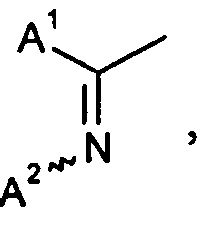 A1 für Wasserstoff, Methyl oder Hydroxy steht undA2 für Hydroxy, Methoxy, Ethoxy, Amino, Methylamino, Phenyl oder Benzyl steht, sowie
jeweils gegebenenfalls im Ringteil einfach bis dreifach durch Halogen, und/oder geradkettiges oder verzweigtes Alkyl oder Alkoxy mit 1 bis 4 Kohlenstoffatomen substituiertes Phenyl, Phenoxy, Phenylthio, Benzoyl, Benzoylethenyl, Cinnamoyl, Benzyl, Phenylethyl, Phenylpropyl, Benzyloxy, Benzylthio, 5,6-Dihydro-1,4,2-dioxazin-3-ylmethyl, Triazolylmethyl, Benzoxazol-2-ylmethyl, 1,3-Dioxan-2-yl, Benzimidazol-2-yl, Dioxol-2-yl, Oxadiazolyl,X für Fluor steht,L1, L2, L3 und L4 für Wasserstoff stehen,undL5 für eine der folgenden Gruppen steht:wobei * die Anknüpfungsstelle an den Phenylrest bezeichnet.
- Verfahren gemäß mindestens einem der Ansprüche 1 bis 8, dadurch gekennzeichnet, dass man die Verbindung der Formel (I-3) als Reaktionsprodukt

- Verfahren gemäß mindestens einem der Ansprüche 1 bis 9, dadurch gekennzeichnet, dass man als Base in der ersten Stufe Kalium- oder Natriumcarbonat verwendet.
- Verfahren gemäß mindestens einem der Ansprüche 1 bis 10, dadurch gekennzeichnet, dass man als Lösungsmittel in der ersten Stufe Methylisobutylketon verwendet.
- Verfahren gemäß mindestens einem der Ansprüche 1 bis 11, dadurch gekennzeichnet, dass man in der ersten Stufe bei Temperaturen von 40 - 80°C arbeitet.
- Verfahren gemäß mindestens einem der Ansprüche 1 bis 12, dadurch gekennzeichnet, dass man als Base in der zweiten Stufe Kalium- oder Natriumcarbonat verwendet.
- Verfahren gemäß mindestens einem der Ansprüche 1 bis 13, dadurch gekennzeichnet, dass man als Lösungsmittel in der zweiten Stufe Methylisobutylketon verwendet.
- Verfahren gemäß mindestens einem der Ansprüche 1 bis 14, dadurch gekennzeichnet, dass man in der zweiten Stufe bei Temperaturen von 50 - 80°C arbeitet.
Applications Claiming Priority (3)
| Application Number | Priority Date | Filing Date | Title |
|---|---|---|---|
| DE10014607A DE10014607A1 (de) | 2000-03-24 | 2000-03-24 | Verfahren zur Herstellung von unsymmetrischen 4,6-Bis(aryloxy pyrimidin-Derivaten |
| DE10014607 | 2000-03-24 | ||
| PCT/EP2001/002731 WO2001072719A1 (de) | 2000-03-24 | 2001-03-12 | Verfahren zur herstellung von unsymmetrischen 4,6-bis(aryloxy)pyrimidin-derivaten |
Publications (2)
| Publication Number | Publication Date |
|---|---|
| EP1268446A1 EP1268446A1 (de) | 2003-01-02 |
| EP1268446B1 true EP1268446B1 (de) | 2010-10-06 |
Family
ID=7636165
Family Applications (1)
| Application Number | Title | Priority Date | Filing Date |
|---|---|---|---|
| EP01915326A Expired - Lifetime EP1268446B1 (de) | 2000-03-24 | 2001-03-12 | Verfahren zur herstellung von unsymmetrischen 4,6-bis(aryloxy)pyrimidin-derivaten |
Country Status (17)
| Country | Link |
|---|---|
| US (1) | US6734304B2 (de) |
| EP (1) | EP1268446B1 (de) |
| JP (1) | JP5008242B2 (de) |
| KR (1) | KR100758615B1 (de) |
| CN (1) | CN1280278C (de) |
| AR (1) | AR034693A1 (de) |
| AT (1) | ATE483691T1 (de) |
| AU (1) | AU2001242454A1 (de) |
| BR (1) | BR0109442B1 (de) |
| DE (2) | DE10014607A1 (de) |
| DK (1) | DK1268446T3 (de) |
| ES (1) | ES2353271T3 (de) |
| HU (1) | HUP0300267A3 (de) |
| IL (1) | IL151678A (de) |
| MX (1) | MXPA02009286A (de) |
| TW (1) | TWI296621B (de) |
| WO (1) | WO2001072719A1 (de) |
Families Citing this family (15)
| Publication number | Priority date | Publication date | Assignee | Title |
|---|---|---|---|---|
| JP2008502640A (ja) * | 2004-06-17 | 2008-01-31 | ビーエーエスエフ アクチェンゲゼルシャフト | ダイズ植物におけるさび病を抑制するための(e)−5−(4−クロロベンジリデン)−2,2−ジメチル−1−(1h−1,2,4−トリアゾール−1−イルメチル)シクロペンタノールの使用 |
| GB0508422D0 (en) * | 2005-04-26 | 2005-06-01 | Syngenta Ltd | Chemical process |
| JP5061565B2 (ja) | 2006-04-24 | 2012-10-31 | 住友化学株式会社 | ピリミジン化合物の新規製造方法 |
| US7847111B2 (en) * | 2006-06-19 | 2010-12-07 | Canada Inc. | Semi-synthetic route for the preparation of paclitaxel, docetaxel, and 10-deacetylbaccatin III from 9-dihydro-13-acetylbaccatin III |
| GB0619942D0 (en) | 2006-10-09 | 2006-11-15 | Syngenta Ltd | Chemical process |
| GB0619941D0 (en) | 2006-10-09 | 2006-11-15 | Syngenta Ltd | Chemical process |
| JP2015083541A (ja) * | 2012-02-03 | 2015-04-30 | アグロカネショウ株式会社 | 対称性4,6−ビス(アリールオキシ)ピリミジン化合物の製造方法 |
| TWI621614B (zh) | 2013-05-28 | 2018-04-21 | 科麥農股份有限公司 | 4,6-雙(芳氧基)嘧啶衍生物的製備方法 |
| US9193698B2 (en) | 2013-07-08 | 2015-11-24 | Advinus Therapeutics, Ltd. | Process for preparing fluoxastrobin |
| CA2987545C (en) | 2015-05-29 | 2022-08-02 | Arysta Lifescience Corporation | Improved process for preparing (e)-(5,6-dihydro-1,4,2-dioxazine-3-yl)(2-hydroxyphenyl)methanone o-methyl oxime |
| CN107428704A (zh) | 2015-10-06 | 2017-12-01 | Gsp作物科学有限公司 | 制备嘧菌酯的方法 |
| CN105536873B (zh) * | 2016-02-05 | 2017-11-28 | 帕潘纳(北京)科技有限公司 | 一种复合催化剂及其应用 |
| CN110294716B (zh) | 2018-03-23 | 2021-05-07 | 帕潘纳(北京)科技有限公司 | 一种嘧菌酯及其中间体的制备方法 |
| TWI705961B (zh) * | 2018-11-28 | 2020-10-01 | 興農股份有限公司 | 亞托敏的製備方法 |
| CA3186134A1 (en) | 2020-06-08 | 2021-12-16 | Upl Limted | Process for the preparation of fluoxastrobin and intermediates thereof |
Family Cites Families (18)
| Publication number | Priority date | Publication date | Assignee | Title |
|---|---|---|---|---|
| DE69114743T2 (de) * | 1990-03-19 | 1996-05-30 | Rohm & Haas | Verfahren zur Herstellung von Fluormethyl-substituierten Dihydropyridin-carbodithioaten. |
| TW234077B (de) | 1992-07-17 | 1994-11-11 | Shell Internat Res Schappej B V | |
| ZW8594A1 (en) | 1993-08-11 | 1994-10-12 | Bayer Ag | Substituted azadioxacycbalkenes |
| DE4327596A1 (de) | 1993-08-17 | 1995-02-23 | Bayer Ag | 3-Methoxy-2-phenyl-acrylsäuremethylester |
| GB9404375D0 (en) | 1994-03-07 | 1994-04-20 | Zeneca Ltd | Fungicides |
| DE19531299A1 (de) | 1995-08-25 | 1997-02-27 | Bayer Ag | Verfahren zur Herstellung von 4,6-Dichlorpyrimidinen |
| AU7286396A (en) | 1995-10-18 | 1997-05-07 | Bayer Aktiengesellschaft | Fluoromethoxyacrylic acid derivatives and their use as pest control agents |
| DE19602095A1 (de) | 1996-01-22 | 1997-07-24 | Bayer Ag | Halogenpyrimidine |
| SG63694A1 (en) * | 1996-03-07 | 1999-03-30 | American Cyanamid Co | Process for the preparation of unsymmetrical 4,6-bis (aryloxy) pyrimidine compounds |
| US5977363A (en) | 1996-03-07 | 1999-11-02 | American Cyanamid Company | Process for the preparation of unsymmetrical 4,6-bis(aryloxy) pyrimidine compounds |
| DE19642533A1 (de) | 1996-10-15 | 1998-04-16 | Bayer Ag | Verfahren zur Herstellung von 4,6-Dichlorpyrimidin |
| DE19646407A1 (de) | 1996-11-11 | 1998-05-14 | Bayer Ag | Halogenpyrimidine |
| WO1998023155A1 (en) | 1996-11-26 | 1998-06-04 | E.I. Du Pont De Nemours And Company | Arthropodicidal and fungicidal cyclic amides |
| DE19710609A1 (de) | 1997-03-14 | 1998-09-17 | Bayer Ag | Substituierte Aminosalicylsäureamide |
| DE19723195A1 (de) | 1997-06-03 | 1998-12-10 | Bayer Ag | Fluormethoximinoverbindungen |
| JP2001515076A (ja) | 1997-08-14 | 2001-09-18 | バイエル・アクチエンゲゼルシヤフト | 有害生物防除剤として使用されるメトキシイミノメチルオキサジアジン |
| US5849910A (en) * | 1997-09-05 | 1998-12-15 | American Cyanamid Company | Process for the preparation of unsymmetrical 4,6-bis aryloxy-pyrimidine compounds |
| DE19819828A1 (de) | 1998-05-04 | 1999-11-11 | Bayer Ag | Methoximinomethyloxathiazine |
-
2000
- 2000-03-24 DE DE10014607A patent/DE10014607A1/de not_active Withdrawn
-
2001
- 2001-03-12 WO PCT/EP2001/002731 patent/WO2001072719A1/de not_active Ceased
- 2001-03-12 BR BRPI0109442-4A patent/BR0109442B1/pt not_active IP Right Cessation
- 2001-03-12 MX MXPA02009286A patent/MXPA02009286A/es active IP Right Grant
- 2001-03-12 CN CNB018070019A patent/CN1280278C/zh not_active Expired - Lifetime
- 2001-03-12 AT AT01915326T patent/ATE483691T1/de active
- 2001-03-12 KR KR1020027011334A patent/KR100758615B1/ko not_active Expired - Lifetime
- 2001-03-12 HU HU0300267A patent/HUP0300267A3/hu unknown
- 2001-03-12 IL IL15167801A patent/IL151678A/xx active IP Right Grant
- 2001-03-12 JP JP2001570632A patent/JP5008242B2/ja not_active Expired - Lifetime
- 2001-03-12 EP EP01915326A patent/EP1268446B1/de not_active Expired - Lifetime
- 2001-03-12 ES ES01915326T patent/ES2353271T3/es not_active Expired - Lifetime
- 2001-03-12 AU AU2001242454A patent/AU2001242454A1/en not_active Abandoned
- 2001-03-12 US US10/221,889 patent/US6734304B2/en not_active Expired - Lifetime
- 2001-03-12 DK DK01915326.1T patent/DK1268446T3/da active
- 2001-03-12 DE DE50115655T patent/DE50115655D1/de not_active Expired - Lifetime
- 2001-03-19 TW TW090106292A patent/TWI296621B/zh not_active IP Right Cessation
- 2001-03-20 AR ARP010101298A patent/AR034693A1/es not_active Application Discontinuation
Also Published As
| Publication number | Publication date |
|---|---|
| HUP0300267A2 (hu) | 2003-06-28 |
| DE10014607A1 (de) | 2001-09-27 |
| KR100758615B1 (ko) | 2007-09-13 |
| US6734304B2 (en) | 2004-05-11 |
| HUP0300267A3 (en) | 2005-11-28 |
| JP5008242B2 (ja) | 2012-08-22 |
| EP1268446A1 (de) | 2003-01-02 |
| BR0109442B1 (pt) | 2013-02-19 |
| IL151678A (en) | 2005-08-31 |
| JP2003528862A (ja) | 2003-09-30 |
| IL151678A0 (en) | 2003-04-10 |
| ES2353271T3 (es) | 2011-02-28 |
| WO2001072719A1 (de) | 2001-10-04 |
| KR20030011779A (ko) | 2003-02-11 |
| US20030092723A1 (en) | 2003-05-15 |
| MXPA02009286A (es) | 2003-05-23 |
| ATE483691T1 (de) | 2010-10-15 |
| DK1268446T3 (da) | 2011-01-31 |
| AU2001242454A1 (en) | 2001-10-08 |
| CN1280278C (zh) | 2006-10-18 |
| DE50115655D1 (de) | 2010-11-18 |
| TWI296621B (en) | 2008-05-11 |
| CN1419549A (zh) | 2003-05-21 |
| BR0109442A (pt) | 2002-12-10 |
| AR034693A1 (es) | 2004-03-17 |
Similar Documents
| Publication | Publication Date | Title |
|---|---|---|
| EP1268446A1 (de) | Verfahren zur herstellung von unsymmetrischen 4,6-bis(aryloxy)pyrimidin-derivaten | |
| DE102010046720A1 (de) | Verfahren zur Herstellung von pan-CDK-Inhibitoren der Formel (l), sowie Intermediate der Herstellung | |
| EP1858858B1 (de) | Verfahren zum herstellen von alkylaniliden | |
| EP0904268B1 (de) | Verfahren zur herstellung von 3-(1-hydroxyphenyl-1-alkoximinomethyl)dioxazinen | |
| DE69424095T2 (de) | Verfahren zur Herstellung von 2-Cyano-4-oxo-4H-benzopyran-Verbindungen | |
| DE69504599T2 (de) | 2-Phenoxy-6-thienylmethyloxy pyridin-Derivate, Verfahren zu deren Herstellung und diese enthaltende Herbizide Zubereitungen | |
| EP0846691B1 (de) | Verfahren zur Herstellung von 3-(1-Hydroxyphenyl-1-alkoximinomethyl)dioxazinen | |
| EP0548650B1 (de) | Verfahren zur Herstellung von substituierten 3-Alkoxy-acrylestern | |
| EP1185505B1 (de) | Verfahren zur herstellung von methoxyimino-essigsäureamiden | |
| DE19652433A1 (de) | Verfahren zur Herstellung von 1-Phenyl-uracil-Derivaten | |
| DE19652432A1 (de) | Verfahren zur Herstellung von 3-Amino-l-phenyl-uracil-Derivaten | |
| EP1244615B1 (de) | Verfahren zur herstellung von n-substituierten 2,4-diamino-5-fluor-benzonitrilen und neue zwischenprodukte | |
| DE19543676A1 (de) | Verfahren zur Herstellung von substituierten Aryluracilen | |
| EP0823899A1 (de) | Verfahren zur herstellung von substituierten aryluracilen | |
| DE3516631A1 (de) | Verfahren zur herstellung von 3-methyl-1,3,5-triazintrionen | |
| DE19833007A1 (de) | Verfahren zur Herstellung von 4,6-disubstituierten 2-Isocyanatopyrimidinen und ihre Verwendung als Zwischenprodukte für Wirkstoffsynthesen | |
| EP0948482B1 (de) | Verfahren zur herstellung von trifluoracetessigsäure-aniliden | |
| DE3226050A1 (de) | Verfahren zur herstellung von 6-(3,6-dihydro-1(2h)- pyridyl) pyrimidin-3-oxiden | |
| EP0880506A1 (de) | Verfahren zur herstellung substituierter cyanophenyluracile aus substituierten aminoalkensäure-cyanophenylamiden | |
| DE10005278A1 (de) | Verfahren zur Herstellung von Sulfonyl-imidazol-Derivaten | |
| DE4024867A1 (de) | Verfahren zur herstellung von oxyguanidinen | |
| DE19800531A1 (de) | Verfahren zur Herstellung von N-(3-Amino-4-fluor-phenyl)-sulfonsäureamiden, N-(3-Amino-4-fluor-phenyl)-carbonsäureamiden und N-(3-Amino-4-fluor-phenyl)-carbamaten | |
| DE10000733A1 (de) | Verfahren zur Herstellung von Methoxyiminoessigsäureamiden | |
| DE10122235A1 (de) | Verfahren zur Herstellung von 1-Amino-3-phenyl-uracil-Derivaten | |
| DD281186A5 (de) | Verfahren zur herstellung von 6-alkyl-4-amino-pyrimidinen |
Legal Events
| Date | Code | Title | Description |
|---|---|---|---|
| PUAI | Public reference made under article 153(3) epc to a published international application that has entered the european phase |
Free format text: ORIGINAL CODE: 0009012 |
|
| 17P | Request for examination filed |
Effective date: 20021024 |
|
| AK | Designated contracting states |
Kind code of ref document: A1 Designated state(s): AT BE CH CY DE DK ES FI FR GB GR IE IT LI LU MC NL PT SE TR |
|
| AX | Request for extension of the european patent |
Free format text: AL;LT;LV;MK;RO;SI |
|
| 17Q | First examination report despatched |
Effective date: 20040916 |
|
| 17Q | First examination report despatched |
Effective date: 20040916 |
|
| GRAP | Despatch of communication of intention to grant a patent |
Free format text: ORIGINAL CODE: EPIDOSNIGR1 |
|
| GRAS | Grant fee paid |
Free format text: ORIGINAL CODE: EPIDOSNIGR3 |
|
| GRAA | (expected) grant |
Free format text: ORIGINAL CODE: 0009210 |
|
| AK | Designated contracting states |
Kind code of ref document: B1 Designated state(s): AT BE CH CY DE DK ES FI FR GB GR IE IT LI LU MC NL PT SE TR |
|
| REG | Reference to a national code |
Ref country code: GB Ref legal event code: FG4D Free format text: NOT ENGLISH |
|
| REG | Reference to a national code |
Ref country code: CH Ref legal event code: EP |
|
| REG | Reference to a national code |
Ref country code: IE Ref legal event code: FG4D Free format text: LANGUAGE OF EP DOCUMENT: GERMAN |
|
| REF | Corresponds to: |
Ref document number: 50115655 Country of ref document: DE Date of ref document: 20101118 Kind code of ref document: P |
|
| REG | Reference to a national code |
Ref country code: NL Ref legal event code: T3 |
|
| REG | Reference to a national code |
Ref country code: DK Ref legal event code: T3 |
|
| REG | Reference to a national code |
Ref country code: ES Ref legal event code: FG2A Effective date: 20110216 |
|
| REG | Reference to a national code |
Ref country code: IE Ref legal event code: FD4D |
|
| PG25 | Lapsed in a contracting state [announced via postgrant information from national office to epo] |
Ref country code: PT Free format text: LAPSE BECAUSE OF FAILURE TO SUBMIT A TRANSLATION OF THE DESCRIPTION OR TO PAY THE FEE WITHIN THE PRESCRIBED TIME-LIMIT Effective date: 20110207 Ref country code: FI Free format text: LAPSE BECAUSE OF FAILURE TO SUBMIT A TRANSLATION OF THE DESCRIPTION OR TO PAY THE FEE WITHIN THE PRESCRIBED TIME-LIMIT Effective date: 20101006 Ref country code: SE Free format text: LAPSE BECAUSE OF FAILURE TO SUBMIT A TRANSLATION OF THE DESCRIPTION OR TO PAY THE FEE WITHIN THE PRESCRIBED TIME-LIMIT Effective date: 20101006 |
|
| PG25 | Lapsed in a contracting state [announced via postgrant information from national office to epo] |
Ref country code: GR Free format text: LAPSE BECAUSE OF FAILURE TO SUBMIT A TRANSLATION OF THE DESCRIPTION OR TO PAY THE FEE WITHIN THE PRESCRIBED TIME-LIMIT Effective date: 20110107 |
|
| PG25 | Lapsed in a contracting state [announced via postgrant information from national office to epo] |
Ref country code: IE Free format text: LAPSE BECAUSE OF FAILURE TO SUBMIT A TRANSLATION OF THE DESCRIPTION OR TO PAY THE FEE WITHIN THE PRESCRIBED TIME-LIMIT Effective date: 20101006 |
|
| PLBE | No opposition filed within time limit |
Free format text: ORIGINAL CODE: 0009261 |
|
| STAA | Information on the status of an ep patent application or granted ep patent |
Free format text: STATUS: NO OPPOSITION FILED WITHIN TIME LIMIT |
|
| 26N | No opposition filed |
Effective date: 20110707 |
|
| PG25 | Lapsed in a contracting state [announced via postgrant information from national office to epo] |
Ref country code: MC Free format text: LAPSE BECAUSE OF NON-PAYMENT OF DUE FEES Effective date: 20110331 |
|
| REG | Reference to a national code |
Ref country code: DE Ref legal event code: R097 Ref document number: 50115655 Country of ref document: DE Effective date: 20110707 |
|
| PGFP | Annual fee paid to national office [announced via postgrant information from national office to epo] |
Ref country code: AT Payment date: 20120228 Year of fee payment: 12 |
|
| PG25 | Lapsed in a contracting state [announced via postgrant information from national office to epo] |
Ref country code: CY Free format text: LAPSE BECAUSE OF FAILURE TO SUBMIT A TRANSLATION OF THE DESCRIPTION OR TO PAY THE FEE WITHIN THE PRESCRIBED TIME-LIMIT Effective date: 20101006 Ref country code: LU Free format text: LAPSE BECAUSE OF NON-PAYMENT OF DUE FEES Effective date: 20110312 |
|
| PG25 | Lapsed in a contracting state [announced via postgrant information from national office to epo] |
Ref country code: TR Free format text: LAPSE BECAUSE OF FAILURE TO SUBMIT A TRANSLATION OF THE DESCRIPTION OR TO PAY THE FEE WITHIN THE PRESCRIBED TIME-LIMIT Effective date: 20101006 |
|
| REG | Reference to a national code |
Ref country code: AT Ref legal event code: MM01 Ref document number: 483691 Country of ref document: AT Kind code of ref document: T Effective date: 20130312 |
|
| PG25 | Lapsed in a contracting state [announced via postgrant information from national office to epo] |
Ref country code: AT Free format text: LAPSE BECAUSE OF NON-PAYMENT OF DUE FEES Effective date: 20130312 |
|
| REG | Reference to a national code |
Ref country code: DE Ref legal event code: R081 Ref document number: 50115655 Country of ref document: DE Owner name: BAYER INTELLECTUAL PROPERTY GMBH, DE Free format text: FORMER OWNER: BAYER CROPSCIENCE AG, 40789 MONHEIM, DE Effective date: 20141023 Ref country code: DE Ref legal event code: R081 Ref document number: 50115655 Country of ref document: DE Owner name: BAYER CROPSCIENCE AKTIENGESELLSCHAFT, DE Free format text: FORMER OWNER: BAYER CROPSCIENCE AG, 40789 MONHEIM, DE Effective date: 20141023 |
|
| REG | Reference to a national code |
Ref country code: FR Ref legal event code: PLFP Year of fee payment: 15 |
|
| REG | Reference to a national code |
Ref country code: CH Ref legal event code: PUE Owner name: BAYER INTELLECTUAL PROPERTY GMBH, DE Free format text: FORMER OWNER: BAYER CROPSCIENCE AG, DE |
|
| REG | Reference to a national code |
Ref country code: GB Ref legal event code: 732E Free format text: REGISTERED BETWEEN 20160107 AND 20160113 |
|
| REG | Reference to a national code |
Ref country code: FR Ref legal event code: TP Owner name: BAYER INTELLECTUAL PROPERTY GMBH, DE Effective date: 20160107 |
|
| REG | Reference to a national code |
Ref country code: FR Ref legal event code: PLFP Year of fee payment: 16 |
|
| REG | Reference to a national code |
Ref country code: NL Ref legal event code: PD Owner name: BAYER CROPSCIENCE AG; DE Free format text: DETAILS ASSIGNMENT: VERANDERING VAN EIGENAAR(S), OVERDRACHT; FORMER OWNER NAME: BAYER CROPSCIENCE AG Effective date: 20151208 |
|
| REG | Reference to a national code |
Ref country code: ES Ref legal event code: PC2A Owner name: BAYER INTELLECTUAL PROPERTY GMBH Effective date: 20160801 |
|
| REG | Reference to a national code |
Ref country code: NL Ref legal event code: PD Owner name: BAYER INTELLECTUAL PROPERTY GMBH; DE Free format text: DETAILS ASSIGNMENT: VERANDERING VAN EIGENAAR(S), OVERDRACHT; FORMER OWNER NAME: BAYER INTELLECTUAL PROPERTY GMBH Effective date: 20160629 |
|
| REG | Reference to a national code |
Ref country code: FR Ref legal event code: PLFP Year of fee payment: 17 |
|
| REG | Reference to a national code |
Ref country code: FR Ref legal event code: PLFP Year of fee payment: 18 |
|
| REG | Reference to a national code |
Ref country code: DE Ref legal event code: R081 Ref document number: 50115655 Country of ref document: DE Owner name: BAYER CROPSCIENCE AKTIENGESELLSCHAFT, DE Free format text: FORMER OWNER: BAYER INTELLECTUAL PROPERTY GMBH, 40789 MONHEIM, DE |
|
| PGFP | Annual fee paid to national office [announced via postgrant information from national office to epo] |
Ref country code: NL Payment date: 20200312 Year of fee payment: 20 Ref country code: DE Payment date: 20200225 Year of fee payment: 20 Ref country code: IT Payment date: 20200226 Year of fee payment: 20 Ref country code: GB Payment date: 20200304 Year of fee payment: 20 Ref country code: DK Payment date: 20200310 Year of fee payment: 20 |
|
| PGFP | Annual fee paid to national office [announced via postgrant information from national office to epo] |
Ref country code: BE Payment date: 20200226 Year of fee payment: 20 Ref country code: CH Payment date: 20200313 Year of fee payment: 20 |
|
| PGFP | Annual fee paid to national office [announced via postgrant information from national office to epo] |
Ref country code: FR Payment date: 20200227 Year of fee payment: 20 |
|
| PGFP | Annual fee paid to national office [announced via postgrant information from national office to epo] |
Ref country code: ES Payment date: 20200401 Year of fee payment: 20 |
|
| REG | Reference to a national code |
Ref country code: DE Ref legal event code: R071 Ref document number: 50115655 Country of ref document: DE |
|
| REG | Reference to a national code |
Ref country code: CH Ref legal event code: PL Ref country code: DK Ref legal event code: EUP Expiry date: 20210312 |
|
| REG | Reference to a national code |
Ref country code: NL Ref legal event code: MK Effective date: 20210311 |
|
| REG | Reference to a national code |
Ref country code: GB Ref legal event code: PE20 Expiry date: 20210311 |
|
| PG25 | Lapsed in a contracting state [announced via postgrant information from national office to epo] |
Ref country code: GB Free format text: LAPSE BECAUSE OF EXPIRATION OF PROTECTION Effective date: 20210311 |
|
| REG | Reference to a national code |
Ref country code: BE Ref legal event code: MK Effective date: 20210312 |
|
| REG | Reference to a national code |
Ref country code: ES Ref legal event code: FD2A Effective date: 20220128 |
|
| PG25 | Lapsed in a contracting state [announced via postgrant information from national office to epo] |
Ref country code: ES Free format text: LAPSE BECAUSE OF EXPIRATION OF PROTECTION Effective date: 20210313 |