EP1195208B1 - Verfahren zum Herstellen lokal verstärkter Blechumformteile - Google Patents
Verfahren zum Herstellen lokal verstärkter Blechumformteile Download PDFInfo
- Publication number
- EP1195208B1 EP1195208B1 EP01123618A EP01123618A EP1195208B1 EP 1195208 B1 EP1195208 B1 EP 1195208B1 EP 01123618 A EP01123618 A EP 01123618A EP 01123618 A EP01123618 A EP 01123618A EP 1195208 B1 EP1195208 B1 EP 1195208B1
- Authority
- EP
- European Patent Office
- Prior art keywords
- accordance
- plate
- shaping
- tool
- connection plate
- Prior art date
- Legal status (The legal status is an assumption and is not a legal conclusion. Google has not performed a legal analysis and makes no representation as to the accuracy of the status listed.)
- Revoked
Links
- 238000000034 method Methods 0.000 title claims description 87
- 229910052751 metal Inorganic materials 0.000 title claims description 23
- 239000002184 metal Substances 0.000 title claims description 23
- 238000001816 cooling Methods 0.000 claims description 62
- 230000008569 process Effects 0.000 claims description 61
- 230000003014 reinforcing effect Effects 0.000 claims description 56
- 239000000463 material Substances 0.000 claims description 37
- 230000002787 reinforcement Effects 0.000 claims description 29
- 238000010438 heat treatment Methods 0.000 claims description 16
- 229910000679 solder Inorganic materials 0.000 claims description 15
- 238000005260 corrosion Methods 0.000 claims description 11
- 230000007797 corrosion Effects 0.000 claims description 11
- XEEYBQQBJWHFJM-UHFFFAOYSA-N Iron Chemical compound [Fe] XEEYBQQBJWHFJM-UHFFFAOYSA-N 0.000 claims description 9
- 238000012546 transfer Methods 0.000 claims description 9
- 229910045601 alloy Inorganic materials 0.000 claims description 7
- 239000000956 alloy Substances 0.000 claims description 7
- 238000007711 solidification Methods 0.000 claims description 7
- 230000008023 solidification Effects 0.000 claims description 7
- 229910000831 Steel Inorganic materials 0.000 claims description 6
- 239000010959 steel Substances 0.000 claims description 6
- XUIMIQQOPSSXEZ-UHFFFAOYSA-N Silicon Chemical compound [Si] XUIMIQQOPSSXEZ-UHFFFAOYSA-N 0.000 claims description 5
- 229910052799 carbon Inorganic materials 0.000 claims description 5
- 239000000203 mixture Substances 0.000 claims description 5
- 229910052710 silicon Inorganic materials 0.000 claims description 5
- 239000010703 silicon Substances 0.000 claims description 5
- OKTJSMMVPCPJKN-UHFFFAOYSA-N Carbon Chemical compound [C] OKTJSMMVPCPJKN-UHFFFAOYSA-N 0.000 claims description 4
- VYZAMTAEIAYCRO-UHFFFAOYSA-N Chromium Chemical compound [Cr] VYZAMTAEIAYCRO-UHFFFAOYSA-N 0.000 claims description 4
- PWHULOQIROXLJO-UHFFFAOYSA-N Manganese Chemical compound [Mn] PWHULOQIROXLJO-UHFFFAOYSA-N 0.000 claims description 4
- RTAQQCXQSZGOHL-UHFFFAOYSA-N Titanium Chemical compound [Ti] RTAQQCXQSZGOHL-UHFFFAOYSA-N 0.000 claims description 4
- 229910052782 aluminium Inorganic materials 0.000 claims description 4
- XAGFODPZIPBFFR-UHFFFAOYSA-N aluminium Chemical compound [Al] XAGFODPZIPBFFR-UHFFFAOYSA-N 0.000 claims description 4
- 229910052742 iron Inorganic materials 0.000 claims description 4
- 229910052748 manganese Inorganic materials 0.000 claims description 4
- 239000011572 manganese Substances 0.000 claims description 4
- 239000010936 titanium Substances 0.000 claims description 4
- 229910052719 titanium Inorganic materials 0.000 claims description 4
- NINIDFKCEFEMDL-UHFFFAOYSA-N Sulfur Chemical compound [S] NINIDFKCEFEMDL-UHFFFAOYSA-N 0.000 claims description 3
- 238000003780 insertion Methods 0.000 claims description 3
- 230000037431 insertion Effects 0.000 claims description 3
- 238000005476 soldering Methods 0.000 claims description 3
- ZOKXTWBITQBERF-UHFFFAOYSA-N Molybdenum Chemical compound [Mo] ZOKXTWBITQBERF-UHFFFAOYSA-N 0.000 claims description 2
- OAICVXFJPJFONN-UHFFFAOYSA-N Phosphorus Chemical compound [P] OAICVXFJPJFONN-UHFFFAOYSA-N 0.000 claims description 2
- 238000005520 cutting process Methods 0.000 claims description 2
- 229910000734 martensite Inorganic materials 0.000 claims description 2
- 229910052750 molybdenum Inorganic materials 0.000 claims description 2
- 239000011733 molybdenum Substances 0.000 claims description 2
- 229910052698 phosphorus Inorganic materials 0.000 claims description 2
- 239000011574 phosphorus Substances 0.000 claims description 2
- 238000007493 shaping process Methods 0.000 claims 22
- 239000000470 constituent Substances 0.000 claims 3
- 229910052804 chromium Inorganic materials 0.000 claims 2
- 239000011651 chromium Substances 0.000 claims 2
- 239000005864 Sulphur Substances 0.000 claims 1
- 239000004411 aluminium Substances 0.000 claims 1
- 230000002045 lasting effect Effects 0.000 claims 1
- 239000002131 composite material Substances 0.000 description 50
- 238000005219 brazing Methods 0.000 description 16
- 238000004519 manufacturing process Methods 0.000 description 16
- 238000003466 welding Methods 0.000 description 13
- 239000003570 air Substances 0.000 description 12
- 238000010276 construction Methods 0.000 description 11
- 230000000694 effects Effects 0.000 description 10
- 230000008901 benefit Effects 0.000 description 8
- 238000005304 joining Methods 0.000 description 8
- 238000009966 trimming Methods 0.000 description 6
- 239000007789 gas Substances 0.000 description 5
- 238000003856 thermoforming Methods 0.000 description 5
- XLYOFNOQVPJJNP-UHFFFAOYSA-N water Substances O XLYOFNOQVPJJNP-UHFFFAOYSA-N 0.000 description 5
- 239000002826 coolant Substances 0.000 description 4
- 238000010586 diagram Methods 0.000 description 4
- 239000010410 layer Substances 0.000 description 4
- 230000036961 partial effect Effects 0.000 description 4
- 230000001681 protective effect Effects 0.000 description 4
- 230000009466 transformation Effects 0.000 description 4
- 229910000639 Spring steel Inorganic materials 0.000 description 3
- 238000013461 design Methods 0.000 description 3
- 239000007788 liquid Substances 0.000 description 3
- 239000003595 mist Substances 0.000 description 3
- IJGRMHOSHXDMSA-UHFFFAOYSA-N Atomic nitrogen Chemical compound N#N IJGRMHOSHXDMSA-UHFFFAOYSA-N 0.000 description 2
- CURLTUGMZLYLDI-UHFFFAOYSA-N Carbon dioxide Chemical compound O=C=O CURLTUGMZLYLDI-UHFFFAOYSA-N 0.000 description 2
- 230000009471 action Effects 0.000 description 2
- 239000010953 base metal Substances 0.000 description 2
- 239000011324 bead Substances 0.000 description 2
- 239000011248 coating agent Substances 0.000 description 2
- 238000000576 coating method Methods 0.000 description 2
- 230000005489 elastic deformation Effects 0.000 description 2
- 238000002844 melting Methods 0.000 description 2
- 230000008018 melting Effects 0.000 description 2
- 239000002905 metal composite material Substances 0.000 description 2
- 238000004321 preservation Methods 0.000 description 2
- 230000009467 reduction Effects 0.000 description 2
- 230000002829 reductive effect Effects 0.000 description 2
- 210000002023 somite Anatomy 0.000 description 2
- 229910052717 sulfur Inorganic materials 0.000 description 2
- 239000011593 sulfur Substances 0.000 description 2
- 230000002195 synergetic effect Effects 0.000 description 2
- 230000002123 temporal effect Effects 0.000 description 2
- 230000007704 transition Effects 0.000 description 2
- 229910019142 PO4 Inorganic materials 0.000 description 1
- 238000004026 adhesive bonding Methods 0.000 description 1
- 239000012790 adhesive layer Substances 0.000 description 1
- 238000005275 alloying Methods 0.000 description 1
- 239000012080 ambient air Substances 0.000 description 1
- 238000013459 approach Methods 0.000 description 1
- 238000010420 art technique Methods 0.000 description 1
- 238000005452 bending Methods 0.000 description 1
- 229910002092 carbon dioxide Inorganic materials 0.000 description 1
- 239000001569 carbon dioxide Substances 0.000 description 1
- 239000003795 chemical substances by application Substances 0.000 description 1
- 230000006835 compression Effects 0.000 description 1
- 238000007906 compression Methods 0.000 description 1
- 238000009833 condensation Methods 0.000 description 1
- 230000005494 condensation Effects 0.000 description 1
- 239000012809 cooling fluid Substances 0.000 description 1
- 238000005261 decarburization Methods 0.000 description 1
- 230000007423 decrease Effects 0.000 description 1
- 239000006185 dispersion Substances 0.000 description 1
- 239000000945 filler Substances 0.000 description 1
- 239000011888 foil Substances 0.000 description 1
- 239000000446 fuel Substances 0.000 description 1
- 239000003292 glue Substances 0.000 description 1
- 230000014759 maintenance of location Effects 0.000 description 1
- 239000011159 matrix material Substances 0.000 description 1
- 230000005499 meniscus Effects 0.000 description 1
- 238000000465 moulding Methods 0.000 description 1
- 229910052757 nitrogen Inorganic materials 0.000 description 1
- 239000003973 paint Substances 0.000 description 1
- 238000010422 painting Methods 0.000 description 1
- NBIIXXVUZAFLBC-UHFFFAOYSA-K phosphate Chemical compound [O-]P([O-])([O-])=O NBIIXXVUZAFLBC-UHFFFAOYSA-K 0.000 description 1
- 239000010452 phosphate Substances 0.000 description 1
- 238000005554 pickling Methods 0.000 description 1
- 239000004033 plastic Substances 0.000 description 1
- 229920001296 polysiloxane Polymers 0.000 description 1
- 235000020004 porter Nutrition 0.000 description 1
- 238000004080 punching Methods 0.000 description 1
- 238000005057 refrigeration Methods 0.000 description 1
- 230000008439 repair process Effects 0.000 description 1
- 230000000284 resting effect Effects 0.000 description 1
- 230000000717 retained effect Effects 0.000 description 1
- 239000003566 sealing material Substances 0.000 description 1
- 102000012498 secondary active transmembrane transporter activity proteins Human genes 0.000 description 1
- 108040003878 secondary active transmembrane transporter activity proteins Proteins 0.000 description 1
- 239000011343 solid material Substances 0.000 description 1
- 238000001228 spectrum Methods 0.000 description 1
- 238000003892 spreading Methods 0.000 description 1
- 230000007480 spreading Effects 0.000 description 1
- 239000008399 tap water Substances 0.000 description 1
- 235000020679 tap water Nutrition 0.000 description 1
- 238000005496 tempering Methods 0.000 description 1
- 238000012549 training Methods 0.000 description 1
Images


Classifications
-
- B—PERFORMING OPERATIONS; TRANSPORTING
- B21—MECHANICAL METAL-WORKING WITHOUT ESSENTIALLY REMOVING MATERIAL; PUNCHING METAL
- B21D—WORKING OR PROCESSING OF SHEET METAL OR METAL TUBES, RODS OR PROFILES WITHOUT ESSENTIALLY REMOVING MATERIAL; PUNCHING METAL
- B21D37/00—Tools as parts of machines covered by this subclass
- B21D37/16—Heating or cooling
-
- B—PERFORMING OPERATIONS; TRANSPORTING
- B21—MECHANICAL METAL-WORKING WITHOUT ESSENTIALLY REMOVING MATERIAL; PUNCHING METAL
- B21D—WORKING OR PROCESSING OF SHEET METAL OR METAL TUBES, RODS OR PROFILES WITHOUT ESSENTIALLY REMOVING MATERIAL; PUNCHING METAL
- B21D35/00—Combined processes according to or processes combined with methods covered by groups B21D1/00 - B21D31/00
- B21D35/002—Processes combined with methods covered by groups B21D1/00 - B21D31/00
- B21D35/005—Processes combined with methods covered by groups B21D1/00 - B21D31/00 characterized by the material of the blank or the workpiece
- B21D35/007—Layered blanks
-
- B—PERFORMING OPERATIONS; TRANSPORTING
- B23—MACHINE TOOLS; METAL-WORKING NOT OTHERWISE PROVIDED FOR
- B23K—SOLDERING OR UNSOLDERING; WELDING; CLADDING OR PLATING BY SOLDERING OR WELDING; CUTTING BY APPLYING HEAT LOCALLY, e.g. FLAME CUTTING; WORKING BY LASER BEAM
- B23K26/00—Working by laser beam, e.g. welding, cutting or boring
- B23K26/20—Bonding
- B23K26/21—Bonding by welding
- B23K26/22—Spot welding
-
- B—PERFORMING OPERATIONS; TRANSPORTING
- B62—LAND VEHICLES FOR TRAVELLING OTHERWISE THAN ON RAILS
- B62D—MOTOR VEHICLES; TRAILERS
- B62D21/00—Understructures, i.e. chassis frame on which a vehicle body may be mounted
- B62D21/09—Means for mounting load bearing surfaces
-
- C—CHEMISTRY; METALLURGY
- C21—METALLURGY OF IRON
- C21D—MODIFYING THE PHYSICAL STRUCTURE OF FERROUS METALS; GENERAL DEVICES FOR HEAT TREATMENT OF FERROUS OR NON-FERROUS METALS OR ALLOYS; MAKING METAL MALLEABLE, e.g. BY DECARBURISATION OR TEMPERING
- C21D1/00—General methods or devices for heat treatment, e.g. annealing, hardening, quenching or tempering
- C21D1/62—Quenching devices
- C21D1/673—Quenching devices for die quenching
-
- C—CHEMISTRY; METALLURGY
- C21—METALLURGY OF IRON
- C21D—MODIFYING THE PHYSICAL STRUCTURE OF FERROUS METALS; GENERAL DEVICES FOR HEAT TREATMENT OF FERROUS OR NON-FERROUS METALS OR ALLOYS; MAKING METAL MALLEABLE, e.g. BY DECARBURISATION OR TEMPERING
- C21D9/00—Heat treatment, e.g. annealing, hardening, quenching or tempering, adapted for particular articles; Furnaces therefor
- C21D9/46—Heat treatment, e.g. annealing, hardening, quenching or tempering, adapted for particular articles; Furnaces therefor for sheet metals
- C21D9/48—Heat treatment, e.g. annealing, hardening, quenching or tempering, adapted for particular articles; Furnaces therefor for sheet metals deep-drawing sheets
-
- Y—GENERAL TAGGING OF NEW TECHNOLOGICAL DEVELOPMENTS; GENERAL TAGGING OF CROSS-SECTIONAL TECHNOLOGIES SPANNING OVER SEVERAL SECTIONS OF THE IPC; TECHNICAL SUBJECTS COVERED BY FORMER USPC CROSS-REFERENCE ART COLLECTIONS [XRACs] AND DIGESTS
- Y10—TECHNICAL SUBJECTS COVERED BY FORMER USPC
- Y10T—TECHNICAL SUBJECTS COVERED BY FORMER US CLASSIFICATION
- Y10T29/00—Metal working
- Y10T29/49—Method of mechanical manufacture
- Y10T29/49616—Structural member making
- Y10T29/49622—Vehicular structural member making
-
- Y—GENERAL TAGGING OF NEW TECHNOLOGICAL DEVELOPMENTS; GENERAL TAGGING OF CROSS-SECTIONAL TECHNOLOGIES SPANNING OVER SEVERAL SECTIONS OF THE IPC; TECHNICAL SUBJECTS COVERED BY FORMER USPC CROSS-REFERENCE ART COLLECTIONS [XRACs] AND DIGESTS
- Y10—TECHNICAL SUBJECTS COVERED BY FORMER USPC
- Y10T—TECHNICAL SUBJECTS COVERED BY FORMER US CLASSIFICATION
- Y10T29/00—Metal working
- Y10T29/49—Method of mechanical manufacture
- Y10T29/49826—Assembling or joining
- Y10T29/49833—Punching, piercing or reaming part by surface of second part
-
- Y—GENERAL TAGGING OF NEW TECHNOLOGICAL DEVELOPMENTS; GENERAL TAGGING OF CROSS-SECTIONAL TECHNOLOGIES SPANNING OVER SEVERAL SECTIONS OF THE IPC; TECHNICAL SUBJECTS COVERED BY FORMER USPC CROSS-REFERENCE ART COLLECTIONS [XRACs] AND DIGESTS
- Y10—TECHNICAL SUBJECTS COVERED BY FORMER USPC
- Y10T—TECHNICAL SUBJECTS COVERED BY FORMER US CLASSIFICATION
- Y10T29/00—Metal working
- Y10T29/49—Method of mechanical manufacture
- Y10T29/49826—Assembling or joining
- Y10T29/49908—Joining by deforming
-
- Y—GENERAL TAGGING OF NEW TECHNOLOGICAL DEVELOPMENTS; GENERAL TAGGING OF CROSS-SECTIONAL TECHNOLOGIES SPANNING OVER SEVERAL SECTIONS OF THE IPC; TECHNICAL SUBJECTS COVERED BY FORMER USPC CROSS-REFERENCE ART COLLECTIONS [XRACs] AND DIGESTS
- Y10—TECHNICAL SUBJECTS COVERED BY FORMER USPC
- Y10T—TECHNICAL SUBJECTS COVERED BY FORMER US CLASSIFICATION
- Y10T29/00—Metal working
- Y10T29/49—Method of mechanical manufacture
- Y10T29/49826—Assembling or joining
- Y10T29/49908—Joining by deforming
- Y10T29/49924—Joining by deforming of parallel side-by-side elongated members
Definitions
- the invention is based on a method for manufacturing locally reinforced Blechumformmaschine, in particular as structural parts of motor vehicle bodies, according to the preamble of claim 1, as for example from DE 43 07 563 A1 is known to be known.
- Hollow beams can reinforcing plates inside or outside be integrated with at least one of the sheet metal shells, extending over a longer range of the hollow beam.
- Hollow beams For stiffening purposes are already stiffening tubes constant cross-section embedded in the interior of the hollow beams Although the approximated the course of the hollow carrier follow, but the cross-section is not complete fill, but only in certain places on web plates or directly connected to the wall of the hollow carrier are.
- Such constructions for increasing the rigidity a hollow carrier are e.g. at the center pillars of car bodies in the event of a side crash.
- a locally limited reinforcement to integrate into the wall of the transverse hollow carrier.
- the reinforcing sheet can have a higher strength than that Have base plate, for this purpose a greater wall thickness the reinforcing sheet and / or a better material quality can be provided. It is u.U. also a multi-layered Training the reinforcing plate recommended, the several layers preferably a different large extent exhibit.
- the contact surface of at least one of the sheets provided nationwide with a brazing advantageously both contact surfaces are cleaned beforehand. While heating the patched sheet metal composite to forming temperature, which is preferably in a protective gas atmosphere a furnace takes place, the applied brazing material is melted. During the forming process is due to the deformation and the compression of the sheet metal parts an intimate and produced pore-free solder joint. This covers the contact zone nationwide filling brazing later prevents reliable a moisture entry and provides a highly effective Corrosion protection.
- the brazing is preferably with applied to an excess during the forming on Edge of the reinforcing sheet is pressed out.
- soldering becomes the step of joining reinforcing sheet and base sheet readily integrated into the forming process. It only needs to be, e.g. by a single, after the lot order but connection point set before heating between reinforcing plate and base plate, ensured be that reinforcing sheet and base sheet during the Clearly maintaining their mutual target position and not be able to slip around each other.
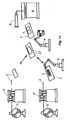
- FIGS. 1a and 1b The process scheme shown together in FIGS. 1a and 1b is used to create a spatially shaped Structural part 1, which consists of a base plate 2 and a smaller, locally arranged reinforcing plate 3 consists.
- the base plate 2 of the structural part in Flat state with the reinforcement plate 3 at the for later Reinforcement point and connected predetermined place the parts of the thus patched composite sheet 6 are subsequently by means of an openable and closable forming tool 22 formed together in a forming press 21 together.
- Relieving funds becomes the patched composite sheet 6 according to the invention before the common forming on a lying above the forming temperature of the material Temperature heated, when hot with moderate tool stress transformed into the desired shape and then under mechanical fixation of the desired forming state in the closed forming tool 22 and / or in a subsequent fixing and trimming tool 23 defined cooled and thereby specifically heat treated.
- the plant shown schematically in Figures 1a and 1b sees to practice of the method according to the invention ever one Unwinding device for a coil 12 for the base plate and for a coil 13 for the reinforcing sheet before.
- the unwound Sheets become the same after straightening them in a scissors 14 and 15 in single base plate boards 2 and divided into individual reinforcing sheet blanks 3, which are processed in cycles.
- the two coils 12 and 13 are according to the different width of the Blanks 2 and 3 different widths.
- the thickness of the individual sheets depends on the load of the structural part in the unreinforced area of the base sheet on the one hand and the on the other hand, and is for to optimize every single case. Usually the reinforcement plate be thinner than the base sheet.
- both sheets may preferably be made of the same or a similar material.
- thermoforming sheets two different, known per se and for thermoforming sheets commercially available materials are proposed, which may come for the base sheet 2 and / or the reinforcing sheet 3, 3 'in question. Namely in this context, on the one hand called a water-hardening tempering steel of the German company Benteler AG, which is sold under the trade name BTR 165.
- This steel has the following alloy composition, in which the contents of the alloying partners to be added in addition to the base metal iron are to be understood as percentages by weight: carbon 0.23-0.27%, silicon 0.15-0.50%, manganese 1.10-1.40%, chrome 0.10 - 0.35%, molybdenum 0 - 0.35%, titanium 0.03 - 0.05%, aluminum 0.02-0.06%, phosphorus Max. 0.025%, sulfur Max. 0.01% and others in total 0.0020 - 0.0035%.
- a corrosion-inorganically precoated sheet of the French company Sollac SA is recommended, which it sells under the trade name 22MnB5.
- the inorganic precoating of the sheet - an aluminum / silicon coating which partially diffuses into the base material during the heat treatment to form a three-phase laminate Al / Si / Fe - prevents scaling and decarburization of the sheet upon heating, and makes pickling and Phosphate the sheet unnecessarily.
- the coating readily allows the usual welds.
- the uncoated sheet is made of a steel having the following alloy composition, the contents also being understood to be in% by weight in addition to the base metal iron: carbon 0.20 - 0.25%, silicon 0.15-0.35%, manganese 1.10-1.35%, chrome 0.10 - 0.35%, titanium 0.02 - 0.05%, sulfur Max. 0.008% and others in total 0.002 - 0.004%.
- the process scheme shown in Figures 1a and 1b provides a braze joint of the two blank pieces. Therefore, in the embodiment shown in Figure 1a the base plate boards 2 locally at a predetermined Surface by a job robot 16 with a braze application 4 provided, for example, in the form of a sprayable Paste is applied.
- a braze application 4 provided, for example, in the form of a sprayable Paste is applied.
- other forms of brazing application e.g. the Laying on a formally punched blank a solder foil or the spreading or laying of chips is conceivable.
- a braze joint of sheet metal parts can it u.U.
- the contact surfaces both the base and the reinforcing sheet cleaned with braze 4 before application and / or activated for brazing which is shown in FIG.
- brazing filler metal additionally or alternatively also applied to the contact surface of the reinforcing plate 3 can be.
- the braze 4 with applied to a certain excess, so that this after the Melting of the brazing material during the hot forming of the Sheet metal parts are pressed on the edge of the reinforcing plate 3 can; see. Figure 3 and there squeezed out at the edge Lotüberschuß 35.
- the sheet metal parts 2 and 3 are correspondingly the desired mutual desired position of the sheets Position defined superposed, which by an auxiliary device can be carried out efficiently and reliably. Subsequently, both sheets are using the welding robot 17 by preferably only a single stapling point 5 preliminary fixed to each other to the relative position of the sheet metal parts to secure.
- the thus patched composite sheet 6 is automated entered into a continuous furnace 18, the furnace atmosphere through targeted and sufficient addition of a protective gas e.g. is inertized from the gas cylinder 19 to a scaling uncoated interfaces of the sheets or when using uncoated sheets - on the whole Prevent sheet metal surface.
- a protective gas e.g. is inertized from the gas cylinder 19 to a scaling uncoated interfaces of the sheets or when using uncoated sheets - on the whole Prevent sheet metal surface.
- the protective gas it can For example, carbon dioxide and / or nitrogen act.
- the composite sheet In the oven, the composite sheet is above a Such structural transformation temperature of the material - usually a certain temperature within the temperature range between 850 and 930 ° C - heated, above the material structure in austenitic state. This is a heat treatment of the material by targeted cooling and thus an adjustment of the achievable thereby Material resistance possible.
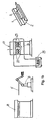
- the forming tool 21 is in the detail shown in Figure 2 Embodiment in the lower fixed part from a die 30 with a stationary hold-down edge, usually in one plane, usually even in one horizontal plane extends.
- the upper, movable part of the forming tool consists of a male part 31 with a separately liftable drivable down holder 32 whose flat contact surface parallel to the hold-down edge of the die is arranged.
- the composite sheet cools during the forming phase only moderately and can be despite the partial contact with the engraving of the forming tool easily at low forces and in high Thermoforming dimensions.
- the composite sheet cools during the forming phase only moderately and can be despite the partial contact with the engraving of the forming tool easily at low forces and in high Thermoforming dimensions.
- the Umformwerkmaschinemaschines is another significant advantage of Hot forming in that much higher degrees of deformation of the composite sheet (compared to cold forming) in one single forming train can be performed.
- the engravings of the die 30 and the male 31 with surface cooling cooling channels 33 and 34 included in a cooling circuit 24, whose coolant forcibly by a not shown Pump can be circulated.
- the heated coolant can by a heat exchanger 25 integrated in the cooling circuit be re-cooled, with the case used Cooling energy, for example, by a refrigeration unit or by cold tap water from a suitable receiving water (Water pipe, river) can be applied.
- the cooling channels 33 of the die on the one hand and the cooling channels 34 of the male On the other hand, in the illustrated embodiment arranged crosswise to each other, if possible no Streak effect when cooling on the workpiece to leave.
- the first cooling phase takes place by contacting with the forcibly cooled engraving of the forming tool 22 itself, wherein for the target temperature of this first cooling phase two considerations are authoritative.
- the sheets in the composite of the first molten Brazing with mechanical fixation of the molded composite sheet at least until complete solidification of the brazing alloy 4 are cooled, with this solidification arbitrary can be brought quickly or arbitrarily slowly.
- a target temperature of 500 ° C and a certain cooling rate is decisive.
- a martensitic material structure in the formed Composite sheet can be useful if you have the highest Strength in the structural part needed and no or only a very low ductility is required. In such a Case must be the hot formed composite sheet in the temperature range between 800 and 500 ° C rapidly, i. from 800 to 500 ° C be cooled in less than four seconds.
- a bainitic material structure is to strive for in the formed composite sheet.
- the workpiece must be in the temperature range between 800 and 500 ° C comparatively slowly, namely from 800 to 500 ° C for more than four seconds be cooled.
- the workpiece while remaining in the forming tool and while maintaining the fixation state continue to cool down to a temperature at the workpieces readily, especially without uncontrolled Structural changes can be handled and / or stored are.
- the total required cooling time is with good design of the tool-integrated cooling, depending according to sheet thickness, workpiece size and final temperature about 20 - 40 seconds, with the majority of cases in the range 25 - 30 seconds will lie.
- a pilot phase of manufacturing or for small lot sizes is such a single-stage cooling undoubtedly appropriate.
- Most such structural parts In large quantities needed and it must be a rational Mass production are set up. Under this condition It is expedient, the workpieces in several stages, But at least two-stage cooling.
- the process scheme of Figure 1b is a two-stage Cooling ago, which has the advantage that the necessary Clipping process of the workpiece still at an elevated Temperature of about 500 ° C can be made which in particular at elevated material strengths a considerable Relief of the cutting tools means.
- a two-stage cooling the advantage that the forming tool faster to pick up a new composite sheet becomes free again, so the cycle time is shortened and the Manufacturing is rationalized.
- the patched composite sheet is after the common forming while remaining in the closed held forming tool 22 initially at about 500 ° C for a given, time-averaged temperature gradient cooled and then in an inside the forming press adjacent, openable and closable fixing tool 23 handed over.
- the two neighboring tools namely the forming tool 22 on the one hand and the fixing tool 23 on the other, are inside the forming press 21 arranged in the manner of step tools and by a connected transfer device connected to the Opening the press the workpieces from the adjacent tools synchronously lifts them out and into the next tool or in a arranged outside the press tray on enough.
- the composite sheet received in the fixing tool becomes in the closed state also by means of a true to form Engraving touched flat on both sides and so the desired Forming state of the composite sheet further mechanically fixed.
- the fixing tool 23 is not closer integrated cropping tool with which the formed composite sheet trimmed in the present hot state becomes. And that is now no longer needed Cut off the holding or drawing edge of the base plate.
- the requisite trimming device is known per se and not shown with.
- the engraving of the fixing tool is also by near-surface integrated cooling channels forcibly cooled, so that the mechanically fixed in shape Workpiece continues to be extracted by contacting heat can. To avoid a streak effect during cooling it is convenient, the top and the bottom Cooling channels also crossed the fixing tool to each other to arrange.
- the fixing tool as Be lightweight construction and made of one less solid material, e.g. Made of aluminum. Especially does not need the surface of the fixing tool closed to be. Rather, it can be done by integrating a grid from the tool surface open channels the workpiece directly with a cooling fluid, in particular with cooling air be charged. By adding water mist and / or liquid air to the cooling air can also be with air achieved as a heat transfer medium very significant cooling rates become.
- the already mentioned above cooling time of about 25 - 30 seconds will also be at the two-stage cooling achieved, with a transfer-related interruption of the cooling not counted.
- the hot-formed Structural part with a local, brazed reinforcement part removed in pruned condition and further processed become.
- the workpieces are characterized by a high Strength, light weight, low unit cost as well high dimensional and shape retention.
- the common hot forming integrated heat treatment can the material strength of the composite sheet to about 1300 - 1600 MPa. Due to the high material strength are the thus produced, locally reinforced ones Structural parts ideal for lightweight constructions, in particular as shell parts for in the passenger compartment of a vehicle body integrated hollow beams suitable.
- Another one Field of application within the vehicle construction are locally reinforced Shell parts for in the chassis of a vehicle integrated cave porters.
- the formed workpieces within the forming press only to cool to such a temperature at which the Workpieces readily, especially without uncontrolled Structural changes can be handled and / or stored.
- a such temperature can usually be assumed at 100 to 150 ° C. become.
- such hot parts can not be done manually without further ado be handled.
- another cooling off outside the forming press by means of cooling air along a Cooling section recommended, with the workpieces to avoid a thermal distortion by means of form-fitting, permeable supporting shells should be supported. in this connection the cooling air cold water mist and / or - in particular when approaching room temperature - added liquid air become.
- the reinforcement plate first by means of only one spot weld or less To connect welding points with the base plate and the complete To carry out sustainable bonding after forming.
- the complete welding together of reinforcing and base sheet at least in the edge area before the To perform hot forming For one, the sheets can be in a flat state, easy handling and rational and process-safe welding. Otherwise, it is better if the Welding passages undergo the heat treatment in comparison to the variant in which the already heat-treated Sheets are subsequently welded. Finally it is also better for the forming process, if the plates involved secure - especially at the edge - connected are. It is also conceivable, the sheets to each other with silicone or similar sealing materials.
- Another method variant is the cooling rate of the composite sheet after hot working a locally different desired material strength different shape.
- the peculiarity of the forming press 21 'opposite that of Figure 1b is that within the longer trained forming press 21 'two more, equidistant subsequent fixing tools 26, which are also cooled are, are arranged. They are different from that Fixing and trimming tool 23 only in that they No trimming device included.
- thermoformed composite sheets Due to the four tools integrated in the forming press 21 ' 22, 23, 26 and 26 may be the thermoformed composite sheets be cooled in four consecutive stages, what the cycle time compared to the two-stage cooling according to the process scheme of Figure 1b to half the time shortened.
- the engravings of the four tools touch the workpieces almost full-surface on both sides and fix each one reliable in its nominal form. Due to an indirect or immediate forced cooling of the workpieces can they are deprived of heat very quickly.
- the engraving of the forming tool 22 is, as indicated in Figure 2, integrated by Cooling channels forcibly cooled, whereas the fixing tools 23 and 26 carry a grid of cooling channels, wherein these open to the form-determining surface of the engraving are so that the cooling medium - air, air / water mist mixture, Air / liquid air mixture - the workpieces immediately can apply.
- the tools are all through a transfer device connected to each other, so that the Workpieces cyclically passed from tool to tool can be.
- Time zero represents the moment when the patched Composite sheet removed at about 930 ° C from the oven 18 becomes.
- the sheet cools already something from and reaches at least about 850 ° C in the opened forming tool 22 into it.
- the work cycle begins of the press, of which in Figure 5 four consecutive Cycles Z and the associated temperature course of a through illustrated the forming press 21 'through the clocked workpiece are.
- Each cycle consists of a closing phase S, a fixing phase F and an opening phase O together.
- the closing phase S the workpiece is at least in the forming tool 22 not yet fully covered by the cooled engraving touched, so that the cooling effect of the engraving during the Closing and forming phase is not yet fully come to fruition.
- the hot forming of the patched composite sheet is completed - begins the fixing phase F, while due to the intimate contact of the tool engraving with the workpiece, the actual cooling of the same takes place within the respective cycle '.
- the workpiece In the first, subsequent to the hot forming and cooling phase, the workpiece must be cooled to well below the solidification temperature E L of the braze, so that the brazing after opening the tool securely holds and does not jump about partially.
- the workpiece must be cooled towards the end of the first fixing and cooling phase while maintaining a certain temporal temperature gradient to about 500 ° C, so that the desired material strength is given in the workpiece.
- the fixing and cooling phase F is decisive for the cycle time Z, because it has the largest share in it.
- the forming press can with her the tools to be opened - opening phase O.
- the workpieces exposed in the tools are highlighted out of the matrices, transfers them to the matrix of the next tool and places them there in an orderly manner, already the next closing process begins.
- the opening phase O the workpiece is only loosely in the engraving of the respective lower tool part and is neither top side, still also from below completely and intimately from the each engraving touched, so that even during the opening phases the cooling effect of the engraving only moderately to the effect comes.
Landscapes
- Engineering & Computer Science (AREA)
- Chemical & Material Sciences (AREA)
- Mechanical Engineering (AREA)
- Physics & Mathematics (AREA)
- Organic Chemistry (AREA)
- Thermal Sciences (AREA)
- Crystallography & Structural Chemistry (AREA)
- Materials Engineering (AREA)
- Metallurgy (AREA)
- Optics & Photonics (AREA)
- Plasma & Fusion (AREA)
- Combustion & Propulsion (AREA)
- Transportation (AREA)
- Shaping Metal By Deep-Drawing, Or The Like (AREA)
- Heat Treatment Of Sheet Steel (AREA)
- Coating With Molten Metal (AREA)
Description


- Figuren 1a und 1b
- zusammengenommen ein Verfahrensschema gemäß einem ersten Ausführungsbeispiel einer gemeinsamen Warmumformung von Basisblech und Verstärkungsblech, bei dem letzteres mit dem Basisblech hartverlötet wird,
- Fig. 2
- einen partiellen Schnitt durch das zwangsgekühlte Umformwerkzeug nach Figur 1 in einer vergrößerten Darstellung,
- Fig. 3
- einen Querschnitt durch ein weiteres Ausführungsbeispiel eines gepatchten Verbundbleches, bei dem das mit Verstärkungssicken versehene Verstärkungsblech vor dem Zusammenbringen mit dem Basisblech vorgeformt ist,
- Fig. 4
- ein nur partiell dargestelltes, weiteres Verfahrensschema zur Warmumformung von Basis- und Verstärkungsblech, bei dem diese nach dem gemeinsamem Warmumformen stufenweise in einer Folge von zwangsgekühlten Fixierwerkzeugen gekühlt werden und
- Fig. 5
- ein Temperatur/Zeit-Diagramm, in dem der Temperaturverlauf während der Herstellung eines in der Verfahrensanlage nach Figur 4 hergestellten Umformteiles dargestellt ist.
| Kohlenstoff | 0,23 - 0,27 %, |
| Silizium | 0,15 - 0,50 %, |
| Mangan | 1,10 - 1,40 %, |
| Chrom | 0,10 - 0,35 %, |
| Molybdän | 0 - 0,35 %, |
| Titan | 0,03 - 0,05 %, |
| Aluminium | 0,02 - 0,06 %, |
| Phosphor | max. 0,025 %, |
| Schwefel | max. 0,01 % und |
| andere insgesamt | 0,0020 - 0,0035 %. |
| Kohlenstoff | 0,20 - 0,25 %, |
| Silizium | 0,15 - 0,35 %, |
| Mangan | 1,10 - 1,35 %, |
| Chrom | 0,10 - 0,35 %, |
| Titan | 0,02 - 0,05 %, |
| Schwefel | max. 0,008 % und |
| andere insgesamt | 0,002 - 0,004 %. |
Claims (27)
- Verfahren zum Herstellen eines räumlich geformten, aus einem Basisblech und aus wenigstens einem kleineren, lokal angeordneten Verstärkungsblech bestehenden Strukturteil, bei dem das Basisblech des Strukturteils im Flachzustand oder in einem unvollständig umgeformten Vorformungszustand mit dem Verstärkungsblech an der für die spätere Verstärkungsstelle vorbestimmten Stelle verbunden und die Teile des gepatchten Verbundblechs anschließend mittels eines öffen- und schließbaren Umformwerkzeuges in einer Umformpresse gemeinsam umgeformt werden,
dadurch gekennzeichnet, daß
das gepatchte Verbundblech (6, 6') vor dem gemeinsamen Umformen auf eine oberhalb der Umformtemperatur des Werkstoffs liegende Temperatur erwärmt, im Warmzustand in die gewünschte Form umgeformt und anschließend unter mechanischer Fixierung des gewünschten Umformzustandes in dem geschlossen gehaltenen Umformwerkzeug (22) oder einem anschließenden Fixierwerkzeug (23, 26) abgekühlt wird. - Verfahren nach Anspruch 1,
dadurch gekennzeichnet, daß
die Teile des gepatchten Verbundblechs (6') oberhalb einer solchen Gefügeumwandlungstemperatur des Werkstoffes erwärmt werden, oberhalb der das Werkstoffgefüge in austenitischen Zustand vorliegt. - Verfahren nach Anspruch 1,
dadurch gekennzeichnet, daß
das gepatchte Verbundblech (6') vor dem gemeinsamen Umformen auf eine bestimmte Temperatur innerhalb des Temperaturbereiches zwischen 850 und 930°C erwärmt wird. - Verfahren nach Anspruch 1,
dadurch gekennzeichnet, daß
das wenigstens eine Verstärkungsblech (3') oder wenigstens eines der Verstärkungsbleche seinerseits vor dem Zusammenbringen mit dem Basisblech (2) durch Anbringen von Verstärkungssicken (7) in der Weise vorgeformt wird, daß es sich gleichwohl an der vorbestimmten Stelle formgetreu an das Basisblech (2) anlegen und mit ihm fixieren läßt. - Verfahren nach Anspruch 1,
dadurch gekennzeichnet, daß
das Entnehmen des erwärmten Verbundblechs (6') aus einer Erwärmungseinrichtung, insbesondere aus einem Ofen (18) und das lagedefinierte Einlegen des Verbundblechs (6') in das geöffnete Umformwerkzeug (22) bis zum Beginn des Schließens des Umformwerkzeuges (22) in weniger als drei Sekunden, vorzugsweise in weniger als zwei Sekunden erfolgt (Zeitspanne E). - Verfahren nach Anspruch 1,
dadurch gekennzeichnet, daß
das gemeinsame Umformen des lagedefiniert in das geöffnete Umformwerkzeug (22) eingelegten, erwärmten Verbundblechs (6') vom Beginn des Schließens des Umformwerkzeuges (22) an gerechnet bis zum vollständigen Umformen in wenigstens 3 bis 5 Sekunden erfolgt (Zeitspanne S). - Verfahren nach Anspruch 1,
dadurch gekennzeichnet, daß
das Abkühlen des gemeinsam umgeformten Verbundblechs zumindest in einer ersten Abkühlphase auf dem Umformwerkzeug durch Kontaktierung mit dem von innen her zwangsgekühlten (33, 34) Umformwerkzeug (22) erfolgt. - Verfahren nach Anspruch 7,
dadurch gekennzeichnet, daß
das gepatchte Verbundblech nach dem gemeinsamen Umformen unter Verbleib in dem geschlossen gehaltenen Umformwerkzeug (22) zumindest bis auf etwa 500°C abgekühlt wird. - Verfahren nach Anspruch 1,
dadurch gekennzeichnet, daß
das gepatchte Verbundblech nach dem gemeinsamen Umformen unter Verbleib in dem geschlossen gehaltenen Umformwerkzeug (22) zunächst auf etwa 500°C abgekühlt und anschließend in ein benachbartes, öffen- und schließbares Fixierwerkzeug (23, 26) übergeben wird, welches das darin aufgenommene, umgeformte Verbundblech mittels einer formgetreuen Gravur im geschlossen Zustand beidseitig flächig berührt und den gewünschten Umformzustand des Verbundbleches weiterhin mechanisch fixiert, wobei das umgeformte Verbundblech in dem dann vorliegenden Warmzustand durch ein in dem Fixierwerkzeug integrierten Beschneidungswerkzeug beschnitten und durch die zwangsgekühlte Gravur des Fixierwerkzeuges weiterhin abgekühlt wird. - Verfahren nach Anspruch 1,
dadurch gekennzeichnet, daß
das Zwangskühlen des gepatchten Verbundbleches nach dem gemeinsamen Umformen zunächst in dem Umformwerkzeug (22) und anschließend - abgesehen von kurzen Übergabe-bedingten Unterbrechungen - unter steter mechanischer Fixierung des gewünschten Umformzustandes des Verbundbleches durch eine Folge von benachbarten, öffen- und schließbaren Fixierwerkzeugen (23, 26) durchgeführt wird, welche das darin jeweils aufgenommene Verbundblech mittels einer formgetreuen Gravur im geschlossen Zustand beidseitig flächig berühren, wobei das von Fixierwerkzeug (23, 26) zu Fixierwerkzeug (26) weitergereichte Verbundblech durch die von innen zwangsgekühlten Gravuren der Fixierwerkzeuge (23, 26) in mehreren aufeinander folgenden Etappen (Z) bis mindestens auf 150°C abgekühlt wird. - Verfahren nach Anspruch 1 oder 10,
dadurch gekennzeichnet, daß
das gepatchte Verbundblech nach dem gemeinsamen Umformen entweder durch das Umformwerkzeug (22) alleine oder gemeinsam mit einer anschließenden Folge von Fixierwerkzeugen (23, 26) 20 - 40 Sekunden lang, vorzugsweise etwa 25 - 30 Sekunden lang, gekühlt wird. - Verfahren nach Anspruch 1,
dadurch gekennzeichnet, daß
zur Erzielung eines martensitischen Werkstoffgefüges im umgeformten Verbundblech dieses zumindest im Temperaturbereich zwischen 800 und 500°C rasch, d.h. von 800 auf 500°C in weniger als vier Sekunden abgekühlt wird. - Verfahren nach Anspruch 1,
dadurch gekennzeichnet, daß
zur Erzielung eines bainitischen Werkstoffgefüges im umgeformten Verbundblech dieses zumindest im Temperaturbereich zwischen 800 und 500°C vergleichsweise langsam, nämlich von 800 auf 500°C in einer länger als vier Sekunden dauernden Zeitspanne abgekühlt wird. - Verfahren nach Anspruch 1,
dadurch gekennzeichnet, daß
vor dem Anbringen des Verstärkungsbleches (3, 3') an dem Basisblech (2) wenigstens eines der Bleche (2) an der Kontakti fläche flächendeckend mit einem Hartlot (4) versehen, dieses während des Erwärmens auf Umformtemperatur erschmolzen und das gemeinsam umgeformte Verbundblech unter mechanischer Fixierung des Umformzustandes in dem geschlossen gehaltenen Umformwerkzeug (22) wenigsten bis zur vollständigen Erstarrung des Hartlotes (4) abgekühlt wird. - Verfahren nach Anspruch 14,
dadurch gekennzeichnet, daß
die Kontaktfläche des wenigstens einen mit Hartlot (4) versehenen Bleches (2) mit einem Überschuß an Hartlot (4) versehen und dieser Überschuß (35) während des gemeinsamen Umformens am Rand des Verstärkungsbleches (3) ausgepreßt wird. - Verfahren nach Anspruch 14,
dadurch gekennzeichnet, daß
die Kontaktflächen sowohl des Basis- (2) als auch des Verstärkungsbleches (3, 3') vor dem Auftragen mit Hartlot (4) gereinigt und/oder für ein Hartlöten aktiviert werden. - Verfahren nach Anspruch 14,
dadurch gekennzeichnet, daß
das Hartlot (4) in Pastenform aufgetragen wird. - Verfahren nach Anspruch 14,
dadurch gekennzeichnet, daß
das Hartlot in Form von Spänen aufgebracht wird. - Verfahren nach Anspruch 14,
dadurch gekennzeichnet, daß
das Hartlot in Form eines formentsprechend ausgestanzten Zuschnittes einer Lötfolie aufgebracht wird. - Verfahren nach Anspruch 14,
dadurch gekennzeichnet, daß
ein Hartlot (4) verwendet wird, dessen Erstarrungstemperatur mindestens 500°C, vorzugsweise mindestens 550°C beträgt. - Verfahren nach Anspruch 14,
dadurch gekennzeichnet, daß
nach dem Auftragen des Hartlots (4) und nach dem lagedefinierten Auflegen des Verstärkungsbleches (3, 3') auf das Basisblech (2) beide durch einen einzigen Heftpunkt (5) vorläufig aufeinander fixiert werden. - Verfahren nach Anspruch 1 oder 14,
dadurch gekennzeichnet, daß
das Erwärmen des gepatchten Blechverbundes (6) im Ofen (18) in einer Schutzgasatmosphäre (Schutzgas 19) erfolgt. - Verfahren nach Anspruch 1 oder 14,
dadurch gekennzeichnet, daß
das Basisblech (2) und/oder das Verstärkungsblech (3, 3') aus einem wasserhärtenden Vergütungsstahl mit der nachfolgend aufgeführten Legierungszusammensetzung besteht, wobei die Gehalte in Gew.-% zu verstehen sind und zusätzlich zu dem Basismetall Eisen hinzuzufügen sind:Kohlenstoff 0,23 - 0,27 %, Silizium 0,15 - 0,50 %, Mangan 1,10 - 1,40 %, Chrom 0,10 - 0,35 %, Molybdän 0 - 0,35 %, Titan 0,03 - 0,05 %, Aluminium 0,02 - 0,06 %, Phosphor max. 0,025 %, Schwefel max. 0,01 % und andere insgesamt 0,0020 - 0,0035 %. - Verfahren nach Anspruch 1, dadurch gekennzeichnet, daß das Basisblech (2) und/oder das Verstärkungsblech (3, 3') gegen Korrosion anorganisch vorbeschichtet ist und aus einem Stahl mit der nachfolgend aufgeführten Legierungszusammensetzung besteht, wobei die Gehalte in Gew.-% zu verstehen sind und zusätzlich zu dem Basismetall Eisen hinzuzufügen sind:
Kohlenstoff 0,20 - 0,25 %, Silizium 0,15 - 0,35 %, Mangan 1,10 - 1,35 %, Chrom 0,10 - 0,35 %, Titan 0,02 - 0,05 %, Schwefel max. 0,008 % und andere insgesamt 0,002 - 0,004 % - Verfahren nach Anspruch 1 oder 14,
dadurch gekennzeichnet, daß
die Werkstofffestigkeit des Verbundbleches durch die in den Prozeß des gemeinsamen Warmumformens integrierte Wärmebehandlung auf etwa 1300 - 1600 MPa gesteigert wird. - Verfahren nach Anspruch 1 oder 14,
dadurch gekennzeichnet, daß
danach lokal verstärkte Schalenteile für in die Fahrgastzelle einer Fahrzeugkarosserie integrierte Hohlträger hergestellt werden. - Verfahren nach Anspruch 1 oder 14,
dadurch gekennzeichnet, daß
danach lokal verstärkte Schalenteile für in das Fahrwerk eines Fahrzeuges integrierte Hohlträger hergestellt werden.
Applications Claiming Priority (2)
| Application Number | Priority Date | Filing Date | Title |
|---|---|---|---|
| DE10049660A DE10049660B4 (de) | 2000-10-07 | 2000-10-07 | Verfahren zum Herstellen lokal verstärkter Blechumformteile |
| DE10049660 | 2000-10-07 |
Publications (3)
| Publication Number | Publication Date |
|---|---|
| EP1195208A2 EP1195208A2 (de) | 2002-04-10 |
| EP1195208A3 EP1195208A3 (de) | 2004-12-15 |
| EP1195208B1 true EP1195208B1 (de) | 2005-12-28 |
Family
ID=7658969
Family Applications (1)
| Application Number | Title | Priority Date | Filing Date |
|---|---|---|---|
| EP01123618A Revoked EP1195208B1 (de) | 2000-10-07 | 2001-10-02 | Verfahren zum Herstellen lokal verstärkter Blechumformteile |
Country Status (4)
| Country | Link |
|---|---|
| US (1) | US7137201B2 (de) |
| EP (1) | EP1195208B1 (de) |
| JP (1) | JP3553536B2 (de) |
| DE (1) | DE10049660B4 (de) |
Cited By (4)
| Publication number | Priority date | Publication date | Assignee | Title |
|---|---|---|---|---|
| JP2010501353A (ja) * | 2006-08-25 | 2010-01-21 | イェスタムプ・ハードテック・アクチエボラーグ | 金属シートから目的物を熱成形、硬化させる方法および車両用bピラー |
| CN102513798A (zh) * | 2011-12-31 | 2012-06-27 | 钢铁研究总院 | 一种热成形零件的定制设备及其方法 |
| DE102016216593A1 (de) | 2016-09-02 | 2018-03-08 | Zf Friedrichshafen Ag | Verfahren zum Herstellen einer hydrodynamischen Maschine und hydrodynamische Maschine |
| EP4737597A1 (de) * | 2024-10-30 | 2026-05-06 | Autotech Engineering, S.L. | Verfahren und fertigungslinie zum warmumformen und presshärten eines bauteils |
Families Citing this family (118)
| Publication number | Priority date | Publication date | Assignee | Title |
|---|---|---|---|---|
| JP2002241835A (ja) * | 2001-02-20 | 2002-08-28 | Aisin Takaoka Ltd | ワークの部分強化方法 |
| JP4497736B2 (ja) * | 2001-03-02 | 2010-07-07 | 本田技研工業株式会社 | 2枚重ね製品の成形用ブランク材 |
| DE10135647C1 (de) * | 2001-07-21 | 2002-07-25 | Daimler Chrysler Ag | Verfahren zur Herstellung eines Blechumformteils mit Korrosionsschutz und nach dem Verfahren hergestelltes Blechumformteil |
| DE10220323C1 (de) * | 2002-02-06 | 2003-08-21 | Benteler Automobiltechnik Gmbh | Verfahren zur Herstellung eines Strukturbauteils für den Fahrzeugbau |
| WO2004033126A1 (de) | 2002-09-13 | 2004-04-22 | Daimlerchrysler Ag | Pressgehärtetes bauteil und verfahren zu seiner herstellung |
| DE10254695B3 (de) * | 2002-09-13 | 2004-04-15 | Daimlerchrysler Ag | Verfahren zur Herstellung eines metallischen Formbauteils |
| DE10246164B4 (de) * | 2002-10-02 | 2014-03-20 | Benteler Automobiltechnik Gmbh | Verfahren zum Herstellen von Strukturbauteilen |
| DE10314115A1 (de) * | 2003-03-28 | 2004-10-14 | Audi Ag | Verfahren zur Umformung einer Platine aus einem Vergütungsstahl und Vorrichtung zur Durchführung des Verfahrens |
| DE10333166A1 (de) * | 2003-07-22 | 2005-02-10 | Daimlerchrysler Ag | Pressgehärtetes Bauteil und Verfahren zur Herstellung eines pressgehärteten Bauteils |
| DE10333165A1 (de) * | 2003-07-22 | 2005-02-24 | Daimlerchrysler Ag | Pressgehärtetes Bauteil und Verfahren zur Herstellung eines pressgehärteten Bauteils |
| US8021497B2 (en) | 2003-07-29 | 2011-09-20 | Voestalpine Stahl Gmbh | Method for producing a hardened steel part |
| DE10339350B4 (de) * | 2003-08-25 | 2011-06-30 | ISE Automotive GmbH, 51702 | Verfahren zum Halbwarm-oder Warmumformen von Blechen |
| JP2005138112A (ja) * | 2003-11-04 | 2005-06-02 | Nippon Steel Corp | プレス加工方法 |
| DE10353479A1 (de) * | 2003-11-15 | 2005-03-10 | Daimler Chrysler Ag | Verbundbauteil zur Verwendung in Kraftfahrzeugen |
| US7503116B2 (en) * | 2004-01-20 | 2009-03-17 | Noble Advanced Technologies, Inc. | Continuous process for producing a shaped steel member |
| DE102004005568A1 (de) * | 2004-02-05 | 2005-09-08 | Daimlerchrysler Ag | Verbindungsbereich auf einem Bauteil, sowie Verfahren und Werkzeug zu seiner Herstellung |
| DE102004007071B4 (de) * | 2004-02-13 | 2006-01-05 | Audi Ag | Verfahren zur Herstellung eines Bauteils durch Umformen einer Platine und Vorrichtung zur Durchführung des Verfahrens |
| JP2005288528A (ja) * | 2004-04-05 | 2005-10-20 | Nippon Steel Corp | 成形後高強度となる鋼板の熱間プレス方法 |
| DE102004031797A1 (de) * | 2004-07-01 | 2006-01-26 | Daimlerchrysler Ag | Verfahren zum Herstellen eines umgeformten, lokal verstärkten Blechbauteils und entsprechendes Blechbauteil |
| DE102004032599B4 (de) | 2004-07-06 | 2020-06-18 | Volkswagen Ag | A-Säule an einer Kraftfahrzeugkarosserie eines Cabrio-Fahrzeuges |
| DE102004038626B3 (de) | 2004-08-09 | 2006-02-02 | Voestalpine Motion Gmbh | Verfahren zum Herstellen von gehärteten Bauteilen aus Stahlblech |
| DE102004039882A1 (de) * | 2004-08-17 | 2006-02-23 | Adam Opel Ag | Verfahren zur Fertigung von Automobilanbauteilen |
| DE102004051848B3 (de) * | 2004-10-25 | 2006-01-12 | Fraunhofer-Gesellschaft zur Förderung der angewandten Forschung e.V. | Verfahren zur Herstellung von mehrlagigen Blechstrukturen und mehrlagige Blechstruktur |
| DE102004054795B4 (de) * | 2004-11-12 | 2007-04-05 | Thyssenkrupp Automotive Ag | Verfahren zur Herstellung von Fahrzeugbauteilen sowie Karosseriebauteil |
| JP2006224162A (ja) * | 2005-02-18 | 2006-08-31 | Nippon Steel Corp | ホットプレス成形方法 |
| DE102005014298B4 (de) * | 2005-03-24 | 2006-11-30 | Benteler Automobiltechnik Gmbh | Panzerung für ein Fahrzeug |
| DE102005025026B3 (de) | 2005-05-30 | 2006-10-19 | Thyssenkrupp Steel Ag | Verfahren zum Herstellen eines Metallbauteils mit aneinander angrenzenden Abschnitten unterschiedlicher Materialeigenschaften |
| DE102005025611A1 (de) * | 2005-06-03 | 2006-12-07 | Bayerische Motoren Werke Ag | Verfahren zum örtlichen Versteifen der Karosserie eines Fahrzeugs |
| DE102005033042B3 (de) * | 2005-07-15 | 2006-07-27 | Audi Ag | Verfahren zur Wärmebehandlung metallischer Werkstücke und Vorrichtung zur Durchführung |
| DE102005038493B4 (de) * | 2005-08-13 | 2017-06-29 | Volkswagen Ag | Verfahren zur Herstellung einer Fügeverbindung zwischen zwei Blechen |
| CN100437007C (zh) * | 2005-09-23 | 2008-11-26 | 富准精密工业(深圳)有限公司 | 热管制造方法 |
| DE102006015666B4 (de) | 2006-04-04 | 2024-02-29 | Magna International Inc. | Verfahren zur Herstellung eines metallischen Formbauteils durch Warmumformen mit simultaner Beschneideoperation |
| DE102006020623B4 (de) * | 2006-05-02 | 2010-04-01 | Benteler Automobiltechnik Gmbh | Verfahren zum Herstellen von Bauteilen aus tailored blanks |
| JP4908059B2 (ja) | 2006-05-22 | 2012-04-04 | カヤバ工業株式会社 | ストラット型ショックアブソーバ |
| DE102006034620A1 (de) * | 2006-07-27 | 2008-01-31 | Volkswagen Ag | Verfahren zum Herstellen von Blechbauteilen |
| US9067260B2 (en) | 2006-09-06 | 2015-06-30 | Arcelormittal France | Steel plate for producing light structures and method for producing said plate |
| HUE036195T2 (hu) | 2006-10-30 | 2018-06-28 | Arcelormittal | Bevonatolt acélszalagok, eljárások azok elõállítására, eljárások azok alkalmazására, azokból készített nyersdarabok, azokból készített sajtolt termékek, továbbá ilyen sajtolt terméket tartalmazó késztermékek |
| DE102006052351A1 (de) * | 2006-11-07 | 2008-05-08 | Thyssenkrupp Drauz Nothelfer Gmbh | Verfahren zum Herstellen von verstärkten Blechplatinen |
| WO2008055570A1 (de) * | 2006-11-07 | 2008-05-15 | Thyssenkrupp Drauz Nothelfer Gmbh | Verfahren und anlage zum herstellen von verstärkten blechplatinen |
| DE102007043015A1 (de) | 2007-09-11 | 2009-03-12 | Thyssenkrupp Drauz Nothelfer Gmbh | Verfahren zum Herstellen von verstärkten Blechplatinen |
| DE102007009937A1 (de) | 2007-03-01 | 2008-09-04 | Schuler Smg Gmbh & Co. Kg | Verfahren zur Umformung einer Platine und Kühlvorrichtung für eine Platine |
| DE102007013739B3 (de) * | 2007-03-22 | 2008-09-04 | Voestalpine Stahl Gmbh | Verfahren zum flexiblen Walzen von beschichteten Stahlbändern |
| DE102007017661A1 (de) * | 2007-04-12 | 2008-10-16 | J. Eberspächer GmbH & Co. KG | Tiefziehblechbauteil in Schalenbauweise |
| DE102007039998B4 (de) | 2007-08-23 | 2014-05-22 | Benteler Defense Gmbh & Co. Kg | Panzerung für ein Fahrzeug |
| FR2921889A1 (fr) * | 2007-10-03 | 2009-04-10 | Thyssenkrupp Sofedit | Procede de fabrication d'un structure en tole |
| DE102007057855B3 (de) | 2007-11-29 | 2008-10-30 | Benteler Automobiltechnik Gmbh | Verfahren zur Herstellung eines Formbauteils mit mindestens zwei Gefügebereichen unterschiedlicher Duktilität |
| FR2926054B1 (fr) * | 2008-01-04 | 2010-04-23 | Peugeot Citroen Automobiles Sa | Piece de renfort a tres haute ou ultra haute limite elastique pour une structure de carrosserie de vehicule automobile. |
| WO2009090443A1 (en) | 2008-01-15 | 2009-07-23 | Arcelormittal France | Process for manufacturing stamped products, and stamped products prepared from the same |
| DE102008012720A1 (de) | 2008-03-05 | 2009-09-10 | Benteler Automobiltechnik Gmbh | Panzerung für ein Fahrzeug |
| DE102008026613A1 (de) | 2008-05-30 | 2009-12-03 | Fraunhofer-Gesellschaft zur Förderung der angewandten Forschung e.V. | Verfahren zur Herstellung einer Blechstruktur aus miteinander verklebten Blechbauteilen |
| KR20110031959A (ko) * | 2008-07-10 | 2011-03-29 | 쉴로 인더스트리즈 인코포레이티드 | 금속 성형 공정 및 용접 코일 어셈블리 |
| KR101149282B1 (ko) * | 2008-08-28 | 2012-05-24 | 현대제철 주식회사 | 프레스 경화 공정용 가열로장치 |
| DE202009002575U1 (de) * | 2009-02-03 | 2009-05-28 | Dr.Ing.H.C.F.Porsche Aktiengesellschaft | Profilteil als Karosseriekomponente eines Kraftfahrzeuges |
| US8459084B2 (en) * | 2009-02-05 | 2013-06-11 | Usamp | Elevated temperature forming method and preheater apparatus |
| DE102009009112A1 (de) | 2009-02-16 | 2010-11-04 | Benteler Automobiltechnik Gmbh | Kraftfahrzeug-Strukturbauteil sowie Verfahren und Vorrichtung zur Herstellung eines Kraftfahrzeug-Strukturbauteils |
| ATE530674T1 (de) * | 2009-02-26 | 2011-11-15 | Thyssenkrupp Steel Europe Ag | Bauteil mit unterschiedlichen festigkeitseigenschaften |
| DE102009014670B4 (de) * | 2009-03-27 | 2011-01-13 | Thyssenkrupp Sofedit S.A.S | Verfahren und Warmumformanlage zur Herstellung von pressgehärteten Formbauteilen aus Stahlblech |
| AU2009245821A1 (en) * | 2009-04-08 | 2010-10-28 | Inter Licence Co., Ltd. | Method for creating pattern on a metal surface by imprinting with the aid of heating |
| DE102009017326A1 (de) * | 2009-04-16 | 2010-10-21 | Benteler Automobiltechnik Gmbh | Verfahren zur Herstellung von pressgehärteten Bauteilen |
| MX2011013327A (es) * | 2009-06-09 | 2012-02-28 | Shiloh Ind Inc | Aparato, sistema y metodo para fabricar partes de metal. |
| DE102009032651A1 (de) | 2009-07-09 | 2011-01-13 | Benteler Automobiltechnik Gmbh | Verfahren zur Herstellung einer Karosserie für ein Kraftfahrzeug und Karosserie |
| DE102009034941B4 (de) * | 2009-07-28 | 2013-04-25 | Vps Vehicle Protection Systems Gmbh | Fahrzeugpanzerung |
| DE102009050533A1 (de) * | 2009-10-23 | 2011-04-28 | Thyssenkrupp Sofedit S.A.S | Verfahren und Warmumformanlage zur Herstellung eines gehärteten, warm umgeformten Werkstücks |
| DE102009052210B4 (de) * | 2009-11-06 | 2012-08-16 | Voestalpine Automotive Gmbh | Verfahren zum Herstellen von Bauteilen mit Bereichen unterschiedlicher Duktilität |
| DE102009060319A1 (de) * | 2009-12-23 | 2011-06-30 | DURA Automotive Body & Glass Systems GmbH, 58840 | Karosserieteil oder Strukturteil für ein Fahrzeug und ein Verfahren zu seiner Herstellung |
| DE102010012579B3 (de) * | 2010-03-23 | 2011-07-07 | Benteler Automobiltechnik GmbH, 33102 | Verfahren und Vorrichtung zur Herstellung von gehärteten Formbauteilen |
| EP2551359B1 (de) * | 2010-03-24 | 2021-04-07 | JFE Steel Corporation | Verfahren zur herstellung eines ultrahochfesten elements |
| DE102010012830B4 (de) | 2010-03-25 | 2017-06-08 | Benteler Automobiltechnik Gmbh | Verfahren zur Herstellung einer Kraftfahrzeugkomponente und Karosseriebauteil |
| DE102010016945C5 (de) * | 2010-05-14 | 2013-10-17 | Kirchhoff Automotive Deutschland Gmbh | Verfahren zur Herstellung eines Formteiles |
| CN102266900B (zh) * | 2010-06-07 | 2015-11-25 | 蒂森克虏伯金属成型技术有限公司 | 用于制造锻压的钢板成型构件的方法和热成型装置 |
| EP2617509B1 (de) * | 2010-09-16 | 2023-04-26 | Nippon Steel Corporation | Geformtes element und herstellungsverfahren dafür |
| WO2012043837A1 (ja) | 2010-09-30 | 2012-04-05 | 株式会社神戸製鋼所 | プレス成形品およびその製造方法 |
| DE102010047033B3 (de) * | 2010-09-30 | 2012-03-08 | Benteler Automobiltechnik Gmbh | Kraftfahrzeug-Formbauteil und Verfahren zu dessen Herstellung |
| CN103168105B (zh) * | 2010-10-11 | 2015-05-20 | 塔塔钢铁艾默伊登有限责任公司 | 一种带钢复合体及其制造方法 |
| DE102011011013B4 (de) * | 2011-02-11 | 2017-07-13 | Schuler Pressen Gmbh | Pressenanlage zum Umformen oder Bearbeiten von meta llischen Bauteilen |
| US9308564B2 (en) * | 2012-11-28 | 2016-04-12 | Magna International Inc. | Hot stamping system and method |
| JP6127669B2 (ja) * | 2013-04-10 | 2017-05-17 | 新日鐵住金株式会社 | ホットスタンプ成形品の製造方法及びブランク材の製造方法 |
| DE102014101907A1 (de) | 2014-02-14 | 2015-08-20 | Thyssenkrupp Ag | Metallblech mit lokaler metallischer Verstärkung und Verfahren zu dessen Herstellung |
| JP5959558B2 (ja) * | 2014-03-13 | 2016-08-02 | アイシン高丘株式会社 | 複合構造体及びその製造方法 |
| CN103934360A (zh) * | 2014-04-25 | 2014-07-23 | 吉林大学 | 超高强度钢热冲压、温冲裁复合成形工艺及模具 |
| DE102014108183B4 (de) | 2014-06-11 | 2024-02-01 | Dr. Ing. H.C. F. Porsche Aktiengesellschaft | Mehrschichtige Karosseriestruktur einer Kraftfahrzeugkarosserie und Verfahren zur Herstellung der mehrschichtigen Karosseriestruktur |
| DE102014112244A1 (de) | 2014-08-26 | 2016-03-03 | Benteler Automobiltechnik Gmbh | Verfahren und Presse zur Herstellung wenigstens abschnittsweise gehärteter Blechbauteile |
| JP6288287B2 (ja) | 2014-10-03 | 2018-03-07 | 新日鐵住金株式会社 | ろう付継手の製造方法及びろう付継手 |
| KR102200519B1 (ko) * | 2014-10-07 | 2021-01-11 | 현대자동차주식회사 | 롤 포밍 방법 및 롤 포밍 성형물 |
| EP3072980B1 (de) * | 2015-03-26 | 2018-02-14 | weba Werkzeugbau Betriebs GmbH | Verfahren und vorrichtung zur herstellung eines partiell gehärteten formteils |
| DE102015106812B4 (de) | 2015-04-30 | 2018-11-08 | Benteler Automobiltechnik Gmbh | Kraftfahrzeugsäule mit Verstärkungsblech sowie Verfahren zu dessen Herstellung |
| DE102015209772B4 (de) | 2015-05-28 | 2026-03-26 | Volkswagen Aktiengesellschaft | Fahrzeugtür mit einem Türaufprallträger |
| DE102015113869A1 (de) * | 2015-08-20 | 2017-02-23 | Thyssenkrupp Ag | Verfahren zum Herstellen eines Formteils und Formteil |
| DE102016100648B4 (de) | 2015-12-23 | 2018-04-12 | Benteler Automobiltechnik Gmbh | Wärmebehandlungsofen sowie Verfahren zur Wärmebehandlung einer vorbeschichteten Stahlblechplatine und Verfahren zur Herstellung eines Kraftfahrzeugbauteils |
| EP3184655A1 (de) * | 2015-12-23 | 2017-06-28 | Benteler Automobiltechnik GmbH | Wärmebehandlungsofen sowie verfahren zur wärmebehandlung einer vorbeschichteten stahlblechplatine und verfahren zur herstellung eines kraftfahrzeugbauteils |
| KR101992077B1 (ko) * | 2016-05-18 | 2019-06-21 | 닛폰세이테츠 가부시키가이샤 | 프레스 성형품의 제조 방법 |
| CN106216497B (zh) * | 2016-06-23 | 2017-12-22 | 慈溪市校杰电器有限公司 | 一种用于锅炉一体化成型板材冲压前的表面质量控制设备 |
| JP6357197B2 (ja) * | 2016-07-19 | 2018-07-11 | 東亜工業株式会社 | 熱間プレス方法 |
| JP6340389B2 (ja) * | 2016-07-19 | 2018-06-06 | 東亜工業株式会社 | 熱間プレス装置、熱間プレス方法及び自動車車体部品の製造方法 |
| DE102016114062B3 (de) * | 2016-07-29 | 2017-06-22 | Benteler Automobiltechnik Gmbh | Säule für ein Kraftfahrzeug und Verfahren zur Herstellung einer Säule |
| BR102016023753A2 (pt) * | 2016-10-11 | 2018-05-02 | Aethra Sistemas Automotivos S/A | Processo para produção de peças estampadas de alta resistência mecânica, através de aquecimento elétrico controlado |
| KR101865741B1 (ko) * | 2016-11-18 | 2018-06-08 | 현대자동차 주식회사 | 일체형 핫 스탬핑 조립체 및 그의 조립 방법 |
| KR101865740B1 (ko) | 2016-12-13 | 2018-06-08 | 현대자동차 주식회사 | 일체형 핫 스탬핑 조립체 |
| DE102017003715B4 (de) | 2017-04-15 | 2022-06-30 | Audi Ag | Mit einer Trennstelle ausgebildetes Verbundbauteil und Verfahren zur Anpassung eines solchen Verbundbauteils |
| JP6495383B2 (ja) * | 2017-07-04 | 2019-04-03 | 東亜工業株式会社 | プレス成形品の製造方法 |
| DE102017121975A1 (de) † | 2017-09-22 | 2019-03-28 | GEDIA Gebrüder Dingerkus GmbH | Verfahren zur Herstellung von Bauteilen aus Metallblech |
| JP6624189B2 (ja) * | 2017-12-04 | 2019-12-25 | マツダ株式会社 | 車体部材の製造方法および車両の車体部材 |
| DE102018207488A1 (de) | 2018-05-15 | 2019-11-21 | Bayerische Motoren Werke Aktiengesellschaft | Verfahren zur Herstellung eines Blechbauteils |
| DE102018116412A1 (de) * | 2018-07-06 | 2020-01-09 | Faurecia Autositze Gmbh | Verfahren zur Herstellung eines eine Zahnreihe aufweisenden Bauteils zur Verstellung eines Kraftfahrzeugsitzes |
| CN110216196B (zh) * | 2019-06-14 | 2025-03-14 | 江苏财经职业技术学院 | 钢补丁板的浮动凸模热成形模具和热冲压成形方法 |
| DE102019120862A1 (de) | 2019-08-01 | 2021-02-04 | Benteler Automobiltechnik Gmbh | Verfahren zur Herstellung eines Plattenwärmetauschers sowie Plattenwärmetauscher |
| CN114555453B (zh) * | 2019-11-08 | 2024-06-14 | 自动工程有限公司 | 一种用于车辆框架的成形钣金部件和相应的生产方法 |
| CN113924373B (zh) * | 2019-12-20 | 2023-09-01 | 现代制铁株式会社 | 热冲压部件及其制造方法 |
| DE102020202998B3 (de) * | 2020-03-10 | 2021-06-10 | Volkswagen Aktiengesellschaft | Verfahren zum Herstellen eines pressgehärteten Blechformteils aus einer Stahlblechplatine mit unterschiedlichen Blechdicken und Vorrichtung zum partiellen Nachkühlen |
| CN112059032B (zh) * | 2020-08-31 | 2022-02-22 | 燕山大学 | 一种基于梯度性能提高板材成形极限的方法 |
| DE102020124189A1 (de) | 2020-09-16 | 2022-03-17 | Mogema BV | Verfahren zum Herstellen und Design komplexer dreidimensionaler magnetischer Abschirmelemente, Abschirmelemente und deren Verwendung |
| DE102021206368A1 (de) | 2021-06-22 | 2022-12-22 | Volkswagen Aktiengesellschaft | Verfahren zur Herstellung einer Stirnwand einer Kraftfahrzeugkarosserie und Verfahren zur Herstellung von Stirnwänden von Kraftfahrzeugkarosserien unterschiedlicher Kraftfahrzeugtypen |
| DE102021123788B4 (de) | 2021-09-14 | 2025-12-11 | Benteler Automobiltechnik Gmbh | Kraftfahrzeug-Biegeträger |
| DE102022130775A1 (de) * | 2022-11-21 | 2024-05-23 | Thyssenkrupp Steel Europe Ag | Verfahren zum Warmpressformen mit verbessertem Prozessfenster |
| EP4652002A1 (de) * | 2023-01-17 | 2025-11-26 | Magna International Inc | Aluminiumrohlinge mit verstärkungspflastern |
| FR3152239B1 (fr) * | 2023-08-22 | 2026-01-16 | Psa Automobiles Sa | Procédé de fabrication d’une pièce renforcée par solidarisation de pavé(s) nervuré(s) |
| DE102024101814A1 (de) * | 2024-01-23 | 2025-07-24 | Thyssenkrupp Steel Europe Ag | Verfahren zum Warmpressformen mittels Induktion und verbessertem Prozessfenster |
| EP4650077A1 (de) * | 2024-05-17 | 2025-11-19 | Benteler Automobiltechnik GmbH | Kraftfahrzeugbauteil sowie verfahren zu dessen herstellung mittels warmschneiden |
Family Cites Families (10)
| Publication number | Priority date | Publication date | Assignee | Title |
|---|---|---|---|---|
| US1423747A (en) * | 1919-09-15 | 1922-07-25 | Steel Wheel Corp | Method of making pressed-steel vehicle wheels |
| US3240269A (en) * | 1965-06-02 | 1966-03-15 | Reynolds Metals Co | Composite refrigerator evaporator |
| SE435527B (sv) * | 1973-11-06 | 1984-10-01 | Plannja Ab | Forfarande for framstellning av en detalj av herdat stal |
| EP0155820B2 (de) * | 1984-03-16 | 1991-10-02 | Alcan International Limited | Formgebung von faserverstärkten Schichtstoffen |
| US4921159A (en) * | 1986-03-27 | 1990-05-01 | Rockwell International Corporation | Method for manufacturing a modified fast fade drive axle housing |
| CA2003295C (en) * | 1988-12-09 | 1995-07-04 | Yoshihisa Ohashi | Process for manufacturing clad metal tubing |
| DE4307563C2 (de) * | 1992-03-12 | 1994-09-22 | Bayerische Motoren Werke Ag | Verfahren zum Fertigen eines Blechstrukturteils, das partiell eine Mehrfachblechstruktur aufweist, sowie nach dem Verfahren hergestelltes Blechstrukturteil |
| DE19529881C1 (de) * | 1995-08-14 | 1996-09-12 | Daimler Benz Ag | Tiefziehteile aus Stahlblech |
| GB9700652D0 (en) * | 1997-01-14 | 1997-03-05 | Powerlasers Ltd | Composite tailored blank |
| US6337471B1 (en) * | 1999-04-23 | 2002-01-08 | The Boeing Company | Combined superplastic forming and adhesive bonding |
-
2000
- 2000-10-07 DE DE10049660A patent/DE10049660B4/de not_active Revoked
-
2001
- 2001-10-02 EP EP01123618A patent/EP1195208B1/de not_active Revoked
- 2001-10-05 JP JP2001310223A patent/JP3553536B2/ja not_active Expired - Fee Related
- 2001-10-09 US US09/972,195 patent/US7137201B2/en not_active Expired - Fee Related
Cited By (4)
| Publication number | Priority date | Publication date | Assignee | Title |
|---|---|---|---|---|
| JP2010501353A (ja) * | 2006-08-25 | 2010-01-21 | イェスタムプ・ハードテック・アクチエボラーグ | 金属シートから目的物を熱成形、硬化させる方法および車両用bピラー |
| CN102513798A (zh) * | 2011-12-31 | 2012-06-27 | 钢铁研究总院 | 一种热成形零件的定制设备及其方法 |
| DE102016216593A1 (de) | 2016-09-02 | 2018-03-08 | Zf Friedrichshafen Ag | Verfahren zum Herstellen einer hydrodynamischen Maschine und hydrodynamische Maschine |
| EP4737597A1 (de) * | 2024-10-30 | 2026-05-06 | Autotech Engineering, S.L. | Verfahren und fertigungslinie zum warmumformen und presshärten eines bauteils |
Also Published As
| Publication number | Publication date |
|---|---|
| US7137201B2 (en) | 2006-11-21 |
| EP1195208A2 (de) | 2002-04-10 |
| DE10049660B4 (de) | 2005-02-24 |
| US20020069506A1 (en) | 2002-06-13 |
| JP3553536B2 (ja) | 2004-08-11 |
| DE10049660A1 (de) | 2002-04-25 |
| EP1195208A3 (de) | 2004-12-15 |
| JP2002178069A (ja) | 2002-06-25 |
Similar Documents
| Publication | Publication Date | Title |
|---|---|---|
| DE10049660B4 (de) | Verfahren zum Herstellen lokal verstärkter Blechumformteile | |
| DE102009052210B4 (de) | Verfahren zum Herstellen von Bauteilen mit Bereichen unterschiedlicher Duktilität | |
| EP3328643B1 (de) | Kraftfahrzeugbauteil aus dreilagigem schichtverbundstahl | |
| DE102016114068B3 (de) | Längsträger aus Mehrlagenstahl | |
| EP1809776B1 (de) | Verfahren zur herstellung von blechbauteilen sowie karosseriebauteil | |
| EP2855041B1 (de) | Verfahren zur herstellung von umgeformten blechteilen bei tieftemperatur | |
| DE102013015421B4 (de) | Stoßfängersystem | |
| DE112015005652T5 (de) | Progressive presslinien anordnung | |
| DE102019104744A1 (de) | Verbesserung der mechanischen leistung von al-stahl-schweissverbindungen durch begrenzen der verformung von stahlblechen | |
| EP1658148B2 (de) | Verfahren zum umformen von blechen | |
| DE102017113592A1 (de) | Verfahren zur Herstellung formgehärteter Fahrzeugbauteile mit unterschiedlichen mechanischen Eigenschaften und Temperiervorrichtung | |
| DE102006020623B4 (de) | Verfahren zum Herstellen von Bauteilen aus tailored blanks | |
| WO2007121709A1 (de) | Verfahren zur herstellung eines kraftfahrzeug-schwenklagers in schalenbauweise | |
| WO2005075279A1 (de) | Bautell mit einem verbindungsbereich, sowie verfahren und werkzeug zu seiner herstellung | |
| DE102022111255A1 (de) | Bauteil mit bedarfsgerechten Mechanik- und Korrosionseigenschaften | |
| DE102014118363A1 (de) | Verfahren zur Herstellung eines Lenkers und Lenker | |
| DE102018207488A1 (de) | Verfahren zur Herstellung eines Blechbauteils | |
| WO2007028475A2 (de) | Verfahren zum herstellen eines pressgehärteten bauteils | |
| DE102011001849A1 (de) | Verfahren zum Herstellen eines Blechstrukturbauteils sowie Blechstrukturteil | |
| EP3678795A1 (de) | Verfahren zur herstellung eines bauteils und werkzeug dafür | |
| DE102005038493B4 (de) | Verfahren zur Herstellung einer Fügeverbindung zwischen zwei Blechen | |
| DE112016003023T5 (de) | System zum kondensieren von material mit einem laser und verfahren dazu | |
| DE102015122395A1 (de) | Verfahren zur Herstellung von kalt- und/oder warmumgeformten Bauteilen im Wesentlichen aus Metall und/oder Metallblech sowie kalt- und/oder warmumgeformtes Bauteil im Wesentlichen aus Metall und/oder Metallblech | |
| EP4613417B1 (de) | Verfahren zur herstellung eines tailored welded blank | |
| DE102018107846B4 (de) | Verfahren zum Herstellen eines Profilbauteils sowie Fahrzeugquerträger oder Fahrzeuglängsträger |
Legal Events
| Date | Code | Title | Description |
|---|---|---|---|
| PUAI | Public reference made under article 153(3) epc to a published international application that has entered the european phase |
Free format text: ORIGINAL CODE: 0009012 |
|
| AK | Designated contracting states |
Kind code of ref document: A2 Designated state(s): AT BE CH CY DE DK ES FI FR GB GR IE IT LI LU MC NL PT SE TR |
|
| AX | Request for extension of the european patent |
Free format text: AL;LT;LV;MK;RO;SI |
|
| PUAL | Search report despatched |
Free format text: ORIGINAL CODE: 0009013 |
|
| AK | Designated contracting states |
Kind code of ref document: A3 Designated state(s): AT BE CH CY DE DK ES FI FR GB GR IE IT LI LU MC NL PT SE TR |
|
| AX | Request for extension of the european patent |
Extension state: AL LT LV MK RO SI |
|
| 17P | Request for examination filed |
Effective date: 20041119 |
|
| GRAP | Despatch of communication of intention to grant a patent |
Free format text: ORIGINAL CODE: EPIDOSNIGR1 |
|
| GRAS | Grant fee paid |
Free format text: ORIGINAL CODE: EPIDOSNIGR3 |
|
| AKX | Designation fees paid |
Designated state(s): DE FR GB IT SE |
|
| GRAA | (expected) grant |
Free format text: ORIGINAL CODE: 0009210 |
|
| AK | Designated contracting states |
Kind code of ref document: B1 Designated state(s): FR GB IT SE |
|
| PG25 | Lapsed in a contracting state [announced via postgrant information from national office to epo] |
Ref country code: IT Free format text: LAPSE BECAUSE OF FAILURE TO SUBMIT A TRANSLATION OF THE DESCRIPTION OR TO PAY THE FEE WITHIN THE PRESCRIBED TIME-LIMIT;WARNING: LAPSES OF ITALIAN PATENTS WITH EFFECTIVE DATE BEFORE 2007 MAY HAVE OCCURRED AT ANY TIME BEFORE 2007. THE CORRECT EFFECTIVE DATE MAY BE DIFFERENT FROM THE ONE RECORDED. Effective date: 20051228 |
|
| REG | Reference to a national code |
Ref country code: GB Ref legal event code: FG4D Free format text: NOT ENGLISH |
|
| REG | Reference to a national code |
Ref country code: SE Ref legal event code: TRGR |
|
| GBT | Gb: translation of ep patent filed (gb section 77(6)(a)/1977) |
Effective date: 20060405 |
|
| ET | Fr: translation filed | ||
| PG25 | Lapsed in a contracting state [announced via postgrant information from national office to epo] |
Ref country code: SE Free format text: LAPSE BECAUSE OF NON-PAYMENT OF DUE FEES Effective date: 20061003 |
|
| PLBI | Opposition filed |
Free format text: ORIGINAL CODE: 0009260 |
|
| PGFP | Annual fee paid to national office [announced via postgrant information from national office to epo] |
Ref country code: IT Payment date: 20061031 Year of fee payment: 6 |
|
| PLAX | Notice of opposition and request to file observation + time limit sent |
Free format text: ORIGINAL CODE: EPIDOSNOBS2 |
|
| 26 | Opposition filed |
Opponent name: OBERHAUSER CLAUDIA Effective date: 20060928 |
|
| PLBB | Reply of patent proprietor to notice(s) of opposition received |
Free format text: ORIGINAL CODE: EPIDOSNOBS3 |
|
| RAP2 | Party data changed (patent owner data changed or rights of a patent transferred) |
Owner name: DAIMLERCHRYSLER AG |
|
| EUG | Se: european patent has lapsed | ||
| GBPC | Gb: european patent ceased through non-payment of renewal fee |
Effective date: 20061002 |
|
| REG | Reference to a national code |
Ref country code: FR Ref legal event code: ST Effective date: 20070629 |
|
| PG25 | Lapsed in a contracting state [announced via postgrant information from national office to epo] |
Ref country code: GB Free format text: LAPSE BECAUSE OF NON-PAYMENT OF DUE FEES Effective date: 20061002 |
|
| RAP2 | Party data changed (patent owner data changed or rights of a patent transferred) |
Owner name: DAIMLER AG |
|
| PG25 | Lapsed in a contracting state [announced via postgrant information from national office to epo] |
Ref country code: FR Free format text: LAPSE BECAUSE OF NON-PAYMENT OF DUE FEES Effective date: 20061031 |
|
| RDAF | Communication despatched that patent is revoked |
Free format text: ORIGINAL CODE: EPIDOSNREV1 |
|
| RDAG | Patent revoked |
Free format text: ORIGINAL CODE: 0009271 |
|
| STAA | Information on the status of an ep patent application or granted ep patent |
Free format text: STATUS: PATENT REVOKED |
|
| 27W | Patent revoked |
Effective date: 20080627 |
|
| PLAB | Opposition data, opponent's data or that of the opponent's representative modified |
Free format text: ORIGINAL CODE: 0009299OPPO |
|
| PG25 | Lapsed in a contracting state [announced via postgrant information from national office to epo] |
Ref country code: IT Free format text: LAPSE BECAUSE OF NON-PAYMENT OF DUE FEES Effective date: 20071002 |