EP1098957B1 - Transferring materials into cells using porous or polycrystalline silicon - Google Patents
Transferring materials into cells using porous or polycrystalline silicon Download PDFInfo
- Publication number
- EP1098957B1 EP1098957B1 EP99934933A EP99934933A EP1098957B1 EP 1098957 B1 EP1098957 B1 EP 1098957B1 EP 99934933 A EP99934933 A EP 99934933A EP 99934933 A EP99934933 A EP 99934933A EP 1098957 B1 EP1098957 B1 EP 1098957B1
- Authority
- EP
- European Patent Office
- Prior art keywords
- porous
- polycrystalline silicon
- cell
- substance
- needle
- Prior art date
- Legal status (The legal status is an assumption and is not a legal conclusion. Google has not performed a legal analysis and makes no representation as to the accuracy of the status listed.)
- Expired - Lifetime
Links
- 229910021426 porous silicon Inorganic materials 0.000 title claims abstract description 99
- 239000000463 material Substances 0.000 title claims abstract description 68
- 229910021420 polycrystalline silicon Inorganic materials 0.000 title claims abstract description 47
- 230000000975 bioactive effect Effects 0.000 claims abstract description 27
- 239000000126 substance Substances 0.000 claims description 50
- 238000000034 method Methods 0.000 claims description 49
- 239000012530 fluid Substances 0.000 claims description 17
- 229910000389 calcium phosphate Inorganic materials 0.000 claims description 15
- 239000001506 calcium phosphate Substances 0.000 claims description 15
- 235000011010 calcium phosphates Nutrition 0.000 claims description 15
- QORWJWZARLRLPR-UHFFFAOYSA-H tricalcium bis(phosphate) Chemical compound [Ca+2].[Ca+2].[Ca+2].[O-]P([O-])([O-])=O.[O-]P([O-])([O-])=O QORWJWZARLRLPR-UHFFFAOYSA-H 0.000 claims description 15
- 239000002244 precipitate Substances 0.000 claims description 14
- 239000011148 porous material Substances 0.000 claims description 12
- 239000011248 coating agent Substances 0.000 claims description 7
- 238000000576 coating method Methods 0.000 claims description 7
- 238000012546 transfer Methods 0.000 claims description 7
- 239000012634 fragment Substances 0.000 claims description 5
- 238000000338 in vitro Methods 0.000 claims 1
- 239000002344 surface layer Substances 0.000 claims 1
- XUIMIQQOPSSXEZ-UHFFFAOYSA-N Silicon Chemical compound [Si] XUIMIQQOPSSXEZ-UHFFFAOYSA-N 0.000 abstract description 50
- 229910052710 silicon Inorganic materials 0.000 abstract description 44
- 239000010703 silicon Substances 0.000 abstract description 44
- 239000011856 silicon-based particle Substances 0.000 abstract description 8
- 210000004027 cell Anatomy 0.000 description 102
- 239000003981 vehicle Substances 0.000 description 24
- IJGRMHOSHXDMSA-UHFFFAOYSA-N Atomic nitrogen Chemical compound N#N IJGRMHOSHXDMSA-UHFFFAOYSA-N 0.000 description 16
- 230000000149 penetrating effect Effects 0.000 description 13
- 239000002245 particle Substances 0.000 description 10
- 238000004520 electroporation Methods 0.000 description 9
- 238000004519 manufacturing process Methods 0.000 description 8
- 229910052757 nitrogen Inorganic materials 0.000 description 8
- 230000008569 process Effects 0.000 description 6
- 230000008901 benefit Effects 0.000 description 5
- 238000005530 etching Methods 0.000 description 5
- 238000001727 in vivo Methods 0.000 description 5
- XLYOFNOQVPJJNP-UHFFFAOYSA-N water Substances O XLYOFNOQVPJJNP-UHFFFAOYSA-N 0.000 description 5
- 239000007788 liquid Substances 0.000 description 4
- 102000004169 proteins and genes Human genes 0.000 description 4
- 108090000623 proteins and genes Proteins 0.000 description 4
- 239000000758 substrate Substances 0.000 description 4
- 238000003491 array Methods 0.000 description 3
- 239000012620 biological material Substances 0.000 description 3
- 210000000170 cell membrane Anatomy 0.000 description 3
- 238000000975 co-precipitation Methods 0.000 description 3
- PCHJSUWPFVWCPO-UHFFFAOYSA-N gold Chemical compound [Au] PCHJSUWPFVWCPO-UHFFFAOYSA-N 0.000 description 3
- 229910052737 gold Inorganic materials 0.000 description 3
- 239000010931 gold Substances 0.000 description 3
- 210000004962 mammalian cell Anatomy 0.000 description 3
- 230000006911 nucleation Effects 0.000 description 3
- 238000010899 nucleation Methods 0.000 description 3
- 238000001890 transfection Methods 0.000 description 3
- 229910052721 tungsten Inorganic materials 0.000 description 3
- 239000010937 tungsten Substances 0.000 description 3
- 239000013598 vector Substances 0.000 description 3
- QGZKDVFQNNGYKY-UHFFFAOYSA-N Ammonia Chemical compound N QGZKDVFQNNGYKY-UHFFFAOYSA-N 0.000 description 2
- KRHYYFGTRYWZRS-UHFFFAOYSA-N Fluorane Chemical compound F KRHYYFGTRYWZRS-UHFFFAOYSA-N 0.000 description 2
- 229910019142 PO4 Inorganic materials 0.000 description 2
- 230000001464 adherent effect Effects 0.000 description 2
- 239000012080 ambient air Substances 0.000 description 2
- 238000004458 analytical method Methods 0.000 description 2
- 230000008512 biological response Effects 0.000 description 2
- 239000011575 calcium Substances 0.000 description 2
- 239000007789 gas Substances 0.000 description 2
- 238000010353 genetic engineering Methods 0.000 description 2
- 239000011521 glass Substances 0.000 description 2
- 239000001307 helium Substances 0.000 description 2
- 229910052734 helium Inorganic materials 0.000 description 2
- SWQJXJOGLNCZEY-UHFFFAOYSA-N helium atom Chemical compound [He] SWQJXJOGLNCZEY-UHFFFAOYSA-N 0.000 description 2
- 238000011065 in-situ storage Methods 0.000 description 2
- 239000011159 matrix material Substances 0.000 description 2
- 229910052751 metal Inorganic materials 0.000 description 2
- 239000002184 metal Substances 0.000 description 2
- 238000000520 microinjection Methods 0.000 description 2
- 108020004707 nucleic acids Proteins 0.000 description 2
- 102000039446 nucleic acids Human genes 0.000 description 2
- 150000007523 nucleic acids Chemical class 0.000 description 2
- 239000007787 solid Substances 0.000 description 2
- 210000001519 tissue Anatomy 0.000 description 2
- 230000009466 transformation Effects 0.000 description 2
- WFKWXMTUELFFGS-UHFFFAOYSA-N tungsten Chemical compound [W] WFKWXMTUELFFGS-UHFFFAOYSA-N 0.000 description 2
- 238000005406 washing Methods 0.000 description 2
- 241000124008 Mammalia Species 0.000 description 1
- GRYLNZFGIOXLOG-UHFFFAOYSA-N Nitric acid Chemical compound O[N+]([O-])=O GRYLNZFGIOXLOG-UHFFFAOYSA-N 0.000 description 1
- GQPLMRYTRLFLPF-UHFFFAOYSA-N Nitrous Oxide Chemical class [O-][N+]#N GQPLMRYTRLFLPF-UHFFFAOYSA-N 0.000 description 1
- RTAQQCXQSZGOHL-UHFFFAOYSA-N Titanium Chemical compound [Ti] RTAQQCXQSZGOHL-UHFFFAOYSA-N 0.000 description 1
- 239000013543 active substance Substances 0.000 description 1
- 229910021529 ammonia Inorganic materials 0.000 description 1
- 210000004102 animal cell Anatomy 0.000 description 1
- 238000002048 anodisation reaction Methods 0.000 description 1
- 238000007743 anodising Methods 0.000 description 1
- QVGXLLKOCUKJST-UHFFFAOYSA-N atomic oxygen Chemical compound [O] QVGXLLKOCUKJST-UHFFFAOYSA-N 0.000 description 1
- 230000001580 bacterial effect Effects 0.000 description 1
- 239000011324 bead Substances 0.000 description 1
- 238000004166 bioassay Methods 0.000 description 1
- 230000015572 biosynthetic process Effects 0.000 description 1
- 210000001124 body fluid Anatomy 0.000 description 1
- 239000010839 body fluid Substances 0.000 description 1
- 210000003855 cell nucleus Anatomy 0.000 description 1
- 238000001311 chemical methods and process Methods 0.000 description 1
- 238000004891 communication Methods 0.000 description 1
- 230000007797 corrosion Effects 0.000 description 1
- 238000005260 corrosion Methods 0.000 description 1
- 230000008878 coupling Effects 0.000 description 1
- 238000010168 coupling process Methods 0.000 description 1
- 238000005859 coupling reaction Methods 0.000 description 1
- 239000008367 deionised water Substances 0.000 description 1
- 230000008021 deposition Effects 0.000 description 1
- 230000001627 detrimental effect Effects 0.000 description 1
- 238000011161 development Methods 0.000 description 1
- 230000000694 effects Effects 0.000 description 1
- 239000003344 environmental pollutant Substances 0.000 description 1
- 238000003780 insertion Methods 0.000 description 1
- 230000037431 insertion Effects 0.000 description 1
- 230000003993 interaction Effects 0.000 description 1
- 230000007794 irritation Effects 0.000 description 1
- 239000002502 liposome Substances 0.000 description 1
- 238000010297 mechanical methods and process Methods 0.000 description 1
- 230000005226 mechanical processes and functions Effects 0.000 description 1
- 230000001404 mediated effect Effects 0.000 description 1
- 230000008018 melting Effects 0.000 description 1
- 238000002844 melting Methods 0.000 description 1
- 239000007769 metal material Substances 0.000 description 1
- 238000004377 microelectronic Methods 0.000 description 1
- 238000005459 micromachining Methods 0.000 description 1
- 239000000203 mixture Substances 0.000 description 1
- 210000005036 nerve Anatomy 0.000 description 1
- 229910017604 nitric acid Inorganic materials 0.000 description 1
- 239000002773 nucleotide Substances 0.000 description 1
- 125000003729 nucleotide group Chemical group 0.000 description 1
- 210000004940 nucleus Anatomy 0.000 description 1
- 239000001301 oxygen Substances 0.000 description 1
- 229910052760 oxygen Inorganic materials 0.000 description 1
- 230000004962 physiological condition Effects 0.000 description 1
- 230000035479 physiological effects, processes and functions Effects 0.000 description 1
- 238000009832 plasma treatment Methods 0.000 description 1
- 239000013612 plasmid Substances 0.000 description 1
- 231100000719 pollutant Toxicity 0.000 description 1
- -1 porous silicon Chemical compound 0.000 description 1
- 230000001376 precipitating effect Effects 0.000 description 1
- 238000002360 preparation method Methods 0.000 description 1
- 238000012545 processing Methods 0.000 description 1
- 210000001938 protoplast Anatomy 0.000 description 1
- 238000009877 rendering Methods 0.000 description 1
- 238000011160 research Methods 0.000 description 1
- 230000000717 retained effect Effects 0.000 description 1
- 239000000523 sample Substances 0.000 description 1
- 229920006395 saturated elastomer Polymers 0.000 description 1
- 238000001004 secondary ion mass spectrometry Methods 0.000 description 1
- 230000035939 shock Effects 0.000 description 1
- 238000001179 sorption measurement Methods 0.000 description 1
- 238000010561 standard procedure Methods 0.000 description 1
- 238000003860 storage Methods 0.000 description 1
- 238000012360 testing method Methods 0.000 description 1
- 239000010936 titanium Substances 0.000 description 1
- 229910052719 titanium Inorganic materials 0.000 description 1
- 230000003612 virological effect Effects 0.000 description 1
Images

Classifications
-
- C—CHEMISTRY; METALLURGY
- C12—BIOCHEMISTRY; BEER; SPIRITS; WINE; VINEGAR; MICROBIOLOGY; ENZYMOLOGY; MUTATION OR GENETIC ENGINEERING
- C12N—MICROORGANISMS OR ENZYMES; COMPOSITIONS THEREOF; PROPAGATING, PRESERVING, OR MAINTAINING MICROORGANISMS; MUTATION OR GENETIC ENGINEERING; CULTURE MEDIA
- C12N15/00—Mutation or genetic engineering; DNA or RNA concerning genetic engineering, vectors, e.g. plasmids, or their isolation, preparation or purification; Use of hosts therefor
- C12N15/09—Recombinant DNA-technology
- C12N15/87—Introduction of foreign genetic material using processes not otherwise provided for, e.g. co-transformation
-
- A—HUMAN NECESSITIES
- A61—MEDICAL OR VETERINARY SCIENCE; HYGIENE
- A61K—PREPARATIONS FOR MEDICAL, DENTAL OR TOILETRY PURPOSES
- A61K9/00—Medicinal preparations characterised by special physical form
- A61K9/0012—Galenical forms characterised by the site of application
- A61K9/0019—Injectable compositions; Intramuscular, intravenous, arterial, subcutaneous administration; Compositions to be administered through the skin in an invasive manner
- A61K9/0021—Intradermal administration, e.g. through microneedle arrays, needleless injectors
-
- A—HUMAN NECESSITIES
- A61—MEDICAL OR VETERINARY SCIENCE; HYGIENE
- A61M—DEVICES FOR INTRODUCING MEDIA INTO, OR ONTO, THE BODY; DEVICES FOR TRANSDUCING BODY MEDIA OR FOR TAKING MEDIA FROM THE BODY; DEVICES FOR PRODUCING OR ENDING SLEEP OR STUPOR
- A61M37/00—Other apparatus for introducing media into the body; Percutany, i.e. introducing medicines into the body by diffusion through the skin
- A61M37/0015—Other apparatus for introducing media into the body; Percutany, i.e. introducing medicines into the body by diffusion through the skin by using microneedles
-
- C—CHEMISTRY; METALLURGY
- C12—BIOCHEMISTRY; BEER; SPIRITS; WINE; VINEGAR; MICROBIOLOGY; ENZYMOLOGY; MUTATION OR GENETIC ENGINEERING
- C12M—APPARATUS FOR ENZYMOLOGY OR MICROBIOLOGY; APPARATUS FOR CULTURING MICROORGANISMS FOR PRODUCING BIOMASS, FOR GROWING CELLS OR FOR OBTAINING FERMENTATION OR METABOLIC PRODUCTS, i.e. BIOREACTORS OR FERMENTERS
- C12M35/00—Means for application of stress for stimulating the growth of microorganisms or the generation of fermentation or metabolic products; Means for electroporation or cell fusion
-
- C—CHEMISTRY; METALLURGY
- C12—BIOCHEMISTRY; BEER; SPIRITS; WINE; VINEGAR; MICROBIOLOGY; ENZYMOLOGY; MUTATION OR GENETIC ENGINEERING
- C12N—MICROORGANISMS OR ENZYMES; COMPOSITIONS THEREOF; PROPAGATING, PRESERVING, OR MAINTAINING MICROORGANISMS; MUTATION OR GENETIC ENGINEERING; CULTURE MEDIA
- C12N15/00—Mutation or genetic engineering; DNA or RNA concerning genetic engineering, vectors, e.g. plasmids, or their isolation, preparation or purification; Use of hosts therefor
- C12N15/09—Recombinant DNA-technology
- C12N15/87—Introduction of foreign genetic material using processes not otherwise provided for, e.g. co-transformation
- C12N15/89—Introduction of foreign genetic material using processes not otherwise provided for, e.g. co-transformation using microinjection
-
- C—CHEMISTRY; METALLURGY
- C12—BIOCHEMISTRY; BEER; SPIRITS; WINE; VINEGAR; MICROBIOLOGY; ENZYMOLOGY; MUTATION OR GENETIC ENGINEERING
- C12N—MICROORGANISMS OR ENZYMES; COMPOSITIONS THEREOF; PROPAGATING, PRESERVING, OR MAINTAINING MICROORGANISMS; MUTATION OR GENETIC ENGINEERING; CULTURE MEDIA
- C12N15/00—Mutation or genetic engineering; DNA or RNA concerning genetic engineering, vectors, e.g. plasmids, or their isolation, preparation or purification; Use of hosts therefor
- C12N15/09—Recombinant DNA-technology
- C12N15/87—Introduction of foreign genetic material using processes not otherwise provided for, e.g. co-transformation
- C12N15/89—Introduction of foreign genetic material using processes not otherwise provided for, e.g. co-transformation using microinjection
- C12N15/895—Introduction of foreign genetic material using processes not otherwise provided for, e.g. co-transformation using microinjection using biolistic methods
-
- A—HUMAN NECESSITIES
- A61—MEDICAL OR VETERINARY SCIENCE; HYGIENE
- A61M—DEVICES FOR INTRODUCING MEDIA INTO, OR ONTO, THE BODY; DEVICES FOR TRANSDUCING BODY MEDIA OR FOR TAKING MEDIA FROM THE BODY; DEVICES FOR PRODUCING OR ENDING SLEEP OR STUPOR
- A61M37/00—Other apparatus for introducing media into the body; Percutany, i.e. introducing medicines into the body by diffusion through the skin
- A61M37/0015—Other apparatus for introducing media into the body; Percutany, i.e. introducing medicines into the body by diffusion through the skin by using microneedles
- A61M2037/0046—Solid microneedles
-
- A—HUMAN NECESSITIES
- A61—MEDICAL OR VETERINARY SCIENCE; HYGIENE
- A61M—DEVICES FOR INTRODUCING MEDIA INTO, OR ONTO, THE BODY; DEVICES FOR TRANSDUCING BODY MEDIA OR FOR TAKING MEDIA FROM THE BODY; DEVICES FOR PRODUCING OR ENDING SLEEP OR STUPOR
- A61M37/00—Other apparatus for introducing media into the body; Percutany, i.e. introducing medicines into the body by diffusion through the skin
- A61M37/0015—Other apparatus for introducing media into the body; Percutany, i.e. introducing medicines into the body by diffusion through the skin by using microneedles
- A61M2037/0053—Methods for producing microneedles
Definitions
- This invention relates to ways of transferring materials into cells, and also to a microneedle array.
- nucleic acids or nucleic acid constructs such as vectors or plasmids, etc.
- chemicals may also need to be transferred into cells. e.g. nucleotides or stains, and chemicals to affect the physiology of a cell.
- a number of chemical and mechanical processes have been developed to convey materials into cells. These techniques include:-
- An aim of one aspect of the present invention is to use a new material to assist in the transfer of substances to cells.
- An aim of another aspect of the invention is to provide an improved way of providing small volumes of a substance.
- Direct microinjection involves the insertion by a microneedle of DNA directly into the nucleus of individual cells.
- a glass micropipette linked to a micromanipulator is used to inject 10 -8 - 10 -7 ⁇ l of material, typically a solution of DNA fragments, into cell nuclei.
- "Hits" are almost certain, given considerable operator expertise, but the technique is laborious and cannot be applied to a large number of cells.
- the invention comprises a method of transferring a substance into the cell.
- resorbable or bioerodable porous or polycrystalline silicon is used.
- a microneedle that comprises at least a region of porous or polycrystalline silicon is used, or an array of such microneedles is used.
- the invention comprises a microneedle (or microneedle array) comprising porous or polycrystalline silicon.
- the invention comprises a vehicle for transferring material into a cell, the vehicle comprising, at least in part, porous or polycrystalline silicon, and material to be transferred into the cell.
- the porous or polycrystalline silicon is resorbable.
- the vehicle may comprise a porous or polycrystalline silicon biolistic bullet.
- the vehicle may comprise a substance which in use will co-precipitate with a co-precipitate substance that is taken into the cell.
- the vehicle may comprise an electrically-conducting bioactive porous silicon electrode.
- the invention comprises the use of porous or polycrystalline silicon as a transfer medium for transferring materials into a living cell.
- porous silicon is biocompatible, and it has now been discovered that porous silicon can be corroded in, or resorbed into, a mammalian body without significant detrimental effect. Porous silicon can be used to locate and substantially immobilise biological material (or any substance to be introduced into a cell), with the substance being free enough once in the cell to combine with cell DNA, or otherwise be released to have an effect.
- WO 96/10630 It is known from PCT Patent Application No. WO 96/10630 to have an array of micromachined bulk silicon barbs or tips and to use them mechanically to pierce the plasma membrane of large numbers of cells simultaneously. This is more efficient than piercing a single cell with a single needle, which can result in a laborious operation if hundreds of cells need to have material introduced into them.
- the tips of WO 96/10630 are, with hindsight, less effective at transferring material (e.g. DNA) into a pierced cell than they might be. It is, for example, proposed in that document to use surface tension forces between closely-spaced tips to hold biological material to be introduced into the cells in the spaces between the tips, and to trap it between the tips (probes) and the substrate.
- US 5 457 041 discloses an array of solid needles made of silicon having ragged tips.
- US 5 591 139 discloses a silicon microneedle that is formed in the plane of a silicon wafer.
- WO 97/06101 discloses a method for producing bioactive silicon as a wafer, and suggests uses for bioactive silicon in the fabrication of biosensors and in bioassays.
- WO 92/01802 discloses the idea of getting substance into a cell by incorporating the substance in a liquid and making the particles of the liquid, and then accelerating the ice particles to penetrate the cells, the ice particles melting after cell-penetration.
- JP 06 034 361 discloses a porous silicon atomic force microscope tip. The device does not penetrate the surface being imaged.
- the invention comprises a cell-penetrating member, or micropiercer made of porous or polycrystalline silicon.
- the cell-penetrating member is adapted to have a substance to be introduced into a cell carried by the porous or polycrystalline silicon.
- the invention comprises a cell penetrating member or a micropiercer comprising at least a region of porous or polycrystalline silicon.
- the substance comprises DNA or RNA, a fragment of DNA or RNA, or a construct of DNA or RNA.
- the cell penetrating member or micropiercer is preferably adapted to have a substance to be introduced to a cell carried by porous or polycrystalline silicon.
- the porous or polycrystalline silicon region is adapted to immobilise a substance (e.g. DNA) in comparison with its mobility when provided with a bioinert substance such as titanium.
- the porous or polycrystalline silicon region is preferably at the tip of the cell penetrating member or micropiercer.
- the cell penetrating member or micropiercer may be a tip or barb, with no central lumen, or it may be a needle, with a central channel.
- the cell penetrating member or micropiercer may have a capilliary or pore network extending from a reservoir or channel to a substance delivery region provided on the surface of the cell penetrating member or micropiercer.
- the cell penetrating member or micropiercer may have a coating of porous silicon, or it may be porous throughout its cross-section, at least at its tip (or other substance delivery region if that is not the tip). Substantially the whole exterior surface of the cell penetrating member or micropiercer that penetrates a cell in use may comprise porous silicon.
- the cell penetrating member or micropiercer may be a bulk silicon microtip with a porous silicon coating.
- An advantage of holding the substance to be introduced to the cell at the tip of the cell penetrating member or micropiercer itself, instead of in channels/spaces between tips, is that the material is definitely introduced into the cell, and typically deeply into the cell. This may increase the success rate of the operation (in many cases introducing DNA into cells and stable uptake of the DNA/fragment is not statistically very successful - a few percent may succeed, which is why so many cells have to be injected).
- porous silicon instead of using porous silicon to immobilise the material on the tip/ensure at least some material is present on the tip, other holding means may be used.
- polycrystalline silicon can hold some substances at grain boundaries.
- the holding means may comprise a porous material.
- porous silicon is that its bioactivity can be tuned by controlling its pore size and porosity. It is therefore possible to create a cell penetrating member or micropiercer with a porous tip with pores tailored to hold/immobilise a particular desired molecule or substance. Of course, the substance will not be so immobilised that at least some of the material cannot leave the tip when the tip is in the cell.
- Porous silicon has another great advantage as the choice of material for a cell penetrating member or micropiercer in that micromachining techniques for fabricating small scale devices from silicon exist, e.g. in the electronics industry.
- An array of cell penetrating members or micropiercers may be provided.
- the array is preferably a two-dimensional array of n x m micropiercers.
- the micropiercers are preferably regularly disposed in a grid pattern, but they perhaps do not need to be.
- microtips for a completely different purpose - for field emission cathodes used in vacuum microelectronic applications.
- a 5mm square silicon chip will typically contain about 500 microtips of pyramidal shape with tip widths or 50mm - 1 ⁇ m and heights of 10 - 100 ⁇ m, depending upon the manufacturing parameters chosen. With hindsight, these would be suitable for porosification and then use as micropiercers for transferring a substance into cells.
- porous silicon pyramidal cathodes e.g. Field emission from pyramidal cathodes covered in porous silicon.
- the invention comprises a method of producing a micropiercer device comprising manufacturing one or more micropiercer projections, and providing substance holding means at or near the tip of the projections.
- the method comprises making at least a part of the projections porous.
- the method comprises making the tip of the projections porous or substantially the entire extent of the tips porous, or providing a porous coating on the tip.
- the tip is made porous using an HF anodising technique.
- the invention comprises a method of transferring a material into a cell comprising associating the material with a tip portion of a micropiercer and piercing the cell with the micropiercer.
- the method comprises using porous or polycrystalline silicon to locate the material at or near the tip portion.
- the invention comprises a method of genetic manipulation of a cell comprising associating genetic material with a tip portion of a micropiercer, piercing the cell with the micropiercer to allow the genetic material to enter the cell.
- the genetic material may then be stably incorporated in the cell.
- the invention comprises a microneedle array comprising a plurality of needles extending away from a support, the needles each having fluid transport means adapted to transport fluid from their bases to their tips, and fluid supply means communicating with the fluid transport means and adapted to supply fluid to be injected to the base of the needles.
- the array of microneedles are made of silicon. It may be micromachined, for example from a silicon wafer.
- the fluid transport means may comprise a reservoir, which may extend under the needles.
- the support may have a lower portion, an upper portion, and a channel or reservoir extending between the upper and lower portions, with the needles being provided in the upper portion and the fluid transport means extending to the reservoir or channel.
- the fluid transport means may comprise a lumen, or macropore in each needle which may extend generally centrally of the needle through its longitudinal extent.
- the fluid transport means may comprise a pore or capillary network, such as a plurality of mesopores.
- the array of needles may be provided on an integrated silicon chip, which may also have a sensor provided on it, the sensor preferably enabling one to monitor in situ the transfection process.
- a photo emitter/detector may be used in association with light emitting markers (e.g. fluorescent) associated with the DNA. It may also be desirable to have a power supply and/or processing circuitry, and/or control circuitry provided on the chip. Arrays of light emitting devises and photodetectors may enable the transfection process to be monitored under high spatial resolution.
- a method of manufacturing a microneedle, or a microneedle array comprises taking a bulk silicon wafer and creating a needle or an array of needles; and creating fluid transfer means extending from the base of the or each needle to its tip.
- the method comprises providing a network of pores from the base of the or each needle to its tip.
- the pores may be macropores or mesopores, or for some applications they may even be micropores (but macropores are preferred).
- the or each needle may be created using photolithographic techniques such as anisotropic etching and photo-resist lithographic techniques.
- the silicon substrate may be an n-type substrate with a resistivity in the range of 0.1-10 ⁇ cm.
- the needle or needle array may be planarised, for example by use of a non-conducting mask.
- the planarised array may then be treated so as to expose just the tips, for example by using an oxygen plasma treatment and an HF dip to expose the tips alone.
- the planarised array may also be in-filled.
- the tips can then be anodised to create the pores from the tip to the wafer back surface.
- the wafer, provided with an array of tips may then be bonded to another backing member, which may be shaped so as to define a channel or reservoir between the tip-carrying wafer and the backing member.
- the invention comprises a vehicle for transferring material into a cell, the vehicle comprising at least in part resorbable material.
- the vehicle comprises resorbable silicon, such as porous silicon, or polycrystalline silicon.
- resorbable silicon such as porous silicon, or polycrystalline silicon.
- the whole of the vehicle may be made of the resorbable material, or only part of it.
- the vehicle may comprise bioactive silicon.
- resorbable it is meant that the material is corroded/absorbed/eroded/ or otherwise disappears when in situ in physiological fluids.
- bioactive it is meant that the material can induce the deposition of calcium phosphate precipitates on its surface under physiological conditions (when in body fluids)).
- the vehicle If the vehicle is retained in the cell it will be adsorbed/corroded/eroded or resorbed, or partially resorbed, and be less of an irritation/foreign body to the cell in due course.
- the resorbable silicon/other material may be used in a biolistics technique.
- the vehicle for transferring material into a cell may be a biolistic bullet.
- the vehicle for transferring material into the cell may comprise a biolistic bullet comprising porous or polycrystalline silicon.
- the bullet may have a substance to be introduced into a cell adhered to it.
- the bullet may be impregnated with material (e.g. DNA material). It may be substantially saturated with material.
- the bullet may comprise a submicron silicon particle.
- the silicon particle may be rendered porous by stain etching techniques.
- the particle is preferably mesoporous.
- a resorbable biolistic bullet would not leave behind in the cell a particle, as do gold or tungsten biolistic bullets.
- the bullet need not be porous all of the way through - it may have a porous coating.
- the resorbable bullet need not necessarily be made of porous silicon, or of silicon at all, but porous silicon has been identified as an especially suitable material.
- a method of transferring material into a cell comprises the steps of shooting a vehicle carrying said material into the cell.
- the vehicle is the vehicle as hereinabove defined.
- the bullet is shot into the cell be means of a pressurised gas, for example helium.
- Resorbable impregnated materials such as porous silicon offer biocompatible advantages over corrosion-resistant bulk metal materials.
- a method of making a vehicle for transferring material into a cell comprises the steps of rendering the vehicle at least partially porous and introducing to the vehicle the material to be transferred to the cell.
- the vehicle comprises a silicon bullet, most preferably a submicron silicon particle, which may be rendered porous, preferably mesoporous by stain etching techniques.
- the bullet may have the material to be introduced to the cell, adhered to it or alternatively it may be impregnated with the material.
- the vehicle may be a submicron particle and the material to be transferred to the cell may be co-precipitated (with a precipitate substance) using the vehicle as a nucleation site.
- the vehicle for transferring material into a cell may comprise bioactive silicon.
- the vehicle may have associated with it material to be transferred in a form adapted to co-precipitate with a substance which is taken up by cells.
- the co-precipitate may be a calcium phosphate precipitate.
- the invention comprises a method of introducing material into a cell comprising associating the material with a silicon particle, precipitating calcium phosphate onto the particle to form a calcium phosphate/silicon particle combined particle, and arranging for the cell to uptake the calcium phosphate/silicon particle combination.
- the cell membrane can be made permeable by exposing cells to a brief electric shock of very high voltage.
- Low porosity bioactive silicon is electrically conducting and is suitably developed as an intimate coupling matrix for adherent mammalian cells growing on microelectrode arrays.
- bioactive silicon e.g. porous silicon or polycrystalline silicon
- electroporation apparatus By having bioactive silicon, e.g. porous silicon or polycrystalline silicon, as one or both electrodes in electroporation apparatus it is envisaged that better DNA transfer takes place.
- the invention comprises a method of electroporation comprising providing an electrically conducting bioactive silicon electrode.
- the method comprises growing cells on the electrode.
- the method may comprise providing an array of bioactive silicon electrodes, possibly with cells grown on them.
- the electrode, or electrodes may be coated with porous silicon or may be of porous silicon throughout their cross-section, at least at a region of their height,
- the invention comprises electroporosis apparatus comprising a bioactive electrode.
- the electrode is bioactive silicon, most preferably porous silicon.
- An array of electrodes, or microelectrodes; may be provided.
- Bioactive silicon preferably porous silicon, may be used in the preparation of apparatus for the introduction of materials into cells.
- bioactive materials are a class of materials which when in vivo elicit a specific biological response that results in the formation of a bond between living tissue and that material.
- Bioactive materials are also referred to as surface reactive biomaterials.
- Resorbable materials are materials which are designed to disappear or degrade gradually over time in vivo, and they may or may not be replaced with tissue.
- Bioerodable materials are materials which erode in vivo, with the material possibly being absorbed by cells, or possibly not being absorbed.
- a bioinert material is a material that elicits no local gross biological response in vivo.
- Figure 1 shows a micropiercer 10 in the form of a microtip 12 having a base width A of 50 ⁇ m and a height B of 100 ⁇ m and a tip width C of 0.5 ⁇ m.
- the surface of the microtip 12 is coated with porous silicon 14 having a depth D of 0.1 ⁇ m.
- the porous silicon coating 14 immobilises the substance to be delivered to the cell (e.g. DNA/RNA) on the tip itself, which increases the chances of the immobilised substance on the tip being introduced into the living cell.
- the cell e.g. DNA/RNA
- the pore size and porosity of the porous silicon coating can be controlled to tune the bioactivity of the microtip 12.
- Figure 2 shows an array 20 of silicon microneedles 22 extending away from a silicon support, or back, member 24.
- the microneedles 22 have porous silicon microtips 26 and a central lumen 28 communicating between the microtips 26 and a reservoir 30 defined between an upper member 32, provided with the microneedles 22 and the back, support, member 24.
- the back member 24 is of bulk silicon.
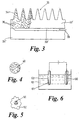
- Figure 3 shows an array 33 of silicon microneedles 34 that is similar to that of Figure 2.
- the principal difference between the arrays shown in Figures 2 and 3 is that the microneedles 34 shown in Figure 3 are not provided with a central lumen 28. Instead the array 33 of silicon microneedles 34 in Figure 3 is provided with a mesoporous network 36 which extends from the microtips of the microneedles to the reservoir 30', allowing fluid communication between the reservoir 30' and the microtips.
- the substance to be delivered to cells is provided to the porous silicon microtips 22,34 from the reservoir 30,30' through the central lumens 28 or the mesoporous network 36.
- the substance is then held by the porous silicon microtips ready for introduction into a cell.
- the material to be introduced into the cells may be pumped into the reservoir 30, 30', and out through the lumens 28 or porous network by a pump, not shown (but arrow 39 indicates the pump delivering liquid to the reservoir).
- All or part of the silicon surfaces within the final structure may be treated in such a way as to modify their interaction with biological systems. This might be achieved by forming a layer of porous silicon on the surface. Such a layer could be formed by either an electrochemical anodisation process or possibly by immersing the structure into a stain etching solution such as a mixture of hydrofluoric acid and nitric acid.
- a stain etching solution such as a mixture of hydrofluoric acid and nitric acid.
- Figure 4 shows a biolistic bullet 40 comprising a submicron silicon particle rendered mesoporous by stain etching.
- the bullet 40 is impregnated with the substance to be introduced into a cell and is shot into the cell using pressurised helium.
- the porous silicon is a resorbable material, it will be preferably fully resorbed, and at least partially resorbed, by the cell that it entered, and thus comprises less of a foreign body than known biolistic bullets such as gold or tungsten which leave particles of metal in the cell.
- FIG. 5 shows a porous silicon core 50 impregnated with a substance to be introduced into a cell (e.g. DNA/RNA) and calcium phosphate precipitate 52 formed around the core 50.
- the calcium phosphate 52 is co-precipitated with DNA/RNA, so that a genetic material/calcium phosphate layer surrounds the bioactive silicon core 50.
- the bioactive silicon core locally induces calcium phosphate supersaturisation. It may be possible to place a bioactive silicon core next to a cell/against the wall of a cell, and co-precipitate DNA/Ca(PO 4 ) 2 against the core and against the wall of the cell. If the core is phagocytosed it can be resorbed.
- the core 50 need not have DNA/RNA/any active substance on it - it may simply serve as a good nucleation site for co-precipitation of DNA/Ca(PO 4 ) 2 .
- micropores are pores with a diameter of 2 nm or less; mesopores have a diameter of 2nm - 50 nm; and macropores have a diameter of 50 nm or more.
- porous silicon preferably mesoporous silicon (but macroporous and microporous silicon are also useful).
- porous silicon or porous other bioactive material, or bioactive polycrystalline silicon
- bioactive polycrystalline silicon or bioactive polycrystalline silicon
- Bioactive silicon is electrically conducting and is a suitable intimate complex matrix for adherent mammalian cells 62, which may grow on a microelectrode array 60,61.
- bioactive porous silicon electrodes it is possible to grow mammalian cells on bioactive porous silicon electrodes and then introduce DNA (or other substances) into the cells by using electroporation, with the substrate upon which the cells are grown being an electrode, or even both electrodes 60,61, of the electroporation apparatus. This has advantages in handling the cells, and achieves a better efficiency rate of DNA introduction than solely having the cells suspended in a liquid medium 63.
- porous silicon is resorbable/erodable in vivo in mammals has been proved by the inventors, and this underpins some aspects of the invention.
- silicon can be made bioactive underpins other aspects of the invention.
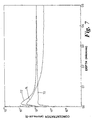
- Figure 7 shows a SIMS plot (Secondary Ion Mass Spectroscopy) showing the concentration of nitrogen with depth in a sheet of porous silicon.
- DNA is rich in nitrogen, and detecting high nitrogen levels in the porous silicon is a measure of how much DNA is present.
- Plot 70 shows the "aged" porous silicon sheet analysed for nitrogen, with no DNA added to the surface of the sheet. The background level of nitrogen depends on the type of porous silicon film and its "age" - the duration of storage in ambient air.
- Plot 72 shows the analysis of the porous silicon sheet after a single drop of water has been applied to the surface of the porous silicon sheet. There was lng per u litre of DNA in the drop of water. The DNA solution drop was dried at 50°C before the sheet was analysed.
- Plot 74 shows the amount of nitrogen in the porous silicon when the same lng per ⁇ litre of DNA in water drop is applied to the sheet and dried, and then the sheet is washed in deionised water at 50°
- Plot 74 shows that the washing step removed some, but not all, of the DNA - that some of the DNA was probably partially immobilised on the porous silicon, to be released later (during washing).
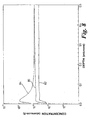
- Figure 8 shows equivalent SIMS plots for the same layer after pure water treatment. "Aged" porous silicon has been stored in ambient air and has acquired a background level of nitrogen due to adsorption of nitrous oxides and ammonia - common trace pollutant gases.
- Plot 80 shows aged porous silicon with no DNA
- plot 84 shows again for comparison the analysis of aged porous silicon with 1ng/ ⁇ litre of DNA in solution added and dried at 50°C.
- Porous silicon or polycrystalline silicon can be used as an inorganic vector for transporting/transferring material into a living cell.
Landscapes
- Health & Medical Sciences (AREA)
- Genetics & Genomics (AREA)
- Life Sciences & Earth Sciences (AREA)
- Engineering & Computer Science (AREA)
- Chemical & Material Sciences (AREA)
- Wood Science & Technology (AREA)
- Biomedical Technology (AREA)
- Biotechnology (AREA)
- Bioinformatics & Cheminformatics (AREA)
- Zoology (AREA)
- Organic Chemistry (AREA)
- General Engineering & Computer Science (AREA)
- General Health & Medical Sciences (AREA)
- Microbiology (AREA)
- Biochemistry (AREA)
- Biophysics (AREA)
- Plant Pathology (AREA)
- Physics & Mathematics (AREA)
- Molecular Biology (AREA)
- Dermatology (AREA)
- Public Health (AREA)
- Veterinary Medicine (AREA)
- Animal Behavior & Ethology (AREA)
- Heart & Thoracic Surgery (AREA)
- Hematology (AREA)
- Anesthesiology (AREA)
- Medical Informatics (AREA)
- Sustainable Development (AREA)
- Cell Biology (AREA)
- Medicinal Chemistry (AREA)
- Pharmacology & Pharmacy (AREA)
- Epidemiology (AREA)
- Apparatus Associated With Microorganisms And Enzymes (AREA)
- Silicon Compounds (AREA)
- Electrotherapy Devices (AREA)
- Micro-Organisms Or Cultivation Processes Thereof (AREA)
- Pharmaceuticals Containing Other Organic And Inorganic Compounds (AREA)
- Immobilizing And Processing Of Enzymes And Microorganisms (AREA)
- Medicinal Preparation (AREA)
- Media Introduction/Drainage Providing Device (AREA)
Priority Applications (2)
| Application Number | Priority Date | Filing Date | Title |
|---|---|---|---|
| EP04030257A EP1522578B1 (en) | 1998-07-22 | 1999-07-22 | Transferring materials into cells using porous silicon |
| EP02004895A EP1231259A3 (en) | 1998-07-22 | 1999-07-22 | Transferring materials into cells using porous silicon |
Applications Claiming Priority (3)
| Application Number | Priority Date | Filing Date | Title |
|---|---|---|---|
| GB9815819 | 1998-07-22 | ||
| GBGB9815819.9A GB9815819D0 (en) | 1998-07-22 | 1998-07-22 | Transferring materials into cells and a microneedle array |
| PCT/GB1999/002383 WO2000005339A1 (en) | 1998-07-22 | 1999-07-22 | Transferring materials into cells using porous silicon |
Related Child Applications (1)
| Application Number | Title | Priority Date | Filing Date |
|---|---|---|---|
| EP02004895A Division EP1231259A3 (en) | 1998-07-22 | 1999-07-22 | Transferring materials into cells using porous silicon |
Publications (2)
| Publication Number | Publication Date |
|---|---|
| EP1098957A1 EP1098957A1 (en) | 2001-05-16 |
| EP1098957B1 true EP1098957B1 (en) | 2002-09-04 |
Family
ID=10835869
Family Applications (3)
| Application Number | Title | Priority Date | Filing Date |
|---|---|---|---|
| EP99934933A Expired - Lifetime EP1098957B1 (en) | 1998-07-22 | 1999-07-22 | Transferring materials into cells using porous or polycrystalline silicon |
| EP02004895A Withdrawn EP1231259A3 (en) | 1998-07-22 | 1999-07-22 | Transferring materials into cells using porous silicon |
| EP04030257A Expired - Lifetime EP1522578B1 (en) | 1998-07-22 | 1999-07-22 | Transferring materials into cells using porous silicon |
Family Applications After (2)
| Application Number | Title | Priority Date | Filing Date |
|---|---|---|---|
| EP02004895A Withdrawn EP1231259A3 (en) | 1998-07-22 | 1999-07-22 | Transferring materials into cells using porous silicon |
| EP04030257A Expired - Lifetime EP1522578B1 (en) | 1998-07-22 | 1999-07-22 | Transferring materials into cells using porous silicon |
Country Status (15)
| Country | Link |
|---|---|
| US (2) | US6770480B1 (enExample) |
| EP (3) | EP1098957B1 (enExample) |
| JP (1) | JP4585119B2 (enExample) |
| KR (1) | KR100633273B1 (enExample) |
| CN (1) | CN1252275C (enExample) |
| AT (1) | ATE223479T1 (enExample) |
| AU (1) | AU753542B2 (enExample) |
| CA (1) | CA2337331C (enExample) |
| DE (1) | DE69902794T2 (enExample) |
| DK (1) | DK1098957T3 (enExample) |
| ES (2) | ES2179666T3 (enExample) |
| GB (1) | GB9815819D0 (enExample) |
| HK (1) | HK1039146B (enExample) |
| NZ (1) | NZ509142A (enExample) |
| WO (1) | WO2000005339A1 (enExample) |
Cited By (1)
| Publication number | Priority date | Publication date | Assignee | Title |
|---|---|---|---|---|
| US11026885B2 (en) | 2010-11-01 | 2021-06-08 | Eyepoint Pharmaceuticas, Inc. | Bioerodible silicon-based devices for delivery of therapeutic agents |
Families Citing this family (123)
| Publication number | Priority date | Publication date | Assignee | Title |
|---|---|---|---|---|
| GB9808052D0 (en) | 1998-04-17 | 1998-06-17 | Secr Defence | Implants for administering substances and methods of producing implants |
| GB9815819D0 (en) * | 1998-07-22 | 1998-09-16 | Secr Defence | Transferring materials into cells and a microneedle array |
| GB0008494D0 (en) * | 2000-04-07 | 2000-05-24 | Secr Defence | Microprojectile delivery system |
| GB2363115A (en) * | 2000-06-10 | 2001-12-12 | Secr Defence | Porous or polycrystalline silicon orthopaedic implants |
| US6533949B1 (en) * | 2000-08-28 | 2003-03-18 | Nanopass Ltd. | Microneedle structure and production method therefor |
| US7828827B2 (en) | 2002-05-24 | 2010-11-09 | Corium International, Inc. | Method of exfoliation of skin using closely-packed microstructures |
| US7108681B2 (en) * | 2000-10-16 | 2006-09-19 | Corium International, Inc. | Microstructures for delivering a composition cutaneously to skin |
| US7131987B2 (en) | 2000-10-16 | 2006-11-07 | Corium International, Inc. | Microstructures and method for treating and conditioning skin which cause less irritation during exfoliation |
| US6902933B2 (en) | 2000-11-03 | 2005-06-07 | Regents Of The University Of Michigan | Surface transfection and expression procedure |
| KR20030093185A (ko) * | 2000-11-03 | 2003-12-06 | 리젠츠 오브 더 유니버시티 오브 미시간 | 표면 형질감염 및 발현 방법 |
| US6897067B2 (en) | 2000-11-03 | 2005-05-24 | Regents Of The University Of Michigan | Surface transfection and expression procedure |
| WO2002068957A1 (en) * | 2001-02-21 | 2002-09-06 | University Of Rochester | Microcavity biosensor, methods of making, and uses thereof |
| GB0104383D0 (en) | 2001-02-22 | 2001-04-11 | Psimedica Ltd | Cancer Treatment |
| US6663820B2 (en) * | 2001-03-14 | 2003-12-16 | The Procter & Gamble Company | Method of manufacturing microneedle structures using soft lithography and photolithography |
| WO2002088165A1 (en) * | 2001-04-30 | 2002-11-07 | Doranz Benjamin J | Elucidation of gene function |
| US20040087992A1 (en) * | 2002-08-09 | 2004-05-06 | Vladimir Gartstein | Microstructures for delivering a composition cutaneously to skin using rotatable structures |
| US7429258B2 (en) | 2001-10-26 | 2008-09-30 | Massachusetts Institute Of Technology | Microneedle transport device |
| US6908453B2 (en) * | 2002-01-15 | 2005-06-21 | 3M Innovative Properties Company | Microneedle devices and methods of manufacture |
| JP2004121064A (ja) * | 2002-10-01 | 2004-04-22 | Jfe Steel Kk | 遺伝子制御用のセラミック被覆針 |
| WO2003092785A1 (en) * | 2002-04-30 | 2003-11-13 | Morteza Shirkhanzadeh | Arrays of microneedles comprising porous calcium phosphate coating and bioactive agents |
| US6864692B1 (en) * | 2002-06-20 | 2005-03-08 | Xsilogy, Inc. | Sensor having improved selectivity |
| MXPA05000597A (es) | 2002-07-19 | 2005-04-28 | 3M Innovative Properties Co | Dispositivos de microaguja y aparatos de administracion por microaguja. |
| US7244513B2 (en) * | 2003-02-21 | 2007-07-17 | Nano-Proprietary, Inc. | Stain-etched silicon powder |
| US7578954B2 (en) * | 2003-02-24 | 2009-08-25 | Corium International, Inc. | Method for manufacturing microstructures having multiple microelements with through-holes |
| WO2004092369A1 (ja) * | 2003-04-11 | 2004-10-28 | Riken | マイクロインジェクション方法および装置 |
| CA2536249A1 (en) | 2003-08-25 | 2005-03-10 | 3M Innovative Properties Company | Delivery of immune response modifier compounds |
| GB0402131D0 (en) | 2004-01-30 | 2004-03-03 | Isis Innovation | Delivery method |
| US20070191761A1 (en) * | 2004-02-23 | 2007-08-16 | 3M Innovative Properties Company | Method of molding for microneedle arrays |
| US7611481B2 (en) | 2004-03-24 | 2009-11-03 | Corium International, Inc. | Transdermal delivery device |
| US7591806B2 (en) * | 2004-05-18 | 2009-09-22 | Bai Xu | High-aspect-ratio microdevices and methods for transdermal delivery and sampling of active substances |
| EP1817003B1 (en) | 2004-10-29 | 2018-02-21 | The Regents of The University of California | Porous silicon microparticles for drug delivery to the eye |
| CA2589733C (en) * | 2004-12-07 | 2014-02-11 | 3M Innovative Properties Company | Method of molding a microneedle |
| US20060276047A1 (en) * | 2005-03-14 | 2006-12-07 | University Of Rochester | Macroporous silicon microcavity with tunable pore size |
| US7569202B2 (en) * | 2005-05-09 | 2009-08-04 | Vesta Research, Ltd. | Silicon nanosponge particles |
| US8048017B2 (en) * | 2005-05-18 | 2011-11-01 | Bai Xu | High-aspect-ratio microdevices and methods for transdermal delivery and sampling of active substances |
| US8043250B2 (en) * | 2005-05-18 | 2011-10-25 | Nanomed Devices, Inc. | High-aspect-ratio microdevices and methods for transdermal delivery and sampling of active substances |
| WO2006138719A2 (en) * | 2005-06-17 | 2006-12-28 | Georgia Tech Research Corporation | Coated microstructures and method of manufacture thereof |
| ATE477833T1 (de) * | 2005-06-27 | 2010-09-15 | 3M Innovative Properties Co | Mikronadelkartuschenanordnung |
| CA2614927A1 (en) * | 2005-07-25 | 2007-02-01 | Nanotechnology Victoria Pty Ltd | Microarray device |
| US20070066934A1 (en) * | 2005-09-19 | 2007-03-22 | Transport Pharmaceuticals, Inc. | Electrokinetic delivery system and methods therefor |
| US20070185432A1 (en) * | 2005-09-19 | 2007-08-09 | Transport Pharmaceuticals, Inc. | Electrokinetic system and method for delivering methotrexate |
| EP1948139A4 (en) * | 2005-11-18 | 2012-04-04 | 3M Innovative Properties Co | COATING COMPOSITIONS, COATINGS DERIVED THEREFROM, AND MICRO-NETWORKS COMPRISING SUCH COATINGS |
| US20080262416A1 (en) * | 2005-11-18 | 2008-10-23 | Duan Daniel C | Microneedle Arrays and Methods of Preparing Same |
| US20070142781A1 (en) * | 2005-12-21 | 2007-06-21 | Sayre Chauncey B | Microinjector chip |
| US20080319404A1 (en) * | 2005-12-21 | 2008-12-25 | Pekurovsky Mikhail L | Microneedle Devices |
| US20080306325A1 (en) * | 2006-10-02 | 2008-12-11 | Emkinetics | Method and apparatus for magnetic induction therapy |
| US9610459B2 (en) | 2009-07-24 | 2017-04-04 | Emkinetics, Inc. | Cooling systems and methods for conductive coils |
| US20100168501A1 (en) * | 2006-10-02 | 2010-07-01 | Daniel Rogers Burnett | Method and apparatus for magnetic induction therapy |
| US9339641B2 (en) | 2006-01-17 | 2016-05-17 | Emkinetics, Inc. | Method and apparatus for transdermal stimulation over the palmar and plantar surfaces |
| DE102006028781A1 (de) | 2006-06-23 | 2007-12-27 | Robert Bosch Gmbh | Verfahren zur Herstellung von porösen Mikronadeln und ihre Verwendung |
| US11224742B2 (en) | 2006-10-02 | 2022-01-18 | Emkinetics, Inc. | Methods and devices for performing electrical stimulation to treat various conditions |
| US9005102B2 (en) | 2006-10-02 | 2015-04-14 | Emkinetics, Inc. | Method and apparatus for electrical stimulation therapy |
| US10786669B2 (en) | 2006-10-02 | 2020-09-29 | Emkinetics, Inc. | Method and apparatus for transdermal stimulation over the palmar and plantar surfaces |
| WO2008076465A1 (en) * | 2006-12-21 | 2008-06-26 | Primegen Biotech, Llc | Microinjector chip |
| US20080214987A1 (en) * | 2006-12-22 | 2008-09-04 | Nanomed Devices, Inc. | Microdevice And Method For Transdermal Delivery And Sampling Of Active Substances |
| US10525246B2 (en) | 2006-12-22 | 2020-01-07 | Nanomed Skincare, Inc. | Microdevice and method for transdermal delivery and sampling of active substances |
| CN100998901B (zh) * | 2007-01-12 | 2012-10-10 | 中国科学院上海微系统与信息技术研究所 | 多孔硅无痛注射微针阵列及其制备方法 |
| DE102007002832A1 (de) * | 2007-01-19 | 2008-07-24 | Robert Bosch Gmbh | Verfahren zur Herstellung einer Vorrichtung umfassend eine Anordnung von Mikronadeln auf einem Träger und nach diesem Verfahren herstellbare Vorrichtung |
| AU2008209537B2 (en) | 2007-01-22 | 2013-01-31 | Corium Pharma Solutions, Inc. | Applicators for microneedle arrays |
| WO2008106806A1 (de) * | 2007-03-02 | 2008-09-12 | Tecpharma Licensing Ag | Modulares verabreichungssystem |
| US20090017562A1 (en) * | 2007-03-13 | 2009-01-15 | Iowa State University Research Foundation, Inc. | Raman-active reagents |
| US9114238B2 (en) * | 2007-04-16 | 2015-08-25 | Corium International, Inc. | Solvent-cast microprotrusion arrays containing active ingredient |
| AU2014200648B2 (en) * | 2007-04-16 | 2015-09-24 | Corium Pharma Solutions, Inc. | Solvent-cast microneedle arrays containing active |
| AU2008245496A1 (en) * | 2007-04-27 | 2008-11-06 | Board Of Regents Of The University Of Texas System | Porous particles and methods of making thereof |
| KR20160021307A (ko) | 2007-07-10 | 2016-02-24 | 더 리전트 오브 더 유니버시티 오브 캘리포니아 | 선택된 조직에 조성물을 전달하는 물질 및 방법 |
| EP2178585B1 (en) | 2007-08-14 | 2021-04-07 | Fred Hutchinson Cancer Research Center | Needle array assembly and method for delivering therapeutic agents |
| WO2009048607A1 (en) | 2007-10-10 | 2009-04-16 | Corium International, Inc. | Vaccine delivery via microneedle arrays |
| JP5178132B2 (ja) * | 2007-10-11 | 2013-04-10 | キヤノン株式会社 | 画像処理システム並びに画像処理方法 |
| WO2009079712A1 (en) | 2007-12-24 | 2009-07-02 | The University Of Queensland | Coating method |
| CN102007066B (zh) | 2008-02-07 | 2013-06-26 | 昆士兰大学 | 贴片制造 |
| EP2100850A1 (en) * | 2008-03-11 | 2009-09-16 | Stichting Voor De Technische Wetenschappen | Microneedle array and a method for manufacturing microneedles |
| CA2760680A1 (en) | 2008-05-23 | 2009-11-26 | The University Of Queensland | Analyte detection by microneedle patch with analyte selective reagents |
| CA2759850C (en) * | 2009-04-24 | 2019-10-22 | Corium International, Inc. | Methods for manufacturing microprojection arrays |
| EP2427179A4 (en) | 2009-05-04 | 2013-09-11 | Psivida Inc | POROUS SILICON MEDICATION ELUTING PARTICLES |
| AU2010313487A1 (en) | 2009-10-26 | 2012-05-24 | Emkinetics, Inc. | Method and apparatus for electromagnetic stimulation of nerve, muscle, and body tissues |
| RU2585138C2 (ru) | 2010-04-28 | 2016-05-27 | Кимберли-Кларк Ворлдвайд, Инк. | Медицинские устройства для доставки кирнк |
| US10245421B2 (en) | 2010-04-28 | 2019-04-02 | Sorrento Therapeutics, Inc. | Nanopatterned medical device with enhanced cellular interaction |
| CA2796965C (en) | 2010-04-28 | 2019-04-16 | Kimberly-Clark Worldwide, Inc. | Method for increasing permeability of an epithelial barrier |
| PT2563450T (pt) | 2010-04-28 | 2017-08-28 | Kimberly Clark Co | Dispositivo para entrega de medicação para a artrite reumatóide |
| US9687641B2 (en) | 2010-05-04 | 2017-06-27 | Corium International, Inc. | Method and device for transdermal delivery of parathyroid hormone using a microprojection array |
| US8588884B2 (en) | 2010-05-28 | 2013-11-19 | Emkinetics, Inc. | Microneedle electrode |
| WO2012006677A1 (en) | 2010-07-14 | 2012-01-19 | The University Of Queensland | Patch applying apparatus |
| US9394369B2 (en) | 2011-01-03 | 2016-07-19 | The Regents Of The University Of California | Luminescent porous silicon nanoparticles for targeted delivery and immunization |
| WO2012159058A2 (en) * | 2011-05-18 | 2012-11-22 | Brigham Young University | Apparatuses and related methods for delivering biological material into a cell |
| GB2492167C (en) | 2011-06-24 | 2018-12-05 | Nexeon Ltd | Structured particles |
| EP2765927B1 (en) | 2011-10-12 | 2021-02-24 | Vaxxas Pty Limited | Delivery device |
| EP3542851B1 (en) * | 2011-10-27 | 2021-12-15 | Sorrento Therapeutics, Inc. | Implantable devices for delivery of bioactive agents |
| CN104039382B (zh) | 2011-10-27 | 2018-01-12 | 金伯利-克拉克环球有限公司 | 高粘度生物活性剂的经皮递送 |
| US20170246439A9 (en) | 2011-10-27 | 2017-08-31 | Kimberly-Clark Worldwide, Inc. | Increased Bioavailability of Transdermally Delivered Agents |
| AU2012328457A1 (en) | 2011-10-28 | 2014-04-24 | Presage Biosciences, Inc. | Methods for drug delivery |
| CN102553066B (zh) * | 2011-12-28 | 2013-07-17 | 上海交通大学 | 基于多孔微针结构的经皮给药系统 |
| WO2013114095A1 (en) | 2012-01-30 | 2013-08-08 | Nexeon Limited | Composition of si/c electro active material |
| GB2499984B (en) | 2012-02-28 | 2014-08-06 | Nexeon Ltd | Composite particles comprising a removable filler |
| GB2502625B (en) | 2012-06-06 | 2015-07-29 | Nexeon Ltd | Method of forming silicon |
| WO2014053081A1 (en) | 2012-10-01 | 2014-04-10 | The Hong Kong University Of Science And Technology | Design and manufacture of nonelectronic, active-infusion patch and device for transdermal delivery across skin |
| GB2507535B (en) | 2012-11-02 | 2015-07-15 | Nexeon Ltd | Multilayer electrode |
| JP6865524B2 (ja) | 2012-12-21 | 2021-04-28 | コリウム, インコーポレイテッド | 治療剤を送達するためのマイクロアレイおよび使用方法 |
| JP6568513B2 (ja) * | 2013-03-12 | 2019-08-28 | アイポイント ファーマシューティカルズ ユーエス,インコーポレイティド | シリコン系担体粒子を含む薬物送達デバイス |
| JP6487899B2 (ja) | 2013-03-12 | 2019-03-20 | コリウム インターナショナル, インコーポレイテッド | 微小突起アプリケータ |
| WO2014150285A2 (en) | 2013-03-15 | 2014-09-25 | Corium International, Inc. | Multiple impact microprojection applicators and methods of use |
| EP2968571A4 (en) | 2013-03-15 | 2016-09-07 | Psivida Inc | BIODEGRADABLE SILICONE BASED COMPOSITIONS FOR THE DELIVERY OF THERAPEUTIC AGENTS |
| AU2014237279B2 (en) | 2013-03-15 | 2018-11-22 | Corium Pharma Solutions, Inc. | Microarray with polymer-free microstructures, methods of making, and methods of use |
| WO2014144973A1 (en) | 2013-03-15 | 2014-09-18 | Corium International, Inc. | Microarray for delivery of therapeutic agent, methods of use, and methods of making |
| EP2968118B1 (en) | 2013-03-15 | 2022-02-09 | Corium, Inc. | Microarray for delivery of therapeutic agent and methods of use |
| KR101567203B1 (ko) | 2014-04-09 | 2015-11-09 | (주)오렌지파워 | 이차 전지용 음극 활물질 및 이의 방법 |
| KR101604352B1 (ko) | 2014-04-22 | 2016-03-18 | (주)오렌지파워 | 음극 활물질 및 이를 포함하는 리튬 이차 전지 |
| EP3188714A1 (en) | 2014-09-04 | 2017-07-12 | Corium International, Inc. | Microstructure array, methods of making, and methods of use |
| KR101549086B1 (ko) * | 2014-11-10 | 2015-09-02 | 주식회사 스몰랩 | 마이크로 니들 및 마이크로 니들 패치 |
| GB2533161C (en) | 2014-12-12 | 2019-07-24 | Nexeon Ltd | Electrodes for metal-ion batteries |
| EP4218892A1 (en) | 2015-02-02 | 2023-08-02 | Vaxxas Pty Limited | Microprojection array applicator |
| WO2017004067A1 (en) | 2015-06-29 | 2017-01-05 | Corium International, Inc. | Microarray for delivery of therapeutic agent, methods of use, and methods of making |
| CN114533898B (zh) | 2015-07-09 | 2025-07-01 | 加利福尼亚大学董事会 | 融合脂质体包被的多孔硅纳米颗粒 |
| US11103259B2 (en) | 2015-09-18 | 2021-08-31 | Vaxxas Pty Limited | Microprojection arrays with microprojections having large surface area profiles |
| AU2016333148B2 (en) | 2015-09-28 | 2021-10-14 | Vaxxas Pty Limited | Microprojection arrays with enhanced skin penetrating properties and methods thereof |
| JP2017176652A (ja) | 2016-03-31 | 2017-10-05 | 花王株式会社 | 微細中空突起具 |
| ES2993278T3 (en) | 2016-06-14 | 2024-12-26 | Nexeon Ltd | Electrodes for metal-ion batteries |
| KR101746024B1 (ko) * | 2016-07-14 | 2017-06-12 | 경북대학교 산학협력단 | 다공성 코팅층이 코팅된 마이크로니들과 이것의 제조 방법 그리고 마이크로니들이 구비된 마이크로니들패치 |
| CN115923337A (zh) | 2017-03-31 | 2023-04-07 | 瓦克萨斯私人有限公司 | 用于涂覆表面的设备和方法 |
| WO2018227246A1 (en) | 2017-06-13 | 2018-12-20 | Vaxxas Pty Limited | Quality control of substrate coatings |
| US11464957B2 (en) | 2017-08-04 | 2022-10-11 | Vaxxas Pty Limited | Compact high mechanical energy storage and low trigger force actuator for the delivery of microprojection array patches (MAP) |
| CN109529186B (zh) * | 2018-12-17 | 2021-05-11 | 广东工业大学 | 一种药物涂层非晶合金微针及其制作方法 |
| CN110251824B (zh) * | 2019-04-30 | 2021-03-16 | 山东大学 | 一种用于透皮给药的柔性微针贴片及其制作方法 |
| JP7466181B2 (ja) * | 2020-03-24 | 2024-04-12 | 国立研究開発法人産業技術総合研究所 | マイクロニードルアレイ及びそれを用いた植物細胞への物質導入方法 |
Family Cites Families (18)
| Publication number | Priority date | Publication date | Assignee | Title |
|---|---|---|---|---|
| US4784737A (en) * | 1986-04-18 | 1988-11-15 | The United States Department Of Energy | Electromicroinjection of particles into living cells |
| US5262128A (en) | 1989-10-23 | 1993-11-16 | The United States Of America As Represented By The Department Of Health And Human Services | Array-type multiple cell injector |
| GB8927709D0 (en) * | 1989-12-07 | 1990-02-07 | Secretary Of The State For Def | Silicon quantum wires |
| AU8418091A (en) | 1990-07-19 | 1992-02-18 | Chris Brinegar | Methods and apparatus for ice-medicated introduction of substances into biological material in a non-lethal manner |
| JPH0634361A (ja) | 1992-07-15 | 1994-02-08 | Canon Inc | マイクロティップ及びこれを用いた原子間力顕微鏡装置 |
| US5635216A (en) * | 1993-12-16 | 1997-06-03 | Eli Lilly And Company | Microparticle compositions containing peptides, and methods for the preparation thereof |
| EP0892446B1 (en) * | 1993-11-02 | 2006-05-24 | Matsushita Electric Industrial Co., Ltd. | Method of manufacturing an aggregate of semiconductor micro-needles and method of manufacturing a semiconductor device comprising an aggregate of semiconductor micro-needles |
| US5457041A (en) | 1994-03-25 | 1995-10-10 | Science Applications International Corporation | Needle array and method of introducing biological substances into living cells using the needle array |
| US5591139A (en) * | 1994-06-06 | 1997-01-07 | The Regents Of The University Of California | IC-processed microneedles |
| US5484720A (en) * | 1994-09-08 | 1996-01-16 | Genentech, Inc. | Methods for calcium phosphate transfection |
| EP0782614A1 (en) * | 1994-09-30 | 1997-07-09 | Rutgers, The State University Of New Jersey | Direct introduction of foreign materials into cells |
| JP2697645B2 (ja) * | 1994-10-31 | 1998-01-14 | 日本電気株式会社 | 半導体装置の製造方法 |
| DE19525607A1 (de) * | 1995-07-14 | 1997-01-16 | Boehringer Ingelheim Kg | Transcorneales Arzneimittelfreigabesystem |
| GB9611437D0 (en) * | 1995-08-03 | 1996-08-07 | Secr Defence | Biomaterial |
| US6284345B1 (en) * | 1997-12-08 | 2001-09-04 | Washington University | Designer particles of micron and submicron dimension |
| US6503231B1 (en) * | 1998-06-10 | 2003-01-07 | Georgia Tech Research Corporation | Microneedle device for transport of molecules across tissue |
| GB9815819D0 (en) * | 1998-07-22 | 1998-09-16 | Secr Defence | Transferring materials into cells and a microneedle array |
| GB0008494D0 (en) * | 2000-04-07 | 2000-05-24 | Secr Defence | Microprojectile delivery system |
-
1998
- 1998-07-22 GB GBGB9815819.9A patent/GB9815819D0/en not_active Ceased
-
1999
- 1999-07-22 NZ NZ509142A patent/NZ509142A/en not_active IP Right Cessation
- 1999-07-22 EP EP99934933A patent/EP1098957B1/en not_active Expired - Lifetime
- 1999-07-22 EP EP02004895A patent/EP1231259A3/en not_active Withdrawn
- 1999-07-22 AT AT99934933T patent/ATE223479T1/de active
- 1999-07-22 CA CA2337331A patent/CA2337331C/en not_active Expired - Lifetime
- 1999-07-22 HK HK02100735.8A patent/HK1039146B/zh not_active IP Right Cessation
- 1999-07-22 CN CNB99809028XA patent/CN1252275C/zh not_active Expired - Lifetime
- 1999-07-22 EP EP04030257A patent/EP1522578B1/en not_active Expired - Lifetime
- 1999-07-22 US US09/743,447 patent/US6770480B1/en not_active Expired - Lifetime
- 1999-07-22 WO PCT/GB1999/002383 patent/WO2000005339A1/en not_active Ceased
- 1999-07-22 KR KR1020017001028A patent/KR100633273B1/ko not_active Expired - Lifetime
- 1999-07-22 DE DE69902794T patent/DE69902794T2/de not_active Expired - Lifetime
- 1999-07-22 AU AU50554/99A patent/AU753542B2/en not_active Expired
- 1999-07-22 ES ES99934933T patent/ES2179666T3/es not_active Expired - Lifetime
- 1999-07-22 JP JP2000561286A patent/JP4585119B2/ja not_active Expired - Lifetime
- 1999-07-22 ES ES04030257T patent/ES2400472T3/es not_active Expired - Lifetime
- 1999-07-22 DK DK99934933T patent/DK1098957T3/da active
-
2004
- 2004-05-27 US US10/854,255 patent/US7332339B2/en not_active Expired - Fee Related
Cited By (1)
| Publication number | Priority date | Publication date | Assignee | Title |
|---|---|---|---|---|
| US11026885B2 (en) | 2010-11-01 | 2021-06-08 | Eyepoint Pharmaceuticas, Inc. | Bioerodible silicon-based devices for delivery of therapeutic agents |
Also Published As
| Publication number | Publication date |
|---|---|
| NZ509142A (en) | 2004-01-30 |
| AU753542B2 (en) | 2002-10-24 |
| CA2337331A1 (en) | 2000-02-03 |
| CN1252275C (zh) | 2006-04-19 |
| JP4585119B2 (ja) | 2010-11-24 |
| HK1039146B (zh) | 2006-10-27 |
| US6770480B1 (en) | 2004-08-03 |
| US20040220535A1 (en) | 2004-11-04 |
| CN1310755A (zh) | 2001-08-29 |
| KR100633273B1 (ko) | 2006-10-16 |
| AU5055499A (en) | 2000-02-14 |
| ATE223479T1 (de) | 2002-09-15 |
| EP1522578B1 (en) | 2013-01-09 |
| EP1231259A2 (en) | 2002-08-14 |
| EP1098957A1 (en) | 2001-05-16 |
| ES2179666T3 (es) | 2003-01-16 |
| GB9815819D0 (en) | 1998-09-16 |
| DE69902794D1 (de) | 2002-10-10 |
| JP2002521024A (ja) | 2002-07-16 |
| DK1098957T3 (da) | 2003-01-06 |
| DE69902794T2 (de) | 2003-08-07 |
| CA2337331C (en) | 2012-08-28 |
| US7332339B2 (en) | 2008-02-19 |
| KR20010072050A (ko) | 2001-07-31 |
| EP1231259A3 (en) | 2003-11-19 |
| HK1039146A1 (en) | 2002-04-12 |
| WO2000005339A1 (en) | 2000-02-03 |
| ES2400472T3 (es) | 2013-04-10 |
| EP1522578A1 (en) | 2005-04-13 |
Similar Documents
| Publication | Publication Date | Title |
|---|---|---|
| EP1098957B1 (en) | Transferring materials into cells using porous or polycrystalline silicon | |
| JP4842512B2 (ja) | 並列薬剤送達と細胞構造の電気穿孔法を併合した方法及びその使用 | |
| JP2002521024A5 (enExample) | ||
| CN103221091B (zh) | 用纳米线的分子递送 | |
| US6929950B2 (en) | Microprojectile delivery system and particulate product | |
| JP3035608B2 (ja) | マイクロキャピラリーアレイ、その製造方法、及び物質注入装置 | |
| US7521224B2 (en) | Microelectronic cell electroporation array | |
| JP2003511668A (ja) | イオンチャネルの電気生理的性質を測定及び/または監視するための基体及び方法 | |
| AU3758595A (en) | Direct introduction of foreign materials into cells | |
| US7393680B2 (en) | Combined electroporation and microinjection method for the penetration of lipid bilayer membranes | |
| WO2008051169A1 (en) | Tip electrode chamber for small volume electroporation | |
| AU2003200223B2 (en) | Transferring materials into cells using resorbable silicon | |
| JPH06343478A (ja) | マイクロインジェクション方法及び装置 | |
| WO2010082008A1 (en) | Nanoneedles | |
| Paik et al. | A highly dense nanoneedle array for intracellular gene delivery | |
| US20120295345A1 (en) | Apparatuses and related methods for delivering biological material into a cell | |
| CN120758437A (zh) | 一种细胞电信号调控膜及其制备方法和应用 | |
| Keller et al. | Scanning Tunneling Microscopy of E. coli RNA Polymerase Electrochemically Deposited onto an Au Substrate | |
| JPWO2001068834A1 (ja) | ヌクレオチド検出装置、その製造方法、および微粒子膜の作製方法 |
Legal Events
| Date | Code | Title | Description |
|---|---|---|---|
| PUAI | Public reference made under article 153(3) epc to a published international application that has entered the european phase |
Free format text: ORIGINAL CODE: 0009012 |
|
| 17P | Request for examination filed |
Effective date: 20001216 |
|
| AK | Designated contracting states |
Kind code of ref document: A1 Designated state(s): AT BE CH CY DE DK ES FI FR GB GR IE IT LI LU MC NL PT SE |
|
| AX | Request for extension of the european patent |
Free format text: AL;LT;LV;MK;RO;SI |
|
| RTI1 | Title (correction) |
Free format text: TRANSFERRING MATERIALS INTO CELLS USING POROUS OR POLYCRYSTALLINE SILICON |
|
| GRAG | Despatch of communication of intention to grant |
Free format text: ORIGINAL CODE: EPIDOS AGRA |
|
| RAP1 | Party data changed (applicant data changed or rights of an application transferred) |
Owner name: QINETIQ LIMITED |
|
| 17Q | First examination report despatched |
Effective date: 20010906 |
|
| GRAG | Despatch of communication of intention to grant |
Free format text: ORIGINAL CODE: EPIDOS AGRA |
|
| GRAH | Despatch of communication of intention to grant a patent |
Free format text: ORIGINAL CODE: EPIDOS IGRA |
|
| GRAH | Despatch of communication of intention to grant a patent |
Free format text: ORIGINAL CODE: EPIDOS IGRA |
|
| GRAA | (expected) grant |
Free format text: ORIGINAL CODE: 0009210 |
|
| RAP1 | Party data changed (applicant data changed or rights of an application transferred) |
Owner name: PSIMEDICA LIMITED |
|
| AK | Designated contracting states |
Kind code of ref document: B1 Designated state(s): AT BE CH DE DK ES FR GB IT LI NL SE |
|
| REF | Corresponds to: |
Ref document number: 223479 Country of ref document: AT Date of ref document: 20020915 Kind code of ref document: T |
|
| REG | Reference to a national code |
Ref country code: GB Ref legal event code: FG4D |
|
| REG | Reference to a national code |
Ref country code: CH Ref legal event code: EP |
|
| REF | Corresponds to: |
Ref document number: 69902794 Country of ref document: DE Date of ref document: 20021010 |
|
| REG | Reference to a national code |
Ref country code: CH Ref legal event code: NV Representative=s name: E. BLUM & CO. PATENTANWAELTE |
|
| ET | Fr: translation filed | ||
| REG | Reference to a national code |
Ref country code: DK Ref legal event code: T3 |
|
| REG | Reference to a national code |
Ref country code: ES Ref legal event code: FG2A Ref document number: 2179666 Country of ref document: ES Kind code of ref document: T3 |
|
| PLBE | No opposition filed within time limit |
Free format text: ORIGINAL CODE: 0009261 |
|
| STAA | Information on the status of an ep patent application or granted ep patent |
Free format text: STATUS: NO OPPOSITION FILED WITHIN TIME LIMIT |
|
| 26N | No opposition filed |
Effective date: 20030605 |
|
| REG | Reference to a national code |
Ref country code: CH Ref legal event code: PFA Owner name: PSIMEDICA LIMITED Free format text: PSIMEDICA LIMITED#MALVERN HILLS SCIENCE PARK GERALDINE ROAD MALVERN#WORCESTERSHIRE, WR14 3SZ (GB) -TRANSFER TO- PSIMEDICA LIMITED#MALVERN HILLS SCIENCE PARK GERALDINE ROAD MALVERN#WORCESTERSHIRE, WR14 3SZ (GB) |
|
| REG | Reference to a national code |
Ref country code: FR Ref legal event code: PLFP Year of fee payment: 18 |
|
| REG | Reference to a national code |
Ref country code: FR Ref legal event code: PLFP Year of fee payment: 19 |
|
| REG | Reference to a national code |
Ref country code: FR Ref legal event code: PLFP Year of fee payment: 20 |
|
| PGFP | Annual fee paid to national office [announced via postgrant information from national office to epo] |
Ref country code: FR Payment date: 20180612 Year of fee payment: 20 Ref country code: BE Payment date: 20180614 Year of fee payment: 20 |
|
| PGFP | Annual fee paid to national office [announced via postgrant information from national office to epo] |
Ref country code: IT Payment date: 20180713 Year of fee payment: 20 Ref country code: DE Payment date: 20180710 Year of fee payment: 20 Ref country code: ES Payment date: 20180801 Year of fee payment: 20 Ref country code: NL Payment date: 20180712 Year of fee payment: 20 |
|
| PGFP | Annual fee paid to national office [announced via postgrant information from national office to epo] |
Ref country code: DK Payment date: 20180711 Year of fee payment: 20 Ref country code: GB Payment date: 20180718 Year of fee payment: 20 Ref country code: SE Payment date: 20180710 Year of fee payment: 20 Ref country code: CH Payment date: 20180713 Year of fee payment: 20 Ref country code: AT Payment date: 20180625 Year of fee payment: 20 |
|
| REG | Reference to a national code |
Ref country code: DE Ref legal event code: R071 Ref document number: 69902794 Country of ref document: DE |
|
| REG | Reference to a national code |
Ref country code: NL Ref legal event code: MK Effective date: 20190721 |
|
| REG | Reference to a national code |
Ref country code: DK Ref legal event code: EUP Effective date: 20190722 |
|
| REG | Reference to a national code |
Ref country code: CH Ref legal event code: PL |
|
| REG | Reference to a national code |
Ref country code: GB Ref legal event code: PE20 Expiry date: 20190721 |
|
| REG | Reference to a national code |
Ref country code: BE Ref legal event code: MK Effective date: 20190722 |
|
| REG | Reference to a national code |
Ref country code: AT Ref legal event code: MK07 Ref document number: 223479 Country of ref document: AT Kind code of ref document: T Effective date: 20190722 |
|
| PG25 | Lapsed in a contracting state [announced via postgrant information from national office to epo] |
Ref country code: GB Free format text: LAPSE BECAUSE OF EXPIRATION OF PROTECTION Effective date: 20190721 |
|
| REG | Reference to a national code |
Ref country code: ES Ref legal event code: FD2A Effective date: 20200723 |
|
| PG25 | Lapsed in a contracting state [announced via postgrant information from national office to epo] |
Ref country code: ES Free format text: LAPSE BECAUSE OF EXPIRATION OF PROTECTION Effective date: 20190723 |