EP0973398B1 - Method, composition and system for the controlled release of chlorine dioxide gas - Google Patents
Method, composition and system for the controlled release of chlorine dioxide gas Download PDFInfo
- Publication number
- EP0973398B1 EP0973398B1 EP98908802A EP98908802A EP0973398B1 EP 0973398 B1 EP0973398 B1 EP 0973398B1 EP 98908802 A EP98908802 A EP 98908802A EP 98908802 A EP98908802 A EP 98908802A EP 0973398 B1 EP0973398 B1 EP 0973398B1
- Authority
- EP
- European Patent Office
- Prior art keywords
- chlorine dioxide
- dioxide gas
- dry
- mixture
- ppm
- Prior art date
- Legal status (The legal status is an assumption and is not a legal conclusion. Google has not performed a legal analysis and makes no representation as to the accuracy of the status listed.)
- Expired - Lifetime
Links
- 0 C[C@@](*)C(CC(*)CC(CC(CC(*)CCNC)N)N=O)O Chemical compound C[C@@](*)C(CC(*)CC(CC(CC(*)CCNC)N)N=O)O 0.000 description 2
Images

Classifications
-
- C—CHEMISTRY; METALLURGY
- C02—TREATMENT OF WATER, WASTE WATER, SEWAGE, OR SLUDGE
- C02F—TREATMENT OF WATER, WASTE WATER, SEWAGE, OR SLUDGE
- C02F1/00—Treatment of water, waste water, or sewage
- C02F1/72—Treatment of water, waste water, or sewage by oxidation
- C02F1/76—Treatment of water, waste water, or sewage by oxidation with halogens or compounds of halogens
-
- A—HUMAN NECESSITIES
- A01—AGRICULTURE; FORESTRY; ANIMAL HUSBANDRY; HUNTING; TRAPPING; FISHING
- A01N—PRESERVATION OF BODIES OF HUMANS OR ANIMALS OR PLANTS OR PARTS THEREOF; BIOCIDES, e.g. AS DISINFECTANTS, AS PESTICIDES OR AS HERBICIDES; PEST REPELLANTS OR ATTRACTANTS; PLANT GROWTH REGULATORS
- A01N59/00—Biocides, pest repellants or attractants, or plant growth regulators containing elements or inorganic compounds
-
- A—HUMAN NECESSITIES
- A23—FOODS OR FOODSTUFFS; TREATMENT THEREOF, NOT COVERED BY OTHER CLASSES
- A23B—PRESERVATION OF FOODS, FOODSTUFFS OR NON-ALCOHOLIC BEVERAGES; CHEMICAL RIPENING OF FRUIT OR VEGETABLES
- A23B2/00—Preservation of foods or foodstuffs, in general
- A23B2/70—Preservation of foods or foodstuffs, in general by treatment with chemicals
- A23B2/704—Preservation of foods or foodstuffs, in general by treatment with chemicals in the form of gases, e.g. fumigation; Compositions or apparatus therefor
- A23B2/721—Preservation of foods or foodstuffs, in general by treatment with chemicals in the form of gases, e.g. fumigation; Compositions or apparatus therefor in a controlled atmosphere comprising other gases in addition to CO2, N2, O2 or H2O
-
- A—HUMAN NECESSITIES
- A23—FOODS OR FOODSTUFFS; TREATMENT THEREOF, NOT COVERED BY OTHER CLASSES
- A23B—PRESERVATION OF FOODS, FOODSTUFFS OR NON-ALCOHOLIC BEVERAGES; CHEMICAL RIPENING OF FRUIT OR VEGETABLES
- A23B2/00—Preservation of foods or foodstuffs, in general
- A23B2/70—Preservation of foods or foodstuffs, in general by treatment with chemicals
- A23B2/725—Preservation of foods or foodstuffs, in general by treatment with chemicals in the form of liquids or solids
- A23B2/788—Inorganic compounds
-
- A—HUMAN NECESSITIES
- A61—MEDICAL OR VETERINARY SCIENCE; HYGIENE
- A61L—METHODS OR APPARATUS FOR STERILISING MATERIALS OR OBJECTS IN GENERAL; DISINFECTION, STERILISATION OR DEODORISATION OF AIR; CHEMICAL ASPECTS OF BANDAGES, DRESSINGS, ABSORBENT PADS OR SURGICAL ARTICLES; MATERIALS FOR BANDAGES, DRESSINGS, ABSORBENT PADS OR SURGICAL ARTICLES
- A61L2/00—Disinfection or sterilisation of materials or objects, in general; Accessories therefor
- A61L2/16—Disinfection or sterilisation of materials or objects, in general; Accessories therefor using chemical substances
- A61L2/20—Gaseous substances, e.g. vapours
-
- A—HUMAN NECESSITIES
- A61—MEDICAL OR VETERINARY SCIENCE; HYGIENE
- A61L—METHODS OR APPARATUS FOR STERILISING MATERIALS OR OBJECTS IN GENERAL; DISINFECTION, STERILISATION OR DEODORISATION OF AIR; CHEMICAL ASPECTS OF BANDAGES, DRESSINGS, ABSORBENT PADS OR SURGICAL ARTICLES; MATERIALS FOR BANDAGES, DRESSINGS, ABSORBENT PADS OR SURGICAL ARTICLES
- A61L9/00—Disinfection, sterilisation or deodorisation of air
- A61L9/01—Deodorant compositions
-
- B—PERFORMING OPERATIONS; TRANSPORTING
- B01—PHYSICAL OR CHEMICAL PROCESSES OR APPARATUS IN GENERAL
- B01D—SEPARATION
- B01D53/00—Separation of gases or vapours; Recovering vapours of volatile solvents from gases; Chemical or biological purification of waste gases, e.g. engine exhaust gases, smoke, fumes, flue gases, aerosols
- B01D53/34—Chemical or biological purification of waste gases
- B01D53/38—Removing components of undefined structure
-
- C—CHEMISTRY; METALLURGY
- C01—INORGANIC CHEMISTRY
- C01B—NON-METALLIC ELEMENTS; COMPOUNDS THEREOF; METALLOIDS OR COMPOUNDS THEREOF NOT COVERED BY SUBCLASS C01C
- C01B11/00—Oxides or oxyacids of halogens; Salts thereof
- C01B11/02—Oxides of chlorine
- C01B11/022—Chlorine dioxide (ClO2)
- C01B11/023—Preparation from chlorites or chlorates
- C01B11/024—Preparation from chlorites or chlorates from chlorites
-
- C—CHEMISTRY; METALLURGY
- C02—TREATMENT OF WATER, WASTE WATER, SEWAGE, OR SLUDGE
- C02F—TREATMENT OF WATER, WASTE WATER, SEWAGE, OR SLUDGE
- C02F1/00—Treatment of water, waste water, or sewage
- C02F1/50—Treatment of water, waste water, or sewage by addition or application of a germicide or by oligodynamic treatment
-
- Y—GENERAL TAGGING OF NEW TECHNOLOGICAL DEVELOPMENTS; GENERAL TAGGING OF CROSS-SECTIONAL TECHNOLOGIES SPANNING OVER SEVERAL SECTIONS OF THE IPC; TECHNICAL SUBJECTS COVERED BY FORMER USPC CROSS-REFERENCE ART COLLECTIONS [XRACs] AND DIGESTS
- Y02—TECHNOLOGIES OR APPLICATIONS FOR MITIGATION OR ADAPTATION AGAINST CLIMATE CHANGE
- Y02A—TECHNOLOGIES FOR ADAPTATION TO CLIMATE CHANGE
- Y02A40/00—Adaptation technologies in agriculture, forestry, livestock or agroalimentary production
- Y02A40/90—Adaptation technologies in agriculture, forestry, livestock or agroalimentary production in food processing or handling, e.g. food conservation
Definitions
- the present invention is generally directed to the controlled release of chlorine dioxide gas from the reaction of a metal chlorite and a second material which reacts with the metal chlorite in the presence of water vapor but will not react with the metal chlorite in the substantial absence of liquid water or water vapor.
- chlorine dioxide gas is produced in a sustained concentration of about 0.001 to 1,000 ppm.
- Gaseous chlorine dioxide in low concentrations has long been recognized as useful for the treatment of odors and microbes. Its use is particularly advantageous where microbes and/or organic odorants are sought to be controlled on and around foodstuffs, as chlorine dioxide functions without the formation of undesirable side products such as chloramines or chlorinated organic compounds that can be produced when elemental chlorine is utilized for the same or similar purposes. For example, if a low concentration of chlorine dioxide gas can be maintained in contact with fresh produce for several days during shipping from the farm to the local retailer, the rate of spoilage of the produce can be decreased. In addition, chlorine dioxide gas is also generally considered to be safe for human contact at the low concentrations that are effective for deodorization and most antimicrobial applications.
- Chlorine dioxide gas can be toxic to humans at concentrations greater than 1,000 ppm and it can be explosive at concentrations above about 0.1 atmosphere. Therefore, chlorine dioxide gas is not manufactured and shipped under pressure like other industrial gases, and conventional methods of on-site manufacture require not only expensive generation equipment but also high levels of operator skill to avoid generating dangerously high concentrations. These problems have substantially limited the use of chlorine dioxide to large commercial applications, such as water treatment and poultry processing, where the consumption of chlorine dioxide is sufficiently large that it can justify the capital and operating costs of expensive equipment and skilled operators for on-site manufacture.
- chlorine dioxide is produced from a variety of aqueous solutions of chlorine-containing salts, for example see U.S. Patent 5,009,875.
- U.S. Patent 2,022,262 discloses the use of chlorine dioxide in aqueous solution in a stain removing process wherein the chlorine dioxide is produced upon acidification of an aqueous solution of alkali metal or alkaline earth metal chlorite salts (i.e. chlorites) with oxalic acid.
- alkali metal or alkaline earth metal chlorite salts i.e. chlorites
- U.S. Patent 2,071,091 discloses that chlorous acid which is produced upon acidification of solutions of alkali metal and alkaline earth metal chlorite salts is an effective fungicide and bactericide.
- This patent discloses solid compositions of metal chlorites and solid acids that will produce chlorine dioxide when dissolved in water.
- the materials of the '091 patent are useful only in "wet" applications where liquid water is available and where contacting a material to be treated with chlorine dioxide dissolved in liquid water is acceptable.
- U.S. Patent 2,071,094 discloses deodorizing compositions in the form of dry briquettes comprising a dry mixture of a soluble chlorite, an acidifying agent, and a filler of a lower solubility so that disintegration of a briquette is inhibited in the presence of liquid water. Generation of chlorine dioxide begins as the briquette dissolves in water. Such materials are subject to the same use limitations as those of the '091 Patent.
- U.S. Patent 2,482,891 discloses a material comprising a solid organic acid anhydride and an alkali metal or alkaline earth metal chlorite salt which is stabilized by the addition of a desiccant material.
- the combined solid material is described as evolving chlorine dioxide on contact with water.
- Example 1 describes the production of chlorine dioxide by contacting a mixture of sodium chlorite, phthalic anhydride and sodium monoxide with water vapor. It is not clear from the example whether or not the solid mixture was already in contact with liquid water.
- the resultant exit gas in this example contains a high concentration of chlorine dioxide gas.
- the organic acid anhydride is potentially explosive in combination with the chlorite salt, as well as being a relatively expensive constituent. Therefore, this material has not been commercially successful.
- U.S. Patent 3,591,515 discloses solid pulverulent compositions comprising solid carriers having impregnated thereon stabilized solutions of chlorine dioxide or chlorites. When the solution-impregnated compositions are contacted with solid acids they release chlorine dioxide gas.
- Such materials are sold commercially today under the trade names OSTOBON® and ABSCENT® (by International Dioxide Inc., Clark, NJ), but their commercial acceptance has been limited because they either prematurely release small amounts of chloride dioxide through the packaging on store shelves, or they require relatively complicated mixing of two ingredients by the user at the point of application.
- U.S. Patent 4,585,482 discloses a long-acting biocidal composition comprising a chlorite and an organic acid such that the pH of the composition is ⁇ 7. Such compositions release chlorine dioxide in the presence of liquid water. This patent also discloses methods for producing dry microcapsules of such compositions with water having polymer shells such that the resultant dry materials release chlorine dioxide.
- U.S. Patent 4,547,381 discloses dry compositions for the sustained controlled release of gaseous chlorine dioxide comprising a dry inert diluent, a chlorite salt, and a dry agent capable of reacting with a chlorite in a dry state to produce chlorine dioxide gas. Such materials have not achieved substantial commercial success because they begin to release chlorine dioxide gas immediately upon formulation and, therefore, they must be mixed and utilized over a short time period.
- U.S. Patent 5,360,609 discloses the incorporation of a chlorine dioxide generating compound into a polymer or oligomer film which is then coated onto a substrate.
- the chlorite constituent is dissolved in a hydrogen bonded phase containing a monomeric or polymeric amide or alcohol.
- the hydrogen bonded phase is then mixed with an incompatible apolar phase containing an acid anhydride.
- Chlorine dioxide gas is released by direct reaction of the acid anhydride with the chlorite anion across the phase boundary.
- the process described in the '609 Patent employs relatively expensive materials and the reaction is potentially explosive due to the proximity of the strongly oxidizing metal chlorite with the carbonaceous polymers.
- U.S. Patent 5,567,405 discloses the generation of chlorine dioxide gas from mixed beds of zeolite crystals, where the first bed comprises a zeolite that has been impregnated with an aqueous solution of sodium chlorite and the second bed comprises a zeolite that has been impregnated with phosphoric, citric, or acetic acid. Chlorine dioxide gas is released when acid migrates from the second bed and contacts chlorite on the first bed. The first and second beds may be physically mixed together.
- the process disclosed in the '405 Patent requires expensive equipment and results in a product having a relatively short shelf-life.
- JP-A-58 161904 describes mixing a natural mineral defined with respect to its oxide composition with NaClO 2 to yield a product that is said to discharge ClO 2 .
- JP-A-01034094 describes a process which relies on the presence of water of crystallisation and/or adsorbed water in the second material in the form of an acidic inorganic compound such that the water content in the whole composition is ⁇ 1%.
- composition of the present invention can be prepared in advance and stored under dry conditions without the premature release of chlorine gas. In this matter the need for skilled personnel to prepare the mixture on-site is avoided and shelf-life is enhanced.
- the present invention is generally directed to a method, composition and system useful for the controlled release of chlorine dioxide gas at low concentrations when in the presence of water vapor.
- the reactants generating the chlorine dioxide gas when combined to form the composition do not generate a significant amount of chlorine dioxide gas when water vapor is not present.
- the reactants can therefore be stored for long periods of time in a substantially dry atmosphere.
- the reactants can be chosen to control both the rate and the duration of generation of chlorine dioxide gas.
- a method of sanitizing, deodorizing or both sanitizing and deodorizing a solid surface, liquid or gaseous environment as set out in claim 22.
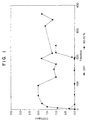
- Figure 1 is a graph showing the production of chlorine dioxide gas under dry and humid conditions for the first mixture prepared in accordance with Example 1;
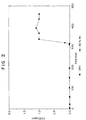
- Figure 2 is a graph showing the production of chlorine dioxide gas under dry and humid conditions for the second mixture prepared in accordance with Example 1;
- Figure 3 is a graph showing the concentrations of chlorite and chlorate anions in powdered samples during storage under dry conditions for several mixtures prepared in accordance with embodiments of the present invention.
- the present invention is directed to a method, composition and system of generating chlorine dioxide gas in a controlled release manner.
- controlled release manner shall mean that the reactants comprising the composition produce chlorine dioxide gas at a rate of production which results in low concentrations of the gas as compared with prior art systems in which the generation of chlorine dioxide gas is made at high concentrations in a sudden and possibly explosive manner.
- solid compositions for producing chlorine dioxide gas are provided in which the rate and duration of chlorine dioxide gas generation can be controlled.
- the first step of the method is the formation of a composition in the form of a mixture of at least one metal chlorite and at least one Second Material.
- the metal chlorites employed in the present invention can generally be any metal chlorite.
- Preferred metal chlorites are alkali metal chlorites, such as sodium chlorite and potassium chlorite.
- Alkaline earth metal chlorites can also be employed. Examples of alkaline earth metal chlorites include barium chlorite , calcium chlorite, and magnesium chlorite. The most preferred metal chlorite is sodium chlorite.
- the Second Material is a dry solid hydrophilic material, preferably a dry. solid inorganic hydrophilic material.
- the preferred dry solid hydrophilic material produces a pH of no more than about 10.5 when the aqueous portion of a 30 weight percent mixture of that material in deionized water is measured. More preferred solid hydrophilic materials produce a pH of less than 9 and most preferably less than 7.
- dry solid hydrophilic materials suitable for reacting with the metal chlorites include synthetic zeolites, such as A, X, Y, and mordenite; natural zeolites such as chabazite and clinoptilolite; hydrous days, such as bentonite, kaolin, attapulgite and halloysite; calcined clays, such as metakaolin, spinel phase kaolin, calcined bentonite, calcined halloysite, and calcined attapulgite; acidified synthetic zeolites, such as A, X, Y, and mordenite that have been contacted with one or more acidic solutions containing sulfuric acid, hydrochloric acid, nitric acid, or other acidic compound (e.g.
- acidified natural zeolites such as chabazite and clinoptilolite
- acidified clays such as bentonite, kaolin, attapulgite and halloysite that have been contacted with one or more acidic solutions containing sulfuric acid, hydrochloric acid, nitric acid, or other acidic compounds (e.g.
- acidified calcined clays such as metakaolin, spinel phase kaolin, calcined bentonite, calcined halloysite, and calcined attapulgite that have been contacted with one or more acidic solutions containing sulfuric acid, hydrochloric acid, nitric acid, or other acidic compounds (e.g.
- salts such as aluminum sulfate, magnesium sulfate, calcium carbonate, and particularly deliquescent acidic salts, such as calcium chloride, magnesium chloride, lithium chloride, and magnesium nitrate; and mixtures thereof.
- a preferred Second Material is metakaolin microspheres.
- microspheres shall mean nominally spherical particles having an average particle size of from about 50 to 100 microns.
- Metakaolin microspheres are comprised substantially of metakaolin and may be prepared by the procedure described in the Preparation of Raw Materials section set forth below.
- a material is considered an acceptable Second Material for use herein if it exhibits both acceptable stability in the Dry Air test above and if at any time during the Humid Air test above it yields a sustained concentration (defined hereinbelow) of chlorine dioxide gas equal to or in excess of about 0.025 ppm in a controlled release manner.
- the mixture of the metal chlorite and the Second Material generates the chlorine dioxide gas in a sustained concentration of from about 0.001 to 1,000 ppm, preferably from about 0.001 to 100 ppm and more preferably from about .01 to 10 ppm.
- the measurement of chlorine dioxide gas is made in the atmosphere into which the chlorine dioxide gas is generated. For example, if the generating mixture is exposed to water vapor in air, the concentration of chlorine dioxide gas in ppm will be measured based on the total atmosphere including the air and water vapor.
- chlorine dioxide gas is produced in accordance with the present invention in a sustained concentration of from about 0.001 to 1,000 ppm.
- sustained concentration means that at all times during production, the concentration of chlorine dioxide gas is within the range 0.001 to 1.000 ppm.
- the generation of chlorine dioxide gas need not be at a constant rate. It is permissible to have a fluctuating rate so long as the chlorine dioxide gas concentration does not exceed 1,000 ppm, and is within the range of from about 0.001 to 1,000 ppm for a sustained period of time as hereinafter defined.
- the generation of chlorine dioxide gas within the specified range will vary depending on the relative humidity of the surrounding atmosphere, the ratio of the reactants in the mixture, the diluent gas flow rate (e.g. air) through the treated space, and the ratio of the amount of chlorine dioxide gas releasing material to the volume of the treated space.
- the higher the relative humidity the higher the rate of production of chlorine dioxide gas.
- the sustained amount of chlorine dioxide gas is from about 0.001 to 1000 ppm, more preferably from about 0.001 to 100 ppm. Especially good results are obtained when the chlorine dioxide gas production is in the range of from about 0.01 to 10 ppm.
- each of the metal chlorite and the Second Material will depend on several factors, including, but not limited to, the quantity of chlorine dioxide gas needed for a particular application, the basicity of the metal chlorite and the acidity of the Second Material. In general, it is preferred to use as much chlorite as possible consistent with a sufficient rate of release. As a consequence, the yield of chlorine dioxide per unit mass of the mixture is maximized.
- the weight ratio of the metal chlorite and the Second Material is in the range of from about 0.001 to 0.25:1.0. It is within the skill of the art to choose the proper ratio for a particular application.
- the mixture formed in accordance with the present invention may optionally contain at least one desiccant which absorbs water to minimize or eliminate an initial brief duration production of chlorine dioxide gas due to residual water vapor present in the atmosphere or in the solids when the mixture is packaged.
- desiccants include but are not limited to activated calcium chloride, activated calcium sulfate, activated zeolite X, activated zeolite A, activated bentonite clay, activated silica gel, activated attapulgite and mixtures thereof.
- activated means that the particular material has been substantially dehydrated, for example, by heating at 300°C for about one hour.
- the total amount of desiccant may vary depending on several factors, for example, the ambient humidity when the material is packaged, the water permeability of the packaging material and the desired shelf life of the product. Generally, the desiccant is present in a total amount from about 0.1% to 25% by weight based on the total weight of the mixture.
- the relative humidity of the atmosphere to which the composition is exposed during use can range from low to high humidity conditions.
- the method of the present invention can be conducted at low humidity (e.g. 10% relative humidity) up to 100% relative humidity.
- low humidity e.g. 10% relative humidity
- the amount of chlorine dioxide gas generated per given amount of the mixture will depend, in part, on the relative humidity of the surrounding atmosphere. In general, higher humidity will result in a higher concentration of chlorine dioxide gas.
- the composition of the present invention may be present in excess and the second of the constituents may be added as needed.
- the composition can initially contain an excess of Second Material, as for example, acid treated metakaolin microspheres, and periodically additional amounts of metal chlorite can be added.
- the mixture of the metal chlorite and the Second Material can be formulated in several ways.
- the preferred method is to prepare in a dry atmosphere an intimate physical mixture of fine powders of both constituents having particle sizes preferably below about 200 um. Larger particles may be used and may achieve a slower rate of chlorine dioxide gas release in certain instances.
- the mixture can also be formed by combining one of the constituents in liquid form with other constituent(s). For example, a slurry of a fine powder of calcined kaolin microspheres in a nonpolar liquid such as dodecane may be combined with the metal chlorite. The mixture is then dried to remove the nonpolar liquid. If water is used as the liquid, then the mixture should be quickly dried to a sufficient extent to prevent excessive release of chlorine dioxide gas.
- the reaction of the metal chlorite and the Second Material can last for a sustained period of time.
- sustained period of time shall mean that the chlorine dioxide gas will be generated during a short period of time (several minutes) to a long period of time spanning many hours.
- the length of the sustained period of time will depend, for example, on the relative amounts of the constituents in the mixture.
- one of the reacting constituents either the metal chlorite or the Second Material
- chlorine dioxide gas will be produced in a sustained concentration as defined herein.
- a preferred composition for producing a slow release rate of long duration is a mixture of about 5% sodium chlorite and about 95% metakaolin microspheres.
- a preferred composition for a shorter duration, higher rate of generation of chlorine dioxide is a mixture of about 5% sodium chlorite, about 10% activated calcium chloride and the balance acid-treated metakaolin microspheres.
- the length of time of the reaction is also dependent, in part, on how much water vapor is present in the atmosphere contained within the packaging.
- the optional use of desiccants to minimize chlorine dioxide gas production in the packaging during storage can ensure that the mixture will react for the longest period of time when exposed to water vapor under operating conditions.
- the presence of a desiccant may delay the desired onset of production of the chlorine dioxide gas when the mixture is exposed to water vapor.
- the present invention can be utilized for a variety of commercial applications involving solid, liquid and/or gaseous environments.
- the chlorine dioxide gas can be used to treat solids such as those having metal, fabric, wood and/or plastic surfaces.
- the chlorine dioxide gas can also be used to treat animal waste, pet and livestock litters, medical devices including bandages, ostomy devices and medical instruments, food products including meats, vegetables, fruits, grains and nuts; as well as items made from fabrics including drapes, wall hangings, upholstery, and clothes.
- liquids which can be treated with chlorine dioxide gas include liquid waste and water including potable water.
- gaseous environments which may be treated include those containing noxious and/or objectionable gases such as animal environments, smoke-laden environments (e.g. tobacco smoke), and exhaust systems from noxious gas producing facilities (e.g. chemical plants).
- the materials of this invention may also be used to help prevent the incorporation of unwanted substances (including possibly toxic substances) which may affect the taste and odor in ice produced by ice machines, particularly in large volume ice production such as in commercial applications. It is well known that after prolonged use, the ice producing chambers of such ice machines can accumulate microbes (including pathogenic microbes) and microbial films which may emit harmful or unpleasant smelling and tasting gaseous and other byproducts. Such byproducts can accumulate in or on the ice being produced either before, during or after the water freezing process.
- the taste and odor of the ice being produced will be less affected and will not deteriorate to a substantial degree when materials of the present invention are used to generate and maintain a concentration of chlorine dioxide gas from between about 0.01 to about 10.0 ppm and preferably from about 0.01 to about 1.0 ppm within the ice producing chamber of an ice machine. It is believed that the chlorine dioxide gas produced in accordance with the practice of this invention, destroys the unpleasant smelling and tasting microbial byproducts so that they do not contaminate the ice. At the higher concentrations of chlorine dioxide gas, it is believed that the microbes themselves will be destroyed by the chlorine dioxide gas.
- Microspheres of metakaolin possess a spectrum of physical and chemical properties that render them uniquely valuable in uses such as fabric and carpet cleaning and deodorization in which the Second Material and the source of chlorine dioxide gas must be applied to a surface as a solid to provide gradual and controlled release of chlorine dioxide and the spent reactants must be removed as a solid without significant generation of dust and without adhering to or forming a crust on either the material to which the composition is applied or to the internals of a vacuum cleaner or a mechanical sweeper.
- Metakaolin powder has a low surface area, as measured by the BET method. Thus, there is minimal microporosity. When supplied in the form of spray dried microspheres, however, the surface area remains low but voids are created and the microspheres have an appreciable content of large pores (voids).
- the surface area BET, using nitrogen
- the surface area is typically between 10 to 15 m 2 /g but total pore volume (reflecting voids) is in the range of 0.06 cc/g to 0.09 cc/g.
- the microspheres produce an acidic pH in the liquid portion of an aqueous slurry of microspheres.
- microspherical particles are larger than the particles of chlorite salt, we believe the chlorite salt adheres to the surface of the fresh (unused) microspheres and the residue of the reacted salt adheres to the spent microspheres. This, taken with the fact that the microspheres are coherent and maintain their integrity during use as well as eventual removal by means such as a vacuum or mechanical sweeper, results in compositions that do not generate significant amounts of dust. Because the microspheres do not slake or decrepitate during use, an undesirable film of residue or encrustation of carpet material is not encountered.
- compositions of the invention that are based on microspheres of metakaolin as the Second Material may, optionally, contain ingredients other than chlorite salt powder.
- Optional ingredients include desiccants such as calcium chloride and zeolitic molecular sieves or particulate solid acids such as citric acid to adjust the rate of release of chlorine dioxide.
- Mineral acids such as sulfuric acid, may be applied to microspheres of metakaolin by spraying or other means that do not decompose the physical form of the microspheres. This, may be followed by drying preferably at temperatures below which any generated aluminum salts would decompose.
- the mixture of metal chlorite, the Second Material and any desired additives may be packaged for shipment and storage in containers made of materials which are resistant to the passage of liquid water and water vapor.
- materials include metal cans, glass jars, foil pouches, and barrier layer polymer laminates.
- the mixture of the metal chlorite and the Second Material may be used as a powder, used as formed shapes, or packaged and retained for use in any material which is gas permeable.
- any packaging material for retained use is substantially impervious to liquid water. Examples of such materials include TYVEK® and GORTEX®. These materials enable water vapor to enter into the package and react with the mixture and also enable the resulting chlorine dioxide gas to be released from the package and enter the atmosphere. Such materials are substantially liquid water impervious.
- Dry air was supplied by a laboratory compressed air system and further purified by passing it through a 13X molecular sieve trap (Hewlett Packard model GMT-4-HP). Air having about 80% relative humidity was prepared by bubbling laboratory compressed air at a rate of about 200 cc/min through a one liter beaker filled with about 500 cc of stirred, saturated ammonium sulfate solution at room temperature within a polyethylene glove bag having an internal volume of about 20 liters. An internal pressure of about 1.27 cm (1 ⁇ 2 inch) water column was maintained within the bag by venting a portion of the gas through a sidearm immersed about 1.27 cm (1 ⁇ 2 inch) into a column of water.
- a 13X molecular sieve trap Hewlett Packard model GMT-4-HP
- the metakaolin microspheres and the spinel phase microspheres were heat treated at 300°C for 3 hours in a lab oven and then cooled to room temperature in a sealed container.
- Second Mixture 200 grams of metakaolin microspheres were mixed with 12.5 grams of dried sodium chlorite with mild hand grinding with a mortar and pestle under dry air conditions at a dew point below about -20°C in a glove bag. The mixed sample was placed in a sealed glass jar wrapped with opaque tape.
- Figures 1 and 2 illustrate that the mixtures prepared in accordance with Example 1 have both stability under dry conditions and the ability to release chlorine dioxide gas upon exposure to humidity. Furthermore, they show that the trace initial release from the First Mixture was probably the result of water absorbed during sample preparation in ambient air, and, if desired, even that minor degree of premature release can be eliminated by preparing the material under dry conditions.
- Microspheres comprising 80% zeolite X (having a SiO 2 to Al 2 O 3 ratio equal to one) in its mixed sodium and potassium ion exchanged forms and 20% of the crystallization residue of calcined kaolin clay were produced by reacting metakaolin microspheres in an aqueous solution of sodium hydroxide, potassium hydroxide, and sodium silicate at 75°C. The solids were filtered and washed with deionized water until the effluent pH was about 10.5. The solids were then dried for 3 hours at 300°C and cooled to room temperature in a sealed container. When slurried at 30 weight percent solids in water, the aqueous phase of the slurry had a pH of 10.3. 12 grams of the dried microspheres were mixed with 0.8 grams of dried sodium chlorite with mild hand grinding with a mortar and pestle under ambient room air conditions. The mixture was stored in a sealed glass container covered with opaque tape.
- the mixture was tested according to the Test Procedure. Under dry conditions no chlorine dioxide gas was detected over 144 hours of testing. Under humid conditions a trace (0.1 ppm) of chlorine dioxide gas was detected after 46 hours. The release of chlorine dioxide gas increased slowly to a peak of 0.5 ppm at 124 hours, and was at 0.4 ppm after 143 hours when the test was ended.
Landscapes
- Life Sciences & Earth Sciences (AREA)
- Chemical & Material Sciences (AREA)
- Engineering & Computer Science (AREA)
- Health & Medical Sciences (AREA)
- Organic Chemistry (AREA)
- Environmental & Geological Engineering (AREA)
- Zoology (AREA)
- Wood Science & Technology (AREA)
- General Health & Medical Sciences (AREA)
- Water Supply & Treatment (AREA)
- Public Health (AREA)
- Inorganic Chemistry (AREA)
- Polymers & Plastics (AREA)
- Food Science & Technology (AREA)
- Hydrology & Water Resources (AREA)
- Chemical Kinetics & Catalysis (AREA)
- Veterinary Medicine (AREA)
- General Chemical & Material Sciences (AREA)
- Animal Behavior & Ethology (AREA)
- General Life Sciences & Earth Sciences (AREA)
- Geology (AREA)
- Epidemiology (AREA)
- Environmental Sciences (AREA)
- Agronomy & Crop Science (AREA)
- Oil, Petroleum & Natural Gas (AREA)
- Dentistry (AREA)
- Biomedical Technology (AREA)
- Plant Pathology (AREA)
- Pest Control & Pesticides (AREA)
- Analytical Chemistry (AREA)
- Agricultural Chemicals And Associated Chemicals (AREA)
- Disinfection, Sterilisation Or Deodorisation Of Air (AREA)
- Food Preservation Except Freezing, Refrigeration, And Drying (AREA)
- Apparatus For Disinfection Or Sterilisation (AREA)
- Non-Alcoholic Beverages (AREA)
- Feeding, Discharge, Calcimining, Fusing, And Gas-Generation Devices (AREA)
- Separating Particles In Gases By Inertia (AREA)
- Paper (AREA)
Priority Applications (1)
| Application Number | Priority Date | Filing Date | Title |
|---|---|---|---|
| EP02076310A EP1254864A3 (en) | 1997-03-03 | 1998-02-27 | Method for producing ice |
Applications Claiming Priority (9)
| Application Number | Priority Date | Filing Date | Title |
|---|---|---|---|
| US80876897A | 1997-03-03 | 1997-03-03 | |
| US808768 | 1997-03-03 | ||
| US89166597A | 1997-07-11 | 1997-07-11 | |
| US891665 | 1997-07-11 | ||
| US961488 | 1997-10-30 | ||
| US08/961,488 US5974810A (en) | 1997-03-03 | 1997-10-30 | Method and composition for preventing odors in ice |
| US09/022,798 US6077495A (en) | 1997-03-03 | 1998-02-13 | Method, composition and system for the controlled release of chlorine dioxide gas |
| PCT/US1998/003950 WO1998038865A1 (en) | 1997-03-03 | 1998-02-27 | Method, composition and system for the controlled release of chlorine dioxide gas |
| US22798 | 2001-12-20 |
Related Child Applications (1)
| Application Number | Title | Priority Date | Filing Date |
|---|---|---|---|
| EP02076310A Division EP1254864A3 (en) | 1997-03-03 | 1998-02-27 | Method for producing ice |
Publications (2)
| Publication Number | Publication Date |
|---|---|
| EP0973398A1 EP0973398A1 (en) | 2000-01-26 |
| EP0973398B1 true EP0973398B1 (en) | 2003-09-24 |
Family
ID=27487156
Family Applications (2)
| Application Number | Title | Priority Date | Filing Date |
|---|---|---|---|
| EP98908802A Expired - Lifetime EP0973398B1 (en) | 1997-03-03 | 1998-02-27 | Method, composition and system for the controlled release of chlorine dioxide gas |
| EP02076310A Withdrawn EP1254864A3 (en) | 1997-03-03 | 1998-02-27 | Method for producing ice |
Family Applications After (1)
| Application Number | Title | Priority Date | Filing Date |
|---|---|---|---|
| EP02076310A Withdrawn EP1254864A3 (en) | 1997-03-03 | 1998-02-27 | Method for producing ice |
Country Status (12)
| Country | Link |
|---|---|
| US (4) | US6077495A (https=) |
| EP (2) | EP0973398B1 (https=) |
| JP (2) | JP4014230B2 (https=) |
| AT (1) | ATE250342T1 (https=) |
| AU (1) | AU747249B2 (https=) |
| BR (1) | BR9812290A (https=) |
| CA (1) | CA2282348C (https=) |
| DE (1) | DE69818441T2 (https=) |
| ES (1) | ES2207818T3 (https=) |
| MY (1) | MY127533A (https=) |
| TW (1) | TW432007B (https=) |
| WO (1) | WO1998038865A1 (https=) |
Cited By (2)
| Publication number | Priority date | Publication date | Assignee | Title |
|---|---|---|---|---|
| US11224219B2 (en) | 2018-11-13 | 2022-01-18 | Csp Technologies, Inc. | Antimicrobial gas releasing agents and systems and methods for using the same |
| US12329159B2 (en) | 2018-12-13 | 2025-06-17 | ProKure Solutions, LLC | Systems and methods for use of chlorine dioxide in cultivation and post-harvest applications |
Families Citing this family (119)
| Publication number | Priority date | Publication date | Assignee | Title |
|---|---|---|---|---|
| DE19514612A1 (de) * | 1995-04-25 | 1996-10-31 | Fritz Dr Kueke | Verfahren zur Herstellung einer wässrigen Chlordioxid-Lösung |
| US6174508B1 (en) | 1997-02-11 | 2001-01-16 | Fred Klatte | Method of producing chlorine dioxide using sodium chlorite and a water-retaining substance impregnated in zeolite or in aqueous solution |
| US6077495A (en) * | 1997-03-03 | 2000-06-20 | Engelhard Corporation | Method, composition and system for the controlled release of chlorine dioxide gas |
| JP4478326B2 (ja) * | 1997-11-07 | 2010-06-09 | バスフ・カタリスツ・エルエルシー | 二酸化塩素を含有する水溶液を製造するための方法および装置 |
| US6027561A (en) * | 1999-04-12 | 2000-02-22 | Engelhard Corporation | Cement-based compositions |
| US6423675B1 (en) * | 1999-11-23 | 2002-07-23 | Diversey Lever, Inc. | Cleaning-in-place composition and method for using the same |
| US6432322B1 (en) * | 2000-02-02 | 2002-08-13 | Engelhard Corporation | Massive bodies for producing highly converted solutions of chlorine dioxde |
| US20060169949A1 (en) | 2000-02-02 | 2006-08-03 | Speronello Barry K | Massive bodies containing free halogen source for producing highly converted thickened solutions of chlorine dioxide |
| US7922984B2 (en) * | 2000-02-18 | 2011-04-12 | Selective Micro Technologies, Llc | Apparatus and method for controlled delivery of a gas |
| BR0108486A (pt) | 2000-02-18 | 2003-04-22 | Selective Micro Technologies L | Aparelho e método para liberação controlada de um gás |
| US6607696B1 (en) | 2000-02-18 | 2003-08-19 | Selective Micro Technologies, Llc | Apparatus and method for controlled delivery of a gas |
| US6582734B1 (en) | 2000-07-20 | 2003-06-24 | Ecolab Inc. | Antimicrobial composition useful for the treatment of bovine mastitis |
| US6564808B1 (en) * | 2000-08-11 | 2003-05-20 | Philip Morris Incorporated | Method for reduction of tobacco specific nitrosamines |
| US6663902B1 (en) | 2000-09-19 | 2003-12-16 | Ecolab Inc. | Method and composition for the generation of chlorine dioxide using Iodo-Compounds, and methods of use |
| US7087208B2 (en) | 2001-08-02 | 2006-08-08 | Sampson Allison H | Methods for making chlorous acid and chlorine dioxide |
| US7195744B2 (en) | 2001-08-28 | 2007-03-27 | Ecolab, Inc. | Device for holding a container for a composition that produces an antimicrobially active gas |
| US6620380B2 (en) | 2001-09-14 | 2003-09-16 | Ecolab, Inc. | Method, device and composition for the sustained release of an antimicrobial gas |
| MXPA04003704A (es) * | 2001-10-22 | 2004-07-30 | Halox Technologies Inc | Proceso y aparato electrolitico. |
| FI115046B (fi) * | 2001-11-01 | 2005-02-28 | Kautar Oy | Hydraulisesti kovettuva sideaineseos ja menetelmä sen valmistamiseksi |
| US20030143111A1 (en) * | 2001-11-30 | 2003-07-31 | Gerald Cowley | Methods of using chlorine dioxide as a fumigant |
| US7497623B2 (en) * | 2002-02-27 | 2009-03-03 | Pactiv Corporation | Packages with active agents |
| US20050220375A1 (en) * | 2002-02-27 | 2005-10-06 | Thomas Toby R | Pakages with active agents |
| US20060286356A1 (en) * | 2002-02-27 | 2006-12-21 | Thomas Toby R | Web materials with active agent |
| US7150854B2 (en) * | 2002-03-19 | 2006-12-19 | Engelhard Corporation | Device for generating aqueous chlorine dioxide solutions |
| US6913691B2 (en) * | 2002-03-20 | 2005-07-05 | Cuno Incorporated | Controlled dosing of chlorine dioxide or other sanitizing agents into pressurized water systems |
| US6619051B1 (en) | 2002-07-12 | 2003-09-16 | Ecolab Inc. | Integrated cleaning and sanitizing system and method for ice machines |
| US7922992B2 (en) * | 2002-09-13 | 2011-04-12 | Ica Trinova, Llc | Composition and method for producing carbon dioxide |
| US20040062742A1 (en) * | 2002-09-30 | 2004-04-01 | Winston Anthony E. | Deodorant product containing chlorinating agents and buffered alkaline salts |
| US6913741B2 (en) * | 2002-09-30 | 2005-07-05 | Halox Technologies, Inc. | System and process for producing halogen oxides |
| US7285255B2 (en) * | 2002-12-10 | 2007-10-23 | Ecolab Inc. | Deodorizing and sanitizing employing a wicking device |
| US7087190B2 (en) | 2003-03-20 | 2006-08-08 | Ecolab Inc. | Composition for the production of chlorine dioxide using non-iodo interhalides or polyhalides and methods of making and using the same |
| CA2526938A1 (en) * | 2003-05-12 | 2004-11-25 | Johnsondiversey, Inc. | A system for producing and dispensing chlorine dioxide |
| US8137581B2 (en) * | 2003-08-04 | 2012-03-20 | Basf Corporation | Chlorine dioxide releasing composite article |
| US7695692B2 (en) * | 2003-08-06 | 2010-04-13 | Sanderson William D | Apparatus and method for producing chlorine dioxide |
| US20050031530A1 (en) * | 2003-08-07 | 2005-02-10 | Martin Perry L. | Method and apparatus for producing a peroxyacid solution |
| US7179363B2 (en) * | 2003-08-12 | 2007-02-20 | Halox Technologies, Inc. | Electrolytic process for generating chlorine dioxide |
| US20050079123A1 (en) * | 2003-10-10 | 2005-04-14 | Shuler Robert K. | Method and apparatus for microbial decontamination |
| US7566495B2 (en) * | 2003-10-24 | 2009-07-28 | Avery Dennison Corporation | Antimicrobial composites, films, labelstocks, and labels |
| ES2403603T3 (es) | 2003-10-24 | 2013-05-20 | Avery Dennison Corporation | Materiales compuestos, películas, soportes de etiquetas y etiquetas antimicrobianas |
| US7323138B2 (en) * | 2003-10-31 | 2008-01-29 | Speronello Barry K | Method for extending the storage life of an article |
| US20050107276A1 (en) * | 2003-11-13 | 2005-05-19 | Merritt Colleen D. | Carpet treatment with chlorine dioxide for mold/milldew remediation |
| DE102004015381B4 (de) * | 2004-03-26 | 2008-04-03 | Hans-Joachim Nolte | Desinfektion von Nutzgas-Leitungssytemen |
| US7491263B2 (en) | 2004-04-05 | 2009-02-17 | Technology Innovation, Llc | Storage assembly |
| CN1968602B (zh) * | 2004-05-17 | 2011-08-24 | 约翰·Y·马松 | 用二氧化氯处理的方法 |
| US20060014872A1 (en) * | 2004-07-16 | 2006-01-19 | Martin Roy W | Protective composition that allows in-situ generation of permeation channels therein |
| US20060013750A1 (en) * | 2004-07-16 | 2006-01-19 | Martin Perry L | Solvent-activated reactor |
| US20060018940A1 (en) * | 2004-07-21 | 2006-01-26 | E. I. Du Pont De Nemours And Company | Stabilized antimicrobial composition |
| US20060016765A1 (en) * | 2004-07-21 | 2006-01-26 | Dipietro David G | Water treatment |
| US20060178445A1 (en) * | 2004-12-16 | 2006-08-10 | Mcintyre Patrick F | Composition for controlled sustained release of a gas |
| CN101151209A (zh) * | 2005-02-22 | 2008-03-26 | 约翰逊迪瓦西公司 | 用于产生和分配洗涤液的方法和装置 |
| US9446952B2 (en) * | 2005-03-24 | 2016-09-20 | Nalco Company | Batch methods for producing chlorine dioxide solutions |
| US8637091B2 (en) * | 2005-05-03 | 2014-01-28 | Tessenderlokerley Inc | Compositions comprising particles resulting from processing in a slurry mix |
| US20070237707A1 (en) * | 2005-09-29 | 2007-10-11 | Ramanath Bhat | System and method for generation and delivery of a biocidal agent |
| WO2007061092A1 (ja) * | 2005-11-28 | 2007-05-31 | Taiko Pharmaceutical Co., Ltd. | 浮遊ウイルス感染対策方法 |
| EP1968380A2 (en) * | 2005-12-16 | 2008-09-17 | William D. Sanderson | Solid biocide composition and sealed biocide article |
| US20090232903A1 (en) * | 2005-12-16 | 2009-09-17 | Sanderson William D | Biocide compositions |
| US20070172412A1 (en) * | 2006-01-26 | 2007-07-26 | Linda Hratko | Thickened fluid composition comprising chlorine dioxide |
| JP2007217239A (ja) * | 2006-02-17 | 2007-08-30 | Taiko Pharmaceutical Co Ltd | 二酸化塩素発生組成物 |
| US8673297B2 (en) | 2006-02-28 | 2014-03-18 | Basf Corporation | Chlorine dioxide based cleaner/sanitizer |
| US20070259799A1 (en) * | 2006-05-05 | 2007-11-08 | Earth Friendly Chemicals, Inc. | Biodegradable sanitizing portable toilet solution composition with natural freeze-point depressant |
| EP1859815A1 (en) * | 2006-05-24 | 2007-11-28 | The Procter & Gamble Company | Method of reducing malodors |
| EP1859814A1 (en) * | 2006-05-24 | 2007-11-28 | The Procter & Gamble Company | Deodorizing system |
| US20100266652A1 (en) * | 2006-06-21 | 2010-10-21 | Lutzmann H Harald | Slow release biocidal thermoplastic compositions and articles |
| US8088300B2 (en) * | 2006-06-21 | 2012-01-03 | Basf Corporation | Stabilized composition for producing chlorine dioxide |
| US20070298007A1 (en) * | 2006-06-21 | 2007-12-27 | Lutzmann H Harald | Slow release biocidal thermoplastic compositions and articles |
| HUP0600735A2 (en) * | 2006-09-21 | 2009-04-28 | Zoltan Dr Noszticzius | Permeation method and apparatus for preparing fluids containing high-purity chlorine dioxide |
| EP2104565B1 (en) * | 2007-01-03 | 2012-04-11 | Saudi Basic Industries Corporation | Zeolite-kaolin catalyst composition |
| NL1033425C2 (nl) * | 2007-02-19 | 2008-08-20 | Vincent Stefan David Gielen | Inrichting en werkwijze om een individuele hoeveelheid warme drank vers te bereiden. |
| US20090028965A1 (en) * | 2007-07-26 | 2009-01-29 | Clinimax Limited | Multi-part disinfectant |
| WO2009077213A1 (de) * | 2007-12-19 | 2009-06-25 | Infracor Gmbh | Verfahren zur behandlung von wasser mit chlordioxid |
| US7666384B2 (en) * | 2008-01-17 | 2010-02-23 | Sanderson William D | Stable chlorine dioxide tablet |
| JP5664838B2 (ja) * | 2008-04-02 | 2015-02-04 | 有限会社クリーンケア | 二酸化塩素を安全かつ効率的に任意の濃度を任意の時間で生成する方法 |
| US20100012894A1 (en) * | 2008-07-15 | 2010-01-21 | Basf Catalysts Llc | Tooth Whitening Compositions and Methods |
| CL2009001581A1 (es) * | 2008-07-15 | 2010-09-10 | Basf Corp | Metodo para pulir una superficie dental, donde se pone en contacto dicha superficie con una composicion de pulido sustancialmente no irritante y comprende dioxido de cloro; |
| US20100062043A1 (en) * | 2008-07-15 | 2010-03-11 | Basf Catalysts Llc | Methods, Systems and Devices for Administration of Chlorine Dioxide |
| US8940163B2 (en) | 2008-07-21 | 2015-01-27 | 3M Innovative Properties Company | Apparatus for dispersing additive into a fluid stream |
| DE102008055016A1 (de) | 2008-12-19 | 2010-07-01 | Infracor Gmbh | Verfahren zur Behandlung von Wasser und wässrigen Systemen in Rohrleitungen mit Chlordioxid |
| US20100196512A1 (en) * | 2009-02-04 | 2010-08-05 | Basf Catalyst Llc | Treatment of Non-Oral Biological Tissue with Chlorine Dioxide |
| US20100209332A1 (en) * | 2009-02-19 | 2010-08-19 | Basf Catalysts Llc | Nonaqueous Chlorine Dioxide-Generating Compositions and Methods Related Thereto |
| WO2010127353A2 (en) * | 2009-05-01 | 2010-11-04 | Basf Corporation | Chlorine dioxide based gum and candy |
| US11713245B2 (en) | 2009-12-17 | 2023-08-01 | Sipka Inc. | Article for generating chlorine dioxide |
| WO2011094657A2 (en) | 2010-01-31 | 2011-08-04 | Basf Corporation | Additives for chlorine dioxide-containing compositions |
| CN102791621B (zh) | 2010-02-02 | 2014-12-24 | 巴斯夫欧洲公司 | 包封的二氧化氯产生剂 |
| CN102811946B (zh) | 2010-02-05 | 2015-01-07 | 西帕卡股份有限公司 | 产生二氧化氯的系统和方法 |
| AU2011349151B8 (en) | 2010-12-23 | 2015-07-09 | Allison H. Sampson | Method of preparing, storing, transporting and testing chlorine dioxide solutions |
| JP2012188405A (ja) * | 2011-03-11 | 2012-10-04 | Taiko Pharmaceutical Co Ltd | 付着微生物の不活化方法 |
| US8691154B2 (en) | 2012-02-17 | 2014-04-08 | Diversey, Inc. | Apparatus for the generation of cleaning and/or sanitizing solutions |
| CL2012000814A1 (es) | 2012-04-02 | 2012-09-28 | Univ Santiago Chile | Procedimiento de preparacion de un envase que comprende agregar a una solucion de silicona en agua un agente antifungico en una cantidad < 20% p/v formando una solucion homogenea como baño y sumergir laminas de pet previamente extruidas, para posteriormente preparar el envase. |
| US9382116B2 (en) | 2013-01-10 | 2016-07-05 | Ica Trinova, Llc | Mixtures for producing chlorine dioxide gas in enclosures and methods of making the same |
| US10442711B2 (en) | 2013-03-15 | 2019-10-15 | Sabre Intellectual Property Holdings Llc | Method and system for the treatment of produced water and fluids with chlorine dioxide for reuse |
| US9238587B2 (en) | 2013-03-15 | 2016-01-19 | Sabre Intellectual Property Holdings Llc | Method and system for the treatment of water and fluids with chlorine dioxide |
| JP6196939B2 (ja) * | 2014-06-03 | 2017-09-13 | 有限会社クリーンケア | 燻蒸剤 |
| JP2017530936A (ja) * | 2014-07-01 | 2017-10-19 | アドヴァ・バー−オンAdva BAR−ON | 二酸化塩素を放出するためのシステムおよび方法 |
| CN104255785A (zh) * | 2014-08-26 | 2015-01-07 | 艾波 | 一种长效可控的二氧化氯缓释剂 |
| CN105746575A (zh) * | 2015-09-30 | 2016-07-13 | 艾子义 | 一种缓释型固体二氧化氯制剂及其制备和使用方法 |
| JP6734075B2 (ja) * | 2016-03-01 | 2020-08-05 | キリンビバレッジ株式会社 | カフェイン低減コーヒー飲料の製造方法 |
| US20190335746A1 (en) * | 2016-11-13 | 2019-11-07 | Csp Technologies, Inc. | Antimicrobial gas releasing agents and systems and methods for using the same |
| HUE052123T2 (hu) | 2016-11-13 | 2021-04-28 | Csp Technologies Inc | Antimikrobiális gázt felszabadító ágensek és rendszerek és alkalmazási eljárásaik |
| US10850981B2 (en) | 2017-04-25 | 2020-12-01 | Ica Trinova, Llc | Methods of producing a gas at a variable rate |
| JP6475303B1 (ja) * | 2017-09-29 | 2019-02-27 | 株式会社アマテラ | 二酸化塩素ガスの発生方法、二酸化塩素ガス発生用キットおよびゲル状組成物 |
| US10626016B2 (en) | 2017-11-27 | 2020-04-21 | Brandeis University | Method and composition of humidity-controlled generation of chlorine dioxide in polymers and superabsorbent hydrogels |
| US11912568B2 (en) | 2018-03-14 | 2024-02-27 | Ica Trinova, Llc | Methods of producing a gas at a controlled rate |
| WO2019180610A1 (en) * | 2018-03-20 | 2019-09-26 | Societe Des Produits Nestle S.A. | Animal litter with odor controlling compounds |
| JP6586652B1 (ja) * | 2018-05-25 | 2019-10-09 | 株式会社環境衛生 | 二酸化塩素発生紛体及び二酸化塩素発生剤 |
| US20220211043A1 (en) * | 2018-11-13 | 2022-07-07 | Csp Technologies, Inc. | Antimicrobial gas releasing agents and systems and methods for using the same |
| US11168005B2 (en) | 2019-02-19 | 2021-11-09 | Dripping Wet Water, Inc | Conductivity control of aqueous chemical dosing in water treatment systems |
| US11142455B2 (en) | 2019-06-05 | 2021-10-12 | Dripping Wet Water, Inc. | Pressurized catalytic production of dioxide species |
| KR102258853B1 (ko) * | 2019-06-21 | 2021-06-01 | 이동희 | 병충해 피해 방지를 위한 과수봉지용 이산화염소 서방형 키트 |
| KR20210107498A (ko) * | 2020-02-24 | 2021-09-01 | 주식회사 이그널 | 이산화염소 서방출 방법 |
| EP4125372A1 (en) | 2020-03-22 | 2023-02-08 | CSP Technologies, Inc. | Disinfection systems and methods using polymer compositions that form chlorine dioxide gas |
| CN115397744A (zh) | 2020-04-22 | 2022-11-25 | Csp技术有限公司 | 被配置成保存产品或抑制产品上的病原体的包装以及制造和使用所述包装的至少各部分的方法 |
| US20210338872A1 (en) * | 2020-05-01 | 2021-11-04 | Brian Krawczyk | Disinfecting Fogger |
| EP4149259A4 (en) * | 2020-05-12 | 2024-06-12 | CSP Technologies, Inc. | ANTIMICROBIAL GAS-RELEASING AGENTS AND SYSTEMS AND METHODS OF USE THEREOF |
| CN111602669B (zh) * | 2020-06-19 | 2021-10-12 | 广州超威生物科技有限公司 | 一种固体二氧化氯缓释剂 |
| US12036525B2 (en) | 2020-10-27 | 2024-07-16 | Selective Micro Technologies, Llc | Gas micro reactor utilizing membrane packaging |
| CN112704067A (zh) * | 2020-12-31 | 2021-04-27 | 安徽稞馨环境科技有限公司 | 一种高分子聚合物固体酸空气杀菌剂及其制备方法与应用 |
| JP7390734B2 (ja) * | 2021-04-12 | 2023-12-04 | 有限会社クリーンケア | 二酸化塩素発生剤 |
| JP7623555B2 (ja) * | 2022-05-25 | 2025-01-29 | 有限会社クリーンケア | 二酸化塩素発生剤 |
| USD1104596S1 (en) * | 2023-05-31 | 2025-12-09 | Sharkninja Operating Llc | Cooking device |
Family Cites Families (39)
| Publication number | Priority date | Publication date | Assignee | Title |
|---|---|---|---|---|
| US2022262A (en) * | 1932-02-19 | 1935-11-26 | Mathieson Alkali Works Inc | Stain removal |
| US2071094A (en) * | 1934-05-11 | 1937-02-16 | Mathieson Alkali Works Inc | Chemical manufacture |
| US2071091A (en) * | 1936-07-13 | 1937-02-16 | Mathieson Alkali Works Inc | Chemical manufacture |
| US2338268A (en) * | 1941-05-02 | 1944-01-04 | Stossel Ernest | Composition of matter and process of producing chlorine dioxide |
| US2432891A (en) * | 1943-03-09 | 1947-12-16 | Little Inc A | Silicon containing resins and method of producing same |
| US2394064A (en) * | 1944-07-12 | 1946-02-05 | Mathieson Alkali Works Inc | Chemical manufacture |
| US2436134A (en) * | 1945-03-12 | 1948-02-17 | Mathieson Alkali Works Inc | Production of chlorine dioxide |
| US2482891A (en) * | 1945-03-16 | 1949-09-27 | Olin Mathieson | Solid, stable chlorine dioxide generating compositions |
| US3591515A (en) * | 1968-04-16 | 1971-07-06 | Int Dioxide Inc | Pulverulent chlorine dioxide compositions |
| GB1579431A (en) * | 1976-03-23 | 1980-11-19 | Minnesota Mining & Mfg | Disinfecting and/or sterilising |
| US4214978A (en) | 1979-05-29 | 1980-07-29 | Engelhard Minerals & Chemicals Corporation | Catalytic cracking |
| JPS58161904A (ja) * | 1982-03-20 | 1983-09-26 | Yasuo Morita | 二酸化塩素ガスを緩慢に発生する組成物 |
| JPS6056908A (ja) * | 1983-09-07 | 1985-04-02 | Mitsuru Tsuchikura | 製氷に係る消毒滅菌剤の混入装置 |
| US4689169A (en) * | 1983-11-10 | 1987-08-25 | Rio Linda Chemical Company, Inc. | Dry compositions for the production of chlorine dioxide |
| US4547381A (en) * | 1983-11-10 | 1985-10-15 | Rio Linda Chemical Co., Inc. | Dry compositions for the production of chlorine dioxide |
| JPS60161307A (ja) * | 1984-01-27 | 1985-08-23 | Japan Carlit Co Ltd:The | 二酸化塩素ガス発生組成物 |
| US4585482A (en) * | 1984-05-25 | 1986-04-29 | Southern Research Institute | Long-acting biocidal compositions and method therefor |
| JPS6434904A (en) * | 1987-07-30 | 1989-02-06 | Japan Carlit Co Ltd | Composition for generating chlorine dioxide gas |
| US4861514A (en) * | 1988-06-08 | 1989-08-29 | The Drackett Company | Compositions containing chlorine dioxide and their preparation |
| US5019402A (en) * | 1988-08-10 | 1991-05-28 | Alcide Corporation | Composition and procedure for disinfecting blood and blood components |
| US5324447A (en) * | 1989-10-02 | 1994-06-28 | Allergan, Inc. | Method and activator compositions to disinfect lenses |
| US5126070A (en) * | 1989-10-20 | 1992-06-30 | The Drackett Company | Chlorine dioxide generator |
| US5387350A (en) * | 1989-11-20 | 1995-02-07 | George L. Williamson | Method and apparatus for treating and disinfecting infectious wastes |
| US5104660A (en) * | 1989-11-21 | 1992-04-14 | Bruce A. Barber | Method of preparing an antimicrobial wound dressing |
| US5116620A (en) * | 1989-11-21 | 1992-05-26 | Bruce A. Barber | Antimicrobial wound dressing |
| US5719100A (en) * | 1992-03-20 | 1998-02-17 | Zahradnik; Rudolf | Water treatment compositions |
| JPH05274544A (ja) * | 1992-03-25 | 1993-10-22 | Fuji Electric Co Ltd | カップ式自動販売機の殺菌装置 |
| IL102627A (en) * | 1992-07-23 | 1996-05-14 | Abic Ltd | Solid composition releasing chlorine dioxide |
| US5567405A (en) * | 1992-11-13 | 1996-10-22 | Klatte Inc. | Method for producing chlorine dioxide using chemically impregnated zeolite |
| US5707739A (en) * | 1995-06-05 | 1998-01-13 | Southwest Research Institute | Powdered biocidal compositions |
| US5650446A (en) * | 1993-02-12 | 1997-07-22 | Southwest Research Institute | Sustained release biocidal composition |
| US5631300A (en) * | 1993-02-12 | 1997-05-20 | Southwest Research Institute | Method of making a sustained release biocidal composition |
| US5360609A (en) * | 1993-02-12 | 1994-11-01 | Southwest Research Institute | Chlorine dioxide generating polymer packaging films |
| US5820822A (en) | 1996-10-25 | 1998-10-13 | Kross; Robert D. | Antimicrobial composition and method of use |
| US6174508B1 (en) * | 1997-02-11 | 2001-01-16 | Fred Klatte | Method of producing chlorine dioxide using sodium chlorite and a water-retaining substance impregnated in zeolite or in aqueous solution |
| US6077495A (en) * | 1997-03-03 | 2000-06-20 | Engelhard Corporation | Method, composition and system for the controlled release of chlorine dioxide gas |
| US5974810A (en) * | 1997-03-03 | 1999-11-02 | Engelhard Corporation | Method and composition for preventing odors in ice |
| US5888528A (en) * | 1997-05-19 | 1999-03-30 | Bernard Technologies, Inc. | Sustained release biocidal powders |
| US7186376B2 (en) * | 2001-03-07 | 2007-03-06 | Iverson Carl E | Slow release production of chlorine dioxide from acidified sodium chlorite |
-
1998
- 1998-02-13 US US09/022,798 patent/US6077495A/en not_active Expired - Lifetime
- 1998-02-27 AU AU66745/98A patent/AU747249B2/en not_active Expired
- 1998-02-27 WO PCT/US1998/003950 patent/WO1998038865A1/en not_active Ceased
- 1998-02-27 JP JP53862698A patent/JP4014230B2/ja not_active Expired - Fee Related
- 1998-02-27 ES ES98908802T patent/ES2207818T3/es not_active Expired - Lifetime
- 1998-02-27 DE DE69818441T patent/DE69818441T2/de not_active Expired - Lifetime
- 1998-02-27 BR BR9812290-8A patent/BR9812290A/pt not_active IP Right Cessation
- 1998-02-27 CA CA002282348A patent/CA2282348C/en not_active Expired - Lifetime
- 1998-02-27 AT AT98908802T patent/ATE250342T1/de active
- 1998-02-27 EP EP98908802A patent/EP0973398B1/en not_active Expired - Lifetime
- 1998-02-27 TW TW087102923A patent/TW432007B/zh not_active IP Right Cessation
- 1998-02-27 EP EP02076310A patent/EP1254864A3/en not_active Withdrawn
- 1998-03-02 MY MYPI98000905A patent/MY127533A/en unknown
-
1999
- 1999-09-28 US US09/407,519 patent/US6294108B1/en not_active Expired - Lifetime
-
2001
- 2001-06-12 US US09/879,745 patent/US7220367B2/en not_active Expired - Fee Related
- 2001-11-28 US US09/996,654 patent/US6676850B2/en not_active Expired - Lifetime
-
2007
- 2007-05-21 JP JP2007133901A patent/JP4521424B2/ja not_active Expired - Lifetime
Non-Patent Citations (1)
| Title |
|---|
| English translation of JP 01 034904 (1989) * |
Cited By (2)
| Publication number | Priority date | Publication date | Assignee | Title |
|---|---|---|---|---|
| US11224219B2 (en) | 2018-11-13 | 2022-01-18 | Csp Technologies, Inc. | Antimicrobial gas releasing agents and systems and methods for using the same |
| US12329159B2 (en) | 2018-12-13 | 2025-06-17 | ProKure Solutions, LLC | Systems and methods for use of chlorine dioxide in cultivation and post-harvest applications |
Also Published As
| Publication number | Publication date |
|---|---|
| US7220367B2 (en) | 2007-05-22 |
| BR9812290A (pt) | 2000-07-18 |
| US20010036421A1 (en) | 2001-11-01 |
| ES2207818T3 (es) | 2004-06-01 |
| JP4014230B2 (ja) | 2007-11-28 |
| MY127533A (en) | 2006-12-29 |
| HK1025015A1 (en) | 2000-11-03 |
| AU6674598A (en) | 1998-09-22 |
| TW432007B (en) | 2001-05-01 |
| DE69818441D1 (de) | 2003-10-30 |
| JP2001516213A (ja) | 2001-09-25 |
| EP1254864A2 (en) | 2002-11-06 |
| EP1254864A3 (en) | 2005-01-19 |
| US20020036284A1 (en) | 2002-03-28 |
| US6676850B2 (en) | 2004-01-13 |
| US6077495A (en) | 2000-06-20 |
| DE69818441T2 (de) | 2004-07-22 |
| EP0973398A1 (en) | 2000-01-26 |
| JP4521424B2 (ja) | 2010-08-11 |
| AU747249B2 (en) | 2002-05-09 |
| ATE250342T1 (de) | 2003-10-15 |
| WO1998038865A1 (en) | 1998-09-11 |
| CA2282348A1 (en) | 1998-09-11 |
| CA2282348C (en) | 2008-09-16 |
| US6294108B1 (en) | 2001-09-25 |
| JP2007315743A (ja) | 2007-12-06 |
Similar Documents
| Publication | Publication Date | Title |
|---|---|---|
| EP0973398B1 (en) | Method, composition and system for the controlled release of chlorine dioxide gas | |
| US5974810A (en) | Method and composition for preventing odors in ice | |
| US9382116B2 (en) | Mixtures for producing chlorine dioxide gas in enclosures and methods of making the same | |
| EP1027280B1 (en) | Method and device for the production of an aqueous solution containing chlorine dioxide | |
| JP5928458B2 (ja) | 二酸化塩素剤及び二酸化塩素の発生方法 | |
| JP5605744B2 (ja) | 安定化二酸化塩素剤および二酸化塩素の安定した発生方法 | |
| JP2532887B2 (ja) | 二酸化塩素の徐放性組成物 | |
| EP0261422B1 (en) | Method for adsorbing and decomposing ethylene and/or other odorous substances present in air or other odor-generating sources | |
| JP2022162402A (ja) | 二酸化塩素発生剤 | |
| JPH04164005A (ja) | 環境浄化組成物 | |
| WO2000032052A1 (en) | Methods and systems for reducing microbial populations | |
| JPS58161904A (ja) | 二酸化塩素ガスを緩慢に発生する組成物 | |
| AU779977B2 (en) | Method, composition and system for the controlled release of chlorine dioxide gas | |
| HK1025015B (en) | Method, composition and system for the controlled release of chlorine dioxide gas | |
| HK1051842A (en) | Method for producing ice | |
| MXPA99008072A (en) | Method, composition and system for the controlled release of chlorine dioxide gas | |
| JP2002370910A (ja) | 除菌剤 | |
| JP7623555B2 (ja) | 二酸化塩素発生剤 | |
| JP2524549Y2 (ja) | 青果物の鮮度保持紙 | |
| JPH01120247A (ja) | 酸化剤組成物 | |
| JPH0276538A (ja) | 青果物用鮮度保持剤 |
Legal Events
| Date | Code | Title | Description |
|---|---|---|---|
| PUAI | Public reference made under article 153(3) epc to a published international application that has entered the european phase |
Free format text: ORIGINAL CODE: 0009012 |
|
| 17P | Request for examination filed |
Effective date: 19990910 |
|
| AK | Designated contracting states |
Kind code of ref document: A1 Designated state(s): AT BE CH DE DK ES FI FR GB GR IE IT LI LU MC NL PT SE |
|
| RIN1 | Information on inventor provided before grant (corrected) |
Inventor name: YANG, XIAOLIN Inventor name: THANGARAJ, APPADURAI Inventor name: SPERONELLO, BARRY, K. |
|
| 17Q | First examination report despatched |
Effective date: 20010905 |
|
| GRAH | Despatch of communication of intention to grant a patent |
Free format text: ORIGINAL CODE: EPIDOS IGRA |
|
| GRAH | Despatch of communication of intention to grant a patent |
Free format text: ORIGINAL CODE: EPIDOS IGRA |
|
| GRAA | (expected) grant |
Free format text: ORIGINAL CODE: 0009210 |
|
| AK | Designated contracting states |
Kind code of ref document: B1 Designated state(s): AT BE CH DE DK ES FI FR GB GR IE IT LI LU MC NL PT SE |
|
| PG25 | Lapsed in a contracting state [announced via postgrant information from national office to epo] |
Ref country code: FI Free format text: LAPSE BECAUSE OF FAILURE TO SUBMIT A TRANSLATION OF THE DESCRIPTION OR TO PAY THE FEE WITHIN THE PRESCRIBED TIME-LIMIT Effective date: 20030924 |
|
| REG | Reference to a national code |
Ref country code: GB Ref legal event code: FG4D |
|
| REG | Reference to a national code |
Ref country code: CH Ref legal event code: EP |
|
| REG | Reference to a national code |
Ref country code: IE Ref legal event code: FG4D |
|
| REF | Corresponds to: |
Ref document number: 69818441 Country of ref document: DE Date of ref document: 20031030 Kind code of ref document: P |
|
| REG | Reference to a national code |
Ref country code: CH Ref legal event code: NV Representative=s name: HANS ULRICH SEIFERT FELBER SEIFERT & PARTNER |
|
| REG | Reference to a national code |
Ref country code: GR Ref legal event code: EP Ref document number: 20030404407 Country of ref document: GR |
|
| PG25 | Lapsed in a contracting state [announced via postgrant information from national office to epo] |
Ref country code: SE Free format text: LAPSE BECAUSE OF FAILURE TO SUBMIT A TRANSLATION OF THE DESCRIPTION OR TO PAY THE FEE WITHIN THE PRESCRIBED TIME-LIMIT Effective date: 20031224 Ref country code: DK Free format text: LAPSE BECAUSE OF FAILURE TO SUBMIT A TRANSLATION OF THE DESCRIPTION OR TO PAY THE FEE WITHIN THE PRESCRIBED TIME-LIMIT Effective date: 20031224 |
|
| PG25 | Lapsed in a contracting state [announced via postgrant information from national office to epo] |
Ref country code: LU Free format text: LAPSE BECAUSE OF NON-PAYMENT OF DUE FEES Effective date: 20040227 |
|
| PG25 | Lapsed in a contracting state [announced via postgrant information from national office to epo] |
Ref country code: MC Free format text: LAPSE BECAUSE OF NON-PAYMENT OF DUE FEES Effective date: 20040228 |
|
| REG | Reference to a national code |
Ref country code: ES Ref legal event code: FG2A Ref document number: 2207818 Country of ref document: ES Kind code of ref document: T3 |
|
| ET | Fr: translation filed | ||
| PLBE | No opposition filed within time limit |
Free format text: ORIGINAL CODE: 0009261 |
|
| STAA | Information on the status of an ep patent application or granted ep patent |
Free format text: STATUS: NO OPPOSITION FILED WITHIN TIME LIMIT |
|
| 26N | No opposition filed |
Effective date: 20040625 |
|
| PG25 | Lapsed in a contracting state [announced via postgrant information from national office to epo] |
Ref country code: PT Free format text: LAPSE BECAUSE OF NON-PAYMENT OF DUE FEES Effective date: 20040224 |
|
| REG | Reference to a national code |
Ref country code: FR Ref legal event code: PLFP Year of fee payment: 19 |
|
| REG | Reference to a national code |
Ref country code: FR Ref legal event code: PLFP Year of fee payment: 20 |
|
| PGFP | Annual fee paid to national office [announced via postgrant information from national office to epo] |
Ref country code: FR Payment date: 20170227 Year of fee payment: 20 Ref country code: CH Payment date: 20170224 Year of fee payment: 20 Ref country code: GR Payment date: 20170223 Year of fee payment: 20 |
|
| PGFP | Annual fee paid to national office [announced via postgrant information from national office to epo] |
Ref country code: NL Payment date: 20170224 Year of fee payment: 20 Ref country code: AT Payment date: 20170227 Year of fee payment: 20 Ref country code: BE Payment date: 20170224 Year of fee payment: 20 Ref country code: IE Payment date: 20170224 Year of fee payment: 20 Ref country code: GB Payment date: 20170228 Year of fee payment: 20 |
|
| PGFP | Annual fee paid to national office [announced via postgrant information from national office to epo] |
Ref country code: IT Payment date: 20170221 Year of fee payment: 20 |
|
| PGFP | Annual fee paid to national office [announced via postgrant information from national office to epo] |
Ref country code: DE Payment date: 20170428 Year of fee payment: 20 |
|
| PGFP | Annual fee paid to national office [announced via postgrant information from national office to epo] |
Ref country code: ES Payment date: 20170331 Year of fee payment: 20 |
|
| REG | Reference to a national code |
Ref country code: DE Ref legal event code: R071 Ref document number: 69818441 Country of ref document: DE |
|
| REG | Reference to a national code |
Ref country code: NL Ref legal event code: MK Effective date: 20180226 |
|
| REG | Reference to a national code |
Ref country code: BE Ref legal event code: MK Effective date: 20180227 |
|
| REG | Reference to a national code |
Ref country code: CH Ref legal event code: PL |
|
| REG | Reference to a national code |
Ref country code: GB Ref legal event code: PE20 Expiry date: 20180226 |
|
| REG | Reference to a national code |
Ref country code: IE Ref legal event code: MK9A |
|
| REG | Reference to a national code |
Ref country code: AT Ref legal event code: MK07 Ref document number: 250342 Country of ref document: AT Kind code of ref document: T Effective date: 20180227 |
|
| PG25 | Lapsed in a contracting state [announced via postgrant information from national office to epo] |
Ref country code: IE Free format text: LAPSE BECAUSE OF EXPIRATION OF PROTECTION Effective date: 20180227 Ref country code: GB Free format text: LAPSE BECAUSE OF EXPIRATION OF PROTECTION Effective date: 20180226 |
|
| REG | Reference to a national code |
Ref country code: ES Ref legal event code: FD2A Effective date: 20201106 |
|
| PG25 | Lapsed in a contracting state [announced via postgrant information from national office to epo] |
Ref country code: ES Free format text: LAPSE BECAUSE OF EXPIRATION OF PROTECTION Effective date: 20180228 |