EP0328026B1 - Substituierte Pyrrole - Google Patents
Substituierte Pyrrole Download PDFInfo
- Publication number
- EP0328026B1 EP0328026B1 EP89102025A EP89102025A EP0328026B1 EP 0328026 B1 EP0328026 B1 EP 0328026B1 EP 89102025 A EP89102025 A EP 89102025A EP 89102025 A EP89102025 A EP 89102025A EP 0328026 B1 EP0328026 B1 EP 0328026B1
- Authority
- EP
- European Patent Office
- Prior art keywords
- indolyl
- formula
- methyl
- dione
- pyrrole
- Prior art date
- Legal status (The legal status is an assumption and is not a legal conclusion. Google has not performed a legal analysis and makes no representation as to the accuracy of the status listed.)
- Expired - Lifetime
Links
- 0 *C(C(NC1=C)=O)=C1Br Chemical compound *C(C(NC1=C)=O)=C1Br 0.000 description 3
Classifications
-
- C—CHEMISTRY; METALLURGY
- C07—ORGANIC CHEMISTRY
- C07D—HETEROCYCLIC COMPOUNDS
- C07D401/00—Heterocyclic compounds containing two or more hetero rings, having nitrogen atoms as the only ring hetero atoms, at least one ring being a six-membered ring with only one nitrogen atom
- C07D401/14—Heterocyclic compounds containing two or more hetero rings, having nitrogen atoms as the only ring hetero atoms, at least one ring being a six-membered ring with only one nitrogen atom containing three or more hetero rings
-
- A—HUMAN NECESSITIES
- A61—MEDICAL OR VETERINARY SCIENCE; HYGIENE
- A61P—SPECIFIC THERAPEUTIC ACTIVITY OF CHEMICAL COMPOUNDS OR MEDICINAL PREPARATIONS
- A61P11/00—Drugs for disorders of the respiratory system
- A61P11/08—Bronchodilators
-
- A—HUMAN NECESSITIES
- A61—MEDICAL OR VETERINARY SCIENCE; HYGIENE
- A61P—SPECIFIC THERAPEUTIC ACTIVITY OF CHEMICAL COMPOUNDS OR MEDICINAL PREPARATIONS
- A61P29/00—Non-central analgesic, antipyretic or antiinflammatory agents, e.g. antirheumatic agents; Non-steroidal antiinflammatory drugs [NSAID]
-
- A—HUMAN NECESSITIES
- A61—MEDICAL OR VETERINARY SCIENCE; HYGIENE
- A61P—SPECIFIC THERAPEUTIC ACTIVITY OF CHEMICAL COMPOUNDS OR MEDICINAL PREPARATIONS
- A61P31/00—Antiinfectives, i.e. antibiotics, antiseptics, chemotherapeutics
- A61P31/12—Antivirals
-
- A—HUMAN NECESSITIES
- A61—MEDICAL OR VETERINARY SCIENCE; HYGIENE
- A61P—SPECIFIC THERAPEUTIC ACTIVITY OF CHEMICAL COMPOUNDS OR MEDICINAL PREPARATIONS
- A61P37/00—Drugs for immunological or allergic disorders
-
- A—HUMAN NECESSITIES
- A61—MEDICAL OR VETERINARY SCIENCE; HYGIENE
- A61P—SPECIFIC THERAPEUTIC ACTIVITY OF CHEMICAL COMPOUNDS OR MEDICINAL PREPARATIONS
- A61P37/00—Drugs for immunological or allergic disorders
- A61P37/02—Immunomodulators
- A61P37/04—Immunostimulants
-
- A—HUMAN NECESSITIES
- A61—MEDICAL OR VETERINARY SCIENCE; HYGIENE
- A61P—SPECIFIC THERAPEUTIC ACTIVITY OF CHEMICAL COMPOUNDS OR MEDICINAL PREPARATIONS
- A61P9/00—Drugs for disorders of the cardiovascular system
-
- C—CHEMISTRY; METALLURGY
- C07—ORGANIC CHEMISTRY
- C07D—HETEROCYCLIC COMPOUNDS
- C07D403/00—Heterocyclic compounds containing two or more hetero rings, having nitrogen atoms as the only ring hetero atoms, not provided for by group C07D401/00
- C07D403/02—Heterocyclic compounds containing two or more hetero rings, having nitrogen atoms as the only ring hetero atoms, not provided for by group C07D401/00 containing two hetero rings
- C07D403/04—Heterocyclic compounds containing two or more hetero rings, having nitrogen atoms as the only ring hetero atoms, not provided for by group C07D401/00 containing two hetero rings directly linked by a ring-member-to-ring-member bond
-
- C—CHEMISTRY; METALLURGY
- C07—ORGANIC CHEMISTRY
- C07D—HETEROCYCLIC COMPOUNDS
- C07D403/00—Heterocyclic compounds containing two or more hetero rings, having nitrogen atoms as the only ring hetero atoms, not provided for by group C07D401/00
- C07D403/14—Heterocyclic compounds containing two or more hetero rings, having nitrogen atoms as the only ring hetero atoms, not provided for by group C07D401/00 containing three or more hetero rings
-
- C—CHEMISTRY; METALLURGY
- C07—ORGANIC CHEMISTRY
- C07D—HETEROCYCLIC COMPOUNDS
- C07D405/00—Heterocyclic compounds containing both one or more hetero rings having oxygen atoms as the only ring hetero atoms, and one or more rings having nitrogen as the only ring hetero atom
- C07D405/14—Heterocyclic compounds containing both one or more hetero rings having oxygen atoms as the only ring hetero atoms, and one or more rings having nitrogen as the only ring hetero atom containing three or more hetero rings
-
- C—CHEMISTRY; METALLURGY
- C07—ORGANIC CHEMISTRY
- C07D—HETEROCYCLIC COMPOUNDS
- C07D409/00—Heterocyclic compounds containing two or more hetero rings, at least one ring having sulfur atoms as the only ring hetero atoms
- C07D409/14—Heterocyclic compounds containing two or more hetero rings, at least one ring having sulfur atoms as the only ring hetero atoms containing three or more hetero rings
-
- C—CHEMISTRY; METALLURGY
- C07—ORGANIC CHEMISTRY
- C07D—HETEROCYCLIC COMPOUNDS
- C07D417/00—Heterocyclic compounds containing two or more hetero rings, at least one ring having nitrogen and sulfur atoms as the only ring hetero atoms, not provided for by group C07D415/00
- C07D417/14—Heterocyclic compounds containing two or more hetero rings, at least one ring having nitrogen and sulfur atoms as the only ring hetero atoms, not provided for by group C07D415/00 containing three or more hetero rings
-
- C—CHEMISTRY; METALLURGY
- C07—ORGANIC CHEMISTRY
- C07H—SUGARS; DERIVATIVES THEREOF; NUCLEOSIDES; NUCLEOTIDES; NUCLEIC ACIDS
- C07H19/00—Compounds containing a hetero ring sharing one ring hetero atom with a saccharide radical; Nucleosides; Mononucleotides; Anhydro-derivatives thereof
- C07H19/02—Compounds containing a hetero ring sharing one ring hetero atom with a saccharide radical; Nucleosides; Mononucleotides; Anhydro-derivatives thereof sharing nitrogen
- C07H19/04—Heterocyclic radicals containing only nitrogen atoms as ring hetero atom
- C07H19/044—Pyrrole radicals
Definitions
- the invention relates to the compounds defined above as such and as therapeutically active substances; a process for their manufacture; Drugs that contain these compounds and the manufacture of these drugs; and the use of said compounds in the treatment or prophylaxis of diseases, in particular inflammatory, immunological, bronchopulmonary and cardiovascular diseases, or in the manufacture of medicaments for inflammatory, immunological, bronchopulmonary and cardiovascular diseases.
- the invention further relates to a method for producing a medicament, wherein the active substance, namely one of the compounds defined above, is brought together with a pharmaceutically suitable carrier material and other auxiliaries into a form which can be used for therapeutic purposes, characterized in that a remedy for the treatment of inflammatory, immunological, bronchopulmonary and cardiovascular diseases, consisting of the combination of a preparation containing one of said compounds and the information which is directly related to the treatment of said diseases.
- alkyl alone or in combination denotes a straight-chain or branched alkyl group having up to 7, preferably up to 4, carbon atoms, such as methyl, ethyl, propyl, isopropyl, butyl, sec-butyl, t-butyl and pentyl .
- alkoxy groups are methoxy, ethoxy, propoxy, isopropoxy, butoxy and t-butoxy.
- a haloalkyl can contain one or more halogen atoms. An example of such a group is chloromethyl and trifluoromethyl.
- acyl content of acylamino, acylaminoalkyl or acylthioalkyl is derived from an alkane carboxylic acid with up to 7, preferably up to 4 carbon atoms (e.g. acetyl, propionyl or butyryl) or from an aromatic carboxylic acid (e.g. benzoyl).
- aryl alone or in combination, as in arylsulfonylaminoalkyl, arylthioalkyl or aralkyl, denotes unsubstituted phenyl or phenyl substituted by one or more, preferably 1-3, substituents, such as halogen, alkyl, hydroxy, benzyloxy, alkoxy, haloalkyl, nitro, amino and cyan.
- Halogen means fluorine, chlorine, bromine or iodine.
- heterocyclic groups Het are imidazolyl, imidazolinyl, thiazolinyl, Pyridyl and pyrimidinyl.
- An aromatic nitrogen-containing group Het can be in the form of an N-oxide.
- Examples of carbocyclic aromatic groups R3 are phenyl, 2-, 3- or 4-chlorophenyl, 3-bromophenyl, 2- or 3-methylphenyl, 2,5-dimethylphenyl, 4-methoxyphenyl, 2- or 3-trifluoromethylphenyl, 2-, 3- or 4-nitrophenyl, 3- or 4-aminophenyl, 4-methylthiophenyl, 4-methylsulfinylphenyl, 4-methylsulfonylphenyl and 1- or 2-naphthyl.
- a heterocyclic aromatic group R3 can be a 3-indolyl group, especially one of the formula be, wherein R 1 ' , R 2' , R 4 ' , R 5' , R 6 ' and R 7' have one of the meanings of R1, R2, R4, R5, R6 and R7 in formula I.
- heterocyclic aromatic groups R3 are 2- or 3-thienyl, 3-benzothienyl, 1-methyl-2-pyrrolyl, 1-benzimidazolyl, 3-indolyl, 1- or 2-methyl-3-indolyl, 1-methoxymethyl-3 -indolyl, 1- (1-methoxyethyl) -3-indolyl, 1- (2-hydroxypropyl) -3-indolyl, 1- (4-hydroxybutyl) - -3-indolyl, 1- [1- (2-hydroxyethylthio) ethyl] -3-indolyl, 1- [1- (2-mercaptoethylthio) ethyl] -3-indolyl, 1- (1-phenylthioethyl) -3-indolyl, 1- [1- (carboxymethylthio) ethyl] -3-indolyl and 1-benzyl-3-indolyl.
- R 1 preferably denotes alkyl, aminoalkyl, isothiocyanoatoalkyl or a group of the formula (b) in which TS, V NH and Z denotes amino or in which T NH, V NH or NNO 2 and Z denotes amino.
- Compounds of the formula I in which R 1 is methyl, 3-aminopropyl, 3-isothiocyanatopropyl or the group of the formula (b) mentioned above in which n is 3 are particularly preferred.
- R2 is hydrogen.
- R 3 is preferably phenyl, monosubstituted by halogen, in particular chlorine or bromine, alkyl, in particular methyl, alkoxy, in particular methoxy, haloalkyl, in particular trifluoromethyl, nitro, amino, alkylthio, in particular methylthio, alkylsulfinyl, in particular methylsulfinyl, or alkylsulfonyl, in particular methylsulfonyl, or a group of formula (i), especially one in which R 1 ' methyl, methoxymethyl, 1-methoxyethyl, 2-hydroxypropyl, 4-hydroxybutyl, 1- (2-hydroxyethylthio) ethyl, 1- (2-mercaptoethylthio) ethyl , 1-phenylthioethyl or 1- (carboxymethylthio) ethyl, especially methyl, and R 2 ' , R 4' , R 5 ' ,
- R 1 is methyl, 3-aminopropyl, 3-isothiocyanatopropyl or a group of the formula (b) in which TS, V NH, Z amino and n is the number 3 or in which T NH, V NH or NNO2, Z amino and n the number 3, R2 hydrogen, R3 phenyl monosubstituted by chlorine, bromine, methyl, methoxy, trifluoromethyl, nitro, amino, methylsulfinyl or methylsulfonyl or a group of the formula (i) in which R 1 ' Methyl and R 2' , R 4 ' , R 5' , R 6 ' and R 7' and R4, R5, R6 and R7 are hydrogen.
- the reaction of a compound of formula II with ammonia according to process variant a) can conveniently be carried out using aqueous ammonia (preferably 33% aqueous ammonia) and in the presence of a water-miscible inert organic solvent, such as dimethylformamide (DMF).
- aqueous ammonia preferably 33% aqueous ammonia
- a water-miscible inert organic solvent such as dimethylformamide (DMF).
- the reaction is preferably carried out at elevated temperature, e.g. between about 100 and 150 ° C.
- the reaction time is generally between about 0.5 and 5 hours.
- reaction of a compound of formula II with hexamethyldisilazane and methanol is conveniently carried out in an inert organic solvent such as a halogenated hydrocarbon, e.g. Chloroform, carbon tetrachloride or chlorobenzene, or in an aromatic hydrocarbon, e.g. Benzene, toluene or xylene, and at elevated temperature, e.g. performed between about 40 and 110 ° C.
- a halogenated hydrocarbon e.g. Chloroform, carbon tetrachloride or chlorobenzene
- aromatic hydrocarbon e.g. Benzene, toluene or xylene
- the Grignard reaction between a compound of the formula III and that of the formula IV can be carried out in a manner known per se, for example in an inert organic solvent, for example one of the aromatic hydrocarbons mentioned above, and at a temperature between about room temperature and the reflux temperature of the reaction mixture.
- the reaction time is generally a few hours, for example 18 hours to a few days, for example 5 days.
- a compound of the formula III is expediently prepared in situ from indole or a substituted indole and a suitable alkylmagnesium halide, such as methylmagnesium bromide or iodide, in a manner known per se.
- the symbol Hal in the compounds of the formula III preferably denotes Bromine or iodine.
- reaction can be carried out in an inert organic solvent such as DMF.
- the reaction temperature is not critical. However, the reaction is preferably carried out at elevated temperature, e.g. about 45-95 ° C performed.
- the alkali metals preferably sodium derivatives, are preferably prepared in situ by treating benzimidazole with a suitable alkali metal base, such as an alkali metal hydride, e.g. Sodium hydride.
- the sulfurization according to variant d) is expediently carried out using phosphorus pentasulfide, Lawesson's reagent [2,4-bis (4-methoxyphenyl) -1,2-dithioxo -1,3,2,4-dithiaphosphetane; Bull. Soc. Chim. Belg. 87 (1978) 229-238] or Davy reagent [2,4-bis (methylthio) -1,3,2,4-dithiadiphosphetane; Sulfur Lett. 1983, 1, 167].
- This reaction is conveniently carried out in an inert organic solvent, such as an aliphatic or cyclic ether, e.g. Dimethoxyethane, or an aromatic if desired halogenated hydrocarbon, e.g. Benzene, toluene or chlorobenzene, and at elevated temperatures especially under reflux.
- an inert organic solvent such as an aliphatic or cyclic ether
- the reduction according to variant e) can be carried out in a manner known per se.
- complex metal hydrides one uses, for example, diisobutylaluminium hydride, sodium dihydro-bis (2-methoxyethoxy) aluminate or preferably an alkali metal aluminum hydride, such as lithium aluminum hydride.
- the reduction can conveniently take place in an inert organic solvent, such as an aliphatic or cyclic ether, such as diethyl ether or tetrahydrofuran (THF), or in a hydrocarbon, such as hexane, benzene or toluene, at about room temperature.
- an inert organic solvent such as an aliphatic or cyclic ether, such as diethyl ether or tetrahydrofuran (THF)
- a hydrocarbon such as hexane, benzene or toluene
- the catalytic hydrogenation according to variant f) can be carried out in a manner known per se, e.g. in the presence of a noble metal catalyst such as a palladium or platinum catalyst, e.g. Palladium / carbon (Pd / C), and in an inert organic solvent such as an alkanol, e.g. Methanol or ethanol, advantageously at about room temperature and under normal pressure.
- a noble metal catalyst such as a palladium or platinum catalyst, e.g. Palladium / carbon (Pd / C)
- an inert organic solvent such as an alkanol, e.g. Methanol or ethanol
- N-substitution of a compound of formula I, in which R1 is hydrogen, according to variant g) can be carried out in a manner known per se for the N1 substitution of indoles.
- a hydroxyalkyl group R1 can be introduced into a compound of formula I in which R1 is hydrogen by first converting this compound into an alkali metal derivative, e.g. the sodium derivative, e.g. using an alkali metal hydride such as sodium hydride, and then the derivative obtained treats an agent donating the hydroxyalkyl group, for example an alkylene oxide, such as propylene oxide.
- An alkoxyalkyl group R1 can be introduced by treating a compound of formula I in which R1 is hydrogen with a suitable aldehyde dialkyl acetal in the presence of an acid, for example p-toluenesulfonic acid, at elevated temperature. Furthermore, a compound of formula I in which R1 is hydrogen can be reacted with an alkyl or aralkyl halide in the presence of a base to give a compound of formula I in which R1 is alkyl or aralkyl.
- the conversion of a group of formula (b) in which T NH, V NCN or CHNO2 and Z is alkylthio, in a corresponding group of formula (b), in which Z is amino or mono- or dialkylamino can be accomplished by means of ammonia or a mono- or dialkylamine.
- An isothiocyanatoalkyl group can be converted into a group of formula (b), in which T is NH, VS and Z amino, by treatment with ammonia.
- An alkylcarbonyloxyalkyl group can be saponified to give the hydroxyalkyl group and the latter can be converted into a haloalkyl or alkylsulfonyloxyalkyl group in a manner known per se.
- a hydroxyalkyl group can also be converted to an aminoalkylaminoalkyl group by treatment with trifluoromethanesulfonic anhydride followed by reaction with a suitable diaminoalkane.
- a hydroxy-C2 ⁇ 6-alkyl group can be used first with trifluoromethanesulfonic anhydride and then with a suitable heterocyclic compound, e.g. Convert pyridine into a group of formula (a) in which W is a bond.
- An alkylsulfonyloxyalkyl group can, for example, be converted into a mono-, di- or trialkylaminoalkyl group using a mono-, di- or trialkylamine; into a cyanoalkyl group using an alkali metal cyanide, to an alkylthioalkyl group using an alkali metal alkanethiolate, or to an acylthioalkyl group using an alkali metal thioacylate.
- An alkylsulfonyloxy-C2 ⁇ 6-alkyl group can also be converted by means of thiourea into a group of formula (b) in which TS, V NH and Z is amino.
- a cyanoalkyl group can be converted into an amidinoalkyl group by means of ammonia, an acylthioalkyl group into a mercaptoalkyl group by means of aqueous ammonia, and a benzyloxy-aryl group into a hydroxy-aryl group by hydrogenolysis.
- a group of formula (c) can be converted into one of formula (b), in which T is NH, VO and Z amino, by means of alcoholic ammonia will.
- the above conversions are exemplary only, and other modifications known to those skilled in the art can be made.
- the conversion of an acidic compound of the formula I into a pharmaceutically acceptable salt according to variant i) can be carried out in a manner known per se by treatment with a suitable base.
- suitable salts are those derived from an inorganic base, e.g. Sodium, potassium or calcium salts, or derived from an organic base such as ethylenediamine or mono- or diethanolamine.
- the conversion of a basic compound of the formula I into a pharmaceutically usable salt can be accomplished by treatment with a suitable acid in a manner known per se.
- Suitable salts are those derived from an inorganic acid, e.g. Hydrochlorides, hydrobromides, phosphates or sulfates, or from an organic acid, e.g. Acetates, citrates, fumarates, tartrates, maleates, methanesulfonates or p-toluenesulfonates are derived.
- the starting materials of formula II can be obtained by reacting a compound of formula with a compound of the formula HOOC-CH2-R3 VII wherein R1 to R7 have the above meaning, and if desired by functional modification of a reactive substituents can be prepared in a compound of formula II obtained. These functional modifications can be carried out in the same manner as described above for the functional modification of reactive substituents in a compound of formula I.
- reaction of a compound of formula VI with a compound of formula VII is preferably carried out in the presence of an acid binding agent, suitably a tertiary amine such as a trialkylamine, e.g. Triethyl or diisopropyl ethylamine, and in an inert organic solvent such as a halogenated aliphatic hydrocarbon.
- an acid binding agent suitably a tertiary amine such as a trialkylamine, e.g. Triethyl or diisopropyl ethylamine
- an inert organic solvent such as a halogenated aliphatic hydrocarbon.
- the compounds of formula VI can be prepared by reacting a compound of the formula wherein R1 to R7 have the above meaning, with oxalyl chloride, suitably in an inert organic solvent, such as a halogenated aliphatic hydrocarbon, at a temperature between about 0 ° C and the reflux temperature of the solvent.
- oxalyl chloride suitably in an inert organic solvent, such as a halogenated aliphatic hydrocarbon
- the compounds of formula III are readily available from an indole or a suitably substituted indole, ie a compound of Formula VIII in which R 1 is hydrogen and from a suitable alkyl magnesium halide such as methyl magnesium bromide or iodide.
- a solution of a compound of formula VIII in an inert organic solvent, such as an aromatic hydrocarbon can be reacted with an ethereal solution of the alkyl magnesium halide at about room temperature.
- the compounds of formula V (or those of formula IV, wherein R8 is a group of formula (i)) can be prepared by reacting a compound of formula III with dibromomaleimide, i.e. a compound of formula IV in which R8 is bromine.
- the bromination of a compound of formula IX can conveniently be carried out using elemental bromine, optionally in the presence of an inert organic solvent, e.g. an aliphatic ether.
- the bromination is preferably carried out at an elevated temperature, e.g. at 100-120 ° C when no solvent is used and under reflux when working in a solvent.
- reaction of a compound of formula III with dibromomaleimide can be carried out in the same manner as described above for the process variant b).
- the pyrroles of formula I and their pharmaceutically acceptable salts are inhibitors of protein kinase; they inhibit cellular processes, e.g. cell proliferation, and can be used in the treatment or prophylaxis of diseases e.g. inflammatory diseases, such as arthritis, immune diseases or in combination with organ transplants, as well as in oncology. They inhibit the infection of the cells by human immunodeficiency viruses and can therefore be used in the treatment of AIDS. They also inhibit smooth muscle contraction and can therefore be used against cardiovascular and bronchopulmonary diseases. They can also be used in asthma therapy.
- diseases e.g. inflammatory diseases, such as arthritis, immune diseases or in combination with organ transplants, as well as in oncology.
- diseases e.g. inflammatory diseases, such as arthritis, immune diseases or in combination with organ transplants, as well as in oncology.
- diseases e.g. inflammatory diseases, such as arthritis, immune diseases or in combination with organ transplants, as well as in oncology.
- diseases e.g.
- the activity of the present compounds in the inhibition of protein kinase C can be demonstrated, for example, using the test system described in BBRC 19 (1979) 1218.
- the IC50 values in the table below are those concentrations of the test substance which reduce the incorporation of 32P from [ ⁇ -32P] ATP into the histone by the protein kinase by 50%.
- the pyrroles of formula I and their salts can be used as medicaments, e.g. in the form of pharmaceutical preparations which are taken orally, e.g. in the form of tablets, dragées, hard or soft gelatin capsules, solutions, emulsions or suspensions. You can also rectally, e.g. in the form of suppositories, or parenterally, e.g. in the form of solutions for injection.
- these compounds can be processed with therapeutically inert inorganic and organic carriers. Examples of such carriers for tablets, dragees and hard gelatin capsules are lactose, corn starch or derivatives thereof, talc, stearic acid or its salts.
- Suitable carriers for soft gelatin capsules are vegetable oils, waxes, fats and semi-solid or liquid polyols. Depending on the nature of the active ingredient, however, carriers are not necessary in the case of soft gelatin capsules.
- Suitable carriers for the preparation of solutions and syrups are water, polyols, sucrose, invert sugar and glucose.
- Suitable carriers for injection solutions are water, alcohols, polyols, glycerol and vegetable oils.
- Suitable carriers for suppositories are vegetable or hardened oils, waxes, fats and semi-liquid polyols.
- the pharmaceutical preparations can also contain preservatives, solvents, stabilizers, wetting agents, emulsifiers, sweeteners, colorants, flavoring agents, salts for changing the osmotic pressure, Contain buffers, coating agents or antioxidants, and optionally other therapeutic agents.
- the pyrroles of formula I and their salts can be used in the treatment or prophylaxis of diseases, especially inflammatory, immunological, bronchopulmonary and cardiovascular diseases.
- Dosage can vary widely, but is generally in the range of about 5 to 500 mg / day for oral administration to adults, although the latter may be increased if necessary.
- the daily dose can be administered in a single dose or in multiple doses.
- the starting furandion is made as follows: 0.7 g of 1-methyl-5-nitroindole-3-glyoxylyl chloride in 20 ml of dichloromethane are treated with 0.85 ml of triethylamine and 0.5 g of 1-methylindol-3-ylacetic acid. The mixture is left to stand for 16 hours and then concentrated. The residue is chromatographed on silica gel with 50% ethyl acetate in petroleum ether. 0.42 g of furandione, mp. 220-221 ° C.
- the starting furandion is made as follows: 1.65 ml of triethylamine and then a solution of 0.93 g of 1-naphthylacetic acid in 20 ml of dichloromethane are added to 1.1 g of 1-methylindole-3-glyoxylyl chloride in 30 ml of dichloromethane. After stirring for 16 hours, the mixture is concentrated and the residue is purified on silica gel with dichloromethane. 295 mg of the furandione, mp. 217-219 ° C., are obtained.
- the starting furandion is made as follows: 1.5 g of 1-methylindole-3-glyoxylyl chloride in 30 ml of dichloromethane are treated at 0 ° C. with 2.17 ml of triethylamine and 1.02 g of 3-methylphenylacetic acid. The mixture is allowed to warm to room temperature and stirred overnight. Silicon dioxide is added and the solvent is evaporated. The silicon dioxide and adsorbed products are purified on silica gel with 20% ethyl acetate and petroleum ether. 307 mg of the furandione, mp. 158-160 ° C., are obtained.
- the starting furandion is made as follows: 1.0 g of 1-methylindole-3-glyoxylyl chloride in 20 ml of dichloromethane are treated with 1.6 ml of triethylamine and a solution of 0.87 g of 1-benzothiophene-3-ylacetic acid in dichloromethane. The mixture is left to stand at room temperature for 16 hours, then concentrated and the residue is chromatographed on silica gel with 50% ethyl acetate in hexane. 0.33 g of the furandione, mp. 165 ° C., is obtained.
- the starting furandion is made as follows: 1.1 g of 1-methylindole-3-glyoxylyl chloride in 10 ml of dichloromethane are treated with 1.65 ml of triethylamine and a solution of 0.71 g of 3-thiopheneacetic acid in dichloromethane. After stirring for 2 hours at room temperature, the mixture is concentrated and the residue is purified on silica gel with dichloromethane. 0.42 g of furandione, mp. 162-164 ° C.
- the starting furandion is made as follows: 0.2 g 3- (1-methyl-3-indolyl) -4- (1-methyl-5-nitro-3-indolyl) furan -2,5-dione in 50 ml THF is over 0.2 g 10% Pd / C hydrogenated for 23 hours. The mixture is filtered and the solvent is evaporated. 0.17 g of furandione, mp. 130-134 ° C., is obtained.
- the starting furandion is made as follows: 7.85 g of 5-methoxy-1-methylindole-3-glyoxylyl chloride in 100 ml of dichloromethane are treated with 10.8 ml of triethylamine followed by 5.86 g of 1-methylindol-3-ylacetic acid. After 16 hours the mixture is concentrated and the residue is chromatographed on silica gel with 1% methanol in dichloromethane.
- the starting furandion is made as follows: 4.0 g of 1-methylpyrrole-2-acetic acid are added under a nitrogen atmosphere to 6.4 g of 1-methylindole-3-glyoxylyl chloride in 120 ml of dichloromethane and 8.0 ml of triethylamine. After stirring for 16 hours, the solvent is evaporated. The residue is purified on silica gel with ethyl acetate / petroleum ether (1: 2). 800 mg of furandione, mp. 163-165 ° C.
- the first eluate is mixed with ethyl acetate / hexane. 175 mg of 3,4-bis (3-indolyl) -3-pyrrolin-2-one are obtained, mp. 290-293 ° C. (dec.).
- the second eluate is crystallized from ethyl acetate / chloroform. Man receives 490 mg of 5-hydroxy-3,4-bis (3-indolyl) -3-pyrrolin2-one, mp. 250 ° C (dec.).
- the starting pyrroldion is made as follows: A solution of 18.72 g of indole in 240 ml of benzene is treated with 48 ml of a 3M solution of methylmagnesium iodide in diethyl ether and stirred for 0.5 hours under nitrogen. 10.2 g of dibromomaleimide are added and the mixture is heated under reflux for 65 hours, then cooled and evaporated. The residue is partitioned between dichloromethane and 2M hydrochloric acid and the insoluble material is filtered off. The dichloromethane extract is separated off and dried and the solvent is evaporated off. The product is purified on silica gel with ethyl acetate / petroleum ether. 6.0 g of the pyrrole dion, mp. 252-253 ° C., are obtained after precipitation from methanol / water.
- Lawesson's reagent 820 mg are added to a solution of 330 mg of 3,4-bis (3-indolyl) -1H-pyrrole-2,5-dione in 50 ml of dimethoxyethane and the mixture is heated under reflux for 1 hour. 410 mg of Lawesson's reagent is then added and the mixture is refluxed for 1 hour. The solvent is evaporated and the residue is purified on silica gel with ethyl acetate / hexane (1: 4). Recrystallization from diethyl ether / hexane gives 30 mg of 5-thioxo-3,4-bis (3-indolyl) -3-pyrrolin-2-one, mp. 254-257 ° C.
- the starting pyrroldion is made as follows: A solution of 2.34 g of indole in 25 ml of benzene is treated with 13.4 ml of a 3M solution of methylmagnesium bromide in diethyl ether. The solution is stirred for half an hour and then added to a solution of 5.12 g dibromomaleimide in 75 ml benzene. The mixture is stirred for 16 hours, then evaporated and the residue is partitioned between dichloromethane and 2M hydrochloric acid. The precipitate is filtered off and mixed with diethyl ether. 1.8 g of pyrrole dion, mp. 204-205 ° C. after recrystallization from ethyl acetate / petroleum ether, are obtained.
- the starting furandion is made as follows: 1.40 g of oxalyl chloride are added to a solution of 1.77 g of 1-methyl-2-methylthioindole in 45 ml of dichloromethane at 0 ° C. The solution is allowed to warm to room temperature and the solvent is evaporated. 2.02 g of triethylamine and 1.89 g of 1-methylindol-3-ylacetic acid are added to a solution of the product obtained in dichloromethane under a nitrogen atmosphere. After stirring for 18 hours, the solvent is evaporated. The residue is purified on silica gel with ethyl acetate / hexane. 1.32 g of the furandione, mp. 230-232 ° C., are obtained after recrystallization from dichloromethane / hexane.
- the starting pyrroldion is made as follows: 5.0 g of phenylsuccinimide are heated at 100 ° C and 3.1 ml of bromine are added over a period of 1 hour. Then heated at 120 ° C for 15 minutes. After cooling, 25 ml of water are added and the mixture is stirred for 10 minutes and then the product is filtered off. Recrystallization from ethanol / water gives 3.55 g of the pyrrole dion, mp. 181 ° C.
- the starting pyrroldion is made as follows: 4.0 ml of a 3M solution of methyl magnesium bromide in diethyl ether are added to a solution of 2.00 g of 5-methoxyindole in 25 ml of benzene under nitrogen. The resulting solution is stirred for 0.5 hours. After adding 0.87 g of dibromaleimide, the mixture is heated under reflux for 24 hours. After cooling, the solvent evaporated and the residue is partitioned between dichloromethane and 2M hydrochloric acid. The organic extracts are washed with water, dried and evaporated.
- the starting pyrroldion is made as follows: 1.2 ml of bromine are added to a solution of 2.33 g of p-nitrophenylsuccinimide in 150 ml of diethyl ether. The solution is refluxed for 4 days, with an additional 1.2 ml of bromine being added. After the mixture has cooled, it is washed with saturated sodium thiosulfate solution and water, then dried and evaporated. The residue is purified on silica gel with diethyl ether / petroleum ether. Recrystallization from toluene gives 350 mg of the pyrrole dion, mp. 165 ° C.
- the starting furandion is made as follows: 367 ul oxalyl chloride are added to a solution of 868 mg 1- (3-acetoxypropyl) indole in 10 ml dichloromethane at 0 ° C. The solution is stirred for 3 hours and the solvent is then evaporated. The residue is dissolved in dichloromethane and triethylamine and 756 mg of 1-methylindol-3-ylacetic acid are added under nitrogen. After stirring for 18 hours, the solvent is evaporated and the residue is purified on silica gel with ethyl acetate / petroleum ether. Recrystallization from ethyl acetate / hexane gives 290 mg of the furandione, mp. 94-96 ° C.
- the starting furandion is made as follows: A solution of 622 ⁇ l oxalyl chloride and 1.5 g 1- [2- (methoxycarbonyl) ethyl] indole in 20 ml dichloromethane is stirred for 10 minutes at 0 ° C. and then for 2 hours at room temperature. The solvent is evaporated off. The residue is dissolved in dichloromethane. 2.03 ml of triethylamine and 1.4 g of 1-methylindol-3-ylacetic acid are added under nitrogen. After stirring for 18 hours, the solvent is evaporated and the residue is purified on silica gel with dichloromethane and then with ethyl acetate / petroleum ether. Recrystallization from ethyl acetate / petroleum ether gives 590 mg of the furandione, mp. 150-152 ° C.
- the starting furandion is made as follows: A solution of 200 mg of 3- [1- (2-methoxycarbonylethyl) -3-indolyl] -4- (1-methyl -3-indolyl) furan-2,5-dione in 4 ml of ethanol is mixed with 180 mg of KOH for 1 hour heated. The solvent is evaporated and the residue is acidified with 2M hydrochloric acid and extracted with dichloromethane. The organic phase is separated off, dried and evaporated. The residue is mixed with ethyl acetate. 170 mg of the furandione, mp. 222-224 ° C. are obtained.
- Example 11 The following are prepared in a manner analogous to Example 11: 3,4-bis [1- [1- (1-hydroxyethylthio) ethyl] -3-indolyl] -1H-pyrrole-2,5-dione, mp 191-194 ° C; 3,4-bis [1- [1- (2-mercaptoethylthio) ethyl] -3-indolyl] -1H-pyrrole-2,5-dione, mp 97-99 ° C; and 3,4-bis [1- [1- (carboxymethylthio) ethyl] -3-indolyl] -1H-pyrrole-2,5-dione, mp 111-114 ° C.
- Example 21 The following are prepared in a manner analogous to Example 21: 3- [1- (4-Hydroxybutyl) -3-indolyl] -4- (1-methyl-3-indolyl) -1H-pyrrole-2,5-dione, mp 185-188 ° C; 3- (1-alpha-D-glucopyranosyl-3-indolyl) -4- (1-methyl-3-indolyl) -1H-pyrrole-2,5-dione, mp 210-215 ° C; 3,4-bis [1- (4-hydroxybutyl-3-indolyl)] - 1H-pyrrole-2,5-dione, mp 192-193 ° C; and 3- [1- (5-hydroxypentyl) -3-indolyl] -4- (1-methyl-3-indolyl) -1H-pyrrole-2,5-dione, mp 179-181 ° C.
- Example 22 3- [1- (4-Carbamoylbutyl) -3-indolyl] -4- (1-methyl-3-indolyl) -1H-pyrrole-2,5-dione, mp. 247-249 ° C is used in Example 22 produced in an analogous manner.
- Example 23 The following are prepared in a manner analogous to Example 23: 3- [1- (3-carboxypropyl) -3-indolyl] -4- (1-methyl-3-indolyl) -1H-pyrrole-2,5-dione, mp 238-240 ° C; and 3- [1- (4-Carboxybutyl) -3-indolyl] -4- (1-methyl-3-indolyl) -1H-pyrrole-2,5-dione, m.p. 234-238 ° C.
- Example 24 The following are prepared in a manner analogous to Example 24: 3- [1- [3- (methoxycarbonyl) propyl] -3-indolyl] -4- (1-methyl-3-indolyl) -1H-pyrrole-2,5-dione, mp. 208-210 ° C; and 3- [1- [4- (methoxycarbonyl) butyl] -3-indolyl] -4- (1-methyl-3-indolyl) -1H-pyrrole-2,5-dione, m.p. 138-140 ° C.
- Example 25 The following are prepared in a manner analogous to Example 25: 3- [1- (4-Azidobutyl) -3-indolyl] -4- (1-methyl-3-indolyl) -1H-pyrrole-2,5-dione, mp 196-198 ° C; and 3- [1- (5-Azidopentyl) -3-indolyl] -4- (1-methyl-3-indolyl) -1H-pyrrole-2,5-dione, mp 170-172 ° C.
- Example 2 The following are prepared in a manner analogous to Example 1: 3- (1-benzyl-3-indolyl) -4- (1-methyl-3-indolyl) -1H-pyrrole-2,5-dione, mp 261-262 ° C; 3- (5-methoxy-1-methyl-3-indolyl) -4- (1-methyl-3-indolyl) -1H-pyrrole-2,5-dione, mp 240-245 ° C; 3- (5-benzyloxy-1-methyl-3-indolyl) -4- (1-methyl-3-indolyl) -1H-pyrrole-2,5-dione, mp.
- Example 7 The following are prepared in a manner analogous to Example 7: 3- (7-acetamido-1-methyl-3-indolyl) -4- (1-methyl-3-indolyl) -1H-pyrrole-2,5-dione, mp> 300 ° C; and 3- (6-Acetamido-1-methyl-3-indolyl) -4- (1-methyl-3-indolyl) -1H-pyrrole-2,5-dione, mp> 300 ° C.
- Example 17 The following are prepared in a manner analogous to Example 17: 3- (1-methyl-3-indolyl) -4- [4- (methylsulfonyl) phenyl] -1H-pyrrole-2,5-dione, mp 265 ° C; and 3- (1-Methyl-3-indolyl) -4- [4- (methylsulfinyl) phenyl] -1H-pyrrole-2,5-dione, m.p. 256-258 ° C.
- Example 2 The following are prepared in a manner analogous to Example 1: 3- (1-methyl-3-indolyl) -4- (1,2-dimethyl-3-indolyl) -1H-pyrrole-2,5-dione, mp 305-306 ° C; and 3- (1-methyl-2-indolyl) -4- (1-methyl-3-indolyl) -1H-pyrrole-2,5-dione, mp> 300 ° C.
- the starting furandion is made as follows: 876 mg of indol-1-ylacetic acid in 50 ml of dichloromethane is treated with 1.65 ml of diisopropylethylamine and then with a solution of 1.10 g of 1-methylindole-3-glyoxylyl chloride in 50 ml of dichloromethane. The mixture is stirred for 3 hours and then concentrated. The residue is chromatographed on silica gel with dichloromethane. 430 mg of the furandione, mp. 164-166 ° C. are obtained.
- a suspension of 500 mg of the product from Example 26b) in 100 ml of ethanol is added to a mixture of 116 mg of sodium carbonate and 177 mg of dimethyl-N-cyanodithioiminocarbonate. After 16 hours, an additional 160 mg of dimethyl N-cyanodithioiminocarbonate are added and the mixture is stirred for a further 2 days. The solvent will evaporated and the residue is chromatographed on silica gel with dichloromethane and then ethyl acetate.
- a solution of 0.411 g of 3- [1- (3-acetoxypropyl) -3-indolyl] -4- (2-nitrophenyl) furan -2,5-dione in 50 ml of chloroform is mixed with a mixture of 1.53 g of 1, Treated 1,1,3,3,3-hexamethyldisilazane and 0.3 g of methanol and the mixture is heated at 60 ° C for 1 hour. An additional 1.53 g of hexamethyldisilazane and 0.3 g of methanol are added and heating is continued overnight before adding an additional 1.53 g of hexamethyldisilazane and 0.3 g of methanol. The mixture is further heated for 1 hour.
- the starting furandion is made as follows: 3.2 g of oxalyl chloride are added to a solution of 5.0 g of 1- (3-acetoxypropyl) indole in 100 ml of dichloromethane at 0 ° C. The mixture is allowed to warm to room temperature and stirred for 3 hours before being evaporated. The resulting solid is treated with dichloromethane and 5.5 g of triethylamine and then with 3.9 g of 2-nitrophenylacetic acid. The mixture is stirred for 16 hours and the solvents are evaporated. The residue is chromatographed on silica gel with ethyl acetate. The furandion is obtained.
- Example 59 In an analogous manner to Example 59, from 27 mg of 2-mercaptothiazoline and 100 mg of the product from Example 58, 18 mg of 3- (1-methyl-3-indolyl) -4- [1- [3- (2-thiazoline- 2-ylthio) propyl] -3-indolyl] -1H-pyrrole-2,5-dione, mp 170-173 ° C.
- the product is characterized by crystallization Hexane / ethyl acetate purified. 60 mg of 3- (1-methyl-3-indolyl) -4- [1- [3- (3-nitro -2-pyridylamino) propyl] -3-indolyl] -1H-pyrrole-2,5-dione are obtained , M.p. 218-220 ° C.
- Example 64 In a manner analogous to Example 64, from 100 mg of the product from Example 26a) and 36 mg of 2-chloro-5-nitropyridine, 45 mg of 3- (1-methyl-3-indolyl) -4- [1- [3- (5-nitro-2-pyridylamino) propyl] -3-indolyl] -1H-pyrrole-2,5-dione, mp 245-247 ° C.
- the methyl 4-benzyloxybenzimidate hydrochloride is prepared as follows: A solution of 560 mg of 4-benzyloxybenzonitrile in 16 ml of THF and 0.2 ml of methanol is cooled to 0 ° C., saturated with hydrochloric acid and kept at 4 ° C. for 16 hours. The precipitate is filtered off, washed with diethyl ether and dried. 357 mg of methyl 4-benzyloxybenzimidate hydrochloride, mp. 179-180 ° C., are obtained.
- the starting furandion is made as follows: 0.7 g of oxalyl chloride are added to a solution of 1.0 g of 1-phenylindole in 50 ml of dichloromethane at 0 ° C. After warming to room temperature and stirring for 16 hours, the solvent is removed under reduced pressure. The product obtained is treated with 50 ml of dichloromethane, 1.4 g of triethylamine and 1.0 g of 1-methylindol-3-ylacetic acid and the mixture is stirred for 4 hours. The solvent is evaporated and the residue is chromatographed on silica gel with ethyl acetate / hexane (2: 1). 190 mg of the furandione, mp. 94-96 ° C. are obtained.
- a solution of 107 mg of the product from Example 67 in 30 ml of ethanol is treated with 10 mg of 10% Pd / C and shaken under hydrogen for 16 hours.
- the solvent is removed under reduced pressure and the residue is chromatographed on silica gel with 1% -10% methanol in dichloromethane.
- the product obtained is purified by dissolving in methanol, filtration, concentration of the filtrate, mixing the residue with ethyl acetate, filtration and drying of the filtration residue. 22 mg of 3- [1- [3- (4-hydroxy- ⁇ -iminobenzylamino) propyl] -3-indolyl] -1H-pyrrole-2,5-dione, mp> 300 ° C., are obtained.
- a mixture of 300 mg of the product from Example 58 and 2 ml of a 33% solution of dimethylamine in ethanol is heated at 90 ° C. for 1 hour.
- the mixture is evaporated, the residue is dissolved in 50 ml of ethyl acetate, the solution is washed with saturated sodium bicarbonate solution and treated with hydrochloric acid in ethyl acetate.
- the solvent is evaporated and the residue is purified on silica gel with dichloromethane / methanol / acetic acid / water (60: 18: 2: 3).
- Example 26 The following are prepared in a manner analogous to Example 26: 3- [1- (2-aminoethyl) -3-indolyl] -4- (1-methyl-3-indolyl) -1H-pyrrole-2,5-dione hydrochloride, mp 245-247 ° C; 3- [1- (4-aminobutyl) -3-indolyl] -4- (1-methyl-3-indolyl) -1H-pyrrole-2,5-dione hydrochloride, mp 190-192 ° C; and 3- [1- (5-aminopentyl) -3-indolyl] -4- (1-methyl-3-indolyl) -1H-pyrrole-2,5-dione, mp 180-182 ° C.
- the starting furandion is made as follows: 5 g of 4-pyridylacetic acid hydrochloride and 3.72 g of diisopropylethylamine in 50 ml of dichloromethane are first treated at 0 ° C. with 6.37 g of 1-methylindole-3-glyoxyl chloride in 50 ml of dichloromethane and then with 7.5 g of diisopropylethylamine. The mixture is allowed to warm to room temperature and then stirred for 65 hours. The solvent is evaporated off and the residue is taken up in dichloromethane and chromatographed on silica gel with ethyl acetate. The fractions containing the product are concentrated. Crystallization from ethyl acetate / hexane gives 940 mg of the furandione, mp. 217-219 ° C.
- Example 86 3- (1-methyl-3-indolyl) -4- (3-pyridyl) -1H-pyrrole-2,5-dione, mp 278-279 ° C; and 3- (1-methyl-3-indolyl) -4- (2-pyridyl) -1H-pyrrole-2,5-dione, mp 242-244 ° C.
- Example 91 3- [1- (4-Cyanobutyl) -3-indolyl] -4- (1-methyl-3-indolyl) -1H-pyrrole-2,5-dione, mp. 195-198 ° C in Example 91 produced in an analogous manner.
- Example A Components Per tablet Compound of formula I. 5.0 mg Lactose 125.0 mg Cornstarch 75.0 mg Talk 4.0 mg Magnesium stearate 1.0 mg Tablet weight 210.0 mg
- Example B Components Per capsule Compound of formula I. 10.0 mg Lactose 165.0 mg Cornstarch 20.0 mg Talk 5.0 mg Capsule fill weight 200.0 mg
Landscapes
- Chemical & Material Sciences (AREA)
- Organic Chemistry (AREA)
- Health & Medical Sciences (AREA)
- Life Sciences & Earth Sciences (AREA)
- General Health & Medical Sciences (AREA)
- Nuclear Medicine, Radiotherapy & Molecular Imaging (AREA)
- General Chemical & Material Sciences (AREA)
- Medicinal Chemistry (AREA)
- Chemical Kinetics & Catalysis (AREA)
- Pharmacology & Pharmacy (AREA)
- Engineering & Computer Science (AREA)
- Animal Behavior & Ethology (AREA)
- Public Health (AREA)
- Veterinary Medicine (AREA)
- Bioinformatics & Cheminformatics (AREA)
- Immunology (AREA)
- Biochemistry (AREA)
- Biotechnology (AREA)
- Molecular Biology (AREA)
- Genetics & Genomics (AREA)
- Heart & Thoracic Surgery (AREA)
- Pain & Pain Management (AREA)
- Rheumatology (AREA)
- Pulmonology (AREA)
- Virology (AREA)
- Communicable Diseases (AREA)
- Cardiology (AREA)
- Oncology (AREA)
- Pharmaceuticals Containing Other Organic And Inorganic Compounds (AREA)
- Plural Heterocyclic Compounds (AREA)
- Saccharide Compounds (AREA)
- Pyrrole Compounds (AREA)
Description
- Die vorliegende Erfindung betrifft substituierte Pyrrole. Insbesondere betrifft die Erfindung substituierte Pyrrole der allgemeinen Formel

worin - R¹
- Wasserstoff, Alkyl, Aryl, Aralkyl, Alkoxyalkyl, Hydroxyalkyl, Haloalkyl, Aminoalkyl, Monoalkylaminoalkyl, Dialkylaminoalkyl, Trialkylaminoalkyl, Aminoalkylaminoalkyl, Azidoalkyl, Acylaminoalkyl, Acylthioalkyl, Alkylsulfonylaminoalkyl, Arylsulphonylaminoalkyl, Mercaptoalkyl, Alkylthioalkyl, Alkylsulfinylalkyl, Alkylsulfonylalkyl, Alkylsulfonyloxyalkyl, Alkylcarbonyloxyalkyl, Cyanoalkyl, Amidinoalkyl, Isothiocyanatoalkyl, Glucopyranosyl, Carboxyalkyl, Alkoxycarbonylalkyl, Aminocarbonylalkyl, Hydroxyalkylthioalkyl, Mercaptoalkylthioalkyl, Arylthioalkyl oder Carboxyalkylthioalkyl oder eine Gruppe der Formel
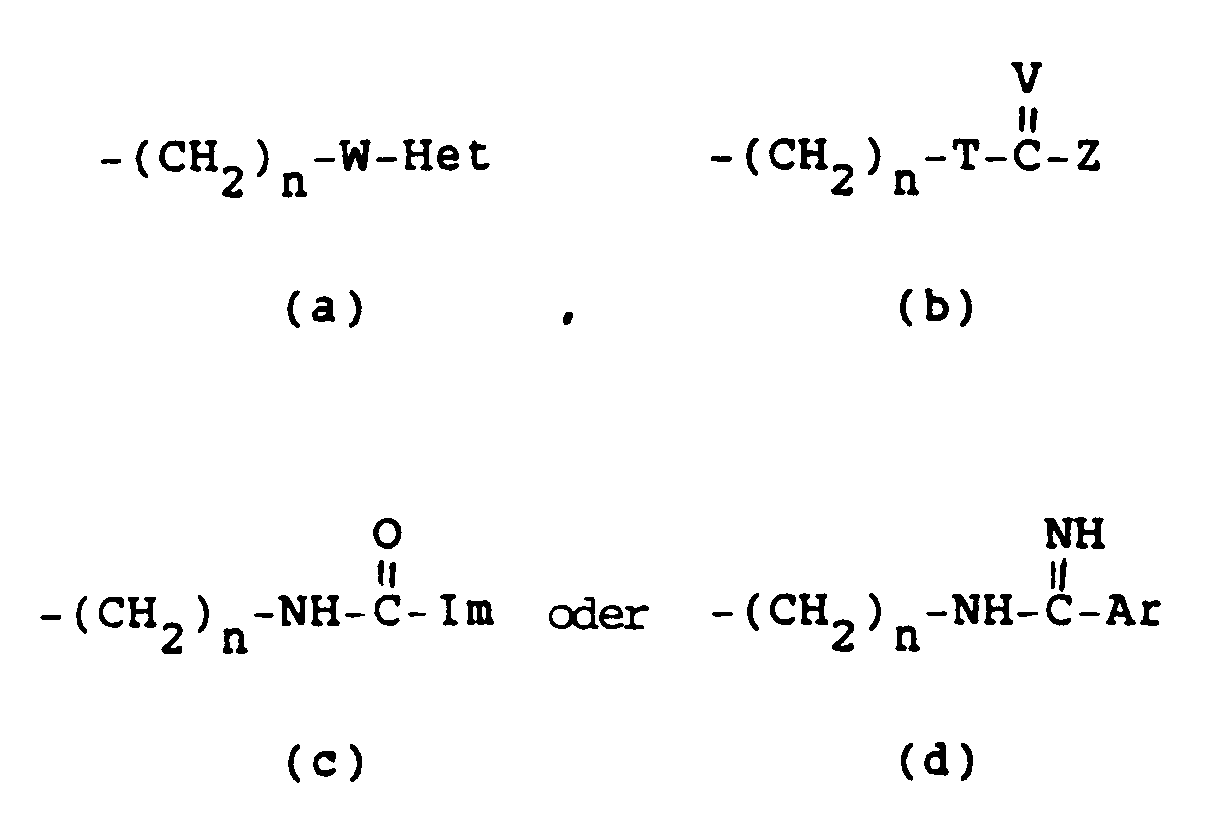
- Het
- eine heterocyclische Gruppe,
- W
- NH, S oder eine Bindung,
- T
- NH oder S,
- V
- O, S, NH, NNO₂, NCN oder CHNO₂,
- Z
- Alkylthio, Amino, Monoalkylamino oder Dialkylamino,
- Im
- 1-Imidazolyl,
- Ar
- Aryl, und
- n
- eine Zahl von 2-6;
- R²
- Wasserstoff, Alkyl, Aralkyl, Alkoxyalkyl, Hydroxyalkyl, Haloalkyl, Aminoalkyl, Monoalkylaminoalkyl, Dialkylaminoalkyl, Acylaminoalkyl, Alkylsulfonylaminoalkyl, Arylsulfonylaminoalkyl, Mercaptoalkyl, Alkylthioalkyl, Carboxyalkyl, Alkoxycarbonylalkyl, Aminocarbonylalkyl, Alkylthio oder Alkylsulfinyl;
- R³
- eine carbocyclische oder heterocyclische aromatische Gruppe;
- R⁴, R⁵, R⁶ und R⁷
- unabhängig voneinander Wasserstoff, Halogen, Alkyl, Hydroxy, Alkoxy, Aryloxy, Haloalkyl, Nitro, Amino, Acylamino, Monoalkylamino, Dialkylamino, Alkylthio, Alkylsulfinyl oder Alkylsulfonyl;
- Die Erfindung betrifft die weiter oben definierten Verbindungen als solche sowie als therapeutisch aktive Substanzen; ein Verfahren zu ihrer Herstellung; Medikamente, die diese Verbindungen enthalten und die Herstellung dieser Medikamente; sowie die Verwendung der besagten Verbindungen bei der Behandlung oder der Prophylaxe von Krankheiten speziell von inflammatorischen, immunologischen, bronchopulmonären und cardiovaskulären Krankheiten, oder bei der Herstellung von Medikamenten gegen inflammatorische, immunologische, bronchopulmonäre und cardiovaskuläre Krankheiten.
- Die Erfindung betrifft ferner ein Verfahren zur Herstellung eines Arzneimittels, wobei der Aktivstoff, nämlich eine der weiter oben definierten Verbindungen, zusammen mit einem pharmazeutisch geeigneten Trägermaterial und sonstigen Hilfsstoffen in eine für therapeutische Zwecke anwendbare Form gebracht wird, dadurch gekennzeichnet, dass man ein Heilmittel für die Behandlung von inflammatorischen, immunologischen, bronchopulmonären und cardiovaskulären Krankheiten herstellt, bestehend aus der Kombination von einem eine der besagten Verbindungen enthaltenden Präparat und der Information, welche in direktem Zusammenhang mit der Behandlung der besagten Krankheiten steht.
- Im Rahmen der Erfindung bezeichnet "Alkyl" allein oder in Kombination eine geradkettige oder verzweigte Alkylgruppe mit bis zu 7, vorzugsweise bis zu 4 C-Atome, wie Methyl, Aethyl, Propyl, Isopropyl, Butyl, sek.Butyl, t-Butyl und Pentyl. Beispiele von Alkoxygruppen sind Methoxy, Aethoxy, Propoxy, Isopropoxy, Butoxy und t-Butoxy. Ein Haloalkyl kann eine oder mehrere Halogenatome enthalten. Ein Beispiel für eine solche Gruppe ist Chlormethyl und Trifluormethyl. Der Acylanteil von Acylamino, Acylaminoalkyl oder Acylthioalkyl ist von einer Alkancarbonsäure mit bis zu 7, vorzugsweise bis zu 4 C-Atome (z.B. Acetyl, Propionyl oder Butyryl) oder von einer aromatischen Carbonsäure (z.B. Benzoyl) abgeleitet. Der Ausdruck "Aryl" allein oder in Kombination, wie in Arylsulfonylaminoalkyl, Arylthioalkyl oder Aralkyl bezeichnet unsubstituiertes Phenyl oder Phenyl substituiert durch einen oder mehreren, vorzugsweise 1-3 Substituenten, wie Halogen, Alkyl, Hydroxy, Benzyloxy, Alkoxy, Haloalkyl, Nitro, Amino und Cyan. "Halogen" bezeichnet Fluor, Chlor, Brom oder Jod.
- Beispiele von heterocyclischen Gruppen Het sind Imidazolyl, Imidazolinyl, Thiazolinyl, Pyridyl und Pyrimidinyl. Eine aromatische Stickstoffenthaltende Gruppe Het kann in Form eines N-Oxids vorliegen.
- Beispiele von carbocyclischen aromatischen Gruppen R³ sind Phenyl, 2-, 3- oder 4-Chlorphenyl, 3-Bromphenyl, 2- oder 3-Methylphenyl, 2,5-Dimethylphenyl, 4-Methoxyphenyl, 2- oder 3-Trifluormethylphenyl, 2-, 3- oder 4-Nitrophenyl, 3- oder 4-Aminophenyl, 4-Methylthiophenyl, 4-Methylsulfinylphenyl, 4-Methylsulfonylphenyl und 1- oder 2-Naphthyl.
- Eine heterocyclische aromatische Gruppe R³ kann eine 3-Indolylgruppe, insbesondere eine solche der Formel

sein,
worin R1′, R2′, R4′, R5′, R6′ und R7′ eine der Bedeutungen von R¹, R², R⁴, R⁵, R⁶ und R⁷ in Formel I haben. - Beispiele von heterocyclischen aromatischen Gruppen R³ sind 2- oder 3-Thienyl, 3-Benzothienyl, 1-Methyl-2-pyrrolyl, 1-Benzimidazolyl, 3-Indolyl, 1- oder 2-Methyl-3-indolyl, 1-Methoxymethyl-3-indolyl, 1-(1-Methoxyäthyl)-3-indolyl, 1-(2-Hydroxypropyl)-3-indolyl, 1-(4-Hydroxybutyl)- -3-indolyl, 1-[1-(2-Hydroxyäthylthio)äthyl]-3-indolyl, 1-[1-(2-Mercaptoäthylthio)äthyl]-3-indolyl, 1-(1-Phenylthioäthyl)-3-indolyl, 1-[1-(Carboxymethylthio)äthyl]-3-indolyl und 1-Benzyl-3-indolyl.
- In der Formel I bezeichnet R¹ vorzugsweise Alkyl, Aminoalkyl, Isothiocyanoatoalkyl oder eine Gruppe der Formel (b), in der T S, V NH und Z Amino oder in der T NH, V NH oder NNO₂ und Z Amino bezeichnet. Besonders bevorzugt sind Verbindungen der Formel I, worin R¹ Methyl, 3-Aminopropyl, 3-Isothiocyanatopropyl oder die weiter oben genannte Gruppe der Formel (b), in der n 3 ist. Vorzugsweise ist R² Wasserstoff. Vorzugsweise ist R³ Phenyl, monosubstituiert durch Halogen, insbesondere Chlor oder Brom, Alkyl, insbesondere Methyl, Alkoxy, insbesondere Methoxy, Haloalkyl, insbesondere Trifluormethyl, Nitro, Amino, Alkylthio, speziell Methylthio, Alkylsulfinyl, speziell Methylsulfinyl, oder Alkylsulfonyl, speziell Methylsulfonyl, oder eine Gruppe der Formel (i), insbesondere eine solche, in der R1′ Methyl, Methoxymethyl, 1-Methoxyäthyl, 2-Hydroxypropyl, 4-Hydroxybutyl, 1-(2-Hydroxyäthylthio)äthyl, 1-(2-Mercaptoäthylthio)äthyl, 1-Phenylthioäthyl oder 1-(Carboxymethylthio)äthyl, insbesondere Methyl, und R2′, R4′, R5′, R6′ und R7′ Wasserstoff sind. Vorzugsweise sind R⁴, R⁵, R⁶ und R⁷ Wasserstoff.
- Besonders bevorzugt sind die Verbindungen der Formel I, worin R¹ Methyl, 3-Aminopropyl, 3-Isothiocyanatopropyl oder eine Gruppe der Formel (b), in der T S, V NH, Z Amino und n die Zahl 3 ist oder in der T NH, V NH oder NNO₂, Z Amino und n die Zahl 3, R² Wasserstoff, R³ Phenyl monosubstituiert durch Chlor, Brom, Methyl, Methoxy, Trifluormethyl, Nitro, Amino, Methylsulfinyl oder Methylsulfonyl oder eine Gruppe der Formel (i), in der R1′ Methyl und R2′, R4′, R5′, R6′ und R7′ sowie R⁴, R⁵, R⁶ und R⁷ Wasserstoff sind.
- Speziell bevorzugt sind folgende Verbindungen:
3-(2-Chlorphenyl)-4-(1-methyl-3-indolyl)-1H-pyrrol-2,5-dion,
3-(1-Methyl-3-indolyl)-4-(2-nitrophenyl)-1H-pyrrol-2,5-dion,
3,4-Bis(1-methyl-3-indolyl)-1H-pyrrol-2,5-dion,
3-[1-(3-Aminopropyl)-3-indolyl]-4-(1-methyl-3-indolyl)-1H-pyrrol-2,5-dion,
3-[1-[3-(Amidinothio)propyl]-3-indolyl]-4-(1-methyl-3-indolyl)-1H-pyrrol-2,5-dion,
3-(1-Methyl-3-indolyl)-4-[1-[3-(2-nitroguanidino)propyl]-3-indolyl]-1H-pyrrol-2,5-dion und
3-[1-(3-Isothiocyanatopropyl)-3-indolyl]-4-(1-methyl-3-indolyl)-1H-pyrrol-2,5-dion. - Die Verbindungen der Formel I und ihre pharmazeutisch verwendbare Salze wie weiter oben definiert können dadurch hergestellt werden, dass man
- a) zur Herstellung einer Verbindung der Formel I, in der X und Y O sind, eine Verbindung der Formel

mit Ammoniak unter Druck oder mit Hexamethyldisilazan und Methanol umsetzt, oder - (b) zur Herstellung einer Verbindung der Formel I, in der R¹ Wasserstoff und X und Y O sind, eine Verbindung der Formel

mit einer Verbindung der Formel
umsetzt, oder - (c) zur Herstellung einer Verbindung der Formel I, in der R³ 1-Benzimidazolyl und X und Y O sind, eine Verbindung der Formel

mit einem Alkalimetallderivat des Benzimidazols umsetzt, oder - (d) zur Herstellung einer Verbindung der Formel I, in der eins von X und Y O und das andere S ist, eine Verbindung der Formel I, in der X und Y O sind, mit einem Sulfurierungsmittel umsetzt, oder
- (e) zur Herstellung einer Verbindung der Formel I, in der eins von X und Y O und das andere (H,OH) ist, eine Verbindung der Formel I, in der X und Y O sind, mit einem komplexen Metallhydrid reduziert, oder
- (f) zur Herstellung einer Verbindung der Formel I, in der eines von X und Y O und das andere (H,H) ist, eine Verbindung der Formel I, in der eins von X und Y O und das andere (H,OH) ist, katalytisch hydriert, oder
- (g) zur Herstellung einer Verbindung der Formel I, in der R¹ Alkyl, Aralkyl, Alkoxyalkyl oder Hydroxyalkyl ist, eine Verbindung der Formel I, in der R¹ Wasserstoff ist, entsprechend N-substituiert, und
- (h) erwünschtenfalls einen in einer Verbindung der Formel I vorhandenen reaktiven Substituenten funktionell abwandelt, und
- (i) erwünschtenfalls eine saure Verbindung der Formel I in ein pharmazeutisch verwendbares Salz mit einer Base oder eine basische Verbindung der Formel I in ein pharmazeutisch verwendbares Salz mit einer Säure überführt.
- Die Reaktion einer Verbindung der Formel II mit Ammoniak nach Verfahrensvariante a) kann man zweckmässig mittels wässrigem Ammoniak (vorzugsweise 33%iges wässrigem Ammoniak) und in Gegenwart eines wassermischbaren inerten organischen Lösungsmittels, wie Dimethylformamid (DMF) durchführen. Die Reaktion erfolgt vorzugsweise bei erhöhter Temperatur, z.B. zwischen etwa 100 und 150°C. Im allgemeinen beträgt die Reaktionsdauer zwischen etwa 0,5 und 5 Stunden.
- Die Reaktion einer Verbindung der Formel II mit Hexamethyldisilazan und Methanol wird zweckmässig in einem inerten organischen Lösungsmittel, wie einem halogenierten Kohlenwasserstoff, z.B. Chloroform, Tetrachlorkohlenstoff oder Chlorbenzol, oder in einem aromatischen Kohlenwasserstoff, z.B. Benzol, Toluol oder Xylol, und bei erhöhter Temperatur, z.B. zwischen etwa 40 und 110°C durchgeführt.
- Die Grignard-Reaktion zwischen einer Verbindung der Formel III und einer solchen der Formel IV kann man in an sich bekannter Weise durchführen, z.B. in einem inerten organischen Lösungsmittel, z.B. einem der weiter oben erwähnten aromatischen Kohlenwasserstoffe, und bei einer Temperatur zwischen etwa Raumtemperatur und Rückflusstemperatur des Reaktionsgemisches. Im allgemeinen beträgt die Reaktionsdauer einige Stunden, z.B. 18 Stunden bis einige Tagen, z.B. 5 Tage. Zweckmässigerweise wird eine Verbindung der Formel III in situ ausgehend von Indol oder einem substituierten Indol und einem geeigneten Alkylmagnesiumhalogenid, wie Methylmagnesiumbromid oder -jodid in an sich bekannter Weise hergestellt. Das Symbol Hal in den Verbindungen der Formel III bezeichnet vorzugsweise Brom oder Jod. Falls eine Verbindung der Formel III mit einer solchen der Formel IV, in der R⁸ Brom ist, umgesetzt wird, erhält man eine symmetrisch substituierte Verbindung der Formel I, d.h. eine solche, in der R³ eine Gruppe der Formel (i) ist, worin R1′, R2′, R4′, R5′, R6′ und R7′ die gleiche Bedeutung wie R¹, R², R⁴, R⁵, R⁶ bzw. R⁷ in der Verbindung der Formel III hat.
- Herkömmliche Methoden können bei der Durchführung der Reaktion einer Verbindung der Formel V mit einem Alkalimetallderivat des Benzimidazols nach Variante c) angewendet werden. Die Reaktion wird zweckmässigerweise in einem inerten organischen Lösungsmittel, wie DMF durchgeführt. Die Reaktionstemperatur ist nicht kritisch. Die Reaktion wird jedoch vorzugsweise bei erhöhter Temperatur, z.B. etwa 45-95°C durchgeführt. Die Alkalimetalle, vorzugsweise Natriumderivate werden vorzugsweise in situ hergestellt durch Behandlung von Benzimidazol mit einer geeigneten Alkalimetallbase, wie einem Alkalimetallhydrid, z.B. Natriumhydrid.
- Die Sulfurierung nach Variante d) wird zweckmässigerweise mittels Phosphorpentasulfid, Lawesson's Reagens [2,4-Bis(4-methoxyphenyl)-1,2-dithioxo -1,3,2,4-dithiaphosphetan; Bull. Soc. Chim. Belg. 87 (1978) 229-238] oder Davy-Reagens [2,4-Bis(Methylthio)-1,3,2,4-dithiadiphosphetan; Sulfur Lett. 1983, 1, 167] durchgeführt. Diese Reaktion erfolgt zweckmässigerweise in einem inerten organischen Lösungsmittel, wie einem aliphatischen oder cyclischen Aether, z.B. Dimethoxyäthan, oder einem aromatischen erwünschtenfalls halogenierten Kohlenwasserstoff, z.B. Benzol, Toluol oder Chlorbenzol, und bei erhöhter Temperatur speziell unter Rückfluss.
- Die Reduktion nach Variante e) kann man in an sich bekannter Weise durchführen. Als komplexe Metallhydride verwendet man z.B. Diisobutylaluminiumhydrid, Natriumdihydro-bis(2-methoxyäthoxy)aluminat oder vorzugsweise ein Alkalimetallaluminiumhydrid, wie Lithiumaluminiumhydrid. Die Reduktion kann in einem inerten organischen Lösungsmittel, wie einem aliphatischen oder cyclischen Aether, wie Diäthyläther oder Tetrahydrofuran (THF) oder in einem Kohlenwasserstoff, wie Hexan, Benzol oder Toluol, zweckmässigerweise bei etwa Raumtemperatur erfolgen.
- Die katalytische Hydrierung nach Variante f) kann man in an sich bekannter Weise durchführen, z.B. in Gegenwart eines Edelmetallkatalysators, wie einem Palladium- oder Platinkatalysator, z.B. Palladium/Kohlenstoff (Pd/C), und in einem inerten organischen Lösungsmittel, wie einem Alkanol, z.B. Methanol oder Aethanol, zweckmässigerweise bei etwa Raumtemperatur und unter Normaldruck.
- Die N-Substitution einer Verbindung der Formel I, in der R¹ Wasserstoff ist, nach Variante g) kann man in an sich für die N¹-Substitution von Indolen bekannter Weise durchführen. Z.B. kann eine Hydroxyalkylgruppe R¹ in eine Verbindung der Formel I, in der R¹ Wasserstoff ist, dadurch eingeführt werden, dass man zuerst diese Verbindung in ein Alkalimetallderivat, z.B. das Natriumderivat überführt, z.B. mittels eines Alkalimetallhydrids, wie Natriumhydrid, und dann das erhaltene Derivat mit einem die Hydroxyalkylgruppe abgebenden Mittel, z.B. einem Alkylenoxid, wie Propylenoxid behandelt. Eine Alkoxyalkylgruppe R¹ kann man durch Behandlung einer Verbindung der Formel I, in der R¹ Wasserstoff ist, mit einem geeigneten Aldehyddialkylacetal in Gegenwart einer Säure, z.B. p-Toluolsulfonsäure, bei erhöhter Temperatur einführen. Ferner kann eine Verbindung der Formel I, in der R¹ Wasserstoff ist, mit einem Alkyl- oder Aralkylhalogenid in Gegenwart einer Base zu einer Verbindung der Formel I, in der R¹ Alkyl oder Aralkyl ist, umgesetzt werden.
- Die funktionellen Modifikationen nach Variante h) lassen sich ebenfalls in an sich bekannter Weise durchführen. Z.B. kann man eine Nitrogruppe zur Aminogruppe reduzieren und letztere dann alkylieren oder acylieren. Eine Aminoalkylgruppe kann alkyliert, acyliert oder sulfonyliert werden. Eine Alkylthio- oder Alkylthioalkylgruppe kann man zur Alkylsulfinyl- bzw. Alkylsulfinylalkylgruppe und letztere gewünschtenfalls zur Alkylsulfonyl- bzw. Alkylsulfonylalkylgruppe oxidieren. Eine Alkoxycarbonylalkylgruppe kann zur Carboxyalkylgruppe verseift werden und letztere dann amidiert oder umestert werden. Eine Alkoxyalkylgruppe kann man zu einer Alkylthioalkyl- oder Arylthioalkylgruppe mittels eines Alkanthiols oder Thiophenols umsetzen. Eine Azidoalkylgruppe kann durch katalytische Hydrierung in eine Aminoalkylgruppe übergeführt und letztere wiederum funktionellen Modifikationen unterworfen werden. Z.B. kann man eine Aminoalkylgruppe mittels 1,1′-Thiocarbonyldiimidazol in eine Isothiocyanatoalkylgruppe umwandeln. Ferner kann man eine Amino-C₂₋₆-alkylgruppe überführen in eine Gruppe der Formel (a), in der W NH ist, durch Reaktion mit einem reaktionsfähigen Derivat einer geeigneten heterocyclischen Verbindung oder in eine Gruppe der Formel (b), in der
- 1. T NH, V NH und Z Amino ist, mittels 3,5-Dimethylpyrazol-1-carboxamidin,
- 2. T NH, V NNO₂ und Z Amino ist, mittels 3,5-Dimethyl-N²-nitro-1-pyrazol-1-carboxamid,
- 3. T NH, V NCN und Z Alkylthio ist, mittels eines Dialkyl-N-cyandithioiminocarbonats oder
- 4. T NH, V CHNO₂ und Z Alkylthio ist, mittels 1,1-Bis(alkylthio)-2-nitroäthylen.
- Weiter kann man eine Amino-C₂₋₆-alkylgruppe in eine Gruppe der Formel (c) durch Reaktion mit 1,1′-Carbonyldiimidazol oder in eine Gruppe der Formel (d) durch Reaktion mit einem geeigneten Benzimidat überführen. Die Umwandlung einer Gruppe der Formel (b), in der T NH, V NCN oder CHNO₂ und Z Alkylthio ist, in eine entsprechende Gruppe der Formel (b), in der Z Amino oder Mono- oder Dialkylamino ist, kann man mittels Ammoniak oder einem Mono- oder Dialkylamin bewerkstelligen. Eine Isothiocyanatoalkylgruppe kann man in eine Gruppe der Formel (b), in der T NH, V S und Z Amino ist, durch Behandlung mit Ammoniak überführen.
- Eine Alkylcarbonyloxyalkylgruppe kann man zur Hydroxyalkylgruppe verseifen und letztere in an sich bekannter Weise in eine Haloalkyl- oder eine Alkylsulfonyloxyalkylgruppe überführen. Eine Hydroxyalkylgruppe kann man auch in eine Aminoalkylaminoalkylgruppe überführen durch Behandlung mit Trifluormethansulfonsäureanhydrid gefolgt durch Reaktion mit einem geeigneten Diaminoalkan. Eine Hydroxy-C₂₋₆-alkylgruppe kann man zuerst mit Trifluormethansulfonsäureanhydrid und dann mit einer geeigneten heterocyclischen Verbindung, z.B. Pyridin, in eine Gruppe der Formel (a), in der W eine Bindung ist, umwandeln. Eine Alkylsulfonyloxyalkylgruppe kann beispielsweise in eine Mono- , Di- bzw. Trialkylaminoalkylgruppe mittels eines Mono-, Di- bzw. Trialkylamin; in eine Cyanalkylgruppe mittels eines Alkalimetallcyanids, in eine Alkylthioalkylgruppe mittels eines Alkalimetallalkanthiolat, oder in eine Acylthioalkylgruppe mittels eines Alkalimetallthioacylats umgewandelt werden.
- Eine Alkylsulfonyloxy-C₂₋₆-alkylgruppe kann man auch mittels Thioharnstoff in eine Gruppe der Formel (b), in der T S, V NH und Z Amino ist, umwandeln. Ferner lässt sich eine Cyanalkylgruppe in eine Amidinoalkylgruppe mittels Ammoniak, eine Acylthioalkylgruppe in eine Mercaptoalkylgruppe mittels wässrigem Ammoniak, sowie eine Benzyloxy-arylgruppe in eine Hydroxy-arylgruppe durch Hydrogenolyse umwandeln. Ferner kann eine Gruppe der Formel (c) in eine solche der Formel (b), in der T NH, V O und Z Amino ist, mittels alkoholischem Ammoniak, umgewandelt werden. Selbstverständlich haben die obigen Umwandlungen lediglich beispielhaften Charakter und es können andere dem Fachmann bekannte Modifikationen durchgeführt werden.
- Die Ueberführung einer sauren Verbindung der Formel I in ein pharmazeutisch verwendbares Salz nach Variante i) kann durch Behandlung mit einer geeigneten Base in an sich bekannter Weise durchgeführt werden. Geeignete Salze sind solche die von einer anorganischen Base, z.B. Natrium-, Kalium- oder Calciumsalze, oder von einer organischen Base, wie Aethylendiamin oder Mono- oder Diäthanolamin, abgeleitet sind. Die Umwandlung einer basischen Verbindung der Formel I in ein pharmazeutisch verwendbares Salz kann durch Behandlung mit einer geeigneten Säure in an sich bekannter Weise bewerkstelligt werden. Geeignete Salze sind solche, die von einer anorganischen Säure, z.B. Hydrochloride, Hydrobromide, Phosphate oder Sulfate, oder von einer organischen Säure, z.B. Acetate, Citrate, Fumarate, Tartrate, Maleate, Methansulfonate oder p-Toluolsulfonate, abgeleitet sind.
- Die Ausgangsmaterialien der Formel II können durch Reaktion einer Verbindung der Formel

mit einer Verbindung der Formel
HOOC-CH₂-R³ VII
worin R¹ bis R⁷ die obige Bedeutung haben,
und gewünschtenfalls durch funktionelle Modifikation eines reaktionsfähigen Substituenten in einer erhaltenen Verbindung der Formel II hergestellt werden. Diese funktionellen Modifikationen können in der gleichen Weise durchgeführt werden, wie weiter oben beschrieben, für die funktionelle Modifikation von reaktionsfähigen Substituenten in einer Verbindung der Formel I. - Die Reaktion einer Verbindung der Formel VI mit einer Verbindung der Formel VII führt man vorzugsweise durch in Gegenwart eines Säure-bindenden Mittels, zweckmässigerweise einem tertiären Amin, wie einem Trialkylamin, z.B. Triäthyl- oder Diisopropyläthylamin, und in einem inerten organischen Lösungsmittel wie einem halogenierten aliphatischen Kohlenwasserstoff.
- Die Verbindungen der Formel VI können hergestellt werden durch Umsetzung einer Verbindung der Formel

worin R¹ bis R⁷ die obige Bedeutung haben,
mit Oxalylchlorid, zweckmässigerweise in einem inerten organischen Lösungsmittel, wie einem halogenierten aliphatischen Kohlenwasserstoff, bei einer Temperatur zwischen etwa 0°C und Rückflusstemperatur des Lösungsmittels. Die resultierende Verbindung der Formel VI kann in situ mit einer Verbindung der Formel VII umgesetzt werden oder kann isoliert und, bevor man sie mit einer Verbindung der Formel VII umsetzt, gereinigt werden. - Wie weiter oben angegeben sind die Verbindungen der Formel III leicht zugänglich aus einem Indol oder einem geeignet substituierten Indol, d.h. einer Verbindung der Formel VIII, in der R¹ Wasserstoff ist, und aus einem geeigneten Alkylmagnesiumhalogenid, wie Methylmagnesiumbromid oder -jodid. So kann man eine Lösung einer Verbindung der Formel VIII in einem inerten organischen Lösungsmittel, wie einem aromatischen Kohlenwasserstoff, mit einer ätherischen Lösung des Alkylmagnesiumhalogenids bei etwa Raumtemperatur umsetzen.
- Die Verbindungen der Formel IV, in der R⁸ die gleiche Bedeutung wie R³ hat, kann durch Bromierung einer Verbindung der Formel
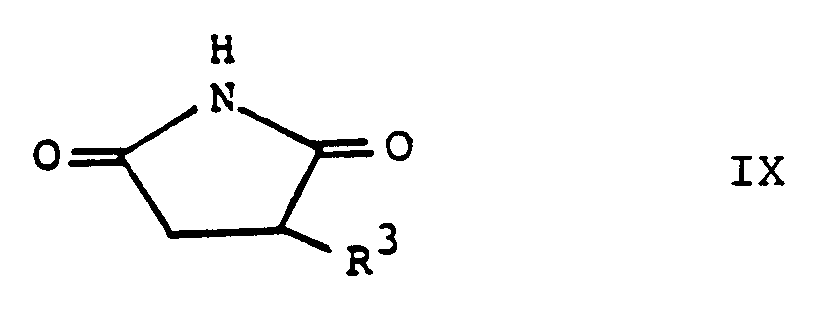
worin R³ die obige Bedeutung hat,
hergestellt werden. - Die Verbindungen der Formel V (oder diejenigen der Formel IV, worin R⁸ eine Gruppe der Formel (i) ist) können hergestellt werden durch Umsetzung einer Verbindung der Formel III mit Dibrommaleinimid, d.h. einer Verbindung der Formel IV, in der R⁸ Brom ist.
- Die Bromierung einer Verbindung der Formel IX kann zweckmässigerweise mittels elementarem Brom gegebenenfalls in Gegenwart eines inerten organischen Lösungsmittels, z.B. eines aliphatischen Aethers, erfolgen. Die Bromierung wird vorzugsweise bei erhöhter Temperatur durchgeführt, z.B. bei 100-120°C, wenn kein Lösungsmittel verwendet wird, und unter Rückfluss, wenn man in einem Lösungsmittel arbeitet.
- Die Reaktion einer Verbindung der Formel III mit Dibrommaleinimid kann in der gleichen Weise durchgeführt werden, wie weiter oben beschrieben, für die Verfahrensvariante b).
- Die Pyrrole der Formel I und ihre pharmazeutisch verwendbaren Salze sind Inhibitoren der Proteinkinase; sie hemmen zellulare Prozesse, z.B. die Zellproliferation, und können in der Behandlung oder Prophylaxe von Krankheiten, z.B. von inflammatorischen Krankheiten, wie Arthritis, von Immunkrankheiten oder in Kombination mit Organtransplantationen, sowie in der Onkologie Verwendung finden. Sie hemmen die Infektion der Zellen durch Humanimmunodefekt-Viren und sind daher in der Behandlung von AIDS verwendbar. Sie hemmen auch die Kontraktion der glatten Muskulatur und können daher gegen cardiovaskuläre und bronchopulmonäre Krankheiten verwendet werden. Ferner sind sie auch in der Asthmatherapie verwendbar.
- Die Aktivität der vorliegenden Verbindungen in der Hemmung der Proteinkinase C kann man z.B. anhand des in BBRC 19 (1979) 1218 beschriebenen Versuchssystems nachweisen. Die IC₅₀-Werte in der nachstehenden Tabelle sind diejenigen Konzentrationen der Testsubstanz, die die durch die Proteinkinase induzierte Inkorporation von ³²P aus [γ-³²P]ATP in das Histon um 50% reduziert.
Tabelle Verbindung IC₅₀ 3-[1-(2-Carbamoyläthyl)-3-indolyl]-4-(1-methyl-3-indolyl)-1H-pyrrol-2,5-dion 0,5 µM 3-(5-Amino-1-methyl-3-indolyl)-4-(1-methyl-3-indolyl)-1H-pyrrol-2,5-dion 0,6 µM 3-(1-Methyl-3-indolyl)-4-(3-(methylphenyl)-1H-pyrrol-2,5-dion 1,0 µM 3-[1-[3-(Amidinothio)propyl]-3-indolyl]-4-(1-methyl-3-indolyl)-1H-pyrrol-2,5-dion 0,010 µM 3-(1-Methyl-3-indolyl)-4-[1-[3-(2-nitroguanidino)propyl]-3-indolyl]-1H-pyrrol-2,5-dion 0,025 µM 3-[1(3-Isothiocyanatopropyl)-3-indolyl]-4-(1-methyl-3-indolyl)-1H-pyrrol-2,5-dion 0,008 µM - Die Pyrrole der Formel I und ihre Salze können als Medikamente verwendet werden, z.B. in Form von pharmazeutischen Präparaten, die man oral, z.B. in Form von Tabletten, Dragées, Hart- oder Weichgelatinekapseln, Lösungen, Emulsionen oder Suspensionen, verabreichen kann. Sie können auch rektal, z.B. in Form von Suppositorien, oder parenteral, z.B. in Form von Injektionslösungen verabreicht werden. Für die Herstellung von pharmazeutischen Präparaten können diese Verbindungen mit therapeutisch inerten anorganischen und organischen Träger verarbeitet werden. Beispiele von solchen Trägern für Tabletten, Dragées und Hartgelatinekapseln sind Lactose, Maisstärke oder Derivate davon, Talk, Stearinsäure oder dessen Salze. Geeignete Träger für Weichgelatinekapseln sind pflanzliche Oele, Wachse, Fette und halbfeste oder flüssige Polyole. Je nach der Natur des Wirkstoffes erübrigen sich jedoch Träger im Fall von Weichgelatinekapseln. Geeignete Träger für die Herstellung von Lösungen und Sirupen sind Wasser, Polyole, Saccharose, Invertzucker und Glucose. Geeignete Träger für Injektionslösungen sind Wasser, Alkohole, Polyole, Glycerol und pflanzliche Oele. Geeignete Träger für Suppositorien sind pflanzliche oder gehärtete Oele, Wachse, Fette und halbflüssige Polyole.
- Die pharmazeutischen Präparate können auch Konservierungsmittel, Lösungsmittel, Stabilisierungsmittel, Netzmittel, Emulgiermittel, Süsstoffe, Farbstoffe, Geschmacksmittel, Salze zur Veränderung des osmotischen Druckes, Puffer, Ueberzugsmittel oder Antioxidantien, sowie gegebenenfalls andere therapeutische Wirkstoffe enthalten.
- Wie weiter oben angegeben können die Pyrrole der Formel I und ihre Salze in der Behandlung oder Prophylaxe von Krankheiten speziell von inflammatorischen, immunologischen, bronchopulmonären und cardiovaskulären Krankheiten verwendet werden. Die Dosierung kann in weiten Bereichen variieren, liegt jedoch im allgemeinen bei oraler Verabreichung an Erwachsenen im Bereich von etwa 5 bis 500 mg/Tag, obwohl letzterer Wert, falls nötig, erhöht werden kann. Die tägliche Dosis kann in einer Einzeldosis oder in mehreren Dosen verabreicht werden.
- 0,4 g 3-(1-Methyl-3-indolyl)-4-(1-methyl-5-nitro-3-indolyl)furan -2,5-dion werden mit 3 ml DMF und 20 ml einer 33%igen wässrigen Ammoniaklösung behandelt und 3,5 Stunden bei 140°C erhitzt. Das abgekühlte Gemisch wird filtriert und der Rückstand wird mit Wasser gewaschen und getrocknet. Man erhält 0,29 g 3-(1-Methyl-3-indolyl)-4-(1-methyl-5-nitro-3-indolyl) -1H-pyrrol-2,5-dion, Smp. 282-284°C.
- Das Ausgangsfurandion wird wie folgt hergestellt:
0,7 g 1-Methyl-5-nitroindol-3-glyoxylylchlorid in 20 ml Dichlormethan werden mit 0,85 ml Triäthylamin und 0,5 g 1-Methylindol-3-ylessigsäure behandelt. Das Gemisch wird 16 Stunden stehengelassen und dann eingeengt. Der Rückstand wird an Silicagel mit 50% Aethylacetat in Petroleumäther chromatographiert. Man erhält 0,42 g Furandion, Smp. 220-221°C. - 56 mg 3-(1-Methyl-3-indolyl)-4-(1-naphthyl)furan-2,5-dion werden mit 5 ml DMF und 5 ml einer 33%igen wässrigen Ammoniaklösung behandelt und das Gemisch wird 5 Stunden auf 130°C erhitzt. Der gebildete Niederschlag wird abfiltriert, mit Wasser gewaschen und getrocknet. Man erhält 53 mg 3-(1-Methyl-3-indolyl)-4-(1-naphthyl)-1H-pyrrol-2,5-dion, Smp. 258-260°C.
- Das Ausgangsfurandion wird wie folgt hergestellt:
Zu 1,1 g 1-Methylindol-3-glyoxylylchlorid in 30 ml Dichlormethan werden 1,65 ml Triäthylamin und dann eine Lösung von 0,93 g 1-Naphthylessigsäure in 20 ml Dichlormethan zugesetzt. Nach 16-stündigem Rühren wird das Gemisch eingeengt und der Rückstand wird an Silicagel mit Dichlormethan gereinigt. Man erhält 295 mg des Furandions, Smp. 217-219°C. - 0,30 g 3-(1-Methyl-3-indolyl)-4-(3-methylphenyl)furan-2,5-dion werden mit 8 ml DMF und 60 ml einer 33%igen wässrigen Ammoniaklösung behandelt und 5 Stunden bei 150°C erhitzt und dann abkühlen gelassen. Der gebildete Niederschlag wird abfiltriert, mit Wasser gewaschen und getrocknet. Man erhält 162 mg 3-(1-Methyl-3-indolyl)-4-(3-methylphenyl)-1H-pyrrol -2,5-dion, Smp. 243°C.
- Das Ausgangsfurandion wird wie folgt hergestellt:
1,5 g 1-Methylindol-3-glyoxylylchlorid in 30 ml Dichlormethan werden bei 0°C mit 2,17 ml Triäthylamin und 1,02 g 3-Methylphenylessigsäure behandelt. Das Gemisch wird auf Raumtemperatur erwärmen gelassen und über Nacht gerührt. Siliciumdioxid wird hinzugefügt und das Lösungsmittel wird abgedampft. Das Siliciumdioxid und adsorbierte Produkte werden an Silicagel mit 20% Aethylacetat und Petroleumäther gereinigt. Man erhält 307 mg des Furandions, Smp. 158-160°C. - 160 mg 3-(1-Benzothiophen-3-yl)-4-(1-methyl-3-indolyl)furan -2,5-dion werden mit 2 ml DMF und 20 ml einer 33%igen wässrigen Ammoniaklösung behandelt und das Gemisch wird 5 Stunden bei 140°C erhitzt. Das abgekühlte Gemisch wird filtriert und der Rückstand wird mit Wasser gewaschen und getrocknet. Der Feststoff wird an Silicagel mit 50% Aethylacetat in Petroleumäther gereinigt. Man erhält 20 mg 3-(1-Benzothiophen-3-yl)-4-(1-methyl-3-indolyl)-1H-pyrrol-2,5-dion, Smp. 250-255°C.
- Das Ausgangsfurandion wird wie folgt hergestellt:
1,0 g 1-Methylindol-3-glyoxylylchlorid in 20 ml Dichlormethan werden mit 1,6 ml Triäthylamin und einer Lösung von 0.87 g 1-Benzothiophen-3-ylessigsäure in Dichlormethan behandelt. Das Gemisch wird 16 Stunden bei Raumtemperatur stehengelassen, dann eingeengt und der Rückstand wird an Silicagel mit 50% Aethylacetat in Hexan chromatographiert. Man erhält 0,33 g des Furandions, Smp. 165°C. - 0,28 g 3-(1-Methyl-3-indolyl)-4-(3-thienyl)furan-2,5-dion werden mit 10 ml DMF und 40 ml einer 33%igen wässrigen Ammoniaklösung behandelt. Das Gemisch wird 4 Stunden bei 140°C erhitzt. Die abgekühlte Lösung wird in 150 ml Wasser geschüttet und der entstandene Niederschlag wird abfiltriert und getrocknet. Man erhält 0,15 g 3-(1-Methyl-3-indolyl)-4-(3-thienyl)-1H-pyrrol-2,5-dion, Smp. 211-212°C.
- Das Ausgangsfurandion wird wie folgt hergestellt:
1,1 g 1-Methylindol-3-glyoxylylchlorid in 10 ml Dichlormethan werden mit 1,65 ml Triäthylamin und einer Lösung von 0,71 g 3-Thiophenessigsäure in Dichlormethan behandelt. Nach 2-stündigem Rühren bei Raumtemperatur wird das Gemisch eingeengt und der Rückstand an Silicagel mit Dichlormethan gereinigt. Man erhält 0,42 g Furandion, Smp. 162-164°C. - 0,17 g 3-(5-Amino-1-methyl-3-indolyl)-4-(1-methyl-3-indolyl)furan -2,5-dion werden mit 4 ml DMF und 30 ml einer 33%igen wässrigen Ammoniaklösung behandelt und das Gemisch wird 4 Stunden bei 140°C erhitzt. Die abgekühlte Lösung wird filtriert und der Rückstand wird mit Wasser gewaschen. Man erhält 0,08 g 3-(5-Amino-1-methyl-3-indolyl)-4-(1-methyl-3-indolyl) -1H-pyrrol-2,5-dion, Smp. 254-256°C.
- Das Ausgangsfurandion wird wie folgt hergestellt:
0,2 g 3-(1-Methyl-3-indolyl)-4-(1-methyl-5-nitro-3-indolyl)furan -2,5-dion in 50 ml THF wird über 0,2 g 10%igem Pd/C 23 Stunden hydriert. Das Gemisch wird filtriert und das Lösungsmittel wird abgedampft. Man erhält 0,17 g Furandion, Smp. 130-134°C. - 0,050 g des Produkts von Beispiel 6 werden 1 Stunde bei Raumtemperatur mit 10 ml Essigsäureanhydrid behandelt. Der Ueberschuss an Anhydrid wird abgedampft. Man erhält 0,039 g 3-(5-Acetamido-1-methyl-3-indolyl)-4-(1-methyl-3-indolyl) -1H-pyrrol-2,5-dion, Smp. 276-279°C.
- 0,058 g 3-(5-Hydroxy-1-methyl-3-indolyl)-4-(1-methyl-3-indolyl)furan -2,5-dion werden mit 1,5 ml DMF und 20 ml einer 33%igen wässrigen Ammoniaklösung behandelt und das Gemisch wird 3 Stunden bei 140°C erhitzt. Das Lösungsmittel wird von der abgekühlten Lösung abgedampft und der Rückstand wird mit Wasser vermischt. Der entstandene Feststoff wird abfiltriert und getrocknet. Man erhält 0,018 g 3-(5-Hydroxy-1-methyl-3-indolyl)-4-(1-methyl-3-indolyl)-1H-pyrrol-2,5-dion, Smp. 284-287°C.
- Das Ausgangsfurandion wird wie folgt hergestellt:
7,85 g 5-Methoxy-1-methylindol-3-glyoxylylchlorid in 100 ml Dichlormethan werden mit 10,8 ml Triäthylamin gefolgt durch 5,86 g 1-Methylindol-3-ylessigsäure behandelt. Nach 16 Stunden wird das Gemisch eingeengt und der Rückstand wird an Silicagel mit 1% Methanol in Dichlormethan chromatographiert. - 0,10 g des erhaltenen 3-(5-Methoxy-1-methyl-3-indolyl)-4-(1-methyl -3-indolyl)furan-2,5-dion (Smp. 234-237°C) werden mit 3 ml Pyridin und 0,40 g Pyridinhydrochlorid behandelt und das Gemisch wird 3 Stunden bei 220°C erhitzt. Das Gemisch wird zwischen Dichlormethan und Wasser aufgeteilt und die organische Phase wird mit Wasser und dann mit 0,5M Salzsäure gewaschen. Die organische Phase wird getrocknet und eingeengt. Der Rückstand wird an Silicagel mit 1% Methanol in Dichlormethan chromatographiert. Man erhält 0,058 g des erwünschten Furandions, Smp. 128-132°C.
- Eine Lösung von 800 mg 3-(1-Methyl-3-indolyl)-4-(1-methyl-2-pyrrolyl)furan-2,5-dion in 6 ml DMF und 50 ml einer 33%igen wässrigen Ammoniaklösung wird 3 Stunden bei 130°C erhitzt. Der Niederschlag wird abfiltriert und getrocknet. Man erhält 400 mg 3-(1-Methyl-3-indolyl)-4-(1-methyl-2-pyrrolyl) -1H-pyrrol-2,5-dion, Smp. 248-250°C.
- Das Ausgangsfurandion wird wie folgt hergestellt:
An 6,4 g 1-Methylindol-3-glyoxylylchlorid in 120 ml Dichlormethan und 8,0 ml Triäthylamin werden 4,0 g 1-Methylpyrrol-2-essigsäure unter einer Stickstoffatmosphäre zugesetzt. Nach 16 Stunden Rühren wird das Lösungsmittel abgedampft. Der Rückstand wird an Silicagel mit Aethylacetat/Petroleumäther (1:2) gereinigt. Man erhält 800 mg Furandion, Smp. 163-165°C. - 1,4 ml Acetaldehyddimethylacetal und 10 mg p-Toluolsulfonsäure werden einer Lösung von 250 mg 3,4-Bis(3-indolyl)-1H-pyrrol-2,5-dion in 40 ml Chloroform zugesetzt. Das entstandene Gemisch wird 18 Stunden unter Stickstoff bei Rückflusstemperatur erhitzt. Die erhaltene Lösung wird eingedampft und der Rückstand wird an Silicagel mit Aethylacetat/Petroleumäther (1:2) gereinigt. Umkristallisation aus Chloroform/Hexan ergibt 165 mg 3,4-Bis[1-(1-methoxyäthyl)-3-indolyl]-1H-pyrrol-2,5-dion, Smp. 222-224°C.
- 220 mg Thiophenol und 1 Tropfen konzentrierte Salzsäure werden einer Lösung von 150 mg des Produkts von Beispiel 10 in 40 ml Dichlormethan zugesetzt. Die Lösung wird 2 Stunden unter Stickstoff gerührt. Das Lösungsmittel wird abgedampft und der Rückstand wird aus Diäthyläther/Hexan umkristallisiert. Man erhält 190 mg 3,4-Bis[1-(1-phenylthioäthyl)-3-indolyl]-1H-pyrrol -2,5-dion, Smp. 102-105°C.
- Eine Lösung von 4,12 g 2-Methylindol in 75 ml Benzol wird mit 9,2 ml einer 3M Lösung von Methylmagnesiumjodid in Diäthyläther behandelt und die resultierende Lösung wird 0,5 Stunden unter Stickstoff gerührt. 2,0 g Dibrommaleimid werden zugesetzt und das Gemisch wird 14 Stunden unter Rückfluss erhitzt. Die abgekühlte Lösung wird eingedampft, in 200 ml Dichlormethan gelöst und mit 100 ml 2M Salzsäure angesäuert. Die organische Schicht wird abgetrennt, mit 100 ml Wasser gewaschen, getrocknet und eingedampft. Der Rückstand wird mit Dichlormethan vermischt und der erhaltene Feststoff wird aus Aceton/Wasser umkristallisiert. Man erhält 1,1 g 3,4-Bis(2-methyl-3-indolyl)-1H-pyrrol-2,5-dion, Smp. 311-313°C.
- 20 ml einer 1M Lösung von LiAlH₄ in Diäthyläther wird einer Lösung von 1,0 g 3,4-Bis(3-indolyl)-1H-pyrrol-2,5-dion in 140 ml THF zugesetzt. Das Gemisch wird 18 Stunden unter Stickstoff gerührt. Das Gemisch wird auf 0°C abgekühlt, mit 50 ml Wasser versetzt, dann auf pH 2 mit 2M Salzsäure angesäuert und mit Aethylacetat extrahiert. Die organischen Extrakte werden mit gesättigter Natriumbicarbonatlösung gewaschen, getrocknet und eingedampft. Der Rückstand wird an Silicagel mit 5-10% Methanol in Dichlormethan gereinigt. Das erste Eluat wird mit Aethylacetat/Hexan vermischt. Man erhält 175 mg 3,4-Bis(3-indolyl)-3-pyrrolin-2-on, Smp. 290-293°C (Zers.). Das zweite Eluat wird aus Aethylacetat/Chloroform kristallisiert. Man erhält 490 mg 5-Hydroxy-3,4-bis(3-indolyl)-3-pyrrolin2-on, Smp. 250°C (Zers.).
- Das Ausgangspyrroldion wird wie folgt hergestellt:
Eine Lösung von 18,72 g Indol in 240 ml Benzol wird mit 48 ml einer 3M Lösung von Methylmagnesiumjodid in Diäthyläther behandelt und 0,5 Stunden unter Stickstoff gerührt. 10,2 g Dibrommaleimid werden zugesetzt und das Gemisch wird 65 Stunden unter Rückfluss erhitzt, dann abgekühlt und eingedampft. Der Rückstand wird zwischen Dichlormethan und 2M Salzsäure aufgeteilt und das unlösliche Material wird abfiltriert. Das Dichlormethanextrakt wird abgetrennt und getrocknet und das Lösungsmittel wird abgedampft. Das Produkt wird an Silicagel mit Aethylacetat/Petroleumäther gereinigt. Man erhält 6,0 g des Pyrroldions, Smp. 252-253°C nach Ausfällung aus Methanol/Wasser. - 820 mg Lawesson's-Reagens werden einer Lösung von 330 mg 3,4-Bis(3-indolyl)-1H-pyrrol-2,5-dion in 50 ml Dimethoxyäthan zugesetzt und das Gemisch wird 1 Stunde unter Rückfluss erhitzt. 410 mg Lawesson's-Reagens werden dann zugesetzt und das Gemisch wird 1 Stunde unter Rückfluss erhitzt. Das Lösungsmittel wird abgedampft und der Rückstand wird an Silicagel mit Aethylacetat/Hexan (1:4) gereinigt. Umkristallisation aus Diäthyläther/Hexan ergibt 30 mg 5-Thioxo-3,4-bis(3-indolyl)-3-pyrrolin-2-on, Smp. 254-257°C.
- 260 mg einer 60%igen Dispersion von Natriumhydrid in Mineralöl werden einer Lösung von 295 mg Benzimidazol in 10 ml DMF hinzugefügt und das Gemisch wird 0,5 Stunden unter Stickstoff gerührt. 582 mg 3-Brom-4-(3-indolyl)-1H-pyrrol-2,5-dion werden zugesetzt und das Gemisch wird 18 Stunden bei 50°C erhitzt. Eine Lösung von 767 mg Benzimidazol und 260 mg Natriumhydrid in 10 ml DMF werden zugesetzt und das Gemisch wird 18 Stunden unter Stickstoff bei 90°C erhitzt. Das Lösungsmittel wird abgedampft und der Rückstand wird zwischen Dichlormethan und 2M Salzsäure verteilt. Der Niederschlag wird an Silicagel mit Aethylacetat/Petroleumäther gereinigt. Umkristallisation aus Aethylacetat ergibt 25 mg 3-(1-Benzimidazolyl)-4-(3-indolyl)-1H-pyrrol-2,5-dion, Smp. 310-320°C.
- Das Ausgangspyrroldion wird wie folgt hergestellt:
Eine Lösung von 2,34 g Indol in 25 ml Benzol wird mit 13,4 ml einer 3M Lösung von Methylmagnesiumbromid in Diäthyläther behandelt. Die Lösung wird eine halbe Stunde gerührt und dann einer Lösung von 5,12 g Dibrommaleimid in 75 ml Benzol zugesetzt. Das Gemisch wird 16 Stunden gerührt, dann eingedampft und der Rückstand wird zwischen Dichlormethan und 2M Salzsäure aufgeteilt. Der Niederschlag wird abfiltriert und mit Diäthyläther vermischt. Man erhält 1,8 g des Pyrroldions, Smp. 204-205°C nach Umkristallisation aus Aethylacetat/Petroleumäther. - Eine Lösung von 804 mg 3-(1-Methyl-3-indolyl)-4-[1-methyl-2-(methylthio) -3-indolyl]furan-2,5-dion in 12 ml DMF und 50 ml einer 33%igen wässrigen Ammoniaklösung wird 2 Stunden bei 130°C erhitzt. Das Produkt wird abfiltriert und getrocknet. Man erhält 675 mg 3-(1-Methyl-3-indolyl)-4-[1-methyl-2-(methylthio) -3-indolyl]-1H-pyrrol-2,5-dion, Smp. 281-283°C.
- Das Ausgangsfurandion wird wie folgt hergestellt:
1,40 g Oxalylchlorid werden einer Lösung von 1,77 g 1-Methyl-2-methylthioindol in 45 ml Dichlormethan bei 0°C zugesetzt. Die Lösung wird auf Raumtemperatur erwärmen gelassen und das Lösungsmittel wird abgedampft. Einer Lösung des erhaltenen Produkts in Dichlormethan werden 2,02 g Triäthylamin und 1,89 g 1-Methylindol-3-ylessigsäure unter einer Stickstoffatmosphäre zugesetzt. Nach 18 Stunden Rühren wird das Lösungsmittel abgedampft. Der Rückstand wird an Silicagel mit Aethylacetat/Hexan gereinigt. Man erhält 1,32 g des Furandions, Smp. 230-232°C nach Umkristallisation aus Dichlormethan/Hexan. - 270 mg m-Chlorperbenzoesäure werden unter Rühren einer Lösung von 500 mg des Produkts von Beispiel 16 in 250 ml Dichlormethan bei 0°C zugesetzt. Die entstandene Lösung wird 1 Stunde bei 0°C gerührt und dann mit gesättigter Natriumbicarbonatlösung und Wasser gewaschen. Die Lösung wird getrocknet und eingedampft. Der Rückstand wird mit Methanol vermischt. Man erhält 505 mg 3-(1-Methyl-3-indolyl)-4-[1-methyl-2-(methylsulfinyl) -3-indolyl]-1H-pyrrol-2,5-dion, Smp. 300°C.
- Eine Lösung von 4,9 g Indol in 50 ml Benzol wird mit 19 ml einer 3M Lösung von Methylmagnesiumjodid in Diäthyläther behandelt und 15 Minuten unter Stickstoff gerührt. 3,5 g 3-Brom-4-phenyl-1H-pyrrol-2,5-dion werden zugesetzt und das Gemisch wird 18 Stunden gerührt. Das Lösungsmittel wird abgedampft und der Rückstand wird in 250 ml Dichlormethan und 50 ml 2M Salzsäure aufgelöst. Die organischen Extrakte werden mit Wasser gewaschen, getrocknet und eingedampft. Der Rückstand wird an Silicagel mit Aethylacetat/Petroleumäther gereinigt. Das Mischen mit Dichlormethan und die Umkristallisation aus Methanol ergeben 1,40 g 3-(3-Indolyl)-4-phenyl-1H-pyrrol-2,5-dion, Smp. 256°C.
- Das Ausgangspyrroldion wird wie folgt hergestellt:
5,0 g Phenylsuccinimid werden bei 100°C erhitzt und 3,1 ml Brom werden über einer Zeitspanne von 1 Stunde zugesetzt. Dann wird 15 Minuten bei 120°C erhitzt. Nach Abkühlen werden 25 ml Wasser zugesetzt und das Gemisch wird 10 Minuten gerührt und dann das Produkt abfiltriert. Umkristallisieren aus Aethanol/Wasser ergibt 3,55 g des Pyrroldions, Smp. 181°C. - 0,6 ml einer 3M Lösung von Methylmagnesiumbromid in Diäthyläther wird unter Stickstoff einer Suspension von 105 mg Indol in 20 ml Benzol zugesetzt. Das Gemisch wird 0,5 Stunden gerührt. 100 mg 3-Brom-4-(5-methoxy-3-indolyl)-1H-pyrrol-2,5-dion werden zugesetzt und das Gemisch wird 5 Tage unter Rückfluss erhitzt. Nach Abkühlen wird der Rückstand aufgeteilt zwischen Dichlormethan und 2M Salzsäure. Die organischen Extrakte werden mit Wasser gewaschen, getrocknet und eingedampft. Der Rückstand wird an Silicagel mit 1% Methanol in Dichlormethan gereinigt und dann mit 50% Methanol/0,1% Trifluoressigsäure/Wasser an Spherisorb gereinigt. Man erhält 3 mg 3-(3-Indolyl)-4-(5-methoxy-3-indolyl)-1H-pyrrol-2,5-dion, Smp. 280°C.
- Das Ausgangspyrroldion wird wie folgt hergestellt:
4,0 ml einer 3M Lösung von Methylmagnesiumbromid in Diäthyläther werden einer Lösung von 2,00 g 5-Methoxyindol in 25 ml Benzol unter Stickstoff zugesetzt. Die resultierende Lösung wird 0,5 Stunden gerührt. Nach Zusatz von 0,87 g Dibrommaleimid wird das Gemisch 24 Stunden unter Rückfluss erhitzt. Nach Abkühlen wird das Lösungsmittel abgedampft und der Rückstand wird zwischen Dichlormethan und 2M Salzsäure aufgeteilt. Die organischen Extrakte werden mit Wasser gewaschen, getrocknet und eingedampft. Der Rückstand wird an Silicagel mit 5% Methanol in Dichlormethan, 2% Methanol in Dichlormethan und Aethylacetat/Petroleumäther (1:2) gereinigt. Man erhält 100 mg des Pyrroldions, Smp. 225°C (Zers.). - 1,4 ml einer 3M Lösung von Methylmagnesiumjodid in Diäthyläther werden einer Lösung von 360 mg Indol in 20 ml Benzol unter Stickstoff zugesetzt. Nach 10-minütigem Rühren bei Raumtemperatur werden 300 mg 3-Brom-4-(4-nitrophenyl)-1H-pyrrol-2,5-dion zugesetzt und das Gemisch wird 4 Tage unter Rückfluss erhitzt. Nach Abkühlen wird die Lösung eingedampft und der Rückstand wird zwischen Dichlormethan und 2M Salzsäure aufgeteilt. Die organische Phase wird mit Wasser gewaschen, getrocknet und eingedampft. Der Rückstand wird an Silicagel mit Dichlormethan und 1% Methanol in Dichlormethan und dann an Hypersil mit 20% Methanol/Wasser gereinigt. Man erhält 3 mg 3-(3-Indolyl)-4-(4-nitrophenyl)-1H-pyrrol-2,5-dion, Smp. 125°C (Zers.).
- Das Ausgangspyrroldion wird wie folgt hergestellt:
Einer Lösung von 2,33 g p-Nitrophenylsuccinimid in 150 ml Diäthyläther werden 1,2 ml Brom zugesetzt. Die Lösung wird 4 Tage unter Rückfluss erhitzt, wobei zusätzliche 1,2 ml Brom zugesetzt werden. Nach Abkühlen des Gemisches wird mit gesättigter Natriumthiosulfatlösung und Wasser gewaschen, dann getrocknet und eingedampft. Der Rückstand wird an Silicagel mit Diäthyläther/Petroleumäther gereinigt. Umkristallisation aus Toluol ergibt 350 mg des Pyrroldions, Smp. 165°C. - Eine Lösung von 200 mg 3-[1-(3-Acetoxypropyl)-3-indolyl]-4-(1-methyl -3-indolyl)furan-2,5-dion in 1 ml DMF und 2 ml 33%igem wässrigem Ammonia wird 2 Stunden bei 100°C erhitzt. 50 ml Wasser werden zugesetzt und der resultierende Feststoff wird abfiltriert, getrocknet und aus Aethylacetat umkristallisiert. Man erhält 85 mg 3-[1-(3-Hydroxypropyl)-3-indolyl]-4-(1-methyl -3-indolyl)-1H-pyrrol-2,5-dion, Smp. 185-187°C.
- Das Ausgangsfurandion wird wie folgt hergestellt:
367 µl Oxalylchlorid werden einer Lösung von 868 mg 1-(3-Acetoxypropyl)indol in 10 ml Dichlormethan bei 0°C zugesetzt. Die Lösung wird 3 Stunden gerührt und das Lösungsmittel wird dann abgedampft. Der Rückstand wird in Dichlormethan und Triäthylamin aufgelöst und 756 mg 1-Methylindol-3-ylessigsäure werden unter Stickstoff zugesetzt. Nach 18-stündigem Rühren wird das Lösungsmittel abgedampft und der Rückstand wird an Silicagel mit Aethylacetat/Petroleumäther gereinigt. Umkristallisation aus Aethylacetat/Hexan ergibt 290 mg des Furandions, Smp. 94-96°C. - Eine Lösung von 200 mg 3-[1-(2-Methoxycarbonyläthyl)-3-indolyl]-4-(1-methyl -3-indolyl)furan-2,5-dion in 1 ml DMF und 2 ml 33%igem wässrigem Ammoniak wird 0,75 Stunden bei 100°C erhitzt. 30 ml Aethylacetat werden der abgekühlten Lösung zugesetzt und die organische Phase wird abgetrennt und mit gesättigter Natriumbicarbonatlösung gewaschen. Die organische Phase wird getrocknet und das Lösungsmittel wird abgedampft. Umkristallisation aus Aethylacetat/Petroleumäther ergibt 40 mg 3-[1-(2-Carbamoyläthyl)-3-indolyl]-4-(4-methyl-3-indolyl) -1H-pyrrol-2,5-dion, Smp. 243-247°C.
- Das Ausgangsfurandion wird wie folgt hergestellt:
Eine Lösung von 622 µl Oxalylchlorid und 1,5 g 1-[2-(Methoxycarbonyl)äthyl]indol in 20 ml Dichlormethan wird 10 Minuten bei 0°C und dann 2 Stunden bei Raumtemperatur gerührt. Das Lösungsmittel wird abgedampft. Der Rückstand wird in Dichlormethan gelöst. 2,03 ml Triäthylamin und 1,4 g 1-Methylindol-3-ylessigsäure werden unter Stickstoff zugesetzt. Nach 18-stündigem Rühren wird das Lösungsmittel abgedampft und der Rückstand wird an Silicagel mit Dichlormethan und dann mit Aethylacetat/Petroleumäther gereinigt. Umkristallisation aus Aethylacetat/Petroleumäther ergibt 590 mg des Furandions, Smp. 150-152°C. - Eine Lösung von 150 mg 3-[1-(2-Carboxyäthyl)-3-indolyl]-4-(1-methyl -3-indolyl)furan-2,5-dion in 1 ml DMF und 2 ml einer 33%igen wässrigen Ammoniaklösung wird 1 Stunde bei 100°C erhitzt. Die abgekühlte Lösung wird eingedampft und der Rückstand wird aus Aethylacetat/Petroleumäther kristallisiert. Man erhält 90 mg 3-[1-(2-Carboxyäthyl)-3-indolyl]-4-(1-methyl -3-indolyl)-1H-pyrrol-2,5-dion, Smp. 256-258°C.
- Das Ausgangsfurandion wird wie folgt hergestellt:
Eine Lösung von 200 mg 3-[1-(2-Methoxycarbonyläthyl)-3-indolyl]-4-(1-methyl -3-indolyl)furan-2,5-dion in 4 ml Aethanol wird 1 Stunde mit 180 mg KOH erhitzt. Das Lösungsmittel wird abgedampft und der Rückstand wird mit 2M Salzsäure angesäuert und mit Dichlormethan extrahiert. Die organische Phase wird abgetrennt, getrocknet und eingedampft. Der Rückstand wird mit Aethylacetat vermischt. Man erhält 170 mg des Furandions, Smp. 222-224°C. - Eine Lösung von 40 mg des Produkts von Beispiel 23 in 5 ml Methanol wird 4 Stunden mit 10 mg p-Toluolsulfonsäure unter Rückfluss erhitzt. Das Lösungsmittel wird abgedampft und der Rückstand wird aus Aethylacetat kristallisiert. Man erhält 25 mg 3-[1-(2-Methoxycarbonyläthyl)-3-indolyl]-4-(1-methyl -3-indolyl)-1H-pyrrol-2,5-dion, Smp. 209-211°C.
- Eine Lösung von 2,50 g 3-[1-(3-Azidopropyl)-3-indolyl]-4-(1-methyl -3-indolyl)furan-2,5-dion in 13 ml DMF und 18 ml einer 33%igen wässrigen Ammoniaklösung wird 4 Stunden bei 140°C erhitzt. Das Produkt wird aus der abgekühlen Lösung abfiltriert. Man erhält 2,27 g 3-[1-(3-Azidopropyl)-3-indolyl]-4-(1-methyl -3-indolyl)-1H-pyrrol-2,5-dion, Smp. 222-224°C.
- Das Ausgangsfurandion wird wie folgt hergestellt:
- a) Einer Lösung von 23,4 g Indol in 200 ml DMF werden bei 10°C 22,4 g Kaliumhydroxid und 101 g 1,3-Dibrompropan zugesetzt. Das Gemisch wird 3 Tage unter Stickstoff gerührt. Der entstandene Feststoff wird abfiltriert und das Filtrat wird eingedampft. Der Rückstand wird an Silicagel mit 5% Diäthyläther in Petroleumäther chromatographiert. Man erhält 14,7 g 1-(3-Brompropyl)indol.
- b) 4,2 ml Oxalylchlorid werden einer Lösung von 11,75 g 1-(3-Brompropyl)indol in 125 ml Dichlormethan bei 0°C zugesetzt. Die Lösung wird 2 Stunden gerührt und das Lösungsmittel wird dann abgedampft. Der Rückstand wird in Dichlormethan gelöst und mit 17,4 ml Diisopropyläthylamin und 9,45 g 1-Methylindol-3-ylessigsäure unter Stickstoff behandelt. Nach 3-tägigem Rühren wird das Lösungsmittel abgedampft und der Rückstand wird an Silicagel mit Dichlormethan gereinigt. Umkristallisation aus Aethylacetat/Petroleumäther ergibt 5,09 g 3-[1-(3-Brompropyl)-3-indolyl]-4-(1-methyl -3-indolyl)furan-2,5-dion, Smp. 168-170°C.
- c) Eine Lösung von 2,8 g des Produkts von b) in 50 ml DMF wird 2 Stunden bei Raumtemperatur und dann 2 Stunden bei 60°C mit 1,25 g Natriumazid gerührt. Das Lösungsmittel wird abgedampft und der Rückstand wird zwischen Dichlormethan und Wasser verteilt. Die organische Phase wird mit Wasser gewaschen, getrocknet und eingedampft. Kristallisation aus Aethylacetat ergibt 2,5 g des erwünschten Furandions, Smp. 154-156°C.
-
- a) Eine Lösung von 1,9 g des Produkts von Beispiel 25 in 300 ml Aethylacetat wird 3 Tage über 190 mg 10%igem Pd/C hydriert. Die Lösung wird filtriert und das Filtrat wird eingedampft. Der resultierende Niederschlag wird abfiltriert und getrocknet. Man erhält 1,57 g 3-[1-(3-Aminopropyl)-3-indolyl]-4-(1-methyl-3-indolyl) -1H-pyrrol-2,5-dion, Smp. 195-197°C.
- b) 1,3 g des Produkts von a) werden in 500 ml Aethylacetat aufgenommen und mit einer gesättigten Lösung von Chlorwasserstoff in Aethylacetat behandelt. Das Gemisch wird 2 Stunden gerührt und dann filtriert. Man erhält 1,5 g 3-[1-(3-Aminopropyl)-3-indolyl]-4-(1-methyl-3-indolyl) -1H-pyrrol-2,5-dionhydrochlorid, Smp. 215-220°C.
- 40 mg einer 60%igen Suspension von Natriumhydrid in Mineralöl werden einer Lösung von 327 mg 3,4-Bis(3-indolyl)-1H-pyrrol-2,5-dion in 5 ml DMF bei 0°C unter Stickstoff zugesetzt. Nach 0,5 Stunden wird das Gemisch auf -20°C abgekühlt und 108 mg Trimethylsilylchlorid werden zugesetzt. Das Gemisch wird auf Raumtemperatur erwärmen gelassen, dann auf 0°C abgekühlt und dann werden zusätzliche 80 mg Natriumhydrid zugesetzt. Nach 0,5 Stunden bei 0°C werden 116 mg Propylenoxid zugesetzt und das Gemisch wird über Nacht gerührt. 5 ml Wasser werden zugesetzt und das Gemisch wird mit Dichlormethan extrahiert. Die organische Phase wird getrocknet und eingedampft. Der Rückstand wird an Silicagel mit Aethylacetat/Petroleumäther gereinigt. Umkristallisation aus Diäthyläther/Petroleumäther ergibt 30 mg 3,4-Bis[1-(2-hydroxypropyl)-3-indolyl]-1H-pyrrol -2,5-dion, Smp. 133-135°C.
- 3,4-Bis(1-methoxymethyl-3-indolyl)-1H-pyrrol-2,5-dion, Smp. 178-182°C wird hergestellt im zu Beispiel 10 analoger Weise.
- In zu Beispiel 11 analoger Weise werden hergestellt:
3,4-Bis[1-[1-(1-hydroxyäthylthio)äthyl]-3-indolyl]-1H-pyrrol-2,5-dion, Smp. 191-194°C;
3,4-Bis[1-[1-(2-mercaptoäthylthio)äthyl]-3-indolyl]-1H-pyrrol-2,5-dion, Smp. 97-99°C; und
3,4-Bis[1-[1-(carboxymethylthio)äthyl]-3-indolyl]-1H-pyrrol-2,5-dion, Smp. 111-114°C. - In zu Beispiel 16 analoger Weise werden hergestellt:
3,4-Bis(1-methyl-3-indolyl)-1H-pyrrol-2,5-dion, Smp. 355°C;
3-(4-Methoxy-1-methyl-3-indolyl)-4-(1-methyl-3-indolyl)-1H-pyrrol-2,5-dion, Smp. 288-290°C;
3-(1-Methyl-5-methylthio-3-indolyl)-4-(1-methyl-3-indolyl)-1H-pyrrol-2,5-dion, Smp. 260°C;
3-(6-Methoxy-1-methyl-3-indolyl)-4-(1-methyl-3-indolyl)-1H-pyrrol-2,5-dion, Smp. 267°C;
3-(7-Methoxy-1-methyl-3-indolyl)-4-(1-methyl-3-indolyl)-1H-pyrrol-2,5-dion, Smp. 255°C;
3,4-Bis(1-benzyl-3-indolyl)-1H-pyrrol-2,5-dion, Smp. 108°C; und
3-(5-Chlor-1-methyl-3-indolyl)-4-(1-methyl-3-indolyl)-1H-pyrrol-2,5-dion, Smp. 270-271°C. - 3-(1-Methyl-5-methylsulfinyl-3-indolyl)-4-(1-methyl-3-indolyl)-1H-pyrrol-2,5-dion, Smp. 292°C wird in zu Beispiel 17 analoger Weise hergestellt.
- In zu Beispiel 21 analoger Weise werden hergestellt:
3-[1-(4-Hydroxybutyl)-3-indolyl]-4-(1-methyl-3-indolyl)-1H-pyrrol-2,5-dion, Smp. 185-188°C;
3-(1-alpha-D-Glucopyranosyl-3-indolyl)-4-(1-methyl-3-indolyl)-1H-pyrrol-2,5-dion, Smp. 210-215°C;
3,4-Bis[1-(4-hydroxybutyl-3-indolyl)]-1H-pyrrol-2,5-dion, Smp. 192-193°C; und
3-[1-(5-Hydroxypentyl)-3-indolyl]-4-(1-methyl-3-indolyl)-1H-pyrrol-2,5-dion, Smp. 179-181°C. - 3-[1-(4-Carbamoylbutyl)-3-indolyl]-4-(1-methyl-3-indolyl)-1H-pyrrol-2,5-dion, Smp. 247-249°C wird in zu Beispiel 22 analoger Weise hergestellt.
- In zu Beispiel 23 analoger Weise werden hergestellt:
3-[1-(3-Carboxypropyl)-3-indolyl]-4-(1-methyl-3-indolyl)-1H-pyrrol-2,5-dion, Smp. 238-240°C; und
3-[1-(4-Carboxybutyl)-3-indolyl]-4-(1-methyl-3-indolyl)-1H-pyrrol-2,5-dion, Smp. 234-238°C. - In zu Beispiel 24 analoger Weise werden hergestellt:
3-[1-[3-(Methoxycarbonyl)propyl]-3-indolyl]-4-(1-methyl-3-indolyl)-1H-pyrrol-2,5-dion, Smp. 208-210°C; und
3-[1-[4-(Methoxycarbonyl)butyl]-3-indolyl]-4-(1-methyl-3-indolyl)-1H-pyrrol-2,5-dion, Smp. 138-140°C. - In zu Beispiel 25 analoger Weise werden hergestellt:
3-[1-(4-Azidobutyl)-3-indolyl]-4-(1-methyl-3-indolyl)-1H-pyrrol-2,5-dion, Smp. 196-198°C; und
3-[1-(5-Azidopentyl)-3-indolyl]-4-(1-methyl-3-indolyl)-1H-pyrrol-2,5-dion, Smp. 170-172°C. - In zu Beispiel 1 analoger Weise werden hergestellt:
3-(1-Benzyl-3-indolyl)-4-(1-methyl-3-indolyl)-1H-pyrrol-2,5-dion, Smp. 261-262°C;
3-(5-Methoxy-1-methyl-3-indolyl)-4-(1-methyl-3-indolyl)-1H-pyrrol-2,5-dion, Smp. 240-245°C;
3-(5-Benzyloxy-1-methyl-3-indolyl)-4-(1-methyl-3-indolyl)-1H-pyrrol-2,5-dion, Smp. 215-218°C;
3-(1-Methyl-3-indolyl)-4-(1-methyl-7-nitro-3-indolyl)-1H-pyrrol-2,5-dion, Smp. 264-266°C;
3-(1-Methyl-3-indolyl)-4-(1-methyl-6-nitro-3-indolyl)-1H-pyrrol-2,5-dion, Smp. 285-287°C;
3-(1-Methyl-3-indolyl)-4-(1,5-dimethyl-3-indolyl)-1H-pyrrol-2,5-dion, Smp. 283-285°C;
3-(1,7-Dimethyl-3-indolyl)-4-(1-methyl-3-indolyl)-1H-pyrrol-2,5-dion, Smp. >300°C;
3-(6-Chlor-1-methyl-3-indolyl)-4-(1-methyl-3-indolyl)-1H-pyrrol-2,5-dion, Smp. 280-282°C;
3-(1-Methyl-3-indolyl)-4-(1-methyl-4-nitro-3-indolyl)-1H-pyrrol-2,5-dion, Smp. 315-316°C; und
3-(1,4-Dimethyl-3-indolyl)-4-(1-methyl-3-indolyl)-1H-pyrrol-2,5-dion, Smp. 292-293°C. - In zu Beispiel 3 analoger Weise werden hergestellt:
3-(1-Methyl-3-indolyl)-4-phenyl-1H-pyrrol-2,5-dion, Smp. 243°C (Zers.);
3-(4-Methoxyphenyl)-4-(1-methyl-3-indolyl)-1H-pyrrol-2,5-dion, Smp. 262°C;
3-(4-Chlorphenyl)-4-(1-methyl-3-indolyl)-1H-pyrrol-2,5-dion, Smp. 268-270°C;
3-(1-Methyl-3-indolyl)-4-[4-(methylthio)phenyl]-1H-pyrrol-2,5-dion, Smp. 266-267°C;
3-(1-Methyl-3-indolyl)-4-(2-nitrophenyl)-1H-pyrrol-2,5-dion, Smp. 230-231°C;
3-(4-Aminophenyl)-4-(1-methyl-3-indolyl)-1H-pyrrol-2,5-dion, Smp. 297°C;
3-(1-Methyl-3-indolyl)-4-(3-nitrophenyl)-1H-pyrrol-2,5-dion, Smp. 248°C;
3-(3-Chlorphenyl)-4-(1-methyl-3-indolyl)-1H-pyrrol-2,5-dion, Smp. 224-225°C;
3-(1-Methyl-3-indolyl)-4-(2-methylphenyl)-1H-pyrrol-2,5-dion, Smp. 245-247°C;
3-(3-Bromphenyl)-4-(1-methyl-3-indolyl)-1H-pyrrol-2,5-dion, Smp. 219-220°C;
3-(2,5-Dimethylphenyl)-4-(1-methyl-3-indolyl)-1H-pyrrol-2,5-dion, Smp. 262-263°C;
3-(2-Chlorphenyl)-4-(1-methyl-3-indolyl)-1H-pyrrol-2,5-dion, Smp. 238-239°C;
3-(1-Methyl-3-indolyl)-4-(2-trifluormethylphenyl)-1H-pyrrol-2,5-dion, Smp. 237-238°C; und
3-(1-Methyl-3-indolyl)-4-(3-trifluormethylphenyl)-1H-pyrrol-2,5-dion, Smp. 187-188°C. - 3-(1-Methyl-3-indolyl)-4-(2-naphthyl)-1H-pyrrol-2,5-dion, Smp. 289°C (Zers.) wird in zu Beispiel 2 analoger Weise hergestellt.
- 3-(1-Methyl-3-indolyl)-4-(2-thienyl)-1H-pyrrol-2,5-dion, Smp. 244-246°C wird in zu Beispiel 5 analoger Weise hergestellt.
- In zu Beispiel 6 analoger Weise werden hergestellt:
3-(7-Amino-1-methyl-3-indolyl)-4-(1-methyl-3-indolyl)-1H-pyrrol-2,5-dion, Smp. >300°C;
3-(6-Amino-1-methyl-3-indolyl)-4-(1-methyl-3-indolyl)-1H-pyrrol-2,5-dion, Smp. 264-267°C; und
3-(3-Aminophenyl)-4-(1-methyl-3-indolyl)-1H-pyrrol-2,5-dion, Smp. 259°C. - In zu Beispiel 7 analoger Weise werden hergestellt:
3-(7-Acetamido-1-methyl-3-indolyl)-4-(1-methyl-3-indolyl)-1H-pyrrol-2,5-dion, Smp. >300°C; und
3-(6-Acetamido-1-methyl-3-indolyl)-4-(1-methyl-3-indolyl)-1H-pyrrol-2,5-dion, Smp. >300°C. - In zu Beispiel 17 analoger Weise werden hergestellt:
3-(1-Methyl-3-indolyl)-4-[4-(methylsulfonyl)phenyl]-1H-pyrrol-2,5-dion, Smp. 265°C; und
3-(1-Methyl-3-indolyl)-4-[4-(methylsulfinyl)phenyl]-1H-pyrrol-2,5-dion, Smp. 256-258°C. - In zu Beispiel 1 analoger Weise werden hergestellt:
3-(1-Methyl-3-indolyl)-4-(1,2-dimethyl-3-indolyl)-1H-pyrrol-2,5-dion, Smp. 305-306°C; und
3-(1-Methyl-2-indolyl)-4-(1-methyl-3-indolyl)-1H-pyrrol-2,5-dion, Smp. >300°C. - In zu Beispiel 3 analoger Weise werden hergestellt:
3-(1-Methyl-3-indolyl)-4-(2,3-dimethylphenyl)-1H-pyrrol-2,5-dion, Smp. 275-276°C;
3-(3,5-Dichlorphenyl)-4-(1-methyl-3-indolyl)-1H-pyrrol-2,5-dion, Smp. 197-200°C;
3-(2,3,6-Trichlorphenyl)-4-(1-methyl-3-indolyl)-1H-pyrrol-2,5-dion, Smp. 306-309°C; und
3-(2,6-Dichlorphenyl)-4-(1-methyl-3-indolyl)-1H-pyrrol-2,5-dion, Smp. 285-286°C. - Ein Gemisch von 163 mg 3-(1-Indolyl)-4-(1-methyl-3-indolyl)furan-2,5-dion, 2,6 g Hexamethyldisilazan, 0,6 g Methanol und 50 ml Toluol wird 1 Stunde bei 40°C und dann 1 Stunde bei 110°C gerührt. Flüchtiges Material wird abgedampft und der Rückstand wird an Silicagel mit 10% Methanol in Dichlormethan chromatographiert. Man erhält 75 mg 3-(1-Indolyl)-4-(1-methyl-3-indolyl)-1H-pyrrol-2,5-dion, Smp. 235-236°C.
- Das Ausgangsfurandion wird wie folgt hergestellt:
876 mg Indol-1-ylessigsäure in 50 ml Dichlormethan wird mit 1,65 ml Diisopropyläthylamin und dann mit einer Lösung von 1,10 g 1-Methylindol-3-glyoxylylchlorid in 50 ml Dichlormethan behandelt. Das Gemisch wird 3 Stunden gerührt und dann eingeengt. Der Rückstand wird an Silicagel mit Dichlormethan chromatographiert. Man erhält 430 mg des Furandions, Smp. 164-166°C. - 3-(3-Benzofuranyl)-4-(1-methyl-3-indolyl)-1H-pyrrol-2,5-dion, Smp. 183-185°C wird in zu Beispiel 46 analoger Weise hergestellt.
- 200 mg des Produkts von Beispiel 26b) in 10 ml DMF werden mit einer Lösung von 0,85 mg 1,1′-Thiocarbonyldiimidazol in 2 ml THF behandelt und das Gemisch wird 16 Stunden gerührt. Die Lösungsmittel werden abgedampft und der Rückstand wird an Silicagel mit 10% Methanol in Dichlormethan chromatographiert. Man erhält 129 mg 3-[1-(3-Isothiocyanatopropyl)-3-indolyl]-4-(1-methyl-3-indolyl)-1H-pyrrol-2,5-dion, Smp. 219-221°C.
- Eine Lösung von 100 mg des Produkts von Beispiel 26b) in 10 ml DMF wird mit einer Lösung von 40 mg 1,1′-Carbonyldiimidazol in 2 ml THF behandelt. Das Gemisch wird 16 Stunden gerührt. Die Lösungsmittel werden abgedampft und der Rückstand wird an Silicagel mit Chloroform/Methanol/Essigsäure/Wasser (60:18:2:3) chromatographiert. Man erhält 90 mg 3-[1-[3-(1-Imidazolylcarboxamido)propyl]-3-indolyl] -4-(1-methyl-3-indolyl)-1H-pyrrol-2,5-dion, Smp. 145-148°C.
- Eine Suspension von 500 mg des Produkts von Beispiel 26b) in 100 ml Aethanol wird einem Gemisch von 116 mg Natriumcarbonat und 177 mg Dimethyl-N-cyanodithioiminocarbonat zugesetzt. Nach 16 Stunden werden zusätzliche 160 mg Dimethyl-N-cyanodithioiminocarbonat zugesetzt und das Gemisch wird 2 Tage weitergerührt. Das Lösungsmittel wird abgedampft und der Rückstand wird an Silicagel mit Dichlormethan und dann Aethylacetat chromatographiert. Man erhält 120 mg 3-[1-[(3-Cyano-2-methylisothioureido)propyl]-3-indolyl] -4-(1-methyl-3-indolyl)-1H-pyrrol-2,5-dion, Smp. 236-238°C.
- Eine Lösung von 200 mg des Produkts von Beispiel 26a) in 10 ml DMF wird mit einer Lösung von 83 mg 1,1-Bis(methylthio)-2-nitroäthylen in 10 ml Acetonitril behandelt und das Gemisch wird 3 Tage bei 85°C erhitzt. Abdampfen des Lösungsmittels und Chromatographie des Rückstandes an Silicagel mit 10% Methanol in Dichlormethan ergeben 154 mg 3-(1-Methyl-3-indolyl)-4-[1-[3-[[1-(methylthio) -2-nitrovinyl]amino]propyl]-3-indolyl]-1H-pyrrol-2,5-dion, Smp. 144-146°C.
- Eine Lösung von 175 mg des Produkts von Beispiel 49 in 10 ml DMF wird mit 10 ml einer äthanolischen Ammoniaklösung behandelt. Das Gemisch wird 3 Stunden gerührt und dann werden die Lösungsmittel abgedampft. Der Rückstand wird aus Aethanol kristallisiert. Der entstandene Feststoff wird an 1%-20% Methanol in Dichlormethan gereinigt. Man erhält 43 mg 3-(1-Methyl-3-indolyl)-4-[1-(3-ureidopropyl)-3-indolyl] -1H-pyrrol-2,5-dion, Smp. 248-250°C.
- Eine Lösung von 150 mg 3,5-Dimethylpyrazol-1-carboxamidinenitrat in 10 ml Aethanol wird mit 200 mg des Produkts von Beispiel 26a) behandelt und das Gemisch wird 3 Tage unter Rückfluss erhitzt. Das Lösungsmittel wird abgedampft und der Rückstand wird an Silicagel mit Dichlormethan/Methanol/Essigsäure/Wasser (60:18:2:3) chromatographiert. Man erhält 53 mg 3-[1-(3-Guanidinopropyl)-3-indolyl]-4-(1-methyl-3-indolyl) -1H-pyrrol-2,5-dionnitrat, Smp. 179-181°C.
- Eine Lösung von 0,411 g 3-[1-(3-Acetoxypropyl)-3-indolyl]-4-(2-nitrophenyl)furan -2,5-dion in 50 ml Chloroform wird mit einem Gemisch von 1,53 g 1,1,1,3,3,3-Hexamethyldisilazan und 0,3 g Methanol behandelt und das Gemisch wird 1 Stunde bei 60°C erhitzt. Zusätzliche 1,53 g Hexamethyldisilazan und 0,3 g Methanol werden zugesetzt und das Erhitzen wird über Nacht fortgesetzt, bevor man zusätzliche 1,53 g Hexamethyldisilazan und 0,3 g Methanol zusetzt. Das Gemisch wird 1 Stunde weiter erhitzt. Die Lösungsmittel werden abgedampft und der Rückstand wird an Silicagel mit 5% Methanol in Dichlormethan chromatographiert. Man erhält 130 mg 3-[1-(3-Acetoxypropyl)-3-indolyl]-4-(2-nitrophenyl) -1H-pyrrol-2,5-dion, Smp. 77-78°C.
- Das Ausgangsfurandion wird wie folgt hergestellt:
3,2 g Oxalylchlorid werden einer Lösung von 5,0 g 1-(3-Acetoxypropyl)indol in 100 ml Dichlormethan bei 0°C zugesetzt. Das Gemisch wird auf Raumtemperatur erwärmen gelassen und 3 Stunden gerührt bevor man es eindampft. Der entstandene Feststoff wird mit Dichlormethan und 5,5 g Triäthylamin und dann mit 3,9 g 2-Nitrophenylessigsäure behandelt. Das Gemisch wird 16 Stunden gerührt und die Lösungsmittel werden abgedampft. Der Rückstand wird an Silicagel mit Aethylacetat chromatographiert. Man erhält das Furandion. - Eine Lösung von 40 mg Natriumhydroxid in 5 ml Aethanol wird einer Lösung von 400 mg des Produkts von Beispiel 54 in 10 ml Aethanol zugesetzt. Nach 3 Stunden Rühren wird das Lösungsmittel unter vermindertem Druck entfernt und der Rückstand wird an Silicagel mit 10% Methanol in Dichlormethan chromatographiert. Man erhält 190 mg 3-[1-(3-Hydroxypropyl)-3-indolyl]-4-(2-nitrophenyl)-1H-pyrrol-2,5-dion, Smp. 193-195°C.
- Eine Lösung von 128 mg des Produkts von Beispiel 51 in 30 ml Aethanol wird mit 10 ml einer gesättigten Lösung von Ammoniak in Aethanol behandelt und das Gemisch wird 3 Stunden bei 80°C erhitzt. Das Lösungsmittel wird unter vermindertem Druck entfernt und der Rückstand wird an Silicagel mit 10% Methanol in Dichlormethan chromatographiert. Man erhält 39 mg 3-[1-[3-(1-Amino-2-nitrovinylamino)propyl]-3-indolyl] -4-(1-methyl-3-indolyl)-1H-pyrrol-2,5-dion, Smp. 206-209°C (Zers.).
- Eine Suspension von 100 mg des Produkts von Beispiel 48 in 10 ml Aethanol wird mit 4 ml DMF und dann mit 10 ml einer gesättigten Lösung von Ammoniak in Aethanol behandelt. Das Gemisch wird 1 Stunde bei Raumtemperatur belassen und das Lösungsmittel wird dann abgedampft. Der Rückstand wird aus Aethanol kristallisiert. Man erhält 18 mg 3-(1-Methyl-3-indolyl)-4-[1-(3-thioureidopropyl)-3-indolyl]-1H-pyrrol-2,5-dion, Smp. 166-168°C (Zers.).
- 190 mg Methansulfonsäureanhydrid werden einer Lösung von 399 mg des Produkts des Beispiel 21 und 1 ml Pyridin in 40 ml Dichlormethan zugesetzt. Nach 2 Stunden werden zusätzliche 40 ml Methansulfonsäureanhydrid und 1 ml Pyridin zugesetzt und es wird 16 Stunden weiter gerührt.
- Das Gemisch wird mit Wasser gewaschen, getrocknet und eingedampft. Kristallisation aus Aethylacetat/Hexan ergibt 350 mg 3-(1-Methyl-3-indolyl)-4-[1-[3-(methylsulfonyloxy)propyl] -3-indolyl]-1H-pyrrol-2,5-dion, Smp. 202-204°C.
- 7 mg einer 80%igen Dispersion von Natriumhydrid in Mineralöl werden in eine abgekühlte Lösung von 23 mg 2-Mercaptoimidazol in 10 ml DMF zugesetzt. Das Gemisch wird 0,5 Stunden unter Abkühlung gerührt. 100 mg des Produkts von Beispiel 58 werden zugesetzt und das Gemisch wird 2 Stunden unter Abkühlung gerührt. Das Gemisch wird dann auf Raumtemperatur erwärmen gelassen und über Nacht gerührt. Die Lösungsmittel werden unter vermindertem Druck entfernt und der Rückstand wird an Silicagel mit 10% Methanol in Dichlormethan chromatographiert. Man erhält 20 mg 3-[1-[3-(2-Imidazolylthio)propyl]-3-indolyl]-4-(1-methyl -3-indolyl)-1H-pyrrol-2,5-dion, Smp. 130-132°C.
- In zu Beispiel 59 analoger Weise erhält man aus 27 mg 2-Mercaptothiazolin und 100 mg des Produkts von Beispiel 58, 18 mg 3-(1-Methyl-3-indolyl)-4-[1-[3-(2-thiazolin-2-ylthio)propyl]-3-indolyl]-1H-pyrrol-2,5-dion, Smp. 170-173°C.
- In zu Beispiel 59 analoger Weise erhält man aus 25 mg 2-Mercaptopyrimidin und 100 mg des Produkts von Beispiel 58, 45 mg 3-(1-Methyl-3-indolyl)-4-[1-[3-(2-pyrimidinylthio)propyl] -3-indolyl]-1H-pyrrol-2,5-dion, Smp. 125-127°C.
- Einer Lösung von Natriummethoxid, hergestellt aus 51 mg Natrium und 20 ml Methanol, werden 315 mg 2-Mercaptopyridin-N-oxid und 200 mg des Produkts von Beispiel 58 zugesetzt. Das Gemisch wird 16 Stunden bei 55°C erhitzt. Die Lösungsmittel werden unter vermindertem Druck abgedampft und der Rückstand wird mit Aethylacetat vermischt. Der erhaltene Feststoff wird mit 2N Natriumhydroxid und dann mit Wasser gewaschen. Chromatographie an Silicagel mit 1% Methanol in Dichlormethan ergibt 49 mg 2-[3-[3-(1-Methyl-3-indolyl)-2,5-dioxo-1H-pyrrol-4-yl]-1-indolyl]propylthio]pyridin-1-oxid, Smp. 165-167°C.
- 100 mg des Produkts von Beispiel 50 werden mit 30 ml Aethanol, 2 ml DMF und 40 ml gesättigter Ammoniaklösung in Aethanol bei 100°C 16 Stunden erhitzt. Die Lösungsmittel werden unter vermindertem Druck entfernt und der Rückstand wird an Silicagel mit 1% Methanol in Dichlormethan chromatographiert. Man erhält 10 mg 3-[1-[3-(2-Cyanoguanidino)propyl]-3-indolyl]-4-(1-methyl -3-indolyl)-1H-pyrrol-2,5-dion, Smp. 168-170°C.
- Eine Lösung von 100 mg 3-[1-(3-Aminopropyl)-3-indolyl]-4-(1-methyl-3-indolyl) -1H-pyrrol-2,5-dionacetat, enthaltend einen zusätlichen Aequivalent Essigsäure, in 10 ml Dimethylsulfoxid (DMSO) wird mit 35 mg Natriumbicarbonat und 36 mg 2-Chlor-3-nitropyridin behandelt. Das Gemisch wird 1 Stunde bei 60°C und dann 2 Stunden bei 100°C erhitzt. Die Lösung wird abkühlen gelassen, Wasser wird zugesetzt und der Niederschlag wird abfiltriert und auf Silicagel mit 1-5% Methanol in Dichlormethan chromatographiert. Das Produkt wird durch Kristallisation aus Hexan/Aethylacetat gereinigt. Man erhält 60 mg 3-(1-Methyl-3-indolyl)-4-[1-[3-(3-nitro -2-pyridylamino)propyl]-3-indolyl]-1H-pyrrol-2,5-dion, Smp. 218-220°C.
- In zu Beispiel 64 analoger Weise erhält man aus 100 mg des Produkts von Beispiel 26a) und 36 mg 2-Chlor-5-nitropyridin, 45 mg 3-(1-Methyl-3-indolyl)-4-[1-[3-(5-nitro-2-pyridylamino)propyl]-3-indolyl]-1H-pyrrol-2,5-dion, Smp. 245-247°C.
- Ein Gemisch von 100 mg 3-[1-(3-Aminopropyl)-3-indolyl]-4-(1-methyl-3-indolyl) -1H-pyrrol-2,5-dionacetat, enthaltend einen zusätzlichen Aequivalent Essigsäure, 75 mg 2-Chlorpyrimidin und 100 mg Natriumcarbonat in 100 ml DMSO wird 2 Stunden bei 80°C erhitzt. 50 ml Wasser werden der abgekühlten Lösung zugesetzt und der Niederschlag wird abfiltriert und an Silicagel mit 5% Methanol in Dichlormethan chromatographiert. Man erhält 60 mg 3-(1-Methyl-3-indolyl)-4-[1-[3-(2-pyrimidinylamino)propyl]-3-indolyl]-1H-pyrrol-2,5-dion, Smp. 214-215°C.
- Eine Lösung von 560 mg des Produkts von Beispiel 26a), enthaltend zwei Aequivalente Essigsäure, in 20 ml DMF wird mit 180 mg Natriumbicarbonat und 300 mg Methyl-4-benzyloxybenzimidathydrochlorid bei Raumtemperatur 24 Stunden behandelt. Das Lösungsmittel wird abgedampft und der Rückstand wird an Silicagel mit 1%-10% Methanol in Dichlormethan chromatographiert. Man erhält 275 mg 3-[1-[3-(4-Benzyloxy-α-iminobenzylamino)propyl] -3-indolyl]-4-(1-methyl-3-indolyl)-1H-pyrrol -2,5-dionhydrochlorid, Smp. 254-256°C.
- Das Methyl-4-benzyloxybenzimidathydrochlorid wird wie folgt hergestellt:
Eine Lösung von 560 mg 4-Benzyloxybenzonitril in 16 ml THF und 0,2 ml Methanol wird auf 0°C abgekühlt, mit Salzsäure gesättigt und 16 Stunden bei 4°C gehalten. Der Niederschlag wird abfiltriert, mit Diäthyläther gewaschen und getrocknet. Man erhält 357 mg Methyl-4-benzyloxybenzimidathydrochlorid, Smp. 179-180°C. - 93 mg Methansulfonsäureanhydrid werden einer Lösung von 0,46 mMol des Produkts von Beispiel 55 in 25 ml Dichlormethan zugesetzt. 0,5 ml Pyridin werden zugesetzt und das Gemisch wird 0,5 Stunden gerührt, dann mit Wasser gewaschen, getrocknet und eingeengt. Chromatographie des Rückstandes an Silicagel mit 10% Methanol in Dichlormethan ergibt 160 mg 3-[1-[3-(Methylsulfonyloxy)propyl]-3-indolyl] -4-(2-nitrophenyl)-1H-pyrrol-2,5-dion, Smp. 177-178°C.
- 50 mg Thioharnstoff werden einer auf Rückflusstemperatur erwärmten Lösung von 150 mg des Produkts von Beispiel 68 in 15 ml Aethanol zugesetzt. Das Gemisch wird 1 Stunde erhitzt und das Lösungsmittel wird dann abgedampft. Der Rückstand wird an Silicagel mit 20% Methanol in Dichlormethan chromatographiert. Man erhält 10 mg 3-[1-[3-(Amidinothio)propyl]-3-indolyl]-4-(2-nitrophenyl)-1H-pyrrol-2,5-dionmethansulfonat, Smp. 164-165°C.
- 150 mg 3-(1-Methyl-3-indolyl)-4-(1-phenyl-3-indolyl)furan-2,5-dion werden mit 3 ml DMF und 10 ml einer 33%igen wässrigen Ammoniaklösung 4 Stunden bei 80°C behandelt. Das Gemisch wird abgekühlt und mit Aethylacetat extrahiert. Die Aethylacetatextrakte werden getrocknet und eingeengt. Der Rückstand wird aus Aethylacetat/Hexan kristallisiert. Man erhält 120 mg 3-(1-Methyl-3-indolyl)-4-(1-phenyl-3-indolyl) -1H-pyrrol-2,5-dion, Smp. 135.137°C.
- Das Ausgangsfurandion wird wie folgt hergestellt:
0,7 g Oxalylchlorid werden einer Lösung von 1,0 g 1-Phenylindol in 50 ml Dichlormethan bei 0°C zugesetzt. Nach Erwärmen auf Raumtemperatur und 16-stündigem Rühren wird das Lösungsmittel unter vermindertem Druck entfernt. Das erhaltene Produkt wid mit 50 ml Dichlormethan, 1,4 g Triäthylamin und 1,0 g 1-Methylindol-3-ylessigsäure behandelt und das Gemisch wird 4 Stunden gerührt. Das Lösungsmittel wird abgedampft und der Rückstand wird an Silicagel mit Aethylacetat/Hexan (2:1) chromatographiert. Man erhält 190 mg des Furandions, Smp. 94-96°C. - Eine Lösung von 50 mg des Produkts von Beispiel 50 in 10 ml DMF wird mit 4 ml einer 33%igen Lösung von Methylamin in Aethanol behandelt. Das Gemisch wird 16 Stunden gerührt und die Lösungsmittel werden unter vermindertem Druck entfernt. Der Rückstand wird an Silicagel mit Aethylacetat chromatographiert. Man erhält 46 mg 3-[1-[3-(2-Cyano-3-methylguanidino)propyl]-3-indolyl] -4-(1-methyl-3-indolyl)-1H-pyrrol-2,5-dion, Smp. 190-193°C.
- 100 mg des Produkts von Beispiel 50 werden mit 10 ml Aethanol, 10 ml DMF und 20 ml einer 40%igen wässrigen Diäthylaminlösung 16 Stunden behandelt. Die Lösungsmittel werden unter vermindertem Druck entfernt und der Rückstand wird an Silicagel mit 10% Methanol in Dichlormethan chromatographiert. Man erhält 53 mg 3-[1-[3-(2-Cyano-3,3-dimethylguanidino)propyl]-3-indolyl] -4-(1-methyl-3-indolyl)-1H-pyrrol-2,5-dion, Smp. 150-153°C.
- Eine Lösung von 107 mg des Produkts von Beispiel 67 in 30 ml Aethanol wird mit 10 mg 10%igem Pd/C behandelt und 16 Stunden unter Wasserstoff geschüttelt. Das Lösungsmittel wird unter vermindertem Druck entfernt und der Rückstand wird an Silicagel mit 1%-10% Methanol in Dichlormethan chromatographiert. Das erhaltene Produkt wird durch Auflösung in Methanol, Filtration, Konzentration des Filtrats, Mischen des Rückstandes mit Aethylacetat, Filtrierung und Trocknen des Filtrierungsrückstandes gereinigt. Man erhält 22 mg 3-[1-[3-(4-Hydroxy-α-iminobenzylamino)propyl] -3-indolyl]-1H-pyrrol-2,5-dion, Smp. >300°C.
- 150 mg des Produkts von Beispiel 58 und 50 mg 2-Imidazolidinthion werden 24 Stunden in 5 ml Aethanol unter Rückfluss erhitzt. Das Lösungsmittel wird abgedampft und der Rückstand wird an Silicagel mit 10%-25% Methanol in Dichlormethan chromatographiert. Man erhält 50 mg 3-[1-[3-(2-Imidazolin-2 ylthio)propyl]-3-indolyl]-4-(1-methyl-3-indolyl)-1H-pyrrol-2,5-dionmethansulfonat, Smp. 134-136°C.
- 0,5 g 3-[1-(3-Aminopropyl)-3-indolyl]-4-(1-methyl-3-indolyl) -1H-pyrrol-2,5-dionacetat, 110 mg Natriumbicarbonat und 242 mg 3,5-Dimethyl-N²-nitro-1-pyrazol-1-carboxamidin werden 4 Stunden in 25 ml Aethanol unter Rückfluss erhitzt. Das Lösungsmittel wird unter vermindertem Druck entfernt und der Rückstand wird an Silicagel mit 1%-5% Methanol in Dichlormethan chromatographiert. Man erhält 500 mg 3-(1-Methyl-3-indolyl)-4-[1-[3-(2-nitroguanidino)propyl] -3-indolyl]-1H-pyrrol-2,5-dion, Smp. 268-270°C (Zers.).
- 0,5 ml Pyridin und 115 mg Methansulfonylchlorid werden einer Lösung von 50 mg des Produkts von Beispiel 26a) in 35 ml Dichlormethan zugesetzt. Die entstandene Lösung wird über Nacht gerührt. 2 ml Pyridin werden zugesetzt und das Gemisch wird 8 Stunden unter Rückfluss erhitzt. Das abgekühlte Gemisch wird mit 2M Salzsäure, gesättigter Natriumbicarbonatlösung und Wasser gewaschen. Die Lösung wird getrocknet und eingedampft. Man erhält einen Feststoff, der aus Dichlormethan/Diäthyläther/Hexan umkristallisiert wird. Man erhält 40 mg 3-(1-Methyl-3-indolyl)-4-[1-[3-(methylsulfonamido)propyl] -3-indoly]-1H-pyrrol-2,5-dion, Smp. 135-138°C.
- 3-[1-[3-(Benzolsulfonamido)propyl]-3-indolyl]-4-(1-methyl-3-indolyl)-1H-pyrrol-2,5-dion, Smp. 125-128°C wird in zu Beispiel 76 analoger Weise hergestellt.
- 30 µl Benzoylchlorid werden einer Lösung von 50 mg des Produkts von Beispiel 26a) in 40 ml Dichlormethan zugesetzt. 200 µl Pyridin werden dann zugesetzt und das Gemisch wird 5 Stunden gerührt. Das Gemisch wird dann mit 2M Salzsäure und mit gesättigter Natriumbicarbonatlösung gewaschen, getrocknet und eingedampft. Kristallisieren des Rückstandes aus Aethylacetat/Petroleumäther ergibt 45 mg 3-[1-(3-Benzamidopropyl)-3-indolyl]-4-(1-methyl-3-indolyl)-1H-pyrrol-2,5-dion, Smp. 138-140°C.
- 102 mg Essigsäureanhydrid werden einer Lösung von 50 mg des Produkts von Beispiel 26a) in 40 ml Dichlormethan zugesetzt. Die entstandene Lösung wird 1 Stunde gerührt. Das Gemisch wird mit 2M Salzsäure und gesättigter Natriumbicarbonatlösung gewaschen, getrocknet und eingedampft. Kristallisieren des Rückstandes aus Dichlormethan/Hexan ergibt 45 mg 3-[1-(3-Acetamidopropyl)-3-indolyl]-4-(1-methyl-3-indolyl) -1H-pyrrol-2,5-dion, Smp. 132-136°C.
- Ein Gemisch von 300 mg des Produkts von Beispiel 58 und 2 ml einer 33%igen Lösung von Dimethylamin in Aethanol wird 1 Stunde bei 90°C erhitzt. Das Gemisch wird eingedampft, der Rückstand wird in 50 ml Aethylacetat gelöst, die Lösung wird mit gesättigter Natriumbicarbonatlösung gewaschen und mit Salzsäure in Aethylacetat behandelt. Das Lösungsmittel wird abgedampft und der Rückstand wird an Silicagel mit Dichlormethan/Methanol/Essigsäure/Wasser (60:18:2:3) gereinigt. Kristallisieren aus Methanol/Aethylacetat ergibt 40 mg 3-[1-(3-Dimethylamino)propyl]-3-indolyl]-4-(1-methyl -3-indolyl)-1H-pyrrol-2,5-dionhydrochlorid, Smp. 268-270°C.
- Ein Gemisch von 173 mg des Produkts von Beispiel 58 und 2 ml einer 33%igen Lösung von Trimethylamin in Aethanol wird 3 Stunden bei 90°C erhitzt. Das Lösungsmittel wird abgedampft und der Rückstand wird an Silicagel mit Dichlormethan/Methanol/Essigsäure/Wasser (60:18:2:3) gereinigt. Mischen mit Aethylacetat ergibt 75 mg Trimethyl-[3-[3-[3-(1-methyl-3-indolyl)-2,5-dioxo -3-pyrrolin-4-yl]-1-indolyl]propyl]ammoniummethylsulfonat, Smp. 180-185°C.
- Eine Lösung von 500 mg 3-[1-[3-[(t-Butoxycarbonyl)(methyl)amino]propyl] -3-indolyl]-4-(1-methyl-3-indolyl)furan-2,5-dion in 1 ml DMF und 2 ml einer 33%igen wässrigen Ammoniaklösung wird 4 Stunden bei 140°C erhitzt. Das Lösungsmittel wird abgedampft und der Rückstand wird in 30 ml Aethylacetat aufgenommen. Unlösliches Material wird abfiltriert und eine gesättigte Lösung von Salzsäure in Aethylacetat wird dem Filtrat zugesetzt. Das Lösungsmittel wird abgedampft und der Rückstand wird an Silicagel mit Dichlormethan/Methanol/Essigsäure/Wasser (60:18:2:3) chromatographiert. Kristallisieren aus Methanol/Aethylacetat ergibt 75 mg 3-(1-Methyl-3-indolyl)-4-[1-[3-(methylamino)propyl] -3-indolyl]-1H-pyrrol-2,5-dionhydrochlorid, Smp. 273-275°C.
- Das Ausgangsfurandion wird wie folgt hergestellt:
- a) 3 g 1-(3-Brompropyl)indol werden mit einer 33%igen Lösung von Methylamin in Aethanol behandelt. Die entstandene Lösung wird 6 Stunden gerührt. Das Lösungsmittel wird abgedampft und der Rückstand wird in 50 ml Dichlormethan gelöst und mit gesättigter Natriumbicarbonatlösung gewaschen. Die organische Phase wird getrocknet und eingedampft. Man erhält 3,20 g 1-(3-Methylaminopropyl)indol.
- b) 2,67 g Di(t-butyl)dicarbonat und 1,24 g Triäthylamin werden einer Lösung von 2,3 g 1-(3-Methylaminopropyl)indol in 40 ml Dichlormethan bei 0°C zugesetzt. Nach 4 Stunden wird das Gemisch mit gesättigter Natriumbicarbonatlösung gewaschen, getrocknet und eingedampft. Man erhält 3,68 g 1-[3-[(t-Butoxycarbonyl)(methyl)amino]propyl]indol.
- c) 1,14 ml Oxalylchlorid werden einer Lösung von 3,6 g des Produkts von b) in 40 ml Diäthyläther bei 0°C zugesetzt. Die entstandene Lösung wird 1 Stunde bei 0°C gerührt und das Lösungsmittel wird dann abgedampft. Der Rückstand wird in 120 ml Dichlormethan gelöst und mit 3,44 ml Triäthylamin und 2,36 g 1-Methylindol-3-ylessigsäure behandelt. Nach 18 Stunden Rühren bei Raumtemperatur wird das Lösungsmittel abgedampft und der Rückstand wird an Silicagel mit Aethylacetat/Petroleumäther (1:2) gereinigt. Abdampfen der Lösungsmittel ergibt 1,4 g des erwünschten Furandions, Smp. 73-80°C.
- 75 mg Methansulfonylchlorid werden einer Lösung von 170 mg des Produkts von Beispiel 21 in 8 ml Pyridin zugesetzt. Die entstandene Lösung wird 4 Stunden gerührt und das Lösungsmittel wird dann abgedampft. Der Rückstand wird an Silicagel mit Aethylacetat/Petroleumäther (1:1) gereinigt. Umkristallisieren aus Aethylacetat/Hexan ergibt 40 mg 3-[1-(3-Chlorpropyl)-3-indolyl]-4-(1-methyl-3-indolyl) -1H-pyrrol-2,5-dion, Smp. 254-256°C.
- In zu Beispiel 26 analoger Weise werden hergestellt:
3-[1-(2-Aminoäthyl)-3-indolyl]-4-(1-methyl-3-indolyl)-1H-pyrrol-2,5-dionhydrochlorid, Smp. 245-247°C;
3-[1-(4-Aminobutyl)-3-indolyl]-4-(1-methyl-3-indolyl)-1H-pyrrol-2,5-dionhydrochlorid, Smp. 190-192°C; und
3-[1-(5-Aminopentyl)-3-indolyl]-4-(1-methyl-3-indolyl)-1H-pyrrol-2,5-dion, Smp. 180-182°C. - Eine Lösung von 1,6 g 3-[1-(2-Acetoxyäthyl)-3-indolyl]-4-(1-methyl -3-indolyl)furan-2,5-dion in 4 ml DMF und 8 ml einer 33%igen wässrigen Ammoniaklösung wird 4 Stunden bei 160°C erhitzt. Der Niederschlag wird abfiltriert und getrocknet. Man erhält 1,04 g 3-[1-(2-Hydroxyäthyl)-3-indolyl]-4-(1-methyl-3-indolyl) -1H-pyrrol-2,5-dion, Smp. 250-252°C.
- Das Ausgangsfurandion wird wie folgt hergestellt:
- a) 11,7 g Indol in 500 ml DMF werden mit einer Dispersion von 4 g Natriumhydrid in Mineralöl behandelt. Nach 1 Stunde wird das Gemisch in einem Eisbad abgekühlt und 10 ml Aethylenoxid werden zugesetzt. Das Gemisch wird auf Raumtemperatur erwärmen gelassen und dann 2 Stunden gerührt. Das Lösungsmittel wird abgedampft und der Rückstand wird mit 50 ml Wasser behandelt und mit 2M Salzsäure neutralisiert. Das Produkt wird in Dichlormethan extrahiert, das Lösungsmittel wird eingedampft und der Rückstand wird mit Aethylacetat/Petroleumäther chromatographiert. Man erhält 7,6 g 1-(2-Hydroxyäthyl)indol.
- b) Eine eiskalte Lösung von 4,6 g 1-(2-Hydroxyäthyl)indol in 10 ml Diäthyläther wird mit 1 ml Pyridin und 4 ml Essigsäureanhydrid behandelt. Nach 2 Stunden werden 50 ml Wasser zugesetzt, das Gemisch wird mit 100 ml Dichlormethan extrahiert und das Dichlormethanextrakt wird getrocknet. Das Lösungsmittel wird abgedampft. Man erhält 5,7 g 1-(2-Acetoxyäthyl)indol.
- c) 2,57 ml Oxalylchlorid werden einer Lösung von 5,7 g 1-(2-Acetoxyäthyl)indol in 70 ml Dichlormethan bei 0°C zugesetzt. Die entstandene Lösung wird 2 Stunden gerührt und das Lösungsmittel wird dann abgedampft. Dem Rückstand, aufgelöst in 210 ml Dichlormethan, werden 7,7 ml Triäthylamin und 5,29 g 1-Methylindol-3-essigsäure unter Stickstoff zugesetzt. Nach 18 Stunden Rühren wird das Lösungsmittel abgedampft und der Rückstand wird an Silicagel mit Aethylacetat/Petroleumäther (1:2) gereinigt. Kristallisieren aus Aethylacetat/Hexan ergibt 1,87 g 3-[1-(2-Acetoxyäthyl)-3-indolyl]-4-(1-methyl -3-indolyl)furan-2,5-dion, Smp. 198-199°C.
- 200 mg 3-(1-Methyl-3-indolyl)-4-(4-pyridyl)furan-2,5-dion werden mit 5 ml DMF und 5 ml einer 33%igen wässrigen Ammoniaklösung behandelt. Die entstandene Lösung wird 17 Stunden bei 140°C erhitzt. Nach Abkühlen wird die Suspension mit Wasser verdünnt. Das Produkt wird abfiltriert, mit Wasser gewaschen und getrocknet. Man erhält 144 mg 3-(1-Methyl-3-indolyl)-4-(4-pyridyl)-1H-pyrrol-2,5-dion, Smp. 332-334°C.
- Das Ausgangsfurandion wird wie folgt hergestellt:
5 g 4-Pyridylessigsäure-hydrochlorid und 3,72 g Diisopropyläthylamin in 50 ml Dichlormethan werden bei 0°C zuerst mit 6,37 g 1-Methylindol-3-glyoxylchlorid in 50 ml Dichlormethan und dann mit 7,5 g Diisopropyläthylamin behandelt. Das Gemisch wird auf Raumtemperatur erwärmen gelassen und dann 65 Stunden gerührt. Das Lösungsmittel wird abgedampft und der Rückstand wird in Dichlormethan aufgenommen und über Silicagel mit Aethylacetat chromatographiert. Die das Produkt enthaltenden Fraktionen werden eingeengt. Kristallisieren aus Aethylacetat/Hexan ergibt 940 mg des Furandions, Smp. 217-219°C. - In zu Beispiel 86 analoger Weise werden hergestellt:
3-(1-Methyl-3-indolyl)-4-(3-pyridyl)-1H-pyrrol-2,5-dion, Smp. 278-279°C; und
3-(1-Methyl-3-indolyl)-4-(2-pyridyl)-1H-pyrrol-2,5-dion, Smp. 242-244°C. - 135 mg 3-(1-Methyl-3-indolyl)-4-(3-pyrrolyl)furan-2,5-dion werden mit 5 ml DMF und 5 ml einer 33%igen wässrigen Ammoniaklösung behandelt. Die Lösung wird 4 Stunden bei 140°C erhitzt. Die abgekühlte Lösung wird mit Wasser verdünnt und mit Dichlormethan extrahiert. Die Dichlormethanextrakte werden getrocknet und eingeengt. Chromatographie des Rückstandes an Silicagel mit Aethylacetat/Hexan (1:1) gefolgt durch Kristallisieren aus Aethylacetat/Hexan ergeben 50 mg 3-(1-Methyl-3-indolyl)-4-(3-pyrrolyl)-1H-pyrrol-2,5-dion, Smp. 240-241°C.
- Das Ausgangsfurandion wird wie folgt hergestellt:
- a) 1 g 1-(Benzolsulfonyl)-3-pyrrolylessigsäure in 25 ml Dichlormethan werden bei 0°C mit einer Lösung von 837 mg 1-Methylindol-3-glyoxylchlorid in 25 ml Dichlormethan und dann mit 975 mg Diisopropyläthylamin behandelt. Das Gemisch wird auf Raumtemperatur erwärmen gelassen und dann 22 Stunden gerührt. Nach Einengen und Chromatographie des Rückstandes an Silicagel mit Aethylacetat/Hexan (1:1) erhält man 540 mg 3-[1-(Benzolsulfonyl)-3-pyrrolyl]-4-(1-methyl -3-indolyl)furan-2,5-dion.
- b) 255 mg des Produkts von a) in 10 ml Aethanol werden mit 2,5 ml einer 2,5M Natriumhydroxidlösung behandelt. Die Lösung wird 17 Stunden bei Raumtemperatur belassen. Nach Verdünnen mit 10 ml Wasser wird das Gemisch mit Diäthyläther extrahiert. Die wässrige Lösung wird mit konzentrierter Salzsäure angesäuert und mit Aethylacetat extrahiert. Die Aethylacetatextrakte werden getrocknet und eingeengt. Man erhält 140 mg des Furandions, m/e 292 (M⁺).
- 1,455 g des Produkts von Beispiel 58 in 45 ml Aethanol werden mit 364 mg Thioharnstoff behandelt und das Gemisch wird 18 Stunden unter Rückfluss erhitzt. Nach Abkühlen wird der Niederschlag abfiltriert und mit Aethanol und Diäthyläther gewaschen. Der Feststoff wird getrocknet. Man erhält 1,33 g 3-[1-[3-(Amidinothio)propyl]-3-indolyl]-4-(1-methyl -3-indolyl)-1H-pyrrol-2,5-dionmethansulfonat, Smp. 236-238°C (Zers.).
- In zu Beispiel 89 analoger Weise werden hergestellt:
3-[1-[2-(Amidinothio)äthyl]-3-indolyl]-4-(1-methyl-3-indolyl)-1H-pyrrol-2,5-dionmethansulfonat, m.p. 238-240°C (Zers.);
3-[1-[4-(Amidinothio)butyl]-3-indolyl]-4-(1-methyl-3-indolyl)-1H-pyrrol-2,5-dionmethansulfonat, m.p. 150°C (Zers.); und
3-[1-[5-(Amidinothio)pentyl]-3-indolyl]-4-(1-methyl-3-indolyl)-1H-pyrrol-2,5-dionmethansulfonat, m.p. 130°C (Zers.). - 450 mg des Produkts von Beispiel 58 in 20 ml DMSO werden mit 116 mg Natriumcyanid behandelt. Das Gemisch wird 8 Stunden bei 50°C erhitzt, dann abgekühlt und in Wasser geschüttet. Das Gemisch wird mit Aethylacetat extrahiert und die Extrakte werden getrocknet. Konzentration und Chromatographie an Silicagel mit Toluol/Essigsäure (9:1) ergeben ein Feststoff, der mit Diäthyläther vermischt, abfiltriert und getrocknet wird. Man erhält 69 mg 3-[1-(3-Cyanopropyl)-3-indolyl]-4-(1-methyl-3-indolyl)-1H-pyrrol-2,5-dion, Smp. 245-247°C.
- 3-[1-(4-Cyanobutyl)-3-indolyl]-4-(1-methyl-3-indolyl)-1H-pyrrol-2,5-dion, Smp. 195-198°C wird in zu Beispiel 91 analoger Weise hergestellt.
- 100 mg des Produkts von Beispiel 91 in 20 ml Aethanol werden mit gasförmigem Chlorwasserstoff behandelt, bis eine gesättigte Lösung erhalten wird. Nach 6 Stunden wird das Lösungsmittel abgedampft und der Rückstand wird in 50 ml Aethanol gelöst. Die Lösung wird auf 0°C abgekühlt, mit Ammoniakgas gesättigt und dann auf Raumtemperatur erwärmen gelassen. Nach 17 Stunden wird das Lösungsmittel abgedampft. Der Rückstand wird in Wasser gelöst und mit Aethylacetat extrahiert. Die wässrige Lösung wird lyophilisiert. Man erhält 84 mg 3-[1-(3-Amidinophenyl)-3-indolyl]-4-(1-methyl-3-indolyl) -1H-pyrrol-2,5-dion-hydrochlorid, Smp. 175-177°C.
- 100 mg des Produkts von Beispiel 58 in 10 ml DMSO werden mit 120 mg 5-Mercapto-1-methyltetrazol-natriumsalz behandelt. Die Lösung wird 6 Stunden bei 55°C erhitzt, dann abgekühlt und in Wasser geschüttet. Die wässrige Phase wird mit Aethylacetat extrahiert. Die Aethylacetatextrakte werden getrocknet und eingeengt. Chromatographie an Silicagel mit Dichlormethan/Aethylacetat (4:1) ergibt 48 mg 3-(1-Methyl-3-indolyl)-4-[1-[3-(1-methyl -5-tetrazolylthio)propyl]-3-indolyl]-1H-pyrrol-2,5-dion, Smp. 95-97°C.
- 600 mg des Produkts von Beispiel 21 in 60 ml Dichlormethan werden mit 237 mg Pyridin behandelt. Das Gemisch wird bei 5-10°C einer Lösung von 855 mg Trifluormethansulfonsäureanhydrid in 15 ml Dichlormethan zugesetzt. Nach 1 Stunde bei 5-10°C wird das Gemisch an 944 mg 1,2-Diaminoäthan in 20 ml Dichlormethan zugesetzt. Das Gemisch wird 15 Minuten bei Raumtemperatur gerührt und dann mit einer Natriumbicarbonatlösung gewaschen. Die Dichlormethanlösung wird getrocknet und eingeengt. Chromatographie des Rückstandes an Silicagel mit Chloroform/Methanol/Essigsäure/Wasser (60:18:2:3) ergibt ein gummiartiges Produkt, das in 50 ml Aethanol gelöst wird. Die Lösung wird mit 25 ml 1M Salzsäure behandelt und eingeengt. Der Rückstand wird mit Diäthyläther vermischt, abfiltriert und getrocknet. Man erhält 221 mg 3-[1-[3-(2-Aminoäthylamino)propyl]-3-indolyl]-4-(1-methyl -3-indolyl)-1H-pyrrol-2,5-dion, Smp. 190-193°C.
- 100 mg des Produkts von Beispiel 58 in 5 ml DMSO werden mit 30 mg Natriummethanthiolat behandelt. Die Lösung wird 30 Minuten gerührt und dann mit Wasser verdünnt. Der Niederschlag wird abfiltriert, mit Wasser gewaschen und getrocknet. Man erhält 52 mg 3-(1-Methyl-3-indolyl)-4-[1-[3-(methylthio)propyl] -3-indolyl]-1H-pyrrol-2,5-dion, Smp. 222-224°C.
- 116 mg des Produkts von Beispiel 96 in 5 ml Dichlormethan werden bei 0°C mit 60 mg 85%iger Metachlorperbenzoesäure in 5 ml Dichlormethan behandelt. Die Lösung wird auf Raumtemperatur erwärmen gelassen und dann 1 Stunde gerührt. Die Lösung wird mit wässrigem Natriumbicarbonat gewaschen und getrocknet. Die Lösung wird eingeengt und der Rückstand wird aus Aethylacetat/Hexan kristallisiert. Man erhält 84 mg rac-3-(1-Methyl-3-indolyl)-4-[1-(3-methylsulfinylpropyl) -3-indolyl]-1H-pyrrol-2,5-dion, Smp. 140°C.
- 90 mg des Produkts von Beispiel 97 in 5 ml Dichlormethan werden mit 60 mg einer 85%igen Metachlorperbenzoesäure in 5 ml Dichlormethan behandelt. Die Lösung wird 2 Stunden gerührt und dann mit wässrigem Natriumbicarbonat gewaschen. Die Lösung wird getrocknet und eingeengt. Chromatographie des Rückstandes an Silicagel mit Dichlormethan/Aethylacetat (1:1) und Umkristallisieren aus Aethylacetat/Hexan ergeben 25 mg 3-(1-Methyl-3-indolyl)-4-[1-(3-methylsulfonylpropyl) -3-indolyl]-1H-pyrrol-2,5-dion, Smp. 225-227°C.
- 838 mg des Produkts von Beispiel 58 in 15 ml DMSO werden mit 600 mg Kaliumthiolacetat behandelt. Die Lösung wird 3 Stunden gerührt und dann mit Wasser verdünnt. Die Lösung wird mit Aethylacetat extrahiert und die Aethylacetatextrakte werden getrocknet. Nach Einengen und Chromatographie an Silicagel mit Aethylacetat erhält man 723 mg 3-[1-[3-(Acetylthio)propyl]-3-indolyl]-4-(1-methyl-3-indolyl)-1H-pyrrol-2,5-dion, Smp. 210-213°C.
- 350 mg des Produkts von Beispiel 99 in 20 ml 50% Methanol/DMF werden mit 0,5 ml einer 33%igen wässrigen Ammoniaklösung behandelt. Das Gemisch wird 17 Stunden gerührt, dann mit 20 ml Natriumchloridlösung verdünnt und mit Aethylacetat extrahiert. Die Aethylacetatextrakte werden getrocknet und abgedampft. Chromatographie des Rückstandes an Silicagel mit Aethylacetat/Hexan (3:1) ergibt 266 mg 3-[1-(3-Mercaptopropyl)-3-indolyl]-4-(1-methyl -3-indolyl)-1H-pyrrol-2,5-dion, Smp. 155-157°C.
- 0,71 g Trifluormethansulfonsäureanhydrid werden einer Lösung von 0,5 g des Produkts von Beispiel 21 in 10 ml Pyridin bei 0°C zugesetzt. Das Gemisch wird 3 Tage bei Raumtemperatur gerührt und dann abgedampft. Der Rückstand wird an Silicagel mit 10% Methanol in Dichlormethan chromatographiert. Man erhält 0,11 g 3-(1-Methyl-3-indolyl)-4-[1-[3-(1-pyridinio)propyl] -3-indolyl]-1H-pyrrol-2,5-diontrifluormethansulfonat, Smp. 87-88°C.
- Chromatographie der freien Base von Beispiel 26a) an Silicagel mit Dichlormethan/Methanol/Essigsäure/Wasser (60:18:2:3) ergibt das entsprechende Acetat, das in den Beispielen 64, 66 und 75 als Ausgangsmaterial verwendet wird.
- Tabletten und Kapseln folgender Zusammensetzung werden in an sich bekannter Weise hergestellt:
Beispiel A Bestandteile Pro Tablette Verbindung der Formel I 5,0 mg Lactose 125,0 mg Maisstärke 75,0 mg Talk 4,0 mg Magnesiumstearat 1,0 mg Tablettengewicht 210,0 mg Beispiel B Bestandteile Pro Kapsel Verbindung der Formel I 10,0 mg Lactose 165,0 mg Maisstärke 20,0 mg Talk 5,0 mg Kapselfüllgewicht 200,0 mg
mit der Bedingung, dass R¹ von Wasserstoff verschieden ist, falls R² Wasserstoff, R³ 3-Indolyl oder 6-Hydroxy-3-indolyl, R⁴, R⁵ und R⁷ Wasserstoff, R⁶ Wasserstoff oder Hydroxy und X und Y beide O sind, sowie falls R² Wasserstoff, R³ 3-Indolyl, R⁴, R⁵, R⁶ und R⁷ Wasserstoff, X (H,H) und Y O sind;
wobei eine heterocyclische Gruppe Het für eine gesättigte, teilweise ungesättigte oder eine aromatische 5- oder 6-gliedrige heterocyclische Gruppe steht, die gewünschtenfalls einen ankondensierten Benzolring enthält und unsubstituiert oder substituiert ist durch einen oder mehrere Substituenten aus der Gruppe von Halogen, Alkyl, Hydroxy, Alkoxy, Haloalkyl, Nitro, Amino, Acylamino, Mono- oder Dialkylamino, Alkylthio, Alkylsulfinyl und Alkylsufonyl,
eine heterocyclische aromatische Gruppe R³ wie weiter oben eine heterocyclische aromatische Gruppe Het definiert ist, und
eine carbocyclische aromatische Gruppe R³ für Phenyl oder Naphthyl steht, das gewünschtenfalls wie die obige Gruppe Het substituiert ist, und
Acyl allein oder in Kombination eine von einer Alkancarbonsäure mit bis zu 7 C-Atome oder von einer aromatischen Carbonsäure abgeleitete Gruppe ist, und
Alkyl allein oder in Kombination für eine geradkettige oder verzweigte Alkylgruppe mit bis zu 7 C-Atome steht,
sowie pharmazeutisch verwendbare Salze von sauren Verbindungen der Formel I mit Basen und von basischen Verbindungen der Formel I mit Säuren.
Claims (15)
- Pyrrole der allgemeinen Formel
 R¹ Wasserstoff, Alkyl, Aryl, Aralkyl, Alkoxyalkyl, Hydroxyalkyl, Haloalkyl, Aminoalkyl, Monoalkylaminoalkyl, Dialkylaminoalkyl, Trialkylaminoalkyl, Aminoalkylaminoalkyl, Azidoalkyl, Acylaminoalkyl, Acylthioalkyl, Alkylsulfonylaminoalkyl, Arylsulphonylaminoalkyl, Mercaptoalkyl, Alkylthioalkyl, Alkylsulfinylalkyl, Alkylsulfonylalkyl, Alkylsulfonyloxyalkyl, Alkylcarbonyloxyalkyl, Cyanoalkyl, Amidinoalkyl, Isothiocyanatoalkyl, Glucopyranosyl, Carboxyalkyl, Alkoxycarbonylalkyl, Aminocarbonylalkyl, Hydroxyalkylthioalkyl, Mercaptoalkylthioalkyl, Arylthioalkyl oder Carboxyalkylthioalkyl oder eine Gruppe der Formel
 Het eine heterocyclische Gruppe,W NH, S oder eine Bindung,T NH oder S,V O, S, NH, NNO₂, NCN oder CHNO₂,Z Alkylthio, Amino, Monoalkylamino oder Dialkylamino,Im 1-Imidazolyl,Ar Aryl, undn eine Zahl von 2-6;R² Wasserstoff, Alkyl, Aralkyl, Alkoxyalkyl, Hydroxyalkyl, Haloalkyl, Aminoalkyl, Monoalkylaminoalkyl, Dialkylaminoalkyl, Acylaminoalkyl, Alkylsulfonylaminoalkyl, Arylsulfonylaminoalkyl, Mercaptoalkyl, Alkylthioalkyl, Carboxyalkyl, Alkoxycarbonylalkyl, Aminocarbonylalkyl, Alkylthio oder Alkylsulfinyl;R³ eine carbocyclische oder heterocyclische aromatische Gruppe;R⁴, R⁵, R⁶ und R⁷ unabhängig voneinander Wasserstoff, Halogen, Alkyl, Hydroxy, Alkoxy, Aryloxy, Haloalkyl, Nitro, Amino, Acylamino, Monoalkylamino, Dialkylamino, Alkylthio, Alkylsulfinyl oder Alkylsulfonyl;und eines von X und Y O und das andere O, S, (H,OH) oder (H,H) ist
mit der Bedingung, dass R¹ von Wasserstoff verschieden ist, falls R² Wasserstoff, R³ 3-Indolyl oder 6-Hydroxy-3-indolyl, R⁴, R⁵ und R⁷ Wasserstoff, R⁶ Wasserstoff oder Hydroxy und X und Y beide O sind, sowie falls R² Wasserstoff, R³ 3-Indolyl, R⁴, R⁵, R⁶ und R⁷ Wasserstoff, X (H,H) und Y O sind;
wobei eine heterocyclische Gruppe Het für eine gesättigte, teilweise ungesättigte oder eine aromatische 5- oder 6-gliedrige heterocyclische Gruppe steht, die gewünschtenfalls einen ankondensierten Benzolring enthält und unsubstituiert oder substituiert ist durch einen oder mehrere Substituenten aus der Gruppe von Halogen, Alkyl, Hydroxy, Alkoxy, Haloalkyl, Nitro, Amino, Acylamino, Mono- oder Dialkylamino, Alkylthio, Alkylsulfinyl und Alkylsufonyl,
eine heterocyclische aromatische Gruppe R³ wie weiter oben eine heterocyclische aromatische Gruppe Het definiert ist, und
eine carbocyclische aromatische Gruppe R³ für Phenyl oder Naphthyl steht, das gewünschtenfalls wie die obige Gruppe Het substituiert ist, und
Acyl allein oder in Kombination eine von einer Alkancarbonsäure mit bis zu 7 C-Atome oder von einer aromatischen Carbonsäure abgeleitete Gruppe ist, und
Alkyl allein oder in Kombination für eine geradkettige oder verzweigte Alkylgruppe mit bis zu 7 C-Atome steht,
sowie pharmazeutisch verwendbare Salze von sauren Verbindungen der Formel I mit Basen und von basischen Verbindungen der Formel I mit Säuren. - Verbindungen gemäss Anspruch 1, worin R¹ Wasserstoff, Alkyl, Aralkyl, Alkoxyalkyl, Hydroxyalkyl, Haloalkyl, Aminoalkyl, Monoalkylaminoalkyl, Dialkylaminoalkyl, Azidoalkyl, Acylaminoalkyl, Alkylsulfonylaminoalkyl, Arylsulfonylaminoalkyl, Mercaptoalkyl, Alkylthioalkyl, Glucopyranosyl, Carboxyalkyl, Alkoxycarbonylalkyl, Aminocarbonylalkyl, Hydroxyalkylthioalkyl, Mercaptoalkylthioalkyl, Arylthioalkyl oder Carboxyalkylthioalkyl.
- Verbindungen gemäss Anspruch 2, worin R¹ Alkyl oder Aminoalkyl ist.
- Verbindungen gemäss Anspruch 1, worin R¹ Isothiocyanatoalkyl oder eine Gruppe der Formel (b), in der T S, V NH und Z Amino sind oder in der T NH, V NH oder NNO₂ und Z Amino bedeuten.
- Verbindungen nach einem der Ansprüche 1-4, worin R² Wasserstoff ist.
- Verbindungen gemäss einem der Ansprüche 1-5, worin R³ durch Halogen, Alkyl, Alkoxy, Haloalkyl, Nitro, Amino, Alkylthio, Alkylsulfinyl oder Alkylsulfonyl monosubstituiertes Phenyl ist.
- Verbindungen nach einem der Ansprüche 1-5, worin R³ eine Gruppe der Formel

- Verbindungen gemäss einem der Ansprüche 1-7, worin R⁴, R⁵, R⁶ und R⁷ Wasserstoff sind.
- Verbindungen nach einem der Ansprüche 1-8, worin R¹ Methyl, 3-Aminopropyl, 3-Isothiocyanatopropyl oder eine Gruppe der Formel (b), in der T S, V NH, Z Amino und n die Zahl 3 ist oder in der T NH, V NH oder NNO₂, Z Amino und n die Zahl 3, R² Wasserstoff, R³ durch Chlor, Brom, Methyl, Methoxy, Trifluormethyl, Nitro, Amino, Methylsulfinyl oder Methylsulfonyl monosubstituiertes Phenyl oder eine Gruppe der Formel (i) nach Anspruch 7, in der R1′ Methyl und R2′, R4′, R5′, R6′ und R7′ Wasserstoff, und R⁴, R⁵, R⁶ und R⁷ Wasserstoff sind.
- Ein Pyrrol aus der Gruppe der folgenden:
3-(2-Chlorphenyl)-4-(1-methyl-3-indolyl)-1H-pyrrol-2,5-dion,
3-(1-Methyl-3-indolyl)-4-(2-nitrophenyl)-1H-pyrrol-2,5-dion,
3,4-Bis(1-methyl-3-indolyl)-1H-pyrrol-2,5-dion,
3-[1-(3-Aminopropyl)-3-indolyl-4-(1-methyl-3-indolyl)-1H-pyrrol-2,5-dion,
3-[1-[3-(Amidinothio)propyl]-3-indolyl]-4-(1-methyl-3-indolyl)-1H-pyrrol-2,5-dion,
3-(1-Methyl-3-indolyl)-4-[1-[3-(2-nitroguanidino)propyl]-3-indolyl]-1H-pyrrol-2,5-dion und
3-[1-(3-Isothiocyanatopropyl)-3-indolyl]-4-(1-methyl-3-indolyl)-1H-pyrrol-2,5-dion. - Verbindungen gemäss einem der Ansprüche 1-10 zur Verwendung als therapeutisch, insbesondere als antiinflammatorisch, immunologisch, bronchopulmonär und cardiovaskulär aktive Substanzen.
- Ein Medikament, insbesondere ein antiinflammatorisches, immunologisches, bronchopulmonäres oder cardiovaskuläres Medikament, enthaltend eine Verbindung gemäss einem der Ansprüche 1-10 und ein therapeutisch inertes Trägermaterial.
- Die Verwendung einer Verbindung gemäss einem der Ansprüche 1-10 bei der Herstellung eines Medikamentes gegen inflammatorische, immunologische, bronchopulmonäre oder cardiovaskuläre Krankheiten.
- Verfahren zur Herstellung der Pyrrole nach einem der Ansprüche 1-10, dadurch gekennzeichnet, dass mana) zur Herstellung einer Verbindung der Formel I, in der X und Y O sind, eine Verbindung der Formel

mit Ammoniak unter Druck oder mit Hexamethyldisilazan und Methanol umsetzt, oder(b) zur Herstellung einer Verbindung der Formel I, in der R¹ Wasserstoff und X und Y O sind, eine Verbindung der Formel
mit einer Verbindung der Formel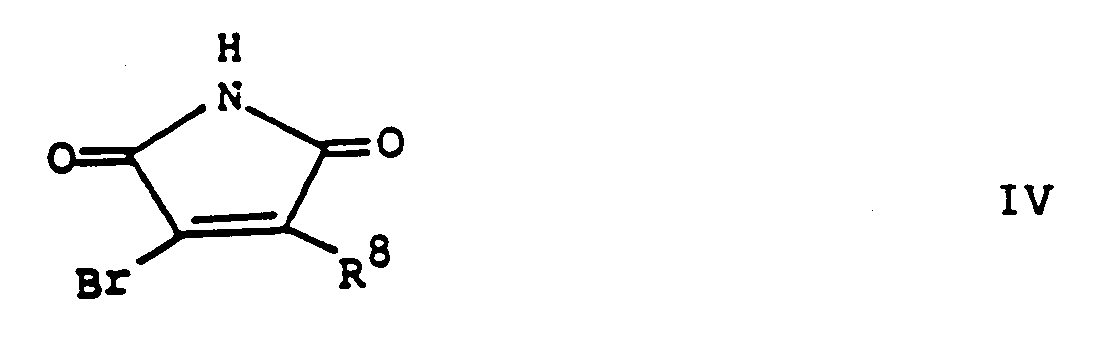
umsetzt, oder(c) zur Herstellung einer Verbindung der Formel I, in der R³ 1-Benzimidazolyl und X und Y O sind, eine Verbindung der Formel
mit einem Alkalimetallderivat des Benzimidazols umsetzt, oder(d) zur Herstellung einer Verbindung der Formel I, in der eins von X und Y O und das andere S ist, eine Verbindung der Formel I, in der X und Y O sind, mit einem Sulfurierungsmittel umsetzt, oder(e) zur Herstellung einer Verbindung der Formel I, in der eins von X und Y O und das andere (H,OH) ist, eine Verbindung der Formel I, in der X und Y O sind, mit einem komplexen Metallhydrid reduziert, oder(f) zur Herstellung einer Verbindung der Formel I, in der eines von X und Y O und das andere (H,H) ist, eine Verbindung der Formel I, in der eins von X und Y O und das andere (H,OH) ist, katalytisch hydriert, oder(g) zur Herstellung einer Verbindung der Formel I, in der R¹ Alkyl, Aralkyl, Alkoxyalkyl oder Hydroxyalkyl ist, eine Verbindung der Formel I, in der R¹ Wasserstoff ist, entsprechend N-substituiert, und(h) erwünschtenfalls einen in einer Verbindung der Formel I vorhandenen reaktiven Substituenten funktionell abwandelt, und(i) erwünschtenfalls eine saure Verbindung der Formel I in ein pharmazeutisch verwendbares Salz mit einer Base oder eine basische Verbindung der Formel I in ein pharmazeutisch verwendbares Salz mit einer Säure überführt. - Ein Verfahren zur Herstellung eines Medikaments, insbesondere eines antiinflammatorischen, immunologischen, bronchopulmonären oder cardiovaskulären Medikaments, welches Verfahren dadurch gekennzeichnet ist, dass man eine Verbindung der Formel I nach Anspruch 1 oder ein pharmazeutisch verwendbares Salz einer sauren Verbindung der Formel I mit einer Base oder einer basischen Verbindung der Formel I mit einer Säure in eine galenische Darreichungsform zusammen mit einem therapeutisch inerten Träger und erwünschtenfalls mit einem oder mehreren anderen therapeutisch wirksamen Substanzen bringt.
Priority Applications (1)
| Application Number | Priority Date | Filing Date | Title |
|---|---|---|---|
| AT89102025T ATE88704T1 (de) | 1988-02-10 | 1989-02-06 | Substituierte pyrrole. |
Applications Claiming Priority (4)
| Application Number | Priority Date | Filing Date | Title |
|---|---|---|---|
| GB8803048 | 1988-02-10 | ||
| GB888803048A GB8803048D0 (en) | 1988-02-10 | 1988-02-10 | Substituted pyrroles |
| GB8827565 | 1988-11-25 | ||
| GB888827565A GB8827565D0 (en) | 1988-02-10 | 1988-11-25 | Substituted pyrroles |
Publications (2)
| Publication Number | Publication Date |
|---|---|
| EP0328026A1 EP0328026A1 (de) | 1989-08-16 |
| EP0328026B1 true EP0328026B1 (de) | 1993-04-28 |
Family
ID=26293462
Family Applications (1)
| Application Number | Title | Priority Date | Filing Date |
|---|---|---|---|
| EP89102025A Expired - Lifetime EP0328026B1 (de) | 1988-02-10 | 1989-02-06 | Substituierte Pyrrole |
Country Status (22)
| Country | Link |
|---|---|
| US (1) | US5057614A (de) |
| EP (1) | EP0328026B1 (de) |
| JP (1) | JPH0730071B2 (de) |
| AU (1) | AU623630B2 (de) |
| CA (1) | CA1320194C (de) |
| CZ (1) | CZ280738B6 (de) |
| DE (1) | DE58904168D1 (de) |
| DK (1) | DK171891B1 (de) |
| DZ (1) | DZ1323A1 (de) |
| ES (1) | ES2054890T3 (de) |
| FI (1) | FI96861C (de) |
| HU (1) | HU201054B (de) |
| IE (1) | IE63489B1 (de) |
| IL (1) | IL89167A (de) |
| IS (1) | IS1941B (de) |
| MC (1) | MC2010A1 (de) |
| NO (1) | NO172540C (de) |
| NZ (1) | NZ227850A (de) |
| PH (1) | PH25185A (de) |
| PT (1) | PT89661B (de) |
| SK (1) | SK75289A3 (de) |
| YU (1) | YU47101B (de) |
Cited By (2)
| Publication number | Priority date | Publication date | Assignee | Title |
|---|---|---|---|---|
| US7598288B2 (en) | 2001-09-27 | 2009-10-06 | Alcon, Inc. | Inhibitors of glycogen synthase kinase-3 (GSK-3) for treating glaucoma |
| SG159378A1 (en) * | 2000-11-07 | 2010-03-30 | Novartis Ag | Indolylmaleimide derivatives as protein kinase c inhibitors |
Families Citing this family (131)
| Publication number | Priority date | Publication date | Assignee | Title |
|---|---|---|---|---|
| GB8904161D0 (en) * | 1989-02-23 | 1989-04-05 | Hoffmann La Roche | Substituted pyrroles |
| MC2096A1 (fr) * | 1989-02-23 | 1991-02-15 | Hoffmann La Roche | Pyrroles substitues |
| CA2015996C (en) * | 1989-05-05 | 2001-08-28 | Hartmut Osswald | Bis-(1h-indol-3-yl)-maleinimide derivatives and their use as pharmaceuticals |
| DE3914764A1 (de) * | 1989-05-05 | 1990-11-08 | Goedecke Ag | Maleinimid-derivate und deren verwendung als arzneimittel |
| US5380746A (en) * | 1989-05-05 | 1995-01-10 | Goedecke Aktiengesellschaft | Bis-(1H-indol-3-YL)-maleinimide derivatives, processes for the preparation thereof and pharmaceutical compositions containing them |
| DE4005970A1 (de) * | 1990-02-26 | 1991-08-29 | Boehringer Mannheim Gmbh | Neue trisubstituierte maleinimide, verfahren zu ihrer herstellung sowie arzneimittel, die diese verbindungen enthalten |
| DE4005969A1 (de) * | 1990-02-26 | 1991-08-29 | Boehringer Mannheim Gmbh | Neue trisubstituierte pyrrole, verfahren zu ihrer herstellung sowie arzneimittel, die diese verbindungen enthalten |
| US5292747A (en) * | 1990-08-07 | 1994-03-08 | Hoffman-La Roche Inc. | Substituted pyrroles |
| CA2046801C (en) * | 1990-08-07 | 2002-02-26 | Peter D. Davis | Substituted pyrroles |
| GB9123396D0 (en) * | 1991-11-04 | 1991-12-18 | Hoffmann La Roche | A process for the manufacture of substituted maleimides |
| AU3761393A (en) * | 1992-03-20 | 1993-10-21 | Wellcome Foundation Limited, The | Indole derivatives with antiviral activity |
| DE4243321A1 (de) * | 1992-12-21 | 1994-06-23 | Goedecke Ag | Aminosäurederivate von Heterocyclen als PKC-Inhibitoren |
| US5290777A (en) * | 1993-02-24 | 1994-03-01 | Regents Of The Univ. Of California | Use for topsentin compounds and pharmaceutical compositions containing same |
| AU678435B2 (en) | 1993-05-10 | 1997-05-29 | F. Hoffmann-La Roche Ag | Substituted pyrroles |
| US5721230A (en) * | 1993-05-10 | 1998-02-24 | Hoffmann-La Roche Inc. | Substituted pyrroles |
| US5405864A (en) * | 1993-10-15 | 1995-04-11 | Syntex (U.S.A.) Inc. | Chemotherapeutic maleimides |
| TW270114B (de) * | 1993-10-22 | 1996-02-11 | Hoffmann La Roche | |
| US5723456A (en) * | 1993-12-07 | 1998-03-03 | Eli Lilly & Company | Therapeutic treatment for cardiovascular diseases |
| BR9404830A (pt) * | 1993-12-07 | 1995-08-08 | Lilly Co Eli | Composto e processo para sua preparação |
| US5624949A (en) * | 1993-12-07 | 1997-04-29 | Eli Lilly And Company | Protein kinase C inhibitors |
| US5843935A (en) * | 1993-12-07 | 1998-12-01 | Eli Lilly And Company | Protein kinase C inhibitors |
| US5541347A (en) * | 1993-12-07 | 1996-07-30 | Eli Lilly And Company | Synthesis of bisindolylmaleimides |
| KR100340159B1 (ko) * | 1993-12-07 | 2002-11-23 | 일라이 릴리 앤드 캄파니 | 단백질키나제c억제제 |
| EP1449529B1 (de) * | 1993-12-23 | 2010-01-27 | Eli Lilly And Company | Proteinkinase C Inhibitoren |
| US5545636A (en) * | 1993-12-23 | 1996-08-13 | Eli Lilly And Company | Protein kinase C inhibitors |
| WO1995034307A1 (en) * | 1994-06-14 | 1995-12-21 | Sloan-Kettering Institute For Cancer Research | Ceramide-activated protein kinase and methods of use of effectors |
| US5491242A (en) * | 1994-06-22 | 1996-02-13 | Eli Lilly And Company | Protein kinase C inhibitors |
| US5481003A (en) * | 1994-06-22 | 1996-01-02 | Eli Lilly And Company | Protein kinase C inhibitors |
| EP0695755B1 (de) * | 1994-08-04 | 1998-10-21 | F. Hoffmann-La Roche AG | Pyrrolocarbazol |
| US5705511A (en) * | 1994-10-14 | 1998-01-06 | Cephalon, Inc. | Fused pyrrolocarbazoles |
| US5594009A (en) * | 1994-10-14 | 1997-01-14 | Cephalon, Inc. | Fused pyrrolocarbazoles |
| US5591855A (en) * | 1994-10-14 | 1997-01-07 | Cephalon, Inc. | Fused pyrrolocarbazoles |
| US5475110A (en) * | 1994-10-14 | 1995-12-12 | Cephalon, Inc. | Fused Pyrrolocarbazoles |
| US5559228A (en) * | 1995-03-30 | 1996-09-24 | Eli Lilly And Company | Synthesis of bisindolylmaleimides |
| AU6836696A (en) * | 1995-09-05 | 1997-03-27 | Banyu Pharmaceutical Co., Ltd. | Antitumor indolopyrrolocarbazole derivatives |
| ES2122764T3 (es) * | 1995-11-20 | 1998-12-16 | Lilly Co Eli | Inhibidor de la proteina quinasa c. |
| US5616724A (en) * | 1996-02-21 | 1997-04-01 | Cephalon, Inc. | Fused pyrrolo[2,3-c]carbazole-6-ones |
| JP3258334B2 (ja) * | 1996-03-20 | 2002-02-18 | イーライ・リリー・アンド・カンパニー | インドリルマレイミドの合成 |
| CA2253608A1 (en) | 1996-05-01 | 1997-11-06 | Louis Vignati | Therapeutic treatment for vegf related diseases |
| UA54427C2 (uk) * | 1996-05-01 | 2003-03-17 | Елі Ліллі Енд Компані | Спосіб лікування очних захворювань, які пов'язані з фактором васкулярного ендотеліального росту |
| US6232299B1 (en) | 1996-05-01 | 2001-05-15 | Eli Lilly And Company | Use of protein kinase C inhibitors to enhance the clinical efficacy of oncolytic agents and radiation therapy |
| PE91498A1 (es) * | 1996-07-29 | 1998-12-22 | Hoffmann La Roche | Pirroles sustituidos |
| PE91698A1 (es) * | 1996-07-29 | 1998-12-24 | Hoffmann La Roche | Pirroles sustituidos |
| PE91598A1 (es) * | 1996-07-29 | 1998-12-24 | Hoffmann La Roche | Pirroles sustituidos |
| US6093709A (en) * | 1996-08-22 | 2000-07-25 | Eli Lilly And Company | Therapeutic treatment for sexual dysfunctions |
| EP0825190A1 (de) * | 1996-08-23 | 1998-02-25 | Eli Lilly And Company | Synthese von Bisindolylmaleimiden |
| US6107327A (en) * | 1996-08-30 | 2000-08-22 | Eli Lilly And Company | Therapeutic treatment for HIV infection |
| US5962446A (en) * | 1996-08-30 | 1999-10-05 | Eli Lilly And Company | Therapetutic treatment for human T cell lymphotrophic virus type 1 infection |
| SE9603283D0 (sv) * | 1996-09-10 | 1996-09-10 | Astra Ab | New compounds |
| SE9603284D0 (sv) * | 1996-09-10 | 1996-09-10 | Astra Ab | New compounds |
| TW472045B (en) | 1996-09-25 | 2002-01-11 | Astra Ab | Protein kinase C inhibitor compounds, method for their preparation, pharmaceutical composition thereof and intermediate used for their preparation |
| JP2001503414A (ja) * | 1996-10-31 | 2001-03-13 | ハーバー ブランチ オーシャノグラフィック インスティテューション インク. | 抗神経性炎症化合物および組成物ならびにその使用法 |
| US5859261A (en) * | 1997-03-20 | 1999-01-12 | Eli Lilly And Company | Synthesis of indolylmaleimides |
| US6093740A (en) * | 1997-04-30 | 2000-07-25 | Eli Lilly And Company | Therapeutic treatment for skin disorders |
| US6133452A (en) * | 1997-08-22 | 2000-10-17 | Eli Lilly And Company | Synthesis of bisindolylmalimides |
| AR017200A1 (es) | 1997-12-23 | 2001-08-22 | Astrazeneca Ab | Compuestos inhibidores de la proteina cinasa c, sales farmaceuticamente aceptables de los mismos, formulaciones farmaceuitcas que los comprenden, usode las mismas y proceso para la sintesis de dichos compuestos |
| AU2548699A (en) * | 1998-02-23 | 1999-09-06 | Rei Asakai | Cell death inhibitors |
| US6225301B1 (en) | 1998-03-05 | 2001-05-01 | Eli Lilly And Company | Therapeutic treatment for renal dysfunction |
| US6291446B1 (en) | 1998-03-05 | 2001-09-18 | Eli Lilly And Company | Therapeutic treatment for cytomegalovirus infection |
| US6103712A (en) * | 1998-03-05 | 2000-08-15 | Eli Lilly And Company | Therapeutic treatment for asthma |
| US6103713A (en) * | 1998-03-05 | 2000-08-15 | Eli Lilly And Company | Therapeutic treatment for autoimmune diseases |
| SE9800835D0 (sv) | 1998-03-13 | 1998-03-13 | Astra Ab | New Compounds |
| PT1064279E (pt) * | 1998-03-17 | 2003-10-31 | Hoffmann La Roche | Bisindolilmaleimidas substituidas para a inibicao da proliferacao celular |
| SE9802538D0 (sv) * | 1998-07-13 | 1998-07-13 | Astra Ab | New pharmaceutically active compounds |
| US6350786B1 (en) * | 1998-09-22 | 2002-02-26 | Hoffmann-La Roche Inc. | Stable complexes of poorly soluble compounds in ionic polymers |
| US6719520B2 (en) | 1998-10-08 | 2004-04-13 | Smithkline Beecham Corporation | Method and compounds |
| JP2002527419A (ja) * | 1998-10-08 | 2002-08-27 | スミスクライン・ビーチャム・パブリック・リミテッド・カンパニー | Gsk−3阻害物質としてのピロール−2,5−ジオン類 |
| GB9828640D0 (en) * | 1998-12-23 | 1999-02-17 | Smithkline Beecham Plc | Novel method and compounds |
| DK1165558T3 (da) * | 1999-03-31 | 2004-02-09 | Vernalis Ltd | Pyrimido[6,1-a]isoquinolin-4-on-derivater |
| US6492406B1 (en) | 1999-05-21 | 2002-12-10 | Astrazeneca Ab | Pharmaceutically active compounds |
| US6284783B1 (en) | 1999-06-09 | 2001-09-04 | The Uab Research Foundation | Use of bisindolylmaleimide compounds to induce Fas-mediated apoptosis |
| US6346625B1 (en) | 1999-06-23 | 2002-02-12 | Astrazeneca Ab | Protein kinase inhibitors |
| WO2001013916A1 (en) * | 1999-08-20 | 2001-03-01 | Sagami Chemical Research Center | Drugs inhibiting cell death |
| US6559164B1 (en) | 1999-10-12 | 2003-05-06 | Hoffmann-La Roche Inc. | Substituted pyrroles suitable for continuous infusion |
| US6313143B1 (en) * | 1999-12-16 | 2001-11-06 | Hoffmann-La Roche Inc. | Substituted pyrroles |
| US6281356B1 (en) | 1999-12-22 | 2001-08-28 | Hoffmann-La Roche Inc. | Substituted pyrroles |
| GB0008264D0 (en) * | 2000-04-04 | 2000-05-24 | Smithkline Beecham Plc | Novel method and compounds |
| US6326501B1 (en) * | 2000-04-19 | 2001-12-04 | Hoffmann-La Roche Inc. | Methylation of indole compounds using dimethyl carbonate |
| US7129250B2 (en) * | 2000-05-19 | 2006-10-31 | Aegera Therapeutics Inc. | Neuroprotective and anti-proliferative compounds |
| CA2308994A1 (en) * | 2000-05-19 | 2001-11-19 | Aegera Therapeutics Inc. | Neuroprotective compounds |
| US6353007B1 (en) * | 2000-07-13 | 2002-03-05 | Boehringer Ingelheim Pharmaceuticals, Inc. | Substituted 1-(4-aminophenyl)indoles and their use as anti-inflammatory agents |
| CA2417277A1 (en) * | 2000-07-27 | 2002-02-07 | F. Hoffmann-La Roche Ag | 3-indolyl-4-phenyl-1h-pyrrole-2,5-dione derivatives as inhibitors of glycogen synthase kinase-3.beta. |
| US6482847B2 (en) * | 2000-10-03 | 2002-11-19 | Hoffmann-La Roche Inc. | Amorphous form of cell cycle inhibitor having improved solubility and bioavailability |
| US6469179B1 (en) * | 2000-10-03 | 2002-10-22 | Hoffmann-La Roche Inc. | Amorphous form of cell cycle inhibitor having improved solubility and bioavailability |
| US6645970B2 (en) * | 2000-11-07 | 2003-11-11 | Novartis Ag | Indolylmaleimide derivatives |
| BR0116468A (pt) * | 2000-12-08 | 2004-06-29 | Ortho Mcneil Pharm Inc | Compostos de pirrolina substituìda por indazolila como inibidores de cinase |
| US6548531B2 (en) | 2001-02-09 | 2003-04-15 | Hoffmann-La Roche Inc. | Method for cancer therapy |
| DE10109280A1 (de) * | 2001-02-26 | 2002-09-05 | Peter Mayser | Indolderivate mit inhibitorischer Wirkung auf Proteinkinasen |
| WO2002102373A1 (en) * | 2001-06-15 | 2002-12-27 | F. Hoffmann-La Roche Ag | Method for administration of cancer therapeutic |
| KR20050040832A (ko) * | 2001-10-29 | 2005-05-03 | 넥타르 테라퓨틱스 에이엘, 코포레이션 | 단백질 키나아제 c 억제제의 중합체 공액 |
| US20030139373A1 (en) * | 2001-11-20 | 2003-07-24 | Breimer Lars Holger | Method for cancer therapy |
| ES2276048T3 (es) | 2002-03-05 | 2007-06-16 | Eli Lilly And Company | Derivados de purina como inhibidores de cinasa. |
| ATE368657T1 (de) * | 2002-03-08 | 2007-08-15 | Lilly Co Eli | Pyrrol-2,5-dion derivate und deren verwendung als gsk-3 inhibitoren |
| AR039209A1 (es) | 2002-04-03 | 2005-02-09 | Novartis Ag | Derivados de indolilmaleimida |
| EP1900738A3 (de) * | 2002-05-08 | 2008-04-09 | Janssen Pharmaceutica, N.V. | Substituierte Pyrrolinkinase-Hemmer |
| CA2485527A1 (en) | 2002-05-08 | 2003-11-20 | Janssen Pharmaceutica N.V. | Substituted pyrroline kinase inhibitors |
| JP2005531609A (ja) | 2002-06-05 | 2005-10-20 | ジヤンセン・フアーマシユーチカ・ナームローゼ・フエンノートシヤツプ | キナーゼ阻害剤としてのシスインドリル−マレイミド誘導体 |
| ES2312785T3 (es) * | 2002-06-05 | 2009-03-01 | Janssen Pharmaceutica Nv | Pirrolinas sustituidas utiles como inhibidores de quinasa. |
| CA2393720C (en) * | 2002-07-12 | 2010-09-14 | Eli Lilly And Company | Crystalline 2,5-dione-3-(1-methyl-1h-indol-3-yl)-4-[1-(pyridin-2-ylmethyl)piperidin-4-yl]-1h-indol-3-yl]-1h-pyrrole mono-hydrochloride |
| US6800655B2 (en) * | 2002-08-20 | 2004-10-05 | Sri International | Analogs of indole-3-carbinol metabolites as chemotherapeutic and chemopreventive agents |
| GB0303319D0 (en) * | 2003-02-13 | 2003-03-19 | Novartis Ag | Organic compounds |
| JP2006521386A (ja) * | 2003-03-27 | 2006-09-21 | ジヤンセン・フアーマシユーチカ・ナームローゼ・フエンノートシヤツプ | キナーゼ阻害剤である置換ピロリン |
| US7439363B2 (en) * | 2003-06-13 | 2008-10-21 | Janssen Parmaceutica N.V. | Substituted indazoly(indoly)maleimide derivatives as kinase inhibitors |
| EP1653973A1 (de) | 2003-08-08 | 2006-05-10 | Novartis AG | Kombinationen mit staurosporinen |
| WO2005068454A1 (en) * | 2004-01-19 | 2005-07-28 | Novartis Ag | Indolylmaleimide derivatives |
| US20070232658A1 (en) * | 2004-04-08 | 2007-10-04 | Jurgen Wagner | Protein Kinase C Inhibitors for the Treatment of Autoimmune Diseases and of Transplant Rejiction |
| CA2571421A1 (en) | 2004-06-24 | 2006-01-05 | Nicholas Valiante | Compounds for immunopotentiation |
| JP5289769B2 (ja) * | 2004-12-08 | 2013-09-11 | ヨハネス、グーテンベルク−ウニフェルジテート、マインツ | 3−(インドリル)−4−アリールマレイミド誘導体および脈管形成阻害剤としてのそれらの使用 |
| EP1846016A2 (de) * | 2005-01-04 | 2007-10-24 | The Board Of Trustees Of The Leland Stanford Junior University | Verfahren zur verstärkung der zerebralen durchblutung |
| RS51826B (sr) * | 2005-02-09 | 2012-02-29 | Arqule Inc. | Maleimid derivati, farmaceutske kompozicije i postupak lečenja kancera |
| EP2246346B1 (de) * | 2005-07-11 | 2012-10-24 | Novartis AG | Indolylmaleimid Derivate als Eiweiss Kinase Hemmer |
| WO2007027974A1 (en) * | 2005-09-02 | 2007-03-08 | The Board Of Trustees Of The Leland Stanford Junior University | Method for reducing risk of and extent of injury due to stroke in hypertensive subjects |
| WO2007033374A2 (en) | 2005-09-16 | 2007-03-22 | Schering Corporation | Pharmaceutical compositions and methods using temozolomide and a protein kinase inhibitor |
| CA2673368C (en) * | 2006-12-19 | 2014-10-28 | The Board Of Trustees Of The University Of Illinois | 3-benzofuranyl-4-indolyl maleimides as potent gsk3 inhibitors for neurogenerative disorders |
| CA2690799C (en) * | 2007-06-22 | 2015-06-16 | Arqule, Inc. | Pyrrolidinone, pyrrolidine-2,5-dione, pyrrolidine and thiosuccinimide derivatives, compositions and methods for treatment of cancer |
| CA2690782C (en) * | 2007-06-22 | 2016-02-02 | Arqule, Inc. | Compositions and methods for treatment of cancer |
| CN101801937A (zh) * | 2007-06-22 | 2010-08-11 | 艾科尔公司 | 喹唑啉酮化合物及其使用方法 |
| FR2927075A1 (fr) * | 2008-02-04 | 2009-08-07 | Centre Nat Rech Scient | Molecules comprenant un squelette bis-(heteroaryl)maleimide, et leur utilisation dans l'inhibition d'enzymes |
| US8304421B2 (en) * | 2008-09-30 | 2012-11-06 | Vanderbilt University | Indole compounds and their use as radiation sensitizing agents and chemotherapeutic agents |
| EP2343291A1 (de) | 2009-12-18 | 2011-07-13 | Johannes Gutenberg-Universität Mainz | 3-(Indolyl)- oder 3-(Azaindolyl)-4-Arylmaleimid-Verbindungen und ihre Verwendung bei der Behandlung von Tumoren |
| EP2338486A1 (de) | 2009-12-18 | 2011-06-29 | Johannes Gutenberg-Universität Mainz | 3-(Indolyl)- oder 3-(Azaindolyl)-4-Arylmaleimid-Derivaten zurVerwendung in der Behandlung von Colon und Magen Adenocarzinoma |
| EP2474541A1 (de) | 2010-12-23 | 2012-07-11 | Johannes- Gutenberg-Universität Mainz | Konjugierte 3-(Indolyl)- und 3-(Azaindolyl)-4-arylmaleinimid-Verbindungen und deren Verwendung bei der Behandlung von Tumoren |
| GB201111427D0 (en) * | 2011-07-05 | 2011-08-17 | Amakem Nv | Novel bisindolylmaleimides, pan-pkc inhibitors |
| US9724331B2 (en) | 2012-12-10 | 2017-08-08 | Centogene Ag | Use of maleimide derivatives for preventing and treating leukemia |
| US9993463B2 (en) * | 2012-12-10 | 2018-06-12 | Centogene Ag | Use of maleimide derivatives for preventing and treating cancer |
| CN103382199A (zh) * | 2013-06-28 | 2013-11-06 | 北京理工大学 | 一种n-烷基-双吲哚马来酰亚胺的制备方法 |
| JP2017524739A (ja) | 2014-07-17 | 2017-08-31 | アンセルムInserm | 神経筋接合部関連疾患の処置方法 |
| WO2016207366A1 (en) | 2015-06-26 | 2016-12-29 | INSERM (Institut National de la Santé et de la Recherche Médicale) | Methods and pharmaceutical compositions for the treatment of viral infections |
| EP3187495A1 (de) | 2015-12-30 | 2017-07-05 | Johannes Gutenberg-Universität Mainz | 3-(5-fluorindolyl)-4-arylmaleimid-verbindungen und deren verwendung bei der tumorbehandlung |
| CN105777751B (zh) * | 2016-04-26 | 2018-12-11 | 浙江工业大学 | 一种双芳基马来酰亚胺类化合物及其药学上可接受的盐及其制备方法和应用 |
| US20230203017A1 (en) * | 2021-12-28 | 2023-06-29 | Kamal D. Mehta | Protein Kinase C Beta Inhibitors and Uses Thereof |
Family Cites Families (5)
| Publication number | Priority date | Publication date | Assignee | Title |
|---|---|---|---|---|
| JPS5373501A (en) * | 1976-12-11 | 1978-06-30 | Kitasato Inst | Novel antibiotics amm2282 and process for preparing same |
| JPS62220196A (ja) * | 1986-03-20 | 1987-09-28 | Kyowa Hakko Kogyo Co Ltd | 新規物質ucn―01 |
| IL86632A0 (en) * | 1987-06-15 | 1988-11-30 | Ciba Geigy Ag | Derivatives substituted at methyl-amino nitrogen |
| AU605304B2 (en) * | 1987-06-22 | 1991-01-10 | Nihon Tokushu Nayaku Seizo K.K. | Benzo-fused cyclic compounds |
| CA2015996C (en) * | 1989-05-05 | 2001-08-28 | Hartmut Osswald | Bis-(1h-indol-3-yl)-maleinimide derivatives and their use as pharmaceuticals |
-
1989
- 1989-02-03 CZ CS89752A patent/CZ280738B6/cs not_active IP Right Cessation
- 1989-02-03 IL IL8916789A patent/IL89167A/en unknown
- 1989-02-03 SK SK752-89A patent/SK75289A3/sk unknown
- 1989-02-03 NZ NZ227850A patent/NZ227850A/xx unknown
- 1989-02-06 CA CA000590178A patent/CA1320194C/en not_active Expired - Lifetime
- 1989-02-06 DE DE8989102025T patent/DE58904168D1/de not_active Expired - Lifetime
- 1989-02-06 MC MC892032A patent/MC2010A1/fr unknown
- 1989-02-06 EP EP89102025A patent/EP0328026B1/de not_active Expired - Lifetime
- 1989-02-06 HU HU89554A patent/HU201054B/hu unknown
- 1989-02-06 AU AU29658/89A patent/AU623630B2/en not_active Expired
- 1989-02-06 ES ES89102025T patent/ES2054890T3/es not_active Expired - Lifetime
- 1989-02-06 US US07/307,104 patent/US5057614A/en not_active Ceased
- 1989-02-07 DK DK055889A patent/DK171891B1/da not_active IP Right Cessation
- 1989-02-08 YU YU28489A patent/YU47101B/sh unknown
- 1989-02-08 DZ DZ890021A patent/DZ1323A1/fr active
- 1989-02-08 JP JP1027741A patent/JPH0730071B2/ja not_active Expired - Lifetime
- 1989-02-08 PH PH38170A patent/PH25185A/en unknown
- 1989-02-09 IE IE41689A patent/IE63489B1/en not_active IP Right Cessation
- 1989-02-09 PT PT89661A patent/PT89661B/pt not_active IP Right Cessation
- 1989-02-09 NO NO890568A patent/NO172540C/no not_active IP Right Cessation
- 1989-02-09 IS IS3433A patent/IS1941B/is unknown
- 1989-02-10 FI FI890652A patent/FI96861C/fi not_active IP Right Cessation
Non-Patent Citations (3)
| Title |
|---|
| CHEMICAL ABSTRACTS, Band 104, Nr. 23, Juni 1986, Columbus, Ohio, USA, Seite 789, Spalte 1, Zusammenfassung Nr. 207579g * |
| CHEMICAL ABSTRACTS, Band 93, Nr. 7, 18. August 1980, Columbus, Ohio, USA, Seite 503, Spalte 1, Zusammenfassung 66027r * |
| CHEMICAL ABSTRACTS; Band 102, Nr. 1, 7. Januar 1985, Columbus, Ohio, USA, Seite 567, Spalte 1, Zusammenfassung Nr. 6236c * |
Cited By (2)
| Publication number | Priority date | Publication date | Assignee | Title |
|---|---|---|---|---|
| SG159378A1 (en) * | 2000-11-07 | 2010-03-30 | Novartis Ag | Indolylmaleimide derivatives as protein kinase c inhibitors |
| US7598288B2 (en) | 2001-09-27 | 2009-10-06 | Alcon, Inc. | Inhibitors of glycogen synthase kinase-3 (GSK-3) for treating glaucoma |
Also Published As
Similar Documents
| Publication | Publication Date | Title |
|---|---|---|
| EP0328026A1 (de) | Substituierte Pyrrole | |
| EP0384349B1 (de) | Substituierte Pyrrole | |
| DE60212841T2 (de) | 4 piperazinylindolderivate mit affinität zum 5-ht6-rezeptor | |
| AU638795B2 (en) | 3-arylcarbonyl-1h-indoles useful as therapeutic agents | |
| EP0397060A2 (de) | Maleinimid-Derivate und deren Verwendung als Arzneimittel | |
| US6228877B1 (en) | Substituted pyrroles | |
| EP1880993A1 (de) | Stickstoffhaltige heterocyclische verbindung | |
| EP0686148A1 (de) | Inhibitoren der hiv inversen transcriptase | |
| EP0196005B1 (de) | Pyridazinone, ihre Herstellung und diese Verbindungen enthaltende Arzneimittel | |
| WO2003028721A2 (en) | Substituted benzimidazole compounds and their use for the treatment of cancer | |
| DE102004047272A1 (de) | Inhibitoren der löslichen Adenylatzyklase | |
| USRE36736E (en) | Substituted pyrroles | |
| DD297970A5 (de) | Verfahren zur herstellung von be1-(1h-indol-3-yl)-maleinimid-derivaten und deren verwendung | |
| FR2903406A1 (fr) | Derives de pyrazolylbenzimidazole,compositions les contenant et utilisation | |
| EP1802572B1 (de) | Indol derivative als inhibitoren der löslichen adenylatzyklase | |
| HRP20020536A2 (en) | Substituted pyrroles | |
| KR0139913B1 (ko) | 치환된 피롤, 이의 제조방법 및 이를 함유하는약제 | |
| HK1112741A (en) | Nitrogen-containing heterocyclic compound | |
| BG63361B1 (bg) | Нови заместени имидазоли |
Legal Events
| Date | Code | Title | Description |
|---|---|---|---|
| PUAI | Public reference made under article 153(3) epc to a published international application that has entered the european phase |
Free format text: ORIGINAL CODE: 0009012 |
|
| 17P | Request for examination filed |
Effective date: 19890206 |
|
| AK | Designated contracting states |
Kind code of ref document: A1 Designated state(s): AT BE CH DE ES FR GB GR IT LI LU NL SE |
|
| RAP1 | Party data changed (applicant data changed or rights of an application transferred) |
Owner name: F. HOFFMANN-LA ROCHE AG |
|
| 17Q | First examination report despatched |
Effective date: 19911121 |
|
| GRAA | (expected) grant |
Free format text: ORIGINAL CODE: 0009210 |
|
| AK | Designated contracting states |
Kind code of ref document: B1 Designated state(s): AT BE CH DE ES FR GB GR IT LI LU NL SE |
|
| REF | Corresponds to: |
Ref document number: 88704 Country of ref document: AT Date of ref document: 19930515 Kind code of ref document: T |
|
| REF | Corresponds to: |
Ref document number: 58904168 Country of ref document: DE Date of ref document: 19930603 |
|
| ITF | It: translation for a ep patent filed | ||
| ET | Fr: translation filed | ||
| GBT | Gb: translation of ep patent filed (gb section 77(6)(a)/1977) |
Effective date: 19930719 |
|
| REG | Reference to a national code |
Ref country code: GR Ref legal event code: FG4A Free format text: 3008537 |
|
| PLBE | No opposition filed within time limit |
Free format text: ORIGINAL CODE: 0009261 |
|
| STAA | Information on the status of an ep patent application or granted ep patent |
Free format text: STATUS: NO OPPOSITION FILED WITHIN TIME LIMIT |
|
| EPTA | Lu: last paid annual fee | ||
| 26N | No opposition filed | ||
| REG | Reference to a national code |
Ref country code: ES Ref legal event code: FG2A Ref document number: 2054890 Country of ref document: ES Kind code of ref document: T3 |
|
| EAL | Se: european patent in force in sweden |
Ref document number: 89102025.7 |
|
| REG | Reference to a national code |
Ref country code: GB Ref legal event code: IF02 |
|
| PGFP | Annual fee paid to national office [announced via postgrant information from national office to epo] |
Ref country code: LU Payment date: 20071227 Year of fee payment: 20 |
|
| PGFP | Annual fee paid to national office [announced via postgrant information from national office to epo] |
Ref country code: ES Payment date: 20080214 Year of fee payment: 20 Ref country code: CH Payment date: 20080108 Year of fee payment: 20 |
|
| PGFP | Annual fee paid to national office [announced via postgrant information from national office to epo] |
Ref country code: GB Payment date: 20080108 Year of fee payment: 20 Ref country code: DE Payment date: 20080229 Year of fee payment: 20 Ref country code: SE Payment date: 20080208 Year of fee payment: 20 Ref country code: NL Payment date: 20080111 Year of fee payment: 20 Ref country code: IT Payment date: 20080220 Year of fee payment: 20 |
|
| PGFP | Annual fee paid to national office [announced via postgrant information from national office to epo] |
Ref country code: AT Payment date: 20080109 Year of fee payment: 20 |
|
| PGFP | Annual fee paid to national office [announced via postgrant information from national office to epo] |
Ref country code: FR Payment date: 20080212 Year of fee payment: 20 |
|
| PGFP | Annual fee paid to national office [announced via postgrant information from national office to epo] |
Ref country code: BE Payment date: 20080228 Year of fee payment: 20 |
|
| REG | Reference to a national code |
Ref country code: CH Ref legal event code: PL |
|
| REG | Reference to a national code |
Ref country code: GB Ref legal event code: PE20 Expiry date: 20090205 |
|
| PGFP | Annual fee paid to national office [announced via postgrant information from national office to epo] |
Ref country code: GR Payment date: 20080116 Year of fee payment: 20 |
|
| NLV7 | Nl: ceased due to reaching the maximum lifetime of a patent |
Effective date: 20090206 |
|
| EUG | Se: european patent has lapsed | ||
| REG | Reference to a national code |
Ref country code: ES Ref legal event code: FD2A Effective date: 20090207 |
|
| PG25 | Lapsed in a contracting state [announced via postgrant information from national office to epo] |
Ref country code: NL Free format text: LAPSE BECAUSE OF EXPIRATION OF PROTECTION Effective date: 20090206 |
|
| PG25 | Lapsed in a contracting state [announced via postgrant information from national office to epo] |
Ref country code: GB Free format text: LAPSE BECAUSE OF EXPIRATION OF PROTECTION Effective date: 20090205 |
|
| PG25 | Lapsed in a contracting state [announced via postgrant information from national office to epo] |
Ref country code: ES Free format text: LAPSE BECAUSE OF EXPIRATION OF PROTECTION Effective date: 20090207 |