EP0265818A2 - Verfahren zur Herstellung von N,N-disubstituierten Beta-Aminopropionsäuren und ihre Verwendung zur Hydrophobierung von Leder und Pelzen - Google Patents
Verfahren zur Herstellung von N,N-disubstituierten Beta-Aminopropionsäuren und ihre Verwendung zur Hydrophobierung von Leder und Pelzen Download PDFInfo
- Publication number
- EP0265818A2 EP0265818A2 EP87115365A EP87115365A EP0265818A2 EP 0265818 A2 EP0265818 A2 EP 0265818A2 EP 87115365 A EP87115365 A EP 87115365A EP 87115365 A EP87115365 A EP 87115365A EP 0265818 A2 EP0265818 A2 EP 0265818A2
- Authority
- EP
- European Patent Office
- Prior art keywords
- radical
- acid
- carbon atoms
- meth
- alkyl
- Prior art date
- Legal status (The legal status is an assumption and is not a legal conclusion. Google has not performed a legal analysis and makes no representation as to the accuracy of the status listed.)
- Granted
Links
- 238000000034 method Methods 0.000 title claims abstract description 27
- 239000010985 leather Substances 0.000 title claims abstract description 21
- 238000002360 preparation method Methods 0.000 title claims abstract description 8
- 238000004078 waterproofing Methods 0.000 title claims description 5
- 150000001576 beta-amino acids Chemical class 0.000 title 1
- 239000002253 acid Substances 0.000 claims abstract description 33
- -1 carboxylic acid chlorides Chemical class 0.000 claims abstract description 24
- 150000001875 compounds Chemical class 0.000 claims abstract description 15
- 150000003973 alkyl amines Chemical class 0.000 claims abstract description 13
- 239000003795 chemical substances by application Substances 0.000 claims abstract description 11
- CERQOIWHTDAKMF-UHFFFAOYSA-N Methacrylic acid Chemical compound CC(=C)C(O)=O CERQOIWHTDAKMF-UHFFFAOYSA-N 0.000 claims abstract description 9
- 150000007513 acids Chemical class 0.000 claims abstract description 9
- 239000012948 isocyanate Substances 0.000 claims abstract description 9
- 239000003995 emulsifying agent Substances 0.000 claims abstract description 8
- 150000002513 isocyanates Chemical class 0.000 claims abstract description 7
- 150000003977 halocarboxylic acids Chemical class 0.000 claims abstract description 6
- 239000012459 cleaning agent Substances 0.000 claims abstract description 4
- 239000004094 surface-active agent Substances 0.000 claims abstract description 4
- 239000000080 wetting agent Substances 0.000 claims abstract description 4
- 125000000143 2-carboxyethyl group Chemical group [H]OC(=O)C([H])([H])C([H])([H])* 0.000 claims abstract description 3
- GORVWJURYPIBBC-UHFFFAOYSA-N 3-sulfamoylpropanoic acid Chemical class NS(=O)(=O)CCC(O)=O GORVWJURYPIBBC-UHFFFAOYSA-N 0.000 claims abstract description 3
- 235000013877 carbamide Nutrition 0.000 claims abstract description 3
- 125000004432 carbon atom Chemical group C* 0.000 claims abstract 15
- 229910052739 hydrogen Inorganic materials 0.000 claims abstract 6
- 239000001257 hydrogen Substances 0.000 claims abstract 6
- 229920006395 saturated elastomer Polymers 0.000 claims abstract 6
- UFHFLCQGNIYNRP-UHFFFAOYSA-N Hydrogen Chemical compound [H][H] UFHFLCQGNIYNRP-UHFFFAOYSA-N 0.000 claims abstract 5
- QGZKDVFQNNGYKY-UHFFFAOYSA-O Ammonium Chemical compound [NH4+] QGZKDVFQNNGYKY-UHFFFAOYSA-O 0.000 claims abstract 4
- 150000001253 acrylic acids Chemical class 0.000 claims abstract 4
- 125000005210 alkyl ammonium group Chemical group 0.000 claims abstract 4
- 150000001244 carboxylic acid anhydrides Chemical class 0.000 claims abstract 4
- 229910052783 alkali metal Inorganic materials 0.000 claims abstract 3
- 150000001340 alkali metals Chemical group 0.000 claims abstract 3
- 229910052784 alkaline earth metal Inorganic materials 0.000 claims abstract 3
- 150000001342 alkaline earth metals Chemical group 0.000 claims abstract 3
- 150000002431 hydrogen Chemical group 0.000 claims abstract 3
- ORTFAQDWJHRMNX-UHFFFAOYSA-M oxidooxomethyl Chemical compound [O-][C]=O ORTFAQDWJHRMNX-UHFFFAOYSA-M 0.000 claims abstract 3
- 150000003672 ureas Chemical class 0.000 claims abstract 2
- XLYOFNOQVPJJNP-UHFFFAOYSA-N water Substances O XLYOFNOQVPJJNP-UHFFFAOYSA-N 0.000 claims description 25
- 238000006243 chemical reaction Methods 0.000 claims description 20
- 150000003839 salts Chemical class 0.000 claims description 11
- NBIIXXVUZAFLBC-UHFFFAOYSA-N Phosphoric acid Chemical compound OP(O)(O)=O NBIIXXVUZAFLBC-UHFFFAOYSA-N 0.000 claims description 8
- 238000006386 neutralization reaction Methods 0.000 claims description 8
- WRIDQFICGBMAFQ-UHFFFAOYSA-N (E)-8-Octadecenoic acid Natural products CCCCCCCCCC=CCCCCCCC(O)=O WRIDQFICGBMAFQ-UHFFFAOYSA-N 0.000 claims description 6
- LQJBNNIYVWPHFW-UHFFFAOYSA-N 20:1omega9c fatty acid Natural products CCCCCCCCCCC=CCCCCCCCC(O)=O LQJBNNIYVWPHFW-UHFFFAOYSA-N 0.000 claims description 6
- QSBYPNXLFMSGKH-UHFFFAOYSA-N 9-Heptadecensaeure Natural products CCCCCCCC=CCCCCCCCC(O)=O QSBYPNXLFMSGKH-UHFFFAOYSA-N 0.000 claims description 6
- 239000005642 Oleic acid Substances 0.000 claims description 6
- ZQPPMHVWECSIRJ-UHFFFAOYSA-N Oleic acid Natural products CCCCCCCCC=CCCCCCCCC(O)=O ZQPPMHVWECSIRJ-UHFFFAOYSA-N 0.000 claims description 6
- CDBYLPFSWZWCQE-UHFFFAOYSA-L Sodium Carbonate Chemical compound [Na+].[Na+].[O-]C([O-])=O CDBYLPFSWZWCQE-UHFFFAOYSA-L 0.000 claims description 6
- 238000009835 boiling Methods 0.000 claims description 6
- 150000002148 esters Chemical class 0.000 claims description 6
- QXJSBBXBKPUZAA-UHFFFAOYSA-N isooleic acid Natural products CCCCCCCC=CCCCCCCCCC(O)=O QXJSBBXBKPUZAA-UHFFFAOYSA-N 0.000 claims description 6
- ZQPPMHVWECSIRJ-KTKRTIGZSA-N oleic acid Chemical compound CCCCCCCC\C=C/CCCCCCCC(O)=O ZQPPMHVWECSIRJ-KTKRTIGZSA-N 0.000 claims description 6
- 229920002545 silicone oil Polymers 0.000 claims description 6
- 239000002904 solvent Substances 0.000 claims description 6
- 229930195733 hydrocarbon Natural products 0.000 claims description 5
- 150000002430 hydrocarbons Chemical class 0.000 claims description 5
- 239000004569 hydrophobicizing agent Substances 0.000 claims description 5
- 229910000147 aluminium phosphate Inorganic materials 0.000 claims description 4
- 239000007864 aqueous solution Substances 0.000 claims description 4
- 150000001298 alcohols Chemical class 0.000 claims description 3
- 150000007530 organic bases Chemical class 0.000 claims description 3
- 239000005871 repellent Substances 0.000 claims description 3
- 150000003512 tertiary amines Chemical class 0.000 claims description 3
- 239000011230 binding agent Substances 0.000 claims description 2
- 125000000118 dimethyl group Chemical group [H]C([H])([H])* 0.000 claims description 2
- 150000002169 ethanolamines Chemical class 0.000 claims description 2
- 229910052751 metal Inorganic materials 0.000 claims description 2
- 239000002184 metal Substances 0.000 claims description 2
- 229910000029 sodium carbonate Inorganic materials 0.000 claims description 2
- 230000002940 repellent Effects 0.000 claims 2
- LSNNMFCWUKXFEE-UHFFFAOYSA-M Bisulfite Chemical compound OS([O-])=O LSNNMFCWUKXFEE-UHFFFAOYSA-M 0.000 claims 1
- 150000001732 carboxylic acid derivatives Chemical class 0.000 claims 1
- 150000003152 propanolamines Chemical class 0.000 claims 1
- 229940124530 sulfonamide Drugs 0.000 abstract 1
- 150000003456 sulfonamides Chemical class 0.000 abstract 1
- 239000000203 mixture Substances 0.000 description 26
- 239000000047 product Substances 0.000 description 25
- IJGRMHOSHXDMSA-UHFFFAOYSA-N Atomic nitrogen Chemical compound N#N IJGRMHOSHXDMSA-UHFFFAOYSA-N 0.000 description 22
- HEMHJVSKTPXQMS-UHFFFAOYSA-M Sodium hydroxide Chemical compound [OH-].[Na+] HEMHJVSKTPXQMS-UHFFFAOYSA-M 0.000 description 15
- 229910052757 nitrogen Inorganic materials 0.000 description 15
- NIXOWILDQLNWCW-UHFFFAOYSA-N acrylic acid group Chemical group C(C=C)(=O)O NIXOWILDQLNWCW-UHFFFAOYSA-N 0.000 description 14
- QGLWBTPVKHMVHM-KTKRTIGZSA-N (z)-octadec-9-en-1-amine Chemical compound CCCCCCCC\C=C/CCCCCCCCN QGLWBTPVKHMVHM-KTKRTIGZSA-N 0.000 description 12
- SMZOUWXMTYCWNB-UHFFFAOYSA-N 2-(2-methoxy-5-methylphenyl)ethanamine Chemical compound COC1=CC=C(C)C=C1CCN SMZOUWXMTYCWNB-UHFFFAOYSA-N 0.000 description 12
- 239000000243 solution Substances 0.000 description 11
- 150000001412 amines Chemical class 0.000 description 10
- 238000009472 formulation Methods 0.000 description 10
- WFDIJRYMOXRFFG-UHFFFAOYSA-N Acetic anhydride Chemical compound CC(=O)OC(C)=O WFDIJRYMOXRFFG-UHFFFAOYSA-N 0.000 description 9
- 230000015572 biosynthetic process Effects 0.000 description 9
- 150000001408 amides Chemical group 0.000 description 8
- 230000000694 effects Effects 0.000 description 8
- 238000004519 manufacturing process Methods 0.000 description 8
- 238000003756 stirring Methods 0.000 description 8
- 239000000126 substance Substances 0.000 description 8
- 239000003921 oil Substances 0.000 description 7
- FPYJFEHAWHCUMM-UHFFFAOYSA-N maleic anhydride Chemical compound O=C1OC(=O)C=C1 FPYJFEHAWHCUMM-UHFFFAOYSA-N 0.000 description 6
- UCMIRNVEIXFBKS-UHFFFAOYSA-N beta-alanine Chemical class NCCC(O)=O UCMIRNVEIXFBKS-UHFFFAOYSA-N 0.000 description 5
- 239000007795 chemical reaction product Substances 0.000 description 5
- 235000011837 pasties Nutrition 0.000 description 5
- IVOFRABQUTZDSF-ARJAWSKDSA-N (Z)-3-carbamoylhex-2-enedioic acid Chemical compound OC(=O)\C=C(C(=O)N)\CCC(O)=O IVOFRABQUTZDSF-ARJAWSKDSA-N 0.000 description 4
- 238000005917 acylation reaction Methods 0.000 description 4
- 150000008064 anhydrides Chemical class 0.000 description 4
- 239000000835 fiber Substances 0.000 description 4
- 239000012074 organic phase Substances 0.000 description 4
- 150000003014 phosphoric acid esters Chemical class 0.000 description 4
- 229920001296 polysiloxane Polymers 0.000 description 4
- 150000003141 primary amines Chemical class 0.000 description 4
- QTBSBXVTEAMEQO-UHFFFAOYSA-N Acetic acid Chemical compound CC(O)=O QTBSBXVTEAMEQO-UHFFFAOYSA-N 0.000 description 3
- ZAMOUSCENKQFHK-UHFFFAOYSA-N Chlorine atom Chemical compound [Cl] ZAMOUSCENKQFHK-UHFFFAOYSA-N 0.000 description 3
- REYJJPSVUYRZGE-UHFFFAOYSA-N Octadecylamine Chemical compound CCCCCCCCCCCCCCCCCCN REYJJPSVUYRZGE-UHFFFAOYSA-N 0.000 description 3
- ZMANZCXQSJIPKH-UHFFFAOYSA-N Triethylamine Chemical compound CCN(CC)CC ZMANZCXQSJIPKH-UHFFFAOYSA-N 0.000 description 3
- 239000002585 base Substances 0.000 description 3
- 150000008280 chlorinated hydrocarbons Chemical class 0.000 description 3
- 239000000460 chlorine Substances 0.000 description 3
- 229910052801 chlorine Inorganic materials 0.000 description 3
- LVTYICIALWPMFW-UHFFFAOYSA-N diisopropanolamine Chemical compound CC(O)CNCC(C)O LVTYICIALWPMFW-UHFFFAOYSA-N 0.000 description 3
- 229940043276 diisopropanolamine Drugs 0.000 description 3
- 239000004205 dimethyl polysiloxane Substances 0.000 description 3
- 235000013870 dimethyl polysiloxane Nutrition 0.000 description 3
- JRBPAEWTRLWTQC-UHFFFAOYSA-N dodecylamine Chemical compound CCCCCCCCCCCCN JRBPAEWTRLWTQC-UHFFFAOYSA-N 0.000 description 3
- HNHVTXYLRVGMHD-UHFFFAOYSA-N n-butyl isocyanate Chemical compound CCCCN=C=O HNHVTXYLRVGMHD-UHFFFAOYSA-N 0.000 description 3
- 229920000435 poly(dimethylsiloxane) Polymers 0.000 description 3
- 238000003786 synthesis reaction Methods 0.000 description 3
- MLQBTMWHIOYKKC-KTKRTIGZSA-N (z)-octadec-9-enoyl chloride Chemical compound CCCCCCCC\C=C/CCCCCCCC(Cl)=O MLQBTMWHIOYKKC-KTKRTIGZSA-N 0.000 description 2
- BMVXCPBXGZKUPN-UHFFFAOYSA-N 1-hexanamine Chemical compound CCCCCCN BMVXCPBXGZKUPN-UHFFFAOYSA-N 0.000 description 2
- GSLTVFIVJMCNBH-UHFFFAOYSA-N 2-isocyanatopropane Chemical compound CC(C)N=C=O GSLTVFIVJMCNBH-UHFFFAOYSA-N 0.000 description 2
- HVCNXQOWACZAFN-UHFFFAOYSA-N 4-ethylmorpholine Chemical compound CCN1CCOCC1 HVCNXQOWACZAFN-UHFFFAOYSA-N 0.000 description 2
- YYROPELSRYBVMQ-UHFFFAOYSA-N 4-toluenesulfonyl chloride Chemical compound CC1=CC=C(S(Cl)(=O)=O)C=C1 YYROPELSRYBVMQ-UHFFFAOYSA-N 0.000 description 2
- NLHHRLWOUZZQLW-UHFFFAOYSA-N Acrylonitrile Chemical compound C=CC#N NLHHRLWOUZZQLW-UHFFFAOYSA-N 0.000 description 2
- QGZKDVFQNNGYKY-UHFFFAOYSA-N Ammonia Chemical compound N QGZKDVFQNNGYKY-UHFFFAOYSA-N 0.000 description 2
- 0 CC(*)CN(*)** Chemical compound CC(*)CN(*)** 0.000 description 2
- 235000013162 Cocos nucifera Nutrition 0.000 description 2
- 244000060011 Cocos nucifera Species 0.000 description 2
- VEXZGXHMUGYJMC-UHFFFAOYSA-N Hydrochloric acid Chemical compound Cl VEXZGXHMUGYJMC-UHFFFAOYSA-N 0.000 description 2
- KFZMGEQAYNKOFK-UHFFFAOYSA-N Isopropanol Chemical compound CC(C)O KFZMGEQAYNKOFK-UHFFFAOYSA-N 0.000 description 2
- BAVYZALUXZFZLV-UHFFFAOYSA-N Methylamine Chemical compound NC BAVYZALUXZFZLV-UHFFFAOYSA-N 0.000 description 2
- LGRFSURHDFAFJT-UHFFFAOYSA-N Phthalic anhydride Natural products C1=CC=C2C(=O)OC(=O)C2=C1 LGRFSURHDFAFJT-UHFFFAOYSA-N 0.000 description 2
- 238000010521 absorption reaction Methods 0.000 description 2
- 150000001252 acrylic acid derivatives Chemical class 0.000 description 2
- 125000005396 acrylic acid ester group Chemical group 0.000 description 2
- 230000010933 acylation Effects 0.000 description 2
- 150000008044 alkali metal hydroxides Chemical class 0.000 description 2
- HQABUPZFAYXKJW-UHFFFAOYSA-N butan-1-amine Chemical compound CCCCN HQABUPZFAYXKJW-UHFFFAOYSA-N 0.000 description 2
- JHIWVOJDXOSYLW-UHFFFAOYSA-N butyl 2,2-difluorocyclopropane-1-carboxylate Chemical compound CCCCOC(=O)C1CC1(F)F JHIWVOJDXOSYLW-UHFFFAOYSA-N 0.000 description 2
- 239000006227 byproduct Substances 0.000 description 2
- FOCAUTSVDIKZOP-UHFFFAOYSA-N chloroacetic acid Chemical compound OC(=O)CCl FOCAUTSVDIKZOP-UHFFFAOYSA-N 0.000 description 2
- 229940106681 chloroacetic acid Drugs 0.000 description 2
- 238000001816 cooling Methods 0.000 description 2
- 230000006735 deficit Effects 0.000 description 2
- 229940083124 ganglion-blocking antiadrenergic secondary and tertiary amines Drugs 0.000 description 2
- 230000002209 hydrophobic effect Effects 0.000 description 2
- QARBMVPHQWIHKH-UHFFFAOYSA-N methanesulfonyl chloride Chemical compound CS(Cl)(=O)=O QARBMVPHQWIHKH-UHFFFAOYSA-N 0.000 description 2
- 239000002480 mineral oil Substances 0.000 description 2
- 235000010446 mineral oil Nutrition 0.000 description 2
- 150000002762 monocarboxylic acid derivatives Chemical class 0.000 description 2
- 230000003472 neutralizing effect Effects 0.000 description 2
- 239000003960 organic solvent Substances 0.000 description 2
- NWVVVBRKAWDGAB-UHFFFAOYSA-N p-methoxyphenol Chemical compound COC1=CC=C(O)C=C1 NWVVVBRKAWDGAB-UHFFFAOYSA-N 0.000 description 2
- 239000012188 paraffin wax Substances 0.000 description 2
- WGYKZJWCGVVSQN-UHFFFAOYSA-N propylamine Chemical compound CCCN WGYKZJWCGVVSQN-UHFFFAOYSA-N 0.000 description 2
- 239000011541 reaction mixture Substances 0.000 description 2
- 230000000630 rising effect Effects 0.000 description 2
- 238000007127 saponification reaction Methods 0.000 description 2
- 238000007789 sealing Methods 0.000 description 2
- 238000007086 side reaction Methods 0.000 description 2
- 239000007787 solid Substances 0.000 description 2
- 239000003760 tallow Substances 0.000 description 2
- GAWAYYRQGQZKCR-REOHCLBHSA-N (S)-2-chloropropanoic acid Chemical compound C[C@H](Cl)C(O)=O GAWAYYRQGQZKCR-REOHCLBHSA-N 0.000 description 1
- FJLUATLTXUNBOT-UHFFFAOYSA-N 1-Hexadecylamine Chemical compound CCCCCCCCCCCCCCCCN FJLUATLTXUNBOT-UHFFFAOYSA-N 0.000 description 1
- HXKKHQJGJAFBHI-UHFFFAOYSA-N 1-aminopropan-2-ol Chemical compound CC(O)CN HXKKHQJGJAFBHI-UHFFFAOYSA-N 0.000 description 1
- NGKIIKNJVVBNNE-UHFFFAOYSA-N 11-methyldodecan-1-amine Chemical compound CC(C)CCCCCCCCCCN NGKIIKNJVVBNNE-UHFFFAOYSA-N 0.000 description 1
- 238000005160 1H NMR spectroscopy Methods 0.000 description 1
- FALRKNHUBBKYCC-UHFFFAOYSA-N 2-(chloromethyl)pyridine-3-carbonitrile Chemical compound ClCC1=NC=CC=C1C#N FALRKNHUBBKYCC-UHFFFAOYSA-N 0.000 description 1
- HZAXFHJVJLSVMW-UHFFFAOYSA-N 2-Aminoethan-1-ol Chemical compound NCCO HZAXFHJVJLSVMW-UHFFFAOYSA-N 0.000 description 1
- RVBUZBPJAGZHSQ-UHFFFAOYSA-N 2-chlorobutanoic acid Chemical compound CCC(Cl)C(O)=O RVBUZBPJAGZHSQ-UHFFFAOYSA-N 0.000 description 1
- VMNLKNWKYSIMHQ-UHFFFAOYSA-N 3-(butylcarbamoylamino)propanoic acid Chemical compound CCCCNC(=O)NCCC(O)=O VMNLKNWKYSIMHQ-UHFFFAOYSA-N 0.000 description 1
- MJHFVEGEAVCMDT-UHFFFAOYSA-N 3-[(2-methylphenyl)carbamoylamino]propanoic acid Chemical compound CC1=CC=CC=C1NC(=O)NCCC(O)=O MJHFVEGEAVCMDT-UHFFFAOYSA-N 0.000 description 1
- DBKNTBMBKSLJRD-UHFFFAOYSA-N 3-acetamido-2-methylpropanoic acid Chemical compound OC(=O)C(C)CNC(C)=O DBKNTBMBKSLJRD-UHFFFAOYSA-N 0.000 description 1
- ZRJOUVOXPWNFOF-UHFFFAOYSA-N 3-dodecoxypropan-1-amine Chemical compound CCCCCCCCCCCCOCCCN ZRJOUVOXPWNFOF-UHFFFAOYSA-N 0.000 description 1
- UTOXFQVLOTVLSD-UHFFFAOYSA-N 3-propoxypropan-1-amine Chemical compound CCCOCCCN UTOXFQVLOTVLSD-UHFFFAOYSA-N 0.000 description 1
- QDYGIMAMLUKRLQ-UHFFFAOYSA-N 4-methylbenzenesulfonic acid;hydrochloride Chemical compound Cl.CC1=CC=C(S(O)(=O)=O)C=C1 QDYGIMAMLUKRLQ-UHFFFAOYSA-N 0.000 description 1
- HRPVXLWXLXDGHG-UHFFFAOYSA-N Acrylamide Chemical compound NC(=O)C=C HRPVXLWXLXDGHG-UHFFFAOYSA-N 0.000 description 1
- NLXLAEXVIDQMFP-UHFFFAOYSA-N Ammonium chloride Substances [NH4+].[Cl-] NLXLAEXVIDQMFP-UHFFFAOYSA-N 0.000 description 1
- VHUUQVKOLVNVRT-UHFFFAOYSA-N Ammonium hydroxide Chemical compound [NH4+].[OH-] VHUUQVKOLVNVRT-UHFFFAOYSA-N 0.000 description 1
- FPIJVWOZRSYPNE-UHFFFAOYSA-N C(=O)(O)C(CCC1=CC=C(C=C1)S(=O)(=O)N)C Chemical compound C(=O)(O)C(CCC1=CC=C(C=C1)S(=O)(=O)N)C FPIJVWOZRSYPNE-UHFFFAOYSA-N 0.000 description 1
- CXXXILRQUYBDAS-KTKRTIGZSA-N CCCCCCCC\C=C/CCCCCCCCN(CCC(O)=O)C(=O)C1=CC=CC=C1C(O)=O Chemical compound CCCCCCCC\C=C/CCCCCCCCN(CCC(O)=O)C(=O)C1=CC=CC=C1C(O)=O CXXXILRQUYBDAS-KTKRTIGZSA-N 0.000 description 1
- 239000004215 Carbon black (E152) Substances 0.000 description 1
- VYZAMTAEIAYCRO-UHFFFAOYSA-N Chromium Chemical compound [Cr] VYZAMTAEIAYCRO-UHFFFAOYSA-N 0.000 description 1
- MHZGKXUYDGKKIU-UHFFFAOYSA-N Decylamine Chemical compound CCCCCCCCCCN MHZGKXUYDGKKIU-UHFFFAOYSA-N 0.000 description 1
- 206010053317 Hydrophobia Diseases 0.000 description 1
- 239000012359 Methanesulfonyl chloride Substances 0.000 description 1
- GSEJCLTVZPLZKY-UHFFFAOYSA-N Triethanolamine Chemical compound OCCN(CCO)CCO GSEJCLTVZPLZKY-UHFFFAOYSA-N 0.000 description 1
- 238000006853 Ziegler synthesis reaction Methods 0.000 description 1
- WETWJCDKMRHUPV-UHFFFAOYSA-N acetyl chloride Chemical compound CC(Cl)=O WETWJCDKMRHUPV-UHFFFAOYSA-N 0.000 description 1
- 230000002378 acidificating effect Effects 0.000 description 1
- 229910001860 alkaline earth metal hydroxide Inorganic materials 0.000 description 1
- 229910021529 ammonia Inorganic materials 0.000 description 1
- 235000011114 ammonium hydroxide Nutrition 0.000 description 1
- OAWHMSFCLIYBHE-UHFFFAOYSA-N beta-alanopine Chemical compound OC(=O)C(C)NCCC(O)=O OAWHMSFCLIYBHE-UHFFFAOYSA-N 0.000 description 1
- YHASWHZGWUONAO-UHFFFAOYSA-N butanoyl butanoate Chemical compound CCCC(=O)OC(=O)CCC YHASWHZGWUONAO-UHFFFAOYSA-N 0.000 description 1
- 150000001768 cations Chemical class 0.000 description 1
- AOGYCOYQMAVAFD-UHFFFAOYSA-N chlorocarbonic acid Chemical compound OC(Cl)=O AOGYCOYQMAVAFD-UHFFFAOYSA-N 0.000 description 1
- 150000003982 chlorocarboxylic acids Chemical class 0.000 description 1
- 238000004140 cleaning Methods 0.000 description 1
- 239000011248 coating agent Substances 0.000 description 1
- 238000000576 coating method Methods 0.000 description 1
- 229920001436 collagen Polymers 0.000 description 1
- 238000004132 cross linking Methods 0.000 description 1
- 239000003599 detergent Substances 0.000 description 1
- ZBCBWPMODOFKDW-UHFFFAOYSA-N diethanolamine Chemical compound OCCNCCO ZBCBWPMODOFKDW-UHFFFAOYSA-N 0.000 description 1
- 238000004821 distillation Methods 0.000 description 1
- 238000001035 drying Methods 0.000 description 1
- 230000001804 emulsifying effect Effects 0.000 description 1
- FRYHCSODNHYDPU-UHFFFAOYSA-N ethanesulfonyl chloride Chemical compound CCS(Cl)(=O)=O FRYHCSODNHYDPU-UHFFFAOYSA-N 0.000 description 1
- 239000003925 fat Substances 0.000 description 1
- 150000002191 fatty alcohols Chemical class 0.000 description 1
- 238000011049 filling Methods 0.000 description 1
- 239000004872 foam stabilizing agent Substances 0.000 description 1
- 229940102253 isopropanolamine Drugs 0.000 description 1
- FSQQTNAZHBEJLS-UPHRSURJSA-N maleamic acid Chemical compound NC(=O)\C=C/C(O)=O FSQQTNAZHBEJLS-UPHRSURJSA-N 0.000 description 1
- 238000002844 melting Methods 0.000 description 1
- 230000008018 melting Effects 0.000 description 1
- 229910021645 metal ion Inorganic materials 0.000 description 1
- HNQIVZYLYMDVSB-UHFFFAOYSA-N methanesulfonimidic acid Chemical compound CS(N)(=O)=O HNQIVZYLYMDVSB-UHFFFAOYSA-N 0.000 description 1
- 238000002156 mixing Methods 0.000 description 1
- 150000002825 nitriles Chemical class 0.000 description 1
- FJDUDHYHRVPMJZ-UHFFFAOYSA-N nonan-1-amine Chemical compound CCCCCCCCCN FJDUDHYHRVPMJZ-UHFFFAOYSA-N 0.000 description 1
- 238000005580 one pot reaction Methods 0.000 description 1
- 230000035699 permeability Effects 0.000 description 1
- 229920000642 polymer Polymers 0.000 description 1
- 230000001376 precipitating effect Effects 0.000 description 1
- YYFIGOPUHPDIBO-UHFFFAOYSA-N propanoic acid;hydrochloride Chemical compound Cl.CCC(O)=O YYFIGOPUHPDIBO-UHFFFAOYSA-N 0.000 description 1
- RZWZRACFZGVKFM-UHFFFAOYSA-N propanoyl chloride Chemical compound CCC(Cl)=O RZWZRACFZGVKFM-UHFFFAOYSA-N 0.000 description 1
- WYVAMUWZEOHJOQ-UHFFFAOYSA-N propionic anhydride Chemical compound CCC(=O)OC(=O)CC WYVAMUWZEOHJOQ-UHFFFAOYSA-N 0.000 description 1
- 239000000376 reactant Substances 0.000 description 1
- 231100000241 scar Toxicity 0.000 description 1
- 159000000000 sodium salts Chemical class 0.000 description 1
- 238000003892 spreading Methods 0.000 description 1
- 229940014800 succinic anhydride Drugs 0.000 description 1
- 239000004753 textile Substances 0.000 description 1
- 125000003944 tolyl group Chemical group 0.000 description 1
- ABVVEAHYODGCLZ-UHFFFAOYSA-N tridecan-1-amine Chemical compound CCCCCCCCCCCCCN ABVVEAHYODGCLZ-UHFFFAOYSA-N 0.000 description 1
- 238000005406 washing Methods 0.000 description 1
- 239000001993 wax Substances 0.000 description 1
Classifications
-
- C—CHEMISTRY; METALLURGY
- C14—SKINS; HIDES; PELTS; LEATHER
- C14C—CHEMICAL TREATMENT OF HIDES, SKINS OR LEATHER, e.g. TANNING, IMPREGNATING, FINISHING; APPARATUS THEREFOR; COMPOSITIONS FOR TANNING
- C14C9/00—Impregnating leather for preserving, waterproofing, making resistant to heat or similar purposes
-
- C—CHEMISTRY; METALLURGY
- C07—ORGANIC CHEMISTRY
- C07C—ACYCLIC OR CARBOCYCLIC COMPOUNDS
- C07C273/00—Preparation of urea or its derivatives, i.e. compounds containing any of the groups, the nitrogen atoms not being part of nitro or nitroso groups
- C07C273/18—Preparation of urea or its derivatives, i.e. compounds containing any of the groups, the nitrogen atoms not being part of nitro or nitroso groups of substituted ureas
- C07C273/1809—Preparation of urea or its derivatives, i.e. compounds containing any of the groups, the nitrogen atoms not being part of nitro or nitroso groups of substituted ureas with formation of the N-C(O)-N moiety
- C07C273/1818—Preparation of urea or its derivatives, i.e. compounds containing any of the groups, the nitrogen atoms not being part of nitro or nitroso groups of substituted ureas with formation of the N-C(O)-N moiety from -N=C=O and XNR'R"
- C07C273/1827—X being H
Definitions
- the invention relates to a process for the preparation of N, N-disubstituted ⁇ -aminopropionic acids and their use as emulsifiers, wetting agents, surfactants in cleaning agents and for the hydrophobization of leather and furs, in particular a process for the preparation of N-alkyl-N (2- carboxyethyl) amides, new N-alkyl-N (2-carboxyethyl) sulfonamides and N-alkyl-N (2-carboxyethyl ureas and their use.
- Alkylaminopropionic acids, alkyliminodipropionic acids and the acylated alkylaminopropionic acids are known per se.
- US Pat. No. 2,468,012 describes the preparation of N-alkylaminopropionic acids and their use as detergents, emulsifiers and foam stabilizers. They are produced by adding primary amines to acrylic acid esters and saponifying the resulting N-alkylaminopropionic acid esters to give the corresponding acids or salts.
- DE-OS 20 54 649 describes N-acyl-N-alkylaminopropionic acids which are prepared by reacting amines with acrylic acid derivatives such as acrylic acid esters, acrylonitrile or acrylamide and then reacting with anhydrides. In the last synthesis step, the ester, nitrile or amide function is saponified to the acid. The products are obtained as an aqueous or aqueous-alcoholic solution.
- the addition to the acrylic acid derivative must be carried out at elevated temperatures. (Above the melting point of the alkylamine) are carried out, whereby the undesirable side reaction of the diadduct formation is promoted in the reactive acrylic derivatives. In this side reaction, a second molecule of acrylic derivative is added to the N-alkylaminopropionic acid derivative which has already formed, producing a tertiary amine which can no longer be acylated in the subsequent synthesis step.
- the object of the invention is to provide a process which does not have the disadvantages mentioned above, in particular the production of the process products in bulk without undesirably high additional salt contents and without the formation of undesired by-products.
- alkylamines can be added to (meth) acrylic acid at 40 to 130 ° C., preferably 70-100 ° C.
- the reaction components are present as an organic salt after mixing, the addition is complete after 1-4 hours and has reached complete conversion. The formation of diadduct is not observed under these reaction conditions.
- the use of a solvent is also not necessary.
- the reaction is preferably carried out under pressure, e.g. in an autoclave.
- reaction of alkylamine with (meth) acrylic acid is preferably carried out in equimolar amounts.
- the following primary amines can be used, for example, as alkylamines of the formula Ri-NH 2 : methylamine, propylamine, butylamine, hexylamine, nonylamine, decylamine, dodecylamine, tridecylamine, isotridecylamine, hexadecylamine, octadecylamine, propoxypropylamine, octyloxypropylamine, oleylamine, laurylamine, aminyloxamine amine , Stearylamine, tallow fatty amine or mixtures of the above amines. Laurylamine, coconut fatty amine, tallow fatty amine and oleylamine are preferred amines.
- N-alkyl-N (2-carboxyethyl) amines The further reaction of the N-alkyl-N (2-carboxyethyl) amines is carried out in bulk with anhydrides, isocyanates, carboxylic acid chlorides or sulfonic acid chlorides if it is an acylation. At temperatures of 50 ° - 100 ° C, the acylating agent is used in equimolar amounts up to a slight excess (approx. 5%).
- reaction with anhydrides or isocyanates is complete after 1-2 hours and gives the desired N-alkyl-N (2-carboxyethl) amides in 100% form.
- monocarboxylic acid anhydrides e.g. Acetic anhydride
- the monocarboxylic acid obtained in equivalent amount is separated off by distillation or washing out with water.
- the second stage i.e. the acylation reaction, is also preferably carried out with equimolar amounts of the reactants.
- acylation reaction is carried out with carboxylic acid chlorides or sulfonic acid chlorides, powdered soda or tertiary amines are used as acid binders.
- the salt formed during the reaction can be filtered off or washed out with water.
- the further reaction of the resulting N-alkylaminopropionic acid can also be carried out with halocarboxylic acids, preferably chlorocarboxylic acids (e.g. chloroformic acid, chloroacetic acid, chloropropionic acid and chlorobutyric acid), or (meth) acrylic acid.
- chlorocarboxylic acids e.g. chloroformic acid, chloroacetic acid, chloropropionic acid and chlorobutyric acid
- acrylic acid e.g. acrylic acid
- the new process enables the N, N-disubstituted ⁇ -aminopropionic acid derivatives according to the invention to be prepared in a one-pot process in two synthesis steps without by-product formation.
- the products are obtained in 100% form without solvents.
- the N, N-disubstituted ⁇ -aminopropionic acid derivatives are mixed with aqueous alkali metal hydroxide, alkaline earth metal hydroxide or ammonia solution. Depending on the concentration and neutralizing agent, viscous to pasty aqueous solutions are obtained.
- the neutralization is carried out with organic bases.
- Primary, secondary and tertiary amines are particularly suitable as organic bases. Examples include the alkylamines and alkanolamines. The ethanolamines and isopropanolamines are particularly preferred.
- the neutralizing agent can be added both as an equivalent amount and as a deficit.
- the N, N-disubstituted ⁇ -aminopropionic acid derivatives and their salts are used as emulsifiers and wetting agents or as skin-friendly surfactants in cleaning agents.
- Another area of application is in formulations for leather waterproofing.
- the invention thus also relates to a process for hydrophobizing leather and furs using the compounds according to the invention either alone or in a mixture with other known hydrophobizing agents.
- the products according to the invention are either used directly in their at least partially neutralized form as a water-containing product of mostly pasty consistency for water repellency, or the non-neutralized, mostly pasty products are dissolved in hydrocarbons and / or chlorinated hydrocarbons, if necessary by means of solubilizers, and then at least partially neutralized.
- the bases mentioned above in particular organic primary, secondary and tertiary amines and alkanolamines, and aqueous solutions of ammonia and alkali metal hydroxides are suitable for this.
- the emulsifying effect of the neutralized products also allows the production of water-containing products.
- the products according to the invention are used in an amount of 0.1 to 25, preferably 1 to 15% by weight, based on the shaved weight of the leather or the wet weight of the furs, at pH values between 4 and 9, whereupon the pH value is then adjusted to 3. 5 to 5.0 is lowered and optionally fixed with a 2, 3 or 4-valent metal salt.
- the product according to the invention used for the hydrophobization advantageously contains 5 to 80% by weight, preferably 10-70% by weight, of the compounds of the general formula I according to the invention, optionally 20 to 70% by weight, preferably 30-60% by weight Hydrocarbons and / or chlorinated hydrocarbons, possibly with solubilizers such as higher-boiling products from oxosynthesis and the rest on 100% water.
- the hydrophobizing agents according to the invention can be used together with known greasing agents and / or hydrophobizing agents such as phosphoric acid partial esters, silicone oils, oleic acid sarcoside and / or (chlorine) paraffins.
- partial esters of alcohols with a chain length of C 4 to Ca are preferred. preferably C 16 -C 18 , which are optionally alkoxylated, in amounts of 0.5 to 30% by weight, preferably 1-20% by weight, (based on 100 g of hydrophobizing agent).
- Acidic phosphoric acid esters can also be used in such a way that they are initially introduced together with the compounds according to the invention, diluted and then neutralized together with these.
- the phosphoric acid esters can also be used in an already neutralized form.
- the use of phosphoric acid esters lends itself, for example, to reducing the extractable fat content; this is an advantage in particular for clothing leathers because of the improved chemical cleaning resistance.
- silicone oils are used in addition to the compounds according to the invention, they are used in amounts of 0.5 to 80% by weight, preferably 1 to 20% by weight (based on 100 g of hydrophobicizing agent formulation).
- silicone oils such as dimethyl or methylphenyl polysiloxane can be used as silicone oils. Viscosity ranges from 100 to 500 mPa.s. are preferred.
- the silicone oil with the compound according to the invention is optionally introduced together with hydrocarbons and / or chlorinated hydrocarbons or solubilizers. The use of silicones is preferably used to achieve certain desired surface effects, e.g. the scar smoothness.
- oleic acid sarcoside is also possible.
- any combination of phosphoric acid partial ester, silicone oil and oleic acid sarcoside can be used with the compounds according to the invention.
- oleic acid sarcoside can be used in amounts of from 0.5 to 50% by weight, preferably 2-20% by weight (based on 100 g of the formulation used).
- Example 1 269 g (1 mol) of stearyl amine are added to 72 g (1 mol) of acrylic acid and the reaction product is reacted with 98 g (1 mol) of maleic anhydride.
- the N-stearyl-N (2-carboxyethyl) maleic acid monoamide solidifies at room temperature to a light brown paste.
- Acid number 251 mg KOH / g
- Residual basic nitrogen content 0.32 mmol / g It was neutralized at 100 ° C with 37.5 g (0.5 mol) of isopropanolamine.
- Example 1 According to Example 1, 486 g (2.0 mol) of lauryloxypropylamine are added to 144 g of acrylic acid (2.0 mol) and the reaction product is reacted with 196 g (2 mol) of maleic anhydride.
- the N-lauryloxypropyl-N (2-carboxyethyl) maleic acid monoamide solidifies at room temperature into a dark brown, slightly cloudy paste.
- Residual basic nitrogen content 0.3 mmol / g
- Example 1 785 g of coconut fatty amine (3.72 mol; content of basic nitrogen: 4.74 mmol / g) of 268 g of acrylic acid (3.72 mol) are added and the reaction product with 364.8 g (3.72 mol) Maleic anhydride implemented. A red-brown, highly viscous oil is obtained. Acid number 290 mg KOH / g Residual basic nitrogen content: 0.25 mmol / g For neutralization, 554 g (3.72 mol) of triethanolamine were added dropwise at 80 ° C. while stirring.
- Example 1 101 g (1.0 mol) of hexylamine are added to 72 g (1.0 mol) of acrylic acid and the reaction product is reacted with 98 g (1.0 mol) of maleic anhydride.
- the N-hexyl-N (2-carboxyethyl) maleic acid monoamide is obtained as a light brown oil.
- N-oleyl-N (2-carboxy-2-methylethyl) acetamide is obtained as a brown, clear oil.
- Acid number 139 mg KOH / g
- Residual basic nitrogen content 0.1 mmol / g It was neutralized at 80 ° C. with 112.2 g (2 mol) of KOH, dissolved in 2492 g of water. An aqueous solution with a solids content of 25% is obtained.
- Example 267 g of oleylamine are added to 72 g of acrylic acid.
- the addition product is mixed with 55 g of anhydrous sodium carbonate and at 100 ° C. 301 g (1.0 mol) of oleic acid chloride are added dropwise in about 2 h.
- the acylation is complete after 2 more hours.
- the salt formed is washed out with water.
- Acid number 94 mg KOH / g
- Residual basic nitrogen content 0.1 mmol / g
- Example 2 Analogously to Example 1, 204 g of oleylaminopropionic acid (0.6 mol), 70 g of chloroacetic acid (sodium salt; 0.6 mol), 54 g of water and 108 g of isopropanol are introduced and heated to 80 ° C., after which a clear solution is present. 106.6 g of 45% sodium hydroxide solution (1.2 mol) are added dropwise to this solution within 45 minutes, the viscosity of the reaction mixture increasing. The mixture is stirred at 82 ° C for 4 hours, then neutralized with concentrated hydrochloric acid and poured into excess water, the product precipitating. The product (N-oleyl-N-carboxmethyl-aminopropionic acid) is separated off and dried. Acid number: 245 mg KOH / g The addition product used as starting products is obtained analogously to Example 1 from the reaction of oleylamine with acrylic acid in equimolar amounts.
- the amide prepared according to Example 1 was used. 30 g of water and 7 g of diisopropanolamine are placed in a stirred vessel at about 50 ° C. before the organic phase is formed with stirring. from 14 g of the amide according to the invention, 3.5 g of phosphoric ester amine salt (prepared by reacting Alfol 16-18, a mixture of fatty alcohols from the Ziegler synthesis, with P 2 0 5 , molar ratio 3: 1, diisopropanolamine for neutralization) and 45.5 g of chlorinated paraffin with 40% chain chlorine are added and stirred until homogeneous.
- phosphoric ester amine salt prepared by reacting Alfol 16-18, a mixture of fatty alcohols from the Ziegler synthesis, with P 2 0 5 , molar ratio 3: 1, diisopropanolamine for neutralization
- Example 13 The product described in Example 13 was used. For this purpose, 20 g of this substance with 68.4 g of a chlorinated paraffin with 40% chain chlorine were placed in a stirred vessel and stirred homogeneously at 100-105 ° C. After cooling to about 70 ° C., 11.6 g of diisopropanolamine were added to the mixture for neutralization.
Landscapes
- Chemical & Material Sciences (AREA)
- Organic Chemistry (AREA)
- Chemical Kinetics & Catalysis (AREA)
- General Chemical & Material Sciences (AREA)
- Treatment And Processing Of Natural Fur Or Leather (AREA)
- Detergent Compositions (AREA)
- Organic Low-Molecular-Weight Compounds And Preparation Thereof (AREA)
- Emulsifying, Dispersing, Foam-Producing Or Wetting Agents (AREA)
- Materials Applied To Surfaces To Minimize Adherence Of Mist Or Water (AREA)
- Preliminary Treatment Of Fibers (AREA)
- Electrotherapy Devices (AREA)
- Crystals, And After-Treatments Of Crystals (AREA)
Abstract

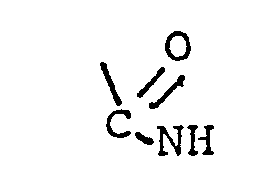
- in der R1 einen gesättigten oder ungesättigten Alkylrest oder Alkoxyalkylrest mit 1 - 22 Kohlenstoffatomen, bevorzugt 12 - 18 Kohlenstoffatomen,
- R2 einen Alkylrest mit 1 - 18 Kohlenstoffatomen, einen gesättigten oder ungesättigten Carboxyalkylrest mit 3 - 4 Kohlenstoffatomen, einen Carboxyphenylrest oder einen Carboxylrest (-COOH) R3 Wasserstoff oder CH3 und
- X Wasserstoff, Alkalimetall, Erdalkalimetall, Ammonium, Alkylammonium bzw. Alkanolammonium bedeuten und
- A für > C = 0, > SO2 ,
Description
- Die Erfindung betrifft `ein Verfahren zur Herstellung von N,N-disubstituierten β-Aminopropionsäuren und ihre Verwendung als Emulgatoren, Netzmittel, Tenside in Reinigungsmitteln und zur Hydrophobierung von Leder und Pelzen, insbesondere ein Verfahren zur Herstellung von N-Alkyl-N(2-carboxyethyl)amiden, neue N-Alkyl-N(2-carboxyethyl)sulfonamide und N-Alkyl-N(2-carboxyethylrhamstofte sowie deren Verwendung.
- Alkylaminopropionsäuren, Alkyliminodipropionsäuren sowie die acylierten Alkylaminopropionsäuren sind an sich bekannt. So wird in der US-PS 2.468.012 die Herstellung von N-Alkylaminopropionsäuren und ihre Verwendung als Detergentien, Emulgatoren und Schaumstabilisatoren beschrieben. Die Herstellung erfolgt durch Addition von primären Aminen an Acrylsäureester und Verseifung der entstandenen N-Alkylaminopropionsäureester zu den entsprechenden Säuren bzw. Salzen.
- In der DE-OS 20 54 649 werden N-Acyl-N-alkylaminopropionsäuren beschrieben, die durch Umsetzung von Aminen mit Acrylsäurederivaten wie den Acrylsäureestern, Acrylnitril oder Acrylamid und anschließender Reaktion mit Anhydriden hergestellt werden. Im letzten Syntheseschritt wird die Ester-, Nitril-oder Amidfunktion zur Säure verseift. Die Produkte werden als wässrige bzw. wässrig-alkoholische Lösung erhalten.
- Diese bekannten Herstellungsverfahren weisen eine Reihe von Nachteilen auf:
- Der notwendigerweise erforderliche Verseifungsschritt hat zur Folge, daß die Produkte nur in Lösung erhältlich sind und nicht ohne weitere Verfahrenschritte als 100 %ige Substanz. Durch die Ausbildung von Gelstrukturen sind in Wasser sogar nur 20 bis 30 %ige Lösungen von pastöser Konsistenz erhältlich. Nur durch Mitverwendung von Alkoholen, die nachteilig ist, läßt sich die Konzentration auf etwa 50 % anheben. Da die Verseifung im stark alkalischen Bereich durchgeführt wird, enthalten die Produkte nach der Einstellung auf pH-Werte von 5 bis 8, wie sie für viele Verwendungen z.B. im Textilbereich gefordert werden, hohe Salzgehalte, die jedoch oft unerwünscht sind.
- Bei der Verwendung von festen Alkylaminen muß die Addition an das Acrylsäurederivat bei erhöhten , Temperaturen. (oberihalb des Schmelzpunktes des Alkylamins) durchgeführt werden, wodurch bei den reaktiven Acrylderivaten die unerwünschte Nebenreaktion der Diadduktbildung gefördert wird. Bei dieser Nebenreaktion wird ein zweites Molekül Acrylderivat an schon gebildetes N-Alkylaminopropionsäurederivat addiert, wobei ein tertiäres Amin ensteht, das im folgenden Syntheseschritt nicht mehr acyliert werden kann.
- Nachteilig wirkt sich schließlich auch der Geruch von Restgehalten an Acrylester oder Acrylnitril im Produkt aus. So ist ein Restgehalt von 0,1 % Acrylester deutlich wahrzunehmen.
- Aufgabe der Erfindung ist die Schaffung eines Verfahrens, das die vorstehend genannten Nachteile nicht aufweist, insbesondere die Herstellung der Verfahrens produkte in Substanz ohne unerwünscht hohe zusätzliche Salzgehalte und ohne die Bildung von unerwünschten Nebenprodukten ermöglicht.
- Diese Aufgfabe wird durch die kennzeichnenden Merkmale des Anspruchs 1 gelöst.
- Überraschenderweise hat sich gezeigt, daß sich Alkylamine bei 40 bis 130°C , vorzugsweise 70 - 100°C, an (Meth)acrylsäure addieren lassen. Obwohl die Reaktionskomponenten nach dem Vermischen als organisches Salz vorliegen, ist die Addition nach 1 - 4 Std. beendet und hat einen vollständigen Umsatz erreicht. Die Diadduktbildung wird bei diesen Reaktionsbedingungen nicht beobachtet. Ebenso ist die Verwendung eines Lösungsmittels nicht erforderlich. Bei Aminen mit einem Siedepunkt unter den sogenannten Reaktionstemperaturen wird die Umsetzung bevorzugt unter Druck, z.B. im Autoklaven, durchgeführt.
- Die Umsetzung von Alkylamin mit (Meth)acrylsäure erfolgt bevorzugt in equimolaren Mengen.
- Als Alkylamine der Formel Ri-NH2 lassen sich z.B. die folgenden primären Amine einsetzen: Methylamin, Propylamin, Butylamin, Hexylamin, Nonylamin, Decylamin, Dodecylamin, Tridecylamin, Isotridecylamin, Hexadecylamin, Octadecylamin, Propoxypropylamin, Octyloxypropylamin, Oleylamin, Oleyloxypropylamin, Laurylamin, Kokosfettamin, Stearylamin, Talgfettamin oder Gemische der o.g. Amine. Laurylamin, Kokosfettamin, Talgfettamin und Oleylamin sind bevorzugte Amine.
- Die weitere Umsetzung der N-Alkyl-N(2-carboxyethyl)-amine wird in Substanz mit Anhydriden, Isocyanaten, Carbonsäurechloriden oder Sulfonsäurechloriden durchgeführt, wenn es sich um eine Acylierung handelt. Bei Temperaturen von 50° - 100°C wird das Acylierungsmittel in equimolaren Mengen bis zu einem geringem Überschuß (ca. 5 %) eingesetzt.
- Die Reaktion mit Anhydriden oder Isocyanaten ist nach 1 - 2 Stunden beendet und liefert die gewünschten N-Alkyl-N(2-carboxyethl)amide in 100 %iger Form. Bei der Verwendung von Monocar- bonsäureanhydriden,z.B. Essigsäureanhydrid, wird die in äquivalenter Menge anfallende Monocarbonsäure durch Destillation oder Auswaschen mit Wasser abgetrennt.
- Als Anhydride können beispielhaft genannt werden:
- Essigsäureanhydrid, Propionsäureanhydrid, Buttersäureanhydrid, Maleinsäureanhydrid, Bernsteinsäureanhydrid, Phtalsäureanhydrid.
- Als Isocyanate kommen beispielsweise infrage:
- Butylisocyanat,-Toluylisocyanat, Isopropylisocyanat.
- Auch die zweite Stufe, d.h die Acylierungsreaktion' wird bevorzugt mit equimolaren Mengen der Reaktionsteilnehmer durchgeführt.
- Wird die Acylierungsreaktion mit Carbonsäurechloriden oder Sulfonsäurechloriden durchgeführt, werden als Säurebinder pulverförmige Soda oder tertiäre Amine verwendet. Das während der Reaktion entstandene Salz kann abfiltriert oder mit Wasser ausgewaschen werden.
- Als Beispiele für Carbonsäurechloride können genannt werden:
- Essigsäurechlorid, Propionsäurechlorid, Ölsäurechlorid und geeignete Sulfonsäurechloride z.B. Methansulfonsäurechlorid, Ethansulfonsäurechlorid, p-Toluolsulfonsäurechlorid.
- Die weitere Umsetzung der entstandenen N-Alkylaminopropionsäure kann auch mit Halogencarbonsäuren, bevorzugt Chlorcarbonsäuren, (z.B. Chlorameisensäure, Chloressigsäure, Chlorpropionsäure und Chlorbuttersäure), oder (Meth-)acrylsäure vorgenommen werden.
- Durch das neue Verfahren gelingt es, die erfindungsgemäßen N,N-disubstituierten ß-Aminopropionsäurederivate, in einem Eintopfverfahren in zwei Syntheseschritten ohne Nebenproduktbildung herzustellen. Die Produkte werden in 100 %iger Form ohne Lösungsmittel erhalten.
- Zur Neutralisation werden die N,N-disubstituierten ß-Aminopropionsäurederivate mit wäßriger Alkalimetallhydroxid-, Erdalkalimetallhydroxid-oder Ammoniaklösung vermischt. Je nach Konzentration und Neutralisationsmittel werden viskose bis pastöse wäßrige Lösungen erhalten.
In einer bevorzugten Ausführung wird die Neutralisation mit organischen Basen durchgeführt. Als organische Basen kommen besonders primäre, sekundäre und tertiäre Amine in Frage. Beispiel hierfür sind die Alkylamine und Alkanolamine. Besonders bevorzugt sind die Ethanolamine und Isopropanolamine. Das Neutralisationsmittel kann sowohl äquivalent der Menge Säure zugesetzt werden als auch im Unterschuß. - Verwendung finden die N,N-disubstituierten ß-Aminopropionsäurederivate und ihre Salze als Emulgatoren und Netzmittel oder als hautschonende Tenside in Reinigungsmitteln. Ein weiteres Einsatzgebiet liegt in Formulierungen für die Lederhydrophobierung. Die Erfindung betrifft somit auch ein Verfahren zum Hydropbobieren von Leder und Pelzen unter Verwendung der erfindugnsgemäßen Verbindungen allein oder im Gemisch mit anderen bekannten Hydrophobiermitteln.
- Die Herstellung wasserdichten Leders erfolgt im wesentlichen nach folgenden zwei Verfahren:
- 1. Das Füllen der kapillarartigen, wassersaugenden Faserzwischenräume mit wasserabdichtenden Substanzen
Wasserunlösliche Stoffe, wie z.B. Fette, Paraffine, Wachs oder bestimmte Polymere zeigen dabei die unerwünschte Begleiterscheinung, insbesondere die für den Tragekomfort wichtigen Eigenschaften der Luft-und Wasserdampfdurchlässigkeit negativ zu beeinflussen. Günstiger verhalten sich Verbindungen, die durch Wasseraufnahme quellen und damit den Eigenquell-und -abdichtungseffekt der Lederfaser unterstützen. Die nach dieser Methode eingesetzten Produkte gehören zum Typ der Wasser-in-ÖI (W/0)-Emulgatoren. - 2. Die Umhüllung der Faserbündel mit hydrophoben Substanzen
Emulgatoren, die mit mehrwertigen Metallionen (Kationen) Komplexe bilden können, vermögen vielfach auch in den Chrom-Kollagen-Komplex einzutreten und bewirken dann Hydrophobie. Derartige Emulgatoren werden chemisch an die chrom-oder aluminiumgegerbte Lederfaser gebunden und setzen durch diese hydrophobe Umhüllung die Benetzbarkeit und die Wasseraufnahmefähigkeit herab. Die Erniedrigung des Spreitungsvermögens äußert sich in der Bildung kugelförmiger Tropfen (Abperleffekt). - Die in letzter Zeit drastisch gestiegenen Anforderungen an hydrophobierte Leder lassen sich mit den bekannten Hydrophobierungsmethoden kaum oder nur unter Beeinträchtigung anderer auch wichtiger Eigenschaften erzielen. Gebrauchsoberleder sollen heute Anforderungen erfüllen, die vor wenigen Jahren lediglich an Behördenleder (Militärleder) gestellt wurden, ohne jedoch auf Tragekomfort, modisches Erscheinen u.a. zu verzichten.
- Aus diesem Grunde ist man beispielsweise auf eine zweistufige Hydrophobierung ausgewichen. Fertiggetrocknete oder zugerichtete Leder lassen sich mit in organischen Lösungsmitteln gelösten Silikonen nachbehandeln. Nachteilig wirkt sich hierbei die zum Vernetzen erforderliche Trocknungstemperatur zwischen 90°C und 100°C aus, die zu erheblichen Maßverlusten führt. Außerdem stellt der hohe Anteil an organischen Lösemitteln, der häufig in die Umwelt entlassen wird, ein Problem dar.
Besonders unerwünscht im Sinne einer rationellen Fertigung ist die Tatsache, daß eine Nachbehandlung mit einem zusätzlichen, unerwünschten Arbeitsschritt verbunden ist. - Es war deshalb auch Aufgabe der Erfindung, ein Verfahren zum Hydrophobieren von Leder und Pelzen bereitzustellen, welches einstufig arbeitet, in wässriger Flotte und im Faß durchgeführt werden kann und mit dem gleichzeitig Fettung und eine massive Hydrophobierung erreicht werden können. Darüberhinaus sollten die verwendeten Hilfsmittel möglichst einfach hergestellt werden können und preiswert sein und ausreichende Fettung und Hydrophobierung nicht nur in einem Behandlungsschritt, sondern auch mit einem einzigen Produkt erreicht werden.
- Diese Aufgabe wird durch die Verwendung der Verbindungen der allgemeinen Formel I gelöst.
- Die erfindungsgemäßen Produkte werden entweder direkt in ihrer wenigstens teilneutralisierten Form als etwas Wasser enthaltendes Produkt von meist pastöser Konsistenz zur Hydrophobierung eingesetzt oder die nicht neutralisierten, meist pastösen Produkte werden in Kohlenwasserstoffen und/oder Chlorkohlenwasserstoffen, gegebenfalls mittels Lösungsvermittlern, gelöst und anschließend wenigstens teilneutralisiert. Hierzu eignen sich die vorstehend erwähnten Basen, insbesondere organische primäre, sekundäre und tertiäre Amine und Alkanolamine, sowie wässrige Lösungen von Ammoniak und Alkalihydroxiden. Die emulgierende Wirkung der neutralisierten Produkte erlaubt auch die Herstellung wasserhaltiger Produkte.
- Die erfindungsgemäßen Produkte werden in einer Menge von 0,1 bis 25 vorzugsweise 1 bis 15 Gew-%, bezogen auf Falzgewicht des Leders oder des Naßgewichts der Pelze bei pH-Werten zwischen 4 und 9 eingesetzt, worauf anschließend der pH-Wert auf 3,5 bis 5,0 abgesenkt wird und gegebenenfalls mit einem 2-,3-oder 4-wertigen Metallsalz fixiert wird.
- Das erfindungsgemäße zur Hydrophobierung eingesetzte Produkt enthält vorteilhaft 5 bis 80 Gew.-%, bevorzugt 10 - 70 Gew.-% der erfindungsgemäßen Verbindungen der allgemeinen Formel I, gegebenenfalls 20 bis 70 Gew.-%, bevorzugt 30 - 60 Gew.-% an Kohlenwasserstoffen oder/und Chlorkohlenwasserstoffen, gegebenenfalls mit Lösungsvermittlern wie höhersiedenden Produkten aus der Oxosynthese und Rest auf 100 % Wasser.
- Obwohl bereits mit den erfindungsgemäßen Verbindungen allein eine ausgezeichnete Fettung und Hydrophobierung erreicht wird, können die erfindungsgemäßen Hydrophobiermittel zusammen mit bekannten Fettungs-und/oder Hydrophobiermitteln wie Phosphorsäureteilestern, Silikonölen, Ölsäuresarkosid und/oder (Chlor-)Paraffinen eingesetzt werden.
- Sofern Phosphorsäureteilester mit verwendet werden, werden bevorzugt Teilester von Alkoholen einer Kettenlänge C4 bis Ca). bevorzugt C16-C18, die ggfs. oxalkyliert sind, in Mengen von 0,5 bis 30 Gew.-%, bevorzugt 1-20 Gew.-%, (bezogen auf 100 g Hydrophobierungsmittel) eingesetzt.
- Die Mitverwendung saurer Phosphorsäureester kann derart erfolgen, daß sie zusammen mit den erfindungsgemäßen Verbindungen vorgelegt, verdünnt und dann gemeinsam mit diesen neutralisiert werden. Die Phosphorsäureester können auch in bereits neutralisierter Form zum Einsatz gelangen. Der Einsatz von Phosphorsäureestern bietet sich beispielsweise zur Reduzierung des extrahierbaren Fettgehaltes an; dies stellt insbesondere bei Bekleidungsledern wegen der dadurch verbesserten Chemisch-Reinigungs-Beständigkeit einen Vorteil dar.
- Sofern zusätzlich zu den erfindungsgemäßen Verbindungen Silikonöle mit verwendet werden, so kommen diese in Mengen von 0,5 bis 80 Gew.-%, bevorzugt 1 - 20 Gew.-% (bezogen auf 100 g Hydrophobiermittelformulierung) zur Anwendung.
- Als Silikonöle können handelsübliche Polysiloxane wie Dimethyl-oder Methylphenylpolysiloxan eingesetzt werden. Bevorzugt sind Viskositätsbereiche von 100 bis 500 mPa.s. Dabei wird das Silikonöl mit der erfindungsgemäßen Verbindung ggf. gemeinsam mit Kohlenwasserstoffen und/oder Chlorkohlenwasserstoffen oder Lösungsvermittlem vorgelegt. Der Einsatz von Silikonen dient bevorzugt der Erzielung bestimmter erwünschter Oberflächeneffekte wie z.B. der Narbenglätte.
- Zur weiteren Verbesserung der Weichheit und um einen schmalzigeren Griff zu erzielen, ist auch die Mitverwendung von Ölsäuresarkosid möglich. Um bestimmte Effekte zu erzielen, kann generell jede Kombination aus Phosphorsäurepartialester, Silikonöl und Ölsäuresarkosid mit den erfindungsgemäßen Verbindungen eingesetzt werden.
- Ölsäuresarkosid kann zusätzlich zu den erfindungsgemäßen Verbindungen in Mengen Von 0,5 bis 50 Gew.-%, bevorzugt 2-20 Gew.-% (bezogen auf 100 g der eingesetzten Formulierung) verwendet werden.
- Die Erfindung wird durch die folgenden Beispiele erläutert:
- In einem Kolben mit Rührer, Thermometer und Kühler werden 534 g (2 Mol) Oleylamin vorgelegt und auf 60°C erwärmt. Innerhalb von 30 Minuten werden 144 g (2 Mol) Acrylsäure zugetropft, wobei die Temperatur auf ca. 90°C ansteigt. Anschließend wird für weitere 2,5 Stunden bei 90°C gerührt. Durch Bestimmung der primären Basen wird ein vollständiger Umsatz festgestellt. Das Reaktionsprodukt wird auf 70°C abgekühlt und portionsweise mit 196 g (2 Mol) Maleinsäureanhydrid versetzt. Zur Vervollständigung der Reaktion wird 2 Stunden bei 70 - 80°C weitergerührt. Man erhält des N-Oleyl-N(2-carboxyethyl)-maleinsäuremonoamid als hellbraune Paste.
Säurezahl 250 mg KOH/g
Restgehalt an basischem Stickstoff 0,2 mmol/g
Zur Neutralisation wurden bei 80°C unter Rühren 122 g (2 Mol) Monoethanolamin zugetropft. - Entsprechend Beispiel 1 werden 269 g (1 Mol) Stearyl amin an 72 g (1 Mol) Acrylsäure addiert und das Reaktionsprodukt mit 98 g (1 Mol) Maleinsäureanhydrid umgesetzt. Das N-Stearyl-N(2-carboxyethyl)-maleinsäuremonoamid erstarrt bei Raumtemperatur zu einer hellbraunen Paste.
Säurezahl: 251 mg KOH/g
Restgehalt an basischem Stickstoff: 0,32 mmol/g
Es wurden bei 100°C mit 37,5 g (0,5 Mol) Isopropanolamin neutralisiert. - Entsprechend Beispiel 1 werden 486 g (2,0 Mol) Lauryloxypropylamin an 144 g Acrylsäure (2,0 Mol) addiert und das Reaktionsprodukt mit 196 g (2 Mol) Maleinsäureanhydrid umgesetzt. Das N-Lauryloxypropyl-N(2-carboxyethyl)maleinsäuremonoamid erstarrt bei Raumtemperatur zu einer dunkelbraunen, leicht trüben Paste.
Säurezahl 265 mg KOH/g
Restgehalt an basischem Stickstoff: 0,3 mmol/g - Entsprechend Beispiel 1 werden 785 g Cocosfettamin (3,72 Mol; Gehalt an basischem Stickstoff: 4,74 mmol/g) an 268 g Acrylsäure (3,72 Mol) addiert und das Reaktionsprodukt mit 364,8 g (3,72 Mol) Maleinsäureanhydrid umgesetzt. Man erhält ein rotbraunes, hochviskoses Öl.
Säurezahl 290 mg KOH/g
Restgehalt an basischem Stickstoff: 0,25 mmol/g
Zur Neutralisation wurden bei 80°C unter Rühren 554 g (3,72 Mol) Triethanolamin zugetropft. - Entsprechend Beispiel 1 werden 101 g (1,0 Mol) Hexylamin an 72 g (1,0 Mol) Acrylsäure addiert und das Reaktionsprodukt mit 98 g (1,0 Mol) Maleinsäureanhydrid umgesetzt. Man erhält das N-Hexyl-N(2-carboxyethyl)maleinsäuremonoamid als hellbraunes Öl.
Säurezahl 418 mg KOH/g
Restgehalt an basischem Stickstoff: 0,15 mmol/g - 534 g (2 Mol) Oleylamin werden in einem Kolben, der mit Rührer, Thermometer und Kühler ausgerüstet ist auf 60°C erwärmt. Innerhalb von 30 Minuten werden 172 g (2 Mol) Methacrylsäure zugetropft, wobei die Temperatur auf ca. 85°C ansteigt. Zur vollständigen Reaktion wird die Mischung 3 h bei 100°C gerührt. Durch Bestimmung der primären Basen wird ein vollständiger Umsatz festgestellt. Anschließend wird auf 70°C abgekühlt und bei 70 - 80°C 204 g (2 Mol) Essigsäureanhydrid zugetropft. Nach weiteren 2 h wird die entstandene Essigsäure bei einem Vakuum von 20 mbar abdestilliert. Man erhält das N-Oleyl-N(2-carboxy-2-methylethyl)acetamid als braunes, klares Öl.
Säurezahl: 139 mg KOH/g
Restgehalt an basischem Stickstoff: 0,1 mmol/g
Es wurden bei 80°C mit 112,2 g (2 Mol) KOH, gelöst in 2492 g Wasser, neutralisiert. Man erhält eine wäßrige Lösung mit 25 % Feststoffanteil. - Analog Beispiel 1 werden 267 g (1,0 Mol) Oleylamin an 72 g (1,0 Mol) Acrylsäure addiert. Anschließend werden bei 90°C 148 g (1,0 Mol) Phthalsäureanhydrid portionsweise eingetragen und für 3 h bei 100°C gerührt. Das N-Oleyl-N-(2-carboxyethyl)phthatsäuremonoamid ist eine gelbbraune Paste.
Säurezahl: 225 mg KOH/g
Restgehalt an basischem Stickstoff: 0,5 mmol/g - Analog Beispiel 1 werden 267 g Oleylamin an 72 g Acrylsäure addiert. Das Additionsprodukt wird mit 55 g wasserfreiem Natriumcarbonat vermischt und bei 100°C werden 301 g (1,0 Mol) Ölsäurechlorid in ca. 2 h zugetropft. Nach 2 weiteren Stunden ist die Acylierung beendet. Das gebildete Kochsalz wird mit Wasser ausgewaschen.
Säurezahl: 94 mg KOH/g
Restgehalt an basischem Stickstoff: 0,1 mmol/g - Analog Beispiel 6 werden 267 g (1,0 Mol) Oleylamin an 86 g (1,0 Mol) Methacrylsäure addiert. Nach der Addition gibt man zur Reaktionsmischung 101 g (1,0 Mol Triethylamin und fügt portionsweise bei 70 - 90°C 190,5 g (1,0 Mol) p-Toluolsulfonsäurechlorid zu. Nach Abklingen der exothermen "Reaktion wird 2 h bei 90°C gerührt und anschließend das Salz mit Wasser ausgewaschen. Das N-Oleyl-N(2-carboxy2-methylethyl)p--toluolsulfonsäureamid wird als dunkelbraunes, viskoses Öl erhalten.
Säurezahl: 99 mg KOH/g
Restgehalt an basischem Stickstoff: 0 mmol/g
IR: C = 0 1720 cm-1
C = C 1620 cm-1 (Aromat)
S02 -N 1330 cm-1 und 1170 cm-1
H-NMR: δ 7 - 8 ppm aromat. Protonen
Zur Neutralisation gibt man bei 90°C unter Rühren 105 g (1,0 Mol) Diethanolamin zu. - Analog Beispiel 1 werden 267 g (1,0 Mol) Oleylamin an 72 g (1,0 Mol) Acrylsäure addiert. Nach der Addition werden 53 g (0,5 Mol) pulverförmiges Natriumcarbonat zugegeben und bei 110°C 114,5 g (1,0 Mol) Methansulfosäurechlorid zugetropft. Zur Nachreaktion wird weitere 2 h bei 110 °C gerührt. Das enstandene Salz wird mit Wasser ausgewaschen. Man erhält das N-Oleyl-N(2-carboxethyl)-methansulfosäureamid als dunkelbraune Paste.
Säurezahl: 29 mg KOH/g
Restgehalt an basischem Stickstoff: 0 mmol/g
IR: C = 0 1730 cm-1
. SO2-N-1320 cm-1 und 1160 cm-1 - Analog Beispiel 1 werden 267 g (1,0 Mol) Oleylamin an 72 g (1,0 Mol) Acrylsäure addiert. Nach der Addition werden 115 g (1,0 Mol) N-Ethylmorpholin zugegeben und bei 40 - 50 °C 133 g (1,0 Mol) Toluylisocyanat zugetropft. Man läßt 1 h nachreagieren und erhält N-Oleyl-N(2-carboxyethyl)-N'-toluylharn- stoff als braunes Öl.
Säurezahl: 89 mg KOH/g
IR: C = 0 (Säure) 1720 cm-1
N-C = 0 1660 cm-1 und 1560 cm-1
C = C (Aromat) 1590 cm-1 und 1610 cm-1 - Analog Beispiel 1 werden 267 g (1,0 Mol) Oleylamin an 72 g (1,0 Mol) Acrylsäure addiert. Nach der Addition werden 115 g (1,0 Mol) N-Ethylmorpholin zugegeben und bei 40 - 50 °C 99 g (1,0 Mol) n-Butylisocyanat zugetropft. Man läßt 1 h nachreagieren und erhält N-Oleyl-N(2-carboxyethyl)-N'-butylharn- stoff als hellbraunes Öl.
Säurezahl: 96,4 mg KOH/g
IR: C = 0 (Säure) 1720 cm-1
N-C = 0 1620 cm-1 und 1540 cm-1 - Analog Beispiel 1 werden 204 g Oleylaminopropionsäure (0,6 Mol), 70 g Chloressigsäure (Natriumsalz; 0,6 Mol), 54 g Wasser und 108 g Isopropanol vorgelegt und auf 80 °C erwärmt, anschließend liegt eine klare Lösung vor. Zu dieser Lösung werden 106,6 g 45 %ige Natronlauge (1,2 Mol) innerhalb von 45 Min. zugetropft, wobei die Viskosität der Reaktionsmischung ansteigt. Es wird 4 Stunden bei 82 °C nachgerührt, dann mit konzentrierter Salzsäure neutralisiert und in überschüssiges Wasser gegossen, wobei das Produkt ausfällt. Das Produkt (N-Oleyl-N-carboxmethyl-aminopropionsäure) wird abgetrennt und getrocknet. Säurezahl: 245 mg KOH/g
Das als Ausgangsprodukte eingesetzte Additionsprodükt wird analog Beispiel 1 aus der Umsetzung von Oleylamin mit Acrylsäure in equimolaren Mengen erhalten. - 267,5 g Oleylamin (1,0 Mol) und 0,2 g HQME (Hydroquinonmonomethylether) werden vorgelegt. Hierzu werden unter Kühlen bis zu einer Temperatur von maximal 70 °C 144 g Acrylsäure (2,0 Mol) zugetropft, worauf anschließend auf 140 °C erwärmt wird. Ab 80 °C verläuft die Reaktion exotherm und die Viskosität steigt stark an. Nach ca. 10 Min. bei 120 °C wird die Mischung pastös. Es wird dann noch 3 Std. bei 140 °C gerührt. Das Produkt (N-Oleyl-N(2-carboxyethylaminopropionsäure) weist eine Säurezahl von 253 mg KOH/g auf.
-
- a) In einem Rührgefäß werden 13,6 g Wasser und 22,7 g Natronlauge -45 %ig vorgelegt und auf ca. 50 °C erwärmt. Unter Rühren werden anschließend 63,7 g N-Oleyl-N (2-carboxethyl)maleinsäuremonoamid von Beispiel 1 zugesetzt, danach homogen verrührt
- b) Das Produkt aus a) wurde in die nachfolgende Rezeptur zur Herstellung von Waterproof-Leder eingesetzt und die wasserabweisende Wirkung untersucht:


- Es wurde das gemäß Beispiel 1 hergestellte Amid verwendet. In einem Rührgefäß werden 30 g Wasser und 7 g Diisopropanolamin bei ca. 50 °C vorgelegt, bevor unter Rühren die organische Phase bestehend . aus 14 g des erfindungsgemäßen Amids, 3,5 g Phosphorsäureester-Aminsalz (hergestelt durch Umsetzung von Alfol 16-18, einem Gemisch von Fettalkoholen aus der Ziegler-Synthese, mit P205, Molverhältnis 3:1, Diisopropanolamin zur Neutralisation) und 45,5 g Chlorparaffin mit 40 % Kettenchlor eingetragen und homogen verrührt wird.
- Diese Formulierung wurde in nachfolgender Rezeptur zur Herstellung von Militärleder eingesetzt:


-
- a) Man legt 30,5 g Wasser und 5,5 g Natronlauge 45 %ig in einem Rührgefäß bei ca. 50 °C vor. Die organische Phase, bestehend aus 18 g des Amides von Beispel 1, 40 g eines höhersiedenden Mineralöles und 6 g Dimethylpolysiloxan mit einer Viskosität von 350 mPa.s, wird unter Rühren langsam eingetragen, anschließend bis zur Homogenität verrührt.
- b) Die Formulierung aus a) wurde in die Rezeptur gemäß Beispiel 16 eingesetzt und führte zu folgenden Ergebnissen:

- Es wurde das erfindungsgemäße Amid aus Beispiel 1 verwendet. '
- In einem Rührgefäß legt man 39 g Wasser mit 3 g Natronlauge 45 %ig bei ca. 50 °C vor. Danach wird die organische Phase aus 6 g des Amids von Beispiel 1, 6 g Ölsäuresarkosid, 40 g eines höhersiedenden Mineralöles und 5 g Dimethylpolysiloxan einer Viskosität von 350 mPa.s langsam unter Rühren eingetragen und homogenisiert.
- Das so erhaltene Produkt wird in die Rezeptur für Waterproof gemäß Beispiel 16 b) eingesetzt, wobei folgende Werte erhalten wurden:

-
- a) In einem Rührgefäß werden 39 g Wasser und 4 g Natronlauge 45 %ig bei ca. 50 °C vorgelegt. Unter Rühren wird die organische Phase, bestehend aus 12 g Amid gemäß Beispiel 4, 35 g höhersiedendem Kohlenwasserstoff, 5 g Dimethylpolysiloxan der Viskosität 100 mPa.s und 5 g Phosphorsäurepartialester (Alfol 12-18, umgesetzt mit P2Ü5, Molverhältnis 3:1), eingetragen und homogen gerührt.
- b) In die Rezeptur gemäß Beispiel 16 eingesetzt, wurden folgende Werte erzielt:

- Es wurde das in Beispiel 13 beschriebene Produkt verwendet. Hierzu wurden 20 g dieses Stoffs mit 68,4 g eines Chlorparaffins mit 40 % Kettenchlor in einem Rührgefäß vorgelegt und bei 100 - 105 °C homogen gerührt. Nach Abkühlen auf ca. 70°C wurden dem Gemisch 11,6 g Diisopropanolamin zur Neutralisation zugesetzt.
- Diese Formulierung wurde in nachfolgender Rezeptur zur Herstellung von Waterproof -Leder eingesetzt und auf seine Wirkung untersucht:


Claims (16)


Applications Claiming Priority (4)
| Application Number | Priority Date | Filing Date | Title |
|---|---|---|---|
| DE3636497 | 1986-10-27 | ||
| DE3636497 | 1986-10-27 | ||
| DE3717961 | 1987-05-27 | ||
| DE3717961A DE3717961C2 (de) | 1986-10-27 | 1987-05-27 | Verfahren zur Herstellung von Gemischen von N,N-disubstituierten ß-Aminopropionsäurederivaten, bestimmte Gemische von N-Alkyl-N(2-carboxyethyl)sulfonamiden und N-Alkyl-N(2-carboxyethyl)harnstoffen und Verwendung der genannten Verbindungen |
Publications (3)
| Publication Number | Publication Date |
|---|---|
| EP0265818A2 true EP0265818A2 (de) | 1988-05-04 |
| EP0265818A3 EP0265818A3 (en) | 1990-04-25 |
| EP0265818B1 EP0265818B1 (de) | 1994-09-28 |
Family
ID=25848810
Family Applications (1)
| Application Number | Title | Priority Date | Filing Date |
|---|---|---|---|
| EP87115365A Expired - Lifetime EP0265818B1 (de) | 1986-10-27 | 1987-10-21 | Verfahren zur Herstellung von N,N-disubstituierten Beta-Aminopropionsäuren und ihre Verwendung zur Hydrophobierung von Leder und Pelzen |
Country Status (12)
| Country | Link |
|---|---|
| EP (1) | EP0265818B1 (de) |
| JP (1) | JP2577011B2 (de) |
| AT (1) | ATE112259T1 (de) |
| AU (1) | AU602171B2 (de) |
| BR (1) | BR8705693A (de) |
| ES (1) | ES2003836T3 (de) |
| GR (1) | GR890300053T1 (de) |
| LV (1) | LV11044B (de) |
| NZ (1) | NZ222310A (de) |
| PT (1) | PT85994B (de) |
| RU (1) | RU2062302C1 (de) |
| TR (2) | TR24291A (de) |
Cited By (7)
| Publication number | Priority date | Publication date | Assignee | Title |
|---|---|---|---|---|
| US5068416A (en) * | 1988-09-02 | 1991-11-26 | Basf Aktiengesellschaft | Preparation of β-alaninediacetic acid or its alkali metal or ammonium salts |
| DE4402929C1 (de) * | 1994-02-01 | 1995-06-22 | Henkel Kgaa | Pseudoceramide, Verfahren zu ihrer Herstellung und ihre Verwendung |
| WO1995019452A1 (de) * | 1994-01-12 | 1995-07-20 | Henkel Kommanditgesellschaft Auf Aktien | Verwendung von aminopropionsäurederivaten zur fettenden ausrüstung von leder |
| WO1995019451A1 (de) * | 1994-01-12 | 1995-07-20 | Henkel Kommanditgesellschaft Auf Aktien | Mittel zur fettenden ausrüstung von leder |
| WO1996001331A1 (de) * | 1994-07-04 | 1996-01-18 | Henkel Kommanditgesellschaft Auf Aktien | Verwendung carboxylgruppen-terminierter di-, oligo- und/oder polyester zur fettenden ausrüstung von leder |
| WO1996001330A1 (de) * | 1994-07-04 | 1996-01-18 | Henkel Kommanditgesellschaft Auf Aktien | Verwendung carboxylgruppen-terminierter oligo- und/oder polyester zur fettenden ausrüstung von leder |
| DE19636494A1 (de) * | 1996-09-09 | 1998-03-26 | Stockhausen Chem Fab Gmbh | Neue Lederbehandlungsmittel, Verfahren zu ihrer Herstellung und ihre Verwendung bei der Herstellung foggingarmer Leder |
Families Citing this family (1)
| Publication number | Priority date | Publication date | Assignee | Title |
|---|---|---|---|---|
| RU2286307C1 (ru) * | 2005-05-06 | 2006-10-27 | Ольга Викторовна Епимахова | Способ нейтрализации водных горючих растворов уксусной кислоты на автоматизированной фасовочно-укупорочной машине |
Family Cites Families (7)
| Publication number | Priority date | Publication date | Assignee | Title |
|---|---|---|---|---|
| DE767071C (de) * | 1939-01-28 | 1952-11-17 | Ig Farbenindustrie Ag | Verfahren zur Herstellung von Kondensationserzeugnissen |
| US3300338A (en) * | 1964-02-20 | 1967-01-24 | Martin L Fein | Process for treating washable leather |
| DE2005326A1 (de) * | 1970-02-06 | 1971-08-12 | Badische Anilin & Soda Fabrik AG, 6700 Ludwigshafen | Harnstoffderivate |
| DE2732557A1 (de) * | 1977-07-19 | 1979-02-01 | Bayer Ag | Ester von acylierten aminocarbonsaeuren |
| DE3110646A1 (de) * | 1981-03-19 | 1982-10-21 | Hoechst Ag, 6000 Frankfurt | "verfahren zur isolierung von alkylsulfamidoalkan-carbonsauren oder alkylsulfamidoalkan-sulfonsauren salzen aus ihren gemischen mit kohlenwasserstoffen" |
| IN163391B (de) * | 1981-11-13 | 1988-09-17 | Exxon Research Engineering Co | |
| EP0194548A3 (de) * | 1985-03-12 | 1988-08-17 | Dr. Karl Thomae GmbH | Neue Sulfonylaminoäthylverbindungen, diese Verbindungen enthaltende Arzneimittel und Verfahren zu ihrer Herstellung |
-
1987
- 1987-10-21 AT AT87115365T patent/ATE112259T1/de not_active IP Right Cessation
- 1987-10-21 TR TR89/1019A patent/TR24291A/xx unknown
- 1987-10-21 ES ES87115365T patent/ES2003836T3/es not_active Expired - Lifetime
- 1987-10-21 TR TR87/0728A patent/TR23997A/xx unknown
- 1987-10-21 JP JP62266178A patent/JP2577011B2/ja not_active Expired - Lifetime
- 1987-10-21 EP EP87115365A patent/EP0265818B1/de not_active Expired - Lifetime
- 1987-10-23 BR BR8705693A patent/BR8705693A/pt not_active IP Right Cessation
- 1987-10-23 AU AU80101/87A patent/AU602171B2/en not_active Ceased
- 1987-10-26 PT PT85994A patent/PT85994B/pt not_active IP Right Cessation
- 1987-10-27 NZ NZ222310A patent/NZ222310A/xx unknown
-
1989
- 1989-01-04 RU SU894613251A patent/RU2062302C1/ru active
- 1989-06-22 GR GR89300053T patent/GR890300053T1/el unknown
-
1993
- 1993-06-28 LV LVP-93-715A patent/LV11044B/lv unknown
Cited By (10)
| Publication number | Priority date | Publication date | Assignee | Title |
|---|---|---|---|---|
| US5068416A (en) * | 1988-09-02 | 1991-11-26 | Basf Aktiengesellschaft | Preparation of β-alaninediacetic acid or its alkali metal or ammonium salts |
| US5130476A (en) * | 1988-09-02 | 1992-07-14 | Basf Aktiengesellschaft | Preparation of β-alaninediacetic acid or its alkali metal or ammonium salts |
| WO1995019452A1 (de) * | 1994-01-12 | 1995-07-20 | Henkel Kommanditgesellschaft Auf Aktien | Verwendung von aminopropionsäurederivaten zur fettenden ausrüstung von leder |
| WO1995019451A1 (de) * | 1994-01-12 | 1995-07-20 | Henkel Kommanditgesellschaft Auf Aktien | Mittel zur fettenden ausrüstung von leder |
| US5683611A (en) * | 1994-01-12 | 1997-11-04 | Henkel Kommanditgesellschaft Auf Aktien | Preparations for the oiling of leather |
| DE4402929C1 (de) * | 1994-02-01 | 1995-06-22 | Henkel Kgaa | Pseudoceramide, Verfahren zu ihrer Herstellung und ihre Verwendung |
| WO1996001331A1 (de) * | 1994-07-04 | 1996-01-18 | Henkel Kommanditgesellschaft Auf Aktien | Verwendung carboxylgruppen-terminierter di-, oligo- und/oder polyester zur fettenden ausrüstung von leder |
| WO1996001330A1 (de) * | 1994-07-04 | 1996-01-18 | Henkel Kommanditgesellschaft Auf Aktien | Verwendung carboxylgruppen-terminierter oligo- und/oder polyester zur fettenden ausrüstung von leder |
| DE19636494A1 (de) * | 1996-09-09 | 1998-03-26 | Stockhausen Chem Fab Gmbh | Neue Lederbehandlungsmittel, Verfahren zu ihrer Herstellung und ihre Verwendung bei der Herstellung foggingarmer Leder |
| DE19636494C2 (de) * | 1996-09-09 | 2000-11-16 | Stockhausen Chem Fab Gmbh | Restmonomerarme, aminfreie Polymerisate, Verfahren zu ihrer Herstellung und ihre Verwendung bei der Herstellung foggingarmer Leder |
Also Published As
| Publication number | Publication date |
|---|---|
| ES2003836A4 (es) | 1988-12-01 |
| NZ222310A (en) | 1990-06-26 |
| LV11044B (en) | 1996-10-20 |
| LV11044A (lv) | 1996-02-20 |
| GR890300053T1 (en) | 1989-06-22 |
| TR23997A (tr) | 1991-01-15 |
| AU8010187A (en) | 1988-04-28 |
| PT85994A (de) | 1987-11-01 |
| TR24291A (tr) | 1991-07-30 |
| ATE112259T1 (de) | 1994-10-15 |
| JP2577011B2 (ja) | 1997-01-29 |
| BR8705693A (pt) | 1988-05-31 |
| RU2062302C1 (ru) | 1996-06-20 |
| JPS63112544A (ja) | 1988-05-17 |
| EP0265818A3 (en) | 1990-04-25 |
| AU602171B2 (en) | 1990-10-04 |
| EP0265818B1 (de) | 1994-09-28 |
| PT85994B (pt) | 1990-08-31 |
| ES2003836T3 (es) | 1994-12-16 |
Similar Documents
| Publication | Publication Date | Title |
|---|---|---|
| WO1997006279A1 (de) | Verwendung von polyasparaginsäureamiden als lederhilfsmittel | |
| DE1445403A1 (de) | Neue Sulfobetaine | |
| EP0178557A1 (de) | Verfahren zur Herstellung von Fettungsmittel für Leder und Pelze | |
| EP0800589B1 (de) | Mittel und verfahren zur hydrophobierung von ledern und pelzen | |
| EP0265818B1 (de) | Verfahren zur Herstellung von N,N-disubstituierten Beta-Aminopropionsäuren und ihre Verwendung zur Hydrophobierung von Leder und Pelzen | |
| EP0497849B1 (de) | Verfahren zur sulfierung ungesättigter fettsäureglycerinester | |
| DE2129425B2 (de) | Verfahren zur Herstellung von Fettsäureäthanolamidea | |
| DE1924301A1 (de) | Polyaminopolytricarballylsaeuren | |
| DE3909614C2 (de) | ||
| DE3717961C2 (de) | Verfahren zur Herstellung von Gemischen von N,N-disubstituierten ß-Aminopropionsäurederivaten, bestimmte Gemische von N-Alkyl-N(2-carboxyethyl)sulfonamiden und N-Alkyl-N(2-carboxyethyl)harnstoffen und Verwendung der genannten Verbindungen | |
| EP0564980B1 (de) | Lederfettungsmittel | |
| EP0745142A1 (de) | Neue lederfettungsmittel und ihre verwendung | |
| DE4142318C2 (de) | Verwendung von Fettsäure-Umsetzungsprodukten in Leder- und Pelzfettungsmitteln und Mittel zum Fetten von Leder und Pelzfellen | |
| EP0824600B1 (de) | Verfahren zur behandlung von leder mit tensiden zur verbesserung der hydrophobierwirkung | |
| DE2843659C3 (de) | Verwendung quaternierter Etheramine als Faserpräparationsmittel | |
| EP0975717B1 (de) | Verfahren zur herstellung von sulfatierten fettsäureestern | |
| DE2537914A1 (de) | Verfahren zur herstellung von acyltauriden | |
| DE2725780C2 (de) | ||
| EP0670828B1 (de) | Sulfitierte fettstoffe mit vermindertem gehalt an freiem hydrogensulfit | |
| EP0752011B1 (de) | Verwendung von dimer- und/oder trimeraminpropionsäuren zur fettenden ausrüstung von leder | |
| DE69914228T2 (de) | Verfahren zur herstellung von salzfreien amphotheren mit hohem mono-amphopropionatgehalt | |
| EP0112496A2 (de) | Weichmacheremulsion, Verfahren zu ihrer Herstellung und ihre Anwendung | |
| DE4430084B4 (de) | Verfahren zur Herstellung von Betainen | |
| DE1058500B (de) | Verfahren zur Herstellung von esterartigen anionischen oberflaechenaktiven Stoffen | |
| DE641865C (de) | Verfahren zur Herstellung von Kondensationsprodukten |
Legal Events
| Date | Code | Title | Description |
|---|---|---|---|
| PUAI | Public reference made under article 153(3) epc to a published international application that has entered the european phase |
Free format text: ORIGINAL CODE: 0009012 |
|
| 17P | Request for examination filed |
Effective date: 19871021 |
|
| AK | Designated contracting states |
Kind code of ref document: A2 Designated state(s): AT BE CH DE ES FR GB GR IT LI NL SE |
|
| ITCL | It: translation for ep claims filed |
Representative=s name: BARZANO' E ZANARDO MILANO S.P.A. |
|
| TCNL | Nl: translation of patent claims filed | ||
| EL | Fr: translation of claims filed | ||
| GBC | Gb: translation of claims filed (gb section 78(7)/1977) | ||
| PUAL | Search report despatched |
Free format text: ORIGINAL CODE: 0009013 |
|
| AK | Designated contracting states |
Kind code of ref document: A3 Designated state(s): AT BE CH DE ES FR GB GR IT LI NL SE |
|
| 17Q | First examination report despatched |
Effective date: 19911011 |
|
| GRAA | (expected) grant |
Free format text: ORIGINAL CODE: 0009210 |
|
| AK | Designated contracting states |
Kind code of ref document: B1 Designated state(s): AT BE CH DE ES FR GB GR IT LI NL SE |
|
| REF | Corresponds to: |
Ref document number: 112259 Country of ref document: AT Date of ref document: 19941015 Kind code of ref document: T |
|
| PLBI | Opposition filed |
Free format text: ORIGINAL CODE: 0009260 |
|
| REF | Corresponds to: |
Ref document number: 3750605 Country of ref document: DE Date of ref document: 19941103 |
|
| ET | Fr: translation filed | ||
| REG | Reference to a national code |
Ref country code: GR Ref legal event code: FG4A Free format text: 3013460 |
|
| ITF | It: translation for a ep patent filed | ||
| 26 | Opposition filed |
Opponent name: HENKEL KOMMANDITGESELLSCHAFT AUF AKTIEN Effective date: 19941013 |
|
| REG | Reference to a national code |
Ref country code: ES Ref legal event code: FG2A Ref document number: 2003836 Country of ref document: ES Kind code of ref document: T3 |
|
| GBT | Gb: translation of ep patent filed (gb section 77(6)(a)/1977) |
Effective date: 19941216 |
|
| EAL | Se: european patent in force in sweden |
Ref document number: 87115365.6 |
|
| NLR1 | Nl: opposition has been filed with the epo |
Opponent name: HENKEL KGAA. |
|
| PGFP | Annual fee paid to national office [announced via postgrant information from national office to epo] |
Ref country code: SE Payment date: 19950929 Year of fee payment: 9 Ref country code: CH Payment date: 19950929 Year of fee payment: 9 |
|
| PGFP | Annual fee paid to national office [announced via postgrant information from national office to epo] |
Ref country code: AT Payment date: 19951010 Year of fee payment: 9 |
|
| PGFP | Annual fee paid to national office [announced via postgrant information from national office to epo] |
Ref country code: BE Payment date: 19951011 Year of fee payment: 9 |
|
| PGFP | Annual fee paid to national office [announced via postgrant information from national office to epo] |
Ref country code: GR Payment date: 19951020 Year of fee payment: 9 |
|
| PGFP | Annual fee paid to national office [announced via postgrant information from national office to epo] |
Ref country code: NL Payment date: 19951031 Year of fee payment: 9 |
|
| PLBO | Opposition rejected |
Free format text: ORIGINAL CODE: EPIDOS REJO |
|
| PLBN | Opposition rejected |
Free format text: ORIGINAL CODE: 0009273 |
|
| STAA | Information on the status of an ep patent application or granted ep patent |
Free format text: STATUS: OPPOSITION REJECTED |
|
| 27O | Opposition rejected |
Effective date: 19951225 |
|
| NLR2 | Nl: decision of opposition | ||
| PGFP | Annual fee paid to national office [announced via postgrant information from national office to epo] |
Ref country code: GB Payment date: 19961007 Year of fee payment: 10 |
|
| PGFP | Annual fee paid to national office [announced via postgrant information from national office to epo] |
Ref country code: FR Payment date: 19961016 Year of fee payment: 10 |
|
| PG25 | Lapsed in a contracting state [announced via postgrant information from national office to epo] |
Ref country code: AT Effective date: 19961021 |
|
| PG25 | Lapsed in a contracting state [announced via postgrant information from national office to epo] |
Ref country code: SE Effective date: 19961022 |
|
| PG25 | Lapsed in a contracting state [announced via postgrant information from national office to epo] |
Ref country code: LI Effective date: 19961031 Ref country code: CH Effective date: 19961031 Ref country code: BE Effective date: 19961031 |
|
| PGFP | Annual fee paid to national office [announced via postgrant information from national office to epo] |
Ref country code: ES Payment date: 19961031 Year of fee payment: 10 |
|
| BERE | Be: lapsed |
Owner name: CHEMISCHE FABRIK STOCKHAUSEN G.M.B.H. Effective date: 19961031 |
|
| PG25 | Lapsed in a contracting state [announced via postgrant information from national office to epo] |
Ref country code: GR Free format text: THE PATENT HAS BEEN ANNULLED BY A DECISION OF A NATIONAL AUTHORITY Effective date: 19970430 |
|
| PG25 | Lapsed in a contracting state [announced via postgrant information from national office to epo] |
Ref country code: NL Effective date: 19970501 |
|
| REG | Reference to a national code |
Ref country code: GR Ref legal event code: MM2A Free format text: 3013460 |
|
| REG | Reference to a national code |
Ref country code: CH Ref legal event code: PL |
|
| NLV4 | Nl: lapsed or anulled due to non-payment of the annual fee |
Effective date: 19970501 |
|
| EUG | Se: european patent has lapsed |
Ref document number: 87115365.6 |
|
| PG25 | Lapsed in a contracting state [announced via postgrant information from national office to epo] |
Ref country code: GB Free format text: LAPSE BECAUSE OF NON-PAYMENT OF DUE FEES Effective date: 19971021 |
|
| PG25 | Lapsed in a contracting state [announced via postgrant information from national office to epo] |
Ref country code: ES Free format text: LAPSE BECAUSE OF NON-PAYMENT OF DUE FEES Effective date: 19971022 |
|
| PG25 | Lapsed in a contracting state [announced via postgrant information from national office to epo] |
Ref country code: FR Free format text: THE PATENT HAS BEEN ANNULLED BY A DECISION OF A NATIONAL AUTHORITY Effective date: 19971031 |
|
| GBPC | Gb: european patent ceased through non-payment of renewal fee |
Effective date: 19971021 |
|
| REG | Reference to a national code |
Ref country code: FR Ref legal event code: ST |
|
| REG | Reference to a national code |
Ref country code: ES Ref legal event code: FD2A Effective date: 19981113 |
|
| PG25 | Lapsed in a contracting state [announced via postgrant information from national office to epo] |
Ref country code: IT Free format text: LAPSE BECAUSE OF NON-PAYMENT OF DUE FEES;WARNING: LAPSES OF ITALIAN PATENTS WITH EFFECTIVE DATE BEFORE 2007 MAY HAVE OCCURRED AT ANY TIME BEFORE 2007. THE CORRECT EFFECTIVE DATE MAY BE DIFFERENT FROM THE ONE RECORDED. Effective date: 20051021 |
|
| PGFP | Annual fee paid to national office [announced via postgrant information from national office to epo] |
Ref country code: DE Payment date: 20061031 Year of fee payment: 20 |