WO2011010673A1 - インスリン測定方法 - Google Patents
インスリン測定方法 Download PDFInfo
- Publication number
- WO2011010673A1 WO2011010673A1 PCT/JP2010/062261 JP2010062261W WO2011010673A1 WO 2011010673 A1 WO2011010673 A1 WO 2011010673A1 JP 2010062261 W JP2010062261 W JP 2010062261W WO 2011010673 A1 WO2011010673 A1 WO 2011010673A1
- Authority
- WO
- WIPO (PCT)
- Prior art keywords
- insulin
- antibody
- monoclonal antibody
- monoclonal
- reagent
- Prior art date
- Legal status (The legal status is an assumption and is not a legal conclusion. Google has not performed a legal analysis and makes no representation as to the accuracy of the status listed.)
- Ceased
Links
Images





Classifications
-
- G—PHYSICS
- G01—MEASURING; TESTING
- G01N—INVESTIGATING OR ANALYSING MATERIALS BY DETERMINING THEIR CHEMICAL OR PHYSICAL PROPERTIES
- G01N33/00—Investigating or analysing materials by specific methods not covered by groups G01N1/00 - G01N31/00
- G01N33/48—Biological material, e.g. blood, urine; Haemocytometers
- G01N33/50—Chemical analysis of biological material, e.g. blood, urine; Testing involving biospecific ligand binding methods; Immunological testing
- G01N33/74—Chemical analysis of biological material, e.g. blood, urine; Testing involving biospecific ligand binding methods; Immunological testing involving hormones or other non-cytokine intercellular protein regulatory factors such as growth factors, including receptors to hormones and growth factors
-
- C—CHEMISTRY; METALLURGY
- C07—ORGANIC CHEMISTRY
- C07K—PEPTIDES
- C07K16/00—Immunoglobulins [IGs], e.g. monoclonal or polyclonal antibodies
- C07K16/18—Immunoglobulins [IGs], e.g. monoclonal or polyclonal antibodies against material from animals or humans
-
- C—CHEMISTRY; METALLURGY
- C07—ORGANIC CHEMISTRY
- C07K—PEPTIDES
- C07K16/00—Immunoglobulins [IGs], e.g. monoclonal or polyclonal antibodies
- C07K16/18—Immunoglobulins [IGs], e.g. monoclonal or polyclonal antibodies against material from animals or humans
- C07K16/26—Immunoglobulins [IGs], e.g. monoclonal or polyclonal antibodies against material from animals or humans against hormones ; against hormone releasing or inhibiting factors
-
- G—PHYSICS
- G01—MEASURING; TESTING
- G01N—INVESTIGATING OR ANALYSING MATERIALS BY DETERMINING THEIR CHEMICAL OR PHYSICAL PROPERTIES
- G01N33/00—Investigating or analysing materials by specific methods not covered by groups G01N1/00 - G01N31/00
- G01N33/48—Biological material, e.g. blood, urine; Haemocytometers
- G01N33/50—Chemical analysis of biological material, e.g. blood, urine; Testing involving biospecific ligand binding methods; Immunological testing
- G01N33/53—Immunoassay; Biospecific binding assay; Materials therefor
-
- G—PHYSICS
- G01—MEASURING; TESTING
- G01N—INVESTIGATING OR ANALYSING MATERIALS BY DETERMINING THEIR CHEMICAL OR PHYSICAL PROPERTIES
- G01N33/00—Investigating or analysing materials by specific methods not covered by groups G01N1/00 - G01N31/00
- G01N33/48—Biological material, e.g. blood, urine; Haemocytometers
- G01N33/50—Chemical analysis of biological material, e.g. blood, urine; Testing involving biospecific ligand binding methods; Immunological testing
- G01N33/53—Immunoassay; Biospecific binding assay; Materials therefor
- G01N33/536—Immunoassay; Biospecific binding assay; Materials therefor with immune complex formed in liquid phase
- G01N33/537—Immunoassay; Biospecific binding assay; Materials therefor with immune complex formed in liquid phase with separation of immune complex from unbound antigen or antibody
- G01N33/539—Immunoassay; Biospecific binding assay; Materials therefor with immune complex formed in liquid phase with separation of immune complex from unbound antigen or antibody involving precipitating reagent, e.g. ammonium sulfate
- G01N33/541—Double or second antibody, i.e. precipitating antibody
-
- G—PHYSICS
- G01—MEASURING; TESTING
- G01N—INVESTIGATING OR ANALYSING MATERIALS BY DETERMINING THEIR CHEMICAL OR PHYSICAL PROPERTIES
- G01N33/00—Investigating or analysing materials by specific methods not covered by groups G01N1/00 - G01N31/00
- G01N33/48—Biological material, e.g. blood, urine; Haemocytometers
- G01N33/50—Chemical analysis of biological material, e.g. blood, urine; Testing involving biospecific ligand binding methods; Immunological testing
- G01N33/53—Immunoassay; Biospecific binding assay; Materials therefor
- G01N33/543—Immunoassay; Biospecific binding assay; Materials therefor with an insoluble carrier for immobilising immunochemicals
- G01N33/544—Immunoassay; Biospecific binding assay; Materials therefor with an insoluble carrier for immobilising immunochemicals the carrier being organic
- G01N33/545—Synthetic resin
-
- G—PHYSICS
- G01—MEASURING; TESTING
- G01N—INVESTIGATING OR ANALYSING MATERIALS BY DETERMINING THEIR CHEMICAL OR PHYSICAL PROPERTIES
- G01N2333/00—Assays involving biological materials from specific organisms or of a specific nature
- G01N2333/435—Assays involving biological materials from specific organisms or of a specific nature from animals; from humans
- G01N2333/575—Hormones
- G01N2333/62—Insulins
-
- G—PHYSICS
- G01—MEASURING; TESTING
- G01N—INVESTIGATING OR ANALYSING MATERIALS BY DETERMINING THEIR CHEMICAL OR PHYSICAL PROPERTIES
- G01N2470/00—Immunochemical assays or immunoassays characterised by the reaction format or reaction type
- G01N2470/04—Sandwich assay format
- G01N2470/06—Second binding partner specifically binding complex of analyte with first binding partner
Definitions
- the present invention relates to a method and reagent for measuring insulin using an immune reaction. More specifically, the present invention relates to an insulin measuring method and a measuring reagent using an antibody that does not react with insulin to which an anti-insulin antibody is not bound but has a property to react with insulin to which an anti-insulin antibody is bound.
- Insulin is a peptide hormone having a molecular weight of about 5800, which is produced through proinsulin as a precursor in the islets of Langerhans in the pancreas. It is involved in glucose metabolism, amino acid metabolism and lipid metabolism, and a typical physiological action is hypoglycemia. Diabetes mellitus is caused by insufficient insulin secretion based on a decrease in ⁇ -cells or decreased function and insufficient insulin action in peripheral tissues. Therefore, measurement of blood insulin concentration that reflects the insulin secretion function of ⁇ cells is a useful index for diagnosis of diabetes, understanding of pathological conditions, and differentiation of causes of impaired glucose tolerance.
- Patent Document 1 discloses insulin by an enzyme immunoassay (hereinafter referred to as ELISA method) using a monoclonal antibody bound to an insoluble carrier and a monoclonal antibody that does not compete with the antibody for epitope and is labeled with an enzyme. Quantitative methods are disclosed.
- Patent Document 2 discloses a method for quantifying insulin by a particle aggregation immunoassay method using two types of monoclonal antibodies having different recognition sites bound to an insoluble carrier.
- An object of the present invention is to provide an insulin-specific measurement method and measurement reagent that can accurately measure only insulin without being affected by proinsulin and insulin-like compounds.
- the present inventors have surprisingly found that the first monoclonal antibody that reacts with insulin does not react with insulin to which the first monoclonal antibody is not bound. However, it was found that by combining a second monoclonal antibody that reacts with insulin bound to the first monoclonal antibody, only insulin can be accurately measured without being affected by proinsulin and insulin-like compounds. . As a result of further investigations, various forms of insulin using the above-described antibodies that react with insulin conjugated with an anti-insulin antibody (insulin-anti-insulin antibody complex: hereinafter sometimes referred to as “insulin-antibody complex”) are used. The inventors have found that a measurement method can be constructed, and have completed the present invention. That is, the present invention has the following configuration.
- a method for measuring insulin characterized by using an antibody that does not react with insulin to which an anti-insulin antibody is not bound but has a property of reacting with insulin to which an anti-insulin antibody is bound.
- An insulin measuring method using two kinds of antibodies 1) The first antibody has the property of reacting with insulin, 2) The second antibody does not react with insulin to which the first antibody is not bound, but has a property of reacting with insulin to which the first antibody is bound.
- the second monoclonal antibody is an antibody that does not react with either proinsulin or an insulin-like compound.
- the first monoclonal antibody and the second monoclonal antibody are immobilized on latex, respectively, and insulin is measured by latex immunoagglutination method [3], [5], [6], [7] The insulin measurement method according to any one of the above.
- the first monoclonal antibody is immobilized on a solid phase, and the second monoclonal antibody is labeled with a labeling substance. Insulin is measured by ELISA [3], [5], [6] [7] The insulin measurement method according to any one of [7].
- the first monoclonal antibody is labeled with a labeling substance, and the second monoclonal antibody is immobilized on a solid phase.
- Insulin is measured by ELISA or immunochromatography [3], [5] , [6], The method for measuring insulin according to any one of [7].
- An insulin measurement reagent comprising an antibody that does not react with insulin to which an anti-insulin antibody is not bound, but has a property of reacting with insulin to which the anti-insulin antibody is bound.
- An insulin measurement reagent comprising two types of antibodies, 1) The first antibody has the property of reacting with insulin, 2) The second antibody does not react with insulin to which the first antibody is not bound, but has a property of reacting with insulin to which the first antibody is bound.
- the insulin measurement reagent according to [11].
- the insulin measurement reagent according to [12], wherein both the first antibody and the second antibody are monoclonal antibodies.
- the insulin measurement reagent according to [13], wherein the first monoclonal antibody is two or more monoclonal antibodies having different recognition sites.
- the first monoclonal antibody and the second monoclonal antibody are immobilized on latex, respectively, and insulin is measured by latex immunoagglutination method [13], [15], [16], [17] The insulin measurement reagent according to any one of the above.
- the first monoclonal antibody is immobilized on a solid phase, and the second monoclonal antibody is labeled with a labeling substance. Insulin is measured by ELISA [13], [15], [16] [17] The insulin measurement reagent according to any one of [17].
- the first monoclonal antibody is labeled with a labeling substance, and the second monoclonal antibody is immobilized on a solid phase. Insulin is measured by ELISA or immunochromatography [13], [15] , [16], Insulin measuring reagent according to any one of [17].
- a monoclonal antibody having the following properties. 1) An antibody that binds to insulin does not react with unbound insulin 2) An antibody that binds to insulin reacts with insulin bound [22] Furthermore, it does not react with either proinsulin or insulin-like compounds [21] The monoclonal antibody according to [21]. [23] A monoclonal antibody screening method comprising the following steps. 1) Step of selecting an antibody that reacts with insulin 2) Step of selecting a monoclonal antibody that does not react with insulin to which the antibody selected in 1) is not bound but reacts with insulin bound with the antibody
- highly sensitive and accurate insulin measurement can be performed without being affected by proinsulin and insulin-like compounds.
- insulin secretion from ⁇ cells can be accurately grasped, it can be used for grasping the pathological condition of diabetes and is very useful.
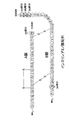
- FIG. 1 It is a conceptual diagram which shows the amino acid sequence of insulin.
- the parts (a) to (e) show the difference in amino acid sequence from various insulin analog preparations examined for the reactivity with the antibody of the present invention.
- the alphabet in circles in the figure is a single letter code for amino acids.
- Insulin lispro the (a) and (b) moieties have “KP” instead of “PK”.
- Insulin aspart (a) portion has “D” instead of "P”.
- Insulin glargine (d) part has “G” instead of “N”, and (c) “RR” is added to part “T”.
- Insulin detemir The (c) portion does not have “T”, and the myristate (C 14 H 28 O 2 ) is added to the (b) portion “K”.
- Insulin gluridine the (b) part has “E” instead of “K” and the (e) part has “K” instead of “N”.
- Biacore trademark
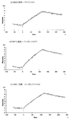
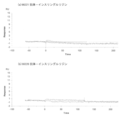
- T100 the test result using Biacore (trademark) T100 about the reactivity of an insulin and 66221 antibody.
- Biacore (trademark) T100 about the reactivity of an insulin and 66226 antibody.
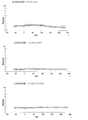
- Biacore (trademark) T100 about the reactivity of proinsulin and various insulin analog preparations, and 66221 antibody.
- A proinsulin, (b) insulin lispro, (c) insulin aspart Same as above.
- D Insulin glargine,
- e Insulin detemir It is a figure which shows the test result using Biacore (trademark) T100 about the reactivity of proinsulin and various insulin analog preparations, and the 66226 antibody.
- A proinsulin, (b) insulin lispro, (c) insulin aspart Same as above.
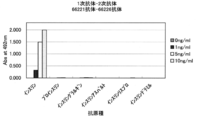
- (D) Insulin glargine, (e) Insulin detemir The figure which shows the result of the ELISA method test which investigated the reactivity of insulin, proinsulin, and various insulin analog preparations by solidifying a primary antibody on a plate using 66221 antibody as a primary antibody and 66226 antibody as a secondary antibody. is there.
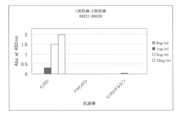
- the figure which shows the result of the ELISA method test which examined the reactivity of insulin, proinsulin, and various insulin analog preparations by solidifying a primary antibody on a plate using 66226 antibody as a primary antibody and 66221 antibody as a secondary antibody. is there.
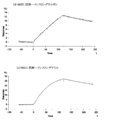
- FIG. 1 shows the test result using Biacore (trademark) T100 about the reactivity of insulin analog preparation and insulin gluridine with 66221 antibody (a) and 66226 antibody (b).
- the result of the ELISA method test in which the primary antibody was immobilized on a plate using the 66221 antibody as the primary antibody and the 66226 antibody as the secondary antibody, and the reactivity of insulin, proinsulin, insulin analog preparation / insulin gluridine was examined.
- FIG. The result of the ELISA method test in which the primary antibody was immobilized on a plate using the 66226 antibody as the primary antibody and the 66221 antibody as the secondary antibody, and the reactivity of insulin, proinsulin, insulin analog preparation / insulin gluridine was examined.
- the monoclonal antibody of the present invention includes a first monoclonal antibody and a second monoclonal antibody, and these are used in combination when measuring insulin.
- the first monoclonal antibody may be any monoclonal antibody that reacts with insulin, and is a functional fragment of an antibody that can react with insulin, such as the Fab ′ portion of an antibody, in addition to the whole antibody molecule. There may be.
- the second monoclonal antibody may be any monoclonal antibody as long as it has the following properties 1) and 2).
- the reaction site (recognition site) of the second monoclonal antibody is preferably one that recognizes a change in the structure of insulin caused by binding of the first monoclonal antibody and reacts with the insulin having the changed structure.
- the “change in the structure of insulin” means a change in the structure that occurs independently of the insulin molecule itself due to the formation of the insulin-antibody complex, or the antibody and insulin molecule cooperate in the antibody-bound insulin.
- the structure etc. which comprise.
- the measurement method of the present invention is not affected by proinsulin and insulin-like compounds, it is desirable that at least one monoclonal antibody does not react with proinsulin and insulin-like compounds.
- the insulin analog compound include insulin analog preparations such as insulin lispro, insulin aspart, insulin glargine, insulin detemir, and insulin gluridine.
- One aspect of the second monoclonal antibody of the present invention is an antibody that does not cross-react with any of these compounds. When this antibody is used for measurement of insulin, the compound may be present in the sample. Insulin can be measured specifically. As long as one monoclonal antibody has the property of not reacting with these proinsulin and insulin analogs, the other monoclonal antibody may be either reactive with these analogs or non-reactive.
- an antibody of the present invention and a compound means that the antibody of the present invention does not substantially react with a compound.
- “Substantially does not react” refers to, for example, the above SPR method.
- Biacore registered trademark
- T100 When Biacore (registered trademark) T100 is used and measurement is performed with the antibody of the present invention immobilized, the reactivity of the antibody of the present invention is not enhanced. Specifically, it means that the reactivity between the antibody and the compound is not significantly different from the reactivity of the control (no compound added). It goes without saying that “substantially no reaction” can be confirmed by methods and means well known to those skilled in the art other than the SPR method.
- the insulin recognized as an antigen by the antibody of the present invention may be the whole of the insulin molecule or a part thereof.
- first monoclonal antibody examples include a monoclonal antibody (66221 antibody) produced by a hybridoma (FERM BP-11233), and examples of the “second monoclonal antibody” include a hybridoma (FERM BP-11234). ) Produced by the antibody (66226 antibody).
- the antibody of the present invention can be easily produced by dissolving insulin as an antigen (immunogen) in a solvent such as phosphate buffered saline and administering this solution to an animal for immunization. If necessary, an appropriate adjuvant may be added to the solution, and then immunization may be performed using an emulsion.
- Adjuvants include water-in-oil emulsions, water-in-oil-in-water emulsions, oil-in-water emulsions, liposomes, aluminum hydroxide gels, and other commonly used adjuvants, as well as protein and peptide substances derived from biological components. Also good.
- Freund's incomplete adjuvant or Freund's complete adjuvant can be preferably used.
- route of administration, dosage, and timing of adjuvant it is desirable to select appropriately so that the desired immune response can be enhanced in animals immunized with the antigen.
- the type of animal used for immunization is not particularly limited, but mammals are preferable, and for example, mice, rats, cows, rabbits, goats, sheep, and the like can be used, and mice can be more preferably used.
- the animal may be immunized according to a general method.
- the animal can be immunized by injecting a solution of an antigen, preferably a mixture with an adjuvant, into the animal subcutaneously, intradermally, intravenously, or intraperitoneally. . Since the immune response generally varies depending on the type and strain of the animal to be immunized, it is desirable to set the immunization schedule as appropriate according to the animal used.
- the antigen administration is preferably repeated several times after the first immunization.
- the present invention is not limited to these operations.
- the manufacturing method of the monoclonal antibody itself is described in, for example, Antibodies, A Laboratory Manual (Cold Spring Laboratory Press, (1988).
- spleen cells or lymph node cells which are antibody-producing cells
- hybridomas can be produced by cell fusion with myeloma cells having high proliferation ability.
- cells having high antibody production ability quality / quantity
- myeloma cells are preferably compatible with the animal from which the antibody-producing cells to be fused are derived.
- Cell fusion can be performed according to a method known in the art. For example, a polyethylene glycol method, a method using Sendai virus, a method using an electric current, or the like can be employed.
- the obtained hybridoma can be grown according to a known method, and a desired hybridoma can be selected while confirming the properties of the antibody produced.
- the hybridoma can be cloned by a known method such as a limiting dilution method or a soft agar method.
- Hybridoma selection can be efficiently performed at the selection stage in consideration of the conditions under which the produced antibody is used for actual measurement. For example, it can be obtained by selecting a hybridoma that produces an antibody that reacts with insulin by ELISA, RIA, or the like. Specifically, the monoclonal antibody in the culture supernatant is first reacted with the immobilized insulin, and then the antigen-immobilized ELISA method in which the labeled anti-IgG antibody is reacted with the monoclonal antibody having high reactivity to insulin. A hybridoma producing the antibody is selected.
- Monoclonal antibodies having desired characteristics can be produced by mass-culturing the hybridomas thus selected.
- the mass culture method is not particularly limited.
- the hybridoma is cultured in an appropriate medium and a monoclonal antibody is produced in the medium.
- Examples thereof include a method for producing an antibody.
- Purification of the monoclonal antibody can be performed by appropriately combining, for example, anion exchange chromatography, affinity chromatography, ammonium sulfate fractionation method, PEG fractionation method, ethanol fractionation method and the like.
- the selection of the hybridoma producing the second monoclonal antibody is performed by replacing the solid-phased insulin in the case of selecting the hybridoma producing the first monoclonal antibody with the insulin bound to the first monoclonal antibody.
- Method method of binding insulin to the immobilized first monoclonal antibody and confirming the formation of a sandwich with the second monoclonal antibody candidate) or the second monoclonal antibody candidate by immobilizing the first monoclonal antibody in advance
- a method of selecting the reaction between insulin and an antibody complex antibody formed by incubating insulin with an insulin, or a method of selecting one that does not show reactivity with insulin using Biacore (registered trademark) T100 Can be obtained by confirming
- the antibody of the present invention in addition to the whole antibody molecule, it is also possible to use a functional fragment of an antibody having antigen-antibody reaction activity, in addition to those obtained through the immunization process for animals as described above, Those obtained using genetic recombination techniques and chimeric antibodies can also be used.
- the functional fragment of an antibody include F (ab ′) 2 and Fab ′. These functional fragments can be obtained by converting the antibody obtained as described above into a proteolytic enzyme (for example, pepsin or papain). It can manufacture by processing with.
- the monoclonal antibody of the present invention can be used as an immobilized (solid phase) antibody in which either the first monoclonal antibody or the second monoclonal antibody or both are immobilized on an insoluble carrier, or is well known to those skilled in the art described later. It can be used as a labeled antibody labeled with the labeling substance. Any of such immobilized antibodies and labeled antibodies are included in the scope of the present invention.
- an immobilized antibody can be produced by physically adsorbing a monoclonal antibody to an insoluble carrier or chemically binding it (may be via an appropriate spacer).
- an insoluble carrier comprising a polymer substrate such as polystyrene resin, an inorganic substrate such as glass, or a polysaccharide substrate such as cellulose or agarose
- a shape for example, a microplate or a membrane
- beads or fine particles for example, latex particles, gold colloidal particles
- a tubular shape for example, a test tube
- Insulin in a sample can be measured by using a labeled antibody, labeled protein A, labeled protein G, or the like that can bind to the second monoclonal antibody of the present invention.
- the labeling substance for producing the labeled antibody include enzymes, fluorescent substances, chemiluminescent substances, biotin, avidin, or radioactive isotopes, colloidal gold particles, and colored latex.
- methods for binding the labeling substance and the antibody methods such as glutaraldehyde method, maleimide method, pyridyl disulfide method, or periodic acid method available to those skilled in the art can be used. The types and methods for producing them are not limited to the above examples.
- an enzyme such as peroxidase or alkaline phosphatase
- HRP horseradish peroxidase
- HRP horseradish peroxidase
- HRP O-phenylenediamine
- ALP p-nitrophenyl phosphate, etc.
- biotin is used as a labeling substance.
- at least avidin or enzyme-modified avidin is generally reacted.
- insoluble carrier is “solid phase”, antigen or antibody is physically or chemically supported on an insoluble carrier, or the state in which it is supported is “fixed”, “immobilized”, “solid phased” ”,“ Sensitization ”, and“ adsorption ”.
- detection or “measurement” should be interpreted in the broadest sense including proof and / or quantification of the presence of insulin, and should not be interpreted in a limited way in any sense.
- body fluids mainly derived from living organisms can be mentioned. Specific examples include blood (whole blood), serum, plasma, urine, saliva, sputum, pancreatic extract, tears, otorrhea or prostate fluid, but are not limited thereto.
- the aspect of the measuring reagent (kit) provided by the present invention is not particularly limited as long as it is a reagent capable of measuring insulin.
- the ELISA method and immunochromatography method which are representative labeling immunoassay methods, and the latex immunoagglutination method (hereinafter referred to as LTIA method), which is a typical particle aggregation immunoassay method, will be described as examples.
- ELISA method As an embodiment of a measuring reagent (kit) for detecting insulin present in a sample, the following elements: (A) a solid phase (such as a plate) on which the first monoclonal antibody is immobilized; and (b) a second monoclonal antibody labeled with a labeling substance, Can give.
- the solid phase (plate or the like) on which the first monoclonal antibody is immobilized captures insulin in the sample and forms an insulin-antibody complex.
- the second monoclonal antibody labeled with the labeling substance reacts with the insulin-antibody complex to form a sandwich, and the amount of the labeling substance is measured by a method according to the labeling substance, whereby the insulin in the sample is determined. Can be measured.
- Specific methods for constructing the measurement reagent (kit) such as a method for immobilizing the first monoclonal antibody on a solid phase and a method for labeling the second monoclonal antibody with a labeling substance, are described in this specification. In addition to the methods described in 1), methods well known to those skilled in the art can be used without limitation. In the case of this configuration, it can be configured as a homogeneous measurement system, but is preferably configured as a heterogeneous measurement system.
- the invention [19] (the first monoclonal antibody is immobilized on a solid phase and the second monoclonal antibody is labeled with a labeling substance, the invention for measuring insulin by ELISA [13] ], [15], [16], [17] insulin measuring reagents).
- the invention [15] (the first monoclonal antibody is an insulin measurement reagent according to the invention [13], wherein the first monoclonal antibodies are two or more monoclonal antibodies having different recognition sites) for the purpose of improving sensitivity, etc.
- the first monoclonal antibody is an insulin measurement reagent according to the invention [13], wherein the first monoclonal antibodies are two or more monoclonal antibodies having different recognition sites
- the invention [20] (the first monoclonal antibody is labeled with a labeling substance and the second monoclonal antibody is immobilized on a solid phase, the invention measuring insulin by the ELISA method [13] ], [15], [16], [17] insulin measuring reagents).
- ⁇ Labeled immunoassay method immunochromatographic method>
- a sheet-like solid support such as a membrane
- a labeled reagent site containing the labeling reagent the first monoclonal antibody is labeled with a labeling substance such as colloidal gold particles
- a first labeled with a labeling substance The test sample solution is continuously moved by a capillary phenomenon in a “capture reagent site on which a second monoclonal antibody for capturing a complex of the monoclonal antibody and insulin is immobilized”.
- the sample enters the labeling reagent site in the process of expanding and moving the solid support, and insulin is labeled with the labeling reagent (first reagent). 1), and an insulin-labeling reagent complex is formed.
- the insulin-labeling reagent complex is developed and moved on the membrane as it is and enters the capture reagent site containing the second monoclonal antibody on the membrane, it is captured by the capture reagent immobilized on the solid support, and the capture reagent.
- a complex of (second monoclonal antibody) -insulin-labeling reagent (first monoclonal antibody) is formed at the capture reagent position.
- the presence of the analyte can be determined by detecting the labeling reagent by any method (in the case of visible colloidal gold particles, the aggregated image, and in the case of enzymes, a color reaction by adding a substrate). Can do.
- Test sample supply site and “2.
- Labeling reagent containing the first monoclonal antibody (the first monoclonal antibody is labeled with a labeling substance such as gold colloid particles). )
- Labeled reagent sites that can be developed on the membrane are described independently in the order of movement of the test sample, but the structures stacked in the order of“ 1 ”and“ 2 ”from the top, etc.
- the test sample is “2.
- the labeling reagent containing the first monoclonal antibody (the first monoclonal antibody is labeled with a labeling substance such as gold colloid particles) can be developed on the membrane. Since the insulin-antibody complex is formed when it passes through the “retained labeling reagent site”, the invention [15] (first monoclonal antibodies are mutually connected with the intention of improving the sensitivity as in the ELISA method).
- a first monoclonal antibody labeled with a labeling substance as in the insulin measurement reagent according to the invention [13] which is two or more monoclonal antibodies having different recognition sites, two or more monoclonal antibodies having different recognition sites are used. It is preferably possible to use it.
- the invention [20] (the immunochromatography method in which the first monoclonal antibody is labeled with a labeling substance and the second monoclonal antibody is immobilized on a solid phase) (Insulin measuring reagent according to any one of inventions [13], [15], [16], [17]).
- ⁇ Particle aggregation immunoassay method LTIA method>
- a to D of a reagent for measurement (kit) for detecting insulin present in a sample each of at least the following elements: A. (A) latex particles on which the first monoclonal antibody is immobilized; and (b) latex particles on which the second monoclonal antibody is immobilized. (A) latex particles on which the first monoclonal antibody is immobilized; (b) second monoclonal antibody C.I. Latex particles on which (a) a first monoclonal antibody and (b) a second monoclonal antibody are immobilized. (A) Latex particles on which both the first monoclonal antibody and the second monoclonal antibody are immobilized can be mentioned.
- Latex particles used for A to D can be appropriately selected in particle size and type in order to obtain desired performance such as sensitivity improvement.
- Latex particles may be any particles suitable for carrying antigens or antibodies.
- polystyrene, styrene-sulfonic acid (salt) copolymer, styrene-methacrylic acid copolymer, acrylonitrile-butadiene-styrene copolymer, vinyl chloride-acrylic acid ester copolymer, vinyl acetate-acrylic acid ester copolymer A polymer etc. are mentioned.
- the shape of the latex particles is not particularly limited, but the average particle size is large enough to allow an aggregate formed as a result of the aggregation reaction between the antibody or antigen on the latex particle surface and the measurement target to be detected visually or optically. It is preferable to have.
- the average particle size is preferably 0.02 to 1.6 ⁇ m, particularly preferably 0.03 to 0.5 ⁇ m. Further, particles made of a material such as metal colloid, gelatin, liposome, microcapsule, silica, alumina, carbon black, metal compound, metal, ceramics or magnetic material can be used instead of latex particles.
- the reagent of the LTIA method used in clinical examination is usually provided in the form of a first reagent and a second reagent, and is used by sequentially mixing with a test sample.
- both or one of (a) and (b) can be contained in the first reagent solution or the second reagent solution.
- These inclusions can be appropriately selected in consideration of the specifications of measuring instruments in clinical examinations and the design (performance and ease of use) of measuring reagents.
- it is preferable that both (a) and (b) of the embodiment of A are contained in the second reagent, but (a) of the embodiment of A is contained in the first reagent and (b) is contained in the second reagent. It can also be used suitably.
- the invention [18] (Invention [13], [15] wherein the first monoclonal antibody and the second monoclonal antibody are respectively immobilized on latex, and insulin is measured by latex immunoagglutination. Insulin measuring reagent according to any one of [16] and [17].
- the mode for carrying out the present invention has been described by taking the invention [3] which is a representative embodiment of the present invention as an example.
- the limitation of using an antibody against the “insulin-antibody complex” Use of a polyclonal antibody as the first antibody as in the invention [4], use of two or more monoclonal antibodies having different recognition sites as the first antibody, as in the invention [5], etc.
- the present invention can take various forms.
- the antigen for immunization described above was injected subcutaneously into the back of female BALB / c mice (20-50 ⁇ g per mouse). This operation (immunization) was repeated twice a week. Three weeks after the start of immunization, the spleen was removed from a mouse whose high antibody titer was confirmed by test blood sampling, and cell fusion was performed by a conventional method using 50% -PEG1450 (manufactured by Sigma). As myeloma cells, SP2 / O was used.
- the obtained fused cells are RPMI1640 medium containing HAT, 15% fetal bovine serum, and 10% BM-Condensed H1 Hybridoma Cloning Supplement (Roche) at 2.5 ⁇ 10 6 cells / mL as spleen cells. And dispensed 0.2 mL each into a 96-well culture plate. This was cultured at 37 ° C. in a 5% CO 2 incubator.
- PBST PBS solution
- Tween registered trademark
- procrine 300 supplied by SUPELCO 400 ⁇ L / well
- PBST containing 1% BSA BSA-PBST
- Antigen-immobilized ELISA method Each mouse antiserum diluted serially with BSA-PBST or culture supernatant of fused cells was dispensed at 50 ⁇ L / well onto an ELISA-immobilized ELISA plate. Let stand for hours. (Ii) After washing 3 times with PBST, a solution obtained by diluting HRP-Gt F (ab ′) 2 -Anti-Mouse Ig's (AMI4404 manufactured by BIOSOURCE) 5000 times with BSA-PBST was dispensed by 50 ⁇ L / well. And left at room temperature for 1 hour.
- hybridomas were cultured at 0.5 ⁇ 10 6 cells in 12-week-old female BALB / c mice that had been injected intraperitoneally with 0.5 mL of pristane two weeks ago. Six doses were administered intraperitoneally. After 14 days, ascites was collected and centrifuged to obtain a supernatant. The supernatant was mixed with an equal amount of an adsorption buffer (3 mol / L NaCl, 1.5 mol / L Glycine-NaOH buffer, pH 8.5) and then filtered.
- an adsorption buffer 3 mol / L NaCl, 1.5 mol / L Glycine-NaOH buffer, pH 8.5
- the filtrate is passed through a protein A sepharose column equilibrated with an adsorption buffer, and the antibody in the filtrate is adsorbed on the column and then eluted with 0.1 mol / L citrate buffer (pH 3.0). It was.
- the eluate was neutralized with 1 mol / L Tris-HCl buffer (pH 8.0) and dialyzed with PBS to collect antibodies. Hereafter, it was used for the test as 66221 antibody and 66226 antibody, respectively.
- the hybridoma producing the 66221 antibody and 66226 antibody was applied by the applicant to the National Institute of Advanced Industrial Science and Technology, Patent Biological Deposit Center (address: 1st, 1st East, 1-chome, Tsukuba, Ibaraki, Japan, April 6th, 2009) Deposit procedures (FERM P-21800, FERM P-21801) were given on the day, and then transferred to the deposit under the Budapest Treaty based on the original deposit on February 17, 2010, and the deposit number (FERM BP -11233, FERM BP-11234).
- Insulin analog preparation (1) Insulin lispro 100 units / mL: manufactured by Eli Lilly Japan, (2) Insulin Aspart 100 units / mL: Novo Nordisk Pharma Co., Ltd. (3) Insulin glargine 100 units / mL: Sanofi Aventis Co., Ltd. (4) Insulin Detemil 100 Units / mL: Novo Nordisk Pharma Co. 1- 3.
- Biacore registered trademark
- Biacore registered trademark
- T100 JJ-1037-02 manufactured by Biacore
- Iii Series S Sensor Chip CM5: BR-1005-30 manufactured by Biacore
- IIii Amine Coupling Kit: BR-1000-50 manufactured by Biacore
- IIv Acetate 5.0: BR-1003-51 manufactured by Biacore (V) ⁇ -Mouse Immunoglobulins: manufactured by Biacore, BR-1005-14
- Test Method Each of the reactivity was evaluated by capturing 66221 antibody or 66226 antibody on ⁇ -Mouse Immunoglobulins immobilized on Sensor Chip, and adding insulin, proinsulin, and various insulin analog preparations as analytes.
- the specific operation procedure is as follows.
- ⁇ -Mouse Immunoglobulins were immobilized on Sensor Chip CM5 (according to the attached instruction manual).
- the 66221 antibody or 66226 antibody was diluted to 5 ⁇ g / mL with HBS-EP + (pH 8.5), and added at a flow rate of 30 ⁇ L / min for 300 seconds.
- Result 3-1 Results of reaction with insulin
- the reactivity of insulin with 66221 antibody and 66226 antibody was confirmed using Biacore (registered trademark) T100. The results are shown in FIGS. At an insulin concentration of 10 ng / mL, a reactivity of 8.5 RU was observed with 66221 antibody (FIG. 2). On the other hand, no reactivity was observed with the 66226 antibody (FIG. 3).
- the vertical axis “RU” represents a unique unit in the Biacore (registered trademark) measurement system, and represents a mass change due to a reaction on the sensor surface.
- Example 1 Measurement of insulin by the combination of monoclonal antibodies of the present invention 1 ⁇ LTIA method> 1.
- Preparation of latex particles In a glass reaction vessel (capacity 2 L) equipped with a stirrer, reflux condenser, temperature detector, nitrogen inlet tube and jacket, 1100 g of distilled water, 200 g of styrene, 0.2 g of sodium styrenesulfonate, and An aqueous solution in which 1.5 g of potassium persulfate was dissolved in 50 g of distilled water was charged, and the inside of the container was replaced with nitrogen gas. After completion of the polymerization, the solution was filtered with a filter paper, and latex particles were taken out.
- the latex particles obtained were photographed with a transmission electron microscope apparatus (manufactured by JEOL Ltd., “JEM-1010 type”) at a magnification of 10,000 times, and image analysis of at least 100 or more particles was performed. The average particle size was measured. The average particle size obtained was 0.3 ⁇ m.
- a 66221 antibody-sensitized latex particle solution was prepared.
- 2-2. Preparation of 66226 antibody-sensitized latex particle solution A 66226 antibody-sensitized latex particle solution was prepared in the same manner as described above using latex having an average particle size of 0.3 ⁇ m.
- reagents 3-1 Preparation of first reagent 5 mM Tris-HCl (pH 8.5) containing 500 mM sodium chloride and 0.2% BSA was prepared and used as the first reagent.
- Second Reagent The 66221 antibody-sensitized latex particle solution and 66226 antibody-sensitized latex particle solution are mixed in equal amounts and diluted with 5 mM Tris-HCl (pH 8.5) so that the absorbance at a wavelength of 600 nm is 5.0 Abs. Thus, a second reagent was obtained.
- the first reagent and the second reagent were combined, and the formation of particle aggregates dependent on insulin concentration was confirmed using a Hitachi 7170 automatic analyzer. Specifically, 150 ⁇ L of the first reagent is added to 10 ⁇ L of an insulin solution having a concentration of 0 ⁇ U / mL, 5 ⁇ U / mL, 25 ⁇ U / mL, 50 ⁇ U / mL, 100 ⁇ U / mL, 200 ⁇ U / mL, and heated at 37 ° C. for 5 minutes. Then, 50 ⁇ L of the second reagent was added and stirred. Thereafter, the change in absorbance associated with the aggregation formation for 5 minutes was measured at a main wavelength of 570 nm and a sub wavelength of 800 nm.
- Example 2 Measurement of insulin by a combination of monoclonal antibodies of the present invention 2 ⁇ ELISA method>
- the 66221 antibody and 66226 antibody were respectively solid-phased, and different antibodies were combined as secondary antibodies, and the reactivity of insulin, proinsulin and insulin-like compounds was tested using the ELISA method.
- Antibodies and antigen types used (1) Monoclonal antibody 66221 antibody: 2.30 mg / mL 66226 antibody: 3.99 mg / mL (2) Antigen species insulin, proinsulin, insulin analog preparations (insulin lispro, insulin aspart, insulin glargine, insulin detemir) were the same as those in Test Example 2.
- ELISA measurement method (i) A solution obtained by diluting 66221 antibody or 66226 antibody to 2 ⁇ g / mL in PBS was solid-phased in a 96-well plate by 50 ⁇ L / well and allowed to stand at room temperature for 2 hours. (Ii) After washing 3 times with PBST 400 ⁇ L / well, 100 ⁇ L / well of BSA-PBST was dispensed and left standing at room temperature for 1 hour for blocking to prepare an ELISA plate.
- 66221 antibody is the primary antibody and 66226 antibody is the secondary antibody, it does not show cross-reactivity with proinsulin and insulin analog preparations, so only insulin is quantified without being affected by them. I understand that I can do it.
- the 66226 antibody was the primary antibody and the 66221 antibody was the secondary antibody, insulin could not be measured. Therefore, the 66226 antibody did not show reactivity with insulin, and the 66221 antibody bound to insulin. It turns out that it reacts.
- the reaction mechanism of this measurement system is that the 66221 antibody first binds to insulin, causing some structural change in insulin, and the 66226 antibody specifically recognizes the structural change site. It is thought that a sandwich is formed.
- Test method The test was performed in the same manner as described in Test Example 2, except that insulin gllysine, which is an insulin analog preparation, was used as the analyte.
- Example 3 Measurement of insulin by combination of monoclonal antibodies of the present invention 3 ⁇ ELISA method>
- the 66221 antibody and 66226 antibody were respectively solid-phased, and different antibodies were combined as secondary antibodies, and the reactivity of insulin, proinsulin and insulin-like compounds was tested using the ELISA method.
- Antibodies and antigen types used (1) Monoclonal antibody 66221 antibody: 2.30 mg / mL 66226 antibody: 3.99 mg / mL (2) Antigen species insulin, proinsulin, insulin analog preparation (insulin gluridine).
- the monoclonal antibody of the present invention enables highly sensitive and accurate insulin measurement without being affected by proinsulin and insulin-like compounds. Further, according to the present invention, since insulin secretion from ⁇ cells can be accurately grasped, it can be used for grasping the pathological condition of diabetes and is very useful.
- Hybridoma 66221 producing 66221 antibody The name and address of the depository that deposited the biological material AIST National Institute of Advanced Industrial Science and Technology Patent Biological Deposit Center 1-chome, East 1-chome, Tsukuba City, Ibaraki Prefecture, Japan 6 (zip code 305-8566) Date of deposit of biological materials at the depository in Loi April 8, 2009 (April 8, 2009) (original deposit date) February 17, 2010 (February 17, 2010) (Date of transfer to deposit under the Budapest Treaty by original deposit) Deposit number FERM BP-11233 assigned by the depository in Thailand for deposit (2) Hybridoma 66226 producing 66226 antibody The name and address of the depository that deposited the biological material AIST National Institute of Advanced Industrial Science and Technology Patent Biological Deposit Center 1-chome, East 1-chome, Tsukuba City, Ibaraki Prefecture, Japan 6 (zip code 305-8566) Date of deposit of biological materials at the depository in Loi April 8, 2009 (April 8, 2009) (original deposit date) February 17, 2010 (February 17, 17,
Landscapes
- Health & Medical Sciences (AREA)
- Life Sciences & Earth Sciences (AREA)
- Immunology (AREA)
- Engineering & Computer Science (AREA)
- Chemical & Material Sciences (AREA)
- Molecular Biology (AREA)
- Biomedical Technology (AREA)
- Urology & Nephrology (AREA)
- Hematology (AREA)
- General Health & Medical Sciences (AREA)
- Medicinal Chemistry (AREA)
- Biochemistry (AREA)
- Cell Biology (AREA)
- Biotechnology (AREA)
- Food Science & Technology (AREA)
- Physics & Mathematics (AREA)
- Analytical Chemistry (AREA)
- Microbiology (AREA)
- General Physics & Mathematics (AREA)
- Pathology (AREA)
- Organic Chemistry (AREA)
- Endocrinology (AREA)
- Genetics & Genomics (AREA)
- Proteomics, Peptides & Aminoacids (AREA)
- Biophysics (AREA)
- Peptides Or Proteins (AREA)
- Preparation Of Compounds By Using Micro-Organisms (AREA)
Priority Applications (9)
| Application Number | Priority Date | Filing Date | Title |
|---|---|---|---|
| CA2739310A CA2739310C (en) | 2009-07-21 | 2010-07-21 | Insulin assay |
| CN2010800035212A CN102246039A (zh) | 2009-07-21 | 2010-07-21 | 胰岛素测定法 |
| KR1020117013678A KR101366353B1 (ko) | 2009-07-21 | 2010-07-21 | 인슐린 측정 방법 |
| MX2011003927A MX2011003927A (es) | 2009-07-21 | 2010-07-21 | Metodo de medicion de insulina. |
| US13/122,930 US9476891B2 (en) | 2009-07-21 | 2010-07-21 | Insulin assay |
| BRPI1005176-7A BRPI1005176B1 (pt) | 2009-07-21 | 2010-07-21 | ensaio de insulina e reagente de ensaio de insulina |
| JP2010546566A JP4782249B2 (ja) | 2009-07-21 | 2010-07-21 | インスリン測定方法 |
| AU2010274320A AU2010274320B2 (en) | 2009-07-21 | 2010-07-21 | Insulin measurement method |
| EP10802293.0A EP2458378B1 (en) | 2009-07-21 | 2010-07-21 | Insulin measurement method |
Applications Claiming Priority (2)
| Application Number | Priority Date | Filing Date | Title |
|---|---|---|---|
| JP2009-170292 | 2009-07-21 | ||
| JP2009170292 | 2009-07-21 |
Publications (1)
| Publication Number | Publication Date |
|---|---|
| WO2011010673A1 true WO2011010673A1 (ja) | 2011-01-27 |
Family
ID=43499145
Family Applications (1)
| Application Number | Title | Priority Date | Filing Date |
|---|---|---|---|
| PCT/JP2010/062261 Ceased WO2011010673A1 (ja) | 2009-07-21 | 2010-07-21 | インスリン測定方法 |
Country Status (11)
| Country | Link |
|---|---|
| US (1) | US9476891B2 (enExample) |
| EP (1) | EP2458378B1 (enExample) |
| JP (2) | JP4782249B2 (enExample) |
| KR (1) | KR101366353B1 (enExample) |
| CN (1) | CN102246039A (enExample) |
| AU (1) | AU2010274320B2 (enExample) |
| BR (1) | BRPI1005176B1 (enExample) |
| CA (1) | CA2739310C (enExample) |
| MX (1) | MX2011003927A (enExample) |
| MY (1) | MY151976A (enExample) |
| WO (1) | WO2011010673A1 (enExample) |
Cited By (7)
| Publication number | Priority date | Publication date | Assignee | Title |
|---|---|---|---|---|
| US20130102003A1 (en) * | 2011-10-21 | 2013-04-25 | Decimadx, Llc | Point-of-Care Immunoassay for Quantitative Small Analyte Detection |
| WO2014157723A1 (ja) | 2013-03-29 | 2014-10-02 | 積水メディカル株式会社 | インスリン測定方法 |
| JP2015531762A (ja) * | 2012-08-17 | 2015-11-05 | モルフォシス・アー・ゲー | 複合体特異的抗体及び抗体断片並びにその使用 |
| JP2017134067A (ja) * | 2016-01-22 | 2017-08-03 | 協和メデックス株式会社 | 可溶性インターロイキン−2受容体の測定方法及び測定用試薬 |
| JP2019528438A (ja) * | 2016-07-29 | 2019-10-10 | ダイアザイム ラボラトリーズ, インコーポレイテッド | ビタミンdをアッセイするための方法および組成物 |
| JPWO2020075691A1 (ja) * | 2018-10-09 | 2021-09-02 | 積水メディカル株式会社 | ロイシンリッチα2グリコプロテインの免疫測定方法及び測定試薬 |
| CN114195892A (zh) * | 2020-09-18 | 2022-03-18 | 苏州鲲鹏生物技术有限公司 | 一种人胰岛素单链前体残留检测控制方法 |
Families Citing this family (4)
| Publication number | Priority date | Publication date | Assignee | Title |
|---|---|---|---|---|
| JP6182027B2 (ja) * | 2013-09-10 | 2017-08-16 | デンカ生研株式会社 | B型インフルエンザウイルスの測定方法 |
| CN105866420B (zh) * | 2015-01-22 | 2018-11-16 | 艾托金生物医药(苏州)有限公司 | 一种检测免疫原的方法和装置 |
| CN106918708A (zh) * | 2015-12-28 | 2017-07-04 | 北京九强生物技术股份有限公司 | 一种用于检测胰岛素的竞争法胶乳增强免疫透射比浊试剂盒 |
| CN111690064A (zh) * | 2020-06-24 | 2020-09-22 | 合肥天麦生物科技发展有限公司 | 一种胰岛素原前体蛋白的检测方法及其ppi单克隆抗体的制备方法 |
Citations (6)
| Publication number | Priority date | Publication date | Assignee | Title |
|---|---|---|---|---|
| JPH0198968A (ja) * | 1987-10-12 | 1989-04-17 | Tosoh Corp | ヒス・インスリンの測定方法 |
| JPH01148962A (ja) | 1987-12-07 | 1989-06-12 | Tosoh Corp | インスリン免疫測定法 |
| JPH03118472A (ja) | 1989-09-29 | 1991-05-21 | Sekisui Chem Co Ltd | インスリン定量方法及び定量試薬 |
| JPH05297000A (ja) * | 1992-04-17 | 1993-11-12 | S R L:Kk | インスリン抗体の測定方法 |
| JPH09511582A (ja) * | 1994-09-21 | 1997-11-18 | ベーリングヴェルケ・アクチエンゲゼルシャフト | 抗体検出法 |
| JP2007171213A (ja) * | 2007-02-19 | 2007-07-05 | Hamamatsu Photonics Kk | 蛍光免疫測定方法 |
Family Cites Families (14)
| Publication number | Priority date | Publication date | Assignee | Title |
|---|---|---|---|---|
| US4514505A (en) * | 1982-05-21 | 1985-04-30 | The Trustees Of Columbia University In The City Of New York | Monoclonal antibody mixtures and use thereof for enhanced sensitivity immunoassays |
| JPH0619352B2 (ja) * | 1985-06-10 | 1994-03-16 | 帝人株式会社 | ヒト・プロテインcの測定方法 |
| DE3636724A1 (de) * | 1986-10-29 | 1988-06-23 | Joern Dr Med Kekow | Enzymimmunoassay (elisa) zur insulinbestimmung im mikrotiterplattensystem |
| DE3806430A1 (de) * | 1988-02-29 | 1989-09-07 | Boehringer Mannheim Gmbh | Verfahren zur bestimmung eines proteins nach dem prinzip des fluoreszenz-polarisations-immunoassays |
| US5583003A (en) * | 1989-09-25 | 1996-12-10 | Agen Limited | Agglutination assay |
| JPH05504841A (ja) * | 1990-09-14 | 1993-07-22 | バイオサイト・ダイアグノスティックス・インコーポレイテッド | リガンドレセプター及びリガンドのコンプレックスに対する抗体及びリガンド―レセプターアッセーでのそれらの用途 |
| JP3479100B2 (ja) * | 1993-06-02 | 2003-12-15 | 帝国臓器製薬株式会社 | 免疫化学的簡易半定量方法および装置 |
| US6103536A (en) * | 1997-05-02 | 2000-08-15 | Silver Lake Research Corporation | Internally referenced competitive assays |
| EP1416277B1 (en) * | 2001-07-02 | 2010-04-21 | Sekisui Medical Co., Ltd. | Carrier particle latex for assay reagent and assay reagent |
| FI20022048A0 (fi) | 2002-11-18 | 2002-11-18 | Valtion Teknillinen | Ei-kompetetiivinen immunomääritys pienille analyyteille |
| WO2006070776A1 (ja) * | 2004-12-28 | 2006-07-06 | Daiichi Pure Chemicals Co., Ltd. | 抗ヒト可溶性フィブリンモノクローナル抗体及び当該抗体を用いる免疫学的測定方法 |
| AU2009204309B2 (en) * | 2008-01-04 | 2012-11-22 | Biodel, Inc. | Insulin formulations for insulin release as a function of tissue glucose levels |
| JP5115852B2 (ja) | 2008-04-28 | 2013-01-09 | 国立大学法人電気通信大学 | コグニティブ無線通信システム、通信方法、および通信機器 |
| AU2009287916A1 (en) * | 2008-09-05 | 2010-03-11 | Sekisui Medical Co., Ltd. | Monoclonal antibody, and immunoassay using same |
-
2010
- 2010-07-21 US US13/122,930 patent/US9476891B2/en active Active
- 2010-07-21 CA CA2739310A patent/CA2739310C/en active Active
- 2010-07-21 CN CN2010800035212A patent/CN102246039A/zh active Pending
- 2010-07-21 WO PCT/JP2010/062261 patent/WO2011010673A1/ja not_active Ceased
- 2010-07-21 AU AU2010274320A patent/AU2010274320B2/en not_active Ceased
- 2010-07-21 KR KR1020117013678A patent/KR101366353B1/ko active Active
- 2010-07-21 MX MX2011003927A patent/MX2011003927A/es active IP Right Grant
- 2010-07-21 EP EP10802293.0A patent/EP2458378B1/en not_active Not-in-force
- 2010-07-21 BR BRPI1005176-7A patent/BRPI1005176B1/pt not_active IP Right Cessation
- 2010-07-21 JP JP2010546566A patent/JP4782249B2/ja not_active Expired - Fee Related
- 2010-07-21 MY MYPI2011001622 patent/MY151976A/en unknown
-
2011
- 2011-07-06 JP JP2011149985A patent/JP5661572B2/ja active Active
Patent Citations (6)
| Publication number | Priority date | Publication date | Assignee | Title |
|---|---|---|---|---|
| JPH0198968A (ja) * | 1987-10-12 | 1989-04-17 | Tosoh Corp | ヒス・インスリンの測定方法 |
| JPH01148962A (ja) | 1987-12-07 | 1989-06-12 | Tosoh Corp | インスリン免疫測定法 |
| JPH03118472A (ja) | 1989-09-29 | 1991-05-21 | Sekisui Chem Co Ltd | インスリン定量方法及び定量試薬 |
| JPH05297000A (ja) * | 1992-04-17 | 1993-11-12 | S R L:Kk | インスリン抗体の測定方法 |
| JPH09511582A (ja) * | 1994-09-21 | 1997-11-18 | ベーリングヴェルケ・アクチエンゲゼルシャフト | 抗体検出法 |
| JP2007171213A (ja) * | 2007-02-19 | 2007-07-05 | Hamamatsu Photonics Kk | 蛍光免疫測定方法 |
Non-Patent Citations (2)
| Title |
|---|
| "Antibodies, A Laboratory Manual", 1988, COLD SPRING HARBOR LABORATORY PRESS |
| MICHIKUNI ISHIJIMA ET AL.: "Sokutei Genri (Kyogoho.Sandwich-ho) no Soi ni yoru Insulin Sokuteichi no Kairi ni Tsuite", JAPANESE JOURNAL OF CLINICAL LABORATORY AUTOMATION, vol. 25, no. 4, 1 August 2000 (2000-08-01), pages 579, XP008146671 * |
Cited By (16)
| Publication number | Priority date | Publication date | Assignee | Title |
|---|---|---|---|---|
| JP2014531031A (ja) * | 2011-10-21 | 2014-11-20 | デシマドックス, エルエルシー | 小分析物の定量的検出のためのポイントオブケア免疫アッセイ |
| US20130102003A1 (en) * | 2011-10-21 | 2013-04-25 | Decimadx, Llc | Point-of-Care Immunoassay for Quantitative Small Analyte Detection |
| US10774154B2 (en) | 2012-08-17 | 2020-09-15 | Morphosys Ag | Complex-specific antibodies and antibody fragments and its use |
| JP2015531762A (ja) * | 2012-08-17 | 2015-11-05 | モルフォシス・アー・ゲー | 複合体特異的抗体及び抗体断片並びにその使用 |
| WO2014157723A1 (ja) | 2013-03-29 | 2014-10-02 | 積水メディカル株式会社 | インスリン測定方法 |
| JPWO2014157723A1 (ja) * | 2013-03-29 | 2017-02-16 | 積水メディカル株式会社 | インスリン測定方法 |
| JP2021096268A (ja) * | 2016-01-22 | 2021-06-24 | 日立化成ダイアグノスティックス・システムズ株式会社 | 可溶性インターロイキン−2受容体の測定方法及び測定用試薬 |
| JP2017134067A (ja) * | 2016-01-22 | 2017-08-03 | 協和メデックス株式会社 | 可溶性インターロイキン−2受容体の測定方法及び測定用試薬 |
| JP2019528438A (ja) * | 2016-07-29 | 2019-10-10 | ダイアザイム ラボラトリーズ, インコーポレイテッド | ビタミンdをアッセイするための方法および組成物 |
| JP2021119355A (ja) * | 2016-07-29 | 2021-08-12 | ダイアザイム ラボラトリーズ, インコーポレイテッド | ビタミンdをアッセイするための方法および組成物 |
| US11435367B2 (en) | 2016-07-29 | 2022-09-06 | Diazyme Laboratories, Inc. | Methods and kits for assaying a vitamin D moiety |
| JP7177767B2 (ja) | 2016-07-29 | 2022-11-24 | ダイアザイム ラボラトリーズ, インコーポレイテッド | ビタミンdをアッセイするための方法および組成物 |
| JPWO2020075691A1 (ja) * | 2018-10-09 | 2021-09-02 | 積水メディカル株式会社 | ロイシンリッチα2グリコプロテインの免疫測定方法及び測定試薬 |
| JP7421711B2 (ja) | 2018-10-09 | 2024-01-25 | 積水メディカル株式会社 | ロイシンリッチα2グリコプロテインの免疫測定方法及び測定試薬 |
| CN114195892A (zh) * | 2020-09-18 | 2022-03-18 | 苏州鲲鹏生物技术有限公司 | 一种人胰岛素单链前体残留检测控制方法 |
| CN114195892B (zh) * | 2020-09-18 | 2024-08-13 | 苏州鲲鹏生物技术有限公司 | 一种人胰岛素单链前体残留检测控制方法 |
Also Published As
| Publication number | Publication date |
|---|---|
| JP5661572B2 (ja) | 2015-01-28 |
| CA2739310C (en) | 2014-07-08 |
| US9476891B2 (en) | 2016-10-25 |
| AU2010274320B2 (en) | 2013-08-01 |
| EP2458378A1 (en) | 2012-05-30 |
| US20110195438A1 (en) | 2011-08-11 |
| BRPI1005176B1 (pt) | 2021-06-08 |
| CA2739310A1 (en) | 2011-01-27 |
| MY151976A (en) | 2014-07-31 |
| MX2011003927A (es) | 2011-07-20 |
| EP2458378B1 (en) | 2017-12-06 |
| BRPI1005176A2 (pt) | 2016-12-06 |
| CN102246039A (zh) | 2011-11-16 |
| EP2458378A4 (en) | 2013-01-02 |
| JP2011237442A (ja) | 2011-11-24 |
| JP4782249B2 (ja) | 2011-09-28 |
| KR20110095349A (ko) | 2011-08-24 |
| KR101366353B1 (ko) | 2014-02-21 |
| JPWO2011010673A1 (ja) | 2013-01-07 |
| AU2010274320A1 (en) | 2011-01-27 |
Similar Documents
| Publication | Publication Date | Title |
|---|---|---|
| JP4782249B2 (ja) | インスリン測定方法 | |
| JP6055062B2 (ja) | ヒトインスリン測定方法及び測定試薬 | |
| EP2322562B1 (en) | Monoclonal antibody, and immunoassay using same | |
| JP7382071B2 (ja) | 糖化ヘモグロビン(%)の測定方法 | |
| KR20100107466A (ko) | 항 오플록사신 모노클로날 항체, 이것을 이용한 오플록사신의 면역학적 측정 방법 | |
| EP3919509B1 (en) | Method for immunological analysis of free aim in biological sample | |
| JP5798679B2 (ja) | ヒト肝−カルボキシルエステラーゼ1を特異的に認識するモノクローナル抗体、前記抗体を生産するハイブリドーマ細胞株及びその用途 | |
| EP3531129B1 (en) | Immunoassay method using anti-human bnp fragment (4-32) antibody | |
| JP2001337092A (ja) | 免疫学的測定方法及び測定用試薬 | |
| AP81A (en) | Agglutination assay | |
| JP5231954B2 (ja) | アルブミン測定試薬 | |
| WO2021107105A1 (ja) | 免疫反応を利用したアナライトの測定方法及び測定試薬 | |
| WO2011052380A1 (ja) | 5.9kDaペプチドの免疫学的測定方法 |
Legal Events
| Date | Code | Title | Description |
|---|---|---|---|
| WWE | Wipo information: entry into national phase |
Ref document number: 201080003521.2 Country of ref document: CN |
|
| ENP | Entry into the national phase |
Ref document number: 2010546566 Country of ref document: JP Kind code of ref document: A |
|
| 121 | Ep: the epo has been informed by wipo that ep was designated in this application |
Ref document number: 10802293 Country of ref document: EP Kind code of ref document: A1 |
|
| WWE | Wipo information: entry into national phase |
Ref document number: 2739310 Country of ref document: CA |
|
| WWE | Wipo information: entry into national phase |
Ref document number: 13122930 Country of ref document: US Ref document number: 1468/KOLNP/2011 Country of ref document: IN |
|
| WWE | Wipo information: entry into national phase |
Ref document number: MX/A/2011/003927 Country of ref document: MX |
|
| WWE | Wipo information: entry into national phase |
Ref document number: 2010802293 Country of ref document: EP |
|
| ENP | Entry into the national phase |
Ref document number: 2010274320 Country of ref document: AU Date of ref document: 20100721 Kind code of ref document: A |
|
| ENP | Entry into the national phase |
Ref document number: 20117013678 Country of ref document: KR Kind code of ref document: A |
|
| NENP | Non-entry into the national phase |
Ref country code: DE |
|
| REG | Reference to national code |
Ref country code: BR Ref legal event code: B01E Ref document number: PI1005176 Country of ref document: BR Free format text: IDENTIFIQUE E COMPROVE, CASO NECESSARIO, QUE SIGNATARIO DA PETICAO NO 020110036628 DE 14/04/2011 TEM PODERES PARA ATUAR EM NOME DO DEPOSITANTE, UMA VEZ QUE BASEADO NO ARTIGO 216 DA LEI 9.279/1996 DE 14/05/1996 (LPI) "OS ATOS PREVISTOS NESTA LEI SERAO PRATICADOS PELAS PARTES OU POR SEUS PROCURADORES, DEVIDAMENTE QUALIFICADOS.". |
|
| ENP | Entry into the national phase |
Ref document number: PI1005176 Country of ref document: BR Kind code of ref document: A2 Effective date: 20110414 |