WO2009154263A1 - 突起部分を有する物品用包装フィルム - Google Patents
突起部分を有する物品用包装フィルム Download PDFInfo
- Publication number
- WO2009154263A1 WO2009154263A1 PCT/JP2009/061146 JP2009061146W WO2009154263A1 WO 2009154263 A1 WO2009154263 A1 WO 2009154263A1 JP 2009061146 W JP2009061146 W JP 2009061146W WO 2009154263 A1 WO2009154263 A1 WO 2009154263A1
- Authority
- WO
- WIPO (PCT)
- Prior art keywords
- polyamide resin
- film
- acid
- aliphatic
- polyamide
- Prior art date
- Legal status (The legal status is an assumption and is not a legal conclusion. Google has not performed a legal analysis and makes no representation as to the accuracy of the status listed.)
- Ceased
Links
Classifications
-
- B—PERFORMING OPERATIONS; TRANSPORTING
- B29—WORKING OF PLASTICS; WORKING OF SUBSTANCES IN A PLASTIC STATE IN GENERAL
- B29C—SHAPING OR JOINING OF PLASTICS; SHAPING OF MATERIAL IN A PLASTIC STATE, NOT OTHERWISE PROVIDED FOR; AFTER-TREATMENT OF THE SHAPED PRODUCTS, e.g. REPAIRING
- B29C55/00—Shaping by stretching, e.g. drawing through a die; Apparatus therefor
- B29C55/02—Shaping by stretching, e.g. drawing through a die; Apparatus therefor of plates or sheets
- B29C55/10—Shaping by stretching, e.g. drawing through a die; Apparatus therefor of plates or sheets multiaxial
- B29C55/12—Shaping by stretching, e.g. drawing through a die; Apparatus therefor of plates or sheets multiaxial biaxial
-
- C—CHEMISTRY; METALLURGY
- C08—ORGANIC MACROMOLECULAR COMPOUNDS; THEIR PREPARATION OR CHEMICAL WORKING-UP; COMPOSITIONS BASED THEREON
- C08J—WORKING-UP; GENERAL PROCESSES OF COMPOUNDING; AFTER-TREATMENT NOT COVERED BY SUBCLASSES C08B, C08C, C08F, C08G or C08H
- C08J5/00—Manufacture of articles or shaped materials containing macromolecular substances
- C08J5/18—Manufacture of films or sheets
-
- C—CHEMISTRY; METALLURGY
- C08—ORGANIC MACROMOLECULAR COMPOUNDS; THEIR PREPARATION OR CHEMICAL WORKING-UP; COMPOSITIONS BASED THEREON
- C08L—COMPOSITIONS OF MACROMOLECULAR COMPOUNDS
- C08L77/00—Compositions of polyamides obtained by reactions forming a carboxylic amide link in the main chain; Compositions of derivatives of such polymers
- C08L77/02—Polyamides derived from omega-amino carboxylic acids or from lactams thereof
-
- C—CHEMISTRY; METALLURGY
- C08—ORGANIC MACROMOLECULAR COMPOUNDS; THEIR PREPARATION OR CHEMICAL WORKING-UP; COMPOSITIONS BASED THEREON
- C08L—COMPOSITIONS OF MACROMOLECULAR COMPOUNDS
- C08L77/00—Compositions of polyamides obtained by reactions forming a carboxylic amide link in the main chain; Compositions of derivatives of such polymers
- C08L77/06—Polyamides derived from polyamines and polycarboxylic acids
-
- B—PERFORMING OPERATIONS; TRANSPORTING
- B29—WORKING OF PLASTICS; WORKING OF SUBSTANCES IN A PLASTIC STATE IN GENERAL
- B29K—INDEXING SCHEME ASSOCIATED WITH SUBCLASSES B29B, B29C OR B29D, RELATING TO MOULDING MATERIALS OR TO MATERIALS FOR MOULDS, REINFORCEMENTS, FILLERS OR PREFORMED PARTS, e.g. INSERTS
- B29K2077/00—Use of PA, i.e. polyamides, e.g. polyesteramides or derivatives thereof, as moulding material
-
- C—CHEMISTRY; METALLURGY
- C08—ORGANIC MACROMOLECULAR COMPOUNDS; THEIR PREPARATION OR CHEMICAL WORKING-UP; COMPOSITIONS BASED THEREON
- C08J—WORKING-UP; GENERAL PROCESSES OF COMPOUNDING; AFTER-TREATMENT NOT COVERED BY SUBCLASSES C08B, C08C, C08F, C08G or C08H
- C08J2377/00—Characterised by the use of polyamides obtained by reactions forming a carboxylic amide link in the main chain; Derivatives of such polymers
- C08J2377/02—Polyamides derived from omega-amino carboxylic acids or from lactams thereof
-
- C—CHEMISTRY; METALLURGY
- C08—ORGANIC MACROMOLECULAR COMPOUNDS; THEIR PREPARATION OR CHEMICAL WORKING-UP; COMPOSITIONS BASED THEREON
- C08J—WORKING-UP; GENERAL PROCESSES OF COMPOUNDING; AFTER-TREATMENT NOT COVERED BY SUBCLASSES C08B, C08C, C08F, C08G or C08H
- C08J2377/00—Characterised by the use of polyamides obtained by reactions forming a carboxylic amide link in the main chain; Derivatives of such polymers
- C08J2377/06—Polyamides derived from polyamines and polycarboxylic acids
-
- C—CHEMISTRY; METALLURGY
- C08—ORGANIC MACROMOLECULAR COMPOUNDS; THEIR PREPARATION OR CHEMICAL WORKING-UP; COMPOSITIONS BASED THEREON
- C08L—COMPOSITIONS OF MACROMOLECULAR COMPOUNDS
- C08L2205/00—Polymer mixtures characterised by other features
- C08L2205/02—Polymer mixtures characterised by other features containing two or more polymers of the same C08L -group
Definitions
- the present invention relates to a packaging film for articles having a protruding portion with excellent piercing strength for packaging foods with bones and articles having protruding portions.
- Patent Document 1 a polyolefin-based film produced with a meta-orthane catalyst packages foods with bones and articles having protrusions. Has been proposed as a multilayer film with excellent piercing strength
- the packaging film for articles having these protruding portions has a very low film puncture strength.
- Patent Document 2 proposes a multilayer film of a polyethylene resin produced with a polyamide resin and a meta-octacene catalyst.
- Polyamide resins include 6 nylon, 6 nylon and 6.6 nylon.
- Co-polymerization of nylon, 1 2 nylon, copolymer of 6 nylon and 1 2 nylon, copolymer of 1 1 nylon and 6 nylon and 1 1 nylon At least one nylon selected from the group consisting of Ron is used, but sufficient puncture strength has not been achieved.
- Patent Document 3 and Patent Document 4 propose a multilayer film using nylon 6 and a blend of aromatic polyamide as a polyamide resin.
- the object of the present invention is different from that of the above invention in that the improvement of pinhole resistance by bending is shown.
- Patent Document 1 Japanese Patent Application Laid-Open No. 10-5 8 5 8 1
- Patent Document 2 Japanese Patent Application Laid-Open No. 2000 0 1-2 1 9 5 10
- Patent Document 3 Japanese Patent Laid-Open No. 2 0 0 1 — 1 2 2 9 90
- Patent Document 4 Japanese Patent Application Laid-Open No. 2000-094-10 4
- the present invention is a packaging film for articles having protruding portions, which has high puncture strength, does not stretch, and has high transparency so that the contents can be distinguished from the outside. It is intended to provide a film for use.
- the present invention has found that the above object can be achieved by controlling the blending amount of the aliphatic polyamide resin (A) and the amorphous aromatic polyamide resin (B). Based on this knowledge, further studies were made and the present invention was completed.
- this invention provides the following packaging films for articles.
- the polyamide resin composition comprising 20 to 10% by weight is biaxially stretched, and is 700 N / mm or more, preferably 730 NZmm or more, more preferably 7 A packaging film for articles having a protruding portion, characterized by having a puncture strength of 6 ON mm or more.
- Amorphous aromatic polyamide resin Force Hexamethylenediamine-monoisophthalic acid polymer, Hexamethylenediamine-terephthalic acid polymer, and Hexamethylenediamine
- the protrusion according to (1) or (2) above which is at least one selected from the group consisting of a copolymer of min-terephthalic acid-hexamethylenediamine monoisophthalic acid Article packaging film having a portion.
- the packaging has high piercing strength, does not stretch, and has high transparency so that the contents can be distinguished from the outside. Films for use are obtained.
- the polyamide film of the present invention is obtained by film-forming a polyamide resin composition in which the aliphatic polyamide resin (A) and the amorphous aromatic-polyamide resin (B) are blended at a specific ratio. Manufactured.
- the polyamide resin composition is a composition comprising 60% to 90% by weight of an aliphatic polyamide resin (A) and 40% to 10% by weight of an amorphous aromatic polyamide resin (B). And preferably a composition comprising 70 to 80% by weight of aliphatic polyamide resin (A) and 20 to 30% by weight of amorphous aromatic polyamide resin (B).
- the weight percentage of the amorphous aromatic polyamide resin (B) in the blending ratio of the aliphatic polyamide resin (A) and the amorphous aromatic polyamide resin (B) is the above. If it is smaller than the range, the effect of improving the puncture strength is small. On the other hand, if it is larger than the above range, the stretchability deteriorates, a film having a uniform thickness cannot be obtained, and the pinhole resistance due to bending significantly deteriorates. Arise.
- the blending method is not particularly limited, and a method of driving and blending the aliphatic polyamide resin (A) and the amorphous aromatic polyamide resin (B), or the aliphatic polyamide resin ( There is a method of melt-kneading A) and amorphous aromatic polyamide resin (B). However, melt-kneading improves compatibility and reduces unevenness in thickness and transparency. , preferable.
- Aliphatic polyamide resins ( ⁇ ) are made from 3- or higher-membered lactams, aminocarboxylic acids, or nylon salts consisting of diamine and dicarboxylic acid as raw materials, such as melt polymerization, solution polymerization and solid phase polymerization. Incense in a known manner
- the aliphatic polyamide resin (() is a homopolymer or copolymer derived from a 3-membered ring lactam, aminocarboxylic acid, or a naphthoic salt composed of diamine and dicarboxylic acid. Or it can be used in the form of a mixture.
- lacquers Three-membered or more lacquers are: ⁇ -Cub ⁇ Lactam, ⁇ -Jenan ⁇ Rakuyumu, ⁇ -Undecankakutam, ⁇ De, Tekan Rakumumu, ⁇ For example, don, ⁇ -biperidone, etc. can be mentioned.
- aminocarboxylic acids include 6-aminocapnic acid, 7-aminoheptanoic acid, 9-aminononanoic acid, 1 1 —aminochonic acid, 1
- Diamines that make up the Nylon salt include ethylenediamine, teramethylenediamine, pentamethylenediamine, hexamethylenediamine, pepdamethylenediamine, octamethylenediamine, nonamethylenediamine. , Decamethylenediamine, untecamethylenediamine, dodecamethylenediamine, tridecamethylenediamine,
- Dicarboxylic acids constituting the Nylon salt include adipic acid, pimelic acid, suberic acid, azelaic acid, sebacic acid, undecanedioic acid, dodecanedioic acid, tridecanedioic acid, tetradecanedioic acid, pendedecanedione Examples thereof include aliphatic dicarboxylic acids such as acid, hexadecanedioic acid, okeydecanedioic acid, and eicosandioic acid.
- aliphatic polyamide resin (A) examples include Nylon 6, Nylon 7, Nylon 11 1, Nylon 12, Nylon 4 6, Nylon 6 6, Nylon 6 9, and Nylon. 6 6 6 (copolymer of Nylon 6 and Nylon 6 6; hereinafter the copolymer is also described), Nylon 6 1 0, Nylon 6/1 1, Nylon 6 Z 1 2, Nylon 6 Z6 9, Nylon 6 Z 6 1 0, Nylon 6 Z6 1 1, Nylon 6 Z 1 2, Nylon 6 6 1 2, Nylon 6/6 6 Z 6 1 0, Nylon 6 Z6 6/1 Ron 6 Z 6 6/6 1 2 and so on.
- Preferred aliphatic polyamide resins (A) include nylon 6 and nylon 1 in consideration of the heat resistance, mechanical strength, transparency and economy, and availability of the molded products obtained. 2, Nylon 6 6, Nylon 6/6 6, Nylon 6/1 2, Nylon 6/6 6/12.
- the aliphatic polyamide resin (A) of the present invention is not limited to the effects of the present invention, and other than the above-mentioned diamins and Z or dicarboxylic acids, or a single weight derived from them and the above monomer components.
- the polymer or copolymer can be used alone or in the form of a mixture.
- the range in which the aliphatic polyamide resin (A) of the present invention does not impair the effects of the present invention is not general. However, other than the above, the site or component based on diamine and Z or dicarboxylic acid is aliphatic. Polyamide resin (A) Based on weight
- Diaminos other than those listed above include 1,3 / 1,4-cyclohexanesamine, 1,3 / 14-septane hexanedimethylamine, bis
- aromatic diamines such as paraxylylene diamine and mexylylene diamine.
- Dicarboxylic acids other than the above include alicyclic rings such as 1,3-cyclohexanedicarboxylic acid, 1,4-cyclohexanedicarboxylic acid, dicyclohexanemethane-4,4'-dicarboxylic acid, norbornanedicarboxylic acid.
- Aromatic dicarboxylic acids such as formula dicarboxylic acid, isofuric acid, terephthalic acid, 1,4-naphthalenedicarboxylic acid, 2,6-naphthalenedicarboxylic acid, 2,7-naphthalenedicarboxylic acid, etc. It is
- polyamide resins include: Nylon 6 T, Nylon 6 I, Nylon MXD 6, Nylon 6 ⁇ 6 ⁇ , Nylon 6 ⁇ 6 ⁇ , Nylon 6 6/6 ⁇ , Nylon 6 6 ⁇ 6 ⁇ , Nylon 6 ⁇ / 6 ⁇ , Nylon 6 6/6 ⁇ 6 I.
- Aliphatic polyamide resin ( ⁇ ) has a relative viscosity of 2.0 to 5.0, preferably 2.5 to 4. 5.
- the relative viscosity of the polyamide resin is less than 2.0, the mechanical properties of the resulting polyamide film are lowered.
- it exceeds 5.0 the viscosity at the time of melting becomes high, and it becomes difficult to form a film.
- the aliphatic polyamide resin (A) has no particular restrictions on the type of end group, its concentration or molecular weight distribution.
- One or more of monoamine, diamine, monocarboxylic acid and dicarboxylic acid can be added in appropriate combination for molecular weight adjustment and melt stabilization during molding.
- monoamine, diamine, monocarboxylic acid and dicarboxylic acid can be added in appropriate combination for molecular weight adjustment and melt stabilization during molding.
- laurylamine, stearylamine, hexamethylenediamine, metaxylylenediamine, and other amines acetic acid, stearic acid, benzoic acid, adipic acid, isophthalic acid, terephthalic acid, and other carboxylic acids .
- the amount of these molecular weight regulators used varies depending on the reactivity of the molecular weight regulator and the polymerization conditions, but is appropriately selected so that the relative viscosity of the final polyamide to be obtained is in the range of 2.0 to 5.0. It is decided.
- the aliphatic polyamide resin (A) has a water extraction amount of 1.0% or less measured according to the method for measuring the content of low molecular weight substances specified in JIS ⁇ K-68 10 Preferably it is 0.5% or less.
- the amount of water extraction is large, the oligomer components are attached to the vicinity of the die, and appearance of defects tends to occur due to the formation of die lines and fish eyes caused by these deposits.
- the aliphatic polyamide resin (A) has a higher hygroscopicity than the polyolefin resin, and when the hygroscopic material is used, an oligomer is generated due to hydrolysis when the raw material is melt-extruded. Since it becomes difficult to produce, it is preferable to dry in advance and make the water content not more than 0.1% by weight.
- Liamide resin refers to an aromatic polyresin having no crystallization temperature, but is composed of a polyamido having a unit derived from an aliphatic dicarboxylic acid and an aromatic diamine as a main structural unit, or an aromatic dicarboxylic acid.
- One of the compounds whose main structural unit is a unit derived from an acid and an aliphatic diamine is 50 mol% or more, more preferably 60 mol, in the molecular chain.
- aromatic diamine components include methylendiylenediamine, noraxylylenediamine, parabis (2-aminoethyl) benzene, and the like.
- the aliphatic diamine component is an aliphatic diamine having an ash number of 2 to 12 or a functional derivative thereof.
- the aliphatic diamine is a linear aliphatic diamine, but has a branched chain structure. It may be an aliphatic jamin.
- Specific examples of such straight chain aliphatic diamines include ethylenediamine, 1-methylethylene diamine, 1,3-propylene diamine, tetramethylene diamine, pentamethylene diamine, Kisamethylene diamine, Hep Yumethylene diamine, Octopus methyle
- Aliphatic amines such as namine, nonamethylenediamine, decamethylenediamine, undecamethyleneamine, and dodecamethyleneamine.
- the alicyclic diamine may be used as the diminant component constituting the amorphous aromatic polyamide resin according to the present invention. It can.
- the alicyclic diamine include cyclohexane diamine, 1,3-bis (aminomethyl) cyclohexane, 1,4-bis (aminomethyl) cyclohexane, and the like. It is done.
- Aromatic dicarboxylic acid components include terephthalic acid, isofuric acid , Fuuric acid, 2,6-naphthalenedicarboxylic acid, diphenyl-1,4'-dicarboxylic acid, diphenoxy dicarboxylic acid, and functional derivatives thereof.
- aliphatic dicarboxylic acid component a linear aliphatic dicarboxylic acid is preferable, and a linear aliphatic dicarboxylic acid having an alkylene group having 4 to 12 carbon atoms is particularly preferable.
- straight chain aliphatic dicarboxylic acids are adipic acid, sebacic acid, malonic acid, succinic acid, dartaric acid, pimelic acid, suberic acid, azelaic acid, undecanoic acid. , Undecanedioic acid, dodecanedioic acid, dimer acid and functional derivatives thereof.
- an alicyclic dicarboxylic acid can be used in addition to the aromatic dicarboxylic acid and the aliphatic dicarboxylic acid as described above.
- the alicyclic dicarboxylic acid include alicyclic dicarboxylic acids such as 1,4-cyclohexanedicarboxylic acid, hexahydroterephthalic acid, and hexahydroisophthalic acid.
- ⁇ -lactams such as force prolactam and laurolactam
- aminocarboxylic acids such as aminocaproic acid and aminoundecanoic acid
- aromatics such as para-aminomethylbenzoic acid
- ⁇ _force prolactam is desirable.
- a copolymerization component a polyether having at least one terminal amino group or a terminal carboxyl group and a molecular weight of 200 to 200, or a polyether having the terminal amino group Organic carboxylates of the above, or the amino salts of polyethers having a terminal carboxyl group can also be used.
- a specific example is bis (aminopropyl) poly (ethylene oxide) (with molecular weight of 200-200 Polyethylene glycol of 0 0 0 0).
- amorphous aromatic polyamide resin include a structural unit derived from an aliphatic diamine and at least one acid selected from terephthalic acid or isofuric acid as a molecular chain.
- the polyamide contains at least 50 mol%, more preferably 60 mol% or more, and particularly preferably 70 mol% or more.
- polystyrene resin examples include polyhexamethylene terephthalamide, polyhexamethylene isophthalamide, hexamethylenediamine terephthalic acid / isophthalic acid copolymer, polynonamethylene terephthalamide, polynonamethylene isophthalate. Examples include evening amides, nonamethylenediamine terephthalic acid isofuric acid copolymer, nonamethylenediamine Z terephthalic acid adipic acid copolymer, and the like.
- amorphous aromatic polyamide resin according to the present invention include ⁇ -force other than at least one kind of acid selected from aliphatic diamine and terephthalic acid or isophthalic acid.
- lactams such as prolacrine and lacquer
- aminocarboxylic acids such as aminocaproic acid and aminoundecanoic acid
- aromatic aminocarboxylic acids such as paraaminomethylbenzoic acid
- polyamides examples include hexamethylenediamine-terephthalic acid ⁇ —force prolactam copolymer, hexamethylenediamine / isophthalic acid—force prolactam copolymer, hexamethylenedi Examples include amine / terephthalic acid noadipic acid ⁇ ⁇ -force prolactam copolymer.
- the amorphous aromatic polyamide according to the present invention is basically produced by a conventionally known melt polycondensation method in the presence of water or a melt polycondensation method in the absence of water, or these melt polycondensation methods.
- the resulting polyamide can be produced by a method such as solid phase polymerization.
- the melt polycondensation reaction may be performed in one stage or may be performed in multiple stages. These may be constituted by a batch type reaction apparatus or may be constituted by a continuous reaction apparatus. Further, the melt polycondensation step and the solid phase polymerization step may be operated continuously or may be operated separately.
- the polyamide resin composition is prepared by mixing or melt-kneading the aliphatic polyamide resin (A) and the amorphous aromatic polyamide resin (B) by a known method.
- a method of driving the aliphatic polyamide resin (A) and the amorphous aromatic polyamide resin (B) or a method of driving the aliphatic polyamide resin (A) and the amorphous aromatic resin There is a method of melt-kneading with the polyamide resin (B), but melt-kneading is preferred because it improves compatibility and reduces unevenness in thickness and transparency.
- the aliphatic polyamide resin (A) and the amorphous aromatic polyamide resin (B) are melt-kneaded, a part of the aliphatic polyamide resin (A) and the amorphous aromatic After melt-kneading the aliphatic polyamide resin (B), the remaining aliphatic polyamide resin (A) may be mixed with a drive blend.
- the polyamide resin composition is produced by further blending various additives as necessary within a range not impairing the characteristics of the present invention, and mixing or kneading by a known method.
- a tumbler or mixer is used to directly add to the polyamide resin raw material at the time of molding, or a melt or kneaded to the polyamide resin raw material at a concentration used at the time of molding using a single or twin screw extruder in advance.
- Kneading method, or kneading into polyamide resin raw material at high concentration in advance using a single or twin screw extruder A master batch method in which this is diluted during molding is used.
- Polyamide resin composition does not impair the properties of the resulting film.
- Various additives such as an agent, an anti-clouding agent, a flame retardant, a dye, a pigment, a stabilizer, and a coupling agent can be contained.
- the polyamide film of the present invention can be formed by applying a known film production method using a raw material polyamide resin composition.
- a raw polyamide resin composition is melt-kneaded with an extruder, extruded into a flat film shape with a T-die or a coat hanger die, cast on the casting roll surface, and cooled to produce a film.
- a tube method and a tube method in which a tube-shaped material melted and extruded into a cylindrical shape with a ring-shaped die is air-cooled or water-cooled to produce a JILEM.
- the methods for stretching the film include a simultaneous uniaxially stretched film and a sequential biaxially stretched film. These are known as Tenyu-type sequential biaxial stretching method, Tenyu-type simultaneous biaxial stretching method, tubular-uniaxial stretching method, etc. It is manufactured by the extension method. Further, the stretching process may be carried out continuously after the production of the polyamide film, or the polyamide film may be wound once and then drawn as a separate process.
- the polyamide film of the present invention can be used after being stretched.
- the draw ratio of the film varies depending on the intended use.
- the stretched film is subsequently heat treated. Dimensional stability at room temperature can be imparted by heat treatment.
- the heat treatment temperature is preferably selected within a range where the lower limit is 110 and the upper limit is a temperature 5 lower than the melting point of the resin composition. A stretched film with a rate can be obtained.
- the stretched film that has been sufficiently heat-set by the heat treatment operation is cooled and wound up according to a conventional method.
- a stretched film can be obtained using a desktop stretching machine (for example, manufactured by Iwamoto Seisakusho or Toyo Seiki Co., Ltd.).
- the preheating temperature before stretching is 60 to 90
- the stretching ratio is 2.5 to 4.0 times
- the heat set is The stretching may be performed at a temperature of about 1800 and about 2220.
- the polyamide film of the present invention is excellent in transparency and puncture strength, and has a high utility value by itself. However, it is possible to add more film properties by laminating other thermoplastic resins to this. Is possible. Film properties vary depending on the type of thermoplastic resin to be laminated.
- the lamination of polyolefin resin can significantly reduce the water vapor transmission rate, and the lamination of polyester can significantly improve heat resistance and high temperature retort. It will be able to withstand the processing sufficiently.
- oxygen permeability can be lowered by laminating saponified ethylene monovinyl acetate copolymer or poly (m-xylylene adipamide).
- a thermoplastic resin layer or the like may be laminated on at least one side of the layer made of the raw material resin composition of the polyamide film of the present invention to be used as a laminated film. Even in this case, sufficient puncture strength can be exhibited by using the polyamide film of the present invention for the surface layer.
- one side of the layer of the resin composition or Other substrates are laminated on both sides.
- a lamination method for example, a method in which a thermoplastic resin is melt-extruded into a film of the resin composition, and conversely, the resin composition is applied to a substrate such as a thermoplastic resin.
- a method of melt-extruding, a method of co-extrusion of the resin composition and another thermoplastic resin, and furthermore, a film of the resin composition of the present invention and a film of another substrate are combined with an organic titanium compound, an isocyanate compound, Examples thereof include a dry lamination method using a known adhesive such as a polyester compound or a polyurethane compound.
- High-density polyethylene HD PE
- low-density polyethylene LDPE
- ultra high molecular weight polyethylene UHMWP E
- polypropylene PP
- ethylene-propylene copolymer EPR
- ethylene-butene copolymer Polymer EBR
- Ethylene monoacetate copolymer E VA
- Ethylene monoacetate copolymer E VOH
- Ethylene monoacrylic acid copolymer E AA
- Ethylene-methacrylate Crylic acid copolymer Ethylene-methyl acrylate copolymer (EMA), Ethylene monomethyl acrylate copolymer (E MMA), Ethylene-ethyl acrylate
- Polyolefin resins such as EEA
- acrylic acid maleic acid, maleic acid, fumaric acid, itaconic acid, crotonic acid, mesaconic acid, citraconic acid, glutaconic acid, cis-4
- Polyester resins such as liquid crystal polyester (L C P, etc.); Polyacetal (P ⁇ M, etc.), Polyphenylene oxide (P P O, etc.)
- Polyester resins such as polyester resins, polysulfone (such as PSF), and polysulfone resins such as polyestersulfone (such as PES); Polyphenylene sulfide (such as PPS), and polythioethersulfone (P
- Polyester resins such as TES, etc .; Polyether ether ketones (such as PEEK), Polyetheretherketones (such as PEAK), polyacrylonitrile (such as PAN)
- PEEK Polyether ether ketones
- PEAK Polyetheretherketones
- PAN polyacrylonitrile
- Ethylene z tetrafluoroethylene copolymer such as ETFE, Polychlorotrifluoroethylene (PCTFE, etc.), Ethylene Z Chlorofluoroethylene copolymer (ECTFE, etc.), Tetrafluoroethylene Hexafluoropropylene copolymer (TFEZHFP, FEP, etc.), Tetrafluoroethylene Z Fluorocarbon resins such as hexafluoropropylene novinylidene fluoride copolymers (TFE ZH F PZVD F, THV, etc.), tetrafluoroethylene / fluorine (alkyl vinyl ether) copolymers (PFA, etc.); Polycarbonate resins such as NAT (such as PC); Polyimide resins such as thermoplastic polyimide (such as PI), polyamide (such as PAI), and polyether imide (such as PEI); Plastic polyurethane resin; Polyethylene adipamide (Polyamide 26
- thermoplasticity paper, metal foil, non-stretched, woven fabric, non-woven fabric, metallic cotton, wood, etc.
- any base material paper, metal foil, non-stretched, woven fabric, non-woven fabric, metallic cotton, wood, etc.
- the polyamide film of the present invention can be subjected to surface treatment such as corona discharge treatment, plasma treatment, flame treatment, and acid treatment in order to enhance printability, lamination, and adhesive application.
- surface treatment such as corona discharge treatment, plasma treatment, flame treatment, and acid treatment
- the thickness of the polyamide film of the present invention is not particularly limited as long as it is appropriately determined depending on the application. However, if the thickness of the polyamide film is increased, the strength of the polyamide film is improved. Considering these factors, the hole property is reduced. In the case of a polyamide single-layer film, it is preferable to select it in the range of 5 to 100 m, and more preferably 10 to 8 0 11 m, particularly preferred is a range of 10 to 60 m. In the case of a laminated film, the thickness of the polyamide resin layer should be selected in the range of 2 to 100 m, more preferably 5 to 80 m, and particularly preferably 5 to 6 The range is 0 m.
- the puncture strength of the polyamide film of the present invention is required to be not less than 70 ON mm, preferably not less than 73 ON mm, and more preferably not less than 75 O NZmm.
- the puncture strength was determined by conditioning the specimen for 24 hours under 2 3 ⁇ ⁇ 50% RH conditions, and under the same conditions, a needle with a tip diameter of 0.5 mm was used at a speed of 5 O mm / min. The maximum load when penetrating through is measured and can be calculated from the value divided by the specimen thickness (mm).
- the puncture strength of the polyamide film of the present invention can be adjusted by the resin composition, the film thickness, the degree of stretching, and the like.
- Nylon 6/6 UBE NYLON 500 3 3 X 7 7, relative viscosity (measured with 96% sulfuric acid) 4.0 0 0)
- polyamide resin composed mainly of aliphatic diamine, isofuric acid and terephthalic acid
- the haze which is a measure of transparency, is measured in accordance with A S TM ⁇ D-100 3 using a direct reading haze computer (HGM-2DP) manufactured by Suga Test Instruments.
- Specimens were conditioned under 2 3 ⁇ C ⁇ 50% RH conditions for 24 hours, and under the same conditions, Tensilon U TM—III— 2 0 0 manufactured by T ⁇ Y ⁇ BAL DW IN was used. The maximum load when a needle with a tip diameter of 0.5 mm penetrated the specimen at a speed of 50 mmZmin was measured, and the value divided by the specimen thickness (mm) was taken as the puncture strength.
- Judgment was made based on the stress during stretching, the gripping property of the stretching machine chuck during stretching, and the presence or absence of stretching unevenness in the stretched film.
- the stretching machine was measured using a BIX 70 3 laboratory stretching machine manufactured by Iwamoto Seisakusho. Enough gripping of stretching machine chuck ⁇ when uniform stretching was possible, ⁇ when uniform stretching was possible, and ⁇ when stretching was possible but uneven.
- Polyamide resin (A-1) 20% by weight and amorphous aromatic polyamide resin (B-1) 80% by weight are supplied to a twin screw extruder (Nihon Steel Works, TEX 30 type) The mixture was melt-kneaded, granulated and dried under the conditions of an extruder set temperature of 2550 and a screw rotation speed of lOOrpm. Ethylene bissteryl amide (E B S) was added to 100 parts by weight of the pellets so as to have a concentration of 300 ppm, thereby obtaining a polyamide resin composition (C 1 1). Next, 12.5% by weight of the polyamide resin composition (C 1 1) and 87.5% by weight of the polyamide resin (A-1) were driven to obtain an amorphous aromatic polyamide resin.
- E B S Ethylene bissteryl amide
- a composition of 10% by weight was obtained. Using this composition, it was melt-extruded from the T-die at a molding temperature of 2600 in a PLABO ⁇ 4 O mm T-die casting machine, cooled at the first neck temperature of 40, and then the total film Unstretched films with thicknesses of 50 m and 100 m were prepared.
- Example 1 the polyamide resin composition (C 1 1) 25.0% by weight and the polyamide resin (A-1) 75.0% by weight were blended to produce an amorphous aromatic series. Except for obtaining a 20% by weight composition of polyamide resin, An unstretched film and a biaxially stretched film were obtained in the same manner as in the examples. Table 1 shows the results of measuring physical properties of unstretched and biaxially stretched films.
- Example 1 the polyamide resin composition (C-1) 37.5% by weight and the polyamide resin (A-1) 63.5% by weight were blended to produce an amorphous aromatic polyamide.
- An unstretched film and a biaxially stretched film were obtained in the same manner as in Example except that a composition containing 30% by weight of resin was obtained.
- Table 1 shows the results of measuring physical properties of unstretched and biaxially stretched films.
- Example 1 the polyamide resin composition (C-1) 50.0% by weight and the polyamide resin (A-1) 50.0% by weight were blended to produce an amorphous aromatic polyamide.
- An unstretched film and a biaxially stretched film were obtained in the same manner as in Example except that a composition containing 40% by weight of resin was obtained.
- Table 1 shows the results of measuring physical properties of unstretched and biaxially stretched films.
- Polyamide resin (A-1) 70% by weight and amorphous aromatic polyamide resin (B-1) 30% by weight are dry blended and molded with PLABO ⁇ 4 O mmT die casting equipment. It was melt-extruded from a T die at a temperature of 2600 and cooled at a first roll temperature of 4 Ot: to prepare unstretched films having a total film thickness of 50 m and 100 m. The physical properties of the 50 m unstretched film were measured as they were. For 100 m, using Iwamoto Seisakusho's BIX 700 lab stretching machine, stretching speed of 140 mmZ sec, stretching temperature of 80, stretching ratio of 2.7 X 2. 7 times at the same time After stretching, heat treatment is performed with heated air of 200, thickness. A biaxially stretched film of 25 / m was prepared, the stretched state was confirmed, and various physical properties were measured. Table 1 shows the results of measuring the physical properties of the obtained biaxially stretched polyamide film.
- Polyamide resin (A-2) 20% by weight and amorphous aromatic polyamide resin (B-1) 80% by weight are supplied to a twin-screw extruder (Nihon Steel Works, TEX 30 type) The mixture was melt-kneaded, granulated and dried under the conditions of an extruder set temperature of 2550 t and a screw rotation speed of lOO rpm. Ethylene bissteryl amide (E B S) was added to 100 parts by weight of the pellets so as to have a concentration of 300 ppm, so that a polyamide resin composition (C-12) was obtained.
- E B S Ethylene bissteryl amide
- Polyamide resin (A-1) Using 100% of the amount, melt-extruded from T die at a molding temperature of 2600 using a PLABO ⁇ 4 O mmT die casting machine. After cooling at 0, the total film Unstretched films having a thickness of 50 zm and 100 xm were prepared. The physical properties of the 50 m unstretched film were measured as they were. For 100 m, Iwamoto Seisakusho B 1 X 70 3 Lab stretching machine, stretching speed 140 mm / sec, stretching temperature 80 :, draw ratio 2.7 X 2.7 times After simultaneous biaxial stretching, heat treatment was performed with heated air at 180 ° C. to prepare a biaxially stretched film having a thickness of 25, and the stretched state was confirmed and various physical properties were measured. Table 1 shows the results of measuring the physical properties of the obtained biaxially stretched polyamide film.
- Example 1 the polyamide resin composition (C-1) 62.5% by weight and the polyamide resin (A-1) 37.5% by weight were blended to produce an amorphous aromatic polyamid.
- An unstretched film and a biaxially stretched film were obtained in the same manner as in the examples except that a composition having a weight resin of 50% by weight was obtained.
- Table 1 shows the results of measuring physical properties of unstretched and biaxially stretched films.
- Polyamide resin (A-2) Amount of 100% was used to melt-extrusion from T die at a molding temperature of 2600 using a PLABO ⁇ 4 O mmT die casting machine. After cooling at 40, unstretched films with a total film thickness of 5 O / m and 100 / m were prepared. The physical properties of the 50 m unstretched film were measured as they were. For 100 m, Iwamoto Seisakusho BIX 700 Labo stretching machine, stretching speed 140 mmZ sec, stretching temperature 80, stretching ratio 2.7 X 2. 7 times simultaneous biaxial stretching After that, heat treatment was performed with heated air at 180 ° C. to prepare a biaxially stretched film having a thickness of 25, and the stretched state was confirmed and various physical properties were measured. Table 1 shows the results of measuring the physical properties of the biaxially stretched polyamide film obtained. Table 1
- the packaging film of the present invention has a high puncture strength, it is industrially useful as a film for packaging an article having a protruding portion.
Landscapes
- Chemical & Material Sciences (AREA)
- Engineering & Computer Science (AREA)
- Chemical Kinetics & Catalysis (AREA)
- Medicinal Chemistry (AREA)
- Polymers & Plastics (AREA)
- Organic Chemistry (AREA)
- Health & Medical Sciences (AREA)
- Manufacturing & Machinery (AREA)
- Materials Engineering (AREA)
- Mechanical Engineering (AREA)
- Shaping By String And By Release Of Stress In Plastics And The Like (AREA)
- Compositions Of Macromolecular Compounds (AREA)
- Wrappers (AREA)
- Manufacture Of Macromolecular Shaped Articles (AREA)
Abstract
本発明は、骨付き食品や突起した部分を持つ物品用の包装フィルムとして、突刺強度が高く、伸張することもなく、しかも透明性が高くて内容物が外からも判別可能なポリアミドフィルムを提供する。脂肪族ポリアミド樹脂(A)60~90重量%と非晶性芳香族系ポリアミド樹脂(B)40~10重量%からなるポリアミド樹脂組成物を二軸延伸してなり、700N/mm以上の突刺強度を有することを特徴とする突起部分を有する物品用包装フィルム。
Description
明 細 書 発明の名称 突起部分を有する物品用包装フィルム 関連出願の説明
本願は、 2 0 0 8年 6月 1 8 日付けて日本国特許庁に出願した特 願 2 0 0 8 - 1 5 9 0 1 8号に基づく優先権の利益を主張する出願 であり、 その出願の内容はここに参照して含める。 技術分野
本発明は、 骨付き食品や突起した部分を有する物品を包装するた めの、 突刺強度に優れた突起部分を有する物品用包装フィルムに関 する。 背景技術
従来、 骨付き肉や魚、 冷凍食品等突起した部分を持つ物品を包装 する場合、 物品の突起した部分が包装後、 輸送中、 展示中に包装を 突き破ることがしばしば起こる。 これを防止するために、 突起部分 を保護部材の布、 肉厚のフィルムやシー トで保護し包装するか、 包 装フィルムを 1 0 0 m以上の厚い包装を使うことで突き破りを防 止している。 このため骨付き肉や魚、 冷凍食品等突起部分を持つ物 品を包装する場合、 厚手の包装や保護部材を付けるため透明性が悪 く、 物品が包装の外から確認する事が困難であったり、 過剰な包装 のため包装に手間をかけている。 また、 使用後は包装が過剰なため 大量のゴミを発出していた。
特許文献 1 には、 メタ口セン触媒によって製造されたポリオレフ イ ン系のフィルムが骨付き食品や突起部分を有する物品を包装する
ための、 突き刺し強度に優れた多層フィルムとして提案されている
。 し力、しながら、 これらの突起した部分を持つ物品用の包装フィル ムは、 フィルムの突刺強度が極めて低いものである。
特許文 2 には、 ポ Uアミ ド樹脂とメタ口セン触媒により製造さ れたポリエチレン系樹脂との多層フィルムが提案されている。 但し
、 ポリアミ ド樹脂としては、 6ナイ ロン、 6ナイ ロンと 6 . 6ナイ
ヽ
口ンの共重合ナイ 口ノ 、 1 2ナイ ロン、 6ナイ ロンと 1 2ナイ 口ン との共重合ナイ 口ン 、 1 1 ナイ ロン及び 6ナイ ロンと 1 1 ナイ 口ン との共重合ナイ ロンからなる群から選択される少なく とも 1種のナ ィ ロンが使用されているが、 充分な突刺強度は達成されていない。
一方、 特許文献 3 、 特許文献 4 には、 ポリアミ ド樹脂として 、 ナ ィ ロン 6 と芳香族ポリァミ ドのブレン ド物を使用した多層フィルム が提案されている。 しかし、 屈曲による耐ピンホール性の改良が示 されている点で上記発明とは目的を異にしている。
このように突刺強度が高いものが見出せていないので、 実際上は 、 使用するフィルムの厚みを厚く して、 その弱点をカバーしている 。 また、 未延伸フィルムで骨付き食品や突起した部分を有する物品 を包装した場合、 フィルムは骨部や突起部がフィルムに当たる毎に 伸張する現象が起きる。 このため、 骨付き食品や突起した部分を有 する物品を包装したフィルムは、 薄く膨らんだ箇所が所々に生じ、 場合によっては、 薄く膨らんだ場所が破れるといった現象が見られ る。 その為、 高い突刺強度を有するフィルムが強く望まれている。 先行技術文献
特許文献 1 : 特開平 1 0— 5 8 5 8 1号公報
特許文献 2 : 特開平 2 0 0 1 - 2 1 9 5 1 0号公報
特許文献 3 : 特開平 2 0 0 1 — 1 2 2 9 9 0号公報
特許文献 4 : 特開平 2 0 0 8— 9 4 0 1 6号公報 発明の概要
このような状況を踏まえ、 本発明は、 突起した部分を持つ物品用 の包装フィルムとして突き刺し強度が高く、 伸張することもなく、 しかも、 透明性が高くて内容物が外からも判別可能な包装用フィル ムを提供しょう とするものである。
本発明は、 脂肪族ポリアミ ド樹脂 (A) と非晶性芳香族系ポリ ア ミ ド樹脂 (B) の配合量を制御することにより、 上記の目的を達成 できることを見出した。 この知見に基づき、 さ らに検討を加えて本 発明を完成するに至った。
即ち、 本発明は、 以下の物品用包装フィルムを提供する。
( 1 ) 脂肪族ポリ アミ ド樹脂 (A) 6 0〜 9 0重量%、 好ましく は 7 0〜 8 0重量%、 と非晶性芳香族系ポリアミ ド樹脂 (B) 4 0 〜 1 0重量%、 好ましく は 2 0〜 1 0重量%、 からなるポリアミ ド 樹脂組成物を二軸延伸してなり、 7 0 0 N/mm以上、 好ましくは 、 7 3 0 NZmm以上、 さ らに好ましく は、 7 6 O N mm以上の 突刺強度を有することを特徴とする突起部分を有する物品用包装フ イルム。
( 2 ) 脂肪族ポリ アミ ド樹脂 (A) と非晶性芳香族系ポリアミ ド 樹脂 (B) とを予め溶融混練した後、 押し出し成形することを特徴 とする上記 ( 1 ) に記載の突起部分を有する物品用包装フィルム。
( 3 ) 非晶性芳香族系ポリアミ ド樹脂 ( B ) 力 へキサメチレン ジァミ ン一イソフ夕ル酸の重合体、 へキサメチレンジァミ ンーテレ フ夕ル酸の重合体、 及びへキサメチレンジァミ ン—テレフタル酸— へキサメチレンジァミ ン一イソフタル酸の共重合体からなる群から 選ばれる少なく とも 1種である上記 ( 1 ) 又は ( 2 ) に記載の突起
部分を有する物品用包装フィルム。
本発明により、 骨付き食品や突起した部分を持つ物品用の包装フ イルムとして、 突刺強度が高く、 伸張することもなく、 しかも、 透 明性が高くて内容物が外からも判別可能な包装用フィルムが得られ る。 発明を実施するための形態
以下、 本発明について詳細に説明する。
本発明のポリアミ ドフィルムは、 脂肪族ポリアミ ド樹脂 ( A) と 非晶性芳香.族系ポリアミ ド樹脂 (B) とを特定の割合で配合された ポリアミ ド樹脂組成物をフィルム成形することにより製造される。
ポリ アミ ド樹脂組成物は、 脂肪族ポリ アミ ド樹脂 (A) 6 0〜 9 0重量%と非晶性芳香族系ポリ アミ ド樹脂 (B) 4 0〜 1 0重量% からなる組成物であり、 好ましく は脂肪族ポリアミ ド樹脂 ( A) 7 0〜 8 0重量%と非晶性芳香族系ポリアミ ド樹脂 (B) 2 0〜 3 0 重量%からなる組成物である。
ポリアミ ド樹脂組成物において、 脂肪族ポリアミ ド樹脂 (A) と 非晶性芳香族系ポリアミ ド樹脂 (B) との配合割合における非晶性 芳香族系ポリアミ ド樹脂 (B ) の重量%が上記範囲より小さいと突 刺強度の改良効果が小さく、 一方、 上記範囲より大きいと延伸性が 悪くなり、 均一な厚みのフィルムが得られなくなり、 屈曲による耐 ピンホール性が著しく悪化するなどの問題が生じる。
配合のさせ方としては、 特に制限はなく、 脂肪族ポリ アミ ド樹脂 ( A) と非晶性芳香族系ポリ アミ ド樹脂 ( B ) を ドライブレン ドす る方法や、 脂肪族ポリアミ ド樹脂 (A) と非晶性芳香族系ポリ アミ ド樹脂 (B) とを溶融混練する方法があるが、 溶融混練する方が、 相溶性を良く して、 厚みムラや透明性のムラを少なくできるので、
好ましい。
脂肪族ポリアミ ド樹脂 ( Α ) は、 3員環以上のラクタム、 ァミ ノ カルボン酸 、 またはジァミ ンとジカルボン酸とからなるナイ ロン塩 を原料として、 溶融重合 、 溶液重合や固相重合などの公知の方法で 香
里 α 、 または共重合することにより得ることがでさる
脂肪族ポリアミ ド樹脂 ( Α ) は、 3員環以上のラクタム、 ァミ ノ カルボン酸 、 またはジァミ ンとジカルボン酸とからなるナイ 口ン塩 から誘導される単一重合体または共重合体を各々単独または混合物 の形で用いることができる。
3員環以上のラク夕ムとしては、 ε —カブ □ラクタム、 ωーェナ ン 卜ラク夕ム、 ω —ゥンデカンラクタム、 ω ド、テカンラク夕ム、 ω 一ラウ口ラク夕ム、 α —ピロリ ドン、 α —ビぺリ ドンなどの炭素 数 6以上のラク夕ムを挙げることができる。
ァミ ノカルボン酸としては、 6 —アミ ノカプ ン酸、 7 -ァミノ ヘプ夕ン酸、 9 -アミ ノノナン酸、 1 1 —ァ ノゥン丁カ ン酸、 1
2 -ァミノ ドデカン酸などの炭素数 6以上のァ ' ノカルボン酸を挙 げることができる
ナイ ロン塩を構成するジァミ ンとしては、 ェチレンジアミ ン、 テ 卜ラメチレンジァミ ン、 ペンタメチレンジァ ン 、 へキサメチレン ジァミ ン、 ぺプダメチレンジァミ ン、 ォク夕メチレンジアミン、 ノ ナメチレンジアミ ン、 デカメチレンジァミ ン 、 ゥンテカメチレンジ ァミ ン、 ドデカメチレンジァミ ン、 ト リデカメチレンジアミ ン、 テ
ヽ
卜ラデカメチレンジァミ ン、 ペン夕デカメチレノンァミ ン、 へキサ デカメチレンジァミ ン、 ヘプ夕デカメチレンジァミ ン、 ォク夕デカ メチレンジアミ ン 、 ノナデカメチレンジアミ ン 、 エイコサメチレン ジァミ ン、 2 Ζ 3 —メチル一 1 , 5 —ペン夕ンジァミ ン、 2 —メチ ル一 1 , 8 —オクタンジァミ ン、 2 , 2 , 4 / 2 , 4 , 4 — ト リ メ
チルへキサメチレンジァミ ン、 5—メチル一 1, 9 ーノナンジアミ ンなどの脂肪族ジァミ ンを挙げることができる。
ナイ ロン塩を構成するジカルボン酸としては、 アジピン酸、 ピメ リ ン酸、 スベリ ン酸、 ァゼライン酸、 セバシン酸、 ゥンデカンジォ ン酸、 ドデカンジオン酸、 ト リデカンジオン酸、 テ トラデカンジォ ン酸、 ペン夕デカンジオン酸、 へキサデカンジオン酸、 ォク夕デカ ンジオン酸、 エイコサンジオン酸などの脂肪族ジカルボン酸等を挙 げることができる。
脂肪族ポリ アミ ド樹脂 (A) の具体例としては、 ナイ ロン 6、 ナ ィロン 7、 ナイ ロン 1 1、 ナイ ロン 1 2、 ナイ ロン 4 6、 ナイ ロン 6 6、 ナイ ロン 6 9、 ナイ ロン 6 6 6 (ナイ ロン 6 とナイ ロン 6 6のコポリマー、 以下、 コポリマーは同様に記載) 、 ナイ ロン 6 1 0、 ナイ ロン 6 / 1 1、 ナイ ロン 6 Z 1 2、 ナイ ロン 6 Z6 9、 ナイ ロン 6 Z 6 1 0、 ナイ ロン 6 Z6 1 1、 ナイ ロン 6 Z 1 2、 ナ ィロン 6 6 1 2、 ナイ ロン 6 / 6 6 Z 6 1 0、 ナイ ロン 6 Z6 6 / 1 2、 ナイ ロン 6 Z 6 6 / 6 1 2などが挙げられる。 好ましい脂 肪族ポリアミ ド樹脂 ( A) としては、 得られる成形品の耐熱性、 機 械的強度、 透明性や経済性、 入手の容易さなどを考慮して、 ナイ 口 ン 6、 ナイ ロン 1 2、 ナイ ロン 6 6、 ナイロン 6 / 6 6、 ナイ ロン 6 / 1 2、 ナイ ロン 6 / 6 6 / 1 2を挙げることが出来る。
本発明の脂肪族ポリ アミ ド樹脂 (A) は、 本発明の効果を損なわ ない範囲で、 上記以外のジァミ ン及び Z又はジカルボン酸、 あるい は、 それらと上記モノマー成分から誘導される単一重合体または共 重合体を各々単独または混合物の形で用いることができる。
本発明の脂肪族ポリ アミ ド樹脂 (A) が本発明の効果を損なわな い範囲とは、 ー概ではないが、 上記以外のジァミン及び Z又はジカ ルボン酸に基づく部位又は成分が、 脂肪族ポリアミ ド樹脂 (A) の
重量を基準に、
下の量である。
上記以外のジアミ ノとしては、 1 , 3 / 1 , 4—シクロへキサン シァミ ン、 1, 3 / 1 4—シク口へキサンジメチルァミン、 ビス
( 4 _アミ ノシクロへキシル) メ夕ン、 ビス ( 4一アミノシクロへ キシル) プ口パン、 ビス ( 3 -メチルー 4ーァミ ノシクロへキシル
) メタン、 ビス ( 3 ―メチルー 4一アミ ノシク口へキシル) プロパ ン、 5 -ァミ ノ ー 2. 2 , 4— 卜 リ メチル— 1 ーシクロペン夕ンメ チルァミン 、 5—ァ ノ - 1 , 3 , 3 一 卜 リ メチルシクロへキサン メチルアミ ン (ィソホ □ンジアミ ン) 、 ビス (ァミノプロピル) ピ ペラジン、 ビス (ァ ノェチル) ピペラジン、 ノルボルナンジメチ ルァミ ン、 卜 リ シク □ : rカンジメチルァミンなどの脂環式ジァミ ン
、 パラキシリ レンジァ ン、 メ夕キシリ レンジァミ ンなどの芳香族 ジアミ ン等が挙げられる。
上記以外のジカルボン酸としては、 1 , 3 —シクロへキサンジカ ルボン酸、 1, 4—シクロへキサンジカルボン酸、 ジシクロへキサ ンメタン— 4, 4 ' —ジカルボン酸、 ノルポルナンジカルボン酸な どの脂環式ジカルボン酸、 イソフ夕ル酸、 テレフタル酸、 1 , 4— ナフ夕レンジカルボン酸、 2, 6 _ナフ夕レンジカルボン酸、 2 , 7 —ナフ夕レンジカルボン酸などの芳香族ジカルボン酸等が挙げら れる。
上記以外のポリアミ ド樹脂としては、 ナイ ロン 6 T、 ナイ ロン 6 I 、 ナイ ロン MXD 6、 ナイ ロン 6 Ζ 6 Τ、 ナイ ロン 6 Ζ 6 Ι 、 ナ ィ ロン 6 6 / 6 Τ、 ナイ ロン 6 6 Ζ 6 Ι 、 ナイ ロン 6 Τ/ 6 Ι 、 ナ ィ ロン 6 6 / 6 ΤΖ 6 I等が挙げられる。
脂肪族ポリアミ ド樹脂 (Α) は、 J I S · Κ— 6 9 2 0に準じて 測定した相対粘度が、 2. 0〜 5. 0、 好ましく は、 2. 5〜 4.
5である。 ポリアミ ド樹脂の相対粘度が 2 . 0より小さい場合、 得 られるポリ アミ ドフィルムの機械的性質が低くなる。 また、 5 . 0 より大きくなると、 溶融時の粘度が高くなり、 フィルムの成形が困 難となる。
脂肪族ポリ アミ ド樹脂 (A ) は、 その末端基の種類およびその濃 度や分子量分布には特別の制約は無い。
分子量調節や成形加工時の溶融安定化のため、 モノアミ ン、 ジァ ミ ン、 モノカルボン酸、 ジカルボン酸のうちの 1種あるいは 2種以 上を適宜組合せて添加することができる。 例えば、 ラウリルアミ ン 、 ステアリルァミ ン、 へキサメチレンジァミ ン、 メタキシリ レンジ ァミ ンなどのアミ ンゃ酢酸、 ステアリ ン酸、 安息香酸、 アジピン酸 、 イソフタル酸、 テレフタル酸などのカルボン酸などである。 これ ら分子量調節剤の使用量は分子量調節剤の反応性や重合条件により 異なるが、 最終的に得よう とするポリアミ ドの相対粘度が 2 . 0〜 5 . 0の範囲になるように、 適宜決められる。
脂肪族ポリ アミ ド樹脂 (A ) は、 さ らに、 J I S · K— 6 8 1 0 に規定する低分子量物の含有量の測定方法に準じて測定した水抽出 量が 1 . 0 %以下、 好ましく は 0 . 5 %以下になるようにすること が好ましい。 水抽出量が多いと、 ダイ付近へのオリゴマー成分の付 着が著しく、 これら付着物によるダイ ライ ンやフィ ッシュアイの発 生により外観不良が生じ易い。 さらに、 脂肪族ポリアミ ド樹脂 (A ) は、 ォレフィ ン樹脂と比較して吸湿性が大きく、 吸湿したものを 使用すると、 原料を溶融押出しする際、 加水分解が起こるためオリ ゴマーが発生し、 フィルム製造が困難となるので、 事前に乾燥し水 分含有率が 0 . 1 重量%以下とするのが好ましい。
(非晶性芳香族系ポリアミ ド樹脂)
また、 本発明のポリアミ ド組成物に用いられる非晶性芳香族系ポ
リアミ ド樹脂は、 結晶化温度を有しない芳香族系ポリァ 樹脂を いうが、 脂肪族ジカルボン酸と芳香族ジァミ ンとから誘導される単 位を主構成単位とするポリ アミ ド、 又は芳香族ジカルボン酸と脂肪 族ジアミ ンとから誘導される単位を主構成単位とするポ ァミ ドの いずれかを、 分子鎖中に 5 0モル%以上、 より好ましく は 6 0モル
%以上、 特に好ましく は 7 0モル%以上含有するポリ ア Fが好ま しい
芳香族ジァ ン成分としては 、 メ夕キシリ レンジァミ ン、 ノ ラキ シリ レンジァ ン、 パラー ビス ( 2 ーァミノェチル) ベンゼンなど が挙げられる
脂肪族ジァ ン成分としては 、 灰素数 2 〜 : 1 2の脂肪族ジアミ ン あるいはその機能的誘導体であ 脂肪族ジアミ ンは直鎖状の脂肪 族ジァミンであつても分岐を有する鎖状の脂肪族ジァミ ンであつて もよい。 このような直鎖状の脂肪族ジァミ ンの具体例としては、 ェ チレンジアミ ン 、 1 —メチルェチレンンアミ ン、 1 , 3 —プロピレ ンジァミン、 テ 卜ラメチレンジァミ ン、 ペンタメチレンジァミ ン 、 へキサメチレンジァミ ン、 ヘプ夕メチレンジアミ ン、 ォク夕メチレ
、
ンンアミ ン、 ノナメチレンジァ ^ ノ 、 デカメチレンジァミ ン、 ゥン デカメチレンンァミン、 ドデカメチレンンァミン等の脂肪族ジァ ンが挙げられる。
また、 本発明に係る非晶性芳香族系ポリアミ ド樹脂を構成するジ ァミ ン成分として、 上記のような芳香族ジァミ ンや脂肪族ジァミ ン 以外に脂環族ジァミ ンを使用することもできる。 脂環族ジァミ ンと しては、 シクロへキサンジァミ ン、 1 , 3 —ビス (アミ ノ メチル) シクロへキサン、 1 , 4 —ビス (アミ ノメチル) シクロへキサン等 の脂環族ジァミ ンが挙げられる。
芳香族ジカルボン酸成分としては、 テレフタル酸、 イソフ夕ル酸
、 フ夕ル酸、 2、 6 —ナフ夕レンジカルボン酸、 ジフェニール一 4 , 4 'ージカルボン酸、 ジフエノキシェ夕ンジカルボン酸及びその 機能的誘導体等が挙げられる。
脂肪族ジカルボン酸成分としては、 直鎖状の脂肪族ジカルボン酸 が好ましく、 さらに炭素数 4〜 1 2のアルキレン基を有する直鎖状 脂肪族ジカルボン酸が特に好ましい。 このような直鎖状脂肪族ジカ ルボン酸の例としては、 アジピン酸、 セバシン酸、 マロン酸、 コハ ク酸、 ダルタル酸、 ピメ リ ン酸、 スベリ ン酸、 ァゼライ ン酸、 ゥン デカン酸、 ゥンデカジオン酸、 ドデカンジオン酸、 ダイマー酸及び これらの機能的誘導体などを挙げることができる。
また、 本発明に係る非晶性芳香族系ポリアミ ド樹脂を構成するジ カルボン酸成分として、 上記のような芳香族ジカルボン酸や脂肪族 ジカルボン酸以外に脂環族ジカルボン酸を使用することもできる。 脂環族ジカルボン酸としては、 1 , 4—シクロへキサンジカルボン 酸、 へキサヒ ドロテレフタル酸、 へキサヒ ドロイソフ夕ル酸等の脂 環式ジカルボン酸が挙げられる。
前記のジァミ ン及びジカルボン酸以外にも、 ε —力プロラクタム やラウロラクタム等のラクタム類、 アミ ノカプロン酸、 アミ ノ ウン デカン酸等のアミノカルボン酸類、 パラ—アミ ノメチル安息香酸の ような芳香族ァミ ノカルボン酸等も共重合成分として使用できる。 と りわけ、 ε _力プロラクタムの使用が望ましい。
また、 共重合成分として、 少なく とも一つの末端アミ ノ基、 もし く は末端カルボキシル基を有する分子量が 2 0 0 0〜 2 0 0 0 0の ポリエーテル、 又は前記末端アミ ノ基を有するポリエーテルの有機 カルボン酸塩、 又は前記末端カルボキシル基を有するポリエーテル のアミ ノ塩を用いることもできる。 具体的な例としては、 ビス (ァ ミ ノプロピル) ポリ (エチレンォキシ ド) (分子量が 2 0 0 0〜 2
0 0 0 0のポリエチレングリコール) が挙げられる。
本発明に係る非晶性芳香族系ポリアミ ド樹脂の好ましい例として は、 脂肪族ジァミ ンとテレフタル酸又はイソフ夕ル酸から選ばれた 少なく とも一種の酸とから誘導される構成単位を分子鎖中に少なく とも 5 0モル%以上、 さ らに好ましく は 6 0モル%以上、 特に好ま しく は 7 0モル%以上含有するポリアミ ドである。
これらポリアミ ドの例としては、 ポリへキサメチレンテレフタル アミ ド、 ポリへキサメチレンイソフ夕ルアミ ド、 へキサメチレンジ アミ ン テレフタル酸/イソフ夕ル酸共重合体、 ポリ ノナメチレン テレフタルアミ ド、 ポリ ノナメチレンイソフ夕ルアミ ド、 ノナメチ レンジァミ ン テレフ夕ル酸 イソフ夕ル酸共重合体、 ノナメチレ ンジァミ ン Zテレフ夕ル酸 アジピン酸共重合体等が挙げられる。 また本発明に係る非晶性芳香族系ポリアミ ド樹脂の好ましいその 他の例としては、 脂肪族ジァミ ンとテレフタル酸又はイソフ夕ル酸 から選ばれた少なく とも一種の酸以外に、 ε —力プロラク夕ムゃラ ゥロラク夕ム等のラクタム類、 アミ ノカプロン酸、 アミ ノウンデカ ン酸等のアミ ノカルボン酸類、 パラーアミ ノメチル安息香酸のよう な芳香族ァミ ノカルボン酸等を共重合成分として使用 して得た、 脂 肪族ジァミ ンとテレフタル酸又はイソフ夕ル酸から選ばれた少なく とも一種の酸とから誘導される構成単位を分子鎖中に少なく とも 5 0モル%以上、 さ らに好ましく は 6 0モル%以上、 特に好ましく は 7 0モル%以上含有するポリアミ ドである。
これらポリアミ ドの例としては、 へキサメチレンジァミ ン Ζテレ フタル酸 ε —力プロラクタム共重合体、 へキサメチレンジァミ ン /イソフ夕ル酸 —力プロラクタム共重合体、 へキサメチレンジ ァミ ン/テレフ夕ル酸ノアジピン酸 Ζ ε —力プロラクタム共重合体 等が挙げられる。
本発明に係る非晶性芳香族系ポリアミ ドは、 基本的には従来公知 の、 水共存下での溶融重縮合法あるいは水不存在下の溶融重縮合法 や、 これらの溶融重縮合法で得られたポリアミ ドをさらに固相重合 する方法などによって製造することができる。 溶融重縮合反応は 1 段階で行っても良いし、 また多段階に分けて行っても良い。 これら は回分式反応装置から構成されていてもよいし、 また連続式反応装 置から構成されていてもよい。 また溶融重縮合工程と固相重合工程 は連続的に運転してもよいし、 分割して運転してもよい。
ポリアミ ド樹脂組成物の調製方法としては、 脂肪族ポリアミ ド榭 脂 (A ) と非晶性芳香族系ポリアミ ド樹脂 ( B ) とを公知の方法で 混合又は溶融混練することによって製造される。
具体的には、 脂肪族ポリアミ ド樹脂 (A ) と非晶性芳香族系ポリ アミ ド樹脂 (B ) を ドライブレン ドする方法や、 脂肪族ポリ アミ ド 樹脂 (A ) と非晶性芳香族系ポリアミ ド樹脂 ( B ) とを溶融混練す る方法があるが、 溶融混練する方が、 相溶性を良く して、 厚みムラ や透明性のムラを少なくできるので、 好ましい。 また、 脂肪族ポリ アミ ド樹脂 (A ) と非晶性芳香族系ポリアミ ド樹脂 ( B ) とを溶融 混練する場合には、 予め脂肪族ポリアミ ド樹脂 (A ) の一部と非晶 性芳香族系ポリアミ ド樹脂 ( B ) とを溶融混練した後、 残りの脂肪 族ポリ アミ ド樹脂 ( A ) を ドライブレン ドで混合してもよい。
ポリアミ ド樹脂組成物は、 本発明の特性を損なわない範囲でさ ら に必要に応じて各種添加剤を配合し、 公知の方法で混合又は混練す ることによって製造される。 例えば、 タンブラ一やミキサーを用い て、 成形時にポリアミ ド樹脂原料に直接添加する ドライブレン ド法 、 成形時に使用する濃度で予めポリアミ ド樹脂原料に一軸または二 軸の押出機を用いて溶融混練する練り込み法、 あるいは予め高濃度 でポリ アミ ド樹脂原料に一軸または二軸の押出機を用いて練り込み
、 これを成形時に希釈して使用するマスターバッチ法などが挙げら れる。
ポリアミ ド樹脂組成物は、 得られるフィルムの特性を損なわない 範囲内で、 熱安定剤、 酸化防止剤、 紫外線吸収剤、 耐候剤、 滑剤、 フィ ラー、 核剤、 可塑剤、 発泡剤、 ブロッキング防止剤、 防雲剤、 難燃剤、 染料、 顔料、 安定剤, カップリ ング剤などの各種添加剤を 含有することができる。
本発明のポリアミ ドフィルムは、 原料ポリアミ ド樹脂組成物を使 用して、 公知のフィルム製造方法を適用し、 製膜することができる
。 例えば、 原料ポリアミ ド樹脂組成物を押出機で溶融混練し、 T 一 ダイあるいはコ一 トハンガーダイにより フラッ トフイルム状に押出 し、 キャスティ ングロール面上にキャスティ ング、 冷却してフィル ムを製造するキャスティ ング法、 リ ング状ダイにより筒状に溶融押 出したチュ一ブ状物を空冷あるいは水冷してフイリレムを製 JQするチ ユーブラー法等がある。
フィ レムを延伸する方法としては、 同時一軸延伸フィルム 、 逐次 二軸延伸フイルムなどであり、 れらは、 テン夕一式逐次二軸延伸 法、 テン夕一式同時二軸延伸法 チューブラ一延伸法など公知の延 伸方法によつて製造される。 また 、 延伸ェ程はポリアミ ドフイルム の製造に引続き、 連続して実施しても良いし 、 ポリアミ ドフイルム を一旦巻き取り、 別工程として延伸を実施しても良い。
本発明のポリアミ ドフィルムは、 延伸して使用することができる 。 フィルムの延伸倍率は使用用途によって異なるが、 テン夕一式二 軸延伸フィルムの場合は、 通常、 フィルム製造の巻取方向 (縦方向
) の延伸倍率は 1 . 5 4倍、 巻取方向と直角の方向 (横方向) の 延伸倍率は 1 . 5 5倍である。 チューブラー法で延伸する場合、 縦方向 1 . 5 4倍、 横方向 1 . 5 4倍である。
延伸されたフィルムは、 引続き熱処理をする。 熱処理することに より常温における寸法安定性を付与することができる。 この場合の 熱処理温度は、 1 1 0でを下限として該樹脂組成物の融点より 5 低い温度を上限とする範囲を選択するのがよく、 これにより常温寸 法安定性のよい、 任意の熱収縮率をもった延伸フィルムを得ること ができる。
熱処理操作により、 充分に熱固定された延伸フィルムは、 常法に 従い、 冷却して巻き取る。
実験室的には、 卓上延伸機 (例えば岩本製作所社製や東洋精機社 製等) を使用して延伸フィルムを得ることができる。 この場合、 ェ 業的に生産されている延伸フィルムと同等の物性を得るためには、 延伸前の余熱温度を 6 0〜 9 0で、 延伸倍率を 2 . 5〜 4 . 0倍、 ヒー トセッ ト温度を 1 8 0で〜 2 2 0で程度で延伸を行えばよい。 本発明のポリアミ ドフィルムは、 透明性、 突刺強度に優れ、 単独 での利用価値が高いが、 これに他の熱可塑性樹脂を積層することに より、 さ らに多くのフィルム特性を付加させることが可能である。 積層する熱可塑性樹脂の種類によってフィルム特性は変わり、 例え ばポリオレフイ ン樹脂を積層すると水蒸気透過率を著しく低下せし めることができ、 またポリエステルを積層すると耐熱性が著しく改 良され高温レ トルト処理にも十分耐えるようになる。 さ らに、 ェチ レン一酢酸ビニル共重合体ケン化物やポリ メタキシリ レンアジパミ ドを積層すると、 酸素透過率を低下せしめることができる。 具体的 には本発明のポリ アミ ドフィルムの原料樹脂組成物からなる層の少 なく とも片面に熱可塑性樹脂層等を積層して積層フィルムとして用 いることもできる。 この場合においても、 本発明のポリアミ ドフィ ルムを表層に用いることにより、 充分な突刺強度が発揮できる。 該積層体を製造するに当たっては、 該樹脂組成物の層の片面又は
両面に他の基材を積層するのであるが、 積層方法としては、 例えば 該樹脂組成物のフィルムに熱可塑性樹脂を溶融押出する方法、 逆に 熱可塑性樹脂等の基材に該樹脂組成物を溶融押出する方法、 該樹脂 組成物と他の熱可塑性樹脂とを共押出する方法、 更には本発明の樹 脂組成物のフィルムと他の基材のフィルムとを有機チタン化合物、 イソシァネー ト化合物、 ポリエステル系化合物、 ポリウレタン化合 物等の公知の接着剤を用いて ドライ ラミネー トする方法等が挙げら れる。
積層される熱可塑性樹脂としては高密度ポリエチレン (HD P E ) 、 低密度ポリエチレン (L D P E) 、 超高分子量ポリエチレン ( UHMWP E) 、 ポリプロピレン ( P P ) 、 エチレン一プロピレン 共重合体 (E P R) 、 エチレンーブテン共重合体 (E B R) 、 ェチ レン一酢酸ビニル共重合体 (E VA) 、 エチレン一酢酸ビニル共重 合体鹼化物 (E VOH) 、 エチレン一アク リル酸共重合体 (E AA ) 、 エチレン—メ夕ク リル酸共重合体 (E MAA) 、 エチレン—ァ ク リル酸メチル共重合体 (E MA) 、 エチレン一メ夕ク リル酸メチ ル共重合体 (E MMA) 、 エチレン—アク リル酸ェチル (E E A) 等のポリオレフイ ン系樹脂 ; 及び、 アク リル酸、 メ夕ク リル酸、 マ レイ ン酸、 フマル酸、 ィタコン酸、 クロ トン酸、 メサコン酸、 シ ト ラコン酸、 グルタコン酸、 シス— 4—シクロへキセン— 1 , 2 —ジ カルボン酸、 エン ドシスービシクロ [ 2, 2 , 1 ] ヘプト— 5 —ェ ン— 2, 3 —ジカルボン酸等のカルボキシル基及びその金属塩 (N a、 Z n、 K、 C a、 M g ) 、 無水マレイ ン酸、 無水ィタコン酸、 無水シ 卜ラコン酸、 無水フマル酸、 エン ドビシクロ— [ 2, 2 , 1 ] — 5 —ヘプテン一 2, 3 —ジカルボン酸無水物等の酸無水物基、 アク リル酸グリ シジル、 メ夕ク リル酸グリ シジル、 ェ夕ク リル酸グ リ シジル、 ィタコン酸グリ シジル、 シ トラコン酸グリ シジル等のェ
ポキシ基等の官能基が含有された、 上記ポリォレフィ ン系樹脂 ; ホ リブチレンテレフ夕レ一卜 ( P B丁など) 、 ポリエチレンテレフ夕 レー ト ( P E Tなど) 、 小リェチレンイソフタレー 卜 ( P E I など
) 、 ポリへキシレンテレフ夕ラ一ト ( P C Tなど) 、 P E T/ P E
I 共重合体、 ポリァリ レー 卜 ( P A Rなど) 、 ポリブチレンナフ夕 レー 卜 ( P B Nなど) 、 ホ Uェチレンナフ夕レー ト (P E Nなど)
、 液晶ポリェステル ( L C Pなど ) 等のポリエステル系樹脂 ; ポリ ァセタール ( P 〇 Mなど) 、 ポリ フエ二レンォキシ ド ( P P Oなど
) 等のポリェ ―テル系樹脂 ,ポリサルホン ( P S Fなど) 、 ポリェ 一テルスルホン ( P E Sなど ) 等のポリサルホン系樹脂 ; ポリ フェ 二レンスルフィ ド ( P P Sなど) 、 ポリチォエーテルサルホン ( P
T E Sなど) 等のポリチォェ一テル系樹脂 ; ポリエーテルエーテル ケ 卜ン ( P E E Kなど ) 、 ポリァリルエーテルケ トン ( P E A Kな ど) 等のポリケ 卜ン系樹脂 ,ポリアク リ ロニト リル ( P A Nなど)
、 ポリ メ夕ク ■J ロニ 卜 リル 、 ァク リ ロ二 ト リル スチレン共重合体
( A Sなど) 、 メ夕ク U π一卜 Uル Zスチレン共重合体、 ァク u□ 二 卜 リル · ブダンェン • スチレン共重合体 ( A B Sなど) 、 メ夕ク リ ロ二 トリル Ζスチレン Ζブタジエン共重合体 (M B Sなど) 等の ポリ二 トリル系樹脂 ; ポリ メ夕ク リル酸メチル ( Ρ Μ Μ Αなど) 、 ポリ メ夕ク リル酸ェチル (P E MAなど) 等のポリ メ夕ク U レー 卜 系樹脂 ; ポリ酢酸ビニル ( P V A cなど) 等のポリ酢酸ビ一ル系樹 脂 ; ポリ塩化ビ二リデン ( P V D Cなど) 、 ポリ塩化ビ一ル ( P V じなど) 、 塩化ビニル 塩化ビニリデン共重合体 、 ィ ビ一リデン メチルァク リ レー ト共重合体等のポリ塩化ビニル系樹脂 ,酢酸セ ルロース、 酪酸セルロース等のセルロース系樹脂 ; ポリ ビ一リデン フルオライ ド ( P V D Fなど) 、 ポリ フッ化ビニル ( P V Fなど)
、 エチレン zテ トラフルォロエチレン共重合体 ( E T F Eなど) 、
ポリクロ口 ト リ フルォロエチレン ( P C T F Eなど) 、 エチレン Z クロ口 ト リ フルォロエチレン共重合体 (E C T F Eなど) 、 テトラ フルォロエチレン へキサフルォロプロピレン共重合体 (T F E Z H F Pなど, F E Pなど) 、 テトラフルォロエチレン Zへキサフル ォロプロピレンノビ二リデンフルオラィ ド共重合体 (T F E ZH F PZVD Fなど, THVなど) 、 テトラフルォロエチレン/フルォ 口 (アルキルビニルエーテル) 共重合体 ( P F Aなど) 等のフッ素 系樹脂 ; ポリカーボネー ト ( P Cなど) 等のポリカーボネー ト系樹 脂 ; 熱可塑性ポリイ ミ ド ( P I など) 、 ポリアミ ドイ ミ ド ( P A I など) 、 ポリエーテルィ ミ ド (P E I など) 等のポリィ ミ ド系樹脂 ; 熱可塑性ポリ ウレ夕ン樹脂 ; ポリエチレンアジパミ ド (ポリアミ ド 2 6 ) 、 ポリテ トラメチレンアジパミ ド (ポリアミ ド 4 6 ) 、 ポ リへキサメチレンアジパミ ド (ポリアミ ド 6 6 ) 、 ポリへキサメチ レンァゼパミ ド (ポリアミ ド 6 9 ) 、 ポリへキサメチレンセバカミ ド (ポリアミ ド 6 1 0 ) 、 ポリへキサメチレンゥンデカミ ド (ポリ アミ ド 6 1 1 ) 、 ポリへキサメチレン ドデカミ ド (ポリ アミ ド 6 1 2 ) 、 ポリへキサメチレンテレフタルアミ ド (ポリアミ ド 6 T) 、 ポリへキサメチレンイソフタルアミ ド (ポリアミ ド 6 I ) 、 ポリ ノ ナメチレン ドデカミ ド (ポリ アミ ド 9 1 2 ) 、 ポリ ノナメチレンテ レフ夕ラミ ド (ポリ アミ ド 9 T) 、 ポリデカメチレンデカミ ド (ポ リアミ ド 1 0 1 0 ) 、 ポリデカメチレン ドデカミ ド (ポリアミ ド 1 0 1 2 ) 、 ポリデカメチレンテレフタラミ ド (ポリ アミ ド 1 0 T) 、 ポリ ゥンデ力メチレン ドデカミ ド (ポリアミ ド 1 1 1 2 ) 、 ポリ ゥンデカメチレンテレフタラミ ド (ポリ アミ ド 1 1 T) 、 ポリ ドデ カメチレン ドデカミ ド (ポリアミ ド 1 2 1 2 ) 、 ポリ ドデカメチレ ンテレフ夕ラミ ド (ポリ アミ ド 1 2 T ) 、 ポリ メタキシリ レンアジ パミ ド (ポリアミ ド MXD 6 ) 、 ポリ ト リ メチルへキサメチレンテ
レフ夕ラミ ド (TMHT) 、 ポリ ビス ( 4一アミノシクロへキシル ) メタン ドデカミ ド (ポリ アミ ド P A C M 1 2 ) 、 ポリ ビス ( 3 — メチル一 4—アミ ノシクロへキシル) メタン ドデカミ ド (ポリアミ ドジメチル P A C M 1 2 ) 、 等やこれらの原料モノマーを用いたポ リアミ ド共重合体等のポリ アミ ド系樹脂 ; ポリカーボネー ト ( P C など) 等のポリカーボネー ト系樹脂 ; 熱可塑性ポリイ ミ ド ( P I な ど) 、 ポリアミ ドイミ ド ( P A I など) 、 ポリエーテルイミ ド ( P E I など) 等のポリイミ ド系樹脂 ; 熱可塑性ポリ ゥレ夕ン樹脂 ; ポ リアミ ドエラス トマー、 ポリエステルエラス トマ一、 ポリウレタン エラス トマ一等が挙げられる。
本発明の樹脂組成物から一旦フィルムを得、 このフィルムに他の 基材を押出などにより積層したり、 他の基材のフィルムを接着剤、 加熱溶融などにより ラミネー トする場合、 前記の熱可塑性樹脂以外 に任意の基材 (紙、 金属箔、 無延伸、 織布、 不織布、 金属綿状、 木 質等) が使用可能である。
本発明のポリアミ ドフィルムは、 印刷性、 ラミネー ト、 粘着剤付 与性を高めるため、 コロナ放電処理、 プラズマ処理、 火炎処理、 酸 処理などの表面処理を行う ことができる。 また、 必要に応じて、 こ のような処理がなされた後、 印刷、 ラミネー ト、 粘着剤塗布、 ヒー トシ一ルなどの二次加工工程を経てそれぞれの目的とする用途に使 用することができる。
本発明のポリアミ ドフィルムの厚みは、 用途により適宜決定すれ ばよく特に制限されないが、 ポリ アミ ドフィルムの厚さは、 厚けれ ばポリ アミ ドフィルムの強度は向上するが、 透明性ゃ耐ピンホール 性は低下するので、 これらを勘案すれば、 ポリアミ ド単層フィルム の場合には、 5〜 1 0 0 mの範囲で選ぶのがよく、 さ らに好まし く は 1 0〜 8 0 11 m, 特に好ましいのは 1 0〜 6 0 mの範囲であ
る。 また、 積層フィルムの場合には、 ポリアミ ド樹脂層としての厚 さを 2〜 1 0 0 mの範囲で選ぶのがよく、 さ らに好ましく は 5〜 8 0 m, 特に好ましいのは 5〜 6 0 mの範囲である。
本発明のポリ アミ ドフィルムの突刺強度は、 7 0 O N mm以上 、 好ましく は 7 3 O Nノ mm以上、 さ らに好ましく は 7 5 O NZm m以上であることが必要である。 突き刺し強度が 7 0 0 N Z m m以 下の場合は、 包装材として使用する際に、 内容物や外部の突起など でピンホールが発生しやすくなる。 突刺強度は、 試験片を 2 3 ^ · 5 0 % R H条件下で 2 4時間調湿し、 同条件下で、 先端直径 0. 5 mmの針が、 5 O mm/m i nの速度で試験片を突き抜けた時の最 大荷重を測定し、 試験片厚み (mm) で除した数値から算出するこ とができる。
本発明のポリ アミ ドフィルムの突刺強度は、 樹脂の組成、 フィル ムの厚さ、 延伸の程度などによって調整できる。 実施例
以下において実施例および比較例を掲げて本発明をさ らに詳しく 説明するが、 本発明の要旨を越えない限り以下の例に限定されるも のではない。 実施例において使用したポリアミ ド樹脂、 芳香族ポリ アミ ド樹脂、 及び評価フィルム作成方法、 各種の評価方法を示す。
[使用したポリアミ ド樹脂]
(A— 1 ) ナイ ロン 6 / 6 6 : 宇部興産株式会社製 U B E NY L O N 5 0 3 3 X 7 7 , 相対粘度 ( 9 6 %硫酸にて測定) 4. 0 0 )
( A - 1 ) ナイ ロン 6 : 宇部興産株式会社製 U B E NY L ON 1 0 2 4 , 相対粘度 ( 9 6 %硫酸にて測定) 3. 5 0 )
[使用した非晶性芳香族系ポリアミ ド樹脂]
7 0 Lォー トクレ―ブにへキサメチレンジァミン 9 0 %水溶液 1 1. 4 k gイソル夕ル酸 9. 8 k g、 テレフタル酸 4. 9 k g , 純 水 4 0 Lからなる塩水溶液と酢酸 5 5 gを仕込み、 充分に窒素置換 した後、 1 8 kg/ cm2 に系内圧力がなるまで加熱昇圧を行い、 1 8 kg/ cm2 に到達後、 系内圧力が 1 8 kg/ cm2 になるように放圧さ せながら攪拌し、 重合反応を開始させた。 その間、 内温は 2 1 0 より緩やかに昇温し、 5時間後に殆ど水の留出はなくなり、 この時 点で内温は 2 5 0でを指示した。 更に放圧し、 最終的に系内圧力が 、 7 0 0 mmH gになるまで減圧した後、 圧戻しを行い、 反応槽底 より溶融ポリマーを抜き出した。 得られたポリアミ ド樹脂の相対粘 度 ( 9 6 %硫酸にて測定) は 2. 1であった。 この脂肪族ジァミン とイソフ夕ル酸及びテレフタル酸を主成分とするポリアミ ド樹脂を
(B _ 1 ) とする。
[透明性]
透明性の尺度であるヘイズは A S TM · D - 1 0 0 3 に準じ、 ス ガ試験機製の直読ヘイズコンピューター (H GM— 2 D P ) を使用 して、 評価フィルムを測定する。
[突刺強度]
試験片を 2 3 <C · 5 0 % R H条件下で 2 4時間調湿し、 同条件下 で、 T〇Y〇 B A L DW I N社製テンシロン U TM— III— 2 0 0を使用して、 先端直径 0. 5 mmの針が、 5 0 mmZm i nの速 度で試験片を突き抜けた時の最大荷重を測定し、 試験片厚み (mm ) で除した数値を突き刺し強度とした。
[延伸性]
延伸時の応力、 延伸時の延伸機チャックの把持性、 延伸されたフ イルムの延伸ムラの有無で判断した。 延伸機は岩本製作所製 B I X 7 0 3 ラボ延伸機を使用して測定した。 延伸機チャック把持が十分
で均一な延伸ができた場合◎、 均一な延伸が出来た場合〇、 延伸で きるがムラを生じた場合△で表した。
[実施例 1 ]
ポリアミ ド樹脂 (A— 1 ) 2 0重量%と非晶性芳香族系ポリアミ ド樹脂 ( B — 1 ) 8 0重量%を二軸押出機 (日本製鋼所社製、 T E X 3 0型) に供給し、 押出機設定温度 2 5 0 、 スク リ ュー回転数 l O O r p mの条件で、 溶融混練して、 造粒し、 乾燥した。 このべ レッ ト 1 0 0重量部に対して、 エチレンビスステリルアミ ド (E B S ) を 3 0 0 p p mになるよう添加し、 ポリ アミ ド樹脂組成物 ( C 一 1 ) を得た。 次にポリアミ ド樹脂組成物 ( C 一 1 ) 1 2 . 5重量 %とポリアミ ド樹脂 (A— 1 ) 8 7 . 5重量%を ドライブレン ドし て、 非晶性芳香族系ポリアミ ド樹脂が 1 0重量%の組成物を得た。 この組成物を使用して P L A B O製 φ 4 O mm Tダイキャスティ ン グ装置にて、 成形温度 2 6 0 で Tダイより溶融押出しし、 第一口 ール温度 4 0でで冷却後、 フィルム総厚み 5 0 mと 1 0 0 fi mの 未延伸フィルムを作成した。 5 0 ; mの未延伸フィルムはそのまま 物性を測定した。 1 0 0 mについては、 岩本製作所製 B I X 7 0 3 ラボ延伸機を使用して、 延伸速度 1 4 0 mmZ s e c、 延伸温度 8 0 、 延伸倍率 2 . 7 X 2 . 7倍に同時二軸延伸した後、 2 0 0 での加熱空気で熱処理を行ない、 厚み 2 5 mの二軸延伸フィルム を作成し、 延伸状態の確認と、 各種物性を測定した。 得られた二軸 延伸ポリアミ ドフィルムの物性測定結果を表 1 に示す。
[実施例 2 ]
実施例 1 において、 ポリ アミ ド樹脂組成物 ( C 一 1 ) 2 5 . 0重 量%とポリアミ ド樹脂 ( A— 1 ) 7 5 . 0重量%をブレン ドして、 非晶性芳香族系ポリアミ ド樹脂が 2 0重量%の組成物を得た以外、
実施例と同様の方法で未延伸フイルムおよび二軸延伸フィルムを得 た。 未延伸フィルムおよび二軸延伸フィルムの物性測定結果を表 1 に示す。
[実施例 3 ]
実施例 1 において、 ポリアミ ド樹脂組成物 (C一 1 ) 3 7. 5重 量%とポリアミ ド樹脂 ( A— 1 ) 6 3. 5重量%をブレンドして、 非晶性芳香族系ポリアミ ド樹脂が 3 0重量%の組成物を得た以外、 実施例と同様の方法で未延伸フィルムおよび二軸延伸フィルムを得 た。 未延伸フィルムおよび二軸延伸フィルムの物性測定結果を表 1 に示す。
[実施例 4 ]
実施例 1 において、 ポリアミ ド樹脂組成物 (C— 1 ) 5 0. 0重 量%とポリアミ ド樹脂 (A— 1 ) 5 0. 0重量%をブレンドして、 非晶性芳香族系ポリアミ ド樹脂が 4 0重量%の組成物を得た以外、 実施例と同様の方法で未延伸フィルムおよび二軸延伸フィルムを得 た。 未延伸フィルムおよび二軸延伸フィルムの物性測定結果を表 1 に示す。
[実施例 5 ]
ポリアミ ド樹脂 (A— 1 ) 7 0重量%と非晶性芳香族系ポリアミ ド樹脂 (B— 1 ) 3 0重量%をドライブレンドし、 P L A B O製 φ 4 O mmTダイキャスティ ング装置にて、 成形温度 2 6 0 で Tダ ィより溶融押出しし、 第一ロール温度 4 O t:で冷却後、 フィルム総 厚み 5 0 mと 1 0 0 mの未延伸フィルムを作成した。 5 0 m の未延伸フィルムはそのまま物性を測定した。 1 0 0 mについて は、 岩本製作所製 B I X 7 0 3 ラボ延伸機を使用して、 延伸速度 1 4 0 mmZ s e c、 延伸温度 8 0で、 延伸倍率 2. 7 X 2. 7倍に 同時二軸延伸した後、 2 0 0 の加熱空気で熱処理を行ない、 厚み
2 5 / mの二軸延伸フィルムを作成し、 延伸状態の確認と、 各種物 性を測定した。 得られた二軸延伸ポリアミ ドフィルムの物性測定結 果を表 1 に示す。
[実施例 6 ]
ポリアミ ド樹脂 (A— 2 ) 2 0重量%と非晶性芳香族系ポリアミ ド樹脂 (B— 1 ) 8 0重量%を二軸押出機 (日本製鋼所社製、 T E X 3 0型) に供給し、 押出機設定温度 2 5 0 t 、 スク リュー回転数 l O O r p mの条件で、 溶融混練して、 造粒し、 乾燥した。 このべ レッ ト 1 0 0重量部に対して、 エチレンビスステリルアミ ド (E B S ) を 3 0 0 p p mになるよう添加し、 ポリアミ ド樹脂組成物 ( C 一 2 ) を得た。 次にポリアミ ド樹脂組成物 (C _ 2 ) 3 7. 5重量 %とポリアミ ド樹脂 (A— 2 ) 6 3. 5重量%を ドライブレン ド し て、 非晶性芳香族系ポリアミ ド樹脂が 3 0重量%の組成物を得た。 この組成物を使用して P L A B O製 φ 4 O mmTダイキャスティ ン グ装置にて、 成形温度 2 6 0でで Tダイより溶融押出しし、 第一口 ール温度 4 0でで冷却後、 フィルム総厚み 5 0 //mと l O O t mの 未延伸フィルムを作成した。 5 0 mの未延伸フィルムはそのまま 物性を測定した。 1 0 0 mについては、 岩本製作所製 B 1 X 7 0 3 ラボ延伸機を使用して、 延伸速度 1 4 0 mmZ s e c、 延伸温度 8 0で、 延伸倍率 2. 7 X 2. 7倍に同時二軸延伸した後、 2 0 0 の加熱空気で熱処理を行ない、 厚み 2 5 mの二軸延伸フィルム を作成し、 延伸状態の確認と、 各種物性を測定した。 得られた二軸 延伸ポリアミ ドフィルムの物性測定結果を表 1 に示す。
[比較例 1 ]
ポリアミ ド樹脂 (A— 1 ) 量 1 0 0 %を使用して P L A B O製 φ 4 O mmTダイキャスティ ング装置にて、 成形温度 2 6 0でで Tダ ィより溶融押出しし、 第一ロール温度 4 0 で冷却後、 フィルム総
厚み 5 0 z mと 1 0 0 x mの未延伸フィルムを作成した。 5 0 m の未延伸フィルムはそのまま物性を測定した。 1 0 0 mについて は、 岩本製作所製 B 1 X 7 0 3 ラボ延伸機を使用して、 延伸速度 1 4 0 mm/ s e c , 延伸温度 8 0 :、 延伸倍率 2. 7 X 2. 7倍に 同時二軸延伸した後、 1 8 0での加熱空気で熱処理を行ない、 厚み 2 5 の二軸延伸フィルムを作成し、 延伸状態の確認と、 各種物 性を測定した。 得られた二軸延伸ポリアミ ドフィルムの物性測定結 果を表 1 に示す。
[比較例 2 ]
実施例 1 において、 ポリアミ ド樹脂組成物 (C一 1 ) 6 2. 5重 量%とポリ アミ ド樹脂 (A— 1 ) 3 7. 5重量%をブレンドして、 非晶性芳香族系ポリアミ ド樹脂が 5 0重量%の組成物を得た以外、 実施例と同様の方法で未延伸フィルムおよび二軸延伸フィルムを得 た。 未延伸フィルムおよび二軸延伸フィルムの物性測定結果を表 1 に示す。
[比較例 3 ]
ポリ アミ ド樹脂 (A— 2 ) 量 1 0 0 %を使用して P L A B O製 φ 4 O mmTダイキャスティ ング装置にて、 成形温度 2 6 0でで Tダ ィより溶融押出しし、 第一ロール温度 4 0でで冷却後、 フィルム総 厚み 5 O / mと 1 0 0 / mの未延伸フィルムを作成した。 5 0 m の未延伸フィルムはそのまま物性を測定した。 1 0 0 mについて は、 岩本製作所製 B I X 7 0 3 ラボ延伸機を使用して、 延伸速度 1 4 0 mmZ s e c、 延伸温度 8 0 、 延伸倍率 2. 7 X 2. 7倍に 同時二軸延伸した後、 1 8 0での加熱空気で熱処理を行ない、 厚み 2 5 の二軸延伸フィルムを作成し、 延伸状態の確認と、 各種物 性を測定した。 得られた二軸延伸ポリ アミ ドフィルムの物性測定結 果を表 1 に示す。
表 1
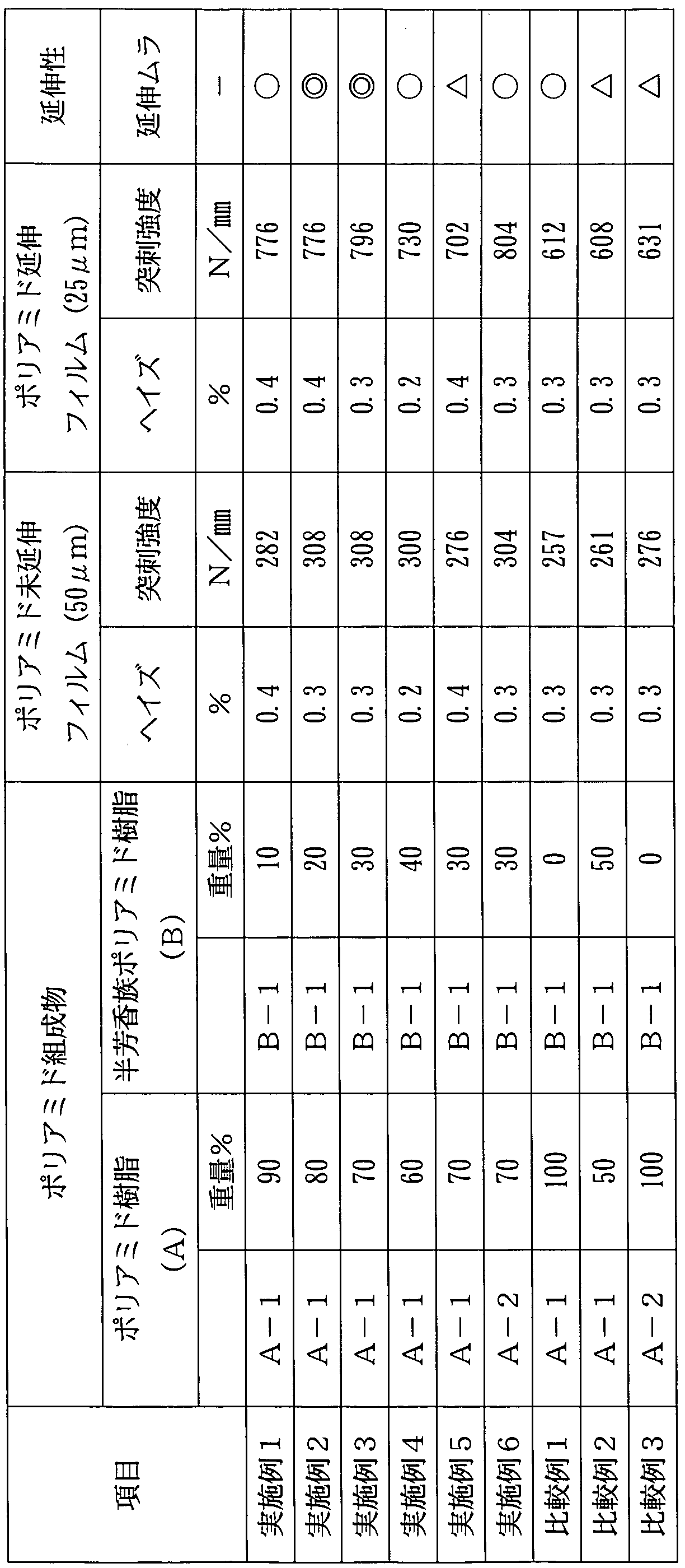
表 1 によれば、 実施例 1〜 6のナイ ロンフィルムは、 比較例のナ イ ロンフイルムに比べ、 突刺強度、 透明性および延伸性が、 ともに 優れていることが分かる。 産業上の利用可能性
本発明の包装フィルムは、 突刺強度が高いので、 突起部分を有す る物品を包装するフィルムとして産業上有用である。
Claims
請 求 の 範 囲 請求項 1
脂肪族ポリアミ ド樹脂 (A ) 6 0〜 9 0重量%と非晶性芳香族系 ポリアミ ド樹脂 ( B ) 4 0〜 1 0重量%からなるポリアミ ド樹脂組 成物を二軸延伸してなり、 7 0 O N /m m以上の突刺強度を有する ことを特徴とする突起部分を有する物品用包装フィルム。
請求項 2
脂肪族ポリアミ ド樹脂 (A ) と非晶性芳香族系ポリアミ ド樹脂 ( B ) とを予め溶融混練した後、 押し出し成形することを特徴とする 請求項 1 に記載の突起部分を有する物品用包装フィルム。
請求項 3
非晶性芳香族系ポリアミ ド樹脂 ( B ) 力 脂肪族ジカルボン酸と 芳香族ジアミ ンとから誘導される単位を主構成単位とするポリ アミ ド、 又は芳香族ジカルボン酸と脂肪族ジァミ ンとから誘導される単 位を主構成単位とするポリアミ ドのいずれかを、 分子鎖中に 5 0モ ル%以上含有するポリアミ ドである請求項 1 に記載の突起部分を有 する物品用包装フィルム。
請求項 4
非晶性芳香族系ポリアミ ド樹脂が、 脂肪族ジアミ ンとテレフタル 酸又はイソフ夕ル酸から選ばれた少なく とも一種の酸とから誘導さ れる構成単位を分子鎖中に少なく とも 5 0モル%以上含有するポリ アミ ドである請求項 1 に記載の突起部分を有する物品用包装フィル ム。
請求項 5
非晶性芳香族系ポリアミ ド樹脂が、 へキサメチレンジアミ ンーィ ソフタル酸の重合体、 へキサメチレンジァミ ン一テレフタル酸の重
合体、 及びへキサメチレンジアミ ンーテレフタル酸一へキサメチレ ンジァミ ン一イソフ夕ル酸の共重合体からなる群から選ばれる少な く とも 1種である請求項 1 に記載の突起部分を有する物品用包装フ イ ルム。
請求項 6
ポリアミ ド樹脂組成物が、 脂肪族ポリアミ ド樹脂 (A ) 7 0〜 8 0重量%と非晶性芳香族系ポリアミ ド樹脂 ( B ) 2 0〜 1 0重量% からなる請求項 1 に記載の突起部分を有する物品用包装フィルム。 請求項 7
7 5 0 N /m m以上の突刺強度を有する請求項 1 に記載の突起部 分を有する物品用包装フィルム。
請求項 8
フィルムの厚さが 5〜 1 0 0 ; a mである請求項 1 に記載の突起部 分を有する物品用包装フィルム。
請求項 9
請求項 1 〜 8 のいずれか 1項に記載のポリ アミ ド樹脂組成物のフ イルムと他の熱可塑性樹脂フィルムとが積層されてなることを特徴 とする突起部分を有する物品用包装フィルム。
請求項 1 0
突起部分を有する物品を請求項 1 〜 8 のいずれか 1 項に記載の包 装フィルムを用いて包装することを特徴とする突起部分を有する物 品の包装方法。
請求項 1 1
突起部分を有する物品を請求項 9記載の包装フィルムを用いて包 装することを特徴とする突起部分を有する物品の包装方法。
Priority Applications (1)
| Application Number | Priority Date | Filing Date | Title |
|---|---|---|---|
| JP2010517964A JPWO2009154263A1 (ja) | 2008-06-18 | 2009-06-12 | 突起部分を有する物品用包装フィルム |
Applications Claiming Priority (2)
| Application Number | Priority Date | Filing Date | Title |
|---|---|---|---|
| JP2008-159018 | 2008-06-18 | ||
| JP2008159018 | 2008-06-18 |
Publications (1)
| Publication Number | Publication Date |
|---|---|
| WO2009154263A1 true WO2009154263A1 (ja) | 2009-12-23 |
Family
ID=41434175
Family Applications (1)
| Application Number | Title | Priority Date | Filing Date |
|---|---|---|---|
| PCT/JP2009/061146 Ceased WO2009154263A1 (ja) | 2008-06-18 | 2009-06-12 | 突起部分を有する物品用包装フィルム |
Country Status (2)
| Country | Link |
|---|---|
| JP (1) | JPWO2009154263A1 (ja) |
| WO (1) | WO2009154263A1 (ja) |
Cited By (7)
| Publication number | Priority date | Publication date | Assignee | Title |
|---|---|---|---|---|
| JP2011126937A (ja) * | 2009-12-15 | 2011-06-30 | Toray Ind Inc | ポリアミド樹脂膜状体およびその製造方法 |
| JP2012126806A (ja) * | 2010-12-15 | 2012-07-05 | Riken Technos Corp | 熱可塑性樹脂組成物 |
| CN102947391A (zh) * | 2010-06-23 | 2013-02-27 | 帝斯曼知识产权资产管理有限公司 | 膜或板 |
| JP2015151446A (ja) * | 2014-02-13 | 2015-08-24 | 三菱樹脂株式会社 | ポリアミド系樹脂組成物及びポリアミド系樹脂延伸フィルム |
| WO2015182655A1 (ja) * | 2014-05-30 | 2015-12-03 | 住友ベークライト株式会社 | センサ素子の製造のためのポリアミド溶液 |
| JP2019507220A (ja) * | 2016-02-05 | 2019-03-14 | ビーエーエスエフ ソシエタス・ヨーロピアBasf Se | 非晶性および部分結晶性ポリアミドを含むポリマーフィルム |
| WO2019230255A1 (ja) * | 2018-06-01 | 2019-12-05 | 株式会社クレハ | 熱収縮性多層フィルム |
Citations (7)
| Publication number | Priority date | Publication date | Assignee | Title |
|---|---|---|---|---|
| JP2006027695A (ja) * | 2004-07-20 | 2006-02-02 | Toppan Printing Co Ltd | 蓋材 |
| WO2006022266A1 (ja) * | 2004-08-25 | 2006-03-02 | Kureha Corporation | 収縮性積層フィルム及びその製造方法 |
| JP2006321990A (ja) * | 2005-04-22 | 2006-11-30 | Asahi Kasei Chemicals Corp | 容器包装用エチレン系樹脂 |
| WO2007094144A1 (ja) * | 2006-02-16 | 2007-08-23 | Kureha Corporation | 熱収縮性多層フィルム及びそれを用いた包装材 |
| JP2007283566A (ja) * | 2006-04-14 | 2007-11-01 | Mitsubishi Plastics Ind Ltd | ガスバリア性延伸フィルム、並びに該フィルムを用いたガスバリア性包装体 |
| JP2008094016A (ja) * | 2006-10-13 | 2008-04-24 | Gunze Ltd | ポリアミド系多層フィルム |
| JP2008100496A (ja) * | 2006-09-21 | 2008-05-01 | Gunze Ltd | ポリアミド系多層フィルム |
Family Cites Families (1)
| Publication number | Priority date | Publication date | Assignee | Title |
|---|---|---|---|---|
| JP4864177B2 (ja) * | 1998-07-24 | 2012-02-01 | 株式会社クレハ | 延伸多層フィルムケーシング |
-
2009
- 2009-06-12 JP JP2010517964A patent/JPWO2009154263A1/ja active Pending
- 2009-06-12 WO PCT/JP2009/061146 patent/WO2009154263A1/ja not_active Ceased
Patent Citations (7)
| Publication number | Priority date | Publication date | Assignee | Title |
|---|---|---|---|---|
| JP2006027695A (ja) * | 2004-07-20 | 2006-02-02 | Toppan Printing Co Ltd | 蓋材 |
| WO2006022266A1 (ja) * | 2004-08-25 | 2006-03-02 | Kureha Corporation | 収縮性積層フィルム及びその製造方法 |
| JP2006321990A (ja) * | 2005-04-22 | 2006-11-30 | Asahi Kasei Chemicals Corp | 容器包装用エチレン系樹脂 |
| WO2007094144A1 (ja) * | 2006-02-16 | 2007-08-23 | Kureha Corporation | 熱収縮性多層フィルム及びそれを用いた包装材 |
| JP2007283566A (ja) * | 2006-04-14 | 2007-11-01 | Mitsubishi Plastics Ind Ltd | ガスバリア性延伸フィルム、並びに該フィルムを用いたガスバリア性包装体 |
| JP2008100496A (ja) * | 2006-09-21 | 2008-05-01 | Gunze Ltd | ポリアミド系多層フィルム |
| JP2008094016A (ja) * | 2006-10-13 | 2008-04-24 | Gunze Ltd | ポリアミド系多層フィルム |
Cited By (10)
| Publication number | Priority date | Publication date | Assignee | Title |
|---|---|---|---|---|
| JP2011126937A (ja) * | 2009-12-15 | 2011-06-30 | Toray Ind Inc | ポリアミド樹脂膜状体およびその製造方法 |
| CN102947391A (zh) * | 2010-06-23 | 2013-02-27 | 帝斯曼知识产权资产管理有限公司 | 膜或板 |
| JP2012126806A (ja) * | 2010-12-15 | 2012-07-05 | Riken Technos Corp | 熱可塑性樹脂組成物 |
| JP2015151446A (ja) * | 2014-02-13 | 2015-08-24 | 三菱樹脂株式会社 | ポリアミド系樹脂組成物及びポリアミド系樹脂延伸フィルム |
| WO2015182655A1 (ja) * | 2014-05-30 | 2015-12-03 | 住友ベークライト株式会社 | センサ素子の製造のためのポリアミド溶液 |
| JPWO2015182655A1 (ja) * | 2014-05-30 | 2017-04-20 | 住友ベークライト株式会社 | センサ素子の製造のためのポリアミド溶液 |
| JP2019507220A (ja) * | 2016-02-05 | 2019-03-14 | ビーエーエスエフ ソシエタス・ヨーロピアBasf Se | 非晶性および部分結晶性ポリアミドを含むポリマーフィルム |
| WO2019230255A1 (ja) * | 2018-06-01 | 2019-12-05 | 株式会社クレハ | 熱収縮性多層フィルム |
| JP2019209544A (ja) * | 2018-06-01 | 2019-12-12 | 株式会社クレハ | 熱収縮性多層フィルム |
| JP7061930B2 (ja) | 2018-06-01 | 2022-05-02 | 株式会社クレハ | 熱収縮性多層フィルム |
Also Published As
| Publication number | Publication date |
|---|---|
| JPWO2009154263A1 (ja) | 2011-12-01 |
Similar Documents
| Publication | Publication Date | Title |
|---|---|---|
| JP2000302952A (ja) | ポリエステル樹脂組成物 | |
| JP6108055B1 (ja) | 延伸フィルム、延伸フィルムの製造方法、および、ポリアミド樹脂組成物 | |
| WO2009154263A1 (ja) | 突起部分を有する物品用包装フィルム | |
| TW575616B (en) | Stretched polyamide film | |
| JP7160029B2 (ja) | 樹脂組成物、成形品、フィルムおよび多層フィルム | |
| JP5659793B2 (ja) | 熱収縮性フィルム | |
| US12247108B2 (en) | Stretched film, packaging material, and method for producing stretched film | |
| JP2018168383A (ja) | ポリアミド樹脂及びそれを含む成形品 | |
| WO2006049281A1 (ja) | 芳香族ポリアミド延伸フィルム | |
| JP6922519B2 (ja) | 樹脂組成物、成形品、繊維およびフィルム | |
| JP7351308B2 (ja) | 延伸体、ペットボトルおよび容器の製造方法 | |
| WO2007105628A1 (ja) | ポリエステル樹脂組成物およびその製造方法、並びに成形体 | |
| JP2006028289A (ja) | 易引裂性二軸延伸ポリアミドフィルムおよびその応用 | |
| JPH1024489A (ja) | 延伸多層ポリアミドフィルムの製造方法 | |
| JPH10151714A (ja) | 積層フィルム | |
| JP2022077210A (ja) | ポリアミド系二軸延伸フィルムおよび包装体 | |
| WO2006025528A1 (ja) | 多層ペレットおよび樹脂成形品 | |
| JP2018053033A (ja) | ポリアミド樹脂組成物および多層成形体 | |
| JP6661914B2 (ja) | ポリアミド樹脂組成物、成形品および成形品の製造方法 | |
| JP4336951B2 (ja) | ポリアミド延伸フィルム | |
| JP2023088383A (ja) | 樹脂組成物、フィルム、多層フィルム、包装材料、および、フィルムの製造方法 | |
| JP2022109868A (ja) | ポリアミド系樹脂フィルムおよび包装体 | |
| JP2002194209A (ja) | ポリアミド樹脂組成物及びポリアミドフィルム | |
| JPH1060270A (ja) | ポリアミド樹脂 | |
| JP2616221C (ja) |
Legal Events
| Date | Code | Title | Description |
|---|---|---|---|
| 121 | Ep: the epo has been informed by wipo that ep was designated in this application |
Ref document number: 09766711 Country of ref document: EP Kind code of ref document: A1 |
|
| WWE | Wipo information: entry into national phase |
Ref document number: 2010517964 Country of ref document: JP |
|
| NENP | Non-entry into the national phase |
Ref country code: DE |
|
| 122 | Ep: pct application non-entry in european phase |
Ref document number: 09766711 Country of ref document: EP Kind code of ref document: A1 |