EP4086254B1 - Integrininhibitoren - Google Patents
Integrininhibitoren Download PDFInfo
- Publication number
- EP4086254B1 EP4086254B1 EP22173105.2A EP22173105A EP4086254B1 EP 4086254 B1 EP4086254 B1 EP 4086254B1 EP 22173105 A EP22173105 A EP 22173105A EP 4086254 B1 EP4086254 B1 EP 4086254B1
- Authority
- EP
- European Patent Office
- Prior art keywords
- mmol
- compound
- tetrahydro
- butyl
- stirred
- Prior art date
- Legal status (The legal status is an assumption and is not a legal conclusion. Google has not performed a legal analysis and makes no representation as to the accuracy of the status listed.)
- Active
Links
Classifications
-
- C—CHEMISTRY; METALLURGY
- C07—ORGANIC CHEMISTRY
- C07D—HETEROCYCLIC COMPOUNDS
- C07D471/00—Heterocyclic compounds containing nitrogen atoms as the only ring hetero atoms in the condensed system, at least one ring being a six-membered ring with one nitrogen atom, not provided for by groups C07D451/00 - C07D463/00
- C07D471/02—Heterocyclic compounds containing nitrogen atoms as the only ring hetero atoms in the condensed system, at least one ring being a six-membered ring with one nitrogen atom, not provided for by groups C07D451/00 - C07D463/00 in which the condensed system contains two hetero rings
- C07D471/04—Ortho-condensed systems
-
- A—HUMAN NECESSITIES
- A61—MEDICAL OR VETERINARY SCIENCE; HYGIENE
- A61K—PREPARATIONS FOR MEDICAL, DENTAL OR TOILETRY PURPOSES
- A61K31/00—Medicinal preparations containing organic active ingredients
- A61K31/33—Heterocyclic compounds
- A61K31/395—Heterocyclic compounds having nitrogen as a ring hetero atom, e.g. guanethidine or rifamycins
- A61K31/435—Heterocyclic compounds having nitrogen as a ring hetero atom, e.g. guanethidine or rifamycins having six-membered rings with one nitrogen as the only ring hetero atom
- A61K31/4353—Heterocyclic compounds having nitrogen as a ring hetero atom, e.g. guanethidine or rifamycins having six-membered rings with one nitrogen as the only ring hetero atom ortho- or peri-condensed with heterocyclic ring systems
- A61K31/4375—Heterocyclic compounds having nitrogen as a ring hetero atom, e.g. guanethidine or rifamycins having six-membered rings with one nitrogen as the only ring hetero atom ortho- or peri-condensed with heterocyclic ring systems the heterocyclic ring system containing a six-membered ring having nitrogen as a ring heteroatom, e.g. quinolizines, naphthyridines, berberine, vincamine
-
- A—HUMAN NECESSITIES
- A61—MEDICAL OR VETERINARY SCIENCE; HYGIENE
- A61K—PREPARATIONS FOR MEDICAL, DENTAL OR TOILETRY PURPOSES
- A61K9/00—Medicinal preparations characterised by special physical form
- A61K9/0012—Galenical forms characterised by the site of application
- A61K9/0053—Mouth and digestive tract, i.e. intraoral and peroral administration
-
- A—HUMAN NECESSITIES
- A61—MEDICAL OR VETERINARY SCIENCE; HYGIENE
- A61P—SPECIFIC THERAPEUTIC ACTIVITY OF CHEMICAL COMPOUNDS OR MEDICINAL PREPARATIONS
- A61P19/00—Drugs for skeletal disorders
- A61P19/08—Drugs for skeletal disorders for bone diseases, e.g. rachitism, Paget's disease
- A61P19/10—Drugs for skeletal disorders for bone diseases, e.g. rachitism, Paget's disease for osteoporosis
-
- A—HUMAN NECESSITIES
- A61—MEDICAL OR VETERINARY SCIENCE; HYGIENE
- A61P—SPECIFIC THERAPEUTIC ACTIVITY OF CHEMICAL COMPOUNDS OR MEDICINAL PREPARATIONS
- A61P27/00—Drugs for disorders of the senses
- A61P27/02—Ophthalmic agents
-
- A—HUMAN NECESSITIES
- A61—MEDICAL OR VETERINARY SCIENCE; HYGIENE
- A61P—SPECIFIC THERAPEUTIC ACTIVITY OF CHEMICAL COMPOUNDS OR MEDICINAL PREPARATIONS
- A61P29/00—Non-central analgesic, antipyretic or antiinflammatory agents, e.g. antirheumatic agents; Non-steroidal antiinflammatory drugs [NSAID]
-
- A—HUMAN NECESSITIES
- A61—MEDICAL OR VETERINARY SCIENCE; HYGIENE
- A61P—SPECIFIC THERAPEUTIC ACTIVITY OF CHEMICAL COMPOUNDS OR MEDICINAL PREPARATIONS
- A61P35/00—Antineoplastic agents
-
- A—HUMAN NECESSITIES
- A61—MEDICAL OR VETERINARY SCIENCE; HYGIENE
- A61P—SPECIFIC THERAPEUTIC ACTIVITY OF CHEMICAL COMPOUNDS OR MEDICINAL PREPARATIONS
- A61P37/00—Drugs for immunological or allergic disorders
- A61P37/02—Immunomodulators
- A61P37/06—Immunosuppressants, e.g. drugs for graft rejection
-
- A—HUMAN NECESSITIES
- A61—MEDICAL OR VETERINARY SCIENCE; HYGIENE
- A61P—SPECIFIC THERAPEUTIC ACTIVITY OF CHEMICAL COMPOUNDS OR MEDICINAL PREPARATIONS
- A61P43/00—Drugs for specific purposes, not provided for in groups A61P1/00-A61P41/00
-
- A—HUMAN NECESSITIES
- A61—MEDICAL OR VETERINARY SCIENCE; HYGIENE
- A61P—SPECIFIC THERAPEUTIC ACTIVITY OF CHEMICAL COMPOUNDS OR MEDICINAL PREPARATIONS
- A61P9/00—Drugs for disorders of the cardiovascular system
- A61P9/10—Drugs for disorders of the cardiovascular system for treating ischaemic or atherosclerotic diseases, e.g. antianginal drugs, coronary vasodilators, drugs for myocardial infarction, retinopathy, cerebrovascula insufficiency, renal arteriosclerosis
Definitions
- This disclosure relates to novel chemical compounds and methods useful for inhibiting ⁇ v ⁇ 6 integrin.
- Integrins are expressed on the surface of most of human cells. Their pathology contributes to a diverse set of human diseases, including platelet disorders, atherosclerosis, cancer, osteoporosis, fibrosis, diabetic neuropathy of the kidney, macular degeneration and various autoimmune and chronic inflammation diseases.
- integrins as drug targets has long been recognized, and a total of six injectable integrin inhibitors have been approved by the Food and Drug Administration for the treatment of various therapeutic indications: inflammatory bowel disease, multiple sclerosis, psoriasis, and acute coronary syndrome.
- integrin inhibitors There exists a need for new classes of integrin inhibitors. There has been a notable absence of therapeutic success with orally bioavailable integrin inhibitors. Accordingly, there remains a need for a small molecule integrin inhibitor of ⁇ v ⁇ 6suitable for oral administration.
- the oral administration route is preferred for small-molecule delivery as it allows a wide range of doses to be administered, allows convenient patient self-administration, is adaptable to varying dosage regimens and needs no special equipment. Therefore, it is important to identify of ⁇ 6 integrin inhibitor compounds that are not only potent at the intended biological target, but are also demonstrating other characteristics relating to the ability of the compound to be absorbed in the body (e.g, after oral delivery) in a therapeutically effective manner.
- ⁇ 6 integrin inhibitor compounds can be selected based on both potency and based on performance in an in vitro permeability assay (e.g., evaluating the ability of compounds to cross a layer of Madin-Darby Canine Kidney (MDCK) cells from the apical to basolateral side (A->B)).
- MDCK Madin-Darby Canine Kidney
- ⁇ 6 integrin inhibitor compounds have discovered novel ⁇ 6 integrin inhibitor compounds and evaluated representative examples of such compounds, both for biochemical potency (e.g., using the assay of Example 35 to evaluate fluorescence polarization assays of compounds for ⁇ v ⁇ 6 binding) and in vitro permeability properties (e.g., using the assay of Example 36 to evaluate MDCK permeability).
- MDCK permeability values of less than 5 10 ⁇ 6 cm/s predict low absorption in the gut, while permeability values greater than 5 10 ⁇ 6 cm/s predict sufficient absorption in the gut for oral dosing of a small molecule drug.
- the invention relates to a compound of Formula I: A-B-C (I) wherein:
- the invention relates to compounds that inhibit ⁇ 6 integrin.
- the compounds are selective for ⁇ 6 integrin.
- the compounds are used in a method of treatment of idiopathic pulmonary fibrosis, diabetic nephropathy, focal segmental glomerulosclerosis, chronic kidney disease, nonalcoholic steatohepatitis, primary biliary cholangitis, primary sclerosing cholangitis, solid tumors, hematological tumors, organ transplant, Alport syndrome, interstitial lung disease, radiation-induced fibrosis, bleomycin-induced fibrosis, asbestos-induced fibrosis, flu-induced fibrosis, coagulation-induced fibrosis, vascular injury-induced fibrosis, aortic stenosis, or cardiac fibrosis.
- compositions of the present invention may exist in particular geometric or stereoisomeric forms.
- polymers of the present invention may also be optically active.
- the present invention contemplates all such compounds, including cis- and trans-isomers, R - and S -enantiomers, diastereomers, (D)-isomers, (L)-isomers, the racemic mixtures thereof, and other mixtures thereof, as falling within the scope of the invention.
- Additional asymmetric carbon atoms may be present in a substituent such as an alkyl group. All such isomers, as well as mixtures thereof, are intended to be included in this invention.
- a particular enantiomer of compound of the present invention may be prepared by asymmetric synthesis, or by derivation with a chiral auxiliary, where the resulting diastereomeric mixture is separated and the auxiliary group cleaved to provide the pure desired enantiomers.
- the molecule contains a basic functional group, such as amino, or an acidic functional group, such as carboxyl, diastereomeric salts are formed with an appropriate optically-active acid or base, followed by resolution of the diastereomers thus formed by fractional crystallization or chromatographic means well known in the art, and subsequent recovery of the pure enantiomers.
- alkyl refers to a fully saturated cyclic or acyclic, branched or unbranched carbon chain moiety having the number of carbon atoms specified, or up to 30 carbon atoms if no specification is made.
- alkyl of 1 to 8 carbon atoms refers to moieties such as methyl, ethyl, propyl, butyl, pentyl, hexyl, heptyl, and octyl, and those moieties which are positional isomers of these moieties.
- Alkyl of 10 to 30 carbon atoms includes decyl, undecyl, dodecyl, tridecyl, tetradecyl, pentadecyl, hexadecyl, heptadecyl, octadecyl, nonadecyl, eicosyl, heneicosyl, docosyl, tricosyl and tetracosyl.
- a straight chain or branched chain alkyl has 30 or fewer carbon atoms in its backbone (e.g., C 1 -C 30 for straight chains, C 3 -C 30 for branched chains), and more preferably 20 or fewer.
- Alkyl goups may be substituted or unsubstituted.
- alkylene refers to an alkyl group having the specified number of carbons, for example from 2 to 12 carbon atoms, that contains two points of attachment to the rest of the compound on its longest carbon chain.
- alkylene groups include methylene -(CH 2 )-, ethylene -(CH 2 CH 2 )-, n-propylene -(CH 2 CH 2 CH 2 )-, isopropylene -(CH 2 CH(CH 3 ))-, and the like.
- Alkylene groups can be cyclic or acyclic, branched or unbranched carbon chain moiety, and may be optionally substituted with one or more substituents.
- Cycloalkyl means mono- or bicyclic or bridged or spirocyclic, or polycyclic saturated carbocyclic rings, each having from 3 to 12 carbon atoms. Likewise, preferred cycloalkyls have from 3-10 carbon atoms in their ring structure, and more preferably have 3-6 carbons in the ring structure. Cycloalkyl groups may be substituted or unsubstituted.
- lower alkyl means an alkyl group, as defined above, but having from one to ten carbons, more preferably from one to six carbon atoms in its backbone structure such as methyl, ethyl, n-propyl, isopropyl, n-butyl, isobutyl, sec-butyl, and tert-butyl.
- lower alkenyl and “lower alkynyl” have similar chain lengths.
- preferred alkyl groups are lower alkyls.
- a substituent designated herein as alkyl is a lower alkyl.
- Alkenyl refers to any cyclic or acyclic, branched or unbranched unsaturated carbon chain moiety having the number of carbon atoms specified, or up to 26 carbon atoms if no limitation on the number of carbon atoms is specified; and having one or more double bonds in the moiety.
- Alkenyl of 6 to 26 carbon atoms is exemplified by hexenyl, heptenyl, octenyl, nonenyl, decenyl, undecenyl, dodenyl, tridecenyl, tetradecenyl, pentadecenyl, hexadecenyl, heptadecenyl, octadecenyl, nonadecenyl, eicosenyl, heneicosoenyl, docosenyl, tricosenyl, and tetracosenyl, in their various isomeric forms, where the unsaturated bond(s) can be located anywhere in the moiety and can have either the (Z) or the (E) configuration about the double bond(s).
- aryl as used herein includes 3- to 12-membered substituted or unsubstituted single-ring aromatic groups in which each atom of the ring is carbon (i.e., carbocyclic aryl) or where one or more atoms are heteroatoms (i.e., heteroaryl).
- aryl groups include 5- to 12-membered rings, more preferably 6- to 10-membered rings
- aryl also includes polycyclic ring systems having two or more cyclic rings in which two or more carbons are common to two adjoining rings wherein at least one of the rings is aromatic, e.g., the other cyclic rings can be cycloalkyls, cycloalkenyls, cycloalkynyls, aryls, heteroaryls, and/or heterocyclyls.
- Carboycyclic aryl groups include benzene, naphthalene, phenanthrene, phenol, aniline, and the like.
- Heteroaryl groups include substituted or unsubstituted aromatic 3- to 12-membered ring structures, more preferably 5- to 12-membered rings, more preferably 5- to 10-membered rings, whose ring structures include one to four heteroatoms.
- Heteroaryl groups include, for example, pyrrole, furan, thiophene, imidazole, oxazole, thiazole, triazole, pyrazole, pyridine, pyrazine, pyridazine and pyrimidine, and the like.
- Aryl and heteroaryl can be monocyclic, bicyclic, or polycyclic.
- Each instance of an aryl group may be independently optionally substituted, i.e., unsubstituted (an "unsubstituted aryl") or substituted (a "substituted aryl") with one or more substituents; e.g., for instance from 1 to 5 substituents, 1 to 4 substituents, 1 to 3 substituents, 1 to 2 substituents or just 1 substituent.
- the aromatic ring may be substituted at one or more ring positions with one or more substituents, such as halogen, azide, alkyl, aralkyl, alkenyl, alkynyl, cycloalkyl, hydroxyl, alkoxyl, amino, nitro, sulfhydryl, imino, amido, phosphonate, phosphinate, carbonyl, carboxyl, silyl, ether, alkylthio, sulfonyl, sulfonamido, ketone, aldehyde, ester, heterocyclyl, aromatic or heteroaromatic moieties, fluoroalkyl (such as trifluromethyl), cyano, or the like.
- the aryl group can be an unsubstituted C 5 -C 12 aryl and in certain embodiments, the aryl group can be a substituted C 5 -C 10 aryl.
- halo means halogen and includes, for example, and without being limited thereto, fluoro, chloro, bromo, iodo and the like, in both radioactive and non-radioactive forms.
- halo is selected from the group consisting of fluoro, chloro and bromo.
- heterocyclyl or “heterocyclic group” refer to 3- to 12-membered ring structures, more preferably 5- to 12-membered rings, more preferably 5- to 10-membered rings, whose ring structures include one to four heteroatoms.
- Heterocycles can be monocyclic, bicyclic, spirocyclic, or polycyclic.
- Heterocyclyl groups include, for example, thiophene, thianthrene, furan, pyran, isobenzofuran, chromene, xanthene, phenoxathiin, pyrrole, imidazole, pyrazole, isothiazole, isoxazole, pyridine, pyrazine, pyrimidine, pyridazine, indolizine, isoindole, indole, indazole, purine, quinolizine, isoquinoline, quinoline, phthalazine, naphthyridine, quinoxaline, quinazoline, cinnoline, pteridine, carbazole, carboline, phenanthridine, acridine, pyrimidine, phenanthroline, phenazine, phenarsazine, phenothiazine, furazan, phenoxazine, pyrrolidine, o
- the heterocyclic ring can be substituted at one or more positions with such substituents as described above, as for example, halogen, alkyl, aralkyl, alkenyl, alkynyl, cycloalkyl, hydroxyl, amino, nitro, sulfhydryl, imino, amido, phosphate, phosphonate, phosphinate, carbonyl, carboxyl, silyl, sulfamoyl, sulfinyl, ether, alkylthio, sulfonyl, ketone, aldehyde, ester, a heterocyclyl, an aromatic or heteroaromatic moiety, -CF 3 , -CN, and the like.
- substituents as described above, as for example, halogen, alkyl, aralkyl, alkenyl, alkynyl, cycloalkyl, hydroxyl, amino, nitro, sulfhydryl, imino
- the term "substituted" is contemplated to include all permissible substituents of organic compounds.
- the permissible substituents include acyclic and cyclic, branched and unbranched, carbocyclic and heterocyclic, aromatic and nonaromatic substituents of organic compounds.
- Illustrative substituents include, for example, those described herein above.
- the permissible substituents can be one or more and the same or different for appropriate organic compounds.
- the heteroatoms such as nitrogen may have hydrogen substituents and/or any permissible substituents of organic compounds described herein which satisfy the valences of the heteroatoms.
- substitution or “substituted with” includes the implicit proviso that such substitution is in accordance with permitted valence of the substituted atom and the substituent, and that the substitution results in a stable compound, e.g., which does not spontaneously undergo transformation such as by rearrangement, cyclization, elimination, etc.
- substituted refers to moieties having substituents replacing a hydrogen on one or more carbons of the backbone. It will be understood that “substitution” or “substituted with” includes the implicit proviso that such substitution is in accordance with permitted valence of the substituted atom and the substituent, and that the substitution results in a stable compound, e.g., which does not spontaneously undergo transformation such as by rearrangement, cyclization, elimination, etc. As used herein, the term “substituted” is contemplated to include all permissible substituents of organic compounds.
- the permissible substituents include acyclic and cyclic, branched and unbranched, carbocyclic and heterocyclic, aromatic and non-aromatic substituents of organic compounds.
- the permissible substituents can be one or more and the same or different for appropriate organic compounds.
- the heteroatoms such as nitrogen may have hydrogen substituents and/or any permissible substituents of organic compounds described herein which satisfy the valences of the heteroatoms.
- Substituents can include any substituents described herein, for example, a halogen, a hydroxyl, a carbonyl (such as a carboxyl, an alkoxycarbonyl, a formyl, or an acyl), a thiocarbonyl (such as a thioester, a thioacetate, or a thioformate), an alkoxy, a phosphoryl, a phosphate, a phosphonate, a phosphinate, an amino, an amido, an amidine, an imine, a cyano, a nitro, an azido, a sulfhydryl, an alkylthio, a sulfate, a sulfonate, a sulfamoyl, a sulfonamido, a sulfonyl, a heterocyclyl, an aralkyl, or an aromatic or heteroaromatic moiety
- the substituents on substituted alkyls are selected from C 1-6 alkyl, C 3-6 cycloalkyl, halogen, carbonyl, cyano, or hydroxyl. In more preferred embodiments, the substituents on substituted alkyls are selected from fluoro, carbonyl, cyano, or hydroxyl. It will be understood by those skilled in the art that substituents can themselves be substituted, if appropriate. Unless specifically stated as "unsubstituted,” references to chemical moieties herein are understood to include substituted variants. For example, reference to an "aryl" group or moiety implicitly includes both substituted and unsubstituted variants.
- the invention relates to any one of the aforementioned compounds, wherein B is selected from the group consisting of: , and ; q is 0, 1, 2, or 3; and p is 2.
- B is .
- B is In some embodiments, q is 0.
- q is 1.
- q is 2.
- q is 3.
- p is 2.
- the invention relates to any one of the aforementioned compounds, wherein R 1 is H. According to the invention, all instances of R 1 are H.
- the invention relates to any one of the aforementioned compounds, wherein n is 0. In certain embodiments, the invention relates to any one of the aforementioned compounds, wherein n is 1.
- the invention relates to any one of the aforementioned compounds, wherein R 4 is heterocycloalkyl.
- the invention relates to any one of the aforementioned compounds, R 4 is selected from , and
- the invention relates to any one of the aforementioned compounds, R 4 is selected from optionally substituted , or . In certain embodiments, the invention relates to any one of the aforementioned compounds, R 4 is . In certain embodiments, the invention relates to any one of the aforementioned compounds, R 4 is . In certain embodiments, the invention relates to any one of the aforementioned compounds, R 4 is . In certain embodiments, the invention relates to any one of the aforementioned compounds, R 4 is . In certain embodiments, the invention relates to any one of the aforementioned compounds, wherein R 4 is selected from and
- the invention relates to any one of the aforementioned compounds, wherein R 5 is F.
- the invention relates to any one of the aforementioned compounds, R a is H.
- the invention relates to any one of the aforementioned compounds, wherein the absolute configuration at any stereocenter is R. In certain embodiments, the invention relates to any one of the aforementioned compounds, wherein the absolute configuration at any stereocenter is S. In certain embodiments, the invention relates to any one of the aforementioned compounds, wherein the absolute configuration at any stereocenter is a mixture of R and S.
- the invention relates to any one of the aforementioned compounds, wherein the compound is a pharmaceutically acceptable salt.
- the compounds of the invention are compounds disclosed in Table 5.
- phrases "pharmaceutically acceptable excipient” or “pharmaceutically acceptable carrier” as used herein means a pharmaceutically acceptable material, composition or vehicle, such as a liquid or solid filler, diluent, excipient, solvent or encapsulating material, involved in carrying or transporting the subject chemical from one organ or portion of the body, to another organ or portion of the body.
- Each carrier must be “acceptable” in the sense of being compatible with the other ingredients of the formulation, not injurious to the patient, and substantially non-pyrogenic.
- materials which can serve as pharmaceutically acceptable carriers include: (1) sugars, such as lactose, glucose, and sucrose; (2) starches, such as corn starch and potato starch; (3) cellulose, and its derivatives, such as sodium carboxymethyl cellulose, ethyl cellulose, and cellulose acetate; (4) powdered tragacanth; (5) malt; (6) gelatin; (7) talc; (8) excipients, such as cocoa butter and suppository waxes; (9) oils, such as peanut oil, cottonseed oil, safflower oil, sesame oil, olive oil, corn oil, and soybean oil; (10) glycols, such as propylene glycol; (11) polyols, such as glycerin, sorbitol, mannitol, and polyethylene glycol; (12) esters, such as ethyl oleate and ethyl laurate; (13) agar; (14) buffering agents, such as magnesium hydroxide and aluminum
- salts refers to the relatively non-toxic, inorganic and organic acid addition salts of the compound(s). These salts can be prepared in situ during the final isolation and purification of the compound(s), or by separately reacting a purified compound(s) in its free base form with a suitable organic or inorganic acid, and isolating the salt thus formed.
- Representative salts include the hydrobromide, hydrochloride, sulfate, bisulfate, phosphate, nitrate, acetate, valerate, oleate, palmitate, stearate, laurate, benzoate, lactate, phosphate, tosylate, citrate, maleate, fumarate, succinate, tartrate, naphthylate, mesylate, glucoheptonate, lactobionate, and laurylsulphonate salts, and the like.
- lactate lactate
- phosphate tosylate
- citrate maleate, fumarate, succinate, tartrate, naphthylate, mesylate, glucoheptonate, lactobionate, and laurylsulphonate salts, and the like.
- the compounds useful in the methods of the present invention may contain one or more acidic functional groups and, thus, are capable of forming pharmaceutically acceptable salts with pharmaceutically acceptable bases.
- pharmaceutically acceptable salts refers to the relatively non-toxic inorganic and organic base addition salts of a compound(s). These salts can likewise be prepared in situ during the final isolation and purification of the compound(s), or by separately reacting the purified compound(s) in its free acid form with a suitable base, such as the hydroxide, carbonate, or bicarbonate of a pharmaceutically acceptable metal cation, with ammonia, or with a pharmaceutically acceptable organic primary, secondary, or tertiary amine.
- Representative alkali or alkaline earth salts include the lithium, sodium, potassium, calcium, magnesium, and aluminum salts, and the like.
- Representative organic amines useful for the formation of base addition salts include ethylamine, diethylamine, ethylenediamine, ethanolamine, diethanolamine, piperazine, and the like (see, for example, Berge et al., supra ).
- a “therapeutically effective amount” (or “effective amount”) of a compound with respect to use in treatment refers to an amount of the compound in a preparation which, when administered as part of a desired dosage regimen (to a mammal, preferably a human) alleviates a symptom, ameliorates a condition, or slows the onset of disease conditions according to clinically acceptable standards for the disorder or condition to be treated or the cosmetic purpose, e.g., at a reasonable benefit/risk ratio applicable to any medical treatment.
- the ⁇ 6 integrin inhibitor compounds provided herein are useful for the treatment of various therapeutic indications, such as inflammatory bowel disease, multiple sclerosis, psoriasis, and acute coronary syndrome.
- the invention relates to a pharmaceutical composition comprising any one of the aforementioned compounds and a pharmaceutically acceptable carrier.
- the concentration of active compound in the drug composition will depend on absorption, inactivation and excretion rates of the drug as well as other factors known to those of skill in the art. It is to be noted that dosage values will also vary with the severity of the condition to be alleviated. It is to be further understood that for any particular subject, specific dosage regimens should be adjusted over time according to the individual need and the professional judgment of the person administering or supervising the administration of the compositions, and that the concentration ranges set forth herein are exemplary only and are not intended to limit the scope or practice of the claimed composition.
- the active ingredient can be administered at once, or can be divided into a number of smaller doses to be administered at varying intervals of time.
- the mode of administration of the active compound is oral.
- Oral compositions will generally include an inert diluent or an edible carrier. They can be enclosed in gelatin capsules or compressed into tablets.
- the active compound can be incorporated with excipients and used in the form of tablets, troches or capsules. Pharmaceutically compatible binding agents, and/or adjuvant materials can be included as part of the composition.
- the tablets, pills, capsules, troches and the like can contain any of the following ingredients, or compounds of a similar nature: a binder such as microcrystalline cellulose, gum tragacanth or gelatin; an excipient such as starch or lactose, a disintegrating agent such as alginic acid, Primogel or corn starch; a lubricant such as magnesium stearate or Sterotes; a glidant such as colloidal silicon dioxide; a sweetening agent such as sucrose or saccharin; or a flavoring agent such as peppermint, methyl salicylate, or orange flavoring.
- a binder such as microcrystalline cellulose, gum tragacanth or gelatin
- an excipient such as starch or lactose, a disintegrating agent such as alginic acid, Primogel or corn starch
- a lubricant such as magnesium stearate or Sterotes
- a glidant such as colloidal silicon dioxide
- a sweetening agent such
- the invention relates to compounds for use in a method of treating a disease or a condition selected from the group consisting of idiopathic pulmonary fibrosis, diabetic nephropathy, focal segmental glomerulosclerosis, chronic kidney disease, nonalcoholic steatohepatitis, primary biliary cholangitis, primary sclerosing cholangitis, solid tumors, hematological tumors, organ transplant, Alport syndrome, interstitial lung disease, radiation-induced fibrosis, bleomycin-induced fibrosis, asbestos-induced fibrosis, flu-induced fibrosis, coagulation-induced fibrosis, vascular injury-induced fibrosis, aortic stenosis, and cardiac fibrosis comprising the step of: administering to a subject in need thereof a therapeutically effective amount of any one of the aforementioned compounds.
- a disease or a condition selected from the group consisting of idiopathic pulmonary fibrosis, diabetic n
- the invention relates to any one of the aforementioned compounds for use in methods, wherein the disease or condition is a solid tumor (sarcomas, carcinomas, and lymphomas).
- exemplary tumors that may be treated in accordance with the invention include e.g., Ewing's sarcoma, rhabdomyosarcoma, osteosarcoma, myelosarcoma, chondrosarcoma, liposarcoma, leiomyosarcoma, soft tissue sarcoma, non-small cell lung cancer, small cell lung cancer, bronchus cancer, prostate cancer, breast cancer, pancreatic cancer, gastrointestinal cancer, colon cancer, rectum cancer, colon carcinoma, colorectal adenoma, thyroid cancer, liver cancer, intrahepatic bile duct cancer, hepatocellular cancer, adrenal gland cancer, stomach cancer, gastric cancer, glioma (e.g., adult, childhood brain stem, childhood cerebral astrocytoma, childhood visual pathway and
- the invention relates to any one of the aforementioned compounds for use in methods, wherein the disease is disease or condition is a hematological tumor.
- exemplary homatological tumors that may be treated in accordance with the invention include e.g., acute lymphocytic leukemia, acute myelogenous leukemia, chronic lymphocytic leukemia, chronic myelogenous leukemia, Hodgkin lymphoma, non-Hodgkin lymphoma, and multiple myeloma.
- the invention relates to any one of the aforementioned compounds for use in methods, wherein the disease or condition is selected from the group consisting of idiopathic pulmonary fibrosis, systemic sclerosis associated interstitial lung disease, myositis associated interstitial lung disease, systemic lupus erythematosus associated interstitial lung disease, rheumatoid arthritis, and associated interstitial lung disease.
- the disease or condition is selected from the group consisting of idiopathic pulmonary fibrosis, systemic sclerosis associated interstitial lung disease, myositis associated interstitial lung disease, systemic lupus erythematosus associated interstitial lung disease, rheumatoid arthritis, and associated interstitial lung disease.
- the invention relates to any one of the aforementioned compounds for use in methods, wherein the disease or condition is selected from the group consisting of diabetic nephropathy, focal segmental glomerulosclerosis, and chronic kidney disease.
- the invention relates to any one of the aforementioned compounds for use in methods, wherein the disease or condition is selected from the group consisting of nonalcoholic steatohepatitis, primary biliary cholangitis, and primary sclerosing cholangitis.
- the invention relates to any one of the aforementioned compounds for use in methods, wherein the subject is a mammal. In certain embodiments, the invention relates to any one of the aforementioned compounds for use in methods, wherein the subject is human.
- R 1 and R 2 represents appropriate substituents; L represents an appropriate linker, and X represents an appropriate halogen, such as Br, Cl or I, or another leaving group such as mesylate or tosylate.
- X represents an appropriate optionally substituted pyrrolidine.
- naphthyridine represents an appropriate optionally substituted naphthyridine.
- Alkene intermediates may be cross-coupled to 2-halo naphthyridines or tetrahydronaphthyridines by the following procedure.
- Naphthyridines may also be made from methyl ketones by the following procedure.
- a mixture of methyl ketone (1 equiv.), 2-aminonicotinaldehyde (1-2 equiv.) and secondary amine such as pyrrolidine or L-proline (1-2 equiv.) in DMF or EtOH (1-10 mL/ mmol) was stirred at 70-100 °C for 2- 10 hours.
- Solvent was removed in vacuo, and the residue was purified by silica gel column to give the desired naphthyridine product.
- Naphthyridines may be reduced to tetrahydronaphthyridines by the following procedure.
- a mixture of an appropriate naphthyridine (1 equiv.) and Pd/C (5-20 weight percent Pd, 0.05 to 0.2 equiv.) in ethyl acetate or another appropriate solvent (2-10 mL/ mmol) was stirred under H 2 balloon at room temperature to 50 °C for 2-20 hours. The reaction was filtered and concentrated in vacuo to give the desired tetrahydronaphthyridine product.
- Boc-protected amine (1 equiv.) was treated with HCl (4-100 equiv.) in 1,4-dioxane (1-50 mL/mmol amine) at room temperature to 50 °C for 1-4 hours.
- the reaction was concentrated in vacuo, and the amine product was used crude or after purification by silica gel column.
- the amine could be used crude as a dihydrochloride salt or converted to the free base by dissolving in an appropriate solvent and washing with aqueous NaHCO 3 .
- the ester may be saponified under basic conditions.
- the ester (1 equiv.) was treated with LiOH-H 2 O (3-5 equiv.) in MeOH (3-10 mL/mmol ester) and water (3-10 mL/mmol ester) at room temperature to 50 °C for 1-16 hours.
- the reaction was concentrated in vacuo, and the residue was purified by prep HPLC to give the desired carboxylic acid product.
- the ester may be saponified under acidic conditions.
- the ester (1 equiv.) was treated with 4 N HCl (4-100 equiv.) in 1,4-dioxane (1-25 mL/mmol ester) at room temperature to 50 °C for 1-16 hours.
- the reaction was concentrated in vacuo, and the residue was purified by prep HPLC to give the desired carboxylic acid product.
- a Petasis reaction can be used to prepare certain aryl analogs: A mixture of amine (1 equiv.) aryl boronic acid or aryl boronate ester (1-1.5 equiv.) and 2-oxoacetic acid (1.5-2 equiv.) in MeCN or DMF (2-10 mL/mmole amine) was stirred at 50-80 °C for 2-16 hours. The reaction was concentrated in vacuo, and the residue was purified by prep HPLC to give the desired amino acetic acid.
- Racemic products were separated to individual enantiomers by chiral Prep SFC using an SFC-80 (Thar, Waters) instrument, detection wavelength 214 nm:
- Step 1 tert-butyl (R)-3-(4-(2-methyl-1,3-dioxolan-2-yl)butoxy)pyrrolidine-1-carboxylate
- Step 3 (R)-tert-butyl 3-(4-(1,8-naphthyridin-2-yl)butoxy)pyrrolidine-1-carboxylate
- Step 4 (R)-7-(4-(pyrrolidin-3-yloxy)butyl)-1,2,3,4-tetrahydro-1,8-naphthyridine dihydrochloride
- Step 3 (R)-tert-butyl 3-(4-(4-chloro-1,8-naphthyridin-2-yl)butoxy)pyrrolidine-1-carboxylate
- Step 4 (R)-tert-butyl 3-(4-(4-methoxy-1,8-naphthyridin-2-yl)butoxy)pyrrolidine-1-carboxylate
- Step 5 (R)-5-methoxy-7-(4-(pyrrolidin-3-yloxy)butyl)-1,2,3,4-tetrahydro-1,8-naphthyridine dihydrochloride
- Step 3 ethyl 4-(2-methyl-1,3-dioxolan-2-yl)butanoate
- Step 5 (S)-tert-butyl 3-(5-(2-methyl-1,3-dioxolan-2-yl)pent-1-enyl)pyrrolidine-1-carboxylate
- Step 7 (R)-tert-butyl 3-(5-(1,8-naphthyridin-2-yl)pentyl)pyrrolidine-1-carboxylate
- Step 8 (R)-7-(5-(pyrrolidin-3-yl)pentyl)-1,2,3,4-tetrahydro-1,8-naphthyridine dihydrochloride
- Step 2 (R)-tert-butyl 3-(3-(2-methyl-1,3-dioxolan-2-yl)propoxy)pyrrolidine-1-carboxylate
- Step 4 (R)-tert-butyl 3-(3-(1,8-naphthyridin-2-yl)propoxy)pyrrolidine-1-carboxylate
- Step 5 (R)-7-(3-(pyrrolidin-3-yloxy)propyl)-1,2,3,4-tetrahydro-1,8-naphthyridine dihydrochloride
- Step 2 (R)-tert-butyl 3-(5-(2-methyl-1,3-dioxolan-2-yl)pentyloxy)pyrrolidine-1-carboxylate
- Step 4 (R)-tert-butyl 3-(5-(1,8-naphthyridin-2-yl)pentyloxy)pyrrolidine-1-carboxylate
- Step 5 (R)-tert-butyl 3-(5-(5,6,7,8-tetrahydro-1,8-naphthyridin-2-yl)pentyloxy)pyrrolidine-1-carboxylate
- Step 6 (R)-7-(5-(pyrrolidin-3-yloxy)pentyl)-1,2,3,4-tetrahydro-1,8-naphthyridine dihydrochloride
- Step 1 tert-butyl 3-(4-(benzyloxy)butyl)-3-hydroxypyrrolidine-1-carboxylate
- Step 2 tert-butyl 3-(4-(benzyloxy)butyl)-3-fluoropyrrolidine-1-carboxylate
- Step 4 tert-butyl 3-fluoro-3-(4-iodobutyl)pyrrolidine-1-carboxylate
- Step 5 tert-butyl 3-(5-(1, 8-naphthyridin-2-yl)pentyl)-3-fluoropyrrolidine-1-carboxylate
- Step 6 7-(5-(3-fluoropyrrolidin-3-yl)pentyl)-1,2,3,4-tetrahydro-1,8-naphthyridine dihydrochloride
- Step 2 tert-butyl (R)-3-((5-oxopentyl)oxy)pyrrolidine-1-carboxylate
- Step 3 tert-butyl (3R)-3-((5-hydroxyhept-6-en-1-yl)oxy)pyrrolidine-1-carboxylate
- Step 4 tert-butyl (R)-3-((7-(2-chloropyridin-3-yl)-5-oxoheptyl)oxy)pyrrolidine-1-carboxylate
- Step 5 tert-butyl (R)-3-((5-(((R)-tert-butylsulfinyl)imino)-7-(2-chloropyridin-3-yl)heptyl)oxy)pyrrolidine-1-carboxylate
- the resulting mixture was heated to 50 °C for 20 hours, then poured out on half-saturated aqueous sodium hydrogencarbonate, stirred for 10 minutes, transferred to 2 centrifuge vials and centrifuged for 5 min at 7800 rpm.
- the liquids were decanted into a separation funnel.
- the vials were then filled with ethyl acetate, shaken vigorously and centrifuged again for 5 minutes at 7800 rpm.
- the liquids were combined in the separation funnel. The layers were separated, and the aquaeous phase was extracted once more with ethyl acetate.
- Step 6 tert-butyl (3R)-3-((5-(((R)-tert-butylsulfinyl)amino)-7-(2-chloropyridin-3-yl)heptyl)oxy)pyrrolidine-1-carboxylate
- Step 7 tert-butyl (3R)-3-(4-(1-((R)-tert-butylsulfinyl)-1,2,3,4-tetrahydro-1,8-naphthyridin-2-yl)butoxy)pyrrolidine-1-carboxylate
- Apparatus Waters Prep 100 SFC UV directed system; Waters 2998 Photodiode Array (PDA) Detector; Waters 2767 Sample Manager; Masslynx TM Software; FractionLynx TM Application Manager, Acq.
- PDA Photodiode Array
- Step 8 2-(4-(((R)-pyrrolidin-3-yl)oxy)butyl)-1,2,3,4-tetrahydro-1,8-naphthyridine stereoisomer A dihydrochloride
- Step 9 2-(4-(((R)-pyrrolidin-3-yl)oxy)butyl)-1,2,3,4-tetrahydro-1,8-naphthyridine stereoisomer B dihydrochloride
- Example 1 2-(2-cyclopropylphenyl)-2-((R)-3-(4-(5,6,7,8-tetrahydro-1,8-naphthyridin-2-yl)butoxy)pyrrolidin-1-yl)acetic acid (compounds 1-E1 and 1-E2)
- Step 1 ethyl 2-(2-cyclopropylphenyl)acetate
- Step 2 ethyl 2-bromo-2-(2-cyclopropylphenyl)acetate
- Step 3 ethyl 2-(2-cyclopropylphenyl)-2-((R)-3-(4-(5,6,7,8-tetrahydro-1,8-naphthyridin-2-yl)butoxy)pyrrolidin-1-yl)acetate
- Step 4 2-(2-cyclopropylphenyl)-2-((R)-3-(4-(5,6,7,8-tetrahydro-1,8-naphthyridin-2-yl)butoxy)pyrrolidin-1-yl)acetic acid (compounds 1-E1 and 1-E2)
- Step 3 2-(2-cyclopropoxyphenyl)-2-((R)-3-(4-(5,6,7,8-tetrahydro-1,8-naphthyridin-2-yl)butoxy)pyrrolidin-1-yl)acetic acid (compounds 2-E1 and 2-E2)
- 2-cyclopropyl-5-fluoroaniline (1.8 g, 11.9 mmol) was added to a solution of para-toluene sulfonic acid monohydrate (6.8 g, 35.8 mmol) in acetonitrile (60mL). The reaction was stirred for 10 minutes at room temperature and then cooled to 10 °C. A solution of sodium nitrite (2.0 g, 29.0 mmol) and potassium iodide (4.0 g, 24.1 mmol) in water (20mL) was added dropwise over 30 minutes.
- Step 4 2-(2-cyclopropyl-5-fluorophenyl)-2-((R)-3-(4-(5,6,7,8-tetrahydro-1,8-naphthyridin-2-yl)butoxy)pyrrolidin-1-yl)acetic acid (compounds 4-E1 and 4-E2)
- Step 1 2-(2-cyclopropylphenyl)-2-((R)-3-(3-(5,6,7,8-tetrahydro-1,8-naphthyridin-2-yl)propoxy)pyrrolidin-1-yl)acetic acid (compounds 5-E1 and 5-E2)
- Example 7 Preparation of 2-(2-(isopropoxymethyl)phenyl)-2-((R)-3-(4-(5,6,7,8-tetrahydro-1,8-naphthyridin-2-yl)butoxy)pyrrolidin-1-yl)acetic acid (compounds 7-E1 and 7-E2)
- Step 3 2-(2-(isopropoxymethyl)phenyl)-2-((R)-3-(4-(5,6,7,8-tetrahydro-1,8-naphthyridin-2-yl)butoxy)pyrrolidin-1-yl)acetic acid (compounds 7-E1 and 7-E2)
- Example 8 Preparation of 2-(2-(tert-butoxymethyl)-5-fluorophenyl)-2-((R)-3-(4-(5,6,7,8-tetrahydro-1,8-naphthyridin-2-yl)butoxy)pyrrolidin-1-yl)acetic acid (compound 8)
- Step 3 2-(2-(tert-butoxymethyl)-5-fluorophenyl)-2-((R)-3-(4-(5,6,7,8-tetrahydro-1,8-naphthyridin-2-yl)butoxy)pyrrolidin-1-yl)acetic acid (compound 8)
- Example 11 Preparation of 2-(2-cyclobutylpyridin-3-yl)-2-((R)-3-(4-(5,6,7,8-tetrahydro-1,8-naphthyridin-2-yl)butoxy)pyrrolidin-1-yl)acetic acid (compounds 11-E1 and 11-E2)
- Step 2 ethyl 2-(2-cyclobutylpyridin-3-yl)-2-hydroxyacetate
- Step 3 ethyl 2-chloro-2-(2-cyclobutylpyridin-3-yl)acetate
- Step 4 ethyl 2-(2-cyclobutylpyridin-3-yl)-2-((R)-3-(4-(5,6,7,8-tetrahydro-1,8-naphthyridin-2-yl)butoxy)pyrrolidin-1-yl)acetate
- Step 5 2-(2-cyclobutylpyridin-3-yl)-2-((R)-3-(4-(5,6,7,8-tetrahydro-1,8-naphthyridin-2-yl)butoxy)pyrrolidin-1-yl)acetic acid (compounds 11-E1 and 11-E2)
- Step 4 tert-butyl 2-bromo-2-(3-(2-methoxypropan-2-yl)isochroman-5-yl)acetate
- Step 5 methyl 2-((R)-3-(4-(5,6,7,8-tetrahydro-1,8-naphthyridin-2-yl)butoxy)pyrrolidin-1-yl)-2-(2-(tetrahydro-2H-pyran-4-yl)phenyl)acetate
- Step 6 Preparation of 2-((R)-3-(4-(5,6,7,8-tetrahydro-1,8-naphthyridin-2-yl)butoxy)pyrrolidin-1-yl)-2-(2-(tetrahydro-2H-pyran-4-yl)phenyl)acetic acid (compound 12)
- Example 13 2-((R)-3-(4-(5,6,7,8-tetrahydro-1,8-naphthyridin-2-yl)butoxy)pyrrolidin-1-yl)-2-(2-(tetrahydro-2H-pyran-4-yl)phenyl)acetic acid (compounds 13-E1 and 13-E2)
- Example 14 Preparation of 2-(2-cyclopropylpyridin-3-yl)-2-((R)-3-(4-(5,6,7,8-tetrahydro-1,8-naphthyridin-2-yl)butoxy)pyrrolidin-1-yl)acetic acid (compounds 14-E1 and 14-E2)
- Example 15 Preparation of 2-(2-cyclopropylphenyl)-2-((R)-3-(5-(5,6,7,8-tetrahydro-1,8-naphthyridin-2-yl)pentyloxy)pyrrolidin-1-yl)acetic acid (compounds 15-E1 and 15-E2)
- Step 1 2-(2-cyclopropylphenyl)-2-((R)-3-(5-(5,6,7,8-tetrahydro-1,8-naphthyridin-2-yl)pentyloxy)pyrrolidin-1-yl)acetic acid (compounds 15-E1 and 15-E2)
- Example 16 2-((R)-3-(4-(5,6,7,8-tetrahydro-1,8-naphthyridin-2-yl)butoxy)pyrrolidin-1-yl)-2-(2-(tetrahydrofuran-2-yl)phenyl)acetic acid (compounds 16-E1 and 16-E2)
- Step 1 methyl 2-(2-(furan-2-yl)phenyl) acetate
- Step 3 methyl 2-bromo-2-(2-(tetrahydrofuran-2-yl)phenyl) acetate
- Step 4 methyl 2-((R)-3-(4-(5,6,7,8-tetrahydro-1,8-naphthyridin-2-yl)butoxy)pyrrolidin-1-yl)-2-(2-(tetrahydrofuran-2-yl)phenyl)acetate
- Step 5 2-((R)-3-(4-(5,6,7,8-tetrahydro-1,8-naphthyridin-2-yl)butoxy)pyrrolidin-1-yl)-2-(2-(tetrahydrofuran-2-yl)phenyl)acetic acid (compounds 16-E1 and 16-E2)
- Step 1 methyl 2-(2-(3,4-dihydro-2H-pyran-6-yl)phenyl)acetate
- Step 3 methyl 2-bromo-2-(2-(tetrahydro-2H-pyran-2-yl)phenyl)acetate
- Step 4 methyl 2-((R)-3-(4-(5,6,7,8-tetrahydro-1,8-naphthyridin-2-yl)butoxy)pyrrolidin-1-yl)-2-(2-(tetrahydro-2H-pyran-2-yl)phenyl)acetate
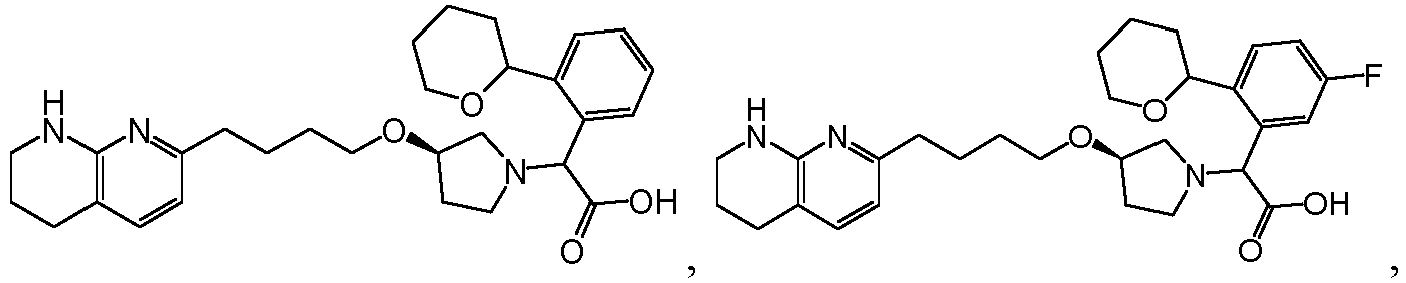
- Step 5 2-((R)-3-(4-(5,6,7,8-tetrahydro-1,8-naphthyridin-2-yl)butoxy)pyrrolidin-1-yl)-2-(2-(tetrahydro-2H-pyran-2-yl)phenyl)acetic acid (compound 17)
- Example 18 Preparation of 2-(5-fluoro-2-(tetrahydro-2H-pyran-2-yl)phenyl)-2-((R)-3-(4-(5,6,7,8-tetrahydro-1,8-naphthyridin-2-yl)butoxy)pyrrolidin-1-yl)acetic acid (compounds 18-E1 and 18-E2)
- Step 2 methyl 2-(2-(3,4-dihydro-2H-pyran-6-yl)-5-fluorophenyl)acetate
- Step 3 methyl 2-(5-fluoro-2-(tetrahydro-2H-pyran-2-yl)phenyl)acetate
- Step 4 methyl 2-bromo-2-(5-fluoro-2-(tetrahydro-2H-pyran-2-yl)phenyl)acetate
- Step 5 methyl 2-(5-fluoro-2-(tetrahydro-2H-pyran-2-yl)phenyl)-2-((R)-3-(4-(5,6,7,8-tetrahydro-1,8-naphthyridin-2-yl)butoxy)pyrrolidin-1-yl)acetate
- Step 6 2-(5-fluoro-2-(tetrahydro-2H-pyran-2-yl)phenyl)-2-((R)-3-(4-(5,6,7,8-tetrahydro-1,8-naphthyridin-2-yl)butoxy)pyrrolidin-1-yl)acetic acid (compounds 18-E1 and 18-E2)
- Example 19 Preparation of 2-(5-fluoro-2-(tetrahydrofuran-3-yl)phenyl)-2-((R)-3-(4-(5,6,7,8-tetrahydro-1,8-naphthyridin-2-yl)butoxy)pyrrolidin-1-yl)acetic acid (Compounds 19-E1, 19-E2, 19-E3 and 19-E4)
- Step 4 methyl 2-bromo-2-(5-fluoro-2-(tetrahydrofuran-3-yl)phenyl)acetate
- Step 5 methyl 2-(5-fluoro-2-(tetrahydrofuran-3-yl)phenyl)-2-((R)-3-(4-(5,6,7,8-tetrahydro-1,8-naphthyridin-2-yl)butoxy)pyrrolidin-1-yl)acetate
- Step 6 2-(5-fluoro-2-(tetrahydrofuran-3-yl)phenyl)-2-((R)-3-(4-(5,6,7,8-tetrahydro-1,8-naphthyridin-2-yl)butoxy)pyrrolidin-1-yl)acetic acid (Compounds 19-E1, 19-E2, 19-E3 and 19-E4)
- Example 20 2-(2-cyclopropoxy-5-fluorophenyl)-2-((R)-3-(5-(5,6,7,8-tetrahydro-1,8-naphthyridin-2-yl)pentyl)pyrrolidin-1-yl)acetic acid (Compounds 20-E1 and 20-E2)
- Step 3 2-(2-cyclopropoxy-5-fluorophenyl)-2-((R)-3-(5-(5,6,7,8-tetrahydro-1,8-naphthyridin-2-yl)pentyl)pyrrolidin-1-yl)acetic acid (Compounds 20-E1 and 20-E2)
- Example 21 Preparation of 2-(2-cyclobutylpyridin-3-yl)-2-((3R)-3-(4-(1,2,3,4-tetrahydro-1,8-naphthyridin-2-yl)butoxy)pyrrolidin-1-yl)acetic acid (compounds 21-B-E1, 21-B-E2 and 21-A)
- Example 22 Preparation of 2-(5-fluoro-2-(tetrahydro-2H-pyran-2-yl)phenyl)-2-((R)-3-(4-(5,6,7,8-tetrahydro-1,8-naphthyridin-2-yl)butoxy)pyrrolidin-1-yl)acetic acid (diastereomeric compounds 92-A-E1, 92-A-E2, 92-B-E1 and 92-B-E2)
- Step 2 Methyl 2-bromo-2-(5-fluoro-2-((S)-tetrahydro-2H-pyran-2-yl)phenyl)acetate (stereoisomer B)
- Step 3 Methyl 2-(5-fluoro-2-((S)-tetrahydro-2H-pyran-2-yl)phenyl)-2-((R)-3-(4-(5,6,7,8-tetrahydro-1,8-naphthyridin-2-yl)butoxy)pyrrolidin-1-yl)acetate (stereoisomer B)
- Step 4 2-(5-fluoro-2-((S)-tetrahydro-2H-pyran-2-yl)phenyl)-2-((R)-3-(4-(5,6,7,8-tetrahydro-1,8-naphthyridin-2-yl)butoxy)pyrrolidin-1-yl)acetic acid (compounds 92-B-E1 and 92-B-E2)
- Step 5 2-(5-fluoro-2-((R)-tetrahydro-2H-pyran-2-yl)phenyl)-2-((R)-3-(4-(5,6,7,8-tetrahydro-1,8-naphthyridin-2-yl)butoxy)pyrrolidin-1-yl)acetic acid (compounds 92-A-E1 and 92-A-E2)
- Example 23 Preparation of 2-(5-fluoro-2-(tetrahydrofuran-2-yl)phenyl)-2-((R)-3-(4-(5,6,7,8-tetrahydro-1,8-naphthyridin-2-yl)butoxy)pyrrolidin-1-yl)acetic acid (compounds 93-A-E1, 93-A-E2, 93-B-E1 and 93-B-E2)
- Step 2 methyl 2-(5-fluoro-2-(furan-2-yl)phenyl)acetate
- Step 3 methyl 2-(5-fluoro-2-(tetrahydrofuran-2-yl)phenyl)acetate
- Step 5 Methyl 2-(5-fluoro-2-(tetrahydrofuran-2-yl)phenyl)-2-((R)-3-(4-(5,6,7,8-tetrahydro-1,8-naphthyridin-2-yl)butoxy)pyrrolidin-1-yl)acetate stereoisomer A
- Step 6 2-(5-fluoro-2-((S)-tetrahydrofuran-2-yl)phenyl)-2-((R)-3-(4-(5,6,7,8-tetrahydro-1,8-naphthyridin-2-yl)butoxy)pyrrolidin-1-yl)acetic acid stereoisomer B (Compounds 93-A-E1 and 3-A-E2)
- Step 8 methyl 2-(5-fluoro-2-(tetrahydrofuran-2-yl)phenyl)-2-((R)-3-(4-(5,6,7,8-tetrahydro-1,8-naphthyridin-2-yl)butoxy)pyrrolidin-1-yl)acetate stereoisomer B
- Step 9 2-(5-fluoro-2-(tetrahydrofuran-2-yl)phenyl)-2-((R)-3-(4-(5,6,7,8-tetrahydro-1,8-naphthyridin-2-yl)butoxy)pyrrolidin-1-yl)acetic acid stereoisomer B (Compounds 93-B-E1 and 93-B-E2)
- Example 24 2-(5-fluoro-2-((S)-tetrahydro-2H-pyran-2-yl)phenyl)-2-((R)-3-((3-(5,6,7,8-tetrahydro-1,8-naphthyridin-2-yl)propoxy)methyl)pyrrolidin-1-yl)acetic acid (compounds 94-E1 and 94-E2)
- Example 25 2-(5-fluoro-2-((S)-tetrahydro-2H-pyran-2-yl)phenyl)-2-((S)-3-(2-(2-(5,6,7,8-tetrahydro-1,8-naphthyridin-2-yl)ethoxy)ethyl)pyrrolidin-1-yl)acetic acid (compounds 95-E1 and 95-E2)
- Step 3 tert-butyl 2-(2-(5,5-dimethyltetrahydrofuran-2-yl)-5-fluorophenyl)acetate
- Step 4 tert-butyl 2-bromo-2-(2-(5,5-dimethyltetrahydrofuran-2-yl)-5-fluorophenyl)acetate
- Step 5 tert-butyl 2-(2-(5,5-dimethyltetrahydrofuran-2-yl)-5-fluorophenyl)-2-((R)-3-(4-(5,6,7,8-tetrahydro-1,8-naphthyridin-2-yl)butoxy)pyrrolidin-1-yl)acetate
- Step 6 2-(2-(5,5-dimethyltetrahydrofuran-2-yl)-5-fluorophenyl)-2-((R)-3-(4-(5,6,7,8-tetrahydro-1,8-naphthyridin-2-yl)butoxy)pyrrolidin-1-yl)acetic acid (compounds 96-E1 and 96-E2)
- Example 27 Preparation of 2-(2-(4,4-dimethyltetrahydro-2H-pyran-2-yl)phenyl)-2-((R)-3-(4-(5,6,7,8-tetrahydro-1,8-naphthyridin-2-yl)butoxy)pyrrolidin-1-yl)acetic acid (compounds 97-A-E1, 97-A-E2, 97-B-E1 and 97-B-E2)
- Step 4 tert-butyl 2-(2-(4,4-dimethyltetrahydro-2H-pyran-2-yl)phenyl)acetate
- Step 5 tert-butyl 2-bromo-2-(2-(4,4-dimethyltetrahydro-2H-pyran-2-yl)phenyl)acetate
- Step 6 tert-butyl 2-(2-(4,4-dimethyltetrahydro-2H-pyran-2-yl)phenyl)-2-((R)-3-(4-(5,6,7,8-tetrahydro-1,8-naphthyridin-2-yl)butoxy)pyrrolidin-1-yl)acetate
- Step 7 2-(2-(4,4-dimethyltetrahydro-2H-pyran-2-yl)phenyl)-2-((R)-3-(4-(5,6,7,8-tetrahydro-1,8-naphthyridin-2-yl)butoxy)pyrrolidin-1-yl)acetic acid (compounds 97-A-E1, 97-A-E2, 97-B-E1 and 97-B-E2)
- 97-A was separated by Prep chiral SFC H to give products 97-A-E1 (36 mg) and 97-A-E2 (31 mg) as white solids.
- 97-B was separated by Prep chiral SFC H to give products 97-B-E1 (30 mg) and 97-B-E2 (44 mg) as white solids.
- Example 28 Preparation of 2-(5-fluoro-2-(5-oxaspiro[2.5]octan-6-yl)phenyl)-2-((R)-3-(4-(5,6,7,8-tetrahydro-1,8-naphthyridin-2-yl)butoxy)pyrrolidin-1-yl)acetic acid (compounds 98-A-E1, 98-A-E2 and 98-B)
- Step 7 tert-butyl 2-(5-fluoro-2-(5-oxaspiro[2.5]octan-6-yl)phenyl)acetate
- Step 8 tert-butyl 2-bromo-2-(5-fluoro-2-(5-oxaspiro[2.5]octan-6-yl)phenyl)acetate
- Step 9 tert-butyl 2-(5-fluoro-2-(5-oxaspiro[2.5]octan-6-yl)phenyl)-2-((R)-3-(4-(5,6,7,8-tetrahydro-1,8-naphthyridin-2-yl)butoxy)pyrrolidin-1-yl)acetate
- Step 10 2-(5-fluoro-2-(5-oxaspiro[2.5]octan-6-yl)phenyl)-2-((R)-3-(4-(5,6,7,8-tetrahydro-1,8-naphthyridin-2-yl)butoxy)pyrrolidin-1-yl)acetic acid (compounds 98-A-E1, 98-A-E2 and 98-B)
- Example 29 Preparation of 2-(2-(5,5-difluorotetrahydro-2H-pyran-2-yl)-5-fluorophenyl)-2-((R)-3-(4-(5,6,7,8-tetrahydro-1,8-naphthyridin-2-yl)butoxy)pyrrolidin-1-yl)acetic acid (compounds 99-E1 and 99-E2)
- the crude ether was dissolved in anhydrous DCM (50 mL), added diiodomethane (25.0 g, 92.4 mmol), cooled to 0°C, then added diethyl zinc (1M in THF, 93 mL, 93 mmol) dropwise.
- the reaction was stirred at RT for 16 hours, then quenched with a saturated solution of NH4Cl (30 mL), extracted with DCM (2*50 mL).
- the combined organic phase was washed with brine, dried over Na2SO4, filtered and concentrate in vacuo to obtain crude material.
- the crude material was dissolved in MeOH (20 mL), followed by addition of K2CO3 (3.2 g, 23.1 mmol), then stirred at RT for 30 min.
- Step 2 ethyl 5-(2-bromo-4-fluorophenyl)-2,2-difluoro-5-oxopentanoate
- Step 4 tert-butyl 2-(2-(5,5-difluorotetrahydro-2H-pyran-2-yl)-5-fluorophenyl)acetate
- Step 5 tert-butyl 2-bromo-2-(2-(5,5-difluorotetrahydro-2H-pyran-2-yl)-5-fluorophenyl)acetate
- Step 6 tert-butyl 2-(2-(5,5-difluorotetrahydro-2H-pyran-2-yl)-5-fluorophenyl)-2-((R)-3-(4-(5,6,7,8-tetrahydro-1,8-naphthyridin-2-yl)butoxy)pyrrolidin-1-yl)acetate
- Step 7 2-(2-(5,5-difluorotetrahydro-2H-pyran-2-yl)-5-fluorophenyl)-2-((R)-3-(4-(5,6,7,8-tetrahydro-1,8-naphthyridin-2-yl)butoxy)pyrrolidin-1-yl)acetic acid (compounds 99-E1 and 99-E2)
- Step 4 methyl 5-(2-bromophenyl)-2,2-dimethylpent-4-enoate
- Step 7 butyl 2-(2-(5,5-dimethyltetrahydro-2H-pyran-2-yl)phenyl)acetate
- Step 8 tert-butyl 2-bromo-2-(2-(5,5-dimethyltetrahydro-2H-pyran-2-yl)phenyl)acetate
- Step 9 tert-butyl 2-(2-(5,5-dimethyltetrahydro-2H-pyran-2-yl)phenyl)-2-((R)-3-(4-(5,6,7,8-tetrahydro-1,8-naphthyridin-2-yl)butoxy)pyrrolidin-1-yl)acetate
- Step 10 tert-butyl 2-(2-(5,5-dimethyltetrahydro-2H-pyran-2-yl)phenyl)-2-((R)-3-(4-(5,6,7,8-tetrahydro-1,8-naphthyridin-2-yl)butoxy)pyrrolidin-1-yl) acetic acid (compounds 100-E1 and 100-E2 )
- Example 31 Preparation of 2-(5-fluoro-2-((S)-tetrahydro-2H-pyran-2-yl)phenyl)-2-((R)-3-(4-(7-methyl-5,6,7,8-tetrahydro-1,8-naphthyridin-2-yl)butoxy)pyrrolidin-1-yl)acetic acid (diastereomeric compounds 101-A-E1, 101-A-E2, 101-B-E1 and 101-B-E2)
- Step 3 (R)-7-chloro-2-methyl-1,2,3,4-tetrahydro-1,8-naphthyridine and (S)-7-chloro-2-methyl-1,2,3,4-tetrahydro-1,8-naphthyridine
- Step 4 (R)- tert-butyl 7-chloro-2-methyl-3,4-dihydro-1,8-naphthyridine-1(2H)-carboxylate stereoisomer A
- Step 5 tert-butyl 7-(4-((R)-1-(tert-butoxycarbonyl)pyrrolidin-3-yloxy)butyl)-2-methyl-3,4-dihydro-1,8-naphthyridine-1(2H)-carboxylate stereoisomer A
- Step 6 2-methyl-7-(4-((R)-pyrrolidin-3-yloxy)butyl)-1,2,3,4-tetrahydro-1,8-naphthyridine stereoisomer A
- Step 7 tert-butyl 2-(5-fluoro-2-((S)-tetrahydro-2H-pyran-2-yl)phenyl)-2-((R)-3-(4-(7-methyl-5,6,7,8-tetrahydro-1,8-naphthyridin-2-yl)butoxy)pyrrolidin-1-yl)acetate stereoisomer A
- Step 8 2-(5-fluoro-2-((S)-tetrahydro-2H-pyran-2-yl)phenyl)-2-((R)-3-(4-(7-methyl-5,6,7,8-tetrahydro-1,8-naphthyridin-2-yl)butoxy)pyrrolidin-1-yl)acetic acid stereoisomer A (compounds 101-A-E1 and 101-A-E2)
- Step 9 2-(5-fluoro-2-((S)-tetrahydro-2H-pyran-2-yl)phenyl)-2-((R)-3-(4-(7-methyl-5,6,7,8-tetrahydro-1,8-naphthyridin-2-yl)butoxy)pyrrolidin-1-yl)acetic acid stereoisomer B (compounds 101-B-E1 and 101-B-E2)
- Example 32 Preparation of 2-(5-fluoro-2-(2,9-dioxaspiro[5.5]undecan-3-yl)phenyl)-2-((R)-3-(4-(5,6,7,8-tetrahydro-1,8-naphthyridin-2-yl)butoxy)pyrrolidin-1-yl)acetate (compounds 102-A-E1, 102-A-E2 and 102-B)
- Step 1 ethyl 4-(but-3-en-1-yl)tetrahydro-2H-pyran-4-carboxylate
- the first eluting fraction ( stereoisomer A, 0.43 g) was isolated as a white solid, yield 37%.
- RT 1.44 min, 100% ee.
- the second eluting fraction ( stereoisomer B, 0.43 g) was isolated as a white solid, yield 37%.
- RT 1.96 min, 96% ee.
- Step 7 (-)-tert-butyl 2-(5-fluoro-2-(2,9-dioxaspiro[5.5]undecan-3-yl)phenyl)acetate stereoisomer A
- Step 8 tert-butyl 2-bromo-2-(5-fluoro-2-((S)-2,9-dioxaspiro[5.5]undecan-3-yl)phenyl)acetate stereoisomer A
- Step 9 tert-butyl 2-(5-fluoro-2-(2,9-dioxaspiro[5.5]undecan-3-yl)phenyl)-2-((R)-3-(4-(5,6,7,8-tetrahydro-1,8-naphthyridin-2-yl)butoxy)pyrrolidin-1-yl)acetate stereoisomer A
- Step 10 2-(5-fluoro-2-(2,9-dioxaspiro[5.5]undecan-3-yl)phenyl)-2-((R)-3-(4-(5,6,7,8-tetrahydro-1,8-naphthyridin-2-yl)butoxy)pyrrolidin-1-yl)acetate stereoisomer A (compounds 102-A-E1 and 102-A-E2)
- Step 11 2-(5-fluoro-2-(2,9-dioxaspiro[5.5]undecan-3-yl)phenyl)-2-((R)-3-(4-(5,6,7,8-tetrahydro-1,8-naphthyridin-2-yl)butoxy)pyrrolidin-1-yl)acetic acid stereoisomer B (compound 102-B)
- Example 33 Preparation of 2-((R)-3-(4-(7,7-dimethyl-5,6,7,8-tetrahydro-1,8-naphthyridin-2-yl)butoxy)pyrrolidin-1-yl)-2-(5-fluoro-2-((S)-tetrahydro-2H-pyran-2-yl)phenyl)acetic acid (compounds 123-E1 and 123-E2)
- Step 3 7-chloro-2,2-dimethyl-1,2,3,4-tetrahydro-1,8-naphthyridine
- Step 4 (R)-tert-butyl 3-(4-(7,7-dimethyl-5,6,7,8-tetrahydro-1,8-naphthyridin-2-yl)butoxy)pyrrolidine-1-carboxylate
- Step 5 (R)-2,2-dimethyl-7-(4-(pyrrolidin-3-yloxy)butyl)-1,2,3,4-tetrahydro-1,8-naphthyridine
- Step 6 tert-butyl 2-((R)-3-(4-(7,7-dimethyl-5,6,7,8-tetrahydro-1,8-naphthyridin-2-yl)butoxy)pyrrolidin-1-yl)-2-(5-fluoro-2-((S)-tetrahydro-2H-pyran-2-yl)phenyl)acetate
- Step 7 2-((R)-3-(4-(7,7-dimethyl-5,6,7,8-tetrahydro-1,8-naphthyridin-2-yl)butoxy)pyrrolidin-1-yl)-2-(5-fluoro-2-((S)-tetrahydro-2H-pyran-2-yl)phenyl)acetic acid (compounds 123-E1 and 123-E2)
- Step 4 tert-butyl (4-(2,6-dichloro-4-methoxypyridin-3-yl)butan-2-yl)carbamate
- the aqueous phase was saturated with sodium chloride and extracted three more times with ethyl acetate. The combined organic layers were dried over sodium sulfate and concentrated in vacuo. The residue was diluted with hydrochloric acid (1N solution in water) and washed three times with ethyl acetate. The aqueous layer was concentrated in vacuo, and the residue was dissolved in 1,4-dioxane (27 mL). A solution of sodium hydroxide (1.04 g, 26.1 mmol) in water (27 mL) and di-tertbutyl-dicarbonate (3.03 mL, 13.03 mmol) were added.
- Step 6 7-chloro-5-methoxy-2-methyl-1,2,3,4-tetrahydro-1,8-naphthyridine
- the first eluting fraction ( stereoisomer A, 425 mg) was isolated as a white solid, yield 36%.
- t R 2.078 min, 100% ee.
- the second eluting fraction ( stereoisomer B, 415 mg) was isolated as a white solid, yield 35%.
- t R 3.147 min, 99% ee.
- Step 7 tert-butyl 7-chloro-5-methoxy-2-methyl-3,4-dihydro-1,8-naphthyridine-1(2H)-carboxylate stereoisomer A
- Step 8 tert-butyl 7-(4-((R)-1-(tert-butoxycarbonyl)pyrrolidin-3-yloxy)butyl)-5-methoxy-2-methyl-3,4-dihydro-1,8-naphthyridine-1(2H)-carboxylate stereoisomer A
- Step 9 5-methoxy-2-methyl-7-(4-((R)-pyrrolidin-3-yloxy)butyl)-1,2,3,4-tetrahydro-1,8-naphthyridine stereoisomer A
- Step 10 tert-butyl 2-(5-fluoro-2-((S)-tetrahydro-2H-pyran-2-yl)phenyl)-2-((R)-3-(4-(4-methoxy-7-methyl-5,6,7,8-tetrahydro-1,8-naphthyridin-2-yl)butoxy)pyrrolidin-1-yl)acetate Me-stereoisomer A
- Step 11 2-(5-fluoro-2-((S)-tetrahydro-2H-pyran-2-yl)phenyl)-2-((R)-3-(4-(4-methoxy-7-methyl-5,6,7,8-tetrahydro-1,8-naphthyridin-2-yl)butoxy)pyrrolidin-1-yl)acetic acid Me-stereoisomer A (compounds 124-A-E1 and 124-A-E2)
- Step 12 Preparation of 2-(5-fluoro-2-((S)-tetrahydro-2H-pyran-2-yl)phenyl)-2-((R)-3-(4-(4-methoxy-7-methyl-5,6,7,8-tetrahydro-1,8-naphthyridin-2-yl)butoxy)pyrrolidin-1-yl)acetic acid
- Me-stereoisomer B compound 124-B-E1
- Example 35 Fluorescence polarization assays of compounds for ⁇ v ⁇ 6 binding
- Fluorescence Polarization (FP) assays were used to measure compound activity through binding competition with the fluorescein-labeled peptide GRGDLGRL.
- 10 nM of integrin ⁇ v ⁇ 6 was incubated with the test compound in 2 mM manganese chloride, 0.1 mM calcium chloride, 20 mM HEPES buffer at pH 7.3, 150 mM sodium chloride, 0.01% Triton X-100, 2% DMSO, and 3 nM of the fluorescein-labeled peptide.
- the assays were run in 384-well plates.
- the integrin protein was pre-incubated with the test compounds for 15 minutes at 22 °C before the fluorescein-labeled peptide was added. After the fluorescein-labeled peptide was added, the assay was incubated at 22 °C for 1 hour and fluorescence polarization was measured. IC 50 values were determined by nonlinear regression, 4-parameter curve fitting (Tables 1 and 2).
- Example 36 MDCK permeability assays
- MDCK Madin-Darby Canine Kidney
- the assay is run in two formats.
- One uses wild type MDCK cells with no inhibitor. This method works well in determining the passive permeability of compounds with low efflux by P-glyocprotein (Pgp), and was used to assess permeability of a Reference Compound having the chemical formula shown below.
- the MDCK value of less than 1 i.e., less than about 0.23 was obtained for the Reference Compound using this method; an IC50 value of about 96.5 nM was obtained for the Reference Compound using the fluorescence polarization assay of Example 35. avb6. (IC50) [nM] MDCK (A->B) 96.5 ⁇ 0.23
- EQUIPMENT REAGENTS 24-well Cell Culture Plate (PET membrane): Millipore # PSHT 010 R5 • GF120918 (Pgp inhibitor) • Lucifer Yellow • 24-well feeder tray: Millipore #PSMW 010 R5 • Reference compounds: Quinidine, Metoprolol, Atenolol • Millicell ERS System - Millipore # MERS 000 01 • Cell line: MDCK (ATCC) or MDCK MDR1 (NKI) • 96-well U-shape plates (BH Bio# BH-04ML-96U) • Cell culture growth medium (MEM + 10% FBS + 1% NEAA): • 96-well microplates (Greiner#655209) • Trypsin-EDTA (Invitrogen, Cat# 25200-072) • 37°C CO 2 Incubator • Assay and dosing solution buffer: Hanks Balanced Salt Solution (HBSS, Invitrogen, Cat# 14025-092) with 25 mM H
- HBSS Hanks
- MDCK assay plates are seeded with MDCK or MDCK MCR1 cells 3-4 days prior to running the assay.
- 24-well plates are seeded at a cell density of 0.88 ⁇ 10 5 /well in a 400 ⁇ L apical chamber volume (2.2 ⁇ 10 5 /mL) with a 25 mL volume of growth medium to the 24-well basal chamber.
- Assay plates are generally provided with a growth medium change 24 hours prior to the assay.
- MDCK assay plates are rinsed with HBSS+ prior to running the assay. After rinsing, fresh HBSS+ is added to the assay plate in a 400 ⁇ L apical chamber volume and a 0.8 mL HBSS+ basal chamber volume.
- Donor solutions are prepared in HBSS+ with 0.4% DMSO and 5 ⁇ M test compound.
- the donor solution contains 5 ⁇ M lucifer yellow for apical dosing, but no lucifer yellow for basolateral dosing.
- the donor solution may also contain 10 ⁇ M GF120918 for Pgp inhibition.
- Receiver solutions are prepared with HBSS+ with 0.4% DMSO. Donor and receiver solutions were centrifuged at 4000 rpm, 5 min, and supernatants were used for compound dosing.
- Transepithelial electrical resistance (Resistance sample -Resistance blank ) ⁇ Effective Membrane Area
- V R is the volume in the receiver well (0.8 mL for A-to-B and 0.4 mL for B-to-A)
- area is the surface area of the membrane (0.7 cm 2 for Millipore-24 Cell Culture Plates)
- time is the total transport time in seconds.
- Percentage Recovery 100 ⁇ Total compound in donor at 90 min ⁇ Dilution Factor + Total compound in receiver at 90 min / Total compound in donor at 0 min ⁇ Dilution Factor Table 2 ⁇ v ⁇ 6 IC 50 : A: IC 50 ⁇ 0.01 ⁇ M; B: 0.01 ⁇ M ⁇ IC 50 ⁇ 0.1 ⁇ M; and C: 0.1 ⁇ M ⁇ IC 50 ⁇ 1 ⁇ M.
- Compound ⁇ v ⁇ 6 IC 50 Compound ⁇ v ⁇ 6 IC 50 Compound ⁇ v ⁇ 6 IC 50 94-E1 A 105-P1 A 117-E2 C 94-E2 B 105-P2 B 118-E1 A 95-E1 A 106-E1 B 118-E2 C 95-E2 C 106-E2 C 119-A-E1 B 96-E1 C 107-E2 A 119-B-E1 A 96-E2 A 108-E1 A 119-B-E2 C 97-A-E1 A 108-E2 C 120-E2 B 97-A-E2 C 109-E1 B 121-E1 B 97-B-E1 A 109-E2 B 121-E2 B 97-B-E2 B 110-E1 C 122-E1 A 98-A-E1 A 110-E2 A 123-E1 A 98-A-E2 B 111-E1 A
Landscapes
- Health & Medical Sciences (AREA)
- Chemical & Material Sciences (AREA)
- Organic Chemistry (AREA)
- Medicinal Chemistry (AREA)
- Veterinary Medicine (AREA)
- Public Health (AREA)
- General Health & Medical Sciences (AREA)
- Animal Behavior & Ethology (AREA)
- Life Sciences & Earth Sciences (AREA)
- Pharmacology & Pharmacy (AREA)
- Chemical Kinetics & Catalysis (AREA)
- Engineering & Computer Science (AREA)
- General Chemical & Material Sciences (AREA)
- Nuclear Medicine, Radiotherapy & Molecular Imaging (AREA)
- Bioinformatics & Cheminformatics (AREA)
- Epidemiology (AREA)
- Physiology (AREA)
- Nutrition Science (AREA)
- Immunology (AREA)
- Physical Education & Sports Medicine (AREA)
- Rheumatology (AREA)
- Orthopedic Medicine & Surgery (AREA)
- Cardiology (AREA)
- Urology & Nephrology (AREA)
- Transplantation (AREA)
- Pain & Pain Management (AREA)
- Vascular Medicine (AREA)
- Ophthalmology & Optometry (AREA)
- Heart & Thoracic Surgery (AREA)
- Pharmaceuticals Containing Other Organic And Inorganic Compounds (AREA)
- Nitrogen Condensed Heterocyclic Rings (AREA)
- Nitrogen And Oxygen Or Sulfur-Condensed Heterocyclic Ring Systems (AREA)
- Investigating Or Analysing Biological Materials (AREA)
- Steroid Compounds (AREA)
- Medicines That Contain Protein Lipid Enzymes And Other Medicines (AREA)
Claims (20)
- Verbindung der Formel (I):
A-B-C (I)
wobei:A B ausgewählt ist aus der Gruppe bestehend aus:
 q 0, 1, 2 oder 3 ist; und p 2 ist;C
 R2
R2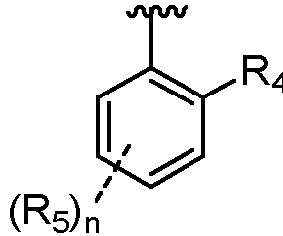 R4 Heterocycloalkyl ist;R5 F ist;Ra H ist; unddie absolute Konfiguration an einem beliebigen Stereozentrum R, S oder eine Mischung davon ist;oder pharmazeutisch verträgliches Salz davon.
 - Verbindung nach Anspruch 1, wobei B
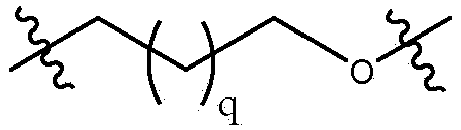
- Verbindung nach Anspruch 2, wobei q 2 ist.
- Verbindung nach Anspruch 3, wobei R4 ausgewählt ist aus


- Verbindung nach Anspruch 3, wobei R4 ausgewählt ist aus


- Verbindung nach Anspruch 3, wobei n in R2 1 ist.
- Verbindung nach Anspruch 6, wobei R4

- Verbindung nach Anspruch 6, wobei R4

- Verbindung nach Anspruch 6, wobei R4

- Verbindung nach Anspruch 1 mit der Formel:

- Verbindung nach Anspruch 1 mit der Formel:

- Verbindung nach Anspruch 1 mit der Formel:

- Verbindung nach Anspruch 1 mit der Formel:

- Verbindung nach Anspruch 1 mit der Formel

- Verbindung nach Anspruch 1 mit der Formel

- Verbindung nach Anspruch 1 mit der Formel
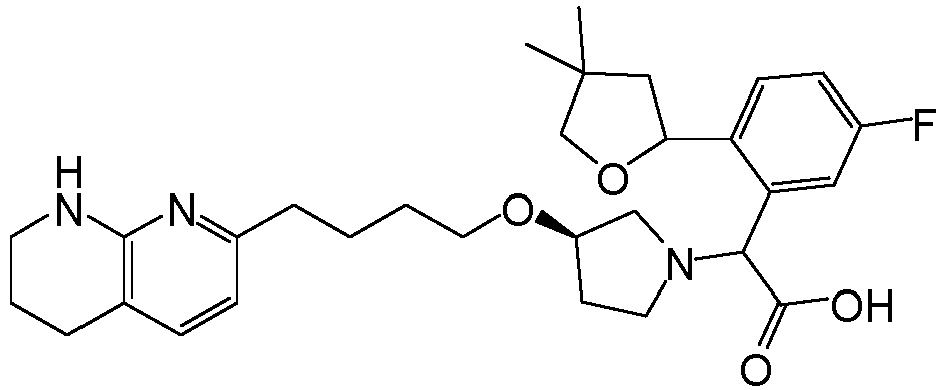
- Verbindung nach Anspruch 1 mit der Formel

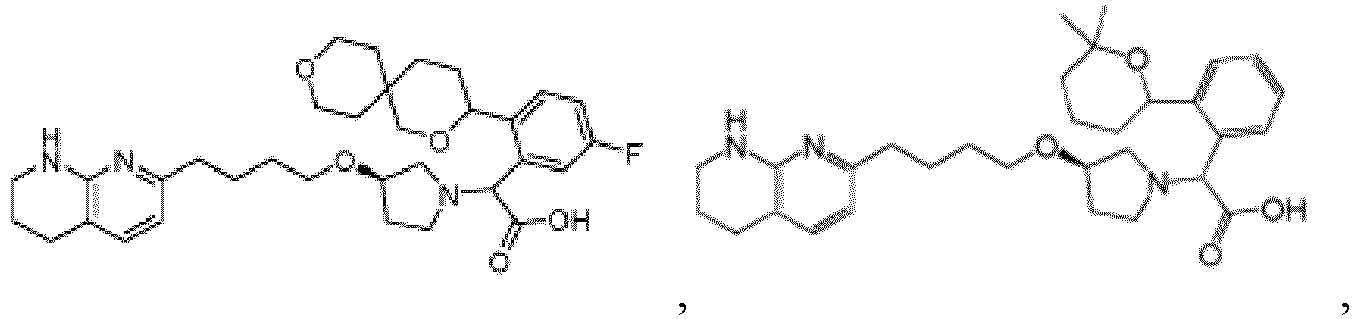
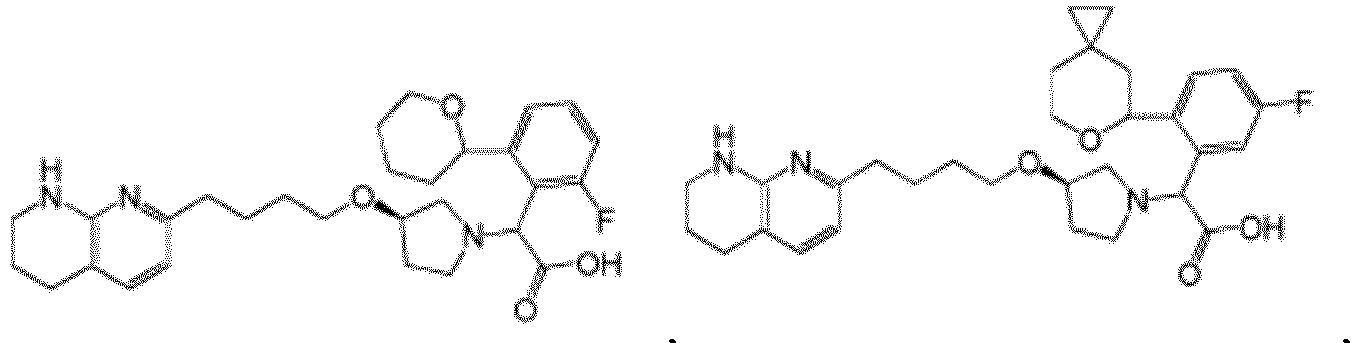
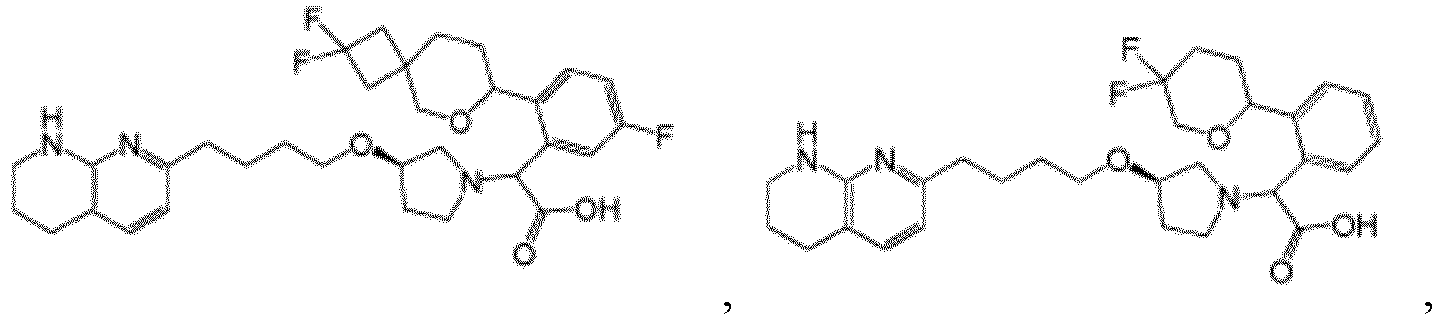
- Verbindung nach Anspruch 1 mit der Formel ausgewählt aus:







- Pharmazeutische Zusammensetzung, formuliert für orale Abgabe eines αvβ6-Integrininhibitors, wobei die Zusammensetzung die αvβ6-Integrininhibitorverbindung nach einem der Ansprüche 1-18 oder ein pharmazeutisch verträgliches Salz davon als aktive Verbindung und einen pharmazeutisch verträglichen Träger formuliert für orale therapeutische Verabreichung der αvβ6-Integrininhibitorverbindung umfasst.
- Verbindung nach einem der Ansprüche 1-18 zur Verwendung in einem Verfahren zur Behandlung von idiopathischer Lungenfibrose, diabetischer Nephropathie, fokaler segmentaler Glomerulosklerose, chronischer Nierenerkrankung, nichtalkoholischer Steatohepatitis, primärer biliärer Cholangitis, primärer sklerosierender Cholangitis, soliden Tumoren, hämatologischen Tumoren, Organtransplantation, Alport-Syndrom, interstitieller Lungenerkrankung, strahleninduzierter Fibrose, bleomycininduzierter Fibrose, asbestinduzierter Fibrose, grippeinduzierter Fibrose, gerinnungsinduzierter Fibrose, vaskulärverletzungsinduzierter Fibrose, Aortenstenose oder Herzfibrose.
Applications Claiming Priority (3)
| Application Number | Priority Date | Filing Date | Title |
|---|---|---|---|
| US201862724423P | 2018-08-29 | 2018-08-29 | |
| US201962859457P | 2019-06-10 | 2019-06-10 | |
| EP19194490.9A EP3617206A1 (de) | 2018-08-29 | 2019-08-29 | Integrininhibitoren |
Related Parent Applications (1)
| Application Number | Title | Priority Date | Filing Date |
|---|---|---|---|
| EP19194490.9A Division EP3617206A1 (de) | 2018-08-29 | 2019-08-29 | Integrininhibitoren |
Publications (2)
| Publication Number | Publication Date |
|---|---|
| EP4086254A1 EP4086254A1 (de) | 2022-11-09 |
| EP4086254B1 true EP4086254B1 (de) | 2024-12-18 |
Family
ID=67809398
Family Applications (2)
| Application Number | Title | Priority Date | Filing Date |
|---|---|---|---|
| EP22173105.2A Active EP4086254B1 (de) | 2018-08-29 | 2019-08-29 | Integrininhibitoren |
| EP19194490.9A Withdrawn EP3617206A1 (de) | 2018-08-29 | 2019-08-29 | Integrininhibitoren |
Family Applications After (1)
| Application Number | Title | Priority Date | Filing Date |
|---|---|---|---|
| EP19194490.9A Withdrawn EP3617206A1 (de) | 2018-08-29 | 2019-08-29 | Integrininhibitoren |
Country Status (23)
| Country | Link |
|---|---|
| US (5) | US20200071322A1 (de) |
| EP (2) | EP4086254B1 (de) |
| JP (2) | JP7540998B2 (de) |
| KR (1) | KR102852841B1 (de) |
| CN (2) | CN118878533A (de) |
| AU (1) | AU2019327475B2 (de) |
| BR (1) | BR112021003859A2 (de) |
| CA (1) | CA3109534A1 (de) |
| CL (1) | CL2021000484A1 (de) |
| CO (1) | CO2021002706A2 (de) |
| CR (1) | CR20210109A (de) |
| DO (1) | DOP2021000035A (de) |
| EC (1) | ECSP21013620A (de) |
| ES (1) | ES3019404T3 (de) |
| IL (1) | IL280782A (de) |
| MA (1) | MA51066A (de) |
| MX (1) | MX2021002181A (de) |
| PE (1) | PE20211640A1 (de) |
| PH (1) | PH12021550404A1 (de) |
| SG (1) | SG11202101913PA (de) |
| TW (1) | TW202035400A (de) |
| UY (1) | UY38353A (de) |
| WO (1) | WO2020047239A1 (de) |
Families Citing this family (18)
| Publication number | Priority date | Publication date | Assignee | Title |
|---|---|---|---|---|
| CN109996541A (zh) | 2016-09-07 | 2019-07-09 | 普利安特治疗公司 | N-酰基氨基酸化合物及其使用方法 |
| US10696672B2 (en) | 2016-12-23 | 2020-06-30 | Pliant Therapeutics, Inc. | Amino acid compounds and methods of use |
| AU2018227417B2 (en) | 2017-02-28 | 2021-12-23 | Morphic Therapeutic, Inc. | Inhibitors of (alpha-v)(beta-6) integrin |
| TW201835078A (zh) | 2017-02-28 | 2018-10-01 | 美商萊築理公司 | αvβ6整合蛋白之抑制劑 |
| HUE065887T2 (hu) | 2018-03-07 | 2024-06-28 | Pliant Therapeutics Inc | Aminosav vegyületek és alkalmazási eljárások |
| TWI841573B (zh) | 2018-06-27 | 2024-05-11 | 美商普萊恩醫療公司 | 具有未分支連接子之胺基酸化合物及使用方法 |
| EP4086254B1 (de) * | 2018-08-29 | 2024-12-18 | Morphic Therapeutic, Inc. | Integrininhibitoren |
| TW202028179A (zh) | 2018-10-08 | 2020-08-01 | 美商普萊恩醫療公司 | 胺基酸化合物及使用方法 |
| CN112969687B (zh) | 2018-10-30 | 2024-08-23 | 吉利德科学公司 | 作为α4β7整合素抑制剂的喹啉衍生物 |
| ES3003232T3 (en) | 2018-10-30 | 2025-03-10 | Gilead Sciences Inc | Compounds for inhibition of alpha4beta7 integrin |
| ES2987796T3 (es) | 2018-10-30 | 2024-11-18 | Gilead Sciences Inc | Derivados de N-benzoil-fenilalanina como inhibidores de la integrina alfa4beta7 para el tratamiento de enfermedades inflamatorias |
| CA3114240C (en) | 2018-10-30 | 2023-09-05 | Gilead Sciences, Inc. | Imidazopyridine derivatives as alpha4beta7 integrin inhibitors |
| CN114173803A (zh) | 2019-04-08 | 2022-03-11 | 普利安特治疗公司 | 氨基酸化合物的剂型和方案 |
| CN114222730B (zh) | 2019-08-14 | 2024-09-10 | 吉利德科学公司 | 用于抑制α4β7整合素的化合物 |
| AU2021339808A1 (en) * | 2020-09-11 | 2023-04-06 | Arrowhead Pharmaceuticals, Inc. | Skeletal muscle delivery platforms and methods of use |
| CA3173755A1 (en) | 2020-11-19 | 2022-05-27 | Pliant Therapeutics, Inc. | Integrin inhibitor and uses thereof |
| AR131843A1 (es) * | 2023-02-14 | 2025-05-07 | Morphic Therapeutic Inc | INHIBIDORES DE INTEGRINA aᵛb₈ |
| CN120957721A (zh) * | 2023-02-14 | 2025-11-14 | 莫菲克医疗股份有限公司 | 抑制αvβ8整合素 |
Family Cites Families (97)
| Publication number | Priority date | Publication date | Assignee | Title |
|---|---|---|---|---|
| DE4134467A1 (de) | 1991-10-18 | 1993-04-22 | Thomae Gmbh Dr K | Heterobiarylderivate, diese verbindungen enthaltende arzneimittel und verfahren zu ihrer herstellung |
| JPH07501063A (ja) | 1991-11-14 | 1995-02-02 | グラクソ、グループ、リミテッド | フィブリノーゲン依存性血小板凝集阻害剤としてのピペリジン酢酸誘導体 |
| AU3351293A (en) | 1992-01-21 | 1993-08-03 | Glaxo Group Limited | Piperidineacetic acid derivatives as inhibitors of fibrinogen-dependent blood platelet aggregation |
| ATE181735T1 (de) | 1993-05-01 | 1999-07-15 | Merck Patent Gmbh | Substituierte 1-phenyl-oxazolidin-2-on derivate, deren herstellung und deren verwendung als adhäsionsrezeptor-antagonisten |
| US6069143A (en) | 1994-12-20 | 2000-05-30 | Smithkline Beecham Corporation | Fibrinogen receptor antagonists |
| JP2000502704A (ja) | 1995-12-29 | 2000-03-07 | スミスクライン・ビーチャム・コーポレイション | ビトロネクチン受容体拮抗物質 |
| EP0895475A4 (de) | 1995-12-29 | 2000-08-23 | Smithkline Beecham Corp | Vitronectin rezeptor antagonisten |
| US20010034445A1 (en) | 1995-12-29 | 2001-10-25 | Smithkline Beecham Corporation | Vitronectin receptor antagonists |
| JP2000516197A (ja) | 1996-01-16 | 2000-12-05 | メルク エンド カンパニー インコーポレーテッド | インテグリンレセプターアンタゴニスト |
| PT796855E (pt) | 1996-03-20 | 2002-07-31 | Hoechst Ag | Inibicao da reabsorcao nos ossos e antagonistas de vitronectina |
| EP0891332B1 (de) | 1996-03-29 | 2004-03-17 | Pfizer Inc. | 6-phenylpyridinderivate |
| CA2263999A1 (en) | 1996-08-29 | 1998-03-05 | Merck & Co., Inc. | Integrin antagonists |
| CA2268940A1 (en) | 1996-10-30 | 1998-05-07 | Merck & Co., Inc. | Integrin antagonists |
| US5952341A (en) | 1996-10-30 | 1999-09-14 | Merck & Co., Inc. | Integrin antagonists |
| JP2001524079A (ja) | 1997-04-07 | 2001-11-27 | メルク エンド カンパニー インコーポレーテッド | ガンの治療方法 |
| AU7105498A (en) | 1997-04-14 | 1998-11-11 | Merck & Co., Inc. | Combination therapy for the prevention and treatment of osteoporosis |
| JP2001524481A (ja) | 1997-11-26 | 2001-12-04 | デュポン ファーマシューティカルズ カンパニー | αVβ3アンタゴニストとしての1,3,4−チアジアゾール類および1,3,4−オキサジアゾール類 |
| WO1999030709A1 (en) | 1997-12-17 | 1999-06-24 | Merck & Co., Inc. | Integrin receptor antagonists |
| JP2002508326A (ja) | 1997-12-17 | 2002-03-19 | メルク エンド カムパニー インコーポレーテッド | インテグリン受容体拮抗薬 |
| US6048861A (en) | 1997-12-17 | 2000-04-11 | Merck & Co., Inc. | Integrin receptor antagonists |
| DK1040111T3 (da) | 1997-12-17 | 2005-10-10 | Merck & Co Inc | Integrinreceptorantagonister |
| DE69829996T2 (de) | 1997-12-17 | 2006-02-23 | Merck & Co., Inc. (A New Jersey Corp.) | Integrin-rezeptor-antagonisten |
| US6017926A (en) | 1997-12-17 | 2000-01-25 | Merck & Co., Inc. | Integrin receptor antagonists |
| US6329372B1 (en) | 1998-01-27 | 2001-12-11 | Celltech Therapeutics Limited | Phenylalanine derivatives |
| WO2000006169A1 (en) | 1998-07-29 | 2000-02-10 | Merck & Co., Inc. | Integrin receptor antagonists |
| GB9825652D0 (en) | 1998-11-23 | 1999-01-13 | Celltech Therapeutics Ltd | Chemical compounds |
| WO2000037487A1 (de) | 1998-12-19 | 2000-06-29 | Merck Patent Gmbh | INHIBITOREN DES INTEGRINS αvβ¿6? |
| JP2002536370A (ja) | 1999-02-03 | 2002-10-29 | メルク エンド カムパニー インコーポレーテッド | α−Vインテグリン受容体拮抗薬としてのベンゾアゼピン誘導体 |
| US6723711B2 (en) | 1999-05-07 | 2004-04-20 | Texas Biotechnology Corporation | Propanoic acid derivatives that inhibit the binding of integrins to their receptors |
| US6518283B1 (en) | 1999-05-28 | 2003-02-11 | Celltech R&D Limited | Squaric acid derivatives |
| SK17442001A3 (sk) | 1999-06-02 | 2002-03-05 | Merck & Co., Inc. | Deriváty kyseliny nonánovej, farmaceutický prostriedok s ich obsahom a ich použitie |
| JP2003502373A (ja) | 1999-06-23 | 2003-01-21 | メルク エンド カムパニー インコーポレーテッド | インテグリン受容体アンタゴニスト |
| DE19933173A1 (de) | 1999-07-15 | 2001-01-18 | Merck Patent Gmbh | Cyclische Peptidderivate als Inhibitoren des Integrins alpha¶v¶beta¶6¶ |
| US6514964B1 (en) | 1999-09-27 | 2003-02-04 | Amgen Inc. | Fused cycloheptane and fused azacycloheptane compounds and their methods of use |
| GB9929988D0 (en) | 1999-12-17 | 2000-02-09 | Celltech Therapeutics Ltd | Chemical compounds |
| JP4787447B2 (ja) | 2000-01-20 | 2011-10-05 | メルク・シャープ・エンド・ドーム・コーポレイション | αvインテグリン受容体拮抗薬 |
| JP2003520271A (ja) | 2000-01-24 | 2003-07-02 | メルク エンド カムパニー インコーポレーテッド | αvインテグリン受容体拮抗薬 |
| JP2004511434A (ja) | 2000-06-15 | 2004-04-15 | ファルマシア・コーポレーション | インテグリン受容体アンタゴニストとしてのヘテロアリールアルカン酸 |
| DE10041423A1 (de) | 2000-08-23 | 2002-03-07 | Merck Patent Gmbh | Biphenylderivate |
| JP2004509123A (ja) | 2000-09-14 | 2004-03-25 | メルク エンド カムパニー インコーポレーテッド | アルファνインテグリン受容体アンタゴニスト |
| AU2001290772A1 (en) | 2000-09-14 | 2002-03-26 | Merck And Co., Inc. | Alpha v integrin receptor antagonists |
| EP1322311A1 (de) | 2000-09-18 | 2003-07-02 | Merck & Co., Inc. | Behandlung einer entzündung mit einer kombination eines cyclooxygenase-2-inhibitors und eines integrin alpha-v-antagonisten |
| JP4615826B2 (ja) | 2001-01-29 | 2011-01-19 | オーソ−マクニール・フアーマシユーチカル・インコーポレーテツド | 置換インドールおよびインテグリンアンタゴニストとしてのそれらの使用 |
| DE10112771A1 (de) | 2001-03-16 | 2002-09-26 | Merck Patent Gmbh | Inhibitoren des Integrins alpha¶v¶beta¶6¶ |
| US7109191B2 (en) | 2001-05-03 | 2006-09-19 | Merck & Co., Inc. | Benzazepinone alpha vintegrin receptor antagonists |
| US20040043988A1 (en) | 2001-06-15 | 2004-03-04 | Khanna Ish Kurmar | Cycloalkyl alkanoic acids as intergrin receptor antagonists |
| DE10204789A1 (de) | 2002-02-06 | 2003-08-14 | Merck Patent Gmbh | Inhibitoren des Integrins alpha¶v¶beta6 |
| JP4554364B2 (ja) | 2002-08-16 | 2010-09-29 | ジヤンセン・フアーマシユーチカ・ナームローゼ・フエンノートシヤツプ | インテグリンと選択的に結合するピペリジニル化合物 |
| FI20041129A0 (fi) | 2004-08-30 | 2004-08-30 | Ctt Cancer Targeting Tech Oy | Tioksotiatsolidinoniyhdisteitä lääkkeinä käytettäviksi |
| AR059224A1 (es) | 2006-01-31 | 2008-03-19 | Jerini Ag | Compuestos para la inhibicion de integrinas y uso de estas |
| WO2007141473A1 (en) | 2006-06-09 | 2007-12-13 | Astrazeneca Ab | N-(benzoyl)-o- [2- (pyridin- 2 -ylamino) ethyl] -l-tyrosine derivatives and related compounds as a5b1 antagonists for the treatment of solid tumors |
| MX2009012847A (es) | 2007-06-13 | 2009-12-08 | Bristol Myers Squibb Co | Analogos dipeptidicos como inhibidores de factores de coagulacion. |
| JP5359879B2 (ja) | 2007-11-16 | 2013-12-04 | 宇部興産株式会社 | ベンズアゼピノン化合物 |
| US20120289481A1 (en) | 2011-05-13 | 2012-11-15 | O'neil Jennifer | Compositions and methods for treating cancer |
| CN104640857B (zh) | 2012-07-18 | 2017-07-04 | 圣路易斯大学 | 作为整合素拮抗剂的β氨基酸衍生物 |
| US8716226B2 (en) | 2012-07-18 | 2014-05-06 | Saint Louis University | 3,5 phenyl-substituted beta amino acid derivatives as integrin antagonists |
| EP2784511A1 (de) | 2013-03-27 | 2014-10-01 | Universität Zürich | Integrin-alpha-v-beta 6 zur Diagnose/Prognose von Kolorektalkarzinomen |
| GB201305668D0 (en) | 2013-03-28 | 2013-05-15 | Glaxosmithkline Ip Dev Ltd | Avs6 Integrin Antagonists |
| WO2015103643A2 (en) | 2014-01-06 | 2015-07-09 | The General Hospital Corporation | Integrin antagonists |
| MA39823A (fr) | 2014-04-03 | 2018-01-09 | Janssen Pharmaceutica Nv | Dérivés de pyridine macrocyclique |
| WO2015179823A2 (en) | 2014-05-23 | 2015-11-26 | The California Institute For Biomedical Research | Lung localized inhibitors of alpha(v)beta 6 |
| WO2016022851A1 (en) | 2014-08-06 | 2016-02-11 | Children's Medical Center Corporation | Modified integrin polypeptides, modified integrin polypeptide dimers, and uses thereof |
| GB201417002D0 (en) | 2014-09-26 | 2014-11-12 | Glaxosmithkline Ip Dev Ltd | Novel compound |
| GB201417094D0 (en) | 2014-09-26 | 2014-11-12 | Glaxosmithkline Ip Dev Ltd | Novel compounds |
| GB201417011D0 (en) | 2014-09-26 | 2014-11-12 | Glaxosmithkline Ip Dev Ltd | Novel compounds |
| GB201417018D0 (en) | 2014-09-26 | 2014-11-12 | Glaxosmithkline Ip Dev Ltd | Novel compounds |
| EP3259271B1 (de) | 2015-02-19 | 2021-05-05 | SciFluor Life Sciences, Inc. | Fluorierte derivate von 3-(2-oxo-3-(3-(5,6,7,8-tetrahydro-1,8-naphthyridin-2-yl)propyl)imidazolidin-1-yl)propansäure und verwendungen davon |
| AU2016237099C1 (en) | 2015-03-25 | 2023-01-19 | Fujifilm Corporation | Method for producing novel nitrogen-containing compound or salt thereof, and production intermediate of same |
| BR112017023432A2 (pt) | 2015-04-30 | 2018-07-24 | Scifluor Life Sciences Inc | Derivados de ácido propiônico tetra- hidronaftiridinila e usos do mesmo |
| KR20180107121A (ko) | 2015-12-30 | 2018-10-01 | 세인트 루이스 유니버시티 | 팬 인테그린 길항제로서의 메타-아자사이클릭 아미노 벤조산 유도체 |
| GB201604589D0 (en) | 2016-03-18 | 2016-05-04 | Glaxosmithkline Ip Dev Ltd | Chemical compound |
| GB201604680D0 (en) * | 2016-03-21 | 2016-05-04 | Glaxosmithkline Ip Dev Ltd | Chemical Compounds |
| GB201604681D0 (en) * | 2016-03-21 | 2016-05-04 | Glaxosmithkline Ip Dev Ltd | Chemical Compounds |
| DE102016003731A1 (de) | 2016-03-24 | 2017-09-28 | Friedrich-Alexander-Universität Erlangen-Nürnberg | Verfahren zum Erzeugen eines Kompositmaterials mit hierarchischer Porosität |
| WO2018009501A1 (en) | 2016-07-05 | 2018-01-11 | The Rockefeller University | Tetrahydronaphthyridinepentanamide integrin antagonists |
| CN109996541A (zh) | 2016-09-07 | 2019-07-09 | 普利安特治疗公司 | N-酰基氨基酸化合物及其使用方法 |
| SI3535397T1 (sl) | 2016-11-01 | 2022-04-29 | Arrowhead Pharmaceuticals, Inc. | Ligandi alfa-V beta-6 integrina in njihove uporabe |
| WO2018085552A1 (en) | 2016-11-02 | 2018-05-11 | Saint Louis University | Integrin antagonists |
| WO2018085578A1 (en) | 2016-11-02 | 2018-05-11 | Saint Louis University | Integrin inhibitors in combination with an agent which interacts with a chemokine receptor |
| AU2017359030A1 (en) | 2016-11-08 | 2019-06-20 | Bristol-Myers Squibb Company | Pyrrole amides as alpha v integrin inhibitors |
| CA3042707A1 (en) | 2016-11-08 | 2018-05-17 | Bristol-Myers Squibb Company | 3-substituted propionic acids as .alpha.v integrin inhibitors |
| MA46745A (fr) | 2016-11-08 | 2021-03-31 | Bristol Myers Squibb Co | Dérivés d'indazole en tant qu'antagonistes de l'intégrine alpha v |
| WO2018089355A1 (en) | 2016-11-08 | 2018-05-17 | Bristol-Myers Squibb Company | Cyclobutane- and azetidine-containing mono and spirocyclic compounds as alpha v integrin inhibitors |
| US10851098B2 (en) | 2016-11-08 | 2020-12-01 | Bristol-Myers Squibb Company | Azole amides and amines as alpha v integrin inhibitors |
| US10696672B2 (en) | 2016-12-23 | 2020-06-30 | Pliant Therapeutics, Inc. | Amino acid compounds and methods of use |
| BR112019012515A2 (pt) | 2016-12-29 | 2019-11-19 | Saint Louis University | antagonistas de integrina |
| AU2018227417B2 (en) | 2017-02-28 | 2021-12-23 | Morphic Therapeutic, Inc. | Inhibitors of (alpha-v)(beta-6) integrin |
| TW201835078A (zh) * | 2017-02-28 | 2018-10-01 | 美商萊築理公司 | αvβ6整合蛋白之抑制劑 |
| HUE065887T2 (hu) | 2018-03-07 | 2024-06-28 | Pliant Therapeutics Inc | Aminosav vegyületek és alkalmazási eljárások |
| TWI841573B (zh) | 2018-06-27 | 2024-05-11 | 美商普萊恩醫療公司 | 具有未分支連接子之胺基酸化合物及使用方法 |
| US20210284638A1 (en) | 2018-07-03 | 2021-09-16 | Saint Louis University | ALPHAvBETA1 INTEGRIN ANTAGONISTS |
| EP4086254B1 (de) | 2018-08-29 | 2024-12-18 | Morphic Therapeutic, Inc. | Integrininhibitoren |
| PL3844162T3 (pl) | 2018-08-29 | 2025-06-09 | Morphic Therapeutic, Inc. | Inhibitory integryny alfa v beta 6 |
| EP3843727A4 (de) | 2018-08-29 | 2022-08-17 | Morphic Therapeutic, Inc. | Inhibitoren von (alpha-v)(beta-6)-integrin |
| WO2020047207A1 (en) | 2018-08-29 | 2020-03-05 | Morphic Therapeutics, Inc. | Inhibitors of (alpha-v)(beta-6) integrin |
| TW202028179A (zh) | 2018-10-08 | 2020-08-01 | 美商普萊恩醫療公司 | 胺基酸化合物及使用方法 |
| CN114173803A (zh) | 2019-04-08 | 2022-03-11 | 普利安特治疗公司 | 氨基酸化合物的剂型和方案 |
-
2019
- 2019-08-29 EP EP22173105.2A patent/EP4086254B1/de active Active
- 2019-08-29 WO PCT/US2019/048782 patent/WO2020047239A1/en not_active Ceased
- 2019-08-29 ES ES22173105T patent/ES3019404T3/es active Active
- 2019-08-29 SG SG11202101913PA patent/SG11202101913PA/en unknown
- 2019-08-29 AU AU2019327475A patent/AU2019327475B2/en active Active
- 2019-08-29 MX MX2021002181A patent/MX2021002181A/es unknown
- 2019-08-29 CR CR20210109A patent/CR20210109A/es unknown
- 2019-08-29 CN CN202410915148.1A patent/CN118878533A/zh active Pending
- 2019-08-29 CA CA3109534A patent/CA3109534A1/en active Pending
- 2019-08-29 US US16/555,589 patent/US20200071322A1/en not_active Abandoned
- 2019-08-29 PE PE2021000252A patent/PE20211640A1/es unknown
- 2019-08-29 BR BR112021003859-0A patent/BR112021003859A2/pt unknown
- 2019-08-29 EP EP19194490.9A patent/EP3617206A1/de not_active Withdrawn
- 2019-08-29 TW TW108131114A patent/TW202035400A/zh unknown
- 2019-08-29 CN CN201980056588.3A patent/CN112805001B/zh active Active
- 2019-08-29 UY UY0001038353A patent/UY38353A/es not_active Application Discontinuation
- 2019-08-29 JP JP2021510691A patent/JP7540998B2/ja active Active
- 2019-08-29 KR KR1020217006113A patent/KR102852841B1/ko active Active
- 2019-08-29 MA MA051066A patent/MA51066A/fr unknown
-
2020
- 2020-07-27 US US16/939,848 patent/US20200354359A1/en not_active Abandoned
- 2020-08-24 US US17/001,086 patent/US11021480B2/en active Active
-
2021
- 2021-02-10 IL IL280782A patent/IL280782A/en unknown
- 2021-02-25 CL CL2021000484A patent/CL2021000484A1/es unknown
- 2021-02-25 DO DO2021000035A patent/DOP2021000035A/es unknown
- 2021-02-26 EC ECSENADI202113620A patent/ECSP21013620A/es unknown
- 2021-02-26 CO CONC2021/0002706A patent/CO2021002706A2/es unknown
- 2021-02-26 PH PH12021550404A patent/PH12021550404A1/en unknown
- 2021-04-23 US US17/239,045 patent/US11739087B2/en active Active
-
2024
- 2024-01-08 US US18/406,817 patent/US12459942B2/en active Active
- 2024-08-14 JP JP2024135240A patent/JP2024161471A/ja active Pending
Also Published As
Similar Documents
| Publication | Publication Date | Title |
|---|---|---|
| EP4086254B1 (de) | Integrininhibitoren | |
| EP3843728B1 (de) | Inhibitoren von (alpha-v)(beta-6)-integrin | |
| WO2020047208A1 (en) | Inhibitors of (alpha-v)(beta-6) integrin | |
| US20230242524A1 (en) | Inhibitors of (alpha-v)(beta-6) integrin | |
| HK40083483A (en) | Integrin inhibitors | |
| HK40025553A (en) | Integrin inhibitors | |
| TWI902445B (zh) | αvβ6整合素之抑制劑 | |
| WO2025106644A1 (en) | Heterocyclic compounds as inhibitors of alpha-v beta-1 integrin | |
| WO2024173570A1 (en) | INHIBITING αvβ8 INTEGRIN | |
| TW202537962A (zh) | 抑制α-V β-1整合素 | |
| CN121127468A (zh) | 抑制αvβ8整合素 |
Legal Events
| Date | Code | Title | Description |
|---|---|---|---|
| PUAI | Public reference made under article 153(3) epc to a published international application that has entered the european phase |
Free format text: ORIGINAL CODE: 0009012 |
|
| STAA | Information on the status of an ep patent application or granted ep patent |
Free format text: STATUS: THE APPLICATION HAS BEEN PUBLISHED |
|
| AC | Divisional application: reference to earlier application |
Ref document number: 3617206 Country of ref document: EP Kind code of ref document: P |
|
| AK | Designated contracting states |
Kind code of ref document: A1 Designated state(s): AL AT BE BG CH CY CZ DE DK EE ES FI FR GB GR HR HU IE IS IT LI LT LU LV MC MK MT NL NO PL PT RO RS SE SI SK SM TR |
|
| STAA | Information on the status of an ep patent application or granted ep patent |
Free format text: STATUS: REQUEST FOR EXAMINATION WAS MADE |
|
| 17P | Request for examination filed |
Effective date: 20230505 |
|
| P01 | Opt-out of the competence of the unified patent court (upc) registered |
Effective date: 20230331 |
|
| RBV | Designated contracting states (corrected) |
Designated state(s): AL AT BE BG CH CY CZ DE DK EE ES FI FR GB GR HR HU IE IS IT LI LT LU LV MC MK MT NL NO PL PT RO RS SE SI SK SM TR |
|
| REG | Reference to a national code |
Ref country code: HK Ref legal event code: DE Ref document number: 40083483 Country of ref document: HK |
|
| STAA | Information on the status of an ep patent application or granted ep patent |
Free format text: STATUS: EXAMINATION IS IN PROGRESS |
|
| 17Q | First examination report despatched |
Effective date: 20231020 |
|
| GRAP | Despatch of communication of intention to grant a patent |
Free format text: ORIGINAL CODE: EPIDOSNIGR1 |
|
| STAA | Information on the status of an ep patent application or granted ep patent |
Free format text: STATUS: GRANT OF PATENT IS INTENDED |
|
| INTG | Intention to grant announced |
Effective date: 20240711 |
|
| GRAS | Grant fee paid |
Free format text: ORIGINAL CODE: EPIDOSNIGR3 |
|
| GRAA | (expected) grant |
Free format text: ORIGINAL CODE: 0009210 |
|
| STAA | Information on the status of an ep patent application or granted ep patent |
Free format text: STATUS: THE PATENT HAS BEEN GRANTED |
|
| AC | Divisional application: reference to earlier application |
Ref document number: 3617206 Country of ref document: EP Kind code of ref document: P |
|
| AK | Designated contracting states |
Kind code of ref document: B1 Designated state(s): AL AT BE BG CH CY CZ DE DK EE ES FI FR GB GR HR HU IE IS IT LI LT LU LV MC MK MT NL NO PL PT RO RS SE SI SK SM TR |
|
| REG | Reference to a national code |
Ref country code: CH Ref legal event code: EP |
|
| REG | Reference to a national code |
Ref country code: DE Ref legal event code: R096 Ref document number: 602019063841 Country of ref document: DE |
|
| REG | Reference to a national code |
Ref country code: IE Ref legal event code: FG4D |
|
| REG | Reference to a national code |
Ref country code: LT Ref legal event code: MG9D |
|
| PG25 | Lapsed in a contracting state [announced via postgrant information from national office to epo] |
Ref country code: HR Free format text: LAPSE BECAUSE OF FAILURE TO SUBMIT A TRANSLATION OF THE DESCRIPTION OR TO PAY THE FEE WITHIN THE PRESCRIBED TIME-LIMIT Effective date: 20241218 |
|
| PG25 | Lapsed in a contracting state [announced via postgrant information from national office to epo] |
Ref country code: FI Free format text: LAPSE BECAUSE OF FAILURE TO SUBMIT A TRANSLATION OF THE DESCRIPTION OR TO PAY THE FEE WITHIN THE PRESCRIBED TIME-LIMIT Effective date: 20241218 |
|
| PG25 | Lapsed in a contracting state [announced via postgrant information from national office to epo] |
Ref country code: BG Free format text: LAPSE BECAUSE OF FAILURE TO SUBMIT A TRANSLATION OF THE DESCRIPTION OR TO PAY THE FEE WITHIN THE PRESCRIBED TIME-LIMIT Effective date: 20241218 |
|
| PG25 | Lapsed in a contracting state [announced via postgrant information from national office to epo] |
Ref country code: NO Free format text: LAPSE BECAUSE OF FAILURE TO SUBMIT A TRANSLATION OF THE DESCRIPTION OR TO PAY THE FEE WITHIN THE PRESCRIBED TIME-LIMIT Effective date: 20250318 |
|
| REG | Reference to a national code |
Ref country code: NL Ref legal event code: MP Effective date: 20241218 |
|
| PG25 | Lapsed in a contracting state [announced via postgrant information from national office to epo] |
Ref country code: GR Free format text: LAPSE BECAUSE OF FAILURE TO SUBMIT A TRANSLATION OF THE DESCRIPTION OR TO PAY THE FEE WITHIN THE PRESCRIBED TIME-LIMIT Effective date: 20250319 Ref country code: LV Free format text: LAPSE BECAUSE OF FAILURE TO SUBMIT A TRANSLATION OF THE DESCRIPTION OR TO PAY THE FEE WITHIN THE PRESCRIBED TIME-LIMIT Effective date: 20241218 |
|
| PG25 | Lapsed in a contracting state [announced via postgrant information from national office to epo] |
Ref country code: RS Free format text: LAPSE BECAUSE OF FAILURE TO SUBMIT A TRANSLATION OF THE DESCRIPTION OR TO PAY THE FEE WITHIN THE PRESCRIBED TIME-LIMIT Effective date: 20250318 |
|
| PG25 | Lapsed in a contracting state [announced via postgrant information from national office to epo] |
Ref country code: NL Free format text: LAPSE BECAUSE OF FAILURE TO SUBMIT A TRANSLATION OF THE DESCRIPTION OR TO PAY THE FEE WITHIN THE PRESCRIBED TIME-LIMIT Effective date: 20241218 |
|
| REG | Reference to a national code |
Ref country code: AT Ref legal event code: MK05 Ref document number: 1752193 Country of ref document: AT Kind code of ref document: T Effective date: 20241218 |
|
| REG | Reference to a national code |
Ref country code: ES Ref legal event code: FG2A Ref document number: 3019404 Country of ref document: ES Kind code of ref document: T3 Effective date: 20250520 |
|
| PG25 | Lapsed in a contracting state [announced via postgrant information from national office to epo] |
Ref country code: PL Free format text: LAPSE BECAUSE OF FAILURE TO SUBMIT A TRANSLATION OF THE DESCRIPTION OR TO PAY THE FEE WITHIN THE PRESCRIBED TIME-LIMIT Effective date: 20241218 |
|
| PG25 | Lapsed in a contracting state [announced via postgrant information from national office to epo] |
Ref country code: IS Free format text: LAPSE BECAUSE OF FAILURE TO SUBMIT A TRANSLATION OF THE DESCRIPTION OR TO PAY THE FEE WITHIN THE PRESCRIBED TIME-LIMIT Effective date: 20250418 |
|
| VS25 | Lapsed in a validation state [announced via postgrant information from nat. office to epo] |
Ref country code: MD Free format text: LAPSE BECAUSE OF FAILURE TO SUBMIT A TRANSLATION OF THE DESCRIPTION OR TO PAY THE FEE WITHIN THE PRESCRIBED TIME-LIMIT Effective date: 20241218 |
|
| PG25 | Lapsed in a contracting state [announced via postgrant information from national office to epo] |
Ref country code: PT Free format text: LAPSE BECAUSE OF FAILURE TO SUBMIT A TRANSLATION OF THE DESCRIPTION OR TO PAY THE FEE WITHIN THE PRESCRIBED TIME-LIMIT Effective date: 20250421 |
|
| PG25 | Lapsed in a contracting state [announced via postgrant information from national office to epo] |
Ref country code: EE Free format text: LAPSE BECAUSE OF FAILURE TO SUBMIT A TRANSLATION OF THE DESCRIPTION OR TO PAY THE FEE WITHIN THE PRESCRIBED TIME-LIMIT Effective date: 20241218 |
|
| PG25 | Lapsed in a contracting state [announced via postgrant information from national office to epo] |
Ref country code: RO Free format text: LAPSE BECAUSE OF FAILURE TO SUBMIT A TRANSLATION OF THE DESCRIPTION OR TO PAY THE FEE WITHIN THE PRESCRIBED TIME-LIMIT Effective date: 20241218 Ref country code: AT Free format text: LAPSE BECAUSE OF FAILURE TO SUBMIT A TRANSLATION OF THE DESCRIPTION OR TO PAY THE FEE WITHIN THE PRESCRIBED TIME-LIMIT Effective date: 20241218 |
|
| PG25 | Lapsed in a contracting state [announced via postgrant information from national office to epo] |
Ref country code: SK Free format text: LAPSE BECAUSE OF FAILURE TO SUBMIT A TRANSLATION OF THE DESCRIPTION OR TO PAY THE FEE WITHIN THE PRESCRIBED TIME-LIMIT Effective date: 20241218 |
|
| PG25 | Lapsed in a contracting state [announced via postgrant information from national office to epo] |
Ref country code: CZ Free format text: LAPSE BECAUSE OF FAILURE TO SUBMIT A TRANSLATION OF THE DESCRIPTION OR TO PAY THE FEE WITHIN THE PRESCRIBED TIME-LIMIT Effective date: 20241218 |
|
| PG25 | Lapsed in a contracting state [announced via postgrant information from national office to epo] |
Ref country code: SE Free format text: LAPSE BECAUSE OF FAILURE TO SUBMIT A TRANSLATION OF THE DESCRIPTION OR TO PAY THE FEE WITHIN THE PRESCRIBED TIME-LIMIT Effective date: 20241218 |
|
| REG | Reference to a national code |
Ref country code: DE Ref legal event code: R097 Ref document number: 602019063841 Country of ref document: DE |
|
| PGFP | Annual fee paid to national office [announced via postgrant information from national office to epo] |
Ref country code: SM Payment date: 20250724 Year of fee payment: 7 |
|
| PGFP | Annual fee paid to national office [announced via postgrant information from national office to epo] |
Ref country code: ES Payment date: 20250901 Year of fee payment: 7 |
|
| PG25 | Lapsed in a contracting state [announced via postgrant information from national office to epo] |
Ref country code: DK Free format text: LAPSE BECAUSE OF FAILURE TO SUBMIT A TRANSLATION OF THE DESCRIPTION OR TO PAY THE FEE WITHIN THE PRESCRIBED TIME-LIMIT Effective date: 20241218 |
|
| PGFP | Annual fee paid to national office [announced via postgrant information from national office to epo] |
Ref country code: IT Payment date: 20250723 Year of fee payment: 7 |
|
| PGFP | Annual fee paid to national office [announced via postgrant information from national office to epo] |
Ref country code: GB Payment date: 20250725 Year of fee payment: 7 |
|
| PGFP | Annual fee paid to national office [announced via postgrant information from national office to epo] |
Ref country code: IE Payment date: 20250725 Year of fee payment: 7 |
|
| PLBE | No opposition filed within time limit |
Free format text: ORIGINAL CODE: 0009261 |
|
| STAA | Information on the status of an ep patent application or granted ep patent |
Free format text: STATUS: NO OPPOSITION FILED WITHIN TIME LIMIT |
|
| 26N | No opposition filed |
Effective date: 20250919 |