EP3392237B1 - Verfahren zur herstellung von acroleincyanhydrinen - Google Patents
Verfahren zur herstellung von acroleincyanhydrinen Download PDFInfo
- Publication number
- EP3392237B1 EP3392237B1 EP17167628.1A EP17167628A EP3392237B1 EP 3392237 B1 EP3392237 B1 EP 3392237B1 EP 17167628 A EP17167628 A EP 17167628A EP 3392237 B1 EP3392237 B1 EP 3392237B1
- Authority
- EP
- European Patent Office
- Prior art keywords
- acid
- halo
- formula
- compound
- hydrocyanic acid
- Prior art date
- Legal status (The legal status is an assumption and is not a legal conclusion. Google has not performed a legal analysis and makes no representation as to the accuracy of the status listed.)
- Active
Links
Classifications
-
- C—CHEMISTRY; METALLURGY
- C07—ORGANIC CHEMISTRY
- C07C—ACYCLIC OR CARBOCYCLIC COMPOUNDS
- C07C253/00—Preparation of carboxylic acid nitriles
- C07C253/08—Preparation of carboxylic acid nitriles by addition of hydrogen cyanide or salts thereof to unsaturated compounds
-
- C—CHEMISTRY; METALLURGY
- C07—ORGANIC CHEMISTRY
- C07C—ACYCLIC OR CARBOCYCLIC COMPOUNDS
- C07C255/00—Carboxylic acid nitriles
- C07C255/01—Carboxylic acid nitriles having cyano groups bound to acyclic carbon atoms
- C07C255/15—Carboxylic acid nitriles having cyano groups bound to acyclic carbon atoms containing cyano groups and singly-bound oxygen atoms bound to the same unsaturated acyclic carbon skeleton
-
- C—CHEMISTRY; METALLURGY
- C07—ORGANIC CHEMISTRY
- C07C—ACYCLIC OR CARBOCYCLIC COMPOUNDS
- C07C253/00—Preparation of carboxylic acid nitriles
- C07C253/08—Preparation of carboxylic acid nitriles by addition of hydrogen cyanide or salts thereof to unsaturated compounds
- C07C253/10—Preparation of carboxylic acid nitriles by addition of hydrogen cyanide or salts thereof to unsaturated compounds to compounds containing carbon-to-carbon double bonds
-
- C—CHEMISTRY; METALLURGY
- C07—ORGANIC CHEMISTRY
- C07C—ACYCLIC OR CARBOCYCLIC COMPOUNDS
- C07C253/00—Preparation of carboxylic acid nitriles
- C07C253/30—Preparation of carboxylic acid nitriles by reactions not involving the formation of cyano groups
-
- C—CHEMISTRY; METALLURGY
- C07—ORGANIC CHEMISTRY
- C07C—ACYCLIC OR CARBOCYCLIC COMPOUNDS
- C07C253/00—Preparation of carboxylic acid nitriles
- C07C253/32—Separation; Purification; Stabilisation; Use of additives
- C07C253/34—Separation; Purification
-
- C—CHEMISTRY; METALLURGY
- C07—ORGANIC CHEMISTRY
- C07C—ACYCLIC OR CARBOCYCLIC COMPOUNDS
- C07C255/00—Carboxylic acid nitriles
- C07C255/01—Carboxylic acid nitriles having cyano groups bound to acyclic carbon atoms
- C07C255/16—Carboxylic acid nitriles having cyano groups bound to acyclic carbon atoms containing cyano groups and singly-bound oxygen atoms bound to the same carbon atom of an acyclic carbon skeleton
-
- C—CHEMISTRY; METALLURGY
- C07—ORGANIC CHEMISTRY
- C07C—ACYCLIC OR CARBOCYCLIC COMPOUNDS
- C07C29/00—Preparation of compounds having hydroxy or O-metal groups bound to a carbon atom not belonging to a six-membered aromatic ring
- C07C29/132—Preparation of compounds having hydroxy or O-metal groups bound to a carbon atom not belonging to a six-membered aromatic ring by reduction of an oxygen containing functional group
- C07C29/136—Preparation of compounds having hydroxy or O-metal groups bound to a carbon atom not belonging to a six-membered aromatic ring by reduction of an oxygen containing functional group of >C=O containing groups, e.g. —COOH
- C07C29/14—Preparation of compounds having hydroxy or O-metal groups bound to a carbon atom not belonging to a six-membered aromatic ring by reduction of an oxygen containing functional group of >C=O containing groups, e.g. —COOH of a —CHO group
-
- C—CHEMISTRY; METALLURGY
- C07—ORGANIC CHEMISTRY
- C07C—ACYCLIC OR CARBOCYCLIC COMPOUNDS
- C07C409/00—Peroxy compounds
- C07C409/38—Peroxy compounds the —O—O— group being bound between a >C=O group and a carbon atom, not further substituted by oxygen atoms, i.e. esters of peroxy acids
-
- C—CHEMISTRY; METALLURGY
- C07—ORGANIC CHEMISTRY
- C07F—ACYCLIC, CARBOCYCLIC OR HETEROCYCLIC COMPOUNDS CONTAINING ELEMENTS OTHER THAN CARBON, HYDROGEN, HALOGEN, OXYGEN, NITROGEN, SULFUR, SELENIUM OR TELLURIUM
- C07F9/00—Compounds containing elements of Groups 5 or 15 of the Periodic Table
- C07F9/02—Phosphorus compounds
- C07F9/28—Phosphorus compounds with one or more P—C bonds
- C07F9/30—Phosphinic acids [R2P(=O)(OH)]; Thiophosphinic acids ; [R2P(=X1)(X2H) (X1, X2 are each independently O, S or Se)]
- C07F9/301—Acyclic saturated acids which can have further substituents on alkyl
-
- C—CHEMISTRY; METALLURGY
- C07—ORGANIC CHEMISTRY
- C07F—ACYCLIC, CARBOCYCLIC OR HETEROCYCLIC COMPOUNDS CONTAINING ELEMENTS OTHER THAN CARBON, HYDROGEN, HALOGEN, OXYGEN, NITROGEN, SULFUR, SELENIUM OR TELLURIUM
- C07F9/00—Compounds containing elements of Groups 5 or 15 of the Periodic Table
- C07F9/02—Phosphorus compounds
- C07F9/28—Phosphorus compounds with one or more P—C bonds
- C07F9/30—Phosphinic acids [R2P(=O)(OH)]; Thiophosphinic acids ; [R2P(=X1)(X2H) (X1, X2 are each independently O, S or Se)]
- C07F9/32—Esters thereof
- C07F9/3205—Esters thereof the acid moiety containing a substituent or a structure which is considered as characteristic
- C07F9/3211—Esters of acyclic saturated acids which can have further substituents on alkyl
Definitions
- the present invention relates to an improved process for the preparation of acrolein cyanohydrins from hydrocyanic acid and the corresponding acroleins.
- the process is characterized in that the acrolein cyanohydrins obtained have a very low content of hydrogen cyanide or are free of cyanide and are therefore particularly suitable as intermediates for the synthesis of glufosinates.
- Acrolein cyanohydrins are industrially important raw materials.
- Glufosinates are mainly used as herbicides ( EP 0 377 870 A1 . US 4,168,963 ).
- EP 0 029 168 A1 the use of similar phosphorus compounds for the preparation of copolymers in the field of photography.
- glufosinates An essential step in the synthesis of glufosinates is the addition of a phosphinic acid ester to the double bond of acrolein cyanohydrin (hereinafter "AcCH”) or acrolein cyanohydrin acetate ("ACA").
- AcCH acrolein cyanohydrin
- ACA acrolein cyanohydrin acetate
- the ACA protected by an acetate group, obtainable by methods according to EP 0 019 227 A1 , used, eg in EP 0 011 245 A1 .
- EP 0 127 877 A2 The reaction with the protected derivative avoids undesirable side reactions.
- WO 2015/173146 A1 discusses the by-products associated with the acetylation of the OH function of cyanohydrin or the renouncement thereof ( WO 2015/173146 A1 , Page 4, lines 8 - 24).
- AcCH is usually obtained by reaction of acrolein and hydrogen cyanide ( US 3,850,976 ). In this case, the problem arises that always a certain amount of the reactant hydrocyanic acid is found in the resulting AcCH. This is certainly the case when an excess of hydrogen cyanide is used based on the acrolein, which is customary due to the desired as complete as possible conversion of the acrolein.
- hydrocyanic acid is toxic and can react explosively, especially since in the subsequent step a peroxide is present, which leads to the release of oxygen. It is therefore undesirable from the point of view of occupational safety that free hydrocyanic acid is present in the AcCH.
- the acetylation can not be circumvented to provide cyanic acid-free AcCH.
- the acetic acid liberated both in the acetylation and in the deacetylation in turn leads to further impurities in the AcCH obtained after the deacetylation. These impurities may again lead to side reactions in the subsequent steps of the synthesis.
- This synthesis should lead, above all, to products with lower impurities, in particular the lowest possible proportion of hydrocyanic acid, and at the same time avoid the disadvantages of the processes of the prior art.
- the invention solves this problem and surprisingly reveals an efficient alternative way of removing these by-products and making it easier to obtain pure AcCH.
- R 1 and R 2 are hydrogen.
- step a) of the process according to the invention a compound of the formula (II) reacted with hydrocyanic acid and a base B , whereby a crude product RP , which comprises (I) and hydrocyanic acid, is obtained.
- reaction conditions for this are known in the art and can, for example, the US 3,850,976 be removed.
- the hydrocyanic acid can be used as a liquid or gaseous, preferably as a liquid.
- the reaction of the compound of structure (II) can take place in a reactor with rolling.
- the tumble ensures intensive mixing of the critical reactants.
- the base B is selected from the group consisting of ammonia, trialkylamine, ammonium salt, more preferably selected from the group consisting of ammonia, trialkylamine, more preferably selected from the group consisting of ammonia, triethylamine, most preferably triethylamine.
- the ammonia can be used in a mixture with CO 2 , as in the US 3,850,976 described.
- Preferred trialkylamine is triethylamine.
- Preferred ammonium salts are ammonium carbonate, ammonium bicarbonate, ammonium carbamate, more preferably ammonium carbonate, ammonium bicarbonate.
- the step a) is carried out in particular at a temperature of - 50 ° C to 80 ° C, preferably carried out at a temperature of - 40 ° C to 60 ° C, more preferably carried out at a temperature of -30 ° C to 30 ° C. more preferably carried out at a temperature of from -10 to 10 ° C, even more preferably at a temperature of from -5 ° C to 5 ° C.
- the amount of hydrogen cyanide used in step a) of the process according to the invention is basically not limited.
- the hydrocyanic acid in step a) of the method according to the invention in particular in an amount of> 1 molar equivalent, preferably in an amount of> 1 to 10 molar equivalents, more preferably in an amount of 1.01 molar equivalents to 7.5 molar equivalents, more preferably 1.03 molar equivalents to 5 molar equivalents, even more preferably 1.3 molar equivalents to 2 molar equivalents, in each case based on the amount all of the compounds of the formula (II) used in step a) are used.
- the amount of base B in step a) is not further limited.
- the amount of base B in step a) is preferably from 0.01 to 5% by weight, more preferably from 0.1 to 1% by weight, based on the sum of the weights of the hydrocyanic acid used in step a) and of all compounds of the formula ( II) .
- step a) so much base B is used that the reaction mixture in step a) has a pH of ⁇ 6.9, more preferably 7.0 to 7.5, preferably 7.3 (at 25 ° C).
- the pH of the reaction mixture in step a) can be determined routinely by suitable persons with appropriate electrodes, so that it can determine the amount of necessary base B over it.
- a possible pH electrode is for example the "Flushtrode pH electrode A238060" (manufacturer: Hamilton).
- the reaction time is not limited.
- the reaction in step a) is carried out until the desired conversion of the compound of the formula (II) with hydrocyanic acid to the product (I) has been achieved.
- the reaction time is 20 seconds to 3 hours, preferably 1 to 85 minutes.
- Step a) of the process according to the invention is carried out with or without, preferably without solvent.
- a solvent is used, this is preferably selected at least one from alcohol, toluene, xylene, methylene chloride, dialkylformamide or dialkylsulfoxide, more preferably at least one selected from methanol, ethanol, toluene, xylene, methylene chloride.
- an RP is obtained which comprises the target compound (I) and also comprises hydrocyanic acid.
- the fraction of hydrocyanic acid depends on the excess of hydrocyanic acid which was used in step a) of the process according to the invention and also on the reaction in step a).
- the proportion of hydrocyanic acid in the RP is up to 10% by weight, preferably in the range from 3 to 4% by weight.
- This crude product RP can now be fed to step b), that is to say the stripping according to the invention.
- stabilization means that the crude product RP is mixed with at least one acid so that it has a pH of ⁇ 6.9 after mixing with the acid, preferably a pH of ⁇ 5.0, more preferably ⁇ 4.0, even more preferably ⁇ 3.0, even more preferably ⁇ 2.0, more preferably ⁇ 1.0 (at 25 ° C).
- the pH of the mixture stabilized in this way can be routinely determined by a person skilled in the art with appropriate electrodes so that it can determine the amount of acid required.
- a possible pH electrode is for example the "Flushtrode pH electrode A238060" (manufacturer: Hamilton).
- the amount of the acids mixed for stabilization with the RP is preferably ⁇ 10% by weight, preferably ⁇ 5% by weight, more preferably ⁇ 1% by weight, even more preferably ⁇ 0.1% by weight, based on the Amount of all compounds of formula (I) in RP .
- the necessary acid used for this purpose is preferably selected from the group consisting of mineral acids, alkylcarboxylic acid, aromatic sulphonic acid, or mixtures of aromatic sulphonic acid and alkylcarboxylic acid.
- a preferred alkylcarboxylic acid is acetic acid.
- a preferred mineral acid is phosphoric acid.
- Aromaatic sulfonic acid means that the aromatic moiety in this sulfonic acid may or may not carry alkyl substituents.
- Preferred aromatic sulfonic acids are selected from benzenesulfonic acid and alkyl-substituted benzenesulfonic acids, the Alkyl substituents preferably have 1 to 20 carbon atoms and the phenyl ring preferably carries only one para- alkyl substituent, such as para- toluenesulfonic acid.
- Weight of all aromatic sulfonic acids to all alkyl carboxylic acids 9: 1 to 1: 9, preferably 8: 2 to 2: 8, more preferably 7: 3 to 3: 7, even more preferably 6: 4 to 4: 6, most preferably 1: 1.
- step b The RP obtained after step a) , whether it is stabilized or not further stabilized, preferably it is stabilized, is then subjected to step b).
- step b) at least partial removal of hydrocyanic acid takes place from the crude product RP , in which it is subjected to stripping, whereby a pure product comprising the compound (I) , wherein the pure product has a reduced hydrocyanic acid relative to RP , is obtained.
- the RP from step a) (stabilized or unstabilized, preferably stabilized) is then subjected to stripping in step b). It has surprisingly been found that a particularly gentle removal of the hydrocyanic acid is possible with this method.
- “Stripping” is a physical separation process known to those skilled in the art, which is used in many areas of the art for purifying liquids (described, for example, in US Pat M. Kriebel: “Absorption, 2nd Design of Systems and Equipment,”Ullmann's Encyclopedia of Industrial Chemistry, Electronic Release, chap. 3, Wiley VCH, Weinheim October 2008 ).
- a gas phase is contacted in countercurrent with a phase to be cleaned or the phase to be cleaned at a reduced pressure of less than 1 bar, with or without a countercurrent. This contacting takes place according to the invention, in particular in a column.
- the stripping is carried out at a reduced pressure of in the range of 10 to 500 mbar.
- an inert stripping gas may be used in countercurrent This means that in order to support the stripping, such an inert stripping gas can be introduced into the column in countercurrent to the RP , as long as only the pressure remains in the range of 10 to 500 mbar.
- the implementation is without inert stripping gas.
- the temperature of the stripping can be adjusted routinely by the skilled person by setting a corresponding negative pressure in the column.
- the pressure is according to the invention in step b) in the range 10 - 500 mbar, more preferably in the range 10 - 200 mbar.
- the temperature of 85 ° C or less is maintained in the stripping, because it was surprisingly found that a particularly gentle and advantageous cleaning of AcCH at a temperature of 85 ° C or lower is possible.
- the temperature is ⁇ 72.5 ° C, more preferably in the range of -10 ° C to 70 ° C, still more preferably in the range of -5 ° C to 30 ° C
- the cleaning of the RP can be improved by increasing its surface area.
- the RP is preferably passed in step b) of the process according to the invention at least partially over a bed of packing or over a structured packing. Suitable for this purpose are all random packings and structured packings which are known to the person skilled in the art for distillations and for absorption processes.
- the stripping may be done in a falling film or thin film evaporator. These apparatuses are known to those skilled in the art.
- Preferred inert stripping gas is nitrogen.
- the water content thereof should be low, preferably ⁇ 1% by volume, more preferably ⁇ 0.1% by volume.
- step b) a pure product is then obtained according to the invention, which has a reduced content of hydrocyanic acid relative to the RP .
- this pure product contains a content of ⁇ 0.1% by weight of hydrocyanic acid, based on the compound of the formula (I) comprised of the pure product.
- step b) comprising the steps a) and b) according to the process according to the invention for the preparation of a compound of the formula (I) and additionally the step c), in which the pure product obtained in step b) comprises the compound (I) , wherein the pure product has a relation to RP having reduced content of hydrogen cyanide, with a compound of the formula (IV) is implemented.
- step b) By using the pure product obtained in step b) comprising the compound (I) , and a reduced hydrocyanic acid content, fewer side reactions occur in step c). The risk of explosions caused by hydrocyanic acid and radical-forming substance in step c) is also reduced.
- the temperature in the reaction in step c) is preferably from 50 ° C to 105 ° C, more preferably from 60 ° C to 95 ° C, even more preferably from 65 ° C to 90 ° C.
- R 3 , R 4 are preferably each independently selected from (halo) alkyl of 1 to 12 carbon atoms, (halo) aryl of 6 to 10 carbon atoms, (halo) aralkyl of 7 to 10 carbon atoms, (halo) cycloalkyl of 4 to 10 carbon atoms.
- (Halo) alkyl means according to the invention alkyl or haloalkyl.
- (Halo) aryl means according to the invention aryl or haloaryl.
- (Halo) aralkyl means according to the invention aralkyl or haloaralkyl.
- (Halo) cycloalkyl means according to the invention cycloalkyl or halocycloalkyl.
- R 3 is preferably selected from alkyl of 1 to 4 carbon atoms, haloalkyl of 1 to 4 carbon atoms, more preferably methyl or ethyl, even more preferably methyl.
- R 4 is preferably selected from alkyl of 1 to 6 carbon atoms, haloalkyl of 1 to 6 carbon atoms, more preferably selected from alkyl of 3 to 6 carbon atoms, more preferably selected from alkyl of 4 or 5 carbon atoms, most preferably n -butyl or n -pentyl ,
- radical formers of the formula (V) are known per se and some are commercially available.
- the radical generator of the formula (V) is preferably selected from the group consisting of tert-butyl peroxypivalate, tert- amyl peroxypivalate, tert-butyl peroxyneodecanoate, 1,1,3,3-tetramethylbutyl peroxyneodecanoate, tert - butyl peroxy-2-ethylhexanoate, 1,1, 3,3-tetramethylbutylperoxy 2-ethylhexanoate, tert -amylperoxyneodecanoate, cumylperoxyneodecanoate, cumylperoxyneoheptanoate, cumyl peroxypivalate, and mixtures thereof.
- the radical generator of the formula (V) is preferably selected from the group consisting of tert-butyl peroxyneodecanoate, 1,1,3,3-tetramethylbutylperoxyneodecanoate, tert- butylperoxy-2-ethylhexanoate, 1,1,3,3-tetramethylbutylperoxy-2- ethylhexanoate, cumylperoxyneodecanoate, and mixtures thereof, again being particularly preferred 1,1,3,3-Tetramethylbutylperoxyneodecanoate, tert -butylperoxyneodecanoate and / or tert -butylperoxy-2-ethylhexanoate.
- the free-radical formers specified as preferred allow a very good reaction under mild reaction conditions, especially in the temperature range given as preferred, whereby the desired compounds of formula (III) can be obtained in high yields and high purity.
- step c) of the process according to the invention a total of 0.1 to 10 mol%, preferably 0.25 to 7 mol%, more preferably 0.5 to 7 mol%, particularly preferably 0.5 to 5 mol%, of radical formers of the formula (V) are preferably used, based on the total used in step c) of the process according to the invention, comprised of the pure product amount of all compounds of formula (I) .
- step c) The further preferred conditions of the reaction in step c) are known to the person skilled in the art and can be approximately the same WO 2015/173146 A1 be removed.
- the crude AcCH product obtained after step 1.1 is preheated to a temperature of 30-72.5 ° C. with the aid of a tele-pump and an external thermostat, and to a 30 cm long heatable stripping column in amounts of 10 to 50 g / h be driven to the head of the column.
- the column is driven under application of a vacuum with a pressure of 10-200 mbar.
- the column contains a metal mesh according to the prior art, which sufficiently simulates the controlled packs used in production.
- a reflux divider On the column is a reflux divider, with the ratio of return and decrease can be adjusted. Also integrated is a condenser with which vapors are condensed.
- the vapors consist in this case essentially of condensed hydrocyanic acid.
- the distillate receiver tank may contain phosphoric acid to ensure sufficient stabilization of the condensed hydrocyanic acid.
- the hydrocyanic acid is neutralized with aqueous sodium hydroxide solution and fed to a regulated disposal.
- the cyanogen-free acrolein cyanohydrin is discharged with the same amount per time as the feed to the column by means of a pump. As a result, the swamp level remains constant and the thermal load of the material is limited in time.
- the heating of the distillation takes place via a double jacket of the sump bubble.
- the cyanide-free acrolein cyanohydrin is analyzed by argentometric titration with silver nitrate solution with respect to the residual cyanide traces.
Landscapes
- Chemical & Material Sciences (AREA)
- Organic Chemistry (AREA)
- Health & Medical Sciences (AREA)
- Toxicology (AREA)
- Life Sciences & Earth Sciences (AREA)
- Biochemistry (AREA)
- General Health & Medical Sciences (AREA)
- Molecular Biology (AREA)
- Chemical Kinetics & Catalysis (AREA)
- Organic Low-Molecular-Weight Compounds And Preparation Thereof (AREA)
- Low-Molecular Organic Synthesis Reactions Using Catalysts (AREA)
Description
- Die vorliegende Erfindung betrifft ein verbessertes Verfahren zur Herstellung von Acroleincyanhydrinen aus Blausäure und den entsprechenden Acroleinen. Das Verfahren zeichnet sich dadurch aus, dass die erhaltenen Acroleincyanhydrine einen sehr geringen Anteil an Blausäure aufweisen bzw. blausäurefrei sind und sich deshalb besonders gut als Zwischenprodukte für die Synthese von Glufosinaten eignen.
- Acroleincyanhydrine sind industriell wichtige Rohstoffe.
- Eine wichtige Anwendung dieser Verbindungen ist die Synthese von Phosphinotricin (2-Amino-4-[hydroxy(methyl))phosphinoyl]-Buttersäure, vulgo "Glufosinat", bzw. Gulfonsinatsalzen (
EP 0 546 566 A1 ). - Verfahren zur Herstellung der Glufosinate und ähnlicher Verbindungen beschreiben
US 4,521,348 ,US 4,599,207 ,US 6,359,162 B1 ,CN 102372739 A ,CN 102399240 A ,CN 101830926 A . -
DE 23 02 523 A1 nennt ein ähnliches Verfahren, in dem Ethan-1,2-diphosphinsäurediester aus Phosphonigsäureester und Acetylen erhalten wird. Ähnliche, Phosphonylgruppen aufweisende Verbindungen und deren Herstellung beschreibt S. R. Piettre, Tetrahedron Letters, 37 (13), 2233 - 2236. - Glufosinate werden hauptsächlich als Herbizide eingesetzt (
EP 0 377 870 A1 ,US 4,168,963 ). Daneben nennt dieEP 0 029 168 A1 die Anwendung ähnlicher Phosphorverbindungen zur Herstellung von Copolymeren auf dem Gebiet der Photographie. - Ein wesentlicher Schritt in der Synthese der Glufosinate ist die Addition eines Phosphinsäureesters an die Doppelbindung des Acroleincyanhydrins (im Folgenden "AcCH") bzw. des Acroleincyanhydrinacetats ("ACA"). In dieser Reaktion wird in vielen Verfahren des Standes der Technik das durch eine Acetatgruppe geschützte ACA, erhältlich nach Verfahren gemäß
EP 0 019 227 A1 , eingesetzt, z.B. inEP 0 011 245 A1 ,EP 0 127 877 A2 . Die Reaktion mit dem geschützten Derivat vermeidet unerwünschte Nebenreaktionen. Andererseits führt sie zu weiteren Nachteilen, wie im Stand der Technik beschrieben:WO 2015/173146 A1 diskutiert die Nebenprodukte, die mit der Acetylierung der OH-Funktion des Cyanhydrins bzw. dem Verzicht darauf zusammenhängen (WO 2015/173146 A1 , Seite 4, Zeilen 8 - 24). - Daneben wurde aber schon in der
DE 30 47 024 A1 erkannt, dass auch das an der OH-Gruppe ungeschützte AcCH in dieser Reaktion eingesetzt werden kann. Gerade wenn dieses ungeschützte AcCH anstatt ACA als Edukt eingesetzt wird, ist eine möglichst hohe Reinheit desselben sehr wichtig. - AcCH wird üblicherweise durch Reaktion von Acrolein und Blausäure gewonnen (
US 3,850,976 ). Dabei tritt das Problem auf, dass sich stets ein gewisser Rest des Edukts Blausäure im erhaltenen AcCH wiederfindet. Dies ist erst recht dann der Fall, wenn ein Überschuss an Blausäure bezogen auf das Acrolein eingesetzt wird, was aufgrund der gewünschten möglichst vollständigen Umsetzung des Acroleins üblich ist. - Dieser Restgehalt an Blausäure verursacht aber mehrere Probleme: So führt er zu unerwünschten Nebenreaktionen in der folgenden Synthesesequenz. Dies ist gerade bei der Synthese der Glufosinate problematisch, worauf schon im Stand der Technik (
WO 2015/173146 A1 : Seite 2, Zeile 15) hingewiesen wird. Außerdem ist Blausäure toxisch und kann explosionsartig reagieren, besonders da im nachfolgenden Schritt ein Peroxid zugegen ist, was zur Sauerstofffreisetzung führt. Es ist daher auch unter dem Gesichtspunkt der Arbeitssicherheit unerwünscht, dass freie Blausäure im AcCH vorhanden ist. - Der Stand der Technik beschreibt mehrere Verfahren zum Entfernen der Blausäure - allerdings sind diese recht umständlich oder verursachen weitere Probleme. Der Grund dafür ist, dass die Behandlung von AcCH problematisch ist und dieses aufgrund seiner Instabilität nicht einfach den üblichen Reinigungsmethoden unterzogen werden kann.
- Diese bisherige Bereitstellung von blausäurefreiem AcCH erfordert nach herkömmlichen Verfahren folgende Schritte:
- a) Acetylierung des mit Blausäure verunreinigten Roh-AcCHs zu ACA und Aufreinigung (beschrieben zum Beispiel in
EP 0 019 750 A1 ); - b) Deacetylierung des ACAs via lonenaustausch (wie in Beispiel 1 der
WO 2015/173146 A1 , Seite 17, Zeilen 12 - 22 beschrieben). - Dies bedeutet, dass bisher zur Bereitstellung von blausäurefreiem AcCH die Acetylierung nicht umgangen werden kann. Die sowohl bei der Acetylierung als auch bei der Deacetylierung frei werdende Essigsäure führt aber ihrerseits zu weiteren Verunreinigungen im nach der Deacetylierung erhaltenen AcCH. Diese Verunreinigungen können wieder zu Nebenreaktionen in den Folgeschritten der Synthese führen.
- Ein weiterer Nachteil der vorbeschriebenen Blausäureentfernung ist, dass dies durch die teure Verwendung eines Ionenaustauschers sehr aufwendig ist.
- Es besteht das Bedürfnis, besonders in der Synthese von Glufosinaten, auf die Acetylierung des (Zwischen-)Produktes AcCH zu verzichten, und dieses dennoch möglichst frei von Blausäure einsetzen zu können.
- Aufgabe der vorliegenden Erfindung war demnach, einen gegenüber dem Stand der Technik verbesserten Syntheseweg zur Herstellung von Acroleincyanhydrin und ähnlichen Verbindungen bereit zu stellen. Diese Synthese sollte vor allem zu Produkten mit geringeren Verunreinigungen, insbesondere einem möglichst geringen Anteil an Blausäure, führen, und gleichzeitig die Nachteile der Verfahren des Standes der Technik vermeiden.
- Die Erfindung löst diese Aufgabe und zeigt überraschend einen effizienten alternativen Weg auf, diese Nebenprodukte zu entfernen und leichter zu reinem AcCH zu gelangen.
- Die vorliegende Erfindung betrifft demnach ein Verfahren zur Herstellung einer Verbindung der Formel (I)

umfassend die folgenden Schritte: - (a) Umsetzen mindestens einer Verbindung der Formel (II)

- b) mindestens teilweise Entfernung von Blausäure aus dem Rohprodukt RP, in dem dieses einer Strippung unterworfen wird, wodurch ein Reinprodukt umfassend die Verbindung (I), wobei das Reinprodukt einen gegenüber RP verringerten Gehalt an Blausäure aufweist, erhalten wird,
- R1 und R2 sind jeweils Wasserstoff. Es sind R1 = R2 = Wasserstoff - dann handelt es sich bei der Verbindung der Formel (II) um Acrolein und bei der Verbindung der Formel (I) um Acroleincyanhydrin.
- Im Schritt a) des erfindungsgemäßen Verfahrens wird eine Verbindung der Formel (II)
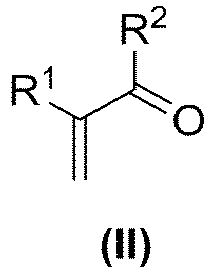
- Die Reaktionsbedingungen dazu sind dem Fachmann bekannt und können beispielsweise der
US 3,850,976 entnommen werden. - Die Blausäure kann als Flüssigkeit oder gasförmig, bevorzugt als Flüssigkeit eingesetzt werden.
- Die Umsetzung der Verbindung der Struktur (II) kann in einem Reaktor mit Wälzung stattfinden. Die Wälzung stellt eine intensive Vermischung der kritischen Reaktanden sicher.
- Die Base B ist aus der Gruppe bestehend aus Ammoniak, Trialkylamin, Ammoniumsalz auszuwählen, bevorzugter aus der Gruppe bestehend aus Ammoniak, Trialkylamin auszuwählen, noch bevorzugter aus der Gruppe bestehend aus Ammoniak, Triethylamin, am bevorzugtesten Triethylamin, auszuwählen. Der Ammoniak kann in einer Mischung mit CO2 eingesetzt werden, wie in der
US 3,850,976 beschrieben. - Bevorzugtes Trialkylamin ist Triethylamin.
- Bevorzugte Ammoniumsalze sind Ammoniumcarbonat, Ammoniumhydrogencarbonat, Ammoniumcarbamat, besonders bevorzugt Ammoniumcarbonat, Ammoniumhydrogencarbonat.
- Der Schritt a) wird dabei insbesondere bei einer Temperatur von - 50 °C bis 80 °C durchgeführt, bevorzugt bei einer Temperatur von - 40 °C bis 60 °C durchgeführt, bevorzugter bei einer Temperatur von -30 °C bis 30 °C durchgeführt, noch bevorzugter bei einer Temperatur von - 10 bis 10 °C durchgeführt, noch mehr bevorzugter bei einer Temperatur von - 5 °C bis 5 °C durchgeführt.
- Die Menge an eingesetzter Blausäure in Schritt a) des erfindungsgemäßen Verfahrens ist grundsätzlich nicht beschränkt. Um jedoch eine möglichst vollständige Umsetzung der Verbindung (II) zu gewährleisten, und da die vorliegende Erfindung ja gerade die leichte Entfernung überschüssiger Blausäure im RP erlaubt, wird die Blausäure in Schritt a) des erfindungsgemäßen Verfahrens insbesondere in einer Menge von > 1 molaren Äquivalent, bevorzugt in einer Menge von > 1 bis 10 molaren Äquivalenten, bevorzugter in einer Menge von 1.01 molaren Äquivalenten bis 7.5 molaren Äquivalenten, noch bevorzugter 1.03 molaren Äquivalenten bis 5 molaren Äquivalenten, noch bevorzugter 1.3 molaren Äquivalenten bis 2 molaren Äquivalenten, jeweils bezogen auf die Menge aller in Schritt a) eingesetzten Verbindungen der Formel (II), eingesetzt.
- Die Menge an Base B in Schritt a) ist nicht weiter beschränkt. Bevorzugt beträgt die Menge an Base B in Schritt a) 0.01 bis 5 Gew.-%, bevorzugter 0.1 bis 1 Gew-% bezogen auf die Summe der Gewichte der in Schritt a) eingesetzten Blausäure und aller in Schritt a) eingesetzten Verbindungen der Formel (II).
- Noch bevorzugter wird in Schritt a) so viel Base B eingesetzt, dass die Reaktionsmischung im Schritt a) einen pH-Wert von ≥ 6.9, bevorzugter 7.0 bis 7.5, bevorzugt 7.3 aufweist (bei 25 °C).
- Der pH-Wert der Reaktionsmischung in Schritt a) kann mit entsprechenden Elektroden routinemäßig vom Fachmann bestimmt werden, so dass er darüber die Menge der nötigen Base B bestimmen kann. Eine mögliche pH-Elektrode ist zum Beispiel die "Flushtrode pH Elektrode A238060" (Hersteller: Hamilton).
- Die Reaktionszeit ist nicht weiter beschränkt. Man führt die Umsetzung in Schritt a) durch, bis der gewünschte Umsatz der Verbindung der Formel (II) mit Blausäure zum Produkt (I) erreicht ist. Insbesondere liegt die Reaktionszeit bei 20 Sekunden bis 3 Stunden, bevorzugt 1 bis 85 Minuten.
- Schritt a) des erfindungsgemäßen Verfahrens wird mit oder ohne, bevorzugt ohne Lösungsmittel durchgeführt. Wird ein Lösungsmittel eingesetzt, ist dies bevorzugt mindestens eines ausgewählt aus Alkohol, Toluol, Xylol, Methylenchlorid, Dialkylformamid oder Dialkylsulfoxid, noch bevorzugter mindestens eines ausgewählt aus Methanol, Ethanol, Toluol, Xylol, Methylenchlorid.
- Am Ende des Schrittes a) erhält man ein RP, welches die Zielverbindung (I) umfasst, und daneben auch Blausäure umfasst. Der Anteil an Blausäure ist abhängig vom Überschuss an Blausäure, der in Schritt a) des erfindungsgemäßen Verfahrens eingesetzt wurde und auch von der Umsetzung in Schritt a). Insbesondere beträgt der Anteil an Blausäure im RP bezogen auf die Menge der von RP umfassten Verbindung der Formel (I) bis zu 10 Gew.-%, liegt bevorzugt im Bereich von 3 bis 4 Gew.-%.
- Dieses Rohprodukt RP kann nun dem Schritt b), das heißt der erfindungsgemäßen Strippung, zugeführt werden.
- Es ist jedoch von Vorteil, dass das RP vor Durchführung des Schrittes b) stabilisiert wird. Stabilisierung bedeutet erfindungsgemäß, dass das Rohprodukt RP mit mindestens einer Säure vermischt wird, so dass es nach Vermischen mit der Säure einen pH-Wert von < 6.9 aufweist, bevorzugt einen pH von < 5.0, bevorzugter < 4.0, sogar bevorzugter < 3.0, noch bevorzugter < 2.0, noch mehr bevorzugter < 1.0 (bei 25 °C) aufweist.
- Der pH-Wert der so stabilisierten Mischung kann mit entsprechenden Elektroden routinemäßig vom Fachmann bestimmt werden, so dass er darüber die Menge der nötigen Säure bestimmen kann. Eine mögliche pH-Elektrode ist zum Beispiel die "Flushtrode pH Elektrode A238060" (Hersteller: Hamilton).
- Die Menge der zur Stabilisierung mit dem RP vermischten Säuren liegt vorzugsweise bei ≤ 10 Gew.-%, bevorzugt bei ≤ 5 Gew.-%, bevorzugter bei ≤ 1 Gew.-%, noch bevorzugter bei ≤ 0.1 Gew.-% bezogen auf die Menge aller Verbindungen der Formel (I) im RP.
- Die dazu verwendete nötige Säure wird bevorzugt ausgewählt aus der Gruppe bestehend aus Mineralsäuren, Alkylcarbonsäure, aromatische Sulfonsäure, oder Mischungen aus aromatischer Sulfonsäure und Alkylcarbonsäure.
- Eine bevorzugte Alkylcarbonsäure ist Essigsäure.
- Eine bevorzugte Mineralsäure ist Phosphorsäure.
- "Aromatische Sulfonsäure" bedeutet, dass der aromatische Rest in dieser Sulfonsäure Alkylsubstituenten tragen kann oder auch nicht. Bevorzugte aromatische Sulfonsäuren sind ausgewählt aus Benzolsulfonsäure und alkylsubstituierten Benzolsulfonsäuren, wobei die Alkylsubstituenten bevorzugt 1 bis 20 Kohlenstoffatome haben und der Phenylring bevorzugt nur einen para-Alkylsubstituenten trägt, wie z.B. para-Toluolsulfonsäure.
- Werden Mischungen aus aromatischer Sulfonsäure und Alkylcarbonsäure zur Stabilisierung des RP eingesetzt, liegen insbesondere in diesen Mischungen alle aromatischen Sulfonsäuren und alle Alkylcarbonsäuren im folgendem Gewichtsverhältnis vor:
Gewicht aller aromatischen Sulfonsäuren zu allen Alkylcarbonsäuren = 9:1 bis 1:9, bevorzugt 8:2 bis 2:8, bevorzugter 7:3 bis 3:7, noch bevorzugter 6:4 bis 4:6, am bevorzugtesten 1:1. - Das nach Schritt a) erhaltene RP, sei es nun stabilisiert oder nicht weiter stabilisiert, bevorzugt ist es stabilisiert, wird dann dem Schritt b) unterworfen.
- In Schritt b) findet die mindestens teilweise Entfernung von Blausäure aus dem Rohprodukt RP statt, in dem dieses einer Strippung unterworfen wird, wodurch ein Reinprodukt umfassend die Verbindung (I), wobei das Reinprodukt einen gegenüber RP verringerten Gehalt an Blausäure aufweist, erhalten wird.
- Dies war überraschend, denn Acroleincyanhydrin und ähnliche Verbindungen sind gerade in Kombination mit Blausäure sehr explosiv in Anwesenheit von Sauerstoff, wie es im Folgeschritt zu erwarten ist (Gestis-Stoffdatenbank des Instituts für Arbeitsschutz). Gemäß Fachwissen sind diese Mischungen einer destillativen Reinigung grundsätzlich nicht zugänglich, da eine saure Stabilisierung jederzeit sichergestellt sein muß und weiterhin die thermische Stabilität des Produktes nicht ausreicht, um eine Verdampfung unter technisch realisierbaren Vakuumbedingungen durchzuführen.
- Im Verfahren gemäß der vorliegenden Erfindung wird das RP aus Schritt a) (stabilisiert oder unstabilisiert, bevorzugt stabilisiert) dann im Schritt b) einer Strippung unterzogen. Es wurde überraschend festgestellt, dass mit diesem Verfahren eine besonders schonende Entfernung der Blausäure möglich ist.
- "Strippung" ist ein dem Fachmann bekanntes physikalisches Trennverfahren, was in vielen Gebieten des Standes der Technik zu Reinigung von Flüssigkeiten verwendet wird (zum Beispiel beschrieben in M. Kriebel: "Absorption, 2. Design of Systems and Equipment", Ullmann's Encyclopedia of Industrial Chemistry, Electronic Release, chap. 3, Wiley VCH, Weinheim October 2008). In diesem wird eine Gasphase im Gegenstrom mit einer zu reinigenden Phase oder die zu reinigende Phase bei vermindertem Druck von unter 1 bar mit oder ohne einem Gegenstrom kontaktiert. Diese Kontaktierung geschieht erfindungsgemäß insbesondere in einer Kolonne.
- In der vorliegenden Erfindung wird die Strippung bei einem verminderten Druck von im Bereich von 10 bis 500 mbar durchgeführt. Es kann gegebenenfalls ein inertes Strippungsgas im Gegenstrom eingesetzt werden, was bedeutet, dass zur Unterstützung der Strippung ein solches inertes Strippungsgas in die Kolonne im Gegenstrom zum RP eingeführt werden kann, solange nur der Druck im Bereich von 10 bis 500 mbar bleibt.
- "Wobei gegebenenfalls ein inertes Strippungsgas im Gegenstrom eingesetzt wird" bedeutet demnach, dass zur Unterstützung der Strippung ein solches inertes Strippungsgas in die Kolonne im Gegenstrom zu dem in die Kolonne eingeführten RP umfassend Blausäure und die Verbindung der Formel (I) eingeführt wird und dabei der Druck im Bereich von 10 bis 500 mbar bleibt, oder eben kein solches inertes Strippungsgas eingeführt wird.
- Bevorzugt ist die Durchführung ohne inertes Strippungsgas.
- Die Temperatur der Strippung kann durch Einstellung eines entsprechenden Unterdruckes in der Kolonne routinemäßig vom Fachmann eingestellt werden.
- Der Druck liegt erfindungsgemäß im Schritt b) im Bereich 10 - 500 mbar, noch bevorzugter im Bereich 10 - 200 mbar.
- Bevorzugt ist dabei, dass die Temperatur von 85 °C oder weniger bei der Strippung eingehalten wird, denn es wurde überraschend festgestellt, dass eine besonders schonende und vorteilhafte Reinigung von AcCH bei einer Temperatur von 85 °C oder tiefer möglich ist. Bevorzugt liegt die Temperatur bei ≤ 72.5 °C, bevorzugter in einem Bereich von - 10 °C bis 70 °C, noch bevorzugter in einem Bereich von - 5 °C bis 30 °C
- Die Reinigung des RP kann durch ein Vergrößern der Oberfläche desselben verbessert werden. Vorzugsweise wird dazu das RP im Schritt b) des erfindungsgemäßen Verfahrens mindestens teilweise über eine Schüttung aus Füllkörpern oder über eine strukturierte Packung geleitet. Geeignet sind dazu alle Füllkörper und strukturierten Packungen, die dem Fachmann aus dem Stand der Technik für Destillationen und für Absorptionsprozesse bekannt sind. Alternativ kann die Strippung in einem Fallfilm- oder Dünnschichtverdampfer erfolgen. Diese Apparate sind dem Fachmann gemäß dem Stand der Technik bekannt.
- Bevorzugtes inertes Strippungsgas ist Stickstoff.
- Wird ein inertes Strippungsgas eingesetzt, sollte der Wassergehalt desselben gering sein, bevorzugt < 1 Vol.-%, bevorzugter < 0,1 Vol.-%.
- In Schritt b) wird dann erfindungsgemäß ein Reinprodukt erhalten, welches gegenüber dem RP einen verringerten Gehalt an Blausäure aufweist. Typischerweise enthält dieses Reinprodukt einen Gehalt von < 0.1 Gew.-% Blausäure bezogen auf die vom Reinprodukt umfasste Verbindung der Formel (I).
- Bevorzugt schließt sich an den Schritt b) des erfindungsgemäßen Verfahrens dann noch ein weiterer Schritt c) an. Die vorliegende Erfindung betrifft demnach auch zusammen mit den vorher beschriebenen Schritten a) und b) ein Verfahren zur Herstellung einer Verbindung der Formel (III)

- wobei R1 und R2 die vorgenannten Bedeutungen haben,
- R3, R4 unabhängig voneinander jeweils ausgewählt sind aus (Halo)alkyl, (Halo)aryl, (Halo)aralkyl, (Halo)cycloalkyl,
- X Sauerstoff oder Schwefel ist,
- n= 0 oder 1;
- umfassend die Schritte a) und b) gemäß dem erfindungsgemäßen Verfahren zur Herstellung einer Verbindung der Formel (I) und zusätzlich den Schritt c), in welchem das in Schritt b) erhaltene Reinprodukt umfassend die Verbindung (I), wobei das Reinprodukt einen gegenüber RP verringerten Gehalt an Blausäure aufweist, mit einer Verbindung der Formel (IV)

- Diese Umsetzung kann nach dem Fachmann bekannten Verfahren (beschrieben in der
WO 2015/173146 A1 ) erfolgen. Durch die Verwendung des in Schritt b) erhaltene Reinprodukts umfassend die Verbindung (I), und einen verringerten Blausäuregehalt kommt es zu weniger Nebenreaktionen im Schritt c). Die Gefahr von Explosionen, welche durch Blausäure und radikalbildender Substanz in Schritt c) besteht, ist ebenfalls verringert. - Die Temperatur in der Umsetzung im Schritt c) liegt bevorzugt bei 50 °C bis 105 °C, bevorzugter bei 60 °C bis 95 °C, noch bevorzugter bei 65 °C bis 90 °C.
- R3, R4 sind bevorzugt unabhängig voneinander jeweils ausgewählt aus (Halo)alkyl mit 1 bis 12 Kohlenstoffatomen, (Halo)aryl mit 6 bis 10 Kohlenstoffatomen, (Halo)aralkyl mit 7 bis 10 Kohlenstoffatomen, (Halo)cycloalkyl mit 4 bis 10 Kohlenstoffatomen.
- (Halo)alkyl bedeutet erfindungsgemäß Alkyl oder Haloalkyl.
(Halo)aryl bedeutet erfindungsgemäß Aryl oder Haloaryl.
(Halo)aralkyl bedeutet erfindungsgemäß Aralkyl oder Haloaralkyl.
(Halo)cycloalkyl bedeutet erfindungsgemäß Cycloalkyl oder Halocycloalkyl. - R3 ist bevorzugt ausgewählt aus Alkyl mit 1 bis 4 Kohlenstoffatomen, Haloalkyl mit 1 bis 4 Kohlenstoffatomen, noch bevorzugter Methyl oder Ethyl, noch bevorzugter Methyl.
- R4 ist bevorzugt ausgewählt aus Alkyl mit 1 bis 6 Kohlenstoffatomen, Haloalkyl mit 1 bis 6 Kohlenstoffatomen, bevorzugter ausgewählt aus Alkyl mit 3 bis 6 Kohlenstoffatomen, noch bevorzugter ausgewählt aus Alkyl mit 4 oder 5 Kohlenstoffatomen, am bevorzugtesten n-Butyl oder n-Pentyl.
- Vorzugsweise wird in dem Schritt c) außerdem mindestens eine radikalbildende Substanz eingesetzt. Bei dieser handelt es sich bevorzugt um einen Radikalbildner der Formel (V) mit

- wobei R5 Methyl, Ethyl, 2,2-Dimethylpropyl oder Phenyl bedeutet,
- R6, R7 unabhängig voneinander jeweils eine Alkylgruppe mit 1 bis 10 Kohlenstoffatomen, bevorzugt 2 bis 6, noch bevorzugter 1 bis 4 Kohlenstoffatomen sind und
- R8 Wasserstoff oder eine Alkylgruppe mit 1 bis 10 Kohlenstoffatomen, bevorzugt Wasserstoff oder eine Alkylgruppe mit 1 bis 6 Kohlenstoffatomen, noch bevorzugter Wasserstoff oder eine Alkylgruppe mit 1 bis 4 Kohlenstoffatomen ist.
- Die Radikalbildner der Formel (V) sind an sich bekannt und zum Teil kommerziell erhältlich.
- Der Radikalbildner der Formel (V) ist dabei vorzugsweise gewählt aus der Gruppe bestehend aus tert-Butylperoxypivalat, tert-Amylperoxypivalat, tert-Butylperoxyneodecanoat, 1,1,3,3-Tetramethylbutylperoxyneodecanoat, tert-Butylperoxy-2-ethylhexanoat, 1,1,3,3-Tetramethylbutylperoxy2-ethylhexanoat, tert-Amylperoxyneodecanoat, Cumylperoxyneodecanoat, Cumylperoxyneoheptanoat, Cumylperoxypivalat, und deren Mischungen.
- Der Radikalbildner der Formel (V) ist dabei bevorzugt gewählt aus der Gruppe bestehend aus tert-Butylperoxyneodecanoat, 1,1,3,3-Tetramethylbutylperoxyneodecanoat, tert-Butylperoxy-2-ethylhexanoat, 1,1,3,3-Tetramethylbutylperoxy-2-ethylhexanoat, Cumylperoxyneodecanoat, und deren Mischungen, dabei wiederum besonders bevorzugt sind 1,1,3,3-Tetramethylbutylperoxyneodecanoat, tert-Butylperoxyneodecanoat und/oder tert-Butylperoxy-2-ethylhexanoat.
- Insbesondere die als bevorzugt angegebenen Radikalbildner ermöglichen eine sehr gute Reaktionsführung unter milden Reaktionsbedingungen, insbesondere in dem als bevorzugt angegebenen Temperaturbereich, wodurch die gewünschten Verbindungen der Formel (III) in hohen Ausbeuten und hoher Reinheit erhalten werden können.
- Vorzugsweise werden in Schritt c) des erfindungsgemäßen Verfahrens insgesamt 0.1 bis 10 mol-%, bevorzugt 0.25 bis 7 mol-%, weiter bevorzugt 0.5 bis 7 mol%, insbesondere bevorzugt 0.5 bis 5 mol%, an Radikalbildnern der Formel (V) verwendet, bezogen auf die insgesamt in Schritt c) des erfindungsgemäßen Verfahrens eingesetzte, vom Reinprodukt umfasste Menge aller Verbindungen der Formel (I).
- Die weiteren bevorzugten Bedingungen der Umsetzung in Schritt c) sind dem Fachmann bekannt und können etwa der
WO 2015/173146 A1 entnommen werden. - Die nachfolgenden Beispiele sollen die Erfindung erläutern, ohne diese zu beschränken.
- 1.1 50 g Acrolein werden mit 1.3 Mol-Äquivalenten Blausäure und soviel Triethylamin, dass der pH der Mischung bei 7.3 liegt, als Flüssigkeit in einem Doppelmantelreaktor bei - 5 °C unter Rührung vermischt und umgesetzt. Die Dosierung der Edukte und des Katalysators erfolgt kontinuierlich über 2 Stunden, um die Exothermie zu begrenzen. Nach 2 Stunden Reaktionszeit wird die Reaktionsmischung mit einer Mischung von para-Toluolsulfonsäure und Essigsäure (Gewichtsverhältnis 1 : 1) versetzt, bis der pH unter pH 3 absinkt. Dieses Rohprodukt umfasst ∼ 30 Mol.-% Blausäure bezogen auf Acroleincyanhydrin.
- 1.2 Zum Vergleich wird versucht, Roh-AcCH auch über das in der
US 3,850,976 , Beispiel 1 beschriebene Verfahren zu erhalten. Dieses Verfahren enthält allerdings einen Schritt der Destillierung von AcCH unter reduziertem Druck (65 °C, 3mm). Dieser Schritt ist unter Laborbedingungen beherrschbar, aber für größere Ansätze nicht durchführbar. Dieses Verfahren scheidet für großtechnische Ansätze deshalb aus und stellt auch für kleine Ansätze ein Sicherheitsrisiko dar. - Das AcCH-Rohprodukt, welches nach dem Schritt 1.1 erhalten wird, wird mit Hilfe einer Telabpumpe und eines externen Thermostaten auf eine Temperatur von 30 - 72.5 °C vorgewärmt und in Mengen von 10 - 50 g/h auf eine 30 cm lange, beheizbare Strippkolonne auf den Kopf der Kolonne gefahren werden. Die Kolonne wird unter Anlegen eines Vakuums mit einem Druck von 10 - 200 mbar gefahren.
- Die Kolonne enthält gemäß dem Stand der Technik ein Metallgewebe, was die in der Produktion verwendeten geregelten Packungen ausreichend simuliert.
- Erfahrungsgemäß entsprechen 10 cm dieses Metallgewebes 5 theoretischen Böden.
Die Kolonne wird beheizt, aber nur um Wärmeverluste zu kompensieren und die Kolonne bei der genannten Temperatur zu halten. - Auf der Kolonne befindet sich ein Rücklaufteiler, mit dem Verhältnis von Rücklauf und Abnahme eingestellt werden kann. Integriert ist außerdem ein Kondensator, mit dem Brüden kondensiert werden. Die Brüden bestehen in diesem Falle im Wesentlichen aus kondensierter Blausäure. Der Destillatvorlagebehälter kann Phosphorsäure enthalten, um eine ausreichende Stabilisierung der kondensierten Blausäure sicherzustellen.
- Im Laborverfahren wird die Blausäure mit wässriger Natronlauge neutralisiert und einer geregelten Entsorgung zugeführt.
- Im späteren Produktionsverfahren kann diese verbrannt oder recycliert werden.
- Das blausäurefreie Acroleincyanhydrin wird mit der gleichen Menge pro Zeit, wie der Feed auf die Kolonne, mit Hilfe einer Pumpe ausgeschleust. Dadurch bleibt der Sumpfstand konstant und die thermische Belastung des Materials ist zeitlich limitiert.
- Die Beheizung der Destillation erfolgt über einen Doppelmantel der Sumpfblase.
- Das blausäurefreie Acroleincyanhydrin im Sumpf wird per argentometrischer Titration mit Silbernitratlösung bezüglich der resliche Cyanidspuren analysiert.
- Es zeigt sich eine äußerst geringe Menge von weniger als 0.1 Gew.-% an Blausäure bezogen auf Acroleincyanhydrin im so aufgereinigten Reinprodukt.
- Es wird festgestellt, dass bei Ansteigen des Druckes ≥ 1 bar eine Reinigung des AcCHs im großtechnischen Maßstab nicht umsetzbar ist, da es zu unkontrollierten thermischen Zersetzungen kommt. Diese sind im Druckbereich von 10 - 200 mbar besonders gut beherrschbar.
Claims (13)
- Verfahren zur Herstellung einer Verbindung der Formel (I)

umfassend die folgenden Schritte:(a) Umsetzen mindestens einer Verbindung der Formel (II)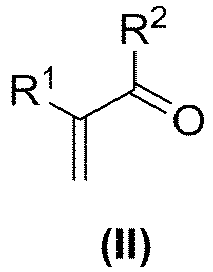 b) mindestens teilweise Entfernung von Blausäure aus dem Rohprodukt RP, in dem dieses einer Strippung unterworfen wird, wodurch ein Reinprodukt umfassend die Verbindung (I), wobei das Reinprodukt einen gegenüber RP verringerten Gehalt an Blausäure aufweist, erhalten wird,dadurch gekennzeichnet, dass die Strippung bei einem Druck im Bereich von 10 bis 500 mbar durchgeführt wird, wobei bei der Strippung in Schritt b) eine Temperatur von ≤ 85 °C eingehalten wird, wobei gegebenenfalls ein inertes Strippungsgas im Gegenstrom eingesetzt wird.
 - Verfahren nach Anspruch 1, wobei Schritt a) bei einer Temperatur von - 50 °C bis 80 °C durchgeführt wird.
- Verfahren nach Anspruch 1 oder 2, wobei die Blausäure in Schritt a) in einer Menge von > 1 molaren Äquivalent, bezogen auf die Menge aller in Schritt a) eingesetzten Verbindungen der Formel (II), eingesetzt wird.
- Verfahren nach einem der Ansprüche 1 bis 3, wobei die Menge an Base B in Schritt a) 0.01 bis 5 Gew.-%, bezogen auf die Summe der Gewichte der in Schritt a) eingesetzten Blausäure und aller in Schritt a) eingesetzten Verbindungen der Formel (II), beträgt.
- Verfahren nach einem der Ansprüche 1 bis 4, wobei das Rohprodukt RP vor dem Schritt b) mit mindestens einer Säure vermischt wird, so dass es nach Vermischen mit der Säure einen pH-Wert von < 6.9 aufweist.
- Verfahren nach Anspruch 5, wobei mindestens eine Säure einen pKs von ≤ 1 hat.
- Verfahren nach Anspruch 5 oder 6, wobei die Säure ausgewählt ist aus Mineralsäure, Alkylcarbonsäure, aromatische Sulfonsäure.
- Verfahren nach einem der Ansprüche 1 bis 7, wobei das Rohprodukt RP in Schritt b) bei der Strippung mindestens teilweise über eine Schüttung aus Füllkörpern oder über eine strukturierte Packung geleitet wird.
- Verfahren zur Herstellung einer Verbindung der Formel (III)
 wobei R1 und R2 die vorgenannten Bedeutungen haben,R3, R4 unabhängig voneinander jeweils ausgewählt aus (Halo)alkyl, (Halo)aryl, (Halo)aralkyl, (Halo)cycloalkyl sind,X Sauerstoff oder Schwefel ist,n = 0 oder 1 ist;umfassend die Schritte a) und b) gemäß einem der Ansprüche 1 bis 8 und zusätzlich den Schritt c), in welchem das in Schritt b) erhaltene Reinprodukt umfassend die Verbindung (I), wobei das Reinprodukt einen gegenüber RP verringerten Gehalt an Blausäure aufweist, mit einer Verbindung der Formel (IV)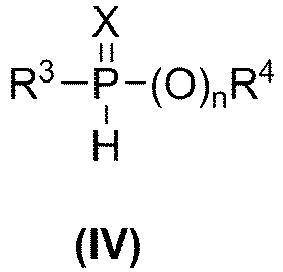
- Verfahren nach Anspruch 9, wobei die Umsetzung in Schritt c) bei einer Temperatur von 50 °C bis 105 °C erfolgt.
- Verfahren nach Anspruch 9 oder 10, wobei R3, R4 unabhängig voneinander jeweils ausgewählt sind aus (Halo)alkyl mit 1 bis 12 Kohlenstoffatomen, (Halo)aryl mit 6 bis 10 Kohlenstoffatomen, (Halo)aralkyl mit 7 bis 10 Kohlenstoffatomen, (Halo)cycloalkyl mit 4 bis 10 Kohlenstoffatomen.
- Verfahren nach einem der Ansprüche 9 bis 11, wobei in Schritt c) mindestens eine radikalbildende Substanz eingesetzt wird,
- Verfahren nach Anspruch 12, wobei die radikalbildende Substanz ein Radikalbildner der Formel (V) ist mit
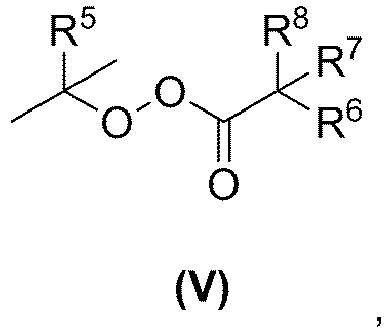 wobei R5 ausgewählt ist aus Methyl, Ethyl, 2,2-Dimethylpropyl, Phenyl,R6, R7 unabhängig voneinander jeweils eine Alkylgruppe mit 1 bis 10 Kohlenstoffatomen sind,R8 Wasserstoff oder eine Alkylgruppe mit 1 bis 10 Kohlenstoffatomen ist.
Priority Applications (6)
| Application Number | Priority Date | Filing Date | Title |
|---|---|---|---|
| EP17167628.1A EP3392237B1 (de) | 2017-04-21 | 2017-04-21 | Verfahren zur herstellung von acroleincyanhydrinen |
| US15/936,868 US10214484B2 (en) | 2017-04-21 | 2018-03-27 | Method for preparing acrolein cyanohydrins |
| SG10201803269RA SG10201803269RA (en) | 2017-04-21 | 2018-04-19 | Method for preparing acrolein cyanohydrins |
| CN201810351934.8A CN108727220B (zh) | 2017-04-21 | 2018-04-19 | 制备丙烯醛氰醇的方法 |
| JP2018081566A JP7078445B2 (ja) | 2017-04-21 | 2018-04-20 | アクロレインシアノヒドリンの製造方法 |
| KR1020180045880A KR102079639B1 (ko) | 2017-04-21 | 2018-04-20 | 아크롤레인 시아노히드린을 제조하는 방법 |
Applications Claiming Priority (1)
| Application Number | Priority Date | Filing Date | Title |
|---|---|---|---|
| EP17167628.1A EP3392237B1 (de) | 2017-04-21 | 2017-04-21 | Verfahren zur herstellung von acroleincyanhydrinen |
Publications (2)
| Publication Number | Publication Date |
|---|---|
| EP3392237A1 EP3392237A1 (de) | 2018-10-24 |
| EP3392237B1 true EP3392237B1 (de) | 2019-10-02 |
Family
ID=58606149
Family Applications (1)
| Application Number | Title | Priority Date | Filing Date |
|---|---|---|---|
| EP17167628.1A Active EP3392237B1 (de) | 2017-04-21 | 2017-04-21 | Verfahren zur herstellung von acroleincyanhydrinen |
Country Status (6)
| Country | Link |
|---|---|
| US (1) | US10214484B2 (de) |
| EP (1) | EP3392237B1 (de) |
| JP (1) | JP7078445B2 (de) |
| KR (1) | KR102079639B1 (de) |
| CN (1) | CN108727220B (de) |
| SG (1) | SG10201803269RA (de) |
Families Citing this family (1)
| Publication number | Priority date | Publication date | Assignee | Title |
|---|---|---|---|---|
| CN111393321A (zh) * | 2020-05-20 | 2020-07-10 | 山东新和成氨基酸有限公司 | 1-氰基-2-丙烯基乙酸酯的制备方法 |
Family Cites Families (30)
| Publication number | Priority date | Publication date | Assignee | Title |
|---|---|---|---|---|
| DE1240854B (de) | 1964-10-24 | 1967-05-24 | Scholven Chemie Ag | Verfahren zur Herstellung von 3-Cyan-3, 5, 5-trimethylcyclohexanon aus Isophoron undBlausaeure |
| JPS5021450B2 (de) | 1972-05-15 | 1975-07-23 | ||
| DE2313581A1 (de) | 1973-03-19 | 1974-09-26 | Hoechst Ag | Verfahren zur herstellung von aethan1,2-diphosphinsaeurediestern |
| DE2302523C3 (de) | 1973-01-19 | 1982-04-08 | Hoechst Ag, 6000 Frankfurt | Verfahren zur Herstellung von Äthan-1,2-diphosphinsäurediestern |
| JPS49133325A (de) * | 1973-05-04 | 1974-12-21 | ||
| DE2717440C2 (de) | 1976-05-17 | 1984-04-05 | Hoechst Ag, 6230 Frankfurt | Unkrautbekämpfung mit [(3-Amino-3-carboxy)-propyl-1]-methylphosphinsäure-Derivaten |
| DE2655715C2 (de) * | 1976-12-09 | 1985-10-10 | Basf Ag, 6700 Ludwigshafen | Verfahren zur Herstellung von Vinylmilchsäurenitril |
| DE2849003A1 (de) | 1978-11-11 | 1980-08-21 | Hoechst Ag | Phosphorhaltige cyanhydrinderivate und verfahren zu ihrer herstellung |
| DE3047024A1 (de) | 1978-11-11 | 1982-07-22 | Hoechst Ag, 6000 Frankfurt | Verfahren zur herstellung phosphorhaltiger cyanhydrine |
| DE2918609A1 (de) | 1979-05-09 | 1980-11-20 | Hoechst Ag | Verfahren zur herstellung von cyanhydrinacylaten alpha , beta -ungesaettigter aldehyde |
| DE2919974A1 (de) | 1979-05-17 | 1980-11-27 | Hoechst Ag | Verfahren zur herstellung von cyanhydrinacylaten von aldehyden |
| DE2946465A1 (de) | 1979-11-17 | 1981-06-11 | Agfa-Gevaert Ag, 5090 Leverkusen | Neue polymere, verfahren zu ihrer herstellung und ihre verwendung zur herstellung fotografischer emulsionen sowie fotografische materialien |
| DE3319850C2 (de) | 1983-06-01 | 1985-05-09 | Hoechst Ag, 6230 Frankfurt | Verfahren zur Herstellung von phosphorhaltigen Cyanhydrinderivaten |
| DE3701383A1 (de) * | 1987-01-20 | 1988-07-28 | Degussa | Verfahren zur herstellung von optisch aktiven cyanhydrinen |
| DE3900331A1 (de) | 1989-01-07 | 1990-07-12 | Hoechst Ag | Methyl-3,3-dialkoxy-1-propyl-phosphinsaeureester, die entsprechenden 3-oxoverbindungen sowie ein verfahren zu deren herstellung |
| IL104056A (en) | 1991-12-13 | 1997-02-18 | Hoechst Ag | Process for the preparation of L-phosphinothricin and its derivatives |
| DE19524158A1 (de) | 1995-07-03 | 1997-01-09 | Degussa | Verfahren zur Herstellung von Blausäure |
| DE19736125A1 (de) | 1997-08-20 | 1999-02-25 | Hoechst Schering Agrevo Gmbh | Verfahren zur Herstellung von Glufosinate und phosphorhaltige alpha-Aminonitrile als Zwischenprodukte |
| DE19754988A1 (de) | 1997-12-11 | 1999-06-17 | Degussa | Herstellung von Blausäure nach dem Andrussow-Verfahren |
| DE19754982A1 (de) | 1997-12-11 | 1999-06-17 | Degussa | Verfahren zur Herstellung von Blausäure |
| DE19810484A1 (de) | 1998-03-11 | 1999-09-16 | Degussa | Verfahren zur Herstellung von Blausäure |
| DE102006028036A1 (de) | 2006-06-14 | 2007-12-20 | Röhm Gmbh | Vorrichtung und Verfahren zur kontinuierlichen Darstellung von Ethylencyanhydrin |
| DE102006058250A1 (de) | 2006-12-08 | 2008-06-12 | Evonik Röhm Gmbh | Integriertes Verfahren und Vorrichtung zur Herstellung von Methacrylsäureestern aus Aceton und Blausäure |
| DE102006059511A1 (de) | 2006-12-14 | 2008-06-19 | Evonik Röhm Gmbh | Verfahren zur Herstellung von Acetoncyanhydrin und dessen Folgeprodukten durch gezielte Kühlung |
| DE102006059512A1 (de) | 2006-12-14 | 2008-06-19 | Evonik Röhm Gmbh | Destillative Aufarbeitung von Acetoncyanhydrin und Verfahren zur Herstellung von Metharcylsäureesther und Nachfolgeprodukten |
| DE102008044218A1 (de) | 2008-12-01 | 2010-06-02 | Evonik Röhm Gmbh | Verfahren zur Herstellung von einem Carbonsäureamid aus einer Carbonylverbindung und Blausäure |
| CN101830926B (zh) | 2010-05-04 | 2013-04-17 | 洪湖市一泰科技有限公司 | 二烷基次膦酸金属盐及其阻燃剂的合成工艺 |
| CN102372739B (zh) | 2011-12-05 | 2017-06-16 | 河北威远生化农药有限公司 | 一种草铵膦的合成方法 |
| CN102399240A (zh) | 2011-12-27 | 2012-04-04 | 江苏优士化学有限公司 | 一种改进的草铵膦及类似物的合成方法 |
| BR112016026212B1 (pt) * | 2014-05-13 | 2021-11-30 | Bayer Cropscience Aktiengesellschaft | Processo para preparar cianidrina contendo fósforo, misturas de compostos, processo para preparar glufosinato e seus sais, composto de fórmula amn e uso do mesmo |
-
2017
- 2017-04-21 EP EP17167628.1A patent/EP3392237B1/de active Active
-
2018
- 2018-03-27 US US15/936,868 patent/US10214484B2/en active Active
- 2018-04-19 CN CN201810351934.8A patent/CN108727220B/zh active Active
- 2018-04-19 SG SG10201803269RA patent/SG10201803269RA/en unknown
- 2018-04-20 JP JP2018081566A patent/JP7078445B2/ja not_active Expired - Fee Related
- 2018-04-20 KR KR1020180045880A patent/KR102079639B1/ko active Active
Non-Patent Citations (1)
| Title |
|---|
| None * |
Also Published As
| Publication number | Publication date |
|---|---|
| JP7078445B2 (ja) | 2022-05-31 |
| US10214484B2 (en) | 2019-02-26 |
| JP2018184391A (ja) | 2018-11-22 |
| EP3392237A1 (de) | 2018-10-24 |
| KR102079639B1 (ko) | 2020-02-21 |
| CN108727220A (zh) | 2018-11-02 |
| KR20180118548A (ko) | 2018-10-31 |
| CN108727220B (zh) | 2023-03-24 |
| SG10201803269RA (en) | 2018-11-29 |
| US20180305303A1 (en) | 2018-10-25 |
Similar Documents
| Publication | Publication Date | Title |
|---|---|---|
| EP2042483B1 (de) | Verfahren zur herstellung von monomethylhydrazin | |
| EP3663284B1 (de) | Verbessertes verfahren zur herstellung von triacetonamin | |
| DE69715882T2 (de) | Verfahren zur Herstellung von Amiden gesättigter aliphatischer Carbonsäuren | |
| EP3655413B1 (de) | Herstellung von glufosinat durch umsetzung von 3-[n-butoxy(methyl)phosphoryl]-1-cyanopropylacetat zu einer mischung aus n-butyl(3-amino-3-cyanopropyl)-methylphosphinat und (3-amino-3-cyanopropyl)-methylphosphinsäure ammoniumsalz | |
| EP3392237B1 (de) | Verfahren zur herstellung von acroleincyanhydrinen | |
| DE4027843A1 (de) | Kontinuierliches verfahren zur herstellung von n-substituierten acryl- und methacrylamiden | |
| DE1770510A1 (de) | Verfahren zur Herstellung von Triglycidyl-isocyanurat | |
| DE69828777T2 (de) | Verfahren zur herstellung von buttersäureester-derivaten | |
| WO2020136130A1 (de) | Verbessertes verfahren zur herstellung von 4,6-dihydroxypyrimidin | |
| EP2297126A1 (de) | Verfahren zur herstellung von glycidylestern | |
| EP1598331B1 (de) | Verfahren zur Herstellung von Phthalsäuredichlorid | |
| EP1926704B1 (de) | Verfahren zur herstellung von beta-aminopropionsäurederivaten | |
| EP2166005B1 (de) | Verfahren zur Herstellung von Phenylenbisoxazolinen | |
| DE69511827T2 (de) | Verfahren zur Herstellung von Aminoacetamid Derivaten | |
| DE2729974B2 (de) | Verfahren zur Herstellung von wäßrigen Lösungen bzw. feinteiligen wäßrigen Dispersionen von Polyenyltriarylphosphoniumsalzen | |
| EP1161413B1 (de) | Verfahren zur kontinuierlichen herstellung von methoxyamin-hydrochlorid | |
| DE3303815A1 (de) | Verfahren zur herstellung von 4-amino-5-dialkoxymethylpyrimidinderivaten und 4-amino-5-dialkoxymethylpyrimidinderivate | |
| WO2017005570A1 (de) | Verfahren zur herstellung von chloressigsäurechlorid | |
| EP1002783A1 (de) | Verfahren zur Herstellung von Orthoestern | |
| EP0224902A1 (de) | Verbesserte Verfahren zur Herstellung von D-threo-1-(p-Methylsulfonylphenyl)-2-dichloracetamido-propandiol-1,3-(Thiamphenicol)sowie Verwendung geeigneter Zwischenprodukte | |
| DE102012100127B4 (de) | Herstellung von Carbamaten über eine basenkatalysierte Lossen- Umlagerung | |
| DE1950642C3 (de) | Verfahren zur Herstellung von Phosphorsäurearylalkylestern | |
| DE2619574C3 (de) | Verfahren zur Herstellung von 3-Brompropionsäureamid | |
| WO2003097566A1 (de) | Verfahren zur herstellung von dialkyldiketenen | |
| WO2007051683A1 (de) | Verfahren zur herstellung von c1-c8-alkancarbonsäure-c1-c4-alkylestern |
Legal Events
| Date | Code | Title | Description |
|---|---|---|---|
| PUAI | Public reference made under article 153(3) epc to a published international application that has entered the european phase |
Free format text: ORIGINAL CODE: 0009012 |
|
| STAA | Information on the status of an ep patent application or granted ep patent |
Free format text: STATUS: THE APPLICATION HAS BEEN PUBLISHED |
|
| AK | Designated contracting states |
Kind code of ref document: A1 Designated state(s): AL AT BE BG CH CY CZ DE DK EE ES FI FR GB GR HR HU IE IS IT LI LT LU LV MC MK MT NL NO PL PT RO RS SE SI SK SM TR |
|
| AX | Request for extension of the european patent |
Extension state: BA ME |
|
| STAA | Information on the status of an ep patent application or granted ep patent |
Free format text: STATUS: REQUEST FOR EXAMINATION WAS MADE |
|
| 17P | Request for examination filed |
Effective date: 20190307 |
|
| RBV | Designated contracting states (corrected) |
Designated state(s): AL AT BE BG CH CY CZ DE DK EE ES FI FR GB GR HR HU IE IS IT LI LT LU LV MC MK MT NL NO PL PT RO RS SE SI SK SM TR |
|
| GRAP | Despatch of communication of intention to grant a patent |
Free format text: ORIGINAL CODE: EPIDOSNIGR1 |
|
| STAA | Information on the status of an ep patent application or granted ep patent |
Free format text: STATUS: GRANT OF PATENT IS INTENDED |
|
| RIC1 | Information provided on ipc code assigned before grant |
Ipc: C07C 255/15 20060101ALI20190626BHEP Ipc: C07C 253/10 20060101AFI20190626BHEP Ipc: C07F 9/32 20060101ALI20190626BHEP Ipc: C07C 253/34 20060101ALI20190626BHEP Ipc: C07F 9/30 20060101ALI20190626BHEP |
|
| GRAS | Grant fee paid |
Free format text: ORIGINAL CODE: EPIDOSNIGR3 |
|
| INTG | Intention to grant announced |
Effective date: 20190718 |
|
| GRAA | (expected) grant |
Free format text: ORIGINAL CODE: 0009210 |
|
| STAA | Information on the status of an ep patent application or granted ep patent |
Free format text: STATUS: THE PATENT HAS BEEN GRANTED |
|
| AK | Designated contracting states |
Kind code of ref document: B1 Designated state(s): AL AT BE BG CH CY CZ DE DK EE ES FI FR GB GR HR HU IE IS IT LI LT LU LV MC MK MT NL NO PL PT RO RS SE SI SK SM TR |
|
| REG | Reference to a national code |
Ref country code: GB Ref legal event code: FG4D Free format text: NOT ENGLISH |
|
| REG | Reference to a national code |
Ref country code: CH Ref legal event code: EP Ref country code: AT Ref legal event code: REF Ref document number: 1186017 Country of ref document: AT Kind code of ref document: T Effective date: 20191015 |
|
| REG | Reference to a national code |
Ref country code: DE Ref legal event code: R096 Ref document number: 502017002426 Country of ref document: DE |
|
| REG | Reference to a national code |
Ref country code: IE Ref legal event code: FG4D Free format text: LANGUAGE OF EP DOCUMENT: GERMAN |
|
| RAP2 | Party data changed (patent owner data changed or rights of a patent transferred) |
Owner name: EVONIK OPERATIONS GMBH |
|
| REG | Reference to a national code |
Ref country code: DE Ref legal event code: R081 Ref document number: 502017002426 Country of ref document: DE Owner name: EVONIK OPERATIONS GMBH, DE Free format text: FORMER OWNER: EVONIK DEGUSSA GMBH, 45128 ESSEN, DE |
|
| REG | Reference to a national code |
Ref country code: NL Ref legal event code: FP |
|
| REG | Reference to a national code |
Ref country code: LT Ref legal event code: MG4D |
|
| PG25 | Lapsed in a contracting state [announced via postgrant information from national office to epo] |
Ref country code: SE Free format text: LAPSE BECAUSE OF FAILURE TO SUBMIT A TRANSLATION OF THE DESCRIPTION OR TO PAY THE FEE WITHIN THE PRESCRIBED TIME-LIMIT Effective date: 20191002 Ref country code: LV Free format text: LAPSE BECAUSE OF FAILURE TO SUBMIT A TRANSLATION OF THE DESCRIPTION OR TO PAY THE FEE WITHIN THE PRESCRIBED TIME-LIMIT Effective date: 20191002 Ref country code: ES Free format text: LAPSE BECAUSE OF FAILURE TO SUBMIT A TRANSLATION OF THE DESCRIPTION OR TO PAY THE FEE WITHIN THE PRESCRIBED TIME-LIMIT Effective date: 20191002 Ref country code: PL Free format text: LAPSE BECAUSE OF FAILURE TO SUBMIT A TRANSLATION OF THE DESCRIPTION OR TO PAY THE FEE WITHIN THE PRESCRIBED TIME-LIMIT Effective date: 20191002 Ref country code: NO Free format text: LAPSE BECAUSE OF FAILURE TO SUBMIT A TRANSLATION OF THE DESCRIPTION OR TO PAY THE FEE WITHIN THE PRESCRIBED TIME-LIMIT Effective date: 20200102 Ref country code: GR Free format text: LAPSE BECAUSE OF FAILURE TO SUBMIT A TRANSLATION OF THE DESCRIPTION OR TO PAY THE FEE WITHIN THE PRESCRIBED TIME-LIMIT Effective date: 20200103 Ref country code: BG Free format text: LAPSE BECAUSE OF FAILURE TO SUBMIT A TRANSLATION OF THE DESCRIPTION OR TO PAY THE FEE WITHIN THE PRESCRIBED TIME-LIMIT Effective date: 20200102 Ref country code: FI Free format text: LAPSE BECAUSE OF FAILURE TO SUBMIT A TRANSLATION OF THE DESCRIPTION OR TO PAY THE FEE WITHIN THE PRESCRIBED TIME-LIMIT Effective date: 20191002 Ref country code: PT Free format text: LAPSE BECAUSE OF FAILURE TO SUBMIT A TRANSLATION OF THE DESCRIPTION OR TO PAY THE FEE WITHIN THE PRESCRIBED TIME-LIMIT Effective date: 20200203 Ref country code: LT Free format text: LAPSE BECAUSE OF FAILURE TO SUBMIT A TRANSLATION OF THE DESCRIPTION OR TO PAY THE FEE WITHIN THE PRESCRIBED TIME-LIMIT Effective date: 20191002 |
|
| PG25 | Lapsed in a contracting state [announced via postgrant information from national office to epo] |
Ref country code: HR Free format text: LAPSE BECAUSE OF FAILURE TO SUBMIT A TRANSLATION OF THE DESCRIPTION OR TO PAY THE FEE WITHIN THE PRESCRIBED TIME-LIMIT Effective date: 20191002 Ref country code: RS Free format text: LAPSE BECAUSE OF FAILURE TO SUBMIT A TRANSLATION OF THE DESCRIPTION OR TO PAY THE FEE WITHIN THE PRESCRIBED TIME-LIMIT Effective date: 20191002 Ref country code: IS Free format text: LAPSE BECAUSE OF FAILURE TO SUBMIT A TRANSLATION OF THE DESCRIPTION OR TO PAY THE FEE WITHIN THE PRESCRIBED TIME-LIMIT Effective date: 20200224 Ref country code: CZ Free format text: LAPSE BECAUSE OF FAILURE TO SUBMIT A TRANSLATION OF THE DESCRIPTION OR TO PAY THE FEE WITHIN THE PRESCRIBED TIME-LIMIT Effective date: 20191002 |
|
| PG25 | Lapsed in a contracting state [announced via postgrant information from national office to epo] |
Ref country code: AL Free format text: LAPSE BECAUSE OF FAILURE TO SUBMIT A TRANSLATION OF THE DESCRIPTION OR TO PAY THE FEE WITHIN THE PRESCRIBED TIME-LIMIT Effective date: 20191002 |
|
| REG | Reference to a national code |
Ref country code: DE Ref legal event code: R097 Ref document number: 502017002426 Country of ref document: DE |
|
| PG2D | Information on lapse in contracting state deleted |
Ref country code: IS |
|
| PG25 | Lapsed in a contracting state [announced via postgrant information from national office to epo] |
Ref country code: RO Free format text: LAPSE BECAUSE OF FAILURE TO SUBMIT A TRANSLATION OF THE DESCRIPTION OR TO PAY THE FEE WITHIN THE PRESCRIBED TIME-LIMIT Effective date: 20191002 Ref country code: EE Free format text: LAPSE BECAUSE OF FAILURE TO SUBMIT A TRANSLATION OF THE DESCRIPTION OR TO PAY THE FEE WITHIN THE PRESCRIBED TIME-LIMIT Effective date: 20191002 Ref country code: DK Free format text: LAPSE BECAUSE OF FAILURE TO SUBMIT A TRANSLATION OF THE DESCRIPTION OR TO PAY THE FEE WITHIN THE PRESCRIBED TIME-LIMIT Effective date: 20191002 Ref country code: IS Free format text: LAPSE BECAUSE OF FAILURE TO SUBMIT A TRANSLATION OF THE DESCRIPTION OR TO PAY THE FEE WITHIN THE PRESCRIBED TIME-LIMIT Effective date: 20200202 |
|
| REG | Reference to a national code |
Ref country code: BE Ref legal event code: HC Owner name: EVONIK OPERATIONS GMBH; DE Free format text: DETAILS ASSIGNMENT: CHANGE OF OWNER(S), CHANGEMENT DE NOM DU PROPRIETAIRE; FORMER OWNER NAME: EVONIK DEGUSSA GMBH Effective date: 20200403 |
|
| PLBE | No opposition filed within time limit |
Free format text: ORIGINAL CODE: 0009261 |
|
| STAA | Information on the status of an ep patent application or granted ep patent |
Free format text: STATUS: NO OPPOSITION FILED WITHIN TIME LIMIT |
|
| PG25 | Lapsed in a contracting state [announced via postgrant information from national office to epo] |
Ref country code: IT Free format text: LAPSE BECAUSE OF FAILURE TO SUBMIT A TRANSLATION OF THE DESCRIPTION OR TO PAY THE FEE WITHIN THE PRESCRIBED TIME-LIMIT Effective date: 20191002 Ref country code: SK Free format text: LAPSE BECAUSE OF FAILURE TO SUBMIT A TRANSLATION OF THE DESCRIPTION OR TO PAY THE FEE WITHIN THE PRESCRIBED TIME-LIMIT Effective date: 20191002 Ref country code: SM Free format text: LAPSE BECAUSE OF FAILURE TO SUBMIT A TRANSLATION OF THE DESCRIPTION OR TO PAY THE FEE WITHIN THE PRESCRIBED TIME-LIMIT Effective date: 20191002 |
|
| 26N | No opposition filed |
Effective date: 20200703 |
|
| REG | Reference to a national code |
Ref country code: NL Ref legal event code: HC Owner name: EVONIK OPERATIONS GMBH; DE Free format text: DETAILS ASSIGNMENT: CHANGE OF OWNER(S), CHANGE OF OWNER(S) NAME; FORMER OWNER NAME: EVONIK DEGUSSA GMBH Effective date: 20200928 |
|
| PG25 | Lapsed in a contracting state [announced via postgrant information from national office to epo] |
Ref country code: MC Free format text: LAPSE BECAUSE OF FAILURE TO SUBMIT A TRANSLATION OF THE DESCRIPTION OR TO PAY THE FEE WITHIN THE PRESCRIBED TIME-LIMIT Effective date: 20191002 Ref country code: SI Free format text: LAPSE BECAUSE OF FAILURE TO SUBMIT A TRANSLATION OF THE DESCRIPTION OR TO PAY THE FEE WITHIN THE PRESCRIBED TIME-LIMIT Effective date: 20191002 |
|
| PG25 | Lapsed in a contracting state [announced via postgrant information from national office to epo] |
Ref country code: LU Free format text: LAPSE BECAUSE OF NON-PAYMENT OF DUE FEES Effective date: 20200421 |
|
| PG25 | Lapsed in a contracting state [announced via postgrant information from national office to epo] |
Ref country code: IE Free format text: LAPSE BECAUSE OF NON-PAYMENT OF DUE FEES Effective date: 20200421 |
|
| GBPC | Gb: european patent ceased through non-payment of renewal fee |
Effective date: 20210421 |
|
| PG25 | Lapsed in a contracting state [announced via postgrant information from national office to epo] |
Ref country code: GB Free format text: LAPSE BECAUSE OF NON-PAYMENT OF DUE FEES Effective date: 20210421 |
|
| PG25 | Lapsed in a contracting state [announced via postgrant information from national office to epo] |
Ref country code: TR Free format text: LAPSE BECAUSE OF FAILURE TO SUBMIT A TRANSLATION OF THE DESCRIPTION OR TO PAY THE FEE WITHIN THE PRESCRIBED TIME-LIMIT Effective date: 20191002 Ref country code: MT Free format text: LAPSE BECAUSE OF FAILURE TO SUBMIT A TRANSLATION OF THE DESCRIPTION OR TO PAY THE FEE WITHIN THE PRESCRIBED TIME-LIMIT Effective date: 20191002 Ref country code: CY Free format text: LAPSE BECAUSE OF FAILURE TO SUBMIT A TRANSLATION OF THE DESCRIPTION OR TO PAY THE FEE WITHIN THE PRESCRIBED TIME-LIMIT Effective date: 20191002 |
|
| PG25 | Lapsed in a contracting state [announced via postgrant information from national office to epo] |
Ref country code: MK Free format text: LAPSE BECAUSE OF FAILURE TO SUBMIT A TRANSLATION OF THE DESCRIPTION OR TO PAY THE FEE WITHIN THE PRESCRIBED TIME-LIMIT Effective date: 20191002 |
|
| REG | Reference to a national code |
Ref country code: AT Ref legal event code: MM01 Ref document number: 1186017 Country of ref document: AT Kind code of ref document: T Effective date: 20220421 |
|
| P01 | Opt-out of the competence of the unified patent court (upc) registered |
Effective date: 20230524 |
|
| PG25 | Lapsed in a contracting state [announced via postgrant information from national office to epo] |
Ref country code: AT Free format text: LAPSE BECAUSE OF NON-PAYMENT OF DUE FEES Effective date: 20220421 |
|
| PGFP | Annual fee paid to national office [announced via postgrant information from national office to epo] |
Ref country code: NL Payment date: 20240418 Year of fee payment: 8 |
|
| PGFP | Annual fee paid to national office [announced via postgrant information from national office to epo] |
Ref country code: DE Payment date: 20240418 Year of fee payment: 8 |
|
| PGFP | Annual fee paid to national office [announced via postgrant information from national office to epo] |
Ref country code: CH Payment date: 20240501 Year of fee payment: 8 |
|
| PGFP | Annual fee paid to national office [announced via postgrant information from national office to epo] |
Ref country code: FR Payment date: 20240425 Year of fee payment: 8 |
|
| PGFP | Annual fee paid to national office [announced via postgrant information from national office to epo] |
Ref country code: BE Payment date: 20240418 Year of fee payment: 8 |
|
| REG | Reference to a national code |
Ref country code: DE Ref legal event code: R119 Ref document number: 502017002426 Country of ref document: DE |
|
| REG | Reference to a national code |
Ref country code: CH Ref legal event code: H13 Free format text: ST27 STATUS EVENT CODE: U-0-0-H10-H13 (AS PROVIDED BY THE NATIONAL OFFICE) Effective date: 20251125 |
|
| REG | Reference to a national code |
Ref country code: NL Ref legal event code: MM Effective date: 20250501 |
|
| REG | Reference to a national code |
Ref country code: BE Ref legal event code: MM Effective date: 20250430 |
|
| PG25 | Lapsed in a contracting state [announced via postgrant information from national office to epo] |
Ref country code: DE Free format text: LAPSE BECAUSE OF NON-PAYMENT OF DUE FEES Effective date: 20251104 |
|
| PG25 | Lapsed in a contracting state [announced via postgrant information from national office to epo] |
Ref country code: NL Free format text: LAPSE BECAUSE OF NON-PAYMENT OF DUE FEES Effective date: 20250501 Ref country code: FR Free format text: LAPSE BECAUSE OF NON-PAYMENT OF DUE FEES Effective date: 20250430 |
|
| PG25 | Lapsed in a contracting state [announced via postgrant information from national office to epo] |
Ref country code: BE Free format text: LAPSE BECAUSE OF NON-PAYMENT OF DUE FEES Effective date: 20250430 |
|
| PG25 | Lapsed in a contracting state [announced via postgrant information from national office to epo] |
Ref country code: CH Free format text: LAPSE BECAUSE OF NON-PAYMENT OF DUE FEES Effective date: 20250430 |