EP0224902A1 - Verbesserte Verfahren zur Herstellung von D-threo-1-(p-Methylsulfonylphenyl)-2-dichloracetamido-propandiol-1,3-(Thiamphenicol)sowie Verwendung geeigneter Zwischenprodukte - Google Patents
Verbesserte Verfahren zur Herstellung von D-threo-1-(p-Methylsulfonylphenyl)-2-dichloracetamido-propandiol-1,3-(Thiamphenicol)sowie Verwendung geeigneter Zwischenprodukte Download PDFInfo
- Publication number
- EP0224902A1 EP0224902A1 EP86116667A EP86116667A EP0224902A1 EP 0224902 A1 EP0224902 A1 EP 0224902A1 EP 86116667 A EP86116667 A EP 86116667A EP 86116667 A EP86116667 A EP 86116667A EP 0224902 A1 EP0224902 A1 EP 0224902A1
- Authority
- EP
- European Patent Office
- Prior art keywords
- threo
- aminodiol
- hcl
- thiamphenicol
- hydrochloric acid
- Prior art date
- Legal status (The legal status is an assumption and is not a legal conclusion. Google has not performed a legal analysis and makes no representation as to the accuracy of the status listed.)
- Granted
Links
Classifications
-
- C—CHEMISTRY; METALLURGY
- C07—ORGANIC CHEMISTRY
- C07C—ACYCLIC OR CARBOCYCLIC COMPOUNDS
- C07C315/00—Preparation of sulfones; Preparation of sulfoxides
- C07C315/04—Preparation of sulfones; Preparation of sulfoxides by reactions not involving the formation of sulfone or sulfoxide groups
-
- A—HUMAN NECESSITIES
- A61—MEDICAL OR VETERINARY SCIENCE; HYGIENE
- A61P—SPECIFIC THERAPEUTIC ACTIVITY OF CHEMICAL COMPOUNDS OR MEDICINAL PREPARATIONS
- A61P31/00—Antiinfectives, i.e. antibiotics, antiseptics, chemotherapeutics
- A61P31/04—Antibacterial agents
Definitions
- the invention relates to improved processes for the preparation of thiamphenicol, in particular it relates to the resolution of racemates of thiamphenicol precursors and intermediates which can be used in these processes.
- Thiamphenicol is an optically active compound which has about twice as strong an antibacterial activity as the corresponding racemic compound (M.C. Rebstock, L.L. Bambas, Am. Soc. 77, 186 (1955)).
- the object of the present invention was therefore to develop processes with which the racemate resolution in the thiamphenicol process can be carried out by selective crystallization, which is economically and ecologically superior to the separation with auxiliary reagents.
- One of the main aims was to carry out this selective crystallization in its most economical form, the so-called rocket separation.
- Swing racemate separation is understood to mean resolution of racemates by mutual selective crystallization of the enantiomers from a supersaturated solution of the racemate after inoculation (see R.M. Secor: Resolution of Optical Isomers by Crystallization Procedures in Chem. Reviews 63, 297 (1963)).
- the new process leads to a drastic reduction in production costs since the expensive auxiliaries are eliminated and the yield is almost quantitative.
- the method also enables the isolation of the "wrong" isomer (L-threo compound) and thereby opens up the possibility of reuse, e.g. renewed racemization and recycling into the separation process.
- the selective crystallization or preferably the rocket rocket splitting at stage (a) is preferably carried out from supersaturated solutions in mixtures of alkanol / water, alkanol / water / conc. Hydrochloric acid, water / conc. Hydrochloric acid or alkanol / hydrogen chloride carried out in any molar ratio.
- Alkanols are preferably to be understood as meaning lower alcohols. Especially ethanol and methanol.
- the concentration of the corresponding aminodiol-HCl compounds (V, VI, VII) in the crystallization solution moves at the crystallization temperature up to 200% oversaturation, particularly preferably up to 150% oversaturation.
- the selective crystallization can be carried out between -20 ° and + 80 ° C.
- the crystallization temperature is preferably between 0 ° and 60 ° C.
- stage b of the D-threo-aminodiol ⁇ HCl (VI) obtained by the enantiomer separation (cf. GB-B-745.900) to give the thiamphenicol (I) takes place with a yield of approx. 96% (including refluxes), by converting the D-threo-aminodiol ⁇ HCl (VI) in methanol to the free base with sodium methylate, reacting with methyl dichloroacetate to give thiamphenicol and crystallizing the thiamphenicol from methanol / water.
- the optical purity of the D-threo-aminodiol ⁇ HCl (VI) obtained in the separation of rockets from rocking is generally sufficient for the production of thiamphenicol. In exceptional cases, the wrong isomer content may be too high.
- the desired optical purity can easily be achieved by subsequently stirring the D-threo-aminodiol ⁇ HCl from 95% alcohol or from dilute aqueous hydrochloric acid.
- the crystallization can be repeated very often. Because of the impurities accumulating in the mother liquor, the solubilities and thus the crystallization times increase. So that these remain constant, one can 1. gradually lower the crystallization temperature from batch to batch to approx. + 30 ° C. and / or 2. gradually increase the concentration of D, L-threo-aminodiol ⁇ HCl from batch to batch.
- the optical rotation a sample - diluted 1: 5 with water and measured in a 1 dm cuvette with the polarimeter - is + 0.5 °.
- L-threo-aminodiol ⁇ HCl (V) used, the same solution can be used to crystallize up to 100 times or more alternately between the L and D compounds.
- the crystallization times increase slowly from batch to batch.
- L-threo-aminodiol ⁇ HCl up to approx. 52%) and the concentration of hydrogen chloride to approx. 12%, the crystallization times can be kept between 3 and 10 hours.
Landscapes
- Chemical & Material Sciences (AREA)
- Organic Chemistry (AREA)
- Chemical Kinetics & Catalysis (AREA)
- Health & Medical Sciences (AREA)
- Pharmacology & Pharmacy (AREA)
- General Chemical & Material Sciences (AREA)
- Medicinal Chemistry (AREA)
- Nuclear Medicine, Radiotherapy & Molecular Imaging (AREA)
- Communicable Diseases (AREA)
- Oncology (AREA)
- Life Sciences & Earth Sciences (AREA)
- Animal Behavior & Ethology (AREA)
- General Health & Medical Sciences (AREA)
- Public Health (AREA)
- Veterinary Medicine (AREA)
- Organic Low-Molecular-Weight Compounds And Preparation Thereof (AREA)
- Acyclic And Carbocyclic Compounds In Medicinal Compositions (AREA)
Abstract


Description
- Die Erfindung betrifft verbesserte Verfahren zur Herstellung von Thiamphenicol, insbesondere betrifft sie die Racematenspaltung von Thiamphenicol-Vorstufen sowie Zwischenprodukte, die in diesen Verfahren einsetzbar sind.
- Thiamphenicol ist eine optisch aktive Verbindung, die eine etwa doppelt so starke antibakterielle Aktivität besitzt, als die entsprechende racemische Verbindung (M.C. Rebstock, L.L. Bambas, Am. Soc. 77, 186 (1955)).
- Wichtiges Zwischenprodukt bei der Synthese von Thiamphenicol (I) ist das D,L-threo-1-(p-Methylsulfonylphenyl)-2-amino-propandiol-1,3(D,L-threo-Aminodiol) (II). Dieses wird durch Hydrierung des in Analogie zum Verfahren der DE-B-862 302 durch Kondensation von p-Methylsulfonylbenzaldehyd mit 2-Nitroethanol herstellbaren D,L-threo-1(p-methylsulfonylphenyl)-2-nitropropandiol-1,3(SNK) mit Pd/C als Katalysator in Form des Sulfats (III) erhalten.
- Für die Enantiomeren-Spaltung sind aus der Literatur verschiedene Verfahren auch bei ähnlichen Verbindungen bekannt. Üblicherweise wird dabei das Enantiomeren-Gemisch mit optisch aktiven Hilfsreagentien umgesetzt und die so erzeugten diastereomeren Addukte aufgrund ihrer unterschiedlichen physikalischen Eigenschaften aufgespalten (vgl. z.B. US-B-2,742,500). In selteneren Fällen gelingt es auch, die Enantiomeren direkt durch selektive Kristallisation aus dem Racemat zu gewinnen. So ist dies inzwischen bei einer ganzen Anzahl von Verbindungen gelungen (vgl. Chem. Reviews 63, 297 (1963)). Eine Übertragung auf die Herstellung von Thiamphenicol (I) aus dem D,L-threo-Aminodiol (II) ist jedoch bisher nicht bekannt geworden. Dies hat offenbar die inzwischen experimentell belegte Ursache, daß die freie Base (II) im Unterschied zum Beispiel zu der entsprechenden freien Base bei der Chloramphenicolsynthese nicht selektiv zur Kristallisation zu bringen ist.
- Aufgabe der vorliegenden Erfindung war es daher, Verfahren zu entwickeln, mit denen die Racematenspaltung beim Thiamphenicolverfahren durch selektive Kristallisation, die der Trennung mit Hilfsreagentien ökonomisch und ökologisch überlegen ist, durchgeführt werden kann. Dabei war es insbesondere ein Ziel, diese selektive Kristallisation in ihrer wirtschaftlichsten Form, der sogenannten Schaukelracematentrennung durchzuführen. Unter Schaukelracematentrennung versteht man eine Racematenspaltung durch wechselseitige selektive Kristallisation der Enantiomeren aus einer übersättigten Lösung des Racemates nach Animpfen (vgl. R.M. Secor: Resolution of Optical Isomers by Crystallisation Procedures in Chem. Reviews 63, 297 (1963)).
- Diese Aufgabe wird gemäß der Erfindung dadurch gelöst, daß
- a) eine für die selektive Kristallisation geeignete Zwischenstufe ausgewählt,
- b) besonders geeignete Lösungsmittel für die selektive Kristallisation gefunden und
- c) ein wirtschaftliches Verfahren zur Herstellung von Thiamphenicol aus der Zwischenstufe entwickelt
- Gegenüber den aus der Literatur bekannten Verfahren mit optisch aktiven Hilfsstoffen führt das neue Verfahren zu einer drastischen Verringerung der Produktionskosten, da die teuren Hilfsstoffe entfallen und die Ausbeute nahezu quantitativ ist. Darüberhinaus ermöglicht das Verfahren die Isolierung auch des "falschen" Isomeren (L-threo-Verbindung) und eröffnen dadurch die Möglichkeit der Wiederverwendung, z.B. erneute Racemisierung und Rückführung in das Trennverfahren.
- Ausgehend von D,L-threo-1(p-Methylsulfonylphenyl)-2-amino-propandiol-1,3-hydrochlorid (V), das aus dem Sulfat (III) in an sich bekannter Weise über die Schiff'sche Base (IV) und deren Hydrolyse mit Salzsäure gewonnen werden kann, verlaufen die Racematenspaltung sowie die Umsetzung zum fertigen Produkt nach folgendem Schema


- Es hat sich überraschenderweise herausgestellt, daß das Hydrochlorid (V) im Unterschied zu der freien Base (II) und zu einer Vielzahl von Salzen mit anorganischen und organischen Säuren hervorragend eine selektive Kristallisation auf der Stufe (a) zuläßt.
- Die selektive Kristallisation bzw. vorzugsweise die Schaukelracematenspaltung auf Stufe (a) wird vorzugsweise aus übersättigten Lösungen in Gemischen aus Alkanol/Wasser, Alkanol/Wasser/konz. Salzsäure, Wasser/konz. Salzsäure oder Alkanol/Chlorwasserstoff in beliebigen Molverhältnissen durchgeführt. Unter Alkanolen sind vorzugsweise niedere Alkohole zu verstehen. Insbesondere Ethanol und Methanol. Die Konzentration der entsprechenden Aminodiol-HCl-Verbindungen (V, VI, VII) in der Kristallisationslösung bewegt sich bei Kristallisationstemperatur bis 200 % Übersättigung, besonders bevorzugt bis 150 % Übersättigung. Die selektive Kristallisation ist zwischen -20° und +80°C durchführbar. Vorzugsweise liegt die Kristallisationstemperatur zwischen 0° und 60°C.
- Die Weiterverarbeitung (Stufe b) des durch die Enantiomerentrennung gewonnenen D-threo-Aminodiol·HCl (VI) (vgl. GB-B-745.900) zum Thiamphenicol (I) geschieht mit einer Ausbeute von ca. 96 % (einschl. Rückläufe), indem das D-threo-Aminodiol·HCl (VI) in Methanol mit Natriummethylat in die freie Base überführt, mit Dichloressigsäuremethylester zu Thiamphenicol umgesetzt und das Thiamphenicol aus Methanol/Wasser kristallisiert wird.
- Die optische Reinheit des bei der Schaukelracematentrennung anfallenden D-threo-Aminodiol·HCl (VI) genügt im allgemeinen für die Thiamphenicolherstellung. In Ausnahmefällen kann der Gehalt an falschem Isomeren zu hoch sein. Hier kann durch nachträgliches Ausrühren des D-threo-Aminodiol·HCl aus 95 %igem Alkohol oder aus verdünnter wäßriger Salzsäure die gewünschte optische Reinheit leicht erreicht werden.
- In den nachfolgenden Beispielen wird das Verfahren näher erläutert:
- 900 g D,L-threo-l(p-Methylsulfonylphenyl)-2-aminopropandiol-1,3-hydrochlorid(D,L-threo-Aminodiol·HCl) (V) (Fp 172-175°C) und 90 g L-threo-Aminodiol HC1 (

- 17,9 % D,L-threo-Aminodiol·HCl und
- 1,8 % L-threo-Aminodiol·HCl
- Unter langsamem Rühren wird bei 50°C und einer Anfangsdrehung der Lösung


+) Die Ausbeute an aktivem Salz liegt wegen der Probenahmen (ca. 5 mit Messung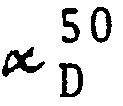
- Man vereinigt Waschflüssigkeit und Mutterlauge, fügt 180 g D,L-threo-Aminodiol·HCl hinzu, löst, kohlt und stellt die Konzentration von ca. 17,9 % D,L- und 1,8 % D-Verbindung durch
- Destillation ein. Nach dem Animpfen mit 0,5 g D-threo-Aminodiol·HCl bei 50°C wird wieder ca. 4 Stdn. kristallisiert, bis die optische Drehung der filtrierten Lösung

- Man saügt ab, wäscht mit.300 ml Ethanol (95 %ig) und trocknet bei 50°C. Ausbeute: 170 g D-threo-Aminodiol HCl-(VI)

- Als nächstes folgt wieder eine Kristallisation von L-threo-Aminodiol·HCl (VII) usw.
- Man kann die Kristallisation sehr oft wiederholen. Wegen der sich in der Mutterlauge anreichernden Verunreinigungen erhöhen sich die Löslichkeiten und damit die Kristallisationszeiten. Damit diese konstant bleiben, kann man 1. die Kristallisationstemperatur allmählich von Ansatz zu Ansatz bis auf ca. +30°C senken und/oder 2. die Konzentration an D,L-threo-Aminodiol·HCl allmählich von Ansatz zu Ansatz erhöhen.
- 1 800 g D,L-threo-1( p-methylsulfonylphenyl)-2-aminopropandiol-l,3-hydrochlorid (D,L-threo-Aminodiol·HCl) (V) (Fp: 172-1750C) und 150 g L-threo-Aminodiol·HCl

- Man erhält eine übersättigte wäßrige Lösung mit folgendem Gehalt:

- Die optische Drehung
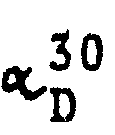

- Man saugt ab und wäscht portionsweise mit 260 ml Ethanol (95%ig) von 30°C und dann mit 780 ml Ethanol (95 %ig) von 0-5°C. Das Kristallisat (L-threo-Aminodiol·HCl) (VII) wiegt nach dem Trocknen bei 60°C 290 g+)

- 201-202°C). Nach dem Einengen des Waschethanols erhält man 150 g nahezu racemisches Aminodiol·HCl. Man löst den Rückstand aus der Waschflüssigkeit in der Mutterlauge der L-Kristallisation, stockt mit 300 g D,L-threo-Aminodiol·HCl auf, löst bei ca. 70°C und stellt die Konzentrationsverhältnisse wie vor Beginn der L-Kristallisation her.
- Nach dem Animpfen mit 1 g D-threo-Aminodiol·HCl (VI) bei 30°C wird wieder ca. 6 Stdn. langsam gerührt, bis die optische Drehung

- Man saugt ab, wäscht mit Ethanol (95 %ig) und trocknet das D-threo-Aminodiol-HCl (VI) bei 60°C. Ausbeute: 290 g+) (

+) Die Ausbeute an aktivem Salz liegt wegen der Probenahmen für die Inprozesskontrolle unter der erwarteten Ausbeute von ca. 300 g. - Als nächstes folgt wieder eine Kristallisation von L-threo-Aminodiol HCl·(VII) usw.
- Je nach Reinheit des eingesetzten D,L-threo-Aminodiol·HCl (V) kann aus derselben Lösung bis zu 100 mal und mehr abwechselnd L- und D-Verbindung kristallisiert werden. Die Kristallisationszeiten nehmen dabei von Ansatz zu Ansatz langsam zu. Durch allmähliche Erhöhung der Konzentration von D,L-threo-Aminodiol·HCl (bis zu ca. 52 %) und der Konzentration von Chlorwasserstoff auf ca. 12 % können die Kristallisationszeiten zwischen 3 und 10 Stdn. gehalten werden.
- 1 168 g D,L-threo-1(p-methylsulfonylphenyl)-2-amino-propandiol-1,3-hydrochlorid (D,L-threo-Aminodiol· HCl) (V) (Fp: 172 - 175 °C) und 85 g L-threo-Aminodiol·HCl (


- Die optische Drehung


- Man saugt ab und wäscht portionsweise einmal mit 260 ml Ethanol (95%, vergällt) von 40 °C und dreimal mit je 260 ml Ethanol (95 %, vergällt) von 0 - 5 °C.
- Das Kristallisat (L-threo-Aminodiol·HCl) (VII) wiegt nach dem Trocknen bei 60 °C 160 g*) (

- *) Die Ausbeute an aktivem Salz liegt wegen der Probenahmen für die Inprozesskontrolle unter der erwarteten Ausbeute von ca. 170 g.
- Nach dem Einengen des Waschethanols erhält man 190 g nahezu racemisches Aminodiol·HCl. Man löst den Rückstand aus der Waschflüssigkeit in der Mutterlauge der L-Kristallisation, stockt mit 170 g D,L-threo-Aminodiol·HCl auf, löst bei Rückfluß und stellt die Konzentrationsverhältnisse durch Zugabe von Ethanol und Wasser wie vor Beginn der L-Kristallisation her.
- Nach dem Aninpfen mit 1 g D-threo-Aminodiol·HC1 (VI),bei 25 °C, wird wieder ca. 6 Stunden langsam gerührt, bis die optische Drehung

- Man saugt ab, wäscht wie oben geschildert mit Ethanol (95 %ig) und trocknet das D-threo-Aminodiol· HC1 (VI) bei 60 °C.
- Ausbeute: 160 g*)

- Als nächstes folgt wieder eine Kristallisation von L-threo-Aminodiol·HCl (VII) usw.
wurden.
Claims (9)


aus racemischem D,L-threo-Aminodiol·HCl (V) durch selektive Kristallisation aus einer übersättigten Lösung durch Animpfen mit D-threo-Aminodiol·HCl, dadurch gekennzeichnet, daß die Lösung bis zu 200% an D,L-threo-Aminodiol·HCl sowie an D-threo-Aminodiol-HCl übersättigt ist, das Lösungsmittel ein niederer Alkohol, ggf. unter Zusatz von Chlorwasserstoff, ein Gemisch aus einem niederen Alkohol und Wasser, ggf. unter Zusatz von konz. Salzsäure, oder wässrige Salzsäure ist und die Kristallisationstemperatur zwischen -20 und +80°C liegt.

aus racemischem D,L-threo-Aminodiol-HCl (V) durch selektive Kristallisation aus einer übersättigten Lösung durch Animpfen mit L-threo-Aminodiol-HCl, dadurch gekennzeichnet, daß die Lösung bis zu 200% an D,L-threo-Aminodiol·HCl sowie an L-threo-Aminodiol·HCl übersättigt ist, das Lösungsmittel ein niederer Alkohol, ggf. unter Zusatz von Chlorwasserstoff, ein Gemisch aus einem niederen Alkohol und Wasser, ggf. unter Zusatz von konz. Salzsäure, oder wässrige Salzsäure ist und die Kristallisationstemperatur zwischen -20 und +80°C liegt.
Priority Applications (1)
| Application Number | Priority Date | Filing Date | Title |
|---|---|---|---|
| AT86116667T ATE42094T1 (de) | 1985-12-05 | 1986-12-01 | Verbesserte verfahren zur herstellung von d-threo-1-(p-methylsulfonylphenyl)-2-dichlorace amido- propandiol-1,3-(thiamphenicol)sowie verwendung geeigneter zwischenprodukte. |
Applications Claiming Priority (2)
| Application Number | Priority Date | Filing Date | Title |
|---|---|---|---|
| DE3543021 | 1985-12-05 | ||
| DE19853543021 DE3543021A1 (de) | 1985-12-05 | 1985-12-05 | Verbesserte verfahren zur herstellung von d-threo-1-(p-methylsulfonylphenyl) -2-dichloracetamido-propandiol-1,3-(thiamphenicol) sowie verwendung geeigneter zwischenprodukte |
Publications (2)
| Publication Number | Publication Date |
|---|---|
| EP0224902A1 true EP0224902A1 (de) | 1987-06-10 |
| EP0224902B1 EP0224902B1 (de) | 1989-04-12 |
Family
ID=6287716
Family Applications (1)
| Application Number | Title | Priority Date | Filing Date |
|---|---|---|---|
| EP86116667A Expired EP0224902B1 (de) | 1985-12-05 | 1986-12-01 | Verbesserte Verfahren zur Herstellung von D-threo-1-(p-Methylsulfonylphenyl)-2-dichloracetamido-propandiol-1,3-(Thiamphenicol)sowie Verwendung geeigneter Zwischenprodukte |
Country Status (6)
| Country | Link |
|---|---|
| US (1) | US4945181A (de) |
| EP (1) | EP0224902B1 (de) |
| JP (1) | JPS62132852A (de) |
| AT (1) | ATE42094T1 (de) |
| DE (2) | DE3543021A1 (de) |
| ES (1) | ES2008668B3 (de) |
Cited By (1)
| Publication number | Priority date | Publication date | Assignee | Title |
|---|---|---|---|---|
| EP0323846A3 (en) * | 1988-01-08 | 1989-10-18 | Nippon Zeon Co., Ltd. | Process of preparing thiamphenicol |
Families Citing this family (3)
| Publication number | Priority date | Publication date | Assignee | Title |
|---|---|---|---|---|
| US5346828A (en) * | 1991-03-27 | 1994-09-13 | Celgene Corporation | Stereoisomeric enrichment of 2-amino-3-hydroxy-3-phenylpropionic acids using d-threonine aldolase |
| IT1318459B1 (it) * | 2000-04-11 | 2003-08-25 | Zambon Spa | Uso del tiamfenicolo e di suoi derivati per la preparazione dicomposizioni farmaceutiche utili per il trattamento di infezioni da |
| EP1785414A1 (de) * | 2005-11-09 | 2007-05-16 | KRKA, tovarna zdravil, d.d., Novo mesto | Verfahren für die Herstellung von Chloramphenicol-Zwischenprodukten oder Analogen |
Citations (3)
| Publication number | Priority date | Publication date | Assignee | Title |
|---|---|---|---|---|
| US2742500A (en) * | 1953-12-22 | 1956-04-17 | Du Pont | Resolution of phenylaminopropanediols and intermediates |
| DE2454805A1 (de) * | 1973-11-22 | 1975-05-28 | Hoffmann La Roche | Acylderivate |
| EP0014437A2 (de) * | 1979-02-05 | 1980-08-20 | Schering Corporation | 1-Aryl-2-acylamido-3-fluor-1-propanole, ihre Herstellung und sie enthaltende pharmazeutische Zusammensetzungen |
Family Cites Families (6)
| Publication number | Priority date | Publication date | Assignee | Title |
|---|---|---|---|---|
| CA526865A (en) * | 1956-06-26 | A. Gregory Walter | Substituted sulfonylphenyl-amido-1,3-propanediols and process for preparing them | |
| GB745900A (en) * | 1951-10-01 | 1956-03-07 | Sterling Drug Inc | Acylaminodiols and method for preparing same |
| GB770277A (en) * | 1952-08-23 | 1957-03-20 | Parke Davis & Co | Amino-propanediols and their derivatives |
| US2791595A (en) * | 1953-01-14 | 1957-05-07 | Parke Davis & Co | Long chain esters of nitrophenylaminopropanediols and preparation thereof |
| US2726266A (en) * | 1954-05-10 | 1955-12-06 | Du Pont | Antibacterial composition containing diastereoisomers of 1-(p-methylsul-fonylphenyl)-2-(alpha, alpha-dichlo-roacetamido)-1, 3-propanediol |
| US4582918A (en) * | 1984-09-19 | 1986-04-15 | Schering Corporation | Preparation of intermediates for (threo)-1-aryl-2-acylamido-3-fluoro-1-propanols |
-
1985
- 1985-12-05 DE DE19853543021 patent/DE3543021A1/de active Granted
-
1986
- 1986-12-01 US US06/936,173 patent/US4945181A/en not_active Expired - Lifetime
- 1986-12-01 ES ES86116667T patent/ES2008668B3/es not_active Expired
- 1986-12-01 AT AT86116667T patent/ATE42094T1/de active
- 1986-12-01 DE DE8686116667T patent/DE3662786D1/de not_active Expired
- 1986-12-01 EP EP86116667A patent/EP0224902B1/de not_active Expired
- 1986-12-04 JP JP61287879A patent/JPS62132852A/ja active Pending
Patent Citations (3)
| Publication number | Priority date | Publication date | Assignee | Title |
|---|---|---|---|---|
| US2742500A (en) * | 1953-12-22 | 1956-04-17 | Du Pont | Resolution of phenylaminopropanediols and intermediates |
| DE2454805A1 (de) * | 1973-11-22 | 1975-05-28 | Hoffmann La Roche | Acylderivate |
| EP0014437A2 (de) * | 1979-02-05 | 1980-08-20 | Schering Corporation | 1-Aryl-2-acylamido-3-fluor-1-propanole, ihre Herstellung und sie enthaltende pharmazeutische Zusammensetzungen |
Non-Patent Citations (1)
| Title |
|---|
| JOURNAL OF THE AMERICAN CHEMICAL SOCIETY, Band 77, Nr. 1, 12. Januar 1955, Seiten 186-187, US; M.C. REBSTOCK et al.: "The resolution of DL-threo-1-p-Methylsulfonyl-phenyl-2-amino-1,3-propanediol" * |
Cited By (1)
| Publication number | Priority date | Publication date | Assignee | Title |
|---|---|---|---|---|
| EP0323846A3 (en) * | 1988-01-08 | 1989-10-18 | Nippon Zeon Co., Ltd. | Process of preparing thiamphenicol |
Also Published As
| Publication number | Publication date |
|---|---|
| US4945181A (en) | 1990-07-31 |
| EP0224902B1 (de) | 1989-04-12 |
| DE3543021C2 (de) | 1988-04-14 |
| DE3543021A1 (de) | 1987-06-11 |
| ES2008668B3 (es) | 1989-08-01 |
| JPS62132852A (ja) | 1987-06-16 |
| ATE42094T1 (de) | 1989-04-15 |
| DE3662786D1 (en) | 1989-05-18 |
Similar Documents
| Publication | Publication Date | Title |
|---|---|---|
| DE69210141T2 (de) | Herstellung von Fluoxetin und Zwischenverbindungen | |
| DE2927672C2 (de) | ||
| DE69800805T2 (de) | Verfahren zur herstellung chiraler 3,4-epoxybuttersäure und ihrer salze | |
| DE69026281T2 (de) | Verfahren zur Reinigung und Isolierung von optisch aktivem Atenolol mit hoher Ausbeute | |
| EP1124782A1 (de) | Verfahren zur racematspaltung von 2-hydroxypropionsäuren | |
| DE2903891C2 (de) | ||
| EP0224902B1 (de) | Verbesserte Verfahren zur Herstellung von D-threo-1-(p-Methylsulfonylphenyl)-2-dichloracetamido-propandiol-1,3-(Thiamphenicol)sowie Verwendung geeigneter Zwischenprodukte | |
| DE69713479T2 (de) | Verfahren zur Herstellung von 4'-Methyl-2-cyanobiphenyl | |
| DE2902542C2 (de) | ||
| DE69109258T2 (de) | Verfahren zur stereoselektiven Umwandlung eines Diols in einen Alkohol. | |
| DE19835866B4 (de) | Verfahren zur Herstellung von 5-Perfluoralkyluracilderivaten | |
| DE60313317T2 (de) | Kontinuierliches verfahren zur cyanierung von hydrierten beta-ketoestern | |
| EP0676390B1 (de) | Verfahren zur Herstellung von 1-Aminocyclopropancarbonsäurehydrochlorid | |
| DE69014683T2 (de) | Verfahren zur Herstellung von Lithium-Diphenylphosphino-phenyl-m-sulfonat. | |
| DE2721265C2 (de) | Verfahren zur Herstellung von Di- n-propylacetonitril | |
| DE2737299C2 (de) | Verfahren zur Gewinnung von reinem 3-Phenoxybenzaldehyd | |
| DE69013062T2 (de) | Verfahren zur Herstellung von Anilinofumarat via Chloromaleat oder Chlorofumarat oder Mischungen davon. | |
| DE3137377C2 (de) | Verfahren zur Herstellung von L-Prolin | |
| DE2460039C3 (de) | Verfahren zur Herstellung von Hydroxymethylpyridinen | |
| EP0664285A1 (de) | Verfahren zur Herstellung von 1-Amino-1-methyl-3(4)-cyano-cyclohexan | |
| EP0027956A1 (de) | Verfahren zur Herstellung von (1-(4-Chlorbenzoyl)-5-methoxy-2-methyl-3-indol)acetoxyessigsäure | |
| EP0037948A1 (de) | Verfahren zur Herstellung von N,N-Dimethyl-N'-(2-brom-4-methyl-phenyl)-triazen | |
| EP0038007B1 (de) | Verfahren zur Herstellung von N-(3,5-Dichlorphenyl)-oxazolidin-2,4-dionen | |
| DE69409427T2 (de) | Verfahren zur Herstellung von Hydroxyphenylessigsäuren | |
| EP0461541A2 (de) | Verfahren zur Racematspaltung von 2,2-Dimethylcyclopropancarbonsäure |
Legal Events
| Date | Code | Title | Description |
|---|---|---|---|
| PUAI | Public reference made under article 153(3) epc to a published international application that has entered the european phase |
Free format text: ORIGINAL CODE: 0009012 |
|
| 17P | Request for examination filed |
Effective date: 19861201 |
|
| AK | Designated contracting states |
Kind code of ref document: A1 Designated state(s): AT BE CH DE ES FR GB GR IT LI LU NL SE |
|
| 17Q | First examination report despatched |
Effective date: 19880415 |
|
| GRAA | (expected) grant |
Free format text: ORIGINAL CODE: 0009210 |
|
| AK | Designated contracting states |
Kind code of ref document: B1 Designated state(s): AT BE CH DE ES FR GB GR IT LI LU NL SE |
|
| PG25 | Lapsed in a contracting state [announced via postgrant information from national office to epo] |
Ref country code: SE Effective date: 19890412 Ref country code: NL Effective date: 19890412 Ref country code: GR Free format text: LAPSE BECAUSE OF FAILURE TO SUBMIT A TRANSLATION OF THE DESCRIPTION OR TO PAY THE FEE WITHIN THE PRESCRIBED TIME-LIMIT Effective date: 19890412 Ref country code: BE Effective date: 19890412 |
|
| REF | Corresponds to: |
Ref document number: 42094 Country of ref document: AT Date of ref document: 19890415 Kind code of ref document: T |
|
| ITF | It: translation for a ep patent filed | ||
| REF | Corresponds to: |
Ref document number: 3662786 Country of ref document: DE Date of ref document: 19890518 |
|
| ET | Fr: translation filed | ||
| GBT | Gb: translation of ep patent filed (gb section 77(6)(a)/1977) | ||
| NLV1 | Nl: lapsed or annulled due to failure to fulfill the requirements of art. 29p and 29m of the patents act | ||
| PG25 | Lapsed in a contracting state [announced via postgrant information from national office to epo] |
Ref country code: AT Effective date: 19891201 |
|
| PG25 | Lapsed in a contracting state [announced via postgrant information from national office to epo] |
Ref country code: LU Free format text: LAPSE BECAUSE OF NON-PAYMENT OF DUE FEES Effective date: 19891231 Ref country code: LI Effective date: 19891231 Ref country code: CH Effective date: 19891231 |
|
| PLBI | Opposition filed |
Free format text: ORIGINAL CODE: 0009260 |
|
| 26 | Opposition filed |
Opponent name: ZAMBON GROUP S.P.A. Effective date: 19900112 |
|
| REG | Reference to a national code |
Ref country code: CH Ref legal event code: PL |
|
| ITTA | It: last paid annual fee | ||
| PLBM | Termination of opposition procedure: date of legal effect published |
Free format text: ORIGINAL CODE: 0009276 |
|
| STAA | Information on the status of an ep patent application or granted ep patent |
Free format text: STATUS: OPPOSITION PROCEDURE CLOSED |
|
| 27C | Opposition proceedings terminated |
Effective date: 19910704 |
|
| RAP4 | Party data changed (patent owner data changed or rights of a patent transferred) |
Owner name: ROCHE DIAGNOSTICS GMBH |
|
| PGFP | Annual fee paid to national office [announced via postgrant information from national office to epo] |
Ref country code: GB Payment date: 20011205 Year of fee payment: 16 |
|
| PGFP | Annual fee paid to national office [announced via postgrant information from national office to epo] |
Ref country code: FR Payment date: 20011212 Year of fee payment: 16 |
|
| PGFP | Annual fee paid to national office [announced via postgrant information from national office to epo] |
Ref country code: DE Payment date: 20011217 Year of fee payment: 16 |
|
| REG | Reference to a national code |
Ref country code: GB Ref legal event code: IF02 |
|
| PG25 | Lapsed in a contracting state [announced via postgrant information from national office to epo] |
Ref country code: GB Free format text: LAPSE BECAUSE OF NON-PAYMENT OF DUE FEES Effective date: 20021201 |
|
| PGFP | Annual fee paid to national office [announced via postgrant information from national office to epo] |
Ref country code: ES Payment date: 20030121 Year of fee payment: 17 |
|
| PG25 | Lapsed in a contracting state [announced via postgrant information from national office to epo] |
Ref country code: DE Free format text: LAPSE BECAUSE OF NON-PAYMENT OF DUE FEES Effective date: 20030701 |
|
| GBPC | Gb: european patent ceased through non-payment of renewal fee | ||
| PG25 | Lapsed in a contracting state [announced via postgrant information from national office to epo] |
Ref country code: FR Free format text: LAPSE BECAUSE OF NON-PAYMENT OF DUE FEES Effective date: 20030901 |
|
| REG | Reference to a national code |
Ref country code: FR Ref legal event code: ST |
|
| PG25 | Lapsed in a contracting state [announced via postgrant information from national office to epo] |
Ref country code: ES Free format text: LAPSE BECAUSE OF NON-PAYMENT OF DUE FEES Effective date: 20031202 |
|
| REG | Reference to a national code |
Ref country code: ES Ref legal event code: FD2A Effective date: 20031202 |
|
| PG25 | Lapsed in a contracting state [announced via postgrant information from national office to epo] |
Ref country code: IT Free format text: LAPSE BECAUSE OF NON-PAYMENT OF DUE FEES;WARNING: LAPSES OF ITALIAN PATENTS WITH EFFECTIVE DATE BEFORE 2007 MAY HAVE OCCURRED AT ANY TIME BEFORE 2007. THE CORRECT EFFECTIVE DATE MAY BE DIFFERENT FROM THE ONE RECORDED. Effective date: 20051201 |