EP3383959B1 - Dicyclopentadien-modifizierte esteroligomere für beschichtungsanwendungen - Google Patents
Dicyclopentadien-modifizierte esteroligomere für beschichtungsanwendungen Download PDFInfo
- Publication number
- EP3383959B1 EP3383959B1 EP16879979.9A EP16879979A EP3383959B1 EP 3383959 B1 EP3383959 B1 EP 3383959B1 EP 16879979 A EP16879979 A EP 16879979A EP 3383959 B1 EP3383959 B1 EP 3383959B1
- Authority
- EP
- European Patent Office
- Prior art keywords
- grams
- acid
- dicyclopentadiene
- ester oligomer
- acrylate
- Prior art date
- Legal status (The legal status is an assumption and is not a legal conclusion. Google has not performed a legal analysis and makes no representation as to the accuracy of the status listed.)
- Active
Links
Images




Classifications
-
- C—CHEMISTRY; METALLURGY
- C09—DYES; PAINTS; POLISHES; NATURAL RESINS; ADHESIVES; COMPOSITIONS NOT OTHERWISE PROVIDED FOR; APPLICATIONS OF MATERIALS NOT OTHERWISE PROVIDED FOR
- C09D—COATING COMPOSITIONS, e.g. PAINTS, VARNISHES OR LACQUERS; FILLING PASTES; CHEMICAL PAINT OR INK REMOVERS; INKS; CORRECTING FLUIDS; WOODSTAINS; PASTES OR SOLIDS FOR COLOURING OR PRINTING; USE OF MATERIALS THEREFOR
- C09D11/00—Inks
-
- C—CHEMISTRY; METALLURGY
- C09—DYES; PAINTS; POLISHES; NATURAL RESINS; ADHESIVES; COMPOSITIONS NOT OTHERWISE PROVIDED FOR; APPLICATIONS OF MATERIALS NOT OTHERWISE PROVIDED FOR
- C09D—COATING COMPOSITIONS, e.g. PAINTS, VARNISHES OR LACQUERS; FILLING PASTES; CHEMICAL PAINT OR INK REMOVERS; INKS; CORRECTING FLUIDS; WOODSTAINS; PASTES OR SOLIDS FOR COLOURING OR PRINTING; USE OF MATERIALS THEREFOR
- C09D11/00—Inks
- C09D11/02—Printing inks
- C09D11/10—Printing inks based on artificial resins
- C09D11/101—Inks specially adapted for printing processes involving curing by wave energy or particle radiation, e.g. with UV-curing following the printing
-
- C—CHEMISTRY; METALLURGY
- C09—DYES; PAINTS; POLISHES; NATURAL RESINS; ADHESIVES; COMPOSITIONS NOT OTHERWISE PROVIDED FOR; APPLICATIONS OF MATERIALS NOT OTHERWISE PROVIDED FOR
- C09D—COATING COMPOSITIONS, e.g. PAINTS, VARNISHES OR LACQUERS; FILLING PASTES; CHEMICAL PAINT OR INK REMOVERS; INKS; CORRECTING FLUIDS; WOODSTAINS; PASTES OR SOLIDS FOR COLOURING OR PRINTING; USE OF MATERIALS THEREFOR
- C09D11/00—Inks
- C09D11/02—Printing inks
- C09D11/10—Printing inks based on artificial resins
- C09D11/102—Printing inks based on artificial resins containing macromolecular compounds obtained by reactions other than those only involving unsaturated carbon-to-carbon bonds
- C09D11/104—Polyesters
-
- C—CHEMISTRY; METALLURGY
- C09—DYES; PAINTS; POLISHES; NATURAL RESINS; ADHESIVES; COMPOSITIONS NOT OTHERWISE PROVIDED FOR; APPLICATIONS OF MATERIALS NOT OTHERWISE PROVIDED FOR
- C09D—COATING COMPOSITIONS, e.g. PAINTS, VARNISHES OR LACQUERS; FILLING PASTES; CHEMICAL PAINT OR INK REMOVERS; INKS; CORRECTING FLUIDS; WOODSTAINS; PASTES OR SOLIDS FOR COLOURING OR PRINTING; USE OF MATERIALS THEREFOR
- C09D4/00—Coating compositions, e.g. paints, varnishes or lacquers, based on organic non-macromolecular compounds having at least one polymerisable carbon-to-carbon unsaturated bond ; Coating compositions, based on monomers of macromolecular compounds of groups C09D183/00 - C09D183/16
-
- C—CHEMISTRY; METALLURGY
- C09—DYES; PAINTS; POLISHES; NATURAL RESINS; ADHESIVES; COMPOSITIONS NOT OTHERWISE PROVIDED FOR; APPLICATIONS OF MATERIALS NOT OTHERWISE PROVIDED FOR
- C09D—COATING COMPOSITIONS, e.g. PAINTS, VARNISHES OR LACQUERS; FILLING PASTES; CHEMICAL PAINT OR INK REMOVERS; INKS; CORRECTING FLUIDS; WOODSTAINS; PASTES OR SOLIDS FOR COLOURING OR PRINTING; USE OF MATERIALS THEREFOR
- C09D7/00—Features of coating compositions, not provided for in group C09D5/00; Processes for incorporating ingredients in coating compositions
- C09D7/40—Additives
- C09D7/60—Additives non-macromolecular
- C09D7/63—Additives non-macromolecular organic
-
- C—CHEMISTRY; METALLURGY
- C08—ORGANIC MACROMOLECULAR COMPOUNDS; THEIR PREPARATION OR CHEMICAL WORKING-UP; COMPOSITIONS BASED THEREON
- C08F—MACROMOLECULAR COMPOUNDS OBTAINED BY REACTIONS ONLY INVOLVING CARBON-TO-CARBON UNSATURATED BONDS
- C08F20/00—Homopolymers and copolymers of compounds having one or more unsaturated aliphatic radicals, each having only one carbon-to-carbon double bond, and only one being terminated by only one carboxyl radical or a salt, anhydride, ester, amide, imide or nitrile thereof
- C08F20/02—Monocarboxylic acids having less than ten carbon atoms, Derivatives thereof
- C08F20/10—Esters
- C08F20/12—Esters of monohydric alcohols or phenols
- C08F20/16—Esters of monohydric alcohols or phenols of phenols or of alcohols containing two or more carbon atoms
- C08F20/18—Esters of monohydric alcohols or phenols of phenols or of alcohols containing two or more carbon atoms with acrylic or methacrylic acids
-
- C—CHEMISTRY; METALLURGY
- C08—ORGANIC MACROMOLECULAR COMPOUNDS; THEIR PREPARATION OR CHEMICAL WORKING-UP; COMPOSITIONS BASED THEREON
- C08G—MACROMOLECULAR COMPOUNDS OBTAINED OTHERWISE THAN BY REACTIONS ONLY INVOLVING UNSATURATED CARBON-TO-CARBON BONDS
- C08G63/00—Macromolecular compounds obtained by reactions forming a carboxylic ester link in the main chain of the macromolecule
- C08G63/02—Polyesters derived from hydroxycarboxylic acids or from polycarboxylic acids and polyhydroxy compounds
- C08G63/12—Polyesters derived from hydroxycarboxylic acids or from polycarboxylic acids and polyhydroxy compounds derived from polycarboxylic acids and polyhydroxy compounds
- C08G63/52—Polycarboxylic acids or polyhydroxy compounds in which at least one of the two components contains aliphatic unsaturation
- C08G63/54—Polycarboxylic acids or polyhydroxy compounds in which at least one of the two components contains aliphatic unsaturation the acids or hydroxy compounds containing carbocyclic rings
- C08G63/553—Acids or hydroxy compounds containing cycloaliphatic rings, e.g. Diels-Alder adducts
-
- C—CHEMISTRY; METALLURGY
- C08—ORGANIC MACROMOLECULAR COMPOUNDS; THEIR PREPARATION OR CHEMICAL WORKING-UP; COMPOSITIONS BASED THEREON
- C08G—MACROMOLECULAR COMPOUNDS OBTAINED OTHERWISE THAN BY REACTIONS ONLY INVOLVING UNSATURATED CARBON-TO-CARBON BONDS
- C08G63/00—Macromolecular compounds obtained by reactions forming a carboxylic ester link in the main chain of the macromolecule
- C08G63/78—Preparation processes
-
- C—CHEMISTRY; METALLURGY
- C08—ORGANIC MACROMOLECULAR COMPOUNDS; THEIR PREPARATION OR CHEMICAL WORKING-UP; COMPOSITIONS BASED THEREON
- C08K—Use of inorganic or non-macromolecular organic substances as compounding ingredients
- C08K5/00—Use of organic ingredients
- C08K5/04—Oxygen-containing compounds
- C08K5/05—Alcohols; Metal alcoholates
- C08K5/053—Polyhydroxylic alcohols
-
- C—CHEMISTRY; METALLURGY
- C08—ORGANIC MACROMOLECULAR COMPOUNDS; THEIR PREPARATION OR CHEMICAL WORKING-UP; COMPOSITIONS BASED THEREON
- C08K—Use of inorganic or non-macromolecular organic substances as compounding ingredients
- C08K5/00—Use of organic ingredients
- C08K5/04—Oxygen-containing compounds
- C08K5/09—Carboxylic acids; Metal salts thereof; Anhydrides thereof
- C08K5/092—Polycarboxylic acids
-
- C—CHEMISTRY; METALLURGY
- C08—ORGANIC MACROMOLECULAR COMPOUNDS; THEIR PREPARATION OR CHEMICAL WORKING-UP; COMPOSITIONS BASED THEREON
- C08K—Use of inorganic or non-macromolecular organic substances as compounding ingredients
- C08K5/00—Use of organic ingredients
- C08K5/04—Oxygen-containing compounds
- C08K5/14—Peroxides
Definitions
- the present invention is in the field of unsaturated polymer resins with high bio-based content and their application in waterborne coatings curable using peroxide or ultraviolet radiation or electron beam radiation or thermal energy.
- the present invention relates to a coating composition comprising at least one dicyclopentadiene modified ester oligomer, to the use of the coating composition, and to a trifunctional dicyclopentadiene modified ester oligomer.
- GB 851 772 discloses cross-linked polyesters of dicyclopentadiene dicarboxylic acids.
- WO 2010/118356 A1 discloses a polymer having unsaturated cycloaliphatic functionality and coating compositions formed therefrom.
- JP H04 65410 A discloses a curable resin modified with urethane acrylate.
- JP S63 142012 A discloses an unsaturated polyester resin composition.
- US 6,541,535 B1 discloses a high powered radiation and/or thermal hardening coating powder with a functionalized based structure.
- polyester resin compositions comprising unsaturated ester oligomers derived from bio-based components for coating applications and using that polyester resin composition to laminate a variety of surfaces following peroxide treatment or thermal energy treatment or UV radiation or high-energy radiation curing procedure. More specifically, it is described herein a procedure for preparing modified ester oligomers wherein the modification of ester oligomers involves the incorporation dicyclopentadiene at the ends of the ester oligomers or incorporation of nadic acid or methyl nadic acid in the backbone of the ester oligomers.
- Procedures for preparing dicyclopentadiene or nadic acid or methyl nadic acid modified ester oligomers are described herein. Also procedures are described herein for preparing polyester resins by combining dicyclopentadiene or nadic acid or methyl nadic acid modified ester oligomers with ethylenically-unsaturated monomers and their use in the coating applications with appropriate curing procedures.
- the coating composition of the present disclosure is suitable for use on the surface of broad range of substrates.
- the coating composition of the present disclosure is also useful as ink, paint and paint varnish.
- a coating composition useful in coating substrates with surface tension less than 65 mN/m selected from the group consisting of polyolefins, polypropylene, polystyrene, polyvinyl chloride, acrylonitrile butadiene styrene and styrene butadiene rubber, the coating composition comprising at least one dicyclopentadiene modified ester oligomer and at least one liquid ethylenically unsaturated monomer,
- coating composition comprising at least one dicyclopentadiene modified ester oligomer
- the use of the coating composition, and a trifunctional dicyclopentadiene modified ester oligomer are set out in the appended claims which define the scope of the present invention.
- ester oligomers useful in formulating polyester resins useful in coating applications and curing such polyester resins on a variety of substrates using curing process involving the use of peroxides or thermal energy or ultra violet radiation or electron beam radiation.
- a process for preparing dicyclopentadiene modified ester oligomers involving at least one carboxylic acid, at least one diol and dicyclopentadiene is disclosed herein.
- a process for preparing an ester oligomer having two dicyclopentadiene units, one at each end of the ester oligomer is described.
- a process for preparing an ester oligomer having a single unit of dicyclopentadiene is described.
- a process for producing dicyclopentadiene modified oligomers with acid functional group or hydroxyl functional group or urethane acrylate functional group is described.
- a bio-based 1,3-propanediol may be used as a diol and bio-based succinic acid may be used as a dicarboxylic acid.
- the dicyclopentadiene modified ester oligomer is blended with a liquid ethylenically-unsaturated monomer and used as a polyester resin formulation in coating applications on a variety of substrates.
- the polyester resin formulation useful in coating applications further contains one or more photoinitiators and is cured over the substrates using ultraviolet or electron beam radiation.
- the polyester resin formulation developed for curing using ultraviolet or electron beam radiation may further contain certain peroxide initiators to facilitate chemical crosslinking between the ester oligomer and ethylenically-unsaturated monomers.
- ester oligomers containing nadic acid in its back bone is described herein.
- dicyclopentadiene is subjected to temperature in the range of 140°C - 180°C
- cyclopentadiene is produced which reacts with maleic anhydride in a Diels-Alder reaction to yield nadic anhydride.
- nadic anhydride is produced by reacting nadic anhydride with diols and dicarboxylic acids.
- an ester oligomer with nadic acid in the backbone is produced.
- Bio-based 1,3-propanediol may be used as a diol
- bio-based succinic acid may be used as a dicarboxylic acid.
- the ester oligomer comprising nadic anhydride, diol and a dicarboxylic acid may be blended with a liquid ethylenically-unsaturated monomer and used as a polyester resin formulation in coating applications on a variety of substrates.
- the polyester resin formulation useful in coating applications further contains one or more photoinitiators and is cured over the substrates using ultraviolet radiation or electron beam radiation.
- the resin formulation comprising cyclopentadiene modified ester oligomer may further contain certain peroxide initiators to facilitate chemical crosslinking between the ester oligomer and ethylenically-unsaturated monomers.
- Methyl nadic anhydride may be used in place of nadic anhydride to produce methyl nadic acid modified ester oligomers.
- Bio-based 1,3-propanediol may be used as a diol and bio-based succinic acid may be used as a dicarboxylic acid.
- a process for producing cyclopentadiene modified oligomers with acid functional group or hydroxyl functional group or urethane acrylate functional group is described.
- the ester oligomer comprising methyl nadic anhydride, diol and a dicarboxylic acid may be blended with a liquid ethylenically-unsaturated monomer and used as a polyester resin formulation in coating applications on a variety of substrates.
- the polyester resin formulation useful in coating applications further contains one or more photoinitiators and is cured over the substrates using ultraviolet radiation or electron beam radiation.
- the resin formulation comprising cyclopentadiene modified ester oligomer may further contain certain peroxide initiators to facilitate chemical crosslinking between the ester oligomer and ethylenically-unsaturated monomers.
- the dicyclopentadiene modified ester oligomer, nadic acid modified ester oligomer and methyl nadic acid modified ester oligomers can be mixed in different proportions in a liquid ethylenically-unsaturated monomer to yield a polymer resin useful in coating applications.
- polyester resins prepared according to the present disclosure are useful in coating applications on a broad range of substrates including polyester, polypropylene, and polystyrene.
- the coating formulations prepared according to the present disclosure are suitable for laminating a variety of surfaces and can be cured using ultraviolet radiation or electron beam radiation or thermal energy and peroxide treatment.
- the coating formulations with enhanced adhesion properties are suitable for use on the substrates with the surface tension of less than 65 mN/m.
- the list of the substrates with surface tension less than 65 mN/m includes polyolefins, polypropylene, polystyrene, polyvinyl chloride, acrylonitrile butadiene styrene and styrene butadiene rubber.
- polyester resin includes both polyester resin and polyurethane resin.
- Polyester resins useful in the present disclosure are prepared by mixing ester oligomers prepared according to the present disclosure with liquid ethylenically-unsaturated monomers. The present disclosure provides the procedure for preparing a number of ester oligomers useful in the preparation of polyester resins useful in the coating applications.
- ester oligomers include but not limited to dicyclopentadiene modified ester oligomers, nadic acid modified ester oligomers and methyl nadic acid modified ester oligomers which can be mixed individually or in combination with liquid ethylenically unsaturated monomers to yield polyester resins which are useful in the coating applications on a broad range of substrates.
- the polyester resin formulations useful in coating applications further contains one or more photoinitiators and is cured over the substrate using ultraviolet or electron beam radiation.
- the polyester resin formulation developed for curing using ultraviolet or electron beam radiation may further contain certain peroxide initiators to facilitate chemical crosslinking between the ester oligomer and ethylenically-unsaturated monomers.
- ester oligomer as defined herein includes the products resulting from the reaction involving at least one carboxylic acid, one diol and one of the reagents selected from a group consisting of dicyclopentadiene, nadic anhydride and methyl nadic anhydride.
- the synthesis of ester oligomer disclosed herein may optionally involve the use of isophoronone diisocyanate and 2-hydroxyethyl acrylate.
- the dicarboxylic acid used in the preparation of polyester resin may be saturated or unsaturated.
- the resulting polyester is referred as saturated polyester.
- the carboxylic acid used in the preparation of polyester has unsaturated double bond, the resulting polyester resin is referred as an unsaturated polyester resin.
- the carboxylic acids suitable for the preparation of a polyester resin according to the present disclosure is selected from a group consisting of succinic acid, oxalic acid, malonic acid, maleic acid, fumaric acid, glutaric acid, adipic acid, cinnamic acid, pimelic acid, suberic acid, azelaic acid, citraconic acid, sebacic acid, malic acid, itaconic acid, muconic acid, citric acid, aconitic acid, propane-1,2,3-tricarboxylic acid, trimesic acid, 2-butynedioic acid, 1,4-cyclohexane dicarboxylic acid, hexahydrophthalic acid, hexachloroendomethylenetetrahydrophthalic acid, dichlorophthalic acid, isophthalic acid, terephthalic acid, trimellitic acid, or mixtures thereof.
- bio-renewable saturated and/or unsaturated dicarboxylic acid such as succinic acid, muconic acid, adipic acid, cinnamic acid, fumaric acid, itaconic acid, citric acid, or a mixture thereof, are preferred.
- the diols suitable for the preparation of a polymer resin according to the present disclosure is selected from a group consisting of ethylene glycol, propylene glycol, benzyl alcohol, neopentylglycol, butanediol, pentanediol, hexanediol, cyclopentanediol, cyclohexanediol, dimethylol cyclohexane, diethylene glycol, glycerol, trimethylol propane, butanetriol, pentaerytritol, dipentaerythritol, cyclohexanetriol, or mixtures thereof.
- the bio-renewable dihydric and/or trihydric alcohol such as ethylene glycol, 1,3-propanediol, 1,4-butanediol, isosorbide, or a mixture thereof, are preferred.
- Biocatalysts have been developed to manufacture a number of carboxylic acids such as succinic acid, muconic acid, lactic acid, and 3-hydroxypropionic acid and a number of diols such as 1,3-propanediol and butanol using biological feedstock such as glucose, glycerol and sucrose.
- carboxylic acids such as succinic acid, muconic acid, lactic acid, and 3-hydroxypropionic acid
- diols such as 1,3-propanediol and butanol
- biological feedstock such as glucose, glycerol and sucrose.
- These specialty chemicals derived from biological materials are referred herein as bio-based and are suitable for use in a number chemical and polymer industries to develop materials with desirable properties. These materials have properties close to the materials derived from petrochemical feedstock and thus these bio-based feedstocks could be used to avoid the dependence on fossil fuels.
- the representative examples provided herein involve the use of the bio-based specialty chemicals such as 1,3-propanediol and succinic acid in the preparation for coating materials with improved curing properties. Since there is no chemical difference other than the C14/C12 ratio between the 1,3-propanediol and succinic acid derived from renewable biological materials and the same chemicals derived from petrochemical feedstock, the method of manufacturing coating formulations disclosed herein can be practiced using either the 1,3-propanediol and succinic acid derived from renewable biological materials or 1,3-propanediol and succinic acid derived from petrochemical feedstock. It is desirable to use 1,3-propanediol and succinic acid obtained from renewable biological feedstock to achieve the sustainability goals of the chemical industry.
- dicyclopentadiene is used to modify the ester oligomers to impart air drying characteristics, low profile properties, high heat distortion, excellent weathering performance, and increased filler dispersion in the resulting polyester resin.
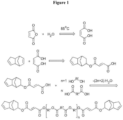
- dicyclopentadiene for the purpose of modifying ester oligomers, the following steps are followed. Dicyclopentadiene and water are charged to a reactor and the temperature is elevated to 80°C followed by the addition of maleic anhydride and the temperature is raised to 125°C to enable the formation of maleic acid - dicyclopentadiene half-ester which is also referred as maleic acid-dicyclopentadiene adduct.
- Succinic acid useful in the present disclosure is derived either from renewable biological resources through microbial fermentation or from petrochemical feedstock either via chemical or biological conversion.
- 1,3-propanediol useful in the present disclosure is derived either from renewable biological resources through microbial fermentation or from petrochemical feedstock either via chemical or biological conversion.
- renewable biological material includes any feedstock derived from plant materials as opposed to the materials derived from petrochemical feedstock.
- the term "renewable biological material” is also used interchangeably with the term “biomass”.
- biomass refers to carbohydrates, sugars, glycerol and lignocellulosic materials derived from renewable plant resources which can be used in the fermentative production of succinic acid or 1,3-propanediol.
- the number of repeating unit with ester bonds in between the two of maleic acid - dicyclopentadiene adducts may range from 1 to 10.
- dicyclopentadiene modified ester oligomer In the second type of dicyclopentadiene modified ester oligomer, there is only one maleic acid - dicyclopentadiene adduct per molecule. In this type of dicyclopentadiene modified ester oligomer with one maleic acid - dicyclopentadiene adduct at the one of the molecule, it is further possible to introduce specific functional group at the other end of the molecule ( Figure 2 ). In one aspect, it is possible to have a hydroxyl functional group at the end of the dicyclopentadiene modified ester oligomer by means of using a higher ratio of diol to carboxylic acid in the reaction mixture. In another aspect, it is possible to have a carboxylic acid functional group at the end of dicyclopentadiene modified ester oligomer by means of using a higher ratio of carboxylic acid to diol in the reaction mixture.
- a procedure to introduce an acrylate functional group at the end of the dicyclopentadiene modified ester oligomer is also described herein.
- a dicyclopentadiene modified ester oligomer with hydroxyl functional group and having a hydroxyl number of more than 100 is synthesized.
- the ester oligomer from the first step is reacted with isophorone diisocyanate and 2-hydroxyethyl acrylate in two step reaction to obtain dicyclopentadiene modified ester oligomer with an acrylate functional group as shown in Figure 2 .
- a procedure to produce dicyclopentadiene modified ester oligomer with hydroxyl functional group and dicyclopentadiene modified ester oligomer with acrylate functional group is described herein.
- a maleic acid - dicyclopentadiene half ester is reacted with trimethylol propane to yield an ester oligomer with hydroxyl functional group with very high hydroxyl number (shown at the top in Figure 3 ).
- the product from the first step of the reaction is referred as trifunctional dicyclopentadiene modified ester oligomer.
- the ester oligomer with hydroxyl functional group from the first step is reacted with isophorone diisocyanate and 2-hydroxyethyl acrylate to yield a dicyclopentadiene modified ester oligomer with acrylate functional group (shown at the bottom of Figure 3 ).
- the product from the second step of the reaction is referred as trifunctional dicyclopentadiene modified ester oligomer with urethane acrylate functional group.
- Cyclopentadiene may be used in place of dicyclopentadiene to produce a modified ester oligomer.
- Dicyclopentadiene at elevated temperature in the range of 140°C - 180°C degrades and results in the formation of cyclopentadiene. It may be possible to produce cyclopentadiene in situ from dicyclopentadiene by raising the temperature to 140°C - 180°C range.
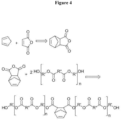
- Cyclopentadiene can be procured from a commercial supplier. Cyclopentadiene and maleic anhydride will undergo a Diels-Alder reaction to yield a nadic anhydride as shown in Figure 4 . Nadic anhydride can be incorporated into the back bone of an ester oligomer as shown again Figure 4 .
- nadic acid modified ester oligomers with different functional groups. It is possible to have a hydroxyl functional group at the end of the nadic acid modified ester oligomer by means of using a higher ratio of diol to carboxylic acid in the reaction mixture. It is possible to have a carboxylic acid functional group at the end of nadic acid modified ester oligomer by means of using a higher ratio of carboxylic acid to diol in the reaction mixture.
- a procedure to introduce an acrylate functional group at the end of the nadic acid modified ester oligomer is also described herein ( Figure 5 ).
- a nadic acid modified ester oligomer with hydroxyl functional group is synthesized.
- the ester oligomer from the first step is reacted with isophorone diisocyanate and 2-hydroxyethyl acrylate to obtain a nadic acid modified ester oligomer with an acrylate functional group as shown in Figure 5 .
- a cyclopentadiene derivative can be used to modify the ester oligomers.
- Cyclopentadiene can be methylated to yield methyl cyclopentadiene which is reacted with maleic acid in a Diels-Alder reaction to produce methyl nadic anhydride as shown in Figure 6 which can be incorporated into the back bone of an ester oligomer to yield a modified ester oligomer as shown in Figure 7 .
- the methyl nadic anhydride is derived from nadic anhydride by methylation reaction.
- Methyl nadic anhydride can be used as a starting material to produce a hydroxyl-bearing methyl nadic acid modified ester oligomer via polyester synthesis pathway using a glycol and a diacid as shown in Figure 7 .
- a glycol and a diacid as shown in Figure 7 .
- a procedure to introduce an acrylate functional group at the end of the methyl nadic acid modified ester oligomer is also described herein ( Figure 7 ).
- a methyl nadic acid modified ester oligomer with hydroxyl functional group is synthesized.
- the ester oligomer from the first step is reacted with diisocyanate and acrylate to obtain a methyl nadic acid modified ester oligomer with an acrylate functional group as shown in Figure 7 .
- Maleic acid-dicyclopentadiene adduct, nadic anhydride and methyl nadic anhydride initiate oligomer formation in the presence of appropriate amount of a diol and a dicarboxylic acid even in the absence of any polymerization catalyst. Presence of metal catalysts such a nickel and tin catalysts would enhance the polymerization reaction.
- any one of the modified ester oligomers prepared according to the present disclosure is formulated either alone or in any desirable combination with at least one diluent monomer, an epoxy acrylate or a urethane acrylate and a photoinitiator to yield a polyester resin curable with ultraviolet or electron beam radiation for coating applications.
- a polyester resin formulation can be based on a single modified ester oligomer such as dicyclopentadiene modified ester oligomer or nadic acid modified ester oligomer or methyl nadic acid modified ester oligomer.
- dicyclopentadiene modified ester oligomer can be combined with nadic acid modified ester oligomer or methyl nadic acid modified oligomer in different proportion to produce a polyester resin.
- all three modified ester oligomers described herein can be combined in specific proportion to produce a polyester resin useful in coating applications.
- the list of diluent monomers suitable for formulating a polyester resin for coating application includes styrene, p-vinyltoluene, ⁇ -methylstyrene, methyl acrylate, methyl methacrylate, diallyl phthalate and triallyl cyanurate, in addition to any number of similar monomerss containing vinyl unsaturation.
- acrylate and methacrylate monomers there are at least 50 commercially available acrylate and methacrylate monomers and any one of them is suitable for use in the present disclosure.
- Representative examples of commercially available acrylate and monomers include but not restricted to MIRAMER M4004, POLYESTER ACRYLATE 03-849, GENOMER* 2252/TP20, Trimethylolpropane Trimethacrylate (TMPTMA), 2-Ethylhexyl acrylate and Isobornyl Acrylate (IBOA).
- Polyester resins prepared according to the present disclosure for coating applications are applied on the substrate and are subjected to curing.
- the curing is achieved using a radical initiator and a promoter.
- initiators are available for curing polyester resins.
- a number of peroxides including ketone peroxides (methylethylketone peroxide, acetylacetone peroxide), hydro peroxides (cumene peroxide), diacyl peroxides (dibenzoyl peroxides), dialkyl peroxides (dicumyl peroxide, tert-butylcumyl peroxide), alkyl peresters (tert-butylperoxy-2-ethylhexanoate, tert-butylperoxybenzoate, tert-amylperoxy benzoate, tert-hexylperoxybenzoate) and percabonates (bis (4-tert-butylcyclohexyl) peroxydicarbonate
- coatings of unsaturated polyester resins are cured with light sensitive photoinitiators.
- the list of common photoinitiators include benzoin methyl ether, 2,2-dimethoxy-phenylacetophenone, 2-hydroxy-2-methylphenylpropane-1-one, ⁇ -hydroxy-acetoophenone, bis(2,6-dimethoxybenzoyl)-2,4,4,-trimethylpentylphosphate oxide, 2-hydroxy-2-methyl-1phenyl-propan-1-one, 2, 4, 6 - Trimethylbenzoyldiphenylphosphine oxide and Bis(2,6-dicholorobenzoyl)-(4-propylphenyl)phosphine oxide.
- Photointiators can be used alone or in combination with peroxide initiators. A person skilled in the art will be able to use the light sensitive photoinitiators in a desirable combination.
- the acid value of ester oligomers was determined using the following protocol. Approximately 1.00 - 2.00 grams of sample was weighed into an Erlenmeyer flask and approximately 75 milliliters of toluene were added. The solution was stirred until the sample completely dissolved. The resulting solution was titrated immediately with 0.1N potassium hydroxide solution in the presence of a pH indicator dye such as phenolphthalein.
- hydroxyl value of ester oligomers is determined using the following protocol. 1.0 gram of dimethyl amino pyridine is dissolved in 85 ml of toluene in an Erlenmeyer flask followed by the addition of 15 ml of acetic anhydride. This solution is referred as DMAP solution and is stable only for three hours post preparation. In another flask 40 ml of dibutylamine is added to 500 ml of toluene and the resulting solution is referred as DBA solution.
- test sample 0.5 to 1.0 gram of test sample is added to 50 ml of toluene in a 250 ml glass-stoppered Erlenmeyer flask and placed on a stirring hot plate until the test sample was fully dissolved. Once the sample is completely dissolved, 5 ml of DMAP solution is added and the flask is placed in a 60°C oven for exactly 15 minutes followed by the addition of 20 ml of DBA solution while stirring to yield a "sample solution”. Similar procedure is followed to prepare a "blank solution" where no test sample is added.
- the percent isocyanate is determined using the following protocol. In a flask, 40 ml of dibutylamine is added to 500 ml of toluene and the resulting solution is referred as DBA solution. In determining percent isocyanate, 1.0-3.0 grams of test sample is added to 50 ml of toluene in a 250 ml Erlenmeyer flask and placed on a stirring plate until the test sample is fully dissolved. Once the sample is completely dissolved, 2 drops of bromophenol blue indicator is added followed by titration with 0.5N hydrochloric acid in isopropanol until the purple color of the solution turns to bright yellow endpoint.
- a "blank” containing only 50 mL toluene and the bromophenol blue indicator is prepared and titrated in the same fashion.
- the total volumes of 0.5N hydrochloric acid added to reach the endpoint for both the "blank” and “sample” solutions are noted.
- Cross-hatch adhesion test For hard surfaces, a cross-hatch adhesion test was performed per ASTM D3359 standards.
- bio-based 1,3-propanediol and succinic acid The bio-based succinic acid and 1,3-propanediol manufactured according to the present disclosure can be distinguished from succinic acid and 1,3-propanediol manufactured following the traditional methods involving petroleum feedstock on the basis of their carbon 14 content following the method ASTM-D6866 provided by American Society of Testing and Materials.
- Cosmic radiation produces 14 C ("radiocarbon") in the stratosphere by neutron bombardment of nitrogen.
- 14 C atoms combine with oxygen atom in the atmosphere to form heavy 14 CO 2 , which, except in the radioactive decay, is indistinguishable from the ordinary carbon dioxide.
- Polyester Acrylate 03-849 from Rahn USA Corp. It is a polyester acrylate resin for radically curable inks, coatings and adhesives.
- the product provides good adhesion onto various substrates such as PVC, polyolefin, polyester and polystyrene. It is recommended for use in printing inks and varnishes, overprint varnishes, plastic coatings and wood and industrial coatings.
- MYR 113-43 was cured using UV irradiation as in the Example 1.
- Batch 1 (MYR 093-62) was prepared by adding 107.72 grams of dicyclopentadiene to 15.40 grams of water under nitrogen and heating the mixture to 80°C. 79.89 grams of maleic anhydride was added gradually to the mixture of dicyclopentadiene and water under nitrogen and was held at 125°C for 2 hours. At the end of incubation at 125°C for two hours, 100.78 grams of 1,3-propanediol and 96.21 grams of petroleum based succinic acid were added and gradually heated to 205°C.
- Batch 3 (MYR 093-69) was prepared by adding 106.17 grams of dicyclopentadiene to 15.18 grams of water under nitrogen and heating the mixture to 80°C. 78.74 grams of maleic anhydride was added gradually to the mixture of dicyclopentadiene and water under nitrogen and was held at 125°C for 2 hours. At the end of incubation at 125°C for two hours, 91.65 grams of 1,3-propanediol, 94.83 grams of petroleum based succinic acid, and 13.47 grams of trimethylolpropane were added and gradually heated to 205°C. The acid value of the final oligomer preparation was 24.1. Trimethylol propane was added to increase functionality but the molecular weight of the oligomer was too high and reactivity was too low.
- Batch 4 (MYR 113-3) was prepared by adding 107.46 grams of dicyclopentadiene to 15.98 grams of water under nitrogen and heating the mixture to 80°C. 79.84 grams of maleic anhydride was added gradually to the mixture of dicyclopentadiene and water under nitrogen and was held at 125°C for 2 hours. At the end of incubation at 125°C for two hours, 92.6 grams of 1,3-propanediol, 95.52 grams of bio-based succinic acid and 14.06 grams of trimethylolpropane were added and gradually heated to 205°C. The acid value of the final oligomer preparation was 21.3.
- Batch 5 (MYR 113-14) was prepared by adding 663.5 grams of dicyclopentadiene to 94.8 grams of water under nitrogen and heating the mixture to 80°C. 492.1 grams of maleic anhydride was added gradually to the mixture of dicyclopentadiene and water under nitrogen and was held at 125°C for 2 hours. At the end of incubation at 125°C for two hours, 572.78 grams of 1,3-propanediol, 592.62 grams of petroleum based succinic acid, and 84.2 grams of trimethylolpropane were added and gradually heated to 205°C. The acid value of the final oligomer preparation was 22.4. This is a scale up of Batch 3.
- Batch 6 (MYR 113-16) was prepared by adding 663.48 grams of dicyclopentadiene to 94.85 grams of water under nitrogen and heating the mixture to 80°C. 492.1 grams of maleic anhydride was added gradually to the mixture of dicyclopentadiene and water under nitrogen and was held at 125°C for 2 hours. At the end of incubation at 125°C for two hours, 572.78 grams of 1,3-propanediol, 592.62 grams of petroleum based succinic acid, and 84.16 grams of trimethylolpropane were added and gradually heated to 205°C. The acid value of the final oligomer preparation was 22.7. This is a repeat of Batch 5, the scale up of Batch 3.
- Batch 7 (MYR 113-18) was prepared by adding 663.48 grams of dicyclopentadiene to 94.85 grams of water under nitrogen and heating the mixture to 80°C. 492.1 grams of maleic anhydride was added gradually to the mixture of dicyclopentadiene and water under nitrogen and was held at 125°C for 2 hours. At the end of incubation at 125°C for two hours, 572.78 grams of 1,3-propanediol, 592.62 grams of petroleum based succinic acid, and 84.16 grams of trimethylolpropane were added and gradually heated to 205°C. The acid value of the final oligomer preparation was 29.5. This is a repeat of Batch 5, the scale up of Batch 3.
- Batch 8 (MYR 113-20) was prepared by adding 663.48 grams of dicyclopentadiene to 94.85 grams of water under nitrogen and heating the mixture to 80°C. 492.10 grams of maleic anhydride was added gradually to the mixture of dicyclopentadiene and water under nitrogen and was held at 125°C for 2 hours. At the end of incubation at 125°C for two hours, 572.78 grams of 1,3-propanedol, 592.78 grams of bio-based succinic acid and 84.16 grams of trimethylolpropane were added and gradually heated to 205°C. The acid value of the final oligomer preparation was 24.0. This is a scale up of Batch 4.
- Batch 9 (MYR 113-22) was prepared by adding 176.52 grams of dicyclopentadiene to 25.23 grams of water under nitrogen and heating the mixture to 80°C. 130.92 grams of maleic anhydride was added gradually to the mixture of dicyclopentadiene and water under nitrogen and was held at 125°C for 2 hours. At the end of incubation at 125°C for two hours, 67.32 grams of trimethylolpropane were added and gradually heated to 205°C. The acid value of the final preparation was 24.4. There was no addition of 1,3-propanediol and succinic acid. The resulting product was solid at room temperature.
- Batch 10 (MYR 113-24) was prepared by adding 135.33 of dicyclopentadiene to 19.35 grams of water under nitrogen and heating the mixture to 80°C. 100.38 grams of maleic anhydride was added gradually to the mixture of dicyclopentadiene and water under nitrogen and was held at 125°C for 2 hours. At the end of incubation at 125°C for two hours, 60.44 grams of bio-based succinic acid and 84.51 grams of 1,3-propanediol was added and gradually heated to 205°C. The acid value of the final preparation was 22.5.
- Batch 11 (MYR 113-43) was prepared by adding 845.5 grams of dicyclopentadiene to 120.87 grams of water under nitrogen and heating the mixture to 80°C. 627.1 grams of maleic anhydride was added gradually to the mixture of dicyclopentadiene and water under nitrogen and was held at 125°C for 2 hours. At the end of incubation at 125°C for two hours, 486.03 grams of 1,3-propanediol, 377.6 grams of bio-based succinic acid and 42.9 grams of trimethylolpropane were added and gradually heated to 205°C. The acid value of the final oligomer preparation was 24.7.
- Batch 12 (MYR 113-58) was prepared by adding 1010 grams of dicyclopentadiene to 44 grams of water under nitrogen and heating the mixture to 80°C. 747 grams of maleic anhydride was added gradually to the mixture of dicyclopentadiene and water under nitrogen and was held at 125°C for 2 hours. At the end of incubation at 125°C for two hours, 619 grams of 1,3-propanediol was added and gradually heated to 205°C. The acid value of the final preparation was 5.63. This preparation contained OH functional group suitable for urethane synthesis.
- Batch 13 (MYR 113-68) was prepared by adding 847 grams of dicyclopentadiene to 121 grams of water under nitrogen and heating the mixture to 80°C. 627.10 grams of maleic anhydride was added gradually to the aqueous solution of dicyclopentadiene and water under nitrogen and was held at 125°C for 2 hours. At the end of incubation at 125°C for two hours, 486.03 grams of 1,3-propanediol, 377.6 grams of bio-based succinic acid and 42.90 grams of trimethylolpropane were added and gradually heated to 205°C. The acid value of the final oligomer preparation was 24.7. This is a repeat of Batch 11.
- Batch 14 (MYR 160-3) was prepared by adding 140.28 grams of dicyclopentadiene to 20.05 grams of water under nitrogen and heating this mixture to 80°C. 104.04 grams of maleic anhydride was added gradually to the mixture of dicyclopentadiene and water under nitrogen and was held at 125°C for 2 hours. At the end of incubation at 125°C for two hours, 69 grams of ethylene glycol, 63 grams of bio-based succinic acid and 7.12 grams of trimethylol propane were added and gradually heated to 205°C. The acid value of the final oligomer preparation was 24.1.
- Batch 15 (MYR 113-178) was prepared by adding 125.6 grams of dicyclopentadiene to 17.96 grams of water under nitrogen and heating this mixture to 80°C. 93.16 grams of maleic anhydride was added gradually to the mixture of dicyclopentadiene and water under nitrogen and was held at 125°C for 2 hours. At the end of incubation at 125°C for two hours, 100.82 grams of diethylene glycol, 56.09 grams of bio-based succinic acid and 6.37 grams of trimethylolpropane were added and gradually heated to 205°C. The acid value of the final oligomer preparation was 24.9.
- Batch 16 (MYR 159-13) was prepared by adding 132.8 grams of dicyclopentadiene to 18.7 grams of water under nitrogen and heating this mixture to 80°C. 103 grams of maleic anhydride was added gradually to the mixture of dicyclopentadiene and water under nitrogen and was held at 125°C for 2 hours. At the end of incubation at 125°C for two hours, 90 grams of 1,4-butanediol, 59 grams of bio-based succinic acid and 6.6 grams of trimethylolpropane were added and gradually heated to 205°C. The acid value of the final oligomer preparation was 25.0.
- Batch 17 (MYR 113-181) was prepared by adding 135 grams of dicyclopentadiene to 18.67 grams of water under nitrogen and heating this mixture to 80°C. 96.86 grams of maleic anhydride was added gradually to the mixture of dicyclopentadiene and water under nitrogen and was held at 125°C for 2 hours. At the end of incubation at 125°C for two hours, 79 grams of 1,3-propanediol, 73.3 grams of adipic acid and 6.63 grams of trimethylolpropane were added and gradually heated to 205°C. The acid value of the final oligomer preparation was 25.5.
- Batch 18 (MYR 160-33) was prepared by adding 157 grams of dicyclopentadiene to 23 grams of water under nitrogen and heating this mixture to 80°C. 116 grams of maleic anhydride was added gradually to the mixture of dicyclopentadiene and water under nitrogen and was held at 125°C for 2 hours. At the end of incubation at 125°C for two hours, 105.6 grams of trimethylol propane were added and gradually heated to 210°C. When the acid value fell to 8.5, the temperature was set at 130°C and 15.3 grams of Cardura E10P were added. The acid value of the final oligomer preparation was 1.553 and the final hydroxyl number was 144.2.
- Batch 19 (MYR 160-61) was prepared by premixing 197 grams MYR 160-33 with 157.5 grams hexanediol diacrylate and warming to thoroughly blend. 106.9 grams isophorone diisocyanate, 0.175 grams butylated hydroxytoluene, 0.175 grams toluhydroquinone, and 0.10 grams dibutyltin dilaureate were charged to a reaction vessel and heated under air to 70°C. 56 grams 2-hydroxyethyl acrylate was charged to an addition funnel over the reaction vessel. When the isophorone diisocyanate reached 70°C, the 2-hydroxyethyl acrylate was added dropwise to control the exotherm below 80°C.
- Batch 20 (MYR 113-83) was prepared by adding 740 grams of dicyclopentadiene to 107 grams of water under nitrogen and heating this mixture to 80°C. 550 grams of maleic anhydride was added gradually to the mixture of dicyclopentadiene and water under nitrogen and was held at 125°C for 2 hours. At the end of incubation at 125°C for two hours, 465 grams of 1,3-propanediol and 660 grams of bio-based succinic acid were added and gradually heated to 205°C. The acid value of the final oligomer preparation was 115.7.
- Batch 21 (MYR 113-159) was prepared by adding 1008 grams of dicyclopentadiene to 145 grams of water under nitrogen and heating this mixture to 80°C. 748 grams of maleic anhydride was added gradually to the mixture of dicyclopentadiene and water under nitrogen and was held at 125°C for 2 hours. At the end of incubation at 125°C for two hours, 617 grams of 1,3-propanediol were added and gradually heated to 205°C. The acid value of the final oligomer preparation was 3.2.
- Batch 22 (MYR 160-12) was prepared by premixing 408.8 grams MYR 113-159 with 89.3 grams hexanediol diacrylate and warming to thoroughly blend. 246.8 grams isophorone diisocyanate, 0.215 grams butylated hydroxytoluene, 0.215 grams toluhydroquinone, and 0.17 grams dibutyltin dilaureate were charged to a reaction vessel and heated under air to 70°C. 129.3 grams 2-hydroxyethyl acrylate was charged to an addition funnel over the reaction vessel. When the isophorone diisocyanate reached 70°C, the 2-hydroxyethyl acrylate was added dropwise to control the exotherm below 80°C.
- Batch 23 (MYR 160-8) was prepared by premixing 377 grams MYR 113-159 with 84 grams diethyleneglycol dimethacrylate and warming to thoroughly blend. 228 grams isophorone diisocyanate, 0.20 grams butylated hydroxytoluene, 0.20 grams toluhydroquinone, and 0.16 grams dibutyltin dilaureate were charged to a reaction vessel and heated under air to 70°C. 133.3 grams 2-hydroxyethyl methacrylate was charged to an addition funnel over the reaction vessel. When the isophorone diisocyanate reached 70°C, the 2-hydroxyethyl acrylate was added dropwise to control the exotherm below 80°C.
- nadic-modified ester oligomer In a representative preparation of nadic-modified ester oligomer, 272 grams of methyl nadic anhydride (Sigma Co.) 356 grams of 1,3-propanediol from DuPont Tata and Lyle (Susterra TM ), 180.2 grams of Myriant's Bio-succinic acid were added at once to a 1-L round bottom flask and the temperature was increased to 205°C and held at that temperature until an acid value of around 25 is obtained. Then 0.2 grams of Reaxis C256 organotin catalyst (Reaxis) is added and temperature is held at 205°C until a desirable acid value is obtained.
- the commercial supply of methyl nadic anhydride can be replaced with nadic anhydride.
- the nadic anhydride is produced within the 3-L round bottom flask from dicyclopentadiene in the following way. 845.5 grams of dicyclopentadiene, 120.87 grams of water, 627.10 grams of maleic acid anhydride, 486.03 grams of 1,3-propanediol from DuPont Tata and Lyle (Susterra TM ), 42.90 grams of trimethylolpropane (TMP) and 377.60 grams of Myriant's Bio-succinic acid were added at once into a 3-L round bottom flask and the temperature was increased to 205°C and maintained at that temperature till the desired acid value is reached.
- the applied coating was then drawn with a 3 Meyer rod to obtain a uniform coating thickness.
- the draw-down was cured using a UV unit (Sugarman's equipment) with a medium pressure mercury lamp at 250-500 WPI intensity. Curing energy was measured using a radiometer. Samples were run through the UV unit at a running speed of 30.48 meter per minute (100 feet per minute). Each coated surface was passed through three times. Tape adhesion test was performed per ASTM standards. For flexible, cuttable substrates such as film, it was straight adhesion test with no cross-hatch. For hard surfaces, a cross hatch adhesion test was performed per ASTM D3359 standard.
- Example 1 3/10 millimeter thick coating was applied and run through the UV radiation unit three times at the belt speed of 30.48 meter per minute (100 ft./min).
- the results of this adhesion testing with four different polyester resins are shown in the Table 2.
- a "Pass” with no number indicates 100% adhesion.
- a number indicates an approximate amount of coating left on the substrate.
- a "Pass” with 95% means 95% of the coating stayed with the substrate while 5% came off on the tape.
- a “Fail” with 50% means an even distribution of coating on both the substrate and the tape.
- the difference between Example 1 and Example 2 is the presence of G*40 as an additional component in Example 2.
- MYR 113-43 oligomer was formulated with 30 grams of trimethylolpropane trimethacrylate (TMPTMA - BASF), 5 parts per hundred of a liquid photoinitiator blend comprising diphenyl (2,4,6-trimethylbenzolyl) phosphinoxid ( CAS 75980-60-8 ) 2-hydroxy-2-methylpropiophenone ( CAS 7473-98-5 ) and was tested for its coating property on glass and steel surfaces.
- TMPTMA trimethylolpropane trimethacrylate
- a liquid photoinitiator blend comprising diphenyl (2,4,6-trimethylbenzolyl) phosphinoxid ( CAS 75980-60-8 ) 2-hydroxy-2-methylpropiophenone ( CAS 7473-98-5 )
- TBPB ter-Butyl peroxybenzoate
- polyester resin formulations were tested for its coating property on glass and steel surfaces. 3/10 millimeter thick coating was applied and run through the UV radiation unit three times at the belt speed of 30.48 meter per minute (100 ft./min) and the adhesive property of the coating formulation was tested using cross hatch testing. A "Pass" with no number indicates 100% adhesion. Table 1.
Landscapes
- Chemical & Material Sciences (AREA)
- Organic Chemistry (AREA)
- Life Sciences & Earth Sciences (AREA)
- Engineering & Computer Science (AREA)
- Materials Engineering (AREA)
- Wood Science & Technology (AREA)
- Chemical Kinetics & Catalysis (AREA)
- Paints Or Removers (AREA)
- Macromonomer-Based Addition Polymer (AREA)
- Polyesters Or Polycarbonates (AREA)
- Addition Polymer Or Copolymer, Post-Treatments, Or Chemical Modifications (AREA)
- Organic Low-Molecular-Weight Compounds And Preparation Thereof (AREA)
- Health & Medical Sciences (AREA)
- Medicinal Chemistry (AREA)
- Polymers & Plastics (AREA)
Claims (7)
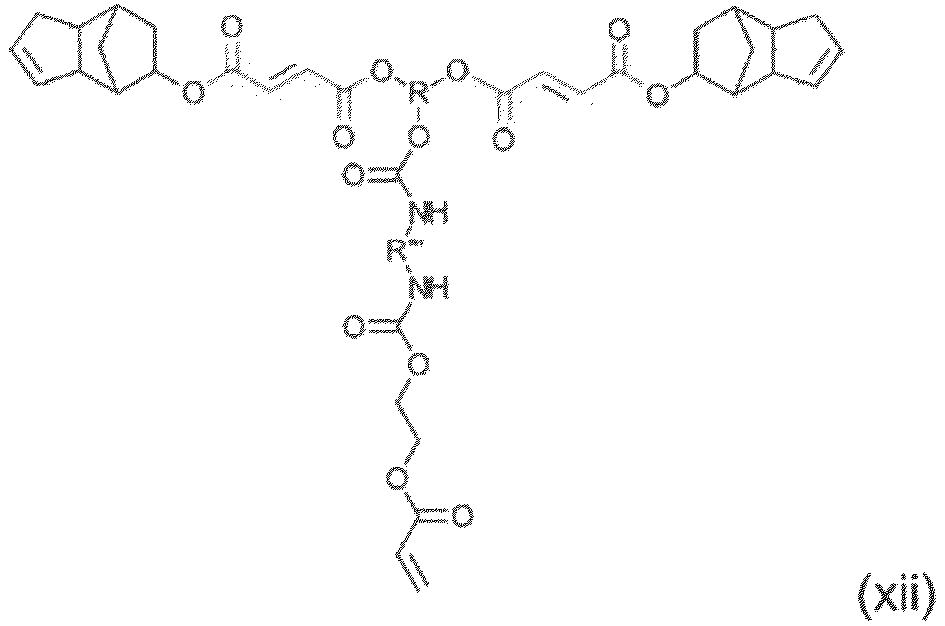
- Beschichtungszusammensetzung, welche der Beschichtung von Substraten mit einer Oberflächenspannung von weniger als 65 mN/m, ausgewählt aus der Gruppe, bestehend aus Polyolefinen, Polypropylen, Polystyrol, Polyvinylchlorid, Acrylnitril-Butadien-Styrol und Styrol-Butadien-Kautschuk, dient, wobei die Beschichtungszusammensetzung mindestens ein Dicyclopentadien-modifiziertes Esteroligomer und mindestens ein flüssiges ethylenisch ungesättigtes Monomer umfasst,wobei das Dicyclopentadien-modifizierte Esteroligomer eine strukturelle Einheit der Formel (i), worin R' und R" aliphatische, cycloaliphatische, araliphatische und aromatische Kohlenwasserstoffgruppen mit 1 bis 20 Kohlenstoffatomen sind und n 1 bis 10 ist, umfasst, undwobei die Beschichtungszusammensetzung weiter ein trifunktionelles Dicyclopentadien-modifiziertes Esteroligomer mit einer strukturellen Einheit der Formel (xii), worin R und R‴ aliphatische, cycloaliphatische, araliphatische und Kohlenwasserstoffgruppen mit 1 bis 20 Kohlenstoffatomen sind, umfasst.

- Beschichtungszusammensetzung nach Anspruch 1, wobei das mindestens eine ethylenisch ungesättigte Monomer aus der Gruppe, bestehend aus Styrol, p-Vinyltoluol, α-Methylstyrol, Methylacrylat, Methylmethacrylat, Diallylphthalat, Triallylcyanurat und Vinylethern, ausgewählt ist.
- Beschichtungszusammensetzung nach Anspruch 1, wobei das mindestens eine ethylenisch ungesättigte Monomer aus der Gruppe, bestehend aus IBOA (Isobornylacrylat), 2-EHA (2-Ethylhexylacrylat), TMPTMA (Trimethylolpropantrimethacrylat) und M4004 (Polyetherpolytetraacrylat), ausgewählt ist.
- Beschichtungszusammensetzung nach einem der Ansprüche 1 bis 3, weiter umfassend mindestens einen Photoinitiator.
- Verwendung der Beschichtungszusammensetzung nach Anspruch 4 als Polyesterharzformulierung in Beschichtungsanwendungen, wobei die Beschichtungszusammensetzung an einer Oberfläche eines Substrats durch mindestens eines von UV-Strahlung und Elektronenstrahl gehärtet wird.
- Verwendung nach Anspruch 5, wobei die Beschichtungszusammensetzung durch UV-Strahlung gehärtet wird.
- Trifunktionelles Dicyclopentadien-modifiziertes Esteroligomer mit einer strukturellen Einheit der Formel (xii), worin R und R‴ aliphatische, cycloaliphatische, araliphatische und Kohlenwasserstoffgruppen mit 1 bis 20 Kohlenstoffatomen sind.

Applications Claiming Priority (2)
| Application Number | Priority Date | Filing Date | Title |
|---|---|---|---|
| US201562270377P | 2015-12-21 | 2015-12-21 | |
| PCT/US2016/067806 WO2017112680A1 (en) | 2015-12-21 | 2016-12-20 | Dicyclopentadiene modified ester oligomers useful in coating applications |
Publications (4)
| Publication Number | Publication Date |
|---|---|
| EP3383959A1 EP3383959A1 (de) | 2018-10-10 |
| EP3383959A4 EP3383959A4 (de) | 2019-01-16 |
| EP3383959C0 EP3383959C0 (de) | 2024-10-02 |
| EP3383959B1 true EP3383959B1 (de) | 2024-10-02 |
Family
ID=59091065
Family Applications (1)
| Application Number | Title | Priority Date | Filing Date |
|---|---|---|---|
| EP16879979.9A Active EP3383959B1 (de) | 2015-12-21 | 2016-12-20 | Dicyclopentadien-modifizierte esteroligomere für beschichtungsanwendungen |
Country Status (11)
| Country | Link |
|---|---|
| US (1) | US10815381B2 (de) |
| EP (1) | EP3383959B1 (de) |
| JP (1) | JP6865768B2 (de) |
| KR (1) | KR102207651B1 (de) |
| CN (1) | CN108431139B (de) |
| AU (2) | AU2016377580B2 (de) |
| BR (1) | BR112018010491B1 (de) |
| CA (1) | CA3008681C (de) |
| ES (1) | ES2988342T3 (de) |
| MX (1) | MX2018007602A (de) |
| WO (1) | WO2017112680A1 (de) |
Families Citing this family (4)
| Publication number | Priority date | Publication date | Assignee | Title |
|---|---|---|---|---|
| KR102599861B1 (ko) * | 2017-07-01 | 2023-11-09 | 피티티 글로벌 케미칼 피씨엘 | 부식 저항성 코팅에 유용한 디사이클로펜타디엔 개질 에스테르 올리고머 |
| US20200148987A1 (en) * | 2018-11-13 | 2020-05-14 | Ge Healthcare Bio-Sciences Corp. | Apparatus, system and method for bioprocessing |
| US11149151B2 (en) | 2018-11-26 | 2021-10-19 | Chemical Dynamics Llc | One part, storage stable polymerizable formulation forming corrosion resistant coatings |
| US11685808B2 (en) * | 2020-06-11 | 2023-06-27 | Novoset, Llc | Oligomer resin compositions |
Citations (1)
| Publication number | Priority date | Publication date | Assignee | Title |
|---|---|---|---|---|
| US6541535B1 (en) * | 1998-08-07 | 2003-04-01 | Basf Coatings Ag | High powered radiation and/or thermal hardening coating powder with a functionalized based structure |
Family Cites Families (69)
| Publication number | Priority date | Publication date | Assignee | Title |
|---|---|---|---|---|
| NL120206C (de) | 1951-01-28 | |||
| GB851772A (en) | 1958-08-25 | 1960-10-19 | Exxon Research Engineering Co | Cross-linked polyesters of dicyclopentadiene dicarboxylic acids |
| FR1317598A (de) | 1961-03-13 | 1963-05-08 | ||
| US3166434A (en) | 1961-12-11 | 1965-01-19 | Soto Chemical Coating Inc De | Process of coating porous substrates with polyester resins comprising fumaric acid, polyoxyalkylene glycol and dicyclopentadiene |
| US3399153A (en) | 1963-04-09 | 1968-08-27 | Soto Chemical Coatings Inc De | Solvent-soluble, heat-hardening interpolymers consisting essentially of alkylolated acrylamides and polyethylenically unsaturated polyester resins |
| GB1195902A (en) * | 1966-05-19 | 1970-06-24 | Union Carbide Corp | Flame-Retardant Halogenated Polyesters |
| US3448066A (en) | 1966-11-17 | 1969-06-03 | Ppg Industries Inc | Air-drying unsaturated polyester resins prepared from a polyol and an adduct of cyclopentadiene and a dicarboxylic acid |
| US3883612A (en) | 1971-06-07 | 1975-05-13 | Scm Corp | Low-shrink thermosetting polymers |
| JPS5010627B1 (de) * | 1971-06-09 | 1975-04-23 | ||
| US3933757A (en) | 1973-02-08 | 1976-01-20 | Scm Corporation | Dicyclopentadiene thermosetting polyester |
| JPS5645951B2 (de) * | 1973-05-21 | 1981-10-29 | ||
| US4322504A (en) | 1975-09-18 | 1982-03-30 | Hoechst Aktiengesellschaft | Resin binders and process for preparing them |
| JPS5263224A (en) * | 1975-11-20 | 1977-05-25 | Asahi Chem Ind Co Ltd | Resin compositions for coating powder with low-temperature curing prop erty |
| US4029848A (en) | 1976-01-21 | 1977-06-14 | The Dow Chemical Company | Unsaturated polyester resins containing a dicyclopentadiene concentrate |
| JPS52112632A (en) | 1976-03-02 | 1977-09-21 | Hitachi Chem Co Ltd | Thermosetting resinous composition for coating |
| JPS5392888A (en) * | 1977-01-25 | 1978-08-15 | Hitachi Chem Co Ltd | High solids resin composition |
| US4100133A (en) | 1976-06-24 | 1978-07-11 | Rohm And Haas Company | Air-dry curable compositions comprising dicyclopentenyl (meth) acrylate copolymers and non-volatile reactive monomer, and cured coatings and impregnations obtained therefrom |
| US4148765A (en) | 1977-01-10 | 1979-04-10 | The Dow Chemical Company | Polyester resins containing dicyclopentadiene |
| US4183833A (en) | 1977-04-08 | 1980-01-15 | Nippon Zeon Co. Ltd. | Novel modified resins, process for preparing the same, and a composition for printing ink containing said modified resins as vehicle components |
| US4167542A (en) | 1977-07-11 | 1979-09-11 | The Dow Chemical Company | Polyester resin compositions containing dicyclopentadiene alkenoate |
| JPS54125298A (en) * | 1978-03-23 | 1979-09-28 | Hitachi Cable Ltd | Epoxy resin composition |
| JPS6017323B2 (ja) | 1978-10-06 | 1985-05-02 | 日本ゼオン株式会社 | 新規な変性樹脂の製造方法 |
| US4233432A (en) | 1979-05-10 | 1980-11-11 | United States Steel Corporation | Dicyclopentadiene polyester resins |
| US4348499A (en) | 1979-10-05 | 1982-09-07 | The Dow Chemical Company | Heat resistant low shrink polyester resins |
| US4339367A (en) | 1979-12-21 | 1982-07-13 | Nippon Zeon Co., Ltd. | Modified cyclopentadiene resins, process for preparing the same, and a composition for printing ink containing said modified resins as vehicle component |
| JPS56149426A (en) | 1980-04-22 | 1981-11-19 | Takeda Chem Ind Ltd | Preparation of unsaturated polyester |
| US4360647A (en) | 1981-07-14 | 1982-11-23 | The Dow Chemical Company | Phosphonate terminated dicyclopentadiene modified polyesters |
| US4435530A (en) | 1982-03-04 | 1984-03-06 | The Dow Chemical Company | Heat resistant resin composition |
| US4443580A (en) | 1982-08-25 | 1984-04-17 | The Dow Chemical Company | DCPD Modified polyester physical property improvement |
| US4525427A (en) | 1982-09-20 | 1985-06-25 | The Alpha Corporation | Polyester primer composition and method |
| US4540829A (en) | 1982-12-02 | 1985-09-10 | The Dow Chemical Company | Allylated di or polycyclopentadiene diphenols |
| US4496688A (en) | 1983-03-21 | 1985-01-29 | The Dow Chemical Company | Heat resistant polyester(amide) composition |
| JPH06844B2 (ja) * | 1984-02-29 | 1994-01-05 | 武田薬品工業株式会社 | ハロゲン含有不飽和ポリエステルの製造法 |
| US4522978A (en) | 1984-06-29 | 1985-06-11 | Union Carbide Corporation | Low viscosity, dicyclopentadienyl-modified polyester compositions and a process for the preparation thereof |
| US4522977A (en) | 1984-06-29 | 1985-06-11 | Union Carbide Corporation | Process for producing dicyclopentadienyl-modified polyester compositions |
| US4532297A (en) | 1984-06-29 | 1985-07-30 | Union Carbide Corporation | Low viscosity curable polyester resin compositions and a process for the production thereof |
| US4532296A (en) | 1984-06-29 | 1985-07-30 | Union Carbide Corporation | Process for producing low viscosity curable polyester resin compositions |
| US4626570A (en) | 1984-06-29 | 1986-12-02 | Union Carbide Corporation | Low shrinking thermosetting polyester resin compositions and a process for the preparation thereof |
| US4623696A (en) | 1985-05-02 | 1986-11-18 | The P. D. George Company | Dicyclopentadiene-tris(2-hydroxyethyl)isocyanurate-modified polyesters |
| JPS63142012A (ja) | 1986-12-04 | 1988-06-14 | Showa Highpolymer Co Ltd | 不飽和ポリエステル樹脂組成物 |
| DE3710428A1 (de) | 1987-03-28 | 1988-10-06 | Bayer Ag | Ungesaettigte polyesterharze, ein verfahren zu ihrer herstellung, diese polyesterharze enthaltende mischungen und deren verwendung zur herstellung von beschichtungen |
| JP2562720B2 (ja) | 1990-07-06 | 1996-12-11 | 昭和高分子株式会社 | 硬化性樹脂組成物 |
| US5559163A (en) | 1991-01-28 | 1996-09-24 | The Sherwin-Williams Company | UV curable coatings having improved weatherability |
| US5318808A (en) | 1992-09-25 | 1994-06-07 | Polyset Company, Inc. | UV-curable coatings |
| US5410004A (en) * | 1994-01-24 | 1995-04-25 | Arizona Chemical Company | Thermal polymerization of dicyclopentadiene |
| BR9510436A (pt) | 1994-12-23 | 1998-07-07 | Ciba Geigy Ag | Composição polimerizável e processo de polimerização |
| US6428767B1 (en) | 1995-05-12 | 2002-08-06 | E. I. Du Pont De Nemours And Company | Method for identifying the source of carbon in 1,3-propanediol |
| JP3017446B2 (ja) | 1995-08-17 | 2000-03-06 | 株式会社日本触媒 | 樹脂組成物およびその製造方法 |
| DE19600152A1 (de) | 1996-01-04 | 1997-07-10 | Basf Ag | Emissionsarme Bindemittel für Überzüge |
| JP3544774B2 (ja) * | 1996-01-05 | 2004-07-21 | 日本合成化学工業株式会社 | 塗料用不飽和ポリエステル樹脂組成物 |
| JP3279964B2 (ja) * | 1997-08-07 | 2002-04-30 | 株式会社日本触媒 | 不飽和ポリエステルの製造方法 |
| JPH1180661A (ja) * | 1997-09-16 | 1999-03-26 | Dainippon Ink & Chem Inc | 塗装仕上げ方法および塗装物品 |
| US5780558A (en) * | 1997-09-25 | 1998-07-14 | Arco Chemical Technology, L.P. | Process for making dicyclopentadiene polyetherester resins |
| DE19835917A1 (de) | 1998-08-07 | 2000-02-10 | Basf Ag | Mit energischer Strahlung und/oder thermisch härtbare Bindemittel |
| FI982256L (fi) | 1998-10-19 | 2000-04-20 | Neste Oyj | Tyydyttymättömiä polyesterihartseja |
| EP1085032A4 (de) | 1999-02-05 | 2002-07-03 | Nippon Catalytic Chem Ind | Dicyclopentadien modifizierte ungesättigte polyester, verfahren zu seiner herstellung und harz und formmasse die diesen ungesättigten polyester enthalten |
| US6384152B2 (en) | 1999-07-19 | 2002-05-07 | Siemens Westinghouse Power Corporation | Insulating resin of epoxy resin, epoxy diluent, phenolic accelerator and organotin catalyst |
| US6228146B1 (en) | 2000-03-03 | 2001-05-08 | Don R. Kuespert | Gas recovery device |
| DE10032136A1 (de) | 2000-07-01 | 2002-01-17 | Basf Coatings Ag | Thermisch und mit aktinischer Strahlung härtbares Mehrkomponentensystem, Verfahren zu seiner Herstellung und seine Verwendung |
| JP2003089709A (ja) * | 2001-09-18 | 2003-03-28 | Dainippon Ink & Chem Inc | 熱硬化性樹脂組成物 |
| US6515071B1 (en) | 2002-05-22 | 2003-02-04 | Ashland Inc. | Process for the preparation of dicyclopentadiene modified polyester resins |
| DE102006049764A1 (de) | 2006-10-21 | 2008-04-24 | Bayer Materialscience Ag | UV-härtbare Polyurethan-Dispersionen |
| WO2009155085A2 (en) | 2008-05-30 | 2009-12-23 | E. I. Du Pont De Nemours And Company | Renewably resourced chemicals and intermediates |
| BRPI0920929B1 (pt) * | 2008-11-26 | 2019-10-15 | Swimc Llc | Composição de revestimento, recipiente para alimento ou bebida, e, uso de uma composição de revestimento |
| AU2010233173B2 (en) * | 2009-04-09 | 2014-05-15 | Swimc Llc | Polymer having unsaturated cycloaliphatic functionality and coating compositions formed therefrom |
| US20130324644A1 (en) | 2012-05-31 | 2013-12-05 | Bioamber Inc. | Bio-derived polyester for use in composite panels, composite articles and methods of producing such articles |
| EP2735579A1 (de) * | 2012-11-23 | 2014-05-28 | DSM IP Assets B.V. | Radikalisch härtbare Harzzusammensetzung |
| US9273178B2 (en) | 2012-12-18 | 2016-03-01 | Xerox Corporation | Bio-based polyester resins |
| KR102599861B1 (ko) * | 2017-07-01 | 2023-11-09 | 피티티 글로벌 케미칼 피씨엘 | 부식 저항성 코팅에 유용한 디사이클로펜타디엔 개질 에스테르 올리고머 |
-
2016
- 2016-12-20 EP EP16879979.9A patent/EP3383959B1/de active Active
- 2016-12-20 CA CA3008681A patent/CA3008681C/en active Active
- 2016-12-20 JP JP2018551902A patent/JP6865768B2/ja active Active
- 2016-12-20 AU AU2016377580A patent/AU2016377580B2/en active Active
- 2016-12-20 ES ES16879979T patent/ES2988342T3/es active Active
- 2016-12-20 BR BR112018010491-4A patent/BR112018010491B1/pt active IP Right Grant
- 2016-12-20 MX MX2018007602A patent/MX2018007602A/es unknown
- 2016-12-20 CN CN201680074802.4A patent/CN108431139B/zh active Active
- 2016-12-20 KR KR1020187013895A patent/KR102207651B1/ko active Active
- 2016-12-20 WO PCT/US2016/067806 patent/WO2017112680A1/en not_active Ceased
- 2016-12-20 US US15/774,085 patent/US10815381B2/en active Active
-
2021
- 2021-04-15 AU AU2021202281A patent/AU2021202281B2/en active Active
Patent Citations (1)
| Publication number | Priority date | Publication date | Assignee | Title |
|---|---|---|---|---|
| US6541535B1 (en) * | 1998-08-07 | 2003-04-01 | Basf Coatings Ag | High powered radiation and/or thermal hardening coating powder with a functionalized based structure |
Also Published As
| Publication number | Publication date |
|---|---|
| BR112018010491B1 (pt) | 2022-10-04 |
| EP3383959C0 (de) | 2024-10-02 |
| WO2017112680A1 (en) | 2017-06-29 |
| JP2019505651A (ja) | 2019-02-28 |
| US20180327605A1 (en) | 2018-11-15 |
| AU2016377580A1 (en) | 2018-05-31 |
| AU2016377580B2 (en) | 2021-05-13 |
| EP3383959A4 (de) | 2019-01-16 |
| CA3008681C (en) | 2023-12-05 |
| BR112018010491A2 (pt) | 2018-11-13 |
| KR102207651B1 (ko) | 2021-01-26 |
| AU2021202281A1 (en) | 2021-05-20 |
| CN108431139B (zh) | 2021-04-20 |
| ES2988342T3 (es) | 2024-11-20 |
| AU2021202281B2 (en) | 2023-03-16 |
| CA3008681A1 (en) | 2017-06-29 |
| US10815381B2 (en) | 2020-10-27 |
| CN108431139A (zh) | 2018-08-21 |
| EP3383959A1 (de) | 2018-10-10 |
| JP6865768B2 (ja) | 2021-04-28 |
| MX2018007602A (es) | 2018-09-21 |
| KR20180067665A (ko) | 2018-06-20 |
| BR112018010491A8 (pt) | 2019-02-26 |
Similar Documents
| Publication | Publication Date | Title |
|---|---|---|
| AU2021202281B2 (en) | Dicyclopentadiene modified ester oligomers useful in coating applications | |
| TWI785153B (zh) | 輻射硬化性組成物、其用途及其製備方法 | |
| CN102911338B (zh) | 一种多官能聚氨酯丙烯酸酯低聚物及其合成方法与应用 | |
| DE69738655T2 (de) | Polymerisierbare ungesättigte verbindungen, härtbare zusammensetzungen die diese verbindungen enthalten und ihre härtungsprodukte | |
| JP2025105969A (ja) | 活性エネルギー線硬化性樹脂組成物、粘着剤組成物及び粘着剤 | |
| CN115746249A (zh) | 蓖麻油基水性uv固化聚氨酯丙烯酸酯及其制备方法和应用 | |
| US20130065047A1 (en) | Hard coat paint and molded body | |
| KR101907532B1 (ko) | 퍼티용 불포화 수지 혼합물을 포함하는 퍼티용 불포화 수지 주제부 및 퍼티도막 형성방법 | |
| JP5237610B2 (ja) | ウレタン樹脂組成物 | |
| CN113817347B (zh) | 一种可以紫外光固化(uv)耐水性玻璃涂料的制备方法 | |
| JP2016108477A (ja) | ウレタン(メタ)アクリレート、並びに活性エネルギー線硬化型ウレタン(メタ)アクリレート組成物及びその硬化物 | |
| WO2011151891A1 (ja) | 塗料および積層体 | |
| JP3388250B2 (ja) | 活性エネルギー線硬化型塗料用組成物 | |
| JP2018080273A (ja) | 活性エネルギー線硬化性樹脂組成物、及び、その製造方法 | |
| CN120737652A (zh) | 一种强紫外耐受高抗磨uv涂料及其制备方法 | |
| JPH02202507A (ja) | 活性エネルギー線硬化樹脂組成物 | |
| CN114539099A (zh) | 双生物基光固化聚氨酯丙烯酸酯低聚物及其制备方法 | |
| JPH01203475A (ja) | ポリウレタン系合成樹脂塗料 | |
| JP2005336250A (ja) | 木質材被覆用樹脂組成物 | |
| CN113388277A (zh) | 高耐水木地板涂料和高耐水树脂预聚物及其制备方法 | |
| JP2004307783A (ja) | 活性エネルギー線硬化性樹脂組成物 |
Legal Events
| Date | Code | Title | Description |
|---|---|---|---|
| STAA | Information on the status of an ep patent application or granted ep patent |
Free format text: STATUS: THE INTERNATIONAL PUBLICATION HAS BEEN MADE |
|
| PUAI | Public reference made under article 153(3) epc to a published international application that has entered the european phase |
Free format text: ORIGINAL CODE: 0009012 |
|
| STAA | Information on the status of an ep patent application or granted ep patent |
Free format text: STATUS: REQUEST FOR EXAMINATION WAS MADE |
|
| 17P | Request for examination filed |
Effective date: 20180702 |
|
| AK | Designated contracting states |
Kind code of ref document: A1 Designated state(s): AL AT BE BG CH CY CZ DE DK EE ES FI FR GB GR HR HU IE IS IT LI LT LU LV MC MK MT NL NO PL PT RO RS SE SI SK SM TR |
|
| AX | Request for extension of the european patent |
Extension state: BA ME |
|
| A4 | Supplementary search report drawn up and despatched |
Effective date: 20181217 |
|
| RIC1 | Information provided on ipc code assigned before grant |
Ipc: C09D 11/00 20140101ALI20181211BHEP Ipc: C09D 4/00 20060101AFI20181211BHEP |
|
| DAV | Request for validation of the european patent (deleted) | ||
| DAX | Request for extension of the european patent (deleted) | ||
| RAP1 | Party data changed (applicant data changed or rights of an application transferred) |
Owner name: PTT GLOBAL CHEMICAL PUBLIC COMPANY LIMITED |
|
| STAA | Information on the status of an ep patent application or granted ep patent |
Free format text: STATUS: EXAMINATION IS IN PROGRESS |
|
| 17Q | First examination report despatched |
Effective date: 20200907 |
|
| GRAP | Despatch of communication of intention to grant a patent |
Free format text: ORIGINAL CODE: EPIDOSNIGR1 |
|
| STAA | Information on the status of an ep patent application or granted ep patent |
Free format text: STATUS: GRANT OF PATENT IS INTENDED |
|
| INTG | Intention to grant announced |
Effective date: 20240514 |
|
| GRAS | Grant fee paid |
Free format text: ORIGINAL CODE: EPIDOSNIGR3 |
|
| GRAA | (expected) grant |
Free format text: ORIGINAL CODE: 0009210 |
|
| STAA | Information on the status of an ep patent application or granted ep patent |
Free format text: STATUS: THE PATENT HAS BEEN GRANTED |
|
| AK | Designated contracting states |
Kind code of ref document: B1 Designated state(s): AL AT BE BG CH CY CZ DE DK EE ES FI FR GB GR HR HU IE IS IT LI LT LU LV MC MK MT NL NO PL PT RO RS SE SI SK SM TR |
|
| REG | Reference to a national code |
Ref country code: GB Ref legal event code: FG4D |
|
| REG | Reference to a national code |
Ref country code: CH Ref legal event code: EP |
|
| REG | Reference to a national code |
Ref country code: IE Ref legal event code: FG4D |
|
| REG | Reference to a national code |
Ref country code: DE Ref legal event code: R096 Ref document number: 602016089688 Country of ref document: DE |
|
| U01 | Request for unitary effect filed |
Effective date: 20241002 |
|
| U07 | Unitary effect registered |
Designated state(s): AT BE BG DE DK EE FI FR IT LT LU LV MT NL PT RO SE SI Effective date: 20241009 |
|
| REG | Reference to a national code |
Ref country code: ES Ref legal event code: FG2A Ref document number: 2988342 Country of ref document: ES Kind code of ref document: T3 Effective date: 20241120 |
|
| U20 | Renewal fee for the european patent with unitary effect paid |
Year of fee payment: 9 Effective date: 20241220 |
|
| PG25 | Lapsed in a contracting state [announced via postgrant information from national office to epo] |
Ref country code: HR Free format text: LAPSE BECAUSE OF FAILURE TO SUBMIT A TRANSLATION OF THE DESCRIPTION OR TO PAY THE FEE WITHIN THE PRESCRIBED TIME-LIMIT Effective date: 20241002 Ref country code: IS Free format text: LAPSE BECAUSE OF FAILURE TO SUBMIT A TRANSLATION OF THE DESCRIPTION OR TO PAY THE FEE WITHIN THE PRESCRIBED TIME-LIMIT Effective date: 20250202 |
|
| PG25 | Lapsed in a contracting state [announced via postgrant information from national office to epo] |
Ref country code: NO Free format text: LAPSE BECAUSE OF FAILURE TO SUBMIT A TRANSLATION OF THE DESCRIPTION OR TO PAY THE FEE WITHIN THE PRESCRIBED TIME-LIMIT Effective date: 20250102 |
|
| PG25 | Lapsed in a contracting state [announced via postgrant information from national office to epo] |
Ref country code: GR Free format text: LAPSE BECAUSE OF FAILURE TO SUBMIT A TRANSLATION OF THE DESCRIPTION OR TO PAY THE FEE WITHIN THE PRESCRIBED TIME-LIMIT Effective date: 20250103 |
|
| PG25 | Lapsed in a contracting state [announced via postgrant information from national office to epo] |
Ref country code: PL Free format text: LAPSE BECAUSE OF FAILURE TO SUBMIT A TRANSLATION OF THE DESCRIPTION OR TO PAY THE FEE WITHIN THE PRESCRIBED TIME-LIMIT Effective date: 20241002 Ref country code: CZ Free format text: LAPSE BECAUSE OF FAILURE TO SUBMIT A TRANSLATION OF THE DESCRIPTION OR TO PAY THE FEE WITHIN THE PRESCRIBED TIME-LIMIT Effective date: 20241002 |
|
| PG25 | Lapsed in a contracting state [announced via postgrant information from national office to epo] |
Ref country code: RS Free format text: LAPSE BECAUSE OF FAILURE TO SUBMIT A TRANSLATION OF THE DESCRIPTION OR TO PAY THE FEE WITHIN THE PRESCRIBED TIME-LIMIT Effective date: 20250102 |
|
| PG25 | Lapsed in a contracting state [announced via postgrant information from national office to epo] |
Ref country code: SM Free format text: LAPSE BECAUSE OF FAILURE TO SUBMIT A TRANSLATION OF THE DESCRIPTION OR TO PAY THE FEE WITHIN THE PRESCRIBED TIME-LIMIT Effective date: 20241002 |
|
| PG25 | Lapsed in a contracting state [announced via postgrant information from national office to epo] |
Ref country code: MC Free format text: LAPSE BECAUSE OF FAILURE TO SUBMIT A TRANSLATION OF THE DESCRIPTION OR TO PAY THE FEE WITHIN THE PRESCRIBED TIME-LIMIT Effective date: 20241002 |
|
| PG25 | Lapsed in a contracting state [announced via postgrant information from national office to epo] |
Ref country code: SK Free format text: LAPSE BECAUSE OF FAILURE TO SUBMIT A TRANSLATION OF THE DESCRIPTION OR TO PAY THE FEE WITHIN THE PRESCRIBED TIME-LIMIT Effective date: 20241002 |
|
| REG | Reference to a national code |
Ref country code: CH Ref legal event code: PL |
|
| PLBE | No opposition filed within time limit |
Free format text: ORIGINAL CODE: 0009261 |
|
| STAA | Information on the status of an ep patent application or granted ep patent |
Free format text: STATUS: NO OPPOSITION FILED WITHIN TIME LIMIT |
|
| 26N | No opposition filed |
Effective date: 20250703 |
|
| PG25 | Lapsed in a contracting state [announced via postgrant information from national office to epo] |
Ref country code: CH Free format text: LAPSE BECAUSE OF NON-PAYMENT OF DUE FEES Effective date: 20241231 |
|
| PG25 | Lapsed in a contracting state [announced via postgrant information from national office to epo] |
Ref country code: IE Free format text: LAPSE BECAUSE OF NON-PAYMENT OF DUE FEES Effective date: 20241220 |
|
| PGFP | Annual fee paid to national office [announced via postgrant information from national office to epo] |
Ref country code: GB Payment date: 20251223 Year of fee payment: 10 |
|
| U20 | Renewal fee for the european patent with unitary effect paid |
Year of fee payment: 10 Effective date: 20251223 |
|
| PGFP | Annual fee paid to national office [announced via postgrant information from national office to epo] |
Ref country code: ES Payment date: 20260119 Year of fee payment: 10 |