EP3317260B2 - Acesulfame potassium compositions and processes for producing same - Google Patents
Acesulfame potassium compositions and processes for producing same Download PDFInfo
- Publication number
- EP3317260B2 EP3317260B2 EP17772249.3A EP17772249A EP3317260B2 EP 3317260 B2 EP3317260 B2 EP 3317260B2 EP 17772249 A EP17772249 A EP 17772249A EP 3317260 B2 EP3317260 B2 EP 3317260B2
- Authority
- EP
- European Patent Office
- Prior art keywords
- acesulfame potassium
- wppm
- composition
- less
- acesulfame
- Prior art date
- Legal status (The legal status is an assumption and is not a legal conclusion. Google has not performed a legal analysis and makes no representation as to the accuracy of the status listed.)
- Active
Links
Images
Classifications
-
- C—CHEMISTRY; METALLURGY
- C07—ORGANIC CHEMISTRY
- C07D—HETEROCYCLIC COMPOUNDS
- C07D291/00—Heterocyclic compounds containing rings having nitrogen, oxygen and sulfur atoms as the only ring hetero atoms
- C07D291/02—Heterocyclic compounds containing rings having nitrogen, oxygen and sulfur atoms as the only ring hetero atoms not condensed with other rings
- C07D291/06—Six-membered rings
-
- A—HUMAN NECESSITIES
- A23—FOODS OR FOODSTUFFS; TREATMENT THEREOF, NOT COVERED BY OTHER CLASSES
- A23L—FOODS, FOODSTUFFS OR NON-ALCOHOLIC BEVERAGES, NOT OTHERWISE PROVIDED FOR; PREPARATION OR TREATMENT THEREOF
- A23L27/00—Spices; Flavouring agents or condiments; Artificial sweetening agents; Table salts; Dietetic salt substitutes; Preparation or treatment thereof
- A23L27/30—Artificial sweetening agents
-
- C—CHEMISTRY; METALLURGY
- C07—ORGANIC CHEMISTRY
- C07C—ACYCLIC OR CARBOCYCLIC COMPOUNDS
- C07C235/00—Carboxylic acid amides, the carbon skeleton of the acid part being further substituted by oxygen atoms
- C07C235/70—Carboxylic acid amides, the carbon skeleton of the acid part being further substituted by oxygen atoms having carbon atoms of carboxamide groups and doubly-bound oxygen atoms bound to the same carbon skeleton
- C07C235/72—Carboxylic acid amides, the carbon skeleton of the acid part being further substituted by oxygen atoms having carbon atoms of carboxamide groups and doubly-bound oxygen atoms bound to the same carbon skeleton with the carbon atoms of the carboxamide groups bound to acyclic carbon atoms
- C07C235/74—Carboxylic acid amides, the carbon skeleton of the acid part being further substituted by oxygen atoms having carbon atoms of carboxamide groups and doubly-bound oxygen atoms bound to the same carbon skeleton with the carbon atoms of the carboxamide groups bound to acyclic carbon atoms of a saturated carbon skeleton
-
- A—HUMAN NECESSITIES
- A23—FOODS OR FOODSTUFFS; TREATMENT THEREOF, NOT COVERED BY OTHER CLASSES
- A23V—INDEXING SCHEME RELATING TO FOODS, FOODSTUFFS OR NON-ALCOHOLIC BEVERAGES AND LACTIC OR PROPIONIC ACID BACTERIA USED IN FOODSTUFFS OR FOOD PREPARATION
- A23V2002/00—Food compositions, function of food ingredients or processes for food or foodstuffs
Definitions
- the present invention relates generally to processes for producing acesulfame potassium. More specifically, the present invention relates to processes for producing high purity acesulfame potassium.
- WO 2013/182651 A1 discloses a process for producing acesulfame potassium.
- EP 0 218 076 A1 and DE 35 31 357 A1 disclose processes for the production of non-toxic salts of 6-methyl-3,4-dihydro-1,2,3-oxathiazin-4-one-2,2-dioxide.
- WO 93/19055 A1 discloses a process and a device for preparing the non-toxic salts of 6-methyl-3,4-dihydro-1,2,3-oxathiazin-4-one-2,2-dioxide.
- EP 0 155 634 A1 discloses processes for the production of 6-methyl-3,4-dihydro-1,2,3-oxathiazin-4-one-2,2-dioxide and its non-toxic salts as well as of acetoacetamide-N-sulfonic acid occurring as an intermediary product in this process, and its salts.
- EP 0 159 516 A1 discloses processes for the production of 6-methyl-3,4-dihydro-1,2,3-oxathiazin-4-one-2,2-dioxide and its non-toxic salts.
- CN101787001 discloses a synthesis process of acesulfame potassium.
- the application discloses processes for producing a finished acesulfame potassium composition, the process comprising the steps of: contacting a chlorine-containing solvent and a cyclizing agent to form a cyclizing agent composition, reacting an acetoacetamide salt with the cyclizing agent in the cyclizing agent composition to form a cyclic sulfur trioxide adduct, and forming from the cyclic sulfur trioxide adduct the finished acesulfame potassium composition comprising non-chlorinated acesulfame potassium and less than 35 wppm 5-chloro-acesulfame potassium, e.g., from 0.001 wppm to 2.7 wppm 5-chloro-acesulfame potassium.
- the forming of the finished acesulfame potassium composition may comprise: hydrolyzing the cyclic sulfur trioxide adduct to form an acesulfame-H composition comprising acesulfame-H, neutralizing the acesulfame-H in the acesulfame-H composition to form a crude acesulfame potassium composition comprising non-chlorinated acesulfame potassium and less than 35 wppm 5-chloro-acesulfame potassium, and forming the finished acesulfame potassium composition from the crude acesulfame potassium composition.
- the finished acesulfame potassium composition may comprise from 0.001 wppm to 5 wppm 5-chloro-acesulfame potassium.
- the contact time is less than 15 minutes and the crude acesulfame potassium composition comprises from 0.001 wppm to 5 wppm 5-chloro-acesulfame potassium and the finished acesulfame potassium composition comprises from 0.001 wppm to 5 wppm 5-chloro-acesulfame potassium.
- the contact time is less than 5 minutes and the crude acesulfame potassium composition comprises from 0.001 wppm to 5 wppm 5-chloro-acesulfame potassium and the finished acesulfame potassium composition comprises from 0.001 wppm to 2.7 wppm 5-chloro-acesulfame potassium.
- the finished acesulfame potassium composition may comprise at least 90% by weight of the 5-chloro-acesulfame potassium present in the crude acesulfame potassium composition.
- the hydrolyzing comprises adding water to the cyclic sulfur trioxide adduct to form a hydrolysis reaction mixture, and wherein the temperature of the hydrolysis reaction mixture is maintained at a temperature ranging from -35 °C to 0 °C.
- the finished acesulfame potassium composition may comprise from 0.001 wppm to 5 wppm organic impurities and/or from 0.001 wppm to 5 wppm heavy metals.
- the process further comprises the steps of reacting sulfamic acid and an amine to form an amidosulfamic acid salt, and reacting the amidosulfamic acid salt and acetoacetylating agent to form the acetoacetamide salt.
- the cyclizing agent composition may comprise less than 1 wt% of compounds selected from chloromethyl chlorosulfate, methyl-bis-chlorosulfate, and mixtures thereof.
- the reacting is conducted for a cyclization reaction time, from the start of the reactant feed to the end of the reactant feed, less than 35 minutes.
- the weight ratio of chlorine-containing solvent to cyclizing agent in the cyclizing agent composition may be at least 1:1.
- the processes may further comprise cooling the cyclizing agent composition to a temperature less than 15°C.
- the cyclizing agent comprises sulfur trioxide and the chlorine-containing solvent comprises dichloromethane.
- the processes comprise the steps of: reacting sulfamic acid and triethylamine to form an amidosulfamic acid salt, reacting the amidosulfamic acid salt and diketene to form the acetoacetamide salt, contacting dichloromethane and a sulfur trioxide to form a cyclizing agent composition (optionally cooling the cyclizing agent composition to a temperature less than 15°C), reacting the acetoacetamide salt with the sulfur trioxide in the cyclizing agent composition to form a cyclic sulfur trioxide adduct, hydrolyzing the cyclic sulfur trioxide adduct to form an acesulfame-H composition, and neutralizing the acesulfame-H to form the finished acesulfame potassium composition comprising non-chlorinated acesulfame potassium and less than 10 wppm 5-chloro-acesulfame potassium, and contact time from the beginning of step (a) to the beginning
- the application also describes crude, intermediate, and finished acesulfame potassium composition produced by the processes described herein, e.g., a finished acesulfame potassium composition comprising non-chlorinated acesulfame potassium, from 0.001 wppm to 2.7 wppm 5-chloro acesulfame potassium, and from 0.001 wppm to 5 wppm heavy metals.
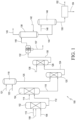
- FIG. 1 is a process flow sheet of an acesulfame potassium production process in accordance with one embodiment of the present invention.
- Conventional processes for producing acesulfame potassium involve reacting sulfamic acid and an amine in the presence of acetic acid to form an amidosulfamic acid salt.
- the amidosulfamic acid salt is then reacted with an acetoacetylating agent, e.g., diketene, to form an acetoacetamide salt.
- the acetoacetamide salt is reacted with a cyclizing agent, e.g., sulfur trioxide, to form a cyclic sulfur trioxide adduct.
- the cyclic sulfur trioxide adduct is then hydrolyzed and neutralized via conventional means to form a crude acesulfame potassium composition comprising acesulfame potassium.
- This composition is phase separated into aqueous and organic phases. Most of the acesulfame potassium separates into the aqueous phase.
- the term "crude acesulfame potassium composition” refers to the initial product of the neutralization reaction or to the aqueous phase that is formed from the phase separation step (without any further purification).
- the crude acesulfame potassium composition comprises at least 5 wt% acesulfame potassium.
- the crude acesulfame potassium composition may be optionally treated to form an "intermediate acesulfame potassium composition" and/or a "finished acesulfame potassium composition,” which are discussed below.
- acesulfame potassium compositions have been shown to comprise several undesirable impurities, among them 5-chloro-acesulfame potassium and acetoacetamide. Content limits for these compounds in the finished acesulfame potassium composition are often determined by industry purity standards and/or by standards established for particular end use products that utilize acesulfame potassium as a sweetener. In some cases, limits for these impurities are determined by governmental regulations. For most applications, high acesulfame potassium purity levels are preferred.
- reaction of the cyclizing agent with the acetoacetamide salt to form the cyclic sulfur trioxide adduct may also involve side reactions that form the 5-chloro-acesulfame potassium impurity.
- cyclizing agent/chlorine-containing solvent reaction products include halogen-containing compounds such as chlorine/chloride-containing compounds, e.g., chlorosulfates. These compounds, in turn, may react to chlorinate the acesulfame precursor acid, acesulfame-H, sometimes referred to as sweetener acid, or its precursors, e.g., acetoacetamide-N-sulfonate.
- the cyclizing agent composition may have a low chlorine/chloride-containing compound content, e.g., a low chlorosulfate content, as discussed herein.
- Residence time refers to the time period that a composition (or stream) to be treated, e.g., a crude acesulfame potassium composition, remains in a particular treatment operation. Residence time begins when the composition to be treated enters the treatment operation, and residence time ends when the resultant compositions (formed via the treatment) exit the treatment operation. As one particular example, residence time for a concentrating operation, e.g., evaporation, refers to the time from when a crude acesulfame potassium composition enters the evaporator until the intermediate acesulfame potassium composition exits the evaporator.
- Acetoacetamide refers to the following molecule:
- the cyclizing agent composition may have a low cyclizing agent/chlorine-containing solvent reaction product content, e.g., a low chlorosulfate content.
- the cyclizing agent composition may comprise less than 1 wt% cyclizing agent/chlorine-containing solvent reaction product, e.g., less than 0.75 wt%, less than 0.5 wt%, less than 0.25 wt%, less than 0.1 wt%, less than 0.05 wt%, or less than 0.01 wt%.
- the cyclizing agent composition may comprise from 1 ppm to 1 wt% cyclizing agent/chlorine-containing solvent reaction products, e.g., from 10 ppm to 1 wt%, from 10 ppm to 0.75 wt%, from 10 ppm to 0.5 wt%, from 10 ppm to 0.25 wt%, from 100 ppm to 0.75 wt%, from 100 ppm to 0.5 wt%, or from 100 ppm to 0.25 wt%.
- These ranges and limits apply to cyclizing agent/chlorine-containing solvent reaction products generally and to specific reaction products generally, e.g., chloromethyl chlorosulfate, methyl-bis-chlorosulfate, and combinations thereof.
- Exemplary chlorosulfates include chloromethyl chlorosulfate and methyl-bis-chlorosulfate. These reaction products may be formed when a chlorine-containing solvent is employed.
- the cyclizing agent composition comprises less than 1 wt% chloromethyl chlorosulfate and/or methyl-bis-chlorosulfate, e.g., less than 0.75 wt%, less than 0.5 wt%, less than 0.25 wt%, less than 0.1 wt%, less than 0.05 wt%, or less than 0.01 wt%.
- the cyclizing agent composition comprises less than 1 wt% chloromethyl chlorosulfate, e.g., less than 0.75 wt%, less than 0.5 wt%, less than 0.25 wt%, less than 0.1 wt%, less than 0.05 wt%, or less than 0.01 wt%. In one embodiment, the cyclizing agent composition comprises less than 1 wt% methyl-bis-chlorosulfate, e.g., less than 0.75 wt%, less than 0.5 wt%, less than 0.25 wt%, less than 0.1 wt%, less than 0.05 wt%, or less than 0.01 wt%.
- the chlorine-containing solvent and cyclizing agent are combined in a first vessel, e.g., a first reactor, to form a cyclizing agent composition, which optionally may be cooled.
- the cyclizing agent composition may then be added to the acetoacetamide salt in a second reactor.
- the first vessel is chilled, e.g., to temperature below 35°C, prior to combining the chlorine-containing solvent and cyclizing agent.
- the cyclizing agent and the chlorine-containing solvent are cooled individually and then fed to the reaction with the acetoacetamide salt, optionally followed by additional cooling.
- the first vessel itself is chilled, e.g., to a temperature below 15°C, prior to contacting the chlorine-containing solvent and cyclizing agent, which leads to the cooling of the chlorine-containing solvent and the cyclization that may be added to the first vessel.
- the cyclizing agent and the chlorine-containing solvent are cooled individually and then combined and fed to the reaction with the acetoacetamide salt.
- the process comprises the steps of providing a cyclic sulfur trioxide adduct composition comprising less than 1 wt% cyclizing agent/chlorine-containing solvent reaction products, e.g., chloromethyl chlorosulfate and/or methyl-bis-chlorosulfate, and forming the acesulfame potassium composition from the cyclic sulfur trioxide adduct composition.
- the providing of the cyclic sulfur trioxide adduct composition may vary widely as long as the cyclic sulfur trioxide adduct composition has the required cyclizing agent/chlorine-containing solvent reaction product content.
- the cyclic sulfur trioxide adduct composition optionally is formed using any of the methods described herein.
- the cyclizing agent composition is provided at a low temperature and/or is cooled to yield a cooled cyclizing agent composition having a low temperature.
- the cooling or the providing of the low temperature cyclizing agent composition may be achieved through any of a variety of different cooling techniques.
- the cooling step may be achieved by using one or more heat exchangers, refrigeration units, air cooling units, water cooling units, or a cooling medium, such as liquid nitrogen or other cryogenics. If heat exchangers are employed, a water/glycol mixture is a preferable exchange medium, with brine being a suitable alternative.
- the cyclizing agent composition is provided at or is cooled to a temperature less than 15°C, e.g., less than 12°C, less than 11°C, less than 10°C, less than 8°C, less than 5°C, less than 3°C, less than 1°C, or less than 0°C.
- the cyclization agent composition is cooled to a temperature ranging from -20°C to 15°C, e.g., from -15°C to 15°C, from - 10°C to 12°C, from -8°C to 10°C, or -8°C to 5°C.
- the cooling step reduces the temperature of the cyclizing agent composition (as provided), e.g., by at least 2°C, at least 3°C, at least 5°C, at least 10°C, at least 15°C, at least 20°C, or at least 25°C.
- the cyclizing agent e.g., without chlorine-containing solvent
- the cooled cyclizing agent is mixed with the chlorine-containing solvent to form the cyclizing agent composition, which is then reacted with the acetoacetamide salt. That is, in some cases, the chlorine-containing solvent (if present) may not be cooled in the same manner as the cyclizing agent is cooled. In other embodiments, the chlorine-containing solvent is cooled prior to being mixed with the cyclizing agent to form the cyclizing agent composition, optionally followed by additional cooling of the resulting cyclizing agent composition.
- the cooling is implemented via multiple cooling steps.
- the chlorine-containing solvent may be cooled to a first temperature, then combined with the cyclizing agent to form the cyclizing agent composition, which is then further cooled to a second temperature, which is less than the first temperature.
- the cyclizing agent is cooled to a first temperature
- the chlorine-containing solvent is cooled to a second temperature
- the cooled cyclizing agent and the cooled chlorine-containing solvent are combined and optionally cooled to a third temperature, which is less than the first and second temperatures.
- the cyclization reaction is conducted for a cyclization reaction time, less than 35 minutes, e.g., less than 30 minutes, less than 25 minutes, less than 20 minutes, less than 15 minutes, or less than 10 minutes. In terms of ranges, the cyclization reaction may be conducted for a cyclization reaction time ranging from 1 second to 35 minutes, e.g., from 10 seconds to 25 minutes, from 30 seconds to 15 minutes, or from 1 minute to 10 minutes.
- the cyclic sulfur trioxide adduct may be subjected to one or more steps to form the finished acesulfame potassium composition.
- the formation of the finished acesulfame potassium composition comprises the steps of hydrolyzing (at least some of) the cyclic sulfur trioxide adduct to form an acesulfame-H composition comprising acesulfame-H and neutralizing the acesulfame-H in the acesulfame-H composition to form a crude acesulfame potassium composition.
- Crude acesulfame compositions may be treated to form intermediate acesulfame potassium compositions and (subsequently) finished acesulfame compositions, and this treatment operation may include one or more concentrating or separating operations.
- the treatment operation may comprise concentrating the crude acesulfame potassium composition to form a water stream and an intermediate acesulfame potassium composition and then separating the intermediate acesulfame potassium composition to form the finished acesulfame potassium composition comprising acesulfame potassium, e.g., via filtration and/or crystallization.
- the crude acesulfame potassium composition is formed by hydrolyzing the cyclic sulfur trioxide adduct to form an acesulfame-H composition and neutralizing the acesulfame-H in the acesulfame-H composition to form the crude acesulfame potassium composition, as discussed herein.
- the product of the neutralization step is phase separated into aqueous and organic phases.
- the crude acesulfame potassium composition may be obtained from the aqueous phase (without any further purification).
- the crude acesulfame potassium composition preferably comprises a mixture of acesulfame potassium, e.g., non-chlorinated acesulfame potassium, and less than 35 wppm 5-chloro-acesulfame potassium, e.g., less than 30 wppm, less than 25 wppm, less than 20 wppm, less than 15 wppm, less than 12 wppm, less than 10 wppm, less than 7 wppm, less than 5 wppm, less than 3 wppm, or less than 1 wppm.
- acesulfame potassium e.g., non-chlorinated acesulfame potassium
- 5-chloro-acesulfame potassium e.g., less than 30 wppm, less than 25 wppm, less than 20 wppm, less than 15 wppm, less than 12 wppm, less than 10 wppm,
- the crude acesulfame potassium composition is free of 5-chloro-acesulfame potassium, e.g., substantially free of 5-chloro-acesulfame potassium (undetectable).
- the crude acesulfame potassium composition may comprise from 1 wppb to 35 wppm 5-chloro-acesulfame potassium, e.g., from 1 wppb to 20 wppm, from 1 wppb to 10 wppm, from 1 wppb to 5 wppm, from 1 wppb to 2.7 wppm, from 10 wppb to 20 wppm, from 10 wppb to 19 wppm, from 10 wppb to 15 wppm, from 10 wppb to 12 wppm, from 10 wppb to 10 wppm, from 10 wppb to 5 wppm, from 100 wppb to 15 wppm, from 100 wppb to 15 w
- the finished acesulfame potassium compositions which are typically suitable for end consumer usage, are formed by treating the crude acesulfame potassium composition to remove impurities, as discussed herein.
- This finished acesulfame potassium composition preferably comprises a mixture of acesulfame potassium, e.g., non-chlorinated acesulfame potassium, and less than 35 wppm 5-chloro-acesulfame potassium, e.g., less than 30 wppm, less than 25 wppm, less than 20 wppm, less than 15 wppm, less than 12 wppm, less than 10 wppm, less than 7 wppm, less than 5 wppm, less than 3 wppm, or less than 1 wppm.
- the finished acesulfame potassium composition is free of 5-chloro-acesulfame potassium, e.g., substantially free of 5-chloro-acesulfame potassium (undetectable).
- the finished acesulfame potassium composition may comprise from 1 wppb to 35 wppm 5-chloro-acesulfame potassium, e.g., from 1 wppb to 20 wppm, from 1 wppb to 10 wppm, from 1 wppb to 5 wppm, from 1 wppb to 2.7 wppm, from 10 wppb to 20 wppm, from 10 wppb to 19 wppm, from 10 wppb to 15 wppm, from 10 wppb to 12 wppm, from 10 wppb to 10 wppm, from 10 wppb to 5 wppm, from 100 wppb to 15 wppm, from 100 wppb to 15 w
- the shorter contact times reduce or eliminate 5-chloro-acesulfame potassium formation, resulting in both a crude acesulfame potassium composition and a finished acesulfame potassium composition having low 5-chloro-acesulfame potassium content.
- the finished acesulfame potassium compositions comprise acesulfame potassium and less than 33 wppm acetoacetamide, e.g., less than 32 wppm, less than 30 wppm, less than 25 wppm, less than 20 wppm, less than 15 wppm, less than 12 wppm, less than 10 wppm, less than 7 wppm, less than 5 wppm, less than 3 wppm, less than 1 wppm, less than 0.8 wppm, less than 0.5 wppm, or less than 0.3 wppm.
- wppm acetoacetamide e.g., less than 32 wppm, less than 30 wppm, less than 25 wppm, less than 20 wppm, less than 15 wppm, less than 12 wppm, less than 10 wppm, less than 7 wppm, less than 5 wppm, less than 3 wpp
- the finished acesulfame potassium composition is free of acetoacetamide, e.g., substantially free of acetoacetamide (undetectable).
- the finished acesulfame potassium composition may comprise from 1 wppb to 33 wppm acetoacetamide, e.g., from 10 wppb to 32 wppm, from 10 wppb to 25 wppm, from 10 wppb to 15 wppm, from 10 wppb to 12 wppm, from 10 wppb to 10 wppm, from 10 wppb to 7 wppm, from 10 wppb to 5 wppm, from 10 wppb to 3 wppm, from 100 wppb to 15 wppm, from 100 wppb to 10 wppm, or from 100 wppb to 5 wppm.
- acetoacetamide-N-sulfonic acid may also be present in the finished acesulfame potassium compositions in the aforementioned amounts.
- impurities may be formed by side reactions and degradation of the acesulfame potassium and acesulfame-H molecules, e.g., during treatment of the specific crude acesulfame potassium compositions discussed herein.
- the 5-chloro-acesulfame potassium content may be measured in the crude and/or finished acesulfame potassium compositions (as well as any intermediate compositions) via high performance liquid chromatography (HPLC) analysis, based on European Pharmacopoeia guidelines (2017), based on European Pharmacopoeia guidelines for thin layer chromatography (2017) and adapted for HPLC.
- HPLC high performance liquid chromatography
- a particular measurement scenario utilizes an LC Systems HPLC unit from Shimadzu having a CBM-20 Shimadzu controller and being equipped with a CC 250/4.6 Nucleodur 100-3 C18 ec (250 x 4.6 mm) MACHEREY NAGEL column.
- a Shimadzu SPD-M20A photodiode array detector can be used for detection (at 234 nm wavelength). Analysis may be performed at 23 °C column temperature.
- As an eluent solution an aqueous solution of tetra butyl ammonium hydrogen sulfate (optionally at 3.4g /L and at 60% of the total solution) and acetonitrile (optionally at 300 mL/L and at 40% of the total solution) may be employed. Elution may be isocratic. The overall flow rate of total eluent may be approximately 1 mL/min. The data collection and calculations may be performed using LabSolution software from Shimadzu.
- the acetoacetamide-N-sulfonic acid and/or the acetoacetamide content may be measured in the crude, intermediate, or finished acesulfame potassium compositions via HPLC analysis, based on European Pharmacopoeia guidelines for thin layer chromatography (2017) and adapted for HPLC.
- a particular measurement scenario utilizes an LC Systems HPLC unit from Shimadzu having a CBM-20 Shimadzu controller and being equipped with an IonPac NS1 ((5 ⁇ m) 150 x 4 mm) analytical column and an IonPac NG1 guard column (35 x 4.0 mm).
- a Shimadzu SPD-M20A photodiode array detector can be used for detection (at 270 nm and 280 nm wavelength).
- Analysis may be performed at 23 °C column temperature.
- a first eluent solution an aqueous mixture of tetra butyl ammonium hydrogen sulfate (3.4g /L), acetonitrile (300 mL/L), and potassium hydroxide (0.89 g/L) may be employed;
- a second eluent solution an aqueous mixture of tetra butyl ammonium hydrogen sulfate (3.4g /L) and potassium hydroxide (0.89 g/L) may be employed.
- Elution may be conducted in gradient mode according to the following second eluent flow profile:
- the crude acesulfame potassium composition is formed by the aforementioned contacting of the chlorine-containing solvent and the cyclizing agent to form a cyclizing agent composition; cyclic sulfur trioxide adduct composition formation reaction, and forming from the cyclic sulfur trioxide adduct the finished acesulfame potassium composition (for example via hydrolysis, neutralization, and treatment).
- the contact time may be less than 10 minutes, less than 8 minutes, less than 5 minutes, less than 3 minutes, or less than 1 minute (optionally ranging from 1 second to 15 minutes, from 1 second to 10 minutes, from 1 minute to 15 minutes, from 1 minute to 10 minutes, from 1 minute to 10 minutes, from 3 minutes to 10 minutes, or from 5 minutes to 10 minutes);
- the crude acesulfame potassium composition may comprise from 1 wppb to 35 wppm 5-chloro-acesulfame potassium, e.g., from 1 wppb to 20 wppm, from 1 wppb to 10 wppm, from 1 wppb to 5 wppm, from 1 wppb to 2.7 wppm, from 10 wppb to 20 wppm, from 10 wppb to 19 wppm, from 10 wppb to 15 wppm, from 10 wppb to 12 wppm, from 10 wppb to 10 wppm, from 10 wpp
- the contact time is less than 15 minutes
- the crude acesulfame potassium composition comprises from 0.001 wppm to 5 wppm 5-chloro-acesulfame potassium
- the finished acesulfame potassium composition comprises from 0.001 wppm to 5 wppm 5-chloro-acesulfame potassium.
- the contact time is less than 5 minutes
- the crude acesulfame potassium composition comprises from 0.001 wppm to 5 wppm 5-chloro-acesulfame potassium
- the finished acesulfame potassium composition comprises from 0.001 wppm to 2.7 wppm 5-chloro-acesulfame potassium.
- the contact time ranges from 1 second to 10 minutes
- the crude acesulfame potassium composition comprises from 1 wppb to 5 wppm 5-chloro-acesulfame potassium
- the finished acesulfame potassium composition comprises from 1 wppb to 5 wppm 5-chloro-acesulfame potassium.
- the acesulfame potassium compositions may, in some cases, comprise other impurities.
- exemplary impurities include, inter alia , acetoacetamide, acetoacetamidesulfonate, and acetoacetamide-N-sulfonic acid.
- the acesulfame potassium compositions (crude and/or finished) also may comprise heavy metals.
- the crude or finished acesulfame potassium composition may comprise mercury in an amount ranging from 1 wppb to 25 wppm, e.g., from 100 wppb to 20 wppm, from 100 wppb to 15 wppm, from 500 wppb to 10 wppm, or from 1 wppm to 5 wppm.
- the crude or finished acesulfame potassium composition may comprise less than 25 wppm mercury, e.g., less than 20 wppm, less than 15 wppm, less than 10 wppm, or less than 5 wppm.
- the resultant crude or finished acesulfame potassium composition may have very low levels of mercury, if any, e.g., less than 10 wppm, less than 5 wppm, less than 3 wppm, less than 1 wppm, less than 500 wppb, or less than 100 wppb.
- the acesulfame potassium compositions may comprise acetoacetamide-N-sulfonic acid, e.g., less than 37 wppm acetoacetamide-N-sulfonic acid, e.g., less than 35 wppm, less than 30 wppm, less than 25 wppm, less than 20 wppm, less than 15 wppm, less than 12 wppm, less than 10 wppm, less than 7 wppm, less than 5 wppm, less than 3 wppm, less than 1 wppm, less than 0.8 wppm, less than 0.5 wppm, or less than 0.3 wppm.
- acetoacetamide-N-sulfonic acid e.g., less than 37 wppm acetoacetamide-N-sulfonic acid, e.g., less than 35 wppm, less than 30 wppm, less than 25 wppm, less than
- the finished acesulfame potassium composition is substantially free of acetoacetamide-N-sulfonic acid, e.g., free of acetoacetamide-N-sulfonic acid.
- the finished acesulfame potassium composition may comprise from 1 wppb to 37 wppm acetoacetamide-N-sulfonic acid, e.g., from 10 wppb to 35 wppm, from 10 wppb to 25 wppm, from 10 wppb to 15 wppm, from 10 wppb to 12 wppm, from 10 wppb to 10 wppm, from 10 wppb to 7 wppm, from 10 wppb to 5 wppm, from 10 wppb to 3 wppm, from 100 wppb to 15 wppm, from 100 wppb to 10 wppm, or from 100 wppb to 5 wppm.
- reaction (1) In a first reaction step, sulfamic acid and an amine are reacted to form sulfamic acid salt.
- Acetic acid is also present in the first reaction mixture and reacts with the amine, e.g., triethylamine, to form an ammonium acetate, e.g., triethylammonium acetate, as shown in reaction (2), below.
- the amine employed in these reactions may vary widely.
- the amine comprises triethylamine.
- the amine may be selected from the group consisting of trimethylamine, diethylpropylamine, tri-n-propylamine, triisopropylamine, ethyldiisopropylamine, tri-n-butylamine, triisobutylamine, tricyclohexylamine, ethyldicyclohexylamine, N,N-dimethylaniline, N,N-diethylaniline, benzyldimethylamine, pyridine, substituted pyridines such as picoline, lutidine, cholidine or methylethylpyridine, N-methylpiperidine, N-ethylpiperidine, N-methylmorpholine, N,N-dimethylpiperazine, 1,5-diazabicyclo[4.3.0]-non-5-en, 1,8-diazabicyclo-
- the sulfamic acid salt is reacted with the acetoacetylating agent to form the acetoacetamide salt, preferably acetoacetamide-N-sulfonate triethylammonium salt.
- the acetoacetylating agent comprises diketene, although other acetoacetylating agents may be employed, either with or without diketene.
- reaction (4) An exemplary reaction scheme for forming an acetoacetamide salt employs a trialkyl ammonium amidosulfamic acid salt and diketene as reactants and yields an acetoacetamide triethylammonium salt is shown in reaction (4), below.
- the reaction is conducted in the presence of a catalyst, which may vary widely.
- the catalyst comprises one or more amines and/or phosphines.
- the catalyst comprises triethylamine. In some cases trimethylamine serves as both a catalyst and a reactant.
- a second reaction mixture comprises the amidosulfamic acid salt, the diketene, and the catalyst, e.g., triethylamine.
- catalyst from the first reaction is carried through to the reaction mixture of the second reaction.
- the second reaction mixture is then subjected to conditions effective to form the acetoacetamide salt.
- the amount of acetoacetylating agent e.g., diketene
- the process may utilize a diketene in excess, but preferably in an excess less than 30 mol%, e.g., less than 10 mol%. Greater excesses are also contemplated.
- organic solvents include halogenated aliphatic hydrocarbons, preferably having up to 4 carbon atoms such as, for example, methylene chloride, chloroform, 1,2-dichlorethane, trichloroethylene, tetrachloroethylene, trichlorofluoroethylene; aliphatic ketones, preferably those having 3 to 6 carbon atoms such as, for example, acetone, methyl ethyl ketone; aliphatic ethers, preferably cyclic aliphatic ethers having 4 or 5 carbon atoms such as, for example, tetrahydrofuran, dioxane; lower aliphatic carboxylic acids, preferably those having 2 to 6 carbon atoms such as, for example, acetic acid, propionic acid; aliphatic nitriles, preferably acetonitrile; N-alkyl-substituted amides of carbonic acid and lower aliphatic carboxylic acids, preferably ali
- Particularly preferred solvents include dichloromethane (methylene chloride), 1,2-dichloroethane, acetone, glacial acetic acid and dimethylformamide, with dichloromethane (methylene chloride) being particularly preferred.
- the solvents may be used either alone or in a mixture.
- the solvent is a halogenated, aliphatic hydrocarbon solvent, preferably the solvent is dichloromethane. Chloroform and tetrachloromethane are also exemplary solvents.
- the acetoacetamide salt formation reaction is conducted a temperature ranging from -30°C to 50°C, e.g., from 0°C to 25°C.
- the reaction pressure may vary widely. In preferred embodiments, the reaction is carried out at atmospheric pressure, although other pressures are also contemplated.
- the reaction time may vary widely, preferably ranging from 0.5 hours to 12 hours, e.g., from 1 hour to 10 hours.
- the reaction is carried out by introducing the amidosulfamic acid salt and metering in the diketene.
- the reaction is carried out by introducing diketene and metering in the amidosulfamic acid salt.
- the reaction may be carried out by introducing the diketene and amidosulfamic acid and metering in the catalyst.
- each reaction product is optionally subjected to one or more purification steps.
- the solvent may be separated from the reaction product, e.g., via distillation, and the residue (mainly acetoacetamide-N-sulfonate) may be recrystallized from a suitable solvent such as, for example, acetone, methyl acetate or ethanol.
- the steps of reacting sulfamic acid and triethylamine to form an amidosulfamic acid salt, reacting the amidosulfamic acid salt and diketene to form the acetoacetamide salt, and contacting dichloromethane and a sulfur trioxide to form a cyclizing agent composition are performed in no particular order.
- Each of these steps may be performed independently of one another. In some cases, these steps may be performed in any order as long as they are performed before the cyclization reaction, e.g., the reaction of the acetoacetamide salt with sulfur trioxide to form a cyclic sulfur trioxide adduct.
- the acetoacetamide salt is reacted with cyclizing agent, e.g., cyclizing agent in the cyclizing agent composition, in the presence of a solvent to form the cyclic (sulfur trioxide) adduct composition, which contains cyclic sulfur trioxide adduct and, in some cases, impurities.
- a cooling step occurs before the cyclic sulfur trioxide adduct formation reaction.
- the cyclization is achieved by using at least an equimolar amount of the cyclizing agent.
- the cyclizing agent is dissolved in an inert chlorine-containing solvent.
- the cyclizing agent is generally used in a molar excess, e.g., up to a 20 fold excess, or up to a 10 fold excess, based on the total moles of acetoacetamide salt.
- An exemplary cyclization reaction using sulfur trioxide as the cyclizing agent is shown in reaction (5), below.
- the weight ratio of chlorine-containing solvent to cyclizing agent in the cyclizing agent composition is at least 1:1, e.g., at least 2:1, or at least 5:1. In one embodiment, the weight ratio of chlorine-containing solvent to cyclizing agent in the cyclizing agent composition ranges from 1:1 to 25:1, e.g., from 1:1 to 10:1, from 2:1 to 10:1, or from 5:1 to 10:1.
- a cyclizing agent may be any compound that initiates the ring closure of the acetoacetamide salt. Although sulfur trioxide is a preferred cyclizing agent, the employment of other cyclizing agents is contemplated.
- Suitable inert chlorine-containing solvents are those liquids which do not react in an undesired manner with sulfur trioxide or the starting materials or final products of the reaction.
- Preferred chlorine-containing solvents include solvents, such as, for example, methylene chloride (dichloromethane), chloroform, 1,2-dichloroethane, trichloroethylene, tetrachloroethylene, trichlorofluoroethylene.
- Particularly preferred solvents for the cyclization reaction include dichloromethane (methylene chloride), and 1,2-dichloroethane., with dichloromethane (methylene dichloride) being particularly preferred.
- the solvents may be used either alone or in a mixture.
- the solvent is a halogenated, aliphatic hydrocarbon solvent, preferably the solvent is dichloromethane.
- the processes may employ these solvents alone or in mixtures thereof.
- the solvent in the cyclizing agent composition may be selected from 1) concentrated sulfuric acid, 2) liquid sulfur dioxide, or 3) an inert organic solvent.
- the same solvent is used in both the acetoacetamide salt formation reaction and the cyclization reaction.
- the solution obtained in the acetoacetamide salt formation reaction, without isolation of the acetoacetamide salt formation reaction product, may be used immediately in the cyclization.
- the reaction temperature for the cyclization reaction ranges from -70 °C to 175 °C, e.g., from -40 °C to 60°C.
- the pressure at which the reaction is conducted may vary widely. In one embodiment, the reaction is conducted at a pressure ranging from 0.01 MPa to 10 MPa, e.g., from 0.1 MPa to 5 MPa. Preferably, the reaction is conducted at atmospheric pressure.
- the acetoacetamide salt may be introduced to the cyclization reactor and the cyclizing agent composition, e.g., a solution of cyclizing agent optionally in solvent, may be metered into the reactor.
- the cyclizing agent composition e.g., a solution of cyclizing agent optionally in solvent
- both reactants acetoacetamide salt and cyclizing agent
- the cyclizing agent composition is initially introduced into the reactor and the acetoacetamide salt is added.
- at least part of the cyclizing agent composition is introduced into the reactor and, either continuously or in portions, acetoacetamide salt and (additional) cyclizing agent are then metered in, preferably while maintaining the temperature as described above.
- the acetoacetamide salt may be introduced to the reactor and the cyclizing agent composition may be metered into the reactor. In preferred embodiments, both reactants are simultaneously fed into the reactor.
- the cyclizing agent composition is initially introduced into the reactor and the acetoacetamide salt is added.
- at least part of the cyclizing agent composition is introduced into the reactor and, either continuously or in portions, acetoacetamide salt and (additional) cyclizing agent are then metered in, preferably while maintaining the temperature as described above.
- the formation of the crude acesulfame potassium composition from the cyclic sulfur trioxide adduct composition comprises the steps of hydrolyzing the cyclic sulfur trioxide adduct to form an acesulfame-H composition; neutralizing the acesulfame-H in the acesulfame H composition to form a crude acesulfame potassium composition; and forming the acesulfame potassium composition from the crude acesulfame potassium composition.
- the cyclic sulfur trioxide adduct may be hydrolyzed via conventional means, e.g., using water.
- the forming step may comprise the steps of hydrolyzing the cyclic sulfur trioxide adduct to form an acesulfame-H composition.
- Acesulfame-H is referred to as sweetener acid.
- reaction (6) An exemplary hydrolysis reaction scheme is shown in reaction (6), below.
- the remainder of the sweetener acid is in the water phase and can be extracted and optionally added to the sweetener acid in the organic phase.
- water or ice may be added, e.g., in a molar excess, based on the sulfur trioxide, to the cyclic sulfur trioxide adduct/sulfur trioxide solution.
- the hydrolysis step comprises adding water to the cyclic sulfur trioxide adduct.
- the weight ratio of water to acetoacetamide salt is greater than 1.3:1, e.g., greater than 1.5:1, greater than 1.7:1, greater than 2:1 or greater than 2.2:1. Employment of these ratios may lead to decreases in acetoacetamide-N-sulfonic acid and/or acetoacetamide formation in the neutralized crude acesulfame potassium composition, e.g., the crude acesulfame potassium composition may comprise acetoacetamide-N-sulfonic acid in the amounts discussed herein.
- the temperature at which the water is initially fed to the hydrolysis reaction may have beneficial effects on impurity production, e.g., organic production or 5-chloro-acesulfame potassium production as well as reaction parameters, e.g., temperature.
- impurity production e.g., organic production or 5-chloro-acesulfame potassium production
- reaction parameters e.g., temperature.
- temperature e.g., temperature
- ice tends to build up in the reaction mixture. As this ice melted, it led to the onset of additional reaction, which caused the temperature to rise quickly. This rise in temperature surprisingly led to a product that contained much higher levels of impurities.
- the hydrolyzing comprises adding hydrolysis water to the cyclic sulfur trioxide adduct to form a hydrolysis reaction mixture and reacting the mixture to from the acesulfame-H composition.
- the temperature of the hydrolysis reaction mixture or the temperature at which the hydrolysis water is fed to the reactor is maintained at a temperature greater than -35 °C, e.g., greater than -30 °C, greater than -25 °C, greater than -24 °C, greater than -23 °C, greater than -22 °C, greater than -21.5 °C, greater than -21 °C, or greater than greater than -20 °C.
- the combined organic phases are dried with, for example, Na 2 SO 4 , and are evaporated. Any sulfuric acid which has been carried over in the extraction may be removed by appropriate addition of aqueous alkali to the organic phase.
- aqueous alkali may be added to the organic phase until the pH reached in the aqueous phase corresponds to that of pure 6-methyl-3,4-dihydro-1,2,3-oxathiazin-4-one 2,2-dioxide at the same concentration in the same two-phase system of extracting agent and water.
- the neutralization of the acesulfame-H yields a non-toxic salt of acesulfame-H, e.g., acesulfame potassium.
- neutralization is carried out by reacting the acesulfame-H with an appropriate base, e.g., potassium hydroxide, in particular a membrane-produced potassium hydroxide.
- bases include, for example, KOH, KHCO 3 , K 2 CO 3 , and potassium alcoholates.
- the pH in the neutralizing step may be maintained within the desired range by managing the components of the neutralization reaction mixture, which comprises acesulfame-H and neutralizing agent (and also solvent).
- the composition of the neutralization reaction mixture may include from 1 wt% to 95 wt% neutralizing agent, e.g., from 10 wt% to 85 wt% or from 25 wt% to 75 wt%, and from 1 wt% to 95 wt% acesulfame-H, e.g., from 10 wt% to 85 wt% or from 25 wt% to 75 wt%. These concentration ranges are based on the mixture of neutralization agent and acesulfame-H (not including solvent).
- amidosulfamic acid salt formation reactor 102 In addition to sulfamic acid and amine(s), acetic acid is also fed to amidosulfamic acid salt formation reactor 102 (via feed line 110). The resultant reaction mixture in amidosulfamic acid salt formation reactor 102 is as discussed above. In amidosulfamic acid salt formation reactor 102, the sulfamic acid and the amine (in the presence of the acetic acid) are reacted to yield a crude amidosulfamic acid salt composition, which exits reactor 102 via line 112. Although not shown, a reaction solvent, e.g., dichloromethane may also be present in the amidosulfamic acid salt formation reactor 102.
- a reaction solvent e.g., dichloromethane may also be present in the amidosulfamic acid salt formation reactor 102.
- the crude acetoacetamide salt composition is directed to cyclization reactor 120 via line 118.
- the cooled cyclizing agent composition is also directed to cyclization reactor 120 (via line 125).
- Line 125 is preferably made of a material and in such a size and shape to facilitate the residence times discussed herein.
- the acetoacetamide salt in the crude acetoacetamide salt composition in line 118 is cyclized and a cyclic sulfur trioxide adduct stream exits via line 124.
- Aqueous phase 136 exits via line 137 and comprises triethylammonium sulfate, and optionally sulfuric acid and minor amounts of acesulfame-H.
- This aqueous phase may be further purified to separate and/or recover the acesulfame-H and/or the triethylammonium sulfate.
- the recovered acesulfame-H may be combined with the acesulfame from the organic phase (not shown).
- the organic phase exits phase separation unit 132 and is directed to extraction column 138 (via line 140).
- Water is fed to extraction column 138 via water feed 142.
- the water extracts residual sulfates from the contents of line 140 and a purified acesulfame-H stream exits extraction column 138 via line 144.
- the extracted sulfates exit extraction column 138 via line 145.
- phase separation unit 160 separates the product in line 150 into organic phase 162 and an aqueous phase 164.
- Aqueous phase 164 comprises a major amount of the acesulfame potassium in line 150 as well as some impurities.
- Organic phase 162 comprises potassium hydroxide, dichloromethane, and water and may be further treated to recover these components.
- Aqueous phase 164 (without any further treatment) may be considered a crude acesulfame potassium composition.
- Aqueous phase 164 may be optionally treated to form a finished acesulfame potassium composition.
- Aqueous phase 164 is directed to treatment unit 156 via line 166.
- aqueous phase 164 is treated to obtain finished acesulfame potassium composition (product that may be sold), which is shown exiting via stream 152.
- finished acesulfame potassium composition product that may be sold
- dichloromethane and potassium hydroxide may be separated. These components exit treatment unit 156 via line 154. The contents of stream 154 may be recovered and/or recycled to the process.
- the crude acesulfame potassium product stream comprises acesulfame potassium, dichloromethane, water, and potassium hydroxide.
- the crude acesulfame potassium product stream in line 150 may be directed to further processing to recover purified acesulfame potassium, which is shown exiting via stream 152.
- dichloromethane and potassium hydroxide may be separated from the crude acesulfame potassium product stream, as shown by stream 154. The contents of stream 154 may be recovered and/or recycled to the process.
- the resultant cyclized product was hydrolyzed and worked up to yield a crude acesulfame potassium composition comprising (non-chlorinated) acesulfame potassium.
- Testing for 5-chloro-acesulfame potassium content was performed using the HPLC equipment and techniques discussed herein.
- the HPLC analysis was performed using an LC Systems HPLC unit from Shimadzu having a CBM-20 Shimadzu controller and being equipped with a CC 250/4.6 Nucleodur 100-3 C18 ec (250 x 4.6 mm) MACHEREY NAGEL column.
- a Shimadzu SPD-M20A photodiode array detector was used for detection (at 234 nm wavelength). Analysis was performed at 23 °C column temperature.
- an aqueous solution of tetra butyl ammonium hydrogen sulfate (3.4g /L and 60% of the total solution) and acetonitrile (HPLC grade) (300 mL/L and 40% of the total solution) was employed as an eluent solution. Elution was isocratic. The overall flow rate of total eluent was approximately 1 mL/min. The data collection and calculations were performed using LabSolution software from Shimadzu. With a detection limit of 1 wppm, no 5-chloro-acesulfame potassium was detected.
- Sulfur trioxide/dichloromethane compositions were prepared by contacting approximately 15 wt% sulfur trioxide and approximately 85 wt% dichloromethane with one another in a flask.
- Example 2 For each of Example 2 and Comparative Examples B and C, a reaction flask (a 4 necked round bottom flask equipped with mechanical stirrer, thermometer, and feed vessels) was placed into a cooling bath containing a mixture of isopropanol and dry ice. Approximately 200 g of the acetoacetamide-N-sulfonate triethylammonium salt solution and approximately 577 g of the sulfur trioxide/dichloromethane compositions were measured. The compositions were held for various time periods before the start of the cyclization reaction. Contact times for the respective examples are shown in Table 1. Table 1: Contact Times Example Contact Time Ex. 2 1 hour Comp. Ex. B 4 days Comp. Ex. C 5 days
- the flask was placed into a cooling bath containing a mixture of isopropanol and dry ice. Approximately 15 wt% of the total sulfur trioxide/dichloromethane composition (approximately 87 g) was initially fed to the reaction flask under continuous agitation by mechanical stirrer. When the temperature of the reaction flask contents reached -35 °C (due to the cooling batch), the remainder of the sulfur trioxide/dichloromethane composition and all of the acetoacetamide-N-sulfonate triethylammonium salt solution were fed into the reaction flask.
- the feed rate was controlled in such a way that the temperature of the reaction flask contents remained between -25 ° and -35 °C during the feeding/cyclization reaction. After the reactants were fed, the reaction was allowed to proceed for approximately one additional minute. The cooling bath was then removed.
- reaction flask contents reached approximately -22°C.
- hydrolysis was initiated by feeding deionized water to the reaction flask. Water was fed over 10 minutes. The hydrolysis reaction was exothermic. Water was added slowly so as to maintain temperature between -20 °C and -5 °C. After addition of water, reaction mixture was allowed to reach room temperature.
- the hydrolyzed product was phase separated via a separating funnel.
- a heavier organic sweetener acid-dichloromethane phase (acesulfame-H composition) was separated out, and the remaining aqueous phase was discarded.
- the acesulfame-H in the acesulfame-H composition was neutralized with a 10 % potassium hydroxide solution. Neutralization was carried out at 25°C ⁇ 1°C. Potassium hydroxide addition was completed within 20 minutes.
- an additional phase separation was performed using a separating funnel to yield an aqueous phase containing acesulfame potassium (and some impurities) and an organic phase.
- the aqueous phase is considered a crude acesulfame potassium composition.
- the aqueous phase analyzed for impurities, e.g., 5-chloro acesulfame potassium. Testing for 5-chloro-acesulfame potassium content was performed using the HPLC equipment and techniques discussed above. The remaining dichloromethane phase was discarded.
- the 5-chloro-acesulfame potassium content was affected by contact time.
- a contact time of greater than 1 hour was employed (Comparative Examples A - C)
- significant amounts of 5-chloro acesulfame potassium were present in the crude acesulfame potassium composition.
- contact time was kept below 1 hour (Example 2), e.g., below 5 minutes (Example 1), then crude acesulfame potassium composition comprised much smaller amounts of 5-chloro acesulfame potassium.
- Activated carbon was added to this solution of crystals and activated carbon. This solution was then filtered. When filtrate was cooled down to room temperature, white-colored crystals of acesulfame potassium were formed. These crystals are considered a finished acesulfame potassium composition.
Landscapes
- Chemical & Material Sciences (AREA)
- Organic Chemistry (AREA)
- Life Sciences & Earth Sciences (AREA)
- Proteomics, Peptides & Aminoacids (AREA)
- Health & Medical Sciences (AREA)
- Nutrition Science (AREA)
- Engineering & Computer Science (AREA)
- Food Science & Technology (AREA)
- Polymers & Plastics (AREA)
- Organic Low-Molecular-Weight Compounds And Preparation Thereof (AREA)
- Seasonings (AREA)
Priority Applications (7)
| Application Number | Priority Date | Filing Date | Title |
|---|---|---|---|
| RS20200070A RS59840B2 (sr) | 2016-09-21 | 2017-09-14 | Kompozicije acesulfam-kalijuma i postupci za njihovu proizvodnju |
| SM20200051T SMT202000051T1 (it) | 2016-09-21 | 2017-09-14 | Composizione di acesulfame potassio e procedimenti per la produzione delle stesse |
| EP22175837.8A EP4079727A1 (en) | 2016-09-21 | 2017-09-14 | Acesulfame potassium compositions and processes for producing same |
| HRP20192165TT HRP20192165T4 (hr) | 2016-09-21 | 2017-09-14 | Acesulfam-kalij-pripravci i postupci njihove proizvodnje |
| SI201730176T SI3317260T2 (sl) | 2016-09-21 | 2017-09-14 | Acesulfam kalijevi sestavki in postopki za proizvodnjo teh |
| EP19205119.1A EP3623363A1 (en) | 2016-09-21 | 2017-09-14 | Acesulfame potassium compositions and processes for producing same |
| PL17772249.3T PL3317260T5 (pl) | 2016-09-21 | 2017-09-14 | Kompozycje acesulfamu potasu oraz sposoby jego wytwarzania |
Applications Claiming Priority (2)
| Application Number | Priority Date | Filing Date | Title |
|---|---|---|---|
| US201662397540P | 2016-09-21 | 2016-09-21 | |
| PCT/US2017/051507 WO2018057386A1 (en) | 2016-09-21 | 2017-09-14 | Acesulfame potassium compositions and processes for producing same |
Related Child Applications (4)
| Application Number | Title | Priority Date | Filing Date |
|---|---|---|---|
| EP19205119.1A Division EP3623363A1 (en) | 2016-09-21 | 2017-09-14 | Acesulfame potassium compositions and processes for producing same |
| EP19205119.1A Division-Into EP3623363A1 (en) | 2016-09-21 | 2017-09-14 | Acesulfame potassium compositions and processes for producing same |
| EP22175837.8A Division EP4079727A1 (en) | 2016-09-21 | 2017-09-14 | Acesulfame potassium compositions and processes for producing same |
| EP22175837.8A Division-Into EP4079727A1 (en) | 2016-09-21 | 2017-09-14 | Acesulfame potassium compositions and processes for producing same |
Publications (3)
| Publication Number | Publication Date |
|---|---|
| EP3317260A1 EP3317260A1 (en) | 2018-05-09 |
| EP3317260B1 EP3317260B1 (en) | 2019-10-30 |
| EP3317260B2 true EP3317260B2 (en) | 2025-06-25 |
Family
ID=59955723
Family Applications (3)
| Application Number | Title | Priority Date | Filing Date |
|---|---|---|---|
| EP17772249.3A Active EP3317260B2 (en) | 2016-09-21 | 2017-09-14 | Acesulfame potassium compositions and processes for producing same |
| EP22175837.8A Pending EP4079727A1 (en) | 2016-09-21 | 2017-09-14 | Acesulfame potassium compositions and processes for producing same |
| EP19205119.1A Pending EP3623363A1 (en) | 2016-09-21 | 2017-09-14 | Acesulfame potassium compositions and processes for producing same |
Family Applications After (2)
| Application Number | Title | Priority Date | Filing Date |
|---|---|---|---|
| EP22175837.8A Pending EP4079727A1 (en) | 2016-09-21 | 2017-09-14 | Acesulfame potassium compositions and processes for producing same |
| EP19205119.1A Pending EP3623363A1 (en) | 2016-09-21 | 2017-09-14 | Acesulfame potassium compositions and processes for producing same |
Country Status (17)
| Country | Link |
|---|---|
| US (7) | US10023546B2 (OSRAM) |
| EP (3) | EP3317260B2 (OSRAM) |
| JP (2) | JP6818896B2 (OSRAM) |
| CN (1) | CN118955430A (OSRAM) |
| CY (1) | CY1122650T1 (OSRAM) |
| DK (1) | DK3317260T4 (OSRAM) |
| ES (1) | ES2763930T5 (OSRAM) |
| FI (1) | FI3317260T4 (OSRAM) |
| HR (1) | HRP20192165T4 (OSRAM) |
| HU (1) | HUE047858T2 (OSRAM) |
| LT (1) | LT3317260T (OSRAM) |
| PL (1) | PL3317260T5 (OSRAM) |
| PT (1) | PT3317260T (OSRAM) |
| RS (1) | RS59840B2 (OSRAM) |
| SI (1) | SI3317260T2 (OSRAM) |
| SM (1) | SMT202000051T1 (OSRAM) |
| WO (1) | WO2018057386A1 (OSRAM) |
Families Citing this family (22)
| Publication number | Priority date | Publication date | Assignee | Title |
|---|---|---|---|---|
| DK3319949T3 (da) | 2016-09-21 | 2020-09-28 | Celanese Int Corp | Acesulfam-kalium-sammensætninger og fremgangsmåder til fremstilling af disse |
| ES2824812T5 (en) | 2016-09-21 | 2025-04-08 | Celanese Int Corp | Acesulfame potassium compositions and processes for producing same |
| SMT202000051T1 (it) * | 2016-09-21 | 2020-03-13 | Celanese Int Corp | Composizione di acesulfame potassio e procedimenti per la produzione delle stesse |
| WO2018057387A1 (en) | 2016-09-21 | 2018-03-29 | Celanese International Corporation | Acesulfame potassium compositions and processes for producing same |
| CN112912119A (zh) | 2018-09-11 | 2021-06-04 | 拜耳医药保健有限责任公司 | 流体注入器系统的注射器固定特征 |
| WO2021050507A1 (en) | 2019-09-10 | 2021-03-18 | Bayer Healthcare Llc | Pressure jackets and syringe retention features for angiography fluid injectors |
| CN110818654A (zh) * | 2019-12-20 | 2020-02-21 | 安徽金禾实业股份有限公司 | 一种安赛蜜优化结晶方法 |
| CR20220394A (es) | 2020-02-21 | 2023-01-23 | Bayer Healthcare Llc | Conectores para vía de fluido para suministro de fluidos médicos |
| RS66407B1 (sr) | 2020-02-28 | 2025-02-28 | Bayer Healthcare Llc | Komplet za mešanje tečnosti |
| US12427247B2 (en) | 2020-03-16 | 2025-09-30 | Bayer Healthcare Llc | Stopcock apparatus for angiography injector fluid paths |
| CN111518057A (zh) * | 2020-05-23 | 2020-08-11 | 安徽金禾实业股份有限公司 | 一种安赛蜜结晶液纯化处理方法 |
| CN115697435A (zh) | 2020-06-18 | 2023-02-03 | 拜耳医药保健有限责任公司 | 用于血管造影注入器流体路径的在线气泡悬浮装置 |
| CR20230084A (es) | 2020-08-11 | 2023-03-23 | Bayer Healthcare Llc | Características para jeringa de angiografía |
| JP7695360B2 (ja) | 2020-12-01 | 2025-06-18 | バイエル・ヘルスケア・エルエルシー | 流体注入器システム用の流体経路構成要素の保持のためのカセット |
| CN113454071B (zh) * | 2021-05-28 | 2023-03-17 | 安徽金禾实业股份有限公司 | 乙酰磺胺酸钾的制备方法 |
| CN113454075A (zh) * | 2021-05-28 | 2021-09-28 | 安徽金禾实业股份有限公司 | 乙酰磺胺酸钾的制备方法 |
| AU2022295668A1 (en) | 2021-06-17 | 2023-11-30 | Bayer Healthcare Llc | System and method for detecting fluid type in tubing for fluid injector apparatus |
| CN113563284A (zh) * | 2021-07-26 | 2021-10-29 | 南通醋酸化工股份有限公司 | 一种乙酰磺胺酸钾组合物的制备方法 |
| CN113773278A (zh) * | 2021-08-03 | 2021-12-10 | 南通醋酸化工股份有限公司 | 一种乙酰磺胺酸钾组合物及其制备工艺 |
| CN113896692A (zh) * | 2021-08-31 | 2022-01-07 | 南通醋酸化工股份有限公司 | 乙酰磺胺酸钾组合物的制备方法 |
| CN113788802A (zh) * | 2021-08-31 | 2021-12-14 | 南通醋酸化工股份有限公司 | 用于制备乙酰磺胺酸钾的方法 |
| CN113880787A (zh) * | 2021-08-31 | 2022-01-04 | 南通醋酸化工股份有限公司 | 一种用于制备乙酰磺胺酸钾的方法 |
Citations (3)
| Publication number | Priority date | Publication date | Assignee | Title |
|---|---|---|---|---|
| US20050182255A1 (en) † | 2004-02-17 | 2005-08-18 | Daicel Chemical Industries, Ltd. | Method for producing 3,4-dihydro-1,2,3-oxathiazin-4-one-2,2-dioxide compound or salt thereof |
| CN103130743A (zh) † | 2012-11-11 | 2013-06-05 | 安徽金禾实业股份有限公司 | 安赛蜜环合连续生产方法 |
| CN103613566A (zh) † | 2013-11-01 | 2014-03-05 | 安徽金禾实业股份有限公司 | 安赛蜜环合连续生产方法 |
Family Cites Families (151)
| Publication number | Priority date | Publication date | Assignee | Title |
|---|---|---|---|---|
| DE1268141B (de) | 1966-10-04 | 1968-05-16 | Hoechst Ag | Verfahren zur Herstellung von Natrium-cyclopentylamido-sulfonat |
| DE1249262B (de) | 1966-10-04 | 1967-09-07 | Farbwerke Hoechst Aktiengesellschaft vormals Meister Lucius S. Brüning, Frankfurt/M | Verfahren zum Herstellen von Natriumcyclohexylamidosulfonat |
| DE2024694C3 (de) | 1970-05-21 | 1979-03-29 | Hoechst Ag, 6000 Frankfurt | Verfahren zur Herstellung von 3,4-Dihydro-l ,23-oxathiazin-4-onen |
| DE2001017C3 (de) | 1970-01-10 | 1978-05-18 | Hoechst Ag, 6000 Frankfurt | 3,4-Dihydro-1,23-oxathiazin-4on-2,2-dioxide, ihre Herstellung und Verwendung |
| JPS5432406B2 (OSRAM) | 1972-02-22 | 1979-10-15 | ||
| DE2228423C3 (de) | 1972-06-10 | 1982-05-13 | Hoechst Ag, 6000 Frankfurt | 3,4-Dihydro-1,2,3-oxathiazin-4-one und Verfahren zu ihrer Herstellung |
| DE2264235C3 (de) | 1972-12-30 | 1980-09-11 | Hoechst Ag, 6000 Frankfurt | Verfahren zur Herstellung von 6-Methyl-3,4-dihydro-l,23-oxa thiazin-4-on-2,2-dioxid |
| DE2327804C3 (de) | 1973-06-01 | 1980-08-14 | Hoechst Ag, 6000 Frankfurt | Verfahren zur Herstellung von 3,4-Dihydro-l,23-oxathiazin-4-onen |
| DE2434564A1 (de) | 1974-07-18 | 1976-01-29 | Hoechst Ag | Verfahren zur herstellung von 6-methyl3,4-dihydro-1,2,3-oxathiazin-4-on-2,2-dioxid und seine verwendung als suesstoff |
| DE2434548C2 (de) | 1974-07-18 | 1982-11-18 | Hoechst Ag, 6000 Frankfurt | Verfahren zur Herstellung von Fluoridarmem 6-Methyl-3,4-dihydro-1,2,3-oxathiazin-4-on-2,2-dioxid-kalium |
| DE2434549A1 (de) | 1974-07-18 | 1976-01-29 | Hoechst Ag | Verfahren zur herstellung des suesstoffes 6-methyl-3,4-dihydro-1,2,3-oxathiazin4-on-2,2-dioxid |
| JPS5432406A (en) | 1977-08-18 | 1979-03-09 | Toyo Soda Mfg Co Ltd | Dehydrochlorination of ethyleneamine salts with ammonia |
| DE3410440A1 (de) * | 1984-03-22 | 1985-09-26 | Hoechst Ag, 6230 Frankfurt | Verfahren zur herstellung von 6-methyl-3,4-dihydro-1,2,3-oxathiazin-4-on-2,2-dioxid und dessen nichttoxischen salzen |
| CN1012435B (zh) | 1984-03-22 | 1991-04-24 | 赫彻斯特股份公司 | 制备6-甲基-3,4-二氢-1,2,3-噻嗪-4-酮2,2-二氢化物及其无毒性盐的方法 |
| DE3410439A1 (de) | 1984-03-22 | 1985-09-26 | Hoechst Ag, 6230 Frankfurt | Verfahren zur herstellung von 6-methyl-3,4-dihydro-1,2,3-oxathiazin-4-on-2,2-dioxid und dessen nichttoxischen salzen sowie der dabei als zwischenprodukt(e) auftretenden acetoacetamind-n-sulfonsaeure(salze) |
| DE3429039A1 (de) | 1984-08-07 | 1986-02-20 | Hoechst Ag, 6230 Frankfurt | Verfahren zur herstellung von6-methyl-3,4-dihydro-1,2,3-oxathiazin-4-on-2,2-dioxid und dessen nichttoxischen salzen |
| CN1007979B (zh) | 1984-08-07 | 1990-05-16 | 赫彻斯特股份公司 | 2,2-二氧化6-甲基-3,4-二氢-1,2,3-噻嗪-4-酮及其无毒盐的制法 |
| DE3522470A1 (de) | 1985-06-22 | 1987-01-02 | Basf Ag | Verfahren zur rueckgewinnung der amin- und metallkomponenten bei der polyphenylenethersynthese |
| DE3527070A1 (de) | 1985-07-29 | 1987-01-29 | Hoechst Ag | Verfahren zur herstellung von 6-methyl-3,4-dihydro-1,2,3-oxathiazin-4-on-2,2-dioxid |
| US4649209A (en) | 1985-08-05 | 1987-03-10 | Occidental Chemical Corporation | Process for preparing methyl chlorosulfates |
| DE3531357A1 (de) | 1985-09-03 | 1987-03-12 | Hoechst Ag | Verfahren zur herstellung der nicht-toxischen salze des 6-methyl-3,4-dihydro-1,2,3-oxathiazin-4-on-2,2-dioxids |
| DE3531359A1 (de) | 1985-09-03 | 1987-03-12 | Hoechst Ag | Verfahren zur herstellung von 6-methyl-3,4-dihydro-1,2,3-oxathiazin-4-on-2,2-dioxid sowie zu dessen reinigung |
| DE3531358A1 (de) * | 1985-09-03 | 1987-03-12 | Hoechst Ag | Verfahren zur herstellung der nicht-toxischen salze des 6-methyl-3,4-dihydro-1,2,3-oxathiazin-4-on-2,2-dioxids |
| DE3545196A1 (de) | 1985-12-20 | 1987-06-25 | Hoechst Ag | Verfahren zur aufarbeitung von abfallschwefelsaeure |
| JPS62209579A (ja) * | 1986-03-11 | 1987-09-14 | Canon Inc | 定着装置 |
| AU636853B2 (en) | 1988-08-23 | 1993-05-13 | Nutrasweet Company, The | Substituted aryl ureas as high potency sweeteners |
| CH678054A5 (de) | 1989-07-17 | 1991-07-31 | Enco Eng Ag | Verfahren zur herstellung von tertiaeren amin-schwefel-trioxid-komplexen. |
| US5084180A (en) | 1990-10-25 | 1992-01-28 | Cominco Ltd. | Method for treating zinc-containing sulfate solution |
| RU2035457C1 (ru) | 1991-06-10 | 1995-05-20 | Украинский Научно-Исследовательский Институт Спирта И Биотехнологии Продовольственных Продуктов | Способ получения калиевой соли 6-метил-3,4-дигидро-1,2,3-оксатиазин-4-он-2,2-диоксида |
| TW223067B (OSRAM) | 1992-03-17 | 1994-05-01 | Hoechst Ag | |
| US5334397A (en) | 1992-07-14 | 1994-08-02 | Amurol Products Company | Bubble gum formulation |
| DE4416571C1 (de) | 1994-05-11 | 1995-12-07 | Eberhard Dr Giebeler | Verfahren und Vorrichtung zur Rückgewinnung von Aminen aus Aminwaschlösungen und Verwendung spezieller verfahrensmäßig erhaltbarer Rückstände bei der Herstellung von Zement oder als Düngemittelkomponente |
| DE19549825B4 (de) | 1995-09-02 | 2010-11-04 | Südzucker AG Mannheim/Ochsenfurt | Zuckerfreie Hartkaramellen |
| NL1009324C2 (nl) | 1998-06-05 | 1999-12-07 | Holland Sweetener Co | Bereiding en zuivering van een organisch zout van aspartaam. |
| NL1009323C2 (nl) | 1998-06-05 | 1999-12-07 | Holland Sweetener Co | Bereiding en zuivering van een organisch zout van aspartaam. |
| JP2002220381A (ja) | 2001-01-29 | 2002-08-09 | Daicel Chem Ind Ltd | 3,4−ジヒドロ−1,2,3−オキサチアジン類又はその塩の製造方法 |
| CN1198809C (zh) | 2001-05-15 | 2005-04-27 | 张家港浩波化学品有限公司 | 乙酰磺胺酸及其钾盐的合成方法 |
| DE10126988A1 (de) | 2001-06-05 | 2002-12-12 | Call Krimhild | Enzymatische Systeme zur Generierung aktiver Sauerstoffspezies zur Reaktion mit anderen Percursern zur Oxidation und/oder Bleiche |
| JP2002371071A (ja) | 2001-06-19 | 2002-12-26 | Daicel Chem Ind Ltd | オキサチアジン類の製造方法 |
| JP2003002879A (ja) | 2001-06-22 | 2003-01-08 | Daicel Chem Ind Ltd | オキサチアジン類の製造方法 |
| JP2003026671A (ja) | 2001-07-13 | 2003-01-29 | Daicel Chem Ind Ltd | オキサチアジン類の製造方法 |
| DE10135907A1 (de) | 2001-07-24 | 2003-02-06 | Oxeno Olefinchemie Gmbh | Verfahren zur Herstellung von Salzen der Methallylsulfonsäure |
| CN1336363A (zh) | 2001-07-25 | 2002-02-20 | 张元宾 | 乙酰磺胺酸钾的合成制备方法 |
| DE10146689C2 (de) | 2001-09-21 | 2003-11-20 | Nutrinova Gmbh | Verfahren zur Herstellung von Sorbinsäure aus Sorbinsäurepolyester |
| AU2003276296A1 (en) | 2002-11-06 | 2004-06-07 | Danisco Sugar Oy | Edible flavor improver, process for its production and use |
| JP3833196B2 (ja) | 2003-07-23 | 2006-10-11 | キヤノン株式会社 | 画像処理装置及び画像処理方法及びコンピュータプログラム |
| CA2535036C (en) | 2003-08-06 | 2015-11-24 | Senomyx, Inc. | Novel flavors, flavor modifiers, tastants, taste enhancers, umami or sweet tastants, and/or enhancers and use thereof |
| US7756998B2 (en) | 2004-02-11 | 2010-07-13 | Alcatel Lucent | Managing L3 VPN virtual routing tables |
| CN101356151B (zh) | 2006-01-11 | 2012-06-06 | 帝斯曼知识产权资产管理有限公司 | 一种用于分离有机胺的方法 |
| CN1840166A (zh) | 2006-01-11 | 2006-10-04 | 东莞市杏林春中医药研究所 | 温胆汤现代中药口服制剂及其生产方法 |
| CN1883790A (zh) | 2006-06-30 | 2006-12-27 | 张家港浩波化学品有限公司 | 一种回收合成乙酰磺胺酸钾过程中所用催化剂的工艺 |
| JP2008037777A (ja) | 2006-08-03 | 2008-02-21 | Daicel Chem Ind Ltd | 3,4−ジヒドロ−1,2,3−オキサチアジン−4−オン−2,2−ジオキサイド化合物のカリウム塩の製造方法 |
| JP2008037778A (ja) | 2006-08-03 | 2008-02-21 | Daicel Chem Ind Ltd | 3,4−ジヒドロ−1,2,3−オキサチアジン−4−オン−2,2−ジオキサイド化合物又はその塩の製造法 |
| CN100516054C (zh) | 2006-09-24 | 2009-07-22 | 张家港浩波化学品有限公司 | 一种合成乙酰磺胺酸钾过程中的磺化环合工艺及该工艺的专用设备 |
| CN100410246C (zh) | 2006-09-24 | 2008-08-13 | 张家港浩波化学品有限公司 | 一种合成乙酰磺胺酸钾过程中的水解工艺及该工艺的专用设备 |
| CN200949088Y (zh) | 2006-09-24 | 2007-09-19 | 张家港浩波化学品有限公司 | 一种合成乙酰磺胺酸钾过程中水解工艺专用的设备 |
| CN200946134Y (zh) | 2006-09-24 | 2007-09-12 | 张家港浩波化学品有限公司 | 一种合成乙酰磺胺酸钾过程中磺化环合工艺的专用设备 |
| CN200981741Y (zh) | 2006-10-31 | 2007-11-28 | 张家港浩波化学品有限公司 | 液体三氧化硫的运输槽罐装置 |
| CN101172155A (zh) | 2006-11-01 | 2008-05-07 | 黄达驹 | 生脉温胆汤新剂型及其生产方法 |
| CN101011562B (zh) | 2006-11-09 | 2010-04-07 | 黄达驹 | 参芪温胆汤新剂型及其生产方法 |
| US9603848B2 (en) | 2007-06-08 | 2017-03-28 | Senomyx, Inc. | Modulation of chemosensory receptors and ligands associated therewith |
| US7928111B2 (en) | 2007-06-08 | 2011-04-19 | Senomyx, Inc. | Compounds including substituted thienopyrimidinone derivatives as ligands for modulating chemosensory receptors |
| CN100567182C (zh) | 2007-08-30 | 2009-12-09 | 北京维多化工有限责任公司 | 硫酐环化法制备安赛蜜工艺中的废酸处理方法及处理系统 |
| CN100564367C (zh) | 2007-09-12 | 2009-12-02 | 安徽金禾实业股份有限公司 | 安赛蜜生产中的三乙胺回收处理方法 |
| CN100591222C (zh) | 2007-09-12 | 2010-02-24 | 安徽金禾实业股份有限公司 | 安赛蜜生产中的浓缩方法及装置 |
| US7964232B2 (en) | 2007-09-17 | 2011-06-21 | Pepsico, Inc. | Steviol glycoside isomers |
| CN102481513B (zh) | 2009-06-25 | 2015-11-25 | Vtu控股有限责任公司 | 用于气体吸着的离子液体和装置的使用方法 |
| KR20090105892A (ko) | 2009-08-28 | 2009-10-07 | 한민섭 | 강제적인 물질마찰작용과 물질폭발작용을 발생시키는 독성제거기를 이용하여 물, 유동성 식품, 곡물 또는 음료에 함유된 유해인자들을 제거시키거나 물질에 함유된 독성을 중화시키거나 정화시키는 공법과 여기에 적용되는 독성제거기 시스템 |
| EP2509434A4 (en) | 2009-12-07 | 2015-06-24 | Leonardo Carella | CALORIE ARMS, PROPERTY-FRIENDLY MOLDED FORMING AND MANUFACTURING METHOD |
| CN101715817A (zh) | 2009-12-15 | 2010-06-02 | 内蒙古蒙牛乳业(集团)股份有限公司 | 一种添加碳酸水的活性乳酸菌饮料及其制备方法 |
| CN101787001A (zh) * | 2010-03-17 | 2010-07-28 | 广东省食品工业研究所 | 一种乙酰磺胺酸钾的合成工艺 |
| PE20130211A1 (es) | 2010-04-02 | 2013-03-22 | Senomyx Inc | Modificador del sabor dulce |
| TW201141781A (en) | 2010-04-19 | 2011-12-01 | Celanese Int Corp | Process for producing ammonium salts |
| EP2380870B1 (en) | 2010-04-19 | 2014-05-07 | Celanese International Corporation | Method to recover organic tertiary amines from waste sulfuric acid employing a plug flow reactor |
| EP2380869B1 (en) | 2010-04-19 | 2013-10-23 | Celanese International Corporation | Method to recover organic tertiary amines from waste sulfuric acid |
| EP2377813B1 (en) | 2010-04-19 | 2014-12-31 | Celanese International Corporation | Method for the manufacture of an ammonium sulfate composition |
| CN101913898B (zh) | 2010-07-07 | 2013-01-16 | 苏州浩波科技股份有限公司 | 利用安赛蜜生产中的废石膏制造水处理陶粒滤料的工艺 |
| US20120011999A1 (en) | 2010-07-16 | 2012-01-19 | Simon Charles Larcombe | Method and system for removing particulates from a fluid stream |
| CN201921689U (zh) | 2010-12-23 | 2011-08-10 | 安徽金禾实业股份有限公司 | 安赛蜜缩合反应装置 |
| US20120201935A1 (en) | 2011-02-08 | 2012-08-09 | Nutrinova Nutrition Specialties & Food Ingredients Gmbh | Sweetness enhancer, sweetener compositions, methods of making the same and consumables containing the same |
| CN102225333B (zh) | 2011-05-06 | 2013-03-27 | 刘少光 | 一种脱硝催化剂及其制备方法 |
| CN102866042B (zh) | 2011-07-05 | 2014-09-10 | 内蒙古蒙牛乳业(集团)股份有限公司 | 一种ak糖的前处理方法及使用其的钾元素的检测方法 |
| CN102336647B (zh) | 2011-07-06 | 2014-05-14 | 滁州学院 | Ak糖结晶母液的用途及利用结晶母液制备钾盐的方法 |
| CN102380226A (zh) | 2011-09-07 | 2012-03-21 | 安徽金禾实业股份有限公司 | 一种安赛蜜糖水的浓缩方法 |
| CN102359926B (zh) | 2011-09-09 | 2013-01-02 | 苏州浩波科技股份有限公司 | 安赛蜜结块周期的测算方法 |
| CN202221403U (zh) | 2011-09-09 | 2012-05-16 | 苏州浩波科技股份有限公司 | 安赛蜜结块周期的测算装置 |
| WO2013044085A1 (en) | 2011-09-23 | 2013-03-28 | Subramanian Veerappan Sellappan | A solid, edible, chewable laxative composition |
| WO2013079187A2 (en) | 2011-11-28 | 2013-06-06 | Nutrinova Nutrition Specialties & Food Ingredients Gmbh | Taste-masking compositions, sweetener compositions and consumable product compositions containing the same |
| CN102488863A (zh) | 2011-12-01 | 2012-06-13 | 成都地奥集团天府药业股份有限公司 | 一种具有抗癌作用的中药组合物及其制备方法和检测方法 |
| US8834614B2 (en) | 2012-06-04 | 2014-09-16 | Z124 | Water recovery system and method |
| US9024016B2 (en) * | 2012-06-08 | 2015-05-05 | Nutrinova Nutrition Specialists & Food Ingredients GmbH | Process for producing acesulfame potassium |
| CN104640460B (zh) | 2012-06-27 | 2017-09-22 | 塞拉尼斯销售德国有限公司 | 掩味组合物、甜味剂组合物及包含其的可消耗产品组合物 |
| CN102742761A (zh) | 2012-07-13 | 2012-10-24 | 保龄宝生物股份有限公司 | 一种赤藓糖醇晶体及其制备方法 |
| KR20200028050A (ko) | 2012-08-06 | 2020-03-13 | 피르메니히 인코포레이티드 | 단맛 향미 개질제 |
| CN102961470A (zh) | 2012-12-12 | 2013-03-13 | 重庆邮电大学 | 一种治疗上呼吸道感染的中药含片及其制备和质量检测方法 |
| CN102961469B (zh) | 2012-12-12 | 2015-04-08 | 重庆邮电大学 | 一种治疗上呼吸道感染的中药分散片及其制备和检测方法 |
| CN103018368B (zh) | 2012-12-17 | 2014-08-27 | 苏州浩波科技股份有限公司 | 安赛蜜生产中乙酰乙酰氨基磺胺酸铵的测定方法 |
| KR101437119B1 (ko) | 2013-01-25 | 2014-09-11 | 대한뉴팜(주) | 멜렌제스트롤을 주성분으로 하는 가축성장 촉진용 펠릿형 조성물 |
| EP2984077A4 (en) | 2013-03-14 | 2017-03-15 | Chromocell Corporation | Compounds, compositions, and methods for modulating sweet taste |
| CN103351294A (zh) | 2013-06-19 | 2013-10-16 | 如皋市长江食品有限公司 | 一种山梨酸钾的制备方法 |
| CN103284031A (zh) | 2013-06-27 | 2013-09-11 | 叶建斌 | 一种温胃散寒的果冻及制备方法 |
| CN103385397A (zh) | 2013-06-27 | 2013-11-13 | 叶建斌 | 一种润嗓润燥的果冻及制备方法 |
| CN103300267A (zh) | 2013-06-27 | 2013-09-18 | 叶建斌 | 一种清热润肠的果冻及制备方法 |
| CN103301294B (zh) | 2013-07-05 | 2014-07-16 | 蔡晓青 | 一种治疗原发性三叉神经痛的药物组合物 |
| CN103356801B (zh) | 2013-07-23 | 2015-02-11 | 宁波立华制药有限公司 | 低温连续提取结合膜分离技术制备八珍颗粒的方法 |
| CN103450114B (zh) | 2013-08-19 | 2015-09-02 | 苏州浩波科技股份有限公司 | 5-氯-6-甲基-1,2,3-氧噁嗪-4(3h)-酮-2,2-二氧化物的合成方法 |
| CN103570592A (zh) | 2013-11-01 | 2014-02-12 | 安徽金禾实业股份有限公司 | 安赛蜜合成酰化生产工艺 |
| CN103588728B (zh) | 2013-11-01 | 2016-06-22 | 安徽金禾实业股份有限公司 | 安赛蜜中和直接结晶生产工艺 |
| CN103598367A (zh) | 2013-11-12 | 2014-02-26 | 福建省亚热带植物研究所 | 一种苦丁茶冲剂的制备方法 |
| WO2015079028A1 (de) | 2013-11-29 | 2015-06-04 | Vtu Holding Gmbh | Verrfahren zum aushärten eines klebstoffs mittels mikrowellenbestrahlung |
| CN103965116B (zh) | 2014-05-06 | 2016-06-15 | 中国科学院苏州纳米技术与纳米仿生研究所 | 半5-氟胞嘧啶盐、其制备方法及应用 |
| CN103960558B (zh) | 2014-05-22 | 2015-08-26 | 东南大学 | 一种安赛蜜防结块剂及其使用方法 |
| CN104187990B (zh) | 2014-09-26 | 2016-08-24 | 无锡康顿生物科技有限公司 | 一种桃源饮料及其制备方法 |
| CN104209052A (zh) | 2014-09-27 | 2014-12-17 | 安徽金禾实业股份有限公司 | 一种安赛蜜生产中的连续配料方法及装置 |
| CN104225956B (zh) | 2014-09-27 | 2016-09-14 | 安徽金禾实业股份有限公司 | 安赛蜜生产中的强制循环萃取方法 |
| CN104292181B (zh) | 2014-09-27 | 2016-10-26 | 安徽金禾实业股份有限公司 | 一种mvr系统浓缩安赛蜜母液的方法 |
| CN104193625B (zh) | 2014-09-27 | 2015-12-09 | 安徽金禾实业股份有限公司 | 乙酰磺胺酸钾生产中催化剂三乙胺的回收方法 |
| CN204320227U (zh) | 2014-09-27 | 2015-05-13 | 安徽金禾实业股份有限公司 | 一种安赛蜜生产中的连续配料装置 |
| CN104304645A (zh) | 2014-10-22 | 2015-01-28 | 广州市赛健生物科技有限公司 | 蛋白质原料干燥灭菌装置、方法及获得的蛋白质粉 |
| CN104489115A (zh) | 2014-12-02 | 2015-04-08 | 佛山铭乾科技有限公司 | 一种石榴叶多酚降血脂豆奶及其制备方法 |
| WO2016103183A1 (en) | 2014-12-23 | 2016-06-30 | Celanese Sales Germany Gmbh | Taste modifying compositions |
| WO2016115278A1 (en) | 2015-01-13 | 2016-07-21 | Chromocell Corporation | Compounds, compositions, and methods for modulating sweet taste |
| CA2970355A1 (en) | 2015-01-13 | 2016-07-21 | Chromocell Corporation | Compounds, compositions, and methods for modulating sweet taste |
| CN105028864B (zh) | 2015-06-30 | 2018-10-30 | 朱丹 | 一种黑茶提取物口含片及其制备方法 |
| CN105111166A (zh) | 2015-08-22 | 2015-12-02 | 安徽金禾实业股份有限公司 | 一种安赛蜜合成工艺中磺化反应冷却方法 |
| CN105085160A (zh) | 2015-08-22 | 2015-11-25 | 安徽金禾实业股份有限公司 | 安赛蜜合成工艺中二氯甲烷的回收方法 |
| CN105198778B (zh) | 2015-08-28 | 2017-07-04 | 安徽金禾实业股份有限公司 | 一种安赛蜜合成工段酰化反应工艺 |
| CN105152446B (zh) | 2015-09-25 | 2017-10-17 | 浙江奇彩环境科技股份有限公司 | 一种安赛蜜生产废水的处理工艺 |
| CN105380057A (zh) | 2015-12-16 | 2016-03-09 | 刘英昊 | 一种绿豆水饮品的制备方法 |
| CN106072601A (zh) | 2016-06-01 | 2016-11-09 | 望江县碧春源蜂业有限责任公司 | 一种野菊花提取物复配蜂蜜的中药调和剂及其制备方法 |
| CN106213114A (zh) | 2016-07-19 | 2016-12-14 | 唐春艳 | 玉米膳食纤维泡腾片及其制备工艺 |
| CN106136017A (zh) | 2016-07-19 | 2016-11-23 | 唐春艳 | 一种制备米糠膳食纤维泡腾片的方法及其产品 |
| CN206001201U (zh) | 2016-07-29 | 2017-03-08 | 盐城捷康三氯蔗糖制造有限公司 | 一种三氯蔗糖生产装置内高压蒸汽主管道固定装置 |
| CN206001439U (zh) | 2016-07-29 | 2017-03-08 | 盐城捷康三氯蔗糖制造有限公司 | 三氯蔗糖生产余热节能利用装置 |
| CN206001191U (zh) | 2016-07-29 | 2017-03-08 | 盐城捷康三氯蔗糖制造有限公司 | 三氯蔗糖生产管路设备阀门带压堵漏夹具 |
| CN105994775A (zh) | 2016-08-10 | 2016-10-12 | 孔令娇 | 一种铁皮石斛茶醋饮料 |
| CN106262665A (zh) | 2016-08-12 | 2017-01-04 | 安徽维多食品配料有限公司 | 一种直接采用膜处理等量透析的方法 |
| CN106349191A (zh) | 2016-08-30 | 2017-01-25 | 安徽金禾实业股份有限公司 | 一种双乙烯酮生产中精馏真空泵冷却方法 |
| CN106349190B (zh) | 2016-08-30 | 2018-06-05 | 安徽金禾实业股份有限公司 | 精馏残渣与泵后液提取双乙烯酮的方法 |
| CN106365952B (zh) | 2016-08-30 | 2018-10-26 | 安徽金禾实业股份有限公司 | 一种安赛蜜合成中溶剂自热分离方法 |
| CN106349009B (zh) | 2016-08-30 | 2018-11-06 | 安徽金禾实业股份有限公司 | 一种安赛蜜合成中二氯甲烷精馏冷凝方法 |
| CN106349300B (zh) | 2016-08-30 | 2019-02-26 | 安徽金禾实业股份有限公司 | 三氯蔗糖酯化单溶剂反应方法 |
| CN206121215U (zh) | 2016-09-20 | 2017-04-26 | 苏州浩波科技股份有限公司 | 一种连续可控的安赛蜜结晶装置 |
| CN106496159B (zh) | 2016-09-20 | 2018-09-21 | 苏州浩波科技股份有限公司 | 一种安赛蜜大粒度晶体的生产工艺 |
| CN106267879B (zh) | 2016-09-20 | 2018-06-19 | 苏州浩波科技股份有限公司 | 一种连续可控的安赛蜜结晶装置 |
| SMT202000051T1 (it) * | 2016-09-21 | 2020-03-13 | Celanese Int Corp | Composizione di acesulfame potassio e procedimenti per la produzione delle stesse |
| WO2018057387A1 (en) | 2016-09-21 | 2018-03-29 | Celanese International Corporation | Acesulfame potassium compositions and processes for producing same |
| DK3319949T3 (da) | 2016-09-21 | 2020-09-28 | Celanese Int Corp | Acesulfam-kalium-sammensætninger og fremgangsmåder til fremstilling af disse |
| ES2824812T5 (en) | 2016-09-21 | 2025-04-08 | Celanese Int Corp | Acesulfame potassium compositions and processes for producing same |
| CN106346138B (zh) | 2016-09-30 | 2018-02-13 | 广东正业科技股份有限公司 | 一种激光加工设备及其双工位切换装置、方法 |
| FR3094851B1 (fr) | 2019-04-05 | 2021-06-04 | Valeo Siemens Eautomotive France Sas | Onduleur comprenant une partie formant un decrochement depuis une premiere partie de l’onduleur |
-
2017
- 2017-09-14 SM SM20200051T patent/SMT202000051T1/it unknown
- 2017-09-14 EP EP17772249.3A patent/EP3317260B2/en active Active
- 2017-09-14 HU HUE17772249A patent/HUE047858T2/hu unknown
- 2017-09-14 PL PL17772249.3T patent/PL3317260T5/pl unknown
- 2017-09-14 EP EP22175837.8A patent/EP4079727A1/en active Pending
- 2017-09-14 DK DK17772249.3T patent/DK3317260T4/da active
- 2017-09-14 RS RS20200070A patent/RS59840B2/sr unknown
- 2017-09-14 US US15/704,457 patent/US10023546B2/en active Active
- 2017-09-14 LT LTEP17772249.3T patent/LT3317260T/lt unknown
- 2017-09-14 PT PT177722493T patent/PT3317260T/pt unknown
- 2017-09-14 EP EP19205119.1A patent/EP3623363A1/en active Pending
- 2017-09-14 SI SI201730176T patent/SI3317260T2/sl unknown
- 2017-09-14 WO PCT/US2017/051507 patent/WO2018057386A1/en not_active Ceased
- 2017-09-14 HR HRP20192165TT patent/HRP20192165T4/hr unknown
- 2017-09-14 JP JP2019536464A patent/JP6818896B2/ja active Active
- 2017-09-14 FI FIEP17772249.3T patent/FI3317260T4/fi active
- 2017-09-14 CN CN202411020466.8A patent/CN118955430A/zh active Pending
- 2017-09-14 ES ES17772249T patent/ES2763930T5/es active Active
-
2018
- 2018-06-21 US US16/014,552 patent/US10208004B2/en active Active
-
2019
- 2019-02-12 US US16/273,454 patent/US10590098B2/en active Active
- 2019-11-15 US US16/684,761 patent/US10781191B2/en active Active
- 2019-12-20 CY CY20191101343T patent/CY1122650T1/el unknown
-
2020
- 2020-08-04 US US16/984,356 patent/US10975047B2/en active Active
- 2020-12-25 JP JP2020217072A patent/JP7111796B2/ja active Active
-
2021
- 2021-03-19 US US17/206,265 patent/US11731948B2/en active Active
-
2023
- 2023-06-15 US US18/335,345 patent/US20230322698A1/en active Pending
Patent Citations (3)
| Publication number | Priority date | Publication date | Assignee | Title |
|---|---|---|---|---|
| US20050182255A1 (en) † | 2004-02-17 | 2005-08-18 | Daicel Chemical Industries, Ltd. | Method for producing 3,4-dihydro-1,2,3-oxathiazin-4-one-2,2-dioxide compound or salt thereof |
| CN103130743A (zh) † | 2012-11-11 | 2013-06-05 | 安徽金禾实业股份有限公司 | 安赛蜜环合连续生产方法 |
| CN103613566A (zh) † | 2013-11-01 | 2014-03-05 | 安徽金禾实业股份有限公司 | 安赛蜜环合连续生产方法 |
Also Published As
Similar Documents
| Publication | Publication Date | Title |
|---|---|---|
| US11731948B2 (en) | Acesulfame potassium compositions and processes for producing same | |
| US20230322697A1 (en) | Acesulfame Potassium Compositions and Processes for Producing Same | |
| US20230331687A1 (en) | Acesulfame Potassium Compositions and Processes for Producing Same | |
| EP3319949B1 (en) | Acesulfame potassium compositions and processes for producing same |
Legal Events
| Date | Code | Title | Description |
|---|---|---|---|
| STAA | Information on the status of an ep patent application or granted ep patent |
Free format text: STATUS: UNKNOWN |
|
| STAA | Information on the status of an ep patent application or granted ep patent |
Free format text: STATUS: THE INTERNATIONAL PUBLICATION HAS BEEN MADE |
|
| PUAI | Public reference made under article 153(3) epc to a published international application that has entered the european phase |
Free format text: ORIGINAL CODE: 0009012 |
|
| STAA | Information on the status of an ep patent application or granted ep patent |
Free format text: STATUS: REQUEST FOR EXAMINATION WAS MADE |
|
| 17P | Request for examination filed |
Effective date: 20171025 |
|
| AK | Designated contracting states |
Kind code of ref document: A1 Designated state(s): AL AT BE BG CH CY CZ DE DK EE ES FI FR GB GR HR HU IE IS IT LI LT LU LV MC MK MT NL NO PL PT RO RS SE SI SK SM TR |
|
| AX | Request for extension of the european patent |
Extension state: BA ME |
|
| STAA | Information on the status of an ep patent application or granted ep patent |
Free format text: STATUS: EXAMINATION IS IN PROGRESS |
|
| 17Q | First examination report despatched |
Effective date: 20181012 |
|
| GRAP | Despatch of communication of intention to grant a patent |
Free format text: ORIGINAL CODE: EPIDOSNIGR1 |
|
| STAA | Information on the status of an ep patent application or granted ep patent |
Free format text: STATUS: GRANT OF PATENT IS INTENDED |
|
| RIC1 | Information provided on ipc code assigned before grant |
Ipc: C07D 291/06 20060101AFI20190703BHEP Ipc: A23L 27/30 20160101ALI20190703BHEP |
|
| DAV | Request for validation of the european patent (deleted) | ||
| DAX | Request for extension of the european patent (deleted) | ||
| INTG | Intention to grant announced |
Effective date: 20190726 |
|
| RIN1 | Information on inventor provided before grant (corrected) |
Inventor name: MOLLENKOPF, CHRISTOPH Inventor name: YADAV, ARVIND Inventor name: GROER, PETER |
|
| GRAS | Grant fee paid |
Free format text: ORIGINAL CODE: EPIDOSNIGR3 |
|
| GRAA | (expected) grant |
Free format text: ORIGINAL CODE: 0009210 |
|
| STAA | Information on the status of an ep patent application or granted ep patent |
Free format text: STATUS: THE PATENT HAS BEEN GRANTED |
|
| AK | Designated contracting states |
Kind code of ref document: B1 Designated state(s): AL AT BE BG CH CY CZ DE DK EE ES FI FR GB GR HR HU IE IS IT LI LT LU LV MC MK MT NL NO PL PT RO RS SE SI SK SM TR |
|
| REG | Reference to a national code |
Ref country code: GB Ref legal event code: FG4D |
|
| REG | Reference to a national code |
Ref country code: CH Ref legal event code: EP |
|
| REG | Reference to a national code |
Ref country code: AT Ref legal event code: REF Ref document number: 1195980 Country of ref document: AT Kind code of ref document: T Effective date: 20191115 |
|
| REG | Reference to a national code |
Ref country code: DE Ref legal event code: R096 Ref document number: 602017008287 Country of ref document: DE |
|
| REG | Reference to a national code |
Ref country code: IE Ref legal event code: FG4D |
|
| REG | Reference to a national code |
Ref country code: HR Ref legal event code: TUEP Ref document number: P20192165T Country of ref document: HR |
|
| REG | Reference to a national code |
Ref country code: NL Ref legal event code: FP |
|
| REG | Reference to a national code |
Ref country code: CH Ref legal event code: NV Representative=s name: PATENTANWAELTE SCHAAD, BALASS, MENZL AND PARTN, CH |
|
| REG | Reference to a national code |
Ref country code: RO Ref legal event code: EPE |
|
| REG | Reference to a national code |
Ref country code: DK Ref legal event code: T3 Effective date: 20200122 |
|
| REG | Reference to a national code |
Ref country code: FI Ref legal event code: FGE |
|
| REG | Reference to a national code |
Ref country code: PT Ref legal event code: SC4A Ref document number: 3317260 Country of ref document: PT Date of ref document: 20200206 Kind code of ref document: T Free format text: AVAILABILITY OF NATIONAL TRANSLATION Effective date: 20200129 |
|
| REG | Reference to a national code |
Ref country code: SE Ref legal event code: TRGR |
|
| REG | Reference to a national code |
Ref country code: SK Ref legal event code: T3 Ref document number: E 33079 Country of ref document: SK |
|
| REG | Reference to a national code |
Ref country code: HR Ref legal event code: T1PR Ref document number: P20192165 Country of ref document: HR |
|
| REG | Reference to a national code |
Ref country code: NO Ref legal event code: T2 Effective date: 20191030 |
|
| REG | Reference to a national code |
Ref country code: EE Ref legal event code: FG4A Ref document number: E018758 Country of ref document: EE Effective date: 20200121 |
|
| REG | Reference to a national code |
Ref country code: GR Ref legal event code: EP Ref document number: 20200400061 Country of ref document: GR Effective date: 20200318 |
|
| REG | Reference to a national code |
Ref country code: HU Ref legal event code: AG4A Ref document number: E047858 Country of ref document: HU |
|
| REG | Reference to a national code |
Ref country code: ES Ref legal event code: FG2A Ref document number: 2763930 Country of ref document: ES Kind code of ref document: T3 Effective date: 20200601 |
|
| REG | Reference to a national code |
Ref country code: DE Ref legal event code: R026 Ref document number: 602017008287 Country of ref document: DE |
|
| PLBI | Opposition filed |
Free format text: ORIGINAL CODE: 0009260 |
|
| PLAX | Notice of opposition and request to file observation + time limit sent |
Free format text: ORIGINAL CODE: EPIDOSNOBS2 |
|
| REG | Reference to a national code |
Ref country code: FI Ref legal event code: MDE Opponent name: HAMMER, JENS |
|
| 26 | Opposition filed |
Opponent name: HAMMER, JENS Effective date: 20200730 |
|
| REG | Reference to a national code |
Ref country code: HR Ref legal event code: ODRP Ref document number: P20192165 Country of ref document: HR Payment date: 20200903 Year of fee payment: 4 |
|
| REG | Reference to a national code |
Ref country code: AT Ref legal event code: UEP Ref document number: 1195980 Country of ref document: AT Kind code of ref document: T Effective date: 20191030 |
|
| PLBB | Reply of patent proprietor to notice(s) of opposition received |
Free format text: ORIGINAL CODE: EPIDOSNOBS3 |
|
| REG | Reference to a national code |
Ref country code: HR Ref legal event code: ODRP Ref document number: P20192165 Country of ref document: HR Payment date: 20210901 Year of fee payment: 5 |
|
| APBM | Appeal reference recorded |
Free format text: ORIGINAL CODE: EPIDOSNREFNO |
|
| APBP | Date of receipt of notice of appeal recorded |
Free format text: ORIGINAL CODE: EPIDOSNNOA2O |
|
| APAH | Appeal reference modified |
Free format text: ORIGINAL CODE: EPIDOSCREFNO |
|
| APAW | Appeal reference deleted |
Free format text: ORIGINAL CODE: EPIDOSDREFNO |
|
| APBQ | Date of receipt of statement of grounds of appeal recorded |
Free format text: ORIGINAL CODE: EPIDOSNNOA3O |
|
| APBQ | Date of receipt of statement of grounds of appeal recorded |
Free format text: ORIGINAL CODE: EPIDOSNNOA3O |
|
| REG | Reference to a national code |
Ref country code: HR Ref legal event code: ODRP Ref document number: P20192165 Country of ref document: HR Payment date: 20220913 Year of fee payment: 6 |
|
| P01 | Opt-out of the competence of the unified patent court (upc) registered |
Effective date: 20230512 |
|
| REG | Reference to a national code |
Ref country code: HR Ref legal event code: ODRP Ref document number: P20192165 Country of ref document: HR Payment date: 20230824 Year of fee payment: 7 |
|
| REG | Reference to a national code |
Ref country code: HR Ref legal event code: ODRP Ref document number: P20192165 Country of ref document: HR Payment date: 20240826 Year of fee payment: 8 |
|
| PGFP | Annual fee paid to national office [announced via postgrant information from national office to epo] |
Ref country code: PL Payment date: 20240820 Year of fee payment: 8 |
|
| PGFP | Annual fee paid to national office [announced via postgrant information from national office to epo] |
Ref country code: ES Payment date: 20241001 Year of fee payment: 8 |
|
| PGFP | Annual fee paid to national office [announced via postgrant information from national office to epo] |
Ref country code: CY Payment date: 20240821 Year of fee payment: 8 |
|
| PGFP | Annual fee paid to national office [announced via postgrant information from national office to epo] |
Ref country code: CH Payment date: 20241001 Year of fee payment: 8 |
|
| APBU | Appeal procedure closed |
Free format text: ORIGINAL CODE: EPIDOSNNOA9O |
|
| PUAH | Patent maintained in amended form |
Free format text: ORIGINAL CODE: 0009272 |
|
| STAA | Information on the status of an ep patent application or granted ep patent |
Free format text: STATUS: PATENT MAINTAINED AS AMENDED |
|
| 27A | Patent maintained in amended form |
Effective date: 20250625 |
|
| AK | Designated contracting states |
Kind code of ref document: B2 Designated state(s): AL AT BE BG CH CY CZ DE DK EE ES FI FR GB GR HR HU IE IS IT LI LT LU LV MC MK MT NL NO PL PT RO RS SE SI SK SM TR |
|
| REG | Reference to a national code |
Ref country code: DE Ref legal event code: R102 Ref document number: 602017008287 Country of ref document: DE |
|
| REG | Reference to a national code |
Ref country code: HR Ref legal event code: T4IZ Ref document number: P20192165 Country of ref document: HR |
|
| REG | Reference to a national code |
Ref country code: NL Ref legal event code: FP |
|
| REG | Reference to a national code |
Ref country code: SE Ref legal event code: RPEO |
|
| REG | Reference to a national code |
Ref country code: SK Ref legal event code: T5 Ref document number: E 33079 Country of ref document: SK |
|
| REG | Reference to a national code |
Ref country code: DK Ref legal event code: T4 Effective date: 20250806 |
|
| PGFP | Annual fee paid to national office [announced via postgrant information from national office to epo] |
Ref country code: LU Payment date: 20250820 Year of fee payment: 9 Ref country code: NL Payment date: 20250820 Year of fee payment: 9 |
|
| REG | Reference to a national code |
Ref country code: ES Ref legal event code: DC2A Ref document number: 2763930 Country of ref document: ES Kind code of ref document: T5 Effective date: 20250923 |
|
| REG | Reference to a national code |
Ref country code: HR Ref legal event code: ODRP Ref document number: P20192165 Country of ref document: HR Payment date: 20250901 Year of fee payment: 9 |
|
| REG | Reference to a national code |
Ref country code: CH Ref legal event code: U11 Free format text: ST27 STATUS EVENT CODE: U-0-0-U10-U11 (AS PROVIDED BY THE NATIONAL OFFICE) Effective date: 20251001 |
|
| PGFP | Annual fee paid to national office [announced via postgrant information from national office to epo] |
Ref country code: SM Payment date: 20250822 Year of fee payment: 9 |
|
| PGFP | Annual fee paid to national office [announced via postgrant information from national office to epo] |
Ref country code: FI Payment date: 20250820 Year of fee payment: 9 Ref country code: PT Payment date: 20250825 Year of fee payment: 9 |
|
| PGFP | Annual fee paid to national office [announced via postgrant information from national office to epo] |
Ref country code: LT Payment date: 20250820 Year of fee payment: 9 Ref country code: DE Payment date: 20250820 Year of fee payment: 9 Ref country code: DK Payment date: 20250820 Year of fee payment: 9 |
|
| PGFP | Annual fee paid to national office [announced via postgrant information from national office to epo] |
Ref country code: MC Payment date: 20250826 Year of fee payment: 9 Ref country code: GR Payment date: 20250822 Year of fee payment: 9 Ref country code: NO Payment date: 20250825 Year of fee payment: 9 |
|
| PGFP | Annual fee paid to national office [announced via postgrant information from national office to epo] |
Ref country code: IT Payment date: 20250820 Year of fee payment: 9 Ref country code: TR Payment date: 20250826 Year of fee payment: 9 |
|
| REG | Reference to a national code |
Ref country code: EE Ref legal event code: LD4A Ref document number: E018758 Country of ref document: EE |
|
| PGFP | Annual fee paid to national office [announced via postgrant information from national office to epo] |
Ref country code: BE Payment date: 20250820 Year of fee payment: 9 Ref country code: BG Payment date: 20250826 Year of fee payment: 9 Ref country code: HU Payment date: 20250917 Year of fee payment: 9 Ref country code: GB Payment date: 20250822 Year of fee payment: 9 |
|
| PGFP | Annual fee paid to national office [announced via postgrant information from national office to epo] |
Ref country code: HR Payment date: 20250901 Year of fee payment: 9 |
|
| PGFP | Annual fee paid to national office [announced via postgrant information from national office to epo] |
Ref country code: AL Payment date: 20250926 Year of fee payment: 9 Ref country code: AT Payment date: 20250822 Year of fee payment: 9 Ref country code: FR Payment date: 20250821 Year of fee payment: 9 |
|
| PGFP | Annual fee paid to national office [announced via postgrant information from national office to epo] |
Ref country code: MT Payment date: 20250904 Year of fee payment: 9 Ref country code: SE Payment date: 20250820 Year of fee payment: 9 |
|
| PGFP | Annual fee paid to national office [announced via postgrant information from national office to epo] |
Ref country code: IE Payment date: 20250822 Year of fee payment: 9 Ref country code: EE Payment date: 20250902 Year of fee payment: 9 Ref country code: RS Payment date: 20250826 Year of fee payment: 9 Ref country code: CZ Payment date: 20250828 Year of fee payment: 9 |
|
| PGFP | Annual fee paid to national office [announced via postgrant information from national office to epo] |
Ref country code: RO Payment date: 20250910 Year of fee payment: 9 |
|
| PGFP | Annual fee paid to national office [announced via postgrant information from national office to epo] |
Ref country code: SK Payment date: 20250827 Year of fee payment: 9 |
|
| PGFP | Annual fee paid to national office [announced via postgrant information from national office to epo] |
Ref country code: IS Payment date: 20250911 Year of fee payment: 9 |
|
| PGFP | Annual fee paid to national office [announced via postgrant information from national office to epo] |
Ref country code: LV Payment date: 20250820 Year of fee payment: 9 |
|
| PGFP | Annual fee paid to national office [announced via postgrant information from national office to epo] |
Ref country code: SI Payment date: 20250828 Year of fee payment: 9 |
|
| REG | Reference to a national code |
Ref country code: GR Ref legal event code: EP Ref document number: 20250401703 Country of ref document: GR Effective date: 20251009 |
|
| PGFP | Annual fee paid to national office [announced via postgrant information from national office to epo] |
Ref country code: MK Payment date: 20250827 Year of fee payment: 9 |