EP3287519B1 - Compositions and methods for 3-hydroxypropionic acid production - Google Patents
Compositions and methods for 3-hydroxypropionic acid production Download PDFInfo
- Publication number
- EP3287519B1 EP3287519B1 EP17190408.9A EP17190408A EP3287519B1 EP 3287519 B1 EP3287519 B1 EP 3287519B1 EP 17190408 A EP17190408 A EP 17190408A EP 3287519 B1 EP3287519 B1 EP 3287519B1
- Authority
- EP
- European Patent Office
- Prior art keywords
- gene
- seq
- exogenous
- amino acid
- acid sequence
- Prior art date
- Legal status (The legal status is an assumption and is not a legal conclusion. Google has not performed a legal analysis and makes no representation as to the accuracy of the status listed.)
- Active
Links
Images











Classifications
-
- C—CHEMISTRY; METALLURGY
- C12—BIOCHEMISTRY; BEER; SPIRITS; WINE; VINEGAR; MICROBIOLOGY; ENZYMOLOGY; MUTATION OR GENETIC ENGINEERING
- C12N—MICROORGANISMS OR ENZYMES; COMPOSITIONS THEREOF; PROPAGATING, PRESERVING, OR MAINTAINING MICROORGANISMS; MUTATION OR GENETIC ENGINEERING; CULTURE MEDIA
- C12N15/00—Mutation or genetic engineering; DNA or RNA concerning genetic engineering, vectors, e.g. plasmids, or their isolation, preparation or purification; Use of hosts therefor
- C12N15/09—Recombinant DNA-technology
- C12N15/11—DNA or RNA fragments; Modified forms thereof; Non-coding nucleic acids having a biological activity
- C12N15/52—Genes encoding for enzymes or proenzymes
-
- C—CHEMISTRY; METALLURGY
- C12—BIOCHEMISTRY; BEER; SPIRITS; WINE; VINEGAR; MICROBIOLOGY; ENZYMOLOGY; MUTATION OR GENETIC ENGINEERING
- C12N—MICROORGANISMS OR ENZYMES; COMPOSITIONS THEREOF; PROPAGATING, PRESERVING, OR MAINTAINING MICROORGANISMS; MUTATION OR GENETIC ENGINEERING; CULTURE MEDIA
- C12N1/00—Microorganisms; Compositions thereof; Processes of propagating, maintaining or preserving microorganisms or compositions thereof; Processes of preparing or isolating a composition containing a microorganism; Culture media therefor
- C12N1/14—Fungi; Culture media therefor
- C12N1/16—Yeasts; Culture media therefor
- C12N1/18—Baker's yeast; Brewer's yeast
-
- C—CHEMISTRY; METALLURGY
- C12—BIOCHEMISTRY; BEER; SPIRITS; WINE; VINEGAR; MICROBIOLOGY; ENZYMOLOGY; MUTATION OR GENETIC ENGINEERING
- C12N—MICROORGANISMS OR ENZYMES; COMPOSITIONS THEREOF; PROPAGATING, PRESERVING, OR MAINTAINING MICROORGANISMS; MUTATION OR GENETIC ENGINEERING; CULTURE MEDIA
- C12N15/00—Mutation or genetic engineering; DNA or RNA concerning genetic engineering, vectors, e.g. plasmids, or their isolation, preparation or purification; Use of hosts therefor
- C12N15/09—Recombinant DNA-technology
- C12N15/63—Introduction of foreign genetic material using vectors; Vectors; Use of hosts therefor; Regulation of expression
- C12N15/79—Vectors or expression systems specially adapted for eukaryotic hosts
- C12N15/80—Vectors or expression systems specially adapted for eukaryotic hosts for fungi
- C12N15/81—Vectors or expression systems specially adapted for eukaryotic hosts for fungi for yeasts
-
- C—CHEMISTRY; METALLURGY
- C12—BIOCHEMISTRY; BEER; SPIRITS; WINE; VINEGAR; MICROBIOLOGY; ENZYMOLOGY; MUTATION OR GENETIC ENGINEERING
- C12N—MICROORGANISMS OR ENZYMES; COMPOSITIONS THEREOF; PROPAGATING, PRESERVING, OR MAINTAINING MICROORGANISMS; MUTATION OR GENETIC ENGINEERING; CULTURE MEDIA
- C12N15/00—Mutation or genetic engineering; DNA or RNA concerning genetic engineering, vectors, e.g. plasmids, or their isolation, preparation or purification; Use of hosts therefor
- C12N15/09—Recombinant DNA-technology
- C12N15/63—Introduction of foreign genetic material using vectors; Vectors; Use of hosts therefor; Regulation of expression
- C12N15/79—Vectors or expression systems specially adapted for eukaryotic hosts
- C12N15/80—Vectors or expression systems specially adapted for eukaryotic hosts for fungi
- C12N15/81—Vectors or expression systems specially adapted for eukaryotic hosts for fungi for yeasts
- C12N15/815—Vectors or expression systems specially adapted for eukaryotic hosts for fungi for yeasts for yeasts other than Saccharomyces
-
- C—CHEMISTRY; METALLURGY
- C12—BIOCHEMISTRY; BEER; SPIRITS; WINE; VINEGAR; MICROBIOLOGY; ENZYMOLOGY; MUTATION OR GENETIC ENGINEERING
- C12N—MICROORGANISMS OR ENZYMES; COMPOSITIONS THEREOF; PROPAGATING, PRESERVING, OR MAINTAINING MICROORGANISMS; MUTATION OR GENETIC ENGINEERING; CULTURE MEDIA
- C12N9/00—Enzymes; Proenzymes; Compositions thereof; Processes for preparing, activating, inhibiting, separating or purifying enzymes
- C12N9/0004—Oxidoreductases (1.)
- C12N9/0006—Oxidoreductases (1.) acting on CH-OH groups as donors (1.1)
-
- C—CHEMISTRY; METALLURGY
- C12—BIOCHEMISTRY; BEER; SPIRITS; WINE; VINEGAR; MICROBIOLOGY; ENZYMOLOGY; MUTATION OR GENETIC ENGINEERING
- C12N—MICROORGANISMS OR ENZYMES; COMPOSITIONS THEREOF; PROPAGATING, PRESERVING, OR MAINTAINING MICROORGANISMS; MUTATION OR GENETIC ENGINEERING; CULTURE MEDIA
- C12N9/00—Enzymes; Proenzymes; Compositions thereof; Processes for preparing, activating, inhibiting, separating or purifying enzymes
- C12N9/10—Transferases (2.)
- C12N9/1096—Transferases (2.) transferring nitrogenous groups (2.6)
-
- C—CHEMISTRY; METALLURGY
- C12—BIOCHEMISTRY; BEER; SPIRITS; WINE; VINEGAR; MICROBIOLOGY; ENZYMOLOGY; MUTATION OR GENETIC ENGINEERING
- C12N—MICROORGANISMS OR ENZYMES; COMPOSITIONS THEREOF; PROPAGATING, PRESERVING, OR MAINTAINING MICROORGANISMS; MUTATION OR GENETIC ENGINEERING; CULTURE MEDIA
- C12N9/00—Enzymes; Proenzymes; Compositions thereof; Processes for preparing, activating, inhibiting, separating or purifying enzymes
- C12N9/88—Lyases (4.)
-
- C—CHEMISTRY; METALLURGY
- C12—BIOCHEMISTRY; BEER; SPIRITS; WINE; VINEGAR; MICROBIOLOGY; ENZYMOLOGY; MUTATION OR GENETIC ENGINEERING
- C12N—MICROORGANISMS OR ENZYMES; COMPOSITIONS THEREOF; PROPAGATING, PRESERVING, OR MAINTAINING MICROORGANISMS; MUTATION OR GENETIC ENGINEERING; CULTURE MEDIA
- C12N9/00—Enzymes; Proenzymes; Compositions thereof; Processes for preparing, activating, inhibiting, separating or purifying enzymes
- C12N9/93—Ligases (6)
-
- C—CHEMISTRY; METALLURGY
- C12—BIOCHEMISTRY; BEER; SPIRITS; WINE; VINEGAR; MICROBIOLOGY; ENZYMOLOGY; MUTATION OR GENETIC ENGINEERING
- C12P—FERMENTATION OR ENZYME-USING PROCESSES TO SYNTHESISE A DESIRED CHEMICAL COMPOUND OR COMPOSITION OR TO SEPARATE OPTICAL ISOMERS FROM A RACEMIC MIXTURE
- C12P7/00—Preparation of oxygen-containing organic compounds
- C12P7/40—Preparation of oxygen-containing organic compounds containing a carboxyl group including Peroxycarboxylic acids
- C12P7/42—Hydroxy-carboxylic acids
-
- C—CHEMISTRY; METALLURGY
- C12—BIOCHEMISTRY; BEER; SPIRITS; WINE; VINEGAR; MICROBIOLOGY; ENZYMOLOGY; MUTATION OR GENETIC ENGINEERING
- C12P—FERMENTATION OR ENZYME-USING PROCESSES TO SYNTHESISE A DESIRED CHEMICAL COMPOUND OR COMPOSITION OR TO SEPARATE OPTICAL ISOMERS FROM A RACEMIC MIXTURE
- C12P7/00—Preparation of oxygen-containing organic compounds
- C12P7/40—Preparation of oxygen-containing organic compounds containing a carboxyl group including Peroxycarboxylic acids
- C12P7/52—Propionic acid; Butyric acids
-
- C—CHEMISTRY; METALLURGY
- C12—BIOCHEMISTRY; BEER; SPIRITS; WINE; VINEGAR; MICROBIOLOGY; ENZYMOLOGY; MUTATION OR GENETIC ENGINEERING
- C12Y—ENZYMES
- C12Y101/00—Oxidoreductases acting on the CH-OH group of donors (1.1)
- C12Y101/01—Oxidoreductases acting on the CH-OH group of donors (1.1) with NAD+ or NADP+ as acceptor (1.1.1)
- C12Y101/01059—3-Hydroxypropionate dehydrogenase (1.1.1.59)
-
- C—CHEMISTRY; METALLURGY
- C12—BIOCHEMISTRY; BEER; SPIRITS; WINE; VINEGAR; MICROBIOLOGY; ENZYMOLOGY; MUTATION OR GENETIC ENGINEERING
- C12Y—ENZYMES
- C12Y206/00—Transferases transferring nitrogenous groups (2.6)
- C12Y206/01—Transaminases (2.6.1)
- C12Y206/01001—Aspartate transaminase (2.6.1.1), i.e. aspartate-aminotransferase
-
- C—CHEMISTRY; METALLURGY
- C12—BIOCHEMISTRY; BEER; SPIRITS; WINE; VINEGAR; MICROBIOLOGY; ENZYMOLOGY; MUTATION OR GENETIC ENGINEERING
- C12Y—ENZYMES
- C12Y401/00—Carbon-carbon lyases (4.1)
- C12Y401/01—Carboxy-lyases (4.1.1)
- C12Y401/01031—Phosphoenolpyruvate carboxylase (4.1.1.31)
-
- C—CHEMISTRY; METALLURGY
- C12—BIOCHEMISTRY; BEER; SPIRITS; WINE; VINEGAR; MICROBIOLOGY; ENZYMOLOGY; MUTATION OR GENETIC ENGINEERING
- C12Y—ENZYMES
- C12Y206/00—Transferases transferring nitrogenous groups (2.6)
- C12Y206/01—Transaminases (2.6.1)
- C12Y206/01018—Beta-alanine-pyruvate transaminase (2.6.1.18)
-
- C—CHEMISTRY; METALLURGY
- C12—BIOCHEMISTRY; BEER; SPIRITS; WINE; VINEGAR; MICROBIOLOGY; ENZYMOLOGY; MUTATION OR GENETIC ENGINEERING
- C12Y—ENZYMES
- C12Y206/00—Transferases transferring nitrogenous groups (2.6)
- C12Y206/01—Transaminases (2.6.1)
- C12Y206/01019—4-Aminobutyrate—2-oxoglutarate transaminase (2.6.1.19)
Definitions
- Acrylic acid is a large-volume chemical (>7 billion lbs/year) used to make acrylate esters and superabsorbent polymers, and is currently derived from catalytic oxidation of propylene. Fermentative production of 3-HP would provide a sustainable alternative to petrochemicals as the feedstock for these commercially-significant chemicals, thus reducing energy consumption, US dependence on foreign oil, and the production of greenhouse gases.
- bacterial PPC gene derived from E. coli, M. thermoautotrophicum , or C . perfringens a yeast AAT gene derived from I. orientalis or S. cerevisiae or a bacterial AAT gene derived from E. coli
- 3-HP 3-hydroxypropionic acid
- 3-HPA 3-hydroxypropionaldehyde
- 3-HPDH 3-hydroxypropionic acid dehydrogenase
- AAM alanine 2,3 aminomutase
- AAT aspartate aminotransferase
- ACC acetyl-CoA carboxylase
- ADC aspartate 1-decarboxylase
- AKG alpha-ketoglutarate
- ALD aldehyde dehydrogenase
- BAAT ⁇ -alanine aminotransferase
- BCKA branched-chain alpha-keto acid decarboxylase
- bp base pairs
- CYB2 L-(+)-lactate-cytochrome c oxidoreductase
- CYC iso-2-cytochrome c
- EMS ethane methyl sulfonase
- ENO enolase
- gabT 4-aminobutyrate aminotransferase
- GAPDH
- the yeast cells comprise a set of 3-HP fermentation pathway genes comprising one or more of pyruvate carboxylase (PYC), PEP carboxylase (PPC), aspartate aminotransferase (AAT), aspartate 1-decarboxylase (ADC), ⁇ -alanine aminotransferase (BAAT), aminobutyrate aminotransferase (gabT), 3-HP dehydrogenase (3-HPDH), 3-hydroxyisobutyrate dehydrogenase (HIBADH), and 4-hydroxybutyrate dehydrogenase genes.
- PYC pyruvate carboxylase
- PPC PEP carboxylase
- AAT aspartate aminotransferase
- ADC aspartate 1-decarboxylase
- BAAT aminobutyrate aminotransferase
- gabT 3-HP dehydrogenase
- 3-HPDH 3-hydroxyisobutyrate dehydrogenase
- HIBADH 3-hydroxyisobutyrate dehydrogenase
- the yeast cells provided herein comprise one or more endogenous 3-HP fermentation pathway genes.
- the cells may be engineered to overexpress one or more of these endogenous genes, meaning that the modified cells express the endogenous gene at a higher level than a native cell under at least some conditions.
- the endogenous gene being overexpressed may be operatively linked to one or more exogenous regulatory elements.
- one or more native or non-native exogenous strong promoters may be introduced into a cell such that they are operatively linked to one or more endogenous 3-HP pathway genes.
- 3-HP fermentation pathway genes in the modified yeast cells provided herein may be operatively linked to one or more regulatory elements such as a promoter or terminator.
- promoter refers to an untranslated sequence located upstream (i.e., 5') to the translation start codon of a gene (generally within about 1 to 1000 base pairs (bp), preferably within about 1 to 500 bp) which controls the start of transcription of the gene.
- Typical selection marker genes encode proteins that (a) confer resistance to antibiotics or other toxins (e.g., resistance to bleomycin or zeomycin (e.g., Streptoalloteichus hindustanus ble gene), aminoglycosides such as G418 or kanamycin (e.g., kanamycin resistance gene from transposon Tn903), or hygromycin (e.g., aminoglycoside antibiotic resistance gene from E. coli )), (b) complement auxotrophic deficiencies of the cell (e.g., deficiencies in leucine (e.g., K . marxianus LEU2 gene), uracil (e.g., K . marxianus, S.
- antibiotics or other toxins e.g., resistance to bleomycin or zeomycin (e.g., Streptoalloteichus hindustanus ble gene), aminoglycosides such as G418 or kanamycin (e.g.,
- An exogenous 3-HP fermentation pathway gene in the modified yeast cells provided herein may be derived from a source gene from any suitable source.
- an exogenous gene may be derived from a yeast, fungal, bacterial, plant, insect, or mammalian source.
- the exogenous 3-HP pathway gene may be derived from a species that is different than that of the host yeast cell. In certain of these embodiments, the exogenous 3-HP pathway gene may be derived from a different yeast species than the host cell. For example, where the host cell is I. orientalis, the exogenous gene may be derived from S. cerevisiae. In other embodiments, the exogenous 3-HP pathway gene may be derived from a fungal, bacterial, plant, insect, or mammalian source. For example, where the host cell is I. orientalis, the exogenous gene may be derived from a bacterial source such as E. coli. In those embodiments where the exogenous 3-HP pathway gene is derived from a non-yeast source, the exogenous gene sequence may be codon-optimized for expression in a yeast host cell.
- the exogenous gene may encode a polypeptide identical to a polypeptide encoded by a native 3-HP pathway gene from the source organism.
- the exogenous 3-HP pathway gene may be identical to a native 3-HP pathway gene from the source organism.
- the exogenous gene may share at least 50%, at least 60%, at least 70%, at least 80%, at least 85%, at least 90%, at least 95%, at least 97%, or at least 99% sequence identity to a native 3-HP pathway gene from the source organism.
- a PYC gene may also be derived from a PYC gene that encodes an enzyme that is not inhibited by aspartate, such as an S . meliloti PYC gene encoding the amino acid sequence set forth in SEQ ID NO: 8 ( Sauer FEMS Microbiol Rev 29:765 (2005 ), or from a gene encoding an amino acid sequence with at least 50%, at least 60%, at least 70%, at least 80%, at least 85%, at least 90%, at least 95%, at least 97%, or at least 99% sequence identity to the amino acid sequence of SEQ ID NO: 8.
- an “aspartate aminotransferase gene” or “AAT gene” as used herein refers to any gene that encodes a polypeptide with aspartate aminotransferase activity, meaning the ability to catalyze the conversion of OAA to aspartate. Enzymes having aspartate aminotransferase activity are classified as EC 2.6.1.1.
- an AAT gene may be derived from a yeast source such as I. orientalis or S. cerevisiae.
- the AAT gene may be derived from an I. orientalis AAT gene encoding the amino acid sequence set forth in SEQ ID NO: 14 or an S. cerevisiae AAT2 gene encoding the amino acid sequence set forth in SEQ ID NO: 15.
- the ADC gene may be derived from a B . licheniformis ADC gene encoding the amino acid sequence set forth in SEQ ID NO: 139.
- the ADC gene may encode an amino acid sequence with at least 50%, at least 60%, at least 70%, at least 80%, at least 85%, at least 90%, at least 95%, at least 97%, or at least 99% sequence identity to the amino acid sequence of SEQ ID NO: 139.
- a " ⁇ -alanine aminotransferase gene” or "BAAT gene” as used herein refers to any gene that encodes a polypeptide with ⁇ -alanine aminotransferase activity, meaning the ability to catalyze the conversion of ⁇ -alanine to malonate semialdehyde. Enzymes having ⁇ -alanine aminotransferase activity are classified as EC 2.6.1.19.
- a BAAT gene may be derived from a yeast source.
- a BAAT gene may be derived from the I. orientalis homolog to the pyd4 gene encoding the amino acid sequence set forth in SEQ ID NO: 20.
- the BAAT gene may encode an amino acid sequence with at least 50%, at least 60%, at least 70%, at least 80%, at least 85%, at least 90%, at least 95%, at least 97%, or at least 99% sequence identity to the amino acid sequence of SEQ ID NO: 22.
- a S . avermitilis -derived BAAT gene may comprise the nucleotide sequence set forth in SEQ ID NO: 140 or a nucleotide sequence with at least 50%, at least 60%, at least 70%, at least 80%, at least 85%, at least 90%, at least 95%, at least 97%, or at least 99% sequence identity to the nucleotide sequence set forth in SEQ ID NO: 140.
- a 3-HPDH gene may be derived from a yeast source.
- a 3-HPDH gene may be derived from the I. orientalis homolog to the YMR226C gene encoding the amino acid sequence set forth in SEQ ID NO: 26.
- the 3-HPDH gene may encode an amino acid sequence with at least 50%, at least 60%, at least 70%, at least 80%, at least 85%, at least 90%, at least 95%, at least 97%, or at least 99% sequence identity to the amino acid sequence of SEQ ID NO: 26.
- the 3-HPDH gene may encode an amino acid sequence with at least 50%, at least 60%, at least 70%, at least 80%, at least 85%, at least 90%, at least 95%, at least 97%, or at least 99% sequence identity to the amino acid sequence set forth in SEQ ID NO: 29.
- an M. sedula -derived 3-HPDH gene may comprise the nucleotide sequence set forth in SEQ ID NO: 343 or a nucleotide sequence with at least 50%, at least 60%, at least 70%, at least 80%, at least 85%, at least 90%, at least 95%, at least 97%, or at least 99% sequence identity to the nucleotide sequence set forth in SEQ ID NO: 343.
- a KGD gene may be derived from a bacterial source.
- a KGD gene may be derived from a M . tuberculosis KGD gene encoding the amino acid sequence set forth in SEQ ID NO: 44, a B. japonicum KGD gene encoding the amino acid sequence set forth in SEQ ID NO: 45, or a M. loti ( aka Rhizobium loti) KGD gene encoding the amino acid sequence set forth in SEQ ID NO: 46.
- a "3-hydroxyisobutyryl-CoA hydrolase gene” as used herein refers to any gene that encodes a polypeptide with 3-hydroxyisobutyryl-CoA hydrolase activity, which in one example includes the ability to catalyze the conversion of 3-HP-CoA to 3-HP.
- a 3-hydroxyisobutyryl-CoA hydrolase gene may be derived from a bacterial source, such as a P. fluorescens 3-hydroxyisobutyryl-CoA hydrolase gene encoding the amino acid sequence set forth in SEQ ID NO: 96 or a B. cereus 3-hydroxyisobutyryl-CoA hydrolase gene encoding the amino acid sequence set forth in SEQ ID NO: 97.
- a "glycerol dehydratase gene” as used herein refers to any gene that encodes a polypeptide with glycerol dehydratase activity, meaning the ability to catalyze the conversion of glycerol to 3-HPA.
- a glycerol dehydratase gene may be derived from a bacterial source, such as a K. pneumonia or C . freundii glycerol dehydratase gene.
- deletion or disruption of native gene can be accomplished by forced evolution, mutagenesis, or genetic engineering methods, followed by appropriate selection or screening to identify the desired mutants.
- deletion or disruption of a native host cell gene may be coupled to the incorporation of one or more exogenous genes into the host cell, i.e., the exogenous genes may be incorporated using a gene expression integration construct that is also a deletion construct.
- deletion or disruption may be accomplished using a deletion construct that does not contain an exogenous gene or by other methods known in the art.
- the yeast cells provided herein are 3-HP resistant yeast cells.
- a "3-HP-resistant yeast cell” as used herein refers to a yeast cell that exhibits an average glycolytic rate of at least 2.5 g/L/hr in media containing 75 g/L or greater 3-HP at a pH of less than 4.0. Such rates and conditions represent an economic process for producing 3-HP.
- the yeast cells may exhibit 3-HP resistance in their native form.
- a suitable host cell may possess one or more favorable characteristics in addition to 3-HP resistance and/or low pH growth capability.
- potential host cells exhibiting 3-HP resistance may be further selected based on glycolytic rates, specific growth rates, thermotolerance, tolerance to biomass hydrolysate inhibitors, overall process robustness, and so on. These criteria may be evaluated prior to any genetic modification relating to a 3-HP fermentation pathway, or they may be evaluated after one or more such modifications have taken place.
- the level of gene expression and/or the number of exogenous genes to be utilized in a given cell will vary depending on the yeast species selected.
- whole-genome stoichiometric models may be used to determine which enzymes should be expressed to develop a desired pathway 3-HP fermentation pathway.
- Whole-genome stoichiometric models are described in, for example, Hjersted et al., "Genome-scale analysis of Saccharomyces cerevisiae metabolism and ethanol production in fed-batch culture," Biotechnol. Bioeng.
- methods are provided for producing 3-HP from a genetically modified yeast cell as provided herein.
- these methods comprise culturing a genetically modified yeast cell as provided herein in the presence of at least one carbon source, allowing the cell to produce 3-HP for a period of time, and then isolating 3-HP produced by the cell from culture.
- the carbon source may be any carbon source that can be fermented by the provided yeast.
- the carbon source may be a twelve carbon sugar such as sucrose, a hexose sugar such as glucose or fructose, glycan or other polymer of glucose, glucose oligomers such as maltose, maltotriose and isomaltotriose, panose, and fructose oligomers.
- culturing of the cells provided herein to produce 3-HP may be divided up into phases.
- the cell culture process may be divided into a cultivation phase, a production phase, and a recovery phase.
- the conditions used for these phases may be varied based on factors such as the species of yeast being used, the specific 3-HP fermentation pathway utilized by the yeast, the desired yield, or other factors.
- the genetically modified yeast cells produce relatively low levels of ethanol.
- ethanol may be produced in a yield of 10% or less, preferably in a yield of 2% or less. In certain of these embodiments, ethanol is not detectably produced. In other embodiments, however, 3-HP and ethanol may be co-produced. In these embodiments, ethanol may be produced at a yield of greater than 10%, greater than 25%, or greater than 50%.
- 89 wild-type yeast strains were screened for growth on microtiter plates at 0 g/L, 75 g/L, 100 g/L, or 125 g/L 3-HP (pH 3.9) using the same protocol used for range finding.
- a fresh YPD plate was used for each strain, and a slurry with an OD 600 of around 4 was made in YPD media, pH 3.0. The slurry was used to inoculate each well to an OD 600 of 0.05. Plates were covered with a gas permeable membrane, and incubated in a 30°C/300 RPM shaker overnight.
- I . orientalis strain CD1822 tested above was generated by evolving I. orientalis ATCC PTA-6658 for 91 days in a glucose limited chemostat.
- the conditions were maintained with a low oxygen transfer rate of approximately 2 mmol L -1 h -1 , and dissolved oxygen concentration remained constant at 0% of air saturation.
- Single colony isolates from the final time point were characterized in two shake flask assays.
- Example 2A Procedure for transformation of DNA into the host genome
- a sterile loop was used to transfer a small amount of yeast from a petri dish to a 1.5 mL tube containing 300 ⁇ L Yeast Lysis Solution (EPICENTRE® Biotechnologies, Madison, WI, USA) and the genomic DNA was extracted using the MasterPureTM Yeast DNA Purification Kit (EPICENTRE® Biotechnologies) according to the manufacturer's instructions.
- a region upstream (5') and a region downstream (3') of the desired insertion site are both amplified using host genomic DNA as template.
- the upstream region is preferably greater than 70 bp and less than 1.5 kbp.
- the resultant target sequences are ligated into a cloning vector either simultaneously or sequentially to obtain a vector with one copy of each fragment so that the fragments are contiguous or nearly contiguous.
- a unique restriction site may be incorporated between the fragments to allow for insertion of gene expression cassettes and/or selection marker cassettes.
- Unique restriction enzyme sites may also be incorporated at or near the 5' end of the upstream fragment and at or near the 3' end of the downstream fragment to allow for later removal of the DNA between these sites from the cloning vector.
- Selection marker cassettes for incorporation into insertion site vectors are generated using standard cloning techniques. These selection marker cassettes contain a gene for a selectable marker, and may also contain an upstream promoter and/or a downstream terminator sequence. Examples of suitable selection marker genes include the URA3, TRP1, HIS, MEL5, CYB2A, LEU2, and G418 genes. Flanking sequences may be incorporated into the cassette on either side of the promoter/marker gene/terminator sequences to allow for future loss of the marker through recombination. These flanking sequences may include a direct or inverted repeated sequence (either functional or nonfunctional sequence) or one or more loxP sites.
- Example 2D Construction of insertion vector for expressing an exogenous gene at the adh1202 locus
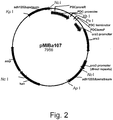
- the plasmid pMIBa107 was created to allow integration of a single gene at the I . orientalis adh1202 locus under the control of the PDC promoter and terminator using URA3 as a selectable marker.
- the PDC promoter and terminator with the ura selectable marker were PCR amplified and cloned into pCR4TM4BLUNT TOPO® (Invitrogen, La Jolla, CA, USA) as described below.
- the PCR fragment containing the PDC promoter, terminator and URA3 selectable marker was constructed by SOE PCR.
- the amplification reactions were performed using Platinum® Pfx DNA polymerase (Invitrogen) according to manufacturer's instructions.
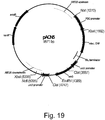
- Each PCR reaction contained 0.5 ⁇ L of diluted pACN5 ( Figure 19 ), 25 pM each of primers 0611184 and 0611195, 1X Pfx amplification buffer (Invitrogen), 2 mm MgSO 4 , 0.2 mM dNTP mix, 1.25 Units Platinum® Pfx DNA polymerase (Invitrogen) in a final volume of 50 ⁇ L.
- the PCR product was purified by 1% agarose gel electrophoresis using 89 mM Tris base-89 mM Boric Acid-2 mM disodium EDTA (TBE) buffer. A fragment of approximately 700 bp was excised from the gel and extracted from the agarose using a QIAQUICK® Gel Extraction Kit (Qiagen, Valencia, CA, USA).
- the following insertion vector fragments can be used to generate a designed DNA construct that replaces an endogenous I. orientalis PDC gene with a cassette that expresses multiple genes, e.g., three genes described herein expressed from the PDC, ENO1, and TDH3 promoters.
- Homologous recombination between the left construct (pMhCt068 and derivatives) and the right construct (pMhCt069 and derivatives) results in expression of the URA3 protein, resulting in conversion of the strain from uracil auxotrophy to uracil prototrophy, allowing for selection of desired integrants.
- the PCR was performed in an EPPENDORF® MASTERCYCLER® (Eppendorf Scientific) programmed for one cycle at 98°C for 30 seconds followed by 34 cycles each at 98°C for 10 seconds, 59°C for 20 seconds, and 72°C for 45 seconds, with a final extension at 72°C for 10 minutes.
- the PCR reaction products were separated by 0.9% agarose gel electrophoresis in TAE buffer where an approximately 460 base pair PCR product was excised from the gel and purified using a NUCLEOSPIN® Extract II Kit (Macherey-Nagel) according to the manufacturer's instructions.
- the PCR was performed in an EPPENDORF® MASTERCYCLER® (Eppendorf Scientific) programmed for one cycle at 98°C for 30 seconds followed by 34 cycles each at 98°C for 10 seconds, 59°C for 20 seconds, and 72°C for 45 seconds, with a final extension at 72°C for 10 minutes.
- the PCR reaction products were separated by 0.9% agarose gel electrophoresis in TAE buffer where an approximately 1400 base pair PCR product was excised from the gel and purified using a NUCLEOSPIN® Extract II Kit (Macherey-Nagel) according to the manufacturer's instructions.
- PCR was used to create a single amplification product fusing both of the products above.
- the PCR reaction (50 ⁇ L) contained 93 ng of the ENO1 promoter containing PCR product ( supra ); 125 ng of the RKI terminator, URA3 promoter and partial ORF containing PCR product ( supra ); 1X Phusion HF buffer (New England Biolabs); 100 pmol each of primers 0611170 and 0611173; 200 ⁇ M each of dATP, dCTP, dGTP, and dTTP; 1.5 ⁇ L DMSO; and 1 unit of PhusionTM High-Fidelity DNA polymerase (New England Biolabs).
- the PDC promoter region was PCR amplified from pACN5 ( Figure 19 ) with primer 0611166 and 0611828, which do not introduce the undesired start codon above.
- the PCR reaction (50 ⁇ L) contained 1 ⁇ L of a 1 to 50 dilution of a mini-prep of pACN5, 1X ThermoPol Reaction buffer (New England Biolabs), 100 pmol each of primers 0611166 and 0611828, 200 ⁇ M each of dATP, dCTP, dGTP, and dTTP, 2 ⁇ L 100 mM MgSO 4 , and 2 units of Vent R ® (exo-) DNA polymerase (New England Biolabs).
- the purified 1210 bp PCR product and the 1966 bp PCR fusion product from above were then inserted into the Hind III and EcoRI digested pMhCt017 fragment as described above using an IN-FUSIONTM Advantage PCR Cloning Kit (Clontech) in a total reaction volume of 10 ⁇ L composed of 125 ng pMhCt017 Hind III to EcoRI vector fragment, 54 ng of PCR product containing the 3' end of the URA3 ORF followed by the URA3 terminator, 200 ng of the TDH3 promoter and PDC terminator fusion PCR product, 1X In-Fusion reaction buffer (Clontech) and 1 ⁇ L of IN-FUSIONTM enzyme (Clontech).
- Example 2F Construction of insertion vector fragments for expressing multiple exogenous genes at the adh9091 locus:
- the PCR reaction (50 ⁇ L) contained 15 ng of plasmid pACN5 DNA, 1X Phusion HF buffer (New England Biolabs), 50 pmol each of primers 0611250 and 0611251, 200 ⁇ M each of dATP, dCTP, dGTP, and dTTP, 1.5 ⁇ L of 100% DMSO (New England Biolabs) and 1 unit of Phusion High Fidelity DNA polymerase (New England Biolabs).
- the PCR was performed in an EPPENDORF® MASTERCYCLER® (Eppendorf Scientific) programmed for one cycle at 98°C for 2 minutes followed by 35 cycles each at 98°C for 30 seconds, 55°C for 30 seconds, and 72°C for 1 minute and 30 seconds, with a final extension at 72°C for 7 minutes.
- the PCR reaction products were separated by 0.8% agarose gel electrophoresis in TBE buffer where an approximately 900 bp PCR product was excised from the gel and purified using a QIAQUICK® Gel Extraction Kit (Qiagen) according to the manufacturer's instructions.
- the total length of the resulting PCR fragment was approximately 753 bp with a Not I restriction site at the 5' end of the fragment and a Pac I and an Xb aI restriction site at the 3' end of the fragment.
- the PCR reaction (50 ⁇ L) contained 15 ng of plasmid pACN5 DNA ( supra ), 1X Phusion HF buffer (New England Biolabs), 50 pmol each of primers 0611252 and 0611253, 200 ⁇ M each of dATP, dCTP, dGTP, and dTTP, 1.5 ⁇ L of 100% DMSO (New England Biolabs) and 1 unit of Phusion High Fidelity DNA polymerase (New England Biolabs).
- the PCR was performed in an EPPENDORF® MASTERCYCLER® (Eppendorf Scientific) programmed for one cycle at 98°C for 2 minutes followed by 35 cycles each at 98°C for 30 seconds, 55°C for 30 seconds, and 72°C for 1 minute and 30 seconds, with a final extension at 72°C for 7 minutes.
- the PCR reaction products were separated by 0.8% agarose gel electrophoresis in TBE buffer where an approximately 900 bp PCR product was excised from the gel and purified using a QIAQUICK® Gel Extraction Kit (Qiagen) according to the manufacturer's instructions.
- the total length of the resulting PCR fragment was about 435 bp with Xb aI and Pac I restriction sites at the 5' end of the fragment and a Pme I restriction site at the 3' end.
- the 753 bp fragment and the 435 bp fragment were fused together by PCR using the primers 0611250 and 0611253, leading to a resulting 1149 bp fragment in which the PDC promoter is upstream of the TAL terminator.
- the PCR reaction (50 ⁇ L) contained 125 ng of the 753 bp fragment, 75 ng of the 435 bp fragment, 1X Phusion HF buffer (New England Biolabs), 50 pmol each of primers 0611250 and 0611253, 200 ⁇ M each of dATP, dCTP, dGTP, and dTTP, 1.5 ⁇ L of 100% DMSO (New England Biolabs) and 1 unit of Phusion High Fidelity DNA polymerase (New England Biolabs).
- the PCR was performed in an EPPENDORF® MASTERCYCLER® (Eppendorf Scientific) programmed for one cycle at 98°C for 2 minutes followed by 35 cycles each at 98°C for 30 seconds, 55°C for 30 seconds, and 72°C for 1 minute, with a final extension at 72°C for 7 minutes. Following thermocycling, the PCR reaction product was separated by 0.8% agarose gel electrophoresis in TBE buffer where an approximately 1149 bp PCR product was excised from the gel and purified using a QIAQUICK® Gel Extraction Kit (Qiagen) according to the manufacturer's instructions.
- QiAQUICK® Gel Extraction Kit Qiagen
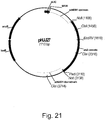
- the PCR reaction (50 ⁇ L) contained 15 ng of plasmid pHJJ27 ( Figure 21 ) as template DNA, 1X Phusion HF buffer (New England Biolabs), 50 pmol each of primers 0611254 and 0611255, 200 ⁇ M each of dATP, dCTP, dGTP, and dTTP, 1.5 ⁇ L of 100% DMSO (New England Biolabs) and 1 unit of Phusion High Fidelity DNA polymerase (New England Biolabs).
- the PCR was performed in an EPPENDORF® MASTERCYCLER® (Eppendorf Scientific) programmed for one cycle at 98°C for 2 minutes followed by 35 cycles each at 98°C for 30 seconds, 55°C for 30 seconds, and 72°C for 2 minutes, with a final extension at 72°C for 7 minutes. Following thermocycling, the PCR reaction products were separated by 0.8% agarose gel electrophoresis in TBE buffer where an approximately 2005 bp PCR product was excised from the gel and purified using a QIAQUICK® Gel Extraction Kit (Qiagen) according to the manufacturer's instructions.
- QiAQUICK® Gel Extraction Kit Qiagen
- the resulting 885 bp fragment was cloned into pCR2.1-TOPO vector and transformed into One-Shot TOP10 E. coli cells using a TOPO TA Cloning kit (Invitrogen) according to the manufacturer's instructions. Transformants were plated onto 2X YT+amp plates and incubated at 37°C overnight. Several of the resulting transformants were screened for proper insertion of the desired insert by Bgl I digestion. A clone yielding the desired band sizes was confirmed and designated pGMEr108.
- the double restriction reaction products were separated by 0.8% agarose gel electrophoresis in TBE buffer where the 1998 bp insert fragment and the 4806 bp vector fragment were excised from the gel and purified using a QIAQUICK® Gel Extraction Kit (Qiagen) according to the manufacturer's instructions.
- the ligation reaction was performed using a 1:3 vector: insert ratio; in particular the reaction was set up with 2 ⁇ L of the 4806 bp linearized vector, 6 ⁇ L of the 1998 bp insert fragment, 9 ⁇ L of 2X Quick Ligation reaction Buffer and 1 ⁇ L Quick T4 DNA Ligase (New England Biolabs), and performed according to the manufacturer's instructions.
- the PCR reaction (50 ⁇ L) contained 15 ng of plasmid pACN23 DNA, 1X Phusion HF buffer (New England Biolabs), 50 pmol each of primers 0611258 and 0611259, 200 ⁇ M each of dATP, dCTP, dGTP, and dTTP, 1.5 ⁇ L of 100% DMSO (New England Biolabs) and 1 unit of Phusion High Fidelity DNA polymerase (New England Biolabs).
- the PCR was performed in an EPPENDORF® MASTERCYCLER® (Eppendorf Scientific) programmed for one cycle at 98°C for 2 minutes followed by 35 cycles each at 98°C for 30 seconds, 55°C for 30 seconds, and 72°C for 1 minute, with a final extension at 72°C for 7 minutes. Following thermocycling, the PCR reaction product was separated by 0.8% agarose gel electrophoresis in TBE buffer where an approximately 1433 bp PCR product was excised from the gel and purified using a QIAQUICK® Gel Extraction Kit (Qiagen) according to the manufacturer's instructions.
- QiAQUICK® Gel Extraction Kit Qiagen
- the PCR reaction (50 ⁇ L) contained 15 ng of plasmid pHJJ27 DNA, 1X Phusion HF buffer (New England Biolabs), 50 pmol each of primers 0611264 and 0611284, 200 ⁇ M each of dATP, dCTP, dGTP, and dTTP, 1.5 ⁇ L of 100% DMSO (New England Biolabs) and 1 unit of Phusion High Fidelity DNA polymerase (New England Biolabs).
- the tube was shaken for 2 minutes at full speed with a Mini-BeadBeater-8 (BioSpec). 0.2 mL of TE was added and the tube was vortexed briefly. The aqueous phase was separated by centrifugation at 16,100 x g for 5 minutes. The supernatant was removed to a new tube and 1 mL of 100% ethanol added. The tube was placed at 20°C for 30 minutes, centrifuged at 16,100 x g for 5 minutes, and the liquid decanted off. The DNA was air dried and resuspended in 500 ⁇ L TE.
- Example 2H Construction of MBin500 control strain containing the URA3 selection marker
- 25 mL of the seed flasks cultivation was used to inoculate the 2 L bioreactor containing 1.5 L of DM2 medium.
- the fermentation in the bioreactor was performed at a temperature of about 30°C - 40°C, with the pH controlled in the range of about 2.0-7.0 and under agitation and aeration conditions that lead to an oxygen uptake rate (OUR) in the range of 2-45 mmol/L/hr.
- OUR oxygen uptake rate
- the temperature, pH and OUR for the culture in the bioreactor were 30°C, 4.0 and 25-30, respectively.
- One or more genes encoding enzymes involved in various 3-HP fermentation pathways can be expressed, either alone or in combination, in yeast host cells.
- the 3-HP pathway enzymes may be expressed from exogenous genes, endogenous genes, or some combination thereof.
- Exogenous genes to be expressed may be introduced into the yeast cell using gene expression constructs, e.g., expression constructs described in Example 2.
- Exogenous genes may be integrated into the host yeast genome at a single site or at multiple locations, and integration of the exogenous gene may be coupled with deletion or disruption of a target gene at the insertion site as described below.
- Example 3A-1 Insertion vectors for expressing aspartate decarboxylase (ADC) at the adh1202 locus
- Plasmids 1045172, 105387, 105388, 105389, 105390, and 105391 were digested with Xb aI and Pac I and run on a 1.3% agarose gel using TBE buffer. Fragments of 400-500 bp from each digest corresponding to the ADC (panD) gene were excised from the gel and extracted from the agarose using a QIAQUICK® Gel Extraction Kit (Qiagen).
- the amplification reactions were incubated in an EPPENDORF® MASTERCYCLER® (Eppendorf Scientific) programmed for 1 cycle at 95°C for 30 seconds; 30 cycles each at 95°C for 30 seconds, 50°C for 30 seconds, and 68°C for 3 minutes; and 1 cycle at 68°C for 10 minutes.
- EPPENDORF® MASTERCYCLER® Eppendorf Scientific
- yWTY5-17 and yWTY7-25 were created.
- ura-derivatives yWTY5-17 and yWTY7-25 were isolated as described above. Genomic DNA was prepared from the FOA-resistant colonies and checked by PCR as describe above to confirm loss of the URA3 selectable marker. Primers 0611718 and 0611632 were used to amplify a 2.4 kbp fragment for integration with the ura marker present and 1100 bp fragment in the absence of the ura marker.
- Ura- strains of yWTY5-17 and yWTY7-25 that yielded a PCR fragment of 1100 bp with primers 0611718 and 0611632 were designated MIBa331 and MIBa332, respectively.
- Transformants were plated onto ura selection media and incubated overnight at 37°C, and then re-streaked onto ura selection media and incubated at 37°C overnight. Genomic DNA was prepared and Crimson Taq TM PCRs were run to confirm integration as described above. Primers 0611718 and 0611632 amplify a 2.4 kbp fragment for integration with the ura marker present, and amplify a 1100 bp fragment in the absence of the ura marker. Transformants of MIBa331 and MIBa332 that yielded PCR fragments of 1100 bp and 2.4 kbp with primers 0611718 and 0611632 were saved and designated MIBa338 and MIBa337, respectively.
- MIBa337 is homozygous for ADC gene from S. avermitilis at the adh1202 loci and MIBa338 is homozygous for the ADC gene from B. licheniformis at the adh1202 loci. Both strains have the control of the respective ADC gene under the PDC promoter and terminator from I . orientalis.
- Strains MBin500, MIBa337 and MIBa338 were evaluated in bioreactors for 3-HP production, using the method described herein. Control strain MBin500 produced no detectable 3-HP (average of two independent fermentations). Strain MIBa337 produced 1.33 g/L 3-HP (one fermentation performed) and strain MIBa338 produced 3.15 g/L 3-HP (average of three independent fermentations). Individual fermentations of strains MIBa337 and MIBa338 were further compared with respect to their 3-HP production performance and ADC activity (Table 10).
- Plasmids pMIBa120-4 were digested with Not I and run on a 1% agarose gel using 89 mM Tris base-89 mM Boric Acid-2 mM disodium EDTA (TBE) buffer. Fragments of 3.5 kbp (pMIBA120), 4.2 kbp (pMIBa121), 4.2 kbp (pMIBA122), 3.5 kbp (pMIBa123), and 4.2 kbp (pMIBA124) were excised from the gel and extracted from the agarose using a QIAQUICK® Gel Extraction Kit (Qiagen).
- Each of these fragments was ligated into the 5.2 kbp linear NotI /CIP treated pHJJ76-no ura using T4 DNA ligase as described herein.
- the ligation products were transformed into One Shot® TOP10 Chemically Competent E . coli cells (Invitrogen) according to manufacturer's instructions. Transformants were plated onto 2X YT+ amp plates and incubated at 37°C overnight. Several of the resulting transformants were screened by Xba I and Kpn I digestion.
- Clones yielding the desired band sizes were designated pMIBa131, pMIBa132, pMIBa133, pMIBa134, and pMIBa135 for UGA1, YMR226c, PYD4, ydfG, and BAAT, respectively.
- the resulting plasmids allow integration of the desired gene at the adh1202 locus with the expression cassette oriented in the reverse direction.
- Primer 0611718 anneals in the PDC terminator upstream of the ura selectable marker; primers 0611632 and 0611631 amplify a 2.7 kbp fragment for a wildtype chromosome; and primers 0611718 and 0611632 amplify a 2.4 kbp fragment for an integration with the ura marker present and 1100 bp fragment in the absence of the ura marker.
- strains MIBa310, MIBa318, MIBa312 and MIBa319 contained a protein with a mass of ⁇ 53 KDa (the expected size of the proteins encoded by UGA1 or PYD4 genes). The band corresponding to this protein was not observed in the SDS-PAGE analysis of strain MBin500.
- expression of UGA1 and PYD4 from homozygous strains MIBa318 and MIBa319, respectively was greater than the corresponding heterozygous strains MIBa310 or MIBa312 (as judged by the SDS-PAGE analysis).
- the plasmid pMhCt070 served as the base vector for the addition of ADC and BAAT homologs that had been codon-optimized for expression in the yeast host.
- pMhCt070 was digested with Xba I and Pac I, treated with 10 units calf intestinal phosphatase (New England Biolabs) at 37°C for 30 minutes, and purified by 0.9% agarose gel electrophoresis in TAE buffer, and an approximately 6.5 kbp band was excised from the gel and purified using a NUCLEOSPIN® Extract II Kit (Macherey-Nagel) according to the manufacturer's instructions.
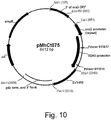
- Plasmid pMhCt075 contains the 3' fragment of the I. orientalis URA3 ORF, the URA3 terminator from I. orientalis followed by the URA3 promoter (for later looping out of the URA3 marker), E. coli 3-HPDH gene codon-optimized for expression in I. orientalis (ydfG, SEQ ID NO: 143) driven by the I. orientalis TDH3 promoter, and the I. orientalis PDC terminator regions.
- a fragment digested with Xba I and Pac I containing the S. cerevisiae YMR226C gene codon-optimized for expression in I. orientalis ( supra ) was ligated into the pMhCt069 cut vector as follows: A ligation reaction (20 ⁇ L) containing 1X Quick ligation buffer (New England Biolabs), 2 ⁇ L of the purified pMhCt069 vector digested with Xba I and Pac I, 4 ⁇ L of the codon-optimized S.
- orientalis CNB1 the desired integrants will show both a 1.9 kbp band for primers 0611814 and 0611554 and a 1.4 kbp band from primers 0611555 and 0611554.
- Two independent transformants giving the desired band pattern for each plasmid were designated as shown in Table 15.
- the presence of an 828 bp band indicates the presence of only the ura3 scar site (a single URA3 promoter left behind after homologous recombination between the two URA3 promoters in the parent strain) as desired, while a band of approximately 2.2 kbp indicates the presence of the intact URA3 promoter-URA3 ORF-URA3 terminator-URA3 promoter cassette, indicating the desired recombination event did not occur.
- PCR reactions with Crimson TaqTM DNA polymerase (New England Biolabs) were carried out as described above.
- Strains yMhCt013, and yMhCt014 of Trial 4 showed a faint band at 53 kD The size of this band is consistent with the protein encoded by the PYD4 gene. Strains MBin500, yMhCt004, and yMhCt005 of Trial 4 showed a band at 64 kD that was absent in strains yMhCt008, yMhCt009, yMhCt013, and yMhCt014. The size of this protein band is consistent with its identity as the protein encoded by the native pyruvate decarboxylase (PDC) gene in I. orientalis CNB1.
- PDC native pyruvate decarboxylase
- Strains MBin500 and yMhCt008 were tested evaluated in bioreactors for 3-HP production, using the method described herein. Control strain MBin500 produced no detectable 3-HP (average of two independent fermentations). Strain yMhCt008 produced 2.45 g/L 3-HP (average of twelve independent fermentations).
- Example 3A-6 Yeast strains expressing ⁇ -alanine aminotransferase (BAAT) or 3-hydroxypropionic acid dehydrogenase (3-HPDH) at the adh1202 locus, and expressing aspartate 1-decarboxylase (ADC), ⁇ -alanine aminotransferase (BAAT), and 3-hydroxypropionic acid dehydrogenase (3-HPDH) at the pdc locus
- BAAT ⁇ -alanine aminotransferase
- 3-HPDH 3-hydroxypropionic acid dehydrogenase
- Genomic DNA was prepared from the URA3+ colonies and checked by PCR as described herein to confirm integration of the expression cassette.
- the primer pair 611814 and 611554 amplify a 1.9 kbp fragment indicating integration.
- the primer pair 611555 and 611554 amplify a 1.4 kbp fragment indicating a wildtype locus.
- One URA3+ transformant of each lineage that amplified PCR fragments of 1.9 kbp with 611554 and 611814 and 1.4 kbp with 611555 and 611554 was saved; these were designated MIBa323, MIBa324, MIBa325, and MIBa327 (see Table 18 for genotypes). Promoters and terminators were derived from I . orientalis genes.
- Ura- derivatives of MIBa323, MIBa324, MIBa325 and MIBa327 were isolated as described herein.
- Genomic DNA was prepared from the FOA-resistant colonies and checked by PCR as described herein to confirm loss of URA3 selectable marker.
- Primer 0611815 anneals in the RKI terminator of the left-hand construct and amplifies toward the URA3 promoter, and primer 0611817 anneals in TDH3 promoter and amplifies back toward the URA3 cassette.
- strains MIBa333 and MIBa334 were transformed with the fragments from pMhCt077 and pMhCt087, and strains MIBa335 and MIBa336 were transformed with the fragments from pMhCt077 and pMhCt083 as described above in the section on MIBa320-2 transformations. Transformants were selected for by growth on ura selection media as described herein. Genomic DNA was prepared from the URA3+ colonies and checked by PCR as described herein to confirm integration of the expression cassette. Primer 0611815 anneals in the RKI terminator of the left-hand construct and amplifies toward the URA3 promoter.
- Primer 0611817 anneals in TDH3 promoter and amplifies back toward the URA3 cassette.
- the presence of an 828 bp band indicates the presence of only the URA3 scar site (a single URA3 promoter left behind after homologous recombination between the two URA3 promoters in the parent strain) as desired for the first integration, and a band of approximately 2.2 kbp indicates the presence of the intact URA3 promoter-URA3 ORF-URA3 terminator-URA3 promoter cassette for the second integration.
- Primer pair 0611815 and 0611816 amplifies a 625 bp fragment when the ura marker is present.
- Primers 0611555 and 0611554 amplify a 1.4 kbp fragment when the PDC locus is present. Homozygous integrants should not amplify a fragment with these primers.
- Table 20A Transformant genotypes Strain Designation Genotype MIBa345 adh1202 ⁇ ::(PDC promo -Opt.ScYMR226c URA3-Scar)/adh1202 ⁇ ::(PDC promo -Opt.ScYMR226c URA3-Scar) pdC ⁇ ::(PDC promo -Opt.SaPanD ENO1 promo -Opt.ScUGA1, URA3-Scar, TDH3 promo -Opt.ScYMR226c)/ pdC ⁇ ::(PDC promo -Opt.SaPanD, ENO1 promo -Opt.ScUGA1, URA3, TDH3 promo -Opt.ScYMR226c) ura3-/ura3- MIBa348 adh1202 ⁇ ::(PDC promo -Opt.ScYMR226c URA3-Scar)/adh1202
- ADC aspartate 1-decarboxylase
- BAAT beta-alanine aminotransferase
- 3-HP dehydrogenase 3-HPDH activities in CFE prepared from strains MBin500 (control), MIBa345, MIBa348, MIBa340 and MIBa341 were compared. The results of this experiment are shown in Table 20B.
- Table 20B Transformant enzyme activity data Strain Genes Overexpressed Gene Sources ADC Activity BAAT Activity 3-HPDH Activity MBin500 (control) N / A N / A 0.002 0.61 0.4 MIBa345 YMR226c (SEQ ID NO: 144) S. cerevisiae 0.194 14.37 79.5 ADC (SEQ ID NO: 130) S.
- Example 3A-7 Left-hand fragments of insertion vectors with multiple nucleotide sequences for expressing aspartate 1-decarboxylase (ADC) at the adh1202 locus
- Constructs were designed to incorporate four copies of nucleotides encoding an ADC (SEQ ID NO: 17) at the I. orientalis adh1202 locus.
- ADC ADC
- a left-hand and a right-hand construct were designed to allow homologous recombination.
- the general design of the integration vectors and desired recombination event is shown in Figure 3 .
- This approach was also used for expression of an alternative ADC (SEQ ID NO: 139) as described in the examples below.
- nucleotide sequences codon-optimized for expression in I. orientalis SEQ ID NOs: 130, 145, 146, and 147) were designed to encode the same ADC sequence of SEQ ID NO: 17. Additionally, since the initial set of constructs was designed to target the ald5680 locus of I. orientalis, the adh1202 targeting sequences were incorporated into these vectors at a late step in the cloning. The ald5680 constructs can be used to target a second locus in an I. orientalis CNB1 strain already homozygous for ectopic four copies of panD at adh1202 with four additional copies of panD at ald5680.
- the left-hand ald5680 targeting vector was constructed as follows. A PCR product containing the sequence just 5' of the ald5680 ORF, along with the desired additional restriction sites and flanking DNA for cloning was amplified with primers 0612271 and 0612272.
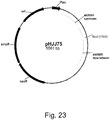
- the PCR reaction (50 ⁇ L) contained 1 ⁇ L of a 1 to 50 dilution of pHJJ75 mini-prep plasmid DNA ( Figure 23 ), 1X iProofTM HF buffer (Bio-Rad Laboratories), 100 pmol each of primers 0612271 and 0612272, 200 ⁇ M each of dATP, dCTP, dGTP, and dTTP, and 1 unit of iProofTM High Fidelity DNA polymerase (Bio-Rad Laboratories).
- the PCR was performed in an EPPENDORF® MASTERCYCLER® (Eppendorf Scientific) programmed for one cycle at 98°C for 30 seconds followed by 32 cycles each at 98°C for 10 seconds, 59°C for 20 seconds, and 72°C for 45 seconds, with a final extension at 72°C for 10 minutes.
- the PCR reaction products were separated by 1% agarose gel electrophoresis in TAE buffer where an approximately 930 base pair PCR product was excised from the gel and purified using a NUCLEOSPIN® Extract II Kit (Macherey-Nagel) according to the manufacturer's instructions.
- the PCR reaction described above was repeated using the purified 930 bp PCR product as the template DNA.
- Five 50 ⁇ L reactions were set up and amplified with the conditions described above except that 1 ⁇ L of the purified 930 bp PCR product replaced the pHJJ75 plasmid ( supra ) as template DNA.
- the amplified 930 bp product was purified as above.
- a fragment containing PDC promo-optPanD-ENO1-UGA1 (which contains the I . orientalis codon-optimized S. avermitilis ADC encoding sequence of SEQ ID NO: 130) was excised from pMhCt087 ( supra ) via Not I and Eco RI digestion. 10 ⁇ g of a midi-prep of pMhCt087 was digested with Not I and Eco RI and then purified by 0.9% agarose gel electrophoresis in TAE buffer. An approximately 4.4 kbp band was excised from the gel and purified using a NUCLEOSPIN® Extract II Kit (Macherey-Nagel) according to the manufacturer's instructions.
- a PCR product containing the 5' half of the URA3 split marker with the desired additional restriction sites and flanking DNA for cloning was amplified using the primers 0612273 and 0612274.
- the PCR reaction (50 ⁇ L) contained 1 ⁇ L of a 1 to 50 dilution of pMhCt082 mini-prep plasmid DNA ( supra ), 1X iProofTM HF buffer (Bio-Rad Laboratories), 100 pmol each of primers 0612273 and 0612274, 200 ⁇ M each of dATP, dCTP, dGTP, and dTTP, and 1 unit of iProofTM High Fidelity DNA polymerase (Bio-Rad Laboratories).
- the PCR was performed in an EPPENDORF® MASTERCYCLER® (Eppendorf Scientific) programmed for one cycle at 98°C for 30 seconds followed by 32 cycles each at 98°C for 10 seconds, 59°C for 20 seconds, and 72°C for 45 seconds, with a final extension at 72°C for 10 minutes.
- the PCR reaction products were separated by 1% agarose gel electrophoresis in TAE buffer where an approximately 960 base pair PCR product was excised from the gel and purified using a NUCLEOSPIN® Extract II Kit (Macherey-Nagel) according to the manufacturer's instructions.
- the purified 930 bp, 4.4 kbp, and 960 bp DNA fragments from above were then inserted into the digested pUC19 fragment using an IN-FUSIONTM Advantage PCR Cloning Kit (Clontech) in a total reaction volume of 10 ⁇ L composed of 150 ng of the pUC19 vector digested with Hind III and EcoRI, 56 ng of the 930 bp DNA containing the ald5680 flanking DNA, 250 ng of the PDC promo-optPanD-ENO1-UGA1 fragment from pMhCt087 digested with Not I and Eco RI, 55 ng of the 960 bp PCR product 5'containing the 5' half of the URA3 split marker, 1X In-Fusion reaction buffer (Clontech) and 1 ⁇ L of IN-FUSIONTM enzyme (Clontech).
- the reaction was incubated at 37°C for 15 minutes, 50°C for 15 minutes, and then placed on ice.
- the reaction then was diluted with 40 ⁇ L of TE buffer and 2.5 ⁇ L was used to transform SoloPack Gold SuperCompetent Cells (Agilent Technologies) according to the manufacturer's instructions. Transformants were plated onto 2X YT+amp plates and incubated at room temperature for three days. Several of the resulting transformants were screened for proper insertion of the desired PCR products by Sal I and Hpa I digestion. A clone yielding the desired band sizes was confirmed to be correct by DNA sequencing and designated pMhCt089.
- S. avermitilis panD gene codon-optimized for expression in I. orientalis which encodes the ADC of SEQ ID NO: 17.
- S. avermitilis panD version r1 (SEQ ID NO: 145) was synthesized by GeneArt® in the vector pMA-T.
- avermitilis panD version r1 were joined in a ligation reaction (20 ⁇ L) containing 1X Quick ligation buffer (New England Biolabs), 2 ⁇ L Xbal/Pacl pMhCt089 vector, 2 ⁇ L Xbal/Pacl S. avermitilis panD version r1 insert, and 1 ⁇ L Quick T4 DNA ligase (New England Biolabs). The ligation reaction was incubated for 5 min at room temperature, and then placed on ice. 5 ⁇ L of this reaction was used to transform ONE SHOT® TOP10 chemically competent E. coli cells (Invitrogen) according to the manufacturer's instructions.
- 1X Quick ligation buffer New England Biolabs
- 2 ⁇ L Xbal/Pacl pMhCt089 vector 2 ⁇ L Xbal/Pacl S. avermitilis panD version r1 insert
- 1 ⁇ L Quick T4 DNA ligase New
- the final cloning step for the left-hand construct was to replace the ald5680 5' homology region present in pMhCt092 with the adh1202 5' homology region.
- a PCR product containing the sequence 5' of the adh1202 ORF, along with the desired additional restriction sites and flanking DNA for cloning was amplified with the primers 0612470 and 0612471.
- the PCR product and linear vector were joined using an IN-FUSIONTM Advantage PCR Cloning Kit (Clontech) in a total reaction volume of 10 ⁇ L composed of 120 ng pMhCt092 vector digested with Hpa I and Not I, 30 ng of the adh1202 5' homology containing PCR product, 1X In-Fusion reaction buffer (Clontech) and 1 ⁇ L of IN-FUSIONTM enzyme (Clontech). The reaction was incubated at 37°C for 15 minutes, 50°C for 15 minutes, and then placed on ice.
- IN-FUSIONTM Advantage PCR Cloning Kit Clontech
- a PCR product containing the sequence 3' of the ald5680 ORF, along with the desired additional restriction sites and flanking DNA for cloning was amplified with the primers 0612277 and 0612278.
- the PCR reaction (50 ⁇ L) contained 1 ⁇ L of a 1 to 50 dilution of pHJJ75 mini-prep plasmid DNA ( Figure 23 ), 1X iProofTM HF buffer (Bio-Rad Laboratories), 100 pmol each of primers 0612277 and 0612278, 200 ⁇ M each of dATP, dCTP, dGTP, and dTTP, and 1 unit of iProofTM High Fidelity DNA polymerase (Bio-Rad Laboratories).
- the PCR was performed in an EPPENDORF® MASTERCYCLER® (Eppendorf Scientific) programmed for one cycle at 98°C for 30 seconds followed by 32 cycles each at 98°C for 10 seconds, 59°C for 20 seconds, and 72°C for 45 seconds, with a final extension at 72°C for 10 minutes.
- the PCR reaction products were separated by 1% agarose gel electrophoresis in TAE buffer where an approximately 844 bp PCR product was excised from the gel and purified using a NUCLEOSPIN® Extract II Kit (Macherey-Nagel) according to the manufacturer's instructions.
- a PCR with and without DMSO was run for each annealing temperature shown. Following thermocycling, 10 ⁇ L of each PCR reaction was separated by 1% agarose gel electrophoresis in TAE buffer.
- Transformants were plated onto LB+kan plates and incubated at 37°C overnight. Several of the resulting transformants were screened for proper insertion of the desired PCR product by Eco RI digestion. A clone yielding the desired band sizes was confirmed to be correct by DNA sequencing and designated PGK1_in_TOPO.
- the PGK1 promoter from PGK1_in_TOPO was isolated and purified prior to use as a PCR template as follows. 25 ⁇ L of a midi-prep of PGK1_in_TOPO was digested with Xba I and Pac I and purified by 0.9% agarose gel electrophoresis in TAE buffer, and an approximately 640 bp band was excised from the gel and purified using a NUCLEOSPIN® Extract II Kit (Macherey-Nagel) according to the manufacturer's instructions.
- Plasmid ald5680_right #20 contains approximately 870 bp of the region downstream from the I. orientalis PDC ORF as the PDC terminator region. However, this region is likely larger than necessary for proper function as a terminator and if maintained in its current size might serve as a catalyst for unwanted homologous recombination to the PDC locus. Therefore, a PCR product to replace the PDC terminator in ald5680_right #20 with a smaller version was amplified with the primers 0612360 and 0612361. The desired PCR product was amplified using a temperature gradient for the annealing temperature and DMSO in some reactions.
- PCR was used to create a single amplification product fusing approximately 700 bp PGK1 containing PCR product to the 338 bp PDC terminator product.
- the PCR reaction (50 ⁇ L) contained 107 ng of the PGK1 containing PCR product, 56 ng of the PDC terminator containing PCR product, 1X Phusion HF buffer (New England Biolabs), 100 pmol each of primers 0612358 and 0612361, 200 ⁇ M each of dATP, dCTP, dGTP, and dTTP, and 1 unit of PhusionTM High-Fidelity DNA polymerase (New England Biolabs).
- the plasmid ald5680_right #20 was digested with Xba I and Not I, treated with 10 units calf intestinal phosphatase (New England Biolabs) at 37°C for 30 minutes, and purified by 0.9% agarose gel electrophoresis in TAE buffer. A band of approximately 5.6 kbp was excised from the gel and purified using a NUCLEOSPIN® Extract II Kit (Macherey-Nagel) according to the manufacturer's instructions.
- Plasmid pMhCt091 is an empty right-hand I. orientalis ald5680 targeting construct containing the 3' fragment of the I. orientalis URA3 ORF, the I. orientalis TDH3 promoter followed by Nhe I and A scI restriction sites for addition of a gene of interest, the I. orientalis TKL terminator, the I. orientalis PGK1 promoter followed by Xba I and Pac I restriction sites for addition of a second gene of interest, the I. orientalis PDC terminator, and flanking DNA to target homologous recombination to the 3' ald5680 locus.
- S. avermitilis panD version r5 (SEQ ID NO: 146) was synthesized in the vector 1075328_SaPanD_r5 by GeneArt®.
- the Xba I and Pac I restriction sites were changed to the desired Nhe I and A scI sites for cloning into the 5' cloning site of pMhCt091 by PCR.
- the purified panD r5 containing PCR product from above was then inserted into the digested pMhCt091 fragment using an IN-FUSIONTM Advantage PCR Cloning Kit (Clontech) in a total reaction volume of 10 ⁇ L composed of 150 ng of the pMhCt091 vector digested from Nhe I and Asc I, 19 ng of the panD r5 PCR product, 1X In-Fusion reaction buffer (Clontech) and 1 ⁇ L of IN-FUSIONTM enzyme (Clontech). The reaction was incubated at 37°C for 15 minutes, 50°C for 15 minutes, and then placed on ice.
- IN-FUSIONTM Advantage PCR Cloning Kit Clontech
- the reaction was diluted with 40 ⁇ L of TE buffer and 2.5 ⁇ L was used to transform SoloPack Gold SuperCompetent Cells (Agilent Technologies) according to the manufacturer's instructions. Transformants were plated onto 2X YT+amp plates and incubated at 37°C overnight. Several of the resulting transformants were screened for proper insertion of the desired PCR products by Sma I digestion. A clone yielding the desired band sizes was confirmed to be correct by DNA sequencing and designated pMhCt093.
- the plasmid pMhCt093 was digested with Xba I and Pac I, treated with 10 units calf intestinal phosphatase (New England Biolabs) at 37°C for 30 minutes, and purified by 0.9% agarose gel electrophoresis in TAE buffer, and an approximately 7.4 kbp band was excised from the gel and purified using a NUCLEOSPIN® Extract II Kit (Macherey-Nagel) according to the manufacturer's instructions.
- S. avermitilis panD version r2 (SEQ ID NO: 147) was codon-optimized for expression in I. orientalis and synthesized in the vector pMA-T by GeneArt®.
- Transformants were plated onto 2X YT+amp plates and incubated at room temperature for three days. Several of the resulting transformants were screened for proper insertion of the desired PCR products by digestion with Xba I and Pac I. Isolate pMhCt094 was chosen for future work.
- the final cloning step for the right-hand construct was to replace the ald5680 3' homology region present in pMhCt094 with the adh1202 3' homology region.
- a PCR product containing the sequence just 3' of the adh1202 ORF, along with the desired additional restriction sites and flanking DNA for cloning was amplified with the primers 612472 and 612473.
- the PCR product and linear vector were joined using an IN-FUSIONTM Advantage PCR Cloning Kit (Clontech) in a total reaction volume of 10 ⁇ L composed of 191 ng of the pMhCt094 vector digested with Sacll and Not I, 36 ng of the adh1202 3' homology containing PCR product, 1X In-Fusion reaction buffer (Clontech) and 1 ⁇ L of IN-FUSIONTM enzyme (Clontech). The reaction was incubated at 37°C for 15 minutes, 50°C for 15 minutes, and then placed on ice.
- IN-FUSIONTM Advantage PCR Cloning Kit Clontech
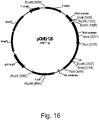
- Plasmid pGMEr126 was digested with restriction enzyme EcoRI, which excised a 4758 bp fragment of interest, while plasmid pGMEr130 was digested with restriction enzyme Hind III creating a 5034 bp fragment needed for transformation.
- the 4758 bp and the 5034 bp fragments were separated by 0.8% agarose gel electrophoresis in 1X TBE buffer, excised from the gel, and purified using the QIAQUICK® Gel Extraction Kit (Qiagen) according to the manufacturer's instructions.
- plasmid pGMER132.14 has the proper PYC CDS but was missing the Xba I restriction site at the CDS 5' end. Since this restriction site is needed to insert the PYC CDS in expression plasmid pGMEr125, the 315 bp Hind III fragment of plasmid pGMEr132.14 (comprising the 5' end on the PYC CDS with the altered Xba I site) was replaced with the 315 bp Hind III fragment from plasmid pGMEr132.7, which has a unaltered 5' end of the PYC CDS including the correct Xba I site.
- a ligation reaction was then set up with 4 ⁇ L of vector fragment, 5 ⁇ L of insert fragment, 10 ⁇ L of 2X Quick Ligase Buffer and 1 ⁇ L of Quick T4 Ligase (New England Biolabs) and performed according to the manufacturer's instructions.
- a 5 ⁇ L aliquot of the ligation reaction above was transformed into One-Shot TOP10 E.coli cells (Invitrogen) according to the manufacturer's instructions. Transformants were plated onto 2X YT+amp plates and incubated at 37°C overnight. Several of the resulting transformants were screened for proper insertion and orientation of the desired insert by BamHI and Xba I double digestion. A clone yielding the desired band sizes was confirmed and designated pGMEr133.
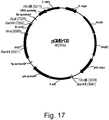
- Plasmid pGMEr136 comprises the 5' flank of the I. orientalis adh9091 locus, the I . orientalis PYC gene expression cassette (SEQ ID NO: 1) under control of the I. orientalis PDC promoter and TAL terminator, an empty expression cassette with an I. orientalis ENO1 promoter / RKI terminator, and the truncated 5' fragment of the I. orientalis URA3 marker gene under control of the URA3 promoter.
- plasmid pGMEr136 (supra) and 4 ⁇ g of plasmid pGMEr127 were digested with restriction enzymes Apa I and Nru I .
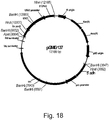
- a ligation reaction was then set up comprising 5 ⁇ L of vector fragment, 4 ⁇ L of insert fragment, 9 ⁇ L of 2X Quick Ligase Buffer and 1 ⁇ L of Quick T4 Ligase (New England Biolabs). The reaction was incubated at room temperature for 1 hour. A 5 ⁇ L aliquot of the ligation reaction above was transformed into ONE SHOT® TOP10 chemically competent E. coli cells (Invitrogen) according to the manufacturer's instructions. Transformants were plated onto 2X YT+amp plates and incubated at 37°C overnight. Several of the resulting transformants were screened for the desired insert by Bam HI digestion. A clone yielding the desired band sizes was chosen and designated pGMEr137 ( Figure 18 ).
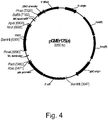
- Plasmid pGMEr137 comprises the I. orientalis PYC gene (SEQ ID NO: 1) under transcriptional control of the I. orientalis PDC promoter and TAL terminator, the S . avermitilis panD gene codon-optimized for expression in I. orientalis (SEQ ID NO: 130) under transcriptional control of the I. orientalis ENO1 promoter and RKI terminator, the URA3 promoter followed by the 5' end of the URA3 marker and the 5' flanking region of the I . orientalis adh9091 locus.
- Table 24 Transformant genotypes Strain Parent strain Genotype yMhCt020 yMhCt010 adh9091 ⁇ ::(PDC promo -pycCNB1, ENO1 promo -SaPanD(reverse), URA3, TDH3 promo -aat)/ADH9091 pdc ⁇ ::(PDC promo -Opt.SaPanD, ENO1 promo -Opt.ScUGA1, URA3-Scar, TDH3 promo -Opt.ScYMR226C)/pdc ⁇ ::( PDC promo -Opt.SaPanD, ENO1 promo -Opt.ScUGA1, URA3-Scar, TDH3 promo -Opt.ScYMR226C) ura3-/ura3- GMErin010 #2 GMErin010 #3
- Table 25 Transformant enzyme activity data Strain Gene Overexpressed PYC activity AAT activity ADC activity 3-HPDH activity MBin500 (control) N / A 0.14 0.03 0.00 0.14 yMhCt008 ADC (SEQ ID NO: 130), gabT (SEQ ID NO: 141), 3-HPDH (SEQ ID NO: 144) 0.22 2.05 0.64 2.95 GMEr009-2 ADC (SEQ ID NO: 130), PYC (SEQ ID NO: 1), AAT (SEQ ID NO: 13) 1.15 24.62 0.05 0.07 yMhCt020 ADC (SEQ ID NO: 130), gabT (SEQ ID NO: 141), 3-HPDH (SEQ ID NO: 144), PYC (SEQ ID NO: 1), AAT (SEQ ID NO: 13), 2.74 35.02 0.56 1.68 GMErin010 #2 1.97 40.32 0.59 1.87 GMErin010 #3 1.50 23.79 0.42 3.30
- a ura3- derivative of MeJi409-2 containing four copies of nucleotides encoding the B. licheniformis ADC of SEQ ID NO: 139 ( supra ) was isolated using the FOA counter-selection loop-out protocol described above. Genomic DNA of several FOA resistant colonies of parent strain MeJi409-2 was screened by PCR for the desired loop-out event with primers 0611815 and 0611817. Primer 0611815 anneals in the RKI terminator of the left-hand construct and amplifies toward the ura3 promoter. Primer 0611817 anneals in TDH3 promoter and amplifies back toward the ura3 cassette.
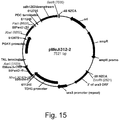
- MeJi411 was transformed with the digested pMeJi310-2 and pMeJi312-2 DNA and correct loci targeting and transformation was verified by Crimson Taq (New England Biolabs) PCR as described herein.
- Primers 0611225 and 0611632 yielded an approximately 5 kbp band; primers 0611815 and 0611632 yielded an approximately 6 kbp band with the ura marker, and a 4.5 kbp band without.
- Primers 0611631 and 0612579 yield an approximately 936 bp band when the wildtype adh1202 locus is still intact (strains that did not show this band were selected).
- a strain which gave the expected bands for proper integrating of the expression cassette was designated MeJi412.
- the 708 bp of purified fragment was ligated into the 6.7 kbp pMeJi310-2 linearized vector using T4 ligase (New England Biolabs) in a total reaction volume of 10 ⁇ L composed of 1 ⁇ L of the 6.7 kbp fragment from pMeJi310-2, 1 or 5 ⁇ L of the 708 bp fragment from pMeJi310-2, 1 ⁇ L 10X ligation buffer with 10mM ATP (New England Biolabs), and 1 ⁇ L T4 ligase (New England Biolabs).
- the reaction was incubated overnight at 16°C and a 4 ⁇ L aliquot of the reaction was transformed into ONE SHOT® TOP10 chemically competent E.
- coli cells (Invitrogen) according to manufacturer's instructions. Transformants were plated on 2X YT+amp plates and incubated at 37°C overnight. Several of the resulting transformants were screened for proper insertion by restriction digest using ApaL I . A clone yielding correct digested band size was designated pMIBa137.
- the plasmid pMeJi312-2 ( supra ) was digested with Xba I and Stu I followed by treatment with CIP and purified by 1% agarose gel electrophoresis in TBE buffer as described herein. A band at approximately 6.8 kbp was excised from the gel and purified using QIAQUICK® Gel Extraction Kit (Qiagen) according to the manufacturer's instructions.
- a ura- derivative of MIBa351 was isolated as described above. Genomic DNAs from several FOA resistant colonies of MIBa351 were screened by PCR for the desired loop-out event with primers 0611815 and 0611817. Primer 0611815 anneals in the RKI terminator of the left-hand construct and amplifies toward the ura3 promoter. Primer 0611817 anneals in TDH3 promoter and amplifies back toward the ura3 cassette.
- the presence of an 828 bp band indicates the presence of only the ura3 scar site (a single URA3 promoter left behind after homologous recombination between the two URA3 promoters in the parent strain) as desired, while a band of approximately 2.2 kbp indicates the presence of the intact URA3 promoter-URA3 ORF-URA3 terminator-URA3 promoter cassette, indicating the desired recombination event did not occur.
- PCR reactions with Crimson TaqTM DNA polymerase (New England Biolabs) were carried out as described above.
- Plasmid pMIBa136 contains two expression cassettes going in the forward orientation. To ease screening of homozygous strains, a new plasmid was constructed where the panDbl expression cassettes of pMIBa136 were placed in the reverse orientation.
- the plasmid pMIBa136 ( supra ) was digested with Not I and Pme I followed by a fill-in reaction with Klenow and purified by 1% agarose gel electrophoresis in TBE buffer as described herein. Bands at approximately 3.4 and 4.4 kbp were excised from the gel and purified using QIAQUICK® Gel Extraction Kit (Qiagen) according to the manufacturer's instructions.
- QiAQUICK® Gel Extraction Kit Qiagen
- the 4.4 kbp fragment from pMIBa136 was treated with CIP and purified using the QIAQUICK® PCR Purification Kit (Qiagen) according to the manufacturer's instructions.
- coli cells (Invitrogen) according to manufacturer's instructions. Transformants were plated on 2X YT+amp plates and incubated at 37°C overnight. Several of the resulting transformants were screened for proper insertion by restriction digest using Pac II and Eco RI. A clone yielding correct digested band size was designated pMIBa138.
- Plasmid pMIBa137 was digested with Hp aI and Sac II and plasmid pMIBa138 was digested with Eco RI and Sacll as described herein. These were purified by 1% agarose gel electrophoresis in TBE buffer, and the two approximately 5 kbp bands were excised from the gel and purified using QIAQUICK® Gel Extraction Kit (Qiagen) according to the manufacturer's instructions.
- Strains MeJi409-2, MeJi412, MIBa351 and MIBa355 were grown in shake flasks and CFE were prepared and assayed for aspartate 1-decarboxylase (ADC) activity as described herein. The results are shown in Table 26. The activity for each strain is an average of two independent shake flask cultures. Strains MeJi409-2, MeJi412, MIBa351 and MIBa355 were also tested in bioreactors for 3-HP production, using the methods described herein. The results from these bioreactor experiments are also shown in Table 26.
- Table 26 Transformant ADC activity and 3-HP production data Strain Gene overexpressed ADC activity 3-HP/DCW MBin500 N / A 0 0 MeJi409-2 ADC (SED ID NO: 138) 0.629 0.19 MeJi412 1.151 0.43 MIBa351 0.659 0.32 MIBa355 1.173 0.52
- Example 3A-16 Plasmid construction for expressing pyruvate carboxylase (PYC) at the PDC locus
- Plasmid pANN28 contining the nucleotide sequence of SEQ ID NO: 1 (encoding the I. orientalis PYC of SEQ ID NO: 2) for integration at the PDC locus was constructed as described below.
- the purified PCR products were cloned into TOPO vectors (Invitrogen) and transformed into electro-competent E. coli DH10B cells (Invitrogen) according to manufacturer's instructions. Several of the resulting transformants were screened for proper insertion by colony PCR with the same primers used to create the PCR products. Positive clones were further confirmed by sequencing. A clone yielding the correct PDC downstream flank was designated pANN04. A clone yielding the correct PDC upstream flank was designated pANN07.
- Plasmid pANN04 was digested with Apal and Sacl (for use as vector/backbone); plasmid pANN04 was digested with Notl and Sacl; plasmid pANN07 was digested with Notl and Apal. Each fragment was purified by 1% agarose gel electrophoresis in TBE buffer as described herein. A band of approximately 3.5 kbp for the vector, and approximately 1 kbp for each insert were excised from the gel and purified using a gel extraction kit (Qiagen) according to the manufacturer's instructions.
- Qiagen gel extraction kit
- Plasmids pANN12 and pANN15 were digested with Notl. Plasmid pANN15 was additionally digested with Ncol for further fractionation of the backbone and improved separation of desired fragment.
- the digested pANN12 was purified using a Qiagen kit according to the manufacturer's instructions.
- the Notl fragments were purified by agarose gel electrophoresis in TBE buffer as described herein.
- the bands of approximately 5 kbp (from pANN12) and approximately 6.3 kbp (from pANN15) were gel purified using a gel extraction kit (Qiagen) according to the manufacturer's instructions.
- This example describes the construction of yeast strains expressing four copies of nucleotides encoding the B. licheniformis ADC of SEQ ID NO: 139 at the adh1202 locus and a nucleotide encoding the I. orientalis PYC of SEQ ID NO: 2 at the pdc locus.
- a ura- derivative of MeJi412 was isolated as described above.
- Several FOA resistant colonies of MeJi412 were screened by colony PCR for the desired loop-out event with primers 0611815 and 0611817.
- Primer 0611815 anneals in the RKI terminator of the left-hand construct and amplifies toward the ura3 promoter.
- Primer 0611817 anneals in TDH3 promoter and amplifies back toward the ura3 cassette.
- Plasmid pANN28 ( supra ) was digested with AscI and Sacl and purified by agarose gel electrophoresis in TBE buffer. The band at approximately 7.1 kbp was excised from the gel and purified using a gel purification kit (Qiagen) according to the manufacturer's instructions.
- a ura- derivative of yANN35 then was isolated as described above.
- Several FOA resistant colonies were screened by colony PCR for the desired loop-out event with primers oANN12 and oJY44.
- Primer oANN12 anneals outside of the downstream flanking region.
- Primer oJY44 anneals to the TAL terminator.
- Strain yANN37 was transformed with the digested and purified fragments from pANN28 and correct loci targeting and transformation was verified by colony PCR (Failsafe, mix E, Epicenter) according to the manufacturer's instructions. The preliminary screen was done with primers oHJJ116 and oHJJ117 which are specific for the PDC gene. A band of approximately 500 bp indicates the presence of the gene and thus a negative result for the desired integration. Isolates that were positive for deletion of PDC were further confirmed with additional PCR reactions. Primers oANN11 and oANN16 yielded an approximately 1.3 kbp band.
- Primers oANN12 and oJLJ44 yielded an approximately 1 kbp band; primers oANN12 and oJY44 yielded an approximately 1.5 kbp band and an approximately 2.9 kbp band (corresponding to the first and second integration events respectively).
- Example 3A-18 Yeast strains expressing aspartate 1-decarboxylase (ADC) from four nucleotide sequences at the adh1202 locus and pyruvate carboxylase (PYC) at the pdc locus
- ADC aspartate 1-decarboxylase
- PYC pyruvate carboxylase
- a ura- derivative of MIBa355 was isolated as described above. Genomic DNA from several FOA resistant colonies of MIBa355 were screened by PCR for the desired loop-out event with primers 0611815 and 0611718. The presence of an approximately 500 bp band indicates the presence of only the ura3 scar site (a single URA3 promoter left behind after homologous recombination between the two URA3 promoters in the parent strain) as desired, while a band of approximately 1.9 kbp indicated the presence of the intact URA3 promoter-URA3 ORF-URA3 terminator-URA3 promoter cassette, indicating the desired recombination event did not occur.
- McTs247 was transformed with the digested pANN28 DNA and correct loci targeting and transformation was verified by PCR using Phire Plant Direct PCR Kit (Finnzymes).
- PCR Phire Plant Direct PCR Kit
- As a first screen transformants were screen by PCR with primers 0611552 and 0611553 which should yield an approximately 850 bp band only if the pdc locus is intact and thus the homozygous integration of PYC at the PDC locus did not occur. Of those that were negative for a band from this PCR were then screened by additional PCR with primers 0611555 and 0611554.
- Example 3A-19 PYC activity, ADC activity and 3-HP production performance of strains MeJi412, yANN35, yANN41, MIBa355, McTs241 and McTs253.
- Strains MeJi412, yANN35, yANN41, MIBa355, McTs241 and McTs253 were grown in shake flasks and CFE were prepared and assayed for pyruvate carboxylase (PYC) activity and aspartate 1-decarboxylase (ADC) activity as described herein. The results are shown in Table 27. Strains MeJi412, yANN35, yANN41, MIBa355, McTs241 and McTs253 were also tested in bioreactors for 3-HP production, using the methods described herein. The results from these bioreactor experiments are also shown in Table 27.
- Table 27 Transformant PYC and ADC activity and 3-HP production performance Strain Gene Overexpressed PYC activity ADC activity 3-HP/DCW MeJi412 ADC (SED ID NO: 138) 6.8 1.151 0.43 yANN35 ADC (SED ID NO: 138) 47.2 1.090 0.64 PYC (SEQ ID NO: 1) yANN41 ADC (SED ID NO: 138) 49.0 1.263 1.30 PYC (SEQ ID NO: 1) MIBa355 ADC (SED ID NO: 138) 6.9 1.173 0.52 McTs241 ADC (SED ID NO: 138) 24.8 1.119 0.76 PYC (SEQ ID NO: 1) McTs253 ADC (SED ID NO: 138) 55.5 1.347 1.30 PYC (SEQ ID NO: 1)
- Example 3A-20 Yeast strains expressing aspartate 1-decarboxylase (ADC) from four nucleotide sequences at the adh1202 locus and deletion of beta-alanine aminotransferase (BAAT)
- ADC aspartate 1-decarboxylase
- This example describes the construction and performance of yeast strains expressing four copies of nucleotides encoding the B. licheniformis ADC of SEQ ID NO: 139 at the adh1202 locus and deletion of the native I. orientalis gene encoding the BAAT (PYD4) of SEQ ID NO: 20.
- the amplification reaction was performed in an EPPENDORF® MASTERCYCLER® 5333 (Eppendorf) programmed for one cycle at 95°C for 3 minutes; and 30 cycles each at 95°C for 30 seconds, 55°C for 30 seconds, and 72°C for 1 minute. After the cycles, the reaction was incubated at 72°C for 5 minutes and then cooled at 10°C until further processed.
- the approximately 800 bp band from PCR using primers 0613178 and 0613180 and the approximately 900 bp band from PCR using primers 0613179 and 0613181 were purified by 1% agarose gel electrophoresis in TBE buffer. The bands were excised from the gel and purified using a NUCLEOSPIN® Extract II Kit (Macherey-Nagel) according to the manufacturer's instructions.
- the PYD4 upstream PCR product, PYD4 downstream PCR product, and pMIBa123 Notl/Kpnl/Apal digested plasmid were assembled in a reaction with IN-FUSION HDTM (Clontech Laboratories, Inc.) according to manufacturer's instructions. From the In-FUSION reaction 2 ⁇ L was transformed into ONE SHOT® TOP10 chemically competent E. coli cells (Invitrogen) according to manufacturer's instructions. After a recovery period, two 100 ⁇ L aliquots from the transformation reaction were plated onto 150 mm 2X YT plates supplemented with 100 ⁇ g of ampicillin per mL. The plates were incubated overnight at 37°C.
- Putative recombinant clones were selected from the selection plates. Clones were analyzed by colony PCR. Template DNA from each colony was prepared by dissolving 1 colony in 50 ⁇ L sterile water, heated at 95°C for 10 minutes, then cooled on ice until use. Primers 0612911 and 0612909 were used to screen the transformants. The PCR reaction with these primers would amplify a 1 kbp band if the plasmid was correct.
- each primer was used in a PCR reaction containing 2 ⁇ L colony DNA template, 0.1mM each dATP, dGTP, dCTP, dTTP, 1X Crimson Taq Reaction Buffer (New England Biolabs), 1 U Crimson Taq DNA Polymerase (New England Biolabs) in a final volume of 20 ⁇ L.
- the amplification reaction was performed in an EPPENDORF® MASTERCYCLER® 5333 (Eppendorf) programmed for one cycle at 95°C for 3 minutes; and 30 cycles each at 95°C for 30 seconds, 55°C for 30 seconds, and 72°C for 3 minutes.
- pMcTs64 Plasmid DNA of pMcTs64 was prepared using a BIOROBOT® 9600 (Qiagen).
- Plasmid pMcTs64 (supra; see Figure 30 ) was digested with Apal, Ncol, Kpnl and purified by 1% agarose gel electrophoresis in TBE buffer. Approximately 3.3 kbp band was excised from the gel and purified using a NUCLEOSPIN® Extract II Kit (Macherey-Nagel) according to the manufacturer's instructions.
- a ura- derivative of McTs225 then was isolated as described previously.
- Several FOA resistant colonies of McTs225 were screened by PCR for the desired loop-out event with primers 0612911 and 0612910.
- the presence of an 1.1 kbp band indicates the presence of only the ura3 scar site (a single URA3 promoter left behind after homologous recombination between the two URA3 promoters in the parent strain) as desired, while a band of approximately 2.5 kbp indicates the presence of the intact URA3 promoter-URA3 ORF-URA3 terminator-URA3 promoter cassette, indicating the desired recombination event did not occur.
- Example 3A-21 Yeast strains expressing aspartate 1-decarboxylase (ADC) from four nucleotide sequences at the adh1202 locus and deletion of 3-HP dehydrogenase (3-HPDH)
- ADC aspartate 1-decarboxylase
- This example describes the construction and performance of yeast strains expressing four copies of nucleotides encoding the B. licheniformis ADC of SEQ ID NO: 139 at the adh1202 locus and deletion of the native I. orientalis gene encoding the 3-HPDH of SEQ ID NO: 26.
- a PCR product for the upstream I. orientalis 3-HPDH homology was amplified from I. orientalis MBin500 genomic DNA prepared as described previously using primers 0613183 and 0613184.
- a downstream I. orientalis 3-HPDH homology piece was amplified from I . orientalis MBin500 genomic DNA using primers 0613185 and 0613186.
- each primer was used in a PCR reaction containing 0.5 ⁇ l of MBin500 genomic DNA as template, 0.2 mM each dATP, dGTP, dCTP, dTTP, 2% DMSO, 1X Phusion HF Buffer (FinnzymeS), 2U Phusion® Hot Start High-Fidelity DNA Polymerase (Finnzymes) in a final volume of 50 ⁇ l.
- the amplification reaction was performed in an EPPENDORF® MASTERCYCLER® 5333 (Eppendorf Scientific, Inc., Westbury, NY, USA) programmed for one cycle at 95°C for 3 minutes; and 30 cycles each at 95°C for 30 seconds, 55°C for 30 seconds, and 72°C for 1 minute.
- the reaction was incubated at 72°C for 5 minutes and then cooled at 4°C until further processed.
- the approximately 640 bp band from PCR of primers 0613183 and 0613184 and the approximately 670 bp band of the PCR from primers 0613185 and 0613186 was purified by 1% agarose gel electrophoresis in TBE buffer. The bands were excised from the gel and purified using a NUCLEOSPIN® Extract II Kit (Macherey-Nagel) according to the manufacturer's instructions.
- the I. orientalis 3-HPDH upstream PCR product, I. orientalis 3-HPDH downstream PCR product, and pMIBa123 Notl/Kpnl/Apal digested plasmid were assembled in a reaction with IN-FUSION HDTM (Clontech Laboratories, Inc.) according to manufacturer's instructions. From the In-FUSION reaction 2 ⁇ L was transformed into ONE SHOT® TOP10 chemically competent E. coli cells (Invitrogen) according to manufacturer's instructions. After a recovery period, two 100 ⁇ l aliquots from the transformation reaction were plated onto 150 mm 2X YT plates supplemented with 100 ⁇ g of ampicillin per mL. The plates were incubated overnight at 37°C.
- Putative recombinant clones were selected from the selection plates and plasmid DNA was prepared from each one using a BIOROBOT® 9600 (Qiagen). Clones were analyzed by restriction digest and sequencing. A plasmid with the correct sequence was verified by sequencing and named pMcTs60.
- the plasmid pMcTs60 still contains the PDC promoter, YMR226c gene from S. cerevisiae, and the PDC terminator. To remove these undesired segments, pMcTs60 was digested with Notl and Xbal and the approximately 5 kbp band containing the 3-HPDH homology regions and the plasmid backbone were purified by 1% agarose gel electrophoresis in TBE buffer. The bands were excised from the gel and purified using a NUCLEOSPIN® Extract II Kit (Macherey-Nagel) according to the manufacturer's instructions.
- the ura3 selection cassette was amplified with 2 PCR reactions one with primers 0613416 and 0613417 and the other with primers 0613418 and 0613419. Fifty pmol of each primer was used in a PCR reaction containing 0.5 ⁇ L of pMcTs60 plasmid DNA as template, 0.2 mM each dATP, dGTP, dCTP, dTTP, 1X Expand High Fidelity Buffer (Roche), 3.5 U Expand High Fidelity Enzyme Mix (Roche) in a final volume of 50 ⁇ L.
- the amplification reaction was performed in an EPPENDORF® MASTERCYCLER® 5333 (Eppendorf Scientific, Inc.) programmed for one cycle at 95°C for 3 minutes; and 30 cycles each at 95°C for 30 seconds, 55°C for 30 seconds, and 72°C for 1 minute. After the cycles, the reaction was incubated at 72°C for 5 minutes and then cooled at 4°C until further processed.
- the approximately 700 bp band from PCR of primers 0613416 and 0613417 and the approximately 1 kbp band of the PCR from primers 0613418 and 0613419 was purified by 1% agarose gel electrophoresis in TBE buffer.
- the bands were excised from the gel and purified using a NUCLEOSPIN® Extract II Kit (Macherey-Nagel) according to the manufacturer's instructions.
- the plasmid backbone containing the I. orientalis 3-HPDH homology regions and the ura3 cassette PCR products were assembled in a reaction with IN-FUSION HDTM (Clontech Laboratories, Inc.) according to manufacturer's instructions.
- IN-FUSION HDTM Clontech Laboratories, Inc.
- From the In-FUSION reaction 2 ⁇ L was transformed into Solo Pack Gold Super Competent Cells (Stratagene) according to manufacturer's instructions. After a recovery period, two 100 ⁇ L aliquots from the transformation reaction were plated onto 150 mm 2X YT plates supplemented with 100 ⁇ g of ampicillin per mL.
- Plasmid pMcTs65 ( supra ; see Figure 31 ) was digested with Apal, Sph, Kpnl and purified by 1% agarose gel electrophoresis in TBE buffer. Approximately 2.9 kbp band was excised from the gel and purified using a NUCLEOSPIN® Extract II Kit (Macherey-Nagel) according to the manufacturer's instructions.
- McTs259 A ura- derivative of McTs244 wthen as isolated as described previously.
- Several FOA resistant colonies of McTs244 were screened by PCR for the desired loop-out event with primers 0613034 and 0613241 yielding an approximately 1.4 kbp band.
- the ADC cassette at ADH1202 locus was confirmed to still be intact with primers 0611245 and 0612794 yielding an approximately 3 kbp band and primers 0611815 and 0612795 yielding an approximately 3.6 kbp band.
- McTs259 One FOA resistant colony from parent strain McTs244 that had the desired loop-out event was designated McTs259.
- Example 3A-22 Yeast strains expressing pyruvate carboxylase (PYC), aspartate aminotransferase (AAT), ⁇ -alanine aminotransferase (BAAT), and 3-hydroxypropionic acid dehydrogenase (3-HPDH) at the pdc locus; and aspartate 1-decarboxylase (ADC) from four nucleotide sequences at the adh1202 locus
- PYC pyruvate carboxylase
- AAT aspartate aminotransferase
- BAAT ⁇ -alanine aminotransferase
- 3-HPDH 3-hydroxypropionic acid dehydrogenase
- the plasmid pGMEr135 (identical to pGMEr136 above, except that the ENO1 promoter/RKI terminator insert is in opposite orientation) was digested with Apal and Nrul and purified by agarose gel electrophoresis in TBE buffer as described herein. A band of approximately 11.7 kbp was excised from the gel and purified using a gel extraction kit (Qiagen) according to the manufacturer's instructions.
- the purified 1.3 kbp PCR product was ligated into the 11.7 kbp pGMEr135 linearized vector using T4 ligase (New England Biolabs) in a total reaction volume of 10 ⁇ L composed of 49.8 ng of the vector, 354 ng of the 1.3 kbp insert, 1 ⁇ L 10X ligation buffer with 10mM ATP (New England Biolabs), and 1 ⁇ L T4 ligase (New England Biolabs).
- the reaction was incubated for 30 minutes at room temperature and a 2 ⁇ L aliquot of the reaction was transformed into electro-competent E. coli DH10B cells (Invitrogen) according to manufacturer's instructions.
- Transformants were plated on LB + Kanamycin plates and incubated at 37°C overnight. Several of the resulting transformants were screened for proper insertion by colony PCR with primers oHJ2 and oANN1 (yielding a band of approximately 2.3 kbp) and primers oANN5 and oANN6 (yielding a band of approximately 877 bp). The sequence of the aat fragment amplified by PCR was also confirmed. A clone yielding correct insertion and sequence was digested with Apal and Nrul and gel purified as described herein. A band of approximately 1.3 kbp was excised from the gel and purified using a gel extraction kit (Qiagen) according to the manufacturer's instructions.
- Qiagen gel extraction kit
- the plasmid pGMEr137 ( supra ; see Figure 18 ), containing the desired nucleotide sequence SEQ ID NO: 1 encoding the I. orientalis PYC of SEQ ID NO: 2, was digested with Apal and Nrul and purified by agarose gel electrophoresis in TBE buffer as described herein. A band of approximately 11.7 kbp was excised from the gel and purified using a gel extraction kit (Qiagen) according to the manufacturer's instructions.
- the plasmid pANN02 was digested with Pmel and purified by agarose gel electrophoresis in TBE buffer as described herein. A band of approximately 10.3 kbp and a band of approximately 2.7 kbp were excised from the gel and purified using a gel extraction kit (Qiagen) according to the manufacturer's instructions. The 10.3 kbp vector fragment from pANN2 was dephosphorylated with CIP (New England Biolabs) and purified with a purification kit (Qiagen) according to the manufacturer's instructions.
- the 2.7 kbp fragment from pANN02 was ligated into the dephosphorylated 10.3 kbp linearized vector from pANN02 using T4 ligase (New England Biolabs) in a total reaction volume of 10 ⁇ L composed of 36 ng of the vector, 28 ng of the insert, 1 ⁇ L 10X ligation buffer with 10mM ATP (New England Biolabs), and 1 ⁇ L T4 ligase (New England Biolabs).
- the reaction was incubated for 30 minutes at room temperature and a 2 ⁇ L aliquot of the reaction was transformed into electro-competent E. coli TOP10 cells (Invitrogen) according to manufacturer's instructions.
- the plasmid pMeJi312-2 ( supra ; see Figure 15 ) was digested with Pmel and Pacl to extract two B. licheniformis ADC expression cassettes and purified by 0.9% agarose gel electrophoresis in TAE buffer. An approximately 2.8 kbp band was excised from the gel and purified using a NUCLEOSPIN® Extract II Kit according to the manufacturer's instructions.
- the fragment containing dual B. licheniformis ADC coding regions from pMeJi312-2 was then ligated into the linearized pMhCt071 vector fragment in a ligation reaction (20 ⁇ L) containing 1X Quick ligation buffer (New England Biolabs), 1 ⁇ l 4.7 kbp fragment of pMhCt071 vector, 3 ⁇ L 2.8 kbp insert from pMeJi312-2, and 1 ⁇ l Quick T4 DNA ligase (New England Biolabs).
- the ligation reaction was incubated for 5 min at room temperature, and then the tube was placed on ice.
- the plasmid pMhCt110 was digested with Xbal and Pacl followed by treatment with CIP and purified by 1% agarose gel electrophoresis in TBE buffer as described herein. A band at approximately 7.1 kbp was excised from the gel and purified using QIAQUICK® Gel Extraction Kit (Qiagen) according to the manufacturer's instructions.
- S. cerevisiae 3-HPDH coding sequence of SEQ ID NO: 144 was excised from pMIBa123 (supra) by digestion with Xbal and Pacl and purified by 1% agarose gel electrophoresis in TBE buffer as described herein. A band at approximately 814 bp was excised from the gel and purified using QIAQUICK® Gel Extraction Kit (Qiagen) according to the manufacturer's instructions.
- the 814 bp purified fragment was ligated into the 7.1 kbp fragment from pMhCt110 using T4 ligase (New England Biolabs) in a total reaction volume of 10 ⁇ L composed of 1 ⁇ L of the digested pMhCt110, 1 or 7 ⁇ L of the 814 bp fragment from pMIBa123, 1 ⁇ L 10X ligation buffer with 10mM ATP (New England Biolabs), and 1 ⁇ L T4 ligase (New England Biolabs). The reaction was incubated for 30 minutes at room temperature and a 4 ⁇ L aliquot of the reaction was transformed into ONE SHOT® TOP10 chemically competent E.
- T4 ligase New England Biolabs
- Plasmid pMIBa142 was digested with AscI followed by a fill-in reaction with Klenow and subsequent digestion with Nhel and CIP treatment. The digestion was purified by 1% agarose gel electrophoresis in TBE buffer as described herein. A band at approximately 7.5 kbp was excised from the gel and purified using QIAQUICK® Gel Extraction Kit (Qiagen) according to the manufacturer's instructions.
- the nucleotide sequence SEQ ID NO: 142 encoding the S . kluyveri BAAT of SEQ ID NO: 21, was excised from pMIBa124 ( supra ) by digestion with Pacl followed by a fill-in reaction with Klenow and subsequent digestion with Xbal. The digestion was purified by 1% agarose gel electrophoresis in TBE buffer as described herein. A band at approximately 1.4 kbp was excised from the gel and purified using QIAQUICK® Gel Extraction Kit (Qiagen) according to the manufacturer's instructions.
- the 1.4 kbp purified fragment from pMIBa124 was ligated into the 7.5 kbp fragment from pMIBa142 using T4 ligase (New England Biolabs) in a total reaction volume of 10 ⁇ L composed of 1 ⁇ L of the digested pMIBa142, 7 ⁇ L of the 1.4 fragment from pMIBa124, 1 ⁇ L 10X ligation buffer with 10mM ATP (New England Biolabs), and 1 ⁇ L T4 ligase (New England Biolabs). The reaction was incubated for 2.5 hours at 16oC and the entire ligation was transformed into Sure cells (Agilent) according to manufacturer's instructions.
- T4 ligase New England Biolabs
- Transformants were plated on 2X YT+amp plates and incubated overnight at 37°C. Several of the resulting transformants were screened for proper insertion by restriction digest with Stul and Pmel. A clone yielding correct digested band size was designated pMIBa144.
- Plasmid pANN5 was digested with Notl and Nhel and plasmid pMIBa144 was digested with Notl as described herein. These were purified by 1% agarose gel electrophoresis in TBE buffer, and the 8.2 kbp fragment from pANN5 and the 6 kbp fragment from pMIBa144 were excised from the gel and purified using a NUCLEOSPIN® Extract II Kit (Macherey-Nagel) according to manufacturer's instructions.
- MIBa357 was transformed with the digested pANN5 and pMIBa144 DNA and correct loci targeting and transformation was verified by PCR using the Phire® Plant Direct PCR kit (Finnzymes) according to the manufacturer's instructions.
- Primers 0611552 and 0613695 yielded an approximately 4.1 kbp band (to confirm the left half integration at the pdc locus); primers 0612358 and 0611554 yielded an approximately 2.5 kbp band (to confirm the right half integration at the pdc locus);
- 0611245 and 0611631 yielded an approximately 3.5 kbp band (to confirm the left half 4X ADC integration remained at the adh1202 locus); and primers 0611815 and 0611632 yielded an approximately 4.6 kbp band (to confirm the right half 4X ADC integration remained at the adh1202 locus).
- a ura- derivative of MIBa360 was isolated as described above. Genomic DNAs from several FOA resistant colonies of MIBa360 were screened by PCR for the desired loop-out event with primers 0611815 and 0613689. The presence of an approximately 1.9 kbp band indicates the removal of the ura marker with the ura3 scar site (a single URA3 promoter left behind after homologous recombination between the two URA3 promoters in the parent strain) as desired, while a band of approximately 3.3 kbp indicates the presence of the intact URA3 promoter-URA3 ORF-URA3 terminator-URA3 promoter cassette, indicating the desired recombination event did not occur.
- PCR was performed using the Phire® Plant Direct PCR kit (Finnzymes) according to the manufacturer's instructions. Two FOA resistant colonies that yielded the approximately 1.9 kbp fragment with the above primers were saved and designated MIBa363 and MIBa364.
- Plasmid pMIBa144 contains the desired ADC and 3-HPDH expression cassettes going in the forward orientation. To ease screening of homozygous strains, a new plasmid was constructed where the ADC expression cassette of pMIBa144 was placed in the reverse orientation.
- the plasmid pMIBa144 (supra) was digested with Stul and Pmel purified by 1% agarose gel electrophoresis in TBE buffer as described herein. Bands at approximately 6.1 kbp and 2.8 kbp were excised from the gel and purified using QIAQUICK® Gel Extraction Kit (Qiagen) according to the manufacturer's instructions. The 6.1 kbp fragment from pMIBa144 was treated with CIP and purified using the QIAQUICK® PCR Purification Kit (Qiagen) according to the manufacturer's instructions.
- the 2.8 kbp purified fragment from pMIBa144 was ligated into the 6.1 kbp pMIBa144 linearized vector using T4 ligase (New England Biolabs) in a total reaction volume of 10 ⁇ L composed of 1 ⁇ L of the 6.1 kbp fragment from pMIBa144, 7 ⁇ L of the 2.8 kbp fragment from pMIBa144, 1 ⁇ L 10X ligation buffer with 10mM ATP (New England Biolabs), and 1 ⁇ L T4 ligase (New England Biolabs). The reaction was incubated for 4 hours at 16oC and a 4 ⁇ L aliquot of the reaction was transformed into ONE SHOT® TOP10 chemically competent E.
- T4 ligase New England Biolabs
- coli cells (Invitrogen) according to manufacturer's instructions. Transformants were plated on 2X YT+amp plates and incubated at 37°C overnight. Several of the resulting transformants were screened for proper insertion by restriction digest using Sphl and Xbal. A clone yielding correct digested band size was designated pMIBa146.
- MIBa363 was transformed with the digested pANN5 and pMIBa144 DNA and correct loci targeting and transformation was verified by PCR using the Phire® Plant Direct PCR kit (Finnzymes) or Kapa Robust DNA polymerase according to the manufacturer's instructions.
- Primers 0613689 and 0611815 yielded an approximately 1.9 kbp band; primers 0612366 and 0611554 yielded an approximately 2.5 kbp band; 0613688 and 0611815 yielded an approximately 3.2 kbp band; 0611622 and 0611552 yielded an approximately 945 bp band.
- primer pairs were used to check the integrations at adh1202 .
- a ura- derivative of MIBa372 was isolated as described above. Genomic DNAs from several FOA resistant colonies of MIBa372 were screened by PCR for the desired loop-out event with primers 0611815 and 0613688. The presence of an approximately 2.1 kbp band indicates the removal of the ura marker with the ura3 scar site (a single URA3 promoter left behind after homologous recombination between the two URA3 promoters in the parent strain) as desired, while a band of approximately 3.3 kbp indicates the presence of the intact URA3 promoter-URA3 ORF-URA3 terminator-URA3 promoter cassette, indicating the desired recombination event did not occur.FOA resistant colonies of MIBA372 were also screened by PCR with primers 0611815 and 0613689 (amplifies 1.9 kbp fragment) to confirm modification of the first chromosome and 0611552 and 0611553 (amplifies 850 bp fragment if the pdc locus is present
- Table 28 Transformant genotype Strain Genotype MIBa375 adh1202 ⁇ ::(PDC promo -Opt.BIpanD PDC promo -Opt.BIpanD Ura3-Scar TDH3 promo Opt.BIpanD TDH3 promo Opt.BIpanD)/adh1202 ⁇ ::(PDC promo -Opt.BIpanD PDC promo -Opt.BIpanD Ura3-Scar [TDH3 promo Opt.BlpanD TDH3 promo Opt.BIpanD]reverse) pdc ⁇ ::( PDC promo -CNB1pyc ENO1 promo -CNB1aat Ura3-Scar TDH3 promo -OptSkPYD4 PGK1 promo -OptScYMR226c/ pdc ⁇ ::( PDC promo -CNB1pyc ENO1 promo -CNB1aat Ura3-Scar TDH3 promo -OptS
- Additional constructs were designed to delete both copi-es of glycerol 3-phosphate dehydrogenase gene (SEQ ID NO: 117, which encodes GPD of SEQ ID NO: 118) from the host I. orientalis genome. These constructs contained approximately 1003 bp of nucleotide sequence homologous to the sequence upstream of the GPD gene and approximately 852 bp of sequence homologous to the sequence downstream of the GPD gene, with a T PDC -URA3 marker cassette (PDC terminator-URA3 promoter-URA3 gene-URA3 terminator-URA3 promoter) cloned in between.
- PDC -URA3 marker cassette PDC terminator-URA3 promoter-URA3 gene-URA3 terminator-URA3 promoter
- PCR products were separated on and excised from a 1% agarose gel and purified using a Qiaquick Gel Extraction Kit (Qiagen) according to the manufacturer's instructions, and were used as template for a second round of PCR with primers oACN48/oACN49 (having forward Apal /reverse NotI sites).
- the downstream region was amplified with primers oACN52/oACN53 (having forward NotI /reverse SacI sites) from I. orientalis genomic DNA using Pfu DNA polymerase as per manufacturer's specifications.
- Both PCR products were gel purified and cloned separately into the vector pCR®-BluntII-TOPO® (Invitrogen).
- Vector pACN58 contained the cloned upstream fragment and pACN59 contained the downstream fragment. Plasmid pACN58 was digested with ApaI / NotI to release the upstream flank, plasmid pACN59 was digested with SacI / NotI to release the downstream flank, and pACN59 was digested with ApaI / SacI to provide the vector backbone. The three desired fragments were separated on a 1% agarose gel, excised and purified, and ligated in a 3-piece ligation reaction using T4 ligase (New England Biolabs).
- the ligation reaction was transformed into E.coli TOP10 electrocompetent cells and transformants were confirmed by restriction digest of plasmid DNA. During this procedure, an additional SacI site in the downstream region was detected, which resulted in a downstream region of 853 bp (as opposed to 1 kbp). Two isolates with the desired inserts were named pACN62 and pACN63.
- Primer oJLJ46 anneals at the 5' end of the PDC terminator and amplifies outward from the T PDC1 - URA 3 cassette.
- Vector pHJJ56 contains the URA3 facing the downstream GPD region and pHJJ57 contains the URA3 facing the upstream GPD region.
- Strains yHJN1 and yHJN2 were grown overnight in YPD media and plated onto ScD-2X FOA media to select to loss of the URA3 marker. Single colonies were purified on YPD and patched to ScD-ura and YPD media to confirm the ura- phenotype. Ura- colonies were confirmed to have retained the knockout using the same PCR reaction used to confirm the first integration.
- a ura- derivative of yHJN1 was named yHJN3 and a ura- derivative of yHJN2 was named yHJN4.
- 3A-24 Yeast strains expressing aspartate 1-decarboxylase (ADC) from four nucleotide sequences at the adh1202 locus, 3-HP dehydrogenase (3-HPDH) at the adh9091 locus and deletion of native 3-HP dehydrogenase (3-HPDH)
- ADC aspartate 1-decarboxylase
- the nucleotide sequences of SEQ ID NO: 25 encoding the I. orientalis 3-HPDH of SEQ ID NO: 26 and SEQ ID NO: 19 encoding the I. orientalis BAAT (PYD4) of SEQ ID NO: 20 were amplified from MBin500 I. orientalis genomic DNA prepared as described previously using primers 0611954 and 0611957 (for 3-HPDH) or 0611997 and 0611998 (PYD4).
- Primer 0611954 adds a kozak sequence (TAAA) and Nhe I site to the 5' end, and primer 0611957 adds a Pac I site to the 3' end of 3-HPDH during amplification.
- Primer 0611997 adds a kozak sequence (TAAA) and Pac I site to the 5' end
- primer 0611998 adds a Pac I site to the 3' end of PYD4 during amplification.
- Fifty pmoles of each primer was used in a PCR reaction containing 50 ng of MBin500 genomic DNA as template, 0.2 mM each dATP, dGTP, dCTP, dTTP, 1X Expand High Fidelity Buffer (Roche), and 2.6 units of Expand High Fidelity DNA Polymerase (Roche) in a final volume of 50 ⁇ L.
- the PCR was performed in an EPPENDORF® MASTERCYCLER® (Eppendorf Scientific) programmed for one cycle at 95°C for 3 minutes followed by 30 cycles each at 95°C for 1 minute, 55°C for 1 minute, and 72°C for 1 minute (3-HPDH PCR) or 2 minutes (PYD4 PCR), with a final extension at 72°C for 5 minutes.
- the PCR reaction products were separated by 1.0% agarose gel electrophoresis in TAE buffer where an approximately 831 bp 3-HPDH or 1.4 kbp PYD4 PCR product was excised from the gel and purified using a using a QIAQUICK® Gel Extraction Kit (Qiagen) according to the manufacturer's instructions.
- Plasmid pMBin203 contains Not I sites that flank the following expression cassette: PDC promoter and terminator up and downstream of the PYD4 CDS, the URA3 promoter, the URA3 ORF, and the URA3 terminator followed by the URA3 promoter.
- Plasmid pMBin203 was digested with Not I and separated on a 1.0% agarose gel in TAE buffer where the approximately 4.1 kbp fragment (containing the PDC promoter, PYD4 CDS, the PDC terminator, and the URA3 selection marker) was excised from the gel and purified using a QIAQUICK® Gel Extraction Kit (Qiagen) according to the manufacturer's instructions.
- Plasmid pHJJ27 (containing 5' and 3' homology regions to the adh9091 locus; see Figure 21 ) was digested with Not I , treated with CIP and separated on a 1.0% agarose gel in TAE buffer where the approximately 5.7 kbp linear plasmid was purified as described above.
- the fragment from pMBin203 was then ligated into the Not I restricted pHJJ27 using T4 DNA ligase as described above.
- the ligation product was transformed into One Shot® TOP10 Chemically Competent E. coli cells (Invitrogen) according to manufacturer's instructions. Transformants were plated onto 2X YT + amp plates and incubated at 37°C overnight. Several of the resulting transformants were screened by digestion with Pst I . One clone yielding the desired band sizes was designated pMBin204. Plasmid pMBin204 allows targeting of PYD4 to the adh9091 locus.
- the nucleotide sequence of SEQ ID NO: 25 encoding the I. orientalis 3-HPDH of SEQ ID NO: 26 was removed from plasmid pMBin190 ( supra ) by digestion with Nhel and Pacl and purified by agarose gel electrophoresis in TBE buffer as described herein. A band of approximately 827 bp was excised from the gel and purified using a NUCLEOSPIN® Extract II Kit (Macherey-Nagel) according to the manufacturer's instructions. The plasmid pMBin204 ( supra ) was digested with Xbal and Pacl and purified by agarose gel electrophoresis in TBE buffer as described herein. A band of approximately 8.4 kbp was excised from the gel and purified using a NUCLEOSPIN® Extract II Kit (Macherey-Nagel) according to the manufacturer's instructions.
- the purified approximately 827 bp I. orientalis 3-HPDH gene product above was ligated into the 8.4 kbp pMBin204 linearized vector using T4 ligase (New England Biolabs) in a total reaction volume of 20 ⁇ L composed of 1 ⁇ L of the 8.4 kbp vector, 10 ⁇ L of the 827 bp insert, 2 ⁇ L 10X ligation buffer with 10 mM ATP (New England Biolabs), and 1 ⁇ L T4 ligase (New England Biolabs). The reaction was incubated for 18 hours at 16°C and a 10 ⁇ L aliquot of the reaction was transformed into One Shot TOP10 cells (Invitrogen) according to manufacturer's instructions.
- T4 ligase New England Biolabs
- the 826 bp wild-type nucleotide sequence encoding the S. cerevisiae 3-HPDH of SEQ ID NO: 129 was PCR amplified from JGI69 genomic DNA and amended with an Xba I site on the 5' end of the gene and a Pac I site on the 3' end of the gene.
- the amplification reaction was performed using Platinum® Pfx DNA polymerase (InVitrogen) according to manufacturer's instructions.
- the 826 bp wild-type YMR226c PCR gene product was purified by 1% agarose gel electrophoresis in TBE buffer as described herein. A fragment of approximately 826 bp was excised from the gel and extracted from the agarose using a QIAQUICK® Gel Extraction Kit (Qiagen). The PCR product was digested overnight at 37°C with Xba I and Pac I then purified using the QIAQUICK® PCR purification Kit (Qiagen).
- the plasmid pMIBa100 ( supra ) was digested with Xba I and Pac I followed by treatment with CIP resulting in an approximately 6.8 kbp linear fragment.
- the digestion was purified using the QIAQUICK® PCR purification Kit (Qiagen) according to the manufacturer's instructions.
- the 826 bp YMR226c purified and digested PCR fragment was ligated into the 6.8 kbp pMIBa100 linearized vector using T4 ligase (New England Biolabs) in a total reaction volume of 10 ⁇ L composed of 1 ⁇ L of the 6.7 kbp fragment from pMIBa100, 1 ⁇ L or 7 ⁇ L of the 826 bp YMR226c PCR product, 1 ⁇ L 10X ligation buffer with 10mM ATP (New England Biolabs), and 1 ⁇ L T4 ligase (New England Biolabs).
- T4 ligase New England Biolabs
- the reaction was incubated for approximately 4 hours at 16°C and the entire reaction was transformed into Sure chemically competent cells (Aglient) according to manufacturer's instructions. Transformants were plated on 2X YT+amp plates and incubated at 37°C overnight. Several of the resulting transformants were screened for proper insertion by restriction digest using Xba I and Pac I. Correct clones by digest were confirmed by DNA sequencing. A clone yielding correct digested band size and DNA sequence was designated pMIBa101.
- Plasmid pHJJ76-no ura (supra) was digested with Not I followed by treatment with CIP.
- the linear 5.2 kbp fragment was purified using a QIAQUICK® PCR Purification Kit (Qiagen).
- the YMR226c expression cassette was excised from pMIBa101 by digestion with Not I .
- a band at approximately 3546 bp was excised from the gel and purified using QIAQUICK® Gel Extraction Kit (Qiagen) according to the manufacturer's instructions.
- the 3546 bp purified fragment from pMIBa101 was ligated into the 5.2 kbp pHJJ76-no ura linearized vector using T4 ligase (New England Biolabs) in a total reaction volume of 10 ⁇ L composed of 1 ⁇ L of the 5.2 kbp fragment from pHJJ76-no ura, 1 ⁇ L or 5 ⁇ L of the 3546 bp fragment from pMIBa101, 1 ⁇ L 10X ligation buffer with 10mM ATP (New England Biolabs), and 1 ⁇ L T4 ligase (New England Biolabs).
- T4 ligase New England Biolabs
- the reaction was incubated overnight at 16°C and a 4 ⁇ L aliquot of the reaction was transformed into ONE SHOT® TOP10 chemically competent E. coli cells (Invitrogen) according to manufacturer's instructions. Transformants were plated on 2X YT+amp plates and incubated at 37°C overnight. Several of the resulting transformants were screened for proper insertion by restriction digest using Xba I and Kpn I . A clone yielding correct digested band size was designated pMIBa109.
- the wild-type nucleotide sequence encoding the S. cerevisiae 3-HPDH of SEQ ID NO: 129 was removed from plasmid pMIBa109 by digestion with Xbal and Pacl and purified by agarose gel electrophoresis in TBE buffer as described herein. A band of approximately 818 bp was excised from the gel and purified using a NUCLEOSPIN® Extract II Kit (Macherey-Nagel) according to the manufacturer's instructions.
- the purified approximately 818 bp S. cerevisiae 3-HPDH gene product was ligated into the 8.4 kbp pMBin204 linearized vector above using T4 ligase (New England Biolabs) in a total reaction volume of 20 ⁇ L composed of 1 ⁇ L of the 8.4 kbp vector, 10 ⁇ L of the 818 bp insert, 2 ⁇ L 10X ligation buffer with 10mM ATP (New England Biolabs), and 1 ⁇ L T4 ligase (New England Biolabs). The reaction was incubated for 18 hours at 16°C and a 10 ⁇ L aliquot of the reaction was transformed into One Shot TOP10 cells (Invitrogen) according to manufacturer's instructions.
- T4 ligase New England Biolabs
- An I. orientalis codon-optimized nucleotide sequence of SEQ ID NO: 343 encoding the M . sedula 3-HPDH of SEQ ID NO: 29 was synthesized by GeneArt® resulting in the plasmid 11AAE2AP.
- the synthetic gene was digested from the plasmid with Xbal and Pacl and purified by agarose gel electrophoresis in TBE buffer as described herein. A band of approximately 959 bp was excised from the gel and purified using a NUCLEOSPIN® Extract II Kit (Macherey-Nagel) according to the manufacturer's instructions.
- the purified approximately 959 bp M . sedula 3-HPDH gene product was ligated into the 8.4 kbp pMBin204 linearized vector above using T4 ligase (New England Biolabs) in a total reaction volume of 20 ⁇ L composed of 1 ⁇ l of the 8.4 kbp vector, 16 ⁇ l of the 959 bp insert, 2 ⁇ L 10X ligation buffer with 10mM ATP (New England Biolabs), and 1 ⁇ L T4 ligase (New England Biolabs). The reaction was incubated for 1 hour at room temperature and a 10 ⁇ L aliquot of the reaction was transformed into Solo Pack Gold Super Competent cells (Agilent) according to manufacturer's instructions.
- T4 ligase New England Biolabs
- An I. orientalis codon-optimized nucleotide sequence of SEQ ID NO: 143 encoding the E. coli 3-HPDH of SEQ ID NO: 27 was synthesized by GeneArt® resulting in the plasmid 1045168.
- the synthetic gene was digested from the plasmid with Xbal and Pacl and purified by agarose gel electrophoresis in TBE buffer as described herein.
- a band of approximately 761 bp was excised from the gel and purified using a NUCLEOSPIN® Extract II Kit (Macherey-Nagel) according to the manufacturer's instructions.
- the purified approximately 761 bp E. coli 3-HPDH gene product was ligated into the 8.4 kbp pMBin204 linearized vector above using T4 ligase (New England Biolabs) in a total reaction volume of 20 ⁇ L composed of 1 ⁇ L of the 8.4kbp vector, 16 ⁇ L of the 761 bp insert, 2 ⁇ L 10X ligation buffer with 10mM ATP (New England Biolabs), and 1 ⁇ L T4 ligase (New England Biolabs). The reaction was incubated for 1 hr at room temperature and a 10 ⁇ L aliquot of the reaction was transformed into Solo Pack Gold Super Competent cells (Agilent) according to manufacturer's instructions.
- T4 ligase New England Biolabs
Landscapes
- Life Sciences & Earth Sciences (AREA)
- Health & Medical Sciences (AREA)
- Chemical & Material Sciences (AREA)
- Engineering & Computer Science (AREA)
- Genetics & Genomics (AREA)
- Organic Chemistry (AREA)
- Zoology (AREA)
- Wood Science & Technology (AREA)
- Bioinformatics & Cheminformatics (AREA)
- General Engineering & Computer Science (AREA)
- Biotechnology (AREA)
- Biomedical Technology (AREA)
- Biochemistry (AREA)
- General Health & Medical Sciences (AREA)
- Microbiology (AREA)
- Mycology (AREA)
- Molecular Biology (AREA)
- Medicinal Chemistry (AREA)
- Biophysics (AREA)
- Plant Pathology (AREA)
- Physics & Mathematics (AREA)
- Chemical Kinetics & Catalysis (AREA)
- General Chemical & Material Sciences (AREA)
- Botany (AREA)
- Tropical Medicine & Parasitology (AREA)
- Virology (AREA)
- Micro-Organisms Or Cultivation Processes Thereof (AREA)
- Preparation Of Compounds By Using Micro-Organisms (AREA)
Applications Claiming Priority (4)
| Application Number | Priority Date | Filing Date | Title |
|---|---|---|---|
| US41619910P | 2010-11-22 | 2010-11-22 | |
| US201161535181P | 2011-09-15 | 2011-09-15 | |
| PCT/US2011/061717 WO2012074818A2 (en) | 2010-11-22 | 2011-11-21 | Compositions and methods for 3-hydroxypropionic acid production |
| EP11791715.3A EP2643450A2 (en) | 2010-11-22 | 2011-11-21 | Compositions and methods for 3-hydroxypropionic acid production |
Related Parent Applications (1)
| Application Number | Title | Priority Date | Filing Date |
|---|---|---|---|
| EP11791715.3A Division EP2643450A2 (en) | 2010-11-22 | 2011-11-21 | Compositions and methods for 3-hydroxypropionic acid production |
Publications (2)
| Publication Number | Publication Date |
|---|---|
| EP3287519A1 EP3287519A1 (en) | 2018-02-28 |
| EP3287519B1 true EP3287519B1 (en) | 2020-03-18 |
Family
ID=45099210
Family Applications (2)
| Application Number | Title | Priority Date | Filing Date |
|---|---|---|---|
| EP17190408.9A Active EP3287519B1 (en) | 2010-11-22 | 2011-11-21 | Compositions and methods for 3-hydroxypropionic acid production |
| EP11791715.3A Withdrawn EP2643450A2 (en) | 2010-11-22 | 2011-11-21 | Compositions and methods for 3-hydroxypropionic acid production |
Family Applications After (1)
| Application Number | Title | Priority Date | Filing Date |
|---|---|---|---|
| EP11791715.3A Withdrawn EP2643450A2 (en) | 2010-11-22 | 2011-11-21 | Compositions and methods for 3-hydroxypropionic acid production |
Country Status (11)
| Country | Link |
|---|---|
| US (7) | US9090918B2 (enExample) |
| EP (2) | EP3287519B1 (enExample) |
| JP (1) | JP6061862B2 (enExample) |
| KR (1) | KR20130119945A (enExample) |
| CN (2) | CN103502432A (enExample) |
| AU (1) | AU2011336923B2 (enExample) |
| BR (1) | BR112013012630B1 (enExample) |
| CA (1) | CA2818499A1 (enExample) |
| MX (1) | MX2013005654A (enExample) |
| WO (1) | WO2012074818A2 (enExample) |
| ZA (1) | ZA201303544B (enExample) |
Families Citing this family (96)
| Publication number | Priority date | Publication date | Assignee | Title |
|---|---|---|---|---|
| ES2620770T3 (es) | 2006-03-13 | 2017-06-29 | Cargill, Incorporated | Proceso de fermentación que emplea células de levadura que tienen una ruta alterada desde dihidroxiacetona fosfato hasta glicerol |
| WO2012019175A2 (en) * | 2010-08-06 | 2012-02-09 | Mascoma Corporation | Production of malonyl-coa drived products via anaerobic pathways |
| CN103502432A (zh) | 2010-11-22 | 2014-01-08 | 诺维信股份有限公司 | 用于生产3-羟基丙酸的组合物和方法 |
| CA2885934C (en) * | 2010-11-22 | 2018-05-01 | Cargill, Incorporated | Compositions and methods for increased ethanol titer from biomass |
| CN103813709A (zh) * | 2011-06-28 | 2014-05-21 | 布鲁克黑文科学联合会 | 具有增加的油含量的经修饰植物 |
| WO2013028912A2 (en) * | 2011-08-24 | 2013-02-28 | Novozymes, Inc. | Methods for producing multiple recombinant polypeptides in a filamentous fungal host cell |
| EP2751261B1 (en) | 2011-09-30 | 2018-08-29 | Novozymes, Inc. | Dehydrogenase variants and polynucleotides encoding same |
| AU2013230930B2 (en) * | 2012-03-06 | 2018-10-11 | Lygos, Inc. | Recombinant host cells for the production of malonate |
| IN2014DN10168A (enExample) * | 2012-05-30 | 2015-08-21 | Lanzatech New Zealand Ltd | |
| EP2882843A4 (en) | 2012-08-10 | 2016-04-06 | Opx Biotechnologies Inc | MICRO-ORGANISMS AND METHOD FOR THE PRODUCTION OF FATTY ACIDS AND PRODUCTS DERIVED FROM FATTY ACIDS |
| WO2014057036A1 (en) | 2012-10-11 | 2014-04-17 | Technical University Of Denmark | Genetically engineered yeast |
| EP2925873B1 (en) | 2012-11-30 | 2017-07-12 | Novozymes, Inc. | 3-hydroxypropionic acid production by recombinant yeasts |
| ES2735024T3 (es) * | 2013-03-14 | 2019-12-13 | Du Pont | Glicerol-3-fosfato deshidrogenasa para la producción de butanol |
| US20150057465A1 (en) | 2013-03-15 | 2015-02-26 | Opx Biotechnologies, Inc. | Control of growth-induction-production phases |
| PL2970086T3 (pl) | 2013-03-15 | 2019-04-30 | Cargill Inc | Odzyskiwanie kwasu 3-hydroksypropionowego |
| US20150044746A1 (en) * | 2013-03-15 | 2015-02-12 | Opx Biotechnologies, Inc. | Method of enhanced bioproduction |
| EP3008178A1 (en) | 2013-06-14 | 2016-04-20 | Technical University of Denmark | Microbial production of 3-hydroxypropionic acid |
| WO2014198841A1 (en) | 2013-06-14 | 2014-12-18 | Technical University Of Denmark | 3hp tolerance |
| US11408013B2 (en) | 2013-07-19 | 2022-08-09 | Cargill, Incorporated | Microorganisms and methods for the production of fatty acids and fatty acid derived products |
| US9556443B2 (en) | 2013-07-19 | 2017-01-31 | Samsung Electronics Co., Ltd. | Yeast cell with inactivated NADH dehydrogenase and method of producing lactate using the yeast cell |
| CN106795483A (zh) | 2013-07-19 | 2017-05-31 | 嘉吉公司 | 用于生产脂肪酸和脂肪酸衍生产物的微生物及方法 |
| US9845484B2 (en) | 2013-07-31 | 2017-12-19 | Novozymes A/S | 3-hydroxypropionic acid production by recombinant yeasts expressing an insect aspartate 1-decarboxylase |
| WO2015031504A1 (en) * | 2013-08-27 | 2015-03-05 | The Regents Of The University Of California | RECOMBINANT PATHWAY AND ORGANISMS FOR MALONYL-CoA SYNTHESIS |
| BR112016005241B1 (pt) | 2013-09-12 | 2020-12-08 | Basf Se | processo para desidratar continuamente ácido 3-hidroxipropiônico aquoso para ácido acrílico aquoso na fase líquida |
| WO2015036278A1 (de) | 2013-09-12 | 2015-03-19 | Basf Se | Verfahren zur dehydratisierung von 3-hydroxypropionsäure zu acrylsäure |
| WO2015036273A1 (de) | 2013-09-12 | 2015-03-19 | Basf Se | Verfahren zur herstellung von acrylsäure |
| JP6488666B2 (ja) * | 2013-11-22 | 2019-03-27 | Agc株式会社 | クローニングベクター、発現ベクターおよび形質転換体の製造方法 |
| EP3072955B1 (en) | 2013-11-22 | 2019-01-09 | JMTC Enzyme Corporation | Transformant and process for production thereof, and process for production of lactic acid |
| KR101555867B1 (ko) | 2014-04-18 | 2015-10-01 | 부산대학교 산학협력단 | 3-하이드록시프로피온산을 분해하지 않는 슈도모나스 데니트리피칸스 결실 변이균주 및 이를 이용한 3-하이드록시프로피온산의 생산방법 |
| EP3161142A4 (en) * | 2014-06-26 | 2018-05-16 | Lygos, Inc. | Recombinant host cells for the production of malonate |
| WO2016026763A1 (en) | 2014-08-18 | 2016-02-25 | Basf Se | Process for preparing acrylic acid using a heterogeneous alumina catalyst |
| JP6786477B2 (ja) * | 2014-08-29 | 2020-11-18 | エスケー イノベーション カンパニー リミテッドSk Innovation Co.,Ltd. | 3−hpを生産することができる組換え酵母およびこれを利用した3−hpの製造方法 |
| EP2993228B1 (en) | 2014-09-02 | 2019-10-09 | Cargill, Incorporated | Production of fatty acid esters |
| US10214754B2 (en) | 2014-10-10 | 2019-02-26 | Jmtc Enzyme Corporation | Transformant and its production process, and method for producing lactic acid |
| US20180273915A1 (en) * | 2014-12-19 | 2018-09-27 | Novozymes A/S | Recombinant Host Cells For The Production Of 3-Hydroxypropionic Acid |
| WO2016100910A1 (en) * | 2014-12-19 | 2016-06-23 | Novozymes A/S | Recombinant host cells for the production of 3-hydroxypropionic acid |
| WO2016135020A1 (de) | 2015-02-24 | 2016-09-01 | Basf Se | Verfahren zur kontinuierlichen dehydratisierung von 3-hydroxypropionsäure zu acrylsäure |
| EP3262161B1 (en) | 2015-02-27 | 2021-06-30 | Novozymes A/S | Mutant host cells for the production of 3-hydroxypropionic acid |
| WO2016162175A1 (de) | 2015-04-07 | 2016-10-13 | Basf Se | Verfahren zur dehydratisierung von 3-hydroxypropionsäure zu acrylsäure |
| WO2016200239A1 (ko) * | 2015-06-11 | 2016-12-15 | 부산대학교 산학협력단 | 3-하이드록시프로피온산에 의해 발현이 유도되는 프로모터 시스템 및 이를 이용한 3-하이드록시프로피온산의 생물학적 생산방법 |
| KR101877303B1 (ko) | 2015-06-11 | 2018-07-11 | (주)노루홀딩스 | 3-하이드록시프로피온산에 의해 발현이 유도되는 프로모터 시스템 및 이를 이용한 3-하이드록시프로피온산의 생물학적 생산방법 |
| CN107849522A (zh) * | 2015-07-21 | 2018-03-27 | 多伦多大学管理委员会 | 用于产生1,3‑丁二醇的方法和微生物 |
| WO2017035270A1 (en) * | 2015-08-24 | 2017-03-02 | Novozymes A/S | Beta-alanine aminotransferases for the production of 3-hydroxypropionic acid |
| CN109072172A (zh) * | 2015-11-12 | 2018-12-21 | 利戈斯股份有限公司 | 用于厌氧产生L-天冬氨酸和β-丙氨酸的重组宿主细胞和方法 |
| US20180258437A1 (en) * | 2015-11-12 | 2018-09-13 | Lygos, Inc. | Recombinant host cells and methods for the production of l-aspartate and beta-alanine |
| DE102016114555A1 (de) | 2016-08-05 | 2018-02-08 | Thyssenkrupp Ag | Prozess zur Herstellung von Acrylsäure aus einer wässrigen 3-Hydroxypropanol-Lösung |
| WO2018106792A1 (en) | 2016-12-06 | 2018-06-14 | Novozymes A/S | Improved processes for production of ethanol from xylose-containing cellulosic substrates using engineered yeast strains |
| WO2018144701A2 (en) | 2017-02-02 | 2018-08-09 | Cargill Incorporated | Genetically modified cells that produce c6-c10 fatty acid derivatives |
| WO2018220116A1 (en) | 2017-05-31 | 2018-12-06 | Novozymes A/S | Xylose fermenting yeast strains and processes thereof for ethanol production |
| AU2018275794A1 (en) | 2017-06-02 | 2019-12-05 | Novozymes A/S | Improved yeast for ethanol production |
| MY200321A (en) | 2017-08-17 | 2023-12-20 | Basf Se | Process for continuously preparing n-butyl acrylate or isobutyl acrylate |
| AU2018322748B2 (en) | 2017-08-29 | 2024-05-02 | Novozymes A/S | Baker's yeast expressing anti-staling/freshness amylases |
| MX2020007914A (es) | 2018-01-29 | 2020-10-28 | Novozymes As | Microorganismos con uso de nitrogeno mejorado para produccion de etanol. |
| KR102419608B1 (ko) * | 2018-02-08 | 2022-07-08 | 주식회사 엘지화학 | 고농도 3-하이드록시프로피온산 수용액의 제조 방법 |
| WO2019231944A2 (en) | 2018-05-31 | 2019-12-05 | Novozymes A/S | Processes for enhancing yeast growth and productivity |
| US20220119821A1 (en) * | 2018-06-25 | 2022-04-21 | Lygos, Inc. | Recombinant host cells and methods for the production of aspartic acid and b-alanine |
| CN112601818A (zh) | 2018-07-25 | 2021-04-02 | 诺维信公司 | 用于生产乙醇的表达酶的酵母 |
| WO2020076697A1 (en) | 2018-10-08 | 2020-04-16 | Novozymes A/S | Enzyme-expressing yeast for ethanol production |
| JP7370587B2 (ja) * | 2018-10-30 | 2023-10-30 | GreenEarthInstitute株式会社 | 有機化合物の製造方法およびコリネ型細菌 |
| WO2020128618A2 (en) * | 2018-12-18 | 2020-06-25 | Braskem S.A. | Co-production pathway for 3-hp and acetyl-coa derivatives from malonate semialdehyde |
| CN109852605A (zh) * | 2019-01-16 | 2019-06-07 | 徐州工程学院 | 一种诱变筛选高产3-羟基丙酸菌株的方法 |
| MX2021015821A (es) | 2019-07-26 | 2022-02-03 | Novozymes As | Microorganismos con transporte de nitrogeno mejorado para la produccion de etanol. |
| CN112390855B (zh) * | 2019-07-31 | 2022-04-29 | 上海交通大学医学院附属仁济医院 | Pretide-146a在制备缓解或治疗自身免疫性疾病的药物中的应用 |
| EP4009807A1 (en) | 2019-08-05 | 2022-06-15 | Novozymes A/S | Enzyme blends and processes for producing a high protein feed ingredient from a whole stillage byproduct |
| MX2021015818A (es) | 2019-08-06 | 2022-02-03 | Novozymes As | Proteinas de fusion para mejorar la expresion de enzimas. |
| AU2020340444A1 (en) | 2019-08-30 | 2022-04-14 | Lygos, Inc. | Recombinant host cells for the production of malonate |
| EP4031661A1 (en) | 2019-09-16 | 2022-07-27 | Novozymes A/S | Polypeptides having beta-glucanase activity and polynucleotides encoding same |
| CA3158982A1 (en) | 2019-12-10 | 2021-06-17 | Monica TASSONE | Microorganism for improved pentose fermentation |
| WO2021163030A2 (en) | 2020-02-10 | 2021-08-19 | Novozymes A/S | Polypeptides having alpha-amylase activity and polynucleotides encoding same |
| EP4171773B1 (de) | 2020-06-29 | 2024-07-10 | Basf Se | Vorrichtung zur durchführung von stoffaustauschprozessen |
| US20230265466A1 (en) * | 2020-07-31 | 2023-08-24 | Lg Chem, Ltd. | Method for preparing 3-hydroxypropionic acid through two steps |
| CN111985041B (zh) * | 2020-09-17 | 2021-03-30 | 青岛理工大学 | 一种加固边坡挡墙高度确定方法及加固边坡挡墙 |
| US10894812B1 (en) | 2020-09-30 | 2021-01-19 | Alpine Roads, Inc. | Recombinant milk proteins |
| KR20230076829A (ko) * | 2020-09-30 | 2023-05-31 | 게노미엄, 아이엔씨. | 바이오아크롤레인 및 바이오아크릴산을 생산하는 발효 공정 |
| US10947552B1 (en) | 2020-09-30 | 2021-03-16 | Alpine Roads, Inc. | Recombinant fusion proteins for producing milk proteins in plants |
| WO2022072718A1 (en) | 2020-09-30 | 2022-04-07 | Nobell Foods, Inc. | Recombinant milk proteins and food compositions comprising the same |
| AU2021370998A1 (en) | 2020-11-02 | 2023-05-25 | Novozymes A/S | Glucoamylase variants and polynucleotides encoding same |
| WO2022098162A1 (ko) * | 2020-11-05 | 2022-05-12 | 주식회사 엘지화학 | 3-하이드록시프로피온산의 생산 방법 |
| US20230348942A1 (en) * | 2020-11-05 | 2023-11-02 | Lg Chem, Ltd. | Microorganisms having capability of producing 3-hydroxypropionic acid from glucose and uses thereof |
| AU2022218205A1 (en) | 2021-02-08 | 2023-05-25 | Lanzatech, Inc. | Recombinant microorganisms and uses therefor |
| BR112023025624A2 (pt) | 2021-06-07 | 2024-02-27 | Novozymes As | Célula de levedura recombinante, célula hospedeira recombinante, composição, cocultura, métodos de produção de um derivado de uma célula hospedeira recombinante e de produção de um produto de fermentação, e, uso de uma célula hospedeira recombinante |
| FR3125048B1 (fr) | 2021-07-09 | 2024-04-19 | Snf Sa | Polymère biosourcé à biodégradabilité améliorée |
| FR3125040B1 (fr) | 2021-07-09 | 2024-04-26 | Snf Sa | Procédé d’obtention de bio-monomère à partir de diméthylaminoethanol d’origine renouvelable |
| FR3125042B1 (fr) | 2021-07-09 | 2024-04-12 | Snf Sa | Procédé d’obtention d’alkyl(méth)acrylamide substitué biosourcé |
| WO2023168233A1 (en) | 2022-03-03 | 2023-09-07 | Cargill, Incorporated | Genetically modified yeast and fermentation processes for the production of 3-hydroxypropionate |
| WO2023168244A1 (en) | 2022-03-03 | 2023-09-07 | Cargill, Incorporated | Genetically modified yeast and fermentation processes for the production of 3-hydroxypropionate |
| CN115595328B (zh) * | 2022-03-07 | 2026-02-13 | 中国科学院微生物研究所 | 天冬氨酸脱羧酶在发酵生产维生素b5中的应用 |
| CN116024184B (zh) * | 2022-07-26 | 2024-03-15 | 南京科技职业学院 | 醛脱氢酶突变体及其在制备5-羟甲基-2-呋喃甲酸中的应用 |
| CN120283060A (zh) | 2022-12-19 | 2025-07-08 | 诺维信公司 | 用于使用纤维降解酶和工程化酵母生产发酵产物的工艺 |
| CN116463274A (zh) * | 2023-03-23 | 2023-07-21 | 浙江工业大学 | 一种高产d-泛酸的益生工程菌及其在产d-泛酸和制备益生菌添加剂中的应用 |
| WO2024226289A1 (en) | 2023-04-26 | 2024-10-31 | Cargill, Incorporated | Methods for producing propionic acid |
| AU2024303961A1 (en) | 2023-06-13 | 2025-12-11 | Novozymes A/S | Processes for producing fermentation products using engineered yeast expressing a beta-xylosidase |
| CN117025696A (zh) * | 2023-08-16 | 2023-11-10 | 台州学院 | 一种(2s,3r)-对甲砜基苯丝氨酸的制备方法 |
| CN121794035A (zh) | 2023-09-15 | 2026-04-03 | 嘉吉公司 | 升膜蒸发器原位清洁方法和系统 |
| WO2025165198A1 (ko) * | 2024-01-31 | 2025-08-07 | 주식회사 엘지화학 | 3-하이드록시프로피온산의 생산 방법 |
| WO2025261823A1 (en) | 2024-06-21 | 2025-12-26 | Basf Se | Process for manufacture of (meth)acrylates |
Family Cites Families (67)
| Publication number | Priority date | Publication date | Assignee | Title |
|---|---|---|---|---|
| IL39710A (en) | 1972-06-19 | 1975-04-25 | Imi Inst For Res & Dev | Recovery of acids from aqueous solutions by solvent extraction |
| US4771001A (en) | 1986-03-27 | 1988-09-13 | Neurex Corp. | Production of lactic acid by continuous fermentation using an inexpensive raw material and a simplified method of lactic acid purification |
| US5210296A (en) | 1990-11-19 | 1993-05-11 | E. I. Du Pont De Nemours And Company | Recovery of lactate esters and lactic acid from fermentation broth |
| US5132456A (en) | 1991-05-07 | 1992-07-21 | The Regents Of The University Of California | Sorption of carboxylic acid from carboxylic salt solutions at PHS close to or above the pKa of the acid, with regeneration with an aqueous solution of ammonia or low-molecular-weight alkylamine |
| US5420304A (en) | 1992-03-19 | 1995-05-30 | Biopak Technology, Ltd. | Method to produce cyclic esters |
| AT398982B (de) | 1993-02-18 | 1995-02-27 | Vogelbusch Gmbh | Verfahren zur abtrennung und reinigung von milchsäure |
| US5510526A (en) | 1993-06-29 | 1996-04-23 | Cargill, Incorporated | Lactic acid production, separation and/or recovery process |
| IL109003A (en) | 1994-03-16 | 1999-09-22 | Yissum Res Dev Co | Process and extractant composition for extracting water-soluble carboxylic and mineral acids |
| IT1294728B1 (it) | 1997-09-12 | 1999-04-12 | Biopolo S C A R L | Ceppi di lievito per la riproduzione di acido lattico |
| AU760575C (en) | 1998-04-13 | 2005-04-14 | University Of Georgia Research Foundation, Inc., The | Pyruvate carboxylase overexpression for enhanced production of oxaloacetate-derived biochemicals in microbial cells |
| EP1105514B1 (en) * | 1998-08-04 | 2008-02-06 | Metabolix, Inc. | Polyhydroxyalkanoate production from polyols |
| EP1183385B1 (en) | 1999-05-21 | 2006-07-19 | Cargill Dow LLC | Methods and materials for the synthesis of organic products |
| ATE338139T1 (de) | 1999-08-30 | 2006-09-15 | Wisconsin Alumni Res Found | Herstellung von 3-hydroxypropionsäure in rekombinanten organismen |
| US6852517B1 (en) | 1999-08-30 | 2005-02-08 | Wisconsin Alumni Research Foundation | Production of 3-hydroxypropionic acid in recombinant organisms |
| JP4098455B2 (ja) | 2000-03-10 | 2008-06-11 | 株式会社日立製作所 | マーク画像中の電子透かし情報の参照方法及び計算機 |
| AU2002219818B2 (en) | 2000-11-20 | 2007-08-16 | Cargill, Incorporated | 3-hydroxypropionic acid and other organic compounds |
| CN1955299A (zh) | 2000-11-22 | 2007-05-02 | 内特尔沃克公司 | 合成有机产物的方法和材料 |
| AU2002311989A1 (en) | 2001-11-23 | 2003-06-23 | Cargill Dow Polymers Llc | Methods and materials for the production of organic products in cells of $i(candida) species |
| US7309597B2 (en) | 2002-01-18 | 2007-12-18 | Cargill, Incorporated | Alanine 2,3-Aminomutase |
| CN1781897A (zh) | 2002-03-25 | 2006-06-07 | 嘉吉有限公司 | 制造β-羟基羧酸烷氧基衍生物的方法 |
| ATE367436T1 (de) | 2002-05-30 | 2007-08-15 | Natureworks Llc | Verfahren und materialien zur produktion von d- milchsäure in hefe |
| CA2503967A1 (en) | 2002-11-01 | 2004-05-21 | Cargill, Incorporated | Process for preparation of 1,3-propanediol |
| AU2004215369A1 (en) | 2003-02-24 | 2004-09-10 | Cargill Incorporated | Process for preparing 3-hydroxycarboxylic acids |
| ATE437850T1 (de) | 2003-06-26 | 2009-08-15 | Novozymes As | Verfahren zur trennung und rückgewinnung von 3- hydroxypropionsäure und acrylsäure |
| WO2005021470A2 (en) | 2003-06-26 | 2005-03-10 | Cargill, Incorporated | Process for separating and recovering 3-hydroxypropionic acid and acrylic acid |
| US7326557B2 (en) | 2003-11-14 | 2008-02-05 | Rice University | Increasing intracellular NADPH availability in E. coli |
| ATE543873T1 (de) | 2003-12-04 | 2012-02-15 | Novozymes As | Herstellung von 3-hydroxypropionsäure mittels beta-alanine-pyruvat-aminotrransferase |
| EP1786831A4 (en) | 2004-07-30 | 2008-01-23 | Cargill Inc | Alanine 2,3-aminomutases |
| US7987056B2 (en) | 2004-09-20 | 2011-07-26 | The Regents Of The University Of Colorado, A Body Corporate | Mixed-library parallel gene mapping quantitative micro-array technique for genome-wide identification of trait conferring genes |
| AU2005299399A1 (en) | 2004-10-25 | 2006-05-04 | Codexis, Inc. | Improved alanine 2,3-aminomutases and related polynucleotides |
| ES2401339T3 (es) | 2005-08-10 | 2013-04-18 | University Of Florida Research Foundation, Inc. | Materiales y métodos para producción eficiente de ácido láctico |
| US7846688B2 (en) | 2005-08-15 | 2010-12-07 | The Regents Of The University Of Colorado | Broad host range vectors for shotgun and expression library cloning in Gram negative bacteria |
| DE102005048818A1 (de) * | 2005-10-10 | 2007-04-12 | Degussa Ag | Mikrobiologische Herstellung von 3-Hydroxypropionsäure |
| ES2620770T3 (es) | 2006-03-13 | 2017-06-29 | Cargill, Incorporated | Proceso de fermentación que emplea células de levadura que tienen una ruta alterada desde dihidroxiacetona fosfato hasta glicerol |
| WO2007130745A1 (en) | 2006-03-15 | 2007-11-15 | Regents Of The University Of Colorado | Enhanced alcohol tolerant microorganism and methods of use thereof |
| WO2008021765A2 (en) | 2006-08-08 | 2008-02-21 | Regents Of The University Of Colorado | Compositions and methods for chemical reporter vectors |
| WO2008027742A1 (en) * | 2006-08-30 | 2008-03-06 | Cargill, Incorporated | Beta-alanine/alpha-ketoglutarate aminotransferase for 3-hydroxypropionic acid production |
| US8938765B2 (en) | 2006-12-22 | 2015-01-20 | Time Warner Cable Enterprises Llc | Methods, apparatus and user interface for providing content on demand |
| BRPI0806695A2 (pt) | 2007-01-12 | 2014-06-03 | Univ Colorado | Composições e métodos para aumentar a tolerância à produção de produtos químicos produzidos por microorganismos |
| US8673601B2 (en) | 2007-01-22 | 2014-03-18 | Genomatica, Inc. | Methods and organisms for growth-coupled production of 3-hydroxypropionic acid |
| US8048624B1 (en) | 2007-12-04 | 2011-11-01 | Opx Biotechnologies, Inc. | Compositions and methods for 3-hydroxypropionate bio-production from biomass |
| EP2235173A2 (en) | 2007-12-19 | 2010-10-06 | Novozymes A/S | Polypeptides having cellulolytic enhancing activity and polynucleotides encoding same |
| WO2009089457A1 (en) * | 2008-01-11 | 2009-07-16 | Novozymes A/S | Methods for producing 3-hydroxypropionic acid and compounds thereof |
| US20110190513A1 (en) | 2008-07-08 | 2011-08-04 | Lynch Michael D | Methods, compositions and systems for biosynthetic bio-production of 1,4-butanediol |
| CN102317436B (zh) * | 2008-07-23 | 2014-06-25 | Opx生物工艺学公司 | 用于增加微生物对3-羟基丙酸(3-hp)的耐受性以及增加3-羟基丙酸产量的方法、系统和组合物 |
| US20100021978A1 (en) * | 2008-07-23 | 2010-01-28 | Genomatica, Inc. | Methods and organisms for production of 3-hydroxypropionic acid |
| WO2010017230A2 (en) | 2008-08-04 | 2010-02-11 | The Regents Of The University Of Colorado | Methods, systems and compositions related to microbial bio-production of butanol and/or isobutanol |
| WO2010031083A2 (en) * | 2008-09-15 | 2010-03-18 | Opx Biotechnologies, Inc. | Methods, systems and compositions related to reduction of conversions of microbially produced 3-hydroxypropionic acid (3-hp) to aldehyde metabolites |
| WO2010059424A2 (en) | 2008-11-18 | 2010-05-27 | Novozymes, Inc. | Methods and compositions for degrading cellulosic material |
| US20110144377A1 (en) | 2009-06-16 | 2011-06-16 | E. I. Du Pont Nemours And Company | Process for the biological production of 3-hydroxypropionic acid with high yield |
| US8809027B1 (en) | 2009-09-27 | 2014-08-19 | Opx Biotechnologies, Inc. | Genetically modified organisms for increased microbial production of 3-hydroxypropionic acid involving an oxaloacetate alpha-decarboxylase |
| JP2013505727A (ja) | 2009-09-27 | 2013-02-21 | オーピーエックス バイオテクノロジーズ, インコーポレイテッド | 3−ヒドロキシプロピオン酸および他の生成物を生成するための方法 |
| WO2011050037A1 (en) | 2009-10-23 | 2011-04-28 | Novozymes, Inc. | Cellobiohydrolase variants and polynucleotides encoding same |
| WO2011059740A1 (en) | 2009-10-29 | 2011-05-19 | Novozymes, Inc. | Polypeptides having cellobiohydrolase activity and polynucleotides encoding same |
| US20110125118A1 (en) | 2009-11-20 | 2011-05-26 | Opx Biotechnologies, Inc. | Production of an Organic Acid and/or Related Chemicals |
| KR20120136349A (ko) | 2010-01-27 | 2012-12-18 | 더 리젠츠 오브 더 유니버시티 오브 콜로라도, 어 바디 코포레이트 | 고가의 화학적 생성물의 미생물 생산, 및 관련 조성물, 방법 및 시스템 |
| CN102834521B (zh) | 2010-03-30 | 2018-02-27 | 诺维信公司 | 用于增强来自发酵工艺副产物的方法 |
| WO2012021401A1 (en) | 2010-08-12 | 2012-02-16 | Novozymes, Inc. | Compositions comprising a polypeptide having cellulolytic enhancing activity and a bicyclic compound and uses thereof |
| CN103502432A (zh) * | 2010-11-22 | 2014-01-08 | 诺维信股份有限公司 | 用于生产3-羟基丙酸的组合物和方法 |
| US20140121118A1 (en) | 2010-11-23 | 2014-05-01 | Opx Biotechnologies, Inc. | Methods, systems and compositions regarding multiplex construction protein amino-acid substitutions and identification of sequence-activity relationships, to provide gene replacement such as with tagged mutant genes, such as via efficient homologous recombination |
| EP2864282A4 (en) | 2012-06-20 | 2016-01-20 | Opx Biotechnologies Inc | CLEANING OF 3-HYDROXYPROPIONIC ACID FROM RAW CELLBOUILLON AND DEHYDRATION TO ACRYLIC ACID |
| US20130345470A1 (en) | 2012-06-20 | 2013-12-26 | Opx Biotechnologies, Inc. | Purification of 3-Hydroxypropionic Acid from Crude Cell Broth and Production of Acrylamide |
| PL2970086T3 (pl) | 2013-03-15 | 2019-04-30 | Cargill Inc | Odzyskiwanie kwasu 3-hydroksypropionowego |
| EP2976141A4 (en) | 2013-03-15 | 2016-10-05 | Cargill Inc | FLASHING FOR PRODUCTION CLEANING AND RECOVERY |
| WO2014145343A1 (en) | 2013-03-15 | 2014-09-18 | Opx Biotechnologies, Inc. | Bioproduction of chemicals |
| US20150057465A1 (en) | 2013-03-15 | 2015-02-26 | Opx Biotechnologies, Inc. | Control of growth-induction-production phases |
| US20150044746A1 (en) | 2013-03-15 | 2015-02-12 | Opx Biotechnologies, Inc. | Method of enhanced bioproduction |
-
2011
- 2011-11-21 CN CN201180065738.0A patent/CN103502432A/zh active Pending
- 2011-11-21 WO PCT/US2011/061717 patent/WO2012074818A2/en not_active Ceased
- 2011-11-21 KR KR1020137015983A patent/KR20130119945A/ko not_active Ceased
- 2011-11-21 JP JP2013540104A patent/JP6061862B2/ja active Active
- 2011-11-21 EP EP17190408.9A patent/EP3287519B1/en active Active
- 2011-11-21 BR BR112013012630-2A patent/BR112013012630B1/pt active IP Right Grant
- 2011-11-21 CN CN201711043999.8A patent/CN107828671B/zh active Active
- 2011-11-21 CA CA2818499A patent/CA2818499A1/en not_active Abandoned
- 2011-11-21 EP EP11791715.3A patent/EP2643450A2/en not_active Withdrawn
- 2011-11-21 MX MX2013005654A patent/MX2013005654A/es unknown
- 2011-11-21 US US13/301,556 patent/US9090918B2/en active Active
- 2011-11-21 AU AU2011336923A patent/AU2011336923B2/en active Active
-
2013
- 2013-05-15 ZA ZA2013/03544A patent/ZA201303544B/en unknown
- 2013-11-06 US US14/073,441 patent/US20140065681A1/en not_active Abandoned
-
2016
- 2016-03-03 US US15/060,036 patent/US9777280B2/en active Active
-
2017
- 2017-08-28 US US15/688,436 patent/US10260072B2/en active Active
-
2019
- 2019-04-15 US US16/384,150 patent/US10633664B2/en active Active
-
2020
- 2020-04-23 US US16/857,119 patent/US11118187B2/en active Active
-
2021
- 2021-09-13 US US17/473,058 patent/US12054721B2/en active Active
Non-Patent Citations (1)
| Title |
|---|
| None * |
Also Published As
| Publication number | Publication date |
|---|---|
| MX2013005654A (es) | 2013-07-17 |
| US11118187B2 (en) | 2021-09-14 |
| CN107828671A (zh) | 2018-03-23 |
| US10633664B2 (en) | 2020-04-28 |
| CN103502432A (zh) | 2014-01-08 |
| ZA201303544B (en) | 2014-11-26 |
| EP3287519A1 (en) | 2018-02-28 |
| US9090918B2 (en) | 2015-07-28 |
| US20220064654A1 (en) | 2022-03-03 |
| AU2011336923B2 (en) | 2017-02-16 |
| KR20130119945A (ko) | 2013-11-01 |
| CA2818499A1 (en) | 2012-06-07 |
| US10260072B2 (en) | 2019-04-16 |
| US12054721B2 (en) | 2024-08-06 |
| JP2013542747A (ja) | 2013-11-28 |
| JP6061862B2 (ja) | 2017-01-18 |
| US20190249181A1 (en) | 2019-08-15 |
| US20160177317A1 (en) | 2016-06-23 |
| WO2012074818A3 (en) | 2012-09-27 |
| US20200291408A1 (en) | 2020-09-17 |
| US9777280B2 (en) | 2017-10-03 |
| AU2011336923A1 (en) | 2013-05-30 |
| US20180044684A1 (en) | 2018-02-15 |
| EP2643450A2 (en) | 2013-10-02 |
| WO2012074818A2 (en) | 2012-06-07 |
| BR112013012630B1 (pt) | 2021-09-08 |
| BR112013012630A2 (pt) | 2020-09-24 |
| US20120135481A1 (en) | 2012-05-31 |
| US20140065681A1 (en) | 2014-03-06 |
| CN107828671B (zh) | 2022-03-08 |
Similar Documents
| Publication | Publication Date | Title |
|---|---|---|
| US12054721B2 (en) | Compositions and methods for 3-hydroxypropionic acid production | |
| EP3027733B1 (en) | 3-hydroxypropionic acid production by recombinant yeasts expressing an insect aspartate 1-decarboxylase | |
| US20150315616A1 (en) | Yeast cells having disrupted pathway from dihydroxyacetone phosphate to glycerol | |
| EP2925873B1 (en) | 3-hydroxypropionic acid production by recombinant yeasts | |
| US20230203430A1 (en) | Fermentation pathway for producing malonic acid | |
| US20230295671A1 (en) | Enzymes and methods for production of malonic acid and derivatives thereof | |
| US20230272440A1 (en) | Enzymes and methods for production of malonic acid and derivatives thereof |
Legal Events
| Date | Code | Title | Description |
|---|---|---|---|
| PUAI | Public reference made under article 153(3) epc to a published international application that has entered the european phase |
Free format text: ORIGINAL CODE: 0009012 |
|
| STAA | Information on the status of an ep patent application or granted ep patent |
Free format text: STATUS: THE APPLICATION HAS BEEN PUBLISHED |
|
| AC | Divisional application: reference to earlier application |
Ref document number: 2643450 Country of ref document: EP Kind code of ref document: P |
|
| AK | Designated contracting states |
Kind code of ref document: A1 Designated state(s): AL AT BE BG CH CY CZ DE DK EE ES FI FR GB GR HR HU IE IS IT LI LT LU LV MC MK MT NL NO PL PT RO RS SE SI SK SM TR |
|
| STAA | Information on the status of an ep patent application or granted ep patent |
Free format text: STATUS: REQUEST FOR EXAMINATION WAS MADE |
|
| 17P | Request for examination filed |
Effective date: 20180828 |
|
| RBV | Designated contracting states (corrected) |
Designated state(s): AL AT BE BG CH CY CZ DE DK EE ES FI FR GB GR HR HU IE IS IT LI LT LU LV MC MK MT NL NO PL PT RO RS SE SI SK SM TR |
|
| STAA | Information on the status of an ep patent application or granted ep patent |
Free format text: STATUS: EXAMINATION IS IN PROGRESS |
|
| 17Q | First examination report despatched |
Effective date: 20190704 |
|
| GRAJ | Information related to disapproval of communication of intention to grant by the applicant or resumption of examination proceedings by the epo deleted |
Free format text: ORIGINAL CODE: EPIDOSDIGR1 |
|
| STAA | Information on the status of an ep patent application or granted ep patent |
Free format text: STATUS: GRANT OF PATENT IS INTENDED |
|
| GRAP | Despatch of communication of intention to grant a patent |
Free format text: ORIGINAL CODE: EPIDOSNIGR1 |
|
| INTG | Intention to grant announced |
Effective date: 20191017 |
|
| RIN1 | Information on inventor provided before grant (corrected) |
Inventor name: JESSEN, HOLLY Inventor name: CATLETT, MICHAEL Inventor name: RUSH, BRIAN Inventor name: HURYTA, JEANETTE Inventor name: YAVER, DEBBIE Inventor name: BERRY, ALAN Inventor name: BARNHARDT, MICHELLE Inventor name: MASTEL, BETH |
|
| GRAS | Grant fee paid |
Free format text: ORIGINAL CODE: EPIDOSNIGR3 |
|
| GRAA | (expected) grant |
Free format text: ORIGINAL CODE: 0009210 |
|
| STAA | Information on the status of an ep patent application or granted ep patent |
Free format text: STATUS: THE PATENT HAS BEEN GRANTED |
|
| AC | Divisional application: reference to earlier application |
Ref document number: 2643450 Country of ref document: EP Kind code of ref document: P |
|
| AK | Designated contracting states |
Kind code of ref document: B1 Designated state(s): AL AT BE BG CH CY CZ DE DK EE ES FI FR GB GR HR HU IE IS IT LI LT LU LV MC MK MT NL NO PL PT RO RS SE SI SK SM TR |
|
| REG | Reference to a national code |
Ref country code: GB Ref legal event code: FG4D |
|
| REG | Reference to a national code |
Ref country code: DE Ref legal event code: R096 Ref document number: 602011065765 Country of ref document: DE |
|
| REG | Reference to a national code |
Ref country code: AT Ref legal event code: REF Ref document number: 1245920 Country of ref document: AT Kind code of ref document: T Effective date: 20200415 Ref country code: IE Ref legal event code: FG4D |
|
| REG | Reference to a national code |
Ref country code: NL Ref legal event code: FP |
|
| PG25 | Lapsed in a contracting state [announced via postgrant information from national office to epo] |
Ref country code: NO Free format text: LAPSE BECAUSE OF FAILURE TO SUBMIT A TRANSLATION OF THE DESCRIPTION OR TO PAY THE FEE WITHIN THE PRESCRIBED TIME-LIMIT Effective date: 20200618 Ref country code: FI Free format text: LAPSE BECAUSE OF FAILURE TO SUBMIT A TRANSLATION OF THE DESCRIPTION OR TO PAY THE FEE WITHIN THE PRESCRIBED TIME-LIMIT Effective date: 20200318 Ref country code: RS Free format text: LAPSE BECAUSE OF FAILURE TO SUBMIT A TRANSLATION OF THE DESCRIPTION OR TO PAY THE FEE WITHIN THE PRESCRIBED TIME-LIMIT Effective date: 20200318 |
|
| PG25 | Lapsed in a contracting state [announced via postgrant information from national office to epo] |
Ref country code: GR Free format text: LAPSE BECAUSE OF FAILURE TO SUBMIT A TRANSLATION OF THE DESCRIPTION OR TO PAY THE FEE WITHIN THE PRESCRIBED TIME-LIMIT Effective date: 20200619 Ref country code: BG Free format text: LAPSE BECAUSE OF FAILURE TO SUBMIT A TRANSLATION OF THE DESCRIPTION OR TO PAY THE FEE WITHIN THE PRESCRIBED TIME-LIMIT Effective date: 20200618 Ref country code: LV Free format text: LAPSE BECAUSE OF FAILURE TO SUBMIT A TRANSLATION OF THE DESCRIPTION OR TO PAY THE FEE WITHIN THE PRESCRIBED TIME-LIMIT Effective date: 20200318 Ref country code: SE Free format text: LAPSE BECAUSE OF FAILURE TO SUBMIT A TRANSLATION OF THE DESCRIPTION OR TO PAY THE FEE WITHIN THE PRESCRIBED TIME-LIMIT Effective date: 20200318 Ref country code: HR Free format text: LAPSE BECAUSE OF FAILURE TO SUBMIT A TRANSLATION OF THE DESCRIPTION OR TO PAY THE FEE WITHIN THE PRESCRIBED TIME-LIMIT Effective date: 20200318 |
|
| REG | Reference to a national code |
Ref country code: LT Ref legal event code: MG4D |
|
| PG25 | Lapsed in a contracting state [announced via postgrant information from national office to epo] |
Ref country code: LT Free format text: LAPSE BECAUSE OF FAILURE TO SUBMIT A TRANSLATION OF THE DESCRIPTION OR TO PAY THE FEE WITHIN THE PRESCRIBED TIME-LIMIT Effective date: 20200318 Ref country code: SK Free format text: LAPSE BECAUSE OF FAILURE TO SUBMIT A TRANSLATION OF THE DESCRIPTION OR TO PAY THE FEE WITHIN THE PRESCRIBED TIME-LIMIT Effective date: 20200318 Ref country code: RO Free format text: LAPSE BECAUSE OF FAILURE TO SUBMIT A TRANSLATION OF THE DESCRIPTION OR TO PAY THE FEE WITHIN THE PRESCRIBED TIME-LIMIT Effective date: 20200318 Ref country code: IS Free format text: LAPSE BECAUSE OF FAILURE TO SUBMIT A TRANSLATION OF THE DESCRIPTION OR TO PAY THE FEE WITHIN THE PRESCRIBED TIME-LIMIT Effective date: 20200718 Ref country code: CZ Free format text: LAPSE BECAUSE OF FAILURE TO SUBMIT A TRANSLATION OF THE DESCRIPTION OR TO PAY THE FEE WITHIN THE PRESCRIBED TIME-LIMIT Effective date: 20200318 Ref country code: EE Free format text: LAPSE BECAUSE OF FAILURE TO SUBMIT A TRANSLATION OF THE DESCRIPTION OR TO PAY THE FEE WITHIN THE PRESCRIBED TIME-LIMIT Effective date: 20200318 Ref country code: SM Free format text: LAPSE BECAUSE OF FAILURE TO SUBMIT A TRANSLATION OF THE DESCRIPTION OR TO PAY THE FEE WITHIN THE PRESCRIBED TIME-LIMIT Effective date: 20200318 Ref country code: PT Free format text: LAPSE BECAUSE OF FAILURE TO SUBMIT A TRANSLATION OF THE DESCRIPTION OR TO PAY THE FEE WITHIN THE PRESCRIBED TIME-LIMIT Effective date: 20200812 |
|
| REG | Reference to a national code |
Ref country code: AT Ref legal event code: MK05 Ref document number: 1245920 Country of ref document: AT Kind code of ref document: T Effective date: 20200318 |
|
| REG | Reference to a national code |
Ref country code: DE Ref legal event code: R097 Ref document number: 602011065765 Country of ref document: DE |
|
| PLBE | No opposition filed within time limit |
Free format text: ORIGINAL CODE: 0009261 |
|
| STAA | Information on the status of an ep patent application or granted ep patent |
Free format text: STATUS: NO OPPOSITION FILED WITHIN TIME LIMIT |
|
| PG25 | Lapsed in a contracting state [announced via postgrant information from national office to epo] |
Ref country code: IT Free format text: LAPSE BECAUSE OF FAILURE TO SUBMIT A TRANSLATION OF THE DESCRIPTION OR TO PAY THE FEE WITHIN THE PRESCRIBED TIME-LIMIT Effective date: 20200318 Ref country code: AT Free format text: LAPSE BECAUSE OF FAILURE TO SUBMIT A TRANSLATION OF THE DESCRIPTION OR TO PAY THE FEE WITHIN THE PRESCRIBED TIME-LIMIT Effective date: 20200318 Ref country code: ES Free format text: LAPSE BECAUSE OF FAILURE TO SUBMIT A TRANSLATION OF THE DESCRIPTION OR TO PAY THE FEE WITHIN THE PRESCRIBED TIME-LIMIT Effective date: 20200318 Ref country code: DK Free format text: LAPSE BECAUSE OF FAILURE TO SUBMIT A TRANSLATION OF THE DESCRIPTION OR TO PAY THE FEE WITHIN THE PRESCRIBED TIME-LIMIT Effective date: 20200318 |
|
| 26N | No opposition filed |
Effective date: 20201221 |
|
| PG25 | Lapsed in a contracting state [announced via postgrant information from national office to epo] |
Ref country code: PL Free format text: LAPSE BECAUSE OF FAILURE TO SUBMIT A TRANSLATION OF THE DESCRIPTION OR TO PAY THE FEE WITHIN THE PRESCRIBED TIME-LIMIT Effective date: 20200318 |
|
| PG25 | Lapsed in a contracting state [announced via postgrant information from national office to epo] |
Ref country code: SI Free format text: LAPSE BECAUSE OF FAILURE TO SUBMIT A TRANSLATION OF THE DESCRIPTION OR TO PAY THE FEE WITHIN THE PRESCRIBED TIME-LIMIT Effective date: 20200318 |
|
| PG25 | Lapsed in a contracting state [announced via postgrant information from national office to epo] |
Ref country code: MC Free format text: LAPSE BECAUSE OF FAILURE TO SUBMIT A TRANSLATION OF THE DESCRIPTION OR TO PAY THE FEE WITHIN THE PRESCRIBED TIME-LIMIT Effective date: 20200318 |
|
| REG | Reference to a national code |
Ref country code: CH Ref legal event code: PL |
|
| PG25 | Lapsed in a contracting state [announced via postgrant information from national office to epo] |
Ref country code: LU Free format text: LAPSE BECAUSE OF NON-PAYMENT OF DUE FEES Effective date: 20201121 |
|
| PG25 | Lapsed in a contracting state [announced via postgrant information from national office to epo] |
Ref country code: CH Free format text: LAPSE BECAUSE OF NON-PAYMENT OF DUE FEES Effective date: 20201130 Ref country code: LI Free format text: LAPSE BECAUSE OF NON-PAYMENT OF DUE FEES Effective date: 20201130 |
|
| PG25 | Lapsed in a contracting state [announced via postgrant information from national office to epo] |
Ref country code: IE Free format text: LAPSE BECAUSE OF NON-PAYMENT OF DUE FEES Effective date: 20201121 |
|
| PG25 | Lapsed in a contracting state [announced via postgrant information from national office to epo] |
Ref country code: TR Free format text: LAPSE BECAUSE OF FAILURE TO SUBMIT A TRANSLATION OF THE DESCRIPTION OR TO PAY THE FEE WITHIN THE PRESCRIBED TIME-LIMIT Effective date: 20200318 Ref country code: MT Free format text: LAPSE BECAUSE OF FAILURE TO SUBMIT A TRANSLATION OF THE DESCRIPTION OR TO PAY THE FEE WITHIN THE PRESCRIBED TIME-LIMIT Effective date: 20200318 Ref country code: CY Free format text: LAPSE BECAUSE OF FAILURE TO SUBMIT A TRANSLATION OF THE DESCRIPTION OR TO PAY THE FEE WITHIN THE PRESCRIBED TIME-LIMIT Effective date: 20200318 |
|
| PG25 | Lapsed in a contracting state [announced via postgrant information from national office to epo] |
Ref country code: MK Free format text: LAPSE BECAUSE OF FAILURE TO SUBMIT A TRANSLATION OF THE DESCRIPTION OR TO PAY THE FEE WITHIN THE PRESCRIBED TIME-LIMIT Effective date: 20200318 Ref country code: AL Free format text: LAPSE BECAUSE OF FAILURE TO SUBMIT A TRANSLATION OF THE DESCRIPTION OR TO PAY THE FEE WITHIN THE PRESCRIBED TIME-LIMIT Effective date: 20200318 |
|
| P01 | Opt-out of the competence of the unified patent court (upc) registered |
Effective date: 20230522 |
|
| PGFP | Annual fee paid to national office [announced via postgrant information from national office to epo] |
Ref country code: NL Payment date: 20251022 Year of fee payment: 15 |
|
| PGFP | Annual fee paid to national office [announced via postgrant information from national office to epo] |
Ref country code: DE Payment date: 20251022 Year of fee payment: 15 |
|
| PGFP | Annual fee paid to national office [announced via postgrant information from national office to epo] |
Ref country code: GB Payment date: 20251023 Year of fee payment: 15 |
|
| PGFP | Annual fee paid to national office [announced via postgrant information from national office to epo] |
Ref country code: FR Payment date: 20251022 Year of fee payment: 15 |
|
| PGFP | Annual fee paid to national office [announced via postgrant information from national office to epo] |
Ref country code: BE Payment date: 20251022 Year of fee payment: 15 |