EP3155041B1 - Verwendung von hydroxybenzotriazol-derivaten und/oder hydroxy-indazol-derivaten als flammschutzmittel für kunststoffe sowie flammgeschützte kunststoffformmasse - Google Patents
Verwendung von hydroxybenzotriazol-derivaten und/oder hydroxy-indazol-derivaten als flammschutzmittel für kunststoffe sowie flammgeschützte kunststoffformmasse Download PDFInfo
- Publication number
- EP3155041B1 EP3155041B1 EP15727343.4A EP15727343A EP3155041B1 EP 3155041 B1 EP3155041 B1 EP 3155041B1 EP 15727343 A EP15727343 A EP 15727343A EP 3155041 B1 EP3155041 B1 EP 3155041B1
- Authority
- EP
- European Patent Office
- Prior art keywords
- tert
- bis
- butyl
- styrene
- plastic material
- Prior art date
- Legal status (The legal status is an assumption and is not a legal conclusion. Google has not performed a legal analysis and makes no representation as to the accuracy of the status listed.)
- Not-in-force
Links
- 0 C*CC1=CC(*)CCC1*C1OCCOC(OC2=CCC(*C)C=C2*#C*)OCC*C1 Chemical compound C*CC1=CC(*)CCC1*C1OCCOC(OC2=CCC(*C)C=C2*#C*)OCC*C1 0.000 description 3
- NLVIQNYQSGBZBH-UHFFFAOYSA-N CC(C1c2ccccc2PCCP2(Oc3ccccc3-c3c2cccc3)=O)C=CC=C1O Chemical compound CC(C1c2ccccc2PCCP2(Oc3ccccc3-c3c2cccc3)=O)C=CC=C1O NLVIQNYQSGBZBH-UHFFFAOYSA-N 0.000 description 1
Classifications
-
- C—CHEMISTRY; METALLURGY
- C08—ORGANIC MACROMOLECULAR COMPOUNDS; THEIR PREPARATION OR CHEMICAL WORKING-UP; COMPOSITIONS BASED THEREON
- C08K—Use of inorganic or non-macromolecular organic substances as compounding ingredients
- C08K5/00—Use of organic ingredients
- C08K5/16—Nitrogen-containing compounds
- C08K5/34—Heterocyclic compounds having nitrogen in the ring
- C08K5/3467—Heterocyclic compounds having nitrogen in the ring having more than two nitrogen atoms in the ring
- C08K5/3472—Five-membered rings
- C08K5/3475—Five-membered rings condensed with carbocyclic rings
-
- C—CHEMISTRY; METALLURGY
- C08—ORGANIC MACROMOLECULAR COMPOUNDS; THEIR PREPARATION OR CHEMICAL WORKING-UP; COMPOSITIONS BASED THEREON
- C08K—Use of inorganic or non-macromolecular organic substances as compounding ingredients
- C08K5/00—Use of organic ingredients
- C08K5/0008—Organic ingredients according to more than one of the "one dot" groups of C08K5/01 - C08K5/59
- C08K5/0066—Flame-proofing or flame-retarding additives
-
- C—CHEMISTRY; METALLURGY
- C08—ORGANIC MACROMOLECULAR COMPOUNDS; THEIR PREPARATION OR CHEMICAL WORKING-UP; COMPOSITIONS BASED THEREON
- C08K—Use of inorganic or non-macromolecular organic substances as compounding ingredients
- C08K5/00—Use of organic ingredients
- C08K5/16—Nitrogen-containing compounds
- C08K5/34—Heterocyclic compounds having nitrogen in the ring
- C08K5/3442—Heterocyclic compounds having nitrogen in the ring having two nitrogen atoms in the ring
- C08K5/3445—Five-membered rings
- C08K5/3447—Five-membered rings condensed with carbocyclic rings
-
- C—CHEMISTRY; METALLURGY
- C08—ORGANIC MACROMOLECULAR COMPOUNDS; THEIR PREPARATION OR CHEMICAL WORKING-UP; COMPOSITIONS BASED THEREON
- C08K—Use of inorganic or non-macromolecular organic substances as compounding ingredients
- C08K5/00—Use of organic ingredients
- C08K5/49—Phosphorus-containing compounds
- C08K5/51—Phosphorus bound to oxygen
- C08K5/53—Phosphorus bound to oxygen bound to oxygen and to carbon only
- C08K5/5313—Phosphinic compounds, e.g. R2=P(:O)OR'
-
- C—CHEMISTRY; METALLURGY
- C08—ORGANIC MACROMOLECULAR COMPOUNDS; THEIR PREPARATION OR CHEMICAL WORKING-UP; COMPOSITIONS BASED THEREON
- C08K—Use of inorganic or non-macromolecular organic substances as compounding ingredients
- C08K5/00—Use of organic ingredients
- C08K5/49—Phosphorus-containing compounds
- C08K5/51—Phosphorus bound to oxygen
- C08K5/53—Phosphorus bound to oxygen bound to oxygen and to carbon only
- C08K5/5317—Phosphonic compounds, e.g. R—P(:O)(OR')2
- C08K5/5333—Esters of phosphonic acids
- C08K5/5357—Esters of phosphonic acids cyclic
Definitions
- the present invention relates to the use of N-hydroxy-benzotriazole derivatives, in particular N-hydroxy-benzotriazole salts and / or N-hydroxy-indazoles, in particular N-hydroxy-indazole salts as flame retardants for plastics.
- the present invention also relates to a flame-retardant plastics molding composition which comprises N-hydroxybenzotriazole derivatives and / or N-hydroxyindazole derivatives as flameproofing agents.
- plastics such as As plastics based on polyolefins, polystyrene, polyamides, polyurethanes or polyesters, are flammable and relatively easily flammable. In order to reduce or eliminate the risk of fire of plastics in certain applications, it is therefore imperative to reduce the flammability and flame retardant or use flame-retardant plastic compositions.
- flame retardants are usually added to the plastic with the aim of preventing the ignition for a certain time or to significantly delay the spread of fire.
- Traditional flame retardants are based on chlorine and bromine-containing compounds (usually in combination with antimony trioxide), on phosphorus-containing, on nitrogen-containing compounds and / or on inorganic hydroxides. Recently, for environmental and / or toxicological reasons, halogen-free flame retardant solutions are preferred.
- flame-retardant plastics For the production of flame-retardant plastics, there are a variety of flame retardants, which are usually used substrate-specific for a particular polymer and a specific application according to the underlying national and international standards. Flame-retardant plastics are used, for example, in electrical and electronic applications, in the transport / automotive sector, in textiles, in upholstery and in construction.
- the alkoxyamines can also be advantageously used in synergistic combinations with other flame retardants ( WO 02/074847 . WO 03/016388 . WO 2010026230 . WO 2009080554 . WO 2011003773 . WO 2011117266 ). Furthermore, it has been found that hydroxylamine stabilizers can also bring about a synergistic improvement in the action of bromine-containing, phosphorus-containing and inorganic flame retardants ( WO 02/074847 ).
- radical generators do not meet all the requirements for an effective flame retardant such as a sufficient thermal stability, ie when incorporated into plastics (compounding) at ordinary temperatures occurs earlier, ie unwanted degradation of the flame retardant on. This premature degradation reduces the effect in case of fire and / or adversely affects the properties of the plastic to be protected by subsequent reactions.
- radical generators which can be used as a flame retardant or flame retardant synergist, which have a sufficiently high temperature stability in plastics processing, ie usually above 300 ° C, but in case of fire then achieve a particularly good effect by rapid decomposition ,
- the object of the present invention was therefore to provide new flame retardants and synergistic flame retardant components which are highly effective and have very good thermal stabilities.
- the present invention according to claim 7 relates to a flame-retardant plastic molding composition which includes at least one N-hydroxy-benzotriazole and / or at least one N-hydroxy-indazole flame retardant.
- Hydroxybenzotriazole is an industrially available raw material which is used for example for peptide synthesis ( B. Bacsa et al., J. Org. Chem. 2008, 73, 7532-7542 ).
- hydroxybenzotriazole in the dry state is explosive and sensitive to impact, is therefore stored in aqueous solution or wet and thus can not usually be used for plastic processing processes, especially at the required processing temperatures.
- the salts of hydroxybenzotriazole thermally very stable compounds and decompose usually only above 300 ° C.
- Benzotriazole derivatives in general are one of the best known classes of UV stabilizers, but these are structurally different (no hydroxybenzotriazoles and no salts, see eg Plastics Additives Handbook, 5th Edition, Publisher: H. Zweifel, Hanser, Kunststoff 2001 ) and thus have no effect as a flame retardant and / or flame retardant synergist.
- N-hydroxy-benzotriazole derivatives and / or N-hydroxy-indazole derivatives are outstandingly suitable as flame retardants for plastic compositions.
- R 1 is selected from hydrogen and R 2 is selected from monovalent or divalent inorganic or organic cations.
- the compound according to formula I is particularly preferred.
- the mono-, di- or trivalent inorganic cations selected from the group consisting of Li + , Na + , K + , 1 ⁇ 2 Mg 2+ , 1 ⁇ 2 Ca, 1/3 Al 3+ , 1 ⁇ 2 Zn 2+ and or or the organic cations are selected from the group consisting of nitrogen and / or phosphorus-containing organic cations, in particular ammonium, melamine and phosphonium.
- R 1 is hydrogen and / or R 2 is a monovalent or divalent inorganic cation, in particular K + .
- the use of the compounds according to the general formulas I to IV or a mixture of at least two compounds of the formulas I to IV is preferably in that the corresponding compounds are admixed with the plastic.
- the total content of the compound according to the general formulas I and II in the resulting mixture is in particular from 0.01 to 50% by weight, preferably from 0.05 to 25% by weight.
- the total content of the at least one compound according to the general formulas I to IV in the plastics molding composition is from 0.01 to 50% by weight, preferably from 0.05 to 25% by weight.
- the plastic molding composition in addition to the at least one compound according to the general formulas I to IV and the at least one plastic additionally up to 70 parts by weight, preferably up to 25 parts by weight, based on the totality of at least one A compound according to the general formulas I and II and of the at least one plastic, at least one further flame retardant selected from the group consisting of phosphorus-containing, nitrogen-containing, inorganic, silicon-containing, boron-containing, halogen-containing, sulfur-containing and / or free-radical-forming flame retardants.
- polymers specified under a) to o) or mixtures or blends of two or more of these polymers are copolymers, these may be present in the form of random, block or tapered structures.
- polymers specified under a) to o) or mixtures or blends of two or more of these polymers are stereoregular polymers, these may be present in the form of isotactic, stereotactic, but also atactic forms.
- polymers specified under a) to o) or mixtures or blends of two or more of these polymers can have both amorphous and (partly) crystalline morphologies.
- the stated polymers a) to o) can be present not only as virgin material but also in the form of recyclates, e.g. as production waste or recyclables ("post-consumer" recyclates).
- the polyolefins mentioned under a) may also be crosslinked, e.g. crosslinked polyethylene, which is referred to as X-PE.
- the polyolefins mentioned under a) can have any stereostructures, i. isotactic, syndiotactic or atactic or in stereoblock structures.
- organic oxyimides used according to the invention are used for polyolefins, in particular for the polyolefins mentioned under a).
- the flame retardants of the invention are used in polyolefins, preferably polypropylene and / or polyethylene and their copolymers and blends.
- halogen-containing flame retardants mentioned under e) are often commercial products, which are e.g. from the companies Albemarle, Chemtura / Great Lakes or ICL-IP are commercially available.
- Free-radical formers in the context of the present invention are compounds which can generate radicals by thermal and light-induced cleavage.
- Suitable free-radical formers for the present applications are those which have sufficient thermal stability for the plastics or coating processing processes, ie form little or no amounts of free radicals during processing, and only at relatively high temperatures, such as in the case of fire occur spontaneously generating radicals.
- the respective processing processes and temperatures for coatings and plastic processing processes are known to the person skilled in the art. Plastics processing and associated temperatures can also be found in the literature such as H. Domininghaus, P. Elsner, P. Eyerer. T. Hirth, Kunststoffe, 8th edition, Springer 2012 ,
- Suitable azo compounds is, for example, in M. Aubert et. al. Macromol. Sci. Closely. 2007, 292, 707-714 or in WO 2008101845 , the production of hydrazones and azines in M. Aubert et al., Pol. Adv. Technol. 2011, 22, 1529-1538 , the production of triazenes in W. Pawelec et al., Pol. Degr. Rod. 2012, 97, 948-954 described.
- Sulfur-containing flame retardants are also free-radical generators with disulfide or polysulfide groups (-S-S-) or thiol groups (-S-H), as well as thiouram sulfides, e.g. Tetramethylthiuram disulfide, dithiocarbamates, e.g. Zinc diethyldithiocarbamate or sodium dimethyldithiocarbamate, mercaptobenzothiazoles, e.g. 2-mercaptobenzothiazole and sulfenamides, e.g. N, N-dicyclohexyl-2-benzothiazole.
- thiouram sulfides e.g. Tetramethylthiuram disulfide
- dithiocarbamates e.g. Zinc diethyldithiocarbamate or sodium dimethyldithiocarbamate
- mercaptobenzothiazoles e.g. 2-mercaptobenz
- Example of a polysulfide is elemental sulfur, other polysulfides are for example in US 4218332 described.
- Disulfides, polysulfides, thiols, thiuram sulfides, dithiocarbamates, mercaptobenzothiazoles and sulfenamides are commercially available.
- Suitable free-radical formers are hydroxyimides and their derivatives, such as hydroxyimide esters or hydroxyimid ethers, as described in US Pat WO 2014/154636 to be discribed.
- the combination of the hydroxybenzotriazole salts according to the invention with another radical generator can be advantageous, in particular, since the radical formation can take place here at different decomposition temperatures or can be adjusted as required.
- the at least one further flame retardant may in particular also be a phosphorus-containing flame retardant.
- R 1 alkyl
- R 2 alkyl
- M Al or Zn.
- a particularly preferred example of a phosphinate according to the invention are the commercially available products Exolit OP (RTM) from Clariant SE.
- phosphorus-containing flame retardants are metal salts of hypophosphorous acid having a structure according to the formula wherein Met is a metal selected from Groups I, II, III and IV of the Periodic Table of the Elements, and n is a number from 1 to 4 corresponding to the charge of the corresponding metal ion Met.
- Met n + is, for example, Na + , Ca 2+ , Mg 2+ , Zn 2+ , Ti 4+ or Al 3+ , with Ca 2+ , Zn 2+ and Al 3+ being particularly preferred.
- phosphorus-containing flame retardants are phosphonates or Phosphonkladiarylester a structure according to the following formula: wherein R 8 and R 10 are H, alkyl, preferably C 1 -C 4 alkyl, R 9 is C 1 -C 4 alkyl, u is 1-5 and v is 1-5.
- Corresponding structures may also be in the form of phosphonate oligomers, polymers and co-polymers.
- Linear or branched phosphonate oligomers and polymers are known in the art.
- For branched phosphonate oligomers and polymers is added to the U.S. Patents US 2,716,101 . US 3,326,852 . US 4,328,174 . US 4,331,614 . US 4,374,971 . US 4,415,719 . US 5,216,113 . US 5,334,692 . US 3,442,854 . US 6 291 630 B1 US Pat. No. 6,886,199 B2 and US 7816486 B2 directed.
- Polymeric and oligomeric phosphonates are available, for example, under the tradename Nofia (RTM) from FRX Polymers.
- Products based on oxophosphorine oxide are commercially available, for example, under the trade name Ukanol (RTM) from Schill and Seilacher GmbH.
- Other compounds may, for example, according to the patents WO 2013020696 .
- cyclic phosphonates of a structure according to one of the following formulas: wherein A 1 and A 2 independently represent a substituted or unsubstituted, straight or branched alkyl group of 1 to 4 carbon atoms, substituted or unsubstituted benzyl, substituted or unsubstituted phenyl, substituted or unsubstituted naphthyl, and wherein A 3 and A 4 are independently each is methyl or ethyl and A 5 is a straight or branched alkyl group of 1 to 4 carbon atoms or a phenyl or benzyl group, each of which may have up to 3 methyl groups.
- Cyclic phosphonates are commercially available, for example, from Thor GmbH under the trade name Aflammit (RTM) or can be prepared according to EP 2450401 getting produced.
- phosphacenes in particular polymeric phosphacenes.
- a corresponding product is e.g. sold under the name SPB-100 by Otsuka Chemicals.
- the at least one further flame retardant may in particular also be a nitrogen-containing flame retardant.
- Preferred nitrogen-containing flame retardants are melamine polyphosphate, melamine cyanurate, melamine-metal phosphates, poly [2,4- (piperazin-1,4-yl) -6- (morpholin-4-yl) -1,3,5-triazine] and ammonium polyphosphate. These compounds are commercial products and available under the tradenames Melapur (RTM) from BASF SE, Budit (RTM) from Budenheim Chemical Factory, Exolit AP (RTM) from Clariant, Safire (RTM) from Floridienne or MCA PPM Triazines from MCA Technologies GmbH.
- additives selected from the group consisting of UV absorbers, the light stabilizers, the stabilizers, the hydroxylamines, the
- compositions contain in particular acid scavengers, e.g. based on salts of long-chain acids, e.g.
- HALS hindered amines
- Suitable light stabilizers are, for example, compounds based on 2- (2'-hydroxyphenyl) benzotriazoles, 2-hydroxybenzophenones, esters of benzoic acids, acrylates, oxamides and 2- (2-hydroxyphenyl) -1,3,5-triazines.
- 2- (2'-hydroxyphenyl) benzotriazoles examples include 2- (2'-hydroxy-5'-methylphenyl) benzotriazole, 2- (3 ', 5'-di- tert- butyl-2'-hydroxyphenyl) benzotriazole, (5'- tert- Butyl-2'-hydroxyphenyl) benzotriazole, 2- (2'-hydroxy-5 '- (1,1,3,3-tetramethylbutyl) phenyl) benzotriazole, 2- (3', 5 '-Di- tert- butyl-2'-hydroxyphenyl) -5-chlorobenzotriazole, 2- (3'- tert- Butyl-2'-hydroxy-5'-methylphenyl-5-chlorobenzotriazole, 2- (3' sec .
- Suitable acrylates are, for example, ethyl- ⁇ -cyano- ⁇ , ⁇ -diphenylacrylate, isooctyl- ⁇ -cyano- ⁇ , ⁇ -diphenylacrylate, methyl- ⁇ -carbomethoxycinnamate, methyl ⁇ -cyano- ⁇ -methyl-p-methoxycinnamate, butyl ⁇ -cyano- ⁇ -methyl-p-methoxycinnamate, methyl ⁇ -carbomethoxy-p-methoxycinnamate and N- ( ⁇ -carbomethoxy- ⁇ -cyanovinyl) -2-methylindoline.
- esters of benzoic acids for example, 4- tert -Butylphenylsalicylat, phenyl salicylate, octylphenyl salicylate, dibenzoyl resorcinol, (tert-4- butylbenzoyl) bis resorcinol, benzoyl resorcinol, 2,4-di-tert-butylphenyl-3,5-di-tert-butyl 4-hydroxybenzoate, hexadecyl-3,5-di- tert- butyl-4-hydroxybenzoate, octadecyl-3,5-di- tert- butyl-4-hydroxybenzoate, 2-methyl-4,6-di- tert- butylphenyl 3,5-di- tert- butyl-4-hydroxybenzoate.
- Suitable oxamides are, for example, 4,4'-dioctyloxyoxanilide, 2,2'-diethoxyoxanilide, 2,2'-dioctyloxy-5,5'-di- tert- butoxanilide, 2,2'-didodecyloxy-5,5'-di- tert -butoxanilide, 2-ethoxy-2'-ethyloxanilide, N, N'-bis (3-dimethylaminopropyl) oxamide, 2-ethoxy-5- tert- butyl-2'-ethoxanilide and its mixtures with 2-ethoxy-2 '-ethyl-5,4'-di- tert- butoxanilide, mixtures of o- and p-methoxy-substituted oxanilides and mixtures of o- and p-ethoxydisubstituted oxanilides
- Suitable 2- (2-hydroxyphenyl) -1,3,5-triazines are, for example, 2,4,6-tris (2-hydroxy-4-octyloxyphenyl) -1,3,5-triazine, 2- (2-hydroxy) 4-octyloxyphenyl) -4,6-bis (2,4-dimethylphenyl) -1,3,5-triazine, 2- (2,4-Dihydroxyphenyl) -4,6-bis (2,4-dimethylphenyl) -1,3,5-triazine, 2,4-bis (2-hydroxy-4-propyloxyphenyl) -6- (2 , 4-dimethylphenyl) -1,3,5-triazine, 2- (2-hydroxy-4-octyloxyphenyl) -4,6-bis (4-methylphenyl-1,3,5-triazine, 2- (2-hydroxy 4-dodecyloxyphenyl) -4,6-bis (2,4-dimethylphenyl)
- Suitable metal deactivators are, for example, N, N'-diphenyloxamide, N-salicylal-N'-salicyloylhydrazine, N, N'-bis (salicyloyl) hydrazine, N, N'-bis (3,5-di-tert-butyl-4-) hydroxyphenylpropionyl) hydrazine, 3-salicyloylamino-1,2,4-triazole, bis (benzylidene) oxalyldihydrazide, oxanilide, isophthaloyldihydrazide, sebacoylbisphenylhydrazide, N, N'-diacetyladipoyldihydrazide, N, N'-bis (salicyloyl) oxylyldihydrazide, N, N '-bis (salicyloyl) thiopropionyl dihydrazide
- metal deactivators are the following structures:
- Esters of ⁇ - (5- tert- butyl-4-hydroxy-3-methylphenyl) propionic acid with mono- or polyhydric alcohols for example methanol, ethanol, n-octanol, i-octanol, Octadecanol, 1,6-hexanediol, 1,9-nonanediol, ethylene glycol, 1,2-propanediol, neopentyl glycol, thiodiethylene glycol, diethylene glycol, triethylene glycol, pentaerythritol, tris (hydroxyethyl) isocyanurate, N, N'-bis (hydroxyethyl) oxamide, 3 Thiaundecanol, 3-thiapentadecanol, trimethylhexanediol, trimethylolpropane, 4-hydroxymethyl-1-phospha-2,6,7-trioxabicyclo [2.2.2] octane,
- Particularly preferred phosphites / phosphonites are:
- aminic antioxidants are hydroxylamines or N-oxides (Nitrone) such as N, N-dialkylhydroxylamine, N, N-dibenzylhydroxylamine, N, N-dilaurylhydroxylamine, N, N-distearylhydroxylamine, N-benzyl- ⁇ -phenylnitrone, N-octadecyl- ⁇ -hexadecylnitrone, and Genox EP ( Addivant) according to the formula:
- thiosynergists are, for example, distearyl thiodipropionate, dilauryl dipropionate or the compound according to the following formula:
- Suitable stabilizers are copper salts, e.g. Copper (I) iodide, copper (I) bromide or copper complexes such as e.g. Triphenylphosphine-copper (I) complexes.
- copper salts e.g. Copper (I) iodide, copper (I) bromide or copper complexes such as e.g. Triphenylphosphine-copper (I) complexes.
- hindered amines examples include 1,1-bis (2,2,6,6-tetramethyl-4-piperidyl) succinate, bis (1,2,2,6,6-pentamethyl-4-piperidyl) sebazate, bis (1 octyloxy-2,2,6,6-tetramethyl-4-piperidyl) sebacate, bis (1,2,2,6,6-pentamethyl-4-piperidyl) -n-butyl-3,5-di-tert- butyl-4-hydroxybenzyl malonate, the condensation product of 1- (2-hydroxyethyl) -2,2,6,6-tetramethyl-4-hydroxypiperidine and succinic acid, linear or cyclic condensation products of N, N'-bis (2,2,6 , 6-tetramethyl-4-piperidyl) hexamethylenediamine and 4- tert- octylamino-2,6-di-chloro-1,3,5-triazine, tris (2,2,6,6
- Suitable nucleating agents are, for example, talc, alkali metal or alkaline earth metal salts of monofunctional and polyfunctional carboxylic acids such as benzoic acid, succinic acid, adipic acid, for example sodium benzoate, zinc glycerolate, aluminum hydroxybis (4- tert- butyl) benzoate, benzylidenesorbitols such as 1.3: 2 , 4-bis (benzylidene) sorbitol or 1,3: 2,4-bis (4-methylbenzylidene) sorbitol, 2,2'-methylenebis (4,6-di- tert- butylphenyl) phosphate, and trisamides such as eg according to the following structures
- Suitable fillers and reinforcing agents are, for example, synthetic or natural materials such as e.g. Calcium carbonate, silicates, glass fibers, glass beads (solid or hollow), talc, mica, kaolin, barium sulfate, metal oxides and metal hydroxides, carbon black, graphite, carbon nanotubes, graphene, wood flour or fibers of natural products such as e.g. Cellulose, synthetic fibers or metal fibers.
- Other suitable fillers are hydrotalcites or zeolites or phyllosilicates, e.g. Montmorillonite, bentonite, beidelite, mica, hectorite, saponite, vermiculite, ledikite, magadite, illite, kaolinite, wollastonite, attapulgite.
- Suitable chain extenders for the linear molecular weight buildup of polycondensation polymers such as polyesters or polyamides are, for example, diepoxides, bisoxazolines, bisoxazolones, bisoxazines, diisocyanates, dianhydrides, bisacyl lactams, bismaleimides, dicyanates, carbodiimides.
- Other suitable chain extenders are polymeric compounds, e.g. Polystyrene-polyacrylate-polyglycidyl (meth) acrylate copolymers, polystyrene-maleic anhydride copolymers and polyethylene-maleic anhydride copolymers.
- Suitable pigments may be inorganic or organic in nature.
- suitable inorganic pigments are titanium dioxide, zinc oxide, zinc sulfide, iron oxide, ultramarine, carbon black.
- Suitable organic pigments are, for example, anthraquinones, anthanthrones, benzimidazolones, quinacridones, diketopyrrolopyrroles, dioxazines, indanthrones, isoindolinones, azo compounds, Perylenes, phthalocyanines or pyranthrones.
- Other suitable pigments are metal-based effect pigments or metal oxide-based pearlescent pigments.
- Optical brighteners are, for example, bisbenzoxazoles, phenylcoumarins or bis (styryl) biphenyls and in particular optical brighteners of the formulas:
- Suitable filler deactivators are, for example, epoxides such as e.g. Bisphenol A diglycidyl ethers, polysiloxanes, polyacrylates in particular block copolymers such as polymethacrylic acid-polyalkylene oxide or polystyrene-polyacrylate-polyglycidyl (meth) acrylate copolymers.
- epoxides such as e.g. Bisphenol A diglycidyl ethers, polysiloxanes, polyacrylates in particular block copolymers such as polymethacrylic acid-polyalkylene oxide or polystyrene-polyacrylate-polyglycidyl (meth) acrylate copolymers.
- Suitable antistatic agents include, for example, ethoxylated alkylamines, fatty acid esters, alkylsulfonates and polymers such as e.g. Polyetheramides or copolymers containing salts of acrylic acid, e.g. Polyethylene-polyacrylate Na polyacrylate copolymers.
- the present invention relates to a molding compound, a molding, a paint or a coating produced from a previously described flame-retardant plastic composition, in particular in the form of injection molded parts, films or films, coatings or paints, foams, fibers, cables and pipes, profiles, tapes, membranes , such as geomembranes, adhesives, extrusion, injection molding, blow molding, calendering, Pressing processes, spinning processes or coating and coating processes are produced, for example, for the electrical and electronics industry, construction industry, transport industry (car, airplane, ship, rail), for medical applications, for household and electrical appliances, vehicle parts, consumer goods, furniture, textiles. Another area of use is coatings, paints and coatings.
- compositions of the invention may be used for marine applications (pontoons, planks, boats), automotive applications (bumpers, batteries, trim parts, fuel tanks, cables, conduits, etc.), aircraft parts, railway parts, bicycle and motorcycle parts, space applications such as e.g. Satellite parts, housing parts for electrical appliances such as computers, telephones, printers, audio and video systems, plugs, printed circuits, switches, lamp covers, refrigerators, coffee machines, vacuum cleaners, power generation rotor blades, ventilators, roofing membranes, construction foils, pipes, e.g. Sewage pipes and gas pipes, connectors, drainage systems, profiles such as e.g. Window profiles or cable ducts, wood composites, furniture, floor, cladding panels, artificial turf, stadium seats, carpets, nets, ropes, furniture parts, mats, garden chairs, bottle crates, containers and barrels.
- space applications such as e.g. Satellite parts, housing parts for electrical appliances such as computers, telephones, printers, audio and video systems, plugs, printed circuit
- the invention also relates to a method for producing a previously described plastic composition according to the invention, wherein the at least one compound according to formulas I to IV before, after or simultaneously with the at least one further flame retardant in the at least one plastic, preferably the at least one thermoplastic polymer is incorporated ,
- Various flame retardants and additives can be added separately or as a mixture, in the form of liquids, powders, granules or compacted products or likewise in the form of masterbatches or concentrates which contain, for example, 50-80% of the compositions according to the invention.
- TGA 1.6% weight loss at 40-380 ° C; 73.4% weight loss at 380-390 ° C; 0.2% weight loss at 390-600 ° C.
- TGA 3.3% weight loss at 40-360 ° C; 92.2% weight loss at 360-370 ° C; 0.3% weight loss at 370-600 ° C.
- the extrusions of the polypropylene samples are made at a temperature of 190 ° C and a screw speed of 150 rpm on a 11 mm twin screw extruder (Process 11 from Thermo Scientific).
- the desired ratio of polymer and additives is first homogenized by mixing and fed via a volumetric metering of the extrusion.
- Test specimens for the fire test are produced from the granules at a temperature of 220 ° C and a pressure of 2 t using a hydraulic 10t press (Werner & Pfleiderer). For this purpose, the granules are filled into the mold and these transferred into the already preheated press. At a pressure of 0.5 t, the granules are first melted for 60 seconds. When the melting time has elapsed, the pressure is increased to 2 t and kept constant for a further 3 min. While maintaining the contact pressure, the mold is cooled to 60 ° C and then removed the specimens.
- the specimens have the following dimensions according to the standard: 127.5 x 12.5 x 1.5 mm.
- Table 1 Compositions in polypropylene and results of the fire test example Composition flame retardant Burning times Sum of the afterburning times of 5 test pieces with 2 flame treatments (in seconds) Classification according to DIN EN 60695-11-10 Comparative Example 1 (prior art) 15% diethylphosphinate aluminum > 200 Unclassified Comparative Example 2 20% diethylphosphinataluminum m 170 Unclassified Inventive Example 1 15% diethylphosphinataluminum + 2% Zn salt 33.8 V-2 Inventive Example 2 15% diethylphosphinataluminum + 2% K salt 2.0 V-2 Inventive Example 3 8% diethylphosphinataluminum + 2% K salt 26.8 V-2 Inventive Example 4 8% diethylphosphinataluminum + 2% Zn salt 53.5 V-2 Inventive Example 5 8%
- the examples according to the invention are self-extinguishing after removal of the ignition source and, surprisingly, are accompanied by shorter firing times Comparative example, a classification according to V-2 is obtained.
Landscapes
- Chemical & Material Sciences (AREA)
- Health & Medical Sciences (AREA)
- Chemical Kinetics & Catalysis (AREA)
- Medicinal Chemistry (AREA)
- Polymers & Plastics (AREA)
- Organic Chemistry (AREA)
- Compositions Of Macromolecular Compounds (AREA)
- Life Sciences & Earth Sciences (AREA)
- Biodiversity & Conservation Biology (AREA)
Description
- Die vorliegende Erfindung betrifft die Verwendung von N-Hydroxy-Benzotriazol-Derivaten, insbesondere N-Hydroxy-Benzotriazol-Salzen und/oder N-Hydroxy-Indazolen, insbesondere N-Hydroxy-Indazol-Salzen als Flammschutzmittel für Kunststoffe. Die vorliegende Erfindung betrifft zudem eine flammgeschützte Kunststoffformmasse, die N-Hydroxy-BenzotriazolDerivate und/oder N-Hydroxy-Indazol-Derivate als Flammschutzmittel beinhaltet.
- Die meisten Kunststoffe, wie z. B. Kunststoffe auf der Basis von Polyolefinen, Polystyrol, Polyamiden, Polyurethanen oder Polyestern, sind brennbar und vergleichsweise leicht entflammbar. Um das Brandrisiko von Kunststoffen in bestimmten Anwendungen zu vermindern oder auszuschließen, ist es deshalb zwingend erforderlich die Entflammbarkeit zu verringern und flammfeste oder flammgeschützte Kunststoffzusammensetzungen einzusetzen. Dazu werden in der Regel Flammschutzmittel dem Kunststoff beigegeben mit dem Ziel, das Entzünden für eine bestimmte Zeit zu verhindern oder die Brandausbreitung signifikant zu verzögern. Traditionelle Flammschutzmittel basieren auf chlorund bromhaltigen Verbindungen (meist in Kombination mit Antimontrioxid), auf phosphorhaltigen, auf stickstoffhaltigen Verbindungen und/oder auf anorganischen Hydroxiden. In neuerer Zeit werden aus Umweltgründen und/oder toxikologischen Aspekten halogenfreie Flammschutzlösungen bevorzugt.
- Zur Herstellung von flammgeschützten Kunststoffen gibt es eine Vielzahl von Flammschutzmitteln, die in der Regel substratspezifisch für ein bestimmtes Polymer und einen bestimmten Einsatzbereich entsprechend den dafür zugrundeliegenden nationalen und internationalen Normen eingesetzt werden. Flammgeschützte Kunststoffe werden beispielsweise in Elektro- und Elektronikanwendungen, im Transport/Automobilbereich, in Textilien, in Polstermöbeln und im Bauwesen eingesetzt.
- Eine in den letzten Jahren entwickelte sehr wirksame Flammschutzmittelklasse auf Stickstoffbasis,vorzugsweise für Polyolefine, beruht auf Alkoxyaminen (
WO 99/00450 WO 2008101845 ,WO 2011086114 ). Durch Bindungsspaltung der Alkoxyamine entstehen im Brandfall Radikale, die in den Abbauprozess des Polymeren eingreifen und damit die Flammschutzwirkung bewirken (C. R. Wilen, R. Pfaendner, J. Appl. Pol. Sci. 129 (2013), 925-944, R. Pfaendner, C.R. Chimie 9 (2006), 1338-1344). Die Alkoxyamine können auch vorteilhaft in synergistischen Kombinationen mit anderen Flammschutzmitteln eingesetzt werden (WO 02/074847 WO 03/016388 WO 2010026230 ,WO 2009080554 ,WO 2011003773 ,WO 2011117266 ). Weiterhin wurde gefunden, dass auch Hydroxylamin-Stabilisatoren eine synergistische Verbesserung der Wirkung von bromhaltigen, phosphorhaltigen und anorganischen Flammschutzmitteln bewirken können (WO 02/074847 - Viele der bekannten und genannten Radikalgeneratoren erfüllen jedoch nicht alle Forderungen für ein wirksames Flammschutzmittel wie z.B. eine ausreichende thermische Stabilität, d.h. bei der Einarbeitung in Kunststoffe (Compoundierung) bei üblichen Temperaturen tritt bereits verfrühter, d.h. unerwünschter Abbau des Flammschutzmittels auf. Durch diesen vorzeitigen Abbau werden die Wirkung im Brandfall verringert und/oder durch Folgereaktionen die Eigenschaften des zu schützenden Kunststoffs negativ beeinflusst. Es besteht daher der Wunsch nach Radikalgeneratoren, die als Flammschutzmittel oder Flammschutzmittelsynergist eingesetzt werden können, die bei der Kunststoffverarbeitung eine ausreichend hohe Temperaturstabilität besitzen, d.h. in der Regel oberhalb von 300°C, im Brandfall aber dann durch eine schnelle Zersetzung eine besonders gute Wirkung erreichen.
- Aufgabe der vorliegenden Erfindung war es daher neue Flammschutzmittel und synergistische Flammschutzmittel-Komponenten zur Verfügung zu stellen, die hochwirksam sind und sehr gute thermische Stabilitäten aufweisen.
- Diese Aufgabe wird hinsichtlich der Verwendung von bestimmten N-Hydroxytriazolen und/oder N-Hydroxy-Indazolen als Flammschutzmittel für Kunststoffe mit den Merkmalen des Patentanspruchs 1 gelöst. Zudem betrifft die vorliegende Erfindung gemäß Patentanspruch 7 eine flammgeschützte Kunststoffformmasse, die zumindest ein N-Hydroxy-Benzotriazol und/oder zumindest ein N-Hydroxy-Indazol als Flammschutzmittel beinhaltet. Die jeweiligen abhängigen Patentansprüche stellen dabei vorteilhafte Weiterbildungen dar.
- Hydroxybenzotriazol ist ein industriell verfügbarer Rohstoff, der z.B. für die Peptidsynthese eingesetzt wird (B. Bacsa et al., J. Org. Chem. 2008, 73, 7532-7542). Allerdings ist Hydroxybenzotriazol im trockenen Zustand explosiv und schlagempfindlich, wird daher in wässriger Lösung bzw. feucht gelagert und kann damit üblicherweise nicht für Kunststoffverarbeitungsprozesse insbesondere bei den erforderlichen Verarbeitungstemperaturen eingesetzt werden. Dagegen sind die Salze von Hydroxybenzotriazol thermisch sehr stabile Verbindungen und zerfallen in der Regel erst oberhalb von 300°C.
- Benzotriazolderivate allgemein sind eine der bekanntesten Klassen von UV-Stabilisatoren, diese sind allerdings strukturell unterschiedlich (keine Hydroxybenzotriazole und keine Salze, siehe z.B. Plastics Additives Handbook, 5th Edition, Herausgeber: H. Zweifel, Hanser, München 2001) und haben damit keine Wirkung als Flammschutzmittel und/oder Flammschutzmittelsynergist.
- Die Verwendung von Salzen von Hydroxybenzotriazol in Kunststoffen und insbesondere als Flammschutzmittel ist bisher nicht bekannt.
- Überraschenderweise hat sich nunmehr herausgestellt, dass sich N-Hydroxy-Benzotriazol-Derivate und/oder N-Hydroxy-Indazol-Derivate hervorragend als Flammschutzmittel für Kunststoffzusammensetzungen eignen.
- Die Erfindung betrifft somit die Verwendung einer Verbindung gemäß den allgemeinen Formeln I bis IV


- R1
- ausgewählt ist aus der Gruppe bestehend aus Wasserstoff, Alkylresten mit 1 bis 18 Kohlenstoffatomen, teilweise oder perfluorierten Alkylresten mit 1 bis 18 Kohlenstoffatomen, ungesättigten organischen Resten bis 1 bis 18 Kohlenstoffatomen, wobei zwei vicinale Reste R1 auch zu einem Ring verbunden sein können, -NO2 -F, -Cl und -Br, und
- R2
- ausgewählt ist aus der Gruppe bestehend aus ein-, zwei- oder dreiwertigen anorganischen oder organischen Kationen und Wasserstoff,
- Bei den oben genannten Verbindungen gemäß den allgemeinen Formeln I bis IV ist es dabei jeweils bevorzugt, wenn R1 ausgewählt ist aus Wasserstoff und R2 ausgewählt ist aus 1- oder 2-wertigen anorganischen oder organischen Kationen.
- Unter den Verbindungen gemäß den Formeln I bis IV ist die Verbindung gemäß Formel I insbesondere bevorzugt.
- Gemäß einer bevorzugten Ausführungsform sind die ein-, zwei- oder dreiwertigen anorganischen Kationen ausgewählt aus der Gruppe bestehend aus Li+, Na+, K+, ½ Mg2+, ½ Ca, 1/3 Al3+, ½ Zn2+ und/oder die oder organischen Kationen ausgewählt sind aus der Gruppe bestehend aus Stickstoff- und/oder Phosphor-haltigen organischen Kationen, insbesondere Ammonium, Melaminium und Phosphonium.
- Die oben verwendete Nomenklatur bei den 2- oder 3-wertigen Kationen (z.B. ½ Mg2+ etc.) deutet an, dass das Kation selbstverständlich in korrektem stöchiometrischem Verhältnis hinsichtlich des einwertigen Anions gemäß den Formeln I bis IV vorliegt.
- Insbesondere ist es vorteilhaft, wenn bei jedem Auftreten R1 Wasserstoff ist und/oder R2 ein ein- oder zweiwertiges anorganisches Kation, insbesondere K+ ist.
- Hinsichtlich des zu schützendes Kunststoffes, der durch Einsatz der oben genannten Verbindungen gemäß in Formeln I bis IV flammgeschützt ausgestattet werden kann, unterliegt die vorliegende Erfindung keinerlei Beschränkung. Bevorzugt sind die zu schützenden Kunststoffe dabei allerdings ausgewählt aus der Gruppe bestehend aus thermoplastischen Kunststoffen, Elastomeren oder duroplastischen Kunststoffen, insbesondere
- a) Polymere aus Olefinen oder Diolefinen wie z.B. Polyethylen (LDPE, LLDPE, VLDPE, ULDPE, MDPE, HDPE, UHMWPE), Metallocen-PE (m-PE), Polypropylen, Polyisobutylen, Poly-4-methyl-penten-1, Polybutadien, Polyisopren, Polycycloocten, Polyalkylen-Kohlenmonoxid-Copolymere, sowie Copolymere in Form von statistischen oder Blockstrukturen wie z.B. Polypropylen-Polyethylen (EP), EPM oder EPDM, Ethylen-Vinylacetat (EVA), Ethylen-Acrylester, wie z.B. Ethylen-Butylacrylat, Ethylen-Acrylsäure und deren Salze (Ionomere), sowie Terpolymere wie z.B. Ethylen-Acrylsäure-Glycidylacrylat, Pfropfpolymere wie z.B. Polypropylen-graft-Maleinsäureanhydrid, Polypropylen-graft-Acrylsäure, Polyethylen-graft-Acrylsäure, Polyethylen-Polybutylacrylat-graft-Maleinsäureanhydrid,
- b) Polystyrol, Polymethylstyrol, Polyvinylnaphthalin, Styrol-Butadien (SB), Styrol-Butadien-Styrol (SBS), Styrol-Ethylen-Butylen-Styrol (SEBS), Styrol-Ethylen-Propylen-Styrol, Styrol-Isopren, Styrol-Isopren-Styrol (SIS), Styrol-butadien-acrylnitril (ABS), Styrolacrylnitril-acrylat (ASA), Styrol-Ethylen, Styrol-Maleinsäureanhydrid-Polymere einschl. entsprechender Pfropfcopolymere wie z.B. Styrol auf Butadien, Maleinsäureanhydrid auf SBS oder SEBS, sowie Pfropfcopolymere aus Methylmethacrylat, Styrol-Butadien und ABS (MABS),
- c) halogenenthaltende Polymere wie z.B. Polyvinylchlorid (PVC), Polychloropren und Polyvinylidenchlorid (PVDC), Copolymere aus Vinylchlorid und Vinylidenchlorid oder aus Vinylchlorid und Vinylacetat, chloriertes Polyethylen, Polyvinylidenfluorid,
- d) Polymere von ungesättigten Estern wie z.B. Polyacrylate und Polymethacrylate wie Polymethylmethacrylat (PMMA), Polybutylacrylat, Polylaurylacrylat, Polystearylacrylat, Polyglycidylacrylat, Polyglycidylmethacrylat Polyacrylnitril, Polyacrylamide, Copolymere wie z.B. Polyacrylnitril-Polyalkylacrylat,
- e) Polymere aus ungesättigten Alkoholen und Derivaten, wie z.B. Polyvinylalkohol, Polyvinylacetat, Polyvinylbutyral,
- f) Polyacetale, wie z.B. Polyoxymethylen POM) oder Copolymere mit z.B. Butanal,
- g) Polyphenylenoxide und Blends mit Polystyrol oder Polyamiden,
- h) Polymere von cyclischen Ethern wie z.B. Polyethylenglycol, Polypropylenglycol, Polyethylenoxid, Polypropylenoxid,
- i) Polyurethane, aus hydroxyterminierten Polyethern oder Polyestern und aromatischen oder aliphatischen Isocyanaten insbesondere lineare Polyurethane, Polyharnstoffe,
- j) Polyamide wie z.B. Polyamid-6, 6.6, 6.10, 4.6, 4.10, 6.12, 12.12, Polyamid 11, Polyamid 12 sowie (teil-)aromatische Polyamide wie z.B. Polyphthalamide, z.B. hergestellt aus Terephthalsäure und/oder Isophthalsäure und aliphatischen Diaminen oder aus aliphatischen Dicarbonsäuren wie z.B. Adipinsäure oder Sebazinsäure und aromatischen Diaminen wie z.B. 1,4- oder 1,3-Diaminobenzol, Blends von unterschiedlichen Polyamiden wie z.B. PA-6 und PA 6.6 bzw. Blends von Polyamiden und Polyolefinen wie z.B. PA/PP,
- k) Polyimide, Polyamid-imide, Polyetherimide, Polyesterimide, Poly(ether)ketone, Polysulfone, Polyethersulfone, Polyarylsulfone, Polyphenylensulfid, Polybenzimidazole, Polyhydantoine,
- l) Polyester aus aliphatischen oder aromatischen Dicarbonsäuren und Diolen oder aus Hydroxy-Carbonsäuren wie z.B. Polyethylenterephthalat (PET), Polybutylenterephthalat (PBT), Polypropylenterephthalat, Polyethylennaphthylat, Poly-1,4-dimethylolcyclohexanterephthalat, Polyhydroxybenzoat, Polyhydroxynaphthalat, Polymilchsäure (PLA), Polyhydroxybutyrat (PHB), Polyhydroxyvalerat (PHV),
- m) Polycarbonate, Polyestercarbonate, sowie Blends wie z.B. PC/ABS, PC/PBT, PC/PET/PBT, PC/PA,
- n) Cellulosederivate wie z.B. Cellulosenitrat, Celluloseacetat, Cellulosepropionat, Cellulosebutyrat
- o) nicht-thermoplastischen oder duroplastischen Kunststoffen
- p) sowie Mischungen, Kombinationen oder Blends aus zwei oder mehr der zuvor genannten Polymere.
- Die Verwendung der Verbindungen gemäß den allgemeinen Formeln I bis IV bzw. eines Gemisches aus mindestens zwei Verbindungen der Formeln I bis IV besteht bevorzugt darin, dass die entsprechenden Verbindungen dem Kunststoff zugemischt werden. Hierbei ist es vorteilhaft, dass der Gesamtgehalt der Verbindung gemäß den allgemeinen Formeln I und II im entstehenden Gemisch insbesondere 0,01 bis 50 Gew.-%, bevorzugt 0,05 bis 25 Gew.-%, beträgt.
- Zudem betrifft die vorliegende Erfindung eine flammgeschützte Kunststoffformmasse enthaltend mindestens einen Kunststoff sowie als Flammschutzmittel mindestens eine Verbindung gemäß den allgemeinen Formeln I bis IV oder eines Gemisches von mindestens zwei Verbindungen der allgemeinen Formeln I bis IV, wobei bei jedem Auftreten jeweils unabhängig voneinander
- R1
- ausgewählt ist aus der Gruppe bestehend aus Wasserstoff, Alkylresten mit 1 bis 18 Kohlenstoffatomen, teilweise oder perfluorierten Alkylresten mit 1 bis 18 Kohlenstoffatomen, ungesättigten organischen Resten bis 1 bis 18 Kohlenstoffatomen, wobei zwei vicinale Reste R1 auch zu einem Ring verbunden sein können, -NO2 -F, -Cl und -Br, und
- R2
- ausgewählt ist aus der Gruppe bestehend aus ein-, zwei- oder dreiwertigen anorganischen oder organischen Kationen und Wasserstoff.
- Hinsichtlich der bevorzugten Auswahl der Verbindungen I bis IV gelten die gleichen Ausführungen wie bereits obenstehend beschrieben.
- Gemäß einer bevorzugten Ausführungsform beträgt der Gesamtgehalt der mindestens einen Verbindung gemäß den allgemeinen Formeln I bis IV in der Kunststoffformmasse 0,01 bis 50 Gew.-%, bevorzugt 0,05 bis 25 Gew.-%.
- Weiter vorteilhaft ist dabei, dass die Kunststoffformmasse neben der mindestens einen Verbindung gemäß den allgemeinen Formeln I bis IV und dem mindestens einen Kunststoff zusätzlich bis zu 70 Gew.-Teile, bevorzugt bis zu 25 Gew.-Teile, bezogen auf die Gesamtheit der mindestens einen Verbindung gemäß den allgemeinen Formeln I und II und des mindestens einen Kunststoffs, mindestens ein weiteres Flammschutzmittel, ausgewählt aus der Gruppe bestehend aus phosphorhaltigen, stickstoffhaltigen, anorganischen, siliciumhaltigen, borhaltigen, halogenhaltigen, schwefelhaltigen und/oder radikalbildenden Flammschutzmitteln enthält.
- Sofern es sich bei den unter a) bis o) angegebenen Polymeren oder Mischungen bzw. Blends aus zwei oder mehreren dieser Polymere um Copolymere handelt, können diese in Form von statistischen ("random"), Block- oder "tapered" Strukturen vorliegen.
- Sofern es sich bei den unter a) bis o) angegebenen Polymeren oder Mischungen bzw. Blends aus zwei oder mehreren dieser Polymere um stereoreguläre Polymere handelt, können diese in Form von isotaktischen, stereotaktischen, aber auch ataktischen Formen vorliegen.
- Weiterhin können die unter a) bis o) angegebenen Polymere oder Mischungen bzw. Blends aus zwei oder mehreren dieser Polymere sowohl amorphe als auch (teil-)kristalline Morphologien aufweisen.
- Die genannten Polymeren a) bis o) können dabei nicht nur als Neuware sondern auch in Form von Rezyklaten vorliegen, z.B. als Produktionsabfälle oder aus Wertstoffsammlungen ("post-consumer" Rezyklate).
- Ggf. können die unter a) genannten Polyolefine auch vernetzt vorliegen, z.B. vernetztes Polyethylen, das dann als X-PE bezeichnet wird. Die unter a) genannten Polyolefine können beliebige Stereostrukturen aufweisen, d.h. isotaktisch, syndiotaktisch oder ataktisch oder in Stereoblockstrukturen vorliegen.
- Ganz besonders bevorzugt werden die erfindungsgemäß verwendeten organischen Oxyimide für Polyolefine, insbesondere für die unter a) genannten Polyolefine, eingesetzt.
- Darüber hinaus können die vorliegenden Flammschutzmittel in den folgenden duromeren oder elastomeren, nicht-thermoplastischen Kunststoffen Verwendung finden:
- q) Epoxidharze, bestehend aus di- oder polyfunktionellen Epoxidverbindungen in Kombination mit z.B. Härtern auf der Basis von Aminen, Anhydriden, Dicyandiamid, Mercaptanen, Isocyanaten oder katalytisch wirkenden Härtern,
- r) Phenolharze wie z.B. Phenol-Formaldehyd-Harze, Harnstoff-Formaldehyd-Harze, Melamin-Formaldehydharze,
- s) ungesättigte Polyesterharze aus ungesättigten Dicarbonsäuren und Diolen,
- t) Silikone,
- u) Polyurethane als Reaktionsprodukte aus di- oder polyfunktionellen Isocyanaten und Polyolen, Polyharnstoffe,
- v) Alkydharze, Allylharze.
- Ebenso möglich sind Mischungen, Blends und Kombinationen der zuvor genannten Kunststoffe untereinander oder Mischungen und Kombinationen mit den zuvor unter a) bis o) angesprochenen Kunststoffen.
- Ganz besonders bevorzugt werden die erfindungsgemäßen Flammschutzmittel bei Polyolefinen, vorzugsweise Polypropylen und/oder Polyethylen und deren Copolymeren und Blends eingesetzt.
- Insbesondere ist es bevorzugt, wenn die erfindungsgemäß eingesetzten Flammschutzmittel gemäß den Formeln I bis IV in Kombination mit mindestens einem weiteren Flammschutzmittel eingesetzt werden, wodurch sich synergistische Effekte ergeben. Das mindestens eine weitere Flammschutzmittel ist dabei bevorzugt ausgewählt aus der Gruppe bestehend aus
- a) anorganischen Flammschutzmitteln wie z.B. Al(OH)3, Mg(OH)2, AlO(OH), MgCO3, Schichtsilikate wie z.B. Montmorillonit oder Sepiolit, nicht oder organisch modifiziert, Doppelsalze, wie z.B. Mg-Al-Silikate, POSS-(Polyhedral Oligomeric Silsesquioxane) Verbindungen, Huntit, Hydromagnesit oder Halloysit sowie Sb2O3, Sb2O5, MoO3, Zinkstannat, Zinkhydroxystannat,
- b) stickstoffhaltigen Flammschutzmitteln wie z.B. Melamin, Melem, Melam, Melon, Melaminderivate, Melaminkondensationsprodukte oder Melaminsalze, Benzoguanamin, Polyisocyanurate, Allantoin, Phosphacene, insbesondere Melamincyanurat, Melaminphosphat, Dimelaminphosphat, Melaminpyrophosphat, Melaminpolyphosphat, Melaminmethanphosphonat, Melamin-Metall-Phosphate wie z.B. Melaminaluminiumphosphat, Melaminzinkphosphat, Melaminmagnesiumphosphat, sowie die entsprechenden Pyrophosphate und Polyphosphate, Ethylendiaminmethanphosphonat, Poly-[2,4-(piperazin-1,4-yl)-6-(morpholin-4-yl)-1,3,5-triazin], Ammoniumpolyphosphat, Melaminborat, Melaminhydrobromid,
- c) Radikalbildnern, wie z.B. Alkoxyamine, Hydroxylaminester, Azoverbindungen, Dicumyl oder Polycumyl, Hydroxyimide oder deren Derivate wie z.B. Hydroxyimidester oder Hydroxyimidether.
- d) Phosphorhaltigen Flammschutzmitteln wie z.B. roter Phosphor, Phosphate wie z.B. Resorcindiphosphat, Bisphenol-A-diphosphat und ihre Oligomere, Triphenylphosphat, Ethylendiamindiphosphat, Phosphinate wie z.B. Salze der hypophosphorigen Säure und ihrer Derivate wie Alkylphosphinatsalzen z.B. Diethylphosphinataluminium oder Diethylphosphinat-Zink oder Aluminiumphosphinat, Aluminiumphosphit, Aluminiumphosphonat, Aluminiumphosphat, Phosphonatester, oligomere und polymere Derivate der Methanphosphonsäure, 9,10-Dihydro-9-oxa-10-phosphorylphenanthren-10-oxid (DOPO) und deren substituierte Verbindungen,
- e) Halogenhaltigen Flammschutzmitteln auf Chlor- und Brombasis wie z.B. polybrominierte Diphenyloxide, wie z.B. Decabromdiphenyloxid, Tris(3-bromo-2,2-bis(bromomethyl)propyl-phosphat, Tris(tribromneopentyl)phosphat, Tetrabromphthalsäure, 1,2-Bis(tribromphenoxy)ethan, Hexabromcyclododecan, bromiertes Diphenylethan, Tris-(2,3-dibrompropyl)isocyanurat, Ethylen-bis(tetrabromophthalimid), Tetrabromo-bisphenol A, Tetrabromobisphenol-A-bis(2,3-dibromopropylether), bromiertes Polystyrol, bromiertes Polybutadien bzw. Polystyrol, bromiertes Polybutadien-Copolymere, bromiertes Epoxidharz, Polypentabrombenzylacrylat, bromierter Polyphenylenether, ggf. in Kombination mit Sb2O3 und/oder Sb2O5,
- f) Boraten wie z.B. Zinkborat oder Calciumborat, ggf. auf Trägermaterialien wie Silica,
- g) Schwefelhaltige Verbindungen wie z.B. elementarer Schwefel, Disulfide und Polysulfide, Thiuramsulfid, Dithiocarbamate, Mercaptobenzthiazol und Sulfenamide,
- h) Antidrip-Mitteln wie z.B. Polytetrafluorethylen,
- i) siliciumhaltigen Verbindungen wie z.B. Polyphenylsiloxane,
- j) Kohlenstoffmodifikationen wie z.B Kohlenstoff-Nanoröhren (CNT) oder Graphen.
- Bei den unter e) genannten halogenhaltigen Flammschutzmitteln handelt es sich häufig um kommerzielle Produkte, die z.B. von den Firmen Albemarle, Chemtura/Great Lakes oder ICL-IP im Handel erhältlich sind.
- Insbesondere bei Kombinationen der erfindungsgemäß verwendeten Verbindungen gemäß Formeln I bis IV mit mindestens einem Radikalbildner als weiteres Flammschutzmittel ergeben sich synergistische Effekte.
- Radikalbildner im Sinne der vorliegenden Erfindung sind Verbindungen, die durch thermische und Licht-induzierte Spaltung Radikale erzeugen können. Geeignete Radikalbildner für die hier vorliegenden Anwendungen sind solche, die für die Kunststoff- oder Beschichtungs-Verarbeitungsprozesse eine ausreichende thermische Stabilität aufweisen, d.h. bei der Verarbeitung noch keine oder nur sehr geringe Mengen an Radikalen bilden und erst bei höheren Temperaturen, wie sie erst im Brandfall auftreten, spontan Radikale erzeugen. Die jeweiligen Verarbeitungsprozesse und Temperaturen für Beschichtungen und Kunststoff-Verarbeitungsprozesse sind dem Fachmann bekannt. Kunststoff-Verarbeitungsprozesse und dazugehörige Temperaturen können aber auch der Fachliteratur entnommen werden wie z.B. H. Domininghaus, P. Elsner, P. Eyerer. T. Hirth, Kunststoffe , 8. Auflage, Springer 2012.
- Der Radikalbildner ist dabei bevorzugt ausgewählt aus der Gruppe bestehend aus N-Alkoxyaminen, -C-C- Radikalbildnern, Radikalbildnern mit Azogruppen (-N=N-), Radikalbildnern mit Hydrazingruppen (-NH-HN-), Radikalbildnern mit Hydrazongruppen (>C=N-NH-), Radikalbildnern mit Azingruppen (>C=N-N=C<), Radikalbildnern mit Triazengruppen (-N=N-N<).
- Die Herstellung geeigneter Azoverbindungen ist beispielsweise in M. Aubert et. al. Macromol. Sci. Eng. 2007, 292, 707-714 oder in
WO 2008101845 , die Herstellung von Hydrazonen und Azinen in M. Aubert et al., Pol. Adv. Technol. 2011, 22, 1529-1538, die Herstellung von Triazenen in W. Pawelec et al., Pol. Degr. Stab. 2012, 97, 948-954 beschrieben. - Der Radikalbildner ist dabei besonders bevorzugt ausgewählt aus der Gruppe bestehend aus
- a) N-Alkoxyaminen gemäß der nachfolgend abgebildeten Strukturformel

- R3
- für Wasserstoff oder einen gegebenenfalls substituierter Alkyl-, Cycloalkyl-, Aryl-, Heteroaryl- oder Acyl-Rest steht, insbesondere ein C1 bis C4-Alkylrest ist,
- R4
- für einen Alkoxy-, Aryloxy-, Cycloalkoxy-, Aralkoxy- oder Acyloxy-Rest steht,
- Z
- für Wasserstoff oder einen gegebenenfalls substituierter Alkyl-, Cycloalkyl-, Aryl-, Heteroaryl- oder Acyl-Rest steht, wobei die beiden Reste Z auch einen geschlossenen Ring bilden können, der ggf. durch Ester-, Ether-, Amin, Amid, Carboxy- oder Urethangruppen substituiert sein kann,
- b) Azo-Verbindungen gemäß der nachfolgend abgebildeten Strukturformeln

- R5
- einer Alkly-, Cycloalkyl- oder Arylrest bedeutet,
- R6
- bei jedem Auftreten gleich oder verschieden ist und einen linearen oder verzweigten Alkylrest bedeutet,
- R7
- bei jedem Auftreten gleich oder verschieden ist und Wasserstoff oder einen linearen oder verzweigten Alkylrest bedeutet, und
- R8
- bei jedem Auftreten gleich oder verschieden ist und einen Alkyl, Alkoxy-, Aryloxy- Cycloalkyloxy-, Aralkoxy oder Acyloxyrest bedeutet,
- c) Dicumyl gemäß der nachfolgend abgebildeten Strukturformel

- d) und/oder Polycumyl gemäß der nachfolgend abgebildeten Strukturformel

- Typische Beispiele für die zuvor genannten N-Alkoxyamine der angegebenen Struktur sind dabei:
- 1-Cyclohexyloxy-2,2,6,6-Tetramethyl-4-Octadecylaminopiperidin; Bis(1-Octyloxy-2,2,6,6-Tetramethylpiperidin-4-yl) Sebacat; 2,4-Bis[(1-Cyclohexyloxy-2,2,6,6-Tetramethylpiperidin-4-yl)Butylamino]-6-(2-Hydroxyethylamino-S-Triazin; Bis(1-Cyclohexyloxy-2,2,6,6-Tetramethylpiperidin-4-yl) Adipat; 2,4-Bis[(1-Cyclohexyloxy-2,2,6,6-Tetramethylpiperidin-4-yl)Butylamino]-6-Chloro-S-Triazin; 1-(2-Hydroxy-2-Methylpropoxy)-4-Hydroxy-2,2,6,6-Tetramethylpiperidin; 1-(2-Hydroxy-2-Methylpropoxy)-4-Oxo-2,2,6,6-Tetramethylpiperidin; 1-(2-Hydroxy-2-Methylpropoxy)-4-Octadecanoyloxy-2,2,6,6-Tetramethylpiperidin; Bis(1-(2-Hydroxy-2-Methylpropoxy)-2,2,6,6-Tetramethylpiperidin-4-yl) Sebacat; Bis(1-(2-Hydroxy-2-Methylpropoxy)-2,2,6,6-Tetramethylpiperidin-4-yl) Adipat; 2,4-Bis{N-[1-(2-Hydroxy-2-Methylpropoxy)-2,2,6,6-Tetramethylpiperidin-4-yl]-N-Butylamino}-6-(2-Hydroxyethylamino)-S-Triazin); 4-Piperidinol, 2,2,6,6-tetramethyl-1-(undecyloxy)-, 4,4'-carbonat; das Reaktionsprodukt von 2,4-Bis[(1-Cyclohexyloxy-2,2,6,6-Tetramethylpiperidin-4-yl)Butylamino]-6-Chloro-S-Triazin mit N,N'-Bis(3-Aminopropylethylendiamin); die Oligomer-Verbindung, welche das Kondensationsprodukt ist von 4,4'-Hexamethylen-Bis(Amino-2,2,6,6-Tetramethylpiperidin) und 2,4-Dichloro-6-[(1-Cyclohexyloxy-2,2,6,6-Tetramethyl-4-yl)Butylamino]-S-Triazin, an den Enden verschlossen mit 2-Chloro-4,6-Bis(Dibutylamino)-S-Triazin; aliphatische Hydroxylamin wie z.B. Disterarylhydroxylamin; sowie Verbindungen der Formel


- Die oben genannten Verbindungen sind teilweise kommerzielle Produkte und werden unter den folgenden Handelsnamen gehandelt: FLAMESTAB NOR 116 (RTM), TINUVIN NOR 371 (RTM), IRGATEC CR 76 (RTM) von BASF SE, Hostavin NOW (RTM) von Clariant oder ADK Stab LA 81 (RTM) von Adeka. Dicumyl und Polycumyl sind Handelsprodukte, die z.B. von United Initiators erhältlich sind.
- Schwefelhaltige Flammschutzmittel sind ebenfalls Radikalbildner mit Disulfid- bzw. Polysulfidgrupen (-S-S-) oderThiolgruppen (-S-H), sowie Thiuramsulfide wie z.B. Tetramethylthiuramdisulfid, Dithiocarbamate, wie z.B. Zinkdiethyldithiocarbamat oder Natriumdimethyldithiocarbamat, Mercaptobenzthiazole wie z.B. 2-Mercaptobenzthiazol und Sulfenamide wie z.B. N,N-Dicyclohexyl-2-benzothiazolsulfenamid.
- Beispiel für ein Polysulfid ist elementarer Schwefel, andere Polysulfide sind beispielsweise in
US 4218332 beschrieben. - Disulfide, Polysulfide, Thiole, Thiuramsulfide, Dithiocarbamate, Mercaptobenzthiazole und Sulfenamide sind im Handel erhältlich.
- Weitere geeigneter Radikalbildner sind Hydroxyimide und deren Derivate wie Hydroxyimidester oder Hydroxyimidether, wie sie in
WO 2014/154636 beschrieben werden. - Die Kombination der erfindungsgemäßen Hydroxybenzotriazol-Salze mit einem anderen Radikalbildner kann insbes. vorteilhaft sein, da hier die Radikalbildung bei unterschiedlichen Zersetzungstemperaturen erfolgen kann bzw. nach Bedarf eingestellt werden kann.
- Das mindestens eine weitere Flammschutzmittel kann insbesondere auch ein phosphorhaltiges Flammschutzmittel sein. Bevorzugte phosphorhaltige Flammschutzmittel sind dabei Phosphinate der folgenden Strukturen:

- Ein besonders bevorzugtes Beispiel für ein erfindungsgemäßes Phosphinat sind die kommerziell erhältlichen Produkte Exolit OP (RTM) von Clariant SE.
- Weitere bevorzugte phosphorhaltige Flammschutzmittel sind Metallsalze der hypophosphorigen Säure mit einer Struktur gemäß der Formel

- Die oben genannten Salze der hypophosphorigen Säure sind teilweise kommerziell erhältlich z.B. unter der Bezeichnung Phoslite (RTM) von Italmatch Chemicals.
- Eine weitere bevorzugte Gruppe von Phosphorhaltigen Flammschutzmitteln sind Phosphonate oder Phosphonsäurediarylester einer Struktur gemäß der folgenden Formel:

- Entsprechende Strukturen können auch in der Form von Phosphonat-Oligomeren, Polymeren und Co-Polymeren vorliegen. Linear oder verzweigte Phosphonat-Oligomere und Polymere sind aus dem Stand der Technik bekannt. Für verzweigte Phosphonat-Oligomere und Polymere wird auf die
US-Patente US 2 716 101 ,US 3 326 852 ,US 4 328 174 ,US 4 331 614 ,US 4 374 971 ,US 4 415 719 ,US 5 216 113 ,US 5 334 692 ,US 3 442 854 ,US 6 291 630 B1 US 6 861499 B2 undUS 7816486 B2 verwiesen. Für Phosphonat-Oligomere wird auf die US-PatentanmeldungenUS 2005/0020800 A1 ,US 2007/0219295 A1 undUS 2008/0045673 A1 verwiesen. In Bezug auf lineare Phosphonat-Oligomere und Polymere wird auf die US-Patent-DokumenteUS 3 946 093 ,US 3 919 363 ,US 6 288 210 B1 ,US 2 682 522 undUS 2 891 915 verwiesen. - Polymere und oligomere Phophonate sind beispielsweise unter dem Handelsnamen Nofia (RTM) von FRX Polymers erhältlich.
- Eine weitere bevorzugte Gruppe von phosphorhaltigen Flammschutzmitteln sind Verbindungen auf Basis von Oxaphosphorinoxid und deren Derivate mit beispielsweise den folgenden Strukturen:


- Produkte auf der Basis von Oxophosphorinoxid sind beispielsweise unter dem Handelsnamen Ukanol (RTM) von Schill und Seilacher GmbH im Handel. Weitere Verbindungen können beispielsweise gemäß der Patentschriften
WO 2013020696 ,WO 2010135398 ,WO03070736 WO2006084488 ,WO 2006084489 ,WO2011000019 ,WO2013068437 ,WO2013072295 hergestellt werden. - Weitere synergistische phosphorhaltige Flammschutzmittel sind zyklische Phosphonate einer Struktur gemäß einer der folgenden Formeln:

- Zyklische Phosphonate sind beispielsweise von der Fa. Thor GmbH unter dem Handelsnamen Aflammit (RTM) im Handel oder können gemäß
EP 2450401 hergestellt werden. - Weitere synergistische phosphorhaltige Flammschutzmittel sind Phosphacene, insbes. polymere Phosphacene. Ein entsprechendes Produkt ist z.B. unter der Bezeichnung SPB-100 von Otsuka Chemicals im Handel.
- Das mindestens eine weitere Flammschutzmittel kann insbesondere auch ein Stickstoffhaltiges Flammschutzmittel sein. Bevorzugte Stickstoffhaltige Flammschutzmittel sind Melaminpolyphosphat, Melamincyanurat, Melamin-Metall-Phosphate, Poly-[2,4-(piperazin-1,4-yl)-6-(morpholin-4-yl)-1,3,5-triazin] und Ammoniumpolyphosphat. Diese Verbindungen sind kommerzielle Produkte und unter den Handelsnamen Melapur (RTM) von BASF SE, Budit (RTM) von Budenheim Chemische Fabrik, Exolit AP (RTM) von Clariant, Safire (RTM) von Floridienne oder MCA PPM Triazine von MCA Technologies GmbH erhältlich.
- Im Falle einer kombinatorischen Verwendung der erfindungsgemäß verwendeten Verbindungen gemäß Formeln I bis IV mit mindestens einem weiteren Flammschutzmittel ist es bevorzugt, wenn die zuvor genannten Verbindungen in einem Gewichtsverhältnis (Gesamtheit der Verbindungen gemäß Formeln I bis IV: Flammschutzmittel) von 99:1 bis 1:99, bevorzugt von 5 : 95 bis 50 : 50, besonders bevorzugt von 10 : 90 bis 30 : 70 verwendet werden.
- Zusätzlich können Zusatzstoffe ausgewählt aus der Gruppe bestehend aus UV-Absorber, der Lichtstabilisatoren, der Stabilisatoren, der Hydroxylamine, der
- Benzofuranone, der Metalldesaktivatoren, der Füllstoffdesaktivatoren, der Nukleierungsmittel, Schlagzähigkeitsverbesserer, Weichmacher, Gleitmittel, Rheologiemodifikatoren, Verarbeitungshilfsmittel, Pigmente, Farbstoffe, optische Aufheller, antimikrobielle Wirkstoffe, Antistatika, Slipmittel, Antiblockmittel, Kopplungsmittel, Kettenverlängerer, Dispergiermittel, Kompatibilisatoren, Sauerstofffänger, Säurefänger, Markierungsmittel oder Antifoggingmittel eingesetzt werden. In bevorzugter Ausführungsform enthalten die Zusammensetzungen insbesondere Säurefänger, z.B. auf Basis von Salzen langkettiger Säuren wie z.B. Calciumstearat, Magnesiumstearat, Zinkstearat, Calciumlactat, Calciumstearoyl-2-lactylat oder von Hydrotalciten und/oder Stabilisatoren aus der Gruppe der phenolischen Antioxidantien und der Phosphite/Phosphonite und/oder Lichtstabilisatoren aus der Gruppe der gehinderten Amine (HALS) und/oder Dispergiermittel.
- Geeignete Lichtstabilisatoren sind beispielsweise Verbindungen auf der Basis von 2-(2'-Hydroxyphenyl)benzotriazolen, 2-Hydroxybenzophenonen, Estern von Benzoesäuren, Acrylaten, Oxamiden und 2-(2-Hydroxyphenyl)-1,3,5-Triazinen.
- Geeignete 2-(2'-Hydroxyphenyl)benzotriazole sind beispielsweise 2-(2'-Hydroxy-5'methylphenyl)benzotriazol, 2-(3',5'-Di-tert-butyl-2'-hydroxyphenyl)benzotriazol, 2-(5'-tert-Butyl-2'-hydroxy-phenyl)benzotriazol, 2-(2'-Hydroxy-5'-(1,1,3,3-tetramethylbutyl)phenyl)benzotriazol, 2-(3',5'-Di-tert-butyl-2'-hydroxyphenyl)-5-chlorobenzotriazol, 2-(3'-tert-Butyl-2'-hydroxy-5'-methylphenyl-5-chlorobenzotriazol, 2-(3'-sec-Butyl-5'-tert-butyl-2'-hydroxyphenyl)benzotriazol, 2-(2'-Hydroxy-4'-octyloxyphenyl)benzotriazol, 2-(3',5'-Di-tert-amyl-2'-hydroxyphenyl)benzotriazol, 2-(3',5'-Bis(α,α-dimethylbenzyl)-2'-hydroxyphenyl)benzotriazol, 2-(3'-tert-Butyl-2'-hydroxy-5'-(2-octyloxy-carbonylethyl)phenyl)-5-chlorobenzotriazol, 2-(3'-tert-Butyl-5'-[2-(2-ethylhexyloxy)carbonylethyl]-2'-hydroxyphenyl)-5-chlorobenzotriazol, 2-(3'-tert-Butyl-2'-hydroxy-5'-(2-methoxycarbonylethyl)phenyl)-5-chlorobenzotriazol, 2-(3'-tert-Butyl-2'-hydroxy-5'-(2-methoxycarbonylethyl)phenyl)-benzotriazol, 2-(3'-tert-Butyl-2'-hydroxy-5'-(2-octyloxycarbonylethyl)phenyl)-benzotriazol, 2-(3'-tert-Butyl-5'-[2-(2-ethylhexyloxy)carbonylethyl]-2'-hydroxyphenyl)benzotriazol, 2-(3'-Dodecyl-2'-hydroxy-5'-methylphenyl)-benzotriazol, 2-(3'-tert-Butyl-2'-hydroxy-5'-(2-isooctyloxycarbonylethyl)-phenylbenzotriazol, 2,2'-Methylenbis[4-(1,1,3,3-tetramethylbutyl)-6-benzotriazol-2-ylphenol]; das Produkt der Umesterung von 2-[3'-tert-Butyl-5'-(2-methoxycarbonylethyl)-2'-hydroxyphenyl]-2H-benzotriazol mit Polyethylenglycol 300; [R-CH2CH2-COO-CH2CH2-⁆-2, wobei R = 3'-tert-Butyl-4'-hydroxy-5'-2H-benzotriazol-2-ylphenyl, 2-[2'-Hydroxy-3'-(α,α-dimethylbenzyl)-5'-(1,1,3,3-tetramethylbutyl)phenyl]benzotriazol, 2-[2'-hydroxy-3'-(1,1,3,3-tetramethylbutyl)-5'-(α,α-dimethylbenzyl)phenyl]benzotriazol Geeignete 2-Hydroxybenzophenone sind beispielsweise 4-Hydroxy-, 4-Methoxy-, 4-Octyloxy-, 4-Decyloxy- 4-Dodecyloxy, 4-Benzyloxy, 4,2',4'-Trihydroxy- und 2'-Hydroxy-4,4'-dimethyoxy-Derivate der 2-Hydroxybenzophenone.
- Geeignete Acrylate sind beispielsweise Ethyl-α-cyano-β,β-diphenylacrylat, Isooctyl-α-cyano-β,β-diphenylacrylat, Methyl-α-carbomethoxycinnamat, Methyl-α-cyano-β-methyl-p-methoxycinnamat, Butyl-α-cyano-β-methyl-p-methoxycinnamat, Methyl-α-carbomethoxy-p-methoxycinnamat und N-(β-carbomethoxy-β-cyanovinyl)-2-methylindolin.
- Geeignete Ester von Benzoesäuren sind beispielsweise 4-tert-Butylphenylsalicylat, Phenylsalicylat, Octylphenylsalicylat, Dibenzoylresorcinol, Bis(4-tert-butylbenzoyl)resorcinol, Benzoylresorcinol, 2,4-Di-tert-butylphenyl-3,5-di-tert-butyl-4-hydroxybenzoat, Hexadecyl-3,5-di-tert-butyl-4-hydroxybenzoat, Octadecyl-3,5-di-tert-butyl-4-hydroxybenzoat, 2-Methyl-4,6-di-tert-butylphenyl-3,5-di-tert-butyl-4-hydroxybenzoat.
- Geeignete Oxamide sind beispielsweise 4,4'-Dioctyloxyoxanilid, 2,2'-diethoxyoxanilid, 2,2'-Dioctyloxy-5,5'-di-tert-butoxanilid, 2,2'-didodecyloxy-5,5'-di-tert-butoxanilid, 2-Ethoxy-2'-ethyloxanilid, N,N'-Bis(3-dimethylaminopropyl)oxamid, 2-Ethoxy-5-tert-butyl-2'-ethoxanilid und seine Mischungen mit 2-Ethoxy-2'-ethyl-5,4'-di-tert-butoxanilid, Mischungen von o- und p-Methoxydisubstituierten Oxaniliden und Mischungen von o- und p-Ethoxydisubstituierten Oxaniliden.
- Geeignete 2-(2-Hydroxyphenyl)-1,3,5-Triazine sind beispielsweise 2,4,6-Tris(2-hydroxy-4-octyloxyphenyl)-1,3,5-triazin, 2-(2-Hydroxy-4-octyloxyphenyl)-4,6-bis(2,4-dimethylphenyl)-1,3,5-triazin, 2-(2,4-Dihydroxyphenyl)-4,6-bis(2,4-dimethylphenyl)-1,3,5-triazin, 2,4-Bis(2-hydroxy-4-propyloxyphenyl)-6-(2,4-dimethylphenyl)-1,3,5-triazin, 2-(2-Hydroxy-4-octyloxyphenyl)-4,6-bis(4-methylphenyl-1,3,5-triazin, 2-(2-Hydroxy-4-dodecyloxyphenyl)-4,6-bis(2,4-dimethylphenyl)-1,3,5-triazin, 2-(2-Hydroxy-4-tridecyloxyphenyl)-4,6-bis(2,4-dimethylphenyl)-1,3,5-triazin, 2-[2-Hydroxy-4-(2-hydroxy-3-butyloxypropoxy)-phenyl]-4,6-bis(2,4-dimethyl)-1,3,5-triazin, 2-[2-Hydroxy-4-(2-hydroxy-3-octyloxypropyloxy)phenyl]-4,6-bis(2,4-dimethyl)-1,3,5-triazin, 2-[4-(Dodecyloxy/Tridecyloxy-2-hydroxypropoxy)-2-hydroxyphenyl]-4,6-bis(2,4-dimethylphenyl)-1,3,5-triazin, 2-[2-Hydroxy-4-(2-hydroxy-3-dodecyloxy-propoxy)phenyl]-4,6-bis(2,4-dimethylphenyl-1,3,5-triazin, 2-(2-Hydroxy-4-hexyloxy)phenyl-4,6-diphenyl-1,3,5-triazin, 2-(2-Hydroxy-4-methoxyphenyl)-4,6-diphenyl-1,3,5-triazin, 2,4,6-Tris[2-hydroxy-4-(3-butoxy-2-hydroxy-propoxy)phenyl]-1,3,5-triazin, 2-(2-Hydroxyphenyl)-4-(4-methoxyphenyl)-6-phenyl-1,3,5-triazin, 2-{2-Hydroxy-4-[3-(2-ethylhexyl-1-oxy)-2-hydroxy-propyloxy]phenyl}-4,6-bis(2,4-dimethylphenyl-1,3,5-triazin.
- Geeignete Metalldesaktivatoren sind beispielsweise N,N'-Diphenyloxamid, N-Salicylal-N'-salicyloylhydrazin, N,N'-Bis(salicyloyl)hydrazin, N,N'-Bis(3,5-di-tert-butyl-4-hydroxyphenylpropionyl)hydrazin, 3-Salicyloylamino-1,2,4-triazol, Bis(benzyliden)oxalyldihydrazid, Oxanilid, Isophthaloyldihydrazid, Sebacoylbisphenylhydrazid, N,N'-Diacetyladipoyldihydrazid, N,N'-Bis(salicyloyl)-oxylyldihydrazid, N,N'-Bis(salicyloyl)thiopropionyldihydrazid.
- Insbesondere als Metalldesaktivatoren geeignet sind die folgenden Strukturen:


- Geeignete phenolische Antioxidantien sind beispielsweise:
- Alkylierte Monophenole, wie z.B. 2,6-Di-tert-butyl-4-methylphenol, 2-tert-Butyl-4,6-dimethylphenol, 2,6-Di-tert-butyl-4-ethylphenol, 2,6-Di-tert-butyl-4-n-butylphenol, 2,6-Di-tert-butyl-4-isobutylphenol, 2,6-Dicyclopentyl-4-methylphenol, 2-(α-Methylcyclohexyl)-4,6-dimethylphenol, 2,6-Dioctadecyl-4-methylphenol, 2,4,6-Tricyclohexylphenol, 2,6-Di-tert-butyl-4-methoxymethyl-phenol, lineare oder verzweigte Nonylphenole, wie z.B. 2,6-Dinonyl-4-methylphenol, 2,4-Dimethyl-6-(1'-methylundec-1'-yl)phenol, 2,4-Dimethyl-6-(1'-methylheptadec-1'-yl)phenol, 2,4-Dimethyl-6-(1'-methyltridec-1'-yl)phenol und Mischungen hiervon;
- Alkylthiomethylphenole, wie z.B. 2,4-Dioctylthiomethyl-6-tert-butylphenol, 2,4-Dioctylthiomethyl-6-methylphenol, 2,4-Dioctylthiomethyl-6-ethylphenol, 2,6-Didodecylthiomethyl-4-nonylphenol;
- Hydrochinone und alkylierte Hydrochinone, wie z.B. 2,6-Di-tert-butyl-4-methyoxyphenol, 2,5-Di-tert-butylhydrochinon, 2,5-Di-tert-amylhydrochinon, 2,6-Diphenyl-4-octadecyloxyphenol, 2,6-Di-tert-butylhydrochinon, 2,5-Di-tert-butyl-4-hydroxyanisol, 3,5-Di-tert-butyl-4-hydroxyanisol, 3,5-Di-tert-butyl-4-hydroxyphenylstearat, Bis(3,5-di-tert-butyl-4-hydroxylphenyl)adipat;
- Tocopherole, wie z.B. α-, β-, γ-, δ-Tocopherol und Mischungen aus diesen (Vitamin E);
- Hydroxylierte Thiodiphenylether, wie z.B. 2,2'-Thiobis(6-tert-butyl-4-methylphenol), 2,2'-Thiobis(4-octylphenol), 4,4'-Thiobis(6-tert-butyl-3-methylphenol), 4,4'-Thiobis(6-tert-butyl-2-methylphenol), 4,4'-Thiobis(3,6-di-sec-amylphenol), 4,4'-Bis(2,6-dimethyl-4-hydroxyphenyl)disulfid;
- Alkylidenbisphenole, wie z.B. 2,2'Methylenbis(6-tert-butyl-4-methylphenol), 2,2'-Methylenbis(6-tert-butyl-4-ethylphenol), 2,2'-Methylenbis[4-methyl-6-(a-methylcyclohexyl)phenol], 2,2'-Methylenbis(4-methyl-6-cyclhexylphenol), 2,2'-Methylenbis(6-nonyl-4-methylphenol), 2,2'-Methylenbis(4,6-di-tert-butylphenol), 2,2'-Ethylidenbis(4,6-di-tert-butylphenol), 2,2'-Ethylidenbis(6-tert-butyl-4-isobutylphenol), 2,2'-Methylenbis[6-(a-methylbenzyl)-4-nonylphenol], 2,2'-Methylenbis[6-(a,a-dimethylbenzyl)-4-nonylphenol], 4,4'-Methylenbis(2,6-di-tert-butylphenol, 4,4'-Methylenbis(6-tert-butyl-2-methylphenol), 1,1-bis(5-tert-butyl-4-hydroxy-2-methylphenyl)butan, 2,6-Bis(3-tert-butyl-5-methyl-2-hydroxybenzyl)-4-methylphenol, 1,1,3-Tris(5-tert-butyl-4-hydroxy-2-methylphenyl)butan, 1,1-bis(5-tert-butyl-4-hydroxy-2-methylphenyl)-3-n-dodecylmercaptobutan, Ethylenglycol-bis[3,3-bis(3'-tert-butyl-4'-hydroxyphenyl)butyrat], Bis(3-tert-butyl-4-hydroxy-5-methylphenyl)-dicyclopentadien, Bis[2-(3'-tert-butyl-2'-hydroxy-5'-methylbenzyl)-6-tert-butyl-4-methylphenyl]terephthalat, 1,1-Bis-(3,5-dimethyl-2-hydroxyphenyl)-butan, 2,2-Bis(3,5-di-tert-butyl-4-hydroxyphenyl)propan, 2,2-Bis-(5-tert-butyl-4-hydroxy-2-methylphenyl)-4-n-dodecylmercaptobutan, 1,1,5,5-Tetra(5-tert-butyl-4-hydroxy-2-methylphenyl)pentan;
- O-, N- und S-Benzyl-Verbindungen, wie z.B. 3,5,3',5'-Tetra-tert-butyl-4,4'-dihydroxydibenzylether, Octadecyl-4-hydroxy-3,5-dimethylbenzyl-mercaptoacetat, Tridecyl-4-hydroxy-3,5-di-tert-butylbenzylmercaptoacetat, Tris(3,5-di-tert-butyl-4-hydroxybenzyl)amin,, Bis(4-tert-butyl-3-hydroxy-2,6-dimethylbenzyl)dithioterephthalat, Bis(3,5-di-tert-butyl-4-hydroxybenzyl)-sulfid, Isooctyl-3,5-di-tert-butyl-4-hydroxybenzylmercaptoacetat;
- Hydroxybenzylierte Malonate, wie z.B. Dioctadecyl-2,2-bis(3,5-di-tert-butyl-2-hydroxybenzyl)malonat, Dioctadecyl-2-(3-tert-butyl-4-hydroxy-5-methylbenzyl)malonat, Didodecylmercaptoethyl-2,2-bis(3,5-di-tert-butyl-4-hydroxybenzyl)malonat, Bis[4-(1,1,3,3-tetramethylbutyl)phenyl]-2,2-bis(3,5-di-tert-butyl-4-hydroxybenzyl)malonat;
- Aromatische Hydroxybenzylverbindungen, wie z.B. 1,3,5-Tris(3,5-di-tert-butyl-4-hydroxybenzyl)-2,4,6-trimethylbenzol, 1,4-Bis(3,5-di-tert-butyl-4-hydroxybenzyl)-2,3,5,6-tetramethylbenzol, 2,4,6-Tris(3,5-di-tert-butyl-4-hydroxybenzyl)phenol;
- Triazinverbindungen, wie z.B. 2,4-Bis(octylmercapto)-6-(3,5-di-tert-butyl-4-hydroxyanilino)-1,3,5-triazin, 2-Octylmercapto-4,6-bis(3,5-di-tert-butyl-4-hydroxyanilino)-1,3,5-triazin, 2-Octylmercapto-4,6-bis(3,5-di-tert-butyl-4-hydroxyphenoxy)-1,3,5-triazin, 2,4,6-Tris(3,5-di-tert-butyl-4-hydroxyphenoxy)-1,2,3-triazin, 1,3,5-Tris(3,5-di-tert-butyl-4-hydroxybenzyl)isocyanurat, 1,3,5-Tris(4-tert-butyl-3-hydroxy-2,6-dimethylbenzyl)isocyanurat, 2,4,6-Tris(3,5-di-tert-butyl-4-hydroxphenylethyl)-1,3,5-triazin, 1,3,5-Tris(3,5-di-tert-butyl-4-hydroyphenylpropionyl)hexahydro-1,3,5-triazin, 1,3,5-Tris(3,5-dicyclohexyl-4-hydroxybenzyl)isocyanurat;
- Benzylphosphonate, wie z.B. Dimethyl-2,5-di-tert-butyl-4-hydroxybenzyl-phosphonat, Dietyhl-3,5-di-tert-butyl-4-hydroxybenzylphosphonat, Dioctadecyl-3,5-di-tert-butyl-4-hydroxybenzylphosphonat, Dioctadecyl-5-tert-butyl-4-hydroxy-3-methylbenzylphosphonat, das Calciumsalz des Monoethylesters der 3,5-Di-tert-butyl-4-hydroxybenzylphosphonsäure;
- Acylaminophenole, wie z.B. 4-Hydroxylauranilid, 4-Hydroxystearanilid, Octyl-N-(3,5-di-tert-butyl-4-hydroxyphenyl)carbamat;
- Ester der β-(3,5-Di-tert-butyl-4-hydroxyphenyl)propionsäure mit ein- oder mehrwertigen Alkoholen, z.B. Methanol, Ethanol, n-Octanol, i-Octanol, Octadecanol, 1,6-Hexandiol, 1,9-Nonandiol, Ethylenglycol, 1,2-Propandiol, Neopentylglycol, Thiodiethylenglycol, Diethylenglycol, Triethylenglycol, Pentaerythritol, Tris(hydroxyethyl)isocyanurat, N,N'-Bis(hydroxyethyl)oxamid, 3-Thiaundecanol, 3-Thiapentadecanol, Trimethylhexandiol, Trimethylolpropan, 4-Hydroxymethyl-1-phospha-2,6,7-trioxabicyclo[2.2.2]octan.
- Ester der β-(5-tert-Butyl-4-hydroxy-3-methylphenyl)propionsäure mit ein- oder mehrwertigen Alkoholen, z.B. Methanol, Ethanol, n-Octanol, i-Octanol, Octadecanol, 1,6-Hexandiol, 1,9-Nonandiol, Ethylenglycol, 1,2-Propandiol, Neopentylglycol, Thiodiethylenglycol, Diethylenglycol, Triethylenglycol, Pentaerythritol, Tris(hydroxyethyl)isocyanurat, N,N'-bis(hydroxyethyl)oxamid, 3-Thiaundecanol, 3-Thiapentadecanol, Trimethylhexandiol, Trimethylolpropan, 4-Hydroxymethyl-1-phospha-2,6,7-trioxabicyclo[2.2.2]octan, 3,9-Bis[2-{3-(3-tert-butyl-4-hydroxy-5-methylphenyl)propionyloxy}-1,1-dimethylethyl]-2,4,8,10-tetraoxaspiro[5.5]undecan;
Ester der β-(3,5-Dicyclohexyl-4-hydroxyphenyl)propionsäure mit ein- oder mehrwertigen Alkoholen, z.B. Methanol, Ethanol, Octanol, Octadecanol, 1,6-Hexandiol, 1,9-Nonandiol, Ethylenglycol, 1,2-Propandiol, Neopentylglycol, Thiodiethylenglycol, Diethylenglycol, Triethylenglycol, Pentaerythritol, Tris(hydroxyethyl)isocyanurat, N,N'-bis(hydroxyethyl)oxamid, 3-Thiaundecanol, 3-Thiapentadecanol, Trimethylhexandiol, Trimethylolpropan, 4-Hydroxymethyl-1-phospha-2,6,7-trioxabicyclo[2.2.2]octan;
Ester der 3,5-Di-tert-butyl-4-hydroxyphenyl)essigsäure mit ein- oder mehrwertigen Alkoholen, z.B. Methanol, Ethanol, Octanol, Octadecanol, 1,6-Hexandiol, 1,9-Nonandiol, Ethylenglycol, 1,2-Propandiol, Neopentylglycol, Thiodiethylenglycol, Diethylenglycol, Triethylenglycol, Pentaerythritol, Tris(hydroxyethyl)isocyanurat, N,N'-bis(hydroxyethyl)oxamid, 3-Thiaundecanol, 3-Thiapentadecanol, Trimethylhexandiol, Trimethylolpropan, 4-Hydroxymethyl-1-phospha-2,6,7-trioxabicyclo[2.2.2]octan;
Amide der β-(3,5-Di-tert-butyl-4-hydroxyphenyl)propionsäure, wie z.B. N,N'-Bis(3,5-di-tert-butyl-4-hydroxyphenylpropionyl)hexamethylendiamid, N,N'-Bis(3,5-di-tert-butyl-4-hydroxyphenylpropionyl)hexamethylendiamid, N,N'-Bis(3,5-di-tert-butyl-4-hydroxyphenylpropionyl)hexamethylendiamid, N,N'-Bis(3,5-di-tert-butyl-4-hydroxyphenylpropionyl)hydrazid, N,N'-Bis[2-(3-[3,5-di-tert-butyl-4-hydroxyphenyl]propionyloxy)ethyl]oxamid (Naugard®XL-1, vertrieben durch Uniroyal);
Ascorbinsäure (Vitamin C). - Besonders bevorzugte phenolische Antioxidantien sind:
- Octadecyl-3-(3,5-di-tert-butyl-4-hydroxyphenyl)propionat, Pentaerythritoltetrakis[3-(3,5-di-tert-butyl-4-hydroxyphenyl)propionat, Tris(3,5-di-tert-butyl-4-hydroxyphenyl)isocyanurat, 1,3,5-Trimethyl-2,4,6-tris(3,5-di-tert-butyl-4-hydroxyphenyl)isocyanurat, 1,3,5-Trimethyl-2,4,6-tris(3,5-di-tert-butyl-4-hydroxybenzyl)benzol, Triethylenglycol-bis[3-(3-tert-butyl-4-hydroxy-5-methylphenyl)propionat, N,N'-Hexan-1,6-diyl-bis[3-(3,5-di-tert-butyl-4-hydroxyphenyl)propionsäureamid.
- Geeignete Phosphite/Phosphonite sind beispielsweise:
- Triphenylphosphit, Diphenylalkylphosphite, Phenyldialkylphosphite, Tri(nonylphenyl)phosphit, Trilaurylphosphite, Trioctadecylphosphit, Distearylpentaerythritoldiphosphit, Tris-(2,4-di-tert-butylphenyl)phosphit, Diisodecylpentaerythritoldiphosphit, Bis(2,4-di-tert-butylphenyl)-pentaerythritoldiphosphit, Bis(2,4-di-cumylphenyl)pentaerythritoldiphosphit, Bis(2,6-di-tert-butyl-4-methylphenyl)pentaerythritoldiphosphit, Diisodecyloxypentaerythritoldiphosphit, Bis(2,4-di-tert-butyl-6-methylphenyl)pentaerythritoldiphosphit, Bis(2,4,6-tris(tert-butylphenyl)pentaerythritoldiphosphit, Tristearylsorbitoltriphosphit, Tetrakis(2,4-di-tert-butylphenyl)-4,4'-biphenylendiphosphonit, 6-Isooctyloxy-2,4,8,10-tetra-tert-butyl-12H-dibenz[d,g]-1,3,2-dioxaphosphocin, Bis(2,4-di-tert-butyl-6-methylphenyl)-methylphosphit, Bis(2,4-di-tert-butyl-6-methylphenyl)ethylphosphit, 6-Fluoro-2,4,8,10-tetra-tert-butyl-12-methyl-dibenz[d,g]-1,3,2-dioxaphosphocin, 2,2'2"-Nitrilo[triethyltris(3,3",5,5'-tetra-tert-butyl-1,1'-biphenyl-2,2'-diyl)phosphit], 2-Ethylhexyl(3,3',5,5'-tetra-tert-butyl-1,1'-biphenyl-2,2'-diyl))phosphit, 5-Butyl-5-ethyl-2-(2,4,6-tri-tert-butylphenoxy)-1,3,2-dioxaphosphiran.
- Besonders bevorzugte Phosphite/Phosphonite sind:


- Weitere geeignete Stabilisatoren sind aminische Antioxidantien. Geeignete aminische Antioxidantien sind beispielsweise:
- N,N'-Di-isopropyl-p-phenylendiamin, N,N'-Di-sec-butyl-p-phenylendiamin, N,N'-Bis(1,4-dimethylpentyl)-p-phenylendiamin, N,N'-Bis(1-ethyl-3-methylpentyl)-p-phenylendiamin, N,N'-Bis(1-methylheptyl)-p-phenylendiamin, N,N'-Dicyclohexyl-p-phenylendiamin, N,N'-Diphenyl-p-phenylendiamin, N,N'-Bis(2-naphthyl)-p-phenylendiamin, N-Isopropyl-N'-phenyl-p-phenylendiamin, N-(1,3-Dimethylbutyl)-N'-phenyl-p-phenylen-diamin, N-(1-Methylheptyl)-N'-phenyl-p-phenylendiamin, N-Cyclohexyl-N'-phenyl-p-phenylendiamin, 4-(p-Toluolsulfamoyl)diphenylamin, N,N'-Dimethyl-N,N'-disec-butyl-p-phenylendiamin, Diphenylamin, N-Allyldiphenylamin, 4-Isopropoxydiphenylamin, N-Phenyl-1-naphthylamin, N-(4-tert-Octylphenyl)-1-naphthylamin, N-Phenyl-2-naphthylamin, octyliertes Diphenylamin, z.B. p,p'-Di-tert-octyldiphenylamin, 4-n-Butylaminophenol, 4-Butyrylaminophenol, 4-Nonanoylaminophenol, 4-Dodecanoylaminophenol, 4-Octadecanoylamino-phenol, Bis(4-methoxyphenyl)amin, 2,6-Di-tert-butyl-4-dimethylaminomethyl-phenol, 2,4'-Diaminodiphenylmethan, 4,4'-Diaminodiphenylmethan, N,N,N',N'-Tetra-methyl-4,4'-diaminodiphenylmethan, 1,2-Bis[(2-methyl-phenyl)amino]ethan, 1,2-Bis(phenylamino)-propan, (o-Tolyl)biguanid, Bis[4-(1',3'-dimethylbutyl)phenyl]amin, tertoctyliertes N-Phenyl-1-naphthylamin, ein Gemisch aus mono- und dialkylierten tert-Butyl/tert-Octyldiphenylaminen, ein Gemisch aus mono- und dialkylierten Nonyldiphenylaminen, ein Gemisch aus mono- und dialkylierten Dodecyldiphenylaminen, ein Gemisch aus mono- und dialkylierten Isopropyl/Isohexyl-diphenylaminen, ein Gemisch aus mono- und dialkylierten tert-Butyldiphenylaminen, 2,3-Dihydro-3,3-dimethyl-4H-1,4-benzothiazin, Phenothiazin, ein Gemisch aus mono- und dialkylierten tert-Butyl/tert-Octylphenothiazinen, ein Gemisch aus mono- und dialkylierten tert-Octylphenothiazinen, N-Allylphenothiazin, N,N,N',N'-Tetraphenyl-1,4-diaminobut-2-en sowie Mischungen oder Kombinationen hiervon.
- Weitere geeignete aminische Antioxidantien sind Hydroxylamine bzw. N-oxide (Nitrone), wie z.B. N,N-Dialkylhydroxylamine, N,N-Dibenzylhydroxylamin, N,N-Dilaurylhydroxylamin, N,N-Distearylhydroxylamin, N-Benzyl-α-phenylnitron, N-Octadecyl-α-hexadecylnitron, sowie Genox EP (Addivant) gemäß der Formel:

- Weitere geeignete Stabilisatoren sind Thiosynergisten. Geeignete Thiosynergisten sind beispielsweise Distearylthiodipropionat, Dilauryldipropionat oder die Verbindung gemäß der folgenden Formel:

- Weitere geeignete Stabilisatoren insbesondere für Polyamide sind Kupfersalze wie z.B. Kupfer-(l)-iodid, Kupfer-(l)-bromid oder Kupferkomplexe wie z.B. Triphenylphosphin-Kupfer-(l)-Komplexe.
- Geeignete gehinderte Amine sind beispielsweise 1,1-Bis(2,2,6,6-tetramethyl-4-piperidyl)succinat, Bis(1,2,2,6,6-pentamethyl-4-piperidyl)sebazat, Bis(1-octyloxy-2,2,6,6-tetramethyl-4-piperidyl)sebazat, Bis(1,2,2,6,6-pentamethyl-4-piperidyl)-n-butyl-3,5-di-tert-butyl-4-hydroxybenzylmalonat, das Kondensationsprodukt aus 1-(2-Hydroxyethyl)-2,2,6,6-tetramethyl-4-hydroxypiperidin und Succinsäure, lineare oder zyklische Kondensationsprodukte von N,N'-Bis(2,2,6,6-tetramethyl-4-piperidyl)hexamethylendiamin und 4-tert-Octylamino-2,6-di-chloro-1,3,5-triazin, Tris(2,2,6,6-tetramethyl-4-piperidyl)nitrilotriacetat, Tetrakis(2,2,6,6-tetra-methyl-4-piperidyl)-1,2,3,4-butantetracarboxylat, 1,1'-(1,2-Ethandiyl)-bis(3,3,5,5-tetramethyl-piperazinon), 4-Benzoyl-2,2,6,6-tetramethylpiperidin, 4-Stearyloxy-2,2,6,6-tetramethylpiperidin, lineare oder zyklische Kondensationsprodukte aus N,N'-Bis(2,2,6,6-tetramethyl-4-piperidyl)hexamethylendiamin und 4-Morpholino-2,6-dichloro-1,3,5-triazin das Reaktionsprodukt von 7,7,9,9-Tetramethyl-2-cycloundecyl-1-oxa-3,8-diaza-4-oxospiro-[4,5]decan und Epichlorhydrin.
- Geeignete Dispergiermittel sind beispielsweise:
- Polyacrylate, z.B. Copolymere mit langkettigen Seitengruppen, Polyacrylat-Blockcopolymere, Alkylamide: z.B. N,N'-1,2-Ethandiylbisoctadecanamid Sorbitanester, z.B. Monostearylsorbitanester, Titanate und Zirconate, reaktive Copolymere mit funktionellen Gruppen z.B. Polypropylen-co-Acrylsäure, Polypropylen-co-Maleinsäureanhydrid, Polyethylen-co-Glycidylmethacrylat, Polystyrol-alt-Maleinsäureanhydrid-Polysiloxane: z.B. Dimethylsilandiol-Ethylenoxid Copolymer, Polyphenylsiloxan Copolymer, Amphiphile Copolymere: z.B. Polyethylen-block-Polyethylenoxid, Dendrimere, z.B. hydroxylgruppenhaltige Dendrimere.
- Geeignete Nukleierungsmittel sind beispielsweise Talkum, Alkali oder Erdalkalisalze von mono- und polyfunktionellen Carbonsäuren wie z.B. Benzoesäure, Bernsteinsäure, Adipinsäure, z.B. Natriumbenzoat, Zinkglycerolat, Aluminium-hydroxy-bis(4-tert-butyl)benzoat, Benzylidensorbitole wie z.B. 1,3:2,4-Bis(Benzyliden)sorbitol oder 1,3:2,4-Bis(4-Methylbenzyliden)sorbitol, 2,2'-Methylen-bis-(4,6-di-tert-butylphenyl)phosphat, sowie Trisamide wie z.B. gemäß der folgenden Strukturen


- Geeignete Füllstoffe und Verstärkungsstoffe sind beispielsweise synthetische oder natürliche Materialien wie z.B. Calciumcarbonat, Silikate, Glasfasern, Glaskugeln (massiv oder hohl), Talkum, Glimmer, Kaolin, Bariumsulfat, Metalloxide und Metallhydroxide, Ruß, Graphit, Kohlenstoffnanoröhrchen, Graphen, Holzmehl oder Fasern von Naturprodukten wie z.B. Cellulose,synthetische Fasern oder Metallfasern. Weitere geeignete Füllstoffe sind Hydrotalcite oder Zeolithe oder Schichtsilikate wie z.B. Montmorillonit, Bentonit, Beidelit, Mica, Hectorit, Saponit, Vermiculit, Ledikit, Magadit, Illit, Kaolinit, Wollastonit, Attapulgit.
- Geeignete Kettenverlängerer für den linearen Molekulargewichtsaufbau von Polykondensationspolymeren wir Polyestern oder Polyamiden sind beispielsweise Diepoxide, Bis-Oxazoline, Bis-Oxazolone, Bis-Oxazine, Diisocyanate, Dianhydride, Bis-Acyllactame, Bis-Maleimide, Dicyanate, Carbodiimide. Weitere geeignete Kettenverlängerer sind polymere Verbindungen wie z.B. Polystyrol-Polyacrylat-Polyglycidyl(meth)acrylat- Copolymere, Polystyrol-Maleinsäureanhydrid-Copolymere und Polyethylen-Maleinsäureanhydrid-Copolymere.
- Geeignete Pigmente können anorganischer oder organischer Natur sein. Geeignete anorganische Pigmente sind beispielsweise Titandioxid, Zinkoxid, Zinksulfid, Eisenoxid, Ultramarin, Ruß. Geeignete organische Pigmente sind beispielsweise Anthrachinone, Anthanthrone, Benzimidazolone, Chinacridone, Diketopyrrolopyrrole, Dioxazine, Indanthrone, Isoindolinone, AzoVerbindungen, Perylene, Phthalocyanine oder Pyranthrone. Weitere geeignete Pigmente sind Effektpigmente auf Metallbasis oder Perlglanzpigmente auf Metalloxid-Basis.
- Optische Aufheller sind beispielsweise Bisbenzoxazole, Phenylcumarine oder Bis(styryl)biphenyle und insbesondere optische Aufheller der Formeln:


- Geeignete Füllstoffdesaktivatoren sind beispielsweise Epoxide wie z.B. Bisphenol-A-diglycidylether, Polysiloxane, Polyacrylate insbesondere Blockcopolymere wie Polymethacrylsäure-polyalkylenoxid oder Polystyrol-Polyacrylat-Polyglycidyl(meth)acrylat-Copolymere.
- Geeignete Antistatika sind beispielsweise ethoxylierte Alkylamine, Fettsäureester, Alkylsulfonate und Polymere wie z.B. Polyetheramide oder Copolymere, die Salze der Acrylsäure beinhalten, wie z.B. Polyethylen-Polyacrylat-Polyacrylat-Na-Copolymere.
- Weiterhin betrifft die vorliegende Erfindung eine Formmasse, ein Formteil, einen Lack oder eine Beschichtung herstellbar aus einer zuvor beschriebenen flammgeschützten Kunststoffzusammensetzung insbesondere in Form von Spritzgussteilen, Folien oder Filmen, Beschichtungen oder Lacken, Schäumen, Fasern, Kabeln und Rohren, Profilen, Bändchen, Membranen, wie z.B. Geomembranen, Klebstoffen, die über Extrusion, Spritzguss, Blasformen, Kalandrieren, Pressverfahren, Spinnprozesse oder Streich- und Beschichtungsprozesse hergestellt werden z.B. für die Elektro- und Elektronikindustrie, Bauindustrie, Transportindustrie (Auto, Flugzeug, Schiff, Bahn), für medizinische Anwendungen, für Haushalts- und Elektrogeräte, Fahrzeugteile, Konsumartikel, Möbel, Textilien. Ein weiterer Einsatzbereich sind Lacke, Farben und Beschichtungen (Coatings).
- Beispielsweise können die erfindungsgemäßen Zusammensetzungen für Marineanwendungen (Pontoons, Planken, Boote), Autoanwendungen (Stoßfänger, Batterien, Verkleidungsteile, Benzintanks, Kabel, Leitungen etc.), Flugzeugteile, Eisenbahnteile, Fahrrad- und Motorradteile, Raumfahrtanwendungen wie z.B. Satellitenteile, Gehäuseteile für Elektrogeräte wie Computer, Telefone, Drucker, Audio- und Videosysteme, Stecker, gedruckte Schaltungen, Schalter, Lampenabdeckungen, Kühlschränke, Kaffeemaschinen, Staubsauger, Rotorblätter für die Energiegewinnung, Ventilatoren, Folien für Dachkonstruktionen, Baufolien, Rohre, wie z.B. Abwasserrohre und Gasrohre, Verbindungsstücke, Drainagesysteme, Profile wie z.B. Fensterprofile oder Kabelkanäle, Wood Composites, Möbel, Fußboden, Verkleidungsplatten, künstlicher Rasen, Stadionsitze, Teppiche, Netze, Seile, Möbelteile, Matten, Gartenstühle, Flaschenkästen, Behälter und Fässer verwendet werden.
- Die Erfindung betrifft ebenso ein Verfahren zur Herstellung einer zuvor beschriebenen erfindungsgemäßen Kunststoffzusammensetzung, bei dem die mindestens eine Verbindung gemäß den Formeln I bis IV vor, nach oder gleichzeitig mit dem mindestens einen weiteren Flammschutzmittel in den mindestens einen Kunststoff bevorzugt das mindestens eine thermoplastische Polymer eingearbeitet wird.
- Die Einarbeitung der oben beschriebenen Flammschutzmittel und der zusätzlichen Additive in den Kunststoff erfolgt durch übliche Verarbeitungsmethoden, wobei das Polymere aufgeschmolzen und mit den Flammschutzmitteln und Zusätzen gemischt wird, vorzugsweise durch Mischer, Kneter und Extruder. Als Verarbeitungsmaschinen bevorzugt sind Extruder wie z.B. Einschneckenextruder, Zweischneckenextruder, Planetwalzenextruder, Ringextruder, Co-Kneter, die vorzugsweise mit einer Vakuumentgasung ausgestattet sind. Die Verarbeitung kann dabei unter Luft oder ggf. unter Inertgasbedingungen erfolgen. Verschiedene Flammschutzmittel und Additive können dabei separat oder als Mischung zugegeben werden, in Form von Flüssigkeiten, Pulvern, Granulaten oder kompaktierten Produkten oder ebenfalls in Form von Masterbatchen oder Konzentraten, die beispielsweise 50-80 % der erfindungsgemäßen Zusammensetzungen enthalten.
- Die vorliegende Erfindung wird anhand der nachfolgenden Beispiele beschrieben, ohne die Erfindung auf die speziellen Beispiele zu verkürzen.
- Analog zur Literatur (L.A. Carpino et al., Angew. Chem. Int. Ed. 2002, 41,442-445) wird zu einer Dispersion aus K2CO3 (29,5g) in einer 16% wässrigen Methanol-Lösung (171 mL) 1-Hydroxybenzotriazol (36 g) unter Rühren hinzugefügt. Nach Beendigung der Gasentwicklung wird das Gemisch für eine weitere Stunde gerührt und anschließend das überschüssige K2CO3 abfiltriert. Die Lösung wird am Rotationsverdampfer eingeengt und das erhaltene Produkt durch zweimaliges Lösen in Methanol und Fällen in Diethylether umkristallisiert.
- TGA: 1,6% Gewichtsverlust bei 40-380°C; 73,4% Gewichtsverlust bei 380-390°C; 0,2% Gewichtsverlust bei 390-600°C.
- Analog zur Literatur (A. D. Katsenis et al., Inorganic Chemistry Communication 2009, 12, 92-96) wird das gewünschte Produkt aus der Reaktion von Zn(ClO4)2 (9,5 g) in einer wässrigen Lösung (375 mL) mit zwei Äquivalenten K-btaO (8,5 g) in DMF (500 mL) nach Lagerung bei Zimmertemperatur als Feststoff erhalten.
- TGA: 3,3% Gewichtsverlust bei 40-360°C; 92,2% Gewichtsverlust bei 360-370°C; 0,3% Gewichtsverlust bei 370-600°C.
- Die Extrusionen der Polypropylen-Proben (DOW C766-03) erfolgen bei einer Temperatur von 190°C und einer Schneckendrehzahl von 150 U/min auf einem 11 mm Doppelschneckenextruder (Process 11 von Thermo Scientific). Das gewünschte Verhältnis aus Polymer und Additiven wird zunächst durch Mischen homogenisiert und über eine volumetrischen Dosierung der Extrusion zugeführt.
- Probekörper für die Brandprüfung werden aus dem Granulat bei einer Temperatur von 220°C und einem Druck von 2 t unter Verwendung einer hydraulischen 10t-Presse (Werner & Pfleiderer) hergestellt. Dazu wird das Granulat in die Pressform eingefüllt und diese in die bereits vorgeheizte Presse überführt. Bei einem Druck von 0,5 t wird das Granulat zunächst 60 s lang aufgeschmolzen. Nach Ablauf der Schmelzzeit wird der Druck auf 2 t erhöht und für weitere 3 min konstant gehalten. Unter Beibehaltung des Anpressdruckes wird die Form auf 60°C abgekühlt und danach die Probekörper entnommen. Die Probenkörper haben gemäß Norm die folgenden Dimensionen: 127,5 x 12,5 x 1,5 mm.
- Die in der Tabelle 1 enthaltenen erfindungsgemäßen Beispiele und Vergleichsbeispiele wurden nach DIN EN 60695-11-10 geprüft und die Brennzeiten und Klassifizierung gemäß Norm erhalten:
Tabelle 1: Zusammensetzungen in Polypropylen und Ergebnisse der Brandprüfung Beispiel Zusammensetzung Flammschutzmittel Brennzeiten Summe der Nachbrennzeiten von 5 Prüfkörper bei 2 Beflammungen (in Sekunden) Klassifizierung nach DIN EN 60695-11-10 Vergleichsbeispiel 1 (Stand der Technik) 15% Diethylphosphinat-Aluminum >200 Nicht klassifiziert Vergleichsbeispiel 2 20% Diethylphosphinataluminiu m 170 Nicht klassifiziert Erfindungsgemäßes Beispiel 1 15% Diethylphosphinataluminiu m + 2% Zn-Salz 33,8 V-2 Erfindungsgemäßes Beispiel 2 15% Diethylphosphinataluminiu m + 2% K-Salz 2,0 V-2 Erfindungsgemäßes Beispiel 3 8% Diethylphosphinataluminu m + 2 % K-Salz 26,8 V-2 Erfindungsgemäßes Beispiel 4 8% Diethylphosphinataluminiu m + 2 % Zn-Salz 53,5 V-2 Erfindungsgemäßes Beispiel 5 8 % Phosphonat + 2 % K-Salz 8,7 V-2 - Diethylphosphinataluminium (Exolit OP 1230, Hersteller: Clariant SE):

- Phosphonat (Aflammit PCO 900, Hersteller: Thor GmbH) entsprechend der folgenden Struktur:

- Die erfindungsgemäßen Beispiele sind nach Entfernen der Zündquelle selbstverlöschend und weisen überraschenderweise verkürzte Brennzeiten gegenüber dem Vergleichsbeispiel auf, es wird eine Klassifizierung nach V-2 erhalten.
- Es werden neue Flammschutzmittel und neue Flammschutzmittelzusammensetzungen, vorgeschlagen, die aufgrund ihrer thermischen Stabilität und Salzstruktur Vorteile gegenüber heutigen Produkten erwarten lassen wie z.B. geringes Migrationsverhalten, sichere Einarbeitbarkeit, Langzeitstabilität.
Claims (14)
- Verwendung einer Verbindung gemäß den allgemeinen Formeln I bis IV
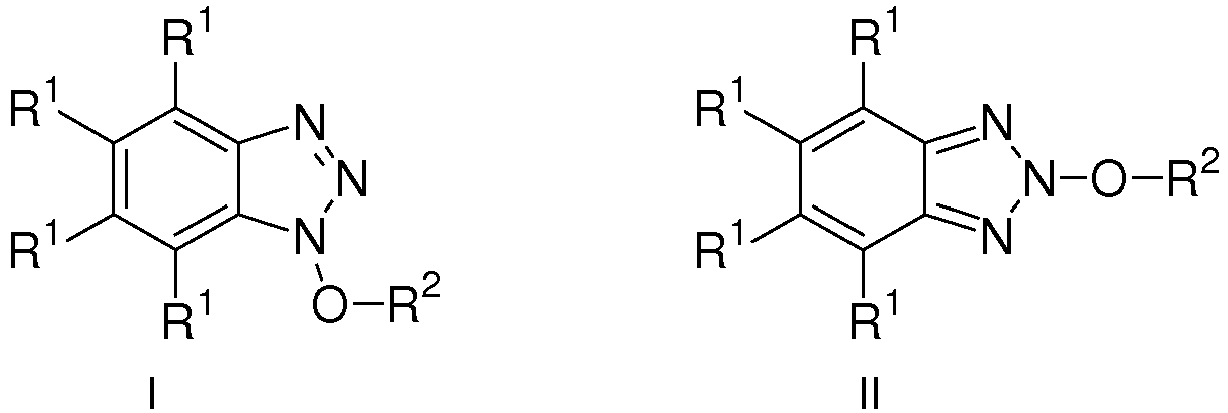

wobei bei jedem Auftreten jeweils unabhängig voneinanderR1 ausgewählt ist aus der Gruppe bestehend aus Wasserstoff, Alkylresten mit 1 bis 18 Kohlenstoffatomen, teilweise oder perfluorierten Alkylresten mit 1 bis 18 Kohlenstoffatomen, ungesättigten organischen Resten bis 1 bis 18 Kohlenstoffatomen, wobei zwei vicinale Reste R1 auch zu einem Ring verbunden sein können, -NO2 -F, -Cl und -Br, undR2 ausgewählt ist aus der Gruppe bestehend aus ein-, zwei- oder dreiwertigen anorganischen oder organischen Kationen und Wasserstoff,als Flammschutzmittel für Kunststoffe. - Verwendung nach Anspruch 1, dadurch gekennzeichnet, dass die ein-, zwei- oder dreiwertigen anorganischen Kationen ausgewählt sind aus der Gruppe bestehend aus Li+, Na+, K+, ½ Mg2+, ½ Ca2+, 1/3 Al3+, ½ Zn2+ und/oder die oder organischen Kationen ausgewählt sind aus der Gruppe bestehend aus Stickstoff- und/oder Phosphor-haltigen organischen Kationen, insbesondere Ammonium, Melaminium und/oder Phosphonium.
- Verwendung nach einem der vorhergehenden Ansprüche, dadurch gekennzeichnet, dass bei jedem Auftreten R1 Wasserstoff ist und/oder R2 ein ein- oder zweiwertiges anorganisches Kation, insbesondere K+ ist.
- Verwendung nach einem der vorhergehenden Ansprüche, dadurch gekennzeichnet, dass der Kunststoff ausgewählt ist aus der Gruppe bestehend aus thermoplastischen, elastomeren oder duroplastischen Kunststoffen, insbesonderea) Polymere aus Olefinen oder Diolefinen wie z.B. Polyethylen (LDPE, LLDPE, VLDPE, ULDPE, MDPE, HDPE, UHMWPE), Metallocen-PE (m-PE), Polypropylen, Polyisobutylen, Poly-4-methyl-penten-1, Polybutadien, Polyisopren, Polycycloocten, Polyalkylen-Kohlenmonoxid-Copolymere, sowie Copolymere in Form von statistischen oder Blockstrukturen wie z.B. Polypropylen-Polyethylen (EP), EPM oder EPDM, Ethylen-Vinylacetat (EVA), Ethylen-Acrylester, wie z.B. Ethylen-Butylacrylat, Ethylen-Acrylsäure und deren Salze (Ionomere), sowie Terpolymere wie z.B. Ethylen-Acrylsäure-Glycidylacrylat, Pfropfpolymere wie z.B. Polypropylen-graft-Maleinsäureanhydrid, Polypropylen-graft-Acrylsäure, Polyethylen-graft-Acrylsäure, Polyethylen-Polybutylacrylat-graft-Maleinsäureanhydrid,b) Polystyrol, Polymethylstyrol, Polyvinylnaphthalin, Styrol-Butadien (SB), Styrol-Butadien-Styrol (SBS), Styrol-Ethylen-Butylen-Styrol (SEBS), Styrol-Ethylen-Propylen-Styrol, Styrol-Isopren, Styrol-Isopren-Styrol (SIS), Styrol-butadien-acrylnitril (ABS), Styrolacrylnitril-acrylat (ASA), Styrol-Ethylen, Styrol-Maleinsäureanhydrid-Polymere einschl. entsprechender Pfropfcopolymere wie z.B. Styrol auf Butadien, Maleinsäureanhydrid auf SBS oder SEBS, sowie Pfropfcopolymere aus Methylmethacrylat, Styrol-Butadien und ABS (MABS),c) halogenenthaltende Polymere wie z.B. Polyvinylchlorid (PVC), Polychloropren und Polyvinylidenchlorid (PVDC), Copolymere aus Vinylchlorid und Vinylidenchlorid oder aus Vinylchlorid und Vinylacetat, chloriertes Polyethylen, Polyvinylidenfluorid,d) Polymere von ungesättigten Estern wie z.B. Polyacrylate und Polymethacrylate wie Polymethylmethacrylat (PMMA), Polybutylacrylat, Polylaurylacrylat, Polystearylacrylat, Polyglycidylacrylat, Polyglycidylmethacrylat, Polyacrylnitril, Polyacrylamide, Copolymere wie z.B. Polyacrylnitril-Polyalkylacrylat,e) Polymere aus ungesättigten Alkoholen und Derivaten, wie z.B. Polyvinylalkohol, Polyvinylacetat, Polyvinylbutyral,f) Polyacetale, wie z.B. Polyoxymethylen POM) oder Copolymere mit z.B. Butanal,g) Polyphenylenoxide und Blends mit Polystyrol oder Polyamiden,h) Polymere von cyclischen Ethern wie z.B. Polyethylenglycol, Polypropylenglycol, Polyethylenoxid, Polypropylenoxid,i) Polyurethane, aus hydroxyterminierten Polyethern oder Polyestern und aromatischen oder aliphatischen Isocyanaten insbesondere lineare Polyurethane, Polyharnstoffe,j) Polyamide wie z.B. Polyamid-6, 6.6, 6.10, 4.6, 4.10, 6.12, 12.12, Polyamid 11, Polyamid 12 sowie (teil-)aromatische Polyamide wie z.B. Polyphthalamide, z.B. hergestellt aus Terephthalsäure und/oder Isophthalsäure und aliphatischen Diaminen oder aus aliphatischen Dicarbonsäuren wie z.B. Adipinsäure oder Sebazinsäure und aromatischen Diaminen wie z.B. 1,4- oder 1,3-Diaminobenzol, Blends von unterschiedlichen Polyamiden wie z.B. PA-6 und PA 6.6 bzw. Blends von Polyamiden und Polyolefinen wie z.B. PA/PP,k) Polyimide, Polyamid-imide, Polyetherimide, Polyesterimide, Poly(ether)ketone, Polysulfone, Polyethersulfone, Polyarylsulfone, Polyphenylensulfid, Polybenzimidazole, Polyhydantoine,l) Polyester aus aliphatischen oder aromatischen Dicarbonsäuren und Diolen oder aus Hydroxy-Carbonsäuren wie z.B. Polyethylenterephthalat (PET), Polybutylenterephthalat (PBT), Polypropylenterephthalat, Polyethylennaphthylat, Poly-1,4-dimethylolcyclohexanterephthalat, Polyhydroxybenzoat, Polyhydroxynaphthalat, Polymilchsäure (PLA), Polyhydroxybutyrat (PHB), Polyhydroxyvalerat (PHV),m) Polycarbonate, Polyestercarbonate, sowie Blends wie z.B. PC/ABS, PC/PBT, PC/PET/PBT, PC/PAn) Cellulosederivate wie z.B. Cellulosenitrat, Celluloseacetat, Cellulosepropionat, Cellulosebutyrato) nicht-thermoplastischen oder duroplastischen Kunststoffen,p) Epoxidharze, bestehend aus di- oder polyfunktionellen Epoxidverbindungen in Kombination mit z.B. Härtern auf der Basis von Aminen, Anhydriden, Dicyandiamid, Mercaptanen, Isocyanaten oder katalytisch wirkenden Härtern,q) Phenolharze wie z.B. Phenol-Formaldehyd-Harze, Harnstoff-Formaldehyd-Harze, Melamin-Formaldehydharze,r) ungesättigte Polyesterharze aus ungesättigten Dicarbonsäuren und Diolen,s) Silikone,t) Polyurethane als Reaktionsprodukte aus di- oder polyfunktionellen Isocyanaten und Polyolen, Polyharnstoffe,u) Alkydharze, Allylharze,v) sowie Mischungen, Kombinationen oder Blends aus zwei oder mehr der zuvor genannten Polymere.
- Verwendung nach einem der vorhergehenden Ansprüche, dadurch gekennzeichnet, dass das die Verbindung gemäß den allgemeinen Formeln I bis IV und/oder das Gemisch aus mindestens zwei Verbindungen der Formel I bis IV dem Kunststoff zugemischt wird, wobei der Gesamtgehalt der Verbindung gemäß den allgemeinen Formeln I bis IV im entstehenden Gemisch insbesondere 0,01 bis 50 Gew.-%, bevorzugt 0,05 bis 25 Gew.-%, beträgt.
- Flammgeschützte Kunststoffformmasse, enthaltend mindestens einen Kunststoff sowie als Flammschutzmittel mindestens eine Verbindung gemäß den allgemeinen Formeln I bis IV
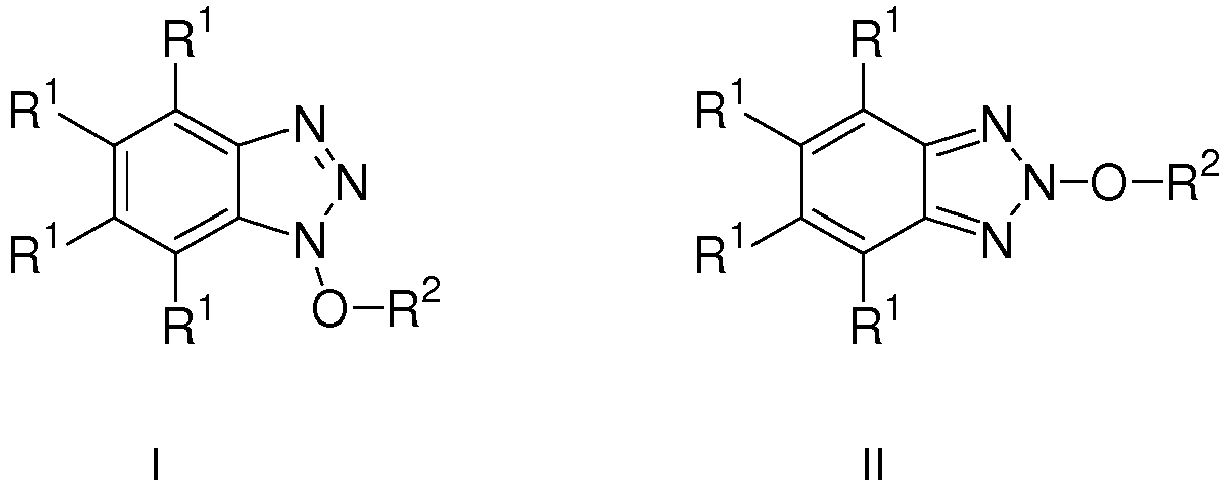

wobei bei jedem Auftreten jeweils unabhängig voneinanderR1 ausgewählt ist aus der Gruppe bestehend aus Wasserstoff, Alkylresten mit 1 bis 18 Kohlenstoffatomen, teilweise oder perfluorierten Alkylresten mit 1 bis 18 Kohlenstoffatomen, ungesättigten organischen Resten bis 1 bis 18 Kohlenstoffatomen, wobei zwei vicinale Reste R1 auch zu einem Ring verbunden sein können, -NO2 -F, -Cl und -Br, undR2 ausgewählt ist aus der Gruppe bestehend aus ein-, zwei- oder dreiwertigen anorganischen oder organischen Kationen und Wasserstoff. - Kunststoffformmasse nach vorhergehendem Anspruch, dadurch gekennzeichnet, dass der Gesamtgehalt der mindestens einen Verbindung gemäß den allgemeinen Formeln I bis IV in der Kunststoffformmasse 0,01 bis 50 Gew.-%, bevorzugt 0,05 bis 25 Gew.-%, beträgt.
- Kunststoffformmasse nach einem der beiden vorhergehenden Ansprüche, dadurch gekennzeichnet, dass die Kunststoffformmasse neben der mindestens einen Verbindung gemäß den allgemeinen Formeln I bis IV und dem mindestens einen Kunststoff zusätzlich bis zu 70 Gew.-Teile, bevorzugt bis zu 25 Gew.-Teile, bezogen auf die Gesamtheit der mindestens einen Verbindung gemäß den allgemeinen Formeln I und II und des mindestens einen Kunststoffs, mindestens ein weiteres Flammschutzmittel, ausgewählt aus der Gruppe bestehend aus phosphorhaltigen, stickstoffhaltigen, anorganischen, siliciumhaltigen, borhaltigen, schwefelhaltigen, halogenhaltigen und/oder radikalbildenden Flammschutzmitteln enthält.
- Kunststoffformmasse nach vorhergehendem Anspruch, dadurch gekennzeichnet, dass das mindestens eine weitere Flammschutzmittel ausgewählt ist aus der Gruppe bestehend ausa) anorganischen Flammschutzmitteln wie z.B. Al(OH)3, Mg(OH)2, AlO(OH), MgCO3, Schichtsilikate wie z.B. Montmorillonit oder Sepiolit, nicht oder organisch modifiziert, Doppelsalze, wie z.B. Mg-Al-Silikate, POSS-(Polyhedral Oligomeric Silsesquioxane) Verbindungen, Huntit, Hydromagnesit oder Halloysit sowie Sb2O3, Sb2O5, MoO3, Zinkstannat, Zinkhydroxystannat,b) stickstoffhaltigen Flammschutzmitteln wie z.B. Melamin, Melem, Melam, Melon, Melaminderivate, Melaminkondensationsprodukte oder Melaminsalze, Benzoguanamin, Polyisocyanurate, Allantoin, Phosphacene, insbesondere Melamincyanurat, Melaminphosphat, Dimelaminphosphat, Melaminpyrophosphat, Melaminpolyphosphat, Melaminmethanphosphonat, Melamin-Metall-Phosphate wie z.B. Melaminaluminumphosphat, Melaminzinkphosphat, Melaminmagnesiumphosphat, sowie die entsprechenden Pyrophosphate und Polyphosphate, Ethylendiaminmethanphosphonat, Poly-[2,4-(piperazin-1,4-yl)-6-(morpholin-4-yl)-1,3,5-triazin], Ammoniumpolyphosphat, Melaminborat, Melaminhydrobromid,c) Phosphorhaltigen Flammschutzmitteln wie z.B. roter Phosphor, Phosphate wie z.B. Resorcindiphosphat, Bisphenol-A-diphosphat und ihre Oligomere, Triphenylphosphat, Ethylendiamindiphosphat, Phosphinate wie z.B. Salze der hypophosphorigen Säure und ihrer Derivate wie Alkylphosphinatsalzen z.B. Diethylaluminiumphosphinat, Diethylphosphinat-Zink oder Aluminiumphosphinat, Aluminiumphosphit, Aluminiumphosphonat, Aluminiumphosphat, Phosphonatester, oligomere und polymere Derivate der Methanphosphonsäure, 9,10-Dihydro-9-oxa-10-phosphorylphenanthren-10-oxid (DOPO) und deren substituierte Verbindungen, Phosphacene, insbesondere polymere Phosphacene,d) Halogenhaltigen Flammschutzmitteln auf Chlor- und Brombasis wie z.B. polybrominierte Diphenyloxide, wie z.B. Decabromdiphenyloxid,Tris(3-bromo-2,2-bis(bromomethyl)propyl-phosphat, Tris(tribromneopentyl)phosphat, Tetrabromphthalsäure, 1,2-Bis(tribromphenoxy)ethan, Hexabromcyclododecan, bromiertes Diphenylethan, Tris-(2,3-dibrompropyl)isocyanurat, Ethylen-bis-(tetrabromophthalimid), Tetrabromo-bisphenol A, Tetrabromobisphenol A-bis(2,3-dibromopropylether), bromiertes Polystyrol, bromiertes Polybutadien bzw. Polystyrol, bromiertes Polybutadien-Copolymere, bromiertes Epoxidharz, bromierter Polyphenylenether, Polypentabrombenzylacrylat, ggf. in Kombination mit Sb2O3 und/oder Sb2O5,e) Boraten, wie z.B. Zinkborat oder Calciumborat, ggf. auf Trägermaterialien wie Silica,f) Schwefelhaltigen Flammschutzmitteln wie z.B. elementarer Schwefel, Disulfide und Polysulfide, Thiuramsulfid, Dithiocarbamate, Mercaptobenzthiazol und Sulfenamide,g) Antidrip-Mitteln, wie z.B. Polytetrafluorethylen,h) Siliciumhaltigen Verbindungen, wie z.B. Polyphenylsiloxane und/oderi) Radikalbildende Flammschutzmittel wie z.B. Alkoxyamine, Hydroxylaminester, Azoverbindungen, Dicumyl oder Polycumyl, Hydroxyimide oder deren Derivate wie z.B. Hydroxyimidester oder Hydroxyimidether,j) Kohlenstoffmodifikationen wie z.B Kohlenstoff-Nanoröhren (CNT) oder Graphen.
- Kunststoffformmasse nach einem der Ansprüche 6 bis 9, dadurch gekennzeichnet, dass sie Zusatzstoffe, ausgewählt aus der Gruppe bestehend aus UV-Absorbern, Lichtstabilisatoren, Stabilisatoren, wie der Benzofuranone, Nukleierungsmitteln, Schlagzähigkeitsverbesserern, Weichmachern, Gleitmitteln, Rheologiemodifikatoren, Verarbeitungshilfsmitteln, Pigmenten, Farbstoffen, optischen Aufhellern, antimikrobiellen Wirkstoffen, Antistatika, Slipmitteln, Antiblockmitteln, Kopplungsmitteln, Dispergiermitteln, Kompatibilisatoren, Sauerstofffängern, Markierungsmitteln, Antifoggingmitteln oder Säurefängern, bevorzugt Säurefänger auf Basis von Salzen langkettiger Säuren wie z.B. Calciumstearat, Magnesiumstearat, Zinkstearat, Aluminiumstearat, Calciumlactat, Calciumstearoyl-2-lactylate oder von Hydrotalciten, enthält.
- Kunststoffformmasse nach einem der Ansprüche 6 bis 10, dadurch gekennzeichnet, dass die Kunststoffformmasse neben der mindestens einen Verbindung gemäß den allgemeinen Formeln I bis IV und dem mindestens einen Kunststoff zusätzlich 0,01 bis 10 Gew.-Teile, bevorzugt 0,05 bis 3 Gew.-Teile, bezogen auf die Gesamtheit der mindestens einen Verbindung gemäß den allgemeinen Formeln I und II und des mindestens einen Kunststoffs, mindestens einen Stabilisator, ausgewählt aus der Gruppe bestehend aus phenolischen Antioxidantien, Phosphiten/Phosphoniten, aminischen Antioxidantien, schwefelhaltigen Antioxidantien oder Hydroxylaminen enthält.
- Kunststoffformmasse nach vorhergehendem Anspruch, dadurch gekennzeichnet, dass der mindestens eine Stabilisator ausgewählt ist aus der Gruppe bestehend ausa) Phenolischen Antioxidantien, insbesondere Octadecyl-3-(3,5-di-tert-butyl-4-hydroxyphenyl)propionat, Pentaerythritol-tetrakis[3-(3,5-di-tert-butyl-4-hydroxyphenyl)propionat, Tris(3,5-di-tert-butyl-4-hydroxyphenyl)isocyanurat, 1,3,5-Trimethyl-2,4,6-tris(3,5-di-tert-butyl-4-hydroxyphenyl)isocyanurat, 1,3,5-Trimethyl-2,4,6-tris(3,5-di-tert-butyl-4-hydroxybenzyl)benzol, Triethylenglycol-bis[3-(3-tert-butyl-4-hydroxy-5-methylphenyl)propionat, N,N'-Hexan-1,6-diyl-bis[3-(3,5-di-tert-butyl-4-hydroxyphenyl)propionsäureamid,b) Phosphiten/Phosphoniten, insbesondere Tris-(2,4-di-tert-butylphenyl)phosphit, Diisodecylpentaerythritoldiphosphit, Bis(2,4-di-tert-butylphenyl)pentaerythritoldiphosphit, Bis(2,4-di-cumylphenyl)pentaerythritoldiphosph it, Bis(2,6-di-tert-butyl-4-methylphenyl)pentaerythritoldiphosphit, Diisodecyloxypentaerythritoldiphosphit, Bis(2,4-di-tert-butyl-6-methylphenyl)pentaerythritoldiphosphit, Bis(2,4, 6-tris(tert-butylphenyl)pentaerythritoldiphosphit, Tetrakis(2,4-di-tert-butylphenyl)-4,4'biphenylendiphosphonit,c) Aminischen Antioxidantien, insbesondere N,N'-Di-isopropyl-p-phenylendiamin, N,N'-Di-sec-butyl-p-phenylendiamin, N,N'-Bis(1,4-dimethylpentyl)-p-phenylendiamin, N,N'-Bis(1-ethyl-3-methylpentyl)-p-phenylendiamin, N,N'-Bis(1-methylheptyl)-p-phenylendiamin, N,N'-Dicyclohexylp-phenylendiam in, N,N' - Diphenyl-p-phenylendiamin, N,N'-Bis(2-naphthyl)-p-phenylendiamin, N-Isopropyl-N'-phenyl-p-phenylendiamin, N-(1,3-Dimethylbutyl)-N'-phenyl-p-phenylen-diamin, N(1-Methylheptyl)-N'-phenyl-p-phenylendiamin, N-Cyclohexyl-N'-phenyl-p-phenylendiamin,d) Schwefelhaltigen Antioxidantien, insbesondere Distearylthiodipropionat, Dilauryldipropionat,e) Hydroxylaminen, insbesondere N,N-Dialkylhydroxylamine, N,N-Dibenzylhydroxylamin, N,N-Dilaurylhydroxylamin, N,N-Distearyl-hydroxylamin, N-Benzyl-α-phenylnitron, N-Octadecyl-α-hexadecylnitron,f) Gehinderten Aminen, insbesondere 1,1-Bis(2,2,6,6-tetramethyl-4-piperidyl)succinat, Bis(1,2,2,6,6-pentamethyl-4-piperidyl)sebazat, Bis(1-octyloxy-2,2,6,6-tetramethyl-4-piperidyl)sebazat, Bis-(1,2,2,6,6-pentamethyl-4-piperidyl)-n-butyl-3,5-di-tert-butyl-4-hydroxybenzylmalonat, das Kondensationsprodukt aus 1-(2-Hydroxyethyl)-2,2,6,6-tetramethyl-4-hydroxypiperidin und Succinsäure, lineare oder zyklische Kondensationsprodukte von N,N'-Bis(2,2,6,6-tetramethyl-4-piperidyl)hexamethylendiamin und 4-tert-Octylamino-2,6-di-chloro-1,3,5-triazin, Tris(2,2,6,6-tetramethyl-4-piperidyl)nitrilotriacetat, Tetrakis(2,2,6,6-tetra-methyl-4-piperidyl)-1,2,3,4-butantetracarboxylat, 1,1'-(1,2-Ethandiyl)-bis-(3,3,5,5-tetramethylpiperazinon), 4-Benzoyl-2,2,6,6-tetramethylpiperidin, 4-Stearyloxy-2,2,6,6-tetramethylpiperidin, lineare oder zyklische Kondensationsprodukte aus N,N'-Bis(2,2,6,6-tetramethyl-4-piperidyl)hexamethylendiamin und 4-Morpholino-2,6-dichloro-1,3,5-triazin das Reaktionsprodukt von 7,7,9,9-Tetramethyl-2-cycloundecyl-1-oxa-3,8-diaza-4-oxospiro-[4,5]decan und Epichlorhydrin.
- Kunststoffformmasse nach einem der Ansprüche 6 bis 12, dadurch gekennzeichnet, dass der mindestens eine Kunststoff ausgewählt ist aus der Gruppe bestehend ausa) Polymere aus Olefinen oder Diolefinen wie z.B. Polyethylen (LDPE, LLDPE, VLDPE, MDPE, HDPE), Polypropylen, Polyisobutylen, Poly-4-methyl-penten-l, Polybutadien, Polyisopren, Polycycloocten, sowie Copolymere in Form von statistischen oder Blockstrukturen wie z.B. Polypropylen-Polyethylen (EP), EPM oder EPDM, Ethylen-Vinylacetat (EVA), Ethylen-Acrylester,b) Polystyrol, Polymethylstyrol, Styrol-Butadien, Styrol-Butadien-Styrol (SBS), Styrolisopren, Styrol-Butadien-Acrylnitril (ABS), Styrol-Acrylnitril-Acrylat (ASA), Styrol-Maleinsäureanhydrid-Polymere einschließlich entsprechender Pfropfcopolymere, wie z.B. Styrol auf Butadien oder Maleinsäureanhydrid auf SBS,c) Halogenenthaltende Polymere, wie z.B. Polyvinylchlorid und Polyvinylidenchlorid,d) Polymere von ungesättigten Estern wie z.B. Polyacrylate und Polymethacrylate wie PMMA, Polyacrylnitril,e) Polymere aus ungesättigten Alkoholen und Derivaten, wie z.B. Polyvinylalkohol, Polyvinylacetat. Polyvinylbutyral,f) Polyacetale, wie z.B. Polyoxymethylen,g) Polyphenylenoxide und Blends mit Polystyrol,h) Polyurethane, insbesondere lineare Polyurethane,i) Polyamide, wie z.B. Polyamid-6, 6.6., 6.10. 4.6, 4.10, 6.12,12.12., Polyamid 11, Polyamid 12 sowie (teil-)aromatische Polyamide wie z.B. Polyphthalamide,j) Polyimide, Polyamidimide, Polyetherimide, Polyketone, Polysulfone, Polyethersulfone, Polyphenylensulfid,k) Polyester, wie z.B. Polyethylenterephthalat und Polybutylenterephthalat, Polymilchsäure,l) Polycarbonat,m) Cellulosederivate, wie z.B. Cellulosenitrat, Celluloseacetat, Cellulosepropionat,n) sowie Mischungen, Kombinationen oder Blends aus zwei oder mehr der zuvor genannten Polymeren.
- Kunststoffformmasse nach einem der Ansprüche 6 bis 13 in Form von Spritzgussteilen, Folien oder Filmen, Beschichtungen oder Lacken, Schäumen, Fasern, Kabeln, Kabelkanälen und Rohren, Profilen, Hohlkörpern, Bändchen, Membranen, wie z.B. Geomembranen, oder Klebstoffen, die über Extrusion, Spritzguss, Blasformen, Kalandrieren, Pressverfahren, Spinnprozesse, Rotomoulding oder Streich- und Beschichtungsprozesse hergestellt werden z.B. für die Elektro- und Elektronikindustrie, Bauindustrie, Transportindustrie, für medizinische Anwendungen, für Haushalts- und Elektrogeräte, Fahrzeugteile, Konsumartikel, Verpackungen, Möbel, Textilien.
Applications Claiming Priority (2)
| Application Number | Priority Date | Filing Date | Title |
|---|---|---|---|
| DE102014211276.1A DE102014211276A1 (de) | 2014-06-12 | 2014-06-12 | Verwendung von Hydroxybenzotriazol-Derivaten und/oder Hydroxy-Indazol-Derivaten als Flammschutzmittel für Kunststoffe sowie flammgeschützte Kunststoffformmasse |
| PCT/EP2015/061771 WO2015189034A1 (de) | 2014-06-12 | 2015-05-28 | Verwendung von hydroxybenzotriazol-derivaten und/oder hydroxy-indazol-derivaten als flammschutzmittel für kunststoffe sowie flammgeschützte kunststoffformmasse |
Publications (2)
| Publication Number | Publication Date |
|---|---|
| EP3155041A1 EP3155041A1 (de) | 2017-04-19 |
| EP3155041B1 true EP3155041B1 (de) | 2018-03-21 |
Family
ID=53298333
Family Applications (1)
| Application Number | Title | Priority Date | Filing Date |
|---|---|---|---|
| EP15727343.4A Not-in-force EP3155041B1 (de) | 2014-06-12 | 2015-05-28 | Verwendung von hydroxybenzotriazol-derivaten und/oder hydroxy-indazol-derivaten als flammschutzmittel für kunststoffe sowie flammgeschützte kunststoffformmasse |
Country Status (8)
| Country | Link |
|---|---|
| US (1) | US10323136B2 (de) |
| EP (1) | EP3155041B1 (de) |
| JP (1) | JP6325694B2 (de) |
| KR (1) | KR101984077B1 (de) |
| CN (1) | CN106661270B (de) |
| DE (1) | DE102014211276A1 (de) |
| ES (1) | ES2669500T3 (de) |
| WO (1) | WO2015189034A1 (de) |
Families Citing this family (51)
| Publication number | Priority date | Publication date | Assignee | Title |
|---|---|---|---|---|
| DE102012022482A1 (de) | 2012-11-19 | 2014-05-22 | Fraunhofer-Gesellschaft zur Förderung der angewandten Forschung e.V. | Polymerzusammensetzung mit verbesserter Langzeitstabilität, hieraus hergestellte Formteile sowie Verwendungszwecke |
| DE102013005307A1 (de) | 2013-03-25 | 2014-09-25 | Fraunhofer-Gesellschaft zur Förderung der angewandten Forschung e.V. | Verwendung von organischen Oxyimiden als Flammschutzmittel für Kunststoffe sowie flammgeschützte Kunststoffzusammensetzung und hieraus hergestelltem Formteil |
| DE102014210214A1 (de) | 2014-05-28 | 2015-12-03 | Fraunhofer-Gesellschaft zur Förderung der angewandten Forschung e.V. | Verwendung von Oxyimid-enthaltenden Copolymeren oder Polymeren als Flammschutzmittel, Stabilisatoren, Rheologiemodifikatoren für Kunststoffe, Initiatoren für Polymerisations- und Pfropfprozesse, Vernetzungs- oder Kopplungsmittel sowie solche Copolymere oder Polymere enthaltende Kunststoffformmassen |
| DE102014211276A1 (de) | 2014-06-12 | 2015-12-17 | Fraunhofer-Gesellschaft zur Förderung der angewandten Forschung e.V. | Verwendung von Hydroxybenzotriazol-Derivaten und/oder Hydroxy-Indazol-Derivaten als Flammschutzmittel für Kunststoffe sowie flammgeschützte Kunststoffformmasse |
| DE102014218811A1 (de) | 2014-09-18 | 2016-03-24 | Fraunhofer-Gesellschaft zur Förderung der angewandten Forschung e.V. | Verwendung von phosphorhaltigen organischen Oxyimiden als Flammschutzmittel, Radikalgeneratoren und/oder als Stabilisatoren für Kunststoffe, flammgeschützte Kunststoffzusammensetzung, Verfahren zu deren Herstellung sowie Formteile, Lacke und Beschichtungen |
| DE102015211632A1 (de) | 2015-06-23 | 2016-12-29 | Fraunhofer-Gesellschaft zur Förderung der angewandten Forschung e.V. | Polymerzusammensetzung mit verzögertem Kristallisationsverhalten, das Kristallisationsverhalten beeinflussende Additivzusammensetzung, Verfahren zur Herabsetzung des Kristallisationspunktes sowie Verwendung einer Additivzusammensetzung |
| DE102016221346A1 (de) | 2016-10-28 | 2018-05-03 | Fraunhofer-Gesellschaft zur Förderung der angewandten Forschung e.V. | Verfahren zur Herstellung eines Polymerisates durch Nitroxyl-kontrollierte Polymerisation sowie Polymerisat |
| CN106751570A (zh) * | 2016-12-13 | 2017-05-31 | 张世平 | 一种绝缘防火耐高温电缆配方 |
| WO2019007967A1 (en) * | 2017-07-05 | 2019-01-10 | Ineos Styrolution Group Gmbh | THERMOPLASTIC RESIN COMPOSITION HAVING ENHANCED UV RESISTANCE |
| DE102017212772B3 (de) | 2017-07-25 | 2018-01-25 | Fraunhofer-Gesellschaft zur Förderung der angewandten Forschung e.V. | Halogenfreie Sulfonsäureester und/oder Sulfinsäureester als Flammschutzmittel in Kunststoffen, diese enthaltende Kunststoffzusammensetzungen und deren Verwendung |
| CN107459619A (zh) * | 2017-08-30 | 2017-12-12 | 华南理工大学 | 一种基于可膨胀石墨的含磷阻燃硬质聚氨酯泡沫及其制备方法 |
| DE102017217312A1 (de) | 2017-09-28 | 2019-03-28 | Fraunhofer-Gesellschaft zur Förderung der angewandten Forschung e.V. | Verfahren zur Stabilisierung von halogenfreien thermoplastischen Kunststoff-Rezyklaten sowie stabilisierte Kunststoffzusammensetzungen und hieraus hergestellte Formmassen und Formteile |
| DE102017220555A1 (de) | 2017-11-17 | 2019-05-23 | Fraunhofer-Gesellschaft zur Förderung der angewandten Forschung e.V. | Verbindungen mit stabilisierender Wirkung, Verfahren zu deren Herstellung, Zusammensetzung enthaltend diese stabilisierenden Verbindungen, Verfahren zur Stabilisierung einer organischen Komponente sowie Verwendung von stabilisierenden Verbindungen |
| CN108316055A (zh) * | 2018-03-28 | 2018-07-24 | 宁波依森纸制品有限公司 | 一种阻燃的纸质家具用瓦楞纸及其制备方法 |
| CN108587068B (zh) * | 2018-05-16 | 2019-10-15 | 福州大学 | 一种疏水阻燃环氧树脂及其制备方法 |
| KR101935741B1 (ko) * | 2018-08-06 | 2019-01-04 | 제해득 | 잔디보호매트 |
| CN109266228B (zh) * | 2018-08-20 | 2020-11-13 | 河北省同创交通工程配套产品产业技术研究院 | 超强化学反应型高分子自粘橡胶止水带及其制备方法 |
| CN109467814B (zh) * | 2018-09-20 | 2021-10-08 | 中山德盛塑料有限公司 | 一种复合矿物纤维填充聚丙烯复合材料及其制备方法 |
| KR101959823B1 (ko) * | 2018-10-08 | 2019-03-20 | (주)하이탑 | 웨이브 구조를 형성하여 충격흡수 및 완충기능을 제공하는 잔디보호매트 |
| KR101980084B1 (ko) * | 2018-10-08 | 2019-05-20 | (주)하이탑 | 내부와 외부로 구분되어 서로 다른 탄성을 갖도록 제조된 조립식 잔디보호매트 |
| KR101967608B1 (ko) * | 2018-10-08 | 2019-04-11 | (주)하이탑 | 탄성선재를 적용한 잔디보호용 매트 |
| CN109438758B (zh) * | 2018-10-15 | 2020-06-09 | 福建师范大学 | 一种含硅噻唑dopo型阻燃剂制备方法 |
| DE102018218120A1 (de) | 2018-10-23 | 2020-04-23 | Fraunhofer-Gesellschaft zur Förderung der angewandten Forschung e.V. | Verfahren zur Stabilisierung von thermoplastischer Kunststoffneuware sowie stabilisierte Kunststoffzusammensetzungen, hieraus hergestellte Formmassen und Formteile, Stabilisator-Zusammensetzungen sowie Verwendungen hiervon |
| CN109679180B (zh) * | 2018-11-23 | 2021-10-22 | 金旸(厦门)新材料科技有限公司 | 一种注塑尿素箱专用料及其制备方法 |
| DE102019200596A1 (de) | 2019-01-17 | 2020-07-23 | Fraunhofer-Gesellschaft zur Förderung der angewandten Forschung e.V. | Verwendung einer additivzusammensetzung zum kontrollierten beschleunigten abbau von kondensationspolymeren |
| CN109867860A (zh) * | 2019-02-12 | 2019-06-11 | 青岛科技大学 | 一种具有良好光热稳定性的阻燃聚丙烯材料及其制备方法 |
| DE102019204160A1 (de) | 2019-03-26 | 2020-10-01 | Fraunhofer-Gesellschaft zur Förderung der angewandten Forschung e.V. | Verfahren zur Stabilisierung von thermoplastischen Kunststoff-Rezyklaten sowie stabilisierte Kunststoffzusammensetzungen und hieraus hergestellte Formmassen und Formteile |
| CN110256632B (zh) * | 2019-06-03 | 2022-05-24 | 中韩(武汉)石油化工有限公司 | 一种不含铬的高支化度聚烯烃树脂的制备方法 |
| DE102019210040A1 (de) | 2019-07-08 | 2021-01-14 | Fraunhofer-Gesellschaft zur Förderung der angewandten Forschung e.V. | Verwendung von phenolisch substituierten Zuckerderivaten als Stabilisatoren, Kunststoffzusammensetzung, Verfahren zur Stabilisierung von Kunststoffen sowie phenolisch substituierte Zuckerderivate |
| WO2021040698A1 (en) * | 2019-08-27 | 2021-03-04 | Hewlett-Packard Development Company, L.P. | Coating composition and printable medium |
| DE102019213606B4 (de) | 2019-09-06 | 2022-04-21 | Fraunhofer-Gesellschaft zur Förderung der angewandten Forschung e.V. | Oligomer oder polymer, zusammensetzung sowie verwendung des oligomers oder polymers |
| KR102634294B1 (ko) * | 2019-09-27 | 2024-02-07 | 주식회사 엘지화학 | 난연 조제의 제조 방법 및 그 제조 방법에 의해 제조된 난연 조제를 포함하는 난연성 수지 조성물 |
| CN110627079B (zh) * | 2019-09-27 | 2021-11-26 | 广西大学 | 一种三元硼酸根水滑石阻燃剂及其制备方法和应用 |
| CN110791057A (zh) * | 2019-10-10 | 2020-02-14 | 苏州同舟包装有限公司 | 一种耐高温阻燃环保型材料及其制备方法 |
| DE102020203987A1 (de) * | 2020-03-27 | 2021-09-30 | Fraunhofer-Gesellschaft zur Förderung der angewandten Forschung eingetragener Verein | Verwendung von substituierten Zimtsäureestern als Stabilisatoren für organische Materialien, tabilisiertes organisches Material, Verfahren zur Stabilisierung von organischen Materialien sowie spezifische Zimtsäureester |
| CN111501370A (zh) * | 2020-04-09 | 2020-08-07 | 安徽福斯特渔具有限公司 | 用于特殊防护服的防火复合材料制备方法 |
| CN111934208B (zh) * | 2020-07-07 | 2022-01-28 | 中筑科技股份有限公司 | 一种电力设备用防水绝缘安全型控制柜 |
| CN111875954A (zh) * | 2020-08-07 | 2020-11-03 | 宁波耀众模塑科技有限公司 | 一种高效环保的聚氨酯发泡产品用阻燃剂 |
| JP2024506349A (ja) * | 2021-02-16 | 2024-02-13 | セラニーズ・インターナショナル・コーポレーション | 媒体耐性のポリオキシメチレンポリマー組成物 |
| DE102021202508A1 (de) * | 2021-03-15 | 2022-09-15 | Fraunhofer-Gesellschaft zur Förderung der angewandten Forschung eingetragener Verein | Verwendung einer Stabilisatorzusammensetzung zur Stabilisierung von Polyolefin-Recyclaten, Stabilisatorzusammensetzung, Masterbatchkonzentrat, Kunststoffzusammensetzung, Formmasse oder Formteil, Verfahren zur Stabilisierung eines Polyolefin-Recyclats sowie Verwendung einer Kunststoffzusammensetzung |
| CN113150385B (zh) * | 2021-04-13 | 2022-09-02 | 中联重科股份有限公司 | 处理碳纳米管的方法、聚氨酯组合物和聚氨酯活塞及其制备方法 |
| CN113444370B (zh) * | 2021-07-19 | 2022-07-01 | 上海应用技术大学 | 一种poss接枝磷酸二氢铝阻燃剂及其制备方法 |
| CN114213759B (zh) * | 2022-01-04 | 2023-11-07 | 深圳中塑化工高性能材料有限公司 | 一种聚磷酸酯接枝石墨烯阻燃改性聚丙烯的制法及应用 |
| CN115386157A (zh) * | 2022-06-07 | 2022-11-25 | 博睿谷伦(武汉)科技有限公司 | 一种电缆线路包覆专用轻质阻燃绝缘卷材及其制备方法和应用 |
| CN115008851B (zh) * | 2022-07-01 | 2024-10-01 | 南通睿华科技服务有限公司 | 一种高密度聚乙烯复合薄膜及其加工工艺 |
| CN115746536B (zh) * | 2023-01-10 | 2023-04-07 | 苏州优利金新材料有限公司 | 一种无卤阻燃聚碳酸酯塑料的制备方法 |
| CN116814008B (zh) * | 2023-08-04 | 2025-09-12 | 江西广源新材料有限公司 | 一种阻燃低烟色母粒及其制备方法和应用 |
| CN117761850B (zh) * | 2023-11-01 | 2025-07-22 | 浙江富春江光电科技有限公司 | 一种阻燃高强度光缆及其制备方法 |
| US20250197609A1 (en) | 2023-12-13 | 2025-06-19 | Blue Evolution, Inc. | Ecofriendly, biodegradable biological polysaccharide composition for packaging materials |
| CN117511177B (zh) * | 2024-01-04 | 2024-04-05 | 潍坊潍星联合橡塑有限公司 | 一种无卤阻燃聚氨酯电缆外护套材料 |
| CN120678977B (zh) * | 2025-08-18 | 2025-11-11 | 华中科技大学同济医学院附属同济医院 | 一种用于烧烫伤创面愈合的纳米纤维功能性敷料 |
Family Cites Families (76)
| Publication number | Priority date | Publication date | Assignee | Title |
|---|---|---|---|---|
| CA819181A (en) | 1969-07-29 | J. Heilman William | Process for a maleic anhydride-aliphatic olefin copolymer | |
| US2682522A (en) | 1952-09-10 | 1954-06-29 | Eastman Kodak Co | Process for preparing polymeric organo-phosphonates |
| US2716101A (en) | 1952-09-10 | 1955-08-23 | Eastman Kodak Co | Polymeric organo-phosphonates containing phosphato groups |
| US2891915A (en) | 1954-07-02 | 1959-06-23 | Du Pont | Organophosphorus polymers |
| NL109745C (de) | 1960-05-31 | |||
| US3326852A (en) | 1964-08-10 | 1967-06-20 | Owens Illinois Inc | Resinous polymeric phosphonates |
| DE1274578B (de) | 1965-01-21 | 1968-08-08 | Bayer Ag | Verfahren zur Herstellung von Cycloalkylaminverbindungen |
| US3488329A (en) | 1968-04-01 | 1970-01-06 | Monsanto Co | N-hydroxy nitrogenous copolymers |
| US3578641A (en) | 1968-04-01 | 1971-05-11 | Monsanto Co | Resinous esters of polymeric n-hydroxyimides |
| JPS5327694B2 (de) * | 1972-02-05 | 1978-08-10 | ||
| US3868388A (en) | 1972-10-20 | 1975-02-25 | Cities Service Co | Flame-retardant composition |
| JPS5615656B2 (de) | 1974-04-27 | 1981-04-11 | ||
| US3919363A (en) | 1974-04-30 | 1975-11-11 | Nissan Chemical Ind Ltd | Process for preparing poly(sulfonyl-phenylene)phenylphosphonate |
| DD268249A1 (de) | 1976-11-04 | 1989-05-24 | Leuna Werke Veb | Verfahren zur herstellung alternierend aufgebauter ethen-maleinsaeureanhydrid-copolymerisate |
| US4218332A (en) | 1977-09-16 | 1980-08-19 | The United States Of America As Represented By The Secretary Of Agriculture | Tetrasulfide extreme pressure lubricant additives |
| DE2925207A1 (de) | 1979-06-22 | 1981-01-29 | Bayer Ag | Thermoplastische, verzweigte, aromatische polyphosphonate, ihre verwendung und ein verfahren zu ihrer herstellung |
| DE2925206A1 (de) | 1979-06-22 | 1981-01-29 | Bayer Ag | Aromatische polyesterphosphonate, verfahren zu ihrer herstellung und ihre verwendung zur herstellung thermoplastischer formkoerper |
| DE2944093A1 (de) | 1979-10-31 | 1981-05-14 | Bayer Ag, 5090 Leverkusen | Verfahren zur herstellung von thermoplastischen aromatischen polyphosphonaten verbesserter thermischer alterungsbestaendigkeit und deren verwendung |
| US4868246A (en) | 1987-08-12 | 1989-09-19 | Pennwalt Corporation | Polymer bound UV stabilizers |
| DE3933548A1 (de) | 1989-10-07 | 1991-04-11 | Bayer Ag | Hochverzweigte polyphosphonate |
| DE4113157A1 (de) | 1990-09-06 | 1992-03-12 | Bayer Ag | Hochverzweigte polyphosphonate auf melamin-basis |
| US5616153A (en) | 1995-10-03 | 1997-04-01 | Ethyl Corporation | Copolymer dispersants via vinyl terminated propene polymers |
| AU723065B2 (en) | 1996-10-31 | 2000-08-17 | Ciba Specialty Chemicals Holding Inc. | Functionalised polymers |
| JPH10213912A (ja) | 1997-01-30 | 1998-08-11 | Sharp Corp | 電子写真感光体 |
| ES2227855T3 (es) | 1997-06-30 | 2005-04-01 | Ciba Specialty Chemicals Holding Inc. | Composiciones resistentes a la llama. |
| DE19810745C2 (de) | 1998-03-12 | 2000-05-04 | Bayer Ag | Flüssige Katalysatorformulierung aus Tetraphenylphosphoniumphenolat und Phenol und deren Verwendung |
| EP1052654B1 (de) | 1999-05-13 | 2004-01-28 | Union Carbide Chemicals & Plastics Technology Corporation | Halbleitfähiger Kabel-Schirm |
| US6288210B1 (en) | 1999-11-12 | 2001-09-11 | Virginia Tech. Intellectual Properties, Inc. | High refractive index thermoplastic polyphosphonates |
| DE10022946A1 (de) | 2000-05-11 | 2001-11-15 | Mitsubishi Polyester Film Gmbh | Weisse, zumindest einseitig matte, biaxial orientierte, UV-stabilisierte und schwer entflammbare Polyesterfolie mit Cycloolefincopolymer (COC), Verfahren zu ihrer Herstellung und ihre Verwendung |
| CN1282695C (zh) | 2001-03-20 | 2006-11-01 | 西巴特殊化学品控股有限公司 | 阻燃剂组合物 |
| WO2003016388A1 (en) | 2001-08-15 | 2003-02-27 | Ciba Specialty Chemicals Holding Inc. | Flame retardant compositions |
| WO2003029258A1 (en) | 2001-10-04 | 2003-04-10 | Akzo Nobel N.V. | Oligomeric, hydroxy-terminated phosphonates |
| WO2003054073A1 (en) | 2001-12-21 | 2003-07-03 | Ciba Specialty Chemicals Holding Inc. | Novel flame retarding compounds |
| DE10206982B4 (de) | 2002-02-20 | 2004-03-25 | Forschungszentrum Karlsruhe Gmbh | Verfahren zur Herstellung von 6-Alkoxy-(6H)-dibenz(c,e)(1,2)-oxaphosphorinen |
| US6861499B2 (en) | 2003-02-24 | 2005-03-01 | Triton Systems, Inc. | Branched polyphosphonates that exhibit an advantageous combination of properties, and methods related thereto |
| DE102004010455A1 (de) | 2004-03-01 | 2005-09-22 | Basf Ag | Thermoplastische Polyurethane enthaltend Kohlenstoffnanoröhren |
| US7910665B2 (en) | 2004-05-19 | 2011-03-22 | Icl-Ip America Inc. | Composition of epoxy resin and epoxy-reactive polyphosphonate |
| EP1789424B1 (de) | 2004-08-31 | 2010-08-25 | ICL-IP America | Verfahren zur herstellung von diarylalkylphosphonat und oligomere/polymere derivate davon |
| US20060122293A1 (en) | 2004-12-03 | 2006-06-08 | Rick Wilk | Ultraviolet light absorber stabilizer combination |
| DE102005005862A1 (de) | 2005-02-09 | 2006-08-17 | Schill + Seilacher "Struktol" Ag | Aminoderivate von Dibenz[c,e][1,2]-oxaphosphorin-6-oxiden, Verfahren zu ihrer Herstellung und Verwendung |
| DE102005005879A1 (de) | 2005-02-09 | 2006-08-17 | Schill + Seilacher "Struktol" Ag | Stickstoffhaltige verbrückte Derivate von 6H-Dibenz[c,e][1,2]-oxaphosphorin-6-oxiden, Verfahren zu ihrer Herstellung sowie ihre Verwendung |
| JP4724843B2 (ja) | 2005-07-08 | 2011-07-13 | 東ソー株式会社 | マレイミド系重合体 |
| JP4918759B2 (ja) | 2005-07-08 | 2012-04-18 | 東ソー株式会社 | 光学フィルム |
| US20090286060A1 (en) | 2005-09-07 | 2009-11-19 | Massimiliano Sala | Degradable polymer article |
| JP4674701B2 (ja) * | 2005-12-14 | 2011-04-20 | 信越化学工業株式会社 | ノンハロゲン難燃樹脂組成物 |
| JP5473613B2 (ja) | 2007-02-21 | 2014-04-16 | ビーエーエスエフ ソシエタス・ヨーロピア | 難燃性組成物における対称性アゾ化合物 |
| DE102007040927A1 (de) | 2007-08-30 | 2009-03-05 | Bayer Materialscience Ag | Verfahren zur Herstellung schlagzähmodifizierter gefüllter Polycarbonat-Zusammensetzungen |
| JP5221937B2 (ja) | 2007-11-16 | 2013-06-26 | 株式会社オートネットワーク技術研究所 | 酸無水物導入高分子および高分子組成物ならびに被覆電線およびワイヤーハーネス |
| WO2009080554A1 (en) | 2007-12-21 | 2009-07-02 | Basf Se | Flame retardant compositions comprising sterically hindered amines |
| DK2331625T3 (da) | 2008-09-05 | 2012-04-02 | Thor Gmbh | Flammebeskyttelsespræparat indeholdende et phosphonsyrederivat |
| TWI598357B (zh) | 2009-05-19 | 2017-09-11 | 亞比馬利股份有限公司 | Dopo衍生物阻燃劑 |
| EP2449019B1 (de) | 2009-07-03 | 2014-01-01 | Krems Chemie Chemical Services AG | Neue derivate von 9,10-dihydro-9-oxa-10-phosphaphenanthren-10-on |
| JP5631392B2 (ja) | 2009-07-06 | 2014-11-26 | ビーエーエスエフ ソシエタス・ヨーロピアBasf Se | フェニルホスホネート難燃性組成物 |
| KR101173048B1 (ko) | 2009-07-30 | 2012-08-13 | 제일모직주식회사 | 전도성 폴리아미드 복합체 조성물 및 이를 이용하여 제조된 연료 수송 튜브 |
| CN102031101B (zh) | 2009-09-25 | 2013-11-06 | 中国石油化工股份有限公司 | 一种耐温抗盐聚合物增稠剂及其制备方法 |
| CN102115530B (zh) | 2009-12-30 | 2013-06-12 | 上海杰事杰新材料(集团)股份有限公司 | 一种聚酯-醚弹性体/碳纳米管复合材料的制备方法 |
| JP5631414B2 (ja) | 2010-01-15 | 2014-11-26 | ビーエーエスエフ ソシエタス・ヨーロピアBasf Se | ホスホ置換アルコキシアミン化合物 |
| EP2550321A1 (de) | 2010-03-25 | 2013-01-30 | Basf Se | Flammhemmende zusammensetzungen aus phosphinsäuresalzen und nitroxylderivaten |
| JP5238748B2 (ja) | 2010-04-19 | 2013-07-17 | シャープ株式会社 | 非水系二次電池およびその難燃剤 |
| CN102250400B (zh) | 2010-05-20 | 2012-10-17 | 北京化工大学 | 一种高ptc强度和稳定性的聚合物基复合材料及其制备方法 |
| US9228131B2 (en) | 2010-06-08 | 2016-01-05 | Union Carbide Chemicals & Plastics Technology Llc | Halogenated flame retardant systems for use in presence of silane grafting process |
| CN102342869A (zh) | 2010-07-30 | 2012-02-08 | 谢志军 | 一种ptc自控温暖手器及制造方法 |
| CN102344598A (zh) | 2010-07-30 | 2012-02-08 | 谢志军 | 一种聚合物碳纳米管碳黑复合自控温ptc电发热材料 |
| EP2426163A1 (de) | 2010-09-07 | 2012-03-07 | Bayer MaterialScience AG | Verfahren zur Herstellung von Polymer-CNT-Kompositen |
| EP2630166B1 (de) | 2010-10-20 | 2019-06-12 | Basf Se | Oligomere lichtstabilisatoren mit einer spezifischen funktionalisierung |
| CN102115558B (zh) | 2010-12-29 | 2013-01-23 | 四川大学 | 高导电聚合物碳纳米管复合材料及其微型加工方法 |
| WO2012089998A2 (en) | 2010-12-29 | 2012-07-05 | University Of Bradford | Methods to improve the electrical conductivity for moulded plastic parts |
| CN102585429B (zh) | 2011-01-11 | 2015-02-25 | 合肥杰事杰新材料股份有限公司 | 一种树脂材料、制备方法及其应用 |
| PL2557085T3 (pl) | 2011-08-08 | 2015-04-30 | Empa Eidgenoessische Mat & Forschungsanstalt | Nowe pochodne fosfonamidów - ich synteza i zastosowanie jako środów zmniejszających palność |
| CN102382453A (zh) | 2011-09-28 | 2012-03-21 | 深圳市科聚新材料有限公司 | 一种抗静电尼龙材料及其制备方法 |
| KR20140097335A (ko) | 2011-11-11 | 2014-08-06 | 바스프 에스이 | 난연제로서의 p-n-화합물 |
| EP2780412A1 (de) | 2011-11-15 | 2014-09-24 | Basf Se | P-piperazin-verbindungen als flammschutzmittel |
| DE102012022482A1 (de) | 2012-11-19 | 2014-05-22 | Fraunhofer-Gesellschaft zur Förderung der angewandten Forschung e.V. | Polymerzusammensetzung mit verbesserter Langzeitstabilität, hieraus hergestellte Formteile sowie Verwendungszwecke |
| DE102013005307A1 (de) | 2013-03-25 | 2014-09-25 | Fraunhofer-Gesellschaft zur Förderung der angewandten Forschung e.V. | Verwendung von organischen Oxyimiden als Flammschutzmittel für Kunststoffe sowie flammgeschützte Kunststoffzusammensetzung und hieraus hergestelltem Formteil |
| DE102014210214A1 (de) | 2014-05-28 | 2015-12-03 | Fraunhofer-Gesellschaft zur Förderung der angewandten Forschung e.V. | Verwendung von Oxyimid-enthaltenden Copolymeren oder Polymeren als Flammschutzmittel, Stabilisatoren, Rheologiemodifikatoren für Kunststoffe, Initiatoren für Polymerisations- und Pfropfprozesse, Vernetzungs- oder Kopplungsmittel sowie solche Copolymere oder Polymere enthaltende Kunststoffformmassen |
| DE102014211276A1 (de) | 2014-06-12 | 2015-12-17 | Fraunhofer-Gesellschaft zur Förderung der angewandten Forschung e.V. | Verwendung von Hydroxybenzotriazol-Derivaten und/oder Hydroxy-Indazol-Derivaten als Flammschutzmittel für Kunststoffe sowie flammgeschützte Kunststoffformmasse |
-
2014
- 2014-06-12 DE DE102014211276.1A patent/DE102014211276A1/de not_active Withdrawn
-
2015
- 2015-05-28 CN CN201580031450.XA patent/CN106661270B/zh not_active Expired - Fee Related
- 2015-05-28 ES ES15727343.4T patent/ES2669500T3/es active Active
- 2015-05-28 EP EP15727343.4A patent/EP3155041B1/de not_active Not-in-force
- 2015-05-28 US US15/317,899 patent/US10323136B2/en not_active Expired - Fee Related
- 2015-05-28 JP JP2016572474A patent/JP6325694B2/ja not_active Expired - Fee Related
- 2015-05-28 WO PCT/EP2015/061771 patent/WO2015189034A1/de not_active Ceased
- 2015-05-28 KR KR1020177000877A patent/KR101984077B1/ko not_active Expired - Fee Related
Also Published As
| Publication number | Publication date |
|---|---|
| JP2017520646A (ja) | 2017-07-27 |
| KR20170018032A (ko) | 2017-02-15 |
| CN106661270B (zh) | 2018-12-07 |
| US20170121499A1 (en) | 2017-05-04 |
| KR101984077B1 (ko) | 2019-05-30 |
| ES2669500T3 (es) | 2018-05-28 |
| US10323136B2 (en) | 2019-06-18 |
| EP3155041A1 (de) | 2017-04-19 |
| JP6325694B2 (ja) | 2018-05-16 |
| DE102014211276A1 (de) | 2015-12-17 |
| WO2015189034A1 (de) | 2015-12-17 |
| CN106661270A (zh) | 2017-05-10 |
Similar Documents
| Publication | Publication Date | Title |
|---|---|---|
| EP3194486B1 (de) | Verwendung von organischen oxyimidsalzen als flammschutzmittel, flammengeschützte kunststoffzusammensetzung, verfahren zu ihrer herstellung sowie formteil, lack oder beschichtung | |
| EP2978804B1 (de) | Verwendung von organischen oxyimiden als flammschutzmittel für kunststoffe sowie flammgeschützte kunststoffzusammensetzung und hieraus hergestellte formteile | |
| EP3658616B1 (de) | Halogenfreie sulfonsäureester und/oder sulfinsäureester als flammschutzmittel, flammschutzmittelsynergisten und radikalgeneratoren in kunststoffen | |
| US10323136B2 (en) | Use of hydroxybenzotriazole derivatives and/or hydroxy indazole derivatives as flame retardants for plastics and flameproof plastic moulded bodies | |
| EP3194482B1 (de) | Verwendung von phosphorhaltigen organischen oxyimiden als flammschutzmittel für kunststoffe, flammgeschützte kunststoffzusammensetzung, verfahren zu deren herstellung sowie formteile, lacke und beschichtungen | |
| EP3149059B1 (de) | Verwendung von oxyimid-enthaltenden copolymeren oder polymeren als flammschutzmittel, stabilisatoren, rheologiemodifikatoren für kunststoffe, initiatoren für polymerisations- und pfropfprozesse, vernetzungs- oder kopplungsmittel sowie solche copolymere oder polymere enthaltende kunststoffformmassen | |
| WO2020083740A1 (de) | Verfahren zur stabilisierung von thermoplastischer kunststoffneuware sowie stabilisierte kunststoffzusammensetzungen, hieraus hergestellte formmassen und formteile, stabilisator-zusammensetzungen sowie verwendungen hiervon | |
| WO2019063550A1 (de) | Verfahren zur stabilisierung von halogenfreien thermoplastischen kunststoff-rezyklaten sowie stabilisierte kunststoffzusammensetzungen und hieraus hergestellte formmassen und formteile | |
| DE102021202103A1 (de) | Verwendung einer Stabilisatorzusammensetzung zur Stabilisierung von halogenfreien thermoplastischen Kunststoff-Recyclaten, eine Stabilisatorzusammensetzung, ein Masterbatch oder Konzentrat, eine stabilisierte Kunststoffzusammensetzung, hier ein Verfahren zur Stabilisierung von halogenfreien thermoplastischen Kunststoff-Recyclaten sowie Verwendung von Zusammensetzungen | |
| WO2021005075A1 (de) | Verwendung von phenolisch substituierten zuckerderivaten als stabilisatoren, kunststoffzusammensetzung, verfahren zur stabilisierung von kunststoffen sowie phenolisch substituierte zuckerderivate | |
| DE102021205168A1 (de) | Verwendung mindestens einer Schwefel enthaltenden Aminosäure zur Stabilisierung von thermoplastischen Kunststoff-Recyclaten, stabilisiertes thermo-plastisches Kunststoffrecyclat, Stabilisatorzusammensetzung, Masterbatch sowie Formmasse bzw. Formteil | |
| DE102021212696A1 (de) | Stabilisatoren auf Basis von Syringasäure, Vanillinsäure, lsovanillinsäure oder 5-Hydroxyveratrumsäure, Kunststoffzusammensetzung, Verfahren zur Stabiliserung einer Kunststoffzusammensetzung sowie Stabilisatorzusammensetzung | |
| DE102022201632A1 (de) | Polymere Stabilisatoren auf Basis von Syringasäure, Vanillinsäure, lsovanillinsäure oder 5-Hydroxyveratrumsäure, Kunststoffzusammensetzung, Verfahren zur Stabiliserung einer Kunststoffzusammensetzung sowie Stabilisatorzusammensetzung | |
| DE102024207175A1 (de) | Polymere Stabilisatoren, Stabilisatorzusammensetzung, stabilisierte Polymerzusammensetzung, Verfahren zur Herstellung von polymeren Stabilisatoren sowie Verfahren zur Stabilisierung eines Polymeren und Verwendung von polymeren Stabilisatoren zur Stabilisierung von Polymeren | |
| DE102024110918A1 (de) | Stabilisatorzusammensetzung zur stabilisierung von kunststoffen durch kombination von tannin und hydrotalcit, verfahren zur stabilisierung und stabilisierte kuststoffzusammensetzung |
Legal Events
| Date | Code | Title | Description |
|---|---|---|---|
| PUAI | Public reference made under article 153(3) epc to a published international application that has entered the european phase |
Free format text: ORIGINAL CODE: 0009012 |
|
| 17P | Request for examination filed |
Effective date: 20161221 |
|
| AK | Designated contracting states |
Kind code of ref document: A1 Designated state(s): AL AT BE BG CH CY CZ DE DK EE ES FI FR GB GR HR HU IE IS IT LI LT LU LV MC MK MT NL NO PL PT RO RS SE SI SK SM TR |
|
| AX | Request for extension of the european patent |
Extension state: BA ME |
|
| DAV | Request for validation of the european patent (deleted) | ||
| DAX | Request for extension of the european patent (deleted) | ||
| GRAP | Despatch of communication of intention to grant a patent |
Free format text: ORIGINAL CODE: EPIDOSNIGR1 |
|
| INTG | Intention to grant announced |
Effective date: 20171116 |
|
| GRAS | Grant fee paid |
Free format text: ORIGINAL CODE: EPIDOSNIGR3 |
|
| GRAA | (expected) grant |
Free format text: ORIGINAL CODE: 0009210 |
|
| AK | Designated contracting states |
Kind code of ref document: B1 Designated state(s): AL AT BE BG CH CY CZ DE DK EE ES FI FR GB GR HR HU IE IS IT LI LT LU LV MC MK MT NL NO PL PT RO RS SE SI SK SM TR |
|
| REG | Reference to a national code |
Ref country code: GB Ref legal event code: FG4D Free format text: NOT ENGLISH |
|
| REG | Reference to a national code |
Ref country code: CH Ref legal event code: EP |
|
| REG | Reference to a national code |
Ref country code: AT Ref legal event code: REF Ref document number: 981027 Country of ref document: AT Kind code of ref document: T Effective date: 20180415 |
|
| REG | Reference to a national code |
Ref country code: IE Ref legal event code: FG4D Free format text: LANGUAGE OF EP DOCUMENT: GERMAN |
|
| REG | Reference to a national code |
Ref country code: DE Ref legal event code: R096 Ref document number: 502015003555 Country of ref document: DE |
|
| REG | Reference to a national code |
Ref country code: FR Ref legal event code: PLFP Year of fee payment: 4 |
|
| REG | Reference to a national code |
Ref country code: NL Ref legal event code: FP |
|
| REG | Reference to a national code |
Ref country code: ES Ref legal event code: FG2A Ref document number: 2669500 Country of ref document: ES Kind code of ref document: T3 Effective date: 20180528 |
|
| PG25 | Lapsed in a contracting state [announced via postgrant information from national office to epo] |
Ref country code: LT Free format text: LAPSE BECAUSE OF FAILURE TO SUBMIT A TRANSLATION OF THE DESCRIPTION OR TO PAY THE FEE WITHIN THE PRESCRIBED TIME-LIMIT Effective date: 20180321 Ref country code: HR Free format text: LAPSE BECAUSE OF FAILURE TO SUBMIT A TRANSLATION OF THE DESCRIPTION OR TO PAY THE FEE WITHIN THE PRESCRIBED TIME-LIMIT Effective date: 20180321 Ref country code: NO Free format text: LAPSE BECAUSE OF FAILURE TO SUBMIT A TRANSLATION OF THE DESCRIPTION OR TO PAY THE FEE WITHIN THE PRESCRIBED TIME-LIMIT Effective date: 20180621 Ref country code: CY Free format text: LAPSE BECAUSE OF FAILURE TO SUBMIT A TRANSLATION OF THE DESCRIPTION OR TO PAY THE FEE WITHIN THE PRESCRIBED TIME-LIMIT Effective date: 20180321 Ref country code: FI Free format text: LAPSE BECAUSE OF FAILURE TO SUBMIT A TRANSLATION OF THE DESCRIPTION OR TO PAY THE FEE WITHIN THE PRESCRIBED TIME-LIMIT Effective date: 20180321 |
|
| REG | Reference to a national code |
Ref country code: LT Ref legal event code: MG4D |
|
| PG25 | Lapsed in a contracting state [announced via postgrant information from national office to epo] |
Ref country code: SE Free format text: LAPSE BECAUSE OF FAILURE TO SUBMIT A TRANSLATION OF THE DESCRIPTION OR TO PAY THE FEE WITHIN THE PRESCRIBED TIME-LIMIT Effective date: 20180321 Ref country code: LV Free format text: LAPSE BECAUSE OF FAILURE TO SUBMIT A TRANSLATION OF THE DESCRIPTION OR TO PAY THE FEE WITHIN THE PRESCRIBED TIME-LIMIT Effective date: 20180321 Ref country code: GR Free format text: LAPSE BECAUSE OF FAILURE TO SUBMIT A TRANSLATION OF THE DESCRIPTION OR TO PAY THE FEE WITHIN THE PRESCRIBED TIME-LIMIT Effective date: 20180622 Ref country code: BG Free format text: LAPSE BECAUSE OF FAILURE TO SUBMIT A TRANSLATION OF THE DESCRIPTION OR TO PAY THE FEE WITHIN THE PRESCRIBED TIME-LIMIT Effective date: 20180621 Ref country code: RS Free format text: LAPSE BECAUSE OF FAILURE TO SUBMIT A TRANSLATION OF THE DESCRIPTION OR TO PAY THE FEE WITHIN THE PRESCRIBED TIME-LIMIT Effective date: 20180321 |
|
| PG25 | Lapsed in a contracting state [announced via postgrant information from national office to epo] |
Ref country code: MT Free format text: LAPSE BECAUSE OF FAILURE TO SUBMIT A TRANSLATION OF THE DESCRIPTION OR TO PAY THE FEE WITHIN THE PRESCRIBED TIME-LIMIT Effective date: 20180321 |
|
| PG25 | Lapsed in a contracting state [announced via postgrant information from national office to epo] |
Ref country code: AL Free format text: LAPSE BECAUSE OF FAILURE TO SUBMIT A TRANSLATION OF THE DESCRIPTION OR TO PAY THE FEE WITHIN THE PRESCRIBED TIME-LIMIT Effective date: 20180321 Ref country code: PL Free format text: LAPSE BECAUSE OF FAILURE TO SUBMIT A TRANSLATION OF THE DESCRIPTION OR TO PAY THE FEE WITHIN THE PRESCRIBED TIME-LIMIT Effective date: 20180321 Ref country code: EE Free format text: LAPSE BECAUSE OF FAILURE TO SUBMIT A TRANSLATION OF THE DESCRIPTION OR TO PAY THE FEE WITHIN THE PRESCRIBED TIME-LIMIT Effective date: 20180321 Ref country code: RO Free format text: LAPSE BECAUSE OF FAILURE TO SUBMIT A TRANSLATION OF THE DESCRIPTION OR TO PAY THE FEE WITHIN THE PRESCRIBED TIME-LIMIT Effective date: 20180321 |
|
| PG25 | Lapsed in a contracting state [announced via postgrant information from national office to epo] |
Ref country code: SK Free format text: LAPSE BECAUSE OF FAILURE TO SUBMIT A TRANSLATION OF THE DESCRIPTION OR TO PAY THE FEE WITHIN THE PRESCRIBED TIME-LIMIT Effective date: 20180321 Ref country code: SM Free format text: LAPSE BECAUSE OF FAILURE TO SUBMIT A TRANSLATION OF THE DESCRIPTION OR TO PAY THE FEE WITHIN THE PRESCRIBED TIME-LIMIT Effective date: 20180321 Ref country code: CZ Free format text: LAPSE BECAUSE OF FAILURE TO SUBMIT A TRANSLATION OF THE DESCRIPTION OR TO PAY THE FEE WITHIN THE PRESCRIBED TIME-LIMIT Effective date: 20180321 |
|
| REG | Reference to a national code |
Ref country code: CH Ref legal event code: PL |
|
| PG25 | Lapsed in a contracting state [announced via postgrant information from national office to epo] |
Ref country code: PT Free format text: LAPSE BECAUSE OF FAILURE TO SUBMIT A TRANSLATION OF THE DESCRIPTION OR TO PAY THE FEE WITHIN THE PRESCRIBED TIME-LIMIT Effective date: 20180723 |
|
| REG | Reference to a national code |
Ref country code: DE Ref legal event code: R097 Ref document number: 502015003555 Country of ref document: DE |
|
| PLBE | No opposition filed within time limit |
Free format text: ORIGINAL CODE: 0009261 |
|
| STAA | Information on the status of an ep patent application or granted ep patent |
Free format text: STATUS: NO OPPOSITION FILED WITHIN TIME LIMIT |
|
| REG | Reference to a national code |
Ref country code: BE Ref legal event code: MM Effective date: 20180531 |
|
| PG25 | Lapsed in a contracting state [announced via postgrant information from national office to epo] |
Ref country code: DK Free format text: LAPSE BECAUSE OF FAILURE TO SUBMIT A TRANSLATION OF THE DESCRIPTION OR TO PAY THE FEE WITHIN THE PRESCRIBED TIME-LIMIT Effective date: 20180321 Ref country code: MC Free format text: LAPSE BECAUSE OF FAILURE TO SUBMIT A TRANSLATION OF THE DESCRIPTION OR TO PAY THE FEE WITHIN THE PRESCRIBED TIME-LIMIT Effective date: 20180321 |
|
| REG | Reference to a national code |
Ref country code: IE Ref legal event code: MM4A |
|
| 26N | No opposition filed |
Effective date: 20190102 |
|
| PG25 | Lapsed in a contracting state [announced via postgrant information from national office to epo] |
Ref country code: CH Free format text: LAPSE BECAUSE OF NON-PAYMENT OF DUE FEES Effective date: 20180531 Ref country code: LI Free format text: LAPSE BECAUSE OF NON-PAYMENT OF DUE FEES Effective date: 20180531 |
|
| PG25 | Lapsed in a contracting state [announced via postgrant information from national office to epo] |
Ref country code: LU Free format text: LAPSE BECAUSE OF NON-PAYMENT OF DUE FEES Effective date: 20180528 |
|
| PG25 | Lapsed in a contracting state [announced via postgrant information from national office to epo] |
Ref country code: IE Free format text: LAPSE BECAUSE OF NON-PAYMENT OF DUE FEES Effective date: 20180528 |
|
| PG25 | Lapsed in a contracting state [announced via postgrant information from national office to epo] |
Ref country code: BE Free format text: LAPSE BECAUSE OF NON-PAYMENT OF DUE FEES Effective date: 20180531 Ref country code: SI Free format text: LAPSE BECAUSE OF FAILURE TO SUBMIT A TRANSLATION OF THE DESCRIPTION OR TO PAY THE FEE WITHIN THE PRESCRIBED TIME-LIMIT Effective date: 20180321 |
|
| PG25 | Lapsed in a contracting state [announced via postgrant information from national office to epo] |
Ref country code: TR Free format text: LAPSE BECAUSE OF FAILURE TO SUBMIT A TRANSLATION OF THE DESCRIPTION OR TO PAY THE FEE WITHIN THE PRESCRIBED TIME-LIMIT Effective date: 20180321 |
|
| PG25 | Lapsed in a contracting state [announced via postgrant information from national office to epo] |
Ref country code: MK Free format text: LAPSE BECAUSE OF NON-PAYMENT OF DUE FEES Effective date: 20180321 Ref country code: HU Free format text: LAPSE BECAUSE OF FAILURE TO SUBMIT A TRANSLATION OF THE DESCRIPTION OR TO PAY THE FEE WITHIN THE PRESCRIBED TIME-LIMIT; INVALID AB INITIO Effective date: 20150528 |
|
| PG25 | Lapsed in a contracting state [announced via postgrant information from national office to epo] |
Ref country code: IS Free format text: LAPSE BECAUSE OF FAILURE TO SUBMIT A TRANSLATION OF THE DESCRIPTION OR TO PAY THE FEE WITHIN THE PRESCRIBED TIME-LIMIT Effective date: 20180721 |
|
| REG | Reference to a national code |
Ref country code: AT Ref legal event code: MM01 Ref document number: 981027 Country of ref document: AT Kind code of ref document: T Effective date: 20200528 |
|
| PG25 | Lapsed in a contracting state [announced via postgrant information from national office to epo] |
Ref country code: AT Free format text: LAPSE BECAUSE OF NON-PAYMENT OF DUE FEES Effective date: 20200528 |
|
| PGFP | Annual fee paid to national office [announced via postgrant information from national office to epo] |
Ref country code: NL Payment date: 20220518 Year of fee payment: 8 |
|
| PGFP | Annual fee paid to national office [announced via postgrant information from national office to epo] |
Ref country code: IT Payment date: 20220531 Year of fee payment: 8 Ref country code: GB Payment date: 20220523 Year of fee payment: 8 Ref country code: FR Payment date: 20220523 Year of fee payment: 8 Ref country code: ES Payment date: 20220617 Year of fee payment: 8 Ref country code: DE Payment date: 20220519 Year of fee payment: 8 |
|
| REG | Reference to a national code |
Ref country code: DE Ref legal event code: R119 Ref document number: 502015003555 Country of ref document: DE |
|
| REG | Reference to a national code |
Ref country code: NL Ref legal event code: MM Effective date: 20230601 |
|
| GBPC | Gb: european patent ceased through non-payment of renewal fee |
Effective date: 20230528 |
|
| PG25 | Lapsed in a contracting state [announced via postgrant information from national office to epo] |
Ref country code: NL Free format text: LAPSE BECAUSE OF NON-PAYMENT OF DUE FEES Effective date: 20230601 |
|
| PG25 | Lapsed in a contracting state [announced via postgrant information from national office to epo] |
Ref country code: IT Free format text: LAPSE BECAUSE OF NON-PAYMENT OF DUE FEES Effective date: 20230528 Ref country code: DE Free format text: LAPSE BECAUSE OF NON-PAYMENT OF DUE FEES Effective date: 20231201 Ref country code: GB Free format text: LAPSE BECAUSE OF NON-PAYMENT OF DUE FEES Effective date: 20230528 |
|
| PG25 | Lapsed in a contracting state [announced via postgrant information from national office to epo] |
Ref country code: FR Free format text: LAPSE BECAUSE OF NON-PAYMENT OF DUE FEES Effective date: 20230531 |
|
| REG | Reference to a national code |
Ref country code: ES Ref legal event code: FD2A Effective date: 20240702 |
|
| PG25 | Lapsed in a contracting state [announced via postgrant information from national office to epo] |
Ref country code: ES Free format text: LAPSE BECAUSE OF NON-PAYMENT OF DUE FEES Effective date: 20230529 |
|
| PG25 | Lapsed in a contracting state [announced via postgrant information from national office to epo] |
Ref country code: ES Free format text: LAPSE BECAUSE OF NON-PAYMENT OF DUE FEES Effective date: 20230529 |