EP2996472B1 - Compositions and methods for inhibiting "stimulator of interferon gene" dependent signalling - Google Patents
Compositions and methods for inhibiting "stimulator of interferon gene" dependent signalling Download PDFInfo
- Publication number
- EP2996472B1 EP2996472B1 EP14800803.0A EP14800803A EP2996472B1 EP 2996472 B1 EP2996472 B1 EP 2996472B1 EP 14800803 A EP14800803 A EP 14800803A EP 2996472 B1 EP2996472 B1 EP 2996472B1
- Authority
- EP
- European Patent Office
- Prior art keywords
- propargyl
- cyclic
- sting
- days
- administration
- Prior art date
- Legal status (The legal status is an assumption and is not a legal conclusion. Google has not performed a legal analysis and makes no representation as to the accuracy of the status listed.)
- Not-in-force
Links
- 0 CC(C(*)NCC1)N(C)C(*)C(N)=C1O Chemical compound CC(C(*)NCC1)N(C)C(*)C(N)=C1O 0.000 description 5
Images




Classifications
-
- C—CHEMISTRY; METALLURGY
- C07—ORGANIC CHEMISTRY
- C07D—HETEROCYCLIC COMPOUNDS
- C07D519/00—Heterocyclic compounds containing more than one system of two or more relevant hetero rings condensed among themselves or condensed with a common carbocyclic ring system not provided for in groups C07D453/00 or C07D455/00
-
- A—HUMAN NECESSITIES
- A61—MEDICAL OR VETERINARY SCIENCE; HYGIENE
- A61K—PREPARATIONS FOR MEDICAL, DENTAL OR TOILETRY PURPOSES
- A61K31/00—Medicinal preparations containing organic active ingredients
- A61K31/70—Carbohydrates; Sugars; Derivatives thereof
- A61K31/7084—Compounds having two nucleosides or nucleotides, e.g. nicotinamide-adenine dinucleotide, flavine-adenine dinucleotide
-
- A—HUMAN NECESSITIES
- A61—MEDICAL OR VETERINARY SCIENCE; HYGIENE
- A61P—SPECIFIC THERAPEUTIC ACTIVITY OF CHEMICAL COMPOUNDS OR MEDICINAL PREPARATIONS
- A61P35/00—Antineoplastic agents
-
- A—HUMAN NECESSITIES
- A61—MEDICAL OR VETERINARY SCIENCE; HYGIENE
- A61P—SPECIFIC THERAPEUTIC ACTIVITY OF CHEMICAL COMPOUNDS OR MEDICINAL PREPARATIONS
- A61P37/00—Drugs for immunological or allergic disorders
- A61P37/02—Immunomodulators
- A61P37/06—Immunosuppressants, e.g. drugs for graft rejection
-
- A—HUMAN NECESSITIES
- A61—MEDICAL OR VETERINARY SCIENCE; HYGIENE
- A61P—SPECIFIC THERAPEUTIC ACTIVITY OF CHEMICAL COMPOUNDS OR MEDICINAL PREPARATIONS
- A61P43/00—Drugs for specific purposes, not provided for in groups A61P1/00-A61P41/00
-
- C—CHEMISTRY; METALLURGY
- C07—ORGANIC CHEMISTRY
- C07D—HETEROCYCLIC COMPOUNDS
- C07D473/00—Heterocyclic compounds containing purine ring systems
- C07D473/02—Heterocyclic compounds containing purine ring systems with oxygen, sulphur, or nitrogen atoms directly attached in positions 2 and 6
- C07D473/18—Heterocyclic compounds containing purine ring systems with oxygen, sulphur, or nitrogen atoms directly attached in positions 2 and 6 one oxygen and one nitrogen atom, e.g. guanine
-
- C—CHEMISTRY; METALLURGY
- C07—ORGANIC CHEMISTRY
- C07H—SUGARS; DERIVATIVES THEREOF; NUCLEOSIDES; NUCLEOTIDES; NUCLEIC ACIDS
- C07H19/00—Compounds containing a hetero ring sharing one ring hetero atom with a saccharide radical; Nucleosides; Mononucleotides; Anhydro-derivatives thereof
- C07H19/02—Compounds containing a hetero ring sharing one ring hetero atom with a saccharide radical; Nucleosides; Mononucleotides; Anhydro-derivatives thereof sharing nitrogen
- C07H19/04—Heterocyclic radicals containing only nitrogen atoms as ring hetero atom
- C07H19/16—Purine radicals
- C07H19/20—Purine radicals with the saccharide radical esterified by phosphoric or polyphosphoric acids
- C07H19/213—Purine radicals with the saccharide radical esterified by phosphoric or polyphosphoric acids containing cyclic phosphate
-
- C—CHEMISTRY; METALLURGY
- C07—ORGANIC CHEMISTRY
- C07H—SUGARS; DERIVATIVES THEREOF; NUCLEOSIDES; NUCLEOTIDES; NUCLEIC ACIDS
- C07H21/00—Compounds containing two or more mononucleotide units having separate phosphate or polyphosphate groups linked by saccharide radicals of nucleoside groups, e.g. nucleic acids
- C07H21/02—Compounds containing two or more mononucleotide units having separate phosphate or polyphosphate groups linked by saccharide radicals of nucleoside groups, e.g. nucleic acids with ribosyl as saccharide radical
Definitions
- the human immune system may generally be divided into two arms, referred to as "innate immunity” and “adaptive immunity.”
- the innate arm of the immune system is predominantly responsible for an initial inflammatory response via a number of soluble factors, including the complement system and the chemokine/cytokine system; and a number of specialized cell types including mast cells, macrophages, dendritic cells (DCs), and natural killer cells.
- the adaptive immune arm involves a delayed and a longer lasting antibody response together with CD8+ and CD4+ T cell responses that play a critical role in immunological memory against an antigen.
- a third arm of the immune system may be identified as involving ⁇ T cells and T cells with limited T cell receptor repertoires such as NKT cells and MAIT cells.
- antigen presenting cells For an effective immune response to an antigen, antigen presenting cells (APCs) must process and display the antigen in a proper MHC context to a T cell, which then will result in either T cell stimulation of cytotoxic and helper T cells. Following antigen presentation successful interaction of co-stimulatory molecules on both APCs and T cells must occur or activation will be aborted.
- GM-CSF and IL-12 serve as effective pro-inflammatory molecules in many tumor models.
- GM-CSF induces myeloid precursor cells to proliferate and differentiate into dendritic cells (DCs) although additional signals are necessary to activate their maturation to effective antigen-presenting cells necessary for activation of T cells.
- Barriers to effective immune therapies include tolerance to the targeted antigen that can limit induction of cytotoxic CD8 T cells of appropriate magnitude and function, poor trafficking of the generated T cells to sites of malignant cells, and poor persistence of the induced T cell response.
- DCs that phagocytose tumor-cell debris process the material for major histocompatibility complex (MHC) presentation, upregulate expression of costimulatory molecules, and migrate to regional lymph nodes to stimulate tumor-specific lymphocytes.
- MHC major histocompatibility complex
- This pathway results in the proliferation and activation of CD4+ and CD8+ T cells that react to tumor-associated antigens. Indeed, such cells can be detected frequently in the blood, lymphoid tissues, and malignant lesions of patients.
- STING is an adaptor protein in the cytoplasm of host mammalian cells which activates the TANK binding kinase (TBK1)-IRF3 signaling axis, resulting in the induction of IFN- ⁇ and other IRF-3 dependent gene products that strongly activate innate immunity. It is now recognized that STING is a component of the host cytosolic surveillance pathway, that senses infection with intracellular pathogens and in response induces the production of IFN- ⁇ , leading to the development of an adaptive protective pathogen-specific immune response consisting of both antigen-specific CD4 and CD8 T cells as well as pathogen-specific antibodies. Examples of cyclic purine dinucleotides are described in some detail in, e.g., U.S. Patent Nos. 7,709458 and 7,592,326 ; WO2007/054279 ; and Yan et al., Bioorg. Med. Chem Lett. 18: 5631 (2008 ).
- compositions as defined in claim 1 comprising cyclic purine dinucleotides ("CDNs") which inhibit STimulator of INTerferon Gene (“STING”)-dependent type I interferon production.
- CDNs cyclic purine dinucleotides
- STING STimulator of INTerferon Gene
- compositions of the present invention may be administered to individuals in need thereof by a variety of parenteral and nonparenteral routes in formulations containing pharmaceutically acceptable carriers, adjuvants and vehicles.
- Preferred routes are parenteral, and include but, are not limited to, one or more of subcutaneous, intravenous, intramuscular, intraarterial, intradermal, intrathecal and epidural administrations. Particularly preferred is administration by subcutaneous administration.
- Preferred pharmaceutical compositions are formulated as aqueous, liposomal, or oil-in-water emulsions. Exemplary compositions are described hereinafter.
- the present invention relates to methods of inhibiting or moderating an immune response in an individual, comprising administering a composition according to the present invention to an individual in need thereof. In other related aspects, the present invention relates to methods of inhibiting or moderating type I interferon production in an individual, comprising administering a composition according to the present invention to an individual in need thereof.
- autoimmune diseases which may be treated using the compositions of the present invention include, but are not limited to, alopecia areata, autoimmune hemolytic anemia, autoimmune hepatitis, dermatomyositis, diabetes (type 1), autoimmune juvenile idiopathic arthritis, glomerulonephritis, Graves' disease, Guillain-Barre syndrome, idiopathic thrombocytopenic purpura, lupus, myasthenia gravis, some forms of myocarditis, multiple sclerosis, pemphigus/pemphigoid, pernicious anemia, polyarteritis nodosa, polymyositis, primary biliary cirrhosis, psoriasis, rheumatoid arthritis, scleroderma/systemic sclerosis, Sjögren's syndrome, systemic lupus erythematosus, some forms of thyroiditis, some forms of uveitis,
- the methods described herein can comprise administering to the mammal an effective amount of the substantially pure CDNs of the present invention for the treatment of disorders in which shifting of Th1 to Th2 immunity confers clinical benefit.
- CMI Cell-mediated immunity
- IFN interferon
- TNF tumor necrosis factor
- humoral immunity is associated with TH2 CD4+ T lymphocytes producing IL-4, IL-6 and IL-10.
- Immune deviation towards TH1 responses typically produces activation of cytotoxic T-cell lymphocytes (CTL), natural killer (NK) cells, macrophages and monocytes.
- Th1 responses are more effective against intracellular pathogens (viruses and bacteria that are inside host cells) and tumors
- Th2 responses are more effective against extracellular bacteria, parasites including helminths and toxins.
- Type I interferons IFNs-I
- IFNs-I Type I interferons
- the activation of innate immunity is expected to normalize the T-helper type 1 and 2 (Th1/Th2) immune system balance and to suppress the excessive reaction of Th2 type responses that cause immunoglobulin (Ig) E-dependent allergies and allergic asthma.
- the present invention relates to the use of novel cyclic-di-nucleotide (CDN) compounds that inhibit signaling at a recently discovered cytoplasmic receptor known as STING (Stimulator of Interferon Genes).
- CDNs of the present invention are provided in the form of a composition comprising a cyclic purine dinucleotide as defined in claim 1 which inhibits STING-dependent TBK1 activation and the resulting production of type I interferon.
- inhibitors of this pathway can provide a novel therapeutic route which has not been previously exploited.
- administering refers without limitation to contact of an exogenous ligand, reagent, placebo, small molecule, pharmaceutical agent, therapeutic agent, diagnostic agent, or composition to the subject, cell, tissue, organ, or biological fluid, and the like.
- administering can refer, e . g ., to therapeutic, pharmacokinetic, diagnostic, research, placebo, and experimental methods.
- Treatment of a cell encompasses contact of a reagent to the cell, as well as contact of a reagent to a fluid, where the fluid is in contact with the cell.
- administering also encompasses in vitro and ex vivo treatments, e . g ., of a cell, by a reagent, diagnostic, binding composition, or by another cell.
- administered together it is not meant to be implied that two or more agents be administered as a single composition.
- administration as a single composition is contemplated by the present invention, such agents may be delivered to a single subject as separate administrations, which may be at the same or different time, and which may be by the same route or different routes of administration.
- an "agonist,” as it relates to a ligand and receptor, comprises a molecule, combination of molecules, a complex, or a combination of reagents, that stimulates the receptor.
- an agonist of granulocyte-macrophage colony stimulating factor (GM-CSF) can encompass GM-CSF, a mutein or derivative of GM-CSF, a peptide mimetic of GM-CSF, a small molecule that mimics the biological function of GM-CSF, or an antibody that stimulates GM-CSF receptor.
- an "antagonist,” as it relates to a ligand and receptor, comprises a molecule, combination of molecules, or a complex, that inhibits, counteracts, downregulates, and/or desensitizes the receptor.
- Antagonist encompasses any reagent that inhibits a constitutive activity of the receptor. A constitutive activity is one that is manifest in the absence of a ligand/receptor interaction.
- Antagonist also encompasses any reagent that inhibits or prevents a stimulated (or regulated) activity of a receptor.
- an antagonist of GM-CSF receptor includes, without implying any limitation, an antibody that binds to the ligand (GM-CSF) and prevents it from binding to the receptor, or an antibody that binds to the receptor and prevents the ligand from binding to the receptor, or where the antibody locks the receptor in an inactive conformation.
- substantially purified with regard to CDNs of the invention is meant that a specified species accounts for at least 50%, more often accounts for at least 60%, typically accounts for at least 70%, more typically accounts for at least 75%, most typically accounts for at least 80%, usually accounts for at least 85%, more usually accounts for at least 90%, most usually accounts for at least 95%, and conventionally accounts for at least 98% by weight, or greater, of the CDN activity present in a composition.
- the weights of water, buffers, salts, detergents, reductants, protease inhibitors, stabilizers (including an added protein such as albumin), and excipients are generally not used in the determination of purity.
- nucleic acid/complementary nucleic acid e.g., a cytokine to a cytokine receptor
- a target biomolecule e.g., a cytokine to a cytokine receptor
- Specific binding can mean, e.g., that the binding compound, nucleic acid ligand, antibody, or binding composition derived from the antigen-binding site of an antibody, of the contemplated method binds to its target with an affinity that is often at least 25% greater, more often at least 50% greater, most often at least 100% (2-fold) greater, normally at least ten times greater, more normally at least 20-times greater, and most normally at least 100-times greater than the affinity with a non-target molecule.
- Affinity can be determined at equilibrium by measuring the fraction bound (r) of labeled ligand at various concentrations (c).
- r/c is plotted on the Y-axis versus r on the X-axis, thus producing a Scatchard plot.
- Affinity measurement by Scatchard analysis is well known in the art. See , e . g ., van Erp et al., J.
- affinity can be measured by isothermal titration calorimetry (ITC).
- ITC isothermal titration calorimetry
- a solution of ligand is titrated into a solution of its cognate target.
- the heat released upon their interaction ( ⁇ H) is monitored over time.
- ⁇ H heat released upon their interaction
- the quantity of heat absorbed or released is in direct proportion to the amount of binding.
- the heat signal diminishes until only heats of dilution are observed.
- a binding curve is then obtained from a plot of the heats from each injection against the ratio of ligand and binding partner in the cell.
- subject refers to a human or non-human organism.
- the methods and compositions described herein are applicable to both human and veterinary disease.
- subjects are "patients," i.e., living humans that are receiving medical care for a disease or condition. This includes persons with no defined illness who are being investigated for signs of pathology.
- subjects who have an existing diagnosis of a particular cancer which is being targeted by the compositions and methods of the present invention.
- Preferred cancers for treatment with the compositions described herein include, but are not limited to prostate cancer, renal carcinoma, melanoma, pancreatic cancer, cervical cancer, ovarian cancer, colon cancer, head & neck cancer, lung cancer and breast cancer.
- “Therapeutically effective amount” is defined as an amount of a reagent or pharmaceutical composition that is sufficient to show a patient benefit, i.e., to cause a decrease, prevention, or amelioration of the symptoms of the condition being treated.
- a “diagnostically effective amount” is defined as an amount that is sufficient to produce a signal, image, or other diagnostic parameter. Effective amounts of the pharmaceutical formulation will vary according to factors such as the degree of susceptibility of the individual, the age, gender, and weight of the individual, and idiosyncratic responses of the individual.
- Effective amount encompasses, without limitation, an amount that can ameliorate, reverse, mitigate, prevent, or diagnose a symptom or sign of a medical condition or disorder or a causative process thereof. Unless dictated otherwise, explicitly or by context, an "effective amount” is not limited to a minimal amount sufficient to ameliorate a condition.
- Treatment or “treating” (with respect to a condition or a disease) is an approach for obtaining beneficial or desired results including and preferably clinical results.
- beneficial or desired results with respect to a disease include, but are not limited to, one or more of the following: preventing a disease, improving a condition associated with a disease, curing a disease, lessening severity of a disease, delaying progression of a disease, alleviating one or more symptoms associated with a disease, increasing the quality of life of one suffering from a disease, and/or prolonging survival.
- beneficial or desired results with respect to a condition include, but are not limited to, one or more of the following: preventing a condition, improving a condition, curing a condition, lessening severity of a condition, delaying progression of a condition, alleviating one or more symptoms associated with a condition, increasing the quality of life of one suffering from a condition, and/or prolonging survival.
- the beneficial or desired results include, but are not limited to, one or more of the following: reducing the proliferation of (or destroying) neoplastic or cancerous cells, reducing metastasis of neoplastic cells found in cancers, shrinking the size of a tumor, decreasing symptoms resulting from the cancer, increasing the quality of life of those suffering from the cancer, decreasing the dose of other medications required to treat the disease, delaying the progression of the cancer, and/or prolonging survival of patients having cancer.
- "treatment" of a subject can imply that the subject is in need of treatment, e.g., in the situation where the subject comprises a disorder expected to be ameliorated by administration of a reagent.
- antibody refers to a peptide or polypeptide derived from, modeled after or substantially encoded by an immunoglobulin gene or immunoglobulin genes, or fragments thereof, capable of specifically binding an antigen or epitope. See , e.g. Fundamental Immunology, 3rd Edition, W.E. Paul, ed., Raven Press, N.Y. (1993 ); Wilson (1994; J. Immunol. Methods 175:267-273 ; Yarmush (1992) J. Biochem. Biophys. Methods 25:85-97 .
- antibody includes antigen-binding portions, i.e., "antigen binding sites,” (e.g., fragments, subsequences, complementarity determining regions (CDRs)) that retain capacity to bind antigen, including (i) a Fab fragment, a monovalent fragment consisting of the VL, VH, CL and CHl domains; (ii) a F(ab')2 fragment, a bivalent fragment comprising two Fab fragments linked by a disulfide bridge at the hinge region; (iii) a Fd fragment consisting of the VH and CHl domains; (iv) a Fv fragment consisting of the VL and VH domains of a single arm of an antibody, (v) a dAb fragment ( Ward et al., (1989) Nature 341:544-546 ), which consists of a VH domain; and (vi) an isolated complementarity determining region (CDR).
- Antigen binding sites e.g., fragments, subs
- Prokaryotic as well as eukaryotic cells use various small molecules for cell signaling and intra- and intercellular communication. Cyclic nucleotides like cGMP, cAMP, etc. are known to have regulatory and initiating activity in pro- and eukaryotic cells. Unlike eukaryotic cells, prokaryotic cells also use cyclic purine dinucleotides as regulatory molecules. In prokaryotes, the condensation of two GTP molecules is catalyst by the enzyme diguanylate cyclase (DGC) to give c-diGMP, which represents an important regulator in bacteria.
- DGC diguanylate cyclase
- cyclic diGMP or analogs thereof can also stimulate or enhance immune or inflammatory response in a patient or can enhance the immune response to a vaccine by serving as an adjuvant in mammals.
- Cytosolic detection of pathogen-derived DNA requires signaling through TANK binding kinase 1 (TBK1) and its downstream transcription factor, IFN-regulatory factor 3 (IRF3).
- TK1 TANK binding kinase 1
- IRF3 IFN-regulatory factor 3
- Cyclic purine dinucleotides for use as precursors to derive the CDNs of the present invention are described in some detail in, e.g., Gao et al., Cell (2013) 153: doi: 10.1016/j.cell.2013.04.046 ; U.S. Patent Nos. 7,709458 and 7,592,326 ; WO2007/054279 ; and Yan et al., Bioorg. Med. Chem Lett. 18: 5631 (2008 ). These CDNs may be modified using standard organic chemistry techniques in order to produce the CDNs of the present invention.
- Preferred cyclic purine dinucleotides are phosphorothioate analogues, referred to herein as "thiophosphates".
- Phosphorothioates are a variant of normal nucleotides in which one of the nonbridging oxygens is replaced by a sulfur.
- the sulfurization of the internucleotide bond dramatically reduces the action of endo-and exonucleases, including 5' to 3' and 3' to 5' DNA POL 1 exonuclease, nucleases S1 and P1, RNases, serum nucleases and snake venom phosphodiesterase.
- the potential for crossing the lipid bilayer increases.
- a phosphorothioate linkage in inherently chiral may each exist in R or S forms.
- Rp,Rp, Sp,Sp, Sp,Rp, and Rp,Sp forms are possible.
- the CDN compositions described herein can be administered to a host, either alone or in combination with a pharmaceutically acceptable excipient, in an amount sufficient to modify an appropriate immune response.
- the immune response can comprise, without limitation, specific immune response, non-specific immune response, both specific and non-specific response, innate response, primary immune response, adaptive immunity, secondary immune response, memory immune response, immune cell activation, immune cell proliferation, immune cell differentiation, and cytokine expression.
- the CDN compositions are administered in conjunction with one or more additional compositions.
- the CDN compositions may be administered before, after, and/or together with an additional therapeutic or prophylactic composition. Methods for co-administration with an additional therapeutic agent are well known in the art ( Hardman, et al.
- the one or more therapeutics is selected from anti-TNF agents (e.g., etanercept, infliximab), steroids, azathioprine, cyclosporine, methotrexate, abatacept, PDE4 inhibitors (e.g., roflumilast), etc.
- anti-TNF agents e.g., etanercept, infliximab
- steroids e.g., etanercept, infliximab
- azathioprine e.g., cyclosporine
- methotrexate e.g., methotrexate
- abatacept e.g., roflumilast
- Liposomes are vesicles formed from one ("unilamellar") or more (“multilamellar”) layers of phospholipid. Because of the amphipathic character of the phospholipid building blocks, liposomes typically comprise a hydrophilic layer presenting a hydrophilic external face and enclosing a hydrophilic core.
- WO2010/104833 describes liposomal preparations which comprise:
- Such liposomal formulations can contain one or more additional components such as peptidoglycan, lipopeptide, lipopolysaccharide, monophosphoryl lipid A, lipoteichoic acid, resiquimod, imiquimod, flagellin, oligonucleotides containing unmethylated CpG motifs, beta-galactosylceramide, muramyl dipeptide, all-trans retinoic acid, double-stranded viral RNA, heat shock proteins, dioctadecyldimethylammonium bromide, cationic surfactants, toll-like receptor agonists, dimyristoyltrimethylammoniumpropane, and nod-like receptor agonists.
- these liposomal formulations can be used to deliver one or more liposomal formulations.
- liposomal formulations discussed above employ a" steroid derivative" as an anchor for attaching an immunogenic polypeptide or carbohydrate to a liposome
- the steroid may simply be provided as an unconjugated steroid such as cholesterol.
- Suitable methods for preparing liposomes from lipid mixtures are well known in the art. See, e . g ., Basu & Basu, Liposome Methods and Protocols (Methods in Molecular Biology), Humana Press, 2002 ; Gregoriadis, Liposome Technology, 3rd Edition, Informa HealthCare, 2006 . Preferred methods include extrusion, homogenization, and sonication methods described therein.
- An exemplary method for preparing liposomes for use in the present invention which comprises drying a lipid mixture, followed by hydration in an aqueous vehicle and sonication to form liposomes, is described in WO2010/104833 .
- the liposomes are provided within a particular average size range.
- Liposome size can be selected, for example, by extrusion of an aqueous vehicle comprising liposomes through membranes having a preselected pore size and collecting the material flowing through the membrane.
- the liposomes are selected to be substantially between 50 and 500 nm in diameter, more preferably substantially between 50 and 200 nm in diameter, and most preferably substantially between 50 and 150 nm in diameter.
- substantially as used herein in this context means that at least 75%, more preferably 80%, and most preferably at least 90% of the liposomes are within the designated range.
- lipid and lipid-like adjuvants which may find use in the present invention include oil-in-water (o/w) emulsions (see, e.g., Muderhwa et al., J. Pharmaceut. Sci. 88: 1332-9, 1999 )), VesiVax® TLR (Molecular Express, Inc.), digitonin (see, e.g., U.S. Patent 5,698,432 ), and glucopyranosyl lipids (see, e.g., United States Patent Application 20100310602 ).
- o/w oil-in-water
- VesiVax® TLR Molecular Express, Inc.
- digitonin see, e.g., U.S. Patent 5,698,432
- glucopyranosyl lipids see, e.g., United States Patent Application 20100310602 .
- Nanoparticles also represent drug delivery systems suitable for most administration routes. Over the years, a variety of natural and synthetic polymers have been explored for the preparation of nanoparticles, of which Poly(lactic acid) (PLA), Poly(glycolic acid) (PGA), and their copolymers (PLGA) have been extensively investigated because of their biocompatibility and biodegradability. Nanoparticles and other nanocarriers act as potential carries for several classes of drugs such as anticancer agents, antihypertensive agents, immunomodulators, and hormones; and macromolecules such as nucleic acids, proteins, peptides, and antibodies. See, e.g., Crit. Rev. Ther. Drug Carrier Syst. 21:387-422, 2004 ; Nanomedicine: Nanotechnology, Biology and Medicine 1:22-30, 2005 .
- pharmaceutical refers to a chemical substance intended for use in the cure, treatment, or prevention of disease and which is subject to an approval process by the U.S. Food and Drug Administration (or a non-U.S. equivalent thereof) as a prescription or over-the-counter drug product. Details on techniques for formulation and administration of such compositions may be found in Remington, The Science and Practice of Pharmacy 21st Edition (Mack Publishing Co., Easton, PA ) and Nielloud and Marti-Mestres, Pharmaceutical Emulsions and Suspensions: 2nd Edition (Marcel Dekker, Inc, New York ).
- the pharmaceutical compositions may be administered by a variety of means including orally, parenterally, by inhalation spray, topically, or rectally in formulations containing pharmaceutically acceptable carriers, adjuvants and vehicles.
- parenteral as used here includes but is not limited to subcutaneous, intravenous, intramuscular, intraarterial, intradermal, intrathecal and epidural injections with a variety of infusion techniques.
- Intraarterial and intravenous injection as used herein includes administration through catheters. Administration via intracoronary stents and intracoronary reservoirs is also contemplated.
- oral as used herein includes, but is not limited to oral ingestion, or delivery by a sublingual or buccal route. Oral administration includes fluid drinks, energy bars, as well as pill formulations.
- compositions may be in any form suitable for the intended method of administration.
- tablets, troches, lozenges, aqueous or oil suspensions, dispersible powders or granules, emulsions, hard or soft capsules, syrups or elixirs may be prepared.
- Compositions intended for oral use may be prepared according to any method known to the art for the manufacture of pharmaceutical compositions and such compositions may contain one or more agents including sweetening agents, flavoring agents, coloring agents and preserving agents, in order to provide a palatable preparation.
- Tablets containing a drug compound in admixture with non-toxic pharmaceutically acceptable excipient which are suitable for manufacture of tablets are acceptable.
- excipients may be, for example, inert diluents, such as calcium or sodium carbonate, lactose, calcium or sodium phosphate; granulating and disintegrating agents, such as maize starch, or alginic acid; binding agents, such as starch, gelatin or acacia; and lubricating agents; such as magnesium stearate, stearic acid or talc.
- Tablets may be uncoated, or may be coated by known techniques including enteric coating, colonic coating, or microencapsulation to delay disintegration and adsorption in the gastrointestinal tract and/or provide a sustained action over a longer period.
- a time delay material such as glyceryl monostearate or glyceryl distearate alone or with a wax may be employed.
- Formulations for oral use may be also presented as hard gelatin capsules where the drug compound is mixed with an inert solid diluent, for example calcium phosphate or kaolin, or as soft gelatin capsules wherein the active ingredient is mixed with water or an oil medium, such as peanut oil, liquid paraffin or olive oil.
- an inert solid diluent for example calcium phosphate or kaolin
- an oil medium such as peanut oil, liquid paraffin or olive oil.
- compositions may be formulated as aqueous suspensions in admixture with excipients suitable for the manufacture of aqueous-suspensions.
- excipients include a suspending agent, such as sodium carboxymethylcellulose, methylcellulose, hydroxypropyl methylcellulose, sodium alginate, polyvinylpyrrolidone, gum tragacanth and gum acacia, and dispersing or wetting agents such as a naturally occurring phosphatide (e.g., lecithin), a condensation product of an alkylene oxide with a fatty acid (e.g., polyoxyethylene stearate), a condensation product of ethylene oxide with a long chain aliphatic alcohol (e.g., heptadecaethyleneoxycetanol), a condensation product of ethylene oxide with a partial ester derived from a fatty acid and a hexitol anhydride (e.g., polyoxyethylene sorbitan monooleate).
- a suspending agent
- the aqueous suspension may also contain one or more preservatives such as ethyl or n-propyl p-hydroxy-benzoate, one or more coloring agents, one or more flavoring agents and one or more sweetening agents, such as sucrose or saccharin.
- Oil suspensions may be formulated by suspending the active ingredient in a vegetable oil, such as arachis oil, olive oil, sesame oil or coconut oil, or a mineral oil such as liquid paraffin.
- the oral suspensions may contain a thickening agent, such as beeswax, hard paraffin or cetyl alcohol.
- Sweetening agents, such as those set forth above, and flavoring agents may be added to provide a palatable oral preparation.
- These compositions may be preserved by the addition of an antioxidant such as ascorbic acid.
- Dispersible powders and granules of the disclosure suitable for preparation of an aqueous suspension by the addition of water provide the active ingredient in admixture with a dispersing or wetting agent, a suspending agent, and one or more preservatives.
- a dispersing or wetting agent and suspending agents are exemplified by those disclosed above. Additional excipients, for example sweetening, flavoring and coloring agents, may also be present.
- the pharmaceutical compositions of the disclosure may also be in the form of oil-in-water emulsions.
- the oily phase may be a vegetable oil, such as olive oil or arachis oil, a mineral oil, such as liquid paraffin, or a mixture of these.
- Suitable emulsifying agents include naturally-occurring gums, such as gum acacia and gum tragacanth, naturally occurring phosphatides, such as soybean lecithin, esters or partial esters derived from fatty acids and hexitol anhydrides, such as sorbitan monooleate, and condensation products of these partial esters with ethylene oxide, such as polyoxyethylene sorbitan monooleate.
- the emulsion may also contain sweetening and flavoring agents.
- Syrups and elixirs may be formulated with sweetening agents, such as glycerol, sorbitol or sucrose. Such formulations may also contain a demulcent, a preservative, a flavoring or a coloring agent.
- sweetening agents such as glycerol, sorbitol or sucrose.
- Such formulations may also contain a demulcent, a preservative, a flavoring or a coloring agent.
- compositions of the disclosure may be in the form of a sterile injectable preparation, such as a sterile injectable aqueous or oleaginous suspension.
- a sterile injectable preparation such as a sterile injectable aqueous or oleaginous suspension.
- This suspension may be formulated according to the known art using those suitable dispersing or wetting agents and suspending agents which have been mentioned above.
- the sterile injectable preparation may also be a sterile injectable solution or suspension in a non-toxic parenterally acceptable diluent or solvent such as a solution in 1,3-butane-diol or prepared as a lyophilized powder.
- the acceptable vehicles and solvents that may be employed are water, Ringer's solution and isotonic sodium chloride solution.
- sterile fixed oils may conventionally be employed as a solvent or suspending medium.
- any bland fixed oil may be employed including synthetic mono- or diglycerides.
- fatty acids such as oleic acid
- a time-release formulation intended for oral administration to humans may contain approximately 20 to 500 mg of active material compounded with an appropriate and convenient amount of carrier material which may vary from about 5 to about 95% of the total compositions. It is preferred that the pharmaceutical composition be prepared which provides easily measurable amounts for administration.
- an effective amount to be administered systemically is about 0.1 mg/kg to about 100 mg/kg and depends upon a number of factors including, for example, the age and weight of the subject (e.g., a mammal such as a human), the precise condition requiring treatment and its severity, the route of administration, and will ultimately be at the discretion of the attendant physician or veterinarian. It will be understood, however, that the specific dose level for any particular patient will depend on a variety of factors including the activity of the specific compound employed, the age, body weight, general health, sex and diet of the individual being treated; the time and route of administration; the rate of excretion; other drugs which have previously been administered; and the severity of the particular condition undergoing therapy, as is well understood by those skilled in the art.
- formulations of the disclosure suitable for oral administration may be presented as discrete units such as capsules, cachets or tablets each containing a predetermined amount of the active ingredient, as a powder or granules; as a solution or a suspension in an aqueous or non-aqueous liquid, or as an oil-in-water liquid emulsion or a water-in-oil liquid emulsion.
- the pharmaceutical compositions may also be administered as a bolus, electuary or paste.
- a tablet may be made by compression or molding, optionally with one or more accessory ingredients.
- Compressed tablets may be prepared by compressing in a suitable machine the active ingredient in a free flowing form such as a powder or granules, optionally mixed with a binder (e.g., povidone, gelatin, hydroxypropyl ethyl cellulose), lubricant, inert diluent, preservative, disintegrant (e.g., sodium starch glycolate, cross-linked povidone, cross-linked sodium carboxymethyl cellulose) surface active or dispersing agent.
- Molded tablets may be made in a suitable machine using a mixture of the powdered compound moistened with an inert liquid diluent.
- the tablets may optionally be coated or scored and may be formulated so as to provide slow or controlled release of the active ingredient therein using, for example, hydroxypropyl methylcellulose in varying proportions to provide the desired release profile. Tablets may optionally be provided with an enteric or colonic coating to provide release in parts of the gut other than the stomach. This is particularly advantageous with the compounds of formula 1 when such compounds are susceptible to acid hydrolysis.
- Formulations suitable for topical administration in the mouth include lozenges comprising the active ingredient in a flavored base, usually sucrose and acacia or tragacanth; pastilles comprising the active ingredient in an inert base such as gelatin and glycerin, or sucrose and acacia; and mouthwashes comprising the active ingredient in a suitable liquid carrier.
- Formulations for rectal administration may be presented as a suppository with a suitable base comprising for example cocoa butter or a salicylate.
- Formulations suitable for vaginal administration may be presented as pessaries, tampons, creams, gels, pastes, foams or spray formulations containing in addition to the active ingredient such carriers as are known in the art to be appropriate.
- Formulations suitable for parenteral administration include aqueous and non-aqueous isotonic sterile injection solutions which may contain antioxidants, buffers, bacteriostats and solutes which render the formulation isotonic with the blood of the intended recipient; and aqueous and non-aqueous sterile suspensions which may include suspending agents and thickening agents.
- the formulations may be presented in unit-dose or multi-dose sealed containers, for example, ampoules and vials, and may be stored in a freeze-dried (lyophilized) condition requiring only the addition of the sterile liquid carrier, for example water for injections, immediately prior to use.
- Injection solutions and suspensions may be prepared from sterile powders, granules and tablets of the kind previously described.
- pharmaceutically acceptable salts include, but are not limited to: acetate, pyridine, ammonium, piperazine, diethylamine, nicotinamide, formic, urea, sodium, potassium, calcium, magnesium, zinc, lithium, cinnamic, methylamino, methanesulfonic, picric, tartaric, triethylamino, dimethylamino, and tris(hydoxymethyl)aminomethane. Additional pharmaceutically acceptable salts are known to those skilled in the art.
- An effective amount for a particular patient may vary depending on factors such as the condition being treated, the overall health of the patient, the route and dose of administration and the severity of side effects.
- Guidance for methods of treatment and diagnosis is available (see, e.g., Maynard, et al. (1996) A Handbook of SOPs for Good Clinical Practice, Interpharm Press, Boca Raton, FL ; Dent (2001) Good Laboratory and Good Clinical Practice, Urch Publ., London, UK ).
- an effective amount may be given in one dose, but is not restricted to one dose.
- the administration can be two, three, four, five, six, seven, eight, nine, ten, eleven, twelve, thirteen, fourteen, fifteen, sixteen, seventeen, eighteen, nineteen, twenty, or more, administrations of pharmaceutical composition.
- the administrations can be spaced by time intervals of one minute, two minutes, three, four, five, six, seven, eight, nine, ten, or more minutes, by intervals of about one hour, two hours, three, four, five, six, seven, eight, nine, ten, 11, 12, 13, 14, 15, 16, 17, 18, 19, 20, 21, 22, 23, 24 hours, and so on.
- the term "about” means plus or minus any time interval within 30 minutes.
- the administrations can also be spaced by time intervals of one day, two days, three days, four days, five days, six days, seven days, eight days, nine days, ten days, 11 days, 12 days, 13 days, 14 days, 15 days, 16 days, 17 days, 18 days, 19 days, 20 days, 21 days, and combinations thereof.
- the invention is not limited to dosing intervals that are spaced equally in time, but encompass doses at non-equal intervals.
- a dosing schedule of, for example, once/week, twice/week, three times/week, four times/week, five times/week, six times/week, seven times/week, once every two weeks, once every three weeks, once every four weeks, once every five weeks, and the like, is available for the invention.
- the dosing schedules encompass dosing for a total period of time of, for example, one week, two weeks, three weeks, four weeks, five weeks, six weeks, two months, three months, four months, five months, six months, seven months, eight months, nine months, ten months, eleven months, and twelve months.
- the cycle can be repeated about, e.g., every seven days; every 14 days; every 21 days; every 28 days; every 35 days; 42 days; every 49 days; every 56 days; every 63 days; every 70 days; and the like.
- An interval of non dosing can occur between a cycle, where the interval can be about, e.g., seven days; 14 days; 21 days; 28 days; 35 days; 42 days; 49 days; 56 days; 63 days; 70 days; and the like.
- the term "about” means plus or minus one day, plus or minus two days, plus or minus three days, plus or minus four days, plus or minus five days, plus or minus six days, or plus or minus seven days.
- compositions of the present invention are preferably formulated as pharmaceutical compositions for parenteral or enteral delivery.
- a typical pharmaceutical composition for administration to an animal comprises a pharmaceutically acceptable vehicle such as aqueous solutions, non-toxic excipients, including salts, preservatives, buffers and the like. See, e.g., Remington's Pharmaceutical Sciences, 15th Ed., Easton ed. , Mack Publishing Co., pp 1405-1412 and 1461- 1487 (1975 ); The National Formulary XIV, 14th Ed., American Pharmaceutical Association, Washington, DC (1975 ) .
- non-aqueous solvents are propylene glycol, polyethylene glycol, vegetable oil and injectable organic esters such as ethyloleate.
- Aqueous carriers include water, alcoholic/aqueous solutions, saline solutions, parenteral vehicles such as sodium chloride, Ringer's dextrose, etc.
- Intravenous vehicles include fluid and nutrient replenishers.
- Preservatives include antimicrobial agents, anti-oxidants, chelating agents and inert gases. The pH and exact concentration of the various components the pharmaceutical composition are adjusted according to routine skills in the art.
- Anhydrous solvents and reagents suitable for solution phase oligonucleotide synthesis were purchased and handled under dry argon or nitrogen using anhydrous technique.
- Amidite coupling reactions and cyclizations were carried out in anhydrous acetonitrile or pyridine under dry argon or nitrogen.
- the starting materials for all reactions in dry pyridine were dried by concentration (three times) from pyridine.
- Preparative silica gel flash chromatography was carried out using Fluka 60A high-purity grade or Merck Grade 9385 silica using gradients of methanol in dichloromethane.
- Analytical HPLC was carried out on a Varian ProStar 210 HPLC system with a ProStar 330 photodiode array detector monitoring at 254nm using a either a Varian Microsorb 10 micron C18 250x4.6mm or a Varian 3micronC18 100x4.6mm column and gradients of 10 mM TEAA and acetonitrile.
- Preparative HPLC was carried out on a Shimadzu preparative LC20-AP HPLC system, equipped with a SPD-20A UV/Vis detector monitoring at 254nm on a Varian Microsorb 60-8 C-18 41.6 x 250 mm column using gradients of 10 mM TEAA and acetonitrile at a flow rate of 50 ml/min.
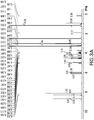
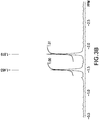
- the 31P chemical shifts were referenced using the "unified scale" to the absolute 1H frequency of 0 ppm.
- Some of the 1H and 31P spectra were acquired on a JEOL ECX-400 NMR spectrometer operating at 400 MHz for 1H and 162 MHz for 31P.
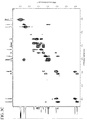
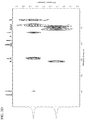
- the gradient COSY spectra were acquired at 45.0°C on a Varian INOVA-500 NMR spectrometer operating at 500 MHz for 1H and 202 MHz for 31P.
- the resulting FIDs were transferred to a PC and processed using NUTS NMR processing software from Acorn NMR Inc.
- the chemical shifts were referenced to the DMSO solvent, 2.50 ppm for 1H.
- N 6 -benzoyl-5'-O-(4,4'-dimethoxytrityl)-2'-O-propargyl-3'-O-[(2-cyanoethyl)-N,N-diisopropylaminophinyl]adenosine ( 4 , 2 g, 2.2 mmole) was dissolved in 25 ml anhydrous acetonitrile and dried by three co-evaporations with 25 ml anhydrous acetonitrile, the last time leaving ⁇ 6 ml.
- Ten 3 ⁇ molecular sieves were added and the dried solution stored under argon until use.
- the crude solid containing 7 was taken up in 25ml of CH 3 CN/water (1:1). After 0.45 micron PTFE filtration, 4-5ml sample portions were applied to a C-18 Dynamax column (40x250mm). Elution was performed with a gradient of acetonitrile and 10 mM aqueous triethylammonium acetate (20% to 50% CH 3 CN over 20 minutes at 50 ml/min flow). Fractions from the preparative HPLC runs containing pure 7 were pooled, evaporated to remove most of the CH 3 CN and water and coevaporated several times with CH 3 CN to give 55mg of pure 7 .
- the neutralized solution was desalted on a Waters C-18 Sep-Pak and the product eluted with CH 3 CN/10 mM aqueous triethylammonium acetate (15:85).
- the CH 3 CN was evaporated under reduced pressure and the solution was frozen and lyophilized.
- An additional round of lyophilization from water gave 9 mg (13 ⁇ mole) of 2'-O-propargyl-ML-CDA ( 8 ) as the bis-triethylammonium salt.
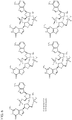
- FIG. 4-6 depict alternative compounds which may be made by analogous methods to those described herein.
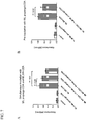
- the antagonist 2'-O-propargyl-cyclic-[A(2',5')pA(3',5')p] can inhibit STING-dependent induction of type I interferon induction by Rp, Rp dithio cyclic [A(2',5')pA(3',5')p] (ML RR-CDA) in human cells, 4x10 5 THP1-BlueTM ISG cells (a human monocyte cell line transfected with an IRF-inducible secreted embryonic alkaline phosphatase reporter gene (Invivogen) which express alkaline phosphatase under the control of a promoter comprised of five IFN-stimulated response elements) were incubated with 50 ⁇ M of Rp, Rp dithio cyclic [A(2',5')pA(3',5')p] (ML RR-CDA), 10 ⁇ M or 50 ⁇ M of the antagonist 2'
- Figure 7B shows that pre-incubation with 10 ⁇ M 2'-O-propargyl-cyclic-[A(2',5')pA(3',5')p] (ML-propargyl-CDA) inhibits induction of type I interferon by the subsequent addition of 50 ⁇ M Rp, Rp dithio cyclic [A(2',5')pA(3',5')p] (ML RR-CDA). It is known that cyclic di-nucleotides such as Rp, Rp dithio cyclic [A(2',5')pA(3',5')p] (ML RR-CDA) induce type I IFN signaling via STING.
Landscapes
- Health & Medical Sciences (AREA)
- Chemical & Material Sciences (AREA)
- Organic Chemistry (AREA)
- Life Sciences & Earth Sciences (AREA)
- General Health & Medical Sciences (AREA)
- Molecular Biology (AREA)
- Engineering & Computer Science (AREA)
- Biochemistry (AREA)
- Medicinal Chemistry (AREA)
- Pharmacology & Pharmacy (AREA)
- Veterinary Medicine (AREA)
- Animal Behavior & Ethology (AREA)
- Public Health (AREA)
- Genetics & Genomics (AREA)
- Biotechnology (AREA)
- General Chemical & Material Sciences (AREA)
- Bioinformatics & Cheminformatics (AREA)
- Chemical Kinetics & Catalysis (AREA)
- Nuclear Medicine, Radiotherapy & Molecular Imaging (AREA)
- Immunology (AREA)
- Epidemiology (AREA)
- Transplantation (AREA)
- Pharmaceuticals Containing Other Organic And Inorganic Compounds (AREA)
- Saccharide Compounds (AREA)
- Medicinal Preparation (AREA)
Applications Claiming Priority (2)
| Application Number | Priority Date | Filing Date | Title |
|---|---|---|---|
| US201361825009P | 2013-05-18 | 2013-05-18 | |
| PCT/US2014/038526 WO2014189806A1 (en) | 2013-05-18 | 2014-05-18 | Compositions and methods for inhibiting "stimulator of interferon gene" dependent signalling |
Publications (3)
| Publication Number | Publication Date |
|---|---|
| EP2996472A1 EP2996472A1 (en) | 2016-03-23 |
| EP2996472A4 EP2996472A4 (en) | 2016-12-28 |
| EP2996472B1 true EP2996472B1 (en) | 2019-03-27 |
Family
ID=51934007
Family Applications (1)
| Application Number | Title | Priority Date | Filing Date |
|---|---|---|---|
| EP14800803.0A Not-in-force EP2996472B1 (en) | 2013-05-18 | 2014-05-18 | Compositions and methods for inhibiting "stimulator of interferon gene" dependent signalling |
Country Status (5)
| Country | Link |
|---|---|
| US (2) | US9549944B2 (cg-RX-API-DMAC7.html) |
| EP (1) | EP2996472B1 (cg-RX-API-DMAC7.html) |
| JP (1) | JP6400082B2 (cg-RX-API-DMAC7.html) |
| CN (1) | CN105188373B (cg-RX-API-DMAC7.html) |
| WO (1) | WO2014189806A1 (cg-RX-API-DMAC7.html) |
Families Citing this family (128)
| Publication number | Priority date | Publication date | Assignee | Title |
|---|---|---|---|---|
| EP2858722B8 (en) | 2012-06-08 | 2018-02-21 | Aduro BioTech, Inc. | Compostions and methods for cancer immunotherapy |
| SG11201502796RA (en) | 2012-12-13 | 2015-05-28 | Aduro Biotech Inc | Compositions comprising cyclic purine dinucleotides having defined stereochemistries and methods for their preparation and use |
| JP2016506408A (ja) | 2012-12-19 | 2016-03-03 | ボード・オブ・リージエンツ,ザ・ユニバーシテイ・オブ・テキサス・システム | 哺乳動物の環状ジヌクレオチドシグナル伝達経路の薬学的標的化 |
| JP2016524593A (ja) | 2013-04-29 | 2016-08-18 | メモリアル スローン−ケタリング キャンサー センター | セカンドメッセンジャーのシグナル伝達を変えるための組成物及び方法 |
| CN105377867B (zh) * | 2013-05-03 | 2019-11-12 | 加利福尼亚大学董事会 | I型干扰素的环状二核苷酸诱导 |
| CU24377B1 (es) | 2013-05-18 | 2018-12-05 | Aduro Biotech Inc | Dinucléotidos de purina cíclicos y composiciones de los mismos útiles para inducir la producción de interferón de tipo i dependientes de sting |
| EP2996472B1 (en) | 2013-05-18 | 2019-03-27 | Aduro Biotech, Inc. | Compositions and methods for inhibiting "stimulator of interferon gene" dependent signalling |
| US10176292B2 (en) | 2013-07-31 | 2019-01-08 | Memorial Sloan-Kettering Cancer Center | STING crystals and modulators |
| EP3152217B1 (en) | 2014-06-04 | 2018-08-01 | GlaxoSmithKline Intellectual Property Development Limited | Cyclic di-nucleotides as modulators of sting |
| MA41044A (fr) | 2014-10-08 | 2017-08-15 | Novartis Ag | Compositions et procédés d'utilisation pour une réponse immunitaire accrue et traitement contre le cancer |
| SG11201702401RA (en) | 2014-10-14 | 2017-04-27 | Novartis Ag | Antibody molecules to pd-l1 and uses thereof |
| GB201501462D0 (en) | 2015-01-29 | 2015-03-18 | Glaxosmithkline Ip Dev Ltd | Novel compounds |
| WO2016130616A1 (en) | 2015-02-11 | 2016-08-18 | The Johns Hopkins University | Bacteria over-expressing c-di-amp and therapeutic methods |
| TWI706958B (zh) | 2015-03-10 | 2020-10-11 | 美商艾杜諾生物科技公司 | 活化「干擾素基因刺激因子」依賴性訊息傳導之組合物及方法 |
| US20180207273A1 (en) | 2015-07-29 | 2018-07-26 | Novartis Ag | Combination therapies comprising antibody molecules to tim-3 |
| EP3328418A1 (en) | 2015-07-29 | 2018-06-06 | Novartis AG | Combination therapies comprising antibody molecules to pd-1 |
| US20180340025A1 (en) | 2015-07-29 | 2018-11-29 | Novartis Ag | Combination therapies comprising antibody molecules to lag-3 |
| US11453697B1 (en) | 2015-08-13 | 2022-09-27 | Merck Sharp & Dohme Llc | Cyclic di-nucleotide compounds as sting agonists |
| CN108137641B (zh) | 2015-08-13 | 2022-04-01 | 默沙东公司 | 作为sting激动剂的环状双核苷酸化合物 |
| CN105367617A (zh) * | 2015-09-25 | 2016-03-02 | 武汉品生科技有限公司 | 一种基于环二腺核苷酸的衍生物、tat多肽及其在一型干扰素小分子中抑制剂的应用 |
| JP6411676B2 (ja) | 2015-12-03 | 2018-10-24 | グラクソスミスクライン、インテレクチュアル、プロパティー、ディベロップメント、リミテッドGlaxosmithkline Intellectual Property Development Limited | Stingの調節因子としての環状プリンジヌクレオチド |
| CN106554416B (zh) * | 2015-12-09 | 2019-03-15 | 聊城市奥润生物医药科技有限公司 | 一种抗pd-l1人源化单克隆抗体联合干扰素基因刺激蛋白(sting)激动剂在抗肿瘤中的应用 |
| US20180369268A1 (en) * | 2015-12-16 | 2018-12-27 | Aduro Biotech, Inc. | Methods for identifying inhibitors of "stimulator of interferon gene"- dependent interferon production |
| CN108495651A (zh) | 2015-12-17 | 2018-09-04 | 诺华股份有限公司 | 抗pd-1的抗体分子及其用途 |
| SMT202500412T1 (it) | 2016-01-11 | 2025-11-10 | Innate Tumor Immunity Inc | Dinucleotidi ciclici per il trattamento di condizioni associate all’attività di sting quali il cancro |
| JP6993699B2 (ja) | 2016-01-11 | 2022-02-03 | ウニヴェルズィテート・ツューリヒ | ヒトインターロイキン-2に対する免疫刺激性ヒト化モノクローナル抗体及びその融合タンパク質 |
| US20170239283A1 (en) * | 2016-02-23 | 2017-08-24 | Providence Health & Services - Oregon | Use of sting agonists to treat virally-induced and pre-malignant growths |
| IL280430B2 (en) * | 2016-03-18 | 2023-11-01 | Univ Texas | Cyclic dinucleotide compounds and methods of use |
| SG10201900628RA (en) | 2016-04-07 | 2019-02-27 | Glaxosmithkline Ip Dev Ltd | Heterocyclic amides useful as protein modulators |
| WO2017175156A1 (en) | 2016-04-07 | 2017-10-12 | Glaxosmithkline Intellectual Property Development Limited | Heterocyclic amides useful as protein modulators |
| WO2017186711A1 (en) | 2016-04-25 | 2017-11-02 | Invivogen | Novel complexes of immunostimulatory compounds, and uses thereof |
| US10696985B1 (en) | 2016-06-06 | 2020-06-30 | Vanderbilt University | Reversibly crosslinked endosomolytic polymer vesicles for cytosolic drug delivery |
| EP3507367A4 (en) | 2016-07-05 | 2020-03-25 | Aduro BioTech, Inc. | CYCLIC DINUCLEOTID COMPOUNDS WITH INCLUDED NUCLEIC ACIDS AND USES THEREOF |
| DE102016113714A1 (de) | 2016-07-26 | 2018-02-01 | Rosa Karl | Transfektionsverfahren mit nicht-viralen Genliefersystemen |
| JP6636673B2 (ja) | 2016-10-04 | 2020-01-29 | メルク・シャープ・アンド・ドーム・コーポレーションMerck Sharp & Dohme Corp. | STINGアゴニストとしてのベンゾ[b]チオフェン化合物 |
| JOP20170188A1 (ar) * | 2016-11-25 | 2019-01-30 | Janssen Biotech Inc | ثنائي النوكليوتيدات الحلقية كمنبهات ستينغ (sting) |
| WO2018100558A2 (en) | 2016-12-01 | 2018-06-07 | Takeda Pharmaceutical Company Limited | Cyclic dinucleotide |
| RU2019122598A (ru) * | 2016-12-20 | 2021-01-22 | Мерк Шарп И Доум Корп. | Циклические динуклеотидные агонисты sting для лечения рака |
| ES2891326T3 (es) | 2017-01-27 | 2022-01-27 | Janssen Biotech Inc | Dinucleótidos cíclicos como agonistas de la STING |
| ES2924186T3 (es) * | 2017-01-27 | 2022-10-05 | Janssen Biotech Inc | Dinucleótidos cíclicos como agonistas de STING |
| MX2019009070A (es) | 2017-02-01 | 2019-10-30 | Modernatx Inc | Composiciones de arnm terapeuticas inmunomoduladoras que codifican peptidos de mutacion de oncogenes de activacion. |
| US20200055883A1 (en) | 2017-02-17 | 2020-02-20 | Eisai R&D Management Co., Ltd. | Cyclic di-nucleotides derivative for the treatment of cancer |
| JP2018131427A (ja) * | 2017-02-17 | 2018-08-23 | 国立研究開発法人理化学研究所 | 免疫細胞の制御技術 |
| CA3053568A1 (en) | 2017-02-21 | 2018-08-30 | Board Of Regents, The University Of Texas System | Cyclic dinucleotides as agonists of stimulator of interferon gene dependent signalling |
| US11466047B2 (en) | 2017-05-12 | 2022-10-11 | Merck Sharp & Dohme Llc | Cyclic di-nucleotide compounds as sting agonists |
| WO2018229715A1 (en) | 2017-06-16 | 2018-12-20 | Novartis Ag | Compositions comprising anti-cd32b antibodies and methods of use thereof |
| MX2019015885A (es) | 2017-06-22 | 2020-09-10 | Novartis Ag | Moleculas de anticuerpo que se unen a cd73 y usos de las mismas. |
| US20200172628A1 (en) | 2017-06-22 | 2020-06-04 | Novartis Ag | Antibody molecules to cd73 and uses thereof |
| AU2018311965A1 (en) | 2017-08-04 | 2020-02-13 | Merck Sharp & Dohme Llc | Combinations of PD-1 antagonists and benzo[b]thiophene sting antagonists for cancer treatment |
| MA49772A (fr) | 2017-08-04 | 2021-04-21 | Merck Sharp & Dohme | Agonistes benzo[b]thiophène de sting pour le traitement du cancer |
| US10526364B2 (en) * | 2017-08-15 | 2020-01-07 | Kumar Rajappan | Immune modulatory compositions |
| TWI808092B (zh) | 2017-08-30 | 2023-07-11 | 中國大陸商北京軒義醫藥科技有限公司 | 作為干擾素基因調節劑之刺激劑的環狀二核苷酸 |
| JP7208225B2 (ja) * | 2017-08-31 | 2023-01-18 | ブリストル-マイヤーズ スクイブ カンパニー | 抗癌剤としての環状ジヌクレオチド |
| US10947263B2 (en) * | 2017-08-31 | 2021-03-16 | Bristol-Myers Squibb Company | Cyclic dinucleotides as anticancer agents |
| EP3675859A4 (en) | 2017-08-31 | 2021-06-30 | Sperovie Biosciences, Inc. | COMPOUNDS, COMPOSITIONS AND PROCEDURES FOR TREATMENT OF DISEASES |
| AU2018344902B2 (en) | 2017-10-05 | 2021-06-03 | Glaxosmithkline Intellectual Property Development Limited | Modulators of stimulator of interferon genes (STING) useful in treating HIV |
| US11377440B2 (en) | 2017-10-05 | 2022-07-05 | Glaxosmithkline Intellectual Property Development Limited | Modulators of stimulator of interferon genes (STING) |
| ES2997757T3 (en) * | 2017-10-16 | 2025-02-18 | Bristol Myers Squibb Co | Cyclic dinucleotides as anticancer agents |
| CN109694397B (zh) * | 2017-10-23 | 2021-08-31 | 上海弘翊生物科技有限公司 | 环状二核苷酸化合物、其制备方法和应用 |
| WO2019084060A1 (en) | 2017-10-24 | 2019-05-02 | Silverback Therapeutics, Inc. | CONJUGATES AND METHODS OF USE FOR THE SELECTIVE DELIVERY OF IMMUNOMODULATORY AGENTS |
| WO2019081983A1 (en) | 2017-10-25 | 2019-05-02 | Novartis Ag | CD32B TARGETING ANTIBODIES AND METHODS OF USE |
| PH12020550585A1 (en) | 2017-11-10 | 2021-04-19 | Takeda Pharmaceuticals Co | Sting modulator compounds, and methods of making and using |
| JP7037667B2 (ja) | 2017-12-20 | 2022-03-16 | インスティチュート オブ オーガニック ケミストリー アンド バイオケミストリー エーエスシーアール,ヴイ.ヴイ.アイ. | Stingアダプタータンパク質を活性化するホスホン酸結合を有する3’3’環状ジヌクレオチド |
| WO2019125974A1 (en) | 2017-12-20 | 2019-06-27 | Merck Sharp & Dohme Corp. | Cyclic di-nucleotide compounds as sting agonists |
| US11203610B2 (en) | 2017-12-20 | 2021-12-21 | Institute Of Organic Chemistry And Biochemistry Ascr, V.V.I. | 2′3′ cyclic dinucleotides with phosphonate bond activating the sting adaptor protein |
| TW202003032A (zh) | 2018-03-23 | 2020-01-16 | 美商科迪亞克生物科學公司 | 包含s t i n g 促效劑之胞外囊泡 |
| US11702430B2 (en) | 2018-04-03 | 2023-07-18 | Merck Sharp & Dohme Llc | Aza-benzothiophene compounds as STING agonists |
| US10793557B2 (en) | 2018-04-03 | 2020-10-06 | Merck Sharp & Dohme Corp. | Sting agonist compounds |
| TWI818007B (zh) | 2018-04-06 | 2023-10-11 | 捷克科學院有機化學與生物化學研究所 | 2'3'-環二核苷酸 |
| TWI833744B (zh) | 2018-04-06 | 2024-03-01 | 捷克科學院有機化學與生物化學研究所 | 3'3'-環二核苷酸 |
| WO2019211799A1 (en) | 2018-05-03 | 2019-11-07 | Institute Of Organic Chemistry And Biochemistry Ascr, V.V.I. | 2'3'-cyclic dinucleotide analogue comprising a cyclopentanyl modified nucleotide |
| WO2019232244A2 (en) | 2018-05-31 | 2019-12-05 | Novartis Ag | Antibody molecules to cd73 and uses thereof |
| US12251394B2 (en) | 2018-06-01 | 2025-03-18 | Eisai R&D Management Co., Ltd. | Methods for the treatment of bladder cancer |
| US20210164992A1 (en) * | 2018-07-23 | 2021-06-03 | New York University | Compositions and methods related to innate response to dna and regulation of interferon-beta |
| KR102783784B1 (ko) | 2018-08-16 | 2025-03-21 | 에자이 알앤드디 매니지먼트 가부시키가이샤 | 화합물의 염 및 이의 결정 |
| WO2020041720A1 (en) | 2018-08-24 | 2020-02-27 | Codiak Biosciences, Inc. | Extracellular vesicles targeting dendritic cells and uses thereof |
| CN118846110A (zh) | 2018-09-06 | 2024-10-29 | 第一三共株式会社 | 抗体药物偶联物 |
| SG11202101980VA (en) | 2018-09-12 | 2021-03-30 | Silverback Therapeutics Inc | Methods and composition for the treatment of disease with immune stimulatory conjugates |
| MA53659A (fr) | 2018-09-21 | 2022-02-23 | Shanghai De Novo Pharmatech Co Ltd | Analogue dinucléotidique cyclique, composition pharmaceutique associée et utilisation |
| US12508233B2 (en) | 2018-10-30 | 2025-12-30 | Vanderbilt University | Graft copolymers, methods of forming graft copolymers, and methods of use thereof |
| EP3883651A1 (en) * | 2018-11-19 | 2021-09-29 | IFM Due, Inc. | Compounds and compositions for treating conditions associated with sting activity |
| CN113574063B (zh) | 2019-03-07 | 2025-03-18 | 捷克共和国有机化学与生物化学研究所 | 3’3’-环二核苷酸及其前药 |
| WO2020178768A1 (en) | 2019-03-07 | 2020-09-10 | Institute Of Organic Chemistry And Biochemistry Ascr, V.V.I. | 3'3'-cyclic dinucleotide analogue comprising a cyclopentanyl modified nucleotide as sting modulator |
| WO2020178769A1 (en) | 2019-03-07 | 2020-09-10 | Institute Of Organic Chemistry And Biochemistry Ascr, V.V.I. | 2'3'-cyclic dinucleotides and prodrugs thereof |
| WO2020191361A2 (en) | 2019-03-21 | 2020-09-24 | Codiak Biosciences, Inc. | Extracellular vesicles for vaccine delivery |
| KR20210141554A (ko) | 2019-03-21 | 2021-11-23 | 코디악 바이오사이언시즈, 인크. | 세포외 소포 접합체 및 이의 용도 |
| US12281109B2 (en) | 2019-04-04 | 2025-04-22 | Merck Sharp & Dohme Llc | Inhibitors of histone deacetylase-3 useful for the treatment of cancer, inflammation, neurodegeneration diseases and diabetes |
| TW202104214A (zh) | 2019-04-05 | 2021-02-01 | 英商葛蘭素史密斯克藍智慧財產發展有限公司 | 化合物 |
| CN114127082A (zh) * | 2019-05-09 | 2022-03-01 | 阿里戈斯治疗公司 | 作为sting调节剂的经修饰的环状二核苷化合物 |
| TWI925817B (zh) | 2019-05-10 | 2026-05-21 | 日商武田藥品工業股份有限公司 | 抗體藥物結合物 |
| US20220251200A1 (en) | 2019-07-03 | 2022-08-11 | Codiak Biosciences, Inc. | Extracellular vesicles targeting t cells and uses thereof |
| WO2021007160A1 (en) | 2019-07-05 | 2021-01-14 | Tambo, Inc. | Trans-cyclooctene bioorthogonal agents and uses in cancer and immunotherapy |
| EP4003325A1 (en) | 2019-07-24 | 2022-06-01 | INSERM (Institut National de la Santé et de la Recherche Médicale) | Inhibitors of the sting pathway for the treatment of hidradenitis suppurativa |
| KR20220056176A (ko) | 2019-08-02 | 2022-05-04 | 메르사나 테라퓨틱스, 인코포레이티드 | 암 치료를 위한 sting(인터페론 유전자의 자극인자) 작용제로서의 비스-[n-((5-카바모일)-1h-벤조[d]이미다졸-2-일)-피라졸-5-카복사미드] 유도체 및 관련 화합물 |
| WO2021041532A1 (en) | 2019-08-26 | 2021-03-04 | Dana-Farber Cancer Institute, Inc. | Use of heparin to promote type 1 interferon signaling |
| US20230103726A1 (en) | 2019-09-25 | 2023-04-06 | Codiak Biosciences, Inc. | Methods of producing extracellular vesicles |
| EP4034247A1 (en) | 2019-09-25 | 2022-08-03 | Codiak BioSciences, Inc. | Sting agonist comprising exosomes for treating neuroimmunological disorders |
| CN114727947A (zh) | 2019-09-25 | 2022-07-08 | 科迪亚克生物科学公司 | 细胞外囊泡组合物 |
| JP2022551420A (ja) | 2019-09-25 | 2022-12-09 | コディアック バイオサイエンシーズ, インコーポレイテッド | 腫瘍を治療するためのil-12提示エクソソームとstingアゴニスト含有エクソソームとの併用 |
| WO2021067644A1 (en) | 2019-10-01 | 2021-04-08 | Silverback Therapeutics, Inc. | Combination therapy with immune stimulatory conjugates |
| US20230074558A1 (en) | 2019-12-06 | 2023-03-09 | Mersana Therapeutics, Inc. | Dimeric compounds as sting agonists |
| US11179473B2 (en) | 2020-02-21 | 2021-11-23 | Silverback Therapeutics, Inc. | Nectin-4 antibody conjugates and uses thereof |
| US12678512B2 (en) | 2020-03-06 | 2026-07-14 | Daiichi Sankyo Company, Limited | Anti-EGFR antibody-drug conjugate with a cyclic dinucleotide derivative |
| WO2021184017A1 (en) | 2020-03-13 | 2021-09-16 | Codiak Biosciences, Inc. | Extracellular vesicles for treating neurological disorders |
| JP2023518414A (ja) | 2020-03-20 | 2023-05-01 | コディアック バイオサイエンシーズ, インコーポレイテッド | 治療のための細胞外小胞 |
| CN116196435B (zh) | 2020-04-02 | 2025-12-02 | 梅尔莎纳医疗公司 | 包含sting激动剂的抗体药物缀合物 |
| US20230141284A1 (en) | 2020-04-10 | 2023-05-11 | Ono Pharmaceutical Co., Ltd. | Cancer therapeutic method |
| EP4149457A1 (en) | 2020-05-15 | 2023-03-22 | Immunesensor Therapeutics, Inc. | Sting agonist combination treatments with immune checkpoint inhibitors |
| WO2021237100A1 (en) | 2020-05-21 | 2021-11-25 | Codiak Biosciences, Inc. | Methods of targeting extracellular vesicles to lung |
| KR20230047361A (ko) | 2020-07-01 | 2023-04-07 | 아르스 파마슈티컬스 인크. | 항-asgr1 항체 접합체 및 이의 용도 |
| JP2023537066A (ja) | 2020-08-07 | 2023-08-30 | タンボ・インコーポレイテッド | トランス-シクロオクテン生体直交型薬剤並びに癌及び免疫療法における使用 |
| EP4209506A4 (en) | 2020-09-02 | 2024-10-09 | Daiichi Sankyo Company, Limited | NEW ENDO-N-ACETYL GLUCOSAMINIDASE |
| WO2022066898A2 (en) | 2020-09-23 | 2022-03-31 | Codiak Biosciences, Inc. | Methods of producing extracellular vesicles |
| WO2022066883A1 (en) | 2020-09-23 | 2022-03-31 | Codiak Biosciences, Inc. | Extracellular vesicles comprising kras antigens and uses thereof |
| WO2022079175A1 (en) | 2020-10-14 | 2022-04-21 | Boehringer Ingelheim International Gmbh | Combination of a sting agonist and a complex comprising a cell penetrating peptide, a cargo and a tlr peptide agonist |
| JP7875196B2 (ja) * | 2020-10-20 | 2026-06-17 | タイリガンド バイオサイエンス(シャンハイ)リミテッド | 多機能環状ジヌクレオチド及びその使用 |
| JP7397996B2 (ja) | 2020-11-09 | 2023-12-13 | 武田薬品工業株式会社 | 抗体薬物コンジュゲート |
| TW202241454A (zh) | 2021-02-01 | 2022-11-01 | 日商第一三共股份有限公司 | 抗體-免疫賦活化劑共軛物之新穎製造方法 |
| JP2024514707A (ja) | 2021-04-20 | 2024-04-02 | アンスティテュ・クリー | 免疫療法における使用のための組成物及び方法 |
| JP2024517131A (ja) | 2021-04-20 | 2024-04-19 | アンスティテュ・クリー | 免疫療法における使用のための組成物及び方法 |
| US20230121320A1 (en) | 2021-07-23 | 2023-04-20 | Immunesensor Therapeutics, Inc. | Sting agonist combination treatments with cytokines |
| WO2023056468A1 (en) | 2021-09-30 | 2023-04-06 | Codiak Biosciences, Inc. | Extracellular vesicle comprising cholesterol tagged sting-agonist |
| WO2023154799A1 (en) | 2022-02-14 | 2023-08-17 | The United States Of America, As Represented By The Secretary, Department Of Health And Human Services | Combination immunotherapy for treating cancer |
| IL315341A (en) | 2022-03-02 | 2024-10-01 | Daiichi Sankyo Co Ltd | METHOD FOR PRODUCING Fc-CONTAINING MOLECULE |
| KR20250054799A (ko) | 2022-08-29 | 2025-04-23 | 다이이찌 산쿄 가부시키가이샤 | 변이 Fc 영역을 포함하는 항체 약물 콘쥬게이트 |
| GB202304385D0 (en) | 2023-03-24 | 2023-05-10 | Prostate Cancer Res | Combinatorial IL-15 therapy |
| CN116253766B (zh) * | 2023-03-27 | 2024-08-27 | 瑞阳(上海)新药研发有限公司 | 一种环二核苷酸2’,3’-cGAMP的制备方法 |
| WO2025262266A1 (en) | 2024-06-21 | 2025-12-26 | Institut National de la Santé et de la Recherche Médicale | Methods of determining the clinical phenotype of patients suffering from hidradenitis suppurativa |
Family Cites Families (53)
| Publication number | Priority date | Publication date | Assignee | Title |
|---|---|---|---|---|
| GB9110808D0 (en) | 1991-05-17 | 1991-07-10 | Retroscreen Ltd | Aids vaccine and method for its production |
| GB2257704B (en) | 1991-07-18 | 1995-03-01 | Erba Carlo Spa | Cyclic oligonucleotides phosphorothioates |
| US5904920A (en) | 1991-10-04 | 1999-05-18 | Whitehead Institute For Biomedical Research | Regulation of systemic immune responses utilizing cytokines and antigens |
| US5637483A (en) | 1991-10-04 | 1997-06-10 | Whitehead Institute For Biomedical Research | Irradiated tumor cell vaccine engineered to express GM-CSF |
| IT1262895B (it) | 1992-03-02 | 1996-07-22 | Proteina estratta da ceppi citotossici di helicobacter pylori, gene che la esprime, uso della proteina come vaccino o diagnostico. | |
| US5635160A (en) | 1995-06-07 | 1997-06-03 | The University Of North Carolina At Chapel Hill | Dinucleotides useful for the treatment of cystic fibrosis and for hydrating mucus secretions |
| US6033674A (en) | 1995-12-28 | 2000-03-07 | Johns Hopkins University School Of Medicine | Method of treating cancer with a tumor cell line having modified cytokine expression |
| US6277368B1 (en) | 1996-07-25 | 2001-08-21 | The Regents Of The University Of California | Cancer immunotherapy using autologous tumor cells combined with cells expressing a membrane cytokine |
| ATE264911T1 (de) | 1998-02-02 | 2004-05-15 | Univ Johns Hopkins Med | Eine universelle immunmodulatorische cytokin- expressierende zelllinie in wartestelling. entsprechende zusammensetzungen und methoden ihrer herstellung und verwendungen |
| ID29546A (id) | 1999-02-15 | 2001-09-06 | Nippon Shinyaku Co Ltd | Polinukleotida dengan rantai yang diperpendek dan metode pembuatannya |
| US6558670B1 (en) | 1999-04-19 | 2003-05-06 | Smithkline Beechman Biologicals S.A. | Vaccine adjuvants |
| CA2460014A1 (en) | 2000-09-21 | 2002-03-28 | The Regents Of The University Of California | Spas-1 cancer antigen |
| US7279883B2 (en) | 2001-01-23 | 2007-10-09 | Lydia L. Sohn | Particle analyzer and methods for use thereof |
| TW200303759A (en) | 2001-11-27 | 2003-09-16 | Schering Corp | Methods for treating cancer |
| AR040996A1 (es) * | 2002-08-19 | 2005-04-27 | Coley Pharm Group Inc | Acidos nucleicos inmunoestimuladores |
| JP2007500697A (ja) * | 2003-07-28 | 2007-01-18 | デイビッド・ケイ・アール・カラオリス | 微生物病原体の毒性を減弱させる方法、および微生物のバイオフィルム形成を阻害する方法 |
| KR20060130038A (ko) | 2003-10-15 | 2006-12-18 | 메디뮨 인코포레이티드 | 리스테리아에 의거한 EphA2 백신 |
| US20050175683A1 (en) * | 2003-10-24 | 2005-08-11 | Yuanpeng Zhang | Preparation of lipid particles |
| US7592326B2 (en) | 2004-03-15 | 2009-09-22 | Karaolis David K R | Method for stimulating the immune, inflammatory or neuroprotective response |
| WO2005089777A1 (en) | 2004-03-15 | 2005-09-29 | Karaolis David K R | A method for inhibiting cancer cell proliferation or increasing cancer cell apoptosis |
| WO2006124340A2 (en) | 2005-05-06 | 2006-11-23 | The Regents Of California University | Microfluidic system for identifying or sizing individual particles passing through a channel |
| US20070059683A1 (en) | 2005-09-15 | 2007-03-15 | Tom Barber | Veterinary diagnostic system |
| EP1782826A1 (en) | 2005-11-08 | 2007-05-09 | GBF Gesellschaft für Biotechnologische Forschung mbH | PQS and c-diGMP and its conjugates as adjuvants and their uses in pharmaceutical compositions |
| WO2008030887A2 (en) | 2006-09-05 | 2008-03-13 | Bipar Sciences, Inc. | Methods for designing parp inhibitors and uses thereof |
| EP2324044A4 (en) | 2008-08-04 | 2012-04-25 | Univ Miami | STING (STIMULATOR OF INTERFERON GENES) AS A REGULATOR OF BORROWING IMMUNE REACTIONS |
| US8840881B2 (en) | 2008-08-28 | 2014-09-23 | Aduro Gvax Inc. | Methods and compositions for treating prostate cancer or inducing a humoral immune response against prostate cancer |
| KR101329374B1 (ko) | 2008-12-09 | 2013-11-14 | 콜레이 파마시티컬 그룹, 인코포레이티드 | 면역자극성 올리고뉴클레오타이드 |
| CA2754896C (en) | 2009-03-09 | 2017-11-28 | Molecular Express, Inc. | Methods and compositions for liposomal formulation of antigens and uses thereof |
| CA2764374C (en) | 2009-06-05 | 2019-11-19 | Infectious Disease Research Institute | Synthetic glucopyranosyl lipid adjuvants |
| US20120178710A1 (en) | 2009-07-01 | 2012-07-12 | Rutgers, The State University Of New Jersey | Synthesis of cyclic diguanosine monophosphate and thiophosphate analogs thereof |
| US8771933B2 (en) | 2009-10-06 | 2014-07-08 | Massachusetts Institute Of Technology | Continuous-flow deformability-based cell separation |
| US20110289043A1 (en) | 2010-03-22 | 2011-11-24 | Brown University Research Foundation | Computational methods and compositions |
| CA2798074A1 (en) | 2010-04-27 | 2011-11-03 | The Johns Hopkins University | Immunogenic compositions and methods for treating neoplasia |
| US8450293B2 (en) | 2010-08-10 | 2013-05-28 | Rutgers, The State University Of New Jersey | Synthesis and characterization of C8 analogs of c-di-GMP |
| DK2640842T3 (en) | 2010-11-17 | 2018-08-13 | Aduro Biotech Inc | Methods and compositions for inducing an immune response to EGFRVIII |
| US9061048B2 (en) * | 2010-12-15 | 2015-06-23 | The Regents Of The University Of California | Cyclic di-AMP induction of type I interferon |
| US8772474B2 (en) | 2010-12-22 | 2014-07-08 | Alios Biopharma, Inc. | Cyclic nucleotide analogs |
| AU2012243396A1 (en) | 2011-04-15 | 2013-10-31 | The University Of British Columbia | Method and apparatus for separation of particles |
| WO2013086331A1 (en) | 2011-12-07 | 2013-06-13 | President And Fellows Of Harvard College | High efficiency di-nucleotide cyclase |
| AU2013256468A1 (en) | 2012-04-30 | 2014-12-04 | Glen N. Barber | Modulating immune responses |
| EP2858722B8 (en) * | 2012-06-08 | 2018-02-21 | Aduro BioTech, Inc. | Compostions and methods for cancer immunotherapy |
| SG11201502796RA (en) * | 2012-12-13 | 2015-05-28 | Aduro Biotech Inc | Compositions comprising cyclic purine dinucleotides having defined stereochemistries and methods for their preparation and use |
| JP2016506408A (ja) | 2012-12-19 | 2016-03-03 | ボード・オブ・リージエンツ,ザ・ユニバーシテイ・オブ・テキサス・システム | 哺乳動物の環状ジヌクレオチドシグナル伝達経路の薬学的標的化 |
| JP2016524593A (ja) * | 2013-04-29 | 2016-08-18 | メモリアル スローン−ケタリング キャンサー センター | セカンドメッセンジャーのシグナル伝達を変えるための組成物及び方法 |
| CN105377867B (zh) | 2013-05-03 | 2019-11-12 | 加利福尼亚大学董事会 | I型干扰素的环状二核苷酸诱导 |
| EP2996472B1 (en) | 2013-05-18 | 2019-03-27 | Aduro Biotech, Inc. | Compositions and methods for inhibiting "stimulator of interferon gene" dependent signalling |
| CU24377B1 (es) | 2013-05-18 | 2018-12-05 | Aduro Biotech Inc | Dinucléotidos de purina cíclicos y composiciones de los mismos útiles para inducir la producción de interferón de tipo i dependientes de sting |
| US10176292B2 (en) | 2013-07-31 | 2019-01-08 | Memorial Sloan-Kettering Cancer Center | STING crystals and modulators |
| AU2014340269B2 (en) | 2013-10-21 | 2018-06-21 | Drexel University | Use of STING agonists to treat chronic hepatitis B virus infection |
| JP2016538344A (ja) | 2013-11-19 | 2016-12-08 | ザ・ユニバーシティ・オブ・シカゴThe University Of Chicago | 癌処置としてのstingアゴニストの使用 |
| EP3071229A4 (en) | 2013-11-22 | 2017-05-10 | Brock University | Use of fluorinated cyclic dinucleotides as oral vaccine adjuvants |
| US10421971B2 (en) | 2014-01-15 | 2019-09-24 | The University Of Chicago | Anti-tumor therapy |
| EP3152217B1 (en) | 2014-06-04 | 2018-08-01 | GlaxoSmithKline Intellectual Property Development Limited | Cyclic di-nucleotides as modulators of sting |
-
2014
- 2014-05-18 EP EP14800803.0A patent/EP2996472B1/en not_active Not-in-force
- 2014-05-18 WO PCT/US2014/038526 patent/WO2014189806A1/en not_active Ceased
- 2014-05-18 CN CN201480024389.1A patent/CN105188373B/zh not_active Expired - Fee Related
- 2014-05-18 JP JP2016514152A patent/JP6400082B2/ja not_active Expired - Fee Related
- 2014-05-19 US US14/280,668 patent/US9549944B2/en not_active Expired - Fee Related
-
2017
- 2017-01-20 US US15/411,850 patent/US10189873B2/en not_active Expired - Fee Related
Non-Patent Citations (1)
| Title |
|---|
| None * |
Also Published As
| Publication number | Publication date |
|---|---|
| CN105188373A (zh) | 2015-12-23 |
| US20170218008A1 (en) | 2017-08-03 |
| JP2016531842A (ja) | 2016-10-13 |
| EP2996472A1 (en) | 2016-03-23 |
| US20140341976A1 (en) | 2014-11-20 |
| JP6400082B2 (ja) | 2018-10-03 |
| WO2014189806A1 (en) | 2014-11-27 |
| HK1217606A1 (zh) | 2017-01-20 |
| US10189873B2 (en) | 2019-01-29 |
| EP2996472A4 (en) | 2016-12-28 |
| CN105188373B (zh) | 2017-09-22 |
| US9549944B2 (en) | 2017-01-24 |
Similar Documents
| Publication | Publication Date | Title |
|---|---|---|
| US10189873B2 (en) | Compositions and methods for inhibiting “stimulator of interferon gene”-dependent signalling | |
| DK2931738T3 (en) | COMPOSITIONS INCLUDING CYCLIC PURINDINUCLEOTIDES WITH DEFINED STEREOCHEMISTRY AND METHODS FOR PREPARING AND USING THEREOF | |
| JP6453855B2 (ja) | 「インターフェロン遺伝子の刺激因子」依存性シグナル伝達を活性化するための組成物及び方法 | |
| JPWO2015108048A1 (ja) | 抗腫瘍作用を有するキラル核酸アジュバンド及び抗腫瘍剤 | |
| US10144933B2 (en) | Chiral nucleic acid adjuvant having immunity induction activity, and immunity induction activator | |
| RU2677639C2 (ru) | Хиральный адъювант нуклеиновой кислоты | |
| JPWO2015108046A1 (ja) | 抗アレルギー作用を有するキラル核酸アジュバンド及び抗アレルギー剤 | |
| KR20150022996A (ko) | 암 면역요법을 위한 조성물 및 방법 | |
| HK1217606B (en) | Compositions and methods for inhibiting "stimulator of interferon gene" dependent signalling | |
| WO2025031498A1 (zh) | Toll样受体激动剂及其应用 | |
| HK1219024B (en) | Compositions and methods for activating "stimulator of interferon gene"-dependent signalling | |
| HK1259906A1 (en) | Compositions comprising cyclic purine dinucleotides having defined stereochemistries and methods for their preparation and use | |
| HK1212707B (en) | Compositions comprising cyclic purine dinucleotides having defined stereochemistries and methods for their preparation and use | |
| HK1222512B (en) | Compositions and methods for activating "stimulator of interferon gene"-dependent signalling |
Legal Events
| Date | Code | Title | Description |
|---|---|---|---|
| PUAI | Public reference made under article 153(3) epc to a published international application that has entered the european phase |
Free format text: ORIGINAL CODE: 0009012 |
|
| 17P | Request for examination filed |
Effective date: 20151210 |
|
| AK | Designated contracting states |
Kind code of ref document: A1 Designated state(s): AL AT BE BG CH CY CZ DE DK EE ES FI FR GB GR HR HU IE IS IT LI LT LU LV MC MK MT NL NO PL PT RO RS SE SI SK SM TR |
|
| AX | Request for extension of the european patent |
Extension state: BA ME |
|
| DAX | Request for extension of the european patent (deleted) | ||
| REG | Reference to a national code |
Ref country code: DE Ref legal event code: R079 Ref document number: 602014043726 Country of ref document: DE Free format text: PREVIOUS MAIN CLASS: A01N0043040000 Ipc: C07H0021020000 |
|
| A4 | Supplementary search report drawn up and despatched |
Effective date: 20161129 |
|
| RIC1 | Information provided on ipc code assigned before grant |
Ipc: C07H 21/02 20060101AFI20161123BHEP Ipc: A61K 31/7084 20060101ALI20161123BHEP Ipc: A61P 37/06 20060101ALI20161123BHEP |
|
| GRAP | Despatch of communication of intention to grant a patent |
Free format text: ORIGINAL CODE: EPIDOSNIGR1 |
|
| STAA | Information on the status of an ep patent application or granted ep patent |
Free format text: STATUS: GRANT OF PATENT IS INTENDED |
|
| INTG | Intention to grant announced |
Effective date: 20181005 |
|
| GRAS | Grant fee paid |
Free format text: ORIGINAL CODE: EPIDOSNIGR3 |
|
| GRAA | (expected) grant |
Free format text: ORIGINAL CODE: 0009210 |
|
| STAA | Information on the status of an ep patent application or granted ep patent |
Free format text: STATUS: THE PATENT HAS BEEN GRANTED |
|
| AK | Designated contracting states |
Kind code of ref document: B1 Designated state(s): AL AT BE BG CH CY CZ DE DK EE ES FI FR GB GR HR HU IE IS IT LI LT LU LV MC MK MT NL NO PL PT RO RS SE SI SK SM TR |
|
| REG | Reference to a national code |
Ref country code: GB Ref legal event code: FG4D |
|
| REG | Reference to a national code |
Ref country code: CH Ref legal event code: EP |
|
| REG | Reference to a national code |
Ref country code: AT Ref legal event code: REF Ref document number: 1112929 Country of ref document: AT Kind code of ref document: T Effective date: 20190415 |
|
| REG | Reference to a national code |
Ref country code: IE Ref legal event code: FG4D |
|
| REG | Reference to a national code |
Ref country code: DE Ref legal event code: R096 Ref document number: 602014043726 Country of ref document: DE |
|
| PG25 | Lapsed in a contracting state [announced via postgrant information from national office to epo] |
Ref country code: SE Free format text: LAPSE BECAUSE OF FAILURE TO SUBMIT A TRANSLATION OF THE DESCRIPTION OR TO PAY THE FEE WITHIN THE PRESCRIBED TIME-LIMIT Effective date: 20190327 Ref country code: LT Free format text: LAPSE BECAUSE OF FAILURE TO SUBMIT A TRANSLATION OF THE DESCRIPTION OR TO PAY THE FEE WITHIN THE PRESCRIBED TIME-LIMIT Effective date: 20190327 Ref country code: NO Free format text: LAPSE BECAUSE OF FAILURE TO SUBMIT A TRANSLATION OF THE DESCRIPTION OR TO PAY THE FEE WITHIN THE PRESCRIBED TIME-LIMIT Effective date: 20190627 Ref country code: FI Free format text: LAPSE BECAUSE OF FAILURE TO SUBMIT A TRANSLATION OF THE DESCRIPTION OR TO PAY THE FEE WITHIN THE PRESCRIBED TIME-LIMIT Effective date: 20190327 |
|
| REG | Reference to a national code |
Ref country code: NL Ref legal event code: MP Effective date: 20190327 |
|
| PG25 | Lapsed in a contracting state [announced via postgrant information from national office to epo] |
Ref country code: GR Free format text: LAPSE BECAUSE OF FAILURE TO SUBMIT A TRANSLATION OF THE DESCRIPTION OR TO PAY THE FEE WITHIN THE PRESCRIBED TIME-LIMIT Effective date: 20190628 Ref country code: BG Free format text: LAPSE BECAUSE OF FAILURE TO SUBMIT A TRANSLATION OF THE DESCRIPTION OR TO PAY THE FEE WITHIN THE PRESCRIBED TIME-LIMIT Effective date: 20190627 Ref country code: RS Free format text: LAPSE BECAUSE OF FAILURE TO SUBMIT A TRANSLATION OF THE DESCRIPTION OR TO PAY THE FEE WITHIN THE PRESCRIBED TIME-LIMIT Effective date: 20190327 Ref country code: NL Free format text: LAPSE BECAUSE OF FAILURE TO SUBMIT A TRANSLATION OF THE DESCRIPTION OR TO PAY THE FEE WITHIN THE PRESCRIBED TIME-LIMIT Effective date: 20190327 Ref country code: LV Free format text: LAPSE BECAUSE OF FAILURE TO SUBMIT A TRANSLATION OF THE DESCRIPTION OR TO PAY THE FEE WITHIN THE PRESCRIBED TIME-LIMIT Effective date: 20190327 Ref country code: HR Free format text: LAPSE BECAUSE OF FAILURE TO SUBMIT A TRANSLATION OF THE DESCRIPTION OR TO PAY THE FEE WITHIN THE PRESCRIBED TIME-LIMIT Effective date: 20190327 |
|
| REG | Reference to a national code |
Ref country code: AT Ref legal event code: MK05 Ref document number: 1112929 Country of ref document: AT Kind code of ref document: T Effective date: 20190327 |
|
| PG25 | Lapsed in a contracting state [announced via postgrant information from national office to epo] |
Ref country code: RO Free format text: LAPSE BECAUSE OF FAILURE TO SUBMIT A TRANSLATION OF THE DESCRIPTION OR TO PAY THE FEE WITHIN THE PRESCRIBED TIME-LIMIT Effective date: 20190327 Ref country code: AL Free format text: LAPSE BECAUSE OF FAILURE TO SUBMIT A TRANSLATION OF THE DESCRIPTION OR TO PAY THE FEE WITHIN THE PRESCRIBED TIME-LIMIT Effective date: 20190327 Ref country code: CZ Free format text: LAPSE BECAUSE OF FAILURE TO SUBMIT A TRANSLATION OF THE DESCRIPTION OR TO PAY THE FEE WITHIN THE PRESCRIBED TIME-LIMIT Effective date: 20190327 Ref country code: ES Free format text: LAPSE BECAUSE OF FAILURE TO SUBMIT A TRANSLATION OF THE DESCRIPTION OR TO PAY THE FEE WITHIN THE PRESCRIBED TIME-LIMIT Effective date: 20190327 Ref country code: PT Free format text: LAPSE BECAUSE OF FAILURE TO SUBMIT A TRANSLATION OF THE DESCRIPTION OR TO PAY THE FEE WITHIN THE PRESCRIBED TIME-LIMIT Effective date: 20190727 Ref country code: SK Free format text: LAPSE BECAUSE OF FAILURE TO SUBMIT A TRANSLATION OF THE DESCRIPTION OR TO PAY THE FEE WITHIN THE PRESCRIBED TIME-LIMIT Effective date: 20190327 Ref country code: IT Free format text: LAPSE BECAUSE OF FAILURE TO SUBMIT A TRANSLATION OF THE DESCRIPTION OR TO PAY THE FEE WITHIN THE PRESCRIBED TIME-LIMIT Effective date: 20190327 Ref country code: EE Free format text: LAPSE BECAUSE OF FAILURE TO SUBMIT A TRANSLATION OF THE DESCRIPTION OR TO PAY THE FEE WITHIN THE PRESCRIBED TIME-LIMIT Effective date: 20190327 |
|
| PG25 | Lapsed in a contracting state [announced via postgrant information from national office to epo] |
Ref country code: SM Free format text: LAPSE BECAUSE OF FAILURE TO SUBMIT A TRANSLATION OF THE DESCRIPTION OR TO PAY THE FEE WITHIN THE PRESCRIBED TIME-LIMIT Effective date: 20190327 Ref country code: PL Free format text: LAPSE BECAUSE OF FAILURE TO SUBMIT A TRANSLATION OF THE DESCRIPTION OR TO PAY THE FEE WITHIN THE PRESCRIBED TIME-LIMIT Effective date: 20190327 |
|
| REG | Reference to a national code |
Ref country code: CH Ref legal event code: PL |
|
| PG25 | Lapsed in a contracting state [announced via postgrant information from national office to epo] |
Ref country code: IS Free format text: LAPSE BECAUSE OF FAILURE TO SUBMIT A TRANSLATION OF THE DESCRIPTION OR TO PAY THE FEE WITHIN THE PRESCRIBED TIME-LIMIT Effective date: 20190727 Ref country code: AT Free format text: LAPSE BECAUSE OF FAILURE TO SUBMIT A TRANSLATION OF THE DESCRIPTION OR TO PAY THE FEE WITHIN THE PRESCRIBED TIME-LIMIT Effective date: 20190327 |
|
| REG | Reference to a national code |
Ref country code: DE Ref legal event code: R097 Ref document number: 602014043726 Country of ref document: DE |
|
| PG25 | Lapsed in a contracting state [announced via postgrant information from national office to epo] |
Ref country code: CH Free format text: LAPSE BECAUSE OF NON-PAYMENT OF DUE FEES Effective date: 20190531 Ref country code: MC Free format text: LAPSE BECAUSE OF FAILURE TO SUBMIT A TRANSLATION OF THE DESCRIPTION OR TO PAY THE FEE WITHIN THE PRESCRIBED TIME-LIMIT Effective date: 20190327 Ref country code: LI Free format text: LAPSE BECAUSE OF NON-PAYMENT OF DUE FEES Effective date: 20190531 Ref country code: DK Free format text: LAPSE BECAUSE OF FAILURE TO SUBMIT A TRANSLATION OF THE DESCRIPTION OR TO PAY THE FEE WITHIN THE PRESCRIBED TIME-LIMIT Effective date: 20190327 |
|
| REG | Reference to a national code |
Ref country code: BE Ref legal event code: MM Effective date: 20190531 |
|
| PLBE | No opposition filed within time limit |
Free format text: ORIGINAL CODE: 0009261 |
|
| STAA | Information on the status of an ep patent application or granted ep patent |
Free format text: STATUS: NO OPPOSITION FILED WITHIN TIME LIMIT |
|
| PG25 | Lapsed in a contracting state [announced via postgrant information from national office to epo] |
Ref country code: SI Free format text: LAPSE BECAUSE OF FAILURE TO SUBMIT A TRANSLATION OF THE DESCRIPTION OR TO PAY THE FEE WITHIN THE PRESCRIBED TIME-LIMIT Effective date: 20190327 Ref country code: LU Free format text: LAPSE BECAUSE OF NON-PAYMENT OF DUE FEES Effective date: 20190518 |
|
| 26N | No opposition filed |
Effective date: 20200103 |
|
| PG25 | Lapsed in a contracting state [announced via postgrant information from national office to epo] |
Ref country code: TR Free format text: LAPSE BECAUSE OF FAILURE TO SUBMIT A TRANSLATION OF THE DESCRIPTION OR TO PAY THE FEE WITHIN THE PRESCRIBED TIME-LIMIT Effective date: 20190327 |
|
| PG25 | Lapsed in a contracting state [announced via postgrant information from national office to epo] |
Ref country code: IE Free format text: LAPSE BECAUSE OF NON-PAYMENT OF DUE FEES Effective date: 20190518 |
|
| PG25 | Lapsed in a contracting state [announced via postgrant information from national office to epo] |
Ref country code: BE Free format text: LAPSE BECAUSE OF NON-PAYMENT OF DUE FEES Effective date: 20190531 |
|
| PGFP | Annual fee paid to national office [announced via postgrant information from national office to epo] |
Ref country code: DE Payment date: 20200506 Year of fee payment: 7 Ref country code: FR Payment date: 20200505 Year of fee payment: 7 |
|
| PGFP | Annual fee paid to national office [announced via postgrant information from national office to epo] |
Ref country code: GB Payment date: 20200506 Year of fee payment: 7 |
|
| PG25 | Lapsed in a contracting state [announced via postgrant information from national office to epo] |
Ref country code: CY Free format text: LAPSE BECAUSE OF FAILURE TO SUBMIT A TRANSLATION OF THE DESCRIPTION OR TO PAY THE FEE WITHIN THE PRESCRIBED TIME-LIMIT Effective date: 20190327 |
|
| PG25 | Lapsed in a contracting state [announced via postgrant information from national office to epo] |
Ref country code: HU Free format text: LAPSE BECAUSE OF FAILURE TO SUBMIT A TRANSLATION OF THE DESCRIPTION OR TO PAY THE FEE WITHIN THE PRESCRIBED TIME-LIMIT; INVALID AB INITIO Effective date: 20140518 Ref country code: MT Free format text: LAPSE BECAUSE OF FAILURE TO SUBMIT A TRANSLATION OF THE DESCRIPTION OR TO PAY THE FEE WITHIN THE PRESCRIBED TIME-LIMIT Effective date: 20190327 |
|
| REG | Reference to a national code |
Ref country code: DE Ref legal event code: R119 Ref document number: 602014043726 Country of ref document: DE |
|
| GBPC | Gb: european patent ceased through non-payment of renewal fee |
Effective date: 20210518 |
|
| PG25 | Lapsed in a contracting state [announced via postgrant information from national office to epo] |
Ref country code: GB Free format text: LAPSE BECAUSE OF NON-PAYMENT OF DUE FEES Effective date: 20210518 Ref country code: DE Free format text: LAPSE BECAUSE OF NON-PAYMENT OF DUE FEES Effective date: 20211201 |
|
| PG25 | Lapsed in a contracting state [announced via postgrant information from national office to epo] |
Ref country code: FR Free format text: LAPSE BECAUSE OF NON-PAYMENT OF DUE FEES Effective date: 20210531 |
|
| PG25 | Lapsed in a contracting state [announced via postgrant information from national office to epo] |
Ref country code: MK Free format text: LAPSE BECAUSE OF FAILURE TO SUBMIT A TRANSLATION OF THE DESCRIPTION OR TO PAY THE FEE WITHIN THE PRESCRIBED TIME-LIMIT Effective date: 20190327 |