EP2991997B1 - Übergangsmetallkomplexe mit carbenliganden und ihre verwendung in oleds - Google Patents
Übergangsmetallkomplexe mit carbenliganden und ihre verwendung in oleds Download PDFInfo
- Publication number
- EP2991997B1 EP2991997B1 EP14719783.4A EP14719783A EP2991997B1 EP 2991997 B1 EP2991997 B1 EP 2991997B1 EP 14719783 A EP14719783 A EP 14719783A EP 2991997 B1 EP2991997 B1 EP 2991997B1
- Authority
- EP
- European Patent Office
- Prior art keywords
- carbon atoms
- substituted
- functional group
- heteroatom
- metal
- Prior art date
- Legal status (The legal status is an assumption and is not a legal conclusion. Google has not performed a legal analysis and makes no representation as to the accuracy of the status listed.)
- Active
Links
- 0 CCC(C)**([C@]1C)C(C(C)*)C(CC)(*(C)C)*(CC)C1=***(CC)CC Chemical compound CCC(C)**([C@]1C)C(C(C)*)C(CC)(*(C)C)*(CC)C1=***(CC)CC 0.000 description 24
- DVFVNJHIVAPTMS-UHFFFAOYSA-N Cc1ccccc1C(F)(F)F Chemical compound Cc1ccccc1C(F)(F)F DVFVNJHIVAPTMS-UHFFFAOYSA-N 0.000 description 5
- OZXYDIOJKKKSIK-UHFFFAOYSA-N CC(C1C(c(cc2)ccc2F)N(C)N2)(C3(C)c(cc(cc4)F)c4[N+]12[O-])C3=C Chemical compound CC(C1C(c(cc2)ccc2F)N(C)N2)(C3(C)c(cc(cc4)F)c4[N+]12[O-])C3=C OZXYDIOJKKKSIK-UHFFFAOYSA-N 0.000 description 1
- FDVAAWFJEKKARH-UHFFFAOYSA-N CN(C(c1ccccn1)=C1)NN1c1ccccc1 Chemical compound CN(C(c1ccccn1)=C1)NN1c1ccccc1 FDVAAWFJEKKARH-UHFFFAOYSA-N 0.000 description 1
- HZXVBAJBBSMPGW-UHFFFAOYSA-N Cc(cccc1)c1-c1c[n](-c2ccccc2)nn1 Chemical compound Cc(cccc1)c1-c1c[n](-c2ccccc2)nn1 HZXVBAJBBSMPGW-UHFFFAOYSA-N 0.000 description 1
- SXNGQNJOJHECDG-UHFFFAOYSA-N Cc1c2c3[n-]cc(C)nc3c3ccccc3c2ccc1 Chemical compound Cc1c2c3[n-]cc(C)nc3c3ccccc3c2ccc1 SXNGQNJOJHECDG-UHFFFAOYSA-N 0.000 description 1
- ZRZMPVGPYHQTFG-UHFFFAOYSA-N Cc1c2c3[n-]ccnc3c(cccc3)c3c2ccc1 Chemical compound Cc1c2c3[n-]ccnc3c(cccc3)c3c2ccc1 ZRZMPVGPYHQTFG-UHFFFAOYSA-N 0.000 description 1
- BHCKXKKWPKILRU-UHFFFAOYSA-N Cc1cc(C(F)(F)F)cc(C(F)(F)F)c1C1[N](C)(C)C=CC=C1 Chemical compound Cc1cc(C(F)(F)F)cc(C(F)(F)F)c1C1[N](C)(C)C=CC=C1 BHCKXKKWPKILRU-UHFFFAOYSA-N 0.000 description 1
- KTJNJIGPUTXSTK-UHFFFAOYSA-N Cc1ccccc1C1=CN(c2ccccc2)NN1C Chemical compound Cc1ccccc1C1=CN(c2ccccc2)NN1C KTJNJIGPUTXSTK-UHFFFAOYSA-N 0.000 description 1
- NDGWHQSOYIQHAS-UHFFFAOYSA-N O=C(CC(c1ccccc1)=O)c1ccc[o]1 Chemical compound O=C(CC(c1ccccc1)=O)c1ccc[o]1 NDGWHQSOYIQHAS-UHFFFAOYSA-N 0.000 description 1
- NSXJEEMTGWMJPY-UHFFFAOYSA-N c(cc1)cc(c2c3cccc2)c1[n]3-c1cccc(-c2cc(-[n]3c4ccccc4c4c3cccc4)ccc2)c1 Chemical compound c(cc1)cc(c2c3cccc2)c1[n]3-c1cccc(-c2cc(-[n]3c4ccccc4c4c3cccc4)ccc2)c1 NSXJEEMTGWMJPY-UHFFFAOYSA-N 0.000 description 1
- NGPVTXZPZDYWNO-UHFFFAOYSA-N c(cc1)ccc1-[n]1c(ccc(-c2cc(-[n]3c4ccccc4c4c3cccc4)ccc2)c2)c2c2ccccc12 Chemical compound c(cc1)ccc1-[n]1c(ccc(-c2cc(-[n]3c4ccccc4c4c3cccc4)ccc2)c2)c2c2ccccc12 NGPVTXZPZDYWNO-UHFFFAOYSA-N 0.000 description 1
- QVSJCRDHNCCXFC-UHFFFAOYSA-N c(cc1)ccc1-c1nc(-c2ccccc2)nc(-c(cc2)ccc2-[n](c(cccc2)c2c2c3)c2ccc3-c(cc2c3ccccc33)ccc2[n]3-c2ccccc2)n1 Chemical compound c(cc1)ccc1-c1nc(-c2ccccc2)nc(-c(cc2)ccc2-[n](c(cccc2)c2c2c3)c2ccc3-c(cc2c3ccccc33)ccc2[n]3-c2ccccc2)n1 QVSJCRDHNCCXFC-UHFFFAOYSA-N 0.000 description 1
- KMHTXFXWTZQOKC-UHFFFAOYSA-N c(cc1)ccc1[Si+](c1ccccc1)(c1ccccc1)c1c2[o]c(ccc(-[n]3c(cccc4)c4c4c3cccc4)c3)c3c2ccc1 Chemical compound c(cc1)ccc1[Si+](c1ccccc1)(c1ccccc1)c1c2[o]c(ccc(-[n]3c(cccc4)c4c4c3cccc4)c3)c3c2ccc1 KMHTXFXWTZQOKC-UHFFFAOYSA-N 0.000 description 1
- MYJVMIDCDITECL-UHFFFAOYSA-N c(cc1c2ccc3)ccc1[s]c2c3-c1ccc(c(cccc2)c2c2ccccc22)c2c1 Chemical compound c(cc1c2ccc3)ccc1[s]c2c3-c1ccc(c(cccc2)c2c2ccccc22)c2c1 MYJVMIDCDITECL-UHFFFAOYSA-N 0.000 description 1
- WCXKTQVEKDHQIY-UHFFFAOYSA-N c1cc(-c2cc(-c3cnccc3)cc(-c3cccnc3)c2)cc(-c2cc(-c3cnccc3)cc(-c3cccnc3)c2)c1 Chemical compound c1cc(-c2cc(-c3cnccc3)cc(-c3cccnc3)c2)cc(-c2cc(-c3cnccc3)cc(-c3cccnc3)c2)c1 WCXKTQVEKDHQIY-UHFFFAOYSA-N 0.000 description 1
- QKVWPNRUXZYLQV-UHFFFAOYSA-N c1ccc2[s]c(c(-c3cc(-c4cc5c(cccc6)c6c(cccc6)c6c5cc4)ccc3)ccc3)c3c2c1 Chemical compound c1ccc2[s]c(c(-c3cc(-c4cc5c(cccc6)c6c(cccc6)c6c5cc4)ccc3)ccc3)c3c2c1 QKVWPNRUXZYLQV-UHFFFAOYSA-N 0.000 description 1
Classifications
-
- C—CHEMISTRY; METALLURGY
- C07—ORGANIC CHEMISTRY
- C07F—ACYCLIC, CARBOCYCLIC OR HETEROCYCLIC COMPOUNDS CONTAINING ELEMENTS OTHER THAN CARBON, HYDROGEN, HALOGEN, OXYGEN, NITROGEN, SULFUR, SELENIUM OR TELLURIUM
- C07F15/00—Compounds containing elements of Groups 8, 9, 10 or 18 of the Periodic Table
- C07F15/0006—Compounds containing elements of Groups 8, 9, 10 or 18 of the Periodic Table compounds of the platinum group
- C07F15/0033—Iridium compounds
-
- C—CHEMISTRY; METALLURGY
- C07—ORGANIC CHEMISTRY
- C07F—ACYCLIC, CARBOCYCLIC OR HETEROCYCLIC COMPOUNDS CONTAINING ELEMENTS OTHER THAN CARBON, HYDROGEN, HALOGEN, OXYGEN, NITROGEN, SULFUR, SELENIUM OR TELLURIUM
- C07F15/00—Compounds containing elements of Groups 8, 9, 10 or 18 of the Periodic Table
- C07F15/0006—Compounds containing elements of Groups 8, 9, 10 or 18 of the Periodic Table compounds of the platinum group
- C07F15/0086—Platinum compounds
-
- C—CHEMISTRY; METALLURGY
- C09—DYES; PAINTS; POLISHES; NATURAL RESINS; ADHESIVES; COMPOSITIONS NOT OTHERWISE PROVIDED FOR; APPLICATIONS OF MATERIALS NOT OTHERWISE PROVIDED FOR
- C09B—ORGANIC DYES OR CLOSELY-RELATED COMPOUNDS FOR PRODUCING DYES, e.g. PIGMENTS; MORDANTS; LAKES
- C09B57/00—Other synthetic dyes of known constitution
-
- C—CHEMISTRY; METALLURGY
- C09—DYES; PAINTS; POLISHES; NATURAL RESINS; ADHESIVES; COMPOSITIONS NOT OTHERWISE PROVIDED FOR; APPLICATIONS OF MATERIALS NOT OTHERWISE PROVIDED FOR
- C09B—ORGANIC DYES OR CLOSELY-RELATED COMPOUNDS FOR PRODUCING DYES, e.g. PIGMENTS; MORDANTS; LAKES
- C09B57/00—Other synthetic dyes of known constitution
- C09B57/10—Metal complexes of organic compounds not being dyes in uncomplexed form
-
- C—CHEMISTRY; METALLURGY
- C09—DYES; PAINTS; POLISHES; NATURAL RESINS; ADHESIVES; COMPOSITIONS NOT OTHERWISE PROVIDED FOR; APPLICATIONS OF MATERIALS NOT OTHERWISE PROVIDED FOR
- C09K—MATERIALS FOR MISCELLANEOUS APPLICATIONS, NOT PROVIDED FOR ELSEWHERE
- C09K11/00—Luminescent materials, e.g. electroluminescent or chemiluminescent
- C09K11/02—Use of particular materials as binders, particle coatings or suspension media therefor
- C09K11/025—Use of particular materials as binders, particle coatings or suspension media therefor non-luminescent particle coatings or suspension media
-
- C—CHEMISTRY; METALLURGY
- C09—DYES; PAINTS; POLISHES; NATURAL RESINS; ADHESIVES; COMPOSITIONS NOT OTHERWISE PROVIDED FOR; APPLICATIONS OF MATERIALS NOT OTHERWISE PROVIDED FOR
- C09K—MATERIALS FOR MISCELLANEOUS APPLICATIONS, NOT PROVIDED FOR ELSEWHERE
- C09K11/00—Luminescent materials, e.g. electroluminescent or chemiluminescent
- C09K11/06—Luminescent materials, e.g. electroluminescent or chemiluminescent containing organic luminescent materials
-
- H—ELECTRICITY
- H10—SEMICONDUCTOR DEVICES; ELECTRIC SOLID-STATE DEVICES NOT OTHERWISE PROVIDED FOR
- H10K—ORGANIC ELECTRIC SOLID-STATE DEVICES
- H10K59/00—Integrated devices, or assemblies of multiple devices, comprising at least one organic light-emitting element covered by group H10K50/00
- H10K59/30—Devices specially adapted for multicolour light emission
-
- H—ELECTRICITY
- H10—SEMICONDUCTOR DEVICES; ELECTRIC SOLID-STATE DEVICES NOT OTHERWISE PROVIDED FOR
- H10K—ORGANIC ELECTRIC SOLID-STATE DEVICES
- H10K85/00—Organic materials used in the body or electrodes of devices covered by this subclass
-
- H—ELECTRICITY
- H10—SEMICONDUCTOR DEVICES; ELECTRIC SOLID-STATE DEVICES NOT OTHERWISE PROVIDED FOR
- H10K—ORGANIC ELECTRIC SOLID-STATE DEVICES
- H10K85/00—Organic materials used in the body or electrodes of devices covered by this subclass
- H10K85/30—Coordination compounds
- H10K85/341—Transition metal complexes, e.g. Ru(II)polypyridine complexes
- H10K85/342—Transition metal complexes, e.g. Ru(II)polypyridine complexes comprising iridium
-
- H—ELECTRICITY
- H10—SEMICONDUCTOR DEVICES; ELECTRIC SOLID-STATE DEVICES NOT OTHERWISE PROVIDED FOR
- H10K—ORGANIC ELECTRIC SOLID-STATE DEVICES
- H10K85/00—Organic materials used in the body or electrodes of devices covered by this subclass
- H10K85/30—Coordination compounds
- H10K85/341—Transition metal complexes, e.g. Ru(II)polypyridine complexes
- H10K85/346—Transition metal complexes, e.g. Ru(II)polypyridine complexes comprising platinum
-
- C—CHEMISTRY; METALLURGY
- C09—DYES; PAINTS; POLISHES; NATURAL RESINS; ADHESIVES; COMPOSITIONS NOT OTHERWISE PROVIDED FOR; APPLICATIONS OF MATERIALS NOT OTHERWISE PROVIDED FOR
- C09K—MATERIALS FOR MISCELLANEOUS APPLICATIONS, NOT PROVIDED FOR ELSEWHERE
- C09K2211/00—Chemical nature of organic luminescent or tenebrescent compounds
- C09K2211/18—Metal complexes
- C09K2211/185—Metal complexes of the platinum group, i.e. Os, Ir, Pt, Ru, Rh or Pd
-
- H—ELECTRICITY
- H10—SEMICONDUCTOR DEVICES; ELECTRIC SOLID-STATE DEVICES NOT OTHERWISE PROVIDED FOR
- H10K—ORGANIC ELECTRIC SOLID-STATE DEVICES
- H10K2101/00—Properties of the organic materials covered by group H10K85/00
- H10K2101/10—Triplet emission
-
- H—ELECTRICITY
- H10—SEMICONDUCTOR DEVICES; ELECTRIC SOLID-STATE DEVICES NOT OTHERWISE PROVIDED FOR
- H10K—ORGANIC ELECTRIC SOLID-STATE DEVICES
- H10K50/00—Organic light-emitting devices
- H10K50/10—OLEDs or polymer light-emitting diodes [PLED]
- H10K50/11—OLEDs or polymer light-emitting diodes [PLED] characterised by the electroluminescent [EL] layers
-
- H—ELECTRICITY
- H10—SEMICONDUCTOR DEVICES; ELECTRIC SOLID-STATE DEVICES NOT OTHERWISE PROVIDED FOR
- H10K—ORGANIC ELECTRIC SOLID-STATE DEVICES
- H10K50/00—Organic light-emitting devices
- H10K50/10—OLEDs or polymer light-emitting diodes [PLED]
- H10K50/14—Carrier transporting layers
- H10K50/15—Hole transporting layers
-
- H—ELECTRICITY
- H10—SEMICONDUCTOR DEVICES; ELECTRIC SOLID-STATE DEVICES NOT OTHERWISE PROVIDED FOR
- H10K—ORGANIC ELECTRIC SOLID-STATE DEVICES
- H10K50/00—Organic light-emitting devices
- H10K50/10—OLEDs or polymer light-emitting diodes [PLED]
- H10K50/14—Carrier transporting layers
- H10K50/16—Electron transporting layers
-
- H—ELECTRICITY
- H10—SEMICONDUCTOR DEVICES; ELECTRIC SOLID-STATE DEVICES NOT OTHERWISE PROVIDED FOR
- H10K—ORGANIC ELECTRIC SOLID-STATE DEVICES
- H10K50/00—Organic light-emitting devices
- H10K50/10—OLEDs or polymer light-emitting diodes [PLED]
- H10K50/18—Carrier blocking layers
-
- Y—GENERAL TAGGING OF NEW TECHNOLOGICAL DEVELOPMENTS; GENERAL TAGGING OF CROSS-SECTIONAL TECHNOLOGIES SPANNING OVER SEVERAL SECTIONS OF THE IPC; TECHNICAL SUBJECTS COVERED BY FORMER USPC CROSS-REFERENCE ART COLLECTIONS [XRACs] AND DIGESTS
- Y02—TECHNOLOGIES OR APPLICATIONS FOR MITIGATION OR ADAPTATION AGAINST CLIMATE CHANGE
- Y02E—REDUCTION OF GREENHOUSE GAS [GHG] EMISSIONS, RELATED TO ENERGY GENERATION, TRANSMISSION OR DISTRIBUTION
- Y02E10/00—Energy generation through renewable energy sources
- Y02E10/50—Photovoltaic [PV] energy
- Y02E10/549—Organic PV cells
Definitions
- the present invention relates to iridium and platinum complexes with monoanionic bidentate carbene ligands, to OLEDs (Organic Light-Emitting Diodes) which comprise such complexes, to a device selected from the group consisting of illuminating elements, stationary visual display units and mobile visual display units comprising such an OLED, to the use of such a metal-carbene complex in OLEDs, for example as emitter, matrix material, charge transport material and/or charge or exciton blocker.
- OLEDs Organic Light-Emitting Diodes
- OLEDs Organic light-emitting diodes
- OLEDs exploit the propensity of materials to emit light when they are excited by electrical current.
- OLEDs are of particular interest as an alternative to cathode ray tubes and liquid-crystal displays for production of flat visual display units.
- devices comprising OLEDs are suitable especially for mobile applications, for example for applications in cellphones, smartphones, digital cameras, mp3 players, laptops, etc.
- white OLEDs give great advantages over the illumination technologies known to date, especially a particularly high efficiency.
- the prior art proposes numerous materials which emit light on excitation by electrical current.
- WO2011/139704A2 discloses the use of transition metal complexes comprising 1,2,3-triazolylidene carbenes, focusing mainly on monodentate ligands for catalytic applications.
- US 2011/187265 A1 discloses cycloiridated complexes having a triazole-phenyl ligand attached to it as a bidentate donor ligand.
- the compounds are used in organic light emitting electrochemical cells (OLEEC).
- iridium and platinum complexes which are suitable for use in organic electronic devices. More particularly, the iridium and platinum complexes shall be suitable for use in OLEDs as emitters, matrix material, charge transport material, or charge blockers. The complexes shall be particularly suitable for color-tuning of the electroluminescence, which enables, for example, the production of full-color displays and white OLEDs. It is a further object of the present invention to provide corresponding complexes which can be used as a mixture with a host compound (matrix material) or as a pure layer as a light-emitting layer in OLEDs.
- Ir and Pt transition metal complexes which exhibit a spectrum of properties improved over known Ir or Pt complexes, for example improved efficiencies, improved CIE color coordinates, suitable emission shape to enable the fabrication of white OLEDs with high CRI and/or improved lifetime/stability.
- the inventive metal-carbene complexes can be used in electronic devices, especially OLEDs (Organic Light-Emitting Diodes), for example, as emitter, matrix material, charge transport material and/or charge or exciton blocker.
- OLEDs Organic Light-Emitting Diodes
- inventive metal-carbene complexes are generally notable for light emission in a wide range of the electromagnetic spectrum having a broad emission shape. This can be beneficial for the implementation in a 3-color white to achieve high color rendering indices.
- inventive metal-carbene complexes are therefore suitable with particular preference as emitter material in OLEDs.
- the metal-carbene complex is preferably a metal-carbene complex of the general formula wherein
- K and L are bidentate monoanionic ligands.
- these ligands have N, O, P, or S as coordinating atoms and form 5- or 6- membered rings when coordinated to the iridium.
- Suitable coordinating groups include amino, imino, amido, alkoxide, carboxylate, phosphino, thiolate, and the like.
- Suitable parent compounds for these ligands include ⁇ -dicarbonyls ( ⁇ -enolate ligands), and their N and S analogs; amino carboxylic acids (aminocarboxylate ligands); pyridine carboxylic acids (iminocarboxylate ligands); salicylic acid derivatives (salicylate ligands); hydroxyquinolines (hydroxyquinolinate ligands) and their S analogs; and diarylphosphinoalkanols (diarylphosphinoalkoxide ligands). Examples of particularly preferred ligands K and L are given below.
- the present invention is directed to metal-carbene complexes of the general formula or wherein K is a bidentate monoanionic ligand of formula
- the alkyl radical having 1 to 6 carbons atoms R 74 and R 74 ' is preferably selected from methyl, trifluoromethyl, ethyl, isopropyl, tert-butyl.
- the aryl radical having 6 to 20 carbon atoms is preferably selected from unsubstituted phenyl, 2,6-dialkylphenyl or 2,4,6-trialkylphenyl.
- the heteroaryl radical having a total of 5 to 18 carbon atoms and/or heteroatoms is preferably selected from thiophenyl and furanyl.
- the cycloalkyl radical having 3 to 20 carbon atoms is preferably selected from cyclopentyl, or cyclohexyl, which may optionally be substituted by a linear or branched alkyl radical having 1 to 6 carbon atoms, or phenyl.
- Examples of particularly suitable compounds HK, from which the ligands K are derived include (2,4-pentanedione [acac]), (2,2,6,6-tetramethyl-3,5-heptanedione [TMH]), (1,3-diphenyl-1,3-propanedione [DI]), (4,4,4-trifluoro-1-(2-thienyl)-1,3-butanedione [TTFA]), (7,7-dimethyl-1,1,1,2,2,3,3-heptafluoro-4,6-octanedione [FOD]), (1,1,1,5,5,5-hexafluoro-2,4-pentanedione [F6acac]),
- K is selected from ligands of the formula in which R 74 and R 74 ' are methyl, ethyl, isopropyl, tert-butyl; phenyl, 2,6-dialkylphenyl or 2,4,6-trialkylphenyl; and R 75 is hydrogen.
- the present invention is directed to metal-carbene complexes of the general formula wherein
- Examples of particularly suitable compounds HL, from which the ligands L are derived include (2,4-pentanedione [acac]), (1,3-diphenyl-1,3-propanedione [DI]), (4,4,4-trifluoro-1-(2-thienyl)-1,3-butanedione [TTFA]), (7,7-dimethyl-1,1,1,2,2,3,3-heptafluoro-4,6-octanedione [FOD]), (1,1,1,5,5,5-hexafluoro-2,4-pentanedione [F6acac]),
- the present invention is directed to metal-carbene complexes of the general formula ( IIc ), wherein L is a bidentate monoanionic ligand of formula ( X-37' ), or (X-1) to (X-60) as defined in claim 4.
- L is selected from ligands of the formula in which R 74 and R 74' are methyl, ethyl, isopropyl, tert-butyl; phenyl, 2,6-dialkylphenyl or 2,4,6-trialkylphenyl; and R 75 is hydrogen.
- metal-carbene complexes of the general formula are even more preferred, wherein R 1 , R 2 , R 5 , R 6 , R 7 and A 1 are as defined above.
- the present invention is directed to metal-carbene complexes of formulae I, IIa, IIb, IIc and IIc', wherein R 1 is wherein R 71 is hydrogen, CH 3 , F, or CF 3 and R 72 is CH 3 , F, or CF 3 .
- R 2 is or C 1 -C 4 alkyl, such as methyl, or isopropyl.
- a 1 is CH, R 5 is hydrogen, R 6 is hydrogen, F, or CF 3 .
- R 7 is hydrogen.
- Suitable compounds are metal-carbene complexes EM-1 to EM-55 as shown in claim 12.
- Ligands suitable for the synthesis of inventive complexes can be synthesized according to the following literature known procedures:
- R and R 1 can be selected from a wide variety of moieties, such as aryl, alkyl and heterocycles, and several different cyclization conditions are available.
- Alkylation with R 2 can be achieved by reaction with alkyl halides. Reference is made, for example, to B. Schulze, Org. Lett. 2010, 12, 2710-2713 .
- synthesis starting from the respective carboxylic acids can be advantageous.
- a process for preparing the metal-carbene complexes according to the present invention involves contacting suitable compounds comprising M with compounds of the general formula wherein A 1 to A 4 , R 1 and R 2 are each as defined above and X is F, Cl, Br, I, PF 6 , or BF 4 .
- Customary processes involve, for example, the deprotonation of the triazole ligand precursors of formula (IV) and subsequent reaction, generally in situ, with suitable Pt/Ir-comprising metal compounds and optionally precursors of ligands K and/or L.
- inventive metal-carbene complexes are illustrated below in more detail on basis of inventive platinum-carbene complexes of formula I, wherein M is Pt and L is a ligand of formula as well as homoleptic Iridium complexes, but is not limited thereto.
- Deprotonation in step i) can be accomplished by basic compounds known to those skilled in the art, for example basic metallates, basic metal acetates, acetylacetonates or alkoxylates, or bases such as KO t Bu, NaO t Bu, LiO t Bu, NaH, silylamides and phosphazene bases. Preference is given to deprotonating with Ag 2 O.
- the deprotonation is preferably effected in a solvent.
- Suitable solvents are known per se to those skilled in the art and are preferably selected from the group consisting of aromatic and aliphatic solvents, ethers, alcohols, esters, amides, ketones, nitriles, halogenated compounds and mixtures thereof.
- a particularly preferred solvent is dichloromethane.
- the reaction is effected generally at a temperature of 0 to 50°C.
- the reaction time depends on the desired carbene complex and is generally 1 to 80 hours, preferably 2 to 70 hours, more preferably 10 to 60 hours.
- Heteroleptic inventive Ir complexes consisting of 1 or 2 triazolo carbene ligands are accessible by published procedures, e.g. WO11051404A1 and WO11073149A1
- aryl radical, unit or group, heteroaryl radical, unit or group, alkyl radical, unit or group, cycloalkyl radical, unit or group, and groups with donor or acceptor action are each defined as follows - unless stated otherwise:
- the aryl radicals or C 6 -C 30 -aryl radicals may be unsubstituted or substituted by one or more further radicals.
- Suitable further radicals are selected from the group consisting of C 1 -C 20 -alkyl, C 6 -C 30 -aryl and substituents with donor or acceptor action, suitable substituents with donor or acceptor action are specified below.
- the C 6 -C 30 -aryl radicals are preferably unsubstituted or substituted by one or more C 1 -C 20 -alkyl groups, C 1 -C 20 -alkoxy groups, CN, CF 3 , F or amino groups (NR 62 R 63 where suitable R 62 and R 63 radicals are preferably each independently substituted or unsubstituted alkyl or substituted or unsubstituted phenyl, suitable substituents having been specified above).
- Heteroaryl radicals or substituted or unsubstituted heteroaryl radicals having a total of 5 to 18 carbon atoms and/or heteroatoms are understood to mean monocyclic, bicyclic or tricyclic heteroaromatics, some of which can be derived from the aforementioned aryl, in which at least one carbon atom in the aryl base structure has been replaced by a heteroatom.
- Preferred heteroatoms are N, O and S.
- the heteroaryl radicals more preferably have 5 to 13 ring atoms.
- the base structure of the heteroaryl radicals is especially preferably selected from systems such as pyridine and five-membered heteroaromatics such as thiophene, pyrrole, imidazole, thiazole, oxazole or furan. These base structures may optionally be fused to one or two six-membered aromatic radicals. Suitable fused heteroaromatics are carbazolyl, benzimidazolyl, benzofuryl, benzothiazolyl, benzoxazolyl, dibenzofuryl or dibenzothiophenyl.
- the base structure may be substituted at one, more than one or all substitutable positions, suitable substituents being the same as those already specified under the definition of C 6 -C 30 -aryl.
- the heteroaryl radicals are preferably unsubstituted. Suitable heteroaryl radicals are, for example, pyridin-2-yl, pyridin-3-yl, pyridin-4-yl, thiophen-2-yl, thiophen-3-yl, pyrrol-2-yl, pyrrol-3-yl, furan-2-yl, furan-3-yl, thiazol-2-yl, oxazol-2-yl and imidazol-2-yl, and the corresponding benzofused radicals, especially carbazolyl, benzimidazolyl, benzofuryl, benzothiazolyl, benzoxazolyl, dibenzofuryl or dibenzothiophenyl.
- alkyl radical in the context of the present application is a linear or branched alkyl radical optionally bearing at least one functional group, optionally interrupted by at least one heteroatom and having 1 to 20 carbon atoms. Preference is given to C 1 - to C 10 -alkyl radicals, particular preference to C 1 - to C 6 -alkyl radicals.
- the alkyl radicals may be substituted by one or more functional groups, preferably selected from the group consisting of C 1 -C 20 -alkyl, C 1 -C 20 -alkoxy, halogen, preferably F, C 1 -C 20 -haloalkyl, e.g.
- Suitable aryl substituents and suitable alkoxy and halogen substituents are specified above and below.
- suitable alkyl groups are methyl, ethyl, propyl, butyl, pentyl, hexyl, heptyl and octyl, and also C 1 -C 20 -alkyl-, C 1 -C 20 -haloalkyl-, C 6 -C 30 -aryl-, C 1 -C 20 -alkoxy- and/or halogen-substituted, especially F-substituted, derivatives of the alkyl groups mentioned, for example CF 3 .
- This comprises both the n-isomers of the radicals mentioned and branched isomers such as isopropyl, isobutyl, isopentyl, sec-butyl, tert-butyl, neopentyl, 3,3-dimethylbutyl, 3-ethylhexyl, etc.
- Preferred alkyl groups are methyl, ethyl, isopropyl, tert-butyl and CF 3 .
- a cycloalkyl radical or a substituted or unsubstituted cycloalkyl radical having 3 to 20 carbon atoms is understood in the context of the present application to mean a substituted or unsubstituted C 3 -C 20 -cycloalkyl radical.
- Preferred are cycloalkyl radicals having 5 to 20, more preferably 5 to 10 and most preferably 5 to 8 carbon atoms in the base structure (ring) to understand.
- Suitable substituents are the substituents mentioned for the alkyl groups.
- Suitable cycloalkyl groups which may be unsubstituted or substituted by the radicals mentioned above for the alkyl groups, are cyclopentyl, cyclohexyl, cycloheptyl, cyclooctyl, cyclononyl and cyclodecyl. They may also be polycyclic ring systems such as decalinyl, norbornyl, bornanyl or adamantyl.
- Suitable alkoxy radicals derive correspondingly from the aforementioned alkyl radicals. Examples here include OCH 3 , OC 2 H 5 , OC 3 H 7 , OC 4 H 9 and OC 8 H 17 , and also SCH 3 , SC 2 H 5 , SC 3 H 7 , SC 4 H 9 and SC 8 H 17 .
- C 3 H 7 , C 4 H 9 and C 8 H 17 comprise both the n-isomers and branched isomers such as isopropyl, isobutyl, sec-butyl, tert-butyl and 2-ethylhexyl.
- Particularly preferred alkoxy or alkylthio groups are methoxy, ethoxy, n-octyloxy, 2-ethylhexyloxy and SCH 3 .
- Suitable halogen radicals or halogen substituents in the context of the present application are fluorine, chlorine, bromine and iodine, preferably fluorine, chlorine and bromine, more preferably fluorine and chlorine, most preferably fluorine.
- Preferred substituents with donor or acceptor action are selected from the group consisting of: C 1 - to C 20 -alkoxy, preferably C 1 -C 6 -alkoxy, more preferably ethoxy or methoxy; C 6 -C 30 -aryloxy, preferably C 6 -C 10 -aryloxy, more preferably phenyloxy; SiR 64 R 65 R 66 , where R 64 , R 65 and R 66 are preferably each independently substituted or unsubstituted alkyl or substituted or unsubstituted phenyl, suitable substituents having been specified above; halogen radicals, preferably F, Cl, Br, more preferably F or Cl, most preferably F, halogenated C 1 -C 20 -alkyl radicals, preferably halogenated C 1 -C 6 -alkyl radicals, most preferably fluorinated C 1 -C 6 -alkyl radicals, e.g.
- CF 3 CH 2 F, CHF 2 or C 2 F 5 ; amino, preferably dimethylamino, diethylamino or diphenylamino; OH, pseudohalogen radicals, preferably CN, SCN or OCN, more preferably CN, -C(O)OC 1 -C 4 -alkyl, preferably -C(O)OMe, P(O)R 2 , preferably P(O)Ph 2 , and SO 2 R 2 , preferably SO 2 Ph.
- Very particularly preferred substituents with donor or acceptor action are selected from the group consisting of methoxy, phenyloxy, halogenated C 1 -C 4 -alkyl, preferably CF 3 , CH 2 F, CHF 2 , C 2 F 5 , halogen, preferably F, CN, SiR 64 R 65 R 66 , where suitable R 64 , R 65 and R 66 radicals have been specified above, diphenylamino, -C(O)OC 1 -C 4 -alkyl, preferably - C(O)OMe, P(O)Ph 2 and SO 2 Ph.
- the aforementioned groups with donor or acceptor action are not intended to rule out the possibility that further radicals and groups among those specified above may also have donor or acceptor action.
- the aforementioned heteroaryl radicals are likewise groups with donor or acceptor action
- the C 1 -C 20 -alkyl radicals are groups with donor action.
- the inventive metal-carbene complexes can be used in electronic devices, for example organic electronic devices selected from switching elements such as organic light-emitting diodes (OLEDs), organic photovoltaic cells (OPVs), organic field-effect transistors (OFETs) and light-emitting electrochemical cells (LEECs), preference being given to using the metal-carbene complexes of the formula (I) in OLEDs.
- OLEDs organic light-emitting diodes
- OLEDs organic photovoltaic cells
- OFETs organic field-effect transistors
- LEECs light-emitting electrochemical cells
- the organic electronic device is an OLED comprising a light-emitting layer comprising at least one inventive metal-carbene complexe.
- inventive metal-carbene complexes and mixtures thereof are outstandingly suitable as emitter molecules in organic light-emitting diodes (OLEDs). Variations in the ligands make it possible to provide corresponding complexes which exhibit electroluminescence in a wide range of the electromagnetic spectrum.
- inventive metal-carbene complexes are therefore outstandingly suitable as emitter substances and it is thus possible, with the aid of the inventive complexes as emitter substances, to provide industrially usable OLEDs.
- inventive metal-carbene complexes can be used as matrix material, charge transport material, especially hole transport material, and/or charge blocker.
- inventive metal-carbene complexes are preferably used as an emitter and/or charge transport material and/or matrix material, more preferably as an emitter.
- inventive metal-carbene complexes are particularly good efficiencies, good CIE color loci and long lifetimes when used in OLEDs.
- the present application therefore further provides an OLED comprising at least one inventive metal-carbene complex.
- inventive metal-carbene complex is used in the OLED preferably as an emitter, matrix material, charge transport material, especially hole transport material, and/or charge blocker, more preferably as an emitter and/or hole transport material, most preferably as an emitter.
- the present application also provides for the use of the inventive metal-carbene complexes in OLEDs, preferably as an emitter, matrix material, charge transport material, especially hole transport material, and/or charge blocker, more preferably as an emitter and/or hole transport material, most preferably as an emitter.
- Organic light-emitting diodes are in principle formed from a plurality of layers, e.g.:
- the OLED does not have all of the layers mentioned; for example, an OLED comprising layers (a) (anode), (e) (light-emitting layer) and (i) (cathode) is likewise suitable, in which case the functions of layers (c) (hole-transport layer) and (g) (electron-transport layer) are assumed by the adjoining layers.
- OLEDs having layers (a), (c), (e), (g) and (i) or (a), (c), (e) and (i) or layers (a), (e), (g) and (i) are likewise suitable.
- the inventive metal-carbene complexes are preferably used as emitter molecules and/or matrix materials in the light-emitting layer (e).
- the inventive metal-carbene complexes may - in addition to use as emitter molecules and/or matrix materials in the light-emitting layer (e) or instead of use in the light-emitting layer - also be used as a charge transport material in the hole-transport layer (c) or in the electron-transport layer (g) and/or as a charge blocker, preference being given to use as a charge transport material in the hole-transport layer (c) (hole transport material).
- the present application therefore further provides a light-emitting layer comprising at least one of the inventive metal-carbene complexes, preferably as emitter material and/or matrix material, more preferably as emitter material.
- inventive metal-carbene complexes have already been specified above.
- the present invention relates to a light-emitting layer consisting of at least one inventive metal-carbene complex.
- inventive metal-carbene complexes used in accordance with the invention may be present in the light-emitting layer in substance, i.e. without further additions. However, it is also possible that, in addition to the dinuclear metal-carbene complexes used in accordance with the invention, further compounds are present in the light-emitting layer.
- a diluent material matrix material
- This diluent material may be a polymer, for example poly(N-vinylcarbazole) or polysilane.
- the diluent material may, however, likewise be a small molecule, for example 4,4' -N,N' -dicarbazolebiphenyl (CDP) or tertiary aromatic amines.
- CDP 4,4' -N,N' -dicarbazolebiphenyl
- the proportion of the inventive metal-carbene complexes in the light-emitting layer is generally less than 40% by weight, preferably 3 to 30% by weight.
- the inventive metal-carbene complexes are preferably used in a matrix.
- the light-emitting layer thus preferably comprises at least one inventive metal-carbene complex and at least one matrix material.
- Suitable matrix materials are in principle the materials specified hereinafter as hole and electron transport materials, and also carben complexes, for example, the inventive metal-carbene complexes, or the carbene complexes mentioned in WO 2005/019373 .
- Particularly suitable are carbazole derivatives, for example 4,4'-bis(carbazol-9-yl)-2,2'-dimethylbiphenyl (CDBP), 4,4'-bis(carbazol-9-yl)biphenyl (CBP), 1,3-bis(N-carbazolyl)benzene (mCP), and the matrix materials specified in the following applications: WO2008/034758 , WO2009/003919 .
- WO2007108459 H-1 to H-37
- H-20 to H-22 and H-32 to H-37 most preferably H-20, H-32, H-36, H-37
- WO2008035571 A1 Host 1 to Host 6
- JP2010135467 compounds 1 to 46 and Host-1 to Host-39 and Host-43
- WO2009008100 compounds No.1 to No.67 preferably No.3, No.4, No.7 to No. 12, No.55, No.59, No. 63 to No.67, more preferably No. 4, No. 8 to No. 12, No.
- one or more compounds of the general formula (X) specified hereinafter are used as matrix material.
- Additional host materials on basis of dibenzofurane are, for example, described in US 2009066226 , EP1 885 818 B1 , EP 1 970 976 , EP 1 998 388 and EP 2 034 538 . Examples of particularly preferred host materials are shown below: especially
- T is O, or S, preferably O. If T occurs more than one time in a molecule, all groups T have the same meaning.
- Additional host materials are, for example, described in WO2008132965 ; WO2008140069 , WO2012108881 , WO2009008099 , WO2009008100 , US2009017331 , US7968213B2 , WO2011080972 , WO2011122132 , WO2011125680 , US2011278552 , WO2011132683 , WO2011132684 , WO2011136755 , WO2012014841 , WO2011137072A1 , WO2012023947 , WO2012102967 and WO2011093220 .
- the light-emitting layer is formed from 2 to 40% by weight, preferably 5 to 35% by weight, of at least one of the inventive metal carben complexes and 60 to 98% by weight, preferably 65 to 95% by weight, of at least one of the aforementioned matrix materials, where the sum total of the emitter material and of the matrix material adds up to 100% by weight.
- the light-emitting layer comprises a matrix material, such as, for example, compound (SH-1), and two carbene complexes, such as for example, compound EM-1 (or EM-2) and (Ir(DPBIC) 3 ).
- the light-emitting layer is formed from 2 to 40% by weight, preferably 5 to 35% by weight, of EM-1 and 60 to 98% by weight, preferably 65 to 95% by weight, of SH-1 and Ir(DPBIC) 3 , where the sum total of the carben complexes and SH-1 adds up to 100% by weight.
- Suitable metal complexes for use as matrix material and/or hole/exciton blocker material and/or electron/exciton blocker material and/or hole injection material and/or electron injection material and/or hole transport material and/or electron transport material, preferably as matrix material and/or hole/exciton blocker material, in OLEDs are thus, for example, also carbene complexes as described in WO 2005/019373 A2 , WO 2006/056418 A2 , WO 2005/113704 , WO 2007/115970 , WO 2007/115981 and WO 2008/000727 and WO2012121936 .
- Explicit reference is made here to the disclosure of the WO applications cited, and these disclosures shall be considered to be incorporated into the content of the present application.
- the light-emitting layer (e) comprises at least one emitter material and at least one host material. Suitable and preferred emitter materials as well as suitable and preferred host materials are mentioned above.
- the individual layers among the aforementioned layers of the OLED may in turn be formed from two or more layers.
- the hole-transport layer may be formed from one layer, into which holes are injected from the electrode, and a layer which transports the holes away from the hole-injecting layer into the light-emitting layer.
- the electron-transport layer may likewise consist of a plurality of layers, for example of a layer in which electrons are injected through the electrode and a layer which receives electrons from the electron-injecting layer and transports them into the light-emitting layer.
- These layers mentioned are each selected according to factors such as energy level, thermal resistance and charge carrier mobility, and also energy difference of the layers mentioned with the organic layers or the metal electrodes.
- the person skilled in the art is capable of selecting the construction of the OLEDs such that it is matched optimally to the inventive metal-carbene complexes used as emitter substances in accordance with the invention.
- the HOMO (highest occupied molecular orbital) of the hole-transport layer should be aligned to the work function of the anode
- the LUMO (lowest unoccupied molecular orbital) of the electron-transport layer should be aligned to the work function of the cathode.
- the present application further provides an OLED comprising at least one inventive light-emitting layer.
- the further layers in the OLED may be formed from any material which is typically used in such layers and is known to those skilled in the art.
- Suitable materials for the aforementioned layers are known to those skilled in the art and are specified, for example, in H. Meng, N. Herron, Organic Small Molecule Materials for Organic Light-Emitting Devices in Organic Light-Emitting Materials and Devices, eds: Z. Li, H. Meng, Taylor & Francis, 2007, Chapter 3, pages 295 to 411 .
- the anode is an electrode which provides positive charge carriers. It may be composed, for example, of materials which comprise a metal, a mixture of different metals, a metal alloy, a metal oxide or a mixture of different metal oxides. Alternatively, the anode may be a conductive polymer. Suitable metals comprise the metals of groups 11, 4, 5 and 6 of the Periodic Table of the Elements, and also the transition metals of groups 8 to 10. When the anode is to be transparent, mixed metal oxides of groups 12, 13 and 14 of the Periodic Table of the Elements are generally used, for example indium tin oxide (ITO). It is likewise possible that the anode (1) comprises an organic material, for example polyaniline, as described, for example, in Nature, Vol.
- Preferred anode materials include conductive metal oxides, such as indium tin oxide (ITO) and indium zinc oxide (IZO), aluminum zinc oxide (AlZnO), and metals.
- Anode (and substrate) may be sufficiently transparent to create a bottom-emitting device.
- a preferred transparent substrate and anode combination is commercially available ITO (anode) deposited on glass or plastic (substrate).
- a reflective anode may be preferred for some top-emitting devices, to increase the amount of light emitted from the top of the device. At least either the anode or the cathode should be at least partly transparent in order to be able to emit the light formed. Other anode materials and structures may be used.
- anode materials mentioned above are commercially available and/or prepared by processes known by a person skilled in the art.
- Suitable hole transport materials for layer (c) of the inventive OLED are disclosed, for example, in Kirk-Othmer Encyclopedia of Chemical Technology, 4th Edition, Vol. 18, pages 837 to 860, 1996 . Either hole-transport molecules or polymers may be used as the hole transport material.
- Customarily used hole-transport molecules are selected from the group consisting of 4,4'-bis[N-(1-naphthyl)-N-phenylamino]biphenyl ( ⁇ -NPD), N,N'-diphenyl-N,N'-bis(3-methylphenyl)-[1,1'-biphenyl]-4,4'-diamine (TPD), 1,1-bis[(di-4-tolylamino)phenyl]cyclohexane (TAPC), N,N'-bis(4-methylphenyl)-N,N'-bis(4-ethylphenyl)-[1,1'-(3,3'-dimethyl)biphenyl]-4,4'-diamine (ETPD), tetrakis(3-methylphenyl)-N,N,N',N'-2,5-phenylenediamine (PDA), ⁇ -phenyl-4-N,N-diphenylaminost
- polymeric hole-injection materials can be used such as poly(N-vinylcarbazole) (PVK), polythiophenes, polypyrrole, polyaniline, self-doping polymers, such as, for example, sulfonated poly(thiophene-3-[2[(2-methoxyethoxy)ethoxy]-2,5-diyl) (Plexcore® OC Conducting Inks commercially available from Plextronics), and copolymers such as poly(3,4-ethylenedioxythiophene)/poly(4-styrenesulfonate) also called PEDOT/PSS.
- PVK poly(N-vinylcarbazole)
- polythiophenes polypyrrole
- polyaniline polyaniline
- self-doping polymers such as, for example, sulfonated poly(thiophene-3-[2[(2-methoxyethoxy)ethoxy]-2,5-diy
- inventive metal carbene complexes as hole conductor materials, in which case the band gap of the at least one hole conductor material is generally greater than the band gap of the emitter material used.
- band gap is understood to mean the triplet energy.
- Suitable carbene complexes are, for example, the inventive carbine complexes of the general formula (I), carbene complexes as described in WO2005/019373A2 , WO2006/056418 A2 , WO2005/113704 , WO2007/115970 , WO2007/115981 and WO2008/000727 and WO2012121936 .
- the hole-transport layer may also be electronically doped in order to improve the transport properties of the materials used, in order firstly to make the layer thicknesses more generous (avoidance of pinholes/short circuits) and in order secondly to minimize the operating voltage of the device.
- Electronic doping is known to those skilled in the art and is disclosed, for example, in W. Gao, A. Kahn, J. Appl. Phys., Vol. 94, No. 1, 1 July 2003 (p-doped organic layers); A. G. Werner, F. Li, K. Harada, M. Pfeiffer, T. Fritz, K. Leo, Appl. Phys. Lett., Vol.
- mixtures may, for example, be the following mixtures: mixtures of the abovementioned hole transport materials with at least one metal oxide, for example MoO 2 , MoO 3 , WO x , ReO 3 and/or V 2 O 5 , preferably MoO 3 and/or ReO 3 , more preferably ReO 3 or mixtures comprising the aforementioned hole transport materials and one or more compounds selected from 7,7,8,8-tetracyanoquinodimethane (TCNQ), 2,3,5,6-tetrafluoro-7,7,8,8-tetracyanoquinodimethane (F 4 -TCNQ), 2,5-bis(2-hydroxyethoxy)-7,7,8,8-tetracyanoquinodimethane, bis(tetra-n-butylammonium)tetracyanodiphenoquinodimethane, 2,5-dimethyl-7,7,8,8-tetracyanoquinodimethane, tetracyanoethylene, 11,11,12,12
- Electron-transport layer (g) is Electron-transport layer
- Electron transport layer may include a material capable of transporting electrons. Electron transport layer may be intrinsic (undoped), or doped. Doping may be used to enhance conductivity.
- Layer (g) may serve both to ease the electron transport and as a buffer layer or as a barrier layer in order to prevent quenching of the exciton at the interfaces of the layers of the OLED. Layer (g) preferably improves the mobility of the electrons and reduces quenching of the exciton.
- the electron-transport materials mentioned above are commercially available and/or prepared by processes known by a person skilled in the art.
- At least one material is electron-conducting.
- at least one phenanthroline compound is used, preferably BCP (in combination with Cs 2 CO 3 ), or at least one pyridine compound according to the formula (VIII) below, preferably a compound of the formula (VIIIaa) below.
- alkaline earth metal or alkali metal hydroxyquinolate complexes for example Liq, are used. Suitable alkaline earth metal or alkali metal hydroxyquinolate complexes are specified below (formula VII). Reference is made to WO2011/157779 .
- the electron-transport layer may also be electronically doped in order to improve the transport properties of the materials used, in order firstly to make the layer thicknesses more generous (avoidance of pinholes/short circuits) and in order secondly to minimize the operating voltage of the device.
- Electronic doping is known to those skilled in the art and is disclosed, for example, in W. Gao, A. Kahn, J. Appl. Phys., Vol. 94, No. 1, 1 July 2003 (p-doped organic layers); A. G. Werner, F. Li, K. Harada, M. Pfeiffer, T. Fritz, K. Leo, Appl. Phys. Lett., Vol. 82, No.
- n-Doping is achieved by the addition of reducing materials.
- mixtures may, for example, be mixtures of the abovementioned electron transport materials with alkali/alkaline earth metals or alkali/alkaline earth metal salts, for example Li, Cs, Ca, Sr, Cs 2 CO 3 , with alkali metal complexes and with Y, Ce, Sm, Gd, Tb, Er, Tm, Yb, Li 3 N, Rb 2 CO 3 , dipotassium phthalate, W(hpp) 4 from EP1786050 , or with compounds described in EP1837926B1 , EP1837927 , EP2246862 and WO2010132236 .
- alkali/alkaline earth metals or alkali/alkaline earth metal salts for example Li, Cs, Ca, Sr, Cs 2 CO 3 , with alkali metal complexes and with Y, Ce, Sm, Gd, Tb, Er, Tm, Yb, Li 3 N, Rb 2 CO 3 , dipotassium phthalate
- the electron-transport layer comprises at least one compound of the general formula (VII) in which
- a very particularly preferred compound of the formula (VII) is which may be present as a single species, or in other forms such as Li g Q g in which g is an integer, for example Li 6 Q 6 .
- Q is an 8-hydroxyquinolate ligand or an 8-hydroxyquinolate derivative.
- the electron-transport layer comprises at least one compound of the formula (VIII), in which
- Preferred compounds of the formula (VIII) are compounds of the formula (Villa) in which Q is: R 48 is H or C 1 -C 18 -alkyl and R 48' is H, C 1 -C 18 -alkyl or
- the electron-transport layer comprises a compound of the formula and a compound of the formula
- the electron-transport layer comprises the compound of the formula (VII) in an amount of 99 to 1% by weight, preferably 75 to 25% by weight, more preferably about 50% by weight, where the amount of the compounds of the formulae (VII) and the amount of the compounds of the formulae (VIII) adds up to a total of 100% by weight.
- the electron-transport layer comprises Liq in an amount of 99 to 1% by weight, preferably 75 to 25% by weight, more preferably about 50% by weight, where the amount of Liq and the amount of the dibenzofuran compound(s), especially compound A-10, adds up to a total of 100% by weight.
- the invention relates to an inventive OLED wherein the electron-transport layer comprises at least one phenanthroline derivative and/or pyridine derivative.
- the invention relates to an inventive OLED wherein the electron-transport layer comprises at least one phenanthroline derivative and/or pyridine derivative and at least one alkali metal hydroxyquinolate complex.
- the invention relates to an inventive OLED wherein the electron-transport layer comprises at least one phenanthroline derivative and/or pyridine derivative and 8-hydroxyquinolatolithium.
- the electron transport layer comprises at least one of the dibenzofuran compounds A-1 to A-36 and B-1 to B-22 described in WO2011/157790 , especially A-10.
- the electron transport layer comprises a compound described in WO 2012/111462 , WO 2012/147397 and US 2012/0261654 , such as, for example, a compound of formula WO 2012/115034 , such as for example, such as, for example, a compound of formula
- hole transport materials and electron-transport materials can fulfill several functions.
- some of the electron-transport materials are simultaneously hole-blocking materials if they have a low-lying HOMO.
- the cathode (i) is an electrode which serves to introduce electrons or negative charge carriers.
- the cathode may be any metal or nonmetal which has a lower work function than the anode. Suitable materials for the cathode are selected from the group consisting of alkali metals of group 1, for example Li, Cs, alkaline earth metals of group 2, metals of group 12 of the Periodic Table of the Elements, comprising the rare earth metals and the lanthanides and actinides. In addition, metals such as aluminum, indium, calcium, barium, samarium and magnesium, and combinations thereof, may be used.
- the cathode materials mentioned above are commercially available and/or prepared by processes known by a person skilled in the art.
- injection layers are comprised of a material that may improve the injection of charge carriers from one layer, such as an electrode or a charge generating layer, into an adjacent organic layer. Injection layers may also perform a charge transport function.
- the hole injection layer (b) may be any layer that improves the injection of holes from anode into an adjacent organic layer.
- a hole injection layer may comprise a solution deposited material, such as a spin-coated polymer, or it may be a vapor deposited small molecule material, such as, for example, CuPc or MTDATA.
- Polymeric hole-injection materials can be used such as poly(N-vinylcarbazole) (PVK), polythiophenes, polypyrrole, polyaniline, self-doping polymers, such as, for example, sulfonated poly(thiophene-3-[2[(2-methoxyethoxy)ethoxy]-2,5-diyl) (Plexcore® OC Conducting Inks commercially available from Plextronics), and copolymers such as poly(3,4-ethylenedioxythiophene)/poly(4-styrenesulfonate) also called PEDOT/PSS.
- PVK poly(N-vinylcarbazole)
- polythiophenes polypyrrole
- polyaniline polyaniline
- self-doping polymers such as, for example, sulfonated poly(thiophene-3-[2[(2-methoxyethoxy)ethoxy]-2,5-diy
- hole injection materials mentioned above are commercially available and/or prepared by processes known by a person skilled in the art.
- the electron injection layer (h) may be any layer that improves the injection of electrons into an adjacent organic layer.
- Lithium-comprising organometallic compounds such as 8-hydroxyquinolatolithium (Liq), CsF, NaF, KF, Cs 2 CO 3 or LiF may be applied between the electron transport layer (g) and the cathode (i) as an electron injection layer in order to reduce the operating voltage.
- Suitable materials for the individual layers are known to those skilled in the art and disclosed, for example, in WO00/70655 .
- the layers (b) to (h) have been surface-treated in order to increase the efficiency of charge carrier transport.
- the selection of the materials for each of the layers mentioned is preferably determined by obtaining an OLED having a high efficiency.
- the inventive OLED can be produced by methods known to those skilled in the art.
- the OLED is produced by successive vapor deposition of the individual layers onto a suitable substrate.
- Suitable substrates are, for example, glass, inorganic materials such as ITO or IZO or polymer films.
- customary techniques may be used, such as thermal evaporation, chemical vapor deposition (CVD), physical vapor deposition (PVD) and others.
- the organic layers may be coated from solutions or dispersions in suitable solvents, in which case coating techniques known to those skilled in the art are employed. Suitable coating techniques are, for example, spin-coating, the casting method, the Langmuir-Blodgett ("LB") method, the inkjet printing method, dip-coating, letterpress printing, screen printing, doctor blade printing, slit-coating, roller printing, reverse roller printing, offset lithography printing, flexographic printing, web printing, spray coating, coating by a brush or pad printing, and the like.
- spin-coating the casting method
- the Langmuir-Blodgett LB
- the inkjet printing method dip-coating, letterpress printing, screen printing, doctor blade printing, slit-coating, roller printing, reverse roller printing, offset lithography printing, flexographic printing, web printing, spray coating, coating by a brush or pad printing, and the like.
- spin-coating the inkjet printing method and the casting method since they are particularly simple and inexpensive to perform
- the coating can be obtained using a solution prepared by dissolving the composition in a concentration of 0.0001 to 90% by weight in a suitable organic solvent such as benzene, toluene, xylene, tetrahydrofuran, methyltetrahydrofuran, N,N-dimethylformamide, acetone, acetonitrile, anisole, dichloromethane, dimethyl sulfoxide, water and mixtures thereof.
- a suitable organic solvent such as benzene, toluene, xylene, tetrahydrofuran, methyltetrahydrofuran, N,N-dimethylformamide, acetone, acetonitrile, anisole, dichloromethane, dimethyl sulfoxide, water and mixtures thereof.
- the layers of the OLED are all produced by the same coating method. Furthermore, it is likewise possible to conduct two or more different coating methods to produce the layers of the OLED.
- the different layers in the inventive OLED if present, have the following thicknesses:
- crosslinked or polymeric materials comprising repeat units based on the general formula (X) in crosslinked or polymerized form together with at least one inventive metal-carbene complex.
- the latter are preferably used as matrix materials.
- the crosslinked or polymeric materials have outstanding solubility in organic solvents, excellent film-forming properties and relatively high glass transition temperatures.
- high charge carrier mobilities, high stabilities of color emission and long operating times of the corresponding components can be observed when crosslinked or polymeric materials according to the present invention are used in organic light-emitting diodes (OLEDs).
- the crosslinked or polymerized materials are particularly suitable as coatings or in thin films since they are thermally and mechanically stable and relatively defect-free.
- crosslinked or polymerized materials comprising repeating units based on the general formula (X) can be prepared by a process comprising steps (a) and (b):
- the crosslinked or polymerized materials may be homopolymers, which means that exclusively units of the general formula (X) are present in crosslinked or polymerized form. They may also be copolymers, which means that further monomers are present in addition to the units of the general formula (X), for example monomers with hole-conducting and/or electron-conducting properties, in crosslinked or polymerized form.
- inventive OLED comprises an emission layer comprising at least one inventive metal-carbene complex, at least one matrix material of the formula (X), and optionally at least one further hole-transport matrix material.
- the inventive OLEDs can be used in all devices in which electroluminescence is useful. Suitable devices are preferably selected from stationary and mobile visual display units and illumination means. The present invention therefore also relates to a device selected from the group consisting of stationary visual display units and mobile visual display units and illumination means, comprising an inventive OLED.
- Stationary visual display units are, for example, visual display units of computers, televisions, visual display units in printers, kitchen appliances and advertising panels, illuminations and information panels.
- Mobile visual display units are, for example, visual display units in cellphones, laptops, tablet PCs, digital cameras, mp-3 players, smartphones, vehicles, and destination displays on buses and trains.
- inventive metal-carbene complexes can additionally be used in OLEDs with inverse structure.
- inventive complexes are in turn preferably used in the light-emitting layer.
- the structure of inverse OLEDs and the materials typically used therein are known to those skilled in the art.
- the present invention further provides a white OLED comprising at least one inventive metal-carbene complex.
- the inventive metal-carbene complexes are used as emitter material in the white OLED.
- Preferred embodiments of the inventive metal-carbene complexes have been specified above.
- the white OLED may comprise
- the OLED In order to obtain white light, the OLED must generate light which colors the entire visible range of the spectrum.
- organic emitters normally emit only in a limited portion of the visible spectrum - i.e. are colored.
- White light can be generated by the combination of different emitters. Typically, red, green and blue emitters are combined.
- the prior art also discloses other methods for formation of white OLEDs, for example the triplet harvesting approach. Suitable structures for white OLEDs or methods for formation of white OLEDs are known to those skilled in the art.
- a white OLED In one embodiment of a white OLED, several dyes are layered one on top of another in the light-emitting layer of an OLED and hence combined (layered device). This can be achieved by mixing all dyes or by direct series connection of different-colored layers.
- layered OLED and suitable embodiments are known to those skilled in the art.
- a white OLED In a further embodiment of a white OLED, several different-colored OLEDs are stacked one on top of another (stacked device). For the stacking of two OLEDs, what is called a charge generation layer (CG layer) is used. This CG layer may be formed, for example, from one electrically n-doped and one electrically p-doped transport layer.
- CG layer charge generation layer
- This expression " stacked OLED" and suitable embodiments are known to those skilled in the art.
- the two concepts mentioned for white light generation can also be combined.
- a single-color OLED for example blue
- a multicolor layered OLED for example red-green
- inventive metal-carbene complexes can be used in any of the layers mentioned above in white OLEDs. In a preferred embodiment, it is used in one or more or all light-emitting layer(s) of the OLED(s), in which case the structure of the invention metal-carbene complex is varied as a function of the use of the complex. Suitable and preferred components for the further layers of the light OLED(s) or materials suitable as matrix material in the light-emitting layer(s) and preferred matrix materials are likewise specified above.
- the present invention also relates to an organic electronic device, preferably an organic light-emitting diode (OLED), organic photovoltaic cell (OPV), organic field-effect transistor (OFET) or light-emitting electrochemical cell (LEEC), comprising at least one inventive metal-carbene complex.
- OLED organic light-emitting diode
- OPFET organic field-effect transistor
- LEEC light-emitting electrochemical cell
- Aromatic halide and reagent A are mixed with acetylene B (see Table 1).
- NaN 3 1.5 eq.
- a round bottom flask with the exception of Ligand L-3
- a DMSO: H 2 O (9:1) solution Na 2 CO 3 (0.2 eq.), sodium ascorbate (0.2 eq), CuSO 4 x 5H 2 O (0.1 eq.), and L-proline (0.2 eq.) are charged to the reaction mixture.
- the mixture is stirred at 65°C for Ligands L-1 to L-5 and at 50°C for Ligand L-6.
- the reaction is left to run for 1-3 days. Ice-cold water is added to the mixture after completion to give a yellow precipitate over a brown solution.
- the triazole ligand (1 eq.) is placed in a microwave vial along with R-iodide (15 eq.) and acetonitrile at 100-110°C for 12 hours (see Table 2).
- R-iodide 15 eq.
- acetonitrile 100-110°C for 12 hours (see Table 2).
- Most of the carbene products must be purified before being used in the next step.
- Ethyl acetate or methyl-tert-butyl ether are usually the most effective solvents, dissolving the impurity and leaving the ligand as a precipitate.
- the carbene precursor is left to dry overnight in the vacuum therm.
- the final product following purification is a light yellow color.
- Photoluminexcence (2% in PMMA matrix): ⁇ max : 554 nm; CIE x,y : 0.44;0.53; QY: 55%; ⁇ (lifetime of the luminescence) : 2.7 ⁇ s.
- the ITO substrate used as the anode is cleaned first with commercial detergents for LCD production (Deconex® 20NS, and 25ORGAN-ACID® neutralizing agent) and then in an acetone/isopropanol mixture in an ultrasound bath. To eliminate possible organic residues, the substrate is exposed to a continuous ozone flow in an ozone oven for a further 25 minutes. This treatment also improves the hole injection properties of the ITO. Next, the hole injection layer AJ20-1000 from Plexcore is spun on from solution.
- the organic materials specified below are applied by vapor deposition to the cleaned substrate at about 10 -7 -10 -9 mbar at a rate of approx. 0.5-5 nm/min.
- the hole conductor and exciton blocker applied to the substrate is (for preparation of Ir(DPBIC) 3 see Ir complex (7) in the application WO2005/19373 ) with a thickness of 20 nm, of which the first 10 nm are doped with MoO 3 to improve the conductivity.
- a mixture of emitter Em1 (10 % by wt.), Ir(DPBIC) 3 (10% by wt.), and compound (SH-1) (80 % by wt) is applied by vapor deposition with a thickness of 40 nm, the latter compounds functioning as matrix materials.
- the material SH-1 is applied by vapor deposition with a thickness of 5 nm as a hole blocker.
- a mixture of Cs 2 CO 3 (7 % by wt.) and (BCP; 93 % by wt.) is applied by vapor deposition and finally a 100 nm-thick Al electrode. All components are adhesive-bonded to a glass lid in an inert nitrogen atmosphere.
- the obtained device (Device 1) has the following architecture:
- Devices 2 to 5 are obtained in analogy to Application Example 1.
- the device architecture of Devices 2 to 5 is shown below:
- electroluminescence spectra are recorded at different currents and voltages.
- the current-voltage characteristic is measured in combination with the light output emitted.
- the light output can be converted to photometric parameters by calibration with a photometer.
Landscapes
- Chemical & Material Sciences (AREA)
- Organic Chemistry (AREA)
- Engineering & Computer Science (AREA)
- Materials Engineering (AREA)
- Crystallography & Structural Chemistry (AREA)
- Inorganic Chemistry (AREA)
- Electroluminescent Light Sources (AREA)
- Organic Low-Molecular-Weight Compounds And Preparation Thereof (AREA)
- Thin Film Transistor (AREA)
Claims (19)
- Ein Metall-Carben-Komplex der allgemeinen Formel
 M Ir oder Pt ist,R1 und R2 unabhängig voneinander ein linearer oder verzweigter Alkylrest, der optional durch mindestens ein Heteroatom unterbrochen ist, der optional mindestens eine funktionelle Gruppe trägt und 1 bis 20 Kohlenstoffatome hat, ein substituierter oder unsubstituierter Cycloalkylrest, der optional durch mindestens ein Heteroatom unterbrochen ist, der optional mindestens eine funktionelle Gruppe trägt und 3 bis 20 Kohlenstoffatome hat, ein substituierter oder unsubstituierter Arylrest, der optional mindestens eine funktionelle Gruppe trägt und 6 bis 30 Kohlenstoffatome hat, ein substituierter oder unsubstituierter Heteroarylrest, der optional durch mindestens ein Heteroatom unterbrochen ist, der optional mindestens eine funktionelle Gruppe trägt und insgesamt 5 bis 18 Kohlenstoffatome und/oder Heteroatome hat, sind,A1, A2, A3 und A4 unabhängig voneinander CR3 oder N sind;jedes R3 unabhängig voneinander H, ein linearer oder verzweigter Alkylrest, der optional durch mindestens ein Heteroatom unterbrochen ist, der optional mindestens eine funktionelle Gruppe trägt und 1 bis 20 Kohlenstoffatome hat, ein substituierter oder unsubstituierter Cycloalkylrest, der optional durch mindestens ein Heteroatom unterbrochen ist, der optional mindestens eine funktionelle Gruppe trägt und 3 bis 20 Kohlenstoffatome hat, ein substituierter oder unsubstituierter Arylrest, der optional durch mindestens ein Heteroatom unterbrochen ist, der optional mindestens eine funktionelle Gruppe trägt und 6 bis 30 Kohlenstoffatome hat, ein substituierter oder unsubstituierter Heteroarylrest, der optional durch mindestens ein Heteroatom unterbrochen ist, der optional mindestens eine funktionelle Gruppe trägt und insgesamt 5 bis 18 Kohlenstoffatome und/oder Heteroatome hat; oder eine Gruppe mit Donor- oder Akzeptor-Wirkung ist;K und L unabhängig voneinander ein zweizähniger monoanionischer Ligand sind; wenn M Ir ist, o 1, 2 oder 3 ist, m 0, 1 oder 2 ist, n 0, 1 oder 2 ist und m + n + o = 3 undwenn M Pt ist, o 1 oder 2 ist, m 0 oder 1 ist, n 0 oder 1 ist und m + n + o = 2.
 - Der Metall-Carben-Komplex gemäß Anspruch 1, der ein Metall-Carben-Komplex der allgemeinen Formel
 A1 N oder CR4 ist,R4, R5, R6 and R7 unabhängig voneinander H, ein linearer oder verzweigter Alkylrest, der optional durch mindestens ein Heteroatom unterbrochen ist, der optional mindestens eine funktionelle Gruppe trägt und 1 bis 20 Kohlenstoffatome hat, ein substituierter oder unsubstituierter Cycloalkylrest, der optional durch mindestens ein Heteroatom unterbrochen ist, der optional mindestens eine funktionelle Gruppe trägt und 3 bis 20 Kohlenstoffatome hat, ein substituierter oder unsubstituierter Arylrest, der optional durch mindestens ein Heteroatom unterbrochen ist, der optional mindestens eine funktionelle Gruppe trägt und 6 bis 30 Kohlenstoffatome hat, ein substituierter oder unsubstituierter Heteroarylrest, der optional durch mindestens ein Heteroatom unterbrochen ist, der optional mindestens eine funktionelle Gruppe trägt und insgesamt 5 bis 18 Kohlenstoffatome und/oder Heteroatome hat; oder eine Gruppe mit Donor- oder Akzeptor-Wirkung sind undR1, R2, M, K, L, n, m und o wie in Anspruch 1 definiert sind.
 - Der Metall-Carben-Komplex gemäß Anspruch 2, der ein Metall-Carben-Komplex der allgemeinen Formel

 wobei K ein zweizähniger monoanionischer Ligand der Formel
 R75 Wasserstoff, ein linearer oder verzweigter Alkylrest mit 1 bis 6 Kohlenstoffatomen, ein substituierter oder unsubstituierter Arylrest mit 6 bis 20 Kohlenstoffatomen ist;A1 N oder CR4 ist,R4, R5, R6 und R7 unabhängig voneinander H, ein linearer oder verzweigter Alkylrest, der optional durch mindestens ein Heteroatom unterbrochen ist, der optional mindestens eine funktionelle Gruppe trägt und 1 bis 6 Kohlenstoffatome hat, ein substituierter oder unsubstituierter Cycloalkylrest, der optional durch mindestens ein Heteroatom unterbrochen ist, der optional mindestens eine funktionelle Gruppe trägt und 3 bis 12 Kohlenstoffatome hat, ein substituierter oder unsubstituierter Arylrest, der optional durch mindestens ein Heteroatom unterbrochen ist, der optional mindestens eine funktionelle Gruppe trägt und 6 bis 15 Kohlenstoffatome hat, ein substituierter oder unsubstituierter Heteroarylrest, der optional durch mindestens ein Heteroatom unterbrochen ist, der optional mindestens eine funktionelle Gruppe trägt und insgesamt 5 bis 15 Kohlenstoffatome und/oder Heteroatome hat; oder eine Gruppe mit Donor- oder Akzeptor-Wirkung ausgewählt aus Halogenradikalen, SiMe3, SiPh3, OMe, NO2, CN, NCO, NCS, CF3, sind, undR1 und R2 unabhängig voneinander ein linearer oder verzweigter Alkylrest, der optional durch mindestens ein Heteroatom unterbrochen ist, der optional mindestens eine funktionelle Gruppe trägt und 1 bis 6 Kohlenstoffatome hat, ein substituierter oder unsubstituierter Cycloalkylrest, der optional durch mindestens ein Heteroatom unterbrochen ist, der optional mindestens eine funktionelle Gruppe trägt und 3 bis 12 Kohlenstoffatome hat, ein substituierter oder unsubstituierter Arylrest, der optional mindestens eine funktionelle Gruppe trägt und 6 bis 15 Kohlenstoffatome hat, ein substituierter oder unsubstituierter Heteroarylrest, der optional durch mindestens ein Heteroatom unterbrochen ist, der optional mindestens eine funktionelle Gruppe trägt und insgesamt 5 bis 15 Kohlenstoffatome und/oder Heteroatome hat, sind.
 - Der Metall-Carben-Komplex gemäß Anspruch 2, der ein Metall-Carben-Komplex der allgemeinen Formel
 o 1, 2 oder 3 ist,L ein zweizähniger monoanionischer Ligand der Formel
 R75 Wasserstoff, ein linearer oder verzweigter Alkylrest mit 1 bis 6 Kohlenstoffatomen, ein substituierter oder unsubstituierter Arylrest mit 6 bis 20 Kohlenstoffatomen ist; oderL ein zweizähniger monoanionischer Ligand der Formel


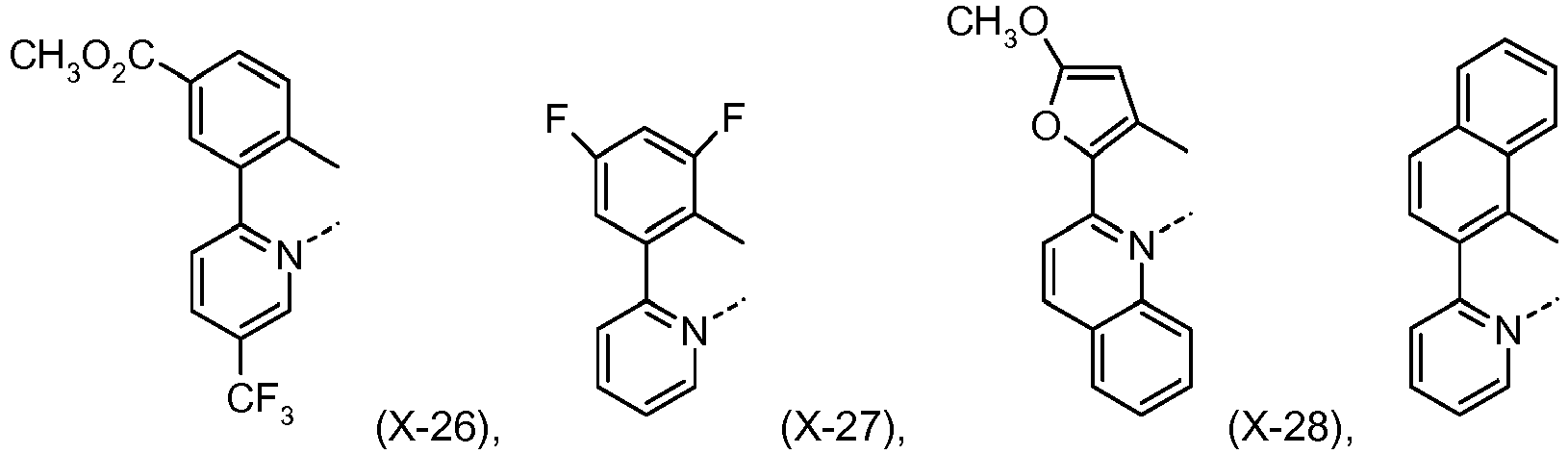


 A1 N oder CR4 ist,R4, R5, R6 und R7 unabhängig voneinander H, ein linearer oder verzweigter Alkylrest, der optional durch mindestens ein Heteroatom unterbrochen ist, der optional mindestens eine funktionelle Gruppe trägt und 1 bis 6 Kohlenstoffatome hat, ein substituierter oder unsubstituierter Cycloalkylrest, der optional durch mindestens ein Heteroatom unterbrochen ist, der optional mindestens eine funktionelle Gruppe trägt und 3 bis 12 Kohlenstoffatome hat, ein substituierter oder unsubstituierter Arylrest, der optional durch mindestens ein Heteroatom unterbrochen ist, der optional mindestens eine funktionelle Gruppe trägt und 6 bis 15 Kohlenstoffatome hat, ein substituierter oder unsubstituierter Heteroarylrest, der optional durch mindestens ein Heteroatom unterbrochen ist, der optional mindestens eine funktionelle Gruppe trägt und insgesamt 5 bis 15 Kohlenstoffatome und/oder Heteroatome hat; oder eine Gruppe mit Donor- oder Akzeptor-Wirkung ausgewählt aus Halogenradikalen, SiMe3, SiPh3, OMe, NO2, CN, NCO, NCS, CF3 sind undR1 und R2 unabhängig voneinander ein linearer oder verzweigter Alkylrest, der optional durch mindestens ein Heteroatom unterbrochen ist, der optional mindestens eine funktionelle Gruppe trägt und 1 bis 6 Kohlenstoffatome hat, ein substituierter oder unsubstituierter Cycloalkylrest, der optional durch mindestens ein Heteroatom unterbrochen ist, der optional mindestens eine funktionelle Gruppe trägt und 3 bis 12 Kohlenstoffatome hat, ein substituierter oder unsubstituierter Arylrest, der optional mindestens eine funktionelle Gruppe trägt und 6 bis 15 Kohlenstoffatome hat, ein substituierter oder unsubstituierter Heteroarylrest, der optional durch mindestens ein Heteroatom unterbrochen ist, der optional mindestens eine funktionelle Gruppe trägt und insgesamt 5 bis 15 Kohlenstoffatome und/oder Heteroatome hat, sind.
 - Der Metall-Carben-Komplex gemäß Anspruch 4, der ein Metall-Carben-Komplex der allgemeinen Formel

- Der Metall-Carben-Komplex gemäß einem der Ansprüche 2 bis 5, wobei R7 Wasserstoff ist.
- Der Metall-Carben-Komplex gemäß einem der Ansprüche 2 bis 6, wobei A1 CR4 ist, wobei R4 Wasserstoff, ein linearer oder verzweigter Alkylrest mit 1 bis 6 Kohlenstoffatomen, ein substituierter oder unsubstituierter Arylrest mit 6 bis 15 Kohlenstoffatomen oder eine Gruppe mit Donor- oder Akzeptor-Wirkung ausgewählt aus CN, CF3, SiMe3, Halogenradikalen, vorzugsweise F, ist.
- Der Metall-Carben-Komplex gemäß einem der Ansprüche 2 bis 7, wobei R5 Wasserstoff, ein linearer oder verzweigter Alkylrest mit 1 bis 6 Kohlenstoffatomen, ein substituierter oder unsubstituierter Arylrest mit 6 bis 15 Kohlenstoffatomen oder eine Gruppe mit Donor- oder Akzeptor-Wirkung ausgewählt aus CN, CF3, SiMe3, Halogenradikalen, vorzugsweise F, ist.
- Der Metall-Carben-Komplex gemäß einem der Ansprüche 2 bis 8, wobei R6 Wasserstoff, ein linearer oder verzweigter Alkylrest mit 1 bis 6 Kohlenstoffatomen, ein substituierter oder unsubstituierter Arylrest mit 6 bis 15 Kohlenstoffatomen oder eine Gruppe mit Donor- oder Akzeptor-Wirkung ausgewählt aus CN, CF3, SiMe3, Halogenradikalen, vorzugsweise F, ist.
- Der Metall-Carben-Komplex gemäß einem der Ansprüche 1 bis 9, wobei R1 ein linearer oder verzweigter Alkylrest mit 1 bis 6 Kohlenstoffatomen, ein substituierter oder unsubstituierter Arylrest mit 6 bis 20 Kohlenstoffatomen, ein substituierter oder unsubstituierter Heteroarylrest mit insgesamt 5 bis 18 Kohlenstoffatomen und/oder Heteroatomen ist.
- Der Metall-Carben-Komplex gemäß einem der Ansprüche 1 bis 10, wobei R2 ein linearer oder verzweigter Alkylrest mit 1 bis 6 Kohlenstoffatomen oder ein unsubstituierter Arylrest mit 6 bis 15 Kohlenstoffatomen ist.
- Der Metall-Carben-Komplex gemäß einem der Ansprüche 1 bis 11, der eine Verbindung der Formel


Verbindung R1 R2 R6 EM-1 
CH3 H EM-2 
CH3 H EM-3 
CH(CH3)2 H EM-4 
CH(CH3)2 H EM-5 
CH(CH3)2 H EM-6 
CH(CH3)2 H EM-7 
CH(CH3)2 H EM-8 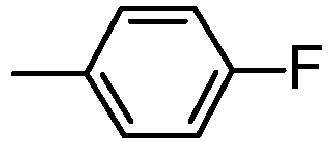
CH(CH3)2 H EM-9 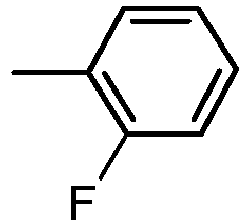
CH3 H EM-10 
CH3 H EM-11 
CH3 H EM-12 
CH3 H EM-13 

H EM-14 

H EM-15 

H EM-16 

H EM-17 

H EM-18 

H EM-19 
CH(CH3)2 F EM-20 
CH(CH3)2 F EM-21 
CH(CH3)2 F EM-22 
CH(CH3)2 F EM-23 
CH(CH3)2 F EM-24 
CH(CH3)2 F EM-25 
CH3 F EM-26 
CH3 F EM-27 
CH3 F EM-28 
CH3 F EM-29 
CH3 F EM-30 
CH3 F EM-31 

F EM-32 

F EM-33 

F EM-34 

F EM-35 

F EM-36 

F EM-37 
CH(CH3)2 CF3 EM-38 
CH(CH3)2 CF3 EM-39 
CH(CH3)2 CF3 EM-40 
CH(CH3)2 CF3 EM-41 
CH(CH3)2 CF3 EM-42 
CH(CH3)2 CF3 EM-43 
CH3 CF3 EM-44 
CH3 CF3 EM-45 
CH3 CF3 EM-46 
CH3 CF3 EM-47 
CH3 CF3 EM-48 
CH3 CF3 EM-49 

CF3 EM-50 

CF3 EM-51 

CF3 EM-52 

CF3 EM-53 

CF3 EM-54 

CF3 - Eine organische elektronische Vorrichtung umfassend mindestens einen Metall-Carben-Komplex gemäß einem der Ansprüche 1 bis 12.
- Die organische elektronische Vorrichtung gemäß Anspruch 13, wobei die organische elektronische Vorrichtung ausgewählt ist aus organischen lichtemittierenden Dioden (OLEDs), organischen photovoltaischen Zellen (OPVs), organischen Feldeffekttransistoren (OFETs) und lichtemittierenden elektrochemischen Zellen (LEECs).
- Eine lichtemittierende Schicht enthaltend mindestens einen Metall-Carben-Komplex gemäß einem der Ansprüche 1 bis 12.
- Die lichtemittierende Schicht gemäß Anspruch 15 enthaltend mindestens einen Metall-Carben-Komplex gemäß einem der Ansprüche 1 bis 12 und ein Wirtsmaterial.
- Eine Vorrichtung ausgewählt aus der Gruppe bestehend aus stationären visuellen Anzeigeeinheiten, Beleuchtungen, Informationstafeln und mobilen visuellen Anzeigeeinheiten, Beleuchtungseinheiten; Tastaturen; Kleidungsstücken; Möbeln und Tapeten, umfassend die organische elektronische Vorrichtung gemäß Anspruch 13 oder 14 oder die emittierende Schicht gemäß Anspruch 15 oder 16.
- Verwendung von Metall-Carben-Komplexen gemäß irgendeinem der Ansprüche 1 bis 12 für elektrophotographische Photorezeptoren, photoelektrische Wandler, organische Solarzellen (organische Photovoltaiks), Schaltelemente, organische lichtemittierende Feldeffekttransistoren (OLEFETs), Bildsensoren, Farbstofflaser und Elektrolumineszenzvorrichtungen.
- Ein Verfahren zur Herstellung eines Metall-Carben-Komplexes gemäß Anspruch 1 durch in Kontakt bringen einer geeigneten Verbindung enthaltend M mit einer Verbindung der allgemeinen Formel
 A1, A2, A3, A4, R1, R2 und M wie in Anspruch 1 definiert sind, undX gleich F, Cl, Br, I, PF6 oder BF4 ist.
Priority Applications (1)
| Application Number | Priority Date | Filing Date | Title |
|---|---|---|---|
| EP14719783.4A EP2991997B1 (de) | 2013-04-29 | 2014-04-28 | Übergangsmetallkomplexe mit carbenliganden und ihre verwendung in oleds |
Applications Claiming Priority (3)
| Application Number | Priority Date | Filing Date | Title |
|---|---|---|---|
| EP13165738 | 2013-04-29 | ||
| EP14719783.4A EP2991997B1 (de) | 2013-04-29 | 2014-04-28 | Übergangsmetallkomplexe mit carbenliganden und ihre verwendung in oleds |
| PCT/EP2014/058611 WO2014177518A1 (en) | 2013-04-29 | 2014-04-28 | Transition metal complexes with carbene ligands and the use thereof in oleds |
Publications (2)
| Publication Number | Publication Date |
|---|---|
| EP2991997A1 EP2991997A1 (de) | 2016-03-09 |
| EP2991997B1 true EP2991997B1 (de) | 2018-02-21 |
Family
ID=48190314
Family Applications (1)
| Application Number | Title | Priority Date | Filing Date |
|---|---|---|---|
| EP14719783.4A Active EP2991997B1 (de) | 2013-04-29 | 2014-04-28 | Übergangsmetallkomplexe mit carbenliganden und ihre verwendung in oleds |
Country Status (6)
| Country | Link |
|---|---|
| US (1) | US10128448B2 (de) |
| EP (1) | EP2991997B1 (de) |
| JP (1) | JP6285538B2 (de) |
| KR (1) | KR102098340B1 (de) |
| CN (1) | CN105073763B (de) |
| WO (1) | WO2014177518A1 (de) |
Families Citing this family (31)
| Publication number | Priority date | Publication date | Assignee | Title |
|---|---|---|---|---|
| RU2670218C2 (ru) | 2013-08-05 | 2018-10-19 | Басф Се | Цианированные нафталинбензимидазольные соединения |
| WO2016193243A1 (en) * | 2015-06-03 | 2016-12-08 | Udc Ireland Limited | Highly efficient oled devices with very short decay times |
| KR102671041B1 (ko) | 2016-10-20 | 2024-06-03 | 삼성디스플레이 주식회사 | 유기금속 화합물 및 이를 포함한 유기 발광 소자 |
| US12317745B2 (en) * | 2016-11-09 | 2025-05-27 | Universal Display Corporation | Organic electroluminescent materials and devices |
| US11555048B2 (en) * | 2016-12-01 | 2023-01-17 | Universal Display Corporation | Organic electroluminescent materials and devices |
| US11780865B2 (en) * | 2017-01-09 | 2023-10-10 | Universal Display Corporation | Organic electroluminescent materials and devices |
| US11545637B2 (en) * | 2017-01-13 | 2023-01-03 | Universal Display Corporation | Organic electroluminescent materials and devices |
| CN108530431B (zh) * | 2017-03-03 | 2020-07-28 | 上海和辉光电有限公司 | 有机电致发光元件及三氮唑衍生物的制备方法 |
| US11276829B2 (en) * | 2017-03-31 | 2022-03-15 | Universal Display Corporation | Organic electroluminescent materials and devices |
| US12180230B2 (en) * | 2017-11-28 | 2024-12-31 | University Of Southern California | Carbene compounds and organic electroluminescent devices |
| US11753427B2 (en) * | 2018-05-04 | 2023-09-12 | Universal Display Corporation | Organic electroluminescent materials and devices |
| TWI826522B (zh) | 2018-09-12 | 2023-12-21 | 德商麥克專利有限公司 | 電致發光裝置 |
| KR102769406B1 (ko) | 2018-09-12 | 2025-02-17 | 메르크 파텐트 게엠베하 | 유기 전계발광 디바이스용 재료 |
| TW202030902A (zh) | 2018-09-12 | 2020-08-16 | 德商麥克專利有限公司 | 電致發光裝置 |
| US11903305B2 (en) * | 2018-09-24 | 2024-02-13 | Universal Display Corporation | Organic electroluminescent materials and devices |
| US11825736B2 (en) * | 2018-11-19 | 2023-11-21 | Universal Display Corporation | Organic electroluminescent materials and devices |
| DE102019104567A1 (de) | 2019-02-22 | 2020-08-27 | Technische Universität Dresden | Phosphoreszente C^C*-Platin(II)-Komplexe mit Bor-haltigen Liganden und ihre Verwendung als Emitter in OLEDs |
| US20220127286A1 (en) | 2019-03-04 | 2022-04-28 | Merck Patent Gmbh | Ligands for nano-sized materials |
| JP7598873B2 (ja) | 2019-04-11 | 2024-12-12 | メルク パテント ゲゼルシャフト ミット ベシュレンクテル ハフツング | 有機エレクトロルミネッセンス素子のための材料 |
| US12593607B2 (en) | 2019-11-04 | 2026-03-31 | Udc Ireland Limited | Materials for organic electroluminescent devices |
| TW202134252A (zh) | 2019-11-12 | 2021-09-16 | 德商麥克專利有限公司 | 有機電致發光裝置用材料 |
| KR102922637B1 (ko) * | 2019-11-14 | 2026-02-06 | 삼성디스플레이 주식회사 | 유기 전계 발광 소자 및 유기 전계 발광 소자용 유기 금속 화합물 |
| TW202136181A (zh) | 2019-12-04 | 2021-10-01 | 德商麥克專利有限公司 | 有機電致發光裝置用的材料 |
| US20230139809A1 (en) | 2020-01-29 | 2023-05-04 | Merck Patent Gmbh | Benzimidazole derivatives |
| KR20220157456A (ko) | 2020-03-23 | 2022-11-29 | 메르크 파텐트 게엠베하 | 유기 전계 발광 디바이스용 재료 |
| KR20210131897A (ko) * | 2020-04-22 | 2021-11-03 | 유니버셜 디스플레이 코포레이션 | 유기 전계발광 물질 및 디바이스 |
| US12279520B2 (en) * | 2020-04-22 | 2025-04-15 | Universal Display Corporation | Organic electroluminescent materials and devices |
| US20220302395A1 (en) * | 2021-03-02 | 2022-09-22 | Universal Display Corporation | Organic electroluminescent materials and devices |
| US20230142498A1 (en) * | 2021-03-02 | 2023-05-11 | Universal Display Corporation | Organic electroluminescent materials and devices |
| US20230112495A1 (en) * | 2021-08-06 | 2023-04-13 | Universal Display Corporation | Organic electroluminescent materials and devices |
| EP4619484A1 (de) | 2022-11-17 | 2025-09-24 | Merck Patent GmbH | Materialien für organische elektrolumineszenzvorrichtungen |
Family Cites Families (106)
| Publication number | Priority date | Publication date | Assignee | Title |
|---|---|---|---|---|
| JP3924648B2 (ja) | 1999-11-02 | 2007-06-06 | ソニー株式会社 | 有機電界発光素子 |
| DE10338550A1 (de) | 2003-08-19 | 2005-03-31 | Basf Ag | Übergangsmetallkomplexe mit Carbenliganden als Emitter für organische Licht-emittierende Dioden (OLEDs) |
| WO2005113704A2 (en) | 2004-05-18 | 2005-12-01 | The University Of Southern California | Luminescent compounds with carbene ligands |
| WO2005123873A1 (ja) * | 2004-06-17 | 2005-12-29 | Konica Minolta Holdings, Inc. | 有機エレクトロルミネッセンス素子材料、有機エレクトロルミネッセンス素子、表示装置及び照明装置 |
| DE102004057072A1 (de) | 2004-11-25 | 2006-06-01 | Basf Ag | Verwendung von Übergangsmetall-Carbenkomplexen in organischen Licht-emittierenden Dioden (OLEDs) |
| ATE430789T1 (de) * | 2004-12-23 | 2009-05-15 | Ciba Holding Inc | Elektrolumineszierende metallkomplexe mit nukleophilen carbenliganden |
| WO2006114966A1 (ja) | 2005-04-18 | 2006-11-02 | Konica Minolta Holdings, Inc. | 有機エレクトロルミネッセンス素子、表示装置及び照明装置 |
| EP1885818B2 (de) | 2005-05-30 | 2018-10-03 | UDC Ireland Limited | Elektrolumineszenz-gerät |
| EP1786050B1 (de) | 2005-11-10 | 2010-06-23 | Novaled AG | Dotiertes organisches Halbleitermaterial |
| US7935434B2 (en) | 2006-01-05 | 2011-05-03 | Konica Minolta Holdings, Inc. | Organic electroluminescent device, display, and illuminating device |
| US20090091253A1 (en) | 2006-03-17 | 2009-04-09 | Konica Minolta Holdings, Inc. | Organic electroluminescent element, display device and lighting device |
| EP1837927A1 (de) | 2006-03-22 | 2007-09-26 | Novaled AG | Verwendung von heterocyclischen Radikalen zur Dotierung von organischen Halbleitern |
| DE502006000749D1 (de) | 2006-03-21 | 2008-06-19 | Novaled Ag | Heterocyclisches Radikal oder Diradikal, deren Dimere, Oligomere, Polymere, Dispiroverbindungen und Polycyclen, deren Verwendung, organisches halbleitendes Material sowie elektronisches Bauelement |
| EP2615153B1 (de) | 2006-03-23 | 2017-03-01 | Konica Minolta Holdings, Inc. | Organische elektrolumineszenzvorrichtung, anzeige und beleuchtungsvorrichtung |
| US20070224446A1 (en) | 2006-03-24 | 2007-09-27 | Idemitsu Kosan Co., Ltd. | Material for organic electroluminescence device and organic electroluminescence device using the same |
| EP3093898B1 (de) | 2006-03-30 | 2017-12-13 | Konica Minolta Holdings, Inc. | Organische elektrolumineszente vorrichtung und beleuchtungsvorrichtung |
| EP2007781B1 (de) | 2006-04-04 | 2012-09-12 | Basf Se | Übergangsmetallkomplexe, enthaltend einen nicht-carben- und ein oder zwei carbenliganden und deren verwendung in oleds |
| KR101431844B1 (ko) | 2006-04-05 | 2014-08-25 | 바스프 에스이 | 이종 리간드 전이 금속-카르벤 착체 및 이의 유기 발광 다이오드(oled)에서의 용도 |
| JP5055818B2 (ja) | 2006-04-19 | 2012-10-24 | コニカミノルタホールディングス株式会社 | 有機エレクトロルミネッセンス素子材料、有機エレクトロルミネッセンス素子、表示装置及び照明装置 |
| KR20090016684A (ko) | 2006-06-02 | 2009-02-17 | 이데미쓰 고산 가부시키가이샤 | 유기 전기발광 소자용 재료 및 그것을 이용한 유기 전기발광 소자 |
| WO2008000727A1 (de) | 2006-06-26 | 2008-01-03 | Basf Se | Verwendung von übergangsmetallcarbenkomplexen, die keine cyclometallierung über nicht-carbene enthalten, in oleds |
| JP2008021687A (ja) | 2006-07-10 | 2008-01-31 | Mitsubishi Chemicals Corp | 有機電界発光素子用材料、有機電界発光素子用組成物及び有機電界発光素子 |
| JP2008066569A (ja) | 2006-09-08 | 2008-03-21 | Konica Minolta Holdings Inc | 有機エレクトロルミネッセンス素子、照明装置及び表示装置 |
| US8852757B2 (en) | 2006-09-08 | 2014-10-07 | Konica Minolta Holdings, Inc. | Organic electroluminescence element, lighting device and display device |
| JP5444715B2 (ja) | 2006-09-08 | 2014-03-19 | コニカミノルタ株式会社 | 有機エレクトロルミネッセンス素子、照明装置及び表示装置 |
| WO2008035571A1 (en) | 2006-09-20 | 2008-03-27 | Konica Minolta Holdings, Inc. | Organic electroluminescence element |
| JP5589251B2 (ja) | 2006-09-21 | 2014-09-17 | コニカミノルタ株式会社 | 有機エレクトロルミネッセンス素子材料 |
| JP2010504634A (ja) | 2006-09-21 | 2010-02-12 | ビーエーエスエフ ソシエタス・ヨーロピア | 長寿命oledディスプレイ |
| JP5011908B2 (ja) | 2006-09-26 | 2012-08-29 | コニカミノルタホールディングス株式会社 | 有機エレクトロルミネッセンス素子、表示装置および照明装置 |
| JP5063992B2 (ja) | 2006-11-20 | 2012-10-31 | ケミプロ化成株式会社 | 新規なジ(ピリジルフェニル)誘導体、それよりなる電子輸送材料およびそれを含む有機エレクトロルミネッセンス素子 |
| US8541112B2 (en) | 2006-12-13 | 2013-09-24 | Konica Minolta Holdings, Inc. | Organic electroluminescent element, display device and lighting device |
| JP5381103B2 (ja) | 2007-01-23 | 2014-01-08 | コニカミノルタ株式会社 | 有機エレクトロルミネッセンス素子の製造方法、該製造方法により得られた有機エレクトロルミネッセンス素子、表示装置及び照明装置 |
| US9284278B2 (en) | 2007-02-14 | 2016-03-15 | Basf Se | Electroluminescent metal complex |
| JP2008207520A (ja) | 2007-02-28 | 2008-09-11 | Konica Minolta Holdings Inc | 有機薄膜、有機薄膜の製造方法、電子デバイス、有機エレクトロルミネッセンス素子、表示装置及び照明装置 |
| DE102007012794B3 (de) | 2007-03-16 | 2008-06-19 | Novaled Ag | Pyrido[3,2-h]chinazoline und/oder deren 5,6-Dihydroderivate, deren Herstellungsverfahren und diese enthaltendes dotiertes organisches Halbleitermaterial |
| JPWO2008132965A1 (ja) | 2007-04-17 | 2010-07-22 | コニカミノルタホールディングス株式会社 | 白色有機エレクトロルミネッセンス素子、及び照明装置 |
| EP3076451B1 (de) | 2007-04-30 | 2019-03-06 | Novaled GmbH | Oxokohlenstoff, pseudooxokohlenstoff- und radialenverbindungen sowie deren verwendung |
| WO2008140069A1 (ja) | 2007-05-16 | 2008-11-20 | Konica Minolta Holdings, Inc. | 有機エレクトロルミネッセンス素子、有機エレクトロルミネッセンス素子材料、表示装置及び照明装置 |
| WO2008140114A1 (ja) | 2007-05-16 | 2008-11-20 | Konica Minolta Holdings, Inc. | 有機エレクトロルミネッセンス素子、表示装置及び照明装置 |
| JP5359869B2 (ja) | 2007-05-30 | 2013-12-04 | コニカミノルタ株式会社 | 有機エレクトロルミネッセンス素子、有機エレクトロルミネッセンス素子の製造方法、表示装置及び照明装置 |
| WO2008156105A1 (ja) | 2007-06-21 | 2008-12-24 | Konica Minolta Holdings, Inc. | 有機エレクトロルミネッセンス素子材料、有機エレクトロルミネッセンス素子、表示装置及び照明装置 |
| KR101577465B1 (ko) | 2007-07-05 | 2015-12-14 | 바스프 에스이 | 카르벤 전이 금속 착체 이미터, 및 디실릴카르바졸, 디실릴디벤조푸란, 디실릴디벤조티오펜, 디실릴디벤조포스폴, 디실릴디벤조티오펜 s-옥사이드 및 디실릴디벤조티오펜 s,s-디옥사이드로부터 선택된 1종 이상의 화합물을 포함하는 유기 발광 다이오드 |
| EP2173834B1 (de) | 2007-07-05 | 2018-02-14 | UDC Ireland Limited | ORGANISCHE LEUCHTDIODEN ENTHALTEND MINDESTENS EINE DISILYLVERBINDUNG AUSGEWÄHLT AUS DISILYLCARBAZOLEN, DISILYLDIBENZOFURANEN und DISILYLDIBENZOTHIOPHENEN |
| WO2009008100A1 (ja) | 2007-07-10 | 2009-01-15 | Idemitsu Kosan Co., Ltd. | 有機エレクトロルミネッセンス素子用材料及びそれを用いた有機エレクトロルミネッセンス素子 |
| JP5194596B2 (ja) | 2007-07-11 | 2013-05-08 | コニカミノルタホールディングス株式会社 | 有機エレクトロルミネッセンス素子、表示装置及び照明装置 |
| JP5186843B2 (ja) | 2007-08-30 | 2013-04-24 | コニカミノルタホールディングス株式会社 | 有機エレクトロルミネッセンス素子、照明装置及び表示装置 |
| JP5194652B2 (ja) * | 2007-09-03 | 2013-05-08 | コニカミノルタホールディングス株式会社 | 有機エレクトロルミネッセンス素子材料、有機エレクトロルミネッセンス素子、表示装置及び照明装置 |
| JP5458890B2 (ja) | 2007-11-08 | 2014-04-02 | コニカミノルタ株式会社 | 有機エレクトロルミネッセンス素子、表示装置及び照明装置 |
| JP2009114369A (ja) | 2007-11-08 | 2009-05-28 | Konica Minolta Holdings Inc | 有機エレクトロルミネッセンス材料、有機エレクトロルミネッセンス素子、表示装置及び照明装置 |
| JP5691170B2 (ja) | 2007-11-08 | 2015-04-01 | コニカミノルタ株式会社 | 有機エレクトロルミネッセンス素子の製造方法 |
| WO2009060757A1 (ja) | 2007-11-08 | 2009-05-14 | Konica Minolta Holdings, Inc. | 有機エレクトロルミネッセンス素子、表示装置及び照明装置 |
| JP2009114370A (ja) | 2007-11-08 | 2009-05-28 | Konica Minolta Holdings Inc | 有機エレクトロルミネッセンス素子材料、有機エレクトロルミネッセンス素子及び表示装置、照明装置 |
| WO2009060779A1 (ja) | 2007-11-08 | 2009-05-14 | Konica Minolta Holdings, Inc. | 有機エレクトロルミネッセンス素子材料、有機エレクトロルミネッセンス素子、表示装置及び照明装置 |
| WO2009063757A1 (ja) | 2007-11-14 | 2009-05-22 | Konica Minolta Holdings, Inc. | 有機エレクトロルミネッセンス素子材料、有機エレクトロルミネッセンス素子、有機エレクトロルミネッセンス素子の製造方法、表示装置及び照明装置 |
| JP2009135183A (ja) | 2007-11-29 | 2009-06-18 | Konica Minolta Holdings Inc | 有機エレクトロルミネッセンス素子、表示装置及び照明装置 |
| US20090153034A1 (en) | 2007-12-13 | 2009-06-18 | Universal Display Corporation | Carbazole-containing materials in phosphorescent light emittinig diodes |
| JPWO2009084413A1 (ja) | 2007-12-28 | 2011-05-19 | コニカミノルタホールディングス株式会社 | 有機エレクトロルミネッセンス素子、及び有機エレクトロルミネッセンス素子の製造方法 |
| US8221905B2 (en) | 2007-12-28 | 2012-07-17 | Universal Display Corporation | Carbazole-containing materials in phosphorescent light emitting diodes |
| JP5549053B2 (ja) | 2008-01-18 | 2014-07-16 | コニカミノルタ株式会社 | 有機エレクトロルミネッセンス素子用材料、有機エレクトロルミネッセンス素子、有機エレクトロルミネッセンス素子の製造方法、表示装置及び照明装置 |
| JP2009182298A (ja) | 2008-02-01 | 2009-08-13 | Konica Minolta Holdings Inc | 有機エレクトロルミネッセンス素子、照明装置及び表示装置 |
| JP5381719B2 (ja) | 2008-02-20 | 2014-01-08 | コニカミノルタ株式会社 | 白色発光有機エレクトロルミネッセンス素子 |
| JP2009267255A (ja) | 2008-04-28 | 2009-11-12 | Idemitsu Kosan Co Ltd | 有機エレクトロルミネッセンス素子用材料及びそれを用いた有機エレクトロルミネッセンス素子 |
| EP2479234B1 (de) | 2008-05-13 | 2017-06-21 | Konica Minolta Holdings, Inc. | Organisches elektrolumineszentes element, anzeigevorrichtung und beleuchtungsvorrichtung |
| WO2010001830A1 (ja) | 2008-07-01 | 2010-01-07 | コニカミノルタホールディングス株式会社 | 白色発光有機エレクトロルミネッセンス素子、照明装置及び表示装置 |
| JP5609641B2 (ja) | 2008-07-10 | 2014-10-22 | コニカミノルタ株式会社 | 有機エレクトロルミネッセンス素子、表示装置及び照明装置 |
| JP2010021336A (ja) | 2008-07-10 | 2010-01-28 | Konica Minolta Holdings Inc | 有機エレクトロルミネッセンス素子、照明装置及び表示装置 |
| DE102008033929A1 (de) * | 2008-07-18 | 2010-01-21 | Siemens Aktiengesellschaft | Phosphoreszente Metallkomplexverbindung, Verfahren zur Herstellung dazu und strahlungsemittierendes Bauelement |
| JP5338184B2 (ja) | 2008-08-06 | 2013-11-13 | コニカミノルタ株式会社 | 有機エレクトロルミネッセンス素子、表示装置、照明装置 |
| KR101929837B1 (ko) | 2008-10-07 | 2018-12-18 | 유디씨 아일랜드 리미티드 | 축합환계로 치환된 실롤 및 유기전자소자에서의 그 용도 |
| JPWO2010044342A1 (ja) | 2008-10-15 | 2012-03-15 | コニカミノルタホールディングス株式会社 | 有機エレクトロルミネッセンス素子、有機エレクトロルミネッセンス素子の製造方法、白色有機エレクトロルミネッセンス素子、表示装置及び照明装置 |
| EP2180029B1 (de) | 2008-10-23 | 2011-07-27 | Novaled AG | Radialenverbindungen und deren Verwendung |
| JP5493333B2 (ja) | 2008-11-05 | 2014-05-14 | コニカミノルタ株式会社 | 有機エレクトロルミネッセンス素子、白色有機エレクトロルミネッセンス素子、表示装置及び照明装置 |
| JP5707665B2 (ja) | 2008-12-03 | 2015-04-30 | コニカミノルタ株式会社 | 有機エレクトロルミネッセンス素子、該素子を備えた照明装置及び表示装置 |
| WO2010067746A1 (ja) | 2008-12-08 | 2010-06-17 | コニカミノルタホールディングス株式会社 | 有機エレクトロルミネッセンス素子、表示装置、及び照明装置 |
| WO2010079051A1 (de) | 2009-01-07 | 2010-07-15 | Basf Se | Silyl- und heteroatom-substituierte verbindungen ausgewählt aus carbazolen, dibenzofuranen, dibenzothiophenen und dibenzophospholen und ihre anwendung in der organischen elektronik |
| JP5810529B2 (ja) | 2009-01-09 | 2015-11-11 | コニカミノルタ株式会社 | 有機エレクトロルミネッセンス素子、表示装置及び照明装置 |
| JP5472121B2 (ja) | 2009-01-28 | 2014-04-16 | コニカミノルタ株式会社 | 有機エレクトロルミネッセンス素子、表示装置および照明装置、ならびに有機エレクトロルミネッセンス素子の製造方法 |
| EP2395573B1 (de) | 2009-02-06 | 2019-02-27 | Konica Minolta Holdings, Inc. | Organisches elektrolumineszentes element, beleuchtungsvorrichtung und anzeigevorrichtung, die jeweils das element umfassen |
| JP5765223B2 (ja) | 2009-02-18 | 2015-08-19 | コニカミノルタ株式会社 | 有機エレクトロルミネッセンス素子の製造方法、並びに有機エレクトロルミネッセンス素子を備えた照明装置及び表示装置 |
| KR101705213B1 (ko) | 2009-02-26 | 2017-02-09 | 노발레드 게엠베하 | 유기 전자소자에서 도펀트로서의 퀴논 화합물 |
| EP2246862A1 (de) | 2009-04-27 | 2010-11-03 | Novaled AG | Organische elektronische Vorrichtung mit einem organischen Halbleitermaterial |
| US8603642B2 (en) | 2009-05-13 | 2013-12-10 | Global Oled Technology Llc | Internal connector for organic electronic devices |
| WO2011051404A1 (de) | 2009-10-28 | 2011-05-05 | Basf Se | Heteroleptische carben-komplexe und deren verwendung in der organischen elektronik |
| ES2525757T3 (es) * | 2009-12-14 | 2014-12-30 | Basf Se | Complejos metálicos que contienen ligandos de diazabencimidazolcarbeno y su uso en OLED |
| WO2011080972A1 (ja) | 2009-12-28 | 2011-07-07 | 新日鐵化学株式会社 | 有機電界発光素子 |
| WO2011093220A1 (ja) | 2010-01-29 | 2011-08-04 | コニカミノルタホールディングス株式会社 | 有機エレクトロルミネッセンス素子及び照明装置 |
| KR101419666B1 (ko) | 2010-03-31 | 2014-07-15 | 이데미쓰 고산 가부시키가이샤 | 유기 전기발광 소자용 재료 및 그것을 이용한 유기 전기발광 소자 |
| EP2415769B1 (de) | 2010-04-20 | 2015-10-28 | Idemitsu Kosan Co., Ltd. | Biscarbazolderivat, material für ein organisches elektrolumineszenzelement und organisches elektrolumineszenzelement damit |
| US8227801B2 (en) | 2010-04-26 | 2012-07-24 | Universal Display Corporation | Bicarbzole containing compounds for OLEDs |
| US9403781B2 (en) * | 2010-04-27 | 2016-08-02 | The Regents Of The University Of California | Crystalline 1H-1,2,3-triazol-5-ylidenes |
| EP2564438B1 (de) | 2010-04-28 | 2016-10-19 | Universal Display Corporation | Ablagerung vorgemischter materialien |
| KR101877580B1 (ko) | 2010-06-18 | 2018-08-09 | 유디씨 아일랜드 리미티드 | 디벤조푸란 화합물 및 8-히드록시퀴놀리노레이토 알칼리 토금속 또는 알칼리 금속 착물의 층을 포함하는 유기 전자 소자 |
| JP5990514B2 (ja) | 2010-06-18 | 2016-09-14 | ビーエーエスエフ ソシエタス・ヨーロピアBasf Se | ピリジン化合物と8−ヒドロキシキノリノラトアルカリ土類金属又はアルカリ金属錯体の層を含む有機電子デバイス |
| JP2012028634A (ja) | 2010-07-26 | 2012-02-09 | Idemitsu Kosan Co Ltd | 有機エレクトロルミネッセンス素子 |
| JP5741581B2 (ja) | 2010-07-29 | 2015-07-01 | コニカミノルタ株式会社 | 透明導電膜、および有機エレクトロルミネッセンス素子 |
| DE112010005815B4 (de) | 2010-08-20 | 2020-12-10 | Universal Display Corp. | Bicarbazolverbindungen für OLEDs |
| US8415031B2 (en) | 2011-01-24 | 2013-04-09 | Universal Display Corporation | Electron transporting compounds |
| JP5900351B2 (ja) | 2011-02-02 | 2016-04-06 | コニカミノルタ株式会社 | 有機エレクトロルミネッセンス素子の製造方法 |
| JP5964328B2 (ja) | 2011-02-11 | 2016-08-03 | ユニバーサル ディスプレイ コーポレイション | 有機発光素子及び該有機発光素子に使用されるための材料 |
| EP2677560A4 (de) | 2011-02-15 | 2016-08-17 | Konica Minolta Inc | Organisches elektrolumineszenzelement und beleuchtungsvorrichtung |
| JP5839027B2 (ja) | 2011-02-22 | 2016-01-06 | コニカミノルタ株式会社 | 有機エレクトロルミネッセンス素子、その製造方法、照明装置及び表示装置 |
| US8883322B2 (en) | 2011-03-08 | 2014-11-11 | Universal Display Corporation | Pyridyl carbene phosphorescent emitters |
| KR102266455B1 (ko) | 2011-03-25 | 2021-06-21 | 유디씨 아일랜드 리미티드 | 전자장치 응용을 위한 4h-이미다조[1,2-a]이미다졸 |
| JP5821951B2 (ja) | 2011-04-26 | 2015-11-24 | コニカミノルタ株式会社 | 有機エレクトロルミネッセンス素子及び照明装置 |
| US9315724B2 (en) | 2011-06-14 | 2016-04-19 | Basf Se | Metal complexes comprising azabenzimidazole carbene ligands and the use thereof in OLEDs |
| EP3232485A1 (de) | 2012-07-10 | 2017-10-18 | UDC Ireland Limited | Benzimidazo[1,2-a]benzimidazol-derivate für elektronische anwendungen |
-
2014
- 2014-04-28 EP EP14719783.4A patent/EP2991997B1/de active Active
- 2014-04-28 CN CN201480019239.1A patent/CN105073763B/zh active Active
- 2014-04-28 JP JP2016511031A patent/JP6285538B2/ja active Active
- 2014-04-28 US US14/786,507 patent/US10128448B2/en active Active
- 2014-04-28 KR KR1020157032407A patent/KR102098340B1/ko active Active
- 2014-04-28 WO PCT/EP2014/058611 patent/WO2014177518A1/en not_active Ceased
Also Published As
| Publication number | Publication date |
|---|---|
| WO2014177518A1 (en) | 2014-11-06 |
| KR102098340B1 (ko) | 2020-04-13 |
| JP2016520576A (ja) | 2016-07-14 |
| KR20160002906A (ko) | 2016-01-08 |
| US20160072081A1 (en) | 2016-03-10 |
| JP6285538B2 (ja) | 2018-02-28 |
| US10128448B2 (en) | 2018-11-13 |
| EP2991997A1 (de) | 2016-03-09 |
| CN105073763A (zh) | 2015-11-18 |
| CN105073763B (zh) | 2019-03-01 |
Similar Documents
| Publication | Publication Date | Title |
|---|---|---|
| EP2991997B1 (de) | Übergangsmetallkomplexe mit carbenliganden und ihre verwendung in oleds | |
| US11605790B2 (en) | Monosubstituted diazabenzimidazole carbene metal complexes for use in organic light emitting diodes | |
| JP6486451B2 (ja) | カルベン配位子を含む複核金属錯体およびoledにおけるその使用 | |
| JP6726221B2 (ja) | カルベン配位子を有する遷移金属錯体および前記錯体のoledにおける使用 | |
| KR102090916B1 (ko) | 아자벤즈이미다졸 카르벤 리간드를 포함하는 금속 착물 및 oled 에서의 이의 용도 | |
| WO2014147134A1 (en) | Azabenzimidazole carbene complexes as efficiency booster in oleds |
Legal Events
| Date | Code | Title | Description |
|---|---|---|---|
| PUAI | Public reference made under article 153(3) epc to a published international application that has entered the european phase |
Free format text: ORIGINAL CODE: 0009012 |
|
| 17P | Request for examination filed |
Effective date: 20151130 |
|
| AK | Designated contracting states |
Kind code of ref document: A1 Designated state(s): AL AT BE BG CH CY CZ DE DK EE ES FI FR GB GR HR HU IE IS IT LI LT LU LV MC MK MT NL NO PL PT RO RS SE SI SK SM TR |
|
| AX | Request for extension of the european patent |
Extension state: BA ME |
|
| DAX | Request for extension of the european patent (deleted) | ||
| RAP1 | Party data changed (applicant data changed or rights of an application transferred) |
Owner name: UDC IRELAND LIMITED |
|
| STAA | Information on the status of an ep patent application or granted ep patent |
Free format text: STATUS: EXAMINATION IS IN PROGRESS |
|
| 17Q | First examination report despatched |
Effective date: 20161123 |
|
| GRAP | Despatch of communication of intention to grant a patent |
Free format text: ORIGINAL CODE: EPIDOSNIGR1 |
|
| STAA | Information on the status of an ep patent application or granted ep patent |
Free format text: STATUS: GRANT OF PATENT IS INTENDED |
|
| INTG | Intention to grant announced |
Effective date: 20170912 |
|
| RIN1 | Information on inventor provided before grant (corrected) |
Inventor name: LENNARTZ, CHRISTIAN Inventor name: WAGENBLAST, GERHARD Inventor name: METZ, STEFAN Inventor name: HEINEMEYER, UTE Inventor name: BATTAGLIARIN, GLAUCO Inventor name: DORMANN, KORINNA Inventor name: MURER, PETER Inventor name: GESSNER, THOMAS |
|
| GRAS | Grant fee paid |
Free format text: ORIGINAL CODE: EPIDOSNIGR3 |
|
| GRAA | (expected) grant |
Free format text: ORIGINAL CODE: 0009210 |
|
| STAA | Information on the status of an ep patent application or granted ep patent |
Free format text: STATUS: THE PATENT HAS BEEN GRANTED |
|
| AK | Designated contracting states |
Kind code of ref document: B1 Designated state(s): AL AT BE BG CH CY CZ DE DK EE ES FI FR GB GR HR HU IE IS IT LI LT LU LV MC MK MT NL NO PL PT RO RS SE SI SK SM TR |
|
| REG | Reference to a national code |
Ref country code: GB Ref legal event code: FG4D |
|
| REG | Reference to a national code |
Ref country code: CH Ref legal event code: EP |
|
| REG | Reference to a national code |
Ref country code: AT Ref legal event code: REF Ref document number: 971585 Country of ref document: AT Kind code of ref document: T Effective date: 20180315 |
|
| REG | Reference to a national code |
Ref country code: IE Ref legal event code: FG4D |
|
| REG | Reference to a national code |
Ref country code: DE Ref legal event code: R096 Ref document number: 602014021191 Country of ref document: DE |
|
| REG | Reference to a national code |
Ref country code: NL Ref legal event code: MP Effective date: 20180221 |
|
| REG | Reference to a national code |
Ref country code: LT Ref legal event code: MG4D |
|
| REG | Reference to a national code |
Ref country code: AT Ref legal event code: MK05 Ref document number: 971585 Country of ref document: AT Kind code of ref document: T Effective date: 20180221 |
|
| PG25 | Lapsed in a contracting state [announced via postgrant information from national office to epo] |
Ref country code: LT Free format text: LAPSE BECAUSE OF FAILURE TO SUBMIT A TRANSLATION OF THE DESCRIPTION OR TO PAY THE FEE WITHIN THE PRESCRIBED TIME-LIMIT Effective date: 20180221 Ref country code: ES Free format text: LAPSE BECAUSE OF FAILURE TO SUBMIT A TRANSLATION OF THE DESCRIPTION OR TO PAY THE FEE WITHIN THE PRESCRIBED TIME-LIMIT Effective date: 20180221 Ref country code: NL Free format text: LAPSE BECAUSE OF FAILURE TO SUBMIT A TRANSLATION OF THE DESCRIPTION OR TO PAY THE FEE WITHIN THE PRESCRIBED TIME-LIMIT Effective date: 20180221 Ref country code: NO Free format text: LAPSE BECAUSE OF FAILURE TO SUBMIT A TRANSLATION OF THE DESCRIPTION OR TO PAY THE FEE WITHIN THE PRESCRIBED TIME-LIMIT Effective date: 20180521 Ref country code: HR Free format text: LAPSE BECAUSE OF FAILURE TO SUBMIT A TRANSLATION OF THE DESCRIPTION OR TO PAY THE FEE WITHIN THE PRESCRIBED TIME-LIMIT Effective date: 20180221 Ref country code: FI Free format text: LAPSE BECAUSE OF FAILURE TO SUBMIT A TRANSLATION OF THE DESCRIPTION OR TO PAY THE FEE WITHIN THE PRESCRIBED TIME-LIMIT Effective date: 20180221 Ref country code: CY Free format text: LAPSE BECAUSE OF FAILURE TO SUBMIT A TRANSLATION OF THE DESCRIPTION OR TO PAY THE FEE WITHIN THE PRESCRIBED TIME-LIMIT Effective date: 20180221 |
|
| PG25 | Lapsed in a contracting state [announced via postgrant information from national office to epo] |
Ref country code: SE Free format text: LAPSE BECAUSE OF FAILURE TO SUBMIT A TRANSLATION OF THE DESCRIPTION OR TO PAY THE FEE WITHIN THE PRESCRIBED TIME-LIMIT Effective date: 20180221 Ref country code: LV Free format text: LAPSE BECAUSE OF FAILURE TO SUBMIT A TRANSLATION OF THE DESCRIPTION OR TO PAY THE FEE WITHIN THE PRESCRIBED TIME-LIMIT Effective date: 20180221 Ref country code: GR Free format text: LAPSE BECAUSE OF FAILURE TO SUBMIT A TRANSLATION OF THE DESCRIPTION OR TO PAY THE FEE WITHIN THE PRESCRIBED TIME-LIMIT Effective date: 20180522 Ref country code: BG Free format text: LAPSE BECAUSE OF FAILURE TO SUBMIT A TRANSLATION OF THE DESCRIPTION OR TO PAY THE FEE WITHIN THE PRESCRIBED TIME-LIMIT Effective date: 20180521 Ref country code: RS Free format text: LAPSE BECAUSE OF FAILURE TO SUBMIT A TRANSLATION OF THE DESCRIPTION OR TO PAY THE FEE WITHIN THE PRESCRIBED TIME-LIMIT Effective date: 20180221 Ref country code: AT Free format text: LAPSE BECAUSE OF FAILURE TO SUBMIT A TRANSLATION OF THE DESCRIPTION OR TO PAY THE FEE WITHIN THE PRESCRIBED TIME-LIMIT Effective date: 20180221 |
|
| PG25 | Lapsed in a contracting state [announced via postgrant information from national office to epo] |
Ref country code: IT Free format text: LAPSE BECAUSE OF FAILURE TO SUBMIT A TRANSLATION OF THE DESCRIPTION OR TO PAY THE FEE WITHIN THE PRESCRIBED TIME-LIMIT Effective date: 20180221 Ref country code: AL Free format text: LAPSE BECAUSE OF FAILURE TO SUBMIT A TRANSLATION OF THE DESCRIPTION OR TO PAY THE FEE WITHIN THE PRESCRIBED TIME-LIMIT Effective date: 20180221 Ref country code: EE Free format text: LAPSE BECAUSE OF FAILURE TO SUBMIT A TRANSLATION OF THE DESCRIPTION OR TO PAY THE FEE WITHIN THE PRESCRIBED TIME-LIMIT Effective date: 20180221 Ref country code: PL Free format text: LAPSE BECAUSE OF FAILURE TO SUBMIT A TRANSLATION OF THE DESCRIPTION OR TO PAY THE FEE WITHIN THE PRESCRIBED TIME-LIMIT Effective date: 20180221 Ref country code: RO Free format text: LAPSE BECAUSE OF FAILURE TO SUBMIT A TRANSLATION OF THE DESCRIPTION OR TO PAY THE FEE WITHIN THE PRESCRIBED TIME-LIMIT Effective date: 20180221 |
|
| REG | Reference to a national code |
Ref country code: DE Ref legal event code: R097 Ref document number: 602014021191 Country of ref document: DE |
|
| PG25 | Lapsed in a contracting state [announced via postgrant information from national office to epo] |
Ref country code: SM Free format text: LAPSE BECAUSE OF FAILURE TO SUBMIT A TRANSLATION OF THE DESCRIPTION OR TO PAY THE FEE WITHIN THE PRESCRIBED TIME-LIMIT Effective date: 20180221 Ref country code: CZ Free format text: LAPSE BECAUSE OF FAILURE TO SUBMIT A TRANSLATION OF THE DESCRIPTION OR TO PAY THE FEE WITHIN THE PRESCRIBED TIME-LIMIT Effective date: 20180221 Ref country code: MC Free format text: LAPSE BECAUSE OF FAILURE TO SUBMIT A TRANSLATION OF THE DESCRIPTION OR TO PAY THE FEE WITHIN THE PRESCRIBED TIME-LIMIT Effective date: 20180221 Ref country code: DK Free format text: LAPSE BECAUSE OF FAILURE TO SUBMIT A TRANSLATION OF THE DESCRIPTION OR TO PAY THE FEE WITHIN THE PRESCRIBED TIME-LIMIT Effective date: 20180221 Ref country code: SK Free format text: LAPSE BECAUSE OF FAILURE TO SUBMIT A TRANSLATION OF THE DESCRIPTION OR TO PAY THE FEE WITHIN THE PRESCRIBED TIME-LIMIT Effective date: 20180221 |
|
| REG | Reference to a national code |
Ref country code: CH Ref legal event code: PL |
|
| REG | Reference to a national code |
Ref country code: BE Ref legal event code: MM Effective date: 20180430 |
|
| PLBE | No opposition filed within time limit |
Free format text: ORIGINAL CODE: 0009261 |
|
| STAA | Information on the status of an ep patent application or granted ep patent |
Free format text: STATUS: NO OPPOSITION FILED WITHIN TIME LIMIT |
|
| REG | Reference to a national code |
Ref country code: IE Ref legal event code: MM4A |
|
| 26N | No opposition filed |
Effective date: 20181122 |
|
| GBPC | Gb: european patent ceased through non-payment of renewal fee |
Effective date: 20180521 |
|
| PG25 | Lapsed in a contracting state [announced via postgrant information from national office to epo] |
Ref country code: LU Free format text: LAPSE BECAUSE OF NON-PAYMENT OF DUE FEES Effective date: 20180428 |
|
| PG25 | Lapsed in a contracting state [announced via postgrant information from national office to epo] |
Ref country code: LI Free format text: LAPSE BECAUSE OF NON-PAYMENT OF DUE FEES Effective date: 20180430 Ref country code: CH Free format text: LAPSE BECAUSE OF NON-PAYMENT OF DUE FEES Effective date: 20180430 Ref country code: BE Free format text: LAPSE BECAUSE OF NON-PAYMENT OF DUE FEES Effective date: 20180430 Ref country code: SI Free format text: LAPSE BECAUSE OF FAILURE TO SUBMIT A TRANSLATION OF THE DESCRIPTION OR TO PAY THE FEE WITHIN THE PRESCRIBED TIME-LIMIT Effective date: 20180221 |
|
| PG25 | Lapsed in a contracting state [announced via postgrant information from national office to epo] |
Ref country code: FR Free format text: LAPSE BECAUSE OF NON-PAYMENT OF DUE FEES Effective date: 20180430 Ref country code: GB Free format text: LAPSE BECAUSE OF NON-PAYMENT OF DUE FEES Effective date: 20180521 Ref country code: IE Free format text: LAPSE BECAUSE OF NON-PAYMENT OF DUE FEES Effective date: 20180428 |
|
| PG25 | Lapsed in a contracting state [announced via postgrant information from national office to epo] |
Ref country code: MT Free format text: LAPSE BECAUSE OF NON-PAYMENT OF DUE FEES Effective date: 20180428 |
|
| PG25 | Lapsed in a contracting state [announced via postgrant information from national office to epo] |
Ref country code: TR Free format text: LAPSE BECAUSE OF FAILURE TO SUBMIT A TRANSLATION OF THE DESCRIPTION OR TO PAY THE FEE WITHIN THE PRESCRIBED TIME-LIMIT Effective date: 20180221 |
|
| PG25 | Lapsed in a contracting state [announced via postgrant information from national office to epo] |
Ref country code: PT Free format text: LAPSE BECAUSE OF FAILURE TO SUBMIT A TRANSLATION OF THE DESCRIPTION OR TO PAY THE FEE WITHIN THE PRESCRIBED TIME-LIMIT Effective date: 20180221 |
|
| PG25 | Lapsed in a contracting state [announced via postgrant information from national office to epo] |
Ref country code: MK Free format text: LAPSE BECAUSE OF NON-PAYMENT OF DUE FEES Effective date: 20180221 Ref country code: HU Free format text: LAPSE BECAUSE OF FAILURE TO SUBMIT A TRANSLATION OF THE DESCRIPTION OR TO PAY THE FEE WITHIN THE PRESCRIBED TIME-LIMIT; INVALID AB INITIO Effective date: 20140428 |
|
| PG25 | Lapsed in a contracting state [announced via postgrant information from national office to epo] |
Ref country code: IS Free format text: LAPSE BECAUSE OF FAILURE TO SUBMIT A TRANSLATION OF THE DESCRIPTION OR TO PAY THE FEE WITHIN THE PRESCRIBED TIME-LIMIT Effective date: 20180621 |
|
| P01 | Opt-out of the competence of the unified patent court (upc) registered |
Effective date: 20230423 |
|
| PGFP | Annual fee paid to national office [announced via postgrant information from national office to epo] |
Ref country code: DE Payment date: 20250429 Year of fee payment: 12 |