EP2964229B1 - Benzoimidazol-2-yl pyrimidine modulators of the histamine h4 receptor - Google Patents
Benzoimidazol-2-yl pyrimidine modulators of the histamine h4 receptor Download PDFInfo
- Publication number
- EP2964229B1 EP2964229B1 EP14760540.6A EP14760540A EP2964229B1 EP 2964229 B1 EP2964229 B1 EP 2964229B1 EP 14760540 A EP14760540 A EP 14760540A EP 2964229 B1 EP2964229 B1 EP 2964229B1
- Authority
- EP
- European Patent Office
- Prior art keywords
- compound
- disease
- methyl
- autoimmune
- impurity
- Prior art date
- Legal status (The legal status is an assumption and is not a legal conclusion. Google has not performed a legal analysis and makes no representation as to the accuracy of the status listed.)
- Active
Links
- VOEUKRQGOOHMJT-UHFFFAOYSA-N Cc(cc1[nH]c(-c2c(C)nc(NCCCC3CCN(C)CC3)nc2)nc1c1C)c1SS(O)(=O)=O Chemical compound Cc(cc1[nH]c(-c2c(C)nc(NCCCC3CCN(C)CC3)nc2)nc1c1C)c1SS(O)(=O)=O VOEUKRQGOOHMJT-UHFFFAOYSA-N 0.000 description 1
- PFKRQCDYFODVDF-VQHVLOKHSA-N Cc1c(Cc2cnc(NC/C=C/C3CCN(C)CC3)nc2)c(C)c2nc(C3=C(C)N=C(NCCCC4CCN(C)CC4)N(C)C3)[nH]c2c1 Chemical compound Cc1c(Cc2cnc(NC/C=C/C3CCN(C)CC3)nc2)c(C)c2nc(C3=C(C)N=C(NCCCC4CCN(C)CC4)N(C)C3)[nH]c2c1 PFKRQCDYFODVDF-VQHVLOKHSA-N 0.000 description 1
- FCRFVPZAXGJLPW-UHFFFAOYSA-N Cc1cc(C)c2nc(-c3c(C)nc(NCCCC4CCN(C)CC4)nc3)[nH]c2c1 Chemical compound Cc1cc(C)c2nc(-c3c(C)nc(NCCCC4CCN(C)CC4)nc3)[nH]c2c1 FCRFVPZAXGJLPW-UHFFFAOYSA-N 0.000 description 1
Images




Classifications
-
- C—CHEMISTRY; METALLURGY
- C07—ORGANIC CHEMISTRY
- C07D—HETEROCYCLIC COMPOUNDS
- C07D401/00—Heterocyclic compounds containing two or more hetero rings, having nitrogen atoms as the only ring hetero atoms, at least one ring being a six-membered ring with only one nitrogen atom
- C07D401/14—Heterocyclic compounds containing two or more hetero rings, having nitrogen atoms as the only ring hetero atoms, at least one ring being a six-membered ring with only one nitrogen atom containing three or more hetero rings
-
- A—HUMAN NECESSITIES
- A61—MEDICAL OR VETERINARY SCIENCE; HYGIENE
- A61P—SPECIFIC THERAPEUTIC ACTIVITY OF CHEMICAL COMPOUNDS OR MEDICINAL PREPARATIONS
- A61P1/00—Drugs for disorders of the alimentary tract or the digestive system
-
- A—HUMAN NECESSITIES
- A61—MEDICAL OR VETERINARY SCIENCE; HYGIENE
- A61P—SPECIFIC THERAPEUTIC ACTIVITY OF CHEMICAL COMPOUNDS OR MEDICINAL PREPARATIONS
- A61P1/00—Drugs for disorders of the alimentary tract or the digestive system
- A61P1/04—Drugs for disorders of the alimentary tract or the digestive system for ulcers, gastritis or reflux esophagitis, e.g. antacids, inhibitors of acid secretion, mucosal protectants
-
- A—HUMAN NECESSITIES
- A61—MEDICAL OR VETERINARY SCIENCE; HYGIENE
- A61P—SPECIFIC THERAPEUTIC ACTIVITY OF CHEMICAL COMPOUNDS OR MEDICINAL PREPARATIONS
- A61P1/00—Drugs for disorders of the alimentary tract or the digestive system
- A61P1/16—Drugs for disorders of the alimentary tract or the digestive system for liver or gallbladder disorders, e.g. hepatoprotective agents, cholagogues, litholytics
-
- A—HUMAN NECESSITIES
- A61—MEDICAL OR VETERINARY SCIENCE; HYGIENE
- A61P—SPECIFIC THERAPEUTIC ACTIVITY OF CHEMICAL COMPOUNDS OR MEDICINAL PREPARATIONS
- A61P11/00—Drugs for disorders of the respiratory system
-
- A—HUMAN NECESSITIES
- A61—MEDICAL OR VETERINARY SCIENCE; HYGIENE
- A61P—SPECIFIC THERAPEUTIC ACTIVITY OF CHEMICAL COMPOUNDS OR MEDICINAL PREPARATIONS
- A61P11/00—Drugs for disorders of the respiratory system
- A61P11/02—Nasal agents, e.g. decongestants
-
- A—HUMAN NECESSITIES
- A61—MEDICAL OR VETERINARY SCIENCE; HYGIENE
- A61P—SPECIFIC THERAPEUTIC ACTIVITY OF CHEMICAL COMPOUNDS OR MEDICINAL PREPARATIONS
- A61P11/00—Drugs for disorders of the respiratory system
- A61P11/06—Antiasthmatics
-
- A—HUMAN NECESSITIES
- A61—MEDICAL OR VETERINARY SCIENCE; HYGIENE
- A61P—SPECIFIC THERAPEUTIC ACTIVITY OF CHEMICAL COMPOUNDS OR MEDICINAL PREPARATIONS
- A61P17/00—Drugs for dermatological disorders
-
- A—HUMAN NECESSITIES
- A61—MEDICAL OR VETERINARY SCIENCE; HYGIENE
- A61P—SPECIFIC THERAPEUTIC ACTIVITY OF CHEMICAL COMPOUNDS OR MEDICINAL PREPARATIONS
- A61P17/00—Drugs for dermatological disorders
- A61P17/04—Antipruritics
-
- A—HUMAN NECESSITIES
- A61—MEDICAL OR VETERINARY SCIENCE; HYGIENE
- A61P—SPECIFIC THERAPEUTIC ACTIVITY OF CHEMICAL COMPOUNDS OR MEDICINAL PREPARATIONS
- A61P17/00—Drugs for dermatological disorders
- A61P17/06—Antipsoriatics
-
- A—HUMAN NECESSITIES
- A61—MEDICAL OR VETERINARY SCIENCE; HYGIENE
- A61P—SPECIFIC THERAPEUTIC ACTIVITY OF CHEMICAL COMPOUNDS OR MEDICINAL PREPARATIONS
- A61P19/00—Drugs for skeletal disorders
-
- A—HUMAN NECESSITIES
- A61—MEDICAL OR VETERINARY SCIENCE; HYGIENE
- A61P—SPECIFIC THERAPEUTIC ACTIVITY OF CHEMICAL COMPOUNDS OR MEDICINAL PREPARATIONS
- A61P19/00—Drugs for skeletal disorders
- A61P19/02—Drugs for skeletal disorders for joint disorders, e.g. arthritis, arthrosis
-
- A—HUMAN NECESSITIES
- A61—MEDICAL OR VETERINARY SCIENCE; HYGIENE
- A61P—SPECIFIC THERAPEUTIC ACTIVITY OF CHEMICAL COMPOUNDS OR MEDICINAL PREPARATIONS
- A61P21/00—Drugs for disorders of the muscular or neuromuscular system
-
- A—HUMAN NECESSITIES
- A61—MEDICAL OR VETERINARY SCIENCE; HYGIENE
- A61P—SPECIFIC THERAPEUTIC ACTIVITY OF CHEMICAL COMPOUNDS OR MEDICINAL PREPARATIONS
- A61P21/00—Drugs for disorders of the muscular or neuromuscular system
- A61P21/04—Drugs for disorders of the muscular or neuromuscular system for myasthenia gravis
-
- A—HUMAN NECESSITIES
- A61—MEDICAL OR VETERINARY SCIENCE; HYGIENE
- A61P—SPECIFIC THERAPEUTIC ACTIVITY OF CHEMICAL COMPOUNDS OR MEDICINAL PREPARATIONS
- A61P25/00—Drugs for disorders of the nervous system
-
- A—HUMAN NECESSITIES
- A61—MEDICAL OR VETERINARY SCIENCE; HYGIENE
- A61P—SPECIFIC THERAPEUTIC ACTIVITY OF CHEMICAL COMPOUNDS OR MEDICINAL PREPARATIONS
- A61P27/00—Drugs for disorders of the senses
- A61P27/02—Ophthalmic agents
-
- A—HUMAN NECESSITIES
- A61—MEDICAL OR VETERINARY SCIENCE; HYGIENE
- A61P—SPECIFIC THERAPEUTIC ACTIVITY OF CHEMICAL COMPOUNDS OR MEDICINAL PREPARATIONS
- A61P27/00—Drugs for disorders of the senses
- A61P27/02—Ophthalmic agents
- A61P27/14—Decongestants or antiallergics
-
- A—HUMAN NECESSITIES
- A61—MEDICAL OR VETERINARY SCIENCE; HYGIENE
- A61P—SPECIFIC THERAPEUTIC ACTIVITY OF CHEMICAL COMPOUNDS OR MEDICINAL PREPARATIONS
- A61P29/00—Non-central analgesic, antipyretic or antiinflammatory agents, e.g. antirheumatic agents; Non-steroidal antiinflammatory drugs [NSAID]
-
- A—HUMAN NECESSITIES
- A61—MEDICAL OR VETERINARY SCIENCE; HYGIENE
- A61P—SPECIFIC THERAPEUTIC ACTIVITY OF CHEMICAL COMPOUNDS OR MEDICINAL PREPARATIONS
- A61P3/00—Drugs for disorders of the metabolism
- A61P3/06—Antihyperlipidemics
-
- A—HUMAN NECESSITIES
- A61—MEDICAL OR VETERINARY SCIENCE; HYGIENE
- A61P—SPECIFIC THERAPEUTIC ACTIVITY OF CHEMICAL COMPOUNDS OR MEDICINAL PREPARATIONS
- A61P3/00—Drugs for disorders of the metabolism
- A61P3/08—Drugs for disorders of the metabolism for glucose homeostasis
- A61P3/10—Drugs for disorders of the metabolism for glucose homeostasis for hyperglycaemia, e.g. antidiabetics
-
- A—HUMAN NECESSITIES
- A61—MEDICAL OR VETERINARY SCIENCE; HYGIENE
- A61P—SPECIFIC THERAPEUTIC ACTIVITY OF CHEMICAL COMPOUNDS OR MEDICINAL PREPARATIONS
- A61P31/00—Antiinfectives, i.e. antibiotics, antiseptics, chemotherapeutics
- A61P31/10—Antimycotics
-
- A—HUMAN NECESSITIES
- A61—MEDICAL OR VETERINARY SCIENCE; HYGIENE
- A61P—SPECIFIC THERAPEUTIC ACTIVITY OF CHEMICAL COMPOUNDS OR MEDICINAL PREPARATIONS
- A61P31/00—Antiinfectives, i.e. antibiotics, antiseptics, chemotherapeutics
- A61P31/12—Antivirals
- A61P31/20—Antivirals for DNA viruses
- A61P31/22—Antivirals for DNA viruses for herpes viruses
-
- A—HUMAN NECESSITIES
- A61—MEDICAL OR VETERINARY SCIENCE; HYGIENE
- A61P—SPECIFIC THERAPEUTIC ACTIVITY OF CHEMICAL COMPOUNDS OR MEDICINAL PREPARATIONS
- A61P33/00—Antiparasitic agents
-
- A—HUMAN NECESSITIES
- A61—MEDICAL OR VETERINARY SCIENCE; HYGIENE
- A61P—SPECIFIC THERAPEUTIC ACTIVITY OF CHEMICAL COMPOUNDS OR MEDICINAL PREPARATIONS
- A61P33/00—Antiparasitic agents
- A61P33/14—Ectoparasiticides, e.g. scabicides
-
- A—HUMAN NECESSITIES
- A61—MEDICAL OR VETERINARY SCIENCE; HYGIENE
- A61P—SPECIFIC THERAPEUTIC ACTIVITY OF CHEMICAL COMPOUNDS OR MEDICINAL PREPARATIONS
- A61P35/00—Antineoplastic agents
-
- A—HUMAN NECESSITIES
- A61—MEDICAL OR VETERINARY SCIENCE; HYGIENE
- A61P—SPECIFIC THERAPEUTIC ACTIVITY OF CHEMICAL COMPOUNDS OR MEDICINAL PREPARATIONS
- A61P37/00—Drugs for immunological or allergic disorders
- A61P37/02—Immunomodulators
-
- A—HUMAN NECESSITIES
- A61—MEDICAL OR VETERINARY SCIENCE; HYGIENE
- A61P—SPECIFIC THERAPEUTIC ACTIVITY OF CHEMICAL COMPOUNDS OR MEDICINAL PREPARATIONS
- A61P37/00—Drugs for immunological or allergic disorders
- A61P37/08—Antiallergic agents
-
- A—HUMAN NECESSITIES
- A61—MEDICAL OR VETERINARY SCIENCE; HYGIENE
- A61P—SPECIFIC THERAPEUTIC ACTIVITY OF CHEMICAL COMPOUNDS OR MEDICINAL PREPARATIONS
- A61P43/00—Drugs for specific purposes, not provided for in groups A61P1/00-A61P41/00
-
- A—HUMAN NECESSITIES
- A61—MEDICAL OR VETERINARY SCIENCE; HYGIENE
- A61P—SPECIFIC THERAPEUTIC ACTIVITY OF CHEMICAL COMPOUNDS OR MEDICINAL PREPARATIONS
- A61P5/00—Drugs for disorders of the endocrine system
- A61P5/14—Drugs for disorders of the endocrine system of the thyroid hormones, e.g. T3, T4
-
- A—HUMAN NECESSITIES
- A61—MEDICAL OR VETERINARY SCIENCE; HYGIENE
- A61P—SPECIFIC THERAPEUTIC ACTIVITY OF CHEMICAL COMPOUNDS OR MEDICINAL PREPARATIONS
- A61P5/00—Drugs for disorders of the endocrine system
- A61P5/14—Drugs for disorders of the endocrine system of the thyroid hormones, e.g. T3, T4
- A61P5/16—Drugs for disorders of the endocrine system of the thyroid hormones, e.g. T3, T4 for decreasing, blocking or antagonising the activity of the thyroid hormones
-
- A—HUMAN NECESSITIES
- A61—MEDICAL OR VETERINARY SCIENCE; HYGIENE
- A61P—SPECIFIC THERAPEUTIC ACTIVITY OF CHEMICAL COMPOUNDS OR MEDICINAL PREPARATIONS
- A61P5/00—Drugs for disorders of the endocrine system
- A61P5/38—Drugs for disorders of the endocrine system of the suprarenal hormones
-
- A—HUMAN NECESSITIES
- A61—MEDICAL OR VETERINARY SCIENCE; HYGIENE
- A61P—SPECIFIC THERAPEUTIC ACTIVITY OF CHEMICAL COMPOUNDS OR MEDICINAL PREPARATIONS
- A61P7/00—Drugs for disorders of the blood or the extracellular fluid
-
- A—HUMAN NECESSITIES
- A61—MEDICAL OR VETERINARY SCIENCE; HYGIENE
- A61P—SPECIFIC THERAPEUTIC ACTIVITY OF CHEMICAL COMPOUNDS OR MEDICINAL PREPARATIONS
- A61P7/00—Drugs for disorders of the blood or the extracellular fluid
- A61P7/02—Antithrombotic agents; Anticoagulants; Platelet aggregation inhibitors
-
- A—HUMAN NECESSITIES
- A61—MEDICAL OR VETERINARY SCIENCE; HYGIENE
- A61P—SPECIFIC THERAPEUTIC ACTIVITY OF CHEMICAL COMPOUNDS OR MEDICINAL PREPARATIONS
- A61P7/00—Drugs for disorders of the blood or the extracellular fluid
- A61P7/12—Antidiuretics, e.g. drugs for diabetes insipidus
-
- A—HUMAN NECESSITIES
- A61—MEDICAL OR VETERINARY SCIENCE; HYGIENE
- A61P—SPECIFIC THERAPEUTIC ACTIVITY OF CHEMICAL COMPOUNDS OR MEDICINAL PREPARATIONS
- A61P9/00—Drugs for disorders of the cardiovascular system
-
- A—HUMAN NECESSITIES
- A61—MEDICAL OR VETERINARY SCIENCE; HYGIENE
- A61P—SPECIFIC THERAPEUTIC ACTIVITY OF CHEMICAL COMPOUNDS OR MEDICINAL PREPARATIONS
- A61P9/00—Drugs for disorders of the cardiovascular system
- A61P9/10—Drugs for disorders of the cardiovascular system for treating ischaemic or atherosclerotic diseases, e.g. antianginal drugs, coronary vasodilators, drugs for myocardial infarction, retinopathy, cerebrovascula insufficiency, renal arteriosclerosis
-
- C—CHEMISTRY; METALLURGY
- C07—ORGANIC CHEMISTRY
- C07C—ACYCLIC OR CARBOCYCLIC COMPOUNDS
- C07C51/00—Preparation of carboxylic acids or their salts, halides or anhydrides
- C07C51/42—Separation; Purification; Stabilisation; Use of additives
- C07C51/43—Separation; Purification; Stabilisation; Use of additives by change of the physical state, e.g. crystallisation
-
- C—CHEMISTRY; METALLURGY
- C30—CRYSTAL GROWTH
- C30B—SINGLE-CRYSTAL GROWTH; UNIDIRECTIONAL SOLIDIFICATION OF EUTECTIC MATERIAL OR UNIDIRECTIONAL DEMIXING OF EUTECTOID MATERIAL; REFINING BY ZONE-MELTING OF MATERIAL; PRODUCTION OF A HOMOGENEOUS POLYCRYSTALLINE MATERIAL WITH DEFINED STRUCTURE; SINGLE CRYSTALS OR HOMOGENEOUS POLYCRYSTALLINE MATERIAL WITH DEFINED STRUCTURE; AFTER-TREATMENT OF SINGLE CRYSTALS OR A HOMOGENEOUS POLYCRYSTALLINE MATERIAL WITH DEFINED STRUCTURE; APPARATUS THEREFOR
- C30B29/00—Single crystals or homogeneous polycrystalline material with defined structure characterised by the material or by their shape
- C30B29/54—Organic compounds
-
- C—CHEMISTRY; METALLURGY
- C30—CRYSTAL GROWTH
- C30B—SINGLE-CRYSTAL GROWTH; UNIDIRECTIONAL SOLIDIFICATION OF EUTECTIC MATERIAL OR UNIDIRECTIONAL DEMIXING OF EUTECTOID MATERIAL; REFINING BY ZONE-MELTING OF MATERIAL; PRODUCTION OF A HOMOGENEOUS POLYCRYSTALLINE MATERIAL WITH DEFINED STRUCTURE; SINGLE CRYSTALS OR HOMOGENEOUS POLYCRYSTALLINE MATERIAL WITH DEFINED STRUCTURE; AFTER-TREATMENT OF SINGLE CRYSTALS OR A HOMOGENEOUS POLYCRYSTALLINE MATERIAL WITH DEFINED STRUCTURE; APPARATUS THEREFOR
- C30B7/00—Single-crystal growth from solutions using solvents which are liquid at normal temperature, e.g. aqueous solutions
- C30B7/08—Single-crystal growth from solutions using solvents which are liquid at normal temperature, e.g. aqueous solutions by cooling of the solution
-
- C—CHEMISTRY; METALLURGY
- C07—ORGANIC CHEMISTRY
- C07B—GENERAL METHODS OF ORGANIC CHEMISTRY; APPARATUS THEREFOR
- C07B2200/00—Indexing scheme relating to specific properties of organic compounds
- C07B2200/13—Crystalline forms, e.g. polymorphs
Definitions
- the present invention relates to certain benzoimidazol-2-yl pyrimidines as defined in the appended claims, pharmaceutical compositions containing them, and to the use of them for the treatment of disease states, disorders, and conditions mediated by histamine H 4 receptor activity.
- the histamine H 4 receptor (H 4 R) is one of the identified receptors for histamine (for reviews, see: Fung-Leung, W.-P., et al., Curr. Opin. Invest. Drugs 2004, 5(11), 1174-1183 ; de Esch, I.J.P., et al., Trends Pharmacol. Sci. 2005, 26(9), 462-469 ).
- the receptor is found in the bone marrow and spleen and is expressed on eosinophils, basophils, mast cells ( Liu, C., et al., Mol. Pharmacol. 2001, 59(3), 420-426 ; Morse, K.L., et al., J. Pharmacol. Exp.
- a biological activity of histamine in the context of immunology and autoimmune diseases is closely related with the allergic response and its deleterious effects, such as inflammation.
- Events that elicit the inflammatory response include physical stimulation (including trauma), chemical stimulation, infection, and invasion by a foreign body.
- the inflammatory response is characterized by pain, increased temperature, redness, swelling, reduced function, or a combination of these.
- Mast cell degranulation releases histamine and leads to an inflammatory response that may be initially characterized by a histamine-modulated wheal and flare reaction.
- immunological stimuli e.g., allergens or antibodies
- non-immunological stimuli may cause the activation, recruitment, and de-granulation of mast cells.
- Mast cell activation initiates allergic inflammatory responses, which in turn cause the recruitment of other effector cells that further contribute to the inflammatory response. It has been shown that histamine induces chemotaxis of mouse mast cells (Hofstra, et al., 2003). Chemotaxis does not occur using mast cells derived from H 4 receptor knockout mice.
- H 4 -specific antagonist but not by H 1 , H 2 or H 3 receptor antagonists
- H 1 , H 2 or H 3 receptor antagonists H 1 , H 2 or H 3 receptor antagonists
- eosinophils can chemotax towards histamine ( O'Reilly, M., et al., J. Recept. Signal Transduction 2002, 22(1-4), 431-448 ; Buckland, K.F., et al., Br. J. Pharmacol. 2003, 140(6), 1117-1127 ; Ling et al., 2004).
- H 4 selective ligands it has been shown that histamine-induced chemotaxis of eosinophils is mediated through the H 4 receptor (Buckland, et al., 2003; Ling et al., 2004).
- the H 4 R also plays a role in dendritic cells and T cells.
- H 4 R stimulation suppresses IL-12p70 production and drives histamine-mediated chemotaxis ( Gutzmer, R., et al., J. Immunol. 2005, 174(9), 5224-5232 ).
- a role for the H 4 receptor in CD8 + T cells has also been reported. Gantner, et al., (2002) showed that both H 4 and H 2 receptors control histamine-induced IL-16 release from human CD8 + T cells.
- IL-16 is found in the bronchoalveolar fluid of allergen- or histamine-challenged asthmatics ( Mashikian, V.M., et al., J. Allergy Clin. Immunol. 1998, 101 (6, Part 1), 786-792 ; Krug, N., et al., Am. J. Resp. Crit. Care Med. 2000, 162(1), 105-111 ) and is considered important in CD4 + cell migration.
- the activity of the receptor in these cell types indicates an important role in adaptive immune responses such as those active in autoimmune diseases.
- H 4 receptor antagonists were able to block neutrophillia in zymosan-induced peritonitis or pleurisy models ( Takeshita, K., et al., J. Pharmacol. Exp. Ther. 2003, 307(3), 1072-1078 ; Thurmond, R., et al., 2004).
- H 4 receptor antagonists have activity in a widely used and well-characterized model of colitis ( Varga, C., et al., Eur. J. Pharmacol. 2005, 522(1-3), 130-138 ).
- H 4 receptor Another physiological role of histamine is as a mediator of itch and H 1 receptor antagonists are not completely effective in the clinic. Recently, the H 4 receptor has also been implicated in histamine-induced scratching in mice ( Bell, J.K., et al., Br. J. Pharmacol. 2004, 142(2), 374-380 ). The effects of histamine could be blocked by H 4 antagonists. These results support the hypothesis that the H 4 receptor is involved in histamine-induced itch and that H 4 receptor antagonists will therefore have positive effects in treating pruritus.
- Modulation of H 4 receptors controls the release of inflammatory mediators and inhibits leukocyte recruitment, thus providing the ability to prevent and/or treat H 4 -mediated diseases and conditions, including the deleterious effects of allergic responses such as inflammation.
- Compounds according to the present invention have H 4 receptor modulating properties.
- Compounds according to the present invention have leukocyte recruitment inhibiting properties.
- Compounds according to the present invention have anti-inflammatory properties.
- small-molecule histamine H 4 receptor modulators control the release of inflammatory mediators and inhibit leukocyte recruitment, and may be useful in treating inflammation of various etiologies, including the following conditions and diseases: inflammatory disorders, allergic disorders, dermatological disorders, autoimmune disease, lymphatic disorders, pruritus, and immunodeficiency disorders.
- Diseases, disorders and medical conditions that are mediated by histamine H 4 receptor activity include those referred to herein.
- Histamine H 4 receptor modulators have been described in, for example: U.S. Patent 7,432,378 ; U.S. Patent 7,507,737 ; U.S. Patent 8,343,989 ; U.S. Pat. Appl. Publ. 2009/0137608 ; U.S. Pat. Appl. 13/676,595 ( U.S. Patent 8,598,189 ); U.S. Patent 8,309,720 ; U.S. Pat. Appl. 13/663,233 ; and U.S. Pat. Appl. Publ. 2011/0076324 . Histamine H 4 receptor modualtors have also been described in, for example, U.S. Pat. Appl. Publ. 2010/0029942 ; U.S. Pat.
- active pharmaceutical ingredients that are initially in free base form are often converted into their salt forms to improve certain of their pharmaceutical properties.
- salts There is typically a plurality of salts that can be made from a sufficiently basic compound, as is the case with compounds described in this application.
- specific salts a specific solvate of the same, if any, and of such, the specific degree of solvation that will lead to a certain desired improvement of pharmaceutical properties, are often unpredictable.
- This invention relates to a hydrated hemitartrate benzoimidazol-2-yl pyrimidine as shown by the following structural formula and to uses of the same.
- Disclosed herein are a fumarate and a phosphate of the same benzoimidazol-2-yl pyrimidine.
- the invention relates to pharmaceutical compositions each comprising an effective amount of the compound of the invention.
- the invention is directed to a compound or pharmaceutical composition as defined in the appended claims for use in a method of treating a subject suffering from or diagnosed with a disease, disorder, or medical condition mediated by histamine H 4 receptor activity, comprising administering to the subject in need of such treatment an effective amount of the compound or pharmaceutical composition.
- the disease, disorder, or medical condition is inflammation.
- Inflammation herein refers to the response that develops as a consequence of histamine release, which in turn is caused by at least one stimulus. Examples of such stimuli are immunological stimuli and non-immunological stimuli.
- a method for modulating histamine H 4 receptor activity comprising exposing a histamine H 4 receptor to an effective amount of at least one of the above compounds.
- the disclosure is directed to the making, including purifying the above compounds.
- low alkyl refers to a straight- or branched-chain alkyl group having from 1 to 6 carbon atoms in the chain.
- alkyl groups include methyl (Me), ethyl (Et), n-propyl, isopropyl, butyl, isobutyl, sec-butyl, tert-butyl (tBu), pentyl, isopentyl, tert-pentyl, hexyl, isohexyl, and groups that in light of the ordinary skill in the art and the teachings provided herein would be considered equivalent to any one of the foregoing examples.
- C 1-4 alkyl refers to straight- or branched-chain alkyl group having from 1 to 4 carbon atoms in the chain.
- any formula given herein is also intended to represent unlabeled forms as well as isotopically labeled forms of the compounds.
- Isotopically labeled compounds have structures depicted by the formulas given herein except that one or more atoms are replaced by an atom having a selected atomic mass or mass number.
- isotopes that can be incorporated into compounds of the invention include isotopes of hydrogen, carbon, nitrogen, oxygen, phosphorous, fluorine, chlorine, and iodine, such as 2 H, 3H, 11 C, 13 C, 14 C, 15 N, 18 O, 17 O, 31 P, 32 P, 35 S, 18 F, 36 Cl, and 125 I, respectively.
- Such isotopically labelled compounds are useful in metabolic studies (preferably with 14 C), reaction kinetic studies (with, for example 2 H or 3 H), detection or imaging techniques [such as positron emission tomography (PET) or single-photon emission computed tomography (SPECT)] including drug or substrate tissue distribution assays, or in radioactive treatment of patients.
- PET positron emission tomography
- SPECT single-photon emission computed tomography
- an 18 F or 11 C labeled compound may be particularly preferred for PET or SPECT studies.
- substitution with heavier isotopes such as deuterium (i.e., 2 H) may afford certain therapeutic advantages resulting from greater metabolic stability, for example increased in vivo half-life or reduced dosage requirements.
- Isotopically labeled compounds of this invention can generally be prepared by carrying out the procedures disclosed in the schemes or in the examples and preparations described below by substituting a readily available isotopically labeled reagent for a non-isotopically labeled reagent.
- Compound 2 has H 4 receptor modulator activity as described in, for example U.S. Patent 7,507,737 , U.S. Patent 8,343,989 , U.S. Application Publ. US2009/0137608 and U.S. Application 13/676,595 ( U.S. Patent 8,598,189 ):
- the hemitartrate tetra-hydrate of Compound 2 referred to herein as Compound 3
- Compound 3 has improved desirable physical pharmaceutical properties, which make of it an even more suitable chemical entity for the prevention or treatment of medical conditions, diseases or disorders mediated by H 4 receptor activity.
- Impurities in pharmaceuticals are unwanted chemicals that remain with the active pharmaceutical ingredients after their synthesis, develop during formulation, or when active pharmaceutical ingredients, whether formulated as medicines or not, are aged to medicines.
- the control of pharmaceutical impurities is an important issue to the pharmaceutical industry.
- Compound 3 has impurity segregation properties that confer to it improved physical pharmaceutical properties because its synthesis permits the more efficient removal of impurities and/or the removal of impurities to an exent such that otherwise would require more laborious purification processes.
- Compound 3 can be administered to treat inflammation.
- Inflammation may be associated with various diseases, disorders, or conditions, such as inflammatory disorders, allergic disorders, dermatological disorders, autoimmune disease, lymphatic disorders, and immunodeficiency disorders, including the more specific conditions and diseases given below.
- inflammatory diseases or inflammation-mediated diseases or conditions include, but are not limited to, acute inflammation, allergic inflammation, and chronic inflammation.
- Illustrative types of inflammation treatable with a histamine H 4 receptor-modulating agent according to the invention include inflammation due to or associated with any one of a plurality of conditions such as allergy, asthma, eosinophilic asthma, dry eye, chronic obstructive pulmonary disease (COPD), atherosclerosis, rheumatoid arthritis, multiple sclerosis, inflammatory bowel diseases (including colitis, Crohn's disease, and ulcerative colitis), psoriasis, pruritus, itchy skin, atopic dermatitis, urticaria (also known as hives), ocular inflammation, conjunctivitis, nasal polyps, allergic rhinitis, nasal itch, parasitic or fungal infections (e.g., lice, scabies, swimmer's itch, jock itch, athlete's foot), hidradenitis suppurativa, malignancy, such as lymphoma (e.g., Hodgkin's disease), jaund
- autoimmune diseases that lead to inflammation include Myasthenia gravis, autoimmune neuropathies, such as Guillain-Barre, autoimmune uveitis, autoimmune hemolytic anemia, pernicious anemia, autoimmune thrombocytopenia, temporal arteritis, anti-phospholipid syndrome, vasculitides, such as Wegener's granulomatosis, Behcet's disease, dermatitis herpetiformis, pemphigus vulgaris, vitiligio, primary biliary cirrhosis, autoimmune hepatitis, autoimmune oophoritis and orchitis, autoimmune disease of the adrenal gland, polymyositis, dermatomyositis, spondyloarthropathies, such as ankylosing spondylitis, Sjogren's syndrome and pruritus.
- autoimmune neuropathies such as Guillain-Barre, autoimmune uveitis, autoimmune hemolytic anemia, pernicious anemia
- Pruritus includes that which is a symptom of allergic cutaneous diseases (such as atopic dermatitis and hives) and other metabolic disorders (such as chronic renal failure, hepatic cholestasis, and diabetes mellitus).
- allergic cutaneous diseases such as atopic dermatitis and hives
- other metabolic disorders such as chronic renal failure, hepatic cholestasis, and diabetes mellitus.
- Compound 3 can also be administered to treat mood disorders (including but not limited to major depressive disorder, bipolar disorder, treatment resistant major depressive disorder and treatment resistant bipolar disorder), anxiety disorders (including but not limited to generalized anxiety disorder, social phobia, and post traumatic stress disorder).
- mood disorders including but not limited to major depressive disorder, bipolar disorder, treatment resistant major depressive disorder and treatment resistant bipolar disorder
- anxiety disorders including but not limited to generalized anxiety disorder, social phobia, and post traumatic stress disorder.
- Compound 3 may also be administered with a long acting ⁇ -agonist, acting in a synergistic manner to improve lung finctions and asthma in the treatment of asthma.
- Compound 3 is administered to treat allergy, asthma, autoimmune diseases, or pruritus.
- treat or “treating” as used herein is intended to refer to administration of Compound 3 to a subject for the purpose of effecting a therapeutic or prophylactic benefit through modulation of histamine H 4 receptor activity. Treating includes reversing, ameliorating, alleviating, inhibiting the progress of, lessening the severity of, or preventing a disease, disorder, or condition, or one or more symptoms of such disease, disorder or condition mediated through modulation of histamine H 4 receptor activity.
- subject refers to a mammalian patient in need of such treatment, such as a human.
- Modemators include both inhibitors and activators, where “inhibitors” refer to compounds that decrease, prevent, inactivate, desensitize or down-regulate histamine H 4 receptor expression or activity, and “activators” are compounds that increase, activate, facilitate, sensitize, or up-regulate histamine H 4 receptor expression or activity.
- an effective amount of at least Compound 3 is administered to a subject suffering from or diagnosed as having such a disease, disorder, or condition.
- An "effective amount” means an amount or dose sufficient to generally bring about the desired therapeutic or prophylactic benefit in patients in need of such treatment for the designated disease, disorder, or condition.
- Effective amounts or doses of Compound 3 may be ascertained by routine methods such as modeling, dose escalation studies or clinical trials, and by taking into consideration routine factors, e.g., the mode or route of administration or drug delivery, the pharmacokinetics of the agent, the severity and course of the disease, disorder, or condition, the subject's previous or ongoing therapy, the subject's health status and response to drugs, and the judgment of the treating physician.
- An example of a dose is in the range of from about 0.001 to about 200 mg of free base equivalent per kg of subject's body weight per day, preferably about 0.01 to 7 mg/kg/day, most preferably about 0.04 to 1.4 mg/kg/day, in single or divided dosage units (e.g., twice a day, three times a day, four times a day).
- an illustrative range for a suitable oral dosage amount of free base equivalent is from about 0.05 to about 300 mg/day, or preferably about 1 to 50 mg/day, more preferably from about 3 to 30 mg/day, most preferably a dose of 3 mg/day or 10 mg/day or 30mg/day.
- the dose may be adjusted for preventative or maintenance treatment.
- the dosage or the frequency of administration, or both may be reduced as a function of the symptoms, to a level at which the desired therapeutic or prophylactic effect is maintained.
- treatment may cease. Patients may, however, require intermittent treatment on a long-term basis upon any recurrence of symptoms.
- Compound 3 may be used in combination with additional active compounds in the treatment of the above conditions.
- the additional compounds may be coadministered separately with Compound 3 or included with such an agent as an additional active ingredient in a pharmaceutical composition according to the invention.
- additional active compounds are those that are known or discovered to be effective in the treatment of conditions, disorders, or diseases mediated by histamine H 4 receptor activity, such as another histamine H 4 receptor modulator or a compound active against another target associated with the particular condition, disorder, or disease.
- the combination may serve to increase efficacy (e.g., by including in the combination a compound potentiating the potency or effectiveness of an agent according to the invention), decrease one or more side effects, or decrease the required dose of the agent according to the invention.
- an “effective amount” means an amount sufficient to affect the activity of such receptor. Measuring the activity of the target receptor may be performed by routine analytical methods. Target receptor modulation is useful in a variety of settings, including assays.
- Compound 3 is used, alone or in combination with one or more other active ingredients, to formulate pharmaceutical compositions of the invention.
- a pharmaceutical composition of the invention comprises an effective amount of at least Compound 3.
- a pharmaceutically acceptable excipient is part of some embodiments of pharmaceutical compositions according to this invention.
- a "pharmaceutically acceptable excipient” refers to a substance that is not toxic, but it is biologically tolerable, or otherwise biologically suitable for administration to a subject, such as an inert substance, added to a pharmacological composition or otherwise used as a vehicle, carrier, or diluent to facilitate administration of a pharmaceutical agent and that is compatible therewith.
- excipients include calcium carbonate, calcium phosphate, various sugars and types of starch, cellulose derivatives, gelatin, vegetable oils, and polyethylene glycols.
- compositions containing one or more dosage units of Compound 3 may be prepared using suitable pharmaceutical excipients and compounding techniques known or that become available to those skilled in the art.
- the compositions may be administered in the inventive uses by a suitable route of delivery, e.g., oral, parenteral, rectal, topical, or ocular routes, or by inhalation.
- the preparation may be in the form of tablets, capsules, sachets, dragees, powders, granules, lozenges, powders for reconstitution, liquid preparations, or suppositories.
- the compositions are formulated for intravenous infusion, topical administration, or oral administration.
- Compound 3 of the invention can be provided in the form of tablets or capsules, or as a solution, emulsion, or suspension.
- Compound 3 may be formulated to yield an amount of free base equivalent dosage of, e.g., from about 0.05 to about 50 mg/kg daily, or from about 0.05 to about 20 mg/kg daily, or from about 0.1 to about 10 mg/kg daily, most preferably 3 mg/day, 10 mg/day or 30 mg/day.
- Oral tablets may include the agent and any other active ingredients mixed with compatible pharmaceutically acceptable excipients such as diluents, disintegrating agents, binding agents, lubricating agents, sweetening agents, flavoring agents, coloring agents and preservative agents.
- suitable inert fillers include sodium and calcium carbonate, sodium and calcium phosphate, lactose, starch, sugar, glucose, methyl cellulose, magnesium stearate, mannitol, sorbitol, and the like.
- liquid oral excipients include ethanol, glycerol, water, and the like.
- Starch, polyvinylpyrrolidone (PVP), sodium starch glycolate, microcrystalline cellulose, and alginic acid are examples of disintegrating agents.
- Binding agents may include starch and gelatin.
- the lubricating agent if present, may be magnesium stearate, stearic acid or talc. If desired, the tablets may be coated with a material such as glyceryl monostearate or glyceryl distearate to delay absorption in the gastrointestinal tract, or may be coated with an enteric coating.
- tablets are in the form of coated tablets, and they contain Compound 3 tabletted with a filler/binder, that in some embodiments is silicified microcrystalline cellulose or colloidal silicon dioxide in amounts ranging from about 65.5 mg/tablet to about 190.4 mg/tablet, a filler that in some embodiments is mannitol in amounts ranging from about 21.0 mg/tablet to about 63 mg/tablet, a glidant, that in some embodiments is silica colloidal anhydrous in amounts ranging from about 0.3 mg/tablet to about 0.9 mg/tablet, a lubricant that in some embodiments is magnesium stearate in amounts ranging from about 1.5 mg/tablet to about 4.5 mg/tablet, and a film coating agent, that in some embodiments is opadry white II 85F18422 in amounts ranging from about 3.0 mg/tablet to abaout 9.0 mg/tablet.
- Amounts of Compund 3 in embodiments of such tablets are 4.124 mg, 13.747
- Capsules for oral administration include hard and soft gelatin capsules.
- active ingredient may be mixed with a solid, semi-solid, or liquid diluent.
- Soft gelatin capsules may be prepared by mixing the active ingredient with water, an oil such as peanut oil or olive oil, liquid paraffin, a mixture of mono and di-glycerides of short chain fatty acids, polyethylene glycol 400, or propylene glycol.
- Liquids for oral administration may be in the form of suspensions, solutions, emulsions or syrups or may be lyophilized or presented as a dry product for reconstitution with water or other suitable vehicle before use.
- Such liquid compositions may optionally contain: pharmaceutically-acceptable excipients such as suspending agents (for example, sorbitol, methyl cellulose, sodium alginate, gelatin, hydroxyethylcellulose, carboxymethylcellulose, aluminum stearate gel and the like); non-aqueous vehicles, e.g., oil (for example, almond oil or fractionated coconut oil), propylene glycol, ethyl alcohol, or water; preservatives (for example, methyl or propyl p-hydroxybenzoate or sorbic acid); wetting agents such as lecithin; and, if desired, flavoring or coloring agents.
- suspending agents for example, sorbitol, methyl cellulose, sodium alginate, gelatin, hydroxyethylcellulose, carboxymethylcellulose,
- Compound 3 may also be administered by non-oral routes.
- the compositions may be formulated for rectal administration as a suppository.
- parenteral use including intravenous, intramuscular, intraperitoneal, or subcutaneous routes, Compound 3 may be provided in sterile aqueous solutions or suspensions, buffered to an appropriate pH and isotonicity or in parenterally acceptable oil.
- Suitable aqueous vehicles include Ringer's solution and isotonic sodium chloride.
- Such forms may be presented in unit-dose form such as ampules or disposable injection devices, in multi-dose forms such as vials from which the appropriate dose may be withdrawn, or in a solid form or pre-concentrate that can be used to prepare an injectable formulation.
- Illustrative infusion doses range from about 1 to 1000 ⁇ g/kg/minute of agent, admixed with a pharmaceutical carrier over a period ranging from several minutes to several days.
- the Compound 3 may be mixed with a pharmaceutical carrier at a concentration of about 0.1% to about 10% of drug to vehicle.
- Another mode of administering Compound 3 may utilize a patch formulation to affect transdermal delivery.
- Administration of Compound 3 according to this invention may be made by inhalation, via the nasal or oral routes, e.g., in a spray formulation also containing a suitable carrier.
- Compounds 4 and 5 can also be administered as Compounds 3, 2.1 and 2.2 according to methods disclosed herein.
- R 6 may be H or a suitable nitrogen protecting group, such as a tert-butoxycarbonyl group (Boc), and that protecting group replaced at a later stage in the synthesis.
- a suitable nitrogen protecting group such as a tert-butoxycarbonyl group (Boc)
- amines A2 are commercially available or are prepared from acids A1 or alcohols A3. Coupling of acids A1 with amines R 6 NH 2 , in the presence of activating agents such as dicyclohexyl-carbodiimide, EDC/HOBt, or carbonyl diimidazole, in a solvent such as DMF or THF, provides the corresponding amides (not shown). Alternatively, acids A1 are activated to their corresponding acid chlorides and reacted with amines R 6 NH 2 in the presence of a suitable base such as triethylamine or diisopropylethylamine, in a solvent such as DCM or THF.
- activating agents such as dicyclohexyl-carbodiimide, EDC/HOBt, or carbonyl diimidazole
- a solvent such as DMF or THF
- amines A2 are reduced to amines A2 by a suitable reducing agent such as LiAlH 4 , in a solvent such as THF.
- Alcohols A3 are activated using general methods to form, for example, alkyl halides or alkyl tosylates. Displacement with R 6 NH 2 in the presence of a suitable base such as NaH, NaOH, triethylamine, or diisopropylethylamine, in a solvent such as DCM or THF, provides amines A2.
- amines A2 are prepared from alcohols A3 by reaction with phthalimide or a suitable amino surrogate under Mitsunobu conditions. Where phthalimide is used, the free amine is revealed through treatment with hydrazine.
- amines A2 are reacted with pyrimidines B1, which are commercially available or are prepared by oxidation of commercial available alkylsulfanyl pyrimidines, or by other general methods, in a solvent such as pyridine, DMF, MeOH, or EtOH, or a mixture thereof, at temperatures between about room temperature and the reflux temperature of the solvent, or in a sealed tube at temperatures up to about 120 °C.
- pyrimidines B1 are commercially available or are prepared by oxidation of commercial available alkylsulfanyl pyrimidines, or by other general methods, in a solvent such as pyridine, DMF, MeOH, or EtOH, or a mixture thereof, at temperatures between about room temperature and the reflux temperature of the solvent, or in a sealed tube at temperatures up to about 120 °C.
- R 2 may be H or F and R 3 may be CH 3 or H.
- 2-Aminopyrimidines B2 are converted to aldehydes B3 by reduction of the Y
- aldehydes B3 where Y is an ester group, reduction produces aldehydes B3 or the corresponding alcohols (not shown).
- oxidation using a suitable oxidizing agent such as MnO 2 , Dess-Martin periodinane, or Swern conditions, provides aldehydes B3.
- the reaction mixture of A21 and B11 is heated to a temperature between 60 °C and 65 °C.
- aqueous portion is removed, a solution of 1N NaOH (aq) is added and heated to temperature between 60-65 °C for approximately 10 minutes.
- the NaOH (aq) solution is removed and water added and heated to a temperature between 60-65 °C for approximately 10 minutes.
- the water solution is removed and the remaining organic solvent is removed by distillation.
- Compound B22 is optionally purified by recrystallization from a solvent such as toluene.
- Scheme B.2 An alternative procedure for performing Scheme B is outlined in Scheme B.2.
- Compound B33 according to this scheme is not isolated.
- the methodology according to this scheme employs compound B22, a catalyst which is a fine grained solid composed mostly of nickel derived from a nickel-aluminum alloy, such as Raney nickel, and hydrogen gas in a solvent such as aqueous acetic acid at a temperature between 20-40 °C.
- Embodiments of this methodology use substoichiometric amounts of such catalyst. This is an advantageous feature, for the presence of a stoichiometric amount of catalyst is not a determining feature in this methodology. Many processes that use the same catalyst rely on its presence in stoichiometric amounts of such catalyst.
- Another feature of this methodology is the use of succinic anhydride, which permits a substantial removal of impurity I1.
- succinic anhydride is dissolved in an organic sovent, which then is added to the aqueous medium.
- Such anhydride derivatizes an impurity.
- the pH of the solution is adjusted to about 9.5 with an appropriate base. In some embodiments such pH adjustment was performed with an aqueous K 2 CO 3 solution (50% w/w) followed by heating to a temperature of about 35 °C for approximately 15-30 minutes. Phase-separation of the organic layer is performed afterwards.
- the organic portion of the reaction mixture is collected, the aqueous portion is optionally re-extracted with a solvent such as toluene, and the organic portion resulting from the second extraction, when such second extraction is performed, is combined with the first organic portion.
- the organic portion is cooled to a temperature between 15 - 25 °C and the pH adjusted to about 3.5 - 4 with an appropriate acid. In some embodiments, such pH adjustment was performed by the addition of an 8% aqueous HCl solution.
- the organic and aqueous portions are separated, and the aqueous portion contains compound B33.
- acids A1 or alcohols A3 may be coupled with 2-aminopyrimidines C1 using the methods described in Scheme A to form amides (not shown) and amines C2.
- the amides and compounds C2 are processed as described in Scheme B to provide compounds of Formula B5.
- reaction mixtures were magnetically stirred at room temperature (rt). Where solutions are “dried,” they are generally dried over a drying agent such as Na 2 SO 4 or MgSO 4 . Where mixtures, solutions, and extracts were “concentrated”, they were typically concentrated on a rotary evaporator under reduced pressure.
- Thin-layer chromatography was performed using Merck silica gel 60 F 254 2.5 cm x 7.5 cm, 250 ⁇ m or 5.0 cm x 10.0 cm, 250 ⁇ m pre-coated silica gel plates.
- Mass spectra were obtained on an Agilent series 1100 MSD using electrospray ionization (ESI) in positive mode unless otherwise indicated. Calculated (calcd.) mass corresponds to the exact mass.
- Nuclear magnetic resonance (NMR) spectra were obtained on Bruker model DRX spectrometers.
- the format of the 1 H NMR data below is: chemical shift in ppm downfield of the tetramethylsilane reference (multiplicity, coupling constant J in Hz, integration).
- Powder X-ray diffraction characterizations of compounds exemplied herein were performed by using a variety of X ray sources and diffractometers as indicated below.
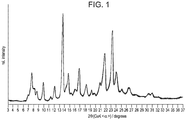
- Powder X-ray diffraction profiles and associated data of compound 2.2 which are shown in Figure 1 , and whose data are presented in Tables 2 and 2.1, were performed on an APD 2000 Diffraktometer (G.N.R. s.r.l., Agrate Conturbia, Italy) equipped with a Nal scintillation counter. Samples were scanned from 3° to 40° 2 ⁇ at a step size of 0.01° and a time per step of 5 seconds. The tube voltage and current were 40 kV and 30 mA, respectively. The samples were placed onto zero background aluminum holders.
- Synchrotron powder X-ray diffraction measurements and associated data of compound 3, which are shown in Figure 4 and whose data are presented in Tables 5, 6, 6.1, 6.2 and 6.3, were performed at the Materials Science beam line of the Swiss Light Source (SLS) at the Paul Scherrer Institute (PSI) in Villigen (Switzerland). Samples were measured in spinning glass capillaries with a diameter of 1.0 mm at T 295K.
- Fig. 9 powder X-ray diffraction profiles shown therein were obtained by using an X-ray diffractometer equipped with a copper source (Cu/K a 1.54056 A).
- a copper source Cu/K a 1.54056 A
- diffractometers include the Bruker AXS D8 Discover X-ray Diffractometer and the Rigaku D/Max Rapid X-ray Diffractometer.
- the Bruker AXS D8 Discover X-ray Diffractometer is equipped with GADDSTM (General Area Diffraction Detection System), a Bruker AXS HI-STAR Area Detector at a distance of 15.05 cm as per system calibration, automated x-y-z stage, and 0.5 mm collimator.
- GADDSTM General Area Diffraction Detection System
- a Bruker AXS HI-STAR Area Detector at a distance of 15.05 cm as per system calibration, automated x-y-z stage, and 0.5
- the sample is compacted into pellet form and mounted on the x-y-z stage.
- a diffractogram is acquired (control software: GADDSTM for WNT v4.1.14, ⁇ Bruker AXS, 1997-2003) under ambient conditions at a power setting of 40 kV and 40 mA in reflection mode while the sample remains stationary. The exposure time is typically 5 minutes.
- the diffractogram obtained undergoes a spatial remapping procedure to account for the geometrical pincushion distortion of the area detector, then it is integrated along chi from -118.8 to -61.8° and 2-theta 2.1 - 37° at a step size of 0.02° with normalization set to bin normalize.
- a diffractogram is acquired under ambient conditions at a power setting of 46 kV at 40 mA in reflection mode, while oscillating about the omega-axis from 0 - 5° at 1 °/sec and spinning about the phi-axis at 2 °/sec (Control software: RINT Rapid Control Software, Rigaku Rapid/XRD, version 1.0.0, ⁇ Rigaku Co., 1999).
- the exposure time is typically 5 minutes.
- the diffractogram obtained is integrated over 2-theta from 2 - 40 degrees and chi (1 segment) from 0 - 360° at a step size of 0.02° using the cylint utility in the RINT Rapid display software provided with the instrument (Analysis software: RINT Rapid display software, version 1.18, ⁇ Rigaku Co., 1999).
- the dark counts value is set to 8 as per the system calibration; normalization is set to average; the omega offset is set to 180°; and no chi or phi offsets are used for the integration.
- Diffraction patterns are viewed using Jade software, which is used to remove the background from the patterns and to assign peak positions (Analysis software: Jade, version 5.0 and 6.0, ⁇ Materials Data, Inc., 1995-2004).
- DSC Differential Scanning Calorimetry experiments were run as follows: An aliquot of a sample was weighed into an aluminum sample pan, (pan part # 900793.901; lid part # 900794.901; TA Instruments, 109 Lukens Drive, New Castle, DE 19720), which was sealed by crimping. The sample pan was loaded into the apparatus (Q1000 Differential Scanning Calorimeter, TA Instruments, 109 Lukens Drive, New Castle, DE 19720). A thermogram was obtained by individually heating the sample at a rate of 10 °C/min from T min (typically room temperature) to T max (typically 300 °C) using an empty aluminum hermetic pan as a reference.
- T min typically room temperature
- T max typically 300 °C
- the control software for both the DSC and TGA experiments was the Advantage for QW- Series, version 1.0.0.78, Thermal Advantage Release 2.0, ⁇ TA Instruments -Water LLC, 2001. Dry nitrogen (compressed nitrogen, grade 4.8, BOC Gases, 575 Mountain Avenue, Murray Hill, NJ 07974-2082) was used as a sample purge gas and was set at a flow rate of 50 mL/min. Thermal transitions were viewed and analyzed using the analysis software provided with the instrument (Analysis Software: Universal Analysis 2000 for Windows 95/95/2000/NT, version 3.1E; Build 3.1.0.40, ⁇ TA instruments - Water LLC, 1991 - 2001).
- Thermogravimetric Analysis (TGA) experiements were run as follows : An aliquot of the sample was transferred into a platinum sample pan (pan part # 952019.906; TA Instruments, 109 Lukens Drive, New Castle, DE 19720). The pan was placed on the loading platform and was then automatically loaded into the apparatus (Q500 Thermogravimetric Analyzer, TA Instruments, 109 Lukens Drive, New Castle, DE 19720) using the control software.
- Thermograms were obtained by individually heating the sample at 10 °C /min from T min (typically room temperature) to T max (typically 300 °C) under flowing dry nitrogen, with a sample purge flow rate of 60 mL/min and a balance purge flow rate of 40 mL/min.
- Thermal transitions e.g., weight changes
- yield refers to a mass of the entity for which the yield is given with respect to the maximum amount of the same entity that could be obtained under the particular stoichiometric conditions.
- Reagent concentrations that are given as percentages refer to mass ratios, unless indicated differently.
- Step A 4-Methyl-2-ethylsulfanyl-pyrimidine-5-carboxylic acid ethyl ester.
- DMF N,N-dimethylformamide
- Step B 2-Ethanesulfonyl-4-methyl-pyrimidine-5-carboxylic acid ethyl ester.
- DCM dichloromethane
- Step C 4-Methyl-2-[3-(1-methyl-piperidin-4-yl)-propylamino]-pyrimidine-5-carboxylic acid ethyl ester.
- Step D ⁇ 4-Methyl-2-[3-(1-methyl-piperidin-4-yl)-propylamino]-pyrimidin-5-yl ⁇ -methanol.
- 4-methyl-2-[3-(1-methyl-piperidin-4-yl)-propylamino]-pyrimidine-5-carboxylic acid ethyl ester (0.20 g, 0.63 mmol) in THF (6 mL) was added diisobutylaluminum hydride (1 M in hexanes; 1.25 mL, 1.25 mmol) dropwise. The mixture was warmed to rt over 1 h.
- the reaction was quenched with 1 M H 2 SO 4 (2 mL).
- the mixture was neutralized with saturated NaHCCX 3(aq) , and diluted with MeOH (2 mL), CHCl 3 (10 mL), and satd. aq. sodium potassium tartrate (10 mL).
- the mixture was stirred vigourously until the layers separated.
- the organic layer was dried (Na 2 SO 4 ) and concentrated to give the crude product (138 mg), which was used in the next step without further purification.
- Step E [5-(5-Fluoro-4-methyl-1H-benzoimidazol-2-yl)-pyrimidin-2-yl]-[3-(1-methyl-piperidin-4-yl)-propyl]-amine.
- Compound 2 shown in Example 2 was synthesized analogously to the procedures described in Example 1.
- the aqueous layer was then removed and to the organic layer was added 1M NaOH (110.1 g). The mixture was reheated to 65 °C, stirred for 10 minutes and the aqueous layer was removed. To the organic layer, water (110.8 g) was added and the solution reheated to 65 °C for 10 minutes. The aqueous layer was removed and the organic layer was concentrated under reduced pressure.
- 4-methyl-2-((3-(1-methylpiperidin-4-yl)propyl)amino)pyrimidine-5-carbonitrile was then crystallized from a solution of toluene (approximately 65 g) at a temperature of about 65 °C to provide 21.20 g of 4-methyl-2-((3-(1-methylpiperidin-4-yl)propyl)amino)pyrimidine-5-carbonitrile.
- a 100 L glass-lined reactor was charged with 4-methyl-2-((3-(1-methylpiperidin-4-yl)propyl)amino)pyrimidine-5-carbonitrile (5.41 kg, 19.8 mol) and toluene (47.13 kg). The resultant suspension was stirred and cooled to about 0 to -5 °C. Next, 1.0 M diisobutylaluminum hydride (DIBAL-H) in toluene (40.55 kg, 47.33 mol) was added, via nitrogen pressure, while maintaining the internal reaction temperature at ⁇ 2 °C. After completing the addition, the resultant reaction solution was warmed to about 5-10 °C and the reaction monitored for completion by HPLC.
- DIBAL-H diisobutylaluminum hydride
- Succinic anhydride (0.185 g per g of initial amount of compound 1-E-2) was added.
- the layers in such bi-phasic organic-aqueous medium were separated and the aqueous layer was washed once with toluene (0.5 g per g of initial amount of compound 1-E-2).
- the united organic layers were then extracted with an aqueous solution at a pH of equal to or less than about 4, in some embodiments at pH of about 3.5.
- such solution was an 8% aqueous HCl solution (1.01 g per g of initial amount of compound 1-E-2).
- This aqueous phase containing 4-methyl-2-((3-(1-methylpiperidin-4-yl)propyl)amino)pyrimidine-5-carbaldehyde, was used without further work-up in the next step A-1.
- the so-prepared carbaldehyde solution could be used in further steps to prepare compounds according to this invention, such as compounds 2, 2.1 and 3.
- STEP A-1 in a separate vessel sodium sulfite (1.2 equivalents (eq) relative to the initial amount of compound 1-E-2), 1,2-diamino-3,5-dimethylbenzene dihydrochloride (1.2 equivalents (eq) relative to the initial amount of compound 1-E-2) and water (5.74 g per g of the initial amount of compound 1-E-2) were stirred at room temperature. Hydrochloric acid (37%, 0.24 g per g of the initial amount of compound 1-E-2) was added and the reaction was heated to 50 °C within 20 minutes and air flow was circulated through the solution. Compound B33 in aqueous solution, prepared for example as indicated above, was added to this reaction mixture over 1.5 h.
- the reaction was heated to a temperature of about 55-60 °C for approximately 1-2.5 h.
- the solids were filtered off and 2-methyltetrahydrofuran (7.18 g per g of the initial amount of compound 1-E-2) was added to the filtrate.
- 30% NaOH (aq) 1.1-1.2 g per g of the initial amount of compound 1-E-2) was added to adjust the pH to approximately 9.5-11.5.
- the reaction mixture was heated to 45-50 °C for 15 min.
- the aqueous layer was removed, and water (0.65 g per g of the initial amount of compound 1-E-2) and 30% NaOH (aq) (0.18 g per g of the initial amount of compound 1-E-2) was added to the organic layer, which was heated to 45-50 °C for 5-15 min.
- the aqueous layer in the resulting bi-phasic medium was removed and discarded, and water (0.62 g per g of the initial amount of compound 1-E-2) was added to the organic layer thus forming another bi-phasic medium, which was heated to 45-50 °C for 5-15 min.
- a cold solution of water/sulfuric acid (27.05 kg/ 2.26 kg) was added to each, a 100 L Hastelloy reactor and a 100 L glass lined reactor.
- the resultant aqueous acid solutions were stirred and cooled to about 2-5 °C. Maintaining the temperature ⁇ 30 °C at all times, 50% (by volume) of the mixture prepared in STEP A above was added to each aqueous sulfuric acid solution.
- the resultant suspension was checked for pH (target pH of 4-5) and stirred at about 20-25 °C for about 1.5-2 h.
- the suspensions were then cooled to about 10-15 °C and the pH of the suspensions adjusted to pH ⁇ 11-12, by adding 6N sodium hydroxide (16.12 kg, 81.42 mol), over 20 min.
- the resultant mixtures were then stirred for an additional 15-20 minutes, the agitation was then stopped and the phases allowed to separate.
- sodium metabisulfite Na 2 S 2 O 5
- purified water 54.63 kg
- 3,5-dimethyl-1,2-benzenediamine-2HCl 3,5-dimethyl-1,2-benzenediamine-2HCl
- the reaction mixture was cooled to about 20-25 °C and then half of the volume ( ⁇ 30 L) was then added, via a metering pump, to a stirring 50 L glass reactor system containing a solution of potassium carbonate (3.9 kg, 28.2 mol) dissolved in purified water (15 kg), resulting in the formation of a precipitate.
- the precipitated product was stirred for ⁇ 1h and then allowed to settle.
- the clear supernatant ( ⁇ 20 L) was removed from the top of the 50 L reactor system and purified water ( ⁇ 20 kg) was added.
- STEP D Preparation of Hemi-Tartrate of [5-(4,6-dimethyl-1 H -benzoimidazol-2-yl)-4-methyl-pyrimidin-2-yl]-[3-(1-methyl-piperidin-4-yl)-propyl]-amine.
- the crystallization referred to above for Compound 2.1 is sometimes refered to as a first crystallization.
- ordinal terms are used for reference purposes, and the use of a certain ordinal term does not necessarily imply that the corresponding operations characterized by preceding ordinal terms must necessarily be peformed too.
- the resultant solution was cooled to about 50-55 °C and polish filtered (to remove any foreign particles) into a clean 100 L glass-lined reactor, followed by a rinse with denatured ethanol (4.15 kg).
- a solvent containing at least one low-alkyl alcohol, which in an embodiment was denatured ethanol (25.62 kg) was added and the resultant solution was stirred and heated to about 78-80 °C to atmospherically distill off 51 L of the solvent.
- the resultant solution was cooled to about 55-60 °C and additional solvent containing at least one low-alkyl alcohol, which in an embodiment was denatured ethanol (27.63 kg) was added, followed by heating to about 78-80 °C to atmospherically distill off 27 L of the solvent.
- the resultant solution was then cooled to about 50-55 °C, seeded with Compound 2.1 seeds (2.0 g, 4.3 mmol), then further cooled to about 18-22°C and then stirred for 1h.
- the resultant precipitate was filtered, washed with denatured ethanol (5.00 kg) and dried at about 75-80 °C under vacuum to yield the solid hemi-tartrate of [5-(4,6-dimethyl-1 H- benzoimidazol-2-yl)-4-methyl-pyrimidin-2-yl]-[3-(1-methyl-piperidin-4-yl)-propyl]-amine (compound 2.1); melting point 179°C.
- a low-alkyl alcohol-containing medium which in an embodiment was a medium containing at least one a low-alkyl alcohol, which in an embodiment was denatured ethanol (105.0 g) was then added and the resulting solution was filtered (at 50 °C) to remove any remaining particles. The filtrate was heated briefly to reflux, then cooled to approx. 60 °C, before seeding with crystals of Compound 2.1.
- the resulting mixture was subjected to the following temperature profile for crystallization: 1 h at 60 °C, cooling to 40 °C over 2 h, heating to 50 °C over 1 h, cooling to 30 °C over 2 h, heating to 40 °C over 1 h, cooling to 20 °C over 2 h, heating to 30 °C over 1 h, cooling to 10 °C over 2 h, heating to 20 °C over 1 h, then cooling to 0 °C over 2 h.
- the recrystallization referred to above for Compound 2.1 is sometimes refered to as a second crystallization.
- Compound 2.1 has an aquesous solubility at room temperature of about 1.1 g/ml. This compound is hygroscopic. It converts to Compound 3 at above 70% relative humidity, and it forms the tetrahydrate Compound 3 in aqueous solution.
- Embodiments of Compound 2.1 obtained as described in this Example 3 had purity equal to or about 98.95% Recrystallization produced embodiments of the same compound with purity equal to or about 99.23%. Purity changes upon recrystallization of Compound 2.1 are shown in Table 1. Impurities I1 - I11 and A1 - A19 referred to in various of the Tables presented herein are characterized in Table 9 and its associated chemical structures in Example 11, and also in Tables 1 and 7.
- the anhydrous form 2.1 shows an initial 0.3% weight loss up to 170 °C of the surface moisture, and subsequently the appropriate stoichiometric (0.5 mol) weight loss of tartaric acid ( ⁇ 15%, 16.05% theoretical).
- the melting point is a fairly sharp endotherm with a peak max at 184 °C.
- Example 4 Examples 4-1 and 4-2. Preparation of 5-(4,6-dimethyl-1H-benzimidazol-2-yl)-4-methyl-N-[3-(1-methyl-4-piperidinyl)-propyl]-2-pyrimidinamine 2,3-dihydroxybutanedioate (1:0.5), polymorph B, Compound 2.2, from Compound 2.1.
- Example 4-1 In a 10 mL glass tube equipped with a magnetic stirring bar, 5-(4,6-dimethyl-1H-benzimidazol-2-yl)-4-methyl-N-[3-(1-methyl-4-piperidinyl)propyl]-2-pyrimidinamine 2,3-dihydroxybutanedioate (1:0.5), compound 2.1 (1 g) was dissolved in water (10 mL) at room temperature (22 °C). The clear yellowish solution was stirred at room temperature overnight, then cooled to 2.5 °C for 2 hours, before the product was isolated by filtration and dried in vacuo overnight at 55 °C to yield 0.9 g of compound 2.2 (water content 4.9 %).
- Compound 2.2 was prepared as follows. In a 10 mL glass tube equipped with a magnetic stirring bar, 5-(4,6-dimethyl-1H-benzimidazol-2-yl)-4-methyl-N-[3-(1-methyl-4-piperidinyl)propyl]-2-pyrimidinamine 2,3-dihydroxybutanedioate (1:0.5), compound 2.1 (0.5 g) was dissolved in a mixture of water (4.5 mL) and 2-propanol (0.5 mL) at 50 °C. The clear yellowish solution was cooled to 10 °C within 2 hours leading to crystallization of a white solid. The resulting thick suspension is kept at 10 °C overnight, the product is then isolated by filtration and dried in vacuo for 21 h to yield 0.43 g of compound 2.2.
- Table 2 XRD Peak list for an embodiment of Compound 2.2 with relative intensity of at least 9% Position [°2 ⁇ ] d-spacing [ ⁇ ] Intensity (counts) Relative Intensity (%) 6.96 12.69 186 11.1 7.67 11.52 586 34.8 8.26 10.70 291 17.3 8.63 10.24 256 15.2 9.91 8.92 413 24.6 11.34 7.80 153 9.1 12.09 7.31 344 20.5 13.66 6.48 1682 100.0 14.73 6.01 579 34.4 16.85 5.26 677 40.2 18.21 4.87 385 22.9 19.24 4.61 279 16.6 20.89 4.25 417 24.8 23.25 3.82 1378 81.9 23.98 3.71 611 36.3 25.04 3.55 296 17.6 26.25 3.39 318 18.9 Table 2.1 XRD Peak list for an embodiment of Compound 2.2 with relative intensity of at least 20% Position [°2 ⁇ ] d-spacing [ ⁇ ] Intensity (counts) Relative Intensity (%) 7.67 11.
- Compound 2.2 is physically stable only when stored in a tightly sealed vial at ambient condition. It absorbs water readily and converts to Compound 3 when exposed to the atmosphere.
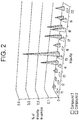
- Table 3 and Figure 2 display the impurity profiles for Compounds 2 and 3, according to this example, showing that the impurity profile of Compund 3 is significantly reduced with respect to that of Compound 2.
- Table 3 Impurity Profile for Compounds 2 and 3, (Example 5) Compound 2 Compound 3 Impurity 1 (I1) 0.03 0 Impurity 2 (I2) 0 0 Impurity 3 (I3) 0.04 0 Impurity 4 (I4) 0.18 0.03 Impurity 5 (I5) 0.37 0.05 Impurity 6 (I6) 0.07 0 Impurity 7 (I7) 0.17 0.05 Impurity 8 (I8) 0.15 0.14 Impurity 9 (I9) 0.08 0.06 Impurity 10 (I10) 0.09 0
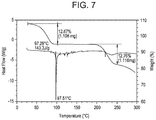
- the DSC and TGA profiles of Compound 3 show an initial 12.7% water loss before 100 °C, corresponding to ⁇ 4 mol of water (13.3% calculated) followed by a 12.8% weight loss of the tartaric acid.
- the melting point is a sharp endotherm with a peak max at 97.5 °C, and the endotherm at 184 °C, which is characteristic of the anhydrous form, is no longer present.
- Example 6 Preparation of Seeding Crystals- 5-(4,6-dimethyl-1H-benzimidazol-2-yl)-4-methyl-N-[3-(1-methyl-4-piperidinyl)-propyl]-2-pyrimidinamine 2,3-dihydroxybutanedioate hydrate (1:0.5:4), Compound 3.S, that was used, for example, in the seeding described in Example 7.
- Example 7 Preparation of- 5-(4,6-dimethyl-1H-benzimidazol-2-yl)-4-methyl-N-[3-(1-methyl-4-piperidinyl)-propyl]-2-pyrimidinamine 2,3-dihydroxybutanedioate hydrate (1:0.5:4), Compound 3, from the anhydrous hemitartrate, Compound 2.1.
- the powder X-ray diffraction (XRD) profile of an embodiment of Compound 3 is shown in Figure 4 , and the XRD peak lists are shown in Tables 5, 6 and 6.1-6.3.
- Figure 9 displays the XRD profiles for Compounds 2.1, 2.2 and 3.
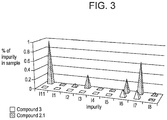
- Table 4 and Figure 3 display the impurity profiles for compounds 2.1 and 3, according to this example, which that, as noted with respect to Compund 2, that the impurity profile of Compound 3 is significantly reduced with respect to that of Compound 2.1.
- Embodiments of Compound 3 obtained as described in this Example 7 had purity equal to or about 99.86%.
- Compound 3 presents advantageous development chemistry features: The synthesis of Compound 3 provides high, reproducible yield (about 95%, compared to about 85% for Compound 2.1); it is synthesized by a simple methodology that does not require azeotropic distillation or exposure to long stirring times and heating in the presence of MeOH/EtOH, which could lead to the formation of side products; it presents high and reproducible purity, including the removal of certain amino impurities; and crystallization can be done in water as solvent, with no need for mother liquor incineration, which leads to cost saving green chemistry.
- the recrystallization referred to above for Compound 3 is sometimes refered to as a fourth crystallization. It is sometimes referred to as a third crystallization when Compound 2.1 has only been crystallized once.
- the product cake was washed with water (99.0 g).
- the wet product was dried at room temperature / ambient pressure for 5 days to yield the title Compound 3 (97 % yield), recrystallized.
- Compound 3, that in the pre-crystallization stage had a purity of 99.86%, had purity equal to or about 99.90%. Purity changes upon recrystallization of Compound 3 are shown in Table 7.
- reaction mixture became cloudy as the acid was added but quickly changed to a clear yellow solution as it was stirred.
- the reaction mixture was left to heat on the hot plate at low temperature for another 10 min before being removed and allowed to cool down to rt on the bench top.
- the flask was left at room temperature overnight to allow crystals to precipitate.
- small spatula of the phosphate salt was added to the reaction mixture as seeded and left open at rt overnight to form crystals. Very fine crystalline needles are formed in the bottom of the flask after 2 days.
- Examples 2-5 and 7 describe synthetic methodologies according to this invention for compounds such as the following compounds:
- pharmaceutically acceptable salts of Compound 2 are generally preferable for pharmaceutical use to formulations of the free base Compound 2 itself.
- Compound 3 presents itself as a well characterized form which is generally preferable to anhydrous salts, such as Compounds 2.1 and 2.2, that present themselves in more than one form (such as polymorphs A and B, respectively).
- step E the impurity segregation properties of Compound 3 are such that its synthesis in the high degrees of purity exemplified herein does not have to rely on a re-crystallization of such Compound 2.1, which is presented in the foregoing examples for illustrative purposes.
- any given impurity content is "0”, or that such given impurity is not detected, typically abbreviated as “n.d.” or “nd”, then such material is also referred to as being “substantially free from” any such given impurity.
- Impurities were analyzed according to standard high performance liquid chromatography (HPLC) with detection by mass spectrometry (MS) or ultra-violet spectroscopy (UV), finding one or more of the impurity's mass, relative retention time, and amount (as relative area percentage), and they are provided herein by using notation that is typical in such standard methodologies.
- HPLC high performance liquid chromatography
- MS mass spectrometry
- UV ultra-violet spectroscopy
- Impurity amounts as reported herein were determined at a level below the level allowed in this industry standards. For example, in a validation of the impurity analysis method of Compound 2, a relative standard deviation of not more than 4 % was found (i.e., if the impurity amount y in this case were 0.05 %, a relative standard deviation of not more than 4 % would mean y to be 0.05 ⁇ 0.002 %).
Landscapes
- Health & Medical Sciences (AREA)
- Chemical & Material Sciences (AREA)
- Organic Chemistry (AREA)
- Life Sciences & Earth Sciences (AREA)
- Veterinary Medicine (AREA)
- Medicinal Chemistry (AREA)
- Pharmacology & Pharmacy (AREA)
- Animal Behavior & Ethology (AREA)
- General Health & Medical Sciences (AREA)
- Public Health (AREA)
- Chemical Kinetics & Catalysis (AREA)
- General Chemical & Material Sciences (AREA)
- Nuclear Medicine, Radiotherapy & Molecular Imaging (AREA)
- Engineering & Computer Science (AREA)
- Bioinformatics & Cheminformatics (AREA)
- Diabetes (AREA)
- Hematology (AREA)
- Pulmonology (AREA)
- Physical Education & Sports Medicine (AREA)
- Immunology (AREA)
- Endocrinology (AREA)
- Crystallography & Structural Chemistry (AREA)
- Neurology (AREA)
- Virology (AREA)
- Dermatology (AREA)
- Orthopedic Medicine & Surgery (AREA)
- Metallurgy (AREA)
- Materials Engineering (AREA)
- Obesity (AREA)
- Cardiology (AREA)
- Rheumatology (AREA)
- Ophthalmology & Optometry (AREA)
- Oncology (AREA)
- Tropical Medicine & Parasitology (AREA)
- Communicable Diseases (AREA)
- Heart & Thoracic Surgery (AREA)
- Oil, Petroleum & Natural Gas (AREA)
- Neurosurgery (AREA)
- Emergency Medicine (AREA)
- Pain & Pain Management (AREA)
Priority Applications (6)
| Application Number | Priority Date | Filing Date | Title |
|---|---|---|---|
| EP19213615.8A EP3660011A1 (en) | 2013-03-06 | 2014-03-06 | Benzoimidazol-2-yl pyrimidine modulators of the histamine h4 receptor |
| RS20200160A RS59909B1 (sr) | 2013-03-06 | 2014-03-06 | Benzoimidazol-2-il pirimidinski modulatori histaminskog h4 receptora |
| HRP20200253TT HRP20200253T1 (hr) | 2013-03-06 | 2014-03-06 | Benzoimidazol-2-il pirimidinski modulatori histaminskog h4 receptora |
| PL14760540T PL2964229T3 (pl) | 2013-03-06 | 2014-03-06 | Benzoimidazol-2-ilo pirymidynowe modulatory receptora histaminowego H<sub>4</sub> |
| SM20200084T SMT202000084T1 (it) | 2013-03-06 | 2014-03-06 | Modulatori benzoimidazol-2-il pirimidinici del recettore h4 dell'istamina |
| SI201431440T SI2964229T1 (sl) | 2013-03-06 | 2014-03-06 | Benzoimidazol-2-il pirimidin modulatorji receptorja histamina H4 |
Applications Claiming Priority (4)
| Application Number | Priority Date | Filing Date | Title |
|---|---|---|---|
| US201361773706P | 2013-03-06 | 2013-03-06 | |
| US201361776260P | 2013-03-11 | 2013-03-11 | |
| US201361784909P | 2013-03-14 | 2013-03-14 | |
| PCT/US2014/021130 WO2014138368A1 (en) | 2013-03-06 | 2014-03-06 | Benzoimidazol-2-yl pyrimidine modulators of the histamine h4 receptor |
Related Child Applications (1)
| Application Number | Title | Priority Date | Filing Date |
|---|---|---|---|
| EP19213615.8A Division EP3660011A1 (en) | 2013-03-06 | 2014-03-06 | Benzoimidazol-2-yl pyrimidine modulators of the histamine h4 receptor |
Publications (3)
| Publication Number | Publication Date |
|---|---|
| EP2964229A1 EP2964229A1 (en) | 2016-01-13 |
| EP2964229A4 EP2964229A4 (en) | 2016-11-16 |
| EP2964229B1 true EP2964229B1 (en) | 2019-12-11 |
Family
ID=51488591
Family Applications (2)
| Application Number | Title | Priority Date | Filing Date |
|---|---|---|---|
| EP14760540.6A Active EP2964229B1 (en) | 2013-03-06 | 2014-03-06 | Benzoimidazol-2-yl pyrimidine modulators of the histamine h4 receptor |
| EP19213615.8A Withdrawn EP3660011A1 (en) | 2013-03-06 | 2014-03-06 | Benzoimidazol-2-yl pyrimidine modulators of the histamine h4 receptor |
Family Applications After (1)
| Application Number | Title | Priority Date | Filing Date |
|---|---|---|---|
| EP19213615.8A Withdrawn EP3660011A1 (en) | 2013-03-06 | 2014-03-06 | Benzoimidazol-2-yl pyrimidine modulators of the histamine h4 receptor |
Country Status (38)
| Country | Link |
|---|---|
| US (4) | US8859575B2 (lt) |
| EP (2) | EP2964229B1 (lt) |
| JP (1) | JP6471103B2 (lt) |
| KR (1) | KR102230383B1 (lt) |
| CN (1) | CN105025898B (lt) |
| AU (1) | AU2014225675B2 (lt) |
| BR (1) | BR112015021463A8 (lt) |
| CA (1) | CA2903737C (lt) |
| CL (1) | CL2015002434A1 (lt) |
| CR (1) | CR20150435A (lt) |
| CY (1) | CY1122545T1 (lt) |
| DK (1) | DK2964229T3 (lt) |
| DO (1) | DOP2016000027A (lt) |
| EA (1) | EA201591648A1 (lt) |
| ES (1) | ES2773543T3 (lt) |
| GT (1) | GT201500243A (lt) |
| HR (1) | HRP20200253T1 (lt) |
| HU (1) | HUE047681T2 (lt) |
| IL (1) | IL240247B (lt) |
| JO (1) | JO3516B1 (lt) |
| LT (1) | LT2964229T (lt) |
| MX (1) | MX373874B (lt) |
| MY (1) | MY180726A (lt) |
| NZ (1) | NZ710640A (lt) |
| PE (1) | PE20151536A1 (lt) |
| PH (1) | PH12015501731B1 (lt) |
| PL (1) | PL2964229T3 (lt) |
| PT (1) | PT2964229T (lt) |
| RS (1) | RS59909B1 (lt) |
| SA (1) | SA515360981B1 (lt) |
| SG (1) | SG11201507117XA (lt) |
| SI (1) | SI2964229T1 (lt) |
| SM (1) | SMT202000084T1 (lt) |
| TW (1) | TWI617554B (lt) |
| UA (1) | UA118754C2 (lt) |
| UY (1) | UY35370A (lt) |
| WO (1) | WO2014138368A1 (lt) |
| ZA (1) | ZA201507351B (lt) |
Families Citing this family (14)
| Publication number | Priority date | Publication date | Assignee | Title |
|---|---|---|---|---|
| BRPI0710083A2 (pt) | 2006-03-31 | 2011-08-02 | Janssen Pharmaceutica Nv | entidade quìmica benzoimidazol-2-il pirimidina e pirazina, composição farmacêutica e uso destas |
| US9371311B2 (en) | 2008-06-30 | 2016-06-21 | Janssen Pharmaceutica Nv | Benzoimidazol-2-yl pyrimidine derivatives |
| WO2014138368A1 (en) | 2013-03-06 | 2014-09-12 | Janssen Pharmaceutica Nv | Benzoimidazol-2-yl pyrimidine modulators of the histamine h4 receptor |
| EP2970271B1 (en) | 2013-03-14 | 2017-11-08 | Janssen Pharmaceutica NV | P2x7 modulators |
| TWI599567B (zh) | 2013-03-14 | 2017-09-21 | 健生藥品公司 | P2x7調節劑 |
| EP2970304B1 (en) | 2013-03-14 | 2018-08-15 | Janssen Pharmaceutica NV | P2x7 modulators |
| JO3509B1 (ar) | 2013-03-14 | 2020-07-05 | Janssen Pharmaceutica Nv | معدلات p2x7 |
| CA2960972C (en) | 2014-09-12 | 2023-10-03 | Janssen Pharmaceutica Nv | P2x7 modulating n-acyl-triazolopyrazines |
| EP3191492B1 (en) | 2014-09-12 | 2019-01-09 | Janssen Pharmaceutica NV | P2x7 modulators |
| JP6827113B2 (ja) | 2017-01-21 | 2021-02-10 | 広州白雲山漢方現代薬業有限公司Guangzhou Hanfang Pharmaceutical Co.,Ltd. | シェーグレン症候群の治療におけるペオニフロリン−6’−o−ベンゼンスルホン酸の使用 |
| AU2019349962A1 (en) | 2018-09-28 | 2021-03-18 | Janssen Pharmaceutica Nv | Monoacylglycerol lipase modulators |
| PE20211773A1 (es) | 2018-09-28 | 2021-09-08 | Janssen Pharmaceutica Nv | Moduladores de monoacilglicerol lipasa |
| US11839663B2 (en) | 2019-09-30 | 2023-12-12 | Janssen Pharmaceutica Nv | Radiolabelled MGL pet ligands |
| BR112022019077A2 (pt) | 2020-03-26 | 2022-12-27 | Janssen Pharmaceutica Nv | Moduladores da monoacilglicerol lipase |
Family Cites Families (103)
| Publication number | Priority date | Publication date | Assignee | Title |
|---|---|---|---|---|
| US3005852A (en) | 1959-12-22 | 1961-10-24 | Gen Aniline & Film Corp | Production of sulfoxides and sulfones |
| GB1062357A (en) | 1965-03-23 | 1967-03-22 | Pfizer & Co C | Quinazolone derivatives |
| US3931195A (en) | 1971-03-03 | 1976-01-06 | Mead Johnson & Company | Substituted piperidines |
| US4191828A (en) | 1976-04-14 | 1980-03-04 | Richardson-Merrell Inc. | Process for preparing 2-(2,2-dicyclohexylethyl)piperidine |
| US4337341A (en) | 1976-11-02 | 1982-06-29 | Eli Lilly And Company | 4a-Aryl-octahydro-1H-2-pyrindines |
| US4190601A (en) | 1978-05-31 | 1980-02-26 | Union Carbide Corporation | Production of tertiary amines by reductive alkylation |
| JPS6130576A (ja) | 1984-07-24 | 1986-02-12 | Ube Ind Ltd | 2−アミノ−5−シアノピリミジンの製法 |
| GB9410031D0 (en) | 1994-05-19 | 1994-07-06 | Merck Sharp & Dohme | Therapeutic agents |
| GB9422391D0 (en) | 1994-11-05 | 1995-01-04 | Solvay Interox Ltd | Oxidation of organosulphur compounds |
| BR9509985A (pt) | 1995-12-12 | 1998-11-03 | Omeros Med Sys Inc | Solução para irrigação e método para inibição de dor inflamação e esparmo |
| US5883105A (en) | 1996-04-03 | 1999-03-16 | Merck & Co., Inc. | Inhibitors of farnesyl-protein transferase |
| AU704792B2 (en) | 1996-04-03 | 1999-05-06 | Merck & Co., Inc. | Inhibitors of farnesyl-protein transferase |
| US5880140A (en) | 1996-04-03 | 1999-03-09 | Merck & Co., Inc. | Biheteroaryl inhibitors of farnesyl-protein transferase |
| EP0891357A1 (en) | 1996-04-03 | 1999-01-20 | Merck & Co., Inc. | Inhibitors of farnesyl-protein transferase |
| US5939439A (en) | 1996-12-30 | 1999-08-17 | Merck & Co., Inc. | Inhibitors of farnesyl-protein transferase |
| WO1998031369A1 (fr) | 1997-01-16 | 1998-07-23 | Sekisui Chemical Co., Ltd. | Preparations a usage externe a absorption percutanee |
| CA2277273C (en) | 1997-01-17 | 2008-03-25 | Merck & Co., Inc. | Integrin antagonists |
| US5945422A (en) | 1997-02-05 | 1999-08-31 | Warner-Lambert Company | N-oxides of amino containing pyrido 2,3-D! pyrimidines |
| AU724216B2 (en) | 1997-04-07 | 2000-09-14 | Merck & Co., Inc. | A method of treating cancer |
| GB9801231D0 (en) | 1997-06-05 | 1998-03-18 | Merck & Co Inc | A method of treating cancer |
| AU9663798A (en) | 1997-10-06 | 1999-04-27 | Warner-Lambert Company | Heteroaryl butyric acids and their derivatives as inhibitors of matrix metalloproteinases |
| BR9908004A (pt) | 1998-02-17 | 2001-12-18 | Tularik Inc | Composto, composição e método para prevençãoou supressão de uma infecção viral |
| ATE274510T1 (de) | 1998-06-19 | 2004-09-15 | Chiron Corp | Glycogen synthase kinase 3 inhibitoren |
| PT1038875E (pt) | 1999-03-25 | 2003-10-31 | Synthon Bv | Derivados de imidazopiridina e processo para os preparar |
| PL206826B1 (pl) | 1999-06-23 | 2010-09-30 | Sanofi Aventis Deutschland | Podstawione benzimidazole |
| TWI279402B (en) | 1999-08-20 | 2007-04-21 | Banyu Pharma Co Ltd | Spiro compounds having NPY antagonistic activities and agents containing the same |
| US6372743B1 (en) | 1999-09-30 | 2002-04-16 | Neurogen Corporation | Certain alkylene diamine-substituted pyrazlo (1,5-a)-1,5-pyrimidines and pyrazolo (1,5-a) 1,3,5-triazines |
| HUP0202263A3 (en) | 1999-12-27 | 2003-02-28 | Japan Tobacco Inc | Benzimidazole, indole and imidazo-pyridine derivatives and pharmaceutical compositions containing them |
| DE10006453A1 (de) | 2000-02-14 | 2001-08-16 | Bayer Ag | Piperidylcarbonsäuren als Integrinantagonisten |
| AU5721301A (en) * | 2000-04-24 | 2001-11-07 | Teva Pharma | Zolpidem hemitartrate |
| RU2002131589A (ru) * | 2000-04-24 | 2004-03-27 | Тева Фамэситикл Индастрис Лтд. (Il) | Гемитартрат золпидема |
| CA2409762A1 (en) | 2000-06-23 | 2002-01-03 | Donald J.P. Pinto | Heteroaryl-phenyl substituted factor xa inhibitors |
| AU2001289615A1 (en) | 2000-06-28 | 2002-01-08 | Thromb-X N.V. | Pluripotent embryonic stem (es) cell lines, improved methods for their production, and their use for germ line transmission and for the generation of genetically modified animals |
| JP3507483B1 (ja) | 2000-07-21 | 2004-03-15 | シンジェンタ パーティシペーションズ アクチェンゲゼルシャフト | 4,6−ジメトキシ−2−(メチルスルホニル)−1,3−ピリミジンの製造方法 |
| WO2002020495A2 (en) | 2000-09-06 | 2002-03-14 | Chiron Corporation | Inhibitors of glycogen synthase kinase 3 |
| EP1351686A2 (en) | 2000-11-20 | 2003-10-15 | Pharmacia Corporation | Substituted polycyclic aryl and heteroaryl pyridines useful for selective inhibition of the coagulation cascade |
| AU2002258400A1 (en) | 2001-02-16 | 2002-08-28 | Tularik Inc. | Methods of using pyrimidine-based antiviral agents |
| MXPA03008143A (es) | 2001-03-09 | 2005-08-16 | Johnson & Johnson | Compuestos heterociclicos. |
| WO2002076438A2 (en) | 2001-03-23 | 2002-10-03 | Chugai Seiyaku Kabushiki Kaisha | Flt-1 ligands and their uses in the treatment of diseases regulatable by angiogenesis |
| JP2004525150A (ja) | 2001-03-30 | 2004-08-19 | スミスクライン ビーチャム コーポレーション | 治療用化合物としてのピラゾロピリジン類の使用 |
| WO2002089738A2 (en) | 2001-05-08 | 2002-11-14 | Yale University | Proteomimetic compounds and methods |
| AR035543A1 (es) | 2001-06-26 | 2004-06-16 | Japan Tobacco Inc | Agente terapeutico para la hepatitis c que comprende un compuesto de anillo condensado, compuesto de anillo condensado, composicion farmaceutica que lo comprende, compuestos de benzimidazol, tiazol y bifenilo utiles como intermediarios para producir dichos compuestos, uso del compuesto de anillo con |
| AU2002363368B2 (en) * | 2001-11-05 | 2007-12-13 | Merck Patent Gmbh | Hydrazono-malonitriles |
| US20030187026A1 (en) | 2001-12-13 | 2003-10-02 | Qun Li | Kinase inhibitors |
| EP1472248A1 (en) | 2002-01-17 | 2004-11-03 | Eli Lilly And Company | Modulators of acetylcholine receptors |
| TWI270542B (en) | 2002-02-07 | 2007-01-11 | Sumitomo Chemical Co | Method for preparing sulfone or sulfoxide compound |
| US7314937B2 (en) | 2002-03-21 | 2008-01-01 | Eli Lilly And Company | Non-imidazole aryl alkylamines compounds as histamine H3 receptor antagonists, preparation and therapeutic uses |
| US7498349B2 (en) | 2002-08-02 | 2009-03-03 | Genesoft Pharmaceuticals, Inc. | Biaryl compounds having anti-infective activity |
| US20040127395A1 (en) | 2002-09-06 | 2004-07-01 | Desai Pragnya J. | Use of histamine H4 receptor modulators for the treatment of allergy and asthma |
| US20040132715A1 (en) | 2002-09-06 | 2004-07-08 | Dunford Paul J. | Method to treat allergic rhinitis |
| JP4596915B2 (ja) | 2002-09-06 | 2010-12-15 | ジヤンセン・フアーマシユーチカ・ナームローゼ・フエンノートシヤツプ | チエノピロリルおよびフラノピロリル化合物並びにヒスタミンh4受容体リガンドとしてのそれらの使用 |
| RU2005106274A (ru) | 2002-09-06 | 2005-11-10 | Янссен Фармацевтика, Н.В. (Be) | Гетероциклические соединения |
| EP1546115A4 (en) | 2002-09-27 | 2010-08-04 | Merck Sharp & Dohme | Substituted pyrimidines |
| TW200501960A (en) | 2002-10-02 | 2005-01-16 | Bristol Myers Squibb Co | Synergistic kits and compositions for treating cancer |
| US20040105856A1 (en) | 2002-12-02 | 2004-06-03 | Robin Thurmond | Use of histamine H4 receptor antagonist for the treatment of inflammatory responses |
| AU2004235907B2 (en) | 2003-05-05 | 2007-08-30 | F. Hoffmann La-Roche Ag | Fused pyrimidine derivatives with CRF activity |
| CA2525547C (en) | 2003-05-14 | 2012-07-03 | Torreypines Therapeutics, Inc. | Compounds and uses thereof in modulating amyloid beta |
| SE0302116D0 (sv) * | 2003-07-21 | 2003-07-21 | Astrazeneca Ab | Novel compounds |
| WO2005039485A2 (en) | 2003-08-13 | 2005-05-06 | Chiron Corporation | Gsk-3 inhibitors and uses thereof |
| US7781595B2 (en) | 2003-09-22 | 2010-08-24 | S*Bio Pte Ltd. | Benzimidazole derivatives: preparation and pharmaceutical applications |
| US20050070527A1 (en) | 2003-09-30 | 2005-03-31 | Edwards James P. | Quinoxaline compounds |
| PT1673348E (pt) | 2003-09-30 | 2009-05-11 | Janssen Pharmaceutica Nv | Compostos de benzoimidazole |
| US7115646B2 (en) | 2003-10-08 | 2006-10-03 | Bristol Myers Squibb, Co. | Cyclic diamines and derivatives as factor Xa inhibitors |
| EP1679309A4 (en) | 2003-10-24 | 2007-03-28 | Ono Pharmaceutical Co | ANTISTRESS MEDICAMENT AND ITS MEDICAL USE |
| US8277831B2 (en) | 2004-02-17 | 2012-10-02 | Advanced Technologies And Regenerative Medicine, Llc. | Drug-enhanced adhesion prevention |
| EP1737297B1 (en) | 2004-03-25 | 2012-12-19 | Janssen Pharmaceutica NV | Imidazole compounds |
| US7960394B2 (en) | 2004-05-31 | 2011-06-14 | Banyu Pharmaceutical Co., Ltd. | Quinazoline derivative |
| CA2572218C (en) | 2004-06-30 | 2013-06-11 | Janssen Pharmaceutica, N.V. | Aryl-substituted benzimidazole and imidazopyridine ethers as anti-cancer agents |
| CA2577947A1 (en) | 2004-08-31 | 2006-03-09 | Banyu Pharmaceutical Co., Ltd. | Novel substituted imidazole derivative |
| US7906528B2 (en) | 2004-10-05 | 2011-03-15 | Novartis International Pharmaceutical Ltd. | Pyrrolo-pyridine, pyrrolo-pyrimidine and related heterocyclic compounds |
| US7381732B2 (en) | 2004-10-26 | 2008-06-03 | Bristol-Myers Squibb Company | Pyrazolobenzamides and derivatives as factor Xa inhibitors |
| US7442716B2 (en) | 2004-12-17 | 2008-10-28 | Merck Frosst Canada Ltd. | 2-(phenyl or heterocyclic)-1H-phenantrho[9,10-d]imidazoles as mPGES-1 inhibitors |
| CA2591724C (en) | 2004-12-17 | 2014-08-05 | Merck Frosst Canada Ltd. | 2-(phenyl or heterocyclic)-1h-phenantrho[9,10-d]imidazoles as mpges-1 inhibitors |
| WO2006102645A1 (en) | 2005-03-24 | 2006-09-28 | Janssen Pharmaceutica, N.V. | Biaryl derived amide modulators of vanilloid vr1 receptor |
| WO2007044085A2 (en) | 2005-05-19 | 2007-04-19 | Xenon Pharmaceuticals Inc. | Heteroaryl compounds and their uses as therapeutic agents |
| US8193206B2 (en) | 2005-06-14 | 2012-06-05 | Taigen Biotechnology Co., Ltd. | Pyrimidine compounds |
| JP5118029B2 (ja) | 2005-06-14 | 2013-01-16 | タイゲン バイオテクノロジー カンパニー,リミテッド | ピリミジン化合物 |
| JP5121707B2 (ja) | 2005-07-04 | 2013-01-16 | ハイ ポイント ファーマシューティカルズ,エルエルシー | 新規医薬 |
| CA2622372A1 (en) | 2005-09-13 | 2007-03-22 | Palau Pharma, S.A. | 2-aminopyrimidine derivatives as modulators of the histamine h4 receptor activity |
| AR056560A1 (es) | 2005-10-06 | 2007-10-10 | Astrazeneca Ab | Pirrolopiridinonas como moduladores cb1 |
| JP5301999B2 (ja) | 2005-10-31 | 2013-09-25 | メルク・シャープ・アンド・ドーム・コーポレーション | Cetp阻害薬 |
| WO2007063935A1 (ja) | 2005-12-02 | 2007-06-07 | Mitsubishi Tanabe Pharma Corporation | 芳香族化合物 |
| JP2009527508A (ja) | 2006-02-24 | 2009-07-30 | メルク フロスト カナダ リミテツド | 2−(フェニル又は複素環)−1h−フェナントロ[9,10−d]イミダゾール |
| ATE479678T1 (de) | 2006-03-31 | 2010-09-15 | Janssen Pharmaceutica Nv | Benzoimidazol-2-yl pyridine als modulatoren des histamin-h4-rezeptors |
| BRPI0710083A2 (pt) * | 2006-03-31 | 2011-08-02 | Janssen Pharmaceutica Nv | entidade quìmica benzoimidazol-2-il pirimidina e pirazina, composição farmacêutica e uso destas |
| AU2007235578B2 (en) | 2006-04-07 | 2011-07-14 | Janssen Pharmaceutica N.V. | Indoles and benzoimidazoles as modulators of the histamine H4 receptor |
| WO2007120690A2 (en) | 2006-04-10 | 2007-10-25 | Janssen Pharmaceutica N.V. | Combination histamine h1r and h4r antagonist therapy for treating pruritus |
| EP2019675A4 (en) | 2006-05-02 | 2011-03-02 | Merck Frosst Canada Ltd | METHOD FOR THE TREATMENT OR PREVENTION OF NEOPLASIA |
| US20090209571A1 (en) | 2006-05-18 | 2009-08-20 | Bernard Cote | Phenanthrene derivatives as MPGES-1 inhibitors |
| WO2008008359A2 (en) | 2006-07-11 | 2008-01-17 | Janssen Pharmaceutica, N.V. | Benzofuro-and benzothienopyryimidine modulators of the histamine h4 receptor |
| US8779154B2 (en) * | 2006-09-26 | 2014-07-15 | Qinglin Che | Fused ring compounds for inflammation and immune-related uses |
| TW200904437A (en) | 2007-02-14 | 2009-02-01 | Janssen Pharmaceutica Nv | 2-aminopyrimidine modulators of the histamine H4 receptor |
| AR069480A1 (es) | 2007-11-30 | 2010-01-27 | Palau Pharma Sa | Derivados de 2-amino-pirimidina |
| US8084466B2 (en) | 2007-12-18 | 2011-12-27 | Janssen Pharmaceutica Nv | Bicyclic heteroaryl-substituted imidazoles as modulators of the histamine H4 receptor |
| NZ603069A (en) | 2008-06-12 | 2013-08-30 | Janssen Pharmaceutica Nv | Use of histamine h4 antagonist for the treatment of post-operative adhesions |
| MY158927A (en) | 2008-06-12 | 2016-11-30 | Janssen Pharmaceutica Nv | Diamino-pyridine, pyrimidine, and pyridazine modulators of the histamine h4 receptor |
| WO2010002774A1 (en) | 2008-06-30 | 2010-01-07 | Janssen Pharmaceutica Nv | Process for the preparation of substituted pyrimidine derivatives |
| EP2303869A2 (en) * | 2008-06-30 | 2011-04-06 | Janssen Pharmaceutica, N.V. | Process for the preparation of benzoimidazol-2-yl pyrimidine derivatives |
| WO2010025314A2 (en) * | 2008-08-28 | 2010-03-04 | The General Hospital Corporation | Prevention and treatment of itch with cysteine protease inhibition |
| IT1395963B1 (it) * | 2009-06-04 | 2012-11-02 | Rottapharm Spa | Forme cristalline di 6-(1h-imidazol-1-il)-2-fenil chinazolina e dei suoi sali |
| TWI519533B (zh) | 2010-11-01 | 2016-02-01 | Lg生命科學有限公司 | 1-{(2S)-2-胺基-4-[2,4-雙(三氟甲基)-5,8-二氫吡啶并[3,4-d]嘧啶-7(6H)-基]-4-側氧丁基}-5,5-二氟哌啶-2-酮酒石酸鹽之水合物 |
| EP2465498A1 (en) | 2010-11-23 | 2012-06-20 | Faes Farma, S.A. | Diphenyl-amine derivatives: uses, process of synthesis and pharmaceutical compositions |
| WO2014138368A1 (en) | 2013-03-06 | 2014-09-12 | Janssen Pharmaceutica Nv | Benzoimidazol-2-yl pyrimidine modulators of the histamine h4 receptor |
-
2014
- 2014-03-06 WO PCT/US2014/021130 patent/WO2014138368A1/en not_active Ceased
- 2014-03-06 HU HUE14760540A patent/HUE047681T2/hu unknown
- 2014-03-06 EP EP14760540.6A patent/EP2964229B1/en active Active
- 2014-03-06 JP JP2015561646A patent/JP6471103B2/ja not_active Expired - Fee Related
- 2014-03-06 CA CA2903737A patent/CA2903737C/en active Active
- 2014-03-06 EA EA201591648A patent/EA201591648A1/ru unknown
- 2014-03-06 EP EP19213615.8A patent/EP3660011A1/en not_active Withdrawn
- 2014-03-06 RS RS20200160A patent/RS59909B1/sr unknown
- 2014-03-06 US US14/199,634 patent/US8859575B2/en active Active
- 2014-03-06 PE PE2015001832A patent/PE20151536A1/es not_active Application Discontinuation
- 2014-03-06 MY MYPI2015702907A patent/MY180726A/en unknown
- 2014-03-06 LT LTEP14760540.6T patent/LT2964229T/lt unknown
- 2014-03-06 KR KR1020157026804A patent/KR102230383B1/ko not_active Expired - Fee Related
- 2014-03-06 PT PT147605406T patent/PT2964229T/pt unknown
- 2014-03-06 HR HRP20200253TT patent/HRP20200253T1/hr unknown
- 2014-03-06 JO JOP/2014/0074A patent/JO3516B1/ar active
- 2014-03-06 SI SI201431440T patent/SI2964229T1/sl unknown
- 2014-03-06 ES ES14760540T patent/ES2773543T3/es active Active
- 2014-03-06 MX MX2015011688A patent/MX373874B/es active IP Right Grant
- 2014-03-06 UY UY0001035370A patent/UY35370A/es unknown
- 2014-03-06 SM SM20200084T patent/SMT202000084T1/it unknown
- 2014-03-06 CN CN201480012369.2A patent/CN105025898B/zh not_active Expired - Fee Related
- 2014-03-06 NZ NZ710640A patent/NZ710640A/en not_active IP Right Cessation
- 2014-03-06 DK DK14760540.6T patent/DK2964229T3/da active
- 2014-03-06 PL PL14760540T patent/PL2964229T3/pl unknown
- 2014-03-06 SG SG11201507117XA patent/SG11201507117XA/en unknown
- 2014-03-06 TW TW103107723A patent/TWI617554B/zh not_active IP Right Cessation
- 2014-03-06 AU AU2014225675A patent/AU2014225675B2/en not_active Ceased
- 2014-03-06 BR BR112015021463A patent/BR112015021463A8/pt not_active Application Discontinuation
- 2014-06-03 UA UAA201509634A patent/UA118754C2/uk unknown
- 2014-08-21 US US14/465,677 patent/US9278952B2/en not_active Expired - Fee Related
-
2015
- 2015-07-30 IL IL240247A patent/IL240247B/en active IP Right Grant
- 2015-08-06 PH PH12015501731A patent/PH12015501731B1/en unknown
- 2015-08-24 CR CR20150435A patent/CR20150435A/es unknown
- 2015-08-31 CL CL2015002434A patent/CL2015002434A1/es unknown
- 2015-09-02 GT GT201500243A patent/GT201500243A/es unknown
- 2015-09-03 SA SA515360981A patent/SA515360981B1/ar unknown
- 2015-10-05 ZA ZA2015/07351A patent/ZA201507351B/en unknown
-
2016
- 2016-01-22 DO DO2016000027A patent/DOP2016000027A/es unknown
- 2016-02-18 US US15/047,359 patent/US9434715B2/en not_active Expired - Fee Related
- 2016-08-03 US US15/227,878 patent/US9663497B2/en not_active Expired - Fee Related
-
2020
- 2020-02-03 CY CY20201100085T patent/CY1122545T1/el unknown
Non-Patent Citations (1)
| Title |
|---|
| None * |
Also Published As
Similar Documents
| Publication | Publication Date | Title |
|---|---|---|
| EP2964229B1 (en) | Benzoimidazol-2-yl pyrimidine modulators of the histamine h4 receptor | |
| CN115484952B (zh) | 被取代的吡啶酮-吡啶基化合物的方法、组合物和结晶形式 | |
| EP2007752B1 (en) | Benzoimidazol-2-yl pyrimidines and pyrazines as modulators of the histamine h4 receptor | |
| EP2004188B1 (en) | Benzoimidazol-2-yl pyridines as modulators of the histamine h4 receptor | |
| US8921550B2 (en) | Process for the preparation of benzoimidazol-2-yl pyrimidine derivatives | |
| US20150152083A1 (en) | Compounds and Compositions for Modulating EGFR Activity | |
| EA031639B1 (ru) | ЗАМЕЩЕННЫЕ 4,5,6,7-ТЕТРАГИДРОПИРАЗОЛО[1,5-а]ПИРИМИДИНОВЫЕ ПРОИЗВОДНЫЕ И 2,3-ДИГИДРО-1H-ИМИДАЗО[1,2-b]ПИРАЗОЛЬНЫЕ ПРОИЗВОДНЫЕ В КАЧЕСТВЕ ИНГИБИТОРОВ ROS1 | |
| US10640487B2 (en) | Solid state forms of Nilotinib salts | |
| US9371311B2 (en) | Benzoimidazol-2-yl pyrimidine derivatives | |
| HK1218513B (en) | Benzoimidazol-2-yl pyrimidine modulators of the histamine h4 receptor | |
| EP4547676A1 (en) | Cyclic boronic esters and their uses | |
| EP3586838A1 (en) | Amide derivative | |
| HK1174621A1 (en) | 5-hydroxypyrimidine-4-carboxamide derivative | |
| HK1124767B (en) | Benzoimidazol-2-yl pyridines as modulators of the histamine h4 receptor |
Legal Events
| Date | Code | Title | Description |
|---|---|---|---|
| PUAI | Public reference made under article 153(3) epc to a published international application that has entered the european phase |
Free format text: ORIGINAL CODE: 0009012 |
|
| 17P | Request for examination filed |
Effective date: 20150827 |
|
| AK | Designated contracting states |
Kind code of ref document: A1 Designated state(s): AL AT BE BG CH CY CZ DE DK EE ES FI FR GB GR HR HU IE IS IT LI LT LU LV MC MK MT NL NO PL PT RO RS SE SI SK SM TR |
|
| AX | Request for extension of the european patent |
Extension state: BA ME |
|
| REG | Reference to a national code |
Ref country code: DE Ref legal event code: R079 Ref document number: 602014058258 Country of ref document: DE Free format text: PREVIOUS MAIN CLASS: A61K0031497000 Ipc: C07D0401140000 |
|
| A4 | Supplementary search report drawn up and despatched |
Effective date: 20161017 |
|
| RIC1 | Information provided on ipc code assigned before grant |
Ipc: A61K 31/506 20060101ALI20161011BHEP Ipc: A61K 31/497 20060101ALI20161011BHEP Ipc: C07D 401/14 20060101AFI20161011BHEP |
|
| REG | Reference to a national code |
Ref country code: HK Ref legal event code: DE Ref document number: 1218513 Country of ref document: HK |
|
| 17Q | First examination report despatched |
Effective date: 20170705 |
|
| GRAP | Despatch of communication of intention to grant a patent |
Free format text: ORIGINAL CODE: EPIDOSNIGR1 |
|
| INTG | Intention to grant announced |
Effective date: 20190708 |
|
| GRAS | Grant fee paid |
Free format text: ORIGINAL CODE: EPIDOSNIGR3 |
|
| GRAA | (expected) grant |
Free format text: ORIGINAL CODE: 0009210 |
|
| AK | Designated contracting states |
Kind code of ref document: B1 Designated state(s): AL AT BE BG CH CY CZ DE DK EE ES FI FR GB GR HR HU IE IS IT LI LT LU LV MC MK MT NL NO PL PT RO RS SE SI SK SM TR |
|
| AX | Request for extension of the european patent |
Extension state: BA ME |
|
| RAP1 | Party data changed (applicant data changed or rights of an application transferred) |
Owner name: JANSSEN PHARMACEUTICA NV |
|
| REG | Reference to a national code |
Ref country code: GB Ref legal event code: FG4D |
|
| REG | Reference to a national code |
Ref country code: CH Ref legal event code: NV Representative=s name: E. BLUM AND CO. AG PATENT- UND MARKENANWAELTE , CH Ref country code: CH Ref legal event code: EP |
|
| REG | Reference to a national code |
Ref country code: AT Ref legal event code: REF Ref document number: 1212072 Country of ref document: AT Kind code of ref document: T Effective date: 20191215 |
|
| REG | Reference to a national code |
Ref country code: DE Ref legal event code: R096 Ref document number: 602014058258 Country of ref document: DE |
|
| REG | Reference to a national code |
Ref country code: IE Ref legal event code: FG4D |
|
| REG | Reference to a national code |
Ref country code: RO Ref legal event code: EPE |
|
| REG | Reference to a national code |
Ref country code: DK Ref legal event code: T3 Effective date: 20200124 |
|
| REG | Reference to a national code |
Ref country code: FI Ref legal event code: FGE |
|
| REG | Reference to a national code |
Ref country code: NO Ref legal event code: T2 Effective date: 20191211 |
|
| REG | Reference to a national code |
Ref country code: HR Ref legal event code: TUEP Ref document number: P20200253T Country of ref document: HR |
|
| REG | Reference to a national code |
Ref country code: NL Ref legal event code: FP |
|
| REG | Reference to a national code |
Ref country code: PT Ref legal event code: SC4A Ref document number: 2964229 Country of ref document: PT Date of ref document: 20200323 Kind code of ref document: T Free format text: AVAILABILITY OF NATIONAL TRANSLATION Effective date: 20200306 |
|
| REG | Reference to a national code |
Ref country code: SE Ref legal event code: TRGR |
|
| REG | Reference to a national code |
Ref country code: SK Ref legal event code: T3 Ref document number: E 33192 Country of ref document: SK |
|
| REG | Reference to a national code |
Ref country code: HR Ref legal event code: ODRP Ref document number: P20200253T Country of ref document: HR Payment date: 20200218 Year of fee payment: 7 |
|
| REG | Reference to a national code |
Ref country code: GR Ref legal event code: EP Ref document number: 20200400284 Country of ref document: GR Effective date: 20200511 |
|
| REG | Reference to a national code |
Ref country code: HU Ref legal event code: AG4A Ref document number: E047681 Country of ref document: HU |
|
| REG | Reference to a national code |
Ref country code: HR Ref legal event code: T1PR Ref document number: P20200253 Country of ref document: HR |
|
| REG | Reference to a national code |
Ref country code: EE Ref legal event code: FG4A Ref document number: E018960 Country of ref document: EE Effective date: 20200302 |
|
| REG | Reference to a national code |
Ref country code: ES Ref legal event code: FG2A Ref document number: 2773543 Country of ref document: ES Kind code of ref document: T3 Effective date: 20200713 |
|
| REG | Reference to a national code |
Ref country code: DE Ref legal event code: R097 Ref document number: 602014058258 Country of ref document: DE |
|
| REG | Reference to a national code |
Ref country code: AT Ref legal event code: UEP Ref document number: 1212072 Country of ref document: AT Kind code of ref document: T Effective date: 20191211 |
|
| PLBE | No opposition filed within time limit |
Free format text: ORIGINAL CODE: 0009261 |
|
| STAA | Information on the status of an ep patent application or granted ep patent |
Free format text: STATUS: NO OPPOSITION FILED WITHIN TIME LIMIT |
|
| 26N | No opposition filed |
Effective date: 20200914 |
|
| REG | Reference to a national code |
Ref country code: HR Ref legal event code: ODRP Ref document number: P20200253 Country of ref document: HR Payment date: 20210211 Year of fee payment: 8 |
|
| REG | Reference to a national code |
Ref country code: HR Ref legal event code: ODRP Ref document number: P20200253 Country of ref document: HR Payment date: 20220304 Year of fee payment: 9 |
|
| PGFP | Annual fee paid to national office [announced via postgrant information from national office to epo] |
Ref country code: RS Payment date: 20220208 Year of fee payment: 9 Ref country code: LT Payment date: 20220218 Year of fee payment: 9 Ref country code: IE Payment date: 20220209 Year of fee payment: 9 Ref country code: HU Payment date: 20220212 Year of fee payment: 9 Ref country code: GB Payment date: 20220203 Year of fee payment: 9 Ref country code: FI Payment date: 20220309 Year of fee payment: 9 Ref country code: DK Payment date: 20220309 Year of fee payment: 9 Ref country code: DE Payment date: 20220203 Year of fee payment: 9 Ref country code: CH Payment date: 20220215 Year of fee payment: 9 Ref country code: BG Payment date: 20220211 Year of fee payment: 9 Ref country code: AT Payment date: 20220225 Year of fee payment: 9 |
|
| PGFP | Annual fee paid to national office [announced via postgrant information from national office to epo] |
Ref country code: IS Payment date: 20220208 Year of fee payment: 9 Ref country code: TR Payment date: 20220303 Year of fee payment: 9 Ref country code: SM Payment date: 20220228 Year of fee payment: 9 Ref country code: SK Payment date: 20220215 Year of fee payment: 9 Ref country code: SE Payment date: 20220210 Year of fee payment: 9 Ref country code: RO Payment date: 20220301 Year of fee payment: 9 Ref country code: PT Payment date: 20220307 Year of fee payment: 9 Ref country code: PL Payment date: 20220202 Year of fee payment: 9 Ref country code: NO Payment date: 20220309 Year of fee payment: 9 Ref country code: NL Payment date: 20220215 Year of fee payment: 9 Ref country code: MT Payment date: 20220324 Year of fee payment: 9 Ref country code: MK Payment date: 20220208 Year of fee payment: 9 Ref country code: MC Payment date: 20220228 Year of fee payment: 9 Ref country code: LV Payment date: 20220225 Year of fee payment: 9 Ref country code: LU Payment date: 20220302 Year of fee payment: 9 Ref country code: IT Payment date: 20220210 Year of fee payment: 9 Ref country code: HR Payment date: 20220304 Year of fee payment: 9 Ref country code: GR Payment date: 20220218 Year of fee payment: 9 Ref country code: FR Payment date: 20220209 Year of fee payment: 9 Ref country code: EE Payment date: 20220228 Year of fee payment: 9 Ref country code: CZ Payment date: 20220216 Year of fee payment: 9 Ref country code: BE Payment date: 20220221 Year of fee payment: 9 |
|
| PGFP | Annual fee paid to national office [announced via postgrant information from national office to epo] |
Ref country code: SI Payment date: 20220217 Year of fee payment: 9 |
|
| PGFP | Annual fee paid to national office [announced via postgrant information from national office to epo] |
Ref country code: ES Payment date: 20220405 Year of fee payment: 9 Ref country code: CY Payment date: 20220208 Year of fee payment: 9 |
|
| PGFP | Annual fee paid to national office [announced via postgrant information from national office to epo] |
Ref country code: AL Payment date: 20220304 Year of fee payment: 9 |
|
| REG | Reference to a national code |
Ref country code: HR Ref legal event code: PBON Ref document number: P20200253 Country of ref document: HR Effective date: 20230306 |
|
| REG | Reference to a national code |
Ref country code: LT Ref legal event code: MM4D Effective date: 20230306 |
|
| REG | Reference to a national code |
Ref country code: DE Ref legal event code: R119 Ref document number: 602014058258 Country of ref document: DE |
|
| REG | Reference to a national code |
Ref country code: EE Ref legal event code: MM4A Ref document number: E018960 Country of ref document: EE Effective date: 20230331 |
|
| REG | Reference to a national code |
Ref country code: NO Ref legal event code: MMEP |
|
| REG | Reference to a national code |
Ref country code: SK Ref legal event code: MM4A Ref document number: E 33192 Country of ref document: SK Effective date: 20230306 |
|
| PG25 | Lapsed in a contracting state [announced via postgrant information from national office to epo] |
Ref country code: RO Free format text: LAPSE BECAUSE OF NON-PAYMENT OF DUE FEES Effective date: 20230306 Ref country code: PT Free format text: LAPSE BECAUSE OF NON-PAYMENT OF DUE FEES Effective date: 20230906 Ref country code: MC Free format text: LAPSE BECAUSE OF NON-PAYMENT OF DUE FEES Effective date: 20230331 Ref country code: FI Free format text: LAPSE BECAUSE OF NON-PAYMENT OF DUE FEES Effective date: 20230306 Ref country code: CZ Free format text: LAPSE BECAUSE OF NON-PAYMENT OF DUE FEES Effective date: 20230306 Ref country code: CY Free format text: LAPSE BECAUSE OF NON-PAYMENT OF DUE FEES Effective date: 20230306 |
|
| REG | Reference to a national code |
Ref country code: CH Ref legal event code: PL Ref country code: SE Ref legal event code: EUG |
|
| REG | Reference to a national code |
Ref country code: DK Ref legal event code: EBP Effective date: 20230331 |
|
| REG | Reference to a national code |
Ref country code: NL Ref legal event code: MM Effective date: 20230401 |
|
| REG | Reference to a national code |
Ref country code: AT Ref legal event code: MM01 Ref document number: 1212072 Country of ref document: AT Kind code of ref document: T Effective date: 20230306 |
|
| GBPC | Gb: european patent ceased through non-payment of renewal fee |
Effective date: 20230306 |
|
| PG25 | Lapsed in a contracting state [announced via postgrant information from national office to epo] |
Ref country code: RS Free format text: LAPSE BECAUSE OF NON-PAYMENT OF DUE FEES Effective date: 20230912 Ref country code: LV Free format text: LAPSE BECAUSE OF NON-PAYMENT OF DUE FEES Effective date: 20230306 Ref country code: LT Free format text: LAPSE BECAUSE OF NON-PAYMENT OF DUE FEES Effective date: 20230306 Ref country code: HR Free format text: LAPSE BECAUSE OF NON-PAYMENT OF DUE FEES Effective date: 20230306 |
|
| REG | Reference to a national code |
Ref country code: BE Ref legal event code: MM Effective date: 20230331 |
|
| PG25 | Lapsed in a contracting state [announced via postgrant information from national office to epo] |
Ref country code: NL Free format text: LAPSE BECAUSE OF NON-PAYMENT OF DUE FEES Effective date: 20230401 Ref country code: LU Free format text: LAPSE BECAUSE OF NON-PAYMENT OF DUE FEES Effective date: 20230306 |
|
| REG | Reference to a national code |
Ref country code: SI Ref legal event code: KO00 Effective date: 20231123 |
|
| PG25 | Lapsed in a contracting state [announced via postgrant information from national office to epo] |
Ref country code: SK Free format text: LAPSE BECAUSE OF NON-PAYMENT OF DUE FEES Effective date: 20230306 |
|
| REG | Reference to a national code |
Ref country code: IE Ref legal event code: MM4A |
|
| PG25 | Lapsed in a contracting state [announced via postgrant information from national office to epo] |
Ref country code: GB Free format text: LAPSE BECAUSE OF NON-PAYMENT OF DUE FEES Effective date: 20230306 Ref country code: GR Free format text: LAPSE BECAUSE OF NON-PAYMENT OF DUE FEES Effective date: 20231009 |
|
| PG25 | Lapsed in a contracting state [announced via postgrant information from national office to epo] |
Ref country code: SM Free format text: LAPSE BECAUSE OF NON-PAYMENT OF DUE FEES Effective date: 20231003 Ref country code: SK Free format text: LAPSE BECAUSE OF NON-PAYMENT OF DUE FEES Effective date: 20230306 Ref country code: SI Free format text: LAPSE BECAUSE OF NON-PAYMENT OF DUE FEES Effective date: 20230307 Ref country code: SE Free format text: LAPSE BECAUSE OF NON-PAYMENT OF DUE FEES Effective date: 20230307 Ref country code: NO Free format text: LAPSE BECAUSE OF NON-PAYMENT OF DUE FEES Effective date: 20230331 Ref country code: LI Free format text: LAPSE BECAUSE OF NON-PAYMENT OF DUE FEES Effective date: 20230331 Ref country code: IE Free format text: LAPSE BECAUSE OF NON-PAYMENT OF DUE FEES Effective date: 20230306 Ref country code: HU Free format text: LAPSE BECAUSE OF NON-PAYMENT OF DUE FEES Effective date: 20230307 Ref country code: GR Free format text: LAPSE BECAUSE OF NON-PAYMENT OF DUE FEES Effective date: 20231009 Ref country code: GB Free format text: LAPSE BECAUSE OF NON-PAYMENT OF DUE FEES Effective date: 20230306 Ref country code: FR Free format text: LAPSE BECAUSE OF NON-PAYMENT OF DUE FEES Effective date: 20230331 Ref country code: EE Free format text: LAPSE BECAUSE OF NON-PAYMENT OF DUE FEES Effective date: 20230331 Ref country code: DE Free format text: LAPSE BECAUSE OF NON-PAYMENT OF DUE FEES Effective date: 20231003 Ref country code: CH Free format text: LAPSE BECAUSE OF NON-PAYMENT OF DUE FEES Effective date: 20230331 Ref country code: AT Free format text: LAPSE BECAUSE OF NON-PAYMENT OF DUE FEES Effective date: 20230306 |
|
| PG25 | Lapsed in a contracting state [announced via postgrant information from national office to epo] |
Ref country code: BE Free format text: LAPSE BECAUSE OF NON-PAYMENT OF DUE FEES Effective date: 20230331 |
|
| REG | Reference to a national code |
Ref country code: ES Ref legal event code: FD2A Effective date: 20240429 |
|
| PG25 | Lapsed in a contracting state [announced via postgrant information from national office to epo] |
Ref country code: IT Free format text: LAPSE BECAUSE OF NON-PAYMENT OF DUE FEES Effective date: 20230306 Ref country code: DK Free format text: LAPSE BECAUSE OF NON-PAYMENT OF DUE FEES Effective date: 20230331 |
|
| PG25 | Lapsed in a contracting state [announced via postgrant information from national office to epo] |
Ref country code: ES Free format text: LAPSE BECAUSE OF NON-PAYMENT OF DUE FEES Effective date: 20230307 |
|
| PG25 | Lapsed in a contracting state [announced via postgrant information from national office to epo] |
Ref country code: ES Free format text: LAPSE BECAUSE OF NON-PAYMENT OF DUE FEES Effective date: 20230307 |
|
| PG25 | Lapsed in a contracting state [announced via postgrant information from national office to epo] |
Ref country code: AL Free format text: LAPSE BECAUSE OF NON-PAYMENT OF DUE FEES Effective date: 20230306 |
|
| PG25 | Lapsed in a contracting state [announced via postgrant information from national office to epo] |
Ref country code: PL Free format text: LAPSE BECAUSE OF NON-PAYMENT OF DUE FEES Effective date: 20230306 |
|
| PG25 | Lapsed in a contracting state [announced via postgrant information from national office to epo] |
Ref country code: PL Free format text: LAPSE BECAUSE OF NON-PAYMENT OF DUE FEES Effective date: 20230306 |
|
| PG25 | Lapsed in a contracting state [announced via postgrant information from national office to epo] |
Ref country code: BG Free format text: LAPSE BECAUSE OF NON-PAYMENT OF DUE FEES Effective date: 20230306 |
|
| PG25 | Lapsed in a contracting state [announced via postgrant information from national office to epo] |
Ref country code: BG Free format text: LAPSE BECAUSE OF NON-PAYMENT OF DUE FEES Effective date: 20230306 |
|
| PG25 | Lapsed in a contracting state [announced via postgrant information from national office to epo] |
Ref country code: IS Free format text: LAPSE BECAUSE OF NON-PAYMENT OF DUE FEES Effective date: 20231002 |