EP2612926B1 - Methods of using mirna for detection of in vivo cell death - Google Patents
Methods of using mirna for detection of in vivo cell death Download PDFInfo
- Publication number
- EP2612926B1 EP2612926B1 EP13161985.0A EP13161985A EP2612926B1 EP 2612926 B1 EP2612926 B1 EP 2612926B1 EP 13161985 A EP13161985 A EP 13161985A EP 2612926 B1 EP2612926 B1 EP 2612926B1
- Authority
- EP
- European Patent Office
- Prior art keywords
- mirna
- urine
- specific
- disease
- death
- Prior art date
- Legal status (The legal status is an assumption and is not a legal conclusion. Google has not performed a legal analysis and makes no representation as to the accuracy of the status listed.)
- Not-in-force
Links
- 238000000034 method Methods 0.000 title claims description 73
- 108091070501 miRNA Proteins 0.000 title claims description 51
- 230000030833 cell death Effects 0.000 title claims description 40
- 238000001727 in vivo Methods 0.000 title claims description 16
- 238000001514 detection method Methods 0.000 title description 15
- 239000002679 microRNA Substances 0.000 claims description 111
- 210000002700 urine Anatomy 0.000 claims description 111
- 239000000523 sample Substances 0.000 claims description 49
- 210000004556 brain Anatomy 0.000 claims description 45
- 150000007523 nucleic acids Chemical class 0.000 claims description 45
- 108020004707 nucleic acids Proteins 0.000 claims description 40
- 102000039446 nucleic acids Human genes 0.000 claims description 40
- 210000001519 tissue Anatomy 0.000 claims description 40
- 210000004027 cell Anatomy 0.000 claims description 37
- 208000037265 diseases, disorders, signs and symptoms Diseases 0.000 claims description 33
- 210000000056 organ Anatomy 0.000 claims description 28
- 201000010099 disease Diseases 0.000 claims description 26
- 210000001124 body fluid Anatomy 0.000 claims description 23
- 210000002966 serum Anatomy 0.000 claims description 21
- 230000034994 death Effects 0.000 claims description 19
- 208000024827 Alzheimer disease Diseases 0.000 claims description 17
- 238000012544 monitoring process Methods 0.000 claims description 16
- 208000018737 Parkinson disease Diseases 0.000 claims description 14
- 244000052769 pathogen Species 0.000 claims description 14
- 230000001717 pathogenic effect Effects 0.000 claims description 14
- 230000007170 pathology Effects 0.000 claims description 14
- 241000700605 Viruses Species 0.000 claims description 13
- 238000009396 hybridization Methods 0.000 claims description 13
- 241000701044 Human gammaherpesvirus 4 Species 0.000 claims description 11
- 210000004369 blood Anatomy 0.000 claims description 10
- 239000008280 blood Substances 0.000 claims description 10
- 230000000295 complement effect Effects 0.000 claims description 10
- 208000015181 infectious disease Diseases 0.000 claims description 9
- 238000003752 polymerase chain reaction Methods 0.000 claims description 8
- 230000015556 catabolic process Effects 0.000 claims description 7
- 238000006731 degradation reaction Methods 0.000 claims description 7
- 208000035475 disorder Diseases 0.000 claims description 7
- 210000002569 neuron Anatomy 0.000 claims description 7
- 238000006243 chemical reaction Methods 0.000 claims description 6
- 230000002159 abnormal effect Effects 0.000 claims description 5
- 210000004413 cardiac myocyte Anatomy 0.000 claims description 5
- 230000001684 chronic effect Effects 0.000 claims description 5
- 230000004075 alteration Effects 0.000 claims description 4
- 150000001875 compounds Chemical class 0.000 claims description 4
- 230000001351 cycling effect Effects 0.000 claims description 4
- 238000007834 ligase chain reaction Methods 0.000 claims description 4
- 102000054765 polymorphisms of proteins Human genes 0.000 claims description 4
- 210000002237 B-cell of pancreatic islet Anatomy 0.000 claims description 3
- 206010007558 Cardiac failure chronic Diseases 0.000 claims description 3
- 206010014561 Emphysema Diseases 0.000 claims description 3
- 201000011240 Frontotemporal dementia Diseases 0.000 claims description 3
- 206010018364 Glomerulonephritis Diseases 0.000 claims description 3
- BACYUWVYYTXETD-UHFFFAOYSA-N N-Lauroylsarcosine Chemical compound CCCCCCCCCCCC(=O)N(C)CC(O)=O BACYUWVYYTXETD-UHFFFAOYSA-N 0.000 claims description 3
- DBMJMQXJHONAFJ-UHFFFAOYSA-M Sodium laurylsulphate Chemical compound [Na+].CCCCCCCCCCCCOS([O-])(=O)=O DBMJMQXJHONAFJ-UHFFFAOYSA-M 0.000 claims description 3
- 206010067584 Type 1 diabetes mellitus Diseases 0.000 claims description 3
- 239000013043 chemical agent Substances 0.000 claims description 3
- 231100000433 cytotoxic Toxicity 0.000 claims description 3
- 230000001472 cytotoxic effect Effects 0.000 claims description 3
- 229960004198 guanidine Drugs 0.000 claims description 3
- YQOKLYTXVFAUCW-UHFFFAOYSA-N guanidine;isothiocyanic acid Chemical compound N=C=S.NC(N)=N YQOKLYTXVFAUCW-UHFFFAOYSA-N 0.000 claims description 3
- PJJJBBJSCAKJQF-UHFFFAOYSA-N guanidinium chloride Chemical compound [Cl-].NC(N)=[NH2+] PJJJBBJSCAKJQF-UHFFFAOYSA-N 0.000 claims description 3
- 210000003292 kidney cell Anatomy 0.000 claims description 3
- 210000005265 lung cell Anatomy 0.000 claims description 3
- 239000003161 ribonuclease inhibitor Substances 0.000 claims description 3
- 108700004121 sarkosyl Proteins 0.000 claims description 3
- 235000019333 sodium laurylsulphate Nutrition 0.000 claims description 3
- 239000000126 substance Substances 0.000 claims description 3
- 206010057248 Cell death Diseases 0.000 claims description 2
- 108091069094 Homo sapiens miR-134 stem-loop Proteins 0.000 claims description 2
- 231100000135 cytotoxicity Toxicity 0.000 claims description 2
- 230000003013 cytotoxicity Effects 0.000 claims description 2
- 230000002779 inactivation Effects 0.000 claims description 2
- 238000004445 quantitative analysis Methods 0.000 claims description 2
- 231100000167 toxic agent Toxicity 0.000 claims description 2
- 210000002798 bone marrow cell Anatomy 0.000 claims 1
- 210000002919 epithelial cell Anatomy 0.000 claims 1
- 210000005095 gastrointestinal system Anatomy 0.000 claims 1
- 230000005855 radiation Effects 0.000 claims 1
- 108700011259 MicroRNAs Proteins 0.000 description 95
- 208000006011 Stroke Diseases 0.000 description 27
- 108091032973 (ribonucleotides)n+m Proteins 0.000 description 19
- 238000004458 analytical method Methods 0.000 description 15
- LFQSCWFLJHTTHZ-UHFFFAOYSA-N Ethanol Chemical compound CCO LFQSCWFLJHTTHZ-UHFFFAOYSA-N 0.000 description 14
- 238000003757 reverse transcription PCR Methods 0.000 description 13
- DDRJAANPRJIHGJ-UHFFFAOYSA-N creatinine Chemical compound CN1CC(=O)NC1=N DDRJAANPRJIHGJ-UHFFFAOYSA-N 0.000 description 12
- 238000003745 diagnosis Methods 0.000 description 12
- 238000002474 experimental method Methods 0.000 description 12
- 210000003734 kidney Anatomy 0.000 description 11
- 239000000203 mixture Substances 0.000 description 11
- FAPWRFPIFSIZLT-UHFFFAOYSA-M Sodium chloride Chemical compound [Na+].[Cl-] FAPWRFPIFSIZLT-UHFFFAOYSA-M 0.000 description 9
- 238000001914 filtration Methods 0.000 description 9
- 238000003753 real-time PCR Methods 0.000 description 9
- 208000002454 Nasopharyngeal Carcinoma Diseases 0.000 description 8
- 206010061306 Nasopharyngeal cancer Diseases 0.000 description 8
- VYPSYNLAJGMNEJ-UHFFFAOYSA-N Silicium dioxide Chemical compound O=[Si]=O VYPSYNLAJGMNEJ-UHFFFAOYSA-N 0.000 description 8
- 238000005349 anion exchange Methods 0.000 description 8
- 201000011216 nasopharynx carcinoma Diseases 0.000 description 8
- 239000011347 resin Substances 0.000 description 8
- 229920005989 resin Polymers 0.000 description 8
- 241000894007 species Species 0.000 description 8
- KCXVZYZYPLLWCC-UHFFFAOYSA-N EDTA Chemical compound OC(=O)CN(CC(O)=O)CCN(CC(O)=O)CC(O)=O KCXVZYZYPLLWCC-UHFFFAOYSA-N 0.000 description 7
- 239000010839 body fluid Substances 0.000 description 7
- 108020004414 DNA Proteins 0.000 description 6
- 108091034117 Oligonucleotide Proteins 0.000 description 6
- 230000006907 apoptotic process Effects 0.000 description 6
- 229940109239 creatinine Drugs 0.000 description 6
- 238000010828 elution Methods 0.000 description 6
- KWGKDLIKAYFUFQ-UHFFFAOYSA-M lithium chloride Chemical compound [Li+].[Cl-] KWGKDLIKAYFUFQ-UHFFFAOYSA-M 0.000 description 6
- 230000016273 neuron death Effects 0.000 description 6
- 208000024891 symptom Diseases 0.000 description 6
- 102000007260 Deoxyribonuclease I Human genes 0.000 description 5
- 108010008532 Deoxyribonuclease I Proteins 0.000 description 5
- 201000010374 Down Syndrome Diseases 0.000 description 5
- 230000004888 barrier function Effects 0.000 description 5
- 238000004364 calculation method Methods 0.000 description 5
- 238000005119 centrifugation Methods 0.000 description 5
- 238000011161 development Methods 0.000 description 5
- 230000018109 developmental process Effects 0.000 description 5
- 238000002955 isolation Methods 0.000 description 5
- 210000004185 liver Anatomy 0.000 description 5
- 239000000047 product Substances 0.000 description 5
- HEDRZPFGACZZDS-UHFFFAOYSA-N Chloroform Chemical compound ClC(Cl)Cl HEDRZPFGACZZDS-UHFFFAOYSA-N 0.000 description 4
- 102000004190 Enzymes Human genes 0.000 description 4
- 108090000790 Enzymes Proteins 0.000 description 4
- 241000282414 Homo sapiens Species 0.000 description 4
- 206010028980 Neoplasm Diseases 0.000 description 4
- 108091028043 Nucleic acid sequence Proteins 0.000 description 4
- 108020002230 Pancreatic Ribonuclease Proteins 0.000 description 4
- 102000005891 Pancreatic ribonuclease Human genes 0.000 description 4
- 230000006378 damage Effects 0.000 description 4
- 230000000694 effects Effects 0.000 description 4
- 238000011156 evaluation Methods 0.000 description 4
- 239000000463 material Substances 0.000 description 4
- 230000017074 necrotic cell death Effects 0.000 description 4
- 210000002381 plasma Anatomy 0.000 description 4
- 230000008569 process Effects 0.000 description 4
- 108090000623 proteins and genes Proteins 0.000 description 4
- 239000000377 silicon dioxide Substances 0.000 description 4
- 239000011780 sodium chloride Substances 0.000 description 4
- 239000000243 solution Substances 0.000 description 4
- 239000006228 supernatant Substances 0.000 description 4
- 230000002485 urinary effect Effects 0.000 description 4
- QKNYBSVHEMOAJP-UHFFFAOYSA-N 2-amino-2-(hydroxymethyl)propane-1,3-diol;hydron;chloride Chemical compound Cl.OCC(N)(CO)CO QKNYBSVHEMOAJP-UHFFFAOYSA-N 0.000 description 3
- KFZMGEQAYNKOFK-UHFFFAOYSA-N Isopropanol Chemical compound CC(C)O KFZMGEQAYNKOFK-UHFFFAOYSA-N 0.000 description 3
- 206010028851 Necrosis Diseases 0.000 description 3
- 239000012614 Q-Sepharose Substances 0.000 description 3
- 102000006382 Ribonucleases Human genes 0.000 description 3
- 108010083644 Ribonucleases Proteins 0.000 description 3
- 229920002684 Sepharose Polymers 0.000 description 3
- 230000003321 amplification Effects 0.000 description 3
- 230000015572 biosynthetic process Effects 0.000 description 3
- 239000000356 contaminant Substances 0.000 description 3
- 230000029087 digestion Effects 0.000 description 3
- 239000003814 drug Substances 0.000 description 3
- 229940079593 drug Drugs 0.000 description 3
- 238000000605 extraction Methods 0.000 description 3
- 230000001605 fetal effect Effects 0.000 description 3
- 238000013467 fragmentation Methods 0.000 description 3
- 238000006062 fragmentation reaction Methods 0.000 description 3
- 239000000499 gel Substances 0.000 description 3
- 210000002216 heart Anatomy 0.000 description 3
- 239000003550 marker Substances 0.000 description 3
- 238000003199 nucleic acid amplification method Methods 0.000 description 3
- 239000002773 nucleotide Substances 0.000 description 3
- 125000003729 nucleotide group Chemical group 0.000 description 3
- 229920002401 polyacrylamide Polymers 0.000 description 3
- 108091033319 polynucleotide Proteins 0.000 description 3
- 102000040430 polynucleotide Human genes 0.000 description 3
- 239000002157 polynucleotide Substances 0.000 description 3
- 102000004169 proteins and genes Human genes 0.000 description 3
- 125000001453 quaternary ammonium group Chemical group 0.000 description 3
- 238000001179 sorption measurement Methods 0.000 description 3
- 102100023961 ADP-ribosylation factor-like protein 2-binding protein Human genes 0.000 description 2
- 229920002271 DEAE-Sepharose Polymers 0.000 description 2
- 101000757692 Homo sapiens ADP-ribosylation factor-like protein 2-binding protein Proteins 0.000 description 2
- 108091069086 Homo sapiens miR-127 stem-loop Proteins 0.000 description 2
- 108091068985 Homo sapiens miR-137 stem-loop Proteins 0.000 description 2
- 108091093105 Nuclear DNA Proteins 0.000 description 2
- 101710163270 Nuclease Proteins 0.000 description 2
- 238000003916 acid precipitation Methods 0.000 description 2
- 230000001154 acute effect Effects 0.000 description 2
- 239000003957 anion exchange resin Substances 0.000 description 2
- 150000001450 anions Chemical class 0.000 description 2
- 238000000137 annealing Methods 0.000 description 2
- 239000000427 antigen Substances 0.000 description 2
- 102000036639 antigens Human genes 0.000 description 2
- 108091007433 antigens Proteins 0.000 description 2
- 239000000090 biomarker Substances 0.000 description 2
- 238000001574 biopsy Methods 0.000 description 2
- 210000004958 brain cell Anatomy 0.000 description 2
- 239000000872 buffer Substances 0.000 description 2
- 201000011510 cancer Diseases 0.000 description 2
- 125000002091 cationic group Chemical group 0.000 description 2
- 210000003169 central nervous system Anatomy 0.000 description 2
- 230000000052 comparative effect Effects 0.000 description 2
- 210000003754 fetus Anatomy 0.000 description 2
- 239000012634 fragment Substances 0.000 description 2
- 208000006454 hepatitis Diseases 0.000 description 2
- 231100000283 hepatitis Toxicity 0.000 description 2
- 210000003494 hepatocyte Anatomy 0.000 description 2
- 230000006872 improvement Effects 0.000 description 2
- 230000002401 inhibitory effect Effects 0.000 description 2
- 230000000977 initiatory effect Effects 0.000 description 2
- 230000003993 interaction Effects 0.000 description 2
- 210000004072 lung Anatomy 0.000 description 2
- 230000008774 maternal effect Effects 0.000 description 2
- 238000005259 measurement Methods 0.000 description 2
- 239000012528 membrane Substances 0.000 description 2
- 210000003205 muscle Anatomy 0.000 description 2
- 238000010606 normalization Methods 0.000 description 2
- 230000036961 partial effect Effects 0.000 description 2
- 230000001575 pathological effect Effects 0.000 description 2
- 239000008188 pellet Substances 0.000 description 2
- 238000005191 phase separation Methods 0.000 description 2
- 210000002826 placenta Anatomy 0.000 description 2
- 230000035935 pregnancy Effects 0.000 description 2
- 238000002360 preparation method Methods 0.000 description 2
- 230000002829 reductive effect Effects 0.000 description 2
- 150000003839 salts Chemical class 0.000 description 2
- 238000003786 synthesis reaction Methods 0.000 description 2
- 238000012360 testing method Methods 0.000 description 2
- 230000001225 therapeutic effect Effects 0.000 description 2
- 238000002560 therapeutic procedure Methods 0.000 description 2
- 230000003612 virological effect Effects 0.000 description 2
- 102000009027 Albumins Human genes 0.000 description 1
- 108010088751 Albumins Proteins 0.000 description 1
- 108091006522 Anion exchangers Proteins 0.000 description 1
- 108091032955 Bacterial small RNA Proteins 0.000 description 1
- 241000283690 Bos taurus Species 0.000 description 1
- 241000282465 Canis Species 0.000 description 1
- 108020004635 Complementary DNA Proteins 0.000 description 1
- 208000027205 Congenital disease Diseases 0.000 description 1
- 102000004127 Cytokines Human genes 0.000 description 1
- 108090000695 Cytokines Proteins 0.000 description 1
- 102000016928 DNA-directed DNA polymerase Human genes 0.000 description 1
- 108010014303 DNA-directed DNA polymerase Proteins 0.000 description 1
- 206010012289 Dementia Diseases 0.000 description 1
- 206010061818 Disease progression Diseases 0.000 description 1
- 238000002965 ELISA Methods 0.000 description 1
- 206010015108 Epstein-Barr virus infection Diseases 0.000 description 1
- 241000282324 Felis Species 0.000 description 1
- 208000022471 Fetal disease Diseases 0.000 description 1
- 206010071602 Genetic polymorphism Diseases 0.000 description 1
- 229920002527 Glycogen Polymers 0.000 description 1
- 108010034791 Heterochromatin Proteins 0.000 description 1
- 108091067578 Homo sapiens miR-215 stem-loop Proteins 0.000 description 1
- 108091066985 Homo sapiens miR-335 stem-loop Proteins 0.000 description 1
- 206010061218 Inflammation Diseases 0.000 description 1
- 241000124008 Mammalia Species 0.000 description 1
- 108091007780 MiR-122 Proteins 0.000 description 1
- 241001529936 Murinae Species 0.000 description 1
- -1 NaCl Chemical class 0.000 description 1
- 208000012902 Nervous system disease Diseases 0.000 description 1
- 208000025966 Neurological disease Diseases 0.000 description 1
- 208000036830 Normal foetus Diseases 0.000 description 1
- 108010061100 Nucleoproteins Proteins 0.000 description 1
- 102000011931 Nucleoproteins Human genes 0.000 description 1
- 108700020796 Oncogene Proteins 0.000 description 1
- 238000012408 PCR amplification Methods 0.000 description 1
- 206010033645 Pancreatitis Diseases 0.000 description 1
- 206010033647 Pancreatitis acute Diseases 0.000 description 1
- 102000008080 Pancreatitis-Associated Proteins Human genes 0.000 description 1
- 108010074467 Pancreatitis-Associated Proteins Proteins 0.000 description 1
- 208000037273 Pathologic Processes Diseases 0.000 description 1
- 208000006994 Precancerous Conditions Diseases 0.000 description 1
- 206010036790 Productive cough Diseases 0.000 description 1
- VMHLLURERBWHNL-UHFFFAOYSA-M Sodium acetate Chemical compound [Na+].CC([O-])=O VMHLLURERBWHNL-UHFFFAOYSA-M 0.000 description 1
- 241000282898 Sus scrofa Species 0.000 description 1
- 239000007984 Tris EDTA buffer Substances 0.000 description 1
- JLCPHMBAVCMARE-UHFFFAOYSA-N [3-[[3-[[3-[[3-[[3-[[3-[[3-[[3-[[3-[[3-[[3-[[5-(2-amino-6-oxo-1H-purin-9-yl)-3-[[3-[[3-[[3-[[3-[[3-[[5-(2-amino-6-oxo-1H-purin-9-yl)-3-[[5-(2-amino-6-oxo-1H-purin-9-yl)-3-hydroxyoxolan-2-yl]methoxy-hydroxyphosphoryl]oxyoxolan-2-yl]methoxy-hydroxyphosphoryl]oxy-5-(5-methyl-2,4-dioxopyrimidin-1-yl)oxolan-2-yl]methoxy-hydroxyphosphoryl]oxy-5-(6-aminopurin-9-yl)oxolan-2-yl]methoxy-hydroxyphosphoryl]oxy-5-(6-aminopurin-9-yl)oxolan-2-yl]methoxy-hydroxyphosphoryl]oxy-5-(6-aminopurin-9-yl)oxolan-2-yl]methoxy-hydroxyphosphoryl]oxy-5-(6-aminopurin-9-yl)oxolan-2-yl]methoxy-hydroxyphosphoryl]oxyoxolan-2-yl]methoxy-hydroxyphosphoryl]oxy-5-(5-methyl-2,4-dioxopyrimidin-1-yl)oxolan-2-yl]methoxy-hydroxyphosphoryl]oxy-5-(4-amino-2-oxopyrimidin-1-yl)oxolan-2-yl]methoxy-hydroxyphosphoryl]oxy-5-(5-methyl-2,4-dioxopyrimidin-1-yl)oxolan-2-yl]methoxy-hydroxyphosphoryl]oxy-5-(5-methyl-2,4-dioxopyrimidin-1-yl)oxolan-2-yl]methoxy-hydroxyphosphoryl]oxy-5-(6-aminopurin-9-yl)oxolan-2-yl]methoxy-hydroxyphosphoryl]oxy-5-(6-aminopurin-9-yl)oxolan-2-yl]methoxy-hydroxyphosphoryl]oxy-5-(4-amino-2-oxopyrimidin-1-yl)oxolan-2-yl]methoxy-hydroxyphosphoryl]oxy-5-(4-amino-2-oxopyrimidin-1-yl)oxolan-2-yl]methoxy-hydroxyphosphoryl]oxy-5-(4-amino-2-oxopyrimidin-1-yl)oxolan-2-yl]methoxy-hydroxyphosphoryl]oxy-5-(6-aminopurin-9-yl)oxolan-2-yl]methoxy-hydroxyphosphoryl]oxy-5-(4-amino-2-oxopyrimidin-1-yl)oxolan-2-yl]methyl [5-(6-aminopurin-9-yl)-2-(hydroxymethyl)oxolan-3-yl] hydrogen phosphate Polymers Cc1cn(C2CC(OP(O)(=O)OCC3OC(CC3OP(O)(=O)OCC3OC(CC3O)n3cnc4c3nc(N)[nH]c4=O)n3cnc4c3nc(N)[nH]c4=O)C(COP(O)(=O)OC3CC(OC3COP(O)(=O)OC3CC(OC3COP(O)(=O)OC3CC(OC3COP(O)(=O)OC3CC(OC3COP(O)(=O)OC3CC(OC3COP(O)(=O)OC3CC(OC3COP(O)(=O)OC3CC(OC3COP(O)(=O)OC3CC(OC3COP(O)(=O)OC3CC(OC3COP(O)(=O)OC3CC(OC3COP(O)(=O)OC3CC(OC3COP(O)(=O)OC3CC(OC3COP(O)(=O)OC3CC(OC3COP(O)(=O)OC3CC(OC3COP(O)(=O)OC3CC(OC3COP(O)(=O)OC3CC(OC3COP(O)(=O)OC3CC(OC3CO)n3cnc4c(N)ncnc34)n3ccc(N)nc3=O)n3cnc4c(N)ncnc34)n3ccc(N)nc3=O)n3ccc(N)nc3=O)n3ccc(N)nc3=O)n3cnc4c(N)ncnc34)n3cnc4c(N)ncnc34)n3cc(C)c(=O)[nH]c3=O)n3cc(C)c(=O)[nH]c3=O)n3ccc(N)nc3=O)n3cc(C)c(=O)[nH]c3=O)n3cnc4c3nc(N)[nH]c4=O)n3cnc4c(N)ncnc34)n3cnc4c(N)ncnc34)n3cnc4c(N)ncnc34)n3cnc4c(N)ncnc34)O2)c(=O)[nH]c1=O JLCPHMBAVCMARE-UHFFFAOYSA-N 0.000 description 1
- 230000005856 abnormality Effects 0.000 description 1
- 238000010521 absorption reaction Methods 0.000 description 1
- 230000009471 action Effects 0.000 description 1
- 206010000891 acute myocardial infarction Diseases 0.000 description 1
- 201000003229 acute pancreatitis Diseases 0.000 description 1
- VREFGVBLTWBCJP-UHFFFAOYSA-N alprazolam Chemical compound C12=CC(Cl)=CC=C2N2C(C)=NN=C2CN=C1C1=CC=CC=C1 VREFGVBLTWBCJP-UHFFFAOYSA-N 0.000 description 1
- 150000001412 amines Chemical class 0.000 description 1
- QGZKDVFQNNGYKY-UHFFFAOYSA-O ammonium group Chemical group [NH4+] QGZKDVFQNNGYKY-UHFFFAOYSA-O 0.000 description 1
- 238000002669 amniocentesis Methods 0.000 description 1
- 210000004381 amniotic fluid Anatomy 0.000 description 1
- 238000003782 apoptosis assay Methods 0.000 description 1
- 238000013459 approach Methods 0.000 description 1
- 238000003556 assay Methods 0.000 description 1
- 230000009789 autophagic cell death Effects 0.000 description 1
- 238000011888 autopsy Methods 0.000 description 1
- 230000008901 benefit Effects 0.000 description 1
- 239000003124 biologic agent Substances 0.000 description 1
- 230000033228 biological regulation Effects 0.000 description 1
- 230000036770 blood supply Effects 0.000 description 1
- 210000000988 bone and bone Anatomy 0.000 description 1
- 230000024245 cell differentiation Effects 0.000 description 1
- 230000001413 cellular effect Effects 0.000 description 1
- 230000036755 cellular response Effects 0.000 description 1
- 210000001175 cerebrospinal fluid Anatomy 0.000 description 1
- 239000003153 chemical reaction reagent Substances 0.000 description 1
- 230000010428 chromatin condensation Effects 0.000 description 1
- 238000004587 chromatography analysis Methods 0.000 description 1
- 208000019425 cirrhosis of liver Diseases 0.000 description 1
- 238000004140 cleaning Methods 0.000 description 1
- 238000003759 clinical diagnosis Methods 0.000 description 1
- 210000001072 colon Anatomy 0.000 description 1
- 239000012141 concentrate Substances 0.000 description 1
- 230000003412 degenerative effect Effects 0.000 description 1
- 230000036425 denaturation Effects 0.000 description 1
- 238000004925 denaturation Methods 0.000 description 1
- 230000010460 detection of virus Effects 0.000 description 1
- 238000010586 diagram Methods 0.000 description 1
- 238000003748 differential diagnosis Methods 0.000 description 1
- 230000005750 disease progression Effects 0.000 description 1
- 210000005064 dopaminergic neuron Anatomy 0.000 description 1
- 238000001647 drug administration Methods 0.000 description 1
- 238000001962 electrophoresis Methods 0.000 description 1
- 230000008030 elimination Effects 0.000 description 1
- 238000003379 elimination reaction Methods 0.000 description 1
- 238000005516 engineering process Methods 0.000 description 1
- 230000002255 enzymatic effect Effects 0.000 description 1
- 230000007717 exclusion Effects 0.000 description 1
- 238000010195 expression analysis Methods 0.000 description 1
- 210000001508 eye Anatomy 0.000 description 1
- 229940096919 glycogen Drugs 0.000 description 1
- PCHJSUWPFVWCPO-UHFFFAOYSA-N gold Chemical compound [Au] PCHJSUWPFVWCPO-UHFFFAOYSA-N 0.000 description 1
- 239000010931 gold Substances 0.000 description 1
- 229910052737 gold Inorganic materials 0.000 description 1
- 230000012010 growth Effects 0.000 description 1
- 210000004458 heterochromatin Anatomy 0.000 description 1
- 210000001320 hippocampus Anatomy 0.000 description 1
- 230000001744 histochemical effect Effects 0.000 description 1
- 239000005556 hormone Substances 0.000 description 1
- 229940088597 hormone Drugs 0.000 description 1
- 238000011534 incubation Methods 0.000 description 1
- 230000006698 induction Effects 0.000 description 1
- 230000004054 inflammatory process Effects 0.000 description 1
- 230000016507 interphase Effects 0.000 description 1
- 230000000670 limiting effect Effects 0.000 description 1
- 238000011068 loading method Methods 0.000 description 1
- 230000007246 mechanism Effects 0.000 description 1
- 108020004999 messenger RNA Proteins 0.000 description 1
- 230000002503 metabolic effect Effects 0.000 description 1
- 238000003253 miRNA assay Methods 0.000 description 1
- 210000004080 milk Anatomy 0.000 description 1
- 239000008267 milk Substances 0.000 description 1
- 235000013336 milk Nutrition 0.000 description 1
- 230000000877 morphologic effect Effects 0.000 description 1
- 208000010125 myocardial infarction Diseases 0.000 description 1
- 210000000653 nervous system Anatomy 0.000 description 1
- 210000004498 neuroglial cell Anatomy 0.000 description 1
- 238000010984 neurological examination Methods 0.000 description 1
- 230000008816 organ damage Effects 0.000 description 1
- 210000000496 pancreas Anatomy 0.000 description 1
- 230000009054 pathological process Effects 0.000 description 1
- 230000000737 periodic effect Effects 0.000 description 1
- 230000035699 permeability Effects 0.000 description 1
- 238000002264 polyacrylamide gel electrophoresis Methods 0.000 description 1
- 229920000642 polymer Polymers 0.000 description 1
- 239000013641 positive control Substances 0.000 description 1
- 238000003793 prenatal diagnosis Methods 0.000 description 1
- 238000009598 prenatal testing Methods 0.000 description 1
- 230000002265 prevention Effects 0.000 description 1
- 150000003141 primary amines Chemical class 0.000 description 1
- 238000004393 prognosis Methods 0.000 description 1
- 230000005522 programmed cell death Effects 0.000 description 1
- 230000000750 progressive effect Effects 0.000 description 1
- 230000002062 proliferating effect Effects 0.000 description 1
- 230000002285 radioactive effect Effects 0.000 description 1
- 239000011535 reaction buffer Substances 0.000 description 1
- 230000008707 rearrangement Effects 0.000 description 1
- 230000018406 regulation of metabolic process Effects 0.000 description 1
- 230000004044 response Effects 0.000 description 1
- 239000011369 resultant mixture Substances 0.000 description 1
- 238000010839 reverse transcription Methods 0.000 description 1
- 210000003296 saliva Anatomy 0.000 description 1
- 125000000467 secondary amino group Chemical class [H]N([*:1])[*:2] 0.000 description 1
- 230000028327 secretion Effects 0.000 description 1
- 210000000582 semen Anatomy 0.000 description 1
- 239000002002 slurry Substances 0.000 description 1
- 210000000813 small intestine Anatomy 0.000 description 1
- 239000001632 sodium acetate Substances 0.000 description 1
- 235000017281 sodium acetate Nutrition 0.000 description 1
- NLJMYIDDQXHKNR-UHFFFAOYSA-K sodium citrate Chemical compound O.O.[Na+].[Na+].[Na+].[O-]C(=O)CC(O)(CC([O-])=O)C([O-])=O NLJMYIDDQXHKNR-UHFFFAOYSA-K 0.000 description 1
- 239000001509 sodium citrate Substances 0.000 description 1
- 210000003802 sputum Anatomy 0.000 description 1
- 208000024794 sputum Diseases 0.000 description 1
- 238000011477 surgical intervention Methods 0.000 description 1
- 150000003512 tertiary amines Chemical group 0.000 description 1
- 210000001685 thyroid gland Anatomy 0.000 description 1
- 230000000451 tissue damage Effects 0.000 description 1
- 231100000827 tissue damage Toxicity 0.000 description 1
- 239000003440 toxic substance Substances 0.000 description 1
- 238000013519 translation Methods 0.000 description 1
- 230000032258 transport Effects 0.000 description 1
- 230000000472 traumatic effect Effects 0.000 description 1
- 201000008827 tuberculosis Diseases 0.000 description 1
- 210000001635 urinary tract Anatomy 0.000 description 1
- XLYOFNOQVPJJNP-UHFFFAOYSA-N water Substances O XLYOFNOQVPJJNP-UHFFFAOYSA-N 0.000 description 1
Images




Classifications
-
- C—CHEMISTRY; METALLURGY
- C12—BIOCHEMISTRY; BEER; SPIRITS; WINE; VINEGAR; MICROBIOLOGY; ENZYMOLOGY; MUTATION OR GENETIC ENGINEERING
- C12Q—MEASURING OR TESTING PROCESSES INVOLVING ENZYMES, NUCLEIC ACIDS OR MICROORGANISMS; COMPOSITIONS OR TEST PAPERS THEREFOR; PROCESSES OF PREPARING SUCH COMPOSITIONS; CONDITION-RESPONSIVE CONTROL IN MICROBIOLOGICAL OR ENZYMOLOGICAL PROCESSES
- C12Q1/00—Measuring or testing processes involving enzymes, nucleic acids or microorganisms; Compositions therefor; Processes of preparing such compositions
- C12Q1/70—Measuring or testing processes involving enzymes, nucleic acids or microorganisms; Compositions therefor; Processes of preparing such compositions involving virus or bacteriophage
-
- C—CHEMISTRY; METALLURGY
- C12—BIOCHEMISTRY; BEER; SPIRITS; WINE; VINEGAR; MICROBIOLOGY; ENZYMOLOGY; MUTATION OR GENETIC ENGINEERING
- C12Q—MEASURING OR TESTING PROCESSES INVOLVING ENZYMES, NUCLEIC ACIDS OR MICROORGANISMS; COMPOSITIONS OR TEST PAPERS THEREFOR; PROCESSES OF PREPARING SUCH COMPOSITIONS; CONDITION-RESPONSIVE CONTROL IN MICROBIOLOGICAL OR ENZYMOLOGICAL PROCESSES
- C12Q1/00—Measuring or testing processes involving enzymes, nucleic acids or microorganisms; Compositions therefor; Processes of preparing such compositions
- C12Q1/68—Measuring or testing processes involving enzymes, nucleic acids or microorganisms; Compositions therefor; Processes of preparing such compositions involving nucleic acids
- C12Q1/6876—Nucleic acid products used in the analysis of nucleic acids, e.g. primers or probes
- C12Q1/6883—Nucleic acid products used in the analysis of nucleic acids, e.g. primers or probes for diseases caused by alterations of genetic material
-
- C—CHEMISTRY; METALLURGY
- C12—BIOCHEMISTRY; BEER; SPIRITS; WINE; VINEGAR; MICROBIOLOGY; ENZYMOLOGY; MUTATION OR GENETIC ENGINEERING
- C12Q—MEASURING OR TESTING PROCESSES INVOLVING ENZYMES, NUCLEIC ACIDS OR MICROORGANISMS; COMPOSITIONS OR TEST PAPERS THEREFOR; PROCESSES OF PREPARING SUCH COMPOSITIONS; CONDITION-RESPONSIVE CONTROL IN MICROBIOLOGICAL OR ENZYMOLOGICAL PROCESSES
- C12Q1/00—Measuring or testing processes involving enzymes, nucleic acids or microorganisms; Compositions therefor; Processes of preparing such compositions
- C12Q1/70—Measuring or testing processes involving enzymes, nucleic acids or microorganisms; Compositions therefor; Processes of preparing such compositions involving virus or bacteriophage
- C12Q1/701—Specific hybridization probes
- C12Q1/705—Specific hybridization probes for herpetoviridae, e.g. herpes simplex, varicella zoster
-
- C—CHEMISTRY; METALLURGY
- C12—BIOCHEMISTRY; BEER; SPIRITS; WINE; VINEGAR; MICROBIOLOGY; ENZYMOLOGY; MUTATION OR GENETIC ENGINEERING
- C12Q—MEASURING OR TESTING PROCESSES INVOLVING ENZYMES, NUCLEIC ACIDS OR MICROORGANISMS; COMPOSITIONS OR TEST PAPERS THEREFOR; PROCESSES OF PREPARING SUCH COMPOSITIONS; CONDITION-RESPONSIVE CONTROL IN MICROBIOLOGICAL OR ENZYMOLOGICAL PROCESSES
- C12Q2600/00—Oligonucleotides characterized by their use
- C12Q2600/118—Prognosis of disease development
-
- C—CHEMISTRY; METALLURGY
- C12—BIOCHEMISTRY; BEER; SPIRITS; WINE; VINEGAR; MICROBIOLOGY; ENZYMOLOGY; MUTATION OR GENETIC ENGINEERING
- C12Q—MEASURING OR TESTING PROCESSES INVOLVING ENZYMES, NUCLEIC ACIDS OR MICROORGANISMS; COMPOSITIONS OR TEST PAPERS THEREFOR; PROCESSES OF PREPARING SUCH COMPOSITIONS; CONDITION-RESPONSIVE CONTROL IN MICROBIOLOGICAL OR ENZYMOLOGICAL PROCESSES
- C12Q2600/00—Oligonucleotides characterized by their use
- C12Q2600/158—Expression markers
-
- C—CHEMISTRY; METALLURGY
- C12—BIOCHEMISTRY; BEER; SPIRITS; WINE; VINEGAR; MICROBIOLOGY; ENZYMOLOGY; MUTATION OR GENETIC ENGINEERING
- C12Q—MEASURING OR TESTING PROCESSES INVOLVING ENZYMES, NUCLEIC ACIDS OR MICROORGANISMS; COMPOSITIONS OR TEST PAPERS THEREFOR; PROCESSES OF PREPARING SUCH COMPOSITIONS; CONDITION-RESPONSIVE CONTROL IN MICROBIOLOGICAL OR ENZYMOLOGICAL PROCESSES
- C12Q2600/00—Oligonucleotides characterized by their use
- C12Q2600/178—Oligonucleotides characterized by their use miRNA, siRNA or ncRNA
Definitions
- the invention provides non-invasive methods for isolation and detection of microRNA (miRNA) sequences in bodily fluid. More specifically, the present invention encompasses methods of detecting in vivo cell death by analyzing urine and other body fluids for miRNA levels for clinical diagnosis and treatment monitoring.
- miRNA microRNA
- Cell death is a normal component of development and functioning of multicellular organisms. Being a natural process, cell death is involved in the pathology of numerous diseases caused by internal factors. Cell death also accompanies diseases caused by external physical, chemical, of biological agents.
- necrosis is considered to be catastrophic metabolic failure resulting directly from severe molecular and/or structural damage and leads to inflammation and secondary damage to surrounding cells.
- Apoptosis is a much more prevalent biological phenomenon than necrosis and can be induced by specific signals such as hormones, cytokines, by absence of specific signal such as growth or adhesion factors, or by molecular damage that does not cause catastrophic loss of integrity.
- Apoptosis is a result of an active cellular response involving initiation of an orderly and specific cascade of molecular events.
- Apoptosis leads to the appearance of distinctive chromatin condensation and margination, nuclear fragmentation, cell shrinkage, membrane blebbing and enzymatic internucleosomal fragmentation of nuclear DNA ( Umansky et al., Biochim Biophys Acta. 655, 9-17 (1981 ); Arends et al., Am J Pathol. 136, 593-608(1990 )).
- Other more rare forms of cell death, characterized by specific morphology, for example, so called autophagic cell death have also been described ( Bredesen et al., Stroke. 38(2 Suppl):652-660 (2007 ).
- liver-specific enzymes in blood or in other bodily fluids.
- Measurement of the activity of liver-specific enzymes in blood is a widely used method for evaluation of hepatocyte death ( Amacher, et al., Regul Toxicol Pharmacol. Apr; 27(2):119-130 (1988 ); Salaspuro, et al., Enzyme.37:87-107 (1987 ); Herlong, Hosp. Pract. (Off Ed).29(11):32-38 (1994)).
- Tr-DNA transrenal DNA
- US 6251638 B1 relates to a non-invasive method of detecting DNA in urine in order to detect fetal DNA sequence.
- both cell-free plasma DNA and Tr-DNA may be used as diagnostic tools, they provide a rather limited approach when evaluating tissue specific events, such as cell death.
- analytical methods that are non-invasive, and provide a broader range of indications of specific pathology, due to their ability to detect levels of dying cells in particular tissues and organs, would be useful for diagnosing and monitoring the state of various diseases or pathological conditions in patients.
- tissue specific analytical methods that provide the means for monitoring the response of a patient to a disease therapy would be useful to determine the therapy effectiveness, and in the case of drug treatment, the optimum dosage required for drug administration.
- miRNA micro RNA
- the instant invention is focused on the use of micro RNA (miRNA) as a diagnostic tool to monitor in vivo cell death in bodily fluids, such as for example serum and urine.
- miRNA micro RNA
- many miRNAs exhibit cell, tissue and organ specific expression profiles ( Liang et al., Genomics, 8: 166 (2007 ); Lukiw et al, Neuroreport. 18:297-300 (2007 ); Lagos-Quintana et al., Curr Biol. 12:735-739 (2002 ); Chen et al., Nat Genet. 38:228-233 (2006 ); Beuvink et al., J. Nucleic Acids Res. 35:e52 (2007 )).
- the instant invention provides methods for measuring in vivo cell death by detection of tissue-specific miRNAs, characteristic of a pathogen infection, a brain stroke, Alzheimer's disease or Parkinson's disease, in body fluids, such as for example serum and urine.
- body fluids such as for example serum and urine.
- the instant methods based on detection of miRNAs in bodily fluids are used for further development of diagnostic or monitoring tests.
- the instant invention relates to a novel method for detecting and measuring in vivo cell-death by analyzing levels of specific miRNA sequences in cell-free nucleic acids obtained from bodily fluids, said miRNA originating from cells dying throughout the body, and using the obtained analytical result to determine state of a disease or abnormal medical condition in a patient.
- the methods of the instant invention are based on adsorption of cell-free nucleic acids on and elution from anion-exchangers, which makes it possible to concentrate and isolate nucleic acid fragments larger then 10 nucleotides.
- the instant invention demonstrates: (i) the presence of miRNA in body fluids; (ii) detection in urine of miRNA that originated from organs located outside of urinary system, which means that they have crossed the kidney barrier , such as for example, transrenal miRNA (Tr-miRNA); iii) detection of miRNA in serum (iv) pathology associated with cell death in a particular cell, tissue and/or organ is accompanied by changes in levels of miRNA specific for the said organ.
- Tr-miRNA transrenal miRNA
- the present invention provides a method of detecting and measuring in vivo cell death the method comprising:
- the body fluid is urine.
- the present method of analysis of a urine sample includes a technique selected from the group consisting of hybridization, cycling probe reaction, polymerase chain reaction, nested polymerase chain reaction, PCR to analyze single strand conformation polymorphisms and ligase chain reaction.
- nucleic acid degradation in said urine sample is reduced.
- the method of the present invention includes reducing nucleic acid degradation comprising inhibiting nuclease activity by addition of RNAse inhibitor(s), heat inactivation, or by treating said urine sample with a compound selected from the group consisting of: guanidine-HCl, guanidine isothiocyanate, N-lauroylsarcosine, and sodium dodecylsulphate.
- urine sample has been held in the bladder less than 12 hours.
- the body fluid is serum.
- the method of the present invention includes analysis of a serum sample including a technique selected from the group consisting of hybridization, cycling probe reaction, polymerase chain reaction, nested polymerase chain reaction, PCR to analyze single strand conformation polymorphisms and ligase chain reaction.
- the method of the instant invention involves detecting cell-free miRNAs, as a specific marker for the specific disorder associated with excessive or insufficient cell death in a tissue or organ.
- Said disorder is a pathogen infection.
- said pathogen is a virus. More preferably, said virus is an Epstein-Barr virus.
- said disorder is a brain stroke, Alzheimer's disease, or Parkinson's disease.
- the present invention further provides a method of disease and/or treatment monitoring in a patient by quantitative analysis of specific cell-free miRNAs in a urine sample, the method comprising:
- the present invention further provides a method for detecting and measuring miRNA originating from a specific cell type, tissue, or organ in the body of a patient, the method comprising:
- RNAs in particular specific micro RNAs (miRNAs), including transrenal miRNA (Tr-miRNA)
- miRNAs specific micro RNAs
- Tr-miRNA transrenal miRNA
- the presence of these nucleic acid sequences at levels lower or higher than that of a control group is therefore an indication that an abnormality or pathological condition is likely present in the patient from whom the sample was obtained.
- the methods of the present invention offer improvements over previous methods of diagnosis, detection and monitoring due to their inherently non-invasive nature.
- primer refers to an oligonucleotide which is capable of acting as a point of initiation of synthesis when placed under conditions in which primer extension is initiated.
- An oligonucleotide “primer” can occur naturally, as in a purified restriction digest or be produced synthetically.
- a primer is selected to be "substantially" complementary to a strand of specific sequence of the template.
- a primer must be sufficiently complementary to hybridize with a template strand for primer elongation to occur.
- a primer sequence need not reflect the exact sequence of the template.
- a non-complementary nucleotide fragment may be attached to the 5' end of the primer, with the remainder of the primer sequence being substantially complementary to the strand.
- Non-complementary bases or longer sequences can be interspersed into the primer, provided that the primer sequence has sufficient complementarity with the sequence of the template to hybridize and thereby form a template primer complex for synthesis of the extension product of the primer.
- a "target" nucleic acid is a miRNA sequence to be evaluated by hybridization, amplification or any other means of analyzing a nucleic acid sequence, including a combination of analysis methods.
- Hybridization methods involve the annealing of a complementary sequence to the target nucleic acid (the sequence to be analyzed). The ability of two polymers of nucleic acid containing complementary sequences to find each other and anneal through base pairing interaction is a well-recognized phenomenon.
- the initial observations of the "hybridization” process by Marmur and Lane, Proc. Natl. Acad. Sci. USA 46:453 (1960 ) and Doty et al., Proc. Natl. Acad. Sci. USA 46:461 (1960 ) have been followed by the refinement of this process into an essential tool of modern biology.
- Hybridization encompasses, but not be limited to, slot, dot and blot hybridization techniques.
- hybridization method it is important for some diagnostic applications to determine whether the hybridization represents complete or partial complementarity. For example, where it is desired to detect simply the presence or absence of pathogen miRNA, it is only important that the hybridization method ensures hybridization when the relevant sequence is present; conditions can be selected where both partially complementary probes and completely complementary probes will hybridize. Other diagnostic applications, however, may require that the hybridization method distinguish between partial and complete complementarity. It may be of interest to detect genetic polymorphisms.
- probe refers to an oligonucleotide (i.e., a sequence of nucleotides), whether occurring naturally as in a purified restriction digest or produced synthetically, which forms a duplex structure or other complex with a sequence of another nucleic acid, due to complementarity or other means of reproducible attractive interaction, of at least one sequence in the probe with a sequence in the other nucleic acid. Probes are useful in the detection, identification and isolation of particular gene sequences.
- any probe used in the present invention will be labeled with any "reporter molecule,” so that it is detectable in any detection system, including, but not limited to, enzyme (e.g ., ELISA, as well as enzyme--based histochemical assays), fluorescent, radioactive, and luminescent systems. It is further contemplated that the oligonucleotide of interest (i.e., to be detected) will be labeled with a reporter molecule. It is also contemplated that both the probe and oligonucleotide of interest will be labeled. It is not intended that the present invention be limited to any particular detection system or label.
- miRNA is a subclass of small non-coding single stranded RNA, approximately 18-23 nucleotides in length which plays an important role in regulation of metabolic processes, particularly due to their involvement in regulation of stability and translation of mRNA encoding specific proteins. miRNA also participate in other important processes, like heterochromatin formation and genome rearrangement.
- excessive and insufficient in vivo cell death describe the situation when the number of cells dying in a particular organ or tissue is respectively higher or lower than in age and gender matched controls.
- purified As used herein, the terms “purified”, “decontaminated” and “sterilized” refer to the removal of contaminant(s) from a sample.
- the terms “substantially purified” and “substantially isolated” refer to nucleic acid sequences that are removed from their natural environment, isolated or separated, and are preferably 60% free, more preferably 75% free, and most preferably 90% free from other components with which they are naturally associated.
- An "isolated polynucleotide” is therefore a substantially purified polynucleotide. It is contemplated that to practice the methods of the present invention polynucleotides can be, but need not be substantially purified. A variety of methods for the detection of nucleic acid sequences in unpurified form are known in the art.
- PCR product and “amplification product” refer to the resultant mixture of compounds after two or more cycles of the PCR steps of denaturation, annealing and extension are complete. These terms encompass the case where there has been amplification of one or more segments of one or more target sequences.
- urinary tract refers to the organs and ducts which participate in the secretion and elimination of urine from the body.
- Patient refers to the recipient of the treatment. Mammalian and non-mammalian patients are included. In a specific embodiment, the patient is a mammal, such as a human, canine, murine, feline, bovine, ovine, swine, or caprine. In a particular embodiment, the patient is a human.
- the detected miRNAs originate from and are specifically expressed in a specific cell type, tissue, or organ in the body, wherein alterations in the level of said miRNAs are indicative of acute pathology of said tissue, such as for example acute myocardial infarction associated with death of cardiomyocytes; brain stroke associated with death of neurons and glial cells; hepatitis or liver cirrhosis associated with hepatocyte death caused by a viral or other infection or by action of toxic agents; acute pancreatitis associated with death of different pancreatic cells; rejection of a transplanted organ associated with excessive cell death in the transplanted organ; traumatic damage of various organs; numerous acute infections, for example tuberculosis associated with cell death in lungs and/or other infected organs.
- acute pathology of said tissue such as for example acute myocardial infarction associated with death of cardiomyocytes; brain stroke associated with death of neurons and glial cells; hepatitis or liver cirrhosis associated with hepatocyte death caused by a
- the detected miRNAs originate from and are specifically expressed in a specific cell type, tissue, or organ in the body, wherein alterations in the level of said miRNAs are indicative of chronic pathology of said tissue, such as for example Alzheimer's disease, Parkinson disease, frontotemporal dementia and other diseases of the central nervous system that are caused or accompanied by neuronal death; chronic heart failure associated with the death of cardiomyocytes, emphysema associated with death of lung cells; diabetes type 1 associated with the death of pancreatic beta cells, glomerulonephritis associated with the death of kidney cells, precancerous conditions associated with the apoptotic death of actively proliferating precancerous cells, cancers associated with massive necrotic cell death due to insufficient blood supply, and cell death in chronically infected organs or tissues.
- alterations in the level of said miRNAs are indicative of chronic pathology of said tissue, such as for example Alzheimer's disease, Parkinson disease, frontotemporal dementia and other diseases of the central nervous system that are caused or accompanied by
- the detected miRNAs originate from and are specifically expressed in a specific cell type, tissue, or organ in the body and can be used for prognosis of disease outcome. Changes in the levels of respective miRNAs, that are indicative of disease progression/regression, success of therapeutic or surgical intervention, are used for disease and treatment monitoring.
- the detected miRNAs originate from a pathogen and are used for infection diagnosis and monitoring.
- the pathogen is a virus, for example Epstein-Barr virus.
- the detected miRNAs originate from cells of an infected organ and can be used for diagnosis support, evaluation of infected tissue damage, and further disease and treatment monitoring.
- the levels of cell- and/or tissue-specific miRNAs are normalized using the levels of ubiquitous miRNA in serum, the levels of albumin or creatinine in urine, or the levels of placenta-specific miRNAs for normalization of other tissue-specific fetal miRNAs.
- the step of analyzing said urine sample to detect specific miRNAs includes a technique selected from the group consisting of hybridization, cycling probe reaction, polymerase chain reaction, nested polymerase chain reaction, PCR to analyze single strand conformation polymorphisms and ligase chain reaction.
- the nucleic acid degradation in said urine sample is reduced.
- the method of reducing nucleic acid degradation comprises inhibiting nuclease activity by use of RNAse inhibitors, or by treating said urine sample with a compound selected from the group consisting of: guanidine-HCl, guanidine isothiocyanate, N-lauroylsarcosine, and sodium dodecylsulphate.
- said urine sample has been held in the bladder less than 12 hours.
- the miRNA sequences measured are specifically related to tissues in the body, which may be selected from but are not limited to, lung, heart, liver, nervous system, brain, blood, kidney, bone, eye or pancreas.
- a miRNA of interest may be detected in a body fluid such as blood, amniotic fluid, cerebrospinal fluid, plasma, milk, semen, serum, sputum, saliva and urine.
- a body fluid such as blood, amniotic fluid, cerebrospinal fluid, plasma, milk, semen, serum, sputum, saliva and urine.
- the miRNA is detected in urine.
- the miRNA is detected in serum.
- the instant method of the miRNA isolation of the instant invention can utilize commercially available anion exchange materials. Either strong or weak anion exchangers may be employed. By utilizing selected solutions for adsorption and elution, the miRNA can be purified, concentrated, and substantially isolated.
- the required ionic strength is reached by using known concentrations of a salt such as NaCl, which may be mixed with a buffer to control pH, ideally corresponding to the lowest ionic strength at which the nucleic acids will completely elute. Contaminating substances bound to the anion exchange resin with higher stringency than the nucleic acids may thereby be left within the column, i.e ., stronger bound contaminants are separated away from the nucleic acids.
- a salt such as NaCl
- a preferred weak exchanger is one in which primary, secondary, or tertiary amine groups (i.e ., protonatable amines) provide exchange sites.
- the strong base anion exchanger has quaternary ammonium groups (i.e., not protonatable and always positively charged) as exchange sites. Both exchangers are selected in relation to their respective absorption and elution ionic strengths and/or pH for the miRNA being separated. The solution strengths are higher than the binding strengths.
- a method for isolation tranrenal miRNA from urine comprising providing urine from a subject; optionally separating cells and cell debris from the urine by filtration or centrifugation; adding EDTA and Tris-HCl to the urine, adding silica free anion exchange resin to urine, incubating the mixture, removing the anion exchange medium from the urine, and eluting miRNA from the resin.
- the concentration of EDTA and Tris-HCl after it is added to the urine is in a range of 10-100 mM, and the pH of the solution is between about 8.0 and about 8.5.
- the body fluid is optionally pre-filtered through a membrane prior to adsorption onto the anion-exchange medium.
- the anion exchange medium is a sepharose-based resin functionalized with cationic quaternary ammonium groups.
- sepharose-based resins, functionalized with cationic ammonium groups include Q-SepharoseTM ANX-4 SepharoseTM Fast Flow, DEAE-Sepharose TM, and Q-Sepharose-XLTM DEAE Sepharose Fast Flow (GE Healthcare).
- the anion exchange medium is selected from sepharose-based quaternary ammonium anion exchange medium such as Q-filters or Q-resin.
- the anion-exchange medium is immobilized on an individualized carrier wherein such a carrier is a column, cartridge or portable filtering system which can be used for transport or storage of the medium/nucleoprotein bound complex.
- periodic analysis of miRNA sequences present, for example, in the urine samples of the same person can give early information about a pathological process in a particular organ or tissue.
- miRNA122 is synthesized in liver only and increases in its amount may be a marker of hepatitis or another liver pathology.
- Alzheimer's syndrome can be accompanied by increases in the concentration of miRNA specifically expressed in neurons.
- tissue-specific miRNA in the bodily fluid sample of the patient will be useful for estimation of a severity of the disease and for evaluation of effectiveness of therapeutic efforts.
- Urine collection For these experiments, urine specimens from patients or volunteers were collected in a sterile 110 ml urine collection cup and were immediately supplemented with EDTA up to final concentration between 10 and 150 mM, preferably 50 mM. Specimens were stored in 10 - 50 ml aliquots at -80°C. Optional filtration of urine was carried out on StericupTM (Millipore, Vacuum Driven Filtration System, 0.45 ⁇ DuraporeTM filter) immediately after specimen collection before the EDTA was added.
- StericupTM Micropore, Vacuum Driven Filtration System, 0.45 ⁇ DuraporeTM filter
- the resin pellet was resuspended in the remaining supernatant and transferred to a Micro Bio-Spin Chromatography Column (Bio-Rad) or equivalent, which was operated either by centrifugation of vacuum.
- the resin in the column was washed three times with 500 ⁇ l 2xSSC (300 mM NaCL/30 mM sodium citrate (pH 7.0)) or with buffer with comparable ionic strength (e.g . 300 mM NaCl or LiCl).
- Nucleic acids can be eluted from Q-Sepharose with high ionic strength (e.g . 1M NaCl or LiCl) but the methods described below preserves RNA better.
- Nucleic acid precipitation For nucleic acid precipitation, the above described preparation was supplemented with 1 ⁇ l of 20 mg/mL glycogen (Roche) and 300 ⁇ l of 100% isopropyl alcohol. Nucleic acids were collected by centrifugation, the pellet was washed twice with 200 ⁇ l of 70% ethanol, allowed to air dry for 5 min at room temperature, and then the nucleic acids were dissolved in 30 ⁇ l of 0.1 mM EDTA/1x RNA Secure (Ambion). The samples were incubated at 60 °C for 10 min to inactivate any residual RNase activity.
- silica Column cleaning of nucleic acids For binding to a silica column (Qiagen PCR clean columns or equivalent) 3 volumes of 96% ethanol were added to nucleic acid preparation from the TRIzol upper phase, and, after 3 minutes incubation at room temperature, the mixture was loaded onto the column. The column was washed twice with 500 ⁇ l 2 M LiCl/80% ethanol and twice with 500 ⁇ l 80% ethanol. Nucleic acids were eluted with 50 ⁇ l of 0.1 mM EDTA/1x RNA Secure (Ambion). The samples were incubated at 60 °C for 10 min to inactivate any residual RNase.
- DNase I and RNase A Digestion To verify the nucleic acid identity of the material extracted from urine with the above described protocol, the instant prep was digested with DNase I and/or RNase A. DNase I digestion was carried out in the DNase I Reaction Buffer (NEB) containing 2 units of RNase free DNase I (NEB). RNase A digestion was performed in TE buffer supplemented with 50 ng/mL boiled RNase A. Samples were incubated at 37 °C for 60 min and after addition of loading dye samples were subjected to electrophoresis on 5% polyacrylamide 1x TBE gels and stained with 1/10000 diluted SYBR® Gold (Invitrogen).
- NEB DNase I Reaction Buffer
- RNase A digestion was performed in TE buffer supplemented with 50 ng/mL boiled RNase A. Samples were incubated at 37 °C for 60 min and after addition of loading dye samples were subjected to electrophoresis on 5% polyacrylamide 1x TBE gels and stained
- the isolated material represents low molecular weight nucleic acids, mainly RNA and their fragments.
- nucleic acids from Q-resin were eluted by 3 M NaCl, lanes 2 and 3, and TrizolTM, lanes 4 and 5.
- lanes 1 and 5 represent nucleic acids isolated with high salt and TriZol elution from Q-Sepharose, respectively; lanes 2 and 6; 3 and 7; 4 and 8, represent nucleic acids after treatment with DNAse, RNAse, or DNAse plus RNAse, respectively.
- RNA aliquots of purified nucleic acids were digested with DNaseI, lanes 3 and 5.
- 1.2 ml of TRIzol LS were added to 0.4 ml of serum, and the mixture was centrifuged 10 at 14,000 rpm. The supernatant was transferred into a 2 ml Eppendorf tube, 0.3 ml of chloroform was added, and the mixture was shaken for 15 seconds. After centrifugation at 14,000 rpm for 15 min, the supernatant was transferred into a 5 ml tube and ethanol was added up to final concentration of 70%.
- the mixture was loaded on a Quiagen Quick column on a vacuum manifold, and the column was washed twice with 0.5 ml of 2M LiCl-80% EtOH, once with 0.5 ml of 80% ethanol-80 mM sodium acetate (pH 5.0), and finally with 0.5 ml of 95% ethanol.
- the column was centrifuged in 1.5 ml Eppendorf tube 3 min at 14,000 rpm, and RNA was eluted with 40 ⁇ l H 2 O.
- This Example demonstrates that miRNA, from dying cells, cross the kidney barrier and may be detected in the urine of a patient.
- Micro RNA species that were analyzed in this example can be grouped in three distinct types, namely ubiquitous miRNAs, which are expressed in all or multiple tissues, tissue-specific miRNAs, and miRNAs in which expression is significantly altered in a particular tissue or cell type.
- ubiquitous miRNAs which are expressed in all or multiple tissues
- tissue-specific miRNAs and miRNAs in which expression is significantly altered in a particular tissue or cell type.
- Table 1 20 different miRNAs were obtained from urine of 16 healthy volunteers and enrolled donors and later detected by real time RT-PCR using commercially available miRNA expression analysis kit (ABI).
- ABSI miRNA expression analysis kit
- Corresponding synthetic miRNA oligonucleotides were used as standards. Reactions were carried out strictly as recommended by the supplier. Table 1.
- the Example demonstrates that miRNA from human nasopharyngeal carcinoma (NPC) cells can cross the patient's kidney barrier and can be detected in patient's urine by real time RT-PCR.
- NPC nasopharyngeal carcinoma
- Epstein-Barr virus (EBV) is involved in development of nasopharyngeal carcinoma (NPC)
- EBV Epstein-Barr virus
- NPC nasopharyngeal carcinoma
- Urine samples from NPC patients were collected and stored according to the procedures described in the Example 1 of this application. EBV infection was confirmed by the detection of virus-specific DNA sequences in urine. Urine collected from healthy donor was negative for EBV specific DNA sequences.
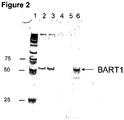
- BART3-3p and BART1-3p Two EBV-specific miRNAs BART3-3p and BART1-3p were analyzed in this study: BART3-3P CGC ACC ACU AGU CAC CAG GUG U SEQ ID NO:21 BART1-3P UAG CAC CGC UAU CCA CUA UGU CU SEQ ID NO:22
- lane 1 represents markers; lanes 2 and 3, represent patients with nasopharyngeal carcinoma, lanes 4 and 5, represent control patients, and lane 6, represents positive control, which represents respective synthetic miRNAs.
- This example demonstrates that the neuronal death caused by stroke can be registered in vivo by measurements of the concentrations of neuron-specific miRNA in the patient's urine.
- Urine samples were collected from patients accepted at a hospital through the emergency room. Diagnosis of brain stroke was based on clinical symptoms. Urine samples were collected at 12 and 24 hours after the stroke. Control urine samples were donated by age matched volunteers but without stroke symptoms. Samples were collected and stored according to the procedures described in the Example 1 of this application.
- miRNA from urine was extracted according to the procedure described in the Example 1. An amount of RNA equivalent to that isolated from 675 ⁇ l of urine underwent reverse transcription PCR and 1/10 of the RT-PCR mixture underwent final real time PCR, which was carried out using the protocol provided by the manufacturer. Data obtained were normalized for individual kidney filtration rates by re-calculation per creatinine concentration in urine. For these experiments, urine samples collected from healthy donors from same age group were used as baseline. Different miRNA species are presented as follows:
- Urine samples were collected from patients accepted at a hospital through the emergency room. Diagnosis of brain stroke was based on clinical symptoms and MRI analysis. Urine samples were collected at 12, 24, 48 hours and a week after the stroke. Patient clinical status was evaluated 30 days after stroke. Control urine samples were donated by age matched volunteers but without stroke symptoms. Samples were collected and stored according to the procedures described in the Example 1 of this application.
- miRNA from urine was extracted according to the procedure described in Example 1 and analyzed with TaqMan miRNA assays (Applied Biosystems). An amount of RNA equivalent to that isolated from 400 ⁇ l of urine underwent reverse transcription PCR and 1/10 of the RT-PCR mixture underwent final real time PCR, which was carried out using the protocol provided by the manufacturer. Data obtained were normalized for individual kidney filtration rates by re-calculation per creatinine concentration in urine. For these experiments, urine samples collected from healthy donors from same age group were used as baseline.
- Alzheimer's disease is a progressive neurological disease that is caused by the death of neurons, particularly in the cortex and hippocampus. The diagnosis is based on neurological examination and the exclusion of other causes of dementia whereas the definitive diagnosis can be made only at autopsy.
- the instant invention demonstrates that excessive neuronal death characterizing Alzheimer's disease may be monitored by measuring levels of specific brain miRNAs isolated from the patient's urine.
- Urine and serum samples were collected from patients diagnosed with various stages of the Alzheimer's disease. Control urine and serum samples were donated by age matched volunteers but without symptoms of Alzheimer's disease. Samples were collected and stored according to the procedures described in the Example 1 of this application. Some urine samples were filtered after collection as described in Example 1 to delete cells and cell debris.
- miRNA species RNA from urine and serum was extracted according to the procedures described in the Example 1.
- RNA equivalent to that isolated from 750 ⁇ l of urine underwent reverse transcription PCR and 1/10 of the RT-PCR mixture underwent final real time PCR, which was carried out using the protocol provided by the manufacturer (Applied Biosystems). Data obtained were normalized for individual kidney filtration rates by re-calculation per creatinine concentration in urine.
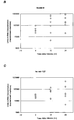
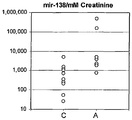
- Figure 5 clearly demonstrates that concentrations of several brain specific miRNAs is increased in the urine of Alzheimer's patients.
- RNA isolated from filtered urine or serum was analyzed.
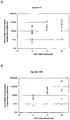
- An amount of RNA equivalent to that isolated from 0.6 ml of urine or 50 ⁇ l of serum underwent reverse transcription PCR and 1/10 of the RT-PCR mixture underwent final real time PCR, which was carried out using the protocol provided by the manufacturer (Applied Biosystems).
- Data obtained for urinary miRNA were normalized for individual kidney filtration rates by re-calculation per creatinine concentration in urine.
- Data obtained for plasma miRNA were normalized per ubiquitous miRNA-16.
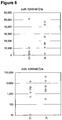
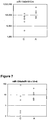
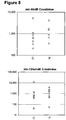
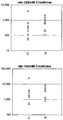
- Figures 6 and 7 show that the levels of some neuron-specific miRNAs are higher in both filtered urine and serum of the Alzheimer's patients compared to age-matched controls.
- Parkinson's disease is a degenerative disorder of the central nervous system that often impairs the sufferer's motor skills and speech.
- the instant invention demonstrates that excessive cellular death of dopaminergic neurons, characterizing Parkinson's disease may be monitored by measuring levels of specific brain miRNAs isolated from the patient's urine.
- Urine samples were collected from patients diagnosed with various stages of the Parkinson's disease. Control urine samples were donated by age matched volunteers without symptoms of Parkinson's disease. Samples were collected and stored according to the procedures described in the Example 1 of this application.
- RNA from urine was extracted according to the procedure described in the Example 1. Amount of RNA equivalent to that isolated from 750 ⁇ l of urine underwent reverse transcription PCR and 1/10 of the RT-PCR mixture underwent final real time PCR, which was carried out using the protocol provided by the manufacturer (Applied Biosystems). Data obtained were normalized for individual kidney filtration rates by re-calculation per creatinine concentration in urine.
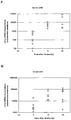
- Figure 8 demonstrates that concentrations of several brain specific miRNAs is increased in the urine of the patients with Parkinson disease.
- the principal finding of permeability of the kidney barrier for miRNA molecules opens the way for the use of maternal urine to perform completely noninvasive prenatal diagnosis of congenital diseases.
- a sample of urine is gathered from a pregnant patient.
- miRNA in the urine sample is then be isolated, purified and/or treated to prevent degradation using methods described above.
- MiRNA profiling is then performed using quantitative PCR or miRNA array and the data obtained are used to determine different fetal pathologies, as described for other pathologies above.
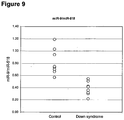
- Urine samples were collected from pregnant women diagnosed with Down syndrome by amniocentesis. Control urine samples were donated by age matched women with normal pregnancies. Samples were collected and stored according to the procedures described in the Example 1 of this application.
- miRNA from urine was extracted according to the procedure described in the Example 1. An amount of RNA equivalent to that isolated from 750 ⁇ l of urine underwent reverse transcription PCR and 1/10 of the RT-PCR mixture underwent final real time PCR, which was carried out using the protocol provided by the manufacturer. Data obtained were normalized per placenta-specific miRNA 518.
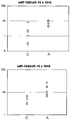
- Figure 9 demonstrates lower concentration the brain-specific miRNA 9 in urine of women pregnant with Down syndrome fetuses compared to urine of women with normal pregnancies, which indicates insufficient cell death compared to respective controls.
Landscapes
- Chemical & Material Sciences (AREA)
- Life Sciences & Earth Sciences (AREA)
- Health & Medical Sciences (AREA)
- Organic Chemistry (AREA)
- Proteomics, Peptides & Aminoacids (AREA)
- Engineering & Computer Science (AREA)
- Zoology (AREA)
- Wood Science & Technology (AREA)
- Analytical Chemistry (AREA)
- Genetics & Genomics (AREA)
- Immunology (AREA)
- Bioinformatics & Cheminformatics (AREA)
- Microbiology (AREA)
- Molecular Biology (AREA)
- Physics & Mathematics (AREA)
- Biotechnology (AREA)
- Biochemistry (AREA)
- Biophysics (AREA)
- General Engineering & Computer Science (AREA)
- General Health & Medical Sciences (AREA)
- Pathology (AREA)
- Virology (AREA)
- Measuring Or Testing Involving Enzymes Or Micro-Organisms (AREA)
Priority Applications (1)
| Application Number | Priority Date | Filing Date | Title |
|---|---|---|---|
| PL13161985T PL2612926T3 (pl) | 2007-08-22 | 2008-08-22 | Metody wykorzystania mirna do wykrywania śmierci komórkowej in vivo |
Applications Claiming Priority (2)
| Application Number | Priority Date | Filing Date | Title |
|---|---|---|---|
| US96587107P | 2007-08-22 | 2007-08-22 | |
| EP08795523.3A EP2195450B2 (en) | 2007-08-22 | 2008-08-22 | Methods of using mirna for detection of in vivo cell death |
Related Parent Applications (3)
| Application Number | Title | Priority Date | Filing Date |
|---|---|---|---|
| EP08795523.3A Division-Into EP2195450B2 (en) | 2007-08-22 | 2008-08-22 | Methods of using mirna for detection of in vivo cell death |
| EP08795523.3A Division EP2195450B2 (en) | 2007-08-22 | 2008-08-22 | Methods of using mirna for detection of in vivo cell death |
| EP08795523.3 Division | 2008-08-22 |
Publications (2)
| Publication Number | Publication Date |
|---|---|
| EP2612926A1 EP2612926A1 (en) | 2013-07-10 |
| EP2612926B1 true EP2612926B1 (en) | 2017-11-29 |
Family
ID=40378881
Family Applications (2)
| Application Number | Title | Priority Date | Filing Date |
|---|---|---|---|
| EP13161985.0A Not-in-force EP2612926B1 (en) | 2007-08-22 | 2008-08-22 | Methods of using mirna for detection of in vivo cell death |
| EP08795523.3A Not-in-force EP2195450B2 (en) | 2007-08-22 | 2008-08-22 | Methods of using mirna for detection of in vivo cell death |
Family Applications After (1)
| Application Number | Title | Priority Date | Filing Date |
|---|---|---|---|
| EP08795523.3A Not-in-force EP2195450B2 (en) | 2007-08-22 | 2008-08-22 | Methods of using mirna for detection of in vivo cell death |
Country Status (16)
| Country | Link |
|---|---|
| US (4) | US8486626B2 (enExample) |
| EP (2) | EP2612926B1 (enExample) |
| JP (1) | JP5416110B2 (enExample) |
| CN (2) | CN101861399B (enExample) |
| AU (2) | AU2008289447B2 (enExample) |
| CA (1) | CA2696403C (enExample) |
| CY (1) | CY1114111T1 (enExample) |
| DK (2) | DK2195450T4 (enExample) |
| ES (2) | ES2660785T3 (enExample) |
| HR (1) | HRP20130618T1 (enExample) |
| HU (1) | HUE019019T5 (enExample) |
| NO (1) | NO2612926T3 (enExample) |
| PL (2) | PL2195450T3 (enExample) |
| PT (2) | PT2195450E (enExample) |
| TR (1) | TR201802758T4 (enExample) |
| WO (1) | WO2009025852A2 (enExample) |
Families Citing this family (44)
| Publication number | Priority date | Publication date | Assignee | Title |
|---|---|---|---|---|
| EP2271931A4 (en) * | 2008-04-25 | 2011-10-12 | Merck Sharp & Dohme | MICRO-RNA BIOMARKERS FOR TISSUE INJURIES |
| WO2010004562A2 (en) * | 2008-07-09 | 2010-01-14 | Rosetta Genomics Ltd. | Methods and compositions for detecting colorectal cancer |
| ES2532153T3 (es) * | 2008-07-18 | 2015-03-24 | Trovagene, Inc. | Métodos para la detección de secuencias de ácidos nucleicos "ultracortos" basados en PCR |
| EP2419536A4 (en) * | 2009-04-14 | 2012-09-05 | Merck Sharp & Dohme | MICRO RNA AS A BIOMARKER FOR IMPROVING BETAZELLES IN THE PANCREAS ISLANDS |
| CA2767616A1 (en) | 2009-07-09 | 2011-01-13 | The Scripps Research Institute | Gene expression profiles associated with chronic allograft nephropathy |
| WO2011057003A2 (en) | 2009-11-04 | 2011-05-12 | Samuil Umansky | Methods of using small rna from bodily fluids for diagnosis and monitoring of neurodegenerative diseases |
| DK2496720T3 (da) * | 2009-11-06 | 2020-09-28 | Univ Leland Stanford Junior | Ikke-invasiv diagnose af transplantatafstødning i organ-transplanterede patienter |
| SG185544A1 (en) * | 2010-05-14 | 2012-12-28 | Fluidigm Corp | Nucleic acid isolation methods |
| JP6211511B2 (ja) | 2011-04-18 | 2017-10-11 | ディアミール, エルエルシーDiamir, Llc | miRNAに基づくユニバーサルスクリーニングテスト(UST) |
| CN102188719B (zh) * | 2011-05-12 | 2012-12-19 | 南方医科大学 | EB病毒miR-BART3反义寡聚核苷酸在制备治疗鼻咽癌的药物中的应用 |
| CA2840196C (en) | 2011-06-27 | 2022-09-20 | Eisai R&D Management Co., Ltd. | Microrna biomarkers indicative of alzheimer's disease |
| WO2013022953A2 (en) * | 2011-08-08 | 2013-02-14 | Eugenia Wang | Biomarker for alzheimer's disease and/or mild cognitively impairment, and use thereof |
| CA3069089A1 (en) * | 2011-09-22 | 2013-03-28 | Lineage Biosciences, Inc. | Compositions and methods for analyzing heterogeneous samples |
| ITRM20110685A1 (it) | 2011-12-23 | 2013-06-24 | Internat Ct For Genetic En Gineering And | Microrna per la rigenerazione cardiaca attraverso l induzione della proliferazione dei miociti cardiaci |
| EP3584327A1 (en) * | 2012-01-27 | 2019-12-25 | The Board of Trustees of the Leland Stanford Junior University | Methods for profiling and quantitating cell-free rna |
| US20160289762A1 (en) | 2012-01-27 | 2016-10-06 | The Board Of Trustees Of The Leland Stanford Junior University | Methods for profiliing and quantitating cell-free rna |
| US20140087964A1 (en) * | 2012-09-24 | 2014-03-27 | University Of Virginia Patent Foundation | Compositions and methods for detecting aberrant regulation, expression, and levels of hgh |
| EP2733219B1 (en) | 2012-11-16 | 2017-09-20 | Siemens Aktiengesellschaft | Diagnostic miRNA markers for Alzheimer |
| US10011873B2 (en) | 2012-11-16 | 2018-07-03 | Universitat Des Saarlandes | Diagnostic miRNA markers for Parkinson disease |
| EP2733220B1 (en) | 2012-11-16 | 2017-10-18 | Siemens Aktiengesellschaft | Novel miRNA as a diagnostic marker for Alzheimer's Disease |
| CN103045596A (zh) * | 2012-12-20 | 2013-04-17 | 徐勇 | 唐氏综合征21号染色体相关miRNA、基因、筛选方法和应用 |
| CN103045736B (zh) * | 2012-12-20 | 2014-09-17 | 徐勇 | 唐氏综合征21号染色体miRNA差异表达图谱模型、构建方法及应用 |
| EP2759602A1 (en) | 2013-01-25 | 2014-07-30 | Charité - Universitätsmedizin Berlin | Non-invasive prenatal genetic diagnostic methods |
| EP2970959B1 (en) | 2013-03-15 | 2018-05-30 | Lineage Biosciences, Inc. | Methods and compositions for tagging and analyzing samples |
| CN105917005B (zh) | 2013-11-18 | 2020-09-11 | 迪阿米尔有限责任公司 | 使用来自体液的miRNA检测和监控帕金森病(PD)的方法 |
| US10443100B2 (en) | 2014-05-22 | 2019-10-15 | The Scripps Research Institute | Gene expression profiles associated with sub-clinical kidney transplant rejection |
| US11104951B2 (en) | 2014-05-22 | 2021-08-31 | The Scripps Research Institute | Molecular signatures for distinguishing liver transplant rejections or injuries |
| TWI758011B (zh) | 2014-07-18 | 2022-03-11 | 香港中文大學 | Dna混合物中之組織甲基化模式分析 |
| EP3298169B1 (en) | 2015-05-18 | 2024-10-02 | Karius, Inc. | Compositions and methods for enriching populations of nucleic acids |
| US10428391B2 (en) | 2015-07-27 | 2019-10-01 | The Johns Hopkins University | Method to use viral and host methylation markers for cervical cancer screening and triage in liquid prep, serum/plasma, and urine: PCR and sequencing based process methods |
| WO2017044710A1 (en) * | 2015-09-11 | 2017-03-16 | Corning Incorporated | Compositions and methods for nucleic acid purification from blood samples |
| US10975436B2 (en) | 2016-01-05 | 2021-04-13 | Diamir, Llc | Methods of using miRNA from bodily fluids for diagnosis and monitoring of neurodevelopmental disorders |
| EP3433381B1 (en) | 2016-03-21 | 2024-07-24 | Diamir, LLC | Methods of using mirnas from bodily fluids for detection and differentiation of neurodegenerative diseases |
| WO2018045359A1 (en) * | 2016-09-02 | 2018-03-08 | Karius, Inc. | Detection and treatment of infection during pregnancy |
| US11001891B2 (en) | 2016-11-14 | 2021-05-11 | Berg Llc | Methods for treating Parkinson's disease |
| IL266347B2 (en) | 2016-11-30 | 2025-01-01 | Univ Hong Kong Chinese | Analysis of cell-free DNA in urine and other samples |
| US10907211B1 (en) | 2017-02-16 | 2021-02-02 | Quantgene Inc. | Methods and compositions for detecting cancer biomarkers in bodily fluids |
| US10781487B2 (en) | 2017-07-24 | 2020-09-22 | Diamir, Llc | miRNA-based methods for detecting and monitoring aging |
| SG11202003588QA (en) | 2017-09-20 | 2020-05-28 | Molecular Stethoscope Inc | Methods and systems for detecting tissue conditions |
| GB2615975B (en) | 2019-02-14 | 2023-11-29 | Mirvie Inc | Methods and systems for determining a pregnancy-related state of a subject |
| WO2021085505A1 (ja) * | 2019-10-29 | 2021-05-06 | 国立研究開発法人 国立循環器病研究センター | 脳梗塞治療支援システム |
| US11211144B2 (en) | 2020-02-18 | 2021-12-28 | Tempus Labs, Inc. | Methods and systems for refining copy number variation in a liquid biopsy assay |
| US11211147B2 (en) | 2020-02-18 | 2021-12-28 | Tempus Labs, Inc. | Estimation of circulating tumor fraction using off-target reads of targeted-panel sequencing |
| US11475981B2 (en) | 2020-02-18 | 2022-10-18 | Tempus Labs, Inc. | Methods and systems for dynamic variant thresholding in a liquid biopsy assay |
Citations (2)
| Publication number | Priority date | Publication date | Assignee | Title |
|---|---|---|---|---|
| US6251638B1 (en) * | 1997-05-30 | 2001-06-26 | Diagen Corporation | Methods for detection of nucleic acid sequences in urine |
| US20060204989A1 (en) * | 1998-09-22 | 2006-09-14 | Kopreski Michael S | Comparative analysis of extracellular RNA species |
Family Cites Families (25)
| Publication number | Priority date | Publication date | Assignee | Title |
|---|---|---|---|---|
| US5856088A (en) | 1989-07-11 | 1999-01-05 | Gen-Probe Incorporated | Detection of human immunodeficiency virus type 1 |
| US5168039A (en) | 1990-09-28 | 1992-12-01 | The Board Of Trustees Of The University Of Arkansas | Repetitive DNA sequence specific for mycobacterium tuberculosis to be used for the diagnosis of tuberculosis |
| US6020124A (en) | 1992-04-27 | 2000-02-01 | Trustees Of Dartmouth College | Detection of soluble gene sequences in biological fluids |
| CA2167693C (en) | 1993-07-20 | 2007-01-30 | Ulrich Bogdahn | Melanoma-inhibiting protein |
| AU7375794A (en) | 1993-07-28 | 1995-02-28 | Akzo Nobel N.V. | Process for isolating nucleic acid from gram positive microorganisms |
| JP3696238B2 (ja) | 1993-08-30 | 2005-09-14 | プロメガ・コーポレイシヨン | 核酸精製用組成物及び方法 |
| US5631130A (en) | 1994-05-13 | 1997-05-20 | Abbott Laboratories | Materials and methods for the detection of Mycobacterium tuberculosis |
| ATE261496T1 (de) | 1994-06-09 | 2004-03-15 | Innogenetics Nv | Verfahren zum nachweis des antibiotikaresistenzspektrums von mykobakterium spezies |
| US5731150A (en) | 1995-11-01 | 1998-03-24 | Chiron Diagnostic Corporation | IS6110 based molecular detection of mycobacterium tuberculosis |
| US6027945A (en) | 1997-01-21 | 2000-02-22 | Promega Corporation | Methods of isolating biological target materials using silica magnetic particles |
| US6492144B1 (en) | 1997-05-30 | 2002-12-10 | Diagen Corporation | Methods for detection of nucleic acid sequences in urine |
| US20020119478A1 (en) | 1997-05-30 | 2002-08-29 | Diagen Corporation | Methods for detection of nucleic acid sequences in urine |
| US5962665A (en) | 1997-06-16 | 1999-10-05 | Abbott Laboratories | Nucleic acid primers and probes for detecting HIV-1 and HIV-2 |
| US7196183B2 (en) | 2001-08-31 | 2007-03-27 | Innogenetics N.V. | Hepatitis C virus genotype, and its use as prophylactic, therapeutic and diagnostic agent |
| US20040053264A1 (en) | 2002-02-01 | 2004-03-18 | Park Sung Sup | Clinical panel assay using DNA chips |
| EP2471924A1 (en) * | 2004-05-28 | 2012-07-04 | Asuragen, INC. | Methods and compositions involving microRNA |
| ITRM20050068A1 (it) | 2005-02-17 | 2006-08-18 | Istituto Naz Per Le Malattie I | Metodo per la rivelazione di acidi nucleici di agenti patogeni batterici o di parassiti nelle urine. |
| US7914982B2 (en) | 2005-02-17 | 2011-03-29 | Trovagene, Inc. | Methods for detecting pathogen specific nucleic acids in urine |
| ITRM20050067A1 (it) | 2005-02-17 | 2006-08-18 | Istituto Naz Per Le Malattie I | Metodo per la rivelazione di acidi nucleici virali o di origine virale nelle urine. |
| EP1885877A2 (en) | 2005-02-17 | 2008-02-13 | Istituto Nazionale per le Malattie Infettive "Lazzaro Spallanzani" IRCCS | Compositions and methods for detecting pathogen specific nucleic acids in urine |
| CA2597948A1 (en) | 2005-02-17 | 2006-08-24 | Istituto Nazionale Per Le Malattie Infettive Irccs Lazzaro Spallanzani | Compositions and methods for detecting viral specific nucleic acids in urine |
| US20060292616A1 (en) * | 2005-06-23 | 2006-12-28 | U.S. Genomics, Inc. | Single molecule miRNA-based disease diagnostic methods |
| DE102005059315A1 (de) * | 2005-12-09 | 2007-06-14 | Qiagen Gmbh | Verfahren zur Anreicherung von kurzkettigen Nukleinsäuren |
| US20070202511A1 (en) * | 2006-02-28 | 2007-08-30 | Sigma-Aldrich Co. | Methods and compositions for the rapid isolation of small RNA molecules |
| ES2532153T3 (es) | 2008-07-18 | 2015-03-24 | Trovagene, Inc. | Métodos para la detección de secuencias de ácidos nucleicos "ultracortos" basados en PCR |
-
2008
- 2008-08-22 WO PCT/US2008/009991 patent/WO2009025852A2/en not_active Ceased
- 2008-08-22 PL PL08795523T patent/PL2195450T3/pl unknown
- 2008-08-22 CA CA2696403A patent/CA2696403C/en not_active Expired - Fee Related
- 2008-08-22 US US12/229,378 patent/US8486626B2/en not_active Expired - Fee Related
- 2008-08-22 NO NO13161985A patent/NO2612926T3/no unknown
- 2008-08-22 JP JP2010521887A patent/JP5416110B2/ja not_active Expired - Fee Related
- 2008-08-22 PL PL13161985T patent/PL2612926T3/pl unknown
- 2008-08-22 AU AU2008289447A patent/AU2008289447B2/en not_active Ceased
- 2008-08-22 CN CN200880113585.0A patent/CN101861399B/zh not_active Expired - Fee Related
- 2008-08-22 ES ES13161985.0T patent/ES2660785T3/es active Active
- 2008-08-22 TR TR2018/02758T patent/TR201802758T4/tr unknown
- 2008-08-22 HU HUE08795523A patent/HUE019019T5/en unknown
- 2008-08-22 HR HRP20130618AT patent/HRP20130618T1/hr unknown
- 2008-08-22 PT PT87955233T patent/PT2195450E/pt unknown
- 2008-08-22 CN CN201510649676.8A patent/CN105400868B/zh not_active Expired - Fee Related
- 2008-08-22 PT PT131619850T patent/PT2612926T/pt unknown
- 2008-08-22 DK DK08795523.3T patent/DK2195450T4/en active
- 2008-08-22 EP EP13161985.0A patent/EP2612926B1/en not_active Not-in-force
- 2008-08-22 EP EP08795523.3A patent/EP2195450B2/en not_active Not-in-force
- 2008-08-22 DK DK13161985.0T patent/DK2612926T3/en active
- 2008-08-22 ES ES08795523.3T patent/ES2415245T5/es active Active
-
2013
- 2013-07-03 CY CY20131100546T patent/CY1114111T1/el unknown
- 2013-07-16 US US13/942,706 patent/US20150197805A1/en not_active Abandoned
-
2014
- 2014-08-11 AU AU2014210676A patent/AU2014210676B2/en not_active Ceased
-
2017
- 2017-01-06 US US15/400,157 patent/US20180135126A1/en not_active Abandoned
-
2018
- 2018-09-21 US US16/138,338 patent/US20200283851A1/en not_active Abandoned
Patent Citations (2)
| Publication number | Priority date | Publication date | Assignee | Title |
|---|---|---|---|---|
| US6251638B1 (en) * | 1997-05-30 | 2001-06-26 | Diagen Corporation | Methods for detection of nucleic acid sequences in urine |
| US20060204989A1 (en) * | 1998-09-22 | 2006-09-14 | Kopreski Michael S | Comparative analysis of extracellular RNA species |
Non-Patent Citations (2)
| Title |
|---|
| JON KEMPPAINEN ET AL: "miRNAs as Biomarkers in Blood and Other Biofluids", KEYSTONE SYMPOSIA ON MOLECULAR AND CELLULAR BIOLOGY POSTER ABSTRACTS - RNAI FOR TARGET VALIDATION AND AS A THERAPEUTIC JOHN M. MARAGANORE AND STEPHEN H. FRIEND KEYSTONE RESORT - KEYSTONE, COLORADO - JANUARY 28 - FEBRUARY 2, 2007, KEYSTONE, US, 28 January 2007 (2007-01-28), pages 1, XP007923108 * |
| KEMPPAINEN ET AL: "microRNAs as Biomarkers in Blood and Other Biofluids", MICRORNAS AS BIOMARKERS IN BLOOD AND OTHER BIOFLUIDS., 1 January 2007 (2007-01-01), XP055127728 * |
Also Published As
Similar Documents
| Publication | Publication Date | Title |
|---|---|---|
| EP2195450B2 (en) | Methods of using mirna for detection of in vivo cell death | |
| JP2010536372A5 (enExample) | ||
| US10246747B2 (en) | Methods of using miRNA from bodily fluids for early detection and monitoring of mild cognitive impairment (MCI) and Alzheimer's disease (AD) | |
| EP2759602A1 (en) | Non-invasive prenatal genetic diagnostic methods | |
| KR102545543B1 (ko) | BK 바이러스 신병증의 진단을 위한 소변 엑소좀 유래 miRNA 유전자 바이오마커 및 이의 용도 | |
| KR20210024986A (ko) | 신장이식 후 항체 매개성 거부반응의 진단을 위한 소변 엑소좀 유래 miRNA 유전자 바이오마커 및 이의 용도 | |
| HK1218767B (en) | Methods of using mirna for detection of in vivo cell death | |
| CN111363808B (zh) | 一种与阿尔茨海默相关的生物标志物及其应用 | |
| KR20210024918A (ko) | 신장이식 후 T 세포 매개성 거부반응의 진단을 위한 소변 엑소좀 유래 miRNA 유전자 바이오마커 및 이의 용도 | |
| CN110951867A (zh) | 生物标志物及其在阿尔茨海默中的应用 | |
| CN110184354A (zh) | 生物标志物在癌症诊断中的应用 |
Legal Events
| Date | Code | Title | Description |
|---|---|---|---|
| PUAI | Public reference made under article 153(3) epc to a published international application that has entered the european phase |
Free format text: ORIGINAL CODE: 0009012 |
|
| AC | Divisional application: reference to earlier application |
Ref document number: 2195450 Country of ref document: EP Kind code of ref document: P |
|
| AK | Designated contracting states |
Kind code of ref document: A1 Designated state(s): AT BE BG CH CY CZ DE DK EE ES FI FR GB GR HR HU IE IS IT LI LT LU LV MC MT NL NO PL PT RO SE SI SK TR |
|
| 17P | Request for examination filed |
Effective date: 20140428 |
|
| RBV | Designated contracting states (corrected) |
Designated state(s): AT BE BG CH CY CZ DE DK EE ES FI FR GB GR HR HU IE IS IT LI LT LU LV MC MT NL NO PL PT RO SE SI SK TR |
|
| 17Q | First examination report despatched |
Effective date: 20150605 |
|
| STAA | Information on the status of an ep patent application or granted ep patent |
Free format text: STATUS: EXAMINATION IS IN PROGRESS |
|
| GRAP | Despatch of communication of intention to grant a patent |
Free format text: ORIGINAL CODE: EPIDOSNIGR1 |
|
| STAA | Information on the status of an ep patent application or granted ep patent |
Free format text: STATUS: GRANT OF PATENT IS INTENDED |
|
| INTG | Intention to grant announced |
Effective date: 20170622 |
|
| GRAS | Grant fee paid |
Free format text: ORIGINAL CODE: EPIDOSNIGR3 |
|
| GRAA | (expected) grant |
Free format text: ORIGINAL CODE: 0009210 |
|
| STAA | Information on the status of an ep patent application or granted ep patent |
Free format text: STATUS: THE PATENT HAS BEEN GRANTED |
|
| AC | Divisional application: reference to earlier application |
Ref document number: 2195450 Country of ref document: EP Kind code of ref document: P |
|
| AK | Designated contracting states |
Kind code of ref document: B1 Designated state(s): AT BE BG CH CY CZ DE DK EE ES FI FR GB GR HR HU IE IS IT LI LT LU LV MC MT NL NO PL PT RO SE SI SK TR |
|
| REG | Reference to a national code |
Ref country code: CH Ref legal event code: EP |
|
| REG | Reference to a national code |
Ref country code: AT Ref legal event code: REF Ref document number: 950448 Country of ref document: AT Kind code of ref document: T Effective date: 20171215 |
|
| REG | Reference to a national code |
Ref country code: IE Ref legal event code: FG4D |
|
| REG | Reference to a national code |
Ref country code: DE Ref legal event code: R096 Ref document number: 602008053212 Country of ref document: DE |
|
| REG | Reference to a national code |
Ref country code: PT Ref legal event code: SC4A Ref document number: 2612926 Country of ref document: PT Date of ref document: 20180302 Kind code of ref document: T Free format text: AVAILABILITY OF NATIONAL TRANSLATION Effective date: 20180226 |
|
| REG | Reference to a national code |
Ref country code: DK Ref legal event code: T3 Effective date: 20180305 |
|
| REG | Reference to a national code |
Ref country code: NL Ref legal event code: FP |
|
| REG | Reference to a national code |
Ref country code: SE Ref legal event code: TRGR |
|
| REG | Reference to a national code |
Ref country code: ES Ref legal event code: FG2A Ref document number: 2660785 Country of ref document: ES Kind code of ref document: T3 Effective date: 20180326 |
|
| REG | Reference to a national code |
Ref country code: LT Ref legal event code: MG4D |
|
| PG25 | Lapsed in a contracting state [announced via postgrant information from national office to epo] |
Ref country code: LT Free format text: LAPSE BECAUSE OF FAILURE TO SUBMIT A TRANSLATION OF THE DESCRIPTION OR TO PAY THE FEE WITHIN THE PRESCRIBED TIME-LIMIT Effective date: 20171129 |
|
| REG | Reference to a national code |
Ref country code: CH Ref legal event code: NV Representative=s name: MICHELI AND CIE SA, CH |
|
| REG | Reference to a national code |
Ref country code: NO Ref legal event code: CREP Representative=s name: NORDIC PATENT SERVICE A/S, BREDGADE 30, DK-1260 |
|
| PG25 | Lapsed in a contracting state [announced via postgrant information from national office to epo] |
Ref country code: LV Free format text: LAPSE BECAUSE OF FAILURE TO SUBMIT A TRANSLATION OF THE DESCRIPTION OR TO PAY THE FEE WITHIN THE PRESCRIBED TIME-LIMIT Effective date: 20171129 Ref country code: BG Free format text: LAPSE BECAUSE OF FAILURE TO SUBMIT A TRANSLATION OF THE DESCRIPTION OR TO PAY THE FEE WITHIN THE PRESCRIBED TIME-LIMIT Effective date: 20180228 Ref country code: HR Free format text: LAPSE BECAUSE OF FAILURE TO SUBMIT A TRANSLATION OF THE DESCRIPTION OR TO PAY THE FEE WITHIN THE PRESCRIBED TIME-LIMIT Effective date: 20171129 Ref country code: GR Free format text: LAPSE BECAUSE OF FAILURE TO SUBMIT A TRANSLATION OF THE DESCRIPTION OR TO PAY THE FEE WITHIN THE PRESCRIBED TIME-LIMIT Effective date: 20180301 |
|
| REG | Reference to a national code |
Ref country code: NO Ref legal event code: T2 Effective date: 20171129 |
|
| PG25 | Lapsed in a contracting state [announced via postgrant information from national office to epo] |
Ref country code: CY Free format text: LAPSE BECAUSE OF FAILURE TO SUBMIT A TRANSLATION OF THE DESCRIPTION OR TO PAY THE FEE WITHIN THE PRESCRIBED TIME-LIMIT Effective date: 20171129 Ref country code: EE Free format text: LAPSE BECAUSE OF FAILURE TO SUBMIT A TRANSLATION OF THE DESCRIPTION OR TO PAY THE FEE WITHIN THE PRESCRIBED TIME-LIMIT Effective date: 20171129 Ref country code: SK Free format text: LAPSE BECAUSE OF FAILURE TO SUBMIT A TRANSLATION OF THE DESCRIPTION OR TO PAY THE FEE WITHIN THE PRESCRIBED TIME-LIMIT Effective date: 20171129 Ref country code: CZ Free format text: LAPSE BECAUSE OF FAILURE TO SUBMIT A TRANSLATION OF THE DESCRIPTION OR TO PAY THE FEE WITHIN THE PRESCRIBED TIME-LIMIT Effective date: 20171129 |
|
| REG | Reference to a national code |
Ref country code: DE Ref legal event code: R097 Ref document number: 602008053212 Country of ref document: DE |
|
| PG25 | Lapsed in a contracting state [announced via postgrant information from national office to epo] |
Ref country code: RO Free format text: LAPSE BECAUSE OF FAILURE TO SUBMIT A TRANSLATION OF THE DESCRIPTION OR TO PAY THE FEE WITHIN THE PRESCRIBED TIME-LIMIT Effective date: 20171129 |
|
| PLBE | No opposition filed within time limit |
Free format text: ORIGINAL CODE: 0009261 |
|
| STAA | Information on the status of an ep patent application or granted ep patent |
Free format text: STATUS: NO OPPOSITION FILED WITHIN TIME LIMIT |
|
| 26N | No opposition filed |
Effective date: 20180830 |
|
| PG25 | Lapsed in a contracting state [announced via postgrant information from national office to epo] |
Ref country code: SI Free format text: LAPSE BECAUSE OF FAILURE TO SUBMIT A TRANSLATION OF THE DESCRIPTION OR TO PAY THE FEE WITHIN THE PRESCRIBED TIME-LIMIT Effective date: 20171129 |
|
| REG | Reference to a national code |
Ref country code: DE Ref legal event code: R119 Ref document number: 602008053212 Country of ref document: DE |
|
| REG | Reference to a national code |
Ref country code: DK Ref legal event code: EBP Effective date: 20180831 Ref country code: NO Ref legal event code: MMEP |
|
| PG25 | Lapsed in a contracting state [announced via postgrant information from national office to epo] |
Ref country code: MC Free format text: LAPSE BECAUSE OF FAILURE TO SUBMIT A TRANSLATION OF THE DESCRIPTION OR TO PAY THE FEE WITHIN THE PRESCRIBED TIME-LIMIT Effective date: 20171129 |
|
| REG | Reference to a national code |
Ref country code: CH Ref legal event code: PL |
|
| REG | Reference to a national code |
Ref country code: SE Ref legal event code: EUG |
|
| REG | Reference to a national code |
Ref country code: NL Ref legal event code: MM Effective date: 20180901 |
|
| GBPC | Gb: european patent ceased through non-payment of renewal fee |
Effective date: 20180822 |
|
| PG25 | Lapsed in a contracting state [announced via postgrant information from national office to epo] |
Ref country code: NO Free format text: LAPSE BECAUSE OF NON-PAYMENT OF DUE FEES Effective date: 20180831 Ref country code: FI Free format text: LAPSE BECAUSE OF NON-PAYMENT OF DUE FEES Effective date: 20180822 Ref country code: LU Free format text: LAPSE BECAUSE OF NON-PAYMENT OF DUE FEES Effective date: 20180822 Ref country code: LI Free format text: LAPSE BECAUSE OF NON-PAYMENT OF DUE FEES Effective date: 20180831 Ref country code: CH Free format text: LAPSE BECAUSE OF NON-PAYMENT OF DUE FEES Effective date: 20180831 |
|
| REG | Reference to a national code |
Ref country code: BE Ref legal event code: MM Effective date: 20180831 |
|
| PG25 | Lapsed in a contracting state [announced via postgrant information from national office to epo] |
Ref country code: SE Free format text: LAPSE BECAUSE OF NON-PAYMENT OF DUE FEES Effective date: 20180823 |
|
| PG25 | Lapsed in a contracting state [announced via postgrant information from national office to epo] |
Ref country code: NL Free format text: LAPSE BECAUSE OF NON-PAYMENT OF DUE FEES Effective date: 20180901 |
|
| PG25 | Lapsed in a contracting state [announced via postgrant information from national office to epo] |
Ref country code: DE Free format text: LAPSE BECAUSE OF NON-PAYMENT OF DUE FEES Effective date: 20190301 Ref country code: DK Free format text: LAPSE BECAUSE OF NON-PAYMENT OF DUE FEES Effective date: 20180831 Ref country code: PT Free format text: LAPSE BECAUSE OF NON-PAYMENT OF DUE FEES Effective date: 20190522 Ref country code: IT Free format text: LAPSE BECAUSE OF NON-PAYMENT OF DUE FEES Effective date: 20180822 |
|
| PG25 | Lapsed in a contracting state [announced via postgrant information from national office to epo] |
Ref country code: BE Free format text: LAPSE BECAUSE OF NON-PAYMENT OF DUE FEES Effective date: 20180831 Ref country code: FR Free format text: LAPSE BECAUSE OF NON-PAYMENT OF DUE FEES Effective date: 20180831 |
|
| REG | Reference to a national code |
Ref country code: ES Ref legal event code: FD2A Effective date: 20190918 |
|
| REG | Reference to a national code |
Ref country code: AT Ref legal event code: MM01 Ref document number: 950448 Country of ref document: AT Kind code of ref document: T Effective date: 20180822 |
|
| PG25 | Lapsed in a contracting state [announced via postgrant information from national office to epo] |
Ref country code: GB Free format text: LAPSE BECAUSE OF NON-PAYMENT OF DUE FEES Effective date: 20180822 Ref country code: ES Free format text: LAPSE BECAUSE OF NON-PAYMENT OF DUE FEES Effective date: 20180823 |
|
| PG25 | Lapsed in a contracting state [announced via postgrant information from national office to epo] |
Ref country code: AT Free format text: LAPSE BECAUSE OF NON-PAYMENT OF DUE FEES Effective date: 20180822 |
|
| PG25 | Lapsed in a contracting state [announced via postgrant information from national office to epo] |
Ref country code: MT Free format text: LAPSE BECAUSE OF NON-PAYMENT OF DUE FEES Effective date: 20180822 |
|
| PG25 | Lapsed in a contracting state [announced via postgrant information from national office to epo] |
Ref country code: PL Free format text: LAPSE BECAUSE OF NON-PAYMENT OF DUE FEES Effective date: 20180822 |
|
| PG25 | Lapsed in a contracting state [announced via postgrant information from national office to epo] |
Ref country code: HU Free format text: LAPSE BECAUSE OF FAILURE TO SUBMIT A TRANSLATION OF THE DESCRIPTION OR TO PAY THE FEE WITHIN THE PRESCRIBED TIME-LIMIT; INVALID AB INITIO Effective date: 20080822 |
|
| REG | Reference to a national code |
Ref country code: AT Ref legal event code: UEP Ref document number: 950448 Country of ref document: AT Kind code of ref document: T Effective date: 20171129 |
|
| PG25 | Lapsed in a contracting state [announced via postgrant information from national office to epo] |
Ref country code: IE Free format text: LAPSE BECAUSE OF NON-PAYMENT OF DUE FEES Effective date: 20180822 |
|
| PG25 | Lapsed in a contracting state [announced via postgrant information from national office to epo] |
Ref country code: IS Free format text: LAPSE BECAUSE OF FAILURE TO SUBMIT A TRANSLATION OF THE DESCRIPTION OR TO PAY THE FEE WITHIN THE PRESCRIBED TIME-LIMIT Effective date: 20180329 |
|
| PG25 | Lapsed in a contracting state [announced via postgrant information from national office to epo] |
Ref country code: TR Free format text: LAPSE BECAUSE OF NON-PAYMENT OF DUE FEES Effective date: 20180822 |