EP2484784A1 - Stahlrohre mit schweren Wänden mit ausgezeichneter Härte bei niedrigen Temperaturen und Sulfidspannungsrisskorrosionfestigkeit - Google Patents
Stahlrohre mit schweren Wänden mit ausgezeichneter Härte bei niedrigen Temperaturen und Sulfidspannungsrisskorrosionfestigkeit Download PDFInfo
- Publication number
- EP2484784A1 EP2484784A1 EP12154018A EP12154018A EP2484784A1 EP 2484784 A1 EP2484784 A1 EP 2484784A1 EP 12154018 A EP12154018 A EP 12154018A EP 12154018 A EP12154018 A EP 12154018A EP 2484784 A1 EP2484784 A1 EP 2484784A1
- Authority
- EP
- European Patent Office
- Prior art keywords
- steel
- equal
- composition
- steel pipe
- less
- Prior art date
- Legal status (The legal status is an assumption and is not a legal conclusion. Google has not performed a legal analysis and makes no representation as to the accuracy of the status listed.)
- Granted
Links
Images




Classifications
-
- C—CHEMISTRY; METALLURGY
- C21—METALLURGY OF IRON
- C21D—MODIFYING THE PHYSICAL STRUCTURE OF FERROUS METALS; GENERAL DEVICES FOR HEAT TREATMENT OF FERROUS OR NON-FERROUS METALS OR ALLOYS; MAKING METAL MALLEABLE, e.g. BY DECARBURISATION OR TEMPERING
- C21D8/00—Modifying the physical properties by deformation combined with, or followed by, heat treatment
- C21D8/10—Modifying the physical properties by deformation combined with, or followed by, heat treatment during manufacturing of tubular bodies
-
- C—CHEMISTRY; METALLURGY
- C21—METALLURGY OF IRON
- C21D—MODIFYING THE PHYSICAL STRUCTURE OF FERROUS METALS; GENERAL DEVICES FOR HEAT TREATMENT OF FERROUS OR NON-FERROUS METALS OR ALLOYS; MAKING METAL MALLEABLE, e.g. BY DECARBURISATION OR TEMPERING
- C21D1/00—General methods or devices for heat treatment, e.g. annealing, hardening, quenching or tempering
- C21D1/18—Hardening; Quenching with or without subsequent tempering
-
- C—CHEMISTRY; METALLURGY
- C21—METALLURGY OF IRON
- C21D—MODIFYING THE PHYSICAL STRUCTURE OF FERROUS METALS; GENERAL DEVICES FOR HEAT TREATMENT OF FERROUS OR NON-FERROUS METALS OR ALLOYS; MAKING METAL MALLEABLE, e.g. BY DECARBURISATION OR TEMPERING
- C21D6/00—Heat treatment of ferrous alloys
- C21D6/002—Heat treatment of ferrous alloys containing Cr
-
- C—CHEMISTRY; METALLURGY
- C21—METALLURGY OF IRON
- C21D—MODIFYING THE PHYSICAL STRUCTURE OF FERROUS METALS; GENERAL DEVICES FOR HEAT TREATMENT OF FERROUS OR NON-FERROUS METALS OR ALLOYS; MAKING METAL MALLEABLE, e.g. BY DECARBURISATION OR TEMPERING
- C21D9/00—Heat treatment, e.g. annealing, hardening, quenching or tempering, adapted for particular articles; Furnaces therefor
- C21D9/08—Heat treatment, e.g. annealing, hardening, quenching or tempering, adapted for particular articles; Furnaces therefor for tubular bodies or pipes
- C21D9/085—Cooling or quenching
-
- C—CHEMISTRY; METALLURGY
- C22—METALLURGY; FERROUS OR NON-FERROUS ALLOYS; TREATMENT OF ALLOYS OR NON-FERROUS METALS
- C22C—ALLOYS
- C22C38/00—Ferrous alloys, e.g. steel alloys
- C22C38/001—Ferrous alloys, e.g. steel alloys containing N
-
- C—CHEMISTRY; METALLURGY
- C22—METALLURGY; FERROUS OR NON-FERROUS ALLOYS; TREATMENT OF ALLOYS OR NON-FERROUS METALS
- C22C—ALLOYS
- C22C38/00—Ferrous alloys, e.g. steel alloys
- C22C38/002—Ferrous alloys, e.g. steel alloys containing In, Mg, or other elements not provided for in one single group C22C38/001 - C22C38/60
-
- C—CHEMISTRY; METALLURGY
- C22—METALLURGY; FERROUS OR NON-FERROUS ALLOYS; TREATMENT OF ALLOYS OR NON-FERROUS METALS
- C22C—ALLOYS
- C22C38/00—Ferrous alloys, e.g. steel alloys
- C22C38/008—Ferrous alloys, e.g. steel alloys containing tin
-
- C—CHEMISTRY; METALLURGY
- C22—METALLURGY; FERROUS OR NON-FERROUS ALLOYS; TREATMENT OF ALLOYS OR NON-FERROUS METALS
- C22C—ALLOYS
- C22C38/00—Ferrous alloys, e.g. steel alloys
- C22C38/02—Ferrous alloys, e.g. steel alloys containing silicon
-
- C—CHEMISTRY; METALLURGY
- C22—METALLURGY; FERROUS OR NON-FERROUS ALLOYS; TREATMENT OF ALLOYS OR NON-FERROUS METALS
- C22C—ALLOYS
- C22C38/00—Ferrous alloys, e.g. steel alloys
- C22C38/04—Ferrous alloys, e.g. steel alloys containing manganese
-
- C—CHEMISTRY; METALLURGY
- C22—METALLURGY; FERROUS OR NON-FERROUS ALLOYS; TREATMENT OF ALLOYS OR NON-FERROUS METALS
- C22C—ALLOYS
- C22C38/00—Ferrous alloys, e.g. steel alloys
- C22C38/06—Ferrous alloys, e.g. steel alloys containing aluminium
-
- C—CHEMISTRY; METALLURGY
- C22—METALLURGY; FERROUS OR NON-FERROUS ALLOYS; TREATMENT OF ALLOYS OR NON-FERROUS METALS
- C22C—ALLOYS
- C22C38/00—Ferrous alloys, e.g. steel alloys
- C22C38/08—Ferrous alloys, e.g. steel alloys containing nickel
-
- C—CHEMISTRY; METALLURGY
- C22—METALLURGY; FERROUS OR NON-FERROUS ALLOYS; TREATMENT OF ALLOYS OR NON-FERROUS METALS
- C22C—ALLOYS
- C22C38/00—Ferrous alloys, e.g. steel alloys
- C22C38/18—Ferrous alloys, e.g. steel alloys containing chromium
- C22C38/22—Ferrous alloys, e.g. steel alloys containing chromium with molybdenum or tungsten
-
- C—CHEMISTRY; METALLURGY
- C22—METALLURGY; FERROUS OR NON-FERROUS ALLOYS; TREATMENT OF ALLOYS OR NON-FERROUS METALS
- C22C—ALLOYS
- C22C38/00—Ferrous alloys, e.g. steel alloys
- C22C38/18—Ferrous alloys, e.g. steel alloys containing chromium
- C22C38/24—Ferrous alloys, e.g. steel alloys containing chromium with vanadium
-
- C—CHEMISTRY; METALLURGY
- C22—METALLURGY; FERROUS OR NON-FERROUS ALLOYS; TREATMENT OF ALLOYS OR NON-FERROUS METALS
- C22C—ALLOYS
- C22C38/00—Ferrous alloys, e.g. steel alloys
- C22C38/18—Ferrous alloys, e.g. steel alloys containing chromium
- C22C38/40—Ferrous alloys, e.g. steel alloys containing chromium with nickel
- C22C38/42—Ferrous alloys, e.g. steel alloys containing chromium with nickel with copper
-
- C—CHEMISTRY; METALLURGY
- C22—METALLURGY; FERROUS OR NON-FERROUS ALLOYS; TREATMENT OF ALLOYS OR NON-FERROUS METALS
- C22C—ALLOYS
- C22C38/00—Ferrous alloys, e.g. steel alloys
- C22C38/18—Ferrous alloys, e.g. steel alloys containing chromium
- C22C38/40—Ferrous alloys, e.g. steel alloys containing chromium with nickel
- C22C38/44—Ferrous alloys, e.g. steel alloys containing chromium with nickel with molybdenum or tungsten
-
- C—CHEMISTRY; METALLURGY
- C22—METALLURGY; FERROUS OR NON-FERROUS ALLOYS; TREATMENT OF ALLOYS OR NON-FERROUS METALS
- C22C—ALLOYS
- C22C38/00—Ferrous alloys, e.g. steel alloys
- C22C38/18—Ferrous alloys, e.g. steel alloys containing chromium
- C22C38/40—Ferrous alloys, e.g. steel alloys containing chromium with nickel
- C22C38/46—Ferrous alloys, e.g. steel alloys containing chromium with nickel with vanadium
-
- C—CHEMISTRY; METALLURGY
- C22—METALLURGY; FERROUS OR NON-FERROUS ALLOYS; TREATMENT OF ALLOYS OR NON-FERROUS METALS
- C22C—ALLOYS
- C22C38/00—Ferrous alloys, e.g. steel alloys
- C22C38/60—Ferrous alloys, e.g. steel alloys containing lead, selenium, tellurium, or antimony, or more than 0.04% by weight of sulfur
-
- E—FIXED CONSTRUCTIONS
- E21—EARTH OR ROCK DRILLING; MINING
- E21B—EARTH OR ROCK DRILLING; OBTAINING OIL, GAS, WATER, SOLUBLE OR MELTABLE MATERIALS OR A SLURRY OF MINERALS FROM WELLS
- E21B17/00—Drilling rods or pipes; Flexible drill strings; Kellies; Drill collars; Sucker rods; Cables; Casings; Tubings
-
- C—CHEMISTRY; METALLURGY
- C21—METALLURGY OF IRON
- C21D—MODIFYING THE PHYSICAL STRUCTURE OF FERROUS METALS; GENERAL DEVICES FOR HEAT TREATMENT OF FERROUS OR NON-FERROUS METALS OR ALLOYS; MAKING METAL MALLEABLE, e.g. BY DECARBURISATION OR TEMPERING
- C21D2211/00—Microstructure comprising significant phases
- C21D2211/002—Bainite
-
- C—CHEMISTRY; METALLURGY
- C21—METALLURGY OF IRON
- C21D—MODIFYING THE PHYSICAL STRUCTURE OF FERROUS METALS; GENERAL DEVICES FOR HEAT TREATMENT OF FERROUS OR NON-FERROUS METALS OR ALLOYS; MAKING METAL MALLEABLE, e.g. BY DECARBURISATION OR TEMPERING
- C21D2211/00—Microstructure comprising significant phases
- C21D2211/008—Martensite
Definitions
- the present invention relates generally to metal production and, in certain embodiments, relates to methods of producing metallic tubular bars having high toughness at low temperature while concurrently possessing sulfide stress corrosion cracking resistance. Certain embodiments relate to heavy wall seamless steel pipes for risers, line pipes and flow lines for use in the oil and gas industry, including pipes that are suitable for bending.
- the composition of a seamless, low-alloy steel pipe consists of (by weight): 0.05%-0.16% C, 0.20%-0.90% Mn, 0.10%-0.50% Si, 1.20%-2.60% Cr, 0.05%-0.50% Ni, 0.80%-1.20% Mo, 0.80% W max, 0.03% Nb max, 0.02% Ti max, 0.005%-0.12% V, 0.008%-0.040% Al, 0.0030-0.012% N, 0.3% Cu max, 0.01% S max, 0.02% P max, 0.001%-0.005% Ca, 0.0020% B max, 0.020% As max, 0.005% Sb max, 0.020% Sn max, 0.030% Zr max, 0.030% Ta max, 0.0050% Bi max, 0.0030% O max, 0.00030% H max, with the balance being iron and inevitable impurities.
- the steel pipes may be manufactured into different grades.
- a 65 ksi grade is provided with the following properties:
- a 70 ksi grade is provided with the following properties:
- the steel pipe may have a minimum impact energy of 200 J / 150 J (average /individual) and minimum 80% of average shear area for both longitudinal and transverse Charpy V-notch (CVN) tests performed on standard size specimens at - 70°C according with standard ISO 148-1.
- the pipe may also have a ductile-to-brittle transition temperature, measured by drop weight test (DWT) according with ASTM 208 standard, lower than -70°C.
- the steel pipe may have a hardness of 248 HV10 max.
- HIC testing performed according with NACE Standard TM0284-2003 Item No. 21215, using NACE solution A and test duration 96 hours, provides the following HIC parameters (average on three sections of three specimens):
- SSC testing performed in accordance with NACE TM0177, using test solution A and a test duration of 720 hours provides no failure at 90% of the specified minimum yield stress (SMYS).
- Steel pipes manufactured according to certain embodiments of the invention have a microstructure exhibiting no ferrite, no upper bainite, and no granular bainite.
- the steel pipes may further be constituted of tempered martensite with volume percentage greater than 50%, greater than 60%, preferably greater than 90%, and most preferably greater than 95% (measured according with ASTM E562-08) with tempered lower bainite in a volume percentage less than 40%, preferably less than 10%, most preferably less than 5%.
- Martensite and bainite may be formed at temperatures lower than 450°C and 540°C, respectively, after re-heating at temperatures of 900°C to 1060°C for soaking times between 300 s to 3600 s, and quenching at cooling rates equal or greater than 7 °C/s.
- the average prior austenite grain size measured by ASTM Standard E112, is greater than 15 ⁇ m (lineal intercept) and smaller than 100 ⁇ m. The average size of regions separated by high angle boundaries (i.e.
- packet size in one embodiment, is smaller than 6 ⁇ m (preferably smaller than 4 ⁇ m, most preferably smaller than 3 ⁇ m), measured as average lineal intercept on images taken by Scanning Electron Microscopy (SEM) using the Electron Back Scattered Diffraction (EBSD) signal, and considering high-angle boundaries those with misorientation >45°.
- SEM Scanning Electron Microscopy
- EBSD Electron Back Scattered Diffraction
- the microstructure may also include presence of fine precipitates of MX, M 2 X type (where M is V, Mo, Nb, or Cr and X is C or N) with size less than 40 nm, in addition to coarse precipitates of the type M 3 C, M 6 C, M 23 C 6 with an average diameter of about 80 nm to about 400 nm (precipitates were examined by Transmission Electron Microscopy (TEM) using extraction replica method).
- MX fine precipitates of MX, M 2 X type (where M is V, Mo, Nb, or Cr and X is C or N) with size less than 40 nm, in addition to coarse precipitates of the type M 3 C, M 6 C, M 23 C 6 with an average diameter of about 80 nm to about 400 nm (precipitates were examined by Transmission Electron Microscopy (TEM) using extraction replica method).
- TEM Transmission Electron Microscopy
- a steel pipe comprises a steel composition comprising:
- a method of making a steel pipe comprises providing a steel having a carbon steel composition.
- the method further comprises forming the steel into a tube having a wall thickness greater than or equal to about 35 mm.
- the method additionally comprises heating the formed steel tube in a first heating operation to a temperature within the range between about 900°C to about 1060°C.
- the method also comprises quenching the formed steel tube at a rate greater than or equal to about 7°C/sec, wherein the microstructure of the quenched steel is greater than or equal to about 50% martensite and less than or equal to about 50% lower bainite and has an average prior austenite grain size greater than about 15 ⁇ m.
- the method additionally comprises tempering the quenched steel tube at a temperature within the range between about 680°C to about 760°C, wherein the steel tube after tempering has a yield strength greater than about 65 ksi and a Charpy V-notch energy greater or equal to about 150 J/cm 2 .
- Embodiments of the present disclosure provide steel compositions, tubular bars (e.g., pipes) formed using the steel compositions, and respective methods of manufacture.
- the tubular bars may be employed, for example, as line pipes and risers for use in the oil and gas industry.
- the tubular bars may possess wall thicknesses greater than or equal to about 35 mm and a microstructure of martensite and lower bainite without substantial ferrite, upper bainite, or granular bainite. So formed, the tubular bars may possess a minimum yield strength of about 65 ksi and about 70 ksi.
- tubular bars may possess good toughness at low temperatures and resistance to sulfide stress corrosion cracking (SSC) and hydrogen induced cracking (HIC), enabling use of the tubular bars in sour service environments.
- SSC sulfide stress corrosion cracking
- HIC hydrogen induced cracking
- bar as used herein is a broad term and includes its ordinary dictionary meaning and also refers to a generally hollow, elongate member which may be straight or have bends or curves and be formed to a predetermined shape, and any additional forming required to secure the formed tubular bar in its intended location.
- the bar may be tubular, having a substantially circular outer surface and inner surface, although other shapes and cross-sections are contemplated as well.
- tubular refers to any elongate, hollow shape, which need not be circular or cylindrical.
- the terms “approximately”, “about”, and “substantially” as used herein represent an amount equal to or close to the stated amount that still performs a desired function or achieves a desired result.
- the terms “approximately,” “about,” and “substantially” may refer to an amount that is within less than 10% of, within less than 5% of, within less than 1% of, within less than 0.1% of, and within less than 0.01% of the stated amount.
- room temperature has its ordinary meaning as known to those skilled in the art and may include temperatures within the range of about 16°C (60°F) to about 32°C (90°F).
- embodiments of the present disclosure comprise low-alloy carbon steel pipes and methods of manufacture.
- a final microstructure may be achieved that gives rise to selected mechanical properties of interest, including one or more of minimum yield strength, toughness, hardness and corrosion resistance, in high wall thickness pipes (e.g., WT greater than or equal to about 35 mm).
- the steel composition of the present disclosure may comprise not only carbon (C) but also manganese (Mn), silicon (Si), chromium (Cr), nickel (Ni), molybdenum (Mo), vanadium (V), aluminum (Al), nitrogen (N), and calcium (Ca). Additionally, one or more of the following elements may be optionally present and/or added as well: tungsten (W), niobium (Nb), titanium (Ti), boron (B), zirconium (Zr), and tantalum (Ta). The remainder of the composition may comprise iron (Fe) and impurities. In certain embodiments, the concentration of impurities may be reduced to as low an amount as possible.
- Embodiments of impurities may include, but are not limited to, copper (Cu), sulfur (S), phosphorous (P), arsenic (As), antimony (Sb), tin (Sn), bismuth (Bi), oxygen (O), and hydrogen (H).
- the heat treatment operations may include quenching and tempering (Q+T).
- the quenching operation may include reheating a pipe from about room temperature after hot forming to a temperature that austenitizes the pipe followed by a rapid quench.
- the pipe may be heated to a temperature within the range between about 900°C to about 1060°C and held at about the austenitizing temperature for a selected soaking time.
- Cooling rates during the quench are selected so as to achieve a selected cooling rate at about the mid-wall of the pipe.
- pipes may be cooled so as to achieve cooling rates greater than or equal to about 7°C/s at the mid-wall.
- Quenching pipes having a WT greater than or equal to about 35 mm and the composition described above may promote the formation of a volume percent of martensite greater than about 50%, preferably greater than about 70% and more preferably greater than about 90% within the pipe.
- the remaining microstructure of the pipe may comprise lower bainite, with substantially no ferrite, upper bainite, or granular bainite.
- formed pipe may further exhibit the following impact and hardness properties:
- formed pipe may further exhibit the following resistance to sulfide stress corrosion (SSC) cracking and hydrogen induced cracking (HIC).
- SSC testing is conducted according to NACE TM 0177 using solution A with a test duration of 720 hours.
- the method 100 includes steel making operations 102, hot forming operations 104, heat treatment operations 106, which may include austenitizing 106A, quenching 106B, tempering 106C, and finishing operations 110. It may be understood that the method 100 may include greater or fewer operations and the operations may be performed in a different order than that illustrated in Figure 1 , as necessary.
- Operation 102 of the method 100 preferably comprises fabrication of the steel and production of a solid metal billet capable of being pierced and rolled to form a metallic tubular bar.
- selected steel scrap, cast iron, and sponge iron may be employed to prepare the raw material for the steel composition. It may be understood, however, that other sources of iron and/or steel may be employed for preparation of the steel composition.
- Primary steelmaking may be performed using an electric arc furnace to melt the steel, decrease phosphorous and other impurities, and achieve a selected temperature. Tapping and deoxidation, and addition of alloying elements may be further performed.
- inclusion flotation may be performed by bubbling inert gases in the ladle furnace to force inclusions and impurities to float. This technique produces a fluid slag capable of absorbing impurities and inclusions. In this manner, a high quality steel having the desired composition with a low inclusion content may be provided.
- Table 1 illustrates embodiments of the steel composition, in weight percent (wt. %) unless otherwise noted.
- Table 1 - Steel composition ranges Composition Range General More Preferred Most Preferred Element Minimum Maximum Minimum Maximum Minimum Maximum Maximum C 0.05 0.16 0.07 0.14 0.08 0.12 Mn 0.20 0.90 0.30 0.60 0.30 0.50 Si 0.10 0.50 0.10 0.40 0.10 0.25 Cr 1.20 2.60 1.80 2.50 2.10 2.40 Ni 0.05 0.50 0.05 0.20 0.05 0.20 Mo 0.80 1.20 0.90 1.10 0.95 1.10 w 0.00 0.80 0.00 0.60 0.00 0.30 Nb 0.000 0.030 0.000 0.015 0.000 0.010 Ti 0.000 0.020 0.000 0.010 0.000 0.010 V 0.005 0.12 0.050 0.10 0.050 0.07 Al 0.008 0.040 0.010 0.030 0.015 0.025 N 0.0030 0.0120 0.0030 0.0100 0.0030 0.0080 Cu 0.00 0.30 0.00 0.20 0.00 0.15 S 0.000 0.010
- Carbon (C) is an element whose addition to the steel composition may inexpensively raise the strength of the steel and refine the microstructure, reducing the transformation temperatures.
- the C content of the steel composition is less than about 0.05%, it may be difficult in some embodiments to obtain the strength desired in articles of manufacture, particularly tubular products.
- the steel composition has a C content greater than about 0.16%, in some embodiments, toughness is impaired, and weldability may decrease, making more difficult and expensive any welding process if joining is not performed by thread joints.
- the risk of developing quenching cracks in steels with high hardenability increases with the carbon content. Therefore, in an embodiment, the C content of the steel composition may be selected within the range between about 0.05% to about 0.16%, preferably within the range between about 0.07% to about 0.14%, and more preferably within the range between about 0.08% to about 0.12%.
- Manganese (Mn) is an element whose addition to the steel composition may be effective in increasing the hardenability, strength and toughness of the steel. In an embodiment, if the Mn content of the steel composition is less than about 0.20% it may be difficult in some embodiments to obtain the desired strength in the steel. However, in another embodiment, if the Mn content of the steel composition exceeds about 0.90%, in some embodiments banding structures may become marked in some embodiments, and toughness and HIC/SSC resistance may decrease. Therefore, in an embodiment, the Mn content of the steel composition may be selected within the range between about 0.20% to about 0.90%, preferably within the range between about 0.30% to about 0.60%, and more preferably within the range between about 0.30% to about 0.50%.
- Silicon (Si) is an element whose addition to the steel composition may have a deoxidizing effect during steel making process and may also raise the strength of the steel (e.g., solid solution strengthening).
- the Si content of the steel composition is less than about 0.10%, the steel in some embodiments may be poorly deoxidized during steelmaking process and exhibit a high level of micro-inclusions.
- the Si content of the steel composition exceeds about 0.50%, both toughness and formability of the steel may decrease in some embodiments.
- the Si content of the steel composition may be selected within the range between about 0.10% to about 0.50%, preferably within the range between about 0.10% to about 0.40%, and more preferably within the range between about 0.10% to about 0.25%.
- Chromium (Cr) is an element whose addition to the steel composition may increase hardenability, decrease transformation temperatures, and increase tempering resistance of the steel. Therefore the addition of Cr to steel compositions may be desirable for achieving high strength and toughness levels.
- the Cr content of the steel composition is less than about 1.2%, it may be difficult in to obtain the desired strength and toughness, some embodiments.
- the Cr content of the steel composition exceeds about 2.6%, the cost may be excessive and toughness may decrease due to enhanced precipitation of coarse carbides at grain boundaries, in some embodiments.
- weldability of the resultant steel may be reduced, making the welding process more difficult and expensive, if joining is not performed by thread joints. Therefore, in an embodiment, the Cr content of the steel composition may be selected within the range between about 1.2% to about 2.6%, preferably within the range between about 1.8% to 2.5%, and more preferably within the range between about 2.1% to about 2.4%.
- the Mo content of the steel composition may be greater than or equal to about 0.80%. However, in other embodiments, for Mo contents higher than about 1.2% a saturation effect on hardenability is noted and weldability may be reduced. As Mo ferroalloy is expensive, in an embodiment, the Mo content of the steel composition may be selected within the range between about 0.8 to about 1.2%, preferably within the range between about 0.9% to about 1.1%, and more preferably within the range between about 0.95% to about 1.1%.
- Tungsten is an element whose addition to the steel composition is optional and may increase the strength at room and elevated temperatures by forming tungsten carbide which develops secondary hardening. W is preferably added when the steel use is required at high temperatures. The behavior of W is similar to that of Mo in terms of hardenability but its effectiveness is about one half of that of Mo. Tungsten reduces the steel oxidation and, as a result, less scale is formed during reheating processes at high temperatures. However, as its cost is very high, in an embodiment, the W content of the steel composition may selected to be less than or equal to about 0.8%.
- Niobium is an element whose addition to the steel composition is optional and may be provided to may forms carbides and nitrides and may be further used to refine the austenitic grain size during hot rolling and re-heating before quenching.
- Nb is not needed in embodiments of present steel composition to refine the austenite grains as a predominant martensite structure is formed and a fine packet is formed even in the case of coarse austenite grains when low transformation temperatures are promoted through a proper balance of other chemical elements such as Cr, Mo, and C.
- Nb precipitates as carbonitride may increase the steel strength by particle dispersion hardening. These fine and round particles may be substantially uniformly distributed in the matrix and also act as hydrogen traps, beneficially slowing down the atomic hydrogen diffusion towards the dangerous traps, usually at grain boundaries, which behave as crack nucleation sites.
- the Nb content of the steel composition may be selected to be less than or equal to about 0.030%, preferably less than or equal to about 0.015%, and more preferably less than or equal to about 0.01 %.
- Titanium (Ti) is an element whose addition to the steel composition is optional and may be provided to refine austenitic grain size in high temperature processes, forming nitrides and carbonitrides. However it is not needed in embodiments of present steel composition, except when it is used to protect boron that remains in solid solution improving hardenability, especially in the case of pipes with wall thickness greater than 25 mm. For example, Ti binds nitrogen and avoids BN formation). Additionally, in certain embodiments, when Ti is present in concentrations higher than about 0.02%, coarse TiN particles may be formed that impair toughness. Accordingly, in an embodiment, the Ti content of the steel composition may be less than or equal to about 0.02%, and more preferably less than or equal to about 0.01% when boron is below about 0.0010%.
- Vanadium (V) is an element whose addition to the steel composition may increase strength by carbonitride precipitation during tempering. These fine and round particles may also be substantially uniformly distributed within the matrix and act as beneficial hydrogen traps. In an embodiment, if the V content is less than about 0.05%, it may be in some embodiments difficult to obtain the desired strength. However, in another embodiment, if the V content is higher than 0.12%, a large volume fraction of vanadium carbide particles may be formed with subsequent reduction in toughness. Therefore, in certain embodiments, the Nb content of the steel composition may be selected to be less than or equal to about 0.12%, preferably within the range between about 0.05% to about 0.10%, and more preferably within the range between about 0.05% to about 0.07%.
- Nitrogen (N) is an element whose content within the steel composition is preferably selected to be greater than or equal to about 0.0030%, in one embodiment, in order to form carbonitrides of V, Nb, Mo and Ti. However, in other embodiments, if the N content of the steel composition exceeds about 0.0120%, the toughness of the steel may be degraded. Therefore, the N content of the steel composition may be selected within the range between about 0.0030% to about 0.0120%, preferably within the range between about 0.0030% to about 0.0100%, and more preferably within the range between about 0.0030% to about 0.0080%.
- Phosphorous (P) is an impurity element that may cause the toughness and HIC/SSC resistance of high strength steel to decrease. Accordingly, the P content in some embodiments may be kept as low as possible.
- the P content of the steel composition may be less than or equal to about 0.02%, preferably less than or equal to about 0.012%, and more preferably less than or equal to about 0.010%.
- Calcium (Ca) is an element whose addition to the steel composition may assist with control of the shape of inclusions and enhancement of the HIC resistance by forming fine and substantially round sulfides.
- the Ca content of the steel composition may be selected to be greater than or equal to about 0.0010% when the sulfur content of the steel composition is higher than about 0.0020%. However in other embodiments, if the Ca content of the steel composition exceeds about 0.0050% the effect of the Ca addition may be saturated and the risk of forming clusters of Ca-rich non-metallic inclusions that reduce HIC and SSC resistance may be increased.
- Arsenic (As), tin (Sn), antimony (Sb) and bismuth (Bi) are impurity elements that are not needed in embodiments of the steel composition. However, depending on the manufacturing process, the presence of these impurity elements may be unavoidable. Therefore, the As and Sn contents within the steel composition may be selected to be less than or equal to about 0.020%, and more preferably less than or equal to about 0.015%. The Sb and Bi contents may be selected to be less than or equal to about 0.0050%.
- the total oxygen (O) content of the steel composition is the sum of the soluble oxygen and the oxygen in the non-metallic inclusions (oxides).
- an oxygen content that is too high means a high volume fraction of non metallic inclusions and less resistance to HIC and SSC.
- the oxygen content of the steel may be selected to be less than or equal to about 0.0030%, preferably less than or equal to about 0.0020%, and more preferably less than or equal to about 0.0015%.
- the steel may be cast into a round solid billet having a substantially uniform diameter along the steel axis.
- round billets having a diameter within the range between about 330 mm to about 420 mm may be produced in this manner.
- the billet thus fabricated may be formed into a tubular bar through hot forming processes 104.
- a solid, cylindrical billet of clean steel may be heated to a temperature of about 1200°C to 1340°C, preferably about 1280°C.
- the billet may be reheated by a rotary heath furnace.
- the billet may be further subject to a rolling mill. Within the rolling mill, the billet may be pierced, in certain preferred embodiments utilizing the Manessmann process, and hot rolling is used to substantially reduce the outside diameter and wall thickness of the tube, while the length is substantially increased.
- the Manessmann process may be performed at temperatures within the range between about 1200°C to about 1280°C.
- the obtained hollow bars may be further hot rolled at temperatures within the range between about 1000°C to about 1200°C in a retained mandrel continuous mill.
- Accurate sizing may be carried out by a sizing mill and the seamless tubes cooled in air to about room temperature in a cooling bed.
- pipes with outer diameters (OD) within the range between about 6 inches to about 16 inches may be formed in this manner.
- the pipes After rolling the pipes may be in-line heated, without cooling at room temperature, by an intermediate furnace for making temperature more uniform, and accurate sizing may be carried out by a sizing mill. Subsequently, the seamless pipes may be cooled in air down to room temperature in a cooling bed.
- the pipes produced by the medium size mill may be processed by a rotary expansion mill. For example, medium size pipes may be reheated by a walking beam furnace to a temperature within the range between about 1150°C to about 1250°C, expanded to the desired diameter by the expander mill at a temperature within the range between about 1100°C to about 1200°C, and in-line reheated before final sizing.
- the final microstructure of the formed pipe may be determined by the composition of the steel provided in operation 102 and heat treatments performed in operations 106.
- the composition and microstructure may give rise to the properties of the formed pipe.
- promotion of martensite formation may refine the packet size (the size of the regions separated by high-angle boundaries that offer higher resistance to crack propagation; the higher the misorientation, the higher the energy a crack requires to cross the boundary) and improve the toughness of the steel pipe for a given yield strength.
- Increasing the amount of martensite in as-quenched pipes may further allow the use of higher tempering temperatures for a given strength level. Therefore, in an embodiment, it is a goal of the method to achieve a predominantly martensitic microstructure at relatively low temperatures (e.g., transformation of austenite at temperatures less than or equal to about 450°C.
- the martensitic microstructure may comprise a volume percent of martensite greater than or equal to about 50%. In further embodiments, the volume percent of martensite may be greater than or equal to about 70%. In further embodiments, the volume percent of martensite may be greater than or equal to about 90%.
- the sulfide stress corrosion cracking (SSC) resistance of the steel may be improved through the composition and microstructure.
- the SSC may be improved by increased content of martensite within the pipe.
- tempering at very high temperatures may improve the SSC of the pipe, as discussed in greater detail below.
- the steel composition may further satisfy Equation 1, where the amounts of each element are given in wt. %: 60 C % + Mo % + 1.7 Cr % > 10
- the steel composition may additionally satisfy Equation 2, where the amounts of each element are given in wt. %: 60 C % + 41 Mo % + 34 Cr % > 10
- Figure 2 illustrates a Continuous Cooling Transformation (CCT) diagram of a steel with composition within the claimed ranges generated by dilatometry.
- CCT Continuous Cooling Transformation
- Figure 2 clearly indicates that, even in the case of high Cr and Mo contents, in order to substantially avoid the formation of ferrite and have an amount of martensite greater than or equal to about 50% in volume, an average austenite grain size (AGS) greater than about 20 ⁇ m and a cooling rate greater than about 7°C/s may be employed.
- AGS average austenite grain size
- normalizing e.g., austenitizing followed by cooling in still air
- normalizing may not achieve the desired martensite microstructure because the typical average cooling rates between about 800°C and 500°C for pipes of wall thickness between about 35 mm and about 60 mm is lower than about 1°C/s.
- Water quenching may be employed to achieve the desired cooling rates at about the pipe mid-wall and form martensite and lower bainite at temperatures lower than about 450°C and about 540°C, respectively. Therefore, the as-rolled pipes may be reheated in a furnace and water quenched in quenching operation 106A after air-cooling from hot rolling.
- the temperatures of the zones of the furnace may be selected in order to allow the pipe to achieve the target austenitizing temperature with a tolerance lower than about +/- 20°C.
- Target austenitizing temperatures may be selected within the range between about 900°C to about 1060°C.
- the heating rate may be selected within the range between about 0.1°C/s to about 0.2°C/s.
- the soaking time, the time from when the pipe achieves the final target temperature minus about 10°C and the exit from the furnace may be selected within the range between about 300 s to about 1800 s.
- Austenitizing temperatures and holding times may be selected depending on chemical composition, wall thickness, and desired austenite grain size.
- the pipe may be descaled to remove the surface oxide and is rapidly moved to a water quenching system.
- external and internal cooling may be employed to achieve the desired cooling rates at about the mid-wall of the pipe (e.g., greater than about 7°C/s).As discussed above, cooling rates within this range may promote the formation of a volume percent of martensite greater than about 50%, preferably greater than about 70%, and more preferably greater than about 90%.
- the remaining microstructure may comprise lower bainite, (i.e. bainite formed at temperatures lower than about 540°C with a typical morphology including fine precipitation within the bainite laths, without coarse precipitates at lath boundaries as in the case of upper bainite, which is usually formed at temperatures higher than about 540°C).
- the water quench of quenching operations 106B may be performed by dipping the pipe in a tank containing stirred water.
- the pipe may be rapidly rotated during quenching to make the heat transfer high and uniform and avoid pipe distortion.
- an inner water jet may also be employed.
- the water temperature may not be higher than about 40°C, preferably less than about 30°C during quenching operations 106B.
- the pipe may be introduced in another furnace for the tempering operations 106C.
- the tempering temperature may be selected to be sufficiently high so as to produce a relatively low dislocation density matrix and more carbides with a substantially round shape (i.e., a higher degree of spheroidization). This spheroidization improves the impact toughness of the pipes, as needle shaped carbides at lath and grain boundaries may provide easier crack paths.
- Tempering the martensite at temperatures sufficiently high to produce more spherical, dispersed carbides may promote trans-granular cracking and better SSC resistance. Crack propagation may be slower in steels that possess a high number of hydrogen trapping sites and fine, dispersed precipitates having spherical morphologies give better results.
- the HIC resistance of the steel pipe may be further increased.
- the tempering temperature may be selected within the range between about 680°C to about 760°C depending on the chemical composition of the steel and the target yield strength.
- the tolerances for the selected tempering temperature may be within the range of about ⁇ 15°C.
- the pipe may be heated at a rate between about 0.1°C/s to about 0.2°C/s to the selected tempering temperature.
- the pipe may be further held at the selected tempering temperature for a duration of time within the range between about 1800s to about 5400s.
- the packet size is not significantly influenced by the tempering operations 106C.
- packet size may decrease with a reduction of the temperature at which austenite transforms.
- tempered bainite may show a coarser packet size (e.g., 7-12 ⁇ m) as compared with that of the tempered martensite within the instant application (e.g. less than or equal to about 6 ⁇ m, such as from within the range about 6 ⁇ m to about 2 ⁇ m).
- the martensite packet size is nearly independent of the average austenite grain size and may remain fine (e.g., an average size less than or equal to about 6 ⁇ m) even in the case of relatively coarse average austenite grain size (e.g., 15 or 20 ⁇ m to about 100 ⁇ m).
- Finishing operations 110 may include, but are not limited to, straightening and bending operations.
- Straightening may be performed at temperatures below the tempering temperature and above about 450°C.
- bending may be performed by hot induction bending.
- Hot induction bending is a hot deformation process which concentrates in a narrow zone, referred to as hot tape, that is defined by an induction coil (e.g., a heating ring) and a quenching ring that sprays water on the external surface of the structure to be bent.
- a straight (mother) pipe is pushed from its back, while the front of the pipe is clamped to an arm constrained to describe a circular path. This constraint provokes a bending moment on the entire structure, but the pipe is plastically deformed substantially only within correspondence of the hot tape.
- the quenching ring plays therefore two simultaneous roles: to define the zone under plastic deformation and to in-line quench the hot bend.
- the diameter of both heating and quenching rings is about 20 mm to about 60 mm larger than the outside diameter (OD) of the mother pipe.
- the bending temperature at both exterior and interior surfaces of the pipe may be continuously measured by pyrometers.
- the bends may be subjected to a stress relieving treatment after bending and quenching by a tempering treatment at a relatively low temperature to achieve the final mechanical properties.
- the in-line quenching and tempering operations performed during finishing operations 110 may produce a microstructure that is different than that obtained from the off-line quenching and tempering operations 106B, 106C. Therefore, in an embodiment of the disclosure, as discussed above in operations 106B, 106C, in order to substantially regenerate the microstructure obtained after operations 106B, 106C. Therefore, the bends may be reheated in a furnace and then rapidly immersed into a quenching tank with stirred water and then tempered in a furnace.
- the temper after bending may be performed at a temperature within the range between about 710°C to about 760°C.
- the pipe may be heated at a rate within the range between about 0.05C/s to about 0.2°C/s.
- a hold time within the range between about 1800s to about 5400s may be employed after the target tempering temperature has been achieved.
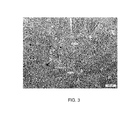
- Figure 3 is an optical micrograph (2% nital etching) illustrating the microstructure of an as-rolled pipe formed according to the disclosed embodiments.
- the composition of the pipe was 0.14% C, 0.46% Mn, 0.24% Si, 2.14% Cr, 0.95 % Mo, 0.11% Ni, 0.05% V ⁇ 0.01%, 0.014% Al, 0.007% N, 0.0013% Ca, 0.011% P, 0.001% S, 0.13% Cu
- the pipe possessed an outer diameter (OD) of about 273 mm and a wall thickness of about 44 mm.
- OD outer diameter
- the as-rolled pipe exhibits a microstructure that is mainly bainite and some ferrite at the prior austenite boundaries.
- the average austenite grain size (AGS) of the as-rolled pipe measured according to ASTM E112 as lineal intercept, was approximately 102.4 ⁇ m.
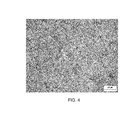
- Figure 4 is an optical micrograph illustrating the microstructure of the pipe after quenching according to the disclosed embodiments.
- the as-quenched pipe exhibits a microstructure that is martensite with a volume percentage greater than 50% (measured according to ASTM E562-08) and lower bainite with a volume percentage less than about 40%.
- the microstructure does not substantially include ferrite, upper bainite, or granular bainite (a mixture of bainite dislocated-ferrite and islands of high C martensite and retained austenite).
- Figure 5 is an optical micrograph illustrating the mid-wall of the as-quenched pipe of Figure 4 . Selective etching is performed to reveal prior austenite grain boundaries of the as-quenched pipe and determined the prior austenite grain size to be approximately 47.8 ⁇ m.
- the packet size of the steel after quenching and tempering may be maintained below approximately 6 ⁇ m if a predominant martensite structure (e.g., martensite greater than about 50% in volume) is formed and lower bainite forms at relatively low temperatures ( ⁇ 540°C).
- a predominant martensite structure e.g., martensite greater than about 50% in volume
- lower bainite forms at relatively low temperatures ( ⁇ 540°C).
- Packet size is measured as average lineal intercept on images taken by Scanning Electron Microscopy (SEM) using the Electron Back Scattered Diffraction (EBSD) signal, and considering high-angle boundaries those with misorientation greater than about 45°. Measurement by the lineal intercept method gave distribution shown in Fig. 6 , with an average the packet size value of about 5.8 ⁇ m although the prior austenite grain size had an average value of 47.8 ⁇ m.
- fine precipitates of MX, M 2 X type (where M is Mo or Cr, or V, Nb, Ti when present, and X is C or N) with size less than about 40 nm were also detected by Transmission Electron Microscopy (TEM), in addition to coarse precipitates of the type M 3 C, M 6 C, M 23 C 6 with an average diameter within the range between about 80 nm to about 400 nm.
- TEM Transmission Electron Microscopy
- microstructural and mechanical properties and impact of steel pipes formed using embodiments of the steel making method discussed above are discussed.
- microstructural parameters including austenite grain size, packet size, martensite volume, lower bainite volume, volume of non-metallic inclusions, and inclusions of greater than about 15 ⁇ m are examined for embodiments of the compositions and heat treatment conditions discussed above.
- Corresponding mechanical properties including yield and tensile strengths, hardness, elongation, toughness, and HIC/SSC resistance are further discussed.
- the microstructural and mechanical properties of the steel of Table 2 were investigated.
- austenite grain size was measured in accordance with ASTM E112
- packet size was measured using an average lineal intercept on images taken by scanning electron microscopy (SEM) using the electron backscatter diffraction (EBSD) signal
- SEM scanning electron microscopy
- EBSD electron backscatter diffraction
- the volume of martensite was measured in accordance with ASTM E562
- the volume of lower bainite was measured in accordance with ASTM E562
- the volume percentage of non-metallic inclusions was measured by automatic image analysis using optical microscopy in accordance with ASTM E1245and the presence of precipitates was investigated by transmission electron microscopy (TEM) using the extraction replica method.
- TEM transmission electron microscopy
- the as-rolled pipes were subsequently austenitized by heating to a temperature of about 920 °C for approximately 5400 s by a walking beam furnace, descaled by high pressure water nozzles, and externally and internally water quenched using a tank with stirred water and an inner water nozzle.
- the austenitizing heating rate was approximately 0.16°C/s.
- the cooling rate employed during quenching was approximately 15°C/s.
- the quenched pipes were rapidly moved to another walking beam furnace for tempering treatment at a temperature of about 740 °C for a total time of about 9000 s and a soaking time of about 4200 s.
- the tempering heating rate was approximately 0.12°C/s.
- the cooling rate employed during tempering was approximately less than 0.1°C/s. All the quenched and tempered (Q&T) pipes were hot straightened.
- Table 4 The main parameters characterizing the microstructure and non-metallic inclusions of the pipes of Example 1 are shown in Table 4.
- Table 4 Microstructural parameters of seamless pipes of example 1 Parameter Average value Austenite grain size ( ⁇ m) 47.8 Packet size ( ⁇ m) 5.8 Martensite (volume %) 68 Lower Bainite (volume %) 32 Volume of non metallic inclusions (%) 0.028 Inclusions with size > 15 ⁇ m (No./mm 2 ) 0.22
- Table 5 presents the tensile, elongation, hardness, and toughness properties of the quenched and tempered pipes.
- Table 6 presents the yield strength, fracture appearance transition temperature, crack tip opening displacement, and ductility transition temperature after a simulated post-weld heat treatment.
- the post-weld heat treatment comprised heating and cooling at a rate of about 80 °C/h to a temperature of about 690°C with a soaking times of 5 h.
- Table 7 presents the measured HIC and SSC resistance of the quenched and tempered pipes.
- the quenched and tempered pipes of Example 1 were used to manufacture bends having a radius of approximately 5 times the outer diameter of the pipe (5D).
- the pipes were subjected to hot induction bending by heating to a temperature of approximately 850°C +/- 25°C and in-line water quenching.
- the bends were then reheated to a temperature of about 920°C for approximately 15 min holding in a car furnace, moved to a water tank, and immersed in stirred water.
- the minimum temperature of the bends was higher than about 860°C just before immersion in the water tank and the temperature of the water of the tank was maintained below approximately 40°C.
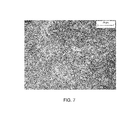
- the microstructure of the as-quenched bend at about the mid-wall of the pipe is illustrated in Figure 7 .
- the produced seamless pipes were austenitized at about 920°C using a soaking time of about 600 s, as discussed above, by a walking beam furnace.
- the pipes were further descaled by high pressure water nozzles and externally and internally water quenched using a tank with stirred water and an inner water nozzle.
- the quenched pipes were rapidly moved to another walking beam furnace for tempering treatment at about 660-670°C. All the quenched and tempered pipes were hot straightened.
- the Q&T pipes were further subjected to hot induction bending by heating to a temperature of about 850°C +/- 25°C and in-line water quenched.
- the bends were then reheated at about 920°C for an approximately 30 min hold time in a car furnace, moved to a water tank and immersed in stirred water.
- the minimum temperature of the bends was greater than about 860°C just before immersion in the water tank and the temperature of the water of the tank was maintained below about 40°C.
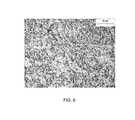
- the microstructure at about the mid-wall of the as-quenched bend is illustrated in Fix. 8.
- a predominant microstructure within the as-quenched pipe was granular bainite (a mixture of bainitic dislocated-ferrite and islands of high C martensite and retained austenite, MA constituent), which is significantly different from that of the high Cr-high Mo steel in Fig.7 .
- the as-quenched bends were further tempered in a furnace set at about 670°C using an approximately 30 min holding time.
- Table 11 The main parameters which characterize the microstructure and non-metallic inclusions of the Q&T bends are shown in Table 11.
- Table 11 Microstructural Parameters of Comparative Example 3 Parameter Average value Packet size ( ⁇ m) > 8 Granular Bainite (volume %) 92 (included 14% MA) Ferrite (volume %) 8 Volume of non metallic inclusions (%) 0.033 Inclusions with size > 15 mm (No./mm 2 ) 0.24
- Table 12 Mechanical Properties of Quenched and Tempered Bends of Comparative Example 3 Mechanical Property Result Average Yield Strength (MPa) 501 Minimum Yield Strength (MPa) 465 Maximum Yield Strength (MPa) 542 Average Ultimate Tensile Strength, UTS (MPa) 626 Minimum Ultimate Tensile Strength, UTS (MPa) 598 Maximum Ultimate Tensile Strength, UTS (MPa) 652 Maximum YS/UTS ratio 0.81 Average Elongation (%) 21.5 Minimum Elongation (%) 20.5 Maximum Elongation (%) 24.0 Maximum Hardness (HV 10
Landscapes
- Chemical & Material Sciences (AREA)
- Engineering & Computer Science (AREA)
- Mechanical Engineering (AREA)
- Materials Engineering (AREA)
- Metallurgy (AREA)
- Organic Chemistry (AREA)
- Physics & Mathematics (AREA)
- Crystallography & Structural Chemistry (AREA)
- Thermal Sciences (AREA)
- Life Sciences & Earth Sciences (AREA)
- Geology (AREA)
- Mining & Mineral Resources (AREA)
- Environmental & Geological Engineering (AREA)
- Fluid Mechanics (AREA)
- General Life Sciences & Earth Sciences (AREA)
- Geochemistry & Mineralogy (AREA)
- Manufacturing & Machinery (AREA)
- Heat Treatment Of Articles (AREA)
- Heat Treatment Of Steel (AREA)
Applications Claiming Priority (1)
| Application Number | Priority Date | Filing Date | Title |
|---|---|---|---|
| ITMI2011A000179A IT1403688B1 (it) | 2011-02-07 | 2011-02-07 | Tubi in acciaio con pareti spesse con eccellente durezza a bassa temperatura e resistenza alla corrosione sotto tensione da solfuri. |
Publications (2)
| Publication Number | Publication Date |
|---|---|
| EP2484784A1 true EP2484784A1 (de) | 2012-08-08 |
| EP2484784B1 EP2484784B1 (de) | 2020-07-15 |
Family
ID=43976086
Family Applications (1)
| Application Number | Title | Priority Date | Filing Date |
|---|---|---|---|
| EP12154018.1A Active EP2484784B1 (de) | 2011-02-07 | 2012-02-06 | Stahlrohre mit schweren Wänden mit ausgezeichneter Härte bei niedrigen Temperaturen und Sulfidspannungsrisskorrosionfestigkeit |
Country Status (11)
| Country | Link |
|---|---|
| US (1) | US8821653B2 (de) |
| EP (1) | EP2484784B1 (de) |
| JP (1) | JP6050003B2 (de) |
| CN (1) | CN102703830B (de) |
| AR (1) | AR085313A1 (de) |
| AU (1) | AU2012200698B2 (de) |
| BR (1) | BR102012002647B1 (de) |
| CA (1) | CA2767021C (de) |
| IN (1) | IN2012DE00319A (de) |
| IT (1) | IT1403688B1 (de) |
| MX (1) | MX2012001707A (de) |
Cited By (4)
| Publication number | Priority date | Publication date | Assignee | Title |
|---|---|---|---|---|
| WO2015120189A1 (en) * | 2014-02-05 | 2015-08-13 | Arcelormittal S.A. | Production of hic-resistant pressure vessel grade plates using a low-carbon composition |
| EP2843072A4 (de) * | 2012-04-27 | 2016-05-11 | Nippon Steel & Sumitomo Metal Corp | Nahtloses stahlrohr und verfahren zur herstellung davon |
| EP3050649A1 (de) * | 2015-01-28 | 2016-08-03 | Daido Steel Co.,Ltd. | Stahlpulver und form unter verwendung davon |
| CN110629102A (zh) * | 2019-10-16 | 2019-12-31 | 武汉钢铁集团鄂城钢铁有限责任公司 | 一种580MPa级低应力腐蚀敏感性海洋工程用钢及其生产方法 |
Families Citing this family (40)
| Publication number | Priority date | Publication date | Assignee | Title |
|---|---|---|---|---|
| EP2325435B2 (de) | 2009-11-24 | 2020-09-30 | Tenaris Connections B.V. | Verschraubung für [ultrahoch] abgedichteten internen und externen Druck |
| US9163296B2 (en) | 2011-01-25 | 2015-10-20 | Tenaris Coiled Tubes, Llc | Coiled tube with varying mechanical properties for superior performance and methods to produce the same by a continuous heat treatment |
| IT1403689B1 (it) * | 2011-02-07 | 2013-10-31 | Dalmine Spa | Tubi in acciaio ad alta resistenza con eccellente durezza a bassa temperatura e resistenza alla corrosione sotto tensioni da solfuri. |
| US8414715B2 (en) | 2011-02-18 | 2013-04-09 | Siderca S.A.I.C. | Method of making ultra high strength steel having good toughness |
| JP5910168B2 (ja) * | 2011-09-15 | 2016-04-27 | 臼井国際産業株式会社 | Trip型2相マルテンサイト鋼及びその製造方法とそのtrip型2相マルテンサイト鋼を用いた超高強度鋼製加工品 |
| US9340847B2 (en) | 2012-04-10 | 2016-05-17 | Tenaris Connections Limited | Methods of manufacturing steel tubes for drilling rods with improved mechanical properties, and rods made by the same |
| JP5333700B1 (ja) * | 2012-11-05 | 2013-11-06 | 新日鐵住金株式会社 | 耐硫化物応力割れ性に優れた低合金油井管用鋼及び低合金油井管用鋼の製造方法 |
| JP6204496B2 (ja) | 2013-01-11 | 2017-09-27 | テナリス・コネクシヨンズ・ベー・ブイ | 耐ゴーリング性ドリルパイプツールジョイントおよび対応するドリルパイプ |
| CN103074548B (zh) * | 2013-01-24 | 2016-02-24 | 宝山钢铁股份有限公司 | 一种高耐蚀型高强度含Al耐候钢板及其制造方法 |
| US9803256B2 (en) | 2013-03-14 | 2017-10-31 | Tenaris Coiled Tubes, Llc | High performance material for coiled tubing applications and the method of producing the same |
| EP2789701A1 (de) | 2013-04-08 | 2014-10-15 | DALMINE S.p.A. | Hochfeste mittelwandige vergütete und nahtlose Stahlrohre und entsprechendes Verfahren zur Herstellung der Stahlrohre |
| EP2789700A1 (de) | 2013-04-08 | 2014-10-15 | DALMINE S.p.A. | Dickwandige vergütete und nahtlose Stahlrohre und entsprechendes Verfahren zur Herstellung der Stahlrohre |
| JP6144417B2 (ja) | 2013-06-25 | 2017-06-07 | テナリス・コネクシヨンズ・ベー・ブイ | 高クロム耐熱鋼 |
| KR20150061516A (ko) * | 2013-11-27 | 2015-06-04 | 두산중공업 주식회사 | 금형강 및 그 제조방법 |
| AR101200A1 (es) * | 2014-07-25 | 2016-11-30 | Nippon Steel & Sumitomo Metal Corp | Tubo de acero de baja aleación para pozo de petróleo |
| EP3272893B1 (de) * | 2015-03-16 | 2020-12-30 | JFE Steel Corporation | Stahlmaterial für verbunddruckbehälterauskleidung, stahlrohr für verbunddruckbehälterauskleidung und verfahren zur herstellung von stahlrohren für eine verbunddruckbehälterauskleidung |
| US20160305192A1 (en) | 2015-04-14 | 2016-10-20 | Tenaris Connections Limited | Ultra-fine grained steels having corrosion-fatigue resistance |
| CN104928602A (zh) * | 2015-06-25 | 2015-09-23 | 江苏省沙钢钢铁研究院有限公司 | 一种耐h2s腐蚀的管线钢宽厚板及其生产方法 |
| EP3380641A4 (de) * | 2015-11-25 | 2019-06-05 | Questek Innovations LLC | Korngrenzenkohäsionsverbesserte stahllegierungen mit beständigkeit gegen sulfidspannungsrissbildung (ssc) |
| US20180355451A1 (en) * | 2016-02-16 | 2018-12-13 | Nippon Steel & Sumitomo Metal Corporation | Seamless steel pipe and method of manufacturing the same |
| US11124852B2 (en) | 2016-08-12 | 2021-09-21 | Tenaris Coiled Tubes, Llc | Method and system for manufacturing coiled tubing |
| CN106148813A (zh) * | 2016-08-12 | 2016-11-23 | 安徽祥宇钢业集团有限公司 | 一种含纳米硅的不锈钢管及其制备方法 |
| CN109563590B (zh) | 2016-08-12 | 2020-10-27 | 杰富意钢铁株式会社 | 复合容器蓄压器用衬里、复合容器蓄压器、以及复合容器蓄压器用衬里的制造方法 |
| WO2018055937A1 (ja) * | 2016-09-21 | 2018-03-29 | Jfeスチール株式会社 | 蓄圧器用鋼管、蓄圧器用鋼管の製造方法、および複合容器蓄圧器用ライナー |
| US10434554B2 (en) | 2017-01-17 | 2019-10-08 | Forum Us, Inc. | Method of manufacturing a coiled tubing string |
| CN110366602B (zh) * | 2017-02-27 | 2022-10-11 | 纽科尔公司 | 用于奥氏体晶粒细化的热循环 |
| CN110760765B (zh) * | 2018-07-27 | 2021-03-12 | 宝山钢铁股份有限公司 | 超低成本、高延伸率及抗应变时效脆化600MPa级调质钢板及其制造方法 |
| CN108677094B (zh) * | 2018-08-07 | 2020-02-18 | 鞍钢股份有限公司 | 一种炼化重整装置工艺管道用钢板及其生产方法 |
| KR102131533B1 (ko) * | 2018-11-29 | 2020-08-05 | 주식회사 포스코 | 고온강도가 우수한 중고온용 강판 및 그 제조방법 |
| CN109351932A (zh) * | 2018-12-10 | 2019-02-19 | 河北宏程管业有限公司 | 一种热缩合金厚壁无缝管及无缝管制造工艺 |
| US11235427B2 (en) | 2020-01-27 | 2022-02-01 | Saudi Arabian Oil Company | Method of testing ERW pipe weld seam for susceptibility to hydrogen embrittlement |
| CN113970031B (zh) * | 2020-10-23 | 2024-05-07 | 深圳优易材料科技有限公司 | 一种内壁耐磨管材及其制备方法 |
| US11788951B2 (en) | 2021-03-19 | 2023-10-17 | Saudi Arabian Oil Company | Testing method to evaluate cold forming effects on carbon steel susceptibility to hydrogen induced cracking (HIC) |
| US11656169B2 (en) | 2021-03-19 | 2023-05-23 | Saudi Arabian Oil Company | Development of control samples to enhance the accuracy of HIC testing |
| CN116043103A (zh) * | 2021-10-28 | 2023-05-02 | 中国石油天然气集团有限公司 | 一种抗硫套管 |
| CN116287966A (zh) * | 2022-07-24 | 2023-06-23 | 湖南华菱涟源钢铁有限公司 | 一种高使用寿命的耐磨圆管的制造方法 |
| CN115256060B (zh) * | 2022-08-11 | 2023-12-01 | 宁蒗恒泰农业投资开发有限公司 | 一种果树专用嫁接刀具生产方法 |
| CN115582454B (zh) * | 2022-10-17 | 2025-03-11 | 德新钢管(中国)有限公司 | 一种低温用大直径薄壁无缝钢管的制造方法 |
| CN118326266B (zh) * | 2024-03-28 | 2025-08-01 | 鞍钢股份有限公司 | 900MPa级厚壁承压钢管用钢板、制造、成型及其后热处理方法 |
| CN119685698B (zh) * | 2024-11-14 | 2025-11-18 | 钢铁研究总院有限公司 | 一种Cr-Cu-Mo-Sb系高耐候钢及其制备方法 |
Citations (3)
| Publication number | Priority date | Publication date | Assignee | Title |
|---|---|---|---|---|
| JPS60174822A (ja) * | 1984-02-18 | 1985-09-09 | Kawasaki Steel Corp | 厚肉高強度継目無鋼管の製造方法 |
| EP0828007B1 (de) * | 1995-05-15 | 2001-11-14 | Sumitomo Metal Industries, Ltd. | Verfahren zur herstellung von hochfesten nahtlosen stahlrohren mit hervorragender schwefel induzierter spannungsrisskorossionsbeständigkeit |
| WO2010061882A1 (ja) * | 2008-11-26 | 2010-06-03 | 住友金属工業株式会社 | 継目無鋼管およびその製造方法 |
Family Cites Families (97)
| Publication number | Priority date | Publication date | Assignee | Title |
|---|---|---|---|---|
| US3413166A (en) | 1965-10-15 | 1968-11-26 | Atomic Energy Commission Usa | Fine grained steel and process for preparation thereof |
| US3655465A (en) | 1969-03-10 | 1972-04-11 | Int Nickel Co | Heat treatment for alloys particularly steels to be used in sour well service |
| DE2131318C3 (de) | 1971-06-24 | 1973-12-06 | Fried. Krupp Huettenwerke Ag, 4630 Bochum | Verfahren zum Herstellen eines Beweh rungs Stabstahles für Spannbeton |
| US3915697A (en) | 1975-01-31 | 1975-10-28 | Centro Speriment Metallurg | Bainitic steel resistant to hydrogen embrittlement |
| DE2917287C2 (de) | 1978-04-28 | 1986-02-27 | Neturen Co. Ltd., Tokio/Tokyo | Verfahren zum Herstellen von Schraubenfedern, Torsionsstäben oder dergleichen aus Federstahldraht |
| US4231555A (en) | 1978-06-12 | 1980-11-04 | Horikiri Spring Manufacturing Co., Ltd. | Bar-shaped torsion spring |
| DE3070501D1 (en) | 1979-06-29 | 1985-05-23 | Nippon Steel Corp | High tensile steel and process for producing the same |
| JPS5680367A (en) | 1979-12-06 | 1981-07-01 | Nippon Steel Corp | Restraining method of cracking in b-containing steel continuous casting ingot |
| US4376528A (en) | 1980-11-14 | 1983-03-15 | Kawasaki Steel Corporation | Steel pipe hardening apparatus |
| JPS58188532A (ja) | 1982-04-28 | 1983-11-04 | Nhk Spring Co Ltd | 中空スタビライザの製造方法 |
| JPS61130462A (ja) | 1984-11-28 | 1986-06-18 | Tech Res & Dev Inst Of Japan Def Agency | 降伏応力110kgf/mm↑2以上の耐応力腐蝕割れ性のすぐれた高靭性超高張力鋼 |
| EP0205828B1 (de) | 1985-06-10 | 1989-10-18 | Hoesch Aktiengesellschaft | Verfahren und Verwendung eines Stahles zur Herstellung von Stahlrohren mit erhöhter Sauergasbeständigkeit |
| US4812182A (en) | 1987-07-31 | 1989-03-14 | Hongsheng Fang | Air-cooling low-carbon bainitic steel |
| US5538566A (en) | 1990-10-24 | 1996-07-23 | Consolidated Metal Products, Inc. | Warm forming high strength steel parts |
| IT1263251B (it) | 1992-10-27 | 1996-08-05 | Sviluppo Materiali Spa | Procedimento per la produzione di manufatti in acciaio inossidabile super-duplex. |
| US5454883A (en) | 1993-02-02 | 1995-10-03 | Nippon Steel Corporation | High toughness low yield ratio, high fatigue strength steel plate and process of producing same |
| EP0658632A4 (de) | 1993-07-06 | 1995-11-29 | Nippon Steel Corp | Stahl mit hohem korrosionswiderstand und stahl mit hohem korrosionswiderstand und verarbeitbarkeit. |
| JPH07266837A (ja) | 1994-03-29 | 1995-10-17 | Horikiri Bane Seisakusho:Kk | 中空スタビライザの製造法 |
| IT1267243B1 (it) | 1994-05-30 | 1997-01-28 | Danieli Off Mecc | Procedimento di colata continua per acciai peritettici |
| GB2297094B (en) | 1995-01-20 | 1998-09-23 | British Steel Plc | Improvements in and relating to Carbide-Free Bainitic Steels |
| IT1275287B (it) | 1995-05-31 | 1997-08-05 | Dalmine Spa | Acciaio inossidabile supermartensitico avente elevata resistenza meccanica ed alla corrosione e relativi manufatti |
| DE59607441D1 (de) | 1995-07-06 | 2001-09-13 | Benteler Werke Ag | Rohre für die Herstellung von Stabilisatoren und Herstellung von Stabilisatoren aus solchen Rohren |
| DE69703485T2 (de) | 1996-04-26 | 2001-03-22 | Matsushita Electric Industrial Co., Ltd. | Informationsaufzeichnungsverfahren und informationsaufzeichnungsmedium |
| JP2001508131A (ja) | 1997-01-15 | 2001-06-19 | マンネスマン・アクチエンゲゼルシャフト | 配管用継目無鋼管の製造方法 |
| CA2231985C (en) | 1997-03-26 | 2004-05-25 | Sumitomo Metal Industries, Ltd. | Welded high-strength steel structures and methods of manufacturing the same |
| ATE250518T1 (de) | 1997-05-12 | 2003-10-15 | Muhr & Bender | Stabilisator |
| US5993570A (en) | 1997-06-20 | 1999-11-30 | American Cast Iron Pipe Company | Linepipe and structural steel produced by high speed continuous casting |
| DE19725434C2 (de) | 1997-06-16 | 1999-08-19 | Schloemann Siemag Ag | Verfahren zum Walzen von Warmbreitband in einer CSP-Anlage |
| JPH1157819A (ja) * | 1997-08-25 | 1999-03-02 | Kawasaki Steel Corp | 高強度高靱性鋼管の製造方法 |
| DE69821486T2 (de) | 1997-09-29 | 2005-01-13 | Sumitomo Metal Industries, Ltd. | Stahl für ölbohrlochrohre mit hohem korrosionswiderstand gegen feuchtes kohlendioxidgas und mit hohem korrosionswiderstand gegen seewasser, sowie nahtlose ölbohrlochrohre |
| JP4203143B2 (ja) | 1998-02-13 | 2008-12-24 | 新日本製鐵株式会社 | 耐炭酸ガス腐食性に優れた耐食鋼及び耐食油井管 |
| WO2000005012A1 (fr) | 1998-07-21 | 2000-02-03 | Shinagawa Refractories Co., Ltd. | Poudre a mouler pour coulage en continu de plaque mince |
| JP2000063940A (ja) | 1998-08-12 | 2000-02-29 | Sumitomo Metal Ind Ltd | 耐硫化物応力割れ性に優れた高強度鋼の製造方法 |
| JP3562353B2 (ja) | 1998-12-09 | 2004-09-08 | 住友金属工業株式会社 | 耐硫化物応力腐食割れ性に優れる油井用鋼およびその製造方法 |
| US6299705B1 (en) | 1998-09-25 | 2001-10-09 | Mitsubishi Heavy Industries, Ltd. | High-strength heat-resistant steel and process for producing high-strength heat-resistant steel |
| JP4331300B2 (ja) | 1999-02-15 | 2009-09-16 | 日本発條株式会社 | 中空スタビライザの製造方法 |
| JP4367588B2 (ja) | 1999-10-28 | 2009-11-18 | 住友金属工業株式会社 | 耐硫化物応力割れ性に優れた鋼管 |
| JP3545980B2 (ja) | 1999-12-06 | 2004-07-21 | 株式会社神戸製鋼所 | 耐遅れ破壊特性の優れた自動車用超高強度電縫鋼管およびその製造方法 |
| JP4264212B2 (ja) | 2000-02-28 | 2009-05-13 | 新日本製鐵株式会社 | 成形性の優れた鋼管及びその製造方法 |
| JP4379550B2 (ja) | 2000-03-24 | 2009-12-09 | 住友金属工業株式会社 | 耐硫化物応力割れ性と靱性に優れた低合金鋼材 |
| JP3518515B2 (ja) | 2000-03-30 | 2004-04-12 | 住友金属工業株式会社 | 低・中Cr系耐熱鋼 |
| CN1143005C (zh) | 2000-06-07 | 2004-03-24 | 新日本制铁株式会社 | 可成形性优异的钢管及其生产方法 |
| US6384388B1 (en) | 2000-11-17 | 2002-05-07 | Meritor Suspension Systems Company | Method of enhancing the bending process of a stabilizer bar |
| EP1359235A4 (de) | 2001-02-07 | 2005-01-12 | Jfe Steel Corp | Dünnes stahlblech und herstellungsverfahren dafür |
| JP4102195B2 (ja) | 2001-03-07 | 2008-06-18 | 新日本製鐵株式会社 | 中空スタビライザー用電縫溶接鋼管 |
| AR027650A1 (es) | 2001-03-13 | 2003-04-09 | Siderca Sa Ind & Com | Acero al carbono de baja aleacion para la fabricacion de tuberias para exploracion y produccion de petroleo y/o gas natural, con mejorada resistencia a lacorrosion, procedimiento para fabricar tubos sin costura y tubos sin costura obtenidos |
| EP1375683B1 (de) | 2001-03-29 | 2012-02-08 | Sumitomo Metal Industries, Ltd. | Hochfestes stahlrohr für airbag und herstellungsverfahren dafür |
| JP2003096534A (ja) | 2001-07-19 | 2003-04-03 | Mitsubishi Heavy Ind Ltd | 高強度耐熱鋼、高強度耐熱鋼の製造方法、及び高強度耐熱管部材の製造方法 |
| JP2003041341A (ja) | 2001-08-02 | 2003-02-13 | Sumitomo Metal Ind Ltd | 高靱性を有する鋼材およびそれを用いた鋼管の製造方法 |
| CN1151305C (zh) | 2001-08-28 | 2004-05-26 | 宝山钢铁股份有限公司 | 抗二氧化碳腐蚀的低合金钢及油套管 |
| EP1288316B1 (de) | 2001-08-29 | 2009-02-25 | JFE Steel Corporation | Verfahren zum Herstellen von nahtlosen Rohren aus hochfester, hochzäher, martensitischer Rostfreistahl |
| US6669789B1 (en) | 2001-08-31 | 2003-12-30 | Nucor Corporation | Method for producing titanium-bearing microalloyed high-strength low-alloy steel |
| US6709534B2 (en) | 2001-12-14 | 2004-03-23 | Mmfx Technologies Corporation | Nano-composite martensitic steels |
| AU2003227225B2 (en) | 2002-03-29 | 2006-04-27 | Nippon Steel Corporation | Low alloy steel |
| JP2004011009A (ja) | 2002-06-11 | 2004-01-15 | Nippon Steel Corp | 中空スタビライザー用電縫溶接鋼管 |
| US6669285B1 (en) | 2002-07-02 | 2003-12-30 | Eric Park | Headrest mounted video display |
| CN1229511C (zh) | 2002-09-30 | 2005-11-30 | 宝山钢铁股份有限公司 | 抗二氧化碳和硫化氢腐蚀用低合金钢 |
| JP3879723B2 (ja) * | 2002-10-01 | 2007-02-14 | 住友金属工業株式会社 | 耐水素誘起割れ性に優れた高強度継目無鋼管およびその製造方法 |
| US7074286B2 (en) | 2002-12-18 | 2006-07-11 | Ut-Battelle, Llc | Wrought Cr—W—V bainitic/ferritic steel compositions |
| US7010950B2 (en) | 2003-01-17 | 2006-03-14 | Visteon Global Technologies, Inc. | Suspension component having localized material strengthening |
| BR0318308B1 (pt) | 2003-04-25 | 2011-12-13 | tubo de aço sem costura e processo para sua fabricação. | |
| US20050000601A1 (en) * | 2003-05-21 | 2005-01-06 | Yuji Arai | Steel pipe for an airbag system and a method for its manufacture |
| US20050076975A1 (en) | 2003-10-10 | 2005-04-14 | Tenaris Connections A.G. | Low carbon alloy steel tube having ultra high strength and excellent toughness at low temperature and method of manufacturing the same |
| US20050087269A1 (en) | 2003-10-22 | 2005-04-28 | Merwin Matthew J. | Method for producing line pipe |
| CN100526479C (zh) | 2004-03-24 | 2009-08-12 | 住友金属工业株式会社 | 耐蚀性优异的低合金钢的制造方法 |
| JP4140556B2 (ja) | 2004-06-14 | 2008-08-27 | 住友金属工業株式会社 | 耐硫化物応力割れ性に優れた低合金油井管用鋼 |
| JP4135691B2 (ja) | 2004-07-20 | 2008-08-20 | 住友金属工業株式会社 | 窒化物系介在物形態制御鋼 |
| JP2006037147A (ja) | 2004-07-26 | 2006-02-09 | Sumitomo Metal Ind Ltd | 油井管用鋼材 |
| US20060169368A1 (en) | 2004-10-05 | 2006-08-03 | Tenaris Conncections A.G. (A Liechtenstein Corporation) | Low carbon alloy steel tube having ultra high strength and excellent toughness at low temperature and method of manufacturing the same |
| JP4321434B2 (ja) * | 2004-10-25 | 2009-08-26 | 住友金属工業株式会社 | 低合金鋼及びその製造方法 |
| US7566416B2 (en) | 2004-10-29 | 2009-07-28 | Sumitomo Metal Industries, Ltd. | Steel pipe for an airbag inflator and a process for its manufacture |
| US7214278B2 (en) | 2004-12-29 | 2007-05-08 | Mmfx Technologies Corporation | High-strength four-phase steel alloys |
| JP4792778B2 (ja) | 2005-03-29 | 2011-10-12 | 住友金属工業株式会社 | ラインパイプ用厚肉継目無鋼管の製造方法 |
| US20060243355A1 (en) | 2005-04-29 | 2006-11-02 | Meritor Suspension System Company, U.S. | Stabilizer bar |
| JP4635764B2 (ja) | 2005-07-25 | 2011-02-23 | 住友金属工業株式会社 | 継目無鋼管の製造方法 |
| JP4945946B2 (ja) * | 2005-07-26 | 2012-06-06 | 住友金属工業株式会社 | 継目無鋼管およびその製造方法 |
| MXPA05008339A (es) | 2005-08-04 | 2007-02-05 | Tenaris Connections Ag | Acero de alta resistencia para tubos de acero soldables y sin costura. |
| CN101300369B (zh) | 2005-08-22 | 2010-11-03 | 住友金属工业株式会社 | 管线用无缝钢管及其制造方法 |
| JP4997753B2 (ja) | 2005-12-16 | 2012-08-08 | タカタ株式会社 | 乗員拘束装置 |
| US7744708B2 (en) | 2006-03-14 | 2010-06-29 | Tenaris Connections Limited | Methods of producing high-strength metal tubular bars possessing improved cold formability |
| JP4751224B2 (ja) | 2006-03-28 | 2011-08-17 | 新日本製鐵株式会社 | 靭性と溶接性に優れた機械構造用高強度シームレス鋼管およびその製造方法 |
| FR2902111B1 (fr) * | 2006-06-09 | 2009-03-06 | V & M France Soc Par Actions S | Compositions d'aciers pour usages speciaux |
| BRPI0621843B1 (pt) | 2006-06-29 | 2015-09-15 | Tenaris Connections Limited | tubos de aço de precisão sem costura com tenacidade isotrópica a baixa temperatura aprimorada e processo para produção dos mesmos, tambores para um cilindro hidráulico e processo para produção dos mesmos, cilindro hidráulico |
| US8322754B2 (en) | 2006-12-01 | 2012-12-04 | Tenaris Connections Limited | Nanocomposite coatings for threaded connections |
| US20080226396A1 (en) | 2007-03-15 | 2008-09-18 | Tubos De Acero De Mexico S.A. | Seamless steel tube for use as a steel catenary riser in the touch down zone |
| CN101514433A (zh) | 2007-03-16 | 2009-08-26 | 株式会社神户制钢所 | 低温冲击特性优异的汽车用高强度电阻焊钢管及其制造方法 |
| EP2133442B1 (de) | 2007-03-30 | 2012-02-01 | Sumitomo Metal Industries, Ltd. | Stahl mit geringem legierungsanteil, nahtloses stahlrohr für ein ölbohrloch und verfahren zur herstellung des nahtlosen stahlrohrs |
| MX2007004600A (es) | 2007-04-17 | 2008-12-01 | Tubos De Acero De Mexico S A | Un tubo sin costura para la aplicación como secciones verticales de work-over. |
| US7862667B2 (en) | 2007-07-06 | 2011-01-04 | Tenaris Connections Limited | Steels for sour service environments |
| MX2010005532A (es) | 2007-11-19 | 2011-02-23 | Tenaris Connections Ltd | Acero bainítico de alta resistencia para aplicaciones octg. |
| JP2010024504A (ja) * | 2008-07-22 | 2010-02-04 | Sumitomo Metal Ind Ltd | ラインパイプ用継目無鋼管およびその製造方法 |
| MX2009012811A (es) | 2008-11-25 | 2010-05-26 | Maverick Tube Llc | Procesamiento de desbastes delgados o flejes compactos de aceros al boro/titanio. |
| CN101413089B (zh) | 2008-12-04 | 2010-11-03 | 天津钢管集团股份有限公司 | 低co2环境用高强度低铬抗腐蚀石油专用管 |
| US20100319814A1 (en) | 2009-06-17 | 2010-12-23 | Teresa Estela Perez | Bainitic steels with boron |
| CN101613829B (zh) | 2009-07-17 | 2011-09-28 | 天津钢管集团股份有限公司 | 150ksi钢级高强韧油气井井下作业用钢管及其生产方法 |
| US8414715B2 (en) | 2011-02-18 | 2013-04-09 | Siderca S.A.I.C. | Method of making ultra high strength steel having good toughness |
| US9340847B2 (en) | 2012-04-10 | 2016-05-17 | Tenaris Connections Limited | Methods of manufacturing steel tubes for drilling rods with improved mechanical properties, and rods made by the same |
-
2011
- 2011-02-07 IT ITMI2011A000179A patent/IT1403688B1/it active
-
2012
- 2012-02-06 JP JP2012023273A patent/JP6050003B2/ja active Active
- 2012-02-06 CA CA2767021A patent/CA2767021C/en active Active
- 2012-02-06 US US13/367,312 patent/US8821653B2/en active Active
- 2012-02-06 BR BR102012002647-3A patent/BR102012002647B1/pt active IP Right Grant
- 2012-02-06 IN IN319DE2012 patent/IN2012DE00319A/en unknown
- 2012-02-06 EP EP12154018.1A patent/EP2484784B1/de active Active
- 2012-02-06 AR ARP120100385A patent/AR085313A1/es active IP Right Grant
- 2012-02-07 CN CN201210026859.0A patent/CN102703830B/zh active Active
- 2012-02-07 MX MX2012001707A patent/MX2012001707A/es active IP Right Grant
- 2012-02-07 AU AU2012200698A patent/AU2012200698B2/en active Active
Patent Citations (3)
| Publication number | Priority date | Publication date | Assignee | Title |
|---|---|---|---|---|
| JPS60174822A (ja) * | 1984-02-18 | 1985-09-09 | Kawasaki Steel Corp | 厚肉高強度継目無鋼管の製造方法 |
| EP0828007B1 (de) * | 1995-05-15 | 2001-11-14 | Sumitomo Metal Industries, Ltd. | Verfahren zur herstellung von hochfesten nahtlosen stahlrohren mit hervorragender schwefel induzierter spannungsrisskorossionsbeständigkeit |
| WO2010061882A1 (ja) * | 2008-11-26 | 2010-06-03 | 住友金属工業株式会社 | 継目無鋼管およびその製造方法 |
Cited By (8)
| Publication number | Priority date | Publication date | Assignee | Title |
|---|---|---|---|---|
| EP2843072A4 (de) * | 2012-04-27 | 2016-05-11 | Nippon Steel & Sumitomo Metal Corp | Nahtloses stahlrohr und verfahren zur herstellung davon |
| WO2015120189A1 (en) * | 2014-02-05 | 2015-08-13 | Arcelormittal S.A. | Production of hic-resistant pressure vessel grade plates using a low-carbon composition |
| US10829839B2 (en) | 2014-02-05 | 2020-11-10 | Arcelormittal | Production of HIC-resistant pressure vessel grade plates using a low-carbon composition |
| US11352683B2 (en) | 2014-02-05 | 2022-06-07 | Acelormittal | Production of HIC-resistant pressure vessel grade plates using a low-carbon composition |
| EP3050649A1 (de) * | 2015-01-28 | 2016-08-03 | Daido Steel Co.,Ltd. | Stahlpulver und form unter verwendung davon |
| US10975460B2 (en) | 2015-01-28 | 2021-04-13 | Daido Steel Co., Ltd. | Steel powder and mold using the same |
| CN110629102A (zh) * | 2019-10-16 | 2019-12-31 | 武汉钢铁集团鄂城钢铁有限责任公司 | 一种580MPa级低应力腐蚀敏感性海洋工程用钢及其生产方法 |
| CN110629102B (zh) * | 2019-10-16 | 2021-04-27 | 宝武集团鄂城钢铁有限公司 | 一种580MPa级低应力腐蚀敏感性海洋工程用钢及其生产方法 |
Also Published As
| Publication number | Publication date |
|---|---|
| BR102012002647B1 (pt) | 2018-12-11 |
| AU2012200698B2 (en) | 2016-12-15 |
| ITMI20110179A1 (it) | 2012-08-08 |
| CA2767021C (en) | 2020-03-24 |
| AU2012200698A1 (en) | 2012-08-23 |
| MX2012001707A (es) | 2012-08-31 |
| CN102703830B (zh) | 2016-12-14 |
| JP2012197508A (ja) | 2012-10-18 |
| CA2767021A1 (en) | 2012-08-07 |
| US20120204994A1 (en) | 2012-08-16 |
| CN102703830A (zh) | 2012-10-03 |
| JP6050003B2 (ja) | 2016-12-21 |
| AR085313A1 (es) | 2013-09-25 |
| US8821653B2 (en) | 2014-09-02 |
| BR102012002647A2 (pt) | 2015-03-31 |
| IN2012DE00319A (de) | 2015-04-10 |
| IT1403688B1 (it) | 2013-10-31 |
| EP2484784B1 (de) | 2020-07-15 |
Similar Documents
| Publication | Publication Date | Title |
|---|---|---|
| EP2484784B1 (de) | Stahlrohre mit schweren Wänden mit ausgezeichneter Härte bei niedrigen Temperaturen und Sulfidspannungsrisskorrosionfestigkeit | |
| EP2492361B1 (de) | Hochfeste Stahlrohre mit ausgezeichneter Härte bei niedrigen Temperaturen und Sulfidspannungsrisskorrosionfestigkeit | |
| EP2789702B1 (de) | Dickwandige vergütete und nahtlose stahlrohre und entsprechendes verfahren zur herstellung der stahlrohre | |
| US9188252B2 (en) | Ultra high strength steel having good toughness | |
| EP2789703B1 (de) | Hochfeste mittelwandige vergütete und nahtlose Stahlrohre und entsprechendes Verfahren zur Herstellung der Stahlrohre | |
| US9222156B2 (en) | High strength steel having good toughness | |
| CN102906292B (zh) | 管线管用无缝钢管及其制造方法 | |
| EP3636787B1 (de) | Gebogenes stahlrohr und verfahren zur herstellung davon | |
| EP3492612B1 (de) | Hochfestes nahtloses stahlrohr und steigrohr | |
| CA2882843A1 (en) | Seamless steel pipe and method for producing same |
Legal Events
| Date | Code | Title | Description |
|---|---|---|---|
| PUAI | Public reference made under article 153(3) epc to a published international application that has entered the european phase |
Free format text: ORIGINAL CODE: 0009012 |
|
| AK | Designated contracting states |
Kind code of ref document: A1 Designated state(s): AL AT BE BG CH CY CZ DE DK EE ES FI FR GB GR HR HU IE IS IT LI LT LU LV MC MK MT NL NO PL PT RO RS SE SI SK SM TR |
|
| AX | Request for extension of the european patent |
Extension state: BA ME |
|
| 17P | Request for examination filed |
Effective date: 20130207 |
|
| STAA | Information on the status of an ep patent application or granted ep patent |
Free format text: STATUS: EXAMINATION IS IN PROGRESS |
|
| 17Q | First examination report despatched |
Effective date: 20171002 |
|
| GRAP | Despatch of communication of intention to grant a patent |
Free format text: ORIGINAL CODE: EPIDOSNIGR1 |
|
| STAA | Information on the status of an ep patent application or granted ep patent |
Free format text: STATUS: GRANT OF PATENT IS INTENDED |
|
| RIC1 | Information provided on ipc code assigned before grant |
Ipc: C22C 38/02 20060101ALI20190911BHEP Ipc: C21D 9/08 20060101ALI20190911BHEP Ipc: C22C 38/42 20060101ALI20190911BHEP Ipc: C22C 38/44 20060101ALI20190911BHEP Ipc: C22C 38/08 20060101ALI20190911BHEP Ipc: C22C 38/06 20060101ALI20190911BHEP Ipc: C22C 38/46 20060101ALI20190911BHEP Ipc: C21D 8/10 20060101ALI20190911BHEP Ipc: C22C 38/00 20060101ALI20190911BHEP Ipc: C22C 38/22 20060101ALI20190911BHEP Ipc: E21B 17/00 20060101ALI20190911BHEP Ipc: C22C 38/04 20060101ALI20190911BHEP Ipc: C22C 38/60 20060101ALI20190911BHEP Ipc: C21D 1/18 20060101AFI20190911BHEP Ipc: C21D 6/00 20060101ALI20190911BHEP Ipc: C22C 38/24 20060101ALI20190911BHEP |
|
| INTG | Intention to grant announced |
Effective date: 20190930 |
|
| GRAJ | Information related to disapproval of communication of intention to grant by the applicant or resumption of examination proceedings by the epo deleted |
Free format text: ORIGINAL CODE: EPIDOSDIGR1 |
|
| STAA | Information on the status of an ep patent application or granted ep patent |
Free format text: STATUS: EXAMINATION IS IN PROGRESS |
|
| GRAP | Despatch of communication of intention to grant a patent |
Free format text: ORIGINAL CODE: EPIDOSNIGR1 |
|
| STAA | Information on the status of an ep patent application or granted ep patent |
Free format text: STATUS: GRANT OF PATENT IS INTENDED |
|
| INTC | Intention to grant announced (deleted) | ||
| INTG | Intention to grant announced |
Effective date: 20200210 |
|
| GRAS | Grant fee paid |
Free format text: ORIGINAL CODE: EPIDOSNIGR3 |
|
| GRAA | (expected) grant |
Free format text: ORIGINAL CODE: 0009210 |
|
| STAA | Information on the status of an ep patent application or granted ep patent |
Free format text: STATUS: THE PATENT HAS BEEN GRANTED |
|
| AK | Designated contracting states |
Kind code of ref document: B1 Designated state(s): AL AT BE BG CH CY CZ DE DK EE ES FI FR GB GR HR HU IE IS IT LI LT LU LV MC MK MT NL NO PL PT RO RS SE SI SK SM TR |
|
| REG | Reference to a national code |
Ref country code: GB Ref legal event code: FG4D Ref country code: CH Ref legal event code: EP |
|
| REG | Reference to a national code |
Ref country code: DE Ref legal event code: R096 Ref document number: 602012071227 Country of ref document: DE |
|
| REG | Reference to a national code |
Ref country code: IE Ref legal event code: FG4D |
|
| REG | Reference to a national code |
Ref country code: AT Ref legal event code: REF Ref document number: 1291112 Country of ref document: AT Kind code of ref document: T Effective date: 20200815 |
|
| REG | Reference to a national code |
Ref country code: LT Ref legal event code: MG4D |
|
| REG | Reference to a national code |
Ref country code: AT Ref legal event code: MK05 Ref document number: 1291112 Country of ref document: AT Kind code of ref document: T Effective date: 20200715 |
|
| REG | Reference to a national code |
Ref country code: NL Ref legal event code: MP Effective date: 20200715 |
|
| PG25 | Lapsed in a contracting state [announced via postgrant information from national office to epo] |
Ref country code: HR Free format text: LAPSE BECAUSE OF FAILURE TO SUBMIT A TRANSLATION OF THE DESCRIPTION OR TO PAY THE FEE WITHIN THE PRESCRIBED TIME-LIMIT Effective date: 20200715 Ref country code: PT Free format text: LAPSE BECAUSE OF FAILURE TO SUBMIT A TRANSLATION OF THE DESCRIPTION OR TO PAY THE FEE WITHIN THE PRESCRIBED TIME-LIMIT Effective date: 20201116 Ref country code: LT Free format text: LAPSE BECAUSE OF FAILURE TO SUBMIT A TRANSLATION OF THE DESCRIPTION OR TO PAY THE FEE WITHIN THE PRESCRIBED TIME-LIMIT Effective date: 20200715 Ref country code: FI Free format text: LAPSE BECAUSE OF FAILURE TO SUBMIT A TRANSLATION OF THE DESCRIPTION OR TO PAY THE FEE WITHIN THE PRESCRIBED TIME-LIMIT Effective date: 20200715 Ref country code: AT Free format text: LAPSE BECAUSE OF FAILURE TO SUBMIT A TRANSLATION OF THE DESCRIPTION OR TO PAY THE FEE WITHIN THE PRESCRIBED TIME-LIMIT Effective date: 20200715 Ref country code: NO Free format text: LAPSE BECAUSE OF FAILURE TO SUBMIT A TRANSLATION OF THE DESCRIPTION OR TO PAY THE FEE WITHIN THE PRESCRIBED TIME-LIMIT Effective date: 20201015 Ref country code: SE Free format text: LAPSE BECAUSE OF FAILURE TO SUBMIT A TRANSLATION OF THE DESCRIPTION OR TO PAY THE FEE WITHIN THE PRESCRIBED TIME-LIMIT Effective date: 20200715 Ref country code: BG Free format text: LAPSE BECAUSE OF FAILURE TO SUBMIT A TRANSLATION OF THE DESCRIPTION OR TO PAY THE FEE WITHIN THE PRESCRIBED TIME-LIMIT Effective date: 20201015 Ref country code: GR Free format text: LAPSE BECAUSE OF FAILURE TO SUBMIT A TRANSLATION OF THE DESCRIPTION OR TO PAY THE FEE WITHIN THE PRESCRIBED TIME-LIMIT Effective date: 20201016 Ref country code: ES Free format text: LAPSE BECAUSE OF FAILURE TO SUBMIT A TRANSLATION OF THE DESCRIPTION OR TO PAY THE FEE WITHIN THE PRESCRIBED TIME-LIMIT Effective date: 20200715 |
|
| PG25 | Lapsed in a contracting state [announced via postgrant information from national office to epo] |
Ref country code: IS Free format text: LAPSE BECAUSE OF FAILURE TO SUBMIT A TRANSLATION OF THE DESCRIPTION OR TO PAY THE FEE WITHIN THE PRESCRIBED TIME-LIMIT Effective date: 20201115 Ref country code: RS Free format text: LAPSE BECAUSE OF FAILURE TO SUBMIT A TRANSLATION OF THE DESCRIPTION OR TO PAY THE FEE WITHIN THE PRESCRIBED TIME-LIMIT Effective date: 20200715 Ref country code: PL Free format text: LAPSE BECAUSE OF FAILURE TO SUBMIT A TRANSLATION OF THE DESCRIPTION OR TO PAY THE FEE WITHIN THE PRESCRIBED TIME-LIMIT Effective date: 20200715 Ref country code: LV Free format text: LAPSE BECAUSE OF FAILURE TO SUBMIT A TRANSLATION OF THE DESCRIPTION OR TO PAY THE FEE WITHIN THE PRESCRIBED TIME-LIMIT Effective date: 20200715 |
|
| PG25 | Lapsed in a contracting state [announced via postgrant information from national office to epo] |
Ref country code: NL Free format text: LAPSE BECAUSE OF FAILURE TO SUBMIT A TRANSLATION OF THE DESCRIPTION OR TO PAY THE FEE WITHIN THE PRESCRIBED TIME-LIMIT Effective date: 20200715 |
|
| REG | Reference to a national code |
Ref country code: DE Ref legal event code: R097 Ref document number: 602012071227 Country of ref document: DE |
|
| PG25 | Lapsed in a contracting state [announced via postgrant information from national office to epo] |
Ref country code: CZ Free format text: LAPSE BECAUSE OF FAILURE TO SUBMIT A TRANSLATION OF THE DESCRIPTION OR TO PAY THE FEE WITHIN THE PRESCRIBED TIME-LIMIT Effective date: 20200715 Ref country code: DK Free format text: LAPSE BECAUSE OF FAILURE TO SUBMIT A TRANSLATION OF THE DESCRIPTION OR TO PAY THE FEE WITHIN THE PRESCRIBED TIME-LIMIT Effective date: 20200715 Ref country code: EE Free format text: LAPSE BECAUSE OF FAILURE TO SUBMIT A TRANSLATION OF THE DESCRIPTION OR TO PAY THE FEE WITHIN THE PRESCRIBED TIME-LIMIT Effective date: 20200715 Ref country code: SM Free format text: LAPSE BECAUSE OF FAILURE TO SUBMIT A TRANSLATION OF THE DESCRIPTION OR TO PAY THE FEE WITHIN THE PRESCRIBED TIME-LIMIT Effective date: 20200715 Ref country code: RO Free format text: LAPSE BECAUSE OF FAILURE TO SUBMIT A TRANSLATION OF THE DESCRIPTION OR TO PAY THE FEE WITHIN THE PRESCRIBED TIME-LIMIT Effective date: 20200715 |
|
| PLBE | No opposition filed within time limit |
Free format text: ORIGINAL CODE: 0009261 |
|
| STAA | Information on the status of an ep patent application or granted ep patent |
Free format text: STATUS: NO OPPOSITION FILED WITHIN TIME LIMIT |
|
| PG25 | Lapsed in a contracting state [announced via postgrant information from national office to epo] |
Ref country code: AL Free format text: LAPSE BECAUSE OF FAILURE TO SUBMIT A TRANSLATION OF THE DESCRIPTION OR TO PAY THE FEE WITHIN THE PRESCRIBED TIME-LIMIT Effective date: 20200715 |
|
| 26N | No opposition filed |
Effective date: 20210416 |
|
| PG25 | Lapsed in a contracting state [announced via postgrant information from national office to epo] |
Ref country code: SK Free format text: LAPSE BECAUSE OF FAILURE TO SUBMIT A TRANSLATION OF THE DESCRIPTION OR TO PAY THE FEE WITHIN THE PRESCRIBED TIME-LIMIT Effective date: 20200715 |
|
| PG25 | Lapsed in a contracting state [announced via postgrant information from national office to epo] |
Ref country code: SI Free format text: LAPSE BECAUSE OF FAILURE TO SUBMIT A TRANSLATION OF THE DESCRIPTION OR TO PAY THE FEE WITHIN THE PRESCRIBED TIME-LIMIT Effective date: 20200715 |
|
| PG25 | Lapsed in a contracting state [announced via postgrant information from national office to epo] |
Ref country code: MC Free format text: LAPSE BECAUSE OF FAILURE TO SUBMIT A TRANSLATION OF THE DESCRIPTION OR TO PAY THE FEE WITHIN THE PRESCRIBED TIME-LIMIT Effective date: 20200715 |
|
| GBPC | Gb: european patent ceased through non-payment of renewal fee |
Effective date: 20210206 |
|
| REG | Reference to a national code |
Ref country code: BE Ref legal event code: MM Effective date: 20210228 |
|
| PG25 | Lapsed in a contracting state [announced via postgrant information from national office to epo] |
Ref country code: LU Free format text: LAPSE BECAUSE OF NON-PAYMENT OF DUE FEES Effective date: 20210206 Ref country code: LI Free format text: LAPSE BECAUSE OF NON-PAYMENT OF DUE FEES Effective date: 20210228 Ref country code: CH Free format text: LAPSE BECAUSE OF NON-PAYMENT OF DUE FEES Effective date: 20210228 |
|
| PG25 | Lapsed in a contracting state [announced via postgrant information from national office to epo] |
Ref country code: GB Free format text: LAPSE BECAUSE OF NON-PAYMENT OF DUE FEES Effective date: 20210206 Ref country code: IE Free format text: LAPSE BECAUSE OF NON-PAYMENT OF DUE FEES Effective date: 20210206 |
|
| PG25 | Lapsed in a contracting state [announced via postgrant information from national office to epo] |
Ref country code: BE Free format text: LAPSE BECAUSE OF NON-PAYMENT OF DUE FEES Effective date: 20210228 |
|
| PG25 | Lapsed in a contracting state [announced via postgrant information from national office to epo] |
Ref country code: HU Free format text: LAPSE BECAUSE OF FAILURE TO SUBMIT A TRANSLATION OF THE DESCRIPTION OR TO PAY THE FEE WITHIN THE PRESCRIBED TIME-LIMIT; INVALID AB INITIO Effective date: 20120206 Ref country code: CY Free format text: LAPSE BECAUSE OF FAILURE TO SUBMIT A TRANSLATION OF THE DESCRIPTION OR TO PAY THE FEE WITHIN THE PRESCRIBED TIME-LIMIT Effective date: 20200715 |
|
| P01 | Opt-out of the competence of the unified patent court (upc) registered |
Effective date: 20230527 |
|
| PG25 | Lapsed in a contracting state [announced via postgrant information from national office to epo] |
Ref country code: MK Free format text: LAPSE BECAUSE OF FAILURE TO SUBMIT A TRANSLATION OF THE DESCRIPTION OR TO PAY THE FEE WITHIN THE PRESCRIBED TIME-LIMIT Effective date: 20200715 |
|
| PG25 | Lapsed in a contracting state [announced via postgrant information from national office to epo] |
Ref country code: TR Free format text: LAPSE BECAUSE OF FAILURE TO SUBMIT A TRANSLATION OF THE DESCRIPTION OR TO PAY THE FEE WITHIN THE PRESCRIBED TIME-LIMIT Effective date: 20200715 |
|
| PG25 | Lapsed in a contracting state [announced via postgrant information from national office to epo] |
Ref country code: MT Free format text: LAPSE BECAUSE OF FAILURE TO SUBMIT A TRANSLATION OF THE DESCRIPTION OR TO PAY THE FEE WITHIN THE PRESCRIBED TIME-LIMIT Effective date: 20200715 |
|
| PGFP | Annual fee paid to national office [announced via postgrant information from national office to epo] |
Ref country code: DE Payment date: 20250122 Year of fee payment: 14 |
|
| PGFP | Annual fee paid to national office [announced via postgrant information from national office to epo] |
Ref country code: FR Payment date: 20250122 Year of fee payment: 14 |
|
| PGFP | Annual fee paid to national office [announced via postgrant information from national office to epo] |
Ref country code: IT Payment date: 20250121 Year of fee payment: 14 |