EP2245137B1 - Methods and organisms for utilizing synthesis gas or other gaseous carbon sources and methanol - Google Patents
Methods and organisms for utilizing synthesis gas or other gaseous carbon sources and methanol Download PDFInfo
- Publication number
- EP2245137B1 EP2245137B1 EP09704131.3A EP09704131A EP2245137B1 EP 2245137 B1 EP2245137 B1 EP 2245137B1 EP 09704131 A EP09704131 A EP 09704131A EP 2245137 B1 EP2245137 B1 EP 2245137B1
- Authority
- EP
- European Patent Office
- Prior art keywords
- coa
- acetyl
- pathway
- syngas
- protein
- Prior art date
- Legal status (The legal status is an assumption and is not a legal conclusion. Google has not performed a legal analysis and makes no representation as to the accuracy of the status listed.)
- Active
Links
- XDTMQSROBMDMFD-UHFFFAOYSA-N C1CCCCC1 Chemical compound C1CCCCC1 XDTMQSROBMDMFD-UHFFFAOYSA-N 0.000 description 2
Images







Classifications
-
- C—CHEMISTRY; METALLURGY
- C12—BIOCHEMISTRY; BEER; SPIRITS; WINE; VINEGAR; MICROBIOLOGY; ENZYMOLOGY; MUTATION OR GENETIC ENGINEERING
- C12N—MICROORGANISMS OR ENZYMES; COMPOSITIONS THEREOF; PROPAGATING, PRESERVING, OR MAINTAINING MICROORGANISMS; MUTATION OR GENETIC ENGINEERING; CULTURE MEDIA
- C12N15/00—Mutation or genetic engineering; DNA or RNA concerning genetic engineering, vectors, e.g. plasmids, or their isolation, preparation or purification; Use of hosts therefor
- C12N15/09—Recombinant DNA-technology
- C12N15/63—Introduction of foreign genetic material using vectors; Vectors; Use of hosts therefor; Regulation of expression
- C12N15/70—Vectors or expression systems specially adapted for E. coli
-
- C—CHEMISTRY; METALLURGY
- C12—BIOCHEMISTRY; BEER; SPIRITS; WINE; VINEGAR; MICROBIOLOGY; ENZYMOLOGY; MUTATION OR GENETIC ENGINEERING
- C12N—MICROORGANISMS OR ENZYMES; COMPOSITIONS THEREOF; PROPAGATING, PRESERVING, OR MAINTAINING MICROORGANISMS; MUTATION OR GENETIC ENGINEERING; CULTURE MEDIA
- C12N9/00—Enzymes; Proenzymes; Compositions thereof; Processes for preparing, activating, inhibiting, separating or purifying enzymes
- C12N9/0004—Oxidoreductases (1.)
- C12N9/0008—Oxidoreductases (1.) acting on the aldehyde or oxo group of donors (1.2)
-
- C—CHEMISTRY; METALLURGY
- C12—BIOCHEMISTRY; BEER; SPIRITS; WINE; VINEGAR; MICROBIOLOGY; ENZYMOLOGY; MUTATION OR GENETIC ENGINEERING
- C12N—MICROORGANISMS OR ENZYMES; COMPOSITIONS THEREOF; PROPAGATING, PRESERVING, OR MAINTAINING MICROORGANISMS; MUTATION OR GENETIC ENGINEERING; CULTURE MEDIA
- C12N9/00—Enzymes; Proenzymes; Compositions thereof; Processes for preparing, activating, inhibiting, separating or purifying enzymes
- C12N9/0004—Oxidoreductases (1.)
- C12N9/0012—Oxidoreductases (1.) acting on nitrogen containing compounds as donors (1.4, 1.5, 1.6, 1.7)
- C12N9/0036—Oxidoreductases (1.) acting on nitrogen containing compounds as donors (1.4, 1.5, 1.6, 1.7) acting on NADH or NADPH (1.6)
-
- C—CHEMISTRY; METALLURGY
- C12—BIOCHEMISTRY; BEER; SPIRITS; WINE; VINEGAR; MICROBIOLOGY; ENZYMOLOGY; MUTATION OR GENETIC ENGINEERING
- C12N—MICROORGANISMS OR ENZYMES; COMPOSITIONS THEREOF; PROPAGATING, PRESERVING, OR MAINTAINING MICROORGANISMS; MUTATION OR GENETIC ENGINEERING; CULTURE MEDIA
- C12N9/00—Enzymes; Proenzymes; Compositions thereof; Processes for preparing, activating, inhibiting, separating or purifying enzymes
- C12N9/10—Transferases (2.)
- C12N9/1003—Transferases (2.) transferring one-carbon groups (2.1)
- C12N9/1007—Methyltransferases (general) (2.1.1.)
-
- C—CHEMISTRY; METALLURGY
- C12—BIOCHEMISTRY; BEER; SPIRITS; WINE; VINEGAR; MICROBIOLOGY; ENZYMOLOGY; MUTATION OR GENETIC ENGINEERING
- C12N—MICROORGANISMS OR ENZYMES; COMPOSITIONS THEREOF; PROPAGATING, PRESERVING, OR MAINTAINING MICROORGANISMS; MUTATION OR GENETIC ENGINEERING; CULTURE MEDIA
- C12N9/00—Enzymes; Proenzymes; Compositions thereof; Processes for preparing, activating, inhibiting, separating or purifying enzymes
- C12N9/93—Ligases (6)
-
- C—CHEMISTRY; METALLURGY
- C12—BIOCHEMISTRY; BEER; SPIRITS; WINE; VINEGAR; MICROBIOLOGY; ENZYMOLOGY; MUTATION OR GENETIC ENGINEERING
- C12P—FERMENTATION OR ENZYME-USING PROCESSES TO SYNTHESISE A DESIRED CHEMICAL COMPOUND OR COMPOSITION OR TO SEPARATE OPTICAL ISOMERS FROM A RACEMIC MIXTURE
- C12P19/00—Preparation of compounds containing saccharide radicals
- C12P19/26—Preparation of nitrogen-containing carbohydrates
- C12P19/28—N-glycosides
- C12P19/30—Nucleotides
- C12P19/32—Nucleotides having a condensed ring system containing a six-membered ring having two N-atoms in the same ring, e.g. purine nucleotides, nicotineamide-adenine dinucleotide
-
- C—CHEMISTRY; METALLURGY
- C12—BIOCHEMISTRY; BEER; SPIRITS; WINE; VINEGAR; MICROBIOLOGY; ENZYMOLOGY; MUTATION OR GENETIC ENGINEERING
- C12P—FERMENTATION OR ENZYME-USING PROCESSES TO SYNTHESISE A DESIRED CHEMICAL COMPOUND OR COMPOSITION OR TO SEPARATE OPTICAL ISOMERS FROM A RACEMIC MIXTURE
- C12P7/00—Preparation of oxygen-containing organic compounds
- C12P7/02—Preparation of oxygen-containing organic compounds containing a hydroxy group
- C12P7/04—Preparation of oxygen-containing organic compounds containing a hydroxy group acyclic
- C12P7/18—Preparation of oxygen-containing organic compounds containing a hydroxy group acyclic polyhydric
-
- C—CHEMISTRY; METALLURGY
- C12—BIOCHEMISTRY; BEER; SPIRITS; WINE; VINEGAR; MICROBIOLOGY; ENZYMOLOGY; MUTATION OR GENETIC ENGINEERING
- C12P—FERMENTATION OR ENZYME-USING PROCESSES TO SYNTHESISE A DESIRED CHEMICAL COMPOUND OR COMPOSITION OR TO SEPARATE OPTICAL ISOMERS FROM A RACEMIC MIXTURE
- C12P7/00—Preparation of oxygen-containing organic compounds
- C12P7/40—Preparation of oxygen-containing organic compounds containing a carboxyl group including Peroxycarboxylic acids
- C12P7/42—Hydroxy-carboxylic acids
-
- Y—GENERAL TAGGING OF NEW TECHNOLOGICAL DEVELOPMENTS; GENERAL TAGGING OF CROSS-SECTIONAL TECHNOLOGIES SPANNING OVER SEVERAL SECTIONS OF THE IPC; TECHNICAL SUBJECTS COVERED BY FORMER USPC CROSS-REFERENCE ART COLLECTIONS [XRACs] AND DIGESTS
- Y02—TECHNOLOGIES OR APPLICATIONS FOR MITIGATION OR ADAPTATION AGAINST CLIMATE CHANGE
- Y02E—REDUCTION OF GREENHOUSE GAS [GHG] EMISSIONS, RELATED TO ENERGY GENERATION, TRANSMISSION OR DISTRIBUTION
- Y02E50/00—Technologies for the production of fuel of non-fossil origin
- Y02E50/10—Biofuels, e.g. bio-diesel
-
- Y—GENERAL TAGGING OF NEW TECHNOLOGICAL DEVELOPMENTS; GENERAL TAGGING OF CROSS-SECTIONAL TECHNOLOGIES SPANNING OVER SEVERAL SECTIONS OF THE IPC; TECHNICAL SUBJECTS COVERED BY FORMER USPC CROSS-REFERENCE ART COLLECTIONS [XRACs] AND DIGESTS
- Y02—TECHNOLOGIES OR APPLICATIONS FOR MITIGATION OR ADAPTATION AGAINST CLIMATE CHANGE
- Y02E—REDUCTION OF GREENHOUSE GAS [GHG] EMISSIONS, RELATED TO ENERGY GENERATION, TRANSMISSION OR DISTRIBUTION
- Y02E50/00—Technologies for the production of fuel of non-fossil origin
- Y02E50/30—Fuel from waste, e.g. synthetic alcohol or diesel
Definitions
- the present invention relates generally to biosynthetic processes and more specifically to organisms capable of using synthesis gas or other gaseous carbon sources and methanol.
- Synthesis gas is a mixture of primarily H 2 and CO that can be obtained via gasification of any organic feedstock, such as coal, coal oil, natural gas, biomass, or waste organic matter.
- Any organic feedstock such as coal, coal oil, natural gas, biomass, or waste organic matter.
- Numerous gasification processes have been developed, and most designs are based on partial oxidation, where limiting oxygen avoids full combustion, of organic materials at high temperatures (500-1500°C) to provide syngas as a 0.5:1-3:1 H 2 /CO mixture.
- Steam is sometimes added to increase the hydrogen content, typically with increased CO 2 production through the water gas shift reaction.
- coal is the main substrate used for industrial production of syngas, which is traditionally used for heating and power and as a feedstock for Fischer-Tropsch synthesis of methanol and liquid hydrocarbons.
- syngas is traditionally used for heating and power and as a feedstock for Fischer-Tropsch synthesis of methanol and liquid hydrocarbons.
- Many large chemical and energy companies employ coal gasification processes on large scale and there is experience in the industry using this technology.
- syngas is inexpensive, costing ⁇ $6 per million Btu, representing raw material costs of ⁇ $0.10/1b product.
- pathways as in organisms such as Clostridium spp., that utilize syngas effectively.
- Clostridium and related bacteria are strict anaerobes that are intolerant to high concentrations of certain products such as butanol, thus limiting titers and commercialization potential.
- the Clostridia also produce multiple products, which presents separations issues in obtaining a desired product.
- development of facile genetic tools to manipulate Clostridial genes is in its infancy; therefore, they are not readily amenable to genetic engineering to improve yield or production characteristics of a desired product.
- the invention provides a non-naturally occurring microbial organism having an acetyl-CoA pathway and the capability of utilizing syngas or syngas and methanol.
- An aspect of the claimed invention is a non-naturally occurring microorganism, comprising a genetic modification conferring to the microorganism an increased efficiency of producing acetyl-CoA from CO 2 , CO and H 2 , or a combination thereof, or from CO and/or CO 2 and H 2 , relative to the microorganism in the absence of the genetic modification, wherein the microorganism comprises a pathway to convert CO 2 , CO, H 2 , or a combination thereof, or CO and/or CO2 and H2, to acetyl-CoA, wherein the genetic modification comprises expression of exogenous nucleic acid molecules encoding proteins heterologous to the microorganism, whereby expression of the heterologous proteins increases the efficiency of producing acetyl-CoA from CO 2 , CO, H 2 , or a combination thereof, or from
- the invention provides a non-naturally occurring microorganism, comprising one or more exogenous proteins conferring to the microorganism a pathway to convert CO, CO 2 and/or H 2 to acetyl-coenzyme A (acetyl-CoA), methyl tetrahydrofolate (methyl-THF) or other desired products, wherein the microorganism lacks the ability to convert CO or CO 2 and H 2 to acetyl-CoA or methyl-THF in the absence of the one or more exogenous proteins.
- the microbial organism can contain at least one exogenous nucleic acid encoding an enzyme or protein in an acetyl-CoA pathway.
- the microbial organism is capable of utilizing synthesis gases comprising CO, CO 2 and/or H 2 , alone or in combination with methanol, to produce acetyl-CoA.
- the invention additionally provides a method for producing acetyl-CoA, for example, by culturing an acetyl-CoA producing microbial organism, where the microbial organism expresses at least one exogenous nucleic acid encoding an acetyl-CoA pathway enzyme or protein in a sufficient amount to produce acetyl-CoA, under conditions and for a sufficient period of time to produce acetyl-CoA.
- the present invention relates to developing and using microorganisms capable of utilizing syngas or other gaseous carbon sources to produce a desired product.
- the invention further relates to expanding the product range of syngas-utilizing microorganisms and generating recombinant organisms capable of utilizing syngas to produce a desired product and optimizing their yields, titers, and productivities.
- Development of a recombinant organism, for example, Escherichia coli or other organisms suitable for commercial scale up, that can efficiently utilize syngas as a substrate for growth and for chemical production provides cost-advantaged processes for renewable chemical and fuel manufacturing.
- the organisms can be optimized and tested rapidly and at reasonable costs.
- the great potential of syngas as a feedstock resides in its ability to be efficiently and cost-effectively converted into chemicals and fuels of interest.
- Two main technologies for syngas conversion are Fischer-Tropsch processes and fermentative processes.
- the Fischer-Tropsch (F-T) technology has been developed since World War II and involves inorganic and metal-based catalysts that allow efficient production of methanol or mixed hydrocarbons as fuels.
- the drawbacks of F-T processes are: 1) a lack of product selectivity, which results in difficulties separating desired products; 2) catalyst sensitivity to poisoning; 3) high energy costs due to high temperatures and pressures required; and 4) the limited range of products available at commercially competitive costs.
- syngas has been shown to serve as a carbon and energy source for many anaerobic microorganisms that can convert this material into products such as ethanol, acetate and hydrogen (see below and Table 1).
- the main benefits of fermentative conversion of syngas are the selectivity of organisms for production of single products, greater tolerance to syngas impurities, lower operating temperatures and pressures, and potential for a large portfolio of products from syngas.
- the main drawbacks of fermentative processes are that organisms known to convert syngas tend to generate only a limited range of chemicals, such as ethanol and acetate, and are not efficient producers of other chemicals, the organisms lack established tools for genetic manipulation, and the organisms are sensitive to end products at high concentrations.
- the present invention relates to the generation of microorganisms that are effective at producing desired products, including chemicals and fuels, from syngas or other gaseous carbon sources.
- the organisms and methods of the present invention allow production of chemicals and fuels at costs that are significantly advantaged over both traditional petroleum-based products and products derived directly from glucose, sucrose or lignocellulosic sugars.
- the invention provides a non-naturally occurring microorganism capable of utilizing syngas or other gaseous carbon sources to produce desired products in which the parent microorganism lacks the natural ability to utilize syngas (see Example VIII).
- one or more proteins or enzymes are expressed in the microorganism, thereby conferring a pathway to utilize syngas or other gaseous carbon source to produce a desired product.
- the invention provides a non-naturally occurring microorganism that has been genetically modified, for example, by expressing one or more exogenous proteins or enzymes that confer an increased efficiency of production of a desired product, where the parent microorganism has the ability to utilize syngas or other gaseous carbon source to produce a desired product.
- the invention relates to generating a microorganism with a new metabolic pathway capable of utilizing syngas as well as generating a microorganism with improved efficiency of utilizing syngas or other gaseous carbon source to produce a desired product.
- the present invention additionally provides a non-naturally occurring microorganism expressing genes encoding enzymes that catalyze and proteins associated with the carbonyl-branch of the Wood-Ljungdahl pathway in conjunction with a MtaABC-type methyltransferase system.
- a non-naturally occurring microorganism expressing genes encoding enzymes that catalyze and proteins associated with the carbonyl-branch of the Wood-Ljungdahl pathway in conjunction with a MtaABC-type methyltransferase system.
- Such an organism is capable of converting methanol, a relatively inexpensive organic feedstock that can be derived from synthesis gas, and gases comprising CO, CO 2 , and/or H 2 into acetyl-CoA, cell mass, and products.
- Escherichia coli is an industrial workhorse organism with an unrivaled suite of genetic tools.
- Engineering the capability to convert synthesis gas into acetyl-CoA, the central metabolite from which all cell mass components and many valuable products can be derived, into a foreign host such as E. coli can be accomplished following the expression of exogenous genes that encode various proteins of the Wood-Ljungdahl pathway.
- This pathway is highly active in acetogenic organisms such as Moorella thermoacetica (formerly, Clostridium thermoaceticum ), which has been the model organism for elucidating the Wood-Ljungdahl pathway since its isolation in 1942 ( Fontaine et al., J Bacteriol. 43:701-715 (1942 )).
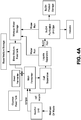
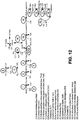
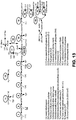
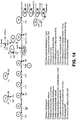
- the Wood-Ljungdahl pathway comprises two branches: the Eastern, or methyl, branch that allows the conversion of CO 2 to methyltetrahydrofolate (Me-THF) and the Western, or carbonyl, branch that allows the conversion of methyl-THF, CO, and Coenzyme-A into acetyl-CoA (see Figures 1 and 2 ).
- the invention provides a non-naturally occurring microorganism expressing genes that catalyze both branches of the Wood-Ljungdahl pathway. Such an organism is capable of converting gasses comprising CO, CO2, and/or H2 into acetyl-CoA, cell mass, and products.
- the invention additionally provides a non-naturally occurring microorganism expressing genes encoding enzymes that catalyze the carbonyl-branch of the Wood-Ljungdahl pathway in conjunction with a MtaABC-type methyltransferase system.
- a non-naturally occurring microorganism expressing genes encoding enzymes that catalyze the carbonyl-branch of the Wood-Ljungdahl pathway in conjunction with a MtaABC-type methyltransferase system.
- Such an organism is capable of converting methanol, a relatively inexpensive organic feedstock that can be derived from synthesis gas, and gases comprising CO, CO 2 , and/or H 2 into acetyl-CoA, cell mass, and products.
- Synthesis gas also known as syngas or producer gas
- syngas is the major product of gasification of coal and of carbonaceous materials such as biomass materials, including agricultural crops and residues.
- Syngas is a mixture primarily of H 2 and CO and can be obtained from the gasification of any organic feedstock, including but not limited to coal, coal oil, natural gas, biomass, and waste organic matter. Gasification is generally carried out under a high fuel to oxygen ratio. Although largely H 2 and CO, syngas can also include CO 2 and other gases in smaller quantities.
- synthesis gas provides a cost effective source of gaseous carbon such as CO and, additionally, CO 2 .
- gaseous carbon sources such as syngas comprising CO and/or CO 2 can be utilized by non-naturally occurring microorganisms of the invention to produce a desired product.
- syngas any source of gaseous carbon comprising CO and/or CO 2 can be utilized by the non-naturally occurring microorganisms of the invention.
- the invention relates to non-naturally occurring microorganisms that are capable of utilizing CO and/or CO 2 as a carbon source.
- the Wood-Ljungdahl pathway catalyzes the conversion of CO and H 2 to acetyl-CoA and other products such as acetate.
- Organisms capable of utilizing CO and syngas also generally have the capability of utilizing CO 2 and CO 2 /H 2 mixtures through the same basic set of enzymes and transformations encompassed by the Wood-Ljungdahl pathway.
- H 2 -dependent conversion of CO 2 to acetate by microorganisms was recognized long before it was revealed that CO also could be used by the same organisms and that the same pathways were involved.
- non-naturally occurring microorganisms possessing the Wood-Ljungdahl pathway can utilize CO 2 and H 2 mixtures as well for the production of acetyl-CoA and other desired products.
- the Wood-Ljungdahl pathway is well known in the art and consists of 12 reactions which can be separated into two branches: (1) methyl branch and (2) carbonyl branch.
- the methyl branch converts syngas to methyl-tetrahydrofolate (methyl-THF) whereas the carbonyl branch converts methyl-THF to acetyl-CoA.
- the reactions in the methyl branch are catalyzed in order by the following enzymes or proteins: ferredoxin oxidoreductase, formate dehydrogenase, formyltetrahydrofolate synthetase, methenyltetrahydrofolate cyclodehydratase, methylenetetrahydrofolate dehydrogenase and methylenetetrahydrofolate reductase.
- the reactions in the carbonyl branch are catalyzed in order by the following enzymes or proteins: methyltetrahydrofolate:corrinoid protein methyltransferase (for example, AcsE), corrinoid iron-sulfur protein, nickel-protein assembly protein (for example, AcsF), ferredoxin, acetyl-CoA synthase, carbon monoxide dehydrogenase and nickel-protein assembly protein (for example, CooC).
- methyltetrahydrofolate corrinoid protein methyltransferase
- corrinoid iron-sulfur protein for example, corrinoid iron-sulfur protein
- nickel-protein assembly protein for example, AcsF
- ferredoxin ferredoxin
- acetyl-CoA synthase carbon monoxide dehydrogenase
- nickel-protein assembly protein for example, CooC
- the non-naturally occurring microorganisms of the invention can use syngas or other gaseous carbon sources providing CO and/or CO 2 to produce a desired product.
- additional sources include, but are not limited to, production of CO 2 as a byproduct in ammonia and hydrogen plants, where methane is converted to CO 2 ; combustion of wood and fossil fuels; production of CO 2 as a byproduct of fermentation of sugar in the brewing of beer, whisky and other alcoholic beverages, or other fermentative processes; thermal decomposition of limestone, CaCO 3 , in the manufacture of lime, CaO; production of CO 2 as byproduct of sodium phosphate manufacture; and directly from natural carbon dioxide springs, where it is produced by the action of acidified water on limestone or dolomite.
- non-naturally occurring when used in reference to a microbial organism or microorganism of the invention is intended to mean that the microbial organism has at least one genetic alteration not normally found in a naturally occurring strain of the referenced species, including wild-type strains of the referenced species.
- Genetic alterations include, for example, modifications introducing expressible nucleic acids encoding metabolic polypeptides, other nucleic acid additions, nucleic acid deletions and/or other functional disruption of the microbial genetic material. Such modifications include, for example, coding regions and functional fragments thereof, for heterologous, homologous or both heterologous and homologous polypeptides for the referenced species. Additional modifications include, for example, non-coding regulatory regions in which the modifications alter expression of a gene or operon.
- Exemplary metabolic polypeptides include enzymes or proteins within an acetyl-CoA biosynthetic pathway.
- a metabolic modification refers to a biochemical reaction that is altered from its naturally occurring state. Therefore, non-naturally occurring microorganisms can have genetic modifications to nucleic acids encoding metabolic polypeptides or, functional fragments thereof. Exemplary metabolic modifications are disclosed herein.
- isolated when used in reference to a microbial organism or microogranism is intended to mean an organism that is substantially free of at least one component as the referenced microbial organism is found in nature.
- the term includes a microbial organism that is removed from some or all components as it is found in its natural environment.
- the term also includes a microbial organism that is removed from some or all components as the microbial organism is found in non-naturally occurring environments. Therefore, an isolated microbial organism is partly or completely separated from other substances as it is found in nature or as it is grown, stored or subsisted in non-naturally occurring environments.
- Specific examples of isolated microbial organisms include partially pure microbes, substantially pure microbes and microbes cultured in a medium that is non-naturally occurring.
- microbial As used herein, the terms "microbial,” “microbial organism” or “microorganism” is intended to mean any organism that exists as a microscopic cell that is included within the domains of archaea, bacteria or eukarya. Therefore, the term is intended to encompass prokaryotic or eukaryotic cells or organisms having a microscopic size and includes bacteria, archaea and eubacteria of all species as well as eukaryotic microorganisms such as yeast and fungi. The term also includes cell cultures of any species that can be cultured for the production of a biochemical.
- CoA or "coenzyme A” is intended to mean an organic cofactor or prosthetic group (nonprotein portion of an enzyme) whose presence is required for the activity of many enzymes (the apoenzyme) to form an active enzyme system.
- Coenzyme A functions in certain condensing enzymes, acts in acetyl or other acyl group transfer and in fatty acid synthesis and oxidation, pyruvate oxidation and in other acetylation.
- substantially anaerobic when used in reference to a culture or growth condition is intended to mean that the amount of oxygen is less than about 10% of saturation for dissolved oxygen in liquid media.
- the term also is intended to include sealed chambers of liquid or solid medium maintained with an atmosphere of less than about 1% oxygen.
- Exogenous as it is used herein is intended to mean that the referenced molecule or the referenced activity is introduced into the host microbial organism.
- the molecule can be introduced, for example, by introduction of an encoding nucleic acid into the host genetic material such as by integration into a host chromosome or as non-chromosomal genetic material such as a plasmid. Therefore, the term as it is used in reference to expression of an encoding nucleic acid refers to introduction of the encoding nucleic acid in an expressible form into the microbial organism. When used in reference to a biosynthetic activity, the term refers to an activity that is introduced into the host reference organism.
- the source can be, for example, a homologous or heterologous encoding nucleic acid that expresses the referenced activity following introduction into the host microbial organism. Therefore, the term “endogenous” refers to a referenced molecule or activity that is present in the host. Similarly, the term when used in reference to expression of an encoding nucleic acid refers to expression of an encoding nucleic acid contained within the microbial organism. The term “heterologous” refers to a molecule or activity derived from a source other than the referenced species whereas “homologous” refers to a molecule or activity derived from the host microbial organism. Accordingly, exogenous expression of an encoding nucleic acid of the invention can utilize either or both a heterologous or homologous encoding nucleic acid.
- the non-naturally occurring microbal organisms of the invention can contain stable genetic alterations, which refers to microorganisms that can be cultured for greater than five generations without loss of the alteration.
- stable genetic alterations include modifications that persist greater than 10 generations, particularly stable modifications will persist more than about 25 generations, and more particularly, stable genetic modifications will be greater than 50 generations, including indefinitely.
- E. coli metabolic modifications are described with reference to a suitable host organism such as E. coli and their corresponding metabolic reactions or a suitable source organism for desired genetic material such as genes for a desired metabolic pathway.
- a suitable host organism such as E. coli and their corresponding metabolic reactions or a suitable source organism for desired genetic material such as genes for a desired metabolic pathway.
- desired genetic material such as genes for a desired metabolic pathway.
- the E. coli metabolic alterations exemplified herein can readily be applied to other species by incorporating the same or analogous encoding nucleic acid from species other than the referenced species.
- Such genetic alterations include, for example, genetic alterations of species homologs, in general, and in particular, orthologs, paralogs or nonorthologous gene displacements.
- ortholog is a gene or genes that are related by vertical descent and are responsible for substantially the same or identical functions in different organisms.
- mouse epoxide hydrolase and human epoxide hydrolase can be considered orthologs for the biological function of hydrolysis of epoxides.
- Genes are related by vertical descent when, for example, they share sequence similarity of sufficient amount to indicate they are homologous, or related by evolution from a common ancestor.
- Genes can also be considered orthologs if they share three-dimensional structure but not necessarily sequence similarity, of a sufficient amount to indicate that they have evolved from a common ancestor to the extent that the primary sequence similarity is not identifiable.
- Genes that are orthologous can encode proteins with sequence similarity of about 25% to 100% amino acid sequence identity.
- Genes encoding proteins sharing an amino acid similarity less that 25% can also be considered to have arisen by vertical descent if their three-dimensional structure also shows similarities.
- Members of the serine protease family of enzymes, including tissue plasminogen activator and elastase, are considered to have arisen by vertical descent from a common ancestor.
- Orthologs include genes or their encoded gene products that through, for example, evolution, have diverged in structure or overall activity. For example, where one species encodes a gene product exhibiting two functions and where such functions have been separated into distinct genes in a second species, the three genes and their corresponding products are considered to be orthologs. For the production of a biochemical product, those skilled in the art will understand that the orthologous gene harboring the metabolic activity to be introduced or disrupted is to be chosen for construction of the non-naturally occurring microorganism.
- An example of orthologs exhibiting separable activities is where distinct activities have been separated into distinct gene products between two or more species or within a single species.
- a specific example is the separation of elastase proteolysis and plasminogen proteolysis, two types of serine protease activity, into distinct molecules as plasminogen activator and elastase.
- a second example is the separation of mycoplasma 5'-3' exonuclease and Drosophila DNA polymerase III activity.
- the DNA polymerase from the first species can be considered an ortholog to either or both of the exonuclease or the polymerase from the second species and vice versa.
- paralogs are homologs related by, for example, duplication followed by evolutionary divergence and have similar or common, but not identical functions.
- Paralogs can originate or derive from, for example, the same species or from a different species.
- microsomal epoxide hydrolase epoxide hydrolase I
- soluble epoxide hydrolase epoxide hydrolase II
- Paralogs are proteins from the same species with significant sequence similarity to each other suggesting that they are homologous, or related through co-evolution from a common ancestor.
- Groups of paralogous protein families include HipA homologs, luciferase genes, peptidases, and others.
- a nonorthologous gene displacement is a nonorthologous gene from one species that can substitute for a referenced gene function in a different species. Substitution includes, for example, being able to perform substantially the same or a similar function in the species of origin compared to the referenced function in the different species.
- a nonorthologous gene displacement will be identifiable as structurally related to a known gene encoding the referenced function, less structurally related but functionally similar genes and their corresponding gene products nevertheless will still fall within the meaning of the term as it is used herein.
- Functional similarity requires, for example, at least some structural similarity in the active site or binding region of a nonorthologous gene product compared to a gene encoding the function sought to be substituted. Therefore, a nonorthologous gene includes, for example, a paralog or an unrelated gene.
- Orthologs, paralogs and nonorthologous gene displacements can be determined by methods well known to those skilled in the art. For example, inspection of nucleic acid or amino acid sequences for two polypeptides will reveal sequence identity and similarities between the compared sequences. Based on such similarities, one skilled in the art can determine if the similarity is sufficiently high to indicate the proteins are related through evolution from a common ancestor. Algorithms well known to those skilled in the art, such as Align, BLAST, Clustal W and others compare and determine a raw sequence similarity or identity, and also determine the presence or significance of gaps in the sequence which can be assigned a weight or score. Such algorithms also are known in the art and are similarly applicable for determining nucleotide sequence similarity or identity.
- Parameters for sufficient similarity to determine relatedness are computed based on well known methods for calculating statistical similarity, or the chance of finding a similar match in a random polypeptide, and the significance of the match determined.
- a computer comparison of two or more sequences can, if desired, also be optimized visually by those skilled in the art.
- Related gene products or proteins can be expected to have a high similarity, for example, 25% to 100% sequence identity. Proteins that are unrelated can have an identity which is essentially the same as would be expected to occur by chance, if a database of sufficient size is scanned (about 5%). Sequences between 5% and 24% may or may not represent sufficient homology to conclude that the compared sequences are related. Additional statistical analysis to determine the significance of such matches given the size of the data set can be carried out to determine the relevance of these sequences.
- Exemplary parameters for determining relatedness of two or more sequences using the BLAST algorithm can be as set forth below.
- amino acid sequence alignments can be performed using BLASTP version 2.0.8 (Jan-05-1999) and the following parameters: Matrix: 0 BLOSUM62; gap open: 11; gap extension: 1; x_dropoff: 50; expect: 10.0; wordsize: 3; filter: on.
- Nucleic acid sequence alignments can be performed using BLASTN version 2.0.6 (Sept-16-1998) and the following parameters: Match: 1; mismatch: -2; gap open: 5; gap extension: 2; x_dropoff: 50; expect: 10.0; wordsize: 11; filter: off.
- Those skilled in the art will know what modifications can be made to the above parameters to either increase or decrease the stringency of the comparison, for example, and determine the relatedness of two or more sequences.
- the invention provides a non-naturally occurring microorganism comprising one or more exogenous proteins conferring to the microorganism a pathway to convert CO and/or CO 2 and H 2 to acetyl-coenzyme A (acetyl-CoA), wherein the microorganism lacks the ability to convert CO and/or CO 2 and H 2 to acetyl-CoA in the absence of the one or more exogenous proteins.
- acetyl-CoA acetyl-coenzyme A
- the one or more exogenous proteins or enzymes can be selected from cobalamide corrinoid/iron-sulfur protein, methyltransferase, carbon monoxide dehydrogenase, acetyl-CoA synthase, acetyl-CoA synthase disulfide reductase and hydrogenase (see Figure 1 and Examples VII and VIII).
- the microorganism can also express two or more, three or more, and the like, including up to all the proteins and enzymes that confer a pathway to convert CO and/or CO 2 and H 2 to acetyl-CoA, for example, cobalamide corrinoid/iron-sulfur protein, methyltransferase, carbon monoxide dehydrogenase, acetyl-CoA synthase, acetyl-CoA synthase disulfide reductase and hydrogenase.
- cobalamide corrinoid/iron-sulfur protein for example, cobalamide corrinoid/iron-sulfur protein, methyltransferase, carbon monoxide dehydrogenase, acetyl-CoA synthase, acetyl-CoA synthase disulfide reductase and hydrogenase.
- an embodiment of the invention relates to generating a non-naturally occurring microorganism that can utilize CO and/or CO 2 as a carbon source to produce a desired product.
- the proteins and enzymes of the carbonyl and/or methyl branch of the Wood-Ljungdahl pathway ( Figures 1 and 2 ) are introduced into a microorganism that does not naturally contain the Wood-Ljungdahl enzymes.
- a particularly useful organism for genetically engineering a Wood-Ljungdahl pathway is E. coli, which is well characterized in terms of available genetic manipulation tools as well as fermentation conditions (see Example VIII).
- the invention provides a non-naturally occurring microorganism comprising one or more exogenous proteins conferring to the microorganism a pathway to convert synthesis gas, also known as syngas, or other gaseous carbon source, comprising CO and H 2 to acetyl-coenzyme A (acetyl-CoA), wherein the microorganism lacks the ability to convert CO and H 2 to acetyl-CoA in the absence of the one or more exogenous proteins.
- a synthesis gas or other gas can further comprise CO 2 .
- a non-naturally occurring microorganism of the invention can comprise a pathway that increases the efficiency of converting CO 2 , CO and/or H 2 to acetyl-CoA.
- the invention provides a non-naturally occurring microorganism comprising one or more exogenous proteins conferring to the microorganism a pathway to convert a gaseous carbon source comprising CO 2 and H 2 to acetyl-CoA, wherein the microorganism lacks the ability to convert CO 2 and H 2 to acetyl-CoA in the absence of the one or more exogenous proteins.
- the gas can further comprise CO.
- the exogenous proteins can be selected from cobalamide corrinoid/iron-sulfur protein, methyltransferase, carbon monoxide dehydrogenase, acetyl-CoA synthase, acetyl-CoA synthase disulfide reductase and hydrogenase.
- a non-naturally occurring microorganism comprising one or more exogenous proteins conferring to the microorganism a pathway to convert CO and/or CO 2 and H 2 to methyl-tetrahydrofolate (methyl-THF), wherein the microorganism lacks the ability to convert CO and/or CO 2 and H 2 to methyl-THF in the absence of the one or more exogenous proteins.
- methyl-THF methyl-tetrahydrofolate
- the one or more exogenous proteins can be selected from ferredoxin oxidoreductase, formate dehydrogenase, formyltetrahydrofolate synthetase, methenyltetrahydrofolate cyclodehydratase, methylenetetrahydrofolate dehydrogenase and methylenetetrahydrofolate reductase (see Figure 1 and Example VIII).
- the microorganism can also express two or more, three or more, and the like, including up to all the proteins and enzymes that confer a pathway to convert CO and/or CO 2 and H 2 to methyl-THF, including up to all of ferredoxin oxidoreductase, formate dehydrogenase, formyltetrahydrofolate synthetase, methenyltetrahydrofolate cyclodehydratase, methylenetetrahydrofolate dehydrogenase and methylenetetrahydrofolate reductase.
- a non-naturally occurring microorganism comprising one or more exogenous proteins conferring to the microorganism a pathway to convert synthesis gas or other gaseous carbon source comprising CO and H 2 to methyl-THF, wherein the microorganism lacks the ability to convert CO and H 2 to methyl-THF in the absence of the one or more exogenous proteins.
- the synthesis gas can further comprise CO 2 .
- the invention provides a non-naturally occurring microorganism comprising one or more exogenous proteins conferring to the microorganism a pathway to convert a gaseous carbon source comprising CO 2 and H 2 to methyl-THF, wherein the microorganism lacks the ability to convert CO 2 and H 2 to methyl-THF in the absence of the one or more exogenous proteins.
- the gaseous carbon source can further comprise CO.
- the exogenous proteins can be selected from ferredoxin oxidoreductase, formate dehydrogenase, formyltetrahydrofolate synthetase, methenyltetrahydrofolate cyclodehydratase, methylenetetrahydrofolate dehydrogenase and methylenetetrahydrofolate reductase.
- the invention relates to non-naturally occurring microorganisms and methods of utilizing such microorganisms to produce a desired product such as acetyl-CoA from a synthesis gas or other gas comprising CO and/or CO 2 and particularly generating microorganisms capable of utilizing syngas or other other gas comprising CO and/or CO 2 that were not previously capable of utilizing syngas or another gas comprising CO and/or CO 2 as a carbon source (see Example VIII).
- a microorganism can be engineered to contain both the methyl and carbonyl branches of the Wood-Ljungdahl pathway ( Figures 1 , 2 and 6 ).
- desired products can also be produced by engineering the microorganisms to produce a desired product by expressing proteins or enzymes capable of producing a desired product, for example, producing a product having acetyl-CoA or methyl-THF as a precursor (see Figure 3 ).
- such microorganisms can be generated by expressing proteins or genes that confer a desired metabolic pathway or by determining deletions that can drive metabolism towards a desired product.
- the invention provides a non-naturally occurring microorganism comprising a genetic modification conferring to the microorganism an increased efficiency of producing acetyl-CoA from CO and/or CO 2 and H 2 relative to the microorganism in the absence of the genetic modification, wherein the microorganism comprises a pathway to convert CO and/or CO 2 and H 2 to acetyl-CoA.
- the genetic modification can comprise expression of one or more nucleic acid molecules encoding one or more exogenous proteins, whereby expression of the one or more exogenous proteins increases the efficiency of producing acetyl-CoA from CO and/or CO 2 and H 2 .
- the one or more exogenous proteins can be selected from cobalamide corrinoid/iron-sulfur protein, methyltransferase, carbon monoxide dehydrogenase, acetyl-CoA synthase, acetyl-CoA synthase disulfide reductase and hydrogenase, including up to all such proteins, as disclosed herein.
- Such a non-naturally occurring microorganism can additionally have a genetic modification comprising one or more gene disruptions, whereby the one or more gene disruptions increases the efficiency of producing acetyl-CoA from CO and/or CO 2 and H 2 .
- the invention additionally relates to improving the efficiency of production of a desired product in a microorganism already having the ability to produce the desired product from syngas or other gases comprising CO and/or CO 2 .
- the invention also relates to a non-naturally occurring microorganism comprising one or more proteins conferring utilization of syngas or other gas comprising CO and/or CO 2 as a carbon source to the microorganism, wherein the microorganism lacks the ability to utilize the carbon source in the absence of the one or more proteins conferring utilization of CO and/or CO 2 .
- the invention provides a non-naturally occurring microorganism comprising one or more proteins conferring utilization of carbon monoxide and/or carbon dioxide as a carbon source to the microorganism, wherein the microorganism lacks the ability to utilize the carbon source in the absence of the one or more proteins.
- the invention provides a non-naturally occurring microorganism, comprising one or more proteins conferring utilization of CO and/or CO 2 , in combination with H 2 , as a carbon source to the microorganism, wherein the microorganism lacks the ability to utilize the carbon source in the absence of the one or more proteins.
- the invention additionally provides a non-naturally occurring microorganism comprising one or more proteins conferring utilization of CO, in combination with H 2 and CO 2 , as a carbon source to the microorganism, wherein the microorganism lacks the ability to utilize the carbon source in the absence of the one or more proteins.
- Such a microorganism can be used to produce a desired product from the carbon source, for example, methyl-tetrahydrofolate or acetyl-coenzyme A (acetyl-CoA) or other desired products, as disclosed herein, including products synthesized from acetyl-CoA or methyl-THF.
- a non-naturally occurring microorganism can express one or more exogenous proteins that increase production of the product, as disclosed herein (see Figures 1 and 2 ).
- the invention further provides a non-naturally occurring microorganism comprising one or more exogenous proteins conferring utilization of syngas or other gaseous carbon source to the microorganism, wherein the microorganism has the ability to utilize the carbon source in the absence of the one or more exogenous proteins, whereby expression of the one or more exogenous proteins increases the efficiency of utilization of the carbon source.
- the invention provides a non-naturally occurring microorganism comprising one or more exogenous proteins conferring utilization of carbon monoxide as a carbon source to the microorganism, wherein the microorganism has the ability to utilize the carbon source in the absence of the one or more exogenous proteins, whereby expression of the one or more exogenous proteins increases the efficiency of utilization of the carbon source.
- the invention provides a non-naturally occurring microorganism comprising one or more exogenous proteins conferring utilization of CO and/or CO 2 , in combination with H 2 , as a carbon source to the microorganism, wherein the microorganism has the ability to utilize the carbon source in the absence of the one or more exogenous proteins, whereby expression of the one or more exogenous proteins increases the efficiency of utilization of the carbon source.
- a non-naturally occurring microorganism comprising one or more exogenous proteins conferring utilization of CO, in combination with H 2 and CO 2 , as a carbon source to the microorganism, wherein the microorganism has the ability to utilize the carbon source in the absence of the one or more exogenous proteins, whereby expression of the one or more exogenous proteins increases the efficiency of utilization of the carbon source.
- a microorganism can be used to produce a desired product such as acetyl-CoA, methyl-THF or other desired products from the carbon source, as disclosed herein.
- the invention also provides a non-naturally occurring microbial organism capable of producing acetyl-CoA utilizing methanol and syngas.
- the microbial organism is capable of utilizing methanol and CO, CO 2 and/or H 2 , for example, CO 2 , CO 2 and H 2 , CO, CO and H 2 , CO 2 and CO, or CO 2 , CO and H 2 , to produce acetyl-CoA. Since acetyl-CoA is produced in most microbial organisms, it is understood that a non-naturally occurring microbial organism of the invention that is capable of producing acetyl-CoA is one that has been engineered to include a desired pathway.
- the microbial organism is engineered to utilize methanol and syngas to produce acetyl-CoA (see Examples).
- the invention provides a non-naturally occurring microbial organism having an acetyl-coenzyme A (acetyl-CoA) pathway comprising at least one exogenous nucleic acid encoding an acetyl-CoA pathway enzyme or protein expressed in a sufficient amount to produce acetyl-CoA, the acetyl-CoA pathway comprising methanol-methyltransferase and acetyl-CoA synthase/carbon monoxide dehydrogenase.
- acetyl-CoA acetyl-CoA pathway comprising at least one exogenous nucleic acid encoding an acetyl-CoA pathway enzyme or protein expressed in a sufficient amount to produce acetyl-CoA
- the acetyl-CoA pathway comprising methanol-methyltransferase and acetyl
- the acetyl-CoA pathway can confer the ability to convert CO 2 , CO and/or H 2 , that is, a combination thereof, to acetyl Co-A.
- the methanol-methyltransferase activity of such an acetyl-CoA pathway can comprise, for example, an enzyme or protein selected from methanol methyltransferase, corrinoid protein (such as MtaC) and methyltetrahydrofolate:corrinoid protein methyltransferase (such as MtaA)(see Examples II and III).
- the acetyl-CoA synthase/carbon monoxide dehydrogenase activity of such an acetyl-CoA pathway can comprise, for example, an enzyme or protein selected from methyltetrahydrofolate:corrinoid protein methyltransferase (such as AcsE), corrinoid iron-sulfur protein (such as AcsD), nickel-protein assembly protein (such as AcsF), ferredoxin, acetyl-CoA synthase, carbon monoxide dehydrogenase and nickel-protein assembly protein (such as CooC)(see Examples II and III).
- nucleic acids encoding an acetyl-CoA pathway can be expressed in a non-naturally occurring microbial organism of the invention.
- the non-naturally occurring microbial organism can comprise ten exogenous nucleic acids that encode a methanol-methyltransferase comprising methanol methyltransferase, corrinoid protein (such as MtaC) and methyltetrahydrofolate:corrinoid protein methyltransferase (such as MtaA) and an acetyl-CoA synthase/carbon monoxide dehydrogenase comprising methyltetrahydrofolate:corrinoid protein methyltransferase (such as AcsE), corrinoid iron-sulfur protein (such as AcsD), nickel-protein assembly protein (such as CooC), ferredoxin, acetyl-CoA synthase, carbon monoxide dehydrogenase and nickel-protein assembly protein (such as AcsF).
- a methanol-methyltransferase comprising methanol methyltransferase
- the non-naturally occurring microbial organism can further comprise pyruvate ferredoxin oxidoreductase.
- the pyruvate ferredoxin oxidoreductase can be encoded by an exogenous nucleic acid.
- the non-naturally occurring microbial organism can further comprise hydrogenase, which can be encoded by an endogenous or exogenous nucleic acid, as disclosed herein (see Examples II and III).
- a non-naturally occurring microbial organism can contain, for example, at least one exogenous nucleic acid that is a heterologous nucleic acid.
- the non-naturally occurring microbial organism can be grown, for example, in a substantially anaerobic culture medium.
- the invention is described herein with general reference to the metabolic reaction, reactant or product thereof, or with specific reference to one or more nucleic acids or genes encoding an enzyme associated with or catalyzing, or a protein associated with, the referenced metabolic reaction, reactant or product. Unless otherwise expressly stated herein, those skilled in the art will understand that reference to a reaction also constitutes reference to the reactants and products of the reaction. Similarly, unless otherwise expressly stated herein, reference to a reactant or product also references the reaction, and reference to any of these metabolic constituents also references the gene or genes encoding the enzymes that catalyze or proteins involved in the referenced reaction, reactant or product.
- reference herein to a gene or encoding nucleic acid also constitutes a reference to the corresponding encoded enzyme and the reaction it catalyzes or a protein associated with the reaction as well as the reactants and products of the reaction.
- the non-naturally occurring microbial organisms of the invention can be produced by introducing expressible nucleic acids encoding one or more of the enzymes or proteins participating in one or more acetyl-CoA biosynthetic pathways.
- nucleic acids for some or all of a particular acetyl-CoA biosynthetic pathway can be expressed. For example, if a chosen host is deficient in one or more enzymes or proteins for a desired biosynthetic pathway, then expressible nucleic acids for the deficient enzyme(s) or protein(s) are introduced into the host for subsequent exogenous expression.
- a non-naturally occurring microbial organism of the invention can be produced by introducing exogenous enzyme or protein activities to obtain a desired biosynthetic pathway or a desired biosynthetic pathway can be obtained by introducing one or more exogenous enzyme or protein activities that, together with one or more endogenous enzymes or proteins, produces a desired product such as acetyl-CoA.
- the non-naturally occurring microbial organisms of the invention will include at least one exogenously expressed acetyl-CoA pathway-encoding nucleic acid and up to all encoding nucleic acids for one or more acetyl-CoA biosynthetic pathways.
- acetyl-CoA biosynthesis can be established in a host deficient in a pathway enzyme or protein through exogenous expression of the corresponding encoding nucleic acid.
- exogenous expression of all enzyme or proteins in the pathway can be included, although it is understood that all enzymes or proteins of a pathway can be expressed even if the host contains at least one of the pathway enzymes or proteins.
- exogenous expression of all enzymes or proteins in a pathway for production of acetyl-CoA can be included, such as the methanol-methyltransferase, which can include methanol methyltransferase, corrinoid protein (such as MtaC) and methyltetrahydrofolate:corrinoid protein methyltransferase (such as MtaA), and the acetyl-CoA synthase/carbon monoxide dehydrogenase, which can include methyltetrahydrofolate:corrinoid protein methyltransferase (such as AcsE), corrinoid iron-sulfur protein (such as AcsD), nickel-protein assembly protein (such as AcsF), ferredoxin, acetyl-CoA synthase, carbon monoxide dehydrogenase and nickel-protein assembly protein (such as CooC).
- the methanol-methyltransferase which can include methanol methyl
- one or more proteins in the biosynthetic pathway can be selected from cobalamide corrinoid/iron-sulfur protein, methyltransferase, carbon monoxide dehydrogenase, acetyl-CoA synthase, acetyl-CoA synthase disulfide reductase and hydrogenase (see Figure 2 and Examples VII and VIII).
- one or more proteins in the biosynthetic pathway can be selected from ferredoxin oxidoreductase, formate dehydrogenase, formyltetrahydrofolate synthetase, methenyltetrahydrofolate cyclodehydratase, methylenetetrahydrofolate dehydrogenase and methylenetetrahydrofolate reductase (see Figure 1 and Example VIII).
- genes that encode the enzymes required to produce both acetyl-CoA and methyl-THF can be introduced into a microorganism (see Figure 3 and Example VIII).
- a non-naturally occurring microbial organism of the invention can have one, two, three, four, five, six, seven, eight, nine or up to all nucleic acids encoding the enzymes or proteins constituting a acetyl-CoA biosynthetic pathway disclosed herein.
- the non-naturally occurring microbial organisms also can include other genetic modifications that facilitate or optimize acetyl-CoA biosynthesis or that confer other useful functions onto the host microbial organism.
- One such other functionality can include, for example, augmentation of the synthesis of one or more of the acetyl-CoA pathway precursors such as methanol.
- a host microbial organism is selected such that it produces the precursor of an acetyl-CoA pathway, either as a naturally produced molecule or as an engineered product that either provides de novo production of a desired precursor or increased production of a precursor naturally produced by the host microbial organism.
- a host organism can be engineered to increase production of a precursor, as disclosed herein.
- a microbial organism that has been engineered to produce a desired precursor can be used as a host organism and further engineered to express enzymes or proteins of an acetyl-CoA pathway.
- a non-naturally occurring microbial organism of the invention is generated from a host that contains the enzymatic capability to synthesize acetyl-CoA.
- it can be useful to increase the synthesis or accumulation of an acetyl-CoA pathway product to, for example, drive acetyl-CoA pathway reactions toward acetyl-CoA production.
- Increased synthesis or accumulation can be accomplished by, for example, overexpression of nucleic acids encoding one or more of the above-described acetyl-CoA pathway enzymes or proteins.
- Over expression the enzyme or enzymes and/or protein or proteins of the acetyl-CoA pathway can occur, for example, through exogenous expression of the heterologous gene or genes.
- naturally occurring organisms can be readily generated to be non-naturally occurring microbial organisms of the invention, for example, producing acetyl-CoA, through overexpression of one, two, three, four, five, six, seven, eight, nine, or ten, that is, up to all nucleic acids encoding acetyl-CoA biosynthetic pathway enzymes or proteins.
- a non-naturally occurring organism can be generated by mutagenesis of an endogenous gene that results in an increase in activity of an enzyme in the acetyl-CoA biosynthetic pathway.
- exogenous expression of the encoding nucleic acids is employed.
- Exogenous expression confers the ability to custom tailor the expression and/or regulatory elements to the host and application to achieve a desired expression level that is controlled by the user.
- endogenous expression can be utilized such as by removing a negative regulatory effector or induction of the gene's promoter when linked to an inducible promoter or other regulatory element.
- an endogenous gene having a naturally occurring inducible promoter can be up-regulated by providing the appropriate inducing agent, or the regulatory region of an endogenous gene can be engineered to incorporate an inducible regulatory element, thereby allowing the regulation of increased expression of an endogenous gene at a desired time.
- an inducible promoter can be included as a regulatory element for an exogenous gene introduced into a non-naturally occurring microbial organism.
- any of the one or more exogenous nucleic acids can be introduced into a microbial organism to produce a non-naturally occurring microbial organism of the invention.
- the nucleic acids can be introduced so as to confer, for example, an acetyl-CoA biosynthetic pathway onto the microbial organism.
- encoding nucleic acids can be introduced to produce an intermediate microbial organism having the biosynthetic capability to catalyze some of the required reactions to confer acetyl-CoA biosynthetic capability.
- a non-naturally occurring microbial organism having a acetyl-CoA biosynthetic pathway can comprise at least two exogenous nucleic acids encoding desired enzymes or proteins, such as the combination of methanol methyltransferase and corrinoid protein; methanol methyltransferase and methyltetrahydrofolate:corrinoid protein methyltransferase; corrinoid protein and corrinoid iron-sulfur protein; nickel-protein assembly protein and ferredoxin, and the like.
- desired enzymes or proteins such as the combination of methanol methyltransferase and corrinoid protein; methanol methyltransferase and methyltetrahydrofolate:corrinoid protein methyltransferase; corrinoid protein and corrinoid iron-sulfur protein; nickel-protein assembly protein and ferredoxin, and the like.
- any combination of three or more enzymes or proteins of a biosynthetic pathway can be included in a non-naturally occurring microbial organism of the invention, for example, methanol methyltransferase, corrinoid iron-sulfur protein (such as AcsD) and acetyl-CoA synthase; corrinoid protein (such as MtaC), carbon monoxide dehydrogenase and nickel-protein assembly protein (such as CooC or AcsF); methyltetrahydrofolate:corrinoid protein methyltransferase (such as AcsE), ferredoxin and acetyl-CoA synthase, and so forth, as desired, so long as the combination of enzymes and/or proteins of the desired biosynthetic pathway results in production of the corresponding desired product.
- corrinoid protein such as MtaC
- carbon monoxide dehydrogenase and nickel-protein assembly protein
- CooC or AcsF nickel-
- any combination of four, five, six, seven, eight, nine or more enzymes or proteins of a biosynthetic pathway as disclosed herein can be included in a non-naturally occurring microbial organism of the invention, as desired, so long as the combination of enzymes and/or proteins of the desired biosynthetic pathway results in production of the corresponding desired product.
- the non-naturally occurring microbial organisms and methods of the invention also can be utilized in various combinations with each other and with other microbial organisms and methods well known in the art to achieve product biosynthesis by other routes.
- one alternative to produce acetyl-CoA other than use of the acetyl-CoA producers is through addition of another microbial organism capable of converting an acetyl-CoA pathway intermediate to acetyl-CoA.
- One such procedure includes, for example, the fermentation of a microbial organism that produces an acetyl-CoA pathway intermediate.
- the acetyl-CoA pathway intermediate can then be used as a substrate for a second microbial organism that converts the acetyl-CoA pathway intermediate to acetyl-CoA.
- the acetyl-CoA pathway intermediate can be added directly to another culture of the second organism or the original culture of the acetyl-CoA pathway intermediate producers can be depleted of these microbial organisms by, for example, cell separation, and then subsequent addition of the second organism to the fermentation broth can be utilized to produce the final product without intermediate purification steps.
- the non-naturally occurring microbial organisms and methods of the invention can be assembled in a wide variety of subpathways to achieve biosynthesis of, for example, acetyl-CoA.
- biosynthetic pathways for a desired product of the invention can be segregated into different microbial organisms, and the different microbial organisms can be co-cultured to produce the final product.
- the product of one microbial organism is the substrate for a second microbial organism until the final product is synthesized.
- the biosynthesis of acetyl-CoA can be accomplished by constructing a microbial organism that contains biosynthetic pathways for conversion of one pathway intermediate to another pathway intermediate or the product.
- acetyl-CoA also can be biosynthetically produced from microbial organisms through co-culture or cofermentation using two organisms in the same vessel, where the first microbial organism produces an acetyl-CoA intermediate and the second microbial organism converts the intermediate to acetyl-CoA.
- acetyl-CoA is a precursor of other desirable products
- a non-naturally occurring microbial organism of the invention can be used as a host organism into which other desired pathways utilizing acetyl-CoA as a precursor or intermediate can be conferred, as desired.
- Sources of encoding nucleic acids for an acetyl-CoA pathway enzyme or protein can include, for example, any species where the encoded gene product is capable of catalyzing the referenced reaction.
- species include both prokaryotic and eukaryotic organisms including, but not limited to, bacteria, including archaea and eubacteria, and eukaryotes, including yeast, plant, insect, animal, and mammal, including human.
- Exemplary species for such sources include, for example, Escherichia coli, Methanosarcina barkeri, Methanosarcina acetivorans, Moorella thermoacetica, Carboxydothermus hydrogenoformans, Rhodospirillum rubrum, Acetobacterium woodii, Butyribacterium methylotrophicum, Clostridium autoethanogenum, Clostridium carboxidivorans, Clostridium ljungdahlii, Eubacterium limosum, Oxobacter pfennigii, Peptostreptococcus productus, Rhodopseudomonas palustris P4, Rubrivivax gelatinosus, Citrobacter sp Y19, Methanosarcina acetivorans C2A, Methanosarcina barkeri, Desulfosporosinus orientis, Desulfovibrio desulfuricans, Desulfovibrio vulgaris, Moorella thermo
- thermosyntrophicum Syntrophobacter fumaroxidans, Clostridium acidurici, Desulfovibrio africanus, and the like, as well as other exemplary species disclosed herein or available as source organisms for corresponding genes.
- complete genome sequence available for now more than 550 species (with more than half of these available on public databases such as the NCBI), including 395 microorganism genomes and a variety of yeast, fungi, plant, and mammalian genomes
- the identification of genes encoding the requisite acetyl-CoA biosynthetic activity for one or more genes in related or distant species including for example, homologues, orthologs, paralogs and nonorthologous gene displacements of known genes, and the interchange of genetic alterations between organisms is routine and well known in the art.
- acetyl-CoA biosynthesis can be conferred onto the host species by, for example, exogenous expression of a paralog or paralogs from the unrelated species that catalyzes a similar, yet non-identical metabolic reaction to replace the referenced reaction. Because certain differences among metabolic networks exist between different organisms, those skilled in the art will understand that the actual gene usage between different organisms may differ.
- teachings and methods of the invention can be applied to all microbial organisms using the cognate metabolic alterations to those exemplified herein to construct a microbial organism in a species of interest that will synthesize acetyl-CoA.
- Host microbial organisms can be selected from, and the non-naturally occurring microbial organisms generated in, for example, bacteria, yeast, fungus or any of a variety of other microorganisms applicable to fermentation processes.
- Exemplary bacteria include species selected from Escherichia coli, Klebsiella oxytoca, Anaerobiospirillum succiniciproducens, Actinobacillus succinogenes, Mannheimia succiniciproducens, Rhizobium etli, Bacillus subtilis, Corynebacterium glutamicum, Gluconobacter oxydans, Zymomonas mobilis, Lactococcus lactis, Lactobacillus plantarum, Streptomyces coelicolor, Clostridium acetobutylicum, Pseudomonas fluorescens, and Pseudomonas putida.
- Exemplary yeasts or fungi include species selected from Saccharomyces cerevisiae, Schizosaccharomyces pombe, Kluyveromyces lactis, Kluyveromyces marxianus, Aspergillus terreus, Aspergillus niger and Pichia pastoris.
- E. coli is a particularly useful host organisms since it is a well characterized microbial organism suitable for genetic engineering.
- Other particularly useful host organisms include yeast such as Saccharomyces cerevisiae.
- Exemplary acetogens suitable as host organisms include, but are not limited to, Rhodospirillum rubrum, Moorella thermoacetica and Desulfitobacterium hafniense (see Examples).
- Methods for constructing and testing the expression levels of a non-naturally occurring acetyl-CoA-producing host can be performed, for example, by recombinant and detection methods well known in the art. Such methods can be found described in, for example, Sambrook et al., Molecular Cloning: A Laboratory Manual, Third Ed., Cold Spring Harbor Laboratory, New York (2001 ); and Ausubel et al., Current Protocols in Molecular Biology, John Wiley and Sons, Baltimore, MD (1999 ).
- Exogenous nucleic acid sequences involved in a pathway for production of acetyl-CoA can be introduced stably or transiently into a host cell using techniques well known in the art including, but not limited to, conjugation, electroporation, chemical transformation, transduction, transfection, and ultrasound transformation.
- some nucleic acid sequences in the genes or cDNAs of eukaryotic nucleic acids can encode targeting signals such as an N-terminal mitochondrial or other targeting signal, which can be removed before transformation into prokaryotic host cells, if desired. For example, removal of a mitochondrial leader sequence led to increased expression in E. coli ( Hoffmeister et al., J. Biol.
- genes can be expressed in the cytosol without the addition of leader sequence, or can be targeted to mitochondrion or other organelles, or targeted for secretion, by the addition of a suitable targeting sequence such as a mitochondrial targeting or secretion signal suitable for the host cells.
- a suitable targeting sequence such as a mitochondrial targeting or secretion signal suitable for the host cells.
- An expression vector or vectors can be constructed to include one or more acetyl-CoA biosynthetic pathway encoding nucleic acids as exemplified herein operably linked to expression control sequences functional in the host organism.
- Expression vectors applicable for use in the microbial host organisms of the invention include, for example, plasmids, phage vectors, viral vectors, episomes and artificial chromosomes, including vectors and selection sequences or markers operable for stable integration into a host chromosome. Additionally, the expression vectors can include one or more selectable marker genes and appropriate expression control sequences. Selectable marker genes also can be included that, for example, provide resistance to antibiotics or toxins, complement auxotrophic deficiencies, or supply critical nutrients not in the culture media.
- Expression control sequences can include constitutive and inducible promoters, transcription enhancers, transcription terminators, and the like which are well known in the art.
- both nucleic acids can be inserted, for example, into a single expression vector or in separate expression vectors.
- the encoding nucleic acids can be operationally linked to one common expression control sequence or linked to different expression control sequences, such as one inducible promoter and one constitutive promoter. The transformation of exogenous nucleic acid sequences involved in a metabolic or synthetic pathway can be confirmed using methods well known in the art.
- Such methods include, for example, nucleic acid analysis such as Northern blots or polymerase chain reaction (PCR) amplification of mRNA, or immunoblotting for expression of gene products, or other suitable analytical methods to test the expression of an introduced nucleic acid sequence or its corresponding gene product.
- nucleic acid analysis such as Northern blots or polymerase chain reaction (PCR) amplification of mRNA
- PCR polymerase chain reaction
- immunoblotting for expression of gene products
- the invention additionally provides a method for producing acetyl-CoA by culturing a non-naturally occurring microbial organism of the invention having an acetyl-CoA pathway.
- the acetyl-CoA pathway can comprise, for example, at least one exogenous nucleic acid encoding an acetyl-CoA pathway enzyme or protein expressed in a sufficient amount to produce acetyl-CoA, under conditions and for a sufficient period of time to produce acetyl-CoA, the acetyl-CoA pathway comprising methanol-methyltransferase and acetyl-CoA synthase/carbon monoxide dehydrogenase.
- the methanol-methyltransferase can comprise an enzyme or protein selected from methanol methyltransferase, corrinoid protein (such as MtaC) and methyltetrahydrofolate:corrinoid protein methyltransferase (MtaA).
- corrinoid protein such as MtaC
- MtaA methyltetrahydrofolate:corrinoid protein methyltransferase
- the acetyl-CoA synthase/carbon monoxide dehydrogenase can comprise an enzyme or protein selected from methyltetrahydrofolate:corrinoid protein methyltransferase (such as AcsE), corrinoid iron-sulfur protein (such as AcsD), nickel-protein assembly protein (such as AcsF), ferredoxin, acetyl-CoA synthase, carbon monoxide dehydrogenase and nickel-protein assembly protein (such as CooC).
- a non-naturally occurring microbial organism can be in a substantially anaerobic culture medium.
- the non-naturally occurring microbial organism can be cultured in the presence of CO2, CO and/or H2, that is, a combination thereof, and methanol.
- the non-naturally occurring microbial organism can further comprise pyruvate ferredoxin oxidoreductase, which can be expressed by an exogenous nucleic acid.
- the non-naturally occurring microbial organism can also further comprise hydrogenase, for example, encoded by an endogenous or exogenous nucleic acid.
- the non-naturally occurring microbial organism can be cultured in the presence of an electron acceptor, for example, nitrate, in particular under substantially anaerobic conditions (see Example III).
- an electron acceptor for example, nitrate
- an appropriate amount of nitrate can be added to a microbial culture to achieve a desired increase in biomass, for example, 1 mM to 100 mM nitrate, or lower or higher concentrations, as desired, so long as the amount added provides a sufficient amount of electron acceptor for the desired increase in biomass.
- Such amounts include, but are not limited to, 5 mM, 10 mM, 15 mM, 20 mM, 25 mM, 30 mM, 40 mM, 50 mM, as appropriate to achieve a desired increase in biomass.
- Suitable purification and/or assays to test for the production of acetyl-CoA can be performed using well known methods. Suitable replicates such as triplicate cultures can be grown for each engineered strain to be tested. For example, product and byproduct formation in the engineered production host can be monitored. The final product and intermediates, and other organic compounds, can be analyzed by methods such as HPLC (High Performance Liquid Chromatography), GC-MS (Gas Chromatography-Mass Spectroscopy) and LC-MS (Liquid Chromatography-Mass Spectroscopy) or other suitable analytical methods using routine procedures well known in the art. The release of product in the fermentation broth can also be tested with the culture supernatant.
- HPLC High Performance Liquid Chromatography
- GC-MS Gas Chromatography-Mass Spectroscopy
- LC-MS Liquid Chromatography-Mass Spectroscopy
- Byproducts and residual glucose can be quantified by HPLC using, for example, a refractive index detector for glucose and alcohols, and a UV detector for organic acids ( Lin et al., Biotechnol. Bioeng. 90:775-779 (2005 )), or other suitable assay and detection methods well known in the art.
- the individual enzyme or protein activities from the exogenous DNA sequences can also be assayed using methods well known in the art (see Example III).
- acetyl-CoA or products derived from acetyl-CoA, can be separated from other components in the culture using a variety of methods well known in the art.
- Products derived from acetyl-CoA include, but are not limited to, ethanol, butanol, isobutanol, isopropanol, 1,4-butanediol, succinic acid, fumaric acid, malic acid, 4-hydroxybutyric acid, 3-hydroxypropionic acid, lactic acid, methacrylic acid, adipic acid, and acrylic acid.
- Such separation methods include, for example, extraction procedures as well as methods that include continuous liquid-liquid extraction, pervaporation, membrane filtration, membrane separation, reverse osmosis, electrodialysis, distillation, crystallization, centrifugation, extractive filtration, ion exchange chromatography, size exclusion chromatography, adsorption chromatography, and ultrafiltration. All of the above methods are well known in the art.
- any of the non-naturally occurring microbial organisms described herein can be cultured to produce and/or secrete the biosynthetic products of the invention.
- the acetyl-CoA producers can be cultured for the biosynthetic production of acetyl-CoA, or products derived from acetyl-CoA.
- the recombinant strains are cultured in a medium with a carbon and energy source of methanol and gases comprising CO, CO 2 and/or H 2 and other essential nutrients. It is highly desirable to maintain anaerobic conditions in the fermenter to reduce the cost of the overall process. Such conditions can be obtained, for example, by first sparging the medium with nitrogen and then sealing the flasks with a septum and crimp-cap. For strains where growth is not observed anaerobically, microaerobic conditions can be applied by perforating the septum with a small hole for limited aeration. Exemplary anaerobic conditions have been described previously and are well-known in the art.
- Exemplary aerobic and anaerobic conditions are described, for example, in United State Patent application serial No. 11/891,602, filed August 10, 2007 , and WO/2008/115840 . Fermentations can be performed in a batch, fed-batch or continuous manner, as disclosed herein.
- the pH of the medium can be maintained at a desired pH, in particular neutral pH, such as a pH of around 7 by addition of a base, such as NaOH or other bases, or acid, as needed to maintain the culture medium at a desirable pH.
- the growth rate can be determined by measuring optical density using a spectrophotometer (600 nm), and the glucose uptake rate by monitoring carbon source depletion over time.
- the growth medium can include, for example, any carbohydrate source which can supply a source of carbon to the non-naturally occurring microorganism.
- Such sources include, for example, sugars such as glucose, xylose, arabinose, galactose, mannose, fructose and starch.
- Other sources of carbohydrate include, for example, renewable feedstocks and biomass.
- Exemplary types of biomasses that can be used as feedstocks in the methods of the invention include cellulosic biomass, hemicellulosic biomass and lignin feedstocks or portions of feedstocks.
- Such biomass feedstocks contain, for example, carbohydrate substrates useful as carbon sources such as glucose, xylose, arabinose, galactose, mannose, fructose and starch.
- carbohydrate substrates useful as carbon sources such as glucose, xylose, arabinose, galactose, mannose, fructose and starch.
- a non-naturally occurring microbial organism can be produced that expresses intracellular or secretes the biosynthesized compounds of the invention when grown on a carbon source such as a carbohydrate, methanol, and gases comprising CO, CO 2 , and/or H 2 .
- Such compounds include, for example, acetyl-CoA and any of the intermediate metabolites in the acetyl-CoA pathway, and products derived from acetyl-CoA including ethanol, butanol, isobutanol, isopropanol, 1,4-butanediol, succinic acid, fumaric acid, malic acid, 4-hydroxybutyric acid, 3-hydroxypropionic acid, lactic acid, methacrylic acid, adipic acid, and acrylic acid. All that is required is to engineer in one or more of the required enzyme or protein activities to achieve biosynthesis of the desired compound or intermediate including, for example, inclusion of some or all of the acetyl-CoA biosynthetic pathways.
- the invention provides a non-naturally occurring microbial organism that produces acetyl-CoA when grown on a carbohydrate or other carbon source and produces and/or secretes any of the intermediate metabolites shown in the acetyl-CoA pathway or produces and/or secretes a product derived from acetyl-CoA when grown on a carbohydrate or other carbon source.
- the acetyl-CoA producing microbial organisms described can initiate synthesis from an intermediate, for example, 5-methyl-tetrahydrofolate (Me-THF).
- the non-naturally occurring microbial organisms of the invention are constructed using methods well known in the art as exemplified herein to exogenously express at least one nucleic acid encoding an acetyl-CoA pathway enzyme or protein in sufficient amounts to produce acetyl-CoA. It is understood that the microbial organisms of the invention are cultured under conditions sufficient to produce acetyl-CoA. Following the teachings and guidance provided herein, the non-naturally occurring microbial organisms of the invention can achieve biosynthesis of acetyl-CoA resulting in intracellular concentrations between about 0.001-200 mM or more.
- the intracellular concentration of acetyl-CoA is between about 3-150 mM, particularly between about 5-125 mM and more particularly between about 8-100 mM, including about 10 mM, 20 mM, 50 mM, 80 mM, or more. Intracellular concentrations between and above each of these exemplary ranges also can be achieved from the non-naturally occurring microbial organisms of the invention.
- culture conditions include anaerobic or substantially anaerobic growth or maintenance conditions.
- Exemplary anaerobic conditions have been described previously and are well known in the art.
- Exemplary anaerobic conditions for fermentation processes are described herein and are described, for example, in U.S. patent application serial No. 11/891,602, filed August 10, 2007 , and WO/2008/115840 . Any of these conditions can be employed with the non-naturally occurring microbial organisms as well as other anaerobic conditions well known in the art.
- acetyl-CoA producers can synthesize acetyl-CoA at intracellular concentrations of 5-10 mM or more as well as all other concentrations exemplified herein. It is understood that the above description refers to intracellular concentrations, and acetyl-CoA producing microbial organisms can produce acetyl-CoA intracellularly. In addition, a product derived from acetyl-CoA can be produced intracellularly and/or secreted.
- Such products include, but are not limited to, ethanol, butanol, isobutanol, isopropanol, 1,4-butanediol, succinic acid, fumaric acid, malic acid, 4-hydroxybutyric acid, 3-hydroxypropionic acid, lactic acid, methacrylic acid, adipic acid, and acrylic acid
- the culture conditions can include, for example, liquid culture procedures as well as fermentation and other large scale culture procedures. As described herein, particularly useful yields of the biosynthetic products of the invention can be obtained under anaerobic or substantially anaerobic culture conditions.
- one exemplary growth condition for achieving biosynthesis of acetyl-CoA includes anaerobic culture or fermentation conditions.
- the non-naturally occurring microbial organisms of the invention can be sustained, cultured or fermented under anaerobic or substantially anaerobic conditions.
- anaerobic conditions refers to an environment devoid of oxygen.
- substantially anaerobic conditions include, for example, a culture, batch fermentation or continuous fermentation such that the dissolved oxygen concentration in the medium remains between 0 and 10% of saturation.
- Substantially anaerobic conditions also includes growing or resting cells in liquid medium or on solid agar inside a sealed chamber maintained with an atmosphere of less than 1% oxygen. The percent of oxygen can be maintained by, for example, sparging the culture with an N 2 /CO 2 mixture or other suitable non-oxygen gas or gases.
- the culture conditions described herein can be scaled up and grown continuously for manufacturing of acetyl-CoA.
- Exemplary growth procedures include, for example, fed-batch fermentation and batch separation; fed-batch fermentation and continuous separation, or continuous fermentation and continuous separation. All of these processes are well known in the art. Fermentation procedures are particularly useful for the biosynthetic production of commercial quantities of acetyl-CoA.
- the continuous and/or near-continuous production of acetyl-CoA will include culturing a non-naturally occurring acetyl-CoA producing organism of the invention in sufficient nutrients and medium to sustain and/or nearly sustain growth in an exponential phase.
- Continuous culture under such conditions can be include, for example, 1 day, 2, 3, 4, 5, 6 or 7 days or more. Additionally, continuous culture can include 1 week, 2, 3, 4 or 5 or more weeks and up to several months. Alternatively, organisms of the invention can be cultured for hours, if suitable for a particular application. It is to be understood that the continuous and/or near-continuous culture conditions also can include all time intervals in between these exemplary periods. It is further understood that the time of culturing the microbial organism of the invention is for a sufficient period of time to produce a sufficient amount of product for a desired purpose.
- Fermentation procedures are well known in the art. Briefly, fermentation for the biosynthetic production of acetyl-CoA can be utilized in, for example, fed-batch fermentation and batch separation; fed-batch fermentation and continuous separation, or continuous fermentation and continuous separation. Examples of batch and continuous fermentation procedures are well known in the art.
- the acetyl-CoA producers also can be, for example, simultaneously subjected to chemical synthesis procedures to convert the product to other compounds or the product can be separated from the fermentation culture and sequentially subjected to chemical conversion to convert the product to other compounds, if desired.
- At least thirty different wild-type organisms have been isolated through the years and shown to grow on syngas or components of syngas, including microorganisms capable of converting syngas to ethanol ( Vega et al., Appl. Biochem. Biotechnol. 20/21:781-797 (1989 ))(see Table 1).
- Candidate organisms for improved syngas fermentation include acetogens, phototrophs, sulfate reducing bacteria, and methanogens, which can utilize CO and/or CO 2 /H 2 as the sole carbon and energy source ( Sipma et al., Crit. Rev. Biotechnol. 26:41-65. (2006 )).
- the mesophilic acetogen Clostridium carboxidivorans represents one of the most promising organisms for a syngas-to-chemicals platform as it has fast doubling times and have been shown to naturally produce ethanol and small quantities of butanol during growth on syngas ( Henstra et al., Curr. Opin. Biotechnol. 18:200-206 (2007 )). Genetic tools can be developed for this organism.
- the hydrogenic purple nonsulfur bacteria, Rhodospirillum rubrum, for which genetic tools exist for targeted gene deletions or insertions, is another good candidate organism for development of syngas utilization to produce desired products, although it naturally produces hydrogen from syngas and so metabolic changes can be engineered, as required.
- acetogens such as C. carboxidivorans can grow in the presence of CO or CO 2 by utilizing the Wood-Ljungdahl pathway, even in the absence of glucose, as long as hydrogen is present to supply the necessary reducing equivalents.
- the Wood-Ljungdahl pathway is illustrated in Figure 3 (see also Figures 1 and 2 ) and shows the capacity of acetogens to utilize CO as the sole carbon and energy source through the production of the key metabolic intermediate acetyl-CoA.
- CO can be oxidized to produce reducing equivalents and CO 2 , or can be directly assimilated into acetyl-CoA, which is subsequently converted to either biomass or metabolites.
- acetyl-CoA is a key metabolic intermediate that can serve as a precursor to a wide range of metabolites and other chemical entities.
- the ability of a microorganism to produce acetyl-CoA from syngas or other gaseous carbon source allows engineering of syngas-utilizing organisms, or organisms capable of utilizing other gaseous carbon sources, for production of a wide range of chemicals and fuels as desired products.
- the present invention relates to the development of microorganisms capable of utilizing syngas or other gaseous carbon sources, allowing the efficient conversion of CO and/or CO 2 to chemical products in high yield, titer, and productivity.
- One exemplary useful commercial embodiment relates to the development of an organism that can achieve production of a specific chemical with yields ⁇ 80% of theoretical maximum, product tolerance ⁇ 50 g/L, titers ⁇ 50 g/L and productivity of at least 2 g/L/h. Although these criteria are particularly useful commercially, it is understood that an organism capable of achieving less than any or all of these criteria is also useful in the invention.
- an organism can achieve production of a specific chemical with yields greater than or equal to any of 75%, 70%, 65%, 60%, 55%, 50%, 45%, 40%, 35%, 30%, 25%, 20%, and so forth so long as sufficient yields are achieved for a desired application.
- an organism can achieve product tolerance greater than or equal to any of 45 g/L, 40 g/L, 35 g/L, 30 g/L, 25 g/L, 20 g/L, 15 g/L, 10 g/L, and so forth so long as sufficient yields are achieved for a desired application.
- an organism can achieve titers greater than or equal to any of 200 g/L, 190 g/L, 180 g/L, 170 g/L, 160 g/L, 150 g/L, 140 g/L, 130 g/L, 120 g/L, 110 g/L, 100 g/L, 90 g/L, 80 g/L, 70 g/L, 60 g/L, 50 g/L, 45 g/L, 40 g/L, 35 g/L, 30 g/L, 25 g/L, 20 g/L, 15 g/L, 10 g/L, and so forth so long as sufficient yields are achieved for a desired application.
- an organism can achieve productivity of at least any of 1.5 g/L/h, 1 g/L/h, 0.5 g/L/h, and so forth so long as sufficient yields are achieved for a desired application.
- syngas is an abundant and flexible substrate that can be produced from coal and many types of biomass, including energy crops such as switchgrass, as well as waste products such as wood waste, agricultural waste, dairy waste, and municipal solid waste.
- energy crops such as switchgrass
- waste products such as wood waste, agricultural waste, dairy waste, and municipal solid waste.
- syngas as a feedstock does not suffer from a feed versus fuel controversy associated with, for example, corn-based ethanol production. Given the broad range of substrates available for syngas production, the supply and cost structure of this feedstock is expected to remain relatively stable from year to year. Finally, syngas is used extensively for heating and energy and can therefore be used as a source of biomass-derived energy that can supplement or eliminate the need for petroleum-based energy for production, providing additional cost savings.
- desired products include but are not limited to hydrocarbons useful in chemical synthesis or as a fuel.
- desired products include but are not limited to methanol, ethanol, butanol, acetate, butyrate, lactate, succinate, 4-hydroxybutyrate, 1,4-butanediol, and the like.
- a non-naturally occurring microbial organism having a 4-hydroxybutryate pathway that can include at least one exogenous nucleic acid encoding an 4-hydroxybutryate pathway enzyme expressed in a sufficient amount to produce 4-hydroxybutryate.
- the 4-hydroxybutryate pathway enzyme can include an acetoacetyl-CoA thiolase, a 3-hydroxybutyryl-CoA dehydrogenase, a crotonase, a crotonyl-CoA hydratase, a 4-hydroxybutyryl-CoA transferase, a phosphotrans-4-hydroxybutyrylase, and a 4-hydroxybutyrate kinase.
- a non-naturally occurring microbial organism having a 1,4-butanediol pathway that can include at least one exogenous nucleic acid encoding a 1,4-butanediol pathway enzyme expressed in a sufficient amount to produce 1,4-butanediol.
- the 1,4-butanediol pathway enzyme can include an acetoacetyl-CoA thiolase, a 3-Hydroxybutyryl-CoA dehydrogenase, a crotonase, a crotonyl-CoA hydratase, a 4-hydroxybutyryl-CoA reductase (alcohol forming), a 4-hydroxybutyryl-CoA reductase (aldehyde forming), and a 1,4-butanediol dehydrogenase.
- Such an organism also can include an acetyl-CoA pathway having at least one exogenous nucleic acid encoding an acetyl-CoA pathway enzyme expressed in a sufficient amount to produce acetyl-CoA.
- the acetyl-CoA pathway enzyme can include a corrinoid protein, a methyltetrahydrofolate:corrinoid protein methyltransferase, a corrinoid iron-sulfur protein, a nickel-protein assembly protein, a ferredoxin, an acetyl-CoA synthase, a carbon monoxide dehydrogenase, a pyruvate ferredoxin oxidoreductase, and a hydrogenase.
- a non-naturally occurring microbial organism having a 1,4-butanediol pathway that can include at least one exogenous nucleic acid encoding a 1,4-butanediol pathway enzyme expressed in a sufficient amount to produce 1,4-butanediol.
- the 1,4-butanediol pathway enzyme can include an acetoacetyl-CoA thiolase, a 3-Hydroxybutyryl-CoA dehydrogenase, a crotonase, a crotonyl-CoA hydratase, a 4-hydroxybutyryl-CoA reductase (alcohol forming), a 4-hydroxybutyryl-CoA reductase (aldehyde forming), and a 1,4-butanediol dehydrogenase.
- Such an organism also can include an acetyl-CoA pathway having at least one exogenous nucleic acid encoding an acetyl-CoA pathway enzyme expressed in a sufficient amount to produce acetyl-CoA.
- the acetyl-CoA pathway enzyme can include an acetyl-CoA synthase, a formate dehydrogenase, a formyltetrahydrofolate synthetase, a methenyltetrahydrofolate cyclohydrolase, a methylenetetrahydrofolate dehydrogenase, and a methylenetetrahydrofolate reductase.
- a method for producing 4-hydroxybutyrate that can include culturing a non-naturally occurring microbial organism having an 4-hydroxybutyrate pathway.
- the pathway can include at least one exogenous nucleic acid encoding an 4-hydroxybutyrate pathway enzyme expressed in a sufficient amount to produce 4-hydroxybutyrate under conditions and for a sufficient period of time to produce 4-hydroxybutyrate.
- the 4-hydroxybutyrate pathway can include an acetoacetyl-CoA thiolase, a 3-hydroxybutyryl-CoA dehydrogenase, a crotonase, a crotonyl-CoA hydratase, a 4-hydroxybutyryl-CoA transferase, a phosphotrans-4-hydroxybutyrylase, and a 4-hydroxybutyrate kinase.
- a method for producing 1,4-butanediol that can include culturing a non-naturally occurring microbial organism having an 1,4-butanediol pathway.
- the pathway can include at least one exogenous nucleic acid encoding an 1,4-butanediol pathway enzyme expressed in a sufficient amount to produce 1,4-butanediol under conditions and for a sufficient period of time to produce 1,4-butanediol.
- the 1,4-butanediol pathway can include an acetoacetyl-CoA thiolase, a 3-hydroxybutyryl-CoA dehydrogenase, a crotonase, a crotonyl-CoA hydratase, a 4-hydroxybutyryl-CoA reductase (alcohol forming), a 4-hydroxybutyryl-CoA reductase (aldehyde forming), a 1,4-butanediol dehydrogenase.
- Such an organism also can include an acetyl-CoA pathway comprising at least one exogenous nucleic acid encoding an acetyl-CoA pathway enzyme expressed in a sufficient amount to produce acetyl-CoA.
- the acetyl-CoA pathway enzyme can include a corrinoid protein, a methyltetrahydro-folate:corrinoid protein methyltransferase, a corrinoid iron-sulfur protein, a nickel-protein assembly protein, a ferredoxin, an acetyl-CoA synthase, a carbon monoxide dehydrogenase, a pyruvate ferredoxin oxidoreductase,and a hydrogenase.
- a method for producing 1,4-butanediol that can include culturing a non-naturally occurring microbial organism having an 1,4-butanediol pathway.
- the pathway can include at least one exogenous nucleic acid encoding an 1,4-butanediol pathway enzyme expressed in a sufficient amount to produce 1,4-butanediol under conditions and for a sufficient period of time to produce 1,4-butanediol.
- the 1,4-butanediol pathway can include an acetoacetyl-CoA thiolase, a 3-hydroxybutyryl-CoA dehydrogenase, a crotonase, a crotonyl-CoA hydratase, a 4-hydroxybutyryl-CoA reductase (alcohol forming), a 4-hydroxybutyryl-CoA reductase (aldehyde forming), and a 1,4-butanediol dehydrogenase.
- Such an organism also can include an acetyl-CoA pathway having at least one exogenous nucleic acid encoding an acetyl-CoA pathway enzyme expressed in a sufficient amount to produce acetyl-CoA.
- the acetyl-CoA pathway enzyme can include an acetyl-CoA synthase, a formate dehydrogenase, a formyltetrahydrofolate synthetase, a methenyltetrahydrofolate cyclohydrolase, a methylenetetrahydrofolate dehydrogenase, and a methylenetetrahydrofolate reductase.
- organisms of the present invention have a functional methyltransferase system, the ability to synthesize acetyl-CoA, and the ability to synthesize 4-HB from acetyl-CoA as depicted in Figure 11 .
- Still other organisms described herein have a functional methyltransferase system, the ability to synthesize acetyl-CoA, and the ability to synthesize BDO from acetyl-CoA depicted in Figure 12 .
- a non-naturally occurring microbial organism having a 4-hydroxybutryate pathway that can include at least one exogenous nucleic acid encoding an 4-hydroxybutryate pathway enzyme expressed in a sufficient amount to produce 4-hydroxybutryate.
- the 4-hydroxybutryate pathway enzyme can include an acetoacetyl-CoA thiolase, a 3-hydroxybutyryl-CoA dehydrogenase, a crotonase, a crotonyl-CoA hydratase, a 4-hydroxybutyryl-CoA transferase, a phosphotrans-4-hydroxybutyrylase, and a 4-hydroxybutyrate kinase.
- Such organisms can also include at least one enzyme or polypeptide such as a corrinoid protein, a methyltetrahydrofolate:corrinoid protein methyltransferase, a corrinoid iron-sulfur protein, a nickel-protein assembly protein, a ferredoxin, an acetyl-CoA synthase, a carbon monoxide dehydrogenase, a pyruvate ferredoxin oxidoreductase,and a hydrogenase.
- a corrinoid protein such as a corrinoid protein, a methyltetrahydrofolate:corrinoid protein methyltransferase, a corrinoid iron-sulfur protein, a nickel-protein assembly protein, a ferredoxin, an acetyl-CoA synthase, a carbon monoxide dehydrogenase, a pyruvate ferredoxin oxidoreduct
- organisms that have a 4-hydroxybutyrate pathway can include a methanol methyltransferase.
- Such organisms utilize a feedstock such as 1) methanol and CO, 2) methanol, CO 2 , and H 2 , 3) methanol, CO, CO 2 , and H 2 , 4) methanol and synthesis gas comprising CO and H 2 , and 5) methanol and synthesis gas comprising CO, CO 2 , and H 2 .
- Other organisms that have a 4-hydroxybutyrate pathway can have a formate dehydrogenase, a formyltetrahydrofolate synthetase, a methenyltetrahydrofolate cyclohydrolase, a methylenetetrahydrofolate dehydrogenase, and a methylenetetrahydrofolate reductase.
- Such organisms utilize a feedstock such as 1) CO, 2) CO 2 and H 2 , 3) CO and CO 2 , 4) synthesis gas comprising CO and H 2 , and 5) synthesis gas comprising CO, CO 2 , and H 2 .
- Also described herein is a non-naturally occurring microbial organism having a 1,4-butanediol pathway that can include at least one exogenous nucleic acid encoding a 1,4-butanediol pathway enzyme expressed in a sufficient amount to produce 1,4-butanediol.
- the 1,4-butanediol pathway enzyme include, for example, an acetoacetyl-CoA thiolase, a 3-Hydroxybutyryl-CoA dehydrogenase, a crotonase, a crotonyl-CoA hydratase, a 4-hydroxybutyryl-CoA reductase (alcohol forming), a 4-hydroxybutyryl-CoA reductase (aldehyde forming), and a 1,4-butanediol dehydrogenase.
- Such organisms can also include at least one enzyme or polypeptide such as a corrinoid protein, a methyltetrahydrofolate:corrinoid protein methyltransferase, a corrinoid iron-sulfur protein, a nickel-protein assembly protein, a ferredoxin, an acetyl-CoA synthase, a carbon monoxide dehydrogenase, a pyruvate ferredoxin oxidoreductase,and a hydrogenase.
- a corrinoid protein such as a corrinoid protein, a methyltetrahydrofolate:corrinoid protein methyltransferase, a corrinoid iron-sulfur protein, a nickel-protein assembly protein, a ferredoxin, an acetyl-CoA synthase, a carbon monoxide dehydrogenase, a pyruvate ferredoxin oxidoreduct
- an organism having a 1,4-butanediol pathway can include a methanol methyltransferase.
- Such organisms utilize a feedstock such as 1) methanol and CO, 2) methanol, CO 2 , and H 2 , 3) methanol, CO, CO 2 , and H 2 , 4) methanol and synthesis gas comprising CO and H 2 , and 5) methanol and synthesis gas comprising CO, CO 2 , and H 2 .
- an organism having a 1,4-butanediol pathway can include a formate dehydrogenase, a formyltetrahydrofolate synthetase, a methenyltetrahydrofolate cyclohydrolase, a methylenetetrahydrofolate dehydrogenase, and a methylenetetrahydrofolate reductase.
- Such organisms utilize a feedstock selected from the group consisting of: 1) CO, 2) CO 2 and H 2 , 3) CO and CO 2 , 4) synthesis gas comprising CO and H 2 , and 5) synthesis gas comprising CO, CO 2 , and H 2 .
- An exemplary microbial organisms of the invention can contain a pathway as depicted in Figure 13 .
- Such an organism can contain a functional methyl branch of the Wood-Ljungdahl pathway, the ability to synthesize acetyl-CoA, and the ability to synthesize 4-hydroxybutyrate from acetyl-CoA.
- Another exemplary microbial organism of the invention can contain a pathway as depicted in Figure 14 .
- Such an microbial organism can contain a functional methyl branch of the Wood-Ljungdahl pathway, the ability to synthesize acetyl-CoA, and the ability to synthesize 1,4-butanediol from acetyl-CoA.
- Modeling can be utilized to optimize growth conditions. Modeling can also be used to design gene knockouts that additionally optimize utilization of the pathway (see, for example, U.S. patent publications US 2002/0012939 , US 2003/0224363 , US 2004/0029149 , US 2004/0072723 , US 2003/0059792 , US 2002/0168654 and US 2004/0009466 , and U.S. Patent No. 7,127,379 ). Modeling analysis allows reliable predictions of the effects on cell growth of shifting the metabolism towards more efficient production of acetyl-CoA or products derived from acetyl-CoA.
- OptKnock is a metabolic modeling and simulation program that suggests gene deletion strategies that result in genetically stable microorganisms which overproduce the target product.
- the framework examines the complete metabolic and/or biochemical network of a microorganism in order to suggest genetic manipulations that force the desired biochemical to become an obligatory byproduct of cell growth.
- OptKnock is a term used herein to refer to a computational method and system for modeling cellular metabolism.
- the OptKnock program relates to a framework of models and methods that incorporate particular constraints into flux balance analysis (FBA) models. These constraints include, for example, qualitative kinetic information, qualitative regulatory information, and/or DNA microarray experimental data.
- OptKnock also computes solutions to various metabolic problems by, for example, tightening the flux boundaries derived through flux balance models and subsequently probing the performance limits of metabolic networks in the presence of gene additions or deletions.
- OptKnock computational framework allows the construction of model formulations that enable an effective query of the performance limits of metabolic networks and provides methods for solving the resulting mixed-integer linear programming problems.
- SimPheny® Another computational method for identifying and designing metabolic alterations favoring biosynthetic production of a product is a metabolic modeling and simulation system termed SimPheny®.
- This computational method and system is described in, for example, U.S. publication 2003/0233218, filed June 14, 2002 , and in International Patent Application No. PCT/US03/18838, filed June 13, 2003 .
- SimPheny® is a computational system that can be used to produce a network model in silico and to simulate the flux of mass, energy or charge through the chemical reactions of a biological system to define a solution space that contains any and all possible functionalities of the chemical reactions in the system, thereby determining a range of allowed activities for the biological system.
- constraints-based modeling because the solution space is defined by constraints such as the known stoichiometry of the included reactions as well as reaction thermodynamic and capacity constraints associated with maximum fluxes through reactions.
- the space defined by these constraints can be interrogated to determine the phenotypic capabilities and behavior of the biological system or of its biochemical components.
- metabolic modeling and simulation methods include, for example, the computational systems exemplified above as SimPheny® and OptKnock.
- SimPheny® and OptKnock For illustration of the invention, some methods are described herein with reference to the OptKnock computation framework for modeling and simulation.
- OptKnock computation framework for modeling and simulation.
- Those skilled in the art will know how to apply the identification, design and implementation of the metabolic alterations using OptKnock to any of such other metabolic modeling and simulation computational frameworks and methods well known in the art.
- the methods described above will provide one set of metabolic reactions to disrupt. Elimination of each reaction within the set or metabolic modification can result in a desired product as an obligatory product during the growth phase of the organism. Because the reactions are known, a solution to the bilevel OptKnock problem also will provide the associated gene or genes encoding one or more enzymes that catalyze each reaction within the set of reactions. Identification of a set of reactions and their corresponding genes encoding the enzymes participating in each reaction is generally an automated process, accomplished through correlation of the reactions with a reaction database having a relationship between enzymes and encoding genes.
- the set of reactions that are to be disrupted in order to achieve production of a desired product are implemented in the target cell or organism by functional disruption of at least one gene encoding each metabolic reaction within the set.
- One particularly useful means to achieve functional disruption of the reaction set is by deletion of each encoding gene.
- These latter aberrations, resulting in less than total deletion of the gene set can be useful, for example, when rapid assessments of the coupling of a product are desired or when genetic reversion is less likely to occur.
- an optimization method termed integer cuts. This method proceeds by iteratively solving the OptKnock problem exemplified above with the incorporation of an additional constraint referred to as an integer cut at each iteration. Integer cut constraints effectively prevent the solution procedure from choosing the exact same set of reactions identified in any previous iteration that obligatorily couples product biosynthesis to growth. For example, if a previously identified growth-coupled metabolic modification specifies reactions 1, 2, and 3 for disruption, then the following constraint prevents the same reactions from being simultaneously considered in subsequent solutions.
- the integer cut method is well known in the art and can be found described in, for example, Burgard et al., Biotechnol. Prog. 17:791-797 (2001 ). As with all methods described herein with reference to their use in combination with the OptKnock computational framework for metabolic modeling and simulation, the integer cut method of reducing redundancy in iterative computational analysis also can be applied with other computational frameworks well known in the art including, for example, SimPheny®.
- the methods exemplified herein allow the construction of cells and organisms that biosynthetically produce a desired product, including the obligatory coupling of production of a target biochemical product to growth of the cell or organism engineered to harbor the identified genetic alterations. Therefore, the computational methods described herein allow the identification and implementation of metabolic modifications that are identified by an in silico method selected from OptKnock or SimPheny®.
- the set of metabolic modifications can include, for example, addition of one or more biosynthetic pathway enzymes and/or functional disruption of one or more metabolic reactions including, for example, disruption by gene deletion.
- the OptKnock methodology was developed on the premise that mutant microbial networks can be evolved towards their computationally predicted maximum-growth phenotypes when subjected to long periods of growth selection. In other words, the approach leverages an organism's ability to self-optimize under selective pressures.
- the OptKnock framework allows for the exhaustive enumeration of gene deletion combinations that force a coupling between biochemical production and cell growth based on network stoichiometry.
- the identification of optimal gene/reaction knockouts requires the solution of a bilevel optimization problem that chooses the set of active reactions such that an optimal growth solution for the resulting network overproduces the biochemical of interest ( Burgard et al., Biotechnol. Bioeng. 84:647-657 (2003 )).
- An in silico stoichiometric model of E. coli metabolism can be employed to identify essential genes for metabolic pathways as exemplified previously and described in, for example, U.S. patent publications US 2002/0012939 , US 2003/0224363 , US 2004/0029149 , US 2004/0072723 , US 2003/0059792 , US 2002/0168654 and US 2004/0009466 , and in U.S. Patent No. 7,127,379 .
- the OptKnock mathematical framework can be applied to pinpoint gene deletions leading to the growth-coupled production of a desired product. Further, the solution of the bilevel OptKnock problem provides only one set of deletions.
- integer cuts an optimization technique, termed integer cuts. This entails iteratively solving the OptKnock problem with the incorporation of an additional constraint referred to as an integer cut at each iteration, as discussed above.
- This example describes organisms capable of utilizing syngas and exemplary pathways.
- At least thirty different organisms have been isolated through the years and shown to grow on syngas or components of syngas such as CO, CO 2 , and H 2 ( Henstra et al., Curr. Opin. Biotechnol. 18:200-206 (2007 ); Sipma et al., Crit. Rev. Biotechnol. 26:41-65 (2006 )).
- Table 1 provides examples of such organisms as well as a number of their properties such as their optimal temperature for growth, optimal pH for growth, doubling time, product profile, and physiological group.
- thermophilic acetogens due to their ability to tolerate temperatures as high as 72°C, which would reduce contamination issues and lower the heating cost associated with separating a product such as butanol via distillation.
- alcohol production from synthesis gas has yet to be demonstrated in thermophiles and their primary products are hydrogen, acetate, and/or H 2 S.
- the doubling times of the acetogenic thermophiles were also longer than for mesophilic acetogens.
- initial studies are focused on mesophilic acetogenes for the production of a desired product such as butanol as these organisms have the fastest doubling times and have been shown to produce alcohols from syngas.
- Acetogens such as C. ljungdahlii and C. carboxidivorans, can grow on a number of carbon sources ranging from hexose sugars to carbon monoxide.
- Hexoses such as glucose
- EMP Embden-Meyerhof-Parnas
- Acetyl-CoA can be used to build biomass precursors or can be converted to acetate, which produces energy via acetate kinase and phosphotransacetylase.
- the overall conversion of glucose to acetate, energy, and reducing equivalents is: C 6 H 12 O 6 + 4 ADP + 4 Pi ⁇ 2 CH 3 COOH + 2 CO 2 + 4 ATP + 8 [H]
- Acetogens extract even more energy out of the glucose to acetate conversion while also maintaining redox balance by further converting the CO 2 to acetate via the Wood-Ljungdahl pathway 2 CO 2 + 8 [H] + n ADP + n Pi ⁇ CH 3 COOH + n ATP
- n in the above equation signify that this conversion is an energy generating endeavor, as many acetogens can grow in the presence of CO 2 via the Wood-Ljungdahl pathway even in the absence of glucose as long as hydrogen is present to supply the necessary reducing equivalents.
- the Wood-Ljungdahl pathway illustrated in Figure 3 , is coupled to the creation of Na + or H + ion gradients that can generate ATP via an Na + - or H + - dependant ATP synthase, respectively ( Muller, Appl. Environ. Microbiol. 69:6345-6353 (2003 )).
- acetogens also have the capacity to utilize CO as the sole carbon and energy source.
- CO can be oxidized to produce reducing equivalents and CO 2 , or directly assimilated into acetyl-CoA which is subsequently converted to either biomass or acetate. 4 CO + 2 H 2 O ⁇ CH 3 COOH + 2 CO 2
- Clostridium ljungdahlii produces mostly ethanol from synthesis gas ( Klasson et al., Fuel 72:1673-1678 (1993 )), indicating that some combination of the following pathways 2 CO 2 + 6 H 2 ⁇ CH 3 CH 2 OH + 3 H 2 O 6 CO + 3 H 2 O ⁇ CH 3 CH 2 OH + 4 CO 2 2 CO + 4 H 2 ⁇ CH 3 CH 2 OH + H 2 O does indeed generate enough energy to support cell growth.
- Hydrogenic bacteria such as R. rubrum can also generate energy from the conversion of CO and water to hydrogen (see Figure 3 ) ( Sipma et al., Crit. Rev. Biotechnol. 26:41-65 (2006 )).
- the key mechanism is the coordinated action of an energy converting hydrogenase (ECH) and CO dehydrogenase.
- ECH energy converting hydrogenase
- CO dehydrogenase supplies electrons from CO which are then used to reduce protons to H 2 by ECH, whose activity is coupled to energy-generating proton translocation. The net result is the generation of energy via the water-gas shift reaction.
- Clostridium ljungdahlii produces a mixture of ethanol and acetate ( Klasson et al., Fuel 72:1673-1678 (1993 ); Gaddy and Clausen, U.S. Patent No. 5,173,429 ) while Clostridium carboxidivorans produces a mixture of ethanol, acetate, butanol, and butyrate ( Liou et al., Int. J. Syst. Evol. Microbiol. 55(Pt 5):2085-2091 (2005 )).
- Sensitivity of syngas fermentations to inhibitors can also be determined. Fewer efforts to optimize the fermentation conditions of C. carboxidivorans ( Liou et al., Int. J. Syst. Evol. Microbiol. 55(Pt 5):2085-2091 (2005 )) for the generation of a particular product have been reported. However, a number of recent studies have been aimed at the inhibition of C. carboxidivorans growth by syngas inhibitors. Specifically, inhibitors present in the biomass-generated producer gas stopped C. carboxidivorans growth and H 2 utilization, although growth could be recovered when "clean" bottled gasses consisting of only CO, CO 2 , N 2 , and H 2 were introduced ( Datar et al., Biotechnol.
- H 2 S levels under 2.7% are not inhibitory ( Klasson et al., Fuel 72:1673-1678 (1993 )), even when the cells are not acclimated beforehand, and levels are expected to be below that level with syngas obtained from biomass or even coal gasification.
- tolerance to tar particulates can be achieved through evolution or adaptation ( Ahmed et al., Biomass Bioenergy 30:665-67. (2006 )).
- This example describes the design of exemplary microbial strains for the production of a desired product from syngas.
- GPR gene-protein-reaction
- the metabolic models are interrogated using a constraint-based modeling approach ( Schilling et al., Biotechnol. Prog. 15:288-295 (1999 ); Edwards et al., Environ. Microbiol. 4:133-40 (2002 ); Varma and Palsson, Biotechnol. 12:994-998 (1994 ); Patil et al., Curr. Opin. Biotechnol. 15:64-69 (2004 )).
- the constraint-based approach narrows the range of possible phenotypes that an organism can display based on the successive imposition of governing physico-chemical constraints, for example, stoichiometric, thermodynamic, capacity, and regulatory ( Price et al., Trends Biotechnol. 21:162-169 (2003 ); Price et al., Nat. Rev. Microbiol. 2:886-897 (2004 )).
- stoichiometric, thermodynamic, capacity, and regulatory Price et al., Trends Biotechnol. 21:162-169 (2003 ); Price et al., Nat. Rev. Microbiol. 2:886-897 (2004 ).
- genome-scale constraint-based models have been shown to be useful in predicting several physiological properties such as growth and by-product secretion patterns ( Edwards and Palsson, Proc. Natl. Acad. Sci. USA 97:5528-5533 (2000 ); Varma et al., Appl. Environ. Microbiol. 59:2465-2473 (1993 ); Varma and Palsson, Appl Environ Microbiol, 60:3724-3731 (1994 ); Edwards et al., Nat. Biotechnol. 19:125-130 (2001 )), determining the range of substrate utilization (Edwards and Palsson, supra, 2000), determining the minimal media for growth ( Schilling et al., J Bacteriol.
- Additional optimization of organisms can be performed by determining gene knockouts to enhance for production of a desired product, including growth-coupled production of a desired product such as butanol (see Example V).
- C. ljundahlii currently can convert mixtures of CO, CO 2 , and H 2 to acetate and ethanol, while C. carboxidivorans produces a mixture of acetate, ethanol, butyrate, and butanol.
- R. rubrum does not produce alcohols naturally, but has been shown to accumulate high levels of poly- ⁇ -hydroxyalkanoates (PHAs). Modeling analysis allows predictions of the effects on cell growth of shifting the metabolism of a biocatalyst organism towards more efficient production of a desired product such as butanol.
- the modeling also points at metabolic manipulations aimed at driving the metabolic flux through a desired production pathway, for example, the production of butanol.
- One modeling method is the bilevel optimization approach, OptKnock ( Burgard et al., Biotechnol. Bioengineer. 84:647-657 (2003 )), which is applied to select gene knockouts that collectively result in the growth-coupled production of a desired product such as butanol.
- Strains designed with a gene knockout strategy are forced, due to network stoichiometry, to produce high levels of a desired product such as butanol for efficient growth, because all other growth options have been removed.
- Such strains are self-optimizing and stable. Accordingly, they typically maintain or improve upon production levels even in the face of strong growth selective pressures, making them amenable to batch or continuous bioprocessing and also evolutionary engineering.
- This example describes the development of tools for genetic manipulation and engineering of target organisms.
- Genetic systems are developed in candidate strains for utilization of syngas.
- genetic systems are developed for C. ljungdahlii and C. carboxidivorans.
- Genetic transformations are also tested in Rhodospirillum rubrum.
- Antibiotic resistance is tested to determine potential markers for selection of desired genetic elements.
- Clostridia are sensitive to erythromycin and chloramphenicol.
- DNA transfer methods are developed using well known methods, including but not limited to electroporation, conjugation or ultrasound transformation. Additional testing is performed on several expression vectors of gram positive bacteria, particularly the vectors used in C . acetobutylicum, to determine their effectiveness for expression of desired genetic elements in C. ljungdahlii and/or C. carboxidivorans.
- Additional vectors can be developed by replacing the promoter of the vectors with a native C . ljungdahlii or C. carboxidivorans promoter.
- suicide plasmids including those of C. acetobutylicum and C. cellulolyticum, are tested for genetic manipulation.
- the knockdown technique of antisense RNA inhibition developed for other Clostridia are also tested.
- C. cellulolyticum is a model system for cellulose degradation ( Desvaux, FEMS Microbiol Rev. 741-764 (2005 )), whereas C. acetobutylicum has been intensively characterized for its ability to produce solvents such as butanol ( Durre, Biotechnol. J. 2:1525-1534 (2007 )).
- solvents such as butanol ( Durre, Biotechnol. J. 2:1525-1534 (2007 )
- both species are capable of producing ethanol and hydrogen as an end product. Therefore, knowledge from these two strains is instructive for other ethanol- and/or hydrogen-producing Clostridia species.
- Studies of targeted mutagenesis in C. cellulolyticum have been initiated and can be similarly used on other candidate organisms.
- profiling the antibiotic resistance capacities of C. ljungdahlii and C. carboxidivorans is performed.
- An important step in developing genetic systems is to determine the native antibiotic resistance characteristics of the target strains.
- Erythromycin and chloramphenicol are two antibiotics with resistance markers that have been shown to be functional on plasmids in C. acetobutylicum and C. cellulolyticum ( Kashket and Cao, Appl. Environ. Microbiol. 59:4198-4202 (1993 ); Green and Bennett, Biotechnol. Bioeng. 58:215-221 (1998 )).
- An instrument such as a Type FP-1100-C Bioscreen C machine (Thermo Labsystems; Waltham MA) is used to control the growth temperature at 37°C and automatically measure the optical density of cell growth at different intervals. All of the physiological studies are performed in replicate, for example, triplicates, so that the average and standard deviation can be calculated. This growth data indicates the sensitivity of C. ljungdahlii and C. carboxidivorans to the antibiotics being tested. The antibiotics that inhibit growth of the strain are used in further studies.
- DNA transfer methods and gene expression systems are developed to provide simple and efficient DNA delivery methods for genetic engineering.
- Methods for bacterial DNA transfer include conjugation, electroporation, chemical transformation, transduction and ultrasound transformation.
- electroporation and conjugation have been previously established in several Clostridial species ( Jennert et al., Microbiol. 146:3071-3080 (2000 ); Tardif et al., J. Ind. Microbiol. Biotechnol. 27:271-274 (2001 ); Tyurin et al., J. Appl. Microbiol. 88:220-227 (2000 ); Tyurin et al., Appl. Environ. Microbiol. 70:883-890 (2004 )).
- Ultrasound transformation is a convenient and efficient method that provides high transformation efficiency (>10 6 CFU/ ⁇ g DNA) for gram negative bacteria ( Song et al., Nucl. Acids Res. 35:e129 (2007 )) and can be tested in gram positive bacteria.
- Electroporation, ultrasound transformation, and conjugation are tested for C. ljungdahlii and C. carboxidivorans transformation efficiencies.
- a variety of plasmids from gram positive bacteria with different replicons, for example, pIP404, pAM ⁇ 1 and pIM13, are tested. If needed, subcloning is employed to replace the antibiotic resistance cassettes of existing plasmids with the suitable ones based on antibiotic resistance testing. Standard molecular subcloning techniques, including restriction enzyme digestion, ligation by T4 ligase and E. coli transformation, are used for engineering of the plasmids ( Sambrook et al., Molecular Cloning: A Laboratory Manual Cold Spring Harbor Laboratory Press (1989 )).
- these plasmids are methylated prior to DNA delivery to protect them from degradation by the host bacteria.
- electroporation and conjugation existing protocols of C. cellulolyticum and C. acetobutylicum are tested first. Parameters such as electroporation setup, recovery time, and concentration of Ca 2+ and Mg 2+ in the electroporation buffer are varied to optimize the transformation efficiency.
- ultrasound transformation experiments are conducted under conditions of low frequency ultrasound, for example, 40 kHz, and extended recovery time as previously described (Song et al., supra, 2007)).
- the plasmids are engineered to incorporate a native C. ljungdahlii or C. carboxidivorans promoter followed by a multiple cloning site to generate expression vectors. It is expected that the existing expression vectors of C. acetobutylicum, such as pSOS95 and pIMP1, can likely work in C. ljungdahlii or C. carboxidivorans without changes of the promoter, so these plasmids are used for initial testing.
- C. acetobutylicum such as pSOS95 and pIMP1
- suicide plasmids such as pKNOCK, pDS3.0, pSPUC and pBluescript SKII are screened for suitability as suicide plasmids for C . ljungdahlii and/or C. carboxidivorans. As discussed above, if the results either existing antibiotic resistance cassettes are used or are replaced with suitable antibiotic resistance cassettes.
- a DNA fragment of a selected target gene is subcloned into appropriate suicide plasmids.
- the genes selected as the initial targets are those encoding the alcohol dehydrogenases responsible for ethanol production.
- the engineered suicide plasmids are methylated and transferred into C. ljungdahlii and C. carboxidivorans. Colonies are selected on solid medium containing the appropriate antibiotics. PCR amplification and subsequent sequencing of the disrupted genomic region, southern blot, and physiological studies are employed to verify the correct disruption of the targeted gene(s) in the genome.
- the expression systems can also be used as an alternative to gene disruption to express the antisense RNA of the target gene, which will inhibit but not completely abolish its gene expression. Therefore, the antisense RNA system serves as a convenient approach of gene knock-down of a desired gene.
- This example describes development of genetic tools for Rhodospirillum rubrum as an organism for utilization of syngas.
- Rhodospirillum rubrum is a Gram negative, purple non-sulfur bacterium which oxidizes CO under anaerobic conditions ( Kerby et al., J. Bacteriol. 177:2241-2244 (1995 ); Kerby et al., J. Bacteriol. 174:5284-5294 (1992 )).
- R. rubrum possess a Ni-Fe-S CO dehydrogenase (CODH) that catalyzes the oxidation of CO, which is coupled to the formation of hydrogen ( Ensign and Ludden, J. Biol. Chem. 1991. 266:18395-18403 (1991 )). Given its CO oxidation capacity and ability to fix CO 2 , R.
- CODH Ni-Fe-S CO dehydrogenase
- rubrum is capable of efficient growth on syngas in the dark ( Do et al., Biotechnol. Bioeng. 97:279-286 (2007 )). In addition, it has been shown that during growth on syngas, up to 34% of the total cellular carbon is stored in the form of poly- ⁇ -hydroxyalkanoates (PHA) that consist primarily of ⁇ -hydroxybutyrate (PHB).
- PHA poly- ⁇ -hydroxyalkanoates
- PHB ⁇ -hydroxybutyrate
- R. rubrum to efficiently direct cellular carbon to form reduced 4-carbon compounds make it an attractive platform for engineering production of a desired product such as 1-butanol.
- a genetic system has been established for R.
- R. rubrum has been sequenced and has a tractable genetic system ( Saegesser et al., FEMS Microbiol. Lett. 95:7-12 (1992 )), it is expected that targeted deletions can be made in selected loci. Broad-host range, site-specific gene excision systems are available which allow markerless deletions to be generated ( Hoang et al., Gene 212:77-86 (1998 )). Therefore, it will be possible to generate multiple knockouts in a single strain without relying on multiple antibiotic selections. This method can be tested by deleting the PHB synthase gene, which is the terminal step in PHB synthesis ( Hustede et al., FEMS Microbiol. Lett. 72:285-290 (1992 )).
- This example describes engineering microorganisms for production of butanol formation from syngas.
- Clostridial strains in particular, C. carboxidivorans, are used to engineer utilization of syngas for production of and tolerance to butanol.
- C. carboxidivorans has been shown to produce butanol from synthesis gas ( Liou et al., Int. J. Syst. Evol. Microbiol. 55(Pt 5):2085-2091 (2005 )).
- C. carboxidivorans is engineered to increase syngas utilization efficiency, increase the efficiency of butanol production from syngas as an exemplary desired product, and to increase product tolerance so that higher yields of a desired product can be obtained.
- strains that facilitate the production of butanol or other desired products as an obligatory product of cell growth.
- the cell is engineered so that butanol is a necessary electron sink during growth on CO.
- the strains are constructed, which may have a combination of gene knockouts and overexpression of appropriate enzymes, and can be evolved for improved production and tolerance of growth conditions.
- Rhodospirillum rubrum for butanol production, a synthetic operon is developed consisting of several genes that form the butanol synthesis pathway in Clostridium acetobutylicum.
- a similar approach for allowing butanol production in E. coli was recently reported, proving that heterologous expression of the pathway in Gram negative organisms is possible ( Atsumi et al., Metab. Eng. Sep 14, 2007 ).
- the necessary genes for butanol production in R. rubrum can be expressed on a broad-host-range expression vector. Expression can be controlled using an inducible promoter such as the tac promoter.
- the synthetic, 4-gene operon is constructed using a fusion PCR technique and will include genes for crotonase, butyryl-CoA dehydrogenase, electron transfer flavoprotein, and aldehyde/alcohol dehydrogenase activities. Fusion/assembly PCR techniques have been used to construct synthetic operons for expression in heterologous hosts ( Craney et al., Nucl. Acids Res. 35:e46 (2007 ); Hill et al., Mol. Gen. Genet. 226:41-48 (1991 )). The butanol operon is transformed into both the wild-type and PHB synthesis deficient R. rubrum strains, and tested as described below. It is also possible that more than one gene is desirable to be targeted for removal based on modeling studies. These deletions can be implemented using the markerless method, as discussed above.
- H 2 , CO, and CO 2 in the headspace will be analyzed by GC with Thermal Conductivity Detector (TCD) detection using 15% Ar as an internal standard, as described previously ( Najafpour and Younesi, Enzyme Microb. Technol. 38:223-228 (2006 )).
- TCD Thermal Conductivity Detector
- synthetic syngas with 1/1 ratio of H 2 in CO is used. The effect of gas composition is explored during the fermentation optimization.
- strains with one or more deletions is analyzed to compare growth and fermentation profiles relative to wild-type cells. It is possible that growth in multiple deletion strains will be poor without enhanced expression of the butanol pathway.
- Strains expressing one or more butanol pathway genes, or other targets identified by metabolic modeling are tested in the wild-type host to assess the ability to enhance flux through the butanol pathway and provide a preliminary assessment of which steps are likely bottlenecks. Different gene orders, and if possible alternate promoters and ribosome binding sites, are tested to optimize the synthetic operon construct. The construct(s) yielding the most positive results are transformed into the host containing the prescribed gene deletions, and tested as described above. Results are compared to model predictions to assess where unforeseen limitations and metabolic bottlenecks may exist.
- adaptive evolution can be utilized to optimize production in a desired strain. Based on strain design that couples the production of butanol to growth applies selection pressure that favors cells with improved growth rate and/or yield and will lead to higher butanol yield. Adaptive evolution is therefore performed to improve both growth and production characteristics ( Fong and Palsson, Nat. Genet. 36:1056-1058 (2004 ); Alper et al., Science 314:1565-1568 (2006 )). Based on the results, subsequent rounds of modeling and genetic engineering can be utilized to further optimize production. The evolutionary engineering step can be carried out in a device that automatically maintains cells in prolonged exponential growth by the serial passage of batch cultures into fresh medium before the stationary phase is attained.
- Clostridia Two approaches are currently prevalent to improve the butanol tolerance capacity of Clostridia.
- tolerance is a complex function of multiple factors and is difficult to achieve with directed modification alone.
- the cells are reported to lyse at high concentrations of butanol ( Van Der Westhuizen et al., Appl. Environ. Microbiol.
- strains are based on a combination of genetics, evolution, and metabolic modeling.
- the wild type strains can be evolved adaptively in the presence of successively increasing concentrations of butanol to demonstrate that butanol tolerance in Clostridium can be improved through this process.
- One goal is to optimize cells by evolving the cells to obtain a tolerance of butanol, for example, a concentration as high as 25 g/L.
- a similar procedure can be performed a similar procedure can be used to evaluate the tolerance of strains to syngas impurities using, for example, NO and aromatic compounds prevalent in tars.
- Adaptive evolutions for optimization of production and/or tolerance of impurities can be performed sequentially or concurrently. This approach can also be integrated with directed mutation of genes associated with butanol tolerance and membrane fluidity, to optimize tolerance levels suitable for commercial scale production.
- Figure 4 illustrates a block flow diagram for a process of utilizing syngas to produce butanol.
- This example describes the development and optimization of syngas fermentation processes.
- a laboratory-scale syngas fermentation using authentic syngas is performed to demonstrate and optimize target yields for commercial scale production.
- the gas sparging is performed with glass frits to decrease bubble size and improve mass transfer.
- Various sparging rates are tested, ranging from about 0.1 to 1 wm (vapor volumes per minute).
- periodic challenges are performed in which the gas flow is temporarily stopped, and the gas phase composition is monitored as a function of time.
- Fermentation systems specific for syngas utilization are also developed. Although designs are tested with engineered organisms, testing of fermentation systems can be done in parallel to strain development, using wild-type organisms at first. In order to achieve the overall target productivity, methods of cell retention or recycle are employed. A usual concern about such systems operated continuously is that cells could evolve to non-producing phenotypes. Because the organisms are designed for growth-coupled production of a desired product, the organisms are genetically stable. One method to increase the microbial concentration is to recycle cells via a tangential flow membrane from a sidestream. Repeated batch culture can also be used, as previously described for production of acetate by Moorella ( Sakai S.,Y. Nakashimada,K. Inokuma,M. Kita,H.
- a typical impurity profile is 4.5% CH 4 , 0.1% C 2 H 2 , 0.35% C 2 H 6 , 1.4% C 2 H 4 , and 150 ppm nitric oxide ( Datar et al., Biotechnol. Bioeng. 86:587-594 (2004 )).
- Tars represented by compounds such as benzene, toluene, ethylbenzene, p-xylene, o-xylene, and naphthalene, are added at ppm levels to test for any effect on production.
- This example describes determination of a minimal gene/protein sets for generation of syngas utilizing microorganisms, particularly in an microorganism that does not naturally utilize syngas to produce a desired product.
- Me-THF methyltetrahydrofolate
- Me-THF methyltetrahydrofolate
- the Methyl Branch outlined above and shown in Figure 1 is not a unique feature of organisms that utilize syngas.
- the enzymes required for generating Me-THF have been found to be much more active in syngas-utilizing organisms relative to organisms that do not use syngas.
- tetrahydrofolate-dependent enzymes from acetogens have 50 to 100X higher specific activities than those from other sources such as E.
- This branch includes genes for the following six (6) proteins: cobalamide corrinoid/iron-sulfur protein, methyltransferase, carbon monoxide dehydrogenase (CODH), acetyl-CoA synthase (ACS), acetyl-CoA synthase disulfide reductase, and a CO-tolerant hydrogenase. Therefore, these six genes/proteins represent a set of one or more proteins for conferring a syngas utilization pathway capable of producing acetyl-CoA.
- This example describes exemplary gene sets for generating syngas utilizing microorganisms.
- Formate dehydrogenase is a two subunit selenocysteine-containing protein that catalyzes the incorporation of CO 2 into formate in Moorella thermoacetica ( Andreesen and Ljungdahl, J.Bacteriol. 116:867-873 (1973 ); Li et al., J.Bacteriol. 92:405-412 (1966 ); Yamamoto et al., J.Biol.Chem. 258:1826-1832 (1983 ).
- the loci, Moth_2312 and Moth_2313, are actually one gene that is responsible for encoding the alpha subunit of formate dehydrogenase while the beta subunit is encoded by Moth_2314 ( Pierce et al., Environ.Microbiol. (2008 )).
- Another set of genes encoding formate dehydrogenase activity with a propensity for CO 2 reduction is encoded by Sfum_2703 through Sfum_2706 in Syntrophobacter fumaroxidans ( de Bok et al., Eur.J.Biochem. 270:2476-2485 (2003 )); Reda et al., Proc. Natl. Acad. Sci. U S.A.
- Formyltetrahydrofolate synthetase ligates formate to tetrahydrofolate at the expense of one ATP. This reaction is catalyzed by the gene product of Moth_0109 in M. thermoacetica ( Lovell et al., Arch.Microbiol 149:280-285 (1988 ); Lovell et al., Biochemistry 29:5687-5694 (1990 ); O'brien et al., Experientia.Suppl. 26:249-262 (1976 ), FHS in Clostridium acidurici ( Whitehead and Rabinowitz, J.Bacteriol.
- Methenyltetrahydrofolate cyclohydrolase and methylenetetrahydrofolate dehydrogenase are carried out by the bi-functional gene products of Moth_1516, folD , and CHY_1878, respectively ( D'Ari and Rabinowitz, J.Biol.Chem.
- Methylenetetrahydrofolate reductase The final step of the methyl branch of the Wood-Ljungdahl pathway is catalyzed by methylenetetrahydrofolate reductase.
- this enzyme In M. thermoacetica, this enzyme is oxygen-sensitive and contains an iron-sulfur cluster ( Clark and Ljungdahl, J Biol Chem. 259:10845-10849 (1984 )). This enzyme is encoded by metF in E. coli ( Sheppard et al., J.Bacteriol. 181:718-725 (1999 )) and CHY_1233 in C. hydrogenoformans ( Wu et al., PLoS Genet. 1:e65 (2005 )). The M.
- thermoacetica genes and its C. hydrogenoformans counterpart, are located near the CODH/ACS gene cluster, separated by putative hydrogenase and heterodisulfide reductase genes.
- Protein GenBank ID Organism metF NP_418376.1 Escherichia coli CHY_1233 YP_360071.1 Carboxydothermus hydrogenoformans
- Acetyl-CoA synthase/Carbon monoxide dehydrogenase (ACS/CODH) and related proteins.
- ACS/CODH is the central enzyme of the carbonyl branch of the Wood-Ljungdahl pathway. It catalyzes the reversible reduction of carbon dioxide to carbon monoxide and also the synthesis of acetyl-CoA from carbon monoxide, Coenzyme A, and the methyl group from a methylated corrinoid-iron-sulfur protein.
- the corrinoid-iron-sulfur-protein is methylated by methyltetrahydrofolate via a methyltransferase.
- Expression of ACS/CODH in a foreign host involves introducing many, if not all, of the following proteins and their corresponding activities.
- the genes required for carbon-monoxide dehydrogenase/acetyl-CoA synthase activity typically reside in a limited region of the native genome that may be an extended operon ( Morton et al., J. Biol. Chem. 266:23824-23828 (1991 ); Ragsdale, Crit. Rev. Biochem. Mol. Biol. 39:165-195 (2004 ); Roberts et al., Proc. Natl. Acad. Sci. USA 86:32-36 (1989 )).
- Each of the genes in this operon from the acetogen, M. thermoacetica has already been cloned and expressed actively in E. coli ( Lu et al., J. Biol. Chem.
- the hydrogenogenic bacterium Carboxydothermus hydrogenoformans
- the acetyl-CoA synthase enzyme complex lacks carbon monoxide dehydrogenase due to a frameshift mutation (We et al., supra, 2005), whereas in strain DSM 6008, a functional unframeshifted full-length version of this protein has been purified ( Svetlitchnyi et al., Proc. Natl. Acad. Sci. USA 101:446-451 (2004 )).
- the protein sequences of the C are the amino acids that can be synthase.
- the methanogenic archaeon, Methanosarcina acetivorans can also grow on carbon monoxide, exhibits acetyl-CoA synthase/carbon monoxide dehydrogenase activity, and produces both acetate and formate ( Lessner et al., Proc. Natl. Acad. Sci. USA 103:17921-17926 (2006 )).
- This organism contains two sets of genes that encode ACS/CODH activity ( Rother and Metcalf, Proc. Natl. Acad. Sci. USA 101:16929-16934 (2004 )).
- the protein sequences of both sets of M . acetivorans genes can be identified by the following GenBank accession numbers.
- the AcsC, AcsD, AcsB, AcsEps, and AcsA proteins are commonly referred to as the gamma, delta, beta, epsilon, and alpha subunits of the methanogenic CODH/ACS. Homologs to the epsilon encoding genes are not present in acetogens such as M. thermoacetica or hydrogenogenic bacteria such as C. hydrogenoformans. Hypotheses for the existence of two active CODH/ACS operons in M.
- acetivorans include catalytic properties (that is, K m , V max , k cat ) that favor carboxidotrophic or aceticlastic growth or differential gene regulation enabling various stimuli to induce CODH/ACS expression ( Rother et al., Arch. Microbiol. 188:463-472 (2007 )).
- CODH encoding genes are located outside of the ACS/CODH operons. These enzymes provide the ability to extract electrons, or reducing equivalents, from the conversion of carbon monoxide to carbon dioxide. The reducing equivalents are then passed to accepters such as oxidized ferredoxin, NADP+, water, or hydrogen peroxide to form reduced ferredoxin, NADPH, H 2 , or water, respectively. In some cases, hydrogenase encoding genes are located adjacent to a CODH.
- Rhodospirillum rubrum the encoded CODH/hydrogenase proteins form a membrane-bound enzyme complex that is proposed to be a site where energy, in the form of a proton gradient, is generated from the conversion of CO to CO 2 and H 2 ( Fox et al., J. Bacteriol. 178:6200-6208 (1996 )).
- the CODH-I of C . hydrogenoformans and its adjacent genes have been proposed to catalyze a similar functional role based on their similarity to the R. rubrum CODH/hydrogenase gene cluster ( Wu et al., PLoS Genet. 1:e65 (2005 )).
- CODH-II The crystal structure of the CODH-II is also available ( Dobbek et al., Science 293:1281-1285 (2001 )).
- the protein sequences of exemplary CODH and hydrogenase genes can be identified by the following GenBank accession numbers.
- Acetyl-CoA synthase disulfide reductase disulfide reductase .
- a set of genes encoding a heterodisulfide reductase (Moth_1194 to Moth_1196) is located directly downstream of the acs gene cluster discussed above.
- C. hydrogenoformans contains a set of genes encoding heterodisulfide reductase directly following acsE.
- Hydrogenase Unlike the redox neutral conversion of CO and methanol to acetyl-CoA or acetate, the production of more highly reduced products such as ethanol, butanol, isobutanol, isopropanol, 1,4-butanediol, succinic acid, fumaric acid, malic acid, 4-hydroxybutyric acid, 3-hydroxypropionic acid, lactic acid, methacrylic acid, adipic acid, and acrylic acid at the highest possible yield requires the extraction of additional reducing equivalents from both CO and H 2 (for example, see ethanol formation in Figure 7 ).
- reducing equivalents for example, 2 [H] in Figure 6
- reducing equivalents are obtained by the conversion of CO and water to CO 2 via carbon monoxide dehydrogenase as described in Example II or directly from the activity of a hydrogen-utilizing hydrogenase which transfers electrons from H 2 to an acceptor such as ferredoxin, flavodoxin, FAD+, NAD+, or NADP+.
- coli are hydrogenase 3, a membrane-bound enzyme complex using ferredoxin as an acceptor, and hydrogenase 4, which also uses a ferredoxin acceptor.
- Hydrogenase 3 and 4 are encoded by the hyc and hyf gene clusters, respectively. Hydrogenase activity in E. coli is also dependent upon the expression of the hyp genes whose corresponding proteins are involved in the assembly of the hydrogenase complexes ( Jacobi et al., Arch. Microbiol. 158:444-451 (1992 ); Rangarajan et al., J. Bacteriol. 190:1447-1458 (2008 )).
- the M. thermoacetica hydrogenases are suitable candidates should the production host lack sufficient endogenous hydrogenase activity.
- M. thermoacetica can grow with CO 2 as the exclusive carbon source, indicating that reducing equivalents are extracted from H 2 to allow acetyl-CoA synthesis via the Wood-Ljungdahl pathway ( Drake, J. Bacteriol. 150:702-709 (1982 ); Drake and Daniel, Res. Microbiol. 155:869-883 (2004 ); Kellum and Drake, J. Bacteriol. 160:466-469 (1984 )) (see Figure 6 ).
- M. thermoacetica has homologs to several hyp, hyc, and hyf genes from E. coli. These protein sequences encoded for by these genes can be identified by the following GenBank accession numbers.
- thermoacetica whose genes are homologous to the E. coli hyc and/or hyf genes. Protein GenBank ID Organism Moth_2182 YP_431014 Moorella thermoacetica Moth_2183 YP_431015 Moorella thermoacetica Moth_2184 YP_431016 Moorella thermoacetica Moth_2185 YP_431017 Moorella thermoacetica Moth_2186 YP_431018 Moorella thermoacetica Moth_2187 YP_431019 Moorella thermoacetica Moth_2188 YP_431020 Moorella thermoacetica Moth_2189 YP_431021 Moorella thermoacetica Moth_2190 YP_431022 Moorella thermoacetica Moth_2191 YP_431023 Moorella thermoacetica Moth_2192 YP_431024 Moorella thermoacetica Additional hydrogenase-encoding gene clusters in M.
- thermoacetica Protein GenBank ID Organism Moth_0439 YP_429313 Moorella thermoacetica Moth_0440 YP_429314 Moorella thermoacetica Moth_0441 YP_429315 Moorella thermoacetica Moth_0442 YP_429316 Moorella thermoacetica Moth_0809 YP_429670 Moorella thermoacetica Moth_0810 YP_429671 Moorella thermoacetica Moth_0811 YP_429672 Moorella thermoacetica Moth_0812 YP_429673 Moorella thermoacetica Moth_0813 (possible psuedogene, GenBank ID unavailable) Moorella thermoacetica Moth_0814 YP_429674 Moorella thermoacetica Moth_0815 YP_429675 Moorella thermoacetica Moth_0816 YP_429676 Moorella thermoacetica Moth_1193 YP_430050 Moorella thermoacetica
- a host organism engineered with these capabilities that also naturally possesses the capability for anapleurosis can potentially grow more efficiently on the syngas-generated acetyl-CoA in the presence of a suitable external electron acceptor such as nitrate.
- This electron acceptor is required to accept electrons from the reduced quinone formed via succinate dehydrogenase.
- a further advantage of adding an external electron acceptor is that additional energy for cell growth, maintenance, and product formation can be generated from respiration of acetyl-CoA.
- An alternative strategy involves engineering a pyruvate ferredoxin oxidoreductase (PFOR) enzyme into the strain to allow synthesis of biomass precursors in the absence of an external electron acceptor.
- PFOR ferredoxin oxidoreductase
- PFOR Pyruvate ferredoxin oxidoreductase
- Oxygen stability is relatively uncommon in PFORs and is believed to be conferred by a 60 residue extension in the polypeptide chain of the D. africanus enzyme.
- the M. thermoacetica PFOR is also well characterized ( Menon and Ragsdale, Biochemistry 36:8484-8494 (1997 )) and was shown to have high activity in the direction of pyruvate synthesis during autotrophic growth ( Furdui and Ragsdale, J. Biol. Chem. 275:28494-28499 (2000 )).
- E. coli possesses an uncharacterized open reading frame, ydbK, that encodes a protein that is 51 % identical to the M. thermoacetica PFOR.
- This example describes exemplary gene sets for engineering an organism to produce acetyl-CoA from gasses comprising at least one of CO, CO 2 , and H 2 .
- This example describes engineering a microorganism to contain a syngas utilization pathway.
- microorganisms that have the natural ability to utilize CO and/or CO 2 as a carbon source (Examples II, III and V)
- microorganisms that do not have the natural ability to utilize CO and/or CO 2 are engineered to express one or more proteins or enzymes that confer a CO and/or CO 2 utilization pathway.
- One exemplary pathway is the Wood-Ljungdahl pathway, which allows the utilization of CO and/or CO 2 as a carbon source, thereby allowing the microorganism to utilize syngas or other gaseous carbon source (see Examples I and VII).
- Escherichia coli which does not utilize syngas naturally, is used as a target organism to introduce a CO and/or CO 2 utilization pathway such as the Wood-Ljungdahl pathway.
- the Wood-Ljungdahl pathway involves oxygen sensitive and membrane bound proteins as well as specific co-factors that are not native in E. coli. While several Wood-Ljungdahl pathway genes have been cloned into E. coli, only one enzyme, methyltransferase, was found be expressed in active form ( Roberts et al., Proc. Natl. Acad. Sci. USA 86:32-36 (1989 )).
- E. coli provides a good model for developing a non-naturally occurring microorganism capable of utilizing syngas or other gaseous carbon sources since it is amenable to genetic manipulation and is known to be capable of producing various products like ethanol, acetate, and succinate effectively under anaerobic conditions from glucose.
- nucleic acids encoding proteins and enzymes required for the carbonyl branch of the pathway are expressed in E. coli using well known molecular biology techniques (see, for example, Sambrook, supra, 2001; Ausubel supra, 1999; Roberts et al., supra, 1989).
- the gene cluster encoding key proteins in acetyl-CoA synthesis in Clostridium thermoaceticum has been cloned and expressed in E. coli (Roberts et al., supra, 1989). Specific variation of conditions, such as metal composition of the medium, is required to ensure production of active proteins.
- cobalamin or cobalamin-like cofactors which is required for the cobalamide-corrinoid/iron sulfur protein activity
- the cofactors or genes encoding proteins and enzymes for synthesis of the required cofactors can also be introduced.
- the cobalamin or cobalamin-like cofactors can be provided to the medium, although cost would possibly prohibit this approach for scale up and commercial manufacture.
- a better alternative is to clone and express the requisite genes in the E. coli strain expressing the cobalamin-requiring proteins. This has been demonstrated by transfer and functional expression of a cobalamin operon containing 20 genes from Salmonella typhimurium into E. coli ( Raux et al., J. Bacteriol. 178:753-767 (1996 )).
- Wood-Ljungdahl pathway genes is tested using routine assays for determining the expression of introduced genes, for example, Northern blots, PCR amplification of mRNA, immunoblotting, or other well known assays to confirm nucleic acid and protein expression of introduced genes. Enzymatic activity of the expressed enzymes can be tested individually or for production of a product such as acetyl-CoA (see, for example, Roberts et al., supra, 1989). The ability of the engineered E.
- coli strain to utilize CO and/or CO 2 as a carbon source to produce acetyl-CoA can be analyzed directly using gas chromatography-mass spectrometry (GCMS) or liquid chromatography-mass spectrometry (LCMS), or through the use of metabolic radioactive or isotopic labeling, for example, with radioactive CO or CO 2 and analysis of incorporation of radioactive label into the acetyl-CoA product or incorporation of an isotopically labeled CO or CO 2 precursor and analysis by techniques such as mass spectrometry (GCMS or LCMS) or nuclear magnetic resonance spectroscopy (NMR).
- GCMS gas chromatography-mass spectrometry
- LCMS liquid chromatography-mass spectrometry
- NMR nuclear magnetic resonance spectroscopy
- the strain is optimized for efficient utilization of the pathway.
- the engineered strain can be tested to determine if any of the introduced genes are expressed at a level that is rate limiting. As needed, increased expression of one or more proteins or enzymes that may limit the flux through the pathway can be used to optimize utilization of the pathway and production of acetyl-CoA.
- Metabolic modeling can be utilized to optimize growth conditions (see Example II). Modeling can also be used to design gene knockouts that additionally optimize utilization of the pathway (see Examples II, IV and V and, for example, U.S. patent publications US 2002/0012939 , US 2003/0224363 , US 2004/0029149 , US 2004/0072723 , US 2003/0059792 , US 2002/0168654 and US 2004/0009466 , and in U.S. Patent No. 7,127,379 ). Modeling analysis allows predictions of the effects on cell growth of shifting the metabolism towards more efficient production of acetyl-CoA or other desired product.
- One modeling method is the bilevel optimization approach, OptKnock ( Burgard et al., Biotechnol.
- Strains designed with a gene knockout strategy are forced, due to network stoichiometry, to produce high levels of a desired product for efficient growth, because all other growth options have been removed. Such strains are self-optimizing and stable. Accordingly, they typically maintain or improve upon production levels even in the face of strong growth selective pressures, making them amenable to batch or continuous bioprocessing and also evolutionary engineering. Adaptive evolution can be used to further optimize the production of acetyl-CoA (see Example V).
- Adaptive evolution is therefore performed to improve both growth and production characteristics ( Fong and Palsson, Nat. Genet. 36:1056-1058 (2004 ); Alper et al., Science 314:1565-1568 (2006 )). Based on the results, subsequent rounds of modeling, genetic engineering and adaptive evolution can be utilized to further optimize production and tolerance of enzymes to syngas or impurities in syngas.
- Genes encoding one or more of the enzymes ferredoxin oxidoreductase, formate dehydrogenase, formyltetrahydrofolate synthetase, methenyltetrahydrofolate cyclodehydratase, methylenetetrahydrofolate dehydrogenase and methylenetetrahydrofolate reductase are introduced (see Figure 1 ).
- the genes are introduced to increase an endogenous enzyme activity and/or to increase the efficiency of utilization of CO and/or CO 2 to produce methyl-THF. Optimization of the pathway and fermentation conditions is carried out as described above.
- both the carbonyl and methyl branches of the Wood-Ljungdahl pathway can be introduced into the same microorganism.
- the increased production of methyl-THF from CO and/or CO 2 can be utilized to further increase the production of acetyl-CoA in an organism engineered to utilize CO and/or CO 2 using the carbonyl branch of the Wood-Ljungdahl pathway (see Figures 3 and 6 ).
- Acetyl-CoA can function as a precursor for other desired products. Once the acetyl-CoA-producing microorganism has been generated, additional genes can be introduced into the microorganism to utilize acetyl-CoA as a precursor to produce other desired products from CO and/or CO 2 as carbon source. For example, enzymes for butanol production can be introduced (see Figure 3 and Example V).
- genes for butanol pathway from acetyl-CoA are: AtoB, acetyl-CoA acetyltransferase; Thl, acetyl-CoA thiolase; Hbd, 3-hydroxbutyrl-CoA dehydrogenase; Crt, crotonase; Bcd, butyryl-CoA dehydrogenase; Etf, electron transfer flavoprotein; AdhE2, aldehyde/alcohol dehydroenase (see Atsumi et al., Metabolic Engineering Sept. 14, 2007 ).
- Metabolic pathways for production of additional desired products including succinate, 4-hydroxybutyrate and 1,4-butanediol are described, for example, in U.S. application serial No. 11/891,602, filed August 10, 2007 , and WO/2008/115840 , and enzymes for such pathways can similarly be introduced, for example, succinyl-CoA ligase, succinyl-CoA: CoA transferase, succinate semialdehyde dehydrogenase, 4-hydroxybutyric acid dehydrogenase, glutamate:succinic semialdehyde transaminase, 4-hydroxybutyryl-CoA transferase, a CoA-dependent aldehyde dehydrogenase, alcohol dehydrogenase, and the like.
- succinyl-CoA ligase succinyl-CoA: CoA transferase
- succinate semialdehyde dehydrogenase 4-hydroxybutyric acid dehydrogenas
- Acetyl-CoA feeds directly into the TCA cycle of all cells and succinate is a TCA cycle intermediate.
- additional enzymes conferring pathways capable of utilizing acetyl-CoA produced from CO and/or CO 2 can be engineered and optimized, as described above, to produce a desired product from the engineered microorganism.
- This example describes exemplary pathways for utilization of synthesis gas (syngas) and methanol to produce acetyl-CoA.
- An organism capable of producing acetyl-CoA from syngas and methanol contains two key capabilities, which are depicted in Figure 7 .
- One capability is a functional methyltransferase system that allows the production of 5-methyl-tetrahydrofolate (Me-THF) from methanol and THF.
- a second capability is the ability to combine CO, Coenzyme A, and the methyl group of Me-THF to form acetyl-CoA.
- the organism is able to 'fix' carbon from exogenous CO and/or CO 2 and methanol to synthesize acetyl-CoA, cell mass, and products.
- This pathway to form acetyl-CoA from methanol and syngas is energetically advantageous compared to utilizing the full Wood-Ljungdahl pathway.
- the direct conversion of synthesis gas to acetate is an energetically neutral process (see Figure 6 ).
- one ATP molecule is consumed during the formation of formyl-THF by formyl-THF synthase, and one ATP molecule is produced during the production of acetate via acetate kinase.
- This new strategy involving methanol circumvents the ATP consumption requirement by ensuring that the methyl group on the methyl branch product, methyl-THF, is obtained from methanol rather than CO 2 .
- a host organism engineered with these capabilities that also naturally possesses the capability for anapleurosis can grow on the methanol and syngas-generated acetyl-CoA in the presence of a suitable external electron acceptor such as nitrate.
- This electron acceptor is required to accept electrons from the reduced quinone formed via succinate dehydrogenase.
- a further advantage of adding an external electron acceptor is that additional energy for cell growth, maintenance, and product formation can be generated from respiration of acetyl-CoA.
- An alternative strategy involves engineering a pyruvate ferredoxin oxidoreductase (PFOR) enzyme into the strain to allow synthesis of biomass precursors in the absence of an external electron acceptor.
- PFOR ferredoxin oxidoreductase
- a further characteristic of the engineered organism is the capability for extracting reducing equivalents from molecular hydrogen. This allows a high yield of reduced products such as ethanol, butanol, isobutanol, isopropanol, 1,4-butanediol, succinic acid, fumaric acid, malic acid, 4-hydroxybutyric acid, 3-hydroxypropionic acid, lactic acid, methacrylic acid, adipic acid, and acrylic acid.
- the organisms can produce acetyl-CoA, cell mass, and targeted chemicals from the following sources: 1) methanol and CO, 2) methanol, CO 2 , and H 2 , 3) methanol, CO, CO 2 , and H 2 , 4) methanol and synthesis gas comprising CO and H 2 , and 5) methanol and synthesis gas comprising CO, CO 2 , and H 2 .
- This example describes exemplary pathways for acetyl-CoA production from syngas and methanol.
- This example describes exemplary gene sets for generating methanol and syngas utilizing microorganisms.
- Methanol-methyltransferase Methanol-methyltransferase (MTR) .
- Expression of the modified Wood-Ljungdahl pathway in a foreign host requires introducing a set of methyltransferases to utilize the carbon and hydrogen provided by methanol and the carbon provided by CO and/or CO 2 .
- a complex of 3 methyltransferase proteins denoted MtaA, MtaB, and MtaC, perform the desired methanol methyltransferase activity ( Naidu and Ragsdale, J. Bacteriol. 183:3276-3281 (2001 ); Ragsdale, Crit. Rev. Biochem. Mol. Biol. 39:165-195 (2004 ); Sauer et al., Eur. J. Biochem.
- MtaB Methanol methyltransferase
- MtaC Corrinoid protein
- MtaB is a zinc protein that catalyzes the transfer of a methyl group from methanol to MtaC, a corrinoid protein.
- Exemplary genes encoding MtaB and MtaC can be found in methanogenic archaea such as Methanosarcina barkeri ( Maeder et al., J. Bacteriol. 188:7922-7931 (2006 )) and Methanosarcina acetivorans ( Galagan et al., Genome Res.
- MtaB and MtaC genes are adjacent to one another on the chromosome as their activities are tightly interdependent.
- the protein sequences of various MtaB and MtaC encoding genes in M. barkeri, M. acetivorans, and M. thermoaceticum can be identified by their following GenBank accession numbers.
- the MtaB1 and MtaC1 genes, YP_304299 and YP_304298, from M. barkeri were cloned into E . coli and sequenced ( Sauer et al., Eur. J. Biochem. 243:670-677 (1997 )). The crystal structure of this methanol-cobalamin methyltransferase complex is also available ( Hagemeier et al., Proc. Natl. Acad. Sci. USA 103:18917-18922 (2006 )).
- the MtaB genes, YP_307082 and YP_304612, in M. barkeri were identified by sequence homology to YP_304299.
- MtaB encoding genes show little or no similarity to methyltransferases that act on alternative substrates such as trimethylamine, dimethylamine, monomethylamine, or dimethylsulfide.
- the MtaC genes, YP_307081 and YP_304611, were identified based on their proximity to the MtaB genes and also their homology to YP_304298.
- the three sets of MtaB and MtaC genes from M. acetivorans have been genetically, physiologically, and biochemically characterized ( Pritchett and Metcalf, Mol. Microbiol. 56:1183-1194 (2005 )).
- MtaA Methyltetrahydrofolate:corrinoid protein methyltransferase
- MtaA is zinc protein that catalyzes the transfer of the methyl group from MtaC either to Coenzyme M in methanogens or to tetrahydrofolate in acetogens.
- MtaA can also utilize methylcobalamin as the methyl donor.
- Exemplary genes encoding MtaA can be found in methanogenic archaea such as Methanosarcina barkeri ( Maeder et al., J. Bacteriol. 188:7922-7931 (2006 )) and Methanosarcina acetivorans ( Galagan et al., Genome Res.
- MtaA proteins that catalyze the transfer of the methyl group from CH 3 -MtaC are difficult to identify bioinformatically as they share similarity to other corrinoid protein methyltransferases and are not oriented adjacent to the MtaB and MtaC genes on the chromosomes. Nevertheless, a number of MtaA encoding genes have been characterized. The protein sequences of these genes in M. barkeri and M. acetivorans can be identified by the following GenBank accession numbers.
- MtaA gene YP_304602, from M. barkeri was cloned, sequenced, and functionally overexpressed in E. coli ( Harms and Thauer, Eur. J. Biochem. 235:653-659 (1996 )).
- MtaA1 is required for growth on methanol
- MtaA2 is dispensable even though methane production from methanol is reduced in MtaA2 mutants ( Bose et al., J. Bacteriol. 190:4017-4026 (2008 )).
- MtaA homologs in M. barkeri and M. acetivorans that are as yet uncharacterized, but may also catalyze corrinoid protein methyltransferase activity.
- Putative MtaA encoding genes in M. thermoacetica were identified by their sequence similarity to the characterized methanogenic MtaA genes. Specifically, three M. thermoacetica genes show high homology (>30% sequence identity) to YP_304602 from M. barkeri. Unlike methanogenic MtaA proteins that naturally catalyze the transfer of the methyl group from CH 3 -MtaC to Coenzyme M, an M. thermoacetica MtaA is likely to transfer the methyl group to tetrahydrofolate given the similar roles of tetrahydrofolate and Coenzyme M in methanogens and acetogens, respectively. The protein sequences of putative MtaA encoding genes from M.
- thermoacetica can be identified by the following GenBank accession numbers. Protein GenBank ID Organism MtaA YP_430937 Moorella thermoacetica MtaA YP_431175 Moorella thermoacetica MtaA YP_430935 Moorella thermoacetica
- Acetyl-CoA synthase/Carbon monoxide dehydrogenase (ACS/CODH) .
- ACS/CODH is the central enzyme of the carbonyl branch of the Wood-Ljungdahl pathway. It catalyzes the reversible reduction of carbon dioxide to carbon monoxide and also the synthesis of acetyl-CoA from carbon monoxide, Coenzyme A, and the methyl group from a methylated corrinoid-iron-sulfur protein.
- the corrinoide-iron-sulfur-protein is methylated by methyltetrahydrofolate via a methyltransferase.
- Expression of ACS/CODH in a foreign host involves introducing many, if not all, of the following proteins and their corresponding activities.
- the genes required for carbon-monoxide dehydrogenase/acetyl-CoA synthase activity typically reside in a limited region of the native genome that may be an extended operon ( Morton et al., J. Biol. Chem. 266:23824-23828 (1991 ); Ragsdale, Crit. Rev. Biochem. Mol. Biol. 39:165-195 (2004 ); Roberts et al., Proc. Natl. Acad. Sci. USA 86:32-36 (1989 )).
- Each of the genes in this operon from the acetogen, M. thermoacetica has already been cloned and expressed actively in E. coli ( Lu et al., J. Biol. Chem.
- the hydrogenogenic bacterium Carboxydothermus hydrogenoformans
- the acetyl-CoA synthase enzyme complex lacks carbon monoxide dehydrogenase due to a frameshift mutation (We et al., supra, 2005), whereas in strain DSM 6008, a functional unframeshifted full-length version of this protein has been purified ( Svetlitchnyi et al., Proc. Natl. Acad. Sci. USA 101:446-451 (2004 )).
- the protein sequences of the C are the amino acids that can be synthase.
- the methanogenic archaeon, Methanosarcina acetivorans can also grow on carbon monoxide, exhibits acetyl-CoA synthase/carbon monoxide dehydrogenase activity, and produces both acetate and formate ( Lessner et al., Proc. Natl. Acad. Sci. USA 103:17921-17926 (2006 )).
- This organism contains two sets of genes that encode ACS/CODH activity ( Rother and Metcalf, Proc. Natl. Acad. Sci. USA 101:16929-16934 (2004 )).
- the protein sequences of both sets of M. acetivorans genes can be identified by the following GenBank accession numbers.
- the AcsC, AcsD, AcsB, AcsEps, and AcsA proteins are commonly referred to as the gamma, delta, beta, epsilon, and alpha subunits of the methanogenic CODH/ACS. Homologs to the epsilon encoding genes are not present in acetogens such as M. thermoacetica or hydrogenogenic bacteria such as C. hydrogenoformans. Hypotheses for the existence of two active CODH/ACS operons in M.
- acetivorans include catalytic properties (that is, K m , V max , k cat ) that favor carboxidotrophic or aceticlastic growth or differential gene regulation enabling various stimuli to induce CODH/ACS expression ( Rother et al., Arch. Microbiol. 188:463-472 (2007 )).
- CODH encoding genes are located outside of the ACS/CODH operons. These enzymes provide a means for extracting electrons (or reducing equivalents) from the conversion of carbon monoxide to carbon dioxide. The reducing equivalents are then passed to accepters such as oxidized ferredoxin, NADP+, water, or hydrogen peroxide to form reduced ferredoxin, NADPH, H 2 , or water, respectively. In some cases, hydrogenase encoding genes are located adjacent to a CODH.
- Rhodospirillum rubrum the encoded CODH/hydrogenase proteins form a membrane-bound enzyme complex that is proposed to be a site where energy, in the form of a proton gradient, is generated from the conversion of CO to CO 2 and H 2 ( Fox et al., J. Bacteriol. 178:6200-6208 (1996 )).
- the CODH-I of C. hydrogenoformans and its adjacent genes have been proposed to catalyze a similar functional role based on their similarity to the R. rubrum CODH/hydrogenase gene cluster ( Wu et al., PLoS Genet. 1:e65 (2005 )).
- the C .
- CODH-II The crystal structure of the CODH-II is also available ( Dobbek et al., Science 293:1281-1285 (2001 )).
- the protein sequences of exemplary CODH and hydrogenase genes can be identified by the following GenBank accession numbers.
- PFOR Pyruvate ferredoxin oxidoreductase
- Oxygen stability is relatively uncommon in PFORs and is believed to be conferred by a 60 residue extension in the polypeptide chain of the D. africanus enzyme.
- the M. thermoacetica PFOR is also well characterized ( Menon and Ragsdale, Biochemistry 36:8484-8494 (1997 )) and was shown to have high activity in the direction of pyruvate synthesis during autotrophic growth ( Furdui and Ragsdale, J. Biol. Chem. 275:28494-28499 (2000 )).
- E. coli possesses an uncharacterized open reading frame, ydbK, that encodes a protein that is 51 % identical to the M. thermoacetica PFOR.
- Hydrogenase Hydrogenase (Hyd) .
- Hyd Hydrogenase
- the production of more highly reduced products such as ethanol, butanol, isobutanol, isopropanol, 1,4-butanediol, succinic acid, fumaric acid, malic acid, 4-hydroxybutyric acid, 3-hydroxypropionic acid, lactic acid, methacrylic acid, adipic acid, and acrylic acid at the highest possible yield requires the extraction of additional reducing equivalents from both CO and H 2 (for example, see ethanol formation in Figure 7 ).
- reducing equivalents for example, 2 [H] in Figure 6
- reducing equivalents are obtained by the conversion of CO and water to CO 2 via carbon monoxide dehydrogenase as described in Example II or directly from the activity of a hydrogen-utilizing hydrogenase which transfers electrons from H 2 to an acceptor such as ferredoxin, flavodoxin, FAD+, NAD+, or NADP+.
- coli are hydrogenase 3, a membrane-bound enzyme complex using ferredoxin as an acceptor, and hydrogenase 4, which also uses a ferredoxin acceptor.
- Hydrogenase 3 and 4 are encoded by the hyc and hyf gene clusters, respectively. Hydrogenase activity in E. coli is also dependent upon the expression of the hyp genes whose corresponding proteins are involved in the assembly of the hydrogenase complexes ( Jacobi et al., Arch. Microbiol. 158:444-451 (1992 ); Rangarajan et al., J. Bacteriol. 190:1447-1458 (2008 )).
- the M. thermoacetica hydrogenases are suitable candidates should the production host lack sufficient endogenous hydrogenase activity.
- M. thermoacetica can grow with CO 2 as the exclusive carbon source, indicating that reducing equivalents are extracted from H 2 to allow acetyl-CoA synthesis via the Wood-Ljungdahl pathway ( Drake, J. Bacteriol. 150:702-709 (1982 ); Drake and Daniel, Res. Microbiol. 155:869-883 (2004 ); Kellum and Drake, J. Bacteriol. 160:466-469 (1984 )) (see Figure 6 ).
- M. thermoacetica has homologs to several hyp, hyc, and hyf genes from E. coli. These protein sequences encoded for by these genes can be identified by the following GenBank accession numbers.
- thermoacetica whose genes are homologous to the E. coli hyc and/or hyf genes. Protein GenBank ID Organism Moth_2182 YP_431014 Moorella thermoacetica Moth_2183 YP_431015 Moorella thermoacetica Moth_2184 YP_431016 Moorella thermoacetica Moth_2185 YP_431017 Moorella thermoacetica Moth_2186 YP_431018 Moorella thermoacetica Moth_2187 YP_431019 Moorella thermoacetica Moth_2188 YP_431020 Moorella thermoacetica Moth_2189 YP_431021 Moorella thermoacetica Moth_2190 YP_431022 Moorella thermoacetica Moth_2191 YP_431023 Moorella thermoacetica Moth_2192 YP_431024 Moorella thermoacetica Additional hydrogenase-encoding gene clusters in M.
- thermoacetica Protein GenBank ID Organism Moth_0439 YP_429313 Moorella thermoacetica Moth_0440 YP_429314 Moorella thermoacetica Moth_0441 YP_429315 Moorella hermoacetica Moth_0442 YP_429316 Moorella thermoacetica Moth_0809 YP_429670 Moorella thermoacetica Moth_0810 YP_429671 Moorella thermoacetica Moth_0811 YP_429672 Moorella thermoacetica Moth_0812 YP_429673 Moorella thermoacetica Moth_0813 (possible psuedogene, GenBank ID unavailable) Moorella thermoacetica Moth_0814 YP_429674 Moorella thermoacetica Moth_0815 YP_429675 Moorella thermoacetica Moth_0816 YP_429676 Moorella thermoacetica Moth_1193 YP_430050 Moorella thermo
- This example describes exemplary gene sets for engineering an organism to produce acetyl-CoA from syngas and methanol.
- This example describes the cloning and expression of genes encoding enzymes that provide a syngas and methanol utilizing organism.
- MtaA, MtaB, and MtaC Methanol-methyltransferase
- MtaA, MtaB, and MtaC Methanol-methyltransferase
- Cloned genes are verified by PCR and/or restriction enzyme mapping to demonstrate construction and insertion of the 3-gene set into the expression vector.
- DNA sequencing of the presumptive clones is carried out to confirm the expected sequences of each gene. Once confirmed, the final construct is expressed in E. coli K-12 (MG1655) cells by addition of isopropyl ⁇ -D-1-thiogalactopyranoside (IPTG) inducer between 0.05 and 1 mM final concentration. Expression of the cloned genes is monitored using SDS-PAGE of whole cell extracts. To determine if expression of the MtaABC proteins confers upon E.
- coli the ability to transfer methyl groups from methanol to tetrahydrofolate (THF), methanol is fed to the recombinant strain at varying concentrations and its uptake is monitored along with methyl-THF synthesis.
- Activity of the methyltransferase system is assayed anaerobically as described for vanillate as a methyl source in M. thermoacetica ( Naidu and Ragsdale, J. Bacteriol. 183:3276-3281 (2001 )) or for the Methanosarcina barkeri methanol methyltransferase ( Sauer et al., Eur. J. Biochem. 243:670-677 (1997 ); Tallant and Krzycki. J. Bacteriol.
- E. coli cells are cultured in parallel, and endogenous methyltransferase activity is monitored. Demonstration that activity depends on exogenously added coenzyme B12 confirms expression of methanol:corrinoid methyltransferase activity in E. coli.
- Acetyl-CoA synthase/Carbon monoxide dehydrogenase (ACS/CODH) .
- ACS/CODH Carbon monoxide dehydrogenase
- the entire operons encoding the genes essential for ACS/CODH activity from M . thermoacetica, C. hydrogenoformans, and M. acetivorans are assembled into a low or medium copy number vector such as pZA33-S (P15A-based) or pZS13-S (pSC101-based).
- pZA33-S P15A-based
- pZS13-S pSC101-based
- the gene cluster is modified for E. coli expression by identification and removal of any apparent terminators and introduction of consensus ribosomal binding sites chosen from sites known to be effective in E. coli ( Barrick et al., Nucleic Acids Res. 22:1287-1295 (1994 ); Ringquist et al., Mol. Microbiol. 6:1219-1229 (1992 )). However, each gene cluster is cloned and expressed in a manner parallel to its native structure and expression.
- the ACS/CODH genes as described in Example II are cloned and expressed in cells also expressing the methanol-methyltransferase system also as described in Example II. This is achieved by introduction of compatible plasmids expressing ACS/CODH into MTR-expressing cells. For added long-term stability, the ACS/CODH and MTR genes can also be integrated into the chromosome. After strains of E. coli capable of utilizing methanol to produce Me-THF and of expressing active CODH/ACS gene are made, they are assayed for the ability to utilize both methanol and syngas for incorporation into cell mass and acetate.
- Initial conditions employ strictly anaerobically grown cells provided with exogenous glucose as a carbon and energy source.
- nitrate can be added to the fermentation broth to serve as an electron acceptor and initiator of growth.
- Anaerobic growth of E. coli on fatty acids, which are ultimately metabolized to acetyl-CoA, has been demonstrated in the presence of nitrate ( Campbell et al., Mol. Microbiol. 47:793-805 (2003 )).
- Similar conditions can be employed by culturing the microbial organisms in the presence of an electron acceptor such as nitrate.
- Oxygen can also be provided as long as its intracellular levels are maintained below any inhibition threshold of the engineered enzymes.
- Synthetic syngas of a composition suitable for these experiments is employed along with methanol. 13 C-labeled methanol or 13 C-labeled CO are provided to the cells, and analytical mass spectrometry is employed to measure incorporation of the labeled carbon into acetate and cell mass, for example, proteinogenic amino acids.
- Pyruvate ferredoxin oxidoreductase Pyruvate ferredoxin oxidoreductase .
- the pyruvate ferredoxin oxidoreductase genes from M . thermoacetica, D. africanus, and E. coli are cloned and expressed in strains exhibiting MTR and ACS/CODH activities. Conditions, promoters, and the like, are described above. Given the large size of the PFOR genes and oxygen sensitivity of the corresponding enzymes, tests are performed using low or single-copy plasmid vectors or single-copy chromosomal integrations. Activity assays (as described in Furdui and Ragsdale, J. Biol. Chem. 275:28494-28499 (2000 )) are applied to demonstrate activity. In addition, demonstration of growth on the gaseous carbon sources and methanol in the absence of an external electron acceptor provides further evidence for PFOR activity in vivo.
- Hydrogenase The endogenous hydrogen-utilizing hydrogenase activity of the host organism is tested by growing the cells as described above in the presence and absence of hydrogen. If a dramatic shift towards the formation of more reduced products during fermentation is observed (for example, increased ethanol as opposed to acetate), this indicates that endogenous hydrogenase activity is sufficiently active. In this case, no heterologous hydrogenases are cloned and expressed. If the native enzymes do not have sufficient activity or reduce the needed acceptor, the genes encoding an individual hydrogenase complex are cloned and expressed in strains exhibiting MTR, ACS/CODH, and PFOR activities. Conditions, promoters, and the like, are described above.
- This example describes the cloning and expression of genes conferring a syngas and methanol utilization pathway and assay for appropriate activities.
- This example describes development and optimization of fermentation conditions for syngas and methanol utilizing organisms.
- Fermentation products such as alcohols, organic acids, and residual glucose along with residual methanol are quantified by HPLC (Shimadzu, Columbia MD), for example, using an Aminex® series of HPLC columns (for example, HPX-87 series) (BioRad, Hercules CA), using a refractive index detector for glucose and alcohols, and a UV detector for organic acids.
- the growth rate is determined by measuring optical density using a spectrophotometer (600 nm). All piping in these systems is glass or metal to maintain anaerobic conditions.
- the gas sparging is performed with glass frits to decrease bubble size and improve mass transfer. Various sparging rates are tested, ranging from about 0.1 to 1 wm (vapor volumes per minute). To obtain accurate measurements of gas uptake rates, periodic challenges are performed in which the gas flow is temporarily stopped, and the gas phase composition is monitored as a function of time.
- One method to increase the microbial concentration is to recycle cells via a tangential flow membrane from a sidestream.
- Repeated batch culture can also be used, as previously described for production of acetate by Moorella ( Sakai et al., J. Biosci. Bioeng. 99:252-258 (2005 )).
- Various other methods can also be used ( Bredwell et al., Biotechnol. Prog. 15:834-844 (1999 ); Datar et al., Biotechnol. Bioeng. 86:587-594 (2004 )).
- Additional optimization can be tested such as overpressure at 1.5 atm to improve mass transfer ( Najafpour and Younesi, Enzyme and Microbial Technology 38:223-228 (2006 )).
- a typical impurity profile is 4.5% CH 4 , 0.1% C 2 H 2 , 0.35% C 2 H 6 , 1.4% C 2 H 4 , and 150 ppm nitric oxide ( Datar et al., Biotechnol. Bioeng. 86:587-594 (2004 )).
- Tars represented by compounds such as benzene, toluene, ethylbenzene, p-xylene, o-xylene, and naphthalene, are added at ppm levels to test for any effect on production.
- This example describes development and optimization of fermentation conditions for syngas and methanol utilizing organisms.
- This example describes methods for handling CO and anaerobic cultures.
- CO is an odorless, colorless and tasteless gas that is a poison. Therefore, cultures and assays that utilize CO can require special handling.
- assays including CO oxidation, acetyl-CoA synthesis, CO concentration using myoglobin, and CO tolerance/utilization in small batch cultures, call for small quantities of the CO gas that can be dispensed and handled within a fume hood.
- the biochemical assays called for saturating very small quantities ( ⁇ 2 ml) of the biochemical assay medium or buffer with CO and then performing the assay.
- a Schlenk line was used to dispense CO to cuvettes, each vented. Rubber stoppers on the cuvettes are pierced with 19 or 20 gage disposable syringe needles and are vented with the same. An oil bubbler is used with a CO tank and oxygen scrubber.
- the glass or quartz spectrophotometer cuvettes have a circular hole on top into which a Kontes stopper sleeve, Sz7 774250-0007 was fitted.
- the CO detector unit was positioned proximal to the fume hood.
- Fermentation cultures are fed either CO or a mixture of CO and H 2 to simulate syngas or syngas as a feedstock in fermentative production. Therefore, quantities of cells ranging from 1 liter to several liters can include the addition of CO gas to increase the dissolved concentration of CO in the medium. In these circumstances, fairly large and continuously administered quantities of CO gas will be added to the cultures. At different points, the cultures are harvested or samples removed. Alternatively, cells can be harvested with an integrated continuous flow centrifuge that is part of the fermenter.
- the fermentative processes are generally carried out under anaerobic conditions. In some cases, it is uneconomical to pump oxygen or air into fermenters to ensure adequate oxygen saturation to provide a respiratory environment. In addition, the reducing power generated during anaerobic fermentation is likely to be needed in product formation rather than respiration. Furthermore, many of the enzymes being considered for various pathways are oxygen-sensitive to varying degrees. Classic acetogens such as M. thermoacetica are obligate anaerobes and the enzymes in the Wood-Ljungdahl pathway are highly sensitive to irreversible inactivation by molecular oxygen.
- Anaerobic chamber and conditions Exemplary anaerobic chambers are available commercially (see, for example, Vacuum Atmospheres Company, Hawthorne CA; MBraun, Newburyport MA). Exemplary conditions include an O 2 concentration of 1 ppm or less and 1 atm pure N 2 . In one example, 3 oxygen scrubbers/catalyst regenerators can be used, and the chamber can include an O 2 electrode (such as Teledyne; City of Industry CA). Nearly all items and reagents are cycled 4X in the airlock of the chamber prior to opening the inner chamber door. Reagents with a volume >5ml are sparged with pure N 2 prior to introduction into the chamber.
- Gloves are changed ⁇ 2X/yr and the catalyst containers are regenerated periodically when the chamber displays increasingly sluggish response to changes in oxygen levels.
- the chamber's pressure is controlled through one-way valves activated by solenoids. This feature is very convenient because it allows setting the chamber pressure at a level higher than the surroundings to allow transfer of very small tubes through the purge valve.
- the anaerobic chambers can achieve levels of O 2 that can be reached that are consistently very low and are needed for highly oxygen sensitive anaerobic conditions. However, growth and handling of cells does not usually require such precautions.
- platinum or palladium can be used as a catalyst that requires some hydrogen gas in the mix. Instead of using solenoid valves, pressure release is controlled by a bubbler. Instead of using instrument-based 02 monitoring, test strips can be used instead. To improve the anaerobic conditions a few relatively simple changes in our system can be made; some are already in progress.
- Anaerobic microbiology Small cultures are handled as described above for CO handling.
- serum or media bottles are fitted with thick rubber stoppers and aluminum crimps are employed to seal the bottle.
- Medium such as Terrific Broth, is made in a conventional manner and dispensed to an appropriately sized serum bottle.
- the bottles are sparged with nitrogen for ⁇ 30 min of moderate bubbling. This removes most of the oxygen from the medium and, after this step; each bottle is capped with a rubber stopper (such as Bellco 20 mm septum stoppers; Bellco, Vineland, NJ) and crimp-sealed (Bellco 20 mm). Then the bottles of medium are autoclaved using a slow (liquid) exhaust cycle.
- a rubber stopper such as Bellco 20 mm septum stoppers; Bellco, Vineland, NJ
- a needle can be poked through the stopper to provide exhaust during autoclaving; the needle needs to be removed immediately upon removal from the autoclave.
- the sterile medium has the remaining medium components, for example buffer or antibiotics, added via syringe and needle.
- the bottles Prior to addition of reducing agents, the bottles are equilibrated for 30 - 60 minutes with nitrogen (or CO depending upon use).
- a reducing agent such as a 100 x 150 mM sodium sulfide, 200 mM cysteine-HCl can be added.
- syringe needles such as B12 (10 ⁇ M cyanocobalamin), nickel chloride (NiCl 2 , 20 microM final concentration from a 40mM stock made in anaerobic water in the chamber and sterilized by autoclaving or by using a syringe filter upon injection into the culture), and ferrous ammonium sulfate (final concentration needed is 100 ⁇ M-made as 100-1000x stock solution in anaerobic water in the chamber and sterilized by autoclaving or by using a syringe filter upon injection into the culture).
- B12 10 ⁇ M cyanocobalamin
- NiCl 2 20 microM final concentration from a 40mM stock made in anaerobic water in the chamber and sterilized by autoclaving or by using a syringe filter upon injection into the culture
- ferrous ammonium sulfate final concentration needed is 100 ⁇ M-made as 100-1000x stock solution in anaerobic water in the chamber and sterilize
- IPTG isopropyl ⁇ -D-1-thiogalactopyranoside
- a rubber stopper with a metal bubbler is placed in the bottle after medium addition and sparged with nitrogen for 30 minutes or more prior to setting up the rest of the bottle.
- Each bottle is put together such that a sterile filter will sterilize the gas bubbled in and the hoses on the bottles are compressible with small C clamps.
- Medium and cells are stirred with magnetic stir bars. Once all medium components and cells are added, the bottles can be incubated in an incubator in room air but with continuous nitrogen sparging into the bottles.
- This example describes the handling of CO and anaerobic cultures.
- This example describes assay methods for measuring CO oxidation (CO dehydrogenase; CODH).
- the 7 gene CODH/ACS operon of Moorella thermoacetica was cloned into E. coli expression vectors.
- the intact ⁇ 10 kbp DNA fragment was cloned, and it is likely that some of the genes in this region are expressed from their own endogenous promoters and all contain endogenous ribosomal binding sites.
- M. thermoacetica is Gram positive, and ribosome binding site elements are expected to work well in E. coli.
- These clones were assayed for CO oxidation, using an assay that quantitatively measures CODH activity.
- Antisera to the M. thermoacetica gene products was used for Western blots to estimate specific activity. This activity, described below in more detail, was estimated to be ⁇ 1/50th of the M. thermoacetica specific activity.
- CODH activity of recombinant E. coli cells could be limited by the fact that M. thermoacetica enzymes have temperature optima around 55°C. Therefore, a mesophilic CODH/ACS pathway could be advantageous such as the close relative of Moorella that is mesophilic and does have an apparently intact CODH/ACS operon and a Wood-Ljungdahl pathway, Desulfitobacterium hafniense.
- Acetogens as potential host organisms include, but are not limited to, Rhodospirillum rubrum, Moorella thermoacetica and Desulfitobacterium hafniense.
- CO oxidation is both the most sensitive and most robust of the CODH/ACS assays. It is likely that an E . coli -based syngas using system will ultimately need to be about as anaerobic as Clostridial (i.e., Moorella ) systems, especially for maximal activity. Improvement in CODH should be possible but will ultimately be limited by the solubility of CO gas in water.
- each of the genes was cloned individually into expression vectors. Combined expression units for multiple subunits/1 complex were generated. Expression in E. coli at the protein level was determined. Both combined M. thermoacetica CODH/ACS operons and individual expression clones were made.
- CO oxidation assay This assay is one of the simpler, reliable, and more versatile assays of enzymatic activities within the Wood-Ljungdahl pathway and tests CODH ( Seravalli et al., Biochemistry 43:3944-3955 (2004 )).
- a typical activity of M. thermoacetica CODH specific activity is 500 U at 55°C or ⁇ 60U at 25°C.
- This assay employs reduction of methyl viologen in the presence of CO. This is measured at 578 nm in stoppered, anaerobic, glass cuvettes.
- glass rubber stoppered cuvettes were prepared after first washing the cuvette 4X in deionized water and 1X with acetone. A small amount of vacuum grease was smeared on the top of the rubber gasket. The cuvette was gassed with CO, dried 10 min with a 22 Ga. needle plus an exhaust needle. A volume of 0.98 ml of reaction buffer (50 mM Hepes, pH 8.5, 2mM dithiothreitol (DTT) was added using a 22 Ga. needle, with exhaust needled, and 100%CO. Methyl viologen (CH 3 viologen) stock was 1 M in water. Each assay used 20 microliters for 20 mM final concentration.
- reaction buffer 50 mM Hepes, pH 8.5, 2mM dithiothreitol (DTT) was added using a 22 Ga. needle, with exhaust needled, and 100%CO.
- Methyl viologen (CH 3 viologen) stock was 1 M in water. Each assay used 20 microliters for
- Mta98/Mta99 are E. coli MG1655 strains that express methanol methyltransferase genes from M . thermoacetia and, therefore, are negative controls for the ACS90 ACS91 E. coli strains that contain M. thermoacetica CODH operons.
- CODH-ACS operon genes including 2 CODH subunits and the methyltransferase were confirmed via Western blot analysis. Therefore, the recombinant E. coli cells express multiple components of a 7 gene operon. In addition, both the methyltransferase and corrinoid iron sulfur protein were active in the same recombinant E. coli cells. These proteins are part of the same operon cloned into the same cells.
- the CO oxidation assays were repeated using extracts of Moorella thermoacetica cells for the positive controls. Though CODH activity in E. coli ACS90 and ACS91 was measurable, it was at about 130 - 150 X lower than the M. thermoacetica control. The results of the assay are shown in Figure 10 . Briefly, cells ( M. thermoacetica or E. coli with the CODH/ACS operon; ACS90 or ACS91 or empty vector: pZA33S) were grown and extracts prepared as described above. Assays were performed as described above at 55°C at various times on the day the extracts were prepared. Reduction of methylviologen was followed at 578 nm over a 120 sec time course.
- This example describes an ACS assay method.
- This assay measures the ACS-catalyzed exchange of the carbonyl group of acetyl-CoA with CO ( Raybuck et al., Biochemistry 27:7698-7702 (1988 )).
- ACS as either a purified enzyme or part of a cell extract
- acetyl-CoA labeled with 14 C is incubated with acetyl-CoA labeled with 14 C at the carbonyl carbon under a CO atmosphere.
- active ACS the radioactivity in the liquid phase of the reaction decreases exponentially until it reaches a minimum defined by the equilibrium between the levels of 14 C-labeled acetyl-CoA and 14 C-labeled CO.
- the same cell extracts of E. coli MG1655 expressing ACS90 and ACS91 employed in the other assays as well as control extracts were assayed by this method.
- a total of 10 scintillation vials with 40 ⁇ l of 1M HCl were prepared for each assay vial.
- a gas-tight Hamilton syringe was used to add ACS to the assay vial and incubated for approximately 2-3 minutes for the reaction to come to equilibrium.
- Samples (40 ⁇ l) were removed from the assay vials with a gas-tight Hamilton syringe. Each sample was added to the 40 ⁇ l of HCl in the prepared scintillation vials to quench the reaction.
- the concentration of the isotope decreases exponentially. Therefore, the assay was sampled frequently in the early time points. The precise time for each sample was recorded. The exact pace of the reaction depends on the ACS enzyme, but generally several samples are taken immediately and sampled over the initial 10-15 minutes. Samples are continued to be taken for 1-2 hours.
- a particular exemplary assay four assay conditions were used: blank (no ACS), 12 ⁇ l of purified E. coli strains expressing M. thermoacetica ACS, 4 ⁇ l of purified E. coli ACS, and 3.7 ⁇ l of M. thermoacetica CODH/ACS.
- four assay conditions were used: 108 ⁇ g CODH/ACS, 1 mg Mta99 cell extract, 1 mg ACS90 cell extract, and 1 mg ACS91 cell extract.
- the enzymes were added as 100 ⁇ l solutions (50mM KPi, 0.1M NaCl, pH7.6).
- a more sensitive assay that can be used for most of the CODH-ACS activities is the synthesis assay described below.
- This example describes acetyl-CoA synthesis and methyltransferase assays.
- This assay is an in vitro reaction that synthesizes acetyl-CoA from methyl-tetrahydrofolate, CO, and CoA using CODH/ACS, methyltransferase (MeTr), and corrinoid Fe-S protein (CFeSP) ( Raybuck et al., Biochemistry 27:7698-7702 (1988 )).
- MeTr methyltransferase
- CFeSP corrinoid Fe-S protein
- a 14 C-labeled methyl-THF was utilized, and the radioactivity of the isolated acetate samples was measured.
- the primary purpose was to test CFeSP subunits.
- the assay also included +/purified methyltransferase enzymes. The following 6 different conditions were assayed: (1) purified CODH/ACS, MeTr, and CFeSP as a positive control; (2) purified CODH/ACS with ACS90 cell extract; (3) purified CODH/ACS with ACS91 cell extract; (4) purified CODH/ACS, MeTr with ACS90 cell extract; (5) purified CODH/ACS, MeTr with ACS91 cell extract; (6) purified CODH/ACS, MeTr with as much ACS91 cell extract as possible (excluding the MES buffer).
- the reaction is assembled in the anaerobic chamber in assay vials that are filled with CO.
- the total reaction volume is small compared to the vial volume, so the reagents can be added before or after the vial is filled with CO, so long as a gas-tight Hamilton syringe is used and the reagents are kept anaerobic.
- the reaction ( ⁇ 60ul total) consisted of the cell extract (except assay #1), CoA, Ti(III)citrate, MES (except assay #6), purified CODH/ACS, 14 C-methyl-tetrahydrofolate, methyl-viologen, and ferredoxin. Additionally, purified MeTr was added to assays #1 and #4-6, and purified CFeSP was added to assay #1.
- the reaction was carried out in an anaerobic chamber in a sand bath at 55°C.
- An initial sample was taken immediately, followed by samples at 30 minutes, 1 hour, and 2 hours. These time points are not exact, as the 6 conditions were run concurrently (since this experiment was primarily a qualitative one).
- the 15 ⁇ l samples were added to 15 ⁇ l of 1M HCl in scintillation vials. For the last sample, if less than 15 ⁇ l was left in the reactions, the assay vials were rinsed with the 15ul of HCl to take the remainder of the reaction.
- a volume of 10 ⁇ l of cell extract was used for assay #2-5, and 26.4 ⁇ l of cell extract was used for assay #6.
- a non-radioactive synthesis assay can also be used.
- Optional non-radioactive assay conditions are as follows: Assay condition #1: 100mM MES, pH6.0; 1mM CoA; 1mM Me-THF; 0.33mM Ti(III) citrate, volume to 950ul, +50ul of extract; incubated under a CO atmosphere (Ar for control), at 55°C. These reactions should be carried out in the dark, as the corrinoid methyl carrier is light sensitive. Assay condition #2: 100mM MES, pH6.0; 1mM CoA; 1mM Me-THF; 1mM methyl viologen; volume to 950ul, +50ul of extract; incubated under a CO atmosphere, at 55°C, in the dark.
- reaction was quenched with 10 ⁇ l of 10% formic acid, with samples taken at 1hr, 3hrs, and 6.5hrs, and stored at -20°.
- Assay condition #3 100mM Tris, pH 7.6; 5mM CoA; 7.5mM Me-THF; 1 mM Me-viologen; volume to 90 ⁇ l, +10 ⁇ l extract; incubated under CO or Ar, at 55°C in the dark for 1hr, quenched with 10 ⁇ l 10% formic acid, and stored at -20°C.
- Lu et al. J. Biol. Chem. 265:3124-3133.(1990 )
- the pH optimum for the synthesis reaction was found to be between 7.2-7.5.
- Lu et al. also found that CoA concentrations above 10mM were inhibitory.
- Lu et al. described using methyl iodide as the methyl donor instead of Me-THF, and used 5-7.5mM concentrations.
- Lu et al. also determined that DTT or other reducing agents were not necessary, although they did use ferredoxin as an electron carrier. Methyl viologen was substituted in the above-described reactions.
- Maynard et al. J. Biol. Inorg. Chem.
- Methyltransferase Assay Within the CODH-ACS operon is encoded an essential methyltransferase activity that catalyzes the transfer of CH 3 from methyl-tetrahydrofolate to the ACS complex as part of the synthesis of acetyl-CoA. This is the step that the methyl and carbonyl pathways join together.
- the Mtr-encoding gene Within the operon in M. thermoacetica, the Mtr-encoding gene is Moth_1197 and comes after the main CODH and ACS subunits. Therefore, Mtr activity would constitute indirect evidence that the more proximal genes can be expressed.
- Mtr activity was assayed by spectroscopy. Specifically, methylated CFeSP, with Co(III), has a small absorption peak at ⁇ 450nm, while non-methylated CFeSP, with Co(I), has a large peak at ⁇ 390nm. This spectrum is due to both the cobalt and iron-sulfur cluster chromophores. Additionally, the CFeSP can spontaneously oxidize to Co(II), which creates a broad absorption peak at ⁇ 470nm ( Seravalli et al., Biochemistry 38:5728-5735 (1999 )). Recombinant methyltransferase is tested using E. coli cell extracts, purified CFeSP from M.
- thermoacetica and methyl-tetrahydrofolate.
- the methylation of the corrinoid protein is observed as a decrease in the absorption at 390nm with a concurrent increase in the absorption at 450nm, along with the absence of a dominant peak at 470nm.
- Non-radioactive assays are also being developed using 13 C-methanol. This should transfer to tetrahydrofolate and create a MTHF of molecular mass +1. Alternatively, the methyltransferase is thought to also work by transfer of the methanol methyl group to homocysteine to form methionine. This assay is also useful because methionine +1 mass is more readily detectable than MTHF + 1 or some other possibilities.
- deuterium can also be used as a tracer, both of which can be measured using mass spectrometry. These tracers can also be used in in vivo labeling studies.
- EPR electron paramagnetic resonance
- ENDOR Electron-Nuclear DOuble Resonance
- MCD magnetic circular dichroism
- crystallography X-ray absorption
- kinetic methods including stopped flow and freeze-quench EPR.
- FIG 8 illustrates how methanol methyltransferase can be fitted into a CODH/ACS ('syngas') pathway.
- the methyl group of methanol is transferred via a cobabalamin-dependent process to tetrahydrofolate and then to the corrinoid-FeS protein of CODH/ACS (also a cobalamin protein) and that, in turn, donates the methyl group to the ACS reaction that results in acetate synthesis.
- the methanol methyltransferase complex consists of three gene products; two of these, MtaB and MtaC, (Moth_1209 and Moth_1208) are adjacent and were readily cloned.
- MtaA may be encoded by three different genes (Moth_2100, Moth_2102, and Moth_2346), and it unclear whether all three genes are required or whether a subset of the three can function. All cloning in E. coli was performed using the Lutz-Bujard vectors ( Lutz and Bujard, Nucleic Acids Res. 25:1203-1210 (1997 )).
- the following assay can be used to determine the activity of MtaB that encodes a methanol methyltransferase gene product.
- a positive control for the latter can be performed with vanillate o-demethylation.
- Methanol Methyltransferase reaction An examplary methanol methyl-transfer reaction has been described previously ( Sauer and Thauer, Eur. J. Biochem. 249:280-285 (1997 ); Naidu and Ragsdale, J. Bacteriol. 183:3276-3281 (2001 )).
- the reaction conditions are as follows: 50mM MOPS/KOH, pH 7.0; 10 mM MgCl 2 ; 4 mM Ti(III) citrate; 0.2% dodecylmaltoside (replacing SDS, see Sauer and. Thauer, Eur. J. Biochem. 253:698-705 (1998 )); 25 ⁇ M hydroxycobalamin; 1% MeOH or 1mM vanillate (depending on the methyl transferase version).
- This example describes the tolerance of E. coli for high concentrations of CO.
- E. coli can grow anaerobically in the presence of saturating amounts of CO
- cultures were set up in 120 ml serum bottles with 50 ml of Terrific Broth medium (plus reducing solution, NiCl 2 , Fe(II)NH 4 SO 4 , cyanocobalamin, IPTG, and chloramphenicol) as described above for anaerobic microbiology in small volumes.
- One half of these bottles were equilibrated with nitrogen gas for 30 min. and one half was equilibrated with CO gas for 30 min.
- An empty vector (pZA33) was used as a control, and cultures containing the pZA33 empty vector as well as both ACS90 and ACS91 were tested with both N 2 and CO.
- This example describes exemplary pathways for the production of 4-hydroxybutyrate and 1,4-butanediol from acetyl-CoA.
- the combination of (1) pathways for the conversion of synthesis gases with and without methanol to acetyl-CoA and (2) pathways for the conversion of acetyl-CoA to 4-hydroxybutyrate, or 1,4-butanediol provides production organisms and conversion routes with inherent yield advantages over organisms engineered to produce 4-hydroxybutyrate, or 1,4-butanediol from carbohydrate feedstocks.
- the maximum theoretical yields of 4-hydroxybutyrate, and 1,4-butanediol from glucose are 1 mole per mole using the metabolic pathways proceeding from acetyl-CoA as described herein.
- Acetoacetyl-CoA thiolase converts two molecules of acetyl-CoA into one molecule each of acetoacetyl-CoA and CoA.
- Exemplary acetoacetyl-CoA thiolase enzymes include the gene products of atoB from E. coli ( Martin et al., Nat.Biotechnol 21:796-802 (2003 )), thlA and thlB from C.
- Exemplary 3-hydroxyacyl dehydrogenases which convert acetoacetyl-CoA to 3-hydroxybutyryl-CoA include_ hbd from C. acetobutylicum ( Boynton et al., Journal of Bacteriology 178:3015-3024 (1996 )), hbd from C. beijerinckii ( Colby and Chen et al., Appl Environ.Microbiol 58:3297-3302 (1992 )), and a number of similar enzymes from Metallosphaera sedula ( Berg et al., 2007 Science 318:1782-1786 (2007 )).
- enoyl-CoA hydratases are reversible enzymes and thus suitable candidates for catalyzing the dehydration of 3-hydroxybutyryl-CoA to crotonyl-CoA.
- the transformation is also a step in Archaea, for example, Metallosphaera sedula, as part of the 3-hydroxypropionate/4-hydroxybutyrate autotrophic carbon dioxide assimilation pathway ( Berg et al., Science 318:1782-1786 (2007 )).
- This pathway uses the hydration of crotonoyl-CoA to form 4-hydroxybutyryl-CoA.
- the reversibility of 4-hydroxybutyryl-CoA dehydratase is well-documented ( Friedrich et al., Angew.Chem.Int.Ed.Engl. 47:3254-3257 (2008 ); Muh et al., Eur.J.Biochem.
- 4-Hydroxybutyryl-CoA transferase transfers the CoA moiety from 4-hydroxybutyryl-CoA to acetate, in turn, forming 4-hydroxybutyrate and acetyl-CoA.
- One exemplary 4-hydroxybutyryl-CoA transferase is encoded by the cat2 gene of Clostridium kluyveri ( Seedorf et al., Proc.Natl.Acad.Sci.U S.A. 105:2128-2133 (2008 ); Sohling and Gottschalk J Bacteriol. 178:871-880 (1996 )).
- the abfT-2 gene from Porphyromonas gingivalis was also shown to exhibit 4-hydroxybutyryl-CoA transferase activity when implemented as part of a pathway to produce 4-hydroxybutyate and 1,4-butanediol ( Burk, et al., WO/2008/115840 (2008 )).
- abfT-1 An additional candidate enzyme, encoded by abfT-1, from P. gingivalis can be inferred by sequence homology.
- Another 4-hydroxybutyryl-CoA transferase is encoded by the gene product of abfT from Clostridium aminobutyricum ( Gerhardt et al., Arch.Microbiol 174:189-199 (2000 )).
- Exemplary phosphate transferring acyltransferases include phosphotransacetylase, encoded by pta, and phosphotransbutyrylase, encoded by ptb.
- the pta gene from E. coli encodes an enzyme that can convert acetyl-CoA into acetyl-phosphate, and vice versa ( Suzuki, T. 1969 Biochim.Biophys.Acta 191:559-569 (1969 )).
- This enzyme can also utilize propionyl-CoA instead of acetyl-CoA forming propionate in the process ( Hesslinger et al., Mol.Microbiol 27:477-492 (1998 )).
- the ptb gene from C is particularly useful for the enzyme.
- acetobutylicum encodes an enzyme that can convert butyryl-CoA into butyryl-phosphate ( Huang et al., J.Mol.Microbiol Biotechnol 2:33-38 (2000 ); ( Walter et al., Gene 134:107-111 (1993 )). This same enzyme was shown to have activity on 4-hydroxybutyryl-CoA when implemented as part of a pathway to produce 1,4-butanediol WO/2008/115840 (2008 ). Additional ptb genes can be found in butyrate-producing bacterium L2-50 ( Ljungdahl and Andreesen, Methods Enzymol.
- Exemplary kinases include the E. coli acetate kinase, encoded by ackA ( Skarstedt and Silverstein, J.Biol.Chem.251:6775-6783 (1976 )), the C . acetobutylicum butyrate kinases, encoded by buk1 and buk2 ( Huang et al., 2000 J.Mol.Microbiol Biotechnol 2:33-38 (2000 ); Walter et al., Gene 134:107-111 (1993 )), and the E. coli gamma-glutamyl kinase, encoded by proB ( Smith et al., J.Bacteriol. 157:545-551 (1984 )).
- the ackA gene product from E. coli also phosphorylates propionate ( Hesslinger et al., Mol.Microbiol 27:477-492 (1998 )).
- the gene product of buk1 from C . acetobutylicum was shown in Burk et al., WO/2008/115840 (2008 ) to have activity on 4-hydroxybutyryl-CoA when implemented as part of a pathway to produce 1,4-butanediol.
- Alcohol-forming 4-hydroxybutyryl-CoA reductase enzymes catalyze the 2 reduction steps required to form 1,4-butanediol from 4-hydroxybutyryl-CoA.
- Exemplary 2-step oxidoreductases that convert an acyl-CoA to alcohol include those that transform substrates such as acetyl-CoA to ethanol (e.g., adhE from E. coli ( Kessler et al., FEBS.Lett. 281:59-63 (1991 )) and butyryl-CoA to butanol (e.g. adhE2 from C. acetobutylicum ( Fontaine et al., J.Bacteriol. 184:821-830 (2002 )).
- substrates such as acetyl-CoA to ethanol (e.g., adhE from E. coli ( Kessler et al., FEBS.Lett. 281:59-63 (1991 )) and
- the adhE2 enzyme from C. acetobutylicum was specifically shown in ref. Burk et al., WO/2008/115840 (2008 ). to produce BDO from 4-hydroxybutyryl-CoA.
- the enzyme encoded by adhE in Leuconostoc mesenteroides has been shown to oxide the branched chain compound isobutyraldehyde to isobutyryl-CoA ( Kazahaya et al., J.Gen.Appl.Microbiol. 18:43-55 (1972 ); Koo et al., Biotechnol Lett. 27:505-510 (2005 )).
- Another exemplary enzyme can convert malonyl-CoA to 3-HP.
- An NADPH-dependent enzyme with this activity has characterized in Chloroflexus aurantiacus where it participates in the 3-hydroxypropionate cycle ( Hugler et al., J.Bacteriol. 184:2404-2410 (2000 ); Strauss and Fuchs, Eur.J.Biochem. 215:633-643 (1993 )).
- This enzyme with a mass of 300 kDa, is highly substrate-specific and shows little sequence similarity to other known oxidoreductases ( Hugler et al., J.Bacteriol. 184:2404-2410 (2002 )).
- acyl-CoA dehydrogenases are capable of reducing an acyl-CoA to its corresponding aldehyde.
- Exemplary genes that encode such enzymes include the Acinetobacter calcoaceticus acr1 encoding a fatty acyl-CoA reductase ( Reiser and Somerville, Journal of Bacteriology 179:2969-2975 (1997 )), the Acinetobacter sp. M-1 fatty acyl-CoA reductase ( Ishige et al., Appl.Environ.Microbiol.
- malonyl-CoA reductase which transforms malonyl-CoA to malonic semialdehyde.
- Malonyl-CoA reductase is a key enzyme in autotrophic carbon fixation via the 3-hydroxypropionate cycle in thermoacidophilic archael bacteria ( Berg et al., Science 318:1782-1786 (2007 ); Thauer, R. K. Science 318:1732-1733 (2007 )).
- the enzyme utilizes NADPH as a cofactor and has been characterized in Metallosphaera and Sulfolobus spp ( Alber et al., J.Bacteriol.188:8551-8559 (2006 ); Hugler et al., J.Bacteriol. 184:2404-2410 (2002 )).
- the enzyme is encoded by Msed_0709 in Metallosphaera sedula ( Alber et al., J.Bacteriol. 188:8551-8559 (2006 ); Berg et al., Science 318:1782-1786 (2007 )).
- a gene encoding a malonyl-CoA reductase from Sulfolobus tokodaii was cloned and heterologously expressed in E. coli ( Alber et al., J.Bacteriol. 188:8551-8559 (2006 )). Although the aldehyde dehydrogenase functionality of these enzymes is similar to the bifunctional dehydrogenase from Chloroflexus aurantiacus, there is little sequence similarity.
- Both malonyl-CoA reductase enzyme candidates have high sequence similarity to aspartate-semialdehyde dehydrogenase, an enzyme catalyzing the reduction and concurrent dephosphorylation of aspartyl-4-phosphate to aspartate semialdehyde. Additional gene candidates can be found by sequence homology to proteins in other organisms including Sulfolobus solfataricus and Sulfolobus acidocaldarius.
- Enzymes exhibiting 1,4-butanediol dehydrogenase activity are capable of forming 1,4-butanediol from 4-hydroxybutanal.
- Exemplary genes encoding enzymes that catalyze the conversion of an aldehyde to alcohol include alrA encoding a medium-chain alcohol dehydrogenase for C2-C 14 ( Tani et al., Appl.Environ.Microbiol. 66:5231-5235 (2000 )), ADH2 from Saccharomyces cerevisiae Atsumi et al.
- Enzymes exhibiting 4-hydroxybutyrate dehydrogenase activity also fall into this category. Such enzymes have been characterized in Ralstonia eutropha ( Bravo et al., J.Forensic Sci. 49:379-387 (2004 )), Clostridium kluyveri ( Wolff and Kenealy, Protein Expr.Purif. 6:206-212 (1995 )) and Arabidopsis thaliana ( Breit Regen et al., J.Biol.Chem. 278:41552-41556 (2003 )).
- the nonnative genes needed for 4-hydroxybutyrate synthesis are cloned on expression plasmids as described previously.
- the host strain also expresses methanol methyltransferase activity, CODH/ACS activity, and possibly PFOR and hydrogenase activities.
- these (CODH/ACS, etc.) genes are integrated into the genome and expressed from promoters that can be used constitutively or with inducers (i.e., PA1-lacO1 is inducible in cells containing lacI or is otherwise constitutive).
- the base strain is further modified by integration of a single copy of these genes at a neutral locus.
- an artificial operon encoding the required genes can be constructed.
- This operon is introduced using integrative plasmids and is coupled to counter-selection methods such as that allowed by the Bacillus sacB gene ( Link et al., J Bacteriol. 179:6228-6237 (1997 )).
- markerless and scar less insertions at any location in the E. coli chromosome can be generated. Optimization involves altering gene order as well as ribosomal binding sites and promoters.
- the nonnative genes needed for 1,4-butanediol synthesis are cloned on expression plasmids as described previously.
- the host strain also expresses methanol methyltransferase activity, CODH/ACS activity, and possibly PFOR and hydrogenase activities.
- these (CODH/ACS, etc.) genes are integrated into the genome and expressed from promoters that can be used constitutively or with inducers (i.e., PA1-lacO1 is inducible in cells containing lacI or is otherwise constitutive).
- the base strain is further modified by integration of a single copy of these genes at a neutral locus.
- an artificial operon encoding the required genes can be constructed.
- This operon is introduced using integrative plasmids and is coupled to counter-selection methods such as that allowed by the Bacillus sacB gene ( Link et al., J Bacteriol. 179:6228-6237 (1997 )).
- markerless and scar less insertions at any location in the E. coli chromosome can be generated. Optimization involves altering gene order as well as ribosomal binding sites and promoters.
Landscapes
- Chemical & Material Sciences (AREA)
- Life Sciences & Earth Sciences (AREA)
- Health & Medical Sciences (AREA)
- Organic Chemistry (AREA)
- Engineering & Computer Science (AREA)
- Wood Science & Technology (AREA)
- Zoology (AREA)
- Genetics & Genomics (AREA)
- Bioinformatics & Cheminformatics (AREA)
- Biotechnology (AREA)
- General Engineering & Computer Science (AREA)
- Microbiology (AREA)
- Biochemistry (AREA)
- General Health & Medical Sciences (AREA)
- Molecular Biology (AREA)
- Biomedical Technology (AREA)
- Medicinal Chemistry (AREA)
- General Chemical & Material Sciences (AREA)
- Chemical Kinetics & Catalysis (AREA)
- Physics & Mathematics (AREA)
- Biophysics (AREA)
- Plant Pathology (AREA)
- Preparation Of Compounds By Using Micro-Organisms (AREA)
- Micro-Organisms Or Cultivation Processes Thereof (AREA)
Applications Claiming Priority (3)
| Application Number | Priority Date | Filing Date | Title |
|---|---|---|---|
| US2280408P | 2008-01-22 | 2008-01-22 | |
| US5925608P | 2008-06-05 | 2008-06-05 | |
| PCT/US2009/031737 WO2009094485A1 (en) | 2008-01-22 | 2009-01-22 | Methods and organisms for utilizing synthesis gas or other gaseous carbon sources and methanol |
Publications (3)
| Publication Number | Publication Date |
|---|---|
| EP2245137A1 EP2245137A1 (en) | 2010-11-03 |
| EP2245137A4 EP2245137A4 (en) | 2013-06-12 |
| EP2245137B1 true EP2245137B1 (en) | 2017-08-16 |
Family
ID=40899629
Family Applications (1)
| Application Number | Title | Priority Date | Filing Date |
|---|---|---|---|
| EP09704131.3A Active EP2245137B1 (en) | 2008-01-22 | 2009-01-22 | Methods and organisms for utilizing synthesis gas or other gaseous carbon sources and methanol |
Country Status (8)
| Country | Link |
|---|---|
| US (9) | US7803589B2 (enExample) |
| EP (1) | EP2245137B1 (enExample) |
| JP (4) | JP2011509691A (enExample) |
| CN (2) | CN107090424A (enExample) |
| BR (1) | BRPI0907385A2 (enExample) |
| CA (1) | CA2712779C (enExample) |
| WO (1) | WO2009094485A1 (enExample) |
| ZA (2) | ZA201005574B (enExample) |
Families Citing this family (142)
| Publication number | Priority date | Publication date | Assignee | Title |
|---|---|---|---|---|
| US8673601B2 (en) | 2007-01-22 | 2014-03-18 | Genomatica, Inc. | Methods and organisms for growth-coupled production of 3-hydroxypropionic acid |
| TWI568847B (zh) | 2007-03-16 | 2017-02-01 | 奇諾麥提卡公司 | 用於1,4-丁二醇及其前驅物之生物合成的組合物及方法 |
| US7947483B2 (en) | 2007-08-10 | 2011-05-24 | Genomatica, Inc. | Methods and organisms for the growth-coupled production of 1,4-butanediol |
| TWI525195B (zh) | 2007-08-10 | 2016-03-11 | 奇諾麥提卡公司 | 合成烯酸及其衍生物之方法 |
| US8048624B1 (en) | 2007-12-04 | 2011-11-01 | Opx Biotechnologies, Inc. | Compositions and methods for 3-hydroxypropionate bio-production from biomass |
| US7803589B2 (en) | 2008-01-22 | 2010-09-28 | Genomatica, Inc. | Methods and organisms for utilizing synthesis gas or other gaseous carbon sources and methanol |
| SI2262901T1 (sl) | 2008-03-05 | 2019-02-28 | Genomatica, Inc. | Primarni alkohol producirajoči organizmi |
| EP3351619A1 (en) | 2008-03-27 | 2018-07-25 | Genomatica, Inc. | Microorganisms for the production of adipic acid and other compounds |
| EP2285973A4 (en) | 2008-05-01 | 2012-04-25 | Genomatica Inc | PROCESS FOR PREPARING METHACRYLIC ACID |
| AU2009258344B2 (en) | 2008-06-09 | 2013-11-07 | Lanzatech Nz, Inc. | Production of butanediol by anaerobic microbial fermentation |
| EP2304039B1 (en) | 2008-06-17 | 2019-08-21 | Genomatica, Inc. | Microorganisms and methods for the biosynthesis of fumarate, malate, and acrylate |
| US20110190513A1 (en) * | 2008-07-08 | 2011-08-04 | Lynch Michael D | Methods, compositions and systems for biosynthetic bio-production of 1,4-butanediol |
| CA2735883C (en) * | 2008-09-10 | 2020-05-05 | Genomatica, Inc. | Microorganisms for the production of 1,4-butanediol |
| EP2356199A2 (en) * | 2008-11-17 | 2011-08-17 | Rentech, Inc. | Multiple gasifiers manifolded to multiple fischer-tropsch reactors with optional recycle to the reactors |
| KR20110097951A (ko) | 2008-12-16 | 2011-08-31 | 게노마티카 인코포레이티드 | 합성가스와 다른 탄소원을 유용 제품으로 전환시키기 위한 미생물 및 방법 |
| AU2010242849A1 (en) | 2009-04-30 | 2011-11-24 | Genomatica, Inc. | Organisms for the production of isopropanol, n-butanol, and isobutanol |
| KR102115497B1 (ko) | 2009-04-30 | 2020-05-26 | 게노마티카 인코포레이티드 | 1,3-부탄다이올 생산 유기체 |
| AU2013202629B2 (en) * | 2009-04-30 | 2016-03-10 | Genomatica, Inc. | Organisms for the production of 1,3-butanediol |
| KR20200038334A (ko) | 2009-05-07 | 2020-04-10 | 게노마티카 인코포레이티드 | 아디페이트, 헥사메틸렌디아민 및 6-아미노카프로산의 생합성을 위한 미생물 및 방법 |
| EP2429587A4 (en) | 2009-05-15 | 2014-10-08 | Genomatica Inc | ORGANISMS FOR THE PREPARATION OF CYCLOHEXANONE |
| KR20180042467A (ko) | 2009-06-04 | 2018-04-25 | 게노마티카 인코포레이티드 | 발효액 성분들의 분리 방법 |
| US8129169B2 (en) | 2009-06-04 | 2012-03-06 | Genomatica, Inc. | Microorganisms for the production of 1,4-butanediol and related methods |
| JP2012529889A (ja) * | 2009-06-10 | 2012-11-29 | ゲノマチカ, インク. | Mek及び2−ブタノールの炭素効率のよい生合成のための微生物及び方法 |
| WO2011017560A1 (en) | 2009-08-05 | 2011-02-10 | Genomatica, Inc. | Semi-synthetic terephthalic acid via microorganisms that produce muconic acid |
| EP2475775A4 (en) * | 2009-09-09 | 2013-03-20 | Genomatica Inc | MICROORGANISMS AND METHOD FOR THE SIMULTANEOUS PREPARATION OF ISOPROPANOL AND PRIMARY ALCOHOLS, DIOLES AND ACIDS |
| JP2013505727A (ja) | 2009-09-27 | 2013-02-21 | オーピーエックス バイオテクノロジーズ, インコーポレイテッド | 3−ヒドロキシプロピオン酸および他の生成物を生成するための方法 |
| US8809027B1 (en) | 2009-09-27 | 2014-08-19 | Opx Biotechnologies, Inc. | Genetically modified organisms for increased microbial production of 3-hydroxypropionic acid involving an oxaloacetate alpha-decarboxylase |
| WO2011047101A1 (en) | 2009-10-13 | 2011-04-21 | Genomatica, Inc. | Microorganisms for the production of 1,4-butanediol, 4-hydroxybutanal, 4-hydroxybutyryl-coa, putrescine and related compounds, and methods related thereto |
| KR20120088753A (ko) | 2009-10-23 | 2012-08-08 | 게노마티카 인코포레이티드 | 아닐린의 제조를 위한 미생물 |
| WO2011066076A1 (en) | 2009-11-25 | 2011-06-03 | Genomatica, Inc. | Microorganisms and methods for the coproduction of 1,4-butanediol and gamma-butyrolactone |
| US9290734B2 (en) | 2013-03-15 | 2016-03-22 | Richard Allen Kohn | Process and composition for production of organic products |
| CA2783096A1 (en) * | 2009-12-10 | 2011-06-16 | Genomatica, Inc. | Methods and organisms for converting synthesis gas or other gaseous carbon sources and methanol to 1,3-butanediol |
| US9175408B2 (en) | 2009-12-22 | 2015-11-03 | University Of Massachusetts | Microbial production of multi-carbon chemicals and fuels from water and carbon dioxide using electric current |
| TW201125583A (en) * | 2009-12-23 | 2011-08-01 | Bioalliance Cv | Anti-EpCAM antibodies that induce apoptosis of cancer cells and methods using same |
| BR112012018620A2 (pt) * | 2010-01-29 | 2015-09-15 | Genomatica Inc | organismo microbiano de ocorrência não-natural, método para produzir (2-hidroxi-3-metil-4-oxobutoxi) fosfonato, método para produção de p-toluato, método para produzir tereftalato |
| US8048661B2 (en) | 2010-02-23 | 2011-11-01 | Genomatica, Inc. | Microbial organisms comprising exogenous nucleic acids encoding reductive TCA pathway enzymes |
| US8445244B2 (en) | 2010-02-23 | 2013-05-21 | Genomatica, Inc. | Methods for increasing product yields |
| GB2478588A (en) * | 2010-03-12 | 2011-09-14 | G5 Internat Holdings Pte Ltd | Microbial production of polyhydroxyalkanoates (PHAs) using culture medium containing hydrogen |
| US9023636B2 (en) | 2010-04-30 | 2015-05-05 | Genomatica, Inc. | Microorganisms and methods for the biosynthesis of propylene |
| JP5911847B2 (ja) | 2010-05-05 | 2016-04-27 | ジェノマティカ, インコーポレイテッド | ブタジエンの生合成のための微生物および方法 |
| US8372598B2 (en) | 2010-06-14 | 2013-02-12 | Cobalt Technologies, Inc. | Salt selection of microbial mutants to increase bioproduct tolerance, titer, or osmotic shock tolerance |
| SG187174A1 (en) | 2010-07-26 | 2013-02-28 | Genomatica Inc | Microorganisms and methods for the biosynthesis of aromatics, 2,4-pentadienoate and 1,3-butadiene |
| US20110236941A1 (en) | 2010-10-22 | 2011-09-29 | Lanzatech New Zealand Limited | Recombinant microorganism and methods of production thereof |
| EA024224B1 (ru) * | 2010-10-22 | 2016-08-31 | Ланцатек Нью Зилэнд Лимитед | Способ и система для производства спиртов и/или кислот |
| US20110256600A1 (en) * | 2011-02-02 | 2011-10-20 | Lanzatech New Zealand Limited | Recombinant Microorganisms and Methods of Use Thereof |
| WO2012177943A1 (en) | 2011-06-22 | 2012-12-27 | Genomatica, Inc. | Microorganisms for producing 1,4-butanediol and methods related thereto |
| US9169486B2 (en) | 2011-06-22 | 2015-10-27 | Genomatica, Inc. | Microorganisms for producing butadiene and methods related thereto |
| US9822387B2 (en) | 2011-07-29 | 2017-11-21 | Mitsui Chemicals, Inc. | Microorganism having carbon dioxide fixation pathway introduced thereinto |
| WO2013036147A2 (en) * | 2011-09-08 | 2013-03-14 | Lanzatech New Zealand Limited | A fermentation process |
| US8349587B2 (en) | 2011-10-31 | 2013-01-08 | Ginkgo Bioworks, Inc. | Methods and systems for chemoautotrophic production of organic compounds |
| WO2013074371A2 (en) | 2011-11-08 | 2013-05-23 | The Regents Of The University Of California | Hybrid organic-inorganic system for producing biofuels |
| US12195781B2 (en) * | 2011-12-12 | 2025-01-14 | Jupeng Bio (Hk) Limited | Management of ethanol concentration during syngas fermentation |
| WO2013126855A1 (en) * | 2012-02-23 | 2013-08-29 | The Regents Of The University Of California | Atp driven direct photosynthetic production of fuels and chemicals |
| US9155139B2 (en) | 2012-03-09 | 2015-10-06 | Rockwell Automation Technologies, Inc. | LED driver circuits and methods |
| IN2014DN10168A (enExample) * | 2012-05-30 | 2015-08-21 | Lanzatech New Zealand Ltd | |
| US20130323820A1 (en) | 2012-06-01 | 2013-12-05 | Lanzatech New Zealand Limited | Recombinant microorganisms and uses therefor |
| WO2013181647A2 (en) | 2012-06-01 | 2013-12-05 | Danisco Us Inc. | Compositions and methods of producing isoprene and/or industrrial bio-products using anaerobic microorganisms |
| SI2855687T1 (sl) | 2012-06-04 | 2020-09-30 | Genomatica, Inc. | Mikroorganizmi in metode za proizvodnjo 4-hidroksibutirat, 1,4-butandiola in sorodne spojine |
| EP2882843A4 (en) | 2012-08-10 | 2016-04-06 | Opx Biotechnologies Inc | MICRO-ORGANISMS AND METHOD FOR THE PRODUCTION OF FATTY ACIDS AND PRODUCTS DERIVED FROM FATTY ACIDS |
| US9657316B2 (en) * | 2012-08-27 | 2017-05-23 | Genomatica, Inc. | Microorganisms and methods for enhancing the availability of reducing equivalents in the presence of methanol, and for producing 1,4-butanediol related thereto |
| US9587256B2 (en) | 2012-09-06 | 2017-03-07 | University Of Georgia Research Foundation, Inc. | Sequestration of carbon dioxide with hydrogen to useful products |
| US20150232830A1 (en) * | 2012-09-24 | 2015-08-20 | Showa Denko K.K. | Gene, microbe, conversion method, and manufacturing method |
| CN104870645A (zh) * | 2012-09-24 | 2015-08-26 | 昭和电工株式会社 | 丁二醇的制造方法 |
| CN111621453A (zh) * | 2012-10-23 | 2020-09-04 | 积水化学工业株式会社 | 重组细胞以及异戊二烯的生产方法 |
| US9909150B2 (en) | 2012-11-05 | 2018-03-06 | Genomatica, Inc. | Microorganisms and methods for enhancing the availability of reducing equivalents in the presence of methanol, and for producing 1,2-propanediol, n-propanol, 1,3-propanediol, or glycerol related thereto |
| JPWO2014080687A1 (ja) * | 2012-11-26 | 2017-01-05 | 昭和電工株式会社 | 1,4−ブタンジオールの製造方法及び微生物 |
| WO2014087921A1 (ja) | 2012-12-05 | 2014-06-12 | 昭和電工株式会社 | 1,4-ブタンジオールの製造方法、微生物及び遺伝子 |
| US20150315599A1 (en) | 2012-12-07 | 2015-11-05 | Ginkgo Bioworks, Inc | Methods and Systems for Methylotrophic Production of Organic Compounds |
| EP3862421A1 (en) | 2012-12-17 | 2021-08-11 | Genomatica, Inc. | Microorganisms and methods for enhancing the availability of reducing equivalents in the presence of methanol, and for producing adipate, 6-aminocaproate, hexamethylenediamine or caprolactam related thereto |
| JP6342337B2 (ja) * | 2013-01-21 | 2018-06-13 | 積水化学工業株式会社 | 組換え細胞、並びに、1,4−ブタンジオールの生産方法 |
| MY174741A (en) | 2013-01-24 | 2020-05-13 | Mitsui Chemicals Inc | Microorganism for production of chemicals derived from acetyl-coa |
| EP2949751B1 (en) | 2013-01-24 | 2022-08-03 | Mitsui Chemicals, Inc. | Microorganism having carbon dioxide fixation cycle introduced thereinto |
| JP2014150748A (ja) * | 2013-02-06 | 2014-08-25 | Sekisui Chem Co Ltd | 変異微生物、並びに、コハク酸の生産方法 |
| US9650651B2 (en) * | 2013-03-14 | 2017-05-16 | Rathin Datta | Method for production of n-propanol and other C3-containing products from syngas by symbiotic co-cultures of anaerobic microorganisms |
| BR112015020904A2 (pt) | 2013-03-15 | 2017-10-10 | Genomatica Inc | microrganismos e métodos para produção de butadieno e compostos relacionados por assimilação de formiato |
| CN105209414B (zh) | 2013-03-15 | 2018-04-17 | 基因组股份公司 | 用于从发酵肉汤中获得1,4‑丁二醇的方法和系统 |
| US20150057465A1 (en) | 2013-03-15 | 2015-02-26 | Opx Biotechnologies, Inc. | Control of growth-induction-production phases |
| EP2976141A4 (en) | 2013-03-15 | 2016-10-05 | Cargill Inc | FLASHING FOR PRODUCTION CLEANING AND RECOVERY |
| WO2014165763A1 (en) * | 2013-04-04 | 2014-10-09 | Michael Lynch | Microorganisms for the conversion of methane and methanol to higher value chemicals and fuels |
| EP2816119A1 (en) | 2013-06-18 | 2014-12-24 | Johann Wolfgang Goethe-Universität | Method for storing gaseous hydrogen through producing methanoate (formate) |
| JP2016165225A (ja) | 2013-07-09 | 2016-09-15 | 味の素株式会社 | 有用物質の製造方法 |
| US11408013B2 (en) | 2013-07-19 | 2022-08-09 | Cargill, Incorporated | Microorganisms and methods for the production of fatty acids and fatty acid derived products |
| CN106795483A (zh) | 2013-07-19 | 2017-05-31 | 嘉吉公司 | 用于生产脂肪酸和脂肪酸衍生产物的微生物及方法 |
| JP6523959B2 (ja) * | 2013-09-13 | 2019-06-05 | 積水化学工業株式会社 | 有機物質の製造装置及び有機物質の製造方法 |
| US20160376600A1 (en) | 2013-11-25 | 2016-12-29 | Genomatica, Inc. | Methods for enhancing microbial production of specific length fatty alcohols in the presence of methanol |
| WO2015084633A1 (en) | 2013-12-03 | 2015-06-11 | Genomatica, Inc. | Microorganisms and methods for improving product yields on methanol using acetyl-coa synthesis |
| CN118879602A (zh) | 2013-12-27 | 2024-11-01 | 基因组股份公司 | 具有增加的碳通量效率的方法和生物 |
| US10059920B2 (en) | 2014-01-16 | 2018-08-28 | University Of Delaware | Synthetic methylotrophy to liquid fuels and chemicals |
| CN106795532A (zh) * | 2014-06-16 | 2017-05-31 | 英威达技术有限责任公司 | 用于生物合成化合物的方法、试剂和细胞 |
| EP2975132A1 (en) * | 2014-07-17 | 2016-01-20 | Evonik Degussa GmbH | Process for producing pentanoic acid from ethanol and propionic acid |
| EP2993228B1 (en) | 2014-09-02 | 2019-10-09 | Cargill, Incorporated | Production of fatty acid esters |
| BR112017005665A2 (pt) | 2014-09-18 | 2017-12-12 | Genomatica Inc | organismos microbianos não naturais com eficiência energética melhorada |
| CN104515851B (zh) * | 2015-01-08 | 2016-09-14 | 河南农业大学 | 一种直接测定厌氧微生物内氢化酶或一氧化碳脱氢酶活性的方法与装置 |
| EP3050966A1 (en) * | 2015-01-28 | 2016-08-03 | Evonik Degussa GmbH | An aerobic method of producing alcohols |
| WO2016138050A1 (en) * | 2015-02-23 | 2016-09-01 | Lanzatech New Zealand Limited | Recombinant acetogenic bacterium for the conversion of methane to products |
| AU2016222565A1 (en) | 2015-02-27 | 2017-09-28 | White Dog Labs, Inc. | Mixotrophic fermentation method for making acetone, isopropanol, butyric acid and other bioproducts, and mixtures thereof |
| CA2982382A1 (en) * | 2015-04-16 | 2016-10-20 | National Research Council Of Canada | Genetically engineered c1-utilizing microorganisms and processes for their production and use |
| WO2017037897A1 (ja) * | 2015-09-02 | 2017-03-09 | 積水化学工業株式会社 | 組換え細胞、組換え細胞の製造方法、並びに、1,4-ブタンジオールの生産方法 |
| SG11201803164SA (en) | 2015-10-30 | 2018-05-30 | Genomatica Inc | Methanol dehydrogenase fusion proteins |
| CN108603178A (zh) * | 2016-01-06 | 2018-09-28 | 株式会社西化学 | Co水合酶以及使用其产生甲酸的方法 |
| JP2019517775A (ja) | 2016-03-19 | 2019-06-27 | キベルディ インコーポレイテッドKiverdi,Inc. | C1基質からのタンパク質、食料、及び有用な副生成物の生成のための微生物並びに人工エコシステム |
| FR3051800B1 (fr) | 2016-05-31 | 2018-06-15 | IFP Energies Nouvelles | Procede de production de btx par pyrolyse catalytique a partir de biomasse sans recycle de composes oxygenes |
| FR3051799B1 (fr) | 2016-05-31 | 2018-06-15 | IFP Energies Nouvelles | Procede de production de btx par pyrolyse catalytique a partir de biomasse avec injection de composes oxygenes |
| JPWO2018079619A1 (ja) * | 2016-10-28 | 2019-09-19 | 積水化学工業株式会社 | 組換え細胞、並びに、イソプレン又はテルペンの生産方法 |
| WO2018144701A2 (en) | 2017-02-02 | 2018-08-09 | Cargill Incorporated | Genetically modified cells that produce c6-c10 fatty acid derivatives |
| EA201891926A1 (ru) * | 2017-02-03 | 2019-04-30 | Киверди, Инк. | Микроорганизмы и искусственные экосистемы для производства белка, продуктов питания и полезных побочных продуктов из субстратов c1 |
| KR102645531B1 (ko) | 2017-03-31 | 2024-03-11 | 게노마티카 인코포레이티드 | 알데하이드 데하이드로게나제 변이체 및 사용 방법 |
| CN110691847A (zh) | 2017-03-31 | 2020-01-14 | 基因组股份公司 | 3-羟基丁酰基-CoA脱氢酶变体以及使用方法 |
| KR102073308B1 (ko) | 2017-08-29 | 2020-02-05 | 광주과학기술원 | 에탄올 비생산성 아세토젠 균주를 에탄올 생성균주로 전환하는 방법 및 상기 에탄올 생성균주로부터 일산화탄소를 이용한 에탄올의 제조방법 |
| BR112020005108A2 (pt) * | 2017-09-28 | 2020-09-15 | Lanzatech, Inc. | bactéria wood-ljungdahl de ocorrência não natural, e, método de produção de um produto |
| US20220213517A1 (en) * | 2017-10-04 | 2022-07-07 | Lanzatech, Inc. | Production of polyhydroxybutyrate in wood-ljungdahl microorganisms |
| US11306333B2 (en) * | 2017-10-04 | 2022-04-19 | Lanzatech, Inc. | Wood-Ljungdahl microorganisms that produce polyhydroxybutyrate |
| CA3079761C (en) * | 2017-12-19 | 2023-09-19 | Lanzatech, Inc. | Microorganisms and methods for the biological production of ethylene glycol |
| US20210079334A1 (en) | 2018-01-30 | 2021-03-18 | Genomatica, Inc. | Fermentation systems and methods with substantially uniform volumetric uptake rate of a reactive gaseous component |
| CN108504698A (zh) * | 2018-05-14 | 2018-09-07 | 同济大学 | 提高有机废水中支链淀粉在开放系统生物转化为丁酸的方法 |
| US11541105B2 (en) | 2018-06-01 | 2023-01-03 | The Research Foundation For The State University Of New York | Compositions and methods for disrupting biofilm formation and maintenance |
| CN113166784A (zh) | 2018-06-26 | 2021-07-23 | 基因组股份公司 | 包括具有合成或增强的甲基营养的那些工程微生物的、具有g3p→3pg酶和/或果糖-1,6-二磷酸酶的工程微生物 |
| WO2020068900A1 (en) | 2018-09-26 | 2020-04-02 | Genomatica, Inc. | Aldehyde dehydrogenase variants and methods of using same |
| CN109593868B (zh) * | 2019-01-28 | 2022-06-03 | 广东省微生物研究所(广东省微生物分析检测中心) | 一种用于检测假单胞菌属细菌的特征性核苷酸序列及其特异性引物、试剂盒和检测方法 |
| CN113614240B (zh) | 2019-03-20 | 2024-12-13 | 环球生物能源公司 | 用于从乙酰-CoA生产异丁烯的改进手段和方法 |
| WO2020210810A1 (en) | 2019-04-12 | 2020-10-15 | Renew Biopharma, Inc. | Compositions and methods for using genetically modified enzymes |
| KR102273179B1 (ko) * | 2019-09-04 | 2021-07-02 | 한국해양과학기술원 | 클로스트리디움 속 신균주 awrp 및 이를 이용한 바이오 알코올의 선택적 생산방법 |
| MX2022008144A (es) | 2019-12-31 | 2022-08-17 | Air Protein Inc | Composiciones alimenticias con alto contenido de proteinas. |
| WO2021165229A1 (en) | 2020-02-17 | 2021-08-26 | Scientist Of Fortune S.A. | Method for the incorporation of formaldehyde into biomass |
| MX2022010931A (es) | 2020-03-02 | 2022-09-29 | Air Protein Inc | Composiciones estructuradas analogas a la carne con alto contenido de proteinas. |
| CN113663623B (zh) * | 2020-05-13 | 2023-06-23 | 苏州科技大学 | 太阳能仿生催化的液态燃料的合成方法 |
| CN113755535B (zh) * | 2020-08-24 | 2023-11-28 | 中国科学院天津工业生物技术研究所 | 一种从甲酸到甲醛和/或甲醇的生物合成方法 |
| FR3114594B1 (fr) | 2020-09-29 | 2023-11-10 | Ifp Energies Now | Production d’aromatiques et d'éthanol par pyrolyse, conversion de gaz à l'eau inversée, et fermentation. |
| FR3114595B1 (fr) | 2020-09-29 | 2023-11-24 | Ifp Energies Now | Production d’aromatiques par conversion de gaz à l'eau inversée, fermentation et aromatisation. |
| FR3114596B1 (fr) | 2020-09-29 | 2023-11-24 | Ifp Energies Now | Production d’aromatiques par conversion de gaz à l'eau inversée, fermentation et recyclage vers pyrolyse. |
| AU2022218205A1 (en) | 2021-02-08 | 2023-05-25 | Lanzatech, Inc. | Recombinant microorganisms and uses therefor |
| CN112961878B (zh) * | 2021-03-08 | 2023-04-25 | 昆明理工大学 | 一种植物乳杆菌的基因在叶酸生物生成中的应用 |
| CN113106047B (zh) * | 2021-04-12 | 2024-01-26 | 南京工业大学 | 一种重组食甲基丁酸杆菌及其构建方法与应用 |
| TW202307202A (zh) | 2021-08-06 | 2023-02-16 | 美商朗澤科技有限公司 | 用於改良乙二醇之生物產生的微生物及方法 |
| EP4399284A1 (en) | 2021-09-06 | 2024-07-17 | Global Bioenergies | Organisms producing less crotonic acid |
| EP4144838A1 (en) | 2021-09-06 | 2023-03-08 | Global Bioenergies | Organisms producing less crotonic acid |
| FR3126992A1 (fr) | 2021-09-10 | 2023-03-17 | IFP Energies Nouvelles | Production d'éthanol par oxycombustion, conversion de gaz à l'eau inversée, et fermentation. |
| FR3126993A1 (fr) | 2021-09-10 | 2023-03-17 | IFP Energies Nouvelles | Production d'éthanol par combustion en boucle chimique, conversion de gaz à l'eau inversée, et fermentation. |
| WO2024036187A1 (en) * | 2022-08-10 | 2024-02-15 | Lanzatech, Inc. | Carbon sequestration in soils with production of chemical products |
| CN116396901B (zh) * | 2023-03-23 | 2026-07-21 | 大理大学 | 一种邻二甲苯污染物降解菌及其应用 |
| CN120366097A (zh) * | 2024-01-24 | 2025-07-25 | 中国科学院青岛生物能源与过程研究所 | 一种提高h2利用效率的化学催化剂-微生物固碳体系及其应用 |
| WO2025178825A2 (en) * | 2024-02-15 | 2025-08-28 | Eleftherios Papoutsakis | Enhancing hydrogen and carbon dioxide use in acetogenic monocultures and cocultures |
Family Cites Families (178)
| Publication number | Priority date | Publication date | Assignee | Title |
|---|---|---|---|---|
| US4076948A (en) | 1968-10-10 | 1978-02-28 | El Paso Products Company | Process for treatment of adipic acid mother liquor |
| US3513209A (en) * | 1968-08-19 | 1970-05-19 | Du Pont | Method of making 1,4-cyclohexadiene |
| GB1230276A (enExample) | 1968-12-09 | 1971-04-28 | ||
| US3965182A (en) * | 1969-10-02 | 1976-06-22 | Ethyl Corporation | Preparation of aniline from phenol and ammonia |
| JPS506776Y1 (enExample) | 1969-12-27 | 1975-02-26 | ||
| JPS4831084B1 (enExample) | 1970-09-04 | 1973-09-26 | ||
| GB1344557A (en) | 1972-06-23 | 1974-01-23 | Mitsubishi Petrochemical Co | Process for preparing 1,4-butanediol |
| JPS5543759B2 (enExample) | 1972-06-28 | 1980-11-07 | ||
| JPS506776A (enExample) | 1973-05-28 | 1975-01-23 | ||
| DE2455617C3 (de) | 1974-11-23 | 1982-03-18 | Basf Ag, 6700 Ludwigshafen | Verfahren zur Herstellung von Butandiol und/oder Tetrahydrofuran über die Zwischenstufe des γ-Butyrolactons |
| DE2501499A1 (de) | 1975-01-16 | 1976-07-22 | Hoechst Ag | Verfahren zur herstellung von butandiol-(1.4) |
| US4190495A (en) | 1976-09-27 | 1980-02-26 | Research Corporation | Modified microorganisms and method of preparing and using same |
| US4301077A (en) | 1980-12-22 | 1981-11-17 | Standard Oil Company | Process for the manufacture of 1-4-butanediol and tetrahydrofuran |
| IT1190783B (it) | 1981-04-29 | 1988-02-24 | Davy Mckee Oil & Chem | Processo per l'idrogenolisi di esteri di acidi carbossilici |
| JPS6070088A (ja) | 1983-09-26 | 1985-04-20 | Agency Of Ind Science & Technol | イソプロパノ−ルの製造方法 |
| JPS60114197A (ja) * | 1983-11-25 | 1985-06-20 | Agency Of Ind Science & Technol | 微生物によるジカルボン酸の製造法 |
| US4871667A (en) | 1984-11-26 | 1989-10-03 | Agency Of Industrial Science & Technology | Process for preparing muconic acid |
| US4652685A (en) | 1985-11-15 | 1987-03-24 | General Electric Company | Hydrogenation of lactones to glycols |
| US4686276A (en) * | 1985-12-30 | 1987-08-11 | The Dow Chemical Company | Process for preparing poly (alkylene carbonates) |
| US5168055A (en) * | 1986-06-11 | 1992-12-01 | Rathin Datta | Fermentation and purification process for succinic acid |
| US5143834A (en) | 1986-06-11 | 1992-09-01 | Glassner David A | Process for the production and purification of succinic acid |
| DE3783081T2 (de) | 1986-06-11 | 1993-04-15 | Michigan Biotech Inst | Verfahren zur herstellung von bernsteinsaeure durch anaerobe fermentation. |
| US5182199A (en) | 1987-05-27 | 1993-01-26 | Hartley Brian S | Thermophilic ethanol production in a two-stage closed system |
| EP0633319B1 (en) * | 1988-04-27 | 1999-03-17 | Daicel Chemical Industries, Ltd. | Process for producing optically active 1,3-butanediol |
| CA2062753C (en) | 1989-04-27 | 2005-04-26 | N. Robert Ward, Jr. | Precipitate test for microorganisms |
| AU7567091A (en) | 1990-03-09 | 1991-10-10 | Basf K & F Corporation | Process for the production of natural long-chain alcohols |
| US5192673A (en) | 1990-04-30 | 1993-03-09 | Michigan Biotechnology Institute | Mutant strain of C. acetobutylicum and process for making butanol |
| US5079143A (en) | 1990-05-02 | 1992-01-07 | The Upjohn Company | Method of indentifying compounds useful as antiparasitic drugs |
| DE69132472T2 (de) | 1990-10-15 | 2001-03-15 | Daicel Chemical Industries, Ltd. | Verfahren zur Herstellung von optisch aktivem 1,3-Butandiol |
| US5173429A (en) | 1990-11-09 | 1992-12-22 | The Board Of Trustees Of The University Of Arkansas | Clostridiumm ljungdahlii, an anaerobic ethanol and acetate producing microorganism |
| IL100572A (en) | 1991-01-03 | 1997-01-10 | Lepetit Spa | Amides of antibiotic ge 2270 factors their preparation and pharmaceutical compositions containing them |
| US5418020A (en) * | 1991-12-02 | 1995-05-23 | Crane; Stanley A. | Advertising display |
| US5416020A (en) * | 1992-09-29 | 1995-05-16 | Bio-Technical Resources | Lactobacillus delbrueckii ssp. bulgaricus strain and fermentation process for producing L-(+)-lactic acid |
| US5807722A (en) * | 1992-10-30 | 1998-09-15 | Bioengineering Resources, Inc. | Biological production of acetic acid from waste gases with Clostridium ljungdahlii |
| US6136577A (en) | 1992-10-30 | 2000-10-24 | Bioengineering Resources, Inc. | Biological production of ethanol from waste gases with Clostridium ljungdahlii |
| FR2702492B1 (fr) * | 1993-03-12 | 1995-05-24 | Rhone Poulenc Chimie | Procédé de production par fermentation d'acide itaconique. |
| US5487987A (en) * | 1993-09-16 | 1996-01-30 | Purdue Research Foundation | Synthesis of adipic acid from biomass-derived carbon sources |
| US5521075A (en) * | 1994-12-19 | 1996-05-28 | Michigan Biotechnology Institute | Method for making succinic acid, anaerobiospirillum succiniciproducens variants for use in process and methods for obtaining variants |
| US5504004A (en) | 1994-12-20 | 1996-04-02 | Michigan Biotechnology Institute | Process for making succinic acid, microorganisms for use in the process and methods of obtaining the microorganisms |
| US5700934A (en) * | 1995-03-01 | 1997-12-23 | Dsm N.V. | Process for the preparation of epsilon-caprolactam and epsilon-caprolactam precursors |
| US5478952A (en) * | 1995-03-03 | 1995-12-26 | E. I. Du Pont De Nemours And Company | Ru,Re/carbon catalyst for hydrogenation in aqueous solution |
| US5863782A (en) | 1995-04-19 | 1999-01-26 | Women's And Children's Hospital | Synthetic mammalian sulphamidase and genetic sequences encoding same |
| US5686276A (en) * | 1995-05-12 | 1997-11-11 | E. I. Du Pont De Nemours And Company | Bioconversion of a fermentable carbon source to 1,3-propanediol by a single microorganism |
| FR2736927B1 (fr) | 1995-07-18 | 1997-10-17 | Rhone Poulenc Fibres & Polymer | Enzymes a activite amidase, outils genetiques et microorganismes hotes permettant leur obtention et procede d'hydrolyse mettant en oeuvre lesdites enzymes |
| US5573931A (en) * | 1995-08-28 | 1996-11-12 | Michigan Biotechnology Institute | Method for making succinic acid, bacterial variants for use in the process, and methods for obtaining variants |
| US5869301A (en) | 1995-11-02 | 1999-02-09 | Lockhead Martin Energy Research Corporation | Method for the production of dicarboxylic acids |
| US5770435A (en) * | 1995-11-02 | 1998-06-23 | University Of Chicago | Mutant E. coli strain with increased succinic acid production |
| CA2247038A1 (en) | 1996-02-27 | 1997-09-04 | Michigan State University | Cloning and expression of the gene encoding thermoanaerobacter ethanolicus 39e secondary-alcohol dehydrogenase and enzyme biochemical characterization |
| US5958745A (en) * | 1996-03-13 | 1999-09-28 | Monsanto Company | Methods of optimizing substrate pools and biosynthesis of poly-β-hydroxybutyrate-co-poly-β-hydroxyvalerate in bacteria and plants |
| DE69638265D1 (de) | 1996-07-01 | 2010-11-11 | Emmaus Foundation Inc | BIOLOGISCHE HESTELLUNG VON ESSIGSäURE AUS ABGASEN |
| KR100459818B1 (ko) | 1996-09-02 | 2004-12-03 | 이. 아이. 두퐁 드 느무르 앤드 컴퍼니 | ε-카프로락탐의 제조방법 |
| EP0977865A1 (en) * | 1997-02-13 | 2000-02-09 | James Madison University | Methods of making polyhydroxyalkanoates comprising 4-hydroxybutyrate monomer units |
| KR100516986B1 (ko) | 1997-02-19 | 2005-09-26 | 코닌클리즈케 디에스엠 엔.브이. | 6-아미노카프론산 유도체를 과열 수증기와 접촉시킴으로써 촉매 없이 카프로락탐을 제조하는 방법 |
| US6274790B1 (en) | 1997-04-14 | 2001-08-14 | The University Of British Columbia | Nucleic acids encoding a plant enzyme involved in very long chain fatty acid synthesis |
| KR19990013007A (ko) * | 1997-07-31 | 1999-02-25 | 박원훈 | 형질전환된 대장균 ss373(kctc 8818p)과 이를 이용한숙신산의 생산방법 |
| JPH11103863A (ja) | 1997-10-08 | 1999-04-20 | Nippon Shokubai Co Ltd | マレイン酸異性化酵素遺伝子 |
| US6280986B1 (en) * | 1997-12-01 | 2001-08-28 | The United States Of America As Represented By The Secretary Of Agriculture | Stabilization of pet operon plasmids and ethanol production in bacterial strains lacking lactate dehydrogenase and pyruvate formate lyase activities |
| AU760575C (en) * | 1998-04-13 | 2005-04-14 | University Of Georgia Research Foundation, Inc., The | Pyruvate carboxylase overexpression for enhanced production of oxaloacetate-derived biochemicals in microbial cells |
| US20030087381A1 (en) * | 1998-04-13 | 2003-05-08 | University Of Georgia Research Foundation, Inc. | Metabolically engineered organisms for enhanced production of oxaloacetate-derived biochemicals |
| US6159738A (en) | 1998-04-28 | 2000-12-12 | University Of Chicago | Method for construction of bacterial strains with increased succinic acid production |
| DE19820652A1 (de) | 1998-05-08 | 1999-11-11 | Basf Ag | Kationische Rutheniumkomplexe, Verfahren zu ihrer Herstellung und ihre Verwendung |
| US6432686B1 (en) * | 1998-05-12 | 2002-08-13 | E. I. Du Pont De Nemours And Company | Method for the production of 1,3-propanediol by recombinant organisms comprising genes for vitamin B12 transport |
| US6444784B1 (en) * | 1998-05-29 | 2002-09-03 | Exxonmobil Research & Engineering Company | Wax crystal modifiers (LAW657) |
| EP1097222A1 (en) | 1998-07-15 | 2001-05-09 | E.I. Du Pont De Nemours And Company | Tetrahydrofolate metabolism enzymes |
| DE19856136C2 (de) * | 1998-12-04 | 2002-10-24 | Pasteur Institut | Verfahren und Vorrichtung zur Selektion beschleunigter Proliferation lebender Zellen in Suspension |
| EP1147229A2 (en) * | 1999-02-02 | 2001-10-24 | Bernhard O. Palsson | Methods for identifying drug targets based on genomic sequence data |
| US6686310B1 (en) | 1999-02-09 | 2004-02-03 | E. I. Du Pont De Nemours And Company | High surface area sol-gel route prepared hydrogenation catalysts |
| US6365376B1 (en) | 1999-02-19 | 2002-04-02 | E. I. Du Pont De Nemours And Company | Genes and enzymes for the production of adipic acid intermediates |
| EP1159435A1 (en) * | 1999-03-05 | 2001-12-05 | Monsanto Technology LLC | Multigene expression vectors for the biosynthesis of products via multienzyme biological pathways |
| AU3798900A (en) * | 1999-04-09 | 2000-11-14 | University Of Guelph | Novel proteins related to gaba metabolism |
| ATE259881T1 (de) * | 1999-05-07 | 2004-03-15 | Emmaus Foundation Inc | Aus substrathaltigen gasgemischen aethanol erzeugende clostridium stamme |
| EP1183385B1 (en) | 1999-05-21 | 2006-07-19 | Cargill Dow LLC | Methods and materials for the synthesis of organic products |
| ATE338139T1 (de) | 1999-08-30 | 2006-09-15 | Wisconsin Alumni Res Found | Herstellung von 3-hydroxypropionsäure in rekombinanten organismen |
| US6852517B1 (en) | 1999-08-30 | 2005-02-08 | Wisconsin Alumni Research Foundation | Production of 3-hydroxypropionic acid in recombinant organisms |
| US6660857B2 (en) | 2000-02-03 | 2003-12-09 | Dsm N.V. | Process for the preparation of ε-caprolactam |
| US6878861B2 (en) | 2000-07-21 | 2005-04-12 | Washington State University Research Foundation | Acyl coenzyme A thioesterases |
| JP4883872B2 (ja) | 2000-07-25 | 2012-02-22 | エモース・フアンデーシヨン・インコーポレーテツド | 微生物発酵によるエタノール生産を向上させる方法 |
| US7233567B1 (en) * | 2000-09-22 | 2007-06-19 | Nortel Networks Limited | Apparatus and method for supporting multiple traffic redundancy mechanisms |
| AU2002219818B2 (en) * | 2000-11-20 | 2007-08-16 | Cargill, Incorporated | 3-hydroxypropionic acid and other organic compounds |
| CN1955299A (zh) * | 2000-11-22 | 2007-05-02 | 内特尔沃克公司 | 合成有机产物的方法和材料 |
| CN1358841A (zh) | 2000-12-11 | 2002-07-17 | 云南省微生物研究所 | 云南链霉菌 |
| WO2002053746A1 (fr) | 2000-12-28 | 2002-07-11 | Toyota Jidosha Kabushiki Kaisha | Procédé de production d'alcool prényle |
| US7711490B2 (en) | 2001-01-10 | 2010-05-04 | The Penn State Research Foundation | Method and system for modeling cellular metabolism |
| US7127379B2 (en) | 2001-01-31 | 2006-10-24 | The Regents Of The University Of California | Method for the evolutionary design of biochemical reaction networks |
| EP1381860A4 (en) * | 2001-03-01 | 2008-10-15 | Univ California | MODELS AND METHOD FOR DETERMINING SYSTEMIC PROPERTIES OF REGULATED RESPONSE NETWORKS |
| JP2005512504A (ja) * | 2001-03-26 | 2005-05-12 | 協和発酵工業株式会社 | レイナマイシン生合成遺伝子クラスターおよびその成分ならびにそれらの使用 |
| US6743610B2 (en) | 2001-03-30 | 2004-06-01 | The University Of Chicago | Method to produce succinic acid from raw hydrolysates |
| CA2446638A1 (en) | 2001-05-07 | 2002-11-14 | Cargill, Incorporated | Process for preparing carboxylic acids and derivatives thereof |
| JP4630486B2 (ja) | 2001-05-28 | 2011-02-09 | ダイセル化学工業株式会社 | 新規な(r)−2,3−ブタンジオール脱水素酵素、その製造方法、及びこれを利用した光学活性アルコールの製造方法 |
| WO2003010322A1 (en) | 2001-07-20 | 2003-02-06 | Youming Zhang | Improved rect or recet cloning and subcloning method |
| CA2356540A1 (en) | 2001-08-30 | 2003-02-28 | Emory University | Expressed dna sequences involved in mitochondrial functions |
| GB0125043D0 (en) * | 2001-10-17 | 2001-12-12 | Biotica Tech Ltd | Production, detection and use of transformant cells |
| CA2466133A1 (en) | 2001-11-02 | 2003-05-15 | Rice University | Recycling system for manipulation of intracellular nadh availability |
| US7309597B2 (en) | 2002-01-18 | 2007-12-18 | Cargill, Incorporated | Alanine 2,3-Aminomutase |
| JPWO2003066863A1 (ja) | 2002-02-06 | 2005-06-02 | 昭和電工株式会社 | α−置換−α,β−不飽和カルボニル化合物の還元酵素遺伝子 |
| US20030224363A1 (en) | 2002-03-19 | 2003-12-04 | Park Sung M. | Compositions and methods for modeling bacillus subtilis metabolism |
| JP2005521929A (ja) | 2002-03-29 | 2005-07-21 | ジェノマティカ・インコーポレイテッド | ヒト代謝モデルおよび方法 |
| US20050287655A1 (en) | 2002-05-10 | 2005-12-29 | Kyowa Hakko Kogyo Co., Ltd. | Process for producing mevalonic acid |
| US7856317B2 (en) | 2002-06-14 | 2010-12-21 | Genomatica, Inc. | Systems and methods for constructing genomic-based phenotypic models |
| ATE362544T1 (de) | 2002-06-14 | 2007-06-15 | Dsm Ip Assets Bv | Polypeptide mit alpha-h alpha amino acid amide racemase aktivitität und nukleinsäuren kodierend dafür |
| JP4418793B2 (ja) | 2002-07-10 | 2010-02-24 | ザ ペン ステート リサーチ ファウンデーション | 遺伝子ノックアウト戦略を決定する方法 |
| US7826975B2 (en) | 2002-07-10 | 2010-11-02 | The Penn State Research Foundation | Method for redesign of microbial production systems |
| AU2003253949A1 (en) | 2002-07-15 | 2004-02-02 | Kosan Biosciences, Inc. | Metabolic pathways for starter units in polyketide biosynthesis |
| AU2003287028B2 (en) * | 2002-10-04 | 2008-09-04 | E.I. Du Pont De Nemours And Company | Process for the biological production of 1,3-propanediol with high yield |
| JP5064656B2 (ja) | 2002-10-15 | 2012-10-31 | ザ リージェンツ オブ ザ ユニバーシティ オブ カリフォルニア | 実施反応経路を同定するための方法およびシステム |
| AU2003287625A1 (en) | 2002-11-06 | 2004-06-03 | University Of Florida | Materials and methods for the efficient production of acetate and other products |
| CA2512815A1 (en) | 2003-01-13 | 2004-07-29 | Cargill, Incorporated | Method for making industrial chemicals |
| JP4275666B2 (ja) * | 2003-02-24 | 2009-06-10 | 財団法人地球環境産業技術研究機構 | 微生物による高効率水素製造方法 |
| RU2268300C2 (ru) | 2003-04-07 | 2006-01-20 | Закрытое акционерное общество "Научно-исследовательский институт Аджиномото-Генетика" | СПОСОБ ПОЛУЧЕНИЯ L-АМИНОКИСЛОТ С ИСПОЛЬЗОВАНИЕМ БАКТЕРИЙ, ОБЛАДАЮЩИХ ПОВЫШЕННОЙ ЭКСПРЕССИЕЙ ГЕНА pckA |
| DK1647594T3 (da) | 2003-07-29 | 2010-05-25 | Res Inst Innovative Tech Earth | Koryneform bakteriel transformant og fremgangsmåde til fremstilling af dicarboxylsyre under anvendelse af denne |
| US7927859B2 (en) | 2003-08-22 | 2011-04-19 | Rice University | High molar succinate yield bacteria by increasing the intracellular NADH availability |
| EP1672067B1 (en) | 2003-09-17 | 2015-11-11 | Mitsubishi Chemical Corporation | Process for producing non-amino organic acid |
| EP1664286A1 (en) | 2003-09-18 | 2006-06-07 | Ciba SC Holding AG | Alcohol dehydrogenases with increased solvent and temperature stability |
| FR2862068B1 (fr) | 2003-11-06 | 2007-10-12 | Metabolic Explorer Sa | Souches de microorganismes optimisees pour des voies de biosyntheses consommatrices de nadph |
| US7244610B2 (en) * | 2003-11-14 | 2007-07-17 | Rice University | Aerobic succinate production in bacteria |
| FR2864967B1 (fr) | 2004-01-12 | 2006-05-19 | Metabolic Explorer Sa | Microorganisme evolue pour la production de 1,2-propanediol |
| DE602005018898D1 (de) | 2004-01-19 | 2010-03-04 | Dsm Ip Assets Bv | Biochemische synthese von 6-aminocapronsäure |
| US7608700B2 (en) | 2004-03-08 | 2009-10-27 | North Carolina State University | Lactobacillus acidophilus nucleic acid sequences encoding stress-related proteins and uses therefor |
| DE102004031177A1 (de) | 2004-06-29 | 2006-01-19 | Henkel Kgaa | Neue Geruchsstoffe bildende Genprodukte von Bacillus licheniformis und darauf aufbauende verbesserte biotechnologische Produktionsverfahren |
| WO2006020663A2 (en) * | 2004-08-09 | 2006-02-23 | Rice University | Aerobic succinate production in bacteria |
| EP3130676A1 (en) | 2004-08-27 | 2017-02-15 | Rice University | Mutant e. coli strain with increased succinic acid production |
| WO2006028063A1 (ja) | 2004-09-09 | 2006-03-16 | Research Institute Of Innovative Technology For The Earth | プロモーター機能を有するdna断片 |
| WO2006034156A2 (en) | 2004-09-17 | 2006-03-30 | Rice University | High succinate producing bacteria |
| JP2006108273A (ja) * | 2004-10-04 | 2006-04-20 | Disco Abrasive Syst Ltd | ウエーハの分割方法および分割装置 |
| US7569380B2 (en) * | 2004-12-22 | 2009-08-04 | Rice University | Simultaneous anaerobic production of isoamyl acetate and succinic acid |
| JP2006204255A (ja) * | 2005-01-31 | 2006-08-10 | Canon Inc | アセチル−CoAアシルトランスフェラーゼ遺伝子破壊ポリヒドロキシアルカノエート生産菌、またこれを利用したポリヒドロキシアルカノエート生産方法 |
| EP1874334A4 (en) | 2005-04-15 | 2011-03-30 | Vascular Biogenics Ltd | COMPOSITIONS WITH BETA 2-GLYCOPROTEIN I-PEPTIDES FOR THE PREVENTION AND / OR TREATMENT OF VASCULAR DISEASES |
| EP1899472B1 (en) | 2005-06-20 | 2017-09-27 | Archer-Daniels-Midland Company | Altered glyoxylate shunt for improved production of aspartate-derived amino acids and chemicals |
| KR100676160B1 (ko) | 2005-08-19 | 2007-02-01 | 한국과학기술원 | 말릭효소를 코딩하는 유전자로 형질전환된 재조합 미생물 및 이를 이용한 숙신산의 제조방법 |
| KR100679638B1 (ko) * | 2005-08-19 | 2007-02-06 | 한국과학기술원 | 포메이트 디하이드로게나제 d 또는 e를 코딩하는 유전자로 형질전환된 미생물 및 이를 이용한 숙신산의 제조방법 |
| CN101300356A (zh) | 2005-09-09 | 2008-11-05 | 基因组股份公司 | 用于琥珀酸盐之生长关联性生产的方法和生物 |
| US9297028B2 (en) | 2005-09-29 | 2016-03-29 | Butamax Advanced Biofuels Llc | Fermentive production of four carbon alcohols |
| EP1948814B1 (en) | 2005-10-26 | 2018-11-21 | Butamax (TM) Advanced Biofuels LLC | Fermentive production of four carbon alcohols |
| KR20070096348A (ko) * | 2006-03-23 | 2007-10-02 | 주식회사 엘지화학 | 1,4―butanediol〔1,4―BDO〕생성능을가지는 변이체 및 이를 이용한 1,4―BDO의 제조방법 |
| CA2650505A1 (en) | 2006-05-01 | 2008-02-14 | University Of Florida Research Foundation, Inc. | Ethanol production in non-recombinant hosts |
| US8962298B2 (en) * | 2006-05-02 | 2015-02-24 | Butamax Advanced Biofuels Llc | Recombinant host cell comprising a diol dehydratase |
| US20070275447A1 (en) * | 2006-05-25 | 2007-11-29 | Lewis Randy S | Indirect or direct fermentation of biomass to fuel alcohol |
| DE102006025821A1 (de) | 2006-06-02 | 2007-12-06 | Degussa Gmbh | Ein Enzym zur Herstellung von Mehylmalonatsemialdehyd oder Malonatsemialdehyd |
| RU2311231C1 (ru) | 2006-08-15 | 2007-11-27 | ООО "Объединенный центр исследований и разработок" | Катализатор для получения эфиров акриловой кислоты по реакции метатезиса диалкилмалеатов (варианты) и каталитическая композиция на его основе |
| WO2008027742A1 (en) | 2006-08-30 | 2008-03-06 | Cargill, Incorporated | Beta-alanine/alpha-ketoglutarate aminotransferase for 3-hydroxypropionic acid production |
| US8017364B2 (en) | 2006-12-12 | 2011-09-13 | Butamax(Tm) Advanced Biofuels Llc | Solvent tolerant microorganisms |
| US20100062505A1 (en) | 2006-12-21 | 2010-03-11 | Gevo, Inc. | Butanol production by metabolically engineered yeast |
| BRPI0806695A2 (pt) | 2007-01-12 | 2014-06-03 | Univ Colorado | Composições e métodos para aumentar a tolerância à produção de produtos químicos produzidos por microorganismos |
| US8673601B2 (en) | 2007-01-22 | 2014-03-18 | Genomatica, Inc. | Methods and organisms for growth-coupled production of 3-hydroxypropionic acid |
| TWI568847B (zh) | 2007-03-16 | 2017-02-01 | 奇諾麥提卡公司 | 用於1,4-丁二醇及其前驅物之生物合成的組合物及方法 |
| EP2147111A4 (en) * | 2007-04-18 | 2010-06-23 | Gevo Inc | MANIPULATED MICROORGANISMS FOR THE MANUFACTURE OF ISOPROPANOL |
| US20080274522A1 (en) | 2007-05-02 | 2008-11-06 | Bramucci Michael G | Method for the production of 2-butanone |
| US8426174B2 (en) | 2007-05-02 | 2013-04-23 | Butamax(Tm) Advanced Biofuels Llc | Method for the production of 2-butanol |
| AU2008254423C1 (en) | 2007-05-17 | 2016-06-02 | Eastman Renewable Materials, Llc | Methods and compositions for producing solvents |
| EP2158324A1 (en) | 2007-06-15 | 2010-03-03 | Evonik Degussa GmbH | Microorganisms with deregulated vitamin b12 system |
| EP2017344A1 (en) | 2007-07-20 | 2009-01-21 | Nederlandse Organisatie voor toegepast- natuurwetenschappelijk onderzoek TNO | Production of itaconic acid |
| EP2171075A2 (en) | 2007-07-23 | 2010-04-07 | DSM IP Assets B.V. | Butanol production in a eukaryotic cell |
| US8285554B2 (en) * | 2007-07-27 | 2012-10-09 | Dsp Group Limited | Method and system for dynamic aliasing suppression |
| TWI525195B (zh) | 2007-08-10 | 2016-03-11 | 奇諾麥提卡公司 | 合成烯酸及其衍生物之方法 |
| US7947483B2 (en) | 2007-08-10 | 2011-05-24 | Genomatica, Inc. | Methods and organisms for the growth-coupled production of 1,4-butanediol |
| US8426172B2 (en) | 2007-08-29 | 2013-04-23 | Research Institute of Innovation Technology for the Earth | Transformant capable of producing isopropanol |
| KR101042242B1 (ko) | 2007-09-07 | 2011-06-17 | 한국과학기술원 | 1,4-부탄디올 생성능을 가지는 변이체 및 이를 이용한1,4-부탄디올의 제조방법 |
| WO2009036095A1 (en) | 2007-09-10 | 2009-03-19 | Joule Biotechnologies, Inc. | Engineered light-harvesting organisms |
| JP2011500031A (ja) | 2007-10-12 | 2011-01-06 | ザ レジェンツ オブ ザ ユニヴァースティ オブ カリフォルニア | イソプロパノールを生産するように操作された微生物 |
| US8183028B2 (en) | 2007-12-21 | 2012-05-22 | Ls9, Inc. | Methods and compositions for producing olefins |
| US7803589B2 (en) * | 2008-01-22 | 2010-09-28 | Genomatica, Inc. | Methods and organisms for utilizing synthesis gas or other gaseous carbon sources and methanol |
| WO2009103026A1 (en) | 2008-02-15 | 2009-08-20 | Gevo, Inc. | Engineered microorganisms for producing isopropanol |
| US7981647B2 (en) | 2008-03-03 | 2011-07-19 | Joule Unlimited, Inc. | Engineered CO2 fixing microorganisms producing carbon-based products of interest |
| SI2262901T1 (sl) | 2008-03-05 | 2019-02-28 | Genomatica, Inc. | Primarni alkohol producirajoči organizmi |
| BRPI0908946A2 (pt) | 2008-03-11 | 2018-02-27 | Dsm Ip Assets Bv | síntese de éster ou de tioéster de adipato |
| EP2252577A2 (en) | 2008-03-11 | 2010-11-24 | DSM IP Assets B.V. | Preparation of 6-aminocaproic acid from 5-formylvaleric acid |
| EP3351619A1 (en) | 2008-03-27 | 2018-07-25 | Genomatica, Inc. | Microorganisms for the production of adipic acid and other compounds |
| EP2270135A4 (en) | 2008-04-25 | 2013-04-10 | Res Inst Innovative Tech Earth | GENETICALLY MODIFIED CORYNEFORME BACTERIA FOR THE MANUFACTURE OF ISOPROPANOL |
| EP2304039B1 (en) | 2008-06-17 | 2019-08-21 | Genomatica, Inc. | Microorganisms and methods for the biosynthesis of fumarate, malate, and acrylate |
| US20100021978A1 (en) | 2008-07-23 | 2010-01-28 | Genomatica, Inc. | Methods and organisms for production of 3-hydroxypropionic acid |
| WO2010022763A1 (en) | 2008-08-25 | 2010-03-04 | Metabolic Explorer | Method for the preparation of 2-hydroxy-isobutyrate |
| CA2735883C (en) * | 2008-09-10 | 2020-05-05 | Genomatica, Inc. | Microorganisms for the production of 1,4-butanediol |
| US8354563B2 (en) | 2008-10-16 | 2013-01-15 | Maverick Biofuels, Inc. | Methods and apparatus for synthesis of alcohols from syngas |
| WO2010057022A1 (en) | 2008-11-14 | 2010-05-20 | Genomatica, Inc. | Microorganisms for the production of methyl ethyl ketone and 2-butanol |
| CN103396978A (zh) | 2008-12-12 | 2013-11-20 | 麦特波力克斯公司 | 用于制备聚(5-羟基戊酸)和5碳化合物的绿色工艺和组合物 |
| KR20110097951A (ko) | 2008-12-16 | 2011-08-31 | 게노마티카 인코포레이티드 | 합성가스와 다른 탄소원을 유용 제품으로 전환시키기 위한 미생물 및 방법 |
| US8129169B2 (en) | 2009-06-04 | 2012-03-06 | Genomatica, Inc. | Microorganisms for the production of 1,4-butanediol and related methods |
| CA2783096A1 (en) | 2009-12-10 | 2011-06-16 | Genomatica, Inc. | Methods and organisms for converting synthesis gas or other gaseous carbon sources and methanol to 1,3-butanediol |
-
2009
- 2009-01-22 US US12/358,217 patent/US7803589B2/en active Active
- 2009-01-22 JP JP2010544425A patent/JP2011509691A/ja not_active Withdrawn
- 2009-01-22 CN CN201710069828.6A patent/CN107090424A/zh active Pending
- 2009-01-22 WO PCT/US2009/031737 patent/WO2009094485A1/en not_active Ceased
- 2009-01-22 EP EP09704131.3A patent/EP2245137B1/en active Active
- 2009-01-22 CA CA2712779A patent/CA2712779C/en active Active
- 2009-01-22 BR BRPI0907385-0A patent/BRPI0907385A2/pt not_active IP Right Cessation
- 2009-01-22 CN CN200980110100.7A patent/CN101978042B/zh active Active
- 2009-01-22 US US12/863,978 patent/US8691553B2/en active Active
-
2010
- 2010-08-04 ZA ZA2010/05574A patent/ZA201005574B/en unknown
- 2010-09-02 US US12/875,068 patent/US9051552B2/en active Active
-
2011
- 2011-05-12 US US13/106,764 patent/US8323950B2/en active Active
- 2011-11-03 ZA ZA2011/08083A patent/ZA201108083B/en unknown
-
2012
- 2012-09-13 US US13/615,168 patent/US8697421B2/en active Active
-
2014
- 2014-02-20 US US14/185,709 patent/US9885064B2/en not_active Expired - Fee Related
-
2015
- 2015-04-29 US US14/700,103 patent/US20160053288A1/en not_active Abandoned
- 2015-05-07 JP JP2015094703A patent/JP2015142591A/ja active Pending
-
2017
- 2017-03-16 JP JP2017051533A patent/JP2017104137A/ja active Pending
-
2018
- 2018-02-06 US US15/889,788 patent/US10550411B2/en not_active Expired - Fee Related
-
2019
- 2019-04-01 JP JP2019069875A patent/JP2019103519A/ja active Pending
-
2020
- 2020-02-03 US US16/780,548 patent/US20200385765A1/en not_active Abandoned
Non-Patent Citations (1)
| Title |
|---|
| None * |
Also Published As
| Publication number | Publication date |
|---|---|
| EP2245137A4 (en) | 2013-06-12 |
| US7803589B2 (en) | 2010-09-28 |
| CA2712779C (en) | 2021-03-16 |
| US20110003344A1 (en) | 2011-01-06 |
| US20130071883A1 (en) | 2013-03-21 |
| CN101978042A (zh) | 2011-02-16 |
| CN107090424A (zh) | 2017-08-25 |
| US10550411B2 (en) | 2020-02-04 |
| CA2712779A1 (en) | 2009-07-30 |
| ZA201108083B (en) | 2012-07-25 |
| CN101978042B (zh) | 2017-03-08 |
| JP2015142591A (ja) | 2015-08-06 |
| US20150024468A1 (en) | 2015-01-22 |
| BRPI0907385A2 (pt) | 2015-07-21 |
| US8323950B2 (en) | 2012-12-04 |
| US20110223637A1 (en) | 2011-09-15 |
| JP2011509691A (ja) | 2011-03-31 |
| JP2017104137A (ja) | 2017-06-15 |
| WO2009094485A1 (en) | 2009-07-30 |
| US8691553B2 (en) | 2014-04-08 |
| US9051552B2 (en) | 2015-06-09 |
| US20200385765A1 (en) | 2020-12-10 |
| US20110195461A1 (en) | 2011-08-11 |
| JP2019103519A (ja) | 2019-06-27 |
| US20090191593A1 (en) | 2009-07-30 |
| EP2245137A1 (en) | 2010-11-03 |
| US9885064B2 (en) | 2018-02-06 |
| US8697421B2 (en) | 2014-04-15 |
| ZA201005574B (en) | 2012-01-25 |
| US20180334690A1 (en) | 2018-11-22 |
| US20160053288A1 (en) | 2016-02-25 |
Similar Documents
| Publication | Publication Date | Title |
|---|---|---|
| US10550411B2 (en) | Methods and organisms for utilizing synthesis gas or other gaseous carbon sources and methanol | |
| US9109236B2 (en) | Microorganisms and methods for conversion of syngas and other carbon sources to useful products | |
| US8268607B2 (en) | Methods and organisms for converting synthesis gas or other gaseous carbon sources and methanol to 1,3-butanediol | |
| US11535874B2 (en) | Microorganisms and methods for enhancing the availability of reducing equivalents in the presence of methanol, and for producing succinate related thereto | |
| CN118006521A (zh) | 用于增强甲醇存在下还原当量的可用性和产生相关的1,4-丁二醇的微生物和方法 | |
| AU2013202623A1 (en) | Microorganisms and methods for conversion of syngas and other carbon sources to useful products |
Legal Events
| Date | Code | Title | Description |
|---|---|---|---|
| PUAI | Public reference made under article 153(3) epc to a published international application that has entered the european phase |
Free format text: ORIGINAL CODE: 0009012 |
|
| 17P | Request for examination filed |
Effective date: 20100823 |
|
| AK | Designated contracting states |
Kind code of ref document: A1 Designated state(s): AT BE BG CH CY CZ DE DK EE ES FI FR GB GR HR HU IE IS IT LI LT LU LV MC MK MT NL NO PL PT RO SE SI SK TR |
|
| AX | Request for extension of the european patent |
Extension state: AL BA RS |
|
| DAX | Request for extension of the european patent (deleted) | ||
| RIC1 | Information provided on ipc code assigned before grant |
Ipc: C12P 21/06 20060101ALI20130426BHEP Ipc: C12P 11/00 20060101ALI20130426BHEP Ipc: C12N 1/20 20060101AFI20130426BHEP |
|
| A4 | Supplementary search report drawn up and despatched |
Effective date: 20130514 |
|
| 17Q | First examination report despatched |
Effective date: 20140603 |
|
| RAP1 | Party data changed (applicant data changed or rights of an application transferred) |
Owner name: GENOMATICA, INC. |
|
| GRAP | Despatch of communication of intention to grant a patent |
Free format text: ORIGINAL CODE: EPIDOSNIGR1 |
|
| INTG | Intention to grant announced |
Effective date: 20170221 |
|
| GRAS | Grant fee paid |
Free format text: ORIGINAL CODE: EPIDOSNIGR3 |
|
| GRAA | (expected) grant |
Free format text: ORIGINAL CODE: 0009210 |
|
| AK | Designated contracting states |
Kind code of ref document: B1 Designated state(s): AT BE BG CH CY CZ DE DK EE ES FI FR GB GR HR HU IE IS IT LI LT LU LV MC MK MT NL NO PL PT RO SE SI SK TR |
|
| REG | Reference to a national code |
Ref country code: GB Ref legal event code: FG4D |
|
| REG | Reference to a national code |
Ref country code: CH Ref legal event code: EP |
|
| REG | Reference to a national code |
Ref country code: IE Ref legal event code: FG4D |
|
| REG | Reference to a national code |
Ref country code: AT Ref legal event code: REF Ref document number: 919039 Country of ref document: AT Kind code of ref document: T Effective date: 20170915 |
|
| REG | Reference to a national code |
Ref country code: DE Ref legal event code: R096 Ref document number: 602009047744 Country of ref document: DE |
|
| REG | Reference to a national code |
Ref country code: NL Ref legal event code: MP Effective date: 20170816 |
|
| REG | Reference to a national code |
Ref country code: LT Ref legal event code: MG4D |
|
| REG | Reference to a national code |
Ref country code: FR Ref legal event code: PLFP Year of fee payment: 10 |
|
| REG | Reference to a national code |
Ref country code: AT Ref legal event code: MK05 Ref document number: 919039 Country of ref document: AT Kind code of ref document: T Effective date: 20170816 |
|
| PG25 | Lapsed in a contracting state [announced via postgrant information from national office to epo] |
Ref country code: NO Free format text: LAPSE BECAUSE OF FAILURE TO SUBMIT A TRANSLATION OF THE DESCRIPTION OR TO PAY THE FEE WITHIN THE PRESCRIBED TIME-LIMIT Effective date: 20171116 Ref country code: FI Free format text: LAPSE BECAUSE OF FAILURE TO SUBMIT A TRANSLATION OF THE DESCRIPTION OR TO PAY THE FEE WITHIN THE PRESCRIBED TIME-LIMIT Effective date: 20170816 Ref country code: LT Free format text: LAPSE BECAUSE OF FAILURE TO SUBMIT A TRANSLATION OF THE DESCRIPTION OR TO PAY THE FEE WITHIN THE PRESCRIBED TIME-LIMIT Effective date: 20170816 Ref country code: AT Free format text: LAPSE BECAUSE OF FAILURE TO SUBMIT A TRANSLATION OF THE DESCRIPTION OR TO PAY THE FEE WITHIN THE PRESCRIBED TIME-LIMIT Effective date: 20170816 Ref country code: NL Free format text: LAPSE BECAUSE OF FAILURE TO SUBMIT A TRANSLATION OF THE DESCRIPTION OR TO PAY THE FEE WITHIN THE PRESCRIBED TIME-LIMIT Effective date: 20170816 Ref country code: SE Free format text: LAPSE BECAUSE OF FAILURE TO SUBMIT A TRANSLATION OF THE DESCRIPTION OR TO PAY THE FEE WITHIN THE PRESCRIBED TIME-LIMIT Effective date: 20170816 |
|
| PG25 | Lapsed in a contracting state [announced via postgrant information from national office to epo] |
Ref country code: BG Free format text: LAPSE BECAUSE OF FAILURE TO SUBMIT A TRANSLATION OF THE DESCRIPTION OR TO PAY THE FEE WITHIN THE PRESCRIBED TIME-LIMIT Effective date: 20171116 Ref country code: GR Free format text: LAPSE BECAUSE OF FAILURE TO SUBMIT A TRANSLATION OF THE DESCRIPTION OR TO PAY THE FEE WITHIN THE PRESCRIBED TIME-LIMIT Effective date: 20171117 Ref country code: LV Free format text: LAPSE BECAUSE OF FAILURE TO SUBMIT A TRANSLATION OF THE DESCRIPTION OR TO PAY THE FEE WITHIN THE PRESCRIBED TIME-LIMIT Effective date: 20170816 Ref country code: IS Free format text: LAPSE BECAUSE OF FAILURE TO SUBMIT A TRANSLATION OF THE DESCRIPTION OR TO PAY THE FEE WITHIN THE PRESCRIBED TIME-LIMIT Effective date: 20171216 Ref country code: ES Free format text: LAPSE BECAUSE OF FAILURE TO SUBMIT A TRANSLATION OF THE DESCRIPTION OR TO PAY THE FEE WITHIN THE PRESCRIBED TIME-LIMIT Effective date: 20170816 Ref country code: PL Free format text: LAPSE BECAUSE OF FAILURE TO SUBMIT A TRANSLATION OF THE DESCRIPTION OR TO PAY THE FEE WITHIN THE PRESCRIBED TIME-LIMIT Effective date: 20170816 |
|
| PG25 | Lapsed in a contracting state [announced via postgrant information from national office to epo] |
Ref country code: CZ Free format text: LAPSE BECAUSE OF FAILURE TO SUBMIT A TRANSLATION OF THE DESCRIPTION OR TO PAY THE FEE WITHIN THE PRESCRIBED TIME-LIMIT Effective date: 20170816 Ref country code: DK Free format text: LAPSE BECAUSE OF FAILURE TO SUBMIT A TRANSLATION OF THE DESCRIPTION OR TO PAY THE FEE WITHIN THE PRESCRIBED TIME-LIMIT Effective date: 20170816 Ref country code: RO Free format text: LAPSE BECAUSE OF FAILURE TO SUBMIT A TRANSLATION OF THE DESCRIPTION OR TO PAY THE FEE WITHIN THE PRESCRIBED TIME-LIMIT Effective date: 20170816 |
|
| REG | Reference to a national code |
Ref country code: DE Ref legal event code: R097 Ref document number: 602009047744 Country of ref document: DE |
|
| PG25 | Lapsed in a contracting state [announced via postgrant information from national office to epo] |
Ref country code: SK Free format text: LAPSE BECAUSE OF FAILURE TO SUBMIT A TRANSLATION OF THE DESCRIPTION OR TO PAY THE FEE WITHIN THE PRESCRIBED TIME-LIMIT Effective date: 20170816 Ref country code: EE Free format text: LAPSE BECAUSE OF FAILURE TO SUBMIT A TRANSLATION OF THE DESCRIPTION OR TO PAY THE FEE WITHIN THE PRESCRIBED TIME-LIMIT Effective date: 20170816 |
|
| PLBE | No opposition filed within time limit |
Free format text: ORIGINAL CODE: 0009261 |
|
| STAA | Information on the status of an ep patent application or granted ep patent |
Free format text: STATUS: NO OPPOSITION FILED WITHIN TIME LIMIT |
|
| 26N | No opposition filed |
Effective date: 20180517 |
|
| PG25 | Lapsed in a contracting state [announced via postgrant information from national office to epo] |
Ref country code: SI Free format text: LAPSE BECAUSE OF FAILURE TO SUBMIT A TRANSLATION OF THE DESCRIPTION OR TO PAY THE FEE WITHIN THE PRESCRIBED TIME-LIMIT Effective date: 20170816 |
|
| REG | Reference to a national code |
Ref country code: CH Ref legal event code: PL |
|
| PG25 | Lapsed in a contracting state [announced via postgrant information from national office to epo] |
Ref country code: LU Free format text: LAPSE BECAUSE OF NON-PAYMENT OF DUE FEES Effective date: 20180122 |
|
| REG | Reference to a national code |
Ref country code: IE Ref legal event code: MM4A |
|
| REG | Reference to a national code |
Ref country code: BE Ref legal event code: MM Effective date: 20180131 |
|
| PG25 | Lapsed in a contracting state [announced via postgrant information from national office to epo] |
Ref country code: BE Free format text: LAPSE BECAUSE OF NON-PAYMENT OF DUE FEES Effective date: 20180131 Ref country code: CH Free format text: LAPSE BECAUSE OF NON-PAYMENT OF DUE FEES Effective date: 20180131 Ref country code: LI Free format text: LAPSE BECAUSE OF NON-PAYMENT OF DUE FEES Effective date: 20180131 |
|
| PG25 | Lapsed in a contracting state [announced via postgrant information from national office to epo] |
Ref country code: IE Free format text: LAPSE BECAUSE OF NON-PAYMENT OF DUE FEES Effective date: 20180122 |
|
| PG25 | Lapsed in a contracting state [announced via postgrant information from national office to epo] |
Ref country code: MC Free format text: LAPSE BECAUSE OF FAILURE TO SUBMIT A TRANSLATION OF THE DESCRIPTION OR TO PAY THE FEE WITHIN THE PRESCRIBED TIME-LIMIT Effective date: 20170816 |
|
| PG25 | Lapsed in a contracting state [announced via postgrant information from national office to epo] |
Ref country code: MT Free format text: LAPSE BECAUSE OF NON-PAYMENT OF DUE FEES Effective date: 20180122 |
|
| PG25 | Lapsed in a contracting state [announced via postgrant information from national office to epo] |
Ref country code: TR Free format text: LAPSE BECAUSE OF FAILURE TO SUBMIT A TRANSLATION OF THE DESCRIPTION OR TO PAY THE FEE WITHIN THE PRESCRIBED TIME-LIMIT Effective date: 20170816 |
|
| PG25 | Lapsed in a contracting state [announced via postgrant information from national office to epo] |
Ref country code: PT Free format text: LAPSE BECAUSE OF FAILURE TO SUBMIT A TRANSLATION OF THE DESCRIPTION OR TO PAY THE FEE WITHIN THE PRESCRIBED TIME-LIMIT Effective date: 20170816 Ref country code: HU Free format text: LAPSE BECAUSE OF FAILURE TO SUBMIT A TRANSLATION OF THE DESCRIPTION OR TO PAY THE FEE WITHIN THE PRESCRIBED TIME-LIMIT; INVALID AB INITIO Effective date: 20090122 |
|
| PG25 | Lapsed in a contracting state [announced via postgrant information from national office to epo] |
Ref country code: HR Free format text: LAPSE BECAUSE OF FAILURE TO SUBMIT A TRANSLATION OF THE DESCRIPTION OR TO PAY THE FEE WITHIN THE PRESCRIBED TIME-LIMIT Effective date: 20170816 Ref country code: MK Free format text: LAPSE BECAUSE OF NON-PAYMENT OF DUE FEES Effective date: 20170816 Ref country code: CY Free format text: LAPSE BECAUSE OF FAILURE TO SUBMIT A TRANSLATION OF THE DESCRIPTION OR TO PAY THE FEE WITHIN THE PRESCRIBED TIME-LIMIT Effective date: 20170816 |
|
| PGFP | Annual fee paid to national office [announced via postgrant information from national office to epo] |
Ref country code: GB Payment date: 20211216 Year of fee payment: 14 |
|
| PGFP | Annual fee paid to national office [announced via postgrant information from national office to epo] |
Ref country code: FR Payment date: 20230123 Year of fee payment: 15 |
|
| PGFP | Annual fee paid to national office [announced via postgrant information from national office to epo] |
Ref country code: IT Payment date: 20230126 Year of fee payment: 15 |
|
| P01 | Opt-out of the competence of the unified patent court (upc) registered |
Effective date: 20230514 |
|
| GBPC | Gb: european patent ceased through non-payment of renewal fee |
Effective date: 20230122 |
|
| PG25 | Lapsed in a contracting state [announced via postgrant information from national office to epo] |
Ref country code: GB Free format text: LAPSE BECAUSE OF NON-PAYMENT OF DUE FEES Effective date: 20230122 |
|
| PG25 | Lapsed in a contracting state [announced via postgrant information from national office to epo] |
Ref country code: FR Free format text: LAPSE BECAUSE OF NON-PAYMENT OF DUE FEES Effective date: 20240131 |
|
| PG25 | Lapsed in a contracting state [announced via postgrant information from national office to epo] |
Ref country code: FR Free format text: LAPSE BECAUSE OF NON-PAYMENT OF DUE FEES Effective date: 20240131 |
|
| PG25 | Lapsed in a contracting state [announced via postgrant information from national office to epo] |
Ref country code: IT Free format text: LAPSE BECAUSE OF NON-PAYMENT OF DUE FEES Effective date: 20240122 |
|
| PGFP | Annual fee paid to national office [announced via postgrant information from national office to epo] |
Ref country code: DE Payment date: 20251224 Year of fee payment: 18 |