EP2203383B1 - Eisen(iii)orthophosphat für li-ionen-akkumulatoren - Google Patents
Eisen(iii)orthophosphat für li-ionen-akkumulatoren Download PDFInfo
- Publication number
- EP2203383B1 EP2203383B1 EP08805089.3A EP08805089A EP2203383B1 EP 2203383 B1 EP2203383 B1 EP 2203383B1 EP 08805089 A EP08805089 A EP 08805089A EP 2203383 B1 EP2203383 B1 EP 2203383B1
- Authority
- EP
- European Patent Office
- Prior art keywords
- iron
- iii
- orthophosphate
- reaction
- phosphoric acid
- Prior art date
- Legal status (The legal status is an assumption and is not a legal conclusion. Google has not performed a legal analysis and makes no representation as to the accuracy of the status listed.)
- Active
Links
Images
Classifications
-
- H—ELECTRICITY
- H01—ELECTRIC ELEMENTS
- H01M—PROCESSES OR MEANS, e.g. BATTERIES, FOR THE DIRECT CONVERSION OF CHEMICAL ENERGY INTO ELECTRICAL ENERGY
- H01M4/00—Electrodes
- H01M4/02—Electrodes composed of, or comprising, active material
- H01M4/36—Selection of substances as active materials, active masses, active liquids
- H01M4/58—Selection of substances as active materials, active masses, active liquids of inorganic compounds other than oxides or hydroxides, e.g. sulfides, selenides, tellurides, halogenides or LiCoFy; of polyanionic structures, e.g. phosphates, silicates or borates
- H01M4/5825—Oxygenated metallic salts or polyanionic structures, e.g. borates, phosphates, silicates, olivines
-
- C—CHEMISTRY; METALLURGY
- C01—INORGANIC CHEMISTRY
- C01B—NON-METALLIC ELEMENTS; COMPOUNDS THEREOF; METALLOIDS OR COMPOUNDS THEREOF NOT COVERED BY SUBCLASS C01C
- C01B25/00—Phosphorus; Compounds thereof
- C01B25/16—Oxyacids of phosphorus; Salts thereof
- C01B25/26—Phosphates
- C01B25/37—Phosphates of heavy metals
- C01B25/375—Phosphates of heavy metals of iron
-
- C—CHEMISTRY; METALLURGY
- C01—INORGANIC CHEMISTRY
- C01B—NON-METALLIC ELEMENTS; COMPOUNDS THEREOF; METALLOIDS OR COMPOUNDS THEREOF NOT COVERED BY SUBCLASS C01C
- C01B25/00—Phosphorus; Compounds thereof
- C01B25/16—Oxyacids of phosphorus; Salts thereof
- C01B25/26—Phosphates
- C01B25/45—Phosphates containing plural metal, or metal and ammonium
-
- H—ELECTRICITY
- H01—ELECTRIC ELEMENTS
- H01M—PROCESSES OR MEANS, e.g. BATTERIES, FOR THE DIRECT CONVERSION OF CHEMICAL ENERGY INTO ELECTRICAL ENERGY
- H01M10/00—Secondary cells; Manufacture thereof
- H01M10/05—Accumulators with non-aqueous electrolyte
- H01M10/052—Li-accumulators
- H01M10/0525—Rocking-chair batteries, i.e. batteries with lithium insertion or intercalation in both electrodes; Lithium-ion batteries
-
- C—CHEMISTRY; METALLURGY
- C01—INORGANIC CHEMISTRY
- C01P—INDEXING SCHEME RELATING TO STRUCTURAL AND PHYSICAL ASPECTS OF SOLID INORGANIC COMPOUNDS
- C01P2002/00—Crystal-structural characteristics
- C01P2002/30—Three-dimensional structures
-
- C—CHEMISTRY; METALLURGY
- C01—INORGANIC CHEMISTRY
- C01P—INDEXING SCHEME RELATING TO STRUCTURAL AND PHYSICAL ASPECTS OF SOLID INORGANIC COMPOUNDS
- C01P2002/00—Crystal-structural characteristics
- C01P2002/70—Crystal-structural characteristics defined by measured X-ray, neutron or electron diffraction data
- C01P2002/72—Crystal-structural characteristics defined by measured X-ray, neutron or electron diffraction data by d-values or two theta-values, e.g. as X-ray diagram
-
- C—CHEMISTRY; METALLURGY
- C01—INORGANIC CHEMISTRY
- C01P—INDEXING SCHEME RELATING TO STRUCTURAL AND PHYSICAL ASPECTS OF SOLID INORGANIC COMPOUNDS
- C01P2004/00—Particle morphology
- C01P2004/01—Particle morphology depicted by an image
- C01P2004/03—Particle morphology depicted by an image obtained by SEM
-
- C—CHEMISTRY; METALLURGY
- C01—INORGANIC CHEMISTRY
- C01P—INDEXING SCHEME RELATING TO STRUCTURAL AND PHYSICAL ASPECTS OF SOLID INORGANIC COMPOUNDS
- C01P2004/00—Particle morphology
- C01P2004/20—Particle morphology extending in two dimensions, e.g. plate-like
-
- C—CHEMISTRY; METALLURGY
- C01—INORGANIC CHEMISTRY
- C01P—INDEXING SCHEME RELATING TO STRUCTURAL AND PHYSICAL ASPECTS OF SOLID INORGANIC COMPOUNDS
- C01P2004/00—Particle morphology
- C01P2004/60—Particles characterised by their size
- C01P2004/62—Submicrometer sized, i.e. from 0.1-1 micrometer
-
- C—CHEMISTRY; METALLURGY
- C01—INORGANIC CHEMISTRY
- C01P—INDEXING SCHEME RELATING TO STRUCTURAL AND PHYSICAL ASPECTS OF SOLID INORGANIC COMPOUNDS
- C01P2006/00—Physical properties of inorganic compounds
- C01P2006/11—Powder tap density
-
- C—CHEMISTRY; METALLURGY
- C01—INORGANIC CHEMISTRY
- C01P—INDEXING SCHEME RELATING TO STRUCTURAL AND PHYSICAL ASPECTS OF SOLID INORGANIC COMPOUNDS
- C01P2006/00—Physical properties of inorganic compounds
- C01P2006/80—Compositional purity
-
- Y—GENERAL TAGGING OF NEW TECHNOLOGICAL DEVELOPMENTS; GENERAL TAGGING OF CROSS-SECTIONAL TECHNOLOGIES SPANNING OVER SEVERAL SECTIONS OF THE IPC; TECHNICAL SUBJECTS COVERED BY FORMER USPC CROSS-REFERENCE ART COLLECTIONS [XRACs] AND DIGESTS
- Y02—TECHNOLOGIES OR APPLICATIONS FOR MITIGATION OR ADAPTATION AGAINST CLIMATE CHANGE
- Y02E—REDUCTION OF GREENHOUSE GAS [GHG] EMISSIONS, RELATED TO ENERGY GENERATION, TRANSMISSION OR DISTRIBUTION
- Y02E60/00—Enabling technologies; Technologies with a potential or indirect contribution to GHG emissions mitigation
- Y02E60/10—Energy storage using batteries
-
- Y—GENERAL TAGGING OF NEW TECHNOLOGICAL DEVELOPMENTS; GENERAL TAGGING OF CROSS-SECTIONAL TECHNOLOGIES SPANNING OVER SEVERAL SECTIONS OF THE IPC; TECHNICAL SUBJECTS COVERED BY FORMER USPC CROSS-REFERENCE ART COLLECTIONS [XRACs] AND DIGESTS
- Y10—TECHNICAL SUBJECTS COVERED BY FORMER USPC
- Y10T—TECHNICAL SUBJECTS COVERED BY FORMER US CLASSIFICATION
- Y10T428/00—Stock material or miscellaneous articles
- Y10T428/29—Coated or structually defined flake, particle, cell, strand, strand portion, rod, filament, macroscopic fiber or mass thereof
- Y10T428/2982—Particulate matter [e.g., sphere, flake, etc.]
Definitions
- the present invention relates to an iron (III) orthophosphate, its preparation and its use for the production of LiFePO 4 cathode material for Li-ion batteries.
- Rechargeable Li-ion batteries are widely used energy storage, especially in the field of mobile electronics, since the Li-ion battery is characterized by a high energy density and can deliver a high rated voltage of 3.7 volts, so that the Li-ion battery at comparable performance is significantly smaller and lighter than conventional accumulators.
- cathode materials spinels such as LiCoO 2 , LiNiO 2 , LiNi 1-x Co x O 2 and LiMn n O 4 have been established.
- LiFePO 4 was developed as a cathode material. This material features better performance, higher specific capacity and high thermal stability during operation.
- a starting material for the production of LiFePO 4 for lithium-ion batteries is iron orthophosphate, whose purity and structure or morphology significantly affect the quality of the cathode material produced therefrom.
- iron (III) orthophosphate uses FeSO 4 and FeCl 3 as starting materials or raw materials, but also organometallic precursor compounds, such as FeC 2 O 2 (Gmelins Handbook of Inorganic Chemistry, Part B Iron, pages 773 ff; US-A-3,407,034 ; C. Delacourt et al., Chem. Mater. 2003, 15, 5051-5058 ; Zhicong Shi et al., Electrochemical and Solid State Letters 2005, 8, A396-A399 ).
- the phosphorus or phosphate component is introduced in these starting materials via a phosphate salt or phosphoric acid.
- transition metals that were originally contained in the raw materials used such as FeSO 4 or FeCl 3 can not be easily separated or washed out in general, since they also form sparingly soluble phosphate salts in general and crystallize together with the desired iron phosphate.
- the WO 02/30815 describes a process for preparing LiFePO 4 from iron phosphate and lithium wherein an iron oxide in 85% phosphoric acid is dissolved under heating to produce the iron phosphate. The solution is then diluted until the solubility limit of FePO 4 is reached and the material crystallizes. By fractional dilution in this case unwanted metal phosphates are to be separated, which have a smaller solubility product than FePO. 4
- This method has the disadvantage that it requires a very high energy input and much water is needed to precipitate the product. In this process, a soluble complex of iron is formed, which is stable for weeks and crystallizes only slowly. This significantly reduces the economic yield of the product.
- the prior art processes for the production of iron phosphates have further disadvantages when the resulting iron phosphate product is to be used for the production of LiFePO 4 for Li-ion accumulators.
- Important considerations for the suitability of the material are the morphology and the particle size distribution of the iron phosphates.
- Spherical crystals of different sizes are generally obtained by the methods of precipitation of iron phosphate according to the prior art. However, these have a low surface area compared to other crystal morphologies.
- iron phosphate having a large crystal surface is advantageous for ensuring penetration of lithium ions in a large number and at high speed.
- a high bulk density and compressibility of the material is desired in order to realize a high energy storage density in the produced cathode material.
- the object of the present invention was therefore to provide an iron phosphate and a process for its preparation, in which the known disadvantages of the prior art are overcome and which has the desired properties described above.
- the object of the present invention is achieved by a process in which iron (II), iron (III) or mixed iron (II, III) compounds selected from hydroxides, oxides, oxide hydroxides, oxide hydrates, carbonates and hydroxide carbonates, with phosphoric acid having a concentration in the range of 5% to 50% at a temperature in the range of 50 ° to 180 ° C and for a period of 0.5 min to 120 min, after the reaction optionally present iron (II) by adding a Oxidizer converted into iron (III) and solid iron (III) orthophosphate separated from the reaction mixture.
- An aqueous phosphoric acid solution of the highest possible purity is used in order to minimize the introduction of impurities.
- the iron (III) orthophosphate according to the invention is in the form of platelet-shaped crystals. These crystals have a thickness of ⁇ 300 nm, preferably ⁇ 200 nm, particularly preferably ⁇ 100 nm.
- the dimensions of the platelet-shaped crystals in the two thickness-perpendicular dimensions are in the sub-micrometer range, preferably in the range of 200 to 1000 nm, particularly preferred 300 to 900 nm, most preferably 400 to 800 nm.
- the iron compounds used can be mixed and reacted directly as powdery raw materials with the phosphoric acid.
- the iron compounds can also first be freshly produced via a preceding precipitation and subsequently further processed as a filter cake, ie mixed with the phosphoric acid.
- phosphoric acids with various concentrations can be used here.
- a phosphoric acid having a concentration in the range of 5% to 50% is used. Lower concentrations do not provide the desired reaction rates of iron compounds to iron orthophosphate. If the phosphoric acid concentration is too high, the desired iron orthophosphate remains in solution and does not crystallize in an acceptable time, amount and / or morphology.
- the reaction of the iron compound with phosphoric acid is carried out with a phosphoric acid concentration in the range of about 8% to about 23%. This corresponds to a pure phosphoric acid having a density in the range of 1.042 g / l to 1.133 g / l.
- a slurry dyed or clouded by the solids content of the raw material is first formed.
- the slurry is then heated to an elevated reaction temperature.
- the reaction of the iron compounds with phosphoric acid is carried out at a temperature in the range of 50 to 180 ° C, preferably in the range of 60 ° C to 150 ° C, more preferably in the range of 70 ° C to 120 ° C.
- the reaction of the iron compounds with phosphoric acid takes place over a period of from 0.5 minutes to 120 minutes, preferably from 1 minute to 60 minutes, more preferably from 2 minutes to 30 minutes.
- the end of the reaction can be detected by a color change to a pale yellow to pink color.
- the reaction of the iron compound with phosphoric acid is carried out with thorough mixing of the reaction mixture, preferably with stirring.
- all known in the art mixers and stirrers, which are suitable for such a purpose can be used. It is also advantageous to use jet mixers, homogenizers, flow reaction cells, etc. for mixing and / or moving the reaction mixture.
- the iron (III) orthophosphate according to the invention is prepared by using iron (II), iron (III) or mixed iron (II, III) compounds as starting materials. Whichever one of these compounds were used in what amount, the reaction mixture after the reaction with the phosphoric acid contains more or less iron (II). This is converted according to the invention by adding an oxidizing agent in iron (III).
- the oxidation of iron (II) to iron (III) can be carried out with any suitable oxidizing agent.
- the oxidation of optionally present iron (II) by addition of hydrogen peroxide (H 2 O 2 ) is performed.
- the oxidation is carried out by supplying air or oxygen in substantially pure form.
- the oxidation is carried out by supplying ozone.
- the oxidation by addition of a suitable oxidizing agent is preferably carried out immediately after completion of the reaction of the iron compounds with phosphoric acid.
- the temperature of the reaction mixture may be maintained at or near the temperature previously set for the reaction of the iron compounds with phosphoric acid.
- the oxidation reaction may be carried out after cooling the reaction mixture to room temperature or below. However, the oxidation reaction usually proceeds more easily and faster at elevated temperature, which is why it is preferable to carry out the oxidation reaction at elevated temperature.
- the oxidation reaction is carried out until no or substantially no more iron (II) is detectable in the reaction mixture.
- the iron (III) orthophosphate is separated from the reaction mixture.
- the iron (III) orthophosphate is separated by filtration from the reaction mixture.
- the separation of the iron (III) orthophosphate from the reaction mixture is carried out by sedimentation, centrifugation or combinations of the aforementioned separation methods.
- the separated from the reaction mixture of iron (III) orthophosphate is then dried at elevated temperature and / or under reduced pressure.
- the iron (III) orthophosphate after the separation can also be processed advantageously in a moist form.
- the process for producing the iron (III) orthophosphate according to the invention has some ecological and economic advantages over other known processes for the preparation of iron (III) phosphates.
- the mother liquor remaining after the separation of ferric orthophosphate contains substantially no contaminating reaction products, such as sulfates or chlorides, which are left behind in the known prior art processes using iron sulfate or iron chloride as the starting material.
- Mother liquor from the process according to the present invention can therefore by Addition of concentrated phosphoric acid can be adjusted back to the desired concentration and is thus completely traceable to the process. This saves costs and avoids unwanted waste.
- the iron (III) orthophosphate according to the invention also differs structurally and in terms of its composition or impurities of iron (III) orthophosphate, which was prepared by known methods from the prior art.
- the iron (II), iron (III) and mixed iron (II, III) compounds used as starting materials also contribute to this, chosen from hydroxides, oxides, oxide hydroxides, hydrated oxides, carbonates and hydroxide carbonates.
- known processes for the production of iron (III) orthophosphate according to the prior art employ, inter alia, iron sulphate or sulphate-containing raw materials and control the course of the pH of the reaction with sodium hydroxide solution.
- the resulting iron phosphates therefore contain high levels of sulfate and sodium, which in turn adversely affect the performance of LiFePO 4 cathode materials for Li-ion accumulators made from the iron phosphates.
- the iron (III) orthophosphate has a sulfur content ⁇ 300 ppm. In a further embodiment of the present invention, the iron (III) orthophosphate or a nitrate content ⁇ 100 ppm. A too high content of sulfur, usually as sulfate present, and a too high content of nitrate affect the quality of one of the iron (III) orthophosphate produced LiFePO 4 -Kathodenmaterials for Li-ion batteries, as these anions enter into undesired redox reactions , In a further embodiment of the invention, the iron (III) orthophosphate has a content of sodium and potassium of ⁇ 300 ppm each. Sodium and potassium cations also affect the quality of a LiFePO 4 cathode material made from the ferric orthophosphate, since they can occupy lithium sites.
- the properties of the product according to the invention namely the iron (III) orthophosphate according to the invention, are thus substantially influenced by its production process and the starting materials used for its preparation, and differ from prior art iron (III) orthophosphate.
- Iron (III) orthophosphates which are prepared by generally known methods from iron sulfate or iron chloride, also have differences in the crystal structure. X-ray studies have shown that iron (III) orthophosphates prepared according to the prior art from iron sulfate or iron chloride predominantly exist in the metastrite structure I with small amounts of strengite and metastrengite II (phosphosiderite).
- iron (III) orthophosphates prepared according to the invention it was found that they are present predominantly in the metastrite II structure (phosphosiderite) with very low or undetectable fractions of strengite and metasthere, wherein> 80% by weight, preferably> 90 Wt .-%, particularly preferably> 95 wt .-% of iron (III) orthophosphats in the Metastrengit II (phosphosiderite) crystal structure.
- the iron (III) orthophosphate according to the invention has a platelet-shaped morphology with metastrengite II structure. This structure allows a much denser packing of the crystallites and particles with a smaller exclusion volume compared to spherical particles. With the iron (III) orthophosphate according to the invention, therefore, high bulk densities can be realized, which is particularly advantageous for use in LiFePO 4 cathode materials.
- a small thickness of the platelets ensures, for example, a high reaction rate in the production of LiFePO 4 and a higher performance of the finished cathode material, since the diffusion distances and diffusion times of Li ions compared to conventional material can be significantly reduced.
- the iron (III) orthophosphate according to the invention therefore has an average primary particle size ⁇ 1 ⁇ m, preferably ⁇ 500 nm, particularly preferably ⁇ 100 nm, at least in one dimension. Furthermore, the iron (III) orthophosphate according to the invention has a bulk density> 600 in a preferred embodiment g / l, preferably> 800 g / l, more preferably> 1000 g / l.
- the iron (III) orthophosphate according to the invention thus shows a very fine primary particle size and, at the same time, a very high bulk density. This was surprising compared to the prior art.
- Iron (III) orthophosphates which are prepared by generally known methods from iron sulfate or iron chloride, usually have a primary particle size of> 1 .mu.m, whereby high bulk densities of> 1000 g / l can be realized. If corresponding iron (III) orthophosphates with smaller primary particle sizes in the sub-micron range are prepared according to these known processes from iron sulfate or iron chloride, then only low bulk densities of up to 400 g / l can be achieved.
- the reasons for this are probably the particle morphology influenced by the crystal structure and the particle size distribution.
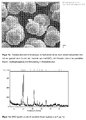
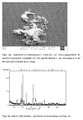
- the morphology of iron (III) phosphates which are prepared by generally known methods from iron sulfate or iron chloride, consists predominantly of spherical particles, whereas the iron (III) orthophosphate according to the invention has the previously described morphology with a high proportion of angular, platelet-shaped crystals (s. Figures 1 a and 2a ).
- the present invention includes the product iron (III) orthophosphate per se as described herein and in the appended claims, as well as the process for its preparation described herein, its use for the production of LiFePO 4 cathode material for Li-ion accumulators , Further, the present invention includes LiFePO 4 cathode material for Li-ion secondary batteries prepared using iron (III) orthophosphate as described and claimed herein, and Li-ion secondary batteries comprising a LiFePO 4 cathode material of the foregoing Include type.
Landscapes
- Chemical & Material Sciences (AREA)
- Organic Chemistry (AREA)
- Inorganic Chemistry (AREA)
- Engineering & Computer Science (AREA)
- Chemical Kinetics & Catalysis (AREA)
- Electrochemistry (AREA)
- General Chemical & Material Sciences (AREA)
- Materials Engineering (AREA)
- Manufacturing & Machinery (AREA)
- Crystallography & Structural Chemistry (AREA)
- Battery Electrode And Active Subsutance (AREA)
- Compounds Of Iron (AREA)
Description
- Die vorliegende Erfindung betrifft ein Eisen(III)orthophosphat, dessen Herstellung sowie dessen Verwendung zur Herstellung von LiFePO4-Kathodenmaterial für Li-Ionen-Akkumulatoren.
- Wiederaufladbare Li-Ionen-Akkumulatoren sind weit verbreitete Energiespeicher, insbesondere im Bereich mobiler Elektronik, da sich der Li-Ionen-Akkumulator durch eine hohe Energiedichte auszeichnet und eine hohe Nennspannung von 3,7 Volt liefern kann, so daß der Li-Ionen-Akkumulator bei vergleichbarer Leistung deutlich kleiner und leichter ist als herkömmliche Akkumulatoren. Als Kathodenmaterialien haben sich Spinelle wie LiCoO2, LiNiO2, LiNi1-xCoxO2 und LiMnnO4 etabliert. Um die Sicherheit der Li-Ionen-Akkumulatoren zu erhöhen, vor allem in Bezug auf eine thermische Überlastung im Betrieb, wurde LiFePO4 als Kathodenmaterial entwickelt. Dieses Material zeichnet sich durch eine bessere Leistung, höhere spezifische Kapazität sowie hohe thermische Stabilität im Betrieb aus.
- An das Kathodenmaterial eines Akkumulators werden hohe Reinheitsansprüche gestellt, da jede Kontamination, die während des Betriebes (Laden bzw. Entladen) unerwünschte Redox-Reaktionen eingehen kann, die Leistung des Akkumulators nachteilig beeinflußt. Die Art und Konzentration der möglichen Kontaminationen hängt im wesentlichen von der Qualität der zur Herstellung des Kathodenmaterials eingesetzten Rohstoffe ab. Im Herstellungsprozeß des Kathodenmaterials können Maßnahmen zur nachträglichen Reduzierung von Verunreinigungen getroffen werden, was jedoch im allgemeinen mit einer Erhöhung der Herstellungskosten verbunden ist. Es ist daher erstrebenswert, möglichst reine Ausgangsmaterialien bzw. Rohstoffe für die Herstellung des Kathodenmaterials zu verwenden.
- Ein Ausgangsmaterial für die Herstellung von LiFePO4 für Lithium-Ionen-Akkumulatoren ist Eisenorthophosphat, dessen Reinheit und Struktur bzw. Morphologie die Qualität des daraus hergestellten Kathodenmaterials wesentlich beeinflußt.
- Bekannte Verfahren zur Herstellung von Eisen(III)orthophosphat verwenden FeSO4 und FeCl3 als Ausgangsmaterialien bzw. Rohstoffe, aber auch metallorganische Vorläuferverbindungen, wie FeC2O2 (Gmelins Handbuch der anorganischen Chemie, Eisen Teil B, Seiten 773 ff;
US-A-3,407,034 ; C. Delacourt et al., Chem. Mater. 2003, 15, 5051-5058; Zhicong Shi et al., Electrochemical and Solid State Letters 2005, 8, A396-A399). Die Phosphor- bzw. Phosphatkomponente wird bei diesen Ausgangsmaterialien über ein Phosphatsalz bzw. Phosphorsäure eingebracht. In den beschriebenen Verfahren sind immer auch Zusätze von HCl, NaOH, NH3, NaClO3 oder Tenside notwendig, um die chemisch-physikalischen Eigenschaften der erhaltenen Produkte zu steuern. Dies hat zur Folge, daß die so hergestellten Materialien stets Verunreinigungen von Anionen, wie Chlorid oder Sulfat, Kationen, wie Natrium oder Ammonium, oder organische Komponenten enthalten. Großtechnisch lassen sich diese Verunreinigungen, wenn überhaupt, nur durch höchst aufwendige und kostenintensive Reinigungsverfahren entfernen. - Weitere kationische Kontaminationen, wie z. B. Übergangsmetalle, die ursprünglich in den eingesetzten Rohstoffen wie FeSO4 oder FeCl3 enthalten waren, können im allgemeinen nicht auf einfache Weise abgetrennt oder ausgewaschen werden, da auch sie in der Regel schwer lösliche Phosphatsalze bilden und gemeinsam mit dem gewünschten Eisenphosphat kristallisieren.
- Die
WO 02/30815 - Die Verfahren nach dem Stand der Technik zur Herstellung von Eisenphosphaten haben weitere Nachteile, wenn das erhaltene Eisenphosphatprodukt zur Herstellung von LiFePO4 für Li-Ionen-Akkumulatoren verwendet werden soll. Wichtige Gesichtspunkte für die Eignung des Materials sind die Morphologie und die Korngrößenverteilung der Eisenphosphate. Durch die Verfahren der Fällung von Eisenphosphat nach dem Stand der Technik werden in der Regel sphärische Kristalle unterschiedlicher Größe erhalten. Diese haben allerdings eine geringe Oberfläche im Vergleich zu anderen Kristallmorphologien. Für die Anwendung als Kathodenmaterial in Li-lonen-Akkumulatoren ist ein Eisenphosphat mit einer großen Kristalloberfläche vorteilhaft, um eine Penetration der Lithiumionen in großer Anzahl und mit hoher Geschwindigkeit zu gewährleisten. Darüber hinaus ist es vorteilhaft, Kristalle von geringer Größe zu erhalten, um die Diffusionsstrecken und -zeiten der Lithiumionen zu verringern. Des weiteren ist eine hohe Schüttdichte und Verdichtbarkeit des Materials erwünscht, um in dem hergestellten Kathodenmaterial eine hohe Energiespeicherdichte zu realisieren.
- Die Aufgabe der vorliegenden Erfindung bestand daher darin, ein Eisenphosphat und ein Verfahren zu dessen Herstellung bereitzustellen, bei dem die bekannten Nachteile aus dem Stand der Technik überwunden werden und das die zuvor beschriebenen gewünschten Eigenschaften besitzt.
- Die Aufgabe der vorliegenden Erfindung wird gelöst durch ein Verfahren, bei dem man Eisen(II)-, Eisen(III)- oder gemischte Eisen(II,III)-Verbindungen, ausgewählt unter Hydroxiden, Oxiden, Oxidhydroxiden, Oxidhydraten, Carbonaten und Hydroxidcarbonaten, mit Phosphorsäure mit einer Konzentration im Bereich von 5% bis 50% bei einer Temperatur im Bereich von 50° bis 180°C und für einen Zeitraum von0,5 min bis 120 min umsetzt, nach der Umsetzung gegebenenfalls vorhandenes Eisen(II) durch Zugabe eines Oxidationsmittels in Eisen (III) überführt und festes Eisen(III)orthophosphat aus dem Reaktionsgemisch abtrennt.
- Es wird eine wäßrige Phosphorsäurelösung möglichst hoher Reinheit eingesetzt, um den Eintrag von Verunreinigungen gering zu halten.
- Das erfindungsgemäße Eisen(III)orthophosphat liegt in der Form plättchenförmiger Kristalle vor. Diese Kristalle haben eine Dicke von < 300 nm, bevorzugt < 200 nm, besonders bevorzugt < 100 nm. Die Abmessungen der plättchenförmigen Kristalle in den zwei zur Dicke senkrechten Dimensionen liegen im Sub-Mikrometerbereich, bevorzugt im Bereich von 200 bis 1000 nm, besonders bevorzugt 300 bis 900 nm, ganz besonders bevorzugt 400 bis 800 nm.
- Bei dem erfindungsgemäßen Verfahren können die eingesetzten Eisenverbindungen als pulverförmige Rohstoffe direkt mit der Phosphorsäure gemischt und umgesetzt werden. Alternativ können die Eisenverbindungen auch zunächst über eine vorausgehende Fällung frisch erzeugt und im Anschluß als Filterkuchen weiterverarbeitet, d. h. mit der Phosphorsäure vermischt werden.
- Je nach Feuchtigkeitsgehalt und Art des Rohstoffes können hier Phosphorsäuren mit verschiedenen Konzentrationen eingesetzt werden. Erfindungsgemäß wird eine Phosphorsäure mit einer Konzentration im Bereich von 5% bis 50% eingesetzt. Niedrigere Konzentrationen liefern nicht die gewünschten Umsetzungsgeschwindigkeiten der Eisenverbindungen zu Eisenorthophosphat. Bei zu hoher Phosphorsäurekonzentration bleibt das gewünschte Eisenorthophosphat in Lösung und kristallisiert nicht in annehmbarer Zeit, Menge und/oder Morphologie aus.
- In einer bevorzugten Ausführungsform der Erfindung wird die Umsetzung der Eisenverbindung mit Phosphorsäure mit einer Phosphorsäurekonzentration im Bereich von etwa 8% bis etwa 23% durchgeführt. Dies entspricht bei einer reinen Phosphorsäure einer Dichte im Bereich von 1,042 g/l bis 1,133 g/l.
- Durch das Mischen des Eisenrohstoffs mit der Phosphorsäure entsteht zunächst eine durch den Feststoffanteil des Rohstoffs gefärbte bzw. getrübte Aufschlämmung. In einer Ausführungsform der Erfindung wird die Aufschlämmung dann auf eine erhöhte Umsetzungstemperatur erwärmt. Die Umsetzung der Eisenverbindungen mit Phosphorsäure wird bei einer Temperatur im Bereich von 50 bis 180°C, vorzugsweise im Bereich von 60°C bis 150°C, besonders bevorzugt im Bereich von 70°C bis 120°C durchgeführt.
- Die Umsetzung der Eisenverbindungen mit Phosphorsäure erfolgt innerhalb einen Zeitraum von 0,5 min bis 120 min, vorzugsweise von 1 min bis 60 min, besonders bevorzugt von 2 min bis 30 min.
- Das Ende der Reaktion kann an einem auftretenden Farbumschlag hin zu einer blaßgelben bis rosa Farbe festgestellt werden.
- In einer Ausführungsform der Erfindung wird die Umsetzung der Eisenverbindung mit Phosphorsäure unter intensivem Durchmischen des Reaktionsansatzes, vorzugsweise unter Rühren durchgeführt. Hierfür können alle auf dem Gebiet bekannten Mischer und Rührer, die für einen solchen Verwendungszweck geeignet sind, eingesetzt werden. Es können auch mit Vorteil Leitstrahlmischer, Homogenisatoren, Flußreaktionszellen etc. zur Durchmischung und/oder Bewegung des Reaktionsansatzes verwendet werden.
- Das erfindungsgemäße Eisen(III)orthophoshat wird hergestellt, indem man Eisen(II)-, Eisen(III)-oder gemischte Eisen(II,III)-Verbindungen als Ausgangsmaterialien einsetzt. Je nachdem welche dieser Verbindungen in welcher Menge eingesetzt wurden, enthält das Reaktionsgemisch nach der Umsetzung mit der Phosphorsäure mehr oder weniger Eisen(II). Dieses wird erfindungsgemäß durch Zugabe eines Oxidationsmittels in Eisen(III) überführt. Die Oxidation von Eisen(II) nach Eisen(III) kann mit jedem geeigneten Oxidationsmittel durchgeführt werden. In einer Ausführungsform der Erfindung wird die Oxidation von gegebenenfalls vorhandenem Eisen(II) durch Zugabe von Wasserstoffperoxid (H2O2) durchgeführt. In einer alternativen Ausführungsform der Erfindung wird die Oxidation durch Zuführung von Luft oder Sauerstoff in im wesentlichen reiner Form durchgeführt. In einer weiteren alternativen Ausführungsform der Erfindung wird die Oxidation durch Zuführung von Ozon durchgeführt. Die Oxidation durch Zugabe eines geeigneten Oxidationsmittels wird vorzugsweise unmittelbar nach Beendigung der Umsetzung der Eisenverbindungen mit Phosphorsäure durchgeführt. Bei der Oxidationsreaktion kann die Temperatur des Reaktionsgemisches bei der zuvor für die Umsetzung der Eisenverbindungen mit Phosphorsäure eingestellten Temperatur oder in deren Nähe gehalten werden. Alternativ kann die Oxidationsreaktion nach dem Abkühlen des Reaktionsgemischs auf Raumtemperatur oder darunter durchgeführt werden. Allerdings läuft die Oxidationsreaktion bei erhöhter Temperatur in der Regel leichter und schneller ab, weshalb die Durchführung der Oxidationsreaktion bei erhöhter Temperatur bevorzugt ist.
- Die Oxidationsreaktion wird durchgeführt, bis in dem Reaktionsgemisch kein bzw. im wesentlichen kein Eisen(II) mehr nachweisbar ist. Anschließend wird das Eisen(III)orthophosphat von dem Reaktionsgemisch abgetrennt. In einer Ausführungsform der Erfindung wird das Eisen(III)orthophosphat durch Filtration aus dem Reaktionsgemisch abgetrennt. Bei alternativen Ausführungsformen der Erfindung erfolgt die Abtrennung des Eisen(III)orthophosphats aus dem Reaktionsgemisch durch Sedimentation, Zentrifugieren oder Kombinationen der vorgenannten Trennverfahren. Zweckmäßigerweise wird das aus dem Reaktionsgemisch abgetrennte Eisen(III)orthophosphat anschließend bei erhöhter Temperatur und/oder unter vermindertem Druck getrocknet. Alternativ kann das Eisen(III)orthophosphat nach der Abtrennung auch vorteilhaft in feuchter Form weiterverarbeitet werden.
- Das Verfahren zur Herstellung des erfindungsgemäßen Eisen(III)orthophosphats hat gegenüber anderen bekannten Verfahren zur Herstellung von Eisen(III)phosphaten einige ökologische und ökonomische Vorteile. Die nach der Abtrennung von Eisen(III)orthophosphat zurückbleibende Mutterlauge enthält im wesentlichen keine verunreinigenden Umsetzungsprodukte, wie beispielsweise Sulfate oder Chloride, die bei den bekannten Verfahren nach dem Stand der Technik zurückbleiben, bei denen Eisensulfat oder Eisenchlorid als Ausgangsmaterial eingesetzt werden. Mutterlauge aus dem Verfahren gemäß der vorliegenden Erfindung kann daher durch Zugabe konzentrierter Phosphorsäure wieder auf die gewünschte Konzentration eingestellt werden und ist somit vollständig in den Prozeß rückführbar. Dies spart Kosten und vermeidet unerwünschte Abfälle.
- Das erfindungsgemäße Eisen(III)orthophosphat unterscheidet sich auch strukturell und hinsichtlich seiner Zusammensetzung bzw. Verunreinigungen von Eisen(III)orthophosphat, das nach bekannten Verfahren aus dem Stand der Technik hergestellt wurde. Dazu tragen unter anderem auch die als Ausgangsmaterialien eingesetzten Eisen(II)-, Eisen(III)- und gemischten Eisen(II,III)-Verbindungen bei, die unter Hydroxiden, Oxiden, Oxidhydroxiden, Oxidhydraten, Carbonaten und Hydroxidcarbonaten ausgewählt sind. Im Gegensatz zur vorliegenden Erfindung setzen bekannte Verfahren zur Herstellung von Eisen(III)orthophosphat nach dem Stand der Technik unter anderem Eisensulfat oder sulfathaltige Rohstoffe ein und steuern den Verlauf des pH-Wertes der Reaktion mit Natronlauge. Die erhaltenen Eisenphosphate enthalten daher hohe Rückstände an Sulfat und Natrium, welche wiederum nachteilig die Leistung von LiFePO4-Kathodenmaterialien für Li-Ionen-Akkumulatoren, die aus den Eisenphosphaten hergestellt werden, beeinflussen.
- In einer Ausführungsform der vorliegenden Erfindung weist das Eisen(III)orthophosphat daher einen Schwefelgehalt < 300 ppm auf. In einer weiteren Ausführungsform der vorliegenden Erfindung weist das Eisen(III)orthophosphat oder einen Nitratgehalt < 100 ppm auf. Ein zu hoher Gehalt an Schwefel, meist als Sulfat vorliegend, und ein zu hoher Gehalt an Nitrat beeinträchtigen die Qualität eines aus dem Eisen(III)orthophosphat hergestellten LiFePO4-Kathodenmaterials für Li-Ionen-Akkumulatoren, da diese Anionen unerwünschte Redox-Reaktionen eingehen. In einer weiteren Ausführungsform der Erfindung weist das Eisen(III)orthophosphat einen Gehalt an Natrium und Kalium von jeweils < 300 ppm auf. Natrium- und Kaliumkationen beeinträchtigen ebenfalls die Qualität eines aus dem Eisen(III)orthophosphat hergestellten LiFePO4-Kathodenmaterials, da sie Lithiumplätze besetzen können.
- Die Eigenschaften des erfindungsgemäßen Produkts, nämlich des erfindungsgemäßen Eisen(III)orthophosphats, werden somit durch sein Herstellungsverfahren und die zu seiner Herstellung verwendeten Ausgangsmaterialien wesentlich beeinflußt und unterscheiden sich von Eisen(III)orthophosphat nach dem Stand der Technik.
- Eisen(III)orthophosphate, die nach allgemein bekannten Verfahren aus Eisensulfat oder Eisenchlorid hergestellt werden, weisen zudem auch Unterschiede in der Kristallstruktur auf. Röntgenstrukturuntersuchungen haben gezeigt, daß nach dem Stand der Technik aus Eisensulfat oder Eisenchlorid hergestellte Eisen(III)orthophosphate überwiegend in der Metastrengit I-Struktur mit geringen Anteilen an Strengit und Metastrengit II (Phosphosiderit) vorliegen. Demgegenüber wurde bei Röntgenstrukturuntersuchungen an erfindungsgemäß hergestellten Eisen(III)orthophosphaten festgestellt, daß diese überwiegend in der Metastrengit II-Struktur (Phosphosiderit) mit sehr geringen oder nicht nachweisbaren Anteilen an Strengit und Metastrengit vorliegen, wobei > 80 Gew.-%, vorzugsweise > 90 Gew.-%, besonders bevorzugt > 95 Gew.-% des Eisen(III)orthophosphats in der Metastrengit II- (Phosphosiderit) Kristallstruktur vorliegen.
- Das Vorkommen der drei zuvor beschriebenen allotropen Formen von Eisen(III)orthophosphat (Metastrengit I, Metastrengit II und Strengit) ist in der Literatur ebenso beschrieben, wie die Schwierigkeit, ein phasenreines System herzustellen (C. Delacourt et al., Chem. Mater. 2003, 15, 5051-5058). Entgegen den in der Literatur geäußerten Vorbehalten haben die Erfinder nun herausgefunden, daß sich mit dem hierein beschriebenen Verfahren das Eisen(III)phosphat in der Metastrengit II-Struktur auch in einem allein durch die Phosphorsäure bestimmten pH-Wert-Bereich in bemerkenswert reiner Form darstellen läßt.
- Das erfindungsgemäße Eisen(III)orthophosphat weist eine plättchenförmige Morphologie mit Metastrengit II-Struktur auf. Diese Struktur erlaubt eine gegenüber sphärischen Partikeln erheblich dichtere Packung der Kristallite und Teilchen bei geringerem Ausschlußvolumen. Mit dem erfindungsgemäßen Eisen(III)orthophosphat sind daher hohe Schüttdichten realisierbar, was für den Einsatz in LiFePO4-Kathodenmaterialien besonders vorteilhaft ist. Eine geringe Dicke der Kristallplättchen gewährleistet beispielsweise eine hohe Reaktionsgeschwindigkeit bei der Herstellung von LiFePO4 sowie eine höhere Leistung des fertigen Kathodenmaterials, da die Diffusionsstrecken und Diffusionszeiten der Li-Ionen gegenüber herkömmlichem Material deutlich reduziert werden können.
- Das erfindungsgemäße Eisen(III)orthophosphat besitzt daher zumindest in einer Dimension eine mittlere Primärteilchengröße < 1µm, vorzugsweise < 500 nm, besonders bevorzugt < 100 nm. Des weiteren weist das erfindungsgemäße Eisen(III)ortho-phosphat in einer bevorzugten Ausführungsform eine Schüttdichte > 600 g/l, vorzugsweise > 800 g/l, besonders bevorzugt > 1000 g/l auf.
- Das erfindungsgemäße Eisen(III)orthophosphat zeigt somit eine sehr feine Primärpartikelgröße und dennoch gleichzeitig eine sehr hohe Schüttdichte. Im Vergleich zum Stand der Technik war dies überraschend. Eisen(III)orthophosphate, die nach allgemein bekannten Verfahren aus Eisensulfat oder Eisenchlorid hergestellt werden, weisen üblicherweise eine Primärpartikelgröße von > 1 µm auf, wodurch sich auch hohe Schüttdichten von > 1000 g/l realisieren lassen. Stellt man nach diesen bekannten Verfahren aus Eisensulfat oder Eisenchlorid entsprechende Eisen(III)orthophosphate mit geringeren Primärteilchengrößen im Sub-Mikrometerbereich her, so lassen sich nur geringe Schüttdichten bis 400 g/l erreichen. Die Gründe hierfür liegen vermutlich in der durch die Kristallstruktur beeinflußten Partikelmorphologie und der Teilchengrößenverteilung. Die Morphologie von Eisen(III)phosphaten, die nach allgemein bekannten Verfahren aus Eisensulfat oder Eisenchlorid hergestellt werden, besteht überwiegend aus sphärischen Partikeln, wohingegen das erfindungsgemäße Eisen(III)orthophosphat die zuvor bereits beschriebene Morphologie mit einem hohen Anteil an eckigen, plättchenförmigen Kristallen besitzt (s.
Figuren 1 a und 2a ). - Die vorliegende Erfindung umfaßt das Produkt Eisen(III)orthophosphat als solches, wie es hierin und in den anhängenden Patentansprüchen beschrieben ist, sowie auch das hierin beschriebene Verfahren zu dessen Herstellung, dessen Verwendung zur Herstellung von LiFePO4-Kathodenmaterial für Li-Ionen-Akkumulatoren. Des weiteren umfaßt die vorliegende Erfindung LiFePO4-Kathodenmaterial für Li-Ionen-Akkumulatoren, hergestellt unter Verwendung von Eisen(III)orthophosphat, wie es hierin beschrieben und beansprucht ist, sowie Li-Ionen-Akkumulatoren, die ein LiFePO4-Kathodenmaterial der vorgenannten Art umfassen.
- Weitere Vorteile, Merkmale und Ausführungsformen der vorliegenden Erfindung ergeben sich aus den nachfolgenden Beispielen, welche die vorliegende Erfindung erläutern, diese jedoch nicht beschränken sollen.
- 2,4 l Phosphorsäurelösung mit einer Dichte von 1,121 g/l wurden auf 92°C erhitzt und anschließend mit 130 g Fe3O4 (Firma FarbuHuzhou Huaman Chem. Ind. Co. Ltd.) versetzt. Das Reaktionsgemisch wurde gerührt, und nach 11 min erfolgte ein Farbumschlag nach grau, was als Anzeichen für das Ende der Reaktion angesehen wurde. Bei der zuvor eingestellten Temperatur wurden dann 35 ml 35%iges H2O2 innerhalb von 6 min zugetropft, um in dem Reaktionsgemisch vorhandenes Eisen(II) zu Eisen(III) zu oxidieren. Der Gehalt an Eisen(II) in der Reaktionsmischung wurde mit entsprechenden Teststäbchen der Firma Merck kontrolliert. Sobald kein Eisen(II) mehr nachweisbar war, wurde der rosa-grau verfärbte Ansatz für weitere 15 min gerührt. Die Farbe änderte sich nach rosa. Das Produkt wurde abfiltriert und bei 150°C unter Atmosphärendruck getrocknet.
Feuchte Ausbeute: 370 g Trockene Ausbeute: 305 g Ausbeute in %: 96,7 Schüttdichte: 920 g/l - 1 l Phosphorsäurelösung mit einer Dichte von 1,133 g/l wurde auf 95°C erhitzt und anschließend mit 92 g frisch gefälltem Eisenhydroxid (Feststoffgehalt ca. 63%) versetzt. Nach 5 min erfolgte ein Farbumschlag nach grau. Bei der zuvor eingestellten Temperatur wurden innerhalb von 4 min 22 ml 35%iges H2O2 zugetropft. Das Reaktionsgemisch wurde anschließend noch für 19 min bei 100°C gehalten, bis die Farbe nach rosa umschlug. Das Produkt wurde abfiltriert und bei 150°C bei Umgebungsdruck getrocknet.
Feuchte Ausbeute: 214 g Trockene Ausbeute: 124 g Ausbeute in %: ca. 93 Schüttdichte: 890 g/l - 2,7 l Phosphorsäurelösung mit einer Dichte von 1,09 g/l wurden auf 90°C erhitzt und anschließend mit 200 g eines Filterkuchens von frisch gefälltem Eisenhydroxidcarbonat (Feststoffgehalt ca. 48%) versetzt. Währen der portionsweise erfolgten Zugabe stieg die Temperatur auf 96°C an. Nach 5 min erfolgte ein Farbumschlag nach rot-grau. Danach wurden innerhalb von 4 min 20 g 35%iges H2O2 zugegeben. Der Gehalt an Eisen(II) wurde wieder mit entsprechenden Teststäbchen der Firma Merck überprüft. Anschließend wurde der Ansatz für weitere 15 min gerührt, filtriert und bei 150°C unter Umgebungsatmosphäre getrocknet.
Feuchte Ausbeute: 193 g Trockene Ausbeute: 128 g Ausbeute in %: ca. 96 Schüttdichte: 810 g/l -
-
Figur 1 a zeigt eine rasterelektronenmikroskopische Aufnahme eines nach einem bekannten Verfahren gemäß dem Stand der Technik aus Fe(II)SO4 mit Phosphorsäure hergestellten Eisen(III)orthophosphats mit Metastrengit I-Kristallstruktur. -
Figur 1 b zeigt ein XRD-Spektrum des Eisen(III)orthophosphats ausFigur 1 a. -
Figur 2a zeigt eine rasterelektronenmikroskopische Aufnahme von erfindungsgemäßem Eisen(III)orthophosphat, hergestellt aus FeO gemäß Beispiel 1, das überwiegend in der Metastrengit II-Kristallstruktur vorliegt. -
Figur 2b zeigt ein XRD-Spektrum des Eisen(III)orthophosphats ausFigur 2a .
Claims (15)
- Eisen(III)orthophosphat der allgemeinen Formel FePO4 x nH2O (n ≤ 2,5), wobei das Eisen(III)orthophosphat in der Form plättchenförmiger Kristalle mit einer Dicke < 300 nm vorliegt und zumindest in einer Dimension eine mittlere Primärteilchengröße < 1µm besitzt und wobei > 80 Gew.-% des Eisen(III)orthophosphats in der Metastrengit II- (Phosphosiderit-) Kristallstruktur vorliegen, hergestellt durch ein Verfahren, bei dem man
Eisen(II)-, Eisen(III)- oder gemischte Eisen(II,III)-Verbindungen, ausgewählt unter Hydroxiden, Oxiden, Oxidhydroxiden, Oxidhydraten, Carbonaten und Hydroxidcarbonaten, mit Phosphorsäure mit einer Konzentration im Bereich von 5% bis 50% bei einer Temperatur im Bereich von 50°C bis 180°C und für einen Zeitraum von 0,5 min bis 120 min umsetzt,
nach der Umsetzung gegebenenfalls vorhandenes Eisen(II) durch Zugabe eines Oxidationsmittels in Eisen (III) überführt und
festes Eisen(III)orthophosphat aus dem Reaktionsgemisch abtrennt. - Eisen(III)orthophosphat nach Anspruch 1 , dadurch gekennzeichnet, dass die Umsetzung der Eisenverbindungen mit Phosphorsäure bei einer Temperatur im Bereich von 60°C bis 150°C, besonders bevorzugt im Bereich von 70°C bis 120°C durchgeführt wird.
- Eisen(III)orthophosphat nach einem der vorangegangenen Ansprüche, dadurch gekennzeichnet, dass die Umsetzung der Eisenverbindungen mit Phosphorsäure unter intensivem Durchmischen durchgeführt wird.
- Eisen(III)orthophosphat nach einem der vorangegangenen Ansprüche, dadurch gekennzeichnet, dass die Umsetzung der Eisenverbindungen mit Phosphorsäure für einen Zeitraum von 1 min bis 60 min, besonders bevorzugt von 2 min bis 30 min durchgeführt wird.
- Eisen(III)orthophosphat nach einem der vorangegangenen Ansprüche, dadurch gekennzeichnet, dass die Umsetzung der Eisenverbindungen mit Phosphorsäure mit einer Konzentration im Bereich von 8% bis 23% durchgeführt wird.
- Eisen(III)orthophosphat nach einem der vorangegangenen Ansprüche, dadurch gekennzeichnet, dass die Oxidation von gegebenenfalls vorhandenem Eisen(II) durch Zugabe von Wasserstoffperoxid (H2O2) oder durch Zuführung von Luft, reinem Sauerstoff oder Ozon durchgeführt wird.
- Eisen(III)orthophosphat nach einem der vorangegangenen Ansprüche, dadurch gekennzeichnet, dass das Eisen(III)orthophosphat nach der Abtrennung aus dem Reaktionsgemisch bei erhöhter Temperatur und/oder unter vermindertem Druck getrocknet wird.
- Eisen(III)orthophosphat nach einem der vorangegangenen Ansprüche, dadurch gekennzeichnet, dass > 90 Gew.-%, besonders bevorzugt > 95 Gew.-% des Eisen(III)orthophosphats in der Metastrengit II- (Phosphosiderit-) Kristallstruktur vorliegen.
- Eisen(III)orthophosphat nach einem der vorangegangenen Ansprüche, dadurch gekennzeichnet, dass es zumindest in einer Dimension eine mittlere Primärteilchengröße < 500nm, besonders bevorzugt < 100nm besitzt.
- Eisen(III)orthophosphat nach einem der vorangegangenen Ansprüche, dadurch gekennzeichnet, dass es eine Schüttdichte > 600 g/l, vorzugsweise > 800 g/l, besonders bevorzugt > 1000 g/l aufweist.
- Eisen(III)orthophosphat nach einem der vorangegangenen Ansprüche, dadurch gekennzeichnet, dass es einen Gehalt an Natrium und Kalium von jeweils < 300 ppm und/oder einen Schwefelgehalt < 300 ppm und/oder einen Nitratgehalt < 100 ppm aufweist.
- Verwendung von Eisen(III)orthophosphat nach einem der vorangegangenen Ansprüche zur Herstellung von LiFePO4-Kathodenmaterial für Li-Ionen-Akkumulatoren.
- LiFePO4-Kathodenmaterial für Li-Ionen-Akkumulatoren, hergestellt unter Verwendung von Eisen(III)orthophosphat nach einem der vorangegangenen Ansprüche.
- Verfahren zur Herstellung von Eisen(III)orthophosphat der allgemeinen Formel FePO4 x nH2O (n ≤ 2,5), bei dem man
Eisen(II)-, Eisen(III)- oder gemischte Eisen(II,III)-Verbindungen, ausgewählt unter Hydroxiden, Oxiden, Oxidhydroxiden, Oxidhydraten, Carbonaten und Hydroxidcarbonaten, mit Phosphorsäure mit einer Konzentration im Bereich von 5% bis 50% bei einer Temperatur im Bereich von 50°C bis 180°C und für einen Zeitraum von 0,5 min bis 120 min umsetzt,
nach der Umsetzung gegebenenfalls vorhandenes Eisen(II) durch Zugabe eines Oxidationsmittels in Eisen (III) überführt und
festes Eisen(III)orthophosphat aus dem Reaktionsgemisch abtrennt.. - Li-Ionen-Akkumulator, umfassend ein LiFePO4-Kathodenmaterial nach Anspruch 13.
Applications Claiming Priority (2)
| Application Number | Priority Date | Filing Date | Title |
|---|---|---|---|
| DE102007049757A DE102007049757A1 (de) | 2007-10-16 | 2007-10-16 | Eisen(III)orthophosphat für Li-Ionen-Akkumulatoren |
| PCT/EP2008/063348 WO2009050055A2 (de) | 2007-10-16 | 2008-10-06 | Eisen(iii)orthophosphat für li-ionen-akkumulatoren |
Publications (2)
| Publication Number | Publication Date |
|---|---|
| EP2203383A2 EP2203383A2 (de) | 2010-07-07 |
| EP2203383B1 true EP2203383B1 (de) | 2016-07-20 |
Family
ID=40458786
Family Applications (1)
| Application Number | Title | Priority Date | Filing Date |
|---|---|---|---|
| EP08805089.3A Active EP2203383B1 (de) | 2007-10-16 | 2008-10-06 | Eisen(iii)orthophosphat für li-ionen-akkumulatoren |
Country Status (12)
| Country | Link |
|---|---|
| US (1) | US8609056B2 (de) |
| EP (1) | EP2203383B1 (de) |
| JP (1) | JP5528346B2 (de) |
| KR (1) | KR101547137B1 (de) |
| CN (1) | CN101821197B (de) |
| BR (1) | BRPI0818660B1 (de) |
| CA (1) | CA2698550C (de) |
| DE (1) | DE102007049757A1 (de) |
| ES (1) | ES2588030T3 (de) |
| RU (1) | RU2479485C2 (de) |
| TW (1) | TWI457273B (de) |
| WO (1) | WO2009050055A2 (de) |
Families Citing this family (32)
| Publication number | Priority date | Publication date | Assignee | Title |
|---|---|---|---|---|
| DE102009001204A1 (de) * | 2009-02-26 | 2010-09-02 | Chemische Fabrik Budenheim Kg | Herstellung von Eisenorthophosphat |
| WO2011030786A1 (ja) * | 2009-09-09 | 2011-03-17 | 戸田工業株式会社 | リン酸第二鉄含水物粒子粉末及びその製造法、オリビン型リン酸鉄リチウム粒子粉末及びその製造法、並びに非水電解質二次電池 |
| US9660267B2 (en) | 2009-09-18 | 2017-05-23 | A123 Systems, LLC | High power electrode materials |
| EP4112543A1 (de) * | 2009-09-18 | 2023-01-04 | A123 Systems, LLC | Eisenphosphat und herstellungsverfahren dafür |
| CN102148366B (zh) * | 2010-02-09 | 2015-09-30 | 河南科隆集团有限公司 | 锂离子电池正极活性物质所用正磷酸铁材料及其液相合成方法 |
| JP5423495B2 (ja) * | 2010-03-15 | 2014-02-19 | 株式会社Gsユアサ | 非水電解質二次電池 |
| EP2568808B1 (de) | 2010-05-14 | 2016-06-22 | COMPO GmbH | Köderformulierungen zur bekämpfung von schnecken |
| DE102010026828A1 (de) | 2010-07-12 | 2012-01-12 | Bk Giulini Gmbh | Verfahren zur Herstellung von Lithiumdihydrogenphosphat |
| DE102011003125A1 (de) * | 2011-01-25 | 2012-07-26 | Chemische Fabrik Budenheim Kg | Eisen(III)orthophosphat-Kohlenstoff-Komposit |
| KR101893955B1 (ko) * | 2011-12-16 | 2018-09-03 | 삼성에스디아이 주식회사 | 금속 도핑된 결정성 철인산염, 이의 제조 방법 및 이로부터 제조된 리튬 복합금속인산화물 |
| DE102012100128A1 (de) * | 2012-01-10 | 2013-07-11 | Chemische Fabrik Budenheim Kg | Kondensierte Eisen(III)phosphate |
| CN102583293B (zh) * | 2012-02-09 | 2014-01-01 | 昆明川金诺化工股份有限公司 | 一种电池级正磷酸铁的生产方法 |
| WO2013138541A1 (en) * | 2012-03-15 | 2013-09-19 | Imra America, Inc. | Iron phosphates: negative electrode materials for aqueous rechargeable sodium ion energy storage devices |
| US9296612B2 (en) * | 2012-08-24 | 2016-03-29 | Guiqing Huang | Methods of making low cost electrode active composite materials for secondary electrochemical batteries |
| CN102815684A (zh) * | 2012-09-04 | 2012-12-12 | 浙江师范大学 | 一种液相控制亚铁离子氧化制备球状磷酸铁的方法 |
| CN103022482A (zh) * | 2012-10-29 | 2013-04-03 | 北大先行科技产业有限公司 | 电池级片状水合磷酸铁及其制备方法 |
| CN103011116B (zh) * | 2012-11-07 | 2015-07-29 | 龙能科技(苏州)有限公司 | 生产锂离子电池正极材料无定形前驱体的方法 |
| JP2014203589A (ja) * | 2013-04-02 | 2014-10-27 | 旭化成株式会社 | 非水電解質二次電池用正極活物質及び非水電解質二次電池 |
| DE102013206007A1 (de) | 2013-04-04 | 2014-10-09 | Chemische Fabrik Budenheim Kg | Amorphisiertes Eisen(III)phosphat |
| KR102062705B1 (ko) * | 2013-06-14 | 2020-01-06 | 삼성에스디아이 주식회사 | 리튬 금속인산화물의 제조방법 |
| CN106061892B (zh) * | 2014-03-07 | 2019-11-08 | A123系统有限责任公司 | 高功率电极材料 |
| CN105129761A (zh) * | 2015-08-31 | 2015-12-09 | 无锡市嘉邦电力管道厂 | 一种磷酸亚铁锂正极材料的制备方法 |
| FR3054541A1 (fr) * | 2016-08-01 | 2018-02-02 | Centre National De La Recherche Scientifique | Procede de preparation d'arsenates et/ou de phosphates de metaux de transition de structure olivine |
| CN106532039A (zh) * | 2016-11-08 | 2017-03-22 | 河南省净寰新能源科技有限公司 | 一种超细磷酸铁微粉的制备方法 |
| CN107445139B (zh) * | 2017-09-21 | 2019-10-29 | 中南大学 | 一种磷酸铁生产过程中母液的循环利用方法 |
| CN108101014A (zh) * | 2018-01-31 | 2018-06-01 | 贵州仁聚业科技股份有限公司 | 用黄磷副产磷铁渣制备磷酸铁的方法 |
| CN109775679B (zh) * | 2019-04-01 | 2022-03-18 | 中钢集团南京新材料研究院有限公司 | 一种高纯高压实磷酸铁锂用的磷酸铁的制备方法 |
| CN115806279B (zh) | 2021-09-15 | 2024-10-11 | 贵州川恒化工股份有限公司 | 一种利用含铁废料制备磷酸铁的方法 |
| CN116924365A (zh) * | 2022-04-08 | 2023-10-24 | 黄冈林立新能源科技有限公司 | 一种磷酸铁络合物解络合制磷酸铁二水合物的方法 |
| CN115535985B (zh) * | 2022-09-22 | 2023-11-21 | 云南云天化股份有限公司 | 一种氧化沉淀一体工艺合成电池级磷酸铁方法 |
| CN116902946B (zh) * | 2023-09-14 | 2023-11-14 | 北京林立新能源有限公司 | 一种用铁黑制备磷酸铁的方法 |
| CN116986567B (zh) * | 2023-09-25 | 2023-11-28 | 北京林立新能源有限公司 | 一种从磷酸铁废渣回收磷酸铁的方法 |
Family Cites Families (10)
| Publication number | Priority date | Publication date | Assignee | Title |
|---|---|---|---|---|
| US3070423A (en) * | 1960-10-17 | 1962-12-25 | Chemetron Corp | Preparation of white iron phosphate |
| US3407034A (en) | 1965-06-16 | 1968-10-22 | Pfizer & Co C | White iron phosphate |
| BE788818A (fr) * | 1971-11-22 | 1973-01-02 | Budenheim Rud A Oetker Chemie | Procede de traitement de produits de regeneration d'echangeurs de cations et d'autres acides contenant des sels |
| JPS5815456B2 (ja) * | 1980-08-23 | 1983-03-25 | 井上 博之 | 白色難燃性複合体の製造方法 |
| US4374109A (en) * | 1981-12-17 | 1983-02-15 | Ashland Oil, Inc. | Manufacture of phosphosiderite iron phosphate |
| SU1549916A1 (ru) * | 1986-12-10 | 1990-03-15 | Белорусский технологический институт им.С.М.Кирова | Способ получени гидрофосфатов железа (III) |
| CA2320661A1 (fr) * | 2000-09-26 | 2002-03-26 | Hydro-Quebec | Nouveau procede de synthese de materiaux limpo4 a structure olivine |
| FR2815027B1 (fr) * | 2000-10-11 | 2002-12-27 | Rhodia Chimie Sa | Procede de preparation d'un phosphate de fer et d'un alcalin |
| KR101061702B1 (ko) * | 2002-10-18 | 2011-09-01 | 미쯔이 죠센 가부시키가이샤 | 리튬 전지용 양극 재료의 제조방법 및 리튬 전지 |
| US7690387B2 (en) * | 2004-10-25 | 2010-04-06 | Philip Morris Usa Inc. | Synthesis and incorporation of high-temperature ammonia-release agents in lit-end cigarettes |
-
2007
- 2007-10-16 DE DE102007049757A patent/DE102007049757A1/de not_active Withdrawn
-
2008
- 2008-10-06 WO PCT/EP2008/063348 patent/WO2009050055A2/de not_active Ceased
- 2008-10-06 CA CA2698550A patent/CA2698550C/en active Active
- 2008-10-06 US US12/680,366 patent/US8609056B2/en active Active
- 2008-10-06 JP JP2010529336A patent/JP5528346B2/ja active Active
- 2008-10-06 RU RU2010119411/05A patent/RU2479485C2/ru active
- 2008-10-06 ES ES08805089.3T patent/ES2588030T3/es active Active
- 2008-10-06 EP EP08805089.3A patent/EP2203383B1/de active Active
- 2008-10-06 KR KR1020107007190A patent/KR101547137B1/ko active Active
- 2008-10-06 BR BRPI0818660-0A patent/BRPI0818660B1/pt active IP Right Grant
- 2008-10-06 CN CN2008801123247A patent/CN101821197B/zh not_active Expired - Fee Related
- 2008-10-13 TW TW097139211A patent/TWI457273B/zh active
Also Published As
| Publication number | Publication date |
|---|---|
| JP2011500492A (ja) | 2011-01-06 |
| CN101821197B (zh) | 2013-07-10 |
| CA2698550C (en) | 2015-03-03 |
| WO2009050055A3 (de) | 2009-06-04 |
| KR20100083773A (ko) | 2010-07-22 |
| WO2009050055A2 (de) | 2009-04-23 |
| US20110117003A1 (en) | 2011-05-19 |
| RU2010119411A (ru) | 2012-01-27 |
| RU2479485C2 (ru) | 2013-04-20 |
| CA2698550A1 (en) | 2009-04-23 |
| KR101547137B1 (ko) | 2015-08-25 |
| US8609056B2 (en) | 2013-12-17 |
| HK1147240A1 (en) | 2011-08-05 |
| CN101821197A (zh) | 2010-09-01 |
| TWI457273B (zh) | 2014-10-21 |
| TW200925107A (en) | 2009-06-16 |
| BRPI0818660B1 (pt) | 2019-03-26 |
| JP5528346B2 (ja) | 2014-06-25 |
| ES2588030T3 (es) | 2016-10-28 |
| EP2203383A2 (de) | 2010-07-07 |
| DE102007049757A1 (de) | 2009-04-23 |
| BRPI0818660A2 (pt) | 2015-09-15 |
Similar Documents
| Publication | Publication Date | Title |
|---|---|---|
| EP2401228B1 (de) | Herstellung von eisenorthophosphat | |
| WO2009050055A2 (de) | Eisen(iii)orthophosphat für li-ionen-akkumulatoren | |
| DE102005012640B4 (de) | Kreisprozess zur nasschemischen Herstellung von Lithiummetallphosphaten | |
| DE69921229T2 (de) | Verfahren zur Herstellung von Lithium enthaltendes Manganoxid | |
| EP2190786B1 (de) | Pulverförmige ni(a)m1(b)m2(c)o(x)oh(y) verbindungen, verfahren zu deren herstellung sowie deren verwendung in batterien | |
| DE10353266B4 (de) | Lithiumeisenphosphat, Verfahren zu seiner Herstellung und seine Verwendung als Elektrodenmaterial | |
| EP2681786B1 (de) | Lithium-titan-mischoxid | |
| DE112005002725B4 (de) | Verfahren zur Herstellung eines Verbundwerkstoffes für eine Elektrode und eine Elektrode | |
| EP2802531B1 (de) | Kondensierte eisen (iiii) phosphate | |
| DE112022002564B4 (de) | Nanoblatt-eisenphosphat und dessen herstellungsverfahren | |
| EP1866242B1 (de) | Kristallines ionenleitendes nanomaterial und verfahren zu seiner herstellung | |
| WO2013093017A2 (de) | Metallphosphate und verfahren zu deren herstellung | |
| EP3337764B1 (de) | Lithium-nickel-mangan-basierte übergangsmetalloxidpartikel, deren herstellung sowie deren verwendung als elektrodenmaterial | |
| DE602005003645T2 (de) | Verfahren zur herstellung von verbundmaterialien mit einer elektrodenaktivzusammensetzung und einem elektronenleiter wie zum beispiel kohlenstoff insbesondere für eine lithiumbatterie | |
| EP2794472A1 (de) | Mangan enthaltende metallphosphate und verfahren zu deren herstellung | |
| DE102007058674A1 (de) | Nanopartikuläre Zusammensetzung und Verfahren zu deren Herstellung | |
| DE112022004680T5 (de) | Dotiertes eisen(iii)-phosphat, verfahren zur herstellung und verwendung desselben | |
| WO2014161742A1 (de) | Amorphisiertes eisen(iii)phosphat | |
| EP3233725A2 (de) | Zur herstellung von kathoden für li-ionen-akkumulatoren geeignete phosphatverbindungen | |
| EP2604576A1 (de) | Verfahren zur Herstellung von Lithium-Metallphosphat | |
| DE112023000128B4 (de) | Verfahren zur Herstellung von porösem Eisenphosphat | |
| HK1147240B (en) | Iron (iii) orthophosphate for li ion accumulators |
Legal Events
| Date | Code | Title | Description |
|---|---|---|---|
| PUAI | Public reference made under article 153(3) epc to a published international application that has entered the european phase |
Free format text: ORIGINAL CODE: 0009012 |
|
| 17P | Request for examination filed |
Effective date: 20100409 |
|
| AK | Designated contracting states |
Kind code of ref document: A2 Designated state(s): AT BE BG CH CY CZ DE DK EE ES FI FR GB GR HR HU IE IS IT LI LT LU LV MC MT NL NO PL PT RO SE SI SK TR |
|
| AX | Request for extension of the european patent |
Extension state: AL BA MK RS |
|
| RIN1 | Information on inventor provided before grant (corrected) |
Inventor name: KUEMMET, DAVID Inventor name: BUEHLER, GUNNAR Inventor name: MARKMANN, JOACHIM Inventor name: WISSEMBORSKI, RUEDIGER |
|
| 17Q | First examination report despatched |
Effective date: 20110218 |
|
| DAX | Request for extension of the european patent (deleted) | ||
| GRAP | Despatch of communication of intention to grant a patent |
Free format text: ORIGINAL CODE: EPIDOSNIGR1 |
|
| INTG | Intention to grant announced |
Effective date: 20160309 |
|
| GRAS | Grant fee paid |
Free format text: ORIGINAL CODE: EPIDOSNIGR3 |
|
| GRAA | (expected) grant |
Free format text: ORIGINAL CODE: 0009210 |
|
| AK | Designated contracting states |
Kind code of ref document: B1 Designated state(s): AT BE BG CH CY CZ DE DK EE ES FI FR GB GR HR HU IE IS IT LI LT LU LV MC MT NL NO PL PT RO SE SI SK TR |
|
| REG | Reference to a national code |
Ref country code: GB Ref legal event code: FG4D Free format text: NOT ENGLISH |
|
| REG | Reference to a national code |
Ref country code: CH Ref legal event code: EP |
|
| REG | Reference to a national code |
Ref country code: IE Ref legal event code: FG4D Free format text: LANGUAGE OF EP DOCUMENT: GERMAN |
|
| REG | Reference to a national code |
Ref country code: AT Ref legal event code: REF Ref document number: 813913 Country of ref document: AT Kind code of ref document: T Effective date: 20160815 |
|
| REG | Reference to a national code |
Ref country code: DE Ref legal event code: R096 Ref document number: 502008014421 Country of ref document: DE |
|
| REG | Reference to a national code |
Ref country code: NL Ref legal event code: FP |
|
| REG | Reference to a national code |
Ref country code: FR Ref legal event code: PLFP Year of fee payment: 9 |
|
| REG | Reference to a national code |
Ref country code: ES Ref legal event code: FG2A Ref document number: 2588030 Country of ref document: ES Kind code of ref document: T3 Effective date: 20161028 |
|
| REG | Reference to a national code |
Ref country code: LT Ref legal event code: MG4D |
|
| PG25 | Lapsed in a contracting state [announced via postgrant information from national office to epo] |
Ref country code: NO Free format text: LAPSE BECAUSE OF FAILURE TO SUBMIT A TRANSLATION OF THE DESCRIPTION OR TO PAY THE FEE WITHIN THE PRESCRIBED TIME-LIMIT Effective date: 20161020 Ref country code: IT Free format text: LAPSE BECAUSE OF FAILURE TO SUBMIT A TRANSLATION OF THE DESCRIPTION OR TO PAY THE FEE WITHIN THE PRESCRIBED TIME-LIMIT Effective date: 20160720 Ref country code: IS Free format text: LAPSE BECAUSE OF FAILURE TO SUBMIT A TRANSLATION OF THE DESCRIPTION OR TO PAY THE FEE WITHIN THE PRESCRIBED TIME-LIMIT Effective date: 20161120 Ref country code: LT Free format text: LAPSE BECAUSE OF FAILURE TO SUBMIT A TRANSLATION OF THE DESCRIPTION OR TO PAY THE FEE WITHIN THE PRESCRIBED TIME-LIMIT Effective date: 20160720 Ref country code: FI Free format text: LAPSE BECAUSE OF FAILURE TO SUBMIT A TRANSLATION OF THE DESCRIPTION OR TO PAY THE FEE WITHIN THE PRESCRIBED TIME-LIMIT Effective date: 20160720 Ref country code: HR Free format text: LAPSE BECAUSE OF FAILURE TO SUBMIT A TRANSLATION OF THE DESCRIPTION OR TO PAY THE FEE WITHIN THE PRESCRIBED TIME-LIMIT Effective date: 20160720 |
|
| PG25 | Lapsed in a contracting state [announced via postgrant information from national office to epo] |
Ref country code: LV Free format text: LAPSE BECAUSE OF FAILURE TO SUBMIT A TRANSLATION OF THE DESCRIPTION OR TO PAY THE FEE WITHIN THE PRESCRIBED TIME-LIMIT Effective date: 20160720 Ref country code: SE Free format text: LAPSE BECAUSE OF FAILURE TO SUBMIT A TRANSLATION OF THE DESCRIPTION OR TO PAY THE FEE WITHIN THE PRESCRIBED TIME-LIMIT Effective date: 20160720 Ref country code: PL Free format text: LAPSE BECAUSE OF FAILURE TO SUBMIT A TRANSLATION OF THE DESCRIPTION OR TO PAY THE FEE WITHIN THE PRESCRIBED TIME-LIMIT Effective date: 20160720 Ref country code: PT Free format text: LAPSE BECAUSE OF FAILURE TO SUBMIT A TRANSLATION OF THE DESCRIPTION OR TO PAY THE FEE WITHIN THE PRESCRIBED TIME-LIMIT Effective date: 20161121 Ref country code: GR Free format text: LAPSE BECAUSE OF FAILURE TO SUBMIT A TRANSLATION OF THE DESCRIPTION OR TO PAY THE FEE WITHIN THE PRESCRIBED TIME-LIMIT Effective date: 20161021 |
|
| REG | Reference to a national code |
Ref country code: DE Ref legal event code: R097 Ref document number: 502008014421 Country of ref document: DE |
|
| PG25 | Lapsed in a contracting state [announced via postgrant information from national office to epo] |
Ref country code: EE Free format text: LAPSE BECAUSE OF FAILURE TO SUBMIT A TRANSLATION OF THE DESCRIPTION OR TO PAY THE FEE WITHIN THE PRESCRIBED TIME-LIMIT Effective date: 20160720 Ref country code: RO Free format text: LAPSE BECAUSE OF FAILURE TO SUBMIT A TRANSLATION OF THE DESCRIPTION OR TO PAY THE FEE WITHIN THE PRESCRIBED TIME-LIMIT Effective date: 20160720 |
|
| PLBE | No opposition filed within time limit |
Free format text: ORIGINAL CODE: 0009261 |
|
| STAA | Information on the status of an ep patent application or granted ep patent |
Free format text: STATUS: NO OPPOSITION FILED WITHIN TIME LIMIT |
|
| PG25 | Lapsed in a contracting state [announced via postgrant information from national office to epo] |
Ref country code: BG Free format text: LAPSE BECAUSE OF FAILURE TO SUBMIT A TRANSLATION OF THE DESCRIPTION OR TO PAY THE FEE WITHIN THE PRESCRIBED TIME-LIMIT Effective date: 20161020 Ref country code: SK Free format text: LAPSE BECAUSE OF FAILURE TO SUBMIT A TRANSLATION OF THE DESCRIPTION OR TO PAY THE FEE WITHIN THE PRESCRIBED TIME-LIMIT Effective date: 20160720 Ref country code: DK Free format text: LAPSE BECAUSE OF FAILURE TO SUBMIT A TRANSLATION OF THE DESCRIPTION OR TO PAY THE FEE WITHIN THE PRESCRIBED TIME-LIMIT Effective date: 20160720 |
|
| REG | Reference to a national code |
Ref country code: CH Ref legal event code: PL |
|
| 26N | No opposition filed |
Effective date: 20170421 |
|
| REG | Reference to a national code |
Ref country code: IE Ref legal event code: MM4A |
|
| PG25 | Lapsed in a contracting state [announced via postgrant information from national office to epo] |
Ref country code: CH Free format text: LAPSE BECAUSE OF NON-PAYMENT OF DUE FEES Effective date: 20161031 Ref country code: LI Free format text: LAPSE BECAUSE OF NON-PAYMENT OF DUE FEES Effective date: 20161031 |
|
| PG25 | Lapsed in a contracting state [announced via postgrant information from national office to epo] |
Ref country code: LU Free format text: LAPSE BECAUSE OF NON-PAYMENT OF DUE FEES Effective date: 20161006 Ref country code: SI Free format text: LAPSE BECAUSE OF FAILURE TO SUBMIT A TRANSLATION OF THE DESCRIPTION OR TO PAY THE FEE WITHIN THE PRESCRIBED TIME-LIMIT Effective date: 20160720 |
|
| REG | Reference to a national code |
Ref country code: FR Ref legal event code: PLFP Year of fee payment: 10 |
|
| PG25 | Lapsed in a contracting state [announced via postgrant information from national office to epo] |
Ref country code: IE Free format text: LAPSE BECAUSE OF NON-PAYMENT OF DUE FEES Effective date: 20161006 |
|
| REG | Reference to a national code |
Ref country code: AT Ref legal event code: MM01 Ref document number: 813913 Country of ref document: AT Kind code of ref document: T Effective date: 20161006 |
|
| PG25 | Lapsed in a contracting state [announced via postgrant information from national office to epo] |
Ref country code: AT Free format text: LAPSE BECAUSE OF NON-PAYMENT OF DUE FEES Effective date: 20161006 |
|
| PG25 | Lapsed in a contracting state [announced via postgrant information from national office to epo] |
Ref country code: CY Free format text: LAPSE BECAUSE OF FAILURE TO SUBMIT A TRANSLATION OF THE DESCRIPTION OR TO PAY THE FEE WITHIN THE PRESCRIBED TIME-LIMIT Effective date: 20160720 Ref country code: HU Free format text: LAPSE BECAUSE OF FAILURE TO SUBMIT A TRANSLATION OF THE DESCRIPTION OR TO PAY THE FEE WITHIN THE PRESCRIBED TIME-LIMIT; INVALID AB INITIO Effective date: 20081006 |
|
| PG25 | Lapsed in a contracting state [announced via postgrant information from national office to epo] |
Ref country code: TR Free format text: LAPSE BECAUSE OF FAILURE TO SUBMIT A TRANSLATION OF THE DESCRIPTION OR TO PAY THE FEE WITHIN THE PRESCRIBED TIME-LIMIT Effective date: 20160720 Ref country code: MT Free format text: LAPSE BECAUSE OF FAILURE TO SUBMIT A TRANSLATION OF THE DESCRIPTION OR TO PAY THE FEE WITHIN THE PRESCRIBED TIME-LIMIT Effective date: 20160720 Ref country code: MC Free format text: LAPSE BECAUSE OF FAILURE TO SUBMIT A TRANSLATION OF THE DESCRIPTION OR TO PAY THE FEE WITHIN THE PRESCRIBED TIME-LIMIT Effective date: 20160720 |
|
| REG | Reference to a national code |
Ref country code: FR Ref legal event code: PLFP Year of fee payment: 11 |
|
| P01 | Opt-out of the competence of the unified patent court (upc) registered |
Effective date: 20230530 |
|
| PGFP | Annual fee paid to national office [announced via postgrant information from national office to epo] |
Ref country code: CZ Payment date: 20250923 Year of fee payment: 18 |
|
| PGFP | Annual fee paid to national office [announced via postgrant information from national office to epo] |
Ref country code: NL Payment date: 20251023 Year of fee payment: 18 |
|
| PGFP | Annual fee paid to national office [announced via postgrant information from national office to epo] |
Ref country code: DE Payment date: 20251016 Year of fee payment: 18 |
|
| PGFP | Annual fee paid to national office [announced via postgrant information from national office to epo] |
Ref country code: GB Payment date: 20251024 Year of fee payment: 18 |
|
| PGFP | Annual fee paid to national office [announced via postgrant information from national office to epo] |
Ref country code: FR Payment date: 20251027 Year of fee payment: 18 |
|
| PGFP | Annual fee paid to national office [announced via postgrant information from national office to epo] |
Ref country code: BE Payment date: 20251022 Year of fee payment: 18 |
|
| PGFP | Annual fee paid to national office [announced via postgrant information from national office to epo] |
Ref country code: ES Payment date: 20251114 Year of fee payment: 18 |