EP2013187B1 - Diarylthiohydantoin-verbindungen - Google Patents
Diarylthiohydantoin-verbindungen Download PDFInfo
- Publication number
- EP2013187B1 EP2013187B1 EP07754380.9A EP07754380A EP2013187B1 EP 2013187 B1 EP2013187 B1 EP 2013187B1 EP 07754380 A EP07754380 A EP 07754380A EP 2013187 B1 EP2013187 B1 EP 2013187B1
- Authority
- EP
- European Patent Office
- Prior art keywords
- compound
- compounds
- mixture
- composition
- prostate cancer
- Prior art date
- Legal status (The legal status is an assumption and is not a legal conclusion. Google has not performed a legal analysis and makes no representation as to the accuracy of the status listed.)
- Active
Links
- 0 CC(*)(C(N(C1=S)c2cc(C(F)(F)F)c(C#N)cc2)=O)N1c(cc1)ccc1O Chemical compound CC(*)(C(N(C1=S)c2cc(C(F)(F)F)c(C#N)cc2)=O)N1c(cc1)ccc1O 0.000 description 8
- DVJSHCAGXCEVMU-UHFFFAOYSA-N CN(C)C(CCCc(cc1)ccc1N(C1(CCC1)C(N1c(cc2)cc(C(F)(F)F)c2C#N)=O)C1=S)=O Chemical compound CN(C)C(CCCc(cc1)ccc1N(C1(CCC1)C(N1c(cc2)cc(C(F)(F)F)c2C#N)=O)C1=S)=O DVJSHCAGXCEVMU-UHFFFAOYSA-N 0.000 description 3
- AEYZLFVNBYZFPG-UHFFFAOYSA-N CN(C)C(CCCc(cc1)ccc1NC(C(F)(F)F)=O)=O Chemical compound CN(C)C(CCCc(cc1)ccc1NC(C(F)(F)F)=O)=O AEYZLFVNBYZFPG-UHFFFAOYSA-N 0.000 description 1
- XOKAXPQJUODMSH-UHFFFAOYSA-N CNC(c(ccc(N)c1)c1F)=O Chemical compound CNC(c(ccc(N)c1)c1F)=O XOKAXPQJUODMSH-UHFFFAOYSA-N 0.000 description 1
- BTEJJSKIYLMRBB-UHFFFAOYSA-N N#CC(CC1)=C(C(F)(F)F)C=C1N(CC(N1c(cc2)cc(C(F)(F)F)c2C#N)=O)C1=S Chemical compound N#CC(CC1)=C(C(F)(F)F)C=C1N(CC(N1c(cc2)cc(C(F)(F)F)c2C#N)=O)C1=S BTEJJSKIYLMRBB-UHFFFAOYSA-N 0.000 description 1
- AMKIPQFWHZWOPA-UHFFFAOYSA-N N#CC1(CCC1)Nc1ccc(CCCC(O)=O)cc1 Chemical compound N#CC1(CCC1)Nc1ccc(CCCC(O)=O)cc1 AMKIPQFWHZWOPA-UHFFFAOYSA-N 0.000 description 1
- RLLXQYWMCLJLCT-UHFFFAOYSA-N N#CCCCc(cc1)ccc1N(C1(CCC1)C(N1c(cc2C(F)(F)F)ccc2C#N)=O)C1=S Chemical compound N#CCCCc(cc1)ccc1N(C1(CCC1)C(N1c(cc2C(F)(F)F)ccc2C#N)=O)C1=S RLLXQYWMCLJLCT-UHFFFAOYSA-N 0.000 description 1
- CLCGFTSAOSGLFP-UHFFFAOYSA-N OC(CCCc(cc1)ccc1NC(C(F)(F)F)=O)=O Chemical compound OC(CCCc(cc1)ccc1NC(C(F)(F)F)=O)=O CLCGFTSAOSGLFP-UHFFFAOYSA-N 0.000 description 1
- UNRRVOATHRPYDX-UHFFFAOYSA-N S=CNc1ccccc1 Chemical compound S=CNc1ccccc1 UNRRVOATHRPYDX-UHFFFAOYSA-N 0.000 description 1
Images









Classifications
-
- C—CHEMISTRY; METALLURGY
- C07—ORGANIC CHEMISTRY
- C07D—HETEROCYCLIC COMPOUNDS
- C07D235/00—Heterocyclic compounds containing 1,3-diazole or hydrogenated 1,3-diazole rings, condensed with other rings
- C07D235/02—Heterocyclic compounds containing 1,3-diazole or hydrogenated 1,3-diazole rings, condensed with other rings condensed with carbocyclic rings or ring systems
-
- A—HUMAN NECESSITIES
- A61—MEDICAL OR VETERINARY SCIENCE; HYGIENE
- A61K—PREPARATIONS FOR MEDICAL, DENTAL OR TOILETRY PURPOSES
- A61K31/00—Medicinal preparations containing organic active ingredients
- A61K31/33—Heterocyclic compounds
- A61K31/395—Heterocyclic compounds having nitrogen as a ring hetero atom, e.g. guanethidine or rifamycins
- A61K31/41—Heterocyclic compounds having nitrogen as a ring hetero atom, e.g. guanethidine or rifamycins having five-membered rings with two or more ring hetero atoms, at least one of which being nitrogen, e.g. tetrazole
- A61K31/4164—1,3-Diazoles
- A61K31/4166—1,3-Diazoles having oxo groups directly attached to the heterocyclic ring, e.g. phenytoin
-
- A—HUMAN NECESSITIES
- A61—MEDICAL OR VETERINARY SCIENCE; HYGIENE
- A61K—PREPARATIONS FOR MEDICAL, DENTAL OR TOILETRY PURPOSES
- A61K31/00—Medicinal preparations containing organic active ingredients
- A61K31/33—Heterocyclic compounds
- A61K31/395—Heterocyclic compounds having nitrogen as a ring hetero atom, e.g. guanethidine or rifamycins
- A61K31/41—Heterocyclic compounds having nitrogen as a ring hetero atom, e.g. guanethidine or rifamycins having five-membered rings with two or more ring hetero atoms, at least one of which being nitrogen, e.g. tetrazole
- A61K31/4164—1,3-Diazoles
- A61K31/4184—1,3-Diazoles condensed with carbocyclic rings, e.g. benzimidazoles
-
- A—HUMAN NECESSITIES
- A61—MEDICAL OR VETERINARY SCIENCE; HYGIENE
- A61P—SPECIFIC THERAPEUTIC ACTIVITY OF CHEMICAL COMPOUNDS OR MEDICINAL PREPARATIONS
- A61P13/00—Drugs for disorders of the urinary system
- A61P13/08—Drugs for disorders of the urinary system of the prostate
-
- A—HUMAN NECESSITIES
- A61—MEDICAL OR VETERINARY SCIENCE; HYGIENE
- A61P—SPECIFIC THERAPEUTIC ACTIVITY OF CHEMICAL COMPOUNDS OR MEDICINAL PREPARATIONS
- A61P15/00—Drugs for genital or sexual disorders; Contraceptives
-
- A—HUMAN NECESSITIES
- A61—MEDICAL OR VETERINARY SCIENCE; HYGIENE
- A61P—SPECIFIC THERAPEUTIC ACTIVITY OF CHEMICAL COMPOUNDS OR MEDICINAL PREPARATIONS
- A61P15/00—Drugs for genital or sexual disorders; Contraceptives
- A61P15/14—Drugs for genital or sexual disorders; Contraceptives for lactation disorders, e.g. galactorrhoea
-
- A—HUMAN NECESSITIES
- A61—MEDICAL OR VETERINARY SCIENCE; HYGIENE
- A61P—SPECIFIC THERAPEUTIC ACTIVITY OF CHEMICAL COMPOUNDS OR MEDICINAL PREPARATIONS
- A61P35/00—Antineoplastic agents
-
- A—HUMAN NECESSITIES
- A61—MEDICAL OR VETERINARY SCIENCE; HYGIENE
- A61P—SPECIFIC THERAPEUTIC ACTIVITY OF CHEMICAL COMPOUNDS OR MEDICINAL PREPARATIONS
- A61P43/00—Drugs for specific purposes, not provided for in groups A61P1/00-A61P41/00
-
- C—CHEMISTRY; METALLURGY
- C07—ORGANIC CHEMISTRY
- C07D—HETEROCYCLIC COMPOUNDS
- C07D233/00—Heterocyclic compounds containing 1,3-diazole or hydrogenated 1,3-diazole rings, not condensed with other rings
- C07D233/54—Heterocyclic compounds containing 1,3-diazole or hydrogenated 1,3-diazole rings, not condensed with other rings having two double bonds between ring members or between ring members and non-ring members
- C07D233/66—Heterocyclic compounds containing 1,3-diazole or hydrogenated 1,3-diazole rings, not condensed with other rings having two double bonds between ring members or between ring members and non-ring members with hetero atoms or with carbon atoms having three bonds to hetero atoms with at the most one bond to halogen, e.g. ester or nitrile radicals, directly attached to ring carbon atoms
- C07D233/86—Oxygen and sulfur atoms, e.g. thiohydantoin
Definitions
- the present invention relates to diarylhydantoin compounds including diarylthiohydantoins, and methods for synthesizing them and using them in the treatment of hormone refractory prostate cancer.
- Prostate cancer is the most common incidence of cancer and the second leading cause of cancer death in Western men. When the cancer is confined locally, the disease can be cured by surgery or radiation. However, 30% of such cancer relapses with distant metastatic disease and others have advanced disease at diagnoses. Advanced disease is treated by castration and/or administration of antiandrogens, the so-called androgen deprivation therapy. Castration lowers the circulating levels of androgens and reduces the activity of androgen receptor (AR). Administration of antiandrogens blocks AR function by competing away androgen binding, therefore, reducing the AR activity. Although initially effective, these treatments quickly fail and the cancer becomes hormone refractory.
- AR and its ligand binding are necessary for growth of hormone refractory prostate cancer, indicating that AR is still a target for this disease. It was also demonstrated that overexpression of AR converts anti-androgens from antagonists to agonists in hormone refractory prostate cancer (an AR antagonist inhibits AR activity and an AR agonist stimulates AR activity). Data from this work explains why castration and anti-androgens fail to prevent prostate cancer progression and reveals unrecognized properties of hormone refractory prostate cancer.
- Bicalutamide brand name: Casodex
- Casodex is the most commonly used anti-androgen. While it has an inhibitory effect on AR in hormone sensitive prostate cancer, it fails to suppress AR when cancer becomes hormone refractory.
- Two weaknesses of current antiandrogens are blamed for the failure to prevent prostate cancer progression from the hormone sensitive stage to the hormone refractory disease and to effectively treat hormone refractory prostate cancer.
- Nonsteroidal anti-androgens such as bicalutamide
- steroidal compounds for prostate cancer because they are more selective and have fewer side effects.
- This class of compounds has been described in many patents such as U.S. Patent Number 4,097,578 , U.S. Pat. No. 5,411,981 , U.S. Pat. No. 5,705,654 , PCT International Applications WO 97/00071 and WO 00/17163 , and U.S. Published Patent Application Number 2004/0009969 .
- LBD ligand binding domain
- AR rogen receptor
- binders of the AR LBD have been identified, e.g., the thiohydantoins, RU59063 and BTTD. ( Teutsch, G.; Goubet, F.; Battmann, T.; Bonfils, A.; Bouchoux, F.; Cerede, E.; Gofflo, D.; Gaillard- Kelly, M.; Philibert. D. J. Steroid Boichem. Molec. Biol.
- FR 2 693 461 also discloses thiohydantoins having an anti-androgen activity.
- the invention provides a compound having the formula
- the invention also provides a pharmaceutical composition
- a pharmaceutical composition comprising a therapeutically effective amount of a compound according to any of the preceding compounds or a pharmaceutically acceptable salt thereof, and a pharmaceutically acceptable carrier or diluent.
- the invention encompasses such a pharmaceutical composition for use in treating a hyperproliferative disorder.
- the hyperproliferative disorder may be hormone refractory prostate cancer.
- the dosage may be in the range of from about 0.001 mg per kg body weight per day to about 100 mg per kg body weight per day, about 0.01 mg per kg body weight per day to about 100 mg per kg body weight per day, about 0.1 mg per kg body weight per day to about 10 mg per kg body weight per day, or about 1 mg per kg body weight per day.
- the compound may be administered by intravenous injection, by injection into tissue, intraperitonealiy, orally, or nasally.
- the composition may have a form selected from the group consisting of a solution, dispersion, suspension, powder, capsule, tablet, pill, time release capsule, time release tablet, and time release pill.
- the administered compound may be selected from the group consisting of NC56, or NC57 or a pharmaceutically acceptable salt thereof.
- NC56 Also disclosed herein is a method of synthesizing NC56, comprising mixing N,N-Dimethyl 4-[4-(1-cyanocyclobutylamino)phenyl]butanamide, 4-isothiocyanato-2-trifluoromethyl benzonitrile, and DMF and heating under reflux to form a first mixture; and processing as above.
- Also disclosed herein is a method of synthesizing NC57, comprising mixing DMSO, dichloromethane, and oxalyl chloride to form a first mixture, adding 4-(4-(7-(4-Cyano-3-(trifluoromethyl)phenyl)-8-oxo-6-thioxo-5,7-diazaspiro[3.4]octan-5-yl)phenyl)butanamide to the first mixture to form a second mixture; adding triethylamine to the second mixture to form a third mixture; warming the third mixture and quenching with aqueous NH 4 Cl to form a fourth mixture; extracting an organic layer from the fourth mixture; and isolating the compound from the organic layer.
- a pharmaceutical composition comprises a therapeutically effective amount of a compound according to claim 1 or a pharmaceutically acceptable salt thereof, and a pharmaceutically acceptable carrier or diluent.
- the compound can, for example, have the formula or
- the pharmaceutical composition can, for example, have a form selected from the group consisting of a solution, dispersion, suspension, powder, capsule, tablet, pill, time release capsule, time release tablet, and time release pill.
- the compound can be administered by intravenous injection, by injection into tissue, intraperitoneally, orally, or nasally.
- the composition can be administered at a dosage of the compound in the range of from about 0.001 mg per kg body weight per day to about 100 mg per kg body weight per day.
- the composition can be administered at a dosage of the compound in the range of from about 0.01 mg per kg body weight per day to about 100 mg per kg body weight per day.
- the composition can be administered at a dosage of the compound in the range of from about 0.1 mg per kg body weight per day to about 10 mg per kg body weight per day.
- the composition can be administered at a dosage of the compound of about 1 mg per kg body weight per day.
- the pharmaceutical composition can interfere with the transcription of prostate specific antigen mRNA.
- the pharmaceutical composition can prevent nuclear translocation of an androgen receptor protein.
- the pharmaceutical composition can destabilize an androgen receptor protein.
- the composition can be administered orally.
- the composition can have a form selected from the group consisting of a capsule, tablet, and pill.
- the compound can be NC56, NC57, a pharmaceutically acceptable salt of any of these, or combinations thereof.
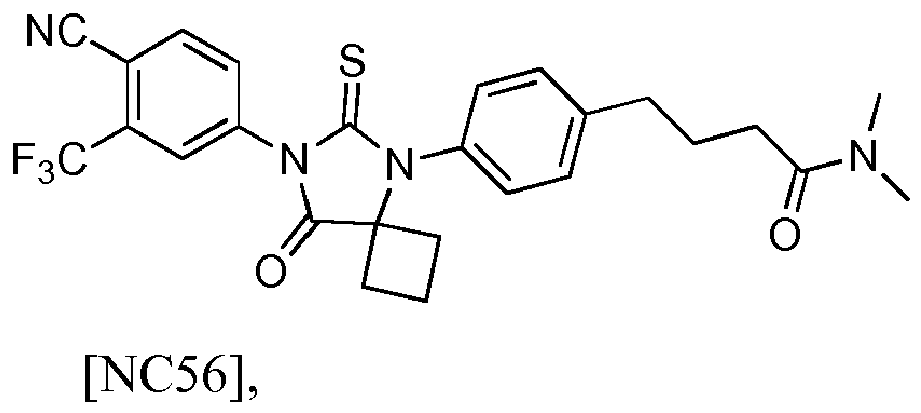
- a method of synthesizing the compound [NC56] can include mixing N,N- dimethyl 4-[4-(1-cyanocyclobutylamino)phenyl]butanamide, 4-isothiocyanato-2-trifluoromethyl benzonitrile, and DMF and heating under reflux to form a first mixture, adding an alcohol and an acid to the first mixture to form a second mixture, refluxing the second mixture, cooling the second mixture, combining the second mixture with water and extracting an organic layer, and isolating the compound from the organic layer.
- a method of synthesizing the compound [NC57] can include mixing DMSO, dichloromethane, and oxalyl chloride to form a first mixture, adding 4-(4-(7-(4-cyano-3-(trifluoromethyl)phenyl)-8-oxo-6-thioxo-5,7-diazaspiro[3.4]octan-5-yl)phenyl)butanamide to the first mixture to form a second mixture, adding triethylamine to the second mixture to form a third mixture, warming the third mixture and quenching with aqueous NH4Cl to form a fourth mixture, extracting an organic layer from the fourth mixture, isolating the compound from the organic layer.
- a method disclosed herein can include providing at least one diarylthiohydantoin compound, measuring inhibition of androgen receptor activity for the compound and determining if the inhibition is above a first predetermined level, measuring stimulation of androgen receptor activity in hormone refractory cancer cells for the compound and determining if the stimulation is below a second predetermined level, selecting the compound if the inhibition is above the first predetermined level and the stimulation is below the second predetermined level.
- the predetermined levels can be those of bicalutamide.
- Measuring inhibition can include measuring inhibitory concentration (IC50) in an AR response reporter system or a prostate specific antigen secreting system.
- Measuring stimulation can include measuring fold induction by increasing concentrations in an AR response reporter system or a prostate specific antigen secreting system.
- Measuring inhibition and/or stimulation can include measuring an effect of the compound on tumor growth in an animal.
- the step of measuring inhibition and/or stimulation of androgen receptor activity can include measuring the binding affinity of an androgen receptor to the compound.
- the step of measuring inhibition and/or stimulation of androgen receptor activity can include measuring prevention of androgen receptor recruitment to at least one of prostate specific antigen enhancer and prostate specific antigen promoter.
- the step of measuring inhibition and/or stimulation of androgen receptor activity can include measuring prevention of androgen receptor nuclear translocation.
- the step of measuring inhibition and/or stimulation of androgen receptor activity can include measuring destabilization of an androgen receptor protein.
- a method disclosed herein can include contacting a mammalian cell capable of expressing prostate specific antigen with a sufficient amount of a diarylthiohydantoin compound to interfere with the transcription of prostate specific antigen mRNA.
- the diarylthiohydantoin compound can be selected from the group consisting of NC53, NC54, NC55, NC56, and NC57.
- the compound can prevent formation of a transcription complex on a prostate specific antigen gene.
- the compound can prevent an androgen receptor protein from complexing with a prostate specific antigen gene.
- the compound can prevent an RNA polymerase II from complexing with a prostate specific antigen gene.
- a method includes contacting a mammalian cell with a sufficient amount of a diarylthiohydantoin compound to prevent nuclear translocation of an androgen receptor protein and/or to destabilize an androgen receptor protein.
- Periodic acid (1.69 g, 7.41 mmol) was dissolved in acetonitrile (25 mL) by vigorous stirring, and then chromium trioxide (0.16 g, 1.60 mmol) was dissolved into the solution.
- 2-Fluoro-4-nitrotoluene (0.33 g, 2.13 mmol) was added to the above solution with stirring.
- a white precipitate formed immediately with exothermic reaction.
- the supernatant liquid of the reaction mixture was decanted to a flask, and the solvent was removed by evaporation. The residues were extracted with methylene chloride (2 ⁇ 30 mL) and water (2 ⁇ 30 mL).
- N -Methyl-2-fluoro-4-aminobenzamide (Formula 39) (0.14 g, 92%) as an off-white solid.
- N -Methyl-2-fluoro-4-aminobenzamide (Formula 39) (96 mg, 0.57 mmol), acetone cyanohydrin (0.3 mL, 3.14 mmol) and magnesium sulfate (50 mg) was heated to 80 °C and stirred for 12 h. To the medium was added ethyl acetate (25 mL) and then washed with water (2 ⁇ 25 mL).
- N -Methyl-2-fluoro-4-(1,1-dimethyl-cyanomethyl)-aminobenzamide (Formula 40) (101 mg, 75%) as a white solid.
- N-Methyl-2-fluoro-4-aminobenzamide (Formula 39) (62 mg, 0.37 mmol), cyclopentanone (0.07 mL, 0.74 mmol) and TMSCN (0.1 mL, 0.74 mmol) was heated to 80 °C and stirred for 13 h. To the medium was added ethyl acetate (2 ⁇ 20 mL) and then washed with water (2 ⁇ 20 mL).
- Trifluoroacetic anhydride (0.85 mL, 6.14 mmol) was added to a solution of 4-(4-aminophenyl)butyric acid (0.5 g, 2.79 mmol) in chloroform (10 mL) at 0 °C. The mixture was warmed to room temperature and stirred for 3 hours. The mixture was partitioned with chloroform (20 mL)) and water (20 mL).
- the compounds were subjected to tests using an artificial AR response reporter system in a hormone refractory prostate cancer cell line.
- the prostate cancer LNCaP cells were engineered to stably express about 5-fold higher level of AR than endogenous level.
- the exogenous AR has similar properties to endogenous AR in that both are stabilized by a synthetic androgen R1881.
- the AR-over expressed cells were also engineered to stably incorporate an AR response reporter and the reporter activity of these cells shows features of hormone refractory prostate cancer. It responds to low concentration of a synthetic androgen R1881, is inhibited only by high concentrations of bicalutamide (see Table 1), and displays agonistic activity with bicalutamide ( Figure 1 and Table 2).
- LNCaP-AR also abbreviated LN-AR
- FBS fetal bovine serum
- the cells were split and grown in Iscove's medium containing 10% CS-FBS with 100 pM of R1881 and increasing concentrations of test compounds. After two days of incubation, reporter activities were assayed. Table 1 lists the IC50 of compounds to inhibit AR in hormone refractory prostate cancer.
- the control substance bicalutamide has an IC50 of 889 nM.
- Most of the compounds identified (diarylthiohydantoins) have IC50s between 100 to 200 nM in inhibiting AR in hormone refractory prostate cancer.
- antiandrogenic compounds listed as examples in US patent no.
- Table 2 One previously unrecognized property of AR overexpression in hormone refractory prostate cancer is its ability to switch antagonists to agonists. Therefore, only those compounds with minimal or no agonistic activities are qualified to be anti-androgens for this disease.
- To determine agonistic activities of different compounds we examined their stimulating activities on AR using the AR response reporter as the measure in the LN-AR system in the absence of R1881. Table 2 lists the agonistic activities of different compounds. Consistent with previous results, bicalutamide activated AR in hormone refractory prostate cancer.
- the diarylthiohydantoin derivatives such as Reference examples 7-3b (NC7), 33 (NC34), 34 (NC35), and 35 (NC36) have no agonistic activity.
- RU59063, and other anti-androgenic compounds listed as examples in US Patent Number 5,705,654 such as Reference examples 30-2, 30-3, 31-2, 31-3, and 24-3 (NC24-NC28) strongly activated AR in hormone refractory prostate cancer.
- Agonistic activities of selective test substances on AR response reporter in hormone refractory prostate cancer are given below for reference.
- GR glucocorticoid receptor
- LNCaP cells with an over expression of glucocorticoid receptor (GR), the closest member of AR in the nuclear receptor family. These cells also carry a GR response reporter and the reporter activity was induced by dexamethasone, a GR agonist and the induction was blocked by RU486, a GR inhibitor.
- Reference Example 7-3b (NC7) (4-(8-oxo-6-thioxo-5-(4-methylphenyl)-5,7-diazaspiro[3.4]oct-7-yl)-2-trifluoromethyl benzonitrile) had no effect on GR in this system.
- LNCaP-AR also abbreviated LN-AR.
- LNCaP-AR secreted levels of endogenous PSA induced by R1881 in the AR-overexpressed LNCaP cells
- LNCaP-AR cells are a line of lymph node carcinoma of prostate cells transduced with a plasmid that makes express androgen receptors.
- LNCaP-AR cells were maintained in Iscove's medium containing 10% FBS. Two days prior to drug treatment, the cells were grown in Iscove's medium containing 10% CS-FBS to deprive of androgens.
- the cells were split and grown in Iscove's medium containing 10% CS-FBS with appropriate concentrations of R1881 and the test compounds. After four days incubation, secreted PSA levels were assayed using PSA ELISA kits (American Qualex, San Clemente, CA)
- the secreted PSA level of LNCaP-AR cells was strongly induced by 25 pM of R1881. In contrast, PSA was not induced in the parental LNCaP cells until concentration of R1881 reached 100 pM. This is consistent with our previous report that the AR in hormone refractory prostate cancer is hypersensitive to androgens.
- a dose-dependent inhibition on AR activity was carried out to determine the IC50s of different compounds in inhibiting PSA expression, and the results were listed in Table 1. IC50s of the selective compounds on PSA expression closely resemble those measured by the reporter assay, conforming that the diarylhydantoin derivatives are strong inhibitors of AR in hormone refractory prostate cancer.
- Table 3 lists the agonistic activities of the selective compounds. Consistent with the results obtained from the reporter assay, the diarylthiohydantoin derivatives such as Reference examples 7-3b (NC7), 33 (NC34), 34 (NC35), and 35 (NC36) have no agonistic activities. In contrast, RU59063, and other antiandrogenic compounds listed as examples in US patent no. 5,705,654 , such as Reference examples 30-2 (NC24), 30-3 (NC25), and 31-2 (NC26) stimulated PSA expression in hormone refractory prostate cancer. Table 3 Agonistic activities of selective test substances on endogenous PSA in hormone refractory prostate cancer are given below for reference.
- LNCaP-AR cells were maintained in Iscove's medium containing 10% FBS. The compounds were examined for their effect on growth of hormone refractory prostate cancer cells. Overexpressed LNCaP cells were used because these cells behave as hormone refractory prostate cancer cells in vitro and in vivo (I). We measured mitochondria activity by MTS assay, a surrogate for growth. LNCaP cells with overexpressed AR (LN-AR) were maintained in Iscove's medium containing 10% FBS. Two days prior to drug treatment, the cells were grown in Iscove's medium containing 10% CS-FBS to deprive of androgens. The cells were then split and grown in Iscove's medium containing 10% CS-FBS with appropriate concentrations of R1881 and increasing concentrations of the test compounds. After four days incubation, cell growth was monitored by MTS (Promega, Madison, WI).
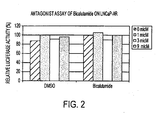
- FIG. 2 shows the inhibitory effect of selected compounds on growth of hormone refractory prostate cancer in the presence of 100 pM of R1881.
- the current clinical drug bicalutamide did not inhibit hormone refractory prostate cancer.
- NC2 (4-[3-(4-methylphenyl)-4,4-dimethyl-5-oxo-2-thioxoimidazolidin-1-yl]-2-trifluoromethyl-benzonitrile)
- NC7 (4-(8-oxo-6-thioxo-5-(4-methylphenyl)-5,7-diazaspiro[3.4]oct-7-yl)-2-trifluoromethylbenzonitrile) inhibited hormone refractory prostate cancer with high potency.
- NC2 (4-[3-(4-methylphenyl)-4,4-dimethyl-5-oxo-2-thioxoimidazolidin-1-yl]-2-trifluoromethyl-benzonitrile)
- NC7 (4-(8-oxo-6-thioxo-5-(4-methylphenyl)-5,7-diazaspiro[3.4]oct-7-yl)-2-trifluoromethylbenzonitrile) were tested in DU-145 cells, a prostate cancer cell line that lacks AR expression. These compounds had no growth inhibitory effect on DU-145 cells. The compounds did not inhibit cells other than AR-expressed prostate cancer cells, as they had no growth effect on MCF7 and SkBr3, two commonly used breast cancer cells, or 3T3, a normal mouse fibroblast cell line.
- NC50 > NC48 > NC7 > NC43 > NC44 > NC49 > NC50 > NC45 > bicalutamide it was found that at a concentration of 500 nM the compounds ranked, in order of most active to least active as follows: NC50 > NC48 > NC7 > NC43 > NC44 > NC49 > NC50 > NC45 > bicalutamide.
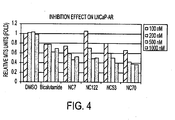
- Fig. 4 indicates that at a concentration of 500 nM the compounds ranked, in order of most active to least active as follows: NC70 > NC7 > NC122 > NC53 > bicalutamide.
- Figure 6 presents the results of an experiment in which cells from the LNCaP hormone sensitive model were xenografted into mice (10 6 cells of LNCaP were injected into mice). A first set of mice was treated with NC53, a second set of mice was treated with Casodex, and a third set of mice was treated with vehicle solution. Each set included 6 mice. The mice were treated with 10 mg/kg per day.
- Fig. 6 presents the results as a graph of tumor volume as a function of time. Mice treated with vehicle solution as a control exhibited the most rapid increase in tumor volume. Mice treated with Casodex and mice treated with NC53 exhibited similar rates of tumor growth, slower than mice treated with vehicle solution.
- diarylthiahydantoin derivatives also inhibit hormone sensitive prostate cancer cells
- Compounds of the invention inhibit hormone sensitive prostate cancer with a higher potency than bicalutamide.
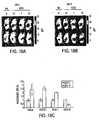
- the animals were imaged via an optical CCD camera, 3 hours after last dose of the treatment.
- a ROI is drawn over the tumor for luciferase activity measurement in photon/second.
- the right panels were a representation of the ROIs measurements. Data are shown in Figures 7 and 8 .
- NC53 was effective to prevent tumor growth and even to cause tumor shrinkage, and was distinctly more effective than bicalutamide.
- mice The drug was dissolved in a mixture 1:5:14 of DMSO : PEG400 : H 2 0. (Vehicle solution) and was administered into mice through the tail vein. The animals are warmed under a heat lamp for approximately 20 minutes prior to treatment to dilate their tail vein. Each mouse was placed into a mouse restrainer (Fisher Sci. Cat# 01-288-32A) and was injected with 200 ⁇ l of drug in vehicle solution into the dilated tail vein. After drug administration, the animals were euthanized via CO 2 inhalation at different timepoints: 5 mn, 30 mn, 2 h, 6 h, 16 h.
- the serum samples were analyzed to determine the drug's concentration by the HPLC which (Waters 600 pump, Waters 600 controller and Waters 2487 detector) was equipped with an Alltima C18 column (3 ⁇ , 150 mm ⁇ 4.6 mm).
- the NC7, NC48, and NC53 compounds were detected at 254 nm wave length and bicalutamide was detected at 270 nm wave length.
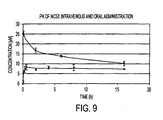
- NC53 concentration of NC53 in plasma as a function of time resulting from intravenous and from oral administration is shown in figure 9 .
- the steady state concentration (Css) of bicalutamide, NC48, and NC53 is shown in Table 4.
- the concentration at steady state of NC53 is essentially as good as that of bicalutamide, and substantially better than NC48.
- Table 4 Steady-state concentration of bicalutamide, NC48, and NC53 in mice plasma. Name IC50 [nM] LogP Css,10 mg/kg [ ⁇ M] Css,25 mg/kg [ ⁇ M] Css,50 mg/kg [ ⁇ M] Bic. 1000 2.91 10.0 11.4 11.9 NC48 92 3.44 0.39 0.43 0.40 NC53 122 3.20 9.9 10.7 10.2
- the androgen receptor activity can encompass several aspects of stimulation and of inhibition of androgen receptor behavior, including, but not limited to, the following: inhibitory concentration (IC50) in an AR response reporter system or a prostate specific antigen secreting system; fold induction associated with increasing concentrations in an AR response reporter system or a prostate specific antigen secreting system; associated tumor growth in an animal; the binding affinity of an androgen receptor to a compound; androgen receptor recruitment to a prostate specific antigen enhancer or a prostate specific antigen promoter; androgen receptor nuclear translocation; and destabilization of an androgen receptor protein.
- inhibitory concentration IC50
- fold induction associated with increasing concentrations in an AR response reporter system or a prostate specific antigen secreting system
- associated tumor growth in an animal the binding affinity of an androgen receptor to a compound
- androgen receptor recruitment to a prostate specific antigen enhancer or a prostate specific antigen promoter androgen receptor nuclear translocation
- destabilization of an androgen receptor protein IC50
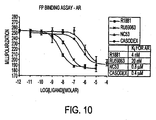
- Figure 10 presents the relative binding affinities of compounds for the ligand binding domains of rat androgen receptor (rat AR) as determined with competitor assay kits (Invitrogen). Fluorescence polarization was used as a read-out. Each hormone dose was performed in triplicate and the relative rror was determined by calculating the standard error of the three values from the mean. The study controlled for minimal competition (vehicle alone), no receptor, no fluorescent ligand, and maximal competition (10 -5 M R1881, progesterone, E2 or dexamethasone). The curves were fit using a single binding site competition model (the Prism statistical analysis software package was used.
- NC53 and Casodex had similar equilibrium dissociation constants, and, thus, rat androgen receptor had a similar affinity for these compounds.
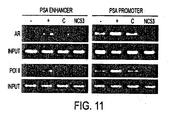
- NC53 prevented androgen receptor (AR) recruitment and RNA polymerase II (Pol 11) recruitment to PSA enhancer and to PSA promoter.
- Figure 11 presents the results of the study.
- Materials used were Chromatin IP with AR (Upstate, cat# 06-680) and Pol II (Covance, cat# MMS-126R).
- LNCaP (ATCC) cells were plated in full serum. On the day of the experiment, the plate was washed once with 1x PBS and 5% CSS was added for 3 days. For a first set of experiments 10 uM of NC53 was added (R), for a second set of experiments 10 uM of bicalutamide (C) was added, and for a third set of experiments 1 nM of R1881 was added (+).
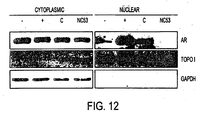
- NC53 inhibited androgen receptor nuclear translocation in LNCaP cells.
- Figures 12 and 13 present the results of the study.
- LNCaP cells were plated in 5% CSS.
- a first set of cells was treated with 10 uM NC53 (R)
- a second set of cells was treated with 10 uM bicalutamide (C)
- a third set of cells was treated with 1 nM R1881 (+).
- a fourth set of cells served as a control (-).
- TOPO I Sura Cruz, cat# sc-32736
- GAPDH Sura Cruz, cat# sc-20357
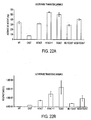
- LNCaP cells were harvested for subcellular fractionation or stained with a FITC (Santa Cruz) labeled antibody against androgen receptor (AR) (Santa Cruz, cat# sc-815). From the subcellular fractionation, images were obtained, as shown in Fig. 12 . The darker image in the nuclear fraction for the bicalutamide (Casodex, C) treated sample indicated that bicalutamide induced androgen receptor nuclear translocation. The light image for the NC53 (R) treated sample indicated that NC53 abrogated nuclear translocation.
- cover slips were mounted on glass slides using DAPI-containing medium, and cells were imaged 24 hours later using a fluorescence Nikon microscope at X60 with filters for DAPI and FITC.
- the nuclei of the R1881 and of the bicalutamide treated cells were distinctly green, as shown in Fig. 13 indicating that nuclear translocation of the androgen receptor occurred.
- the nuclei of the DMSO and of the NC53 treated cells were less green.
- Figure 14 shows the results of the study.
- the study was conducted by plating 10 5 LNCaP (fgc) cells in 5% CSS for 3 days. 100 pM of R1881 was added to a first set of cells (+), 10 uM of bicalutamide was added to a second set of cells (B), 10 uM of NC53 was added to a third set of cells (RD), 100 pM of R1881 and 10 uM of bicalutamide was added to a fourth set of cells (B+), and 100 pM of R1881 and 10 uM of NC53 was added to a fifth set of cells (RD+).
- Neither R1881, bicalutamide, nor NC53 was added to a sixth set of cells (-).
- the cells were allowed to reside with the added bicalutamide, NC53, and/or R1881 for 24 hours (or in the case of the (-) set, without any of these for 24 hours).
- Fig. 14 the dark image for the set to which bicalutamide (B) was added and for the set to which bicalutamide and R1881 (B+) were added indicated that the androgen receptor protein was level when these combinations of compounds were added.
- Tables 5 - 10 present diarylhydantoin compounds grouped into Tiers 1-6.
- Table 11 presents diarylhydantoin compounds which have not been placed into a tier. The placement of compounds into tiers was based on available data coupled with analytical judgment. Data considered included in vitro assays (AR response reporter system in LNCaP cell line, PSA level measurement, MTS mitochondrial assay) and in vivo experiments (tumor size measured directly or by emission induced by luciferase reporter gene, pharmacokinetic assays based on blood plasma levels). Not every compound was subjected to each assay. Not all data that was generated is shown.
- Judgment was applied in ranking compounds relative to each other for their utility in treating prostate cancer, in particular when ranking two compounds for which the same experiments were not performed.
- Characteristics considered in establishing the ranking include AR antagonism activity, lack of AR agonism in hormone refractory cells, prevention of tumor growth, tumor shrinkage, and pharmacokinetic behavior, with a longer residence time in blood being advantageous.
- Tier 1 compounds are diarylthiohydantoins with a disubstituted left hand aryl ring that are disubstituted on the right hydantoin carbon, and have either an oxygen or N substituent on the left hydantoin carbon. It is expected that the amido substituent hydrolyzes to an oxygen in aqueous solutions such as encountered in biological systems, in vitro and in vivo. NC63 has good activity with an iodine instead of a CF 3 substituent on the left hand aryl ring.
- Tier 1 compounds (see Table 5) were judged to be much better than bicalutamide for treating prostate cancer. However, NC7 and NC48 were found to metabolize fast, that is, have a short residence time in blood. NC53 had desirable pharmacokinetics.
- Figure 16 shows that under treatment with bicalutamide, PSA levels for LNCaP cells stayed the same or increased relative to treatment with vehicle solution, whereas under treatment with NC53, PSA levels decreased.
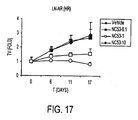
- Figure 17 illustrates that under treatment with vehicle solution, tumors continued to increase in size.
- the rate of tumor increase decreased, and the size of the tumor appeared to be stabilizing after about 17 days.
- Under treatment with NC53 at a dose of 10 mg per kg body weight per day tumor size decreased with time.
- Figure 18 illustrates that under treatment with NC53 at a dose of 10 mg per kg body weight per day, photon emission associated with luciferase activity decreased.
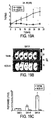
- Figure 19 shows that treatment with NC53 at this dose resulted in a decrease or stabilization of tumor size and a decrease in photon emission associated with luciferase activity.
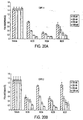
- Figure 20 shows that under treatment with NC53, NC54, NC55, NC56, and NC57 at doses of 100, 200, 500, and 1000 nM, PSA levels of LN-AR cells decreased. Moreover, the higher the dose, the lower the PSA level.
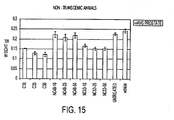
- Figure 22 presents urogenital tract weight and rate of photon emission associated with luciferase activity initially and after 14 days of treatment with bicalutamide or with NC53 for intact and castrated mice. The weight and rate of photon emission increased for both intact and castrated mice. Treatment of castrated mice with NC53 resulted in a decrease in weight and photon emission with respect to the untreated castrated mice, as did treatment with bicalutamide.
- Tier 1 compounds are particularly advantageous for use as AR antagonists, and as therapeutic agents for hormone refractory prostate cancer. They may be useful to treat other AR related diseases or conditions such as benign prostate hyperplasia, hair loss, and acne. These and related compounds may also be useful as modulators of other nuclear receptors, such as glucocorticoid receptor, estrogen receptor, and peroxisome proliferator-activated receptor, and as therapeutic agents for diseases in which nuclear receptors play a role, such as breast cancer, ovarian cancer, diabetes, cardiac diseases, and metabolism related diseases. They may be useful in assays e.g. as standards, or as intermediates or prodrugs. TABLE 5 Compounds of the invention marked "*". Other compounds for reference.
- TIER 1 COMPOUNDS NC2 NC3 NC1 NC6 NC58 NC7 NC45 NC16 NC33 NC34 NC35 NC36 NC59 NC60 NC61 NC62 NC63 NC64 NC51 NC41 NC47 NC48 NC66 NC67 NC68 NC69 NC53 NC57 NC55 NC70 NC56* NC57*
- Tier 2 compounds (see Table 6) were significantly better than bicalutamide for treating prostate cancer, although there were indications that NC12 could act as an agonist.
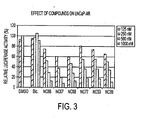
- Figure 3 illustrates that compounds NC66, NC67, NC68, NC53, and NC69 in Tier 1 and NC77 in Tier 2 dosed at concentrations ranging from 125 nM to 1000 nM acted to reduce luciferase activity in LNCaP-AR cells whereas control solutions of DMSO and of bicalutamide had little or no effect. It was found that at concentrations of 1000 nM, compounds NC7 and NC48, in Tier 1, caused a greater decrease in PSA level of LNCaP-AR cells than NC43, NC44, and NC50 in Tier 2.
- Figure 7 presents tumor volume over time, and illustrates that under treatment with bicalutamide or vehicle solution, tumors continued to grow, whereas under treatment with NC53, in Tier 1, tumors decreased in size.
- Figure 8 illustrates that photon emission associated with luciferase activity remained about the same or increased under treatment with bicalutamide relative to treatment with vehicle solution, whereas photon emission decreased under treatment with NC53.
- Figure 23 illustrates that under treatment with bicalutamide, there was little or no decrease in PSA levels, whereas under treatment with NC48 and NC53, PSA levels decreased.
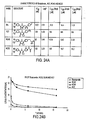
- Figure 24 illustrates that the IC 50 for NC7, NC48, and NC53, in Tier 1, was much lower than the IC 50 for bicalutamide.
- Tier 2 compounds are structurally similar to Tier 1 compounds, but with different substituents on the right hand aryl ring.
- Tier 2 compounds are advantageous for use as AR antagonists, and as therapeutic agents for hormone refractory prostate cancer. They may be useful to treat other AR related diseases or conditions such as benign prostate hyperplasia, hair loss, and acne.
- These and related compounds may also be useful as modulators of other nuclear receptors, such as estrogen receptor and peroxisome proliferator-activated receptor, and as therapeutic agents for diseases in which nuclear receptors play a role, such as breast cancer, ovarian cancer, diabetes, cardiac diseases, and metabolism related diseases. They may be useful in assays e.g. as standards, or as intermediates or prodrugs.
- Tier 3 compounds (see Table 7) were judged to be slightly better than bicalutamide for treating prostate cancer. NC43, NC44, and NC50 (in Tier 2) caused a greater decrease in PSA level of LNCaP-AR cells than NC45 and NC49, in Tier 3. All of these compounds caused a greater decrease in PSA level than bicalutamide.
- Tier 3 compounds were not diarylthiohydantoins, and were comparable in activity to prior art monoarylhydantoin compounds NC83, NC79, and NC80.
- Tier 3 compounds are useful as AR antagonists, and as therapeutic agents for hormone refractory prostate cancer. They may be useful to treat other AR related diseases or conditions such as benign prostate hyperplasia, hair loss, and acne. These and related compounds may also be useful as modulators of other nuclear receptors, such as estrogen receptor and peroxisome proliferator-activated receptor, and as therapeutic agents for diseases in which nuclear receptors play a role, such as breast cancer, ovarian cancer, diabetes, cardiac diseases, and metabolism related diseases. They may be useful in assays e.g. as standards, or as intermediates or prodrugs. TABLE 7 Compounds shown below for reference. TIER 3 COMPOUNDS NC78 NC79 (comparative) (comparative) NC80 NC81 (comparative) NC82 NC42 NC46 NC45 NC49
- Tier 4 compounds (see Table 8) were judged to be no better than bicalutamide for treating prostate cancer.
- Tier 4 NC93 and NC94 and Tier 1 NC7 for example, differ only in the substituent on the lower right carbon of the hydantoin ring. The substituents on the right hand aryl ring may also affect activity.
- Tier 4 compounds were not diaryl compounds (lacking the right hand aryl ring), were not thiohydantoins, were not disubstituted on the carbon on the lower right hand of the hydantoin ring, and/or had substituents other than oxygen or amido on the lower left hand carbon of the hydantoin ring. This provides evidence of the surprising advantages of diarylthiohydantoins that are disubstituted on the lower right hand carbon of the hydantoin ring and have oxygen or amido on the lower left hand carbon of the hydantoin ring.
- Tier 4 compounds may be useful as AR antagonists, and as therapeutic agents for hormone refractory prostate cancer, at least to the extent that they are comparable to bicalutamide. They may be useful to treat other AR related diseases or conditions such as benign prostate hyperplasia, hair loss, and acne. These and related compounds may also be useful as modulators of other nuclear receptors, such as estrogen receptor and peroxisome proliferator-activated receptor, and as therapeutic agents for diseases in which nuclear receptors play a role, such as breast cancer, ovarian cancer, diabetes, cardiac diseases, and metabolism related diseases. They may be useful in assays e.g. as standards, or as intermediates or prodrugs. TABLE 8 Compounds shown below for reference. TIER 4 COMPOUNDS NC83 NC4 (comparative) NC84 NC85 NC86 NC87 NC88 NC89 NC90 NC91 NC92 NC93 NC94 NC95 NC17 NC18 NC21 NC29 NC30 NC40 NC96 NC97 NC98 NC99 NC100
- Tier 5 compounds (see Table 9) were inactive or nearly inactive, and thus, were worse than bicalutamide for treating prostate cancer.
- the substituents on the right hand aryl ring are important to determining activity.
- Tier 5 compounds were not diaryl compounds (lacking the right hand aryl ring), were not thiohydantoins, were not disubstituted on the carbon on the lower right hand of the hydantoin ring, and/or had substituents other than oxygen or amido on the lower left hand carbon of the hydantoin ring.
- This provides evidence of the surprising advantages of diarylthiohydantoins that are disubstituted on the lower right hand carbon of the hydantoin ring and have oxygen or amido on the lower left hand carbon of the hydantoin ring.
- Tier 5 compounds would not be desirable for treatment of prostate cancer or as AR antagonists, although these and related compounds may be useful as modulators of other nuclear receptors, such as estrogen receptor and peroxisome proliferator-activated receptor, and as therapeutic agents for diseases in which nuclear receptors play a role, such as breast cancer, ovarian cancer, diabetes, cardiac diseases, and metabolism related diseases. They may be useful in assays e.g. as standards, or as intermediates or prodrugs. TABLE 9 Compounds shown below for reference. TIER 5 COMPOUNDS NC101 NC102 NC19 NC31 NC32 NC103 NC104 NC105 NC106
- Tier 6 compounds (see Table 10) were inactive or nearly inactive, and furthermore were strong agonists, and thus were much worse than bicalutamide for treating prostate cancer.
- the comparative compounds ranked very poor relative to the inventive compounds.
- NC107 had very poor activity, with a chlorine substituent on the left hand aryl ring, whereas NC2, with a trifluoromethane, and NC63, with iodine, ranked in Tier 1.
- Tier 6 compounds provide evidence of the surprising advantages of diarylthiohydantoins that are disubstituted on the lower right hand carbon of the hydantoin ring and have oxygen or amido on the lower left hand carbon of the hydantoin ring, and have certain substituents on the left hand aryl ring.
- Tier 6 compounds would not be desirable for treatment of prostate cancer or as AR antagonists.
- TIER 6 COMPOUNDS NC107 NC24 (comparative) NC25 NC26 (comparative) NC27 NC28 (comparative)
- Comparative example NC108 is expected to be in Tier 3 with comparative examples NC78-NC80.
- NC113 is expected to hydrolyze to NC7 (Tier 1), and should therefore have comparable activity.
- NC114 is expected to hydrolyze to NC16 (Tier 1), and should therefore have comparable activity.
- NC115 is expected to hydrolyze to NC3 (Tier 1), and NC120 and NC121 are expected to hydrolyze to NC50 (Tier 2), and they should therefore have comparable activity.
- TABLE 11 Compounds shown for reference UNTIERED COMPOUNDS NC108 NC109 (comparative) NC10 NC110 NC111 NC112 NC113 NC114 NC115 NC116 NC117 NC118 NC19 NC120 NC121 NC122 NC123 NC124 NC125 NC126
- NC77 and NC53 differ only by a single fluorine substituent on an aryl ring, and NC53 is in Tier 1, while NC77 is in Tier 2, both being better than bicalutamide for the treatment of prostate cancer, but NC53 being superior.
- NC98 which differs from NC77 only in having an additional carbon atom between the methylcarbamoyl group and the aryl ring, is no better than bicalutamide for the treatment of prostate cancer and is ranked in Tier 4.
- NC77, NC53, and NC98 The effect of NC77, NC53, and NC98 on luciferase activity can be seen in Figure 25 .
- the luciferase activity upon exposure to NC77 and NC53 is less than the luciferase activity upon exposure to NC98.
- NC4 differs from NC3 only in that an amino group is substituted for a hydroxyl group. However, whereas NC3 is in Tier 1, much better than bicalutamide for the treatment of prostate cancer, NC4 is in Tier 4, no better than bicalutamide.
- the effect of NC3 and NC4 on luciferase activity in the 1AR cell line was studied by administering various compounds at concentrations ranging from 1.25 to 10 ⁇ mol and observing PSA levels. For a given dose, the luciferase activity upon exposure to NC3 is less than the luciferase activity upon exposure to NC4.
- NC3 and NC4 The effect of NC3 and NC4 on luciferase activity in the 4AR cell line was studied by administering various compounds at concentrations ranging from 1.25 to 10 ⁇ mol and observing luciferase activity. For a given dose, the luciferase activity upon exposure to NC3 is less than the luciferase activity upon exposure to NC4.
- the effect of NC3 and NC4 on PSA levels in the LN/AR cell line was studied by administering various compounds at concentrations ranging from 1.25 to 10 ⁇ mol and observing luciferase activity. For a given dose, the PSA level upon exposure to NC3 is less than the PSA level upon exposure to NC4.
- NC47 and NC48 differ from each other only by a methyl substituent on the end of a carbamoyl group and both compounds are ranked in Tier 1, although NC48 has been found to be particularly advantageous.
- NC46 is the same as NC47, with the exception of a methoxy group being substituted for an amino group. However, NC46 is ranked in Tier 3.
- NC42 is similar to NC46, but has one less carbon in the chain linking the ester group to the aryl ring; NC42 is ranked in Tier 3.
- the effect of NC47, NC48, NC42, and NC46 on PSA levels in the LN/AR cell line was studied by administering various compounds at concentrations ranging from 125 nmol to 1000 nmol and observing PSA levels. For a given concentration, the PSA level upon exposure to NC47 and NC48 is less than the PSA level upon exposure to NC42 and NC46.
- NC68 and NC103 differ from each other in that the former has a methylcarbamoyl group attached to an aryl ring and a dimethyl substituent attached to the thiohydantoin group, whereas the latter has a methylamino group attached to the right hand aryl ring and a cyclobutyl substituent attached to the thiohydantoin group.
- NC68 is in Tier 1, much better than bicalutamide for the treatment of prostate cancer
- NC103 is in Tier 5, inactive or nearly inactive in the treatment of prostate cancer.
- NC68 and NC103 The effect of NC68 and NC103 on luciferase activity in the LN/AR cell line was studied by administering various compounds at concentrations ranging from 125 nmol to 1000 nmol and observing luciferase activity. For a given concentration, the luciferase activity upon exposure to NC68 is less than the luciferase activity upon exposure to NC103.
- NC16 and NC18 differ from each other in the substitution of a thio for an oxo group and a dimethyl substituent for a cyclobutyl substituent. Whereas NC16 is in Tier 1, NC18 is in Tier 4.
- the compounds of the invention are useful as pharmaceutical compositions prepared with a therapeutically effective amount of a compound of the invention, as defined herein, and a pharmaceutically acceptable carrier or diluent.
- diarylhydantoin compounds of the invention can be formulated as pharmaceutical compositions and administered to a subject in need of treatment, for example a mammal, such as a human patient, in a variety of forms adapted to the chosen route of administration, for example, orally, nasally, intraperitoneally, or parenterally, by intravenous, intramuscular, topical or subcutaneous routes, or by injection into tissue.
- diarylhydantoin compounds of the invention may be systemically administered, e.g., orally, in combination with a pharmaceutically acceptable vehicle such as an inert diluent or an assimilable edible carrier, or by inhalation or insufflation. They may be enclosed in hard or soft shell gelatin capsules, may be compressed into tablets, or may be incorporated directly with the food of the patient's diet.
- a pharmaceutically acceptable vehicle such as an inert diluent or an assimilable edible carrier, or by inhalation or insufflation.
- the diarylhydantoin compounds may be combined with one or more excipients and used in the form of ingestible tablets, buccal tablets, troches, capsules, elixirs, suspensions, syrups, wafers, and the like.
- the diarylhydantoin compounds may be combined with a fine inert powdered carrier and inhaled by the subject or insufflated. Such compositions and preparations should contain at least 0.1% diarylhydantoin compounds. The percentage of the compositions and preparations may, of course, be varied and may conveniently be between about 2% to about 60% of the weight of a given unit dosage form. The amount of diarylhydantoin compounds in such therapeutically useful compositions is such that an effective dosage level will be obtained.
- the tablets, troches, pills, capsules, and the like may also contain the following: binders such as gum tragacanth, acacia, corn starch or gelatin; excipients such as dicalcium phosphate; a disintegrating agent such as corn starch, potato starch, alginic acid and the like; a lubricant such as magnesium stearate; and a sweetening agent such as sucrose, fructose, lactose or aspartame or a flavoring agent such as peppermint, oil of wintergreen, or cherry flavoring may be added.
- a liquid carrier such as a vegetable oil or a polyethylene glycol.
- any material used in preparing any unit dosage form should be pharmaceutically acceptable and substantially non-toxic in the amounts employed.
- the diarylhydantoin compounds may be incorporated into sustained-release preparations and devices.
- the diarylhydantoin compounds may be incorporated into time release capsules, time release tablets, and time release pills.
- the diarylhydantoin compounds may also be administered intravenously or intraperitoneally by infusion or injection.
- Solutions of the diarylhydantoin compounds can be prepared in water, optionally mixed with a nontoxic surfactant.
- Dispersions can also be prepared in glycerol, liquid polyethylene glycols, triacetin, and mixtures thereof and in oils. Under ordinary conditions of storage and use, these preparations can contain a preservative to prevent the growth of microorganisms.
- the pharmaceutical dosage forms suitable for injection or infusion can include sterile aqueous solutions or dispersions or sterile powders comprising the diarylhydantoin compounds which are adapted for the extemporaneous preparation of sterile injectable or infusible solutions or dispersions, optionally encapsulated in liposomes.
- the ultimate dosage form should be sterile, fluid and stable under the conditions of manufacture and storage.
- the liquid carrier or vehicle can be a solvent or liquid dispersion medium comprising, for example, water, ethanol, a polyol (for example, glycerol, propylene glycol, liquid polyethylene glycols, and the like), vegetable oils, nontoxic glyceryl esters, and suitable mixtures thereof.
- the proper fluidity can be maintained, for example, by the formation of liposomes, by the maintenance of the required particle size in the case of dispersions or by the use of surfactants.
- the prevention of the action of microorganisms can be brought about by various antibacterial and antifungal agents, for example, parabens, chlorobutanol, phenol, sorbic acid, thimerosal, and the like. In many cases, it will be preferable to include isotonic agents, for example, sugars, buffers or sodium chloride. Prolonged absorption of the injectable compositions can be brought about by the use in the compositions of agents delaying absorption, for example, aluminum monostearate and gelatin.
- Sterile injectable solutions are prepared by incorporating the diarylhydantoin compounds in the required amount in the appropriate solvent with various of the other ingredients enumerated above, as required, followed by filter sterilization.
- the preferred methods of preparation are vacuum drying and freeze drying techniques, which yield a powder of the active ingredient plus any additional desired ingredient present in the previously sterile-filtered solutions.
- diarylhydantoin compounds may be applied in pure form. However, it will generally be desirable to administer them to the skin as compositions or formulations, in combination with a dermatologically acceptable carrier, which may be a solid or a liquid.
- a dermatologically acceptable carrier which may be a solid or a liquid.
- Useful solid carriers include finely divided solids such as talc, clay, microcrystalline cellulose, silica, alumina and the like. Other solid carriers include nontoxic polymeric nanoparticles or microparticles.
- Useful liquid carriers include water, alcohols or glycols or water/alcohol/glycol blends, in which the diarylhydantoin compounds can be dissolved or dispersed at effective levels, optionally with the aid of non-toxic surfactants.
- Adjuvants such as fragrances and additional antimicrobial agents can be added to optimize the properties for a given use.
- the resultant liquid compositions can be applied from absorbent pads, used to impregnate bandages and other dressings, or sprayed onto the affected area using pump-type or aerosol sprayers.
- Thickeners such as synthetic polymers, fatty acids, fatty acid salts and esters, fatty alcohols, modified celluloses or modified mineral materials can also be employed with liquid carriers to form spreadable pastes, gels, ointments, soaps, and the like, for application directly to the skin of the user.
- Examples of useful dermatological compositions which can be used to deliver the diarylhydantoin compounds to the skin are known to the art; for example, see Jacquet et al. (U.S. Pat. No. 4,608,392 ), Geria (U.S. Pat No. 4,992,478 ), Smith et al. (U.S. Pat. No. 4,559,157 ) and Wortzman (U.S. Pat. No. 4,820,508 ).
- Useful dosages of the compounds of formula I can be determined by comparing their in vitro activity, and in vivo activity in animal models. Methods for the extrapolation of effective dosages in mice, and other animals, to humans are known to the art; for example, see U.S. Pat. No. 4,938,949 .
- the concentration of the diarylhydantoin compounds in a liquid composition can be from about 0.1-25% by weight, or from about 0.5-10% by weight.
- concentration in a semi-solid or solid composition such as a gel or a powder can be about 0.1-5% by weight, or about 0.5-2.5% by weight.
- diarylhydantoin compounds required for use in treatment will vary not only with the particular salt selected but also with the route of administration, the nature of the condition being treated and the age and condition of the patient and will be ultimately at the discretion of the attendant physician or clinician.
- Effective dosages and routes of administration of agents of the invention are conventional.
- the exact amount (effective dose) of the agent will vary from subject to subject, depending on, for example, the species, age, weight and general or clinical condition of the subject, the severity or mechanism of any disorder being treated, the particular agent or vehicle used, the method and scheduling of administration, and the like.
- a therapeutically effective dose can be determined empirically, by conventional procedures known to those of skill in the art. See, e.g., The Pharmacological Basis of therapeutic, Goodman and Gilman, eds., Macmillan Publishing Co., New York .
- an effective dose can be estimated initially either in cell culture assays or in suitable animal models. The animal model may also be used to determine the appropriate concentration ranges and routes of administration. Such information can then be used to determine useful doses and routes for administration in humans.
- a therapeutic dose can also be selected by analogy to dosages for comparable therapeutic agents.
- Treatment may involve daily or multi-daily doses of compound(s) over a period of a few days to months, or even years.
- a suitable dose will be in the range of from about 0.001 to about 100 mg/kg, e.g., from about 0.01 to about 100 mg/kg of body weight per day, such as above about 0.1 mg per kilogram, or in a range of from about 1 to about 10 mg per kilogram body weight of the recipient per day.
- a suitable dose may be about 1 mg/kg, 10 mg/kg, or 50 mg/kg of body weight per day.
- diarylhydantoin compounds are conveniently administered in unit dosage form; for example, containing 0.05 to 10000 mg, 0.5 to 10000 mg, 5 to 1000 mg, or about 100 mg of active ingredient per unit dosage form.
- the diarylhydantoin compounds can be administered to achieve peak plasma concentrations of, for example, from about 0.5 to about 75 ⁇ M, about 1 to 50 ⁇ M, about 2 to about 30 ⁇ M, or about 5 to about 25 ⁇ M.
- Exemplary desirable plasma concentrations include at least or no more than 0.25, 0.5, 1,5, 10, 25, 50, 75, 100 or 200 ⁇ M.
- plasma levels may be from about 1 to 100 micromolar or from about 10 to about 25 micromolar. This may be achieved, for example, by the intravenous injection of a 0.05 to 5% solution of the diarylhydantoin compounds, optionally in saline, or orally administered as a bolus containing about 1-100 mg of the diarylhydantoin compounds.
- Desirable blood levels may be maintained by continuous infusion to provide about 0.00005 - 5 mg per kg body weight per hour, for example at least or no more than 0.00005, 0.0005, 0.005, 0.05, 0.5, or 5 mg/kg/hr.
- such levels can be obtained by intermittent infusions containing about 0.0002 - 20 mg per kg body weight, for example, at least or no more than 0.0002, 0.002, 0.02, 0.2, 2, 20, or 50 mg of the diarylhydantoin compounds per kg of body weight.
- the diarylhydantoin compounds may conveniently be presented in a single dose or as divided doses administered at appropriate intervals, for example, as two, three, four or more sub-doses per day.
- the sub-dose itself may be further divided, e.g., into a number of discrete loosely spaced administrations; such as multiple inhalations from an insufflator.
- a number of the above-identified compounds exhibit little or no agonistic activities with respect to hormone refractory prostate cancer cells. Because these compounds are strong AR inhibitors, they can be used not only in treating prostate cancer, but also in treating other AR related diseases or conditions such as benign prostate hyperplasia, hair loss, and acne. Because AR belongs to the family of nuclear receptors, these compounds may serve as scaffolds for drug synthesis targeting other nuclear receptors, such as estrogen receptor and peroxisome proliferator-activated receptor. Therefore, they may be further developed for other diseases such as breast cancer, ovarian cancer, diabetes, cardiac diseases, and metabolism related diseases, in which nuclear receptors play a role.
- the cyanohydrins 10bc are converted into the different cyanoamines 12bc by reaction with the different anilines 11ab ( 10b and 11a give 12b , 10c and 11b give 12c ).
- the aniline 13 is converted in one step into the isothiocyanate 14 .
- Addition of 12bc to 14 followed by treatment with mild acid produces the desired thiohydantoins 5 (NC55), 6 (NC56), in good yield.
Landscapes
- Chemical & Material Sciences (AREA)
- Health & Medical Sciences (AREA)
- Organic Chemistry (AREA)
- Animal Behavior & Ethology (AREA)
- Veterinary Medicine (AREA)
- Public Health (AREA)
- Medicinal Chemistry (AREA)
- General Health & Medical Sciences (AREA)
- Pharmacology & Pharmacy (AREA)
- Life Sciences & Earth Sciences (AREA)
- Epidemiology (AREA)
- Nuclear Medicine, Radiotherapy & Molecular Imaging (AREA)
- General Chemical & Material Sciences (AREA)
- Chemical Kinetics & Catalysis (AREA)
- Engineering & Computer Science (AREA)
- Bioinformatics & Cheminformatics (AREA)
- Endocrinology (AREA)
- Reproductive Health (AREA)
- Pregnancy & Childbirth (AREA)
- Gynecology & Obstetrics (AREA)
- Urology & Nephrology (AREA)
- Pharmaceuticals Containing Other Organic And Inorganic Compounds (AREA)
- Medicinal Preparation (AREA)
- Nitrogen Condensed Heterocyclic Rings (AREA)
- Plural Heterocyclic Compounds (AREA)
- Investigating Or Analysing Biological Materials (AREA)
- Measuring Or Testing Involving Enzymes Or Micro-Organisms (AREA)
- Micro-Organisms Or Cultivation Processes Thereof (AREA)
- Dermatology (AREA)
- Steroid Compounds (AREA)
Claims (18)
- Eine Verbindung mit der Formel
 wobei R1 und R2 zusammen mit dem Kohlenstoff, mit dem sie verknüpft sind, eine Cycloalkylgruppe von 4 bis 5 Kohlenstoffatomen sind,wobei R3 Cyanoalkyl ist, undwobei R4 Wasserstoff oder Fluor ist.
 - Verbindung nach Anspruch 1, wobei R1 und R2 zusammen mit dem Kohlenstoff, mit dem sie verknüpft sind, ein Cycloalkyl von 4 Kohlenstoffatomen sind.
- Eine Verbindung mit der Formel

- Verbindung nach Anspruch 1 mit der Formel

- Verbindung nach einem beliebigen der Ansprüche 1 bis 4 zur Verwendung in der Behandlung des menschlichen oder tierischen Körpers durch Therapie.
- Pharmazeutische Zusammensetzung, umfassend eine therapeutisch wirksame Menge einer Verbindung gemäß einem beliebigen der Ansprüche 1 bis 4 oder eines pharmazeutisch verträglichen Salzes davon, und einen pharmazeutisch verträglichen Träger oder Verdünnungsmittel.
- Pharmazeutische Zusammensetzung nach Anspruch 6 zur Verwendung in der Behandlung des menschlichen oder tierischen Körpers durch Therapie.
- Pharmazeutische Zusammensetzung nach Anspruch 6 zur Verwendung in einem Verfahren zum Behandeln einer hyperproliferativen Störung.
- Zusammensetzung nach Anspruch 8, wobei:(a) die Zusammensetzung eine Form aufweist, ausgewählt aus der Gruppe bestehend aus einer Lösung, einer Dispersion, einer Suspension, einem Pulver, einer Kapsel, einer Tablette, einer Pille, einer Retardkapsel, einer Retardtablette und einer Retardpille; oder(b) die Zusammensetzung eine Form aufweist, ausgewählt aus der Gruppe bestehend aus einer Kapsel, einer Tablette und einer Pille; oder(c) die Zusammensetzung durch intravenöse Injektion, durch Injektion in Gewebe, intraperitoneal, oral oder nasal verabreicht wird; oder(d) die Zusammensetzung bei einer Dosierung der Verbindung im Bereich von etwa 0,001 mg pro kg Körpergewicht pro Tag bis etwa 100 mg pro kg Körpergewicht pro Tag verabreicht wird; oder(e) die Zusammensetzung bei einer Dosierung der Verbindung im Bereich von etwa 0,01 mg pro kg Körpergewicht pro Tag bis etwa 100 mg pro kg Körpergewicht pro Tag verabreicht wird; oder(f) die Zusammensetzung bei einer Dosierung der Verbindung im Bereich von etwa 0,1 mg pro kg Körpergewicht pro Tag bis etwa 10 mg pro kg Körpergewicht pro Tag verabreicht wird; oder(g) die Zusammensetzung bei einer Dosierung der Verbindung im Bereich von etwa 1 mg pro kg Körpergewicht pro Tag verabreicht wird; oder(h) die Zusammensetzung mit der Transkription von Prostata-spezifischer Antigen-mRNA beeinträchtigt; oder(i) die Zusammensetzung nukleare Translokation eines Androgen-Rezeptorproteins verhindert; oder(j) die Zusammensetzung ein Androgen-Rezeptorprotein destabilisiert.
- Verwendung einer pharmazeutischen Zusammensetzung nach Anspruch 6 oder 9 für die Herstellung eines Medikaments zur Verwendung in einem Verfahren zum Behandeln einer hyperproliferativen Störung.
- Verfahren zum Synthetisieren:(a) der Verbindung mit der Formel
 Mischen von N,N-Dimethyl 4-[4-(1-cyanocyclobutylamino)phenyl]butan-amid, 4-Isothiocyanat-2-trifluormethylbenzonitril und DMF und Erhitzen unter Rückfluss, um ein erstes Gemisch zu bilden;Hinzufügen eines Alkohols und einer Säure zu der ersten Mischung, um eine zweite Mischung zu bilden;Refluxieren des zweiten Gemischs;Kühlen des zweiten Gemischs;Kombinieren des zweiten Gemischs mit Wasser und Extrahieren einer organischen Schicht;
undIsolieren der Verbindung aus der organischen Schicht; oder(b) der Verbindung mit der Formel Mischen von DMSO, Dichlormethan und Oxalylchlorid, um ein erstes Gemisch zu bilden,Hinzufügen von 4-(4-(7-(4-Cyano-3-(trifluormethyl)phenyl)-8-oxo-6-thioxo-5,7-diazaspiro[3.4]octan-5-yl)phenyl)butanamid zu dem ersten Gemisch, um ein zweites Gemisch zu bilden;Hinzufügen von Triethylamin zu dem zweiten Gemisch, um ein drittes Gemisch zu bilden;Wärmen des dritten Gemischs und Quenchen mit wässrigem NH4Cl, um ein viertes Gemisch zu bilden;Extrahieren einer organischen Schicht aus dem vierten Gemisch; und Isolieren der Verbindung aus der organischen Schicht.
 - In vitro-Verfahren, umfassend das Inkontaktbringen einer Säugerzelle, die zum Exprimieren von Prostata-spezifischem Antigen fähig ist, mit einer ausreichenden Menge einer Diarylthiohydantoinverbindung, um die Transkription von Prostata-spezifischer Antigen-mRNA zu beeinträchtigen,
wobei die Diarylthiohydantoinverbindung die Formel
 aufweist, wobei R1 und R2 zusammen mit dem Kohlenstoff, mit dem sie verknüpft sind, eine Cycloalkylgruppe von 4 bis 5 Kohlenstoffatomen sind,wobei R3 Cyanoalkyl ist, undwobei R4 Wasserstoff oder Fluor ist.
 - Verfahren nach Anspruch 12, wobei:(a) die Diarylthiohydantoinverbindung ausgewählt ist aus der Gruppe bestehend aus
 (b) die Diarylthiohydantoinverbindung die Bildung eines Transkriptionskomplexes auf einem Prostata-spezifischen Antigen-Gen verhindert; oder(c) die Diarylthiohydantoinverbindung ein Androgen-Rezeptorprotein hindert, mit einem Prostata-spezifischen Antigen-Gen zu komplexieren; oder(d) die Diarylthiohydantoinverbindung eine RNA-Polymerase II hindert, mit einem Prostata-spezifischen Antigen-Gen zu komplexieren.
 - In vitro-Verfahren, umfassend das Inkontaktbringen einer Säugerzelle mit einer ausreichenden Menge einer Diarylthiohydantoinverbindung, um nukleare Translokation eines Androgen-Rezeptorproteins zu verhindern und/oder ein Androgen-Rezeptorprotein zu destabilisieren,
wobei die Diarylthiohydantoinverbindung die Formel
 aufweist, wobei R1 und R2 zusammen mit dem Kohlenstoff, mit dem sie verknüpft sind, eine Cycloalkylgruppe von 4 bis 5 Kohlenstoffatomen sind,wobei R3 Cyanoalkyl ist, undwobei R4 Wasserstoff oder Fluor ist.
 - Pharmazeutische Zusammensetzung zur Verwendung wie in Anspruch 8 beansprucht oder der Verwendung nach Anspruch 10, wobei die hyperproliferative Störung ausgewählt ist aus der Gruppe, bestehend aus Prostatakrebs, hormonresistentem Prostatakrebs und hormonsensitivem Prostatakrebs.
- Die pharmazeutische Zusammensetzung zur Verwendung wie in Anspruch 8 beansprucht oder der Verwendung nach Anspruch 10, wobei die hyperproliferative Störung benigne Prostatahyperplasie ist.
- Pharmazeutische Zusammensetzung zur Verwendung wie in Anspruch 8 beansprucht oder der Verwendung nach Anspruch 10, wobei die hyperproliferative Störung ausgewählt ist aus der Gruppe, bestehend aus Brustkrebs und Eierstockkrebs.
- Verbindung nach Anspruch 1, wobei R4 Wasserstoff ist.
Priority Applications (2)
| Application Number | Priority Date | Filing Date | Title |
|---|---|---|---|
| EP15188222.2A EP3020706A1 (de) | 2006-03-29 | 2007-03-29 | Diarylthiohydantoinverbindungen zur behandlung hyperproliferativer erkrankungen |
| EP11181133A EP2439196A1 (de) | 2006-03-29 | 2007-03-29 | Diarylthiohydantoin-Verbindungen zur Anwendung in einem Verfahren zur Behandlung einer hyperproliferativen Erkrankung |
Applications Claiming Priority (2)
| Application Number | Priority Date | Filing Date | Title |
|---|---|---|---|
| US78683706P | 2006-03-29 | 2006-03-29 | |
| PCT/US2007/007854 WO2007127010A2 (en) | 2006-03-29 | 2007-03-29 | Diarylthiohydantoin compounds |
Related Child Applications (2)
| Application Number | Title | Priority Date | Filing Date |
|---|---|---|---|
| EP15188222.2A Division EP3020706A1 (de) | 2006-03-29 | 2007-03-29 | Diarylthiohydantoinverbindungen zur behandlung hyperproliferativer erkrankungen |
| EP11181133A Division-Into EP2439196A1 (de) | 2006-03-29 | 2007-03-29 | Diarylthiohydantoin-Verbindungen zur Anwendung in einem Verfahren zur Behandlung einer hyperproliferativen Erkrankung |
Publications (2)
| Publication Number | Publication Date |
|---|---|
| EP2013187A2 EP2013187A2 (de) | 2009-01-14 |
| EP2013187B1 true EP2013187B1 (de) | 2014-10-29 |
Family
ID=38656079
Family Applications (3)
| Application Number | Title | Priority Date | Filing Date |
|---|---|---|---|
| EP15188222.2A Withdrawn EP3020706A1 (de) | 2006-03-29 | 2007-03-29 | Diarylthiohydantoinverbindungen zur behandlung hyperproliferativer erkrankungen |
| EP07754380.9A Active EP2013187B1 (de) | 2006-03-29 | 2007-03-29 | Diarylthiohydantoin-verbindungen |
| EP11181133A Ceased EP2439196A1 (de) | 2006-03-29 | 2007-03-29 | Diarylthiohydantoin-Verbindungen zur Anwendung in einem Verfahren zur Behandlung einer hyperproliferativen Erkrankung |
Family Applications Before (1)
| Application Number | Title | Priority Date | Filing Date |
|---|---|---|---|
| EP15188222.2A Withdrawn EP3020706A1 (de) | 2006-03-29 | 2007-03-29 | Diarylthiohydantoinverbindungen zur behandlung hyperproliferativer erkrankungen |
Family Applications After (1)
| Application Number | Title | Priority Date | Filing Date |
|---|---|---|---|
| EP11181133A Ceased EP2439196A1 (de) | 2006-03-29 | 2007-03-29 | Diarylthiohydantoin-Verbindungen zur Anwendung in einem Verfahren zur Behandlung einer hyperproliferativen Erkrankung |
Country Status (15)
| Country | Link |
|---|---|
| US (3) | US8110594B2 (de) |
| EP (3) | EP3020706A1 (de) |
| JP (5) | JP5350217B2 (de) |
| KR (4) | KR101519705B1 (de) |
| CN (2) | CN101460467B (de) |
| AU (1) | AU2007245022A1 (de) |
| CA (1) | CA2648139A1 (de) |
| IL (2) | IL194438A (de) |
| MX (1) | MX2008012492A (de) |
| NO (2) | NO341071B1 (de) |
| NZ (2) | NZ572374A (de) |
| RU (3) | RU2449993C2 (de) |
| SG (2) | SG170809A1 (de) |
| WO (1) | WO2007127010A2 (de) |
| ZA (1) | ZA200809098B (de) |
Families Citing this family (81)
| Publication number | Priority date | Publication date | Assignee | Title |
|---|---|---|---|---|
| JPH0655932B2 (ja) | 1990-12-28 | 1994-07-27 | 中部工業株式会社 | 装飾材用接着剤組成物およびその使用方法 |
| AU2004305075A1 (en) | 2003-12-19 | 2005-07-07 | The Regents Of The University Of California | Methods and materials for assessing prostate cancer therapies |
| NZ550102A (en) | 2004-02-24 | 2010-10-29 | Univ California | Methods and materials for assessing prostate cancer therapies and compounds (thiohydantoine derivatives) |
| US7709517B2 (en) | 2005-05-13 | 2010-05-04 | The Regents Of The University Of California | Diarylhydantoin compounds |
| DK2656842T3 (en) | 2006-03-27 | 2016-11-07 | Univ California | Androgen receptor MODULATOR FOR THE TREATMENT OF PROSTATE CANCER AND androgen receptor-ASSOCIATED DISEASES |
| EP3020706A1 (de) | 2006-03-29 | 2016-05-18 | The Regents Of The University Of California | Diarylthiohydantoinverbindungen zur behandlung hyperproliferativer erkrankungen |
| WO2008119015A2 (en) * | 2007-03-27 | 2008-10-02 | Sloan-Kettering Institute For Cancer Research | Synthesis of thiohydantoins |
| EP2220050A2 (de) * | 2007-10-26 | 2010-08-25 | The Regents Of The University Of California | Diarylhydantoinverbindungen als androgenrezeptormodulatoren |
| EP2400847B1 (de) | 2009-02-24 | 2014-12-17 | Medivation Prostate Therapeutics, Inc. | Spezifische diarylthiohydantoinverbindungen |
| WO2010118354A1 (en) * | 2009-04-09 | 2010-10-14 | Medivation Prostate Therapeutics, Inc. | Substituted di-arylhydantoin and di-arylthiohydantoin compounds and methods for use thereof |
| JP5659232B2 (ja) * | 2009-09-10 | 2015-01-28 | トン、ヨウヂ | アンドロゲン受容体アンタゴニストおよびその使用 |
| TW201111378A (en) | 2009-09-11 | 2011-04-01 | Bayer Schering Pharma Ag | Substituted (heteroarylmethyl) thiohydantoins |
| WO2011044327A1 (en) | 2009-10-07 | 2011-04-14 | Medivation Prostate Therapeutics, Inc. | Substituted phenylcarbamoyl alkylamino arene compounds and n,n'-bis-arylurea compounds |
| WO2011069951A1 (en) | 2009-12-11 | 2011-06-16 | Glaxo Group Limited | Imidazolidinedione derivatives |
| AU2011218173C1 (en) * | 2010-02-16 | 2015-04-16 | Aragon Pharmaceuticals, Inc. | Androgen receptor modulators and uses thereof |
| JP5718372B2 (ja) | 2010-02-24 | 2015-05-13 | メディベイション プロステイト セラピューティクス, インコーポレイテッド | ジアリールチオヒダントイン化合物およびジアリールヒダントイン化合物を合成するためのプロセス |
| RU2434851C1 (ru) * | 2010-07-22 | 2011-11-27 | Александр Васильевич Иващенко | Циклические n, n'-диарилтиомочевины или n, n'-диарилмочевины - антагонисты андрогенных рецепторов, противораковое средство, способ получения и применения |
| KR101862375B1 (ko) | 2010-12-06 | 2018-05-29 | 오티포니 세라피틱스 리미티드 | Kv3 억제제로서 유용한 하이단토인 유도체 |
| AU2012225038B2 (en) * | 2011-03-10 | 2016-03-10 | Suzhou Kintor Pharmaceuticals, Inc. | Androgen receptor antagonists and uses thereof |
| CA2836277A1 (en) * | 2011-05-17 | 2012-11-22 | Takeda Pharmaceutical Company Limited | Pharmaceutical compositions and methods for treating cancer |
| US9193704B2 (en) | 2011-06-07 | 2015-11-24 | Autifony Therapeutics Limited | Hydantoin derivatives as KV3 inhibitors |
| BR112014002200A2 (pt) * | 2011-07-29 | 2017-03-07 | Medivation Prostate Therapeutics Inc | tratamento de câncer de mama |
| CN103159680A (zh) * | 2011-12-14 | 2013-06-19 | 爱美尼迪药物有限公司 | 咪唑二酮类化合物及其用途 |
| US20150057452A1 (en) | 2012-04-04 | 2015-02-26 | Catylix, Inc. | Selective androgen receptor modulators |
| BR112014028718A2 (pt) | 2012-05-22 | 2017-06-27 | Autifony Therapeutics Ltd | derivados de hidantoína como inibidores de kv3 |
| BR112014028991A2 (pt) | 2012-05-22 | 2017-06-27 | Autifony Therapeutics Ltd | triazóis como inibidores de kv3 |
| NZ702203A (en) * | 2012-06-07 | 2016-09-30 | Aragon Pharmaceuticals Inc | Crystalline forms of an androgen receptor modulator |
| AU2013316754A1 (en) * | 2012-09-11 | 2015-04-30 | Dr. Reddy's Laboratories Limited | Enzalutamide polymorphic forms and its preparation |
| IL312316A (en) | 2012-09-26 | 2024-06-01 | Aragon Pharmaceuticals Inc | Antiandrogens for the treatment of castration-resistant prostate cancer without metastases |
| WO2014062852A2 (en) * | 2012-10-16 | 2014-04-24 | Whitehead Institute For Biomedical Research | Thiohydantoin derivatives and uses thereof |
| EP2911666B1 (de) * | 2012-10-26 | 2022-08-24 | Memorial Sloan-Kettering Cancer Center | Modulatoren eines resistenten androgenrezeptors |
| JOP20200097A1 (ar) | 2013-01-15 | 2017-06-16 | Aragon Pharmaceuticals Inc | معدل مستقبل أندروجين واستخداماته |
| RU2520134C1 (ru) * | 2013-02-27 | 2014-06-20 | Общество с ограниченной ответственностью "Авионко" (ООО "Авионко") | Замещенные (r)-3-(4-метилкарбамоил-3-фторфениламино)-тетрагидро-фуран-3-енкарбоновые кислоты и их эфиры, способ их получения и применения |
| WO2014167428A2 (en) * | 2013-04-10 | 2014-10-16 | Shilpa Medicare Limited | Amorphous 4-(3-(4-cyano-3-(trifluoromethyl)phenyl)-5,5-dimethyl-4-oxo-2-thioxoimidazolidin-1-yl)-2-fluoro-n-methylbenzamide |
| GB201311891D0 (en) | 2013-07-03 | 2013-08-14 | Glaxosmithkline Ip Dev Ltd | Novel compound |
| GB201311888D0 (en) | 2013-07-03 | 2013-08-14 | Glaxosmithkline Ip Dev Ltd | Novel compounds |
| WO2015042170A1 (en) | 2013-09-17 | 2015-03-26 | Wayne State University | Compositions and uses of combinations of dim-related indoles and selected anti-androgen compounds |
| WO2015063720A1 (en) | 2013-10-31 | 2015-05-07 | Ranbaxy Laboratories Limited | Process for the preparation of enzalutamide |
| WO2015089338A2 (en) * | 2013-12-11 | 2015-06-18 | Sloan-Kettering Institute For Cancer Research | Glucocorticoid inhibitors for treatment of prostate cancer |
| US20160318875A1 (en) | 2013-12-16 | 2016-11-03 | Sun Pharmaceutical Industries Limited | Processes and intermediates for the preparation of enzalutamide |
| US9682960B2 (en) | 2013-12-19 | 2017-06-20 | Endorecherche, Inc. | Non-steroidal antiandrogens and selective androgen receptor modulators with a pyridyl moiety |
| CN104803919A (zh) * | 2014-01-26 | 2015-07-29 | 上海医药工业研究院 | 用于制备恩杂鲁胺中间体的方法 |
| CN112402360A (zh) * | 2014-02-05 | 2021-02-26 | 斯洛文尼亚莱柯制药股份有限公司 | 雄激素受体拮抗剂的固体药物组合物 |
| WO2015121768A1 (en) | 2014-02-13 | 2015-08-20 | Ranbaxy Laboratories Limited | Process for the preparation of enzalutamide |
| US20180228907A1 (en) | 2014-04-14 | 2018-08-16 | Arvinas, Inc. | Cereblon ligands and bifunctional compounds comprising the same |
| CN104003939B (zh) * | 2014-06-06 | 2017-07-07 | 山东大学 | 二芳基取代乙内酰硫脲类化合物及其制备方法与应用 |
| WO2015196144A2 (en) | 2014-06-20 | 2015-12-23 | England Pamela M | Androgen receptor antagonists |
| EP3186247B1 (de) * | 2014-08-26 | 2021-03-03 | Astar Biotech LLC | Proteinkinasehemmer |
| WO2016051423A2 (en) | 2014-10-01 | 2016-04-07 | Laurus Labs Private Limited | An improved process for the preparation of enzalutamide |
| WO2016079522A1 (en) | 2014-11-20 | 2016-05-26 | University College Cardiff Consultants Limited | Androgen receptor modulators and their use as anti-cancer agents |
| WO2016079521A1 (en) | 2014-11-20 | 2016-05-26 | University College Cardiff Consultants Limited | Androgen receptor modulators and their use as anti-cancer agents |
| EP3604556A1 (de) | 2014-12-12 | 2020-02-05 | Medivation Prostate Therapeutics LLC | Verfahren zur vorhersage der reaktion auf brustkrebstherapeutika und verfahren zur behandlung von brustkrebs |
| HK1247204A1 (zh) | 2015-01-20 | 2018-09-21 | Arvinas Operations, Inc. | 用於雄激素受体的靶向降解的化合物和方法 |
| US12312316B2 (en) | 2015-01-20 | 2025-05-27 | Arvinas Operations, Inc. | Compounds and methods for the targeted degradation of androgen receptor |
| CN106187905B (zh) * | 2015-05-05 | 2020-02-21 | 北京海步医药科技股份有限公司 | 丁鲁他胺的结晶形式及其制备方法 |
| ITUB20151204A1 (it) | 2015-05-28 | 2016-11-28 | Olon Spa | Procedimento per la preparazione di enzalutamide |
| ITUB20151256A1 (it) | 2015-05-28 | 2016-11-28 | Olon Spa | Processo industriale per la preparazione di enzalutamide |
| WO2017011590A1 (en) * | 2015-07-13 | 2017-01-19 | Arvinas, Inc. | Alanine-based modulators of proteolysis and associated methods of use |
| WO2017112904A1 (en) | 2015-12-23 | 2017-06-29 | Oric Pharmaceuticals, Inc. | Inhibitors of glucocorticoid receptor |
| US11124537B2 (en) | 2015-12-23 | 2021-09-21 | Oric Pharmaceuticals, Inc. | Inhibitors of glucocorticoid receptor |
| WO2017112909A1 (en) | 2015-12-23 | 2017-06-29 | Oric Pharmaceuticals, Inc. | Inhibitors of glucocorticoid receptor |
| TWI726969B (zh) | 2016-01-11 | 2021-05-11 | 比利時商健生藥品公司 | 用作雄性激素受體拮抗劑之經取代之硫尿囊素衍生物 |
| KR20210039001A (ko) | 2016-10-07 | 2021-04-08 | 오릭 파마슈티칼스, 인크. | 글루코코르티코이드 수용체의 억제제 |
| KR20250044800A (ko) | 2016-10-11 | 2025-04-01 | 아비나스 오퍼레이션스, 인코포레이티드 | 안드로겐 수용체의 표적 분해용 화합물 및 방법 |
| CN106810552B (zh) * | 2017-01-20 | 2019-05-07 | 中国药科大学 | 硫代乙内酰脲三元并环类雄激素受体拮抗剂及其用途 |
| IL312367A (en) | 2017-01-31 | 2024-06-01 | Arvinas Operations Inc | Cereblon ligands and bifunctional compounds comprising the same |
| PT3616696T (pt) | 2017-04-28 | 2025-04-03 | Astellas Pharma Inc | Composição farmacêutica administrável oralmente contendo enzalutamida |
| CN109422737B (zh) * | 2017-08-22 | 2021-07-30 | 上海时莱生物技术有限公司 | 咪唑酮类雄激素受体拮抗剂、其制备方法和用途 |
| JOP20200076A1 (ar) | 2017-10-16 | 2020-04-30 | Aragon Pharmaceuticals Inc | مضادات أندروجين لعلاج سرطان البروستاتا غير النقيلي المقاوم للاستئصال |
| PL3833343T3 (pl) | 2018-08-07 | 2024-06-24 | Emory University | Heterocykliczne pochodne flawonu, kompozycje, i sposoby z nimi związane |
| WO2020095183A1 (en) | 2018-11-05 | 2020-05-14 | Pfizer Inc. | Combination for treating cancer |
| CN109651256A (zh) * | 2018-11-20 | 2019-04-19 | 上海健康医学院 | 一种式(viii)的恩杂鲁胺的制备方法 |
| AU2019387367A1 (en) | 2018-11-30 | 2021-06-10 | Nuvation Bio Inc. | Diarylhydantoin compounds and methods of use thereof |
| EP3886854A4 (de) | 2018-11-30 | 2022-07-06 | Nuvation Bio Inc. | Pyrrol- und pyrazolverbindungen und verfahren zu deren verwendung |
| CN118638043A (zh) | 2019-12-19 | 2024-09-13 | 阿尔维纳斯运营股份有限公司 | 用于雄激素受体的靶向降解的化合物和方法 |
| KR102251012B1 (ko) | 2020-03-23 | 2021-05-12 | 황정봉 | 메쉬휀스용 휀스지주대 |
| EP4146642A1 (de) | 2020-05-09 | 2023-03-15 | Arvinas Operations, Inc. | Verfahren zur herstellung einer bifunktionellen verbindung, ultrareine formen der bifunktionellen verbindung und dosierungsformen damit |
| KR20230159510A (ko) | 2021-03-24 | 2023-11-21 | 화이자 인코포레이티드 | Ddr 유전자 돌연변이된 전이성 거세-감수성 전립선암의 치료를 위한 탈라조파립과 항안드로겐의 조합 |
| WO2022206742A1 (zh) * | 2021-03-30 | 2022-10-06 | 苏州开拓药业股份有限公司 | 一种一步法合成乙内酰硫脲衍生物的方法 |
| KR102435710B1 (ko) | 2021-12-22 | 2022-08-24 | 재원산업 주식회사 | 폐 n-메틸-2-피롤리돈의 정제방법 |
| CN115850186B (zh) * | 2023-02-07 | 2024-04-09 | 长沙泽达医药科技有限公司 | 一种乙撑硫脲衍生物的晶型及用途 |
Family Cites Families (116)
| Publication number | Priority date | Publication date | Assignee | Title |
|---|---|---|---|---|
| JPS4916937B1 (de) | 1970-01-21 | 1974-04-25 | ||
| JPS4920973B1 (de) | 1970-05-28 | 1974-05-29 | ||
| US3823240A (en) | 1970-10-06 | 1974-07-09 | Rhone Poulenc Sa | Fungicidal hydantoin derivatives |
| JPS4887030A (de) * | 1972-02-24 | 1973-11-16 | ||
| US3923994A (en) | 1973-07-13 | 1975-12-02 | Smithkline Corp | Anti-arthritic compositions comprising a 3-aryl 2-thiohydantoin and methods of producing anti-arthritic acitvity |
| GB1472467A (en) | 1974-04-19 | 1977-05-04 | Wyeth John & Brother Ltd | Thiohydantoins |
| FR2329276A1 (fr) | 1975-10-29 | 1977-05-27 | Roussel Uclaf | Nouvelles imidazolidines substituees, procede de preparation, application comme medicament et compositions les renfermant |
| DE2614831A1 (de) * | 1976-04-06 | 1977-10-20 | Bayer Ag | 1,3,4-thiadiazolylderivate, verfahren zu ihrer herstellung sowie ihre verwendung als herbizide |
| CA1138334A (en) | 1977-10-28 | 1982-12-28 | Karl Bernauer | Pharmaceutical preparations containing certain urea derivatives |
| MC1220A1 (fr) | 1977-10-28 | 1979-07-20 | Hoffmann La Roche | Nouveaux derives d'imidazolidine |
| DK543178A (da) | 1977-12-01 | 1979-06-02 | Wellcome Found | Thiodydantoinderivater |
| EP0004723A1 (de) | 1978-03-30 | 1979-10-17 | Beecham Group Plc | Deoxyhydantoine, Verfahren zu ihrer Herstellung und diese enthaltende pharmazeutische Zusammensetzungen |
| FR2449448B1 (fr) | 1979-02-20 | 1983-05-27 | Inst Nat Radio Elements | Composition pharmaceutique comprenant un derive de phenylhydantoine, derives mis en oeuvre et leur preparation |
| FI801184A7 (fi) | 1979-04-24 | 1981-01-01 | F Hoffmann La Roche & Co | Menetelmä imidatsolidiini-johdannaisten valmistamiseksi. |
| DE3000130A1 (de) * | 1980-01-04 | 1981-07-09 | Consortium für elektrochemische Industrie GmbH, 8000 München | 4-thioparabansaeure-derivate, verfahren zu deren herstellung und ihre anwendung als herbizide mittel |
| US4399216A (en) | 1980-02-25 | 1983-08-16 | The Trustees Of Columbia University | Processes for inserting DNA into eucaryotic cells and for producing proteinaceous materials |
| JPS57197268A (en) | 1981-05-29 | 1982-12-03 | Sumitomo Chem Co Ltd | Substituted phenylhydantoin derivative, its preparation, and herbicide containing the same as active ingredient |
| US4753957A (en) | 1981-09-28 | 1988-06-28 | Rohm And Haas Company | Substituted 2,4-imidazolidinediones and fungicidal compositions |
| EP0091596B1 (de) | 1982-04-08 | 1991-09-11 | Shell Internationale Researchmaatschappij B.V. | Neue Hydantoine, ihre Herstellung und Verwendung |
| EP0100172B1 (de) | 1982-07-23 | 1987-08-12 | Imperial Chemical Industries Plc | Amide-Derivate |
| US4473393A (en) | 1982-08-06 | 1984-09-25 | Buffalo Color Corporation | Pesticidal thiohydantoin compositions |
| US4559157A (en) | 1983-04-21 | 1985-12-17 | Creative Products Resource Associates, Ltd. | Cosmetic applicator useful for skin moisturizing |
| JPS59210083A (ja) * | 1983-05-13 | 1984-11-28 | Otsuka Chem Co Ltd | 1,3,4−チアジアゾ−ル−5−オン誘導体、その製造法及び該誘導体を有効成分とする除草剤 |
| LU84979A1 (fr) | 1983-08-30 | 1985-04-24 | Oreal | Composition cosmetique ou pharmaceutique sous forme aqueuse ou anhydre dont la phase grasse contient un polyether oligomere et polyethers oligomeres nouveaux |
| JPS6092285A (ja) * | 1983-10-26 | 1985-05-23 | Shionogi & Co Ltd | イソオキサゾ−ル系環状尿素類 |
| DE3604042A1 (de) | 1986-02-08 | 1987-08-13 | Hoechst Ag | Imidazolidin(thi)on-derivate, verfahren zu ihrer herstellung sowie ihre verwendung im pflanzenschutz |
| US5071773A (en) | 1986-10-24 | 1991-12-10 | The Salk Institute For Biological Studies | Hormone receptor-related bioassays |
| US5084472A (en) | 1986-11-04 | 1992-01-28 | Roussel | Application of 1-(3'-trifluoromethyl-4'-nitrophenyl)-4,4'-dimethylimidazoline 2,5-dione in the treatment of hormone-dependent cancers other than that of the prostate |
| US4820508A (en) | 1987-06-23 | 1989-04-11 | Neutrogena Corporation | Skin protective composition |
| JPS649978A (en) * | 1987-07-02 | 1989-01-13 | Shionogi & Co | Perfluoroalkylisoxazole derivative |
| US4859228A (en) | 1987-07-16 | 1989-08-22 | Ici Americas Inc | Novel 5-aminomethylene-2,4-imidazolidinediones and 5-aminomethylene-2-thionoimidazolidine-4-ones |
| US5010182A (en) | 1987-07-28 | 1991-04-23 | Chiron Corporation | DNA constructs containing a Kluyveromyces alpha factor leader sequence for directing secretion of heterologous polypeptides |
| FR2619381B1 (fr) | 1987-08-13 | 1989-12-08 | Roussel Uclaf | Nouvelles imidazolidines substituees par un radical hydroxymethyle et un radical phenyl substitue, leur procede de preparation, leur application comme medicaments, les compositions pharmaceutiques les renfermant et un intermediaire pour leur preparation |
| CA1331757C (en) | 1988-02-29 | 1994-08-30 | Janssen Pharmaceutica Naamloze Vennootschap | 5-lipoxygenase inhibiting 4-(4-phenyl-1-piperazinyl)phenols |
| US5614620A (en) | 1988-03-30 | 1997-03-25 | Arch Development Corporation | DNA binding proteins including androgen receptor |
| US4992478A (en) | 1988-04-04 | 1991-02-12 | Warner-Lambert Company | Antiinflammatory skin moisturizing composition and method of preparing same |
| US6307030B1 (en) | 1988-04-15 | 2001-10-23 | The University Of North Carolina At Chapel Hill | Androgen receptor proteins, recombinant DNA molecules coding for such, and use of such compositions |
| JPH0219363A (ja) | 1988-07-06 | 1990-01-23 | Fujisawa Pharmaceut Co Ltd | イミダゾリジン誘導体 |
| AU4005289A (en) | 1988-08-25 | 1990-03-01 | Smithkline Beecham Corporation | Recombinant saccharomyces |
| US4938949A (en) | 1988-09-12 | 1990-07-03 | University Of New York | Treatment of damaged bone marrow and dosage units therefor |
| DE3835168A1 (de) | 1988-10-15 | 1990-04-19 | Bayer Ag | N-aryl-stickstoffheterocyclen, mehrere verfahren zu ihrer herstellung und ihre verwendung als herbizide |
| FR2646437B1 (fr) | 1989-04-28 | 1991-08-30 | Transgene Sa | Nouvelles sequences d'adn, leur application en tant que sequence codant pour un peptide signal pour la secretion de proteines matures par des levures recombinantes, cassettes d'expression, levures transformees et procede de preparation de proteines correspondant |
| FR2656302B1 (fr) | 1989-12-22 | 1992-05-07 | Roussel Uclaf | Nouveau procede de preparation de l'anandron et derives de l'anandron. |
| FR2693461B1 (fr) * | 1992-07-08 | 1994-09-02 | Roussel Uclaf | Nouvelles phénylimidazolidines substituées, leur procédé de préparation, leur application comme médicaments et les compositions pharmaceutiques les renfermant. |
| USRE35956E (en) | 1991-01-09 | 1998-11-10 | Roussel Uclaf | Phenylimidazolidines having antiandrogenic activity |
| FR2671348B1 (fr) | 1991-01-09 | 1993-03-26 | Roussel Uclaf | Nouvelles phenylimidazolidines, leur procede de preparation, leur application comme medicaments et les compositions pharmaceutiques les renfermant. |
| US5411981A (en) | 1991-01-09 | 1995-05-02 | Roussel Uclaf | Phenylimidazolidines having antiandrogenic activity |
| US5346913A (en) | 1992-05-26 | 1994-09-13 | Rohm And Haas Company | N-iodopropargyl hydantoin compounds, compositions, preparation, and use as antimicrobial agents |
| FR2694290B1 (fr) | 1992-07-08 | 1994-09-02 | Roussel Uclaf | Nouvelles phénylimidazolidines éventuellement substituées, leur procédé de préparation, leur application comme médicaments et les compositions pharmaceutiques les renfermant. |
| US5705553A (en) * | 1993-05-29 | 1998-01-06 | Hoechst Aktiengesellschaft | Copolymers containing carboxyl groups in aqueous dispersion form or redispersible powder form and their water-soluble salts, processes for their preparation and their use as thickeners in aqueous formulations |
| FR2715402B1 (fr) | 1994-01-05 | 1996-10-04 | Roussel Uclaf | Nouvelles phénylimidazolines éventuellement substituées, leur procédé et des intermédiaires de préparation, leur application comme médicaments et les compositions pharmaceutiques les renfermant. |
| TW521073B (en) * | 1994-01-05 | 2003-02-21 | Hoechst Marion Roussel Inc | New optionally substituted phenylimidazolidines, their preparation process, their use as anti-androgenic agent and the pharmaceutical compositions containing them |
| CA2181358A1 (en) | 1994-01-21 | 1995-07-27 | Nancy M. Gray | Methods and compositions for treating androgen-dependent diseases using optically pure r-(-)-casodex |
| US5691335A (en) | 1994-07-29 | 1997-11-25 | Suntory Limited | Imidazolidine derivative and use thereof |
| FR2725206B1 (fr) | 1994-09-29 | 1996-12-06 | Roussel Uclaf | Nouvelles imidazolidines substituees par un heterocycle, leur procede et des intermediaires de preparation, leur application comme medicaments et les compositions pharmaceutiques les renfermant |
| US5656651A (en) | 1995-06-16 | 1997-08-12 | Biophysica Inc. | Androgenic directed compositions |
| ATE459361T1 (de) | 1995-09-07 | 2010-03-15 | Univ Georgia | Therapeutische azidverbindungen |
| DE19540027A1 (de) * | 1995-10-27 | 1997-04-30 | Gruenenthal Gmbh | Substituierte Imidazolidin-2,4-dion-Verbindungen als pharmazeutische Wirkstoffe |
| FR2741346B1 (fr) | 1995-11-16 | 1997-12-19 | Roussel Uclaf | Nouveau procede de preparation de derives phenylimidazolidine |
| FR2741342B1 (fr) | 1995-11-22 | 1998-02-06 | Roussel Uclaf | Nouvelles phenylimidazolidines fluorees ou hydroxylees, procede, intermediaires de preparation, application comme medicaments, nouvelle utilisation et compositions pharmaceutiques |
| AU1063497A (en) | 1995-11-28 | 1997-06-19 | American Home Products Corporation | 2-(substituted sulfanyl)-3,5-dihydro-imidazol-4-one derivatives |
| US5554607A (en) | 1995-11-28 | 1996-09-10 | American Home Products Corporation | Use of 2-thioxo-imidazolin-4-one derivatives in the treatment of atherosclerosis |
| TW418195B (en) | 1995-11-28 | 2001-01-11 | American Home Prod | 2-thioxo-imidazolidin-4-one derivatives |
| FR2742749B1 (fr) | 1995-12-22 | 1998-02-06 | Roussel Uclaf | Nouvelles phenylimidazolidines comportant notamment un radical nitrooxy ou carbonyloxy, procede et intermediaires de preparation, application comme medicaments, nouvelles utilisations et compositions pharmaceutiques |
| US6489163B1 (en) | 1996-05-08 | 2002-12-03 | Board Of Regents, The University Of Texas System | Ribozyme mediated inactivation of the androgen receptor |
| US5726061A (en) | 1996-10-08 | 1998-03-10 | Smithkline Beechum Corporation | Method of diagnosing and monitoring colorectal cancer |
| US7053263B2 (en) | 1996-10-15 | 2006-05-30 | The Regents Of The University Of California | Mouse models of human prostate cancer progression |
| US6506607B1 (en) | 1997-12-24 | 2003-01-14 | Millennium Pharmaceuticals, Inc. | Methods and compositions for the identification and assessment of prostate cancer therapies and the diagnosis of prostate cancer |
| EP1087770A4 (de) | 1998-06-15 | 2001-11-14 | Merck & Co Inc | Inhibitoren der prenyl-protein transferase |
| BR9914018A (pt) | 1998-09-22 | 2001-07-03 | Yamanouchi Pharmaceuticals Co | Derivado de cianofenila |
| ATE240944T1 (de) | 1998-09-22 | 2003-06-15 | Degussa | Verfahren zur herstellung von imidazolidin-2,4- dionen |
| WO2000026195A1 (en) * | 1998-10-30 | 2000-05-11 | G.D. Searle & Co. | Novel amino acid heterocyclic amide derivatives useful as nitric oxide synthase inhibitors |
| US6472415B1 (en) | 1998-12-18 | 2002-10-29 | Biophysica, Inc. | Androgen receptor suppressors in the therapy and diagnosis of prostate cancer, alopecia and other hyper-androgenic syndromes |
| WO2000044731A1 (en) * | 1999-01-27 | 2000-08-03 | G.D. Searle & Co. | Novel hydroxyamidino carboxylate derivatives useful as nitric oxide synthase inhibitors |
| WO2001007048A1 (en) * | 1999-07-21 | 2001-02-01 | Boehringer Ingelheim Pharmaceuticals, Inc. | Small molecules useful in the treatment of inflammatory disease |
| CA2388508A1 (en) | 1999-10-22 | 2001-05-03 | Takeda Chemical Industries, Ltd. | 1-substituted phenyl-1-(1h-imidazol-4-yl) alcohols, process for producing the same and use thereof |
| US6479063B2 (en) | 1999-12-27 | 2002-11-12 | Kenneth Weisman | Therapeutic uses of hormonal manipulation using combinations of various agents to treat atherosclerosis |
| MXPA02011858A (es) * | 2000-05-31 | 2004-07-30 | Tanabe Seiyaku Co | Inhibidores de adhesion de celula mediada por alfabeta2. |
| US6482829B2 (en) * | 2000-06-08 | 2002-11-19 | Hoffmann-La Roche Inc. | Substituted heterocyclic siprodecane compound active as an antagonist of neurokinin 1 receptor |
| WO2002053155A1 (en) | 2000-12-30 | 2002-07-11 | Geron Corporation | Telomerase inhibitor |
| FR2823209B1 (fr) | 2001-04-04 | 2003-12-12 | Fournier Lab Sa | Nouvelles thiohydantoines et leur utilisation en therapeutique |
| BR0213025A (pt) | 2001-10-01 | 2004-10-05 | Bristol Myers Squibb Co | Compostos de espiro-hidantoìna úteis como agentes antiinflamatórios |
| EP1453516A2 (de) * | 2001-10-17 | 2004-09-08 | Boehringer Ingelheim Pharma GmbH & Co.KG | 5-substituierte 4-amino-2-phenylamino-pyrimdinderivate und ihre verwendung als beta-amyloid modulatoren |
| US6861432B2 (en) | 2001-11-23 | 2005-03-01 | Schering Aktiengesellschaft | Piperazine derivatives that destabilize androgen receptors |
| GB0200283D0 (en) | 2002-01-08 | 2002-02-20 | Smithkline Beecham Plc | Compounds |
| DE10218963A1 (de) | 2002-04-27 | 2003-11-20 | Aventis Pharma Gmbh | Zubereitungen zur topischen Applikation von antiandrogen wirksamen Substanzen |
| TW200407324A (en) | 2002-05-17 | 2004-05-16 | Bristol Myers Squibb Co | Bicyclic modulators of androgen receptor function |
| JP2006512924A (ja) | 2002-08-15 | 2006-04-20 | ジェンザイム・コーポレーション | 脳内皮細胞発現パターン |
| AU2002951247A0 (en) * | 2002-09-06 | 2002-09-19 | Alchemia Limited | Compounds that interact with kinases |
| FR2845384B1 (fr) | 2002-10-04 | 2004-12-31 | Fournier Lab Sa | Composes derives de la 2-thiohydantoine et leur utilisation en therapeutique |
| CA2500977A1 (en) | 2002-10-04 | 2004-04-15 | Laboratoires Fournier S.A. | 2-thiohydantoine derivative compounds and use thereof in therapeutics |
| FR2850652B1 (fr) | 2003-01-31 | 2008-05-30 | Aventis Pharma Sa | Nouveaux derives d'uree cyclique, leur preparation et leur utilisation pharmaceutique comme inhibiteurs de kinases |
| US20050113566A1 (en) | 2003-04-25 | 2005-05-26 | Player Mark R. | Inhibitors of C-FMS kinase |
| DE10322108B4 (de) | 2003-05-09 | 2008-12-11 | Bayer Schering Pharma Aktiengesellschaft | Antiandrogene Pyrrolidine mit tumorhemmender Wirksamkeit |
| EP1634874A4 (de) | 2003-06-12 | 2008-04-02 | Chugai Pharmaceutical Co Ltd | Imidazolidinderivate |
| EP1636205A1 (de) * | 2003-06-12 | 2006-03-22 | Novo Nordisk A/S | Pyridinyl-carbamat-derivate und ihre verwendung zur hemmung der hormonsensitiven lipase |
| PE20050444A1 (es) * | 2003-10-31 | 2005-08-09 | Takeda Pharmaceutical | Compuestos de piridina como inhibidores de la peptidasa |
| US7256208B2 (en) | 2003-11-13 | 2007-08-14 | Bristol-Myers Squibb Company | Monocyclic N-Aryl hydantoin modulators of androgen receptor function |
| WO2005059109A2 (en) | 2003-12-15 | 2005-06-30 | The Regents Of The University Of California | Molecular signature of the pten tumor suppressor |
| AU2004305075A1 (en) | 2003-12-19 | 2005-07-07 | The Regents Of The University Of California | Methods and materials for assessing prostate cancer therapies |
| NZ550102A (en) * | 2004-02-24 | 2010-10-29 | Univ California | Methods and materials for assessing prostate cancer therapies and compounds (thiohydantoine derivatives) |
| US8940896B2 (en) | 2004-03-15 | 2015-01-27 | Ptc Therapeutics, Inc. | Tetra-cyclic carboline derivatives useful in the inhibition of angiogenesis |
| US20060011417A1 (en) | 2004-07-02 | 2006-01-19 | Chen Richard Y | Food transport system |
| EP1621539A1 (de) * | 2004-07-27 | 2006-02-01 | Aventis Pharma S.A. | Heterocyclische-substituirte cyclische Harnstoffderivate, Verfaren zu ihrer Herstellung, und ihre pharmaceutische Verwendung als Kinase Inhibitoren |
| US7803826B2 (en) | 2004-08-03 | 2010-09-28 | Chugai Seiyaku Kabushiki Kaisha | Imidazolidine derivatives |
| EP1790640A4 (de) | 2004-09-09 | 2009-07-29 | Chugai Pharmaceutical Co Ltd | Neues imidazolidinderivat und anwendung davon |
| US7709517B2 (en) * | 2005-05-13 | 2010-05-04 | The Regents Of The University Of California | Diarylhydantoin compounds |
| KR101579701B1 (ko) * | 2005-05-13 | 2015-12-22 | 더 리전트 오브 더 유니버시티 오브 캘리포니아 | 디아릴히단토인 화합물 |
| GB0521373D0 (en) * | 2005-10-20 | 2005-11-30 | Kudos Pharm Ltd | Pthalazinone derivatives |
| CN101032483B (zh) | 2006-03-09 | 2011-05-04 | 陈德桂 | 调节雄激素受体活性的乙内酰脲衍生物及其应用 |
| DK2656842T3 (en) | 2006-03-27 | 2016-11-07 | Univ California | Androgen receptor MODULATOR FOR THE TREATMENT OF PROSTATE CANCER AND androgen receptor-ASSOCIATED DISEASES |
| EP3020706A1 (de) * | 2006-03-29 | 2016-05-18 | The Regents Of The University Of California | Diarylthiohydantoinverbindungen zur behandlung hyperproliferativer erkrankungen |
| WO2008119015A2 (en) | 2007-03-27 | 2008-10-02 | Sloan-Kettering Institute For Cancer Research | Synthesis of thiohydantoins |
| EP2220050A2 (de) * | 2007-10-26 | 2010-08-25 | The Regents Of The University Of California | Diarylhydantoinverbindungen als androgenrezeptormodulatoren |
| MY149973A (en) * | 2007-12-11 | 2013-11-15 | Theravance Inc | 3-carboxypropyl-aminotetralin derivatives as mu opioid receptor antagonists |
| EP2400847B1 (de) * | 2009-02-24 | 2014-12-17 | Medivation Prostate Therapeutics, Inc. | Spezifische diarylthiohydantoinverbindungen |
-
2007
- 2007-03-29 EP EP15188222.2A patent/EP3020706A1/de not_active Withdrawn
- 2007-03-29 US US11/730,168 patent/US8110594B2/en active Active
- 2007-03-29 SG SG201102285-2A patent/SG170809A1/en unknown
- 2007-03-29 KR KR1020127020154A patent/KR101519705B1/ko active Active
- 2007-03-29 CA CA002648139A patent/CA2648139A1/en active Pending
- 2007-03-29 KR KR1020147036806A patent/KR101600230B1/ko active Active
- 2007-03-29 NZ NZ572374A patent/NZ572374A/en unknown
- 2007-03-29 WO PCT/US2007/007854 patent/WO2007127010A2/en not_active Ceased
- 2007-03-29 AU AU2007245022A patent/AU2007245022A1/en not_active Abandoned
- 2007-03-29 MX MX2008012492A patent/MX2008012492A/es active IP Right Grant
- 2007-03-29 EP EP07754380.9A patent/EP2013187B1/de active Active
- 2007-03-29 SG SG10201408699TA patent/SG10201408699TA/en unknown
- 2007-03-29 JP JP2009503016A patent/JP5350217B2/ja active Active
- 2007-03-29 KR KR1020167005044A patent/KR20160027254A/ko not_active Ceased
- 2007-03-29 EP EP11181133A patent/EP2439196A1/de not_active Ceased
- 2007-03-29 CN CN200780020099XA patent/CN101460467B/zh active Active
- 2007-03-29 CN CN201210262144.5A patent/CN102755318B/zh active Active
- 2007-03-29 RU RU2008142728/04A patent/RU2449993C2/ru active
- 2007-03-29 NZ NZ596260A patent/NZ596260A/xx unknown
- 2007-03-29 KR KR1020087026364A patent/KR101456722B1/ko active Active
-
2008
- 2008-09-28 IL IL194438A patent/IL194438A/en active IP Right Grant
- 2008-10-23 ZA ZA2008/09098A patent/ZA200809098B/en unknown
- 2008-10-23 NO NO20084480A patent/NO341071B1/no unknown
-
2011
- 2011-12-21 US US13/333,543 patent/US8648105B2/en active Active
-
2012
- 2012-01-12 RU RU2012101095A patent/RU2668972C2/ru not_active Application Discontinuation
-
2013
- 2013-04-08 JP JP2013080281A patent/JP5934670B2/ja active Active
- 2013-12-20 US US14/138,001 patent/US20140343111A1/en not_active Abandoned
-
2015
- 2015-01-06 JP JP2015000837A patent/JP2015117244A/ja not_active Withdrawn
-
2016
- 2016-01-28 IL IL243815A patent/IL243815A0/en unknown
- 2016-11-14 JP JP2016221206A patent/JP2017031224A/ja active Pending
- 2016-11-14 JP JP2016221205A patent/JP2017031223A/ja active Pending
-
2017
- 2017-06-06 NO NO20170919A patent/NO20170919A1/no not_active Application Discontinuation
-
2018
- 2018-10-09 RU RU2018135606A patent/RU2018135606A/ru not_active Application Discontinuation
Also Published As
Similar Documents
| Publication | Publication Date | Title |
|---|---|---|
| EP2013187B1 (de) | Diarylthiohydantoin-verbindungen | |
| EP1893196B2 (de) | Diarylhydantoin-verbindung | |
| AU2013203255C1 (en) | Diarylthiohydantoin compounds | |
| HK1124612B (en) | Diarylthiohydantoin compounds | |
| HK1169116A (en) | Diarylthiohydantoin compounds for use in a method for the treatment of a hyperproliferative disorder | |
| AU2016203444A1 (en) | Diarylthiohydantoin compounds | |
| HK1177691B (en) | Diarylthiohydantoin compounds | |
| AU2017225112B2 (en) | Diarylhydantoin compounds | |
| BRPI0709682B1 (pt) | Compostos de diariltioidantoína, método de sintetização destes, composição farmacêutica contendo os mesmos e método in vitro |
Legal Events
| Date | Code | Title | Description |
|---|---|---|---|
| PUAI | Public reference made under article 153(3) epc to a published international application that has entered the european phase |
Free format text: ORIGINAL CODE: 0009012 |
|
| 17P | Request for examination filed |
Effective date: 20081024 |
|
| AK | Designated contracting states |
Kind code of ref document: A2 Designated state(s): AT BE BG CH CY CZ DE DK EE ES FI FR GB GR HU IE IS IT LI LT LU LV MC MT NL PL PT RO SE SI SK TR |
|
| AX | Request for extension of the european patent |
Extension state: AL BA HR MK RS |
|
| REG | Reference to a national code |
Ref country code: HK Ref legal event code: DE Ref document number: 1124612 Country of ref document: HK |
|
| 17Q | First examination report despatched |
Effective date: 20090904 |
|
| GRAP | Despatch of communication of intention to grant a patent |
Free format text: ORIGINAL CODE: EPIDOSNIGR1 |
|
| INTG | Intention to grant announced |
Effective date: 20140509 |
|
| GRAS | Grant fee paid |
Free format text: ORIGINAL CODE: EPIDOSNIGR3 |
|
| GRAA | (expected) grant |
Free format text: ORIGINAL CODE: 0009210 |
|
| AK | Designated contracting states |
Kind code of ref document: B1 Designated state(s): AT BE BG CH CY CZ DE DK EE ES FI FR GB GR HU IE IS IT LI LT LU LV MC MT NL PL PT RO SE SI SK TR |
|
| AX | Request for extension of the european patent |
Extension state: AL BA HR MK RS |
|
| REG | Reference to a national code |
Ref country code: GB Ref legal event code: FG4D |
|
| REG | Reference to a national code |
Ref country code: CH Ref legal event code: EP |
|
| REG | Reference to a national code |
Ref country code: AT Ref legal event code: REF Ref document number: 693510 Country of ref document: AT Kind code of ref document: T Effective date: 20141115 |
|
| REG | Reference to a national code |
Ref country code: IE Ref legal event code: FG4D |
|
| REG | Reference to a national code |
Ref country code: DE Ref legal event code: R096 Ref document number: 602007039041 Country of ref document: DE Effective date: 20141211 |
|
| REG | Reference to a national code |
Ref country code: AT Ref legal event code: MK05 Ref document number: 693510 Country of ref document: AT Kind code of ref document: T Effective date: 20141029 |
|
| REG | Reference to a national code |
Ref country code: NL Ref legal event code: VDEP Effective date: 20141029 |
|
| REG | Reference to a national code |
Ref country code: LT Ref legal event code: MG4D |
|
| REG | Reference to a national code |
Ref country code: CH Ref legal event code: NV Representative=s name: R.A. EGLI AND CO, PATENTANWAELTE, CH |
|
| PG25 | Lapsed in a contracting state [announced via postgrant information from national office to epo] |
Ref country code: NL Free format text: LAPSE BECAUSE OF FAILURE TO SUBMIT A TRANSLATION OF THE DESCRIPTION OR TO PAY THE FEE WITHIN THE PRESCRIBED TIME-LIMIT Effective date: 20141029 Ref country code: IS Free format text: LAPSE BECAUSE OF FAILURE TO SUBMIT A TRANSLATION OF THE DESCRIPTION OR TO PAY THE FEE WITHIN THE PRESCRIBED TIME-LIMIT Effective date: 20150228 Ref country code: FI Free format text: LAPSE BECAUSE OF FAILURE TO SUBMIT A TRANSLATION OF THE DESCRIPTION OR TO PAY THE FEE WITHIN THE PRESCRIBED TIME-LIMIT Effective date: 20141029 Ref country code: PT Free format text: LAPSE BECAUSE OF FAILURE TO SUBMIT A TRANSLATION OF THE DESCRIPTION OR TO PAY THE FEE WITHIN THE PRESCRIBED TIME-LIMIT Effective date: 20150302 Ref country code: LT Free format text: LAPSE BECAUSE OF FAILURE TO SUBMIT A TRANSLATION OF THE DESCRIPTION OR TO PAY THE FEE WITHIN THE PRESCRIBED TIME-LIMIT Effective date: 20141029 Ref country code: ES Free format text: LAPSE BECAUSE OF FAILURE TO SUBMIT A TRANSLATION OF THE DESCRIPTION OR TO PAY THE FEE WITHIN THE PRESCRIBED TIME-LIMIT Effective date: 20141029 |
|
| PG25 | Lapsed in a contracting state [announced via postgrant information from national office to epo] |
Ref country code: PL Free format text: LAPSE BECAUSE OF FAILURE TO SUBMIT A TRANSLATION OF THE DESCRIPTION OR TO PAY THE FEE WITHIN THE PRESCRIBED TIME-LIMIT Effective date: 20141029 Ref country code: GR Free format text: LAPSE BECAUSE OF FAILURE TO SUBMIT A TRANSLATION OF THE DESCRIPTION OR TO PAY THE FEE WITHIN THE PRESCRIBED TIME-LIMIT Effective date: 20150130 Ref country code: LV Free format text: LAPSE BECAUSE OF FAILURE TO SUBMIT A TRANSLATION OF THE DESCRIPTION OR TO PAY THE FEE WITHIN THE PRESCRIBED TIME-LIMIT Effective date: 20141029 Ref country code: SE Free format text: LAPSE BECAUSE OF FAILURE TO SUBMIT A TRANSLATION OF THE DESCRIPTION OR TO PAY THE FEE WITHIN THE PRESCRIBED TIME-LIMIT Effective date: 20141029 Ref country code: AT Free format text: LAPSE BECAUSE OF FAILURE TO SUBMIT A TRANSLATION OF THE DESCRIPTION OR TO PAY THE FEE WITHIN THE PRESCRIBED TIME-LIMIT Effective date: 20141029 Ref country code: CY Free format text: LAPSE BECAUSE OF FAILURE TO SUBMIT A TRANSLATION OF THE DESCRIPTION OR TO PAY THE FEE WITHIN THE PRESCRIBED TIME-LIMIT Effective date: 20141029 |
|
| REG | Reference to a national code |
Ref country code: DE Ref legal event code: R097 Ref document number: 602007039041 Country of ref document: DE |
|
| PG25 | Lapsed in a contracting state [announced via postgrant information from national office to epo] |
Ref country code: EE Free format text: LAPSE BECAUSE OF FAILURE TO SUBMIT A TRANSLATION OF THE DESCRIPTION OR TO PAY THE FEE WITHIN THE PRESCRIBED TIME-LIMIT Effective date: 20141029 Ref country code: SK Free format text: LAPSE BECAUSE OF FAILURE TO SUBMIT A TRANSLATION OF THE DESCRIPTION OR TO PAY THE FEE WITHIN THE PRESCRIBED TIME-LIMIT Effective date: 20141029 Ref country code: CZ Free format text: LAPSE BECAUSE OF FAILURE TO SUBMIT A TRANSLATION OF THE DESCRIPTION OR TO PAY THE FEE WITHIN THE PRESCRIBED TIME-LIMIT Effective date: 20141029 Ref country code: DK Free format text: LAPSE BECAUSE OF FAILURE TO SUBMIT A TRANSLATION OF THE DESCRIPTION OR TO PAY THE FEE WITHIN THE PRESCRIBED TIME-LIMIT Effective date: 20141029 Ref country code: RO Free format text: LAPSE BECAUSE OF FAILURE TO SUBMIT A TRANSLATION OF THE DESCRIPTION OR TO PAY THE FEE WITHIN THE PRESCRIBED TIME-LIMIT Effective date: 20141029 |
|
| PG25 | Lapsed in a contracting state [announced via postgrant information from national office to epo] |
Ref country code: IT Free format text: LAPSE BECAUSE OF FAILURE TO SUBMIT A TRANSLATION OF THE DESCRIPTION OR TO PAY THE FEE WITHIN THE PRESCRIBED TIME-LIMIT Effective date: 20141029 |
|
| PLBE | No opposition filed within time limit |
Free format text: ORIGINAL CODE: 0009261 |
|
| STAA | Information on the status of an ep patent application or granted ep patent |
Free format text: STATUS: NO OPPOSITION FILED WITHIN TIME LIMIT |
|
| REG | Reference to a national code |
Ref country code: HK Ref legal event code: GR Ref document number: 1124612 Country of ref document: HK |
|
| 26N | No opposition filed |
Effective date: 20150730 |
|
| PG25 | Lapsed in a contracting state [announced via postgrant information from national office to epo] |
Ref country code: LU Free format text: LAPSE BECAUSE OF FAILURE TO SUBMIT A TRANSLATION OF THE DESCRIPTION OR TO PAY THE FEE WITHIN THE PRESCRIBED TIME-LIMIT Effective date: 20150329 Ref country code: MC Free format text: LAPSE BECAUSE OF FAILURE TO SUBMIT A TRANSLATION OF THE DESCRIPTION OR TO PAY THE FEE WITHIN THE PRESCRIBED TIME-LIMIT Effective date: 20141029 |
|
| REG | Reference to a national code |
Ref country code: IE Ref legal event code: MM4A |
|
| PG25 | Lapsed in a contracting state [announced via postgrant information from national office to epo] |
Ref country code: IE Free format text: LAPSE BECAUSE OF NON-PAYMENT OF DUE FEES Effective date: 20150329 |
|
| PG25 | Lapsed in a contracting state [announced via postgrant information from national office to epo] |
Ref country code: SI Free format text: LAPSE BECAUSE OF FAILURE TO SUBMIT A TRANSLATION OF THE DESCRIPTION OR TO PAY THE FEE WITHIN THE PRESCRIBED TIME-LIMIT Effective date: 20141029 |
|
| REG | Reference to a national code |
Ref country code: FR Ref legal event code: PLFP Year of fee payment: 10 |
|
| PG25 | Lapsed in a contracting state [announced via postgrant information from national office to epo] |
Ref country code: MT Free format text: LAPSE BECAUSE OF FAILURE TO SUBMIT A TRANSLATION OF THE DESCRIPTION OR TO PAY THE FEE WITHIN THE PRESCRIBED TIME-LIMIT Effective date: 20141029 |
|
| REG | Reference to a national code |
Ref country code: FR Ref legal event code: PLFP Year of fee payment: 11 |
|
| PG25 | Lapsed in a contracting state [announced via postgrant information from national office to epo] |
Ref country code: BG Free format text: LAPSE BECAUSE OF FAILURE TO SUBMIT A TRANSLATION OF THE DESCRIPTION OR TO PAY THE FEE WITHIN THE PRESCRIBED TIME-LIMIT Effective date: 20141029 Ref country code: HU Free format text: LAPSE BECAUSE OF FAILURE TO SUBMIT A TRANSLATION OF THE DESCRIPTION OR TO PAY THE FEE WITHIN THE PRESCRIBED TIME-LIMIT; INVALID AB INITIO Effective date: 20070329 |
|
| PG25 | Lapsed in a contracting state [announced via postgrant information from national office to epo] |
Ref country code: TR Free format text: LAPSE BECAUSE OF FAILURE TO SUBMIT A TRANSLATION OF THE DESCRIPTION OR TO PAY THE FEE WITHIN THE PRESCRIBED TIME-LIMIT Effective date: 20141029 |
|
| PG25 | Lapsed in a contracting state [announced via postgrant information from national office to epo] |
Ref country code: BE Free format text: LAPSE BECAUSE OF FAILURE TO SUBMIT A TRANSLATION OF THE DESCRIPTION OR TO PAY THE FEE WITHIN THE PRESCRIBED TIME-LIMIT Effective date: 20141029 |
|
| REG | Reference to a national code |
Ref country code: FR Ref legal event code: PLFP Year of fee payment: 12 |
|
| P01 | Opt-out of the competence of the unified patent court (upc) registered |
Effective date: 20230427 |
|
| PGFP | Annual fee paid to national office [announced via postgrant information from national office to epo] |
Ref country code: DE Payment date: 20250327 Year of fee payment: 19 |
|
| PGFP | Annual fee paid to national office [announced via postgrant information from national office to epo] |
Ref country code: FR Payment date: 20250325 Year of fee payment: 19 |
|
| PGFP | Annual fee paid to national office [announced via postgrant information from national office to epo] |
Ref country code: GB Payment date: 20250327 Year of fee payment: 19 |
|
| PGFP | Annual fee paid to national office [announced via postgrant information from national office to epo] |
Ref country code: CH Payment date: 20250401 Year of fee payment: 19 |