EP2004400B1 - Films having a desiccant material incorporated therein and methods of use and manufacture - Google Patents
Films having a desiccant material incorporated therein and methods of use and manufacture Download PDFInfo
- Publication number
- EP2004400B1 EP2004400B1 EP07760504.6A EP07760504A EP2004400B1 EP 2004400 B1 EP2004400 B1 EP 2004400B1 EP 07760504 A EP07760504 A EP 07760504A EP 2004400 B1 EP2004400 B1 EP 2004400B1
- Authority
- EP
- European Patent Office
- Prior art keywords
- package
- layer
- desiccant
- moisture
- film
- Prior art date
- Legal status (The legal status is an assumption and is not a legal conclusion. Google has not performed a legal analysis and makes no representation as to the accuracy of the status listed.)
- Active
Links
Images
Classifications
-
- B—PERFORMING OPERATIONS; TRANSPORTING
- B32—LAYERED PRODUCTS
- B32B—LAYERED PRODUCTS, i.e. PRODUCTS BUILT-UP OF STRATA OF FLAT OR NON-FLAT, e.g. CELLULAR OR HONEYCOMB, FORM
- B32B7/00—Layered products characterised by the relation between layers; Layered products characterised by the relative orientation of features between layers, or by the relative values of a measurable parameter between layers, i.e. products comprising layers having different physical, chemical or physicochemical properties; Layered products characterised by the interconnection of layers
- B32B7/02—Physical, chemical or physicochemical properties
-
- A—HUMAN NECESSITIES
- A61—MEDICAL OR VETERINARY SCIENCE; HYGIENE
- A61B—DIAGNOSIS; SURGERY; IDENTIFICATION
- A61B50/00—Containers, covers, furniture or holders specially adapted for surgical or diagnostic appliances or instruments, e.g. sterile covers
- A61B50/30—Containers specially adapted for packaging, protecting, dispensing, collecting or disposing of surgical or diagnostic appliances or instruments
-
- B—PERFORMING OPERATIONS; TRANSPORTING
- B32—LAYERED PRODUCTS
- B32B—LAYERED PRODUCTS, i.e. PRODUCTS BUILT-UP OF STRATA OF FLAT OR NON-FLAT, e.g. CELLULAR OR HONEYCOMB, FORM
- B32B15/00—Layered products comprising a layer of metal
- B32B15/04—Layered products comprising a layer of metal comprising metal as the main or only constituent of a layer, which is next to another layer of the same or of a different material
- B32B15/08—Layered products comprising a layer of metal comprising metal as the main or only constituent of a layer, which is next to another layer of the same or of a different material of synthetic resin
-
- B—PERFORMING OPERATIONS; TRANSPORTING
- B32—LAYERED PRODUCTS
- B32B—LAYERED PRODUCTS, i.e. PRODUCTS BUILT-UP OF STRATA OF FLAT OR NON-FLAT, e.g. CELLULAR OR HONEYCOMB, FORM
- B32B27/00—Layered products comprising a layer of synthetic resin
- B32B27/06—Layered products comprising a layer of synthetic resin as the main or only constituent of a layer, which is next to another layer of the same or of a different material
-
- B—PERFORMING OPERATIONS; TRANSPORTING
- B32—LAYERED PRODUCTS
- B32B—LAYERED PRODUCTS, i.e. PRODUCTS BUILT-UP OF STRATA OF FLAT OR NON-FLAT, e.g. CELLULAR OR HONEYCOMB, FORM
- B32B27/00—Layered products comprising a layer of synthetic resin
- B32B27/06—Layered products comprising a layer of synthetic resin as the main or only constituent of a layer, which is next to another layer of the same or of a different material
- B32B27/08—Layered products comprising a layer of synthetic resin as the main or only constituent of a layer, which is next to another layer of the same or of a different material of synthetic resin
-
- B—PERFORMING OPERATIONS; TRANSPORTING
- B32—LAYERED PRODUCTS
- B32B—LAYERED PRODUCTS, i.e. PRODUCTS BUILT-UP OF STRATA OF FLAT OR NON-FLAT, e.g. CELLULAR OR HONEYCOMB, FORM
- B32B27/00—Layered products comprising a layer of synthetic resin
- B32B27/30—Layered products comprising a layer of synthetic resin comprising vinyl (co)polymers; comprising acrylic (co)polymers
- B32B27/304—Layered products comprising a layer of synthetic resin comprising vinyl (co)polymers; comprising acrylic (co)polymers comprising vinyl halide (co)polymers, e.g. PVC, PVDC, PVF, PVDF
-
- B—PERFORMING OPERATIONS; TRANSPORTING
- B32—LAYERED PRODUCTS
- B32B—LAYERED PRODUCTS, i.e. PRODUCTS BUILT-UP OF STRATA OF FLAT OR NON-FLAT, e.g. CELLULAR OR HONEYCOMB, FORM
- B32B27/00—Layered products comprising a layer of synthetic resin
- B32B27/30—Layered products comprising a layer of synthetic resin comprising vinyl (co)polymers; comprising acrylic (co)polymers
- B32B27/306—Layered products comprising a layer of synthetic resin comprising vinyl (co)polymers; comprising acrylic (co)polymers comprising vinyl acetate or vinyl alcohol (co)polymers
-
- B—PERFORMING OPERATIONS; TRANSPORTING
- B32—LAYERED PRODUCTS
- B32B—LAYERED PRODUCTS, i.e. PRODUCTS BUILT-UP OF STRATA OF FLAT OR NON-FLAT, e.g. CELLULAR OR HONEYCOMB, FORM
- B32B27/00—Layered products comprising a layer of synthetic resin
- B32B27/30—Layered products comprising a layer of synthetic resin comprising vinyl (co)polymers; comprising acrylic (co)polymers
- B32B27/308—Layered products comprising a layer of synthetic resin comprising vinyl (co)polymers; comprising acrylic (co)polymers comprising acrylic (co)polymers
-
- B—PERFORMING OPERATIONS; TRANSPORTING
- B32—LAYERED PRODUCTS
- B32B—LAYERED PRODUCTS, i.e. PRODUCTS BUILT-UP OF STRATA OF FLAT OR NON-FLAT, e.g. CELLULAR OR HONEYCOMB, FORM
- B32B27/00—Layered products comprising a layer of synthetic resin
- B32B27/32—Layered products comprising a layer of synthetic resin comprising polyolefins
-
- B—PERFORMING OPERATIONS; TRANSPORTING
- B32—LAYERED PRODUCTS
- B32B—LAYERED PRODUCTS, i.e. PRODUCTS BUILT-UP OF STRATA OF FLAT OR NON-FLAT, e.g. CELLULAR OR HONEYCOMB, FORM
- B32B7/00—Layered products characterised by the relation between layers; Layered products characterised by the relative orientation of features between layers, or by the relative values of a measurable parameter between layers, i.e. products comprising layers having different physical, chemical or physicochemical properties; Layered products characterised by the interconnection of layers
- B32B7/04—Interconnection of layers
- B32B7/06—Interconnection of layers permitting easy separation
-
- B—PERFORMING OPERATIONS; TRANSPORTING
- B32—LAYERED PRODUCTS
- B32B—LAYERED PRODUCTS, i.e. PRODUCTS BUILT-UP OF STRATA OF FLAT OR NON-FLAT, e.g. CELLULAR OR HONEYCOMB, FORM
- B32B2264/00—Composition or properties of particles which form a particulate layer or are present as additives
- B32B2264/10—Inorganic particles
-
- B—PERFORMING OPERATIONS; TRANSPORTING
- B32—LAYERED PRODUCTS
- B32B—LAYERED PRODUCTS, i.e. PRODUCTS BUILT-UP OF STRATA OF FLAT OR NON-FLAT, e.g. CELLULAR OR HONEYCOMB, FORM
- B32B2264/00—Composition or properties of particles which form a particulate layer or are present as additives
- B32B2264/10—Inorganic particles
- B32B2264/102—Oxide or hydroxide
-
- B—PERFORMING OPERATIONS; TRANSPORTING
- B32—LAYERED PRODUCTS
- B32B—LAYERED PRODUCTS, i.e. PRODUCTS BUILT-UP OF STRATA OF FLAT OR NON-FLAT, e.g. CELLULAR OR HONEYCOMB, FORM
- B32B2264/00—Composition or properties of particles which form a particulate layer or are present as additives
- B32B2264/10—Inorganic particles
- B32B2264/104—Oxysalt, e.g. carbonate, sulfate, phosphate or nitrate particles
-
- B—PERFORMING OPERATIONS; TRANSPORTING
- B32—LAYERED PRODUCTS
- B32B—LAYERED PRODUCTS, i.e. PRODUCTS BUILT-UP OF STRATA OF FLAT OR NON-FLAT, e.g. CELLULAR OR HONEYCOMB, FORM
- B32B2264/00—Composition or properties of particles which form a particulate layer or are present as additives
- B32B2264/12—Mixture of at least two particles made of different materials
-
- B—PERFORMING OPERATIONS; TRANSPORTING
- B32—LAYERED PRODUCTS
- B32B—LAYERED PRODUCTS, i.e. PRODUCTS BUILT-UP OF STRATA OF FLAT OR NON-FLAT, e.g. CELLULAR OR HONEYCOMB, FORM
- B32B2307/00—Properties of the layers or laminate
- B32B2307/30—Properties of the layers or laminate having particular thermal properties
- B32B2307/31—Heat sealable
-
- B—PERFORMING OPERATIONS; TRANSPORTING
- B32—LAYERED PRODUCTS
- B32B—LAYERED PRODUCTS, i.e. PRODUCTS BUILT-UP OF STRATA OF FLAT OR NON-FLAT, e.g. CELLULAR OR HONEYCOMB, FORM
- B32B2307/00—Properties of the layers or laminate
- B32B2307/70—Other properties
- B32B2307/724—Permeability to gases, adsorption
- B32B2307/7242—Non-permeable
- B32B2307/7246—Water vapor barrier
-
- B—PERFORMING OPERATIONS; TRANSPORTING
- B32—LAYERED PRODUCTS
- B32B—LAYERED PRODUCTS, i.e. PRODUCTS BUILT-UP OF STRATA OF FLAT OR NON-FLAT, e.g. CELLULAR OR HONEYCOMB, FORM
- B32B2307/00—Properties of the layers or laminate
- B32B2307/70—Other properties
- B32B2307/728—Hydrophilic
-
- B—PERFORMING OPERATIONS; TRANSPORTING
- B32—LAYERED PRODUCTS
- B32B—LAYERED PRODUCTS, i.e. PRODUCTS BUILT-UP OF STRATA OF FLAT OR NON-FLAT, e.g. CELLULAR OR HONEYCOMB, FORM
- B32B2439/00—Containers; Receptacles
- B32B2439/40—Closed containers
-
- B—PERFORMING OPERATIONS; TRANSPORTING
- B32—LAYERED PRODUCTS
- B32B—LAYERED PRODUCTS, i.e. PRODUCTS BUILT-UP OF STRATA OF FLAT OR NON-FLAT, e.g. CELLULAR OR HONEYCOMB, FORM
- B32B2439/00—Containers; Receptacles
- B32B2439/80—Medical packaging
-
- Y—GENERAL TAGGING OF NEW TECHNOLOGICAL DEVELOPMENTS; GENERAL TAGGING OF CROSS-SECTIONAL TECHNOLOGIES SPANNING OVER SEVERAL SECTIONS OF THE IPC; TECHNICAL SUBJECTS COVERED BY FORMER USPC CROSS-REFERENCE ART COLLECTIONS [XRACs] AND DIGESTS
- Y10—TECHNICAL SUBJECTS COVERED BY FORMER USPC
- Y10T—TECHNICAL SUBJECTS COVERED BY FORMER US CLASSIFICATION
- Y10T428/00—Stock material or miscellaneous articles
- Y10T428/13—Hollow or container type article [e.g., tube, vase, etc.]
- Y10T428/1334—Nonself-supporting tubular film or bag [e.g., pouch, envelope, packet, etc.]
-
- Y—GENERAL TAGGING OF NEW TECHNOLOGICAL DEVELOPMENTS; GENERAL TAGGING OF CROSS-SECTIONAL TECHNOLOGIES SPANNING OVER SEVERAL SECTIONS OF THE IPC; TECHNICAL SUBJECTS COVERED BY FORMER USPC CROSS-REFERENCE ART COLLECTIONS [XRACs] AND DIGESTS
- Y10—TECHNICAL SUBJECTS COVERED BY FORMER USPC
- Y10T—TECHNICAL SUBJECTS COVERED BY FORMER US CLASSIFICATION
- Y10T428/00—Stock material or miscellaneous articles
- Y10T428/13—Hollow or container type article [e.g., tube, vase, etc.]
- Y10T428/1334—Nonself-supporting tubular film or bag [e.g., pouch, envelope, packet, etc.]
- Y10T428/1345—Single layer [continuous layer]
-
- Y—GENERAL TAGGING OF NEW TECHNOLOGICAL DEVELOPMENTS; GENERAL TAGGING OF CROSS-SECTIONAL TECHNOLOGIES SPANNING OVER SEVERAL SECTIONS OF THE IPC; TECHNICAL SUBJECTS COVERED BY FORMER USPC CROSS-REFERENCE ART COLLECTIONS [XRACs] AND DIGESTS
- Y10—TECHNICAL SUBJECTS COVERED BY FORMER USPC
- Y10T—TECHNICAL SUBJECTS COVERED BY FORMER US CLASSIFICATION
- Y10T428/00—Stock material or miscellaneous articles
- Y10T428/13—Hollow or container type article [e.g., tube, vase, etc.]
- Y10T428/1352—Polymer or resin containing [i.e., natural or synthetic]
-
- Y—GENERAL TAGGING OF NEW TECHNOLOGICAL DEVELOPMENTS; GENERAL TAGGING OF CROSS-SECTIONAL TECHNOLOGIES SPANNING OVER SEVERAL SECTIONS OF THE IPC; TECHNICAL SUBJECTS COVERED BY FORMER USPC CROSS-REFERENCE ART COLLECTIONS [XRACs] AND DIGESTS
- Y10—TECHNICAL SUBJECTS COVERED BY FORMER USPC
- Y10T—TECHNICAL SUBJECTS COVERED BY FORMER US CLASSIFICATION
- Y10T428/00—Stock material or miscellaneous articles
- Y10T428/13—Hollow or container type article [e.g., tube, vase, etc.]
- Y10T428/1352—Polymer or resin containing [i.e., natural or synthetic]
- Y10T428/1355—Elemental metal containing [e.g., substrate, foil, film, coating, etc.]
- Y10T428/1359—Three or more layers [continuous layer]
-
- Y—GENERAL TAGGING OF NEW TECHNOLOGICAL DEVELOPMENTS; GENERAL TAGGING OF CROSS-SECTIONAL TECHNOLOGIES SPANNING OVER SEVERAL SECTIONS OF THE IPC; TECHNICAL SUBJECTS COVERED BY FORMER USPC CROSS-REFERENCE ART COLLECTIONS [XRACs] AND DIGESTS
- Y10—TECHNICAL SUBJECTS COVERED BY FORMER USPC
- Y10T—TECHNICAL SUBJECTS COVERED BY FORMER US CLASSIFICATION
- Y10T428/00—Stock material or miscellaneous articles
- Y10T428/13—Hollow or container type article [e.g., tube, vase, etc.]
- Y10T428/1352—Polymer or resin containing [i.e., natural or synthetic]
- Y10T428/139—Open-ended, self-supporting conduit, cylinder, or tube-type article
- Y10T428/1393—Multilayer [continuous layer]
Definitions
- Embodiments of the present invention relate to a film having a desiccant material incorporated therein. More specifically, embodiments of the present invention relate to a film structure having a desiccant material within a film layer of the film structure wherein said film structure is utilized in a package for a product that may be sensitive to the presence of moisture such as a drug coated medical stent or device. In addition, the embodiments of the present invention relate to methods of using the film having a desiccant material incorporated therein.
- plastic packaging to reduce exposure of products to atmospheric conditions, such as to moisture or oxygen, which may damage the products.
- products to atmospheric conditions such as to moisture or oxygen
- packaging for foodstuffs is well known, in that moisture and oxygen may cause the foodstuffs to become spoiled and inedible or otherwise undesirable.
- products in the medical field for example pharmaceutical products, nutraceutical products, and devices such as absorbable sutures, drug coated medical stents or other medical devices, may also be very sensitive to atmospheric moisture.
- moisture-sensitive products may be encased in thermoplastic material that is relatively impermeable to water molecules.
- many polymeric materials are utilized as barriers to moisture transmission.
- a film of high density polyethylene (HDPE), or polyvinylidene chloride-methyl acrylate (PVdC-MA) copolymer may be utilized to restrict the movement of water molecules through the film.
- Oriented polypropylene, metallized oriented polypropylene, or metallized polyester would also be useful as moisture barrier material.
- metal foil is known to prevent the transmission of oxygen and/or moisture through polymeric packaging having a layer of metal foil contained therein.
- moisture barrier polymers may be useful in restricting the movement of moisture into a package, some moisture molecules can still make their way into the package to deleteriously affect the product contained therein.
- barrier materials are effective at restricting the transmission of water molecules through a package, certain features of the package may still allow for the transmission of water molecules. For example, where a barrier material is incorporated into a central layer of a film structure and the film structure is sealed to another film structure having a barrier material as a central layer, the edges of the package may not be protected by the barrier layers. This may allow moisture to make its way into a package along the edges of a heat sealed package.
- a sachet may effectively maintain a very low level of moisture in internal spaces of packages, but may have difficulty maintaining the same consistent moisture levels after the package has been opened and a product has been removed.
- a typical package of moisture-sensitive products may contain a plurality of the products.
- a sachet of desiccant material incorporated into the package may only guarantee that moisture level of the package is maintained at a constant or minimal moisture level until the package is opened and the first product is thereby removed. The remaining products will be instantly exposed to atmospheric moisture when the seal of the package is broken.
- the sachet may remove some moisture from the headspace of the package after the package is opened, the remaining moisture-sensitive products, having already been exposed to moisture, may already be damaged. This may be especially true in bulk packaged materials where sachets are most often used. Desiccant materials are typically incorporated into liddings of jars or in sachets of multi-unit packages.
- the desiccant material contained in the sachets is typically in powder or granular form and may leak or otherwise spill from the sachets thereby contaminating the product or products contained within the package.
- the desiccant material may contact a food, pharmaceutical or nutraceutical product or medical device, the food, pharmaceutical or nutraceutical product or medical device may become contaminated with the desiccant material, which may be damaging to the health of an individual that consumes the food product or uses the medical device.
- spilled or broken desiccant sachet contents could create a deleterious effect on the efficacy of the medical device, such as a drug eluting stent (DES).
- DES drug eluting stent
- desiccant material is generally known to reduce the moisture content within a package
- typical desiccant materials are "physical" desiccant materials, such as molecular sieves, that bind water molecules within pore spaces of a material.
- physical desiccant materials absorb water at all humidity levels, but will cease to absorb water when interstices of the physical desiccant material are filled. Therefore, physical desiccant materials may be ineffective at high humidity levels.
- An additional type of desiccant material may be hydrate forming agents such as salts.
- Typical salts that may be utilized as desiccant material are sodium phosphate di-basic, potassium carbonate, magnesium chloride, calcium chloride, and calcium sulfate, although many others are known as well.
- the drying capacity is greatly influenced by the relative humidity within a package. Generally, no water is taken up by the hydrate-forming agent until the relative humidity reaches a value at which the first hydrate forms. In the case of calcium chloride, for example, the first hydrate occurs at less than about two percent relative humidity (RH). Water is then taken up by the hydrate forming salt until the first hydrate is completely formed by the salt.
- RH percent relative humidity
- these salts may be effective at removing water molecules from a quantity of gas that may be contained within the headspace of a package, since the salt only binds the water molecules within the salt, the water molecules may easily escape back into the package. This is known as breathing, and may cause deliquescence (water droplets and liquidization) inside the package. Typically, this can happen if the salt becomes saturated and if the temperature of the package increases, or if the pressure of the package decreases, which may occur during shipment or storage of the package.
- salts may not allow moisture levels within a package to fall to a level that is necessary to protect the moisture-sensitive product that may be contained within the package.
- humidity levels may remain at certain level without decreasing until the level of hydration changes.
- these salts may be utilized to maintain certain humidity levels within the headspace of a package.
- certain products may require that a certain level of moisture or humidity be maintained within the package headspace.
- Headspace humidity control for products can be manipulated by incorporation of the appropriate hydrate forming agents.
- the present invention may utilize chemical desiccant technology, which is more preferable because the moisture level within a package may be maintained at an extremely low level.
- Chemical desiccant materials chemically react with water molecules to form a new product, wherein the water molecules are chemically incorporated into the new product.
- calcium oxide binds water in the following reaction: CaO+H 2 O ⁇ Ca(OH) 2
- Chemical desiccant materials typically absorb water at all humidity levels, and will continue to take up water at high relative humidity levels. These chemical desiccant materials, therefore, may reduce levels of moisture within the package headspace to zero or near zero, which is often desired to maintain maximum dryness of the product.
- Examples of typical packages or products that would benefit from desiccant material are medical kits, such as home pregnancy test kits and medical instruments.
- other products include electrostatic shielding packaging for electronic parts, such as printer cartridges, circuit boards, televisions, DVDs, printers, modems, personal computers, and telecommunications equipment, etc.
- other packaging that would benefit from desiccant material is packaging for foods, such as cheese, peanuts, coffee, tea, crackers, spices, flour, bread, etc.
- other products that would benefit from desiccant material incorporated into the packaging are shoes, boots, film products and cameras, and products that may be shipped by sea, such as high-value wood like mahogany that would be damaged if exposed to ambient humidity typically found in cargo ships.
- the packaging may comprise films having a desiccant material incorporated directly into the film.
- WO 2004/080808 discloses a packaging having a desiccant material incorporated in a sealant layer of the packaging.
- films are needed that effectively control the level of moisture within packaging without using sachets or desiccant beads that may become ineffective over time, or that may contaminate products contained within the packaging.
- films, methods of use and manufacture are needed to overcome the additional disadvantages as noted above with respect to sachets, beads or physical desiccants.
- aspects of the present invention relate to multilayer plastic polymeric flexible packaging films having a desiccant material incorporated within a layer of the film. More specifically, aspects of the present invention relate to a polymeric flexible film having a desiccant material incorporated within a layer of the film that is utilized as a package for a product that may be sensitive to the presence of moisture, such as a drug eluting medical stent.
- aspects of the present invention relate to methods of using the polymeric film having a desiccant material incorporated therein and methods of packaging, storing and/or increasing the shelf life and efficacy of a medical stent contained within a package comprised of the polymeric film.
- These products may be, for example, foodstuffs, medical devices, pharmaceutical and/or nutraceutical products and/or other products that may suffer from the deleterious effects of moisture.
- medical devices that are useful in healthcare may be packaged using a film having a desiccant material contained within a layer of the film to maintain the utility of the devices.
- the desiccant material is utilized to control the moisture level within a package made by the present invention.
- sachets or beads are typically higher in cost and may be relatively unsightly. Further, they may take up space within a package that could otherwise be used for product. If the desiccant materials within the sachets or beads are ingested, it may become a health hazard.
- the desiccant material is incorporated directly into the packaging film in a rigid solid state in the packaging film substrate.
- Desiccant material may be incorporated into the sealant layer of the film.
- the film may be easily extruded.
- many different types of desiccant materials may be utilized, thereby allowing for particular relative humidity levels within the packages.
- aspects of the present invention can further reduce packaging costs by allowing for the use of thinner and, therefore, less expensive barrier materials, such as aluminum foil, in some embodiments.
- many flexible foil packages made using films of the present invention can have barrier layers having thicknesses that may be reduced by about 50% or more.
- Moisture can enter a package through a film structure where two film structures are heat-sealed together.
- aspects of the present invention reduce the moisture absorption into the product by having the film absorb moisture entering the package at the end of the seal.
- a package comprising a sealant film having a desiccant material and a peelable seal material that allows the film structure to be easily peeled from another film structure when the film structure is heat sealed to the other film structure.
- This allows moisture-sensitive products to be contained within a package and be protected from moisture while being easily openable.
- aspects of certain embodiments of the materials described herein can add the capacity for a moisture sensitive product to survive ETO (ethylene oxide gas) sterilization.
- ETO sterilization can require medical devices to be exposed for considerable periods of time, (for example, 24 hours), to vacuum, high humidity levels (for example approximately 90% relative humidity), and high temperatures (for example about 49°C (120°F)), which can be contrary to the normal operating parameters of a desiccant.
- Aspects of certain embodiments can provide a means to survive these abuse conditions and still maintain survivable moisture scavenging capability and capacity to protect the medical device.
- Aspects of certain embodiments can utilize a multilayer desiccant package including a layer of barrier material that creates a time-delayed effect and postpones the activation of the moisture scavenger.
- Aspects of certain embodiments can provide available desiccant in the package layers following the ETO sterilization cycle. This can allow for moisture scavenging to keep occurring and therefore assist in extending the shelf life of current medical devices such as drug eluting stents that presently may be damaged by excessive moisture left over in the package after ETO sterilization.
- the films may comprise a desiccant material incorporated into one or more of the films as an integrated component. More specifically, the desiccant material may be contained within one or more of the film layers in a film structure. For example the desiccant may be contained within a heat sealant layer of a film structure. As a further example, the desiccant may be contained with an interior layer of a film structure and not directly next to a pharmaceutical.
- the film structure may be utilized to produce a film system or package for a moisture-sensitive product wherein said film system or package has a first film structure in face-to-face contact with a second film structure and wherein said film structures are heat sealed together around the edges of the film system or package while the product is contained therein.
- the packages / film systems made therefrom are especially useful for packaging medical kits, instruments, and drug eluting and/or medical surgical stents.
- a stent is a medical device typically used to assist with blood flow.
- a medical stent can be a tube-shaped metal scaffold inserted typically into the cardiovascular system to prevent artery collapse.
- the stent can be a solution to the issue of artery weakening resulting from angioplasty balloon dilation procedures.
- a problem affecting about 30% of coronary arteries undergoing angioplasty is restenosis, which is the process of an artery becoming reblocked.
- a bare metal stent is used. Bare metal cardiovascular stents can hold open weakened arteries, yet they lack full effectiveness at preventing restenosis.
- the presence of a stent also allows the direct introduction of pharmacologic agent, or drug, at the required site.
- An appropriate restenosis drug can be coated onto a stent, with the drug often embedded in a polymer layer for time-release capabilities. This kind of stent is known as a drug eluting stent, and its use has lowered the occurrence of restenosis from approximately 20-30% to below 10%.
- Excessive moisture may result in the drug eluting stent prematurely activating the drug coating prior to surgical placement in a body, resulting in a decreased amount of drug coating available on the stent at the time of insertion.
- Aspects of certain embodiments of the materials described herein may provide a solution to this problem of degradation of the drug coating on a drug eluting stent due to moisture remaining in the package and during processing before, during and after the ETO sterilization process.
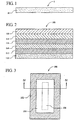
- FIG. 1 illustrates a film 1 which may be used with the present invention.
- the film 1 may be made from a polymeric material, such as a polyolefinic material.
- the film may comprise polyethylene selected from the group consisting of ultra low density polyethylene, low density polyethylene, linear low density polyethylene, medium density polyethylene, and high density polyethylene, and may be made via any known method of making polyethylene, such as via Ziegler-Natta catalysts, or single-site catalysts, such as metallocene catalysts.
- the film may preferably comprise ethylene copolymers, such as ethylene alpha-olefin copolymers, ethylene-methyl acrylate copolymer, ethylene vinyl acetate copolymer, and other like polymers.
- the film may comprise polypropylene homopolymer or copolymer, either alone or blended with polyethylene or polyethylene copolymers, as noted above.
- the film may comprise modified polymeric materials, such as modified via maleic anhydride, or other like modifiers for polymeric materials having particular characteristics. Specific materials that may be useful as the sealant layer include DuPont APPEEL® and BYNEL® or polybutene for peelseal.
- the film 1 may further comprise a desiccant material 10 blended therein, such as any known desiccant material that may blend with polymeric resins that can be made into films.
- desiccant materials that may be useful for the present invention include, but are not limited to calcium oxide, magnesium oxide, strontium oxide, aluminum oxide, partially hydrated aluminum oxide, sodium phosphate di-basic, potassium carbonate, magnesium chloride, calcium sulfate, clays, or any other desiccant material useful for the present invention.
- chemical desiccant materials are used, such as calcium oxide, magnesium oxide and strontium oxide.
- Chemical desiccant materials are used because chemical desiccant materials irreversibly bind water molecules within the crystalline product via a chemical reaction. The water molecules typically cannot be released into the package at higher temperatures or lower pressures, in addition, chemical desiccant materials may more effectively remove humidity from the headspace of a package made from the film 1.
- Hydrate-forming salts may also be used, and may effectively maintain constant relative humidity levels within the headspace of a package made from the film 1. Specific levels of humidity may be maintained depending on the hydration levels or state of the hydrate forming salt within the polymer material.
- a preferred chemical desiccant material that is useful for the present invention is calcium oxide, which irreversibly forms calcium hydroxide via a chemical reaction.
- the desiccant material can be incorporated into the film 1, in an embodiment, at a level of between about one weight percent and about 90 weight percent. In an embodiment, the desiccant material can be incorporated into the film 1 at a level of between about 20 weight percent and about 60 weight percent. In another embodiment, the desiccant material can be incorporated into the film 1 at a level of between approximately 10 weight percent and approximately 40 weight percent. In yet another embodiment, the desiccant material can be incorporated into the film 1 at a level of between approximately 20 weight percent and approximately 40 weight percent. In an additional embodiment, the desiccant material can be incorporated into the film 1 at a level of approximately 30 weight percent.
- the film 1 may comprise a quantity of a masterbatch of polymer and desiccant material.
- the masterbatch may preferably comprise polyethylene having calcium oxide blended therein.
- the masterbatch may comprise about 50 percent by weight polyethylene and about 50 percent by weight calcium oxide.
- the masterbatch can be further blended into another polymeric material, such as low density polyethylene, in a ratio of about 60 percent by weight masterbatch and 40 percent by weight low density polyethylene. Therefore, the film 1, in an embodiment, may have a desiccant material content of about 30 weight percent in the film 1.
- the masterbatch can be blended with a modified ethylene vinyl acetate copolymer or modified ethylene methyl acrylate copolymer, such as DuPont APPEEL® or polybutene resins, which can provide the sealant film structures with a peelable seal feature.
- film 1 may be incorporated into a multilayer structure such as via coextrusion with other film layers, extrusion or coextrusion coating, adhesive lamination, extrusion lamination or any other method of making multilayer film structures.
- the other films and layers mentioned herein may be incorporated into a multilayer structure such as via coextrusion with other film layers, extrusion or coextrusion coating, adhesive lamination, extrusion lamination or any other method of making multilayer film structures.
- a coextrusion is preferred, as a coextrusion can allow for the addition of a barrier layer to protect the desiccant in the moisture scavenging layer.
- a barrier layer may also be achieved by adding an adhesive or extrusion coating layer to an independent layer.
- An aspect of the current invention can involve the use of moisture scavenger desiccant in combination with a barrier layer to allow the moisture scavenger desiccant layer to survive the ETO sterilization cycle with remaining efficacy to protect the drug eluting stent from being exposed to excessive moisture. This protection from moisture can allow the drug eluting stent to have a greater shelf life and value to the users.
- FIG. 2 illustrates a film structure 100, which may be used with the present invention, and which incorporates a film layer 110 having a desiccant material incorporated therein, as detailed above with relation to the film 1.
- the film layer 110 may comprise a polyolefinic material, such as polyethylene, as described above, or polypropylene.
- the polyolefinic material comprises polyethylene.
- the film layer 110 may be between about 1 mil and about 0.25 mm (10 mils) thick and may form a sealant layer or a product contacting layer in a package made from the film structure 100.
- the film layer 110 may be between about 0.025 mm (1 mil) and 0.13 mm (5 mils) thick.
- the film layer 110 can be between about 0.038 mm (1.5 mils) and about 0.089 mm (3.5 mils) thick.
- the film layer 110 may further comprise a component that provides a peelable seal when used as a sealant layer that is heat sealed to another film structure or to itself.
- a resin blend that allows for a peelable seal is DuPont APPEEL®, which is either modified ethylene vinyl acetate copolymer or modified ethylene methyl acrylate copolymer, each of which is designed to provide a peelable seal when heat-sealed to other film layers, such as polyvinylchloride (PVC).
- PVC polyvinylchloride
- a seal-poisoning component may be utilized, wherein a material, such as polybutylene, may be blended with the sealant resins to provide "poisoned seals" when sealant layers made from such resins are heat-sealed to other film layers, which can provide adequate sealing protection but can be easily separable using digital pull-apart forces.
- a desiccant material such as calcium oxide (CaO) can be used as the peelable seal component, such that when heat-sealed to another film component, the film structure may be relatively easily separable using digital pull-apart forces.
- the peelable seal component may not be present in the heat sealant layer, as described above, but may be present in a heat sealable layer of a second film structure that is heat-sealed to the film structure containing the desiccant material.
- the peelable seal component of the present invention may be contained within the first tie layer or adhesive layer of the film structure containing the desiccant material, or alternatively, to a tie layer or adhesive layer of the second film structure that the film structure containing the desiccant material is heat-sealed to.
- the peelable film component can be contained within any layer or any film structure that allows the film structure containing the desiccant material to be pulled from the second film structure with digital pull-apart forces, while maintaining protection from moisture prior to pulling the film structures apart.
- the remaining film layers of a film structure of the present invention may be any material that may be utilized to form a package with the film layer 110 as a sealant layer or a product contacting layer. Moreover, any number of layers may be incorporated into the film structure 100, as may be needed to form a package having desired characteristics.
- An embodiment of the film structure of the present invention includes the heat sealant layer 110 as noted above.
- the heat sealant layer 110 may be adhered to a barrier layer 114, by a tie or adhesive layer 112.
- the film structure may comprise an outer layer adhered to said barrier layer via a second tie or adhesive layer disposed between said outer layer and said barrier layer.
- the film structure of the present invention may comprise a primer layer or printed layer disposed between said outer layer and said tie adhesive layer.
- a tie or adhesive layer may be a coextrusion of low density polyethylene (LDPE) and ethylene acrylic acid copolymer (EAA), wherein said LDPE is disposed adjacent to the sealant layer and the EAA is disposed adjacent to the barrier layer, as described below, although other polymeric materials may be utilized that adhere the heat sealant layer to the barrier layer.
- the tie or adhesive layer is a non-aqueous adhesive. In some embodiments of the invention, use of a nonaqueous adhesive may assist with diminishing the amount of water or moisture in the headspace within a package.
- the barrier layer may be made of a polyvinylidene chloride-methyl acrylate copolymer, Honeywell ACLAR® (a high density fluorocarbon polymer), metal foil, such as aluminum foil, cyclo-olefin copolymer (COC), a blend of COC and high density polyethylene, nylon, high density polyethylene, polypropylene, such as oriented polypropylene and metallized oriented polypropylene, metallized polyester, or blends of these materials.
- the barrier layer may be approximately 70 - 90% by weight COC and approximately 10 - 30% by weight HDPE.
- the barrier layer may be approximately 80% by weight COC and approximately 20% by weight HDPE. Other percentages for blends of COC and HDPE also may be used.
- the barrier layer may be any thickness that may be necessary to reduce the transmission of water molecules through the film structure 100.
- the barrier layer may be about 0.0089 mm (0.35 mils) when the barrier layer is aluminum foil.
- the barrier layer may have a thickness of approximately 75 microns or less, and may have a thickness of approximately 50 microns or less.
- the barrier layer may have a thickness greater than 75 microns, including a thickness of 100 microns or more.
- the barrier layer may be other thicknesses depending on the barrier material that is utilized.
- the tie or adhesive layer may aid in binding the polyolefinic material of the heat sealant layer to metal foil that may be used as the barrier layer.
- Tie or adhesive layer 116 may be a coextrusion of LDPE and EAA and may be similar, if not identical, to film layer 112, wherein the EAA is disposed adjacent to the barrier layer 114, and the LDPE is disposed adjacent to the film layer 118 or film layer 120, as described below.
- Film layer 118 may be a primer layer and/or a printed layer. If the film layer 118 is a printed ink or pigment layer, it may form a printed label or other printed indicia on the film structure 100.
- film layer 120 may be an outer abuse layer, and may comprise Honeywell ACLAR®, polyethylene terephthalate (PET), oriented polypropylene (OPP), polyethylene, nylon, foil, metallized substrates, or any other material apparent to one having ordinary skill in the art.
- a secondary sealant layer (not shown) may be disposed adjacent to the sealant layer 110 and may protect the product from the desiccant material contained in the sealant layer 110.
- the optional secondary sealant layer may form the product contacting layer of the film structure 100 and may be about 0.013 mm (0.5 mils) or less.
- the secondary sealant layer may be any polymeric material that helps to protect the product from contacting the desiccant material.
- the barrier layer 114 may be a metal foil or Honeywell ACLAR® that may be any thickness (for example only, 25 microns, 50 microns, 100 microns) to reduce the transmission of moisture through the film.
- the number of pinholes present in a metal foil is inversely related to the foil thickness. Therefore, a thicker foil tends to have fewer pinholes.
- thinner foil or ACLAR® can be utilized in packages made from the film structure 100.
- Metal foil or ACLAR® can be utilized to provide an effective barrier against moisture transmission through a film structure.
- metal foil can be relatively expensive and difficult to process. Therefore, the desiccant sealant layer 110 is effective at reducing or eliminating the transmission of moisture that may pass through the pinhole imperfections in relatively thin metal foil.
- Desiccant films therefore, add significant protection to the inside space of a package made from the film structure 100 in addition to the inherent barrier protection provided by metal foil.
- Barrier layers may be relatively thinner when a film structure incorporates a desiccant sealant layer into the film structure, thereby saving on cost.
- barrier layers such as COC / HDPE blends may be used more often when desiccant films are used.
- FIG. 3 illustrates a package 200 made from a film structure which may be used with the present invention.
- the package 200 is made from the film structure 100, as illustrated with respect to FIG. 2 , described above.
- the package 200 may comprise two film structures that are heat sealed together via a heat seal 202 that is formed around a perimeter of the package 200.
- the package 200 may comprise a single film structure that is folded and heat sealed around the perimeter of the package 200.
- the package 200 may further comprise a space 204 to contain a product 206.
- the product 206 may be sensitive to moisture, so that a desiccant material contained within the film structure or film structures reduces or eliminates the amount of water molecules within the space 204.
- a preferable product contained within the package 200 may be a kit useful in the medical field.
- a single instrument may be contained within the package 200 so that when opened and the instrument is removed, there are no other instruments within the package 200 to be contaminated by moisture.
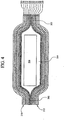
- FIG. 4 illustrates a cross-section of the package 200 along line IV-IV.
- the cross-section shows two film structures 210, 212 that are heat sealed together at heat seals 202.
- the two film structures may be identical, and may comprise the same film layers as described above with respect to film structure 100.
- the two film structure 210, 212 may comprise a plurality of layers: a sealant layer 110 of a polyolefinic material and a desiccant material; a tie or adhesive layer 112, comprising, for example, a blend of low density polyethylene and ethylene acrylic acid copolymer; a barrier layer 114 comprising, for example, a foil, ACLAR®.
- the product 206 such as a medical instrument, is contained within the package 200 in the space 204.
- FIG. 4 illustrates the cross-section of the package 200 along line IV-IV.
- the metal foil layer 114 of each film structure 210 and 212 are displaced from the portions of the film structure 210 and 212 that are heat sealed together. Therefore, there is an area 214 that is not protected by the metal foil layer 114 that may transmit water molecules into the space 204. If the desiccant material is incorporated into the heat sealant layer 110, then the desiccant material may effectively block moisture from passing into the interior space 204 of the package 200 thereby protecting the moisture-sensitive product contained therein.
- the desiccant material can remove moisture molecules that may be contained within the interior space 204.
- the desiccant material also can remove moisture molecules when it is in a layer further away from the moisture-sensitive product.
- the desiccant layer includes a chemical desiccant that can act as a moisture scavenger.
- chemical desiccants include calcium oxide, magnesium oxide, strontium oxide, aluminum oxide or other chemical desiccants.
- the chemical desiccant can be combined with a polymeric material to form a film.
- Polymeric materials that can be used include polyethylene, linear low density polyethylene, COC and other polymeric materials.
- the desiccant film layer can include approximately 20 - 40% by weight desiccant and approximately 60 - 80% by weight polymer.
- the desiccant layer can include approximately 10 - 40% by weight desiccant and approximately 60 - 90% by weight polymer. In another embodiment, the desiccant layer can include approximately 10 - 50% by weight desiccant and approximately 50 - 90% by weight polymer. Depending on the desired capacity of the film system to scavenge moisture, more or less desiccant can be incorporated into the desiccant layer as well as the other layers of the film structures. In one embodiment, a desiccant film layer can have a thickness of approximately 0.1 - 0.2 mm (4 - 8 mils). In some embodiments, a desiccant film layer can have a thickness of approximately 0.13 - 0.18 mm (5 - 7 mils) or approximately 0.15 mm (6 mils).
- molecular sieve desiccants can be incorporated into a desiccant film layer.
- the molecular sieve desiccant is a crystalline alumino- silicate.
- the molecular sieve desiccant can have a pore size of no more than approximately 3, 4 or 5 angstroms.
- Molecular sieve desiccants may act more rapidly than many chemical desiccants. Thus, molecular sieve desiccants may take up water or moisture in a relatively quick manner. Molecular sieve desiccants may then reach their capacity to hold water. Many chemical desiccants, on the other hand, have a larger capacity to hold moisture or water than molecular sieve desiccants. Many chemical desiccants work more slowly at absorbing water or moisture than molecular sieve desiccants. However, many chemical desiccants will continue to absorb water longer than and will absorb more moisture than molecular sieve desiccants.
- the film structure includes a product contact layer.
- the product contact layer may be comprised of a substance that has been deemed acceptable to be in contact with a product such as a pharmaceutical.
- the product contact layer can include polyvinylchloride (PVC).
- the product contact layer can include COC, HDPE or a blend of COC and HDPE. Blends of COC and HDPE in some embodiments can be approximately 70 - 90% COC and approximately 10 - 30% HDPE or approximately 80% COC and approximately 20% HDPE.
- the product contact layer can have a thickness of approximately 62 microns or less in one embodiment, approximately 50 microns or less in another embodiment and approximately 100 microns, 200 microns or more in other embodiments.
- the film structure includes a barrier layer.
- the barrier layer can serve to limit the amount of moisture that can pass through the film structure.
- the barrier layer can include one or more of the following substances: polyvinylidene chloridemethyl acrylate copolymer, high density fluorocarbon polymer, cyclo-olefin copolymer, metal foil, nylon, high density polyethylene, oriented or cast polypropylene, metallized oriented polypropylene, and/or metallized polyester.
- the thickness of the barrier layer is approximately 75 microns or less.
- the barrier layer has a thickness of approximately 62 microns or less.
- the barrier layer has a thickness of approximately 50 microns or less.
- the barrier layer has a thickness of approximately 25 microns or less. In an additional embodiment, the barrier layer can have a thickness of less than 10 microns, especially where foil is used as the barrier. In a further embodiment, the barrier layer can have a thickness of approximately 100 or 200 microns or more. The thickness of the barrier layers will depend on the purposes and design of the overall film system.
- a first film structure can be created by combining a barrier layer, a desiccant layer and a product contact layer. These layers can be combined through the use of an adhesive. The layers also can be coextruded or combined in other methods known in the art.
- the adhesive may be a non-aqueous adhesive.
- the adhesive can be ethylene acrylic acid copolymer in one embodiment.
- an adhesive can be applied on one side of a desiccant film layer.
- the adhesive and desiccant layer can then be put through a drying tunnel to evaporate all or the majority of the solvent contained in the adhesive. After the drying tunnel, the desiccant layer containing the adhesive can be adhered to a product contact layer that may include a polymeric material such as PVC.
- the adhesive in some circumstances can be referred to as an adhesive layer.
- the film structure containing the desiccant layer and the product contact layer can have an adhesive disposed on the side of the desiccant layer opposite the product contact layer.
- this adhesive can be a non-aqueous adhesive.
- the film structure can then be passed through a drying tunnel.
- the side of the desiccant layer having the adhesive can then be placed in contact with and adhered to a barrier layer.
- the three layers described above, the product contact layer, the desiccant layer and the barrier layer can form a film structure.
- the process of combining the product contact layer, the desiccant layer and the barrier layer takes place as a continuous process.
- two desiccants can be used in the same film structure.
- a molecular sieve desiccant and a chemical desiccant can be used in conjunction with each other.
- a molecular sieve desiccant film can be formed and a chemical desiccant film can be formed.
- the chemical desiccant film can contain both a chemical desiccant and a polymeric material.
- the molecular sieve desiccant film can contain both a molecular sieve desiccant and a polymeric material.
- the polymeric material for both desiccant films can be polyethylene or linear low density polyethylene or other suitable polymer. These two desiccant films can be joined together into a film structure through adhesion, coextrusion, lamination, heat sealing or other methods. Adhesion can be obtained through the use of a non-aqueous adhesive.
- a film structure containing both the chemical desiccant film and the molecular sieve desiccant film can be used in manners similar to those described herein for a single desiccant film layer.
- the dual desiccant film structure can be used in place of a single desiccant film layer or can be used in addition to a single desiccant layer.
- the terms film structure, film and multilayer film are frequently used interchangeably and should be considered interchangeable where appropriate herein.
- a single film can incorporate several different types of desiccant.
- a film can incorporate a chemical desiccant and a molecular sieve desiccant.
- the film can include approximately 5 - 35% by weight chemical desiccant, approximately 5 - 35% by weight molecular sieve desiccant and approximately 30 - 90% by weight polymeric materials such as polyethylene, linear low density polyethylene, COC or other polymeric materials
- a desiccant film may be sent from one processing location to another location for the addition of a product contact layer and a barrier layer.
- a film structure such as a structure including a desiccant layer, a barrier layer and a product contact layer may be shipped to a remote location for further processing.
- a film layer or film structure containing a desiccant can be wrapped in a barrier layer such as a foil or other barrier layer and stored. The wrapping with the barrier layer can place the barrier completely around the desiccant containing film or film structure, thereby greatly inhibiting the passage of water or moisture into the desiccant.
- the film layer or film structure can be stored for up to 6 months without significant loss in the moisture scavenging capacity of the desiccant. In other embodiments, the film layer or film structure can be stored for up to 12 months, 18 months or more.
- the film structures 100 may be made via cast coextrusion, extrusion coating and/or extrusion lamination, adhesive lamination, blown-film coextrusion or monolayer extrusion or any other film-making method generally known to those having ordinary skill in the art. Extrusion temperatures for blown films and cast films can be approximately 149°C - 288°C (300° - 550° Fahrenheit).
- the desiccant heat sealant layer may be made by compounding the desiccant material into the polymeric resin, and extruding or coextruding via blown extrusion, cast extrusion, or extrusion lamination into a monolayer film or a multilayer film.
- the remainder of the film structures may be extrusion or adhesive laminated together with the monolayer film or multilayer film.
- the desiccant heat sealant layer can be laminated to the remainder of the film structure, including the barrier layer of the film structure.
- Extrusion or coextrusion coating wherein the desiccant layer and/or an adhesive layer are extrusion or coextrusion coated directly onto the barrier layer.
- the desiccant material may further be utilized to provide an indicator showing whether the desiccant material has reached its capacity. In addition, this may further provide an indication whether the package integrity has been compromised.
- desiccant materials become cloudy when they have absorbed water, especially when incorporated into films that are transparent.
- desiccant material absorbs moisture, the package becomes heavier, less transparent and more opaque.
- An image or a message may be provided in a film structure containing the desiccant material.
- the package may contain a moisture indicator visible through at least a portion of the package, such as a window or the like, to form or change colors, thereby indicating the presence of excess moisture, in an embodiment, cobalt chloride can be used as a moisture indicator.
- desiccant film layers can be used in a single film structure.
- a molecular sieve desiccant film layer and a chemical desiccant film layer may be used in a single film structure along with other layers such as a product contact layer, a barrier layer and adhesives.
- An aspect of the invention involves use and processing of film products in environments with humidity.
- Certain current packaging operations such as packaging for pharmaceutical and/or nutraceutical products, can take place in clean rooms under low humidity conditions.
- humidity during some current packaging process may be kept at levels of approximately 20% relative humidity (RH) or lower.
- RH relative humidity
- a film structure comprising a product contact layer, a desiccant layer and a barrier layer can be adhered to a second film structure comprising a product contact layer, a desiccant layer and a barrier layer.
- the film structure can be adhered through heat sealing, adhesives or other method of adhesion.
- the finished film system can be referred to as a package and a product, such as drug eluting stent, can be placed in the package.
- a product such as drug eluting stent
- Each step of the process of forming the film structures into a package, including the addition of the products, can take place at ambient humidity.
- the various steps detailed above can be carried out in an environment having an RH of greater than approximately 50%.
- the various steps can be carried out in an environment having an RH greater than approximately 70%.
- the various steps can be carried out in an environment having an RH that is greater than approximately 80%.
- the relative humidity in the package interior cavity will rapidly decrease from the relative humidity of the packaging environment.
- the relative humidity in the cavity may be more than approximately 50% immediately or shortly after the packing process is complete.
- the relative humidity in the cavity may decrease to less than approximately 20% after approximately 36 hours after the packaging process is complete.
- the relative humidity may decrease to a relative humidity of less than approximately 10% 36 hours after the packaging process is complete.
- the decrease in relative humidity will occur where the initial relative humidity of the cavity is higher than approximately 50%.
- the initial relative humidity of the cavity may be more than approximately 70%, more than approximately 80% or more than approximately 90%, and the relative humidity of the cavity in an embodiment will be less than approximately 20% 36 hours later and in another embodiment will be less than approximately 10% 36 hours later.
- the relative humidity in the cavity will remain at a level of less than approximately 20% (in one embodiment) or less than approximately 10% (in another embodiment) for a period of more than 6 months (in an embodiment) and for a period of more than 12 months (in an embodiment).
- the shelf life of the drug eluting stent, medical device, pharmaceutical or nutraceutical products can be increased.
- the shelf life of a pharmaceutical or nutraceutical product in a package containing a desiccant film described above will be more than approximately 1 year (in one embodiment), more than approximately 2 years (in another embodiment) or more than approximately 4 years (in another embodiment) as long as the integrity of the package is not compromised.
- the current shelf life of some drug eluting stents can be limited to about 60-90 days, which is an economic burden that results in a high cost factor associated with drug eluting stents.
- An aspect of the invention wherein a drug eluting stent is stored in a desiccant package as described herein, provides an increased shelf life of more than about 6 months in an embodiment.
- the shelf life of a drug eluting stent in desiccant packaging may be more than 1 year. In an additional embodiment, the shelf life is greater than 2 years.
- ETO sterilization involves exposure to a concentration of ETO of approximately 500-1000 mg/L in an atmosphere of approximately 90% (in one embodiment) relative humidity or at least 50% relative humidity (in another embodiment) or 30% humidity in an additional embodiment at a temperature of at least approximately 43°C (110 °F) in one embodiment, at least approximately 46°C (115°F) in another embodiment and approximately 52°C (125°F) in a further embodiment.
- sterilization efforts of stents may be conducted at an ETO concentration between about 200 and 500 mg/L in an atmosphere of greater than 50% relative humidity and a temperature of about 52°C (125 °F) for at least twelve hours.
- sterilization of stents may be performed using at least 1400 mg/L ETO in an atmosphere of greater than 90% relative humidity at a temperature at or above approximately 46°C (115 °F) for at least approximately one hour.
- the antimicrobial effectiveness of ETO increases proportionately with increased temperature, and sterilization time decreases as ETO concentration is raised.
- the ETO gas is pumped out of the sterilization chamber.
- a moisture-sensitive product may be in a multilayer film package either open, or sealed through a vacuum vent, such as Tyvek® (DuPont), that allows the ETO gas to enter and exit the package. It is not practically possible to remove all of the moisture from the interior of the package via the suction. Once the package is removed from the sterilization chamber, it can be sealed (such as through heat sealing) and any Tyvek® vacuum vent cut off.
- a disadvantage of ETO sterilization is that it introduces humidity to a moisture-sensitive product.
- the current shelf life of a sterilized drug eluting stent can be about two to three months, mainly due to degradation of the drug by moisture inside the package.
- There are two sources of this moisture the first being the ETO sterilization atmosphere and the second being ambient moisture diffusing through the sealed stent packaging. To extend the drug eluting stent shelf life, these sources of moisture can be addressed.
- a package is used for storage of a moisture-sensitive product following sterilization via ETO gas of the moisture-sensitive product within the package.
- the package in an embodiment, can be similar to the packages described herein.
- the package can be similar to the package shown in figures 3 and 4 in an embodiment.
- the package can comprise a multilayer film comprising a first polymeric product contact layer, a first desiccant layer, a second desiccant layer, a first barrier layer, and a first laminating layer.
- the thickness of the polymeric product contact layer can depend on the permeation rate of the particular polymer employed.
- the desiccant layers may each comprise a desiccant, such as calcium oxide or molecular sieves, blended with an extrudable olefin.
- a desiccant such as calcium oxide or molecular sieves
- the moisture will be able to diffuse through the product contact layer following sterilization to promptly lower the relative humidity of the interior of the package and protect the product from degradation while it is in storage.
- the second desiccant layer is located between the first desiccant layer and the barrier, for instance foil, layer.
- the second desiccant layer can absorb moisture that enters from the outside of the multilayer film package. It also can act as a backup desiccant in the event that the first desiccant layer becomes saturated.
- the first desiccant layer and the second desiccant layer may or may not comprise the same desiccant material.
- the first and second desiccant layers include chemical desiccants.
- one of the desiccant layers includes a molecular sieve desiccant and the other includes a chemical desiccant.
- Another embodiment of the invention is a medical system including a moisture sensitive drug eluting stent and a desiccant package comprising two multilayer films, each of which include a first polymeric product contact layer, a first desiccant layer, a second desiccant layer, a first barrier layer, and a first laminating layer.
- the films are joined together through heat sealing or other process to form a package.
- the desiccant package includes a plurality of desiccant layers, barrier layers, and/or laminating layers. Combining the ability to include any number of the various types of layers with a wide choice of layer thicknesses, the package is tailorable to different applications.
- the desiccant package may be formed by folding one multilayer film into a type of pouch and sealing the edges. This provides a single space to contain the drug eluting stent, for example as illustrated in Figs. 3-4 , wherein element 204 refers to the space and product 206 refers to the stent.
- An additional aspect of the invention is a method to sterilize a drug eluting stent by the ETO gas method.
- a drug eluting stent may be in a multilayer desiccant film package comprising a folded and sealed multilayer film including a product contact layer, two desiccant layers comprising desiccant materials that may or may not be the same, a barrier layer, and a laminating layer.
- the package comprises two multilayer films as described herein. These two films, in an embodiment, can be heat sealed to each other near or at their perimeter.
- the desiccant film package may be sealed through a Tyvek® vacuum vent that allows the ETO gas to enter and exit the package.
- ETO sterilization of drug eluting stents involves the variables of ETO concentration, relative humidity, temperature, and exposure time. Each variable is operational over a range of chosen values, leading to a plurality of potentially effective conditions for sterilization.
- the ETO gas is pumped out of the sterilization chamber. Once the package is removed from the sterilization chamber, it is sealed and the Tyvek® vacuum vent cut off. Regardless of the amount of humidity remaining in the sealed package at the completion of the sterilization process, the relative humidity in the package space at 36 hours after sterilization will be below approximately 20% in an embodiment. Providing that the desiccant package remains sealed, in aspects of the invention the relative humidity in the package space will be maintained below about 20% after at least 6 days, 6 months, 1 year, or 2 years in different embodiments.
- Table 1 illustrates example materials and gauges for the film structure 100, as described above and illustrated with respect to FIG. 2 .
- Table 2 illustrates example materials and gauges for the film structure 100, as described above and illustrated with respect to FIG. 2 , which may be used with the present invention
- Example 3 is a preferred embodiment of the package 200, described above and illustrated with respect to FIG. 3 .
- the package may be made from film structures noted above.
- the package 200 may be for medical instruments.
- Each package may be about 133mm (5.25 in.) long and about 57mm (2.25 in.) wide.
- the heat seals that are created around the perimeter of the packages are about 6.4mm (0.25 in.) wide. Taking into consideration the heat seals, each package would have a total exposed internal surface of about 107cm 2 (16.6 in 2 ).
- the following table 3 illustrates example film structures and gauges for a sealant film layer that is extruded as a monolayer film or coextruded with a second layer, such as a tie or adhesive layer, and is then laminated to other film layers, such as a barrier layer, another tie or adhesive layer, an optional printed or primer layer, and an abuse layer.
- a sealant film layer that is extruded as a monolayer film or coextruded with a second layer, such as a tie or adhesive layer, and is then laminated to other film layers, such as a barrier layer, another tie or adhesive layer, an optional printed or primer layer, and an abuse layer.
- the films should be wrapped immediately with a moisture barrier material to avoid being contaminated by moisture in the atmosphere.
- Table 4 illustrates an example film structure which may be used with the present invention, whereby the sealant film layer, described above as Example 4, is laminated to other film layers to form a sealant film structure.
- Table 5 illustrates an example film structure which can be used with the present invention, whereby the sealant film layer, described above in Example 5, is laminated to other film layers to form a sealant film structure.
- Table 6 illustrates an example film structure which may be used with the present invention, whereby the sealant film layer, described above in Example 6, is laminated to other film layers to form a sealant film structure.
- each of the sealant film structures can be heat-sealed to identical film structures to provide packages having spaces therein for moisture-sensitive products, such as pharmaceutical or nutraceutical products.
- Table 7 illustrates an alternative film structure that may be heat sealed to the sealant film structures described above with reference to Examples 7-9.
- the sealant film structures can be heat sealed to a base structure having a heat sealant layer comprising an amount of a desiccant material.
- the forming layer of PVC and the barrier layer of ACLAR® may be switched.
- the extrusion coating layer of APPEEL® may be replaced with an adhesive layer such that the inner heat sealant layer may be adhesive laminated to the remainder of the film structure.
- a medical system comprises a drug eluting stent packaged in a moisture-scavenging pouch in an environment of relative humidity greater than approximately 90%.
- a TAXUSTM Boston Scientific, Natick, MA
- paclitaxel-eluting stent is placed in a moisture-scavenging pouch comprising two multilayer films that are folded and sealed along three sides, comprising the materials listed in Table 8.
- the pouch can be envisioned as similar to the package 200 illustrated in Fig. 4 .
- Table 8 includes the reference numbers corresponding to each layer, except for the print layer.
- the peelable HDPE layer is the product contact layer 110.
- the relative humidity inside the pouch initially can be at least 90% in an embodiment.
- Moisture diffuses through the peelable HDPE layer 110 and is quickly absorbed by the molecular sieve desiccant in the first moisture scavenging layer 112.
- the relative humidity of the air surrounding the stent inside the pouch is less than about 20%.
- Calcium oxide is provided in the second moisture-scavenging layer 114 as a backup layer if the molecular sieves become saturated with moisture.
- the calcium oxide will also bind any water molecules that diffuse in from the ambient atmosphere through the pouch seal or the polyester abuse layer 120, the EAA/LDPE adhesive layer 118, and the foil barrier layer 116.
- the relative humidity inside the pouch is less than approximately 20%.
- the relative humidity of the air surrounding the paclitaxel-eluting stent is less than about 20%. The stent is maintained in an environment that limits moisture-driven degradation of the paclitaxel, extending its shelf life to over two years.
- An embodiment of the invention is a method to increase the sterilization of a drug eluting stent in a multilayer film package, such as the moisture-scavenging pouch of Example 15 described in Table 8.
- the method comprises exposure of the drug eluting stent, a sirolimus-eluting CYPHERTM stent (Cordis Corporation, Miami Lakes, FL), in an open pouch to a concentration of ETO of approximately at least 500 mg/L in an atmosphere of at least about 60% relative humidity at a temperature of approximately 125 °F for about an hour.
- the ETO gas is substantially evacuated and the moisture- scavenging pouch is then sealed, providing a relative humidity of the atmosphere around the drug eluting stent in the pouch of about 60% at a first time.
- Moisture diffuses through the peelable HDPE layer 110 and is quickly absorbed by the molecular sieve desiccant in the first moisture scavenging layer 112.
- the relative humidity of the air surrounding the stent inside the pouch is less than about 20%.
- Calcium oxide is provided in the second moisture-scavenging layer 1 14 as a backup layer if the molecular sieves become saturated with water. The calcium oxide will also bind water molecules that diffuse in from the ambient atmosphere through the pouch seal or through the polyester abuse layer 120, the EAA/LDPE adhesive layer 118, and the foil barrier layer 116.
- the relative humidity inside the pouch is less than approximately 20%.
- the relative humidity of the air surrounding the sirolimus-eluting stent is less than about 20%. This method results in both increased sterilization of the CYPHERTM stent by ETO gas in a humid environment and extended shelf life of the packaged stent due to the moisture-scavenging properties of the multi-layer film package.
Landscapes
- Health & Medical Sciences (AREA)
- Life Sciences & Earth Sciences (AREA)
- Surgery (AREA)
- Molecular Biology (AREA)
- General Health & Medical Sciences (AREA)
- Biomedical Technology (AREA)
- Heart & Thoracic Surgery (AREA)
- Medical Informatics (AREA)
- Nuclear Medicine, Radiotherapy & Molecular Imaging (AREA)
- Animal Behavior & Ethology (AREA)
- Engineering & Computer Science (AREA)
- Public Health (AREA)
- Veterinary Medicine (AREA)
- Packages (AREA)
- Laminated Bodies (AREA)
- Medical Preparation Storing Or Oral Administration Devices (AREA)
- Materials For Medical Uses (AREA)
- Wrappers (AREA)
Applications Claiming Priority (3)
| Application Number | Priority Date | Filing Date | Title |
|---|---|---|---|
| US11/401,633 US20060269708A1 (en) | 2002-06-20 | 2006-04-11 | Films having a desiccant material incorporated therein and methods of use and manufacture |
| US11/461,680 US8003179B2 (en) | 2002-06-20 | 2006-08-01 | Films having a desiccant material incorporated therein and methods of use and manufacture |
| PCT/US2007/066456 WO2007121259A2 (en) | 2006-04-11 | 2007-04-11 | Films having a desiccant material incorporated therein and methods of use and manufacture |
Publications (2)
| Publication Number | Publication Date |
|---|---|
| EP2004400A2 EP2004400A2 (en) | 2008-12-24 |
| EP2004400B1 true EP2004400B1 (en) | 2020-03-18 |
Family
ID=38480489
Family Applications (1)
| Application Number | Title | Priority Date | Filing Date |
|---|---|---|---|
| EP07760504.6A Active EP2004400B1 (en) | 2006-04-11 | 2007-04-11 | Films having a desiccant material incorporated therein and methods of use and manufacture |
Country Status (7)
| Country | Link |
|---|---|
| US (1) | US8003179B2 (https=) |
| EP (1) | EP2004400B1 (https=) |
| JP (1) | JP2009533182A (https=) |
| AU (1) | AU2007238117B2 (https=) |
| CA (1) | CA2649116A1 (https=) |
| MX (1) | MX2008013052A (https=) |
| WO (1) | WO2007121259A2 (https=) |
Families Citing this family (116)
| Publication number | Priority date | Publication date | Assignee | Title |
|---|---|---|---|---|
| WO2003080149A2 (en) | 2002-03-20 | 2003-10-02 | Mannkind Corporation | Inhalation apparatus |
| US20100025266A1 (en) * | 2004-04-30 | 2010-02-04 | Oscar Landeta Elorz | Blistered rapid diagnostic test with incorporated moisture absorbent material |
| WO2005106470A1 (es) * | 2004-04-30 | 2005-11-10 | Certest Biotec, S.L. | Prueba rapida de diagnostico con material absorbente de humedad incorporado y su forma de emblistado |
| JP2006049308A (ja) * | 2004-08-04 | 2006-02-16 | Samsung Electronics Co Ltd | 表示装置、その製造方法、及びその製造装置 |
| US7915822B2 (en) * | 2004-08-04 | 2011-03-29 | Samsung Electronics Co., Ltd. | Display device and method and apparatus for manufacturing the same |
| PL1786784T3 (pl) | 2004-08-20 | 2011-04-29 | Mannkind Corp | Kataliza syntezy diketopiperazyn |
| KR101644250B1 (ko) | 2004-08-23 | 2016-07-29 | 맨카인드 코포레이션 | 약물 전달용 디케토피페라진염, 디케토모르포린염 또는 디케토디옥산염 |
| US8802183B2 (en) | 2005-04-28 | 2014-08-12 | Proteus Digital Health, Inc. | Communication system with enhanced partial power source and method of manufacturing same |
| US9198608B2 (en) | 2005-04-28 | 2015-12-01 | Proteus Digital Health, Inc. | Communication system incorporated in a container |
| US8912908B2 (en) | 2005-04-28 | 2014-12-16 | Proteus Digital Health, Inc. | Communication system with remote activation |
| US8836513B2 (en) | 2006-04-28 | 2014-09-16 | Proteus Digital Health, Inc. | Communication system incorporated in an ingestible product |
| CA2789262C (en) | 2005-04-28 | 2016-10-04 | Proteus Digital Health, Inc. | Pharma-informatics system |
| CN104324362B (zh) | 2005-09-14 | 2018-04-24 | 曼金德公司 | 以提高活性试剂对结晶微粒表面的亲和力为基础的药物配制方法 |
| IN2015DN00888A (https=) | 2006-02-22 | 2015-07-10 | Mannkind Corp | |
| US8956287B2 (en) | 2006-05-02 | 2015-02-17 | Proteus Digital Health, Inc. | Patient customized therapeutic regimens |
| SG175681A1 (en) | 2006-10-25 | 2011-11-28 | Proteus Biomedical Inc | Controlled activation ingestible identifier |
| US8718193B2 (en) | 2006-11-20 | 2014-05-06 | Proteus Digital Health, Inc. | Active signal processing personal health signal receivers |
| EP3785599B1 (en) | 2007-02-01 | 2022-08-03 | Otsuka Pharmaceutical Co., Ltd. | Ingestible event marker systems |
| WO2008101107A1 (en) | 2007-02-14 | 2008-08-21 | Proteus Biomedical, Inc. | In-body power source having high surface area electrode |
| WO2008112577A1 (en) | 2007-03-09 | 2008-09-18 | Proteus Biomedical, Inc. | In-body device having a multi-directional transmitter |
| US8540632B2 (en) | 2007-05-24 | 2013-09-24 | Proteus Digital Health, Inc. | Low profile antenna for in body device |
| US8961412B2 (en) | 2007-09-25 | 2015-02-24 | Proteus Digital Health, Inc. | In-body device with virtual dipole signal amplification |
| EP3235491B1 (en) | 2008-03-05 | 2020-11-04 | Proteus Digital Health, Inc. | Multi-mode communication ingestible event markers and systems |
| US8485180B2 (en) | 2008-06-13 | 2013-07-16 | Mannkind Corporation | Dry powder drug delivery system |
| ES2929343T3 (es) | 2008-06-13 | 2022-11-28 | Mannkind Corp | Inhalador de polvo seco accionado por aspiración para la administración de fármacos |
| KR101628410B1 (ko) | 2008-06-20 | 2016-06-08 | 맨카인드 코포레이션 | 흡입 활동에 관한 실시간 프로파일링을 위한 대화형 장치 및 방법 |
| EP2313002B1 (en) | 2008-07-08 | 2018-08-29 | Proteus Digital Health, Inc. | Ingestible event marker data framework |
| CN102176862B (zh) | 2008-08-13 | 2014-10-22 | 普罗透斯数字保健公司 | 可摄入电路 |
| WO2010068527A1 (en) * | 2008-12-10 | 2010-06-17 | Merck Sharp & Dohme Corp. | Package for oxygen-sensitive pharmaceutical products |
| US8314106B2 (en) | 2008-12-29 | 2012-11-20 | Mannkind Corporation | Substituted diketopiperazine analogs for use as drug delivery agents |
| SG172847A1 (en) | 2009-01-06 | 2011-08-29 | Proteus Biomedical Inc | Pharmaceutical dosages delivery system |
| JP2012514799A (ja) | 2009-01-06 | 2012-06-28 | プロテウス バイオメディカル インコーポレイテッド | 摂取に関連するバイオフィードバックおよび個別薬物療法の方法およびシステム |
| DK2400950T3 (da) | 2009-02-26 | 2019-07-29 | Glaxo Group Ltd | Farmaceutiske formuleringer omfattende 4-{(1 r)-2-[(6-{2-[(2,6-dichlorbenzyl)oxy]ethoxy}hexyl)amino]-1-hydroxyethyl}-2-(hydroxymethyl)phenol |
| CH700645A2 (de) * | 2009-03-20 | 2010-09-30 | Alcan Tech & Man Ltd | Deckfolie als Durchdrückfolie für eine Blisterpackung. |
| GB2480965B (en) | 2009-03-25 | 2014-10-08 | Proteus Digital Health Inc | Probablistic pharmacokinetic and pharmacodynamic modeling |
| WO2010129288A2 (en) | 2009-04-28 | 2010-11-11 | Proteus Biomedical, Inc. | Highly reliable ingestible event markers and methods for using the same |
| EP2432458A4 (en) | 2009-05-12 | 2014-02-12 | Proteus Digital Health Inc | ACCEPTABLE EVENT MARKER WITH SUGAR COMPONENT |
| EP2442975B1 (en) * | 2009-06-16 | 2018-11-28 | Pleotint, L.L.C. | Method and constructions for moisture sensitive layers and structures having reduced moisture content in moisture sensitive layers |
| US20110014324A1 (en) * | 2009-07-10 | 2011-01-20 | Christoffer Lundqvist | Product for the storage of freeze-dried lactic acid bacteria mixed with oral rehydration solution |
| US9511914B2 (en) * | 2009-09-01 | 2016-12-06 | Philip Morris Usa Inc. | Thermoformable multilayer films and blister packs produced therefrom |
| TWI517050B (zh) | 2009-11-04 | 2016-01-11 | 普羅托斯數位健康公司 | 供應鏈管理之系統 |
| GB0921075D0 (en) | 2009-12-01 | 2010-01-13 | Glaxo Group Ltd | Novel combination of the therapeutic agents |
| UA109424C2 (uk) | 2009-12-02 | 2015-08-25 | Фармацевтичний продукт, фармацевтична таблетка з електронним маркером і спосіб виготовлення фармацевтичної таблетки | |
| CA2786154C (en) * | 2010-01-22 | 2019-10-01 | Bayer Healthcare Llc | Accuracy improving desiccants |
| US9233788B2 (en) | 2010-01-22 | 2016-01-12 | Bayer Healthcare Llc | Biosensor desiccant system having enhanced measurement performance |
| US20110186210A1 (en) * | 2010-02-01 | 2011-08-04 | Files John C | Heat Sealable Packaging Material with Improved Hot Tack |
| US20110218618A1 (en) * | 2010-03-04 | 2011-09-08 | Monroe Stephen H | Self-Regenerating Drug-Delivering Stent |
| CN102905672B (zh) | 2010-04-07 | 2016-08-17 | 普罗秋斯数字健康公司 | 微型可吞服装置 |
| US8616397B2 (en) * | 2010-04-27 | 2013-12-31 | Cactus, Llc | Pharmaceutical waste disposal assembly including waste diverter |
| US8573426B2 (en) * | 2010-04-27 | 2013-11-05 | Cactus, Llc | Pharmaceutical waste disposal assembly |
| US9044377B2 (en) | 2010-04-27 | 2015-06-02 | Cactus, Llc | Pharmaceutical waste disposal assembly |
| US20110266189A1 (en) * | 2010-05-03 | 2011-11-03 | Tom Nicole L | Blister packaging |
| TWI557672B (zh) | 2010-05-19 | 2016-11-11 | 波提亞斯數位康健公司 | 用於從製造商跟蹤藥物直到患者之電腦系統及電腦實施之方法、用於確認將藥物給予患者的設備及方法、患者介面裝置 |
| IL223742A (en) | 2010-06-21 | 2016-06-30 | Mannkind Corp | A dry powder inhaler and preparation for it |
| WO2012029323A1 (ja) * | 2010-09-01 | 2012-03-08 | 共同印刷株式会社 | 積層体、包装容器、及び包装体 |
| US8785183B2 (en) * | 2010-09-21 | 2014-07-22 | Biogaia Ab | Active plastic material in oil |
| EP2642983A4 (en) * | 2010-11-22 | 2014-03-12 | Proteus Digital Health Inc | DEVICE INGREABLE WITH PHARMACEUTICAL PRODUCT |
| US8973748B2 (en) * | 2011-01-19 | 2015-03-10 | Boston Scientific Scime, Inc. | Medical device packaging and methods for preparing and packaging medical devices |
| US9096368B2 (en) | 2011-01-19 | 2015-08-04 | Boston Scientific Scimed, Inc. | Medical device packaging and methods for preparing and packaging medical devices |
| AU2012236150B2 (en) * | 2011-04-01 | 2016-03-31 | Mannkind Corporation | Blister package for pharmaceutical cartridges |
| WO2012174472A1 (en) | 2011-06-17 | 2012-12-20 | Mannkind Corporation | High capacity diketopiperazine microparticles |
| WO2015112603A1 (en) | 2014-01-21 | 2015-07-30 | Proteus Digital Health, Inc. | Masticable ingestible product and communication system therefor |
| US9756874B2 (en) | 2011-07-11 | 2017-09-12 | Proteus Digital Health, Inc. | Masticable ingestible product and communication system therefor |
| KR101898964B1 (ko) | 2011-07-21 | 2018-09-14 | 프로테우스 디지털 헬스, 인코포레이티드 | 모바일 통신 장치, 시스템, 및 방법 |
| TWI565943B (zh) * | 2011-07-22 | 2017-01-11 | 拜耳保健公司 | 具有增進測量性能之生物感測器乾燥劑系統 |
| CN103946018B (zh) * | 2011-08-08 | 2017-11-10 | 爱索尔包装有限公司 | 金属化的聚乙烯层压体 |
| BR112014009686A2 (pt) | 2011-10-24 | 2018-08-07 | Mannkind Corp | composição analgésica inalável, pó seco e método para tratar dor |
| US8599515B2 (en) * | 2011-11-08 | 2013-12-03 | HGST Netherlands B.V. | Magnetic storage device with dual stage humidity control |
| US9235683B2 (en) | 2011-11-09 | 2016-01-12 | Proteus Digital Health, Inc. | Apparatus, system, and method for managing adherence to a regimen |
| DE102012006416A1 (de) * | 2011-12-09 | 2013-06-13 | Maria Soell High Technology Films Gmbh | Metallschicht-freie Mehrschichtfolie mit geringem Flächengewicht |
| JP5929250B2 (ja) * | 2012-01-31 | 2016-06-01 | キョーラク株式会社 | プラスチック容器 |
| CN104619369B (zh) | 2012-07-12 | 2018-01-30 | 曼金德公司 | 干粉药物输送系统和方法 |
| CN104487347B (zh) | 2012-07-23 | 2017-09-01 | 普罗秋斯数字健康公司 | 用于制造包括电子器件的片剂的方法和系统 |
| USD698653S1 (en) | 2012-10-01 | 2014-02-04 | Daniel R. Schumaier | Desiccant container |
| CA2888871C (en) | 2012-10-18 | 2016-08-09 | Proteus Digital Health, Inc. | Apparatus, system, and method to adaptively optimize power dissipation and broadcast power in a power source for a communication device |
| BR112015011117A2 (pt) * | 2012-11-14 | 2017-07-11 | 3M Innovative Properties Co | artigos e métodos indicadores de umidade após esterilização a vapor |
| BR112015013198B1 (pt) | 2012-12-07 | 2021-03-30 | Bemis Company, Inc | Película multicamadas e embalagem tipo blister termoformada obtida a partir de dita película |
| CN103009747B (zh) * | 2012-12-24 | 2015-07-29 | 苏州海顺包装材料有限公司 | 一种除湿防潮封装薄膜及其制备方法 |
| CN103029386B (zh) * | 2012-12-27 | 2015-04-22 | 中国人民解放军总装备部军械技术研究所 | 军用耐戳穿、抗撕裂、防静电、高阻隔迷彩伪装复合材料及其制备方法 |
| WO2014120669A1 (en) | 2013-01-29 | 2014-08-07 | Proteus Digital Health, Inc. | Highly-swellable polymeric films and compositions comprising the same |
| US10175376B2 (en) | 2013-03-15 | 2019-01-08 | Proteus Digital Health, Inc. | Metal detector apparatus, system, and method |
| UA116805C2 (uk) * | 2013-05-16 | 2018-05-10 | Кріовак, Інк. | Суміш і плівка, що проявляють стійкість до стирання фарби |
| WO2014193401A1 (en) * | 2013-05-31 | 2014-12-04 | Empire Technology Development Llc | Color change indicator of biofilm formation |
| JP6511439B2 (ja) | 2013-06-04 | 2019-05-15 | プロテウス デジタル ヘルス, インコーポレイテッド | データ収集および転帰の査定のためのシステム、装置、および方法 |
| MX375448B (es) | 2013-07-18 | 2025-03-06 | Mannkind Corp | Composiciones farmacéuticas en polvo seco estables al calor y métodos. |
| US9796576B2 (en) | 2013-08-30 | 2017-10-24 | Proteus Digital Health, Inc. | Container with electronically controlled interlock |
| WO2015046485A1 (ja) * | 2013-09-30 | 2015-04-02 | 大日本印刷株式会社 | 吸湿性包装体 |
| US10084880B2 (en) | 2013-11-04 | 2018-09-25 | Proteus Digital Health, Inc. | Social media networking based on physiologic information |
| CN103753914A (zh) * | 2014-01-08 | 2014-04-30 | 合肥杰事杰新材料股份有限公司 | 一种高阻湿、高阻隔五层共挤包装材料及其制备方法 |
| US20150225151A1 (en) | 2014-02-11 | 2015-08-13 | Christopher L. Osborn | Anti-Scalping Transdermal Patch Packaging Film |
| US10307464B2 (en) | 2014-03-28 | 2019-06-04 | Mannkind Corporation | Use of ultrarapid acting insulin |
| US10239043B2 (en) * | 2014-06-30 | 2019-03-26 | Dow Global Technologies Llc | Vinylidene chloride copolymer-based carbon molecular sieve adsorbent compositions and processes therefor |
| CN104163026A (zh) * | 2014-07-24 | 2014-11-26 | 桐城市福润包装材料有限公司 | 一种防潮包装材料 |
| JP2016193731A (ja) * | 2015-03-31 | 2016-11-17 | 株式会社吉野工業所 | 調湿容器 |
| US11051543B2 (en) | 2015-07-21 | 2021-07-06 | Otsuka Pharmaceutical Co. Ltd. | Alginate on adhesive bilayer laminate film |
| US11912488B2 (en) | 2015-10-09 | 2024-02-27 | General Mills, Inc. | Moisture barrier films |
| DE23202633T1 (de) | 2015-12-29 | 2025-05-08 | Adapa Flexibles Denmark Slagelse A/S | Verfahren zur bereitstellung eines extrem chemikalienbeständigen films, film und daraus erhältliches laminat |
| CN106511078A (zh) * | 2016-05-18 | 2017-03-22 | 张�杰 | 外阻隔袋填充惰性气体输液袋 |
| CN109843149B (zh) | 2016-07-22 | 2020-07-07 | 普罗秋斯数字健康公司 | 可摄入事件标记的电磁感测和检测 |
| US10820831B2 (en) | 2016-10-26 | 2020-11-03 | Proteus Digital Health, Inc. | Methods for manufacturing capsules with ingestible event markers |
| CN106552605B (zh) * | 2016-11-30 | 2019-03-26 | 浙江理工大学 | 一种以聚丙烯酸与有机生石灰复合干燥剂的制备方法 |
| JP2018203366A (ja) * | 2017-06-08 | 2018-12-27 | 共同印刷株式会社 | ブリスターパック用蓋材 |
| JP2018203365A (ja) * | 2017-06-08 | 2018-12-27 | 共同印刷株式会社 | ブリスターパック用蓋材 |
| JP6411599B1 (ja) * | 2017-08-24 | 2018-10-24 | Ckd株式会社 | ブリスター包装機 |
| US10842022B2 (en) * | 2017-09-15 | 2020-11-17 | Ocella Inc | Multilayered flexible electronics platform |
| CN109051340B (zh) * | 2018-06-29 | 2020-10-02 | 上海衡元高分子材料有限公司 | 环境湿度调节物品 |
| DE102018125195B3 (de) | 2018-07-24 | 2019-08-14 | Huhtamaki Flexible Packaging Germany Gmbh & Co. Kg | Folienverbund zur Verpackung transdermaler Pflaster und Verpackung aus einem solchen Folienverbund |
| DK3513965T3 (da) | 2018-08-08 | 2022-07-25 | Danapak Flexibles As | Forbedrede film og laminater til anvendelse i pakning af reaktive forbindelser |
| US11371992B2 (en) * | 2018-10-02 | 2022-06-28 | Polyvalor, Limited Partnership | Solid phase immunoassay apparatus and method for rapid detection of bacteria |
| EP3975972B1 (en) | 2019-06-03 | 2024-08-07 | Amcor Flexibles Singen GmbH | Process for the conditioned packaging of hard gelatin capsules |
| IT201900016913A1 (it) * | 2019-09-20 | 2021-03-20 | Pogliano Flexible Packaging Srl | Film multistrato per il confezionamento di prodotti farmaceutici ed alimentari |
| CA3186421A1 (en) | 2020-06-30 | 2022-01-06 | Biogaia Ab | Probiotic composition for topical use |
| US11447313B2 (en) * | 2020-12-01 | 2022-09-20 | Desiccare, Inc. | Humidity control system |
| KR102382137B1 (ko) * | 2021-06-02 | 2022-04-04 | 주식회사 에이치에스티 | 흡습성과 내방출성이 개선된 차량 램프용 방습제품 |
| EP4404901A4 (en) * | 2021-09-21 | 2025-07-23 | Kotian Chandrahas Babu | ALUMINUM FOIL LID AND METHOD FOR MANUFACTURING SAME |
| WO2024081219A1 (en) | 2022-10-14 | 2024-04-18 | Csp Technologies, Inc. | Container and method for storing and stabilizing moisture sensitive products |
Family Cites Families (78)
| Publication number | Priority date | Publication date | Assignee | Title |
|---|---|---|---|---|
| US2987174A (en) | 1960-05-06 | 1961-06-06 | Miles Lab | Test sample container |
| US3063767A (en) | 1960-08-30 | 1962-11-13 | Gen Refractories Co | Brick package |
| CH434104A (de) | 1964-05-01 | 1967-04-15 | Schuepbach Ag | Konditionierendes Verpackungsmaterial |
| US3326810A (en) | 1964-11-16 | 1967-06-20 | Grace W R & Co | Desiccant package |
| US4081397A (en) | 1969-12-22 | 1978-03-28 | P. R. Mallory & Co. Inc. | Desiccant for electrical and electronic devices |
| US3704806A (en) | 1971-01-06 | 1972-12-05 | Le T Im Lensoveta | Dehumidifying composition and a method for preparing the same |
| US3804663A (en) | 1971-05-26 | 1974-04-16 | Dow Chemical Co | Method of internally coating rigid or semi-rigid plastic containers |
| US3809223A (en) | 1971-08-27 | 1974-05-07 | Crown Zellerbach Corp | Protected lumber package and method of making same |
| CH574603A5 (https=) | 1972-05-08 | 1976-04-15 | Ciba Geigy Ag | |
| US3833406A (en) | 1972-08-07 | 1974-09-03 | Owens Illinois Inc | Closed container with desiccant coating on inside surface thereof |
| US3898344A (en) | 1973-05-24 | 1975-08-05 | Us Army | Packaged dry imitation vinegar product |
| US4036360A (en) | 1975-11-12 | 1977-07-19 | Graham Magnetics Incorporated | Package having dessicant composition |
| US4407897A (en) | 1979-12-10 | 1983-10-04 | American Can Company | Drying agent in multi-layer polymeric structure |
| US4770944A (en) | 1979-12-10 | 1988-09-13 | American Can Company | Polymeric structure having improved barrier properties and method of making same |
| US4284672A (en) | 1979-12-18 | 1981-08-18 | Champion International Corporation | Flexible packaging composite comprising an outer polyamide layer, an intermediate metal foil layer and an interior heat-sealable layer |
| US4391855A (en) | 1980-08-25 | 1983-07-05 | Depor Industries | Corrosion resistant coating and method for coating metal substrate |
| US4547536A (en) | 1981-08-26 | 1985-10-15 | Phillips Petroleum Company | Polyester blends containing a metal oxide desiccant |
| US4485204A (en) | 1981-08-26 | 1984-11-27 | Phillips Petroleum Company | Polyester blends comprising a desiccant and a rubbery block copolymer |
| US4447565A (en) | 1981-12-07 | 1984-05-08 | The United States Of America As Represented By The United States Department Of Energy | Method and composition for molding low density desiccant syntactic foam articles |
| US4646914A (en) | 1985-07-22 | 1987-03-03 | Jerome Gipson | Sealed enclosure for display objects |
| US4730726A (en) | 1987-04-21 | 1988-03-15 | United States Surgical Corporation | Sealed sterile package |
| JP2555087B2 (ja) | 1987-07-23 | 1996-11-20 | 株式会社クラレ | 耐熱容器 |
| CA1335424C (en) | 1987-12-29 | 1995-05-02 | Tohei Moritani | Multilayered packaging materials having high gas barrier property |
| AU616730B2 (en) | 1988-02-29 | 1991-11-07 | Kuraray Co., Ltd. | Multilayered container |
| US4861632A (en) * | 1988-04-19 | 1989-08-29 | Caggiano Michael A | Laminated bag |
| DE68926902T2 (de) | 1988-04-30 | 1996-12-12 | Toyo Seikan Kaisha Ltd | Mehrschichtiger kunststoffbehälter |
| US5332525A (en) | 1988-08-23 | 1994-07-26 | Cortec Corporation | Vapor phase corrosion inhibitor-desiccant material |
| US5078909A (en) | 1989-05-23 | 1992-01-07 | Sasaki Chemicals Co., Ltd. | Moisture-absorbent compositions and molded items |
| JPH0649354B2 (ja) | 1989-07-10 | 1994-06-29 | 東洋製罐株式会社 | プラスチック多層容器 |
| CA2040993C (en) | 1990-04-25 | 2001-08-07 | Yoshiaki Inoue | Oxygen absorbent composition and method of preserving article with same |
| DE4013799A1 (de) | 1990-04-28 | 1991-10-31 | Gaplast Gmbh | Behaelter und behaelterverschluss aus kunststoff, insbesondere fuer arznei- und genussmittel |
| US5686161A (en) | 1991-01-07 | 1997-11-11 | Multisorb Technologies, Inc. | Moisture-sensitive label |
| EP0581766A1 (en) | 1991-04-25 | 1994-02-09 | E.I. Du Pont De Nemours And Company | Moisture indicating molding resins |
| US5633054A (en) | 1992-03-30 | 1997-05-27 | Conservation Resources International, Inc. | Archival materials and packaging |
| FR2696445B1 (fr) | 1992-10-01 | 1994-12-16 | Rennes Inst Nal Sciences Appli | Composition pour l'obtention de produits à base de chaux pure, application de cette composition et procédé pour sa mise en Óoeuvre. |
| US5322161A (en) | 1992-11-30 | 1994-06-21 | United States Surgical Corporation | Clear package for bioabsorbable articles |
| US5431970A (en) | 1993-08-11 | 1995-07-11 | Broun; Conway C. | Laminate material for protective bags and cases |
| PL179210B1 (pl) | 1994-08-05 | 2000-08-31 | Smithkline Beecham Plc | Pojemnik z substancja wrazliwa na wilgoc PL PL PL PL |
| US5529177A (en) | 1994-08-26 | 1996-06-25 | Podd; Stephen D. | Humidity control device for container or container liner |
| US6279736B1 (en) | 1995-04-19 | 2001-08-28 | Capitol Specialty Plastics, Inc. | Barrier pack having an absorbing agent applied to the interior of the pack |
| US6112888A (en) | 1996-06-28 | 2000-09-05 | W. R. Grace & Co.-Conn. | Non-reclosable packages containing desiccant matrix |
| US5743942A (en) | 1996-09-19 | 1998-04-28 | United Catalysts Inc. | Desiccant container |
| US6103141A (en) | 1997-01-23 | 2000-08-15 | Multisorb Technologies, Inc. | Desiccant deposit |
| US5829669A (en) * | 1997-02-06 | 1998-11-03 | Sonoco Products Company | Tubular container and methods and apparatus for manufacturing same |
| CA2235534A1 (en) | 1997-04-23 | 1998-10-23 | Mitsui Chemicals, Incorporated | Multilayered article, vessel and resin composition based on polyethylene |
| JP2004000681A (ja) * | 1998-08-07 | 2004-01-08 | Olympus Corp | 内視鏡 |
| US6212756B1 (en) | 1998-08-14 | 2001-04-10 | Truseal Technologies, Inc. | Dispensable non-adhesive desiccated matrix system for insulating glass units |
| US6315112B1 (en) | 1998-12-18 | 2001-11-13 | Smithkline Beecham Corporation | Method and package for storing a pressurized container containing a drug |
| US6135273A (en) | 1999-03-31 | 2000-10-24 | Cuen; Joseph Anthony | Thermal bag |
| US6531197B2 (en) | 1999-04-26 | 2003-03-11 | Illinois Tool Works | Desiccant barrier container |
| JP2001009985A (ja) | 1999-07-02 | 2001-01-16 | Hisamitsu Pharmaceut Co Inc | 貼付剤用包装袋及び包装貼付剤 |
| US7682647B2 (en) * | 1999-09-03 | 2010-03-23 | Advanced Cardiovascular Systems, Inc. | Thermal treatment of a drug eluting implantable medical device |
| US6451423B1 (en) | 2000-08-31 | 2002-09-17 | International Paper Company | Controlled atmosphere packaging |
| AU2001288916B2 (en) | 2000-09-05 | 2007-05-10 | Advanced Plastics Technologies Luxembourg S.A. | Multilayer containers and preforms having barrier properties utilizing recycled material |
| US7178927B2 (en) | 2000-11-14 | 2007-02-20 | Semiconductor Energy Laboratory Co., Ltd. | Electroluminescent device having drying agent |
| AU2002252372A1 (en) * | 2001-03-16 | 2002-10-03 | Sts Biopolymers, Inc. | Stent with medicated multi-layer hydrid polymer coating |
| US6534571B1 (en) | 2001-04-25 | 2003-03-18 | Flow Polymers, Inc. | Desiccant dispersion for rubber compounds |
| WO2002103099A1 (en) | 2001-06-19 | 2002-12-27 | Kappler Safety Group | Vapor permeable, liquid impermeable composite fabric and fabrication process |
| CN1547526A (zh) | 2001-08-06 | 2004-11-17 | Csp | 用于模内衬里的方法和组合物 |
| AT410943B (de) | 2001-10-23 | 2003-08-25 | Markus Dipl Ing Rettenbacher | Formkörper aus naturfasern und kunststoff, seine herstellung in gegenwart von feuchtigkeit und dessen verwendung |
| US7413083B2 (en) | 2002-04-11 | 2008-08-19 | Csp Technologies, Inc. | Desiccant vial assembly for effervescent tablets |
| US20040131805A1 (en) | 2002-06-20 | 2004-07-08 | Merical Rick L. | Films having a desiccant material incorporated therein and methods of use and manufacture |
| US20030235664A1 (en) | 2002-06-20 | 2003-12-25 | Rick Merical | Films having a desiccant material incorporated therein and methods of use and manufacture |
| JP2006513938A (ja) * | 2003-03-25 | 2006-04-27 | メドトロニック ヴァスキュラー コノート | ステント及びステント運搬システムの包装 |
| US20060236868A1 (en) | 2003-05-19 | 2006-10-26 | Bester Pansegrouw | Dessicant container |
| FR2858301B1 (fr) | 2003-07-29 | 2006-05-26 | Airsec | Conteneur dessicatif etanche pour le conditionnement de produits sensibles a l'humidite ambiante |
| DE102004031109B4 (de) | 2003-12-30 | 2016-03-31 | Lg Display Co., Ltd. | Organisches Lumineszenzdisplay vom Doppeltafeltyp sowie Verfahren zum Herstellen desselben |
| US20050140041A1 (en) | 2003-12-31 | 2005-06-30 | Manish Seth | Synthetic roofing and siding material |
| JP2005272009A (ja) * | 2004-02-23 | 2005-10-06 | Toppan Printing Co Ltd | 多層包装体 |
| US20050255139A1 (en) | 2004-05-14 | 2005-11-17 | Hurd Jonathan L | Polymeric compositions with embedded pesticidal desiccants |
| US7551246B2 (en) | 2004-09-27 | 2009-06-23 | Idc, Llc. | System and method for display device with integrated desiccant |
| US7312569B2 (en) | 2004-12-24 | 2007-12-25 | Samsung Electronics Co., Ltd. | Flat panel display apparatus |
| WO2006082920A1 (ja) | 2005-02-07 | 2006-08-10 | Kyodo Printing Co., Ltd. | 吸湿インジケータ機能付き包装袋及び乾燥剤 |
| JP4659523B2 (ja) | 2005-04-26 | 2011-03-30 | 共同印刷株式会社 | ブリスター用フィルム及びブリスター用包装容器 |
| EP1733872A1 (de) | 2005-06-15 | 2006-12-20 | Alcan Technology & Management Ltd. | Kaltverformbares Laminat |
| GB2430028A (en) | 2005-09-08 | 2007-03-14 | Forensic Pathways Ltd | Swab with a container for evidence preservation and drying |
| FR2901248B1 (fr) | 2006-05-19 | 2010-09-17 | Airsec | Dispositif distributeur/limiteur de debit de produits unitaires, integre a un conteneur et de traitement in-situ de son atmosphere interne |
| US20090071855A1 (en) | 2007-09-14 | 2009-03-19 | Bahuguna Sumit | Packaging for amorphous statins and compositions thereof |
-
2006
- 2006-08-01 US US11/461,680 patent/US8003179B2/en not_active Expired - Lifetime
-
2007
- 2007-04-11 MX MX2008013052A patent/MX2008013052A/es active IP Right Grant
- 2007-04-11 AU AU2007238117A patent/AU2007238117B2/en active Active
- 2007-04-11 EP EP07760504.6A patent/EP2004400B1/en active Active
- 2007-04-11 WO PCT/US2007/066456 patent/WO2007121259A2/en not_active Ceased
- 2007-04-11 CA CA002649116A patent/CA2649116A1/en not_active Abandoned
- 2007-04-11 JP JP2009505604A patent/JP2009533182A/ja active Pending
Non-Patent Citations (1)
| Title |
|---|
| None * |
Also Published As
| Publication number | Publication date |
|---|---|
| US8003179B2 (en) | 2011-08-23 |
| EP2004400A2 (en) | 2008-12-24 |
| US20070160789A1 (en) | 2007-07-12 |
| CA2649116A1 (en) | 2007-10-25 |
| AU2007238117A1 (en) | 2007-10-25 |
| JP2009533182A (ja) | 2009-09-17 |
| WO2007121259B1 (en) | 2008-03-27 |
| WO2007121259A2 (en) | 2007-10-25 |
| MX2008013052A (es) | 2009-02-23 |
| WO2007121259A3 (en) | 2008-01-24 |
| AU2007238117B2 (en) | 2011-10-20 |
Similar Documents
| Publication | Publication Date | Title |
|---|---|---|
| EP2004400B1 (en) | Films having a desiccant material incorporated therein and methods of use and manufacture | |
| US20040131805A1 (en) | Films having a desiccant material incorporated therein and methods of use and manufacture | |
| US20030235664A1 (en) | Films having a desiccant material incorporated therein and methods of use and manufacture | |
| US5322161A (en) | Clear package for bioabsorbable articles | |
| TWI720953B (zh) | 泡鼓包裝用積層體、使用其之泡鼓包裝、及泡鼓包裝包裝體與其積層體之製造方法 | |
| EP2018960B1 (en) | Antibacterial laminate | |
| TWI772357B (zh) | 包裝袋及其製造方法 | |
| EP3312004B1 (en) | Laminate for use in blister pack, and blister pack using same | |
| JP7087619B2 (ja) | 酸素吸収性フィルムおよび包装材 | |
| WO2010100490A1 (en) | Chemically resistant laminate film | |
| US20060269708A1 (en) | Films having a desiccant material incorporated therein and methods of use and manufacture | |
| JP7439504B2 (ja) | 積層体、包装体及び包装物品 | |
| JP7412088B2 (ja) | 吸収性透明蓋材 | |
| JP2955776B2 (ja) | 包装体 | |
| JP7255141B2 (ja) | 積層体、包装体及び包装物品 | |
| JP4156270B2 (ja) | 脱酸素包装用内装フィルム | |
| JP5810603B2 (ja) | 非吸着性を有するイージーピール包装袋の製造方法 | |
| JP2006095893A (ja) | 積層フィルム及びその用途 | |
| JPH08300573A (ja) | 包材用積層体 | |
| JPH11123788A (ja) | 包装体 | |
| JP2020157571A (ja) | 積層体、包装体及び包装物品 | |
| BR112016018382A2 (pt) | filme de empacotamento farmacêutico anti-scalping | |
| BR112016018382B1 (pt) | Filme de empacotamento farmacêutico anti-scalping |
Legal Events
| Date | Code | Title | Description |
|---|---|---|---|
| PUAI | Public reference made under article 153(3) epc to a published international application that has entered the european phase |
Free format text: ORIGINAL CODE: 0009012 |
|
| 17P | Request for examination filed |
Effective date: 20081016 |
|
| AK | Designated contracting states |
Kind code of ref document: A2 Designated state(s): AT BE BG CH CY CZ DE DK EE ES FI FR GB GR HU IE IS IT LI LT LU LV MC MT NL PL PT RO SE SI SK TR |
|
| 17Q | First examination report despatched |
Effective date: 20111006 |
|
| DAX | Request for extension of the european patent (deleted) | ||
| STAA | Information on the status of an ep patent application or granted ep patent |
Free format text: STATUS: EXAMINATION IS IN PROGRESS |
|
| GRAP | Despatch of communication of intention to grant a patent |
Free format text: ORIGINAL CODE: EPIDOSNIGR1 |
|
| STAA | Information on the status of an ep patent application or granted ep patent |
Free format text: STATUS: GRANT OF PATENT IS INTENDED |
|
| INTG | Intention to grant announced |
Effective date: 20190507 |
|
| GRAJ | Information related to disapproval of communication of intention to grant by the applicant or resumption of examination proceedings by the epo deleted |
Free format text: ORIGINAL CODE: EPIDOSDIGR1 |
|
| GRAP | Despatch of communication of intention to grant a patent |
Free format text: ORIGINAL CODE: EPIDOSNIGR1 |
|
| INTG | Intention to grant announced |
Effective date: 20191001 |
|
| GRAS | Grant fee paid |
Free format text: ORIGINAL CODE: EPIDOSNIGR3 |
|
| GRAA | (expected) grant |
Free format text: ORIGINAL CODE: 0009210 |
|
| STAA | Information on the status of an ep patent application or granted ep patent |
Free format text: STATUS: THE PATENT HAS BEEN GRANTED |
|
| AK | Designated contracting states |
Kind code of ref document: B1 Designated state(s): AT BE BG CH CY CZ DE DK EE ES FI FR GB GR HU IE IS IT LI LT LU LV MC MT NL PL PT RO SE SI SK TR |
|
| REG | Reference to a national code |
Ref country code: GB Ref legal event code: FG4D |
|
| REG | Reference to a national code |
Ref country code: DE Ref legal event code: R096 Ref document number: 602007059987 Country of ref document: DE |
|
| REG | Reference to a national code |
Ref country code: AT Ref legal event code: REF Ref document number: 1245452 Country of ref document: AT Kind code of ref document: T Effective date: 20200415 Ref country code: IE Ref legal event code: FG4D |
|
| PG25 | Lapsed in a contracting state [announced via postgrant information from national office to epo] |
Ref country code: FI Free format text: LAPSE BECAUSE OF FAILURE TO SUBMIT A TRANSLATION OF THE DESCRIPTION OR TO PAY THE FEE WITHIN THE PRESCRIBED TIME-LIMIT Effective date: 20200318 |
|
| PGFP | Annual fee paid to national office [announced via postgrant information from national office to epo] |
Ref country code: CH Payment date: 20200626 Year of fee payment: 14 |
|
| REG | Reference to a national code |
Ref country code: NL Ref legal event code: MP Effective date: 20200318 |
|
| PG25 | Lapsed in a contracting state [announced via postgrant information from national office to epo] |
Ref country code: LV Free format text: LAPSE BECAUSE OF FAILURE TO SUBMIT A TRANSLATION OF THE DESCRIPTION OR TO PAY THE FEE WITHIN THE PRESCRIBED TIME-LIMIT Effective date: 20200318 Ref country code: SE Free format text: LAPSE BECAUSE OF FAILURE TO SUBMIT A TRANSLATION OF THE DESCRIPTION OR TO PAY THE FEE WITHIN THE PRESCRIBED TIME-LIMIT Effective date: 20200318 Ref country code: BG Free format text: LAPSE BECAUSE OF FAILURE TO SUBMIT A TRANSLATION OF THE DESCRIPTION OR TO PAY THE FEE WITHIN THE PRESCRIBED TIME-LIMIT Effective date: 20200618 Ref country code: GR Free format text: LAPSE BECAUSE OF FAILURE TO SUBMIT A TRANSLATION OF THE DESCRIPTION OR TO PAY THE FEE WITHIN THE PRESCRIBED TIME-LIMIT Effective date: 20200619 |
|
| PGFP | Annual fee paid to national office [announced via postgrant information from national office to epo] |
Ref country code: BE Payment date: 20200617 Year of fee payment: 14 |
|
| REG | Reference to a national code |
Ref country code: LT Ref legal event code: MG4D |
|
| PG25 | Lapsed in a contracting state [announced via postgrant information from national office to epo] |
Ref country code: NL Free format text: LAPSE BECAUSE OF FAILURE TO SUBMIT A TRANSLATION OF THE DESCRIPTION OR TO PAY THE FEE WITHIN THE PRESCRIBED TIME-LIMIT Effective date: 20200318 |
|
| PG25 | Lapsed in a contracting state [announced via postgrant information from national office to epo] |
Ref country code: SK Free format text: LAPSE BECAUSE OF FAILURE TO SUBMIT A TRANSLATION OF THE DESCRIPTION OR TO PAY THE FEE WITHIN THE PRESCRIBED TIME-LIMIT Effective date: 20200318 Ref country code: IS Free format text: LAPSE BECAUSE OF FAILURE TO SUBMIT A TRANSLATION OF THE DESCRIPTION OR TO PAY THE FEE WITHIN THE PRESCRIBED TIME-LIMIT Effective date: 20200718 Ref country code: EE Free format text: LAPSE BECAUSE OF FAILURE TO SUBMIT A TRANSLATION OF THE DESCRIPTION OR TO PAY THE FEE WITHIN THE PRESCRIBED TIME-LIMIT Effective date: 20200318 Ref country code: PT Free format text: LAPSE BECAUSE OF FAILURE TO SUBMIT A TRANSLATION OF THE DESCRIPTION OR TO PAY THE FEE WITHIN THE PRESCRIBED TIME-LIMIT Effective date: 20200812 Ref country code: LT Free format text: LAPSE BECAUSE OF FAILURE TO SUBMIT A TRANSLATION OF THE DESCRIPTION OR TO PAY THE FEE WITHIN THE PRESCRIBED TIME-LIMIT Effective date: 20200318 Ref country code: CZ Free format text: LAPSE BECAUSE OF FAILURE TO SUBMIT A TRANSLATION OF THE DESCRIPTION OR TO PAY THE FEE WITHIN THE PRESCRIBED TIME-LIMIT Effective date: 20200318 Ref country code: RO Free format text: LAPSE BECAUSE OF FAILURE TO SUBMIT A TRANSLATION OF THE DESCRIPTION OR TO PAY THE FEE WITHIN THE PRESCRIBED TIME-LIMIT Effective date: 20200318 |
|
| REG | Reference to a national code |
Ref country code: DE Ref legal event code: R082 Ref document number: 602007059987 Country of ref document: DE Representative=s name: VOSSIUS & PARTNER PATENTANWAELTE RECHTSANWAELT, DE Ref country code: DE Ref legal event code: R081 Ref document number: 602007059987 Country of ref document: DE Owner name: AMCOR FLEXIBLES SINGEN GMBH, DE Free format text: FORMER OWNER: ALCAN PACKAGING FLEXIBLE FRANCE, PARIS, FR |
|
| REG | Reference to a national code |
Ref country code: AT Ref legal event code: MK05 Ref document number: 1245452 Country of ref document: AT Kind code of ref document: T Effective date: 20200318 |
|
| RAP2 | Party data changed (patent owner data changed or rights of a patent transferred) |
Owner name: AMCOR FLEXIBLES SINGEN GMBH |
|
| REG | Reference to a national code |
Ref country code: DE Ref legal event code: R097 Ref document number: 602007059987 Country of ref document: DE |
|
| PG25 | Lapsed in a contracting state [announced via postgrant information from national office to epo] |
Ref country code: MC Free format text: LAPSE BECAUSE OF FAILURE TO SUBMIT A TRANSLATION OF THE DESCRIPTION OR TO PAY THE FEE WITHIN THE PRESCRIBED TIME-LIMIT Effective date: 20200318 |
|
| PLBE | No opposition filed within time limit |
Free format text: ORIGINAL CODE: 0009261 |
|
| STAA | Information on the status of an ep patent application or granted ep patent |
Free format text: STATUS: NO OPPOSITION FILED WITHIN TIME LIMIT |
|
| REG | Reference to a national code |
Ref country code: GB Ref legal event code: 732E Free format text: REGISTERED BETWEEN 20201231 AND 20210106 |
|
| PG25 | Lapsed in a contracting state [announced via postgrant information from national office to epo] |
Ref country code: ES Free format text: LAPSE BECAUSE OF FAILURE TO SUBMIT A TRANSLATION OF THE DESCRIPTION OR TO PAY THE FEE WITHIN THE PRESCRIBED TIME-LIMIT Effective date: 20200318 Ref country code: AT Free format text: LAPSE BECAUSE OF FAILURE TO SUBMIT A TRANSLATION OF THE DESCRIPTION OR TO PAY THE FEE WITHIN THE PRESCRIBED TIME-LIMIT Effective date: 20200318 Ref country code: DK Free format text: LAPSE BECAUSE OF FAILURE TO SUBMIT A TRANSLATION OF THE DESCRIPTION OR TO PAY THE FEE WITHIN THE PRESCRIBED TIME-LIMIT Effective date: 20200318 Ref country code: LU Free format text: LAPSE BECAUSE OF NON-PAYMENT OF DUE FEES Effective date: 20200411 Ref country code: IT Free format text: LAPSE BECAUSE OF FAILURE TO SUBMIT A TRANSLATION OF THE DESCRIPTION OR TO PAY THE FEE WITHIN THE PRESCRIBED TIME-LIMIT Effective date: 20200318 |
|
| 26N | No opposition filed |
Effective date: 20201221 |
|
| PG25 | Lapsed in a contracting state [announced via postgrant information from national office to epo] |
Ref country code: PL Free format text: LAPSE BECAUSE OF FAILURE TO SUBMIT A TRANSLATION OF THE DESCRIPTION OR TO PAY THE FEE WITHIN THE PRESCRIBED TIME-LIMIT Effective date: 20200318 |
|
| PG25 | Lapsed in a contracting state [announced via postgrant information from national office to epo] |
Ref country code: IE Free format text: LAPSE BECAUSE OF NON-PAYMENT OF DUE FEES Effective date: 20200411 |
|
| PG25 | Lapsed in a contracting state [announced via postgrant information from national office to epo] |
Ref country code: SI Free format text: LAPSE BECAUSE OF FAILURE TO SUBMIT A TRANSLATION OF THE DESCRIPTION OR TO PAY THE FEE WITHIN THE PRESCRIBED TIME-LIMIT Effective date: 20200318 |
|
| REG | Reference to a national code |
Ref country code: BE Ref legal event code: MM Effective date: 20210430 |
|
| PG25 | Lapsed in a contracting state [announced via postgrant information from national office to epo] |
Ref country code: CH Free format text: LAPSE BECAUSE OF NON-PAYMENT OF DUE FEES Effective date: 20210430 Ref country code: LI Free format text: LAPSE BECAUSE OF NON-PAYMENT OF DUE FEES Effective date: 20210430 |
|
| PG25 | Lapsed in a contracting state [announced via postgrant information from national office to epo] |
Ref country code: TR Free format text: LAPSE BECAUSE OF FAILURE TO SUBMIT A TRANSLATION OF THE DESCRIPTION OR TO PAY THE FEE WITHIN THE PRESCRIBED TIME-LIMIT Effective date: 20200318 Ref country code: MT Free format text: LAPSE BECAUSE OF FAILURE TO SUBMIT A TRANSLATION OF THE DESCRIPTION OR TO PAY THE FEE WITHIN THE PRESCRIBED TIME-LIMIT Effective date: 20200318 Ref country code: CY Free format text: LAPSE BECAUSE OF FAILURE TO SUBMIT A TRANSLATION OF THE DESCRIPTION OR TO PAY THE FEE WITHIN THE PRESCRIBED TIME-LIMIT Effective date: 20200318 |
|
| PG25 | Lapsed in a contracting state [announced via postgrant information from national office to epo] |
Ref country code: BE Free format text: LAPSE BECAUSE OF NON-PAYMENT OF DUE FEES Effective date: 20210430 |
|
| PGFP | Annual fee paid to national office [announced via postgrant information from national office to epo] |
Ref country code: DE Payment date: 20250429 Year of fee payment: 19 |
|
| PGFP | Annual fee paid to national office [announced via postgrant information from national office to epo] |
Ref country code: GB Payment date: 20250428 Year of fee payment: 19 |
|
| PGFP | Annual fee paid to national office [announced via postgrant information from national office to epo] |
Ref country code: FR Payment date: 20250425 Year of fee payment: 19 |