EP1896043B1 - Method of using oxidative reductive potential water solution in dental applications - Google Patents
Method of using oxidative reductive potential water solution in dental applications Download PDFInfo
- Publication number
- EP1896043B1 EP1896043B1 EP06752104.7A EP06752104A EP1896043B1 EP 1896043 B1 EP1896043 B1 EP 1896043B1 EP 06752104 A EP06752104 A EP 06752104A EP 1896043 B1 EP1896043 B1 EP 1896043B1
- Authority
- EP
- European Patent Office
- Prior art keywords
- water solution
- orp water
- solution
- orp
- ppm
- Prior art date
- Legal status (The legal status is an assumption and is not a legal conclusion. Google has not performed a legal analysis and makes no representation as to the accuracy of the status listed.)
- Expired - Lifetime
Links
Images





Classifications
-
- A—HUMAN NECESSITIES
- A61—MEDICAL OR VETERINARY SCIENCE; HYGIENE
- A61K—PREPARATIONS FOR MEDICAL, DENTAL OR TOILETRY PURPOSES
- A61K33/00—Medicinal preparations containing inorganic active ingredients
- A61K33/20—Elemental chlorine; Inorganic compounds releasing chlorine
-
- A—HUMAN NECESSITIES
- A61—MEDICAL OR VETERINARY SCIENCE; HYGIENE
- A61C—DENTISTRY; APPARATUS OR METHODS FOR ORAL OR DENTAL HYGIENE
- A61C1/00—Dental machines for boring or cutting ; General features of dental machines or apparatus, e.g. hand-piece design
- A61C1/0061—Air and water supply systems; Valves specially adapted therefor
- A61C1/0076—Sterilising operating fluids or fluid supply elements such as supply lines, filters
-
- A—HUMAN NECESSITIES
- A61—MEDICAL OR VETERINARY SCIENCE; HYGIENE
- A61C—DENTISTRY; APPARATUS OR METHODS FOR ORAL OR DENTAL HYGIENE
- A61C17/00—Devices for cleaning, polishing, rinsing or drying teeth, teeth cavities or prostheses; Saliva removers; Dental appliances for receiving spittle
- A61C17/16—Power-driven cleaning or polishing devices
- A61C17/20—Power-driven cleaning or polishing devices using ultrasonic waves
-
- A—HUMAN NECESSITIES
- A61—MEDICAL OR VETERINARY SCIENCE; HYGIENE
- A61C—DENTISTRY; APPARATUS OR METHODS FOR ORAL OR DENTAL HYGIENE
- A61C5/00—Filling or capping teeth
- A61C5/40—Implements for surgical treatment of the roots or nerves of the teeth; Nerve needles; Methods or instruments for medication of the roots
-
- A—HUMAN NECESSITIES
- A61—MEDICAL OR VETERINARY SCIENCE; HYGIENE
- A61K—PREPARATIONS FOR MEDICAL, DENTAL OR TOILETRY PURPOSES
- A61K33/00—Medicinal preparations containing inorganic active ingredients
- A61K33/40—Peroxides
-
- A—HUMAN NECESSITIES
- A61—MEDICAL OR VETERINARY SCIENCE; HYGIENE
- A61K—PREPARATIONS FOR MEDICAL, DENTAL OR TOILETRY PURPOSES
- A61K9/00—Medicinal preparations characterised by special physical form
- A61K9/0012—Galenical forms characterised by the site of application
- A61K9/0053—Mouth and digestive tract, i.e. intraoral and peroral administration
-
- A—HUMAN NECESSITIES
- A61—MEDICAL OR VETERINARY SCIENCE; HYGIENE
- A61K—PREPARATIONS FOR MEDICAL, DENTAL OR TOILETRY PURPOSES
- A61K9/00—Medicinal preparations characterised by special physical form
- A61K9/08—Solutions
-
- A—HUMAN NECESSITIES
- A61—MEDICAL OR VETERINARY SCIENCE; HYGIENE
- A61L—METHODS OR APPARATUS FOR STERILISING MATERIALS OR OBJECTS IN GENERAL; DISINFECTION, STERILISATION OR DEODORISATION OF AIR; CHEMICAL ASPECTS OF BANDAGES, DRESSINGS, ABSORBENT PADS OR SURGICAL ARTICLES; MATERIALS FOR BANDAGES, DRESSINGS, ABSORBENT PADS OR SURGICAL ARTICLES
- A61L2/00—Disinfection or sterilisation of materials or objects, in general; Accessories therefor
- A61L2/02—Disinfection or sterilisation of materials or objects, in general; Accessories therefor using physical processes
- A61L2/03—Electric current
- A61L2/035—Electrolysis
-
- A—HUMAN NECESSITIES
- A61—MEDICAL OR VETERINARY SCIENCE; HYGIENE
- A61L—METHODS OR APPARATUS FOR STERILISING MATERIALS OR OBJECTS IN GENERAL; DISINFECTION, STERILISATION OR DEODORISATION OF AIR; CHEMICAL ASPECTS OF BANDAGES, DRESSINGS, ABSORBENT PADS OR SURGICAL ARTICLES; MATERIALS FOR BANDAGES, DRESSINGS, ABSORBENT PADS OR SURGICAL ARTICLES
- A61L2/00—Disinfection or sterilisation of materials or objects, in general; Accessories therefor
- A61L2/16—Disinfection or sterilisation of materials or objects, in general; Accessories therefor using chemical substances
- A61L2/18—Liquid substances
-
- A—HUMAN NECESSITIES
- A61—MEDICAL OR VETERINARY SCIENCE; HYGIENE
- A61L—METHODS OR APPARATUS FOR STERILISING MATERIALS OR OBJECTS IN GENERAL; DISINFECTION, STERILISATION OR DEODORISATION OF AIR; CHEMICAL ASPECTS OF BANDAGES, DRESSINGS, ABSORBENT PADS OR SURGICAL ARTICLES; MATERIALS FOR BANDAGES, DRESSINGS, ABSORBENT PADS OR SURGICAL ARTICLES
- A61L2/00—Disinfection or sterilisation of materials or objects, in general; Accessories therefor
- A61L2/16—Disinfection or sterilisation of materials or objects, in general; Accessories therefor using chemical substances
- A61L2/18—Liquid substances
- A61L2/183—Ozone dissolved in a liquid
-
- A—HUMAN NECESSITIES
- A61—MEDICAL OR VETERINARY SCIENCE; HYGIENE
- A61L—METHODS OR APPARATUS FOR STERILISING MATERIALS OR OBJECTS IN GENERAL; DISINFECTION, STERILISATION OR DEODORISATION OF AIR; CHEMICAL ASPECTS OF BANDAGES, DRESSINGS, ABSORBENT PADS OR SURGICAL ARTICLES; MATERIALS FOR BANDAGES, DRESSINGS, ABSORBENT PADS OR SURGICAL ARTICLES
- A61L2/00—Disinfection or sterilisation of materials or objects, in general; Accessories therefor
- A61L2/16—Disinfection or sterilisation of materials or objects, in general; Accessories therefor using chemical substances
- A61L2/18—Liquid substances
- A61L2/186—Peroxide solutions
-
- A—HUMAN NECESSITIES
- A61—MEDICAL OR VETERINARY SCIENCE; HYGIENE
- A61P—SPECIFIC THERAPEUTIC ACTIVITY OF CHEMICAL COMPOUNDS OR MEDICINAL PREPARATIONS
- A61P1/00—Drugs for disorders of the alimentary tract or the digestive system
- A61P1/02—Stomatological preparations, e.g. drugs for caries, aphtae, periodontitis
-
- A—HUMAN NECESSITIES
- A61—MEDICAL OR VETERINARY SCIENCE; HYGIENE
- A61P—SPECIFIC THERAPEUTIC ACTIVITY OF CHEMICAL COMPOUNDS OR MEDICINAL PREPARATIONS
- A61P17/00—Drugs for dermatological disorders
- A61P17/02—Drugs for dermatological disorders for treating wounds, ulcers, burns, scars, keloids, or the like
-
- A—HUMAN NECESSITIES
- A61—MEDICAL OR VETERINARY SCIENCE; HYGIENE
- A61L—METHODS OR APPARATUS FOR STERILISING MATERIALS OR OBJECTS IN GENERAL; DISINFECTION, STERILISATION OR DEODORISATION OF AIR; CHEMICAL ASPECTS OF BANDAGES, DRESSINGS, ABSORBENT PADS OR SURGICAL ARTICLES; MATERIALS FOR BANDAGES, DRESSINGS, ABSORBENT PADS OR SURGICAL ARTICLES
- A61L2103/00—Materials or objects being the target of disinfection or sterilisation
- A61L2103/15—Laboratory, medical or dentistry appliances, e.g. catheters or sharps
Definitions
- This invention pertains to a method of treating periodontal disease and other dental conditions by administration of oxidative reductive potential water solutions.
- Periodontal (gum) diseases including gingivitis and periodontitis, are serious infections that, left untreated, can lead to tooth loss. Periodontal disease can affect one tooth or many teeth. Periodontal disease begins when the bacteria in "plaque," a sticky, colorless film that constantly forms on teeth, causes the gums to become inflamed. In the mildest form of the disease, gingivitis, the gums redden, swell and bleed easily. Gingivitis is often caused by inadequate oral hygiene. Gingivitis is reversible with professional treatment and good oral home care.
- Untreated gingivitis can advance to periodontitis. With time, plaque can spread and grow below the gum line. Toxins produced by the bacteria in plaque irritate the gums. Gums can then separate from the teeth, forming spaces between the teeth and gums that become infected. As the disease progresses, gum tissue and bone are destroyed. Eventually, teeth can become loose and may have to be removed by periodontal surgery.
- periodontal disease The main cause of periodontal disease is bacterial plaque.
- factors such as genetics, pregnancy, puberty, poor nutrition, stress, smoking, diabetes and other systemic diseases, and medications can contribute to periodontal disease.
- Antibiotics are often used in combination with mechanical plaque removal (scaling) in the treatment of more advanced periodontal disease. Nevertheless periodontal disease remains the cause of significant morbidity and expense to society. Accordingly, there is a need for additional novel effective treatments for periodontal disease.
- root canal infection an infectious disease of bacterial etiology
- Current therapeutic modalities include scaling and root plaining of the surfaces of the teeth to eliminate bacterial plaque and calculus, and the use of antiseptic solutions to combat the infectious process caused by a wide spectrum of oral micro-organisms.
- These antiseptics have high toxicity and consequently cannot be used for prolonged periods.
- some of the commonly used antiseptics have adverse side effects such as distortion of taste and staining of teeth.
- Oxidative reductive potential (ORP) water also known as super-oxidized water, can be used as a non-toxic disinfectant to eradicate microorganisms, including bacteria, viruses and spores, in variety of settings.
- ORP water may be applied in the healthcare and medical device fields to disinfect surfaces and medical equipment.
- ORP water is environmentally safe and, thus, avoids the need for costly disposal procedures.
- ORP water also has application in wound care, medical device sterilization, food sterilization, hospitals, consumer households and anti-bioterrorism.
- ORP water is an effective disinfectant, it has an extremely limited shelf-life, usually only a few hours. As a result of this short lifespan, the production of ORP water must take place in close proximity to where ORP water is to be used as a disinfectant. This means that a healthcare facility, such as a hospital, must purchase, house and maintain the equipment necessary to produce ORP water. Additionally, prior manufacturing techniques have not been able to produce sufficient commercial-scale quantities of ORP water to permit its widespread use as a disinfectant at healthcare facilities.
- an ORP water that is stable over an extended period of time and methods of using such an ORP water.
- a need also exists for cost-effective methods of preparing commercial-scale quantities of ORP water.
- the present invention provides such an ORP water and methods of preparing and using such an ORP water.
- ORP water has also been used as a tissue cell growth promoter in patients as described in U.S. Patent Application Publication 2002/0160053 A1 .
- the application of water that quickly loses contact with tissue does not maximize the effectiveness of the treatment. Accordingly, a need exists for compositions containing ORP water that remain in contact with the tissue being treated and that are stable over an extended period of time.
- WO01/56616 discloses an electrolytically activated, anion and cation containing aqueous solution having a pH of 6.75 to 10 with microcidal activity for use in dental heathcare.
- the present invention provides an oxidative reductive potential (ORP) water solution as defined in the claims appended hereto.
- ORP oxidative reductive potential
- the ORP water solution of the invention may be used in a method of treating periodontal disease in a patient by administering the oxidative reductive potential water solution.
- the ORP water solution used in the method comprises hydrogen peroxide and one or more chlorine species.
- the present invention also relates to an ORP water solution for use as an irrigant in an endodontic procedure.
- Another aspect of the present invention includes a formulation for topical administration comprising an oxidative reductive potential water solution and a thickening agent, wherein the formulation is stable for at least twenty-four hours.
- the ORP water solution may be in a pharmaceutical dosage form comprising (1) a formulation for topical administration comprising the oxidative reductive potential water solution and a thickening agent and (2) a sealed container.
- the ORP water solution of the present invention may be administered in a therapeutically effective amount.
- the therapeutically effective amount administered to the patient should be sufficient to effect a therapeutic or prophylactic response in the patient over a reasonable time frame.
- the dose can be readily determined using methods that are well known in the art. One skilled in the art will recognize that the specific dosage level for any particular patient will depend upon a variety of factors. For example, the dose can be determined based on the strength of the particular ORP water solution employed, the severity of the condition, the body weight of the patient, the age of the patient, the physical and mental condition of the patient, general health, sex, diet, and the like.
- the size of the dose also can be determined based on the existence, nature, and extent of any adverse side effects that might accompany the administration of a particular ORP water solution. It is desirable, whenever possible, to keep adverse side effects to a minimum.
- Factors which can be taken into account for a specific dosage can include, for example, bioavailability, metabolic profile, time of administration, route of administration, rate of excretion, pharmacodynamics associated with a particular ORP water solution in a particular patient, and the like. Other factors can include, e.g., the potency or effectiveness of the ORP water solution with respect to the particular condition to be treated, the severity of the symptoms presented prior to or during the course of therapy, and the like.
- what constitutes a therapeutically effective amount also can be determined, in part, by the use of one or more of the assays, e.g., bioassays, which are reasonably clinically predictive of the efficacy of a particular ORP water solution for the treatment or prevention of a particular condition.
- the assays e.g., bioassays, which are reasonably clinically predictive of the efficacy of a particular ORP water solution for the treatment or prevention of a particular condition.
- the ORP water solution of the present invention can be administered therapeutically, alone or in combination with one or more other therapeutic agents, to a patient, e.g., a human, e.g., to treat an existing condition.
- the ORP water solution of the present invention also can be administered prophylactically, alone or in combination with one or more other therapeutic agents, to a patient, e.g., a human, that has been exposed to one or more causative agents associated with the condition.
- the ORP water solution of the invention can be suitably administered to a patient that has been exposed to one or more infection-causing microorganisms (e.g., viruses, bacteria and/or fungi) prophylactically to inhibit or decrease the likelihood of infection in a patient, or decrease the severity of an infection that develops as a result of such exposure.
- infection-causing microorganisms e.g., viruses, bacteria and/or fungi
- the therapeutically effective amount can be the dose necessary to achieve an "effective level" of the ORP water solution in an individual patient.
- the therapeutically effective amount can be defined, for example, as the amount required to be administered to an individual patient to achieve a blood level, tissue level, and/or intracellular level of the ORP water of the present invention to prevent or treat the condition in the patient.
- the actual dose and schedule can vary depending, for example, upon interindividual differences in pharmacokinetics, distribution, metabolism, and the like.
- the effective level also can vary when the ORP water solution of the present invention is used in combination with one or more therapeutic agents other than the ORP water solution of the present invention, e.g., one or more anti-infective agents, one or more "moderating,” “modulating” or “neutralizing agents,” e.g., as described in U.S. Patent Nos. 5,334,383 and 5,622,848 , one or more anti-inflammatory agents, and the like.
- an appropriate indicator can be used for determining and/or monitoring the effective level.
- the effective level can be determined by direct analysis (e.g., analytical chemistry) or by indirect analysis (e.g., with clinical chemistry indicators) of appropriate patient samples (e.g., blood and/or tissues).
- the effective level also can be determined, for example, by direct or indirect observations such as, e.g., the concentration of urinary metabolites, changes in markers associated with the condition (e.g., viral count in the case of a viral infection), decrease in the symptoms associated with the conditions, and the like.
- the ORP water of the present invention can be administered using any suitable method of administration known in the art.
- the ORP water of the present invention can be administered in combination with one or more pharmaceutically acceptable carriers, vehicles, adjuvants, excipients, or diluents, which are known in the art.
- One skilled in the art can easily determine the appropriate formulation and method of administration for administering the ORP water in accordance with the present invention. Any necessary adjustments in dose can be readily made by a skilled practitioner to address the nature or severity of the condition being treated in view of other factors, such as, e.g., side effects, changes in the patient's overall condition, and the like.
- the ORP water solution of the present invention also can be used for the prevention or treatment of an infection, which is treatable with the ORP water solution of the present invention.
- the infection can be caused by one or more infectious pathogens such as, for example, infectious microorganisms.
- infectious microorganisms can include, for example, viruses, bacteria, and fungi.
- the viruses can include, e.g., one or more viruses selected from the group consisting of adenoviruses, HIV, rhinoviruses, and flu viruses.
- the bacteria can include, e.g., one or more bacteria selected from the group consisting of Escherichia coli, Pseudomonas aeruginosa, Staphylococcus aureus, and Mycobaterium tuberculosis.
- the fungi can include, e.g., one or more fungi selected from the group consisting of Candida albicans, Bacillus subtilis and Bacillus athrophaeus.
- the method of the present invention also can be used for the prevention or treatment of inflammatory conditions or allergic reactions, which are treatable with the ORP water solution of the invention.
- organisms that can be controlled, reduced, killed or eradicated by treatment with the ORP water solution used in accordance with the invention include, e.g., Pseudomonas aeruginosa, Escherichia coli, Enterococcus hirae , Acinetobacter baumannii , Acinetobacter species, Bacteroides fragilis, Enterobacter aerogenes, Enterococcus faecalis, Vancomycin resistant -Enterococcus faecium (VRE, MDR), Haemophilus influenzae, Klebsiella oxytoca, Klebsiella pneumoniae, Micrococcus luteus, Proteus mirabilis, Serratia marcescens, Staphylococcus aureus, Staphylococcus epidermidis, Staphylococcus haemolyticus, Staphylococcus hominis, Staphylococcus saprophyticus, Streptococcus pneumoniae, Strepto
- the ORP water solution can also be used in accordance with the invention to control, reduce, kill or eradicate viruses including, e.g., adenovirus, human immunodeficiency virus (HIV), rhinovirus, influenza (e.g., influenza A), hepatitis (e.g., hepatitis A), coronavirus (responsible for, e.g., Severe Acute Respiratory Syndrome (SARS)), rotavirus, avian flu virus, respiratory syncytial virus, herpes simplex virus, varicella zoster virus, rubella virus, and other susceptible viruses.
- viruses including, e.g., adenovirus, human immunodeficiency virus (HIV), rhinovirus, influenza (e.g., influenza A), hepatitis (e.g., hepatitis A), coronavirus (responsible for, e.g., Severe Acute Respiratory Syndrome (SARS)), rotavirus, avi
- the ORP water solution of the present invention may further be used in a method of disinfecting a surface, which method comprises contacting the surface with an anti-infective amount of the ORP water solution of the present invention.
- the surface can be contacted using any suitable method.
- the surface can be contacted by irrigating the surface with the ORP water solution of the invention, so as to disinfect the surface in accordance with the invention, for example during a root canal procedure.
- the surface can be contacted by applying the ORP water solution of the present invention to the surface as a steam or a spray, or by aerosolization, nebulization or atomization, as described herein, so as to disinfect the surface in accordance with the invention.
- the ORP water solution of the present invention can be applied to the surface with a cleaning wipe, as described herein. By disinfecting a surface in accordance with the present invention, the surface may be cleansed of infectious microorganisms. Alternatively (or additionally), the ORP water solution of the present invention can be applied to the surface to provide a barrier to infection, thereby disinfecting a surface in accordance with the present invention.
- the present invention also provides formulations for topical administration comprising an oxidative reductive potential (ORP) water solution and a thickening agent which are prepared to provide enhanced efficacy and stability.
- ORP oxidative reductive potential
- the amount of water present the formulations of the invention is generally from about 10% by weight to about 95% by weight, based on the weight of the formulation. Preferably, the amount of water present is from about 50% by weight to about 90% by weight.
- the formulations of the invention include an ORP water solution comprising anode water and cathode water.
- Anode water is produced in the anode chamber of the electrolysis cell used in the present invention.
- Cathode water is produced in the cathode chamber of the electrolysis cell.
- the formulation for topical administration according to the present invention may further comprise a thickening agent.
- a thickening agent Any suitable thickening agent may be used to produce a formulation having the desired viscosity which is generally greater than the ORP water solution alone.
- the thickening agent utilized is compatible with the ORP water solution and other optional components in the formulation.
- Suitable thickening agents include, but are not limited to, polymers and hydroxyethylcellulose. Suitable polymers may be homopolymers or copolymers and are optionally crosslinked.
- Other suitable thickening agents are generally known in art (see, e.g., Handbook of Cosmetic and Personal Care Additives, 2nd ed., Ashe et al. eds.
- Preferred thickening agents are acrylic acid-based polymers. More preferably, the thickening agents are high molecular weight, crosslinked, acrylic acid-based polymers. These polymers have the following general structure:
- Carbopol® polymers are sold under the tradename Carbopol® by Noveon.
- Carbopol® polymers are generally supplied as rheology modifiers for use thickeners, suspending agents, and stabilizers in a variety of personal care products, pharmaceuticals, and household cleaners.
- Carbopol® polymers may be used in either solid (e.g., powder) or liquid form.
- the acrylic acid-based polymers suitable for use in the invention may be homopolymers or copolymers. Suitable homopolymers may be crosslinked, preferably with allyl sucrose or allylpentaerythritol. Suitable copolymers of acrylic acid are modified by long chain (C 10 -C 30 ) alkyl acrylates and may be crosslinked, preferably with allylpentaerythritol.
- Carbopol® polymers are neutralized in order to achieve maximum viscosity. As supplied, Carbopol® polymers are dry, tightly coiled acidic molecules, held in a coiled structure by hydrogen bonds. Once dispersed in water, or another solvent, they begin to hydrate and partially uncoil. The most common way to achieve maximum thickening from Carbopol® polymers is by converting the acidic polymer into a salt. This is easily achieved by neutralizing with a common base such as sodium hydroxide (NaOH) or triethanolamine (TEA). This neutralization "uncoils" the long chain polymer, swelling the molecule into an effective thickening form.
- NaOH sodium hydroxide
- TOA triethanolamine
- Suitable thickening agents will yield the desired viscosity for the formulation, as well as other characteristics, such as appearance, shear resistance, ion resistance, and thermal stability.
- Carbopol® 934 is preferred for a formulation that is either a suspension or emulsion (rather than a clear gel) with a viscosity greater than 3000 centipoise (cps).
- Carbopol® 974P may alternatively be used for its advantageous bioadhesive properties.
- any suitable amount of a thickening agent is present in the formulation of the invention to yield the desired viscosity for the formulation.
- the amount of thickening agent is from about 0.1% by weight to about 50% by weight, based on the weight of the formulation.
- the amount of thickening agent is from about 0.1% to about 10% by weight.
- the amount of thickening agent based on the volume of the ORP water solution is generally from about 0.1% weight/volume (mg/mL) to about 50% weight/volume (mg/mL).
- the amount of thickening agent is from about 0.1% w/v to about 10% w/v.
- the amount of thickening agent generally is from about 0.1 g/250 mL to about 50 mg/250 mL of the ORP water solution.
- the amount of thickening agent present is from about 1 mg/250 mL to about 20 mg/250 mL of the ORP water solution and, most preferably, from about 3 mg/250 mL to about 15 mg/250 mL.
- the formulation flows easily with a slippery feel.
- the formulation of the invention has a high viscosity and is pseudoplastic and resistant to flow. When shear force is applied by a mixer or pump, the apparent viscosity is reduced, and the formulation may be pumped.
- the formulation of the invention may optionally include a neutralizing agent.
- Any suitable neutralizing agent may be used to yield the desired pH of the formulation.
- Suitable neutralizing agents include, for example, sodium hydroxide, triethanolamine, ammonia, potassium hydroxide, L-arginine, AMP-95, Neutrol TE, Tris Amino, Ethomeen, di-isopropanolamine, and tri-isopropanolamine.
- Other neutralizing agents are generally known in the art (see, e.g., Handbook of Cosmetic and Personal Care Additives, 2nd ed., Ashe et al. eds. (2002 ), and Handbook of Pharmaceutical Excipients, 4th ed., Rowe et al. eds. (2003 )).
- Suitable neutralizing agents may be either in liquid or solid form.
- the neutralizer triethanolamine used when the thickening agent is an acrylic acid-based polymer such as Carbopol®.
- the neutralizing agent converts the formulation into a gel.
- any suitable amount of neutralizing agent may be included in the formulation of the invention.
- the amount of neutralizing agent is from about 0.1% by weight to about 50% by weight, based on the weight of the formulation.
- the amount of neutralizing agent is from about 0.1% to about 10% by weight, based on the weight of the formulation.
- the amount of neutralizing agent is present in an amount of about 1% to about 50% by volume, based on the volume of the ORP water solution.
- the neutralizing When added in liquid form, the neutralizing may be added in an amount of from about 1 mL/250 mL to about 100 mL/250 mL of the ORP water solution. Preferably, the amount of neutralizing agent is from about 10 mL/250 mL to about 90 mg/250 mL of the ORP water solution. Additionally, when in solid form, the neutralizing agent may be added in an amount of from about
- the formulation may further contain additional components such as colorants, fragrances, buffers, physiologically acceptable carriers and/or excipients, and the like.
- colorants include, but are not limited to, titanium dioxide, iron oxides, carbazole violet, chromium-cobalt-aluminum oxide, 4-Bis[(2-hydroxyethyl)amino]-9,10-anthracenedione bis(2-propenoic)ester copolymers, and the like.
- Any suitable fragrance can be used.
- the formulation of the invention may be prepared by any suitable means.
- the components of the formulation such as the ORP water solution and thickening agent, may be mixed together in any manner to yield a homogenous mixture. Preferably, the components are mixed together for several minutes using an electric mixture or other suitable device to ensure uniformity.
- the components of the formulation are generally mixed from about 400 rpm to about 1000 rpm, preferably from about 500 rpm to about 800 rpm, and more preferably from about 500 rpm to about 600 rpm.
- the formulation is mixed for a sufficient period of time to yield a homogenous mixture, generally from about 1 minute to about 10 minutes after all of the components have been combined.
- the thickening agent When the thickening agent is in the form of a power, it may first be sieved to break up large agglomerates to allow for the preparation of a homogenous formulation.
- a neutralizing agent such as triethanolamine
- triethanolamine may subsequently be added to the formulation containing the ORP water solution and thickening agent.
- the addition of triethanolamine may allow the thickening agent, such as Carbopol®, to uncoil and, thus, yield a formulation having the desired viscosity.
- a colorant or fragrance may also be added to the mixture either before or after the thickening agent, such as Carbopol®, is dissolved into the ORP water, but before the neutralization step.
- the thickening agent such as Carbopol®
- the physical properties of the formulation of the invention are typically the same as those of the ORP water solution present in the formulation.
- the properties of the ORP water solution remain even after the addition of a thickening agent and optional neutralizing agent.
- the stability and pH of the ORP water solution itself and the formulation containing the ORP water solution are generally the same. Accordingly, all of the characteristics of the ORP water solution described herein apply to the formulation of the invention.
- the formulation of the invention is generally stable for at least two months. More preferably, the formulation is stable for at least six months after its preparation. Even more preferably, the formulation is stable for at least one year, and most preferably for at least three years.
- the pH of the formulation is generally from about 6.4 to about 7.8.
- the pH of the formulation is from about 7.2 to about 7.5, and most preferably from about 7.4 to about 7.6.
- the formulation of the invention may be used any form suitable for topical administration to a patient.
- a suitable form includes, but is not limited to, gel, lotion, cream, paste, ointment, and the like, which forms are known in the art (see, e.g., Modern Pharmaceutics, 3rd ed., Banker et al. ed. (1996 )).
- Gels are typically a semisolid emulsion or suspension that has a three-dimensional structure.
- the formulation is in the form of a gel.
- Pastes are generally semisolid suspensions that often contain a large portion of solids (e.g., 20% to 50%) dispersed in an aqueous or fatty vehicle.
- Lotions are typically liquid emulsions containing a water-based vehicle and volatiles (more than 50%) and that have a sufficiently low viscosity (less than 30,000 cps) to be poured.
- Ointments and creams are generally semisolid emulsions or suspensions that may contain hydrocarbons or polyethylene glycols as part of the carrier along with other volatile components.
- the viscosity of the gel is in the range of from about 10,000 to about 100,000 centipoise (cps) (e.g., about 15,000 cps, about 20,000 cps, about 25,000 cps, about 30,000 cps, about 35,000 cps, about 40,000 cps, about 45,000 cps, about 50,000 cps, about 55,000 cps, about 60,000 cps, about 65,000 cps, about 70,000 cps, about 75,000 cps, about 80,000 cps, about 85,000 cps, about 90,000 cps, about 95,000 cps, or ranges thereof) when measured at room temperature (about 25°C).
- cps centipoise
- the pH of the gel is typically in the range of from about 6.4 to about 7.8. Above this pH, the viscosity of the thickening agent, such as the Carbopol® polymer, may decrease leading to an unsatisfactory topical formulation.
- the pH of the gel is from about 7.2 to about 7.5, and more preferably, from about 7.4 to about 7.6.
- the formulation of the invention is suitable for topical administration to a patient, including a human and/or animal, to treat the claimed conditions.
- the formulation may be applied to animals (e.g., mice, rats, pigs, cows, horses, dogs, cats, rabbits, guinea pigs, hamsters, birds) and humans.
- Topical administration includes oral application.
- the ORP water solution of the invention may be used in a method for treating a condition in a patient by topically administering a formulation comprising an ORP water solution and a thickening agent.
- the formulation of the invention may be used or applied in a therapeutically effective amount to provide the desired therapeutic effect on bacteria, viruses, and/or germs.
- a therapeutically effective amount refers to an amount of the formulation that results in an improvement of the condition being treated or to be prevented.
- a therapeutically effective amount of the formulation reduces the extent of the infection and/or prevents further infection.
- the efficacy of the formulation of the invention resulting from administering the formulation may be short-term (i.e., a few days) and/or long-term (e.g., months).
- the formulation may further be applied over a sufficient period of time, for example, about one, about two, several days, one week, or several weeks, until the desired effect on the patient is observed.
- the formulation may be applied in any suitable manner.
- the ORP water of the present invention is produced by an oxidation-reduction process, which can be referred to as an electrolytic or redox reaction, in which electrical energy is used to produce chemical change in an aqueous solution.
- Electrical energy is introduced into and transported through water by the conduction of electrical charge from one point to another in the form of an electrical current.
- the charge carriers can be electrons, as in the case of metal and semiconductors, or they can be positive and negative ions in the case of solutions.
- a reduction reaction occurs at the cathode while an oxidation reaction occurs at the anode in the process for preparing an ORP water solution according to the invention.
- the specific reductive and oxidative reactions that occur are described in International Application WO 03/048421 A1 .
- anode water water produced at an anode
- cathode water water produced at a cathode
- Anode water contains oxidized species produced from the electrolytic reaction while cathode water contains reduced species from the reaction.
- Anode water generally has a low pH typically of from about 1 to about 6.8.
- Anode water generally contains chlorine in various forms including, for example, chlorine gas, chloride ions, hydrochloric acid and/or hypochlorous acid.
- Oxygen in various forms is optionally present including, for example, oxygen gas, peroxides, and/or ozone.
- Cathode water generally has a high pH typically of from about 7.2 to about 11.
- Cathode water generally contains hydrogen gas, hydroxyl radicals, and/or sodium ions.
- the ORP water solution of the invention may be acidic, neutral or basic, and generally has a pH of from about 1 to about 14. At this pH, the ORP water solution can safely be applied in suitable quantities to hard surfaces without damaging the surfaces or harming objects, such as human skin, that comes into contact with the ORP water solution.
- the pH of the ORP water solution is from about 6.4 to about 7.8. More preferably, the pH of the ORP water solution is from about 7.2 to about 7.5, and most preferably, the pH is from about 7.4 to about 7.6.
- the ORP water solution of the present invention generally has an oxidation-reduction potential of from about -1000 millivolts (mV) to about +1350 millivolts (mV).
- This potential is a measure of the tendency (i.e., the potential) of a solution to either accept or transfer electrons that is sensed by a metal electrode and compared with a reference electrode in the same solution.
- This potential may be measured by standard techniques including, for example, by measuring the electrical potential in millivolts of the ORP water solution relative to standard reference silver/silver chloride electrode.
- the ORP water generally has a potential from about -400 mV to +1150 mV.
- the ORP water solution has a potential from about 0 mV to about +1250 mV, and more preferably from about +500 mV to about +1250 mV. Even more preferably, the ORP water of the present invention has a potential from about +800 mV to about +1100 mV, even more preferably from about +800 mV to about +1000 mV, and most preferably from about +850 mV to about +1000 mV.
- the ORP water solution may contain chlorine (e.g., free chlorine and bound chlorine), and optionally, ozone and peroxides (e.g., hydrogen peroxide).
- chlorine e.g., free chlorine and bound chlorine
- ozone and peroxides e.g., hydrogen peroxide.
- the presence of one or more of these species is believed to contribute to the disinfectant ability of the ORP water solution to kill a variety of microorganisms, such as bacteria and fungi, as well as viruses.
- Free chlorine typically includes, but is not limited to, hypochlorous acid (HClO), hypochlorite ions (ClO - ), sodium hypochlorite (NaOCl), chloride ion (Cl - ), chlorite ions (ClO 2 - ), dissolved chlorine gas (Cl 2 ), and other radical chlorine species.
- the ratio of hypochlorous acid to hypochlorite ion is dependent upon pH. At a pH of 7.4, hypochlorous acid levels are from about 25 ppm to about 75 ppm. Temperature also impacts the ratio of the free chlorine component.
- Bound chlorine is chlorine in chemical combination with ammonia or organic amines (e.g., chloramines). Bound chlorine is generally present in an amount up to about 20 ppm.
- Chlorine, and, optionally ozone and hydrogen peroxide may present in the ORP water solution of the invention in any suitable amount.
- the levels of these components may be measured by methods known in the art.
- the total chlorine content which includes both free chlorine and bound chlorine, is from about 50 parts per million (ppm) to about 200 ppm.
- the total chlorine content is about 80 ppm to about 150 ppm.
- the chlorine content may be measured by methods known in the art, such as the DPD colorimeter method (Lamotte Company, Chestertown, Maryland) or other known methods established by the Environmental Protection Agency.
- DPD colorimeter method a yellow color is formed by the reaction of free chlorine with N,N-diethyl-p-phenylenediamine (DPD) and the intensity is measured with a calibrated calorimeter that provides the output in parts per million. Further addition of potassium iodide turns the solution a pink color to provide the total chlorine value. The amount of bound chlorine present is then determined by subtracting free chlorine from the total chlorine.
- chlorine dioxide is present in an amount of from about 0.01 ppm to about 5 ppm, preferably from about 1.0 ppm to about 3.0 ppm, and more preferably from about 1.0 ppm to about 1.5 ppm.
- Ozone is optionally present in an amount of from about 0.03 ppm to about 0.2 ppm, and preferably from about 0.10 ppm to about 0.16 ppm.
- Hydrogen peroxide levels in the ORP water solution are optionally in the range of about 0.01 ppm to about 200 ppm, and preferably between about 0.05 ppm and about 100 ppm. More preferably, hydrogen peroxide is present in an amount between about 0.1 ppm and about 40 ppm, and most preferably between about 1 ppm and 4 ppm.
- Peroxides e.g., H 2 O 2 , H 2 O 2 - and HO 2 -
- the total amount of oxidizing chemical species present in the ORP water solution is in the range of about 2 millimolar (mM) which includes the aforementioned chlorine species, oxygen species, and additional species that may be difficult to measure such as Cl - , ClO 3 , Cl 2 - , and ClO x .
- the level of oxidizing chemical species present may also be measured by ESR spectroscopy (using Tempone H as the spin trap molecule).
- the ORP water solution of the invention is generally stable for at least about two months. More preferably, the ORP water solution is stable for at least about six months after its preparation. Even more preferably, the ORP water solution is stable for at least about one year, and most preferably for at least about three years.
- the term stable generally refers to the ability of the ORP water solution remain suitable for its intended use, for example, in decontamination, disinfection, sterilization, anti-microbial cleansing, and wound cleansing, for a specified period of time after its preparation under normal storage conditions (i.e., room temperature).
- the ORP water solution of the invention is also stable when stored under accelerated conditions, typically about 30 °C to about 60 °C, for at least about 90 days, and preferably about 180 days.
- concentrations of ionic and other species present solution are generally maintained during the shelf-life of the ORP water solution.
- concentrations of free chlorine, and, optionally, ozone and hydrogen peroxides are maintained at about 70% or great from their initial concentration for at least about two months after preparation of the ORP water solution.
- these concentrations are maintained at about 80% or greater of their initial concentration for at least about two months after preparation of the ORP water solution. More preferably, these concentrations are at about 90% or greater of their initial concentration for at least about two months after preparation of the ORP water solution, and most preferably, about 95% or greater.
- the stability of the ORP water solution of the invention may be determined based on the reduction in the amount of organisms present in a sample following exposure to the ORP water solution.
- the measurement of the reduction of organism concentration may be carried out using any suitable organism including bacteria, fungi, yeasts, or viruses. Suitable organisms include, but are not limited to, Escherichia coli, Staphylococcus aureus, Candida albicans, and Bacillus athrophaeus (formerly B. subtilis ).
- the ORP water solution is useful as both a low-level disinfectant capable of an about four log (10 4 ) reduction in the concentration of live microorganisms and a high-level disinfectant capable of an about six log (10 6 ) reduction in concentration of live microorganisms.
- the ORP water solution is capable of yielding at least an about four log (10 4 ) reduction in total organism concentration following exposure for one minute, when measured at least two months after preparation of the solution.
- the ORP water solution is capable of such a reduction of organism concentration when measured at least about six months after preparation of the solution. More preferably, the ORP water solution is capable of such a reduction of organism concentration when measured at least about one year after preparation of the ORP water solution, and most preferably when measured at least three years after preparation of the ORP water solution.
- the ORP water solution is capable of at least an about six log (10 6 ) reduction in the concentration of a sample of live microorganisms selected from the group consisting of Escherichia coli, Pseudomonas aeruginosa , Staphylococcus aureus and Candida albicans within one minute of exposure, when measured at least two months after preparation of the ORP water solution.
- the ORP water solution is capable of achieving this reduction of Escherichia coli, Pseudomonas aeruginosa , Staphylococcus aureus or Candida albicans organisms when measured at least about six months after preparation, and more preferably at least about one year after preparation.
- the ORP water solution is capable of at least an about seven log (10 7 ) reduction in the concentration of such live microorganism within about one minute of exposure, when measured at least about two months after preparation.
- the ORP water solution of the invention is generally capable of reducing a sample of live microorganisms including, but not limited to, Escherichia coli, Pseudomonas aeruginosa , Staphylococcus aureus and Candida albicans, from an initial concentration of from about 1 x 10 6 to about 1 x 10 8 organisms/ml to a final concentration of about zero organisms/ml within about one minute of exposure, when measured at least about two months after preparation of the ORP water solution. This is from an about six log (10 6 ) to an about eight log (10 8 ) reduction in organism concentration.
- the ORP water solution is capable of achieving this reduction of Escherichia coli, Pseudomonas aeruginosa , Staphylococcus aureus or Candida albicans organisms when measured at least about six months after preparation, and more preferably at about least one year after preparation.
- the ORP water solution is capable of an about six log (10 6 ) reduction in the concentration of a spore suspension of Bacillus athrophaeus spores within about five minutes of exposure, when measured at least about two months after preparation of the ORP water solution.
- the ORP water solution is capable of achieving this reduction in the concentration of Bacillus athrophaeus spores when measured at least about six months after preparation, and more preferably at least about one year after preparation.
- the ORP water solution is further capable of an about four log (10 4 ) reduction in the concentration of a spore suspension of Bacillus athrophaeus spores within about thirty (30) seconds of exposure, when measured at least about two months after preparation of the ORP water solution.
- the ORP water solution is capable of achieving this reduction in the concentration of Bacillus athrophaeus spores when measured at least six months after preparation, and more preferably at least one year after preparation.
- the ORP water solution is also capable of an about six log (10 6 ) reduction in the concentration of fungal spores, such as Aspergillis niger spores, within about five to about ten minutes of exposure, when measured at least two months after preparation of the ORP water solution.
- the ORP water solution is capable of achieving this reduction in the concentration of fungal spores when measured at least about six months after preparation, and more preferably at about least one year after preparation.
- the ORP water solution of the invention optionally comprises hydrogen peroxide (H 2 O 2 ) and one or more chlorine species.
- the chlorine species present is a free chlorine species.
- the free chlorine species may be selected from the group consisting of hypochlorous acid (HOCl), hypochlorite ions (OCl - ), sodium hypochlorite (NaOCl), chlorite ions (ClO 2 - ), chloride ion (Cl - ), dissolved chlorine gas (Cl 2 ), and mixtures thereof.
- Hydrogen peroxide is optionally present in the ORP water solution generally in the range of from about 0.01 ppm to about 200 ppm, and preferably from about 0.05 ppm to about 100 ppm. More preferably, hydrogen peroxide when optionally, is present in an amount from about 0.1 ppm and to about 40 ppm, and most preferably from about 1 ppm to about 4 ppm.
- the total amount of free chlorine species is generally from about 10 ppm to about 400 ppm, preferably from about 50 ppm to about 200 ppm, and most preferably from about 50 ppm to about 80 ppm.
- the amount of hypochlorous acid is in the generally from about 15 ppm to about 35 ppm.
- the amount of sodium hypochlorite is generally in the range from about 25 ppm to about 50 ppm.
- the ORP water solution comprising one or more chlorine species is stable as described herein.
- the ORP water solution is stable for at least about one week.
- the ORP water solution is stable for at least about two months, more preferably, the ORP water solution is stable for at least about six months after its preparation. Even more preferably, the ORP water solution is stable for at least about one year, and most preferably for at least about three years.
- the pH of the ORP water solution in this embodiment is generally from about 6.4 to about 7.8, and most preferably from about 7.4 to about 7.6.
- An exemplary ORP water solution of the present invention can comprise, e.g., from about 15 ppm to about 35 ppm hypochlorous acid, from about 25 ppm to about 50 ppm sodium hypochlorite, a pH of from about 6.4 to about 7.8, and is stable for at least about two months.
- the ORP water solution or the formulation of the invention may be transferred to a sealed container for distribution and sale to end users such as, for example, health care facilities including hospitals, nursing homes, doctor offices, outpatient surgical centers, dental offices, and the like.
- the pharmaceutical dosage form according to the present invention comprises the formulation for topical administration as described herein and a sealed container into which the formulation is placed.
- Any suitable sealed container may be used that maintains the sterility and stability of the ORP water solution or formulation held by the container.
- the container may be constructed of any material that is compatible with the ORP water solution or the components of the formulation, for example, the ORP water solution and the thickening agent.
- the container should be generally non-reactive so that the ions present in the ORP water solution do not react with the container to any appreciable extent.
- the container is constructed of plastic or glass.
- the plastic may be rigid so that the container is capable of being stored on a shelf.
- plastic may be flexible, such as a flexible bag.
- Suitable plastics include polypropylene, polyester terephthalate (PET), polyolefin, cycloolefin, polycarbonate, ABS resin, polyethylene, polyvinyl chloride, and mixtures thereof.
- the container comprises polyethylene selected from the group consisting of high-density polyethylene (HDPE), low-density polyethylene (LDPE), and linear low-density polyethylene (LLDPE). Most preferably, the container is high density polyethylene.
- the container has an opening to permit dispensing of the ORP water solution or formulation for administration to a patient.
- the container opening may be sealed in any suitable manner.
- the container may be sealed with a twist-off cap or stopper.
- the opening may be further sealed with a foil layer.
- the headspace gas of the sealed container may be air or other suitable gas that does not react with the ORP water solution or other components of a formulation containing the ORP water solution.
- Suitable headspace gases included nitrogen, oxygen, and mixtures thereof.
- the invention further provides an ORP water solution comprising anode water and cathode water.
- Anode water is produced in the anode chamber of the electrolysis cell used in the present invention.
- Cathode water is produced in the cathode chamber of the electrolysis cell.
- Cathode water is generally present in the ORP water solution of the solution in an amount of from about 10% by volume to about 90% by volume of the solution.
- cathode water is present in the ORP water solution in an amount of from about 10% by volume to about 50% by volume, more preferably of from about 20% by volume to about 40% by volume of the solution, and most preferably of from about 20% by volume to about 30% by volume of the solution.
- anode water may be present in the ORP water solution in an amount of from about 50% by volume to about 90% by volume of the solution.
- the ORP water solution containing both anode water and cathode water has a pH of from about 6.4 to about 7.8, and more preferably from about 7.4 to about 7.6.
- ORP water solution eradicates the bacteria with which it contacts as well as destroying the bacterial cellular components including proteins and DNA.
- the ORP water solution is capable of at least about five log (10 5 ) reduction in the concentration of a sample of live microorganism selected from the group consisting of Pseudomonas aeruginosa , Escherichia coli, Enterococcus hirae , Acinetobacter baumannii , Acinetobacter species, Bacteroides fragilis , Enterobacter aerogenes, Enterococcus faecalis, Vancomycin Resistant- Enterococcus faecium (VRE, MDR), Haemophilus influenzae, Klebsiella oxytoca, Klebsiella pneumoniae, Micrococcus luteus, Proteus mirabilis, Serratia marcescens, Staphylococcus aureus, Staphylococcus epidermidis, Staphylococcus haemolyticus, Staphylococcus hominis, Staphylococcus saprophyticus, Streptococc
- the ORP water solution administered in accordance with the invention can reduce a sample of live microorganisms including, but not limited to, Escherichia coli, Pseudomonas aeruginosa , Staphylococcus aureus and Candida albicans, from an initial concentration of from about 1 x 10 6 to about 1 x 10 8 organisms/ml to a final concentration of about zero organisms/ml within about one minute of exposure when measured at least about two months after preparation of the ORP water solution. This corresponds to from about a six log (10 6 ) to about an eight log (10 8 ) reduction in organism concentration.
- the ORP water solution is capable of achieving an about 10 6 -about 10 8 reduction of Escherichia coli, Pseudomonas aeruginosa , Staphylococcus aureus or Candida albicans organisms when measured at least about six months after preparation, and more preferably when measured at least about one year after preparation.
- the ORP water solution administered in accordance with the present invention can produce about a six log (10 6 ) reduction in the concentration of a spore suspension of Bacillus athrophaeus spores within about five minutes of exposure when measured at least about two months after preparation of the ORP water solution.
- the ORP water solution administered in accordance with the invention can achieve about a 10 6 reduction in the concentration of Bacillus athrophaeus spores when measured at least about six months after preparation, and more preferably when measured at least about one year after preparation.
- the ORP water solution is further capable of an about four log (10 4 ) reduction in the concentration of a spore suspension of Bacillus athrophaeus spores within about thirty (30) seconds of exposure, when measured at least two months after preparation of the ORP water solution.
- the ORP water solution is capable of achieving this reduction in the concentration of Bacillus athrophaeus spores when measured at least about six months after preparation, and more preferably at least one about year after preparation.
- the ORP water solution is also capable of an about six log (10 6 ) reduction in the concentration of fungal spores, such as Aspergillis niger spores, within about five to about ten minutes of exposure, when measured at least two months after preparation of the ORP water solution.
- the ORP water solution is capable of achieving this reduction in the concentration of fungal spores when measured at least six months after preparation, and more preferably at least one year after preparation.
- the ORP water solution administered in accordance with the invention further can produce more than 3 log (10 3 ) reduction in the concentration of viruses, such as Human Immunodeficiency Virus (HIV) and adenovirus, after from an about five to an about ten minutes exposure when measured at least about two months after preparation of the ORP water solution.
- viruses such as Human Immunodeficiency Virus (HIV) and adenovirus
- the ORP water solution can achieve a > 10 3 reduction in the concentration of viruses when measured at least about six months after preparation, and more preferably when measured at least about one year after preparation.
- the ORP water solution administered in accordance with the invention further can completely inhibit the growth of Mycobacterium bovis with an about five minutes exposure when measured at least about two months after preparation of the ORP water solution.
- the ORP water solution can achieve the total inhibition in the concentration of Mycobacteria when measured at least about six months after preparation, and more preferably when measured at least about one year after preparation.
- organisms that can be controlled, reduced, killed or eradicated by treatment with the ORP water solution include, but are not limited to, bacteria, fungi, yeasts, and viruses.
- Susceptible bacteria include, but are not limited to, Escherichia coli, Staphylococcus aureus, Bacillus athrophaeus, Streptococcus pyogenes, Salmonella choleraesuis, Pseudomonas aeruginosa , Shingella dysenteriae, and other susceptible bacteria.
- Fungi and yeasts that may be treated with the ORP water solution include, for example, Candida albicans and Trichophyton mentagrophytes.
- the ORP water solution may also be applied to viruses including, for example, adenovirus, human immunodeficiency virus (HIV), rhinovirus, influenza (e.g., influenza A), hepatitis (e.g., hepatitis A), coronavirus (responsible for Severe Acute Respiratory Syndrome (SARS)), rotavirus, respiratory syncytial virus, herpes simplex virus, varicella zoster virus, rubella virus, and other susceptible viruses.
- viruses including, for example, adenovirus, human immunodeficiency virus (HIV), rhinovirus, influenza (e.g., influenza A), hepatitis (e.g., hepatitis A), coronavirus (responsible for Severe Acute Respiratory Syndrome (SARS)), rotavirus, respiratory syncytial virus, herpes simplex virus, varicella zoster virus, rubella virus, and other susceptible viruses.
- HAV human immunodefic
- the ORP water solution of the invention can be utilized in a variety of dental applications.
- the ORP water solution can be administered to patients for the routine disinfection of the oral cavity as part of an on-going program of oral hygiene.
- the ORP water solution can be used to irrigate and/or disinfect oral tissues, tooth surfaces, cavities, or a tooth canal during oral or maxillo-facial procedures.
- antiseptic solutions such as chlorhexidine, hydrogen peroxide, and bleach
- Current oral antiseptic solutions suffer from several disadvantages. Significantly, these oral antiseptics have high toxicity and can damage healthy tissue, resulting in a delay in healing time. Also, due to high toxicity, these oral antiseptics cannot be used for prolonged periods of time. Other adverse side effects include distortion of taste and staining of teeth. Conversely, ORP water solution is neither toxic nor irritating and offers an improved approach to treatment and disinfection with oral antiseptic solutions.
- the ORP water solution can be administered to patients for the routine disinfection of the oral cavity as part of an on-going program of oral hygiene.
- the ORP water solution reduces levels of a wide spectrum of oral micro-organisms present in the oral cavity, thereby decreasing the occurrence of infectious diseases.
- the ORP water solution is administered to patients in any suitable manner.
- the ORP water solution is administered as a mouthrinse or mouthwash.
- patients rinse for at least about 30 seconds, more preferably for at least about one minute, and most preferably for at least about two minutes.
- Patients rinse daily, for example, or twice a day, or three times a day.
- patients should rinse with ORP water solution after meals.
- Patients should brush and floss their teeth daily in combination with rinsing with ORP water solution.
- Patients can, for example, brush and floss their teeth before rinsing with the ORP water solution.
- the reduction in oral microbial flora upon rinsing with the ORP water solution can be monitored.
- Oral microbioal flora levels are measured by culturing bacteriological swabs taken from the buccal mucosa. First, a baseline bacteriological swab is taken.
- the immediate reduction in oral microbial flora upon rinsing with ORP water solution can be determined by taking bacteriological swabs about ten minutes after rinsing and about fifteen minutes after rinsing.
- the long term reduction in oral microbial flora after a regimen of rinsing can also determined. For example, bacteriological swabs can be taken after one month of rinsing with the ORP water solution.
- the ORP water solution is used an irrigant in an endodontic procedure.
- Endodontic therapy is required if the patient has a bacterial infection in a tooth's nerve tissue.
- Endodontic therapy consists of making an access hole to the pulp chamber with a drill, cleaning out the interior of the tooth, filling and sealing the interior of the tooth with root canal filling material, and filling in the access hole.
- irrigants are used to dissolve and flush out debris.
- the ORP water solution can be used as the irrigant during endodontic therapy.
- the ORP water solution may be administered to patients suffering from periodontal diseases.
- Periodontal disease is a chronic bacterial infection that affects the gums and bone supporting the teeth and is one of the leading causes of tooth loss. Disease causing bacteria are present in the plaque above and below the gum line. Examples of periodontal diseases include gingivitis, or inflammation of the gingival tissues, and periodontitis, an inflammatory disease of the periodontium.
- Treatment with ORP water solution results in arresting the infection. There is also a reduction or elimination of inflammation and bleeding. Furthermore, in many cases, treatment with ORP water solution results in bone regeneration, halting the loss of periodontal attachment.
- the ORP water solution is administered to patients suffering from periodontal diseases in any suitable manner.
- the ORP water solution is administered as a mouthrinse or mouthwash.
- patients rinse for at least about 30 seconds, more preferably for at least about one minute, and most preferably for at least about two minutes.
- Patients rinse daily, or twice a day, or preferably three times a day.
- patients should rinse with ORP water solution after meals.
- Patients should brush and floss their teeth daily in combination with rinsing with ORP water solution.
- the treatment of periodontal disease using the ORP water solution may continue until the disease is resolved.
- the ORP water solution can be administered for at least about one month, or preferably about two months, or more preferably about three months, or longer.
- the administration of the ORP water solution can be combined with other treatments for periodontal diseases. Such treatments include mechanical removal of plaque and calculus and administration of antibiotics.
- administration of the ORP water solution is combined with mechanical removal of plaque and calulus.
- administration of the ORP water solution is not combined with antibiotics.
- the ORP water solution administered in accordance with the present invention also can be used as the irrigation solution for negative pressure devices that are used to reduce edema and increase the blood flow.
- Suitable negative pressure devices can include, e.g., one or more vacuum assisted wound closure devices such as, e.g., the V.A.C.® and V.A.C.® InstillTM devices sold in the United States by Kinetic Concepts, Inc. It is believed that the ORP water solution can act synergistically with the device by controlling the inflammatory-allergic process while reducing the microbial load.
- the device may be applied to an open oral lesion with intermittent or continuous irrigation to treat or prevent tissue infection or necrosis in accordance with the present invention.
- ORP solution can optionally be combined with the administration of topical and/or systemic antibiotics.
- suitable antibiotics can include, without limitation, penicillin, cephalosporins or other ⁇ -lactams, macrolides (e.g., erythromycin, 6- O -methylerythromycin, and azithromycin), fluoroquinolones, sulfonamides, tetracyclines, aminoglycosides, clindamycin, quinolones, metronidazole, vancomycin, chloramphenicol, antibacterially effective derivatives thereof, and combinations thereof.
- macrolides e.g., erythromycin, 6- O -methylerythromycin, and azithromycin
- fluoroquinolones e.g., erythromycin, 6- O -methylerythromycin, and azithromycin
- fluoroquinolones e.g., erythromycin, 6- O -methylerythromycin, and azithromycin
- fluoroquinolones
- Suitable anti-infective agents also can include antifungal agents such as, for example, amphotericin B, fluconazole, flucytosine, ketoconazole, miconazole, derivatives thereof, and combinations thereof.
- Suitable anti-inflammatory agents can include, e.g., one or more anti-inflammatory drugs, e.g., one or more anti-inflammatory steroids or one or more non-steroidal anti-inflammatory drugs (NSAIDs).
- NSAIDs non-steroidal anti-inflammatory drugs
- Exemplary anti-inflammatory drugs can include, e.g., cyclophilins, FK binding proteins, anti-cytokine antibodies (e.g. anti-TNF), steroids, and NSAIDs.
- ORP water solution administered in accordance with the invention is virtually free of toxicity to normal tissues and normal mammalian cells.
- the ORP water solution administered in accordance with the invention causes no significant decrease in the viability of eukaryotic cells, no significant increase in apoptosis, no significant acceleration of cell aging and/or no significant oxidative DNA damage in mammalian cells.
- the non-toxicity is particularly advantageous, and perhaps even surprising, given that the disinfecting power of the ORP water solution administered in accordance with the invention is roughly equivalent to that of hydrogen peroxide, yet is significantly less toxic than hydrogen peroxide is to normal tissues and normal mammalian cells.
- the cell viability rate is preferably at least about 65%, more preferably at least about 70%, and still more preferably at least about 75% after an about 30 minute exposure to the ORP water solution.
- the ORP water solution administered in accordance with the invention preferably causes only up to about 10% of cells, more preferably only up to about 5% of cells, and still more preferably only up to about 3% of cells to expose Annexin-V on their cellular surfaces when contacted with the ORP water solution for up to about thirty minutes or less (e.g., after about thirty minutes or after about five minutes of contact with the ORP water solution).
- the ORP water solution administered in accordance with the invention preferably causes less than about 15% of cells, more preferably less than about 10% of cells, and still more preferably less than about 5% of cells to express the SA- ⁇ -galactosidase enzyme after chronic exposure to the OPR water solution.
- the ORP water solution administered in accordance with the invention preferably causes caused the same fraction of the oxidative DNA adduct formation caused by saline solution , e.g., less than about 20% of the oxidative DNA adduct formation, less than about 10% of the oxidative DNA adduct formation, or about 5% or less of the oxidative DNA adduct formation normally caused by hydrogen peroxide in cells treated under equivalent conditions.
- RNA extracted from human cell cultures after an about 30 minutes exposure to the ORP water solution or r at about 3 hours after an about 30 minute-exposure, and analyzed by denaturing gel electrophoresis, will typically show no significant RNA degradation and will typically exhibit two discreet bands corresponding to the ribosomal eukaryotic RNAs (i.e. 28S and 18S) indicating that the ORP water solution administered in accordance with the invention leaves the RNA substantially intact.
- RNA extracted from human cell cultures after about 30 minutes of exposure to the ORP water solution or after about 3 hours of exposure can be subjected reverse transcription and amplification (RT-PCR) of the constitutive human GAPDH (Glyceraldehyde-3-phosphate dehydrogenase) gene and result in a strong GAPDH band on gel electrophoresis of the RT-PCR products.
- RT-PCR reverse transcription and amplification
- the ORP water solution may optionally contain a bleaching agent.
- the bleaching agent may be any suitable material that lightens or whitens a substrate.
- the ORP water solution containing a bleaching agent can be used in home laundering to disinfect and sterilize bacteria and germs as well as brighten clothing.
- Suitable bleaching agents include, but are not limited to, chlorine-containing bleaching agents and peroxide-containing bleaching agents. Mixtures of bleaching agents may also be added to the ORP water solution.
- the bleaching agent is added in the form of an aqueous solution to the ORP water solution.
- Chlorine-containing bleaching agents useful in the present invention include chlorine, hypochlorites, N-chloro compounds, and chlorine dioxide.
- the chlorine-containing bleaching agent added to the ORP water solution is sodium hypochlorite or hypochlorous acid.
- suitable chlorine-containing bleaching agents include chlorine, calcium hypochlorite, bleach liquor (e.g., aqueous solution of calcium hypochlorite and calcium chloride), bleaching powder (e.g., mixture of calcium hypochlorite, calcium hydroxide, calcium chloride, and hydrates thereof), dibasic magnesium hypochlorite, lithium hypochlorite, chlorinated trisodium phosphate. Mixtures of chlorine-containing bleaching agents may be used.
- a bleaching agent to the ORP water solution may be carried out in any suitable manner.
- an aqueous solution containing the bleaching agent is first prepared.
- the aqueous solution containing the bleaching agent may be prepared using household bleach (e.g., Clorox® bleach) or other suitable source of chlorine-containing bleaching agent or other bleaching agent.
- the bleaching agent solution is then combined with the ORP water solution.
- the bleaching agent may be added to the ORP water solution in any suitable amount.
- the ORP water solution containing a bleaching agent is non-irritating to human or animal skin.
- the total chloride ion content of the ORP water solution containing a chlorine-containing bleaching agent is from about 1000 ppm to about 5000 ppm, and preferably from about 1000 ppm to about 3000 ppm.
- the pH of the ORP water solution containing a chlorine-containing bleaching agent is preferably from about 8 to about 10, and the oxidative-reductive potential is from about +700 mV to about +800 mV.
- the ORP water solution may optionally contain additives suitable for the household and workplace cleaning environment. Suitable additives include surfactants, such as detergents and cleaning agents. Perfumes or other scent-producing compounds may also be included to enhance consumer reception of the ORP water solution.
- the present invention further provides a process for producing an ORP water solution using at least one electrolysis cell comprising an anode chamber, cathode chamber and salt solution chamber located between the anode and cathode chambers, wherein the ORP water solution comprises anode water and cathode water.
- a diagram of a typical three chamber electrolysis cell useful in the invention is shown in FIG. 1 .
- the electrolysis cell 100 has an anode chamber 102, cathode chamber 104 and salt solution chamber 106.
- the salt solution chamber is located between the anode chamber 102 and cathode chamber 104.
- the anode chamber 102 has an inlet 108 and outlet 110 to permit the flow of water through the anode chamber 102.
- the cathode chamber 104 similarly has an inlet 112 and outlet 114 to permit the flow of water through the cathode chamber 104.
- the salt solution chamber 106 has an inlet 116 and outlet 118.
- the electrolysis cell 1 00 preferably includes a housing to hold all of the components together.
- the anode chamber 102 is separated from the salt solution chamber by an anode electrode 120 and an anion ion exchange membrane 122.
- the anode electrode 120 may be positioned adjacent to the anode chamber 102 with the membrane 122 located between the anode electrode 120 and the salt solution chamber 106.
- the membrane 122 may be positioned adjacent to the anode chamber 102 with the anode electrode 120 located between the membrane 122 and the salt solution chamber 106.
- the cathode chamber 104 is separated from the salt solution chamber by a cathode electrode 124 and a cathode ion exchange membrane 126.
- the cathode electrode 124 may be positioned adjacent to the cathode chamber 104 with the membrane 126 located between the cathode electrode 124 and the salt solution chamber 106.
- the membrane 126 may be positioned adjacent to the cathode chamber 104 with the cathode electrode 124 located between the membrane 126 and the salt solution chamber 106.
- the electrodes are generally constructed of metal to permit a voltage potential to be applied between the anode chamber and cathode chamber.
- the metal electrodes are generally planar and have similar dimensions and cross-sectional surface area to that of the ion exchange membranes.
- the electrodes are configured to expose a substantial portion of the surface of the ion exchange members to the water in their respective anode chamber and cathode chamber. This permits the migration of ionic species between the salt solution chamber, anode chamber and cathode chamber.
- the electrodes have a plurality of passages or apertures evenly spaced across the surface of the electrodes.
- a source of electrical potential is connected to the anode electrode 120 and cathode electrode 124 so as to induce an oxidation reaction in the anode chamber 102 and a reduction reaction in the cathode chamber 104.
- the ion exchange membranes 122 and 126 used in the electrolysis cell 100 may be constructed of any suitable material to permit the exchange of ions between the salt solution chamber 106 and the anode chamber 102 such as chloride ions (Cl - ) and between the salt solution salt solution chamber 106 and the cathode chamber 104 such as sodium ions (Na + ).
- the anode ion exchange membrane 122 and cathode ion exchange membrane 126 may be made of the same or different material of construction.
- the anode ion exchange membrane comprises a fluorinated polymer.
- Suitable fluorinated polymers include, for example, perfluorosulfonic acid polymers and copolymers such as perfluorosulfonic acid/PTFE copolymers and perfluorosulfonic acid/TFE copolymers.
- the ion exchange membrane may be constructed of a single layer of material or multiple layers.
- the source of the water for the anode chamber 102 and cathode chamber 104 of the electrolysis cell 100 may be any suitable water supply.
- the water may be from a municipal water supply or alternatively pretreated prior to use in the electrolysis cell.
- the pretreated water is selected from the group consisting of softened water, purified water, distilled water, and deionized water. More preferably, the pretreated water source is ultrapure water obtained using reverse osmosis purification equipment.
- the salt water solution for use in the salt solution chamber 106 may be any aqueous salt solution that contains suitable ionic species to produce the ORP water solution.
- the salt water solution is an aqueous sodium chloride (NaCl) salt solution, also commonly referred to as a saline solution.
- NaCl sodium chloride
- suitable salt solutions include other chloride salts such as potassium chloride, ammonium chloride and magnesium chloride as well as other halogen salts such as potassium and bromine salts.
- the salt solution may contain a mixture of salts.
- the salt solution may have any suitable concentration.
- the salt solution may be saturated or concentrated.
- the salt solution is a saturated sodium chloride solution.
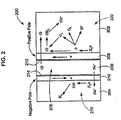
- the various ionic species produced in the three chambered electrolysis cell useful in the invention are illustrated in FIG. 2 .
- the three chambered electrolysis cell 200 includes an anode chamber 202, cathode chamber 204, and a salt solution chamber 206.
- the ions present in the salt solution flowing through the salt solution chamber 206 migrate through the anode ion exchange membrane 212 and cathode ion exchange membrane 214 into the water flowing through the anode chamber 202 and cathode chamber 204, respectively.
- Positive ions migrate from the salt solution 216 flowing through the salt solution chamber 206 to the cathode water 218 flowing through the cathode chamber 204.
- Negative ions migrate from the salt solution 216 flowing through the salt solution chamber 206 to the anode water 220 flowing through the anode chamber 202.
- the salt solution 216 is aqueous sodium chloride (NaCl) that contains both sodium ions (Na + ) and chloride ions (Cl - ) ions.
- Na + ions migrate from the salt solution 216 to the cathode water 218.
- Negative Cl - ions migrate from the salt solution 216 to the anode water 220.
- the sodium ions and chloride ions may undergo further reaction in the anode chamber 202 and cathode chamber 204.
- chloride ions can react with various oxygen ions and other species (e.g., oxygen free radicals, O 2 , O 3 ) present in the anode water 220 to produce ClOn- and ClO - .
- Other reactions may also take place in the anode chamber 202 including the formation of oxygen free radicals, hydrogen ions (H + ), oxygen (as O 2 ), ozone (O 3 ), and peroxides.
- hydrogen gas (H 2 ), sodium hydroxide (NaOH), hydroxide ions (OH - ), ClOn- ions, and other radicals may be formed.
- the invention further provides for a process and apparatus for producing an ORP water solution using at least two three chambered electrolysis cells.
- a diagram of a process for producing an ORP water solution using two electrolysis cells of the invention is shown in FIG. 3 .
- the process 300 includes two three-chambered electrolytic cells, specifically a first electrolytic cell 302 and second electrolytic cell 304. Water is transferred, pumped or otherwise dispensed from the water source 305 to anode chamber 306 and cathode chamber 308 of the first electrolytic cell 302 and to anode chamber 310 and cathode chamber 312 of the second electrolytic cell 304.
- the process of the invention can produce from about 1 liter/minute to about 50 liters/minute of ORP water solution.
- the production capacity may be increased by using additional electrolytic cells. For example, three, four, five, six, seven, eight, nine, ten or more three-chambered electrolytic cells may be used to in increase the output of the ORP water solution of the invention.
- the anode water produced in the anode chamber 306 and anode chamber 310 is collected are collected in the mixing tank 314.
- a portion of the cathode water produced in the cathode chamber 308 and cathode chamber 312 is collected in mixing tank 314 and combined with the anode water.
- the remaining portion of cathode water produced in the process is discarded.
- the cathode water may optionally be subjected to gas separator 316 and/or gas separator 318 prior to addition to the mixing tank 314.
- the gas separators remove gases such as hydrogen gas that are formed in cathode water during the production process.
- the mixing tank 314 may optionally be connected to a recirculation pump 315 to permit homogenous mixing of the anode water and portion of cathode water from electrolysis cells 302 and 304. Further, the mixing tank 314 may optionally include suitable devices for monitoring the level and pH of the ORP water solution.
- the ORP water solution may be transferred from the mixing tank 314 via pump 317 for application in disinfection or sterilization at or near the location of the mixing tank. Alternatively, the ORP water solution may be dispensed into suitable containers for shipment to a remote site (e.g., warehouse, hospital, etc.).
- the process 300 further includes a salt solution recirculation system to provide the salt solution to salt solution chamber 322 of the first electrolytic cell 302 and the salt solution chamber 324 of the second electrolytic cell 304.
- the salt solution is prepared in the salt tank 320.
- the salt solution is transferred via pump 321 to the salt solution chambers 322 and 324.
- the salt solution flows in series through salt solution chamber 322 first followed by salt solution chamber 324.
- the salt solution may be pumped to both salt solution chambers simultaneously.
- the salt solution Before returning to the salt tank 320, the salt solution may flow through a heat exchanger 326 in the mixing tank 314 to control the temperature of the ORP water solution as needed.
- the ions present in the salt solution are depleted over time in the first electrolytic cell 302 and second electrolytic cell 304.
- An additional source of ions may periodically be added to the mixing tank 320 to replace the ions that are transferred to the anode water and cathode water.
- the additional source of ions may be used to maintain a constant pH of the salt solution which tends to drop (i.e., become acidic) over time.
- the source of additional ions may be any suitable compound including, for example, salts such as sodium chloride.
- sodium hydroxide is added to the mixing tank 320 to replace the sodium ions (Na + ) that are transferred to the anode water and cathode water.
- the invention provides an apparatus for producing an oxidative reductive potential water solution comprising at least two three-chambered electrolytic cells.
- Each of the electrolytic cells includes an anode chamber, cathode chamber, and salt solution chamber separating the anode and cathode chambers.
- the apparatus includes a mixing tank for collecting the anode water produced by the electrolytic cells and a portion of the cathode water produced by one or more of the electrolytic cells.
- the apparatus further includes a salt recirculation system to permit recycling of the salt solution supplied to the salt solution chambers of the electrolytic cells.
- the ORP water solution has suitable physical characteristics for use in disinfection, sterilization and/or cleaning.
- a 10% Clorox® bleach solution was prepared using distilled water. The following solutions were then prepared using the 10% bleach solution: 80% ORP water solution/20% bleach (Example 4); 60% ORP water solution/40% bleach (Example 5); 40% ORP water solution/60% bleach (Example 6); 20% ORP water solution/80% bleach (Example 7); and 0% ORP water solution/100% bleach (Example 8). Two control solutions were also used for comparison including 100% ORP water solution/0% bleach (Example 9) and an ORP water solution with 0.01% Tween 20 detergent (Example 10).
- the large bolus of chlorine ions added as part of the bleaching agent prevented the accurate measurement of the chlorine dioxide and peroxide levels as indicated with the n.d. designations.
- the results obtained for chlorine dioxide and peroxide are based on standard tests used to measure such species; however, the results may be indicative of different species which can also generate positive test results.
- chlorine dioxide, ozone and hydrogen peroxide can react with hypochlorite resulting their consumption and the production of other species (e.g., HCl and O 2 ).
- hypochlorous acid levels of the ORP water solution with and without the addition of a bleaching agent are similar.
- Example 4-10 The samples of Examples 4-10 were subjected to a high spore count test using Bacillus subtilis var. niger spores (ATCC #9372 obtained from SPS Medical of Rush, New York). Spore suspensions were concentrated (by evaporation in a sterile hood) to 4 x 10 6 spores per 100 microliters. A 100 microliter sample of the spore suspension were mixed with 900 microliters of each of the samples in Examples 4-10. The samples were incubated at room temperature for periods of 1 to 5 minutes as set forth in Table 3.
- Example 4-10 were subjected to a fabric bleaching test.
- the fabric upon which the samples were tested was a 100% rayon children's t-shirt with dark blue dye patches. Two inch square pieces of dyed fabric were placed into 50 mL plastic tubes. Each fabric piece was covered by a sample of the solution in Examples 4-10.
- the elapsed time until complete bleaching was obtained, as determined by the whitening of the fabric, is set forth in Table 4. Table 4. Time Until Complete Bleaching of Fabric Sample Example Time Ex. 4 39 minutes Ex. 5 23 minutes Ex. 6 18 minutes Ex. 7 19 minutes Ex. 8 10 minutes Ex. 9 > 6 hours Ex. 10 > 6 hours
- This example relates to the toxicological profile of on an ORP water solution of the present invention.
- Microcyn 60 (or M60), an exemplary ORP water solution of the present invention, was used in these studies.
- M60 was not an irritant to the skin or conjuctiva of rabbits as tested in compliance with international standards (AAMI 1997; NV SOP 16G-44; PFEUM 2000). Furthermore, an acute inhalation toxicity study in rats demonstrated that administration of Microcyn 60 by this route is safe.
- Microcyn 60 The potential irritant effects of Microcyn 60 were evaluated in a primary ocular irritation study in rabbits. A volume of 0.1 mL of Microcyn 60 was instilled in the right eye of three New Zealand white rabbits. The left eye of each animal was left untreated as a control. The eyes were observed and scored at 1, 24, 48 and 72 hours for corneal ulceration or opacity, inflammation of the iris, and redness or chemosis of the conjunctiva. All animals were also observed once daily for mortality and signs of ill health.
- Aerosol superoxidized water (1 mL) will be delivered to the right nostril via a positive-pressure device to 20 New Zealand rabbits, three times a day for 15, 30, 45 and 60 days.
- the left-control nostril will be left without any treatment.
- Nasomucosa biopsies from the non treated- and M60 treated-nostrils will be obtained from five animals at each time point. These tissues will then be observed under optical and electron microscopy.
- a complete medical exam will be conducted in each animal every other day to document nasal obstruction, facial pain, pressure, mucopurulent rhinorrhea, and malaise. Side effects will be reported as infrequent, mild, and transient.
- M60 intranasal administration for five days was safe in this cohort.
- Pathological mucosa changes were mild and reversible. Therefore, the intranasal administration of M60 could be widely used.
- This example illustrates the activity, stability, and lack of toxicity of an exemplary ORP water.
- Microcyn is a superoxidized solution of neutral pH with germicidal, sterilizing and wound antiseptic activity in accordance with certifications obtained from the Secretariat of Health of Mexico.
- Microcyn is prepared from pure water and salt (NaCl), has a small concentration of sodium ( ⁇ 55 ppm) and chlorine ( ⁇ 80 ppm), a pH in the range of 7.2 to 7.8, and oxidation-reduction potential in the range of 840 mV to 960 mV.
- Microcyn is produced in one concentration only, and need not be activated or diluted.
- This solution is produced from water obtained by reverse osmosis, which is then subjected to an electrochemical gradient generated by high voltage and sodium chloride.
- the reactive species that form in the multiple chambers where the electrochemical gradient is generated are selected in a controlled way to create Microcyn.
- the result is a solution with a controlled content of free radicals that confer a high oxidation-reduction potential (+840 mV to +960 mV) and consequently high antimicrobial activity.
- hypochlorous acid and sodium hypochlorite are the most abundant elements contained in Microcyn, with others in minor concentration, such as hydrogen peroxide, ozone, chloride ions, hydride and sodium hydroxide, among others.
- the disinfectant effect does not necessarily depend on the quantity of chlorine, but rather, in the content of free radicals, since the levels of sodium and chlorine in Microcyn are less than 50 and 60 parts per million, respectively.
- Microcyn has a neutral pH (6.4-7.8), is not corrosive and is stable in storage up to 2 years. All these characteristics have made it possible to produce a superoxidized solution that is effective as a high-level disinfectant and compatible for use both on inanimate surfaces and in tissues.
- Microcyn can be stored in widely varying temperature conditions, from 4 to 65°C, without losing its disinfectant activity for a period of 2 years. This property of prolonged stability on the shelf is also the difference from superoxidized solutions reported previously that are only effective if they are used immediately after being produced. In other words, while Microcyn can be stored and distributed even in extreme conditions without losing its antimicrobial activity, other solutions would have to be produced by a specialized and costly machine in every hospital that tried to use that solution. Nevertheless, the manufacturer recommends that, once the container of Microcyn is opened, it be used within 30 days for the purpose of guaranteeing uniform activity and consistent results.
- Microcyn is produced in only one concentration, the dose of Microcyn can be changed only by changes in the volume applied per unit area of the skin.
- the doses of Microcyn applied topically to the intact skin varied between 0.05 and 0.07 mL/cm 2 ; in the study of acute dermatological toxicity and in the investigation of skin irritation, they were up to 8.0 mL/cm 2 , and in those that investigated its application in deep wounds, Microcyn was applied in a dose of 0.09 mL/cm 2 .
- the systemic toxicity of Microcyn was also evaluated by means of an intraperitoneal injection in mice. For this, five mice were injected with a single dose (50 mL/kg) of Microcyn by the intraperitoneal route. In the same way, five control mice were injected with a single dose (50 mL/kg) of saline solution (sodium chloride at 0.9%). In this investigation, neither mortality nor any evidence of systemic toxicity was observed in any of the animals that received the single intraperitoneal dose of Microcyn, for which the LD 50 is above 50 mL/kg.
- Microcyn was administered by the oral route to rats to allow its absorption and to characterize any inherent toxic effect of the product. For this a single dose (4.98 mL/kg) was administered by esophageal tube to three albino rats of the Sprague-Dawley strain. There was no mortality, nor were there clinical signs or abnormalities in the autopsies of any of the animals exposed to the single oral dose of Microcyn.
- Microcyn was applied by the inhalatory route to rats to determine potential acute toxicity by inhalation. All the animals showed a very slight or slight reduction in activity and piloerection after the exposure, but they were all asymptomatic on the following day. Mortality or abnormalities were not observed at autopsy of the animals exposed to Microcyn by inhalation.
- Microcyn when it has been applied to the intact skin, deep open dermal wounds, in the conjunctival sac, by oral and inhalation routes or by means of intraperitoneal injection, Microcyn has not shown adverse effects related to the product. There is also experience in having treated more than 500 patients with wounds of very diverse nature in the skin and mucosae, with excellent antiseptic and cosmetic results. Accordingly, topically applied Microcyn should be effective and well-tolerated in this clinical trial.
- Microcyn is packaged in transparent 240 mL PET bottles. This product is stored at ambient temperature and remains stable for up to 2 years on the shelf if the bottle is not opened. On having been opened, it is recommended that all of the product be used in less than 90 days. From its profile of high biological safety, Microcyn can be emptied into the sink without risk of contamination or corrosion.
- Microcyn Antibacterial and Antimycotic Activity Bacterium Catalog Time of action (reduction below 99.999%) Ps. aeruginosa ATCC 25619 1 min St. aureus ATCC 6538 1 min E. coli ATCC 11229 1 min S. typhi CDC 99 1 min C. albicans ATCC 1 min B. subtilis 9372 Low spore (10 4 ) 10 min High spore (10 6 ) 15 min
- the sporicidal activity trial was carried out in accordance with the PAHO [Pan-American Health Organization]/WHO protocol.
- Microcyn was found to reduce the viral load of human immunodeficiency virus (strain SF33) by more than 3 logs in five minutes. This was verified by the absence of cytopathic effect and of the antigen Agp24 in the trials of virus treated with Microcyn. These trials were undertaken in accordance with the virucide protocols of the United States Environmental Protection Agency (DIS/TSS-7/November 12, 1981).
- Microcyn when it is administered as recommended, can eradicate bacteria, fungi, viruses and spores from one to fifteen minutes of exposure.
- This example demonstrates the use of an exemplary ORP water solution, Microcyn as an effective antimicrobial solution.
- Microcyn oxidative reductive potential water was evaluated versus challenge suspensions of fifty different microorganism strains -- twenty-five American Type Culture Collection (ATCC) strains and twenty-five Clinical Isolates of those same species -- as described in the Tentative Final Monograph, Federal Register, 17 June 1994, vol. 59:116, pg. 31444 .
- the percent reductions and the Log10 reductions from the initial population of each challenge strain were determined following exposures to Microcyn for thirty (30) seconds, one (1) minute, three (3) minutes, five (5) minutes, seven (7) minutes, nine (9) minutes, eleven (11) minutes, thirteen (13) minutes, fifteen (15) minutes, and twenty (20) minutes. All agar-plating was performed in duplicate and Microcyn was evaluated at a 99 % (v/v) concentration. All testing was performed in accordance with Good Laboratory Practices, as specified in 21 C.F.R. Part 58.
- Microcyn While their microbial reductions were measured at less than 5.0 Log 10 , Microcyn also demonstrated antimicrobial activity against the remaining three species not included in Table 6. More specifically, a thirty second exposure to Microcyn reduced the population of Streptococcus pneumoniae (Clinical Isolate; BSLI #072605Spn1) by more than 4.5 Log 10 , which was the limit of detection versus this species. Further, when challenged with Candida tropicalis (ATCC #750), Microcyn demonstrated a microbial reduction in excess of 3.0 Log 10 following a thirty second exposure. Additionally, when challenged with Candida tropicalis (BSLI #042905Ct), Microcyn demonstrated a microbial reduction in excess of 3.0 Log 10 following a twenty minute exposure.
- This example demonstrates a comparison of the antimicrobial activity of an exemplary ORP water solution, Microcyn, versus HIBICLENS® chlorhexidine gluconate solution 4.0 % (w/v) and 0.9 % sodium chloride irrigation (USP).
- Example 13 An In Vitro Time-Kill evaluation was performed as described in Example 13 using HIBICLENS® chlorhexidine gluconate solution 4.0 % (w/v) and a sterile 0.9 % sodium chloride irrigation solution (USP) as reference products. Each reference product was evaluated versus suspensions of the ten American Type Culture Collection (ATCC) strains specifically denoted in the Tentative Final Monograph. The data collected was then analyzed against the Microcyn microbial reduction activity recorded in Example 13.
- ATCC American Type Culture Collection
- Microcyn oxidative reductive potential water reduced microbial populations of five of the challenge strains to a level comparable to that observed for the HIBICLENS® chlorhexidine gluconate solution.
- Both Microcyn and HIBICLENS® provided a microbial reduction of more than 5.0 Log 10 following a thirty second exposure to the following species: Escherichia coli (ATCC #11229 and ATCC #25922), Pseudomonas aeruginosa (ATCC #15442 and ATCC #27853), and Serratia marcescens (ATCC #14756).
- Microcyn demonstrated excellent antimicrobial activity against Micrococcus luteus (ATCC #7468) by providing a 5.8420 Log 10 reduction after a thirty second exposure.
- ATCC #7468 a direct Micrococcus luteus (ATCC #7468) activity comparison to HIBICLENS® was not possible because after a thirty second exposure, HIBICLENS® reduced the population by the detection limit of the test (in this specific case, by more than 4.8 Log 10 ).
- the sterile 0.9 % sodium chloride irrigation solution reduced microbial populations of each of the six challenge strains discussed above by less than 0.3 Log 10 following a full twenty minute exposure.
- Microcyn oxidative reductive potential water provided greater antimicrobial activity than both HIBICLENS® and the sodium chloride irrigation for four of the challenge strains tested: Enterococcus faecalis (ATCC #29212), Staphylococcus aureus (ATCC #6538 and ATCC #29213), and Staphylococcus epidermidis (ATCC #12228).
- Enterococcus faecalis ATCC #29212
- Staphylococcus aureus ATCC #6538 and ATCC #29213
- Staphylococcus epidermidis ATCC #12228.
- Table 7 summarizes the microbial reduction results of the In Vitro Time-Kill evaluation for these four species: Table 7.
- This example provides a formulation of the invention suitable for topical administration to a patient.
- the formulation contains the following: Component Quantity ORP water solution 250 mL Carbopol® polymer powder (thickening agent) 15 g Triethanolamine (neutralizing agent) 80 mL
- This example provides a formulation of the invention suitable for topical administration to a patient.
- the formulation contains the following: Component Quantity ORP water solution 1000 mL Carbopol® polymer powder (thickening agent) 15 g Triethanolamine (neutralizing agent) 80 mL
- This example provides a formulation of the invention suitable for topical administration to a patient.
- the formulation contains the following: Component Quantity ORP water solution 250 mL Carbopol® polymer powder (thickening agent) 7 g Triethanolamine (neutralizing agent) 12 mL
- This example describes the manufacture of a formulation of the invention comprising an ORP water solution and a thickening agent.
- An ORP water solution is put into a suitable container, such as a glass beaker or jar.
- Carbopol® 974P polymer is passed through a coarse sieve (or strainer), which permits rapid sprinkling, whilst at the same time breaking up any large agglomerates.
- the polymer Carbopol® 974P is then added as the thickening agent.
- the Carbopol® polymer is added slowly to prevent the formation of clumps and, thus, avoid an excessively long mixing cycle.
- the solution is mixed rapidly during the addition of the Carbopol® polymer so that the powder dissolves at room temperature.
- the neutralizing agent triethanolamine is then added to the solution and mixed by means of an electric mixer or other suitable device, until a homogeneous gel is obtained.
- the addition of the neutralizing agent to the Carbopol® polymer composition converts the formulation into a gel.
- This example describes the treatment of periodontal disease when using ORP water.
- the patients were evaluated weekly for 12 weeks after scaling.
- the period of resolution of gingivitis in the patients was 2 to 4 weeks. Bleeding upon brushing was resolved within 24 hours to 4 days. None of the patients exhibited adverse effects from the use of oxidative reductive potential water solution. Within two weeks of treatment, all of the patients exhibited evidence of bone regeneration.
- HDFs human diploid fibroblasts
- HP hydrogen peroxide
- HP is known to be toxic to eukaryotic cells, increasing apoptosis and necrosis and reducing cellular viability.
- cell viability, apoptosis and necrosis were measured in HDFs exposed to pure ORP water solution and 880 mM HP (a concentration employed for antiseptic uses of HP) for 5 and 30 minutes.
- FIG. 4A-4C discloses the results with exposure times of 5 and 30 minutes are depicted in white and black bars, respectively. Simultaneous analyses of these parameters were performed in the same cell populations by flow cytometry using: FIG. 4A ) 7-aminoactinomycin D (7AAD); FIG. 4B ) Annexin V-FITC and FIG. 4C ) Propidium iodide.
- Apoptosis does not seem to be the mechanism by which the ORP water solution induces cell death because only 3 % of ORP water solution-treated cells exposed Annexin -V in the cellular surface (a marker of apoptosis) ( FIG. 4B ). This percentage was actually similar to the one measured in the control group. On the contrary, HP induced necrosis in 20% and 75% of treated cells and apoptosis in 15% and 20% after 5 and 30 min of exposure, respectively. Altogether these results show that the (undiluted) ORP water solution is far less toxic for HDFs than an antiseptic concentration of HP.
- This example demonstrates the effect of an exemplary ORP water solution relative to hydrogen peroxide (HP) on oxidative DNA damage and formation of the DNA adduct 8-hydroxy-2'-deoxiguanosine (8-OHdG) in HDFs. It is known that the production of 8-OHdG adducts in a cell is a marker of oxidative damage at specific residues of DNA. In addition, high cellular levels of this adduct correlate with mutagenesis, carcinogenesis and cellular aging.
- HP hydrogen peroxide
- FIG. 5 shows the levels of 8-OHdG adducts present in DNA samples from HDFs after control treatments, ORP water solution treatments and HP-treatments for 30 minutes.
- the exposure to ORP water solution for 30 minutes did not increase the formation of adducts in the treated cells in comparison to control cells after incubation for 30 minutes.
- the treatment with highly diluted HP -down to sublethal and nontherapeutic HP concentrations (500 ⁇ M HP)- the treatment with 500 ⁇ M HP for 30 minutes increased the number of 8-OHdG adducts by about 25 fold relative to the control-treated or ORP water solution-treated cells.
- the ORP water solution-treated cells were able to decrease the levels of 8-OHdG adducts if left in supplemented DMEM for 3 hours after exposure to the ORP water solution. Despite being allowed the same 3 hour recovery period, HP-treated cells still presented about 5 times more adducts than control-treated or ORP water solution treated cells. Altogether, these results demonstrate that acute exposure to the ORP water solution does not induce significant DNA oxidative damage. These results also indicate that the ORP water solution will not likely induce mutagenesis or carcinogenesis in vitro or in vivo.
- This example demonstrates the effects on HDFs of chronic exposure to low concentrations of an exemplary ORP water solution versus HP. It is known that chronic oxidative stress induces premature aging of cells. In order to mimic a prolonged oxidative stress, primary HDF cultures were chronically exposed to a low concentration of the ORP water solution (10%) or a non lethal-HP concentration (5 ⁇ M) during 20 population doublings. The expression and activity of the SA- ⁇ -galactosidase enzyme has previously been associated with the senescence process in vivo and in vitro. In this example the expression of the SA- ⁇ -galactosidase enzyme was analyzed after one month of continuous exposure of HDF to the ORP water solution or HP. The results are depicted in FIG. 6 .
- This example demonstrates the results of a toxicity study using an exemplary ORP water solution.
- Microcyn 60 an exemplary ORP water solution.
- a single dose (50 mL/kg) of Microcyn 60 was injected intraperitoneally in five mice.
- Five control mice were injected with a single dose (50 mL/kg) of saline (0.9% sodium chloride). All animals were observed for mortality and adverse reactions immediately following the injection, at 4 hours after injection, and then once daily for 7 days. All animals were also weighed prior to the injection and again on Day 7. There was no mortality during the study. All animals appeared clinically normal throughout the study. All animals gained weight.
- the estimated Microcyn 60 acute intraperitoneal LD50 from this study is greater than 50 mL/kg. This example demonstrates that Microcyn 60 lacks significant toxicity and should be safe for therapeutic use accordance with the invention.
- This example illustrates a study conducted to determine the potential cytogenetic toxicity of an exemplary ORP water solution.
- a micronucleus test was performed using an exemplary ORP water solution (Microcyn 10%) to evaluate the mutagenic potential of intraperitoneal injection of an ORP water solution into mice.
- the mammalian in vivo micronucleus test is used for the identification of substances which cause damage to chromosomes or the mitotic apparatus of murine polychromatic erythrocytes. This damage results in the formation of "micronuclei,” intracellular structures containing lagging chromosome fragments or isolated whole chromosomes.
- the ORP water solution study included 3 groups of 10 mice each (5 males / 5 females): a test group, dosed with the ORP water solution; a negative control group, dosed with a 0.9% NaCl solution; and a positive control group, dosed with a mutagenic cyclophosphamide solution.
- the test and the negative control groups received an intraperitoneal injection (12.5 ml/kg) of the ORP water solution or 0.9% NaCl solution, respectively, for two consecutive days (days 1 and 2).
- the positive control mice received a single intraperitoneal injection of cyclophosphamide (8 mg/mL, 12.5 ml/kg) on day 2. All mice were observed immediately after injection for any adverse reactions. All animals appeared clinically normal throughout the study and no sign of toxicity was noted in any group. On day 3, all mice were weighed and terminated.
- the femurs were excised from the terminated mice, the bone marrow was extracted, and duplicate smear preparations were performed for each mouse.
- the bone marrow slides for each animal were read at 40X magnification.
- the ratio of polychromatic erythrocytes (PCE) to normochromatic erythrocytes (NCE), an index of bone marrow toxicity, was determined for each mouse by counting a total of at least 200 erythrocytes. Then a minimum of 2000 scoreable PCE per mouse were evaluated for the incidence of micronucleated polychromatic erythrocytes.
- Statistical analysis of the data were done using the Mann and Whitney test (at 5% risk threshold) from a statistical software package (Statview 5.0, SAS Institute Inc., USA).
- the positive control mice had statistically significant lower PCE/NCE ratios when compared to their respective negative controls (males : 0.77 vs. 0.90 and females : 0.73 vs. 1.02), showing the toxicity of the cyclophosphamide on treated bone marrow.
- the PCE/NCE ratios for the ORP water solution-treated mice and negative controls.
- positive control mice had a statistically significant higher number of polychromatic erythrocytes bearing micronuclei as compared to both the ORP water solution-treated mice (males: 11.0 vs. 1.4 / females: 12.6 vs. 0.8) and the negative controls (males: 11.0 vs. 0.6 /females: 12.6 vs. 1.0).
- the negative controls males: 11.0 vs. 0.6 /females: 12.6 vs. 1.0
- Masson's trichrome-stained sections and Collagen Type II stained sections of the Dermacyn and saline-treated surgical wound sites were evaluated by a board-certified veterinary pathologist.
- the sections were assessed for the amount of Collogen Type 2 expression as a manifestiation of connective tissue proliferation, fibroblast morphology and collagen formation, presence of neoepidermis in cross section, inflammation and extent of dermal ulceration.
- This example demonstrates the use of an exemplary ORP water solution as part of a root canal procedure.
- Infection due to a canal not being cleaned or filled completely is a complication that can occur from 10 to 30% of the cases undergoing root canal treatment. This may be due to the complexity of the root canal system, for example some root canals may be very narrow or curved. Infection can also be due to a canal not being cleaned or filled at all, if the X-ray did not show all of a tooth's canals. Additionally, certain bacteria may not respond to root canal therapy. Since ORP water solution exerts a wide antimicrobial activity without sensitizing or irriting skin and mucosas, ORP water solution was assessed for it utility in the prevention of acute reactions after root canal therapy.
- a standard art-known treatment procedure with sodium hypochlorite (SH) was conducted for root canal treatment in control patients. Particular care was paid to avoid infiltration of the solution to the periapical region during the manipulation. All patients in the control group received ampicilin (500 mg tid) or cephalexin (500 mg bid) for 7 days as well as anti-inflammatory drugs (naproxen 500 mg bid) as necessary.
- ORP water solution therapy was superior in reducing the incidence of acute reactions after root canal therapy in comparison to 2.5% sodium hypochlorite solution.
- patients with failures in the ORP water solution therapy group could be successfully re-treated with the solution. Therefore, none of the subjects in the SOS group lost teeth.
- the aggressive irrigation and infiltration procedures conducted with SOS could not have been done with any other antiseptic currently in use due to possible necrosis of surrounding tissues.
Landscapes
- Health & Medical Sciences (AREA)
- Public Health (AREA)
- Life Sciences & Earth Sciences (AREA)
- Animal Behavior & Ethology (AREA)
- General Health & Medical Sciences (AREA)
- Veterinary Medicine (AREA)
- Epidemiology (AREA)
- Chemical & Material Sciences (AREA)
- Chemical Kinetics & Catalysis (AREA)
- General Chemical & Material Sciences (AREA)
- Pharmacology & Pharmacy (AREA)
- Medicinal Chemistry (AREA)
- Engineering & Computer Science (AREA)
- Dentistry (AREA)
- Inorganic Chemistry (AREA)
- Oral & Maxillofacial Surgery (AREA)
- Nuclear Medicine, Radiotherapy & Molecular Imaging (AREA)
- Water Supply & Treatment (AREA)
- Surgery (AREA)
- Neurosurgery (AREA)
- Neurology (AREA)
- Biomedical Technology (AREA)
- Bioinformatics & Cheminformatics (AREA)
- Organic Chemistry (AREA)
- Nutrition Science (AREA)
- Physiology (AREA)
- Dermatology (AREA)
- Pharmaceuticals Containing Other Organic And Inorganic Compounds (AREA)
- Medicinal Preparation (AREA)
- Apparatus For Disinfection Or Sterilisation (AREA)
Applications Claiming Priority (7)
| Application Number | Priority Date | Filing Date | Title |
|---|---|---|---|
| US67688305P | 2005-05-02 | 2005-05-02 | |
| US73074305P | 2005-10-27 | 2005-10-27 | |
| US76063506P | 2006-01-20 | 2006-01-20 | |
| US76056706P | 2006-01-20 | 2006-01-20 | |
| US76064506P | 2006-01-20 | 2006-01-20 | |
| US76055706P | 2006-01-20 | 2006-01-20 | |
| PCT/US2006/016856 WO2006119300A2 (en) | 2005-05-02 | 2006-05-02 | Method of using oxidative reductive potential water solution in dental applications |
Publications (2)
| Publication Number | Publication Date |
|---|---|
| EP1896043A2 EP1896043A2 (en) | 2008-03-12 |
| EP1896043B1 true EP1896043B1 (en) | 2018-08-29 |
Family
ID=37192360
Family Applications (1)
| Application Number | Title | Priority Date | Filing Date |
|---|---|---|---|
| EP06752104.7A Expired - Lifetime EP1896043B1 (en) | 2005-05-02 | 2006-05-02 | Method of using oxidative reductive potential water solution in dental applications |
Country Status (10)
| Country | Link |
|---|---|
| US (2) | US9498548B2 (enExample) |
| EP (1) | EP1896043B1 (enExample) |
| JP (1) | JP5907645B2 (enExample) |
| KR (1) | KR20080011312A (enExample) |
| CN (1) | CN101189017B (enExample) |
| AU (1) | AU2006242175A1 (enExample) |
| BR (1) | BRPI0610901B1 (enExample) |
| CA (1) | CA2606734C (enExample) |
| MX (1) | MX2007013774A (enExample) |
| WO (1) | WO2006119300A2 (enExample) |
Families Citing this family (47)
| Publication number | Priority date | Publication date | Assignee | Title |
|---|---|---|---|---|
| US6702949B2 (en) | 1997-10-24 | 2004-03-09 | Microdiffusion, Inc. | Diffuser/emulsifier for aquaculture applications |
| NO20043150D0 (no) * | 2004-07-23 | 2004-07-23 | Ntnu Technology Transfer As | "Fremgangsmate og utstyr for varmegjenvining" |
| WO2006102680A2 (en) | 2005-03-23 | 2006-09-28 | Oculus Innovative Sciences, Inc. | Method of treating second and third degree burns using oxidative reductive potential water solution |
| JP5907645B2 (ja) | 2005-05-02 | 2016-04-26 | オキュラス イノヴェイティヴ サイエンシズ、インコーポレイテッド | 歯科用途における酸化還元電位水溶液の使用法 |
| PL1945576T3 (pl) * | 2005-10-28 | 2013-04-30 | Apr Nanotechnologies S A | Urządzenie zawierające elektrodę z nanopowłoką do przygotowywania wysoce trwałego roztworu wodnego i sposób wytwarzania tego roztworu wodnego |
| BRPI0706677A2 (pt) * | 2006-01-20 | 2011-04-05 | Oculus Innovative Sciences Inc | métodos de tratamento ou prevenção de sinusite com solução aquosa com potencial de oxirredução |
| US8784897B2 (en) | 2006-10-25 | 2014-07-22 | Revalesio Corporation | Methods of therapeutic treatment of eyes |
| EP2086668B1 (en) | 2006-10-25 | 2016-11-16 | Revalesio Corporation | Mixing device and method |
| US8784898B2 (en) | 2006-10-25 | 2014-07-22 | Revalesio Corporation | Methods of wound care and treatment |
| WO2008115290A2 (en) | 2006-10-25 | 2008-09-25 | Revalesio Corporation | Methods of wound care and treatment |
| US8609148B2 (en) | 2006-10-25 | 2013-12-17 | Revalesio Corporation | Methods of therapeutic treatment of eyes |
| US8445546B2 (en) | 2006-10-25 | 2013-05-21 | Revalesio Corporation | Electrokinetically-altered fluids comprising charge-stabilized gas-containing nanostructures |
| AU2007308840C1 (en) | 2006-10-25 | 2014-09-25 | Revalesio Corporation | Methods of therapeutic treatment of eyes and other human tissues using an oxygen-enriched solution |
| WO2008089268A2 (en) | 2007-01-16 | 2008-07-24 | Puricore, Inc. | Methods and compositions for treating conditions associated with infection and/or inflammation |
| US9999635B2 (en) | 2007-01-16 | 2018-06-19 | Realm Therapeutics, Inc. | Methods and compositions for treating inflammatory disorders |
| EP2111252A4 (en) * | 2007-01-31 | 2010-12-01 | Adam Heller | MANAGEMENT OF PAIN BY ELECTROCHEMICAL PATHWAY |
| WO2008131936A2 (en) | 2007-04-25 | 2008-11-06 | Akuatech S.R.L. | Highly stable electrolytic water with reduced nmr half line width |
| US9523090B2 (en) | 2007-10-25 | 2016-12-20 | Revalesio Corporation | Compositions and methods for treating inflammation |
| US10125359B2 (en) | 2007-10-25 | 2018-11-13 | Revalesio Corporation | Compositions and methods for treating inflammation |
| US9745567B2 (en) | 2008-04-28 | 2017-08-29 | Revalesio Corporation | Compositions and methods for treating multiple sclerosis |
| EP2285347A4 (en) | 2008-05-01 | 2011-09-21 | Revalesio Corp | COMPOSITIONS AND METHODS OF TREATING DISORDERS OF THE DIGESTION SYSTEM |
| ES2823566T3 (es) * | 2008-12-22 | 2021-05-07 | Sonoma Pharmaceuticals Inc | Tratamiento o prevención de infecciones asociadas a biopelículas con agua con cloro libre disponible |
| US8815292B2 (en) | 2009-04-27 | 2014-08-26 | Revalesio Corporation | Compositions and methods for treating insulin resistance and diabetes mellitus |
| KR100955910B1 (ko) * | 2009-05-21 | 2010-05-06 | 박인진 | 구강 내 사용되는 틀니제품의 미생물 오염을 감소시키기 위한 천연 항균조성물 |
| WO2010148004A1 (en) * | 2009-06-15 | 2010-12-23 | Oculus Innovative Sciences, Inc. | Solution containing hypochlorous acid and methods of using same |
| EP2442818B1 (en) * | 2009-06-17 | 2015-07-22 | APR Nanotechnologies S.A. | Methods of treating outer eye disorders using high orp acid water and compositions thereof |
| JP6075732B2 (ja) | 2010-04-13 | 2017-02-08 | ケーシーアイ ライセンシング インク | 反応性成分を含む組成物ならびに創傷被覆材、装置および方法 |
| NZ604063A (en) | 2010-05-07 | 2015-01-30 | Revalesio Corp | Compositions and methods for enhancing physiological performance and recovery time |
| AU2011289172B2 (en) | 2010-08-12 | 2015-09-24 | Revalesio Corporation | Compositions and methods for treatment of taupathy |
| US8394253B2 (en) * | 2010-11-16 | 2013-03-12 | Strategic Resource Optimization, Inc. | Electrolytic system and method for generating biocides having an electron deficient carrier fluid and chlorine dioxide |
| US11452778B2 (en) | 2011-03-18 | 2022-09-27 | Urgo Us, Inc. | Stabilized hypohalous acid solutions |
| US9381214B2 (en) | 2011-03-18 | 2016-07-05 | Puricore, Inc. | Methods for treating skin irritation |
| JP6355926B2 (ja) | 2011-03-18 | 2018-07-11 | レルム セラピューティクス,インコーポレイテッド | 安定化次亜ハロゲン酸溶液 |
| DE102012025143A1 (de) * | 2012-11-07 | 2014-05-08 | Heraeus Medical Gmbh | Verfahren zur Wirkstofffreisetzung und Wirkstofffreisetzungssysteme |
| EP2999341B1 (en) | 2013-05-22 | 2018-11-28 | Sonoma Pharmaceuticals, Inc. | Stabilized hypochlorous acid solution and use thereof |
| JP6121840B2 (ja) * | 2013-08-07 | 2017-04-26 | ハイクロテック・メディカル・ジャパン株式会社 | 液体口腔洗浄剤 |
| US20150099010A1 (en) * | 2013-10-07 | 2015-04-09 | Reoxcyn Discoveries Group, Inc | Redox signaling gel formulation |
| US20220087800A1 (en) * | 2015-10-12 | 2022-03-24 | Mark WOLGIN | Negative Pressure Wound Therapy for Treatment of Periodontal Disease |
| EP3645017A4 (en) | 2017-06-28 | 2021-05-19 | Collidion, Inc. | COMPOSITIONS, PROCEDURES AND USES FOR CLEANING UP, DISINFECTING AND / OR STERILIZATION |
| JP7379342B2 (ja) | 2018-01-14 | 2023-11-14 | コリディオン,インコーポレイテッド | 洗浄、消毒、滅菌、および/または処置のための組成物、キット、方法、および使用 |
| IL288856B2 (en) * | 2019-06-14 | 2025-12-01 | Collidion Inc | Compositions, kits, methods and uses for preventing microbial growth |
| EP4102968A4 (en) | 2020-02-14 | 2024-04-10 | Collidion, Inc. | COMPOSITIONS, KITS, METHODS AND USES FOR CLEANING, DISINFECTING, STERILIZING AND/OR TREATING |
| WO2021252129A1 (en) * | 2020-06-10 | 2021-12-16 | The Penn State Research Foundation | Process and system to lessen human coronavirus transmission and spread |
| JP7755284B2 (ja) * | 2020-12-25 | 2025-10-16 | タカラベルモント株式会社 | 歯科用インスツルメント |
| MY205402A (en) * | 2021-03-12 | 2024-10-20 | Bactiguard Ab | Electro-activated super oxidized water and method of synthesizing the same |
| DE102023111166A1 (de) * | 2023-04-29 | 2024-10-31 | INAVIVE Lab | Kosmetische Zubereitung mit verbesserter Konservierung |
| CN117376388B (zh) * | 2023-12-01 | 2026-01-23 | 河南锐坤电子科技有限公司 | 一种集体室内智慧安全管理联动系统 |
Family Cites Families (310)
| Publication number | Priority date | Publication date | Assignee | Title |
|---|---|---|---|---|
| US3066095A (en) | 1959-09-30 | 1962-11-27 | Hagan Chemicals & Controls Inc | Water purification agents and method of using same |
| GB1422795A (en) | 1972-05-31 | 1976-01-28 | Bunyan J | Antiseptic and non-toxic substance and a method of making the same |
| US3975246A (en) | 1973-06-09 | 1976-08-17 | Sachs-Systemtechnik Gmbh | Method of disinfecting water |
| DE2442078A1 (de) | 1974-09-03 | 1976-03-18 | Sachs Systemtechnik Gmbh | Verfahren und vorrichtung zur entkeimung und entgiftung von fluessigkeiten mittels anodischer oxydation unter zusatz von silber |
| DE2607906A1 (de) | 1976-02-26 | 1977-09-01 | Hans Einhell Inh Josef Thannhu | Elektrolysezelle fuer die behandlung von wasser |
| US4242446A (en) | 1978-07-26 | 1980-12-30 | Coulter Electronics, Inc. | Method for determining a substance in a biological fluid and reagent combination for use in the method |
| US4236992A (en) | 1979-08-06 | 1980-12-02 | Themy Constantinos D | High voltage electrolytic cell |
| US4296103A (en) | 1980-08-08 | 1981-10-20 | Felipe Laso | Stabilized solution of chlorine oxides |
| US4670252A (en) | 1985-05-24 | 1987-06-02 | The Procter & Gamble Company | Treatment of oral diseases |
| US4615937A (en) | 1985-09-05 | 1986-10-07 | The James River Corporation | Antimicrobially active, non-woven web used in a wet wiper |
| US4666621A (en) | 1986-04-02 | 1987-05-19 | Sterling Drug Inc. | Pre-moistened, streak-free, lint-free hard surface wiping article |
| US4781974A (en) | 1986-04-23 | 1988-11-01 | James River Corporation | Antimicrobially active wet wiper |
| IT1207620B (it) * | 1987-02-27 | 1989-05-25 | Castellini Spa | Metodo ed apparecchiatura per la stelizzazione a freddo di strumenti chirurgici in particolare per strumenti odontoiatrici |
| US5906810A (en) | 1987-03-17 | 1999-05-25 | Turner; Robert E. | Formulations and uses thereof in the prevention and treatment of oral lesions |
| US4767511A (en) | 1987-03-18 | 1988-08-30 | Aragon Pedro J | Chlorination and pH control system |
| US5388571A (en) | 1987-07-17 | 1995-02-14 | Roberts; Josephine A. | Positive-pressure ventilator system with controlled access for nebulizer component servicing |
| FI82808C (fi) | 1987-12-31 | 1991-04-25 | Etelae Haemeen Keuhkovammayhdi | Ultraljudfinfoerdelningsanordning. |
| JPH0249798B2 (ja) | 1988-01-28 | 1990-10-31 | Kogyo Gijutsuin | Jukikagobutsuganjusuinoshorihoho |
| JPH01218682A (ja) | 1988-02-29 | 1989-08-31 | Tatsuo Okazaki | 電解水調整方法及び装置 |
| DE3929411A1 (de) | 1988-09-22 | 1990-03-29 | Siegfried Natterer | Pharmazeutische zubereitung sowie verfahren zu ihrer herstellung |
| JPH0293088A (ja) | 1988-09-29 | 1990-04-03 | Permelec Electrode Ltd | 水電解方法及び装置 |
| JPH02149395A (ja) | 1988-11-30 | 1990-06-07 | Jipukomu Kk | 殺菌水製造装置及び殺菌水製造方法 |
| JPH0731981Y2 (ja) | 1988-12-02 | 1995-07-26 | 京都度器株式会社 | 垂直墨出し用マーカー |
| US4979938A (en) | 1989-05-11 | 1990-12-25 | Iomed, Inc. | Method of iontophoretically treating acne, furuncles and like skin disorders |
| SE466196B (sv) | 1989-06-13 | 1992-01-13 | Pavel Voracek | Foerfarande och anordning foer elektrisk behandling av en elektrolytisk loesning samt loesningsfraktioner framstaellda enligt foerfarandet |
| US6638413B1 (en) | 1989-10-10 | 2003-10-28 | Lectro Press, Inc. | Methods and apparatus for electrolysis of water |
| US5271943A (en) | 1989-10-27 | 1993-12-21 | Scott Health Care | Wound gel compositions containing sodium chloride and method of using them |
| US5084011A (en) | 1990-01-25 | 1992-01-28 | Grady Daniel J | Method for oxygen therapy using hyperbarically oxygenated liquid |
| US5334383A (en) | 1990-05-23 | 1994-08-02 | Medical Discoveries, Inc. | Electrically hydrolyzed salines as in vivo microbicides for treatment of cardiomyopathy and multiple sclerosis |
| US5622848A (en) | 1990-05-23 | 1997-04-22 | Medical Discoveries, Inc. | Electrically hydrolyzed salines as microbiocides for in vitro treatment of contaminated fluids containing blood |
| US5244768A (en) | 1991-02-15 | 1993-09-14 | Fuji Xerox Co., Ltd. | Manufacturing process for an electrophotographic toner |
| GB2253860B (en) | 1991-03-12 | 1995-10-11 | Kirk And Charashvili Internati | The electrochemical treatment of water and a device for electrochemically treating water |
| JP3236315B2 (ja) | 1991-08-27 | 2001-12-10 | 修生 澄田 | 中間室を設けた純水電解槽 |
| DE69218901T2 (de) | 1991-12-10 | 1997-07-17 | Tdk Corp | Ultraschallzerstäuber |
| JP3247134B2 (ja) | 1991-12-27 | 2002-01-15 | 修生 澄田 | 純水の電解による水素イオンまたは水酸イオンと酸化還元物質が共存した液およびその製造方法 |
| JP2615308B2 (ja) | 1992-02-20 | 1997-05-28 | 英雄 早川 | 水の改質方法 |
| JP2611080B2 (ja) | 1992-02-20 | 1997-05-21 | 英雄 早川 | 水の改質方法 |
| US5622725A (en) | 1992-03-20 | 1997-04-22 | Alcide Corporation | Wound disinfection and repair |
| US5427667A (en) | 1992-04-03 | 1995-06-27 | Bakhir; Vitold M. | Apparatus for electrochemical treatment of water |
| US5287847A (en) | 1992-07-24 | 1994-02-22 | Vortran Medical Technology, Inc. | Universal nebulizer |
| US6544502B2 (en) | 1992-09-11 | 2003-04-08 | Wasatch Pharmaceutical Inc. | Skin treatment with a water soluble antibiotic dissolved in an electrolyzed water |
| JPH06206825A (ja) | 1992-12-11 | 1994-07-26 | Nippon Rooshiyon Kk | 白癬菌、湿疹等による皮膚病の治療剤及び 皮膚殺菌活性化剤 |
| JPH06182345A (ja) | 1992-12-21 | 1994-07-05 | Tonen Corp | 水浄化装置 |
| EP0612694B1 (en) | 1993-02-22 | 1998-05-06 | Nippon Intek Co., Ltd. | Method and device for producing electrolytic water |
| JP2623204B2 (ja) | 1993-02-26 | 1997-06-25 | 英雄 早川 | 水の改質方法 |
| JPH06312183A (ja) | 1993-04-28 | 1994-11-08 | Shinko Pantec Co Ltd | 電解イオン水の製造方法及びそのための装置 |
| DE4317174A1 (de) | 1993-05-22 | 1994-11-24 | Bosch Gmbh Robert | Verbundsystem mit mindestens zwei anorganischen keramischen Schichten und Verfahren zu deren Herstellung |
| JPH06335685A (ja) | 1993-05-28 | 1994-12-06 | Funai Electric Co Ltd | イオン水生成器 |
| JP2652609B2 (ja) | 1993-05-31 | 1997-09-10 | ミズ株式会社 | 電解水生成装置 |
| JPH0710762A (ja) * | 1993-06-25 | 1995-01-13 | Miura Denshi Kk | 口内炎用うがい水 |
| JP3325081B2 (ja) | 1993-06-28 | 2002-09-17 | 英雄 早川 | 水の浄化方法及びその装置 |
| WO1995001137A1 (en) | 1993-06-29 | 1995-01-12 | Voges Innovation Pty. Ltd. | Dispenser |
| JP3458341B2 (ja) | 1993-07-12 | 2003-10-20 | 有限会社コヒーレントテクノロジー | 対イオンよりも水素イオン又は水酸イオンを過剰に含む洗浄水の製造方法及び得られた洗浄水 |
| JP3321256B2 (ja) | 1993-07-30 | 2002-09-03 | ミズ株式会社 | 貯水式電解水生成装置 |
| JP3504344B2 (ja) | 1993-08-31 | 2004-03-08 | 三浦電子株式会社 | 家畜皮膚疾患治療水 |
| US5965452A (en) | 1996-07-09 | 1999-10-12 | Nanogen, Inc. | Multiplexed active biologic array |
| JP3500173B2 (ja) | 1993-12-01 | 2004-02-23 | ホシザキ電機株式会社 | 電解水製造装置 |
| JP3420820B2 (ja) | 1994-02-05 | 2003-06-30 | ペルメレック電極株式会社 | 電解酸性水製造方法及び製造装置 |
| JP3324260B2 (ja) | 1994-02-28 | 2002-09-17 | 宮▲崎▼ 浩司 | 隅棟瓦の葺設構造 |
| JP2737643B2 (ja) | 1994-03-25 | 1998-04-08 | 日本電気株式会社 | 電解活性水の生成方法および生成装置 |
| JP2830733B2 (ja) | 1994-03-25 | 1998-12-02 | 日本電気株式会社 | 電解水生成方法および電解水生成機構 |
| US5599438A (en) | 1994-03-25 | 1997-02-04 | Nec Corporation | Method for producing electrolyzed water |
| JP3468835B2 (ja) | 1994-05-09 | 2003-11-17 | ホシザキ電機株式会社 | 電解水生成装置 |
| JPH07323289A (ja) | 1994-05-30 | 1995-12-12 | Janome Sewing Mach Co Ltd | 超酸化水生成装置およびその方法 |
| JP3396853B2 (ja) | 1994-06-21 | 2003-04-14 | 有限会社コヒーレントテクノロジー | 水の製造方法及び得られた水 |
| US5858201A (en) | 1994-07-29 | 1999-01-12 | Toto, Ltd. | Strong acid sterilizing liquid containing hypochlorous acid at a low concentration, method and apparatus for generating same, and apparatus for generating and dispensing same |
| JPH0852476A (ja) | 1994-08-12 | 1996-02-27 | Janome Sewing Mach Co Ltd | 超酸化水生成装置 |
| JP3465367B2 (ja) | 1994-08-23 | 2003-11-10 | 東陶機器株式会社 | イオンリッチ水生成装置 |
| JPH0861788A (ja) | 1994-08-25 | 1996-03-08 | Kozo Yamanoi | 太陽熱温水器 |
| US6117285A (en) | 1994-08-26 | 2000-09-12 | Medical Discoveries, Inc. | System for carrying out sterilization of equipment |
| US5507932A (en) | 1994-08-26 | 1996-04-16 | Schlumberger Technology Corporation | Apparatus for electrolyzing fluids |
| JP3488294B2 (ja) | 1994-10-14 | 2004-01-19 | 忠正 中村 | 水の処理方法及び処理装置 |
| JP2857334B2 (ja) | 1994-10-18 | 1999-02-17 | 行正 佐藤 | 電解イオン水生成装置 |
| KR100227969B1 (ko) | 1994-10-20 | 1999-11-01 | 사카모토 시게토시 | 전해수 생성장치 |
| JPH08126873A (ja) | 1994-10-28 | 1996-05-21 | Nec Corp | 電子部品等の洗浄方法及び装置 |
| JP3181796B2 (ja) | 1994-10-28 | 2001-07-03 | 日本電気株式会社 | 電解水製造装置 |
| JP3181795B2 (ja) | 1994-10-28 | 2001-07-03 | オルガノ株式会社 | 電解水製造装置 |
| JPH08126886A (ja) | 1994-10-28 | 1996-05-21 | Japan Organo Co Ltd | 超純水の製造方法及び装置 |
| EP0792144B1 (en) | 1994-11-09 | 1998-12-23 | The Procter & Gamble Company | Cleaning tissues treated with water-in-lipid emulsion |
| DK173485B1 (da) | 1994-12-02 | 2000-12-18 | Thure Barsoee Carnfeldt | Fremgangsmåde til desinfektion eller sterilisation af fødevarer, foderstoffer, maskineri og udstyr til fødevare- og foderst |
| JPH08164192A (ja) | 1994-12-15 | 1996-06-25 | Life Sapooto:Kk | 植物性の消臭剤 |
| EP0800388A4 (en) | 1995-01-06 | 2001-04-04 | Australian Biomedical Company | CONNECTIONS FOR VETERINAIRES AND MEDICAL USE |
| JPH08252310A (ja) | 1995-01-17 | 1996-10-01 | Miura Denshi Kk | 電解生成酸性水を用いた人工透析装置の洗浄殺菌方法およびその装置 |
| EP0723936B1 (en) | 1995-01-30 | 1999-05-12 | First Ocean Co., Ltd. | A composite electrode construction for electrolysis of water |
| US6007693A (en) | 1995-03-30 | 1999-12-28 | Bioquest | Spa halogen generator and method of operating |
| US5578022A (en) | 1995-04-12 | 1996-11-26 | Scherson; Daniel A. | Oxygen producing bandage and method |
| JP3313263B2 (ja) | 1995-04-15 | 2002-08-12 | 株式会社東芝 | 電解水生成方法及びその生成装置、半導体製造装置 |
| HU213450B (en) | 1995-04-26 | 1997-06-30 | Ladanyi Jozsef | Gel contains gelatin and process for producing it |
| US5871623A (en) | 1995-05-31 | 1999-02-16 | Rscecat, Usa, Inc. | Apparatus for electrochemical treatment of water and/or water solutions |
| JPH08326124A (ja) | 1995-05-31 | 1996-12-10 | Isao Ueno | 洗浄器付便器 |
| US5792090A (en) | 1995-06-15 | 1998-08-11 | Ladin; Daniel | Oxygen generating wound dressing |
| JP3193295B2 (ja) | 1995-07-07 | 2001-07-30 | 株式会社日本トリム | 透析装置 |
| JPH0925236A (ja) | 1995-07-12 | 1997-01-28 | Koichiro Kameyama | 亜鉛含有アルカリ電解水 |
| US5793371A (en) * | 1995-08-04 | 1998-08-11 | Sun Microsystems, Inc. | Method and apparatus for geometric compression of three-dimensional graphics data |
| JP3153473B2 (ja) | 1995-08-17 | 2001-04-09 | 株式会社カイゲン | 医療器具用消毒装置 |
| FR2740335B1 (fr) | 1995-10-26 | 1997-12-19 | Oreal | Utilisation de sel de lanthanide, de lithium, d'etain, de zinc, de manganese ou d'yttrium comme antagoniste de substance p |
| JP3312837B2 (ja) | 1995-11-30 | 2002-08-12 | アルプス電気株式会社 | イオン水製造装置及び製造方法並びに電解イオン水製造システム及び製造方法 |
| US5928491A (en) | 1996-01-23 | 1999-07-27 | Maruko & Co., Ltd. | Plant compatible electrolyte composition as well as electrolyte ionized water production device and methods |
| US5858202A (en) | 1996-01-30 | 1999-01-12 | Zenkoku-Mokko-Kikai-Kan, Inc. | Method for producing electrolytic water and apparatus for producing the same |
| JP3481761B2 (ja) | 1996-01-30 | 2003-12-22 | 忠正 中村 | 電解水の生成方法 |
| US5635040A (en) | 1996-03-11 | 1997-06-03 | Rscecat, Usa, Inc. | Electrochemical cell |
| US5783052A (en) | 1996-03-11 | 1998-07-21 | Rscecat, Usa, Inc. | Electrochemical cell |
| JP3785219B2 (ja) | 1996-03-27 | 2006-06-14 | ペルメレック電極株式会社 | 酸性水及びアルカリ性水の製造方法 |
| US5985110A (en) | 1996-03-28 | 1999-11-16 | Bakhir; Vitold M. | Apparatus for electrochemical treatment of water and/or water solutions |
| JP3716042B2 (ja) | 1996-04-24 | 2005-11-16 | ペルメレック電極株式会社 | 酸性水の製造方法及び電解槽 |
| BR9709204A (pt) | 1996-04-30 | 1999-08-10 | Procter & Gamble | Artigos de limpeza tratados com uma emuls o inversa de alta fase interna |
| US5662625A (en) | 1996-05-06 | 1997-09-02 | Gwr Medical, L.L.P. | Pressure controllable hyperbaric device |
| JPH11169856A (ja) | 1996-06-04 | 1999-06-29 | Mizu Kk | 電解水生成装置 |
| US6028018A (en) | 1996-07-24 | 2000-02-22 | Kimberly-Clark Worldwide, Inc. | Wet wipes with improved softness |
| JPH1043764A (ja) | 1996-08-06 | 1998-02-17 | First Ocean Kk | 水電気分解用電極及びそれを用いて水を滅菌する方法 |
| US5728274A (en) | 1996-08-13 | 1998-03-17 | Hoshizaki Denki Kabushiki Kaisha | Production system of electrolyzed water |
| JP3408394B2 (ja) | 1996-08-27 | 2003-05-19 | 株式会社日本トリム | 電解水素溶存水の製造方法ならびにその製造装置 |
| JPH1080686A (ja) | 1996-09-09 | 1998-03-31 | Takazono Sangyo Kk | 強酸性水生成装置 |
| GB2316090B (en) | 1996-09-26 | 1998-12-23 | Julian Bryson | Method and apparatus for producing a sterilising solution |
| US6007696A (en) | 1996-09-28 | 1999-12-28 | Kabushiki Kaisha Toshiba | Apparatus and method for manufacturing electrolytic ionic water and washing method using electroyltic ionic water |
| WO1998017588A1 (fr) | 1996-10-18 | 1998-04-30 | Miz Co., Ltd. | Eau electrolytique reductrice et procede de preparation de celle-ci |
| GB2316091B (en) | 1996-10-23 | 1999-06-16 | Julian Bryson | Electrolytic treatment of aqueous salt solutions |
| US5728287A (en) | 1996-10-31 | 1998-03-17 | H2 O Technologies, Ltd. | Method and apparatus for generating oxygenated water |
| JPH1157720A (ja) | 1996-11-07 | 1999-03-02 | Honda Motor Co Ltd | 電解機能水、その製造方法及び製造装置 |
| JP3455035B2 (ja) | 1996-11-14 | 2003-10-06 | 株式会社東芝 | 電解イオン水生成装置及び半導体製造装置 |
| US5908707A (en) | 1996-12-05 | 1999-06-01 | The Procter & Gamble Company | Cleaning articles comprising a high internal phase inverse emulsion and a carrier with controlled absorbency |
| RU2119802C1 (ru) | 1996-12-18 | 1998-10-10 | Стерилокс Текнолоджиз, Инк. | Установка для электрохимической обработки жидкой среды (варианты) |
| US5937110A (en) * | 1996-12-20 | 1999-08-10 | Xerox Corporation | Parallel propagating embedded binary sequences for characterizing objects in N-dimensional address space |
| JP3366986B2 (ja) | 1996-12-27 | 2003-01-14 | 高橋金属株式会社 | 洗浄水 |
| RU2110483C1 (ru) | 1997-03-24 | 1998-05-10 | Стерилокс Текнолоджиз, Инк. | Устройство для электрохимической обработки воды |
| US5963435A (en) | 1997-03-25 | 1999-10-05 | Gianna Sweeney | Apparatus for coating metal with oxide |
| JPH10314740A (ja) | 1997-05-19 | 1998-12-02 | Permelec Electrode Ltd | 酸性水製造用電解槽 |
| US6093292A (en) | 1997-06-17 | 2000-07-25 | Shimadzu Corporation | Electrolyte producing apparatus with monitoring device |
| TW502130B (en) | 1997-06-17 | 2002-09-11 | Toshiba Corp | Cleaning method of substrate |
| RU2132821C1 (ru) | 1997-06-25 | 1999-07-10 | Стерилокс Текнолоджиз, Инк. | Устройство для электролитической обработки воды |
| US5964089A (en) | 1997-06-27 | 1999-10-12 | Lynntech, Inc | Diagnostics and control of an on board hydrogen generation and delivery system |
| US6143163A (en) | 1997-08-06 | 2000-11-07 | Permelec Electrode Ltd. | Method of water electrolysis |
| US5932171A (en) | 1997-08-13 | 1999-08-03 | Steris Corporation | Sterilization apparatus utilizing catholyte and anolyte solutions produced by electrolysis of water |
| US5944978A (en) | 1997-08-21 | 1999-08-31 | Omco Co., Ltd. | Cleaning method of an electrolyzed water forming apparatus and an electrolyzed water forming apparatus having mechanism for conducting the method |
| US5928488A (en) | 1997-08-26 | 1999-07-27 | David S. Newman | Electrolytic sodium sulfate salt splitter comprising a polymeric ion conductor |
| US6251259B1 (en) | 1997-08-27 | 2001-06-26 | Miz Co., Ltd. | Method and apparatus for producing electrolyzed water |
| US6294073B1 (en) | 1997-10-22 | 2001-09-25 | Chemicoat & Co., Ltd. | Manufacturing method and apparatus of alkaline ionized water |
| CN1136153C (zh) | 1997-10-23 | 2004-01-28 | 星崎电机株式会社 | 电解水生成装置 |
| US20040131695A1 (en) | 1997-10-23 | 2004-07-08 | Radical Waters Ip (Pty) Ltd. | Use of an aqueous solution in the treatment of live animals |
| JPH10113664A (ja) | 1997-11-13 | 1998-05-06 | Aiken Kogyo Kk | 高電子活動度を有する殺菌水 |
| WO1999028238A1 (en) | 1997-12-04 | 1999-06-10 | Steris Corporation | Chemical modification of electrochemically activated water |
| DK1043033T3 (da) | 1997-12-26 | 2006-05-08 | Morinaga Milk Industry Co Ltd | Fremgangsmåde til sterilisering af artikler og fremgangsmåde til emballering af artikler |
| US6171551B1 (en) | 1998-02-06 | 2001-01-09 | Steris Corporation | Electrolytic synthesis of peracetic acid and other oxidants |
| JPH11226092A (ja) | 1998-02-12 | 1999-08-24 | Trp:Kk | 医療用具の殺菌洗浄方法およびその装置 |
| JPH11239790A (ja) | 1998-02-25 | 1999-09-07 | Yoshiya Okazaki | 電解水生成装置およびその洗浄方法 |
| US5948220A (en) | 1998-02-27 | 1999-09-07 | Hoshizaki Denki Kabushiki Kaisha | Production system of electrolyzed water |
| TW477833B (en) | 1998-02-27 | 2002-03-01 | Amano Corp | Apparatus for producing electrolytic water |
| JP3896210B2 (ja) | 1998-03-06 | 2007-03-22 | ホシザキ電機株式会社 | 電解水生成装置 |
| JP3443310B2 (ja) | 1998-03-09 | 2003-09-02 | ホシザキ電機株式会社 | 電解水生成装置 |
| JPH11269686A (ja) | 1998-03-18 | 1999-10-05 | Permelec Electrode Ltd | 過酸化水素の製造方法及び過酸化水素製造用電解槽 |
| US20030089618A1 (en) | 1998-04-10 | 2003-05-15 | Miz Co., Ltd. | Reducing electrolyzed water and method for producing same |
| CN1231994A (zh) | 1998-04-13 | 1999-10-20 | 王守林 | 家用臭氧水富氧水发生器 |
| US6126810A (en) | 1998-04-27 | 2000-10-03 | Steris Corporation | Generation of active chlorine in the presence of an organic load from sodium chloride in water |
| JPH11320259A (ja) | 1998-05-15 | 1999-11-24 | Michiko Suzuki | 放電加工方法及び該方法を実施するための装置 |
| JP2000042556A (ja) | 1998-05-28 | 2000-02-15 | Shimadzu Corp | 電解水製造装置 |
| RU2142917C1 (ru) | 1998-06-30 | 1999-12-20 | Попов Алексей Юрьевич | Способ и устройство для электрохимической обработки воды |
| US6368592B1 (en) | 1998-07-17 | 2002-04-09 | Massachusetts Institute Of Technology | Method of delivering oxygen to cells by electrolyzing water |
| JP2000051858A (ja) | 1998-08-10 | 2000-02-22 | Osamu Miyake | 電解イオン水生成器 |
| US6033539A (en) | 1998-08-21 | 2000-03-07 | Gablenko; Viacheslav G. | Units for electro-chemical synthesis of water solution |
| JP2000070171A (ja) | 1998-08-26 | 2000-03-07 | Trp:Kk | 消毒用ウエットワイパーおよびその供給装置 |
| JP2000084559A (ja) | 1998-09-09 | 2000-03-28 | Hideo Hayakawa | 水処理方法 |
| US6342150B1 (en) | 1998-09-09 | 2002-01-29 | Thomas Clay Sale | Redox water treatment system |
| TW523547B (en) | 1998-10-05 | 2003-03-11 | Miz Co Ltd | Method of producing detergent and the apparatus thereof |
| US7163349B2 (en) | 1998-11-09 | 2007-01-16 | The Procter & Gamble Company | Combined cleaning pad and cleaning implement |
| US6280594B1 (en) | 1998-12-01 | 2001-08-28 | Tateki Yamaoka | Device for producing ion water and partition wall for device for producing ion water |
| WO2000033757A1 (en) * | 1998-12-09 | 2000-06-15 | Advanced H¿2?O Inc. | A system for decontamination of dental unit waterlines using electrolyzed water |
| DE10011829C2 (de) | 1999-03-15 | 2002-08-08 | Nhk Spring Co Ltd | Stellantrieb für ein Fahrzeuginsassenrückhaltesystem |
| JP4583530B2 (ja) | 1999-03-19 | 2010-11-17 | オルガノ株式会社 | 熱交換用水及びその供給装置 |
| US6277266B1 (en) | 1999-03-23 | 2001-08-21 | Tateki Yamaoka | Device for producing ion water and partition wall for device for producing ion water |
| US6258225B1 (en) | 1999-03-23 | 2001-07-10 | Tateki Yamaoka | Device for producing ion water |
| US7011940B1 (en) | 1999-04-14 | 2006-03-14 | Medical Discovery Partners Llc | Quality control for cytochemical assays |
| US6462250B1 (en) | 1999-06-22 | 2002-10-08 | Canon Kabushiki Kaisha | Method for decomposing halogenated aliphatic hydrocarbon compounds having adsorption process and apparatus for decomposition having adsorption means |
| EP1065265B1 (en) | 1999-06-30 | 2008-09-24 | Kao Corporation | Germicidal detergent composition |
| DE60005091T2 (de) | 1999-06-30 | 2004-06-17 | Kao Corp. | Viruzide und sporizide Zusammensetzung |
| SE9902627D0 (sv) | 1999-07-08 | 1999-07-08 | Siemens Elema Ab | Medical nebulizer |
| EP1074515B1 (en) | 1999-08-06 | 2007-10-03 | PuriCore International Limited | Electrochemical treatment of an aqueous solution |
| GB9918458D0 (en) | 1999-08-06 | 1999-10-06 | Sterilox Med Europ Ltd | Method and apparatus for the electrochemical processing of aqueous salt solutions |
| GB2355190B (en) | 1999-08-23 | 2004-07-28 | Sterilox Medical | Improvements in or relating to sterilising preparations |
| TW546257B (en) | 1999-09-01 | 2003-08-11 | Nihon Trim Co Ltd | Method and apparatus for producing electrolytic reduced water |
| JP2001079548A (ja) | 1999-09-16 | 2001-03-27 | Kaneko Agricult Mach Co Ltd | イオン水および酸化還元水製造装置 |
| WO2001023644A1 (en) | 1999-09-27 | 2001-04-05 | Shinko Pantec Co., Ltd. | Water-electrolysis-device-use electrode plate, electrode plate unit, solid electrolytic membrane unit and electrolytic cell |
| JP2001113276A (ja) | 1999-10-14 | 2001-04-24 | Kaneko Agricult Mach Co Ltd | イオン水および酸化還元水製造装置 |
| US6333054B1 (en) | 1999-10-21 | 2001-12-25 | Amuchina S.P.A. | Topical, non-cytotoxic, antimicrobial hydrogel with thixotropic properties |
| JP2001139477A (ja) | 1999-11-17 | 2001-05-22 | Coherent Technology:Kk | 創傷部位の組織細胞増殖促進液 |
| US6340663B1 (en) | 1999-11-24 | 2002-01-22 | The Clorox Company | Cleaning wipes |
| US20030185704A1 (en) | 2000-01-12 | 2003-10-02 | Suzanne Bernard | Physiologically balanced, ionized, acidic solution and methodology for use in wound healing |
| US6426066B1 (en) | 2000-01-12 | 2002-07-30 | California Pacific Labs, Inc. | Use of physiologically balanced, ionized, acidic solution in wound healing |
| US7393522B2 (en) | 2000-01-12 | 2008-07-01 | Novabay Pharmaceuticals, Inc. | Physiologically balanced, ionized, acidic solution and methodology for use in wound healing |
| WO2001056616A2 (en) * | 2000-02-04 | 2001-08-09 | Radical Waters Ip (Pty) Limited | Dental equipment and method of operating such equipment |
| JP2004129314A (ja) | 2000-03-17 | 2004-04-22 | Soichi Sato | 蓄電装置を備えた熱電併給システム |
| IT1317329B1 (it) | 2000-04-13 | 2003-06-16 | Nottington Holding Bv | Calzatura traspirante. |
| JP3888835B2 (ja) | 2000-05-10 | 2007-03-07 | 花王株式会社 | 除菌消臭方法及び除菌消臭具 |
| JP3602773B2 (ja) | 2000-06-08 | 2004-12-15 | 株式会社ミクニ | 陽極電解水、及びその製造方法 |
| ES2228352T3 (es) | 2000-06-10 | 2005-04-16 | Degussa Ag | Procedimiento fotocatalitico. |
| US20020023847A1 (en) | 2000-06-23 | 2002-02-28 | Shinichi Natsume | Cleansing system and method using water electrolysis |
| US20040037737A1 (en) | 2000-07-07 | 2004-02-26 | Marais Jacobus T | Method of and equipment for washing, disinfecting and/or sterilizing health care devices |
| US20020168418A1 (en) | 2000-08-04 | 2002-11-14 | H20 Technologies, Ltd. | Method and apparatus for treating water for use in improving the intestinal flora of livestock and poultry |
| DE10038457B4 (de) | 2000-08-07 | 2008-09-25 | Cognis Ip Management Gmbh | Verfahren zur Gewinnung von Sterinen und Tocopherolen |
| JP4607296B2 (ja) | 2000-08-08 | 2011-01-05 | ジャパンマテックス株式会社 | 還元水製造装置 |
| US6358395B1 (en) | 2000-08-11 | 2002-03-19 | H20 Technologies Ltd. | Under the counter water treatment system |
| US20030019764A1 (en) | 2000-08-11 | 2003-01-30 | H20 Technologies, Ltd. | Under the counter water treatment system |
| JP3299250B2 (ja) | 2000-08-21 | 2002-07-08 | 修生 澄田 | 中間室を設けた純水電解槽 |
| KR100389917B1 (ko) | 2000-09-06 | 2003-07-04 | 삼성전자주식회사 | 산화성 물질을 포함하는 아노드 수 및/또는 환원성 물질을포함하는 캐소드 수를 사용하는 반도체 제조를 위한 습식공정 및 이 공정에 사용되는 아노드수 및/또는 캐소드수 |
| JP2002079248A (ja) | 2000-09-06 | 2002-03-19 | Tominaga Oil Pump Mfg Co Ltd | 電解水生成装置 |
| US6638364B2 (en) | 2000-09-08 | 2003-10-28 | Electric Aquagenics Unlimited | System to clean and disinfect carpets, fabrics, and hard surfaces using electrolyzed alkaline water produced from a solution of NaCl |
| US20020032141A1 (en) | 2000-09-08 | 2002-03-14 | Gene Harkins | System and method to clean and disinfect hard surfaces using electrolyzed acidic water produced from a solution of NaCl |
| JP2004510312A (ja) | 2000-09-28 | 2004-04-02 | プロトン エネルギー システムズ,インク. | 再生電気化学セルシステムおよびその運転方法 |
| US20020090428A1 (en) | 2000-10-12 | 2002-07-11 | Warf C. Cayce | Treatment fluid application apparatus for foodstuffs and methods related thereto |
| KR100655834B1 (ko) | 2000-11-22 | 2006-12-08 | 오츠카 세이야쿠 가부시키가이샤 | O/w형 유화 조성물 및 그의 조제 방법 |
| JP3805621B2 (ja) | 2000-12-19 | 2006-08-02 | 株式会社富永製作所 | 電解水生成装置 |
| JP2002201296A (ja) | 2000-12-28 | 2002-07-19 | Yunippu:Kk | プラスチック基材の表面改質方法 |
| US6540733B2 (en) | 2000-12-29 | 2003-04-01 | Corazon Technologies, Inc. | Proton generating catheters and methods for their use in enhancing fluid flow through a vascular site occupied by a calcified vascular occlusion |
| US6620315B2 (en) | 2001-02-09 | 2003-09-16 | United States Filter Corporation | System for optimized control of multiple oxidizer feedstreams |
| US6844026B2 (en) | 2001-02-12 | 2005-01-18 | Rhodia Chimie | Preparation of particles by hydrolysis of a metal cation in the presence of a polymer |
| US7011739B2 (en) | 2001-03-22 | 2006-03-14 | Gene Harkins | Method for sanitizing shells of eggs using electrolyzed oxidizing water |
| US7392287B2 (en) * | 2001-03-27 | 2008-06-24 | Hemisphere Ii Investment Lp | Method and apparatus for sharing information using a handheld device |
| US6921743B2 (en) | 2001-04-02 | 2005-07-26 | The Procter & Gamble Company | Automatic dishwashing compositions containing a halogen dioxide salt and methods for use with electrochemical cells and/or electrolytic devices |
| US6866756B2 (en) | 2002-10-22 | 2005-03-15 | Dennis Klein | Hydrogen generator for uses in a vehicle fuel system |
| EP1375728A4 (en) | 2001-04-05 | 2006-03-15 | Sanyo Electric Co | ELECTRIC WASHING MACHINE |
| GB2374819B (en) | 2001-04-27 | 2004-12-01 | Sterilox Tech Int Ltd | Oxidation-resistant coatings |
| JP2002338498A (ja) | 2001-05-17 | 2002-11-27 | Takeda Chem Ind Ltd | 内服用液剤 |
| TWI320713B (enExample) | 2001-06-01 | 2010-02-21 | Neochemir Inc | |
| JP3338435B2 (ja) | 2001-06-04 | 2002-10-28 | 修生 澄田 | 純水の電解による水素イオンまたは水酸イオンと酸化還元物質が共存した液の製造方法 |
| WO2003000957A1 (en) | 2001-06-21 | 2003-01-03 | Sanyo Electric Co., Ltd. | Electrolyzing electrode and production method therefor and electrolysis method using electrolyzing electrode and electrolysis solution producing device |
| CA2452682A1 (en) | 2001-06-29 | 2003-01-09 | Miz Co., Ltd. | Method for antioxidation and antioxidative functional water |
| KR20030005777A (ko) | 2001-07-10 | 2003-01-23 | 삼성전자 주식회사 | 전해이온수 및 희석된 hf용액을 동시에 사용하는 반도체세정 공정 |
| JP2003093479A (ja) | 2001-07-18 | 2003-04-02 | Sanyo Electric Co Ltd | 殺菌方法及び電解水生成装置 |
| US6656334B2 (en) | 2001-07-23 | 2003-12-02 | Skydon Corp. | Modified electrolysis cell and a housing for the same |
| WO2003010094A1 (en) | 2001-07-26 | 2003-02-06 | H20 Technologies, Ltd. | Apparatus and methods for cleaning and controlling bacteria growth in fluid supply lines |
| JP5140218B2 (ja) | 2001-09-14 | 2013-02-06 | 有限会社コヒーレントテクノロジー | 表面洗浄・表面処理に適した帯電アノード水の製造用電解槽及びその製造法、並びに使用方法 |
| DE60227547D1 (de) | 2001-09-15 | 2008-08-21 | Icf Technologies Inc | Kits und verfahren zur bestimmung der wirksamkeit von sterilisations- oder desinfektionsverfahren |
| US6833206B2 (en) | 2001-09-28 | 2004-12-21 | Daimlerchrysler Ag | Auxiliary power supply for a vehicle with a combustion engine and method for operating same |
| US20040171701A1 (en) | 2001-11-02 | 2004-09-02 | Technology Convergence Inc. | Methanol production process |
| US6756142B2 (en) | 2001-10-31 | 2004-06-29 | Motorola, Inc. | Fuel cell using non-linear positive temperature coefficient material |
| JP2003144001A (ja) | 2001-11-08 | 2003-05-20 | Hoshizaki Electric Co Ltd | 海洋生物の育成用水、育成用水の製造方法および製造装置 |
| US6833207B2 (en) | 2001-11-09 | 2004-12-21 | Hydrogenics Corporation | Unitized regenerative fuel cell with bifunctional fuel cell humidifier and water electrolyzer |
| JP2003145153A (ja) | 2001-11-13 | 2003-05-20 | Sugano Minoru | 電解水の製造方法および製造装置 |
| US20050029093A1 (en) | 2001-11-13 | 2005-02-10 | Suha Rawhani | Electrochemical activaton system suitable for producing electrochemically-activated solutions through use of an electrolytic cell exchange module |
| EP1314699B1 (en) | 2001-11-23 | 2007-06-06 | Hoshizaki Denki Kabushiki Kaisha | Method for cleaning an electrolyzed water production apparatus |
| US6624135B2 (en) | 2001-11-26 | 2003-09-23 | S.C. Johnson & Son, Inc. | Cleaning sheet |
| AU2002353060A1 (en) * | 2001-12-05 | 2003-06-17 | Oculus Innovative Sciences, Inc. | Method and apparatus for producing negative and positive oxidative reductive potential (orp) water |
| CN1803147B (zh) * | 2001-12-11 | 2010-08-04 | 王小兵 | 缓冲剂对牙菌斑酸化的作用 |
| TW562673B (en) | 2001-12-14 | 2003-11-21 | Sanyo Electric Co | Foot warming bath device |
| US20050178920A1 (en) | 2002-01-22 | 2005-08-18 | Wilson Thomas R. | Spacecraft propulsion system |
| EP1473386A4 (en) | 2002-01-29 | 2005-04-06 | Mitsubishi Corp | DEVICE AND METHOD FOR PRODUCING HIGH-PRESSURE WATER |
| JP3848882B2 (ja) | 2002-02-13 | 2006-11-22 | ニッポン高度紙工業株式会社 | 高イオン伝導性固体電解質及び該固体電解質を使用した電気化学システム |
| JP2003236543A (ja) | 2002-02-14 | 2003-08-26 | Hideo Hayakawa | 液体の交流電気分解方法及びその装置 |
| WO2003076688A2 (en) | 2002-03-06 | 2003-09-18 | The University Of Georgia Research Foundation, Inc. | Method and apparatus for electrolyzing water |
| JP2003311270A (ja) | 2002-04-18 | 2003-11-05 | First Ocean Kk | 液体分配器 |
| WO2003095102A1 (en) | 2002-05-08 | 2003-11-20 | Mikuni Corporation | Electrolyzed water spraying device |
| KR100479627B1 (ko) | 2002-05-25 | 2005-04-06 | 유니셈 주식회사 | 폐가스 처리용 습식 전처리 장치 및 그 전처리 방법 |
| AU2003243534A1 (en) | 2002-06-10 | 2003-12-22 | Map Technologies Llc | Methods and devices for electrosurgical electrolysis |
| JP2004047827A (ja) | 2002-07-12 | 2004-02-12 | Mec Kk | プリント回路板の製造方法 |
| JP3954458B2 (ja) | 2002-07-16 | 2007-08-08 | 株式会社コスモス.エンタープライズ | 浄水ポット及びこれを用いた浄水方法 |
| JP2004058006A (ja) | 2002-07-31 | 2004-02-26 | First Ocean Kk | 電解水製造方法 |
| US20040081705A1 (en) | 2002-09-18 | 2004-04-29 | Mana Gotou | Digestion promoter for ruminant animal and breeding method of ruminant animal |
| US20040055896A1 (en) | 2002-09-20 | 2004-03-25 | Sterilox Technologies, Inc. | Biocidal solution |
| US6843448B2 (en) | 2002-09-30 | 2005-01-18 | Daniel W. Parmley | Lighter-than-air twin hull hybrid airship |
| US6855233B2 (en) | 2002-11-15 | 2005-02-15 | Kinji Sawada | Apparatus for production of strong alkali and acid electrolytic solution |
| JP3849644B2 (ja) | 2003-01-17 | 2006-11-22 | 松下電工株式会社 | 電解水生成装置 |
| JP3891119B2 (ja) | 2003-01-17 | 2007-03-14 | 松下電工株式会社 | 電解水生成装置 |
| JP3891120B2 (ja) | 2003-01-17 | 2007-03-14 | 松下電工株式会社 | 電解水生成装置 |
| JP3891118B2 (ja) | 2003-01-17 | 2007-03-14 | 松下電工株式会社 | 電解水生成装置 |
| JP4244645B2 (ja) | 2003-01-31 | 2009-03-25 | パナソニック電工株式会社 | 電解水生成装置 |
| WO2004079840A2 (en) | 2003-02-28 | 2004-09-16 | Evat, Inc. | Three-dimensional flow-through electrode and electrochemical cell |
| EP1613793A4 (en) | 2003-03-04 | 2007-08-08 | Frs Waterware Inc D B A Waterw | ELECTROLYSIS CELL WITH HIGH-ELECTRIC FIELD |
| AU2003223222A1 (en) | 2003-03-04 | 2004-09-28 | Frs Waterware, Inc. (D.B.A. Waterware, Inc.) | Free radical solution water |
| JP2004273961A (ja) | 2003-03-12 | 2004-09-30 | Ebara Corp | 金属配線形成基板の洗浄処理装置 |
| US7923030B2 (en) | 2003-03-14 | 2011-04-12 | Sol-Gel Technologies, Inc. | Agent-encapsulating micro- and nanoparticles, methods for preparation of same and products containing same |
| US7014932B2 (en) | 2003-03-19 | 2006-03-21 | Proton Energy Systems, Inc. | Drainage system and process for operating a regenerative electrochemical cell system |
| AU2003901316A0 (en) | 2003-03-21 | 2003-04-03 | The Royal Alexandra Hospital For Children | Regulation of cell surface proteins |
| JP4041422B2 (ja) | 2003-03-26 | 2008-01-30 | ニッポン高度紙工業株式会社 | 固体電解質及び該固体電解質を使用した電気化学システム |
| GB2400611B (en) | 2003-04-15 | 2006-03-15 | Empower Corp H | An integrated renewable energy system |
| JP4040028B2 (ja) | 2003-04-16 | 2008-01-30 | 三洋電機株式会社 | 有機物と窒素化合物を含む被処理水の処理方法及び処理システム |
| US20040244537A1 (en) | 2003-06-05 | 2004-12-09 | Runyon Dale Leroy | Processing coal combustion products (CCP), ore, or other material using functionally electrolyzed water (FEW) |
| US6856916B2 (en) | 2003-06-13 | 2005-02-15 | Wen-Shing Shyu | Locating system of oxidation/reduction potential of electrolysis water and the constant output method of calibration and compensation thereof |
| US7453164B2 (en) | 2003-06-16 | 2008-11-18 | Polestar, Ltd. | Wind power system |
| US7445800B2 (en) | 2003-06-25 | 2008-11-04 | Eau Technologies, Inc. | Method for remediating mold and mildew using acidic electrolyzed water |
| KR100412258B1 (ko) | 2003-07-01 | 2003-12-31 | 주식회사 에스에프에이 | 오존수를 이용한 엘시디기판 세정방법 |
| ITPD20030166A1 (it) | 2003-07-22 | 2005-01-23 | Geox Spa | Suola traspirante ed impermeabile per calzature, particolarmente ma non esclusivamente per calzature di tipo aperto quali sandali, sabo' e simili e calzatura realizzata con detta suola |
| JP2005058848A (ja) * | 2003-08-08 | 2005-03-10 | Spring:Kk | 洗浄・消毒・創傷治癒に用いられる水の製造方法、その製造装置、及び洗浄・消毒・創傷治癒に用いられる水 |
| PT1656095E (pt) | 2003-08-18 | 2014-03-11 | Novabay Pharmaceuticals Inc | Aminoácidos n,n-dihalogenados e seus derivados |
| US20050064259A1 (en) | 2003-09-24 | 2005-03-24 | Protonetics International, Inc. | Hydrogen diffusion electrode for protonic ceramic fuel cell |
| US20050067300A1 (en) | 2003-09-25 | 2005-03-31 | The Procter & Gamble Company | Electrolysis device for treating a reservoir of water |
| DE10349158A1 (de) | 2003-10-22 | 2005-06-16 | Airbus Deutschland Gmbh | Vorrichtung zur Wasserversorgung in Luftfahrzeugen |
| JP4353772B2 (ja) | 2003-11-07 | 2009-10-28 | 三洋電機株式会社 | 電解水生成装置 |
| US20050101838A1 (en) | 2003-11-12 | 2005-05-12 | Camillocci Philip L. | Endoscope cover |
| GB0328124D0 (en) | 2003-12-04 | 2004-01-07 | Daly James | Membrane electrolyser with a two part end design |
| KR100542895B1 (ko) | 2003-12-22 | 2006-01-11 | 재단법인 포항산업과학연구원 | 차아염소산나트륨을 이용한 전해식 밸러스트수 처리방법및 처리장치 |
| US9168318B2 (en) | 2003-12-30 | 2015-10-27 | Oculus Innovative Sciences, Inc. | Oxidative reductive potential water solution and methods of using the same |
| US20050139808A1 (en) | 2003-12-30 | 2005-06-30 | Oculus Innovative Sciences, Inc. | Oxidative reductive potential water solution and process for producing same |
| JP5528657B2 (ja) | 2003-12-30 | 2014-06-25 | オキュラス イノヴェイティヴ サイエンシズ、インコーポレイテッド | 酸化還元電位水溶液並びにその製造方法および使用方法 |
| US7374655B2 (en) | 2004-01-12 | 2008-05-20 | Novastron | Electrochemical water purifier |
| US7707039B2 (en) * | 2004-02-15 | 2010-04-27 | Exbiblio B.V. | Automatic modification of web pages |
| UA85080C2 (ru) | 2004-02-03 | 2008-12-25 | Акцо Нобель Коатингс Интернешнл Б.В. | Композиция для необрастающего покрытия и ее применение |
| GB2411532B (en) * | 2004-02-11 | 2010-04-28 | British Broadcasting Corp | Position determination |
| US20060104515A1 (en) * | 2004-07-19 | 2006-05-18 | King Martin T | Automatic modification of WEB pages |
| US20060041605A1 (en) * | 2004-04-01 | 2006-02-23 | King Martin T | Determining actions involving captured information and electronic content associated with rendered documents |
| US7510640B2 (en) | 2004-02-18 | 2009-03-31 | General Motors Corporation | Method and apparatus for hydrogen generation |
| FI20040279A7 (fi) | 2004-02-23 | 2005-08-24 | Pohjoisen Kantaperuna Oy | Menetelmä ja sovitelma juuresten pesemiseksi ja desinfioimiseksi |
| US7238272B2 (en) | 2004-02-27 | 2007-07-03 | Yoichi Sano | Production of electrolytic water |
| US7000395B2 (en) | 2004-03-11 | 2006-02-21 | Yuan Ze University | Hybrid clean-energy power-supply framework |
| US20050209518A1 (en) | 2004-03-17 | 2005-09-22 | Therafuse, Inc. | Self-calibrating body analyte monitoring system |
| US7263472B2 (en) * | 2004-06-28 | 2007-08-28 | Mitsubishi Electric Research Laboratories, Inc. | Hidden markov model based object tracking and similarity metrics |
| WO2006014578A2 (en) | 2004-07-08 | 2006-02-09 | Cell Ionix, Inc. | Method and composition for longevity assurance |
| WO2006102680A2 (en) | 2005-03-23 | 2006-09-28 | Oculus Innovative Sciences, Inc. | Method of treating second and third degree burns using oxidative reductive potential water solution |
| JP5907645B2 (ja) * | 2005-05-02 | 2016-04-26 | オキュラス イノヴェイティヴ サイエンシズ、インコーポレイテッド | 歯科用途における酸化還元電位水溶液の使用法 |
| BRPI0706677A2 (pt) * | 2006-01-20 | 2011-04-05 | Oculus Innovative Sciences Inc | métodos de tratamento ou prevenção de sinusite com solução aquosa com potencial de oxirredução |
| US8015183B2 (en) * | 2006-06-12 | 2011-09-06 | Nokia Corporation | System and methods for providing statstically interesting geographical information based on queries to a geographic search engine |
| US20100106079A1 (en) * | 2008-06-03 | 2010-04-29 | Oculus Innovative Sciences, Inc. | Method and apparatus for treating a wound |
-
2006
- 2006-05-02 JP JP2008510139A patent/JP5907645B2/ja not_active Expired - Lifetime
- 2006-05-02 CN CN200680019804XA patent/CN101189017B/zh not_active Expired - Fee Related
- 2006-05-02 AU AU2006242175A patent/AU2006242175A1/en not_active Abandoned
- 2006-05-02 US US11/416,091 patent/US9498548B2/en not_active Expired - Fee Related
- 2006-05-02 CA CA2606734A patent/CA2606734C/en not_active Expired - Fee Related
- 2006-05-02 BR BRPI0610901-2A patent/BRPI0610901B1/pt active IP Right Grant
- 2006-05-02 KR KR1020077028020A patent/KR20080011312A/ko not_active Ceased
- 2006-05-02 MX MX2007013774A patent/MX2007013774A/es active IP Right Grant
- 2006-05-02 WO PCT/US2006/016856 patent/WO2006119300A2/en not_active Ceased
- 2006-05-02 EP EP06752104.7A patent/EP1896043B1/en not_active Expired - Lifetime
-
2016
- 2016-11-22 US US15/358,639 patent/US20170071980A1/en not_active Abandoned
Also Published As
| Publication number | Publication date |
|---|---|
| MX2007013774A (es) | 2008-01-29 |
| CA2606734C (en) | 2016-06-21 |
| US20060253060A1 (en) | 2006-11-09 |
| WO2006119300A3 (en) | 2007-06-21 |
| EP1896043A2 (en) | 2008-03-12 |
| JP2008540430A (ja) | 2008-11-20 |
| JP5907645B2 (ja) | 2016-04-26 |
| BRPI0610901B1 (pt) | 2019-04-16 |
| CA2606734A1 (en) | 2006-11-09 |
| HK1123484A1 (en) | 2009-06-19 |
| KR20080011312A (ko) | 2008-02-01 |
| CN101189017B (zh) | 2013-04-03 |
| US20170071980A1 (en) | 2017-03-16 |
| BRPI0610901A2 (pt) | 2008-12-02 |
| AU2006242175A1 (en) | 2006-11-09 |
| CN101189017A (zh) | 2008-05-28 |
| WO2006119300A2 (en) | 2006-11-09 |
| US9498548B2 (en) | 2016-11-22 |
Similar Documents
| Publication | Publication Date | Title |
|---|---|---|
| US9498548B2 (en) | Method of using oxidative reductive potential water solution in dental applications | |
| EP1863502B1 (en) | Method of treating skin ulcers using oxidative reductive potential water solution | |
| KR101249639B1 (ko) | 산화환원전위 수용액, 그의 제조방법 및 이를 사용하는방법 | |
| AU2011200390B2 (en) | Oxidative reductive potential water solution, processes for producing same and methods of using the same | |
| US20050196462A1 (en) | Topical formulation containing oxidative reductive potential water solution and method for using same | |
| AU2012241151B2 (en) | Method of using oxidative reductive potential water solution in dental applications | |
| HK1123484B (en) | Method of using oxidative reductive potential water solution in dental applications | |
| HK1116340B (en) | Method of treating second and third degree burns using oxidative reductive potential water solution |
Legal Events
| Date | Code | Title | Description |
|---|---|---|---|
| PUAI | Public reference made under article 153(3) epc to a published international application that has entered the european phase |
Free format text: ORIGINAL CODE: 0009012 |
|
| 17P | Request for examination filed |
Effective date: 20071130 |
|
| AK | Designated contracting states |
Kind code of ref document: A2 Designated state(s): AT BE BG CH CY CZ DE DK EE ES FI FR GB GR HU IE IS IT LI LT LU LV MC NL PL PT RO SE SI SK TR |
|
| DAX | Request for extension of the european patent (deleted) | ||
| RIN1 | Information on inventor provided before grant (corrected) |
Inventor name: ALIMI, HOJABR |
|
| 17Q | First examination report despatched |
Effective date: 20120229 |
|
| STAA | Information on the status of an ep patent application or granted ep patent |
Free format text: STATUS: EXAMINATION IS IN PROGRESS |
|
| RAP1 | Party data changed (applicant data changed or rights of an application transferred) |
Owner name: SONOMA PHARMACEUTICALS, INC. |
|
| GRAP | Despatch of communication of intention to grant a patent |
Free format text: ORIGINAL CODE: EPIDOSNIGR1 |
|
| STAA | Information on the status of an ep patent application or granted ep patent |
Free format text: STATUS: GRANT OF PATENT IS INTENDED |
|
| INTG | Intention to grant announced |
Effective date: 20180323 |
|
| GRAS | Grant fee paid |
Free format text: ORIGINAL CODE: EPIDOSNIGR3 |
|
| GRAA | (expected) grant |
Free format text: ORIGINAL CODE: 0009210 |
|
| STAA | Information on the status of an ep patent application or granted ep patent |
Free format text: STATUS: THE PATENT HAS BEEN GRANTED |
|
| AK | Designated contracting states |
Kind code of ref document: B1 Designated state(s): AT BE BG CH CY CZ DE DK EE ES FI FR GB GR HU IE IS IT LI LT LU LV MC NL PL PT RO SE SI SK TR |
|
| REG | Reference to a national code |
Ref country code: GB Ref legal event code: FG4D |
|
| REG | Reference to a national code |
Ref country code: CH Ref legal event code: EP |
|
| REG | Reference to a national code |
Ref country code: AT Ref legal event code: REF Ref document number: 1034340 Country of ref document: AT Kind code of ref document: T Effective date: 20180915 |
|
| REG | Reference to a national code |
Ref country code: IE Ref legal event code: FG4D |
|
| REG | Reference to a national code |
Ref country code: DE Ref legal event code: R096 Ref document number: 602006056203 Country of ref document: DE |
|
| REG | Reference to a national code |
Ref country code: NL Ref legal event code: MP Effective date: 20180829 |
|
| REG | Reference to a national code |
Ref country code: LT Ref legal event code: MG4D |
|
| PG25 | Lapsed in a contracting state [announced via postgrant information from national office to epo] |
Ref country code: NL Free format text: LAPSE BECAUSE OF FAILURE TO SUBMIT A TRANSLATION OF THE DESCRIPTION OR TO PAY THE FEE WITHIN THE PRESCRIBED TIME-LIMIT Effective date: 20180829 Ref country code: BG Free format text: LAPSE BECAUSE OF FAILURE TO SUBMIT A TRANSLATION OF THE DESCRIPTION OR TO PAY THE FEE WITHIN THE PRESCRIBED TIME-LIMIT Effective date: 20181129 Ref country code: LT Free format text: LAPSE BECAUSE OF FAILURE TO SUBMIT A TRANSLATION OF THE DESCRIPTION OR TO PAY THE FEE WITHIN THE PRESCRIBED TIME-LIMIT Effective date: 20180829 Ref country code: GR Free format text: LAPSE BECAUSE OF FAILURE TO SUBMIT A TRANSLATION OF THE DESCRIPTION OR TO PAY THE FEE WITHIN THE PRESCRIBED TIME-LIMIT Effective date: 20181130 Ref country code: IS Free format text: LAPSE BECAUSE OF FAILURE TO SUBMIT A TRANSLATION OF THE DESCRIPTION OR TO PAY THE FEE WITHIN THE PRESCRIBED TIME-LIMIT Effective date: 20181229 Ref country code: SE Free format text: LAPSE BECAUSE OF FAILURE TO SUBMIT A TRANSLATION OF THE DESCRIPTION OR TO PAY THE FEE WITHIN THE PRESCRIBED TIME-LIMIT Effective date: 20180829 Ref country code: FI Free format text: LAPSE BECAUSE OF FAILURE TO SUBMIT A TRANSLATION OF THE DESCRIPTION OR TO PAY THE FEE WITHIN THE PRESCRIBED TIME-LIMIT Effective date: 20180829 |
|
| REG | Reference to a national code |
Ref country code: AT Ref legal event code: MK05 Ref document number: 1034340 Country of ref document: AT Kind code of ref document: T Effective date: 20180829 |
|
| PG25 | Lapsed in a contracting state [announced via postgrant information from national office to epo] |
Ref country code: ES Free format text: LAPSE BECAUSE OF FAILURE TO SUBMIT A TRANSLATION OF THE DESCRIPTION OR TO PAY THE FEE WITHIN THE PRESCRIBED TIME-LIMIT Effective date: 20180829 Ref country code: LV Free format text: LAPSE BECAUSE OF FAILURE TO SUBMIT A TRANSLATION OF THE DESCRIPTION OR TO PAY THE FEE WITHIN THE PRESCRIBED TIME-LIMIT Effective date: 20180829 |
|
| PG25 | Lapsed in a contracting state [announced via postgrant information from national office to epo] |
Ref country code: PL Free format text: LAPSE BECAUSE OF FAILURE TO SUBMIT A TRANSLATION OF THE DESCRIPTION OR TO PAY THE FEE WITHIN THE PRESCRIBED TIME-LIMIT Effective date: 20180829 Ref country code: EE Free format text: LAPSE BECAUSE OF FAILURE TO SUBMIT A TRANSLATION OF THE DESCRIPTION OR TO PAY THE FEE WITHIN THE PRESCRIBED TIME-LIMIT Effective date: 20180829 Ref country code: AT Free format text: LAPSE BECAUSE OF FAILURE TO SUBMIT A TRANSLATION OF THE DESCRIPTION OR TO PAY THE FEE WITHIN THE PRESCRIBED TIME-LIMIT Effective date: 20180829 Ref country code: IT Free format text: LAPSE BECAUSE OF FAILURE TO SUBMIT A TRANSLATION OF THE DESCRIPTION OR TO PAY THE FEE WITHIN THE PRESCRIBED TIME-LIMIT Effective date: 20180829 Ref country code: RO Free format text: LAPSE BECAUSE OF FAILURE TO SUBMIT A TRANSLATION OF THE DESCRIPTION OR TO PAY THE FEE WITHIN THE PRESCRIBED TIME-LIMIT Effective date: 20180829 Ref country code: CZ Free format text: LAPSE BECAUSE OF FAILURE TO SUBMIT A TRANSLATION OF THE DESCRIPTION OR TO PAY THE FEE WITHIN THE PRESCRIBED TIME-LIMIT Effective date: 20180829 |
|
| PG25 | Lapsed in a contracting state [announced via postgrant information from national office to epo] |
Ref country code: SK Free format text: LAPSE BECAUSE OF FAILURE TO SUBMIT A TRANSLATION OF THE DESCRIPTION OR TO PAY THE FEE WITHIN THE PRESCRIBED TIME-LIMIT Effective date: 20180829 Ref country code: DK Free format text: LAPSE BECAUSE OF FAILURE TO SUBMIT A TRANSLATION OF THE DESCRIPTION OR TO PAY THE FEE WITHIN THE PRESCRIBED TIME-LIMIT Effective date: 20180829 |
|
| REG | Reference to a national code |
Ref country code: DE Ref legal event code: R097 Ref document number: 602006056203 Country of ref document: DE |
|
| PLBE | No opposition filed within time limit |
Free format text: ORIGINAL CODE: 0009261 |
|
| STAA | Information on the status of an ep patent application or granted ep patent |
Free format text: STATUS: NO OPPOSITION FILED WITHIN TIME LIMIT |
|
| 26N | No opposition filed |
Effective date: 20190531 |
|
| PG25 | Lapsed in a contracting state [announced via postgrant information from national office to epo] |
Ref country code: SI Free format text: LAPSE BECAUSE OF FAILURE TO SUBMIT A TRANSLATION OF THE DESCRIPTION OR TO PAY THE FEE WITHIN THE PRESCRIBED TIME-LIMIT Effective date: 20180829 |
|
| REG | Reference to a national code |
Ref country code: DE Ref legal event code: R119 Ref document number: 602006056203 Country of ref document: DE |
|
| REG | Reference to a national code |
Ref country code: CH Ref legal event code: PL |
|
| GBPC | Gb: european patent ceased through non-payment of renewal fee |
Effective date: 20190502 |
|
| PG25 | Lapsed in a contracting state [announced via postgrant information from national office to epo] |
Ref country code: MC Free format text: LAPSE BECAUSE OF FAILURE TO SUBMIT A TRANSLATION OF THE DESCRIPTION OR TO PAY THE FEE WITHIN THE PRESCRIBED TIME-LIMIT Effective date: 20180829 Ref country code: LI Free format text: LAPSE BECAUSE OF NON-PAYMENT OF DUE FEES Effective date: 20190531 Ref country code: CH Free format text: LAPSE BECAUSE OF NON-PAYMENT OF DUE FEES Effective date: 20190531 |
|
| REG | Reference to a national code |
Ref country code: BE Ref legal event code: MM Effective date: 20190531 |
|
| PG25 | Lapsed in a contracting state [announced via postgrant information from national office to epo] |
Ref country code: LU Free format text: LAPSE BECAUSE OF NON-PAYMENT OF DUE FEES Effective date: 20190502 |
|
| PG25 | Lapsed in a contracting state [announced via postgrant information from national office to epo] |
Ref country code: TR Free format text: LAPSE BECAUSE OF FAILURE TO SUBMIT A TRANSLATION OF THE DESCRIPTION OR TO PAY THE FEE WITHIN THE PRESCRIBED TIME-LIMIT Effective date: 20180829 |
|
| PG25 | Lapsed in a contracting state [announced via postgrant information from national office to epo] |
Ref country code: GB Free format text: LAPSE BECAUSE OF NON-PAYMENT OF DUE FEES Effective date: 20190502 Ref country code: IE Free format text: LAPSE BECAUSE OF NON-PAYMENT OF DUE FEES Effective date: 20190502 Ref country code: DE Free format text: LAPSE BECAUSE OF NON-PAYMENT OF DUE FEES Effective date: 20191203 |
|
| PG25 | Lapsed in a contracting state [announced via postgrant information from national office to epo] |
Ref country code: BE Free format text: LAPSE BECAUSE OF NON-PAYMENT OF DUE FEES Effective date: 20190531 |
|
| PG25 | Lapsed in a contracting state [announced via postgrant information from national office to epo] |
Ref country code: FR Free format text: LAPSE BECAUSE OF NON-PAYMENT OF DUE FEES Effective date: 20190531 Ref country code: PT Free format text: LAPSE BECAUSE OF FAILURE TO SUBMIT A TRANSLATION OF THE DESCRIPTION OR TO PAY THE FEE WITHIN THE PRESCRIBED TIME-LIMIT Effective date: 20181229 |
|
| PG25 | Lapsed in a contracting state [announced via postgrant information from national office to epo] |
Ref country code: CY Free format text: LAPSE BECAUSE OF FAILURE TO SUBMIT A TRANSLATION OF THE DESCRIPTION OR TO PAY THE FEE WITHIN THE PRESCRIBED TIME-LIMIT Effective date: 20180829 |
|
| PG25 | Lapsed in a contracting state [announced via postgrant information from national office to epo] |
Ref country code: HU Free format text: LAPSE BECAUSE OF FAILURE TO SUBMIT A TRANSLATION OF THE DESCRIPTION OR TO PAY THE FEE WITHIN THE PRESCRIBED TIME-LIMIT; INVALID AB INITIO Effective date: 20060502 |