EP1893385B1 - Process and apparatus for treating exhausted abrasive slurries for the recovery of their reusable components - Google Patents
Process and apparatus for treating exhausted abrasive slurries for the recovery of their reusable components Download PDFInfo
- Publication number
- EP1893385B1 EP1893385B1 EP06766344A EP06766344A EP1893385B1 EP 1893385 B1 EP1893385 B1 EP 1893385B1 EP 06766344 A EP06766344 A EP 06766344A EP 06766344 A EP06766344 A EP 06766344A EP 1893385 B1 EP1893385 B1 EP 1893385B1
- Authority
- EP
- European Patent Office
- Prior art keywords
- liquid
- abrasive grains
- battery
- separator
- process according
- Prior art date
- Legal status (The legal status is an assumption and is not a legal conclusion. Google has not performed a legal analysis and makes no representation as to the accuracy of the status listed.)
- Not-in-force
Links
Images

Classifications
-
- B—PERFORMING OPERATIONS; TRANSPORTING
- B28—WORKING CEMENT, CLAY, OR STONE
- B28D—WORKING STONE OR STONE-LIKE MATERIALS
- B28D5/00—Fine working of gems, jewels, crystals, e.g. of semiconductor material; apparatus or devices therefor
- B28D5/0058—Accessories specially adapted for use with machines for fine working of gems, jewels, crystals, e.g. of semiconductor material
- B28D5/007—Use, recovery or regeneration of abrasive mediums
-
- B—PERFORMING OPERATIONS; TRANSPORTING
- B01—PHYSICAL OR CHEMICAL PROCESSES OR APPARATUS IN GENERAL
- B01D—SEPARATION
- B01D21/00—Separation of suspended solid particles from liquids by sedimentation
- B01D21/0012—Settling tanks making use of filters, e.g. by floating layers of particulate material
-
- B—PERFORMING OPERATIONS; TRANSPORTING
- B01—PHYSICAL OR CHEMICAL PROCESSES OR APPARATUS IN GENERAL
- B01D—SEPARATION
- B01D21/00—Separation of suspended solid particles from liquids by sedimentation
- B01D21/009—Heating or cooling mechanisms specially adapted for settling tanks
-
- B—PERFORMING OPERATIONS; TRANSPORTING
- B01—PHYSICAL OR CHEMICAL PROCESSES OR APPARATUS IN GENERAL
- B01D—SEPARATION
- B01D21/00—Separation of suspended solid particles from liquids by sedimentation
- B01D21/0093—Mechanisms for taking out of action one or more units of a multi-unit settling mechanism
-
- B—PERFORMING OPERATIONS; TRANSPORTING
- B01—PHYSICAL OR CHEMICAL PROCESSES OR APPARATUS IN GENERAL
- B01D—SEPARATION
- B01D21/00—Separation of suspended solid particles from liquids by sedimentation
- B01D21/26—Separation of sediment aided by centrifugal force or centripetal force
- B01D21/262—Separation of sediment aided by centrifugal force or centripetal force by using a centrifuge
-
- B—PERFORMING OPERATIONS; TRANSPORTING
- B01—PHYSICAL OR CHEMICAL PROCESSES OR APPARATUS IN GENERAL
- B01D—SEPARATION
- B01D3/00—Distillation or related exchange processes in which liquids are contacted with gaseous media, e.g. stripping
-
- B—PERFORMING OPERATIONS; TRANSPORTING
- B01—PHYSICAL OR CHEMICAL PROCESSES OR APPARATUS IN GENERAL
- B01J—CHEMICAL OR PHYSICAL PROCESSES, e.g. CATALYSIS OR COLLOID CHEMISTRY; THEIR RELEVANT APPARATUS
- B01J39/00—Cation exchange; Use of material as cation exchangers; Treatment of material for improving the cation exchange properties
- B01J39/04—Processes using organic exchangers
-
- B—PERFORMING OPERATIONS; TRANSPORTING
- B03—SEPARATION OF SOLID MATERIALS USING LIQUIDS OR USING PNEUMATIC TABLES OR JIGS; MAGNETIC OR ELECTROSTATIC SEPARATION OF SOLID MATERIALS FROM SOLID MATERIALS OR FLUIDS; SEPARATION BY HIGH-VOLTAGE ELECTRIC FIELDS
- B03B—SEPARATING SOLID MATERIALS USING LIQUIDS OR USING PNEUMATIC TABLES OR JIGS
- B03B9/00—General arrangement of separating plant, e.g. flow sheets
- B03B9/06—General arrangement of separating plant, e.g. flow sheets specially adapted for refuse
-
- B—PERFORMING OPERATIONS; TRANSPORTING
- B04—CENTRIFUGAL APPARATUS OR MACHINES FOR CARRYING-OUT PHYSICAL OR CHEMICAL PROCESSES
- B04B—CENTRIFUGES
- B04B5/00—Other centrifuges
- B04B5/10—Centrifuges combined with other apparatus, e.g. electrostatic separators; Sets or systems of several centrifuges
-
- B—PERFORMING OPERATIONS; TRANSPORTING
- B04—CENTRIFUGAL APPARATUS OR MACHINES FOR CARRYING-OUT PHYSICAL OR CHEMICAL PROCESSES
- B04C—APPARATUS USING FREE VORTEX FLOW, e.g. CYCLONES
- B04C7/00—Apparatus not provided for in group B04C1/00, B04C3/00, or B04C5/00; Multiple arrangements not provided for in one of the groups B04C1/00, B04C3/00, or B04C5/00; Combinations of apparatus covered by two or more of the groups B04C1/00, B04C3/00, or B04C5/00
-
- B—PERFORMING OPERATIONS; TRANSPORTING
- B24—GRINDING; POLISHING
- B24B—MACHINES, DEVICES, OR PROCESSES FOR GRINDING OR POLISHING; DRESSING OR CONDITIONING OF ABRADING SURFACES; FEEDING OF GRINDING, POLISHING, OR LAPPING AGENTS
- B24B55/00—Safety devices for grinding or polishing machines; Accessories fitted to grinding or polishing machines for keeping tools or parts of the machine in good working condition
- B24B55/12—Devices for exhausting mist of oil or coolant; Devices for collecting or recovering materials resulting from grinding or polishing, e.g. of precious metals, precious stones, diamonds or the like
-
- B—PERFORMING OPERATIONS; TRANSPORTING
- B24—GRINDING; POLISHING
- B24B—MACHINES, DEVICES, OR PROCESSES FOR GRINDING OR POLISHING; DRESSING OR CONDITIONING OF ABRADING SURFACES; FEEDING OF GRINDING, POLISHING, OR LAPPING AGENTS
- B24B57/00—Devices for feeding, applying, grading or recovering grinding, polishing or lapping agents
-
- C—CHEMISTRY; METALLURGY
- C01—INORGANIC CHEMISTRY
- C01B—NON-METALLIC ELEMENTS; COMPOUNDS THEREOF; METALLOIDS OR COMPOUNDS THEREOF NOT COVERED BY SUBCLASS C01C
- C01B33/00—Silicon; Compounds thereof
- C01B33/02—Silicon
- C01B33/037—Purification
-
- Y—GENERAL TAGGING OF NEW TECHNOLOGICAL DEVELOPMENTS; GENERAL TAGGING OF CROSS-SECTIONAL TECHNOLOGIES SPANNING OVER SEVERAL SECTIONS OF THE IPC; TECHNICAL SUBJECTS COVERED BY FORMER USPC CROSS-REFERENCE ART COLLECTIONS [XRACs] AND DIGESTS
- Y02—TECHNOLOGIES OR APPLICATIONS FOR MITIGATION OR ADAPTATION AGAINST CLIMATE CHANGE
- Y02P—CLIMATE CHANGE MITIGATION TECHNOLOGIES IN THE PRODUCTION OR PROCESSING OF GOODS
- Y02P70/00—Climate change mitigation technologies in the production process for final industrial or consumer products
- Y02P70/10—Greenhouse gas [GHG] capture, material saving, heat recovery or other energy efficient measures, e.g. motor control, characterised by manufacturing processes, e.g. for rolling metal or metal working
Definitions
- the present invention concerns a process and relative apparatus for treating exhausted abrasive slurries for the recovery of their reusable components. More specifically, the invention concerns a process, with the necessary equipment for implementing it, for recovering the reusable components contained in an abrasive slurry used in cutting crystalline materials of silicon, quartz or ceramics when it is exhausted and enriched with undesired waste matter.
- the process enables the recovery of the still reusable abrasive grains contained in the exhausted slurry as well as the total recovery of the suspending liquid of the abrasive slurry, in order to reuse both components in the manufacturing process.
- wafers thin silicon discs
- this slicing operation is carried out by means of a cutter or wire saw, in which a metal wire of considerable length and suitable mechanical resistance, wound in a system of rollers and spools, is contacted while moving with the ingot, perpendicularly to the ingot length, at the points where the cut it to be made.
- a slurry containing abrasive grains or particles is fed to the contact area between the cutter wire and the ingot.
- the conventional abrasive slurries used for cutting ingots of silicon, quartz or other ceramic material with a wire saw consist of a suspending, lubricant or cooling fluid, such as a mineral oil, or water-soluble organic liquids of high molecular weight (in particular, polyethylene glycol, PEG) in which abrasive particles of suitable hardness, generally of silicon carbide (SiC), are suspended.
- a suspending, lubricant or cooling fluid such as a mineral oil, or water-soluble organic liquids of high molecular weight (in particular, polyethylene glycol, PEG) in which abrasive particles of suitable hardness, generally of silicon carbide (SiC), are suspended.
- part of the abrasive grains lose their ability to assist in the cutting process, since they break down into smaller particles and are thus no longer suitable for the cutting operation: this is shown by the fact that the grain size distribution of the abrasive particles decreases to lower average values.
- the abrasive slurry becomes enriched with fine particulate coming from the silicon ingot being cut and also from the slicing wire (mostly iron), as well as from the metal pipes of the apparatus itself.
- the abrasive slurry loses its mechanical characteristics and the efficiency of the slicing operation decreases, to the extent that the slurry becomes ineffective and must be discarded and replaced with fresh abrasive slurry.
- thermodestruction is a waste disposal technique that is not devoid of negative effects, both as regards environmental and atmospheric pollution, for the possible presence of harmful substances in the flue gases given off or in the ashes, and as regards the inevitable contribution to the greenhouse effect due to the production of carbon dioxide originated by the combustion of organic substances.
- the abrasive slurry may be sent to biological waste treatment plants for municipal or industrial waste, but the resulting sludge must then go to a landfill.
- the European patent application EP-A-786317 (Shin-Etsu Handotai Co.) describes a system for reusing an exhausted abrasive slurry of the oil-based type wherein water is first added to the exhausted slurry in order to reduce its viscosity, and then the resulting mixture is fed to a hydrocyclone to separate the reusable abrasive grains.
- a hydrocyclone the feed to be treated is fed from the top at high speed and tangentially into the apparatus, so that the centrifugal force pushes the heavier particles towards the sides of the container.
- the hydrocyclone overflow that contains the oily cutting fluid, water and all those solid particles that have not been sorted out by passing through the hydrocyclone, is then fractioned into three phases by centrifugation. This operation yields an oily phase that is reused in the cutting process, the water that is reused in the preliminary exhausted slurry dilution phase, and a residue suspension containing the solids to be discarded, that is sent to the waste treatment plant.
- the diluting fluid is selected from among the lipophilic solvents (such as hexane or heptane), while in the case of water soluble-based slurries amphiphilic solvents are used (such as acetone).
- the lipophilic solvents such as hexane or heptane
- amphiphilic solvents such as acetone
- the suspension obtained after separating the reusable abrasive grains must be treated by distillation, after the necessary filtering of the suspended fine solids, given that in this case the liquid added is miscible with the suspending fluid.
- the recovered abrasive grains are not completely free from non-reusable grains and of traces of fine metal and silicon particles (up to 2%), with an obvious reduction of the quality of the abrasive material to be recovered and reused in the cutting process. Moreover, here too, part of the metals remain in solution in the suspending fluid that is reused in the process, and gradually build up.
- the European patent EP 0791385 (Shin-Etsu Handotai Co. et al. ) describes a method for the separation and reuse of exhausted abrasive slurries similar to the two methods described above, but mainly intended for use in the case of water soluble-based slurries.
- the first operation consists of diluting the suspension with water in order to reduce its viscosity.
- the mixture is treated by wet size-sorting to separate the reusable abrasive grains; here, too, the preferred apparatus is a hydrocyclone.
- the part of the process that differs most from the aforesaid two systems concerns the recovery and separation treatment of the liquid suspension obtained from the overflow of the hydrocyclone.
- a coagulating agent is added to this liquid suspension in order to favor the separation of suspended solids, and then the whole lot undergoes distillation, from which water is recovered, as the lightest fraction, which is reused for the initial dilution of the exhausted slurry.
- the mixture of water-soluble slurry, suspended solids and coagulant undergoes solid-liquid separation treatment, preferably by centrifugation, to obtain, on the one hand, a solid residue to be discarded and, on the other, the water-soluble slurry.
- This can be reused in the cutting process after further treatments, among which the addition of a dispersion agent to adjust the viscosity of the slurry.
- the US patent No. 6,010,010 (Elektroschmelzwerk Kempten) proposes a completely different process for treating exhausted abrasive slurries than the methods considered so far.
- the whole solid component is dried, such as via evaporation under vacuum or by spray-drying, which involves heating the exhausted slurry to some extent.
- the reusable abrasive particles are separated from the finer waste material by conventional dry size-sorting methods.
- the evaporated liquid largely consisting of the suspending fluid of the abrasive slurry, is condensed and can be reused in the cutting process.
- any dry-sorting method offers a poor yield in terms of recovered reusable abrasive particles and, in this case too, does not avoid contamination by fine silicon and metal powders.
- the European patent EP 0968801 (MEMC Electronic Materials and Garbo Servizi) describes a method aimed at regenerating an exhausted abrasive slurry of the water soluble-based type, wherein the exhausted abrasive is firstly heated to reduce its viscosity and then subjected to an initial separation by filtering. This yields a clarified liquid largely composed of cutting fluid with traces of fine powders, and an agglomerate of wet powders containing, along with a small quantity of cutting liquid, almost all the solids suspended in the exhausted slurry.
- the wet powders are then diluted with water and separated using a hydrocyclone, which produces a fraction of grains of larger size (underflow) essentially containing the reusable abrasive grains, and an "overflow" fraction composed of the fine particles (non-reusable abrasive, silicon powder and metal powders) suspended in water, mixed with a smaller amount of suspending fluid.
- the fraction containing the abrasive grains is oven dried, while the overflow fraction from the top of the hydrocyclone is filtered, recovering the aqueous flow that serves to dilute the wet powders before the hydrocyclone separation process and obtaining a solid residue essentially composed of silicon powder and metals.
- the suspending liquid which is recovered from the first filtering of the hot exhausted slurry, is freed from further traces of powders by means of a further filtering operation, after which it is sent to the cutting process.
- the filtrate obtained from the aforesaid operation is then treated with an acid leaching agent (such as a sulfuric acid solution) in order to effect the dissolution of the metal powders and eliminate them, thus obtaining a mixture of only grains of reusable and non-reusable abrasive material after washing the solid fraction.
- an acid leaching agent such as a sulfuric acid solution
- This solid fraction freed from fine contaminants by chemical etching, can be separated according to grain size into reusable grains and exhausted grains - via treatment in a hydrocyclone, obviously upon a suitable dilution with water.
- the application WO 02/096611 reports that said fraction can be directly reused in the cutting process as a cutting fluid.
- This fraction is mixed with a smaller amount of liquid recovered by washing the cake of the first filtering, so it may be considered that the recovery of the water-soluble slurry is practically 100%.
- an object of the present invention is thus to provide a method for treating exhausted abrasive slurries, of the type used for slicing silicon wafers by means of wire saw machines, in order to recover reusable components, which method enables a virtually complete recovery of the still reusable abrasive grains and suspending liquid, by means of an economically convenient process of non-complex management.
- the method must also guarantee the complete elimination - from the recovered and reusable material - of the unwanted components of fine powder coming from the cutting process and from the broken down and spent abrasive material.
- the hydrocyclone which can also be replaced by a similar battery of centrifuges connected in series, are fed in counter-current with a clarified liquid suspension recycled from one of the subsequent phases of treatment of the suspending liquid and suitably heated.
- the suspension enriched of abrasive grains obtained as underflow (UF) from the bottom of one hydrocyclone feeds the next hydrocyclone in the series, and from the underflow of the last one of these a suspension of abrasive particles of optimized granular size is obtained.
- the exhausted slurry that is fed to the initial solid-liquid separator centrifuge does not need any preliminary treatment of dilution or heating, and the amount of solvent fluid introduced into the process (typically water, in the case of a water soluble-based suspension) solely corresponds to the solvent necessary for replacing the, albeit negligible, amount lost downstream.
- solvent fluid introduced into the process typically water, in the case of a water soluble-based suspension
- the UF suspension recovered from the hydrocyclones battery is further treated in order to recover from it the residual amount of suspending liquid and solvent contained therein, and to further purify the abrasive grains, carrying out all the necessary operations within a single multifunctional filtering apparatus without having to transfer the solid between one operation and the next.
- the suspension coming from the hydrocyclones battery is filtered and the filter cake is subjected to the subsequent operations of hot washing, leaching by chemical etching - both acid and alkaline - of the fine particles still contained in the solid agglomerate, and then further washing and drying of the thus purified grains, without ever removing the solid material from the apparatus.
- the present invention specifically provides a process according to claim 1
- the liquid-solid centrifugal separator carrying out the first treatment on the exhausted abrasive slurry separates it into two suspensions, one rich in solids that contains an average of 10-30% of suspending liquid and solid particles over 2 ⁇ m in size, and the other an essentially liquid suspension containing 70-90% of the suspending liquid and the smaller, finer solid particles.
- the exhausted slurry is directly fed to the wet size-sorting section, without adding any liquid, in order to recover the fraction containing the reusable abrasive grains.
- the amount of liquid solvent that is added to the system, in another section of the apparatus only serves to replace the, albeit minor, quantity of solvent lost from the system.
- the process according to the present invention can ideally be subdivided into three sections.
- the first section consists of a solid-liquid centrifugal separator (centrifuge) and a battery of hydrocyclones or of centrifuges, while the second completes the treatment of abrasive grains recovery with the various operations carried out with two filters and with an additional vessel in which the chemical reactions are carried out, or, better, in the specific multifunctional apparatus.
- the third section consists of the series of operations carried out on the overflow from the hydrocyclone or centrifuge battery integrated with the liquid fraction separated by the initial solid-liquid centrifugal separator, in order to eliminate the unwanted fine particulates and to be able to reuse the suspending liquid in the cutting process.
- the process according to the present invention may be implemented both for treating oil-based abrasive slurries and for treating water soluble-based abrasive slurries, which are currently more widespread.
- the preferred suspending liquid is polyethylene glycol (PEG) and the liquid solvent is water.
- the present invention provides an apparatus according to claim 20
- the said multifunctional apparatus of filtration and treatment of the abrasive grains is a batch-operating apparatus consisting of a pressure vessel containing a filter device on which the abrasive grains are housed during filtration and all subsequent phases of washing, leaching and drying.
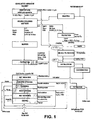
- the process according to the present invention and the specially designed apparatus for implementing it, are essentially composed of three interconnected sections, of which the first two (represented by the left-hand column of the diagram) are devoted to the recovery and purification of the reusable grains of the abrasive material while the third section (right-hand column) is devoted to the treatment and recovery of the suspending liquid.
- the exhausted slurry coming from the silicon ingot cutting section has a solid content of 50-55% by weight and, in the case reported here for exemplification purposes, contains:
- the aforesaid exhausted slurry is sent to a solid-liquid centrifugal separator (centrifuge) which feeds the suspension (a) rich in solids obtained from it, containing about 30% of PEG together with grains of size > 2 ⁇ m, to a hydrocyclone battery shown as only a single block in Figure 1 .
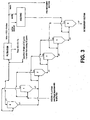
- the said battery in the example shown in more detail in Figure 3 , includes five hydrocyclones connected in series plus a safety hydrocyclone.
- the hydrocyclone battery receives the exhausted slurry in the first hydrocyclone while the last hydrocyclone of the battery receives in counter-current a portion (about 40-90%, and preferably 70-80%) of the clarified liquid obtained from the first operation (filtration) of the treatment of the overflow of the hydrocyclone battery for PEG recovery.
- a portion about 40-90%, and preferably 70-80%
- the clarified liquid obtained from the first operation (filtration) of the treatment of the overflow of the hydrocyclone battery for PEG recovery.
- the fraction of liquid recovered from the filtration of the abrasive grains and from the subsequent hot washing carried out in the section for abrasive grain treatment see Figure 1 ).
- the UF of each hydrocyclone is fed to the next hydrocyclone, supplemented with the overflow from the next but one hydrocyclone.
- the particle size distribution of the abrasive grain suspension is progressively restricted passing from one hydrocyclone to the next until, from the underflow of the last hydrocyclone, a suspension is obtained that is virtually free from fine silicon carbide particles and which contains as unwanted solids only a part (about 2-5%) of the fine silicon and metal particles.
- the overflow of the first hydrocyclone before being sent to the filtration section, the overflow of the first hydrocyclone is made to pass into another, safety, hydrocyclone, which protects the system against saturation of the first hydrocyclone.
- the overflow of the safety hydrocyclone goes to filtration which, as already noted, represents the first operation of the third section of the process, in order to recover the PEG, while its underflow is combined with the underflow of the first hydrocyclone.
- the abrasive grain-rich flow obtained from the hydrocyclone battery is fed to the buffer tank, which disconnects the continuous process carried out in the hydrocyclone battery from the discontinuous one carried out in the multifunctional apparatus of filtration and treatment of the recovered abrasive grains.
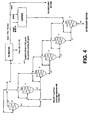
- the same series of treatments of wet size-sorting carried out in the hydrocyclone battery of Figure 3 may be carried out in a similar manner in a battery of centrifuges of the type illustrated in Figure 4 , with a similar connection scheme of the various apparatuses.
- the suspension of reusable abrasive grains is then taken from the buffer tank to be treated in the multifunctional apparatus according to the present invention, where it is first pressure filtered, producing a solid fraction essentially containing the reusable abrasive grains, that remains in the apparatus, and a liquid fraction essentially containing water, PEG and fine silicon carbide particles. This fraction is fed back to the filtration section of the suspending liquid obtained as overflow of the hydrocyclone battery.
- the mass of abrasive grains is washed in hot water coming from the third section of the system, recovered by distilling the mixture with PEG and then condensing the steam obtained. Also the liquid obtained from the washing is fed back to the PEG filtration section.
- the abrasive grains left inside the multifunctional apparatus are then treated, in two consecutive phases, with an aqueous solution of caustic soda or caustic potassium in order to obtain the etching of the silicon particles, and then washed with water coming from an external loop.
- oxalic acid or nitric, hydrochloric, sulfuric or tartaric acid
- the liquid streams obtained from these operations of caustic and acid etching are mixed and discarded as saline waste, while the liquid stream obtained from washing after caustic etching is mixed with a fresh solution of sodium or potassium hydroxide and used for caustic etching.
- the liquid stream obtained from washing after acid etching is mixed with a fresh solution of oxalic acid supplemented with sulfuriclhydrochloric acid and used for acid etching.
- the last phase of recovery of the reusable abrasive grains consists of drying the purified grains - an operation that can be carried out by forcing hot air onto the bed of grains.
- the maximum content of humidity of the recovered grains is not above 0.05%, while the total yield of the recoverable abrasive grains in the process is in the range 85-95%.
- the proposed multifunctional apparatus also has the advantage - by working under pressure - of enabling the adoption of even high working temperatures (up to 180°C) without leading to problems of boiling of the liquid undergoing treatment. Moreover, it has a water consumption that is about 1/10 that of a conventional continuous filter, it can also be used for even very fine particles of abrasive material without risking clogging of the filter cake, and, finally, requires filter cleansing operations that are very simple compared to those which would have to be used if the same operations were carried out in several vessels.
- the third section of the process includes - as already noted and according to the alternative solution illustrated in this figure - the filtration of the overflow coming from the hydrocyclone battery (i.e. from the top of the safety hydrocyclone of the battery).
- This suspension in the illustrated example, contains fine silicon carbide particles, as well as 95-98% of the fine metal and silicon particulates, in a mixture of PEG and water.
- the ratio between water and PEG is in the range (1-5):1, and preferably is equal to about 3:1.
- this suspension is also added with some portions of suspension fed back to the system from the first phases of the section of abrasive grains treatment.
- a quantity of about 40-90% (preferably 70-80%) of the liquid obtained from filtration is fed back - while adding any make-up water - into the hydrocyclone battery, after appropriate heating, while the remaining liquid is sent to the next phases of PEG and water recovery.
- the liquid which is joined with the liquid fraction, containing 70-90% of the PEG present in the exhausted slurry, separated by the initial centrifugal separator, is first added with a solution of sodium hydroxide in order to alkalinize the filtrate to a pH between 9 and 10, and then undergoes microfiltration. This eliminates the fine particulate of precipitated iron hydroxide. Then, the suspension is neutralized with hydrochloric or sulfuric acid and subjected to distillation. From this operation, the evaporated water can be recovered by condensation in order to be reused in the hot washing of the abrasive grains recovered in the second section of the apparatus.
- the high-boiling component remaining as a residue of the distillation is composed of anhydrous PEG, which must be filtered to eliminate the salt (sodium chloride/sulfate) formed in the neutralization operation.
- FIG. 2 An alternative process scheme for the third section of the process according to the present invention, i.e. the section of PEG recovery, is shown in Figure 2 .
- the liquid stream coming from the microfiltration, to which is added the liquid fraction from the initial centrifugal separator is not alkalinized, but is directly subjected to a filtration which eliminates the fine metal particulate (essentially iron).
- the further traces of dissolved metals and of other impurities are eliminated by passing the liquid stream on beds of ion-exchange resins.
- the liquid flow is first made to pass over a bed of cationic resins and then over a bed of anionic resins.
- the liquid flow solely consists of a binary mixture of PEG and water, from which the water can be recovered by evaporation, leaving the PEG purified and totally free from solids.
- This can be directly fed to the slicing process.
- the total yield of suspending liquid meant as the ratio between the PEG obtained as a final product of the third section of the process described and the one entering with the exhausted abrasive slurry, is in the range of 85-95%.
Landscapes
- Chemical & Material Sciences (AREA)
- Chemical Kinetics & Catalysis (AREA)
- Engineering & Computer Science (AREA)
- Mechanical Engineering (AREA)
- Organic Chemistry (AREA)
- Inorganic Chemistry (AREA)
- Grinding-Machine Dressing And Accessory Apparatuses (AREA)
- Mechanical Treatment Of Semiconductor (AREA)
- Silicon Compounds (AREA)
- Treatment Of Sludge (AREA)
- Manufacture And Refinement Of Metals (AREA)
- Battery Electrode And Active Subsutance (AREA)
Priority Applications (2)
| Application Number | Priority Date | Filing Date | Title |
|---|---|---|---|
| PL06766344T PL1893385T3 (pl) | 2005-06-24 | 2006-06-16 | Sposób i urządzenie do obróbki zużytych zawiesin ściernych, w celu odzyskiwania ich składników nadających się do ponownego wykorzystania |
| CY20121100951T CY1113474T1 (el) | 2005-06-24 | 2012-10-12 | Μεθοδος και συσκευη για κατεργασια εξαντλημενων λειαντικων εναιωρηματων για την ανακτηση επαναχρησιμοποιησιμων συστατικων αυτων |
Applications Claiming Priority (2)
| Application Number | Priority Date | Filing Date | Title |
|---|---|---|---|
| IT000329A ITRM20050329A1 (it) | 2005-06-24 | 2005-06-24 | Procedimento per il trattamento di sospensioni abrasive esauste per il recupero delle loro componenti riciclabili e relativo impianto. |
| PCT/IT2006/000461 WO2006137098A1 (en) | 2005-06-24 | 2006-06-16 | Process and apparatus for treating exhausted abrasive slurries for the recovery of their reusable components |
Publications (2)
| Publication Number | Publication Date |
|---|---|
| EP1893385A1 EP1893385A1 (en) | 2008-03-05 |
| EP1893385B1 true EP1893385B1 (en) | 2012-08-22 |
Family
ID=37027925
Family Applications (1)
| Application Number | Title | Priority Date | Filing Date |
|---|---|---|---|
| EP06766344A Not-in-force EP1893385B1 (en) | 2005-06-24 | 2006-06-16 | Process and apparatus for treating exhausted abrasive slurries for the recovery of their reusable components |
Country Status (19)
| Country | Link |
|---|---|
| US (1) | US8512577B2 (pl) |
| EP (1) | EP1893385B1 (pl) |
| JP (1) | JP5015920B2 (pl) |
| KR (1) | KR101512516B1 (pl) |
| CN (1) | CN101218068B (pl) |
| AU (1) | AU2006260482A1 (pl) |
| CA (1) | CA2613475C (pl) |
| CY (1) | CY1113474T1 (pl) |
| ES (1) | ES2392455T3 (pl) |
| IL (1) | IL188247A (pl) |
| IT (1) | ITRM20050329A1 (pl) |
| MY (1) | MY150107A (pl) |
| NO (1) | NO20076488L (pl) |
| PL (1) | PL1893385T3 (pl) |
| PT (1) | PT1893385E (pl) |
| RU (1) | RU2403139C2 (pl) |
| TW (1) | TWI444249B (pl) |
| UA (1) | UA96263C2 (pl) |
| WO (1) | WO2006137098A1 (pl) |
Cited By (1)
| Publication number | Priority date | Publication date | Assignee | Title |
|---|---|---|---|---|
| US9566587B2 (en) | 2012-10-12 | 2017-02-14 | Blue Sky Mines Ltd. | Methods of and systems for treating incinerated waste |
Families Citing this family (71)
| Publication number | Priority date | Publication date | Assignee | Title |
|---|---|---|---|---|
| US7820126B2 (en) | 2006-08-18 | 2010-10-26 | Iosil Energy Corporation | Method and apparatus for improving the efficiency of purification and deposition of polycrystalline silicon |
| US8002859B2 (en) | 2007-02-06 | 2011-08-23 | Smith International, Inc. | Manufacture of thermally stable cutting elements |
| US7942219B2 (en) | 2007-03-21 | 2011-05-17 | Smith International, Inc. | Polycrystalline diamond constructions having improved thermal stability |
| JP5509518B2 (ja) * | 2007-09-07 | 2014-06-04 | パナソニック株式会社 | 半導体研磨用スラリー異物検査方法 |
| US8940174B2 (en) * | 2007-10-30 | 2015-01-27 | Pall Corporation | Method for treating spent abrasive slurry |
| US9297211B2 (en) | 2007-12-17 | 2016-03-29 | Smith International, Inc. | Polycrystalline diamond construction with controlled gradient metal content |
| ITRM20070677A1 (it) * | 2007-12-27 | 2009-06-28 | Garbo S R L | Procedimento per la separazione e il recupero dei sospendenti contenuti nelle sospensioni esauste provenienti dalle lavorazioni meccaniche del silicio. |
| JP5090191B2 (ja) * | 2008-01-24 | 2012-12-05 | 三和油化工業株式会社 | 遊離砥粒スラリー廃液からの分散媒の回収方法 |
| CN101244823B (zh) * | 2008-02-20 | 2010-06-23 | 江南大学 | 从硅片切割加工副产物中回收碳化硅的方法 |
| JP2011516290A (ja) | 2008-04-11 | 2011-05-26 | イオシル エナジー コーポレイション | 使用済みウェーハソーイングスラリーからの珪素及び炭化珪素の回収のための方法及び装置 |
| DE102008022237A1 (de) * | 2008-05-06 | 2009-11-19 | Scholz Recycling Gmbh Nl Erfurt | Verfahren zur Aufbereitung von Slurry |
| US8425639B2 (en) * | 2008-05-30 | 2013-04-23 | Cabot Microelectronics Corporation | Wire saw slurry recycling process |
| JP5173945B2 (ja) * | 2008-07-02 | 2013-04-03 | シャープ株式会社 | クーラント再生方法およびスラリー再生方法 |
| EP2303776B1 (en) * | 2008-07-09 | 2014-04-16 | Garbo S.r.l. | Method for purification and compaction of feedstock for photovoltaic applications |
| DE102008041051B4 (de) | 2008-08-06 | 2023-04-06 | Leibniz-Institut Für Polymerforschung Dresden E.V. | Verfahren zur Fest-Flüssig-Trennung von Feststoffen aus überwiegend nichtwässrigen Flüssigkeiten |
| JP2010167551A (ja) * | 2008-12-26 | 2010-08-05 | Nomura Micro Sci Co Ltd | 使用済みスラリーの再生方法 |
| EP2743335A1 (en) * | 2008-12-31 | 2014-06-18 | MEMC Singapore Pte. Ltd. | Methods to recover and purify silicon particles from Saw Kerf |
| JP5280218B2 (ja) * | 2009-01-15 | 2013-09-04 | 株式会社安永 | スラリー再生処理装置及び方法 |
| US20110293506A1 (en) * | 2009-02-13 | 2011-12-01 | Kobelco Eco-Solutions Co., Ltd. | Method for processing waste water containing fluorine and silicon, method for producing calcium fluoride, and facility for processing fluorine-containing waste water |
| JP2010221337A (ja) * | 2009-03-24 | 2010-10-07 | Ngk Insulators Ltd | 使用済み研削液の再利用方法 |
| JP5358266B2 (ja) * | 2009-04-24 | 2013-12-04 | 野村マイクロ・サイエンス株式会社 | 排スラリー中の有用固形成分の回収方法 |
| DE102009020143A1 (de) | 2009-05-04 | 2010-11-11 | Pv Silicon Forschungs- Und Produktionsgesellschaft Mbh | Verfahren zur Aufbereitung von Sägeabfällen zur Rückgewinnung von Silizium für die Herstellung von Solarsilizium |
| JP2011005561A (ja) * | 2009-06-23 | 2011-01-13 | Shin Etsu Handotai Co Ltd | シリコンインゴットの切断方法および切断システム |
| DE102009034949A1 (de) * | 2009-07-09 | 2011-01-13 | Akw Apparate + Verfahren Gmbh | Verfahren zur Aufbereitung einer Suspension |
| WO2011016996A2 (en) * | 2009-07-27 | 2011-02-10 | Memc Electronic Materials, Inc. | Methods and systems for processing abrasive slurry |
| US20120211404A1 (en) * | 2009-09-02 | 2012-08-23 | Guntram Krettek | Method and device for recovering exhausted machining slurries |
| DE102009054076B8 (de) * | 2009-11-20 | 2012-07-05 | Erwin Junker Maschinenfabrik Gmbh | Verfahren zum Abtrennen von Schleiföl aus Schleifschlämmen; Trennstation zur Durchführung des Verfahrens und verfahrenstechnische Anlage |
| DE102009054348A1 (de) | 2009-11-24 | 2011-06-30 | Coenen, Wolfgang, Dipl.-Ing., 28879 | Verfahren und Vorrichtung zum Behandeln von Si/SiC-haltigen Schleifschlämmen |
| KR101171799B1 (ko) * | 2010-06-29 | 2012-08-13 | 고려대학교 산학협력단 | 실리카 에칭 폐기물을 재활용하는 방법 및 메조다공성 물질을 제조하는 방법 |
| DE102010025606A1 (de) | 2010-06-30 | 2012-01-05 | Schott Solar Ag | Verfahren zur Wiederaufbereitung von verbrauchten Sägeflüssigkeiten aus der Herstellung von Siliziumwafern |
| DE102010026923A1 (de) | 2010-07-12 | 2012-01-12 | Centrotherm Sitec Gmbh | Verfahren zur Rückgewinnung von Silizium aus einer Sägesuspension |
| GB2484348A (en) | 2010-10-08 | 2012-04-11 | Rec Wafer Norway As | Abrasive slurry and method of production of photovoltaic wafers |
| CN102173419B (zh) * | 2011-02-28 | 2012-10-10 | 白瑜皎 | 从硅片切割废砂浆中回收硅粉的方法 |
| JP5229437B2 (ja) * | 2011-04-27 | 2013-07-03 | パナソニック株式会社 | 配線基板の製造方法 |
| US8734751B2 (en) * | 2011-06-12 | 2014-05-27 | Taiwan Water Recycle Technology Co., Ltd. | Method and apparatus for recycling and treating wastes of silicon wafer cutting and polishing processes |
| JP5802609B2 (ja) * | 2011-09-07 | 2015-10-28 | ジー・フォースジャパン株式会社 | クーラント再生方法 |
| DE102011115081B4 (de) | 2011-09-19 | 2017-08-31 | Baufeld-Mineralölraffinerie GmbH | Verfahren zur Gewinnung von Solarsilizium aus Sägeabfällen |
| US8696404B2 (en) * | 2011-12-21 | 2014-04-15 | WD Media, LLC | Systems for recycling slurry materials during polishing processes |
| WO2013094399A1 (ja) * | 2011-12-22 | 2013-06-27 | コニカミノルタ株式会社 | 研磨材再生方法及び再生研磨材 |
| KR20140102696A (ko) * | 2011-12-27 | 2014-08-22 | 코니카 미놀타 가부시키가이샤 | 연마재 분리 방법 및 재생 연마재 |
| US9802337B2 (en) * | 2012-02-17 | 2017-10-31 | Konica Minolta, Inc. | Abrasive regeneration method |
| TW201312638A (zh) * | 2012-03-03 | 2013-03-16 | Hong Tung Resource Co Ltd | 矽晶圓切割廢料之處理方法 |
| DE102012004497A1 (de) * | 2012-03-06 | 2013-09-12 | Gea Mechanical Equipment Gmbh | Verfahren und Anlage zur Aufarbeitung von Rohgülle und/oder Gärresten aus der Biogaserzeugung |
| JP2013219307A (ja) * | 2012-04-12 | 2013-10-24 | Japan Cabot Microelectronics Corp | Cmpスラリー再生装置およびcmpスラリー再生方法 |
| CN110065006A (zh) * | 2012-07-25 | 2019-07-30 | 柯尼卡美能达株式会社 | 研磨材料再生方法 |
| DE102012015417B4 (de) | 2012-08-02 | 2018-08-16 | Technische Universität Bergakademie Freiberg | Verfahren zur Aufarbeitung von Sägerückständen aus der Produktion von Siliciumwafern |
| TWI461258B (zh) * | 2012-11-09 | 2014-11-21 | Sino American Silicon Prod Inc | 研磨漿料回收利用方法及運用在該研磨漿料回收利用方法的研磨漿料回收利用設備 |
| DE102013202960A1 (de) | 2013-02-22 | 2014-08-28 | Geltz Umwelt-Technologie GmbH | Verfahren und Vorrichtung zur Trennung von zwei Gruppen von Partikeln aus einer Suspension |
| JP6085500B2 (ja) * | 2013-03-08 | 2017-02-22 | 株式会社Ihi回転機械 | ワイヤソースラリのクーラント回収装置 |
| WO2014162708A1 (ja) * | 2013-04-04 | 2014-10-09 | 株式会社クラレ | スラリー再生装置、スラリー再生方法及び再生スラリー |
| SG11201603187QA (en) * | 2013-10-24 | 2016-05-30 | Metallkraft As | Non-chemical method and system for recovering silicon carbide particles |
| CN105939817B (zh) * | 2014-01-31 | 2018-04-10 | Hoya株式会社 | 使用过的研磨浆料的再生方法、磁盘用玻璃基板的制造方法 |
| JP6172030B2 (ja) * | 2014-04-03 | 2017-08-02 | 信越半導体株式会社 | ワークの切断方法及び加工液 |
| CN104391433A (zh) * | 2014-12-05 | 2015-03-04 | 合肥鑫晟光电科技有限公司 | 一种喷淋系统及其使用方法 |
| US9738542B2 (en) * | 2014-12-09 | 2017-08-22 | Kronos International, Inc. | Method for the further processing of iron sulfate heptahydrate |
| WO2016120663A1 (en) * | 2015-01-27 | 2016-08-04 | Metallkraft As | Non-chemical method and system for recovering silicon carbide particles and glycol from a slurry |
| JP5850192B1 (ja) * | 2015-03-19 | 2016-02-03 | コニカミノルタ株式会社 | 研磨材の回収方法 |
| CN105001969B (zh) * | 2015-07-07 | 2017-12-01 | 阳光硅峰电子科技有限公司 | 一种基于温度敏感性的高效分离砂浆的方法 |
| CZ2015961A3 (cs) * | 2015-12-31 | 2017-02-15 | PTV, spol. s r.o. | Způsob recyklace abraziva z řezání vysokotlakým vodním paprskem z řezacího kalu a zařízení k provádění tohoto způsobu |
| CN105922143B (zh) * | 2016-05-20 | 2018-05-15 | 金堆城钼业股份有限公司 | 一种水切割废砂的循环再利用方法 |
| CN106819357A (zh) * | 2017-01-23 | 2017-06-13 | 信阳山信生物食品科技有限公司 | 一种谷物糠粕蛋白提取工艺 |
| CN107020201B (zh) * | 2017-06-14 | 2023-07-25 | 淮南矿业(集团)有限责任公司 | 一种浓缩机底流粗煤泥回收系统 |
| CN107324340B (zh) * | 2017-08-14 | 2019-04-12 | 大连理工大学 | 一种回收金刚线切割硅粉废料的设备和方法 |
| EP3897906A4 (en) * | 2018-12-18 | 2022-08-24 | Sepro Mineral Systems Corp. | MATERIAL RECOVERY FROM WET INCINERATOR RESIDUAL ASH |
| CN110561274B (zh) * | 2019-09-29 | 2020-10-09 | 广州大学 | 一种可实现持续加工的轴承强化研磨设备 |
| JP2021094674A (ja) * | 2019-12-19 | 2021-06-24 | 株式会社ディスコ | 廃液処理装置及び加工水再生システム |
| CN112707571A (zh) * | 2020-12-30 | 2021-04-27 | 杭州上拓环境科技股份有限公司 | 一种含硅废水资源化处理工艺 |
| CN114193329B (zh) * | 2021-12-09 | 2023-03-21 | 中环领先半导体材料有限公司 | 一种磨片在线回收的浆液利用方法 |
| KR102705402B1 (ko) * | 2022-01-07 | 2024-09-10 | 주식회사 씨엔에이치시스템 | 반도체 공정에서의 폐슬러리 재생 시스템 및 방법 |
| KR102680985B1 (ko) * | 2022-06-16 | 2024-07-04 | 세메스 주식회사 | 회수 용기 승강 조립체 및 기판 처리 장치 |
| CN118439620B (zh) * | 2024-03-28 | 2025-11-21 | 江苏德鑫新材料科技有限公司 | 一种利用硅泥制备高纯合成石英的方法 |
Family Cites Families (27)
| Publication number | Priority date | Publication date | Assignee | Title |
|---|---|---|---|---|
| US3997359A (en) * | 1972-11-07 | 1976-12-14 | Joseph Daniel Dankoff | Reclamation of components from grinding swarf |
| US3929639A (en) * | 1973-07-23 | 1975-12-30 | Gaston County Dyeing Mach | Filtering apparatus and process |
| DE3639958A1 (de) * | 1986-01-10 | 1987-07-16 | Amberger Kaolinwerke Gmbh | Mehrstufige anordnung zur gegenstromwaschung, sowie zugehoerige verfahrensmassnahmen |
| JPH02182986A (ja) * | 1988-12-28 | 1990-07-17 | Mitsubishi Paper Mills Ltd | ハイドロサイクロン分離方法 |
| US4872975A (en) * | 1989-01-31 | 1989-10-10 | Ingersoll-Rand Company | System for separating abrasive material from a fluid used in fluid jet cutting |
| JPH0741535B2 (ja) * | 1991-04-10 | 1995-05-10 | 中小企業事業団 | ラップ加工装置の砥粒液再生・循環装置 |
| RU2028827C1 (ru) * | 1992-09-03 | 1995-02-20 | Акционерное общество закрытого типа "Меганит" | Способ регенерации отходов шлифования |
| US5403490A (en) * | 1992-11-23 | 1995-04-04 | Desai; Satish | Process and apparatus for removing solutes from solutions |
| DE4405829A1 (de) * | 1994-02-23 | 1995-08-31 | Wacker Chemitronic | Verfahren zur Rückgewinnung von Schneidkorn |
| JP2606156B2 (ja) * | 1994-10-14 | 1997-04-30 | 栗田工業株式会社 | 研磨剤粒子の回収方法 |
| JP3199159B2 (ja) * | 1996-01-26 | 2001-08-13 | 信越半導体株式会社 | 油性スラリー廃液の再利用システム |
| JP3249373B2 (ja) * | 1996-02-21 | 2002-01-21 | 信越半導体株式会社 | 水溶性スラリー廃液の再利用システム |
| DE19642908A1 (de) * | 1996-10-17 | 1998-04-23 | Wacker Siltronic Halbleitermat | Sägesuspension und Verfahren zum Abtrennen von Scheiben von einem Kristall |
| US5928492A (en) * | 1997-06-05 | 1999-07-27 | Lucid Treatment Systems, Inc. | Method and apparatus for recovery of water and slurry abrasives used for chemical and mechanical planarization |
| JP3996686B2 (ja) * | 1997-12-15 | 2007-10-24 | 石川島汎用機サービス株式会社 | ワイヤソー砥粒スラリーの再生方法及び装置 |
| JP3408979B2 (ja) * | 1997-12-26 | 2003-05-19 | 株式会社日平トヤマ | スラリ管理システム |
| CA2335175A1 (en) * | 1998-06-18 | 1999-12-23 | Edward T. Ferri, Jr. | Method and apparatus for recovery of water and slurry abrasives used for chemical and mechanical planarization |
| JP4449185B2 (ja) * | 2000-07-13 | 2010-04-14 | 株式会社新菱 | 砥粒の回収方法 |
| JP2002239906A (ja) * | 2001-02-13 | 2002-08-28 | Ishikawajima Hanyoki Service Co Ltd | ラップ砥粒スラリーの再生方法及び装置 |
| US7223344B2 (en) * | 2001-05-29 | 2007-05-29 | Memc Electronic Materials, Spa | Method for treating an exhausted glycol-based slurry |
| JP2003103465A (ja) * | 2001-09-27 | 2003-04-08 | Tokuji Umehara | 磁場配列を利用した研削用砥粒体の再生方法及び再生装置 |
| JP3768891B2 (ja) * | 2002-01-31 | 2006-04-19 | 三益半導体工業株式会社 | 廃スラッジの再利用システム |
| JP4369095B2 (ja) * | 2002-05-24 | 2009-11-18 | シャープ株式会社 | スラリ再生方法 |
| JP3950391B2 (ja) * | 2002-08-26 | 2007-08-01 | 石川島汎用機サービス株式会社 | ワイヤソーのスラリー管理装置 |
| DE10251792A1 (de) * | 2002-11-07 | 2004-05-19 | Industriebetriebe Heinrich Meyer-Werke Breloh Gmbh & Co. Kg | Verfahren zur Regenerierung von Filtermitteln, insbesondere Kieselgur |
| JP2005313030A (ja) * | 2004-04-27 | 2005-11-10 | Sharp Corp | スラリ再生方法 |
| US7820126B2 (en) * | 2006-08-18 | 2010-10-26 | Iosil Energy Corporation | Method and apparatus for improving the efficiency of purification and deposition of polycrystalline silicon |
-
2005
- 2005-06-24 IT IT000329A patent/ITRM20050329A1/it unknown
-
2006
- 2006-06-16 CA CA2613475A patent/CA2613475C/en not_active Expired - Fee Related
- 2006-06-16 EP EP06766344A patent/EP1893385B1/en not_active Not-in-force
- 2006-06-16 PT PT06766344T patent/PT1893385E/pt unknown
- 2006-06-16 AU AU2006260482A patent/AU2006260482A1/en not_active Abandoned
- 2006-06-16 UA UAA200714479A patent/UA96263C2/ru unknown
- 2006-06-16 ES ES06766344T patent/ES2392455T3/es active Active
- 2006-06-16 PL PL06766344T patent/PL1893385T3/pl unknown
- 2006-06-16 CN CN2006800227907A patent/CN101218068B/zh not_active Expired - Fee Related
- 2006-06-16 WO PCT/IT2006/000461 patent/WO2006137098A1/en not_active Ceased
- 2006-06-16 US US11/993,633 patent/US8512577B2/en not_active Expired - Fee Related
- 2006-06-16 KR KR1020087000000A patent/KR101512516B1/ko not_active Expired - Fee Related
- 2006-06-16 JP JP2008517703A patent/JP5015920B2/ja not_active Expired - Fee Related
- 2006-06-16 RU RU2007148011/02A patent/RU2403139C2/ru not_active IP Right Cessation
- 2006-06-21 TW TW095122193A patent/TWI444249B/zh not_active IP Right Cessation
- 2006-06-23 MY MYPI20062982A patent/MY150107A/en unknown
-
2007
- 2007-12-18 NO NO20076488A patent/NO20076488L/no unknown
- 2007-12-19 IL IL188247A patent/IL188247A/en not_active IP Right Cessation
-
2012
- 2012-10-12 CY CY20121100951T patent/CY1113474T1/el unknown
Cited By (1)
| Publication number | Priority date | Publication date | Assignee | Title |
|---|---|---|---|---|
| US9566587B2 (en) | 2012-10-12 | 2017-02-14 | Blue Sky Mines Ltd. | Methods of and systems for treating incinerated waste |
Also Published As
| Publication number | Publication date |
|---|---|
| NO20076488L (no) | 2008-01-21 |
| JP5015920B2 (ja) | 2012-09-05 |
| IL188247A (en) | 2012-09-24 |
| MY150107A (en) | 2013-11-29 |
| CA2613475C (en) | 2013-12-03 |
| AU2006260482A1 (en) | 2006-12-28 |
| WO2006137098A1 (en) | 2006-12-28 |
| ES2392455T3 (es) | 2012-12-10 |
| PT1893385E (pt) | 2012-11-05 |
| HK1123010A1 (en) | 2009-06-05 |
| US20080250723A1 (en) | 2008-10-16 |
| EP1893385A1 (en) | 2008-03-05 |
| CN101218068A (zh) | 2008-07-09 |
| TW200720022A (en) | 2007-06-01 |
| ITRM20050329A1 (it) | 2006-12-25 |
| IL188247A0 (en) | 2008-04-13 |
| JP2008546548A (ja) | 2008-12-25 |
| PL1893385T3 (pl) | 2012-12-31 |
| RU2007148011A (ru) | 2009-06-27 |
| CY1113474T1 (el) | 2016-06-22 |
| CA2613475A1 (en) | 2006-12-28 |
| CN101218068B (zh) | 2013-01-02 |
| UA96263C2 (ru) | 2011-10-25 |
| US8512577B2 (en) | 2013-08-20 |
| KR101512516B1 (ko) | 2015-04-15 |
| TWI444249B (zh) | 2014-07-11 |
| KR20080021110A (ko) | 2008-03-06 |
| RU2403139C2 (ru) | 2010-11-10 |
Similar Documents
| Publication | Publication Date | Title |
|---|---|---|
| EP1893385B1 (en) | Process and apparatus for treating exhausted abrasive slurries for the recovery of their reusable components | |
| US7223344B2 (en) | Method for treating an exhausted glycol-based slurry | |
| WO2006035630A1 (ja) | セメントキルン燃焼ガス抽気ダストの処理システム及び処理方法 | |
| EP0968801A1 (en) | A method for separating and regenerating polyethylene glycol and silicon carbide abrasive material to enable re-use thereof | |
| WO2009084068A1 (en) | Process for separating and recovering the suspending fluids contained in exhausted slurries from the machining of silicon | |
| CA2738336C (en) | Method for removing sulfur from a gas stream | |
| EP2094441B1 (en) | Process and apparatus for treating exhausted abrasive slurries from the lapping process for the recovery of their reusable abrasive component | |
| AU2012203361B2 (en) | Process and apparatus for treating exhausted abrasive slurries for the recovery of their reusable components | |
| HK1123010B (en) | Process and apparatus for treating exhausted abrasive slurries for the recovery of their reusable components | |
| JPH11300115A (ja) | スラリーの分離方法及び装置 | |
| CN116920741A (zh) | 一种制备三氯氢硅的装置及方法 | |
| TW201627049A (zh) | 用於自漿料回收碳化矽顆粒及二醇之非化學方法及系統 | |
| HK1106216B (en) | System and method for treating dust in gas extracted from cement kiln combustion gas |
Legal Events
| Date | Code | Title | Description |
|---|---|---|---|
| PUAI | Public reference made under article 153(3) epc to a published international application that has entered the european phase |
Free format text: ORIGINAL CODE: 0009012 |
|
| 17P | Request for examination filed |
Effective date: 20071212 |
|
| AK | Designated contracting states |
Kind code of ref document: A1 Designated state(s): AT BE BG CH CY CZ DE DK EE ES FI FR GB GR HU IE IS IT LI LT LU LV MC NL PL PT RO SE SI SK TR |
|
| DAX | Request for extension of the european patent (deleted) | ||
| DAX | Request for extension of the european patent (deleted) | ||
| 17Q | First examination report despatched |
Effective date: 20090708 |
|
| 111Z | Information provided on other rights and legal means of execution |
Free format text: AT BE BG CH CY CZ DE DK EE ES FI FR GB GR HU IE IS IT LT LU LV MC NL PL PT RO SE SI SK TR Effective date: 20090813 |
|
| GRAP | Despatch of communication of intention to grant a patent |
Free format text: ORIGINAL CODE: EPIDOSNIGR1 |
|
| RIC1 | Information provided on ipc code assigned before grant |
Ipc: B24B 55/12 20060101ALI20111223BHEP Ipc: B01J 41/04 20060101ALI20111223BHEP Ipc: B28D 5/00 20060101ALI20111223BHEP Ipc: B24B 57/00 20060101AFI20111223BHEP Ipc: B01D 3/00 20060101ALI20111223BHEP Ipc: B01D 21/00 20060101ALI20111223BHEP Ipc: B01D 21/26 20060101ALI20111223BHEP Ipc: B01J 39/04 20060101ALI20111223BHEP |
|
| GRAS | Grant fee paid |
Free format text: ORIGINAL CODE: EPIDOSNIGR3 |
|
| GRAA | (expected) grant |
Free format text: ORIGINAL CODE: 0009210 |
|
| RAP1 | Party data changed (applicant data changed or rights of an application transferred) |
Owner name: SIC PROCESSING GMBH |
|
| AK | Designated contracting states |
Kind code of ref document: B1 Designated state(s): AT BE BG CH CY CZ DE DK EE ES FI FR GB GR HU IE IS IT LI LT LU LV MC NL PL PT RO SE SI SK TR |
|
| REG | Reference to a national code |
Ref country code: GB Ref legal event code: FG4D |
|
| REG | Reference to a national code |
Ref country code: CH Ref legal event code: EP |
|
| REG | Reference to a national code |
Ref country code: IE Ref legal event code: FG4D |
|
| REG | Reference to a national code |
Ref country code: AT Ref legal event code: REF Ref document number: 571693 Country of ref document: AT Kind code of ref document: T Effective date: 20120915 |
|
| REG | Reference to a national code |
Ref country code: DE Ref legal event code: R096 Ref document number: 602006031590 Country of ref document: DE Effective date: 20121018 |
|
| REG | Reference to a national code |
Ref country code: RO Ref legal event code: EPE |
|
| REG | Reference to a national code |
Ref country code: PT Ref legal event code: SC4A Free format text: AVAILABILITY OF NATIONAL TRANSLATION Effective date: 20121026 |
|
| REG | Reference to a national code |
Ref country code: ES Ref legal event code: FG2A Ref document number: 2392455 Country of ref document: ES Kind code of ref document: T3 Effective date: 20121210 |
|
| REG | Reference to a national code |
Ref country code: NL Ref legal event code: VDEP Effective date: 20120822 |
|
| REG | Reference to a national code |
Ref country code: PL Ref legal event code: T3 |
|
| REG | Reference to a national code |
Ref country code: SK Ref legal event code: T3 Ref document number: E 12737 Country of ref document: SK |
|
| REG | Reference to a national code |
Ref country code: AT Ref legal event code: MK05 Ref document number: 571693 Country of ref document: AT Kind code of ref document: T Effective date: 20120822 |
|
| REG | Reference to a national code |
Ref country code: GR Ref legal event code: EP Ref document number: 20120402420 Country of ref document: GR Effective date: 20121122 |
|
| REG | Reference to a national code |
Ref country code: LT Ref legal event code: MG4D Effective date: 20120822 |
|
| PG25 | Lapsed in a contracting state [announced via postgrant information from national office to epo] |
Ref country code: IS Free format text: LAPSE BECAUSE OF FAILURE TO SUBMIT A TRANSLATION OF THE DESCRIPTION OR TO PAY THE FEE WITHIN THE PRESCRIBED TIME-LIMIT Effective date: 20121222 Ref country code: AT Free format text: LAPSE BECAUSE OF FAILURE TO SUBMIT A TRANSLATION OF THE DESCRIPTION OR TO PAY THE FEE WITHIN THE PRESCRIBED TIME-LIMIT Effective date: 20120822 Ref country code: LT Free format text: LAPSE BECAUSE OF FAILURE TO SUBMIT A TRANSLATION OF THE DESCRIPTION OR TO PAY THE FEE WITHIN THE PRESCRIBED TIME-LIMIT Effective date: 20120822 |
|
| PG25 | Lapsed in a contracting state [announced via postgrant information from national office to epo] |
Ref country code: LV Free format text: LAPSE BECAUSE OF FAILURE TO SUBMIT A TRANSLATION OF THE DESCRIPTION OR TO PAY THE FEE WITHIN THE PRESCRIBED TIME-LIMIT Effective date: 20120822 Ref country code: SE Free format text: LAPSE BECAUSE OF FAILURE TO SUBMIT A TRANSLATION OF THE DESCRIPTION OR TO PAY THE FEE WITHIN THE PRESCRIBED TIME-LIMIT Effective date: 20120822 Ref country code: SI Free format text: LAPSE BECAUSE OF FAILURE TO SUBMIT A TRANSLATION OF THE DESCRIPTION OR TO PAY THE FEE WITHIN THE PRESCRIBED TIME-LIMIT Effective date: 20120822 Ref country code: BE Free format text: LAPSE BECAUSE OF FAILURE TO SUBMIT A TRANSLATION OF THE DESCRIPTION OR TO PAY THE FEE WITHIN THE PRESCRIBED TIME-LIMIT Effective date: 20120822 |
|
| PG25 | Lapsed in a contracting state [announced via postgrant information from national office to epo] |
Ref country code: NL Free format text: LAPSE BECAUSE OF FAILURE TO SUBMIT A TRANSLATION OF THE DESCRIPTION OR TO PAY THE FEE WITHIN THE PRESCRIBED TIME-LIMIT Effective date: 20120822 |
|
| PG25 | Lapsed in a contracting state [announced via postgrant information from national office to epo] |
Ref country code: EE Free format text: LAPSE BECAUSE OF FAILURE TO SUBMIT A TRANSLATION OF THE DESCRIPTION OR TO PAY THE FEE WITHIN THE PRESCRIBED TIME-LIMIT Effective date: 20120822 Ref country code: DK Free format text: LAPSE BECAUSE OF FAILURE TO SUBMIT A TRANSLATION OF THE DESCRIPTION OR TO PAY THE FEE WITHIN THE PRESCRIBED TIME-LIMIT Effective date: 20120822 |
|
| PLBE | No opposition filed within time limit |
Free format text: ORIGINAL CODE: 0009261 |
|
| STAA | Information on the status of an ep patent application or granted ep patent |
Free format text: STATUS: NO OPPOSITION FILED WITHIN TIME LIMIT |
|
| 26N | No opposition filed |
Effective date: 20130523 |
|
| REG | Reference to a national code |
Ref country code: DE Ref legal event code: R097 Ref document number: 602006031590 Country of ref document: DE Effective date: 20130523 |
|
| REG | Reference to a national code |
Ref country code: HU Ref legal event code: AG4A Ref document number: E016841 Country of ref document: HU |
|
| PG25 | Lapsed in a contracting state [announced via postgrant information from national office to epo] |
Ref country code: MC Free format text: LAPSE BECAUSE OF FAILURE TO SUBMIT A TRANSLATION OF THE DESCRIPTION OR TO PAY THE FEE WITHIN THE PRESCRIBED TIME-LIMIT Effective date: 20120822 |
|
| GBPC | Gb: european patent ceased through non-payment of renewal fee |
Effective date: 20130616 |
|
| REG | Reference to a national code |
Ref country code: IE Ref legal event code: MM4A |
|
| PG25 | Lapsed in a contracting state [announced via postgrant information from national office to epo] |
Ref country code: GB Free format text: LAPSE BECAUSE OF NON-PAYMENT OF DUE FEES Effective date: 20130616 Ref country code: IE Free format text: LAPSE BECAUSE OF NON-PAYMENT OF DUE FEES Effective date: 20130616 |
|
| PGFP | Annual fee paid to national office [announced via postgrant information from national office to epo] |
Ref country code: PL Payment date: 20150327 Year of fee payment: 10 |
|
| REG | Reference to a national code |
Ref country code: FR Ref legal event code: PLFP Year of fee payment: 10 |
|
| PG25 | Lapsed in a contracting state [announced via postgrant information from national office to epo] |
Ref country code: LU Free format text: LAPSE BECAUSE OF NON-PAYMENT OF DUE FEES Effective date: 20130616 |
|
| PGFP | Annual fee paid to national office [announced via postgrant information from national office to epo] |
Ref country code: RO Payment date: 20150507 Year of fee payment: 10 Ref country code: BG Payment date: 20150423 Year of fee payment: 10 Ref country code: FI Payment date: 20150609 Year of fee payment: 10 Ref country code: CY Payment date: 20150511 Year of fee payment: 10 Ref country code: SK Payment date: 20150514 Year of fee payment: 10 Ref country code: ES Payment date: 20150512 Year of fee payment: 10 Ref country code: CZ Payment date: 20150604 Year of fee payment: 10 Ref country code: TR Payment date: 20150522 Year of fee payment: 10 Ref country code: PT Payment date: 20150616 Year of fee payment: 10 Ref country code: CH Payment date: 20150612 Year of fee payment: 10 |
|
| PGFP | Annual fee paid to national office [announced via postgrant information from national office to epo] |
Ref country code: IT Payment date: 20150622 Year of fee payment: 10 Ref country code: FR Payment date: 20150608 Year of fee payment: 10 Ref country code: GR Payment date: 20150518 Year of fee payment: 10 Ref country code: HU Payment date: 20150515 Year of fee payment: 10 |
|
| PGFP | Annual fee paid to national office [announced via postgrant information from national office to epo] |
Ref country code: DE Payment date: 20160622 Year of fee payment: 11 |
|
| PG25 | Lapsed in a contracting state [announced via postgrant information from national office to epo] |
Ref country code: CZ Free format text: LAPSE BECAUSE OF NON-PAYMENT OF DUE FEES Effective date: 20160616 Ref country code: CY Free format text: LAPSE BECAUSE OF NON-PAYMENT OF DUE FEES Effective date: 20160616 Ref country code: RO Free format text: LAPSE BECAUSE OF NON-PAYMENT OF DUE FEES Effective date: 20160616 Ref country code: FI Free format text: LAPSE BECAUSE OF NON-PAYMENT OF DUE FEES Effective date: 20160616 |
|
| REG | Reference to a national code |
Ref country code: CH Ref legal event code: PL |
|
| PG25 | Lapsed in a contracting state [announced via postgrant information from national office to epo] |
Ref country code: PT Free format text: LAPSE BECAUSE OF NON-PAYMENT OF DUE FEES Effective date: 20161216 |
|
| REG | Reference to a national code |
Ref country code: SK Ref legal event code: MM4A Ref document number: E 12737 Country of ref document: SK Effective date: 20160616 |
|
| REG | Reference to a national code |
Ref country code: GR Ref legal event code: ML Ref document number: 20120402420 Country of ref document: GR Effective date: 20170109 |
|
| REG | Reference to a national code |
Ref country code: FR Ref legal event code: ST Effective date: 20170228 |
|
| PG25 | Lapsed in a contracting state [announced via postgrant information from national office to epo] |
Ref country code: GR Free format text: LAPSE BECAUSE OF NON-PAYMENT OF DUE FEES Effective date: 20170109 Ref country code: LI Free format text: LAPSE BECAUSE OF NON-PAYMENT OF DUE FEES Effective date: 20160630 Ref country code: FR Free format text: LAPSE BECAUSE OF NON-PAYMENT OF DUE FEES Effective date: 20160630 Ref country code: CH Free format text: LAPSE BECAUSE OF NON-PAYMENT OF DUE FEES Effective date: 20160630 |
|
| PG25 | Lapsed in a contracting state [announced via postgrant information from national office to epo] |
Ref country code: BG Free format text: LAPSE BECAUSE OF NON-PAYMENT OF DUE FEES Effective date: 20170131 Ref country code: SK Free format text: LAPSE BECAUSE OF NON-PAYMENT OF DUE FEES Effective date: 20160616 |
|
| PG25 | Lapsed in a contracting state [announced via postgrant information from national office to epo] |
Ref country code: IT Free format text: LAPSE BECAUSE OF NON-PAYMENT OF DUE FEES Effective date: 20160616 |
|
| REG | Reference to a national code |
Ref country code: DE Ref legal event code: R119 Ref document number: 602006031590 Country of ref document: DE |
|
| PG25 | Lapsed in a contracting state [announced via postgrant information from national office to epo] |
Ref country code: PL Free format text: LAPSE BECAUSE OF NON-PAYMENT OF DUE FEES Effective date: 20160616 |
|
| PG25 | Lapsed in a contracting state [announced via postgrant information from national office to epo] |
Ref country code: DE Free format text: LAPSE BECAUSE OF NON-PAYMENT OF DUE FEES Effective date: 20180103 |
|
| PG25 | Lapsed in a contracting state [announced via postgrant information from national office to epo] |
Ref country code: ES Free format text: LAPSE BECAUSE OF NON-PAYMENT OF DUE FEES Effective date: 20160617 |
|
| PG25 | Lapsed in a contracting state [announced via postgrant information from national office to epo] |
Ref country code: HU Free format text: LAPSE BECAUSE OF NON-PAYMENT OF DUE FEES Effective date: 20160617 |
|
| PG25 | Lapsed in a contracting state [announced via postgrant information from national office to epo] |
Ref country code: HU Free format text: LAPSE BECAUSE OF NON-PAYMENT OF DUE FEES Effective date: 20180617 |
|
| REG | Reference to a national code |
Ref country code: ES Ref legal event code: FD2A Effective date: 20181204 |
|
| PG25 | Lapsed in a contracting state [announced via postgrant information from national office to epo] |
Ref country code: HU Free format text: LAPSE BECAUSE OF NON-PAYMENT OF DUE FEES Effective date: 20160617 |
|
| PG25 | Lapsed in a contracting state [announced via postgrant information from national office to epo] |
Ref country code: TR Free format text: LAPSE BECAUSE OF NON-PAYMENT OF DUE FEES Effective date: 20160616 |