EP1666141B1 - Reducing fischer-tropsch catalyst attrition losses in high agitation reaction systems - Google Patents
Reducing fischer-tropsch catalyst attrition losses in high agitation reaction systems Download PDFInfo
- Publication number
- EP1666141B1 EP1666141B1 EP05023618.1A EP05023618A EP1666141B1 EP 1666141 B1 EP1666141 B1 EP 1666141B1 EP 05023618 A EP05023618 A EP 05023618A EP 1666141 B1 EP1666141 B1 EP 1666141B1
- Authority
- EP
- European Patent Office
- Prior art keywords
- catalyst
- cobalt
- alumina
- catalysts
- hours
- Prior art date
- Legal status (The legal status is an assumption and is not a legal conclusion. Google has not performed a legal analysis and makes no representation as to the accuracy of the status listed.)
- Expired - Lifetime
Links
Images

Classifications
-
- B—PERFORMING OPERATIONS; TRANSPORTING
- B01—PHYSICAL OR CHEMICAL PROCESSES OR APPARATUS IN GENERAL
- B01J—CHEMICAL OR PHYSICAL PROCESSES, e.g. CATALYSIS OR COLLOID CHEMISTRY; THEIR RELEVANT APPARATUS
- B01J23/00—Catalysts comprising metals or metal oxides or hydroxides, not provided for in group B01J21/00
- B01J23/70—Catalysts comprising metals or metal oxides or hydroxides, not provided for in group B01J21/00 of the iron group metals or copper
- B01J23/74—Iron group metals
- B01J23/75—Cobalt
-
- B—PERFORMING OPERATIONS; TRANSPORTING
- B01—PHYSICAL OR CHEMICAL PROCESSES OR APPARATUS IN GENERAL
- B01J—CHEMICAL OR PHYSICAL PROCESSES, e.g. CATALYSIS OR COLLOID CHEMISTRY; THEIR RELEVANT APPARATUS
- B01J37/00—Processes, in general, for preparing catalysts; Processes, in general, for activation of catalysts
- B01J37/0009—Use of binding agents; Moulding; Pressing; Powdering; Granulating; Addition of materials ameliorating the mechanical properties of the product catalyst
-
- B—PERFORMING OPERATIONS; TRANSPORTING
- B01—PHYSICAL OR CHEMICAL PROCESSES OR APPARATUS IN GENERAL
- B01J—CHEMICAL OR PHYSICAL PROCESSES, e.g. CATALYSIS OR COLLOID CHEMISTRY; THEIR RELEVANT APPARATUS
- B01J21/00—Catalysts comprising the elements, oxides, or hydroxides of magnesium, boron, aluminium, carbon, silicon, titanium, zirconium, or hafnium
- B01J21/02—Boron or aluminium; Oxides or hydroxides thereof
- B01J21/04—Alumina
-
- B—PERFORMING OPERATIONS; TRANSPORTING
- B01—PHYSICAL OR CHEMICAL PROCESSES OR APPARATUS IN GENERAL
- B01J—CHEMICAL OR PHYSICAL PROCESSES, e.g. CATALYSIS OR COLLOID CHEMISTRY; THEIR RELEVANT APPARATUS
- B01J21/00—Catalysts comprising the elements, oxides, or hydroxides of magnesium, boron, aluminium, carbon, silicon, titanium, zirconium, or hafnium
- B01J21/06—Silicon, titanium, zirconium or hafnium; Oxides or hydroxides thereof
- B01J21/063—Titanium; Oxides or hydroxides thereof
-
- B—PERFORMING OPERATIONS; TRANSPORTING
- B01—PHYSICAL OR CHEMICAL PROCESSES OR APPARATUS IN GENERAL
- B01J—CHEMICAL OR PHYSICAL PROCESSES, e.g. CATALYSIS OR COLLOID CHEMISTRY; THEIR RELEVANT APPARATUS
- B01J21/00—Catalysts comprising the elements, oxides, or hydroxides of magnesium, boron, aluminium, carbon, silicon, titanium, zirconium, or hafnium
- B01J21/06—Silicon, titanium, zirconium or hafnium; Oxides or hydroxides thereof
- B01J21/066—Zirconium or hafnium; Oxides or hydroxides thereof
-
- B—PERFORMING OPERATIONS; TRANSPORTING
- B01—PHYSICAL OR CHEMICAL PROCESSES OR APPARATUS IN GENERAL
- B01J—CHEMICAL OR PHYSICAL PROCESSES, e.g. CATALYSIS OR COLLOID CHEMISTRY; THEIR RELEVANT APPARATUS
- B01J21/00—Catalysts comprising the elements, oxides, or hydroxides of magnesium, boron, aluminium, carbon, silicon, titanium, zirconium, or hafnium
- B01J21/06—Silicon, titanium, zirconium or hafnium; Oxides or hydroxides thereof
- B01J21/08—Silica
-
- B—PERFORMING OPERATIONS; TRANSPORTING
- B01—PHYSICAL OR CHEMICAL PROCESSES OR APPARATUS IN GENERAL
- B01J—CHEMICAL OR PHYSICAL PROCESSES, e.g. CATALYSIS OR COLLOID CHEMISTRY; THEIR RELEVANT APPARATUS
- B01J23/00—Catalysts comprising metals or metal oxides or hydroxides, not provided for in group B01J21/00
- B01J23/70—Catalysts comprising metals or metal oxides or hydroxides, not provided for in group B01J21/00 of the iron group metals or copper
- B01J23/76—Catalysts comprising metals or metal oxides or hydroxides, not provided for in group B01J21/00 of the iron group metals or copper combined with metals, oxides or hydroxides provided for in groups B01J23/02 - B01J23/36
- B01J23/84—Catalysts comprising metals or metal oxides or hydroxides, not provided for in group B01J21/00 of the iron group metals or copper combined with metals, oxides or hydroxides provided for in groups B01J23/02 - B01J23/36 with arsenic, antimony, bismuth, vanadium, niobium, tantalum, polonium, chromium, molybdenum, tungsten, manganese, technetium or rhenium
- B01J23/85—Chromium, molybdenum or tungsten
- B01J23/86—Chromium
- B01J23/868—Chromium copper and chromium
-
- B—PERFORMING OPERATIONS; TRANSPORTING
- B01—PHYSICAL OR CHEMICAL PROCESSES OR APPARATUS IN GENERAL
- B01J—CHEMICAL OR PHYSICAL PROCESSES, e.g. CATALYSIS OR COLLOID CHEMISTRY; THEIR RELEVANT APPARATUS
- B01J23/00—Catalysts comprising metals or metal oxides or hydroxides, not provided for in group B01J21/00
- B01J23/70—Catalysts comprising metals or metal oxides or hydroxides, not provided for in group B01J21/00 of the iron group metals or copper
- B01J23/89—Catalysts comprising metals or metal oxides or hydroxides, not provided for in group B01J21/00 of the iron group metals or copper combined with noble metals
- B01J23/8913—Cobalt and noble metals
-
- B—PERFORMING OPERATIONS; TRANSPORTING
- B01—PHYSICAL OR CHEMICAL PROCESSES OR APPARATUS IN GENERAL
- B01J—CHEMICAL OR PHYSICAL PROCESSES, e.g. CATALYSIS OR COLLOID CHEMISTRY; THEIR RELEVANT APPARATUS
- B01J23/00—Catalysts comprising metals or metal oxides or hydroxides, not provided for in group B01J21/00
- B01J23/70—Catalysts comprising metals or metal oxides or hydroxides, not provided for in group B01J21/00 of the iron group metals or copper
- B01J23/89—Catalysts comprising metals or metal oxides or hydroxides, not provided for in group B01J21/00 of the iron group metals or copper combined with noble metals
- B01J23/8933—Catalysts comprising metals or metal oxides or hydroxides, not provided for in group B01J21/00 of the iron group metals or copper combined with noble metals also combined with metals, or metal oxides or hydroxides provided for in groups B01J23/02 - B01J23/36
- B01J23/894—Catalysts comprising metals or metal oxides or hydroxides, not provided for in group B01J21/00 of the iron group metals or copper combined with noble metals also combined with metals, or metal oxides or hydroxides provided for in groups B01J23/02 - B01J23/36 with rare earths or actinides
-
- B—PERFORMING OPERATIONS; TRANSPORTING
- B01—PHYSICAL OR CHEMICAL PROCESSES OR APPARATUS IN GENERAL
- B01J—CHEMICAL OR PHYSICAL PROCESSES, e.g. CATALYSIS OR COLLOID CHEMISTRY; THEIR RELEVANT APPARATUS
- B01J23/00—Catalysts comprising metals or metal oxides or hydroxides, not provided for in group B01J21/00
- B01J23/70—Catalysts comprising metals or metal oxides or hydroxides, not provided for in group B01J21/00 of the iron group metals or copper
- B01J23/89—Catalysts comprising metals or metal oxides or hydroxides, not provided for in group B01J21/00 of the iron group metals or copper combined with noble metals
- B01J23/8933—Catalysts comprising metals or metal oxides or hydroxides, not provided for in group B01J21/00 of the iron group metals or copper combined with noble metals also combined with metals, or metal oxides or hydroxides provided for in groups B01J23/02 - B01J23/36
- B01J23/8946—Catalysts comprising metals or metal oxides or hydroxides, not provided for in group B01J21/00 of the iron group metals or copper combined with noble metals also combined with metals, or metal oxides or hydroxides provided for in groups B01J23/02 - B01J23/36 with alkali or alkaline earth metals
-
- B—PERFORMING OPERATIONS; TRANSPORTING
- B01—PHYSICAL OR CHEMICAL PROCESSES OR APPARATUS IN GENERAL
- B01J—CHEMICAL OR PHYSICAL PROCESSES, e.g. CATALYSIS OR COLLOID CHEMISTRY; THEIR RELEVANT APPARATUS
- B01J35/00—Catalysts, in general, characterised by their form or physical properties
- B01J35/60—Catalysts, in general, characterised by their form or physical properties characterised by their surface properties or porosity
-
- B—PERFORMING OPERATIONS; TRANSPORTING
- B01—PHYSICAL OR CHEMICAL PROCESSES OR APPARATUS IN GENERAL
- B01J—CHEMICAL OR PHYSICAL PROCESSES, e.g. CATALYSIS OR COLLOID CHEMISTRY; THEIR RELEVANT APPARATUS
- B01J37/00—Processes, in general, for preparing catalysts; Processes, in general, for activation of catalysts
- B01J37/02—Impregnation, coating or precipitation
- B01J37/0201—Impregnation
-
- B—PERFORMING OPERATIONS; TRANSPORTING
- B01—PHYSICAL OR CHEMICAL PROCESSES OR APPARATUS IN GENERAL
- B01J—CHEMICAL OR PHYSICAL PROCESSES, e.g. CATALYSIS OR COLLOID CHEMISTRY; THEIR RELEVANT APPARATUS
- B01J37/00—Processes, in general, for preparing catalysts; Processes, in general, for activation of catalysts
- B01J37/02—Impregnation, coating or precipitation
- B01J37/0201—Impregnation
- B01J37/0207—Pretreatment of the support
-
- B—PERFORMING OPERATIONS; TRANSPORTING
- B01—PHYSICAL OR CHEMICAL PROCESSES OR APPARATUS IN GENERAL
- B01J—CHEMICAL OR PHYSICAL PROCESSES, e.g. CATALYSIS OR COLLOID CHEMISTRY; THEIR RELEVANT APPARATUS
- B01J37/00—Processes, in general, for preparing catalysts; Processes, in general, for activation of catalysts
- B01J37/06—Washing
-
- C—CHEMISTRY; METALLURGY
- C07—ORGANIC CHEMISTRY
- C07C—ACYCLIC OR CARBOCYCLIC COMPOUNDS
- C07C1/00—Preparation of hydrocarbons from one or more compounds, none of them being a hydrocarbon
- C07C1/02—Preparation of hydrocarbons from one or more compounds, none of them being a hydrocarbon from oxides of a carbon
- C07C1/04—Preparation of hydrocarbons from one or more compounds, none of them being a hydrocarbon from oxides of a carbon from carbon monoxide with hydrogen
- C07C1/0425—Catalysts; their physical properties
- C07C1/043—Catalysts; their physical properties characterised by the composition
- C07C1/0435—Catalysts; their physical properties characterised by the composition containing a metal of group 8 or a compound thereof
-
- C—CHEMISTRY; METALLURGY
- C07—ORGANIC CHEMISTRY
- C07C—ACYCLIC OR CARBOCYCLIC COMPOUNDS
- C07C1/00—Preparation of hydrocarbons from one or more compounds, none of them being a hydrocarbon
- C07C1/02—Preparation of hydrocarbons from one or more compounds, none of them being a hydrocarbon from oxides of a carbon
- C07C1/04—Preparation of hydrocarbons from one or more compounds, none of them being a hydrocarbon from oxides of a carbon from carbon monoxide with hydrogen
- C07C1/0425—Catalysts; their physical properties
- C07C1/0445—Preparation; Activation
-
- C—CHEMISTRY; METALLURGY
- C10—PETROLEUM, GAS OR COKE INDUSTRIES; TECHNICAL GASES CONTAINING CARBON MONOXIDE; FUELS; LUBRICANTS; PEAT
- C10G—CRACKING HYDROCARBON OILS; PRODUCTION OF LIQUID HYDROCARBON MIXTURES, e.g. BY DESTRUCTIVE HYDROGENATION, OLIGOMERISATION, POLYMERISATION; RECOVERY OF HYDROCARBON OILS FROM OIL-SHALE, OIL-SAND, OR GASES; REFINING MIXTURES MAINLY CONSISTING OF HYDROCARBONS; REFORMING OF NAPHTHA; MINERAL WAXES
- C10G2/00—Production of liquid hydrocarbon mixtures of undefined composition from oxides of carbon
- C10G2/30—Production of liquid hydrocarbon mixtures of undefined composition from oxides of carbon from carbon monoxide with hydrogen
- C10G2/32—Production of liquid hydrocarbon mixtures of undefined composition from oxides of carbon from carbon monoxide with hydrogen with the use of catalysts
-
- C—CHEMISTRY; METALLURGY
- C10—PETROLEUM, GAS OR COKE INDUSTRIES; TECHNICAL GASES CONTAINING CARBON MONOXIDE; FUELS; LUBRICANTS; PEAT
- C10G—CRACKING HYDROCARBON OILS; PRODUCTION OF LIQUID HYDROCARBON MIXTURES, e.g. BY DESTRUCTIVE HYDROGENATION, OLIGOMERISATION, POLYMERISATION; RECOVERY OF HYDROCARBON OILS FROM OIL-SHALE, OIL-SAND, OR GASES; REFINING MIXTURES MAINLY CONSISTING OF HYDROCARBONS; REFORMING OF NAPHTHA; MINERAL WAXES
- C10G2/00—Production of liquid hydrocarbon mixtures of undefined composition from oxides of carbon
- C10G2/30—Production of liquid hydrocarbon mixtures of undefined composition from oxides of carbon from carbon monoxide with hydrogen
- C10G2/32—Production of liquid hydrocarbon mixtures of undefined composition from oxides of carbon from carbon monoxide with hydrogen with the use of catalysts
- C10G2/33—Production of liquid hydrocarbon mixtures of undefined composition from oxides of carbon from carbon monoxide with hydrogen with the use of catalysts characterised by the catalyst used
-
- C—CHEMISTRY; METALLURGY
- C10—PETROLEUM, GAS OR COKE INDUSTRIES; TECHNICAL GASES CONTAINING CARBON MONOXIDE; FUELS; LUBRICANTS; PEAT
- C10G—CRACKING HYDROCARBON OILS; PRODUCTION OF LIQUID HYDROCARBON MIXTURES, e.g. BY DESTRUCTIVE HYDROGENATION, OLIGOMERISATION, POLYMERISATION; RECOVERY OF HYDROCARBON OILS FROM OIL-SHALE, OIL-SAND, OR GASES; REFINING MIXTURES MAINLY CONSISTING OF HYDROCARBONS; REFORMING OF NAPHTHA; MINERAL WAXES
- C10G2/00—Production of liquid hydrocarbon mixtures of undefined composition from oxides of carbon
- C10G2/30—Production of liquid hydrocarbon mixtures of undefined composition from oxides of carbon from carbon monoxide with hydrogen
- C10G2/32—Production of liquid hydrocarbon mixtures of undefined composition from oxides of carbon from carbon monoxide with hydrogen with the use of catalysts
- C10G2/33—Production of liquid hydrocarbon mixtures of undefined composition from oxides of carbon from carbon monoxide with hydrogen with the use of catalysts characterised by the catalyst used
- C10G2/331—Production of liquid hydrocarbon mixtures of undefined composition from oxides of carbon from carbon monoxide with hydrogen with the use of catalysts characterised by the catalyst used containing group VIII-metals
- C10G2/332—Production of liquid hydrocarbon mixtures of undefined composition from oxides of carbon from carbon monoxide with hydrogen with the use of catalysts characterised by the catalyst used containing group VIII-metals of the iron-group
-
- C—CHEMISTRY; METALLURGY
- C10—PETROLEUM, GAS OR COKE INDUSTRIES; TECHNICAL GASES CONTAINING CARBON MONOXIDE; FUELS; LUBRICANTS; PEAT
- C10G—CRACKING HYDROCARBON OILS; PRODUCTION OF LIQUID HYDROCARBON MIXTURES, e.g. BY DESTRUCTIVE HYDROGENATION, OLIGOMERISATION, POLYMERISATION; RECOVERY OF HYDROCARBON OILS FROM OIL-SHALE, OIL-SAND, OR GASES; REFINING MIXTURES MAINLY CONSISTING OF HYDROCARBONS; REFORMING OF NAPHTHA; MINERAL WAXES
- C10G2/00—Production of liquid hydrocarbon mixtures of undefined composition from oxides of carbon
- C10G2/30—Production of liquid hydrocarbon mixtures of undefined composition from oxides of carbon from carbon monoxide with hydrogen
- C10G2/32—Production of liquid hydrocarbon mixtures of undefined composition from oxides of carbon from carbon monoxide with hydrogen with the use of catalysts
- C10G2/33—Production of liquid hydrocarbon mixtures of undefined composition from oxides of carbon from carbon monoxide with hydrogen with the use of catalysts characterised by the catalyst used
- C10G2/331—Production of liquid hydrocarbon mixtures of undefined composition from oxides of carbon from carbon monoxide with hydrogen with the use of catalysts characterised by the catalyst used containing group VIII-metals
- C10G2/333—Production of liquid hydrocarbon mixtures of undefined composition from oxides of carbon from carbon monoxide with hydrogen with the use of catalysts characterised by the catalyst used containing group VIII-metals of the platinum-group
-
- B—PERFORMING OPERATIONS; TRANSPORTING
- B01—PHYSICAL OR CHEMICAL PROCESSES OR APPARATUS IN GENERAL
- B01J—CHEMICAL OR PHYSICAL PROCESSES, e.g. CATALYSIS OR COLLOID CHEMISTRY; THEIR RELEVANT APPARATUS
- B01J35/00—Catalysts, in general, characterised by their form or physical properties
- B01J35/40—Catalysts, in general, characterised by their form or physical properties characterised by dimensions, e.g. grain size
-
- B—PERFORMING OPERATIONS; TRANSPORTING
- B01—PHYSICAL OR CHEMICAL PROCESSES OR APPARATUS IN GENERAL
- B01J—CHEMICAL OR PHYSICAL PROCESSES, e.g. CATALYSIS OR COLLOID CHEMISTRY; THEIR RELEVANT APPARATUS
- B01J35/00—Catalysts, in general, characterised by their form or physical properties
- B01J35/60—Catalysts, in general, characterised by their form or physical properties characterised by their surface properties or porosity
- B01J35/61—Surface area
- B01J35/615—100-500 m2/g
-
- B—PERFORMING OPERATIONS; TRANSPORTING
- B01—PHYSICAL OR CHEMICAL PROCESSES OR APPARATUS IN GENERAL
- B01J—CHEMICAL OR PHYSICAL PROCESSES, e.g. CATALYSIS OR COLLOID CHEMISTRY; THEIR RELEVANT APPARATUS
- B01J37/00—Processes, in general, for preparing catalysts; Processes, in general, for activation of catalysts
- B01J37/16—Reducing
- B01J37/18—Reducing with gases containing free hydrogen
-
- C—CHEMISTRY; METALLURGY
- C07—ORGANIC CHEMISTRY
- C07C—ACYCLIC OR CARBOCYCLIC COMPOUNDS
- C07C2521/00—Catalysts comprising the elements, oxides or hydroxides of magnesium, boron, aluminium, carbon, silicon, titanium, zirconium or hafnium
- C07C2521/02—Boron or aluminium; Oxides or hydroxides thereof
- C07C2521/04—Alumina
-
- C—CHEMISTRY; METALLURGY
- C07—ORGANIC CHEMISTRY
- C07C—ACYCLIC OR CARBOCYCLIC COMPOUNDS
- C07C2521/00—Catalysts comprising the elements, oxides or hydroxides of magnesium, boron, aluminium, carbon, silicon, titanium, zirconium or hafnium
- C07C2521/06—Silicon, titanium, zirconium or hafnium; Oxides or hydroxides thereof
-
- C—CHEMISTRY; METALLURGY
- C07—ORGANIC CHEMISTRY
- C07C—ACYCLIC OR CARBOCYCLIC COMPOUNDS
- C07C2523/00—Catalysts comprising metals or metal oxides or hydroxides, not provided for in group C07C2521/00
- C07C2523/10—Catalysts comprising metals or metal oxides or hydroxides, not provided for in group C07C2521/00 of rare earths
-
- C—CHEMISTRY; METALLURGY
- C07—ORGANIC CHEMISTRY
- C07C—ACYCLIC OR CARBOCYCLIC COMPOUNDS
- C07C2523/00—Catalysts comprising metals or metal oxides or hydroxides, not provided for in group C07C2521/00
- C07C2523/38—Catalysts comprising metals or metal oxides or hydroxides, not provided for in group C07C2521/00 of noble metals
- C07C2523/40—Catalysts comprising metals or metal oxides or hydroxides, not provided for in group C07C2521/00 of noble metals of the platinum group metals
- C07C2523/46—Ruthenium, rhodium, osmium or iridium
-
- C—CHEMISTRY; METALLURGY
- C07—ORGANIC CHEMISTRY
- C07C—ACYCLIC OR CARBOCYCLIC COMPOUNDS
- C07C2523/00—Catalysts comprising metals or metal oxides or hydroxides, not provided for in group C07C2521/00
- C07C2523/70—Catalysts comprising metals or metal oxides or hydroxides, not provided for in group C07C2521/00 of the iron group metals or copper
- C07C2523/74—Iron group metals
- C07C2523/75—Cobalt
Definitions
- this invention relates to methods of reducing catalyst attrition losses for hydrocarbon synthesis processes conducted in high agitation reaction systems. More particularly, but not by way of limitation, the present invention relates to methods of reducing catalyst attrition losses for hydrocarbon synthesis processes conducted in three-phase reaction systems.
- US 5,780,381 discloses a slurry reactor process for Fischer-Tropsch synthesis in presence of a catalyst comprising cobalt supported on alumina promoted by zirconium, molybdenum or zirconium and molybdenum. In the examples, various alumina supports are used.
- the present invention satisfies the needs and resolves the problems discussed above.
- the invention provides a method for reducing catalyst attrition losses in hydrocarbon synthesis processes conducted in high agitation reaction systems, particularly in three-phase reaction systems.
- high agitation reaction systems refers to slurry bubble column reactor systems and to other reaction systems wherein catalyst attrition losses, resulting from fragmentation, abrasion, and other similar or related mechanisms, at least approach the attrition losses experienced in slurry bubble column systems.
- the inventive method for reducing catalyst attrition losses in hydrocarbon synthesis processes conducted in high agitation reaction systems comprises the step of reacting a synthesis gas in a high agitation reaction system in the presence of a cobalt catalyst comprising a ⁇ -alumina support, wherein said ⁇ -alumina support is produced from boehmite having a crystallite size, in the 021 plane, in the range of from about 30 to about 55 angstroms; and wherein said ⁇ -alumina support includes an amount of titanium of at least 800ppm by weight.
- the high agitation reaction system is a three phase (i.e., solid, liquid, and gas/vapor) reaction system.
- the high agitation reaction system is a slurry bubble column reaction system.
- the present invention employs supported cobalt catalysts which are well suited for use in Fischer-Tropsch synthesis processes. These catalysts are particularly well suited for use in three-phase reactor processes and other high agitation reaction systems.
- Examples of general catalyst compositions provided by the present description include: (a) cobalt, without any promoter, preferably supported on ⁇ -alumina or doped ⁇ -alumina; (b) cobalt, with one or more noble metal promoters, preferably supported on ⁇ - alumina or doped ⁇ -alumina; (c) cobalt, promoted with both a noble metal promoter and one or more selectivity promoters (preferably an alkali or rare earth oxide), preferably supported on ⁇ -alumina or doped ⁇ -alumina; and (d) cobalt, promoted with one or more selectivity promoters and without a noble metal promoter, preferably supported on ⁇ -alumina or doped ⁇ -alumina.
- promoters include, but are not limited to, noble metals such as ruthenium, metal oxides such as oxides of zirconium, lanthana, or potassium, and other oxides of elements from Groups IA, IIA, IVA, VA, and VIA of the Periodic Table.
- noble metals such as ruthenium
- metal oxides such as oxides of zirconium, lanthana, or potassium
- other oxides of elements from Groups IA, IIA, IVA, VA, and VIA of the Periodic Table include, but are not limited to, noble metals such as ruthenium, metal oxides such as oxides of zirconium, lanthana, or potassium, and other oxides of elements from Groups IA, IIA, IVA, VA, and VIA of the Periodic Table.
- Preferred catalyst compositions comprise (per 100 parts by weight of support): from about 10 to about 70 pbw cobalt; from about 0.1 to about 8 pbw ruthenium (when present); from about 0.1 to about 8 pbw potassium (when present); and from about 0.5 to about 8 pbw lanthana (when present).
- the catalyst can also include other promoter materials.
- the catalysts will most preferably comprise (per 100 parts by weight of support): from about 15 to about 55 pbw (more preferably from about 20 to about 45 pbw) cobalt; from about 0.2 to about 1.5 pbw ruthenium (when present); from about 0.2 to about 1.0 pbw potassium (when present); and from about 0.5 to about 5.0 pbw (most preferably from about 0.9 to about 2.5 pbw) lanthana (when present).
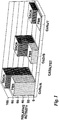
- Figure 1 shows that, for cobalt catalysts used in both fixed bed and a slurry bubble column reactor systems, the particular support employed plays a major role in influencing the overall hydrocarbon production rate (i.e., catalyst activity) with little or no effect on product selectivity.
- catalyst activities ranked in the following order: Al 2 O 3 > SO 2 >> TiO 2 .
- titania-supported cobalt catalysts tested, with or without promoters were found to have poor Fischer-Tropsch synthesis properties in both fixed bed and SBCR systems. Compared to ⁇ -alumina and silica, titania supports have much lower surface areas and pore volumes. Thus, they do not readily retain high cobalt loadings.
- silica-supported cobalt catalysts Although having relatively high surface areas, silica-supported cobalt catalysts showed low Fischer-Tropsch synthesis performance. Silica-supported cobalt catalysts are unstable in reaction conditions, such as those usually encountered in Fischer-Tropsch reaction systems, where a significant amount of water is present The formation of cobalt-silica compounds under these conditions is believed to cause this lower performance. To prevent or at least slow down silicate formation, the silica surface must typically be coated with oxide promoters, such as ZrO 2 , prior to cobalt impregnation.
- oxide promoters such as ZrO 2
- the catalyst support employed in the present invention is preferably a ⁇ -alumina support having: a low level of impurities, especially sulfur (preferably less than 100 ppm sulfur); a spheroidal shape; an average particle size in the range of from about 10 to about 150 ⁇ m (most preferably from about 20 to about 80 microns); a BET surface area, after calcination, in the range of from about 200 to about 260 m 2 /g; and a porosity in the range of from about 0.4 to about 1.0 cm 3 /g.
- the alumina support is preferably produced from relatively high purity, synthetic boehmite.
- the boehmite can be formed from aluminum alkoxide of the type obtained in the manufacture of synthetic fatty alcohols.
- suitable, high purity boehmite materials can be formed from aluminum alkoxide produced by alcohol/aluminum metal reaction processes.
- the aluminum alkoxide is preferably hydrolyzed to produce high purity, synthetic, monohydrate alumina.
- this material is preferably spray-dried to yield highly porous, spherical boehmite particles of relatively high surface area.
- the particulate boehmite material is preferably then sieved to remove fines and large particles so that a desired particle size range is obtained (most preferably from about 20 to about 80 microns).
- the sieved material is calcined to convert the boehmite particles to a ⁇ -alumina support material having the desired surface area and porosity.
- the boehmite material will preferably be calcined at a temperature of at least 350°C (more preferably from about 400°C to about 700 ° C and most preferably about 500°C) for a period of from about 3 to about 24 hours (more preferably from about 5 to about 16 hours and most preferably about 10 hours).
- the desired calcination temperature is preferably reached by slowly heating the system at a rate of about 0.5-2.0°C/minute.
- the attrition resistances of the supported catalyst are unexpectedly improved when the alumina support is formed from a synthetic boehmite having a crystallite size (in the 021 plane) in the range of from 30 to 55 angstroms, preferably in the range of from 40 to 50 angstroms.
- the boehmite production process can be readily controlled to obtain desired crystallite sizes within these ranges.
- the crystallite size of the boehmite material determines the average pore size, the pore size distribution, and the surface area of the calcined ⁇ -alumina material obtained.
- the surface area of the calcined alumina product decreases and the average pore radius of the calcined alumina product increases.
- Examples of commercially-supplied boehmite materials suitable for forming the preferred ⁇ -alumina supports employed in the present invention include the CATAPAL aluminas supplied by Condea/Vista. As discussed below, commercial materials of this type are particularly effective when intentionally produced to have certain targeted titanium "impurity" levels. Product quality reports for the CATAPAL aluminas indicate that these products, as presently produced and sold, can have titania impurity levels varying all the way up to 3000 ppm of elemental titanium by weight
- the titanium dopant will be present in the ⁇ -alumina support in an amount of at least 800 ppm of titanium by weight.
- the dopant will more preferably be present in the support in an amount in the range of from 800 ppm to 2000 ppm of titanium and will most preferably be present in an amount in the range of from 1000 to 2000 ppm.
- the titanium dopant can be added at substantially any time but will most preferably be added prior to crystallization of the boehmite.
- one method of producing synthetic boehmite materials utilizes aluminum alkoxides recovered as byproducts of certain processes (e.g., the Ziegler Process) employed for manufacturing synthetic fatty alcohols.
- the Ziegler Process typically comprises the steps of: (1) reacting high purity alumina powder with ethylene and hydrogen to produce aluminum triethyl; (2) polymerizing ethylene by contacting it with the aluminum triethyl, thus resulting in the formation of aluminum alkyls; (3) oxidizing the aluminum alkyls with air to produce aluminum alkoxides; and (4) hydrolizing the aluminum alkoxides to produce alcohols and an alumina byproduct.
- the oxidation step of the Ziegler process is typically catalyzed by an organic titanium compound which is itself converted to titanium alkoxide.
- the titanium alkoxide remains with and is co-hydrolized with the aluminum alkoxide, thus resulting in an alumina byproduct which is "doped" with a small amount of titania.
- Another process for forming synthetic boehmite utilizes aluminum alkoxide produced by reacting an alcohol with a highly pure aluminum powder.
- the aluminum alkoxide is hydrolyzed to produce an alcohol, which is recycled for use in the alkoxide formation step, and alumina. Because this process does not involve an oxidation step, the alumina product typically does not contain titanium.
- any desired amount of titanium dopant can be included in the alumina product by, for example, adding a titanium alkoxide to, and co-hydrolyzing the titanium alkoxide with, the aluminum alkoxide. If desired, the same process can be used to add other dopants such as, for example, silica, lanthanum, or barium.
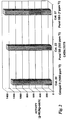
- Figure 2 illustrates the detrimental effect of titania on the activities of ruthenium promoted, cobalt-on-alumina catalysts.
- Figure 2 shows the activities (g-HC/kg-cat/hr) of three catalysts (catalysts 20, 23, and 24) which were produced and tested as described hereinbelow in Example 7.
- Catalysts 20,23, and 24 were identical in all respects except that catalyst 24 was formed on a ⁇ -alumina support found to have a titania concentration, expressed as titanium, of about 7 ppm by weight, catalyst 23 was formed on a ⁇ -alumina support found to have a titanium concentration of about 500 ppm, and catalyst 20 was formed on a ⁇ -alumina support found to have a titanium concentration of about 1000 ppm.
- Figure 2 shows that, as the amount of titania in the support increased, the activity of the catalyst declined from about 1340 for catalyst 24, to about 1322 for catalyst 23, and to about 1112 for catalyst 20. Thus, any preference in the art as to the presence of titanium would heretofore have been that no titania dopant be included in the ⁇ -alumina support.
- the catalytic components of the preferred catalysts are preferably added to the support by totally aqueous impregnation using appropriate aqueous solution compositions and volumes to achieve incipient wetness of the support material with the desired metal loading(s).
- Promoted catalysts are most preferably prepared by totally aqueous co-impregnation.
- typical promoters include, but are not limited to: noble metals; metal oxides such as oxides of Zr, La, K; and other oxides of elements from Groups IA, IIA, IVA, VA, and VIA.
- a particularly preferred ruthenium-promoted cobalt catalyst is prepared according to the following procedure.
- the support preferably ⁇ -alumina, is calcined at from about 400°C to about 700°C, preferably about 500°C, for about 10 hours.
- the calcined support is then impregnated with an aqueous solution containing both cobalt nitrate [Co(NO 3 ) 2 - 6H 2 O] and ruthenium (III) nitrosyl nitrate [Ru(NO)(NO 3 ) 3 - xH 2 O] using an appropriate quantity to achieve incipient wetness with the desired loadings of cobalt and ruthenium.
- the resulting catalyst precursor is then dried for 5 hours at 115°C with moderate stirring in order to remove the solvent water.
- the dried catalyst is then calcined in air by raising its temperature at a rate of 1°C/min to 300°C and holding for at least 2 hours.
- a doubly promoted cobalt catalyst can be prepared in a similar fashion using a second promoter nitrate (e.g., potassium nitrate [KNO 3 ] or lanthanum nitrate [La(NO 3 ) 3 ⁇ H 2 O] dissolved in the same solution which contains the cobalt and ruthenium compounds.
- a second promoter nitrate e.g., potassium nitrate [KNO 3 ] or lanthanum nitrate [La(NO 3 ) 3 ⁇ H 2 O] dissolved in the same solution which contains the cobalt and ruthenium compounds.
- Acceptable ruthenium salts such as those used in the present invention, have very limited aqueous solubilities. These salts are only moderately soluble in cold water and, when heated in an effort to increase solubility, tend to decompose and precipitate. However, by using the aqueous co-impregnation method of the present invention, superior ruthenium-promoted catalysts having the desired concentration ranges cited above can be produced without difficulty.
- ruthenium-promoted cobalt catalysts were typically prepared by coprecipitation of the metal components onto the support material. Such methods typically do not yield well dispersed systems, and therefore result in an inefficient use of the active metals. Coprecipitation methods generally also involve the use of two solutions, the first containing the support material and the dissolved promoter salt(s) and the second containing a precipitating agent (e.g., potassium carbonate). The solutions must be employed in relatively large quantities, typically several orders of magnitude larger than used in incipient wetness impregnation.
- a precipitating agent e.g., potassium carbonate
- impregnation techniques have become the preferred means of putting cobalt and its promoters onto porous supports.
- the impregnation methods have employed an organic ruthenium precursor dissolved in an organic solvent
- This use of organic solvents as the impregnating media for ruthenium promoters has, of course, resulted from the poor aqueous solubility characteristics of the practical ruthenium salts.
- Incipient wetness impregnation utilizes a relatively minute amount of impregnation solution. The amount of solution employed is typically only an amount sufficient to fill the pores of the support material. However, the promoter salt(s) must be completely dissolved in this small amount of solution.
- the drying step involves the evaporation of the organic solvent, which requires some environmentally acceptable way of disposing of the solvent vapor.
- special explosion proof equipment for catalyst drying and calcining is required. The need for such equipment and procedures adds greatly to the cost of the catalyst.
- the preferred method employed in the present invention for producing ruthenium-promoted and other promoted cobalt catalysts utilizes a totally aqueous co-impregnation technique, followed by drying and calcination of the resulting catalyst precursor.
- the promoter-metal is preferably either a promoter-nitrate, (e.g., ruthenium (III) nitrosyl nitrate) or a promoter-chloride (e.g., ruthenium (III) chloride).
- ruthenium salt(s) when aqueous co-impregnation solutions are used comprising the amounts of cobalt nitrate and ruthenium nitrate (or chloride) desired for the present invention, the ruthenium salt(s) will, unexpectedly, dissolve in the small amount of solution employed. Moreover, the ruthenium salts dissolve without the addition of acids or other agents and without heating. Although the reason for this result is unknown, it is believed that the acidity imparted to the solution by the cobalt nitrate may be at least partially responsible.
- the attrition resistances of ⁇ -alumina supports and of the catalysts produced therefrom are also unexpectedly improved by (a) utilizing an acidic aqueous impregnation solution and/or (b) pretreating the catalyst support (preferably after calcination and before addition of the catalytic components) with an acidic aqueous solution.
- the aqueous solution must have an acidity level effective for increasing attrition resistance.
- the aqueous cobalt impregnation and coimpregnation solutions employed in the present invention typically have pH values within this range.
- nitric acid can be used, for example, to adjust the pH of the impregnation solution, if necessary, or to form an appropriate pretreatment solution.
- the catalyst be activated/reduced in a hydrogen-containing gas by slowly increasing the temperature of the catalyst, preferably at a rate of about 0.5-2.0°C/minute, to approximately 250-400°C (preferably about 350°C) and holding at the desired temperature for at least 2 hours. After reduction, the catalyst is preferably cooled in flowing nitrogen.
- the reducing gas preferably comprises from about 1% to 100% by volume hydrogen, with the remainder (if any) being an inert gas, typically nitrogen.
- the reducing gas is preferably delivered at a rate of about 2-4 (preferably about 3) liters per hour per gram of catalyst.
- the reduction procedure is preferably conducted in a fluidized bed reactor. The reduction procedure is most preferably conducted at conditions (i.e., temperature, flow rate, hydrogen concentration, etc.) effective to ensure that a very low water vapor partial pressure is maintained during the procedure.
- the catalysts prepared and activated as described herein can be employed in generally any Fischer-Tropsch synthesis process.
- the catalyst will preferably be slurried in a Fischer-Tropsch wax or in a synthetic fluid (e.g., a C 30 to C 50 range isoparaffin polyalphaolefin such as that available from Chevron under the name SYNFLUID) having properties similar to those of Fischer-Tropsch wax.
- the catalyst slurry will preferably have a catalyst concentration in the range of from about 5% to about 40% by weight based on the total weight of the slurry.
- the synthesis gas feed used in the reaction process will preferably have a CO:H 2 volume ratio of from about 0.5 to about 3.0 and will preferably have an inert gas (i.e., nitrogen, argon, or other inert gas) concentration in the range of from 0 to about 60% by volume based on the total volume of the feed.
- the inert gas is preferably nitrogen.
- the activated catalyst Prior to initiating the reaction process, the activated catalyst will most preferably be maintained in an inert atmosphere. Before adding the catalyst thereto, the slurry fluid will preferably be purged with nitrogen or other inert gas to remove any dissolved oxygen. The slurry composition will also preferably be transferred to the reaction system under an inert atmosphere.
- a particularly preferred SBCR reaction procedure comprises the steps of: (a) filling the SBCR, under an inert atmosphere, with the activated catalyst slurry; (b) heating and pressurizing the SBCR, under an inert atmosphere, to the desired pretreatment conditions (preferably a temperature in the range of from about 220°C to about 250°C and a pressure in the range of from about 345 kPa gauge (50 psig) to about 3447 kPa gauge (500 psig)) ; (c) replacing the inert gas with hydrogen and holding the system at these conditions for from about 2 to about 20 hours; (d) purging the system with inert gas and lowering the reaction system temperature, if necessary, to a point at least about 10 °C below the desired reaction temperature; (e) carefully replacing the inert gas with the desired synthesis gas; and (f) heating and pressurizing the reaction system, as necessary, to a desired operating temperature, preferably in the range of from about 190°C to about 300°C, and a desired operating
- a Jet Cup system 2 is illustrated in Figure 3 .
- the system comprises: a sample cup 4; an air inlet tube 6, connected to the bottom of the sample cup; a settling chamber 8; and a fines collection assembly 10 including a collection thimble 12.
- the fines collection assembly was weighed and its mass recorded. Five grams of sample were placed in the sample cup and the sample cup was then attached to the settling chamber. After all joints were sealed, humidified air (relative humidity of 60 ⁇ 5%) was passed at a controlled flow rate through the system for one hour.
- the humidified air was introduced tangentially into the sample cup at the bottom of the assembly and flowed out of the system through the thimble.
- the thimble was a cellulose filter which operated to retain fines carried out of the settling chamber by the air stream.
- two collection thimbles were alternately used, with one thimble being quickly replaced by the other and weighed at 5 minutes, 15 minutes, and then 30 minutes into the test.
- the air flow was stopped and the fines in the thimbles, and also the coarse particles collected in the Jet Cup, were recovered and analyzed.
- An ultrasonic test system 20 is illustrated in Figure 4 .
- the system comprises: a container 22; a 20 kHz Tekmar TM501 Sonic Disrupter 24 equipped with a CV26 horn 26 and a 0.5 inch tip 28; and a horn support frame 30.
- a pre-weighed sample was dispersed in 400 ml of distilled water by stirring. Each suspension had a solids concentration of about 2.5 vol%. The suspensions were treated for 15 minutes at a Sonic Disrupter setting of 350 watts. Because temperature is reported to be a factor affecting ultrasonic energy output, a water bath was used to keep the suspension temperatures relatively constant
- the slurry was transferred and sampled and then characterized using a particle size analyzer. The remainder of the slurry was filtered and then dried in an oven at 110°C for sieving or for particle size analysis.
- Each SBCR and Jet Cup test sample was prepared for analysis by pre-mixing the sample, placing the premixed sample in 50 ml of deionized water, and then dispersing the particulate sample material using an ultrasonic bath.
- Each of the resulting sample suspensions had a particulate concentration of approximately 2.5 vol%.
- the catalyst precursor was impregnated with an aqueous solution of lanthanum nitrate hexahydrate and ruthenium nitrosyl nitrate using an appropriate quantity to achieve incipient wetness with the desired loading of Ru and La 2 O 3 .
- CATALYST 3 ( ⁇ -alumina-supported cobalt catalyst with 20 wt% cobalt, 0.5 wt% ruthenium and 0.3 wt% potassium.)
- CATAPAL B alumina in the boehmite form was calcined at 500°C for 10 hours to convert it to ⁇ -alumina It was then presieved to 400-0 mesh and impregnated with an aqueous solution of copper nitrate [Cu(NO 3 ) 2 .xH 2 O 2 ], and chromium nitrate [Cr(NO 3 ) 3 .9H 2 O], using an appropriate quantity to achieve incipient wetness (ca. 1.2 ml/g) with the desired loading of Cu and Cr. The resulting precursor was then dried in air at 110°C for 16 hours and calcined in air at 750°C for 24 hours (with a heating rate of ca. 1°C/min to 750°C).
- the calcined precursor was impregnated with an aqueous solution of cobalt nitrate [Co(NO 3 ) 2 ⁇ 6H 2 O] using an appropriate quantity to achieve incipient wetness with the desired loading of Co.
- the precursor was then dried in air at 115°C for 12 hours and calcined in air at 300°C for 2 hours (with a heating rate of ca. 1°C/min to 300°C).
- Reduction Procedure before Reaction Same as Catalyst 1.
- Catalyst 5 (not according to the invention): (Non-promoted, silica-supported catalyst with 20 wt% cobalt.)
- the silica support (DAVISON Grade 952) was calcined at 500°C for 10 hours. It was then presieved to 400-250 mesh (i.e., a particle size of 38-63 microns).
- the resulting catalyst precursor was next dried in air for 5 hours at 115°C with moderate stirring and then calcined in air at 300°C for 2 hours (with a heating rate of ca. 1°C/min to 300°C).
- Catalyst 6 (not according to the invention): (Zirconium-promoted, silica-supported catalyst with 20 wt% cobalt and 8.5 wt% zirconium.)
- the silica support (DAVISON Grade 952) was calcined at 500°C for 10 hours. It was then presieved to 400-0 mesh and impregnated with an aqueous solution of zirconium oxonitrate [ZrO(NO 3 ) 2 ] using an appropriate quantity to achieve incipient wetness with the desired loading of Zr.
- the Zr-loaded SiO 2 was then dried in an oven for 5 hours at 115°C with moderate stirring and calcined in air at 300°C for 2 hours (with a heating rate of ca. 1°C/min to 300°C).
- the particle size is reported as the mean volume diameter as measured by a Microtrac particle size analyzer.
- the particle size reduction was estimated from Microtrac measurements carried out before and after reaction (ca. 220-250 hours-on-stream).
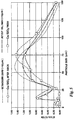
- FIG. 5 provides a comparison of the particle size distributions of the silica supported cobalt catalyst before and after (a) a SBCR run, (b) a Jet Cup test, and (c) an ultrasound attrition test As indicated in Fig. 5 , the distributions obtained after the 20 minute ultrasound test and the one hour Jet Cup test compared remarkably well with the particle size distribution obtained after a 240 hour SBCR run.
- CATALYST 9 (Zirconium-promoted, ⁇ -alumina-supported catalyst with 20 wt% cobalt and 8.5 wt% zirconium.)
- Catalyst 10 (not according to the invention): (Non-promoted, silica supported catalyst with 20 wt% cobalt.)
- Catalyst 11 (not according to the invention): (Zirconium-promoted, silica supported catalyst with 20 wt% cobalt and 8.5 wt% zirconium.)
- Anatase titania (DEGUSSA P25) was wetted to incipient wetness with distilled water and then dried in an oven at 60°C with moderate stirring. It was next calcined at 650°C for 16 hours resulting in a ca. 97% rutile support.
- the calcined titania was presieved to 400-0 mesh and then impregnated with an acetone solution of cobalt nitrate [Co(NO 3 ) 2 ⁇ 6H 2 O] using an appropriate quantity of solution to obtain a slurry with the desired loading of cobalt
- the resulting catalyst precursor was dried in a rotor evaporator at 25°C and dried under a vacuum at 140°C for 16 hours. The precursor was then further calcined in air at 250°C for 3 hours. Finally, the dried catalyst was rescreened to remove fines.
- Catalyst 14 (not according to the invention): (Non-promoted, titania-supported cobalt catalyst with 20 wt% cobalt)
- Anatase titania was wetted to incipient wetness with distilled water and then dried in an oven at 60°C with moderate stirring. It was next calcined at 350°C for 16 hours to produce a support having primarily an anatase structure. Next, the calcined titania was presieved to 400-0 mesh and then impregnated in 2 steps. In the first step, the support was impregnated with an aqueous solution of cobalt nitrate [Co(NO 3 ) 2 ⁇ 6H 2 O] using an appropriate quantity to achieve incipient wetness with 60% of the desired final loading of cobalt This catalyst precursor was dried in an oven for 5 hours at 115°C with moderate stirring.
- CATALYST 16 ( ⁇ -alumina-supported, cobalt catalyst with 20 wt% cobalt, 0.5 wt% ruthenium, and 1 wt% lanthana.)
- CATAPAL B alumina in the boehmite form was calcined at 750°C for 16 hours to convert it to ⁇ -alumina. It was then presieved to 400-0 mesh and impregnated in three steps (40%, 30%, and 30%), each step utilizing an acetone solution of cobalt nitrate [Co(NO 3 ) 2 ⁇ 6H 2 O], ruthenium acetylacetonate, and lanthanum nitrate [La(NO 3 ) 3 ⁇ H 2 O] in an appropriate quantity to achieve incipient wetness (ca. ml/g) with the desired loadings of cobalt, ruthenium, and lanthanum.
- cobalt nitrate Co(NO 3 ) 2 ⁇ 6H 2 O
- ruthenium acetylacetonate ruthenium acetylacetonate
- La(NO 3 ) 3 ⁇ H 2 O lanthanum nitrate
- CATALYST 18 ( ⁇ -alumina-supported cobalt catalyst with 20 wt% cobalt, 0.43 wt% ruthenium, and 1 wt% lanthana.)
- CATALYST 19 ( ⁇ -alumina-supported cobalt catalyst with 20 wt% cobalt, 0.43 wt% ruthenium, and 1 wt% lanthana.)
- CATAPAL B alumina in the boehmite form was calcined at 750°C for 16 hours to convert it to ⁇ -alumina. It was then presieved to 400-0 mesh and impregnated with an aqueous solution of cobalt nitrate [Co(NO 3 ) 2 .6H 2 O] and ruthenium (III) nitrosyl nitrate [Ru(NO)(NO 3 ) 3 ⁇ xH 2 O] and lanthanum nitrate [La (NO 3 ) 3 H 2 O] using an appropriate quantity to achieve incipient wetness (ca. 1 ml/g) with the desired loadings of cobalt, ruthenium and lanthanum.
- the catalyst precursor was then dried in air at 120°C for 12 hours.
- the catalyst was then prereduced in 720 cc/g/hr of pure hydrogen.
- the catalyst was first heated to 100°C at a rate of 1°C/min and held for 2 hours.
- the catalyst was then heated at 10°C/min to a temperature of 360°C and held for 16 hours.
- the catalyst was cooled to below 200°C, purged with nitrogen, and cooled further. Air was added to the nitrogen stream at ca. 1 cc air per 50 cc nitrogen per minute per 5g of catalyst for 16 hours.
- Reduction Procedure before Reaction Same as Catalyst 2.
- the particle size reduction was estimated from Microtrac measurements carried out before and after reaction (c.a. 220-250 hours-on-stream).
- CATAPAL B alumina samples calcined at 500°C were treated with aqueous solutions having pH values ranging from 1.0 to 12.5. Acidic solutions were prepared using nitric acid in distilled water. Basic solutions were prepared using ammonium hydroxide in distilled water. After being subjected to incipient wetness treatment with an acidic, neutral, or basic solution for 10 hours, each sample was dried overnight at 120°C and calcined again at 350°C for two hours to remove nitrate or ammonium ions. The treated samples were then resieved to ensure that the particle size distribution of each sample was from 45 to 90 microns. The resulting aluminas were subjected to Jet Cup testing to determine their attrition resistances.
- CATALYST 20 (Ru-promoted, cobalt catalyst on CATAPAL B alumina with 20 wt% cobalt and 0.5 wt% ruthenium.)
- the catalyst was reduced in 3000 cc/g/hr of pure hydrogen by heating at 1°C/min to 350 °C and holding for 10 hours.
- catalysts 21-23 were prepared in the same manner as catalyst 20.
- the specific supports employed in catalysts 21-23 were as follows:
- the CATAPAL A, CATAPAL B, and CATAPAL D materials were boehmites having slightly different crystallite sizes.
- the crystallite sizes of the CATAPAL A and the CATAPAL B were relatively close. Thus, one would expect their physical properties to be similar.
- the crystallite characteristics of the PURAL SB support were substantially identical to those of the CATAPAL B.
- PURAL SB1 The particular ⁇ -alumina support, PURAL SB1, employed in catalyst 24 was specially produced for us by Condea/Vista.
- the PURAL SB1 was identical to PURAL SB except that special efforts were made to prevent the addition of titanium.
- An elemental analysis showed that the PURAL SB1 support contained only 7 ppm of titanium.
- Catalysts 20-24 were tested in a slurry bubble column reactor.
- Table 5A shows the average activity and selectivity exhibited by each catalyst over its first 24 hours of use. The same reaction conditions were used in all of the SBCR runs (i.e., 230°C, 3103 kPa gauge (450 psig), and 900 1/hr of syngas and nitrogen with nitrogen comprising ca 60% of the total feed gas).
- TABLE 5A Activity and Selectivity of Co/Al 2 O 3 Effect of Different Aluminas CATALYST (Alumina Support) CATALYST WEIGHT (g) CO CONV.
- the attrition resistances of promoted cobalt catalysts 20-24 are shown in Tables 5D (ultrasonic results) and 5E (Jet Cup results). These tests reveal that, for all the aluminas used, the impregnation of cobalt significantly improved the attrition results obtained. Further, the catalysts supported on the aluminas having higher titanium loadings had superior attrition resistance.
- CATALYST 26 (Ru-promoted, cobalt catalyst on CATAPAL B alumina with 30 wt% cobalt and 0.8 wt% ruthenium.)
- CATALYST 27 (Ru-promoted, cobalt catalyst on CATAPAL B alumina with 40 wt% cobalt and 1.0 wt% ruthenium.)
Landscapes
- Chemical & Material Sciences (AREA)
- Organic Chemistry (AREA)
- Chemical Kinetics & Catalysis (AREA)
- Engineering & Computer Science (AREA)
- Materials Engineering (AREA)
- Oil, Petroleum & Natural Gas (AREA)
- General Chemical & Material Sciences (AREA)
- Catalysts (AREA)
- Organic Low-Molecular-Weight Compounds And Preparation Thereof (AREA)
- Low-Molecular Organic Synthesis Reactions Using Catalysts (AREA)
- Production Of Liquid Hydrocarbon Mixture For Refining Petroleum (AREA)
Applications Claiming Priority (2)
| Application Number | Priority Date | Filing Date | Title |
|---|---|---|---|
| US09/316,562 US6262132B1 (en) | 1999-05-21 | 1999-05-21 | Reducing fischer-tropsch catalyst attrition losses in high agitation reaction systems |
| EP00932431A EP1187674B1 (en) | 1999-05-21 | 2000-05-15 | Reducing fischer-tropsch catalyst attrition losses in high agitation reaction systems |
Related Parent Applications (1)
| Application Number | Title | Priority Date | Filing Date |
|---|---|---|---|
| EP00932431A Division EP1187674B1 (en) | 1999-05-21 | 2000-05-15 | Reducing fischer-tropsch catalyst attrition losses in high agitation reaction systems |
Publications (2)
| Publication Number | Publication Date |
|---|---|
| EP1666141A1 EP1666141A1 (en) | 2006-06-07 |
| EP1666141B1 true EP1666141B1 (en) | 2017-11-08 |
Family
ID=23229572
Family Applications (3)
| Application Number | Title | Priority Date | Filing Date |
|---|---|---|---|
| EP05023618.1A Expired - Lifetime EP1666141B1 (en) | 1999-05-21 | 2000-05-15 | Reducing fischer-tropsch catalyst attrition losses in high agitation reaction systems |
| EP05023736A Expired - Lifetime EP1661618B1 (en) | 1999-05-21 | 2000-05-15 | Reducing Fischer-Tropsch catalyst attrition losses in high agitation reaction systems |
| EP00932431A Expired - Lifetime EP1187674B1 (en) | 1999-05-21 | 2000-05-15 | Reducing fischer-tropsch catalyst attrition losses in high agitation reaction systems |
Family Applications After (2)
| Application Number | Title | Priority Date | Filing Date |
|---|---|---|---|
| EP05023736A Expired - Lifetime EP1661618B1 (en) | 1999-05-21 | 2000-05-15 | Reducing Fischer-Tropsch catalyst attrition losses in high agitation reaction systems |
| EP00932431A Expired - Lifetime EP1187674B1 (en) | 1999-05-21 | 2000-05-15 | Reducing fischer-tropsch catalyst attrition losses in high agitation reaction systems |
Country Status (19)
| Country | Link |
|---|---|
| US (3) | US6262132B1 (enExample) |
| EP (3) | EP1666141B1 (enExample) |
| JP (1) | JP5048182B2 (enExample) |
| KR (1) | KR20020010150A (enExample) |
| CN (1) | CN1384771A (enExample) |
| AR (1) | AR024047A1 (enExample) |
| AT (2) | ATE530254T1 (enExample) |
| AU (1) | AU777852B2 (enExample) |
| BR (1) | BR0010831A (enExample) |
| CA (1) | CA2374600A1 (enExample) |
| CO (1) | CO5190732A1 (enExample) |
| DE (1) | DE60040387D1 (enExample) |
| EA (3) | EA200301280A1 (enExample) |
| GC (1) | GC0000337A (enExample) |
| MX (1) | MXPA01011910A (enExample) |
| MY (1) | MY125370A (enExample) |
| NO (2) | NO325478B1 (enExample) |
| OA (1) | OA11947A (enExample) |
| WO (1) | WO2000071253A2 (enExample) |
Families Citing this family (76)
| Publication number | Priority date | Publication date | Assignee | Title |
|---|---|---|---|---|
| DE19836821A1 (de) * | 1998-08-14 | 2000-02-24 | Rwe Dea Ag | Böhmitische Tonerden und aus diesen erhältliche phasenreine, hochtemperaturstabile und hochporöse Aluminiumoxide |
| US6262132B1 (en) * | 1999-05-21 | 2001-07-17 | Energy International Corporation | Reducing fischer-tropsch catalyst attrition losses in high agitation reaction systems |
| DE19931204A1 (de) * | 1999-07-07 | 2001-01-18 | Rwe Dea Ag | Verfahren zur Herstellung von in organischen Lösungsmitteln dispergierbaren Metalloxiden |
| CN1247460C (zh) * | 1999-08-11 | 2006-03-29 | 阿尔伯麦尔荷兰公司 | 含有添加剂的准晶体勃姆石的制备方法 |
| US7208446B2 (en) * | 1999-08-11 | 2007-04-24 | Albemarle Netherlands B. V. | Quasi-crystalline boehmites containing additives |
| JP3715482B2 (ja) * | 1999-11-04 | 2005-11-09 | エヌ・イーケムキャット株式会社 | 水素含有ガス中の一酸化炭素選択酸化触媒並びに該触媒を用いた一酸化炭素除去方法及び固体高分子電解質型燃料電池システム |
| EP1237652A1 (en) * | 1999-12-01 | 2002-09-11 | Sasol Technology (Proprietary) Limited | Cobalt catalysts |
| IT1317868B1 (it) * | 2000-03-02 | 2003-07-15 | Eni Spa | Catalizzatore a base di cobalto supportato, particolarmente utilenella reazione di fischer-tropsch. |
| US6255358B1 (en) * | 2000-03-17 | 2001-07-03 | Energy International Corporation | Highly active Fischer-Tropsch synthesis using doped, thermally stable catalyst support |
| CN1436097A (zh) * | 2000-06-12 | 2003-08-13 | 萨索尔技术(控股)有限公司 | 钴催化剂 |
| AU2002216754B2 (en) | 2000-07-03 | 2005-11-03 | Conocophillips Company | Fischer-tropsch processes and catalysts using aluminum borate supports |
| US6706661B1 (en) * | 2000-09-01 | 2004-03-16 | Exxonmobil Research And Engineering Company | Fischer-Tropsch catalyst enhancement |
| ITMI20010478A1 (it) * | 2001-03-08 | 2002-09-08 | Inst Francais Du Petrole | Catalizzatore a base di cobalto e suo utilizzo nel processo di fischer-tropsch |
| US7452844B2 (en) * | 2001-05-08 | 2008-11-18 | Süd-Chemie Inc | High surface area, small crystallite size catalyst for Fischer-Tropsch synthesis |
| AR037036A1 (es) * | 2001-10-25 | 2004-10-20 | Sasol Tech Pty Ltd | Un proceso para obtener un catalizador fischer-tropsch soportado |
| US6706660B2 (en) * | 2001-12-18 | 2004-03-16 | Caterpillar Inc | Metal/metal oxide doped oxide catalysts having high deNOx selectivity for lean NOx exhaust aftertreatment systems |
| WO2004035193A2 (en) * | 2002-10-16 | 2004-04-29 | Conocophillips Company | Fischer-tropsch processes and catalysts made from a material comprising boehmite |
| WO2004035196A2 (en) * | 2002-10-16 | 2004-04-29 | Conocophillips Company | A stabilized transition alumina catalyst support from boehmite and catalysts made therefrom |
| US7176160B2 (en) * | 2002-10-16 | 2007-02-13 | Conocophillips Company | Method for forming a Fischer-Tropsch catalyst using a boehmite support |
| RU2340394C2 (ru) * | 2002-10-16 | 2008-12-10 | Конокофиллипс Кампэни | Способ получения носителя для катализатора с повышенной гидротермальной стабильностью (варианты), катализатор для синтеза углеводородов и способ синтеза углеводородов из синтез-газа |
| US7341976B2 (en) * | 2002-10-16 | 2008-03-11 | Conocophillips Company | Stabilized boehmite-derived catalyst supports, catalysts, methods of making and using |
| WO2004035194A2 (en) * | 2002-10-16 | 2004-04-29 | Conocophillips Company | High hydrothermal stability catalyst support |
| WO2004043583A2 (en) * | 2002-11-11 | 2004-05-27 | Conocophillips Company | Improved supports for high surface area catalysts |
| US7067562B2 (en) * | 2002-12-20 | 2006-06-27 | Conocophillips Company | Iron-based Fischer-Tropsch catalysts and methods of making and using |
| US20040127584A1 (en) * | 2002-12-31 | 2004-07-01 | Phillips Petroleum Company | Chemical vapor deposition synthesis of polymerization catalyst composition |
| WO2004092110A2 (en) * | 2003-04-14 | 2004-10-28 | Teva Pharmaceutical Industries Ltd. | Hydrogenation of imine intermediates of sertraline with catalysts |
| US7045554B2 (en) * | 2003-09-03 | 2006-05-16 | Conocophillips Company | Method for improved Fischer-Tropsch catalyst stability and higher stable syngas conversion |
| US7163963B2 (en) * | 2003-09-08 | 2007-01-16 | Conocophillips Company | Chemically and thermally stabilized alumina for Fischer-Tropsch catalysts |
| US7186757B2 (en) * | 2003-10-16 | 2007-03-06 | Conocophillips Company | Silica-alumina catalyst support with bimodal pore distribution, catalysts, methods of making and using same |
| US7541310B2 (en) * | 2003-10-16 | 2009-06-02 | Conocophillips Company | Silica-alumina catalyst support, catalysts made therefrom and methods of making and using same |
| FR2862238B1 (fr) | 2003-11-14 | 2006-11-17 | Solvay | Catalyseur a base d'alumine contenant du titane et procede en phase gazeuse utilisant un tel catalyseur |
| US20050233898A1 (en) * | 2003-12-12 | 2005-10-20 | Robota Heinz J | Modified catalyst supports |
| GB2410449B (en) * | 2004-01-28 | 2008-05-21 | Statoil Asa | Fischer-Tropsch catalysts |
| US20050182145A1 (en) * | 2004-02-17 | 2005-08-18 | Conocophillips Company | Methods of reducing and loading a metal-based catalyst into a reactor |
| CN1942242B (zh) * | 2004-03-12 | 2011-07-27 | 圣戈本陶瓷及塑料股份有限公司 | 用于催化剂载体的喷雾干燥的氧化铝 |
| GB2416715A (en) * | 2004-07-30 | 2006-02-08 | Statoil Asa | Fischer-Tropsch catalyst |
| JP2008518750A (ja) * | 2004-11-03 | 2008-06-05 | シエル・インターナシヨネイル・リサーチ・マーチヤツピイ・ベー・ウイ | 耐摩耗性粒状触媒 |
| GB0510316D0 (en) * | 2005-05-20 | 2005-06-29 | Johnson Matthey Plc | Catalyst manufacture |
| US20070004810A1 (en) * | 2005-06-30 | 2007-01-04 | Yong Wang | Novel catalyst and fischer-tropsch synthesis process using same |
| EP1945350A1 (en) * | 2005-10-07 | 2008-07-23 | Midwest Research Institute, Inc. | Attrition resistant fluidizable reforming catalyst |
| US7393876B2 (en) * | 2005-12-16 | 2008-07-01 | Eltron Research, Inc. | Fischer-tropsch catalysts |
| US20070169412A1 (en) * | 2006-01-26 | 2007-07-26 | Georgia Tech Research Corporation | Sulfur- and alkali-tolerant catalyst |
| JP3987555B1 (ja) | 2006-03-28 | 2007-10-10 | 三洋化成工業株式会社 | 粘度指数向上剤および潤滑油組成物 |
| EP2055381A4 (en) * | 2006-08-25 | 2011-10-12 | Nippon Steel Eng Co Ltd | CATALYST FOR PRODUCING HYDROGEN CARBON HYDROGEN, METHOD FOR THE PRODUCTION OF CATALYST, METHOD FOR REGENERATING CATALYST AND METHOD FOR PRODUCING HYDROGEN CARBON FUEL FROM SYNTHETIC GAS |
| RU2326732C1 (ru) * | 2006-12-27 | 2008-06-20 | ООО "Объединенный центр исследований и разработок" | Катализатор для синтеза фишера-тропша и способ его получения |
| RU2325226C1 (ru) * | 2006-12-27 | 2008-05-27 | ООО "Объединенный центр исследований и разработок" | Катализатор для синтеза фишера-тропша и способ его получения |
| GB2446127A (en) * | 2007-01-30 | 2008-08-06 | Gtl F1 Ag | Preparation of Fischer-Tropsch Catalysts |
| US20090023822A1 (en) * | 2007-07-19 | 2009-01-22 | Tijm Peter J | Method for activating and regenerating catalyst for a fischer-tropsch synthesis reaction |
| KR100885311B1 (ko) * | 2007-09-04 | 2009-02-24 | 한국화학연구원 | 피셔-트롭쉬 합성용 코발트/인-알루미나 촉매와 이의 제조방법 |
| WO2009043895A2 (en) * | 2007-10-04 | 2009-04-09 | Shell Internationale Research Maatschappij B.V. | Catalyst and method |
| FR2926084B1 (fr) | 2008-01-04 | 2010-03-19 | Inst Francais Du Petrole | Procede ameliore de synthese fischer-tropsch par controle de la pression partielle d'eau dans la zone reactionnelle |
| DE102008025307A1 (de) * | 2008-05-27 | 2009-12-03 | Süd-Chemie AG | Kobalt-Fischer-Tropsch-Katalysator |
| KR100991012B1 (ko) | 2008-07-14 | 2010-10-29 | 한국화학연구원 | 저온영역에서 탄소섬유 제조가 가능한코발트/알루미늄포스페이트 촉매 및 이의 제조방법 |
| CN103877983A (zh) * | 2009-03-17 | 2014-06-25 | 株式会社日本触媒 | 制氢催化剂和使用该制氢催化剂的制氢方法 |
| GB2473071B (en) | 2009-09-01 | 2013-09-11 | Gtl F1 Ag | Fischer-tropsch catalysts |
| GB2475492B (en) | 2009-11-18 | 2014-12-31 | Gtl F1 Ag | Fischer-Tropsch synthesis |
| KR101094077B1 (ko) | 2010-02-16 | 2011-12-15 | 한국에너지기술연구원 | 금속 폼 표면에 코발트 촉매 분말이 코팅된 코발트 금속 폼 촉매의 제조방법 및 그 코발트 금속 폼 촉매, 이 코발트 금속 폼 촉매를 이용한 열매체 순환 열교환형 반응기 및 이 열매체 순환 열교환형 반응기를 이용한 피셔-트롭쉬 합성 반응에 의한 액체 연료의 생산 방법 |
| WO2012021259A1 (en) | 2010-08-09 | 2012-02-16 | W. R. Grace & Co.-Conn. | Attrition resistant supports for fischer-tropsch catalysts and process for making the same |
| PL2603316T3 (pl) | 2010-08-09 | 2018-02-28 | Gtl. F1 Ag | Katalizatory fischer-tropsch |
| JP5795483B2 (ja) * | 2011-03-31 | 2015-10-14 | 独立行政法人石油天然ガス・金属鉱物資源機構 | 活性化されたフィッシャー・トロプシュ合成反応用触媒および炭化水素の製造方法 |
| PE20140704A1 (es) | 2011-06-07 | 2014-06-14 | Sasol Tech Pty Ltd | Proceso para la produccion de por lo menos un producto a partir de por lo menos un reactivo gaseoso en un lecho de suspension |
| CA2838466C (en) | 2011-06-07 | 2018-09-18 | Sasol Technology (Proprietary) Limited | Process for producing at least one product from at least one gaseous reactant in a slurry bed |
| US20130105440A1 (en) | 2011-11-01 | 2013-05-02 | Az Electronic Materials Usa Corp. | Nanocomposite negative photosensitive composition and use thereof |
| AP2014008117A0 (en) * | 2012-08-02 | 2014-12-31 | Sasol Tech Pty Ltd | Catalysts |
| JP5919145B2 (ja) * | 2012-09-03 | 2016-05-18 | 新日鉄住金エンジニアリング株式会社 | 合成ガスから炭化水素を製造する触媒の製造方法、合成ガスから炭化水素を製造する方法、及び触媒の再生方法 |
| US9827554B2 (en) * | 2012-09-21 | 2017-11-28 | Jx Nippon Oil & Energy Corporation | Fischer-tropsch synthesis catalyst, method for producing same, and method for producing hydrocarbon |
| AP2016008995A0 (en) * | 2013-07-24 | 2016-01-31 | Shell Int Research | Process for preparing a chlorine comprising catalyst, the prepared catalyst, and its use |
| KR101373823B1 (ko) | 2013-10-22 | 2014-03-11 | 한국에너지기술연구원 | 선택적 합성오일 생성을 위한 피셔-트롭쉬 반응용 금속 구조체 기반 코발트계 촉매 및 그 제조 방법, 이 금속 구조체 기반 코발트계 촉매를 이용한 선택적 합성 오일 제조 방법 |
| US9358526B2 (en) | 2013-11-19 | 2016-06-07 | Emerging Fuels Technology, Inc. | Optimized fischer-tropsch catalyst |
| US9180436B1 (en) | 2013-11-19 | 2015-11-10 | Emerging Fuels Technology, Inc. | Optimized fischer-tropsch catalyst |
| PL3071538T3 (pl) | 2013-11-20 | 2021-09-06 | Lummus Technology Llc | Katalizator izomeryzacji podwójnego wiązania olefiny o wysokiej odporności na zatrucie |
| CA2971297C (en) * | 2014-12-19 | 2023-06-20 | Bp P.L.C. | Process for preparation of a supported cobalt-containing fischer-tropsch synthesis catalyst |
| US10010877B2 (en) * | 2016-06-14 | 2018-07-03 | Chevron U.S.A. Inc. | Stable support for Fischer-Tropsch catalyst and methods for making and using |
| EP3513872A1 (en) * | 2018-01-22 | 2019-07-24 | SASOL Germany GmbH | Catalyst support comprising homogeneously distributed titanium dioxide and method for production |
| CN110368983A (zh) * | 2018-04-13 | 2019-10-25 | 株式会社模范 | 一种合成气合成航空煤油用催化剂的制备方法以及由此得到的催化剂和其应用 |
| US11376567B2 (en) * | 2019-12-05 | 2022-07-05 | GM Global Technology Operations LLC | Methods for preparing catalytic systems |
Family Cites Families (144)
| Publication number | Priority date | Publication date | Assignee | Title |
|---|---|---|---|---|
| US2735802A (en) | 1956-02-21 | jahnig | ||
| US799378A (en) * | 1904-08-20 | 1905-09-12 | Harold James Hedderwick | Life-boat. |
| US2393909A (en) | 1945-04-02 | 1946-01-29 | Standard Oil Co | Chemical reaction with fluidized solids |
| US2540109A (en) | 1946-05-15 | 1951-02-06 | Phillips Petroleum Co | Process for reactivating catalysts |
| US2635110A (en) | 1946-11-26 | 1953-04-14 | Texas Co | Regeneration of hydrocarbon synthesis catalysts |
| US2515245A (en) | 1947-06-11 | 1950-07-18 | Standard Oil Dev Co | Process of regenerating a fluidized fischer-tropsch catalyst |
| US2544574A (en) | 1947-09-25 | 1951-03-06 | Stanolind Oil & Gas Co | Catalyst regeneration |
| US2605234A (en) | 1947-12-01 | 1952-07-29 | Phillips Petroleum Co | Regeneration of a carbonized fischer-tropsch catalyst |
| US2608568A (en) | 1948-04-12 | 1952-08-26 | Phillips Petroleum Co | Regeneration of catalyst |
| US2661338A (en) | 1948-12-13 | 1953-12-01 | Phillips Petroleum Co | Regeneration of a fischer-tropsch reduced iron catalyst |
| US2598186A (en) | 1948-12-20 | 1952-05-27 | Phillips Petroleum Co | Process for use of spent fischertropsch catalyst for manufacture of carbon monoxide-hydrogen synthesis gas |
| US2620313A (en) | 1949-06-01 | 1952-12-02 | Standard Oil Dev Co | Regeneration of fluidized iron oxide catalyst |
| US2632015A (en) | 1949-06-29 | 1953-03-17 | Stanolind Oil & Gas Co | Regeneration of hydrocarbon synthesis catalyst by treatment with ethanol |
| US2662912A (en) | 1950-07-28 | 1953-12-15 | Standard Oil Dev Co | Hydrocarbon synthesis reaction |
| US2775607A (en) | 1952-11-17 | 1956-12-25 | Rheinpreussen Ag | Reactivation of catalysts |
| US2852350A (en) | 1952-12-27 | 1958-09-16 | Rheinpreussen Ag Fur Bergbau A | Carbon monoxide hydrogenation synthesis reactors |
| GB799378A (en) * | 1954-12-24 | 1958-08-06 | Houdry Process Corp | Method of preparing attrition resistant alumina particles |
| US3351567A (en) * | 1963-12-19 | 1967-11-07 | Universal Oil Prod Co | Production of attrition-resistant alumina catalyst |
| US3617517A (en) | 1969-06-23 | 1971-11-02 | Cities Service Oil Co | Hydroforming catalyst |
| US3669904A (en) | 1970-05-28 | 1972-06-13 | Air Prod & Chem | Particles featuring gamma alumina |
| US3853789A (en) * | 1971-03-26 | 1974-12-10 | J Warthen | Preparation of macroporous alumina extrudates |
| US3943052A (en) | 1973-08-16 | 1976-03-09 | Exxon Research & Engineering Co. | Regeneration procedure |
| FR2245408B1 (enExample) * | 1973-09-04 | 1981-03-27 | Norton Co | |
| US3966586A (en) | 1974-07-31 | 1976-06-29 | Mobil Oil Corporation | Method for upgrading heavy petroleum type stocks |
| US4090949A (en) | 1974-07-31 | 1978-05-23 | Mobil Oil Corportion | Upgrading of olefinic gasoline with hydrogen contributors |
| US3988263A (en) | 1974-10-02 | 1976-10-26 | Union Oil Company Of California | Thermally stable coprecipitated catalysts useful for methanation and other reactions |
| US4102978A (en) * | 1975-11-10 | 1978-07-25 | Norton Company | Process for producing alumina catalyst carriers |
| US4088671A (en) | 1976-03-19 | 1978-05-09 | Gulf Research & Development Company | Conversion of synthesis gas using a cobalt-ruthenium catalyst |
| DD128777A1 (de) | 1976-03-26 | 1977-12-07 | Inst Francais Du Petrole | Verfahren zur veredelung von ausstroemenden stoffen aus fischer-tropsch-syntheseverfahren oder aehnlichen syntheseverfahren |
| US4089811A (en) | 1976-11-01 | 1978-05-16 | Texaco Inc. | Preparation of catalyst support |
| US4079072A (en) | 1976-11-15 | 1978-03-14 | Phillips Petroleum Company | Methanation process |
| US4179408A (en) * | 1977-03-25 | 1979-12-18 | W. R. Grace & Co. | Process for preparing spheroidal alumina particles |
| US4279830A (en) | 1977-08-22 | 1981-07-21 | Mobil Oil Corporation | Conversion of synthesis gas to hydrocarbon mixtures utilizing dual reactors |
| US4218388A (en) | 1977-12-22 | 1980-08-19 | Shell Oil Company | Process for preparing hydrocarbons from gasification of coal |
| US4208191A (en) | 1978-05-30 | 1980-06-17 | The Lummus Company | Production of pipeline gas from coal |
| JPS5527830A (en) * | 1978-08-15 | 1980-02-28 | Chiyoda Chem Eng & Constr Co Ltd | Production of alumina carrier |
| US4207208A (en) | 1978-12-18 | 1980-06-10 | Mobil Oil Corporation | Method for regeneration and activity improvement of syngas conversion catalyst |
| FR2449474A1 (fr) * | 1979-02-26 | 1980-09-19 | Rhone Poulenc Ind | Billes d'alumine a double porosite, leur procede de preparation et leurs applications comme supports de catalyseurs |
| US4219445A (en) | 1979-02-26 | 1980-08-26 | Phillips Petroleum Company | Methanation of carbon monoxide over tungsten carbide-containing alumina catalyst for methanation of carbon monoxide |
| US4260518A (en) | 1979-05-15 | 1981-04-07 | University Of Delaware | Process for the regeneration of metallic catalysts |
| US4252736A (en) | 1979-06-01 | 1981-02-24 | Mobil Oil Corporation | Conversion of synthesis gas to hydrocarbon mixtures utilizing dual reactors |
| US4235754A (en) | 1979-08-10 | 1980-11-25 | Mobil Oil Corporation | Cracking catalyst |
| NL8001342A (nl) | 1980-03-06 | 1980-07-31 | Shell Int Research | Werkwijze voor het uitvoeren van katalytische omzettingen. |
| US4548912A (en) | 1980-04-14 | 1985-10-22 | Ashland Oil, Inc. | Microspherical catalysts |
| NL8003313A (nl) | 1980-06-06 | 1982-01-04 | Shell Int Research | Werkwijze voor de bereiding van middeldestillaten. |
| US5244648A (en) * | 1980-12-23 | 1993-09-14 | Rhone-Poulenc Industries | Process for the preparation of alumina agglomerates |
| US4379134A (en) * | 1981-02-13 | 1983-04-05 | Union Carbide Corporation | Process of preparing high purity alumina bodies |
| NL8101447A (nl) | 1981-03-24 | 1982-10-18 | Shell Int Research | Werkwijze voor de bereiding van koolwaterstoffen uit koolstofhoudend materiaal. |
| US4493905A (en) | 1981-10-13 | 1985-01-15 | Gulf Research & Development Company | Fluid bed catalyst for synthesis gas conversion and utilization thereof for preparation of diesel fuel |
| US4585798A (en) | 1981-10-13 | 1986-04-29 | Gulf Research & Development Company | Synthesis gas conversion using ruthenium-promoted cobalt catalyst |
| US4729981A (en) | 1981-10-13 | 1988-03-08 | Shell Internationale Research Maatschappij B.V. | ROR-activated catalyst for synthesis gas conversion |
| US4605676A (en) | 1981-10-13 | 1986-08-12 | Chevron Research Company | Synthesis gas conversion using ROR-activated catalyst |
| US4413064A (en) * | 1981-10-13 | 1983-11-01 | Gulf Research & Development Company | Fluid bed catalyst for synthesis gas conversion and utilization thereof for preparation of diesel fuel |
| US4565831A (en) | 1981-12-16 | 1986-01-21 | Exxon Research And Engineering Co. | Process for producing aromatic hydrocarbons from carbon monoxide and water |
| US4477595A (en) | 1982-03-31 | 1984-10-16 | Exxon Research And Engineering Co. | Liquid hydrocarbon synthesis using supported ruthenium catalysts |
| US4606811A (en) | 1982-07-29 | 1986-08-19 | Ashland Oil, Inc. | Combination process for upgrading reduced crude |
| EP0110449B1 (en) | 1982-11-22 | 1986-08-13 | Shell Internationale Researchmaatschappij B.V. | Process for the preparation of a fischer-tropsch catalyst, a catalyst so prepared and use of this catalyst in the preparation of hydrocarbons |
| US4476245A (en) * | 1982-11-29 | 1984-10-09 | Atlantic Richfield Company | Preparative process for alkaline earth metal, aluminum-containing spinels |
| US4423265A (en) | 1982-12-01 | 1983-12-27 | Mobil Oil Corporation | Process for snygas conversions to liquid hydrocarbon products |
| US4523047A (en) | 1982-12-01 | 1985-06-11 | Mobil Oil Corporation | Process for syngas conversions to liquid hydrocarbon products utilizing ZSM-45 zeolite |
| US4863890A (en) | 1983-09-09 | 1989-09-05 | Berol Kemi Ab | Process for preparing a ruthenium-promoted, halogen-containing nickel and/or cobalt catalyst and a catalyst prepared by the process |
| US4507400A (en) | 1983-09-28 | 1985-03-26 | Standard Oil Company (Indiana) | Cadmium- and thorium-containing catalyst |
| US4605678A (en) | 1984-03-12 | 1986-08-12 | Mobil Oil Corporation | Separation of catalyst from slurry bubble column wax and catalyst recycle |
| US4568663A (en) | 1984-06-29 | 1986-02-04 | Exxon Research And Engineering Co. | Cobalt catalysts for the conversion of methanol to hydrocarbons and for Fischer-Tropsch synthesis |
| US4567205A (en) | 1984-06-29 | 1986-01-28 | Exxon Research And Engineering Co. | Ruthenium catalysts, and use thereof for Fischer-Tropsch synthesis |
| US4595703A (en) | 1984-06-29 | 1986-06-17 | Exxon Research And Engineering Co. | Preparation of hydrocarbons from synthesis gas |
| US4599481A (en) | 1984-09-13 | 1986-07-08 | Shell Oil Company | Process for the preparation of hydrocarbons |
| CA1256090A (en) | 1984-10-04 | 1989-06-20 | Willibrord A. Van Erp | Catalyst containing cobalt |
| JPS61111140A (ja) | 1984-11-06 | 1986-05-29 | Toyota Central Res & Dev Lab Inc | 炭化水素合成用触媒 |
| US4686313A (en) | 1984-12-31 | 1987-08-11 | Mobil Oil Corporation | Low nitrogen iron-containing Fischer-Tropsch catalyst and conversion of synthesis gas therewith |
| US4717702A (en) | 1985-04-26 | 1988-01-05 | Shell Internationale Research Maatschappij Bv | Catalyst for conversion of synthesis gas to diesel fuel and process for preparation of such catalyst |
| US4788222A (en) | 1985-05-20 | 1988-11-29 | Exxon Research And Engineering Company | Method for the production of hydrocarbons using iron-carbon-based catalysts |
| US4619910A (en) | 1985-06-05 | 1986-10-28 | Air Products And Chemicals, Inc. | Catalyst for selective conversion of synthesis gas and method of making the catalyst |
| US4670472A (en) | 1985-06-05 | 1987-06-02 | Air Products And Chemicals, Inc. | Fischer-Tropsch process |
| US4673993A (en) | 1986-01-09 | 1987-06-16 | Mccaughey Michael P | Method for synchronizing a tape recorder to a computer under program control |
| US4684756A (en) | 1986-05-01 | 1987-08-04 | Mobil Oil Corporation | Process for upgrading wax from Fischer-Tropsch synthesis |
| US5324335A (en) | 1986-05-08 | 1994-06-28 | Rentech, Inc. | Process for the production of hydrocarbons |
| US5504118A (en) | 1986-05-08 | 1996-04-02 | Rentech, Inc. | Process for the production of hydrocarbons |
| US4822824A (en) | 1986-07-02 | 1989-04-18 | Exxon Research And Engineering Company | Cobalt-ruthenium catalysts for Fischer-Tropsch synthesis |
| GB8623233D0 (en) | 1986-09-26 | 1986-10-29 | British Petroleum Co Plc | Syngas conversion catalyst |
| US4908341A (en) | 1986-12-04 | 1990-03-13 | Mobil Oil Corp. | Method for reactivating spent catalyst by contact with one or more aromatic compounds |
| US4738939A (en) | 1987-06-29 | 1988-04-19 | Exxon Research And Engineering Company | Regeneration and reactivation of reforming catalysts while passivating iron scale carryover from the regenerator circuit to the reactors |
| US4874732A (en) * | 1987-07-13 | 1989-10-17 | Uop | Cobalt Fischer-Tropsch catalysts having improved selectivity |
| JPS6438142A (en) * | 1987-08-04 | 1989-02-08 | Kansai Coke & Chemicals | Catalyst for synthesizing hydrocarbon |
| US4880763A (en) | 1987-10-23 | 1989-11-14 | Den Norske Stats Olijeselskap A.S. | Catalyst for production of hydrocarbons |
| US4801573A (en) * | 1987-10-23 | 1989-01-31 | 501 Den Norske Stats Oljeslenskap A.S. | Catalyst for production of hydrocarbons |
| US5036032A (en) | 1988-03-25 | 1991-07-30 | Exxon Research And Engineering Company | Selective catalysts and their preparation for catalytic hydrocarbon synthesis |
| US5037791A (en) * | 1988-07-28 | 1991-08-06 | Hri, Inc. | Porous metal oxide supported carbon-coated catalysts and method for producing same |
| US4872970A (en) | 1988-09-23 | 1989-10-10 | Exxon Research And Engineering Company | Reactivation of iridium-containing catalysts |
| US4910227A (en) | 1988-10-11 | 1990-03-20 | Air Products And Chemicals, Inc. | High volumetric production of methanol in a liquid phase reactor |
| US4992406A (en) | 1988-11-23 | 1991-02-12 | Exxon Research And Engineering Company | Titania-supported catalysts and their preparation for use in Fischer-Tropsch synthesis |
| US5140050A (en) | 1988-11-23 | 1992-08-18 | Exxon Research And Engineering Co. | Titania catalysts, their preparation, and use in Fischer-Tropsch synthesis |
| US5102851A (en) | 1988-12-28 | 1992-04-07 | Den Norske Stats Oljeselskap A.S. | Supported catalyst for hydrocarbon synthesis |
| US4978689A (en) | 1989-03-17 | 1990-12-18 | Mobil Oil Corp. | Conversion of synthesis gas to liquid hydrocarbons |
| US5070064A (en) | 1989-08-07 | 1991-12-03 | Exxon Research And Engineering Company | Catalyst pretreatment method |
| US5028634A (en) | 1989-08-23 | 1991-07-02 | Exxon Research & Engineering Company | Two stage process for hydrocarbon synthesis |
| US5102852A (en) | 1989-12-28 | 1992-04-07 | Chevron Research And Technology Company | Catalyst system for removal of calcium from a hydrocarbon feedstock |
| US5348982A (en) | 1990-04-04 | 1994-09-20 | Exxon Research & Engineering Co. | Slurry bubble column (C-2391) |
| US5157054A (en) | 1990-04-04 | 1992-10-20 | Exxon Research And Engineering Company | Catalyst fluidization improvements (C-2546) |
| GB9009392D0 (en) | 1990-04-26 | 1990-06-20 | Shell Int Research | Process for the preparation of an olefins-containing mixture of hydrocarbons |
| GB9010075D0 (en) * | 1990-05-04 | 1990-06-27 | Shell Int Research | Process for the preparation of alumina based extrudates |
| US5258411A (en) | 1990-10-15 | 1993-11-02 | Exxon Research And Engineering Co. | Activation conditions to maximize the HCS activity of supported cobalt catalysts (OP-3706) |
| US5116800A (en) | 1990-12-11 | 1992-05-26 | Allied-Signal Inc. | High durability and exhuast catalyst with low hydrogen sulfide emissions |
| JPH04317742A (ja) * | 1991-04-15 | 1992-11-09 | Cosmo Sogo Kenkyusho:Kk | 炭化水素油の水素化処理用触媒組成物及びその製造方法 |
| US5206202A (en) | 1991-07-25 | 1993-04-27 | Corning Incorporated | Catalyst device fabricated in situ and method of fabricating the device |
| US5334570A (en) * | 1991-07-25 | 1994-08-02 | Corning Incorporated | Pore impregnated catalyst device |
| US5248701A (en) | 1991-08-05 | 1993-09-28 | Exxon Research And Engineering Company | Substituted cobalt catalysts for Fischer-Tropsch synthesis |
| US5162284A (en) | 1991-08-05 | 1992-11-10 | Exxon Research And Engineering Co. | Copper promoted cobalt-manganese spinel catalyst and method for making the catalyst for Fischer-Tropsch synthesis |
| GB9117899D0 (en) | 1991-08-20 | 1991-10-09 | Shell Int Research | Process for the activation of a catalyst |
| GB9203958D0 (en) | 1992-02-25 | 1992-04-08 | Norske Stats Oljeselskap | Catalytic multi-phase reactor |
| GB9203959D0 (en) | 1992-02-25 | 1992-04-08 | Norske Stats Oljeselskap | Method of conducting catalytic converter multi-phase reaction |
| US5334790A (en) | 1992-02-26 | 1994-08-02 | Catalytica | Process and catalyst for partially hydrogenating aromatics to produce cycloolefins |
| MY108946A (en) | 1992-07-14 | 1996-11-30 | Shell Int Research | Process for the distillation of fischer-tropsch products |
| US5411927A (en) | 1992-08-14 | 1995-05-02 | Council Of Scientific & Industrial Research | Process of preparing composite catalysts for production of synthesis gas by oxidative conversion of methane or natural gas |
| US5292705A (en) | 1992-09-24 | 1994-03-08 | Exxon Research & Engineering Co. | Activation of hydrocarbon synthesis catalyst |
| US5283216A (en) | 1992-09-24 | 1994-02-01 | Exxon Research And Engineering Company | Rejuvenation of hydrocarbon synthesis catalyst |
| IT1255710B (it) | 1992-10-01 | 1995-11-10 | Snam Progetti | Procedimento integrato per produrre olefine da miscele gassose contenenti metano |
| CA2105940C (en) | 1992-10-05 | 2001-12-25 | Robert M. Koros | Bubble column, tube side slurry process and apparatus |
| US5382748A (en) | 1992-12-18 | 1995-01-17 | Exxon Research & Engineering Co. | Hydrocarbon synthesis reactor employing vertical downcomer with gas disengaging means |
| US5288673A (en) | 1992-12-18 | 1994-02-22 | Exxon Research And Engineering Company | Temperature control in draft tubes for catalyst rejuvenation |
| US5252613A (en) | 1992-12-18 | 1993-10-12 | Exxon Research & Engineering Company | Enhanced catalyst mixing in slurry bubble columns (OP-3723) |
| US5268344A (en) | 1992-12-18 | 1993-12-07 | Exxon Research & Engineering Company | Draft tube for catalyst rejuvenation and distribution |
| US5260239A (en) | 1992-12-18 | 1993-11-09 | Exxon Research & Engineering Company | External catalyst rejuvenation system for the hydrocarbon synthesis process |
| US5461022A (en) | 1992-12-31 | 1995-10-24 | Sandia Corporation | Thin film hydrous metal oxide catalysts |
| US5356845A (en) | 1993-05-11 | 1994-10-18 | Exxon Research And Engineering Company | Process for the reactivation of nickel-alumina catalysts |
| US5527473A (en) | 1993-07-15 | 1996-06-18 | Ackerman; Carl D. | Process for performing reactions in a liquid-solid catalyst slurry |
| GB2281224B (en) | 1993-08-24 | 1998-02-11 | Norske Stats Oljeselskap | Solid/liquid slurry treatment apparatus and catalytic multi-phase reactor |
| US5498638A (en) | 1994-04-29 | 1996-03-12 | Exxon Research & Engineering Co. | Staged hydrocarbon synthesis process |
| US5484757A (en) | 1994-06-02 | 1996-01-16 | Norton Chemical Process Products Corp. | Titania-based catalyst carriers |
| US5639798A (en) | 1994-12-15 | 1997-06-17 | Wexford P.A. Syncrude Limited Partnership | Process and catalyst for production of hydrocarbons |
| US5780381A (en) * | 1994-12-15 | 1998-07-14 | Syncrude Technology Inc. | Cobalt/molybdenum/zirconium catalyst for Fischer-Tropsch synthesis |
| US5648312A (en) | 1994-12-29 | 1997-07-15 | Intevep, S.A. | Hydrogenation catalyst with improved attrition resistance and heat dissipation |
| DZ2013A1 (fr) | 1995-04-07 | 2002-10-23 | Sastech Ltd | Catalyseurs. |
| US5591689A (en) * | 1995-06-23 | 1997-01-07 | Phillips Petroleum Company | Preparation of isomerization catalyst composition |
| US5939350A (en) * | 1997-02-10 | 1999-08-17 | Energy International Corporation | Processes and catalysts for conducting fischer-tropsch synthesis in a slurry bubble column reactor |
| GB2322633A (en) * | 1997-02-28 | 1998-09-02 | Norske Stats Oljeselskap | Fischer-Tropsch reactor |
| IT1292462B1 (it) * | 1997-07-03 | 1999-02-08 | Agip Petroli | Composizione catalitica utile nel processo di fischer-tropsch |
| US5905094A (en) * | 1997-10-21 | 1999-05-18 | Exxon Research And Engineering Co. | Slurry hydrocarbon synthesis with reduced catalyst attrition and deactivation |
| US6117814A (en) | 1998-02-10 | 2000-09-12 | Exxon Research And Engineering Co. | Titania catalysts their preparation and use in fischer-tropsch synthesis |
| US6365544B2 (en) * | 1998-05-22 | 2002-04-02 | Conoco Inc. | Fischer-Tropsch processes and catalysts using fluorided alumina supports |
| KR20020010673A (ko) * | 1998-05-27 | 2002-02-04 | 에너지 인터내셔날 코포레이션 | 알루미나상 코발트 촉매의 개선된 피셔-트롭슈 활성 |
| IT1301801B1 (it) * | 1998-06-25 | 2000-07-07 | Agip Petroli | Procedimento per la preparazione di idrocarburi da gas di sintesi |
| US6262132B1 (en) * | 1999-05-21 | 2001-07-17 | Energy International Corporation | Reducing fischer-tropsch catalyst attrition losses in high agitation reaction systems |
| US6100304A (en) | 1999-05-26 | 2000-08-08 | Energy International Corportion | Processes and palladium-promoted catalysts for conducting Fischer-Tropsch synthesis |
-
1999
- 1999-05-21 US US09/316,562 patent/US6262132B1/en not_active Expired - Lifetime
-
2000
- 2000-05-15 EA EA200301280A patent/EA200301280A1/ru unknown
- 2000-05-15 AT AT05023736T patent/ATE530254T1/de not_active IP Right Cessation
- 2000-05-15 CN CN00810518A patent/CN1384771A/zh active Pending
- 2000-05-15 JP JP2000619549A patent/JP5048182B2/ja not_active Expired - Lifetime
- 2000-05-15 AT AT00932431T patent/ATE409521T1/de not_active IP Right Cessation
- 2000-05-15 DE DE60040387T patent/DE60040387D1/de not_active Expired - Lifetime
- 2000-05-15 EA EA200101226A patent/EA004578B1/ru not_active IP Right Cessation
- 2000-05-15 EA EA200301283A patent/EA005389B1/ru not_active IP Right Cessation
- 2000-05-15 OA OA1200100306A patent/OA11947A/en unknown
- 2000-05-15 KR KR1020017014880A patent/KR20020010150A/ko not_active Withdrawn
- 2000-05-15 EP EP05023618.1A patent/EP1666141B1/en not_active Expired - Lifetime
- 2000-05-15 WO PCT/US2000/013282 patent/WO2000071253A2/en not_active Ceased
- 2000-05-15 EP EP05023736A patent/EP1661618B1/en not_active Expired - Lifetime
- 2000-05-15 AU AU50154/00A patent/AU777852B2/en not_active Expired
- 2000-05-15 MX MXPA01011910A patent/MXPA01011910A/es not_active Application Discontinuation
- 2000-05-15 EP EP00932431A patent/EP1187674B1/en not_active Expired - Lifetime
- 2000-05-15 CA CA002374600A patent/CA2374600A1/en not_active Abandoned
- 2000-05-15 BR BR0010831-6A patent/BR0010831A/pt not_active Application Discontinuation
- 2000-05-17 MY MYPI20002168A patent/MY125370A/en unknown
- 2000-05-19 CO CO00036871A patent/CO5190732A1/es not_active Application Discontinuation
- 2000-05-19 AR ARP000102459A patent/AR024047A1/es not_active Application Discontinuation
- 2000-05-21 GC GCP2000667 patent/GC0000337A/en active
-
2001
- 2001-04-27 US US09/844,379 patent/US6740621B2/en not_active Expired - Lifetime
- 2001-11-21 NO NO20015685A patent/NO325478B1/no not_active IP Right Cessation
-
2004
- 2004-05-21 US US10/851,379 patent/US7011809B2/en not_active Expired - Lifetime
-
2006
- 2006-10-27 NO NO20064922A patent/NO332801B1/no not_active IP Right Cessation
Non-Patent Citations (1)
| Title |
|---|
| None * |
Also Published As
Similar Documents
| Publication | Publication Date | Title |
|---|---|---|
| EP1661618B1 (en) | Reducing Fischer-Tropsch catalyst attrition losses in high agitation reaction systems | |
| JP2003500188A5 (enExample) | ||
| EP1203061B1 (en) | Improved fischer-tropsch activity for "non-promoted" cobalt-on-alumina catalysts | |
| EP3496856B1 (en) | A cobalt-containing catalyst composition | |
| JP7472025B2 (ja) | フィッシャー-トロプシュ法、担持フィッシャー-トロプシュ法合成触媒およびその使用 | |
| WO2005099897A1 (ja) | フィッシャー・トロプシュ合成用触媒および炭化水素の製造法 | |
| CN110461996A (zh) | 生产费-托合成催化剂的方法 | |
| EP0987236B2 (fr) | Procédé de conversion du gaz de synthèse en présence d'un catalyseur à base de métal du groupe VIII, les particules du métal étant réparties sour forme d'agrégats | |
| JP2003024786A (ja) | フィッシャー・トロプシュ合成用触媒および炭化水素の製造法 | |
| EP2193842A1 (en) | Preparation of a hydrocarbon synthesis catalyst | |
| WO2020064929A1 (en) | Fischer-tropsch process | |
| EP3628400A1 (en) | Fischer-tropsch process, supported fischer-tropsch synthesis catalyst and uses thereof | |
| CN112165986B (zh) | 负载型含钴费-托催化剂、其制备方法及其用途 | |
| EP1436360B1 (fr) | Procede de synthese d'hydrocarbures dans un reacteur triphasique en presence d'un catalyseur comprenant un metal du groupe viii supporte sur zircone ou sur oxyde mixte zircone-alumine | |
| CN85107148A (zh) | 改进的钴催化剂及其应用 | |
| EA042792B1 (ru) | Способ фишера-тропша | |
| EA043038B1 (ru) | Способ фишера-тропша, катализатор на подложке для синтеза фишера-тропша и его применение | |
| HK1035159A (en) | Titania catalysts, their preparation and use in fischer-tropsch synthesis | |
| JPWO2002000338A1 (ja) | バイモダル多孔質体及びそれを用いた触媒 |
Legal Events
| Date | Code | Title | Description |
|---|---|---|---|
| PUAI | Public reference made under article 153(3) epc to a published international application that has entered the european phase |
Free format text: ORIGINAL CODE: 0009012 |
|
| 17P | Request for examination filed |
Effective date: 20051028 |
|
| AC | Divisional application: reference to earlier application |
Ref document number: 1187674 Country of ref document: EP Kind code of ref document: P |
|
| AK | Designated contracting states |
Kind code of ref document: A1 Designated state(s): AT BE CH CY DE DK ES FI FR GB GR IE IT LI LU MC NL PT SE |
|
| AX | Request for extension of the european patent |
Extension state: AL LT LV MK RO SI |
|
| 17Q | First examination report despatched |
Effective date: 20061228 |
|
| AKX | Designation fees paid |
Designated state(s): AT BE CH CY DE DK ES FI FR GB GR IE IT LI LU MC NL PT SE |
|
| GRAP | Despatch of communication of intention to grant a patent |
Free format text: ORIGINAL CODE: EPIDOSNIGR1 |
|
| STAA | Information on the status of an ep patent application or granted ep patent |
Free format text: STATUS: GRANT OF PATENT IS INTENDED |
|
| RIC1 | Information provided on ipc code assigned before grant |
Ipc: B01J 21/04 20060101AFI20170412BHEP Ipc: B01J 35/00 20060101ALI20170412BHEP Ipc: C10G 2/00 20060101ALI20170412BHEP Ipc: B01J 21/06 20060101ALI20170412BHEP Ipc: B01J 23/75 20060101ALI20170412BHEP Ipc: B01J 23/89 20060101ALI20170412BHEP |
|
| INTG | Intention to grant announced |
Effective date: 20170517 |
|
| GRAJ | Information related to disapproval of communication of intention to grant by the applicant or resumption of examination proceedings by the epo deleted |
Free format text: ORIGINAL CODE: EPIDOSDIGR1 |
|
| STAA | Information on the status of an ep patent application or granted ep patent |
Free format text: STATUS: EXAMINATION IS IN PROGRESS |
|
| GRAS | Grant fee paid |
Free format text: ORIGINAL CODE: EPIDOSNIGR3 |
|
| STAA | Information on the status of an ep patent application or granted ep patent |
Free format text: STATUS: GRANT OF PATENT IS INTENDED |
|
| GRAP | Despatch of communication of intention to grant a patent |
Free format text: ORIGINAL CODE: EPIDOSNIGR1 |
|
| GRAJ | Information related to disapproval of communication of intention to grant by the applicant or resumption of examination proceedings by the epo deleted |
Free format text: ORIGINAL CODE: EPIDOSDIGR1 |
|
| GRAR | Information related to intention to grant a patent recorded |
Free format text: ORIGINAL CODE: EPIDOSNIGR71 |
|
| GRAS | Grant fee paid |
Free format text: ORIGINAL CODE: EPIDOSNIGR3 |
|
| INTC | Intention to grant announced (deleted) | ||
| GRAA | (expected) grant |
Free format text: ORIGINAL CODE: 0009210 |
|
| STAA | Information on the status of an ep patent application or granted ep patent |
Free format text: STATUS: THE PATENT HAS BEEN GRANTED |
|
| INTG | Intention to grant announced |
Effective date: 20170922 |
|
| AC | Divisional application: reference to earlier application |
Ref document number: 1187674 Country of ref document: EP Kind code of ref document: P |
|
| AK | Designated contracting states |
Kind code of ref document: B1 Designated state(s): AT BE CH CY DE DK ES FI FR GB GR IE IT LI LU MC NL PT SE |
|
| INTG | Intention to grant announced |
Effective date: 20171004 |
|
| REG | Reference to a national code |
Ref country code: GB Ref legal event code: FG4D |
|
| REG | Reference to a national code |
Ref country code: CH Ref legal event code: EP Ref country code: AT Ref legal event code: REF Ref document number: 943625 Country of ref document: AT Kind code of ref document: T Effective date: 20171115 |
|
| REG | Reference to a national code |
Ref country code: IE Ref legal event code: FG4D |
|
| REG | Reference to a national code |
Ref country code: DE Ref legal event code: R096 Ref document number: 60049738 Country of ref document: DE |
|
| REG | Reference to a national code |
Ref country code: NL Ref legal event code: FP |
|
| REG | Reference to a national code |
Ref country code: AT Ref legal event code: MK05 Ref document number: 943625 Country of ref document: AT Kind code of ref document: T Effective date: 20171108 |
|
| PG25 | Lapsed in a contracting state [announced via postgrant information from national office to epo] |
Ref country code: SE Free format text: LAPSE BECAUSE OF FAILURE TO SUBMIT A TRANSLATION OF THE DESCRIPTION OR TO PAY THE FEE WITHIN THE PRESCRIBED TIME-LIMIT Effective date: 20171108 Ref country code: FI Free format text: LAPSE BECAUSE OF FAILURE TO SUBMIT A TRANSLATION OF THE DESCRIPTION OR TO PAY THE FEE WITHIN THE PRESCRIBED TIME-LIMIT Effective date: 20171108 Ref country code: ES Free format text: LAPSE BECAUSE OF FAILURE TO SUBMIT A TRANSLATION OF THE DESCRIPTION OR TO PAY THE FEE WITHIN THE PRESCRIBED TIME-LIMIT Effective date: 20171108 |
|
| REG | Reference to a national code |
Ref country code: FR Ref legal event code: PLFP Year of fee payment: 19 |
|
| PG25 | Lapsed in a contracting state [announced via postgrant information from national office to epo] |
Ref country code: GR Free format text: LAPSE BECAUSE OF FAILURE TO SUBMIT A TRANSLATION OF THE DESCRIPTION OR TO PAY THE FEE WITHIN THE PRESCRIBED TIME-LIMIT Effective date: 20180209 Ref country code: AT Free format text: LAPSE BECAUSE OF FAILURE TO SUBMIT A TRANSLATION OF THE DESCRIPTION OR TO PAY THE FEE WITHIN THE PRESCRIBED TIME-LIMIT Effective date: 20171108 |
|
| PG25 | Lapsed in a contracting state [announced via postgrant information from national office to epo] |
Ref country code: CY Free format text: LAPSE BECAUSE OF FAILURE TO SUBMIT A TRANSLATION OF THE DESCRIPTION OR TO PAY THE FEE WITHIN THE PRESCRIBED TIME-LIMIT Effective date: 20171108 Ref country code: DK Free format text: LAPSE BECAUSE OF FAILURE TO SUBMIT A TRANSLATION OF THE DESCRIPTION OR TO PAY THE FEE WITHIN THE PRESCRIBED TIME-LIMIT Effective date: 20171108 |
|
| REG | Reference to a national code |
Ref country code: DE Ref legal event code: R097 Ref document number: 60049738 Country of ref document: DE |
|
| PG25 | Lapsed in a contracting state [announced via postgrant information from national office to epo] |
Ref country code: IT Free format text: LAPSE BECAUSE OF FAILURE TO SUBMIT A TRANSLATION OF THE DESCRIPTION OR TO PAY THE FEE WITHIN THE PRESCRIBED TIME-LIMIT Effective date: 20171108 |
|
| PLBE | No opposition filed within time limit |
Free format text: ORIGINAL CODE: 0009261 |
|
| STAA | Information on the status of an ep patent application or granted ep patent |
Free format text: STATUS: NO OPPOSITION FILED WITHIN TIME LIMIT |
|
| 26N | No opposition filed |
Effective date: 20180809 |
|
| REG | Reference to a national code |
Ref country code: CH Ref legal event code: PL |
|
| REG | Reference to a national code |
Ref country code: BE Ref legal event code: MM Effective date: 20180531 |
|
| PG25 | Lapsed in a contracting state [announced via postgrant information from national office to epo] |
Ref country code: MC Free format text: LAPSE BECAUSE OF FAILURE TO SUBMIT A TRANSLATION OF THE DESCRIPTION OR TO PAY THE FEE WITHIN THE PRESCRIBED TIME-LIMIT Effective date: 20171108 |
|
| REG | Reference to a national code |
Ref country code: IE Ref legal event code: MM4A |
|
| PG25 | Lapsed in a contracting state [announced via postgrant information from national office to epo] |
Ref country code: LI Free format text: LAPSE BECAUSE OF NON-PAYMENT OF DUE FEES Effective date: 20180531 Ref country code: CH Free format text: LAPSE BECAUSE OF NON-PAYMENT OF DUE FEES Effective date: 20180531 |
|
| PG25 | Lapsed in a contracting state [announced via postgrant information from national office to epo] |
Ref country code: LU Free format text: LAPSE BECAUSE OF NON-PAYMENT OF DUE FEES Effective date: 20180515 |
|
| PG25 | Lapsed in a contracting state [announced via postgrant information from national office to epo] |
Ref country code: IE Free format text: LAPSE BECAUSE OF NON-PAYMENT OF DUE FEES Effective date: 20180515 |
|
| PGFP | Annual fee paid to national office [announced via postgrant information from national office to epo] |
Ref country code: GB Payment date: 20190301 Year of fee payment: 20 |
|
| PG25 | Lapsed in a contracting state [announced via postgrant information from national office to epo] |
Ref country code: BE Free format text: LAPSE BECAUSE OF NON-PAYMENT OF DUE FEES Effective date: 20180531 |
|
| PGFP | Annual fee paid to national office [announced via postgrant information from national office to epo] |
Ref country code: NL Payment date: 20190521 Year of fee payment: 20 |
|
| PGFP | Annual fee paid to national office [announced via postgrant information from national office to epo] |
Ref country code: DE Payment date: 20190522 Year of fee payment: 20 |
|
| PGFP | Annual fee paid to national office [announced via postgrant information from national office to epo] |
Ref country code: FR Payment date: 20190521 Year of fee payment: 20 |
|
| REG | Reference to a national code |
Ref country code: DE Ref legal event code: R071 Ref document number: 60049738 Country of ref document: DE |
|
| REG | Reference to a national code |
Ref country code: NL Ref legal event code: MK Effective date: 20200514 |
|
| PG25 | Lapsed in a contracting state [announced via postgrant information from national office to epo] |
Ref country code: PT Free format text: LAPSE BECAUSE OF FAILURE TO SUBMIT A TRANSLATION OF THE DESCRIPTION OR TO PAY THE FEE WITHIN THE PRESCRIBED TIME-LIMIT Effective date: 20171108 |
|
| REG | Reference to a national code |
Ref country code: GB Ref legal event code: PE20 Expiry date: 20200514 |
|
| PG25 | Lapsed in a contracting state [announced via postgrant information from national office to epo] |
Ref country code: GB Free format text: LAPSE BECAUSE OF EXPIRATION OF PROTECTION Effective date: 20200514 |