EP1320567B1 - Liquid crystalline thermosets from ester, ester-imide, and ester-amide oligomers - Google Patents
Liquid crystalline thermosets from ester, ester-imide, and ester-amide oligomers Download PDFInfo
- Publication number
- EP1320567B1 EP1320567B1 EP01926364A EP01926364A EP1320567B1 EP 1320567 B1 EP1320567 B1 EP 1320567B1 EP 01926364 A EP01926364 A EP 01926364A EP 01926364 A EP01926364 A EP 01926364A EP 1320567 B1 EP1320567 B1 EP 1320567B1
- Authority
- EP
- European Patent Office
- Prior art keywords
- ester
- oligomer
- liquid crystal
- group
- melt
- Prior art date
- Legal status (The legal status is an assumption and is not a legal conclusion. Google has not performed a legal analysis and makes no representation as to the accuracy of the status listed.)
- Expired - Lifetime
Links
- 0 C*(C)*[N+](*O*(C)C)[O-] Chemical compound C*(C)*[N+](*O*(C)C)[O-] 0.000 description 3
- LHNLHNXVJMSGDW-UHFFFAOYSA-N CC1C(C)=CC=CC1 Chemical compound CC1C(C)=CC=CC1 LHNLHNXVJMSGDW-UHFFFAOYSA-N 0.000 description 1
- ZZRCOODASUEDEH-UHFFFAOYSA-N Cc1ccc(CC(C(C2C3C4C(O)=CC2C4)=O)C3=O)cc1 Chemical compound Cc1ccc(CC(C(C2C3C4C(O)=CC2C4)=O)C3=O)cc1 ZZRCOODASUEDEH-UHFFFAOYSA-N 0.000 description 1
Images



Classifications
-
- C—CHEMISTRY; METALLURGY
- C09—DYES; PAINTS; POLISHES; NATURAL RESINS; ADHESIVES; COMPOSITIONS NOT OTHERWISE PROVIDED FOR; APPLICATIONS OF MATERIALS NOT OTHERWISE PROVIDED FOR
- C09K—MATERIALS FOR MISCELLANEOUS APPLICATIONS, NOT PROVIDED FOR ELSEWHERE
- C09K19/00—Liquid crystal materials
- C09K19/04—Liquid crystal materials characterised by the chemical structure of the liquid crystal components, e.g. by a specific unit
- C09K19/38—Polymers
- C09K19/3804—Polymers with mesogenic groups in the main chain
- C09K19/3823—Polymers with mesogenic groups in the main chain containing heterocycles having at least one nitrogen as ring hetero atom
-
- C—CHEMISTRY; METALLURGY
- C08—ORGANIC MACROMOLECULAR COMPOUNDS; THEIR PREPARATION OR CHEMICAL WORKING-UP; COMPOSITIONS BASED THEREON
- C08G—MACROMOLECULAR COMPOUNDS OBTAINED OTHERWISE THAN BY REACTIONS ONLY INVOLVING UNSATURATED CARBON-TO-CARBON BONDS
- C08G63/00—Macromolecular compounds obtained by reactions forming a carboxylic ester link in the main chain of the macromolecule
- C08G63/02—Polyesters derived from hydroxycarboxylic acids or from polycarboxylic acids and polyhydroxy compounds
- C08G63/60—Polyesters derived from hydroxycarboxylic acids or from polycarboxylic acids and polyhydroxy compounds derived from the reaction of a mixture of hydroxy carboxylic acids, polycarboxylic acids and polyhydroxy compounds
-
- C—CHEMISTRY; METALLURGY
- C08—ORGANIC MACROMOLECULAR COMPOUNDS; THEIR PREPARATION OR CHEMICAL WORKING-UP; COMPOSITIONS BASED THEREON
- C08G—MACROMOLECULAR COMPOUNDS OBTAINED OTHERWISE THAN BY REACTIONS ONLY INVOLVING UNSATURATED CARBON-TO-CARBON BONDS
- C08G63/00—Macromolecular compounds obtained by reactions forming a carboxylic ester link in the main chain of the macromolecule
- C08G63/68—Polyesters containing atoms other than carbon, hydrogen and oxygen
- C08G63/685—Polyesters containing atoms other than carbon, hydrogen and oxygen containing nitrogen
- C08G63/6854—Polyesters containing atoms other than carbon, hydrogen and oxygen containing nitrogen derived from polycarboxylic acids and polyhydroxy compounds
-
- C—CHEMISTRY; METALLURGY
- C08—ORGANIC MACROMOLECULAR COMPOUNDS; THEIR PREPARATION OR CHEMICAL WORKING-UP; COMPOSITIONS BASED THEREON
- C08G—MACROMOLECULAR COMPOUNDS OBTAINED OTHERWISE THAN BY REACTIONS ONLY INVOLVING UNSATURATED CARBON-TO-CARBON BONDS
- C08G69/00—Macromolecular compounds obtained by reactions forming a carboxylic amide link in the main chain of the macromolecule
- C08G69/44—Polyester-amides
-
- C—CHEMISTRY; METALLURGY
- C08—ORGANIC MACROMOLECULAR COMPOUNDS; THEIR PREPARATION OR CHEMICAL WORKING-UP; COMPOSITIONS BASED THEREON
- C08G—MACROMOLECULAR COMPOUNDS OBTAINED OTHERWISE THAN BY REACTIONS ONLY INVOLVING UNSATURATED CARBON-TO-CARBON BONDS
- C08G73/00—Macromolecular compounds obtained by reactions forming a linkage containing nitrogen with or without oxygen or carbon in the main chain of the macromolecule, not provided for in groups C08G12/00 - C08G71/00
- C08G73/06—Polycondensates having nitrogen-containing heterocyclic rings in the main chain of the macromolecule
- C08G73/10—Polyimides; Polyester-imides; Polyamide-imides; Polyamide acids or similar polyimide precursors
- C08G73/16—Polyester-imides
-
- C—CHEMISTRY; METALLURGY
- C09—DYES; PAINTS; POLISHES; NATURAL RESINS; ADHESIVES; COMPOSITIONS NOT OTHERWISE PROVIDED FOR; APPLICATIONS OF MATERIALS NOT OTHERWISE PROVIDED FOR
- C09K—MATERIALS FOR MISCELLANEOUS APPLICATIONS, NOT PROVIDED FOR ELSEWHERE
- C09K19/00—Liquid crystal materials
- C09K19/04—Liquid crystal materials characterised by the chemical structure of the liquid crystal components, e.g. by a specific unit
- C09K19/38—Polymers
- C09K19/3804—Polymers with mesogenic groups in the main chain
Definitions
- the present invention relates generally to liquid crystalline polymers and liquid crystal thermosets. Specifically, the invention relates to liquid crystalline ester, ester-imide, and ester-amide oligomers and the improved physical properties of such species when they are end-capped with phenylacetylene, phenylmaleimide, or nadimide terminated monofunctional reactants.
- the invention also relates to the ability to process liquid crystal polymers and their use in melt process shape forming and blending techniques such as film extrusion, fiber spinning, reactive injection molding (RIM), resin transfer molding (RTM), resin film injection (RFI), powder molding, pultrusion, injection molding, blow molding, and thermo-forming.
- TLCPs High molecular weight linear ester-based thermotropic liquid crystalline polymers
- Non-end-capped TLCP copolyesters are taught by Kuhfuss and Jackson in U.S. Pat. No. 3,778,410 and U. S. Pat. No. 3,804,805 .
- TLCP polyesters with non-reactive phenylester and ethylester end-cap groups, that can only be thermoset at elevated temperatures via oxidative backbone crosslinking are taught by Calundann in U.S. Pat. No. 4,067,852 and U.S. Pat. No. 4,161,470 and Calundann et al in U.S. Pat. No. 4,083,829 .
- thermotropic liquid crystal thermosets TLCTs
- Haider et al teach, in U.S. Pat. No. 5,216,073 , a moldable composition by blending a liquid crystal polyester with an epoxy-functionahzed rubber.
- Lubowitz et al teach, in U.S. Pat. No. 4,661,604 , 4,684,714 , U.S. Pat. No. 4,739,030 , U.S. Pat. No. 4,851,501 , and U.S. Pat. No. 5,550,204 self-reactive end-cap monomers to prepare oligomeric polymer resins, including polyesters.
- Lubowitz et al do not teach using the claimed end-caps with liquid crystal oligomers.
- Lubowitz et al further, teach the use of end-cap groups that will not survive the melt condensation polymerization conditions.
- Lubowitz et al do not teach materials with melt viscosities in the range of approximately 1 to approximately 250 poise at a shear rate of 100 radials/second.
- Bilow et al teach, in U.S Pat. No. 3,864,309 , polyimide oligomers end-capped with terminal acetylene or cyano groups. Bilow et al's use of the term “oligomer” is inconsistent with our present use of the term “oligomer.” Bilow et al teach a low weight pure end-capped polyimide as opposed to low weight polyimide oligomers; the Bilow et al patent teaches end-capped backbone structures of only one unit wherein an entire sample contains only molecules of the same length and molecular weight. Bilow et al teach the use of end-cap groups that will not survive melt condensation polymerization conditions. Finally, Bilow et al teach materials that are neither liquid crystalline nor have melt viscosities in the range of approximately 1 to approximately 250 poise at a shear rate of 100 radials/second.
- Reinhardt et al teach, in U.S. Pat. No. 4,513,131 , phenylacetylene end-capped low molecular weight pure poly(aryl-ether)s as opposed to the polyester, poly(ester-amide), and poly(ester-imide) oligomers. Reinhardt et al teach materials that are not liquid crystals. Reinhardt et al teach pure low weight polymer samples as opposed to the oligomeric mixtures.
- German Patent Application No. DE 197 49 123.5 A (BASF AG) describes a cholesteric oligomers of formula (I) [(Z 1 n - Y 1 -) ⁇ (A - Y 2 -)q ⁇ (B - Y 3 - ) p ⁇ Z 2 ] wherein n represents a value from 0 to 1 in the agent, q represents a value from 0.1 to 2 in the agent, p represents a value fom 1 to 20 in the agent, A represents a chiral group, B represents a mesogene group.
- Y 1 , Y 2 , Y 3 independent of one another represent a group of formula - CO-O-, -O-CO- or -O-CO-O- whereby the q (A - Y 2 ) and p (B - Y 3 -) units exist in any sequence.
- Z 1 and Z 2 independent of one another represent a group of formula W-Q-, wherein Q represents a chemical bonding or one or more multiple substituted alkylene-spacers or arylene spacers; and W represents a cross-linked heterocyclic group.
- the claimed invention of reactive end-capped oligomeric liquid crystalline polyesters, poly(ester-amide)s, and poly(ester-imide)s is novel and non-obvious over the prior art.
- the present invention was prepared via melt condensation techniques as opposed to solution chemistry and produced oligomeric mixtures as opposed to well defined pure molecular species.
- the present invention is oligomeric rather than pure in that they contain a mixture of varying higher weight and / or length TLCPs, relative to the pure analogs, and generally have molecular weight distributions of approximately 1000 to approximately 15000 grams per mole.
- Linking of individual oligomers in the present invention primarily occurs via reactions only between the end-cap groups rather than backbone to backbone or backbone to end-cap crosslinking.
- the present invention has unexpected and improved physical and melt processing characteristics including melt viscosities in the range of approximately 1 to approximately 250 centipoise at a shear rate of 100 radials/second, rubber behaviour above T g , exhibit no exothermic behaviour during batch production, and have melt process windows of up to an hour at approximately 300°C.
- end-capped liquid crystal ester, ester-imide and ester-amide oligomers were prepared via melt condensation techniques over a wide temperature range whilst maintaining the liquid crystal state and properties.
- the end-capped liquid crystal oligomers have greatly reduced melt flow viscosities over extended periods of time, relative to other higher molecular weight analogs, allowing for melt processing.
- the end-cap groups were chosen to be stable in the temperature range used for melt condensation preparation of the liquid crystal oligomers.
- the end-cap groups were chosen to polymerize with each other at temperatures above the range used for the melt condensation preparation of the oligomers and above the temperature which will induce chain-extension of the liquid crystal oligomers.
- the melt processed end-capped liquid crystal oligomers were converted into to liquid crystal thermosets by exposure to temperatures sufficiently high to cause end-cap polymerization while not inducing cross-linking of the liquid crystal backbone. The degree of end-cap polymerization was controlled through varying length and temperature of exposure.
- the preferred oligomers have low melt viscosities, low dielectric constants, low moisture absorption, high solvent resistivity, and high adhesion and barrier properties. Most specifically, the oligomers have the above qualities and are able to be used as composite matrices, adhesives, high barrier coatings, low dielectric films, membranes, fibers, and moldings.
- the liquid crystal "backbones" (2) of the oligomer mixture are selected from the group consisting of an ester, and ester-imide and an ester-amide, the liquid crystal backbone consisting only of one or more structural repeating units which comprise a benzene ring system.
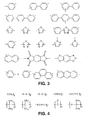
- the preferred embodiments of the end-capped ester, ester-imide, and ester-amide oligomers backbones are depicted in FIG. 1 and FIG. 2 , wherein Ar is the structural units depicted in FIG. 3 and X is the structural units depicted in FIG. 4 .
- the "backbone" liquid crystal oligomers are simultaneously end-cap terminated with stoichiometric quantities of mono-functional reactants to control oligomer chain length.
- the end-cap units for the end-capped ester, ester-imide, and ester-amide oligomers can be prepared by methods in the art and include phenylacetylene derivatives of general formula (I) and/or phenylmaleimide of general formula (II), and/or nadimide of general formula (III) wherein Y can be a carboxy, hydroxy, amino group or any reactive analog thereof (e.g., acetoxy, propionoxy, butoxy, etc.), or an esterified carboxy group (e.g., methylbenzoate, ethylbenzoate, phenylbenzoate, etc.).
- R' substituents can be identical or different on any given end-cap unit provided they do not interfere with the melt condensation synthesis of the liquid crystal oligomers or the higher temperature curing step.
- R' is selected from the group consisting of hydrogen, alkyl groups containing six or less carbon atoms such as methyl, ethyl, propyl, and butryl groups, aryl groups (containing six to ten carbon atoms) such as phenyl or naphthyl groups, lower alkoxy groups containing six or less carbons such as methoxy, ethoxy, and propoxy, lower aryloxy groups containing ten or less carbon atoms, such as phenoxy or benzloxy, or fluoro, bromo, or iodo groups.
- Other phenylacetylene end-cap derivatives include 4-phenylethynyl-phenol and 4-phenylethynylbenzoic acid.
- end-capped liquid crystal ester, ester-imide, and ester-amide oligomers can be modified by means of conventional additives, used in conventional amounts, of stabilizers, oxidation inhibitors, agents against thermal and ultraviolet light decomposition, lubricants, mold release agents, colorants such as dyes and pigments, fibrous or pulverulent fillers and reinforcing agents, nucleating agents, and/or plasticizers.
- oligomer(s) and “oligomer mixture(s)” designate mixtures of varying backbone length liquid crystal polymers, of maximally 500 repeat units, within the weight range of approximately 1000 to approximately 15,000 grams per mole that are not isolated as discreet molecular weight polymers.
- pure designates liquid crystal compounds in which all molecules of a given sample are of the same length and molecular weight.
- high weight and high molecular weight designate polymers and mixtures of polymers in which additional increases in polymer length and weight have no effect on the physical properties, including processability, of the polymers and mixtures.
- Linear liquid crystal polymers exhibit higher degrees of molecular order while in the molten state than other polymeric species.
- the ability of these species to maintain molecular order in the molten state has pronounced effects on the solid state physical properties of this class of polymers.
- liquid crystalline polymers exhibit molecular order in the solid state and lower melt viscosities at higher molecular weights.
- the improved molecular order in the solid state makes liquid crystal polymers desirable for uses in shape molded composite materials.
- melt viscosities have not until now been sufficiently low to make higher weight LCPs amenable to improved melt process shape forming and blending techniques such as film extrusion, fiber spinning, reactive injection molding (RIM), resin transfer molding (RTM), resin film injection (RFI), powder molding, pultrusion, injection molding, blow molding, plasma spraying, and thermo-forming.
- RIM reactive injection molding
- RTM resin transfer molding
- RFI resin film injection
- Linear thermotropic liquid crystals typically have very high melting points and molecular weights that limit their ability to be melt processed. Once formed, however, the polymers typically have very high melting points and molecular weights that limit their ability to be melt processed.
- the present invention involves the preparation of liquid crystal oligomers of relatively moderate weight and length via traditional melt state condensation techniques.
- the liquid crystal oligomers were end-capped in the melt state with phenylacetylene, phenylmaleimide or nadimide terminated monofunctional reactants. These end-caps are stable in the melt state condensation conditions needed for preparing the liquid crystal oligomers.
- the end-caps were chosen so as to polymerize with each other at temperatures above the range used for the melt condensation preparation of the oligomers but below that which will induce cross-linking of the liquid crystal backbone.
- the resulting end-capped LCTs display many superior and improved properties to their non-end-capped high molecular weight analogs that are non-obvious and unanticipated in the literature. Among these properties are: unusually lowered melt viscosities for these weight polymer species compared to non-end-capped higher molecular weight analogs and comparable and/or superior to previously end-capped lower weight non-oligomeric species (end-capped single pure molecules), stability of melt viscosities at elevated temperatures for extended periods of time relative to previous liquid crystalline products, and reduced brittleness (i.e. rubber behavior) above the glass transition temperature.
- the end-capped liquid crystal oligomers exhibit lower melt viscosities than the corresponding non-end-capped high weight analogs. Being polymeric, the end-capped liquid crystal oligomers exhibit superior physical properties relative to well-defined end-capped low weight pure liquid crystal esters. This class of end-capped liquid crystal oligomers, therefore, exhibits improved melt processability relative to higher weight analogs while maintaining the benefits of being polymeric relative to well-defined end-capped low weight pure liquid crystal esters. In many instances, the lowered melt viscosity can be maintained for extended periods of time relative to the non-end-capped higher weight analogs and comparable and/or superior to the end-capped low weight pure liquid crystal esters. Lowered melt viscosities make this new class of liquid crystal polymers more amenable to melt processing. For the first time, higher weight liquid crystal oligomers can be used effectively in melt process shape forming and blending techniques.
- the end-capped liquid crystal oligomers were cured at elevated temperatures (temperatures above that used for the melt state condensation) resulting in liquid crystal thermosets.
- This second step causes the end-caps to react with one another and further increases the molecular weight of the liquid crystal polymers.
- heat curing of polymer molds is carried out at temperatures sufficiently high to induce cross-linking of the polymer backbone.
- Cross-linking of the backbone often makes the cured product brittle.
- the reactions between the end-caps can be carried out at temperatures below that which would induce significant cross-linking within the liquid crystal oligomer backbone while the degree of end-cap polymerization can be controlled through varying length and temperature of exposure.
- the lack of significant backbone cross-linking produces liquid crystalline polymers that behave as rubbers when elevated above their glass transition temperatures rather than becoming brittle.
- the "backbones" of the end-capped liquid crystalline ester, ester-imide, or ester-amide oligomers were prepared from the reaction between varying quantities and combinations of one or more aromatic, heterocyclic or aliphatic dicarboxylic acids, aromatic, heterocyclic or aliphatic diols aromatic, heterocyclic or aliphatic diamines, hydroxybenzoic acids and aminobenzoic acids.
- the preferred embodiments of the end-capped ester, ester-imide, and ester-amide oligomers backbones are depicted in FIG. 1 and FIG. 2 wherein Ar is the structural units depicted in FIG. 3 and X is the structural units depicted in FIG. 4 .
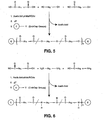
- FIGS. 5,6 , and 7 The preferred general methods of preparation of the end-capped ester, ester-imide, and ester-amide oligomers are presented in FIGS. 5,6 , and 7 wherein Ar 1 , Ar 2 , and Ar 3 can be identical or different and are the structural units depicted in Figure 3 and X is the structural units depicted in Figure 4 .
- E-Y represents end-cap units I, II, and/or III that can be prepared by methods available in the literature, wherein Y can be a carboy, hydroxy, amino group or any reactive analog thereof (e.g., acetoxy, propionoxy, butoxy, etc.), or an esterified carboxy group (e.g., methylbenzoate, ethylbenzoate, phenylbenzoate, etc.) and the R' substituents can be identical or different on any given end-cap unit provided they do not interfere with the melt condensation synthesis of the liquid crystal oligomers or the higher temperature curing step.
- Y can be a carboy, hydroxy, amino group or any reactive analog thereof (e.g., acetoxy, propionoxy, butoxy, etc.), or an esterified carboxy group (e.g., methylbenzoate, ethylbenzoate, phenylbenzoate, etc.) and the R' substituents can be identical or different on any given end-
- R' substituents are selected from the group consisting of hydrogen, C 1 to C 6 alkyl groups (preferably containing four or less carbon atoms) such as methyl, ethyl, propyl, and butryl groups, aryl groups containing six to ten carbon atoms such as phenyl or naphthyl groups, C 1 to C 6 alkoxy groups such as methoxy, ethoxy, and propoxy, lower aryloxy groups containing less than 10 carbon atoms such as phenoxy or benzloxy, or fluoro, bromo, or iodo groups.
- the stoichiometric amounts of each reactant and end-cap group can be varied to prepare oligomers of varying size, weight, characteristic and chemical content.
- the reactions depicted in FIGS. 5, 6 , and 7 are generally performed at between approximately 140°C to approximately 350°C.
- the melt viscosities of the end-capped ester, ester-imide, and ester-amide oligomers are lower than their non-end-capped analogs.
- end-capped liquid crystal ester, ester-imide, and ester-amide oligomers can be modified by means of conventional additives, used in conventional amounts, of stabilizers, oxidation inhibitors, agents against thermal and ultraviolet light decomposition, lubricants, mold release agents, colorants such as dyes and pigments, fibrous or pulverulent fillers and reinforcing agents, nucleating agents, or plasticizers.
- the dried end-cap products were refluxed in 150 mL acetic anhydride for 5 hours. Yellow crystals precipitated upon cooling and were collected by filtration, washed with ethanol and dried under vacuum at 80° C for 8 hours.
- a 100 mL 3-neck round bottom flask was charged with 4-acetoxybenzoic acid (45.1 g, 0.25 mol), 6-acetoxy-2-naphtoic acid (38.4 g, 0.17 mol), PE-COOH (2.43 g, 6.6 mmol), PE-OAc (2.52 g, 6.6 mmol) and 4 mg potassium acetate.
- the flask was equipped with a sealed glass paddle stirrer, a nitrogen inlet tube and an insulated distillation head.
- the flask was purged with nitrogen gas, and the reaction mixture was heated over a 3 hour period on a woods metal bath, under a slow stream of nitrogen, with the reaction temperature being increased from 150°C to 300° C. At this point the temperature was increased to 310° C over 30 minutes and a vacuum was slowly applied for 25 min.
- the opaque melt was cooled to room temperature and the product (6HBA/4HNA-9PE) was broken from the flask and ground into a fine powder.
- a 100 mL 3-neck round bottom flask was charged with 4-hydroxybenzoic acid (20.72 g, 0.15 mol), 6-hydroxy-2-naphtoic acid (18.82 g, 0.1 mol), NOR-COOH (1.13 g, 4 mmol), NOR-OAc (1.19 g, 4 mmol), acetic anhydride (28.1 g, 0.275 mol), and 5 mg potassium acetate.
- the flask was equipped with a sealed glass paddle stirrer, a nitrogen inlet tube and an insulated distillation head.
- the flask was purged with nitrogen gas, and the reaction mixture was heated over a 1 hour period on a woods metal bath, under a slow stream of nitrogen, to 140° C and held for 1 hour at this temperature.
- the reaction temperature was increased to 250° C in 100 min. and hold at this temperature for 50 min.
- the reaction temperature was increased from 250° C to 275° C in 30 min. and a vacuum was slowly applied for 20 min.
- the opaque melt was cooled to room temperature and the product (6HBA/4HNA-9NOR) was broken from the flask and ground into a fine powder.
- a 100 mL 3-neck round bottom flask was charged with 4-hydroxybenzoic acid (20.72 g, 0.15 mol), 6-hydroxy-2-naphtoic acid (18.82 g, 0.1 mol), PM-COOH (1.17 g, 4 mmol), PM-OAc (1.23 g, 4 mmol), acetic anhydride (28.1 g, 0.275 mol), and 5 mg potassium acetate.
- the flask was equipped with a sealed glass paddle stirrer, a nitrogen inlet tube and an insulated distillation head. The flask was purged with nitrogen gas, and the reaction mixture was heated over a 1 hour period on a woods metal bath, under a slow stream of nitrogen to 140° C and held for 1 hour at this temperature.
- the reaction temperature was increased to 250° C in 110 min. and hold at this temperature for 50 min.
- the reaction temperature was increased from 250° C to 300° C in 30 min. and a vacuum was slowly applied for 20 min.
- the opaque melt was cooled to room temperature and the product (6HBA/4HNA-9PM) was broken from the flask and ground into a fine powder.
- a 100 mL 3-neck round bottom flask was charged with 4-acetoxybenzoic acid (19.8 g, 0.11 mol), 6-acetoxy-2-naphtoic acid (2.3 g, 0.01 mol), 2,6-diacetoxynaphthalene (9.77 g, 0.04 mol), terephthalic acid (6.65 g, 0.04 mol), PE-COOH (1.17 g, 3.2 mmol), PE-OAc (2.21 g, 3.2 mmol) and 4 mg potassium acetate.
- the flask was equipped with a sealed glass paddle stirrer, a nitrogen inlet tube and an insulated distillation head.
- the flask was purged with nitrogen gas, and the reaction mixture was heated over a 3 hour period on a woods metal bath, under a slow strearn of nitrogen, with the reaction temperature being increased prom 150° C to 300° C. After three hours, vacuum was slowly applied for 25 min. The opaque melt was cooled to room temperature and the product (55HBA/20TA/5HNA/20ND-9PE) was broken from the flask and ground into a fine powder.
- a 100 mL 3-neck round bottom flask was charged with terephthalic acid (8.31 g, 0.05 mol), ethylene bis(4-hydroxybenzoate) -hereinafter EHB- (13.33 g, 0.044 mol), 4-acetoxyphenylethynyl (2.77 g, 0.012 mol), and 4 mg potassium acetate.
- the flask was equipped with a sealed glass paddle stirrer, a nitrogen inlet tube and an insulated distillation head.
- the flask was purged with nitrogen gas, and the reaction mixture was heated over a 3 hour period on a woods metal bath, under a slow stream of nitrogen, with the reaction temperature being increased from 150° C to 260° C. After three hours the temperature was increased to 280° C over 30 minutes and a vacuum was slowly applied for 15 min.
- the opaque melt was cooled to room temperature and the product (50TA/50 EHB-5 PE) was broken from the flask and ground into a fine powder.
- a 100 mL 3-neck round bottom flask was charged with 6-acetoxy-2-naphtoic acid (11.51 g, 0.05 mol), terephthalic acid (2.77 g, 0.017 mol), 4-acetoxyacetanilide (3.22 g, 0.017 mol), PE-COOH (0.49 g, 1.3 mmol), PE-OAc (0.5 g, 1.3 mmol) and 3 mg potassium acetate.
- the flask was equipped with a sealed glass paddle stirrer, a nitrogen inlet tube and an insulated distillation head.
- the flask was purged with nitrogen gas, and the reaction mixture was heated over a 3 hour period on a woods metal bath, under a slow stream of nitrogen, with the reaction temperature being increased from 150° C to 300° C. After three hours a vacuum was slowly applied for 25 min. The opaque melt was cooled to room temperature and the product (6HNA/2TA/2A2-9PE) was broken from the flask and ground into a fine powder.
- a 100 mL 3-neck round bottom flask was charged with terephthalic acid (7.62 g, 0.046 mol), ethylene bis(4-acetoxyanilide) -hereinafter EAA- (18.85 g, 0.049 mol), PE-COOH (2.32 g, 6.3 mmol), and 4 mg potassium acetate.
- the flask was equipped with a sealed glass paddle stirrer, a nitrogen inlet tube and an insulated distillation head. The flask was purged with nitrogen gas, and the reaction mixture was heated over a 3 hour period on a woods metal bath, under a slow stream of nitrogen, with the reaction temperature being increased from 150° C to 300° C.
- a 100 mL 3-neck round bottom flask was charged with 4-acetoxybenzoic acid (10.81 g, 0.06 mol), N-(3'-acetoxyphenyl)trimellitimide (11.33 g, 0.4 mol), PE-COOH (0.58 g, 1.6 mmol), PE-OAc (0.61 g, 1.6 mmol) and 2 mg potassium acetate.
- the flask was equipped with a sealed glass paddle stirrer, a nitrogen inlet tube and an insulated distillation head.
- the flask was purged with nitrogen gas, and the reaction mixture was heated over an 3 hour period on a woods metal bath, under a slow stream of nitrogen, with the reaction temperature being increased from 150° C to 300° C. At this point the temperature was increased to 310° C and a vacuum was slowly applied for 20 min.
- the opaque melt was cooled to room temperature and the product (6HBA/4IM-9PE) was broken from the flask and ground into a fine powder.
- Thin films were prepared by heating 7 HBA/3HNA 9PE, heated with 10° C/min. to 370° C and were held at this temperature for 1 hour to allow the reactive end groups to react.
- the norbornene and phenylmaleimide end groups react at temperatures between 250° C and 400° C.
- the phenylacetylene end groups are more stable in the melt and no significant end group chemistry could be observed below 310° C, i . e . no increase in melt viscosity could be observed.
- ester oligomers with aliphatic spacers all oligomers formed films that did not flow under stress and appeared nematic in nature after curing.
- FIG. 8 is a composite laminate lay-up configuration of the end-capped liquid crystal oligomers. The entire lay-up was contained in a metal dam and was vacuum bagged utilizing a standard vacuum bagging process for high temperature polyimides. The (6HBA/4HNA-5PE)/ IM-7 cloth was heated to 482° F with 5" Hg of vacuum and held for one hour.
- thermotropic LC precursors leads to excellent wet-out of the carbon fiber reinforcement.
- the neat resin plaques were fabricated in order to test mechanical properties such as; K1C (opening mode fracture toughness), flexure strength and modulus, and compressive strength and modulus.
- a conceptual drawing of the mold that was used to fabricate the neat resin plaques is depicted in FIG. 11 .
- the mold was 3.5" x 3.5" and was restricted to a maximum height of 0.5". The height was restricted by placing steel spacers in the mold to ensure the final dimensions of the plaque were at least 3" x 3" x 0.5". Two steel spacers with dimension, 1.5" x 0.25" x 0.5", were placed in the mold.
- a piece of Kapton film was placed into the base of the mold and onto the film was poured 100 grams of (6HBA/4HNA-9PE). This material was compacted in a hydraulic press and another piece of Kapton film and the steel plunger were inserted into the mold. The entire mold was placed in a vacuum hydraulic press. The (6HBA/4HNA-9PE) was heated to 572° F with no pressure or vacuum and held for 30 min. During this hold, the (6HBA/4HNA-9PE) began to react which was evident by a increase in viscosity and the production of acetic acid. After 30 min. at 572° F, the temperature was increased to 608 °F and 30" Hg of vacuum was applied. The polymer was held at 608°F for 30 min.
- a foamed structure was fabricated by using (6HBA/4HNA-9PE) that was not fully polymerized. The process was the same as described in Example X. During the high temperature vacuum step the released acetic acid acts as a blowing agent and a plaque was obtained that has a well defined porous density (0.43 g/cm 3 ) and shows good mechanical properties.
- an adhesive scrim cloth was saturated with molten (6HBA/4HNA-9PE) at 280° C.
- the resulting cloth contained 28 wt% resin and was placed between two titanium coupons to form a lap joint with a surface area of 2.54 x 1.27 cm (1 x 0.5 inch).
- the titanium coupons were sand blasted, treated with Pasa-Gel 107, washed, and dried prior to use.
- the lap joints were bonded in a heated press for 1 h. at 350° C and 15 psi.
- the resulting bonded lap joints were tested at room temperature according to ASTM D 1002. The results are summarized in Table 6. Table 6.
Landscapes
- Chemical & Material Sciences (AREA)
- Organic Chemistry (AREA)
- Polymers & Plastics (AREA)
- Health & Medical Sciences (AREA)
- Chemical Kinetics & Catalysis (AREA)
- Medicinal Chemistry (AREA)
- Materials Engineering (AREA)
- Engineering & Computer Science (AREA)
- Crystallography & Structural Chemistry (AREA)
- Macromolecular Compounds Obtained By Forming Nitrogen-Containing Linkages In General (AREA)
- Polyesters Or Polycarbonates (AREA)
- Organic Low-Molecular-Weight Compounds And Preparation Thereof (AREA)
- Compositions Of Macromolecular Compounds (AREA)
- Pyrrole Compounds (AREA)
- Liquid Crystal Substances (AREA)
- Indole Compounds (AREA)
- Polyamides (AREA)
Applications Claiming Priority (5)
| Application Number | Priority Date | Filing Date | Title |
|---|---|---|---|
| US757398 | 1991-09-10 | ||
| US23250400P | 2000-09-13 | 2000-09-13 | |
| US232504P | 2000-09-13 | ||
| US09/757,398 US6939940B2 (en) | 2000-09-13 | 2001-01-05 | Liquid crystalline thermosets from ester, ester-imide, and ester-amide oligomers |
| PCT/US2001/008301 WO2002022706A1 (en) | 2000-09-13 | 2001-03-15 | Liquid crystalline thermosets from ester, ester-imide, and ester-amide oligomers |
Publications (2)
| Publication Number | Publication Date |
|---|---|
| EP1320567A1 EP1320567A1 (en) | 2003-06-25 |
| EP1320567B1 true EP1320567B1 (en) | 2008-12-17 |
Family
ID=26926055
Family Applications (1)
| Application Number | Title | Priority Date | Filing Date |
|---|---|---|---|
| EP01926364A Expired - Lifetime EP1320567B1 (en) | 2000-09-13 | 2001-03-15 | Liquid crystalline thermosets from ester, ester-imide, and ester-amide oligomers |
Country Status (10)
| Country | Link |
|---|---|
| US (2) | US6939940B2 (enExample) |
| EP (1) | EP1320567B1 (enExample) |
| JP (1) | JP2004509190A (enExample) |
| KR (1) | KR100786659B1 (enExample) |
| CN (1) | CN100448914C (enExample) |
| AT (1) | ATE417879T1 (enExample) |
| AU (1) | AU2001252905A1 (enExample) |
| CA (1) | CA2422251A1 (enExample) |
| DE (1) | DE60137059D1 (enExample) |
| WO (1) | WO2002022706A1 (enExample) |
Cited By (3)
| Publication number | Priority date | Publication date | Assignee | Title |
|---|---|---|---|---|
| US8822628B2 (en) | 2012-09-24 | 2014-09-02 | Ticona Llc | Crosslinkable liquid crystalline polymer |
| US8853342B2 (en) | 2012-09-24 | 2014-10-07 | Ticona Llc | Crosslinkable liquid crystalline polymer |
| US9145519B2 (en) | 2012-09-24 | 2015-09-29 | Ticona Llc | Crosslinkable aromatic polyester |
Families Citing this family (97)
| Publication number | Priority date | Publication date | Assignee | Title |
|---|---|---|---|---|
| US6939940B2 (en) * | 2000-09-13 | 2005-09-06 | The United States Of America As Represented By The Administrator Of The National Aeronautics And Space Administration | Liquid crystalline thermosets from ester, ester-imide, and ester-amide oligomers |
| US7227179B2 (en) * | 2002-09-30 | 2007-06-05 | World Properties, Inc. | Circuit materials, circuits, multi-layer circuits, and methods of manufacture thereof |
| US9819403B2 (en) | 2004-04-02 | 2017-11-14 | Rearden, Llc | System and method for managing handoff of a client between different distributed-input-distributed-output (DIDO) networks based on detected velocity of the client |
| US9826537B2 (en) | 2004-04-02 | 2017-11-21 | Rearden, Llc | System and method for managing inter-cluster handoff of clients which traverse multiple DIDO clusters |
| US10425134B2 (en) | 2004-04-02 | 2019-09-24 | Rearden, Llc | System and methods for planned evolution and obsolescence of multiuser spectrum |
| US8654815B1 (en) | 2004-04-02 | 2014-02-18 | Rearden, Llc | System and method for distributed antenna wireless communications |
| US10277290B2 (en) | 2004-04-02 | 2019-04-30 | Rearden, Llc | Systems and methods to exploit areas of coherence in wireless systems |
| CN100376534C (zh) * | 2004-12-23 | 2008-03-26 | 吉林大学 | 含侧基苯乙炔的双官能团单体的制备及其应用 |
| US8545986B2 (en) * | 2007-03-13 | 2013-10-01 | United States of America as represented by the Administrator of the National Aeronautics and Spacing Administration | Composite insulated conductor |
| JP2009108036A (ja) * | 2007-09-28 | 2009-05-21 | Fujifilm Corp | 新規アセチレン化合物、その製造方法、それを構成単位として含むポリマー、該化合物及び/又は該ポリマーを含む組成物、該組成物を硬化させてなる硬化物 |
| KR101445871B1 (ko) * | 2007-10-25 | 2014-09-30 | 삼성전기주식회사 | 액정 폴리에스터 수지 조성물 및 그를 이용한 인쇄회로기판 |
| KR101539770B1 (ko) * | 2007-11-02 | 2015-07-29 | 삼성전기주식회사 | 기판 형성용 조성물 및 그를 이용하는 인쇄회로기판 |
| JP5231174B2 (ja) * | 2007-11-02 | 2013-07-10 | 三星電子株式会社 | 基板形成用組成物、プリプレグ、基板および熱硬化性芳香族オリゴマー |
| KR101552716B1 (ko) | 2008-06-13 | 2015-09-11 | 삼성전기주식회사 | 서모셋 모노머 가교제, 이를 포함하는 인쇄회로기판 형성용조성물 및 이를 이용한 인쇄회로기판 |
| JP5588443B2 (ja) | 2008-08-19 | 2014-09-10 | クリスオプティクス株式会社 | 有機化合物の組成物、光学フィルムおよびその製造方法 |
| US8765012B2 (en) * | 2008-11-18 | 2014-07-01 | Samsung Electronics Co., Ltd. | Thermosetting composition and printed circuit board using the same |
| US20100190015A1 (en) * | 2008-12-04 | 2010-07-29 | Crysoptix Kk | Organic Polymer Compound, Optical Film and Method of Production Thereof |
| KR101505199B1 (ko) | 2008-12-23 | 2015-03-23 | 삼성전기주식회사 | 열경화성 올리고머 또는 폴리머, 이를 포함한 열경화성 수지 조성물, 및 이를 이용한 인쇄회로기판 |
| KR101077303B1 (ko) * | 2009-05-06 | 2011-10-26 | 삼성전기주식회사 | 기판 형성용 조성물, 및 이를 이용한 프리프레그 및 기판 |
| KR101148384B1 (ko) * | 2009-11-26 | 2012-05-21 | 삼성전기주식회사 | 기판 형성용 조성물, 및 이를 이용한 프리프레그 및 기판 |
| KR101136407B1 (ko) * | 2009-12-31 | 2012-04-18 | 삼성전기주식회사 | 열경화성 액정 올리고머 및 음의 열팽창 계수의 무기 필러를 포함하는 기판용 복합재료 |
| KR101670087B1 (ko) | 2010-03-24 | 2016-10-28 | 삼성전기주식회사 | 열경화성 수지, 이를 포함한 수지 조성물, 및 이를 이용하여 제조된 인쇄회로기판 |
| KR101659081B1 (ko) * | 2010-03-26 | 2016-09-23 | 삼성전기주식회사 | 액정성 열경화형 올리고머 또는 폴리머 및 이를 포함하는 열경화성 조성물 및 기판 |
| KR101767691B1 (ko) | 2011-08-04 | 2017-08-14 | 심천 워트 어드밴스드 머티리얼즈 주식회사 | 열경화성 수지 제조용 조성물 및 그의 경화물, 상기 경화물을 포함하는 프리프레그, 및 상기 프리프레그를 채용한 금속박 적층판과 프린트 배선판 |
| WO2013032974A1 (en) | 2011-08-29 | 2013-03-07 | Ticona Llc | Solid-state polymerization of a liquid crystalline polymer |
| CN103764793B (zh) | 2011-08-29 | 2016-09-14 | 提克纳有限责任公司 | 高流动液晶聚合物组合物 |
| US9045685B2 (en) | 2011-08-29 | 2015-06-02 | Ticona Llc | Cast molded parts formed from a liquid crystalline polymer |
| TW201319118A (zh) | 2011-08-29 | 2013-05-16 | Ticona Llc | 低熔融黏度液晶聚合物之熔融聚合 |
| KR20140057629A (ko) | 2011-08-29 | 2014-05-13 | 티코나 엘엘씨 | 방향족 아마이드 화합물 |
| WO2013032971A1 (en) * | 2011-08-29 | 2013-03-07 | Ticona Llc | Melt-extruded substrate for use in thermoformed articles |
| US8906258B2 (en) | 2011-08-29 | 2014-12-09 | Ticona Llc | Heat-resistant liquid crystalline polymer composition having a low melting temperature |
| US9096794B2 (en) | 2011-08-29 | 2015-08-04 | Ticona Llc | High flow liquid crystalline polymer composition |
| WO2013032975A1 (en) | 2011-08-29 | 2013-03-07 | Ticona Llc | Thermotropic liquid crystalline polymer with improved low shear viscosity |
| US20130337183A1 (en) * | 2012-06-07 | 2013-12-19 | James Economy | Polymer coating system for improved tribological performance |
| WO2014003813A1 (en) * | 2012-06-27 | 2014-01-03 | Ticona Llc | Ultralow viscosity liquid crystalline polymer composition |
| JP6128804B2 (ja) | 2012-09-28 | 2017-05-17 | 株式会社ダイセル | 熱硬化性液晶ポリエステル組成物及びその硬化物 |
| JP2017078180A (ja) * | 2012-09-28 | 2017-04-27 | 株式会社ダイセル | 熱硬化性液晶ポリエステル組成物の製造方法及び硬化物の製造方法 |
| US11189917B2 (en) | 2014-04-16 | 2021-11-30 | Rearden, Llc | Systems and methods for distributing radioheads |
| MX350841B (es) | 2013-02-12 | 2017-09-18 | Carbon3D Inc | Método y aparato para fabricación tridimensional. |
| EP3187938A1 (en) | 2013-02-12 | 2017-07-05 | CARBON3D, Inc. | Method and apparatus for three-dimensional fabrication with feed through carrier |
| US10488535B2 (en) | 2013-03-12 | 2019-11-26 | Rearden, Llc | Apparatus and method for capturing still images and video using diffraction coded imaging techniques |
| US9923657B2 (en) | 2013-03-12 | 2018-03-20 | Rearden, Llc | Systems and methods for exploiting inter-cell multiplexing gain in wireless cellular systems via distributed input distributed output technology |
| US9973246B2 (en) | 2013-03-12 | 2018-05-15 | Rearden, Llc | Systems and methods for exploiting inter-cell multiplexing gain in wireless cellular systems via distributed input distributed output technology |
| US10547358B2 (en) | 2013-03-15 | 2020-01-28 | Rearden, Llc | Systems and methods for radio frequency calibration exploiting channel reciprocity in distributed input distributed output wireless communications |
| JP6524067B2 (ja) | 2013-04-16 | 2019-06-05 | アロトロピカ・テクノロジーズ・インコーポレイテッド | 高性能ポリマー及び相互貫入液晶熱硬化体に基づく分子複合材料 |
| CN113912988A (zh) | 2013-06-07 | 2022-01-11 | 提克纳有限责任公司 | 高强度热致液晶聚合物 |
| WO2015142546A1 (en) | 2014-03-21 | 2015-09-24 | Carbon3D, Inc. | Method and apparatus for three-dimensional fabrication with gas injection through carrier |
| JP6412329B2 (ja) * | 2014-04-02 | 2018-10-24 | 株式会社ダイセル | 熱硬化性芳香族エステルの製造方法 |
| WO2015164234A1 (en) | 2014-04-25 | 2015-10-29 | Carbon3D, Inc. | Continuous three dimensional fabrication from immiscible liquids |
| WO2015195920A1 (en) | 2014-06-20 | 2015-12-23 | Carbon3D, Inc. | Three-dimensional printing method using increased light intensity and apparatus therefore |
| WO2015195909A1 (en) | 2014-06-20 | 2015-12-23 | Carbon3D, Inc. | Three-dimensional printing using tiled light engines |
| ES2711849T3 (es) | 2014-06-20 | 2019-05-07 | Carbon Inc | Impresión tridimensional con alimentación recíproca de líquido polimerizable |
| AU2015280283B2 (en) | 2014-06-23 | 2019-05-02 | Carbon, Inc. | Methods of producing three-dimensional objects from materials having multiple mechanisms of hardening |
| US11390062B2 (en) | 2014-08-12 | 2022-07-19 | Carbon, Inc. | Three-dimensional printing with supported build plates |
| EP3240671B1 (en) | 2014-12-31 | 2020-12-16 | Carbon, Inc. | Three-dimensional printing of objects with breathing orifices |
| US20160193786A1 (en) | 2015-01-06 | 2016-07-07 | Carbon3D, Inc. | Three-dimensional printing with build plates having a rough or patterned surface and related methods |
| WO2016112090A1 (en) | 2015-01-07 | 2016-07-14 | Carbon3D, Inc. | Microfluidic devices and methods of making the same |
| US20160200052A1 (en) | 2015-01-13 | 2016-07-14 | Carbon3D, Inc. | Three-dimensional printing with build plates having surface topologies for increasing permeability and related methods |
| JPWO2016113931A1 (ja) * | 2015-01-15 | 2017-10-26 | 日産化学工業株式会社 | 非光反応性の水素結合性高分子液晶を用いた液晶配向剤、及び液晶配向膜 |
| US20180133959A1 (en) | 2015-01-30 | 2018-05-17 | Carbon, Inc. | Build plates for continuous liquid interface printing having permeable sheets and related methods, systems and devices |
| US11020898B2 (en) | 2015-01-30 | 2021-06-01 | Carbon, Inc. | Build plates for continuous liquid interface printing having permeable base and adhesive for increasing permeability and related methods, systems and devices |
| WO2016126779A1 (en) | 2015-02-05 | 2016-08-11 | Carbon3D, Inc. | Method of additive manufacturing by fabrication through multiple zones |
| WO2016133759A1 (en) | 2015-02-20 | 2016-08-25 | Carbon3D, Inc. | Methods and apparatus for continuous liquid interface printing with electrochemically supported dead zone |
| US10391711B2 (en) | 2015-03-05 | 2019-08-27 | Carbon, Inc. | Fabrication of three dimensional objects with multiple operating modes |
| WO2016140888A1 (en) | 2015-03-05 | 2016-09-09 | Carbon3D, Inc. | Fabrication of three dimensional objects with variable slice thickness |
| WO2016140891A1 (en) | 2015-03-05 | 2016-09-09 | Carbon3D, Inc. | Continuous liquid interface production with sequential patterned exposure |
| WO2016145050A1 (en) | 2015-03-10 | 2016-09-15 | Carbon3D, Inc. | Microfluidic devices having flexible features and methods of making the same |
| WO2016145182A1 (en) | 2015-03-12 | 2016-09-15 | Carbon3D, Inc. | Additive manufacturing using polymerization initiators or inhibitors having controlled migration |
| WO2016149151A1 (en) | 2015-03-13 | 2016-09-22 | Carbon3D, Inc. | Three-dimensional printing with concurrent delivery of different polymerizable liquids |
| WO2016149097A1 (en) | 2015-03-13 | 2016-09-22 | Carbon3D, Inc. | Three-dimensional printing with reduced pressure build plate unit |
| US10792856B2 (en) | 2015-03-13 | 2020-10-06 | Carbon, Inc. | Three-dimensional printing with flexible build plates |
| WO2017053783A1 (en) | 2015-09-25 | 2017-03-30 | Carbon3D, Inc. | Build plate assemblies for continuous liquid interphase printing having lighting panels and related methods, systems and devices |
| WO2017059082A1 (en) | 2015-09-30 | 2017-04-06 | Carbon, Inc. | Method and apparatus for producing three-dimensional objects |
| WO2017112571A1 (en) | 2015-12-22 | 2017-06-29 | Carbon, Inc. | Dual cure additive manufacturing of rigid intermediates that generate semi-rigid, flexible, or elastic final products |
| EP3341792A1 (en) | 2015-12-22 | 2018-07-04 | Carbon, Inc. | Dual precursor resin systems for additive manufacturing with dual cure resins |
| WO2017112682A1 (en) | 2015-12-22 | 2017-06-29 | Carbon, Inc. | Fabrication of compound products from multiple intermediates by additive manufacturing with dual cure resins |
| WO2017112521A1 (en) | 2015-12-22 | 2017-06-29 | Carbon, Inc. | Production of flexible products by additive manufacturing with dual cure resins |
| US10647054B2 (en) | 2015-12-22 | 2020-05-12 | Carbon, Inc. | Accelerants for additive manufacturing with dual cure resins |
| NL2016357B1 (en) * | 2016-03-03 | 2017-09-20 | Allotropica Tech Inc | Pre-preg and composite products |
| NL2016513B1 (en) | 2016-03-30 | 2017-10-17 | Univ Delft Tech | All-aromatic high-performance block-copolymers. |
| JP2017179119A (ja) * | 2016-03-30 | 2017-10-05 | 株式会社ダイセル | 熱硬化性化合物 |
| WO2017210298A1 (en) | 2016-05-31 | 2017-12-07 | Northwestern University | Method for the fabrication of three-dimensional objects and apparatus for same |
| CN211105627U (zh) | 2016-07-01 | 2020-07-28 | 卡本有限公司 | 用于三维打印机的构造板、构造板组件和用于由可聚合液体形成三维物体的装置 |
| JPWO2018021389A1 (ja) | 2016-07-27 | 2019-05-16 | 住友化学株式会社 | プリプレグ、プリプレグ積層体及びプリプレグの製造方法 |
| US11135790B2 (en) | 2016-11-21 | 2021-10-05 | Carbon, Inc. | Method of making three-dimensional object by delivering reactive component for subsequent cure |
| US10239255B2 (en) | 2017-04-11 | 2019-03-26 | Molecule Corp | Fabrication of solid materials or films from a polymerizable liquid |
| CN107523055B (zh) * | 2017-09-30 | 2020-06-19 | 黑龙江省科学院石油化学研究院 | 一种耐高温炔基单马来酰亚胺改性双马来酰亚胺树脂及其制备方法 |
| WO2019100409A1 (zh) * | 2017-11-27 | 2019-05-31 | 苏州大学 | 一种热固性全芳香族聚酯酰亚胺液晶及其制备方法 |
| NL2022372B1 (en) | 2018-12-17 | 2020-07-03 | What The Future Venture Capital Wtfvc B V | Process for producing a cured 3d product |
| CN118636467A (zh) | 2019-03-07 | 2024-09-13 | 西北大学 | 形成三维物体的方法和形成三维物体的设备 |
| KR20220016453A (ko) | 2019-04-09 | 2022-02-09 | 아줄 쓰리디, 인크. | 적층 제조에 의해 생성되는 부분들을 신속하게 경화시키고 코팅하는 방법론들 |
| CN110498760B (zh) * | 2019-08-28 | 2023-06-23 | 东华大学 | 一种芳香族热固性液晶纤维及其制备方法 |
| CN110776928A (zh) * | 2019-10-23 | 2020-02-11 | 东华大学 | 一种高频印刷电路板用液晶树脂基体及其制备方法 |
| CN112250848B (zh) * | 2020-09-28 | 2022-08-12 | 浙江恒逸石化研究院有限公司 | 一种热致性阻燃抗熔滴芳香族液晶共聚酯材料及其制备方法 |
| CN113717360A (zh) * | 2021-09-08 | 2021-11-30 | 宁夏清研高分子新材料有限公司 | 一种易于成型加工的高耐热lcp材料及其制备方法 |
| CN116120534B (zh) * | 2022-12-26 | 2025-07-08 | 广东省科学院化工研究所 | 一种液晶共聚酯及其制备方法和应用 |
| CN116871525A (zh) * | 2023-07-07 | 2023-10-13 | 江苏汉卿科技研究院有限公司 | 一种使用离子型tlcp生产金属注射成型喂料粘接剂的方法 |
Family Cites Families (42)
| Publication number | Priority date | Publication date | Assignee | Title |
|---|---|---|---|---|
| US3839287A (en) | 1971-09-21 | 1974-10-01 | Union Carbide Corp | Polyarylimides |
| US3778410A (en) | 1972-09-28 | 1973-12-11 | Eastman Kodak Co | Process for preparing a final copolyester by reacting a starting polyester with an acyloxy aromatic carboxylic acid |
| US3804805A (en) | 1972-12-01 | 1974-04-16 | Eastman Kodak Co | Copolyester prepared from polyethylene terephthalate and an acyloxy benzoic acid |
| US3864309A (en) | 1973-11-16 | 1975-02-04 | Hughes Aircraft Co | Copolymer of polyimide oligomers and terephthalonitrile n,n-dioxide and their methods of preparation |
| US4082832A (en) * | 1975-05-06 | 1978-04-04 | Solex Research Corporation | Treatment of raw materials containing titanium |
| US3975444A (en) | 1975-05-19 | 1976-08-17 | The Unites States Of America As Represented By The Secretary Of The Air Force | Ethynyl-substituted aromatic ortho diamines and method of synthesis |
| US4083829A (en) | 1976-05-13 | 1978-04-11 | Celanese Corporation | Melt processable thermotropic wholly aromatic polyester |
| US4067852A (en) | 1976-05-13 | 1978-01-10 | Celanese Corporation | Melt processable thermotropic wholly aromatic polyester containing polybenzoyl units |
| FR2444667A2 (fr) | 1978-12-19 | 1980-07-18 | Rhone Poulenc Ind | Preparation d'oligoimides |
| US4161470A (en) | 1977-10-20 | 1979-07-17 | Celanese Corporation | Polyester of 6-hydroxy-2-naphthoic acid and para-hydroxy benzoic acid capable of readily undergoing melt processing |
| US4267289A (en) | 1980-07-03 | 1981-05-12 | Celanese Corporation | Blend of wholly aromatic polyesters |
| US4351918A (en) | 1981-04-06 | 1982-09-28 | Celanese Corporation | Poly(ester-amide) capable of forming an anisotropic melt phase derived from 6-hydroxy-2-naphthoic acid, other aromatic hydroxyacid, carbocyclic dicarboxylic acid, and aromatic monomer capable of forming an amide linkage |
| US4661604A (en) | 1981-06-16 | 1987-04-28 | Trw, Inc. | Monofunctional crosslinking imidophenols |
| US5550204A (en) | 1981-11-13 | 1996-08-27 | The Boeing Company | Ether and ester oligomers with multidimensional morphology |
| US4851495A (en) | 1987-02-20 | 1989-07-25 | The Boeing Company | Polyetherimide oligomer |
| US4581399A (en) | 1982-09-30 | 1986-04-08 | Celanese Corporation | Method for the melt processing of thermotropic liquid crystal polymers |
| US4851501A (en) | 1983-06-17 | 1989-07-25 | The Boeing Company | Polyethersulfone prepregs, composites, and blends |
| US4739030A (en) | 1983-06-17 | 1988-04-19 | The Boeing Company | Difunctional end-cap monomers |
| US4684714A (en) | 1983-09-27 | 1987-08-04 | The Boeing Company | Method for making polyimide oligomers |
| US4550177A (en) | 1984-04-11 | 1985-10-29 | The United States Of America As Represented By The Administrator Of The National Aeronautics And Space Administration | Maleimido substituted aromatic cyclotriphosphazenes |
| US4513131A (en) | 1984-07-25 | 1985-04-23 | Reinhardt Bruce A | Thermally stable phenylacetylene terminated arylether resins |
| JPS6270419A (ja) | 1985-09-25 | 1987-03-31 | Polyplastics Co | 液晶構造を保持した三次元架橋ポリエステルの製造方法 |
| DE3542833A1 (de) | 1985-12-04 | 1987-06-11 | Basf Ag | Vollaromatische mesomorphe polyetheresterimide, deren herstellung und verwendung |
| US4654412A (en) | 1986-03-27 | 1987-03-31 | Celanese Corporation | Linear, melt processable, crosslinkable, thermotropic wholly aromatic polyesters and crosslinked polymers prepared therefrom |
| US5237004A (en) | 1986-11-18 | 1993-08-17 | Rohm And Haas Company | Thermoplastic and thermoset polymer compositions |
| US4746694A (en) | 1987-07-06 | 1988-05-24 | Hoechst Celanese Corporation | Melt processable polyester capable of forming an anisotropic melt comprising a relatively low concentration of 6-oxy-2-naphthoyl moiety, 4-oxybenzoyl moiety, 2,6-dioxynaphthalene moiety, and terephthaloyl moiety |
| DE3820361A1 (de) | 1988-06-15 | 1989-12-21 | Basf Ag | Verfahren zur kontinuierlichen herstellung von aromatischen polykondensaten |
| DE3900708A1 (de) | 1989-01-12 | 1990-07-19 | Basf Ag | Implantatmaterialien |
| US5114612A (en) * | 1990-04-04 | 1992-05-19 | The United States Of America As Represented By The Department Of Energy | Liquid crystal polyester thermosets |
| US5198551A (en) | 1990-04-10 | 1993-03-30 | The United States Of America As Represented By The United States Department Of Energy | Polyamide thermosets |
| KR950006716B1 (ko) * | 1991-10-16 | 1995-06-21 | 재단법인한국화학연구소 | 열경화성 폴리아릴레이트 수지 |
| US5491201A (en) | 1992-02-06 | 1996-02-13 | The Dow Chemical Company | Mesogenic cyclic imino ether-containing compositions and polymerization products thereof |
| US5418209A (en) | 1992-06-29 | 1995-05-23 | Dai Nippon Printing Co., Ltd. | Thermal transfer sheet |
| US5216073A (en) | 1992-07-01 | 1993-06-01 | Hoechst Celanese Corp. | Thermoset LCP blends |
| US5319064A (en) | 1992-10-06 | 1994-06-07 | Univ. Of Mass. At Amherst | Thermotropic liquid crystalline poly(ester-amides) |
| US5575949A (en) | 1994-06-02 | 1996-11-19 | The Regents Of The University Of California, Office Of Technology Transfer | Thermoset molecular composites |
| FI101308B1 (fi) | 1994-07-01 | 1998-05-29 | Optatech Oy | Nestekidekopolyesteri-imidit ja menetelmä niiden valmistamiseksi |
| US5475133A (en) | 1994-11-28 | 1995-12-12 | The Regents Of The University Of California | Bis-propargyl thermosets |
| US5688895A (en) | 1996-06-24 | 1997-11-18 | E. I. Du Pont De Nemours And Company | Liquid crystalline poly(ester-amides) |
| US5889077A (en) | 1996-08-29 | 1999-03-30 | Xerox Corporation | Process for direct substitution of high performance polymers with unsaturated ester groups |
| DE19749123A1 (de) | 1997-11-06 | 1999-05-12 | Basf Ag | Cholesterische Oligomere mit vernetzbaren Endgruppen |
| US6939940B2 (en) | 2000-09-13 | 2005-09-06 | The United States Of America As Represented By The Administrator Of The National Aeronautics And Space Administration | Liquid crystalline thermosets from ester, ester-imide, and ester-amide oligomers |
-
2001
- 2001-01-05 US US09/757,398 patent/US6939940B2/en not_active Expired - Lifetime
- 2001-03-15 KR KR1020037003704A patent/KR100786659B1/ko not_active Expired - Fee Related
- 2001-03-15 JP JP2002526952A patent/JP2004509190A/ja not_active Withdrawn
- 2001-03-15 AT AT01926364T patent/ATE417879T1/de not_active IP Right Cessation
- 2001-03-15 CA CA002422251A patent/CA2422251A1/en not_active Abandoned
- 2001-03-15 WO PCT/US2001/008301 patent/WO2002022706A1/en not_active Ceased
- 2001-03-15 EP EP01926364A patent/EP1320567B1/en not_active Expired - Lifetime
- 2001-03-15 AU AU2001252905A patent/AU2001252905A1/en not_active Abandoned
- 2001-03-15 CN CNB018155626A patent/CN100448914C/zh not_active Expired - Fee Related
- 2001-03-15 DE DE60137059T patent/DE60137059D1/de not_active Expired - Fee Related
-
2005
- 2005-04-29 US US11/124,508 patent/US7507784B2/en not_active Expired - Lifetime
Cited By (3)
| Publication number | Priority date | Publication date | Assignee | Title |
|---|---|---|---|---|
| US8822628B2 (en) | 2012-09-24 | 2014-09-02 | Ticona Llc | Crosslinkable liquid crystalline polymer |
| US8853342B2 (en) | 2012-09-24 | 2014-10-07 | Ticona Llc | Crosslinkable liquid crystalline polymer |
| US9145519B2 (en) | 2012-09-24 | 2015-09-29 | Ticona Llc | Crosslinkable aromatic polyester |
Also Published As
| Publication number | Publication date |
|---|---|
| CA2422251A1 (en) | 2002-03-21 |
| JP2004509190A (ja) | 2004-03-25 |
| KR100786659B1 (ko) | 2007-12-21 |
| US20020132933A1 (en) | 2002-09-19 |
| WO2002022706A1 (en) | 2002-03-21 |
| CN100448914C (zh) | 2009-01-07 |
| AU2001252905A1 (en) | 2002-03-26 |
| DE60137059D1 (de) | 2009-01-29 |
| EP1320567A1 (en) | 2003-06-25 |
| ATE417879T1 (de) | 2009-01-15 |
| CN1455792A (zh) | 2003-11-12 |
| US6939940B2 (en) | 2005-09-06 |
| US20050209429A1 (en) | 2005-09-22 |
| US7507784B2 (en) | 2009-03-24 |
| KR20030045804A (ko) | 2003-06-11 |
Similar Documents
| Publication | Publication Date | Title |
|---|---|---|
| US6939940B2 (en) | Liquid crystalline thermosets from ester, ester-imide, and ester-amide oligomers | |
| US4683327A (en) | Anisotropic heat-curable acrylic terminated monomers | |
| US4351917A (en) | Poly(ester-amide) capable of forming an anisotropic melt phase derived from 6-hydroxy-2-naphthoic acid, aromatic monomer capable of forming an amide linkage, and other aromatic hydroxyacid | |
| JP3773539B2 (ja) | ヒドロキノンを含有するサーモトロピック液晶ポリマーを製造するための改良法 | |
| CA1301392C (en) | Resin composition which exhibits anistotropism when melted | |
| JPS6113485B2 (enExample) | ||
| KR20090045040A (ko) | 전방향족 액정 폴리에스테르 | |
| TW201114819A (en) | Liquid-crystalline polyester blend compositions | |
| JPH10501277A (ja) | サーモトロピック液晶性ポリ(エステルアミド) | |
| US4778927A (en) | Wholly aromatic mesomorphic polyesters and the preparation thereof | |
| JP2012177060A (ja) | 樹脂組成物及び樹脂硬化物 | |
| EP0375960A1 (en) | Thermoplastic, liquid-crystalline, wholly aromatic polyimide ester and method of producing the same | |
| Kricheldorf et al. | New polymer syntheses 22. LC‐poly (esterimide) s derived from trimellitic acid, ω‐amino acids and hydroquinone or 4, 4′‐dihydroxybiphenyl | |
| JP6297892B2 (ja) | 熱硬化性液晶ポリエステル組成物及びその硬化物 | |
| Iqbal et al. | All‐aromatic liquid crystalline thermosets with high glass transition temperatures | |
| EP0289802B1 (en) | Optically anisotropic melt forming aromatic copolyesters based on t-butyl-4-hydroxybenzoic acid | |
| JP3311360B2 (ja) | 液晶ポリ(エステル―アミド) | |
| Dingemans et al. | Liquid crystalline thermosets from ester, ester-imide, and ester-amide oligomers | |
| Kallal‐Bartolomeo et al. | Synthesis, characterization and properties of liquid crystalline bismaleimides containing phenylbenzoate mesogens and polymethylenic spacers | |
| US5155204A (en) | Thermotropic liquid-crystalline aromatic copolymers | |
| JP2544731B2 (ja) | 全芳香族ポリエステル | |
| KR102858616B1 (ko) | 열방성 액정 폴리에스터-아미드 공중합체 및 이의 제조 방법 | |
| US5233013A (en) | Thermotropic liquid-crystalline aromatic coplymers | |
| Adduci et al. | Synthesis and characterization of random semi‐flexible thermotropic liquid crystalline poly (ester‐imide) s | |
| JPS6323925A (ja) | 完全芳香族の液晶ポリエステル |
Legal Events
| Date | Code | Title | Description |
|---|---|---|---|
| PUAI | Public reference made under article 153(3) epc to a published international application that has entered the european phase |
Free format text: ORIGINAL CODE: 0009012 |
|
| 17P | Request for examination filed |
Effective date: 20030411 |
|
| AK | Designated contracting states |
Designated state(s): AT BE CH CY DE DK ES FI FR GB GR IE IT LI LU MC NL PT SE TR |
|
| AX | Request for extension of the european patent |
Extension state: AL LT LV MK RO SI |
|
| 17Q | First examination report despatched |
Effective date: 20040602 |
|
| 17Q | First examination report despatched |
Effective date: 20040602 |
|
| 17Q | First examination report despatched |
Effective date: 20040602 |
|
| GRAP | Despatch of communication of intention to grant a patent |
Free format text: ORIGINAL CODE: EPIDOSNIGR1 |
|
| GRAS | Grant fee paid |
Free format text: ORIGINAL CODE: EPIDOSNIGR3 |
|
| GRAA | (expected) grant |
Free format text: ORIGINAL CODE: 0009210 |
|
| AK | Designated contracting states |
Kind code of ref document: B1 Designated state(s): AT BE CH CY DE DK ES FI FR GB GR IE IT LI LU MC NL PT SE TR |
|
| REG | Reference to a national code |
Ref country code: GB Ref legal event code: FG4D |
|
| REG | Reference to a national code |
Ref country code: CH Ref legal event code: EP |
|
| REG | Reference to a national code |
Ref country code: IE Ref legal event code: FG4D |
|
| REF | Corresponds to: |
Ref document number: 60137059 Country of ref document: DE Date of ref document: 20090129 Kind code of ref document: P |
|
| PG25 | Lapsed in a contracting state [announced via postgrant information from national office to epo] |
Ref country code: FI Free format text: LAPSE BECAUSE OF FAILURE TO SUBMIT A TRANSLATION OF THE DESCRIPTION OR TO PAY THE FEE WITHIN THE PRESCRIBED TIME-LIMIT Effective date: 20081217 Ref country code: NL Free format text: LAPSE BECAUSE OF FAILURE TO SUBMIT A TRANSLATION OF THE DESCRIPTION OR TO PAY THE FEE WITHIN THE PRESCRIBED TIME-LIMIT Effective date: 20081217 |
|
| NLV1 | Nl: lapsed or annulled due to failure to fulfill the requirements of art. 29p and 29m of the patents act | ||
| PG25 | Lapsed in a contracting state [announced via postgrant information from national office to epo] |
Ref country code: BE Free format text: LAPSE BECAUSE OF FAILURE TO SUBMIT A TRANSLATION OF THE DESCRIPTION OR TO PAY THE FEE WITHIN THE PRESCRIBED TIME-LIMIT Effective date: 20081217 Ref country code: ES Free format text: LAPSE BECAUSE OF FAILURE TO SUBMIT A TRANSLATION OF THE DESCRIPTION OR TO PAY THE FEE WITHIN THE PRESCRIBED TIME-LIMIT Effective date: 20090328 |
|
| PG25 | Lapsed in a contracting state [announced via postgrant information from national office to epo] |
Ref country code: PT Free format text: LAPSE BECAUSE OF FAILURE TO SUBMIT A TRANSLATION OF THE DESCRIPTION OR TO PAY THE FEE WITHIN THE PRESCRIBED TIME-LIMIT Effective date: 20090518 Ref country code: SE Free format text: LAPSE BECAUSE OF FAILURE TO SUBMIT A TRANSLATION OF THE DESCRIPTION OR TO PAY THE FEE WITHIN THE PRESCRIBED TIME-LIMIT Effective date: 20090317 Ref country code: AT Free format text: LAPSE BECAUSE OF FAILURE TO SUBMIT A TRANSLATION OF THE DESCRIPTION OR TO PAY THE FEE WITHIN THE PRESCRIBED TIME-LIMIT Effective date: 20081217 |
|
| PLBE | No opposition filed within time limit |
Free format text: ORIGINAL CODE: 0009261 |
|
| STAA | Information on the status of an ep patent application or granted ep patent |
Free format text: STATUS: NO OPPOSITION FILED WITHIN TIME LIMIT |
|
| PG25 | Lapsed in a contracting state [announced via postgrant information from national office to epo] |
Ref country code: MC Free format text: LAPSE BECAUSE OF NON-PAYMENT OF DUE FEES Effective date: 20090331 Ref country code: DK Free format text: LAPSE BECAUSE OF FAILURE TO SUBMIT A TRANSLATION OF THE DESCRIPTION OR TO PAY THE FEE WITHIN THE PRESCRIBED TIME-LIMIT Effective date: 20081217 |
|
| REG | Reference to a national code |
Ref country code: CH Ref legal event code: PL |
|
| 26N | No opposition filed |
Effective date: 20090918 |
|
| GBPC | Gb: european patent ceased through non-payment of renewal fee |
Effective date: 20090317 |
|
| REG | Reference to a national code |
Ref country code: FR Ref legal event code: ST Effective date: 20091130 |
|
| REG | Reference to a national code |
Ref country code: IE Ref legal event code: MM4A |
|
| PG25 | Lapsed in a contracting state [announced via postgrant information from national office to epo] |
Ref country code: LI Free format text: LAPSE BECAUSE OF NON-PAYMENT OF DUE FEES Effective date: 20090331 Ref country code: CH Free format text: LAPSE BECAUSE OF NON-PAYMENT OF DUE FEES Effective date: 20090331 Ref country code: IE Free format text: LAPSE BECAUSE OF NON-PAYMENT OF DUE FEES Effective date: 20090315 Ref country code: DE Free format text: LAPSE BECAUSE OF NON-PAYMENT OF DUE FEES Effective date: 20091001 |
|
| PG25 | Lapsed in a contracting state [announced via postgrant information from national office to epo] |
Ref country code: FR Free format text: LAPSE BECAUSE OF NON-PAYMENT OF DUE FEES Effective date: 20091123 Ref country code: GB Free format text: LAPSE BECAUSE OF NON-PAYMENT OF DUE FEES Effective date: 20090317 |
|
| PG25 | Lapsed in a contracting state [announced via postgrant information from national office to epo] |
Ref country code: GR Free format text: LAPSE BECAUSE OF FAILURE TO SUBMIT A TRANSLATION OF THE DESCRIPTION OR TO PAY THE FEE WITHIN THE PRESCRIBED TIME-LIMIT Effective date: 20090318 |
|
| PG25 | Lapsed in a contracting state [announced via postgrant information from national office to epo] |
Ref country code: IT Free format text: LAPSE BECAUSE OF FAILURE TO SUBMIT A TRANSLATION OF THE DESCRIPTION OR TO PAY THE FEE WITHIN THE PRESCRIBED TIME-LIMIT Effective date: 20081217 |
|
| PG25 | Lapsed in a contracting state [announced via postgrant information from national office to epo] |
Ref country code: LU Free format text: LAPSE BECAUSE OF NON-PAYMENT OF DUE FEES Effective date: 20090315 |
|
| PG25 | Lapsed in a contracting state [announced via postgrant information from national office to epo] |
Ref country code: TR Free format text: LAPSE BECAUSE OF FAILURE TO SUBMIT A TRANSLATION OF THE DESCRIPTION OR TO PAY THE FEE WITHIN THE PRESCRIBED TIME-LIMIT Effective date: 20081217 |
|
| PG25 | Lapsed in a contracting state [announced via postgrant information from national office to epo] |
Ref country code: CY Free format text: LAPSE BECAUSE OF FAILURE TO SUBMIT A TRANSLATION OF THE DESCRIPTION OR TO PAY THE FEE WITHIN THE PRESCRIBED TIME-LIMIT Effective date: 20081217 |