EP1261493B1 - Printed substrate made by transfer of ink jet printed image from a printable transfer film - Google Patents
Printed substrate made by transfer of ink jet printed image from a printable transfer film Download PDFInfo
- Publication number
- EP1261493B1 EP1261493B1 EP00986527A EP00986527A EP1261493B1 EP 1261493 B1 EP1261493 B1 EP 1261493B1 EP 00986527 A EP00986527 A EP 00986527A EP 00986527 A EP00986527 A EP 00986527A EP 1261493 B1 EP1261493 B1 EP 1261493B1
- Authority
- EP
- European Patent Office
- Prior art keywords
- layer
- image
- transfer film
- film according
- copolymers
- Prior art date
- Legal status (The legal status is an assumption and is not a legal conclusion. Google has not performed a legal analysis and makes no representation as to the accuracy of the status listed.)
- Expired - Lifetime
Links
- 239000000758 substrate Substances 0.000 title claims abstract description 218
- 238000000034 method Methods 0.000 claims abstract description 39
- 238000007639 printing Methods 0.000 claims abstract description 17
- 239000010410 layer Substances 0.000 claims description 326
- 229920002451 polyvinyl alcohol Polymers 0.000 claims description 54
- -1 polypropylene Polymers 0.000 claims description 53
- VYPSYNLAJGMNEJ-UHFFFAOYSA-N Silicium dioxide Chemical group O=[Si]=O VYPSYNLAJGMNEJ-UHFFFAOYSA-N 0.000 claims description 36
- 239000000945 filler Substances 0.000 claims description 31
- 229920001600 hydrophobic polymer Polymers 0.000 claims description 30
- 229920001477 hydrophilic polymer Polymers 0.000 claims description 28
- 229920001577 copolymer Polymers 0.000 claims description 24
- 229920002433 Vinyl chloride-vinyl acetate copolymer Polymers 0.000 claims description 22
- 229920000915 polyvinyl chloride Polymers 0.000 claims description 20
- 239000004800 polyvinyl chloride Substances 0.000 claims description 20
- TZCXTZWJZNENPQ-UHFFFAOYSA-L barium sulfate Chemical compound [Ba+2].[O-]S([O-])(=O)=O TZCXTZWJZNENPQ-UHFFFAOYSA-L 0.000 claims description 18
- 239000002245 particle Substances 0.000 claims description 17
- 229920000642 polymer Polymers 0.000 claims description 17
- PNEYBMLMFCGWSK-UHFFFAOYSA-N aluminium oxide Inorganic materials [O-2].[O-2].[O-2].[Al+3].[Al+3] PNEYBMLMFCGWSK-UHFFFAOYSA-N 0.000 claims description 14
- 229920000515 polycarbonate Polymers 0.000 claims description 13
- 239000004417 polycarbonate Substances 0.000 claims description 13
- VTYYLEPIZMXCLO-UHFFFAOYSA-L Calcium carbonate Chemical compound [Ca+2].[O-]C([O-])=O VTYYLEPIZMXCLO-UHFFFAOYSA-L 0.000 claims description 12
- 108010010803 Gelatin Proteins 0.000 claims description 12
- 229920000459 Nitrile rubber Polymers 0.000 claims description 12
- PPBRXRYQALVLMV-UHFFFAOYSA-N Styrene Natural products C=CC1=CC=CC=C1 PPBRXRYQALVLMV-UHFFFAOYSA-N 0.000 claims description 12
- XXROGKLTLUQVRX-UHFFFAOYSA-N allyl alcohol Chemical compound OCC=C XXROGKLTLUQVRX-UHFFFAOYSA-N 0.000 claims description 12
- OSGAYBCDTDRGGQ-UHFFFAOYSA-L calcium sulfate Chemical compound [Ca+2].[O-]S([O-])(=O)=O OSGAYBCDTDRGGQ-UHFFFAOYSA-L 0.000 claims description 12
- 239000004927 clay Substances 0.000 claims description 12
- 229920000159 gelatin Polymers 0.000 claims description 12
- 235000019322 gelatine Nutrition 0.000 claims description 12
- 235000011852 gelatine desserts Nutrition 0.000 claims description 12
- 229920000126 latex Polymers 0.000 claims description 12
- 239000004816 latex Substances 0.000 claims description 12
- 239000004642 Polyimide Substances 0.000 claims description 10
- 229920001721 polyimide Polymers 0.000 claims description 10
- 229920000098 polyolefin Polymers 0.000 claims description 10
- 239000004952 Polyamide Substances 0.000 claims description 9
- 230000002209 hydrophobic effect Effects 0.000 claims description 9
- 239000007788 liquid Substances 0.000 claims description 9
- 229920001200 poly(ethylene-vinyl acetate) Polymers 0.000 claims description 9
- 229920002647 polyamide Polymers 0.000 claims description 9
- 229920000728 polyester Polymers 0.000 claims description 9
- 229920002635 polyurethane Polymers 0.000 claims description 9
- 239000004814 polyurethane Substances 0.000 claims description 9
- 229920006187 aquazol Polymers 0.000 claims description 7
- 239000012861 aquazol Substances 0.000 claims description 7
- 150000002148 esters Chemical class 0.000 claims description 7
- 238000010030 laminating Methods 0.000 claims description 7
- 229920000058 polyacrylate Polymers 0.000 claims description 7
- SMZOUWXMTYCWNB-UHFFFAOYSA-N 2-(2-methoxy-5-methylphenyl)ethanamine Chemical compound COC1=CC=C(C)C=C1CCN SMZOUWXMTYCWNB-UHFFFAOYSA-N 0.000 claims description 6
- NIXOWILDQLNWCW-UHFFFAOYSA-N 2-Propenoic acid Natural products OC(=O)C=C NIXOWILDQLNWCW-UHFFFAOYSA-N 0.000 claims description 6
- 229920002126 Acrylic acid copolymer Polymers 0.000 claims description 6
- 239000005995 Aluminium silicate Substances 0.000 claims description 6
- 229920000881 Modified starch Polymers 0.000 claims description 6
- 239000004368 Modified starch Substances 0.000 claims description 6
- WHNWPMSKXPGLAX-UHFFFAOYSA-N N-Vinyl-2-pyrrolidone Chemical compound C=CN1CCCC1=O WHNWPMSKXPGLAX-UHFFFAOYSA-N 0.000 claims description 6
- 229920002125 Sokalan® Polymers 0.000 claims description 6
- XTXRWKRVRITETP-UHFFFAOYSA-N Vinyl acetate Chemical compound CC(=O)OC=C XTXRWKRVRITETP-UHFFFAOYSA-N 0.000 claims description 6
- 229910021536 Zeolite Inorganic materials 0.000 claims description 6
- 239000002253 acid Substances 0.000 claims description 6
- 229920006322 acrylamide copolymer Polymers 0.000 claims description 6
- 229920006243 acrylic copolymer Polymers 0.000 claims description 6
- 125000002947 alkylene group Chemical group 0.000 claims description 6
- 229910052782 aluminium Inorganic materials 0.000 claims description 6
- WNROFYMDJYEPJX-UHFFFAOYSA-K aluminium hydroxide Chemical compound [OH-].[OH-].[OH-].[Al+3] WNROFYMDJYEPJX-UHFFFAOYSA-K 0.000 claims description 6
- 235000012211 aluminium silicate Nutrition 0.000 claims description 6
- VXAUWWUXCIMFIM-UHFFFAOYSA-M aluminum;oxygen(2-);hydroxide Chemical compound [OH-].[O-2].[Al+3] VXAUWWUXCIMFIM-UHFFFAOYSA-M 0.000 claims description 6
- 150000008064 anhydrides Chemical class 0.000 claims description 6
- 239000010428 baryte Substances 0.000 claims description 6
- 229910052601 baryte Inorganic materials 0.000 claims description 6
- 239000000440 bentonite Substances 0.000 claims description 6
- 229910000278 bentonite Inorganic materials 0.000 claims description 6
- SVPXDRXYRYOSEX-UHFFFAOYSA-N bentoquatam Chemical compound O.O=[Si]=O.O=[Al]O[Al]=O SVPXDRXYRYOSEX-UHFFFAOYSA-N 0.000 claims description 6
- 229910001593 boehmite Inorganic materials 0.000 claims description 6
- 229910000019 calcium carbonate Inorganic materials 0.000 claims description 6
- 235000012241 calcium silicate Nutrition 0.000 claims description 6
- 125000004181 carboxyalkyl group Chemical group 0.000 claims description 6
- 229920002678 cellulose Polymers 0.000 claims description 6
- 239000001913 cellulose Substances 0.000 claims description 6
- 229920002301 cellulose acetate Polymers 0.000 claims description 6
- HNPSIPDUKPIQMN-UHFFFAOYSA-N dioxosilane;oxo(oxoalumanyloxy)alumane Chemical compound O=[Si]=O.O=[Al]O[Al]=O HNPSIPDUKPIQMN-UHFFFAOYSA-N 0.000 claims description 6
- 239000005038 ethylene vinyl acetate Substances 0.000 claims description 6
- 239000000499 gel Substances 0.000 claims description 6
- 150000004676 glycans Chemical class 0.000 claims description 6
- 239000010440 gypsum Substances 0.000 claims description 6
- 229910052602 gypsum Inorganic materials 0.000 claims description 6
- FAHBNUUHRFUEAI-UHFFFAOYSA-M hydroxidooxidoaluminium Chemical compound O[Al]=O FAHBNUUHRFUEAI-UHFFFAOYSA-M 0.000 claims description 6
- 229920013821 hydroxy alkyl cellulose Polymers 0.000 claims description 6
- NLYAJNPCOHFWQQ-UHFFFAOYSA-N kaolin Chemical compound O.O.O=[Al]O[Si](=O)O[Si](=O)O[Al]=O NLYAJNPCOHFWQQ-UHFFFAOYSA-N 0.000 claims description 6
- ZLNQQNXFFQJAID-UHFFFAOYSA-L magnesium carbonate Chemical compound [Mg+2].[O-]C([O-])=O ZLNQQNXFFQJAID-UHFFFAOYSA-L 0.000 claims description 6
- 239000001095 magnesium carbonate Substances 0.000 claims description 6
- 229910000021 magnesium carbonate Inorganic materials 0.000 claims description 6
- 235000019426 modified starch Nutrition 0.000 claims description 6
- 239000011146 organic particle Substances 0.000 claims description 6
- 229920002401 polyacrylamide Polymers 0.000 claims description 6
- 229920000139 polyethylene terephthalate Polymers 0.000 claims description 6
- 239000005020 polyethylene terephthalate Substances 0.000 claims description 6
- 229920001282 polysaccharide Polymers 0.000 claims description 6
- 239000005017 polysaccharide Substances 0.000 claims description 6
- 229920002689 polyvinyl acetate Polymers 0.000 claims description 6
- 239000011118 polyvinyl acetate Substances 0.000 claims description 6
- 239000000843 powder Substances 0.000 claims description 6
- 239000000741 silica gel Substances 0.000 claims description 6
- 229910002027 silica gel Inorganic materials 0.000 claims description 6
- RMAQACBXLXPBSY-UHFFFAOYSA-N silicic acid Chemical compound O[Si](O)(O)O RMAQACBXLXPBSY-UHFFFAOYSA-N 0.000 claims description 6
- 239000000377 silicon dioxide Substances 0.000 claims description 6
- 235000012239 silicon dioxide Nutrition 0.000 claims description 6
- 229920003048 styrene butadiene rubber Polymers 0.000 claims description 6
- 239000000454 talc Substances 0.000 claims description 6
- 229910052623 talc Inorganic materials 0.000 claims description 6
- 229920002554 vinyl polymer Polymers 0.000 claims description 6
- 239000010457 zeolite Substances 0.000 claims description 6
- 239000011324 bead Substances 0.000 claims description 4
- 239000004743 Polypropylene Substances 0.000 claims description 3
- 229920006149 polyester-amide block copolymer Polymers 0.000 claims description 3
- 239000002356 single layer Substances 0.000 claims description 3
- VGGSQFUCUMXWEO-UHFFFAOYSA-N Ethene Chemical compound C=C VGGSQFUCUMXWEO-UHFFFAOYSA-N 0.000 claims description 2
- 239000005977 Ethylene Substances 0.000 claims description 2
- 239000004698 Polyethylene Substances 0.000 claims description 2
- 239000012790 adhesive layer Substances 0.000 claims description 2
- 229920000573 polyethylene Polymers 0.000 claims description 2
- 229920001155 polypropylene Polymers 0.000 claims description 2
- 229920002620 polyvinyl fluoride Polymers 0.000 claims description 2
- 239000002985 plastic film Substances 0.000 claims 1
- 229920006255 plastic film Polymers 0.000 claims 1
- 239000000243 solution Substances 0.000 description 42
- 239000000976 ink Substances 0.000 description 34
- ZWEHNKRNPOVVGH-UHFFFAOYSA-N 2-Butanone Chemical compound CCC(C)=O ZWEHNKRNPOVVGH-UHFFFAOYSA-N 0.000 description 24
- 239000002904 solvent Substances 0.000 description 24
- 239000007864 aqueous solution Substances 0.000 description 21
- 239000000853 adhesive Substances 0.000 description 19
- 230000001070 adhesive effect Effects 0.000 description 19
- 239000000203 mixture Substances 0.000 description 17
- 229920003023 plastic Polymers 0.000 description 14
- 239000004033 plastic Substances 0.000 description 14
- 238000000576 coating method Methods 0.000 description 13
- 239000003086 colorant Substances 0.000 description 13
- 239000011248 coating agent Substances 0.000 description 10
- 229920006267 polyester film Polymers 0.000 description 10
- 238000011179 visual inspection Methods 0.000 description 10
- XLYOFNOQVPJJNP-UHFFFAOYSA-N water Substances O XLYOFNOQVPJJNP-UHFFFAOYSA-N 0.000 description 10
- 238000003475 lamination Methods 0.000 description 9
- 238000000926 separation method Methods 0.000 description 9
- 238000010023 transfer printing Methods 0.000 description 9
- 239000003960 organic solvent Substances 0.000 description 8
- 239000011241 protective layer Substances 0.000 description 8
- 239000002002 slurry Substances 0.000 description 8
- 238000001035 drying Methods 0.000 description 7
- 239000000975 dye Substances 0.000 description 7
- 238000007641 inkjet printing Methods 0.000 description 7
- 230000002411 adverse Effects 0.000 description 6
- 239000004744 fabric Substances 0.000 description 6
- 238000007756 gravure coating Methods 0.000 description 6
- 239000000463 material Substances 0.000 description 6
- 239000000049 pigment Substances 0.000 description 6
- 239000000126 substance Substances 0.000 description 6
- 238000010521 absorption reaction Methods 0.000 description 5
- 238000007650 screen-printing Methods 0.000 description 5
- 238000011282 treatment Methods 0.000 description 5
- 238000005516 engineering process Methods 0.000 description 4
- 239000000123 paper Substances 0.000 description 4
- 229920002134 Carboxymethyl cellulose Polymers 0.000 description 3
- 239000001856 Ethyl cellulose Substances 0.000 description 3
- ZZSNKZQZMQGXPY-UHFFFAOYSA-N Ethyl cellulose Chemical compound CCOCC1OC(OC)C(OCC)C(OCC)C1OC1C(O)C(O)C(OC)C(CO)O1 ZZSNKZQZMQGXPY-UHFFFAOYSA-N 0.000 description 3
- 239000003125 aqueous solvent Substances 0.000 description 3
- 239000001768 carboxy methyl cellulose Substances 0.000 description 3
- 235000010948 carboxy methyl cellulose Nutrition 0.000 description 3
- 239000008112 carboxymethyl-cellulose Substances 0.000 description 3
- 229920006217 cellulose acetate butyrate Polymers 0.000 description 3
- 239000000839 emulsion Substances 0.000 description 3
- 229920001249 ethyl cellulose Polymers 0.000 description 3
- 235000019325 ethyl cellulose Nutrition 0.000 description 3
- 229920003063 hydroxymethyl cellulose Polymers 0.000 description 3
- 229940031574 hydroxymethyl cellulose Drugs 0.000 description 3
- 239000000178 monomer Substances 0.000 description 3
- 239000011253 protective coating Substances 0.000 description 3
- 230000000717 retained effect Effects 0.000 description 3
- 238000007764 slot die coating Methods 0.000 description 3
- 239000000725 suspension Substances 0.000 description 3
- HJIAMFHSAAEUKR-UHFFFAOYSA-N (2-hydroxyphenyl)-phenylmethanone Chemical compound OC1=CC=CC=C1C(=O)C1=CC=CC=C1 HJIAMFHSAAEUKR-UHFFFAOYSA-N 0.000 description 2
- LYCAIKOWRPUZTN-UHFFFAOYSA-N Ethylene glycol Chemical compound OCCO LYCAIKOWRPUZTN-UHFFFAOYSA-N 0.000 description 2
- 229920006397 acrylic thermoplastic Polymers 0.000 description 2
- 229920000122 acrylonitrile butadiene styrene Polymers 0.000 description 2
- 239000000654 additive Substances 0.000 description 2
- 238000003851 corona treatment Methods 0.000 description 2
- 239000001041 dye based ink Substances 0.000 description 2
- 238000005530 etching Methods 0.000 description 2
- 229920003229 poly(methyl methacrylate) Polymers 0.000 description 2
- 239000011148 porous material Substances 0.000 description 2
- 230000037452 priming Effects 0.000 description 2
- 230000005855 radiation Effects 0.000 description 2
- ISXSCDLOGDJUNJ-UHFFFAOYSA-N tert-butyl prop-2-enoate Chemical compound CC(C)(C)OC(=O)C=C ISXSCDLOGDJUNJ-UHFFFAOYSA-N 0.000 description 2
- BIIBYWQGRFWQKM-JVVROLKMSA-N (2S)-N-[4-(cyclopropylamino)-3,4-dioxo-1-[(3S)-2-oxopyrrolidin-3-yl]butan-2-yl]-2-[[(E)-3-(2,4-dichlorophenyl)prop-2-enoyl]amino]-4,4-dimethylpentanamide Chemical compound CC(C)(C)C[C@@H](C(NC(C[C@H](CCN1)C1=O)C(C(NC1CC1)=O)=O)=O)NC(/C=C/C(C=CC(Cl)=C1)=C1Cl)=O BIIBYWQGRFWQKM-JVVROLKMSA-N 0.000 description 1
- QIVUCLWGARAQIO-OLIXTKCUSA-N (3s)-n-[(3s,5s,6r)-6-methyl-2-oxo-1-(2,2,2-trifluoroethyl)-5-(2,3,6-trifluorophenyl)piperidin-3-yl]-2-oxospiro[1h-pyrrolo[2,3-b]pyridine-3,6'-5,7-dihydrocyclopenta[b]pyridine]-3'-carboxamide Chemical compound C1([C@H]2[C@H](N(C(=O)[C@@H](NC(=O)C=3C=C4C[C@]5(CC4=NC=3)C3=CC=CN=C3NC5=O)C2)CC(F)(F)F)C)=C(F)C=CC(F)=C1F QIVUCLWGARAQIO-OLIXTKCUSA-N 0.000 description 1
- HFGHRUCCKVYFKL-UHFFFAOYSA-N 4-ethoxy-2-piperazin-1-yl-7-pyridin-4-yl-5h-pyrimido[5,4-b]indole Chemical compound C1=C2NC=3C(OCC)=NC(N4CCNCC4)=NC=3C2=CC=C1C1=CC=NC=C1 HFGHRUCCKVYFKL-UHFFFAOYSA-N 0.000 description 1
- FZLSDZZNPXXBBB-KDURUIRLSA-N 5-chloro-N-[3-cyclopropyl-5-[[(3R,5S)-3,5-dimethylpiperazin-1-yl]methyl]phenyl]-4-(6-methyl-1H-indol-3-yl)pyrimidin-2-amine Chemical compound C[C@H]1CN(Cc2cc(Nc3ncc(Cl)c(n3)-c3c[nH]c4cc(C)ccc34)cc(c2)C2CC2)C[C@@H](C)N1 FZLSDZZNPXXBBB-KDURUIRLSA-N 0.000 description 1
- SJVGFKBLUYAEOK-SFHVURJKSA-N 6-[4-[(3S)-3-(3,5-difluorophenyl)-3,4-dihydropyrazole-2-carbonyl]piperidin-1-yl]pyrimidine-4-carbonitrile Chemical compound FC=1C=C(C=C(C=1)F)[C@@H]1CC=NN1C(=O)C1CCN(CC1)C1=CC(=NC=N1)C#N SJVGFKBLUYAEOK-SFHVURJKSA-N 0.000 description 1
- LFQSCWFLJHTTHZ-UHFFFAOYSA-N Ethanol Chemical compound CCO LFQSCWFLJHTTHZ-UHFFFAOYSA-N 0.000 description 1
- 239000004372 Polyvinyl alcohol Substances 0.000 description 1
- 241000206607 Porphyra umbilicalis Species 0.000 description 1
- XECAHXYUAAWDEL-UHFFFAOYSA-N acrylonitrile butadiene styrene Chemical compound C=CC=C.C=CC#N.C=CC1=CC=CC=C1 XECAHXYUAAWDEL-UHFFFAOYSA-N 0.000 description 1
- 239000004676 acrylonitrile butadiene styrene Substances 0.000 description 1
- 230000000274 adsorptive effect Effects 0.000 description 1
- 150000001412 amines Chemical class 0.000 description 1
- 150000007860 aryl ester derivatives Chemical class 0.000 description 1
- 239000003899 bactericide agent Substances 0.000 description 1
- 230000004888 barrier function Effects 0.000 description 1
- 239000011230 binding agent Substances 0.000 description 1
- 239000000919 ceramic Substances 0.000 description 1
- 239000007795 chemical reaction product Substances 0.000 description 1
- 238000004581 coalescence Methods 0.000 description 1
- 238000010924 continuous production Methods 0.000 description 1
- 238000009792 diffusion process Methods 0.000 description 1
- 238000003618 dip coating Methods 0.000 description 1
- 239000002270 dispersing agent Substances 0.000 description 1
- 239000006185 dispersion Substances 0.000 description 1
- 239000000417 fungicide Substances 0.000 description 1
- 239000011521 glass Substances 0.000 description 1
- 150000002334 glycols Chemical class 0.000 description 1
- 238000007646 gravure printing Methods 0.000 description 1
- 229930195733 hydrocarbon Natural products 0.000 description 1
- 150000002430 hydrocarbons Chemical class 0.000 description 1
- WGCNASOHLSPBMP-UHFFFAOYSA-N hydroxyacetaldehyde Natural products OCC=O WGCNASOHLSPBMP-UHFFFAOYSA-N 0.000 description 1
- 239000004615 ingredient Substances 0.000 description 1
- 239000011256 inorganic filler Substances 0.000 description 1
- 229910003475 inorganic filler Inorganic materials 0.000 description 1
- 150000002576 ketones Chemical class 0.000 description 1
- 239000004611 light stabiliser Substances 0.000 description 1
- 229910052751 metal Inorganic materials 0.000 description 1
- 239000002184 metal Substances 0.000 description 1
- FTWUXYZHDFCGSV-UHFFFAOYSA-N n,n'-diphenyloxamide Chemical class C=1C=CC=CC=1NC(=O)C(=O)NC1=CC=CC=C1 FTWUXYZHDFCGSV-UHFFFAOYSA-N 0.000 description 1
- VOVZXURTCKPRDQ-CQSZACIVSA-N n-[4-[chloro(difluoro)methoxy]phenyl]-6-[(3r)-3-hydroxypyrrolidin-1-yl]-5-(1h-pyrazol-5-yl)pyridine-3-carboxamide Chemical compound C1[C@H](O)CCN1C1=NC=C(C(=O)NC=2C=CC(OC(F)(F)Cl)=CC=2)C=C1C1=CC=NN1 VOVZXURTCKPRDQ-CQSZACIVSA-N 0.000 description 1
- XULSCZPZVQIMFM-IPZQJPLYSA-N odevixibat Chemical compound C12=CC(SC)=C(OCC(=O)N[C@@H](C(=O)N[C@@H](CC)C(O)=O)C=3C=CC(O)=CC=3)C=C2S(=O)(=O)NC(CCCC)(CCCC)CN1C1=CC=CC=C1 XULSCZPZVQIMFM-IPZQJPLYSA-N 0.000 description 1
- 239000012766 organic filler Substances 0.000 description 1
- 229920005644 polyethylene terephthalate glycol copolymer Polymers 0.000 description 1
- 229920000379 polypropylene carbonate Polymers 0.000 description 1
- 239000000047 product Substances 0.000 description 1
- 229940116351 sebacate Drugs 0.000 description 1
- CXMXRPHRNRROMY-UHFFFAOYSA-L sebacate(2-) Chemical compound [O-]C(=O)CCCCCCCCC([O-])=O CXMXRPHRNRROMY-UHFFFAOYSA-L 0.000 description 1
- 239000007921 spray Substances 0.000 description 1
- 239000003381 stabilizer Substances 0.000 description 1
- 239000004094 surface-active agent Substances 0.000 description 1
- 239000002966 varnish Substances 0.000 description 1
- 239000001993 wax Substances 0.000 description 1
Images


Classifications
-
- B—PERFORMING OPERATIONS; TRANSPORTING
- B41—PRINTING; LINING MACHINES; TYPEWRITERS; STAMPS
- B41M—PRINTING, DUPLICATING, MARKING, OR COPYING PROCESSES; COLOUR PRINTING
- B41M5/00—Duplicating or marking methods; Sheet materials for use therein
- B41M5/025—Duplicating or marking methods; Sheet materials for use therein by transferring ink from the master sheet
- B41M5/035—Duplicating or marking methods; Sheet materials for use therein by transferring ink from the master sheet by sublimation or volatilisation of pre-printed design, e.g. sublistatic
- B41M5/0355—Duplicating or marking methods; Sheet materials for use therein by transferring ink from the master sheet by sublimation or volatilisation of pre-printed design, e.g. sublistatic characterised by the macromolecular coating or impregnation used to obtain dye receptive properties
-
- B—PERFORMING OPERATIONS; TRANSPORTING
- B41—PRINTING; LINING MACHINES; TYPEWRITERS; STAMPS
- B41M—PRINTING, DUPLICATING, MARKING, OR COPYING PROCESSES; COLOUR PRINTING
- B41M5/00—Duplicating or marking methods; Sheet materials for use therein
- B41M5/50—Recording sheets characterised by the coating used to improve ink, dye or pigment receptivity, e.g. for ink-jet or thermal dye transfer recording
- B41M5/502—Recording sheets characterised by the coating used to improve ink, dye or pigment receptivity, e.g. for ink-jet or thermal dye transfer recording characterised by structural details, e.g. multilayer materials
-
- B—PERFORMING OPERATIONS; TRANSPORTING
- B41—PRINTING; LINING MACHINES; TYPEWRITERS; STAMPS
- B41M—PRINTING, DUPLICATING, MARKING, OR COPYING PROCESSES; COLOUR PRINTING
- B41M5/00—Duplicating or marking methods; Sheet materials for use therein
- B41M5/025—Duplicating or marking methods; Sheet materials for use therein by transferring ink from the master sheet
- B41M5/0256—Duplicating or marking methods; Sheet materials for use therein by transferring ink from the master sheet the transferable ink pattern being obtained by means of a computer driven printer, e.g. an ink jet or laser printer, or by electrographic means
-
- B—PERFORMING OPERATIONS; TRANSPORTING
- B41—PRINTING; LINING MACHINES; TYPEWRITERS; STAMPS
- B41M—PRINTING, DUPLICATING, MARKING, OR COPYING PROCESSES; COLOUR PRINTING
- B41M7/00—After-treatment of prints, e.g. heating, irradiating, setting of the ink, protection of the printed stock
- B41M7/0027—After-treatment of prints, e.g. heating, irradiating, setting of the ink, protection of the printed stock using protective coatings or layers by lamination or by fusion of the coatings or layers
-
- B—PERFORMING OPERATIONS; TRANSPORTING
- B41—PRINTING; LINING MACHINES; TYPEWRITERS; STAMPS
- B41M—PRINTING, DUPLICATING, MARKING, OR COPYING PROCESSES; COLOUR PRINTING
- B41M2205/00—Printing methods or features related to printing methods; Location or type of the layers
- B41M2205/10—Post-imaging transfer of imaged layer; transfer of the whole imaged layer
-
- B—PERFORMING OPERATIONS; TRANSPORTING
- B41—PRINTING; LINING MACHINES; TYPEWRITERS; STAMPS
- B41M—PRINTING, DUPLICATING, MARKING, OR COPYING PROCESSES; COLOUR PRINTING
- B41M5/00—Duplicating or marking methods; Sheet materials for use therein
- B41M5/025—Duplicating or marking methods; Sheet materials for use therein by transferring ink from the master sheet
- B41M5/035—Duplicating or marking methods; Sheet materials for use therein by transferring ink from the master sheet by sublimation or volatilisation of pre-printed design, e.g. sublistatic
-
- B—PERFORMING OPERATIONS; TRANSPORTING
- B41—PRINTING; LINING MACHINES; TYPEWRITERS; STAMPS
- B41M—PRINTING, DUPLICATING, MARKING, OR COPYING PROCESSES; COLOUR PRINTING
- B41M5/00—Duplicating or marking methods; Sheet materials for use therein
- B41M5/50—Recording sheets characterised by the coating used to improve ink, dye or pigment receptivity, e.g. for ink-jet or thermal dye transfer recording
- B41M5/52—Macromolecular coatings
-
- B—PERFORMING OPERATIONS; TRANSPORTING
- B41—PRINTING; LINING MACHINES; TYPEWRITERS; STAMPS
- B41M—PRINTING, DUPLICATING, MARKING, OR COPYING PROCESSES; COLOUR PRINTING
- B41M5/00—Duplicating or marking methods; Sheet materials for use therein
- B41M5/50—Recording sheets characterised by the coating used to improve ink, dye or pigment receptivity, e.g. for ink-jet or thermal dye transfer recording
- B41M5/52—Macromolecular coatings
- B41M5/5218—Macromolecular coatings characterised by inorganic additives, e.g. pigments, clays
-
- B—PERFORMING OPERATIONS; TRANSPORTING
- B41—PRINTING; LINING MACHINES; TYPEWRITERS; STAMPS
- B41M—PRINTING, DUPLICATING, MARKING, OR COPYING PROCESSES; COLOUR PRINTING
- B41M5/00—Duplicating or marking methods; Sheet materials for use therein
- B41M5/50—Recording sheets characterised by the coating used to improve ink, dye or pigment receptivity, e.g. for ink-jet or thermal dye transfer recording
- B41M5/52—Macromolecular coatings
- B41M5/5254—Macromolecular coatings characterised by the use of polymers obtained by reactions only involving carbon-to-carbon unsaturated bonds, e.g. vinyl polymers
-
- Y—GENERAL TAGGING OF NEW TECHNOLOGICAL DEVELOPMENTS; GENERAL TAGGING OF CROSS-SECTIONAL TECHNOLOGIES SPANNING OVER SEVERAL SECTIONS OF THE IPC; TECHNICAL SUBJECTS COVERED BY FORMER USPC CROSS-REFERENCE ART COLLECTIONS [XRACs] AND DIGESTS
- Y10—TECHNICAL SUBJECTS COVERED BY FORMER USPC
- Y10S—TECHNICAL SUBJECTS COVERED BY FORMER USPC CROSS-REFERENCE ART COLLECTIONS [XRACs] AND DIGESTS
- Y10S428/00—Stock material or miscellaneous articles
- Y10S428/914—Transfer or decalcomania
-
- Y—GENERAL TAGGING OF NEW TECHNOLOGICAL DEVELOPMENTS; GENERAL TAGGING OF CROSS-SECTIONAL TECHNOLOGIES SPANNING OVER SEVERAL SECTIONS OF THE IPC; TECHNICAL SUBJECTS COVERED BY FORMER USPC CROSS-REFERENCE ART COLLECTIONS [XRACs] AND DIGESTS
- Y10—TECHNICAL SUBJECTS COVERED BY FORMER USPC
- Y10T—TECHNICAL SUBJECTS COVERED BY FORMER US CLASSIFICATION
- Y10T428/00—Stock material or miscellaneous articles
- Y10T428/13—Hollow or container type article [e.g., tube, vase, etc.]
- Y10T428/1352—Polymer or resin containing [i.e., natural or synthetic]
- Y10T428/1355—Elemental metal containing [e.g., substrate, foil, film, coating, etc.]
- Y10T428/1359—Three or more layers [continuous layer]
-
- Y—GENERAL TAGGING OF NEW TECHNOLOGICAL DEVELOPMENTS; GENERAL TAGGING OF CROSS-SECTIONAL TECHNOLOGIES SPANNING OVER SEVERAL SECTIONS OF THE IPC; TECHNICAL SUBJECTS COVERED BY FORMER USPC CROSS-REFERENCE ART COLLECTIONS [XRACs] AND DIGESTS
- Y10—TECHNICAL SUBJECTS COVERED BY FORMER USPC
- Y10T—TECHNICAL SUBJECTS COVERED BY FORMER US CLASSIFICATION
- Y10T428/00—Stock material or miscellaneous articles
- Y10T428/13—Hollow or container type article [e.g., tube, vase, etc.]
- Y10T428/1352—Polymer or resin containing [i.e., natural or synthetic]
- Y10T428/139—Open-ended, self-supporting conduit, cylinder, or tube-type article
- Y10T428/1393—Multilayer [continuous layer]
-
- Y—GENERAL TAGGING OF NEW TECHNOLOGICAL DEVELOPMENTS; GENERAL TAGGING OF CROSS-SECTIONAL TECHNOLOGIES SPANNING OVER SEVERAL SECTIONS OF THE IPC; TECHNICAL SUBJECTS COVERED BY FORMER USPC CROSS-REFERENCE ART COLLECTIONS [XRACs] AND DIGESTS
- Y10—TECHNICAL SUBJECTS COVERED BY FORMER USPC
- Y10T—TECHNICAL SUBJECTS COVERED BY FORMER US CLASSIFICATION
- Y10T428/00—Stock material or miscellaneous articles
- Y10T428/24—Structurally defined web or sheet [e.g., overall dimension, etc.]
- Y10T428/24802—Discontinuous or differential coating, impregnation or bond [e.g., artwork, printing, retouched photograph, etc.]
-
- Y—GENERAL TAGGING OF NEW TECHNOLOGICAL DEVELOPMENTS; GENERAL TAGGING OF CROSS-SECTIONAL TECHNOLOGIES SPANNING OVER SEVERAL SECTIONS OF THE IPC; TECHNICAL SUBJECTS COVERED BY FORMER USPC CROSS-REFERENCE ART COLLECTIONS [XRACs] AND DIGESTS
- Y10—TECHNICAL SUBJECTS COVERED BY FORMER USPC
- Y10T—TECHNICAL SUBJECTS COVERED BY FORMER US CLASSIFICATION
- Y10T428/00—Stock material or miscellaneous articles
- Y10T428/31504—Composite [nonstructural laminate]
- Y10T428/31507—Of polycarbonate
-
- Y—GENERAL TAGGING OF NEW TECHNOLOGICAL DEVELOPMENTS; GENERAL TAGGING OF CROSS-SECTIONAL TECHNOLOGIES SPANNING OVER SEVERAL SECTIONS OF THE IPC; TECHNICAL SUBJECTS COVERED BY FORMER USPC CROSS-REFERENCE ART COLLECTIONS [XRACs] AND DIGESTS
- Y10—TECHNICAL SUBJECTS COVERED BY FORMER USPC
- Y10T—TECHNICAL SUBJECTS COVERED BY FORMER US CLASSIFICATION
- Y10T428/00—Stock material or miscellaneous articles
- Y10T428/31504—Composite [nonstructural laminate]
- Y10T428/31551—Of polyamidoester [polyurethane, polyisocyanate, polycarbamate, etc.]
- Y10T428/31565—Next to polyester [polyethylene terephthalate, etc.]
-
- Y—GENERAL TAGGING OF NEW TECHNOLOGICAL DEVELOPMENTS; GENERAL TAGGING OF CROSS-SECTIONAL TECHNOLOGIES SPANNING OVER SEVERAL SECTIONS OF THE IPC; TECHNICAL SUBJECTS COVERED BY FORMER USPC CROSS-REFERENCE ART COLLECTIONS [XRACs] AND DIGESTS
- Y10—TECHNICAL SUBJECTS COVERED BY FORMER USPC
- Y10T—TECHNICAL SUBJECTS COVERED BY FORMER US CLASSIFICATION
- Y10T428/00—Stock material or miscellaneous articles
- Y10T428/31504—Composite [nonstructural laminate]
- Y10T428/31551—Of polyamidoester [polyurethane, polyisocyanate, polycarbamate, etc.]
- Y10T428/31623—Next to polyamide or polyimide
Definitions
- Digital printing has revolutionized the printing industry.
- the ease of printing variable images, making reprints, archiving images, and printing on demand are some of the key advantages of digital printing.
- Inkjet printing is one of the cheapest and most convenient technologies available for digital printing.
- Ink jet printers form an image by delivering small droplets of liquid ink through an ink delivery head.
- the ink generally contains either soluble dyes or insoluble pigments as colorants, and a solvent.
- Many commonly used inks contain water as a component.
- Other inks contain volatile organic solvents.
- Still other inks contain UV curable monomers.
- the speed of solvent removal from a printed surface can affect the quality of the resultant image. Slow-drying ink can lead to coalescence of printed ink droplets, which may negatively affect print quality.
- the speed of solvent removal is affected by the amount and type of solvent in the ink and the absorptiveness of the printed surface. Generally, an absorptive surface enhances solvent removal.
- inks that contain volatile organic solvents dry more quickly than water-based inks.
- inks containing volatile organic solvents may pose health and safety hazards. Therefore, such inks are generally not suitable for use in an office environment. Instead, organic solvent or monomer-based inks are typically used in an industrial environment using proper handling and safety measures. Water-based inks are preferred for use in office environments.
- Plastic cards are increasingly being used as data carrying devices, for example, for identification and electronic transactions.
- data carrying devices are credit cards, ATM cards, ID cards, badges, membership cards, access cards etc...
- Advanced electronic technologies are making these cards increasingly valuable and sophisticated.
- the cards are used as billboards to advertise the business of the issuer. Additionally, the cards are frequently personalized to include unique information about the card user. It is desirable to produce such cards with high quality print and high durability.
- a majority of card personalization and issuance is performed in an office environment.
- a non-porous plastic card surface is personalized by thermal transfer printing.
- Inkjet printing provides a flexible and economically attractive option for card printing. Attempts have been made to print an image on the non-porous plastic surface of a card using a water-based ink and a coating that provides an absorptive layer. Although an acceptable print quality can be achieved using this method, the absorptive layer tends to continue absorbing moisture over the life of the card and may adversely affect card durability. When dye-based inks are used, the absorbed moisture can cause the dyes to migrate, thereby adversely affecting image quality. Furthermore, the absorptive layer tends to become increasingly soft as more moisture is absorbed such that it can easily be scraped or scratched during use. In most cases, application of a protective layer, such as a coating or overlaminate, still does not provide adequate protection in hot and humid environments.
- EP-A-0933226 and EP-A-0933225 relate to an image-transfer medium suitable for use in forming an image on a transfer-printing medium by transfer printing, a process for producing a transferred image using this image-transfer medium, and a cloth with a transferred image formed thereon, and more particularly to an image-transfer medium for ink-jet printing, in which an ink-jet printing system is used upon forming an image on a transfer layer making up the image-transfer medium, a process for producing a transferred image by using such an image-transfer medium to transfer-print an image on a transfer-printing medium, thereby forming the transferred image, and a cloth with a transferred image formed thereon.
- EP-A-0820874 relates to a heat transfer material, such as a heat transfer paper.
- EP-A-0805049 relates to a transfer medium suitable for use in forming an image on a printing medium by a transfer printing, a transfer printing process using this image-transfer medium and a transfer printing cloth, and more particularly to an image-transfer medium for ink-jet printing in which an ink-jet printing system is used upon forming an ink image on a transfer layer thereof, a transfer printing process in which such an image-transfer medium is used to transfer the image formed on a transfer layer to a portion of a cloth, thereby forming an image on the cloth and a cloth having the transferred image formed by the transfer printing process.
- DE-29902145 disdoses a transfer film and a method of forming an image on a substrate.
- the invention provides a transfer film and a method for forming an image on a substrate.
- the method is useful for printing a variety of substrates, in particular, non-porous substrates, such as plastics, for example data-carrying devices.
- a carrier substrate is coated with a receptive layer.
- the receptive layer preferably includes at least two layers: a first transferable skin layer and a second absorptive layer.
- the receptive layer When applied to the carrier substrate, the receptive layer is positioned such that the absorptive later is located between the transferable skin layer and the carrier substrate.
- the receptive layer can include an intermediate layer, located between the transferable skin layer and the absorptive layer.
- an image is printed on the transferable skin layer.
- liquid inks such as ink jet ink
- the transferable skin layer allows the solvent to pass through to the absorptive layer, while collecting the colorant.
- the absorptive layer helps the printed image to dry while the colorant is retained by the transferable skin layer.
- the drying process may be further enhanced with the assistance of an external heat source, circulating air (heated or unheated), radiation, etc.
- the image is transferred to a final substrate.
- the transferable skin layer (on which the image is printed) is transferred to a final substrate. All or most of the absorptive layer and absorbed solvents remain on the carrier substrate. If present, the intermediate layer may or may not, in whole or in part, transfer to the final substrate during print transfer.
- a durable image is formed on the final substrate with a substantially thinner water-absorbing layer than other available water-based, ink jet printed devices.
- the durability of the print on the final substrate can be further improved by application of a protective layer such as a topcoat or overlaminate. Accordingly, the present invention is defined by claims 1 to 28 relating to a transfer film.
- claims 29 to 40 relating to a method of forming an image on a substrate comprising: (A) forming an image on a transfer film, as defined in Claim 1; (B) providing a final substrate; (C) laminating the transfer film to the final substrate; (D) separating the carrier substrate from the final substrate, wherein at least the image transfers to the final substrate.
- the invention provides a method for applying an image to a substrate, for example, a non-porous plastic substrate such as a data-carrying device.
- the method results in a printed substrate having a durable image.
- a first aspect of the invention is directed towards a transfer film comprising a carrier substrate and a receptive layer.
- the carrier substrate 1 is a porous or nonporous film or sheet. It can be in the form of a web or sheet in any desired size or shape. While the thickness of the carrier is not critical, the carrier 1 should be of sufficient thickness to provide dimensional stability to the transferred image during printing and transfer and to be removable without tearing following lamination of the image to the final substrate 6. The thickness of the carrier substrate 1 can vary depending on the material and end application. Typically, the carrier substrate 1 will have a thickness between 10 ⁇ m to 250 ⁇ m, more typically between 10 ⁇ m and 100 ⁇ m. The carrier substrate 1 can be opaque or transparent.
- the carrier substrate 1 can be made of any suitable material, typically plastic or paper.
- Preferred plastic substrates include, but are not limited to, polyester, polypropylene, poly (vinyl fluoride), polyethylene, polyurethane, poly (ethylene terephthalate) (PET), poly (ethylene naphthanate) (PEN), polyamide, polycarbonate, cellulose acetate, ethylene vinyl acetate copolymers, polyolefin, polyimide, polycarbonate, etc...
- the carrier substrate I can be treated to modify or improve various properties.
- the carrier substrate 1 may be treated or coated to improve wettability or adhesion.
- the carrier substrate 1 may be coated with primers or tie coats to improve adhesion between the carrier substrate 1 and the absorptive layer 2. Suitable treatments are known and include, but are not limited to, corona treatment, flame treatment, priming, etching etc...
- the second surface 14 of the carrier substrate 1 (located opposite the first surface 13 of the carrier substrate 14 wherein the first surface 13 is coated with receptive layer 10) may be treated or coated to improve or modify slip property, flatness or handling properties.
- the carrier substrate 1 may contain additives, including, but not limited to, fillers or colorant, such as pigment.
- the receptive layer 10 is adhered to a first surface 13 of the carrier substrate 1.
- the receptive layer 10 includes at least two layers: a transferable skin layer 3 and an absorptive layer 2.
- the receptive layer 10 When applied to the carrier substrate 1, the receptive layer 10 is positioned such that the absorptive layer 2 is proximate the carrier substrate (i.e., the absorptive layer 2 is between the carrier substrate 1 and the transferable skin layer 3).
- the function of the absorptive layer 2 is to absorb solvent from the ink 20 to facilitate drying of the ink 20.
- the absorptive layer 2 can include a single layer or multiple layers.
- the absorptive layer 2 may include more than one layer to increase the rate of solvent removal from the transferable skin layer 3 and/or to improve separation of transferable skin layer 3 from the absorptive layer 2 during image transfer.
- the total thickness of the absorptive layer 2 (e.g., the thickness of the single layer or the combined thickness of the multiple layers) is preferably between 5 ⁇ m to 50 ⁇ m, more preferably between 10 ⁇ m and 30 ⁇ m.
- the absorptive layer 2 preferably good cohesive strength and adhesive bond to the carrier substrate 1.
- the absorptive layer has greater cohesive strength and adhesive bond to the carrier substrate 1 than the cohesive strength of the transferable skin layer 3 and the adhesive bond between the absorptive layer 2 and the transferable skin layer 3.
- cohesive strength refers to the bond strength between particles or molecules within a layer.
- Good cohesive strength means that the layer in question does not break apart during transfer.
- adheresive bond refers to the bond strength between two different layers.
- Good adhesion means that the two layers in question do not separate at the interface during transfer.
- At least one absorptive layer 2 is made of (a) hydrophilic polymers; (b) a mixture of hydrophobic and hydrophilic polymers; or (c) a mixture of particulate filler combined with either (a) or (b), or both.
- the absorptive layer 2 includes between 5% and 100% by weight hydrophilic polymer, more typically between 10% and 90% by weight, most preferably between 15% and 75 % by weight.
- Suitable hydrophilic polymers include, but are not limited to, poly(vinyl alcohol) (PVA), poly(vinyl pyrrolidone) (PVP), poly (2-ethyl-2-oxazoline), modified starch, hydroxyalkyl cellulose, for example, hydroxymethyl cellulose, carboxyalkyl cellulose, for example, carboxymethyl cellulose, styrene butadiene rubber (SBR) latex, nitrile butadiene rubber (NBR) latex, vinyl pyrrolidone/vinyl acetate copolymer, vinyl acetate/acrylic copolymers, acrylic acid polymers, acrylic acid copolymers, acrylamide polymers, acrylamide copolymers, styrene copolymers of allyl alcohol, acrylic acid, malaeic acid
- the absorptive layer 2 may contain between 0% and 30% by weight hydrophobic polymer, more typically between 1% and 25% by weight, most typically between 1% and 20% by weight.
- Suitable hydrophobic polymers include, but are not limited to, cellulosic polymers, such as ethyl cellulose, cellulose acetate, cellulose acetate butyrate, vinyl polymers, polyvinyl chloride, polyvinyl acetate, vinyl chloride vinyl acetate copolymers, ethylene vinyl acetate copolymer, acrylic polymers, polyurethane, polyester, and polyamide, polyolefin, polyimide, polycarbonate, etc...
- the hydrophobic polymer can be in solution, suspension or emulsion form.
- hydrophobic polymers are added to the absorptive layer 2 to improve adhesion of the absorptive layer 2 to the carrier substrate 1 and to prevent the adhesive layer from cohesive failure during print transfer or to improve separation of the transferable skin layer 3 from the absorptive layer 2 (or the intermediate layer 7, if present).
- the absorptive layer(s) may also include particulate fillers to help increase the rate of solvent removal.
- the absorptive layer 2 includes between 0% and 60% by weight particulate filler, more preferably between 5% and 55% by weight, most preferably between 10% to 50% by weight.
- the particles within the particulate filler have a largest particle dimension between 0.01 ⁇ m and 15.0 ⁇ m, more typically between 0.01 ⁇ m to 10.0 ⁇ m, most typically between 0.01 ⁇ m and 5.0 ⁇ m.
- the term "largest particle dimension” refers to the linear longest distance between two points on the particle.
- Average particle dimension refers to the average largest particle dimension of a collection of particles.
- Suitable particulate fillers include, but are not limited to, silica, silica gel, alumina, alumina gel, boehmite, pseudoboehmite, clay, calcium carbonate, chalk, magnesium carbonate, kaolin, calcined clay, pyropylite, bentonite, zeolite, talc, synthetic aluminum silicates, synthetic calcium silicates, diatomatious earth, anhydrous silicic acid powder, aluminum hydroxide, barite, barium sulfate, gypsum, calcium sulfate, and organic particles such as hydrophobic polymeric beads.
- an absorptive layer(s) 2 that includes more than 50% by weight particulate filler tends to have low cohesive strength and may break and transfer with the transferable skin layer 3 during image transfer. Transfer of the absorptive layer 2 is generally not desirable because the absorptive layer may continue to absorb moisture over the life of the substrate and may adversely affect durability. When dye-based inks are used, the absorbed moisture can cause the dyes to migrate, thereby adversely affecting image quality. Furthermore, the absorptive layer tends to become increasingly soft as more moisture is absorbed such that it can easily be scraped or scratched during use.
- the absorptive layer 2 includes at least one layer.
- An absorptive layer 2 having more than one layer can be created wherein the different layers have differing absorption properties.
- a multi-layered absorption layer 2 can be created by layering different combinations of hydrophilic polymers, hydrophobic polymers and particulate fillers.
- the absorptive layer(s) 2 can be formed on the carrier substrate 1 by applying a solution or slurry containing (a) hydrophilic polymers; (b) a mixture of hydrophobic and hydrophilic polymers; or (c) a mixture of particulate fillers combined with either (a) or (b), or both combined with an organic or aqueous solvent, such as water, alcohol, ketones, esters, hydrocarbons, glycols, or mixtures thereof.
- Methods for applying such a solution or slurry are known and include conventional coating processes such as, but not limited to, slot die coating, rod coating, gravure coating, reverse gravure coating, roll coating, screen printing etc. followed by drying.
- the absorptive layer 2 can be formed separately and applied to the substrate as a film.
- the transferable skin layer 3 allows solvent from the liquid ink 20 to pass through to the absorptive layer 2, while retaining the colorant.
- the colorant is a pigment
- the pore size of the transferable skin layer 3 may be smaller than the particle size of the pigment such that the pigment particles are retained on the transferable skin layer 3.
- the colorant is a dye
- the dye may retained within the transferable skin layer 3, for example, the dye may be absorbed by the transferable skin layer 3.
- the thickness of the transferable skin layer 3 is typically between 0.01 ⁇ m and 12 ⁇ m, more preferably between 0.1 ⁇ m and 5 ⁇ m, most preferably between 0.5 ⁇ m and 2 ⁇ m.
- the transferable skin layer 2 is made from (a) hydrophilic polymers; (b) a mixture of hydrophilic and hydrophobic polymers; or (c) a mixture of particulate filler with (a) or (b).
- the transferable skin layer 3 includes between 5% and 100% by weight hydrophilic polymer, more preferably between 10% and 80% by weight, most preferably between 15% and 75% by weight hydrophilic polymer.
- Suitable hydrophilic polymers include, but are not limited to, poly(vinyl alcohol) (PVA), poly(vinyl pyrrolidone) (PVP), poly (2-ethyl-2-oxazoline), modified starch, hydroxyalkyl cellulose, for example, hydroxymethyl cellulose, carboxyalkyl cellulose, for example, carboxymethyl cellulose, styrene butadiene rubber (SBR) latex, nitrile butadiene rubber (NBR) latex, vinyl pyrrolidone/vinyl acetate copolymer, vinyl acetate/acrylic copolymers, acrylic acid polymers, acrylic acid copolymers, acrylamide polymers, acrylamide copolymers, styrene copolymers of allyl alcohol, acrylic acid, mal
- the transferable skin layer 3 includes less than 20% by weight, typically between 0% and 20% by weight hydrophobic polymer, more preferably between 0% and 10% by weight, most preferably between 0% and 5% by weight hydrophobic polymer.
- a transferable skin layer containing more than 20% of hydrophobic polymer may adversely affect image quality due to poor solvent absorption.
- Suitable hydrophobic polymers include, but are not limited to, cellulosic polymers, such as ethyl cellulose, cellulose acetate, cellulose acetate butyrate, vinyl polymers, polyvinyl chloride, polyvinyl acetate, vinyl chloride vinyl acetate copolymers, ethylene vinyl acetate copolymer, acrylic polymers, polyurethane, polyester, and polyamide, polyolefin, polyimide, polycarbonate, etc... These polymers can be used in solution, suspension or emulsion form.
- cellulosic polymers such as ethyl cellulose, cellulose acetate, cellulose acetate butyrate, vinyl polymers, polyvinyl chloride, polyvinyl acetate, vinyl chloride vinyl acetate copolymers, ethylene vinyl acetate copolymer, acrylic polymers, polyurethane, polyester, and polyamide, polyolefin, polyimide, polycarbonate, etc...
- hydrophobic polymers are added to the transferable skin layer 3 to improve adhesion of the transferable skin layer 3 to the final substrate 6 and to increase water resistance of the transferable skin layer 3 to increase image 5 durability after transfer to the final substrate 6 or to facilitate transfer of the skin layer 3.
- the transferable skin layer 3 includes between 0% to 80% by weight, more preferably between 15% and 75% by weight particulate filler, most preferably between 30% and 70% by weight.
- particulate filler Generally, a smaller particle size will result in a more clear and vibrant image 5 after transfer to the final substrate 6. Larger particle sizes tend to result in a hazier image 5 after transfer.
- the particle size of the filler is between 0.01 ⁇ m to 15.0 ⁇ m, more typically between 0.01 ⁇ m and 10.0 ⁇ m, most preferably between 0.01 ⁇ m and 3.0 ⁇ m.
- Suitable particulate fillers include, but are not limited to, silica, silica gel, alumina, alumina gel, boehmite, pseudoboehmite, clay, calcium carbonate, chalk, magnesium carbonate, kaolin, calcined clay, pyropylite, bentonite, zeolite, talc, synthetic aluminum silicates, synthetic calcium silicates, diatomatious earth, anhydrous silicic acid powder, aluminum hydroxide, barite, barium sulfate, gypsum, calcium sulfate, and organic particles such as hydrophobic polymeric beads.
- the particulate filler can be used to modify pore size and the rate of solvent removal. Additionally, particulate filler may help in separation of transferable skin 3 from the absorptive layer 2 by reducing the cohesive strength of the transferable skin layer 3, aiding separation of the transferable skin layer 3 from the absorptive layer 2 during image transfer.
- the transferable skin layer 3 has low cohesive strength and/or low adhesive bond to the absorptive layer 2 such that the transferable skin layer 3 can be readily transferred to the final substrate 6 by the application of heat and pressure, followed by removal of the carrier substrate 1.
- the cohesive strength of the transferable skin layer 3 and/or adhesive bond between the transferable skin layer 3 and the absorptive layer 2 is less than the adhesive bond between the transferable skin layer 3 and the final substrate such that the transferable skin layer 3 is readily transferred to the final substrate 6 during image transfer.
- cohesive strength and "adhesive bond” are defined above.
- “Low cohesive strength” means that the layer in question is likely to break apart during transfer.
- “Low adhesion” means that the two layers in question are likely to separate at the interface during transfer.
- the adhesive bond strength between the transferable skin layer 3 and the final substrate 6 is greater than the cohesive strength of the transferable skin layer 3. In this embodiment, at least some (e.g., more than 5%) of the transferable skin layer 3 transfers to final substrate 6 with at least some of the skin layer 3 remaining adhered to the adsorptive layer 2 of the carrier substrate 1. In an alternate embodiment, the adhesive bond strength of the transferable skin layer 3 to the final substrate 6 is greater than the adhesive bond strength between the transferable skin layer 3 and the absorptive layer 2. In this embodiment, all or substantially all of the transferable skin layer 3 is transferred to the final substrate 6. As used herein, the term "substantially all” means that a majority (i.e., greater than 50%, typically greater than 75%) of the transferable skin layer 3 is transferred to the final substrate 6.
- the transferable skin layer 3 can be formed on the absorptive layer 2 by applying a solution or slurry containing (a) hydrophilic polymers; (b) a mixture of hydrophilic and hydrophobic polymers; or (c) a mixture of particulate filler with (a) or (b) combined with an aqueous or organic solvent, or mixtures thereof, to the absorptive layer 2.
- the solution or slurry may be applied by conventional coating processes including, but not limited to, slot die coating, rod coating, gravure coating, reverse gravure coating, roll coating, screen printing etc. After the solution or slurry is applied it is allowed to dry. If desired, the drying rate can be increased by the application of heat using known methods.
- the transferable skin layer 3 can be formed separately and applied to the absorptive layer 2 as a film.
- an intermediate layer 7 is interposed between the transferable skin layer 3 and absorptive layer(s) 2.
- the intermediate layer 7 serves as a release layer that facilitates the removal of the transferable skin layer 3 from the absorptive layer 2 when the image 5 is transferred to a final substrate 6.
- the intermediate layer 7 enhances chemical incompatibility between the transferable skin layer 3 and absorptive layer 2. Additionally, when present the intermediate layer 7 serves as a barrier to reduce absorption of colorant by the absorptive layer(s) 2.
- the transferable skin layer 3 may be separated from the intermediate layer 7, leaving all or substantially all of the intermediate layer 7 attached to the absorptive layer 2 (e.g., none of the intermediate layer 7 transfers with the transferable skin layer 3). Alternately, all or substantially all of the intermediate layer 7 can remain attached to the transferable skin layer 3 during image transfer. In the later embodiment, the intermediate layer 7 covers most of the outer surface 21 of the final substrate 6 after image 5 transfer. In yet another embodiment, some of the intermediate layer 7 is transferred with the transferable skin layer 3 and part of the intermediate layer 7 remains with the absorptive layer 2.
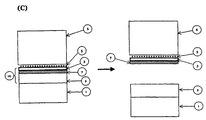
- Figure 2A is a schematic showing a scenario where the adhesive strength between the absorptive layer 2 and the intermediate layer 7, and cohesive strength of intermediate layer 7 is greater then the cohesive strength of the transferable skin layer 3.
- the transferable skin layer 3 is transferred to the final substrate 6, leaving all, or substantially all, of the intermediate layer 7 and at least some of the transferable skin layer 3 attached to the absorptive layer 2 on the carrier substrate.
- Figure 2B is a schematic showing a scenario where the cohesive strength of the intermediate layer 7, the cohesive strength of the transferable skin layer 3, and the adhesive strength between the intermediate layer 7 and the absorptive layer 2 are greater than the adhesive strength between the intermediate layer 7 and the transferable skin layer 3.
- all, or substantially all, of the transferable skin layer 3 transfers to the final substrate 6, leaving all, or substantially all, of the intermediate layer 7 attached to the absorptive layer 2 on the carrier substrate 1.
- Figure 2C is a schematic showing a scenario wherein the cohesive strength of the transferable skin layer 3, the cohesive strength of the intermediate layer 7, and the adhesive strength between the transferable skin layer 3 and the intermediate layer 7 are greater than the adhesive strength between the absorptive layer 2 and the intermediate layer 7.
- all, or substantially all, of the transferable skin layer 3 and all or substantially all of the intermediate layer 7 transfers to the final substrate 6 with the image.
- the intermediate layer 7 is formed from (a) hydrophilic polymers; (b) a mixture of hydrophobic and hydrophilic polymers; (c) hydrophobic polymer; or (d) a mixture of particulate fillers with (a), (b) or (c).
- a composition containing hydrophobic polymers increases the chemical incompatibility between the transferable skin layer 3 and the absorptive layer 2, resulting in good separation of the transferable skin layer 3 from the absorptive layer.
- hydrophobic polymers may hinder absorption of solvents into the absorptive layer 2. Therefore, a thin layer of hydrophobic polymer, or a mixture of hydrophobic and hydrophilic polymers, is preferred.
- the thickness of the intermediate layer 7 is between 0.1 ⁇ m and 5 ⁇ m, more preferably between 0.1 ⁇ m and 2 ⁇ m.
- the intermediate layer 7 contains between 1% and 100% by weight hydrophobic polymer, more preferably between 5% and 80% by weight, most preferably between 10 % and 60 % by weight.
- Suitable hydrophobic polymers include, but are not limited to, cellulosic polymers, such as ethyl cellulose, cellulose acetate, cellulose acetate butyrate, vinyl polymers, polyvinyl chloride, polyvinyl acetate, vinyl chloride vinyl acetate copolymers, ethylene vinyl acetate copolymer, acrylic polymers, polyurethane, polyester, polyamide, polyolefin, polyimide, polycarbonate, etc... These polymers can be used in solution, suspension or emulsion forms.
- the intermediate layer may also contain between 0 % and 95% by weight hydrophilic polymer, more preferably between 5% and 80% by weight, most preferably between 10% and 70% by weight hydrophilic polymer.
- Suitable hydrophilic polymers include, but are not limited to, poly(vinyl alcohol) (PVA), poly(vinyl pyrrolidone) (PVP), poly (2-ethyl-2-oxazoline), modified starch, hydroxyalkyl cellulose, for example, hydroxymethyl cellulose, carboxyalkyl cellulose, for example, carboxymethyl cellulose, styrene butadiene rubber (SBR) latex, nitrile butadiene rubber (NBR) latex, vinyl pyrrolidone/vinyl acetate copolymer, vinyl acetate/acrylic copolymers, acrylic acid polymers, acrylic acid copolymers, acrylamide polymers, acrylamide copolymers, styrene copolymers of allyl alcohol, acrylic acid
- particulate fillers may be added to increase solvent diffusion through the intermediate layer 7 into the absorptive layer 2.
- the intermediate layer includes between 0% and 80% by weight particulate filler, more preferably between 0% and 70% by weight, most preferably between 0% and 60% by weight.
- the particle size of the filler is between 0.01 ⁇ m and 15.0 ⁇ m, more typically between 0.01 ⁇ m and 10.0 ⁇ m, most preferably between 0.01 ⁇ m and 5.0 ⁇ m.
- Suitable particulate fillers include, but are not limited to, silica, silica gel, alumina, alumina gel, boehmite, pseudoboehmite, clay, calcium carbonate, chalk, magnesium carbonate, kaolin, calcined clay, pyropylite, bentonite, zeolite, talc, synthetic aluminum silicates, synthetic calcium silicates, diatomatious earth, anhydrous silicic acid powder, aluminum hydroxide, barite, barium sulfate, gypsum, calcium sulfate, and organic particles such as hydrophobic polymeric beads.
- the intermediate layer 7 can be formed by applying a solution or slurry containing (a) hydrophilic polymers; (b) a mixture of hydrophobic and hydrophilic polymers; (c) hydrophobic polymer; or (d) a mixture of particulate fillers with (a), (b) or (c) combined with an aqueous or organic solvent, or mixtures thereof, on the absorptive layer 2.
- the solution or slurry may be applied by conventional coating processes including, but not limited to, slot die coating, rod coating, gravure coating, reverse gravure coating, roll coating, screen printing etc. After the solution or slurry is applied it is allowed to dry. If desired, the drying rate can be increased by the application of heat using known methods.
- the intermediate layer 7 be applied to the transferable layer 3.
- the intermediate layer 7 is prepared as a film and then applied to either the transferable layer 3 or the absorptive layer 2.
- the final substrate 6 can be a porous or nonporous material made from paper, plastic, ceramic, metal, glass or other suitable material, depending on the end use. It can be in the form of a film, sheet or other desired shape or size. The final substrate 6 can be opaque or transparent. The thickness of the final substrate may also depend on the desired end use. Typically, the final substrate 6 is constructed from plastic due to its low cost, light weight, high strength, good durability etc. The plastic substrate may be in the form of film, sheet, a laminated sheet, or even a molded or formed article.
- the final substrate is used to prepare a plastic card such as a data-carrying device, for example, for identification and electronic transactions.
- a plastic card such as a data-carrying device
- data carrying devices are credit cards, ATM cards, ID cards, badges, membership cards, access cards etc.
- Preferred plastics include, but are not limited to, polyester, polyamide, polycarbonate, cellulose acetate, ethylene vinyl acetate copolymers, polyolefin, polyimide, polycarbonate, polyvinyl chloride, vinyl chloride vinyl acetate copolymers etc.
- the final substrate 6 can be a laminated sheets made from, poly (vinyl chloride) (PVC), vinyl chloride vinyl acetate copolymers, glycol modified poly (ethylene terephthalate) (PETG), polyester, polyolefin, polyimide, polycarbonate, or acrylonitrile-butadiene-styrene terpolymer (ABS).
- PVC poly (vinyl chloride)
- PETG glycol modified poly (ethylene terephthalate)
- ABS acrylonitrile-butadiene-styrene terpolymer
- Such sheets are commonly used in plastic cards such as credit cards, bank card, ID cards membership cards, badges etc. and can be used in
- the final substrate 6, in particular a paper substrate, may be coated, if desired.
- the final substrate 6 may be further treated or coated to improve adhesion of the image 5.
- treatments include, but are not limited to, corona treatment, flame treatment, priming, adhesive coating, etching etc. The nature and extent of the treatment may depend on the properties of the final substrate 6 and the requirements of the end product.
- an image is printed on the carrier substrate, which has been previously coated with a receptive layer having at least two layers. Once the image is substantially dry, it is transferred to a final substrate.
- a liquid ink 20, containing colorant, such as a pigment or dye, is used to print an image 5 on the transferable skin layer 3.
- the absorptive layer 2 absorbs the solvent from the ink while the image forming colorant remains on the transferable skin layer 3.
- Printing can be accomplished using any known method. Typically, printing is performed using liquid inks that contain a colorant and a solvent.
- solvent includes volatile organic solvents, water, and combinations thereof.
- the solvent can function as a solvent in the conventional sense, that dissolves solute, or as a dispersant or carrier, for example, when colorant does not dissolve.
- printing is performed using a liquid ink that includes water.
- the ink may contain other ingredients such as, but not limited to, binders, co-solvents, surfactants, stabilizers and other additives.
- the invention has been described with reference to ink jet printing, other technologies in which a solvent absorptive surface is useful can be used. For example, printing technologies such as liquid or dry electrophotography, screen printing, etc. may be used.
- images include, but are not limited to, a person's name, address, account number, or a picture.
- the picture is printed onto the carrier substrate in a reverse or mirror image, such that the image will be properly oriented when transferred to the final substrate.
- the image 5 is transferred to a final substrate 6.
- Image transfer is preferably accomplished by laminating the carrier 1 and final 6 substrates together, for example, by the application of heat and/or pressure.
- lamination is performed at a temperature between 60°F and 400°F (16°C and 204°C), more typically between 100°F and 350°F (38°C and 177°C), most typically between 150°F and 300°F (66°C and 149°C) and at a pressure between 6.895 x 10 3 N/m 3 and 20.684 x 10 6 N/m 3 (1.0 psi and 3000 psi), more preferably between 6.895 x 10 4 N/m 3 and 17.237 x 10 6 N/m 3 (10.0 psi and 2500 psi), most preferably between 3.447 x 10 5 N/m 3 and 13.790 x 10 6 N/m 3 (50.0 psi and 2000 psi).
- Lamination can be performed using commercially available equipment.
- the carrier substrate 1 is then removed from the final substrate 6 ( Figure 1C).
- the image 5 is transferred to the final substrate 6, along with a part or all of the transferable skin layer 3 (discussed above), leaving all or most of the absorptive layer 2 (discussed above) and absorbed solvents on the carrier substrate 1.
- the intermediate layer 7 may or may not transfer to the final substrate 6 during print transfer.
- the absorptive layer 2 remains attached to the carrier substrate 1.
- the final substrate 2 thus has very little water-absorbing layer.
- an absorptive layer tends to absorb moisture over the life of the device and may adversely affect durability.
- the absorptive layer 2 tends to become increasingly soft as moisture is absorbed such that it can easily be scraped or scratched during use.
- Lamination of the transfer film to the final substrate, image transfer, and removal of the final substrate may be performed as separate steps or as a continuous process, for example, using a heated roller for lamination followed by separation of carrier substrate 1 from the final substrate 6.
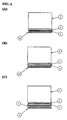
- an optional protective layer 30 may be applied to the final substrate 6 on top of the image 5 to improve image 5 durability ( Figure 3).
- the protective layer 30 can be in the form of an overlaminate, topcoat or varnish and can be formed using heat seal, pressure sensitive, ultraviolet (UV) curable, or other polymers.
- Suitable materials for protective layers 30 are known and include, but are not limited to, acrylics, waxes, polyurethane, polyester, UV reactive monomers and oligomers or overlaminates such as films, for example, polyester, PET, PEN, polypropylene and polycarbonate.
- the protective layer 30 may also include components that strongly absorb ultraviolet radiation to reduce damage to the underlying image, for example, 2-hydroxybenzophenone, oxalanilides, aryl esters, hindered amine light stabilizers, such as bis (2,2,6,6,-tetramethyl-4-piperidinyl)sebacate, and combinations thereof.
- the protective layer 30 may also contain components that provide protection from biological attack, such as fungicides and bacteriocides.
- the protective layer 30 can be applied using any known method, including but not limited to, thermal transfer, lamination with heat and/or pressure, screen printing, spray, dip coating, etc...
- the carrier substrate was a polyester film (Grade - 2600 commercially available from Mitsubishi, Greer, SC).
- the absorptive layer was formed on the carrier substrate bv applying a solution containing 50 g of a 20% silica dispersion (Snowtex-0 (registered trademark)), commercially available from Nissan Chemicals, Houston, TX) and 83 g of 18% aqueous solution of polyvinyl alcohol (PVA) (Airvol 205 (registered trademark), commercially available from Air Products, Allentown, PA) by reverse gravure printing.
- the solution was applied to carrier substrate to obtain a dry thickness of 22 ⁇ m.
- the transferable skin layer was formed on the dried absorptive laver by applying a solution containing 70 g of a 20% silica dispersion (Snowtex-0 (registered trademark)), and 33 g of 18% aqueous solution of PVA (Airvol 205 (registered tradmark)).
- the solution was applied to the absorptive layer with a wire wound rod #5 (mayer rod) to obtain a dry thickness of 2 ⁇ m.
- the final substrate was a poly(vinyl chloride) (PVC) card.
- VYLF vinyl chloride-vinyl acetate copolymer film
- An ink jet printer was used to print an image on the receptive layer of the carrier substrate using a water-based ink. The image was allowed to dry. After the image was dry, it was transferred to the final substrate by laminating the carrier and final substrates together in a hot roll laminator at 280 F, at a roller speed of 0.01778 ms -1 (0.7 inches per second) and a pressure setting of 2.758 x 10 5 N/m 3 (40 psi). The carrier and final substrates were then separated.
- the carrier substrate was the same polyester film (Grade - 2600) as used in Example 1.
- the absorptive layer was formed essentially as described in Example 1 by applying a solution containing 100 g of Aluminasol 100 (10% Alumina dispersion, commercially available from Nissan Chemicals) and 83 g of an 18% aqueous solution of PVA (Airvol 205 (registered trademark)) onto the carrier substrate to a dry thickness of 18 ⁇ m.
- the transferable skin layer was formed, essentially as described in Example 1, by applying a solution containing 70 g of a 20% silica dispersion (Snowtex-0 (registered trademark)) and 33 g of an 18% aqueous solution of PVA (Airvol 205 (registered trademark)) onto the absorptive layer to a dry thickness of 2 ⁇ m.
- the final substrate was a PVC card.
- the final substrate was coated with a vinyl chloride-vinyl acetate copolymer (VYLF) to a dry thickness of 1 ⁇ m.
- An image was printed on the transferable skin layer on the carrier substrate using an ink jet printer as described above.
- the image was allowed to dry and then transferred to the final substrate by laminating the carrier and final substrates in a hot roll laminator as described above.
- the carrier substrate was again a polyester film (Grade- 2600).
- a first absorptive layer was formed, essentially as described in Example 1, by applying a solution containing 50 g of a 20% silica dispersion (Snowtex-0 (registered trademark)) and 83 g of an 18% aqueous solution of PVA (Airvol 205 (registered trademark)).
- the solution was coated on the carrier substrate, essentially as described in Example 1, to a dry thickness of 20 ⁇ m.
- a second absorptive layer was formed in the same manner by applying a solution containing 70 g of a 20% silica dispersion (Snowtex-0) and 33 g of an 18% aqueous solution of PVA (Airvol 205 (registered trademark)) onto the absorptive layer to a dry thickness of 2 ⁇ m.
- a transferable skin layer was formed, essentially as described in Example 1 by applying a solution containing 70 g of a 20% silica dispersion (Snowtex-0 (registered trademark)) and 33 g of an 18% aqueous solution of PVA (Airvol 205 (registered trademark)) onto the absorptive layer to a dry thickness of 2 ⁇ m.
- the final substrate was a PVC card coated with a vinyl chloride-vinyl acetate copolymer (VYLF) as described above.
- the carrier substrate was the same polyester film used in Example 1, above.
- An absorptive layer was formed on the carrier substrate by applying a solution containing 50 g of a 20% silica dispersion (Snowtex-0 (registered trademark)) and 83 g of 18% aqueous solution of PVA (Airvol 205 (registered trademark)) as described above to obtain a dry thickness of 22 ⁇ m.
- An intermediate layer was formed by applying a 5% solution of vinyl chloride-vinyl acetate copolymer (VYLF) in methyl ethyl ketone onto the absorptive layer, using wire wound rod #3, to a dry thickness of 0.8 ⁇ m.
- VYLF vinyl chloride-vinyl acetate copolymer
- a transferable skin layer was formed bv applying a solution containing 70 g of a 20% silica dispersion (Snowtex-0 (registered trademark)) and 33 g of an 18% aqueous solution of PVA (Airvol 205 (registered trademark)) to the intermediate layer, essentially as described above, to a dry thickness of 2 ⁇ m.
- the final substrate was a PVC card coated with a vinyl chloride-vinyl acetate copolymer, as described above.
- the carrier substrate was the same a polyester film (Grade- 2600) used in Example I.
- a absorptive layer was formed onto the carrier substrate by applying a solution containing 50 g of a 20% silica dispersion (Snowtex-0 (registered trademark)) and 83 g of an 18% aqueous solution of PVA (Airvol 205 (registered trademark)) to the carrier substrate, as described in Example 1, to a dry thickness of 22 ⁇ m.
- An intermediate layer was formed by applying a solution containing 10 g of 5% vinyl chloride-vinyl acetate copolymer (VYLF) in methyl ethyl ketone (MEK) and 10 g of MEK-ST (30 % silica dispersion in MEK, commercially available from Nissan Chemicals) to the absorptive layer to a dry thickness of 0.8 ⁇ m.
- a transferable skin layer was formed bv applying a solution containing 70 g of a 20% silica dispersion (Snowtex-0 (registered trademark)) and 33 g of an 18% aqueous solution of PVA (Airvol 205 (registered trademark)) onto the intermediate layer to a dry thickness of 2 ⁇ m.
- the final substrate was again a PVC card coated with a vinyl chloride-vinyl acetate copolymer.
- An image was printed onto the transferable skin layer of the carrier substrate and transferred to the final substrate as described above.
- the carrier substrate was the same polyester film (Grade - 2600) used in Example 1.
- An absorptive layer was formed by applying a solution containing 100 g of Aluminasol 100 and 83 g of an 18% aqueous solution of PVA (Airvol 205 (registered trademark)) onto the carrier substrate to a dry thickness of 18 ⁇ m.
- An intermediate layer was formed on the absorptive layer by applying a 5% solution of vinyl chloride-vinyl acetate copolymer (VYLF) in methyl ethyl ketone onto the absorptive layer to a dry thickness of 0.8 ⁇ m.
- VYLF vinyl chloride-vinyl acetate copolymer
- a transferable skin layer was formed by applying a solution containing 70 g of a 20% silica dispersion (Snowtex-0 (registered trademark)) and 33 g of 18% aqueous solution of PVA (Airvol 205 (registered trademark)) to the intermediate layer, essentially as described above, to a dry thickness of 2 ⁇ m.
- the final substrate was again a PVC card coated with a vinyl chloride-vinyl acetate copolymer, described above.
- the substrate was a polyester film (Grade - 2600).
- a absorptive layer was prepared by applying a solution containing 100 g of Aluminasol 100 and 83 g of an 18% aqueous solution of PVA (Airvol 205 (registered trademark)) to the carrier substrate, essentially as described above, to a dry thickness of 18 ⁇ m.
- An intermediate layer was formed by applying a solution containing a 1.25% solution of vinyl chloride-vinyl acetate copolymer (VYLF) in methyl ethyl ketone onto the absorptive layer to a dry thickness of less than 0.5 ⁇ m.
- VYLF vinyl chloride-vinyl acetate copolymer
- a transferable skin layer was formed bv applying a solution containing 70 g of a 20% silica dispersion (Snowtex-0 (registered trademark)) and 33 g of an 18% aqueous solution of PVA (Airvol 205 (registered trademark)) onto the intermediate layer, essentially as described above, to a dry thickness of 2 ⁇ m.
- the final substrate was again a PVC card coated with a vinyl chloride-vinyl acetate copolymer.
- the substrate was a polyester film (Grade - 2600).
- An absorptive layer was prepared by applying a solution containing 100 g of Aluminasol 100 and 83 g of an 18% aqueous solution of PVA (Airvol 205 (registered trademark)) onto the carrier substrate, essentially as described above, to a dry thickness of 18 ⁇ m.
- An intermediate layer was formed by applying a 0.375% solution of acrylic polymer (Elvacite 2051 (registered trademark)), commercially available from Ineos acrylics Incorporated, Corova, TN) in methyl ethyl ketone onto the absorptive layer to a dry thickness of less than 0.5 ⁇ m.
- a transferable layer was formed by applying a solution containing 70 g of a 20% silica dispersion (Snowtex-0 (registered trademark)) and 33 g of an 18% aqueous solution of PVA (Airvol 205 (registered trademark)) onto the intermediate layer, essentially as described above, to a dry thickness of 2 ⁇ m.
- the final substrate was again a PVC card coated with a vinyl chloride-vinyl acetate copolymer.
- the carrier substrate was again a polyester film (Grade - 2600).
- a absorptive layer was formed by applying a solution containing 100 g of Aluminasol 100 and 83 g of 18% aqueous solution of PVA (Airvol 205 (registered trademark)) to the carrier substrate, essentially as described above, to a dry thickness of 18 ⁇ m.
- An intermediate layer was formed by applying a 5% solution of poly(2-ethyl-2oxazoline) (Aquazol AI (registered trademark)), commercially available from Polymer Chemistry Innovations, State College, PA) in MEK onto the absorptive layer, essentially as described above, to a dry thickness of 0.8 ⁇ m.
- a transferable skin layer was formed by applying a solution containing 70 g of a 20% silica dispersion (Snowtex-0 (registerd trademark)) and 33 g of an 18% aqueous solution of PVA (Airvol 20 (registered trademark)) onto the intermediate layer, essentially as described above, to a dry thickness of 2 ⁇ m.
- the final substrate was again a PVC card coated with a vinyl chloride-vinyl acetate copolymer.
- the carrier substrate was again a polyester film (Grade - 2600).
- a absorptive layer was formed by applying a solution containing 50 g of a 20% alumina coated silica dispersion (Snowtex-C (registered trademark)), commercially available from Nissan Chemicals. Houston, TX) and 83 g of an 18% aqueous solution of PVA (Airvol 205 (registered trademark)), essentially as described above, to a dry thickness of 18 ⁇ m.
- a transferable skin layer was formed by applying a solution containing 70 g of a 20% silica dispersion (Snowtex-0 (registered trademark)) and 33 g of 18% aqueous solution of PVA (Airvol 205 (registered trademark)) onto the absorptive layer, essentially as described above, to a dry thickness of 2 ⁇ m.
- the final substrate was again a PVC card coated with a vinyl chloride-vinyl acetate copolymer.
Landscapes
- Engineering & Computer Science (AREA)
- General Engineering & Computer Science (AREA)
- Decoration By Transfer Pictures (AREA)
- Ink Jet Recording Methods And Recording Media Thereof (AREA)
- Ink Jet (AREA)
- Thermal Transfer Or Thermal Recording In General (AREA)
- Laminated Bodies (AREA)
- Impression-Transfer Materials And Handling Thereof (AREA)
- Inks, Pencil-Leads, Or Crayons (AREA)
- Credit Cards Or The Like (AREA)
Applications Claiming Priority (5)
| Application Number | Priority Date | Filing Date | Title |
|---|---|---|---|
| US17104099P | 1999-12-16 | 1999-12-16 | |
| US171040P | 1999-12-16 | ||
| US738408 | 2000-12-15 | ||
| US09/738,408 US6830803B2 (en) | 1999-12-16 | 2000-12-15 | Printed substrate made by transfer of ink jet printed image from a printable transfer film |
| PCT/US2000/034345 WO2001043978A1 (en) | 1999-12-16 | 2000-12-18 | Printed substrate made by transfer of ink jet printed image from a printable transfer film |
Publications (2)
| Publication Number | Publication Date |
|---|---|
| EP1261493A1 EP1261493A1 (en) | 2002-12-04 |
| EP1261493B1 true EP1261493B1 (en) | 2005-03-16 |
Family
ID=26866675
Family Applications (1)
| Application Number | Title | Priority Date | Filing Date |
|---|---|---|---|
| EP00986527A Expired - Lifetime EP1261493B1 (en) | 1999-12-16 | 2000-12-18 | Printed substrate made by transfer of ink jet printed image from a printable transfer film |
Country Status (8)
| Country | Link |
|---|---|
| US (1) | US6830803B2 (https=) |
| EP (1) | EP1261493B1 (https=) |
| JP (1) | JP2003516887A (https=) |
| CN (1) | CN1208203C (https=) |
| AT (1) | ATE290955T1 (https=) |
| AU (1) | AU2275101A (https=) |
| DE (1) | DE60018808T2 (https=) |
| WO (1) | WO2001043978A1 (https=) |
Families Citing this family (50)
| Publication number | Priority date | Publication date | Assignee | Title |
|---|---|---|---|---|
| DE69903641T2 (de) * | 1998-07-29 | 2003-06-26 | W.A. Sanders Papierfabriek Coldenhove B.V., Eerbeek | Übertragungspapier für tintenstrahldruck |
| GB2357262B (en) * | 1999-12-18 | 2003-11-12 | Gardeners Digital Ltd | Method and apparatus for sublimation printing of metal panels |
| US6979141B2 (en) * | 2001-03-05 | 2005-12-27 | Fargo Electronics, Inc. | Identification cards, protective coatings, films, and methods for forming the same |
| US7399131B2 (en) * | 2001-03-05 | 2008-07-15 | Fargo Electronics, Inc. | Method and Device for forming an ink-receptive card substrate |
| US7037013B2 (en) * | 2001-03-05 | 2006-05-02 | Fargo Electronics, Inc. | Ink-receptive card substrate |
| US6869647B2 (en) | 2001-08-30 | 2005-03-22 | Hewlett-Packard Development Company L.P. | Print media products for generating high quality, water-fast images and methods for making the same |
| US7008979B2 (en) | 2002-04-30 | 2006-03-07 | Hydromer, Inc. | Coating composition for multiple hydrophilic applications |
| WO2004011263A1 (ja) * | 2002-07-25 | 2004-02-05 | Matsushita Electric Industrial Co., Ltd. | 画像記録装置及び画像記録方法、並びにそれらに使用される受像層転写体及び画像形成媒体 |
| WO2005109716A2 (en) * | 2004-05-03 | 2005-11-17 | Fargo Electronics, Inc. | Managed credential issuance |
| US20060263550A1 (en) * | 2004-12-10 | 2006-11-23 | Charles Nichols | Print receptive topcoat for ink jet printing media |
| CN100372692C (zh) * | 2005-02-01 | 2008-03-05 | 惠州全品科技工业有限公司 | 一种转印方法 |
| US20060177631A1 (en) * | 2005-02-04 | 2006-08-10 | Paulson Arthur J | Sheet material with index openings and method for making and using |
| US9040237B2 (en) * | 2005-03-04 | 2015-05-26 | Intel Corporation | Sensor arrays and nucleic acid sequencing applications |
| US9676179B2 (en) * | 2005-04-20 | 2017-06-13 | Zih Corp. | Apparatus for reducing flash for thermal transfer printers |
| US7870824B2 (en) | 2005-04-20 | 2011-01-18 | Zih Corp. | Single-pass double-sided image transfer process and system |
| US20070126833A1 (en) * | 2005-12-06 | 2007-06-07 | Laurin Michael M | Digital printing using ultraviolet inks |
| PT2248673E (pt) * | 2006-01-19 | 2012-12-24 | Ikonics Corp | Métodos digitais de texturização de moldes, materiais, e substratos |
| CN101308329B (zh) * | 2007-04-06 | 2013-09-04 | 罗门哈斯电子材料有限公司 | 涂料组合物 |
| US20080268140A1 (en) | 2007-04-26 | 2008-10-30 | Csd, Inc. | Temporary removable solvent based protective coating |
| US8221574B2 (en) | 2007-04-26 | 2012-07-17 | Csd, Llc | Top coating for indoor and outdoor temporary removable graphics and system and method for making, applying and removing such graphics |
| US8956490B1 (en) | 2007-06-25 | 2015-02-17 | Assa Abloy Ab | Identification card substrate surface protection using a laminated coating |
| DE102007031121B3 (de) * | 2007-06-29 | 2008-09-25 | Schäfer, Konstanze, Dr. | Verfahren zur Fixierung von Digitalbildern in Kunststoffen und fixiertes Digitalbild |
| FR2930546B1 (fr) * | 2008-04-29 | 2010-05-14 | Laurent Boissin | Elements de decoration et leur procede de fabrication |
| AU2009256194A1 (en) * | 2008-06-06 | 2009-12-10 | Avery Dennison Corporation | Temporary outdoor graphic film |
| US9752022B2 (en) | 2008-07-10 | 2017-09-05 | Avery Dennison Corporation | Composition, film and related methods |
| KR20110035840A (ko) * | 2009-09-30 | 2011-04-06 | 스미토모 고무 고교 가부시키가이샤 | 용제 흡수체 |
| MX2012008898A (es) | 2010-02-03 | 2012-11-06 | Incyte Corp | Imidazo - [1, 2 - b] [1, 2, 4] triazinas como inhibidores de c - met. |
| RU2571140C2 (ru) | 2010-03-04 | 2015-12-20 | Авери Деннисон Корпорейшн | Не содержащая пвх пленка и не содержащая пвх многослойная пленка |
| JP2012111125A (ja) * | 2010-11-25 | 2012-06-14 | Dainippon Printing Co Ltd | 転写箔 |
| KR101217150B1 (ko) * | 2010-12-09 | 2012-12-31 | 웅진케미칼 주식회사 | 유연성이 뛰어난 고전사효율의 인쇄용 전사필름 |
| KR101217149B1 (ko) * | 2010-12-09 | 2012-12-31 | 웅진케미칼 주식회사 | 전사효율이 향상된 인쇄용 전사필름 |
| CN103717405B (zh) * | 2011-08-02 | 2018-08-17 | 3M创新有限公司 | 图形制品 |
| EP2739484B1 (en) | 2011-08-02 | 2020-11-18 | 3M Innovative Properties Company | Graphic article |
| BR112014002340A2 (pt) * | 2011-08-02 | 2017-03-01 | 3M Innovative Properties Co | artigo gráfico |
| MX346688B (es) | 2012-02-20 | 2017-03-29 | Avery Dennison Corp | Película multicapa para sistemas multifuncionales de inyección de tinta. |
| CN102642421A (zh) * | 2012-04-27 | 2012-08-22 | 广东宏达印业有限公司 | 一种可转印薄膜的制备方法及转印方法 |
| US9273218B2 (en) * | 2013-09-20 | 2016-03-01 | Xerox Corporation | Coating for aqueous inkjet transfer |
| CN103555105B (zh) * | 2013-10-24 | 2016-01-27 | 上海维凯光电新材料有限公司 | 环保型防复制全息转移涂料组合物及其制备方法 |
| BR112016014704A8 (pt) | 2013-12-30 | 2020-05-26 | Avery Dennison Corp | película protetora, laminado de película, gráfico de publicidade ou informativo, método de produção de uma película protetora, uso de uma película protetora ransparente e rolo ou folha de gráfico de publicidade |
| CN107580556B (zh) * | 2015-07-09 | 2020-06-09 | 惠普发展公司,有限责任合伙企业 | 可印刷膜 |
| CA2997563C (en) | 2015-10-26 | 2022-03-22 | E. I. Du Pont De Nemours And Company | Polysaccharide coatings for paper |
| ES2937288T3 (es) | 2015-10-26 | 2023-03-27 | Nutrition & Biosciences Usa 4 Inc | Composición de alfa-(1,3->glucano) insoluble en agua |
| JP7135857B2 (ja) * | 2016-08-03 | 2022-09-13 | 日産化学株式会社 | 剥離層形成用組成物 |
| CN106564343A (zh) * | 2016-10-26 | 2017-04-19 | 苏州吉谷新材料有限公司 | 一种热升华印花不锈钢及其制备方法 |
| CN107558294A (zh) * | 2017-08-22 | 2018-01-09 | 山东华泰纸业股份有限公司 | 一种生产铜版纸的涂料及其应用 |
| CN110014764B (zh) * | 2018-01-09 | 2020-07-24 | 厦门大学 | 液液印刷方法 |
| CN108587367A (zh) * | 2018-04-19 | 2018-09-28 | 杨帮燕 | 一种薄膜打印涂层的制备方法 |
| WO2019223008A1 (en) * | 2018-05-25 | 2019-11-28 | Evonik Degussa Gmbh | Plastic material for printing by dye diffusion thermal transfer printing |
| CN110791179A (zh) * | 2018-08-02 | 2020-02-14 | 电子科技大学中山学院 | 一种盖带专用抗静电涂料 |
| CN111923628A (zh) * | 2020-09-14 | 2020-11-13 | 成都利元亨水转印技术有限公司 | 一种可打印水转印膜的制备方法及其可打印水转印膜 |
Family Cites Families (21)
| Publication number | Priority date | Publication date | Assignee | Title |
|---|---|---|---|---|
| US4408557A (en) * | 1979-06-18 | 1983-10-11 | Micro-Circuits Co., Inc. | Timer and storage condition indicator |
| US5098772A (en) | 1986-06-13 | 1992-03-24 | Af Strom Oscar B F | Composite sheet for transfer of an image from same to a substrate |
| US5104730A (en) | 1989-07-14 | 1992-04-14 | Asahi Glass Company Ltd. | Recording sheet |
| EP0524626B1 (en) | 1991-07-26 | 1996-12-11 | Asahi Glass Company Ltd. | Recording sheet for an ink jet printer |
| DE69402003T2 (de) | 1993-07-16 | 1997-06-19 | Asahi Glass Co Ltd | Aufzeichnungsblatt und Verfahren zu seiner Herstellung |
| US5795425A (en) | 1993-09-03 | 1998-08-18 | Rexam Graphics Incorporated | Ink jet imaging process and recording element for use therein |
| JPH08230313A (ja) | 1994-12-12 | 1996-09-10 | Arkwright Inc | インクジェット媒体用ポリマーマトリックスコーティング |
| US5672413A (en) | 1995-09-27 | 1997-09-30 | Rexam Graphics Incorporated | Element and associated process for use with inkjet hot melt inks for thermal image transfer |
| DE69604643T2 (de) * | 1995-12-07 | 2000-06-15 | E.I. Du Pont De Nemours And Co., Wilmington | Empfangsschicht für Tintenstrahlaufzeichnung |
| EP0900150B9 (en) | 1996-03-13 | 2004-02-04 | Foto-Wear, Inc. | Application to fabric of heat-activated transfers |
| JP3327782B2 (ja) | 1996-04-30 | 2002-09-24 | キヤノン株式会社 | インクジェット記録用転写媒体、これを用いた転写方法及び被転写布帛 |
| US5798179A (en) | 1996-07-23 | 1998-08-25 | Kimberly-Clark Worldwide, Inc. | Printable heat transfer material having cold release properties |
| JPH10136694A (ja) * | 1996-10-25 | 1998-05-22 | Minolta Co Ltd | 画像読取装置 |
| US5853899A (en) | 1996-11-04 | 1998-12-29 | Rexam Graphics Inc. | Aqueous ink receptive ink jet receiving medium yielding a water resistant ink jet print |
| US6043192A (en) * | 1997-04-24 | 2000-03-28 | Konica Corporation | Thermal transfer recording method |
| US6652928B2 (en) | 1998-01-28 | 2003-11-25 | Canon Kabushiki Kaisha | Image-transfer medium for ink-jet printing, production process of transferred image, and cloth with transferred image formed thereon |
| US20020048656A1 (en) | 1998-01-28 | 2002-04-25 | Yuko Sato | Image-transfer medium for ink-jet printing, production process of transferred image, and cloth with transferred image formed thereon |
| JP3673666B2 (ja) * | 1998-02-13 | 2005-07-20 | キヤノン株式会社 | 転写媒体、転写画像の製造方法及び転写画像の形成された布帛 |
| US6017611A (en) * | 1998-02-20 | 2000-01-25 | Felix Schoeller Technical Papers, Inc. | Ink jet printable support material for thermal transfer |
| JP3237616B2 (ja) * | 1998-06-19 | 2001-12-10 | 日本電気株式会社 | 画像処理装置および画像処理方法、並びに記録媒体 |
| US6089704A (en) * | 1998-10-19 | 2000-07-18 | Eastman Kodak Company | Overcoat for ink jet recording element |
-
2000
- 2000-12-15 US US09/738,408 patent/US6830803B2/en not_active Expired - Fee Related
- 2000-12-18 JP JP2001545088A patent/JP2003516887A/ja active Pending
- 2000-12-18 DE DE2000618808 patent/DE60018808T2/de not_active Expired - Lifetime
- 2000-12-18 WO PCT/US2000/034345 patent/WO2001043978A1/en not_active Ceased
- 2000-12-18 EP EP00986527A patent/EP1261493B1/en not_active Expired - Lifetime
- 2000-12-18 CN CNB008172110A patent/CN1208203C/zh not_active Expired - Fee Related
- 2000-12-18 AT AT00986527T patent/ATE290955T1/de not_active IP Right Cessation
- 2000-12-18 AU AU22751/01A patent/AU2275101A/en not_active Abandoned
Also Published As
| Publication number | Publication date |
|---|---|
| WO2001043978A1 (en) | 2001-06-21 |
| DE60018808D1 (de) | 2005-04-21 |
| US20020012773A1 (en) | 2002-01-31 |
| JP2003516887A (ja) | 2003-05-20 |
| DE60018808T2 (de) | 2006-04-13 |
| CN1409666A (zh) | 2003-04-09 |
| AU2275101A (en) | 2001-06-25 |
| CN1208203C (zh) | 2005-06-29 |
| ATE290955T1 (de) | 2005-04-15 |
| EP1261493A1 (en) | 2002-12-04 |
| US6830803B2 (en) | 2004-12-14 |
Similar Documents
| Publication | Publication Date | Title |
|---|---|---|
| EP1261493B1 (en) | Printed substrate made by transfer of ink jet printed image from a printable transfer film | |
| EP3328660B1 (en) | Multilayered structure with water impermeable substrate | |
| US6562451B2 (en) | Coated film | |
| EP3328659B1 (en) | Printing on water-impermeable substrates with water-based inks | |
| US6979141B2 (en) | Identification cards, protective coatings, films, and methods for forming the same | |
| US6506478B1 (en) | Inkjet printable media | |
| JP2002370347A (ja) | インクジェット記録用中間転写媒体を用いた印刷システム | |
| US20050074601A1 (en) | Image protective sheet, image protective solution, inkjet recorded product, and manufacturing method thereof | |
| JP4334962B2 (ja) | 保護層転写シート、及び印画物 | |
| EP1228889B1 (en) | Ink-receiving material and recording method | |
| JPH10505800A (ja) | インクジェット印刷シート | |
| US6911239B2 (en) | Recording material and method | |
| US6902268B1 (en) | Printing process | |
| EP1188574A2 (en) | Recording material and recording method | |
| JP4170870B2 (ja) | 保護層転写シート及び熱転写画像記録体 | |
| JP2001225422A (ja) | コーテッドフィルム | |
| JPH1178223A (ja) | 印刷用シート | |
| JP2000233474A (ja) | 画像面のラミネート用部材、それを用いた画像形成方法及び該方法により得られた印画物 | |
| JP2003136834A (ja) | 油性インクジェット記録用紙 | |
| JP2004181935A (ja) | インクジェット記録用シート | |
| JP2005074880A (ja) | インクジェット用記録シート | |
| JP2002019343A (ja) | 多層カード及びその製造方法 | |
| JP2000001044A (ja) | インクジェットプリント方法及び中間受像体 | |
| JP2001030433A (ja) | プラスチック包装材料 | |
| JP2002137337A (ja) | プラスチック包装材料 |
Legal Events
| Date | Code | Title | Description |
|---|---|---|---|
| PUAI | Public reference made under article 153(3) epc to a published international application that has entered the european phase |
Free format text: ORIGINAL CODE: 0009012 |
|
| 17P | Request for examination filed |
Effective date: 20020716 |
|
| AK | Designated contracting states |
Kind code of ref document: A1 Designated state(s): AT BE CH CY DE DK ES FI FR GB GR IE IT LI LU MC NL PT SE TR |
|
| AX | Request for extension of the european patent |
Free format text: AL;LT;LV;MK;RO;SI |
|
| 17Q | First examination report despatched |
Effective date: 20021230 |
|
| RIN1 | Information on inventor provided before grant (corrected) |
Inventor name: VAIDYA, UTPAL, R. Inventor name: KNIPP, ROMAN, T. Inventor name: SHVARTSMAN, FELIX, P. |
|
| GRAP | Despatch of communication of intention to grant a patent |
Free format text: ORIGINAL CODE: EPIDOSNIGR1 |
|
| GRAS | Grant fee paid |
Free format text: ORIGINAL CODE: EPIDOSNIGR3 |
|
| GRAA | (expected) grant |
Free format text: ORIGINAL CODE: 0009210 |
|
| AK | Designated contracting states |
Kind code of ref document: B1 Designated state(s): AT BE CH CY DE DK ES FI FR GB GR IE IT LI LU MC NL PT SE TR |
|
| PG25 | Lapsed in a contracting state [announced via postgrant information from national office to epo] |
Ref country code: NL Free format text: LAPSE BECAUSE OF FAILURE TO SUBMIT A TRANSLATION OF THE DESCRIPTION OR TO PAY THE FEE WITHIN THE PRESCRIBED TIME-LIMIT Effective date: 20050316 Ref country code: BE Free format text: LAPSE BECAUSE OF FAILURE TO SUBMIT A TRANSLATION OF THE DESCRIPTION OR TO PAY THE FEE WITHIN THE PRESCRIBED TIME-LIMIT Effective date: 20050316 Ref country code: FI Free format text: LAPSE BECAUSE OF FAILURE TO SUBMIT A TRANSLATION OF THE DESCRIPTION OR TO PAY THE FEE WITHIN THE PRESCRIBED TIME-LIMIT Effective date: 20050316 Ref country code: TR Free format text: LAPSE BECAUSE OF FAILURE TO SUBMIT A TRANSLATION OF THE DESCRIPTION OR TO PAY THE FEE WITHIN THE PRESCRIBED TIME-LIMIT Effective date: 20050316 Ref country code: AT Free format text: LAPSE BECAUSE OF FAILURE TO SUBMIT A TRANSLATION OF THE DESCRIPTION OR TO PAY THE FEE WITHIN THE PRESCRIBED TIME-LIMIT Effective date: 20050316 Ref country code: CH Free format text: LAPSE BECAUSE OF FAILURE TO SUBMIT A TRANSLATION OF THE DESCRIPTION OR TO PAY THE FEE WITHIN THE PRESCRIBED TIME-LIMIT Effective date: 20050316 Ref country code: LI Free format text: LAPSE BECAUSE OF FAILURE TO SUBMIT A TRANSLATION OF THE DESCRIPTION OR TO PAY THE FEE WITHIN THE PRESCRIBED TIME-LIMIT Effective date: 20050316 |
|
| REG | Reference to a national code |
Ref country code: GB Ref legal event code: FG4D |
|
| REG | Reference to a national code |
Ref country code: CH Ref legal event code: EP |
|
| REG | Reference to a national code |
Ref country code: IE Ref legal event code: FG4D |
|
| REF | Corresponds to: |
Ref document number: 60018808 Country of ref document: DE Date of ref document: 20050421 Kind code of ref document: P |
|
| PG25 | Lapsed in a contracting state [announced via postgrant information from national office to epo] |
Ref country code: GR Free format text: LAPSE BECAUSE OF FAILURE TO SUBMIT A TRANSLATION OF THE DESCRIPTION OR TO PAY THE FEE WITHIN THE PRESCRIBED TIME-LIMIT Effective date: 20050616 Ref country code: DK Free format text: LAPSE BECAUSE OF FAILURE TO SUBMIT A TRANSLATION OF THE DESCRIPTION OR TO PAY THE FEE WITHIN THE PRESCRIBED TIME-LIMIT Effective date: 20050616 |
|
| PG25 | Lapsed in a contracting state [announced via postgrant information from national office to epo] |
Ref country code: ES Free format text: LAPSE BECAUSE OF FAILURE TO SUBMIT A TRANSLATION OF THE DESCRIPTION OR TO PAY THE FEE WITHIN THE PRESCRIBED TIME-LIMIT Effective date: 20050627 |
|
| NLV1 | Nl: lapsed or annulled due to failure to fulfill the requirements of art. 29p and 29m of the patents act | ||
| PG25 | Lapsed in a contracting state [announced via postgrant information from national office to epo] |
Ref country code: PT Free format text: LAPSE BECAUSE OF FAILURE TO SUBMIT A TRANSLATION OF THE DESCRIPTION OR TO PAY THE FEE WITHIN THE PRESCRIBED TIME-LIMIT Effective date: 20050907 |
|
| REG | Reference to a national code |
Ref country code: CH Ref legal event code: PL |
|
| PG25 | Lapsed in a contracting state [announced via postgrant information from national office to epo] |
Ref country code: CY Free format text: LAPSE BECAUSE OF FAILURE TO SUBMIT A TRANSLATION OF THE DESCRIPTION OR TO PAY THE FEE WITHIN THE PRESCRIBED TIME-LIMIT Effective date: 20051218 |
|
| PG25 | Lapsed in a contracting state [announced via postgrant information from national office to epo] |
Ref country code: IE Free format text: LAPSE BECAUSE OF NON-PAYMENT OF DUE FEES Effective date: 20051219 |
|
| PG25 | Lapsed in a contracting state [announced via postgrant information from national office to epo] |
Ref country code: MC Free format text: LAPSE BECAUSE OF NON-PAYMENT OF DUE FEES Effective date: 20051231 Ref country code: LU Free format text: LAPSE BECAUSE OF NON-PAYMENT OF DUE FEES Effective date: 20051231 |
|
| PLBE | No opposition filed within time limit |
Free format text: ORIGINAL CODE: 0009261 |
|
| STAA | Information on the status of an ep patent application or granted ep patent |
Free format text: STATUS: NO OPPOSITION FILED WITHIN TIME LIMIT |
|
| 26N | No opposition filed |
Effective date: 20051219 |
|
| ET | Fr: translation filed | ||
| REG | Reference to a national code |
Ref country code: IE Ref legal event code: MM4A |
|
| PGFP | Annual fee paid to national office [announced via postgrant information from national office to epo] |
Ref country code: IT Payment date: 20061231 Year of fee payment: 7 |
|
| PG25 | Lapsed in a contracting state [announced via postgrant information from national office to epo] |
Ref country code: SE Free format text: LAPSE BECAUSE OF FAILURE TO SUBMIT A TRANSLATION OF THE DESCRIPTION OR TO PAY THE FEE WITHIN THE PRESCRIBED TIME-LIMIT Effective date: 20050616 |
|
| PG25 | Lapsed in a contracting state [announced via postgrant information from national office to epo] |
Ref country code: IT Free format text: LAPSE BECAUSE OF NON-PAYMENT OF DUE FEES Effective date: 20071218 |
|
| PGFP | Annual fee paid to national office [announced via postgrant information from national office to epo] |
Ref country code: GB Payment date: 20101215 Year of fee payment: 11 |
|
| PGFP | Annual fee paid to national office [announced via postgrant information from national office to epo] |
Ref country code: FR Payment date: 20120111 Year of fee payment: 12 |
|
| PGFP | Annual fee paid to national office [announced via postgrant information from national office to epo] |
Ref country code: DE Payment date: 20111230 Year of fee payment: 12 |
|
| GBPC | Gb: european patent ceased through non-payment of renewal fee |
Effective date: 20121218 |
|
| REG | Reference to a national code |
Ref country code: FR Ref legal event code: ST Effective date: 20130830 |
|
| REG | Reference to a national code |
Ref country code: DE Ref legal event code: R119 Ref document number: 60018808 Country of ref document: DE Effective date: 20130702 |
|
| PG25 | Lapsed in a contracting state [announced via postgrant information from national office to epo] |
Ref country code: DE Free format text: LAPSE BECAUSE OF NON-PAYMENT OF DUE FEES Effective date: 20130702 |
|
| PG25 | Lapsed in a contracting state [announced via postgrant information from national office to epo] |
Ref country code: FR Free format text: LAPSE BECAUSE OF NON-PAYMENT OF DUE FEES Effective date: 20130102 Ref country code: GB Free format text: LAPSE BECAUSE OF NON-PAYMENT OF DUE FEES Effective date: 20121218 |