EP0952218A2 - Molécule monocaténaire de liaison aux antigènes multiples, sa préparation et son utilisation - Google Patents
Molécule monocaténaire de liaison aux antigènes multiples, sa préparation et son utilisation Download PDFInfo
- Publication number
- EP0952218A2 EP0952218A2 EP99106176A EP99106176A EP0952218A2 EP 0952218 A2 EP0952218 A2 EP 0952218A2 EP 99106176 A EP99106176 A EP 99106176A EP 99106176 A EP99106176 A EP 99106176A EP 0952218 A2 EP0952218 A2 EP 0952218A2
- Authority
- EP
- European Patent Office
- Prior art keywords
- antigen
- chain
- cell
- binding molecule
- cells
- Prior art date
- Legal status (The legal status is an assumption and is not a legal conclusion. Google has not performed a legal analysis and makes no representation as to the accuracy of the status listed.)
- Granted
Links
Images



Classifications
-
- C—CHEMISTRY; METALLURGY
- C07—ORGANIC CHEMISTRY
- C07K—PEPTIDES
- C07K16/00—Immunoglobulins [IGs], e.g. monoclonal or polyclonal antibodies
- C07K16/46—Hybrid immunoglobulins
- C07K16/468—Immunoglobulins having two or more different antigen binding sites, e.g. multifunctional antibodies
-
- A—HUMAN NECESSITIES
- A61—MEDICAL OR VETERINARY SCIENCE; HYGIENE
- A61P—SPECIFIC THERAPEUTIC ACTIVITY OF CHEMICAL COMPOUNDS OR MEDICINAL PREPARATIONS
- A61P25/00—Drugs for disorders of the nervous system
-
- A—HUMAN NECESSITIES
- A61—MEDICAL OR VETERINARY SCIENCE; HYGIENE
- A61P—SPECIFIC THERAPEUTIC ACTIVITY OF CHEMICAL COMPOUNDS OR MEDICINAL PREPARATIONS
- A61P31/00—Antiinfectives, i.e. antibiotics, antiseptics, chemotherapeutics
-
- A—HUMAN NECESSITIES
- A61—MEDICAL OR VETERINARY SCIENCE; HYGIENE
- A61P—SPECIFIC THERAPEUTIC ACTIVITY OF CHEMICAL COMPOUNDS OR MEDICINAL PREPARATIONS
- A61P35/00—Antineoplastic agents
-
- A—HUMAN NECESSITIES
- A61—MEDICAL OR VETERINARY SCIENCE; HYGIENE
- A61P—SPECIFIC THERAPEUTIC ACTIVITY OF CHEMICAL COMPOUNDS OR MEDICINAL PREPARATIONS
- A61P37/00—Drugs for immunological or allergic disorders
-
- A—HUMAN NECESSITIES
- A61—MEDICAL OR VETERINARY SCIENCE; HYGIENE
- A61P—SPECIFIC THERAPEUTIC ACTIVITY OF CHEMICAL COMPOUNDS OR MEDICINAL PREPARATIONS
- A61P7/00—Drugs for disorders of the blood or the extracellular fluid
-
- C—CHEMISTRY; METALLURGY
- C07—ORGANIC CHEMISTRY
- C07K—PEPTIDES
- C07K16/00—Immunoglobulins [IGs], e.g. monoclonal or polyclonal antibodies
-
- C—CHEMISTRY; METALLURGY
- C07—ORGANIC CHEMISTRY
- C07K—PEPTIDES
- C07K16/00—Immunoglobulins [IGs], e.g. monoclonal or polyclonal antibodies
- C07K16/18—Immunoglobulins [IGs], e.g. monoclonal or polyclonal antibodies against material from animals or humans
- C07K16/28—Immunoglobulins [IGs], e.g. monoclonal or polyclonal antibodies against material from animals or humans against receptors, cell surface antigens or cell surface determinants
- C07K16/30—Immunoglobulins [IGs], e.g. monoclonal or polyclonal antibodies against material from animals or humans against receptors, cell surface antigens or cell surface determinants from tumour cells
- C07K16/3007—Carcino-embryonic Antigens
-
- C—CHEMISTRY; METALLURGY
- C07—ORGANIC CHEMISTRY
- C07K—PEPTIDES
- C07K16/00—Immunoglobulins [IGs], e.g. monoclonal or polyclonal antibodies
- C07K16/40—Immunoglobulins [IGs], e.g. monoclonal or polyclonal antibodies against enzymes
-
- A—HUMAN NECESSITIES
- A61—MEDICAL OR VETERINARY SCIENCE; HYGIENE
- A61K—PREPARATIONS FOR MEDICAL, DENTAL OR TOILETRY PURPOSES
- A61K39/00—Medicinal preparations containing antigens or antibodies
- A61K2039/505—Medicinal preparations containing antigens or antibodies comprising antibodies
-
- A—HUMAN NECESSITIES
- A61—MEDICAL OR VETERINARY SCIENCE; HYGIENE
- A61K—PREPARATIONS FOR MEDICAL, DENTAL OR TOILETRY PURPOSES
- A61K48/00—Medicinal preparations containing genetic material which is inserted into cells of the living body to treat genetic diseases; Gene therapy
-
- C—CHEMISTRY; METALLURGY
- C07—ORGANIC CHEMISTRY
- C07K—PEPTIDES
- C07K2317/00—Immunoglobulins specific features
- C07K2317/30—Immunoglobulins specific features characterized by aspects of specificity or valency
- C07K2317/34—Identification of a linear epitope shorter than 20 amino acid residues or of a conformational epitope defined by amino acid residues
-
- C—CHEMISTRY; METALLURGY
- C07—ORGANIC CHEMISTRY
- C07K—PEPTIDES
- C07K2317/00—Immunoglobulins specific features
- C07K2317/60—Immunoglobulins specific features characterized by non-natural combinations of immunoglobulin fragments
- C07K2317/62—Immunoglobulins specific features characterized by non-natural combinations of immunoglobulin fragments comprising only variable region components
- C07K2317/626—Diabody or triabody
-
- C—CHEMISTRY; METALLURGY
- C07—ORGANIC CHEMISTRY
- C07K—PEPTIDES
- C07K2319/00—Fusion polypeptide
Definitions
- the present invention relates to a single-chain, multi-antigen-binding molecule, with various variable domains of a heavy or a light chain of an immunoglobulin, which are linked in the form of a VH-VL construct, which in turn are linked to one another via a peptide, and their production and use as a drug or diagnostic.
- bispecific antibodies that contain two different antigens, e.g. recognizing a tumor cell surface antigen and an effector molecule are widely used in experimental immunotherapy (Fanger et al., Crit. Rev. Immunol. 12, 101-124 (1992); van de Winkel et al., Immunol. Today 18, 562- 564 (1997)).
- the effector functions that are recruited by bispecific antibodies include those that occur naturally in the organism, e.g. cytotoxic and phagocytic cells, complement components, cytokines and thrombolytic and fibrinolytic enzymes as well as non-body effector molecules, e.g. Toxins, prodrug converting enzymes and radionuclides.
- bispecific antibodies against the Hodgkin's tumor-associated antigen CD30 and the T-cell antigens CD3 and CD28 in xenografted tumors for the recruitment and stimulation of cytotoxic T-cells and for the induction of tumoricidal activity (Renner et al., Science 264 , 833, 1994).
- a bispecific antibody against CD30 and alkaline phosphatase was used to recruit the enzyme to the tumor site and thus convert the non-toxic precursor of an active ingredient into a toxic active ingredient (Sahin et al., Cancer Res. 50, 6944-6948 , 1990).
- bispecific antibody An alternative to injecting the purified bispecific antibody is Expression and secretion of these bispecific antibodies by cells transfected in vitro or in vivo.
- the advantage of this strategy is that the production of the bispecific antibody from the transduced cell takes place in vivo and thus no complex production and purification of the bispecific antibody is necessary before an injection.
- the expression of the bispecific antibody can be controlled locally, in organs or in a tumor or also systemically.
- Bispecific antibodies can be produced, for example, by chemical crosslinking (Nisonoff et al., Nature 194, 355, 1962). In the chemical crosslinking of monoclonal or polyclonal antibody molecules of animal origin, a not insignificant proportion can be inactivated. In addition, both hetero- and homodimers are formed. Homodimers have to be separated from the desired heterodimers by complex processes. Hybridoma cells that produce bispecific antibodies, so-called hybrid hybridomas, can only be produced with relatively great effort since two different hybridomas have to be fused to one another here (Milstein et al., Nature 305, 537, 1983). The proportion of functional heterodimers is relatively small, theoretically only 10%, since the heavy and light chains of the two antibody molecules can freely associate with each other. Murine monoclonal antibodies are mainly used as starting material, which in turn are immunogenic for humans.
- bivalent or bispecific antibody molecules can also be produced recombinantly and expressed in bacteria or eukaryotic cells (WO 93/06217). All recombinant antibody molecules have in common that both murine and human starting molecules can be used for their production. Different methods have been developed in order to be able to produce bispecific recombinant antibody molecules as efficiently as possible. With these methods, different groups of molecules can be produced.
- variable parts of the antibodies are fused with immunoglobulin constant domains (Fc, CH3, CL) to achieve dimerization (Hu et al., Cancer Res. 56, 3055-3061 (1994); Hayden et al. , ther. Immunol. 1, 3-15 (1994)).
- Fc immunoglobulin constant domains
- heterodimeric molecules so that predominantly bivalent homodimers are formed in this way.
- the expression of these molecules in functional form is also restricted to eukaryotic cells.
- variable parts of the antibodies are fused with peptides or protein domains from other proteins to produce bivalent or bispecific molecules (Plückthun and Pack, Immunotechnol. 3, 83-105 (1997)).
- homo- and heterodimers are usually formed due to the random association.
- these molecules contain a partially considerable proportion of foreign sequences, so that a clear immunogenicity can be expected.
- VH means the variable (V) domain of the light (L) chain
- VH means the variable domain (V) of the heavy (H) chain of an immunoglobulin, these variable domains binding the antigen (A) or (B).
- the assembly of the VH parts with the VL parts results in heterodimeric fragments with functionally active binding sites.
- diabodies “have the following disadvantages: Since the two VH (A) -VL (B) and VH (B) -VL (A) chains are not physically connected to each other, homo- and heterodimers can be formed to the same extent, which necessitates a very complex cleaning process for the heterodimers. Furthermore, the dimers dissociate, as has already been shown for scFv fragments (Glockshuber et al., Biochem. 29, 1362-1367 (1990)). To solve these problems, disulfide-stabilized "diabodies" (FitzGerald et al., Protein Engin.
- the object of the present invention was therefore to find multi-antigen-binding molecules which have the disadvantages of the so-called Diabodies "do not have and which are produced in a predominantly homogeneous form in a simple manner can be.
- the molecule according to the invention contains more than two of the VH-VL constructs mentioned. In this way, molecules can be obtained which contain several specificities (A), (B), (C) etc.
- VH-VL constructs are bound with the same specificity via their variable domain (e.g. VH (B) -peptide-VL (B)).
- VH (B) -peptide-VL (B)
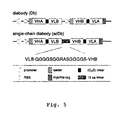
- FIG. 1 A particularly preferred structure of a molecule according to the invention is shown in FIG. 1.
- the individual specificities are essentially identical.
- the term "essentially identical" means according to the present invention that the molecular structure of the domains can be quite different, but their specificity, ie the specific antigen-binding function, is retained can contain the light chain of an immunoglobulin, but also its functional parts, ie the parts which have been given their specific antigen-binding property Constructs made from the individual CDR parts ( complementary determining regions ") of variable domains of an immunoglobulin (Jones, PT et al. Nature, 321, 522, 1986; Riechmann, L. et al. Nature 332, 323, 1988; Verhoeyen, M. et al. Science, 239, 1534, 1988).
- the domains VH and VL are connected via a peptide linker (L) in the form of a VH-L-VL construct or VL-L-VH construct.
- the linker should generally be as short as possible, preferably about 1 to 20 amino acids, in particular about 1 to 5 amino acids.
- a linker with the sequence GGGGS is particularly preferred.
- the connecting peptide (P) can be of any length.
- Particularly preferred is a peptide (P) which contains the amino acid sequence GGGGSGGRASGGGS or GGGGSGGRASGGGGS and in particular a peptide (P) which consists of the amino acid sequence mentioned.
- the molecule according to the invention contains an effector (E) as a further component.
- This effector can be bound to the molecule according to the invention directly or, if appropriate, via a link (B). It is particularly preferred if the link (B) contains a protease cleavage sequence, preferably a PSA (prostate-specific antigen), cathepsin, plasminogen and / or plasminogen activator cleavage sequence.
- a protease cleavage sequence preferably a PSA (prostate-specific antigen), cathepsin, plasminogen and / or plasminogen activator cleavage sequence.
- the protease cleavage sequence is particularly preferred because it enables the effector to be separated from the molecule according to the invention with the aid of a protease.
- the separation is particularly advantageous if the activity of the effector is inhibited by direct or indirect binding of the effector to the molecule according to the invention.
- proteases are particularly present in areas of inflammation or in tumors, there are the effectors, which are preferred because of their binding a protease cleavage sequence on the molecule according to the invention are inactivated to a high degree locally.
- suitable target structures for the molecule according to the invention for example with a specificity for antigens on tumor cells, for antigens on tumor-associated endothelial cells or for antigens on inflammatory cells, such as lymphocytes or macrophages, an additional enrichment of the molecule according to the invention with the effector in the range of, for example, one can Inflammation or a tumor can be reached.
- Proteases or the associated cleavage sequences are listed in detail in DE19704301.1, for example.
- FIG. 2 An example of a preferred molecule according to the invention with an effector which is bound to the molecule via a link is shown schematically in FIG. 2.
- the first specificity (A) is directed against a molecule to be analyzed and the second specificity (B) directly or indirectly against an analyte.
- the analyte can be a radioactive molecule, a fluorescent molecule or an enzyme which, through its enzymatic activity, converts a precursor of an analyte into an active analyte.
- the first specificity (A) is directed against a molecule to be analyzed
- the second specificity (B) is directed against another molecule to be analyzed
- the effector (E) is an analyte, for example a radioactive molecule, a fluorescent molecule and / or an enzyme, as already explained in more detail above.
- the molecule according to the invention can also be used as a ligand for the target cell-specific binding of a viral or non-viral vector.
- the molecule according to the invention can be used as a so-called multifunctional ligand.
- the peptide (P) and / or the effector (E) contains a fusogenic peptide.
- the multifunctional ligand is used for the target cell-specific transfer of nucleotide sequences and is generally a protein which contains a target cell-specific ligand, a gene construct-specific ligand and a fusiogenic peptide.
- gene constructs i.e. Nucleic acid constructs are specifically bound to a target cell and the fusiogenic peptide enables the nucleic acid construct to penetrate through the cell membrane into the cell nucleus and thus also release from the endosome.
- the first specificity (A) is directed against a target cell and the second specificity (B) against a vector.
- the vector is generally a nucleic acid, a cationic peptide or protein, a cationic lipid, a cationic polymer or a cationic porphyrin.
- the vector is a viral vector, derived for example from adenoviruses (AdV), adeno-associated viruses (AAV), vaccinia virus, RSV, HSV, influenza virus, or lentivirus.
- target cell-specific ligands for membrane structures on the target cell, for target cell-specific ligands and for gene construct-specific ligands which are derived from immunoglobulins, i.e. VH and VL domains, as well as peptides with a fusiogenic property, are described in detail in DE19649645.4.
- the molecule according to the invention is also suitable for prophylaxis and / or as a therapeutic agent.
- the first specificity (A) against a cell membrane such as against lymphocytes, macrophages, monocytes, granulocytes, hematopoietic cells, endothelial cells, smooth muscle cells, striated muscle cells, epithelial cells, liver cells, kidney cells, glial cells, cells of the supporting tissue, tumor cells or leukemia cells, or against proteins of the extracellular matrix, the complement system, the coagulation system, the kinine system, the blood plasma, the supporting tissue, or against cytokines or chemokines, or against endogenous or foreign toxins, or against medicines, for example digitalis, and / or against infectious agents, such as bacterial, viral and / or parasitic infectious agents.
- infectious agents such as bacterial, viral and / or parasitic infectious agents.
- the second specificity (B) can, for example, against a cell membrane of e.g. Lymphocytes, macrophages, monocytes or granulocytes, with the result that their cross-linking with a target structure there can lead to cytotoxic, immunomodulating or inflammatory processes.
- a cell membrane e.g. Lymphocytes, macrophages, monocytes or granulocytes
- cytokines can also be directed against cytokines, chemokines or growth factors, with the result that their crosslinking with a target structure can trigger immunomodulating or proliferative processes there. It can also be directed against proteins of the complement system which initiate, amplify or inhibit its activation.
- the crosslinking of such a protein with a target structure can trigger inflammatory and cytolytic or anti-inflammatory and cytoprotective reactions, depending on the choice of the protein. It can also be directed against proteins of the coagulation system which initiate, amplify or inhibit its activation.
- the crosslinking of such a protein with the target structure can induce or prevent thrombosis, depending on the choice of the protein.
- fibrinolytic proteins which lead to the dissolution of fibrin clots on the target structure
- enzymes which on the target structure convert the ineffective precursor of an active ingredient into an active
- e.g. B. can transfer cytotoxic agent, against peptide hormones or steroid hormones, against the constant part of an immunoglobulin, against a mediator such as histamine, serotonin, leukotriene, prostacyclin or kinin, against infectious agents such as e.g. bacterial, viral and / or parasitic infectious agents or against tumor cells.
- Cytokines as target structures or monocytes, macrophages and / or lymphocytes as Target structures can be crosslinked with infection or tumor antigens by the molecule according to the invention and thereby trigger an increased immune reaction against the antigen in vivo. It is advantageous here to add the respective antigen from the infectious agent or from the tumor and optionally also the cytokine to the molecule according to the invention and to administer or inject the crosslinked complex locally.
- the second specificity (B) can also be directed against endogenous or foreign toxins, so that either neutralization of the toxin and phagocytosis or a toxic reaction to the target structure can be brought about. It can also be used against drugs such as e.g. Digitalis, so that complexation and elimination of the drug can be effected.
- the molecule according to the invention with the effector allows two identical or different target structures to be linked with one or more effectors.
- Suitable as effectors are, for example, a transmembrane domain, a glycophospholipid anchor, the part of a receptor that binds the ligand; the ligand for a receptor or the partial sequence of the ligand binding the receptor; a peptide hormone; a cytokine; a growth factor; a growth factor inhibitor; a chemokine; an interferon; a mediator; a circulatory peptide; an enzyme which converts an inactive precursor of an active substance into an active active substance; a protein that activates or inhibits coagulation; a protein that activates or inhibits fibrinolysis; a protein that activates or inhibits the complement system; one or more constant domains of an immunoglobulin; a cytotoxic peptide; another, single-chain, single or multiple, in particular double antigen-binding molecule; a tumor antigen or the antigen of an infectious agent, such as a bacterial antigen or a viral antigen; a peptide containing cysteine for
- nucleic acid coding for a molecule according to the invention is a nucleic acid coding for a molecule according to the invention.
- the nucleic acid is generally a DNA or RNA, preferably a double-stranded DNA.
- the nucleic acid according to the invention contains at the 5 'end a nucleotide sequence coding for a signal or transmembrane sequence (see e.g. DE19639103.2 or DE19651443.6).
- a signal or transmembrane sequence is the signal sequence for the immunoglobulin (DNA position ⁇ 63 to ⁇ 107), the signal sequence for the CEA (DNA position ⁇ 33 to ⁇ 134) or the signal sequence of the Human Respiratory Syncytial Virus Glycoproteins ( cDNA of amino acid sequences ⁇ 38 to ⁇ 50 or 48 to 65).
- the nucleic acid according to the invention contains a promoter and / or activator at the 5 'end.
- the activator is preferably cell-specific, cell cycle-specific, metabolically specific and / or can be activated or suppressed by an active ingredient.
- activator sequences including their combinations are described in EP97101507.8, DE19617851.7, DE19639103.2, DE19651443.6, DE19704301.1, EP97102547.3 and DE19710643.9.
- Particularly preferred nucleic acid constructs according to the invention are shown schematically in FIGS. 3 and 4.
- the nucleic acid according to the invention contains the sequence GCCACC or GCCGCC at the 5 'end of the start codon, which sequence can increase the translation.
- the vector can be a viral or non-viral vector, preferably a non-viral vector, which is particularly selected from a cationic lipid, a cationic polymer, a cationic peptide or a cationic porphyrin.
- the nucleic acid described is used to produce the molecules according to the invention introduced into an expression vector, for example a suitable plasmid, into a suitable cell, for example into a bacterial, yeast, insect or mammalian cell, cultivates the cell which has been transformed or transfected in this way and optionally isolated the expression product.
- an expression vector for example a suitable plasmid
- a suitable cell for example into a bacterial, yeast, insect or mammalian cell
- cultivates the cell which has been transformed or transfected in this way and optionally isolated the expression product are generally known to the person skilled in the art and are described, for example, by Sambrook J. et al. Molecular Cloning, A Laboratory Handbook 2nd ed., Cold Spring Harbor Laboratory Press, 1989.
- these cells express a molecule according to the invention with an effector, this effector preferably being a transmembrane domain.
- the DNA sequence coding for the transmembrane sequence of the human macrophage colony-stimulating factor (DNA position ⁇ 1485 to ⁇ 1554) or the DNA sequence coding for the signal and transmembrane region of the human respiratory syncytial virus (RSV) glycoprotein G (Amino acids 1 to 63 or their partial sequence amino acids 38 to 63) or the DNA sequence coding for the signal and transmembrane region of the influenza virus neuraminidase (amino acids 7 to 35 or the partial sequence amino acids 7 to 27) between the promoter sequence and the DNA sequence of the molecule according to the invention or at the 3 'end of the gene.
- RSV respiratory syncytial virus
- nucleic acid construct a nucleotide sequence coding for a glycophospholipid anchor can also be inserted into the nucleic acid construct.
- a glycophospholipid anchor is generally inserted at the 3 'end of the nucleotide sequence, coding for the molecule according to the invention, and can also be used to insert a signal sequence.
- Glycophospholipid anchors have been described, for example, for the CEA, for the N-CAM and for other membrane proteins, such as, for example, Thy-1.
- the respective cell expresses the molecule according to the invention on the cell membrane and thus receives a "receptor" which is specific for those target or effector structures which are recognized by the antigen-binding parts of the molecule according to the invention.
- Another preferred receptor is the transmembrane or signal transducing domain of a receptor, for example the T cell receptor or the M-CSF receptor.
- a receptor for example the T cell receptor or the M-CSF receptor.
- the cell expressing the molecule according to the invention on the cell membrane can be activated by binding the target structures to specific functions.
- specific functions can be, for example, cytotoxic reactions of T lymphocytes, phagocytosis reactions of macrophages and granulocytes or exocytosis reactions of granulocytes, monocytes and macrophages.
- Another object of the present invention is therefore a cell containing a nucleic acid according to the invention or a vector according to the invention, in particular a bacterial, insect, yeast or mammalian cell.
- a nucleic acid according to the invention or a vector according to the invention in particular a bacterial, insect, yeast or mammalian cell.
- nucleic acids such as e.g. CHO or BHK cells
- a lymphocyte, a macrophage, a glial cell, an epithelial cell, a liver cell, a kidney cell, a bone marrow cell, an endothelial cell, a smooth or striated muscle cell or a fibroblast are suitable.
- the last-mentioned cells are particularly suitable for gene therapy use, since these cells, which contain the nucleic acid construct according to the invention, are administered to a patient locally or parenterally, e.g. can be injected intravenously, intraarterially, into a body cavity, into an organ or subcutaneously, in order to serve as prophylaxis or therapy for a disease.
- nucleic acid constructs according to the invention can also be administered directly to the patient locally, into a body cavity, into an organ, into the blood vessel system, subcutaneously or intramuscularly.
- Another object of the present invention is therefore also a medicament containing a molecule according to the invention, a nucleic acid according to the invention a vector according to the invention or a cell according to the invention and a diagnostic agent containing a molecule according to the invention which is also directed against an analyte, as already described in more detail above.
- the molecule according to the invention, the nucleic acid according to the invention, the vector according to the invention or the cell according to the invention are therefore suitable for therapy, prophylaxis or diagnosis of, for example, tumor diseases, autoimmune diseases, inflammatory diseases, diseases of the blood, in particular of the blood coagulation and / or blood circulation system, diseases of the nervous system and / or infectious diseases.
- nucleic acid construct according to the invention at its 5 'end with the 3' end of a nucleic acid coding for a signal sequence and this in turn at its 5 'end with the 3'-end of a promoter sequence linked.
- the promoter sequences to be selected include, for example, promoters and activator sequences which can be activated without restriction, such as the promoter of RNA polymerase III, the promoter of RNA polymerase II, the CMV promoter and / or enhancer, the SV40 promoter; or viral promoter and activator sequences, such as HBV, HCV, HSV, HPV, EBV, HTLV, HIV.
- the entire LTR sequence including the TAR sequence [position--453 to--80, Rosen et al., Cell 41 , 813 (1985)] used as a virus-specific promoter.
- promoter sequences to be selected are e.g. Metabolically activatable promoter and enhancer sequences, such as, for example, the hypoxia-inducible enhancer, cell cycle-specific activators, such as, for example, the promoter of the cdc25C gene, the cdc25B gene, the cyclin A gene, the cdc2 gene, the B-myb gene, the DHFR gene or the E2F-1 gene or binding sequences for cell cycle-specific occurring or activated transcription factors.
- binding sequences include, for example, binding sequences for c-myc proteins.
- binding sequences include monomers or multimers of the nucleotide sequence designated as Myc E-Box [5'-GGAAGCAGACCACGTGGTCTGCTTCC-3 '].
- promoter sequences to be selected are, for example, promoters which can be activated by tetracycline, such as the tetracycline operator in combination with a corresponding repressor, or chimeric promoters.
- a chimeric promoter is the combination of an upstream cell-specific, metabolically or virus-specific activator sequence with a downstream promoter module which contains the nucleotide sequence CDE-CHR or E2FBS-CHR, to which suppressive proteins bind, which hereby activates the upstream activator sequence in G 0 and G 1 phase of the cell cycle can inhibit (WO96 / 06943; Lucibello et al., EMBO J. 14 , 132 (1995)).
- promoter sequences to be selected are e.g. promoters which can be activated in a cell-specific manner, such as preferably promoters or activator sequences from promoters or enhancers of those genes which code for proteins which are preferably formed in selected cells.
- promoters for the following proteins are preferably to be used in the following cells:
- Promoter and activator sequences that are activated in endothelial cells are gene regulatory sequences from genes that are used, for example, for the following proteins encode: brain-specific, endothelial glucose-1 transporter, endoglin, VEGF receptor-1 (flt-1), VEGF receptor-2 (flk-1, KDR), til-1 or til-2, B61 receptor (Eck receptor), B61, endothelin, in particular endothelin B or endothelin-1, endothelin receptors, in particular the endothelin B receptor, mannose-6-phosphate receptors, from Willebrand factor, IL-1 ⁇ , IL-1 ⁇ , IL-1 receptor, Vascular Cell Adhesion Molecule (VCAM-1) or synthetic activator sequences consisting of oligomerized binding sites for transcription factors that are preferentially or selectively active in endothelial cells.
- An example of this is the transcription factor GATA-2, whose binding site in the endothelin-1 gene is 5
- Promoters or activator sequences which are activated in cells in the vicinity of activated endothelial cells are gene regulatory sequences from genes which code for the following proteins, for example: VEGF, the gene regulatory sequences for the VEGF gene being the 5 'flanking region, the 3' flanking region, the c-Src gene or the v-Src gene, or steroid hormone receptors and their promoter elements, in particular the mouse mammary tumor virus promoter.
- Promoters or activator sequences which are activated in muscle cells are gene regulatory sequences from genes which code, for example, for the following proteins: tropomyosin, ⁇ -actin, ⁇ -myosin, receptor for PDGF, receptor for FGF, MRF-4, phosphofructokinase A, phosphoglycerate mutase, troponin C, myogens, receptors for endothelin A, desmin, VEGF (see above), "artificial" promoters, or promoters of muscle-specific transcription factors, such as factors of the Helix-Loop-Helix (HLH) family (MyoD, Myf-5 , Myogens, MRF4) or the zinc finger protein GATA-4.
- HHLH Helix-Loop-Helix
- the HLH proteins and GATA-4 show muscle-specific transcription not only with promoters of muscle-specific genes, but also in a heterologous context, including with artificial promoters.
- artificial promoters are, for example, multiple copies of the (DNA) binding site for muscle-specific HLH proteins such as the E-Box (Myo D) (e.g. 4x AGCAGGTGTTGGGAGGC) or multiple copies of the DNA binding site for GATA-4 of the ⁇ -myosin heavy chain gene (e.g. 5'-GGCCGATGGGCAGATAGAGGGGGCCGATGGGCAGATAGAGG3 ')
- Promoters and activator sequences that are activated in hematopoietic cells are e.g. Promoter sequences for genes of a cytokine or its receptor, which are expressed in hematopoietic cells or in neighboring cells such as the stroma.
- cytokines and their receptors include promoter sequences from genes which code, for example, for the following cytokines and their receptors: stem cell factor receptor, stem cell factor, IL-1 ⁇ , IL-1 receptor, IL-3, IL-3 receptor ( ⁇ -subunit) , IL-3 receptor ( ⁇ -subunit), IL-6, IL-6 receptor, GM-CSF, GM-CSF receptor ( ⁇
- Promoters and activator sequences which are activated in lymphocytes and / or macrophages are, for example, the promoter and activator sequences of the genes coding for cytokines, cytokine receptors and adhesion molecules and receptors for the Fc fragment of antibodies, such as e.g.
- IRF-1 interferon regulatory factor 1
- the promoter of IRF-1 being activated by IL-6 as well as by IFN ⁇ or IFN ⁇ , IFN ⁇ Responsive Promoter, IL-7, IL-8, IL-10, IL-11, IFN ⁇ , GM-CSF, GM-CSF receptor ( ⁇ chain), IL-13, LIF, macrophage colony Stimulating factor (M-CSF) receptor, type I and II macrophage scavenger receptors, MAC-1 (leukocyte function antigen), LFA-1 ⁇ (leukocyte function antigen) or p150.95 (leukocyte function antigen).
- Promoter and activator sequences that are activated in synovial cells are for example the promoter sequences of genes coding for matrix metalloproteinases (MMP), such as MMP-1 (interstitial collagenase), MMP-3 (stromelysin / transin) or tissue inhibitors of metalloproteinases (TIMP), such as TIMP-1, TIMP-2, TIMP-3.
- MMP matrix metalloproteinases
- TIMP-1 interstitial collagenase
- MMP-3 stromelysin / transin
- TIMP-1 tissue inhibitors of metalloproteinases
- Promoters and activator sequences which are activated in linseed cells are, for example, promoters of genes which code for the following proteins: HSP-70, bcl-1 / cyclin D-1, bcl-2, IL-6, IL-10, TNF ⁇ , TNF ⁇ , HOX-11, BCR-Abl, E2A-PBX-1, PML-RAR (Promyelocytic Leukemia - Retinoic Acid Receptor) or c-myc, whereby c-myc proteins activate and activate multimers of the nucleotide sequence called Myc E-Box ( 5'-GGAAGCAGACCAGCTGGTCTGCTTCC-3 ').
- Promoters or activator sequences that are activated in tumor cells are e.g. gene regulatory nucleotide sequences with which transcription factors, formed or active in tumor cells, interact.
- the preferred promoters or activator sequences include gene regulatory sequences or elements from genes which encode proteins formed especially in cancer cells or sarcoma cells.
- the promoter of the N-CAM protein is preferably used in small cell bronchial carcinomas
- the promoter of the "hepatitis growth factor” receptor or the L-plastin is used in ovarian carcinomas
- the promoter of L-plastin or the polymorphic epithelial mucin (PEM) is used in pancreatic cancer .
- a major advantage of the present invention is that the linking of the individual components favors a heterodimeric association, so that predominantly single-chain, multi-antigen-binding molecules are formed. Furthermore, the dissociation of the dimers is reduced, as has already been shown for scFv fragments (see, for example, Glockshuber et al., Biochem. 29, 1362-1367, 1990).
- the molecules according to the invention can thus be produced in a less complex and more homogeneous form than the so-called Diabodies ", even if they are disulfide stabilized or in the form of knob-into-hole diabodies ".
- Diabodies “requires a signal sequence and an RBS for each chain. Another advantage of the present invention is that equimolar amounts of the variable domains are expressed in the molecules according to the invention, while in the expression of the two chains of Diabodies "non-equimolar amounts can arise and thereby the proportion of non-functional homodimers is increased.
- Another advantage of the molecule according to the invention is that it can be expressed simply and in functional form both in bacteria and in yeast, baculoviruses and eukaryotic cells. In addition to the secretion of the molecules according to the invention, there is also the possibility of expressing them intracellularly or in the membrane (see e.g. Biocca & Cattaneo, Trends Cell Biol. 5, 248-252 (1995)).
- Another advantage of the molecules according to the invention is that they can be widely used both as a diagnostic and as an active ingredient for the prophylaxis and / or therapy of a disease, such as bispecific antibodies.
- genes of effectors and promoter sequences must be selected with a view to the desired application and taking into account the target cell to be transduced.
- the following combinations of promoter sequences and genes for effectors should be selected for the following diseases:
- target cells for example, proliferating endothelial cells, or stromal cells and muscle cells adjacent to the endothelial cell, or tumor cells or leukemia cells
- target cells serve as promoters, for example endothelial cell-specific and cell cycle-specific, or cell-unspecific or muscle cell-specific and cell cycle-specific, or tumor cell-specific leukemia-specific (solid tumor) -specific (solid tumors)
- promoters for example endothelial cell-specific and cell cycle-specific, or cell-unspecific or muscle cell-specific and cell cycle-specific, or tumor cell-specific leukemia-specific (solid tumor) -specific (solid tumors)
- effectors for example the following genes:
- the retinoblastoma protein (pRb / p110) and the related p107 and p130 proteins are inactivated by phosphorylation.
- Those genes of cell cycle inhibitors which have mutations for the inactivation sites of the expressed proteins are to be preferably used without their function being impaired thereby. Examples of these mutations have been described for p110.
- the DNA sequence for the p107 protein or the p130 protein is mutated in an analogous manner.
- the p53 protein gene is also suitable.
- the protein p53 is inactivated in the cell either by binding to special proteins, such as MDM2, or by oligomerizing the p53 via the dephosphorylated C-terminal serine.
- a DNA sequence is therefore preferably used for a p53 protein which is shortened by the serine 392 at the C-terminal.
- Other suitable genes are the gene from p21 (WAF-1), from p16 protein, from other cdk inhibitors, from GADD45 protein or from bak protein.
- Genes from coagulation-inducing factors and angiogenesis inhibitors are, for example, from plasminogen activator inhibitor-1 (PAI-1), PAI-2, PAI-3, angiostatin, interferons (IFN ⁇ , IFN ⁇ or IFN ⁇ ), platelet factor 4, IL-12, TIMP-1 , TIMP-2, TIMP-3, leukemia inhibitory factor (LIF) or tissue factor (TF) and its coagulation-active fragments.
- PAI-1 plasminogen activator inhibitor-1
- PAI-2 PAI-3
- angiostatin interferons
- IFN ⁇ interferons
- platelet factor 4 IL-12
- TIMP-1 TIMP-1
- TIMP-2 TIMP-2
- TIMP-3 leukemia inhibitory factor
- TF tissue factor
- Genes of cytostatic and cytotoxic proteins are, for example, from perforin, granzyme, IL-2, IL-4, IL-12, interferons, such as, for example, IFN- ⁇ , IFN ⁇ or IFN ⁇ , TNF, such as TNF ⁇ or TNF ⁇ , Oncostatin M, sphingomyelinase or magainin and magainin derivatives.
- Genes from inflammation inducers are, for example, IL-1, IL-2, RANTES (MCP-2) monocyte chemotactic and activating factor (MCAF), IL-8, macrophage inflammatory protein-1 (MIP-1 ⁇ , - ⁇ ), neutrophil activating protein-2 (NAP-2), IL-3, IL-5, human leukemia inhibitory factor (LIF), IL-7, IL-11, IL-13, GM-CSF, G-CSF, M-CSF , Cobra venom factor (CVF) or partial sequences from the CVF which functionally correspond to the human complement factor C3b, ie which can bind to the complement factor B and, after cleavage by the factor D, constitute a C3 convertase, human complement factor C3 or its partial sequence C3b, from cleavage products of the human complement factor C3, which is functionally and structurally similar to CVF, or of bacterial proteins which activate complement or trigger inflammation, such as, for example, porins from Salmonella typhimuri
- Genes of enzymes for the activation of precursors of cytostatics are, for example, of enzymes which cleave inactive pre-substances (prodrugs) into active cytostatics (drugs).
- prodrugs inactive pre-substances
- Such substances and the associated prodrugs and drugs have already been described by Deonarain et al. (Br. J. Cancer 70 , 786 (1994)), Mullen (Pharmac. Ther 63 , 199 (1994)) and Harris et al. (Gene Ther 1 , 170 (1994)) has been clearly described.
- the DNA sequence can use one of the following enzymes: herpes simplex virus thymidine kinase, varicella zoster virus thymidine kinase, bacterial nitroreductase, bacterial ⁇ -glucuronidase, vegetable ⁇ -glucuronidase from Secale cereale, human ⁇ -glucuronidase (human carboxypeptide)
- herpes simplex virus thymidine kinase varicella zoster virus thymidine kinase
- bacterial nitroreductase bacterial ⁇ -glucuronidase
- bacterial ⁇ -glucuronidase bacterial ⁇ -glucuronidase
- human ⁇ -glucuronidase human carboxypeptide
- the target cells are, for example, proliferating endothelial cells or macrophages and / or lymphocytes or synovial cells
- the promoters are, for example, endothelial cell-specific and cell cycle-specific, or macrophage and / or lymphocyte-specific and / or cell cycle-specific, or synovial cell-specific and / or cell-specific and / or cell-specific and / or cell-specific the following genes as effectors:
- Genes for the treatment of allergies are, for example, IFN ⁇ , IFN ⁇ , IL-10, antibodies or antibody fragments against IL-4, soluble IL-4 receptors, IL-12 or TGF ⁇ .
- Genes for preventing rejection of transplanted organs are, for example, IL-10, TGF ⁇ , soluble IL-1 receptors, soluble IL-2 receptors, IL-1 receptor antagonists or soluble IL-6 receptors.
- Genes for the therapy of antibody-mediated autoimmune diseases are, for example, TGF ⁇ , IFN ⁇ , IFN ⁇ , IFN ⁇ , IL-12, soluble IL-4 receptors, soluble IL-6 receptors, immunosuppressive antibodies or their V H and V L -containing Fragments.
- Genes for the therapy of cell-mediated autoimmune diseases are, for example, IL-6, IL-9, IL-10, IL-13, TNF ⁇ or TNF ⁇ , IL-13, an immunosuppressive antibody or its V H - and V L -containing fragments.
- Genes for the therapy of arthritis are, for example, structural genes, the expressed protein of which directly or indirectly inhibits inflammation, for example in the joint, and / or the reconstitution of extracellular matrix (cartilage, connective tissue) in the Joint promotes.
- IL-1 receptor antagonist since IL-1-RA inhibits the binding of IL-1 ⁇ , ⁇ ; soluble IL-1 receptor; since soluble IL-1 receptor binds and inactivates IL-1; IL-6, since IL-6 increases the secretion of TIMP and sin peroxides and decreases the secretion of IL-1 and TNF ⁇ by synovial cells and chondrocytes; soluble TNF receptor because soluble TNF receptor binds and inactivates TNF; IL-4, since IL-4 inhibits the formation and secretion of IL-1, TNF ⁇ and MMP; IL-10, since IL-10 inhibits the formation and secretion of IL-1, TNF ⁇ and MMP and increases the secretion of TIMP; Insulin-like growth factor (IGF-1) because IGF-1 stimulates the synthesis of extracellular matrix; TGF ⁇ , especially TGF ⁇ 1 and TGF ⁇ 2, since TGF ⁇ stimulates the synthesis of extracellular matrix; Superoxide dismut
- the target cells are, for example, proliferating, immature cells of the hematopoietic system or stromal cells adjacent to the hematopoietic cells, as promoters, for example, specific and / or cell cycle-specific or cell-unspecific and cell cycle-specific promoters, and as effectors, for example
- promoters for example, specific and / or cell cycle-specific or cell-unspecific and cell cycle-specific promoters
- effectors for example
- Genes for the treatment of anemia are, for example, from erythropoietin.
- Genes for the therapy of leukopenia are, for example, from G-CSF, GM-CSF or M-CSF.
- Genes for the therapy of thrombocytopenia are, for example, from IL-3, leukemia inhibitory factor (LIF), IL-11 or thrombopoietin.
- LIF leukemia inhibitory factor
- IL-11 thrombopoietin
- target cells for example glial cells or proliferating endothelial cells
- promoters for example glia cell-specific and cell cycle-specific or endothelial cell-specific and cell cycle-specific or non-specific and cell cycle-specific promoters
- effectors for example the following genes:
- Genes for neuronal growth factors include FGF, nerve growth factor (NGF), brain-derived neurotrophic factor (BDNF), neurotrophin-3 (NT-3), neurotrophin-4 (NT-4) or ciliary neurotrophic factor (CNTF) .
- FGF nerve growth factor
- BDNF brain-derived neurotrophic factor
- NT-3 neurotrophin-3
- NT-4 neurotrophin-4
- CNTF ciliary neurotrophic factor
- Genes for enzymes are, for example, genes of tyrosine hydroxylase or dopadecarboxylase.
- Genes for cytokines and their inhibitors which inhibit or neutralize the neurotoxic effect of TNF ⁇ are, for example, from TGF ⁇ ; of soluble TNF receptors, since TNF receptors neutralize TNF ⁇ ; of IL-10 because IL-10 inhibits the formation of IFN ⁇ , TNF ⁇ , IL-2 and IL-4; of soluble IL-1 receptors such as IL-1 receptor I or IL-1 receptor II, since soluble IL-1 receptors neutralize the activity of IL-1; from the IL-1 receptor antagonist or from soluble IL-6 receptors.
- target cells for example, are endothelial cells, proliferating endothelial cells, somatic cells in the vicinity of endothelial cells and smooth muscle cells or macrophages, promoters, for example, cell-unspecific and cell cycle-specific, or endothelial cells, smooth muscle cells or macrophages-specific and cell cycle-specific , and as effectors, for example, the following genes:
- Genes for the inhibition of coagulation or for the promotion of fibrinolysis are for example from the tissue plasminogen activator (tPA), urokinase-type plasminogen activator (uPA), from hybrids of tPA and uPA, from protein C, hirudin, from serine proteinase inhibitors ( Serpine), such as C-1S inhibitor, ⁇ 1 -antitrypsin or antithrombin III, or the tissue factor pathway inhibitor (TFPI).
- tissue plasminogen activator tPA
- uPA urokinase-type plasminogen activator
- Serpine serine proteinase inhibitors
- C-1S inhibitor such as C-1S inhibitor, ⁇ 1 -antitrypsin or antithrombin III
- TFPI tissue factor pathway inhibitor
- Genes for promoting coagulation are, for example, from F VIII, F IX, von Willebrand factor, F XIII, PAI-1, PAI-2 or tissue factor and fragments thereof.
- Genes for angiogenesis factors are, for example, from VEGF or FGF.
- Genes for lowering blood pressure are, for example, "nitric oxide synthase” from kallikrein or endothelial cells.
- Genes for the inhibition of the proliferation of smooth muscle cells after injuries to the endothelial layer are, for example, from an antiproliferative, cytostatic or cytotoxic protein or from an enzyme for breaking down precursors of cytostatics into cytostatics, as already mentioned above, or from a fusion protein of one of these active ingredients a ligand, for example an antibody or antibody fragments, which is specific for muscle cells.
- Genes for other blood plasma proteins are, for example, from albumin, C1 inactivator, serum cholinesterase, transferrin or 1-antitrypsin.
- muscle cells or macrophages and / or lymphocytes serve as target cells
- promoters for example, non-specific and cell cycle-specific or target cell-specific and cell cycle-specific promoters
- effectors for example, genes for the prophylaxis of infectious diseases
- the active substance selected is generally the DNA of a protein formed by the infectious agent, which leads to neutralization and / or killing of the pathogen by triggering an immune reaction, ie by antibody binding and / or by cytotoxic T-lymphocytes.
- neutralization antigens are already used as vaccine antigens (see, for example, Ellis, Adv. Exp. Med. Biol. 327 , 263 (1992).
- nucleic acid coding for neutralization antigens of the following pathogens influenza A virus, HIV, rabies virus, HSV (herpes simplex virus), RSV (respiratory syncytial virus), parainfluenza virus, rotavirus, VZV (varicella zoster virus ), CMV (cytomegalo virus), measles virus, HPV (human papilloma virus), HBV (hepatitis B virus), HCV (hepatitis C virus), HDV (hepatitis D virus), HEV (hepatitis E virus) , HAV (hepatitis A virus), Vibrio cholera antigen, Borrelia burgdorferi, Helicobacter pylori or malaria antigen.
- influenza A virus influenza A virus
- HIV rabies virus
- HSV herpes simplex virus
- RSV respiratory syncytial virus
- parainfluenza virus rotavirus
- VZV variant cella zoster virus
- Such active substances within the meaning of the present invention also include the DNA of an anti-idiotype antibody or its antigen-binding fragments whose antigen-binding structures (the "complementary determining regions") represent copies of the protein or carbohydrate structure of the neutralizing antigen of the infectious agent (see above).
- Such anti-idiotype antibodies and their cleavage products can in particular replace carbohydrate antigens in bacterial infectious agents and are described, for example, by Hawkins et al. (J. Immunother. 14 , 273 (1993)) and Westerink and Apicella (Springer Seminars in Immunopathol. 15 , 227 (1993)) is clearly described.
- tumor vaccines include antigens on tumor cells, such as from Sedlacek et al., Contrib. to Oncol. 32 , Karger Verlag, Kunststoff (1988) and Contrib. to Oncol 43 , Karger Verlag, Kunststoff (1992).
- genes of the following antigens or of the following anti-idiotype antibodies Sialyl Lewis; Peptides on tumors recognized by T cells; proteins expressed by oncogenes; Blood group antigens and their precursors; Antigens on the polymorphic epithelial mucin; or antigens on heat shock proteins.
- the target cells are, for example, liver cells, lymphocytes and / or macrophages, epithelial cells or endothelial cells, promoters, for example virus-specific or cell-specific and cell cycle-specific promoters, and the following genes as effectors:
- antiviral proteins such as antiviral cytokines and growth factors such as, for example, IFN ⁇ , IFN ⁇ , IFN- ⁇ , TNF ⁇ , TNF ⁇ , IL-1 or TGF ⁇ , or antibodies of a specificity which inactivates the respective virus or contains its V H and V L Fragments or its V H and V L fragments connected via a linker, as already described.
- Antibodies against virus antigens are, for example: anti HBV, anti HCV, anti HSV, anti HPV, anti HIV, anti EBV, anti HTLV, anti Coxsackie virus or anti Hantaan virus.
- Rev binding protein Another antiviral protein is a Rev binding protein. These proteins bind to the Rev-RNA and inhibit Rev-dependent post-transcriptional levels of retrovirus gene expression. Examples of Rev-binding proteins are: RBP9-27, RBP1-8U, RBP1-8D or pseudogenes of RBP1-8.
- Genes coding for antibacterial proteins such as antibodies, which neutralize bacterial toxins or opsonize bacteria.
- these include antibodies against meningococcal C or B, E. coli, Borrelia, Pseudomonas, Helicobacter pylori or Staphylococcus aureus.
- CEA Carcinoembryonic Antigen
- E. coli ⁇ -galactosidase E. coli ⁇ -galactosidase
- the linkage was carried out with the aid of enzymes and DNA ligases which are known to the person skilled in the art and are specific for the restriction sites.
- the enzymes are commercially available.
- the construct was cloned into the bacterial expression vector pAB1 (Kontermann et al., (1997)).
- fragments VHB-VLA (fragment 1) and VHA-VLB (fragment 2) were amplified from the diabody CEAGal (Kontermann, RE (1997)) with the aid of the primers LMB2 and LMB3 and gel-purified. Fragment 1 was then primed with V -NotFor and scDb-AscBack amplified to introduce an AscI site and 7 amino acids of the linker. Fragment 2 was amplified with the primers LMB3 and scDb-AscFor ⁇ to introduce an AscI site and 8 amino acids of the linker.
- fragments were hydrolyzed with AscI and NotI (fragment 1) and SfiI and AscI (fragment 2) and cloned into the bacterial expression vector pAB1 (Kontermann, RE (1997)).
- the resulting insert encodes a single-chain polypeptide in which VHA-VLB is linked to VHB-VLA via a 15 amino acid long linker with the sequence GGGGSGGRASGGGGS.
- the plasmid was then introduced into TG1 bacteria and these were cultivated using the methods familiar to the person skilled in the art (Kontermann et al., (1997)).
- IMAC immobilized metal affinity chromatography
- the purified protein has a molecular weight of 60 kDa, as shown by SDS-polyacrylamide gel electrophoresis and gel filtration. About 200-300 ⁇ g of this molecule could be purified per liter of bacterial culture.
- the bacterially expressed, single-chain, double-antigen-binding protein reacted in the ELISA with CEA and ⁇ -galactosidase and was able to recruit the enzyme to plastic-bound CEA, as was shown by the conversion of o-nitrophenyl- ⁇ -D-galactopyranoside (Fig. 6).
- this single-chain, double-antigen-binding protein was able to live and also fix CEA-expressing LoVo cells by recruiting ⁇ -galactosidase and converting the substrate 5-bromo-4-chloro-3-indolyl- ⁇ -D-galactopyranoside (X-Gal ) stain.
- LoVo cells with 10 ⁇ g / ml of the corresponding antigen-binding protein with 10 ⁇ g / ml ⁇ -galactosidase and X-Gal 0.8 mg / ml in PBS, 3mM potassium iron (III) -cyanide 3mM potassium iron (II) - cyanide) incubated.
- the coding region of the single-chain, double-antigen-binding protein was cloned into a eukaryotic expression vector (pSecTagA, Invitrogen), the bacterial signal sequence being replaced by the Ig- ⁇ signal sequence which is already contained in the vector.
- the single-chain construct was amplified with the primers LMB2 and pelB-Metminus, whereby methionine of the pelB leader (position 21) was replaced by threonine. It was then hydrolyzed with SfiI and EcoRI and cloned into the vector pSecTagA.
- the mature single chain antigen binding protein contains 7 additional amino acids (AAQPATA) at the N-terminus of the VHA domain.
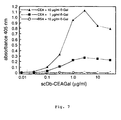
- the plasmid was transiently transfected with lipofectamine (Gibco) in eukaryotic HEK 293 cells. Stable cells were selected in the presence of Zeocin. With these cells, staining of the endoplasmic reticulum ER and the Golgi apparatus could be demonstrated in immunofluorescence experiments. Furthermore, the secretion of the single-chain, double-antigen-binding protein could be demonstrated by immunoprecipitation of a 60 kDa protein from the supernatant 35 S-Met labeled cells and by purification by means of immobilized metal affinity chromatography (IMAC). The purified protein is functionally active in the binding of ⁇ -galactosidase and CEA-coated microtiter plates or the recruitment of ⁇ -galactosidase to plastic-bound CEA (FIG. 7).
- IMAC immobilized metal affinity chromatography
- the recruitment was examined in vitro by coculturing the single-chain, double-antigen-binding protein-producing HEK 293 cells and CEA-positive LoVo cells.
- the cells producing the protein according to the invention were first cultivated with the LoVo cells in Transwell cell culture dishes (Costar) in which the two cell lines are separated by a membrane. After two days, ⁇ -galactosidase (10 ⁇ g / ml) was added and the recruitment was verified by adding the substrate X-Gal. A specific staining was found when cocultivated with the cells producing the single-chain, double-antigen-binding protein, while control experiments with untransfected HEK 293 cells showed no staining.
- the HEK 293 cells secreting the single-chain, double-antigen-binding protein and the LoVo cells were cocultivated directly with an inoculation ratio of 1: 4 to 1:24.
- the former were stained with CM-DiI (Molecular Probes) (red fluorescence) before the LoVo cells were added.
- CM-DiI Molecular Probes
- ⁇ -galactosidase was added and the binding to cells was confirmed by adding X-Gal (10 ⁇ g / ml) or by indirect immunofluorescence with an anti- ⁇ -galactosidase antibody (Biotrend).
- this effect can be used to specifically kill tumor cells.
- the LoVo cells were incubated in 96-well plates with the single-chain, double-antigen-binding protein (10 ⁇ g / ml) and then with daunomycin- ⁇ -D-galactopyranoside (5 ⁇ M) for one hour at 37 ° C.
- the cell death was analyzed after 2 days by means of a WST test (Boehringer Mannheim) (FIG. 8).
- the death of the cells during the conversion of the prodring into the drug was almost as good as in the presence of the bring (FIG. 8A).
- Fig. 8B In the absence of a component or with CEA negative A549 cells, essentially no effect was found (Fig. 8B).
- TM-scDAP, ER-scDAP, cyto-scDAP, nuc-scDAP, and sec-scDAP secreted protein; see Example 2
- T3 eukaryotic cells
- ER-scDAP and TM-scDAP a coloration, which is typical for the secretory pathway, can be detected, while cyto-scDAP a diffuse localization shows a nuclear localization in the cytoplasm and nuc-scDAP.
Landscapes
- Health & Medical Sciences (AREA)
- Chemical & Material Sciences (AREA)
- Organic Chemistry (AREA)
- Immunology (AREA)
- Life Sciences & Earth Sciences (AREA)
- Medicinal Chemistry (AREA)
- General Health & Medical Sciences (AREA)
- Biophysics (AREA)
- Biochemistry (AREA)
- Proteomics, Peptides & Aminoacids (AREA)
- Molecular Biology (AREA)
- Genetics & Genomics (AREA)
- Animal Behavior & Ethology (AREA)
- Nuclear Medicine, Radiotherapy & Molecular Imaging (AREA)
- Public Health (AREA)
- Veterinary Medicine (AREA)
- Pharmacology & Pharmacy (AREA)
- General Chemical & Material Sciences (AREA)
- Chemical Kinetics & Catalysis (AREA)
- Bioinformatics & Cheminformatics (AREA)
- Oncology (AREA)
- Engineering & Computer Science (AREA)
- Cell Biology (AREA)
- Diabetes (AREA)
- Communicable Diseases (AREA)
- Hematology (AREA)
- Biomedical Technology (AREA)
- Neurosurgery (AREA)
- Neurology (AREA)
- Peptides Or Proteins (AREA)
- Micro-Organisms Or Cultivation Processes Thereof (AREA)
- Medicines That Contain Protein Lipid Enzymes And Other Medicines (AREA)
- Medicines Containing Antibodies Or Antigens For Use As Internal Diagnostic Agents (AREA)
- Medicines Containing Material From Animals Or Micro-Organisms (AREA)
- Preparation Of Compounds By Using Micro-Organisms (AREA)
Priority Applications (3)
| Application Number | Priority Date | Filing Date | Title |
|---|---|---|---|
| EP08019619.9A EP2036926B1 (fr) | 1998-04-09 | 1999-04-08 | Molécule à une chaîne, à liaison multiple d'antigène, sa fabrication et son utilisation |
| DK08019619.9T DK2036926T3 (da) | 1998-04-09 | 1999-04-08 | Enkeltkædet molekyle, der kan binde til flere antigener, dettes fremstilling og anvendelse |
| CY20091100028T CY1108728T1 (el) | 1998-04-09 | 2009-01-14 | Μονοαλυσωτο μοριο πολλαπλης αντιγονοδεσμευσης, η παραγωγη και η χρηση αυτου |
Applications Claiming Priority (4)
| Application Number | Priority Date | Filing Date | Title |
|---|---|---|---|
| DE19816141A DE19816141A1 (de) | 1998-04-09 | 1998-04-09 | Einzelkettiges, mehrfach-antigenbindendes Molekül, dessen Herstellung und Verwendung |
| DE19816141 | 1998-04-09 | ||
| DE19827239 | 1998-06-18 | ||
| DE19827239A DE19827239A1 (de) | 1998-06-18 | 1998-06-18 | Einzelkettiges, mehrfach-antigenbindendes Molekül, dessen Herstellung und Verwendung |
Related Child Applications (1)
| Application Number | Title | Priority Date | Filing Date |
|---|---|---|---|
| EP08019619.9A Division EP2036926B1 (fr) | 1998-04-09 | 1999-04-08 | Molécule à une chaîne, à liaison multiple d'antigène, sa fabrication et son utilisation |
Publications (3)
| Publication Number | Publication Date |
|---|---|
| EP0952218A2 true EP0952218A2 (fr) | 1999-10-27 |
| EP0952218A3 EP0952218A3 (fr) | 2000-10-18 |
| EP0952218B1 EP0952218B1 (fr) | 2008-11-12 |
Family
ID=26045416
Family Applications (2)
| Application Number | Title | Priority Date | Filing Date |
|---|---|---|---|
| EP99106176A Expired - Lifetime EP0952218B1 (fr) | 1998-04-09 | 1999-04-08 | Molécule monocaténaire de liaison aux antigènes multiples, sa préparation et son utilisation |
| EP08019619.9A Expired - Lifetime EP2036926B1 (fr) | 1998-04-09 | 1999-04-08 | Molécule à une chaîne, à liaison multiple d'antigène, sa fabrication et son utilisation |
Family Applications After (1)
| Application Number | Title | Priority Date | Filing Date |
|---|---|---|---|
| EP08019619.9A Expired - Lifetime EP2036926B1 (fr) | 1998-04-09 | 1999-04-08 | Molécule à une chaîne, à liaison multiple d'antigène, sa fabrication et son utilisation |
Country Status (16)
| Country | Link |
|---|---|
| US (3) | US6759518B1 (fr) |
| EP (2) | EP0952218B1 (fr) |
| JP (1) | JP5306564B2 (fr) |
| KR (1) | KR19990083043A (fr) |
| CN (1) | CN1234406A (fr) |
| AT (1) | ATE414150T1 (fr) |
| AU (2) | AU767580C (fr) |
| BR (1) | BR9902039A (fr) |
| CA (1) | CA2268258C (fr) |
| CY (1) | CY1108728T1 (fr) |
| CZ (1) | CZ121599A3 (fr) |
| DE (1) | DE59914902D1 (fr) |
| DK (2) | DK2036926T3 (fr) |
| ES (1) | ES2317680T3 (fr) |
| HU (1) | HUP9900956A2 (fr) |
| PT (1) | PT952218E (fr) |
Cited By (17)
| Publication number | Priority date | Publication date | Assignee | Title |
|---|---|---|---|---|
| WO2000053790A1 (fr) * | 1999-03-10 | 2000-09-14 | Aventis Pharma Deutschland Gmbh | Proteines multivalentes (pmv) specifiques a des cellules cibles |
| EP1078004A2 (fr) | 1998-05-05 | 2001-02-28 | Deutsches Krebsforschungszentrum Stiftung des öffentlichen Rechts | Constructions d'anticorps multivalentes |
| WO2002002781A1 (fr) * | 2000-06-30 | 2002-01-10 | Vlaams Interuniversitair Instituut Voor Biotechnologie Vzw | Proteines de fusion heterodimeres |
| WO2002020614A3 (fr) * | 2000-09-04 | 2002-08-01 | Vectron Therapeutics Ag | Polypeptide specifique de l'endogline, sa fabrication et son utilisation |
| EP1314741A1 (fr) * | 2001-11-14 | 2003-05-28 | Affimed Therapeutics AG | Anticorps bispécifiques dirigés contre CD19 et CD16 et leur utilisation |
| EP1400534A1 (fr) * | 2002-09-10 | 2004-03-24 | Affimed Therapeutics AG | Anticorps humain spécifique pour CD3 avec des propriétés immunosupressives |
| WO2004041865A3 (fr) * | 2002-11-08 | 2004-07-15 | Ablynx Nv | Anticorps a domaine unique stabilises |
| WO2007085837A1 (fr) * | 2006-01-25 | 2007-08-02 | Erasmus University Medical Center Rotterdam | Molecules de liaison |
| US7771724B2 (en) | 2002-08-07 | 2010-08-10 | Ablynx N.V. | Modulation of platelet adhesion based on the surface-exposed beta-switch loop of platelet glycoprotein IB-alpha |
| US7807162B2 (en) | 2005-05-20 | 2010-10-05 | Ablynx N.V. | Single domain VHH antibodies against von Willebrand factor |
| US7939277B2 (en) | 2005-01-14 | 2011-05-10 | Umc Utrecht Holding Bv | Methods and assays for distinguishing between different forms of diseases and disorders characterized by thrombocytopenia and/or by spontaneous interaction between Von Willebrand Factor (vWF) and platelets |
| AU2003286003B2 (en) * | 2002-11-08 | 2011-05-26 | Ablynx N.V. | Stabilized single domain antibodies |
| US9028816B2 (en) | 2003-01-10 | 2015-05-12 | Ablynx N.V. | Polypeptides and polypeptide constructs comprising single domain antibodies directed against von Willebrand factor |
| US9320792B2 (en) | 2002-11-08 | 2016-04-26 | Ablynx N.V. | Pulmonary administration of immunoglobulin single variable domains and constructs thereof |
| US9371381B2 (en) | 2002-11-08 | 2016-06-21 | Ablynx, N.V. | Single domain antibodies directed against tumor necrosis factor-alpha and uses therefor |
| US9393304B2 (en) | 2008-10-29 | 2016-07-19 | Ablynx N.V. | Formulations of single domain antigen binding molecules |
| US10118962B2 (en) | 2008-10-29 | 2018-11-06 | Ablynx N.V. | Methods for purification of single domain antigen binding molecules |
Families Citing this family (149)
| Publication number | Priority date | Publication date | Assignee | Title |
|---|---|---|---|---|
| US6136311A (en) | 1996-05-06 | 2000-10-24 | Cornell Research Foundation, Inc. | Treatment and diagnosis of cancer |
| CZ121599A3 (cs) * | 1998-04-09 | 1999-10-13 | Aventis Pharma Deutschland Gmbh | Jednořetězcová molekula vázající několik antigenů, způsob její přípravy a léčivo obsahující tuto molekulu |
| US20040058393A1 (en) * | 2000-04-17 | 2004-03-25 | Naoshi Fukishima | Agonist antibodies |
| KR100388942B1 (ko) * | 2000-07-08 | 2003-06-25 | 한화석유화학 주식회사 | 인체의 피질 흉선 세포 및 백혈병 종양 세포 표면단백질을 인식하는 분절 항체 |
| DE10156482A1 (de) * | 2001-11-12 | 2003-05-28 | Gundram Jung | Bispezifisches Antikörper-Molekül |
| US20060078537A1 (en) * | 2001-12-21 | 2006-04-13 | Matthias Mack | Mono-and dual chemokine/cytokine constructs |
| US9701754B1 (en) | 2002-10-23 | 2017-07-11 | City Of Hope | Covalent disulfide-linked diabodies and uses thereof |
| US20100003253A1 (en) * | 2002-11-08 | 2010-01-07 | Ablynx N.V. | Single domain antibodies directed against epidermal growth factor receptor and uses therefor |
| ATE517922T1 (de) * | 2002-11-08 | 2011-08-15 | Ablynx Nv | Stabilisierte einzel-domänen-antikörper in einer pharmazeutischen zusammensetzung ausgestaltet für inhalation |
| US20060034833A1 (en) * | 2002-11-08 | 2006-02-16 | Els Beirnaert | Single domain antibodies directed against interferron-gamma and uses therefor |
| EP1591527B1 (fr) * | 2003-01-23 | 2015-08-26 | Ono Pharmaceutical Co., Ltd. | Substance specifique a pd-1 humain |
| CA2529945A1 (fr) * | 2003-06-27 | 2005-01-06 | Biogen Idec Ma Inc. | Purification et synthese preferentielle de molecules de liaison |
| US8133733B2 (en) | 2003-10-24 | 2012-03-13 | Gencia Corporation | Nonviral vectors for delivering polynucleotides to target tissues |
| US8507277B2 (en) | 2003-10-24 | 2013-08-13 | Gencia Corporation | Nonviral vectors for delivering polynucleotides |
| US8062891B2 (en) | 2003-10-24 | 2011-11-22 | Gencia Corporation | Nonviral vectors for delivering polynucleotides to plants |
| ES2411962T3 (es) | 2003-10-24 | 2013-07-09 | Gencia Corporation | Métodos y composiciones para suministrar polinucleótidos |
| US20090123468A1 (en) | 2003-10-24 | 2009-05-14 | Gencia Corporation | Transducible polypeptides for modifying metabolism |
| WO2006074399A2 (fr) * | 2005-01-05 | 2006-07-13 | Biogen Idec Ma Inc. | Molecules de liaison multispecifiques comprenant des peptides de connexion |
| ES2363891T3 (es) | 2006-03-20 | 2011-08-18 | The Regents Of The University Of California | Anticuerpos contra el antígeno de células troncales de la próstata (psca) modificados genéticamente para el direccionamiento al cáncer. |
| US8940298B2 (en) | 2007-09-04 | 2015-01-27 | The Regents Of The University Of California | High affinity anti-prostate stem cell antigen (PSCA) antibodies for cancer targeting and detection |
| WO2009115614A2 (fr) * | 2008-03-21 | 2009-09-24 | Ablynx Nv | Agglutinants spécifiques du facteur de von willebrand et méthodes d’utilisation |
| US8444976B2 (en) * | 2008-07-02 | 2013-05-21 | Argen-X B.V. | Antigen binding polypeptides |
| EP2398504B1 (fr) | 2009-02-17 | 2018-11-28 | Cornell Research Foundation, Inc. | Procédés et kits pour le diagnostic d'un cancer et la prédiction d'une valeur thérapeutique |
| JP2011026294A (ja) * | 2009-06-26 | 2011-02-10 | Canon Inc | 化合物 |
| JP5762408B2 (ja) | 2009-08-13 | 2015-08-12 | クルセル ホランド ベー ヴェー | ヒト呼吸器合胞体ウイルス(rsv)に対する抗体および使用方法 |
| GB2473295A (en) * | 2009-09-07 | 2011-03-09 | Univ Basel | Self assembling protein fibres |
| WO2011069019A2 (fr) | 2009-12-02 | 2011-06-09 | David Ho | Minobodies j591 et cys-diabodies pour le ciblage de l'antigène membranaire spécifique de la prostate humaine (psma), et procédés d'utilisation |
| US20110206672A1 (en) * | 2010-02-25 | 2011-08-25 | Melvyn Little | Antigen-Binding Molecule And Uses Thereof |
| TWI539963B (zh) | 2010-07-09 | 2016-07-01 | 庫賽爾荷蘭公司 | 抗-人類呼吸道融合性病毒(rsv)抗體及其使用方法 |
| ES2687245T3 (es) | 2011-10-20 | 2018-10-24 | Esbatech - A Novartis Company Llc | Anticuerpo estable de unión a antígenos múltiples |
| US11339208B1 (en) | 2012-05-31 | 2022-05-24 | United States Of America As Represented By The Secretary Of The Air Force | Camelidae single-domain antibodies against Yersinia pestis and methods of use |
| JOP20200094A1 (ar) | 2014-01-24 | 2017-06-16 | Dana Farber Cancer Inst Inc | جزيئات جسم مضاد لـ pd-1 واستخداماتها |
| JOP20200096A1 (ar) | 2014-01-31 | 2017-06-16 | Children’S Medical Center Corp | جزيئات جسم مضاد لـ tim-3 واستخداماتها |
| EP3660050A1 (fr) | 2014-03-14 | 2020-06-03 | Novartis AG | Molécules d'anticorps anti-lag-3 et leurs utilisations |
| WO2015142675A2 (fr) | 2014-03-15 | 2015-09-24 | Novartis Ag | Traitement du cancer au moyen d'un récepteur antigénique chimérique |
| ES2833230T3 (es) * | 2014-05-13 | 2021-06-14 | Univ Pennsylvania | Composiciones que comprenden AVV que expresan construcciones y usos de doble anticuerpo del mismo |
| US9884921B2 (en) | 2014-07-01 | 2018-02-06 | Pfizer Inc. | Bispecific heterodimeric diabodies and uses thereof |
| EP3193915A1 (fr) | 2014-07-21 | 2017-07-26 | Novartis AG | Combinaisons de faibles doses renforçant l'immunité d'inhibiteurs de mtor et car |
| SG10201913765YA (en) | 2014-07-21 | 2020-03-30 | Novartis Ag | Treatment of cancer using a cd33 chimeric antigen receptor |
| JP7054622B2 (ja) | 2014-07-21 | 2022-04-14 | ノバルティス アーゲー | ヒト化抗bcmaキメラ抗原受容体を使用した癌の処置 |
| WO2016014553A1 (fr) | 2014-07-21 | 2016-01-28 | Novartis Ag | Récepteurs d'antigènes chimères synthétisés par l'intermédiaire d'une sortase |
| EP3660042B1 (fr) | 2014-07-31 | 2023-01-11 | Novartis AG | Lymphocytes t contenant des récepteurs d'antigènes chimériques optimisés par sous-ensemble |
| JP6919118B2 (ja) | 2014-08-14 | 2021-08-18 | ノバルティス アーゲー | GFRα−4キメラ抗原受容体を用いる癌の治療 |
| AU2015305531B2 (en) | 2014-08-19 | 2021-05-20 | Novartis Ag | Anti-CD123 chimeric antigen receptor (CAR) for use in cancer treatment |
| KR20250067191A (ko) | 2014-09-17 | 2025-05-14 | 노파르티스 아게 | 입양 면역요법을 위한 키메라 수용체에 의한 세포독성 세포의 표적화 |
| CN114920840A (zh) | 2014-10-14 | 2022-08-19 | 诺华股份有限公司 | 针对pd-l1的抗体分子及其用途 |
| WO2016090034A2 (fr) | 2014-12-03 | 2016-06-09 | Novartis Ag | Méthodes de pré-conditionnement de cellules b dans une thérapie car |
| HRP20220893T1 (hr) | 2015-04-08 | 2022-10-14 | Novartis Ag | Cd20 terapije, cd22 terapije, i kombinirane terapije sa stanicom koja eksprimira cd19 kimerni antigenski receptor |
| US12128069B2 (en) | 2015-04-23 | 2024-10-29 | The Trustees Of The University Of Pennsylvania | Treatment of cancer using chimeric antigen receptor and protein kinase a blocker |
| KR20190080992A (ko) | 2015-05-21 | 2019-07-08 | 하푼 테라퓨틱스, 인크. | 삼중특이성 결합 단백질 및 사용 방법 |
| PL3317301T3 (pl) | 2015-07-29 | 2021-11-15 | Novartis Ag | Terapie skojarzone zawierające cząsteczki przeciwciał przeciw lag-3 |
| EP3316902A1 (fr) | 2015-07-29 | 2018-05-09 | Novartis AG | Polythérapies comprenant des molécules d'anticorps contre tim -3 |
| US20180222982A1 (en) | 2015-07-29 | 2018-08-09 | Novartis Ag | Combination therapies comprising antibody molecules to pd-1 |
| NZ739721A (en) | 2015-08-07 | 2019-09-27 | Imaginab Inc | Antigen binding constructs to target molecules |
| JP2019503349A (ja) | 2015-12-17 | 2019-02-07 | ノバルティス アーゲー | Pd−1に対する抗体分子およびその使用 |
| CA3007421A1 (fr) | 2015-12-17 | 2017-06-22 | Novartis Ag | Combinaison d'un inhibiteur de c-met avec une molecule d'anticorps dirigee contre pd-1 et ses utilisations |
| US11413340B2 (en) | 2015-12-22 | 2022-08-16 | Novartis Ag | Mesothelin chimeric antigen receptor (CAR) and antibody against PD-L1 inhibitor for combined use in anticancer therapy |
| EP3851457A1 (fr) | 2016-01-21 | 2021-07-21 | Novartis AG | Molécules multispécifiques ciblant cll-1 |
| AU2017225733A1 (en) | 2016-03-04 | 2018-09-27 | Novartis Ag | Cells expressing multiple chimeric antigen receptor (CAR) molecules and uses therefore |
| US11549099B2 (en) | 2016-03-23 | 2023-01-10 | Novartis Ag | Cell secreted minibodies and uses thereof |
| IL262321B2 (en) | 2016-04-15 | 2024-09-01 | Novartis Ag | Preparations and methods for selective protein expression |
| PL3461261T3 (pl) | 2016-05-20 | 2025-11-12 | Harpoon Therapeutics, Inc. | Białka wiążące jednołańcuchowy fragment zmienny CD3 |
| EP3493844A4 (fr) | 2016-05-20 | 2021-03-24 | Harpoon Therapeutics Inc. | Protéine de liaison à l'albumine sérique à domaine unique |
| US11623958B2 (en) | 2016-05-20 | 2023-04-11 | Harpoon Therapeutics, Inc. | Single chain variable fragment CD3 binding proteins |
| US20210177896A1 (en) | 2016-06-02 | 2021-06-17 | Novartis Ag | Therapeutic regimens for chimeric antigen receptor (car)- expressing cells |
| US20190336504A1 (en) | 2016-07-15 | 2019-11-07 | Novartis Ag | Treatment and prevention of cytokine release syndrome using a chimeric antigen receptor in combination with a kinase inhibitor |
| SG11201900677SA (en) | 2016-07-28 | 2019-02-27 | Novartis Ag | Combination therapies of chimeric antigen receptors adn pd-1 inhibitors |
| MX2019001469A (es) | 2016-08-01 | 2019-10-02 | Novartis Ag | Tratamiento del cáncer usando un receptor de antígeno quimérico en combinación con un inhibidor de una molécula de macrófago pro- m2. |
| AU2017341047B2 (en) | 2016-10-07 | 2024-10-10 | Novartis Ag | Chimeric antigen receptors for the treatment of cancer |
| EP3323473A1 (fr) | 2016-11-21 | 2018-05-23 | Tyromotion GmbH | Dispositif d'entraînement des membres inférieurs et/ou supérieurs d'une personne |
| MX2019006045A (es) | 2016-11-23 | 2019-11-11 | Harpoon Therapeutics Inc | Proteinas triespecificas dirigidas a psma y metodos de uso. |
| KR20210087108A (ko) | 2016-11-23 | 2021-07-09 | 하푼 테라퓨틱스, 인크. | 전립선 특이 막 항원 결합 단백질 |
| WO2018136725A1 (fr) * | 2017-01-19 | 2018-07-26 | Harpoon Therapeutics, Inc. | Protéines de liaison inductibles pour les cellules immunitaires innées et méthodes d'utilisation |
| EP4043485A1 (fr) | 2017-01-26 | 2022-08-17 | Novartis AG | Compositions de cd28 et procédés pour une thérapie à base de récepteur antigénique chimérique |
| US11266745B2 (en) | 2017-02-08 | 2022-03-08 | Imaginab, Inc. | Extension sequences for diabodies |
| US11535668B2 (en) | 2017-02-28 | 2022-12-27 | Harpoon Therapeutics, Inc. | Inducible monovalent antigen binding protein |
| EP3589647A1 (fr) | 2017-02-28 | 2020-01-08 | Novartis AG | Compositions d'inhibiteur shp et utilisations pour une thérapie de récepteur d'antigène chimère |
| WO2018201056A1 (fr) | 2017-04-28 | 2018-11-01 | Novartis Ag | Cellules exprimant un récepteur antigénique chimérique ciblant le bcma, et polythérapie comprenant un inhibiteur de gamma sécrétase |
| EP3615068A1 (fr) | 2017-04-28 | 2020-03-04 | Novartis AG | Agent ciblant le bcma et polythérapie incluant un inhibiteur de gamma-sécrétase |
| SG10202107880XA (en) | 2017-05-12 | 2021-09-29 | Harpoon Therapeutics Inc | Mesothelin binding proteins |
| CA3063362A1 (fr) | 2017-05-12 | 2018-11-15 | Harpoon Therapeutics, Inc. | Proteines trispecifiques ciblant la msln et procedes d'utilisation |
| KR20200021087A (ko) | 2017-06-22 | 2020-02-27 | 노파르티스 아게 | Cd73에 대한 항체 분자 및 이의 용도 |
| JP2020525483A (ja) | 2017-06-27 | 2020-08-27 | ノバルティス アーゲー | 抗tim−3抗体のための投与レジメンおよびその使用 |
| IL322943A (en) | 2017-07-11 | 2025-10-01 | Compass Therapeutics Llc | Agonist antibodies that bind human CD137 and their use |
| CN111163798A (zh) | 2017-07-20 | 2020-05-15 | 诺华股份有限公司 | 用于抗lag-3抗体的给药方案及其用途 |
| PL3694529T3 (pl) | 2017-10-13 | 2024-12-16 | Harpoon Therapeutics, Inc. | Trójswoiste białka i sposoby zastosowania |
| IL315737A (en) | 2017-10-13 | 2024-11-01 | Harpoon Therapeutics Inc | B-cell maturation antigen-binding proteins |
| WO2019089798A1 (fr) | 2017-10-31 | 2019-05-09 | Novartis Ag | Compositions anti-car et procédés |
| US11718679B2 (en) | 2017-10-31 | 2023-08-08 | Compass Therapeutics Llc | CD137 antibodies and PD-1 antagonists and uses thereof |
| RU2020119578A (ru) | 2017-11-16 | 2021-12-17 | Новартис Аг | Комбинированные терапии |
| EP3713961A2 (fr) | 2017-11-20 | 2020-09-30 | Compass Therapeutics LLC | Anticorps cd137 et anticorps ciblant un antigène tumoral et leurs utilisations |
| WO2019139987A1 (fr) | 2018-01-09 | 2019-07-18 | Elstar Therapeutics, Inc. | Constructions de liaison à la calréticuline et lymphocytes t modifiés pour le traitement de maladies |
| AU2019215031B2 (en) | 2018-01-31 | 2025-10-09 | Novartis Ag | Combination therapy using a chimeric antigen receptor |
| TWI849895B (zh) | 2018-02-09 | 2024-07-21 | 日商小野藥品工業股份有限公司 | 雙特異性抗體 |
| WO2019178362A1 (fr) | 2018-03-14 | 2019-09-19 | Elstar Therapeutics, Inc. | Molécules multifonctionnelles se liant à calréticuline et utilisations associees |
| US20210147547A1 (en) | 2018-04-13 | 2021-05-20 | Novartis Ag | Dosage Regimens For Anti-Pd-L1 Antibodies And Uses Thereof |
| WO2019210153A1 (fr) | 2018-04-27 | 2019-10-31 | Novartis Ag | Thérapies reposant sur des cellules car-t présentant une efficacité améliorée |
| MX2020012217A (es) | 2018-05-14 | 2021-03-02 | Harpoon Therapeutics Inc | Porción de unión para activación condicional de moléculas de inmunoglobulina. |
| TW202003580A (zh) | 2018-05-21 | 2020-01-16 | 美商坎伯斯治療有限責任公司 | 用於增強nk細胞對標靶細胞之殺死之組合物及方法 |
| WO2019226658A1 (fr) | 2018-05-21 | 2019-11-28 | Compass Therapeutics Llc | Compositions multispécifiques de liaison à l'antigène et procédés d'utilisation |
| WO2019227003A1 (fr) | 2018-05-25 | 2019-11-28 | Novartis Ag | Polythérapie comprenant des thérapies par récepteur antigénique chimérique (car) |
| WO2019232244A2 (fr) | 2018-05-31 | 2019-12-05 | Novartis Ag | Molécules d'anticorps anti-cd73 et leurs utilisations |
| CA3100724A1 (fr) | 2018-06-13 | 2019-12-19 | Novartis Ag | Recepteurs antigenes chimeres de la proteine de l'antigene de maturation des lymphocytes b (bcma) et utilisations connexes |
| MX2020013798A (es) | 2018-06-19 | 2021-08-11 | Atarga Llc | Moléculas de anticuerpo de componente de complemento 5 y sus usos. |
| AU2019297451A1 (en) | 2018-07-03 | 2021-01-28 | Marengo Therapeutics, Inc. | Anti-TCR antibody molecules and uses thereof |
| AR116109A1 (es) | 2018-07-10 | 2021-03-31 | Novartis Ag | Derivados de 3-(5-amino-1-oxoisoindolin-2-il)piperidina-2,6-diona y usos de los mismos |
| WO2020021465A1 (fr) | 2018-07-25 | 2020-01-30 | Advanced Accelerator Applications (Italy) S.R.L. | Procédé de traitement de tumeurs neuroendocrines |
| US12195544B2 (en) | 2018-09-21 | 2025-01-14 | Harpoon Therapeutics, Inc. | EGFR binding proteins and methods of use |
| CN113286817B (zh) | 2018-09-25 | 2025-01-28 | 哈普恩治疗公司 | Dll3结合蛋白及使用方法 |
| WO2020088631A1 (fr) | 2018-11-01 | 2020-05-07 | Gracell Biotechnologies (Shanghai) Co., Ltd. | Compositions et procédés pour l'ingénierie des lymphocytes t |
| US11046769B2 (en) | 2018-11-13 | 2021-06-29 | Compass Therapeutics Llc | Multispecific binding constructs against checkpoint molecules and uses thereof |
| WO2020128894A1 (fr) | 2018-12-20 | 2020-06-25 | Novartis Ag | Combinaisons d'inhibiteur d'interaction hdm2-p53 et d'inhibiteur de bcl2 et leur utilisation dans le traitement du cancer |
| CN113271945A (zh) | 2018-12-20 | 2021-08-17 | 诺华股份有限公司 | 包含3-(1-氧代异吲哚啉-2-基)哌啶-2,6-二酮衍生物的给药方案和药物组合 |
| JP7483732B2 (ja) | 2019-02-15 | 2024-05-15 | ノバルティス アーゲー | 3-(1-オキソ-5-(ピペリジン-4-イル)イソインドリン-2-イル)ピペリジン-2,6-ジオン誘導体及びその使用 |
| EP3924055B1 (fr) | 2019-02-15 | 2024-04-03 | Novartis AG | Dérivés de 3-(1-oxoisoindoline-2-yl)pipéridine-2,6-dione substitués et leurs utilisations |
| US10871640B2 (en) | 2019-02-15 | 2020-12-22 | Perkinelmer Cellular Technologies Germany Gmbh | Methods and systems for automated imaging of three-dimensional objects |
| GB2599228B (en) | 2019-02-21 | 2024-02-07 | Marengo Therapeutics Inc | Multifunctional molecules that bind to T cell related cancer cells and uses thereof |
| AU2020224681A1 (en) | 2019-02-21 | 2021-09-16 | Marengo Therapeutics, Inc. | Antibody molecules that bind to NKp30 and uses thereof |
| US20220088075A1 (en) | 2019-02-22 | 2022-03-24 | The Trustees Of The University Of Pennsylvania | Combination therapies of egfrviii chimeric antigen receptors and pd-1 inhibitors |
| US20220185876A1 (en) | 2019-03-29 | 2022-06-16 | Atarga, Llc | Anti fgf23 antibody |
| CN113784732B (zh) | 2019-05-07 | 2024-03-22 | 亘喜生物科技(上海)有限公司 | 靶向bcma的工程化免疫细胞及其用途 |
| MX2022004766A (es) | 2019-10-21 | 2022-05-16 | Novartis Ag | Terapias combinadas con venetoclax e inhibidores de tim-3. |
| TW202128191A (zh) | 2019-10-21 | 2021-08-01 | 瑞士商諾華公司 | Tim-3抑制劑及其用途 |
| EP4065158A2 (fr) | 2019-11-26 | 2022-10-05 | Novartis AG | Récepteurs antigéniques chimériques et leurs utilisations |
| TW202135859A (zh) | 2019-12-20 | 2021-10-01 | 瑞士商諾華公司 | 組合療法 |
| JP2023509708A (ja) | 2020-01-03 | 2023-03-09 | マレンゴ・セラピューティクス,インコーポレーテッド | 抗tcr抗体分子およびその使用 |
| US20210222244A1 (en) | 2020-01-17 | 2021-07-22 | Becton, Dickinson And Company | Methods and compositions for single cell secretomics |
| BR112022012310A2 (pt) | 2020-01-17 | 2022-09-06 | Novartis Ag | Combinação compreendendo um inibidor de tim-3 e um agente hipometilante para uso no tratamento de síndrome mielodisplásica ou leucemia mielomonocítica crônica |
| KR20220144841A (ko) | 2020-02-21 | 2022-10-27 | 하푼 테라퓨틱스, 인크. | Flt3 결합 단백질 및 사용 방법 |
| WO2021173995A2 (fr) | 2020-02-27 | 2021-09-02 | Novartis Ag | Procédés de production de cellules exprimant un récepteur antigénique chimérique |
| KR20230027056A (ko) | 2020-06-23 | 2023-02-27 | 노파르티스 아게 | 3-(1-옥소이소인돌린-2-일)피페리딘-2,6-디온 유도체를 포함하는 투약 요법 |
| CR20230009A (es) | 2020-07-16 | 2023-01-25 | Novartis Ag | Anticuerpos anti-betacelulina, fragmentos de los mismos, y moléculas de unión multiespecíficas |
| WO2022026592A2 (fr) | 2020-07-28 | 2022-02-03 | Celltas Bio, Inc. | Molécules d'anticorps contre le coronavirus et leurs utilisations |
| US20230271940A1 (en) | 2020-08-03 | 2023-08-31 | Novartis Ag | Heteroaryl substituted 3-(1-oxoisoindolin-2-yl)piperidine-2,6-dione derivatives and uses thereof |
| US20230338587A1 (en) | 2020-08-31 | 2023-10-26 | Advanced Accelerator Applications International Sa | Method of treating psma-expressing cancers |
| WO2022043557A1 (fr) | 2020-08-31 | 2022-03-03 | Advanced Accelerator Applications International Sa | Méthode de traitement de cancers exprimant le psma |
| JP2023547499A (ja) | 2020-11-06 | 2023-11-10 | ノバルティス アーゲー | 抗体Fc変異体 |
| CN116635062A (zh) | 2020-11-13 | 2023-08-22 | 诺华股份有限公司 | 使用表达嵌合抗原受体(car)的细胞的组合疗法 |
| EP4284510A1 (fr) | 2021-01-29 | 2023-12-06 | Novartis AG | Régimes posologiques d'anticorps anti-cd73 et anti-entpd2 et leurs utilisations |
| TW202304979A (zh) | 2021-04-07 | 2023-02-01 | 瑞士商諾華公司 | 抗TGFβ抗體及其他治療劑用於治療增殖性疾病之用途 |
| AR125874A1 (es) | 2021-05-18 | 2023-08-23 | Novartis Ag | Terapias de combinación |
| US20250223376A1 (en) | 2021-09-20 | 2025-07-10 | Voyager Therapeutics, Inc. | Compositions and methods for the treatment of her2 positive cancer |
| US20250034559A1 (en) | 2021-11-17 | 2025-01-30 | Voyager Therapeutics, Inc. | Compositions and methods for the treatment of tau-related disorders |
| US20230383010A1 (en) | 2022-02-07 | 2023-11-30 | Visterra, Inc. | Anti-idiotype antibody molecules and uses thereof |
| WO2023220695A2 (fr) | 2022-05-13 | 2023-11-16 | Voyager Therapeutics, Inc. | Compositions et procédés pour le traitement du cancer her2 positif |
| CN116003521B (zh) * | 2022-07-14 | 2024-08-16 | 集美大学 | 一种乳酸乳球菌单链DNA结合蛋白抗菌肽Yt9z及其应用 |
| AU2023320453A1 (en) | 2022-08-03 | 2025-02-06 | Voyager Therapeutics, Inc. | Compositions and methods for crossing the blood brain barrier |
| WO2024168061A2 (fr) | 2023-02-07 | 2024-08-15 | Ayan Therapeutics Inc. | Molécules d'anticorps se liant au sars-cov-2 |
| WO2025122634A1 (fr) | 2023-12-05 | 2025-06-12 | Voyager Therapeutics, Inc. | Compositions et méthodes pour le traitement de troubles liés à la protéine tau |
Family Cites Families (17)
| Publication number | Priority date | Publication date | Assignee | Title |
|---|---|---|---|---|
| US5851527A (en) * | 1988-04-18 | 1998-12-22 | Immunomedics, Inc. | Method for antibody targeting of therapeutic agents |
| US5637481A (en) * | 1993-02-01 | 1997-06-10 | Bristol-Myers Squibb Company | Expression vectors encoding bispecific fusion proteins and methods of producing biologically active bispecific fusion proteins in a mammalian cell |
| EP0604580A1 (fr) | 1991-09-19 | 1994-07-06 | Genentech, Inc. | EXPRESSION DANS L'E. COLI DE FRAGMENTS D'ANTICORPS POSSEDANT AU MOINS UNE CYSTEINE PRESENTE SOUS FORME D'UN THIOL LIBRE, ET LEUR UTILISATION DANS LA PRODUCTION D'ANTICORPS BIFONCTIONNELS F(ab') 2? |
| EP0617706B1 (fr) * | 1991-11-25 | 2001-10-17 | Enzon, Inc. | Proteines multivalentes de fixation aux antigenes |
| GB9506466D0 (en) | 1994-08-26 | 1995-05-17 | Prolifix Ltd | Cell cycle regulated repressor and dna element |
| DE19524720A1 (de) | 1995-07-12 | 1997-01-16 | Hoechst Ag | Zellspezifische Gentherapie mit Hilfe eines neuen Promotors für den "Tissue Inhibitor of Metalloproteinasn-3" |
| DE19605279A1 (de) | 1996-02-13 | 1997-08-14 | Hoechst Ag | Zielzellspezifische Vektoren für die Einschleusung von Genen in Zellen, Arzneimittel enthaltend derartige Vektoren und deren Verwendung |
| DE19605274A1 (de) | 1996-02-13 | 1997-08-14 | Hoechst Ag | Nukleinsäurekonstrukte für die zellzyklusregulierte Expression von Genen, derartige Konstrukte enthaltende Zellen sowie deren Verwendung zur Herstellung von Heilmitteln |
| DE19617851A1 (de) | 1996-05-03 | 1997-11-13 | Hoechst Ag | Nukleinsäurekonstrukte mit Genen kodierend für Transportsignale |
| DE19639103A1 (de) | 1996-09-24 | 1998-03-26 | Hoechst Ag | Nukleinsäurekonstrukte mit Hybridpromotoren für gentherapeutische Maßnahmen |
| DE19649645A1 (de) | 1996-11-29 | 1998-06-04 | Hoechst Ag | Mehrfach funktionelles Ligandensystem zur zielzellspezifischen Übertragung von Nukleotidsequenzen |
| DE19651443A1 (de) | 1996-12-11 | 1998-06-18 | Hoechst Ag | Selbstverstärkende, pharmakologisch kontrollierbare Expressionssysteme |
| DE19704301C1 (de) | 1997-02-06 | 1998-03-26 | Hoechst Ag | Der Promotor des humanen Endoglingens und seine Verwendung für die Gentherapie |
| EP0860445A1 (fr) | 1997-02-18 | 1998-08-26 | Hoechst Aktiengesellschaft | Nouvelles sequences nucleotidiques pour l'expression des gènes structuraux régulé par le cycle cellulaire |
| DE19710643A1 (de) | 1997-03-14 | 1998-09-17 | Hoechst Ag | Der Promotor des cdc25B Genes und seine Verwendung in der Gentherapie |
| CZ121599A3 (cs) * | 1998-04-09 | 1999-10-13 | Aventis Pharma Deutschland Gmbh | Jednořetězcová molekula vázající několik antigenů, způsob její přípravy a léčivo obsahující tuto molekulu |
| DE19819846B4 (de) | 1998-05-05 | 2016-11-24 | Deutsches Krebsforschungszentrum Stiftung des öffentlichen Rechts | Multivalente Antikörper-Konstrukte |
-
1999
- 1999-04-07 CZ CZ991215A patent/CZ121599A3/cs unknown
- 1999-04-07 HU HU9900956A patent/HUP9900956A2/hu unknown
- 1999-04-08 EP EP99106176A patent/EP0952218B1/fr not_active Expired - Lifetime
- 1999-04-08 DK DK08019619.9T patent/DK2036926T3/da active
- 1999-04-08 KR KR1019990012289A patent/KR19990083043A/ko not_active Withdrawn
- 1999-04-08 CA CA2268258A patent/CA2268258C/fr not_active Expired - Fee Related
- 1999-04-08 EP EP08019619.9A patent/EP2036926B1/fr not_active Expired - Lifetime
- 1999-04-08 DE DE59914902T patent/DE59914902D1/de not_active Expired - Lifetime
- 1999-04-08 PT PT99106176T patent/PT952218E/pt unknown
- 1999-04-08 ES ES99106176T patent/ES2317680T3/es not_active Expired - Lifetime
- 1999-04-08 DK DK99106176T patent/DK0952218T3/da active
- 1999-04-08 AT AT99106176T patent/ATE414150T1/de active
- 1999-04-08 CN CN99104958A patent/CN1234406A/zh active Pending
- 1999-04-08 AU AU23656/99A patent/AU767580C/en not_active Ceased
- 1999-04-09 US US09/288,719 patent/US6759518B1/en not_active Expired - Lifetime
- 1999-04-09 BR BR9902039-4A patent/BR9902039A/pt not_active IP Right Cessation
- 1999-04-09 JP JP10259599A patent/JP5306564B2/ja not_active Expired - Fee Related
-
2004
- 2004-02-18 AU AU2004200632A patent/AU2004200632A1/en not_active Abandoned
- 2004-06-30 US US10/883,472 patent/US7838637B2/en not_active Expired - Fee Related
-
2009
- 2009-01-14 CY CY20091100028T patent/CY1108728T1/el unknown
- 2009-08-21 US US12/545,247 patent/US20090326206A1/en not_active Abandoned
Non-Patent Citations (9)
| Title |
|---|
| K. FITZGERALD ET AL.: "Improved tumour targeting by disulphide stabilized diabodies expressed in Pichia pastoris." PROTEIN ENGINEERING, Bd. 10, Nr. 10, Oktober 1997 (1997-10), Seiten 1221-1225, XP002144896 Oxford, GB * |
| M. GRUBER ET AL.: "Efficient tumor cell lysis mediated by a bispecific single chain antibody expressed in Escherichia coli." THE JOURNAL OF IMMUNOLOGY, Bd. 152, Nr. 11, 1. Juni 1994 (1994-06-01), Seiten 5368-5374, XP000872832 Baltimore, MD, VSA * |
| MARGITTA ALT ET AL: "Novel tetravalent and bispecific IgG-like antibody molecules combining single-chain diabodies with the immunoglobulin gamma-1 Fc or CH3 region" FEBS LETTERS, Bd. 454, 1999, Seiten 90-94, * |
| P. HOLLIGER ET AL.: "Specific killing of lymphoma cells by cytotoxic T-cells mediated by a bispecific antibody." PROTEIN ENGINEERING, Bd. 9, Nr. 3, März 1996 (1996-03), Seiten 299-305, XP002144898 Oxford, GB * |
| R. KONTERMANN ET AL.: "Bispecific single-chain diabodies." EUROPEAN JOURNAL OF CANCER, Bd. 35, Nr. suppl. 5, Oktober 1999 (1999-10), Seite S58 XP000929846 Oxford, GB * |
| R. KONTERMANN ET AL.: "Enzyme immunoassays using bispecific diabodies." IMMUNOTECHNOLOGY, Bd. 3, Nr. 2, Juni 1997 (1997-06), Seiten 137-144, XP002144897 Amsterdam, die Niederlande * |
| ROTHLISBERGER ET AL: "Domain interactions with Fab fragment: a comparative evaluation of the single-chain Fv and Fab format engineered with variable domains of different stability." J. MOL BIOL, Bd. 347, Nr. 4, 2008, Seiten 773-789, * |
| S. BRÜSSELBACH ET AL.: "Enzyme recruitment and tumor cell killing in vitro by a secreted bispecific single-chain diabody." TUMOR TARGETING, Bd. 4, Nr. 2, Juli 1999 (1999-07), Seiten 115-123, XP000929842 London, GB * |
| Z. ZHU ET AL.: "Remodeling domain interfaces to enhance heterodimer formation." PROTEIN SCIENCE, Bd. 6, Nr. 4, April 1997 (1997-04), Seiten 781-788, XP000929847 New York, NY, VSA * |
Cited By (33)
| Publication number | Priority date | Publication date | Assignee | Title |
|---|---|---|---|---|
| EP1078004A2 (fr) | 1998-05-05 | 2001-02-28 | Deutsches Krebsforschungszentrum Stiftung des öffentlichen Rechts | Constructions d'anticorps multivalentes |
| US8148496B2 (en) | 1998-05-05 | 2012-04-03 | Deutsches Krebsforschungszentrum | Multivalent antibody constructs |
| US7507796B2 (en) | 1998-05-05 | 2009-03-24 | Deutsches Krehsforschungszentrum Stiftung Des Offentlichen Rechts | Multivalent antibody constructs |
| EP1078004B1 (fr) * | 1998-05-05 | 2007-10-31 | Deutsches Krebsforschungszentrum Stiftung des öffentlichen Rechts | Constructions d'anticorps tetravalents |
| US7129330B1 (en) | 1998-05-05 | 2006-10-31 | Deutsches Krebsforschungszentrum Stiftung Des Offentlichen Rechts | Multivalent antibody constructs |
| WO2000053790A1 (fr) * | 1999-03-10 | 2000-09-14 | Aventis Pharma Deutschland Gmbh | Proteines multivalentes (pmv) specifiques a des cellules cibles |
| WO2002002781A1 (fr) * | 2000-06-30 | 2002-01-10 | Vlaams Interuniversitair Instituut Voor Biotechnologie Vzw | Proteines de fusion heterodimeres |
| WO2002020614A3 (fr) * | 2000-09-04 | 2002-08-01 | Vectron Therapeutics Ag | Polypeptide specifique de l'endogline, sa fabrication et son utilisation |
| WO2003048209A1 (fr) * | 2001-11-14 | 2003-06-12 | Affimed Therapeutics Ag | Anticorps bispecifiques anti-cd19 x anti-cd16 et leurs utilisations |
| EP1314741A1 (fr) * | 2001-11-14 | 2003-05-28 | Affimed Therapeutics AG | Anticorps bispécifiques dirigés contre CD19 et CD16 et leur utilisation |
| US7771724B2 (en) | 2002-08-07 | 2010-08-10 | Ablynx N.V. | Modulation of platelet adhesion based on the surface-exposed beta-switch loop of platelet glycoprotein IB-alpha |
| WO2004024771A1 (fr) * | 2002-09-10 | 2004-03-25 | Affimed Therapeutics Ag | Anticorps specifique au cd3 humain a proprietes immunosuppressives |
| EP1400534A1 (fr) * | 2002-09-10 | 2004-03-24 | Affimed Therapeutics AG | Anticorps humain spécifique pour CD3 avec des propriétés immunosupressives |
| US9226962B2 (en) | 2002-09-10 | 2016-01-05 | Affimed Gmbh | Human CD3-specific antibody with immunosuppressive properties |
| US9320792B2 (en) | 2002-11-08 | 2016-04-26 | Ablynx N.V. | Pulmonary administration of immunoglobulin single variable domains and constructs thereof |
| US9725522B2 (en) | 2002-11-08 | 2017-08-08 | Ablynx N.V. | Pulmonary administration of immunoglobulin single variable domains and constructs thereof |
| EP2316852A1 (fr) * | 2002-11-08 | 2011-05-04 | Ablynx N.V. | Anticorps à domaine unique stabilisés |
| AU2003286003B2 (en) * | 2002-11-08 | 2011-05-26 | Ablynx N.V. | Stabilized single domain antibodies |
| EP2336179A1 (fr) * | 2002-11-08 | 2011-06-22 | Ablynx N.V. | Anticorps a domaine unique stabilises |
| US9371381B2 (en) | 2002-11-08 | 2016-06-21 | Ablynx, N.V. | Single domain antibodies directed against tumor necrosis factor-alpha and uses therefor |
| WO2004041865A3 (fr) * | 2002-11-08 | 2004-07-15 | Ablynx Nv | Anticorps a domaine unique stabilises |
| US9243065B2 (en) | 2002-11-08 | 2016-01-26 | Ablynx N.V. | Polypeptide constructs including VHH directed against EGFR for intracellular delivery |
| US9028816B2 (en) | 2003-01-10 | 2015-05-12 | Ablynx N.V. | Polypeptides and polypeptide constructs comprising single domain antibodies directed against von Willebrand factor |
| US10112989B2 (en) | 2003-01-10 | 2018-10-30 | Ablynx, N.V. | Polypeptides and polypeptide constructs comprising single domain antibodies directed against von Willebrand factor |
| US11034755B2 (en) | 2003-01-10 | 2021-06-15 | Ablynx N.V. | Polypeptides and polypeptide constructs comprising single domain antibodies directed against von willebrand factor |
| US7939277B2 (en) | 2005-01-14 | 2011-05-10 | Umc Utrecht Holding Bv | Methods and assays for distinguishing between different forms of diseases and disorders characterized by thrombocytopenia and/or by spontaneous interaction between Von Willebrand Factor (vWF) and platelets |
| US8372398B2 (en) | 2005-05-20 | 2013-02-12 | Ablynx N.V. | Single domain VHH antibodies against Von Willebrand Factor |
| US7807162B2 (en) | 2005-05-20 | 2010-10-05 | Ablynx N.V. | Single domain VHH antibodies against von Willebrand factor |
| WO2007085837A1 (fr) * | 2006-01-25 | 2007-08-02 | Erasmus University Medical Center Rotterdam | Molecules de liaison |
| US9393304B2 (en) | 2008-10-29 | 2016-07-19 | Ablynx N.V. | Formulations of single domain antigen binding molecules |
| US9993552B2 (en) | 2008-10-29 | 2018-06-12 | Ablynx N.V. | Formulations of single domain antigen binding molecules |
| US10118962B2 (en) | 2008-10-29 | 2018-11-06 | Ablynx N.V. | Methods for purification of single domain antigen binding molecules |
| US11370835B2 (en) | 2008-10-29 | 2022-06-28 | Ablynx N.V. | Methods for purification of single domain antigen binding molecules |
Also Published As
| Publication number | Publication date |
|---|---|
| DK0952218T3 (da) | 2009-02-09 |
| EP2036926B1 (fr) | 2013-08-14 |
| US7838637B2 (en) | 2010-11-23 |
| KR19990083043A (ko) | 1999-11-25 |
| CZ121599A3 (cs) | 1999-10-13 |
| HK1130498A1 (en) | 2009-12-31 |
| PT952218E (pt) | 2009-01-22 |
| CN1234406A (zh) | 1999-11-10 |
| US20090326206A1 (en) | 2009-12-31 |
| AU767580C (en) | 2004-11-04 |
| BR9902039A (pt) | 2000-05-02 |
| EP2036926A2 (fr) | 2009-03-18 |
| CA2268258C (fr) | 2012-05-29 |
| DK2036926T3 (da) | 2013-11-04 |
| AU767580B2 (en) | 2003-11-20 |
| US6759518B1 (en) | 2004-07-06 |
| EP0952218A3 (fr) | 2000-10-18 |
| EP2036926A3 (fr) | 2010-12-01 |
| ES2317680T3 (es) | 2009-04-16 |
| AU2004200632A1 (en) | 2004-03-11 |
| EP0952218B1 (fr) | 2008-11-12 |
| AU2365699A (en) | 1999-10-28 |
| DE59914902D1 (de) | 2008-12-24 |
| HUP9900956A2 (hu) | 2002-04-29 |
| US20050004352A1 (en) | 2005-01-06 |
| JP2000201678A (ja) | 2000-07-25 |
| CY1108728T1 (el) | 2014-04-09 |
| HU9900956D0 (en) | 1999-06-28 |
| JP5306564B2 (ja) | 2013-10-02 |
| ATE414150T1 (de) | 2008-11-15 |
| CA2268258A1 (fr) | 1999-10-09 |
Similar Documents
| Publication | Publication Date | Title |
|---|---|---|
| EP2036926B1 (fr) | Molécule à une chaîne, à liaison multiple d'antigène, sa fabrication et son utilisation | |
| DE69922159T2 (de) | Mehrzweck-antikörperderivate | |
| EP1444268B1 (fr) | Molecule d'anticorps anti-cd28 bispecifique | |
| DE69523857T2 (de) | Immunokonjugate | |
| DE69529649T2 (de) | Anti-egfr einkettige fvs und anti-egfr antikoerper | |
| DE60133479T2 (de) | Modifizierter tpo-agonisten antikörper | |
| DE69428764T2 (de) | Immunokonjugate | |
| DE69406423T2 (de) | Methode zum überbringen von agenzien an zielzellen | |
| DE69327229T2 (de) | Multivalente einkettige Antikörper | |
| EP0590530B1 (fr) | Protéines de fusion pour l'activation de pro-médicaments | |
| EP0864651A2 (fr) | Promoteur du gène cdc25B, sa préparation et son usage | |
| EP0922768A2 (fr) | Systèmes d'expression dirigés par des oncogènes ou des virus | |
| DE19816141A1 (de) | Einzelkettiges, mehrfach-antigenbindendes Molekül, dessen Herstellung und Verwendung | |
| DE19831420A1 (de) | Expressionssysteme enthaltend chimäre Promotoren mit Bindungsstellen für rekombinante Transkriptionsfaktoren | |
| WO2001085795A1 (fr) | Anticorps de recombinaison trivalents a regions variables stabilisees par des ponts disulfure | |
| DE19827239A1 (de) | Einzelkettiges, mehrfach-antigenbindendes Molekül, dessen Herstellung und Verwendung | |
| DE19910419A1 (de) | Zielzellspezifische, multivalente Proteine (MVP) | |
| DE10043481A1 (de) | Humaner Antikörper gegen Endoglin (CD105) und seine Verwendung | |
| DE69211922T2 (de) | Rekombinantes DNS-Molekül zur Expression von FV-Fragmenten eines Antikörpers | |
| HK1130498B (en) | Single-chain, multiple antigen forming molecule, its manufacture and use | |
| HK1022917A (en) | Single-chain multiple antigen-binding molecule, its preparation and use |
Legal Events
| Date | Code | Title | Description |
|---|---|---|---|
| PUAI | Public reference made under article 153(3) epc to a published international application that has entered the european phase |
Free format text: ORIGINAL CODE: 0009012 |
|
| AK | Designated contracting states |
Kind code of ref document: A2 Designated state(s): AT BE CH CY DE DK ES FI FR GB GR IE IT LI LU NL PT SE |
|
| AX | Request for extension of the european patent |
Free format text: AL;LT;LV;MK;RO;SI |
|
| RAP1 | Party data changed (applicant data changed or rights of an application transferred) |
Owner name: AVENTIS PHARMA DEUTSCHLAND GMBH |
|
| PUAL | Search report despatched |
Free format text: ORIGINAL CODE: 0009013 |
|
| AK | Designated contracting states |
Kind code of ref document: A3 Designated state(s): AT BE CH CY DE DK ES FI FR GB GR IE IT LI LU MC NL PT SE |
|
| AX | Request for extension of the european patent |
Free format text: AL;LT;LV;MK;RO;SI |
|
| 17P | Request for examination filed |
Effective date: 20010312 |
|
| AKX | Designation fees paid |
Free format text: AT BE CH CY DE DK ES FI FR GB GR IE IT LI LU NL PT SE |
|
| RAP1 | Party data changed (applicant data changed or rights of an application transferred) |
Owner name: VECTRON THERAPEUTICS AG |
|
| 19U | Interruption of proceedings before grant |
Effective date: 20050601 |
|
| 19W | Proceedings resumed before grant after interruption of proceedings |
Effective date: 20051102 |
|
| RAP1 | Party data changed (applicant data changed or rights of an application transferred) |
Owner name: PHARMEXA A/S |
|
| 17Q | First examination report despatched |
Effective date: 20070202 |
|
| GRAP | Despatch of communication of intention to grant a patent |
Free format text: ORIGINAL CODE: EPIDOSNIGR1 |
|
| GRAS | Grant fee paid |
Free format text: ORIGINAL CODE: EPIDOSNIGR3 |
|
| RAP1 | Party data changed (applicant data changed or rights of an application transferred) |
Owner name: PHARMEXA A/S |
|
| GRAA | (expected) grant |
Free format text: ORIGINAL CODE: 0009210 |
|
| AK | Designated contracting states |
Kind code of ref document: B1 Designated state(s): AT BE CH CY DE DK ES FI FR GB GR IE IT LI LU NL PT SE |
|
| REG | Reference to a national code |
Ref country code: GB Ref legal event code: FG4D Free format text: NOT ENGLISH |
|
| REG | Reference to a national code |
Ref country code: CH Ref legal event code: EP |
|
| RAP2 | Party data changed (patent owner data changed or rights of a patent transferred) |
Owner name: AFFITECH AS |
|
| REG | Reference to a national code |
Ref country code: IE Ref legal event code: FG4D Free format text: LANGUAGE OF EP DOCUMENT: GERMAN |
|
| REF | Corresponds to: |
Ref document number: 59914902 Country of ref document: DE Date of ref document: 20081224 Kind code of ref document: P |
|
| REG | Reference to a national code |
Ref country code: GB Ref legal event code: 732E |
|
| REG | Reference to a national code |
Ref country code: PT Ref legal event code: SC4A Free format text: AVAILABILITY OF NATIONAL TRANSLATION Effective date: 20090112 |
|
| REG | Reference to a national code |
Ref country code: SE Ref legal event code: TRGR |
|
| REG | Reference to a national code |
Ref country code: CH Ref legal event code: NV Representative=s name: HANS ULRICH SEIFERT SEIFERT & PARTNER |
|
| REG | Reference to a national code |
Ref country code: DK Ref legal event code: T3 |
|
| REG | Reference to a national code |
Ref country code: GR Ref legal event code: EP Ref document number: 20090400120 Country of ref document: GR |
|
| REG | Reference to a national code |
Ref country code: FR Ref legal event code: TP |
|
| RIN2 | Information on inventor provided after grant (corrected) |
Inventor name: MUELLER, ROLF, PROF. DR. Inventor name: SEDLACEK, HANS-HARALD, PROF. DR. Inventor name: KONTERMANN, ROLAND, DR. |
|
| REG | Reference to a national code |
Ref country code: ES Ref legal event code: FG2A Ref document number: 2317680 Country of ref document: ES Kind code of ref document: T3 |
|
| PLBE | No opposition filed within time limit |
Free format text: ORIGINAL CODE: 0009261 |
|
| STAA | Information on the status of an ep patent application or granted ep patent |
Free format text: STATUS: NO OPPOSITION FILED WITHIN TIME LIMIT |
|
| 26N | No opposition filed |
Effective date: 20090813 |
|
| REG | Reference to a national code |
Ref country code: NL Ref legal event code: TD Effective date: 20100528 |
|
| REG | Reference to a national code |
Ref country code: FR Ref legal event code: CD |
|
| PGFP | Annual fee paid to national office [announced via postgrant information from national office to epo] |
Ref country code: LU Payment date: 20140423 Year of fee payment: 16 |
|
| PGFP | Annual fee paid to national office [announced via postgrant information from national office to epo] |
Ref country code: PT Payment date: 20140314 Year of fee payment: 16 |
|
| PGFP | Annual fee paid to national office [announced via postgrant information from national office to epo] |
Ref country code: IE Payment date: 20140425 Year of fee payment: 16 |
|
| PGFP | Annual fee paid to national office [announced via postgrant information from national office to epo] |
Ref country code: GR Payment date: 20140428 Year of fee payment: 16 Ref country code: AT Payment date: 20140424 Year of fee payment: 16 Ref country code: FI Payment date: 20140422 Year of fee payment: 16 Ref country code: ES Payment date: 20140522 Year of fee payment: 16 |
|
| PGFP | Annual fee paid to national office [announced via postgrant information from national office to epo] |
Ref country code: BE Payment date: 20140527 Year of fee payment: 16 |
|
| PGFP | Annual fee paid to national office [announced via postgrant information from national office to epo] |
Ref country code: CY Payment date: 20140324 Year of fee payment: 16 |
|
| REG | Reference to a national code |
Ref country code: PT Ref legal event code: MM4A Free format text: LAPSE DUE TO NON-PAYMENT OF FEES Effective date: 20151008 |
|
| PG25 | Lapsed in a contracting state [announced via postgrant information from national office to epo] |
Ref country code: LU Free format text: LAPSE BECAUSE OF NON-PAYMENT OF DUE FEES Effective date: 20150408 |
|
| REG | Reference to a national code |
Ref country code: AT Ref legal event code: MM01 Ref document number: 414150 Country of ref document: AT Kind code of ref document: T Effective date: 20150408 |
|
| REG | Reference to a national code |
Ref country code: IE Ref legal event code: MM4A |
|
| PG25 | Lapsed in a contracting state [announced via postgrant information from national office to epo] |
Ref country code: FI Free format text: LAPSE BECAUSE OF NON-PAYMENT OF DUE FEES Effective date: 20150408 Ref country code: GR Free format text: LAPSE BECAUSE OF NON-PAYMENT OF DUE FEES Effective date: 20151106 |
|
| REG | Reference to a national code |
Ref country code: GR Ref legal event code: ML Ref document number: 20090400120 Country of ref document: GR Effective date: 20151106 |
|
| PG25 | Lapsed in a contracting state [announced via postgrant information from national office to epo] |
Ref country code: CY Free format text: LAPSE BECAUSE OF NON-PAYMENT OF DUE FEES Effective date: 20150408 Ref country code: AT Free format text: LAPSE BECAUSE OF NON-PAYMENT OF DUE FEES Effective date: 20150408 Ref country code: PT Free format text: LAPSE BECAUSE OF NON-PAYMENT OF DUE FEES Effective date: 20151008 |
|
| REG | Reference to a national code |
Ref country code: FR Ref legal event code: PLFP Year of fee payment: 18 |
|
| PG25 | Lapsed in a contracting state [announced via postgrant information from national office to epo] |
Ref country code: IE Free format text: LAPSE BECAUSE OF NON-PAYMENT OF DUE FEES Effective date: 20150408 |
|
| REG | Reference to a national code |
Ref country code: ES Ref legal event code: FD2A Effective date: 20160526 |
|
| PGFP | Annual fee paid to national office [announced via postgrant information from national office to epo] |
Ref country code: NL Payment date: 20160426 Year of fee payment: 18 |
|
| PG25 | Lapsed in a contracting state [announced via postgrant information from national office to epo] |
Ref country code: ES Free format text: LAPSE BECAUSE OF NON-PAYMENT OF DUE FEES Effective date: 20150409 |
|
| PGFP | Annual fee paid to national office [announced via postgrant information from national office to epo] |
Ref country code: DK Payment date: 20160426 Year of fee payment: 18 Ref country code: SE Payment date: 20160428 Year of fee payment: 18 Ref country code: IT Payment date: 20160422 Year of fee payment: 18 |
|
| REG | Reference to a national code |
Ref country code: FR Ref legal event code: PLFP Year of fee payment: 19 |
|
| PG25 | Lapsed in a contracting state [announced via postgrant information from national office to epo] |
Ref country code: BE Free format text: LAPSE BECAUSE OF NON-PAYMENT OF DUE FEES Effective date: 20150430 |
|
| PGFP | Annual fee paid to national office [announced via postgrant information from national office to epo] |
Ref country code: FR Payment date: 20170428 Year of fee payment: 19 Ref country code: GB Payment date: 20170427 Year of fee payment: 19 Ref country code: CH Payment date: 20170427 Year of fee payment: 19 Ref country code: DE Payment date: 20170428 Year of fee payment: 19 |
|
| REG | Reference to a national code |
Ref country code: DK Ref legal event code: EBP Effective date: 20170430 |
|
| REG | Reference to a national code |
Ref country code: NL Ref legal event code: MM Effective date: 20170501 |
|
| PG25 | Lapsed in a contracting state [announced via postgrant information from national office to epo] |
Ref country code: NL Free format text: LAPSE BECAUSE OF NON-PAYMENT OF DUE FEES Effective date: 20170501 |
|
| PG25 | Lapsed in a contracting state [announced via postgrant information from national office to epo] |
Ref country code: SE Free format text: LAPSE BECAUSE OF NON-PAYMENT OF DUE FEES Effective date: 20170409 |
|
| PG25 | Lapsed in a contracting state [announced via postgrant information from national office to epo] |
Ref country code: DK Free format text: LAPSE BECAUSE OF NON-PAYMENT OF DUE FEES Effective date: 20170430 |
|
| PG25 | Lapsed in a contracting state [announced via postgrant information from national office to epo] |
Ref country code: IT Free format text: LAPSE BECAUSE OF NON-PAYMENT OF DUE FEES Effective date: 20170408 |
|
| REG | Reference to a national code |
Ref country code: DE Ref legal event code: R119 Ref document number: 59914902 Country of ref document: DE |
|
| REG | Reference to a national code |
Ref country code: CH Ref legal event code: PL |
|
| GBPC | Gb: european patent ceased through non-payment of renewal fee |
Effective date: 20180408 |
|
| PG25 | Lapsed in a contracting state [announced via postgrant information from national office to epo] |
Ref country code: DE Free format text: LAPSE BECAUSE OF NON-PAYMENT OF DUE FEES Effective date: 20181101 |
|
| PG25 | Lapsed in a contracting state [announced via postgrant information from national office to epo] |
Ref country code: LI Free format text: LAPSE BECAUSE OF NON-PAYMENT OF DUE FEES Effective date: 20180430 Ref country code: CH Free format text: LAPSE BECAUSE OF NON-PAYMENT OF DUE FEES Effective date: 20180430 Ref country code: GB Free format text: LAPSE BECAUSE OF NON-PAYMENT OF DUE FEES Effective date: 20180408 |
|
| PG25 | Lapsed in a contracting state [announced via postgrant information from national office to epo] |
Ref country code: FR Free format text: LAPSE BECAUSE OF NON-PAYMENT OF DUE FEES Effective date: 20180430 |